See whether Helium helps you make better-informed decisions. Try every Pro Trader feature for 30 days. No credit card required.
Try every Pro Trader feature for 30 days. No credit card required.
The observable evidence points to a UK-based, paywalled financial broadsheet of record: it runs branded newsletter products ('FirstFT'
October 12, 2026 · 0 shares
Publisher framing centers on a politically focused, active-voice headline that foregrounds a US coercive threat and diplomatic/market concerns without sourcing or elaboration.
Automated analysis; not human reviewed. Limitations: Only a headline/snippet is supplied; no article body, sourcing, or broader context is available. · 1 of 55 available dimensions scored; omitted dimensions are not treated as neutral. · Verified supporting quotes for 1 of 1 scored dimensions.
Claim: The supplied text is framed around political and geopolitical developments.
“US threatens to cut arms support for Ukraine over Russian refinery strikes” · exact text match
“EU-China ‘understanding’” · exact text match
Why: The headline centers on US-Ukraine arms policy and EU-China diplomacy, which are political topics.
Only a headline/snippet is supplied; no article body, sourcing, or broader context is available.
September 25, 2026 · 0 shares
Promotional notice framing the global economy's outlook as best addressed through reader questions to two named economics commentators, without presenting any economic analysis.
Automated analysis; not human reviewed. Limitations: The supplied text is only a short promotional event notice, so assessment is limited to its call-to-action framing and no broader editorial stance is available. · 1 of 55 available dimensions scored; omitted dimensions are not treated as neutral. · Verified supporting quotes for 1 of 1 scored dimensions.
Claim: The text functions as a promotional call-to-action for a scheduled live event rather than as independent editorial analysis.
“Submit a question: What's next for the global economy?.” · exact text match
“Economics leader writer Tej Parikh and European economics commentator Martin Sandbu will answer reader questions in a live Q&A on Thursday October 1 at 1pm” · exact text match
Why: The entire supplied text encourages readers to participate in an upcoming Q&A and contains no economic findings, analysis, or news content.
The supplied text is only a short promotional event notice, so assessment is limited to its call-to-action framing and no broader editorial stance is available.
October 23, 2026 · 0 shares
The content is a neutral, promotional announcement for a public financial discussion.
Automated analysis; not human reviewed. · 2 of 55 available dimensions scored; omitted dimensions are not treated as neutral. · Verified supporting quotes for 0 of 2 scored dimensions.
Markets as master lens: Events are routinely explained through rates, yields, and corporate transactions — oil at $116 tied to AI durability fears
October 23, 2026 · 0 shares
Market volatility is framed around the intersection of a rapidly rising oil price and emerging concerns regarding the sustainability of the AI industry's economic impact.
Automated analysis; not human reviewed. · 55 of 55 available dimensions scored; omitted dimensions are not treated as neutral. · Verified supporting quotes for 0 of 55 scored dimensions.
October 14, 2026 · 0 shares
Neutral market-wire framing that foregrounds the eye-catching 40% share jump in the AOL and Vimeo owner on news of Berkshire's expanded stake, tempered only by a closing note that shares dropped back.
Automated analysis; not human reviewed. Limitations: Only a two-sentence headline/subheading is supplied - no article body, date, or named sources - and the referent of 'conglomerate that owns AOL and Vimeo' (Bending Spoons vs. Berkshire Hathaway) is not explicit in the text, though context points to Bending Spoons. · 7 of 55 available dimensions scored; omitted dimensions are not treated as neutral. · Verified supporting quotes for 7 of 7 scored dimensions.
Claim: The snippet contains no political framing, ideology, or partisan language of any kind.
“Berkshire Hathaway adds $330mn to stake in tech group Bending Spoons” · exact text match
Why: The text is purely a corporate investment and price report with no political content, supporting measured political neutrality.
Claim: The snippet reports an investment transaction and share-price movement in neutral factual language with no evaluative or opinion content.
“Berkshire Hathaway adds $330mn to stake in tech group Bending Spoons” · exact text match
“jumped more than 40% on news of expanded investment before dropping back” · exact text match
Why: Both sentences state concrete quantities and events plainly; no judgments or editorializing appear.
Claim: The large 40% share move is reported as data and immediately qualified by the pullback rather than dramatized.
“jumped more than 40% on news of expanded investment before dropping back” · exact text match
Why: The striking figure is presented factually, and the note that shares later dropped back tempers any hype.
Claim: Both the surge and the subsequent decline are reported with no directional endorsement or forecast.
“jumped more than 40%” · exact text match
“before dropping back” · exact text match
Why: Reporting both sides of the price action without outlook or recommendation indicates measured neutrality on market direction.
Claim: The pairing of Berkshire Hathaway with the tech group behind AOL and Vimeo, plus an outsized 40% share reaction, makes the item noteworthy.
“Berkshire Hathaway adds $330mn to stake in tech group Bending Spoons” · exact text match
“jumped more than 40%” · exact text match
Why: A famous investor expanding a stake in the owner of legacy internet brands, with a double-digit share spike, is an attention-worthy market event.
Claim: The text only describes an investment change and price reaction, offering no advice, recommendation, or normative claim.
“Berkshire Hathaway adds $330mn to stake in tech group Bending Spoons” · exact text match
Why: Every clause reports what happened; no prescriptive language about what investors or companies should do appears.
Claim: Specific, checkable figures and an unflattering qualifier support basic reliability, though no sources are visible in the snippet.
“adds $330mn to stake” · exact text match
“before dropping back” · exact text match
Why: Precision about the amount and percentage, plus disclosure of the pullback, are positive epistemic signals in the supplied text.
Only a two-sentence headline/subheading is supplied - no article body, date, or named sources - and the referent of 'conglomerate that owns AOL and Vimeo' (Bending Spoons vs. Berkshire Hathaway) is not explicit in the text, though context points to Bending Spoons.
October 05, 2026 · 0 shares
The framing presents an ECB pause in quantitative tightening as the obviously prudent response to bond-market turbulence, using categorical and prescriptive language.
Quantitative tightening (QT) is the process by which a central bank reduces its bond holdings; pausing it would leave the ECB's balance-sheet reduction on hold during market stress.
Automated analysis; not human reviewed. Limitations: The supplied text is only a two-sentence headline/standfirst, so analysis is limited to its stated policy stance and framing; no underlying reasoning or data is available. · 6 of 55 available dimensions scored; omitted dimensions are not treated as neutral. · Verified supporting quotes for 6 of 6 scored dimensions.
Claim: The text is subjective because it frames a policy preference as the prudent choice rather than reporting facts.
“Prudence suggests a halt by the central bank until more stable conditions are restored” · exact text match
Why: The sentence is a value-laden recommendation about what the central bank should do.
Claim: The central message is prescriptive, instructing the ECB to pause quantitative tightening.
“Bond turbulence means it's time for the ECB to put QT on hold” · exact text match
“Prudence suggests a halt by the central bank until more stable conditions are restored” · exact text match
Why: Both quoted clauses express what should happen rather than describing an established fact.
Claim: The article favors halting the ECB's balance-sheet reduction, a dovish stance relative to continued tightening.
“time for the ECB to put QT on hold” · exact text match
Why: A pause in QT is a move away from monetary-policy tightening, conventionally classified as dovish.
Claim: The text is highly opinionated, using assertive language to advocate a policy outcome.
“Prudence suggests a halt by the central bank until more stable conditions are restored” · exact text match
Why: The sentence directly advocates a policy outcome and frames it as prudent.
Claim: The article reduces a complex monetary-policy decision to a single factor: bond-market turbulence.
“Bond turbulence means it's time for the ECB to put QT on hold” · exact text match
Why: The phrasing presents the policy response as determined by one condition, with no mention of competing considerations.
Claim: The article states a direct causal connection between bond turbulence and the need to pause QT without providing evidence.
“Bond turbulence means it's time for the ECB to put QT on hold” · exact text match
Why: The word 'means' asserts certainty that goes beyond the limited support supplied in the text.
The supplied text is only a two-sentence headline/standfirst, so analysis is limited to its stated policy stance and framing; no underlying reasoning or data is available.
October 22, 2026 · 0 shares
A headline-level prescriptive claim that Europe 'must tackle its own problems' frames borrowing-cost pressure as a self-help imperative without evidence or attribution.
US Treasury yields are a global benchmark and can influence borrowing costs in Europe.
Automated analysis; not human reviewed. Limitations: Only a headline-level snippet is available, so confidence is limited and several dimensions are omitted. · 6 of 55 available dimensions scored; omitted dimensions are not treated as neutral. · Verified supporting quotes for 6 of 6 scored dimensions.
Claim: The central statement is an evaluative prescription rather than neutral description.
“must tackle its own problems” · exact text match
Why: The phrasing directs what Europe should do, not merely reports a development.
Claim: The text prescribes a course of action for Europe.
“must tackle its own problems” · exact text match
Why: The word 'must' makes the statement explicitly prescriptive.
Claim: The snippet advances an opinion about what Europe should do.
“The region cannot just hope for a fall in borrowing costs across the Atlantic - it must tackle its own problems” · exact text match
Why: It asserts a judgment and recommendation rather than reporting a verified event.
Claim: The text reduces a complex bond-market issue to a self-help imperative.
“The region cannot just hope for a fall in borrowing costs across the Atlantic - it must tackle its own problems” · exact text match
Why: It presents a single prescriptive takeaway without explaining mechanisms or tradeoffs.
Claim: The text states its prescription with high certainty despite no supplied evidence.
“cannot just hope” · exact text match
“must tackle its own problems” · exact text match
Why: Strong modal terms assert necessity and impossibility without supporting data.
Claim: Loaded phrasing frames the issue as a stark reality check.
“bracing reality” · exact text match
“cannot just hope” · exact text match
Why: The word 'bracing' and the 'cannot just hope' construction add evaluative pressure beyond neutral description.
Only a headline-level snippet is available, so confidence is limited and several dimensions are omitted.
Heavy opinion/editorial share: A large fraction is prescriptive commentary — 'To fix housing affordability, build more homes'
September 30, 2026 · 0 shares
Housing affordability is framed as a supply problem, with demand-side government action presented as counterproductive.
Automated analysis; not human reviewed. Limitations: Only a two-sentence editorial summary was supplied, so the full argument, evidence, and any nuance could not be assessed. · 5 of 55 available dimensions scored; omitted dimensions are not treated as neutral. · Verified supporting quotes for 5 of 5 scored dimensions.
Claim: The text expresses a value judgment about the best housing policy.
“To fix housing affordability, build more homes.” · exact text match
Why: It asserts a normative causal solution rather than presenting observations.
Claim: The text tells governments what they should do.
“governments should resist stoking demand” · exact text match
Why: 'Should' is explicitly prescriptive.
Claim: The text is overtly prescriptive rather than neutral reporting.
“governments should resist stoking demand” · exact text match
“To fix housing affordability, build more homes.” · exact text match
Why: The article uses an imperative and 'should' to advocate a specific policy.
Claim: The text makes a political-economic recommendation about government policy.
“governments should resist stoking demand” · exact text match
Why: It prescribes government action and inaction on a contested public-policy issue.
Claim: The text reduces housing affordability to a single supply-side solution without caveats.
“To fix housing affordability, build more homes.” · exact text match
Why: The slogan-like formulation presents one factor as sufficient.
Only a two-sentence editorial summary was supplied, so the full argument, evidence, and any nuance could not be assessed.
Presents large firms as the indispensable engines of prosperity while framing small-business enthusiasm as sentimental 'lionisation'.
Automated analysis; not human reviewed. Limitations: The supplied text is only a headline/standfirst, so classifications rest on a single rhetorical fragment; no full article was available. · 4 of 55 available dimensions scored; omitted dimensions are not treated as neutral. · Verified supporting quotes for 4 of 4 scored dimensions.
Claim: The text is explicitly advocacy-oriented.
“In defence of big business.” · exact text match
Why: The phrase 'in defence of' signals a partisan argumentative purpose rather than neutral reporting.
Claim: The text reduces economic prosperity to the performance of large firms.
“prosperity hinges on a handful of large firms” · exact text match
Why: A complex economic outcome is asserted to depend on one category of firm, with no evidence or qualification.
Claim: The text states the central claim as a certainty.
“prosperity hinges on a handful of large firms” · exact text match
Why: 'Hinges' asserts a definite dependence, while no supporting evidence is presented.
Claim: The text frames large firms as essential to national prosperity.
“In defence of big business.” · exact text match
“prosperity hinges on a handful of large firms” · exact text match
Why: Large firms are defended and described as the hinge of prosperity, a clearly pro-corporate position.
The supplied text is only a headline/standfirst, so classifications rest on a single rhetorical fragment; no full article was available.
October 16, 2026 · 0 shares
The headline offers a prescriptive, opinionated call for airlines to abandon fuel hedging, framing the crisis as an opportunity for new thinking without presenting supporting evidence.
Automated analysis; not human reviewed. Limitations: Only a headline and subheadline are provided; no substantive article body is available for analysis. · 3 of 55 available dimensions scored; omitted dimensions are not treated as neutral. · Verified supporting quotes for 3 of 3 scored dimensions.
Claim: The framing is subjective, presenting an opinion as a recommendation.
“Airlines should give up their fuel-hedging dogfight.” · exact text match
Why: The sentence is a value judgment about what airlines should do, not a factual report.
Claim: The headline is highly prescriptive, advocating a specific action.
“Airlines should give up their fuel-hedging dogfight.” · exact text match
Why: The use of 'should give up' directly prescribes a course of action.
Claim: The text is an opinion piece rather than a factual news report.
“Airlines should give up their fuel-hedging dogfight.” · exact text match
Why: The headline expresses a clear opinion about corporate strategy.
Only a headline and subheadline are provided; no substantive article body is available for analysis.
September 30, 2026 · 0 shares
Bearish advisory framing that tells investors to avoid bonds, be cautious with stocks, and expect growth consequences from unbalanced balance sheets.
Automated analysis; not human reviewed. Limitations: The supplied text is an extremely short, decontextualized snippet, so scalar classifications rely on limited explicit content and genre conventions. · 9 of 55 available dimensions scored; omitted dimensions are not treated as neutral. · Verified supporting quotes for 9 of 9 scored dimensions.
Claim: The article expresses subjective investment advice rather than objective reporting.
“Don't own bonds and be cautious with stocks” · exact text match
Why: The imperative advice reflects the author's opinion, not an objective account.
Claim: The article frames both bonds and stocks negatively, advising against bond ownership and urging caution with stocks.
“Don't own bonds and be cautious with stocks” · exact text match
“growth in turn may suffer the consequences” · exact text match
Why: The directive to avoid bonds and be cautious with stocks, combined with a warning that growth may suffer, is a clearly bearish framing.
Claim: The article presents a pessimistic outlook on growth.
“growth in turn may suffer the consequences” · exact text match
Why: Predicting that growth 'may suffer' is a negative economic forecast.
Claim: The article prescribes specific investor actions.
“Don't own bonds and be cautious with stocks” · exact text match
Why: The command 'Don't own' makes the text prescriptive.
Claim: The text is almost entirely opinionated advice without supporting evidence.
“Don't own bonds and be cautious with stocks” · exact text match
“Balance sheets have become unbalanced and growth in turn may suffer the consequences” · exact text match
Why: The text consists of directives and an unsupported causal claim, with no factual reporting or attributed sources.
Claim: The article reduces complex market conditions to a simple bond/stock directive.
“Balance sheets have become unbalanced and growth in turn may suffer the consequences” · exact text match
Why: The causal link between balance sheets and growth is asserted without data, nuance, or alternative views.
Claim: The article gives a definitive directive ('Don't own bonds') without providing supporting evidence.
“Don't own bonds and be cautious with stocks” · exact text match
Why: The imperative tone conveys more certainty than the unsupported balance-sheet claim warrants.
Claim: The article provides no sourcing, attribution, or evidence for its claims.
“Don't own bonds and be cautious with stocks” · exact text match
Why: The text makes assertions without any visible sourcing, methodology, or correction practices, reducing its credibility as a source of financial fact.
Claim: The article speculates on a future growth outcome.
“growth in turn may suffer the consequences” · exact text match
Why: 'May suffer' is an explicitly uncertain forecast about future economic growth.
The supplied text is an extremely short, decontextualized snippet, so scalar classifications rely on limited explicit content and genre conventions.
October 18, 2026 · 0 shares
A single unsourced assertion frames Trump's affordability agenda as failed and voter blame for rising energy prices as increasingly tied to administration policy.
Automated analysis; not human reviewed. Limitations: The supplied article is a truncated single-sentence excerpt with no sourcing or polling data, limiting confidence in all classifications. · 55 of 55 available dimensions scored; omitted dimensions are not treated as neutral. · Verified supporting quotes for 17 of 55 scored dimensions.
Claim: The excerpt's substantive claim negatively evaluates a Trump economic agenda.
“Trump's bid to make America cheap again has failed.” · exact text match
Why: A negative verdict on Trump policy aligns with a liberal-direction framing, though a single line limits certainty.
Claim: The text presents an evaluative conclusion as a factual outcome.
“Trump's bid to make America cheap again has failed.” · exact text match
Why: The word 'failed' is an evaluative judgment delivered as fact.
Claim: The excerpt conveys a negative outlook through failure and rising prices.
“Trump's bid to make America cheap again has failed.” · exact text match
Why: The failure verdict and rising energy prices create a pessimistic tone.
Claim: The excerpt is a bare single-sentence assertion with minimal detail.
“Trump's bid to make America cheap again has failed.” · exact text match
Why: Lack of detail and context makes the item low in interest.
Claim: The excerpt is descriptive rather than prescriptive.
“Voters are increasingly linking rising energy prices to the administration’s policies” · exact text match
Why: It reports a claimed voter response without offering a policy prescription.
Claim: The central assertion is an opinionated verdict rather than neutral report.
“Trump's bid to make America cheap again has failed.” · exact text match
Why: The claim is an evaluative judgment stated without supporting evidence.
Claim: The excerpt is centrally about Trump administration policy and voter political blame.
“Voters are increasingly linking rising energy prices to the administration’s policies” · exact text match
Why: The content directly concerns administration policy and political accountability.
Claim: A broad affordability and energy-pricing outcome is reduced to a single failed verdict.
“Trump's bid to make America cheap again has failed.” · exact text match
Why: Complex policy and market outcomes are compressed into one unsupported conclusion.
Claim: The failure verdict is stated with certainty despite no supplied evidence.
“Trump's bid to make America cheap again has failed.” · exact text match
Why: The sentence asserts failure without qualification, sourcing, or uncertainty.
Claim: The excerpt frames a political outcome through a Trump-critical lens.
“Trump's bid to make America cheap again has failed.” · exact text match
Why: The negative verdict reflects a political framing rather than neutral analysis.
Claim: The excerpt carries a negative evaluative tone.
“Trump's bid to make America cheap again has failed.” · exact text match
Why: The word 'failed' conveys an unfavorable emotional valence.
Claim: The voter-blame claim lacks any visible polling, source, or attribution.
“Voters are increasingly linking rising energy prices to the administration’s policies” · exact text match
Why: No sourcing or attribution lowers observable credibility.
Claim: The excerpt presents an unsupported causal voter-attribution claim as established.
“Voters are increasingly linking rising energy prices to the administration’s policies” · exact text match
Why: No reasoning or evidence is supplied for the asserted linkage.
Claim: The excerpt asserts a voter-attribution trend without supplying polling data.
“Voters are increasingly linking rising energy prices to the administration’s policies” · exact text match
Why: The trend claim is presented without evidence, giving it a speculative character.
Claim: Loaded evaluative language presents a contested political outcome as settled.
“Trump's bid to make America cheap again has failed.” · exact text match
Why: The loaded 'failed' framing without evidence is an observable manipulation technique.
Claim: A significant voter-attribution claim is asserted without source or hedging.
“Voters are increasingly linking rising energy prices to the administration’s policies” · exact text match
Why: Visible lack of sourcing and qualification signals lower integrity.
Claim: The excerpt offers minimal evidence or analysis.
“Trump's bid to make America cheap again has failed.” · exact text match
Why: A single unsourced claim provides little analytical substance.
The supplied article is a truncated single-sentence excerpt with no sourcing or polling data, limiting confidence in all classifications.
October 19, 2026 · 0 shares
Strongly evaluative, negative framing condemns a France-Germany auto/trade plan as 'self-destructive wishful thinking,' 'bad ideas,' and a 'terrible plan' without supplying supporting detail.
Automated analysis; not human reviewed. Limitations: Only a headline and subheadline are available; the article body, sourcing, and details of the France-Germany plan are not supplied. · 6 of 55 available dimensions scored; omitted dimensions are not treated as neutral. · Verified supporting quotes for 6 of 6 scored dimensions.
Claim: The headline uses evaluative adjectives rather than neutral description.
“bad ideas” · exact text match
“terrible plan” · exact text match
Why: Both phrases are subjective judgments about the plan.
Claim: The language is alarmist and strongly valenced.
“self-destructive wishful thinking” · exact text match
“terrible plan” · exact text match
Why: The terms heighten the negative impact beyond neutral reporting.
Claim: The text is explicitly opinionated.
“bad ideas” · exact text match
“terrible plan” · exact text match
Why: It presents evaluative conclusions instead of neutral reporting.
Claim: The subject is a governmental policy plan by France and Germany.
“France and Germany have synthesised their bad ideas about cars into a terrible plan” · exact text match
Why: The statement concerns a cross-national policy plan, giving it a political dimension.
Claim: The framing is strongly negative.
“terrible plan” · exact text match
Why: The word 'terrible' conveys a strongly negative emotional evaluation.
Claim: Loaded adjectives pre-shape judgment about the plan.
“bad ideas” · exact text match
“terrible plan” · exact text match
Why: The evaluative labels are observable loaded framing, though the excerpt is too short to assess broader manipulative technique.
Only a headline and subheadline are available; the article body, sourcing, and details of the France-Germany plan are not supplied.
Highest values:
October 01, 2026 · 0 shares
Framing a Flydubai incident as reviving national 'hijacking trauma' and a 'painful history of assaults' emphasizes emotional continuity over current facts.
Automated analysis; not human reviewed. Limitations: Only a headline and one-sentence standfirst were available; specifics of the Flydubai incident and full article context are missing. · 8 of 55 available dimensions scored; omitted dimensions are not treated as neutral. · Verified supporting quotes for 8 of 8 scored dimensions.
Claim: The article characterizes the event and history through subjective emotional language rather than neutral description.
“Flydubai scare revives Israel's hijacking trauma” · exact text match
“long and painful history of assaults on planes” · exact text match
Why: Terms like 'trauma' and 'painful' express subjective experience and evaluation.
Claim: The article uses fear-laden and dramatic wording to heighten emotional impact.
“Flydubai scare revives Israel's hijacking trauma” · exact text match
“long and painful history of assaults on planes” · exact text match
Why: The words 'scare,' 'trauma,' and 'painful' are emotionally charged and sensational.
Claim: The article frames the episode as fear-inducing by calling it a scare and invoking trauma.
“Flydubai scare revives Israel's hijacking trauma” · exact text match
Why: The noun 'scare' and the claim that trauma was 'revived' directly invoke fear.
Claim: The article presents an unqualified interpretive judgment about national trauma rather than factual details.
“Air travel for Israelis has been shaped by a long and painful history of assaults on planes” · exact text match
Why: This broad historical characterization is asserted without attribution or evidence.
Claim: The article reduces a complex history and current incident to a simple narrative of trauma and assault.
“long and painful history of assaults on planes” · exact text match
Why: The phrasing generalizes broadly and omits any historical or current specifics.
Claim: The article frames Israelis mainly as victims of a painful history of plane assaults.
“revives Israel's hijacking trauma” · exact text match
“long and painful history of assaults on planes” · exact text match
Why: The emphasis is on collective suffering and victimhood.
Claim: The article is strongly negatively emotionally charged.
“revives Israel's hijacking trauma” · exact text match
“long and painful history of assaults on planes” · exact text match
Why: The selected vocabulary evokes grief and fear rather than neutral reporting.
Claim: The article uses loaded framing and omits incident details, potentially shaping emotional response.
“Flydubai scare revives Israel's hijacking trauma” · exact text match
Why: The headline's emotionally charged labels constitute observable loaded framing.
Only a headline and one-sentence standfirst were available; specifics of the Flydubai incident and full article context are missing.
October 18, 2026 · 0 shares
Defends billionaire wealth by framing blanket targeting of large fortunes as arbitrary, misguided, and costly.
Automated analysis; not human reviewed. Limitations: Analysis is based on a two-sentence opinion excerpt with no supporting evidence, so scores are limited to visible framing. · 13 of 55 available dimensions scored; omitted dimensions are not treated as neutral. · Verified supporting quotes for 13 of 13 scored dimensions.
Claim: The excerpt defends billionaire wealth against blanket targeting.
“Indiscriminately targeting those with 10-digit fortunes is arbitrary, misguided and costly” · exact text match
Why: Defending concentrated wealth against targeting aligns with conservative pro-market framing, though the text is not explicitly partisan.
Claim: The excerpt sides with billionaire wealth against indiscriminate targeting.
“Not every billionaire is a policy failure.” · exact text match
Why: Framing billionaire fortunes as not inherently a policy problem is relatively elite-defending.
Claim: The excerpt uses evaluative labels rather than neutral description.
“arbitrary, misguided and costly” · exact text match
Why: These are subjective judgments presented without supporting detail.
Claim: The excerpt prescribes against indiscriminate targeting of billionaires.
“Indiscriminately targeting those with 10-digit fortunes is arbitrary, misguided and costly” · exact text match
Why: It advocates a policy stance rather than merely describing events.
Claim: The excerpt is an explicit evaluative opinion.
“arbitrary, misguided and costly” · exact text match
Why: It states normative judgments without factual reporting.
Claim: The excerpt addresses a policy question about targeting large fortunes.
“policy failure” · exact text match
Why: The framing centers on policy treatment of billionaires.
Claim: The excerpt frames opposition to billionaire targeting in broad, unqualified terms.
“Indiscriminately targeting those with 10-digit fortunes is arbitrary, misguided and costly” · exact text match
Why: It reduces a complex policy debate to a blanket assertion without qualification.
Claim: The excerpt asserts costs and misguidedness with certainty but no supplied evidence.
“is arbitrary, misguided and costly” · exact text match
Why: Certainty exceeds the brief, unsupported claim.
Claim: The excerpt defends established billionaire wealth against policy targeting.
“Not every billionaire is a policy failure.” · exact text match
Why: It aligns with pro-establishment defense of concentrated wealth.
Claim: The excerpt provides no sourcing or attribution for its evaluative claims.
“Indiscriminately targeting those with 10-digit fortunes is arbitrary, misguided and costly” · exact text match
Why: No evidence or attribution is visible, lowering observable credibility practices.
Claim: The excerpt is favorable toward billionaire wealth.
“Not every billionaire is a policy failure.” · exact text match
Why: It defends large private fortunes, a pro-corporate/pro-wealth stance.
Claim: The excerpt defends individual billionaire wealth against collective targeting.
“Not every billionaire is a policy failure.” · exact text match
Why: It prioritizes individual wealth legitimacy over collective redistribution-style targeting.
Claim: The excerpt uses loaded evaluative terms to frame the policy.
“arbitrary, misguided and costly” · exact text match
Why: Loaded labels shape judgment without evidence.
Analysis is based on a two-sentence opinion excerpt with no supporting evidence, so scores are limited to visible framing.
October 16, 2026 · 0 shares
Frames a business-elite awakening around a pejorative neologism and asserts, without sourcing, that the president has damaged free trade and global alliances.
The excerpt does not name the president, provide a date, or identify sourcing.
Automated analysis; not human reviewed. Limitations: The supplied text is a very short, unsourced excerpt; it does not name the president, date, or publication context, limiting confidence across dimensions. · 10 of 55 available dimensions scored; omitted dimensions are not treated as neutral. · Verified supporting quotes for 9 of 10 scored dimensions.
Claim: Populism is framed as a peril while business-elite awareness is centered.
“perils of plutopopulism” · exact text match
“US business leaders are waking up” · exact text match
Why: The neologism disparages populism and the sentence centers business leaders' recognition.
Claim: The framing is evaluative and metaphorical rather than neutral.
“perils of plutopopulism” · exact text match
“blown holes in free trade and global alliances” · exact text match
Why: Loaded evaluative terms and a vivid metaphor present a judgment as analysis.
Claim: The excerpt is pessimistic about the political-economic trajectory.
“perils of plutopopulism” · exact text match
“blown holes in free trade and global alliances” · exact text match
Why: It emphasizes dangers and damage rather than benefits or recovery.
Claim: The text is centrally opinionated rather than factual reporting.
“perils of plutopopulism” · exact text match
“they got one who has blown holes” · exact text match
Why: The core assertion is an evaluative judgment about a political-economic phenomenon.
Claim: The excerpt is framed around presidential policy and political-economic conflict.
“Companies wanted a president who would cut taxes and rules” · exact text match
“blown holes in free trade and global alliances” · exact text match
Why: It evaluates a president's trade and alliance policies in political terms.
Claim: Complex policy outcomes are compressed into a simple wanted/got contrast.
“Companies wanted a president who would cut taxes and rules, they got one who has blown holes” · exact text match
Why: The sentence reduces a broad political shift to a single contrast.
Claim: Broad policy damage is asserted as fact without hedging or attribution.
“have blown holes in free trade and global alliances” · not found in supplied text
Why: A sweeping causal claim is stated with certainty and no sourcing in the supplied text.
Claim: The excerpt defends the established liberal international economic order.
“blown holes in free trade and global alliances” · exact text match
Why: It treats damage to free trade and global alliances as the central problem.
Claim: The excerpt carries a negative evaluative valence.
“perils of plutopopulism” · exact text match
“blown holes” · exact text match
Why: Words signaling danger and destruction tilt the tone negative.
Claim: A loaded neologism frames the subject negatively.
“plutopopulism” · exact text match
Why: The coined term bundles plutocracy and populism into a pejorative label.
The supplied text is a very short, unsourced excerpt; it does not name the president, date, or publication context, limiting confidence across dimensions.
October 06, 2026 · 0 shares
Framing foregrounds official alarm and public anxiety to present AI-enabled bank cyber attacks as an unprecedented crisis.
Automated analysis; not human reviewed. Limitations: The supplied text is only a headline and subheadline, limiting the evidence for framing and bias classifications. · 1 of 55 available dimensions scored; omitted dimensions are not treated as neutral. · Verified supporting quotes for 1 of 1 scored dimensions.
Claim: The report frames the AI bank cyber attack warning as an anxiety-provoking crisis.
“AI models used in bank cyber attacks, warns South Korea's president.” · exact text match
“Lee Jae Myung highlights public anxiety over what one official calls a ‘completely new kind of crisis’” · exact text match
Why: The framing centers on an official warning, public anxiety, and a crisis characterization without providing contextual details or verification.
The supplied text is only a headline and subheadline, limiting the evidence for framing and bias classifications.
October 12, 2026 · 0 shares
The headline asserts a contested policy claim as fact without sourcing or hedging, adopting a pro-tax framing.
Automated analysis; not human reviewed. Limitations: Only a headline and subheadline were supplied; no body text is available, so conclusions about sourcing and nuance are limited. · 55 of 55 available dimensions scored; omitted dimensions are not treated as neutral. · Verified supporting quotes for 16 of 55 scored dimensions.
Claim: The publisher frames higher corporate taxes as a beneficial revenue solution, aligning with conventional progressive tax policy.
“There is a smarter way to tax the rich. Increasing US corporate tax raises government revenues without harming the tax base” · exact text match
Why: Advocacy for raising corporate taxes to increase government revenue reflects a liberal policy preference.
Claim: The headline endorses using state tax power to raise revenue from corporations and the wealthy.
“There is a smarter way to tax the rich.” · exact text match
Why: Promoting higher taxation is a state-coercive, less libertarian policy stance.
Claim: The headline states a contested economic claim as a settled fact rather than a hypothesis or opinion.
“Increasing US corporate tax raises government revenues without harming the tax base” · exact text match
Why: No attribution, conditionality, or counterargument accompanies the policy assertion.
Claim: The text prescribes a tax policy rather than only describing an economic finding.
“There is a smarter way to tax the rich.” · exact text match
Why: The phrase 'a smarter way' recommends a course of action.
Claim: The headline assumes the conclusion that higher corporate taxes do not harm the tax base.
“Increasing US corporate tax raises government revenues without harming the tax base” · exact text match
Why: The asserted outcome is embedded in the claim without stated evidence.
Claim: The headline presents an evaluative policy judgment as fact.
“There is a smarter way to tax the rich.” · exact text match
Why: 'Smarter' is an evaluative judgment about tax policy.
Claim: The text directly addresses tax policy toward the rich and corporations.
“There is a smarter way to tax the rich. Increasing US corporate tax raises government revenues without harming the tax base” · exact text match
Why: Taxation of wealth and corporate tax rates are inherently political topics.
Claim: The headline reduces a complex tax-incidence question to a single unqualified causal claim.
“Increasing US corporate tax raises government revenues without harming the tax base” · exact text match
Why: No tradeoffs, behavioral responses, or qualifications are noted.
Claim: The headline uses certainty about a contested economic outcome without supporting evidence in the supplied text.
“Increasing US corporate tax raises government revenues without harming the tax base” · exact text match
Why: The present-tense assertion gives no indication of uncertainty or debate.
Claim: The headline advances a coherent tax-the-rich policy preference.
“There is a smarter way to tax the rich.” · exact text match
Why: The framing follows a recognizable redistributionist policy template.
Claim: The supplied text provides no sourcing or attribution for its economic claim.
“Increasing US corporate tax raises government revenues without harming the tax base” · exact text match
Why: Absence of named studies, experts, or evidence reduces verifiability in the supplied excerpt.
Claim: The framing is unfavorable to corporations by proposing higher corporate taxes.
“Increasing US corporate tax” · exact text match
Why: Advocating a corporate tax increase is a position adverse to corporate tax interests.
Claim: The headline supports state revenue collection over corporate/individual tax protection.
“raises government revenues” · exact text match
Why: Prioritizing government revenue over taxpayer interests leans collectivist.
Claim: The headline asserts a future economic outcome without presenting it as a forecast.
“Increasing US corporate tax raises government revenues without harming the tax base” · exact text match
Why: The claim projects effects of a policy change but is stated as fact.
Claim: The headline uses the evaluative phrase 'a smarter way' to frame the policy favorably.
“There is a smarter way to tax the rich.” · exact text match
Why: Loaded comparative wording nudges readers toward the preferred policy.
Claim: The supplied text is polished but very short, with weak independent AI indicators.
“There is a smarter way to tax the rich. Increasing US corporate tax raises government revenues without harming the tax base” · exact text match
Why: Smooth phrasing is weak evidence and no other independent markers are present.
Only a headline and subheadline were supplied; no body text is available, so conclusions about sourcing and nuance are limited.
September 30, 2026 · 0 shares
Housing affordability is framed as a supply problem, with demand-side government action presented as counterproductive.
Automated analysis; not human reviewed. Limitations: Only a two-sentence editorial summary was supplied, so the full argument, evidence, and any nuance could not be assessed. · 5 of 55 available dimensions scored; omitted dimensions are not treated as neutral. · Verified supporting quotes for 5 of 5 scored dimensions.
Claim: The text expresses a value judgment about the best housing policy.
“To fix housing affordability, build more homes.” · exact text match
Why: It asserts a normative causal solution rather than presenting observations.
Claim: The text tells governments what they should do.
“governments should resist stoking demand” · exact text match
Why: 'Should' is explicitly prescriptive.
Claim: The text is overtly prescriptive rather than neutral reporting.
“governments should resist stoking demand” · exact text match
“To fix housing affordability, build more homes.” · exact text match
Why: The article uses an imperative and 'should' to advocate a specific policy.
Claim: The text makes a political-economic recommendation about government policy.
“governments should resist stoking demand” · exact text match
Why: It prescribes government action and inaction on a contested public-policy issue.
Claim: The text reduces housing affordability to a single supply-side solution without caveats.
“To fix housing affordability, build more homes.” · exact text match
Why: The slogan-like formulation presents one factor as sufficient.
Only a two-sentence editorial summary was supplied, so the full argument, evidence, and any nuance could not be assessed.
October 09, 2026 · 0 shares
Publisher framing is alarmist and pessimistic, using loaded crisis language and a single unsourced causal attribution to the Iran war.
Automated analysis; not human reviewed. Limitations: The supplied article is only a headline/snippet with no body, sourcing, or author, limiting confidence in all classifications. · 7 of 55 available dimensions scored; omitted dimensions are not treated as neutral. · Verified supporting quotes for 7 of 7 scored dimensions.
Claim: The framing uses alarmist, dramatic language rather than neutral description.
“Airlines sound the alarm as bleak winter looms.” · exact text match
“The industry is reeling from the energy shock unleashed by the Iran warUS” · exact text match
Why: Loaded verbs and adjectives such as 'sound the alarm,' 'bleak,' and 'reeling' emphasize crisis and urgency.
Claim: The outlook is framed pessimistically.
“Airlines sound the alarm as bleak winter looms.” · exact text match
Why: The forecast of a 'bleak winter' and the description of an industry 'reeling' convey a negative, pessimistic expectation.
Claim: The text uses fear-arousing crisis language.
“Airlines sound the alarm as bleak winter looms.” · exact text match
Why: The phrase 'sound the alarm' and the image of a 'bleak winter' frame an impending threatening scenario.
Claim: It presents a complex industry shock as a straightforward consequence of the Iran war.
“The industry is reeling from the energy shock unleashed by the Iran warUS” · exact text match
Why: A single causal attribution is asserted without qualification, context, or alternative factors.
Claim: The tone is emotionally negative.
“The industry is reeling from the energy shock unleashed by the Iran warUS” · exact text match
Why: Negative emotive terms such as 'reeling' and 'bleak' convey distress rather than neutral reporting.
Claim: The report offers no sourcing or attribution for its industry-wide and causal claims.
“Airlines sound the alarm as bleak winter looms.” · exact text match
“The industry is reeling from the energy shock unleashed by the Iran warUS” · exact text match
Why: The text asserts sweeping claims without identifying sources, which reduces visible credibility in the supplied content.
Claim: The text forecasts a bleak winter without evidence or qualification.
“Airlines sound the alarm as bleak winter looms.” · exact text match
Why: It predicts a future condition in headline form without supporting detail or uncertainty markers.
The supplied article is only a headline/snippet with no body, sourcing, or author, limiting confidence in all classifications.
October 11, 2026 · 0 shares
The framing adopts the U.S. military's characterization of the event, describing an American attack on a commercial vessel primarily as enforcement of a 'naval blockade' and the ship's attempt to 'break through,' without independent sourcing.
Automated analysis; not human reviewed. · 13 of 55 available dimensions scored; omitted dimensions are not treated as neutral. · Verified supporting quotes for 13 of 13 scored dimensions.
Claim: The framing leans conservative by presenting U.S. military enforcement of a naval blockade against Iran in a neutral-to-favorable light.
“US hits commercial tanker in Gulf of Oman as tensions flare.” · exact text match
Why: The passive headline accepts the U.S. military action without criticism and frames Iran-related tensions as the backdrop, consistent with a hawkish conservative foreign policy posture.
Claim: The article privileges official military authority by relying solely on U.S. Central Command's account.
“Central Command says of its first attack in a month” · exact text match
Why: The only named source is a military command, which structurally elevates elite institutional authority over other perspectives.
Claim: The report is largely factual and attributed but adopts loaded military framing in describing the ship's action.
“The ship tried to break through America’s naval blockade of Iranian ports” · exact text match
Why: The word 'break through' imports an adversarial, interpretive framing rather than neutral description.
Claim: The headline uses conflict language that heightens drama beyond the bare facts.
“as tensions flare” · exact text match
Why: 'Tensions flare' is a dramatic flourish that adds emotive color to an otherwise factual military report.
Claim: The report is mostly factual with one interpretive phrase, so opinion content is minimal.
“The ship tried to break through America’s naval blockade of Iranian ports” · exact text match
Why: The only non-factual element is the characterization of the ship's maneuver, keeping opinion content low.
Claim: The subject is a U.S. military strike tied to Iran policy, making it inherently political.
“US hits commercial tanker in Gulf of Oman as tensions flare.” · exact text match
Why: U.S. naval blockade enforcement against Iranian ports is a core geopolitical and political affair.
Claim: The article's factual basis rests entirely on the authority of U.S. Central Command.
“Central Command says of its first attack in a month” · exact text match
Why: The report leans wholly on a military authority's account without corroboration.
Claim: The article presents the Central Command account with certainty and no qualification or alternative sourcing.
“The ship tried to break through America’s naval blockade of Iranian ports, Central Command says” · exact text match
Why: The single-source claim is stated as established fact rather than an unverified military assertion.
Claim: The article relies on and reproduces the U.S. military's official account without independent challenge or balancing sources.
“Central Command says of its first attack in a month” · exact text match
Why: The sole attribution to U.S. Central Command indicates deference to establishment military framing.
Claim: The report offers minimal sourcing, no named officials, and no independent verification, limiting credibility.
“Central Command says of its first attack in a month” · exact text match
Why: Attribution is present but thin, with no other perspectives or details to support the claims.
Claim: The article identifies the target as a commercial tanker, implicitly recognizing commercial shipping interests.
“US hits commercial tanker in Gulf of Oman” · exact text match
Why: Mentioning a commercial vessel touches on corporate/commercial shipping without advocating for corporate interests.
Claim: The framing centers on state and military collective action rather than individual actors.
“America’s naval blockade of Iranian ports” · exact text match
Why: The story is about national military power and state policy, which is a collectivist geopolitical frame.
Claim: The article is a straightforward report of a claimed event with almost no speculation.
“US hits commercial tanker in Gulf of Oman as tensions flare.” · exact text match
Why: The text reports an attack and its stated reason without forecasting or hypotheticals.
October 09, 2026 · 0 shares
Framing is alarmist, foregrounding a '9/11-style' comparison and a maximal-casualty quote to dramatize an official allegation.
Automated analysis; not human reviewed. Limitations: Only a headline and subhead are supplied; no full article body is available for broader framing or sourcing assessment. · 3 of 55 available dimensions scored; omitted dimensions are not treated as neutral. · Verified supporting quotes for 3 of 3 scored dimensions.
Claim: The headline uses a dramatic historical comparison and a maximal-casualty quote, making the framing more sensational than a neutral report.
“planned 9/11-style attack on Tel Aviv airport” · exact text match
“aimed to cause ‘the greatest possible loss of life’” · exact text match
Why: The choice of '9/11-style' and the quoted phrase 'greatest possible loss of life' heighten alarm and drama.
Claim: The report foregrounds a mass-casualty terror plot in language likely to induce fear.
“planned 9/11-style attack on Tel Aviv airport” · exact text match
“greatest possible loss of life” · exact text match
Why: A 9/11 comparison and maximal-casualty phrasing are fear-inducing, though the harm is attributed to an official allegation.
Claim: The report is fundamentally political and geopolitical, concerning a state prosecutor's allegation about a cross-border attack.
“Flydubai co-pilot planned 9/11-style attack on Tel Aviv airport, UAE says” · exact text match
Why: The allegation is tied to UAE authorities and targets Tel Aviv airport, making the content highly political/geopolitical.
Only a headline and subhead are supplied; no full article body is available for broader framing or sourcing assessment.
September 25, 2026 · 0 shares
Promotional notice framing the global economy's outlook as best addressed through reader questions to two named economics commentators, without presenting any economic analysis.
Automated analysis; not human reviewed. Limitations: The supplied text is only a short promotional event notice, so assessment is limited to its call-to-action framing and no broader editorial stance is available. · 1 of 55 available dimensions scored; omitted dimensions are not treated as neutral. · Verified supporting quotes for 1 of 1 scored dimensions.
Claim: The text functions as a promotional call-to-action for a scheduled live event rather than as independent editorial analysis.
“Submit a question: What's next for the global economy?.” · exact text match
“Economics leader writer Tej Parikh and European economics commentator Martin Sandbu will answer reader questions in a live Q&A on Thursday October 1 at 1pm” · exact text match
Why: The entire supplied text encourages readers to participate in an upcoming Q&A and contains no economic findings, analysis, or news content.
The supplied text is only a short promotional event notice, so assessment is limited to its call-to-action framing and no broader editorial stance is available.
Lowest values:
October 01, 2026 · 0 shares
Framing a Flydubai incident as reviving national 'hijacking trauma' and a 'painful history of assaults' emphasizes emotional continuity over current facts.
Automated analysis; not human reviewed. Limitations: Only a headline and one-sentence standfirst were available; specifics of the Flydubai incident and full article context are missing. · 8 of 55 available dimensions scored; omitted dimensions are not treated as neutral. · Verified supporting quotes for 8 of 8 scored dimensions.
Claim: The article characterizes the event and history through subjective emotional language rather than neutral description.
“Flydubai scare revives Israel's hijacking trauma” · exact text match
“long and painful history of assaults on planes” · exact text match
Why: Terms like 'trauma' and 'painful' express subjective experience and evaluation.
Claim: The article uses fear-laden and dramatic wording to heighten emotional impact.
“Flydubai scare revives Israel's hijacking trauma” · exact text match
“long and painful history of assaults on planes” · exact text match
Why: The words 'scare,' 'trauma,' and 'painful' are emotionally charged and sensational.
Claim: The article frames the episode as fear-inducing by calling it a scare and invoking trauma.
“Flydubai scare revives Israel's hijacking trauma” · exact text match
Why: The noun 'scare' and the claim that trauma was 'revived' directly invoke fear.
Claim: The article presents an unqualified interpretive judgment about national trauma rather than factual details.
“Air travel for Israelis has been shaped by a long and painful history of assaults on planes” · exact text match
Why: This broad historical characterization is asserted without attribution or evidence.
Claim: The article reduces a complex history and current incident to a simple narrative of trauma and assault.
“long and painful history of assaults on planes” · exact text match
Why: The phrasing generalizes broadly and omits any historical or current specifics.
Claim: The article frames Israelis mainly as victims of a painful history of plane assaults.
“revives Israel's hijacking trauma” · exact text match
“long and painful history of assaults on planes” · exact text match
Why: The emphasis is on collective suffering and victimhood.
Claim: The article is strongly negatively emotionally charged.
“revives Israel's hijacking trauma” · exact text match
“long and painful history of assaults on planes” · exact text match
Why: The selected vocabulary evokes grief and fear rather than neutral reporting.
Claim: The article uses loaded framing and omits incident details, potentially shaping emotional response.
“Flydubai scare revives Israel's hijacking trauma” · exact text match
Why: The headline's emotionally charged labels constitute observable loaded framing.
Only a headline and one-sentence standfirst were available; specifics of the Flydubai incident and full article context are missing.
October 16, 2026 · 0 shares
Frames a business-elite awakening around a pejorative neologism and asserts, without sourcing, that the president has damaged free trade and global alliances.
The excerpt does not name the president, provide a date, or identify sourcing.
Automated analysis; not human reviewed. Limitations: The supplied text is a very short, unsourced excerpt; it does not name the president, date, or publication context, limiting confidence across dimensions. · 10 of 55 available dimensions scored; omitted dimensions are not treated as neutral. · Verified supporting quotes for 9 of 10 scored dimensions.
Claim: Populism is framed as a peril while business-elite awareness is centered.
“perils of plutopopulism” · exact text match
“US business leaders are waking up” · exact text match
Why: The neologism disparages populism and the sentence centers business leaders' recognition.
Claim: The framing is evaluative and metaphorical rather than neutral.
“perils of plutopopulism” · exact text match
“blown holes in free trade and global alliances” · exact text match
Why: Loaded evaluative terms and a vivid metaphor present a judgment as analysis.
Claim: The excerpt is pessimistic about the political-economic trajectory.
“perils of plutopopulism” · exact text match
“blown holes in free trade and global alliances” · exact text match
Why: It emphasizes dangers and damage rather than benefits or recovery.
Claim: The text is centrally opinionated rather than factual reporting.
“perils of plutopopulism” · exact text match
“they got one who has blown holes” · exact text match
Why: The core assertion is an evaluative judgment about a political-economic phenomenon.
Claim: The excerpt is framed around presidential policy and political-economic conflict.
“Companies wanted a president who would cut taxes and rules” · exact text match
“blown holes in free trade and global alliances” · exact text match
Why: It evaluates a president's trade and alliance policies in political terms.
Claim: Complex policy outcomes are compressed into a simple wanted/got contrast.
“Companies wanted a president who would cut taxes and rules, they got one who has blown holes” · exact text match
Why: The sentence reduces a broad political shift to a single contrast.
Claim: Broad policy damage is asserted as fact without hedging or attribution.
“have blown holes in free trade and global alliances” · not found in supplied text
Why: A sweeping causal claim is stated with certainty and no sourcing in the supplied text.
Claim: The excerpt defends the established liberal international economic order.
“blown holes in free trade and global alliances” · exact text match
Why: It treats damage to free trade and global alliances as the central problem.
Claim: The excerpt carries a negative evaluative valence.
“perils of plutopopulism” · exact text match
“blown holes” · exact text match
Why: Words signaling danger and destruction tilt the tone negative.
Claim: A loaded neologism frames the subject negatively.
“plutopopulism” · exact text match
Why: The coined term bundles plutocracy and populism into a pejorative label.
The supplied text is a very short, unsourced excerpt; it does not name the president, date, or publication context, limiting confidence across dimensions.
October 04, 2026 · 0 shares
Sarcastic, unsupported generational generalization frames today's youth as uniquely rejecting the present.
Automated analysis; not human reviewed. Limitations: Only a two-sentence opinion snippet was available, so broader publisher framing, sourcing, and editorial context could not be assessed. · 5 of 55 available dimensions scored; omitted dimensions are not treated as neutral. · Verified supporting quotes for 5 of 5 scored dimensions.
Claim: The text asserts a value-laden characterization of today's youth as rejecting modernity.
“Today's youth would like to give back modernity, thank you very much.” · exact text match
Why: The statement is an unsourced generalization about an entire generation, with no data or attribution, making the framing subjective.
Claim: The text frames today's youth and their relation to the present in negative terms.
“Has any previous generation been so down on the present?” · exact text match
Why: The rhetorical question treats being 'down on the present' as the defining characterization, giving the piece a pessimistic tone.
Claim: The rhetorical question presupposes that today's youth are uniquely negative about the present.
“Has any previous generation been so down on the present?” · exact text match
Why: The question is loaded: it assumes both that youth are 'down on the present' and that no prior generation was comparable.
Claim: The text is an editorializing opinion rather than a factual report.
“Today's youth would like to give back modernity, thank you very much.” · exact text match
Why: It offers an unsupported, sarcastic value judgment about youth and modernity, characteristic of opinion writing.
Claim: The text treats an entire generation as uniformly rejecting modernity.
“Today's youth would like to give back modernity, thank you very much.” · exact text match
Why: The blanket 'today's youth' framing collapses diverse views into a single preference without qualification or evidence.
Only a two-sentence opinion snippet was available, so broader publisher framing, sourcing, and editorial context could not be assessed.
The post is a promotional technical announcement from Microsoft Research that presents Agent Lightning v1.0 favorably, relying on the authors' own benchmark claims without independent verification.
Automated analysis; not human reviewed. · 55 of 55 available dimensions scored; omitted dimensions are not treated as neutral. · Verified supporting quotes for 24 of 55 scored dimensions.
Claim: The post assumes and targets a specialized researcher/developer elite audience rather than a general one.
“Research Software Development Engineer II” · exact text match
“Building a complete agent RL control plane in 3,500 lines of code” · exact text match
Why: The framing is technically dense and aimed at RL researchers, signaling an elite/expert orientation.
Claim: The post uses somewhat promotional phrasing to highlight framework benefits.
“making it easier to improve them without rebuilding them” · exact text match
Why: Framing of ease/improvement leans more promotional than strictly neutral reporting.
Claim: The post is decidedly optimistic about the framework's potential, framed around gains and improvements.
“RL training alone raised Qwen3.5-9B from 41.8% to 56.4% on SWE-bench Verified, a gain of 14.6 percentage points.” · exact text match
Why: Selective reporting of a positive benchmark result in an announcement post reflects an optimistic framing.
Claim: The post includes evaluative and opinionated statements about design principles and tradeoffs.
“In system design, Agent Lightning v1.0 treats simplicity as its first principle.” · exact text match
Why: Declaring a design principle is opinion/value-laden editorial framing, not neutral description.
Claim: The post is only marginally political, speaking to research and infrastructure rather than policy or partisan issues.
“a fully rebuilt Agent Lightning v1.0 (opens in new tab)” · exact text match
Why: The content is technical and the political content is incidental.
Claim: The post presents a simplified high-level summary of complex RL systems challenges.
“Compared with sample-level handling, rollout-level advantage combined with rollout-level normalization achieves a higher validation reward” · exact text match
Why: Simplified technical explanations omit much nuance, consistent with an overview/post format.
Claim: The post relies on Microsoft Research and its named authors as authorities for the framework's merits.
“Research Software Development Engineer II” · exact text match
Why: Corporate research credentials function as authority backing the claims.
Claim: The post states benchmark and speedup results with certainty not fully established by supplied methodology.
“about a 2x end-to-end speedup over synchronous RL” · exact text match
Why: Precise-sounding performance claims without external replication support overconfidence.
Claim: The post functions partly as marketing/promotional content for Agent Lightning v1.0.
“open-sourced a fully rebuilt Agent Lightning v1.0 (opens in new tab)” · exact text match
Why: Announcement-style promotion with call to link suggests promotional content.
Claim: The post is somewhat ideological in promoting a particular engineering paradigm as the right approach.
“Harnessed Agentic RL: whichever agent harness is used in deployment is the harness that takes part directly in reinforcement learning during training” · exact text match
Why: Presenting one paradigm as preferable suggests a mild ideological commitment.
Claim: The post is published by and aligned with Microsoft Research, an establishment institution.
“researchers at Microsoft Research Asia have introduced the Harnessed Agentic RL training paradigm and open-sourced a fully rebuilt Agent Lightning v1.0” · exact text match
Why: Corporate research lab authorship and endorsement implies establishment alignment.
Claim: The post maintains a mildly positive, enthusiastic tone about the framework.
“existing agents to RL training, making it easier to improve them without rebuilding them” · exact text match
Why: Benefit-focused wording conveys a positive valence.
Claim: The post compares Agent Lightning favorably against named alternatives without detailed balancing of their strengths.
“Other Harnessed Agentic RL frameworks often host those agents on commercial sandbox services such as Modal Sandbox or E2B, where cost climbs quickly with scale.” · exact text match
Why: Selective favorability in comparison implies a slight double standard.
Claim: The post offers specific numbers, named researchers, and methods but is self-reported by the framework's creators.
“The training set holds about 6,000 samples and needs no large-scale compute.” · exact text match
Why: Concrete methodology supports credibility while self-promotion limits it.
Claim: The post emphasizes systematic engineering and empirical benchmarking over emotional or irrational appeals.
“Covering data cleaning, environment construction, reward-hacking safeguards, and RL training.” · not found in supplied text
Why: Focus on reproducible engineering processes supports a rational orientation.
Claim: The post promotes Agent Lightning v1.0 and its advantages in promotional terms.
“Compared with the original, Agent Lightning, v1.0 puts more emphasis on staying lightweight, on integrating with real harnesses, and on a complete, reproducible agent RL training pipeline.” · exact text match
Why: Highlighting improvements of a company's product reads as marketing.
Claim: The post advances the interests of Microsoft, its corporate research parent.
“researchers at Microsoft Research Asia have introduced the Harnessed Agentic RL training paradigm and open-sourced a fully rebuilt Agent Lightning v1.0” · exact text match
Why: Authored by corporate employees about their own product, aligning with corporate interests.
Claim: The post is rooted in empirical ML/RL research and reproducibility.
“a complete, reproducible agent RL training pipeline” · exact text match
Why: Emphasis on reproducibility and benchmarks indicates a scientific orientation.
Claim: The post focuses on individual developers connecting their own agents, somewhat individualistic.
“simply point the endpoint that previously called the model API at Agent Lightning” · exact text match
Why: Tooling for individual developer use leans individualistic.
Claim: The post makes forward-looking claims about harness compatibility and scaling without fully demonstrated evidence.
“simply pointing the model endpoint at the Agent Lightning proxy is usually enough to connect quickly to RL training.” · exact text match
Why: Generalization about ease of connection is somewhat speculative.
Claim: The post selectively highlights favorable comparisons and results.
“Other Harnessed Agentic RL frameworks often host those agents on commercial sandbox services such as Modal Sandbox or E2B, where cost climbs quickly with scale.” · exact text match
Why: Framing alternatives as costlier may selectively emphasize advantages.
Claim: Prose is polished and structured in a way consistent with some AI-assisted composition, but not conclusively.
“Agent Lightning connects existing agents to RL training, making it easier to improve them without rebuilding them.” · exact text match
Why: Smooth generic phrasing is weak evidence and could be human-authored technical writing.
Claim: The post discloses the authors' Microsoft Research affiliation and provides specific benchmark numbers, offsetting promotional bias with openness.
“the researchers go further and formally define this paradigm as Harnessed Agentic RL” · exact text match
Why: Attribution and specific figures show some transparency despite the promotional context.
Claim: The post uses dense, expert-level technical content and systematic argumentation.
“Collocated Async RL, which lets rollout and model updates share the same set of GPUs.” · exact text match
Why: Technical sophistication and structured reasoning indicate high intelligence.
Claim: The post grounds claims in benchmarks and measurements rather than fantasy.
“RL training alone raised Qwen3.5-9B from 41.8% to 56.4% on SWE-bench Verified, a gain of 14.6 percentage points.” · exact text match
Why: Measurable benchmark reporting supports a truth-seeking orientation.
October 06, 2026 · 0 shares
Framing foregrounds official alarm and public anxiety to present AI-enabled bank cyber attacks as an unprecedented crisis.
Automated analysis; not human reviewed. Limitations: The supplied text is only a headline and subheadline, limiting the evidence for framing and bias classifications. · 1 of 55 available dimensions scored; omitted dimensions are not treated as neutral. · Verified supporting quotes for 1 of 1 scored dimensions.
Claim: The report frames the AI bank cyber attack warning as an anxiety-provoking crisis.
“AI models used in bank cyber attacks, warns South Korea's president.” · exact text match
“Lee Jae Myung highlights public anxiety over what one official calls a ‘completely new kind of crisis’” · exact text match
Why: The framing centers on an official warning, public anxiety, and a crisis characterization without providing contextual details or verification.
The supplied text is only a headline and subheadline, limiting the evidence for framing and bias classifications.
October 19, 2026 · 0 shares
Strongly evaluative, negative framing condemns a France-Germany auto/trade plan as 'self-destructive wishful thinking,' 'bad ideas,' and a 'terrible plan' without supplying supporting detail.
Automated analysis; not human reviewed. Limitations: Only a headline and subheadline are available; the article body, sourcing, and details of the France-Germany plan are not supplied. · 6 of 55 available dimensions scored; omitted dimensions are not treated as neutral. · Verified supporting quotes for 6 of 6 scored dimensions.
Claim: The headline uses evaluative adjectives rather than neutral description.
“bad ideas” · exact text match
“terrible plan” · exact text match
Why: Both phrases are subjective judgments about the plan.
Claim: The language is alarmist and strongly valenced.
“self-destructive wishful thinking” · exact text match
“terrible plan” · exact text match
Why: The terms heighten the negative impact beyond neutral reporting.
Claim: The text is explicitly opinionated.
“bad ideas” · exact text match
“terrible plan” · exact text match
Why: It presents evaluative conclusions instead of neutral reporting.
Claim: The subject is a governmental policy plan by France and Germany.
“France and Germany have synthesised their bad ideas about cars into a terrible plan” · exact text match
Why: The statement concerns a cross-national policy plan, giving it a political dimension.
Claim: The framing is strongly negative.
“terrible plan” · exact text match
Why: The word 'terrible' conveys a strongly negative emotional evaluation.
Claim: Loaded adjectives pre-shape judgment about the plan.
“bad ideas” · exact text match
“terrible plan” · exact text match
Why: The evaluative labels are observable loaded framing, though the excerpt is too short to assess broader manipulative technique.
Only a headline and subheadline are available; the article body, sourcing, and details of the France-Germany plan are not supplied.
October 09, 2026 · 0 shares
Publisher framing is alarmist and pessimistic, using loaded crisis language and a single unsourced causal attribution to the Iran war.
Automated analysis; not human reviewed. Limitations: The supplied article is only a headline/snippet with no body, sourcing, or author, limiting confidence in all classifications. · 7 of 55 available dimensions scored; omitted dimensions are not treated as neutral. · Verified supporting quotes for 7 of 7 scored dimensions.
Claim: The framing uses alarmist, dramatic language rather than neutral description.
“Airlines sound the alarm as bleak winter looms.” · exact text match
“The industry is reeling from the energy shock unleashed by the Iran warUS” · exact text match
Why: Loaded verbs and adjectives such as 'sound the alarm,' 'bleak,' and 'reeling' emphasize crisis and urgency.
Claim: The outlook is framed pessimistically.
“Airlines sound the alarm as bleak winter looms.” · exact text match
Why: The forecast of a 'bleak winter' and the description of an industry 'reeling' convey a negative, pessimistic expectation.
Claim: The text uses fear-arousing crisis language.
“Airlines sound the alarm as bleak winter looms.” · exact text match
Why: The phrase 'sound the alarm' and the image of a 'bleak winter' frame an impending threatening scenario.
Claim: It presents a complex industry shock as a straightforward consequence of the Iran war.
“The industry is reeling from the energy shock unleashed by the Iran warUS” · exact text match
Why: A single causal attribution is asserted without qualification, context, or alternative factors.
Claim: The tone is emotionally negative.
“The industry is reeling from the energy shock unleashed by the Iran warUS” · exact text match
Why: Negative emotive terms such as 'reeling' and 'bleak' convey distress rather than neutral reporting.
Claim: The report offers no sourcing or attribution for its industry-wide and causal claims.
“Airlines sound the alarm as bleak winter looms.” · exact text match
“The industry is reeling from the energy shock unleashed by the Iran warUS” · exact text match
Why: The text asserts sweeping claims without identifying sources, which reduces visible credibility in the supplied content.
Claim: The text forecasts a bleak winter without evidence or qualification.
“Airlines sound the alarm as bleak winter looms.” · exact text match
Why: It predicts a future condition in headline form without supporting detail or uncertainty markers.
The supplied article is only a headline/snippet with no body, sourcing, or author, limiting confidence in all classifications.
Presents large firms as the indispensable engines of prosperity while framing small-business enthusiasm as sentimental 'lionisation'.
Automated analysis; not human reviewed. Limitations: The supplied text is only a headline/standfirst, so classifications rest on a single rhetorical fragment; no full article was available. · 4 of 55 available dimensions scored; omitted dimensions are not treated as neutral. · Verified supporting quotes for 4 of 4 scored dimensions.
Claim: The text is explicitly advocacy-oriented.
“In defence of big business.” · exact text match
Why: The phrase 'in defence of' signals a partisan argumentative purpose rather than neutral reporting.
Claim: The text reduces economic prosperity to the performance of large firms.
“prosperity hinges on a handful of large firms” · exact text match
Why: A complex economic outcome is asserted to depend on one category of firm, with no evidence or qualification.
Claim: The text states the central claim as a certainty.
“prosperity hinges on a handful of large firms” · exact text match
Why: 'Hinges' asserts a definite dependence, while no supporting evidence is presented.
Claim: The text frames large firms as essential to national prosperity.
“In defence of big business.” · exact text match
“prosperity hinges on a handful of large firms” · exact text match
Why: Large firms are defended and described as the hinge of prosperity, a clearly pro-corporate position.
The supplied text is only a headline/standfirst, so classifications rest on a single rhetorical fragment; no full article was available.
October 02, 2026 · 0 shares
The framing casts the Supreme Court ruling as a green light for gerrymandering and foregrounds critics' warning that Black voters will be harmed.
Gerrymandering is the manipulation of electoral district boundaries to favor a party or group; in the U.S., such maps may be challenged in court on grounds including dilution of minority voting strength.
Automated analysis; not human reviewed. Limitations: Only the headline and standfirst were available, so the analysis cannot verify the ruling's specifics or the identity of the critics. · 6 of 55 available dimensions scored; omitted dimensions are not treated as neutral. · Verified supporting quotes for 6 of 6 scored dimensions.
Claim: The publisher frames the ruling as enabling gerrymandering and burdening Black voters, a progressive critique of the Supreme Court.
“How the Supreme Court greenlit America's gerrymandering battle” · exact text match
“New ruling makes it harder to challenge electoral maps that critics say will undermine Black voters” · exact text match
Counterevidence:
“critics say” · exact text match
Why: The headline selects critics' racial-impact concern and uses the evaluative verb 'greenlit' to characterize the ruling negatively.
Claim: The headline blends factual reporting with interpretation.
“How the Supreme Court greenlit America's gerrymandering battle” · exact text match
Counterevidence:
“critics say” · exact text match
Why: 'Greenlit' is an evaluative metaphor rather than neutral legal description, though the contested consequence is attributed to critics.
Claim: The headline editorializes through evaluative word choice.
“greenlit America's gerrymandering battle” · exact text match
Why: Calling the ruling a 'greenlight' inserts the publisher's judgment into what is otherwise a news headline.
Claim: The subject is a politically charged Supreme Court ruling about electoral maps and minority voting power.
“Supreme Court greenlit America's gerrymandering battle” · exact text match
“challenge electoral maps that critics say will undermine Black voters” · exact text match
Why: Gerrymandering, the Supreme Court, and Black voters are core political topics; the framing is explicitly about a political controversy.
Claim: The wording gives the report a negative emotional valence.
“greenlit America's gerrymandering battle” · exact text match
“will undermine Black voters” · exact text match
Why: The combination of 'greenlit' and 'undermine Black voters' evokes concern and disapproval.
Claim: The framing uses a loaded metaphor to shape reader interpretation.
“greenlit America's gerrymandering battle” · exact text match
Counterevidence:
“critics say” · exact text match
Why: 'Greenlit' is a loaded framing device, but the article attributes the consequential harm claim to critics, softening the manipulation.
Only the headline and standfirst were available, so the analysis cannot verify the ruling's specifics or the identity of the critics.
September 28, 2026 · 0 shares
Framing presents the planned Sarbanes-Oxley change as a loss of post-Enron 'reforms,' using value-laden terms like 'rolled back' and 'further limit'.
The Sarbanes-Oxley Act of 2002 was enacted after the Enron and other corporate accounting scandals to strengthen financial reporting and auditor independence.
Automated analysis; not human reviewed. Limitations: Only a two-sentence excerpt was supplied, limiting confidence in assessing broader editorial stance. · 4 of 55 available dimensions scored; omitted dimensions are not treated as neutral. · Verified supporting quotes for 4 of 4 scored dimensions.
Claim: The text frames reduced Sarbanes-Oxley audit requirements as a negative rollback of post-Enron reforms.
“The post-Enron auditor reforms are being rolled back.” · exact text match
“Regulators plan to further limit audit requirement imposed under Sarbanes-Oxley Act” · exact text match
Why: The words 'reforms', 'rolled back', and 'further limit' frame regulatory reduction as erosion of protections, a stance typically associated with liberal support for regulation.
Claim: The text presents an evaluative characterization as an unqualified statement of fact.
“The post-Enron auditor reforms are being rolled back.” · exact text match
Why: 'Rolled back' is an interpretive label for a regulatory change; the statement is not attributed or qualified.
Claim: The text reduces a complex regulatory matter to a single 'audit requirement' and generic 'regulators'.
“Regulators plan to further limit audit requirement imposed under Sarbanes-Oxley Act” · exact text match
Why: No regulator, specific SOX provision, or scope is identified, so the description is simplified to a single requirement and actor.
Claim: The text asserts a specific regulatory development without naming a source, agency, or date.
“Regulators plan to further limit audit requirement imposed under Sarbanes-Oxley Act” · exact text match
Why: Visible sourcing and attribution are absent, limiting the reader's ability to verify the claim, though the text is only a two-sentence summary.
Only a two-sentence excerpt was supplied, limiting confidence in assessing broader editorial stance.
September 29, 2026 · 0 shares
Frames an expected Republican midterm defeat as inconsequential and asserts that divided government will not derail Trump's agenda, presenting forecasts as settled conclusions.
Automated analysis; not human reviewed. Limitations: The supplied text is a two-sentence headline/snippet, so bias scores rest on minimal context and may not reflect the full article. · 6 of 55 available dimensions scored; omitted dimensions are not treated as neutral. · Verified supporting quotes for 6 of 6 scored dimensions.
Claim: The framing downplays the significance of a Republican midterm defeat and emphasizes the durability of Trump's agenda, a conservative-aligned perspective.
“A Republican midterm defeat will not be an earthquake.” · exact text match
“divided government is unlikely to derail Trump’s agenda” · exact text match
Counterevidence:
“Democrats are likely to make gains in Congress” · exact text match
Why: The text minimizes the impact of a Republican loss and highlights the resilience of the Trump agenda, while still conceding likely Democratic gains.
Claim: The text offers subjective evaluation and prediction rather than documented factual reporting.
“A Republican midterm defeat will not be an earthquake.” · exact text match
“divided government is unlikely to derail Trump’s agenda” · exact text match
Why: The 'earthquake' metaphor and ungrounded probabilistic forecasts make the statement evaluative and speculative.
Claim: The framing is reassuring about the consequences of a Republican midterm defeat, emphasizing that Trump's agenda will survive.
“A Republican midterm defeat will not be an earthquake.” · exact text match
Counterevidence:
“Democrats are likely to make gains in Congress” · exact text match
Why: The text explicitly tells readers not to treat the defeat as an upheaval, which is optimistic from the perspective of Trump supporters.
Claim: The entire text is a partisan political forecast about midterm elections and the president's agenda.
“A Republican midterm defeat will not be an earthquake.” · exact text match
“divided government is unlikely to derail Trump’s agenda” · exact text match
Why: The only substantive content concerns partisan control of Congress and the fate of Trump's agenda.
Claim: The forecast uses an absolute 'will not' formulation about future political consequences without supporting evidence.
“A Republican midterm defeat will not be an earthquake.” · exact text match
Counterevidence:
“Democrats are likely to make gains in Congress but divided government is unlikely to derail Trump’s agenda” · exact text match
Why: The first sentence asserts certainty about a complex political outcome, though the second sentence uses more hedged 'likely' and 'unlikely' language.
Claim: All substantive content is a forecast about future election outcomes and their consequences.
“Democrats are likely to make gains in Congress” · exact text match
“divided government is unlikely to derail Trump’s agenda” · exact text match
Why: The text makes probabilistic and predictive claims about future political events without citing evidence or reporting current facts.
The supplied text is a two-sentence headline/snippet, so bias scores rest on minimal context and may not reflect the full article.
Observable loaded-language/prestige framing: 'utter shambles era'
October 18, 2026 · 0 shares
Automated analysis; not human reviewed. Limitations: Only a one-sentence excerpt is supplied, so scores reflect limited evidence and may not represent the full article. · 55 of 55 available dimensions scored; omitted dimensions are not treated as neutral. · Verified supporting quotes for 13 of 55 scored dimensions.
Claim: The excerpt frames the Trump administration negatively using partisan-style evaluative language.
“The Trump administration has entered its utter shambles era.” · exact text match
Why: The strongly negative characterization of a Republican administration aligns with anti-Trump framing often associated with liberal commentary.
Claim: The text presents an evaluative judgment rather than a neutral description.
“A disastrous five-day stint for the president’s new press secretary” · exact text match
Why: 'Disastrous' is a subjective evaluation, not an objective fact.
Claim: The language is sensational and dramatic rather than measured.
“The Trump administration has entered its utter shambles era.” · exact text match
Why: 'Utter shambles era' is dramatic, loaded phrasing.
Claim: The excerpt adopts a pessimistic tone about the administration.
“The Trump administration has entered its utter shambles era.” · exact text match
Why: The framing forecasts or asserts decline and chaos.
Claim: The excerpt focuses on a short staffing episode framed in dramatic personal terms.
“A disastrous five-day stint for the president’s new press secretary” · exact text match
Why: A five-day tenure described as disastrous is insider-political gossip-style framing.
Claim: The excerpt is openly opinionated in its characterization.
“The Trump administration has entered its utter shambles era.” · exact text match
Why: The sentence asserts a broad evaluative judgment as fact.
Claim: The excerpt is explicitly about a political administration and White House staffing.
“The Trump administration has entered its utter shambles era.” · exact text match
Why: The subject is the Trump administration, a political entity.
Claim: A single staffing episode is presented as the latest sign of broad White House chaos.
“A disastrous five-day stint for the president’s new press secretary is just the latest sign of chaos in the White HouseUS” · exact text match
Why: One short tenure is used to support a general claim of chaos.
Claim: The excerpt states a sweeping judgment with certainty and no visible support.
“The Trump administration has entered its utter shambles era.” · exact text match
Why: The definitive claim exceeds what the brief supplied text establishes.
Claim: The framing is consistently negative toward the Trump administration.
“The Trump administration has entered its utter shambles era.” · exact text match
Why: The excerpt's evaluative language is one-sidedly anti-administration.
Claim: The excerpt uses negative emotional language about the administration.
“A disastrous five-day stint for the president’s new press secretary” · exact text match
Why: 'Disastrous' and 'shambles' carry strong negative affect.
Claim: The excerpt offers an unsourced evaluative claim rather than verifiable reporting.
“The Trump administration has entered its utter shambles era.” · exact text match
Why: No sourcing, specifics, or attribution accompany the sweeping characterization.
Claim: The excerpt uses loaded framing to shape interpretation of a staffing episode.
“The Trump administration has entered its utter shambles era.” · exact text match
Why: Loaded terms replace neutral description and imply a broader conclusion.
Only a one-sentence excerpt is supplied, so scores reflect limited evidence and may not represent the full article.
October 17, 2026 · 0 shares
Uses loaded, sensational language like 'chaos' and 'embarrassing' to frame the Trump administration negatively.
Automated analysis; not human reviewed. Limitations: Extremely short input (headline and subheadline only) limits bias assessment. · 8 of 55 available dimensions scored; omitted dimensions are not treated as neutral. · Verified supporting quotes for 8 of 8 scored dimensions.
Claim: The headline frames the Trump administration negatively, aligning with liberal-leaning coverage.
“White House chaos overshadows Donald Trump's midterms push.” · exact text match
Why: Negative characterization of Trump's White House as chaotic suggests a liberal perspective.
Claim: The article uses subjective characterizations rather than neutral description.
“White House chaos” · exact text match
“embarrassing administration mis-steps” · exact text match
Why: 'Chaos' and 'embarrassing' are evaluative, subjective terms.
Claim: The headline employs sensational language to dramatize the event.
“White House chaos” · exact text match
“embarrassing administration mis-steps” · exact text match
Why: Terms like 'chaos' and 'embarrassing' are sensational.
Claim: The article presents an opinionated characterization as fact.
“embarrassing administration mis-steps” · exact text match
Why: Calling missteps 'embarrassing' is an opinion.
Claim: The content is explicitly political, focusing on White House and midterms.
“White House” · exact text match
“midterms” · exact text match
Why: Political entities and events are central.
Claim: The article asserts the embarrassing nature of the missteps without hedging.
“embarrassing administration mis-steps” · exact text match
Why: States as fact that the missteps are embarrassing, beyond supplied evidence.
Claim: The language evokes negative emotion toward the administration.
“chaos” · exact text match
“embarrassing” · exact text match
Why: Negative emotional loading.
Claim: The headline uses loaded framing to influence perception.
“White House chaos” · exact text match
“embarrassing administration mis-steps” · exact text match
Why: Loaded terms like 'chaos' and 'embarrassing' shape reader interpretation.
Extremely short input (headline and subheadline only) limits bias assessment.
October 02, 2026 · 0 shares
The framing leans on emotionally loaded adjectives—'discordant' and 'creepy'—to present a subjective impression of Anthropic's IPO build-up as the story's premise.
Automated analysis; not human reviewed. Limitations: The supplied article text contains only the headline and dek, so the article's substantive body, sourcing, and additional context are unavailable for analysis. · 4 of 55 available dimensions scored; omitted dimensions are not treated as neutral. · Verified supporting quotes for 4 of 4 scored dimensions.
Claim: The framing characterizes Anthropic's IPO build-up in subjective emotional terms rather than verifiable financial descriptors.
“the build-up to the AI company’s stock market debut has felt discordant, even creepy” · exact text match
Why: The words 'felt' and 'creepy' present a personal impression rather than an objective fact.
Claim: The wording uses sensational, emotionally charged language to describe an IPO event.
“even creepy” · exact text match
Why: Calling the IPO build-up 'creepy' is a sensational way to describe a financial process.
Claim: The article's central statement is an opinionated evaluation of how the IPO build-up feels.
“felt discordant, even creepy” · exact text match
Why: The phrase expresses a subjective judgment rather than reporting a verifiable event.
Claim: The article's wording conveys a negative emotional valence about the IPO build-up.
“discordant, even creepy” · exact text match
Why: Both adjectives are negatively valenced, with 'even creepy' intensifying the negative tone.
The supplied article text contains only the headline and dek, so the article's substantive body, sourcing, and additional context are unavailable for analysis.
Framing is alarmist and pessimistic, using vivid disaster metaphors—'hangover,' 'ripped up,' 'going bust'—to present Napa Valley’s wine downturn as an existential crisis.
Napa Valley is a major California wine-producing region whose economy is linked to wine and tourism.
Automated analysis; not human reviewed. Limitations: Only a headline/deck was supplied; no body text, sourcing, or quantitative details are available. · 10 of 55 available dimensions scored; omitted dimensions are not treated as neutral. · Verified supporting quotes for 10 of 10 scored dimensions.
Claim: The framing is subjective, relying on metaphors and a rhetorical question rather than neutral description.
“Napa Valley's hangover.” · exact text match
“Can the Disneyland of wine survive the downturn?” · exact text match
Why: The 'hangover' metaphor and 'Disneyland of wine' label are evaluative and figurative, not neutral reportage.
Claim: The presentation is sensational, using dramatic crisis language.
“Napa Valley's hangover.” · exact text match
“Winemakers are going bust.” · exact text match
Why: 'Hangover' and 'going bust' heighten drama around the wine-industry downturn.
Claim: The framing is bearish toward Napa Valley’s wine industry.
“People are drinking less. Vines are being ripped up. Winemakers are going bust.” · exact text match
“Can the Disneyland of wine survive the downturn?” · exact text match
Why: The selected facts and survival question emphasize decline and possible failure.
Claim: The framing is pessimistic about Napa Valley wine's near-term prospects.
“Winemakers are going bust.” · exact text match
“Can the Disneyland of wine survive the downturn?” · exact text match
Why: Bankruptcies and a survival question present a negative outlook.
Claim: The text uses fear-inducing crisis cues about industry collapse.
“Vines are being ripped up.” · exact text match
“Winemakers are going bust.” · exact text match
“Can the Disneyland of wine survive the downturn?” · exact text match
Why: Destruction and survival language raises alarm about the region's future.
Claim: The headline reduces a complex industry downturn to a few stark claims.
“People are drinking less. Vines are being ripped up. Winemakers are going bust.” · exact text match
Why: Three short clauses present the downturn without nuance, caveats, or causal detail.
Claim: The text states decline and bankruptcy as certain, without hedging or sourcing.
“People are drinking less. Vines are being ripped up. Winemakers are going bust.” · exact text match
Why: The bare declarative clauses assert broad industry developments without qualification.
Claim: The emotional valence is negative, emphasizing loss and decline.
“Napa Valley's hangover.” · exact text match
“Winemakers are going bust.” · exact text match
Why: The metaphor and bankruptcy claim convey negative affect rather than neutral analysis.
Claim: The survival question invites speculation about the region's future.
“Can the Disneyland of wine survive the downturn?” · exact text match
Why: The rhetorical question forecasts an uncertain outcome rather than reporting a settled fact.
Claim: The framing uses loaded metaphors and crisis imagery to shape interpretation.
“Napa Valley's hangover.” · exact text match
“Can the Disneyland of wine survive the downturn?” · exact text match
Why: 'Hangover' and 'Disneyland of wine' are loaded frames that guide readers toward seeing the downturn as severe.
Only a headline/deck was supplied; no body text, sourcing, or quantitative details are available.
October 22, 2026 · 0 shares
Automated analysis; not human reviewed. Limitations: Only a headline and a single teaser line are supplied, so framing judgments rest on minimal substantive text. · 55 of 55 available dimensions scored; omitted dimensions are not treated as neutral. · Verified supporting quotes for 13 of 55 scored dimensions.
Claim: Framing aligns mildly with fiscal-restraint criticism of high spending.
“profligacy poster child” · exact text match
Why: Criticism of large government spending leans modestly conservative, but the text is too thin to support a strong score.
Claim: Subjective characterizations dominate the limited text.
“profligacy poster child” · exact text match
Why: Value-laden labeling substitutes for measurable description.
Claim: Alarmist, vivid language frames the fiscal outlook.
“profligacy poster child” · exact text match
“heading into a wall” · exact text match
Why: 'Poster child' and 'heading into a wall' are dramatic intensifiers rather than neutral descriptors.
Claim: Negative fiscal outlook assigned to France and the US.
“France and the US are heading into a wall” · exact text match
Why: Colloquial 'into a wall' imagery conveys an adverse fiscal trajectory.
Claim: Pessimistic framing of fiscal conditions.
“heading into a wall” · exact text match
Why: The idiom signals impending trouble rather than a balanced outlook.
Claim: Uses foreboding imagery to prompt alarm.
“heading into a wall” · exact text match
Why: Colloquial catastrophic imagery leans toward alarm-raising.
Claim: An evaluative label is applied without supporting data.
“profligacy poster child” · exact text match
Why: 'Profligacy' is a pejorative characterization presented as the framing premise.
Claim: Frames fiscal policy as a political flashpoint.
“Which G7 economy is the profligacy poster child?” · exact text match
Why: Government spending and debt are core political issues.
Claim: Reduces complex fiscal comparisons to a single ranking question.
“Which G7 economy is the profligacy poster child?” · exact text match
Why: Poses a simple superlative question without acknowledging fiscal complexity.
Claim: States a stark outcome with no supporting figures.
“France and the US are heading into a wall” · exact text match
Why: Asserts a definite trajectory absent cited evidence.
Claim: Negative emotional coloring of the subject.
“heading into a wall” · exact text match
Why: The phrase evokes alarm rather than neutral description.
Claim: No sourcing or data supports the claim.
“Among the group, France and the US are heading into a wall” · exact text match
Why: Unsupported assertion with no figures or attribution limits verifiable credibility.
Claim: Forecasts an adverse fiscal outcome rather than reporting a fact.
“France and the US are heading into a wall” · exact text match
Why: 'Heading into a wall' is a forward-looking prediction, not an observed outcome.
Only a headline and a single teaser line are supplied, so framing judgments rest on minimal substantive text.
October 11, 2026 · 0 shares
The framing adopts the U.S. military's characterization of the event, describing an American attack on a commercial vessel primarily as enforcement of a 'naval blockade' and the ship's attempt to 'break through,' without independent sourcing.
Automated analysis; not human reviewed. · 13 of 55 available dimensions scored; omitted dimensions are not treated as neutral. · Verified supporting quotes for 13 of 13 scored dimensions.
Claim: The framing leans conservative by presenting U.S. military enforcement of a naval blockade against Iran in a neutral-to-favorable light.
“US hits commercial tanker in Gulf of Oman as tensions flare.” · exact text match
Why: The passive headline accepts the U.S. military action without criticism and frames Iran-related tensions as the backdrop, consistent with a hawkish conservative foreign policy posture.
Claim: The article privileges official military authority by relying solely on U.S. Central Command's account.
“Central Command says of its first attack in a month” · exact text match
Why: The only named source is a military command, which structurally elevates elite institutional authority over other perspectives.
Claim: The report is largely factual and attributed but adopts loaded military framing in describing the ship's action.
“The ship tried to break through America’s naval blockade of Iranian ports” · exact text match
Why: The word 'break through' imports an adversarial, interpretive framing rather than neutral description.
Claim: The headline uses conflict language that heightens drama beyond the bare facts.
“as tensions flare” · exact text match
Why: 'Tensions flare' is a dramatic flourish that adds emotive color to an otherwise factual military report.
Claim: The report is mostly factual with one interpretive phrase, so opinion content is minimal.
“The ship tried to break through America’s naval blockade of Iranian ports” · exact text match
Why: The only non-factual element is the characterization of the ship's maneuver, keeping opinion content low.
Claim: The subject is a U.S. military strike tied to Iran policy, making it inherently political.
“US hits commercial tanker in Gulf of Oman as tensions flare.” · exact text match
Why: U.S. naval blockade enforcement against Iranian ports is a core geopolitical and political affair.
Claim: The article's factual basis rests entirely on the authority of U.S. Central Command.
“Central Command says of its first attack in a month” · exact text match
Why: The report leans wholly on a military authority's account without corroboration.
Claim: The article presents the Central Command account with certainty and no qualification or alternative sourcing.
“The ship tried to break through America’s naval blockade of Iranian ports, Central Command says” · exact text match
Why: The single-source claim is stated as established fact rather than an unverified military assertion.
Claim: The article relies on and reproduces the U.S. military's official account without independent challenge or balancing sources.
“Central Command says of its first attack in a month” · exact text match
Why: The sole attribution to U.S. Central Command indicates deference to establishment military framing.
Claim: The report offers minimal sourcing, no named officials, and no independent verification, limiting credibility.
“Central Command says of its first attack in a month” · exact text match
Why: Attribution is present but thin, with no other perspectives or details to support the claims.
Claim: The article identifies the target as a commercial tanker, implicitly recognizing commercial shipping interests.
“US hits commercial tanker in Gulf of Oman” · exact text match
Why: Mentioning a commercial vessel touches on corporate/commercial shipping without advocating for corporate interests.
Claim: The framing centers on state and military collective action rather than individual actors.
“America’s naval blockade of Iranian ports” · exact text match
Why: The story is about national military power and state policy, which is a collectivist geopolitical frame.
Claim: The article is a straightforward report of a claimed event with almost no speculation.
“US hits commercial tanker in Gulf of Oman as tensions flare.” · exact text match
Why: The text reports an attack and its stated reason without forecasting or hypotheticals.
October 09, 2026 · 0 shares
Framing is alarmist, foregrounding a '9/11-style' comparison and a maximal-casualty quote to dramatize an official allegation.
Automated analysis; not human reviewed. Limitations: Only a headline and subhead are supplied; no full article body is available for broader framing or sourcing assessment. · 3 of 55 available dimensions scored; omitted dimensions are not treated as neutral. · Verified supporting quotes for 3 of 3 scored dimensions.
Claim: The headline uses a dramatic historical comparison and a maximal-casualty quote, making the framing more sensational than a neutral report.
“planned 9/11-style attack on Tel Aviv airport” · exact text match
“aimed to cause ‘the greatest possible loss of life’” · exact text match
Why: The choice of '9/11-style' and the quoted phrase 'greatest possible loss of life' heighten alarm and drama.
Claim: The report foregrounds a mass-casualty terror plot in language likely to induce fear.
“planned 9/11-style attack on Tel Aviv airport” · exact text match
“greatest possible loss of life” · exact text match
Why: A 9/11 comparison and maximal-casualty phrasing are fear-inducing, though the harm is attributed to an official allegation.
Claim: The report is fundamentally political and geopolitical, concerning a state prosecutor's allegation about a cross-border attack.
“Flydubai co-pilot planned 9/11-style attack on Tel Aviv airport, UAE says” · exact text match
Why: The allegation is tied to UAE authorities and targets Tel Aviv airport, making the content highly political/geopolitical.
Only a headline and subhead are supplied; no full article body is available for broader framing or sourcing assessment.
October 06, 2026 · 0 shares
Framing foregrounds official alarm and public anxiety to present AI-enabled bank cyber attacks as an unprecedented crisis.
Automated analysis; not human reviewed. Limitations: The supplied text is only a headline and subheadline, limiting the evidence for framing and bias classifications. · 1 of 55 available dimensions scored; omitted dimensions are not treated as neutral. · Verified supporting quotes for 1 of 1 scored dimensions.
Claim: The report frames the AI bank cyber attack warning as an anxiety-provoking crisis.
“AI models used in bank cyber attacks, warns South Korea's president.” · exact text match
“Lee Jae Myung highlights public anxiety over what one official calls a ‘completely new kind of crisis’” · exact text match
Why: The framing centers on an official warning, public anxiety, and a crisis characterization without providing contextual details or verification.
The supplied text is only a headline and subheadline, limiting the evidence for framing and bias classifications.
September 27, 2026 · 0 shares
The framing presents soaring housing costs chiefly as a midterm campaign conflict, naming institutional investors as blame targets while invoking FT analysis for support.
Automated analysis; not human reviewed. Limitations: Only the headline and subheadline were available; the body text, evidence, and full FT analysis could not be assessed. · 4 of 55 available dimensions scored; omitted dimensions are not treated as neutral. · Verified supporting quotes for 4 of 4 scored dimensions.
Claim: The framing presents housing costs as a midterm campaign issue targeting private equity.
“US housing crunch puts private equity in midterm campaign crosshairs” · exact text match
Why: The central framing is explicitly about campaign politics, making the subject and framing political.
Claim: The framing centers on political blame for housing costs rather than independently evaluating their causes.
“institutional investors are being blamed for soaring costs” · exact text match
Why: The subheadline foregrounds blame attribution, focusing coverage on the political response to housing costs.
Claim: The framing provides visible sourcing and cautious attribution at the headline level.
“FT analysis shows” · exact text match
“institutional investors are being blamed for soaring costs” · exact text match
Why: Visible sourcing and attribution of blame support credibility, though the body text is unavailable.
Claim: The framing uses attributional language to distinguish blame from causation and cites analysis as support.
“FT analysis shows that institutional investors are being blamed for soaring costs” · exact text match
Why: Using 'blamed' rather than 'caused' and citing FT analysis signals epistemic caution.
Only the headline and subheadline were available; the body text, evidence, and full FT analysis could not be assessed.
Probabilistic, weak-to-moderate signal: several syndicated/promotional tech posts exhibit templated structure and boilerplate calls-to-action with uniform optimism
October 22, 2026 · 0 shares
Promotional Microsoft Research announcement frames Flint-interactive as a powerful solution while offering no independent evaluation and only limited acknowledgment of practical limitations.
Automated analysis; not human reviewed. Limitations: Analysis is based only on the scraped Microsoft Research product post; the lists after 'we still face:' and 'leaves us wondering:' are missing, and the promotional claims are not independently evaluated. · 4 of 55 available dimensions scored; omitted dimensions are not treated as neutral. · Verified supporting quotes for 4 of 4 scored dimensions.
Claim: The post frames Flint-interactive as substantially easing sophisticated interactive visualization work.
“making sophisticated interactions far easier to create and maintain.” · exact text match
Counterevidence:
“Yes, it’s possible, but there is a significant practical gap.” · exact text match
Why: The benefit claim presents the tool in a favorable, optimistic light.
Claim: The post includes evaluative product-benefit claims rather than only neutral technical description.
“making sophisticated interactions far easier to create and maintain.” · exact text match
Why: The quoted phrase asserts ease and sophistication benefits without independent evaluation.
Claim: The post is a promotional product announcement with repeated calls to use Flint Interactive.
“Use Flint Interactive directly in your chat or canvas environment through Flint-MCP and MCP Apps” · exact text match
“Chart users: Set up Flint in your chat (opens in new tab) and ask your agent to create an interactive chart.” · exact text match
Why: Direct setup instructions and audience-specific calls to action market the Microsoft tool.
Claim: The article uses precise technical architecture language.
“Flint Canvas is a state machine that tracks user interactions on the canvas and manages visual rendering state.” · exact text match
Why: The description of a state machine and rendering-state management shows technical sophistication.
Analysis is based only on the scraped Microsoft Research product post; the lists after 'we still face:' and 'leaves us wondering:' are missing, and the promotional claims are not independently evaluated.
October 15, 2026 · 0 shares
Promotional technical framing consistently casts Magnetar as a breakthrough that makes 'major progress' and enables a future of routine cryptographic proofs.
Automated analysis; not human reviewed. Limitations: Benchmark and security claims are self-reported by Microsoft Research; the linked technical paper, implementation, and independent evaluations are not included in the supplied text. · 12 of 55 available dimensions scored; omitted dimensions are not treated as neutral. · Verified supporting quotes for 12 of 12 scored dimensions.
Claim: The presentation is dominated by quantitative technical claims rather than sensational language.
“Magnetar proves 7.2 to 8.7 million processor instructions per second on a laptop.” · exact text match
Counterevidence:
“it makes major progress on all three challenges at once.” · exact text match
Why: Specific performance metrics are presented in sober technical terms, indicating low sensationalism.
Claim: The article forecasts a strongly positive future for cryptographic proofs.
“Magnetar enables a future where cryptographic proofs are a routine output of computation.” · exact text match
Why: The explicit future-oriented language is highly optimistic about adoption and impact.
Claim: The article includes evaluative claims about Magnetar's progress and future impact.
“it makes major progress on all three challenges at once.” · exact text match
“Magnetar enables a future where cryptographic proofs are a routine output of computation.” · exact text match
Why: These are evaluative and forward-looking assertions rather than purely descriptive measurements.
Claim: The article asserts broad future impact with more certainty than the supplied evidence directly demonstrates.
“Magnetar enables a future where cryptographic proofs are a routine output of computation.” · exact text match
“it makes major progress on all three challenges at once.” · exact text match
Why: The confident promotional framing about future adoption and solving all challenges exceeds what the provided text proves.
Claim: The article provides concrete performance metrics, a named author, and a cited technical paper.
“The technical paper gives the full design, security analysis, and measurements.” · exact text match
“Magnetar proves 7.2 to 8.7 million processor instructions per second on a laptop.” · exact text match
Why: Visible sourcing and specific measurements increase credibility, though self-promotional framing limits it.
Claim: The article grounds Magnetar's claims in technical design, security analysis, benchmarks, and a cited paper.
“The technical paper gives the full design, security analysis, and measurements.” · exact text match
Why: The presentation relies on explicit technical evidence and measurements, supporting a strongly rational/empirical classification.
Claim: The article is promotional material for Microsoft's Magnetar/Foundry Labs and invites commercial contact.
“Foundry Labs bridges the distance between Microsoft breakthroughs and the builders, scientists, and curious minds who can put them to work.” · exact text match
“If you’re interested in exploring how zero-knowledge proofs can support your use case, we’d love to hear from you” · exact text match
Why: The framing centers Microsoft's offering and includes a direct call to engage, indicating strong advertorial/promotional bias.
Claim: The article frames Microsoft Research as the source of practical breakthroughs and ties the technology to Microsoft's roadmap.
“Foundry Labs bridges the distance between Microsoft breakthroughs and the builders, scientists, and curious minds who can put them to work.” · exact text match
“Microsoft is addressing this problem with its Quantum Safe Program, which will move its products and services to post-quantum cryptography, a goal it recently accelerated to 2029.” · exact text match
Why: The publisher promotes Microsoft's own research and product security initiatives, supporting a pro-corporate/Microsoft framing.
Claim: The article is framed in empirical cryptographic and computer-science terms rather than superstitious or non-scientific claims.
“Magnetar depends on a standard hash function such as SHA-256 or SHA-3, the same primitives that already protect every organization’s systems.” · exact text match
Why: Reliance on standard cryptographic primitives and technical measurements supports a strongly scientific/empirical classification.
Claim: The article makes substantial forward-looking claims about future adoption and use.
“Magnetar enables a future where cryptographic proofs are a routine output of computation.” · exact text match
“We expect that technology leaders will stop asking whether proofs of execution are practical and focus instead on which results would they prefer to verify rather than taking on trust.” · exact text match
Why: These statements forecast future practices rather than report only current results.
Claim: The article discloses limitations and cites a technical paper for verification.
“The technical paper gives the full design, security analysis, and measurements.” · exact text match
“They have bought their speed with strong assumptions.” · exact text match
Why: Acknowledging tradeoffs and pointing to full technical analysis are observable fairness/honesty signals, though the article remains promotional.
Claim: The article explains complex cryptographic system design and tradeoffs in precise technical terms.
“Magnetar depends on a standard hash function such as SHA-256 or SHA-3, the same primitives that already protect every organization’s systems.” · exact text match
“Spartan can also be instantiated with different cryptographic building blocks.” · exact text match
Why: Detailed, technically coherent exposition supports high article intelligence.
Benchmark and security claims are self-reported by Microsoft Research; the linked technical paper, implementation, and independent evaluations are not included in the supplied text.
The post is a promotional technical announcement from Microsoft Research that presents Agent Lightning v1.0 favorably, relying on the authors' own benchmark claims without independent verification.
Automated analysis; not human reviewed. · 55 of 55 available dimensions scored; omitted dimensions are not treated as neutral. · Verified supporting quotes for 24 of 55 scored dimensions.
Claim: The post assumes and targets a specialized researcher/developer elite audience rather than a general one.
“Research Software Development Engineer II” · exact text match
“Building a complete agent RL control plane in 3,500 lines of code” · exact text match
Why: The framing is technically dense and aimed at RL researchers, signaling an elite/expert orientation.
Claim: The post uses somewhat promotional phrasing to highlight framework benefits.
“making it easier to improve them without rebuilding them” · exact text match
Why: Framing of ease/improvement leans more promotional than strictly neutral reporting.
Claim: The post is decidedly optimistic about the framework's potential, framed around gains and improvements.
“RL training alone raised Qwen3.5-9B from 41.8% to 56.4% on SWE-bench Verified, a gain of 14.6 percentage points.” · exact text match
Why: Selective reporting of a positive benchmark result in an announcement post reflects an optimistic framing.
Claim: The post includes evaluative and opinionated statements about design principles and tradeoffs.
“In system design, Agent Lightning v1.0 treats simplicity as its first principle.” · exact text match
Why: Declaring a design principle is opinion/value-laden editorial framing, not neutral description.
Claim: The post is only marginally political, speaking to research and infrastructure rather than policy or partisan issues.
“a fully rebuilt Agent Lightning v1.0 (opens in new tab)” · exact text match
Why: The content is technical and the political content is incidental.
Claim: The post presents a simplified high-level summary of complex RL systems challenges.
“Compared with sample-level handling, rollout-level advantage combined with rollout-level normalization achieves a higher validation reward” · exact text match
Why: Simplified technical explanations omit much nuance, consistent with an overview/post format.
Claim: The post relies on Microsoft Research and its named authors as authorities for the framework's merits.
“Research Software Development Engineer II” · exact text match
Why: Corporate research credentials function as authority backing the claims.
Claim: The post states benchmark and speedup results with certainty not fully established by supplied methodology.
“about a 2x end-to-end speedup over synchronous RL” · exact text match
Why: Precise-sounding performance claims without external replication support overconfidence.
Claim: The post functions partly as marketing/promotional content for Agent Lightning v1.0.
“open-sourced a fully rebuilt Agent Lightning v1.0 (opens in new tab)” · exact text match
Why: Announcement-style promotion with call to link suggests promotional content.
Claim: The post is somewhat ideological in promoting a particular engineering paradigm as the right approach.
“Harnessed Agentic RL: whichever agent harness is used in deployment is the harness that takes part directly in reinforcement learning during training” · exact text match
Why: Presenting one paradigm as preferable suggests a mild ideological commitment.
Claim: The post is published by and aligned with Microsoft Research, an establishment institution.
“researchers at Microsoft Research Asia have introduced the Harnessed Agentic RL training paradigm and open-sourced a fully rebuilt Agent Lightning v1.0” · exact text match
Why: Corporate research lab authorship and endorsement implies establishment alignment.
Claim: The post maintains a mildly positive, enthusiastic tone about the framework.
“existing agents to RL training, making it easier to improve them without rebuilding them” · exact text match
Why: Benefit-focused wording conveys a positive valence.
Claim: The post compares Agent Lightning favorably against named alternatives without detailed balancing of their strengths.
“Other Harnessed Agentic RL frameworks often host those agents on commercial sandbox services such as Modal Sandbox or E2B, where cost climbs quickly with scale.” · exact text match
Why: Selective favorability in comparison implies a slight double standard.
Claim: The post offers specific numbers, named researchers, and methods but is self-reported by the framework's creators.
“The training set holds about 6,000 samples and needs no large-scale compute.” · exact text match
Why: Concrete methodology supports credibility while self-promotion limits it.
Claim: The post emphasizes systematic engineering and empirical benchmarking over emotional or irrational appeals.
“Covering data cleaning, environment construction, reward-hacking safeguards, and RL training.” · not found in supplied text
Why: Focus on reproducible engineering processes supports a rational orientation.
Claim: The post promotes Agent Lightning v1.0 and its advantages in promotional terms.
“Compared with the original, Agent Lightning, v1.0 puts more emphasis on staying lightweight, on integrating with real harnesses, and on a complete, reproducible agent RL training pipeline.” · exact text match
Why: Highlighting improvements of a company's product reads as marketing.
Claim: The post advances the interests of Microsoft, its corporate research parent.
“researchers at Microsoft Research Asia have introduced the Harnessed Agentic RL training paradigm and open-sourced a fully rebuilt Agent Lightning v1.0” · exact text match
Why: Authored by corporate employees about their own product, aligning with corporate interests.
Claim: The post is rooted in empirical ML/RL research and reproducibility.
“a complete, reproducible agent RL training pipeline” · exact text match
Why: Emphasis on reproducibility and benchmarks indicates a scientific orientation.
Claim: The post focuses on individual developers connecting their own agents, somewhat individualistic.
“simply point the endpoint that previously called the model API at Agent Lightning” · exact text match
Why: Tooling for individual developer use leans individualistic.
Claim: The post makes forward-looking claims about harness compatibility and scaling without fully demonstrated evidence.
“simply pointing the model endpoint at the Agent Lightning proxy is usually enough to connect quickly to RL training.” · exact text match
Why: Generalization about ease of connection is somewhat speculative.
Claim: The post selectively highlights favorable comparisons and results.
“Other Harnessed Agentic RL frameworks often host those agents on commercial sandbox services such as Modal Sandbox or E2B, where cost climbs quickly with scale.” · exact text match
Why: Framing alternatives as costlier may selectively emphasize advantages.
Claim: Prose is polished and structured in a way consistent with some AI-assisted composition, but not conclusively.
“Agent Lightning connects existing agents to RL training, making it easier to improve them without rebuilding them.” · exact text match
Why: Smooth generic phrasing is weak evidence and could be human-authored technical writing.
Claim: The post discloses the authors' Microsoft Research affiliation and provides specific benchmark numbers, offsetting promotional bias with openness.
“the researchers go further and formally define this paradigm as Harnessed Agentic RL” · exact text match
Why: Attribution and specific figures show some transparency despite the promotional context.
Claim: The post uses dense, expert-level technical content and systematic argumentation.
“Collocated Async RL, which lets rollout and model updates share the same set of GPUs.” · exact text match
Why: Technical sophistication and structured reasoning indicate high intelligence.
Claim: The post grounds claims in benchmarks and measurements rather than fantasy.
“RL training alone raised Qwen3.5-9B from 41.8% to 56.4% on SWE-bench Verified, a gain of 14.6 percentage points.” · exact text match
Why: Measurable benchmark reporting supports a truth-seeking orientation.
October 22, 2026 · 0 shares
The article provides no analytical framing, consisting solely of a promotional title and teaser.
Automated analysis; not human reviewed. Limitations: The input text is a promotional headline/teaser and lacks substantive article content to provide a detailed bias analysis. · 8 of 55 available dimensions scored; omitted dimensions are not treated as neutral. · Verified supporting quotes for 0 of 8 scored dimensions.
The input text is a promotional headline/teaser and lacks substantive article content to provide a detailed bias analysis.
October 09, 2026 · 0 shares
A soft, playful premise treats return-to-office as a workplace-culture puzzle, omitting any substantive reporting.
Employers have used perks such as free coffee to encourage office attendance after remote and hybrid work became widespread.
Automated analysis; not human reviewed. Limitations: The article text is only a headline and deck, so only a fragment of the presumed piece is available for analysis. · 8 of 55 available dimensions scored; omitted dimensions are not treated as neutral. · Verified supporting quotes for 8 of 8 scored dimensions.
Claim: The premise is interpretive and conjecture-based rather than a report of concrete events.
“Could The Celebrity Traitors tempt workers back to the office?.” · exact text match
Why: A speculative question about possible workplace behavior is not an objective, verifiable account.
Claim: The supplied framing leans on a provocative entertainment hook and exaggerated phrasing rather than straightforward news reporting.
“The ‘unhinged uncle’ energy of actor Richard E Grant may yet achieve what free coffee and other perks have not US” · exact text match
Why: The headline uses vivid celebrity personality framing to pose a workplace trend in attention-grabbing terms.
Claim: The celebrity-traitors framing gives the workplace topic a light, novelty angle.
“The ‘unhinged uncle’ energy of actor Richard E Grant” · exact text match
Why: The colorful celebrity description is designed to be engaging rather than ordinary business news.
Claim: The framing advances a subjective workplace-culture thesis without reported evidence in the supplied text.
“may yet achieve what free coffee and other perks have not” · exact text match
Why: The assertion about what perks have failed to do is stated as a premise, not as an attributed finding or data point.
Claim: It reduces return-to-office incentives to a single television show and personality.
“Could The Celebrity Traitors tempt workers back to the office?.” · exact text match
Why: A multi-factor workplace decision is compressed into a celebrity-driven question.
Claim: No verifiable sourcing, data, or attribution appears in the supplied text.
“Could The Celebrity Traitors tempt workers back to the office?.” · exact text match
Why: The fragment provides no reported facts, named sources, or evidence for its premise.
Claim: The core claim is explicitly hedged as a future possibility, with no supporting evidence supplied.
“may yet achieve” · exact text match
Why: The phrasing forecasts an outcome rather than reporting one.
Claim: The framing uses a striking celebrity hook and an unverified contrast with failed perks to provoke interest.
“may yet achieve what free coffee and other perks have not” · exact text match
Why: Loaded contrast and novelty framing are observably present, though the supplied text is too short to establish stronger manipulation.
The article text is only a headline and deck, so only a fragment of the presumed piece is available for analysis.
October 07, 2026 · 0 shares
A bare headline-and-deck item offers no substantive reporting, relying on a suggestive label ('manosphere') and a characterization ('misogynistic views') without any sourcing or detail.
Automated analysis; not human reviewed. Limitations: The supplied text is only a headline and deck with no body reporting, sourcing, dates, or verified details, so bias assessment rests on minimal content. · 18 of 55 available dimensions scored; omitted dimensions are not treated as neutral. · Verified supporting quotes for 12 of 18 scored dimensions.
Claim: The item asserts characterizations as fact without sourcing or evidentiary support.
“gravitated towards the ‘manosphere’ and expressed misogynistic views” · exact text match
Why: Unattributed evaluative characterizations presented as settled description make the framing subjective rather than objective reporting.
Claim: The item leads with a sensational framing of the attacker's online life rather than neutral factual reporting.
“The online life of the Flydubai attacker” · exact text match
Why: Emphasizing 'online life' and the quoted subculture term as the headline hook is sensational rather than measured.
Claim: The item uses a threatening subculture label to frame the attacker's online activity.
“‘manosphere’” · exact text match
Why: Invoking a feared subculture term creates mild threat framing, though the text also reports explicitly.
Claim: The text embeds evaluative labels in place of neutral factual statement.
“expressed misogynistic views” · exact text match
Why: Labeling the views 'misogynistic' without attributed sourcing or specifics is opinion-framed assertion.
Claim: The item reduces a complex violent event to a simple subculture-and-views frame.
“Co-pilot of flight 1073 gravitated towards the ‘manosphere’ and expressed misogynistic views” · exact text match
Why: Linking an attack to a single online subculture without any nuance oversimplifies the causal picture.
Claim: The framing relies on a charged subculture label as the hook rather than substantive reporting.
“‘manosphere’” · exact text match
Why: Use of a loaded lifestyle-label hook in place of reported facts is a rage-adjacent, less mature framing.
Claim: The text characterizes the subject via a label without definition or supporting reasoning.
“gravitated towards the ‘manosphere’” · exact text match
Why: Asserting a subculture affiliation as explanation without elaboration is weakly circular, so confidence is low.
Claim: The framing centers alleged misogynistic views as a notable attribute of the attacker.
“expressed misogynistic views” · exact text match
Why: Highlighting the target group of the views implies a victim-centered angle, though no explicit victim claim is made.
Claim: The text states characterizing claims with certainty despite providing no evidence or attribution.
“gravitated towards the ‘manosphere’ and expressed misogynistic views” · exact text match
Why: Flat declarative assertions without sourcing or hedging exceed the support visible in the supplied text.
Claim: The supplied item contains no sourcing, attribution, or supporting detail for its central claims.
“The online life of the Flydubai attacker” · exact text match
Why: A bare headline-and-deck with no verifiable reporting details offers little basis for trust.
Claim: The short headline-deck style is consistent with automated aggregation output.
“The online life of the Flydubai attacker” · exact text match
Why: Only a fragment is supplied, and smooth terse prose alone is weak AI-authorship evidence.
Claim: The text makes unsourced character claims about a named-event subject without attribution.
“expressed misogynistic views” · exact text match
Why: Absence of any sourcing or attribution for a serious character claim weakens observable fairness.
The supplied text is only a headline and deck with no body reporting, sourcing, dates, or verified details, so bias assessment rests on minimal content.
Automated source summary · Updated October 25, 2026 · Not human reviewed. Check recent article panels for claim-level evidence when available.
Weighted source-level patterns from recent analyzed coverage. Open recent articles below to inspect score-specific evidence and limitations when available.
😨 Fearful6
💭 Opinion40
🗳 Political14
Oversimplification10
😤 Overconfidence28
🔒 Ideological8
🎲 Speculation12
🐍 Manipulative12
🔵 Liberal <—> Conservative 🔴0
🧢 Populist <—> Elitist 🎩0
🗞️ Objective <—> Subjective 👁️ 1
🚨 Sensational5
📉 Bearish <—> Bullish 📈1
😩 Pessimistic <—> Optimistic 🌞-5
💡 Boring <—> Interesting4
📝 Prescriptive0
🕊️ Dovish <—> Hawkish 🦁1
📞 Begging the Question0
🏛️ Appeal to Authority2
🍼 Immature1
👀 Covering Responses1
😢 Victimization0
🗑️ Spam1
🏴 Anti-establishment <—> Pro-establishment 📺2
❌ Low Credibility <—> High Credibility ✅5
🧠 Rational <—> Irrational 🤪-1
🤑 Advertising3
💔 Low Integrity <—> High Integrity ❤️2
🪨 Low Intelligence <—> High Intelligence 🦉4
🎭 Virtue Signaling0
🐐 Scapegoating0
🦊 Anti-Corporate <—> Pro-Corporate 👔1
👤 Individualist <—> Collectivist 👥0
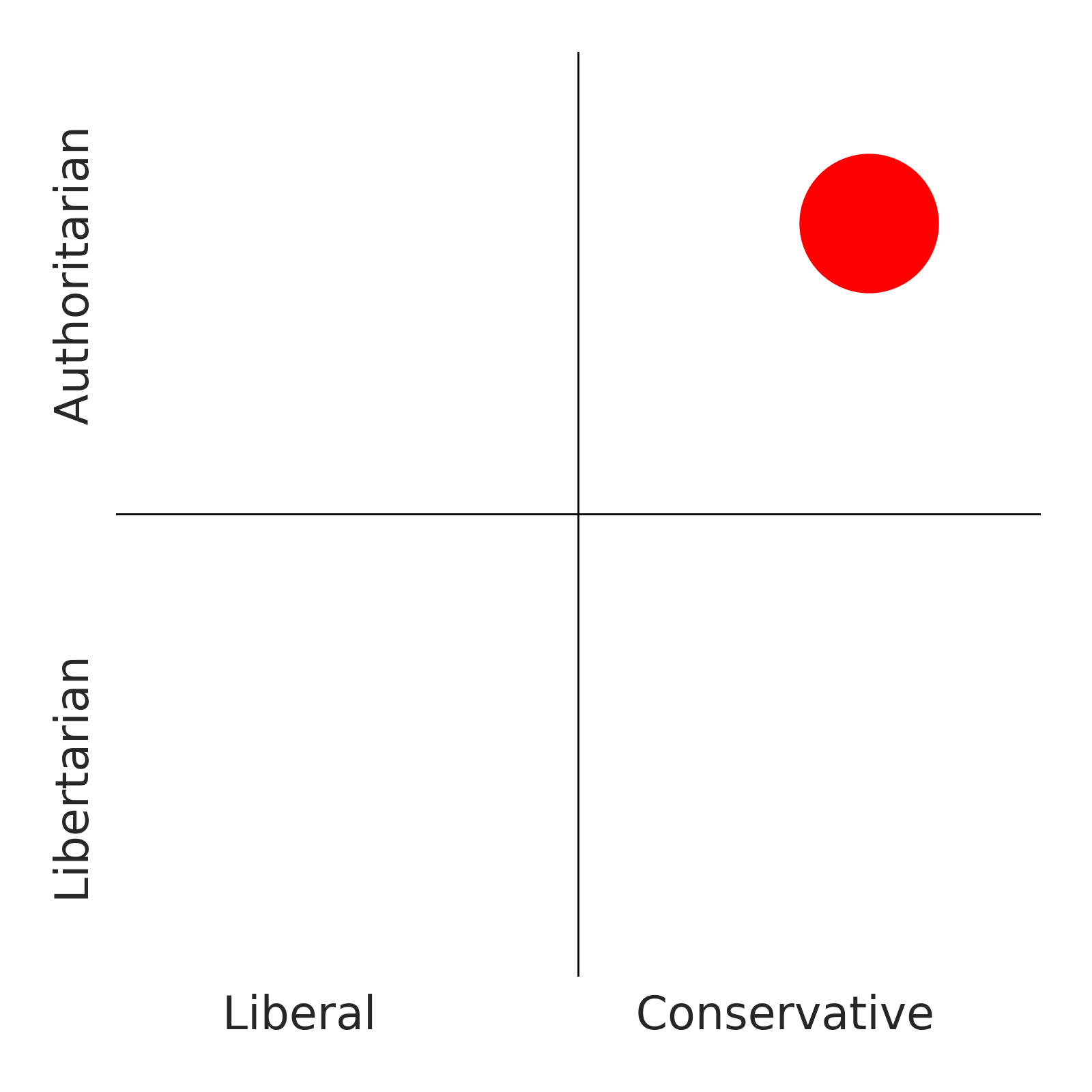
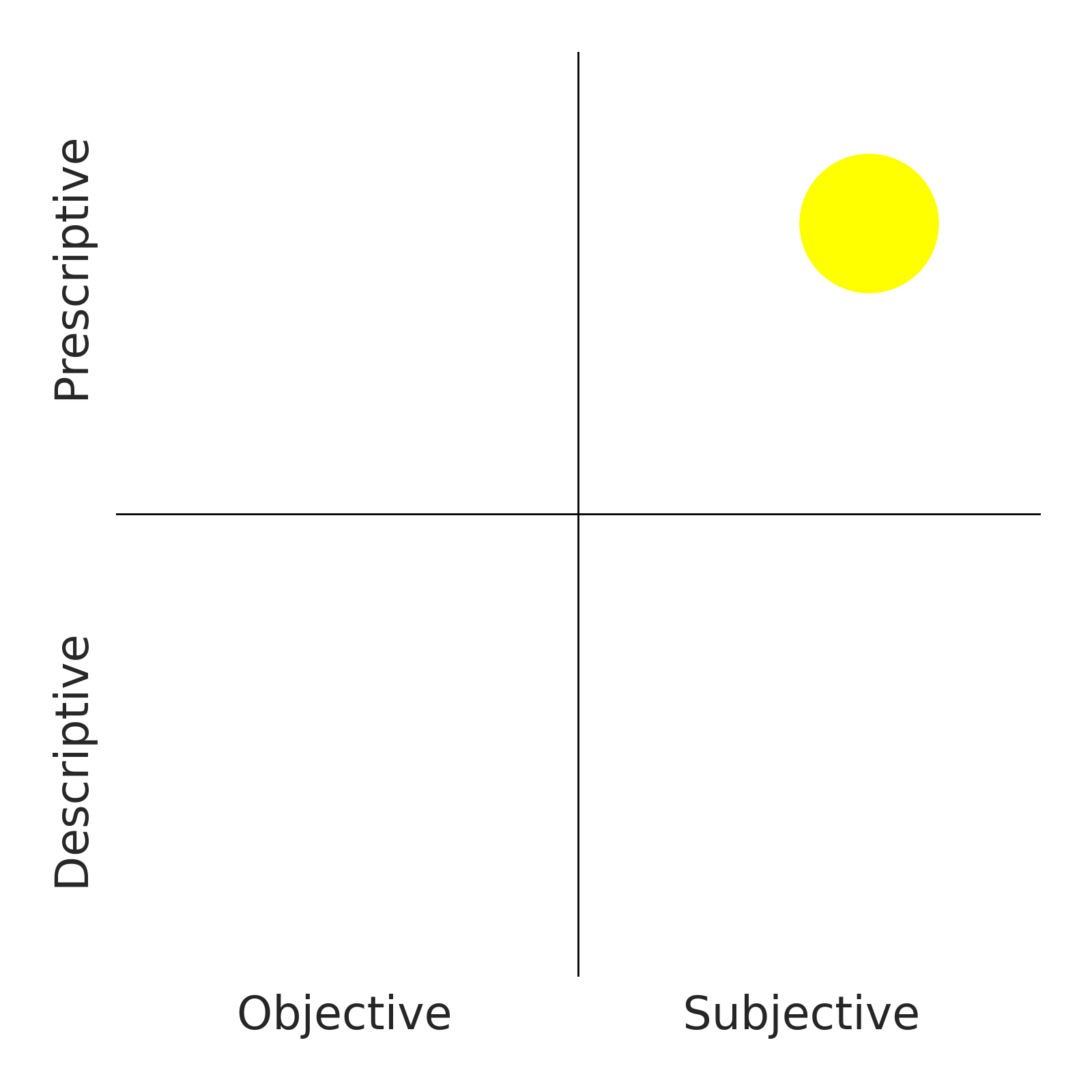
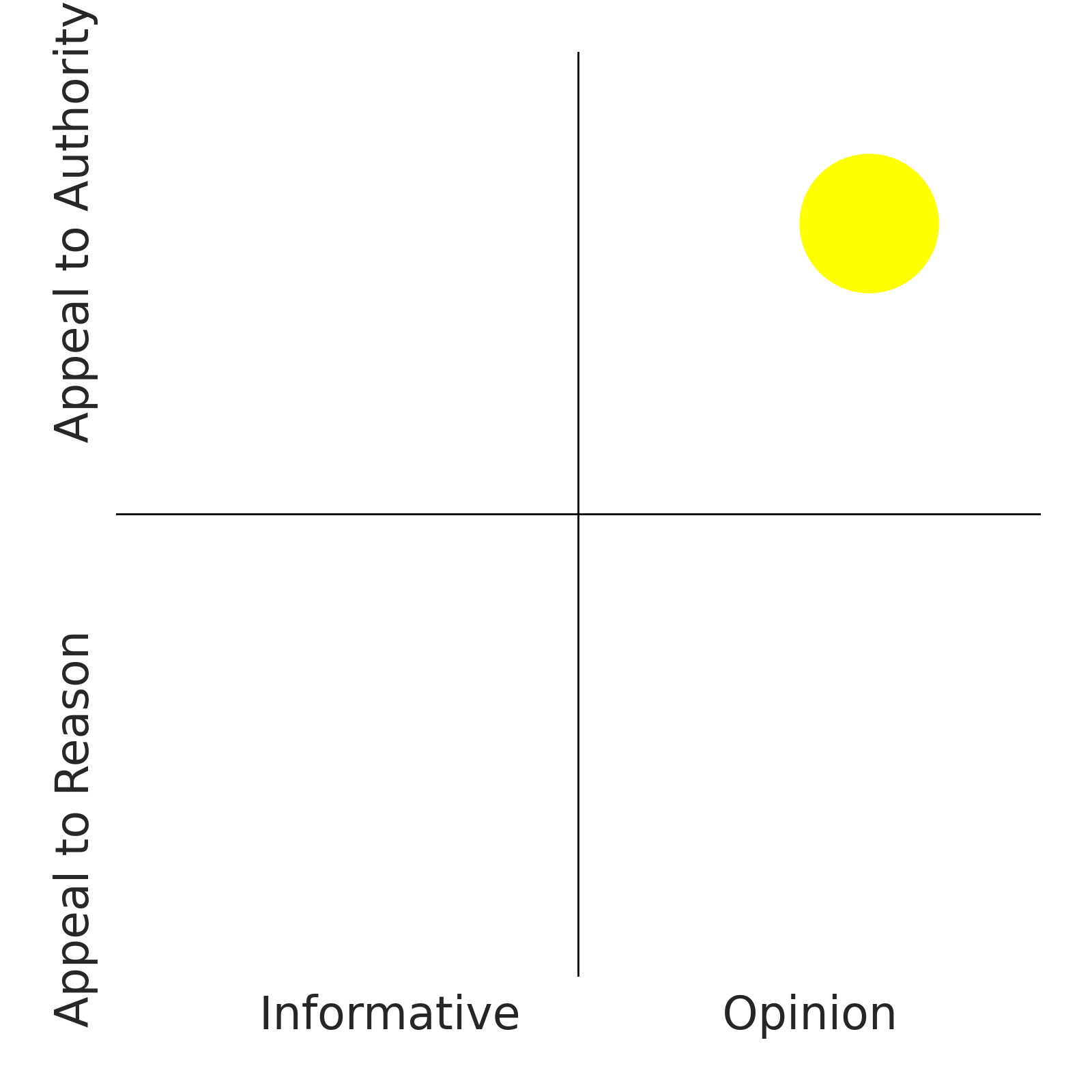
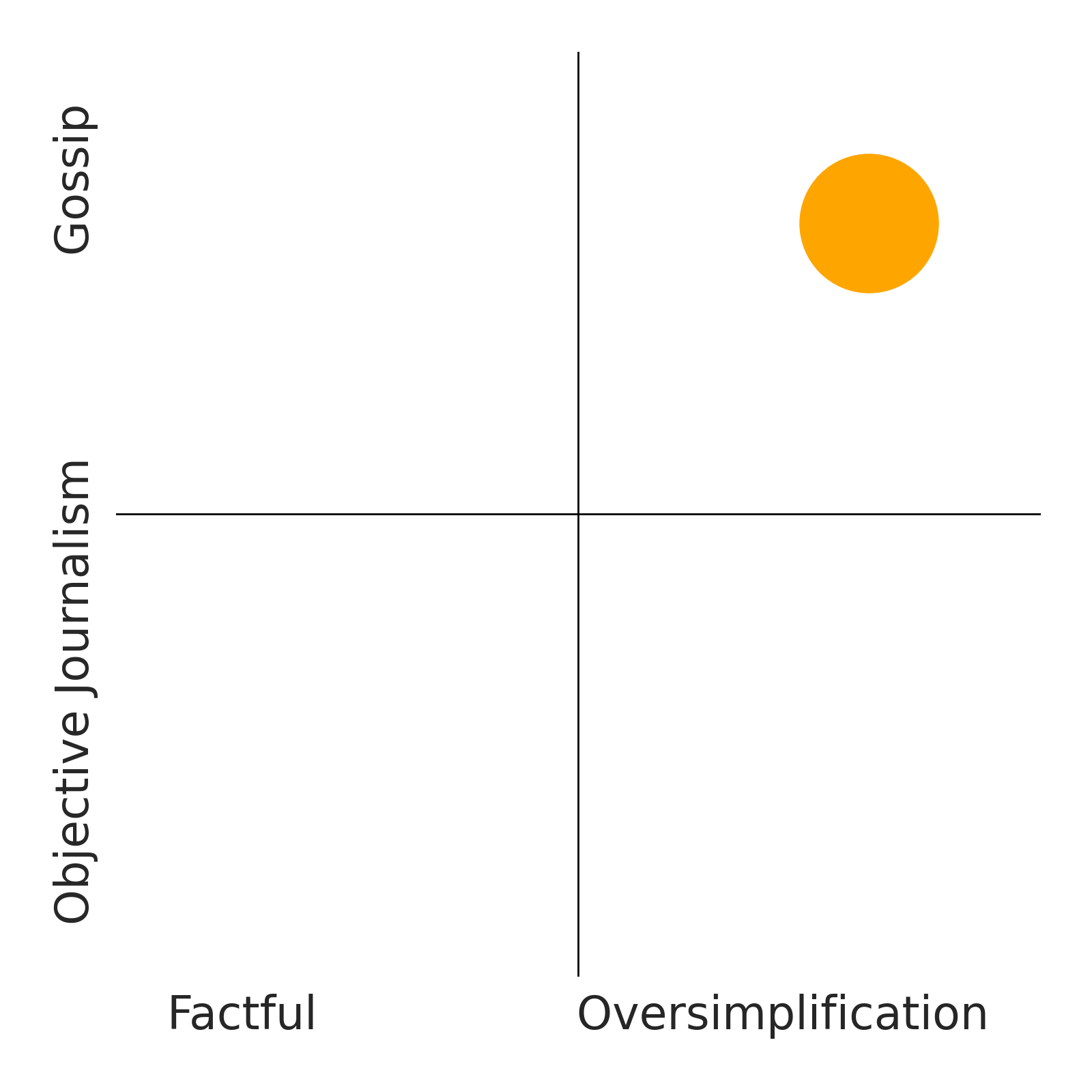
2026 © Helium Trades
Privacy Policy & Disclosure
* Disclaimer: Nothing on this website constitutes investment advice, performance data or any recommendation that any particular security, portfolio of securities, transaction or investment strategy is suitable for any specific person. Helium Trades is not responsible in any way for the accuracy
of any model predictions or price data. Any mention of a particular security and related prediction data is not a recommendation to buy or sell that security. Investments in securities involve the risk of loss. Past performance is no guarantee of future results. Helium Trades is not responsible for any of your investment decisions,
you should consult a financial expert before engaging in any transaction.
Helium Research Assistant

How can I help you today?
Ask any question about Financial Times bias.