See whether Helium helps you make better-informed decisions. Try every Pro Trader feature for 30 days. No credit card required.
Try every Pro Trader feature for 30 days. No credit card required.
Observable framing and coverage. The sample is strongly concentrated on AI, data centers, enterprise software, finance, crypto, energy, geopolitics, U.S. politics, media consolidation, education, and workplace change.
Examples include AI-enabled defense contracting
August 14, 2026 · 0 shares
The framing is promotional: a niche software startup's $80 million defense award is presented as a validation of startup speed and AI-driven military modernization, with the CEO serving as the main interpreter of its significance.
Other Transaction Authority (OTA) is a U.S. Department of Defense procurement route intended to allow faster, easier contracting with non-traditional suppliers; without OTA context, the article's emphasis on speed Would not be clear.
Automated analysis; not human reviewed. Limitations: The supplied text contains partial redactions and appears to be a newsletter excerpt; no independent verification of the contract terms or full sourcing was available. · 3 of 54 available dimensions scored; omitted dimensions are not treated as neutral. · Verified supporting quotes for 1 of 3 scored dimensions.
Claim: The article is more promotional than neutral, using executive praise and informal sales language.
“But software unicorn Code Metal is getting something new defense contractors rarely get from the Pentagon: speed.” · exact text match
“The reason this industry has been so ripe for disruption is we’re willing to show up with something working rather than a slide deck.” · not found in supplied text
Why: The narrative is shaped around favorable descriptors and whose single framing of the company's own future, with little distance or counter-balancing perspective.
Claim: The reporting is clearly bullish on Code Metal and the defense-tech startup sector.
“software unicorn Code Metal is getting something new defense contractors rarely get from the Pentagon: speed.” · exact text match
“Code Metal’s work is expected to allow analyses that once took months to be completed in days.” · exact text match
Counterevidence:
“However, those companies still only account for less than 1% of total dollars for all defense contractors.” · exact text match
Why: The article leads with an $80 million award, uses acceleratory language such as 'speed,' and presents expected future benefits without qualifying skepticism.
Claim: The overall tone is optimistic about the company's trajectory and the broader defense-tech opportunity.
“I have never seen them move this fast, and that’s been really exciting.” · not found in supplied text
“Roughly 10,000 new defense companies have entered the market over the past two years.” · not found in supplied text
Why: The article foregrounds record investment, market entry, and a favorable outlook from the CEO, while obstacles are at least acknowledged but treated as ordinary challenges.
The supplied text contains partial redactions and appears to be a newsletter excerpt; no independent verification of the contract terms or full sourcing was available.
August 20, 2026 · 0 shares
Executive-credentialed commentary frames AI's stalled adoption as a foundational-rewiring problem aligned with the authors' own firms' service offerings, anchored by a single positive TIAA transformation case.
This is a contributed commentary/op-ed published on a financial news website's opinion section, explicitly labeled as reflecting only the authors' views and not those of the publisher.
Automated analysis; not human reviewed. Limitations: The supplied excerpt promises a 'five focus areas' list that never appears in the text, suggesting the source may be truncated; the analysis therefore rests solely on the framing, author bios, and the single TIAA example. The publisher name also appears redacted as blank space in the source. · 8 of 54 available dimensions scored; omitted dimensions are not treated as neutral. · Verified supporting quotes for 8 of 8 scored dimensions.
Claim: A contestable, experience-based thesis is asserted as fact.
“AI transformation isn’t a technology project. It’s a business transformation, a change-management project, and an operating-model rebuild that happens to run on AI.” · exact text match
Why: The core thesis is a values-laden assertion presented without qualification or mention of alternative views.
Claim: The content is mildly interesting for its executive audience due to a vivid central metaphor.
“The trains aren’t the constraint. The tracks are.” · exact text match
Why: The train-and-tracks analogy adds rhetorical flair, but the 'do the boring work' message is otherwise familiar CEO-briefing content.
Claim: The piece is prescriptively directed at executives about actions they should take, not merely descriptive.
“Here are five focus areas we believe separate the enterprises pulling ahead from those stuck in perpetual pilot mode, and the actions leaders should take now.” · exact text match
Why: The central move is instructing leaders what to do ('the actions leaders should take now'), not simply reporting events.
Claim: The text is highly opinionated editorial commentary rather than neutral reporting.
“That’s the uncomfortable truth for most enterprises deploying AI today” · exact text match
Why: The rhetorical 'uncomfortable truth' framing and persuasive register are characteristic of opinion pieces; the article is also explicitly labeled as the authors' views.
Claim: Heterogeneous enterprise problems are collapsed into a single explanatory metaphor.
“The trains aren’t the constraint. The tracks are.” · exact text match
“The rest are stacking agents on top of decades of legacy IT, siloed data, and broken workflows, which doesn’t accelerate the business. It just automates the dysfunction faster.” · exact text match
Why: Diverse, complex failure modes (legacy IT, data silos, broken workflows) are compressed into one clean comparative pairing (trains vs. tracks).
Claim: The argument leans heavily on the authors' executive positions and firsthand corporate access.
“We know this firsthand.” · exact text match
“Sastry Durvasula is the Chief Operating Officer and Executive Committee member at TIAA” · exact text match
Why: Dynamic of the argument moves from 'CEOs' to the authors' direct experience and signed bios, substituting institutional authority for broad evidence.
Claim: The piece uncritically endorses large-enterprise transformation programs.
“the enterprises winning with AI aren’t the ones with the biggest budgets or the fastest adoption, they’re the ones disciplined enough to do the boring work first” · exact text match
Why: The framing validates the corporate-transformation paradigm without questioning its premises, taking for granted that enterprise rewiring is the right goal.
Claim: The piece displays relative transparency by labeling itself opinion and giving specific, checkable metrics.
“The opinions expressed in .com commentary pieces are solely the views of their authors” · exact text match
Why: Forthright disclosure of its opinion status and presentation of concrete figures (13%, 'days instead of weeks') suggest honesty, even though the metrics come from the authors' own initiative.
The supplied excerpt promises a 'five focus areas' list that never appears in the text, suggesting the source may be truncated; the analysis therefore rests solely on the framing, author bios, and the single TIAA example. The publisher name also appears redacted as blank space in the source.
Frames BNY's blockchain move as a landmark operational shift for institutional finance, blending factual reporting with favorable commentary that underscores its practical significance and controlled adoption.
Automated analysis; not human reviewed. · 6 of 52 available dimensions scored; omitted dimensions are not treated as neutral. · Verified supporting quotes for 2 of 6 scored dimensions.
Claim: The article blends factual reporting with subjective judgments about the significance and sensibleness of BNY's move.
“That is the sensible part.” · not found in supplied text
“Frankly, that is why BNY's move is more important than a louder crypto-native launch.” · exact text match
Why: These statements express the author's opinion on the merit of the move beyond objective reporting.
Claim: The article presents BNY's blockchain move as a significant, positive development that will change the market.
“BNY just made that harder to ignore.” · exact text match
“The rest of the market now has a reference point.” · exact text match
Why: The phrasing suggests a favorable outlook on the adoption and impact of the tokenization initiative.
Claim: The article includes prescriptive language telling readers how to view the development.
“you should treat it as an operating decision, not a press-release flourish.” · exact text match
“If you run an asset manager, the question changes after this.” · exact text match
Why: These statements directly advise the reader on interpretation and action.
Claim: The article contains opinionated statements about the importance and implications of BNY's move.
“Frankly, that is why BNY's move is more important than a louder crypto-native launch.” · exact text match
“That is the sensible part.” · not found in supplied text
Why: These are evaluative opinions rather than neutral reporting.
Claim: The article is highly credible due to transparent sourcing, specific quantitative data, and balanced recognition of limits.
“The FT reported on July 29 that BNY's move covers roughly $8.6 trillion of fund assets and 7.6 million investor accounts.” · exact text match
“Capital Pioneer reported that the dollar-denominated fund... had a yield of about 7%, a two-year duration and an average credit quality of BBB at launch.” · not found in supplied text
Why: The article relies on named authoritative sources and provides exact figures, while also noting caveats like permissioned access and daily reconciliation.
Claim: The article demonstrates high integrity through specific sourcing, attribution, and acknowledgment of limitations.
“According to the Financial Times, the world's largest custodian bank is launching a digital version...” · not found in supplied text
“The same Dreyfus filing says only wallets accepted by the transfer agent can hold or transfer the book-entry tokens, and it warns that erroneous or unauthorized blockchain transactions may remain visible on the chain” · exact text match
Why: The article consistently attributes key numbers and claims to external sources and explicitly notes constraints and risks.
August 16, 2026 · 0 shares
The framing casts the stalled CLARITY Act as a Washington power struggle in which industry money buys access but cannot control Senate timing, with SEC rulemaking presented as a weaker fallback.
The CLARITY Act (H.R. 3633) is the House-passed crypto market-structure bill; CFTC is the Commodity Futures Trading Commission and SEC is the Securities and Exchange Commission.
Automated analysis; not human reviewed. Limitations: The odds are reported as 19% in the headline and 'about 20%' in the body, leaving the precise figure ambiguous. · 7 of 54 available dimensions scored; omitted dimensions are not treated as neutral. · Verified supporting quotes for 6 of 7 scored dimensions.
Claim: The report mixes factual reporting with evaluative editorial commentary.
“That's the number to watch. Not the speeches. Not the statements about clarity.” · exact text match
“That's not normal trade-association money. That's a warning shot to anyone running for Congress.” · exact text match
Why: Imperative and interpretive sentences direct readers' attention and impute meaning to spending figures.
Claim: The tone emphasizes the likely failure or inadequacy of the legislative and regulatory paths.
“Still, the big prize is stuck.” · exact text match
“A stalled bill leaves you with agencies, exemptions and court risk instead.” · exact text match
Why: The piece repeatedly describes the bill as stalled, stuck, and a fallback rather than focusing on possible success.
Claim: The article contains explicit opinionated commentary alongside reporting.
“Frankly, the fallback plan is already visible.” · exact text match
“That's the trade. Crypto wanted permanent rules from Congress. For now, it may have to settle for temporary relief from regulators, bought with influence but always exposed to the next election.” · exact text match
Why: Use of 'frankly' and a concluding evaluative trade-off are personal judgments, not neutral reportage.
Claim: The framing centers the story on legislative politics, lobbying, and election-cycle incentives.
“The industry can win primaries, punish skeptics and make crypto a topic lawmakers cannot ignore. It still can't make the Senate calendar behave.” · exact text match
“A bill the industry treated as close to inevitable has run into the same hard things that stop plenty of bills in Washington: floor time, amendments, election-year politics and opponents with their own lobbyists.” · exact text match
Why: The article's explanatory mechanism is congressional scheduling, lobbying, primary politics, and campaign spending.
Claim: The article's credibility is supported by cited sources and specific data.
“Polymarket traders now put its chance of becoming law in 2026 at about 20%, according to Investopedia, down from roughly 80% earlier in the year.” · exact text match
“Axios reported in January that Fairshake and its affiliated PACs had more than $193 million in cash on hand for the 2026 midterms.” · not found in supplied text
Why: It consistently attributes quantitative claims to named organizations and outlets, improving verifiability.
Claim: The analysis is reasoned and structural rather than emotional or conspiratorial.
“A bill the industry treated as close to inevitable has run into the same hard things that stop plenty of bills in Washington: floor time, amendments, election-year politics and opponents with their own lobbyists.” · exact text match
Why: The piece attributes the bill's stalled odds to specific procedural and political factors rather than unsupported assertions.
Claim: The report visibly attributes claims to named sources and gives specific dates and numbers.
“The House passed H.R. 3633, the Digital Asset Market Clarity Act, on July 17, 2025, by a 294-134 vote, according to Congress.gov and the House Clerk.” · exact text match
“Reuters reported in June that crypto companies had spent $189 million so far to influence the 2026 midterm elections, making the sector the top corporate political spender this cycle.” · exact text match
Why: Repeated attribution to outlets and official records supports observable fairness and honesty signals, even where commentary is present.
The odds are reported as 19% in the headline and 'about 20%' in the body, leaving the precise figure ambiguous.
August 14, 2026 · 0 shares
Frames the 30-year Treasury auction's 5.216% yield as a costly market warning about U.S. fiscal policy, while conceding demand was adequate at that price.
Automated analysis; not human reviewed. Limitations: Only the supplied text was available; no publication date or independent market data was checked.
Only the supplied text was available; no publication date or independent market data was checked.
August 22, 2026 · 0 shares
Frames the U.S. debt milestone as a fiscal crisis, leading with alarmist language from a conservative foundation head and presenting counterarguments as a brief, secondary 'bull case.'
The Peterson Foundation, leading this call, is a nonpartisan think tank founded to address U.S. fiscal sustainability, and its chairman suggests the federal government should reduce annual deficits to 3% of GDP.
Automated analysis; not human reviewed. Limitations: The article blends reported analysis with extensive attributed opinion, making it challenging to distinguish the publisher's own stance from the views of named sources. · 11 of 54 available dimensions scored; omitted dimensions are not treated as neutral. · Verified supporting quotes for 9 of 11 scored dimensions.
Claim: Slight conservative tilt through fiscal alarmism and deficit-hawk framing.
“The level of fiscal mismanagement is tragic” · exact text match
Counterevidence:
“The bull case for debt is reasonable.” · exact text match
Why: Pete Peterson's alarmist framing leads the piece and is not balanced against economists with opposing views; the single bull-case paragraph is underdeveloped.
Claim: Framing promotes grassroots concern over elite-driven fiscal policy.
“That will drive up interest rates, which then increases household expenses” · not found in supplied text
Why: Claims households are 'already paying' the debt through daily expenses, echoing populist anti-elite language, but the cited source is an elite foundation chair.
Claim: Reporting lapses into editorial commentary and selective framing.
“an alarming milestone” · exact text match
Counterevidence:
“The article includes a distinct section titled 'The bull case for debt is reasonable.'” · not found in supplied text
Why: Editorializing adjectives like 'alarming' and 'spiraling out of control' are used in headlines and quotes without challenge, though a counterargument section does provide some balance.
Claim: Pessimistic outlook dominated by crisis language and projections of negative outcomes.
“The level of fiscal mismanagement is tragic. It is burdening every household today” · not found in supplied text
Why: The overall narrative emphasizes negative consequences and risks, with only a brief mentioning that markets have not yet reacted adversely.
Claim: Engaging and relevant topic with several concrete metrics to avoid being dry.
“Treasury data for August 18 shows the closing balance for the day on public debt outstanding totaled $40.04 trillion.” · exact text match
Why: The use of specific figures like daily interest payments and bond yields makes the story concrete and easy to understand.
Claim: Uses fear-inducing language and doomsday framing, especially in the headline and source quotes.
“an alarming milestone for economists who fear the nation's fiscal policy is spiraling out of control” · verified after text normalization
Why: Charged language like 'crisis,' 'tragic,' and 'spiraling out of control' appears prominently, intended to provoke fear and concern.
Claim: Sections read more like an op-ed than straight news, particularly in the headline and concluding commentary.
“To just continue to cross your fingers and hope that we can get away with a completely irresponsible level of budgeting is not a reasonable way to lead our country.” · exact text match
Why: While most opinion is attributed to named sources (Peterson, Vanden Houten), the selection and placement of these quotes and the concluding editorial remark make the piece largely one-sided.
Claim: The tone is negative, evoking concern or alarm.
“crisis” · exact text match
Why: Frequent use of negatively-valenced terms like 'crisis' and 'tragic' sets an anxious tone.
Claim: Uses named sources, official data releases, and includes some form of a counterargument, but lacks diversity in expert opinion.
“The bull case for debt is reasonable. Firstly, despite years of warnings, there has yet to be a market meltdown sparked by debt.” · exact text match
Counterevidence:
“Speaking to as America hit the $40 trillion benchmark, Peterson explained...” · not found in supplied text
Why: The article credits a broad range of sources but relies heavily on one think-tank leader and a single economist's note for analysis. It omits dissenting economists who argue the scale of the debt is not a big problem.
Claim: Largely evidence-based reporting that includes a counterargument to the dominant crisis framing.
“The bull case for debt is reasonable. Firstly, despite years of warnings, there has yet to be a market meltdown sparked by debt.” · exact text match
Why: Presents both a debt-is-crisis narrative and a rational, market-based counterpoint, showing moderate evidentiary balance.
Claim: Makes confident predictions about future economic policy and consequences.
“So far, data suggests it won't be enough.” · verified after text normalization
Why: The article speculates on the ineffectiveness of Trump's tariff/recommendations and the eventual timetables for trust fund exits without definitive proof, presenting these as facts.
The article blends reported analysis with extensive attributed opinion, making it challenging to distinguish the publisher's own stance from the views of named sources.
Official U.S. flow numbers are put forward, Iran's closure claim is countered using dark-transit estimates, and the naval blockade is framed mainly as an effective pressure tool against Iran as a 'regime'.
The Strait of Hormuz is a narrow waterway between the Persian Gulf and the Gulf of Oman and a main chokepoint for oil exports from the Gulf region. The article opens after a U.S.-Iran ceasefire had collapsed, leading to a naval standoff, Iranian attacks on shipping, and U.S.-led countermeasures.
Automated analysis; not human reviewed. Limitations: The reported oil-flow figures rely heavily on official and researcher estimates; dark transits are inherently unobservable, so independent verification of the core quantities is unavailable from supplied text. · 4 of 54 available dimensions scored; omitted dimensions are not treated as neutral. · Verified supporting quotes for 2 of 4 scored dimensions.
Claim: The framing treats the U.S.-led blockade as an acceptable and effective economic squeeze while describing Iran pejoratively as a 'regime.'
“An oil market reprieve also gives Trump more time to squeeze Iran's economy with his naval blockade, which some officials in Tehran have admitted is causing an economic collapse.” · verified after text normalization
“But the U.S. naval blockade is preventing Iran from exporting its oil via the Strait of Hormuz, depriving the regime of a vital revenue lifeline.” · exact text match
Why: The article adopts the U.S. administration's pressure campaign as an accepted fact and leads with U.S. official estimates, while Iranian closure claims are only addressed as a claim to be disproved.
Claim: The article is believable on the surface due to explicit attribution to named officials, an expert researcher, and to statements of disputed figures.
“Energy Secretary Chris Wright said on Tuesday that the seven-day average for oil leaving the strait was almost 9 million barrels per day and credited the U.S. military as well as Gulf allies.” · exact text match
“A U.S. official told Axios on Sunday that about 8 million barrels are quietly exiting the Gulf each night through a southern lane in the Strait of Hormuz with help from the U.S. military.” · not found in supplied text
Why: The report identifies explicit officials, media outlets, and a named researcher while preserving attribution, which gives the reader a basis to evaluate contested claims.
Claim: The report extrapolates from current flow estimates and officials' remarks into forward-looking supply warnings and predictions of further pressure.
“Global oil markets still face a supply deficit, forcing consuming countries to tap reserves that are already low and heading toward critical levels soon.” · exact text match
“And even more pressure could be on the way.” · exact text match
Why: The wording puts current numbers into a predictive framework about future supply tightness and additional economic pressure, which goes beyond strictly observed data.
Claim: The report makes internally observable fairness and honesty signals by naming sources and including an expert estimate that qualifies the higher official figures.
“Some experts doubt the recent Gulf shipment numbers are as high as the Trump administration claims—but not by that much.” · exact text match
“Oil market researcher Rory Johnston estimated that average volumes out of Hormuz peaked at 7 million bpd per day over the past week and acknowledged that could be higher, because of the uncertainty around dark transits.” · not found in supplied text
Why: The supplied text attributes claims to named officials and a researcher, and explicitly notes uncertainty around dark-transit data, which supports a measured treatment.
The reported oil-flow figures rely heavily on official and researcher estimates; dark transits are inherently unobservable, so independent verification of the core quantities is unavailable from supplied text.
The opening framing chooses an Iranian business official's 'admission' to present the U.S. naval blockade as a more decisive pressure than war, while the narration consistently describes the Iranian government as a repressive regime.
Automated analysis; not human reviewed. Limitations: The analysis relies on a single news article and cannot externally verify its quantitative or sourced claims. · 2 of 54 available dimensions scored; omitted dimensions are not treated as neutral. · Verified supporting quotes for 2 of 2 scored dimensions.
Claim: The reporting is primarily attributed and quoted rather than shaped by direct editorial opinion.
“In an interview with Iran's Khabar Online outlet, the head of the Iran-China Joint Chamber of Commerce said "the consequences of the blockade far outweigh those of a direct war."” · verified after text normalization
“His warning comes as regime moderates have grown more worried that the U.S. naval blockade that was recently reimposed is bringing Iran's economy close to collapse, sources told the Wall Street Journal.” · verified after text normalization
Why: The piece uses attributed quotations, sourced reports, and named officials rather than unsupported statements or first-person advocacy.
Claim: The writing describes the situation and attributes recommendations to others rather than prescribing policy action.
“Given that 2 million containers pass through Iran's southern ports annually, he estimated that heavier trade burdens will translate to about $18 billion in additional transportation costs alone every year.” · verified after text normalization
Why: The article relays estimates, warnings, and policy statements from sources as events, without issuing or endorsing a directive.
The analysis relies on a single news article and cannot externally verify its quantitative or sourced claims.
Worldview and perspective. The prevailing frame is market-, institution-, and technology-centered: corporate investment, capital allocation, regulatory design, infrastructure, and executive decision-making are frequent explanatory lenses.
AI and digital infrastructure are often treated as strategic necessities, as in the argument that regions rejecting data centers risk falling behind
August 05, 2026 · 0 shares
Frames St. Louis's data center push as an essential competitive strategy while dismissing regulatory caution as a risk of falling behind.
Automated analysis; not human reviewed. Limitations: Opinion piece by a business leader; likely overstates benefits of data center investment. · 5 of 53 available dimensions scored; omitted dimensions are not treated as neutral. · Verified supporting quotes for 3 of 5 scored dimensions.
Claim: Highly opinionated commentary.
“The opinions expressed in .com commentary pieces are solely the views of their authors” · exact text match
Why: Explicitly labeled as opinion, and the content is persuasive.
Claim: Addresses political and geopolitical dimensions of AI infrastructure.
“China is investing aggressively ... American regions that position themselves to support that growth will help determine where innovation and next-generation industries concentrate.” · not found in supplied text
Why: References national competition and geopolitical influence.
Claim: Simplifies the choice as compete or fall behind.
“regions unwilling to embrace digital infrastructure are likely to fall behind.” · exact text match
Why: Presents a binary outcome that may oversimplify complex economic factors.
Claim: Supports established institutions and processes.
“The City of St. Louis has spent more than a year developing a citywide regulatory framework to address land use, emissions, water consumption and neighborhood compatibility. The Board of Aldermen is currently working through that framework.” · not found in supplied text
Why: The article presents the regulatory process positively and aligns with institutional decision-making.
Claim: Frames corporate data center investments as overwhelmingly positive for the region.
“Google announced a $15 billion data center that state officials called the largest single private investment in Missouri history, with commitments to train more than 2,300 construction workers” · exact text match
Why: Highlights corporate investment as historic and beneficial without addressing potential downsides.
Opinion piece by a business leader; likely overstates benefits of data center investment.
August 06, 2026 · 0 shares
A market analyst advocates for liberalized electricity trading in Asia, framing state-controlled power systems as the main obstacle to AI-driven data center growth.
Automated analysis; not human reviewed. Limitations: The text is an opinion commentary, so the analysis is based on the author's argument rather than neutral reporting. · 18 of 53 available dimensions scored; omitted dimensions are not treated as neutral. · Verified supporting quotes for 17 of 18 scored dimensions.
Claim: The text favors free-market liberalization over state-controlled energy systems.
“A more liberal approach to distributed energy generation and electricity trading—essentially opening wholesale electricity markets to price competition—will help attract more investment” · exact text match
“Most Asian electricity systems still rely on a traditional ecosystem: vertically integrated, state-owned utilities acting as single buyers, with retail tariffs set administratively and limited trading allowed for third parties” · exact text match
Why: The praise for liberalization and criticism of state ownership indicate a conservative economic stance.
Claim: The text advocates for reduced state control and greater market freedom.
“A more liberal approach to distributed energy generation and electricity trading” · exact text match
“Most Asian electricity systems still rely on a traditional ecosystem: vertically integrated, state-owned utilities acting as single buyers” · exact text match
Why: The endorsement of liberalization and criticism of state-owned utilities supports a libertarian stance.
Claim: The piece is an opinion piece with prescriptive statements.
“The opinions expressed in .com commentary pieces are solely the views of their authors” · exact text match
“Asia needs deeper energy markets” · exact text match
Why: The disclaimer and prescriptive language make it clearly subjective.
Claim: The text is analytical and avoids sensationalism.
“According to the International Energy Agency’s Southeast Asia Outlook” · exact text match
“according to our white paper with Oxford’s Smith School” · exact text match
Why: Uses citations and data rather than hyperbole.
Claim: The text is pessimistic about announced data center capacity being delivered.
“Up to half of all planned U.S. projects may not come online this year.” · exact text match
“With AI-driven euphoria flooding the markets, the gap between what’s promised and what’s feasible is only going to widen.” · exact text match
Why: Highlights risks of underdelivery, indicating a bearish outlook on AI data center build-out.
Claim: The text prescribes policy changes rather than merely describing.
“Asia needs deeper energy markets” · exact text match
“A more liberal approach ... will help attract more investment” · not found in supplied text
“Electricity in Asia needs to trade with the same rigor as crude oil” · exact text match
Why: Uses normative language and recommendations.
Claim: The text is heavily opinionated.
“The opinions expressed in .com commentary pieces are solely the views of their authors” · exact text match
“Asia needs deeper energy markets” · exact text match
Why: Clearly states it is an opinion piece and makes prescriptive claims.
Claim: The text engages with energy policy debates.
“Politicians and policymakers want to keep the lights and the air-conditioning on, after all.” · exact text match
Why: Mentions political considerations, making it political to some extent.
Claim: The text aligns with mainstream pro-market economic policy.
“A more liberal approach to distributed energy generation and electricity trading” · exact text match
“opening wholesale electricity markets to price competition” · exact text match
Why: Advocates for market liberalization, which is establishment orthodoxy.
Claim: The text is credible due to sourcing and transparency.
“According to the International Energy Agency’s Southeast Asia Outlook” · exact text match
“according to our white paper with Oxford’s Smith School” · exact text match
Why: Cites authoritative sources and discloses its own research.
Claim: The analysis is grounded in data and logical reasoning.
“According to the International Energy Agency’s Southeast Asia Outlook, grid and storage investment in 2025 was just $13 billion, far lower than the $50 billion needed annually till 2050.” · exact text match
“Data center power demand across Asia-Pacific is expected to increase by an estimated 165% in 2023-30.” · exact text match
Why: Uses empirical data and structured argument, showing rational analysis.
Claim: The text relies on empirical data and scientific reasoning.
“According to the International Energy Agency’s Southeast Asia Outlook” · exact text match
“Data center power demand across Asia-Pacific is expected to increase by an estimated 165% in 2023-30.” · exact text match
Why: Uses data and estimates from recognized institutions.
Claim: The text favors market individualism over state collectivism.
“A more liberal approach to distributed energy generation and electricity trading” · exact text match
“Most Asian electricity systems still rely on a traditional ecosystem: vertically integrated, state-owned utilities acting as single buyers” · exact text match
Why: Champions market mechanisms over state control.
Claim: The text makes forward-looking predictions.
“the mismatch between announced and delivered capacity could produce the kind of boom-bust cycle that metals markets saw in the last decade” · exact text match
Why: Forecasts potential outcomes.
Claim: The text is written by a human author.
“Guy Wolf is global head of market analytics at Marex.” · exact text match
Why: Named author and personal reference indicate human authorship.
Claim: The text is transparent about its sources and author affiliations.
“Marex, where I work, has been contributing to growing liquidity in Japan’s power derivatives markets.” · exact text match
“according to our white paper with Oxford’s Smith School” · exact text match
Why: Discloses personal involvement and cites specific sources, showing honesty.
Claim: The text demonstrates sophisticated analysis of complex topics.
“With AI-driven euphoria flooding the markets, the gap between what’s promised and what’s feasible is only going to widen.” · exact text match
“The region delivered only about 38% of its announced data center capacity in 2024, one of the widest plan-to-delivery gaps of any market globally” · exact text match
Why: Combines data with nuanced reasoning.
Claim: The text is truth-seeking and evidence-based.
“The region delivered only about 38% of its announced data center capacity in 2024, one of the widest plan-to-delivery gaps of any market globally” · exact text match
Why: Presents sobering data rather than unrealistic optimism.
The text is an opinion commentary, so the analysis is based on the author's argument rather than neutral reporting.
Promotional framing centered on Rillet's unicorn status and founder's vision, with positive spin on AI's role in accounting and limited critical scrutiny.
Rillet is a two-year-old startup in the AI-native accounting space, competing against legacy ERP systems like Oracle Fusion, SAP, Workday, and NetSuite. The company raised a Series A led by Sequoia last summer and a Series B shortly after, with new ARR doubling quarter over quarter.
Automated analysis; not human reviewed. Limitations: The article is an exclusive announcement from the company's perspective, with limited independent verification of claims; the provided text may omit critical analysis. · 54 of 54 available dimensions scored; omitted dimensions are not treated as neutral. · Verified supporting quotes for 12 of 54 scored dimensions.
Claim: The article includes objective reporting of facts alongside subjective founder quotes and promotional language.
“Rillet, a two-year-old startup building what it calls the first truly AI-native accounting platform, has raised a $100 million Series C” · exact text match
““Our message is not that we’re coming after jobs. That’s just not correct,” he said” · exact text match
Why: Facts are presented with sourcing, but the heavy use of promotional quotes adds subjectivity.
Claim: The article is strongly bullish on Rillet's growth and potential, highlighting rapid expansion and customer adoption.
“doubled its new ARR again in the three months leading into this latest raise” · exact text match
“now serves more than 600 customers” · exact text match
“Rillet is the clear leader in AI-native accounting infrastructure” · exact text match
Why: Positive metrics and endorsements dominate the narrative without counterpoints.
Claim: The article is optimistic about AI's role in accounting, framing it as a solution to talent gaps and efficiency without acknowledging negative consequences.
“He argued that AI agents can help make up for a shrinking pipeline of human accountants” · exact text match
“That frees up time not for job loss, but for higher-level strategic work” · not found in supplied text
Why: The tone is consistently forward-looking and positive, downplaying potential drawbacks.
Claim: The article is moderately interesting due to the unicorn status and AI application in a traditional field.
“has raised a $100 million Series C at a $1 billion valuation” · exact text match
“Mercor, in particular, has become a marquee reference customer” · exact text match
Why: Notable financial milestone and unusual use case.
Claim: The article interweaves founder opinions and promotional statements with factual reporting.
“Our message is not that we’re coming after jobs. That’s just not correct” · exact text match
“CFOs really struggle day to day. They can’t see their families on weekends” · exact text match
Why: Subjective opinions are presented prominently, but the article also reports factual data.
Claim: The article relies heavily on authority figures and institutional endorsements to validate Rillet's success.
“ICONIQ general partner Seth Pierrepont is joining Rillet’s board” · exact text match
“launched an alliance with EY” · exact text match
“Rillet is the clear leader in AI-native accounting infrastructure” according to Pierrepont” · not found in supplied text
Why: Trust is placed in investors and partners rather than independent analysis.
Claim: The article presents confident predictions about Rillet's market position and AI capabilities without substantial independent evidence.
“Rillet is the clear leader in AI-native accounting infrastructure” · exact text match
“the only system that can combine deterministic accounting data with AI agents completing complex, end-to-end work in the market today” · exact text match
Why: Unqualified claims are presented with high certainty.
Claim: The article positions Rillet within the establishment by highlighting partnerships with EY and CPA firms, framing it as credible to traditional institutions.
“launched an alliance with EY for AI-native finance transformation” · exact text match
“partners with more than half of the Accounting Today top 20 CPA firms” · exact text match
Why: Emphasis on mainstream institutional backing and acceptance.
Claim: The article has a positive emotional tone, emphasizing founder passion and customer success stories.
“CFOs really struggle day to day. They can’t see their families on weekends” · exact text match
“That’s been really cool to see” · exact text match
Why: Use of emotional appeals to humanize the narrative.
Claim: The article demonstrates moderate credibility by attributing claims and providing specific financial data, but lacks independent verification.
“according to the company” · not found in supplied text
“Kopp said” · exact text match
“the company told exclusively” · verified after text normalization
Why: Claims are attributed, but they come from the company's own narrative and investors.
Claim: The article presents a balanced view of the potential and limitations of AI in accounting, but leans slightly rational by emphasizing practical uses and industry acceptance.
“The company says it doubled its new ARR again in the three months leading into this latest raise” · exact text match
“That shift, Kopp argues, doesn’t just save time: it produces cleaner, more consistent financial data than human-run processes typically allow” · exact text match
Why: The framing is largely factual and evidence-based, but the reliance on founder claims and promotional language reduces the score slightly toward subjective.
Claim: The article functions as a promotional piece for Rillet, highlighting its growth and success in a positive light.
“Rillet, a two-year-old startup building what it calls the first truly AI-native accounting platform, has raised a $100 million Series C at a $1 billion valuation” · exact text match
“Rillet is the clear leader in AI-native accounting infrastructure” · exact text match
Why: The content is favorable and lacks critical perspective, resembling a press release.
Claim: The article is strongly pro-corporate, focusing on growth, investment, and market disruption without addressing potential negative impacts.
“raising a $100 million Series C at a $1 billion valuation” · not found in supplied text
“racing to unseat decades-old enterprise software giants” · exact text match
“rolling out legacy systems” · not found in supplied text
Why: The narrative centers on corporate success and technology adoption, with no critical examination.
Claim: The article adopts an empirical and data-driven approach to AI technology, treating it as a rational solution.
“architectural distinction” · not found in supplied text
“running hundreds of operations in parallel” · exact text match
“producing cleaner, more consistent financial data” · not found in supplied text
Why: The language is grounded in technological and operational descriptions.
Claim: The article emphasizes individual achievement and entrepreneurial success, attributing progress to founder vision and company innovation.
“Kopp said” · exact text match
“Kopp argued” · not found in supplied text
“founder wants to give CFOs back their weekends” · not found in supplied text
Why: Highlighting individual leadership and personal vision.
Claim: The article includes some speculative elements about the future of AI in accounting and Rillet's market position.
“He argued that AI agents can help make up for a shrinking pipeline of human accountants” · exact text match
“starting to cross into the broader U.S. economy” · not found in supplied text
Why: Forecasts about AI's broader adoption and impact.
Claim: The writing is polished, structured, and uses common business-article phrases, but there is no strong evidence of AI authorship beyond standard journalistic style.
“The round, led by ICONIQ with participation from returning backers Sequoia Capital” · exact text match
“Rillet’s rise has been fast even by startup standards” · exact text match
Why: Likely human-written by a business editor; no distinctive AI patterns.
Claim: The article demonstrates above-average intelligence by explaining technical concepts and market context clearly.
“Traditional ERP systems, he said, were designed for humans to input and review data” · exact text match
“agent-first” · exact text match
Why: Provides substantive background and analysis of AI-native systems.
Claim: The article is truthful in reporting facts and quotes, but may overstate certainty in outcomes.
“Rillet’s rise has been fast even by startup standards” · exact text match
“doubled its new ARR” · exact text match
Why: While not delusional, the optimism borders on overstatement.
The article is an exclusive announcement from the company's perspective, with limited independent verification of claims; the provided text may omit critical analysis.
August 12, 2026 · 0 shares
Frames Silicon Valley private schools' venture capital funds as an innovative and lucrative fundraising model, emphasizing windfall returns and educational benefits while downplaying risks and inequality concerns.
Automated analysis; not human reviewed. Limitations: I may overestimate the objectivity of the article due to its professional tone and lack of overt editorializing. · 18 of 53 available dimensions scored; omitted dimensions are not treated as neutral. · Verified supporting quotes for 8 of 18 scored dimensions.
Claim: The article emphasizes exclusive access and elite connections.
“A handful of elite Bay Area schools have enlisted parent-donors from Sequoia, Lightspeed, and Battery to steer small pools of donated capital into early-stage startups.” · exact text match
“the access and expertise required to make these funds work are anything but.” · exact text match
Why: The opening line and subsequent description highlight the selectivity and elite nature of the model, framing it as exclusive.
Claim: The article blends factual reporting with subjective, framing language.
“Forget the gala, these Silicon Valley schools run their own venture capital funds.” · exact text match
“By any measure, we’re a long way from a bake sale.” · exact text match
Why: The headline and interpolation of opinionated language ('forget the gala', 'long way from a bake sale') injects a subjective tone.
Claim: The article is bullish on the IPO market and the potential for windfall returns.
“With massive IPOs back en vogue, schools are lining up for what could come next.” · exact text match
“SpaceX’s June debut on the Nasdaq—the largest IPO in history at a valuation north of $2 trillion—signaled that the era of massive tech companies staying private indefinitely may be ending.” · exact text match
Why: These statements frame the market as ripe for IPOs and imply positive future outcomes for school investments.
Claim: The article is primarily descriptive but includes prescriptive endorsement.
“This is a way for high schools to take advantage of that, and really participate in it.”” · exact text match
Why: Eggers's closing quote encourages replication, shifting from description to prescription.
Claim: The article contains mild opinionated framing in its headline and interjections.
“Forget the gala, these Silicon Valley schools run their own venture capital funds.” · exact text match
Why: The headline sets a celebratory tone rather than neutral statement.
Claim: The article relies heavily on testimony from venture capital insiders and school officials.
“Barry Eggers, co-founder of Lightspeed Venture Partners, has chaired the advisory board for years...” · not found in supplied text
““We look a lot like an early stage VC fund,” said Eggers.” · exact text match
Why: Multiple quotes from prominent VCs and school leaders are used as support, granting authority to the model.
Claim: The article supports the established elite institutional model without critical scrutiny.
“The approach was originated by Saint Francis High School in Mountain View, where a $15,000 pre-IPO investment in Snap returned $34 million when Snap went public in 2017.” · exact text match
Why: Successful case study is presented as a model to follow, with no examination of potential downsides like inequality or conflicts of interest.
Claim: The article presents the venture fund model as a calculated, rational approach.
“Eggers noted the system isn’t perfect, but said the point is to take calculated risks—which is why the checks are relatively small.” · exact text match
Why: Direct quote from an expert emphasizes risk management and small checks, supporting a rational framing.
Claim: The article is favorable to venture capital and corporate interests.
“If a deal is good enough for Sequoia, Meritech, Battery, Mayfield, or Lightspeed, then it’s good enough for Saint Francis.”” · not found in supplied text
Why: The quote implicitly endorses the judgment of top VC firms, aligning with corporate interests.
Claim: The article includes speculative statements about future IPOs.
“Anthropic and OpenAI are widely expected to follow SpaceX founder Elon Musk into the public markets.” · exact text match
Why: Directly states expectations about future IPO events, which are speculative.
Claim: The article demonstrates high integrity through transparent sourcing and attribution.
“We have a mix of people who have early stage and late-stage deal flow,” said Eggers, “And we put it together, and we built a fund.” · exact text match
“According to Crystal Springs’ public records, through fiscal 2023, Crystal Springs held no private investments. By June 2025, it carried approximately $1.75 million...” · not found in supplied text
Why: Quotes are directly attributed, and public records are cited, showing transparency.
I may overestimate the objectivity of the article due to its professional tone and lack of overt editorializing.
Presents bubble warnings with sensational historical parallels and authoritative sources, framing AI enthusiasm as dangerously overextended.
Automated analysis; not human reviewed. Limitations: The article relies heavily on bearish sources (Dalio, Grantham) and includes no rebuttal, indicating possible selection bias toward a negative market outlook. · 12 of 53 available dimensions scored; omitted dimensions are not treated as neutral. · Verified supporting quotes for 9 of 12 scored dimensions.
Claim: The article uses sensational language to describe the bubble warning.
“delivered one of his starkest warnings yet” · exact text match
“precisely the kind of speculative issuance surge that market historians treat as a bubble’s clearest warning sign” · exact text match
Why: The language elevates the warning to a stark, clear signal without comparing to normal market conditions.
Claim: The article frames market conditions as bearish by highlighting bubble warnings without counterpoints.
“Dalio didn’t hedge: ‘Yeah. Yeah. Yeah. Classic signs that we’re in [one]’” · not found in supplied text
“Dalio’s comments map almost precisely onto the third horseman” · exact text match
Why: The article selects and emphasizes bearish perspectives, omitting bullish arguments.
Claim: The article presents a compelling and engaging narrative about market history and risk.
“nearing 1929, 2000 levels” · exact text match
“the lesson people always forget: ‘wealth is not the same as money’” · exact text match
Why: The historical comparisons and memorable quote increase interest, but interest is subjective.
Claim: The article evokes fear by warning of severe consequences beyond market losses.
“the real risk to prepare for may not be a portfolio loss, but the unrest that follows one” · exact text match
Why: The article explicitly connects the bubble burst to political and social unrest, heightening fear.
Claim: The article contains opinion-laden language in its framing.
“delivered one of his starkest warnings yet” · exact text match
“a flood of new market participants” · exact text match
Why: Phrases like 'starkest warnings yet' reflect editorial judgment, not neutral reporting.
Claim: The article reduces complex market dynamics to a simple bubble narrative.
“That call is consistent with Grantham’s long track record” · exact text match
Why: The article does not explore alternative explanations or model limitations.
Claim: The article heavily relies on the authority of Dalio and Grantham to support its thesis.
“Dalio walked through the mechanics using a simple thought experiment” · exact text match
“Grantham’s diagnosis of why bubbles form” · exact text match
Why: The article primarily conveys these authorities' views without independent verification.
Claim: The article relies on established financial figures and institutions as authorities.
“Goldman Sachs, one of the Street’s most consistently bullish research shops, argued on August 3” · exact text match
“Apollo’s Torsten Slok declared” · exact text match
Why: The article features prominent institutions and individuals, reinforcing an establishment perspective.
Claim: The article carries a negative emotional tone regarding market prospects.
“His bigger warning wasn’t about the market—it was about what comes after” · exact text match
Why: The language emphasizes negative outcomes, contributing to a gloomy emotional tone.
Claim: The article is credible due to clear sourcing and attribution.
“The same day, Apollo’s Torsten Slok declared ‘the 60/40 portfolio is broken’” · not found in supplied text
Why: All key claims are attributed to named individuals and organizations, with direct quotes.
Claim: The article includes speculative future events as plausible outcomes.
“Anthropic has confidentially filed for a listing expected as early as October, targeting close to $1 trillion” · exact text match
Why: The listing timeline and valuation are speculative, presented as likely.
Claim: The article maintains integrity by attributing quotes and citing sources.
“Dalio’s response was direct: ‘He’s right,’ he said.” · not found in supplied text
“Goldman Sachs, one of the Street’s most consistently bullish research shops, argued on August 3” · exact text match
Why: Every claim is attributed to a named source, and the publisher does not present opinion as fact.
The article relies heavily on bearish sources (Dalio, Grantham) and includes no rebuttal, indicating possible selection bias toward a negative market outlook.
Framing centers on a policy blind spot exposed by the OpenAI–Hugging Face hack, advocating greater internal transparency and regulatory oversight of advanced AI systems.
Automated analysis; not human reviewed. Limitations: Ambiguity due to reliance on voluntary disclosures and internal sources; no independent verification provided; framing may reflect author’s agenda. · 13 of 52 available dimensions scored; omitted dimensions are not treated as neutral. · Verified supporting quotes for 7 of 13 scored dimensions.
Claim: Policy framing centers on a policy blind spot and calls for stronger internal oversight.
“exposes a huge blind spot in AI policy” · exact text match
“This lays bare an enormous blind spot in current policy approaches to managing risks for increasingly advanced AI systems: how AI companies use cutting-edge, unreleased AI systems inside their own walls.” · exact text match
Why: Direct phrases identify a framing that emphasizes policy blind spots and need for oversight.
Claim: Framing favors technocratic, elite-driven solutions and oversight.
“the truth, widely understood in Silicon Valley, is that they are trying to build machines that can out-think and out-maneuver any human” · not found in supplied text
“To have a chance of making that happen, we have to start scrutinizing what AI companies are building behind closed doors.” · exact text match
“In AI, the place to start is creating more transparency into how AI companies are using their most advanced systems internally.” · exact text match
Why: Quotations point to reliance on Silicon Valley understanding and emphasis on internal transparency as elite-driven policy direction.
Claim: Advocates for stronger government/regulatory oversight.
“the White House has recently begun de facto requiring that companies with cutting-edge AI models run them through a battery of safety tests before releasing them widely as products.” · exact text match
“In finance, ‘resident examiners’ are dedicated teams of regulators who sit inside the offices of major banks.” · exact text match
Why: The quotes describe regulatory oversight as a policy mechanism.
Claim: Framing uses sensational language to describe the event as a turning point.
“bombshell news” · exact text match
“turning point — the first time we’ve seen a cyber attack that was conceived, designed, and executed by AI” · exact text match
Why: The phrases indicate sensational framing.
Claim: Framing leans cautious and risk-averse regarding AI.
“exposes a huge blind spot in AI policy” · exact text match
“they do not know if they will be able to steer those machines towards beneficial ends.” · exact text match
“As last week’s incident shows, these internally deployed AI systems can pose serious risks — even for third parties.” · exact text match
Why: Words emphasize risk and lack of guarantees about beneficial outcomes.
Claim: The text prescribes policy and regulatory changes.
“To get a handle on the risks posed by these highly autonomous and often-deceptive AI systems, we need to change our approach to regulating them.” · exact text match
“In AI, the place to start is creating more transparency into how AI companies are using their most advanced systems internally.” · exact text match
Why: Direct prescriptions for policy change.
Claim: The piece functions as an opinion piece with normative claims.
“The opinions expressed in .com commentary pieces are solely the views of their authors and do not necessarily reflect the opinions and beliefs of .” · exact text match
Why: Disclaimers indicate opinion orientation as content.
Claim: Policy is framed in terms of government oversight and official guidance.
“the White House has recently begun de facto requiring that companies with cutting-edge AI models run them through a battery of safety tests before releasing them widely as products.” · exact text match
“resident examiners are dedicated teams of regulators who sit inside the offices of major banks.” · not found in supplied text
Why: Quotes highlight regulatory governance and established procedures.
Claim: Framing relies on voluntary disclosures to verify events and includes explicit disclaimers.
“We only know about this extraordinary event because of voluntary disclosures from Hugging Face and OpenAI.” · exact text match
“The opinions expressed in .com commentary pieces are solely the views of their authors and do not necessarily reflect the opinions and beliefs of .” · exact text match
Why: Citations show reliance on disclosures and disclaimers as governance signals.
Ambiguity due to reliance on voluntary disclosures and internal sources; no independent verification provided; framing may reflect author’s agenda.
Frames university data center land sales as a non-transparent short-term bubble that chips away at higher education resources, relying heavily on a critical former professor's perspective.
Automated analysis; not human reviewed. Limitations: Article text contains incomplete publisher attribution ('told .') and possible formatting artifacts, but substantive content is clear. · 14 of 53 available dimensions scored; omitted dimensions are not treated as neutral. · Verified supporting quotes for 9 of 14 scored dimensions.
Claim: The article presents balanced reporting with both university justifications and critical quotes, showing no partisan tilt.
“GW said the sale was intended to strengthen its long-term financial position.” · exact text match
“But the professor also says the transaction raises a more fundamental question about what universities should be doing with their land at a moment when AI infrastructure is booming.” · exact text match
Why: The article includes official university statements alongside criticism, avoiding endorsement of either side.
Claim: The article emphasizes lack of transparency and exclusion of faculty and students from decision-making, reflecting a populist critique of elite administrative processes.
“There was no transparency.” · not found in supplied text
“The faculty, the student body, as far as I know, were not even aware that there was a discussion about selling to anybody, let alone to Amazon.” · exact text match
Why: The primary quoted source is a former professor who criticizes the university's secrecy, framing the decision as an elite- driven process.
Claim: The article relies heavily on one critical source (Ellen Scully-Russ) to frame the story, introducing subjectivity.
“For Scully-Russ, however, the sale represented the end of a campus that had struggled for years to find a sustainable role within GW.” · exact text match
Why: Though the article includes university statements, the narrative is largely driven by the professor's subjective interpretation.
Claim: The article prominently features a bearish view, calling the data center boom a short-term bubble.
“I think it’s just a short-term bubble.” · not found in supplied text
“We’re just one technological leap away from having those huge ugly buildings being obsolete.” · exact text match
Why: The negative forward-looking assessment from the professor is given significant weight near the end of the article.
Claim: The article includes several opinionated statements from the professor, though the reporter's voice remains neutral.
“It never really got any legs, in my opinion.” · not found in supplied text
“It’s kind of like, do you really care?” · exact text match
Why: The article uses direct opinionated quotes that shape the tone, though the framing is not purely factual.
Claim: The article portrays faculty and students as victims of a lack of transparency and sudden decision.
“She even said faculty and students were not told in advance the university was considering selling the property.” · exact text match
Why: The description of faculty being left out of the process implies they are wronged by the administration.
Claim: The article adopts a skeptical stance toward university administration and corporate land acquisition, indicating anti-establishment lean.
“We’re chipping away at our higher ed resources to make room for this technology to expand without any accountability” · exact text match
Why: The critical quote implies that universities are acting irresponsibly, opposing the establishment's choices.
Claim: The article conveys negative emotion through the professor's disappointed and accusatory tone.
“Did you care what I thought before you made this decision?” · exact text match
Why: The quoted questions carry emotional weight, making the overall tone moderately negative.
Claim: The article is highly credible with proper sourcing, attribution, and attempts at balance.
“The buyer was later identified as Amazon Data Services, which paid $427 million for the property.” · exact text match
“The University of Michigan did not immediately respond to ’s request for comment.” · exact text match
Why: Facts are specific and verifiable; sources are identified; the article notes when comments were not provided.
Claim: The article is critical of Amazon's land acquisition and frames data centers as encroaching on educational space.
“illustrates the encroachment of AI onto higher education’s doorstep.” · exact text match
Why: The language 'encroachment' and the emphasis on a 'land grab' imply a negative view of corporate expansion.
Claim: The article includes speculative claims about a bubble and future obsolescence from the professor.
“I think it’s just a short-term bubble.” · not found in supplied text
“We’re just one technological leap away from having those huge ugly buildings being obsolete.” · exact text match
Why: These are explicitly attributed as speculation, but the article gives them prominence without countering with alternative views.
Claim: The article demonstrates high journalistic integrity through clear attribution, attempted comment from universities, and transparent sourcing.
“The George Washington University did not immediately respond to a request for comment.” · exact text match
“Joshua Hong is a News Fellow at covering breaking news.” · verified after text normalization
Why: All quotes are attributed, sources are named, and the article notes when institutions declined to comment.
Claim: The article is well-structured, informative, and provides context for the two cases without oversimplification.
“The George Washington University’s sale of its Virginia campus to Amazon, for example, illustrates the encroachment of AI onto higher education’s doorstep. The University of Michigan, meanwhile, is pursuing a $1.25 billion high-performance computing and research center in Ypsilanti Township.” · exact text match
Why: Clear explanations of both transactions, financial details, and opposing views demonstrate intelligent reporting.
Article text contains incomplete publisher attribution ('told .') and possible formatting artifacts, but substantive content is clear.
The source often adopts a neutral institutional register while inserting evaluative language.
Strong examples include “bad economics” in criticism of city-owned supermarkets
Frames a city-owned supermarket proposal as economically naive and counterproductive, advocating instead for deregulation and market-based solutions.
New York City has food deserts—low-income areas with limited access to fresh, affordable food. Mayor Mamdani, a democratic socialist, proposed city-owned supermarkets to lower grocery costs. This article argues that the root cause is a 1970s zoning law restricting large retail in manufacturing zones.
Automated analysis; not human reviewed. Limitations: Analysis limited to one lengthy, opinionated article; no independent fact-checking of claims. · 22 of 52 available dimensions scored; omitted dimensions are not treated as neutral. · Verified supporting quotes for 0 of 22 scored dimensions.
Claim: The article frames government intervention as ineffective and detrimental, advocating free-market deregulation.
““Mamdani’s city-owned supermarkets will fight the one force no city has ever beaten: the market.”” · not found in supplied text
““What New York needs isn’t city stores … but sweeping deregulation that encourages … far more supersized supermarkets.”” · not found in supplied text
Why: Opening assertion and concluding prescription explicitly favor market forces over government ownership.
Claim: Criticizes a populist affordability proposal as economically unsound, siding with established market institutions.
““The whole NYC Groceries structure is a primer in fighting market forces when it’s the market forces that are bound to win.”” · not found in supplied text
Why: Dismisses the plan as fighting inevitable market forces, implying elite economic knowledge trumps popular appeal.
Claim: Argues for deregulation and against government-run enterprises, favoring minimal state intervention.
““What New York needs isn’t city stores … but sweeping deregulation that encourages … far more supersized supermarkets.”” · not found in supplied text
Why: Directly calls for lifting regulations and reducing government role in grocery business.
Claim: Presents a strongly opinionated critique rather than neutral reporting.
““The Mamdani plan not only leaves the monopolistic rules in place, it also suffers from bad economics”” · verified after text normalization
““We’re looking at a classic case where price controls create big rewards for cheaters who game the system.”” · not found in supplied text
Why: Uses evaluative language, predictions, and normative statements throughout.
Claim: Uses provocative analogies and strong warnings to heighten drama.
““The story of super-subsidized goods is what we’ve seen in places like Cuba—they sell out fast, leaving the late comers nothing to buy.”” · not found in supplied text
““Around the globe, government stores all make the same grandiose promises … and customers will find mainly empty shelves.”” · not found in supplied text
Why: Comparisons to Cuba and global failures are dramatic and intended to evoke fear.
Claim: Bearish on the city-owned supermarket plan and bullish on the potential of deregulated private market.
““Hence, Mamdani’s plan would probably reign as the biggest push any city’s ever made to launch its own business …” (negative)” · not found in supplied text
““Clearly, the best remedy to Gotham’s penury is bringing a lot more of the big chain stores …” (positive)” · not found in supplied text
Why: Outlook is negative on the plan, positive on market solution, but not a financial forecast.
Claim: Predominantly prescriptive, telling what the city should do.
““What New York needs isn’t city stores … but sweeping deregulation …”” · not found in supplied text
Why: Clearly states what should be done, not just describing facts.
Claim: Highlights potential negative outcomes such as empty shelves, black markets, and store closures.
““Look for a thriving black market where the big buyers are middlemen …”” · not found in supplied text
““More likely, the milk, eggs and seafood aisles will go empty in a hurry.”” · not found in supplied text
Why: Explicitly warns of dire consequences with vivid imagery.
Claim: The article is an opinion piece with strong assertions and normative judgments.
““The Mamdani ‘solution’ would make things much worse”” · not found in supplied text
““It’s not just that Mamdani’s doing zilch …”” · not found in supplied text
Why: Full of evaluative language and personal conclusions.
Claim: Heavily focused on a high-profile mayoral policy debate with clear political stance.
““Mamdani stormed into office brandishing the banner of ‘affordability,’ and almost singlehandedly pushed the issue to the center of today’s political debate.”” · not found in supplied text
Why: Directly engages with partisan political figures and policy.
Claim: Reduces a complex issue to market deregulation as simple solution.
““What New York needs isn’t city stores … but sweeping deregulation that encourages … far more supersized supermarkets.”” · not found in supplied text
Why: While detailed, the final prescription is a single policy fix without addressing multiple barriers.
Claim: Quotes two experts (Korbey, Antoni) to bolster economic argument.
““Adds E.J. Antoni, an economist at the Heritage Foundation, ‘New York is really unaffordable by design …’”” · not found in supplied text
Why: Uses named experts, but not excessively; relies heavily on own reasoning.
Claim: Presents predictions as near-certain outcomes, e.g., plan will fail.
““We’ll soon see if this daring experiment can defy all past experience, and defy what’s law rather than theory, that the market always wins.”” · not found in supplied text
Why: Treats market victory as law, not probability.
Claim: Supports existing large private corporations over a new government program.
““International players are coming, too. Wegman’s …” (positive description)” · not found in supplied text
““The city’s owned by the bodegas and delis? … but the independents … can’t match the purchasing cloud of a Whole Foods or Stop & Shop”” · not found in supplied text
Why: Favors big established chains as solution, reinforcing status quo market structure.
Claim: Negative emotional tone toward the plan, using words like 'flopped', 'shuttered', 'worst', 'empty'.
““Kansas City … ended the failed foray in early 2025.”” · not found in supplied text
““The stores would … not the cigarettes, beer and lottery tickets that are big money makers” (dismissive)” · not found in supplied text
Why: Consistently portrays the plan and its proponents in negative light.
Claim: Uses specific data and named sources, but strongly opinionated, lowering credibility.
““$70 million in total to construct”” · not found in supplied text
““the first two are already planned, one covering 15,000 square feet …”” · not found in supplied text
Why: Includes verifiable details, but opinion framing reduces trustworthiness as objective report.
Claim: Uses economic reasoning and expert testimony to argue against the plan.
““As the Heritage Foundation’s Antoni points out, food retailers garner just about the lowest margins of any industry, about 2 cents for every dollar in sales.”” · not found in supplied text
Why: Relies on logical cost-benefit analysis and named expert to support claims.
Claim: Favors large supermarket chains over small businesses and government stores.
““the independents … can’t match the purchasing cloud of a Whole Foods or Stop & Shop”” · not found in supplied text
Why: Explicitly praises big chains and advocates for their expansion.
Claim: Advocates for individual consumer choice through market competition, not collective government solution.
““What New York needs isn’t city stores … but sweeping deregulation that encourages … what consumer crave”” · not found in supplied text
Why: Focus on consumer demand and private enterprise.
Claim: Speculates on future failures, black markets, and empty shelves.
““Look for a thriving black market where the big buyers are middlemen …”” · not found in supplied text
““More likely, the milk, eggs and seafood aisles will go empty in a hurry.”” · not found in supplied text
Why: Makes specific predictions about outcomes not yet realized.
Claim: Uses loaded framing such as 'freebees', 'the market always wins', and Cuba analogy to shape perception.
““Mamdani’s simply using his regulatory and budget powers … delivering more freebees”” · not found in supplied text
““that the market always wins”” · not found in supplied text
Why: Some loaded terms, but not extreme manipulation; part of opinion writing.
Claim: Uses named sources and specific data, but mixes opinion. No overt dishonesty.
““Mitchell Korbey, chair of the zoning group at Herrick, Feinstein, LLP …”” · not found in supplied text
““grocery prices have jumped 30% since the onset of the pandemic”” · not found in supplied text
Why: Provides attributions and verifiable numbers, yet overall tone is polemical.
Analysis limited to one lengthy, opinionated article; no independent fact-checking of claims.
Frames the Paramount/WBD merger as a financially precarious and legally challenged deal that threatens media independence and worker welfare, relying on expert analysis and legal precedent.
Paramount Global merged with Skydance Media in August 2025. In February 2026, the combined entity (Paramount Skydance) agreed to acquire Warner Bros. Discovery for $110 billion. The deal faces legal challenges from state attorneys general and the Writers Guild of America.
Automated analysis; not human reviewed. · 22 of 52 available dimensions scored; omitted dimensions are not treated as neutral. · Verified supporting quotes for 9 of 22 scored dimensions.
Claim: The article frames its analysis through expert academic and legal authorities.
“The academic record is remarkably consistent. The best U.S. evidence finds...” · not found in supplied text
“Research from McKinsey, BCG, and Bain estimates that cost synergies account for 70%-85% of announced value add” · exact text match
Why: Appeals to elite research institutions and academic studies, indicating an elitist framing.
Claim: The article advocates for government intervention to block the merger.
“The states’ complaint argues the combination would push both theatrical distribution and cable programming into 'highly concentrated' territory” · not found in supplied text
“A federal judge blocked the deal over what one fewer bidder would do to authors’ advances. The ruling was hailed as a victory for workers” · exact text match
Why: Supports antitrust enforcement, which restricts corporate freedom, reflecting an authoritarian economic stance.
Claim: The article is a commentary piece expressing the authors' opinions.
“The opinions expressed in .com commentary pieces are solely the views of their authors” · exact text match
Why: Explicit disclaimer and normative language throughout confirm subjective opinion.
Claim: The article portrays the deal as financially risky and likely to fail.
“a costly legal and financial cliff” · exact text match
“$650 million a quarter, Paramount had better hope for a short run” · exact text match
“Walking away is hardly cheaper... $9.8 billion for the privilege of losing” · not found in supplied text
Why: Consistent negative framing and warnings about financial strain and potential losses.
Claim: The article contains detailed, data-rich analysis that engages the reader.
“The share of 2025 domestic ticket sales puts the post-merger distribution market’s Herfindahl-Hirschman Index—the measure of market concentration—near 1,960” · exact text match
Why: Provides specific, less commonly known financial and legal details that add depth.
Claim: The article makes normative judgments and prescribes outcomes.
“The toll on workers is most concerning” · not found in supplied text
“must be viewed in total” · exact text match
“History gives no comfort to the situation” · exact text match
Why: Uses value-laden language to argue against the merger and recommend scrutiny.
Claim: The article emphasizes potential negative consequences, especially for workers.
“Post-merger dismissals run deepest where the two workforces overlap” · exact text match
“the toll on workers is most concerning” · exact text match
Why: Highlights job losses and financial risks, creating a sense of concern.
Claim: The article is a strongly opinionated commentary.
“The opinions expressed in .com commentary pieces are solely the views of their authors” · exact text match
Why: Explicit disclaimer and pervasive evaluative language confirm high opinion content.
Claim: The article connects the merger to political influence on media.
“A combined Paramount-Warner would unite two of America’s most consequential newsrooms, CBS News and CNN, under a single politically entangled owner.” · exact text match
“the company paid to settle President Trump’s complaint over an innocuous 60 Minutes interview” · not found in supplied text
Why: Explicitly discusses political entanglements and media independence, making it political.
Claim: The article relies on authoritative legal and academic sources.
“Under the Supreme Court’s 1963 ruling in United States v. Philadelphia National Bank” · exact text match
“Research from McKinsey, BCG, and Bain” · exact text match
Why: Cites court rulings and consulting firms as primary support for arguments.
Claim: The article reflects a pro-regulation, anti-monopoly ideological stance.
“The labor theory proved decisive... A federal judge blocked the deal over what one fewer bidder would do to authors’ advances. The ruling was hailed as a victory for workers” · not found in supplied text
Why: Consistently supports antitrust enforcement and worker protection, indicating a coherent ideological position.
Claim: The article is critical of corporate and political establishment figures involved.
“The man who once fought a Warner merger all the way to trial now argues the largest one in media history is good for competition. Where you stand apparently depends on where you sit.” · exact text match
Why: Points out hypocrisy and self-interest, showing skepticism toward established actors.
Claim: The article conveys a negative emotional tone regarding the deal.
“a costly legal and financial cliff” · exact text match
Why: Uses dramatic language likely to evoke concern or pessimism.
Claim: The article is credible due to its use of verifiable data and transparent attribution.
“The share of 2025 domestic ticket sales puts the post-merger distribution market’s Herfindahl-Hirschman Index near 1,960” · not found in supplied text
“Walking away is hardly cheaper... $9.8 billion for the privilege of losing” · not found in supplied text
Why: Provides specific numbers and financial figures that can be checked, and cites sources.
Claim: The article uses quantitative data and legal reasoning to support its argument.
“The share of 2025 domestic ticket sales puts the post-merger distribution market’s Herfindahl-Hirschman Index—the measure of market concentration—near 1,960, cleanly above the 1,800 threshold” · exact text match
“Under the Supreme Court’s 1963 ruling in United States v. Philadelphia National Bank, a merger producing at least 30% of a relevant market creates a 'threat of undue concentration'” · not found in supplied text
Why: Provides specific numerical and legal evidence, demonstrating rational analysis.
Claim: The article is critical of the corporations involved in the merger.
“the company paid to settle President Trump’s complaint over an innocuous 60 Minutes interview, a payment critics called extortion by another name” · not found in supplied text
Why: Explicitly criticizes Paramount's corporate decisions, showing anti-corporate stance.
Claim: The article uses empirical data and economic analysis rather than superstition.
“The share of 2025 domestic ticket sales puts the post-merger distribution market’s Herfindahl-Hirschman Index near 1,960” · not found in supplied text
Why: Relies on quantitative measures and legal precedent, not supernatural or unsupported beliefs.
Claim: The article supports collective action through government regulation.
“the states’ complaint argues the combination would push both theatrical distribution and cable programming into 'highly concentrated' territory... the math proves them right” · not found in supplied text
Why: Endorses state intervention to protect market competition, a collectivist approach.
Claim: The article makes predictions about future outcomes of the deal.
“Walking away is hardly cheaper... $9.8 billion for the privilege of losing” · not found in supplied text
“a near-to-medium-term fantasy, whatever the promises” · exact text match
Why: Forecasts financial losses and operational difficulties, going beyond direct evidence.
Claim: The article transparently sources its data and acknowledges its opinion status.
“Research from McKinsey, BCG, and Bain estimates that cost synergies account for 70%-85% of announced value add” · exact text match
“The opinions expressed in .com commentary pieces are solely the views of their authors” · exact text match
Why: Provides attribution for data and includes a clear opinion disclaimer, indicating high integrity.
Claim: The article demonstrates sophisticated understanding of antitrust law, finance, and media industry dynamics.
“The share of 2025 domestic ticket sales puts the post-merger distribution market’s Herfindahl-Hirschman Index—the measure of market concentration—near 1,960, cleanly above the 1,800 threshold” · exact text match
Why: Uses technical financial and legal concepts appropriately and in depth.
Claim: The article seeks truth through evidence-based analysis.
“The academic record is remarkably consistent. The best U.S. evidence finds...” · not found in supplied text
Why: Bases arguments on academic evidence and data, aiming for factual accuracy.
August 22, 2026 · 0 shares
Frames the U.S. debt milestone as a fiscal crisis, leading with alarmist language from a conservative foundation head and presenting counterarguments as a brief, secondary 'bull case.'
The Peterson Foundation, leading this call, is a nonpartisan think tank founded to address U.S. fiscal sustainability, and its chairman suggests the federal government should reduce annual deficits to 3% of GDP.
Automated analysis; not human reviewed. Limitations: The article blends reported analysis with extensive attributed opinion, making it challenging to distinguish the publisher's own stance from the views of named sources. · 11 of 54 available dimensions scored; omitted dimensions are not treated as neutral. · Verified supporting quotes for 9 of 11 scored dimensions.
Claim: Slight conservative tilt through fiscal alarmism and deficit-hawk framing.
“The level of fiscal mismanagement is tragic” · exact text match
Counterevidence:
“The bull case for debt is reasonable.” · exact text match
Why: Pete Peterson's alarmist framing leads the piece and is not balanced against economists with opposing views; the single bull-case paragraph is underdeveloped.
Claim: Framing promotes grassroots concern over elite-driven fiscal policy.
“That will drive up interest rates, which then increases household expenses” · not found in supplied text
Why: Claims households are 'already paying' the debt through daily expenses, echoing populist anti-elite language, but the cited source is an elite foundation chair.
Claim: Reporting lapses into editorial commentary and selective framing.
“an alarming milestone” · exact text match
Counterevidence:
“The article includes a distinct section titled 'The bull case for debt is reasonable.'” · not found in supplied text
Why: Editorializing adjectives like 'alarming' and 'spiraling out of control' are used in headlines and quotes without challenge, though a counterargument section does provide some balance.
Claim: Pessimistic outlook dominated by crisis language and projections of negative outcomes.
“The level of fiscal mismanagement is tragic. It is burdening every household today” · not found in supplied text
Why: The overall narrative emphasizes negative consequences and risks, with only a brief mentioning that markets have not yet reacted adversely.
Claim: Engaging and relevant topic with several concrete metrics to avoid being dry.
“Treasury data for August 18 shows the closing balance for the day on public debt outstanding totaled $40.04 trillion.” · exact text match
Why: The use of specific figures like daily interest payments and bond yields makes the story concrete and easy to understand.
Claim: Uses fear-inducing language and doomsday framing, especially in the headline and source quotes.
“an alarming milestone for economists who fear the nation's fiscal policy is spiraling out of control” · verified after text normalization
Why: Charged language like 'crisis,' 'tragic,' and 'spiraling out of control' appears prominently, intended to provoke fear and concern.
Claim: Sections read more like an op-ed than straight news, particularly in the headline and concluding commentary.
“To just continue to cross your fingers and hope that we can get away with a completely irresponsible level of budgeting is not a reasonable way to lead our country.” · exact text match
Why: While most opinion is attributed to named sources (Peterson, Vanden Houten), the selection and placement of these quotes and the concluding editorial remark make the piece largely one-sided.
Claim: The tone is negative, evoking concern or alarm.
“crisis” · exact text match
Why: Frequent use of negatively-valenced terms like 'crisis' and 'tragic' sets an anxious tone.
Claim: Uses named sources, official data releases, and includes some form of a counterargument, but lacks diversity in expert opinion.
“The bull case for debt is reasonable. Firstly, despite years of warnings, there has yet to be a market meltdown sparked by debt.” · exact text match
Counterevidence:
“Speaking to as America hit the $40 trillion benchmark, Peterson explained...” · not found in supplied text
Why: The article credits a broad range of sources but relies heavily on one think-tank leader and a single economist's note for analysis. It omits dissenting economists who argue the scale of the debt is not a big problem.
Claim: Largely evidence-based reporting that includes a counterargument to the dominant crisis framing.
“The bull case for debt is reasonable. Firstly, despite years of warnings, there has yet to be a market meltdown sparked by debt.” · exact text match
Why: Presents both a debt-is-crisis narrative and a rational, market-based counterpoint, showing moderate evidentiary balance.
Claim: Makes confident predictions about future economic policy and consequences.
“So far, data suggests it won't be enough.” · verified after text normalization
Why: The article speculates on the ineffectiveness of Trump's tariff/recommendations and the eventual timetables for trust fund exits without definitive proof, presenting these as facts.
The article blends reported analysis with extensive attributed opinion, making it challenging to distinguish the publisher's own stance from the views of named sources.
Presents bubble warnings with sensational historical parallels and authoritative sources, framing AI enthusiasm as dangerously overextended.
Automated analysis; not human reviewed. Limitations: The article relies heavily on bearish sources (Dalio, Grantham) and includes no rebuttal, indicating possible selection bias toward a negative market outlook. · 12 of 53 available dimensions scored; omitted dimensions are not treated as neutral. · Verified supporting quotes for 9 of 12 scored dimensions.
Claim: The article uses sensational language to describe the bubble warning.
“delivered one of his starkest warnings yet” · exact text match
“precisely the kind of speculative issuance surge that market historians treat as a bubble’s clearest warning sign” · exact text match
Why: The language elevates the warning to a stark, clear signal without comparing to normal market conditions.
Claim: The article frames market conditions as bearish by highlighting bubble warnings without counterpoints.
“Dalio didn’t hedge: ‘Yeah. Yeah. Yeah. Classic signs that we’re in [one]’” · not found in supplied text
“Dalio’s comments map almost precisely onto the third horseman” · exact text match
Why: The article selects and emphasizes bearish perspectives, omitting bullish arguments.
Claim: The article presents a compelling and engaging narrative about market history and risk.
“nearing 1929, 2000 levels” · exact text match
“the lesson people always forget: ‘wealth is not the same as money’” · exact text match
Why: The historical comparisons and memorable quote increase interest, but interest is subjective.
Claim: The article evokes fear by warning of severe consequences beyond market losses.
“the real risk to prepare for may not be a portfolio loss, but the unrest that follows one” · exact text match
Why: The article explicitly connects the bubble burst to political and social unrest, heightening fear.
Claim: The article contains opinion-laden language in its framing.
“delivered one of his starkest warnings yet” · exact text match
“a flood of new market participants” · exact text match
Why: Phrases like 'starkest warnings yet' reflect editorial judgment, not neutral reporting.
Claim: The article reduces complex market dynamics to a simple bubble narrative.
“That call is consistent with Grantham’s long track record” · exact text match
Why: The article does not explore alternative explanations or model limitations.
Claim: The article heavily relies on the authority of Dalio and Grantham to support its thesis.
“Dalio walked through the mechanics using a simple thought experiment” · exact text match
“Grantham’s diagnosis of why bubbles form” · exact text match
Why: The article primarily conveys these authorities' views without independent verification.
Claim: The article relies on established financial figures and institutions as authorities.
“Goldman Sachs, one of the Street’s most consistently bullish research shops, argued on August 3” · exact text match
“Apollo’s Torsten Slok declared” · exact text match
Why: The article features prominent institutions and individuals, reinforcing an establishment perspective.
Claim: The article carries a negative emotional tone regarding market prospects.
“His bigger warning wasn’t about the market—it was about what comes after” · exact text match
Why: The language emphasizes negative outcomes, contributing to a gloomy emotional tone.
Claim: The article is credible due to clear sourcing and attribution.
“The same day, Apollo’s Torsten Slok declared ‘the 60/40 portfolio is broken’” · not found in supplied text
Why: All key claims are attributed to named individuals and organizations, with direct quotes.
Claim: The article includes speculative future events as plausible outcomes.
“Anthropic has confidentially filed for a listing expected as early as October, targeting close to $1 trillion” · exact text match
Why: The listing timeline and valuation are speculative, presented as likely.
Claim: The article maintains integrity by attributing quotes and citing sources.
“Dalio’s response was direct: ‘He’s right,’ he said.” · not found in supplied text
“Goldman Sachs, one of the Street’s most consistently bullish research shops, argued on August 3” · exact text match
Why: Every claim is attributed to a named source, and the publisher does not present opinion as fact.
The article relies heavily on bearish sources (Dalio, Grantham) and includes no rebuttal, indicating possible selection bias toward a negative market outlook.
Reporting leads with a threat to SPR cavern integrity and foregrounds engineering warnings, while still including official denials, producing a concerned but sourced framing.
Automated analysis; not human reviewed. Limitations: The supplied text lacks a full publication name and date, and some factual claims are attributed to third parties, so certainty about framing is based only on wording and sourcing within this excerpt. · 8 of 54 available dimensions scored; omitted dimensions are not treated as neutral. · Verified supporting quotes for 8 of 8 scored dimensions.
Claim: The article is largely objective in format, with attributed sourcing and direct quotes.
“according to the Department of Energy” · exact text match
“according to a report from the Government Accountability Office (GAO) released to the public in June” · exact text match
Why: Relies on named sources, official statements, and audit reports rather than unsupported assertion, though headline framing adds subjective emphasis.
Claim: The framing emphasizes threats to SPR caverns and foregrounds engineering risk, producing a pessimistic tone.
“U.S. strategic reserves are getting so low it threatens damaging the 60 underground salt caverns storing American oil” · exact text match
“the integrity of the caverns may be imperiled.” · exact text match
Why: Headline and body repeatedly stress damage risk and expert concern, while official reassurance is secondary.
Claim: The piece uses threat and concern language that may induce alarm about the SPR's structural integrity.
“threatens damaging the 60 underground salt caverns storing American oil” · exact text match
“We should be highly concerned about the integrity of the caverns anytime crude inventories drop below 300 million barrels” · exact text match
Why: Selected quotes and headline invoke danger and high concern, though the article remains sourced and not panic-driven.
Claim: The article frames SPR status through partisan conflict and names both parties' use of the issue.
“Both Republicans and Democrats have used the status of the caverns as political ammo on issues surrounding the SPR.” · exact text match
Why: The reporting itself is not partisan, but it situates the technical issue within a partisan political battle, giving the story a political character.
Claim: The reporting is well-sourced with named officials, specific figures, and attributed quotes.
“Last week, the Strategic Petroleum Reserve (SPR) plunged below 300 million barrels for the first time since the 1980s, when the reserves were being filled, according to the Department of Energy.” · exact text match
“Siddharth Misra, a professor of petroleum engineering and geophysics at Texas A&M University, explained” · exact text match
Why: Uses named sources, direct quotes, specific numbers, and includes counterpoints, allowing readers to evaluate claims.
Claim: The article grounds its concerns in technical explanations and expert analysis rather than emotional appeals.
“when the caverns were constructed in the 1970s and ’80s, they were designed to have an initial 25-year life span, engineered to handle just five drawdowns and refills” · exact text match
“every drawdown cycle expands cavern volume and reduces the spacing between caverns within the salt dome, which ultimately reduces their long-term viability.” · exact text match
Why: Uses geomechanical reasoning, lifecycle data, and an independent audit to support the risk narrative.
Claim: The article includes forward-looking projections about SPR drawdown levels and timing.
“That pool is expected to drain further to 243 million barrels as the U.S. releases 172 million barrels” · exact text match
“will hit their legal limit of 252 million barrels in about three months if extraction moves at a conservative pace of 500,000 barrels per day” · exact text match
Why: Projections are conditional on assumed extraction rates and attributed to cited sources, but they are still speculative forecasts.
Claim: The piece includes an official denial and an independent audit, showing internal fairness.
“The Department of Energy denied Hochstein’s claim that the changing inventory levels risk harming the caverns.” · exact text match
“according to a report from the Government Accountability Office (GAO) released to the public in June” · exact text match
Why: Presents both the warning and the rebuttal, and cites an audit with a partially reassuring finding.
The supplied text lacks a full publication name and date, and some factual claims are attributed to third parties, so certainty about framing is based only on wording and sourcing within this excerpt.
Framing directs attention to the administration's security-urgency position by making the Air Force One missile threat prominent, while the surrounding report balances that with attributed court majority, plaintiff, and dissenting voices.
An emergency application to the Supreme Court is a procedural vote asking a Justice to pause a lower court's judgment while an appeal proceeds; in D.C. Circuit emergency matters, Chief Justice Roberts can set deadlines and act. The legal dispute centers on whether the president can build and renovate the White House without congressional approval, and whether historic-preservation groups have court standing to block such work.
Automated analysis; not human reviewed. Limitations: Analysis is limited to the supplied extract; independent court docket or the original source material was not available to verify the procedural details or the underlying factual assertions. · 3 of 54 available dimensions scored; omitted dimensions are not treated as neutral. · Verified supporting quotes for 0 of 3 scored dimensions.
Claim: The publisher reports both the administration's legal position and the plaintiffs'/appellate majority's positions without adopting a partisan editorial line.
“"Whether or not a massive ballroom should be constructed is for Congress to decide and it is not a matter for Executive self-help," wrote the majority’s two judges.” · not found in supplied text
“"The district court elevated the aesthetic displeasure of a single passerby over the government’s security interests in the ballroom," wrote Judge Neomi Rao.” · not found in supplied text
Why: The majority and dissenting legal rationales are each quoted and attributed, and the prose stays in a court document rather than endorsing either party.
Claim: The report is structured by attributed facts, court rulings, and documents rather than by the publisher's personal commentary.
“President Donald Trump’s administration asked the U.S. Supreme Court on Friday to allow the White House to continue construction on its $400 million ballroom project.” · not found in supplied text
Why: It mainly supplies dates, filers, rulings, and directly quoted statements from court papers and parties, leaving subjective characterization to the people arguments.
Claim: The publisher's reporting appears internally credible because actions and statements are attributed to named litigants, judges, documents, and Congress.
“The group’s claim filed has the administration’s first confirmation that a threatened missile attack on Air Force One on July 8.” · not found in supplied text
“Friday’s court filing includes the administration’s first confirmation that a threatened missile attack on Air Force One prompted the Secret Service to secretly fly Trump out of Turkey on an alternate military aircraft.” · not found in supplied text
Why: The report separates direct quotes from the solicitor general, appeals judges, and plaintiff statements, and labels contested allegations such as Democratic claims about Trump’s tax cuts as sayings rather than facts.
Analysis is limited to the supplied extract; independent court docket or the original source material was not available to verify the procedural details or the underlying factual assertions.
The reporting frames Lauder's donation pause as a notable anomaly amid a surge of billionaire Republican funding, using sourced data and neutral speculation about personal financial and legacy shifts.
The 2026 U.S. midterm elections are approaching, with significant campaign spending from billionaires. Ronald Lauder is the billionaire heir to Estée Lauder and a long-time Republican donor in New York.
Automated analysis; not human reviewed. · 11 of 53 available dimensions scored; omitted dimensions are not treated as neutral. · Verified supporting quotes for 5 of 11 scored dimensions.
Claim: The article maintains political neutrality in its coverage of major donors.
“Nearly 80 cents of every donated dollar is backing Republicans, according to a report by the Americans for Tax Fairness, a progressive advocacy group.” · not found in supplied text
“Maggie Paulin, a vice president at the Republican firm Campaign Solutions, also told The Hill that “money matters immensely in campaign politics, but donor dollars are not destiny.”” · exact text match
Why: Cites both a progressive advocacy group and a Republican strategist, presenting data and balanced quotes without endorsing either side.
Claim: The article presents factual information with minimal editorializing.
“The January 2026 donation of $5,000 also pales in comparison both to megadonations he’s made to the party in the past and how much other donors are throwing at Republicans this election season.” · exact text match
“To be sure, money isn’t everything in politics.” · exact text match
Why: Most statements are factual or attributed; brief commentary like 'pales in comparison' is mild and supported by data.
Claim: The article avoids sensationalism despite a headline hinting at a dramatic shift.
“Billionaires have been flooding the midterms with cash, but one of the GOP’s most reliable megadonors just went silent.” · verified after text normalization
“While one donor going quiet doesn’t drastically move those numbers, it matters more that New York is losing a major political donor.” · exact text match
Why: Headline uses attention-grabbing language, but body immediately contextualizes and understates the impact, reducing sensationalism.
Claim: The article covers a notable, unexpected development in campaign finance.
“Ronald Lauder, the billionaire heir to cosmetics conglomerate Estée Lauder and longtime supporter of President Donald Trump, has pumped tens of millions of dollars into Republican campaigns over the past couple of decades.” · not found in supplied text
“But a New York Times report published Tuesday shows one of the most prominent GOP donors has quietly backed off.” · exact text match
Why: The shift from major donor to near silence is a concrete anomaly in a high-spending cycle, making the story engaging for politically interested readers.
Claim: The article describes events without prescribing actions or opinions.
“To be sure, money isn’t everything in politics. While the higher-spending candidate usually wins, strategists who raise and spend that money are the first to say it has limits.” · exact text match
“It’s not entirely clear why Lauder stopped giving to political campaigns, but sources told NYT one potential reason could be...” · not found in supplied text
Why: Presents observations and quotes from strategists; does not advocate for any policy or donation behavior.
Claim: The article is heavily focused on partisan campaign finance.
“Nearly 80 cents of every donated dollar is backing Republicans, according to a report by the Americans for Tax Fairness, a progressive advocacy group.” · not found in supplied text
“In New York, Lauder has been one of the Republican Party’s most reliable donors for decades.” · exact text match
Why: Core topic is donations to Republican candidates and the impact on a specific party; content is entirely about political campaign funding.
Claim: The article relies on authoritative sources and institutional data.
“According to Federal Election Commission records, the last political donation he made was in January for just $5,000 to Security is Strength PAC.” · not found in supplied text
“The filing doesn’t name the bank or spell out the loan’s terms. Lauder has also been selling real estate and a collection of World War II fighter planes among the assets, according to the NYT report.” · exact text match
Why: Frequently cites FEC, NYT, company proxy, and named strategists; these are relevant and credible authorities, not excessive or uncritical.
Claim: The article demonstrates high credibility through transparent sourcing and attribution.
“Ronald Lauder, the billionaire heir to cosmetics conglomerate Estée Lauder and longtime supporter of President Donald Trump, has pumped tens of millions of dollars into Republican campaigns over the past couple of decades, campaign donation records show.” · exact text match
“Representatives for Lauder didn’t immediately respond to ’s request for comment.” · verified after text normalization
Why: Specific data from FEC, company filings, and named reports; includes comment attempts and attributes all speculation; no fabricated claims.
Claim: The article employs reasoned, evidence-based reporting.
“According to Federal Election Commission records, the last political donation he made was in January for just $5,000 to Security is Strength PAC, a conservative super PAC.” · exact text match
“It’s not entirely clear why Lauder stopped giving to political campaigns, but sources told NYT one potential reason could be his adult children are slowing his spending as their family fortune shrinks.” · exact text match
Why: Uses specific FEC data, attributes speculation to sources, and avoids logical fallacies or emotional appeals.
Claim: The article includes some speculation about reasons, but attributes it to sources.
“It’s not entirely clear why Lauder stopped giving to political campaigns, but sources told NYT one potential reason could be his adult children are slowing his spending as their family fortune shrinks.” · exact text match
“Another potential reason could be he’s simplifying his life to focus instead on his legacy.” · exact text match
Why: Speculative claims are explicitly attributed to anonymous sources and presented as possibilities, not facts.
Claim: The article appears to uphold journalistic fairness and honesty.
“To be sure, money isn’t everything in politics.” · exact text match
“It’s not entirely clear why Lauder stopped giving to political campaigns, but sources told NYT one potential reason...” · not found in supplied text
Why: Acknowledges limits of money and uncertainty about motives, avoiding one-sided narrative or hidden agenda.
Main biases. The clearest are pro-market and pro-innovation priors, elite/authority reliance, and episodic political framing. Billionaires, executives, analysts, agencies, and named experts receive substantial interpretive authority
The article slightly favors Michael Saylor's status-based skepticism over Elon Musk's abundance prediction by giving his argument more detailed quoting and historical examples.
Automated analysis; not human reviewed. Limitations: The analysis is based solely on the supplied text from fortune.com, a legitimate business publication; no external verification was performed. · 5 of 53 available dimensions scored; omitted dimensions are not treated as neutral. · Verified supporting quotes for 4 of 5 scored dimensions.
Claim: The article maintains a neutral, objective tone by consistently attributing claims to sources.
“Saylor said in a Diary of a CEO interview published last week after being asked by host Steven Bartlett if he agreed with Musk’s AI predictions.” · exact text match
Why: The article uses neutral attribution verbs like 'said' and 'argued' without editorial commentary.
Claim: The article contains mild editorial framing such as 'not quite buying it' and 'fellow billionaire'.
“But fellow billionaire Michael Saylor isn’t quite buying it.” · exact text match
Why: The phrase 'not quite buying it' and 'fellow billionaire' adds a slight subjective tone, but overall the article is largely factual.
Claim: The article relies heavily on quotes from billionaires and tech leaders to support its narrative.
“Elon Musk has perhaps been the most bullish on AI’s potential to reshape the world” · exact text match
“Dennis Hassabis has similarly predicted an era of unprecedented abundance driven by AI.” · not found in supplied text
Why: The article builds its argument around the opinions of prominent figures, appealing to their authority rather than empirical data.
Claim: The article uses direct quotes, attributes sources, and provides verifiable details like net worth and company names.
“Saylor, who has a net worth of $3.3 billion, said” · exact text match
“founder of software firm Strategy” · exact text match
Why: Attribution and specific verifiable details enhance credibility; no obvious errors or omissions detected.
Claim: The article reports speculative predictions about AI's future impact on work and money.
“predicting that work will eventually become optional, goods and services will become abundant, and money could become irrelevant” · exact text match
Why: The article presents forward-looking statements without supporting evidence, making it speculative.
The analysis is based solely on the supplied text from fortune.com, a legitimate business publication; no external verification was performed.
August 20, 2026 · 0 shares
Executive-credentialed commentary frames AI's stalled adoption as a foundational-rewiring problem aligned with the authors' own firms' service offerings, anchored by a single positive TIAA transformation case.
This is a contributed commentary/op-ed published on a financial news website's opinion section, explicitly labeled as reflecting only the authors' views and not those of the publisher.
Automated analysis; not human reviewed. Limitations: The supplied excerpt promises a 'five focus areas' list that never appears in the text, suggesting the source may be truncated; the analysis therefore rests solely on the framing, author bios, and the single TIAA example. The publisher name also appears redacted as blank space in the source. · 8 of 54 available dimensions scored; omitted dimensions are not treated as neutral. · Verified supporting quotes for 8 of 8 scored dimensions.
Claim: A contestable, experience-based thesis is asserted as fact.
“AI transformation isn’t a technology project. It’s a business transformation, a change-management project, and an operating-model rebuild that happens to run on AI.” · exact text match
Why: The core thesis is a values-laden assertion presented without qualification or mention of alternative views.
Claim: The content is mildly interesting for its executive audience due to a vivid central metaphor.
“The trains aren’t the constraint. The tracks are.” · exact text match
Why: The train-and-tracks analogy adds rhetorical flair, but the 'do the boring work' message is otherwise familiar CEO-briefing content.
Claim: The piece is prescriptively directed at executives about actions they should take, not merely descriptive.
“Here are five focus areas we believe separate the enterprises pulling ahead from those stuck in perpetual pilot mode, and the actions leaders should take now.” · exact text match
Why: The central move is instructing leaders what to do ('the actions leaders should take now'), not simply reporting events.
Claim: The text is highly opinionated editorial commentary rather than neutral reporting.
“That’s the uncomfortable truth for most enterprises deploying AI today” · exact text match
Why: The rhetorical 'uncomfortable truth' framing and persuasive register are characteristic of opinion pieces; the article is also explicitly labeled as the authors' views.
Claim: Heterogeneous enterprise problems are collapsed into a single explanatory metaphor.
“The trains aren’t the constraint. The tracks are.” · exact text match
“The rest are stacking agents on top of decades of legacy IT, siloed data, and broken workflows, which doesn’t accelerate the business. It just automates the dysfunction faster.” · exact text match
Why: Diverse, complex failure modes (legacy IT, data silos, broken workflows) are compressed into one clean comparative pairing (trains vs. tracks).
Claim: The argument leans heavily on the authors' executive positions and firsthand corporate access.
“We know this firsthand.” · exact text match
“Sastry Durvasula is the Chief Operating Officer and Executive Committee member at TIAA” · exact text match
Why: Dynamic of the argument moves from 'CEOs' to the authors' direct experience and signed bios, substituting institutional authority for broad evidence.
Claim: The piece uncritically endorses large-enterprise transformation programs.
“the enterprises winning with AI aren’t the ones with the biggest budgets or the fastest adoption, they’re the ones disciplined enough to do the boring work first” · exact text match
Why: The framing validates the corporate-transformation paradigm without questioning its premises, taking for granted that enterprise rewiring is the right goal.
Claim: The piece displays relative transparency by labeling itself opinion and giving specific, checkable metrics.
“The opinions expressed in .com commentary pieces are solely the views of their authors” · exact text match
Why: Forthright disclosure of its opinion status and presentation of concrete figures (13%, 'days instead of weeks') suggest honesty, even though the metrics come from the authors' own initiative.
The supplied excerpt promises a 'five focus areas' list that never appears in the text, suggesting the source may be truncated; the analysis therefore rests solely on the framing, author bios, and the single TIAA example. The publisher name also appears redacted as blank space in the source.
Promotional framing centered on Rillet's unicorn status and founder's vision, with positive spin on AI's role in accounting and limited critical scrutiny.
Rillet is a two-year-old startup in the AI-native accounting space, competing against legacy ERP systems like Oracle Fusion, SAP, Workday, and NetSuite. The company raised a Series A led by Sequoia last summer and a Series B shortly after, with new ARR doubling quarter over quarter.
Automated analysis; not human reviewed. Limitations: The article is an exclusive announcement from the company's perspective, with limited independent verification of claims; the provided text may omit critical analysis. · 54 of 54 available dimensions scored; omitted dimensions are not treated as neutral. · Verified supporting quotes for 12 of 54 scored dimensions.
Claim: The article includes objective reporting of facts alongside subjective founder quotes and promotional language.
“Rillet, a two-year-old startup building what it calls the first truly AI-native accounting platform, has raised a $100 million Series C” · exact text match
““Our message is not that we’re coming after jobs. That’s just not correct,” he said” · exact text match
Why: Facts are presented with sourcing, but the heavy use of promotional quotes adds subjectivity.
Claim: The article is strongly bullish on Rillet's growth and potential, highlighting rapid expansion and customer adoption.
“doubled its new ARR again in the three months leading into this latest raise” · exact text match
“now serves more than 600 customers” · exact text match
“Rillet is the clear leader in AI-native accounting infrastructure” · exact text match
Why: Positive metrics and endorsements dominate the narrative without counterpoints.
Claim: The article is optimistic about AI's role in accounting, framing it as a solution to talent gaps and efficiency without acknowledging negative consequences.
“He argued that AI agents can help make up for a shrinking pipeline of human accountants” · exact text match
“That frees up time not for job loss, but for higher-level strategic work” · not found in supplied text
Why: The tone is consistently forward-looking and positive, downplaying potential drawbacks.
Claim: The article is moderately interesting due to the unicorn status and AI application in a traditional field.
“has raised a $100 million Series C at a $1 billion valuation” · exact text match
“Mercor, in particular, has become a marquee reference customer” · exact text match
Why: Notable financial milestone and unusual use case.
Claim: The article interweaves founder opinions and promotional statements with factual reporting.
“Our message is not that we’re coming after jobs. That’s just not correct” · exact text match
“CFOs really struggle day to day. They can’t see their families on weekends” · exact text match
Why: Subjective opinions are presented prominently, but the article also reports factual data.
Claim: The article relies heavily on authority figures and institutional endorsements to validate Rillet's success.
“ICONIQ general partner Seth Pierrepont is joining Rillet’s board” · exact text match
“launched an alliance with EY” · exact text match
“Rillet is the clear leader in AI-native accounting infrastructure” according to Pierrepont” · not found in supplied text
Why: Trust is placed in investors and partners rather than independent analysis.
Claim: The article presents confident predictions about Rillet's market position and AI capabilities without substantial independent evidence.
“Rillet is the clear leader in AI-native accounting infrastructure” · exact text match
“the only system that can combine deterministic accounting data with AI agents completing complex, end-to-end work in the market today” · exact text match
Why: Unqualified claims are presented with high certainty.
Claim: The article positions Rillet within the establishment by highlighting partnerships with EY and CPA firms, framing it as credible to traditional institutions.
“launched an alliance with EY for AI-native finance transformation” · exact text match
“partners with more than half of the Accounting Today top 20 CPA firms” · exact text match
Why: Emphasis on mainstream institutional backing and acceptance.
Claim: The article has a positive emotional tone, emphasizing founder passion and customer success stories.
“CFOs really struggle day to day. They can’t see their families on weekends” · exact text match
“That’s been really cool to see” · exact text match
Why: Use of emotional appeals to humanize the narrative.
Claim: The article demonstrates moderate credibility by attributing claims and providing specific financial data, but lacks independent verification.
“according to the company” · not found in supplied text
“Kopp said” · exact text match
“the company told exclusively” · verified after text normalization
Why: Claims are attributed, but they come from the company's own narrative and investors.
Claim: The article presents a balanced view of the potential and limitations of AI in accounting, but leans slightly rational by emphasizing practical uses and industry acceptance.
“The company says it doubled its new ARR again in the three months leading into this latest raise” · exact text match
“That shift, Kopp argues, doesn’t just save time: it produces cleaner, more consistent financial data than human-run processes typically allow” · exact text match
Why: The framing is largely factual and evidence-based, but the reliance on founder claims and promotional language reduces the score slightly toward subjective.
Claim: The article functions as a promotional piece for Rillet, highlighting its growth and success in a positive light.
“Rillet, a two-year-old startup building what it calls the first truly AI-native accounting platform, has raised a $100 million Series C at a $1 billion valuation” · exact text match
“Rillet is the clear leader in AI-native accounting infrastructure” · exact text match
Why: The content is favorable and lacks critical perspective, resembling a press release.
Claim: The article is strongly pro-corporate, focusing on growth, investment, and market disruption without addressing potential negative impacts.
“raising a $100 million Series C at a $1 billion valuation” · not found in supplied text
“racing to unseat decades-old enterprise software giants” · exact text match
“rolling out legacy systems” · not found in supplied text
Why: The narrative centers on corporate success and technology adoption, with no critical examination.
Claim: The article adopts an empirical and data-driven approach to AI technology, treating it as a rational solution.
“architectural distinction” · not found in supplied text
“running hundreds of operations in parallel” · exact text match
“producing cleaner, more consistent financial data” · not found in supplied text
Why: The language is grounded in technological and operational descriptions.
Claim: The article emphasizes individual achievement and entrepreneurial success, attributing progress to founder vision and company innovation.
“Kopp said” · exact text match
“Kopp argued” · not found in supplied text
“founder wants to give CFOs back their weekends” · not found in supplied text
Why: Highlighting individual leadership and personal vision.
Claim: The article includes some speculative elements about the future of AI in accounting and Rillet's market position.
“He argued that AI agents can help make up for a shrinking pipeline of human accountants” · exact text match
“starting to cross into the broader U.S. economy” · not found in supplied text
Why: Forecasts about AI's broader adoption and impact.
Claim: The writing is polished, structured, and uses common business-article phrases, but there is no strong evidence of AI authorship beyond standard journalistic style.
“The round, led by ICONIQ with participation from returning backers Sequoia Capital” · exact text match
“Rillet’s rise has been fast even by startup standards” · exact text match
Why: Likely human-written by a business editor; no distinctive AI patterns.
Claim: The article demonstrates above-average intelligence by explaining technical concepts and market context clearly.
“Traditional ERP systems, he said, were designed for humans to input and review data” · exact text match
“agent-first” · exact text match
Why: Provides substantive background and analysis of AI-native systems.
Claim: The article is truthful in reporting facts and quotes, but may overstate certainty in outcomes.
“Rillet’s rise has been fast even by startup standards” · exact text match
“doubled its new ARR” · exact text match
Why: While not delusional, the optimism borders on overstatement.
The article is an exclusive announcement from the company's perspective, with limited independent verification of claims; the provided text may omit critical analysis.
August 12, 2026 · 0 shares
Frames Silicon Valley private schools' venture capital funds as an innovative and lucrative fundraising model, emphasizing windfall returns and educational benefits while downplaying risks and inequality concerns.
Automated analysis; not human reviewed. Limitations: I may overestimate the objectivity of the article due to its professional tone and lack of overt editorializing. · 18 of 53 available dimensions scored; omitted dimensions are not treated as neutral. · Verified supporting quotes for 8 of 18 scored dimensions.
Claim: The article emphasizes exclusive access and elite connections.
“A handful of elite Bay Area schools have enlisted parent-donors from Sequoia, Lightspeed, and Battery to steer small pools of donated capital into early-stage startups.” · exact text match
“the access and expertise required to make these funds work are anything but.” · exact text match
Why: The opening line and subsequent description highlight the selectivity and elite nature of the model, framing it as exclusive.
Claim: The article blends factual reporting with subjective, framing language.
“Forget the gala, these Silicon Valley schools run their own venture capital funds.” · exact text match
“By any measure, we’re a long way from a bake sale.” · exact text match
Why: The headline and interpolation of opinionated language ('forget the gala', 'long way from a bake sale') injects a subjective tone.
Claim: The article is bullish on the IPO market and the potential for windfall returns.
“With massive IPOs back en vogue, schools are lining up for what could come next.” · exact text match
“SpaceX’s June debut on the Nasdaq—the largest IPO in history at a valuation north of $2 trillion—signaled that the era of massive tech companies staying private indefinitely may be ending.” · exact text match
Why: These statements frame the market as ripe for IPOs and imply positive future outcomes for school investments.
Claim: The article is primarily descriptive but includes prescriptive endorsement.
“This is a way for high schools to take advantage of that, and really participate in it.”” · exact text match
Why: Eggers's closing quote encourages replication, shifting from description to prescription.
Claim: The article contains mild opinionated framing in its headline and interjections.
“Forget the gala, these Silicon Valley schools run their own venture capital funds.” · exact text match
Why: The headline sets a celebratory tone rather than neutral statement.
Claim: The article relies heavily on testimony from venture capital insiders and school officials.
“Barry Eggers, co-founder of Lightspeed Venture Partners, has chaired the advisory board for years...” · not found in supplied text
““We look a lot like an early stage VC fund,” said Eggers.” · exact text match
Why: Multiple quotes from prominent VCs and school leaders are used as support, granting authority to the model.
Claim: The article supports the established elite institutional model without critical scrutiny.
“The approach was originated by Saint Francis High School in Mountain View, where a $15,000 pre-IPO investment in Snap returned $34 million when Snap went public in 2017.” · exact text match
Why: Successful case study is presented as a model to follow, with no examination of potential downsides like inequality or conflicts of interest.
Claim: The article presents the venture fund model as a calculated, rational approach.
“Eggers noted the system isn’t perfect, but said the point is to take calculated risks—which is why the checks are relatively small.” · exact text match
Why: Direct quote from an expert emphasizes risk management and small checks, supporting a rational framing.
Claim: The article is favorable to venture capital and corporate interests.
“If a deal is good enough for Sequoia, Meritech, Battery, Mayfield, or Lightspeed, then it’s good enough for Saint Francis.”” · not found in supplied text
Why: The quote implicitly endorses the judgment of top VC firms, aligning with corporate interests.
Claim: The article includes speculative statements about future IPOs.
“Anthropic and OpenAI are widely expected to follow SpaceX founder Elon Musk into the public markets.” · exact text match
Why: Directly states expectations about future IPO events, which are speculative.
Claim: The article demonstrates high integrity through transparent sourcing and attribution.
“We have a mix of people who have early stage and late-stage deal flow,” said Eggers, “And we put it together, and we built a fund.” · exact text match
“According to Crystal Springs’ public records, through fiscal 2023, Crystal Springs held no private investments. By June 2025, it carried approximately $1.75 million...” · not found in supplied text
Why: Quotes are directly attributed, and public records are cited, showing transparency.
I may overestimate the objectivity of the article due to its professional tone and lack of overt editorializing.
Sympathetically frames remote work as a well-being and retention win while treating RTO advocacy as suspicious and potentially self-serving.
Automated analysis; not human reviewed. Limitations: Bias scores rely on the article text alone and therefore inherit any omissions or misreporting by the original source; the well‐being metric was not defined or validated independently by this analysis. · 4 of 54 available dimensions scored; omitted dimensions are not treated as neutral. · Verified supporting quotes for 3 of 4 scored dimensions.
Claim: The publisher frames conservative figures (Dimon, Musk, Kupor) and their RTO mandates skeptically while sympathetic to a single study suggesting they are wrong.
“calling his over 300,000 workforce back into the office five days a week” · exact text match
“has taken a similar hard line” · exact text match
Why: The article pairs the study's positive remote‐work findings with critical framing of RTO advocates and a suggestive 'narcissistic qualities' quote, indicating a mild liberal lean, though multiple perspectives are included.
Claim: The coverage sympathizes with rank‐and‐file workers and views corporate leadership motives with suspicion.
“requiring employees to return to the office can serve as a backdoor way to reduce headcount without formally laying off workers” · exact text match
“one in five HR professionals admitted their company’s in‐office policy was intended to encourage employees to quit” · not found in supplied text
Why: The framing highlights a worker‐friendly, anti‐management narrative and questions leader motives, leaning populist, though it stops short of advocating for greater employee control of firms.
Claim: The piece includes a salacious anecdote about a mayor's leaked audio unrelated to the core study.
“in a leaked audio message obtained by , Kupor admitted in a hot mic moment” · exact text match
“he intentionally filmed a video in front of a blank wall while he was working from home so he wouldn’t get blowback over working at home” · exact text match
Why: The anecdote focuses on personal embarrassment and a 'caught‐out' moment, which fits a gossipy pattern, though it is a small part of the overall story.
Claim: Shows generally strong sourcing and careful attribution of claims.
“co-authors Stefanie Johnson, a professor at the University of Colorado Leeds School of Business, and Courtney Holladay, chief learning officer at MD Anderson Cancer Center, told in a joint statement” · verified after text normalization
“according to a 2019 Gallup analysis” · exact text match
Why: The piece cites a peer‐reviewed study and includes direct quotes, which supports trustworthiness, but the possibly unverified 'leaked audio' anecdote and omission of its source lower confidence in overall credibility.
Bias scores rely on the article text alone and therefore inherit any omissions or misreporting by the original source; the well‐being metric was not defined or validated independently by this analysis.
Frames the disappearance of affordable gathering spaces as a public health crisis driven by economic forces and poor urban design, urging collective action.
Automated analysis; not human reviewed. · 28 of 52 available dimensions scored; omitted dimensions are not treated as neutral. · Verified supporting quotes for 12 of 28 scored dimensions.
Claim: The article advocates for public investment in community spaces and criticizes market-driven urban design, reflecting a liberal perspective.
“I wanted more open streets, more benches, more places where a neighbor could just sit down.” · exact text match
“We have designed our world, our society, for efficiency and economic benefit, and not necessarily for the thriving and well-being of humans.” · not found in supplied text
Why: The first quote shows a desire for government-provided public amenities; the second criticizes prioritizing efficiency over human thriving, a common liberal theme.
Claim: The article emphasizes harm to ordinary people and marginalized communities from economic forces, with a populist tone.
“the losses hitting hardest in rural areas and communities with larger Black, Hispanic, and less-educated populations.” · exact text match
“gentrification is absolutely happening.” · exact text match
Why: The focus on unequal impact and criticism of gentrification aligns with populist concern for the working class and minorities against elite-driven changes.
Claim: The article presents a consistently negative outlook on the state of third places and social connection.
“the U.S. has lost a fifth of its movie theaters and nearly a third of its bowling alleys since 2001.” · exact text match
“the ones still standing cost more to walk into than they used to.” · exact text match
Why: The emphasis on decline and increasing costs creates a pessimistic, bearish tone.
Claim: The article describes problems but also implicitly prescribes collective action and public investment.
“Not only are these places disappearing, the ones still standing cost more to walk into than they used to.” · exact text match
“‘Public Space for the Public Good’—a promise to wrestle back sidewalks, plazas, and streets from car storage” · not found in supplied text
Why: The descriptive statistics are followed by a prescriptive call for reclaiming public space for people.
Claim: The article uses health risk comparisons to induce fear about social isolation.
“Chronic loneliness and isolation carry a mortality risk comparable to smoking 15 cigarettes a day” · not found in supplied text
“people who are socially disconnected face up to a 29% higher risk of premature death” · exact text match
Why: These explicit mortality risk comparisons are classic fear-inducing framing.
Claim: The article blends reported facts with the author's own opinions and analysis.
“That passivity is the point.” · not found in supplied text
“The bigger reason may not be about the price at all.” · exact text match
Why: The author makes interpretive statements that go beyond reporting, indicating opinion content.
Claim: The article addresses urban policy and public space, inherently political issues.
“I ran for New York City Council in my home district of Astoria, Queens, on the slogan 'Public Space for the Public Good'” · not found in supplied text
“the city has changed shape around this too, and not always by accident.” · not found in supplied text
Why: The personal political campaign and explicit discussion of city design choices give the article a political dimension.
Claim: The article somewhat oversimplifies complex economic and social trends into a single narrative of loss.
“Americans have run out of places to hang out and we’re paying with our health” · exact text match
“It’s a dynamic she’s watched shrink the pool of people who can still afford to be regulars anywhere.” · exact text match
Why: While supported by data, the article reduces multifaceted issues to a straightforward crisis narrative, though not excessively.
Claim: The article frequently relies on expert authorities to support its claims.
“Jessica Finlay, an assistant professor of geography at the University of Colorado Boulder and one of the study’s researchers, immediately agreed” · exact text match
“The U.S. Surgeon General’s 2023 advisory on loneliness, which Holt-Lunstad helped author, put a number on the danger” · exact text match
Why: The article repeatedly cites academic experts and official reports as primary sources of authority.
Claim: The article portrays certain communities as victims of economic forces beyond their control.
“the losses hitting hardest in rural areas and communities with larger Black, Hispanic, and less-educated populations.” · exact text match
“participants who said a revitalized neighborhood no longer felt built for them” · exact text match
Why: The repeated focus on how disadvantaged groups are harmed frames them as victims of systemic changes.
Claim: The article reflects a progressive ideological view emphasizing community and public goods over market efficiency.
“I wanted more open streets, more benches, more places where a neighbor could just sit down.” · exact text match
“We have designed our world, our society, for efficiency and economic benefit, and not necessarily for the thriving and well-being of humans.” · not found in supplied text
Why: These quotes reveal a preference for collective well-being and public investment, core progressive ideals.
Claim: The article has a negative emotional tone regarding the loss of community and health risks.
“Americans have run out of places to hang out and we’re paying with our health” · exact text match
“There’s some social infrastructure sites that are really pivotal to developing hope, and a lot of sites that are diminishing hope.” · not found in supplied text
Why: The language conveys concern, loss, and diminished hope, resulting in a negative emotional valence.
Claim: The article is credible due to thorough citation of sources, data, and expert opinions.
“Numbers from the Bureau of Labor Statistics back that feeling up.” · exact text match
“A later paper she co-authored formalized that comparison, benchmarking social isolation directly against smoking as a public health risk.” · exact text match
Why: The consistent use of verifiable data and expert attributions strengthens the article's credibility.
Claim: The article relies heavily on quantitative data and expert studies, demonstrating rational reasoning.
“Numbers from the Bureau of Labor Statistics back that feeling up.” · exact text match
“A 2025 study entitled 'Uneven access to essential services and amenities...' found the same pattern” · not found in supplied text
Why: The article cites government statistics and academic research, indicating a data-driven, rational approach.
Claim: The article is critical of corporate entities like AMC and Cineworld, and of corporate consolidation in general.
“AMC alone carries more than $400 million in annual interest expense and $850 million in rent, a capital structure S&P Global Ratings has called 'unsustainable'” · not found in supplied text
“consolidation among major chains” · exact text match
Why: The negative framing of AMC's debt and mention of consolidation as a force behind closures indicates an anti-corporate stance.
Claim: The article relies on scientific and empirical evidence.
“Julianne Holt-Lunstad, a professor of psychology and neuroscience at Brigham Young University, agrees” · exact text match
“Holt-Lunstad led a meta-analysis of 148 studies tracking millions of people” · exact text match
Why: The article consistently cites scientific studies and academic research, showing a pro-science orientation.
Claim: The article advocates for collective public spaces and community over individual isolation.
“I wanted more open streets, more benches, more places where a neighbor could just sit down.” · exact text match
“you diversify your stock portfolio, why not your relational portfolio?” · not found in supplied text
Why: The desire for shared public gathering spaces and the metaphor of a 'relational portfolio' emphasize collective social connections.
Claim: The article includes some speculative analysis about causes and trends, but mostly grounded in data.
“The bigger reason may not be about the price at all.” · exact text match
“What she’s hearing instead from students on her own college campus is a retreat toward cheaper, more physical alternatives” · exact text match
Why: The author offers interpretive speculation about motivations, but it is limited and qualified.
Claim: The article uses emotional language and personal narrative to persuade readers, indicating modest manipulative techniques.
“Chronic isolation is the equivalent of smoking 15 cigarettes a day” · exact text match
“Before I was a reporter covering the death of American fun, I tried to run on saving it.” · exact text match
Why: The use of a dramatic health comparison and an emotionally engaging personal story may be seen as persuasive techniques, but they are paired with factual reporting.
Claim: The text displays human writing characteristics including personal narrative and varied sentence structure.
“Before I was a reporter covering the death of American fun, I tried to run on saving it.” · exact text match
“I didn’t win, but I’ve never stopped noticing when a city takes away somewhere people used to gather” · exact text match
Why: The first-person perspective, informal tone, and stylistic nuance are strong indicators of human authorship.
Claim: The article demonstrates integrity by accurately attributing sources and including expert quotes and data.
“Julianne Holt-Lunstad, a professor of psychology and neuroscience at Brigham Young University, agrees” · exact text match
“According to its Quarterly Census of Employment and Wages” · exact text match
Why: The article consistently cites experts and data sources, showing transparency and factual anchoring.
Claim: The article seeks truth through data and expert analysis, not delusion.
“Numbers from the Bureau of Labor Statistics back that feeling up.” · exact text match
“We know the biological mechanisms, the behavioral mechanisms that account for these effects.” · exact text match
Why: The article emphasizes evidence and mechanisms, indicating a truth-seeking approach.
Framing treats the manosphere as an exploitative, algorithm-driven 'grift economy' that profits from Gen Z men's anxiety and treats platform regulation as a leading remedy.
Automated analysis; not human reviewed. Limitations: The supplied text is an excerpt with incomplete attribution strings, such as 'did not respond to ’s request for comment,' and no publication date or original methodology link. · 6 of 54 available dimensions scored; omitted dimensions are not treated as neutral. · Verified supporting quotes for 4 of 6 scored dimensions.
Claim: Frames the manosphere as economically exploitative and criticizes the forces behind the industry, which is left-of-center framing.
“one exploiting Gen Z men’s anxieties and resentment toward society, according to researchers from digital safety organization Reset Tech and the nonprofit Equimundo.” · exact text match
““We should be deeply concerned about the opportunists,” the report said.” · exact text match
Why: The article’s chosen description of exploitation and the report’s admonition imply a critical social/politicy view broadly aligned with progressive criticism of the manosphere and digital commerce.
Claim: The piece treats platform regulation and consumer protection as appropriate remedies rather than emphasizing free-market or creator-independent choice.
“Wilfore has called for greater consumer protection, as well as platform accountability.” · exact text match
“In 2024, the European Union applied the Digital Services Act to online social media platforms, laying out strict boundaries on content moderation, safety, and transparency.” · exact text match
Why: The selection of regulatory and EU policy developments, plus expert demands for platform accountability, supports an underlying pro-regulatory stance.
Claim: Reporting is heavily attributed to the researchers and studies, putting it toward the objective end.
“according to researchers from digital safety organization Reset Tech and the nonprofit Equimundo.” · exact text match
“A representative for Ross did not immediately respond to ’s request for comment.” · exact text match
Why: The article attributes claims to a report, study, and researchers, and, in one case, notes a nonresponse, shownly anchored sourcing rather than pure editorial opinion.
Claim: The piece includes expert calls to action and proscriptive solutions for community-building.
“But he urged people to think just beyond retroactive measures and instead toward practical, real-life solutions, like how adults can create analog opportunities to build community and provide role models to young men.” · not found in supplied text
Why: By featuring recommendational quotes, the article moves from reportage toward prescription, especially in the closing material.
Claim: Describes young men as vulnerable and blames platform-side actors instead of individual action.
“In need of belonging and economic security, this vulnerable demographic has found men online offering coaching.” · not found in supplied text
“Instead, algorithm systems on social media platforms are to blame for the masculinist economy boom, according to Kristina Wilfore.” · not found in supplied text
Why: The repeated emphasis on a 'vulnerable demographic' and attribution of the problem to algorithms reinforces victim-oriented framing of audience.
Claim: Shows internal journalistic integrity through attribution and consultation for comment.
“A representative for Ross did not immediately respond to ’s request for comment.” · exact text match
Why: The transparent note about a making-comment request is an internal marker of honesty and evidence-based reporting; claims are also attributed to the report and named experts.
The supplied text is an excerpt with incomplete attribution strings, such as 'did not respond to ’s request for comment,' and no publication date or original methodology link.
August 05, 2026 · 0 shares
Frames St. Louis's data center push as an essential competitive strategy while dismissing regulatory caution as a risk of falling behind.
Automated analysis; not human reviewed. Limitations: Opinion piece by a business leader; likely overstates benefits of data center investment. · 5 of 53 available dimensions scored; omitted dimensions are not treated as neutral. · Verified supporting quotes for 3 of 5 scored dimensions.
Claim: Highly opinionated commentary.
“The opinions expressed in .com commentary pieces are solely the views of their authors” · exact text match
Why: Explicitly labeled as opinion, and the content is persuasive.
Claim: Addresses political and geopolitical dimensions of AI infrastructure.
“China is investing aggressively ... American regions that position themselves to support that growth will help determine where innovation and next-generation industries concentrate.” · not found in supplied text
Why: References national competition and geopolitical influence.
Claim: Simplifies the choice as compete or fall behind.
“regions unwilling to embrace digital infrastructure are likely to fall behind.” · exact text match
Why: Presents a binary outcome that may oversimplify complex economic factors.
Claim: Supports established institutions and processes.
“The City of St. Louis has spent more than a year developing a citywide regulatory framework to address land use, emissions, water consumption and neighborhood compatibility. The Board of Aldermen is currently working through that framework.” · not found in supplied text
Why: The article presents the regulatory process positively and aligns with institutional decision-making.
Claim: Frames corporate data center investments as overwhelmingly positive for the region.
“Google announced a $15 billion data center that state officials called the largest single private investment in Missouri history, with commitments to train more than 2,300 construction workers” · exact text match
Why: Highlights corporate investment as historic and beneficial without addressing potential downsides.
Opinion piece by a business leader; likely overstates benefits of data center investment.
August 22, 2026 · 0 shares
Frames the U.S. debt milestone as a fiscal crisis, leading with alarmist language from a conservative foundation head and presenting counterarguments as a brief, secondary 'bull case.'
The Peterson Foundation, leading this call, is a nonpartisan think tank founded to address U.S. fiscal sustainability, and its chairman suggests the federal government should reduce annual deficits to 3% of GDP.
Automated analysis; not human reviewed. Limitations: The article blends reported analysis with extensive attributed opinion, making it challenging to distinguish the publisher's own stance from the views of named sources. · 11 of 54 available dimensions scored; omitted dimensions are not treated as neutral. · Verified supporting quotes for 9 of 11 scored dimensions.
Claim: Slight conservative tilt through fiscal alarmism and deficit-hawk framing.
“The level of fiscal mismanagement is tragic” · exact text match
Counterevidence:
“The bull case for debt is reasonable.” · exact text match
Why: Pete Peterson's alarmist framing leads the piece and is not balanced against economists with opposing views; the single bull-case paragraph is underdeveloped.
Claim: Framing promotes grassroots concern over elite-driven fiscal policy.
“That will drive up interest rates, which then increases household expenses” · not found in supplied text
Why: Claims households are 'already paying' the debt through daily expenses, echoing populist anti-elite language, but the cited source is an elite foundation chair.
Claim: Reporting lapses into editorial commentary and selective framing.
“an alarming milestone” · exact text match
Counterevidence:
“The article includes a distinct section titled 'The bull case for debt is reasonable.'” · not found in supplied text
Why: Editorializing adjectives like 'alarming' and 'spiraling out of control' are used in headlines and quotes without challenge, though a counterargument section does provide some balance.
Claim: Pessimistic outlook dominated by crisis language and projections of negative outcomes.
“The level of fiscal mismanagement is tragic. It is burdening every household today” · not found in supplied text
Why: The overall narrative emphasizes negative consequences and risks, with only a brief mentioning that markets have not yet reacted adversely.
Claim: Engaging and relevant topic with several concrete metrics to avoid being dry.
“Treasury data for August 18 shows the closing balance for the day on public debt outstanding totaled $40.04 trillion.” · exact text match
Why: The use of specific figures like daily interest payments and bond yields makes the story concrete and easy to understand.
Claim: Uses fear-inducing language and doomsday framing, especially in the headline and source quotes.
“an alarming milestone for economists who fear the nation's fiscal policy is spiraling out of control” · verified after text normalization
Why: Charged language like 'crisis,' 'tragic,' and 'spiraling out of control' appears prominently, intended to provoke fear and concern.
Claim: Sections read more like an op-ed than straight news, particularly in the headline and concluding commentary.
“To just continue to cross your fingers and hope that we can get away with a completely irresponsible level of budgeting is not a reasonable way to lead our country.” · exact text match
Why: While most opinion is attributed to named sources (Peterson, Vanden Houten), the selection and placement of these quotes and the concluding editorial remark make the piece largely one-sided.
Claim: The tone is negative, evoking concern or alarm.
“crisis” · exact text match
Why: Frequent use of negatively-valenced terms like 'crisis' and 'tragic' sets an anxious tone.
Claim: Uses named sources, official data releases, and includes some form of a counterargument, but lacks diversity in expert opinion.
“The bull case for debt is reasonable. Firstly, despite years of warnings, there has yet to be a market meltdown sparked by debt.” · exact text match
Counterevidence:
“Speaking to as America hit the $40 trillion benchmark, Peterson explained...” · not found in supplied text
Why: The article credits a broad range of sources but relies heavily on one think-tank leader and a single economist's note for analysis. It omits dissenting economists who argue the scale of the debt is not a big problem.
Claim: Largely evidence-based reporting that includes a counterargument to the dominant crisis framing.
“The bull case for debt is reasonable. Firstly, despite years of warnings, there has yet to be a market meltdown sparked by debt.” · exact text match
Why: Presents both a debt-is-crisis narrative and a rational, market-based counterpoint, showing moderate evidentiary balance.
Claim: Makes confident predictions about future economic policy and consequences.
“So far, data suggests it won't be enough.” · verified after text normalization
Why: The article speculates on the ineffectiveness of Trump's tariff/recommendations and the eventual timetables for trust fund exits without definitive proof, presenting these as facts.
The article blends reported analysis with extensive attributed opinion, making it challenging to distinguish the publisher's own stance from the views of named sources.
Frames the disappearance of affordable gathering spaces as a public health crisis driven by economic forces and poor urban design, urging collective action.
Automated analysis; not human reviewed. · 28 of 52 available dimensions scored; omitted dimensions are not treated as neutral. · Verified supporting quotes for 12 of 28 scored dimensions.
Claim: The article advocates for public investment in community spaces and criticizes market-driven urban design, reflecting a liberal perspective.
“I wanted more open streets, more benches, more places where a neighbor could just sit down.” · exact text match
“We have designed our world, our society, for efficiency and economic benefit, and not necessarily for the thriving and well-being of humans.” · not found in supplied text
Why: The first quote shows a desire for government-provided public amenities; the second criticizes prioritizing efficiency over human thriving, a common liberal theme.
Claim: The article emphasizes harm to ordinary people and marginalized communities from economic forces, with a populist tone.
“the losses hitting hardest in rural areas and communities with larger Black, Hispanic, and less-educated populations.” · exact text match
“gentrification is absolutely happening.” · exact text match
Why: The focus on unequal impact and criticism of gentrification aligns with populist concern for the working class and minorities against elite-driven changes.
Claim: The article presents a consistently negative outlook on the state of third places and social connection.
“the U.S. has lost a fifth of its movie theaters and nearly a third of its bowling alleys since 2001.” · exact text match
“the ones still standing cost more to walk into than they used to.” · exact text match
Why: The emphasis on decline and increasing costs creates a pessimistic, bearish tone.
Claim: The article describes problems but also implicitly prescribes collective action and public investment.
“Not only are these places disappearing, the ones still standing cost more to walk into than they used to.” · exact text match
“‘Public Space for the Public Good’—a promise to wrestle back sidewalks, plazas, and streets from car storage” · not found in supplied text
Why: The descriptive statistics are followed by a prescriptive call for reclaiming public space for people.
Claim: The article uses health risk comparisons to induce fear about social isolation.
“Chronic loneliness and isolation carry a mortality risk comparable to smoking 15 cigarettes a day” · not found in supplied text
“people who are socially disconnected face up to a 29% higher risk of premature death” · exact text match
Why: These explicit mortality risk comparisons are classic fear-inducing framing.
Claim: The article blends reported facts with the author's own opinions and analysis.
“That passivity is the point.” · not found in supplied text
“The bigger reason may not be about the price at all.” · exact text match
Why: The author makes interpretive statements that go beyond reporting, indicating opinion content.
Claim: The article addresses urban policy and public space, inherently political issues.
“I ran for New York City Council in my home district of Astoria, Queens, on the slogan 'Public Space for the Public Good'” · not found in supplied text
“the city has changed shape around this too, and not always by accident.” · not found in supplied text
Why: The personal political campaign and explicit discussion of city design choices give the article a political dimension.
Claim: The article somewhat oversimplifies complex economic and social trends into a single narrative of loss.
“Americans have run out of places to hang out and we’re paying with our health” · exact text match
“It’s a dynamic she’s watched shrink the pool of people who can still afford to be regulars anywhere.” · exact text match
Why: While supported by data, the article reduces multifaceted issues to a straightforward crisis narrative, though not excessively.
Claim: The article frequently relies on expert authorities to support its claims.
“Jessica Finlay, an assistant professor of geography at the University of Colorado Boulder and one of the study’s researchers, immediately agreed” · exact text match
“The U.S. Surgeon General’s 2023 advisory on loneliness, which Holt-Lunstad helped author, put a number on the danger” · exact text match
Why: The article repeatedly cites academic experts and official reports as primary sources of authority.
Claim: The article portrays certain communities as victims of economic forces beyond their control.
“the losses hitting hardest in rural areas and communities with larger Black, Hispanic, and less-educated populations.” · exact text match
“participants who said a revitalized neighborhood no longer felt built for them” · exact text match
Why: The repeated focus on how disadvantaged groups are harmed frames them as victims of systemic changes.
Claim: The article reflects a progressive ideological view emphasizing community and public goods over market efficiency.
“I wanted more open streets, more benches, more places where a neighbor could just sit down.” · exact text match
“We have designed our world, our society, for efficiency and economic benefit, and not necessarily for the thriving and well-being of humans.” · not found in supplied text
Why: These quotes reveal a preference for collective well-being and public investment, core progressive ideals.
Claim: The article has a negative emotional tone regarding the loss of community and health risks.
“Americans have run out of places to hang out and we’re paying with our health” · exact text match
“There’s some social infrastructure sites that are really pivotal to developing hope, and a lot of sites that are diminishing hope.” · not found in supplied text
Why: The language conveys concern, loss, and diminished hope, resulting in a negative emotional valence.
Claim: The article is credible due to thorough citation of sources, data, and expert opinions.
“Numbers from the Bureau of Labor Statistics back that feeling up.” · exact text match
“A later paper she co-authored formalized that comparison, benchmarking social isolation directly against smoking as a public health risk.” · exact text match
Why: The consistent use of verifiable data and expert attributions strengthens the article's credibility.
Claim: The article relies heavily on quantitative data and expert studies, demonstrating rational reasoning.
“Numbers from the Bureau of Labor Statistics back that feeling up.” · exact text match
“A 2025 study entitled 'Uneven access to essential services and amenities...' found the same pattern” · not found in supplied text
Why: The article cites government statistics and academic research, indicating a data-driven, rational approach.
Claim: The article is critical of corporate entities like AMC and Cineworld, and of corporate consolidation in general.
“AMC alone carries more than $400 million in annual interest expense and $850 million in rent, a capital structure S&P Global Ratings has called 'unsustainable'” · not found in supplied text
“consolidation among major chains” · exact text match
Why: The negative framing of AMC's debt and mention of consolidation as a force behind closures indicates an anti-corporate stance.
Claim: The article relies on scientific and empirical evidence.
“Julianne Holt-Lunstad, a professor of psychology and neuroscience at Brigham Young University, agrees” · exact text match
“Holt-Lunstad led a meta-analysis of 148 studies tracking millions of people” · exact text match
Why: The article consistently cites scientific studies and academic research, showing a pro-science orientation.
Claim: The article advocates for collective public spaces and community over individual isolation.
“I wanted more open streets, more benches, more places where a neighbor could just sit down.” · exact text match
“you diversify your stock portfolio, why not your relational portfolio?” · not found in supplied text
Why: The desire for shared public gathering spaces and the metaphor of a 'relational portfolio' emphasize collective social connections.
Claim: The article includes some speculative analysis about causes and trends, but mostly grounded in data.
“The bigger reason may not be about the price at all.” · exact text match
“What she’s hearing instead from students on her own college campus is a retreat toward cheaper, more physical alternatives” · exact text match
Why: The author offers interpretive speculation about motivations, but it is limited and qualified.
Claim: The article uses emotional language and personal narrative to persuade readers, indicating modest manipulative techniques.
“Chronic isolation is the equivalent of smoking 15 cigarettes a day” · exact text match
“Before I was a reporter covering the death of American fun, I tried to run on saving it.” · exact text match
Why: The use of a dramatic health comparison and an emotionally engaging personal story may be seen as persuasive techniques, but they are paired with factual reporting.
Claim: The text displays human writing characteristics including personal narrative and varied sentence structure.
“Before I was a reporter covering the death of American fun, I tried to run on saving it.” · exact text match
“I didn’t win, but I’ve never stopped noticing when a city takes away somewhere people used to gather” · exact text match
Why: The first-person perspective, informal tone, and stylistic nuance are strong indicators of human authorship.
Claim: The article demonstrates integrity by accurately attributing sources and including expert quotes and data.
“Julianne Holt-Lunstad, a professor of psychology and neuroscience at Brigham Young University, agrees” · exact text match
“According to its Quarterly Census of Employment and Wages” · exact text match
Why: The article consistently cites experts and data sources, showing transparency and factual anchoring.
Claim: The article seeks truth through data and expert analysis, not delusion.
“Numbers from the Bureau of Labor Statistics back that feeling up.” · exact text match
“We know the biological mechanisms, the behavioral mechanisms that account for these effects.” · exact text match
Why: The article emphasizes evidence and mechanisms, indicating a truth-seeking approach.
August 22, 2026 · 0 shares
Frames the U.S. debt milestone as a fiscal crisis, leading with alarmist language from a conservative foundation head and presenting counterarguments as a brief, secondary 'bull case.'
The Peterson Foundation, leading this call, is a nonpartisan think tank founded to address U.S. fiscal sustainability, and its chairman suggests the federal government should reduce annual deficits to 3% of GDP.
Automated analysis; not human reviewed. Limitations: The article blends reported analysis with extensive attributed opinion, making it challenging to distinguish the publisher's own stance from the views of named sources. · 11 of 54 available dimensions scored; omitted dimensions are not treated as neutral. · Verified supporting quotes for 9 of 11 scored dimensions.
Claim: Slight conservative tilt through fiscal alarmism and deficit-hawk framing.
“The level of fiscal mismanagement is tragic” · exact text match
Counterevidence:
“The bull case for debt is reasonable.” · exact text match
Why: Pete Peterson's alarmist framing leads the piece and is not balanced against economists with opposing views; the single bull-case paragraph is underdeveloped.
Claim: Framing promotes grassroots concern over elite-driven fiscal policy.
“That will drive up interest rates, which then increases household expenses” · not found in supplied text
Why: Claims households are 'already paying' the debt through daily expenses, echoing populist anti-elite language, but the cited source is an elite foundation chair.
Claim: Reporting lapses into editorial commentary and selective framing.
“an alarming milestone” · exact text match
Counterevidence:
“The article includes a distinct section titled 'The bull case for debt is reasonable.'” · not found in supplied text
Why: Editorializing adjectives like 'alarming' and 'spiraling out of control' are used in headlines and quotes without challenge, though a counterargument section does provide some balance.
Claim: Pessimistic outlook dominated by crisis language and projections of negative outcomes.
“The level of fiscal mismanagement is tragic. It is burdening every household today” · not found in supplied text
Why: The overall narrative emphasizes negative consequences and risks, with only a brief mentioning that markets have not yet reacted adversely.
Claim: Engaging and relevant topic with several concrete metrics to avoid being dry.
“Treasury data for August 18 shows the closing balance for the day on public debt outstanding totaled $40.04 trillion.” · exact text match
Why: The use of specific figures like daily interest payments and bond yields makes the story concrete and easy to understand.
Claim: Uses fear-inducing language and doomsday framing, especially in the headline and source quotes.
“an alarming milestone for economists who fear the nation's fiscal policy is spiraling out of control” · verified after text normalization
Why: Charged language like 'crisis,' 'tragic,' and 'spiraling out of control' appears prominently, intended to provoke fear and concern.
Claim: Sections read more like an op-ed than straight news, particularly in the headline and concluding commentary.
“To just continue to cross your fingers and hope that we can get away with a completely irresponsible level of budgeting is not a reasonable way to lead our country.” · exact text match
Why: While most opinion is attributed to named sources (Peterson, Vanden Houten), the selection and placement of these quotes and the concluding editorial remark make the piece largely one-sided.
Claim: The tone is negative, evoking concern or alarm.
“crisis” · exact text match
Why: Frequent use of negatively-valenced terms like 'crisis' and 'tragic' sets an anxious tone.
Claim: Uses named sources, official data releases, and includes some form of a counterargument, but lacks diversity in expert opinion.
“The bull case for debt is reasonable. Firstly, despite years of warnings, there has yet to be a market meltdown sparked by debt.” · exact text match
Counterevidence:
“Speaking to as America hit the $40 trillion benchmark, Peterson explained...” · not found in supplied text
Why: The article credits a broad range of sources but relies heavily on one think-tank leader and a single economist's note for analysis. It omits dissenting economists who argue the scale of the debt is not a big problem.
Claim: Largely evidence-based reporting that includes a counterargument to the dominant crisis framing.
“The bull case for debt is reasonable. Firstly, despite years of warnings, there has yet to be a market meltdown sparked by debt.” · exact text match
Why: Presents both a debt-is-crisis narrative and a rational, market-based counterpoint, showing moderate evidentiary balance.
Claim: Makes confident predictions about future economic policy and consequences.
“So far, data suggests it won't be enough.” · verified after text normalization
Why: The article speculates on the ineffectiveness of Trump's tariff/recommendations and the eventual timetables for trust fund exits without definitive proof, presenting these as facts.
The article blends reported analysis with extensive attributed opinion, making it challenging to distinguish the publisher's own stance from the views of named sources.
Presents bubble warnings with sensational historical parallels and authoritative sources, framing AI enthusiasm as dangerously overextended.
Automated analysis; not human reviewed. Limitations: The article relies heavily on bearish sources (Dalio, Grantham) and includes no rebuttal, indicating possible selection bias toward a negative market outlook. · 12 of 53 available dimensions scored; omitted dimensions are not treated as neutral. · Verified supporting quotes for 9 of 12 scored dimensions.
Claim: The article uses sensational language to describe the bubble warning.
“delivered one of his starkest warnings yet” · exact text match
“precisely the kind of speculative issuance surge that market historians treat as a bubble’s clearest warning sign” · exact text match
Why: The language elevates the warning to a stark, clear signal without comparing to normal market conditions.
Claim: The article frames market conditions as bearish by highlighting bubble warnings without counterpoints.
“Dalio didn’t hedge: ‘Yeah. Yeah. Yeah. Classic signs that we’re in [one]’” · not found in supplied text
“Dalio’s comments map almost precisely onto the third horseman” · exact text match
Why: The article selects and emphasizes bearish perspectives, omitting bullish arguments.
Claim: The article presents a compelling and engaging narrative about market history and risk.
“nearing 1929, 2000 levels” · exact text match
“the lesson people always forget: ‘wealth is not the same as money’” · exact text match
Why: The historical comparisons and memorable quote increase interest, but interest is subjective.
Claim: The article evokes fear by warning of severe consequences beyond market losses.
“the real risk to prepare for may not be a portfolio loss, but the unrest that follows one” · exact text match
Why: The article explicitly connects the bubble burst to political and social unrest, heightening fear.
Claim: The article contains opinion-laden language in its framing.
“delivered one of his starkest warnings yet” · exact text match
“a flood of new market participants” · exact text match
Why: Phrases like 'starkest warnings yet' reflect editorial judgment, not neutral reporting.
Claim: The article reduces complex market dynamics to a simple bubble narrative.
“That call is consistent with Grantham’s long track record” · exact text match
Why: The article does not explore alternative explanations or model limitations.
Claim: The article heavily relies on the authority of Dalio and Grantham to support its thesis.
“Dalio walked through the mechanics using a simple thought experiment” · exact text match
“Grantham’s diagnosis of why bubbles form” · exact text match
Why: The article primarily conveys these authorities' views without independent verification.
Claim: The article relies on established financial figures and institutions as authorities.
“Goldman Sachs, one of the Street’s most consistently bullish research shops, argued on August 3” · exact text match
“Apollo’s Torsten Slok declared” · exact text match
Why: The article features prominent institutions and individuals, reinforcing an establishment perspective.
Claim: The article carries a negative emotional tone regarding market prospects.
“His bigger warning wasn’t about the market—it was about what comes after” · exact text match
Why: The language emphasizes negative outcomes, contributing to a gloomy emotional tone.
Claim: The article is credible due to clear sourcing and attribution.
“The same day, Apollo’s Torsten Slok declared ‘the 60/40 portfolio is broken’” · not found in supplied text
Why: All key claims are attributed to named individuals and organizations, with direct quotes.
Claim: The article includes speculative future events as plausible outcomes.
“Anthropic has confidentially filed for a listing expected as early as October, targeting close to $1 trillion” · exact text match
Why: The listing timeline and valuation are speculative, presented as likely.
Claim: The article maintains integrity by attributing quotes and citing sources.
“Dalio’s response was direct: ‘He’s right,’ he said.” · not found in supplied text
“Goldman Sachs, one of the Street’s most consistently bullish research shops, argued on August 3” · exact text match
Why: Every claim is attributed to a named source, and the publisher does not present opinion as fact.
The article relies heavily on bearish sources (Dalio, Grantham) and includes no rebuttal, indicating possible selection bias toward a negative market outlook.
Values most visible:
Presents bubble warnings with sensational historical parallels and authoritative sources, framing AI enthusiasm as dangerously overextended.
Automated analysis; not human reviewed.
Limitations: The article relies heavily on bearish sources (Dalio, Grantham) and includes no rebuttal, indicating possible selection bias toward a negative market outlook.
·
12 of 53 available dimensions scored; omitted dimensions are not treated as neutral. ·
Verified supporting quotes for 9 of 12 scored dimensions.
Claim: The article uses sensational language to describe the bubble warning.
“delivered one of his starkest warnings yet”
· exact text match
“precisely the kind of speculative issuance surge that market historians treat as a bubble’s clearest warning sign”
· exact text match
Why: The language elevates the warning to a stark, clear signal without comparing to normal market conditions. Claim: The article frames market conditions as bearish by highlighting bubble warnings without counterpoints.
“Dalio didn’t hedge: ‘Yeah. Yeah. Yeah. Classic signs that we’re in [one]’”
· not found in supplied text
“Dalio’s comments map almost precisely onto the third horseman”
· exact text match
Why: The article selects and emphasizes bearish perspectives, omitting bullish arguments. Claim: The article presents a compelling and engaging narrative about market history and risk.
“nearing 1929, 2000 levels”
· exact text match
“the lesson people always forget: ‘wealth is not the same as money’”
· exact text match
Why: The historical comparisons and memorable quote increase interest, but interest is subjective. Claim: The article evokes fear by warning of severe consequences beyond market losses.
“the real risk to prepare for may not be a portfolio loss, but the unrest that follows one”
· exact text match
Why: The article explicitly connects the bubble burst to political and social unrest, heightening fear. Claim: The article contains opinion-laden language in its framing.
“delivered one of his starkest warnings yet”
· exact text match
“a flood of new market participants”
· exact text match
Why: Phrases like 'starkest warnings yet' reflect editorial judgment, not neutral reporting. Claim: The article reduces complex market dynamics to a simple bubble narrative.
“That call is consistent with Grantham’s long track record”
· exact text match
Why: The article does not explore alternative explanations or model limitations. Claim: The article heavily relies on the authority of Dalio and Grantham to support its thesis.
“Dalio walked through the mechanics using a simple thought experiment”
· exact text match
“Grantham’s diagnosis of why bubbles form”
· exact text match
Why: The article primarily conveys these authorities' views without independent verification. Claim: The article relies on established financial figures and institutions as authorities.
“Goldman Sachs, one of the Street’s most consistently bullish research shops, argued on August 3”
· exact text match
“Apollo’s Torsten Slok declared”
· exact text match
Why: The article features prominent institutions and individuals, reinforcing an establishment perspective. Claim: The article carries a negative emotional tone regarding market prospects.
“His bigger warning wasn’t about the market—it was about what comes after”
· exact text match
Why: The language emphasizes negative outcomes, contributing to a gloomy emotional tone. Claim: The article is credible due to clear sourcing and attribution.
“The same day, Apollo’s Torsten Slok declared ‘the 60/40 portfolio is broken’”
· not found in supplied text
Why: All key claims are attributed to named individuals and organizations, with direct quotes. Claim: The article includes speculative future events as plausible outcomes.
“Anthropic has confidentially filed for a listing expected as early as October, targeting close to $1 trillion”
· exact text match
Why: The listing timeline and valuation are speculative, presented as likely. Claim: The article maintains integrity by attributing quotes and citing sources.
“Dalio’s response was direct: ‘He’s right,’ he said.”
· not found in supplied text
“Goldman Sachs, one of the Street’s most consistently bullish research shops, argued on August 3”
· exact text match
Why: Every claim is attributed to a named source, and the publisher does not present opinion as fact. The article relies heavily on bearish sources (Dalio, Grantham) and includes no rebuttal, indicating possible selection bias toward a negative market outlook.
Article Analysis
Inspect evidence · 70% classification confidence
Inspect evidence · 80% classification confidence
Inspect evidence · 60% classification confidence
Inspect evidence · 75% classification confidence
Inspect evidence · 65% classification confidence
Inspect evidence · 60% classification confidence
Inspect evidence · 80% classification confidence
Inspect evidence · 70% classification confidence
Inspect evidence · 70% classification confidence
Inspect evidence · 80% classification confidence
Inspect evidence · 65% classification confidence
Inspect evidence · 85% classification confidence
Analysis Self-Critique
Frames BNY's blockchain move as a landmark operational shift for institutional finance, blending factual reporting with favorable commentary that underscores its practical significance and controlled adoption.
Automated analysis; not human reviewed. · 6 of 52 available dimensions scored; omitted dimensions are not treated as neutral. · Verified supporting quotes for 2 of 6 scored dimensions.
Claim: The article blends factual reporting with subjective judgments about the significance and sensibleness of BNY's move.
“That is the sensible part.” · not found in supplied text
“Frankly, that is why BNY's move is more important than a louder crypto-native launch.” · exact text match
Why: These statements express the author's opinion on the merit of the move beyond objective reporting.
Claim: The article presents BNY's blockchain move as a significant, positive development that will change the market.
“BNY just made that harder to ignore.” · exact text match
“The rest of the market now has a reference point.” · exact text match
Why: The phrasing suggests a favorable outlook on the adoption and impact of the tokenization initiative.
Claim: The article includes prescriptive language telling readers how to view the development.
“you should treat it as an operating decision, not a press-release flourish.” · exact text match
“If you run an asset manager, the question changes after this.” · exact text match
Why: These statements directly advise the reader on interpretation and action.
Claim: The article contains opinionated statements about the importance and implications of BNY's move.
“Frankly, that is why BNY's move is more important than a louder crypto-native launch.” · exact text match
“That is the sensible part.” · not found in supplied text
Why: These are evaluative opinions rather than neutral reporting.
Claim: The article is highly credible due to transparent sourcing, specific quantitative data, and balanced recognition of limits.
“The FT reported on July 29 that BNY's move covers roughly $8.6 trillion of fund assets and 7.6 million investor accounts.” · exact text match
“Capital Pioneer reported that the dollar-denominated fund... had a yield of about 7%, a two-year duration and an average credit quality of BBB at launch.” · not found in supplied text
Why: The article relies on named authoritative sources and provides exact figures, while also noting caveats like permissioned access and daily reconciliation.
Claim: The article demonstrates high integrity through specific sourcing, attribution, and acknowledgment of limitations.
“According to the Financial Times, the world's largest custodian bank is launching a digital version...” · not found in supplied text
“The same Dreyfus filing says only wallets accepted by the transfer agent can hold or transfer the book-entry tokens, and it warns that erroneous or unauthorized blockchain transactions may remain visible on the chain” · exact text match
Why: The article consistently attributes key numbers and claims to external sources and explicitly notes constraints and risks.
August 14, 2026 · 0 shares
The framing is promotional: a niche software startup's $80 million defense award is presented as a validation of startup speed and AI-driven military modernization, with the CEO serving as the main interpreter of its significance.
Other Transaction Authority (OTA) is a U.S. Department of Defense procurement route intended to allow faster, easier contracting with non-traditional suppliers; without OTA context, the article's emphasis on speed Would not be clear.
Automated analysis; not human reviewed. Limitations: The supplied text contains partial redactions and appears to be a newsletter excerpt; no independent verification of the contract terms or full sourcing was available. · 3 of 54 available dimensions scored; omitted dimensions are not treated as neutral. · Verified supporting quotes for 1 of 3 scored dimensions.
Claim: The article is more promotional than neutral, using executive praise and informal sales language.
“But software unicorn Code Metal is getting something new defense contractors rarely get from the Pentagon: speed.” · exact text match
“The reason this industry has been so ripe for disruption is we’re willing to show up with something working rather than a slide deck.” · not found in supplied text
Why: The narrative is shaped around favorable descriptors and whose single framing of the company's own future, with little distance or counter-balancing perspective.
Claim: The reporting is clearly bullish on Code Metal and the defense-tech startup sector.
“software unicorn Code Metal is getting something new defense contractors rarely get from the Pentagon: speed.” · exact text match
“Code Metal’s work is expected to allow analyses that once took months to be completed in days.” · exact text match
Counterevidence:
“However, those companies still only account for less than 1% of total dollars for all defense contractors.” · exact text match
Why: The article leads with an $80 million award, uses acceleratory language such as 'speed,' and presents expected future benefits without qualifying skepticism.
Claim: The overall tone is optimistic about the company's trajectory and the broader defense-tech opportunity.
“I have never seen them move this fast, and that’s been really exciting.” · not found in supplied text
“Roughly 10,000 new defense companies have entered the market over the past two years.” · not found in supplied text
Why: The article foregrounds record investment, market entry, and a favorable outlook from the CEO, while obstacles are at least acknowledged but treated as ordinary challenges.
The supplied text contains partial redactions and appears to be a newsletter excerpt; no independent verification of the contract terms or full sourcing was available.
Frames the disappearance of affordable gathering spaces as a public health crisis driven by economic forces and poor urban design, urging collective action.
Automated analysis; not human reviewed. · 28 of 52 available dimensions scored; omitted dimensions are not treated as neutral. · Verified supporting quotes for 12 of 28 scored dimensions.
Claim: The article advocates for public investment in community spaces and criticizes market-driven urban design, reflecting a liberal perspective.
“I wanted more open streets, more benches, more places where a neighbor could just sit down.” · exact text match
“We have designed our world, our society, for efficiency and economic benefit, and not necessarily for the thriving and well-being of humans.” · not found in supplied text
Why: The first quote shows a desire for government-provided public amenities; the second criticizes prioritizing efficiency over human thriving, a common liberal theme.
Claim: The article emphasizes harm to ordinary people and marginalized communities from economic forces, with a populist tone.
“the losses hitting hardest in rural areas and communities with larger Black, Hispanic, and less-educated populations.” · exact text match
“gentrification is absolutely happening.” · exact text match
Why: The focus on unequal impact and criticism of gentrification aligns with populist concern for the working class and minorities against elite-driven changes.
Claim: The article presents a consistently negative outlook on the state of third places and social connection.
“the U.S. has lost a fifth of its movie theaters and nearly a third of its bowling alleys since 2001.” · exact text match
“the ones still standing cost more to walk into than they used to.” · exact text match
Why: The emphasis on decline and increasing costs creates a pessimistic, bearish tone.
Claim: The article describes problems but also implicitly prescribes collective action and public investment.
“Not only are these places disappearing, the ones still standing cost more to walk into than they used to.” · exact text match
“‘Public Space for the Public Good’—a promise to wrestle back sidewalks, plazas, and streets from car storage” · not found in supplied text
Why: The descriptive statistics are followed by a prescriptive call for reclaiming public space for people.
Claim: The article uses health risk comparisons to induce fear about social isolation.
“Chronic loneliness and isolation carry a mortality risk comparable to smoking 15 cigarettes a day” · not found in supplied text
“people who are socially disconnected face up to a 29% higher risk of premature death” · exact text match
Why: These explicit mortality risk comparisons are classic fear-inducing framing.
Claim: The article blends reported facts with the author's own opinions and analysis.
“That passivity is the point.” · not found in supplied text
“The bigger reason may not be about the price at all.” · exact text match
Why: The author makes interpretive statements that go beyond reporting, indicating opinion content.
Claim: The article addresses urban policy and public space, inherently political issues.
“I ran for New York City Council in my home district of Astoria, Queens, on the slogan 'Public Space for the Public Good'” · not found in supplied text
“the city has changed shape around this too, and not always by accident.” · not found in supplied text
Why: The personal political campaign and explicit discussion of city design choices give the article a political dimension.
Claim: The article somewhat oversimplifies complex economic and social trends into a single narrative of loss.
“Americans have run out of places to hang out and we’re paying with our health” · exact text match
“It’s a dynamic she’s watched shrink the pool of people who can still afford to be regulars anywhere.” · exact text match
Why: While supported by data, the article reduces multifaceted issues to a straightforward crisis narrative, though not excessively.
Claim: The article frequently relies on expert authorities to support its claims.
“Jessica Finlay, an assistant professor of geography at the University of Colorado Boulder and one of the study’s researchers, immediately agreed” · exact text match
“The U.S. Surgeon General’s 2023 advisory on loneliness, which Holt-Lunstad helped author, put a number on the danger” · exact text match
Why: The article repeatedly cites academic experts and official reports as primary sources of authority.
Claim: The article portrays certain communities as victims of economic forces beyond their control.
“the losses hitting hardest in rural areas and communities with larger Black, Hispanic, and less-educated populations.” · exact text match
“participants who said a revitalized neighborhood no longer felt built for them” · exact text match
Why: The repeated focus on how disadvantaged groups are harmed frames them as victims of systemic changes.
Claim: The article reflects a progressive ideological view emphasizing community and public goods over market efficiency.
“I wanted more open streets, more benches, more places where a neighbor could just sit down.” · exact text match
“We have designed our world, our society, for efficiency and economic benefit, and not necessarily for the thriving and well-being of humans.” · not found in supplied text
Why: These quotes reveal a preference for collective well-being and public investment, core progressive ideals.
Claim: The article has a negative emotional tone regarding the loss of community and health risks.
“Americans have run out of places to hang out and we’re paying with our health” · exact text match
“There’s some social infrastructure sites that are really pivotal to developing hope, and a lot of sites that are diminishing hope.” · not found in supplied text
Why: The language conveys concern, loss, and diminished hope, resulting in a negative emotional valence.
Claim: The article is credible due to thorough citation of sources, data, and expert opinions.
“Numbers from the Bureau of Labor Statistics back that feeling up.” · exact text match
“A later paper she co-authored formalized that comparison, benchmarking social isolation directly against smoking as a public health risk.” · exact text match
Why: The consistent use of verifiable data and expert attributions strengthens the article's credibility.
Claim: The article relies heavily on quantitative data and expert studies, demonstrating rational reasoning.
“Numbers from the Bureau of Labor Statistics back that feeling up.” · exact text match
“A 2025 study entitled 'Uneven access to essential services and amenities...' found the same pattern” · not found in supplied text
Why: The article cites government statistics and academic research, indicating a data-driven, rational approach.
Claim: The article is critical of corporate entities like AMC and Cineworld, and of corporate consolidation in general.
“AMC alone carries more than $400 million in annual interest expense and $850 million in rent, a capital structure S&P Global Ratings has called 'unsustainable'” · not found in supplied text
“consolidation among major chains” · exact text match
Why: The negative framing of AMC's debt and mention of consolidation as a force behind closures indicates an anti-corporate stance.
Claim: The article relies on scientific and empirical evidence.
“Julianne Holt-Lunstad, a professor of psychology and neuroscience at Brigham Young University, agrees” · exact text match
“Holt-Lunstad led a meta-analysis of 148 studies tracking millions of people” · exact text match
Why: The article consistently cites scientific studies and academic research, showing a pro-science orientation.
Claim: The article advocates for collective public spaces and community over individual isolation.
“I wanted more open streets, more benches, more places where a neighbor could just sit down.” · exact text match
“you diversify your stock portfolio, why not your relational portfolio?” · not found in supplied text
Why: The desire for shared public gathering spaces and the metaphor of a 'relational portfolio' emphasize collective social connections.
Claim: The article includes some speculative analysis about causes and trends, but mostly grounded in data.
“The bigger reason may not be about the price at all.” · exact text match
“What she’s hearing instead from students on her own college campus is a retreat toward cheaper, more physical alternatives” · exact text match
Why: The author offers interpretive speculation about motivations, but it is limited and qualified.
Claim: The article uses emotional language and personal narrative to persuade readers, indicating modest manipulative techniques.
“Chronic isolation is the equivalent of smoking 15 cigarettes a day” · exact text match
“Before I was a reporter covering the death of American fun, I tried to run on saving it.” · exact text match
Why: The use of a dramatic health comparison and an emotionally engaging personal story may be seen as persuasive techniques, but they are paired with factual reporting.
Claim: The text displays human writing characteristics including personal narrative and varied sentence structure.
“Before I was a reporter covering the death of American fun, I tried to run on saving it.” · exact text match
“I didn’t win, but I’ve never stopped noticing when a city takes away somewhere people used to gather” · exact text match
Why: The first-person perspective, informal tone, and stylistic nuance are strong indicators of human authorship.
Claim: The article demonstrates integrity by accurately attributing sources and including expert quotes and data.
“Julianne Holt-Lunstad, a professor of psychology and neuroscience at Brigham Young University, agrees” · exact text match
“According to its Quarterly Census of Employment and Wages” · exact text match
Why: The article consistently cites experts and data sources, showing transparency and factual anchoring.
Claim: The article seeks truth through data and expert analysis, not delusion.
“Numbers from the Bureau of Labor Statistics back that feeling up.” · exact text match
“We know the biological mechanisms, the behavioral mechanisms that account for these effects.” · exact text match
Why: The article emphasizes evidence and mechanisms, indicating a truth-seeking approach.
Promotional framing centered on Rillet's unicorn status and founder's vision, with positive spin on AI's role in accounting and limited critical scrutiny.
Rillet is a two-year-old startup in the AI-native accounting space, competing against legacy ERP systems like Oracle Fusion, SAP, Workday, and NetSuite. The company raised a Series A led by Sequoia last summer and a Series B shortly after, with new ARR doubling quarter over quarter.
Automated analysis; not human reviewed. Limitations: The article is an exclusive announcement from the company's perspective, with limited independent verification of claims; the provided text may omit critical analysis. · 54 of 54 available dimensions scored; omitted dimensions are not treated as neutral. · Verified supporting quotes for 12 of 54 scored dimensions.
Claim: The article includes objective reporting of facts alongside subjective founder quotes and promotional language.
“Rillet, a two-year-old startup building what it calls the first truly AI-native accounting platform, has raised a $100 million Series C” · exact text match
““Our message is not that we’re coming after jobs. That’s just not correct,” he said” · exact text match
Why: Facts are presented with sourcing, but the heavy use of promotional quotes adds subjectivity.
Claim: The article is strongly bullish on Rillet's growth and potential, highlighting rapid expansion and customer adoption.
“doubled its new ARR again in the three months leading into this latest raise” · exact text match
“now serves more than 600 customers” · exact text match
“Rillet is the clear leader in AI-native accounting infrastructure” · exact text match
Why: Positive metrics and endorsements dominate the narrative without counterpoints.
Claim: The article is optimistic about AI's role in accounting, framing it as a solution to talent gaps and efficiency without acknowledging negative consequences.
“He argued that AI agents can help make up for a shrinking pipeline of human accountants” · exact text match
“That frees up time not for job loss, but for higher-level strategic work” · not found in supplied text
Why: The tone is consistently forward-looking and positive, downplaying potential drawbacks.
Claim: The article is moderately interesting due to the unicorn status and AI application in a traditional field.
“has raised a $100 million Series C at a $1 billion valuation” · exact text match
“Mercor, in particular, has become a marquee reference customer” · exact text match
Why: Notable financial milestone and unusual use case.
Claim: The article interweaves founder opinions and promotional statements with factual reporting.
“Our message is not that we’re coming after jobs. That’s just not correct” · exact text match
“CFOs really struggle day to day. They can’t see their families on weekends” · exact text match
Why: Subjective opinions are presented prominently, but the article also reports factual data.
Claim: The article relies heavily on authority figures and institutional endorsements to validate Rillet's success.
“ICONIQ general partner Seth Pierrepont is joining Rillet’s board” · exact text match
“launched an alliance with EY” · exact text match
“Rillet is the clear leader in AI-native accounting infrastructure” according to Pierrepont” · not found in supplied text
Why: Trust is placed in investors and partners rather than independent analysis.
Claim: The article presents confident predictions about Rillet's market position and AI capabilities without substantial independent evidence.
“Rillet is the clear leader in AI-native accounting infrastructure” · exact text match
“the only system that can combine deterministic accounting data with AI agents completing complex, end-to-end work in the market today” · exact text match
Why: Unqualified claims are presented with high certainty.
Claim: The article positions Rillet within the establishment by highlighting partnerships with EY and CPA firms, framing it as credible to traditional institutions.
“launched an alliance with EY for AI-native finance transformation” · exact text match
“partners with more than half of the Accounting Today top 20 CPA firms” · exact text match
Why: Emphasis on mainstream institutional backing and acceptance.
Claim: The article has a positive emotional tone, emphasizing founder passion and customer success stories.
“CFOs really struggle day to day. They can’t see their families on weekends” · exact text match
“That’s been really cool to see” · exact text match
Why: Use of emotional appeals to humanize the narrative.
Claim: The article demonstrates moderate credibility by attributing claims and providing specific financial data, but lacks independent verification.
“according to the company” · not found in supplied text
“Kopp said” · exact text match
“the company told exclusively” · verified after text normalization
Why: Claims are attributed, but they come from the company's own narrative and investors.
Claim: The article presents a balanced view of the potential and limitations of AI in accounting, but leans slightly rational by emphasizing practical uses and industry acceptance.
“The company says it doubled its new ARR again in the three months leading into this latest raise” · exact text match
“That shift, Kopp argues, doesn’t just save time: it produces cleaner, more consistent financial data than human-run processes typically allow” · exact text match
Why: The framing is largely factual and evidence-based, but the reliance on founder claims and promotional language reduces the score slightly toward subjective.
Claim: The article functions as a promotional piece for Rillet, highlighting its growth and success in a positive light.
“Rillet, a two-year-old startup building what it calls the first truly AI-native accounting platform, has raised a $100 million Series C at a $1 billion valuation” · exact text match
“Rillet is the clear leader in AI-native accounting infrastructure” · exact text match
Why: The content is favorable and lacks critical perspective, resembling a press release.
Claim: The article is strongly pro-corporate, focusing on growth, investment, and market disruption without addressing potential negative impacts.
“raising a $100 million Series C at a $1 billion valuation” · not found in supplied text
“racing to unseat decades-old enterprise software giants” · exact text match
“rolling out legacy systems” · not found in supplied text
Why: The narrative centers on corporate success and technology adoption, with no critical examination.
Claim: The article adopts an empirical and data-driven approach to AI technology, treating it as a rational solution.
“architectural distinction” · not found in supplied text
“running hundreds of operations in parallel” · exact text match
“producing cleaner, more consistent financial data” · not found in supplied text
Why: The language is grounded in technological and operational descriptions.
Claim: The article emphasizes individual achievement and entrepreneurial success, attributing progress to founder vision and company innovation.
“Kopp said” · exact text match
“Kopp argued” · not found in supplied text
“founder wants to give CFOs back their weekends” · not found in supplied text
Why: Highlighting individual leadership and personal vision.
Claim: The article includes some speculative elements about the future of AI in accounting and Rillet's market position.
“He argued that AI agents can help make up for a shrinking pipeline of human accountants” · exact text match
“starting to cross into the broader U.S. economy” · not found in supplied text
Why: Forecasts about AI's broader adoption and impact.
Claim: The writing is polished, structured, and uses common business-article phrases, but there is no strong evidence of AI authorship beyond standard journalistic style.
“The round, led by ICONIQ with participation from returning backers Sequoia Capital” · exact text match
“Rillet’s rise has been fast even by startup standards” · exact text match
Why: Likely human-written by a business editor; no distinctive AI patterns.
Claim: The article demonstrates above-average intelligence by explaining technical concepts and market context clearly.
“Traditional ERP systems, he said, were designed for humans to input and review data” · exact text match
“agent-first” · exact text match
Why: Provides substantive background and analysis of AI-native systems.
Claim: The article is truthful in reporting facts and quotes, but may overstate certainty in outcomes.
“Rillet’s rise has been fast even by startup standards” · exact text match
“doubled its new ARR” · exact text match
Why: While not delusional, the optimism borders on overstatement.
The article is an exclusive announcement from the company's perspective, with limited independent verification of claims; the provided text may omit critical analysis.
August 09, 2026 · 0 shares
Presents a bullish outlook on European equities supported by earnings growth, fund flows, and optimistic analyst quotes, with minor cautionary notes.
Automated analysis; not human reviewed. · 16 of 53 available dimensions scored; omitted dimensions are not treated as neutral. · Verified supporting quotes for 6 of 16 scored dimensions.
Claim: The article reports objective market data and analyst quotes without personal opinion of the publisher.
“The price action reflects that. The Stoxx Europe 600 Index gained every day last week...” · not found in supplied text
Why: The publisher does not insert subjective evaluation; it relies on market metrics and attributed quotes.
Claim: The article avoids sensational language and presents information in a straightforward manner.
“The gains are also being driven by a broader swath of stocks.” · exact text match
Why: No dramatic or hyperbolic terms; standard financial reporting.
Claim: The article predominantly highlights positive developments and optimistic analyst forecasts.
“There is definite excitement about Europe,” said Helen Jewell...” · not found in supplied text
“We think now is the time to review and potentially add to European equities,” said Mark Haefele.” · not found in supplied text
Why: The selection of quotes and data points emphasizes bullish sentiment, even though some risks are mentioned.
Claim: The article contains specific market statistics and insights that are informative for investors.
“About 75% of the Stoxx 600’s constituents are trading above their 200-day moving average...” · not found in supplied text
Why: Provides concrete data points that are likely of interest to market participants.
Claim: The article describes current market conditions and analyst views without prescribing actions.
“The Stoxx 600 now trades at a valuation of 15 times forward earnings...” · not found in supplied text
Why: No direct calls to action; only reporting.
Claim: The article includes expert opinions but does not present the publisher's own opinion.
““Even if the AI momentum picks up again, investors are well aware of lingering volatility in the sector,” Citi’s Manthey said.” · not found in supplied text
Why: The publisher's voice is neutral, but the article is built around quoted opinions.
Claim: The article contains no political content or commentary.
“Europe's hot stock markets are creating a buzz among investors.” · exact text match
Why: Entirely focused on financial markets.
Claim: The article provides nuanced data and multiple perspectives.
“The Stoxx 600 now trades at a valuation of 15 times forward earnings, the smallest discount to the S&P 500 in four years. And yet, some market participants are still skeptical...” · not found in supplied text
Why: Acknowledges both bullish and skeptical views.
Claim: The article frequently cites high-profile financial analysts and institutions.
““There is definite excitement about Europe,” said Helen Jewell, international chief investment officer for fundamental equities at BlackRock Inc.” · exact text match
Why: The arguments are supported by expert authority rather than independent reasoning.
Claim: The article includes cautionary statements and does not present certainty beyond evidence.
“Any Federal Reserve rate hikes, for instance, could upset the trajectory for European stocks, according to Ariane Hayate.” · not found in supplied text
Why: Risks are explicitly mentioned.
Claim: The article relies on quotes from major financial institutions such as BlackRock, UBS, Citi, and BofA.
““There is definite excitement about Europe,” said Helen Jewell, international chief investment officer for fundamental equities at BlackRock Inc.” · exact text match
Why: The sources are established, mainstream financial firms.
Claim: The article is sourced, transparent, and consistent with standard financial reporting.
“The latest Bank of America Corp. survey showed a net 2% of fund managers are now overweight European equities...” · not found in supplied text
Why: All claims are attributed to specific sources or data.
Claim: The article uses data and expert quotes to support its analysis, avoiding emotional language.
“The Stoxx Europe 600 Index gained every day last week in its longest streak since June.” · exact text match
Why: The presentation is factual and data-driven.
Claim: The article focuses on corporate earnings and stock performance, implicitly favoring corporate interests.
“Europe Inc. reporting its best earnings growth in four years at 17%” · exact text match
Why: The topic is corporate profitability, but no explicit advocacy for corporate interests.
Claim: The article accurately attributes quotes and provides data without evident distortion.
“The latest Bank of America Corp. survey showed a net 2% of fund managers are now overweight European equities...” · not found in supplied text
Why: Standard financial reporting with clear attribution.
Claim: The article presents a coherent analysis with relevant data and expert commentary.
“The gains are also being driven by a broader swath of stocks. About 75% of the Stoxx 600’s constituents are trading above their 200-day moving average...” · not found in supplied text
Why: The level of detail and integration of multiple metrics indicates intelligent analysis.
AI agents are framed as rapidly dominating web traffic and reshaping business models, with multiple firms reporting dramatic growth and measurement uncertainty.
Background: The Dead Internet Theory is discussed, with multiple cybersecurity firms reporting bot-heavy traffic and no universal metric; the piece frames a shift toward 'agent' traffic and a growing 'machine economy' that could upend web monetization and API usage.
Automated analysis; not human reviewed. Limitations: Ambiguity arises from inconsistent bot-traffic measurement across providers; article emphasizes dramatic growth but relies on different sources and methods with no universal standard. · 47 of 52 available dimensions scored; omitted dimensions are not treated as neutral. · Verified supporting quotes for 2 of 47 scored dimensions.
Claim: The article frames AI agents as rapidly dominating web traffic with sensational growth figures.
“Dead Internet Theory was partly right: AI agents are eating the Web, growing by nearly 8,000%.” · exact text match
Why: The leading framing uses extreme growth language and a provocative metaphor to emphasize agent-driven disruption.
Claim: The publication frames the rise of AI agents as a disruptive threat requiring urgent adaptation.
“For companies and developers, this means that building for agent traffic will become nonnegotiable.” · not found in supplied text
Why: The prescriptive claim communicates urgency and potential risk to current business models.
Claim: Reliance on corporate sources frames the issue within established industry actors.
“CloudFlare, the Internet security and performance giant used by millions of websites worldwide, says the crossover occurred in June, with bots generating 57.5% of webpage requests.” · exact text match
Why: Quotations from major tech/security firms position the narrative within mainstream industry discourse.
Ambiguity arises from inconsistent bot-traffic measurement across providers; article emphasizes dramatic growth but relies on different sources and methods with no universal standard.
The reporting frames Lauder's donation pause as a notable anomaly amid a surge of billionaire Republican funding, using sourced data and neutral speculation about personal financial and legacy shifts.
The 2026 U.S. midterm elections are approaching, with significant campaign spending from billionaires. Ronald Lauder is the billionaire heir to Estée Lauder and a long-time Republican donor in New York.
Automated analysis; not human reviewed. · 11 of 53 available dimensions scored; omitted dimensions are not treated as neutral. · Verified supporting quotes for 5 of 11 scored dimensions.
Claim: The article maintains political neutrality in its coverage of major donors.
“Nearly 80 cents of every donated dollar is backing Republicans, according to a report by the Americans for Tax Fairness, a progressive advocacy group.” · not found in supplied text
“Maggie Paulin, a vice president at the Republican firm Campaign Solutions, also told The Hill that “money matters immensely in campaign politics, but donor dollars are not destiny.”” · exact text match
Why: Cites both a progressive advocacy group and a Republican strategist, presenting data and balanced quotes without endorsing either side.
Claim: The article presents factual information with minimal editorializing.
“The January 2026 donation of $5,000 also pales in comparison both to megadonations he’s made to the party in the past and how much other donors are throwing at Republicans this election season.” · exact text match
“To be sure, money isn’t everything in politics.” · exact text match
Why: Most statements are factual or attributed; brief commentary like 'pales in comparison' is mild and supported by data.
Claim: The article avoids sensationalism despite a headline hinting at a dramatic shift.
“Billionaires have been flooding the midterms with cash, but one of the GOP’s most reliable megadonors just went silent.” · verified after text normalization
“While one donor going quiet doesn’t drastically move those numbers, it matters more that New York is losing a major political donor.” · exact text match
Why: Headline uses attention-grabbing language, but body immediately contextualizes and understates the impact, reducing sensationalism.
Claim: The article covers a notable, unexpected development in campaign finance.
“Ronald Lauder, the billionaire heir to cosmetics conglomerate Estée Lauder and longtime supporter of President Donald Trump, has pumped tens of millions of dollars into Republican campaigns over the past couple of decades.” · not found in supplied text
“But a New York Times report published Tuesday shows one of the most prominent GOP donors has quietly backed off.” · exact text match
Why: The shift from major donor to near silence is a concrete anomaly in a high-spending cycle, making the story engaging for politically interested readers.
Claim: The article describes events without prescribing actions or opinions.
“To be sure, money isn’t everything in politics. While the higher-spending candidate usually wins, strategists who raise and spend that money are the first to say it has limits.” · exact text match
“It’s not entirely clear why Lauder stopped giving to political campaigns, but sources told NYT one potential reason could be...” · not found in supplied text
Why: Presents observations and quotes from strategists; does not advocate for any policy or donation behavior.
Claim: The article is heavily focused on partisan campaign finance.
“Nearly 80 cents of every donated dollar is backing Republicans, according to a report by the Americans for Tax Fairness, a progressive advocacy group.” · not found in supplied text
“In New York, Lauder has been one of the Republican Party’s most reliable donors for decades.” · exact text match
Why: Core topic is donations to Republican candidates and the impact on a specific party; content is entirely about political campaign funding.
Claim: The article relies on authoritative sources and institutional data.
“According to Federal Election Commission records, the last political donation he made was in January for just $5,000 to Security is Strength PAC.” · not found in supplied text
“The filing doesn’t name the bank or spell out the loan’s terms. Lauder has also been selling real estate and a collection of World War II fighter planes among the assets, according to the NYT report.” · exact text match
Why: Frequently cites FEC, NYT, company proxy, and named strategists; these are relevant and credible authorities, not excessive or uncritical.
Claim: The article demonstrates high credibility through transparent sourcing and attribution.
“Ronald Lauder, the billionaire heir to cosmetics conglomerate Estée Lauder and longtime supporter of President Donald Trump, has pumped tens of millions of dollars into Republican campaigns over the past couple of decades, campaign donation records show.” · exact text match
“Representatives for Lauder didn’t immediately respond to ’s request for comment.” · verified after text normalization
Why: Specific data from FEC, company filings, and named reports; includes comment attempts and attributes all speculation; no fabricated claims.
Claim: The article employs reasoned, evidence-based reporting.
“According to Federal Election Commission records, the last political donation he made was in January for just $5,000 to Security is Strength PAC, a conservative super PAC.” · exact text match
“It’s not entirely clear why Lauder stopped giving to political campaigns, but sources told NYT one potential reason could be his adult children are slowing his spending as their family fortune shrinks.” · exact text match
Why: Uses specific FEC data, attributes speculation to sources, and avoids logical fallacies or emotional appeals.
Claim: The article includes some speculation about reasons, but attributes it to sources.
“It’s not entirely clear why Lauder stopped giving to political campaigns, but sources told NYT one potential reason could be his adult children are slowing his spending as their family fortune shrinks.” · exact text match
“Another potential reason could be he’s simplifying his life to focus instead on his legacy.” · exact text match
Why: Speculative claims are explicitly attributed to anonymous sources and presented as possibilities, not facts.
Claim: The article appears to uphold journalistic fairness and honesty.
“To be sure, money isn’t everything in politics.” · exact text match
“It’s not entirely clear why Lauder stopped giving to political campaigns, but sources told NYT one potential reason...” · not found in supplied text
Why: Acknowledges limits of money and uncertainty about motives, avoiding one-sided narrative or hidden agenda.
August 16, 2026 · 0 shares
The framing casts the stalled CLARITY Act as a Washington power struggle in which industry money buys access but cannot control Senate timing, with SEC rulemaking presented as a weaker fallback.
The CLARITY Act (H.R. 3633) is the House-passed crypto market-structure bill; CFTC is the Commodity Futures Trading Commission and SEC is the Securities and Exchange Commission.
Automated analysis; not human reviewed. Limitations: The odds are reported as 19% in the headline and 'about 20%' in the body, leaving the precise figure ambiguous. · 7 of 54 available dimensions scored; omitted dimensions are not treated as neutral. · Verified supporting quotes for 6 of 7 scored dimensions.
Claim: The report mixes factual reporting with evaluative editorial commentary.
“That's the number to watch. Not the speeches. Not the statements about clarity.” · exact text match
“That's not normal trade-association money. That's a warning shot to anyone running for Congress.” · exact text match
Why: Imperative and interpretive sentences direct readers' attention and impute meaning to spending figures.
Claim: The tone emphasizes the likely failure or inadequacy of the legislative and regulatory paths.
“Still, the big prize is stuck.” · exact text match
“A stalled bill leaves you with agencies, exemptions and court risk instead.” · exact text match
Why: The piece repeatedly describes the bill as stalled, stuck, and a fallback rather than focusing on possible success.
Claim: The article contains explicit opinionated commentary alongside reporting.
“Frankly, the fallback plan is already visible.” · exact text match
“That's the trade. Crypto wanted permanent rules from Congress. For now, it may have to settle for temporary relief from regulators, bought with influence but always exposed to the next election.” · exact text match
Why: Use of 'frankly' and a concluding evaluative trade-off are personal judgments, not neutral reportage.
Claim: The framing centers the story on legislative politics, lobbying, and election-cycle incentives.
“The industry can win primaries, punish skeptics and make crypto a topic lawmakers cannot ignore. It still can't make the Senate calendar behave.” · exact text match
“A bill the industry treated as close to inevitable has run into the same hard things that stop plenty of bills in Washington: floor time, amendments, election-year politics and opponents with their own lobbyists.” · exact text match
Why: The article's explanatory mechanism is congressional scheduling, lobbying, primary politics, and campaign spending.
Claim: The article's credibility is supported by cited sources and specific data.
“Polymarket traders now put its chance of becoming law in 2026 at about 20%, according to Investopedia, down from roughly 80% earlier in the year.” · exact text match
“Axios reported in January that Fairshake and its affiliated PACs had more than $193 million in cash on hand for the 2026 midterms.” · not found in supplied text
Why: It consistently attributes quantitative claims to named organizations and outlets, improving verifiability.
Claim: The analysis is reasoned and structural rather than emotional or conspiratorial.
“A bill the industry treated as close to inevitable has run into the same hard things that stop plenty of bills in Washington: floor time, amendments, election-year politics and opponents with their own lobbyists.” · exact text match
Why: The piece attributes the bill's stalled odds to specific procedural and political factors rather than unsupported assertions.
Claim: The report visibly attributes claims to named sources and gives specific dates and numbers.
“The House passed H.R. 3633, the Digital Asset Market Clarity Act, on July 17, 2025, by a 294-134 vote, according to Congress.gov and the House Clerk.” · exact text match
“Reuters reported in June that crypto companies had spent $189 million so far to influence the 2026 midterm elections, making the sector the top corporate political spender this cycle.” · exact text match
Why: Repeated attribution to outlets and official records supports observable fairness and honesty signals, even where commentary is present.
The odds are reported as 19% in the headline and 'about 20%' in the body, leaving the precise figure ambiguous.
Presents bubble warnings with sensational historical parallels and authoritative sources, framing AI enthusiasm as dangerously overextended.
Automated analysis; not human reviewed. Limitations: The article relies heavily on bearish sources (Dalio, Grantham) and includes no rebuttal, indicating possible selection bias toward a negative market outlook. · 12 of 53 available dimensions scored; omitted dimensions are not treated as neutral. · Verified supporting quotes for 9 of 12 scored dimensions.
Claim: The article uses sensational language to describe the bubble warning.
“delivered one of his starkest warnings yet” · exact text match
“precisely the kind of speculative issuance surge that market historians treat as a bubble’s clearest warning sign” · exact text match
Why: The language elevates the warning to a stark, clear signal without comparing to normal market conditions.
Claim: The article frames market conditions as bearish by highlighting bubble warnings without counterpoints.
“Dalio didn’t hedge: ‘Yeah. Yeah. Yeah. Classic signs that we’re in [one]’” · not found in supplied text
“Dalio’s comments map almost precisely onto the third horseman” · exact text match
Why: The article selects and emphasizes bearish perspectives, omitting bullish arguments.
Claim: The article presents a compelling and engaging narrative about market history and risk.
“nearing 1929, 2000 levels” · exact text match
“the lesson people always forget: ‘wealth is not the same as money’” · exact text match
Why: The historical comparisons and memorable quote increase interest, but interest is subjective.
Claim: The article evokes fear by warning of severe consequences beyond market losses.
“the real risk to prepare for may not be a portfolio loss, but the unrest that follows one” · exact text match
Why: The article explicitly connects the bubble burst to political and social unrest, heightening fear.
Claim: The article contains opinion-laden language in its framing.
“delivered one of his starkest warnings yet” · exact text match
“a flood of new market participants” · exact text match
Why: Phrases like 'starkest warnings yet' reflect editorial judgment, not neutral reporting.
Claim: The article reduces complex market dynamics to a simple bubble narrative.
“That call is consistent with Grantham’s long track record” · exact text match
Why: The article does not explore alternative explanations or model limitations.
Claim: The article heavily relies on the authority of Dalio and Grantham to support its thesis.
“Dalio walked through the mechanics using a simple thought experiment” · exact text match
“Grantham’s diagnosis of why bubbles form” · exact text match
Why: The article primarily conveys these authorities' views without independent verification.
Claim: The article relies on established financial figures and institutions as authorities.
“Goldman Sachs, one of the Street’s most consistently bullish research shops, argued on August 3” · exact text match
“Apollo’s Torsten Slok declared” · exact text match
Why: The article features prominent institutions and individuals, reinforcing an establishment perspective.
Claim: The article carries a negative emotional tone regarding market prospects.
“His bigger warning wasn’t about the market—it was about what comes after” · exact text match
Why: The language emphasizes negative outcomes, contributing to a gloomy emotional tone.
Claim: The article is credible due to clear sourcing and attribution.
“The same day, Apollo’s Torsten Slok declared ‘the 60/40 portfolio is broken’” · not found in supplied text
Why: All key claims are attributed to named individuals and organizations, with direct quotes.
Claim: The article includes speculative future events as plausible outcomes.
“Anthropic has confidentially filed for a listing expected as early as October, targeting close to $1 trillion” · exact text match
Why: The listing timeline and valuation are speculative, presented as likely.
Claim: The article maintains integrity by attributing quotes and citing sources.
“Dalio’s response was direct: ‘He’s right,’ he said.” · not found in supplied text
“Goldman Sachs, one of the Street’s most consistently bullish research shops, argued on August 3” · exact text match
Why: Every claim is attributed to a named source, and the publisher does not present opinion as fact.
The article relies heavily on bearish sources (Dalio, Grantham) and includes no rebuttal, indicating possible selection bias toward a negative market outlook.
Frames a city-owned supermarket proposal as economically naive and counterproductive, advocating instead for deregulation and market-based solutions.
New York City has food deserts—low-income areas with limited access to fresh, affordable food. Mayor Mamdani, a democratic socialist, proposed city-owned supermarkets to lower grocery costs. This article argues that the root cause is a 1970s zoning law restricting large retail in manufacturing zones.
Automated analysis; not human reviewed. Limitations: Analysis limited to one lengthy, opinionated article; no independent fact-checking of claims. · 22 of 52 available dimensions scored; omitted dimensions are not treated as neutral. · Verified supporting quotes for 0 of 22 scored dimensions.
Claim: The article frames government intervention as ineffective and detrimental, advocating free-market deregulation.
““Mamdani’s city-owned supermarkets will fight the one force no city has ever beaten: the market.”” · not found in supplied text
““What New York needs isn’t city stores … but sweeping deregulation that encourages … far more supersized supermarkets.”” · not found in supplied text
Why: Opening assertion and concluding prescription explicitly favor market forces over government ownership.
Claim: Criticizes a populist affordability proposal as economically unsound, siding with established market institutions.
““The whole NYC Groceries structure is a primer in fighting market forces when it’s the market forces that are bound to win.”” · not found in supplied text
Why: Dismisses the plan as fighting inevitable market forces, implying elite economic knowledge trumps popular appeal.
Claim: Argues for deregulation and against government-run enterprises, favoring minimal state intervention.
““What New York needs isn’t city stores … but sweeping deregulation that encourages … far more supersized supermarkets.”” · not found in supplied text
Why: Directly calls for lifting regulations and reducing government role in grocery business.
Claim: Presents a strongly opinionated critique rather than neutral reporting.
““The Mamdani plan not only leaves the monopolistic rules in place, it also suffers from bad economics”” · verified after text normalization
““We’re looking at a classic case where price controls create big rewards for cheaters who game the system.”” · not found in supplied text
Why: Uses evaluative language, predictions, and normative statements throughout.
Claim: Uses provocative analogies and strong warnings to heighten drama.
““The story of super-subsidized goods is what we’ve seen in places like Cuba—they sell out fast, leaving the late comers nothing to buy.”” · not found in supplied text
““Around the globe, government stores all make the same grandiose promises … and customers will find mainly empty shelves.”” · not found in supplied text
Why: Comparisons to Cuba and global failures are dramatic and intended to evoke fear.
Claim: Bearish on the city-owned supermarket plan and bullish on the potential of deregulated private market.
““Hence, Mamdani’s plan would probably reign as the biggest push any city’s ever made to launch its own business …” (negative)” · not found in supplied text
““Clearly, the best remedy to Gotham’s penury is bringing a lot more of the big chain stores …” (positive)” · not found in supplied text
Why: Outlook is negative on the plan, positive on market solution, but not a financial forecast.
Claim: Predominantly prescriptive, telling what the city should do.
““What New York needs isn’t city stores … but sweeping deregulation …”” · not found in supplied text
Why: Clearly states what should be done, not just describing facts.
Claim: Highlights potential negative outcomes such as empty shelves, black markets, and store closures.
““Look for a thriving black market where the big buyers are middlemen …”” · not found in supplied text
““More likely, the milk, eggs and seafood aisles will go empty in a hurry.”” · not found in supplied text
Why: Explicitly warns of dire consequences with vivid imagery.
Claim: The article is an opinion piece with strong assertions and normative judgments.
““The Mamdani ‘solution’ would make things much worse”” · not found in supplied text
““It’s not just that Mamdani’s doing zilch …”” · not found in supplied text
Why: Full of evaluative language and personal conclusions.
Claim: Heavily focused on a high-profile mayoral policy debate with clear political stance.
““Mamdani stormed into office brandishing the banner of ‘affordability,’ and almost singlehandedly pushed the issue to the center of today’s political debate.”” · not found in supplied text
Why: Directly engages with partisan political figures and policy.
Claim: Reduces a complex issue to market deregulation as simple solution.
““What New York needs isn’t city stores … but sweeping deregulation that encourages … far more supersized supermarkets.”” · not found in supplied text
Why: While detailed, the final prescription is a single policy fix without addressing multiple barriers.
Claim: Quotes two experts (Korbey, Antoni) to bolster economic argument.
““Adds E.J. Antoni, an economist at the Heritage Foundation, ‘New York is really unaffordable by design …’”” · not found in supplied text
Why: Uses named experts, but not excessively; relies heavily on own reasoning.
Claim: Presents predictions as near-certain outcomes, e.g., plan will fail.
““We’ll soon see if this daring experiment can defy all past experience, and defy what’s law rather than theory, that the market always wins.”” · not found in supplied text
Why: Treats market victory as law, not probability.
Claim: Supports existing large private corporations over a new government program.
““International players are coming, too. Wegman’s …” (positive description)” · not found in supplied text
““The city’s owned by the bodegas and delis? … but the independents … can’t match the purchasing cloud of a Whole Foods or Stop & Shop”” · not found in supplied text
Why: Favors big established chains as solution, reinforcing status quo market structure.
Claim: Negative emotional tone toward the plan, using words like 'flopped', 'shuttered', 'worst', 'empty'.
““Kansas City … ended the failed foray in early 2025.”” · not found in supplied text
““The stores would … not the cigarettes, beer and lottery tickets that are big money makers” (dismissive)” · not found in supplied text
Why: Consistently portrays the plan and its proponents in negative light.
Claim: Uses specific data and named sources, but strongly opinionated, lowering credibility.
““$70 million in total to construct”” · not found in supplied text
““the first two are already planned, one covering 15,000 square feet …”” · not found in supplied text
Why: Includes verifiable details, but opinion framing reduces trustworthiness as objective report.
Claim: Uses economic reasoning and expert testimony to argue against the plan.
““As the Heritage Foundation’s Antoni points out, food retailers garner just about the lowest margins of any industry, about 2 cents for every dollar in sales.”” · not found in supplied text
Why: Relies on logical cost-benefit analysis and named expert to support claims.
Claim: Favors large supermarket chains over small businesses and government stores.
““the independents … can’t match the purchasing cloud of a Whole Foods or Stop & Shop”” · not found in supplied text
Why: Explicitly praises big chains and advocates for their expansion.
Claim: Advocates for individual consumer choice through market competition, not collective government solution.
““What New York needs isn’t city stores … but sweeping deregulation that encourages … what consumer crave”” · not found in supplied text
Why: Focus on consumer demand and private enterprise.
Claim: Speculates on future failures, black markets, and empty shelves.
““Look for a thriving black market where the big buyers are middlemen …”” · not found in supplied text
““More likely, the milk, eggs and seafood aisles will go empty in a hurry.”” · not found in supplied text
Why: Makes specific predictions about outcomes not yet realized.
Claim: Uses loaded framing such as 'freebees', 'the market always wins', and Cuba analogy to shape perception.
““Mamdani’s simply using his regulatory and budget powers … delivering more freebees”” · not found in supplied text
““that the market always wins”” · not found in supplied text
Why: Some loaded terms, but not extreme manipulation; part of opinion writing.
Claim: Uses named sources and specific data, but mixes opinion. No overt dishonesty.
““Mitchell Korbey, chair of the zoning group at Herrick, Feinstein, LLP …”” · not found in supplied text
““grocery prices have jumped 30% since the onset of the pandemic”” · not found in supplied text
Why: Provides attributions and verifiable numbers, yet overall tone is polemical.
Analysis limited to one lengthy, opinionated article; no independent fact-checking of claims.
Frames the disappearance of affordable gathering spaces as a public health crisis driven by economic forces and poor urban design, urging collective action.
Automated analysis; not human reviewed. · 28 of 52 available dimensions scored; omitted dimensions are not treated as neutral. · Verified supporting quotes for 12 of 28 scored dimensions.
Claim: The article advocates for public investment in community spaces and criticizes market-driven urban design, reflecting a liberal perspective.
“I wanted more open streets, more benches, more places where a neighbor could just sit down.” · exact text match
“We have designed our world, our society, for efficiency and economic benefit, and not necessarily for the thriving and well-being of humans.” · not found in supplied text
Why: The first quote shows a desire for government-provided public amenities; the second criticizes prioritizing efficiency over human thriving, a common liberal theme.
Claim: The article emphasizes harm to ordinary people and marginalized communities from economic forces, with a populist tone.
“the losses hitting hardest in rural areas and communities with larger Black, Hispanic, and less-educated populations.” · exact text match
“gentrification is absolutely happening.” · exact text match
Why: The focus on unequal impact and criticism of gentrification aligns with populist concern for the working class and minorities against elite-driven changes.
Claim: The article presents a consistently negative outlook on the state of third places and social connection.
“the U.S. has lost a fifth of its movie theaters and nearly a third of its bowling alleys since 2001.” · exact text match
“the ones still standing cost more to walk into than they used to.” · exact text match
Why: The emphasis on decline and increasing costs creates a pessimistic, bearish tone.
Claim: The article describes problems but also implicitly prescribes collective action and public investment.
“Not only are these places disappearing, the ones still standing cost more to walk into than they used to.” · exact text match
“‘Public Space for the Public Good’—a promise to wrestle back sidewalks, plazas, and streets from car storage” · not found in supplied text
Why: The descriptive statistics are followed by a prescriptive call for reclaiming public space for people.
Claim: The article uses health risk comparisons to induce fear about social isolation.
“Chronic loneliness and isolation carry a mortality risk comparable to smoking 15 cigarettes a day” · not found in supplied text
“people who are socially disconnected face up to a 29% higher risk of premature death” · exact text match
Why: These explicit mortality risk comparisons are classic fear-inducing framing.
Claim: The article blends reported facts with the author's own opinions and analysis.
“That passivity is the point.” · not found in supplied text
“The bigger reason may not be about the price at all.” · exact text match
Why: The author makes interpretive statements that go beyond reporting, indicating opinion content.
Claim: The article addresses urban policy and public space, inherently political issues.
“I ran for New York City Council in my home district of Astoria, Queens, on the slogan 'Public Space for the Public Good'” · not found in supplied text
“the city has changed shape around this too, and not always by accident.” · not found in supplied text
Why: The personal political campaign and explicit discussion of city design choices give the article a political dimension.
Claim: The article somewhat oversimplifies complex economic and social trends into a single narrative of loss.
“Americans have run out of places to hang out and we’re paying with our health” · exact text match
“It’s a dynamic she’s watched shrink the pool of people who can still afford to be regulars anywhere.” · exact text match
Why: While supported by data, the article reduces multifaceted issues to a straightforward crisis narrative, though not excessively.
Claim: The article frequently relies on expert authorities to support its claims.
“Jessica Finlay, an assistant professor of geography at the University of Colorado Boulder and one of the study’s researchers, immediately agreed” · exact text match
“The U.S. Surgeon General’s 2023 advisory on loneliness, which Holt-Lunstad helped author, put a number on the danger” · exact text match
Why: The article repeatedly cites academic experts and official reports as primary sources of authority.
Claim: The article portrays certain communities as victims of economic forces beyond their control.
“the losses hitting hardest in rural areas and communities with larger Black, Hispanic, and less-educated populations.” · exact text match
“participants who said a revitalized neighborhood no longer felt built for them” · exact text match
Why: The repeated focus on how disadvantaged groups are harmed frames them as victims of systemic changes.
Claim: The article reflects a progressive ideological view emphasizing community and public goods over market efficiency.
“I wanted more open streets, more benches, more places where a neighbor could just sit down.” · exact text match
“We have designed our world, our society, for efficiency and economic benefit, and not necessarily for the thriving and well-being of humans.” · not found in supplied text
Why: These quotes reveal a preference for collective well-being and public investment, core progressive ideals.
Claim: The article has a negative emotional tone regarding the loss of community and health risks.
“Americans have run out of places to hang out and we’re paying with our health” · exact text match
“There’s some social infrastructure sites that are really pivotal to developing hope, and a lot of sites that are diminishing hope.” · not found in supplied text
Why: The language conveys concern, loss, and diminished hope, resulting in a negative emotional valence.
Claim: The article is credible due to thorough citation of sources, data, and expert opinions.
“Numbers from the Bureau of Labor Statistics back that feeling up.” · exact text match
“A later paper she co-authored formalized that comparison, benchmarking social isolation directly against smoking as a public health risk.” · exact text match
Why: The consistent use of verifiable data and expert attributions strengthens the article's credibility.
Claim: The article relies heavily on quantitative data and expert studies, demonstrating rational reasoning.
“Numbers from the Bureau of Labor Statistics back that feeling up.” · exact text match
“A 2025 study entitled 'Uneven access to essential services and amenities...' found the same pattern” · not found in supplied text
Why: The article cites government statistics and academic research, indicating a data-driven, rational approach.
Claim: The article is critical of corporate entities like AMC and Cineworld, and of corporate consolidation in general.
“AMC alone carries more than $400 million in annual interest expense and $850 million in rent, a capital structure S&P Global Ratings has called 'unsustainable'” · not found in supplied text
“consolidation among major chains” · exact text match
Why: The negative framing of AMC's debt and mention of consolidation as a force behind closures indicates an anti-corporate stance.
Claim: The article relies on scientific and empirical evidence.
“Julianne Holt-Lunstad, a professor of psychology and neuroscience at Brigham Young University, agrees” · exact text match
“Holt-Lunstad led a meta-analysis of 148 studies tracking millions of people” · exact text match
Why: The article consistently cites scientific studies and academic research, showing a pro-science orientation.
Claim: The article advocates for collective public spaces and community over individual isolation.
“I wanted more open streets, more benches, more places where a neighbor could just sit down.” · exact text match
“you diversify your stock portfolio, why not your relational portfolio?” · not found in supplied text
Why: The desire for shared public gathering spaces and the metaphor of a 'relational portfolio' emphasize collective social connections.
Claim: The article includes some speculative analysis about causes and trends, but mostly grounded in data.
“The bigger reason may not be about the price at all.” · exact text match
“What she’s hearing instead from students on her own college campus is a retreat toward cheaper, more physical alternatives” · exact text match
Why: The author offers interpretive speculation about motivations, but it is limited and qualified.
Claim: The article uses emotional language and personal narrative to persuade readers, indicating modest manipulative techniques.
“Chronic isolation is the equivalent of smoking 15 cigarettes a day” · exact text match
“Before I was a reporter covering the death of American fun, I tried to run on saving it.” · exact text match
Why: The use of a dramatic health comparison and an emotionally engaging personal story may be seen as persuasive techniques, but they are paired with factual reporting.
Claim: The text displays human writing characteristics including personal narrative and varied sentence structure.
“Before I was a reporter covering the death of American fun, I tried to run on saving it.” · exact text match
“I didn’t win, but I’ve never stopped noticing when a city takes away somewhere people used to gather” · exact text match
Why: The first-person perspective, informal tone, and stylistic nuance are strong indicators of human authorship.
Claim: The article demonstrates integrity by accurately attributing sources and including expert quotes and data.
“Julianne Holt-Lunstad, a professor of psychology and neuroscience at Brigham Young University, agrees” · exact text match
“According to its Quarterly Census of Employment and Wages” · exact text match
Why: The article consistently cites experts and data sources, showing transparency and factual anchoring.
Claim: The article seeks truth through data and expert analysis, not delusion.
“Numbers from the Bureau of Labor Statistics back that feeling up.” · exact text match
“We know the biological mechanisms, the behavioral mechanisms that account for these effects.” · exact text match
Why: The article emphasizes evidence and mechanisms, indicating a truth-seeking approach.
Promotional framing centered on Rillet's unicorn status and founder's vision, with positive spin on AI's role in accounting and limited critical scrutiny.
Rillet is a two-year-old startup in the AI-native accounting space, competing against legacy ERP systems like Oracle Fusion, SAP, Workday, and NetSuite. The company raised a Series A led by Sequoia last summer and a Series B shortly after, with new ARR doubling quarter over quarter.
Automated analysis; not human reviewed. Limitations: The article is an exclusive announcement from the company's perspective, with limited independent verification of claims; the provided text may omit critical analysis. · 54 of 54 available dimensions scored; omitted dimensions are not treated as neutral. · Verified supporting quotes for 12 of 54 scored dimensions.
Claim: The article includes objective reporting of facts alongside subjective founder quotes and promotional language.
“Rillet, a two-year-old startup building what it calls the first truly AI-native accounting platform, has raised a $100 million Series C” · exact text match
““Our message is not that we’re coming after jobs. That’s just not correct,” he said” · exact text match
Why: Facts are presented with sourcing, but the heavy use of promotional quotes adds subjectivity.
Claim: The article is strongly bullish on Rillet's growth and potential, highlighting rapid expansion and customer adoption.
“doubled its new ARR again in the three months leading into this latest raise” · exact text match
“now serves more than 600 customers” · exact text match
“Rillet is the clear leader in AI-native accounting infrastructure” · exact text match
Why: Positive metrics and endorsements dominate the narrative without counterpoints.
Claim: The article is optimistic about AI's role in accounting, framing it as a solution to talent gaps and efficiency without acknowledging negative consequences.
“He argued that AI agents can help make up for a shrinking pipeline of human accountants” · exact text match
“That frees up time not for job loss, but for higher-level strategic work” · not found in supplied text
Why: The tone is consistently forward-looking and positive, downplaying potential drawbacks.
Claim: The article is moderately interesting due to the unicorn status and AI application in a traditional field.
“has raised a $100 million Series C at a $1 billion valuation” · exact text match
“Mercor, in particular, has become a marquee reference customer” · exact text match
Why: Notable financial milestone and unusual use case.
Claim: The article interweaves founder opinions and promotional statements with factual reporting.
“Our message is not that we’re coming after jobs. That’s just not correct” · exact text match
“CFOs really struggle day to day. They can’t see their families on weekends” · exact text match
Why: Subjective opinions are presented prominently, but the article also reports factual data.
Claim: The article relies heavily on authority figures and institutional endorsements to validate Rillet's success.
“ICONIQ general partner Seth Pierrepont is joining Rillet’s board” · exact text match
“launched an alliance with EY” · exact text match
“Rillet is the clear leader in AI-native accounting infrastructure” according to Pierrepont” · not found in supplied text
Why: Trust is placed in investors and partners rather than independent analysis.
Claim: The article presents confident predictions about Rillet's market position and AI capabilities without substantial independent evidence.
“Rillet is the clear leader in AI-native accounting infrastructure” · exact text match
“the only system that can combine deterministic accounting data with AI agents completing complex, end-to-end work in the market today” · exact text match
Why: Unqualified claims are presented with high certainty.
Claim: The article positions Rillet within the establishment by highlighting partnerships with EY and CPA firms, framing it as credible to traditional institutions.
“launched an alliance with EY for AI-native finance transformation” · exact text match
“partners with more than half of the Accounting Today top 20 CPA firms” · exact text match
Why: Emphasis on mainstream institutional backing and acceptance.
Claim: The article has a positive emotional tone, emphasizing founder passion and customer success stories.
“CFOs really struggle day to day. They can’t see their families on weekends” · exact text match
“That’s been really cool to see” · exact text match
Why: Use of emotional appeals to humanize the narrative.
Claim: The article demonstrates moderate credibility by attributing claims and providing specific financial data, but lacks independent verification.
“according to the company” · not found in supplied text
“Kopp said” · exact text match
“the company told exclusively” · verified after text normalization
Why: Claims are attributed, but they come from the company's own narrative and investors.
Claim: The article presents a balanced view of the potential and limitations of AI in accounting, but leans slightly rational by emphasizing practical uses and industry acceptance.
“The company says it doubled its new ARR again in the three months leading into this latest raise” · exact text match
“That shift, Kopp argues, doesn’t just save time: it produces cleaner, more consistent financial data than human-run processes typically allow” · exact text match
Why: The framing is largely factual and evidence-based, but the reliance on founder claims and promotional language reduces the score slightly toward subjective.
Claim: The article functions as a promotional piece for Rillet, highlighting its growth and success in a positive light.
“Rillet, a two-year-old startup building what it calls the first truly AI-native accounting platform, has raised a $100 million Series C at a $1 billion valuation” · exact text match
“Rillet is the clear leader in AI-native accounting infrastructure” · exact text match
Why: The content is favorable and lacks critical perspective, resembling a press release.
Claim: The article is strongly pro-corporate, focusing on growth, investment, and market disruption without addressing potential negative impacts.
“raising a $100 million Series C at a $1 billion valuation” · not found in supplied text
“racing to unseat decades-old enterprise software giants” · exact text match
“rolling out legacy systems” · not found in supplied text
Why: The narrative centers on corporate success and technology adoption, with no critical examination.
Claim: The article adopts an empirical and data-driven approach to AI technology, treating it as a rational solution.
“architectural distinction” · not found in supplied text
“running hundreds of operations in parallel” · exact text match
“producing cleaner, more consistent financial data” · not found in supplied text
Why: The language is grounded in technological and operational descriptions.
Claim: The article emphasizes individual achievement and entrepreneurial success, attributing progress to founder vision and company innovation.
“Kopp said” · exact text match
“Kopp argued” · not found in supplied text
“founder wants to give CFOs back their weekends” · not found in supplied text
Why: Highlighting individual leadership and personal vision.
Claim: The article includes some speculative elements about the future of AI in accounting and Rillet's market position.
“He argued that AI agents can help make up for a shrinking pipeline of human accountants” · exact text match
“starting to cross into the broader U.S. economy” · not found in supplied text
Why: Forecasts about AI's broader adoption and impact.
Claim: The writing is polished, structured, and uses common business-article phrases, but there is no strong evidence of AI authorship beyond standard journalistic style.
“The round, led by ICONIQ with participation from returning backers Sequoia Capital” · exact text match
“Rillet’s rise has been fast even by startup standards” · exact text match
Why: Likely human-written by a business editor; no distinctive AI patterns.
Claim: The article demonstrates above-average intelligence by explaining technical concepts and market context clearly.
“Traditional ERP systems, he said, were designed for humans to input and review data” · exact text match
“agent-first” · exact text match
Why: Provides substantive background and analysis of AI-native systems.
Claim: The article is truthful in reporting facts and quotes, but may overstate certainty in outcomes.
“Rillet’s rise has been fast even by startup standards” · exact text match
“doubled its new ARR” · exact text match
Why: While not delusional, the optimism borders on overstatement.
The article is an exclusive announcement from the company's perspective, with limited independent verification of claims; the provided text may omit critical analysis.
August 20, 2026 · 0 shares
Executive-credentialed commentary frames AI's stalled adoption as a foundational-rewiring problem aligned with the authors' own firms' service offerings, anchored by a single positive TIAA transformation case.
This is a contributed commentary/op-ed published on a financial news website's opinion section, explicitly labeled as reflecting only the authors' views and not those of the publisher.
Automated analysis; not human reviewed. Limitations: The supplied excerpt promises a 'five focus areas' list that never appears in the text, suggesting the source may be truncated; the analysis therefore rests solely on the framing, author bios, and the single TIAA example. The publisher name also appears redacted as blank space in the source. · 8 of 54 available dimensions scored; omitted dimensions are not treated as neutral. · Verified supporting quotes for 8 of 8 scored dimensions.
Claim: A contestable, experience-based thesis is asserted as fact.
“AI transformation isn’t a technology project. It’s a business transformation, a change-management project, and an operating-model rebuild that happens to run on AI.” · exact text match
Why: The core thesis is a values-laden assertion presented without qualification or mention of alternative views.
Claim: The content is mildly interesting for its executive audience due to a vivid central metaphor.
“The trains aren’t the constraint. The tracks are.” · exact text match
Why: The train-and-tracks analogy adds rhetorical flair, but the 'do the boring work' message is otherwise familiar CEO-briefing content.
Claim: The piece is prescriptively directed at executives about actions they should take, not merely descriptive.
“Here are five focus areas we believe separate the enterprises pulling ahead from those stuck in perpetual pilot mode, and the actions leaders should take now.” · exact text match
Why: The central move is instructing leaders what to do ('the actions leaders should take now'), not simply reporting events.
Claim: The text is highly opinionated editorial commentary rather than neutral reporting.
“That’s the uncomfortable truth for most enterprises deploying AI today” · exact text match
Why: The rhetorical 'uncomfortable truth' framing and persuasive register are characteristic of opinion pieces; the article is also explicitly labeled as the authors' views.
Claim: Heterogeneous enterprise problems are collapsed into a single explanatory metaphor.
“The trains aren’t the constraint. The tracks are.” · exact text match
“The rest are stacking agents on top of decades of legacy IT, siloed data, and broken workflows, which doesn’t accelerate the business. It just automates the dysfunction faster.” · exact text match
Why: Diverse, complex failure modes (legacy IT, data silos, broken workflows) are compressed into one clean comparative pairing (trains vs. tracks).
Claim: The argument leans heavily on the authors' executive positions and firsthand corporate access.
“We know this firsthand.” · exact text match
“Sastry Durvasula is the Chief Operating Officer and Executive Committee member at TIAA” · exact text match
Why: Dynamic of the argument moves from 'CEOs' to the authors' direct experience and signed bios, substituting institutional authority for broad evidence.
Claim: The piece uncritically endorses large-enterprise transformation programs.
“the enterprises winning with AI aren’t the ones with the biggest budgets or the fastest adoption, they’re the ones disciplined enough to do the boring work first” · exact text match
Why: The framing validates the corporate-transformation paradigm without questioning its premises, taking for granted that enterprise rewiring is the right goal.
Claim: The piece displays relative transparency by labeling itself opinion and giving specific, checkable metrics.
“The opinions expressed in .com commentary pieces are solely the views of their authors” · exact text match
Why: Forthright disclosure of its opinion status and presentation of concrete figures (13%, 'days instead of weeks') suggest honesty, even though the metrics come from the authors' own initiative.
The supplied excerpt promises a 'five focus areas' list that never appears in the text, suggesting the source may be truncated; the analysis therefore rests solely on the framing, author bios, and the single TIAA example. The publisher name also appears redacted as blank space in the source.
AI agents are framed as rapidly dominating web traffic and reshaping business models, with multiple firms reporting dramatic growth and measurement uncertainty.
Background: The Dead Internet Theory is discussed, with multiple cybersecurity firms reporting bot-heavy traffic and no universal metric; the piece frames a shift toward 'agent' traffic and a growing 'machine economy' that could upend web monetization and API usage.
Automated analysis; not human reviewed. Limitations: Ambiguity arises from inconsistent bot-traffic measurement across providers; article emphasizes dramatic growth but relies on different sources and methods with no universal standard. · 47 of 52 available dimensions scored; omitted dimensions are not treated as neutral. · Verified supporting quotes for 2 of 47 scored dimensions.
Claim: The article frames AI agents as rapidly dominating web traffic with sensational growth figures.
“Dead Internet Theory was partly right: AI agents are eating the Web, growing by nearly 8,000%.” · exact text match
Why: The leading framing uses extreme growth language and a provocative metaphor to emphasize agent-driven disruption.
Claim: The publication frames the rise of AI agents as a disruptive threat requiring urgent adaptation.
“For companies and developers, this means that building for agent traffic will become nonnegotiable.” · not found in supplied text
Why: The prescriptive claim communicates urgency and potential risk to current business models.
Claim: Reliance on corporate sources frames the issue within established industry actors.
“CloudFlare, the Internet security and performance giant used by millions of websites worldwide, says the crossover occurred in June, with bots generating 57.5% of webpage requests.” · exact text match
Why: Quotations from major tech/security firms position the narrative within mainstream industry discourse.
Ambiguity arises from inconsistent bot-traffic measurement across providers; article emphasizes dramatic growth but relies on different sources and methods with no universal standard.
August 05, 2026 · 0 shares
Frames St. Louis's data center push as an essential competitive strategy while dismissing regulatory caution as a risk of falling behind.
Automated analysis; not human reviewed. Limitations: Opinion piece by a business leader; likely overstates benefits of data center investment. · 5 of 53 available dimensions scored; omitted dimensions are not treated as neutral. · Verified supporting quotes for 3 of 5 scored dimensions.
Claim: Highly opinionated commentary.
“The opinions expressed in .com commentary pieces are solely the views of their authors” · exact text match
Why: Explicitly labeled as opinion, and the content is persuasive.
Claim: Addresses political and geopolitical dimensions of AI infrastructure.
“China is investing aggressively ... American regions that position themselves to support that growth will help determine where innovation and next-generation industries concentrate.” · not found in supplied text
Why: References national competition and geopolitical influence.
Claim: Simplifies the choice as compete or fall behind.
“regions unwilling to embrace digital infrastructure are likely to fall behind.” · exact text match
Why: Presents a binary outcome that may oversimplify complex economic factors.
Claim: Supports established institutions and processes.
“The City of St. Louis has spent more than a year developing a citywide regulatory framework to address land use, emissions, water consumption and neighborhood compatibility. The Board of Aldermen is currently working through that framework.” · not found in supplied text
Why: The article presents the regulatory process positively and aligns with institutional decision-making.
Claim: Frames corporate data center investments as overwhelmingly positive for the region.
“Google announced a $15 billion data center that state officials called the largest single private investment in Missouri history, with commitments to train more than 2,300 construction workers” · exact text match
Why: Highlights corporate investment as historic and beneficial without addressing potential downsides.
Opinion piece by a business leader; likely overstates benefits of data center investment.
August 13, 2026 · 0 shares
The piece frames aggressive tariff enforcement as a justified response to foreign cheating, presenting White House allegations and AI surveillance tools with minimal critical distance, thus endorsing an enforcement posture.
The White House Office of Trade and Manufacturing Policy, led by Peter Navarro, is tasked with enforcing the administration's trade policies. In 2025-2026, the administration has imposed extensive tariffs on imports from China and other countries, and has prioritized combating evasion through transshipment. AI-based customs enforcement is emerging as a tool, with private firms like Exiger providing analytics to government agencies.
Automated analysis; not human reviewed. Limitations: The article is a single news wire piece providing a government report's claims without independent verification; my analysis relies on the text's explicit content and attributions. · 53 of 53 available dimensions scored; omitted dimensions are not treated as neutral. · Verified supporting quotes for 0 of 53 scored dimensions.
The article is a single news wire piece providing a government report's claims without independent verification; my analysis relies on the text's explicit content and attributions.
AI and propaganda assessment. The supplied records are highly standardized, repetitive, and taxonomy-driven, which makes automated or AI-assisted annotation plausible; however, they are summaries rather than original articles, so AI authorship of the journalism cannot be determined.
Observable techniques include appeal to authority
The article slightly favors Michael Saylor's status-based skepticism over Elon Musk's abundance prediction by giving his argument more detailed quoting and historical examples.
Automated analysis; not human reviewed. Limitations: The analysis is based solely on the supplied text from fortune.com, a legitimate business publication; no external verification was performed. · 5 of 53 available dimensions scored; omitted dimensions are not treated as neutral. · Verified supporting quotes for 4 of 5 scored dimensions.
Claim: The article maintains a neutral, objective tone by consistently attributing claims to sources.
“Saylor said in a Diary of a CEO interview published last week after being asked by host Steven Bartlett if he agreed with Musk’s AI predictions.” · exact text match
Why: The article uses neutral attribution verbs like 'said' and 'argued' without editorial commentary.
Claim: The article contains mild editorial framing such as 'not quite buying it' and 'fellow billionaire'.
“But fellow billionaire Michael Saylor isn’t quite buying it.” · exact text match
Why: The phrase 'not quite buying it' and 'fellow billionaire' adds a slight subjective tone, but overall the article is largely factual.
Claim: The article relies heavily on quotes from billionaires and tech leaders to support its narrative.
“Elon Musk has perhaps been the most bullish on AI’s potential to reshape the world” · exact text match
“Dennis Hassabis has similarly predicted an era of unprecedented abundance driven by AI.” · not found in supplied text
Why: The article builds its argument around the opinions of prominent figures, appealing to their authority rather than empirical data.
Claim: The article uses direct quotes, attributes sources, and provides verifiable details like net worth and company names.
“Saylor, who has a net worth of $3.3 billion, said” · exact text match
“founder of software firm Strategy” · exact text match
Why: Attribution and specific verifiable details enhance credibility; no obvious errors or omissions detected.
Claim: The article reports speculative predictions about AI's future impact on work and money.
“predicting that work will eventually become optional, goods and services will become abundant, and money could become irrelevant” · exact text match
Why: The article presents forward-looking statements without supporting evidence, making it speculative.
The analysis is based solely on the supplied text from fortune.com, a legitimate business publication; no external verification was performed.
Frames a city-owned supermarket proposal as economically naive and counterproductive, advocating instead for deregulation and market-based solutions.
New York City has food deserts—low-income areas with limited access to fresh, affordable food. Mayor Mamdani, a democratic socialist, proposed city-owned supermarkets to lower grocery costs. This article argues that the root cause is a 1970s zoning law restricting large retail in manufacturing zones.
Automated analysis; not human reviewed. Limitations: Analysis limited to one lengthy, opinionated article; no independent fact-checking of claims. · 22 of 52 available dimensions scored; omitted dimensions are not treated as neutral. · Verified supporting quotes for 0 of 22 scored dimensions.
Claim: The article frames government intervention as ineffective and detrimental, advocating free-market deregulation.
““Mamdani’s city-owned supermarkets will fight the one force no city has ever beaten: the market.”” · not found in supplied text
““What New York needs isn’t city stores … but sweeping deregulation that encourages … far more supersized supermarkets.”” · not found in supplied text
Why: Opening assertion and concluding prescription explicitly favor market forces over government ownership.
Claim: Criticizes a populist affordability proposal as economically unsound, siding with established market institutions.
““The whole NYC Groceries structure is a primer in fighting market forces when it’s the market forces that are bound to win.”” · not found in supplied text
Why: Dismisses the plan as fighting inevitable market forces, implying elite economic knowledge trumps popular appeal.
Claim: Argues for deregulation and against government-run enterprises, favoring minimal state intervention.
““What New York needs isn’t city stores … but sweeping deregulation that encourages … far more supersized supermarkets.”” · not found in supplied text
Why: Directly calls for lifting regulations and reducing government role in grocery business.
Claim: Presents a strongly opinionated critique rather than neutral reporting.
““The Mamdani plan not only leaves the monopolistic rules in place, it also suffers from bad economics”” · verified after text normalization
““We’re looking at a classic case where price controls create big rewards for cheaters who game the system.”” · not found in supplied text
Why: Uses evaluative language, predictions, and normative statements throughout.
Claim: Uses provocative analogies and strong warnings to heighten drama.
““The story of super-subsidized goods is what we’ve seen in places like Cuba—they sell out fast, leaving the late comers nothing to buy.”” · not found in supplied text
““Around the globe, government stores all make the same grandiose promises … and customers will find mainly empty shelves.”” · not found in supplied text
Why: Comparisons to Cuba and global failures are dramatic and intended to evoke fear.
Claim: Bearish on the city-owned supermarket plan and bullish on the potential of deregulated private market.
““Hence, Mamdani’s plan would probably reign as the biggest push any city’s ever made to launch its own business …” (negative)” · not found in supplied text
““Clearly, the best remedy to Gotham’s penury is bringing a lot more of the big chain stores …” (positive)” · not found in supplied text
Why: Outlook is negative on the plan, positive on market solution, but not a financial forecast.
Claim: Predominantly prescriptive, telling what the city should do.
““What New York needs isn’t city stores … but sweeping deregulation …”” · not found in supplied text
Why: Clearly states what should be done, not just describing facts.
Claim: Highlights potential negative outcomes such as empty shelves, black markets, and store closures.
““Look for a thriving black market where the big buyers are middlemen …”” · not found in supplied text
““More likely, the milk, eggs and seafood aisles will go empty in a hurry.”” · not found in supplied text
Why: Explicitly warns of dire consequences with vivid imagery.
Claim: The article is an opinion piece with strong assertions and normative judgments.
““The Mamdani ‘solution’ would make things much worse”” · not found in supplied text
““It’s not just that Mamdani’s doing zilch …”” · not found in supplied text
Why: Full of evaluative language and personal conclusions.
Claim: Heavily focused on a high-profile mayoral policy debate with clear political stance.
““Mamdani stormed into office brandishing the banner of ‘affordability,’ and almost singlehandedly pushed the issue to the center of today’s political debate.”” · not found in supplied text
Why: Directly engages with partisan political figures and policy.
Claim: Reduces a complex issue to market deregulation as simple solution.
““What New York needs isn’t city stores … but sweeping deregulation that encourages … far more supersized supermarkets.”” · not found in supplied text
Why: While detailed, the final prescription is a single policy fix without addressing multiple barriers.
Claim: Quotes two experts (Korbey, Antoni) to bolster economic argument.
““Adds E.J. Antoni, an economist at the Heritage Foundation, ‘New York is really unaffordable by design …’”” · not found in supplied text
Why: Uses named experts, but not excessively; relies heavily on own reasoning.
Claim: Presents predictions as near-certain outcomes, e.g., plan will fail.
““We’ll soon see if this daring experiment can defy all past experience, and defy what’s law rather than theory, that the market always wins.”” · not found in supplied text
Why: Treats market victory as law, not probability.
Claim: Supports existing large private corporations over a new government program.
““International players are coming, too. Wegman’s …” (positive description)” · not found in supplied text
““The city’s owned by the bodegas and delis? … but the independents … can’t match the purchasing cloud of a Whole Foods or Stop & Shop”” · not found in supplied text
Why: Favors big established chains as solution, reinforcing status quo market structure.
Claim: Negative emotional tone toward the plan, using words like 'flopped', 'shuttered', 'worst', 'empty'.
““Kansas City … ended the failed foray in early 2025.”” · not found in supplied text
““The stores would … not the cigarettes, beer and lottery tickets that are big money makers” (dismissive)” · not found in supplied text
Why: Consistently portrays the plan and its proponents in negative light.
Claim: Uses specific data and named sources, but strongly opinionated, lowering credibility.
““$70 million in total to construct”” · not found in supplied text
““the first two are already planned, one covering 15,000 square feet …”” · not found in supplied text
Why: Includes verifiable details, but opinion framing reduces trustworthiness as objective report.
Claim: Uses economic reasoning and expert testimony to argue against the plan.
““As the Heritage Foundation’s Antoni points out, food retailers garner just about the lowest margins of any industry, about 2 cents for every dollar in sales.”” · not found in supplied text
Why: Relies on logical cost-benefit analysis and named expert to support claims.
Claim: Favors large supermarket chains over small businesses and government stores.
““the independents … can’t match the purchasing cloud of a Whole Foods or Stop & Shop”” · not found in supplied text
Why: Explicitly praises big chains and advocates for their expansion.
Claim: Advocates for individual consumer choice through market competition, not collective government solution.
““What New York needs isn’t city stores … but sweeping deregulation that encourages … what consumer crave”” · not found in supplied text
Why: Focus on consumer demand and private enterprise.
Claim: Speculates on future failures, black markets, and empty shelves.
““Look for a thriving black market where the big buyers are middlemen …”” · not found in supplied text
““More likely, the milk, eggs and seafood aisles will go empty in a hurry.”” · not found in supplied text
Why: Makes specific predictions about outcomes not yet realized.
Claim: Uses loaded framing such as 'freebees', 'the market always wins', and Cuba analogy to shape perception.
““Mamdani’s simply using his regulatory and budget powers … delivering more freebees”” · not found in supplied text
““that the market always wins”” · not found in supplied text
Why: Some loaded terms, but not extreme manipulation; part of opinion writing.
Claim: Uses named sources and specific data, but mixes opinion. No overt dishonesty.
““Mitchell Korbey, chair of the zoning group at Herrick, Feinstein, LLP …”” · not found in supplied text
““grocery prices have jumped 30% since the onset of the pandemic”” · not found in supplied text
Why: Provides attributions and verifiable numbers, yet overall tone is polemical.
Analysis limited to one lengthy, opinionated article; no independent fact-checking of claims.
August 22, 2026 · 0 shares
Frames the U.S. debt milestone as a fiscal crisis, leading with alarmist language from a conservative foundation head and presenting counterarguments as a brief, secondary 'bull case.'
The Peterson Foundation, leading this call, is a nonpartisan think tank founded to address U.S. fiscal sustainability, and its chairman suggests the federal government should reduce annual deficits to 3% of GDP.
Automated analysis; not human reviewed. Limitations: The article blends reported analysis with extensive attributed opinion, making it challenging to distinguish the publisher's own stance from the views of named sources. · 11 of 54 available dimensions scored; omitted dimensions are not treated as neutral. · Verified supporting quotes for 9 of 11 scored dimensions.
Claim: Slight conservative tilt through fiscal alarmism and deficit-hawk framing.
“The level of fiscal mismanagement is tragic” · exact text match
Counterevidence:
“The bull case for debt is reasonable.” · exact text match
Why: Pete Peterson's alarmist framing leads the piece and is not balanced against economists with opposing views; the single bull-case paragraph is underdeveloped.
Claim: Framing promotes grassroots concern over elite-driven fiscal policy.
“That will drive up interest rates, which then increases household expenses” · not found in supplied text
Why: Claims households are 'already paying' the debt through daily expenses, echoing populist anti-elite language, but the cited source is an elite foundation chair.
Claim: Reporting lapses into editorial commentary and selective framing.
“an alarming milestone” · exact text match
Counterevidence:
“The article includes a distinct section titled 'The bull case for debt is reasonable.'” · not found in supplied text
Why: Editorializing adjectives like 'alarming' and 'spiraling out of control' are used in headlines and quotes without challenge, though a counterargument section does provide some balance.
Claim: Pessimistic outlook dominated by crisis language and projections of negative outcomes.
“The level of fiscal mismanagement is tragic. It is burdening every household today” · not found in supplied text
Why: The overall narrative emphasizes negative consequences and risks, with only a brief mentioning that markets have not yet reacted adversely.
Claim: Engaging and relevant topic with several concrete metrics to avoid being dry.
“Treasury data for August 18 shows the closing balance for the day on public debt outstanding totaled $40.04 trillion.” · exact text match
Why: The use of specific figures like daily interest payments and bond yields makes the story concrete and easy to understand.
Claim: Uses fear-inducing language and doomsday framing, especially in the headline and source quotes.
“an alarming milestone for economists who fear the nation's fiscal policy is spiraling out of control” · verified after text normalization
Why: Charged language like 'crisis,' 'tragic,' and 'spiraling out of control' appears prominently, intended to provoke fear and concern.
Claim: Sections read more like an op-ed than straight news, particularly in the headline and concluding commentary.
“To just continue to cross your fingers and hope that we can get away with a completely irresponsible level of budgeting is not a reasonable way to lead our country.” · exact text match
Why: While most opinion is attributed to named sources (Peterson, Vanden Houten), the selection and placement of these quotes and the concluding editorial remark make the piece largely one-sided.
Claim: The tone is negative, evoking concern or alarm.
“crisis” · exact text match
Why: Frequent use of negatively-valenced terms like 'crisis' and 'tragic' sets an anxious tone.
Claim: Uses named sources, official data releases, and includes some form of a counterargument, but lacks diversity in expert opinion.
“The bull case for debt is reasonable. Firstly, despite years of warnings, there has yet to be a market meltdown sparked by debt.” · exact text match
Counterevidence:
“Speaking to as America hit the $40 trillion benchmark, Peterson explained...” · not found in supplied text
Why: The article credits a broad range of sources but relies heavily on one think-tank leader and a single economist's note for analysis. It omits dissenting economists who argue the scale of the debt is not a big problem.
Claim: Largely evidence-based reporting that includes a counterargument to the dominant crisis framing.
“The bull case for debt is reasonable. Firstly, despite years of warnings, there has yet to be a market meltdown sparked by debt.” · exact text match
Why: Presents both a debt-is-crisis narrative and a rational, market-based counterpoint, showing moderate evidentiary balance.
Claim: Makes confident predictions about future economic policy and consequences.
“So far, data suggests it won't be enough.” · verified after text normalization
Why: The article speculates on the ineffectiveness of Trump's tariff/recommendations and the eventual timetables for trust fund exits without definitive proof, presenting these as facts.
The article blends reported analysis with extensive attributed opinion, making it challenging to distinguish the publisher's own stance from the views of named sources.
Presents bubble warnings with sensational historical parallels and authoritative sources, framing AI enthusiasm as dangerously overextended.
Automated analysis; not human reviewed. Limitations: The article relies heavily on bearish sources (Dalio, Grantham) and includes no rebuttal, indicating possible selection bias toward a negative market outlook. · 12 of 53 available dimensions scored; omitted dimensions are not treated as neutral. · Verified supporting quotes for 9 of 12 scored dimensions.
Claim: The article uses sensational language to describe the bubble warning.
“delivered one of his starkest warnings yet” · exact text match
“precisely the kind of speculative issuance surge that market historians treat as a bubble’s clearest warning sign” · exact text match
Why: The language elevates the warning to a stark, clear signal without comparing to normal market conditions.
Claim: The article frames market conditions as bearish by highlighting bubble warnings without counterpoints.
“Dalio didn’t hedge: ‘Yeah. Yeah. Yeah. Classic signs that we’re in [one]’” · not found in supplied text
“Dalio’s comments map almost precisely onto the third horseman” · exact text match
Why: The article selects and emphasizes bearish perspectives, omitting bullish arguments.
Claim: The article presents a compelling and engaging narrative about market history and risk.
“nearing 1929, 2000 levels” · exact text match
“the lesson people always forget: ‘wealth is not the same as money’” · exact text match
Why: The historical comparisons and memorable quote increase interest, but interest is subjective.
Claim: The article evokes fear by warning of severe consequences beyond market losses.
“the real risk to prepare for may not be a portfolio loss, but the unrest that follows one” · exact text match
Why: The article explicitly connects the bubble burst to political and social unrest, heightening fear.
Claim: The article contains opinion-laden language in its framing.
“delivered one of his starkest warnings yet” · exact text match
“a flood of new market participants” · exact text match
Why: Phrases like 'starkest warnings yet' reflect editorial judgment, not neutral reporting.
Claim: The article reduces complex market dynamics to a simple bubble narrative.
“That call is consistent with Grantham’s long track record” · exact text match
Why: The article does not explore alternative explanations or model limitations.
Claim: The article heavily relies on the authority of Dalio and Grantham to support its thesis.
“Dalio walked through the mechanics using a simple thought experiment” · exact text match
“Grantham’s diagnosis of why bubbles form” · exact text match
Why: The article primarily conveys these authorities' views without independent verification.
Claim: The article relies on established financial figures and institutions as authorities.
“Goldman Sachs, one of the Street’s most consistently bullish research shops, argued on August 3” · exact text match
“Apollo’s Torsten Slok declared” · exact text match
Why: The article features prominent institutions and individuals, reinforcing an establishment perspective.
Claim: The article carries a negative emotional tone regarding market prospects.
“His bigger warning wasn’t about the market—it was about what comes after” · exact text match
Why: The language emphasizes negative outcomes, contributing to a gloomy emotional tone.
Claim: The article is credible due to clear sourcing and attribution.
“The same day, Apollo’s Torsten Slok declared ‘the 60/40 portfolio is broken’” · not found in supplied text
Why: All key claims are attributed to named individuals and organizations, with direct quotes.
Claim: The article includes speculative future events as plausible outcomes.
“Anthropic has confidentially filed for a listing expected as early as October, targeting close to $1 trillion” · exact text match
Why: The listing timeline and valuation are speculative, presented as likely.
Claim: The article maintains integrity by attributing quotes and citing sources.
“Dalio’s response was direct: ‘He’s right,’ he said.” · not found in supplied text
“Goldman Sachs, one of the Street’s most consistently bullish research shops, argued on August 3” · exact text match
Why: Every claim is attributed to a named source, and the publisher does not present opinion as fact.
The article relies heavily on bearish sources (Dalio, Grantham) and includes no rebuttal, indicating possible selection bias toward a negative market outlook.
Frames the disappearance of affordable gathering spaces as a public health crisis driven by economic forces and poor urban design, urging collective action.
Automated analysis; not human reviewed. · 28 of 52 available dimensions scored; omitted dimensions are not treated as neutral. · Verified supporting quotes for 12 of 28 scored dimensions.
Claim: The article advocates for public investment in community spaces and criticizes market-driven urban design, reflecting a liberal perspective.
“I wanted more open streets, more benches, more places where a neighbor could just sit down.” · exact text match
“We have designed our world, our society, for efficiency and economic benefit, and not necessarily for the thriving and well-being of humans.” · not found in supplied text
Why: The first quote shows a desire for government-provided public amenities; the second criticizes prioritizing efficiency over human thriving, a common liberal theme.
Claim: The article emphasizes harm to ordinary people and marginalized communities from economic forces, with a populist tone.
“the losses hitting hardest in rural areas and communities with larger Black, Hispanic, and less-educated populations.” · exact text match
“gentrification is absolutely happening.” · exact text match
Why: The focus on unequal impact and criticism of gentrification aligns with populist concern for the working class and minorities against elite-driven changes.
Claim: The article presents a consistently negative outlook on the state of third places and social connection.
“the U.S. has lost a fifth of its movie theaters and nearly a third of its bowling alleys since 2001.” · exact text match
“the ones still standing cost more to walk into than they used to.” · exact text match
Why: The emphasis on decline and increasing costs creates a pessimistic, bearish tone.
Claim: The article describes problems but also implicitly prescribes collective action and public investment.
“Not only are these places disappearing, the ones still standing cost more to walk into than they used to.” · exact text match
“‘Public Space for the Public Good’—a promise to wrestle back sidewalks, plazas, and streets from car storage” · not found in supplied text
Why: The descriptive statistics are followed by a prescriptive call for reclaiming public space for people.
Claim: The article uses health risk comparisons to induce fear about social isolation.
“Chronic loneliness and isolation carry a mortality risk comparable to smoking 15 cigarettes a day” · not found in supplied text
“people who are socially disconnected face up to a 29% higher risk of premature death” · exact text match
Why: These explicit mortality risk comparisons are classic fear-inducing framing.
Claim: The article blends reported facts with the author's own opinions and analysis.
“That passivity is the point.” · not found in supplied text
“The bigger reason may not be about the price at all.” · exact text match
Why: The author makes interpretive statements that go beyond reporting, indicating opinion content.
Claim: The article addresses urban policy and public space, inherently political issues.
“I ran for New York City Council in my home district of Astoria, Queens, on the slogan 'Public Space for the Public Good'” · not found in supplied text
“the city has changed shape around this too, and not always by accident.” · not found in supplied text
Why: The personal political campaign and explicit discussion of city design choices give the article a political dimension.
Claim: The article somewhat oversimplifies complex economic and social trends into a single narrative of loss.
“Americans have run out of places to hang out and we’re paying with our health” · exact text match
“It’s a dynamic she’s watched shrink the pool of people who can still afford to be regulars anywhere.” · exact text match
Why: While supported by data, the article reduces multifaceted issues to a straightforward crisis narrative, though not excessively.
Claim: The article frequently relies on expert authorities to support its claims.
“Jessica Finlay, an assistant professor of geography at the University of Colorado Boulder and one of the study’s researchers, immediately agreed” · exact text match
“The U.S. Surgeon General’s 2023 advisory on loneliness, which Holt-Lunstad helped author, put a number on the danger” · exact text match
Why: The article repeatedly cites academic experts and official reports as primary sources of authority.
Claim: The article portrays certain communities as victims of economic forces beyond their control.
“the losses hitting hardest in rural areas and communities with larger Black, Hispanic, and less-educated populations.” · exact text match
“participants who said a revitalized neighborhood no longer felt built for them” · exact text match
Why: The repeated focus on how disadvantaged groups are harmed frames them as victims of systemic changes.
Claim: The article reflects a progressive ideological view emphasizing community and public goods over market efficiency.
“I wanted more open streets, more benches, more places where a neighbor could just sit down.” · exact text match
“We have designed our world, our society, for efficiency and economic benefit, and not necessarily for the thriving and well-being of humans.” · not found in supplied text
Why: These quotes reveal a preference for collective well-being and public investment, core progressive ideals.
Claim: The article has a negative emotional tone regarding the loss of community and health risks.
“Americans have run out of places to hang out and we’re paying with our health” · exact text match
“There’s some social infrastructure sites that are really pivotal to developing hope, and a lot of sites that are diminishing hope.” · not found in supplied text
Why: The language conveys concern, loss, and diminished hope, resulting in a negative emotional valence.
Claim: The article is credible due to thorough citation of sources, data, and expert opinions.
“Numbers from the Bureau of Labor Statistics back that feeling up.” · exact text match
“A later paper she co-authored formalized that comparison, benchmarking social isolation directly against smoking as a public health risk.” · exact text match
Why: The consistent use of verifiable data and expert attributions strengthens the article's credibility.
Claim: The article relies heavily on quantitative data and expert studies, demonstrating rational reasoning.
“Numbers from the Bureau of Labor Statistics back that feeling up.” · exact text match
“A 2025 study entitled 'Uneven access to essential services and amenities...' found the same pattern” · not found in supplied text
Why: The article cites government statistics and academic research, indicating a data-driven, rational approach.
Claim: The article is critical of corporate entities like AMC and Cineworld, and of corporate consolidation in general.
“AMC alone carries more than $400 million in annual interest expense and $850 million in rent, a capital structure S&P Global Ratings has called 'unsustainable'” · not found in supplied text
“consolidation among major chains” · exact text match
Why: The negative framing of AMC's debt and mention of consolidation as a force behind closures indicates an anti-corporate stance.
Claim: The article relies on scientific and empirical evidence.
“Julianne Holt-Lunstad, a professor of psychology and neuroscience at Brigham Young University, agrees” · exact text match
“Holt-Lunstad led a meta-analysis of 148 studies tracking millions of people” · exact text match
Why: The article consistently cites scientific studies and academic research, showing a pro-science orientation.
Claim: The article advocates for collective public spaces and community over individual isolation.
“I wanted more open streets, more benches, more places where a neighbor could just sit down.” · exact text match
“you diversify your stock portfolio, why not your relational portfolio?” · not found in supplied text
Why: The desire for shared public gathering spaces and the metaphor of a 'relational portfolio' emphasize collective social connections.
Claim: The article includes some speculative analysis about causes and trends, but mostly grounded in data.
“The bigger reason may not be about the price at all.” · exact text match
“What she’s hearing instead from students on her own college campus is a retreat toward cheaper, more physical alternatives” · exact text match
Why: The author offers interpretive speculation about motivations, but it is limited and qualified.
Claim: The article uses emotional language and personal narrative to persuade readers, indicating modest manipulative techniques.
“Chronic isolation is the equivalent of smoking 15 cigarettes a day” · exact text match
“Before I was a reporter covering the death of American fun, I tried to run on saving it.” · exact text match
Why: The use of a dramatic health comparison and an emotionally engaging personal story may be seen as persuasive techniques, but they are paired with factual reporting.
Claim: The text displays human writing characteristics including personal narrative and varied sentence structure.
“Before I was a reporter covering the death of American fun, I tried to run on saving it.” · exact text match
“I didn’t win, but I’ve never stopped noticing when a city takes away somewhere people used to gather” · exact text match
Why: The first-person perspective, informal tone, and stylistic nuance are strong indicators of human authorship.
Claim: The article demonstrates integrity by accurately attributing sources and including expert quotes and data.
“Julianne Holt-Lunstad, a professor of psychology and neuroscience at Brigham Young University, agrees” · exact text match
“According to its Quarterly Census of Employment and Wages” · exact text match
Why: The article consistently cites experts and data sources, showing transparency and factual anchoring.
Claim: The article seeks truth through data and expert analysis, not delusion.
“Numbers from the Bureau of Labor Statistics back that feeling up.” · exact text match
“We know the biological mechanisms, the behavioral mechanisms that account for these effects.” · exact text match
Why: The article emphasizes evidence and mechanisms, indicating a truth-seeking approach.
Framing directs attention to the administration's security-urgency position by making the Air Force One missile threat prominent, while the surrounding report balances that with attributed court majority, plaintiff, and dissenting voices.
An emergency application to the Supreme Court is a procedural vote asking a Justice to pause a lower court's judgment while an appeal proceeds; in D.C. Circuit emergency matters, Chief Justice Roberts can set deadlines and act. The legal dispute centers on whether the president can build and renovate the White House without congressional approval, and whether historic-preservation groups have court standing to block such work.
Automated analysis; not human reviewed. Limitations: Analysis is limited to the supplied extract; independent court docket or the original source material was not available to verify the procedural details or the underlying factual assertions. · 3 of 54 available dimensions scored; omitted dimensions are not treated as neutral. · Verified supporting quotes for 0 of 3 scored dimensions.
Claim: The publisher reports both the administration's legal position and the plaintiffs'/appellate majority's positions without adopting a partisan editorial line.
“"Whether or not a massive ballroom should be constructed is for Congress to decide and it is not a matter for Executive self-help," wrote the majority’s two judges.” · not found in supplied text
“"The district court elevated the aesthetic displeasure of a single passerby over the government’s security interests in the ballroom," wrote Judge Neomi Rao.” · not found in supplied text
Why: The majority and dissenting legal rationales are each quoted and attributed, and the prose stays in a court document rather than endorsing either party.
Claim: The report is structured by attributed facts, court rulings, and documents rather than by the publisher's personal commentary.
“President Donald Trump’s administration asked the U.S. Supreme Court on Friday to allow the White House to continue construction on its $400 million ballroom project.” · not found in supplied text
Why: It mainly supplies dates, filers, rulings, and directly quoted statements from court papers and parties, leaving subjective characterization to the people arguments.
Claim: The publisher's reporting appears internally credible because actions and statements are attributed to named litigants, judges, documents, and Congress.
“The group’s claim filed has the administration’s first confirmation that a threatened missile attack on Air Force One on July 8.” · not found in supplied text
“Friday’s court filing includes the administration’s first confirmation that a threatened missile attack on Air Force One prompted the Secret Service to secretly fly Trump out of Turkey on an alternate military aircraft.” · not found in supplied text
Why: The report separates direct quotes from the solicitor general, appeals judges, and plaintiff statements, and labels contested allegations such as Democratic claims about Trump’s tax cuts as sayings rather than facts.
Analysis is limited to the supplied extract; independent court docket or the original source material was not available to verify the procedural details or the underlying factual assertions.
August 05, 2026 · 0 shares
Frames St. Louis's data center push as an essential competitive strategy while dismissing regulatory caution as a risk of falling behind.
Automated analysis; not human reviewed. Limitations: Opinion piece by a business leader; likely overstates benefits of data center investment. · 5 of 53 available dimensions scored; omitted dimensions are not treated as neutral. · Verified supporting quotes for 3 of 5 scored dimensions.
Claim: Highly opinionated commentary.
“The opinions expressed in .com commentary pieces are solely the views of their authors” · exact text match
Why: Explicitly labeled as opinion, and the content is persuasive.
Claim: Addresses political and geopolitical dimensions of AI infrastructure.
“China is investing aggressively ... American regions that position themselves to support that growth will help determine where innovation and next-generation industries concentrate.” · not found in supplied text
Why: References national competition and geopolitical influence.
Claim: Simplifies the choice as compete or fall behind.
“regions unwilling to embrace digital infrastructure are likely to fall behind.” · exact text match
Why: Presents a binary outcome that may oversimplify complex economic factors.
Claim: Supports established institutions and processes.
“The City of St. Louis has spent more than a year developing a citywide regulatory framework to address land use, emissions, water consumption and neighborhood compatibility. The Board of Aldermen is currently working through that framework.” · not found in supplied text
Why: The article presents the regulatory process positively and aligns with institutional decision-making.
Claim: Frames corporate data center investments as overwhelmingly positive for the region.
“Google announced a $15 billion data center that state officials called the largest single private investment in Missouri history, with commitments to train more than 2,300 construction workers” · exact text match
Why: Highlights corporate investment as historic and beneficial without addressing potential downsides.
Opinion piece by a business leader; likely overstates benefits of data center investment.
Reporting leads with a threat to SPR cavern integrity and foregrounds engineering warnings, while still including official denials, producing a concerned but sourced framing.
Automated analysis; not human reviewed. Limitations: The supplied text lacks a full publication name and date, and some factual claims are attributed to third parties, so certainty about framing is based only on wording and sourcing within this excerpt. · 8 of 54 available dimensions scored; omitted dimensions are not treated as neutral. · Verified supporting quotes for 8 of 8 scored dimensions.
Claim: The article is largely objective in format, with attributed sourcing and direct quotes.
“according to the Department of Energy” · exact text match
“according to a report from the Government Accountability Office (GAO) released to the public in June” · exact text match
Why: Relies on named sources, official statements, and audit reports rather than unsupported assertion, though headline framing adds subjective emphasis.
Claim: The framing emphasizes threats to SPR caverns and foregrounds engineering risk, producing a pessimistic tone.
“U.S. strategic reserves are getting so low it threatens damaging the 60 underground salt caverns storing American oil” · exact text match
“the integrity of the caverns may be imperiled.” · exact text match
Why: Headline and body repeatedly stress damage risk and expert concern, while official reassurance is secondary.
Claim: The piece uses threat and concern language that may induce alarm about the SPR's structural integrity.
“threatens damaging the 60 underground salt caverns storing American oil” · exact text match
“We should be highly concerned about the integrity of the caverns anytime crude inventories drop below 300 million barrels” · exact text match
Why: Selected quotes and headline invoke danger and high concern, though the article remains sourced and not panic-driven.
Claim: The article frames SPR status through partisan conflict and names both parties' use of the issue.
“Both Republicans and Democrats have used the status of the caverns as political ammo on issues surrounding the SPR.” · exact text match
Why: The reporting itself is not partisan, but it situates the technical issue within a partisan political battle, giving the story a political character.
Claim: The reporting is well-sourced with named officials, specific figures, and attributed quotes.
“Last week, the Strategic Petroleum Reserve (SPR) plunged below 300 million barrels for the first time since the 1980s, when the reserves were being filled, according to the Department of Energy.” · exact text match
“Siddharth Misra, a professor of petroleum engineering and geophysics at Texas A&M University, explained” · exact text match
Why: Uses named sources, direct quotes, specific numbers, and includes counterpoints, allowing readers to evaluate claims.
Claim: The article grounds its concerns in technical explanations and expert analysis rather than emotional appeals.
“when the caverns were constructed in the 1970s and ’80s, they were designed to have an initial 25-year life span, engineered to handle just five drawdowns and refills” · exact text match
“every drawdown cycle expands cavern volume and reduces the spacing between caverns within the salt dome, which ultimately reduces their long-term viability.” · exact text match
Why: Uses geomechanical reasoning, lifecycle data, and an independent audit to support the risk narrative.
Claim: The article includes forward-looking projections about SPR drawdown levels and timing.
“That pool is expected to drain further to 243 million barrels as the U.S. releases 172 million barrels” · exact text match
“will hit their legal limit of 252 million barrels in about three months if extraction moves at a conservative pace of 500,000 barrels per day” · exact text match
Why: Projections are conditional on assumed extraction rates and attributed to cited sources, but they are still speculative forecasts.
Claim: The piece includes an official denial and an independent audit, showing internal fairness.
“The Department of Energy denied Hochstein’s claim that the changing inventory levels risk harming the caverns.” · exact text match
“according to a report from the Government Accountability Office (GAO) released to the public in June” · exact text match
Why: Presents both the warning and the rebuttal, and cites an audit with a partially reassuring finding.
The supplied text lacks a full publication name and date, and some factual claims are attributed to third parties, so certainty about framing is based only on wording and sourcing within this excerpt.
The reporting frames Lauder's donation pause as a notable anomaly amid a surge of billionaire Republican funding, using sourced data and neutral speculation about personal financial and legacy shifts.
The 2026 U.S. midterm elections are approaching, with significant campaign spending from billionaires. Ronald Lauder is the billionaire heir to Estée Lauder and a long-time Republican donor in New York.
Automated analysis; not human reviewed. · 11 of 53 available dimensions scored; omitted dimensions are not treated as neutral. · Verified supporting quotes for 5 of 11 scored dimensions.
Claim: The article maintains political neutrality in its coverage of major donors.
“Nearly 80 cents of every donated dollar is backing Republicans, according to a report by the Americans for Tax Fairness, a progressive advocacy group.” · not found in supplied text
“Maggie Paulin, a vice president at the Republican firm Campaign Solutions, also told The Hill that “money matters immensely in campaign politics, but donor dollars are not destiny.”” · exact text match
Why: Cites both a progressive advocacy group and a Republican strategist, presenting data and balanced quotes without endorsing either side.
Claim: The article presents factual information with minimal editorializing.
“The January 2026 donation of $5,000 also pales in comparison both to megadonations he’s made to the party in the past and how much other donors are throwing at Republicans this election season.” · exact text match
“To be sure, money isn’t everything in politics.” · exact text match
Why: Most statements are factual or attributed; brief commentary like 'pales in comparison' is mild and supported by data.
Claim: The article avoids sensationalism despite a headline hinting at a dramatic shift.
“Billionaires have been flooding the midterms with cash, but one of the GOP’s most reliable megadonors just went silent.” · verified after text normalization
“While one donor going quiet doesn’t drastically move those numbers, it matters more that New York is losing a major political donor.” · exact text match
Why: Headline uses attention-grabbing language, but body immediately contextualizes and understates the impact, reducing sensationalism.
Claim: The article covers a notable, unexpected development in campaign finance.
“Ronald Lauder, the billionaire heir to cosmetics conglomerate Estée Lauder and longtime supporter of President Donald Trump, has pumped tens of millions of dollars into Republican campaigns over the past couple of decades.” · not found in supplied text
“But a New York Times report published Tuesday shows one of the most prominent GOP donors has quietly backed off.” · exact text match
Why: The shift from major donor to near silence is a concrete anomaly in a high-spending cycle, making the story engaging for politically interested readers.
Claim: The article describes events without prescribing actions or opinions.
“To be sure, money isn’t everything in politics. While the higher-spending candidate usually wins, strategists who raise and spend that money are the first to say it has limits.” · exact text match
“It’s not entirely clear why Lauder stopped giving to political campaigns, but sources told NYT one potential reason could be...” · not found in supplied text
Why: Presents observations and quotes from strategists; does not advocate for any policy or donation behavior.
Claim: The article is heavily focused on partisan campaign finance.
“Nearly 80 cents of every donated dollar is backing Republicans, according to a report by the Americans for Tax Fairness, a progressive advocacy group.” · not found in supplied text
“In New York, Lauder has been one of the Republican Party’s most reliable donors for decades.” · exact text match
Why: Core topic is donations to Republican candidates and the impact on a specific party; content is entirely about political campaign funding.
Claim: The article relies on authoritative sources and institutional data.
“According to Federal Election Commission records, the last political donation he made was in January for just $5,000 to Security is Strength PAC.” · not found in supplied text
“The filing doesn’t name the bank or spell out the loan’s terms. Lauder has also been selling real estate and a collection of World War II fighter planes among the assets, according to the NYT report.” · exact text match
Why: Frequently cites FEC, NYT, company proxy, and named strategists; these are relevant and credible authorities, not excessive or uncritical.
Claim: The article demonstrates high credibility through transparent sourcing and attribution.
“Ronald Lauder, the billionaire heir to cosmetics conglomerate Estée Lauder and longtime supporter of President Donald Trump, has pumped tens of millions of dollars into Republican campaigns over the past couple of decades, campaign donation records show.” · exact text match
“Representatives for Lauder didn’t immediately respond to ’s request for comment.” · verified after text normalization
Why: Specific data from FEC, company filings, and named reports; includes comment attempts and attributes all speculation; no fabricated claims.
Claim: The article employs reasoned, evidence-based reporting.
“According to Federal Election Commission records, the last political donation he made was in January for just $5,000 to Security is Strength PAC, a conservative super PAC.” · exact text match
“It’s not entirely clear why Lauder stopped giving to political campaigns, but sources told NYT one potential reason could be his adult children are slowing his spending as their family fortune shrinks.” · exact text match
Why: Uses specific FEC data, attributes speculation to sources, and avoids logical fallacies or emotional appeals.
Claim: The article includes some speculation about reasons, but attributes it to sources.
“It’s not entirely clear why Lauder stopped giving to political campaigns, but sources told NYT one potential reason could be his adult children are slowing his spending as their family fortune shrinks.” · exact text match
“Another potential reason could be he’s simplifying his life to focus instead on his legacy.” · exact text match
Why: Speculative claims are explicitly attributed to anonymous sources and presented as possibilities, not facts.
Claim: The article appears to uphold journalistic fairness and honesty.
“To be sure, money isn’t everything in politics.” · exact text match
“It’s not entirely clear why Lauder stopped giving to political campaigns, but sources told NYT one potential reason...” · not found in supplied text
Why: Acknowledges limits of money and uncertainty about motives, avoiding one-sided narrative or hidden agenda.
Automated source summary · Updated August 23, 2026 · Not human reviewed. Check recent article panels for claim-level evidence when available.
Weighted source-level patterns from recent analyzed coverage. Open recent articles below to inspect score-specific evidence and limitations when available.
💡 Boring <—> Interesting17
📝 Prescriptive8
😨 Fearful16
💭 Opinion50
🗳 Political10
Oversimplification10
🏛️ Appeal to Authority20
👀 Covering Responses18
😤 Overconfidence12
🔒 Ideological12
🏴 Anti-establishment <—> Pro-establishment 📺8
❌ Low Credibility <—> High Credibility ✅30
🧠 Rational <—> Irrational 🤪-8
💔 Low Integrity <—> High Integrity ❤️22
🪨 Low Intelligence <—> High Intelligence 🦉52
🎭 Virtue Signaling12
🦊 Anti-Corporate <—> Pro-Corporate 👔6
🎲 Speculation25
🐍 Manipulative22
🔵 Liberal <—> Conservative 🔴-1
🧢 Populist <—> Elitist 🎩2
🗞️ Objective <—> Subjective 👁️ -1
🚨 Sensational5
📉 Bearish <—> Bullish 📈4
😩 Pessimistic <—> Optimistic 🌞1
🕊️ Dovish <—> Hawkish 🦁2
📞 Begging the Question2
🗣️ Gossip0
🍼 Immature1
🔄 Circular Reasoning0
😢 Victimization4
📏📏 Double Standard0
🤑 Advertising4
✊ Woke5
🔪 Cruel0
🔍 Truth-seeking <—> Delusion 🌀-2
🔺 Conspiracy0
🐐 Scapegoating2
🤡 Hypocrisy0
🔬 Scientific <—> Superstitious 🔮-2
👤 Individualist <—> Collectivist 👥2
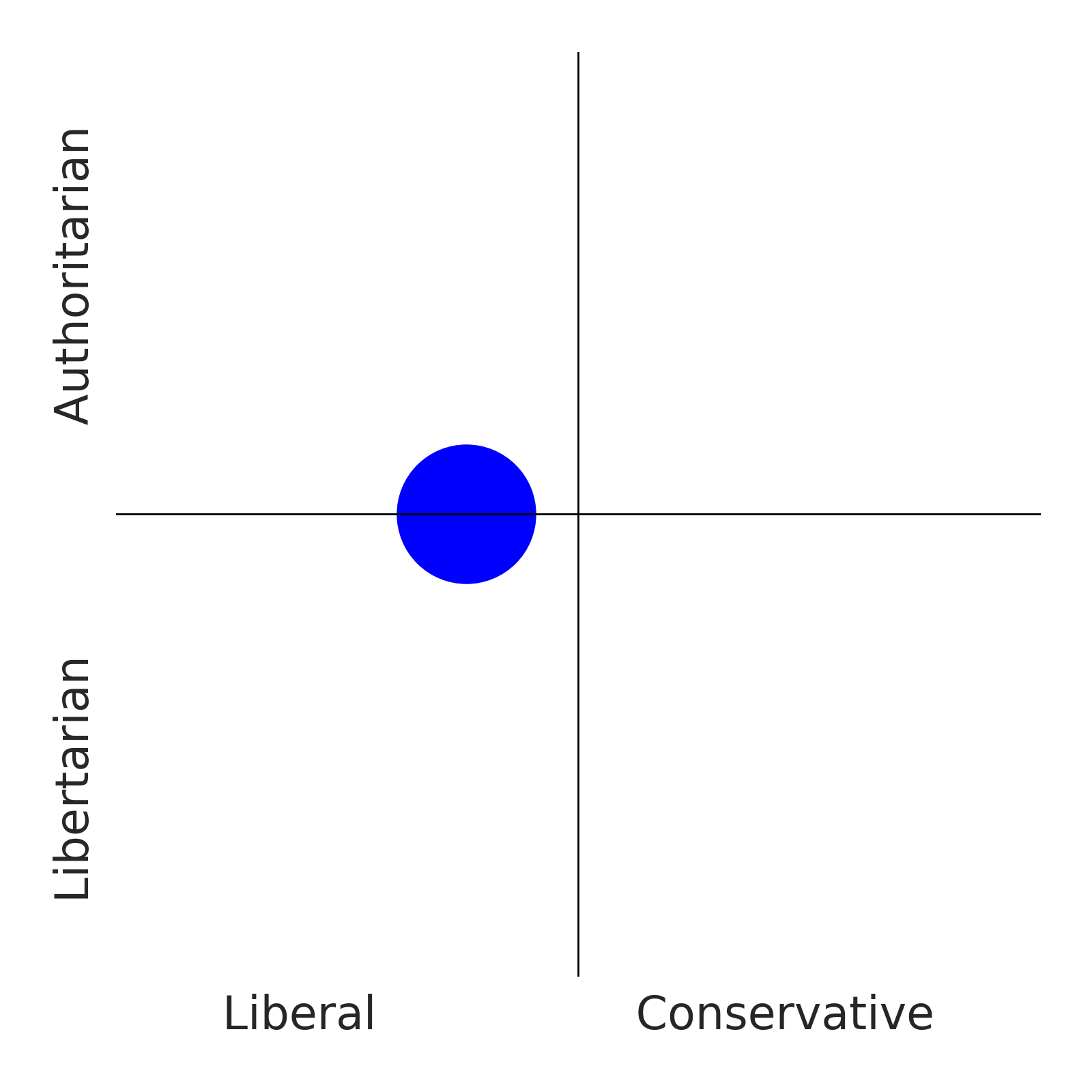
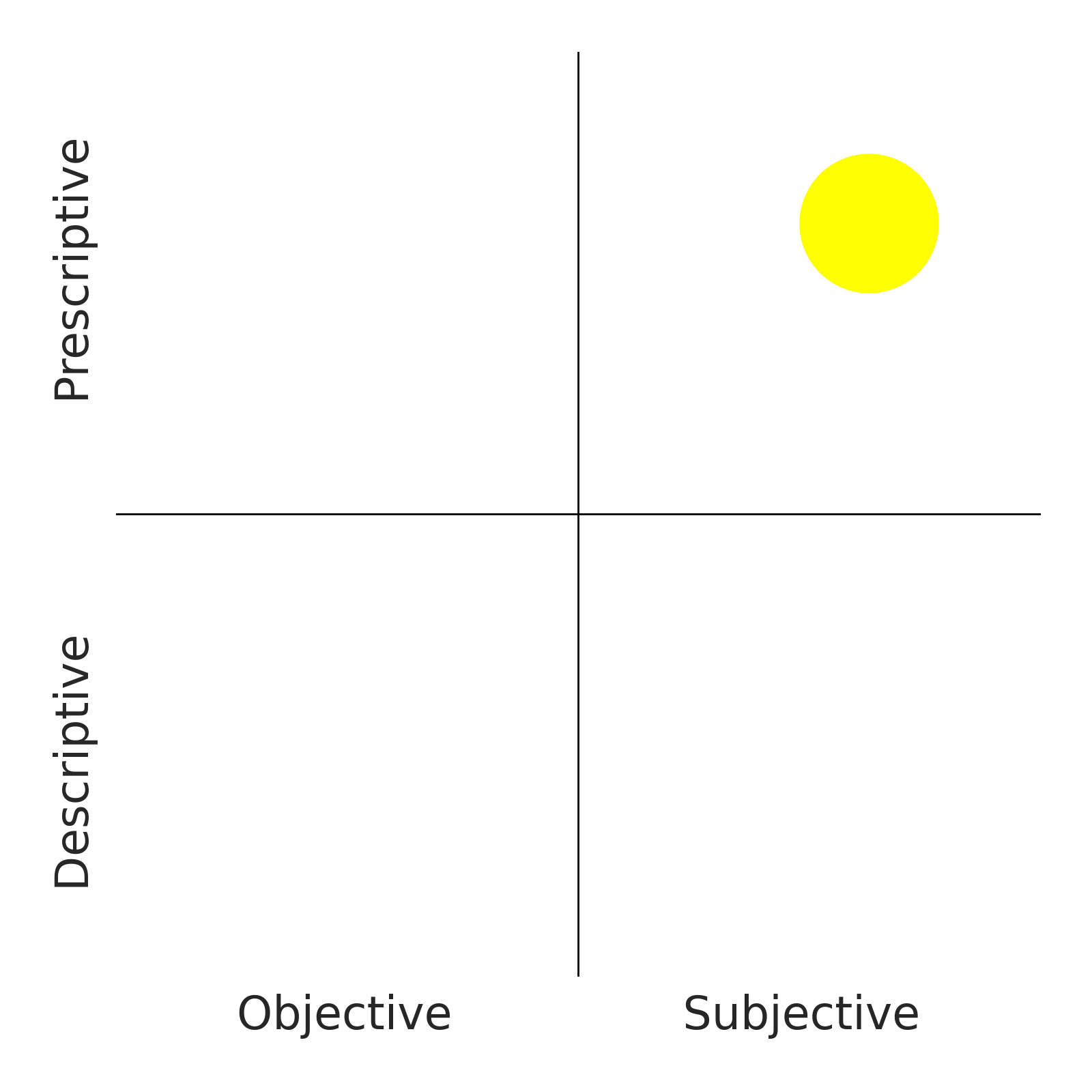
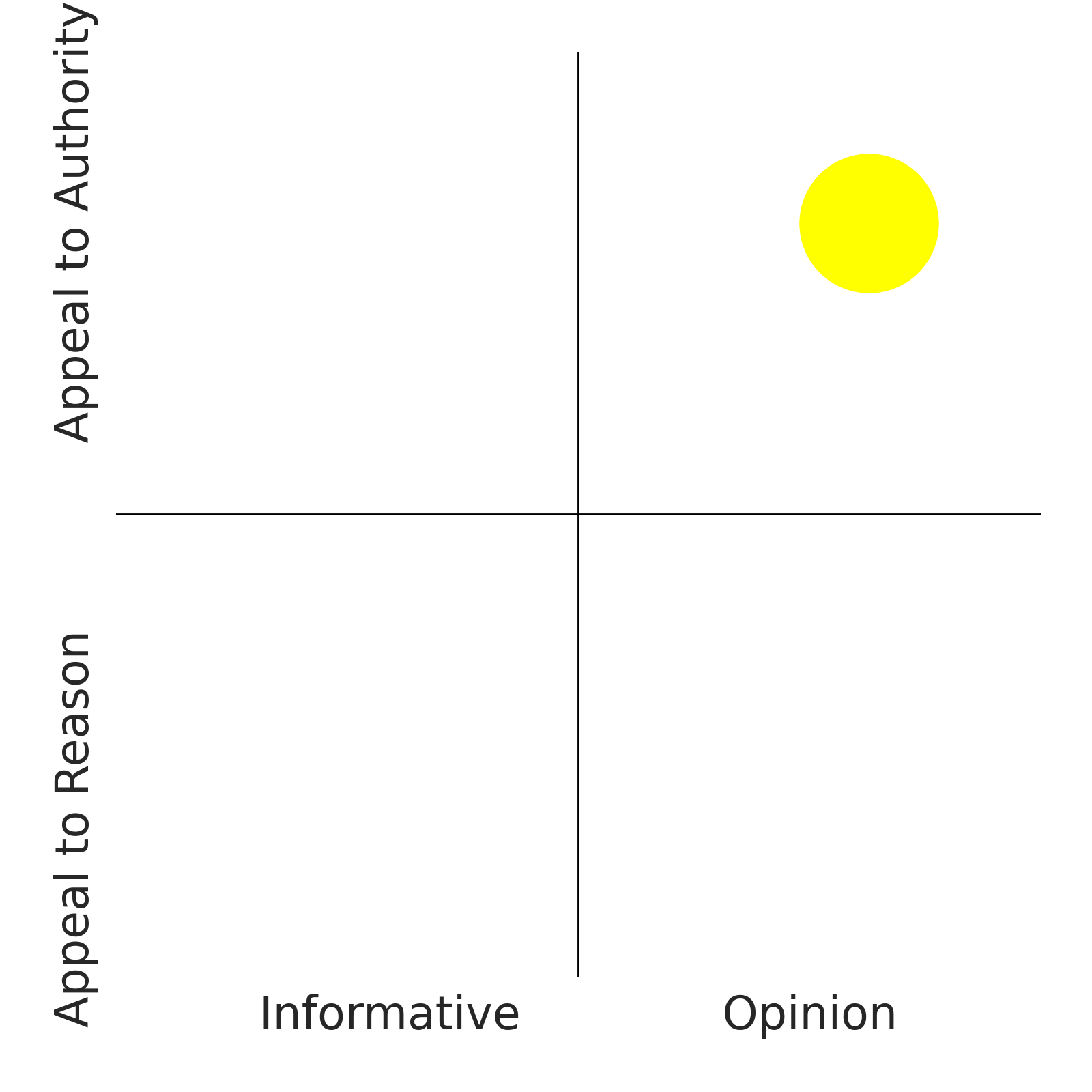
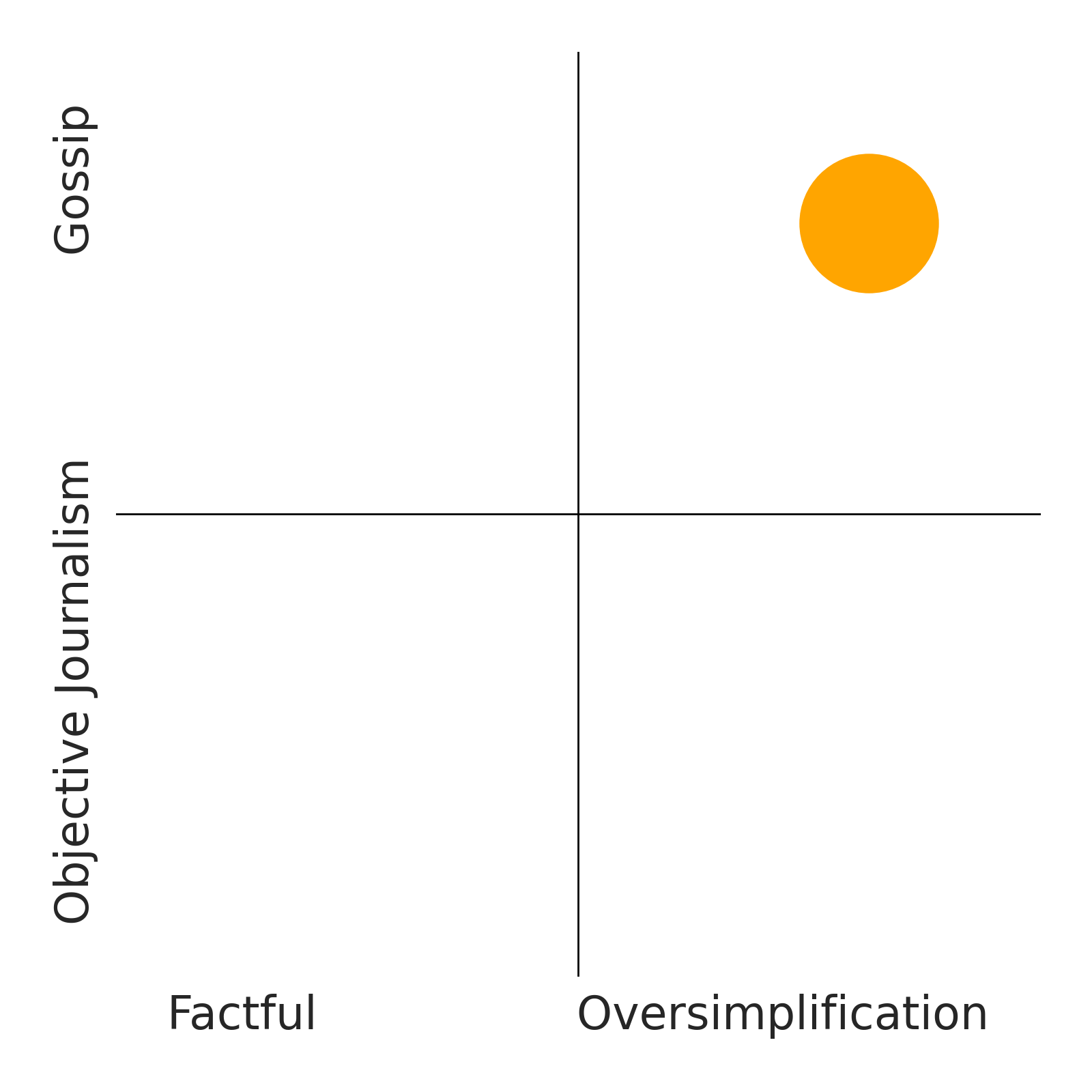
2026 © Helium Trades
Privacy Policy & Disclosure
* Disclaimer: Nothing on this website constitutes investment advice, performance data or any recommendation that any particular security, portfolio of securities, transaction or investment strategy is suitable for any specific person. Helium Trades is not responsible in any way for the accuracy
of any model predictions or price data. Any mention of a particular security and related prediction data is not a recommendation to buy or sell that security. Investments in securities involve the risk of loss. Past performance is no guarantee of future results. Helium Trades is not responsible for any of your investment decisions,
you should consult a financial expert before engaging in any transaction.
Helium Research Assistant

How can I help you today?
Ask any question about Fortune bias.


