See whether Helium helps you make better-informed decisions. Try every Pro Trader feature for 30 days. No credit card required.
Try every Pro Trader feature for 30 days. No credit card required.
October 23, 2026 · 0 shares
Urges proactive defense against overwhelming AI-driven cyber threats, framing current vulnerability discovery as an imminent global crisis for critical infrastructure.
The report synthesizes concerns from various industry leaders, including Anthropic, Box, and Hyperwrite, and venture capitalists, detailing how specific programming language flaws are being exposed and how AI is changing the landscape of digital security.
Automated analysis; not human reviewed. · 55 of 55 available dimensions scored; omitted dimensions are not treated as neutral. · Verified supporting quotes for 0 of 55 scored dimensions.
October 22, 2026 · 0 shares
Framing is balanced and attribution-heavy, pairing Bernstein's skeptical estimates with Palandjian's detailed rebuttal while noting that financing specifics were not disclosed.
Automated analysis; not human reviewed. Limitations: The supplied text includes an incomplete hyperlink placeholder and newsletter boilerplate, but the substantive reporting is sufficient for a limited framing analysis. · 6 of 55 available dimensions scored; omitted dimensions are not treated as neutral. · Verified supporting quotes for 5 of 6 scored dimensions.
Claim: Framing is factual and attributed rather than subjective.
“Palandjian said the 15-gigawatt figure represents the full build-out of two campuses in Utah and Alberta over several years.” · exact text match
“He did not specify a funding amount or say the entire build-out was financed.” · exact text match
Why: The report marks claims as coming from Palandjian and flags an unspecified funding amount, indicating a predominantly objective stance.
Claim: Language is measured and avoids sensational framing.
“His response gets at a central question in the AI building boom: How much weight should investors give the work that happens before data center construction begins?” · exact text match
“Bernstein's skepticism does not mean every newcomer will fail.” · exact text match
Why: The report frames the dispute around an analytical question and explicitly avoids treating skepticism as universal failure.
Claim: The report is descriptive, explaining the disputed analysis and claims rather than prescribing action.
“Bernstein examined thousands of data center projects using data from the tracking firm Aterio, assessing factors such as construction progress, electricity availability, and industry experience.” · exact text match
Why: The passage describes an analytical method and findings; no policy or action is advocated.
Claim: Visible sourcing and caveats support a high credibility assessment.
“Bernstein examined thousands of data center projects using data from the tracking firm Aterio, assessing factors such as construction progress, electricity availability, and industry experience.” · exact text match
“He did not specify a funding amount or say the entire build-out was financed.” · exact text match
Why: Named research, specified data source, and an explicit disclosure gap are visible in the text.
Claim: The report's reasoning is evidence-based and attributes estimates to a named research firm and methodology.
“Bernstein examined thousands of data center projects using data from the tracking firm Aterio, assessing factors such as construction progress, electricity availability, and industry experience.” · exact text match
“A score built from announced-capacity data ranks every pre-construction project low on construction progress by definition, and it cannot see confidential work.” · exact text match
Why: It lays out the analytical basis and includes a reasoned rebuttal, supporting a rational rather than irrational classification.
Claim: The report is fair, presenting the skeptical analysis and the company's detailed rebuttal while noting undisclosed financing.
“O'Leary Digital received a credibility score of 0.35 out of 5. Bernstein estimated that 489 megawatts of its announced 15-gigawatt pipeline would materialize, roughly 3%.” · not found in supplied text
“He did not specify a funding amount or say the entire build-out was financed.” · exact text match
Why: It includes adverse estimates and a limitation in the company's response, showing internally observable fairness.
The supplied text includes an incomplete hyperlink placeholder and newsletter boilerplate, but the substantive reporting is sufficient for a limited framing analysis.
October 23, 2026 · 0 shares
Market-driven constraints and attributed company/analyst statements dominate the framing, with little sensational or ideological language.
Automated analysis; not human reviewed. Limitations: The supplied text contains duplicated fragments and promotional boilerplate; analysis is limited to the substantive market-reporting passages. · 9 of 55 available dimensions scored; omitted dimensions are not treated as neutral. · Verified supporting quotes for 7 of 9 scored dimensions.
Claim: The report relies on attributed company statements and named market data rather than the publisher's subjective characterization.
“SK Hynix said it was abandoning a review of a potential US initial public offering of its Solidigm subsidiary” · exact text match
“The dollar volume of global IPO filings fell 33% in September from a year earlier, according to RBC Capital Markets in a report earlier this month.” · exact text match
Why: Attribution and specific market data support an objective rather than subjective presentation.
Claim: Market declines are reported in neutral percentage terms rather than with sensational or emotive language.
“SK Hynix shares fell as much as 4% in South Korea on Friday before reversing losses to close 4% higher.” · exact text match
“Rival Samsung Electronics closed 0.5% higher after early losses.” · exact text match
Why: Specific share moves and reversals are presented factually, without dramatic embellishment.
Claim: The report presents selloff losses alongside market rebounds, without adopting a clearly bearish or bullish stance.
“SK Hynix shares fell as much as 4% in South Korea on Friday before reversing losses to close 4% higher.” · exact text match
“Its stock rebounded 30% the following day, underscoring the volatility gripping newly listed tech companies.” · exact text match
Why: Both negative and positive market moves are reported, supporting a neutral market-direction framing.
Claim: The report describes market developments and company decisions without prescribing policy or investor action.
“The tech selloff is forcing companies to rethink IPO plans.” · exact text match
“Earlier this month, Nvidia-backed Australian data center operator Firmus withdrew its planned $5 billion IPO after the offering met weak investor demand.” · exact text match
Why: The framing is explanatory and descriptive, with no explicit recommendations or prescriptions.
Claim: Analyst opinion is clearly attributed rather than blended into the publisher's own voice.
“The selling had spread beyond the more speculative corners of the AI trade, wrote Chris Weston, head of research at Pepperstone.” · exact text match
Why: The main evaluative assessment is marked as a named analyst's view, keeping publisher opinion low.
Claim: The report uses named sources, attributed company statements, and specific market data.
“The dollar volume of global IPO filings fell 33% in September from a year earlier, according to RBC Capital Markets in a report earlier this month.” · exact text match
“"This decision does not reflect any change in Solidigm's growth prospects or investment needs," SK Hynix said, adding that it would continue evaluating other financing options.” · not found in supplied text
Why: Sourcing and attribution are visible throughout, supporting high credibility on the supplied text.
Claim: The report includes a forecast about selling pressure persisting but attributes it to an analyst.
“Weston said elevated trading volumes across the AI ecosystem suggested the latest selling pressure could persist.” · exact text match
Why: Speculative content is present but limited and explicitly attributed, so the score is low.
Claim: The report includes company pushback and caveats, such as SK Hynix saying the IPO review decision did not reflect a change in growth prospects.
“"This decision does not reflect any change in Solidigm's growth prospects or investment needs," SK Hynix said, adding that it would continue evaluating other financing options.” · not found in supplied text
Why: Including the company's qualifying statement signals fairness and honesty in presenting the development.
Claim: The report distinguishes broader AI-sector selling from more speculative corners and cites specific market data.
“The selling had spread beyond the more speculative corners of the AI trade, wrote Chris Weston, head of research at Pepperstone.” · exact text match
“The dollar volume of global IPO filings fell 33% in September from a year earlier, according to RBC Capital Markets in a report earlier this month.” · exact text match
Why: Analytical distinctions and concrete data support a high article-intelligence score.
The supplied text contains duplicated fragments and promotional boilerplate; analysis is limited to the substantive market-reporting passages.
A promotional press release packaged as crypto news uses Ethereum price forecasts and presale momentum to market Pepeto tokens with urgency and promised upside.
Automated analysis; not human reviewed. Limitations: The supplied text is a promotional press release with no independent reporting, and its date is in the future relative to typical verification, so factual assertions and predictions cannot be externally checked. · 19 of 55 available dimensions scored; omitted dimensions are not treated as neutral. · Verified supporting quotes for 19 of 19 scored dimensions.
Claim: The text presents subjective marketing judgments as conclusions.
“among every new crypto making headlines, Pepeto holds the strongest case we can find” · exact text match
Why: This is an unverifiable personal comparison presented as an authoritative assessment.
Claim: The text uses dramatic, exaggerated language to describe investment decisions.
“passing on Pepeto at presale prices looks less like caution than the costliest crypto decision of 2026” · exact text match
Why: Calling an investment choice the 'costliest crypto decision of 2026' is sensationalist overstatement.
Claim: The text is explicitly bullish on Ethereum and Pepeto.
“The Ethereum price prediction we work from is $6,000” · exact text match
Why: Adopting a $6,000 ETH target as a base case is a strong bullish stance, and Pepeto is repeatedly framed as a high-return presale.
Claim: The text presents a consistently rosy outlook.
“Record inflows confirmed institutional money is back, and crypto has shown every cycle that the largest gains belong to positions taken before a bull run” · exact text match
Why: It interprets inflows and historical cycles as a positive setup for future gains without acknowledging risks.
Claim: The text prescribes taking a presale position before listing.
“One position taken now can carry a portfolio further into the bull run ahead than any large cap could” · exact text match
Why: This is direct advice to invest now rather than a neutral description of events.
Claim: The text uses fear of missing out to motivate action.
“readers who waited will be telling this story instead of living it” · exact text match
Why: It frames inaction as future regret, appealing to fear rather than analysis.
Claim: The text mixes market opinion with reported facts.
“The Ethereum price prediction we work from is $6,000” · exact text match
Why: It states its own chosen forecast as a working assumption, showing opinionated framing.
Claim: The text reduces investment risk to a simple pattern of presales and meme coins creating wealth.
“Presales and meme coins have created more millionaires than the rest of crypto combined, and Pepeto delivers both in one position” · exact text match
Why: This generalization flattens investment outcomes and risks into a single promotional rule.
Claim: The text leans on named authorities to validate its price prediction.
“Tom Lee at Fundstrat sets that target and calls it conservative, per Coin Edition” · exact text match
Why: It cites a well-known strategist and a secondhand media source instead of evidence for the forecast.
Claim: The text uses presale funding as proof of quality while claiming quality drives funding.
“The capital moving Pepeto past $11.11 million is not retail chasing a chart. It is wallets that priced the setup” · exact text match
Why: It infers sophistication from the same capital inflows it then uses as validation of the project.
Claim: The text expresses certainty beyond the evidence it provides.
“Once this goes live, there is no reason to use anything else” · exact text match
Why: It endorses an absolute claim about the product's superiority and a speculative price target as a base case.
Claim: The text relies on repetitive promotional superlatives rather than substantive information.
“the biggest crypto news in the presale market this week” · exact text match
Why: Self-promotional fluff repeated across the text is characteristic of spammy advertorial content.
Claim: The text is emotionally positive and euphoric.
“Every cycle hands out a few entries that reshape a portfolio for good, recognizable afterward, never rewarded afterward” · exact text match
Why: The language is designed to generate excitement and regret rather than measured evaluation.
Claim: The text's credibility is undermined by unverified promotional claims and secondhand sourcing.
“Tom Lee at Fundstrat sets that target and calls it conservative, per Coin Edition” · exact text match
Why: Key claims are only attributed to other outlets or unnamed leaders, with no independent verification.
Claim: The text uses emotion-laden, exaggerated reasoning rather than measured analysis.
“The meme side alone puts returns of the same shape on the table that early Shiba Inu buyers collected before listing” · exact text match
Why: It treats a speculative meme-coin analogy as a basis for expected returns, which is emotional rather than evidence-based reasoning.
Claim: The text functions as an advertisement by directing readers to a Pepeto presale.
“Click Here To Visit Pepeto While The Presale Entry Is Still Open” · exact text match
Why: A direct call to visit the presale page is an explicit promotional action, showing the piece is primarily advertising.
Claim: The text builds its case on speculative price forecasts and historical analogies.
“If the Ethereum price moves toward the $6,000 Wall Street's most followed strategist expects, projects on the network historically move harder than the base asset” · exact text match
Why: The core argument is an unverified forecast about Ethereum and an unsupported claim about network projects outperforming.
Claim: The text uses urgency and a false binary to push immediate buying.
“The only real constraint on Pepeto is timing: launch is close, today's price disappears at listing, and readers who waited will be telling this story instead of living it” · exact text match
Why: It creates artificial time pressure and a stark contrast between acting now and being left behind.
Claim: The text packages promotional material as neutral crypto news.
“the biggest crypto news in the presale market this week” · exact text match
Why: A self-identifying press release with direct calls to buy is presented under a 'Crypto News' framing without clearly labeling it as advertising.
The supplied text is a promotional press release with no independent reporting, and its date is in the future relative to typical verification, so factual assertions and predictions cannot be externally checked.
A first-person cautionary narrative converts a costly travel-booking mistake into prescriptive lessons about buffers, ticket terms, and credit-card protections.
Automated analysis; not human reviewed. Limitations: The supplied text is a first-person travel-finance anecdote; no external corroboration or full publication metadata is available. · 7 of 55 available dimensions scored; omitted dimensions are not treated as neutral. · Verified supporting quotes for 7 of 7 scored dimensions.
Claim: The account is framed subjectively through the author's personal choices, feelings, and lessons.
“I'm a veteran traveler who has booked more long-haul flights than I can count. But earlier this year, I made a very expensive rookie mistake.” · exact text match
Why: The first-person self-assessment and narrative framing make the perspective explicitly subjective.
Claim: The article is organized as prescriptive advice drawn from the author's experience.
“Here are 4 lessons I learned the hard way.” · exact text match
Why: The structure explicitly promises lessons and recommendations for future action.
Claim: The article presents personal judgments and recommendations about booking travel.
“Next time, I'm booking the extra hotel night.” · exact text match
Why: The statement is a first-person recommendation rather than a neutral factual report.
Claim: The personal account includes specific named providers, dollar amounts, and policy details that make its claims traceable within the narrative.
“We used the Chase Sapphire Reserve for Business' trip cancellation and interruption protection for the original Icelandair tickets and were reimbursed $952.” · exact text match
Why: Specific financial and provider details support internal credibility, though the account remains first-person and uncorroborated.
Claim: The article uses concrete costs and stated airline/card rules to support its practical advice.
“When you book flights separately, you're responsible for making each connection — or buying new tickets if you miss one.” · exact text match
Why: The reasoning is grounded in disclosed policy and financial consequences rather than emotional assertions.
Claim: The framing assigns responsibility for separate bookings and precautions primarily to the individual traveler.
“When you book flights separately, you're responsible for making each connection — or buying new tickets if you miss one.” · exact text match
Why: The lesson emphasizes personal responsibility and self-protection rather than collective or institutional remedy.
Claim: The author acknowledges personal error and explicitly cautions against blaming frontline staff.
“And remember, it's not the staff's fault for the disruption. You get more bees with honey.” · exact text match
Why: This signals fair-mindedness and transparency about the author's own mistake.
The supplied text is a first-person travel-finance anecdote; no external corroboration or full publication metadata is available.
A former employee's insider framing and glowing first-person endorsements promote Trader Joe's products as easy, affordable staples without critical assessment.
Automated analysis; not human reviewed. Limitations: No pricing, nutritional, availability, or independent verification information is supplied, so the product claims cannot be externally checked. · 7 of 55 available dimensions scored; omitted dimensions are not treated as neutral. · Verified supporting quotes for 6 of 7 scored dimensions.
Claim: The article is overwhelmingly subjective and based on personal taste.
“In my opinion, it perfectly matches the classic drink's flavor.” · exact text match
Why: The piece repeatedly states personal preferences and evaluative judgments rather than reporting objective facts.
Claim: The article's overall tone is upbeat and positive about the products it covers.
“They crisp up perfectly in the air fryer and make a great base for avocado 'toast' with a fried egg.” · not found in supplied text
Why: Descriptions are uniformly positive, using words like 'perfect' and 'great' without negative caveats.
Claim: The article is composed largely of personal endorsements and taste judgments.
“I've tried overnight oats from several brands and found many to be either too mushy or too sweet. These, however, are perfect.” · exact text match
Why: Almost every paragraph contains an unsupported evaluative claim about product quality or usefulness.
Claim: The article relies on the author's employee status to lend authority to product recommendations.
“As someone who used to work there, I know this better than anyone.” · exact text match
Why: The author explicitly invokes insider experience as a reason readers should trust the recommendations.
Claim: The article expresses certainty in the author's product knowledge beyond what the text can support.
“As someone who used to work there, I know this better than anyone.” · exact text match
Why: The superlative 'better than anyone' claims an unverifiable level of expertise from a three-year retail job.
Claim: The article functions as promotional content for Trader Joe's products.
“Every time I visit my local store, I buy as many as I can.” · exact text match
“Trader Joe's has a wealth of products that make for simple, affordable meals.” · exact text match
Why: The text repeatedly praises products, urges repeat purchase, and gives no critical or comparative negative information.
Claim: The article frames Trader Joe's favorably as a brand.
“Trader Joe's has a wealth of products that make for simple, affordable meals.” · exact text match
Why: It consistently attributes value to Trader Joe's products and presents the store positively, with no critical scrutiny.
No pricing, nutritional, availability, or independent verification information is supplied, so the product claims cannot be externally checked.
The review is strongly first-person and impressionistic, interpreting the documentary through the author's oscillating fear, pity, and suspicion instead of detached reporting.
Automated analysis; not human reviewed. Limitations: The text is a first-person entertainment review with newsletter/subscription boilerplate; political, economic, and foreign-policy dimensions are not materially applicable. · 7 of 55 available dimensions scored; omitted dimensions are not treated as neutral. · Verified supporting quotes for 6 of 7 scored dimensions.
Claim: The review foregrounds the author's first-person impressions over detached description.
“I found myself fluctuating between being freaked out by the lack of emotion in Holmes' vacuous gaze and, to my surprise, pitying her.” · exact text match
Why: First-person emotional reactions dominate the framing.
Claim: Dramatic language heightens the documentary's psychological intensity.
“The scariest thing about Elizabeth Holmes' new documentary is how much I wanted to believe her.” · exact text match
Why: The 'scariest thing' framing gives the review a dramatic, heightened tone.
Claim: The review is organized around the author's personal judgments and reactions.
“The scariest thing about Elizabeth Holmes' new documentary is how much I wanted to believe her.” · exact text match
Why: The opening states a personal evaluative reaction as the central hook.
Claim: The review grounds its account in direct quotes and attributed remarks from the film and a Q&A.
“During a Q&A after an early screening of "You Can See Everything" in New York, Oppenheim described how he, Fielder, and the crew would swap interpretations of what they'd just seen and heard after the cameras were switched off.” · not found in supplied text
Why: Attribution to named participants supports credibility, though the piece remains an opinion review.
Claim: The reviewer speculates about Holmes's possible calculated performance of sympathy.
“what if pity was exactly the reaction that Holmes — a talented, convicted fraudster — was angling for?” · exact text match
Why: The question raises an unverified motive for Holmes's onscreen demeanor.
Claim: The reviewer acknowledges uncertainty instead of claiming definitive knowledge about Holmes.
“It turns out that just because you can see everything, that doesn't mean you know anything. At least not for sure.” · exact text match
Why: Explicit epistemic caution supports fairness and honesty signals.
Claim: The review offers a layered interpretation of the documentary's ambiguity and prior coverage.
“Much like its subject, "You Can See Everything" is a slippery mind-trick of a film — part character study, part psychological thriller, part surrealist thought experiment.” · exact text match
Why: The classification and comparison show analytical nuance.
The text is a first-person entertainment review with newsletter/subscription boilerplate; political, economic, and foreign-policy dimensions are not materially applicable.
The coverage frames AI development as an imminent existential threat, leading with one researcher's alarmist warnings and using phrases such as 'sounded the alarm' and 'threaten humanity's survival.'
Automated analysis; not human reviewed. Limitations: The supplied text is a truncated excerpt with repeated promotional lines and no byline, so the analysis is limited to visible article content. · 6 of 55 available dimensions scored; omitted dimensions are not treated as neutral. · Verified supporting quotes for 4 of 6 scored dimensions.
Claim: The report uses alarmist, dramatic language rather than neutral description to introduce the testimony.
“as he sounded the alarm that AI could threaten humanity's survival.” · exact text match
“warning it could leave humans totally unable to control what comes next.” · exact text match
Why: These are the article's own descriptive phrases, not attributed quotes, and they frame the news as a survival emergency.
Claim: The report presents AI development as an imminent catastrophic threat without balancing optimism.
“Automated AI research is on the horizon, a former Anthropic and OpenAI researcher said, warning it could leave humans totally unable to control what comes next.” · exact text match
“It is more likely than not that humanity loses control to these AIs, and it could end in human extinction” · exact text match
Why: The lead frames the story as a warning of loss of control and extinction, and no positive or countervailing outlook is included.
Claim: The report uses survival and extinction language to heighten fear.
“as he sounded the alarm that AI could threaten humanity's survival.” · exact text match
“It is more likely than not that humanity loses control to these AIs, and it could end in human extinction” · exact text match
Why: The article's own voice and the selected quote emphasize existential catastrophe.
Claim: Visible sourcing practices are strong: named speakers, direct quotes, and a request for comment.
“OpenAI and Anthropic did not immediately respond to a request for comment on Coxon's remarks on Tuesday.” · exact text match
“Speaking from what he called firsthand experience, Coxon said that the majority of the code written today is written by AI.” · exact text match
Why: The article uses named sources and direct quotes, but its central claims rest largely on one former employee's unverified assertions.
Claim: The report features unverified future milestones and probability estimates as central news.
“When I was at OpenAI, we had milestones for an automated AI researcher, around 2027, 2028, and we are on track or beating these expectations” · exact text match
“That's a matter of months from now, not decades or even five years.” · not found in supplied text
“It is more likely than not that humanity loses control to these AIs, and it could end in human extinction” · exact text match
Why: A predicted timeline and a subjective probability of catastrophe are highlighted without independent verification or contrary forecasts.
Claim: The report includes responses from the criticized companies and attributes claims by name.
“In response, OpenAI CEO Sam Altman said in an X post, "I agree with Dario that we need to pace the frontier. This has been a primary topic of discussions we've had at OpenAI in recent weeks."” · not found in supplied text
“OpenAI and Anthropic did not immediately respond to a request for comment on Coxon's remarks on Tuesday.” · exact text match
Why: The report gives the accused labs an opportunity to respond and quotes their leaders, while attributing allegations to Coxon.
The supplied text is a truncated excerpt with repeated promotional lines and no byline, so the analysis is limited to visible article content.
Promotional framing sells a presale token as a proven repeat of BNB's 9,000x rise, using authoritative citations and FOMO urgency to push a 100x-plus projection.
Automated analysis; not human reviewed. Limitations: The source is a promotional press release, and no independent verification of Pepeto's team, raise totals, audits, or analyst models is available from the text. · 23 of 55 available dimensions scored; omitted dimensions are not treated as neutral. · Verified supporting quotes for 20 of 23 scored dimensions.
Claim: Framing favors following large investors and institutional validation rather than broad retail participation.
“The biggest wallets move first, since they spot opportunities before retail can, and today they are entering Pepeto faster than any presale of 2026” · exact text match
“Following the largest money has always been crypto's sharpest edge” · exact text match
Why: The text explicitly instructs readers to trust and follow the largest wallets, an elitist hierarchy.
Claim: Presents promotional opinion as analysis.
“Ask anyone who bought BNB at $0.10 in the ICO and saw a few hundred dollars become millions, and the same reflection returns: they wish they had sized larger” · exact text match
“That same engine lifted BNB from pennies into the top five, only Pepeto goes live on three networks at once” · exact text match
Why: Anecdotal 'ask anyone' and rhetorical comparisons replace neutral analysis.
Claim: Uses extreme superlatives and urgent, emotional language.
“Pepeto has announced its newest presale stage sold out in record time” · exact text match
“the ground floor math that made them rich is back” · exact text match
Why: 'Record time' and 'made them rich' signal sensationalism over sober reporting.
Claim: Strongly bullish on Pepeto and BNB upside.
“a full run from $774 to $2,775 returns about 3.6x” · exact text match
“the presale's numbers point to more upside than BNB's original entry” · not found in supplied text
Why: Forecasts are presented as actionable upside and holding BNB is dismissed.
Claim: Irrationally optimistic about future returns.
“Meme energy alone carried coins past billion dollar valuations with nothing behind them” · exact text match
“BNB rose over 9,000x on pure utility” · exact text match
Why: Past gains are used to imply future success.
Claim: Tells readers what to do rather than describing facts.
“parking capital in a giant coin and waiting for it to change your life is not the 2026 playbook” · exact text match
“Review The Pepeto Presale Before This Stage Closes” · exact text match
Why: Direct prescriptions and calls to action dominate the piece.
Claim: Creates FOMO with scarcity and urgency.
“Review The Pepeto Presale Before This Stage Closes” · exact text match
“That window closed and stayed closed” · exact text match
“they wish they had sized larger” · exact text match
Why: Urgency and regret framing pressure readers to act before a closing stage.
Claim: Assumes the conclusion that Pepeto is a superior investment.
“Pepeto carries the return profile a $100 billion BNB structurally cannot” · exact text match
“the logic holds” · exact text match
Why: The reasoning treats the promotion's thesis as established rather than supporting it.
Claim: Loaded promotional assertions are presented as market analysis.
“Pepeto differs because large capital is validating the thesis live” · exact text match
“the ground floor math that made them rich is back” · exact text match
Why: These are promotional judgments rather than factual reporting.
Claim: Reduces complex market dynamics to a single exchange-token pattern.
“exchange coin returns come from before the first trade, not years of holding a giant through flat price action” · not found in supplied text
“Pepeto combines both in one coin, and exchange-grade demand meeting meme energy at this scale has no precedent” · exact text match
Why: Complex factors are compressed into a catchy but unproven formula.
Claim: Uses authorities and titles as primary support.
“built by a Binance veteran” · exact text match
“Standard Chartered sets that target” · exact text match
“ex-Binance executive who designed exchange systems from scratch” · exact text match
Why: Credibility rests on affiliation and authority rather than verifiable substance.
Claim: Certainty far exceeds the supplied evidence.
“Analysts model the Binance listing alone at 100x or more, and the logic holds” · exact text match
“the presale's numbers point to more upside than BNB's original entry” · not found in supplied text
Why: The 100x outcome is stated as settled and future presale performance is predicted confidently.
Claim: Content functions as repetitive promotional filler.
“Review The Pepeto Presale Before This Stage Closes” · exact text match
“Could Pepeto give early buyers what the BNB ICO gave its first holders?” · exact text match
Why: Repeated calls-to-action and rhetorical questions resemble promotional spam.
Claim: Cites established financial institutions and veterans as validation for a speculative token.
“Standard Chartered sets that target for end-2028, per The Block” · exact text match
“Grayscale gave BNB the top weight in its new fund at 30.6%, a regulated channel for institutions” · exact text match
Why: Institutional endorsements are used to legitimize the promotional thesis.
Claim: Emotionally positive and euphoric language pervades.
“life-changing money” · exact text match
“they wish they had sized larger” · exact text match
“Meme energy alone carried coins past billion dollar valuations” · exact text match
Why: Excitement and regret are used rather than neutral data.
Claim: Low credibility due to unnamed sources, internal inconsistency, and promotional intent.
“Analysts model the Binance listing alone at 100x or more” · exact text match
“the presale has raised $8,970,618” · exact text match
Counterevidence:
“Standard Chartered sets that target for end-2028, per The Block” · exact text match
Why: Unattributed 'analysts' and a contradictory raise total undermine trustworthiness.
Claim: Uses unsupported certainty and hype-based framing rather than measured reasoning.
“Analysts model the Binance listing alone at 100x or more, and the logic holds” · exact text match
“Pepeto combines both in one coin, and exchange-grade demand meeting meme energy at this scale has no precedent” · exact text match
Why: A 100x outcome is asserted without named analysts or methodology, and 'no precedent' is an unfalsifiable claim.
Claim: Explicitly advertises a presale.
“Review The Pepeto Presale Before This Stage Closes” · exact text match
“the ground floor math that made them rich is back” · exact text match
Why: The entire release is a sales pitch for Pepeto.
Claim: Forecasts and modeled outcomes dominate the reporting.
“Standard Chartered targets $2,775 for the BNB price by end-2028” · exact text match
“Analysts model the Binance listing alone at 100x or more” · exact text match
Why: Nearly every substantive claim is a prediction or projection.
Claim: Uses urgency, selective figures, and one-sided framing.
“Review The Pepeto Presale Before This Stage Closes” · exact text match
“the presale has raised $8,970,618” · exact text match
Why: Urgency plus an inconsistent raise figure, without countervailing risks, is an observable persuasive technique.
Claim: Inconsistent figures and unnamed 'analysts' undermine internal honesty.
“carrying the raise past $11M” · exact text match
“the presale has raised $8,970,618” · exact text match
“Analysts model the Binance listing alone at 100x or more” · exact text match
Counterevidence:
“Disclaimer: The information provided in this press release is not a solicitation for investment, nor is it intended as investment advice, financial advice, or trading advice. Investing involves risk, including the potential loss of capital.” · exact text match
Why: The raise total differs within the same release and the 100x claim has no named analyst or methodology.
Claim: Logical inconsistencies and unsupported conclusions lower analytic rigor.
“carrying the raise past $11M” · exact text match
“the presale has raised $8,970,618” · exact text match
“exchange-grade demand meeting meme energy at this scale has no precedent” · exact text match
Why: Internal numerical contradiction and sweeping superlatives show weak reasoning.
Claim: Embraces ungrounded fantasy projections as realistic.
“Meme energy alone carried coins past billion dollar valuations with nothing behind them” · exact text match
“Analysts model the Binance listing alone at 100x or more, and the logic holds” · exact text match
Why: A 100x outcome and 'no precedent' are treated as reliable, escaping evidence-based bounds.
The source is a promotional press release, and no independent verification of Pepeto's team, raise totals, audits, or analyst models is available from the text.
A promotional press release packaged as crypto news uses Ethereum price forecasts and presale momentum to market Pepeto tokens with urgency and promised upside.
Automated analysis; not human reviewed. Limitations: The supplied text is a promotional press release with no independent reporting, and its date is in the future relative to typical verification, so factual assertions and predictions cannot be externally checked. · 19 of 55 available dimensions scored; omitted dimensions are not treated as neutral. · Verified supporting quotes for 19 of 19 scored dimensions.
Claim: The text presents subjective marketing judgments as conclusions.
“among every new crypto making headlines, Pepeto holds the strongest case we can find” · exact text match
Why: This is an unverifiable personal comparison presented as an authoritative assessment.
Claim: The text uses dramatic, exaggerated language to describe investment decisions.
“passing on Pepeto at presale prices looks less like caution than the costliest crypto decision of 2026” · exact text match
Why: Calling an investment choice the 'costliest crypto decision of 2026' is sensationalist overstatement.
Claim: The text is explicitly bullish on Ethereum and Pepeto.
“The Ethereum price prediction we work from is $6,000” · exact text match
Why: Adopting a $6,000 ETH target as a base case is a strong bullish stance, and Pepeto is repeatedly framed as a high-return presale.
Claim: The text presents a consistently rosy outlook.
“Record inflows confirmed institutional money is back, and crypto has shown every cycle that the largest gains belong to positions taken before a bull run” · exact text match
Why: It interprets inflows and historical cycles as a positive setup for future gains without acknowledging risks.
Claim: The text prescribes taking a presale position before listing.
“One position taken now can carry a portfolio further into the bull run ahead than any large cap could” · exact text match
Why: This is direct advice to invest now rather than a neutral description of events.
Claim: The text uses fear of missing out to motivate action.
“readers who waited will be telling this story instead of living it” · exact text match
Why: It frames inaction as future regret, appealing to fear rather than analysis.
Claim: The text mixes market opinion with reported facts.
“The Ethereum price prediction we work from is $6,000” · exact text match
Why: It states its own chosen forecast as a working assumption, showing opinionated framing.
Claim: The text reduces investment risk to a simple pattern of presales and meme coins creating wealth.
“Presales and meme coins have created more millionaires than the rest of crypto combined, and Pepeto delivers both in one position” · exact text match
Why: This generalization flattens investment outcomes and risks into a single promotional rule.
Claim: The text leans on named authorities to validate its price prediction.
“Tom Lee at Fundstrat sets that target and calls it conservative, per Coin Edition” · exact text match
Why: It cites a well-known strategist and a secondhand media source instead of evidence for the forecast.
Claim: The text uses presale funding as proof of quality while claiming quality drives funding.
“The capital moving Pepeto past $11.11 million is not retail chasing a chart. It is wallets that priced the setup” · exact text match
Why: It infers sophistication from the same capital inflows it then uses as validation of the project.
Claim: The text expresses certainty beyond the evidence it provides.
“Once this goes live, there is no reason to use anything else” · exact text match
Why: It endorses an absolute claim about the product's superiority and a speculative price target as a base case.
Claim: The text relies on repetitive promotional superlatives rather than substantive information.
“the biggest crypto news in the presale market this week” · exact text match
Why: Self-promotional fluff repeated across the text is characteristic of spammy advertorial content.
Claim: The text is emotionally positive and euphoric.
“Every cycle hands out a few entries that reshape a portfolio for good, recognizable afterward, never rewarded afterward” · exact text match
Why: The language is designed to generate excitement and regret rather than measured evaluation.
Claim: The text's credibility is undermined by unverified promotional claims and secondhand sourcing.
“Tom Lee at Fundstrat sets that target and calls it conservative, per Coin Edition” · exact text match
Why: Key claims are only attributed to other outlets or unnamed leaders, with no independent verification.
Claim: The text uses emotion-laden, exaggerated reasoning rather than measured analysis.
“The meme side alone puts returns of the same shape on the table that early Shiba Inu buyers collected before listing” · exact text match
Why: It treats a speculative meme-coin analogy as a basis for expected returns, which is emotional rather than evidence-based reasoning.
Claim: The text functions as an advertisement by directing readers to a Pepeto presale.
“Click Here To Visit Pepeto While The Presale Entry Is Still Open” · exact text match
Why: A direct call to visit the presale page is an explicit promotional action, showing the piece is primarily advertising.
Claim: The text builds its case on speculative price forecasts and historical analogies.
“If the Ethereum price moves toward the $6,000 Wall Street's most followed strategist expects, projects on the network historically move harder than the base asset” · exact text match
Why: The core argument is an unverified forecast about Ethereum and an unsupported claim about network projects outperforming.
Claim: The text uses urgency and a false binary to push immediate buying.
“The only real constraint on Pepeto is timing: launch is close, today's price disappears at listing, and readers who waited will be telling this story instead of living it” · exact text match
Why: It creates artificial time pressure and a stark contrast between acting now and being left behind.
Claim: The text packages promotional material as neutral crypto news.
“the biggest crypto news in the presale market this week” · exact text match
Why: A self-identifying press release with direct calls to buy is presented under a 'Crypto News' framing without clearly labeling it as advertising.
The supplied text is a promotional press release with no independent reporting, and its date is in the future relative to typical verification, so factual assertions and predictions cannot be externally checked.
Promotional crypto press-release framing presents unverified price targets and launch claims as bullish market news, with one-sided enthusiasm and minimal independent verification.
Automated analysis; not human reviewed. Limitations: The supplied text is a sponsored press release provided by Remittix; bias scores reflect advertorial framing rather than independent journalism. · 15 of 55 available dimensions scored; omitted dimensions are not treated as neutral. · Verified supporting quotes for 15 of 15 scored dimensions.
Claim: Framing is subjective and promotional, using evaluative language rather than neutral reporting.
“Remittix enters that bullish conversation with something large-cap assets cannot offer: a first launch cycle backed by working products and an expanding financial platform.” · exact text match
Why: Evaluative and promotional characterization signals subjective framing.
Claim: Headline and framing use sensational, hype-oriented language.
“Ethereum Price Prediction Eyes $8,000” · exact text match
“Solana’s Alpenglow Upgrade Fuels a $250 Target” · exact text match
Why: Large price targets in headline framing create sensational emphasis.
Claim: Framing is strongly bullish, emphasizing large upside targets and positive demand.
“An $8,000 Ethereum price prediction implies more than threefold upside and reflects a high-conviction bull case” · exact text match
“A $250 target would require an advance of roughly 125%” · exact text match
Why: Focus on multi-fold upside and high-conviction bull case signals bullish bias.
Claim: Framing is highly optimistic about Remittix and crypto market prospects.
“could place Remittix among the most closely watched new crypto launches of the final quarter.” · exact text match
Why: Promotional optimism about future attention and success.
Claim: Content is prescriptive/promotional, implying investment relevance and favorable timing.
“planned minimum exchange launch price” · exact text match
Why: Reference to planned minimum launch price promotes expected valuation.
Claim: Content is heavily opinionated and promotional rather than fact-only.
“Remittix enters that bullish conversation with something large-cap assets cannot offer” · exact text match
Why: Assertive evaluative claim not merely reporting facts.
Claim: Complex crypto risks and market dynamics are oversimplified into a bullish product narrative.
“Remittix enters that bullish conversation with something large-cap assets cannot offer: a first launch cycle backed by working products and an expanding financial platform.” · exact text match
Why: Simplifies product progress into a broad bullish market claim.
Claim: Certainty about outcomes exceeds supplied evidence.
“The November 24 debut will bring Remittix’s payment, trading, wallet and earning products into public markets together, providing RTX with several potential sources of demand.” · exact text match
Why: Future demand linkage is stated with strong certainty despite limited evidence.
Claim: Content functions as promotional press-release material rather than independent editorial.
“This content is provided by Remittix.” · exact text match
Why: Sponsor disclosure identifies promotional origin.
Claim: Emotional tone is strongly positive and enthusiastic.
“high-conviction bull case” · exact text match
Why: Positive bullish language signals favorable emotional framing.
Claim: Credibility as independent reporting is low because publisher disclaims verification and content is provider-supplied.
“We do not endorse, verify, or guarantee the accuracy, completeness, or reliability of any information presented.” · exact text match
Why: Explicit non-verification and provider origin reduce independent credibility.
Claim: Content is explicitly promotional/advertorial for Remittix.
“This content is provided by Remittix.” · exact text match
“Remittix is building a connected PayFi and digital-asset ecosystem focused on crypto-to-bank and bank-to-crypto payments.” · exact text match
Why: Sponsor-provided copy includes product marketing and promotional framing.
Claim: Framing favors the corporate entity Remittix and its commercial products.
“Remittix is building a connected PayFi and digital-asset ecosystem focused on crypto-to-bank and bank-to-crypto payments.” · exact text match
Why: Promotes a single company’s ecosystem and commercial offerings.
Claim: Content is highly speculative, relying on price predictions and future outcomes.
“An $8,000 Ethereum price prediction implies more than threefold upside” · exact text match
“A $250 target would require an advance of roughly 125%” · exact text match
Why: Price predictions and required upside calculations are speculative forecasts.
Claim: Uses urgency and promotional selection to steer readers toward a favorable view.
“The remaining allocation creates a narrowing pre-launch window before broader market access begins.” · exact text match
Why: Creates urgency around limited presale allocation.
The supplied text is a sponsored press release provided by Remittix; bias scores reflect advertorial framing rather than independent journalism.
This is sponsored promotional content that functions as advertorial for TRON DAO, uncritically relaying Justin Sun's optimistic AI and stablecoin claims with only a boilerplate disclaimer and no independent reporting or verification.
TOKEN2049 and Blockworks' DAS Asia are major cryptocurrency industry conferences; TRON DAO is the organization behind the TRON blockchain and its founder is Justin Sun.
Automated analysis; not human reviewed. Limitations: The entire content is a sponsored TRON DAO press release; there is no independent reporting, so bias analysis reflects promotional framing rather than journalistic choices. · 55 of 55 available dimensions scored; omitted dimensions are not treated as neutral. · Verified supporting quotes for 22 of 55 scored dimensions.
Claim: Framing emphasizes elite institutional conferences and speakers.
“DAS Asia is an institution-focused digital asset conference examining the intersection of traditional finance and the digital asset economy.” · exact text match
Why: Positioning around institutional finance and named industry founders signals an elitist orientation.
Claim: Content is largely subjective promotional narrative.
“TRON’s focus is to provide the fast, efficient and accessible settlement layer that can support this next generation of global finance.” · exact text match
Why: Self-promotional framing dominates over neutral factual reporting.
Claim: Some sensational framing appears in claims.
“the “Nobel Prize of the AI Era.”” · exact text match
Why: Grandiose labeling raises sensational tone.
Claim: Strongly bullish on crypto, stablecoins, AI agents, and TRON.
“AI agents using crypto will become the industry’s biggest use case within the next five years” · exact text match
Why: Promotional optimism about growth is unidirectional bullish.
Claim: Pervasively optimistic about TRON and digital assets.
“TRON is “Moving Trillions, Empowering Billions.”” · exact text match
Why: Marketing slogan reinforces optimistic tone.
Claim: Includes prescriptive promotional recommendations.
“readers are encouraged to conduct their own research and seek professional advice where appropriate” · exact text match
Why: Mild prescriptive advice within promo.
Claim: Minor risk mention only.
“Cryptocurrency and mining-related activities carry risks” · exact text match
Why: Risk disclaimer lacks fear-inducing tone.
Claim: Highly opinionated promotional assertions.
“Sun highlighted the growing role of tokenized assets and stablecoins as practical financial infrastructure” · exact text match
Why: Forward-looking views presented without challenge.
Claim: Limited political content.
“access to digital dollars and U.S.-based assets” · exact text match
Why: Mild reference to U.S. assets.
Claim: Complex topics simplified into promotional narrative.
“blockchain will become the financial infrastructure behind them” · exact text match
Why: Sweeping simplification.
Claim: Relies on Sun's authority and event prestige.
“Justin Sun joined fireside discussions at both conferences” · exact text match
Why: Positions Sun as authoritative figure.
Claim: Strong certainty in predictions.
“AI agents using crypto will become the industry’s biggest use case within the next five years” · exact text match
Why: Certain forecast without evidence.
Claim: Promotional press release content.
“TRON DAO also hosted a dedicated booth at the conference” · exact text match
Why: Marketing fluff.
Claim: Aligns with institutional financial establishment.
“examining the intersection of traditional finance and the digital asset economy” · exact text match
Why: Emphasis on institutional adoption.
Claim: Positive emotional promotional tone.
“TRON is “Moving Trillions, Empowering Billions.”” · exact text match
Why: Uplifting marketing language.
Claim: Low credibility due to sponsored nature.
“This sponsored content is provided by the content provider” · exact text match
Why: Sponsored content reduces trustworthiness.
Claim: Content relies on promotional claims and bold predictions rather than reasoned evidence.
“AI agents using crypto will become the industry’s biggest use case within the next five years” · exact text match
Why: Large unsubstantiated forecasts signal weaker rational grounding.
Claim: Explicitly sponsored advertorial.
“This sponsored content is provided by the content provider and does not necessarily reflect the views of this media platform or its publisher.” · exact text match
Why: Clear advertising.
Claim: Promotes TRON corporate interests.
“TRON DAO is a community-governed DAO dedicated to accelerating the decentralization of the internet via blockchain technology and dApps.” · exact text match
Why: Pro-corporate promo.
Claim: Forecasts future developments.
“within the near future, AI agents will increasingly make payments” · exact text match
Why: Speculative predictions.
Claim: Generic press-release style with some AI-like patterns.
“TRON DAO also hosted a dedicated booth at the conference, giving attendees the opportunity to connect with the broader TRON community” · exact text match
Why: Formal promotional tone, but could be human-written.
Claim: Disclosure of sponsorship is present but no independent verification.
“This sponsored content is provided by the content provider and does not necessarily reflect the views of this media platform or its publisher.” · exact text match
Why: Acknowledges sponsorship but remains one-sided.
The entire content is a sponsored TRON DAO press release; there is no independent reporting, so bias analysis reflects promotional framing rather than journalistic choices.
The text is a promotional press release that presents a crypto project's participation model and roadmap in favorable, forward-looking terms with repeated disclaimers but no independent verification or critical scrutiny.
CENTEL is a blockchain infrastructure ecosystem built on BNB Smart Chain with CNT as its core utility asset; the project aims to expand participation in blockchain infrastructure. Presale or incentive models in crypto frequently involve repayment obligations and token-price dependencies.
Automated analysis; not human reviewed. Limitations: The article is a press release with no independent verification or critical perspective; scores rely only on framing and promotional language. · 55 of 55 available dimensions scored; omitted dimensions are not treated as neutral. · Verified supporting quotes for 16 of 55 scored dimensions.
Claim: The article frames the model as broadening access to infrastructure participation.
“Pooled contributions are intended to broaden access to masternode collateral and infrastructure participation.” · exact text match
Why: Slight populist framing through inclusion of smaller participants, though mostly technical.
Claim: Promotional language and favorable framing dominate over neutral reporting.
“targeted CNT rewards” · exact text match
Why: Subjective promotional tone outweighs objective description.
Claim: Forward-looking hype about rewards and network, though no dramatic sensationalism.
“The combined benefit is upfront liquidity, targeted CNT rewards and return of the original CNT after the required repayment.” · exact text match
Why: Mildly sensational framing of benefits.
Claim: Consistently positive framing of project prospects and rewards.
“The target reward calculation is 2% monthly, equivalent to 7,200,000 CNT over 36 months.” · exact text match
Why: Bullish presentation of returns.
Claim: Optimistic projections and roadmap language.
“The long-term objective is an independent EVM-compatible network supporting validators, masternodes, staking and decentralized applications.” · exact text match
Why: Optimistic future outlook.
Claim: Simplifies complex crypto model into straightforward benefits with illustrative example.
“The combined benefit is upfront liquidity, targeted CNT rewards and return of the original CNT after the required repayment.” · exact text match
Why: Oversimplifies risks of repayment and token volatility.
Claim: Relies on project's own tracking page and CoinMarketCap page as authority.
“CENTEL's official tracking page identifies CNT listings on five exchanges” · verified after text normalization
Why: Appeals to official sources without external validation.
Claim: Confident presentation of model but caveated with illustrative projections.
“These are illustrative projections, not guaranteed returns.” · exact text match
Why: Balances confidence with disclaimers.
Claim: Press release style with promotional repetition and disclaimer.
“Disclaimer: The information provided in this press release is not a solicitation for investment” · exact text match
Why: Promotional distribution typical of spam.
Claim: The article presents structured technical details and disclaimers, but relies on unverified projections.
“These are illustrative projections, not guaranteed returns.” · exact text match
Why: Mixed rational presentation of model details with irrational reliance on speculative rewards.
Claim: Clearly promotional press release for CENTEL.
“CENTEL Announces Masternode Participation Model and Blockchain Development Roadmap” · exact text match
Why: Announcement style typical of advertising.
Claim: Heavy reliance on future projections and roadmap without deadlines.
“The roadmap specifies a development sequence rather than calendar deadlines.” · exact text match
Why: Speculative future development.
Claim: Uses technical details and disclaimers to lend credibility to promotional claims.
“These are illustrative projections, not guaranteed returns.” · exact text match
Why: Observable technique of pairing benefits with caveats.
Claim: Smooth, template-like structure and phrasing.
“The information provided in this press release is not a solicitation for investment” · exact text match
Why: Press release boilerplate and repetitive structure suggest possible AI involvement.
Claim: Disclaimers and caveats present, but no independent verification, typical of press release.
“These are illustrative projections, not guaranteed returns.” · exact text match
Why: Some honesty signals via disclaimers but promotional intent.
Claim: Model includes repayment obligation but no fraud normalization.
“At maturity, the participant repays the full nominal USDT liquidity amount received at entry.” · exact text match
Why: Not strong evidence; model appears structured but complex.
The article is a press release with no independent verification or critical perspective; scores rely only on framing and promotional language.
October 08, 2026 · 0 shares
Promotional advertorial framing for Toobit, uncritically presenting company claims and positive market data as newsworthy.
Automated analysis; not human reviewed. Limitations: Article is a sponsored press release; bias analysis is limited to promotional framing and does not assess independent factual accuracy. · 1 of 55 available dimensions scored; omitted dimensions are not treated as neutral. · Verified supporting quotes for 1 of 1 scored dimensions.
Claim: The article is a sponsored promotional piece for Toobit, using advertorial language and calls to action.
“This sponsored content is provided by the content provider and does not necessarily reflect the views of this media platform or its publisher.” · exact text match
“Toobit is where the future of crypto trading unfolds.” · exact text match
Why: Explicit sponsored-content disclaimer and promotional tagline indicate advertorial framing.
Article is a sponsored press release; bias analysis is limited to promotional framing and does not assess independent factual accuracy.
October 06, 2026 · 0 shares
A commercial shopping roundup uses Reddit communities' skepticism as social proof to present Prime Day products as vetted, worthwhile purchases.
Automated analysis; not human reviewed. Limitations: The supplied text lacks a verifiable publication date and external fact-checking, so product claims and the affiliate disclosure are accepted from the article itself. · 8 of 55 available dimensions scored; omitted dimensions are not treated as neutral. · Verified supporting quotes for 6 of 8 scored dimensions.
Claim: The article uses subjective superlatives and personal endorsements rather than neutral reporting.
“The Field 10.25" Cast Iron Skillet is the ideal cast iron skillet to have in your kitchen; it sears as well as it bakes and develops a smooth, nonstick surface after just a few uses.” · exact text match
“A huge favorite of ours is the K-beauty brand Aestura, which we swear by for intense hydration and bouncy skin.” · exact text match
Why: Evaluative phrases such as 'ideal' and 'we swear by' are stated as recommendations.
Claim: The article explicitly directs readers what to buy and what not to buy.
“Here are some products that come highly recommended by us and the r/smarthome community.” · not found in supplied text
“r/BuyItForLife says not to buy: Skip trendy gadgets, mystery-brand Amazon gear, and anything with fake-looking "huge" discounts...” · not found in supplied text
Why: Each category includes buy and skip prescriptions rather than merely describing products.
Claim: The article is dominated by opinionated endorsements and value judgments about products.
“Reddit is one of the best places to cut through Prime Day noise.” · exact text match
“So when the community rallies around a recommendation, you know you have a product that's made to go the distance.” · exact text match
Why: The framing asserts certainty about quality and presents preferences as conclusions.
Claim: The article grounds product credibility in the perceived expertise and skepticism of Reddit communities.
“Reddit sleuths say these are the best October Prime Day Deals of 2026.” · exact text match
“The r/BuyItForLife community is ultra discerning in its recommendations.” · exact text match
Why: Reddit community consensus is used as the primary warrant for the recommendations.
Claim: The article makes categorical product-quality claims that go beyond the evidence it supplies.
“So when the community rallies around a recommendation, you know you have a product that's made to go the distance.” · exact text match
“The Field 10.25" Cast Iron Skillet is the ideal cast iron skillet to have in your kitchen...” · not found in supplied text
Why: Certainty is expressed from community sentiment and promotional copy rather than rigorous testing or comparative data.
Claim: The article uses enthusiastic, positive language that frames shopping and products as exciting and beneficial.
“A huge favorite of ours is the K-beauty brand Aestura, which we swear by for intense hydration and bouncy skin.” · exact text match
“Mission cooling hats are incredibly effective at regulating body temperature when outside on hot days.” · exact text match
Why: The tone consistently celebrates products with emotionally positive adjectives and personal enthusiasm.
Claim: The article is structured as promoted shopping content and explicitly discloses affiliate compensation from product purchases.
“If you buy them, we may get a small share of the revenue from the sale from our partners.” · exact text match
“We highlight products and services you might find interesting.” · exact text match
Counterevidence:
“We operate independently from our advertising team. This does not drive our decision as to whether or not a product is featured or recommended.” · not found in supplied text
Why: The publisher's own disclosure says it may profit from purchases, and the article's sections are organized around product recommendations; the asserted independence is self-reported and does not remove the commercial framing.
Claim: The article presents Amazon and featured consumer brands as trustworthy options without critical business scrutiny.
“We highlight products and services you might find interesting.” · exact text match
“If you buy them, we may get a small share of the revenue from the sale from our partners.” · exact text match
Why: The frame is commercially aligned with the featured sellers, and no corporate criticism or alternative purchasing analysis is included.
The supplied text lacks a verifiable publication date and external fact-checking, so product claims and the affiliate disclosure are accepted from the article itself.
October 15, 2026 · 0 shares
Promotional affiliate framing emphasizes enthusiastic first-person product praise and multifunctionality while providing limited comparative testing or pricing.
Automated analysis; not human reviewed. Limitations: The supplied text is an affiliate shopping roundup, so political and ideological dimensions are inapplicable; scores focus on promotional and subjective framing. · 13 of 55 available dimensions scored; omitted dimensions are not treated as neutral. · Verified supporting quotes for 13 of 13 scored dimensions.
Claim: The roundup is framed through first-person editorial enthusiasm and subjective taste rather than neutral product comparison.
“We love that the stools tuck neatly into the base” · exact text match
“our not-so-secret weapon” · exact text match
Why: Explicit 'we love' and possessive praise signal personal preference as the basis for recommendations.
Claim: Product descriptions use superlative and dramatic language to heighten appeal.
“genius countertop drawer with a pull-out shelf” · exact text match
“stunning solid acacia wood countertop” · exact text match
Why: 'Genius' and 'stunning' are promotional intensifiers beyond neutral description.
Claim: The article moves from describing products to prescribing what readers should own and consider.
“I'm a firm believer that you need a nightstand.” · exact text match
“To complement your expanding table, consider folding chairs that look anything but temporary.” · exact text match
Why: Direct normative language ('you need') and recommendations ('consider') are prescriptive.
Claim: Recommendations are saturated with evaluative opinion and personal endorsement.
“our not-so-secret weapon” · exact text match
“We love that the stools tuck neatly into the base” · exact text match
Why: First-person evaluative phrasing presents taste and endorsement as central content.
Claim: The article reduces small-space challenges to choosing the right furniture.
“the key isn't cutting back on what you own — it's choosing clever, stylish furniture that makes every single square foot work twice as hard.” · exact text match
Why: It frames furniture choice as the key, omitting other tradeoffs such as cost, layout constraints, or reducing possessions.
Claim: It briefly invokes interior designers as validation for space-planning advice.
“According to interior designers, navigating tight layouts comes down to avoiding common spatial mistakes and maximizing unused corners” · exact text match
Why: Designer authority is cited, but only briefly and not as the main support for each product pick.
Claim: The article functions as a dense list of product plugs with repeated calls to consider or buy specific items.
“We've rounded up smart, highly adaptable finds that earn their footprint in your home.” · exact text match
“See more stylish folding chairs at Wayfair” · exact text match
Why: Product-roundup structure and retailer redirects are strongly promotional.
Claim: The tone is positively enthusiastic about the products and the lifestyle they enable.
“host effortlessly when company arrives” · exact text match
“We love that the stools tuck neatly into the base” · exact text match
Why: Positive emotional language ('effortlessly', 'love') frames the products favorably.
Claim: Credibility is limited by promotional intent and sparse comparative testing, though attribution and caveats are present.
“Disclosure: Written and researched by the Insider Reviews team.” · exact text match
“However, she recalled assembly as somewhat confusing.” · exact text match
Why: A disclosure and negative caveat provide some credibility, but the format remains a subjective affiliate roundup.
Claim: The piece is explicitly affiliate commerce content that may earn revenue from purchases.
“If you buy them, we may get a small share of the revenue from the sale from our partners.” · exact text match
“See more stylish folding chairs at Wayfair” · exact text match
Why: Affiliate disclosure and retail links directly support high advertising/promotional bias.
Claim: Recommendations center branded retail products and direct readers to specific retailers.
“See more stylish folding chairs at Wayfair” · exact text match
“Crate & Barrel Cruz Burnished Brass Steel Rectangular 10" C Table” · exact text match
Why: Promotion of named brands and retailers frames commerce favorably.
Claim: Loaded framing and a simplified either/or contrast are used to make the product recommendations feel necessary.
“the key isn't cutting back on what you own — it's choosing clever, stylish furniture that makes every single square foot work twice as hard.” · exact text match
“genius countertop drawer with a pull-out shelf” · exact text match
Why: The false-choice-style contrast and superlative labeling are observable promotional framing techniques, though mild.
Claim: The article discloses affiliate compensation and states it does not drive recommendations, while also including some product caveats.
“If you buy them, we may get a small share of the revenue from the sale from our partners.” · exact text match
“However, she recalled assembly as somewhat confusing.” · exact text match
Why: Clear compensation disclosure and inclusion of a negative assembly caveat support moderate integrity, though the text remains promotional.
The supplied text is an affiliate shopping roundup, so political and ideological dimensions are inapplicable; scores focus on promotional and subjective framing.
Affiliate-monetized, promotional deal coverage that endorses STARZ as an underrated 'gem' and its discount as among the best available, with evaluative language rather than independent verification.
Automated analysis; not human reviewed. Limitations: The text is an affiliate-monetized deals article with repeated page-chrome fragments; pricing and discount figures are taken from the offer as described and were not independently verified. · 55 of 55 available dimensions scored; omitted dimensions are not treated as neutral. · Verified supporting quotes for 12 of 55 scored dimensions.
Claim: The piece evaluates STARZ and the offer with subjective, promotional descriptors rather than neutral description.
“STARZ is a little-known gem of a streaming service” · exact text match
“The annual plan makes the ad-free streaming service incredibly affordable, and the limited-time deal just sweetens the offer.” · exact text match
Why: Value-laden adjectives ('gem', 'incredibly affordable', 'sweetens') replace neutral product description.
Claim: Language heightens appeal with superlative, marketing-style wording.
“One of the more underrated streaming services is offering over 50% off subscriptions for a limited time.” · exact text match
“These STARZ offers are some of the best streaming deals available right now” · exact text match
Why: Superlative and hype phrasing amplify the offer beyond plain factual reporting.
Claim: The framing is upbeat about the deal's value and availability.
“The annual plan makes the ad-free streaming service incredibly affordable, and the limited-time deal just sweetens the offer.” · exact text match
Why: Positive, approving tone about the offer's affordability.
Claim: The article moves from describing the offer to advising readers which plan to buy.
“if STARZ is something you'd like to keep in your streaming rotation long-term, the annual plan is the way to go.” · exact text match
Why: Explicit purchase recommendation rather than description alone.
Claim: Recommendations and judgments are presented as the outlet's assessment rather than neutral fact.
“These STARZ offers are some of the best streaming deals available right now” · exact text match
“While these aren't the absolute lowest prices we've ever seen at STARZ, over 50% off is a solid deal.” · exact text match
Why: Evaluative verdicts on deal quality dominate the framing.
Claim: The deal is rated among the best available without supporting comparative data.
“These STARZ offers are some of the best streaming deals available right now” · exact text match
Why: A strong comparative claim asserted without cited market-wide comparison.
Claim: The content functions as promotional deal copy with fluff and repeated calls to act.
“You can save over 50% on monthly and annual STARZ plans with the streaming service's latest deal.” · exact text match
“Signing up for the STARZ deals is easy. You just go to the STARZ limited-time offer landing page and click on either the monthly or annual plan.” · exact text match
Why: Step-by-step signup instructions and repeated promo phrasing resemble marketing copy.
Claim: Tone is positive and enthusiastic about the offer.
“the limited-time deal just sweetens the offer.” · exact text match
Why: Warm, approving language rather than neutral reporting.
Claim: The article is monetized product promotion with a disclosed revenue share.
“If you buy them, we may get a small share of the revenue from the sale from our partners.” · exact text match
“Disclosure: Written and researched by the Insider Reviews team. We highlight products and services you might find interesting.” · exact text match
Why: Explicit affiliate-revenue disclosure confirms the promotional/advertorial nature of the piece.
Claim: Framing is favorable toward the company and its commercial offering.
“STARZ is a little-known gem of a streaming service” · exact text match
“The app is one of the cheaper ad-free streaming services out there” · exact text match
Why: Consistently complimentary characterization of the corporation's product.
Claim: Urgency and comparative scarcity framing are used to encourage immediate purchase.
“These STARZ offers are some of the best streaming deals available right now, especially as other non-live TV streaming platforms refrain from launching deals ahead of the Black Friday and Cyber Monday deal season.” · exact text match
Why: Limited-time/competitive-scarcity framing in a monetized recommendation, though no false claims are evident.
Claim: Repeated boilerplate fragments and generic promo phrasing suggest possible template or machine-assisted copy.
“tells the innovative stories you want to know” · exact text match
Why: Duplicated truncated strings hint at syndication or template artifacts, but evidence is weak and not decisive.
The text is an affiliate-monetized deals article with repeated page-chrome fragments; pricing and discount figures are taken from the offer as described and were not independently verified.
Automated analysis; not human reviewed. Limitations: The supplied text is a photo-comparison celebrity piece with fragmentary phrasing and repeated boilerplate, limiting assessment of sourcing and context. · 20 of 55 available dimensions scored; omitted dimensions are not treated as neutral. · Verified supporting quotes for 14 of 20 scored dimensions.
Claim: The report is built on the author's impressionistic reading of photographs and atmosphere rather than verifiable reporting.
“Take a look at photos from both Nottingham appearances to see the similarities and differences.” · exact text match
Why: The framing directs readers to subjective visual impressions as the substance of the piece.
Claim: Mildly dramatized framing presents the visit as a striking echo of the couple's 'royal heyday'.
“their latest public appearance was certainly reminiscent of their royal heyday” · exact text match
Why: Heightened wording ('royal heyday') adds mild dramatic coloring without hard news stakes.
Claim: The tone is affirmatively warm about the couple's reception and relationship.
“the flowers people brought her in 2026 sent the message that Meghan was welcome in Nottingham following her yearslong absence from the UK” · exact text match
Why: Favorable interpretation of public reaction gives the piece a positive valence.
Claim: The piece offers light human-interest comparison rather than new information.
“Take a look at photos from both Nottingham appearances to see the similarities and differences.” · exact text match
Why: Modest novelty value in a familiar celebrity format.
Claim: The article is almost entirely descriptive of appearances, outfits, and interactions.
“Meghan's double-breasted coat from Mackage hit her mid-calf, and she paired it with a black turtleneck and a taupe Joseph skirt.” · exact text match
Why: Detailed description of clothing and events with no prescription for behavior or policy.
Claim: Content centers on celebrity relationship and appearance minutiae.
“the couple looked as smitten with each other as they did nine years ago” · exact text match
Why: Romantic and sartorial observation is the core subject matter.
Claim: Evaluative language rather than neutral description drives several passages.
“It's been nearly a decade since their royal debut, and although Harry and Meghan stepped back as senior royals, their 2026 appearance looked remarkably similar to their 2017 visit.” · exact text match
Why: Author's own comparison and judgment ('remarkably similar') frame the material.
Claim: Royal-institutional context appears only as background, not political argument.
“although Harry and Meghan stepped back as senior royals” · exact text match
Why: Institutional royal status is referenced descriptively with no political advocacy.
Claim: The piece reduces nearly a decade of change to a surface-level continuity claim.
“Nearly a decade later, not much had changed for the couple.” · exact text match
Why: Comparisons of photos and greetings stand in for substantive analysis.
Claim: Resemblance between 2017 and 2026 is asserted with strong certainty.
“their latest public appearance was certainly reminiscent of their royal heyday” · exact text match
Why: 'Certainly' asserts an evaluative comparison beyond what photos alone establish.
Claim: Positive emotional coloring frames the couple's rapport.
“They smiled and grasped each other's hands as Meghan held Harry's wrist, just as she had in the past.” · exact text match
Why: Warm, affectionate description sets a positive emotional tone.
Claim: Verification rests on comparing photographs, with limited independent sourcing.
“Photos from Harry and Meghan's 2017 trip to Nottingham show the couple shaking hands with people as they stopped to talk.” · exact text match
Why: Claims are anchored to visible imagery but largely interpretive.
Claim: The article infers public sentiment from symbolic gestures.
“the flowers people brought her in 2026 sent the message that Meghan was welcome in Nottingham following her yearslong absence from the UK” · exact text match
Why: Meaning is imputed to bouquets without cited evidence of residents' views.
Claim: The report attributes observations to photographs and quotes no sources beyond visible imagery.
“Photos from Harry and Meghan's 2017 trip to Nottingham show the couple shaking hands with people as they stopped to talk.” · exact text match
Why: Claims are tied to observable photos, which is fair but thin sourcing.
The supplied text is a photo-comparison celebrity piece with fragmentary phrasing and repeated boilerplate, limiting assessment of sourcing and context.
The framing is a celebrity-royal photo retrospective that reads staged public appearances as evidence of private intimacy and leans on Harry's memoir and interviews for dramatic personal detail.
Automated analysis; not human reviewed. Limitations: No author byline is present; political and several ideological dimensions are not applicable to this celebrity photo retrospective. · 8 of 55 available dimensions scored; omitted dimensions are not treated as neutral. · Verified supporting quotes for 7 of 8 scored dimensions.
Claim: The article interprets photographs and public appearances as evidence of private relationship quality.
“A 1985 photo of the brothers hinted at their bond.” · exact text match
Why: The claim infers an emotional bond from a photo, which is a subjective framing rather than a directly observable fact.
Claim: The article uses sensationalized descriptors for royal-family interviews.
“Harry and Meghan's tell-all interview with Oprah Winfrey aired in March 2021.” · exact text match
Why: The term "tell-all" adds dramatic, sensational framing to the event.
Claim: The article is structured around private royal-family relationship details and photo-driven personal history.
“Photos show how Prince Harry and Prince William's relationship has changed through the years.” · exact text match
“It's no secret that Prince William and Prince Harry have a complicated relationship.” · exact text match
Why: Both quotes foreground personal relationship gossip as the article's central subject.
Claim: The article includes evaluative interpretations not strictly derived from observable facts.
“Harry was far from a third wheel in this trio, with the three often taking on charitable endeavors.” · exact text match
Why: This is an evaluative characterization of Harry's role rather than a neutral factual statement.
Claim: The article treats being photographed side by side as direct evidence of closeness.
“The brothers seemed to have a close relationship from a young age, as the pair were often side by side in pictures.” · exact text match
Why: The reasoning links public photo proximity to private relationship closeness in a simplified way.
Claim: The framing emphasizes an enduring negative strain in the brothers' relationship.
“Prince William and Prince Harry's relationship has been strained for years” · exact text match
Why: The lead framing casts the relationship in negative emotional terms, though later details include warm childhood moments.
Claim: The article generally attributes personal claims to named sources and notes non-response, while also relying on subjective photo readings.
“Harry said in his memoir "Spare" that Charles personally told him his mother had died, though he didn't hug him when delivering the news.” · not found in supplied text
“William has not publicly commented on Harry's memoir as of October 2026.” · not found in supplied text
Why: Named-source attribution and explicit non-comment language support moderate credibility, but photo-based interpretations limit it.
Claim: The article forecasts a possible reunion based on a move without reported evidence of contact.
“Harry and Meghan moved back to the United Kingdom in September with their children, creating greater potential for a reunion between the brothers.” · exact text match
Why: The phrase "creating greater potential" is a forward-looking inference rather than a reported outcome.
No author byline is present; political and several ideological dimensions are not applicable to this celebrity photo retrospective.
October 14, 2026 · 0 shares
Automated analysis; not human reviewed. · 9 of 55 available dimensions scored; omitted dimensions are not treated as neutral. · Verified supporting quotes for 6 of 9 scored dimensions.
Claim: The report is built around personalities, social-media banter, and informal rankings rather than verifiable events or analysis.
“Tech bros can't stop talking about beer after Mark Zuckerberg drinking a Guinness went viral earlier in the week.” · exact text match
Why: Framing centers on personal reactions and viral chatter rather than substantive reporting.
Claim: Heightened, click-oriented phrasing ('hot new talking points') inflates an incremental social-media story.
“Silicon Valley's hot new talking points: beer and cigarettes.” · exact text match
Why: Punchy, attention-seeking headline framing applied to a light anecdote.
Claim: The piece is largely a roundup of tech figures' posts and jokes about drinking and social standing.
“The chart prompted characteristically competitive responses from the tech world.” · exact text match
“Antonio García Martínez, a director at Base, said the benchmark was "weak sauce in general."” · exact text match
Why: Content is personality-driven chatter among industry names rather than consequential reporting.
Claim: The reporter adds an interpretive trend claim about motives rather than only relaying quoted material.
“For now, though, the emerging tech-industry trend appears to be less about optimizing for longevity than proving one is relaxed enough not to care.” · exact text match
Why: Speculative characterization of motive is asserted in the reporter's own voice.
Claim: Quotes are attributed to named individuals and a methodology dispute is included, though sourcing rests on tweets and a joke chart.
“The leaderboard’s methodology is already under scrutiny.” · exact text match
Counterevidence:
“Kalshi cofounder Tarek Mansour also disputed the "Cheeky Pint Benchmark," saying he had to leave his appearance before it ended.” · exact text match
Why: Attribution and inclusion of criticism are present but the subject matter is inherently informal.
Claim: A broad industry 'divide' and 'emerging trend' are asserted largely from anecdotes and posts.
“The jokes come as Silicon Valley is seeing a sharper divide between those embracing vice and those seeking to optimize every aspect of their health.” · exact text match
Why: Trend framing extrapolates from a small set of viral posts.
Promotional framing sells a presale token as a proven repeat of BNB's 9,000x rise, using authoritative citations and FOMO urgency to push a 100x-plus projection.
Automated analysis; not human reviewed. Limitations: The source is a promotional press release, and no independent verification of Pepeto's team, raise totals, audits, or analyst models is available from the text. · 23 of 55 available dimensions scored; omitted dimensions are not treated as neutral. · Verified supporting quotes for 20 of 23 scored dimensions.
Claim: Framing favors following large investors and institutional validation rather than broad retail participation.
“The biggest wallets move first, since they spot opportunities before retail can, and today they are entering Pepeto faster than any presale of 2026” · exact text match
“Following the largest money has always been crypto's sharpest edge” · exact text match
Why: The text explicitly instructs readers to trust and follow the largest wallets, an elitist hierarchy.
Claim: Presents promotional opinion as analysis.
“Ask anyone who bought BNB at $0.10 in the ICO and saw a few hundred dollars become millions, and the same reflection returns: they wish they had sized larger” · exact text match
“That same engine lifted BNB from pennies into the top five, only Pepeto goes live on three networks at once” · exact text match
Why: Anecdotal 'ask anyone' and rhetorical comparisons replace neutral analysis.
Claim: Uses extreme superlatives and urgent, emotional language.
“Pepeto has announced its newest presale stage sold out in record time” · exact text match
“the ground floor math that made them rich is back” · exact text match
Why: 'Record time' and 'made them rich' signal sensationalism over sober reporting.
Claim: Strongly bullish on Pepeto and BNB upside.
“a full run from $774 to $2,775 returns about 3.6x” · exact text match
“the presale's numbers point to more upside than BNB's original entry” · not found in supplied text
Why: Forecasts are presented as actionable upside and holding BNB is dismissed.
Claim: Irrationally optimistic about future returns.
“Meme energy alone carried coins past billion dollar valuations with nothing behind them” · exact text match
“BNB rose over 9,000x on pure utility” · exact text match
Why: Past gains are used to imply future success.
Claim: Tells readers what to do rather than describing facts.
“parking capital in a giant coin and waiting for it to change your life is not the 2026 playbook” · exact text match
“Review The Pepeto Presale Before This Stage Closes” · exact text match
Why: Direct prescriptions and calls to action dominate the piece.
Claim: Creates FOMO with scarcity and urgency.
“Review The Pepeto Presale Before This Stage Closes” · exact text match
“That window closed and stayed closed” · exact text match
“they wish they had sized larger” · exact text match
Why: Urgency and regret framing pressure readers to act before a closing stage.
Claim: Assumes the conclusion that Pepeto is a superior investment.
“Pepeto carries the return profile a $100 billion BNB structurally cannot” · exact text match
“the logic holds” · exact text match
Why: The reasoning treats the promotion's thesis as established rather than supporting it.
Claim: Loaded promotional assertions are presented as market analysis.
“Pepeto differs because large capital is validating the thesis live” · exact text match
“the ground floor math that made them rich is back” · exact text match
Why: These are promotional judgments rather than factual reporting.
Claim: Reduces complex market dynamics to a single exchange-token pattern.
“exchange coin returns come from before the first trade, not years of holding a giant through flat price action” · not found in supplied text
“Pepeto combines both in one coin, and exchange-grade demand meeting meme energy at this scale has no precedent” · exact text match
Why: Complex factors are compressed into a catchy but unproven formula.
Claim: Uses authorities and titles as primary support.
“built by a Binance veteran” · exact text match
“Standard Chartered sets that target” · exact text match
“ex-Binance executive who designed exchange systems from scratch” · exact text match
Why: Credibility rests on affiliation and authority rather than verifiable substance.
Claim: Certainty far exceeds the supplied evidence.
“Analysts model the Binance listing alone at 100x or more, and the logic holds” · exact text match
“the presale's numbers point to more upside than BNB's original entry” · not found in supplied text
Why: The 100x outcome is stated as settled and future presale performance is predicted confidently.
Claim: Content functions as repetitive promotional filler.
“Review The Pepeto Presale Before This Stage Closes” · exact text match
“Could Pepeto give early buyers what the BNB ICO gave its first holders?” · exact text match
Why: Repeated calls-to-action and rhetorical questions resemble promotional spam.
Claim: Cites established financial institutions and veterans as validation for a speculative token.
“Standard Chartered sets that target for end-2028, per The Block” · exact text match
“Grayscale gave BNB the top weight in its new fund at 30.6%, a regulated channel for institutions” · exact text match
Why: Institutional endorsements are used to legitimize the promotional thesis.
Claim: Emotionally positive and euphoric language pervades.
“life-changing money” · exact text match
“they wish they had sized larger” · exact text match
“Meme energy alone carried coins past billion dollar valuations” · exact text match
Why: Excitement and regret are used rather than neutral data.
Claim: Low credibility due to unnamed sources, internal inconsistency, and promotional intent.
“Analysts model the Binance listing alone at 100x or more” · exact text match
“the presale has raised $8,970,618” · exact text match
Counterevidence:
“Standard Chartered sets that target for end-2028, per The Block” · exact text match
Why: Unattributed 'analysts' and a contradictory raise total undermine trustworthiness.
Claim: Uses unsupported certainty and hype-based framing rather than measured reasoning.
“Analysts model the Binance listing alone at 100x or more, and the logic holds” · exact text match
“Pepeto combines both in one coin, and exchange-grade demand meeting meme energy at this scale has no precedent” · exact text match
Why: A 100x outcome is asserted without named analysts or methodology, and 'no precedent' is an unfalsifiable claim.
Claim: Explicitly advertises a presale.
“Review The Pepeto Presale Before This Stage Closes” · exact text match
“the ground floor math that made them rich is back” · exact text match
Why: The entire release is a sales pitch for Pepeto.
Claim: Forecasts and modeled outcomes dominate the reporting.
“Standard Chartered targets $2,775 for the BNB price by end-2028” · exact text match
“Analysts model the Binance listing alone at 100x or more” · exact text match
Why: Nearly every substantive claim is a prediction or projection.
Claim: Uses urgency, selective figures, and one-sided framing.
“Review The Pepeto Presale Before This Stage Closes” · exact text match
“the presale has raised $8,970,618” · exact text match
Why: Urgency plus an inconsistent raise figure, without countervailing risks, is an observable persuasive technique.
Claim: Inconsistent figures and unnamed 'analysts' undermine internal honesty.
“carrying the raise past $11M” · exact text match
“the presale has raised $8,970,618” · exact text match
“Analysts model the Binance listing alone at 100x or more” · exact text match
Counterevidence:
“Disclaimer: The information provided in this press release is not a solicitation for investment, nor is it intended as investment advice, financial advice, or trading advice. Investing involves risk, including the potential loss of capital.” · exact text match
Why: The raise total differs within the same release and the 100x claim has no named analyst or methodology.
Claim: Logical inconsistencies and unsupported conclusions lower analytic rigor.
“carrying the raise past $11M” · exact text match
“the presale has raised $8,970,618” · exact text match
“exchange-grade demand meeting meme energy at this scale has no precedent” · exact text match
Why: Internal numerical contradiction and sweeping superlatives show weak reasoning.
Claim: Embraces ungrounded fantasy projections as realistic.
“Meme energy alone carried coins past billion dollar valuations with nothing behind them” · exact text match
“Analysts model the Binance listing alone at 100x or more, and the logic holds” · exact text match
Why: A 100x outcome and 'no precedent' are treated as reliable, escaping evidence-based bounds.
The source is a promotional press release, and no independent verification of Pepeto's team, raise totals, audits, or analyst models is available from the text.
A promotional press release packaged as crypto news uses Ethereum price forecasts and presale momentum to market Pepeto tokens with urgency and promised upside.
Automated analysis; not human reviewed. Limitations: The supplied text is a promotional press release with no independent reporting, and its date is in the future relative to typical verification, so factual assertions and predictions cannot be externally checked. · 19 of 55 available dimensions scored; omitted dimensions are not treated as neutral. · Verified supporting quotes for 19 of 19 scored dimensions.
Claim: The text presents subjective marketing judgments as conclusions.
“among every new crypto making headlines, Pepeto holds the strongest case we can find” · exact text match
Why: This is an unverifiable personal comparison presented as an authoritative assessment.
Claim: The text uses dramatic, exaggerated language to describe investment decisions.
“passing on Pepeto at presale prices looks less like caution than the costliest crypto decision of 2026” · exact text match
Why: Calling an investment choice the 'costliest crypto decision of 2026' is sensationalist overstatement.
Claim: The text is explicitly bullish on Ethereum and Pepeto.
“The Ethereum price prediction we work from is $6,000” · exact text match
Why: Adopting a $6,000 ETH target as a base case is a strong bullish stance, and Pepeto is repeatedly framed as a high-return presale.
Claim: The text presents a consistently rosy outlook.
“Record inflows confirmed institutional money is back, and crypto has shown every cycle that the largest gains belong to positions taken before a bull run” · exact text match
Why: It interprets inflows and historical cycles as a positive setup for future gains without acknowledging risks.
Claim: The text prescribes taking a presale position before listing.
“One position taken now can carry a portfolio further into the bull run ahead than any large cap could” · exact text match
Why: This is direct advice to invest now rather than a neutral description of events.
Claim: The text uses fear of missing out to motivate action.
“readers who waited will be telling this story instead of living it” · exact text match
Why: It frames inaction as future regret, appealing to fear rather than analysis.
Claim: The text mixes market opinion with reported facts.
“The Ethereum price prediction we work from is $6,000” · exact text match
Why: It states its own chosen forecast as a working assumption, showing opinionated framing.
Claim: The text reduces investment risk to a simple pattern of presales and meme coins creating wealth.
“Presales and meme coins have created more millionaires than the rest of crypto combined, and Pepeto delivers both in one position” · exact text match
Why: This generalization flattens investment outcomes and risks into a single promotional rule.
Claim: The text leans on named authorities to validate its price prediction.
“Tom Lee at Fundstrat sets that target and calls it conservative, per Coin Edition” · exact text match
Why: It cites a well-known strategist and a secondhand media source instead of evidence for the forecast.
Claim: The text uses presale funding as proof of quality while claiming quality drives funding.
“The capital moving Pepeto past $11.11 million is not retail chasing a chart. It is wallets that priced the setup” · exact text match
Why: It infers sophistication from the same capital inflows it then uses as validation of the project.
Claim: The text expresses certainty beyond the evidence it provides.
“Once this goes live, there is no reason to use anything else” · exact text match
Why: It endorses an absolute claim about the product's superiority and a speculative price target as a base case.
Claim: The text relies on repetitive promotional superlatives rather than substantive information.
“the biggest crypto news in the presale market this week” · exact text match
Why: Self-promotional fluff repeated across the text is characteristic of spammy advertorial content.
Claim: The text is emotionally positive and euphoric.
“Every cycle hands out a few entries that reshape a portfolio for good, recognizable afterward, never rewarded afterward” · exact text match
Why: The language is designed to generate excitement and regret rather than measured evaluation.
Claim: The text's credibility is undermined by unverified promotional claims and secondhand sourcing.
“Tom Lee at Fundstrat sets that target and calls it conservative, per Coin Edition” · exact text match
Why: Key claims are only attributed to other outlets or unnamed leaders, with no independent verification.
Claim: The text uses emotion-laden, exaggerated reasoning rather than measured analysis.
“The meme side alone puts returns of the same shape on the table that early Shiba Inu buyers collected before listing” · exact text match
Why: It treats a speculative meme-coin analogy as a basis for expected returns, which is emotional rather than evidence-based reasoning.
Claim: The text functions as an advertisement by directing readers to a Pepeto presale.
“Click Here To Visit Pepeto While The Presale Entry Is Still Open” · exact text match
Why: A direct call to visit the presale page is an explicit promotional action, showing the piece is primarily advertising.
Claim: The text builds its case on speculative price forecasts and historical analogies.
“If the Ethereum price moves toward the $6,000 Wall Street's most followed strategist expects, projects on the network historically move harder than the base asset” · exact text match
Why: The core argument is an unverified forecast about Ethereum and an unsupported claim about network projects outperforming.
Claim: The text uses urgency and a false binary to push immediate buying.
“The only real constraint on Pepeto is timing: launch is close, today's price disappears at listing, and readers who waited will be telling this story instead of living it” · exact text match
Why: It creates artificial time pressure and a stark contrast between acting now and being left behind.
Claim: The text packages promotional material as neutral crypto news.
“the biggest crypto news in the presale market this week” · exact text match
Why: A self-identifying press release with direct calls to buy is presented under a 'Crypto News' framing without clearly labeling it as advertising.
The supplied text is a promotional press release with no independent reporting, and its date is in the future relative to typical verification, so factual assertions and predictions cannot be externally checked.
Promotional crypto press-release framing presents unverified price targets and launch claims as bullish market news, with one-sided enthusiasm and minimal independent verification.
Automated analysis; not human reviewed. Limitations: The supplied text is a sponsored press release provided by Remittix; bias scores reflect advertorial framing rather than independent journalism. · 15 of 55 available dimensions scored; omitted dimensions are not treated as neutral. · Verified supporting quotes for 15 of 15 scored dimensions.
Claim: Framing is subjective and promotional, using evaluative language rather than neutral reporting.
“Remittix enters that bullish conversation with something large-cap assets cannot offer: a first launch cycle backed by working products and an expanding financial platform.” · exact text match
Why: Evaluative and promotional characterization signals subjective framing.
Claim: Headline and framing use sensational, hype-oriented language.
“Ethereum Price Prediction Eyes $8,000” · exact text match
“Solana’s Alpenglow Upgrade Fuels a $250 Target” · exact text match
Why: Large price targets in headline framing create sensational emphasis.
Claim: Framing is strongly bullish, emphasizing large upside targets and positive demand.
“An $8,000 Ethereum price prediction implies more than threefold upside and reflects a high-conviction bull case” · exact text match
“A $250 target would require an advance of roughly 125%” · exact text match
Why: Focus on multi-fold upside and high-conviction bull case signals bullish bias.
Claim: Framing is highly optimistic about Remittix and crypto market prospects.
“could place Remittix among the most closely watched new crypto launches of the final quarter.” · exact text match
Why: Promotional optimism about future attention and success.
Claim: Content is prescriptive/promotional, implying investment relevance and favorable timing.
“planned minimum exchange launch price” · exact text match
Why: Reference to planned minimum launch price promotes expected valuation.
Claim: Content is heavily opinionated and promotional rather than fact-only.
“Remittix enters that bullish conversation with something large-cap assets cannot offer” · exact text match
Why: Assertive evaluative claim not merely reporting facts.
Claim: Complex crypto risks and market dynamics are oversimplified into a bullish product narrative.
“Remittix enters that bullish conversation with something large-cap assets cannot offer: a first launch cycle backed by working products and an expanding financial platform.” · exact text match
Why: Simplifies product progress into a broad bullish market claim.
Claim: Certainty about outcomes exceeds supplied evidence.
“The November 24 debut will bring Remittix’s payment, trading, wallet and earning products into public markets together, providing RTX with several potential sources of demand.” · exact text match
Why: Future demand linkage is stated with strong certainty despite limited evidence.
Claim: Content functions as promotional press-release material rather than independent editorial.
“This content is provided by Remittix.” · exact text match
Why: Sponsor disclosure identifies promotional origin.
Claim: Emotional tone is strongly positive and enthusiastic.
“high-conviction bull case” · exact text match
Why: Positive bullish language signals favorable emotional framing.
Claim: Credibility as independent reporting is low because publisher disclaims verification and content is provider-supplied.
“We do not endorse, verify, or guarantee the accuracy, completeness, or reliability of any information presented.” · exact text match
Why: Explicit non-verification and provider origin reduce independent credibility.
Claim: Content is explicitly promotional/advertorial for Remittix.
“This content is provided by Remittix.” · exact text match
“Remittix is building a connected PayFi and digital-asset ecosystem focused on crypto-to-bank and bank-to-crypto payments.” · exact text match
Why: Sponsor-provided copy includes product marketing and promotional framing.
Claim: Framing favors the corporate entity Remittix and its commercial products.
“Remittix is building a connected PayFi and digital-asset ecosystem focused on crypto-to-bank and bank-to-crypto payments.” · exact text match
Why: Promotes a single company’s ecosystem and commercial offerings.
Claim: Content is highly speculative, relying on price predictions and future outcomes.
“An $8,000 Ethereum price prediction implies more than threefold upside” · exact text match
“A $250 target would require an advance of roughly 125%” · exact text match
Why: Price predictions and required upside calculations are speculative forecasts.
Claim: Uses urgency and promotional selection to steer readers toward a favorable view.
“The remaining allocation creates a narrowing pre-launch window before broader market access begins.” · exact text match
Why: Creates urgency around limited presale allocation.
The supplied text is a sponsored press release provided by Remittix; bias scores reflect advertorial framing rather than independent journalism.
October 08, 2026 · 0 shares
Promotional advertorial framing for Toobit, uncritically presenting company claims and positive market data as newsworthy.
Automated analysis; not human reviewed. Limitations: Article is a sponsored press release; bias analysis is limited to promotional framing and does not assess independent factual accuracy. · 1 of 55 available dimensions scored; omitted dimensions are not treated as neutral. · Verified supporting quotes for 1 of 1 scored dimensions.
Claim: The article is a sponsored promotional piece for Toobit, using advertorial language and calls to action.
“This sponsored content is provided by the content provider and does not necessarily reflect the views of this media platform or its publisher.” · exact text match
“Toobit is where the future of crypto trading unfolds.” · exact text match
Why: Explicit sponsored-content disclaimer and promotional tagline indicate advertorial framing.
Article is a sponsored press release; bias analysis is limited to promotional framing and does not assess independent factual accuracy.
This is sponsored promotional content that functions as advertorial for TRON DAO, uncritically relaying Justin Sun's optimistic AI and stablecoin claims with only a boilerplate disclaimer and no independent reporting or verification.
TOKEN2049 and Blockworks' DAS Asia are major cryptocurrency industry conferences; TRON DAO is the organization behind the TRON blockchain and its founder is Justin Sun.
Automated analysis; not human reviewed. Limitations: The entire content is a sponsored TRON DAO press release; there is no independent reporting, so bias analysis reflects promotional framing rather than journalistic choices. · 55 of 55 available dimensions scored; omitted dimensions are not treated as neutral. · Verified supporting quotes for 22 of 55 scored dimensions.
Claim: Framing emphasizes elite institutional conferences and speakers.
“DAS Asia is an institution-focused digital asset conference examining the intersection of traditional finance and the digital asset economy.” · exact text match
Why: Positioning around institutional finance and named industry founders signals an elitist orientation.
Claim: Content is largely subjective promotional narrative.
“TRON’s focus is to provide the fast, efficient and accessible settlement layer that can support this next generation of global finance.” · exact text match
Why: Self-promotional framing dominates over neutral factual reporting.
Claim: Some sensational framing appears in claims.
“the “Nobel Prize of the AI Era.”” · exact text match
Why: Grandiose labeling raises sensational tone.
Claim: Strongly bullish on crypto, stablecoins, AI agents, and TRON.
“AI agents using crypto will become the industry’s biggest use case within the next five years” · exact text match
Why: Promotional optimism about growth is unidirectional bullish.
Claim: Pervasively optimistic about TRON and digital assets.
“TRON is “Moving Trillions, Empowering Billions.”” · exact text match
Why: Marketing slogan reinforces optimistic tone.
Claim: Includes prescriptive promotional recommendations.
“readers are encouraged to conduct their own research and seek professional advice where appropriate” · exact text match
Why: Mild prescriptive advice within promo.
Claim: Minor risk mention only.
“Cryptocurrency and mining-related activities carry risks” · exact text match
Why: Risk disclaimer lacks fear-inducing tone.
Claim: Highly opinionated promotional assertions.
“Sun highlighted the growing role of tokenized assets and stablecoins as practical financial infrastructure” · exact text match
Why: Forward-looking views presented without challenge.
Claim: Limited political content.
“access to digital dollars and U.S.-based assets” · exact text match
Why: Mild reference to U.S. assets.
Claim: Complex topics simplified into promotional narrative.
“blockchain will become the financial infrastructure behind them” · exact text match
Why: Sweeping simplification.
Claim: Relies on Sun's authority and event prestige.
“Justin Sun joined fireside discussions at both conferences” · exact text match
Why: Positions Sun as authoritative figure.
Claim: Strong certainty in predictions.
“AI agents using crypto will become the industry’s biggest use case within the next five years” · exact text match
Why: Certain forecast without evidence.
Claim: Promotional press release content.
“TRON DAO also hosted a dedicated booth at the conference” · exact text match
Why: Marketing fluff.
Claim: Aligns with institutional financial establishment.
“examining the intersection of traditional finance and the digital asset economy” · exact text match
Why: Emphasis on institutional adoption.
Claim: Positive emotional promotional tone.
“TRON is “Moving Trillions, Empowering Billions.”” · exact text match
Why: Uplifting marketing language.
Claim: Low credibility due to sponsored nature.
“This sponsored content is provided by the content provider” · exact text match
Why: Sponsored content reduces trustworthiness.
Claim: Content relies on promotional claims and bold predictions rather than reasoned evidence.
“AI agents using crypto will become the industry’s biggest use case within the next five years” · exact text match
Why: Large unsubstantiated forecasts signal weaker rational grounding.
Claim: Explicitly sponsored advertorial.
“This sponsored content is provided by the content provider and does not necessarily reflect the views of this media platform or its publisher.” · exact text match
Why: Clear advertising.
Claim: Promotes TRON corporate interests.
“TRON DAO is a community-governed DAO dedicated to accelerating the decentralization of the internet via blockchain technology and dApps.” · exact text match
Why: Pro-corporate promo.
Claim: Forecasts future developments.
“within the near future, AI agents will increasingly make payments” · exact text match
Why: Speculative predictions.
Claim: Generic press-release style with some AI-like patterns.
“TRON DAO also hosted a dedicated booth at the conference, giving attendees the opportunity to connect with the broader TRON community” · exact text match
Why: Formal promotional tone, but could be human-written.
Claim: Disclosure of sponsorship is present but no independent verification.
“This sponsored content is provided by the content provider and does not necessarily reflect the views of this media platform or its publisher.” · exact text match
Why: Acknowledges sponsorship but remains one-sided.
The entire content is a sponsored TRON DAO press release; there is no independent reporting, so bias analysis reflects promotional framing rather than journalistic choices.
Uncritically relays Société Générale's bullish AI stock-picking playbook, amplifying return forecasts and stock recommendations without independent scrutiny or visible risk caveats.
Automated analysis; not human reviewed. Limitations: The supplied text is interleaved with promotional/native-ad fragments and omits most individual stock picks and the full SocGen note, limiting completeness and balance assessment. · 12 of 55 available dimensions scored; omitted dimensions are not treated as neutral. · Verified supporting quotes for 10 of 12 scored dimensions.
Claim: Frames investment-bank forecasts and stock picks as actionable recommendations rather than objectively reporting market facts.
“12 stocks to own for further upside” · exact text match
“urging investors to stick with all parts of it” · exact text match
Why: The language is prescriptive and return-oriented, not neutral market description.
Claim: Uses promotional, return-focused headline and forecast language.
“SocGen's top stock strategist shares his 3-part AI investing playbook, and 12 stocks to own for further upside.” · exact text match
“which should continue to propel returns upward” · exact text match
Why: The headline and forecast phrasing emphasize upside and stock ownership in a promotional register.
Claim: Adopts and amplifies a bullish stance on AI equities across all playbook parts.
“urging investors to stick with all parts of it” · exact text match
“which should continue to propel returns upward” · exact text match
Why: The publisher relays an explicit recommendation to stay invested and forecasts further gains.
Claim: Frames AI developments as likely to produce monetization and productivity gains.
“sparked new optimism that AI can indeed be monetized” · exact text match
“promises to boost productivity” · exact text match
Why: The selected language centers optimistic expectations about AI's economic benefits.
Claim: Moves from describing AI trends to prescribing specific investment exposure and stock ownership.
“SocGen has released a three-part investing playbook” · exact text match
“12 stocks to own for further upside” · exact text match
Why: The content is organized as actionable investment guidance rather than purely descriptive reporting.
Claim: Presents investment advice and stock recommendations rather than neutral factual reporting.
“urging investors to stick with all parts of it” · exact text match
“12 stocks to own for further upside” · exact text match
Why: The article foregrounds a strategist's recommendations and stock picks as the central content.
Claim: Relies on Société Générale and its strategist as the validating authority for the AI trade.
“Manish Kabra, SocGen's chief US equity strategist, wrote in the note” · not found in supplied text
“the bank said that new legs of the trade are unfolding” · exact text match
Why: The report's authority rests heavily on a named bank and strategist rather than independent analysis.
Claim: Presents forward-looking return and monetization claims with high certainty and little qualification.
“which should continue to propel returns upward” · exact text match
“AI can indeed be monetized” · exact text match
Why: Forecasts are stated affirmatively without visible caution about uncertainty or valuation risk.
Claim: Uses optimistic emotional framing around AI's potential.
“sparked new optimism that AI can indeed be monetized” · exact text match
“promises to boost productivity” · exact text match
Why: The framing is positively valenced and enthusiastic about AI outcomes.
Claim: Attributes claims to a named source but relays bullish forecasts without visible caution.
“Manish Kabra, SocGen's chief US equity strategist, wrote in the note” · not found in supplied text
Counterevidence:
“which should continue to propel returns upward” · exact text match
Why: Named attribution supports some credibility, while one-sided forecast language limits it.
Claim: Frames the research around investable stock picks in a promotional manner.
“12 stocks to own for further upside” · exact text match
“SocGen has released a three-part investing playbook” · exact text match
Why: The stock-pick framing resembles promotional investment content, though it is attributed to bank research.
Claim: Centers forward-looking forecasts of returns and productivity.
“which should continue to propel returns upward” · exact text match
“promises to boost productivity” · exact text match
Why: The article's core claims are predictions about future market and economic outcomes.
The supplied text is interleaved with promotional/native-ad fragments and omits most individual stock picks and the full SocGen note, limiting completeness and balance assessment.
October 09, 2026 · 0 shares
Framing centers on a corporate consulting executive's measured skepticism that AI productivity gains remain individual rather than enterprise-wide, with limited sourcing.
McKinsey & Company is a global management consulting firm; its AI division is called QuantumBlack.
Automated analysis; not human reviewed. Limitations: Article text includes some promotional or navigation fragments, but the substantive reported content is sufficient for analysis. · 55 of 55 available dimensions scored; omitted dimensions are not treated as neutral. · Verified supporting quotes for 13 of 55 scored dimensions.
Claim: The article relies heavily on a corporate consulting executive as the primary authority on AI productivity.
“Eric Kutcher, a senior partner and chair of McKinsey North America, told reporters at the company's media day on Wednesday” · exact text match
Why: The perspective is framed through elite corporate consulting leadership rather than workers or independent researchers.
Claim: The article is largely attributable to one executive's views and McKinsey survey data, with limited independent verification.
“Kutcher said that some companies even ranked who was using the most AI tokens "without realizing those tokens cost money."” · exact text match
Why: Much of the content is subjective executive commentary and firm-specific survey interpretation.
Claim: The tone is measured and avoids sensational language or exaggerated claims.
“many of the hoped-for productivity increases have yet to materialize across companies” · exact text match
Why: The article uses restrained language and acknowledges uncertainty.
Claim: The article mostly describes current AI productivity patterns and executive observations rather than prescribing specific actions.
“Until companies look at the scope of work across an organization and identify inefficiencies in the system, it's hard to generate sweeping increases in output, Kutcher said.” · exact text match
Why: The framing is observational and explanatory, with limited direct prescription.
Claim: The article relies heavily on one executive's opinions and interpretation rather than solely factual reporting.
“You have people that are getting more productive as individuals, but they're just changing some of the work that they're doing” · not found in supplied text
Why: The narrative is built around Kutcher's subjective assessments.
Claim: The article repeatedly leans on Eric Kutcher's authority and McKinsey's data as the basis for its claims.
“Kutcher said that some companies even ranked who was using the most AI tokens "without realizing those tokens cost money."” · exact text match
Why: The narrative is built around executive authority and institutional survey findings.
Claim: The text contains promotional or navigational fragments unrelated to the substantive report.
“Create a BI Job Scout and get opportunities matched to your goals.” · exact text match
Why: Some non-article promotional content appears in the supplied text.
Claim: The article centers the perspective of a top McKinsey executive and relies on the firm's own survey data.
“according to a top McKinsey & Company executive” · exact text match
Why: The source and framing are squarely establishment corporate consulting.
Claim: The article cites a named executive and a specific McKinsey QuantumBlack survey with dates and statistics.
“McKinsey's survey showed a six percentage-point increase from 2025 to 2026 in the share of organizations using AI that were moving beyond experimentation and pilot phases into "scaling" mode.” · not found in supplied text
Why: Attribution is clear, though the article is largely dependent on one firm's perspective.
Claim: The reporting presents measured, evidence-qualified findings about AI productivity limits rather than emotional or sensational claims.
“AI is helping workers get more done, though not necessarily delivering broad benefits for the organizations that employ them” · exact text match
Why: The framing is analytical and hedged, relying on survey data and executive statements.
Claim: The article includes promotional calls to action that are unrelated to the reported news.
“Take a smarter break in your day - and see how far you get.” · exact text match
Why: These fragments are promotional rather than informative.
Claim: The article frames AI productivity through a major corporate consulting firm's perspective and data.
“according to a top McKinsey & Company executive” · exact text match
Why: The lens is corporate and institutional, with no worker or independent advocacy perspective.
Claim: The article references survey data and empirical observations about AI productivity rather than superstitious or pseudoscientific claims.
“In August, the consulting firm's AI division, called QuantumBlack, reported that in a survey, eight in 10 respondents said AI had increased their productivity.” · exact text match
Why: The framing is empirical and data-oriented.
Claim: The article includes some forward-looking discussion about companies shifting from individual to institutional productivity.
“Many organizations, Kutcher said, "are trying to figure out right now, 'How do I shift from this individual productivity into the institutional?'"” · not found in supplied text
Why: There is limited speculation about future organizational transformation, but it remains grounded in current executive commentary.
Claim: The article text is coherent and journalistic in style, with no strong independent AI-authorship indicators.
“McKinsey top exec: AI is making workers, not companies, more productive.” · exact text match
Why: The prose appears human-written, but the fragmentary nature of the supplied text limits certainty.
Claim: The article attributes claims to a named executive and a specific McKinsey survey, with caveats about limited gains.
“In August, the consulting firm's AI division, called QuantumBlack, reported that in a survey, eight in 10 respondents said AI had increased their productivity.” · exact text match
Why: Sourcing is transparent and the article qualifies the scope of findings.
Article text includes some promotional or navigation fragments, but the substantive reported content is sufficient for analysis.
October 23, 2026 · 0 shares
The framing is largely neutral business reporting, but it leans on executive projections and promotional growth language for Red Seat without much independent scrutiny.
Automated analysis; not human reviewed. Limitations: The supplied text includes page-chrome and promotional fragments and lacks a clear author byline; scoring is limited to the substantive business-reporting passages. · 8 of 55 available dimensions scored; omitted dimensions are not treated as neutral. · Verified supporting quotes for 8 of 8 scored dimensions.
Claim: The reporting is primarily factual and attributed, with limited subjective narration.
“The newsletter feature will live under Supercast, a company Red Seat bought this year that offers a menu of subscription options like livestreaming for creators.” · exact text match
Why: This is a straightforward descriptive statement of product structure and attribution, not personal evaluation.
Claim: The article avoids sensational language and relies on quantitative survey data.
“Forty-four percent of US podcast consumers watched a video podcast in the past week, up from 40% in 2025, according to a report from trade group Sounds Profitable released this month.” · exact text match
Why: The passage presents sourced percentages without emotional or hyperbolic wording.
Claim: The article describes the product launch and company plans rather than issuing prescriptions.
“The newsletter feature will live under Supercast, a company Red Seat bought this year that offers a menu of subscription options like livestreaming for creators.” · exact text match
Why: The sentence explains what the product is and where it sits, without recommending action or policy.
Claim: Mostly factual reporting, with limited evaluative language.
“Balfe wants to make Red Seat a creator-economy juggernaut, with some 200 shows.” · exact text match
Why: The term 'juggernaut' is an evaluative characterization in otherwise factual reporting.
Claim: The report attributes projections and includes a dissenting industry view and third-party data.
“Balfe disagrees with industry insiders like iHeartMedia CEO Bob Pittman, who say podcast distribution deals are getting too expensive.” · exact text match
Why: Attribution of a contrary view supports visible fairness and sourcing.
Claim: Claims are presented through attributed business reasoning rather than emotional or fallacious argument.
“He said there was strong advertiser demand and that hosts have the ability to branch out into other areas.” · exact text match
Why: The article grounds contested deal economics in stated advertiser demand and revenue diversification.
Claim: Product features and pricing are detailed in a mildly promotional manner.
“The newsletter feature is included in Supercast's base pricing of $0.59 per subscriber per month, with custom pricing available for big networks and media companies.” · exact text match
Why: The pricing detail reads like a product announcement for Supercast, though the overall piece remains a news report.
Claim: The article frames Red Seat's expansion in favorable growth terms and gives substantial space to its executive's plans.
“Balfe wants to make Red Seat a creator-economy juggernaut, with some 200 shows.” · exact text match
Why: The narrator uses the promotional term 'juggernaut' and presents the growth target without challenging it.
The supplied text includes page-chrome and promotional fragments and lacks a clear author byline; scoring is limited to the substantive business-reporting passages.
Promotional, one-sided framing presents Kalshi's KPI contracts as valuable and democratizing while relying heavily on company executives and industry practice for validation.
Automated analysis; not human reviewed. Limitations: The supplied text is truncated and contains repeated boilerplate and missing outlet names after 'told', limiting attribution and full context. · 7 of 55 available dimensions scored; omitted dimensions are not treated as neutral. · Verified supporting quotes for 6 of 7 scored dimensions.
Claim: The article includes an evaluative claim that niche data provides valuable insights.
“But niche data points can provide valuable insights, with implications for companies and assets across a variety of markets and sectors.” · exact text match
Why: The article's own voice makes an evaluative claim about the value of niche data, slightly increasing subjectivity.
Claim: The report uses neutral product-launch language rather than sensational market claims.
“Kalshi wants its new contracts to be a way to predict where markets are heading without buying stocks.” · exact text match
Why: The lead is a flat product report with no sensational language, supporting an objective score.
Claim: The article primarily describes a product launch and quoted rationale rather than prescribing action.
“Kalshi and alternative data platform Carbon Arc are aiming to allow users to make similar bets via sector KPI contracts that track things like point-of-sale data and app downloads.” · exact text match
Why: The report describes the companies' plans rather than recommending that readers take action.
Claim: The article includes an evaluative claim that niche data provides valuable insights.
“But niche data points can provide valuable insights” · exact text match
Why: Evaluative language appears in the article's own voice, though it is limited.
Claim: The report leans on hedge-fund practice and executive credentials to validate the contracts.
“Hedge funds have known this for a long time.” · exact text match
“McKeown, who previously served as head of proprietary research at Point72, expressed a desire to level the playing field for small time investors by giving them access to the same type of data that hedge funds have used for years.” · exact text match
Why: Industry practice and a named executive's former role at Point72 are used as credibility cues.
Claim: The product launch is framed through promotional claims from Kalshi and Carbon Arc with limited independent scrutiny.
“We wanted to kind of 'ETF-ify' these corporate KPI markets that we have, and that's why we're launching these.” · not found in supplied text
Counterevidence:
“Such acknowledged that other investment vehicles such as exchange-traded funds ETFs can provide a similar type of protected exposure for investors who want to minimize the risk that comes from owning single stocks.” · exact text match
Why: The article carries promotional launch language and company framing, though it includes one acknowledgment of alternative vehicles.
Claim: The report presents a fintech company and its data partner favorably by emphasizing access and insight.
“McKeown, who previously served as head of proprietary research at Point72, expressed a desire to level the playing field for small time investors by giving them access to the same type of data that hedge funds have used for years.” · exact text match
Why: The article presents the executives' product as expanding access and insight for investors, with no critical corporate scrutiny.
The supplied text is truncated and contains repeated boilerplate and missing outlet names after 'told', limiting attribution and full context.
October 15, 2026 · 0 shares
The headline frames the credentials dispute as a 'problem,' while the body mostly attributes claims to bar records, legal-ethics professors, watchdog complaints, and White House responses.
A bar complaint is a request for investigation, not an adjudication of wrongdoing.
Automated analysis; not human reviewed. Limitations: The visible text has redactions where the outlet name and possibly author information appeared, plus repeated promotional boilerplate; analysis is limited to the remaining substantive article. · 12 of 55 available dimensions scored; omitted dimensions are not treated as neutral. · Verified supporting quotes for 10 of 12 scored dimensions.
Claim: The report treats credentialed legal experts and bar authorities as authoritative interpreters of Zacharia's status.
“Several law and legal-ethics professors told that if Zacharia misrepresented herself as an attorney” · verified after text normalization
Why: Reliance on law professors and bar standards gives elite credentialing institutions a central interpretive role.
Claim: Legal exposure is stated conditionally and attributed to professors rather than asserted as fact.
“that could land her in trouble with state bar officials should she try to join in the future.” · exact text match
Why: Conditional, attributed language indicates objective reporting rather than subjective assertion.
Claim: The headline uses evaluative 'problem' framing for the credentials dispute.
“The problem with Katie Zacharia calling herself a lawyer.” · exact text match
Why: The title casts the issue as a problem, a mildly sensational evaluative frame, though the body is more measured.
Claim: The report centers on filed complaints and legal assessments rather than prescribing an outcome.
“Two watchdog groups Wednesday filed complaints with the State Bar of California, asking it to investigate whether she violated California law by calling herself a lawyer.” · exact text match
Why: The framing is descriptive of an investigation request, not prescriptive advocacy.
Claim: The headline evaluates the conduct as a 'problem' rather than neutrally stating the complaint.
“The problem with Katie Zacharia calling herself a lawyer.” · exact text match
Why: The title is evaluative, though the body is largely factual and attributed.
Claim: The story is framed around a Trump White House official and political accountability claims.
“President Trump's new press secretary has repeatedly referred to herself as a lawyer.” · not found in supplied text
Why: The subject and sources are directly political and governmental.
Claim: Legal conclusions are substantially supported by named law professors.
“according to Richard Zitrin, a legal-ethics professor at the University of San Francisco's law school.” · not found in supplied text
Why: The report relies on expert authority to interpret bar and ethics issues.
Claim: The report cites records, named experts, and includes the White House response.
“reviewed records for all 50 states and the District of Columbia and found no evidence that Zacharia had been admitted to any state bar in the US.” · exact text match
“White House Communications Director Steven Cheung said Thursday that Zacharia "is uniquely qualified and whip smart to help inform the American people about all the great things President Trump and his Administration have been doing, and she will do an incredible job as Press Secretary."” · exact text match
Why: Visible sourcing, records checks, and response inclusion support high credibility.
Claim: The report checks bar records across all states rather than relying on assertion.
“reviewed records for all 50 states and the District of Columbia and found no evidence that Zacharia had been admitted to any state bar in the US.” · exact text match
Why: A systematic records check supports a rational, evidence-seeking approach.
Claim: Future bar-admission consequences are forecast rather than established.
“That résume entry could hurt her chances of admission to the bar in future, legal-ethics professors told .” · exact text match
Why: The article contains attributed speculation about future consequences.
Claim: The report performs a multi-state records check and includes the White House's defense.
“reviewed records for all 50 states and the District of Columbia and found no evidence that Zacharia had been admitted to any state bar in the US.” · exact text match
“White House Communications Director Steven Cheung said Thursday that Zacharia "is uniquely qualified and whip smart to help inform the American people about all the great things President Trump and his Administration have been doing, and she will do an incredible job as Press Secretary."” · exact text match
Why: Records verification and inclusion of a response signal fair, honest handling.
Claim: The report distinguishes law-related work from licensed law practice and explains cross-border bar limits.
“It's possible for employees of international law firms to do some work on transactions without passing a bar exam, but the scope of the work they're permitted to do is limited, according to Taisu Zhang, a professor of Chinese law at Yale Law School.” · exact text match
Why: This nuanced distinction shows above-average explanatory intelligence.
The visible text has redactions where the outlet name and possibly author information appeared, plus repeated promotional boilerplate; analysis is limited to the remaining substantive article.
October 15, 2026 · 0 shares
Critical, record-based scrutiny of a Trump White House press secretary's legal credentials, with a loaded 'right-wing provocateur' label and repeated emphasis on a failed bar exam and licensing issues.
Automated analysis; not human reviewed. Limitations: The supplied text contains apparent factual inconsistencies about the press secretary's identity and page-promo fragments; bias classification is limited to the provided wording. · 11 of 55 available dimensions scored; omitted dimensions are not treated as neutral. · Verified supporting quotes for 8 of 11 scored dimensions.
Claim: The publisher uses an ideological label for the interviewer while scrutinizing a Trump appointee.
“right-wing provocateur Jack Posobiec” · exact text match
Why: A loaded ideological descriptor combined with critical focus on a conservative administration figure indicates a modest liberal lean.
Claim: Claims are largely attributed to named sources and include the subject's account.
“The Wall Street Journal reported late Wednesday that Zacharia failed California's bar exam after graduating from Pepperdine University in 2011.” · exact text match
“Zacharia said she consulted with people within the legal field” · exact text match
Why: Attribution and inclusion of the subject's response support an objective framing.
Claim: The coverage is factual and measured rather than sensational.
“found no evidence that Zacharia had been admitted to practice law in the US.” · exact text match
“At least two watchdog groups have filed a complaint about Zacharia with the State Bar of California this week.” · exact text match
Why: Specific records and institutional complaints are presented without emotive or hyperbolic language.
Claim: The report centers on a public official's disputed professional credential and failed bar exam.
“Zacharia's legal qualifications have faced growing scrutiny” · not found in supplied text
“The Wall Street Journal reported late Wednesday that Zacharia failed California's bar exam” · exact text match
Why: A public-office credential controversy is notably engaging.
Claim: The report describes legal requirements without prescribing a policy response.
“In California, it is a misdemeanor to practice law or to advertise yourself as an attorney without a license.” · exact text match
Why: Legal context is presented descriptively rather than as advocacy.
Claim: The subject and framing are centrally political.
“White House press secretary Katie Zacharia went on the record Thursday” · exact text match
“President Donald Trump's new White House press secretary Katie Zacharia is defending her self-description as a lawyer” · not found in supplied text
Why: The story concerns a White House press secretary in a Trump administration.
Claim: The coverage adopts a critical, negative frame toward Zacharia's credentials.
“Zacharia's legal qualifications have faced growing scrutiny” · not found in supplied text
“failed California's bar exam” · exact text match
Why: Repeated scrutiny and failure language create a negative tone toward the subject.
Claim: The report shows visible sourcing, verification, and attribution.
“The Wall Street Journal reported late Wednesday that Zacharia failed California's bar exam after graduating from Pepperdine University in 2011.” · exact text match
“A review of records for all 50 states and the District of Columbia found no evidence that Zacharia had been admitted to practice law in the US.” · verified after text normalization
Why: Named reporting plus records review supports high observable credibility.
Claim: The report relies on documentary review and attributed reporting rather than speculation.
“found no evidence that Zacharia had been admitted to practice law in the US.” · exact text match
Why: The stated records review supports a rational, evidence-seeking presentation.
Claim: The report shows verification steps and includes the subject's defense.
“found no evidence that Zacharia had been admitted to practice law in the US.” · exact text match
“Zacharia said she consulted with people within the legal field” · exact text match
Why: Records review plus inclusion of the subject's account indicate fair, internally honest handling.
Claim: The report uses systematic verification and sourced reporting.
“A review of records for all 50 states and the District of Columbia found no evidence that Zacharia had been admitted to practice law in the US.” · verified after text normalization
Why: A nationwide records review indicates a relatively intelligent, evidence-based approach.
The supplied text contains apparent factual inconsistencies about the press secretary's identity and page-promo fragments; bias classification is limited to the provided wording.
October 22, 2026 · 0 shares
Framing is balanced and attribution-heavy, pairing Bernstein's skeptical estimates with Palandjian's detailed rebuttal while noting that financing specifics were not disclosed.
Automated analysis; not human reviewed. Limitations: The supplied text includes an incomplete hyperlink placeholder and newsletter boilerplate, but the substantive reporting is sufficient for a limited framing analysis. · 6 of 55 available dimensions scored; omitted dimensions are not treated as neutral. · Verified supporting quotes for 5 of 6 scored dimensions.
Claim: Framing is factual and attributed rather than subjective.
“Palandjian said the 15-gigawatt figure represents the full build-out of two campuses in Utah and Alberta over several years.” · exact text match
“He did not specify a funding amount or say the entire build-out was financed.” · exact text match
Why: The report marks claims as coming from Palandjian and flags an unspecified funding amount, indicating a predominantly objective stance.
Claim: Language is measured and avoids sensational framing.
“His response gets at a central question in the AI building boom: How much weight should investors give the work that happens before data center construction begins?” · exact text match
“Bernstein's skepticism does not mean every newcomer will fail.” · exact text match
Why: The report frames the dispute around an analytical question and explicitly avoids treating skepticism as universal failure.
Claim: The report is descriptive, explaining the disputed analysis and claims rather than prescribing action.
“Bernstein examined thousands of data center projects using data from the tracking firm Aterio, assessing factors such as construction progress, electricity availability, and industry experience.” · exact text match
Why: The passage describes an analytical method and findings; no policy or action is advocated.
Claim: Visible sourcing and caveats support a high credibility assessment.
“Bernstein examined thousands of data center projects using data from the tracking firm Aterio, assessing factors such as construction progress, electricity availability, and industry experience.” · exact text match
“He did not specify a funding amount or say the entire build-out was financed.” · exact text match
Why: Named research, specified data source, and an explicit disclosure gap are visible in the text.
Claim: The report's reasoning is evidence-based and attributes estimates to a named research firm and methodology.
“Bernstein examined thousands of data center projects using data from the tracking firm Aterio, assessing factors such as construction progress, electricity availability, and industry experience.” · exact text match
“A score built from announced-capacity data ranks every pre-construction project low on construction progress by definition, and it cannot see confidential work.” · exact text match
Why: It lays out the analytical basis and includes a reasoned rebuttal, supporting a rational rather than irrational classification.
Claim: The report is fair, presenting the skeptical analysis and the company's detailed rebuttal while noting undisclosed financing.
“O'Leary Digital received a credibility score of 0.35 out of 5. Bernstein estimated that 489 megawatts of its announced 15-gigawatt pipeline would materialize, roughly 3%.” · not found in supplied text
“He did not specify a funding amount or say the entire build-out was financed.” · exact text match
Why: It includes adverse estimates and a limitation in the company's response, showing internally observable fairness.
The supplied text includes an incomplete hyperlink placeholder and newsletter boilerplate, but the substantive reporting is sufficient for a limited framing analysis.
October 18, 2026 · 0 shares
Publisher framing is largely neutral and attribution-driven, pairing Meta’s error explanation and apology with No Kings’ criticism while briefly contextualizing the group’s anti-Trump origin.
Automated analysis; not human reviewed. Limitations: No author byline is present, and repeated truncated site taglines appear in the supplied text; bias assessment is limited to the short attributed news report. · 6 of 55 available dimensions scored; omitted dimensions are not treated as neutral. · Verified supporting quotes for 5 of 6 scored dimensions.
Claim: The report does not adopt a clear liberal or conservative position; it balances Meta’s explanation with No Kings’ criticism.
“Meta spokesman Andy Stone said that accounts posting, sharing, or commenting at "very high frequencies" can prompt an automated response.” · exact text match
“No Kings said it wants a deeper explanation from Meta.” · exact text match
Why: Both sides are quoted without publisher endorsement.
Claim: The report presents a grassroots mobilization group and a corporate platform without adopting either populist or elitist framing.
“No Kings said it held nearly 3,000 rallies across the country” · not found in supplied text
“Meta must answer for this suspension” · exact text match
Why: The group’s grassroots activity and platform accountability demand are reported, but the publisher does not endorse either stance.
Claim: Publisher framing is objective, relying on attributed statements and factual sequence rather than subjective commentary.
“Meta said Saturday that an automatic trigger is to blame for the No Kings movement's Instagram account being suspended” · exact text match
“No Kings said it wants a deeper explanation from Meta.” · exact text match
Why: The report is structured around attributed claims rather than the publisher’s own evaluative language.
Claim: The report is explicitly political, centered on election mobilization and congressional control.
“nationwide effort to mobilize early voting in the midterms” · exact text match
“an election that will determine the balance of power in Congress” · exact text match
Why: The central subject concerns political organizing, midterm voting, and congressional power.
Claim: Credibility is strengthened by named attribution and direct quotations from both Meta and No Kings.
“Meta spokesman Andy Stone said that accounts posting, sharing, or commenting at "very high frequencies" can prompt an automated response.” · exact text match
“"Meta must answer for this suspension and take immediate steps to ensure it never happens again — to any account, but especially those working to inform voters and encourage participation in our democracy."” · exact text match
Why: Named sourcing and verbatim statements from both parties support the report’s credibility.
Claim: Publisher includes Meta’s apology and No Kings’ criticism, indicating fair and transparent handling.
“"Everything is now working as it should and we sincerely apologize."” · exact text match
“"Restricting communications about voting in the middle of an election is unacceptable," it said in its post.” · exact text match
Why: The report presents both the platform’s apology and the group’s objection with direct quotations.
No author byline is present, and repeated truncated site taglines appear in the supplied text; bias assessment is limited to the short attributed news report.
October 22, 2026 · 0 shares
The framing dramatizes Musk's autonomy claim as 'World domination' and calls regulators 'pesky,' though it tempers the prediction with missed timelines and a regulatory inquiry.
NHTSA is the U.S. National Highway Traffic Safety Administration, the auto safety regulator referenced in the audit inquiry.
Automated analysis; not human reviewed. Limitations: The article lacks a byline and gives only an unspecified 'Wednesday' for the earnings call, limiting verification of authorship and timing. · 3 of 55 available dimensions scored; omitted dimensions are not treated as neutral. · Verified supporting quotes for 2 of 3 scored dimensions.
Claim: The publisher uses evaluative language to characterize regulatory constraints, making the framing less than fully neutral.
“so long as pesky regulators don't get in the way.” · exact text match
Counterevidence:
“Musk, who has described his predictions as his "best guesses," has missed several recent timelines for Tesla's autonomy rollout — including a prediction that unsupervised autonomy would ramp across the US in 2025.” · not found in supplied text
Why: Calling regulators 'pesky' is a subjective, loaded description rather than a neutral report of the regulatory issue.
Claim: The lede frames Musk's passenger-mile forecast as 'World domination,' a hyperbolic characterization of a corporate prediction.
“Tesla just laid out its transportation mission: World domination.” · exact text match
Counterevidence:
“Musk, who has described his predictions as his "best guesses," has missed several recent timelines for Tesla's autonomy rollout — including a prediction that unsupervised autonomy would ramp across the US in 2025.” · not found in supplied text
Why: The dramatic phrase 'World domination' exceeds the specific claim about passenger miles and heightens the article's framing.
Claim: The report generally attributes its claims, using direct quotes and named sources for the key predictions.
“"I think Tesla will end up doing a majority of all passenger miles on Earth in any country where it is allowed to operate freely," he said.” · exact text match
“On Wednesday, Ashok Elluswamy, the company's VP of AI, said unsupervised FSD is coming "somewhere around Q2 next year."” · not found in supplied text
Why: Direct quotation and named attribution provide visible sourcing for the central forecast and timeline.
The article lacks a byline and gives only an unspecified 'Wednesday' for the earnings call, limiting verification of authorship and timing.
Frames the protests primarily as chaotic looting and disorder, using alarmist language while attributing key figures to officials and media sources.
The yellow vest movement referenced in the article is a French cost-of-living and fuel-tax protest movement; the text does not explain it.
Automated analysis; not human reviewed. Limitations: The supplied text is fragmented and includes duplicated site-promo lines; bias scores are based on the substantive protest paragraphs only. · 55 of 55 available dimensions scored; omitted dimensions are not treated as neutral. · Verified supporting quotes for 6 of 55 scored dimensions.
Claim: The publisher's own narration uses evaluative, dramatic language to characterize the unrest.
“What began as peaceful protests turned violent in central Paris and other parts of the country, devolving into looting and chaos across the city.” · exact text match
Why: The phrase 'devolving into looting and chaos' is an evaluative framing choice rather than a neutral procedural description.
Claim: The opening frames the unrest with alarmist, conflagration-style language.
“France is aflame as peaceful protests over the cost of living devolve into chaos and looting.” · exact text match
Why: 'France is aflame' is a sensational metaphor that heightens the perceived severity of the events.
Claim: The coverage is predominantly descriptive and attributed rather than advocating a policy response.
“Looting kicked off around the Place de la République in the French capital, where young people smashed their way through shop windows and made off with merchandise, the AFP reported.” · exact text match
Why: The sentence reports events and attributes them to AFP rather than urging a course of action.
Claim: The article selects quotations and framing that emphasize fear and apocalyptic disorder.
“They're telling us they're going to slit our throats. It's just the apocalypse.” · not found in supplied text
Why: Including 'slit our throats' and 'apocalypse' heightens fear and alarm around the unrest.
Claim: The report is centered on protests, state authority, arrests, and official responses.
“Mass arrests across France as police attempt to bring riots under control” · exact text match
Why: The framing foregrounds state policing and political authority in response to protests.
Claim: The selected material emphasizes negative destruction and threat.
“They've destroyed my business. They've smashed my shop windows.” · not found in supplied text
Why: The direct quotation centers loss and destruction, giving the coverage a strongly negative emotional tone.
Claim: Key factual claims are attributed to named officials, a union, AFP, and named individuals.
“The AFP reported that looting took place in several French cities, including Marseille, Nice, Nantes, Bordeaux, Limoges, Lille, Toulouse and Strasbourg” · exact text match
Why: Attribution to AFP and named officials supports visible sourcing and verifiability in the supplied text.
Claim: The report includes multiple named and attributed voices across different roles.
“The shopkeeper of a store near Place de la République named Cédric told RTL, a radio network in France, that he had barricaded himself inside his business in a bid to protect his goods.” · exact text match
Why: Including a named local shopkeeper's direct account alongside official statements shows observable fairness in sourcing.
The supplied text is fragmented and includes duplicated site-promo lines; bias scores are based on the substantive protest paragraphs only.
The coverage frames AI development as an imminent existential threat, leading with one researcher's alarmist warnings and using phrases such as 'sounded the alarm' and 'threaten humanity's survival.'
Automated analysis; not human reviewed. Limitations: The supplied text is a truncated excerpt with repeated promotional lines and no byline, so the analysis is limited to visible article content. · 6 of 55 available dimensions scored; omitted dimensions are not treated as neutral. · Verified supporting quotes for 4 of 6 scored dimensions.
Claim: The report uses alarmist, dramatic language rather than neutral description to introduce the testimony.
“as he sounded the alarm that AI could threaten humanity's survival.” · exact text match
“warning it could leave humans totally unable to control what comes next.” · exact text match
Why: These are the article's own descriptive phrases, not attributed quotes, and they frame the news as a survival emergency.
Claim: The report presents AI development as an imminent catastrophic threat without balancing optimism.
“Automated AI research is on the horizon, a former Anthropic and OpenAI researcher said, warning it could leave humans totally unable to control what comes next.” · exact text match
“It is more likely than not that humanity loses control to these AIs, and it could end in human extinction” · exact text match
Why: The lead frames the story as a warning of loss of control and extinction, and no positive or countervailing outlook is included.
Claim: The report uses survival and extinction language to heighten fear.
“as he sounded the alarm that AI could threaten humanity's survival.” · exact text match
“It is more likely than not that humanity loses control to these AIs, and it could end in human extinction” · exact text match
Why: The article's own voice and the selected quote emphasize existential catastrophe.
Claim: Visible sourcing practices are strong: named speakers, direct quotes, and a request for comment.
“OpenAI and Anthropic did not immediately respond to a request for comment on Coxon's remarks on Tuesday.” · exact text match
“Speaking from what he called firsthand experience, Coxon said that the majority of the code written today is written by AI.” · exact text match
Why: The article uses named sources and direct quotes, but its central claims rest largely on one former employee's unverified assertions.
Claim: The report features unverified future milestones and probability estimates as central news.
“When I was at OpenAI, we had milestones for an automated AI researcher, around 2027, 2028, and we are on track or beating these expectations” · exact text match
“That's a matter of months from now, not decades or even five years.” · not found in supplied text
“It is more likely than not that humanity loses control to these AIs, and it could end in human extinction” · exact text match
Why: A predicted timeline and a subjective probability of catastrophe are highlighted without independent verification or contrary forecasts.
Claim: The report includes responses from the criticized companies and attributes claims by name.
“In response, OpenAI CEO Sam Altman said in an X post, "I agree with Dario that we need to pace the frontier. This has been a primary topic of discussions we've had at OpenAI in recent weeks."” · not found in supplied text
“OpenAI and Anthropic did not immediately respond to a request for comment on Coxon's remarks on Tuesday.” · exact text match
Why: The report gives the accused labs an opportunity to respond and quotes their leaders, while attributing allegations to Coxon.
The supplied text is a truncated excerpt with repeated promotional lines and no byline, so the analysis is limited to visible article content.
October 23, 2026 · 0 shares
Frames AI as a generational entrepreneurial opportunity, amplifying Vaynerchuk’s optimistic claims while giving limited space to drawbacks.
Automated analysis; not human reviewed. Limitations: No author byline is present; several page-chrome/promotional fragments were excluded. · 8 of 55 available dimensions scored; omitted dimensions are not treated as neutral. · Verified supporting quotes for 8 of 8 scored dimensions.
Claim: The report mixes reported quotes with broad evaluative claims about AI's benefits rather than relying on empirical findings.
“AI tools are lowering the barriers for startup founders and small-business owners” · exact text match
Why: The article asserts broad benefits without data, and its central content is advice/opinion.
Claim: The article strongly frames AI as a historic opportunity for young entrepreneurs.
“This is the most opportunistic technology that has ever been invented” · exact text match
Counterevidence:
“there will be pros and cons to big technologies” · exact text match
Why: The selected superlative quote and emphasis on opportunity present AI optimistically, with only a brief quoted caveat.
Claim: The piece centers personal advice and prescriptions from Vaynerchuk rather than neutral reporting.
“I would spend every ounce of time learning AI” · exact text match
Why: The selected material is largely first-person advice; the publisher organizes the report around it.
Claim: The report leans on Vaynerchuk's entrepreneur status and track record to lend weight to his AI advice.
“Gary Vaynerchuk knows where he'd start if he were 16 and launching a business today.” · exact text match
Why: The lede treats his personal recommendation as newsworthy guidance, and the article supplies little independent evidence.
Claim: The report highlights absolute claims about AI's transformative value without supplying supporting evidence.
“This is the most opportunistic technology that has ever been invented” · exact text match
Counterevidence:
“there will be pros and cons to big technologies” · exact text match
Why: Superlative certainty is presented, though attributed to Vaynerchuk and qualified by a brief caveat.
Claim: The report is generally attributed to Vaynerchuk and a named podcast, but some broad claims about AI are unsourced.
“During a Thursday appearance on the "Nude Project" podcast, Vaynerchuk shared how he would approach starting a business today as a 16-year-old with 1,000 euros in capital.” · exact text match
Why: Clear attribution and specific context support credibility, but unsourced broad benefits limit it.
Claim: The article frames entrepreneurial success as a matter of individual self-investment and personal initiative.
“young people should use their free time to learn content creation, strategy, app-building, and how to use AI throughout their lives” · exact text match
Why: The prescription emphasizes individual effort and self-directed learning rather than collective or institutional action.
Claim: The article includes forecasts about AI's practical benefits and long-term impact.
“AI tools and agents could automate chores, save money, and find sold-out items at the best price” · exact text match
Why: The benefits are framed as possible future uses, not demonstrated outcomes.
No author byline is present; several page-chrome/promotional fragments were excluded.
October 14, 2026 · 0 shares
Casual, first-person feature framing blends an expert interview with playful asides and speculative causal claims about WFH and AI.
WFH means work-from-home and RTO means return-to-office; LLMs are AI models trained on large text datasets.
Automated analysis; not human reviewed. Limitations: No byline, publication date, or full article body beyond the supplied feature excerpt; Bloom's estimates are attributed but not independently detailed. · 10 of 55 available dimensions scored; omitted dimensions are not treated as neutral. · Verified supporting quotes for 7 of 10 scored dimensions.
Claim: The publisher frames the piece through subjective, first-person asides and casual judgments.
“But even if you're in the cubicles every day — God bless — the WFH revolution has still affected you.” · exact text match
“I've fired off messages to colleagues sitting a few feet away. Sometimes you've got to see if you can actually make them "lol" IRL.” · not found in supplied text
Why: First-person commentary and joking asides make the framing personal and subjective.
Claim: The ending frames the WFH legacy with upbeat, reassuring humor.
“At least we've got some WFH babies joining the workforce in a few decades as reinforcements.” · exact text match
Why: The closing line converts uncertainty into a light, optimistic note.
Claim: The piece is largely descriptive, recounting Bloom's claims rather than advocating a policy.
“Nick Bloom, a Stanford economist who's a leading expert on remote work, spoke to BI's Aki Ito about six ways the WFH era fundamentally changed things for us all.” · exact text match
Why: The framing is an interview-based recounting of effects rather than a call to action.
Claim: The piece uses evaluative and playful opinion language.
“Bloom makes a strong case for why WFH crawled so AI could walk.” · exact text match
“Some are a bit … personal.” · exact text match
Why: The author directly evaluates Bloom's argument and adds informal commentary.
Claim: It compresses a complex AI-development story into a causal WFH-to-AI narrative.
“Bloom makes a strong case for why WFH crawled so AI could walk.” · exact text match
“Digital communications surged when we abandoned our offices, creating a treasure trove of data for models to learn on.” · exact text match
Why: The article reduces a multifaceted AI-development process to a single remote-work data mechanism.
Claim: It leans on Nick Bloom's expert status to support the claims.
“Nick Bloom, a Stanford economist who's a leading expert on remote work, spoke to BI's Aki Ito about six ways the WFH era fundamentally changed things for us all.” · exact text match
Why: The article foregrounds Bloom's credentials as the basis for the asserted effects.
Claim: The tone is mildly positive and playful.
“But even if you're in the cubicles every day — God bless — the WFH revolution has still affected you.” · exact text match
“At least we've got some WFH babies joining the workforce in a few decades as reinforcements.” · exact text match
Why: The asides and closing line carry a friendly, upbeat emotional valence.
Claim: The piece attributes an estimate to Bloom and uses hedged language, supporting moderate credibility.
“Remote work led to a 5% increase in fertility in the US and Northern Europe, according to Bloom's estimates.” · not found in supplied text
“That RTO push could now pose real problems for AI's development.” · exact text match
Why: Attribution and hedging are visible, though the piece is casual and speculative.
Claim: Much of the forward-looking AI/RTO analysis is speculative.
“That RTO push could now pose real problems for AI's development.” · exact text match
“AI companies will have to figure something out.” · exact text match
Why: The RTO impact on AI and corporate responses are presented as possibilities and future needs.
Claim: Casual first-person jokes and slang indicate human authorship.
“I've fired off messages to colleagues sitting a few feet away. Sometimes you've got to see if you can actually make them "lol" IRL.” · not found in supplied text
Why: The first-person anecdote and internet slang are strong human-style markers.
No byline, publication date, or full article body beyond the supplied feature excerpt; Bloom's estimates are attributed but not independently detailed.
October 23, 2026 · 0 shares
The analysis of Big Tech's spending habits frames the situation as an undefined market dilemma where investor expectations are contradictory and unforgiving.
Automated analysis; not human reviewed. · 55 of 55 available dimensions scored; omitted dimensions are not treated as neutral. · Verified supporting quotes for 0 of 55 scored dimensions.
Publisher framing is subjective and skeptical, casting AI companies' cute mascots as a manipulative distraction from job and existential risks.
Automated analysis; not human reviewed. Limitations: Subjective first-person analytical feature; bias classifications are interpretive, and subscription/promotional fragments were excluded. · 15 of 55 available dimensions scored; omitted dimensions are not treated as neutral. · Verified supporting quotes for 13 of 15 scored dimensions.
Claim: The article's framing is strongly subjective, using first-person narrative and evaluative characterizations of AI companies' mascots.
“As someone who once went through some (embarrassingly) elaborate hoops to acquire a Labubu, I must admit that I was immediately enamored by the creature's debut.” · exact text match
Why: First-person emotional reaction and personal narrative signal subjective framing.
Claim: The headline and framing use sensational, loaded language about AI threats and corporate plans.
“Tech companies have an adorable plan to make you forget about AI's threat to jobs and humanity.” · exact text match
Why: The headline uses dramatic, emotive terms to frame the story.
Claim: The article presents an interesting cultural angle on AI marketing.
“Jon Stewart even devoted a whole segment to debating the cuddly guy's true intentions.” · exact text match
Why: Unusual cultural reference and analysis make it more interesting than standard tech reporting.
Claim: The article is primarily descriptive/analytical rather than prescriptive.
“The idea behind Jolly and the rest of the mascots is simple: make us forget about all that AI doom-and-gloom and learn to love it.” · exact text match
Why: It explains a phenomenon and corporate strategy without advocating policy actions.
Claim: The article embeds strong interpretive opinions about AI companies' manipulative intent.
“They play on our most human, primal instincts, distancing us from the fact that they represent something distinctly non-human.” · exact text match
Why: This is an evaluative claim presented as analysis, not a neutral report.
Claim: The article simplifies AI companies' strategy as a plan to make users forget AI risks.
“The idea behind Jolly and the rest of the mascots is simple: make us forget about all that AI doom-and-gloom and learn to love it.” · exact text match
Why: The word 'simple' reduces complex motives to a single distraction strategy.
Claim: The article relies on academic and expert authorities to explain cuteness and AI branding.
“"Seeing something cute stimulates the pleasure centers in your brain before you've even had a chance to think about it," Joshua Paul Dale, the founder of the niche academic field "Cute Studies," and a professor at Chuo University in Tokyo, tells me.” · not found in supplied text
Why: Expert authority is used as the main support for the psychological mechanism.
Claim: The article's tone is somewhat negative/skeptical toward AI companies' use of cute mascots.
“Tech companies have an adorable plan to make you forget about AI's threat to jobs and humanity.” · exact text match
Why: The word 'adorable' is used sarcastically to frame a manipulative plan, giving a negative emotional slant.
Claim: The article provides named sources and direct quotations, supporting credibility.
“For University of Iowa business analytics professor Thiago Serra, the branding has echoes of Tesla.” · exact text match
Why: Named expert attribution supports credibility.
Claim: The article is somewhat anti-corporate, casting tech companies' mascots as a manipulative distraction.
“Tech companies have an adorable plan to make you forget about AI's threat to jobs and humanity.” · exact text match
Why: Critical framing of corporate marketing suggests a mild anti-corporate slant.
Claim: The article leans scientific/empirical by citing psychological research on cuteness.
“Seeing something cute stimulates the pleasure centers in your brain before you've even had a chance to think about it.” · not found in supplied text
Why: Empirical/neuroscience-based explanation supports scientific framing.
Claim: The article speculates about AI companies' strategic intent and future effects.
“AI companies hope they can ride that wave into America's hearts — and computers.” · exact text match
Why: The claim about corporate hope and future cultural impact is speculative.
Claim: The text shows human authorship indicators such as first-person voice, named interviews, and specific personal anecdotes.
“As someone who once went through some (embarrassingly) elaborate hoops to acquire a Labubu, I must admit that I was immediately enamored by the creature's debut.” · exact text match
Why: Human-specific voice and interview details indicate human authorship.
Claim: The article demonstrates transparency by naming and quoting multiple sources.
“Joshua Paul Dale, the founder of the niche academic field "Cute Studies," and a professor at Chuo University in Tokyo, tells me.” · exact text match
Why: Named attribution and direct quotes support integrity.
Claim: The article offers a sophisticated cultural and historical analysis.
“The most visible — and successful — use of cute culture was in Japan following post-World War II.” · exact text match
Why: Historical analogy and cultural analysis indicate above-average intellectual depth.
Subjective first-person analytical feature; bias classifications are interpretive, and subscription/promotional fragments were excluded.
October 23, 2026 · 0 shares
Questions the consumer motivation and practical utility of using AI agents for high-value transactions.
Automated analysis; not human reviewed. · 55 of 55 available dimensions scored; omitted dimensions are not treated as neutral. · Verified supporting quotes for 0 of 55 scored dimensions.
October 23, 2026 · 0 shares
The strongest observable framing is promotional luxury-travel consumerism, relying on Skytrax's authority and superlative amenity descriptions while omitting critical appraisal.
Automated analysis; not human reviewed. Limitations: The supplied text is a short listicle with limited Skytrax methodology and no byline, so bias scores reflect visible framing only. · 6 of 55 available dimensions scored; omitted dimensions are not treated as neutral. · Verified supporting quotes for 6 of 6 scored dimensions.
Claim: Superlative and sensory amenity descriptions heighten the luxury appeal of the rankings.
“first-class amenities are only getting more luxurious” · exact text match
“lavish meals featuring items such as sashimi, wagyu beef, and miso soup” · exact text match
Why: The wording emphasizes opulence and sensory indulgence, giving the list a promotional rather than neutral tone.
Claim: The ranking rests on Skytrax's authority without describing or evaluating its methodology beyond a brief survey note.
“Skytrax's World Airline Awards named the top 10 best airlines to fly first class” · exact text match
“conducted by Skytrax, an aviation rating company” · exact text match
Why: Skytrax is presented as the definitive arbiter of 'best' first-class airlines.
Claim: The article's emotional valence toward first-class travel is positive and aspirational.
“travelers can enjoy private suites with double beds and food by Michelin-starred chefs” · exact text match
“first-class amenities are only getting more luxurious” · exact text match
Why: Positive, indulgent descriptors create an approving emotional tone toward luxury air travel.
Claim: The report provides a named survey source and collection period but lacks methodological detail or independent verification.
“Between September 2025 and August 2026, travelers from over 100 nationalities filled out an airline passenger satisfaction survey conducted by Skytrax, an aviation rating company” · exact text match
Why: Visible sourcing and attribution support moderate credibility, while limited methodology details constrain it.
Claim: The article uses promotional language and a catalog of luxury amenities to favorably present premium airline offerings.
“first-class amenities are only getting more luxurious” · exact text match
“travelers can enjoy private suites with double beds and food by Michelin-starred chefs” · exact text match
Why: These descriptions market premium cabins through luxury imagery and amenity lists rather than critical evaluation.
Claim: The framing favorably presents airline-industry investment in premium cabins and high-paying passengers.
“airlines across the industry bolster their premium offerings to attract higher-paying passengers” · exact text match
Why: The industry's premium strategy is described in neutral-to-positive terms as expanding luxury for passengers.
The supplied text is a short listicle with limited Skytrax methodology and no byline, so bias scores reflect visible framing only.
The feature adopts an advice-oriented, VC-sourced frame that presents investor opinions as guidance and uses colloquial, mildly hype-laden language rather than neutral reporting.
Automated analysis; not human reviewed. Limitations: The supplied text appears scraped and omits the author byline and some sentence subjects, which may affect source and attribution assessment. · 55 of 55 available dimensions scored; omitted dimensions are not treated as neutral. · Verified supporting quotes for 5 of 55 scored dimensions.
Claim: The frame centers elite venture-capital and Stanford perspectives on entrepreneurship.
“especially from a place like Stanford” · exact text match
Why: Selecting elite institutional endorsement as a measure of college value leans elitist.
Claim: The article adopts a subjective, editorializing frame.
“Let's face it: Gen Alpha founders are coming in hot.” · exact text match
“that pesky college question.” · exact text match
Why: Evaluative phrasing and conversational asides indicate a subjective feature style.
Claim: The prose uses colloquial, mildly loaded language that sensationalizes the trend.
“It's the generation of brain rot.” · not found in supplied text
Why: 'Brain rot' is a loaded colloquialism that adds sensational tone.
Claim: The article is structured as prescriptive advice for Gen Alpha founders.
“Here's what investors want them to know.” · exact text match
Why: The headline explicitly frames the piece as guidance for its subject.
Claim: The publisher includes evaluative assertions alongside reported advice.
“It's the generation of brain rot.” · not found in supplied text
Why: This evaluative label is not attributed to a named source and frames the subject opinionatedly.
Claim: The article relies on venture capitalists as authoritative sources for its guidance.
“asked five venture capitalists to share their advice for Gen Alpha entrepreneurs.” · exact text match
Why: The method and authority for the advice are explicitly VCs.
Claim: The article signals integrity through named sourcing and explicit uncertainty about AI's effects.
“It's too early to know exactly how, or even if, AI will change our thinking patterns.” · exact text match
“Sarah Catanzaro, a general partner at Amplify” · exact text match
Why: Acknowledging uncertainty and naming sources are observable credibility signals.
The supplied text appears scraped and omits the author byline and some sentence subjects, which may affect source and attribution assessment.
Syndicated press-release framing promotes a private investigation firm by presenting its own case study, sweep statistics, credentials, and price list as proof that corporate spying is common and hard to detect, using fear-of-surveillance hooks without independent verification.
Automated analysis; not human reviewed. Limitations: All core evidence traces to the promoted firm (its case study, statistics, credentials) and the text is a byline-less syndicated press release; the October 15, 2026 dateline sits oddly against the cited 2025 rate schedule, leaving dating unclear and limiting verification. · 19 of 55 available dimensions scored; omitted dimensions are not treated as neutral. · Verified supporting quotes for 19 of 19 scored dimensions.
Claim: Promotional evaluative framing coexists with heavily attributed factual content.
“Kimmons Investigative Services Transforms Modern Evidence Gathering Through Pioneering Methodologies” · exact text match
Counterevidence:
“Kimmons said in a 2021 podcast with the security platform Ontic that his firm carries out between 75 and 100 sweeps a year.” · exact text match
Why: The headline and profile voice are evaluative and promotional, while most substantive claims are attributed to named sources, yielding mild subjectivity.
Claim: Dramatized secrecy hooks frame an otherwise restrained, method-focused report.
“The conversation a competitor most wants to hear is usually spoken out loud, in a boardroom, a hotel suite or the back seat of a company car.” · exact text match
Counterevidence:
“A sweep is a mix of instruments and patience.” · exact text match
Why: The cinematic opening serves promotional drama, but the body explains tools and statistics soberly, keeping sensationalism moderate.
Claim: Publisher framing leans mildly pessimistic, stressing unseen surveillance risk inside ordinary business settings.
“the Houston firm's results suggest the room itself is still one of the easiest ways into a company's secrets” · exact text match
Why: The framing emphasizes pervasive hidden threats to companies, a mildly pessimistic outlook on corporate security.
Claim: A CEO phone-tap case, shrinking spy hardware, and sweep hit-rates give the piece engaging specificity.
“They found a tap on the chief executive's phone, wired so that any of his calls could be recorded without his knowledge.” · exact text match
Why: A concrete espionage anecdote plus unusual trade detail supports moderately high reader interest.
Claim: Explicit how-to guidance is reported as the subject's speech, leaving the publisher's voice mainly descriptive with an implicit sales pitch.
“On the Ontic podcast, Kimmons described how a sweep starts with the client's concerns and any known threats, and how companies with sensitive work schedule checks of the same rooms on a regular basis.” · exact text match
Why: Practical recommendations appear as reported speech; the publisher's own voice describes services and prices rather than issuing directives.
Claim: Fear of hidden surveillance is deployed to create demand for sweep services.
“The conversation a competitor most wants to hear is usually spoken out loud, in a boardroom, a hotel suite or the back seat of a company car.” · exact text match
“any company with a proprietary product, process or idea can be a target” · exact text match
Why: Threat-based hooks serve a commercial fear appeal; intensity stays moderate and the FBI warning is attributed rather than asserted outright.
Claim: The prevalence of corporate spying is inferred largely from the subject firm's own records, which are then cited as proof of that prevalence.
“its records show how much corporate leaking still happens in the physical room” · exact text match
Why: Self-selected sweep findings are treated as a general measure of corporate leaking, resting on the conclusion they are meant to demonstrate.
Claim: Evaluative characterizations appear in the publisher's voice amid mostly attributed reporting.
“the work that sets it apart is technical surveillance countermeasures” · exact text match
Why: Promotional judgments like 'sets it apart' and 'refined over four decades' inject opinion into a largely descriptive piece.
Claim: Espionage risk is reduced to a single causal chain from spoken words to planted devices.
“Cyberattacks alone cannot reach what is said aloud in a room, which is why people who want it plant devices.” · exact text match
Why: A tidy single-cause explanation stands in for a more varied threat landscape, though it is not egregiously wrong.
Claim: The FBI's espionage-cost estimate and the subject's professional credentials are used to legitimize the threat narrative.
“The FBI says economic espionage costs the American economy "hundreds of billions of dollars per year,"” · exact text match
“holds the Certified Protection Professional and Certified Fraud Examiner credentials” · exact text match
Why: Authority references bolster the promotional argument, though the FBI figure is attributed and relevant rather than misrepresented.
Claim: Firm-generated case data is presented with more certainty than self-selected, unverifiable material warrants.
“The cases his firm describes show that clearly.” · exact text match
Why: Declaring that the firm's own described cases clearly establish the prevalence claim exceeds what self-reported material can support.
Claim: The text is promotional syndicated press-release content with distribution boilerplate and a service contact block.
“Contact Info: Name: Rob Kimmons” · exact text match
“In case of encountering any inaccuracies, problems, or queries arising from the content shared in this press release” · exact text match
Why: Press-release contact boilerplate and takedown-disclaimer text mark this as distributed promotional content rather than independent reporting.
Claim: Publisher-voice framing leans mildly negative, emphasizing unseen threats and exposure.
“Exposure often comes through something as ordinary as a phone line, and the source can be closer to the business than its leaders expect.” · exact text match
Why: The framing stresses hidden surveillance risk and proximate enemies, a mild negative emotional coloring within an otherwise neutral register.
Claim: Sourcing is visible but confined to the subject firm's own materials, an FBI statistic, and decades-old media mentions, with no independent verification.
“One of the firm's published case studies starts with a single suspicious employee at a major energy company with operations worldwide.” · exact text match
Counterevidence:
“Kimmons said in a 2021 podcast with the security platform Ontic that his firm carries out between 75 and 100 sweeps a year.” · exact text match
Why: The central case rests on the firm's self-published study; attribution is transparent, which keeps credibility only slightly below neutral.
Claim: The presentation reasons from concrete figures and named instruments, and its percentage conversions are accurate.
“Put plainly, roughly one sweep in eighteen finds a device someone placed on purpose to listen or watch.” · exact text match
Why: Converting the stated 5-6% device-find rate into 'one in eighteen' is arithmetically sound, and methods are explained concretely, indicating mildly rational style.
Claim: The piece functions as an advertorial, embedding the firm's rate card, credentials, memberships, and laudatory framing.
“Countermeasure work is priced by area. The firm's 2025 rate schedule lists residential and business sweeps at $1.25 per square foot with a $2,500 minimum, and vehicle sweeps at $750 at the firm's office or $1,000 on site.” · exact text match
“Kimmons Investigative Services Transforms Modern Evidence Gathering Through Pioneering Methodologies” · exact text match
Why: Publishing a client's pricing, credential list, and a glowing headline are hallmarks of promotional content rather than independent reporting.
Claim: Insinuation of close-in threats substitutes for independent verification in a sales context.
“the source can be closer to the business than its leaders expect” · exact text match
Why: Publisher-voice insinuation that insiders may be spying, paired with only the firm's own cases as proof, is a selective framing technique.
Claim: A firm's unverified, self-published case study is used with generalizations that outrun its self-selected evidence.
“One of the firm's published case studies starts with a single suspicious employee at a major energy company with operations worldwide.” · exact text match
Counterevidence:
“Kimmons said in a 2021 podcast with the security platform Ontic that his firm carries out between 75 and 100 sweeps a year.” · exact text match
Why: Building the narrative on the subject's own promotional material while generalizing from it is a mild honesty shortfall; attribution of other claims remains transparent.
Claim: The writing is concretely informative, with specific instruments, statistics, prices, and a coherent structure.
“the team worked with an Oscor spectrum analyzer, which picks up radio transmissions in a space, and an ORION 2.4 nonlinear junction detector, which finds electronic components hidden inside walls, furniture, and fittings, including devices that are switched off.” · exact text match
Why: Specific technical detail and logical organization place the writing somewhat above average despite its promotional purpose.
All core evidence traces to the promoted firm (its case study, statistics, credentials) and the text is a byline-less syndicated press release; the October 15, 2026 dateline sits oddly against the cited 2025 rate schedule, leaving dating unclear and limiting verification.
October 23, 2026 · 0 shares
Urges proactive defense against overwhelming AI-driven cyber threats, framing current vulnerability discovery as an imminent global crisis for critical infrastructure.
The report synthesizes concerns from various industry leaders, including Anthropic, Box, and Hyperwrite, and venture capitalists, detailing how specific programming language flaws are being exposed and how AI is changing the landscape of digital security.
Automated analysis; not human reviewed. · 55 of 55 available dimensions scored; omitted dimensions are not treated as neutral. · Verified supporting quotes for 0 of 55 scored dimensions.
Promotional framing sells a presale token as a proven repeat of BNB's 9,000x rise, using authoritative citations and FOMO urgency to push a 100x-plus projection.
Automated analysis; not human reviewed. Limitations: The source is a promotional press release, and no independent verification of Pepeto's team, raise totals, audits, or analyst models is available from the text. · 23 of 55 available dimensions scored; omitted dimensions are not treated as neutral. · Verified supporting quotes for 20 of 23 scored dimensions.
Claim: Framing favors following large investors and institutional validation rather than broad retail participation.
“The biggest wallets move first, since they spot opportunities before retail can, and today they are entering Pepeto faster than any presale of 2026” · exact text match
“Following the largest money has always been crypto's sharpest edge” · exact text match
Why: The text explicitly instructs readers to trust and follow the largest wallets, an elitist hierarchy.
Claim: Presents promotional opinion as analysis.
“Ask anyone who bought BNB at $0.10 in the ICO and saw a few hundred dollars become millions, and the same reflection returns: they wish they had sized larger” · exact text match
“That same engine lifted BNB from pennies into the top five, only Pepeto goes live on three networks at once” · exact text match
Why: Anecdotal 'ask anyone' and rhetorical comparisons replace neutral analysis.
Claim: Uses extreme superlatives and urgent, emotional language.
“Pepeto has announced its newest presale stage sold out in record time” · exact text match
“the ground floor math that made them rich is back” · exact text match
Why: 'Record time' and 'made them rich' signal sensationalism over sober reporting.
Claim: Strongly bullish on Pepeto and BNB upside.
“a full run from $774 to $2,775 returns about 3.6x” · exact text match
“the presale's numbers point to more upside than BNB's original entry” · not found in supplied text
Why: Forecasts are presented as actionable upside and holding BNB is dismissed.
Claim: Irrationally optimistic about future returns.
“Meme energy alone carried coins past billion dollar valuations with nothing behind them” · exact text match
“BNB rose over 9,000x on pure utility” · exact text match
Why: Past gains are used to imply future success.
Claim: Tells readers what to do rather than describing facts.
“parking capital in a giant coin and waiting for it to change your life is not the 2026 playbook” · exact text match
“Review The Pepeto Presale Before This Stage Closes” · exact text match
Why: Direct prescriptions and calls to action dominate the piece.
Claim: Creates FOMO with scarcity and urgency.
“Review The Pepeto Presale Before This Stage Closes” · exact text match
“That window closed and stayed closed” · exact text match
“they wish they had sized larger” · exact text match
Why: Urgency and regret framing pressure readers to act before a closing stage.
Claim: Assumes the conclusion that Pepeto is a superior investment.
“Pepeto carries the return profile a $100 billion BNB structurally cannot” · exact text match
“the logic holds” · exact text match
Why: The reasoning treats the promotion's thesis as established rather than supporting it.
Claim: Loaded promotional assertions are presented as market analysis.
“Pepeto differs because large capital is validating the thesis live” · exact text match
“the ground floor math that made them rich is back” · exact text match
Why: These are promotional judgments rather than factual reporting.
Claim: Reduces complex market dynamics to a single exchange-token pattern.
“exchange coin returns come from before the first trade, not years of holding a giant through flat price action” · not found in supplied text
“Pepeto combines both in one coin, and exchange-grade demand meeting meme energy at this scale has no precedent” · exact text match
Why: Complex factors are compressed into a catchy but unproven formula.
Claim: Uses authorities and titles as primary support.
“built by a Binance veteran” · exact text match
“Standard Chartered sets that target” · exact text match
“ex-Binance executive who designed exchange systems from scratch” · exact text match
Why: Credibility rests on affiliation and authority rather than verifiable substance.
Claim: Certainty far exceeds the supplied evidence.
“Analysts model the Binance listing alone at 100x or more, and the logic holds” · exact text match
“the presale's numbers point to more upside than BNB's original entry” · not found in supplied text
Why: The 100x outcome is stated as settled and future presale performance is predicted confidently.
Claim: Content functions as repetitive promotional filler.
“Review The Pepeto Presale Before This Stage Closes” · exact text match
“Could Pepeto give early buyers what the BNB ICO gave its first holders?” · exact text match
Why: Repeated calls-to-action and rhetorical questions resemble promotional spam.
Claim: Cites established financial institutions and veterans as validation for a speculative token.
“Standard Chartered sets that target for end-2028, per The Block” · exact text match
“Grayscale gave BNB the top weight in its new fund at 30.6%, a regulated channel for institutions” · exact text match
Why: Institutional endorsements are used to legitimize the promotional thesis.
Claim: Emotionally positive and euphoric language pervades.
“life-changing money” · exact text match
“they wish they had sized larger” · exact text match
“Meme energy alone carried coins past billion dollar valuations” · exact text match
Why: Excitement and regret are used rather than neutral data.
Claim: Low credibility due to unnamed sources, internal inconsistency, and promotional intent.
“Analysts model the Binance listing alone at 100x or more” · exact text match
“the presale has raised $8,970,618” · exact text match
Counterevidence:
“Standard Chartered sets that target for end-2028, per The Block” · exact text match
Why: Unattributed 'analysts' and a contradictory raise total undermine trustworthiness.
Claim: Uses unsupported certainty and hype-based framing rather than measured reasoning.
“Analysts model the Binance listing alone at 100x or more, and the logic holds” · exact text match
“Pepeto combines both in one coin, and exchange-grade demand meeting meme energy at this scale has no precedent” · exact text match
Why: A 100x outcome is asserted without named analysts or methodology, and 'no precedent' is an unfalsifiable claim.
Claim: Explicitly advertises a presale.
“Review The Pepeto Presale Before This Stage Closes” · exact text match
“the ground floor math that made them rich is back” · exact text match
Why: The entire release is a sales pitch for Pepeto.
Claim: Forecasts and modeled outcomes dominate the reporting.
“Standard Chartered targets $2,775 for the BNB price by end-2028” · exact text match
“Analysts model the Binance listing alone at 100x or more” · exact text match
Why: Nearly every substantive claim is a prediction or projection.
Claim: Uses urgency, selective figures, and one-sided framing.
“Review The Pepeto Presale Before This Stage Closes” · exact text match
“the presale has raised $8,970,618” · exact text match
Why: Urgency plus an inconsistent raise figure, without countervailing risks, is an observable persuasive technique.
Claim: Inconsistent figures and unnamed 'analysts' undermine internal honesty.
“carrying the raise past $11M” · exact text match
“the presale has raised $8,970,618” · exact text match
“Analysts model the Binance listing alone at 100x or more” · exact text match
Counterevidence:
“Disclaimer: The information provided in this press release is not a solicitation for investment, nor is it intended as investment advice, financial advice, or trading advice. Investing involves risk, including the potential loss of capital.” · exact text match
Why: The raise total differs within the same release and the 100x claim has no named analyst or methodology.
Claim: Logical inconsistencies and unsupported conclusions lower analytic rigor.
“carrying the raise past $11M” · exact text match
“the presale has raised $8,970,618” · exact text match
“exchange-grade demand meeting meme energy at this scale has no precedent” · exact text match
Why: Internal numerical contradiction and sweeping superlatives show weak reasoning.
Claim: Embraces ungrounded fantasy projections as realistic.
“Meme energy alone carried coins past billion dollar valuations with nothing behind them” · exact text match
“Analysts model the Binance listing alone at 100x or more, and the logic holds” · exact text match
Why: A 100x outcome and 'no precedent' are treated as reliable, escaping evidence-based bounds.
The source is a promotional press release, and no independent verification of Pepeto's team, raise totals, audits, or analyst models is available from the text.
A promotional press release packaged as crypto news uses Ethereum price forecasts and presale momentum to market Pepeto tokens with urgency and promised upside.
Automated analysis; not human reviewed. Limitations: The supplied text is a promotional press release with no independent reporting, and its date is in the future relative to typical verification, so factual assertions and predictions cannot be externally checked. · 19 of 55 available dimensions scored; omitted dimensions are not treated as neutral. · Verified supporting quotes for 19 of 19 scored dimensions.
Claim: The text presents subjective marketing judgments as conclusions.
“among every new crypto making headlines, Pepeto holds the strongest case we can find” · exact text match
Why: This is an unverifiable personal comparison presented as an authoritative assessment.
Claim: The text uses dramatic, exaggerated language to describe investment decisions.
“passing on Pepeto at presale prices looks less like caution than the costliest crypto decision of 2026” · exact text match
Why: Calling an investment choice the 'costliest crypto decision of 2026' is sensationalist overstatement.
Claim: The text is explicitly bullish on Ethereum and Pepeto.
“The Ethereum price prediction we work from is $6,000” · exact text match
Why: Adopting a $6,000 ETH target as a base case is a strong bullish stance, and Pepeto is repeatedly framed as a high-return presale.
Claim: The text presents a consistently rosy outlook.
“Record inflows confirmed institutional money is back, and crypto has shown every cycle that the largest gains belong to positions taken before a bull run” · exact text match
Why: It interprets inflows and historical cycles as a positive setup for future gains without acknowledging risks.
Claim: The text prescribes taking a presale position before listing.
“One position taken now can carry a portfolio further into the bull run ahead than any large cap could” · exact text match
Why: This is direct advice to invest now rather than a neutral description of events.
Claim: The text uses fear of missing out to motivate action.
“readers who waited will be telling this story instead of living it” · exact text match
Why: It frames inaction as future regret, appealing to fear rather than analysis.
Claim: The text mixes market opinion with reported facts.
“The Ethereum price prediction we work from is $6,000” · exact text match
Why: It states its own chosen forecast as a working assumption, showing opinionated framing.
Claim: The text reduces investment risk to a simple pattern of presales and meme coins creating wealth.
“Presales and meme coins have created more millionaires than the rest of crypto combined, and Pepeto delivers both in one position” · exact text match
Why: This generalization flattens investment outcomes and risks into a single promotional rule.
Claim: The text leans on named authorities to validate its price prediction.
“Tom Lee at Fundstrat sets that target and calls it conservative, per Coin Edition” · exact text match
Why: It cites a well-known strategist and a secondhand media source instead of evidence for the forecast.
Claim: The text uses presale funding as proof of quality while claiming quality drives funding.
“The capital moving Pepeto past $11.11 million is not retail chasing a chart. It is wallets that priced the setup” · exact text match
Why: It infers sophistication from the same capital inflows it then uses as validation of the project.
Claim: The text expresses certainty beyond the evidence it provides.
“Once this goes live, there is no reason to use anything else” · exact text match
Why: It endorses an absolute claim about the product's superiority and a speculative price target as a base case.
Claim: The text relies on repetitive promotional superlatives rather than substantive information.
“the biggest crypto news in the presale market this week” · exact text match
Why: Self-promotional fluff repeated across the text is characteristic of spammy advertorial content.
Claim: The text is emotionally positive and euphoric.
“Every cycle hands out a few entries that reshape a portfolio for good, recognizable afterward, never rewarded afterward” · exact text match
Why: The language is designed to generate excitement and regret rather than measured evaluation.
Claim: The text's credibility is undermined by unverified promotional claims and secondhand sourcing.
“Tom Lee at Fundstrat sets that target and calls it conservative, per Coin Edition” · exact text match
Why: Key claims are only attributed to other outlets or unnamed leaders, with no independent verification.
Claim: The text uses emotion-laden, exaggerated reasoning rather than measured analysis.
“The meme side alone puts returns of the same shape on the table that early Shiba Inu buyers collected before listing” · exact text match
Why: It treats a speculative meme-coin analogy as a basis for expected returns, which is emotional rather than evidence-based reasoning.
Claim: The text functions as an advertisement by directing readers to a Pepeto presale.
“Click Here To Visit Pepeto While The Presale Entry Is Still Open” · exact text match
Why: A direct call to visit the presale page is an explicit promotional action, showing the piece is primarily advertising.
Claim: The text builds its case on speculative price forecasts and historical analogies.
“If the Ethereum price moves toward the $6,000 Wall Street's most followed strategist expects, projects on the network historically move harder than the base asset” · exact text match
Why: The core argument is an unverified forecast about Ethereum and an unsupported claim about network projects outperforming.
Claim: The text uses urgency and a false binary to push immediate buying.
“The only real constraint on Pepeto is timing: launch is close, today's price disappears at listing, and readers who waited will be telling this story instead of living it” · exact text match
Why: It creates artificial time pressure and a stark contrast between acting now and being left behind.
Claim: The text packages promotional material as neutral crypto news.
“the biggest crypto news in the presale market this week” · exact text match
Why: A self-identifying press release with direct calls to buy is presented under a 'Crypto News' framing without clearly labeling it as advertising.
The supplied text is a promotional press release with no independent reporting, and its date is in the future relative to typical verification, so factual assertions and predictions cannot be externally checked.
October 22, 2026 · 0 shares
The framing dramatizes Musk's autonomy claim as 'World domination' and calls regulators 'pesky,' though it tempers the prediction with missed timelines and a regulatory inquiry.
NHTSA is the U.S. National Highway Traffic Safety Administration, the auto safety regulator referenced in the audit inquiry.
Automated analysis; not human reviewed. Limitations: The article lacks a byline and gives only an unspecified 'Wednesday' for the earnings call, limiting verification of authorship and timing. · 3 of 55 available dimensions scored; omitted dimensions are not treated as neutral. · Verified supporting quotes for 2 of 3 scored dimensions.
Claim: The publisher uses evaluative language to characterize regulatory constraints, making the framing less than fully neutral.
“so long as pesky regulators don't get in the way.” · exact text match
Counterevidence:
“Musk, who has described his predictions as his "best guesses," has missed several recent timelines for Tesla's autonomy rollout — including a prediction that unsupervised autonomy would ramp across the US in 2025.” · not found in supplied text
Why: Calling regulators 'pesky' is a subjective, loaded description rather than a neutral report of the regulatory issue.
Claim: The lede frames Musk's passenger-mile forecast as 'World domination,' a hyperbolic characterization of a corporate prediction.
“Tesla just laid out its transportation mission: World domination.” · exact text match
Counterevidence:
“Musk, who has described his predictions as his "best guesses," has missed several recent timelines for Tesla's autonomy rollout — including a prediction that unsupervised autonomy would ramp across the US in 2025.” · not found in supplied text
Why: The dramatic phrase 'World domination' exceeds the specific claim about passenger miles and heightens the article's framing.
Claim: The report generally attributes its claims, using direct quotes and named sources for the key predictions.
“"I think Tesla will end up doing a majority of all passenger miles on Earth in any country where it is allowed to operate freely," he said.” · exact text match
“On Wednesday, Ashok Elluswamy, the company's VP of AI, said unsupervised FSD is coming "somewhere around Q2 next year."” · not found in supplied text
Why: Direct quotation and named attribution provide visible sourcing for the central forecast and timeline.
The article lacks a byline and gives only an unspecified 'Wednesday' for the earnings call, limiting verification of authorship and timing.
October 15, 2026 · 0 shares
Critical, record-based scrutiny of a Trump White House press secretary's legal credentials, with a loaded 'right-wing provocateur' label and repeated emphasis on a failed bar exam and licensing issues.
Automated analysis; not human reviewed. Limitations: The supplied text contains apparent factual inconsistencies about the press secretary's identity and page-promo fragments; bias classification is limited to the provided wording. · 11 of 55 available dimensions scored; omitted dimensions are not treated as neutral. · Verified supporting quotes for 8 of 11 scored dimensions.
Claim: The publisher uses an ideological label for the interviewer while scrutinizing a Trump appointee.
“right-wing provocateur Jack Posobiec” · exact text match
Why: A loaded ideological descriptor combined with critical focus on a conservative administration figure indicates a modest liberal lean.
Claim: Claims are largely attributed to named sources and include the subject's account.
“The Wall Street Journal reported late Wednesday that Zacharia failed California's bar exam after graduating from Pepperdine University in 2011.” · exact text match
“Zacharia said she consulted with people within the legal field” · exact text match
Why: Attribution and inclusion of the subject's response support an objective framing.
Claim: The coverage is factual and measured rather than sensational.
“found no evidence that Zacharia had been admitted to practice law in the US.” · exact text match
“At least two watchdog groups have filed a complaint about Zacharia with the State Bar of California this week.” · exact text match
Why: Specific records and institutional complaints are presented without emotive or hyperbolic language.
Claim: The report centers on a public official's disputed professional credential and failed bar exam.
“Zacharia's legal qualifications have faced growing scrutiny” · not found in supplied text
“The Wall Street Journal reported late Wednesday that Zacharia failed California's bar exam” · exact text match
Why: A public-office credential controversy is notably engaging.
Claim: The report describes legal requirements without prescribing a policy response.
“In California, it is a misdemeanor to practice law or to advertise yourself as an attorney without a license.” · exact text match
Why: Legal context is presented descriptively rather than as advocacy.
Claim: The subject and framing are centrally political.
“White House press secretary Katie Zacharia went on the record Thursday” · exact text match
“President Donald Trump's new White House press secretary Katie Zacharia is defending her self-description as a lawyer” · not found in supplied text
Why: The story concerns a White House press secretary in a Trump administration.
Claim: The coverage adopts a critical, negative frame toward Zacharia's credentials.
“Zacharia's legal qualifications have faced growing scrutiny” · not found in supplied text
“failed California's bar exam” · exact text match
Why: Repeated scrutiny and failure language create a negative tone toward the subject.
Claim: The report shows visible sourcing, verification, and attribution.
“The Wall Street Journal reported late Wednesday that Zacharia failed California's bar exam after graduating from Pepperdine University in 2011.” · exact text match
“A review of records for all 50 states and the District of Columbia found no evidence that Zacharia had been admitted to practice law in the US.” · verified after text normalization
Why: Named reporting plus records review supports high observable credibility.
Claim: The report relies on documentary review and attributed reporting rather than speculation.
“found no evidence that Zacharia had been admitted to practice law in the US.” · exact text match
Why: The stated records review supports a rational, evidence-seeking presentation.
Claim: The report shows verification steps and includes the subject's defense.
“found no evidence that Zacharia had been admitted to practice law in the US.” · exact text match
“Zacharia said she consulted with people within the legal field” · exact text match
Why: Records review plus inclusion of the subject's account indicate fair, internally honest handling.
Claim: The report uses systematic verification and sourced reporting.
“A review of records for all 50 states and the District of Columbia found no evidence that Zacharia had been admitted to practice law in the US.” · verified after text normalization
Why: A nationwide records review indicates a relatively intelligent, evidence-based approach.
The supplied text contains apparent factual inconsistencies about the press secretary's identity and page-promo fragments; bias classification is limited to the provided wording.
October 22, 2026 · 0 shares
The framing is moderately sensational market-news prose, using vivid verbs and market-sentiment language while largely attributing causal claims to named analysts and data.
Automated analysis; not human reviewed. Limitations: The supplied text is fragmentary, contains repeated boilerplate, and reports the 10-year Treasury move inconsistently as 18 and 11 basis points. · 4 of 55 available dimensions scored; omitted dimensions are not treated as neutral. · Verified supporting quotes for 3 of 4 scored dimensions.
Claim: Causal claims and market-sentiment judgments are predominantly attributed to named sources and specific data.
“said James McCann, senior economist at Edward Jones” · exact text match
“strategists on JPMorgan's markets intelligence desk wrote in a note” · not found in supplied text
Why: Attribution to economists and bank strategists supports an objective, sourced presentation, though dramatic wording remains.
Claim: The headline and lead use vivid market-metaphor verbs to dramatize the selloff.
“Surging oil prices and fresh tech jitters are hammering stocks.” · exact text match
“Nasdaq caps worst day in 4 months as AI fears and surging oil prices rip through markets” · exact text match
Why: Terms like 'hammering' and 'rip through' frame the decline with more intensity than neutral price reporting.
Claim: Core market claims are supported by named sources, specific figures, and attributed reports.
“said James McCann, senior economist at Edward Jones” · exact text match
“In August, Goldman Sachs projected that global AI investment was on track to surpass $1 trillion this year.” · exact text match
Why: Named attribution and quantitative projections raise visible credibility; typos and fragmentary boilerplate keep it from higher.
Claim: The report synthesizes macro, sector, and credit-market indicators into an explanatory market narrative.
“The drop attests to how sensitive markets has become to even slight changes in sentiment around capex and the broader AI buildout.” · exact text match
“hyperscalers' corporate bond spreads, a measure of how much investors want to be paid to hold the debt, have widened back to levels last seen in July” · exact text match
Why: Connects AI capex, Treasury yields, semiconductors, and credit spreads, showing above-average financial sophistication.
The supplied text is fragmentary, contains repeated boilerplate, and reports the 10-year Treasury move inconsistently as 18 and 11 basis points.
October 17, 2026 · 0 shares
Automated analysis; not human reviewed. Limitations: The article contains newsletter prompts and duplicated promotional lines mixed with the reporting, and the referenced election cycle and 'Iran war' context are not elaborated. · 38 of 55 available dimensions scored; omitted dimensions are not treated as neutral. · Verified supporting quotes for 15 of 38 scored dimensions.
Claim: The report foregrounds Republican electoral headwinds and voter dissatisfaction with Trump as the setting for Musk's donations.
“Republicans are facing serious headwinds over the Iran war, rising inflation, and sky-high gas prices. Polls show that American voters are largely dissatisfied with Trump's leadership and handling of the economy.” · exact text match
Why: Selecting Democratic-leaning framing about GOP troubles without comparable counter-framing tilts slightly liberal.
Claim: Reporting is anchored in disclosure forms and attributed figures rather than the author's interpretation.
“The money, shown in new federal disclosure forms, cements Musk as a major player in Republican politics” · exact text match
Why: Sourcing to federal filings and specific dollar amounts keeps the account largely factual.
Claim: Financial language is dramatized with hyperbolic phrasing.
“Elon Musk is forking over generational wealth to Republicans facing tough midterm elections this cycle.” · exact text match
Why: 'Forking over generational wealth' and 'reams of cash' are vivid, amplifying word choices.
Claim: The scale of the donations and the Texas race give the story moderate news interest.
“One day after Musk notched a $75 million donation to the Senate Leadership Fund, the Super PAC gave a $75 million donation to the Texas PAC, a group aligned with Paxton.” · exact text match
Why: Large sums and same-day transfer patterns are notable but presented plainly.
Claim: The piece reports donation flows and fundraising without recommending action.
“All told, Musk has given about $276 million since July.” · exact text match
Why: Content is descriptive accounting of political money, not advocacy.
Claim: Evaluative labels appear but are limited relative to factual reporting.
“where embattled Attorney General Ken Paxton is engaged in a mudslinging battle for the Senate with state representative James Talarico” · exact text match
Why: Characterizations such as 'embattled' and 'mudslinging' inject evaluative language.
Claim: The subject matter is wholly political campaign finance.
“Elon Musk is pouring money into the midterms.” · exact text match
Why: Focus is entirely on electoral politics and donations.
Claim: Musk's giving is presented mainly as flowing to one Texas race, compressing a complex donor network.
“Much of Musk's political donations have ended up in Texas, according to federal disclosure forms” · exact text match
Why: Simplified causal link between donations and a single race mildly oversimplifies.
Claim: The page includes promotional self-referential newsletter and search prompts.
“Take a smarter break in your day - and see how far you get.” · exact text match
Why: Non-reporting promotional lines dilute the substantive content.
Claim: Framing rests on a partisan-tilted premise about GOP electoral trouble.
“Republicans are facing serious headwinds over the Iran war, rising inflation, and sky-high gas prices.” · exact text match
Why: Use of a partisan-leaning narrative lens suggests mild ideological framing.
Claim: Tone is mildly negative toward the donation recipients and the GOP outlook.
“Polls show that American voters are largely dissatisfied with Trump's leadership and handling of the economy.” · exact text match
Why: Negative-valence framing lowers the emotional tone slightly.
Claim: Key numbers are tied to federal disclosure forms and a request-for-comment note.
“according to federal disclosure forms” · exact text match
Why: Attribution to official filings supports verifiability in the supplied text.
Claim: Forward-looking inferences about Musk's future political spending appear only via a quoted remark.
“"Well, if I see a reason to do political spending in the future, I'll do it. I don't currently see a reason," he told Bloomberg at the time.” · not found in supplied text
Why: Speculation is attributed to Musk rather than asserted by the publisher.
Claim: Loaded phrasing frames the spending as extraordinary largesse.
“Elon Musk is forking over generational wealth to Republicans” · exact text match
Why: Loaded wording nudges reader interpretation without explicit falsehoods.
Claim: The article attributes figures to filings and notes non-response from the parties involved.
“Representatives for Paxton and Musk did not immediately respond to requests for comment on Saturday.” · exact text match
Why: Including a no-comment note and sourcing figures signals fair, honest practice.
Claim: The reporting organizes figures and context coherently around a clear narrative.
“Over two donations in September, Musk gave a combined $158 million to the Senate Leadership Fund” · exact text match
Why: Clear structure and specific figures indicate competent but ordinary reporting.
The article contains newsletter prompts and duplicated promotional lines mixed with the reporting, and the referenced election cycle and 'Iran war' context are not elaborated.
Automated analysis; not human reviewed. Limitations: The supplied text contains a block of unrelated headline links after the main report; analysis is limited to the main article body. · 55 of 55 available dimensions scored; omitted dimensions are not treated as neutral. · Verified supporting quotes for 54 of 55 scored dimensions.
Claim: The report avoids left-right ideological framing and attributes the sanctions rationale to U.S. officials.
“The United States has defended easing sanctions on Eritrean targets, saying the move could improve its ability to communicate with both sides” · exact text match
Why: The article reports a foreign-policy dispute without domestic partisan cues, supporting a neutral score.
Claim: The report frames the issue through official state diplomacy rather than a populist-versus-elite conflict.
“Secretary of State Marco Rubio said Washington had increased contact with Eritrea in recent months and hoped sanctions relief would help preserve diplomatic access.” · exact text match
Why: Official government actors are central, but there is no explicit populist or elitist appeal, so measured neutrality is supported.
Claim: The report describes sanctions and diplomatic restraint without advocating coercive control.
“Washington’s stated approach is to maintain communication with both governments while pressing for restraint.” · exact text match
Why: The framing is diplomatic rather than authoritarian, but the text does not explicitly engage liberty-authority debates.
Claim: The report precisely scopes the sanctions removals instead of treating them as a blanket policy shift.
“The notice did not announce the cancellation of every US restriction affecting Eritrea.” · exact text match
Why: This factual qualification supports an objective, attribution-based framing.
Claim: The report mostly uses measured official language, though the headline emphasizes war risk.
“Rubio warned that escalation could pull other countries into the confrontation. He did not name those countries or announce new US deployments, military assistance or security guarantees.” · exact text match
Why: The body qualifies the risk rather than sensationalizing it, but the headline adds some alarm.
Claim: The report is not framed around financial market direction.
“The financial restrictions were removed a month before Rubio’s remarks.” · exact text match
Why: Sanctions are mentioned, but no market bullish or bearish framing is present.
Claim: The report balances escalation risk with unresolved diplomatic hopes.
“Whether that access produces negotiations remains unresolved.” · exact text match
Why: The article avoids a clear optimistic or pessimistic slant by marking outcomes as unresolved.
Claim: The report combines sanctions policy, troop mobilization, and diplomatic uncertainty in a consequential setting.
“Troops gathered on both sides of the border, raising concern that Ethiopia’s renewed internal fighting could develop into a confrontation involving neighbouring countries.” · not found in supplied text
Why: The combination of policy detail and conflict risk is substantively engaging.
Claim: The report describes the stated U.S. approach rather than prescribing policy.
“Washington’s stated approach is to maintain communication with both governments while pressing for restraint.” · exact text match
Why: The sentence reports an official position without advocating a course of action.
Claim: The report emphasizes restraint and communication rather than military escalation.
“Speaking at Joint Base Andrews on 17 October, Rubio also said he had personally urged Ethiopian officials that week to respond with restraint.” · exact text match
Why: The restraint emphasis is mildly dovish, but the article mostly reports events rather than advocating.
Claim: The report highlights war escalation risk but qualifies it with attribution and uncertainty.
“military tensions between Ethiopia and Eritrea threaten a wider conflict” · exact text match
Why: The conflict-risk language adds mild fear framing, but the body avoids rage-baiting.
Claim: The report does not assume its conclusion in place of evidence.
“They do not amount to a formal mediation arrangement or evidence that either government has accepted an American negotiating role.” · exact text match
Why: The article explicitly limits what the official comments prove.
Claim: The report concerns sanctions, diplomacy, and military risk rather than personal gossip.
“The United States has defended easing sanctions on Eritrean targets, saying the move could improve its ability to communicate with both sides” · exact text match
Why: The subject matter is policy and security, not interpersonal gossip.
Claim: The report is largely factual and attributive rather than opinionated.
“The notice did not announce the cancellation of every US restriction affecting Eritrea.” · exact text match
Why: Specific policy caveats and attributed claims indicate low opinion content.
Claim: The report centers on U.S. sanctions policy and Ethiopia-Eritrea security diplomacy.
“The United States has defended easing sanctions on Eritrean targets, saying the move could improve its ability to communicate with both sides” · exact text match
Why: The subject matter is explicitly governmental, diplomatic and security-related, making the article highly political.
Claim: The report distinguishes between internal Ethiopian fighting and a direct interstate war.
“Fighting involving Ethiopian armed groups and a direct war between Ethiopia and Eritrea are different developments, with different implications for the region.” · exact text match
Why: The article adds necessary nuance rather than oversimplifying the conflict.
Claim: The report relies on official statements but also notes their limits.
“His explanation came as troops gathered on both sides of the border, raising concern that Ethiopia’s renewed internal fighting could develop into a confrontation involving neighbouring countries.” · exact text match
Why: Official authority is used for attribution, not as proof of policy success.
Claim: The report uses policy and security language rather than immature framing.
“The diplomatic effort comes against a worsening relationship between the two neighbours.” · exact text match
Why: The tone is serious and not rage-baiting.
Claim: The report does not use circular logic; it states policy details and caveats.
“The notice did not announce the cancellation of every US restriction affecting Eritrea.” · exact text match
Why: The reasoning is explanatory and qualified rather than circular.
Claim: The report notes Eritrea’s dispute of allegations about its forces.
“Eritrea has disputed allegations that its forces entered Ethiopia.” · exact text match
Why: Including a denial shows some responsiveness to the other side’s position.
Claim: The report does not frame either side primarily as a victim.
“Ethiopia and Eritrea cut diplomatic ties earlier this month amid allegations of hostile activity and reports of drone attacks.” · exact text match
Why: The article reports allegations and risks without a victimhood narrative.
Claim: The report avoids asserting that sanctions relief will produce negotiations.
“Whether that access produces negotiations remains unresolved.” · exact text match
Why: The explicit uncertainty marking indicates little overconfidence.
Claim: The substantive article is not promotional spam.
“The United States has defended easing sanctions on Eritrean targets, saying the move could improve its ability to communicate with both sides” · exact text match
Why: The main body is policy reporting, not advertising fluff.
Claim: The report is largely event-driven and avoids explicit ideological advocacy.
“Washington’s stated approach is to maintain communication with both governments while pressing for restraint.” · exact text match
Why: The article describes policy positions without a strong ideological program.
Claim: The report leads with and centers the U.S. official rationale for sanctions relief.
“Secretary of State Marco Rubio said Washington had increased contact with Eritrea in recent months and hoped sanctions relief would help preserve diplomatic access.” · exact text match
Why: Foregrounding the secretary of state’s account creates a mild pro-establishment framing, though caveats limit it.
Claim: The report maintains a neutral emotional tone despite covering war risk.
“Whether that access produces negotiations remains unresolved.” · exact text match
Why: The prose is measured and analytical rather than emotionally charged.
Claim: The report uses consistent attribution and caveats for the U.S. role.
“They do not amount to a formal mediation arrangement or evidence that either government has accepted an American negotiating role.” · exact text match
Why: The caveat reduces the appearance of a double standard.
Claim: The article explicitly states that the diplomatic outcome remains unresolved.
“Whether that access produces negotiations remains unresolved.” · exact text match
Why: Clear uncertainty marking supports visible credibility and avoids overstating the sanctions relief’s effect.
Claim: The report distinguishes official explanations from confirmed diplomatic outcomes and marks unresolved questions.
“They do not amount to a formal mediation arrangement or evidence that either government has accepted an American negotiating role.” · exact text match
Why: The explicit caveat shows rational, evidence-bounded handling of uncertain diplomacy.
Claim: The report is not advertorial.
“The financial restrictions were removed a month before Rubio’s remarks.” · exact text match
Why: The content is informational policy coverage.
Claim: The report includes some risk forecasting but attributes it and notes unresolved outcomes.
“Rubio warned that escalation could pull other countries into the confrontation.” · exact text match
Why: Future conflict risk is discussed conditionally, producing mild speculation.
Claim: The main text shows mostly standard news prose with only weak AI indicators.
“The notice did not announce the cancellation of every US restriction affecting Eritrea.” · exact text match
Why: Smooth policy prose alone is weak evidence, and no strong independent AI markers are clear.
Claim: The report avoids conflating Ethiopia’s internal armed conflict with an Ethiopia-Eritrea interstate war.
“Fighting involving Ethiopian armed groups and a direct war between Ethiopia and Eritrea are different developments, with different implications for the region.” · exact text match
Why: The distinction signals fairness and careful framing of a sensitive conflict.
Claim: The report shows analytical precision by separating the scope of the sanctions relief from broader restrictions.
“The notice did not announce the cancellation of every US restriction affecting Eritrea.” · exact text match
Why: This distinction reflects careful reading of policy details and high informational intelligence.
Claim: The report does not endorse or sanitize terrorism.
“Rubio warned that escalation could pull other countries into the confrontation.” · exact text match
Why: The article discusses interstate conflict risk, not terrorism sympathy.
Claim: The report does not normalize or justify fraud.
“The financial restrictions were removed a month before Rubio’s remarks.” · exact text match
Why: The subject is sanctions policy, not fraud promotion.
Claim: The report does not use class-conflict or revolutionary Marxist framing.
“Washington’s stated approach is to maintain communication with both governments while pressing for restraint.” · exact text match
Why: The article is about diplomacy and security, not Marxist analysis.
Claim: The report does not advocate Islamist political governance.
“The United States has defended easing sanctions on Eritrean targets, saying the move could improve its ability to communicate with both sides” · exact text match
Why: Religion and Islamist ideology are absent from the framing.
Claim: The report contains no anti-Jewish framing.
“Speaking at Joint Base Andrews on 17 October, Rubio also said he had personally urged Ethiopian officials that week to respond with restraint.” · exact text match
Why: No anti-Semitic generalizations or conspiracy claims appear.
Claim: The report contains no anti-LGBT framing.
“The diplomatic effort comes against a worsening relationship between the two neighbours.” · exact text match
Why: LGBT issues are absent from the article.
Claim: The report contains no racial generalization or collective blame.
“Ethiopia and Eritrea cut diplomatic ties earlier this month amid allegations of hostile activity and reports of drone attacks.” · exact text match
Why: The article reports interstate tensions without racial framing.
Claim: The report does not use identity-group power framing or prescriptive equity remedies.
“Fighting involving Ethiopian armed groups and a direct war between Ethiopia and Eritrea are different developments, with different implications for the region.” · exact text match
Why: The article focuses on state conflict and sanctions, not identity politics.
Claim: The report does not endorse cruelty or dehumanization.
“Rubio also said he had personally urged Ethiopian officials that week to respond with restraint.” · exact text match
Why: Restraint is highlighted rather than cruel treatment.
Claim: The report does not use faux virtue signaling.
“The United States has defended easing sanctions on Eritrean targets, saying the move could improve its ability to communicate with both sides” · exact text match
Why: The tone is diplomatic and procedural rather than moralizing.
Claim: The report does not promote conspiratorial thinking.
“Rubio’s new comments explain Washington’s diplomatic reasoning.” · exact text match
Why: The article attributes policy to official reasoning rather than hidden plots.
Claim: The report does not advocate self-harming compassion tradeoffs.
“Washington’s stated approach is to maintain communication with both governments while pressing for restraint.” · exact text match
Why: No compassion-based policy advocacy involving severe self-harm appears.
Claim: The report does not single out a group for collective blame.
“Eritrea has disputed allegations that its forces entered Ethiopia.” · exact text match
Why: It reports allegations and disputes without scapegoating.
Claim: The report does not apply incompatible standards to comparable cases.
“The notice did not announce the cancellation of every US restriction affecting Eritrea.” · exact text match
Why: The article distinguishes the specific sanctions program from broader restrictions.
Claim: The report relies on evidence, attribution, and qualified reasoning.
“They do not amount to a formal mediation arrangement or evidence that either government has accepted an American negotiating role.” · exact text match
Why: The explicit evidentiary limits support Enlightenment-style empirical caution.
The supplied text contains a block of unrelated headline links after the main report; analysis is limited to the main article body.
October 23, 2026 · 0 shares
A largely promotional, press-release-driven startup announcement uses neutral wording and attributed company claims with limited independent verification.
Automated analysis; not human reviewed. Limitations: The article text includes empty quote placeholders and repeated boilerplate fragments, and no author byline, limiting full assessment of framing and sourcing. · 49 of 55 available dimensions scored; omitted dimensions are not treated as neutral. · Verified supporting quotes for 28 of 49 scored dimensions.
Claim: The report does not advance a liberal or conservative political argument.
“Warhound said in a Thursday press release that it wants to rebuild the US's supply of working dogs for military forces, law enforcement, and emergency first-response teams.” · exact text match
Why: The text is a startup and funding report without ideological or partisan framing.
Claim: The report focuses on elite founders, venture capital, and military-establishment figures.
“Warhound's $200 million seed round was backed by several VC firms, including In-Q-Tel, Sequoia Capital, ARK Invest, and Franklin Templeton.” · exact text match
Why: The sourcing and subject matter center on elite investors and defense-tech insiders.
Claim: The report has a mild pro-military and law-enforcement framing through its subject matter.
“Warhound said in a Thursday press release that it wants to rebuild the US's supply of working dogs for military forces, law enforcement, and emergency first-response teams.” · exact text match
Why: The article uncritically describes a military and law-enforcement supply effort, giving a slight authoritarian-adjacent framing.
Claim: The report relies on attributed factual statements rather than the reporter's subjective opinion.
“Warhound said in a Thursday press release that it wants to rebuild the US's supply of working dogs for military forces, law enforcement, and emergency first-response teams.” · exact text match
Why: Attribution to a press release and neutral description indicate low subjectivity.
Claim: The article uses dry, non-sensational language to describe the startup and its funding.
“The Anduril cofounder, along with Colossal Biosciences cofounder Ben Lamm, raised $200 million in seed funding for the startup that aims to genetically engineer high-performance military dogs.” · exact text match
Why: Neutral funding and company description, without emotional or sensational phrasing.
Claim: The report has a mild positive/bullish tone toward the startup through funding and investor backing.
“The Anduril cofounder, along with Colossal Biosciences cofounder Ben Lamm, raised $200 million in seed funding for the startup that aims to genetically engineer high-performance military dogs.” · exact text match
Why: Large seed funding and favorable investor attention give a mildly bullish startup-reporting tone.
Claim: The report mildly emphasizes future potential and company goals.
“Warhound, a new startup by Palmer Luckey and Ben Lamm, aims to create a new league of highly capable military dogs.” · exact text match
Why: The framing centers on ambitious future aims, producing a mildly optimistic tone.
Claim: The article covers an unusual military-biotech startup.
“Warhound, a new startup by Palmer Luckey and Ben Lamm, aims to create a new league of highly capable military dogs.” · exact text match
Why: The combination of military dogs, genetic engineering, and Palmer Luckey is distinctive and attention-catching.
Claim: The report describes the company, funding, and plans without prescribing policy or action.
“The startup, based in Texas, has made commitments to animal welfare, saying in the release that it's certified by the American Humane Society, the US's first national animal welfare organization.” · exact text match
Why: Descriptive reporting of company statements, not advocacy.
Claim: The report has a mild hawkish framing by focusing on military working dogs and defense technology.
“Warhound said in a Thursday press release that it wants to rebuild the US's supply of working dogs for military forces, law enforcement, and emergency first-response teams.” · exact text match
Why: The uncritical military-supply focus leans slightly hawkish, though it is primarily descriptive.
Claim: The report is mostly factual and contains little explicit editorial opinion.
“Warhound said in a Thursday press release that it wants to rebuild the US's supply of working dogs for military forces, law enforcement, and emergency first-response teams.” · exact text match
Why: Most content is attributed reporting rather than the publisher's opinion.
Claim: The report touches on military and law-enforcement policy but does not develop a partisan political argument.
“Warhound said in a Thursday press release that it wants to rebuild the US's supply of working dogs for military forces, law enforcement, and emergency first-response teams.” · exact text match
Why: Military and law-enforcement subject matter is political-adjacent, but the article does not engage in overt political advocacy.
Claim: The report uses elite investors and institutional certification as validation.
“Shaun Maguire, a partner at Sequoia Capital, said in the release, "Palmer, Ben and the Warhound team are exceptional. Sequoia is proud to back them."” · exact text match
Why: A prominent VC quote and institutional credentials are used to support the startup's credibility.
Claim: The report presents future company plans with mild confidence beyond supplied verification.
“It will help produce healthier dogs suited to demanding missions, with Lamm telling TechCrunch that this involves enhancing the dogs' speed, agility, and ability to sniff out bombs.” · exact text match
Why: Future capability claims are reported fairly affirmatively, though mostly attributed.
Claim: The text includes repeated boilerplate fragments that resemble promotional filler.
“tells the innovative stories you want to know” · exact text match
Why: Repeated promotional taglines indicate some boilerplate or spam-like content.
Claim: The report has only a weak ideological frame centered on defense-tech and startup promotion.
“Warhound said in a Thursday press release that it wants to rebuild the US's supply of working dogs for military forces, law enforcement, and emergency first-response teams.” · exact text match
Why: No strong ideology is explicit; the main framing is promotional rather than ideological.
Claim: The report is favorable toward established venture, defense, and government institutions.
“Warhound's $200 million seed round was backed by several VC firms, including In-Q-Tel, Sequoia Capital, ARK Invest, and Franklin Templeton.” · exact text match
Why: Elite VC backing and establishment figures are presented as legitimating the startup.
Claim: The report transparently attributes company claims to press releases and TechCrunch, though it provides little independent verification.
“with Lamm telling TechCrunch that this involves enhancing the dogs' speed, agility, and ability to sniff out bombs.” · exact text match
“Warhound said in a Thursday press release that it wants to rebuild the US's supply of working dogs for military forces, law enforcement, and emergency first-response teams.” · exact text match
Why: Named sources and clear attribution support credibility, but reliance on company sources limits it.
Claim: The report is largely factual and attributed rather than emotive or irrational.
“Warhound said in a Thursday press release that it wants to rebuild the US's supply of working dogs for military forces, law enforcement, and emergency first-response teams.” · exact text match
Why: Attributed, straightforward reporting indicates rational presentation rather than irrational framing.
Claim: The report is substantially based on a company press release and includes a favorable investor quote, giving it a mild promotional cast.
“Shaun Maguire, a partner at Sequoia Capital, said in the release, "Palmer, Ben and the Warhound team are exceptional. Sequoia is proud to back them."” · exact text match
Why: Promotional investor quote and press-release sourcing present the startup favorably.
Claim: The article presents the startup's funding and backers in a favorable, uncritical manner.
“Warhound's $200 million seed round was backed by several VC firms, including In-Q-Tel, Sequoia Capital, ARK Invest, and Franklin Templeton.” · exact text match
Why: Focus on large funding and elite investors without scrutiny indicates mild pro-corporate/startup framing.
Claim: The report presents genetic engineering and biotechnology in a scientific, non-superstitious frame.
“Colossal Biosciences is a biotechnology company that uses gene-editing tools to protect endangered species and revive extinct ones.” · exact text match
Why: Scientific and technological claims are described in empirical terms rather than supernatural ones.
Claim: The report includes future-oriented claims about what the partnership and startup will achieve.
“It will help produce healthier dogs suited to demanding missions, with Lamm telling TechCrunch that this involves enhancing the dogs' speed, agility, and ability to sniff out bombs.” · exact text match
Why: Future capability and outcome claims are speculative, though attributed to company sources.
Claim: The report omits independent skepticism and relies on a favorable press release, creating a mildly one-sided presentation.
“Warhound said in a Thursday press release that it wants to rebuild the US's supply of working dogs for military forces, law enforcement, and emergency first-response teams.” · exact text match
Why: Press-release-driven sourcing without counterpoints is a mild manipulation-adjacent framing issue.
Claim: The text contains human-like journalistic phrasing but also garbled boilerplate and empty placeholders.
“Warhound said in a Thursday press release that it wants to rebuild the US's supply of working dogs for military forces, law enforcement, and emergency first-response teams.” · exact text match
Why: No strong independent AI indicators are present; garbled fragments may be scraping artifacts rather than AI authorship.
Claim: The report transparently attributes claims to press releases and named sources.
“Warhound said in a Thursday press release that it wants to rebuild the US's supply of working dogs for military forces, law enforcement, and emergency first-response teams.” · exact text match
Why: Clear attribution signals honesty and fairness without presenting company claims as independently verified.
Claim: The report is clear but brief and relies heavily on company sources.
“Warhound said in a Thursday press release that it wants to rebuild the US's supply of working dogs for military forces, law enforcement, and emergency first-response teams.” · exact text match
Why: The presentation is coherent but limited in analysis and independent reporting.
Claim: The report includes a mild signaling of animal-welfare virtue through certification claims.
“The startup, based in Texas, has made commitments to animal welfare, saying in the release that it's certified by the American Humane Society, the US's first national animal welfare organization.” · exact text match
Why: The certification mention functions as a mild virtue-signaling assurance, though it is attributed.
The article text includes empty quote placeholders and repeated boilerplate fragments, and no author byline, limiting full assessment of framing and sourcing.
Promotional framing presents a vendor benchmark announcement as a decisive breakthrough, relying on self-reported superlatives and a company spokesperson without independent verification.
Automated analysis; not human reviewed. Limitations: The supplied text is a vendor press release, partially truncated with ellipses; benchmark claims and performance comparisons cannot be independently verified, so analysis treats the material as self-promotional. · 8 of 55 available dimensions scored; omitted dimensions are not treated as neutral. · Verified supporting quotes for 8 of 8 scored dimensions.
Claim: The article presents the vendor's engineering narrative as settled fact rather than attributed opinion.
“TeleOCR resolves this trade-off through three innovations integrated into a unified framework.” · exact text match
Why: The verb 'resolves' asserts the vendor's design succeeds, a judgment presented without independent evaluation.
Claim: Certainty about model capability exceeds what the supplied evidence can support.
“This means a photo of a wrinkled contract or a tilted whiteboard can be parsed accurately in one pass — no external plugins, no dewarping pipeline.” · exact text match
Why: An absolute, unqualified performance claim attributed to a vendor spokesperson rather than verified testing.
Claim: The article uses enthusiastic, affect-laden language to endorse the product.
“This means a photo of a wrinkled contract or a tilted whiteboard can be parsed accurately in one pass — no external plugins, no dewarping pipeline.” · exact text match
Why: The assurance of effortless accuracy conveys positive emotion beyond neutral reporting.
Claim: The article's credibility is limited because all substantive claims originate from the developer's own announcement.
“an open-source document parsing model developed by China Telecom's Xingchen AGI Lab” · exact text match
Why: Attribution is clear, but no independent source, testing body, or corrective practice is presented.
Claim: The text functions as a promotional announcement, marketing TeleOCR with superlatives and product availability details.
“set a new state-of-the-art (SOTA) result on OmniDocBench v1.6, the field's most comprehensive benchmark, with an overall score of 96.87 out of 100” · exact text match
“available for immediate use through three channels: open-source code and model weights on GitHub and Hugging Face, and a production-ready API on China Telecom's Tianyi AI Open Platform” · exact text match
Why: Superlative benchmark claims and channel availability read as product marketing rather than neutral reporting.
Claim: The article promotes the commercial interests of China Telecom's AI lab.
“production-ready API on China Telecom's Tianyi AI Open Platform” · exact text match
“an open-source document parsing model developed by China Telecom's Xingchen AGI Lab” · exact text match
Why: Favorable presentation of the company's platform and product supports a pro-corporate stance toward the vendor.
Claim: Future product direction is stated as a definite plan.
“TeleOCR's next phase will focus on deeper integration into high-value enterprise scenarios” · exact text match
Why: A forward-looking corporate roadmap is described as certain, without timeline or milestones.
Claim: The framing omits independent evaluation and sets up a binary trade-off that only the vendor's model resolves.
“typically excel at either digital documents or camera-captured documents, but not both” · exact text match
“TeleOCR resolves this trade-off through three innovations integrated into a unified framework.” · exact text match
Why: Material omission of independent benchmark verification and a loaded contrast present the vendor's solution as uniquely superior.
The supplied text is a vendor press release, partially truncated with ellipses; benchmark claims and performance comparisons cannot be independently verified, so analysis treats the material as self-promotional.
Promotional press-release framing asserts the company's product, security, and market claims as established facts, pairing executive praise with prize incentives and no independent verification.
Crypto dark pools are private trading venues designed to conceal order information before execution; non-upgradeable (immutable) smart contracts cannot be altered after deployment, so changes require new deployments. Korea Blockchain Week is an industry conference in Seoul where crypto projects make announcements.
Automated analysis; not human reviewed. Limitations: Only the company-sourced press-release text was available, so product, security, and market claims could not be independently verified; analysis reflects the publisher's framing as presented. · 14 of 55 available dimensions scored; omitted dimensions are not treated as neutral. · Verified supporting quotes for 14 of 14 scored dimensions.
Claim: The narrator asserts an interpretive milestone judgment as plain statement.
“Quote.Trade's V6 launch at Korea Blockchain Week marks the moment the platform opens its doors to the wider market.” · exact text match
Why: 'Marks the moment' blends fact and interpretation; surrounding feature claims are presented without external verification.
Claim: Headline and lead use AI and competition buzzwords to hype a routine product update.
“Quote.Trade Launches V6 of AI-Native Crypto Dark Pool DEX & Announces Alpha League Trading Competition at Korea Blockchain Week” · exact text match
Why: Buzzword-heavy headline and 'Alpha League' framing, though the body stays in restrained press-release register.
Claim: The announcement is framed as a well-timed product for a growing algorithmic trading market.
“V6 combines Quote.Trade's strategy-blind private execution with non-upgradeable smart-contract funding and upgraded aggregated liquidity depth that is designed for a crypto market increasingly shaped by algorithmic and autonomous trading.” · exact text match
Why: Presents demand for the product and the market trajectory as given, with no bearish or countervailing evidence.
Claim: The company's trajectory is described in uniformly positive, milestone-oriented terms.
“The event will give the Quote.Trade team an opportunity to introduce its AI-native dark pool model to the wider industry, while connecting with builders and capital around the growing role of private execution and AI agents in crypto trading.” · exact text match
Why: Industry expansion and the 'growing role' of private execution are narrated approvingly with no risks or obstacles.
Claim: The release is a routine, formulaic product announcement.
“Seoul, South Korea, Sept. 29, 2026 (GLOBE NEWSWIRE) -- Quote.Trade has unveiled the V6 launch of its AI-native crypto dark pool DEX” · verified after text normalization
Why: Standard press-release format with specific but niche details; novelty is limited to industry insiders.
Claim: The release mostly describes product features, contract mechanics, and event terms rather than prescribing action.
“V6 is built on Quote.Trade's audited, directly deployed funding contracts on Ethereum and XDC.” · exact text match
Why: Dominant mode is product description and scheduling, reinforced by a disclaimer that the release is not investment advice.
Claim: The report embeds an executive's evaluative product opinion as supporting material.
“That is predictable, reliable, private execution—and fundamentally different market structure.” · exact text match
Why: The featured CTO quote is promotional opinion, not a verified finding.
Claim: A market trend and the product's fitness for it are asserted without supporting evidence.
“upgraded aggregated liquidity depth that is designed for a crypto market increasingly shaped by algorithmic and autonomous trading” · exact text match
Why: The direction of the crypto market and the design's adequacy are stated as settled rather than as forecasts or hypotheses.
Claim: Promotional boilerplate is repeated near-verbatim within the same release.
“Quote Trade is an AI-native crypto dark pool DEX built for humans, bots, and AI agents to trade side by side.” · exact text match
Why: The tagline in the closing company description repeats the opening's 'built for humans, bots, and AI agents' phrasing, typical self-promotional filler.
Claim: All substantive claims are company-supplied and asserted without independent verification, partially tempered by disclosure.
“V6 combines Quote.Trade's strategy-blind private execution with non-upgradeable smart-contract funding and upgraded aggregated liquidity depth” · exact text match
Counterevidence:
“The information provided in this press release is not a solicitation for investment, nor is it intended as investment advice, financial advice, or trading advice.” · exact text match
Why: The release transparently labels itself as a press release with a disclaimer, but its factual assertions are self-reported and unverified.
Claim: The entire release is product marketing, promoting a launch, competition incentives, and events.
“Quote.Trade has unveiled the V6 launch of its AI-native crypto dark pool DEX built for humans, bots, and AI agents at Korea Blockchain Week.” · exact text match
Why: The text is a company press release whose purpose is to advertise the platform, its competition, and its roadshow events.
Claim: The framing is uniformly favorable to the company and its commercial expansion.
“The company will continue its event presence at Token2049 Singapore in October and Money20/20 Las Vegas later that month, where it will be meeting with institutional partners, liquidity providers, traders and investors as it scales the platform globally.” · verified after text normalization
Why: Expansion and partnership activity are narrated approvingly with no countervailing perspective.
Claim: Forward-looking conditional rewards are presented as part of the competition terms.
“potential consideration for up to $50,000 in Quote.Trade-owned strategy capital” · exact text match
Why: The 'potential consideration' language is explicitly conditional but still frames future company capital deployment as a likely prospect.
Claim: Promotion is one-sided, omitting risks or independent verification while asserting benefits.
“Traders see the all-in executable price for their requested size before committing — not an indicative top-of-book price that can change as an order walks the book.” · exact text match
Counterevidence:
“It is strongly recommended you practice due diligence, including consultation with a professional financial advisor, before investing in or trading cryptocurrency and securities.” · exact text match
Why: Benefits are asserted directly while risk is relegated to a standard disclaimer.
Only the company-sourced press-release text was available, so product, security, and market claims could not be independently verified; analysis reflects the publisher's framing as presented.
The text is a promotional press release that presents a crypto project's participation model and roadmap in favorable, forward-looking terms with repeated disclaimers but no independent verification or critical scrutiny.
CENTEL is a blockchain infrastructure ecosystem built on BNB Smart Chain with CNT as its core utility asset; the project aims to expand participation in blockchain infrastructure. Presale or incentive models in crypto frequently involve repayment obligations and token-price dependencies.
Automated analysis; not human reviewed. Limitations: The article is a press release with no independent verification or critical perspective; scores rely only on framing and promotional language. · 55 of 55 available dimensions scored; omitted dimensions are not treated as neutral. · Verified supporting quotes for 16 of 55 scored dimensions.
Claim: The article frames the model as broadening access to infrastructure participation.
“Pooled contributions are intended to broaden access to masternode collateral and infrastructure participation.” · exact text match
Why: Slight populist framing through inclusion of smaller participants, though mostly technical.
Claim: Promotional language and favorable framing dominate over neutral reporting.
“targeted CNT rewards” · exact text match
Why: Subjective promotional tone outweighs objective description.
Claim: Forward-looking hype about rewards and network, though no dramatic sensationalism.
“The combined benefit is upfront liquidity, targeted CNT rewards and return of the original CNT after the required repayment.” · exact text match
Why: Mildly sensational framing of benefits.
Claim: Consistently positive framing of project prospects and rewards.
“The target reward calculation is 2% monthly, equivalent to 7,200,000 CNT over 36 months.” · exact text match
Why: Bullish presentation of returns.
Claim: Optimistic projections and roadmap language.
“The long-term objective is an independent EVM-compatible network supporting validators, masternodes, staking and decentralized applications.” · exact text match
Why: Optimistic future outlook.
Claim: Simplifies complex crypto model into straightforward benefits with illustrative example.
“The combined benefit is upfront liquidity, targeted CNT rewards and return of the original CNT after the required repayment.” · exact text match
Why: Oversimplifies risks of repayment and token volatility.
Claim: Relies on project's own tracking page and CoinMarketCap page as authority.
“CENTEL's official tracking page identifies CNT listings on five exchanges” · verified after text normalization
Why: Appeals to official sources without external validation.
Claim: Confident presentation of model but caveated with illustrative projections.
“These are illustrative projections, not guaranteed returns.” · exact text match
Why: Balances confidence with disclaimers.
Claim: Press release style with promotional repetition and disclaimer.
“Disclaimer: The information provided in this press release is not a solicitation for investment” · exact text match
Why: Promotional distribution typical of spam.
Claim: The article presents structured technical details and disclaimers, but relies on unverified projections.
“These are illustrative projections, not guaranteed returns.” · exact text match
Why: Mixed rational presentation of model details with irrational reliance on speculative rewards.
Claim: Clearly promotional press release for CENTEL.
“CENTEL Announces Masternode Participation Model and Blockchain Development Roadmap” · exact text match
Why: Announcement style typical of advertising.
Claim: Heavy reliance on future projections and roadmap without deadlines.
“The roadmap specifies a development sequence rather than calendar deadlines.” · exact text match
Why: Speculative future development.
Claim: Uses technical details and disclaimers to lend credibility to promotional claims.
“These are illustrative projections, not guaranteed returns.” · exact text match
Why: Observable technique of pairing benefits with caveats.
Claim: Smooth, template-like structure and phrasing.
“The information provided in this press release is not a solicitation for investment” · exact text match
Why: Press release boilerplate and repetitive structure suggest possible AI involvement.
Claim: Disclaimers and caveats present, but no independent verification, typical of press release.
“These are illustrative projections, not guaranteed returns.” · exact text match
Why: Some honesty signals via disclaimers but promotional intent.
Claim: Model includes repayment obligation but no fraud normalization.
“At maturity, the participant repays the full nominal USDT liquidity amount received at entry.” · exact text match
Why: Not strong evidence; model appears structured but complex.
The article is a press release with no independent verification or critical perspective; scores rely only on framing and promotional language.
Promotional press-release framing asserts the company's product, security, and market claims as established facts, pairing executive praise with prize incentives and no independent verification.
Crypto dark pools are private trading venues designed to conceal order information before execution; non-upgradeable (immutable) smart contracts cannot be altered after deployment, so changes require new deployments. Korea Blockchain Week is an industry conference in Seoul where crypto projects make announcements.
Automated analysis; not human reviewed. Limitations: Only the company-sourced press-release text was available, so product, security, and market claims could not be independently verified; analysis reflects the publisher's framing as presented. · 14 of 55 available dimensions scored; omitted dimensions are not treated as neutral. · Verified supporting quotes for 14 of 14 scored dimensions.
Claim: The narrator asserts an interpretive milestone judgment as plain statement.
“Quote.Trade's V6 launch at Korea Blockchain Week marks the moment the platform opens its doors to the wider market.” · exact text match
Why: 'Marks the moment' blends fact and interpretation; surrounding feature claims are presented without external verification.
Claim: Headline and lead use AI and competition buzzwords to hype a routine product update.
“Quote.Trade Launches V6 of AI-Native Crypto Dark Pool DEX & Announces Alpha League Trading Competition at Korea Blockchain Week” · exact text match
Why: Buzzword-heavy headline and 'Alpha League' framing, though the body stays in restrained press-release register.
Claim: The announcement is framed as a well-timed product for a growing algorithmic trading market.
“V6 combines Quote.Trade's strategy-blind private execution with non-upgradeable smart-contract funding and upgraded aggregated liquidity depth that is designed for a crypto market increasingly shaped by algorithmic and autonomous trading.” · exact text match
Why: Presents demand for the product and the market trajectory as given, with no bearish or countervailing evidence.
Claim: The company's trajectory is described in uniformly positive, milestone-oriented terms.
“The event will give the Quote.Trade team an opportunity to introduce its AI-native dark pool model to the wider industry, while connecting with builders and capital around the growing role of private execution and AI agents in crypto trading.” · exact text match
Why: Industry expansion and the 'growing role' of private execution are narrated approvingly with no risks or obstacles.
Claim: The release is a routine, formulaic product announcement.
“Seoul, South Korea, Sept. 29, 2026 (GLOBE NEWSWIRE) -- Quote.Trade has unveiled the V6 launch of its AI-native crypto dark pool DEX” · verified after text normalization
Why: Standard press-release format with specific but niche details; novelty is limited to industry insiders.
Claim: The release mostly describes product features, contract mechanics, and event terms rather than prescribing action.
“V6 is built on Quote.Trade's audited, directly deployed funding contracts on Ethereum and XDC.” · exact text match
Why: Dominant mode is product description and scheduling, reinforced by a disclaimer that the release is not investment advice.
Claim: The report embeds an executive's evaluative product opinion as supporting material.
“That is predictable, reliable, private execution—and fundamentally different market structure.” · exact text match
Why: The featured CTO quote is promotional opinion, not a verified finding.
Claim: A market trend and the product's fitness for it are asserted without supporting evidence.
“upgraded aggregated liquidity depth that is designed for a crypto market increasingly shaped by algorithmic and autonomous trading” · exact text match
Why: The direction of the crypto market and the design's adequacy are stated as settled rather than as forecasts or hypotheses.
Claim: Promotional boilerplate is repeated near-verbatim within the same release.
“Quote Trade is an AI-native crypto dark pool DEX built for humans, bots, and AI agents to trade side by side.” · exact text match
Why: The tagline in the closing company description repeats the opening's 'built for humans, bots, and AI agents' phrasing, typical self-promotional filler.
Claim: All substantive claims are company-supplied and asserted without independent verification, partially tempered by disclosure.
“V6 combines Quote.Trade's strategy-blind private execution with non-upgradeable smart-contract funding and upgraded aggregated liquidity depth” · exact text match
Counterevidence:
“The information provided in this press release is not a solicitation for investment, nor is it intended as investment advice, financial advice, or trading advice.” · exact text match
Why: The release transparently labels itself as a press release with a disclaimer, but its factual assertions are self-reported and unverified.
Claim: The entire release is product marketing, promoting a launch, competition incentives, and events.
“Quote.Trade has unveiled the V6 launch of its AI-native crypto dark pool DEX built for humans, bots, and AI agents at Korea Blockchain Week.” · exact text match
Why: The text is a company press release whose purpose is to advertise the platform, its competition, and its roadshow events.
Claim: The framing is uniformly favorable to the company and its commercial expansion.
“The company will continue its event presence at Token2049 Singapore in October and Money20/20 Las Vegas later that month, where it will be meeting with institutional partners, liquidity providers, traders and investors as it scales the platform globally.” · verified after text normalization
Why: Expansion and partnership activity are narrated approvingly with no countervailing perspective.
Claim: Forward-looking conditional rewards are presented as part of the competition terms.
“potential consideration for up to $50,000 in Quote.Trade-owned strategy capital” · exact text match
Why: The 'potential consideration' language is explicitly conditional but still frames future company capital deployment as a likely prospect.
Claim: Promotion is one-sided, omitting risks or independent verification while asserting benefits.
“Traders see the all-in executable price for their requested size before committing — not an indicative top-of-book price that can change as an order walks the book.” · exact text match
Counterevidence:
“It is strongly recommended you practice due diligence, including consultation with a professional financial advisor, before investing in or trading cryptocurrency and securities.” · exact text match
Why: Benefits are asserted directly while risk is relegated to a standard disclaimer.
Only the company-sourced press-release text was available, so product, security, and market claims could not be independently verified; analysis reflects the publisher's framing as presented.
October 08, 2026 · 0 shares
Promotional advertorial framing for Toobit, uncritically presenting company claims and positive market data as newsworthy.
Automated analysis; not human reviewed. Limitations: Article is a sponsored press release; bias analysis is limited to promotional framing and does not assess independent factual accuracy. · 1 of 55 available dimensions scored; omitted dimensions are not treated as neutral. · Verified supporting quotes for 1 of 1 scored dimensions.
Claim: The article is a sponsored promotional piece for Toobit, using advertorial language and calls to action.
“This sponsored content is provided by the content provider and does not necessarily reflect the views of this media platform or its publisher.” · exact text match
“Toobit is where the future of crypto trading unfolds.” · exact text match
Why: Explicit sponsored-content disclaimer and promotional tagline indicate advertorial framing.
Article is a sponsored press release; bias analysis is limited to promotional framing and does not assess independent factual accuracy.
October 06, 2026 · 0 shares
A commercial shopping roundup uses Reddit communities' skepticism as social proof to present Prime Day products as vetted, worthwhile purchases.
Automated analysis; not human reviewed. Limitations: The supplied text lacks a verifiable publication date and external fact-checking, so product claims and the affiliate disclosure are accepted from the article itself. · 8 of 55 available dimensions scored; omitted dimensions are not treated as neutral. · Verified supporting quotes for 6 of 8 scored dimensions.
Claim: The article uses subjective superlatives and personal endorsements rather than neutral reporting.
“The Field 10.25" Cast Iron Skillet is the ideal cast iron skillet to have in your kitchen; it sears as well as it bakes and develops a smooth, nonstick surface after just a few uses.” · exact text match
“A huge favorite of ours is the K-beauty brand Aestura, which we swear by for intense hydration and bouncy skin.” · exact text match
Why: Evaluative phrases such as 'ideal' and 'we swear by' are stated as recommendations.
Claim: The article explicitly directs readers what to buy and what not to buy.
“Here are some products that come highly recommended by us and the r/smarthome community.” · not found in supplied text
“r/BuyItForLife says not to buy: Skip trendy gadgets, mystery-brand Amazon gear, and anything with fake-looking "huge" discounts...” · not found in supplied text
Why: Each category includes buy and skip prescriptions rather than merely describing products.
Claim: The article is dominated by opinionated endorsements and value judgments about products.
“Reddit is one of the best places to cut through Prime Day noise.” · exact text match
“So when the community rallies around a recommendation, you know you have a product that's made to go the distance.” · exact text match
Why: The framing asserts certainty about quality and presents preferences as conclusions.
Claim: The article grounds product credibility in the perceived expertise and skepticism of Reddit communities.
“Reddit sleuths say these are the best October Prime Day Deals of 2026.” · exact text match
“The r/BuyItForLife community is ultra discerning in its recommendations.” · exact text match
Why: Reddit community consensus is used as the primary warrant for the recommendations.
Claim: The article makes categorical product-quality claims that go beyond the evidence it supplies.
“So when the community rallies around a recommendation, you know you have a product that's made to go the distance.” · exact text match
“The Field 10.25" Cast Iron Skillet is the ideal cast iron skillet to have in your kitchen...” · not found in supplied text
Why: Certainty is expressed from community sentiment and promotional copy rather than rigorous testing or comparative data.
Claim: The article uses enthusiastic, positive language that frames shopping and products as exciting and beneficial.
“A huge favorite of ours is the K-beauty brand Aestura, which we swear by for intense hydration and bouncy skin.” · exact text match
“Mission cooling hats are incredibly effective at regulating body temperature when outside on hot days.” · exact text match
Why: The tone consistently celebrates products with emotionally positive adjectives and personal enthusiasm.
Claim: The article is structured as promoted shopping content and explicitly discloses affiliate compensation from product purchases.
“If you buy them, we may get a small share of the revenue from the sale from our partners.” · exact text match
“We highlight products and services you might find interesting.” · exact text match
Counterevidence:
“We operate independently from our advertising team. This does not drive our decision as to whether or not a product is featured or recommended.” · not found in supplied text
Why: The publisher's own disclosure says it may profit from purchases, and the article's sections are organized around product recommendations; the asserted independence is self-reported and does not remove the commercial framing.
Claim: The article presents Amazon and featured consumer brands as trustworthy options without critical business scrutiny.
“We highlight products and services you might find interesting.” · exact text match
“If you buy them, we may get a small share of the revenue from the sale from our partners.” · exact text match
Why: The frame is commercially aligned with the featured sellers, and no corporate criticism or alternative purchasing analysis is included.
The supplied text lacks a verifiable publication date and external fact-checking, so product claims and the affiliate disclosure are accepted from the article itself.
October 15, 2026 · 0 shares
Promotional affiliate framing emphasizes enthusiastic first-person product praise and multifunctionality while providing limited comparative testing or pricing.
Automated analysis; not human reviewed. Limitations: The supplied text is an affiliate shopping roundup, so political and ideological dimensions are inapplicable; scores focus on promotional and subjective framing. · 13 of 55 available dimensions scored; omitted dimensions are not treated as neutral. · Verified supporting quotes for 13 of 13 scored dimensions.
Claim: The roundup is framed through first-person editorial enthusiasm and subjective taste rather than neutral product comparison.
“We love that the stools tuck neatly into the base” · exact text match
“our not-so-secret weapon” · exact text match
Why: Explicit 'we love' and possessive praise signal personal preference as the basis for recommendations.
Claim: Product descriptions use superlative and dramatic language to heighten appeal.
“genius countertop drawer with a pull-out shelf” · exact text match
“stunning solid acacia wood countertop” · exact text match
Why: 'Genius' and 'stunning' are promotional intensifiers beyond neutral description.
Claim: The article moves from describing products to prescribing what readers should own and consider.
“I'm a firm believer that you need a nightstand.” · exact text match
“To complement your expanding table, consider folding chairs that look anything but temporary.” · exact text match
Why: Direct normative language ('you need') and recommendations ('consider') are prescriptive.
Claim: Recommendations are saturated with evaluative opinion and personal endorsement.
“our not-so-secret weapon” · exact text match
“We love that the stools tuck neatly into the base” · exact text match
Why: First-person evaluative phrasing presents taste and endorsement as central content.
Claim: The article reduces small-space challenges to choosing the right furniture.
“the key isn't cutting back on what you own — it's choosing clever, stylish furniture that makes every single square foot work twice as hard.” · exact text match
Why: It frames furniture choice as the key, omitting other tradeoffs such as cost, layout constraints, or reducing possessions.
Claim: It briefly invokes interior designers as validation for space-planning advice.
“According to interior designers, navigating tight layouts comes down to avoiding common spatial mistakes and maximizing unused corners” · exact text match
Why: Designer authority is cited, but only briefly and not as the main support for each product pick.
Claim: The article functions as a dense list of product plugs with repeated calls to consider or buy specific items.
“We've rounded up smart, highly adaptable finds that earn their footprint in your home.” · exact text match
“See more stylish folding chairs at Wayfair” · exact text match
Why: Product-roundup structure and retailer redirects are strongly promotional.
Claim: The tone is positively enthusiastic about the products and the lifestyle they enable.
“host effortlessly when company arrives” · exact text match
“We love that the stools tuck neatly into the base” · exact text match
Why: Positive emotional language ('effortlessly', 'love') frames the products favorably.
Claim: Credibility is limited by promotional intent and sparse comparative testing, though attribution and caveats are present.
“Disclosure: Written and researched by the Insider Reviews team.” · exact text match
“However, she recalled assembly as somewhat confusing.” · exact text match
Why: A disclosure and negative caveat provide some credibility, but the format remains a subjective affiliate roundup.
Claim: The piece is explicitly affiliate commerce content that may earn revenue from purchases.
“If you buy them, we may get a small share of the revenue from the sale from our partners.” · exact text match
“See more stylish folding chairs at Wayfair” · exact text match
Why: Affiliate disclosure and retail links directly support high advertising/promotional bias.
Claim: Recommendations center branded retail products and direct readers to specific retailers.
“See more stylish folding chairs at Wayfair” · exact text match
“Crate & Barrel Cruz Burnished Brass Steel Rectangular 10" C Table” · exact text match
Why: Promotion of named brands and retailers frames commerce favorably.
Claim: Loaded framing and a simplified either/or contrast are used to make the product recommendations feel necessary.
“the key isn't cutting back on what you own — it's choosing clever, stylish furniture that makes every single square foot work twice as hard.” · exact text match
“genius countertop drawer with a pull-out shelf” · exact text match
Why: The false-choice-style contrast and superlative labeling are observable promotional framing techniques, though mild.
Claim: The article discloses affiliate compensation and states it does not drive recommendations, while also including some product caveats.
“If you buy them, we may get a small share of the revenue from the sale from our partners.” · exact text match
“However, she recalled assembly as somewhat confusing.” · exact text match
Why: Clear compensation disclosure and inclusion of a negative assembly caveat support moderate integrity, though the text remains promotional.
The supplied text is an affiliate shopping roundup, so political and ideological dimensions are inapplicable; scores focus on promotional and subjective framing.
Affiliate-monetized, promotional deal coverage that endorses STARZ as an underrated 'gem' and its discount as among the best available, with evaluative language rather than independent verification.
Automated analysis; not human reviewed. Limitations: The text is an affiliate-monetized deals article with repeated page-chrome fragments; pricing and discount figures are taken from the offer as described and were not independently verified. · 55 of 55 available dimensions scored; omitted dimensions are not treated as neutral. · Verified supporting quotes for 12 of 55 scored dimensions.
Claim: The piece evaluates STARZ and the offer with subjective, promotional descriptors rather than neutral description.
“STARZ is a little-known gem of a streaming service” · exact text match
“The annual plan makes the ad-free streaming service incredibly affordable, and the limited-time deal just sweetens the offer.” · exact text match
Why: Value-laden adjectives ('gem', 'incredibly affordable', 'sweetens') replace neutral product description.
Claim: Language heightens appeal with superlative, marketing-style wording.
“One of the more underrated streaming services is offering over 50% off subscriptions for a limited time.” · exact text match
“These STARZ offers are some of the best streaming deals available right now” · exact text match
Why: Superlative and hype phrasing amplify the offer beyond plain factual reporting.
Claim: The framing is upbeat about the deal's value and availability.
“The annual plan makes the ad-free streaming service incredibly affordable, and the limited-time deal just sweetens the offer.” · exact text match
Why: Positive, approving tone about the offer's affordability.
Claim: The article moves from describing the offer to advising readers which plan to buy.
“if STARZ is something you'd like to keep in your streaming rotation long-term, the annual plan is the way to go.” · exact text match
Why: Explicit purchase recommendation rather than description alone.
Claim: Recommendations and judgments are presented as the outlet's assessment rather than neutral fact.
“These STARZ offers are some of the best streaming deals available right now” · exact text match
“While these aren't the absolute lowest prices we've ever seen at STARZ, over 50% off is a solid deal.” · exact text match
Why: Evaluative verdicts on deal quality dominate the framing.
Claim: The deal is rated among the best available without supporting comparative data.
“These STARZ offers are some of the best streaming deals available right now” · exact text match
Why: A strong comparative claim asserted without cited market-wide comparison.
Claim: The content functions as promotional deal copy with fluff and repeated calls to act.
“You can save over 50% on monthly and annual STARZ plans with the streaming service's latest deal.” · exact text match
“Signing up for the STARZ deals is easy. You just go to the STARZ limited-time offer landing page and click on either the monthly or annual plan.” · exact text match
Why: Step-by-step signup instructions and repeated promo phrasing resemble marketing copy.
Claim: Tone is positive and enthusiastic about the offer.
“the limited-time deal just sweetens the offer.” · exact text match
Why: Warm, approving language rather than neutral reporting.
Claim: The article is monetized product promotion with a disclosed revenue share.
“If you buy them, we may get a small share of the revenue from the sale from our partners.” · exact text match
“Disclosure: Written and researched by the Insider Reviews team. We highlight products and services you might find interesting.” · exact text match
Why: Explicit affiliate-revenue disclosure confirms the promotional/advertorial nature of the piece.
Claim: Framing is favorable toward the company and its commercial offering.
“STARZ is a little-known gem of a streaming service” · exact text match
“The app is one of the cheaper ad-free streaming services out there” · exact text match
Why: Consistently complimentary characterization of the corporation's product.
Claim: Urgency and comparative scarcity framing are used to encourage immediate purchase.
“These STARZ offers are some of the best streaming deals available right now, especially as other non-live TV streaming platforms refrain from launching deals ahead of the Black Friday and Cyber Monday deal season.” · exact text match
Why: Limited-time/competitive-scarcity framing in a monetized recommendation, though no false claims are evident.
Claim: Repeated boilerplate fragments and generic promo phrasing suggest possible template or machine-assisted copy.
“tells the innovative stories you want to know” · exact text match
Why: Duplicated truncated strings hint at syndication or template artifacts, but evidence is weak and not decisive.
The text is an affiliate-monetized deals article with repeated page-chrome fragments; pricing and discount figures are taken from the offer as described and were not independently verified.
October 22, 2026 · 0 shares
A first-person, gossip-tinged tech-finance dispatch that treats the neolab valuation debate skeptically while still presenting bullish investor voices.
Automated analysis; not human reviewed. Limitations: The supplied excerpt includes promotional boilerplate, repeated lines, and an incomplete closing sentence, limiting full-context assessment. · 8 of 55 available dimensions scored; omitted dimensions are not treated as neutral. · Verified supporting quotes for 8 of 8 scored dimensions.
Claim: First-person observations and wry characterizations add a subjective layer.
“I also spotted Morgan Stanley's storied technology banker Michael Grimes, who is undoubtedly holding his own AI IPO prayers.” · exact text match
Why: The author's personal spotting and ironic certainty signal subjective framing.
Claim: Playful, hyperbolic wording heightens the newsletter's tech-finance gossip.
“super confidential Grammy Award winners trying to rake in those AI bucks!” · exact text match
Why: The phrase uses colorful, tabloid-like language rather than neutral description.
Claim: The framing leans slightly skeptical toward neolab valuations while including bullish counterpoints.
“which sector he thought was most overhyped, he immediately cited neolabs” · exact text match
Counterevidence:
“New Enterprise Associates wrote a bullish view in June.” · exact text match
Why: The highlighted overhype concern suggests mild bearish framing, but bullish views qualify it.
Claim: A substantial portion is society-page detail about an elite VC anniversary party.
“Many of tech's biggest names gathered at the Ritz-Carlton in San Francisco on Saturday, at a black-tie event in the name of Menlo Ventures' 50th anniversary.” · exact text match
Why: The report devotes space to guest sightings and party atmosphere.
Claim: The newsletter includes light authorial opinion and wry asides.
“Picking which ones will work is why VCs get paid the big bucks.” · exact text match
Why: A colloquial judgment appears alongside reported material.
Claim: The report generally names sources and attributes contested claims, though it also relies on an anonymous VC and informal observations.
“One of the authors, Andrew Schoen, told me his views have not changed.” · exact text match
Counterevidence:
“One VC at a top firm, who asked that I not use his name, told me neolabs are the most hotly debated type of investment right now.” · exact text match
Why: Named attribution supports credibility, while the disclosed anonymous source and informal tone limit it.
Claim: The report frames neolab valuations through profitability, competition, and investment economics.
“whether neolabs can make the economics work with their multibillion-dollar price tags and formidable competition from frontier labs” · exact text match
Why: The central question is framed around economic viability and competitive constraints.
Claim: The report foregrounds speculative valuation scenarios about neolab outcomes.
“the rare winner could become a foundational AI company worth hundreds of billions or more” · exact text match
Why: Future valuation scenarios are central to the investment debate.
The supplied excerpt includes promotional boilerplate, repeated lines, and an incomplete closing sentence, limiting full-context assessment.
October 16, 2026 · 0 shares
The dominant framing is a first-person, playful gossip and product-flex lens that treats a CEO's desk photo as both a curiosity and a casual AI capability test.
Automated analysis; not human reviewed. Limitations: The supplied text includes scrape artifacts and repeated tagline fragments; those were excluded from analysis. · 55 of 55 available dimensions scored; omitted dimensions are not treated as neutral. · Verified supporting quotes for 11 of 55 scored dimensions.
Claim: The piece is framed through the reporter's first-person curiosity and judgments rather than a detached report.
“Since this Muse is supposed to be so smart, I wanted to see how easily it could identify the objects on Zuckerberg's desk.” · exact text match
“I'll give props to Muse for that, because it made me laugh.” · not found in supplied text
Why: First-person experiential and evaluative language dominates the framing.
Claim: The piece uses a curiosity-driven headline and exclamatory 'flex' language, but not extreme alarm.
“What's on Zuck's desk? We pushed Muse to figure it out..” · exact text match
“Another flex!” · exact text match
Why: Curiosity hook and exclamation indicate mild sensational framing.
Claim: The article mainly describes and tests rather than advocating a course of action.
“Since this Muse is supposed to be so smart, I wanted to see how easily it could identify the objects on Zuckerberg's desk.” · exact text match
Why: The stated aim is descriptive experimentation, not prescription.
Claim: The article's hook is snooping on a CEO's personal workspace and screen.
“Obviously, as a tech and business publication, we have to snoop on Zuckerberg's screen to see what he's working on.” · exact text match
“But never mind that; let's focus on the physical workspace.” · exact text match
Why: Explicit snooping and personal-workspace focus support gossip framing.
Claim: The report is heavily inflected with first-person opinions and jokes.
“I'm going to give Muse some points here since it correctly identified the two computers as Mac Studios.” · exact text match
“I'll give props to Muse for that, because it made me laugh.” · not found in supplied text
Why: Evaluative first-person commentary is pervasive.
Claim: The article uses a casual object-identification exercise as a simplified proxy for judging model smartness.
“Since this Muse is supposed to be so smart, I wanted to see how easily it could identify the objects on Zuckerberg's desk.” · exact text match
Why: A simple desk-object test is treated as a measure of capability.
Claim: Playful, juvenile humor appears, though it is not dominant rage-bait.
“Um, no.” · exact text match
“We're not worthy, Zuck.” · exact text match
Why: Mocking and fawning jokes give a mildly immature tone.
Claim: The framing is deferential toward Zuckerberg's elite product access.
“The quiet flex here is that the 512 GB memory option for the M5 Ultra isn't publicly available yet. We're not worthy, Zuck.” · exact text match
Why: Admiring language toward the CEO and company hardware indicates pro-establishment framing.
Claim: The tone is amused and admiring rather than negative.
“Another flex!” · exact text match
“We're not worthy, Zuck.” · exact text match
Why: Exclamatory and deferential phrasing conveys positive amusement.
Claim: The article cites sources and acknowledges uncertainty and errors.
“According to Gawker, Choe was previously commissioned by Facebook, thanks to his relationship with Sean Parker, who helped shape the early days of Facebook Inc.” · exact text match
“I mistakenly referred to them as Mac Minis while entering my request into Muse to review everything in the photo.” · exact text match
Why: Attribution and self-correction support visible credibility.
Claim: Product framing is admiring of Meta and Apple offerings.
“Zuckerberg has the latest and greatest Apple hardware” · exact text match
“Another flex!” · exact text match
Why: Praise for corporate hardware and product 'flexes' indicates favorable corporate framing.
Claim: The piece speculates about screen contents and Zuckerberg's imagined thoughts.
“which might provide a hint on what the CEO is working on” · exact text match
“That's what I imagine Zuckerberg thinking to himself when he set up this shot of his desk.” · exact text match
Why: Explicit guesswork and imagined perspective support speculative framing.
Claim: The reporter openly acknowledges an own error and the AI agent's failures.
“I mistakenly referred to them as Mac Minis while entering my request into Muse to review everything in the photo.” · exact text match
“The chatbot can't seem to identify the two figurines.” · exact text match
Why: Transparency about errors and limits supports fair, honest handling.
The supplied text includes scrape artifacts and repeated tagline fragments; those were excluded from analysis.
October 16, 2026 · 0 shares
Lighthearted, uncritical meme roundup frames Tesla's Roadster demo as a jaw-dropping spectacle, prioritizing social-media jokes over feasibility or safety scrutiny.
Automated analysis; not human reviewed. Limitations: Input is a light social-media meme roundup with limited technical, financial, or policy detail; several bias dimensions were omitted as unsupported. · 55 of 55 available dimensions scored; omitted dimensions are not treated as neutral. · Verified supporting quotes for 7 of 55 scored dimensions.
Claim: The coverage is framed through subjective reactions and meme commentary rather than neutral technical reporting.
“The demo was, by all measures, jaw-dropping. But the internet took all of minutes to turn the flying, kickflipping car into a meme.” · exact text match
Why: The article centers evaluative reaction and social-media jokes, not neutral technical description.
Claim: The language emphasizes a spectacular flying-car stunt.
“Tesla's flying car is here, and so are the memes.” · exact text match
“The demo was, by all measures, jaw-dropping.” · exact text match
Why: The headline and framing use dramatic language to heighten the event's spectacle.
Claim: The article describes the reveal and online reactions without prescribing actions.
“Elon Musk's Tesla revealed its next-generation Roadster vehicle during a livestreamed event on Thursday.” · exact text match
Why: It relays event details and reactions rather than advocating a policy or behavior.
Claim: The article includes evaluative opinion language.
“The demo was, by all measures, jaw-dropping.” · exact text match
Why: The phrase is an explicit evaluative judgment rather than a neutral fact.
Claim: The headline presents a flying car as existing while the article describes only a demo.
“Tesla's flying car is here, and so are the memes.” · exact text match
Why: It reduces a demonstration into a seemingly existing flying car without feasibility context.
Claim: The framing is positively amused and admiring.
“It's a bird, it's a plane, it's Tesla's new flying car.” · exact text match
Why: The playful, admiring tone conveys positive emotional framing.
Claim: The report is a low-analysis meme roundup.
“The demo was, by all measures, jaw-dropping. But the internet took all of minutes to turn the flying, kickflipping car into a meme.” · exact text match
Why: Coverage is organized around social-media jokes rather than technical or safety analysis.
Input is a light social-media meme roundup with limited technical, financial, or policy detail; several bias dimensions were omitted as unsupported.
October 15, 2026 · 0 shares
The strongest observable framing is a light meme-roundup treatment that relays viral jokes and dating-scene quips around a security warning, with limited independent substantiation beyond the cited WSJ report and arrest charge.
Automated analysis; not human reviewed. Limitations: The text is a short reaction roundup with duplicated promotional fragments and no independent access to the underlying WSJ report; scores reflect only the supplied publisher framing. · 55 of 55 available dimensions scored; omitted dimensions are not treated as neutral. · Verified supporting quotes for 10 of 55 scored dimensions.
Claim: The report is framed through subjective social-media reactions and jokes rather than detached exposition.
“The memes are flying about AI employee honeypots and spy seductions.” · exact text match
“Some took a darker spin on the meme.” · exact text match
Why: The publisher leads with and organizes the piece around subjective reactions and meme commentary.
Claim: The framing uses mildly sensational, playful language around spies and seduction.
“The memes are flying about AI employee honeypots and spy seductions.” · exact text match
“X users wasted no time turning a WSJ article into an opportunity to dunk on tech bros and the San Francisco dating scene.” · exact text match
Why: Vivid metaphors and dunking language heighten the story's tone beyond neutral reporting.
Claim: The article is moderately interesting because it frames the security story through viral social-media humor.
“The memes are flying about AI employee honeypots and spy seductions.” · exact text match
Why: The meme framing gives the piece a lively hook, though the substance is thin.
Claim: The article mainly describes reported events and social reactions without prescribing a course of action.
“The Wall Street Journal published a story on Wednesday about the security instructions AI labs were giving their employees.” · exact text match
“Others were hesitant to accept the cloak-and-dagger narrative.” · exact text match
Why: The publisher relays what was reported and said rather than advocating a policy or behavior.
Claim: The report devotes substantial space to viral quips about attractiveness, dating, and social status.
“Another joked that most AI employees are 2s to 5s on the classic scale to 10, and that they should be doubtful if a 9 is interested.” · exact text match
“San Francisco is a notoriously difficult dating scene” · exact text match
Why: These are personal and social-status anecdotes rather than security or technical reporting.
Claim: The article is largely a compilation of quoted opinions and jokes, not a fact-only report.
“Some took a darker spin on the meme.” · exact text match
“Others were hesitant to accept the cloak-and-dagger narrative.” · exact text match
Why: The publisher structures the piece around quoted evaluations and reactions.
Claim: A complex espionage and security topic is reduced to meme commentary and dating jokes.
“The memes are flying about AI employee honeypots and spy seductions.” · exact text match
“Another group took it as a positive — the employees are getting approached, even if it's a spy.” · not found in supplied text
Why: The security issue is handled through humorous reaction rather than explanation or verification.
Claim: The article relays adolescent-style attractiveness ranking jokes.
“Another joked that most AI employees are 2s to 5s on the classic scale to 10, and that they should be doubtful if a 9 is interested.” · exact text match
Why: The quoted material is a crude numerical attractiveness joke.
Claim: The publisher surveys multiple social-media responses, including skeptical and positive reactions.
“Others were hesitant to accept the cloak-and-dagger narrative.” · exact text match
“Another group took it as a positive — the employees are getting approached, even if it's a spy.” · not found in supplied text
Why: The piece explicitly includes varied reactions rather than only one side.
Claim: The overall tone is lightly positive and amused.
“The memes are flying about AI employee honeypots and spy seductions.” · exact text match
Why: The language conveys amusement rather than alarm or negativity.
Claim: The report shows some visible sourcing and uncertainty but relies heavily on secondhand social-media material.
“The Wall Street Journal published a story on Wednesday about the security instructions AI labs were giving their employees.” · exact text match
“Alfozan, who was fired, has yet to enter a plea.” · exact text match
Why: Named attribution and legal-status caveats support credibility, though the piece is not an independent investigation.
Claim: The report includes named attribution and legal-status caveats, though it remains a secondhand reaction roundup.
“The Wall Street Journal published a story on Wednesday about the security instructions AI labs were giving their employees.” · exact text match
“Alfozan, who was fired, has yet to enter a plea.” · exact text match
Why: Attribution to the WSJ and the no-plea caveat are visible fairness and uncertainty signals.
The text is a short reaction roundup with duplicated promotional fragments and no independent access to the underlying WSJ report; scores reflect only the supplied publisher framing.
The piece frames a single reporter's subjective ranking as the definitive comparison of three fast-food signature burgers, with a favorable tilt toward Burger King's updated Whopper.
Automated analysis; not human reviewed. Limitations: Input is a single subjective taste-test article without a byline or independent verification, so scores describe the supplied text's framing rather than objective burger quality. · 5 of 55 available dimensions scored; omitted dimensions are not treated as neutral. · Verified supporting quotes for 4 of 5 scored dimensions.
Claim: The article's central evaluation is a first-person preference ranking rather than an objective comparison.
“The flavorful burger was my favorite for both taste and texture.” · exact text match
“My least favorite of the signature burgers I tried was McDonald's Big Mac.” · exact text match
Why: The verdicts are explicitly personal ('my favorite,' 'my least favorite') and based on individual taste and texture preferences.
Claim: Key assertions are personal judgments about taste, texture, and value.
“My favorite burger was the Whopper with cheese from Burger King.” · exact text match
“I thought the burger was worth its higher price tag, which surprised me.” · exact text match
Why: The article's main conclusions are stated as the reporter's own opinions and preferences, not as independently verified facts.
Claim: The article uses mildly positive sensory language and surprised enthusiasm in describing the favorite burger.
“The lettuce, tomatoes, and onions all tasted very fresh, adding a delicious crunch to the burger.” · exact text match
“Overall, I thought the burger was worth its higher price tag, which surprised me.” · exact text match
Why: The positive language is noticeable but restrained, making this a mildly positive emotional framing rather than an intense one.
Claim: The report grounds its claims in specific prices, locations, and attributed company data.
“The Big Mac cost me $8.39, excluding tax, at my local McDonald's in Brooklyn, New York.” · exact text match
“In August, the chain reported that US same-store sales jumped 8.5% in the second quarter, a surge that company president Tom Curtis attributed to the updated burger and new family-focused promotions.” · not found in supplied text
Why: Concrete prices, named locations, and an attributed corporate sales figure give the review a credible reporting structure, though its taste conclusions remain subjective.
Claim: The reporter discloses methodology and acknowledges variability rather than presenting the test as controlled or universal.
“For the sake of this experiment, I decided to order a Whopper with cheese to ensure a fair comparison with the other signature burgers.” · exact text match
“While I understand that this is the most iconic burger on the McDonald's menu — and that preparation can vary slightly by location — it is by no means my favorite.” · exact text match
Why: The text shows observable fairness signals: an explicit effort to make the comparison fair and an admission that preparation can vary by location.
Input is a single subjective taste-test article without a byline or independent verification, so scores describe the supplied text's framing rather than objective burger quality.
Promotional framing sells a presale token as a proven repeat of BNB's 9,000x rise, using authoritative citations and FOMO urgency to push a 100x-plus projection.
Automated analysis; not human reviewed. Limitations: The source is a promotional press release, and no independent verification of Pepeto's team, raise totals, audits, or analyst models is available from the text. · 23 of 55 available dimensions scored; omitted dimensions are not treated as neutral. · Verified supporting quotes for 20 of 23 scored dimensions.
Claim: Framing favors following large investors and institutional validation rather than broad retail participation.
“The biggest wallets move first, since they spot opportunities before retail can, and today they are entering Pepeto faster than any presale of 2026” · exact text match
“Following the largest money has always been crypto's sharpest edge” · exact text match
Why: The text explicitly instructs readers to trust and follow the largest wallets, an elitist hierarchy.
Claim: Presents promotional opinion as analysis.
“Ask anyone who bought BNB at $0.10 in the ICO and saw a few hundred dollars become millions, and the same reflection returns: they wish they had sized larger” · exact text match
“That same engine lifted BNB from pennies into the top five, only Pepeto goes live on three networks at once” · exact text match
Why: Anecdotal 'ask anyone' and rhetorical comparisons replace neutral analysis.
Claim: Uses extreme superlatives and urgent, emotional language.
“Pepeto has announced its newest presale stage sold out in record time” · exact text match
“the ground floor math that made them rich is back” · exact text match
Why: 'Record time' and 'made them rich' signal sensationalism over sober reporting.
Claim: Strongly bullish on Pepeto and BNB upside.
“a full run from $774 to $2,775 returns about 3.6x” · exact text match
“the presale's numbers point to more upside than BNB's original entry” · not found in supplied text
Why: Forecasts are presented as actionable upside and holding BNB is dismissed.
Claim: Irrationally optimistic about future returns.
“Meme energy alone carried coins past billion dollar valuations with nothing behind them” · exact text match
“BNB rose over 9,000x on pure utility” · exact text match
Why: Past gains are used to imply future success.
Claim: Tells readers what to do rather than describing facts.
“parking capital in a giant coin and waiting for it to change your life is not the 2026 playbook” · exact text match
“Review The Pepeto Presale Before This Stage Closes” · exact text match
Why: Direct prescriptions and calls to action dominate the piece.
Claim: Creates FOMO with scarcity and urgency.
“Review The Pepeto Presale Before This Stage Closes” · exact text match
“That window closed and stayed closed” · exact text match
“they wish they had sized larger” · exact text match
Why: Urgency and regret framing pressure readers to act before a closing stage.
Claim: Assumes the conclusion that Pepeto is a superior investment.
“Pepeto carries the return profile a $100 billion BNB structurally cannot” · exact text match
“the logic holds” · exact text match
Why: The reasoning treats the promotion's thesis as established rather than supporting it.
Claim: Loaded promotional assertions are presented as market analysis.
“Pepeto differs because large capital is validating the thesis live” · exact text match
“the ground floor math that made them rich is back” · exact text match
Why: These are promotional judgments rather than factual reporting.
Claim: Reduces complex market dynamics to a single exchange-token pattern.
“exchange coin returns come from before the first trade, not years of holding a giant through flat price action” · not found in supplied text
“Pepeto combines both in one coin, and exchange-grade demand meeting meme energy at this scale has no precedent” · exact text match
Why: Complex factors are compressed into a catchy but unproven formula.
Claim: Uses authorities and titles as primary support.
“built by a Binance veteran” · exact text match
“Standard Chartered sets that target” · exact text match
“ex-Binance executive who designed exchange systems from scratch” · exact text match
Why: Credibility rests on affiliation and authority rather than verifiable substance.
Claim: Certainty far exceeds the supplied evidence.
“Analysts model the Binance listing alone at 100x or more, and the logic holds” · exact text match
“the presale's numbers point to more upside than BNB's original entry” · not found in supplied text
Why: The 100x outcome is stated as settled and future presale performance is predicted confidently.
Claim: Content functions as repetitive promotional filler.
“Review The Pepeto Presale Before This Stage Closes” · exact text match
“Could Pepeto give early buyers what the BNB ICO gave its first holders?” · exact text match
Why: Repeated calls-to-action and rhetorical questions resemble promotional spam.
Claim: Cites established financial institutions and veterans as validation for a speculative token.
“Standard Chartered sets that target for end-2028, per The Block” · exact text match
“Grayscale gave BNB the top weight in its new fund at 30.6%, a regulated channel for institutions” · exact text match
Why: Institutional endorsements are used to legitimize the promotional thesis.
Claim: Emotionally positive and euphoric language pervades.
“life-changing money” · exact text match
“they wish they had sized larger” · exact text match
“Meme energy alone carried coins past billion dollar valuations” · exact text match
Why: Excitement and regret are used rather than neutral data.
Claim: Low credibility due to unnamed sources, internal inconsistency, and promotional intent.
“Analysts model the Binance listing alone at 100x or more” · exact text match
“the presale has raised $8,970,618” · exact text match
Counterevidence:
“Standard Chartered sets that target for end-2028, per The Block” · exact text match
Why: Unattributed 'analysts' and a contradictory raise total undermine trustworthiness.
Claim: Uses unsupported certainty and hype-based framing rather than measured reasoning.
“Analysts model the Binance listing alone at 100x or more, and the logic holds” · exact text match
“Pepeto combines both in one coin, and exchange-grade demand meeting meme energy at this scale has no precedent” · exact text match
Why: A 100x outcome is asserted without named analysts or methodology, and 'no precedent' is an unfalsifiable claim.
Claim: Explicitly advertises a presale.
“Review The Pepeto Presale Before This Stage Closes” · exact text match
“the ground floor math that made them rich is back” · exact text match
Why: The entire release is a sales pitch for Pepeto.
Claim: Forecasts and modeled outcomes dominate the reporting.
“Standard Chartered targets $2,775 for the BNB price by end-2028” · exact text match
“Analysts model the Binance listing alone at 100x or more” · exact text match
Why: Nearly every substantive claim is a prediction or projection.
Claim: Uses urgency, selective figures, and one-sided framing.
“Review The Pepeto Presale Before This Stage Closes” · exact text match
“the presale has raised $8,970,618” · exact text match
Why: Urgency plus an inconsistent raise figure, without countervailing risks, is an observable persuasive technique.
Claim: Inconsistent figures and unnamed 'analysts' undermine internal honesty.
“carrying the raise past $11M” · exact text match
“the presale has raised $8,970,618” · exact text match
“Analysts model the Binance listing alone at 100x or more” · exact text match
Counterevidence:
“Disclaimer: The information provided in this press release is not a solicitation for investment, nor is it intended as investment advice, financial advice, or trading advice. Investing involves risk, including the potential loss of capital.” · exact text match
Why: The raise total differs within the same release and the 100x claim has no named analyst or methodology.
Claim: Logical inconsistencies and unsupported conclusions lower analytic rigor.
“carrying the raise past $11M” · exact text match
“the presale has raised $8,970,618” · exact text match
“exchange-grade demand meeting meme energy at this scale has no precedent” · exact text match
Why: Internal numerical contradiction and sweeping superlatives show weak reasoning.
Claim: Embraces ungrounded fantasy projections as realistic.
“Meme energy alone carried coins past billion dollar valuations with nothing behind them” · exact text match
“Analysts model the Binance listing alone at 100x or more, and the logic holds” · exact text match
Why: A 100x outcome and 'no precedent' are treated as reliable, escaping evidence-based bounds.
The source is a promotional press release, and no independent verification of Pepeto's team, raise totals, audits, or analyst models is available from the text.
October 23, 2026 · 0 shares
A largely promotional, press-release-driven startup announcement uses neutral wording and attributed company claims with limited independent verification.
Automated analysis; not human reviewed. Limitations: The article text includes empty quote placeholders and repeated boilerplate fragments, and no author byline, limiting full assessment of framing and sourcing. · 49 of 55 available dimensions scored; omitted dimensions are not treated as neutral. · Verified supporting quotes for 28 of 49 scored dimensions.
Claim: The report does not advance a liberal or conservative political argument.
“Warhound said in a Thursday press release that it wants to rebuild the US's supply of working dogs for military forces, law enforcement, and emergency first-response teams.” · exact text match
Why: The text is a startup and funding report without ideological or partisan framing.
Claim: The report focuses on elite founders, venture capital, and military-establishment figures.
“Warhound's $200 million seed round was backed by several VC firms, including In-Q-Tel, Sequoia Capital, ARK Invest, and Franklin Templeton.” · exact text match
Why: The sourcing and subject matter center on elite investors and defense-tech insiders.
Claim: The report has a mild pro-military and law-enforcement framing through its subject matter.
“Warhound said in a Thursday press release that it wants to rebuild the US's supply of working dogs for military forces, law enforcement, and emergency first-response teams.” · exact text match
Why: The article uncritically describes a military and law-enforcement supply effort, giving a slight authoritarian-adjacent framing.
Claim: The report relies on attributed factual statements rather than the reporter's subjective opinion.
“Warhound said in a Thursday press release that it wants to rebuild the US's supply of working dogs for military forces, law enforcement, and emergency first-response teams.” · exact text match
Why: Attribution to a press release and neutral description indicate low subjectivity.
Claim: The article uses dry, non-sensational language to describe the startup and its funding.
“The Anduril cofounder, along with Colossal Biosciences cofounder Ben Lamm, raised $200 million in seed funding for the startup that aims to genetically engineer high-performance military dogs.” · exact text match
Why: Neutral funding and company description, without emotional or sensational phrasing.
Claim: The report has a mild positive/bullish tone toward the startup through funding and investor backing.
“The Anduril cofounder, along with Colossal Biosciences cofounder Ben Lamm, raised $200 million in seed funding for the startup that aims to genetically engineer high-performance military dogs.” · exact text match
Why: Large seed funding and favorable investor attention give a mildly bullish startup-reporting tone.
Claim: The report mildly emphasizes future potential and company goals.
“Warhound, a new startup by Palmer Luckey and Ben Lamm, aims to create a new league of highly capable military dogs.” · exact text match
Why: The framing centers on ambitious future aims, producing a mildly optimistic tone.
Claim: The article covers an unusual military-biotech startup.
“Warhound, a new startup by Palmer Luckey and Ben Lamm, aims to create a new league of highly capable military dogs.” · exact text match
Why: The combination of military dogs, genetic engineering, and Palmer Luckey is distinctive and attention-catching.
Claim: The report describes the company, funding, and plans without prescribing policy or action.
“The startup, based in Texas, has made commitments to animal welfare, saying in the release that it's certified by the American Humane Society, the US's first national animal welfare organization.” · exact text match
Why: Descriptive reporting of company statements, not advocacy.
Claim: The report has a mild hawkish framing by focusing on military working dogs and defense technology.
“Warhound said in a Thursday press release that it wants to rebuild the US's supply of working dogs for military forces, law enforcement, and emergency first-response teams.” · exact text match
Why: The uncritical military-supply focus leans slightly hawkish, though it is primarily descriptive.
Claim: The report is mostly factual and contains little explicit editorial opinion.
“Warhound said in a Thursday press release that it wants to rebuild the US's supply of working dogs for military forces, law enforcement, and emergency first-response teams.” · exact text match
Why: Most content is attributed reporting rather than the publisher's opinion.
Claim: The report touches on military and law-enforcement policy but does not develop a partisan political argument.
“Warhound said in a Thursday press release that it wants to rebuild the US's supply of working dogs for military forces, law enforcement, and emergency first-response teams.” · exact text match
Why: Military and law-enforcement subject matter is political-adjacent, but the article does not engage in overt political advocacy.
Claim: The report uses elite investors and institutional certification as validation.
“Shaun Maguire, a partner at Sequoia Capital, said in the release, "Palmer, Ben and the Warhound team are exceptional. Sequoia is proud to back them."” · exact text match
Why: A prominent VC quote and institutional credentials are used to support the startup's credibility.
Claim: The report presents future company plans with mild confidence beyond supplied verification.
“It will help produce healthier dogs suited to demanding missions, with Lamm telling TechCrunch that this involves enhancing the dogs' speed, agility, and ability to sniff out bombs.” · exact text match
Why: Future capability claims are reported fairly affirmatively, though mostly attributed.
Claim: The text includes repeated boilerplate fragments that resemble promotional filler.
“tells the innovative stories you want to know” · exact text match
Why: Repeated promotional taglines indicate some boilerplate or spam-like content.
Claim: The report has only a weak ideological frame centered on defense-tech and startup promotion.
“Warhound said in a Thursday press release that it wants to rebuild the US's supply of working dogs for military forces, law enforcement, and emergency first-response teams.” · exact text match
Why: No strong ideology is explicit; the main framing is promotional rather than ideological.
Claim: The report is favorable toward established venture, defense, and government institutions.
“Warhound's $200 million seed round was backed by several VC firms, including In-Q-Tel, Sequoia Capital, ARK Invest, and Franklin Templeton.” · exact text match
Why: Elite VC backing and establishment figures are presented as legitimating the startup.
Claim: The report transparently attributes company claims to press releases and TechCrunch, though it provides little independent verification.
“with Lamm telling TechCrunch that this involves enhancing the dogs' speed, agility, and ability to sniff out bombs.” · exact text match
“Warhound said in a Thursday press release that it wants to rebuild the US's supply of working dogs for military forces, law enforcement, and emergency first-response teams.” · exact text match
Why: Named sources and clear attribution support credibility, but reliance on company sources limits it.
Claim: The report is largely factual and attributed rather than emotive or irrational.
“Warhound said in a Thursday press release that it wants to rebuild the US's supply of working dogs for military forces, law enforcement, and emergency first-response teams.” · exact text match
Why: Attributed, straightforward reporting indicates rational presentation rather than irrational framing.
Claim: The report is substantially based on a company press release and includes a favorable investor quote, giving it a mild promotional cast.
“Shaun Maguire, a partner at Sequoia Capital, said in the release, "Palmer, Ben and the Warhound team are exceptional. Sequoia is proud to back them."” · exact text match
Why: Promotional investor quote and press-release sourcing present the startup favorably.
Claim: The article presents the startup's funding and backers in a favorable, uncritical manner.
“Warhound's $200 million seed round was backed by several VC firms, including In-Q-Tel, Sequoia Capital, ARK Invest, and Franklin Templeton.” · exact text match
Why: Focus on large funding and elite investors without scrutiny indicates mild pro-corporate/startup framing.
Claim: The report presents genetic engineering and biotechnology in a scientific, non-superstitious frame.
“Colossal Biosciences is a biotechnology company that uses gene-editing tools to protect endangered species and revive extinct ones.” · exact text match
Why: Scientific and technological claims are described in empirical terms rather than supernatural ones.
Claim: The report includes future-oriented claims about what the partnership and startup will achieve.
“It will help produce healthier dogs suited to demanding missions, with Lamm telling TechCrunch that this involves enhancing the dogs' speed, agility, and ability to sniff out bombs.” · exact text match
Why: Future capability and outcome claims are speculative, though attributed to company sources.
Claim: The report omits independent skepticism and relies on a favorable press release, creating a mildly one-sided presentation.
“Warhound said in a Thursday press release that it wants to rebuild the US's supply of working dogs for military forces, law enforcement, and emergency first-response teams.” · exact text match
Why: Press-release-driven sourcing without counterpoints is a mild manipulation-adjacent framing issue.
Claim: The text contains human-like journalistic phrasing but also garbled boilerplate and empty placeholders.
“Warhound said in a Thursday press release that it wants to rebuild the US's supply of working dogs for military forces, law enforcement, and emergency first-response teams.” · exact text match
Why: No strong independent AI indicators are present; garbled fragments may be scraping artifacts rather than AI authorship.
Claim: The report transparently attributes claims to press releases and named sources.
“Warhound said in a Thursday press release that it wants to rebuild the US's supply of working dogs for military forces, law enforcement, and emergency first-response teams.” · exact text match
Why: Clear attribution signals honesty and fairness without presenting company claims as independently verified.
Claim: The report is clear but brief and relies heavily on company sources.
“Warhound said in a Thursday press release that it wants to rebuild the US's supply of working dogs for military forces, law enforcement, and emergency first-response teams.” · exact text match
Why: The presentation is coherent but limited in analysis and independent reporting.
Claim: The report includes a mild signaling of animal-welfare virtue through certification claims.
“The startup, based in Texas, has made commitments to animal welfare, saying in the release that it's certified by the American Humane Society, the US's first national animal welfare organization.” · exact text match
Why: The certification mention functions as a mild virtue-signaling assurance, though it is attributed.
The article text includes empty quote placeholders and repeated boilerplate fragments, and no author byline, limiting full assessment of framing and sourcing.
Uncritically relays Société Générale's bullish AI stock-picking playbook, amplifying return forecasts and stock recommendations without independent scrutiny or visible risk caveats.
Automated analysis; not human reviewed. Limitations: The supplied text is interleaved with promotional/native-ad fragments and omits most individual stock picks and the full SocGen note, limiting completeness and balance assessment. · 12 of 55 available dimensions scored; omitted dimensions are not treated as neutral. · Verified supporting quotes for 10 of 12 scored dimensions.
Claim: Frames investment-bank forecasts and stock picks as actionable recommendations rather than objectively reporting market facts.
“12 stocks to own for further upside” · exact text match
“urging investors to stick with all parts of it” · exact text match
Why: The language is prescriptive and return-oriented, not neutral market description.
Claim: Uses promotional, return-focused headline and forecast language.
“SocGen's top stock strategist shares his 3-part AI investing playbook, and 12 stocks to own for further upside.” · exact text match
“which should continue to propel returns upward” · exact text match
Why: The headline and forecast phrasing emphasize upside and stock ownership in a promotional register.
Claim: Adopts and amplifies a bullish stance on AI equities across all playbook parts.
“urging investors to stick with all parts of it” · exact text match
“which should continue to propel returns upward” · exact text match
Why: The publisher relays an explicit recommendation to stay invested and forecasts further gains.
Claim: Frames AI developments as likely to produce monetization and productivity gains.
“sparked new optimism that AI can indeed be monetized” · exact text match
“promises to boost productivity” · exact text match
Why: The selected language centers optimistic expectations about AI's economic benefits.
Claim: Moves from describing AI trends to prescribing specific investment exposure and stock ownership.
“SocGen has released a three-part investing playbook” · exact text match
“12 stocks to own for further upside” · exact text match
Why: The content is organized as actionable investment guidance rather than purely descriptive reporting.
Claim: Presents investment advice and stock recommendations rather than neutral factual reporting.
“urging investors to stick with all parts of it” · exact text match
“12 stocks to own for further upside” · exact text match
Why: The article foregrounds a strategist's recommendations and stock picks as the central content.
Claim: Relies on Société Générale and its strategist as the validating authority for the AI trade.
“Manish Kabra, SocGen's chief US equity strategist, wrote in the note” · not found in supplied text
“the bank said that new legs of the trade are unfolding” · exact text match
Why: The report's authority rests heavily on a named bank and strategist rather than independent analysis.
Claim: Presents forward-looking return and monetization claims with high certainty and little qualification.
“which should continue to propel returns upward” · exact text match
“AI can indeed be monetized” · exact text match
Why: Forecasts are stated affirmatively without visible caution about uncertainty or valuation risk.
Claim: Uses optimistic emotional framing around AI's potential.
“sparked new optimism that AI can indeed be monetized” · exact text match
“promises to boost productivity” · exact text match
Why: The framing is positively valenced and enthusiastic about AI outcomes.
Claim: Attributes claims to a named source but relays bullish forecasts without visible caution.
“Manish Kabra, SocGen's chief US equity strategist, wrote in the note” · not found in supplied text
Counterevidence:
“which should continue to propel returns upward” · exact text match
Why: Named attribution supports some credibility, while one-sided forecast language limits it.
Claim: Frames the research around investable stock picks in a promotional manner.
“12 stocks to own for further upside” · exact text match
“SocGen has released a three-part investing playbook” · exact text match
Why: The stock-pick framing resembles promotional investment content, though it is attributed to bank research.
Claim: Centers forward-looking forecasts of returns and productivity.
“which should continue to propel returns upward” · exact text match
“promises to boost productivity” · exact text match
Why: The article's core claims are predictions about future market and economic outcomes.
The supplied text is interleaved with promotional/native-ad fragments and omits most individual stock picks and the full SocGen note, limiting completeness and balance assessment.
Framing is business-positive and investment-optimistic, presenting a private infrastructure project as a straightforward cost-saving opportunity with little scrutiny of its backers or risks.
Congo's Copperbelt mining region faces persistent power shortages that constrain mining expansion, processing and investment; the project would connect the region to the Southern African Power Pool, a regional electricity market enabling cross-border trading.
Automated analysis; not human reviewed. Limitations: The article text includes duplicated headline and summary blocks plus unrelated promotional headlines that may not be part of the substantive article, and it is truncated mid-sentence on industry-study detail. · 55 of 55 available dimensions scored; omitted dimensions are not treated as neutral. · Verified supporting quotes for 54 of 55 scored dimensions.
Claim: Framing is mildly pro-market and investment-oriented rather than liberal-statist.
“A $300 million project in Congo could save them $1 billion a year” · exact text match
Why: The emphasis on private investors unlocking savings for miners aligns modestly with market-friendly framing.
Claim: The framing is distinctly elitist and investor-focused, centered on corporate and state investment actors rather than ordinary citizens.
“Britain-backed investor Gridworks Development Partners and Singapore-based commodities trader Trafigura are backing the project” · exact text match
Why: The article's actors and benefits are large firms, investors and state funds, with no popular or worker perspective.
Claim: The project is framed around private consortium finance and operation, leaning libertarian rather than coercive state control.
“The partners plan to finance, build and operate a 200-kilometre transmission line” · exact text match
Why: Private financing and operation are the explicit mechanism described.
Claim: The article is largely objective in tone, reporting project parameters and attributing the savings estimate.
“Industry studies indicate miners could collectively save about $1 billion annually” · exact text match
Why: Claims are attributed to studies or stated as project plans rather than asserted subjectively.
Claim: Tone is measured and non-sensational despite large headline numbers.
“The project has secured the required concessions, licences and authorisations and is now in its final development stage” · exact text match
Why: Straightforward project-status reporting without alarmist or hyperbolic language.
Claim: The framing is bullish on the project's economic upside and mining-region expansion.
“could save them $1 billion a year” · exact text match
Why: The dominant claim is a large recurring saving from the project.
Claim: Optimistic framing foregrounds potential savings and expansion.
“potential to expand beyond 1 GW” · exact text match
Why: The article emphasizes upside capacity and savings with no stated downside.
Claim: Content is mildly below-average in interest, being standard project and market reporting.
“World’s largest cobalt producer spends billions on diesel” · exact text match
Why: The subject has some business relevance but the treatment is routine.
Claim: The piece is descriptive of a planned project rather than prescriptive advocacy.
“The project comes as persistent power shortages continue to constrain mining expansion” · exact text match
Why: It reports context and plans without urging a policy course.
Claim: There is no observable fear or rage-baiting.
“Reliable electricity is critical as Congo seeks to expand copper and cobalt production” · exact text match
Why: The tone is matter-of-fact rather than fear-inducing.
Claim: The savings claim is largely assumed from industry studies without detailed substantiation.
“Industry studies indicate miners could collectively save about $1 billion annually” · exact text match
Why: The article relies on an attributed but unspecified study for its central payoff figure.
Claim: No gossip or personal-life framing is present.
“The partners plan to finance, build and operate a 200-kilometre transmission line” · exact text match
Why: The content is infrastructure and commodity business reporting.
Claim: The article is mostly fact-reporting with minimal explicit opinion.
“according to Reuters” · exact text match
Why: Attribution and project facts dominate over authorial opinion.
Claim: Political content is limited but includes state funds and regional governance bodies.
“Congo’s state investment fund FIS-RDC” · exact text match
Why: State actors appear, but the framing is primarily commercial.
Claim: The project is presented in simplified cost-versus-savings terms.
“could save them $1 billion a year” · exact text match
Why: Complex grid, financing and risk factors are compressed into a savings headline.
Claim: Reliance on industry studies and Reuters as sources is explicit but not excessive.
“according to Reuters” · exact text match
Why: Authorities are cited as support, though the article also reports project facts directly.
Claim: No immature or rage-baiting language is observable.
“although no launch date has been announced” · exact text match
Why: Prose is professional and restrained.
Claim: No circular reasoning is evident in the supplied text.
“The project has secured the required concessions, licences and authorisations” · exact text match
Why: Statements advance new information rather than restating premises.
Claim: There is no observable effort to cover or pre-empt a response.
“no launch date has been announced” · exact text match
Why: The article reports status openly without defensive framing.
Claim: No victimization narrative is present.
“persistent power shortages continue to constrain mining expansion” · exact text match
Why: Constraints are described operationally, not as grievance.
Claim: Certainty about savings and project benefits is somewhat stronger than the attributed studies support.
“could save them $1 billion a year” · exact text match
Why: The conditional 'could' softens but the headline and framing still stress a large benefit.
Claim: The page includes unrelated promotional headlines, suggesting mild spam-like aggregation.
“Dangote Petroleum Refinery IPO still open for subscription” · exact text match
Why: Promotional and off-topic headline links appear alongside the article.
Claim: The article is only mildly ideological in its market-development framing.
“could save them $1 billion a year” · exact text match
Why: A pro-investment orientation shapes the presentation but no strong ideology is stated.
Claim: The framing is pro-establishment, aligning with major investors, state funds and regional power institutions.
“alongside Congo’s state investment fund FIS-RDC, Congolese power trader EnPower and Trafigura” · exact text match
Why: Institutional and corporate actors are presented as legitimate partners without scrutiny.
Claim: Emotional tone is mildly positive about the project's potential.
“with the potential to expand beyond 1 GW” · exact text match
Why: Upside language gives a modest positive valence.
Claim: No double standard is observable in the supplied text.
“alongside Congo’s state investment fund FIS-RDC, Congolese power trader EnPower and Trafigura” · exact text match
Why: Actors are described evenhandedly as project participants.
Claim: Credibility is moderate given limited sourcing and duplicated promotional context.
“Industry studies indicate miners could collectively save about $1 billion annually” · exact text match
Why: Attribution is vague and the page includes unrelated promotional items.
Claim: Presentation is materially rational, using quantified costs, capacities and savings.
“The connection would allow up to 550 megawatts of electricity to reach a mining region facing a power deficit of more than 1 gigawatt.” · exact text match
Why: Concrete figures and project specifics drive the framing rather than emotional appeals.
Claim: There is mild promotional framing around the project's savings and backing.
“could save them $1 billion a year” · exact text match
Why: The benefit framing resembles investor-friendly promotion.
Claim: The framing is distinctly pro-corporate, centered on investor returns and mining-company savings.
“with electricity made available to mining companies across the region” · exact text match
Why: Corporate and investor benefits dominate the reported upside.
Claim: The article leans empirical, using engineering and capacity figures.
“700 MW of thermal capacity” · exact text match
Why: Technical specifications are presented plainly.
Claim: The framing is mildly individualist, emphasizing private consortium gains and regional market trading.
“Gridworks will serve as lead equity investor and majority shareholder” · exact text match
Why: Private actors and market mechanisms are foregrounded.
Claim: The article is somewhat speculative, dwelling on projected savings and future expansion.
“could save them $1 billion a year” · exact text match
Why: Central benefits are forward-looking and conditional.
Claim: No strong observable manipulation technique is present.
“no launch date has been announced” · exact text match
Why: The article discloses uncertainty about timing rather than creating false urgency.
Claim: Several textual features suggest likely AI generation.
“The project comes as persistent power shortages continue to constrain mining expansion, processing and investment in Congo and neighbouring Zambia.” · exact text match
Why: Smooth, list-heavy, repetitive phrasing and duplicated blocks are common AI-content indicators.
Claim: Integrity signals are modest and positive, with named backers and permit status reported.
“The project has secured the required concessions, licences and authorisations” · exact text match
Why: Specific status and backer details are disclosed, though sourcing is thin.
Claim: The article shows average business-reporting intelligence with specific figures but limited analysis.
“facing a power deficit of more than 1 gigawatt” · exact text match
Why: Quantified details are present, but the treatment is brief.
Claim: No delusional framing is evident.
“The project has secured the required concessions, licences and authorisations” · exact text match
Why: Claims are grounded in project status and figures.
Claim: No terrorism-related endorsement or sanitization appears.
“The connection would allow up to 550 megawatts of electricity” · exact text match
Why: The article concerns energy infrastructure only.
Claim: No fraud-normalizing framing is observable.
“The project has secured the required concessions, licences and authorisations” · exact text match
Why: The article reports permitting and project status.
Claim: No class-conflict or anti-capital framing is present.
“Gridworks will serve as lead equity investor and majority shareholder” · exact text match
Why: Private equity and commodity trading are presented neutrally or positively.
Claim: No Islamist advocacy appears.
“the Southern African Power Pool” · exact text match
Why: Content is unrelated to religion or Islamist politics.
Claim: No anti-Jewish content appears.
“Britain-backed investor Gridworks Development Partners” · exact text match
Why: No group generalizations or conspiracy claims are present.
Claim: No anti-LGBT content appears.
“Reliable electricity is critical as Congo seeks to expand copper and cobalt production” · exact text match
Why: The article does not address LGBT issues.
Claim: No negative racial generalization appears.
“Congo is the world’s largest cobalt producer and second-largest copper producer” · exact text match
Why: African states are described in neutral production terms.
Claim: No identity-politics or differential moral standard appears.
“Congo is the world’s largest cobalt producer” · exact text match
Why: The article addresses commodities and infrastructure, not identity groups.
Claim: No cruel framing is observable.
“Reliable electricity is critical as Congo seeks to expand copper and cobalt production” · exact text match
Why: The focus is on economic development.
Claim: No faux virtue signaling is evident.
“Trafigura said the project could also align the interests of governments, miners and power producers” · exact text match
Why: The alignment claim is attributed and framed commercially.
Claim: No conspiratorial framing appears.
“This regional electricity market links national grids across southern Africa” · exact text match
Why: Institutional and market mechanisms are described conventionally.
Claim: No compassion-based advocacy accepting self-harm appears.
“Reliable electricity is critical as Congo seeks to expand copper and cobalt production” · exact text match
Why: The article concerns economic infrastructure.
Claim: No scapegoating is present.
“persistent power shortages continue to constrain mining expansion” · exact text match
Why: Power shortages are described as a constraint, not blamed on a group.
Claim: No incompatible double standard is observable.
“The partners plan to finance, build and operate a 200-kilometre transmission line” · exact text match
Why: The text applies a single business-reporting frame.
Claim: No rejection of reason or evidence is present.
“Industry studies indicate miners could collectively save about $1 billion annually” · exact text match
Why: The article relies on studies and quantified claims.
The article text includes duplicated headline and summary blocks plus unrelated promotional headlines that may not be part of the substantive article, and it is truncated mid-sentence on industry-study detail.
The report adopts a promotional, investor-focused tone that amplifies Dangote's own framing of a record "people's IPO" while relying on a single attributed source for key valuation figures.
Dangote Petroleum Refinery operates Africa's largest crude-processing facility, located in Nigeria.
Automated analysis; not human reviewed. Limitations: The article relies heavily on a single secondary source (Bloomberg) for the key $300.4 million allocation figure, and the extraction is limited by the short length of the substantive text. · 55 of 55 available dimensions scored; omitted dimensions are not treated as neutral. · Verified supporting quotes for 10 of 55 scored dimensions.
Claim: The article amplifies the company's populist "people's IPO" branding without stating any popular or broad-based ownership details.
“The company has described the offering as a “people’s IPO,” with the transaction expected to become one of Africa’s largest share sales.” · exact text match
Why: Repeating the populist "people's IPO" label without substantive supporting evidence leans the framing toward populist branding.
Claim: The article highlights record size, regional expansion, and growth plans with no risks or downsides discussed, producing a bullish tone.
“Dangote takes its record refinery IPO to East Africa with almost 20% of shares on offer” · exact text match
Why: Focusing on record scale, expanded access, and capacity growth plans while omitting any cautionary considerations supports a bullish framing.
Claim: The article presents the IPO expansion and capacity growth plans without any skeptical or risk-oriented framing, producing an optimistic tone.
“The refinery, which operates Africa’s largest crude-processing facility in Nigeria, is making almost 20% of the IPO available to investors in the region.” · exact text match
Why: Uncritical coverage of expansion and record framing with no downside discussion supports an optimistic rather than pessimistic lean.
Claim: The article describes the offering, approvals, and expansion plans rather than advocating for investor action.
“The development gives investors outside Nigeria another route into Dangote Refinery’s public offering, which the company has positioned as a major opportunity for African investors.” · exact text match
Why: The text remains description-oriented, with only mild promotional framing and no explicit call to action.
Claim: The article asserts record-breaking status and likely outcomes with limited hedging or supporting detail.
“Dangote takes its record refinery IPO to East Africa with almost 20% of shares on offer” · exact text match
Why: The flat "record" label and confident expansion narrative exceed what the supplied details establish.
Claim: The article frames the offering through regulatory approvals and the company's own record-setting narrative, reflecting alignment with established corporate and institutional power.
“Kenyan investors will be able to participate in the refinery’s $1.6 billion IPO after the Capital Markets Authority approved a short-form prospectus for a global depository receipt linked to the offering.” · exact text match
Why: Centering regulatory approvals and corporate self-description as the main narrative supports a pro-establishment framing.
Claim: The article adopts Dangote's own promotional language and focuses on the company's record-setting scale without including critical or independent analysis.
“Dangote Petroleum Refinery is opening up a significant portion of its much-anticipated initial public offering to investors across East Africa as the company seeks to widen participation in its record-breaking share sale.” · exact text match
Why: Uncritical use of promotional descriptors such as "much-anticipated" and "record-breaking" supports a pro-corporate framing.
Claim: The article relies on quantified operational figures for refinery capacity rather than supernatural or non-empirical claims.
“Dangote Industries launched the IPO in September as part of a plan to raise funds to expand the refinery’s capacity from 700,000 barrels per day to 1.4 million barrels per day.” · exact text match
Why: Reported barrel-per-day figures and regulatory process details indicate an evidence-based, non-superstitious framing.
Claim: The article states the allocation "could be worth as much as $300.4 million if the full offer is taken up," which is a conditional forecast rather than a confirmed outcome.
“The allocation could be worth as much as $300.4 million if the full offer is taken up, according to Bloomberg.” · exact text match
Why: Conditional valuation language tied to a hypothetical full take-up constitutes explicit speculation.
Claim: The article uses loaded but source-attributed framing such as a "people's IPO," revealing a mild reliance on the company's own promotional label.
“The company has described the offering as a “people’s IPO,” with the transaction expected to become one of Africa’s largest share sales.” · exact text match
Why: Reproducing a promotional label with an explicit attribution reduces manipulation concern, but the loaded phrase is presented without challenge.
The article relies heavily on a single secondary source (Bloomberg) for the key $300.4 million allocation figure, and the extraction is limited by the short length of the substantive text.
October 15, 2026 · 0 shares
The headline frames the credentials dispute as a 'problem,' while the body mostly attributes claims to bar records, legal-ethics professors, watchdog complaints, and White House responses.
A bar complaint is a request for investigation, not an adjudication of wrongdoing.
Automated analysis; not human reviewed. Limitations: The visible text has redactions where the outlet name and possibly author information appeared, plus repeated promotional boilerplate; analysis is limited to the remaining substantive article. · 12 of 55 available dimensions scored; omitted dimensions are not treated as neutral. · Verified supporting quotes for 10 of 12 scored dimensions.
Claim: The report treats credentialed legal experts and bar authorities as authoritative interpreters of Zacharia's status.
“Several law and legal-ethics professors told that if Zacharia misrepresented herself as an attorney” · verified after text normalization
Why: Reliance on law professors and bar standards gives elite credentialing institutions a central interpretive role.
Claim: Legal exposure is stated conditionally and attributed to professors rather than asserted as fact.
“that could land her in trouble with state bar officials should she try to join in the future.” · exact text match
Why: Conditional, attributed language indicates objective reporting rather than subjective assertion.
Claim: The headline uses evaluative 'problem' framing for the credentials dispute.
“The problem with Katie Zacharia calling herself a lawyer.” · exact text match
Why: The title casts the issue as a problem, a mildly sensational evaluative frame, though the body is more measured.
Claim: The report centers on filed complaints and legal assessments rather than prescribing an outcome.
“Two watchdog groups Wednesday filed complaints with the State Bar of California, asking it to investigate whether she violated California law by calling herself a lawyer.” · exact text match
Why: The framing is descriptive of an investigation request, not prescriptive advocacy.
Claim: The headline evaluates the conduct as a 'problem' rather than neutrally stating the complaint.
“The problem with Katie Zacharia calling herself a lawyer.” · exact text match
Why: The title is evaluative, though the body is largely factual and attributed.
Claim: The story is framed around a Trump White House official and political accountability claims.
“President Trump's new press secretary has repeatedly referred to herself as a lawyer.” · not found in supplied text
Why: The subject and sources are directly political and governmental.
Claim: Legal conclusions are substantially supported by named law professors.
“according to Richard Zitrin, a legal-ethics professor at the University of San Francisco's law school.” · not found in supplied text
Why: The report relies on expert authority to interpret bar and ethics issues.
Claim: The report cites records, named experts, and includes the White House response.
“reviewed records for all 50 states and the District of Columbia and found no evidence that Zacharia had been admitted to any state bar in the US.” · exact text match
“White House Communications Director Steven Cheung said Thursday that Zacharia "is uniquely qualified and whip smart to help inform the American people about all the great things President Trump and his Administration have been doing, and she will do an incredible job as Press Secretary."” · exact text match
Why: Visible sourcing, records checks, and response inclusion support high credibility.
Claim: The report checks bar records across all states rather than relying on assertion.
“reviewed records for all 50 states and the District of Columbia and found no evidence that Zacharia had been admitted to any state bar in the US.” · exact text match
Why: A systematic records check supports a rational, evidence-seeking approach.
Claim: Future bar-admission consequences are forecast rather than established.
“That résume entry could hurt her chances of admission to the bar in future, legal-ethics professors told .” · exact text match
Why: The article contains attributed speculation about future consequences.
Claim: The report performs a multi-state records check and includes the White House's defense.
“reviewed records for all 50 states and the District of Columbia and found no evidence that Zacharia had been admitted to any state bar in the US.” · exact text match
“White House Communications Director Steven Cheung said Thursday that Zacharia "is uniquely qualified and whip smart to help inform the American people about all the great things President Trump and his Administration have been doing, and she will do an incredible job as Press Secretary."” · exact text match
Why: Records verification and inclusion of a response signal fair, honest handling.
Claim: The report distinguishes law-related work from licensed law practice and explains cross-border bar limits.
“It's possible for employees of international law firms to do some work on transactions without passing a bar exam, but the scope of the work they're permitted to do is limited, according to Taisu Zhang, a professor of Chinese law at Yale Law School.” · exact text match
Why: This nuanced distinction shows above-average explanatory intelligence.
The visible text has redactions where the outlet name and possibly author information appeared, plus repeated promotional boilerplate; analysis is limited to the remaining substantive article.
Promotional crypto press-release framing presents unverified price targets and launch claims as bullish market news, with one-sided enthusiasm and minimal independent verification.
Automated analysis; not human reviewed. Limitations: The supplied text is a sponsored press release provided by Remittix; bias scores reflect advertorial framing rather than independent journalism. · 15 of 55 available dimensions scored; omitted dimensions are not treated as neutral. · Verified supporting quotes for 15 of 15 scored dimensions.
Claim: Framing is subjective and promotional, using evaluative language rather than neutral reporting.
“Remittix enters that bullish conversation with something large-cap assets cannot offer: a first launch cycle backed by working products and an expanding financial platform.” · exact text match
Why: Evaluative and promotional characterization signals subjective framing.
Claim: Headline and framing use sensational, hype-oriented language.
“Ethereum Price Prediction Eyes $8,000” · exact text match
“Solana’s Alpenglow Upgrade Fuels a $250 Target” · exact text match
Why: Large price targets in headline framing create sensational emphasis.
Claim: Framing is strongly bullish, emphasizing large upside targets and positive demand.
“An $8,000 Ethereum price prediction implies more than threefold upside and reflects a high-conviction bull case” · exact text match
“A $250 target would require an advance of roughly 125%” · exact text match
Why: Focus on multi-fold upside and high-conviction bull case signals bullish bias.
Claim: Framing is highly optimistic about Remittix and crypto market prospects.
“could place Remittix among the most closely watched new crypto launches of the final quarter.” · exact text match
Why: Promotional optimism about future attention and success.
Claim: Content is prescriptive/promotional, implying investment relevance and favorable timing.
“planned minimum exchange launch price” · exact text match
Why: Reference to planned minimum launch price promotes expected valuation.
Claim: Content is heavily opinionated and promotional rather than fact-only.
“Remittix enters that bullish conversation with something large-cap assets cannot offer” · exact text match
Why: Assertive evaluative claim not merely reporting facts.
Claim: Complex crypto risks and market dynamics are oversimplified into a bullish product narrative.
“Remittix enters that bullish conversation with something large-cap assets cannot offer: a first launch cycle backed by working products and an expanding financial platform.” · exact text match
Why: Simplifies product progress into a broad bullish market claim.
Claim: Certainty about outcomes exceeds supplied evidence.
“The November 24 debut will bring Remittix’s payment, trading, wallet and earning products into public markets together, providing RTX with several potential sources of demand.” · exact text match
Why: Future demand linkage is stated with strong certainty despite limited evidence.
Claim: Content functions as promotional press-release material rather than independent editorial.
“This content is provided by Remittix.” · exact text match
Why: Sponsor disclosure identifies promotional origin.
Claim: Emotional tone is strongly positive and enthusiastic.
“high-conviction bull case” · exact text match
Why: Positive bullish language signals favorable emotional framing.
Claim: Credibility as independent reporting is low because publisher disclaims verification and content is provider-supplied.
“We do not endorse, verify, or guarantee the accuracy, completeness, or reliability of any information presented.” · exact text match
Why: Explicit non-verification and provider origin reduce independent credibility.
Claim: Content is explicitly promotional/advertorial for Remittix.
“This content is provided by Remittix.” · exact text match
“Remittix is building a connected PayFi and digital-asset ecosystem focused on crypto-to-bank and bank-to-crypto payments.” · exact text match
Why: Sponsor-provided copy includes product marketing and promotional framing.
Claim: Framing favors the corporate entity Remittix and its commercial products.
“Remittix is building a connected PayFi and digital-asset ecosystem focused on crypto-to-bank and bank-to-crypto payments.” · exact text match
Why: Promotes a single company’s ecosystem and commercial offerings.
Claim: Content is highly speculative, relying on price predictions and future outcomes.
“An $8,000 Ethereum price prediction implies more than threefold upside” · exact text match
“A $250 target would require an advance of roughly 125%” · exact text match
Why: Price predictions and required upside calculations are speculative forecasts.
Claim: Uses urgency and promotional selection to steer readers toward a favorable view.
“The remaining allocation creates a narrowing pre-launch window before broader market access begins.” · exact text match
Why: Creates urgency around limited presale allocation.
The supplied text is a sponsored press release provided by Remittix; bias scores reflect advertorial framing rather than independent journalism.
October 16, 2026 · 0 shares
Lighthearted, uncritical meme roundup frames Tesla's Roadster demo as a jaw-dropping spectacle, prioritizing social-media jokes over feasibility or safety scrutiny.
Automated analysis; not human reviewed. Limitations: Input is a light social-media meme roundup with limited technical, financial, or policy detail; several bias dimensions were omitted as unsupported. · 55 of 55 available dimensions scored; omitted dimensions are not treated as neutral. · Verified supporting quotes for 7 of 55 scored dimensions.
Claim: The coverage is framed through subjective reactions and meme commentary rather than neutral technical reporting.
“The demo was, by all measures, jaw-dropping. But the internet took all of minutes to turn the flying, kickflipping car into a meme.” · exact text match
Why: The article centers evaluative reaction and social-media jokes, not neutral technical description.
Claim: The language emphasizes a spectacular flying-car stunt.
“Tesla's flying car is here, and so are the memes.” · exact text match
“The demo was, by all measures, jaw-dropping.” · exact text match
Why: The headline and framing use dramatic language to heighten the event's spectacle.
Claim: The article describes the reveal and online reactions without prescribing actions.
“Elon Musk's Tesla revealed its next-generation Roadster vehicle during a livestreamed event on Thursday.” · exact text match
Why: It relays event details and reactions rather than advocating a policy or behavior.
Claim: The article includes evaluative opinion language.
“The demo was, by all measures, jaw-dropping.” · exact text match
Why: The phrase is an explicit evaluative judgment rather than a neutral fact.
Claim: The headline presents a flying car as existing while the article describes only a demo.
“Tesla's flying car is here, and so are the memes.” · exact text match
Why: It reduces a demonstration into a seemingly existing flying car without feasibility context.
Claim: The framing is positively amused and admiring.
“It's a bird, it's a plane, it's Tesla's new flying car.” · exact text match
Why: The playful, admiring tone conveys positive emotional framing.
Claim: The report is a low-analysis meme roundup.
“The demo was, by all measures, jaw-dropping. But the internet took all of minutes to turn the flying, kickflipping car into a meme.” · exact text match
Why: Coverage is organized around social-media jokes rather than technical or safety analysis.
Input is a light social-media meme roundup with limited technical, financial, or policy detail; several bias dimensions were omitted as unsupported.
The report uses restrained, descriptive business-news framing and attributes the weaker packaging demand mainly to named company and analyst statements, with little ideological or sensational language.
Automated analysis; not human reviewed. Limitations: The excerpt is brief and provides no independent restaurant-traffic or packaging-demand data, so the causal link rests on company and analyst statements. · 6 of 55 available dimensions scored; omitted dimensions are not treated as neutral. · Verified supporting quotes for 6 of 6 scored dimensions.
Claim: The report attributes the demand decline to named companies and analysts rather than presenting the reporter's own opinion.
“Companies that sell paper cups, plates, delivery containers, and similar packaging to restaurants say that they're seeing less demand from US businesses.” · exact text match
Why: Named-source attribution and factual business reporting support a strongly objective classification.
Claim: The lede uses restrained business-news language rather than alarmist or sensational terms.
“The latest sign we're eating out less: Restaurants are buying fewer disposable cups and paper towels.” · exact text match
Why: The headline and opening sentence present the trend in neutral, measured terms.
Claim: The report describes company results and demand trends without prescribing actions or policies.
“Huhtamaki Oyj, which makes disposable cups and takeout containers for fast-food restaurants, said that second-quarter sales in North America decreased.” · exact text match
Why: The article reports outcomes and attributed statements rather than recommendations.
Claim: Sales are reported in neutral terms without emotive or fear-based language.
“The company's sales volumes and prices in the US fell during its third quarter, it said.” · exact text match
Why: The language is factual and unemotional.
Claim: Named company, executive, and analyst attributions support the reported claims.
“Essity, a Swedish company that sells paper towels and cleaning supplies to businesses, including restaurants, said on Thursday that the dining pullback in the US was affecting sales.” · exact text match
“Analysts at Jefferies wrote that results in the region, which accounts for about one-third of Huhtamaki Oyj's sales, will likely be hurt by lower consumer spending at fast-food chains in the US.” · exact text match
Why: The article provides specific named sources and attributed forecasts, supporting visible credibility.
Claim: The report qualifies the decline by noting continued delivery spending rather than presenting an unqualified negative picture.
“That doesn't necessarily mean Americans have stopped spending on restaurant food altogether. Many diners are still willing to pay for food delivery, a trend that has bolstered results at DoorDash and Uber.” · exact text match
Why: The qualification and countervailing detail indicate fair, nuanced framing.
The excerpt is brief and provides no independent restaurant-traffic or packaging-demand data, so the causal link rests on company and analyst statements.
October 23, 2026 · 0 shares
The analysis of Big Tech's spending habits frames the situation as an undefined market dilemma where investor expectations are contradictory and unforgiving.
Automated analysis; not human reviewed. · 55 of 55 available dimensions scored; omitted dimensions are not treated as neutral. · Verified supporting quotes for 0 of 55 scored dimensions.
Automated source summary · Updated October 25, 2026 · Not human reviewed. Check recent article panels for claim-level evidence when available.
Weighted source-level patterns from recent analyzed coverage. Open recent articles below to inspect score-specific evidence and limitations when available.
🗞️ Objective <—> Subjective 👁️ 6
📉 Bearish <—> Bullish 📈7
😩 Pessimistic <—> Optimistic 🌞12
💡 Boring <—> Interesting17
📝 Prescriptive8
😨 Fearful8
💭 Opinion75
Oversimplification12
🏛️ Appeal to Authority18
👀 Covering Responses12
😤 Overconfidence18
🏴 Anti-establishment <—> Pro-establishment 📺7
❌ Low Credibility <—> High Credibility ✅24
🧠 Rational <—> Irrational 🤪-6
🤑 Advertising21
💔 Low Integrity <—> High Integrity ❤️18
🪨 Low Intelligence <—> High Intelligence 🦉40
🎭 Virtue Signaling12
🦊 Anti-Corporate <—> Pro-Corporate 👔8
🎲 Speculation23
🐍 Manipulative27
🔵 Liberal <—> Conservative 🔴0
🧢 Populist <—> Elitist 🎩3
🚨 Sensational5
🕊️ Dovish <—> Hawkish 🦁1
📞 Begging the Question0
🗣️ Gossip2
🗳 Political4
🍼 Immature2
😢 Victimization2
🗑️ Spam4
🔒 Ideological4
🤑 Fraud0
✊ Woke0
🔍 Truth-seeking <—> Delusion 🌀0
🐐 Scapegoating0
🤡 Hypocrisy0
🔬 Scientific <—> Superstitious 🔮-1
👤 Individualist <—> Collectivist 👥0
💊 Big Pharma2
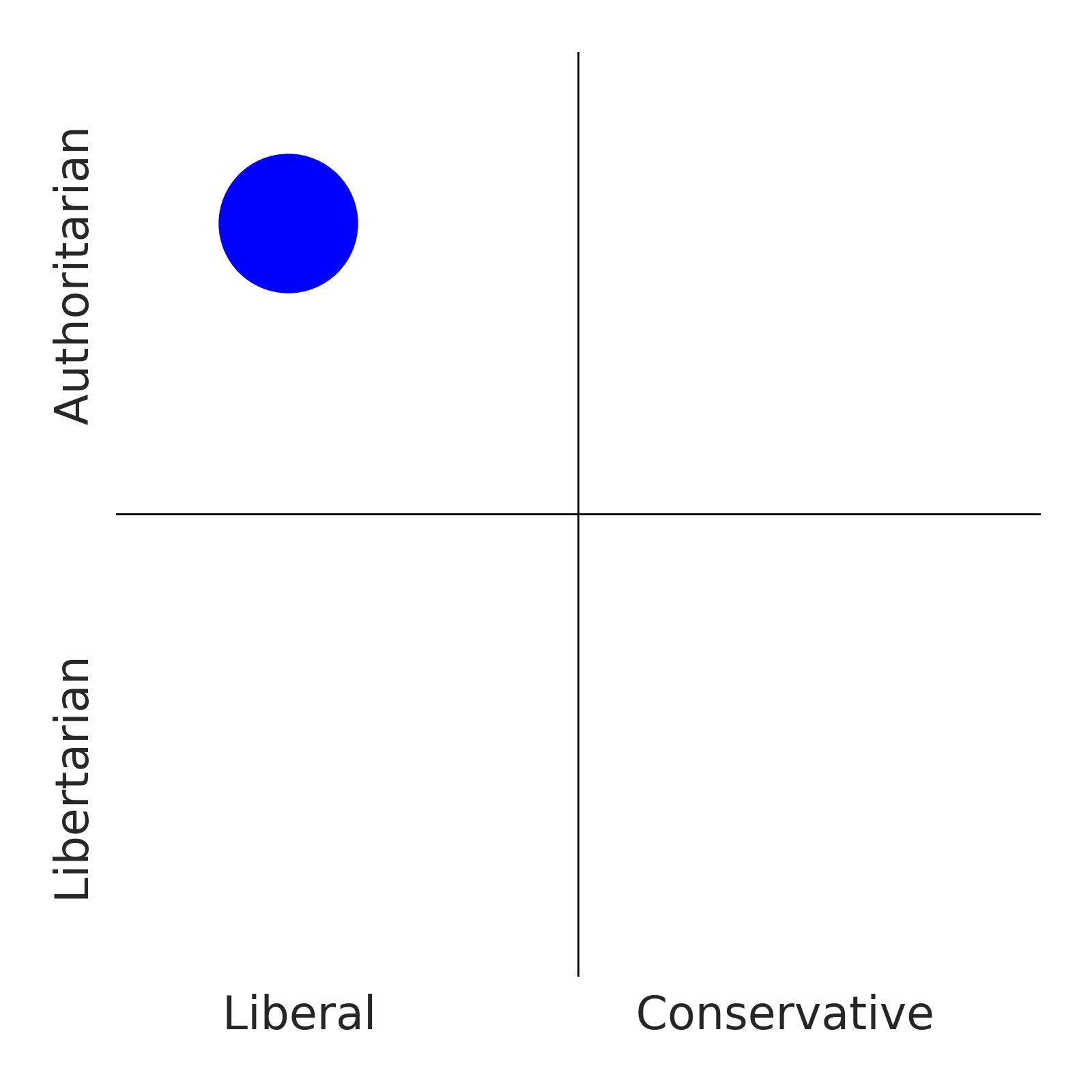
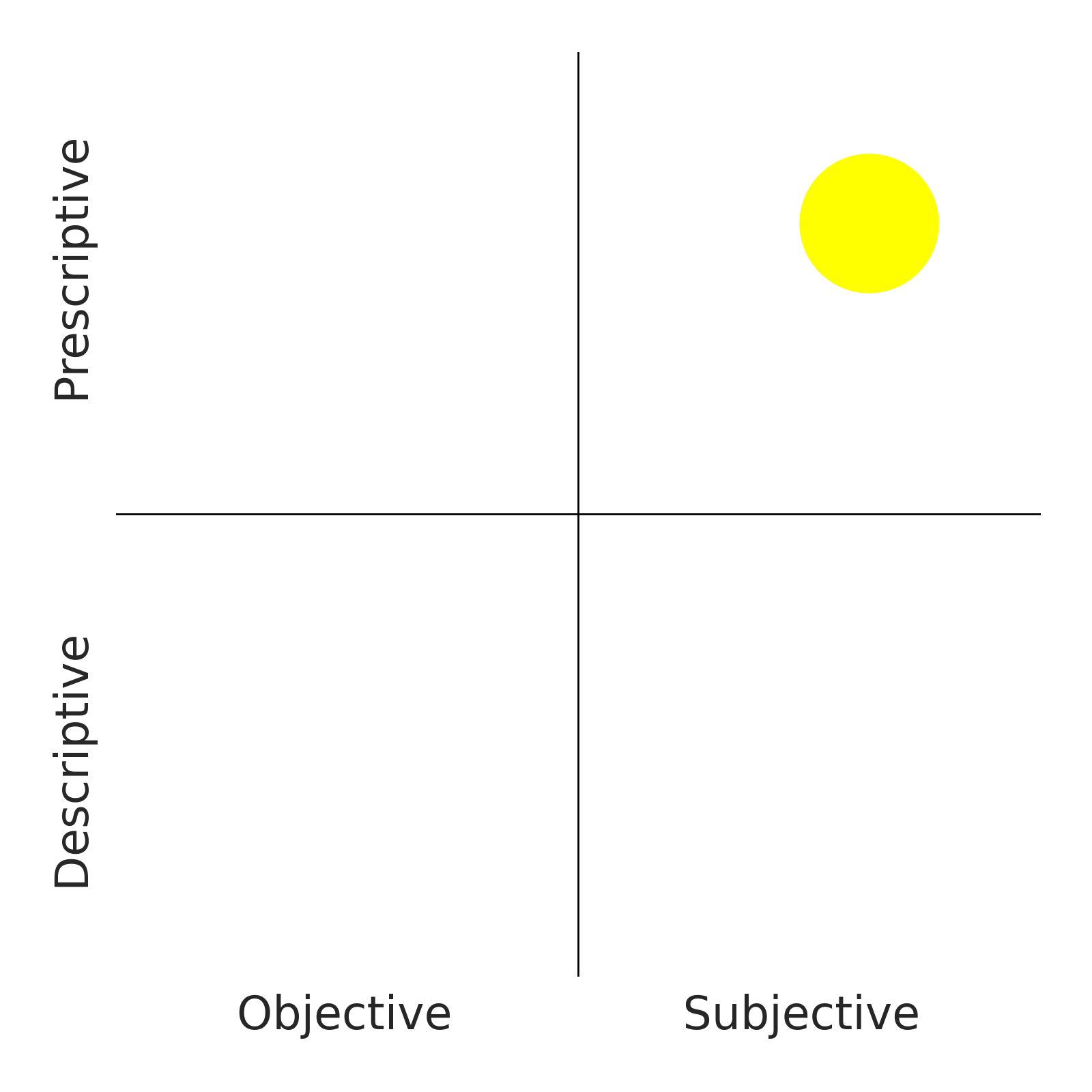
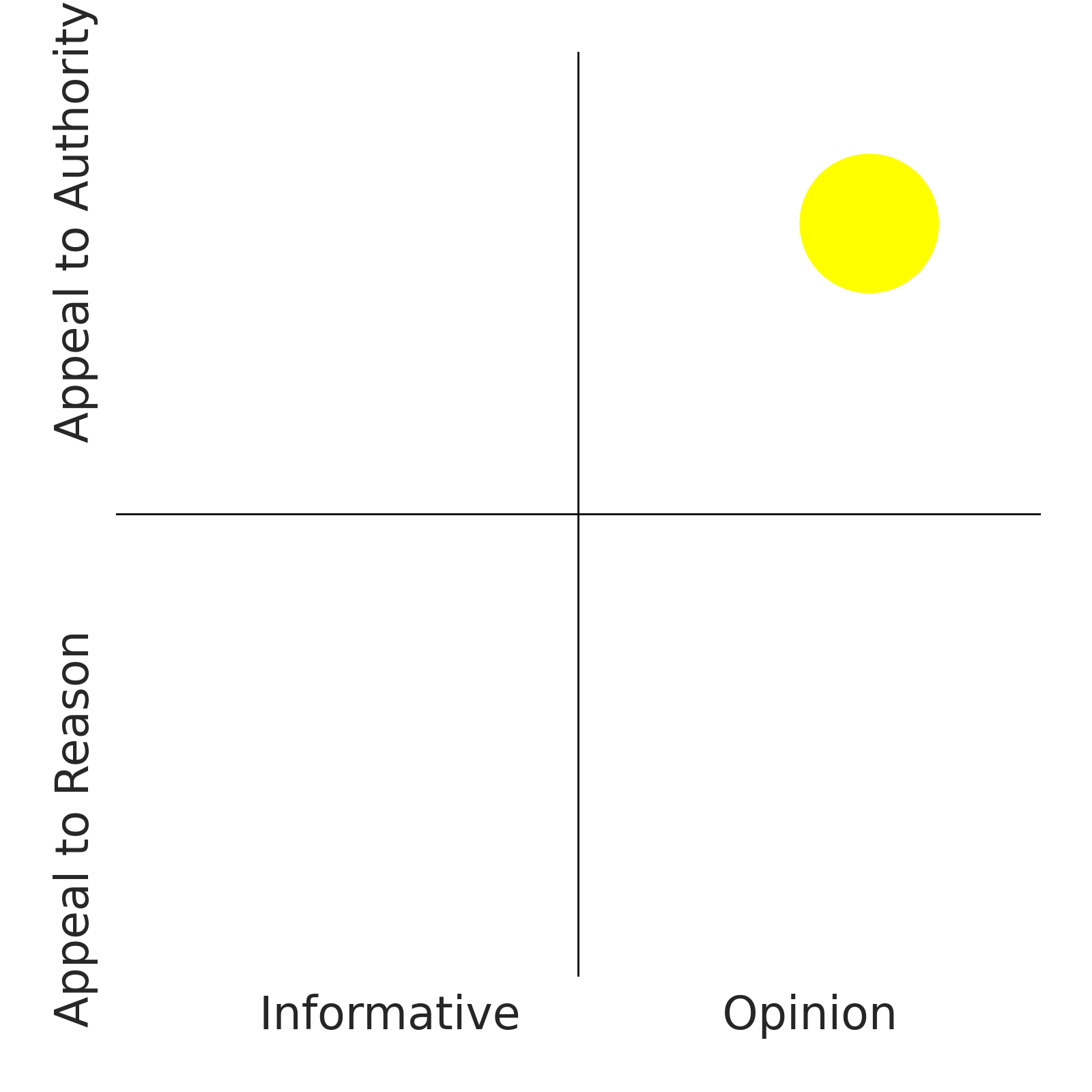
2026 © Helium Trades
Privacy Policy & Disclosure
* Disclaimer: Nothing on this website constitutes investment advice, performance data or any recommendation that any particular security, portfolio of securities, transaction or investment strategy is suitable for any specific person. Helium Trades is not responsible in any way for the accuracy
of any model predictions or price data. Any mention of a particular security and related prediction data is not a recommendation to buy or sell that security. Investments in securities involve the risk of loss. Past performance is no guarantee of future results. Helium Trades is not responsible for any of your investment decisions,
you should consult a financial expert before engaging in any transaction.
Helium Research Assistant

How can I help you today?
Ask any question about Business Insider bias.