Hedge Week Media Bias


Observable scope and worldview. This is a specialized financial trade source, not a general-news outlet.

Its coverage strongly centers on hedge funds, alternative asset managers, institutional capital, fund infrastructure, executive hiring, launches, trading strategies, and asset-management policy.

Examples include repeated personnel moves at Arrowpoint, Brevan Howard, Schonfeld, and Point72

, fund launches and financing , and infrastructure vendors such as SS&C and Formidium . “Semiconductor” is also a comparatively frequent keyword, consistent with a secondary technology-and-AI-investing focus [33].

The sample provides little evidence of sustained retail-investor, consumer, environmental, or labor-oriented coverage; however, absence from this supplied sample cannot establish that the source never covers those subjects.

Framing patterns. Much of the wording is restrained, attributed, and market-oriented: reports commonly rely on Bloomberg, Reuters, the Financial Times, company statements, regulators, or industry datasets

.

This supports a norm of source attribution, but not necessarily independent verification.

Several items depend on unnamed sources or company-supplied performance figures .

The source often treats capital flows, talent acquisition, new products, and regulatory changes as material indicators of industry health.

A counterexample is the cyberattack report, which focuses on risk rather than growth ; another includes Pershing Square’s recent underperformance alongside its new holdings .

Directional and commercial bias. The general tone is institutionally affirmative and mildly growth-oriented.

Hedge-fund inflows are framed as resilient demand and diversification value

; Brevan Howard’s hiring is described through “strengthening” and “continued investment” language ; and optical stocks receive distinctly bullish treatment tied to AI spending .

More importantly, some content is plainly advertorial: SS&C interviews present its platform as an integrated solution without meaningful competitors’ views , while Formidium is presented as a prescriptive automation solution . Trium’s strategy and CME’s sports derivatives are likewise framed through product benefits, novelty, awards, and legitimacy claims . These are observable promotional or establishment techniques—authority appeal, novelty appeal, selective positive framing, and blurred editorial/marketing boundaries—not evidence of coordinated political propaganda.

Highest three inferred values.

  1. Institutional finance and professional expertise: recurring attention to managers, allocators, specialists, and governance .
  2. Market innovation and scalability: emphasis on AI, derivatives, cloud systems, new vehicles, and expansion .
  3. Attribution and data legibility: frequent use of named outlets, indices, figures, and conditional market pricing .
Lowest three visible priorities.
  1. Retail accessibility and ordinary-investor welfare;
  2. labor, bargaining-power, and distributional scrutiny;
  3. broader social, environmental, and political consequences.
These are low-visibility priorities, not proven opposition to them.

Citadel’s restrictive non-competes are one notable labor-related exception , but the sample does not show sustained critical treatment.

AI-authorship assessment. AI assistance is plausible, not demonstrable.

Repetitive labels, formulaic “hidden assumptions,” uniform citation descriptions, and mechanically balanced bias categories suggest templated or machine-assisted analysis.

Conversely, the underlying items contain specific names, dates, figures, and outlet attributions.

The evidence supports “possibly AI-assisted metadata or summarization,” not a reliable conclusion that the articles themselves were AI-written.

Limits. The sample is recent, small, and likely selected toward unusual or explicitly bias-labeled items.

It cannot reveal unpublished stories, headline prominence, corrections, audience analytics, or the full articles’ omitted context.


Helium Bias: This assessment assumes the supplied records accurately describe the source and treats repeated descriptions as evidence of pattern rather than authorial intent.

I cannot inspect full articles, headlines, corrections, ownership, publication volume, or unpublished coverage.

“Lowest values” therefore means least visible in this sample, not values the source rejects.

AI and propaganda judgments remain probabilistic and sensitive to selection bias.

Automated source summary · Updated August 23, 2026 · Not human reviewed. Check recent article panels for claim-level evidence when available.


Use the Data in AI All Sources

Hedge Week Bias Profile

Weighted source-level patterns from recent analyzed coverage. Open recent articles below to inspect score-specific evidence and limitations when available.

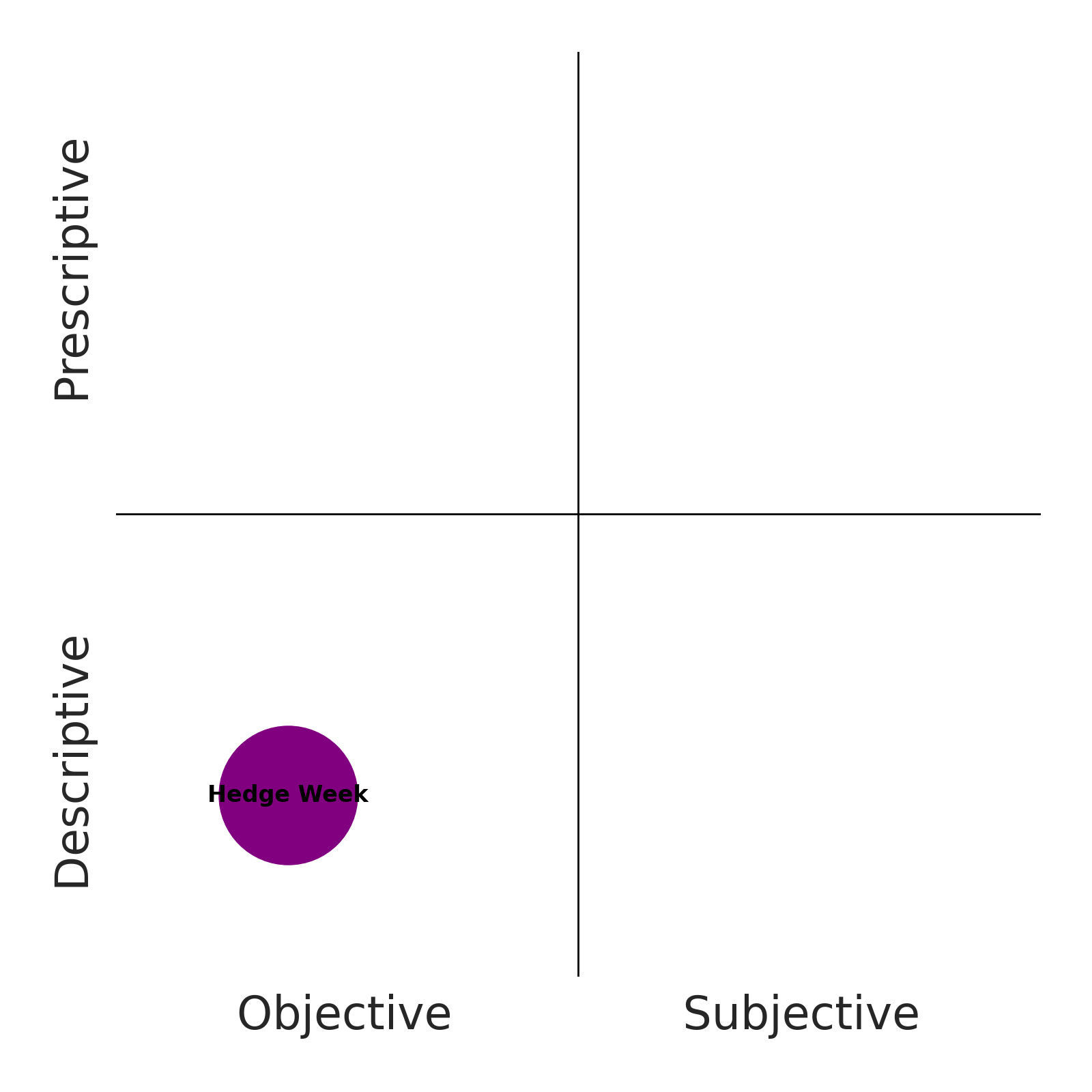
🗞️ Objective <—> Subjective 👁️ -6

😩 Pessimistic <—> Optimistic 🌞8

💡 Boring <—> Interesting6

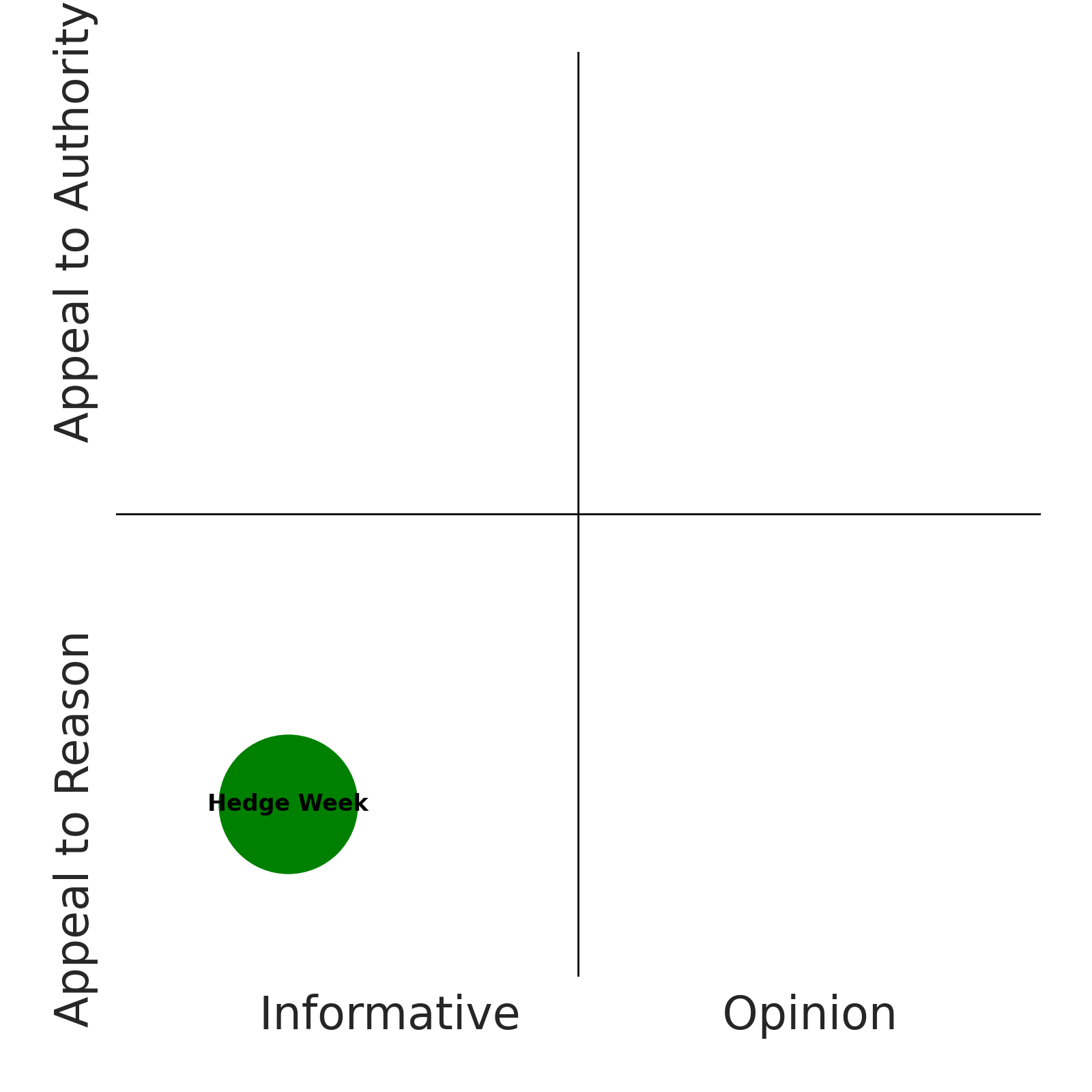
💭 Opinion10

🏛️ Appeal to Authority8

❌ Low Credibility <—> High Credibility ✅24

💔 Low Integrity <—> High Integrity ❤️13

🪨 Low Intelligence <—> High Intelligence 🦉22

🎲 Speculation10

Subtle dimensions

🧢 Populist <—> Elitist 🎩0

🚨 Sensational0

📉 Bearish <—> Bullish 📈3

📝 Prescriptive0

🕊️ Dovish <—> Hawkish 🦁0

😨 Fearful4

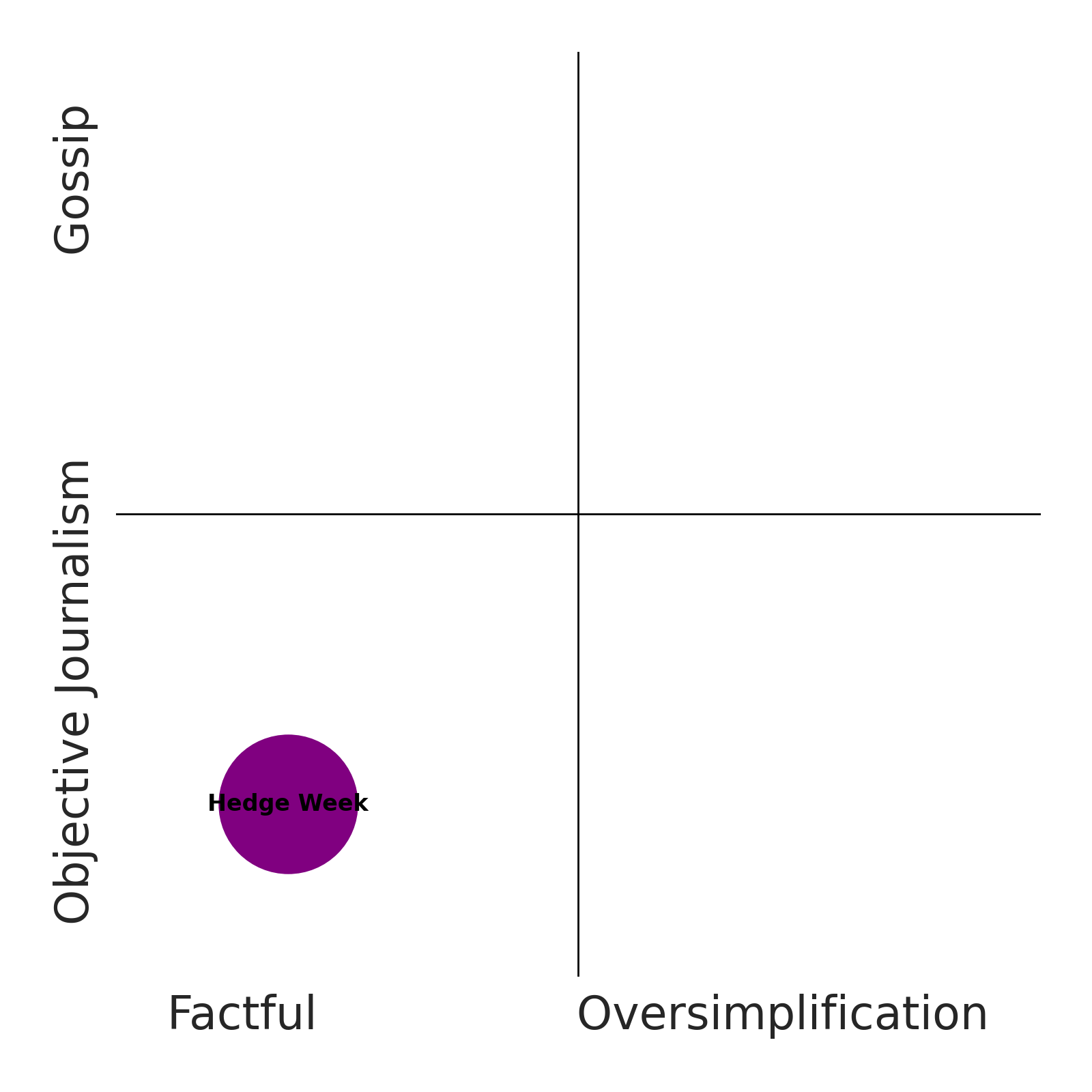
Oversimplification2

👀 Covering Responses4

😤 Overconfidence4

🏴 Anti-establishment <—> Pro-establishment 📺3

🧠 Rational <—> Irrational 🤪-4

🤑 Advertising4

🔍 Truth-seeking <—> Delusion 🌀0

🦊 Anti-Corporate <—> Pro-Corporate 👔4

🔬 Scientific <—> Superstitious 🔮0

🐍 Manipulative5
How to interpret source scores →

Average social shares per article 0


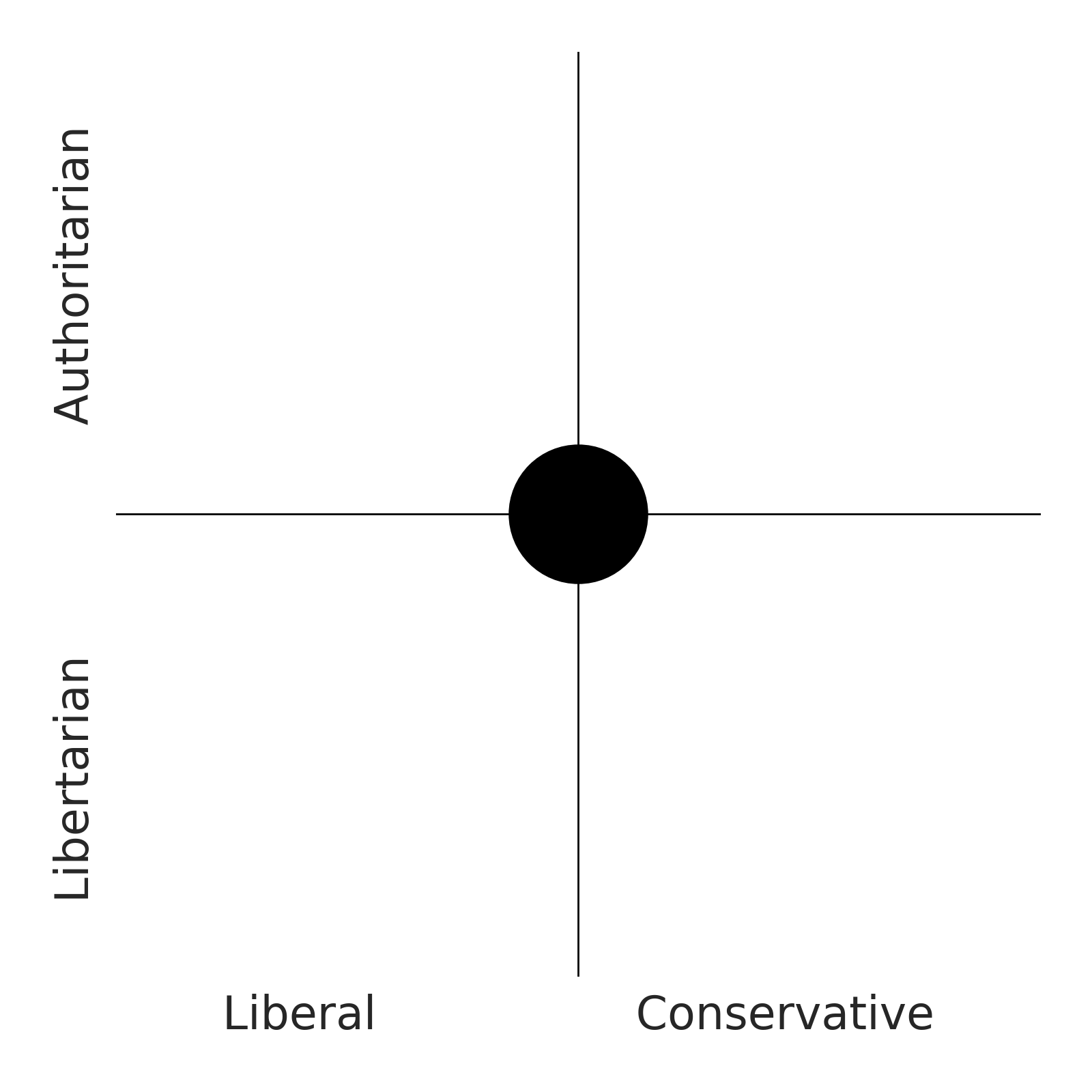
Hedge Week Political Bias (?)


Hedge Week Subjective Bias (?)


Hedge Week Opinion Bias (?)


Hedge Week Oversimplification Bias (?)


Hedge Week Recent Articles


Sort By: