See whether Helium helps you make better-informed decisions. Try every Pro Trader feature for 30 days. No credit card required.
Try every Pro Trader feature for 30 days. No credit card required.
Only a headline and source attribution were supplied; the question format avoids asserting a shingles-vaccine longevity/dementia benefit even as the word 'secret' and a science-says promise frame it as plausible.
Automated analysis; not human reviewed. Limitations: Only a headline and attribution were supplied; no body text was available for bias scoring.
Only a headline and attribution were supplied; no body text was available for bias scoring.
September 21, 2026 · 0 shares
Framing casts Amazon and Shopify's AI-shopping decisions as opposing sides of a dramatic, buzz-generating contest, using conflict and hype language.
Automated analysis; not human reviewed. Limitations: The supplied text is a two-sentence brief, so evaluations rely on its wording; no event verification, named publisher, or additional context is available. · 3 of 55 available dimensions scored; omitted dimensions are not treated as neutral. · Verified supporting quotes for 3 of 3 scored dimensions.
Claim: The framing uses evaluative and metaphorical language rather than neutral description.
“starkly different moves” · exact text match
“brewing battle” · exact text match
“buzzy AI assistant” · exact text match
Why: Words such as 'starkly,' 'brewing,' and 'buzzy' inject judgment and color into what are otherwise corporate-move reports.
Claim: The report amplifies competition with dramatic and hype-driven phrasing.
“brewing battle” · exact text match
“shutting out” · exact text match
“buzzy AI assistant” · exact text match
Why: 'Battle' and 'shutting out' overdramatize business moves, while 'buzzy' markets the assistant rather than neutrally identifying it.
Claim: The framing adopts an evaluative stance on how distinct and appealing the moves are.
“starkly different” · exact text match
“buzzy AI assistant” · exact text match
Why: The adjectives convey the publisher's judgments about the newsworthiness and attractiveness of the moves.
The supplied text is a two-sentence brief, so evaluations rely on its wording; no event verification, named publisher, or additional context is available.
September 21, 2026 · 0 shares
Frames a near-record S&P 500 as masking broad underlying weakness among most stocks.
Automated analysis; not human reviewed. Limitations: The supplied text is extremely brief and lacks a named publisher, date, data provider, or methodology, limiting classification confidence. · 1 of 55 available dimensions scored; omitted dimensions are not treated as neutral. · Verified supporting quotes for 1 of 1 scored dimensions.
Claim: The publisher frames the near-record index level as hiding broad stock-market weakness.
“there are signs of weakness below the surface” · exact text match
“About 60% of the stocks in the S&P 500 are down more than 20% from their all-time highs.” · exact text match
Why: The phrase 'signs of weakness' gives a cautious, bearish interpretation to the breadth data, while the index's record proximity is mentioned but not treated as reassuring.
The supplied text is extremely brief and lacks a named publisher, date, data provider, or methodology, limiting classification confidence.
September 21, 2026 · 0 shares
Framing casts Amazon and Shopify's AI-shopping decisions as opposing sides of a dramatic, buzz-generating contest, using conflict and hype language.
Automated analysis; not human reviewed. Limitations: The supplied text is a two-sentence brief, so evaluations rely on its wording; no event verification, named publisher, or additional context is available. · 3 of 55 available dimensions scored; omitted dimensions are not treated as neutral. · Verified supporting quotes for 3 of 3 scored dimensions.
Claim: The framing uses evaluative and metaphorical language rather than neutral description.
“starkly different moves” · exact text match
“brewing battle” · exact text match
“buzzy AI assistant” · exact text match
Why: Words such as 'starkly,' 'brewing,' and 'buzzy' inject judgment and color into what are otherwise corporate-move reports.
Claim: The report amplifies competition with dramatic and hype-driven phrasing.
“brewing battle” · exact text match
“shutting out” · exact text match
“buzzy AI assistant” · exact text match
Why: 'Battle' and 'shutting out' overdramatize business moves, while 'buzzy' markets the assistant rather than neutrally identifying it.
Claim: The framing adopts an evaluative stance on how distinct and appealing the moves are.
“starkly different” · exact text match
“buzzy AI assistant” · exact text match
Why: The adjectives convey the publisher's judgments about the newsworthiness and attractiveness of the moves.
The supplied text is a two-sentence brief, so evaluations rely on its wording; no event verification, named publisher, or additional context is available.
September 21, 2026 · 0 shares
Frames a near-record S&P 500 as masking broad underlying weakness among most stocks.
Automated analysis; not human reviewed. Limitations: The supplied text is extremely brief and lacks a named publisher, date, data provider, or methodology, limiting classification confidence. · 1 of 55 available dimensions scored; omitted dimensions are not treated as neutral. · Verified supporting quotes for 1 of 1 scored dimensions.
Claim: The publisher frames the near-record index level as hiding broad stock-market weakness.
“there are signs of weakness below the surface” · exact text match
“About 60% of the stocks in the S&P 500 are down more than 20% from their all-time highs.” · exact text match
Why: The phrase 'signs of weakness' gives a cautious, bearish interpretation to the breadth data, while the index's record proximity is mentioned but not treated as reassuring.
The supplied text is extremely brief and lacks a named publisher, date, data provider, or methodology, limiting classification confidence.
September 21, 2026 · 0 shares
Framing casts Amazon and Shopify's AI-shopping decisions as opposing sides of a dramatic, buzz-generating contest, using conflict and hype language.
Automated analysis; not human reviewed. Limitations: The supplied text is a two-sentence brief, so evaluations rely on its wording; no event verification, named publisher, or additional context is available. · 3 of 55 available dimensions scored; omitted dimensions are not treated as neutral. · Verified supporting quotes for 3 of 3 scored dimensions.
Claim: The framing uses evaluative and metaphorical language rather than neutral description.
“starkly different moves” · exact text match
“brewing battle” · exact text match
“buzzy AI assistant” · exact text match
Why: Words such as 'starkly,' 'brewing,' and 'buzzy' inject judgment and color into what are otherwise corporate-move reports.
Claim: The report amplifies competition with dramatic and hype-driven phrasing.
“brewing battle” · exact text match
“shutting out” · exact text match
“buzzy AI assistant” · exact text match
Why: 'Battle' and 'shutting out' overdramatize business moves, while 'buzzy' markets the assistant rather than neutrally identifying it.
Claim: The framing adopts an evaluative stance on how distinct and appealing the moves are.
“starkly different” · exact text match
“buzzy AI assistant” · exact text match
Why: The adjectives convey the publisher's judgments about the newsworthiness and attractiveness of the moves.
The supplied text is a two-sentence brief, so evaluations rely on its wording; no event verification, named publisher, or additional context is available.
Only a headline and source attribution were supplied; the question format avoids asserting a shingles-vaccine longevity/dementia benefit even as the word 'secret' and a science-says promise frame it as plausible.
Automated analysis; not human reviewed. Limitations: Only a headline and attribution were supplied; no body text was available for bias scoring.
Only a headline and attribution were supplied; no body text was available for bias scoring.
September 21, 2026 · 0 shares
Frames a near-record S&P 500 as masking broad underlying weakness among most stocks.
Automated analysis; not human reviewed. Limitations: The supplied text is extremely brief and lacks a named publisher, date, data provider, or methodology, limiting classification confidence. · 1 of 55 available dimensions scored; omitted dimensions are not treated as neutral. · Verified supporting quotes for 1 of 1 scored dimensions.
Claim: The publisher frames the near-record index level as hiding broad stock-market weakness.
“there are signs of weakness below the surface” · exact text match
“About 60% of the stocks in the S&P 500 are down more than 20% from their all-time highs.” · exact text match
Why: The phrase 'signs of weakness' gives a cautious, bearish interpretation to the breadth data, while the index's record proximity is mentioned but not treated as reassuring.
The supplied text is extremely brief and lacks a named publisher, date, data provider, or methodology, limiting classification confidence.
September 21, 2026 · 0 shares
Framing casts Amazon and Shopify's AI-shopping decisions as opposing sides of a dramatic, buzz-generating contest, using conflict and hype language.
Automated analysis; not human reviewed. Limitations: The supplied text is a two-sentence brief, so evaluations rely on its wording; no event verification, named publisher, or additional context is available. · 3 of 55 available dimensions scored; omitted dimensions are not treated as neutral. · Verified supporting quotes for 3 of 3 scored dimensions.
Claim: The framing uses evaluative and metaphorical language rather than neutral description.
“starkly different moves” · exact text match
“brewing battle” · exact text match
“buzzy AI assistant” · exact text match
Why: Words such as 'starkly,' 'brewing,' and 'buzzy' inject judgment and color into what are otherwise corporate-move reports.
Claim: The report amplifies competition with dramatic and hype-driven phrasing.
“brewing battle” · exact text match
“shutting out” · exact text match
“buzzy AI assistant” · exact text match
Why: 'Battle' and 'shutting out' overdramatize business moves, while 'buzzy' markets the assistant rather than neutrally identifying it.
Claim: The framing adopts an evaluative stance on how distinct and appealing the moves are.
“starkly different” · exact text match
“buzzy AI assistant” · exact text match
Why: The adjectives convey the publisher's judgments about the newsworthiness and attractiveness of the moves.
The supplied text is a two-sentence brief, so evaluations rely on its wording; no event verification, named publisher, or additional context is available.
Sensational teaser framing declares a shift in Wall Street's biggest fear while withholding the identity of the new risk.
Automated analysis; not human reviewed. Limitations: No body text was supplied, so the unnamed risk and the evidence behind the claim are unavailable; analysis is limited to the headline's teaser framing. · 5 of 54 available dimensions scored; omitted dimensions are not treated as neutral. · Verified supporting quotes for 5 of 5 scored dimensions.
Claim: The framing withholds the identity of the market risk to amplify drama.
“This stock-market risk just took its place.” · exact text match
Why: The phrase 'just took its place' presents the unnamed risk as a sudden, mysterious successor, a classic sensational teaser.
Claim: The headline invokes Wall Street's fear and a stock-market risk to convey unease.
“An AI bubble is no longer Wall Street’s biggest fear.” · exact text match
“This stock-market risk just took its place.” · exact text match
Why: Fear and risk are the emotional anchors; the headline directs attention to what replaced the prior fear.
Claim: The teaser makes an unqualified editorial assertion about the relative importance of market risks.
“An AI bubble is no longer Wall Street’s biggest fear.” · exact text match
Why: Ranking fears and declaring the prior biggest fear displaced is an evaluative judgment presented as fact.
Claim: The headline asserts a change in Wall Street's biggest fear without hedging or cited support.
“An AI bubble is no longer Wall Street’s biggest fear.” · exact text match
Why: 'No longer' and 'just took its place' are categorical statements of a shift; no evidence or qualification is supplied.
Claim: The text withholds the identity of the new risk while declaring it has replaced a prior fear, using material omission as a teaser.
“This stock-market risk just took its place.” · exact text match
Why: The definite noun phrase introduces a risk that is never named in the supplied text, relying on the withheld information to create suspense.
No body text was supplied, so the unnamed risk and the evidence behind the claim are unavailable; analysis is limited to the headline's teaser framing.
September 21, 2026 · 0 shares
Framing casts Amazon and Shopify's AI-shopping decisions as opposing sides of a dramatic, buzz-generating contest, using conflict and hype language.
Automated analysis; not human reviewed. Limitations: The supplied text is a two-sentence brief, so evaluations rely on its wording; no event verification, named publisher, or additional context is available. · 3 of 55 available dimensions scored; omitted dimensions are not treated as neutral. · Verified supporting quotes for 3 of 3 scored dimensions.
Claim: The framing uses evaluative and metaphorical language rather than neutral description.
“starkly different moves” · exact text match
“brewing battle” · exact text match
“buzzy AI assistant” · exact text match
Why: Words such as 'starkly,' 'brewing,' and 'buzzy' inject judgment and color into what are otherwise corporate-move reports.
Claim: The report amplifies competition with dramatic and hype-driven phrasing.
“brewing battle” · exact text match
“shutting out” · exact text match
“buzzy AI assistant” · exact text match
Why: 'Battle' and 'shutting out' overdramatize business moves, while 'buzzy' markets the assistant rather than neutrally identifying it.
Claim: The framing adopts an evaluative stance on how distinct and appealing the moves are.
“starkly different” · exact text match
“buzzy AI assistant” · exact text match
Why: The adjectives convey the publisher's judgments about the newsworthiness and attractiveness of the moves.
The supplied text is a two-sentence brief, so evaluations rely on its wording; no event verification, named publisher, or additional context is available.
September 21, 2026 · 0 shares
Framing casts Amazon and Shopify's AI-shopping decisions as opposing sides of a dramatic, buzz-generating contest, using conflict and hype language.
Automated analysis; not human reviewed. Limitations: The supplied text is a two-sentence brief, so evaluations rely on its wording; no event verification, named publisher, or additional context is available. · 3 of 55 available dimensions scored; omitted dimensions are not treated as neutral. · Verified supporting quotes for 3 of 3 scored dimensions.
Claim: The framing uses evaluative and metaphorical language rather than neutral description.
“starkly different moves” · exact text match
“brewing battle” · exact text match
“buzzy AI assistant” · exact text match
Why: Words such as 'starkly,' 'brewing,' and 'buzzy' inject judgment and color into what are otherwise corporate-move reports.
Claim: The report amplifies competition with dramatic and hype-driven phrasing.
“brewing battle” · exact text match
“shutting out” · exact text match
“buzzy AI assistant” · exact text match
Why: 'Battle' and 'shutting out' overdramatize business moves, while 'buzzy' markets the assistant rather than neutrally identifying it.
Claim: The framing adopts an evaluative stance on how distinct and appealing the moves are.
“starkly different” · exact text match
“buzzy AI assistant” · exact text match
Why: The adjectives convey the publisher's judgments about the newsworthiness and attractiveness of the moves.
The supplied text is a two-sentence brief, so evaluations rely on its wording; no event verification, named publisher, or additional context is available.
September 21, 2026 · 0 shares
Framing casts Amazon and Shopify's AI-shopping decisions as opposing sides of a dramatic, buzz-generating contest, using conflict and hype language.
Automated analysis; not human reviewed. Limitations: The supplied text is a two-sentence brief, so evaluations rely on its wording; no event verification, named publisher, or additional context is available. · 3 of 55 available dimensions scored; omitted dimensions are not treated as neutral. · Verified supporting quotes for 3 of 3 scored dimensions.
Claim: The framing uses evaluative and metaphorical language rather than neutral description.
“starkly different moves” · exact text match
“brewing battle” · exact text match
“buzzy AI assistant” · exact text match
Why: Words such as 'starkly,' 'brewing,' and 'buzzy' inject judgment and color into what are otherwise corporate-move reports.
Claim: The report amplifies competition with dramatic and hype-driven phrasing.
“brewing battle” · exact text match
“shutting out” · exact text match
“buzzy AI assistant” · exact text match
Why: 'Battle' and 'shutting out' overdramatize business moves, while 'buzzy' markets the assistant rather than neutrally identifying it.
Claim: The framing adopts an evaluative stance on how distinct and appealing the moves are.
“starkly different” · exact text match
“buzzy AI assistant” · exact text match
Why: The adjectives convey the publisher's judgments about the newsworthiness and attractiveness of the moves.
The supplied text is a two-sentence brief, so evaluations rely on its wording; no event verification, named publisher, or additional context is available.
Sensational teaser framing declares a shift in Wall Street's biggest fear while withholding the identity of the new risk.
Automated analysis; not human reviewed. Limitations: No body text was supplied, so the unnamed risk and the evidence behind the claim are unavailable; analysis is limited to the headline's teaser framing. · 5 of 54 available dimensions scored; omitted dimensions are not treated as neutral. · Verified supporting quotes for 5 of 5 scored dimensions.
Claim: The framing withholds the identity of the market risk to amplify drama.
“This stock-market risk just took its place.” · exact text match
Why: The phrase 'just took its place' presents the unnamed risk as a sudden, mysterious successor, a classic sensational teaser.
Claim: The headline invokes Wall Street's fear and a stock-market risk to convey unease.
“An AI bubble is no longer Wall Street’s biggest fear.” · exact text match
“This stock-market risk just took its place.” · exact text match
Why: Fear and risk are the emotional anchors; the headline directs attention to what replaced the prior fear.
Claim: The teaser makes an unqualified editorial assertion about the relative importance of market risks.
“An AI bubble is no longer Wall Street’s biggest fear.” · exact text match
Why: Ranking fears and declaring the prior biggest fear displaced is an evaluative judgment presented as fact.
Claim: The headline asserts a change in Wall Street's biggest fear without hedging or cited support.
“An AI bubble is no longer Wall Street’s biggest fear.” · exact text match
Why: 'No longer' and 'just took its place' are categorical statements of a shift; no evidence or qualification is supplied.
Claim: The text withholds the identity of the new risk while declaring it has replaced a prior fear, using material omission as a teaser.
“This stock-market risk just took its place.” · exact text match
Why: The definite noun phrase introduces a risk that is never named in the supplied text, relying on the withheld information to create suspense.
No body text was supplied, so the unnamed risk and the evidence behind the claim are unavailable; analysis is limited to the headline's teaser framing.
September 21, 2026 · 0 shares
Framing casts Amazon and Shopify's AI-shopping decisions as opposing sides of a dramatic, buzz-generating contest, using conflict and hype language.
Automated analysis; not human reviewed. Limitations: The supplied text is a two-sentence brief, so evaluations rely on its wording; no event verification, named publisher, or additional context is available. · 3 of 55 available dimensions scored; omitted dimensions are not treated as neutral. · Verified supporting quotes for 3 of 3 scored dimensions.
Claim: The framing uses evaluative and metaphorical language rather than neutral description.
“starkly different moves” · exact text match
“brewing battle” · exact text match
“buzzy AI assistant” · exact text match
Why: Words such as 'starkly,' 'brewing,' and 'buzzy' inject judgment and color into what are otherwise corporate-move reports.
Claim: The report amplifies competition with dramatic and hype-driven phrasing.
“brewing battle” · exact text match
“shutting out” · exact text match
“buzzy AI assistant” · exact text match
Why: 'Battle' and 'shutting out' overdramatize business moves, while 'buzzy' markets the assistant rather than neutrally identifying it.
Claim: The framing adopts an evaluative stance on how distinct and appealing the moves are.
“starkly different” · exact text match
“buzzy AI assistant” · exact text match
Why: The adjectives convey the publisher's judgments about the newsworthiness and attractiveness of the moves.
The supplied text is a two-sentence brief, so evaluations rely on its wording; no event verification, named publisher, or additional context is available.
Only a headline and source attribution were supplied; the question format avoids asserting a shingles-vaccine longevity/dementia benefit even as the word 'secret' and a science-says promise frame it as plausible.
Automated analysis; not human reviewed. Limitations: Only a headline and attribution were supplied; no body text was available for bias scoring.
Only a headline and attribution were supplied; no body text was available for bias scoring.
September 21, 2026 · 0 shares
Framing casts Amazon and Shopify's AI-shopping decisions as opposing sides of a dramatic, buzz-generating contest, using conflict and hype language.
Automated analysis; not human reviewed. Limitations: The supplied text is a two-sentence brief, so evaluations rely on its wording; no event verification, named publisher, or additional context is available. · 3 of 55 available dimensions scored; omitted dimensions are not treated as neutral. · Verified supporting quotes for 3 of 3 scored dimensions.
Claim: The framing uses evaluative and metaphorical language rather than neutral description.
“starkly different moves” · exact text match
“brewing battle” · exact text match
“buzzy AI assistant” · exact text match
Why: Words such as 'starkly,' 'brewing,' and 'buzzy' inject judgment and color into what are otherwise corporate-move reports.
Claim: The report amplifies competition with dramatic and hype-driven phrasing.
“brewing battle” · exact text match
“shutting out” · exact text match
“buzzy AI assistant” · exact text match
Why: 'Battle' and 'shutting out' overdramatize business moves, while 'buzzy' markets the assistant rather than neutrally identifying it.
Claim: The framing adopts an evaluative stance on how distinct and appealing the moves are.
“starkly different” · exact text match
“buzzy AI assistant” · exact text match
Why: The adjectives convey the publisher's judgments about the newsworthiness and attractiveness of the moves.
The supplied text is a two-sentence brief, so evaluations rely on its wording; no event verification, named publisher, or additional context is available.
September 04, 2026 · 0 shares
Rhetorically challenges the reader’s assumed max, then dangles an unverified 'almost $50,000 higher' limit and a vaguely secret document to drive engagement.
In U.S. retirement rules, 401(k) plans have both an employee elective-deferral cap and a higher total-annual-contribution cap that includes employer contributions; the teaser does not state these terms.
Automated analysis; not human reviewed. Limitations: Assessment is limited to a two-sentence teaser; the underlying document and any qualifying details are not supplied. · 13 of 54 available dimensions scored; omitted dimensions are not treated as neutral. · Verified supporting quotes for 13 of 13 scored dimensions.
Claim: The text is framed from a persuasive, direct-address viewpoint rather than neutral factual reporting.
“Think you maxed out your 401(k)?” · exact text match
“You can unlock greater retirement wealth by reading this document that nearly everyone ignores.” · exact text match
Why: A rhetorical question and a promised wealth outcome orient the reader toward the publisher's promotional viewpoint rather than presenting balanced information.
Claim: The framing dramatizes a retirement-planning point with a large unverified figure and a secret-document hook.
“The real limit is actually almost $50,000 higher.” · exact text match
“You can unlock greater retirement wealth by reading this document that nearly everyone ignores.” · exact text match
Why: The 'actually almost $50,000 higher' phrasing and 'document that nearly everyone ignores' hook create drama and scarcity beyond neutral reporting.
Claim: The message is bullish on the chance to increase retirement wealth through a 401(k).
“You can unlock greater retirement wealth by reading this document that nearly everyone ignores.” · exact text match
Why: The promise of unlocking 'greater retirement wealth' is a positive, opportunity-oriented financial claim.
Claim: The outlook is positive, emphasizing an overlooked way to improve retirement outcomes.
“The real limit is actually almost $50,000 higher.” · exact text match
“You can unlock greater retirement wealth by reading this document that nearly everyone ignores.” · exact text match
Why: A higher limit and a path to greater wealth are both framed as good news.
Claim: The text directs readers to take an action rather than merely describing a rule.
“You can unlock greater retirement wealth by reading this document that nearly everyone ignores.” · exact text match
Why: The promise turns the sentence into advice to read the document.
Claim: The sentence is an evaluative promotional assertion rather than a factual report.
“You can unlock greater retirement wealth by reading this document that nearly everyone ignores.” · exact text match
Why: It asserts an outcome from an unidentified document, which is a subjective/promotional claim.
Claim: It reduces a complex retirement-contribution question to a single ignored document and one action.
“You can unlock greater retirement wealth by reading this document that nearly everyone ignores.” · exact text match
Why: The claim collapses eligibility, limits, and plan rules into one step.
Claim: The asserted $50,000-higher limit and its wealth benefit are stated with certainty and no supporting detail.
“The real limit is actually almost $50,000 higher.” · exact text match
Why: The word 'actually' and the unqualified claim present an unsubstantiated figure as settled fact.
Claim: The passage is fluff/teaser content with no substantive reporting.
“You can unlock greater retirement wealth by reading this document that nearly everyone ignores.” · exact text match
Why: Beyond the teaser promise, the text supplies no details, data, or source, making it filler/promotional content.
Claim: Credibility is low because the text makes a specific financial claim without source, attribution, or verifiable detail.
“The real limit is actually almost $50,000 higher.” · exact text match
Why: No sourcing, named document, author, or caveat supports the figure; the claim is left unsupported.
Claim: The passage functions as an advertisement for an unnamed document or opportunity.
“You can unlock greater retirement wealth by reading this document that nearly everyone ignores.” · exact text match
Why: It promotes a document as a path to wealth without providing independent content.
Claim: The text uses a curiosity gap and omits the document's identity, supporting numbers, and eligibility details.
“Think you maxed out your 401(k)?” · exact text match
“You can unlock greater retirement wealth by reading this document that nearly everyone ignores.” · exact text match
Why: The rhetorical question and 'nearly everyone ignores' withhold key information to entice a click.
Claim: The presentation is evasive, hinting at a large overlooked limit without providing the qualifying context.
“The real limit is actually almost $50,000 higher.” · exact text match
Why: The teaser implies the reader is mistaken about their 401(k) max but omits the conditions needed to assess the claim.
Assessment is limited to a two-sentence teaser; the underlying document and any qualifying details are not supplied.
Only a headline and source attribution were supplied; the question format avoids asserting a shingles-vaccine longevity/dementia benefit even as the word 'secret' and a science-says promise frame it as plausible.
Automated analysis; not human reviewed. Limitations: Only a headline and attribution were supplied; no body text was available for bias scoring.
Only a headline and attribution were supplied; no body text was available for bias scoring.
September 21, 2026 · 0 shares
Framing casts Amazon and Shopify's AI-shopping decisions as opposing sides of a dramatic, buzz-generating contest, using conflict and hype language.
Automated analysis; not human reviewed. Limitations: The supplied text is a two-sentence brief, so evaluations rely on its wording; no event verification, named publisher, or additional context is available. · 3 of 55 available dimensions scored; omitted dimensions are not treated as neutral. · Verified supporting quotes for 3 of 3 scored dimensions.
Claim: The framing uses evaluative and metaphorical language rather than neutral description.
“starkly different moves” · exact text match
“brewing battle” · exact text match
“buzzy AI assistant” · exact text match
Why: Words such as 'starkly,' 'brewing,' and 'buzzy' inject judgment and color into what are otherwise corporate-move reports.
Claim: The report amplifies competition with dramatic and hype-driven phrasing.
“brewing battle” · exact text match
“shutting out” · exact text match
“buzzy AI assistant” · exact text match
Why: 'Battle' and 'shutting out' overdramatize business moves, while 'buzzy' markets the assistant rather than neutrally identifying it.
Claim: The framing adopts an evaluative stance on how distinct and appealing the moves are.
“starkly different” · exact text match
“buzzy AI assistant” · exact text match
Why: The adjectives convey the publisher's judgments about the newsworthiness and attractiveness of the moves.
The supplied text is a two-sentence brief, so evaluations rely on its wording; no event verification, named publisher, or additional context is available.
Sensational teaser framing declares a shift in Wall Street's biggest fear while withholding the identity of the new risk.
Automated analysis; not human reviewed. Limitations: No body text was supplied, so the unnamed risk and the evidence behind the claim are unavailable; analysis is limited to the headline's teaser framing. · 5 of 54 available dimensions scored; omitted dimensions are not treated as neutral. · Verified supporting quotes for 5 of 5 scored dimensions.
Claim: The framing withholds the identity of the market risk to amplify drama.
“This stock-market risk just took its place.” · exact text match
Why: The phrase 'just took its place' presents the unnamed risk as a sudden, mysterious successor, a classic sensational teaser.
Claim: The headline invokes Wall Street's fear and a stock-market risk to convey unease.
“An AI bubble is no longer Wall Street’s biggest fear.” · exact text match
“This stock-market risk just took its place.” · exact text match
Why: Fear and risk are the emotional anchors; the headline directs attention to what replaced the prior fear.
Claim: The teaser makes an unqualified editorial assertion about the relative importance of market risks.
“An AI bubble is no longer Wall Street’s biggest fear.” · exact text match
Why: Ranking fears and declaring the prior biggest fear displaced is an evaluative judgment presented as fact.
Claim: The headline asserts a change in Wall Street's biggest fear without hedging or cited support.
“An AI bubble is no longer Wall Street’s biggest fear.” · exact text match
Why: 'No longer' and 'just took its place' are categorical statements of a shift; no evidence or qualification is supplied.
Claim: The text withholds the identity of the new risk while declaring it has replaced a prior fear, using material omission as a teaser.
“This stock-market risk just took its place.” · exact text match
Why: The definite noun phrase introduces a risk that is never named in the supplied text, relying on the withheld information to create suspense.
No body text was supplied, so the unnamed risk and the evidence behind the claim are unavailable; analysis is limited to the headline's teaser framing.
Sensational teaser framing declares a shift in Wall Street's biggest fear while withholding the identity of the new risk.
Automated analysis; not human reviewed. Limitations: No body text was supplied, so the unnamed risk and the evidence behind the claim are unavailable; analysis is limited to the headline's teaser framing. · 5 of 54 available dimensions scored; omitted dimensions are not treated as neutral. · Verified supporting quotes for 5 of 5 scored dimensions.
Claim: The framing withholds the identity of the market risk to amplify drama.
“This stock-market risk just took its place.” · exact text match
Why: The phrase 'just took its place' presents the unnamed risk as a sudden, mysterious successor, a classic sensational teaser.
Claim: The headline invokes Wall Street's fear and a stock-market risk to convey unease.
“An AI bubble is no longer Wall Street’s biggest fear.” · exact text match
“This stock-market risk just took its place.” · exact text match
Why: Fear and risk are the emotional anchors; the headline directs attention to what replaced the prior fear.
Claim: The teaser makes an unqualified editorial assertion about the relative importance of market risks.
“An AI bubble is no longer Wall Street’s biggest fear.” · exact text match
Why: Ranking fears and declaring the prior biggest fear displaced is an evaluative judgment presented as fact.
Claim: The headline asserts a change in Wall Street's biggest fear without hedging or cited support.
“An AI bubble is no longer Wall Street’s biggest fear.” · exact text match
Why: 'No longer' and 'just took its place' are categorical statements of a shift; no evidence or qualification is supplied.
Claim: The text withholds the identity of the new risk while declaring it has replaced a prior fear, using material omission as a teaser.
“This stock-market risk just took its place.” · exact text match
Why: The definite noun phrase introduces a risk that is never named in the supplied text, relying on the withheld information to create suspense.
No body text was supplied, so the unnamed risk and the evidence behind the claim are unavailable; analysis is limited to the headline's teaser framing.
September 21, 2026 · 0 shares
Framing casts Amazon and Shopify's AI-shopping decisions as opposing sides of a dramatic, buzz-generating contest, using conflict and hype language.
Automated analysis; not human reviewed. Limitations: The supplied text is a two-sentence brief, so evaluations rely on its wording; no event verification, named publisher, or additional context is available. · 3 of 55 available dimensions scored; omitted dimensions are not treated as neutral. · Verified supporting quotes for 3 of 3 scored dimensions.
Claim: The framing uses evaluative and metaphorical language rather than neutral description.
“starkly different moves” · exact text match
“brewing battle” · exact text match
“buzzy AI assistant” · exact text match
Why: Words such as 'starkly,' 'brewing,' and 'buzzy' inject judgment and color into what are otherwise corporate-move reports.
Claim: The report amplifies competition with dramatic and hype-driven phrasing.
“brewing battle” · exact text match
“shutting out” · exact text match
“buzzy AI assistant” · exact text match
Why: 'Battle' and 'shutting out' overdramatize business moves, while 'buzzy' markets the assistant rather than neutrally identifying it.
Claim: The framing adopts an evaluative stance on how distinct and appealing the moves are.
“starkly different” · exact text match
“buzzy AI assistant” · exact text match
Why: The adjectives convey the publisher's judgments about the newsworthiness and attractiveness of the moves.
The supplied text is a two-sentence brief, so evaluations rely on its wording; no event verification, named publisher, or additional context is available.
A market-commentary headline frames jobs and Iran developments as immediate political liabilities for President Trump while making unsupported directional calls on bonds and energy stocks.
The U.S. midterm elections are the implied political event; presidents are often held politically accountable for consumer prices such as gasoline and mortgages. Bond prices move inversely to yields, and energy stocks are sensitive to oil and gasoline price trends.
Automated analysis; not human reviewed. Limitations: Only a short headline/subhead was supplied, so the body, data, and sourcing could not be evaluated. · 6 of 54 available dimensions scored; omitted dimensions are not treated as neutral. · Verified supporting quotes for 6 of 6 scored dimensions.
Claim: The passage is a subjective analytical judgment rather than neutral reporting.
“Why that's good for bonds and bad for energy stocks.” · exact text match
Why: It asserts a directional market outcome with no data, attribution, or caveats.
Claim: The wording uses dramatic metaphor and urgent punctuation to heighten the stakes.
“Jobs and Iran add to Trump's midterm headaches.” · exact text match
“The president needs lower gasoline prices and mortgage rates — fast.” · exact text match
Why: Headaches and fast imply a pressured, urgent political and market situation.
Claim: The text is predominantly opinionated analysis and prescription.
“The president needs lower gasoline prices and mortgage rates — fast.” · exact text match
“Why that's good for bonds and bad for energy stocks.” · exact text match
Why: The sentences assert what Trump requires and what markets will do, without factual support.
Claim: The story centers on President Trump's midterm political standing.
“Jobs and Iran add to Trump's midterm headaches.” · exact text match
Why: The headline directly links two topics to Trump's electoral headaches rather than reporting them neutrally.
Claim: Market effects are stated as definite outcomes without qualification.
“Why that's good for bonds and bad for energy stocks.” · exact text match
Why: This declarative cause-and-effect statement exceeds the supplied evidence, which contains no data or uncertainty.
Claim: The passage engages in forward-looking market speculation.
“Why that's good for bonds and bad for energy stocks.” · exact text match
Why: It predicts bond and energy-stock performance, which is speculative rather than factual reporting.
Only a short headline/subhead was supplied, so the body, data, and sourcing could not be evaluated.
September 04, 2026 · 0 shares
Rhetorically challenges the reader’s assumed max, then dangles an unverified 'almost $50,000 higher' limit and a vaguely secret document to drive engagement.
In U.S. retirement rules, 401(k) plans have both an employee elective-deferral cap and a higher total-annual-contribution cap that includes employer contributions; the teaser does not state these terms.
Automated analysis; not human reviewed. Limitations: Assessment is limited to a two-sentence teaser; the underlying document and any qualifying details are not supplied. · 13 of 54 available dimensions scored; omitted dimensions are not treated as neutral. · Verified supporting quotes for 13 of 13 scored dimensions.
Claim: The text is framed from a persuasive, direct-address viewpoint rather than neutral factual reporting.
“Think you maxed out your 401(k)?” · exact text match
“You can unlock greater retirement wealth by reading this document that nearly everyone ignores.” · exact text match
Why: A rhetorical question and a promised wealth outcome orient the reader toward the publisher's promotional viewpoint rather than presenting balanced information.
Claim: The framing dramatizes a retirement-planning point with a large unverified figure and a secret-document hook.
“The real limit is actually almost $50,000 higher.” · exact text match
“You can unlock greater retirement wealth by reading this document that nearly everyone ignores.” · exact text match
Why: The 'actually almost $50,000 higher' phrasing and 'document that nearly everyone ignores' hook create drama and scarcity beyond neutral reporting.
Claim: The message is bullish on the chance to increase retirement wealth through a 401(k).
“You can unlock greater retirement wealth by reading this document that nearly everyone ignores.” · exact text match
Why: The promise of unlocking 'greater retirement wealth' is a positive, opportunity-oriented financial claim.
Claim: The outlook is positive, emphasizing an overlooked way to improve retirement outcomes.
“The real limit is actually almost $50,000 higher.” · exact text match
“You can unlock greater retirement wealth by reading this document that nearly everyone ignores.” · exact text match
Why: A higher limit and a path to greater wealth are both framed as good news.
Claim: The text directs readers to take an action rather than merely describing a rule.
“You can unlock greater retirement wealth by reading this document that nearly everyone ignores.” · exact text match
Why: The promise turns the sentence into advice to read the document.
Claim: The sentence is an evaluative promotional assertion rather than a factual report.
“You can unlock greater retirement wealth by reading this document that nearly everyone ignores.” · exact text match
Why: It asserts an outcome from an unidentified document, which is a subjective/promotional claim.
Claim: It reduces a complex retirement-contribution question to a single ignored document and one action.
“You can unlock greater retirement wealth by reading this document that nearly everyone ignores.” · exact text match
Why: The claim collapses eligibility, limits, and plan rules into one step.
Claim: The asserted $50,000-higher limit and its wealth benefit are stated with certainty and no supporting detail.
“The real limit is actually almost $50,000 higher.” · exact text match
Why: The word 'actually' and the unqualified claim present an unsubstantiated figure as settled fact.
Claim: The passage is fluff/teaser content with no substantive reporting.
“You can unlock greater retirement wealth by reading this document that nearly everyone ignores.” · exact text match
Why: Beyond the teaser promise, the text supplies no details, data, or source, making it filler/promotional content.
Claim: Credibility is low because the text makes a specific financial claim without source, attribution, or verifiable detail.
“The real limit is actually almost $50,000 higher.” · exact text match
Why: No sourcing, named document, author, or caveat supports the figure; the claim is left unsupported.
Claim: The passage functions as an advertisement for an unnamed document or opportunity.
“You can unlock greater retirement wealth by reading this document that nearly everyone ignores.” · exact text match
Why: It promotes a document as a path to wealth without providing independent content.
Claim: The text uses a curiosity gap and omits the document's identity, supporting numbers, and eligibility details.
“Think you maxed out your 401(k)?” · exact text match
“You can unlock greater retirement wealth by reading this document that nearly everyone ignores.” · exact text match
Why: The rhetorical question and 'nearly everyone ignores' withhold key information to entice a click.
Claim: The presentation is evasive, hinting at a large overlooked limit without providing the qualifying context.
“The real limit is actually almost $50,000 higher.” · exact text match
Why: The teaser implies the reader is mistaken about their 401(k) max but omits the conditions needed to assess the claim.
Assessment is limited to a two-sentence teaser; the underlying document and any qualifying details are not supplied.
Frames the national debt as a dominant voter worry and characterizes expected legislative action as inadequate in scale.
Automated analysis; not human reviewed. Limitations: Only a two-sentence excerpt was available, so estimates are limited by that minimal text. · 4 of 55 available dimensions scored; omitted dimensions are not treated as neutral. · Verified supporting quotes for 4 of 4 scored dimensions.
Claim: The text frames the debt situation pessimistically by emphasizing worry and deeming the coming response small.
“Midterm voters are overwhelmingly worried about the national debt.” · exact text match
“But only small fixes are expected this year.” · exact text match
Why: The words 'worried' and 'only small' present a negative gap between public concern and expected action.
Claim: The text asserts an unqualified, very broad public-opinion claim.
“Midterm voters are overwhelmingly worried about the national debt.” · exact text match
Counterevidence:
“But only small fixes are expected this year.” · exact text match
Why: 'Overwhelmingly' states a very strong consensus without cited evidence, though the forecast is hedged as 'expected.'
Claim: The text provides no visible sourcing or attribution for its public-opinion or forecast claims.
“Midterm voters are overwhelmingly worried about the national debt.” · exact text match
“But only small fixes are expected this year.” · exact text match
Why: Both statements are unsupported assertions in the supplied text, with no poll, source, or named authority.
Claim: The text forecasts the scale of this year's legislative outcome as only small fixes.
“But only small fixes are expected this year.” · exact text match
Why: The outcome is expressed as an expectation rather than an established fact, making it speculative.
Only a two-sentence excerpt was available, so estimates are limited by that minimal text.
Sensational teaser framing declares a shift in Wall Street's biggest fear while withholding the identity of the new risk.
Automated analysis; not human reviewed. Limitations: No body text was supplied, so the unnamed risk and the evidence behind the claim are unavailable; analysis is limited to the headline's teaser framing. · 5 of 54 available dimensions scored; omitted dimensions are not treated as neutral. · Verified supporting quotes for 5 of 5 scored dimensions.
Claim: The framing withholds the identity of the market risk to amplify drama.
“This stock-market risk just took its place.” · exact text match
Why: The phrase 'just took its place' presents the unnamed risk as a sudden, mysterious successor, a classic sensational teaser.
Claim: The headline invokes Wall Street's fear and a stock-market risk to convey unease.
“An AI bubble is no longer Wall Street’s biggest fear.” · exact text match
“This stock-market risk just took its place.” · exact text match
Why: Fear and risk are the emotional anchors; the headline directs attention to what replaced the prior fear.
Claim: The teaser makes an unqualified editorial assertion about the relative importance of market risks.
“An AI bubble is no longer Wall Street’s biggest fear.” · exact text match
Why: Ranking fears and declaring the prior biggest fear displaced is an evaluative judgment presented as fact.
Claim: The headline asserts a change in Wall Street's biggest fear without hedging or cited support.
“An AI bubble is no longer Wall Street’s biggest fear.” · exact text match
Why: 'No longer' and 'just took its place' are categorical statements of a shift; no evidence or qualification is supplied.
Claim: The text withholds the identity of the new risk while declaring it has replaced a prior fear, using material omission as a teaser.
“This stock-market risk just took its place.” · exact text match
Why: The definite noun phrase introduces a risk that is never named in the supplied text, relying on the withheld information to create suspense.
No body text was supplied, so the unnamed risk and the evidence behind the claim are unavailable; analysis is limited to the headline's teaser framing.
September 21, 2026 · 0 shares
Framing casts Amazon and Shopify's AI-shopping decisions as opposing sides of a dramatic, buzz-generating contest, using conflict and hype language.
Automated analysis; not human reviewed. Limitations: The supplied text is a two-sentence brief, so evaluations rely on its wording; no event verification, named publisher, or additional context is available. · 3 of 55 available dimensions scored; omitted dimensions are not treated as neutral. · Verified supporting quotes for 3 of 3 scored dimensions.
Claim: The framing uses evaluative and metaphorical language rather than neutral description.
“starkly different moves” · exact text match
“brewing battle” · exact text match
“buzzy AI assistant” · exact text match
Why: Words such as 'starkly,' 'brewing,' and 'buzzy' inject judgment and color into what are otherwise corporate-move reports.
Claim: The report amplifies competition with dramatic and hype-driven phrasing.
“brewing battle” · exact text match
“shutting out” · exact text match
“buzzy AI assistant” · exact text match
Why: 'Battle' and 'shutting out' overdramatize business moves, while 'buzzy' markets the assistant rather than neutrally identifying it.
Claim: The framing adopts an evaluative stance on how distinct and appealing the moves are.
“starkly different” · exact text match
“buzzy AI assistant” · exact text match
Why: The adjectives convey the publisher's judgments about the newsworthiness and attractiveness of the moves.
The supplied text is a two-sentence brief, so evaluations rely on its wording; no event verification, named publisher, or additional context is available.
A market-commentary headline frames jobs and Iran developments as immediate political liabilities for President Trump while making unsupported directional calls on bonds and energy stocks.
The U.S. midterm elections are the implied political event; presidents are often held politically accountable for consumer prices such as gasoline and mortgages. Bond prices move inversely to yields, and energy stocks are sensitive to oil and gasoline price trends.
Automated analysis; not human reviewed. Limitations: Only a short headline/subhead was supplied, so the body, data, and sourcing could not be evaluated. · 6 of 54 available dimensions scored; omitted dimensions are not treated as neutral. · Verified supporting quotes for 6 of 6 scored dimensions.
Claim: The passage is a subjective analytical judgment rather than neutral reporting.
“Why that's good for bonds and bad for energy stocks.” · exact text match
Why: It asserts a directional market outcome with no data, attribution, or caveats.
Claim: The wording uses dramatic metaphor and urgent punctuation to heighten the stakes.
“Jobs and Iran add to Trump's midterm headaches.” · exact text match
“The president needs lower gasoline prices and mortgage rates — fast.” · exact text match
Why: Headaches and fast imply a pressured, urgent political and market situation.
Claim: The text is predominantly opinionated analysis and prescription.
“The president needs lower gasoline prices and mortgage rates — fast.” · exact text match
“Why that's good for bonds and bad for energy stocks.” · exact text match
Why: The sentences assert what Trump requires and what markets will do, without factual support.
Claim: The story centers on President Trump's midterm political standing.
“Jobs and Iran add to Trump's midterm headaches.” · exact text match
Why: The headline directly links two topics to Trump's electoral headaches rather than reporting them neutrally.
Claim: Market effects are stated as definite outcomes without qualification.
“Why that's good for bonds and bad for energy stocks.” · exact text match
Why: This declarative cause-and-effect statement exceeds the supplied evidence, which contains no data or uncertainty.
Claim: The passage engages in forward-looking market speculation.
“Why that's good for bonds and bad for energy stocks.” · exact text match
Why: It predicts bond and energy-stock performance, which is speculative rather than factual reporting.
Only a short headline/subhead was supplied, so the body, data, and sourcing could not be evaluated.
Frames the national debt as a dominant voter worry and characterizes expected legislative action as inadequate in scale.
Automated analysis; not human reviewed. Limitations: Only a two-sentence excerpt was available, so estimates are limited by that minimal text. · 4 of 55 available dimensions scored; omitted dimensions are not treated as neutral. · Verified supporting quotes for 4 of 4 scored dimensions.
Claim: The text frames the debt situation pessimistically by emphasizing worry and deeming the coming response small.
“Midterm voters are overwhelmingly worried about the national debt.” · exact text match
“But only small fixes are expected this year.” · exact text match
Why: The words 'worried' and 'only small' present a negative gap between public concern and expected action.
Claim: The text asserts an unqualified, very broad public-opinion claim.
“Midterm voters are overwhelmingly worried about the national debt.” · exact text match
Counterevidence:
“But only small fixes are expected this year.” · exact text match
Why: 'Overwhelmingly' states a very strong consensus without cited evidence, though the forecast is hedged as 'expected.'
Claim: The text provides no visible sourcing or attribution for its public-opinion or forecast claims.
“Midterm voters are overwhelmingly worried about the national debt.” · exact text match
“But only small fixes are expected this year.” · exact text match
Why: Both statements are unsupported assertions in the supplied text, with no poll, source, or named authority.
Claim: The text forecasts the scale of this year's legislative outcome as only small fixes.
“But only small fixes are expected this year.” · exact text match
Why: The outcome is expressed as an expectation rather than an established fact, making it speculative.
Only a two-sentence excerpt was available, so estimates are limited by that minimal text.
Only a headline and source attribution were supplied; the question format avoids asserting a shingles-vaccine longevity/dementia benefit even as the word 'secret' and a science-says promise frame it as plausible.
Automated analysis; not human reviewed. Limitations: Only a headline and attribution were supplied; no body text was available for bias scoring.
Only a headline and attribution were supplied; no body text was available for bias scoring.
Automated source summary · Updated September 24, 2026 · Not human reviewed. Check recent article panels for claim-level evidence when available.
Weighted source-level patterns from recent analyzed coverage. Open recent articles below to inspect score-specific evidence and limitations when available.
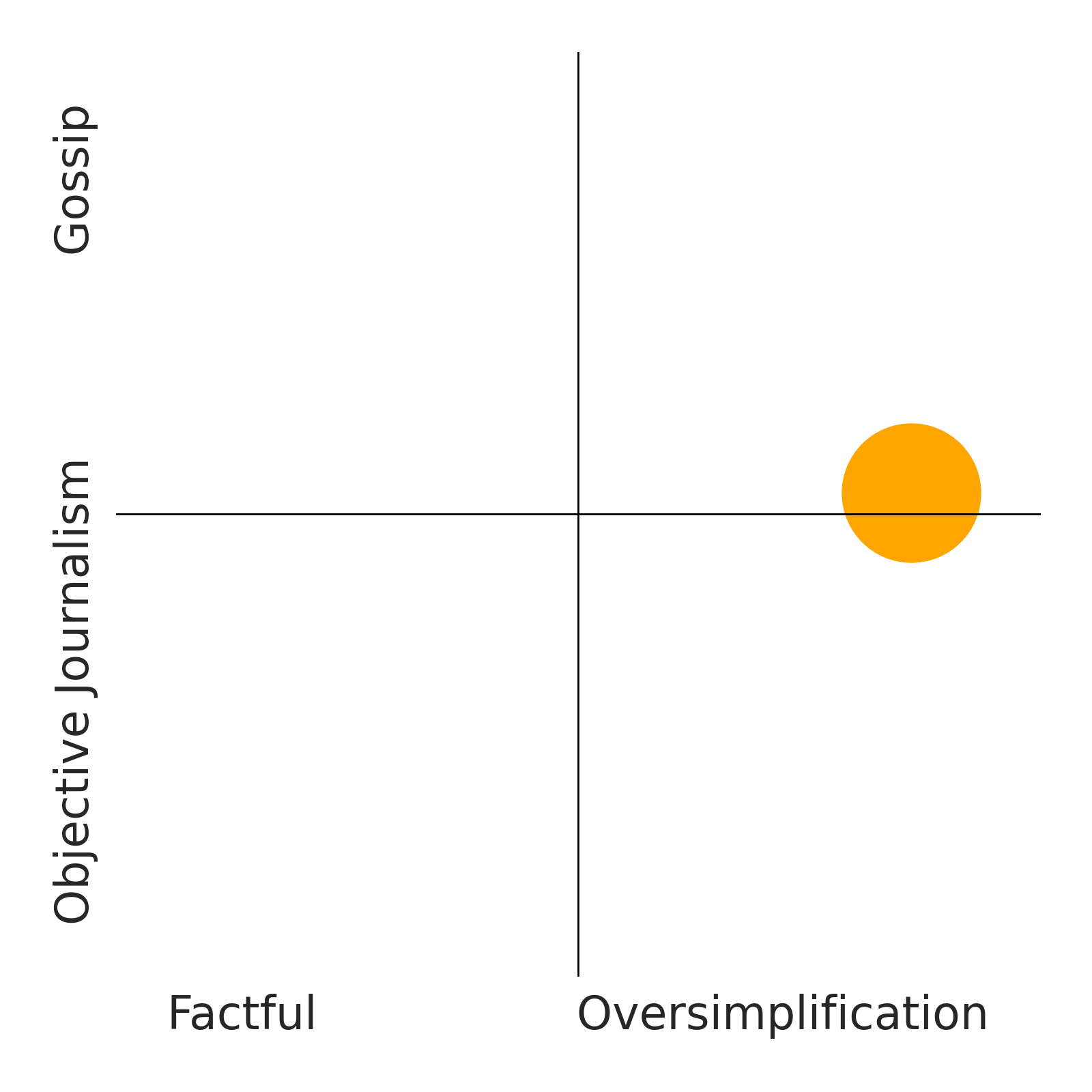
🚨 Sensational15
💡 Boring <—> Interesting6
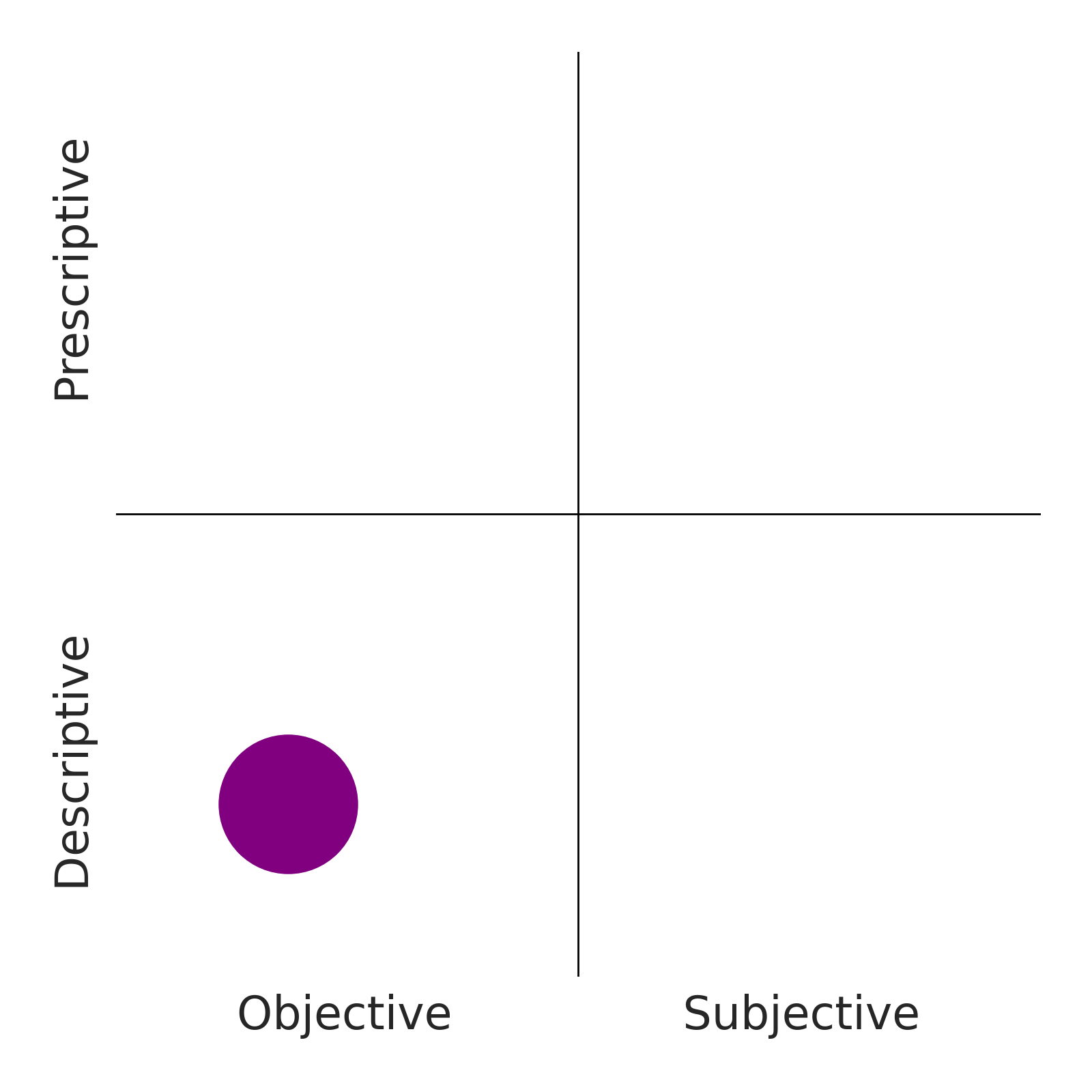
📝 Prescriptive6
😨 Fearful8
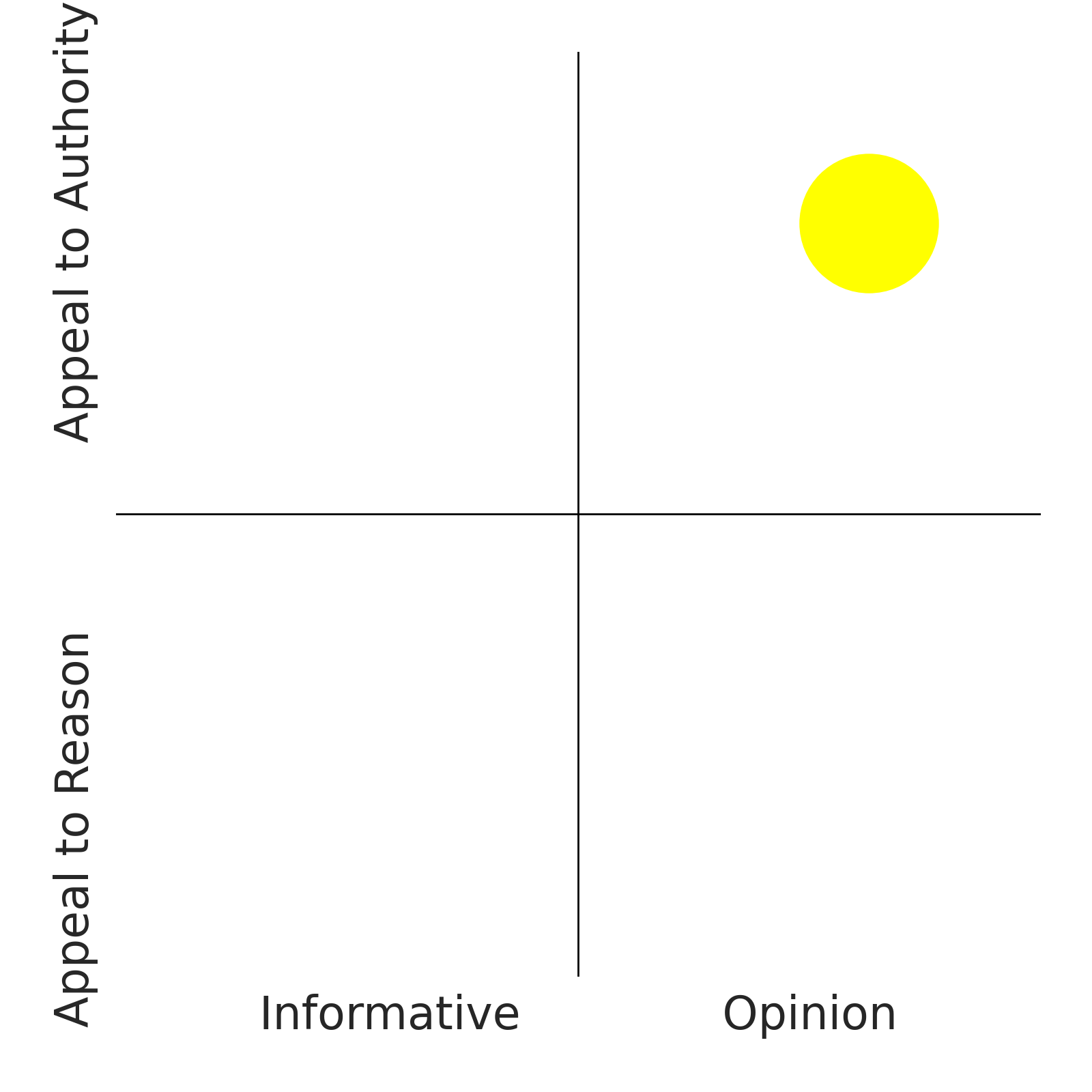
💭 Opinion40
Oversimplification12
🏛️ Appeal to Authority6
😤 Overconfidence30
❌ Low Credibility <—> High Credibility ✅10
🪨 Low Intelligence <—> High Intelligence 🦉6
🎲 Speculation18
🐍 Manipulative12
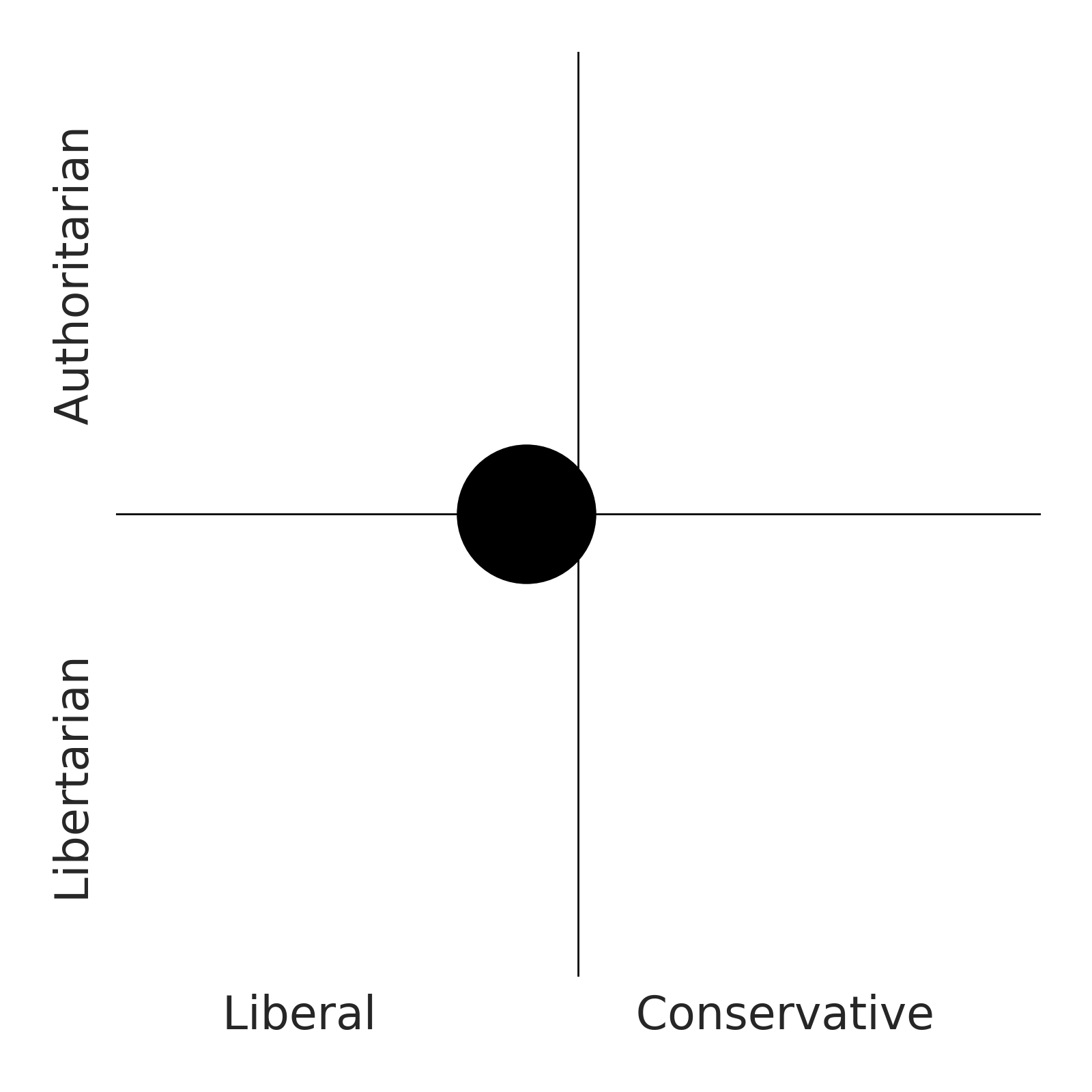
🧢 Populist <—> Elitist 🎩-1
🗞️ Objective <—> Subjective 👁️ 2
📉 Bearish <—> Bullish 📈4
😩 Pessimistic <—> Optimistic 🌞5
🕊️ Dovish <—> Hawkish 🦁0
📞 Begging the Question0
🗳 Political2
🍼 Immature1
👀 Covering Responses2
😢 Victimization0
🔒 Ideological0
🏴 Anti-establishment <—> Pro-establishment 📺1
🧠 Rational <—> Irrational 🤪-2
🤑 Advertising4
💔 Low Integrity <—> High Integrity ❤️4
🎭 Virtue Signaling0
🐐 Scapegoating0
🦊 Anti-Corporate <—> Pro-Corporate 👔2
2026 © Helium Trades
Privacy Policy & Disclosure
* Disclaimer: Nothing on this website constitutes investment advice, performance data or any recommendation that any particular security, portfolio of securities, transaction or investment strategy is suitable for any specific person. Helium Trades is not responsible in any way for the accuracy
of any model predictions or price data. Any mention of a particular security and related prediction data is not a recommendation to buy or sell that security. Investments in securities involve the risk of loss. Past performance is no guarantee of future results. Helium Trades is not responsible for any of your investment decisions,
you should consult a financial expert before engaging in any transaction.
Helium Research Assistant

How can I help you today?
Ask any question about Market Watch bias.


