See whether Helium helps you make better-informed decisions. Try every Pro Trader feature for 30 days. No credit card required.
Try every Pro Trader feature for 30 days. No credit card required.
A conservative-leaning institutional digest treats the Gestapo list as a significant historical artifact and urges U.S. and allied targeting preparation.
Automated analysis; not human reviewed. Limitations: The supplied text is a truncated, mixed digest with missing words and ellipses, so the analysis may reflect only fragments rather than the full publisher framing. · 4 of 54 available dimensions scored; omitted dimensions are not treated as neutral. · Verified supporting quotes for 4 of 4 scored dimensions.
Claim: Publisher-selected framing is conservative, critical of wealth-tax politics and supportive of military and counterterrorism preparation.
“California’s War On Wealth—And America’s War On Terror” · exact text match
“America and its allies need to prepare ways to arrange targeting effectively and carefully.” · exact text match
Why: The headline pairs wealth policy with 'war' framing, and the explicit recommendation endorses U.S.-led military targeting.
Claim: The text moves beyond description to issue a direct policy prescription on targeting.
“America and its allies need to prepare ways to arrange targeting effectively and carefully.” · exact text match
Why: The sentence uses 'need to prepare,' a directly prescriptive construction.
Claim: The framing leans hawkish by endorsing targeting preparation and invoking a continuing 'War On Terror.'
“America’s War On Terror” · exact text match
“America and its allies need to prepare ways to arrange targeting effectively and carefully.” · exact text match
Why: Military targeting preparation and continuing war-on-terror language indicate a hawkish orientation.
Claim: The selected content is political, centering on wealth taxes, central banks, terrorism, and foreign policy.
“California’s War On Wealth—And America’s War On Terror” · exact text match
“Can Central Banks Rescue Us From High Interest Rates And Rising Debt?” · exact text match
Why: Headlines address contested public policy and geopolitical strategy.
The supplied text is a truncated, mixed digest with missing words and ellipses, so the analysis may reflect only fragments rather than the full publisher framing.
An empirical and methodological framing uses transparent exclusions, exact definitions, and administrative records to present H-1B geography as an analytic pattern rather than as an immigration-policy claim.
Automated analysis; not human reviewed. Limitations: The supplied article_text is an excerpt with visible ellipses and repeated boilerplate, so not every figure and exclusion could be fully reconciled. · 6 of 54 available dimensions scored; omitted dimensions are not treated as neutral. · Verified supporting quotes for 6 of 6 scored dimensions.
Claim: The framing is neutral and data-centered, presenting statistics without evaluative language.
“The main data on this page come from USCIS petition records FY2021–24 obtained by Bloomberg under the Freedom of Information Act.” · exact text match
“Work site: the address where the job is, as recorded on the petition.” · exact text match
Why: It relies on administrative records and operational definitions rather than opinion or emotional framing.
Claim: The coverage is restrained and explanatory, not sensation-seeking.
“Because there are far more candidates than visas, US Citizenship and Immigration Services (USCIS) runs a lottery to select who is allowed to move forward.” · exact text match
Why: The process is described plainly and without alarm or anecdote.
Claim: The article describes patterns and definitions but does not recommend policy action.
“Only eleven of the fifty states, plus the District of Columbia, hold as large a share of the country's approved H-1B petitions as they do of its private-sector jobs.” · exact text match
Why: The statement is a factual comparison with no attached imperative or policy prescription.
Claim: The article reasons carefully from data limitations to methodological corrections.
“One worker could be registered by several employers and in more than one year, so a single person can appear more than once.” · exact text match
“We drop 907 observations whose beneficiaries were not of working age (20–64) at registration: 638 with a plausible birth year but an age outside the band; and 269 whose birth year is unusable.” · exact text match
Why: Identifying a unit-of-analysis ambiguity and then correcting for it is analytic rather than emotional reasoning.
Claim: The analysis is empirical and administrative, relying on observable records rather than non-empirical commitments.
“The main data on this page come from USCIS petition records FY2021–24 obtained by Bloomberg under the Freedom of Information Act.” · exact text match
Why: The inquiry is based on FOIA-obtained records and explicit filters, consistent with an empirical approach.
Claim: The article shows high epistemic integrity by disclosing its source, unit-of-analysis limitations, and data filters.
“The main data on this page come from USCIS petition records FY2021–24 obtained by Bloomberg under the Freedom of Information Act.” · exact text match
“One worker could be registered by several employers and in more than one year, so a single person can appear more than once.” · exact text match
Why: It openly identifies data provenance and a known measurement caveat, which are credibility and fairness signals.
The supplied article_text is an excerpt with visible ellipses and repeated boilerplate, so not every figure and exclusion could be fully reconciled.
The supplied text contains only page chrome from Hoover.org and no substantive article content, so no publisher framing can be assessed.
Automated analysis; not human reviewed. Limitations: Only archive/page chrome and promotional boilerplate were supplied; the actual H-1B data brief is absent, preventing any bias analysis.
Only archive/page chrome and promotional boilerplate were supplied; the actual H-1B data brief is absent, preventing any bias analysis.
Expert-authority framing, reinforced by institutional prestige cues, presents an ECB official's AI discussion as authoritative and policy-relevant.
Automated analysis; not human reviewed. Limitations: The supplied text is a short promotional listing rather than a full article; framing assessments rely on the headline, description, and promotional copy, not on Lane's actual remarks. · 5 of 55 available dimensions scored; omitted dimensions are not treated as neutral. · Verified supporting quotes for 5 of 5 scored dimensions.
Claim: The framing is mildly elitist, foregrounding academic credentials and institutional prestige.
“With its eminent scholars and world-renowned library and archives, the seeks to improve the human condition” · verified after text normalization
“A conversation with leaders and researchers about economic developments and their ramifications.” · exact text match
Why: The page presents knowledge as produced by eminent scholars, world-renowned institutions, and leaders rather than by popular or grassroots perspectives.
Claim: The main text is neutral-descriptive, not subjective.
“ECB Executive Board Member Philip Lane joins Steve Davis at Jackson Hole to discuss AI’s impact on Euro-area economies” · exact text match
Why: The sentence states participants, setting, and topics without evaluative or emotive language.
Claim: The text avoids sensational framing.
“why Europe lags the United States in this area” · exact text match
Why: Topics are presented plainly as discussion items, with no dramatic, alarming, or hype-driven wording.
Claim: The main text is factful and non-opinionated.
“Philip R. Lane is a member of the Executive Board of the European Central Bank, serving since June 2019.” · exact text match
Why: It reports biographical facts and announced topics rather than advocating a position.
Claim: The page is mildly pro-establishment, centering a sitting ECB executive and institutional leadership.
“ECB Executive Board Member Philip Lane joins Steve Davis at Jackson Hole” · exact text match
“Philip R. Lane is a member of the Executive Board of the European Central Bank” · exact text match
Why: The framing prominently features a high-ranking current monetary-policy official and treats the conversation as authoritative, with no critical or outsider perspective.
The supplied text is a short promotional listing rather than a full article; framing assessments rely on the headline, description, and promotional copy, not on Lane's actual remarks.
October 08, 2026 · 0 shares
Frames Medicare's fiscal trouble as a looming 'Time Bomb' destined to be defused by entitlement reform while casting a Republican president as averse to reform and the opposition as championing single-payer.
Medicare is a federal healthcare program created under Lyndon Johnson's 'Great Society' that has expanded well beyond its architects' expectations.
Automated analysis; not human reviewed. Limitations: The supplied text is largely a promotional podcast summary with limited substantive detail, so several classifications rest on thin evidence. · 55 of 55 available dimensions scored; omitted dimensions are not treated as neutral. · Verified supporting quotes for 31 of 55 scored dimensions.
Claim: The framing emphasizes entitlement reform and is critical of a single-payer 'Medicare for All' alternative.
“opposition party championing a single-payer “Medicare for All” alternative” · exact text match
“challenges of entitlement reform” · exact text match
Why: The contrasting emphasis on reform versus single-payer aligns with conservative fiscal framing.
Claim: The article privileges think-tank policy expertise via Hoover and its programs.
“Hoover’s Tom Church” · exact text match
“bipartisan Tennenbaum Program for Fact-Based Policy” · exact text match
Why: Reliance on Hoover fellow and program framing indicates an elite policy-expert orientation.
Claim: The article highlights cost-driven reform and voluntary policy fixes rather than expansion of centralized control.
“policy avenues for driving down costs” · exact text match
“entitlement reform” · exact text match
Why: Emphasis on market-style cost reduction and reform leans away from centralized expansion.
Claim: The article heavily frames through a single policy expert's perspective.
“Tom Church, a Hoover policy fellow who’s done considerable research on entitlement and healthcare reform, discusses” · exact text match
Why: Single-source expert framing shifts the piece toward subjectivity.
Claim: The title and lede use dramatic language about a fiscal crisis.
“The Medicare Time Bomb: Can Washington Defuse It?” · exact text match
“the entitlement going bankrupt as soon as 2033” · exact text match
Why: Metaphor of a 'Time Bomb' and 'bankrupt' wording raise sensational tone.
Claim: The framing stresses dire fiscal projections and political failure to act.
“the looming crisis will be tabled until 2029 or later” · exact text match
Why: Prolonged inaction and insolvency framing produce a pessimistic outlook.
Claim: The article leans toward recommending reform approaches.
“what reforms can “rescue” Medicare” · exact text match
“policy avenues for driving down costs” · exact text match
Why: Focus on 'what reforms can rescue' is prescriptive rather than purely descriptive.
Claim: The 'Time Bomb' framing and insolvency projections evoke urgency and fear.
“The Medicare Time Bomb: Can Washington Defuse It?” · exact text match
Why: Metaphor and looming-crisis language are fear-amplifying.
Claim: The article assumes Medicare reform is necessary without fully establishing why.
“the entitlement going bankrupt as soon as 2033” · exact text match
Why: Insolvency claim is presented as self-evident justification for reform.
Claim: The framing blends reported projections with evaluative characterizations of political actors.
“a Republican president famously averse to entitlement reform” · exact text match
Why: Characterization 'famously averse' is opinion-laden.
Claim: The article is centrally framed around Washington policy and political actors.
“limitations imposed by the current political lineup in Washington” · exact text match
Why: The core topic and framing are explicitly political.
Claim: The article compresses complex entitlement and political dynamics into a simple crisis-and-reform narrative.
“the challenges of entitlement reform, and the risks of Medicare for All” · exact text match
Why: Two-sided issue is reduced to a narrow reform-versus-expansion contrast.
Claim: The piece relies heavily on Hoover fellow Tom Church as the authoritative voice.
“Tom Church, a Hoover policy fellow who’s done considerable research on entitlement and healthcare reform, discusses” · exact text match
Why: Argument is anchored to named institutional expertise.
Claim: The article asserts specific insolvency dates and a political delay prediction with little hedging.
“the entitlement going bankrupt as soon as 2033” · exact text match
Why: Specific future dates and a firm 2029+ prediction exceed supplied evidence.
Claim: The supplied text includes promotional and subscription elements.
“Subscribe for insights on the most pressing policy issues impacting you.” · exact text match
Why: Promotional subscription prompt indicates some spam-like content.
Claim: The framing aligns with a free-market, entitlement-reform ideological perspective.
“policy avenues for driving down costs” · exact text match
“opposition party championing a single-payer “Medicare for All” alternative” · exact text match
Why: Reform-oriented, anti-single-payer posture reflects an ideological slant.
Claim: The article draws on Hoover Institution expertise and frames policy within mainstream Washington institutions.
“Hoover’s Tom Church” · exact text match
“Tennenbaum Program for Fact-Based Policy” · exact text match
Why: Use of Hoover framing indicates pro-establishment perspective.
Claim: The overall tone is negative-leaning and urgent.
“The Medicare Time Bomb: Can Washington Defuse It?” · exact text match
Why: Crisis metaphor produces negative emotional framing.
Claim: The article frames one party's aversion to reform and the other's single-payer stance differently.
“a Republican president famously averse to entitlement reform and an opposition party championing a single-payer “Medicare for All” alternative” · exact text match
Why: Asymmetric characterization of both sides suggests possible double standard.
Claim: The article names sources and programs but supplies limited verifiable details.
“Tom Church, a Hoover policy fellow who’s done considerable research on entitlement and healthcare reform, discusses” · exact text match
Why: Named attribution supports credibility but thin substantive detail limits it.
Claim: The discussion is framed around policy analysis and research rather than emotion.
“done considerable research on entitlement and healthcare reform” · exact text match
“policy avenues for driving down costs” · exact text match
Why: Focus on research and policy avenues supports a rational framing.
Claim: The text promotes Hoover Institution and its programs.
“bipartisan Tennenbaum Program for Fact-Based Policy” · exact text match
Why: Institutional promotion of Hoover programs appears in the text.
Claim: The article is framed around fiscal/budget concerns common to market-oriented analysis.
“Medicare now accounting for one in every seven dollars Washington spends” · exact text match
Why: Budget-crisis framing aligns with market-oriented fiscal perspective.
Claim: The article stresses fact-based policy research.
“bipartisan Tennenbaum Program for Fact-Based Policy” · exact text match
Why: Emphasis on 'fact-based' analysis leans empirical.
Claim: The framing prioritizes fiscal sustainability over collective expansion of entitlements.
“the challenges of entitlement reform, and the risks of Medicare for All” · exact text match
Why: Skepticism toward expansion and focus on reform leans individualist.
Claim: The article forecasts insolvency dates and political timelines.
“the entitlement going bankrupt as soon as 2033” · exact text match
“the looming crisis will be tabled until 2029 or later” · exact text match
Why: Future insolvency and delay predictions are speculative.
Claim: The 'Time Bomb' metaphor creates urgency around a complex fiscal issue.
“The Medicare Time Bomb: Can Washington Defuse It?” · exact text match
Why: Loaded metaphor may be seen as mild urgency framing.
Claim: The prose is smooth and promotional in style.
“A podcast hosted by Hoover fellow Bill Whalen devoted to matters of governance and balance of power at home and abroad.” · exact text match
Why: Smooth promotional copy is weak evidence of AI authorship.
Claim: The article attributes projections to a named Hoover fellow and mentions a fact-based policy program.
“bipartisan Tennenbaum Program for Fact-Based Policy” · exact text match
Why: Attribution to a named expert and a 'fact-based' program suggest fair epistemic practice.
Claim: The article does not advocate for or against medical authorities.
“risks of Medicare for All” · exact text match
Why: No grounds for a strong big-pharma classification, but slight healthcare-policy framing appears.
Claim: The article engages policy specifics and named research programs.
“done considerable research on entitlement and healthcare reform” · exact text match
“bipartisan Tennenbaum Program for Fact-Based Policy” · exact text match
Why: Policy-expert framing suggests moderate intellectual substance.
The supplied text is largely a promotional podcast summary with limited substantive detail, so several classifications rest on thin evidence.
The digest's topic introduction frames China's military modernization as an aggressive program that threatens neighboring countries, using threat-based language to characterize the linked coverage.
Automated analysis; not human reviewed. Limitations: The supplied text is a topic digest rather than a full article; analysis relies on the topic introduction because the linked headline reports were not substantively provided. · 4 of 55 available dimensions scored; omitted dimensions are not treated as neutral. · Verified supporting quotes for 4 of 4 scored dimensions.
Claim: The topic introduction characterizes China's military program using evaluative language.
“supports an increasingly aggressive foreign policy and threatens the safety of China's neighbors” · exact text match
Why: The description applies value-laden terms such as 'aggressive' and 'threatens' as if they were objective facts rather than interpretations.
Claim: The introduction uses threat-to-safety language to frame China's military expansion.
“threatens the safety of China's neighbors” · exact text match
Why: The phrase invokes alarm about China's intentions to characterize the topic.
Claim: The page presents an opinionated assessment of Chinese policy as the topic's organizing frame.
“supports an increasingly aggressive foreign policy and threatens the safety of China's neighbors” · exact text match
Why: The page states a geopolitical judgment as a matter of fact, with no attribution or opposing view.
Claim: The introduction states as certain that China's military expansion supports aggressive foreign policy and threatens neighbors.
“supports an increasingly aggressive foreign policy and threatens the safety of China's neighbors” · exact text match
Why: The categorical assertion about China's foreign policy and its effect on neighbors lacks hedging or evidentiary qualification.
The supplied text is a topic digest rather than a full article; analysis relies on the topic introduction because the linked headline reports were not substantively provided.
The compilation frames China's military modernization as a Communist Party program that is aggressive and threatens neighbors, while selecting headlines that emphasize threat and allied concern.
Automated analysis; not human reviewed. Limitations: Only headline texts and an introductory framing were supplied; full article content was unavailable for analysis. · 15 of 54 available dimensions scored; omitted dimensions are not treated as neutral. · Verified supporting quotes for 15 of 15 scored dimensions.
Claim: The framing adopts a conservative national-security stance by characterizing China's military buildup as aggressive and threatening to neighbors.
“which supports an increasingly aggressive foreign policy and threatens the safety of China's neighbors” · exact text match
Why: The language 'aggressive' and 'threatens the safety' is characteristic of conservative/hawkish national-security discourse.
Claim: The publisher's editorializing uses subjective judgment words rather than neutral description.
“Articles on the comprehensive military modernization and expansion program undertaken by the Chinese Communist Party, which supports an increasingly aggressive foreign policy and threatens the safety of China's neighbors.” · exact text match
Why: 'Aggressive' and 'threatens' are evaluative terms, not neutral observations.
Claim: Several selected headlines use dramatic phrasing that amplifies alarm.
“From Dance Floor to War: China Readies Humanoid Robots for Combat” · exact text match
“Chinese Warships Are Cruising Too Close for Comfort Off Japan’s Shores” · exact text match
Why: Phrases like 'From Dance Floor to War' and 'Too Close for Comfort' are tonally sensational.
Claim: The presentation emphasizes threat and concern, yielding a pessimistic outlook.
“which supports an increasingly aggressive foreign policy and threatens the safety of China's neighbors” · exact text match
Why: The language depicts a worsening security environment with no mitigating positives.
Claim: The compilation urges attention to a China threat and highlights allied military responses.
“which supports an increasingly aggressive foreign policy and threatens the safety of China's neighbors” · exact text match
Why: The framing explicitly describes China as aggressive and threatening, a hawkish position.
Claim: The wording and selected headlines induce concern about China's military intent.
“threatens the safety of China's neighbors” · exact text match
“Pacific Islands Leaders Express Concern Over China’s Missile Launch” · exact text match
Why: Repeated references to threat and concern create a fearful tone.
Claim: The introductory sentence is an editorial opinion presented as a description of the collected articles.
“Articles on the comprehensive military modernization and expansion program undertaken by the Chinese Communist Party, which supports an increasingly aggressive foreign policy and threatens the safety of China's neighbors.” · exact text match
Why: This is not a neutral list description; it characterizes the subject matter with a value judgment.
Claim: The content concerns military modernization, foreign policy, and national security, making it inherently political.
“Articles on the comprehensive military modernization and expansion program undertaken by the Chinese Communist Party” · exact text match
Why: The subject matter is state military and foreign policy.
Claim: The framing reduces complex military developments to a simple aggressive-threat narrative.
“which supports an increasingly aggressive foreign policy and threatens the safety of China's neighbors” · exact text match
Why: No nuance or alternative interpretation is offered.
Claim: The framing asserts a causal relationship between modernization, aggression, and threat without evidentiary qualification.
“which supports an increasingly aggressive foreign policy and threatens the safety of China's neighbors” · exact text match
Why: The statement is declarative and universal, providing no uncertainty markers.
Claim: The framing applies a consistent national-security ideological lens to interpret multiple discrete events.
“Articles on the comprehensive military modernization and expansion program undertaken by the Chinese Communist Party” · exact text match
Why: The collection is organized around a predetermined interpretation of Chinese military expansion.
Claim: The anti-China military threat framing aligns with mainstream national-security establishment views.
“which supports an increasingly aggressive foreign policy and threatens the safety of China's neighbors” · exact text match
Why: This is a standard establishment frame in Western security policy, though the text itself does not explicitly invoke institutions.
Claim: The framing and headline choices carry a negative emotional charge, using threat and discomfort words.
“threatens the safety of China's neighbors” · exact text match
“Chinese Warships Are Cruising Too Close for Comfort Off Japan’s Shores” · exact text match
Why: Phrases such as 'threatens' and 'too close for comfort' evoke fear and concern.
Claim: The list attributes each headline to a named outlet and date, providing transparent sourcing.
“via Reuters on September 7, 2026” · exact text match
“via Nikkei Asia on September 8, 2026” · exact text match
Why: Named sources and dates strengthen sourcing, though the editorial framing reduces neutrality.
Claim: Curating only unfavorable China military items with loaded framing omits broader context and alternative perspectives.
“which supports an increasingly aggressive foreign policy and threatens the safety of China's neighbors” · exact text match
Why: The compilation presents a one-sided selection and uses conflict-laden language.
Only headline texts and an introductory framing were supplied; full article content was unavailable for analysis.
Publisher framing presents the Chinese Communist Party as a source of harm and U.S. interests as in need of expert-led protection, using an explicitly opinion-curated and hawkish stance.
Automated analysis; not human reviewed. Limitations: Input is a section description and headline list rather than a full article, so scores rely on the single framing sentence. · 8 of 55 available dimensions scored; omitted dimensions are not treated as neutral. · Verified supporting quotes for 8 of 8 scored dimensions.
Claim: The framing adopts a conservative, anti-China and U.S.-protective stance.
“commenting on the harms caused by the activities of the Chinese Communist Party” · exact text match
“solutions that experts and leaders suggest we pursue to protect our interests” · exact text match
Why: The text unilaterally labels CCP activities as harmful and frames U.S. interests as needing protection, a conservative foreign-policy position.
Claim: The framing defers to experts and leaders rather than popular or citizen perspectives.
“solutions that experts and leaders suggest” · exact text match
Why: The section presents expert and leader opinion as the path to protecting interests, an elitist stance.
Claim: The page is explicitly opinion-oriented rather than neutral reporting.
“This section collects opinion pieces” · exact text match
“The opinions expressed on this website are those of the authors” · exact text match
Why: The text labels its content as opinion pieces and disclaims institutional endorsement.
Claim: The framing is hawkish toward China, emphasizing harm and the need to protect interests.
“harms caused by the activities of the Chinese Communist Party” · exact text match
“protect our interests” · exact text match
Why: Describing CCP activities as harmful and calling for protection of interests implies a confrontational or hawkish orientation.
Claim: The page is heavily opinion-based, curating authors' viewpoints rather than presenting facts.
“This section collects opinion pieces” · exact text match
“The opinions expressed on this website are those of the authors” · exact text match
Why: Explicit use of 'opinion pieces' and a disclaimer for author opinions.
Claim: The page is strongly political, centered on U.S.-China geopolitics and national interests.
“U.S.-China Relations, Taiwan, Europe-China Relations, Tech Competition, Japan, Rare Earths, Geopolitics, and Global Strategy” · exact text match
“protect our interests” · exact text match
Why: The topics and the protection-of-interests framing are inherently political.
Claim: The framing appeals to expert and leader authority to validate solutions.
“solutions that experts and leaders suggest” · exact text match
Why: The text explicitly leans on experts and leaders as the source of solutions.
Claim: The framing applies a one-sided ideological lens, presenting the CCP as harmful without alternatives.
“commenting on the harms caused by the activities of the Chinese Communist Party” · exact text match
Why: The blanket statement about harms and the exclusion of alternative perspectives reflect an ideological frame.
Input is a section description and headline list rather than a full article, so scores rely on the single framing sentence.
The publisher frames a curated opinion collection around the premise that Chinese Communist Party activities cause harms requiring protection through expert- and leader-driven solutions.
This is a personalized content portal page for the Hoover Institution, a Stanford University-based public policy research organization, where users can subscribe to receive analysis from Hoover fellows.
Automated analysis; not human reviewed. Limitations: The supplied text is a sparse page fragment; nearly all content is page chrome or aggregated headlines, leaving only a single framing sentence from which to infer publisher bias. · 6 of 55 available dimensions scored; omitted dimensions are not treated as neutral. · Verified supporting quotes for 6 of 6 scored dimensions.
Claim: The framing defers to elites by highlighting solutions proposed by experts and leaders.
“provides insight into the various solutions that experts and leaders suggest we pursue to protect” · exact text match
Why: Legitimacy is derived from expert and leader authority rather than popular or ordinary input.
Claim: The organizing premise treats the harms caused by the Chinese Communist Party as an objective fact.
“commenting on the harms caused by the activities of the Chinese Communist Party” · exact text match
Why: The harms are asserted without attribution, conditionality, or competing perspective, making the framing subjective rather than detached.
Claim: The framing moves from describing commentary to prescribing protective action.
“solutions that experts and leaders suggest we pursue to protect” · exact text match
Why: Words like 'solutions' and 'protect' direct readers toward prescribed remedies.
Claim: The page explicitly gathers opinion pieces and shapes them around an editorial premise.
“This section collects opinion pieces from across the world” · exact text match
Why: The section is defined as opinion aggregation rather than reported news.
Claim: The framing takes an adversarial position toward a foreign government.
“harms caused by the activities of the Chinese Communist Party” · exact text match
Why: Characterizing a foreign government's activities as harmful and calling for protective solutions is a politically loaded stance.
Claim: The collection's value is justified by deferring to experts and leaders.
“experts and leaders suggest” · exact text match
Why: The term 'experts and leaders' is used to validate the proposed solutions.
The supplied text is a sparse page fragment; nearly all content is page chrome or aggregated headlines, leaving only a single framing sentence from which to infer publisher bias.
The section frames China's economic and trade policies as harmful, selecting alarming headlines to emphasize negative consequences for Western economies.
Automated analysis; not human reviewed. Limitations: The supplied text is a curated list of headlines and boilerplate, not a full article; assessments rely on the section framing and headline selection. · 9 of 55 available dimensions scored; omitted dimensions are not treated as neutral. · Verified supporting quotes for 8 of 9 scored dimensions.
Claim: The publisher characterizes China's policies as harmful rather than neutrally describing them.
“This section highlights articles and reports on the harmful impacts of the commercial and economic policies employed by the Chinese Communist Party.” · exact text match
Why: The word 'harmful' is a value judgment applied to the subject.
Claim: The selected headlines contain sensational, dramatic language.
“Alarm Bells Sound in Brussels as EU Sales of Chinese Hybrid Cars Rocket” · exact text match
“How Chinese Cars Are Taking Over Britain’s Roads” · exact text match
Why: Words like 'Rocket' and 'Taking Over' are dramatic.
Claim: The article's selection is dominated by negative and alarming headlines about China's economic impact.
“Alarm Bells Sound in Brussels as EU Sales of Chinese Hybrid Cars Rocket” · exact text match
“China’s Industrial Profits Grow at Weakest Since November Slump” · exact text match
“China Auto Subsidy Scheme Unravels, Leaving Consumers and Banks Exposed” · exact text match
Why: The selected headlines emphasize decline, alarm, and collapse.
Claim: The section frames Chinese competition as a threat that Western policymakers and firms should confront.
“Ford CEO Urges Caution on Chinese Automakers, Says Europe Is Too Late” · exact text match
“How Chinese Cars Are Taking Over Britain’s Roads” · exact text match
“Why the EU Fears Britain Becoming a Back Door for Chinese Cars” · exact text match
Why: The headlines highlight calls for caution and fears of Chinese dominance.
Claim: The selected headlines use alarm and fear words.
“Alarm Bells Sound in Brussels as EU Sales of Chinese Hybrid Cars Rocket” · exact text match
“Why the EU Fears Britain Becoming a Back Door for Chinese Cars” · exact text match
“China Shock 2.0 and Europe’s Industrial Future” · not found in supplied text
Why: The words 'Alarm', 'Fears', and 'Shock' evoke fear.
Claim: The section is organized around a value-laden theme rather than neutral reporting.
“This section highlights articles and reports on the harmful impacts of the commercial and economic policies employed by the Chinese Communist Party.” · exact text match
Why: The word 'harmful' expresses an opinion about the subject.
Claim: The section explicitly frames the topic around the Chinese Communist Party's policies, making a political issue central.
“This section highlights articles and reports on the harmful impacts of the commercial and economic policies employed by the Chinese Communist Party.” · exact text match
Why: The topic is presented through a political actor (CCP) and its alleged harmful impact.
Claim: The framing singles out the Chinese Communist Party as a harmful actor, indicating an ideological anti-CCP stance.
“This section highlights articles and reports on the harmful impacts of the commercial and economic policies employed by the Chinese Communist Party.” · exact text match
Why: The full name 'Chinese Communist Party' in a negative context suggests an ideological frame.
Claim: The wording and selection evoke negative emotion.
“Alarm Bells Sound in Brussels as EU Sales of Chinese Hybrid Cars Rocket” · exact text match
“China Auto Subsidy Scheme Unravels, Leaving Consumers and Banks Exposed” · exact text match
Why: Alarm and collapse are emotionally charged.
The supplied text is a curated list of headlines and boilerplate, not a full article; assessments rely on the section framing and headline selection.
The publisher frames Chinese information-technology policy as a CCP censorship tool aimed at controlling domestic and foreign opinion.
Automated analysis; not human reviewed. Limitations: Only one substantive framing sentence was available; the rest of the supplied text was navigation, subscription prompts, or external article links. · 6 of 55 available dimensions scored; omitted dimensions are not treated as neutral. · Verified supporting quotes for 6 of 6 scored dimensions.
Claim: The publisher presents a subjective interpretation of Chinese policy as an objective fact.
“The Chinese Communist Party seeks to control information technology as a means to shape and censor the communications and opinions of its own people, as well as the communications of individuals beyond China's borders.” · exact text match
Why: The sentence makes an unhedged claim about intent and labels policy as 'censor,' embedding a value judgment without sourcing or alternative framing.
Claim: The publisher states a contested interpretation of CCP intent as settled fact without attribution.
“The Chinese Communist Party seeks to control information technology as a means to shape and censor the communications and opinions of its own people, as well as the communications of individuals beyond China's borders.” · exact text match
Why: The sentence asserts intent and moral characterization as fact, with no evidence or counterpoint, marking it as opinionated.
Claim: The sentence is framed as a statement about a foreign government's political strategy and is therefore political.
“The Chinese Communist Party seeks to control information technology as a means to shape and censor the communications and opinions of its own people, as well as the communications of individuals beyond China's borders.” · exact text match
Why: The content concerns Chinese Communist Party policy and censorship, squarely political subject matter presented with an adversarial edge.
Claim: The publisher reduces Chinese information-technology policy to a single censorship motive.
“The Chinese Communist Party seeks to control information technology as a means to shape and censor the communications and opinions of its own people, as well as the communications of individuals beyond China's borders.” · exact text match
Why: The statement attributes one purpose to the CCP's entire information-technology approach, omitting competing explanations.
Claim: The publisher states the CCP's objective as fact with no hedging, attribution, or evidence.
“The Chinese Communist Party seeks to control information technology as a means to shape and censor the communications and opinions of its own people, as well as the communications of individuals beyond China's borders.” · exact text match
Why: The word 'seeks' is a definitive assertion of intent; no uncertainty or source is provided.
Claim: The text provides no sourcing, attribution, or acknowledgment of uncertainty for its central claim.
“The Chinese Communist Party seeks to control information technology as a means to shape and censor the communications and opinions of its own people, as well as the communications of individuals beyond China's borders.” · exact text match
Why: Visible credibility is low because the assertion is presented without evidence or attribution.
Only one substantive framing sentence was available; the rest of the supplied text was navigation, subscription prompts, or external article links.
The framing characterizes the Chinese Communist Party as systematically abusive and curates a one-sided set of headlines on China-related human-rights issues.
Automated analysis; not human reviewed. Limitations: The supplied text is a topic-index page rather than a full article, so the analysis rests on the section summary and curated headlines; no full article body is available. · 10 of 55 available dimensions scored; omitted dimensions are not treated as neutral. · Verified supporting quotes for 10 of 10 scored dimensions.
Claim: The lead sentence uses evaluative terms such as 'abuses' and 'violation' rather than neutral description.
“This section documents the myriad abuses that the Chinese Communist Party commits against its own people in violation of its commitments under the UN Universal Declaration of Human Rights.” · exact text match
Why: The classification of state actions as 'abuses' and 'violation' is a subjective judgment presented as the section's organizing statement.
Claim: The selected headlines emphasize arrests, violence, and tragedy, creating a fear-oriented frame.
“Arrests Reported as Tibetans and Other Protesters Dog Xi’s U.S. State Visit” · exact text match
“Is China Triggering Another Tragedy Like the One That Occurred in Nepal-Tibet?” · exact text match
Why: The headlines' focus on arrests and a rhetorical tragedy question contributes to an alarmist framing, though the page itself does not use extreme fear language.
Claim: The page leads with an opinionated conclusion and curates headlines to support it.
“This section documents the myriad abuses that the Chinese Communist Party commits against its own people in violation of its commitments under the UN Universal Declaration of Human Rights.” · exact text match
Why: The assertion states a conclusion about CCP behavior rather than reporting or verifying it; the surrounding headlines are uniformly critical.
Claim: The section is organized around politically charged categories and sides against the Chinese government.
“Articles On: Hong Kong, National Security Law, Political Prisoners, Press Freedom, Tibet, Religious Persecution, Human Rights, Xi Jinping, and Political Dissent.” · exact text match
Why: Terms like 'Political Prisoners' and 'Political Dissent' are contested political labels, and the page's framing takes a side.
Claim: The page reduces a complex political and legal situation to an undifferentiated catalogue of 'abuses' and 'violation' without nuance.
“This section documents the myriad abuses that the Chinese Communist Party commits against its own people in violation of its commitments under the UN Universal Declaration of Human Rights.” · exact text match
Why: The broad, unqualified assertion treats a wide range of legal and political cases as a single category of abuse.
Claim: The page asserts as established fact that the section 'documents' abuses, with no hedging or qualification.
“This section documents the myriad abuses that the Chinese Communist Party commits against its own people in violation of its commitments under the UN Universal Declaration of Human Rights.” · exact text match
Why: The verb 'documents' and the unqualified noun 'abuses' assert certainty beyond the evidence presented in the text.
Claim: The page applies a consistent anti-CCP/pro-free-society lens and excludes other viewpoints.
“This section documents the myriad abuses that the Chinese Communist Party commits against its own people in violation of its commitments under the UN Universal Declaration of Human Rights.” · exact text match
“Your gift helps advance ideas that promote a free society.” · exact text match
Why: The description and mission language fit a free-society ideology, while the curated headlines all support the critical framing.
Claim: The language such as 'abuses', 'violation', and 'Tragedy' carries strong negative emotional valence.
“This section documents the myriad abuses that the Chinese Communist Party commits against its own people in violation of its commitments under the UN Universal Declaration of Human Rights.” · exact text match
Why: The description uses emotionally charged vocabulary to characterize the Chinese government's actions.
Claim: The page provides named outlets, authors, and dates for its linked items, but the central claim is unsupported and one-sided.
“Hong Kong Free Press, September 25, 2026” · exact text match
“Hans Tse, Hong Kong Free Press, September 23, 2026” · exact text match
Why: Attribution is visible, but the section's broad assertion and selective curation limit overall credibility.
Claim: The page uses loaded wording and one-sided selection, omitting Chinese government perspectives.
“This section documents the myriad abuses that the Chinese Communist Party commits against its own people in violation of its commitments under the UN Universal Declaration of Human Rights.” · exact text match
“Elderly Woman to Stand Trial Under National Security Legislation Despite Psychosis” · exact text match
Why: Loaded terms such as 'abuses' and 'Despite Psychosis' and the absence of counter-perspectives are observable framing techniques, though this may reflect the page's topic-section purpose.
The supplied text is a topic-index page rather than a full article, so the analysis rests on the section summary and curated headlines; no full article body is available.
The curated selection frames China's infrastructure and mineral projects as strategic tools of the Chinese Communist Party that expand Beijing's influence while exposing U.S. limits.
Automated analysis; not human reviewed. Limitations: The supplied text consists largely of third-party headlines, so the analysis captures curation and wording rather than independent verification of the underlying reports. · 8 of 54 available dimensions scored; omitted dimensions are not treated as neutral. · Verified supporting quotes for 8 of 8 scored dimensions.
Claim: The compilation applies an interpretive strategic-competition frame to the listed reports.
“The section describes how the Chinese Communist Party employs its foreign infrastructure and development program to further its strategic interests abroad and in international institutions.” · exact text match
Why: The framing sentence selects a strategic interpretation and no alternative explanations are offered.
Claim: Headline wording dramatizes China's expansion and U.S. competition.
“How China’s Green Tech Is Undercutting U.S. Energy Strategy in Africa” · exact text match
“Himalayan Disaster Tests China’s Clout as Regional Leader” · exact text match
Why: Phrases like 'undercutting' and 'tests... clout' add dramatic stakes while the overall tone remains analytical.
Claim: The selection presents U.S. strategy as constrained while China strengthens its position.
“The Limits of America’s Anti-China Campaign Come into View in Peru” · exact text match
“China Consolidates Its Position in Peru’s Critical Minerals Sector” · exact text match
Why: Multiple headlines depict U.S. strategy as limited or losing while China's position is consolidating.
Claim: Chinese projects are framed in strategic-competition terms rather than cooperative or neutral terms.
“The section describes how the Chinese Communist Party employs its foreign infrastructure and development program to further its strategic interests abroad and in international institutions.” · exact text match
“The Limits of America’s Anti-China Campaign Come into View in Peru” · exact text match
Why: The language of 'strategic interests' and an 'anti-China campaign' frames the relationship as a contest.
Claim: Selected headlines contain evaluative and predictive characterizations.
“China’s Exit from Utility Sales Hints at Declining Interest in Pakistan” · exact text match
“Capricorn Bi-Oceanic Corridor Could Expand China’s Strategic Reach in South America” · exact text match
Why: Words like 'hints' and 'could expand' offer interpretations or forecasts as the news angle.
Claim: The section is organized around the Chinese Communist Party's strategic interests and U.S.-China competition.
“The section describes how the Chinese Communist Party employs its foreign infrastructure and development program to further its strategic interests abroad and in international institutions.” · exact text match
Why: The topic is explicitly about state strategy and international influence, making the content inherently political.
Claim: Listed items are attributed to named sources and dates, providing a verification trail.
“China’s Exit from Utility Sales Hints at Declining Interest in Pakistan by Adnan Aamir via Nikkei Asia on September 9, 2026” · exact text match
Why: Attribution to named authors and outlets with dates is a visible sourcing practice that supports credibility.
Claim: At least one listed headline frames an uncertain future outcome.
“Capricorn Bi-Oceanic Corridor Could Expand China’s Strategic Reach in South America” · exact text match
Why: The conditional 'could expand' is a speculative projection about an unconfirmed effect.
The supplied text consists largely of third-party headlines, so the analysis captures curation and wording rather than independent verification of the underlying reports.
October 04, 2026 · 0 shares
The publisher frames China's environmental record by highlighting Chinese Communist Party-controlled entities as harmful to 'our environment' and selecting negative reports on illegal fishing and polluting mines.
The supplied text is a themed aggregation page from the Hoover Institution; the full text of the two cited external reports is not included.
Automated analysis; not human reviewed. Limitations: The supplied text is a short aggregator page with only framing and headlines; the linked articles' full content is unavailable, limiting verification of the reported events and the publisher's handling of details. · 3 of 55 available dimensions scored; omitted dimensions are not treated as neutral. · Verified supporting quotes for 3 of 3 scored dimensions.
Claim: The publisher adopts a subjective perspective of 'our environment' being harmed.
“This section highlights the activities carried out by entities controlled by the Chinese Communist Party that harm our environment.” · exact text match
Why: The possessive 'our environment' and the word 'harm' express a partial evaluative standpoint rather than a detached summary.
Claim: The publisher uses evaluative language to characterize China's environmental record.
“China is the world’s largest emitter of greenhouse gases and generates enormous pollution and environmental degradation. This section highlights the activities carried out by entities controlled by the Chinese Communist Party that harm our environment.” · exact text match
Why: The phrases 'enormous pollution' and 'harm our environment' are value-laden and present an interpretive framing rather than neutral reporting.
Claim: The publisher frames environmental harm as resulting from Chinese Communist Party-controlled entities.
“This section highlights the activities carried out by entities controlled by the Chinese Communist Party that harm our environment.” · exact text match
Why: Attributing environmental harm to CCP-controlled entities places the content in a political frame around the Chinese state's responsibility.
The supplied text is a short aggregator page with only framing and headlines; the linked articles' full content is unavailable, limiting verification of the reported events and the publisher's handling of details.
Frames a Taiwan conflict as a looming global catastrophe and asserts that fixed overseas bases are strategically obsolete.
Taiwan is claimed by the People's Republic of China and has no formal U.S. mutual-defense treaty; the U.S. security relationship is de facto rather than treaty-based, and Pacific defense has traditionally relied on U.S. forward bases.
Automated analysis; not human reviewed. Limitations: Input consists almost entirely of boilerplate; only the headline and a truncated excerpt are analyzable, so classification relies on a single catastrophic-framing phrase. · 4 of 55 available dimensions scored; omitted dimensions are not treated as neutral. · Verified supporting quotes for 4 of 4 scored dimensions.
Claim: A normative assessment of a Taiwan conflict as 'disastrous' is expressed as an objective statement rather than hedged or attributed.
“Conflict Over Taiwan Would Be Disastrous” · exact text match
Why: 'Would be disastrous' is a value judgment cast as a declarative finding, placing the presentation toward the subjective end of the spectrum.
Claim: Uses catastrophic language to elevate the stakes of a Taiwan conflict through potential global ruin.
“Conflict Over Taiwan Would Be Disastrous” · exact text match
“America and all mankind” · exact text match
Why: 'Disastrous' combined with the sweeping 'all mankind' frames the topic through worst-case fear rather than probability or cost-benefit analysis.
Claim: The framing advances unhedged value judgments and metaphorical assertions as declarative statements rather than as attributed views or reported facts.
“Conflict Over Taiwan Would Be Disastrous” · exact text match
“Bases Are Becoming Yesterday’s Battle” · exact text match
Counterevidence:
“The opinions expressed on this website are those of the authors” · exact text match
Why: A categorical prediction of disaster and a metaphorical assertion of military obsolescence present editorial judgments as settled facts, though the site labels them as authors' opinions.
Claim: The excerpt makes a predictive counterfactual claim about the consequences of a war that has not occurred.
“Conflict Over Taiwan Would Be Disastrous” · exact text match
“Bases Are Becoming Yesterday’s Battle” · exact text match
Why: 'Would be' forecasts a hypothetical conflict's outcome, while 'Are Becoming' projects an ongoing strategic trend into the future.
Input consists almost entirely of boilerplate; only the headline and a truncated excerpt are analyzable, so classification relies on a single catastrophic-framing phrase.
The curated selection frames China's infrastructure and mineral projects as strategic tools of the Chinese Communist Party that expand Beijing's influence while exposing U.S. limits.
Automated analysis; not human reviewed. Limitations: The supplied text consists largely of third-party headlines, so the analysis captures curation and wording rather than independent verification of the underlying reports. · 8 of 54 available dimensions scored; omitted dimensions are not treated as neutral. · Verified supporting quotes for 8 of 8 scored dimensions.
Claim: The compilation applies an interpretive strategic-competition frame to the listed reports.
“The section describes how the Chinese Communist Party employs its foreign infrastructure and development program to further its strategic interests abroad and in international institutions.” · exact text match
Why: The framing sentence selects a strategic interpretation and no alternative explanations are offered.
Claim: Headline wording dramatizes China's expansion and U.S. competition.
“How China’s Green Tech Is Undercutting U.S. Energy Strategy in Africa” · exact text match
“Himalayan Disaster Tests China’s Clout as Regional Leader” · exact text match
Why: Phrases like 'undercutting' and 'tests... clout' add dramatic stakes while the overall tone remains analytical.
Claim: The selection presents U.S. strategy as constrained while China strengthens its position.
“The Limits of America’s Anti-China Campaign Come into View in Peru” · exact text match
“China Consolidates Its Position in Peru’s Critical Minerals Sector” · exact text match
Why: Multiple headlines depict U.S. strategy as limited or losing while China's position is consolidating.
Claim: Chinese projects are framed in strategic-competition terms rather than cooperative or neutral terms.
“The section describes how the Chinese Communist Party employs its foreign infrastructure and development program to further its strategic interests abroad and in international institutions.” · exact text match
“The Limits of America’s Anti-China Campaign Come into View in Peru” · exact text match
Why: The language of 'strategic interests' and an 'anti-China campaign' frames the relationship as a contest.
Claim: Selected headlines contain evaluative and predictive characterizations.
“China’s Exit from Utility Sales Hints at Declining Interest in Pakistan” · exact text match
“Capricorn Bi-Oceanic Corridor Could Expand China’s Strategic Reach in South America” · exact text match
Why: Words like 'hints' and 'could expand' offer interpretations or forecasts as the news angle.
Claim: The section is organized around the Chinese Communist Party's strategic interests and U.S.-China competition.
“The section describes how the Chinese Communist Party employs its foreign infrastructure and development program to further its strategic interests abroad and in international institutions.” · exact text match
Why: The topic is explicitly about state strategy and international influence, making the content inherently political.
Claim: Listed items are attributed to named sources and dates, providing a verification trail.
“China’s Exit from Utility Sales Hints at Declining Interest in Pakistan by Adnan Aamir via Nikkei Asia on September 9, 2026” · exact text match
Why: Attribution to named authors and outlets with dates is a visible sourcing practice that supports credibility.
Claim: At least one listed headline frames an uncertain future outcome.
“Capricorn Bi-Oceanic Corridor Could Expand China’s Strategic Reach in South America” · exact text match
Why: The conditional 'could expand' is a speculative projection about an unconfirmed effect.
The supplied text consists largely of third-party headlines, so the analysis captures curation and wording rather than independent verification of the underlying reports.
An empirical and methodological framing uses transparent exclusions, exact definitions, and administrative records to present H-1B geography as an analytic pattern rather than as an immigration-policy claim.
Automated analysis; not human reviewed. Limitations: The supplied article_text is an excerpt with visible ellipses and repeated boilerplate, so not every figure and exclusion could be fully reconciled. · 6 of 54 available dimensions scored; omitted dimensions are not treated as neutral. · Verified supporting quotes for 6 of 6 scored dimensions.
Claim: The framing is neutral and data-centered, presenting statistics without evaluative language.
“The main data on this page come from USCIS petition records FY2021–24 obtained by Bloomberg under the Freedom of Information Act.” · exact text match
“Work site: the address where the job is, as recorded on the petition.” · exact text match
Why: It relies on administrative records and operational definitions rather than opinion or emotional framing.
Claim: The coverage is restrained and explanatory, not sensation-seeking.
“Because there are far more candidates than visas, US Citizenship and Immigration Services (USCIS) runs a lottery to select who is allowed to move forward.” · exact text match
Why: The process is described plainly and without alarm or anecdote.
Claim: The article describes patterns and definitions but does not recommend policy action.
“Only eleven of the fifty states, plus the District of Columbia, hold as large a share of the country's approved H-1B petitions as they do of its private-sector jobs.” · exact text match
Why: The statement is a factual comparison with no attached imperative or policy prescription.
Claim: The article reasons carefully from data limitations to methodological corrections.
“One worker could be registered by several employers and in more than one year, so a single person can appear more than once.” · exact text match
“We drop 907 observations whose beneficiaries were not of working age (20–64) at registration: 638 with a plausible birth year but an age outside the band; and 269 whose birth year is unusable.” · exact text match
Why: Identifying a unit-of-analysis ambiguity and then correcting for it is analytic rather than emotional reasoning.
Claim: The analysis is empirical and administrative, relying on observable records rather than non-empirical commitments.
“The main data on this page come from USCIS petition records FY2021–24 obtained by Bloomberg under the Freedom of Information Act.” · exact text match
Why: The inquiry is based on FOIA-obtained records and explicit filters, consistent with an empirical approach.
Claim: The article shows high epistemic integrity by disclosing its source, unit-of-analysis limitations, and data filters.
“The main data on this page come from USCIS petition records FY2021–24 obtained by Bloomberg under the Freedom of Information Act.” · exact text match
“One worker could be registered by several employers and in more than one year, so a single person can appear more than once.” · exact text match
Why: It openly identifies data provenance and a known measurement caveat, which are credibility and fairness signals.
The supplied article_text is an excerpt with visible ellipses and repeated boilerplate, so not every figure and exclusion could be fully reconciled.
October 06, 2026 · 0 shares
The framing emphasizes empirical evidence that pension funds have become liquidity-driven equity sellers, overturning the conventional stabilizing-investor view.
Automated analysis; not human reviewed. Limitations: Only the abstract and standard site boilerplate were supplied; the full paper, underlying data tables, and peer-review status were unavailable. · 6 of 55 available dimensions scored; omitted dimensions are not treated as neutral. · Verified supporting quotes for 6 of 6 scored dimensions.
Claim: The article presents documented findings and a data-derived conclusion rather than personal opinion.
“we document three findings that challenge the conventional view of pension funds as stabilizing investors.” · exact text match
Why: The text relies on documented findings and a measured research conclusion, with no first-person narrative or emotive language.
Claim: The article is descriptive, reporting what the data show without prescribing policy or action.
“Together, these findings show that pension funds have become regular sellers in equity markets rather than contrarian, stabilizing investors.” · exact text match
Why: It states empirical conclusions and avoids recommendations, normative commands, or calls to action.
Claim: The abstract shows visible data sourcing and explicit findings, supporting credibility.
“Using aggregate data on U.S. public pension funds combined with granular holdings obtained through public records requests, we document three findings” · exact text match
Why: It identifies data sources and states quantified findings, though the abstract alone does not show limitations or external validation.
Claim: The article grounds its argument in systematic empirical data rather than assertion.
“Using aggregate data on U.S. public pension funds combined with granular holdings obtained through public records requests, we document three findings” · exact text match
Why: The argument is explicitly based on documented data and structured findings, not anecdote or rhetoric.
Claim: The article is method-driven and empirical, with no superstitious or anti-scientific framing.
“Using aggregate data on U.S. public pension funds combined with granular holdings obtained through public records requests” · exact text match
Why: The study is empirical and data-based, with no supernatural, conspiratorial, or anti-evidence reasoning.
Claim: The article uses structured analytical reasoning with a quantified result.
“Second, because of these limited safe asset buffers, pension funds meet cash flow shocks primarily by selling equities, absorbing $0.67 per dollar of shock through equity sales.” · exact text match
Why: The text links a conditional mechanism to a quantified outcome and adds security-level corroboration.
Only the abstract and standard site boilerplate were supplied; the full paper, underlying data tables, and peer-review status were unavailable.
The analysis presents the Iran war as a source of confident, prescriptive strategic lessons while providing no evidence or specifics.
The text presumes an 'Iran war' has occurred but supplies no background on its timeline, causes, or outcome.
Automated analysis; not human reviewed. Limitations: The supplied text is a short abstract/sidebar; the underlying video and cited sources were not available, and no independent information about the 'Iran war' is provided. · 6 of 55 available dimensions scored; omitted dimensions are not treated as neutral. · Verified supporting quotes for 6 of 6 scored dimensions.
Claim: The content is a subjective strategic assessment, not an objective account of events.
“Military action can weaken an adversary without producing decisive political outcomes, while economic pressure, alliances, energy markets, and public opinion can prove equally consequential.” · exact text match
Why: The quoted proposition is a judgment about cause and effect presented without supporting evidence.
Claim: The text prescribes what effective deterrence must include rather than describing what occurred.
“Effective deterrence ultimately requires hard power, resilient partnerships, clear objectives, and the political will to sustain them.” · exact text match
Why: The word 'requires' makes the statement explicitly prescriptive.
Claim: The text is an editorial/opinion piece rather than a news report.
“The Iran war offers broader lessons about the limits of force, the resilience of revolutionary regimes, and the unpredictability of modern conflict.” · exact text match
Why: The core text is composed of unverified interpretive claims and recommendations, not factual reporting.
Claim: The text reduces a major conflict to a compact list of generic lessons and vulnerabilities.
“The conflict also exposed vulnerabilities in alliance coordination, munitions stocks, counter-drone capabilities, and strategic communication.” · exact text match
Why: It compresses complex operational and political outcomes into four abstract vulnerability categories without detail.
Claim: The text states strategic conclusions as settled requirements despite supplying no supporting evidence.
“Effective deterrence ultimately requires hard power, resilient partnerships, clear objectives, and the political will to sustain them.” · exact text match
Why: A universal policy conclusion is asserted with certainty while the article omits the evidence base.
Claim: The page includes promotional copy for the publisher's series.
“With its eminent scholars and world-renowned library and archives” · exact text match
“Subscribe for insights on the most pressing policy issues impacting you.” · exact text match
Why: The text mixes the policy brief with self-promotional institutional description and a subscription call to action.
The supplied text is a short abstract/sidebar; the underlying video and cited sources were not available, and no independent information about the 'Iran war' is provided.
Frames a Taiwan conflict as a looming global catastrophe and asserts that fixed overseas bases are strategically obsolete.
Taiwan is claimed by the People's Republic of China and has no formal U.S. mutual-defense treaty; the U.S. security relationship is de facto rather than treaty-based, and Pacific defense has traditionally relied on U.S. forward bases.
Automated analysis; not human reviewed. Limitations: Input consists almost entirely of boilerplate; only the headline and a truncated excerpt are analyzable, so classification relies on a single catastrophic-framing phrase. · 4 of 55 available dimensions scored; omitted dimensions are not treated as neutral. · Verified supporting quotes for 4 of 4 scored dimensions.
Claim: A normative assessment of a Taiwan conflict as 'disastrous' is expressed as an objective statement rather than hedged or attributed.
“Conflict Over Taiwan Would Be Disastrous” · exact text match
Why: 'Would be disastrous' is a value judgment cast as a declarative finding, placing the presentation toward the subjective end of the spectrum.
Claim: Uses catastrophic language to elevate the stakes of a Taiwan conflict through potential global ruin.
“Conflict Over Taiwan Would Be Disastrous” · exact text match
“America and all mankind” · exact text match
Why: 'Disastrous' combined with the sweeping 'all mankind' frames the topic through worst-case fear rather than probability or cost-benefit analysis.
Claim: The framing advances unhedged value judgments and metaphorical assertions as declarative statements rather than as attributed views or reported facts.
“Conflict Over Taiwan Would Be Disastrous” · exact text match
“Bases Are Becoming Yesterday’s Battle” · exact text match
Counterevidence:
“The opinions expressed on this website are those of the authors” · exact text match
Why: A categorical prediction of disaster and a metaphorical assertion of military obsolescence present editorial judgments as settled facts, though the site labels them as authors' opinions.
Claim: The excerpt makes a predictive counterfactual claim about the consequences of a war that has not occurred.
“Conflict Over Taiwan Would Be Disastrous” · exact text match
“Bases Are Becoming Yesterday’s Battle” · exact text match
Why: 'Would be' forecasts a hypothetical conflict's outcome, while 'Are Becoming' projects an ongoing strategic trend into the future.
Input consists almost entirely of boilerplate; only the headline and a truncated excerpt are analyzable, so classification relies on a single catastrophic-framing phrase.
Expert-authority framing, reinforced by institutional prestige cues, presents an ECB official's AI discussion as authoritative and policy-relevant.
Automated analysis; not human reviewed. Limitations: The supplied text is a short promotional listing rather than a full article; framing assessments rely on the headline, description, and promotional copy, not on Lane's actual remarks. · 5 of 55 available dimensions scored; omitted dimensions are not treated as neutral. · Verified supporting quotes for 5 of 5 scored dimensions.
Claim: The framing is mildly elitist, foregrounding academic credentials and institutional prestige.
“With its eminent scholars and world-renowned library and archives, the seeks to improve the human condition” · verified after text normalization
“A conversation with leaders and researchers about economic developments and their ramifications.” · exact text match
Why: The page presents knowledge as produced by eminent scholars, world-renowned institutions, and leaders rather than by popular or grassroots perspectives.
Claim: The main text is neutral-descriptive, not subjective.
“ECB Executive Board Member Philip Lane joins Steve Davis at Jackson Hole to discuss AI’s impact on Euro-area economies” · exact text match
Why: The sentence states participants, setting, and topics without evaluative or emotive language.
Claim: The text avoids sensational framing.
“why Europe lags the United States in this area” · exact text match
Why: Topics are presented plainly as discussion items, with no dramatic, alarming, or hype-driven wording.
Claim: The main text is factful and non-opinionated.
“Philip R. Lane is a member of the Executive Board of the European Central Bank, serving since June 2019.” · exact text match
Why: It reports biographical facts and announced topics rather than advocating a position.
Claim: The page is mildly pro-establishment, centering a sitting ECB executive and institutional leadership.
“ECB Executive Board Member Philip Lane joins Steve Davis at Jackson Hole” · exact text match
“Philip R. Lane is a member of the Executive Board of the European Central Bank” · exact text match
Why: The framing prominently features a high-ranking current monetary-policy official and treats the conversation as authoritative, with no critical or outsider perspective.
The supplied text is a short promotional listing rather than a full article; framing assessments rely on the headline, description, and promotional copy, not on Lane's actual remarks.
An institutional biography leans on elite titles, elite universities, and Time recognition to present Jade Leung as a credible AI-governance authority.
Automated analysis; not human reviewed. Limitations: The supplied text is a promotional institutional biography with no newsworthy event, so dispositions are inferred from credential selection and boilerplate rather than from reporting. · 3 of 55 available dimensions scored; omitted dimensions are not treated as neutral. · Verified supporting quotes for 2 of 3 scored dimensions.
Claim: The framing is elitist in emphasis, foregrounding elite educational, governmental, and corporate credentials rather than popular or broad-based appeal.
“Leung completed her PhD in AI governance at the University of Oxford on a Rhodes Scholarship and her MPhil in environmental policy from the University of Cambridge.” · exact text match
“Time included her among the “100 Most Influential People in AI” in 2024.” · exact text match
Why: Repeated references to Oxford, a Rhodes Scholarship, Time’s 100 list, OpenAI, and national-security AI roles establish status-based authority, the opposite of populist framing.
Claim: The profile relies on external honors and institutional titles more than on evidence or policy substance to establish Leung’s significance.
“Time included her among the “100 Most Influential People in AI” in 2024.” · exact text match
“In her capacity as CTO, she built the UK AISI’s research and engineering teams into a full-force frontier AI national security testing and evaluation team—the first of its kind in the world.” · exact text match
Why: The credential list and the Time list function as authoritative validation, and the superlative claim about AISI is presented without supporting evidence.
Claim: The profile presents leadership roles in the UK government, AI Security Institute, OpenAI, and Oxford as straightforward markers of credibility.
“Leung is also vice chair for the UK’s AI Security Institute (AISI) and formerly its chief technology officer.” · exact text match
“Previously, Leung led a team at OpenAI and was a partner at Apollo Projects venture fund.” · not found in supplied text
Why: The article lists institutions of state, corporate tech, and academia without critical distance, producing a pro-establishment orientation.
The supplied text is a promotional institutional biography with no newsworthy event, so dispositions are inferred from credential selection and boilerplate rather than from reporting.
Expert-authority framing, reinforced by institutional prestige cues, presents an ECB official's AI discussion as authoritative and policy-relevant.
Automated analysis; not human reviewed. Limitations: The supplied text is a short promotional listing rather than a full article; framing assessments rely on the headline, description, and promotional copy, not on Lane's actual remarks. · 5 of 55 available dimensions scored; omitted dimensions are not treated as neutral. · Verified supporting quotes for 5 of 5 scored dimensions.
Claim: The framing is mildly elitist, foregrounding academic credentials and institutional prestige.
“With its eminent scholars and world-renowned library and archives, the seeks to improve the human condition” · verified after text normalization
“A conversation with leaders and researchers about economic developments and their ramifications.” · exact text match
Why: The page presents knowledge as produced by eminent scholars, world-renowned institutions, and leaders rather than by popular or grassroots perspectives.
Claim: The main text is neutral-descriptive, not subjective.
“ECB Executive Board Member Philip Lane joins Steve Davis at Jackson Hole to discuss AI’s impact on Euro-area economies” · exact text match
Why: The sentence states participants, setting, and topics without evaluative or emotive language.
Claim: The text avoids sensational framing.
“why Europe lags the United States in this area” · exact text match
Why: Topics are presented plainly as discussion items, with no dramatic, alarming, or hype-driven wording.
Claim: The main text is factful and non-opinionated.
“Philip R. Lane is a member of the Executive Board of the European Central Bank, serving since June 2019.” · exact text match
Why: It reports biographical facts and announced topics rather than advocating a position.
Claim: The page is mildly pro-establishment, centering a sitting ECB executive and institutional leadership.
“ECB Executive Board Member Philip Lane joins Steve Davis at Jackson Hole” · exact text match
“Philip R. Lane is a member of the Executive Board of the European Central Bank” · exact text match
Why: The framing prominently features a high-ranking current monetary-policy official and treats the conversation as authoritative, with no critical or outsider perspective.
The supplied text is a short promotional listing rather than a full article; framing assessments rely on the headline, description, and promotional copy, not on Lane's actual remarks.
The analysis presents the Iran war as a source of confident, prescriptive strategic lessons while providing no evidence or specifics.
The text presumes an 'Iran war' has occurred but supplies no background on its timeline, causes, or outcome.
Automated analysis; not human reviewed. Limitations: The supplied text is a short abstract/sidebar; the underlying video and cited sources were not available, and no independent information about the 'Iran war' is provided. · 6 of 55 available dimensions scored; omitted dimensions are not treated as neutral. · Verified supporting quotes for 6 of 6 scored dimensions.
Claim: The content is a subjective strategic assessment, not an objective account of events.
“Military action can weaken an adversary without producing decisive political outcomes, while economic pressure, alliances, energy markets, and public opinion can prove equally consequential.” · exact text match
Why: The quoted proposition is a judgment about cause and effect presented without supporting evidence.
Claim: The text prescribes what effective deterrence must include rather than describing what occurred.
“Effective deterrence ultimately requires hard power, resilient partnerships, clear objectives, and the political will to sustain them.” · exact text match
Why: The word 'requires' makes the statement explicitly prescriptive.
Claim: The text is an editorial/opinion piece rather than a news report.
“The Iran war offers broader lessons about the limits of force, the resilience of revolutionary regimes, and the unpredictability of modern conflict.” · exact text match
Why: The core text is composed of unverified interpretive claims and recommendations, not factual reporting.
Claim: The text reduces a major conflict to a compact list of generic lessons and vulnerabilities.
“The conflict also exposed vulnerabilities in alliance coordination, munitions stocks, counter-drone capabilities, and strategic communication.” · exact text match
Why: It compresses complex operational and political outcomes into four abstract vulnerability categories without detail.
Claim: The text states strategic conclusions as settled requirements despite supplying no supporting evidence.
“Effective deterrence ultimately requires hard power, resilient partnerships, clear objectives, and the political will to sustain them.” · exact text match
Why: A universal policy conclusion is asserted with certainty while the article omits the evidence base.
Claim: The page includes promotional copy for the publisher's series.
“With its eminent scholars and world-renowned library and archives” · exact text match
“Subscribe for insights on the most pressing policy issues impacting you.” · exact text match
Why: The text mixes the policy brief with self-promotional institutional description and a subscription call to action.
The supplied text is a short abstract/sidebar; the underlying video and cited sources were not available, and no independent information about the 'Iran war' is provided.
An institutional biography leans on elite titles, elite universities, and Time recognition to present Jade Leung as a credible AI-governance authority.
Automated analysis; not human reviewed. Limitations: The supplied text is a promotional institutional biography with no newsworthy event, so dispositions are inferred from credential selection and boilerplate rather than from reporting. · 3 of 55 available dimensions scored; omitted dimensions are not treated as neutral. · Verified supporting quotes for 2 of 3 scored dimensions.
Claim: The framing is elitist in emphasis, foregrounding elite educational, governmental, and corporate credentials rather than popular or broad-based appeal.
“Leung completed her PhD in AI governance at the University of Oxford on a Rhodes Scholarship and her MPhil in environmental policy from the University of Cambridge.” · exact text match
“Time included her among the “100 Most Influential People in AI” in 2024.” · exact text match
Why: Repeated references to Oxford, a Rhodes Scholarship, Time’s 100 list, OpenAI, and national-security AI roles establish status-based authority, the opposite of populist framing.
Claim: The profile relies on external honors and institutional titles more than on evidence or policy substance to establish Leung’s significance.
“Time included her among the “100 Most Influential People in AI” in 2024.” · exact text match
“In her capacity as CTO, she built the UK AISI’s research and engineering teams into a full-force frontier AI national security testing and evaluation team—the first of its kind in the world.” · exact text match
Why: The credential list and the Time list function as authoritative validation, and the superlative claim about AISI is presented without supporting evidence.
Claim: The profile presents leadership roles in the UK government, AI Security Institute, OpenAI, and Oxford as straightforward markers of credibility.
“Leung is also vice chair for the UK’s AI Security Institute (AISI) and formerly its chief technology officer.” · exact text match
“Previously, Leung led a team at OpenAI and was a partner at Apollo Projects venture fund.” · not found in supplied text
Why: The article lists institutions of state, corporate tech, and academia without critical distance, producing a pro-establishment orientation.
The supplied text is a promotional institutional biography with no newsworthy event, so dispositions are inferred from credential selection and boilerplate rather than from reporting.
The publisher frames a curated opinion collection around the premise that Chinese Communist Party activities cause harms requiring protection through expert- and leader-driven solutions.
This is a personalized content portal page for the Hoover Institution, a Stanford University-based public policy research organization, where users can subscribe to receive analysis from Hoover fellows.
Automated analysis; not human reviewed. Limitations: The supplied text is a sparse page fragment; nearly all content is page chrome or aggregated headlines, leaving only a single framing sentence from which to infer publisher bias. · 6 of 55 available dimensions scored; omitted dimensions are not treated as neutral. · Verified supporting quotes for 6 of 6 scored dimensions.
Claim: The framing defers to elites by highlighting solutions proposed by experts and leaders.
“provides insight into the various solutions that experts and leaders suggest we pursue to protect” · exact text match
Why: Legitimacy is derived from expert and leader authority rather than popular or ordinary input.
Claim: The organizing premise treats the harms caused by the Chinese Communist Party as an objective fact.
“commenting on the harms caused by the activities of the Chinese Communist Party” · exact text match
Why: The harms are asserted without attribution, conditionality, or competing perspective, making the framing subjective rather than detached.
Claim: The framing moves from describing commentary to prescribing protective action.
“solutions that experts and leaders suggest we pursue to protect” · exact text match
Why: Words like 'solutions' and 'protect' direct readers toward prescribed remedies.
Claim: The page explicitly gathers opinion pieces and shapes them around an editorial premise.
“This section collects opinion pieces from across the world” · exact text match
Why: The section is defined as opinion aggregation rather than reported news.
Claim: The framing takes an adversarial position toward a foreign government.
“harms caused by the activities of the Chinese Communist Party” · exact text match
Why: Characterizing a foreign government's activities as harmful and calling for protective solutions is a politically loaded stance.
Claim: The collection's value is justified by deferring to experts and leaders.
“experts and leaders suggest” · exact text match
Why: The term 'experts and leaders' is used to validate the proposed solutions.
The supplied text is a sparse page fragment; nearly all content is page chrome or aggregated headlines, leaving only a single framing sentence from which to infer publisher bias.
Expert-authority framing, reinforced by institutional prestige cues, presents an ECB official's AI discussion as authoritative and policy-relevant.
Automated analysis; not human reviewed. Limitations: The supplied text is a short promotional listing rather than a full article; framing assessments rely on the headline, description, and promotional copy, not on Lane's actual remarks. · 5 of 55 available dimensions scored; omitted dimensions are not treated as neutral. · Verified supporting quotes for 5 of 5 scored dimensions.
Claim: The framing is mildly elitist, foregrounding academic credentials and institutional prestige.
“With its eminent scholars and world-renowned library and archives, the seeks to improve the human condition” · verified after text normalization
“A conversation with leaders and researchers about economic developments and their ramifications.” · exact text match
Why: The page presents knowledge as produced by eminent scholars, world-renowned institutions, and leaders rather than by popular or grassroots perspectives.
Claim: The main text is neutral-descriptive, not subjective.
“ECB Executive Board Member Philip Lane joins Steve Davis at Jackson Hole to discuss AI’s impact on Euro-area economies” · exact text match
Why: The sentence states participants, setting, and topics without evaluative or emotive language.
Claim: The text avoids sensational framing.
“why Europe lags the United States in this area” · exact text match
Why: Topics are presented plainly as discussion items, with no dramatic, alarming, or hype-driven wording.
Claim: The main text is factful and non-opinionated.
“Philip R. Lane is a member of the Executive Board of the European Central Bank, serving since June 2019.” · exact text match
Why: It reports biographical facts and announced topics rather than advocating a position.
Claim: The page is mildly pro-establishment, centering a sitting ECB executive and institutional leadership.
“ECB Executive Board Member Philip Lane joins Steve Davis at Jackson Hole” · exact text match
“Philip R. Lane is a member of the Executive Board of the European Central Bank” · exact text match
Why: The framing prominently features a high-ranking current monetary-policy official and treats the conversation as authoritative, with no critical or outsider perspective.
The supplied text is a short promotional listing rather than a full article; framing assessments rely on the headline, description, and promotional copy, not on Lane's actual remarks.
The digest's topic introduction frames China's military modernization as an aggressive program that threatens neighboring countries, using threat-based language to characterize the linked coverage.
Automated analysis; not human reviewed. Limitations: The supplied text is a topic digest rather than a full article; analysis relies on the topic introduction because the linked headline reports were not substantively provided. · 4 of 55 available dimensions scored; omitted dimensions are not treated as neutral. · Verified supporting quotes for 4 of 4 scored dimensions.
Claim: The topic introduction characterizes China's military program using evaluative language.
“supports an increasingly aggressive foreign policy and threatens the safety of China's neighbors” · exact text match
Why: The description applies value-laden terms such as 'aggressive' and 'threatens' as if they were objective facts rather than interpretations.
Claim: The introduction uses threat-to-safety language to frame China's military expansion.
“threatens the safety of China's neighbors” · exact text match
Why: The phrase invokes alarm about China's intentions to characterize the topic.
Claim: The page presents an opinionated assessment of Chinese policy as the topic's organizing frame.
“supports an increasingly aggressive foreign policy and threatens the safety of China's neighbors” · exact text match
Why: The page states a geopolitical judgment as a matter of fact, with no attribution or opposing view.
Claim: The introduction states as certain that China's military expansion supports aggressive foreign policy and threatens neighbors.
“supports an increasingly aggressive foreign policy and threatens the safety of China's neighbors” · exact text match
Why: The categorical assertion about China's foreign policy and its effect on neighbors lacks hedging or evidentiary qualification.
The supplied text is a topic digest rather than a full article; analysis relies on the topic introduction because the linked headline reports were not substantively provided.
The section frames China's economic and trade policies as harmful, selecting alarming headlines to emphasize negative consequences for Western economies.
Automated analysis; not human reviewed. Limitations: The supplied text is a curated list of headlines and boilerplate, not a full article; assessments rely on the section framing and headline selection. · 9 of 55 available dimensions scored; omitted dimensions are not treated as neutral. · Verified supporting quotes for 8 of 9 scored dimensions.
Claim: The publisher characterizes China's policies as harmful rather than neutrally describing them.
“This section highlights articles and reports on the harmful impacts of the commercial and economic policies employed by the Chinese Communist Party.” · exact text match
Why: The word 'harmful' is a value judgment applied to the subject.
Claim: The selected headlines contain sensational, dramatic language.
“Alarm Bells Sound in Brussels as EU Sales of Chinese Hybrid Cars Rocket” · exact text match
“How Chinese Cars Are Taking Over Britain’s Roads” · exact text match
Why: Words like 'Rocket' and 'Taking Over' are dramatic.
Claim: The article's selection is dominated by negative and alarming headlines about China's economic impact.
“Alarm Bells Sound in Brussels as EU Sales of Chinese Hybrid Cars Rocket” · exact text match
“China’s Industrial Profits Grow at Weakest Since November Slump” · exact text match
“China Auto Subsidy Scheme Unravels, Leaving Consumers and Banks Exposed” · exact text match
Why: The selected headlines emphasize decline, alarm, and collapse.
Claim: The section frames Chinese competition as a threat that Western policymakers and firms should confront.
“Ford CEO Urges Caution on Chinese Automakers, Says Europe Is Too Late” · exact text match
“How Chinese Cars Are Taking Over Britain’s Roads” · exact text match
“Why the EU Fears Britain Becoming a Back Door for Chinese Cars” · exact text match
Why: The headlines highlight calls for caution and fears of Chinese dominance.
Claim: The selected headlines use alarm and fear words.
“Alarm Bells Sound in Brussels as EU Sales of Chinese Hybrid Cars Rocket” · exact text match
“Why the EU Fears Britain Becoming a Back Door for Chinese Cars” · exact text match
“China Shock 2.0 and Europe’s Industrial Future” · not found in supplied text
Why: The words 'Alarm', 'Fears', and 'Shock' evoke fear.
Claim: The section is organized around a value-laden theme rather than neutral reporting.
“This section highlights articles and reports on the harmful impacts of the commercial and economic policies employed by the Chinese Communist Party.” · exact text match
Why: The word 'harmful' expresses an opinion about the subject.
Claim: The section explicitly frames the topic around the Chinese Communist Party's policies, making a political issue central.
“This section highlights articles and reports on the harmful impacts of the commercial and economic policies employed by the Chinese Communist Party.” · exact text match
Why: The topic is presented through a political actor (CCP) and its alleged harmful impact.
Claim: The framing singles out the Chinese Communist Party as a harmful actor, indicating an ideological anti-CCP stance.
“This section highlights articles and reports on the harmful impacts of the commercial and economic policies employed by the Chinese Communist Party.” · exact text match
Why: The full name 'Chinese Communist Party' in a negative context suggests an ideological frame.
Claim: The wording and selection evoke negative emotion.
“Alarm Bells Sound in Brussels as EU Sales of Chinese Hybrid Cars Rocket” · exact text match
“China Auto Subsidy Scheme Unravels, Leaving Consumers and Banks Exposed” · exact text match
Why: Alarm and collapse are emotionally charged.
The supplied text is a curated list of headlines and boilerplate, not a full article; assessments rely on the section framing and headline selection.
The compilation frames China's military modernization as a Communist Party program that is aggressive and threatens neighbors, while selecting headlines that emphasize threat and allied concern.
Automated analysis; not human reviewed. Limitations: Only headline texts and an introductory framing were supplied; full article content was unavailable for analysis. · 15 of 54 available dimensions scored; omitted dimensions are not treated as neutral. · Verified supporting quotes for 15 of 15 scored dimensions.
Claim: The framing adopts a conservative national-security stance by characterizing China's military buildup as aggressive and threatening to neighbors.
“which supports an increasingly aggressive foreign policy and threatens the safety of China's neighbors” · exact text match
Why: The language 'aggressive' and 'threatens the safety' is characteristic of conservative/hawkish national-security discourse.
Claim: The publisher's editorializing uses subjective judgment words rather than neutral description.
“Articles on the comprehensive military modernization and expansion program undertaken by the Chinese Communist Party, which supports an increasingly aggressive foreign policy and threatens the safety of China's neighbors.” · exact text match
Why: 'Aggressive' and 'threatens' are evaluative terms, not neutral observations.
Claim: Several selected headlines use dramatic phrasing that amplifies alarm.
“From Dance Floor to War: China Readies Humanoid Robots for Combat” · exact text match
“Chinese Warships Are Cruising Too Close for Comfort Off Japan’s Shores” · exact text match
Why: Phrases like 'From Dance Floor to War' and 'Too Close for Comfort' are tonally sensational.
Claim: The presentation emphasizes threat and concern, yielding a pessimistic outlook.
“which supports an increasingly aggressive foreign policy and threatens the safety of China's neighbors” · exact text match
Why: The language depicts a worsening security environment with no mitigating positives.
Claim: The compilation urges attention to a China threat and highlights allied military responses.
“which supports an increasingly aggressive foreign policy and threatens the safety of China's neighbors” · exact text match
Why: The framing explicitly describes China as aggressive and threatening, a hawkish position.
Claim: The wording and selected headlines induce concern about China's military intent.
“threatens the safety of China's neighbors” · exact text match
“Pacific Islands Leaders Express Concern Over China’s Missile Launch” · exact text match
Why: Repeated references to threat and concern create a fearful tone.
Claim: The introductory sentence is an editorial opinion presented as a description of the collected articles.
“Articles on the comprehensive military modernization and expansion program undertaken by the Chinese Communist Party, which supports an increasingly aggressive foreign policy and threatens the safety of China's neighbors.” · exact text match
Why: This is not a neutral list description; it characterizes the subject matter with a value judgment.
Claim: The content concerns military modernization, foreign policy, and national security, making it inherently political.
“Articles on the comprehensive military modernization and expansion program undertaken by the Chinese Communist Party” · exact text match
Why: The subject matter is state military and foreign policy.
Claim: The framing reduces complex military developments to a simple aggressive-threat narrative.
“which supports an increasingly aggressive foreign policy and threatens the safety of China's neighbors” · exact text match
Why: No nuance or alternative interpretation is offered.
Claim: The framing asserts a causal relationship between modernization, aggression, and threat without evidentiary qualification.
“which supports an increasingly aggressive foreign policy and threatens the safety of China's neighbors” · exact text match
Why: The statement is declarative and universal, providing no uncertainty markers.
Claim: The framing applies a consistent national-security ideological lens to interpret multiple discrete events.
“Articles on the comprehensive military modernization and expansion program undertaken by the Chinese Communist Party” · exact text match
Why: The collection is organized around a predetermined interpretation of Chinese military expansion.
Claim: The anti-China military threat framing aligns with mainstream national-security establishment views.
“which supports an increasingly aggressive foreign policy and threatens the safety of China's neighbors” · exact text match
Why: This is a standard establishment frame in Western security policy, though the text itself does not explicitly invoke institutions.
Claim: The framing and headline choices carry a negative emotional charge, using threat and discomfort words.
“threatens the safety of China's neighbors” · exact text match
“Chinese Warships Are Cruising Too Close for Comfort Off Japan’s Shores” · exact text match
Why: Phrases such as 'threatens' and 'too close for comfort' evoke fear and concern.
Claim: The list attributes each headline to a named outlet and date, providing transparent sourcing.
“via Reuters on September 7, 2026” · exact text match
“via Nikkei Asia on September 8, 2026” · exact text match
Why: Named sources and dates strengthen sourcing, though the editorial framing reduces neutrality.
Claim: Curating only unfavorable China military items with loaded framing omits broader context and alternative perspectives.
“which supports an increasingly aggressive foreign policy and threatens the safety of China's neighbors” · exact text match
Why: The compilation presents a one-sided selection and uses conflict-laden language.
Only headline texts and an introductory framing were supplied; full article content was unavailable for analysis.
The framing characterizes the Chinese Communist Party as systematically abusive and curates a one-sided set of headlines on China-related human-rights issues.
Automated analysis; not human reviewed. Limitations: The supplied text is a topic-index page rather than a full article, so the analysis rests on the section summary and curated headlines; no full article body is available. · 10 of 55 available dimensions scored; omitted dimensions are not treated as neutral. · Verified supporting quotes for 10 of 10 scored dimensions.
Claim: The lead sentence uses evaluative terms such as 'abuses' and 'violation' rather than neutral description.
“This section documents the myriad abuses that the Chinese Communist Party commits against its own people in violation of its commitments under the UN Universal Declaration of Human Rights.” · exact text match
Why: The classification of state actions as 'abuses' and 'violation' is a subjective judgment presented as the section's organizing statement.
Claim: The selected headlines emphasize arrests, violence, and tragedy, creating a fear-oriented frame.
“Arrests Reported as Tibetans and Other Protesters Dog Xi’s U.S. State Visit” · exact text match
“Is China Triggering Another Tragedy Like the One That Occurred in Nepal-Tibet?” · exact text match
Why: The headlines' focus on arrests and a rhetorical tragedy question contributes to an alarmist framing, though the page itself does not use extreme fear language.
Claim: The page leads with an opinionated conclusion and curates headlines to support it.
“This section documents the myriad abuses that the Chinese Communist Party commits against its own people in violation of its commitments under the UN Universal Declaration of Human Rights.” · exact text match
Why: The assertion states a conclusion about CCP behavior rather than reporting or verifying it; the surrounding headlines are uniformly critical.
Claim: The section is organized around politically charged categories and sides against the Chinese government.
“Articles On: Hong Kong, National Security Law, Political Prisoners, Press Freedom, Tibet, Religious Persecution, Human Rights, Xi Jinping, and Political Dissent.” · exact text match
Why: Terms like 'Political Prisoners' and 'Political Dissent' are contested political labels, and the page's framing takes a side.
Claim: The page reduces a complex political and legal situation to an undifferentiated catalogue of 'abuses' and 'violation' without nuance.
“This section documents the myriad abuses that the Chinese Communist Party commits against its own people in violation of its commitments under the UN Universal Declaration of Human Rights.” · exact text match
Why: The broad, unqualified assertion treats a wide range of legal and political cases as a single category of abuse.
Claim: The page asserts as established fact that the section 'documents' abuses, with no hedging or qualification.
“This section documents the myriad abuses that the Chinese Communist Party commits against its own people in violation of its commitments under the UN Universal Declaration of Human Rights.” · exact text match
Why: The verb 'documents' and the unqualified noun 'abuses' assert certainty beyond the evidence presented in the text.
Claim: The page applies a consistent anti-CCP/pro-free-society lens and excludes other viewpoints.
“This section documents the myriad abuses that the Chinese Communist Party commits against its own people in violation of its commitments under the UN Universal Declaration of Human Rights.” · exact text match
“Your gift helps advance ideas that promote a free society.” · exact text match
Why: The description and mission language fit a free-society ideology, while the curated headlines all support the critical framing.
Claim: The language such as 'abuses', 'violation', and 'Tragedy' carries strong negative emotional valence.
“This section documents the myriad abuses that the Chinese Communist Party commits against its own people in violation of its commitments under the UN Universal Declaration of Human Rights.” · exact text match
Why: The description uses emotionally charged vocabulary to characterize the Chinese government's actions.
Claim: The page provides named outlets, authors, and dates for its linked items, but the central claim is unsupported and one-sided.
“Hong Kong Free Press, September 25, 2026” · exact text match
“Hans Tse, Hong Kong Free Press, September 23, 2026” · exact text match
Why: Attribution is visible, but the section's broad assertion and selective curation limit overall credibility.
Claim: The page uses loaded wording and one-sided selection, omitting Chinese government perspectives.
“This section documents the myriad abuses that the Chinese Communist Party commits against its own people in violation of its commitments under the UN Universal Declaration of Human Rights.” · exact text match
“Elderly Woman to Stand Trial Under National Security Legislation Despite Psychosis” · exact text match
Why: Loaded terms such as 'abuses' and 'Despite Psychosis' and the absence of counter-perspectives are observable framing techniques, though this may reflect the page's topic-section purpose.
The supplied text is a topic-index page rather than a full article, so the analysis rests on the section summary and curated headlines; no full article body is available.
The publisher frames Chinese information-technology policy as a CCP censorship tool aimed at controlling domestic and foreign opinion.
Automated analysis; not human reviewed. Limitations: Only one substantive framing sentence was available; the rest of the supplied text was navigation, subscription prompts, or external article links. · 6 of 55 available dimensions scored; omitted dimensions are not treated as neutral. · Verified supporting quotes for 6 of 6 scored dimensions.
Claim: The publisher presents a subjective interpretation of Chinese policy as an objective fact.
“The Chinese Communist Party seeks to control information technology as a means to shape and censor the communications and opinions of its own people, as well as the communications of individuals beyond China's borders.” · exact text match
Why: The sentence makes an unhedged claim about intent and labels policy as 'censor,' embedding a value judgment without sourcing or alternative framing.
Claim: The publisher states a contested interpretation of CCP intent as settled fact without attribution.
“The Chinese Communist Party seeks to control information technology as a means to shape and censor the communications and opinions of its own people, as well as the communications of individuals beyond China's borders.” · exact text match
Why: The sentence asserts intent and moral characterization as fact, with no evidence or counterpoint, marking it as opinionated.
Claim: The sentence is framed as a statement about a foreign government's political strategy and is therefore political.
“The Chinese Communist Party seeks to control information technology as a means to shape and censor the communications and opinions of its own people, as well as the communications of individuals beyond China's borders.” · exact text match
Why: The content concerns Chinese Communist Party policy and censorship, squarely political subject matter presented with an adversarial edge.
Claim: The publisher reduces Chinese information-technology policy to a single censorship motive.
“The Chinese Communist Party seeks to control information technology as a means to shape and censor the communications and opinions of its own people, as well as the communications of individuals beyond China's borders.” · exact text match
Why: The statement attributes one purpose to the CCP's entire information-technology approach, omitting competing explanations.
Claim: The publisher states the CCP's objective as fact with no hedging, attribution, or evidence.
“The Chinese Communist Party seeks to control information technology as a means to shape and censor the communications and opinions of its own people, as well as the communications of individuals beyond China's borders.” · exact text match
Why: The word 'seeks' is a definitive assertion of intent; no uncertainty or source is provided.
Claim: The text provides no sourcing, attribution, or acknowledgment of uncertainty for its central claim.
“The Chinese Communist Party seeks to control information technology as a means to shape and censor the communications and opinions of its own people, as well as the communications of individuals beyond China's borders.” · exact text match
Why: Visible credibility is low because the assertion is presented without evidence or attribution.
Only one substantive framing sentence was available; the rest of the supplied text was navigation, subscription prompts, or external article links.
Publisher framing presents the Chinese Communist Party as a source of harm and U.S. interests as in need of expert-led protection, using an explicitly opinion-curated and hawkish stance.
Automated analysis; not human reviewed. Limitations: Input is a section description and headline list rather than a full article, so scores rely on the single framing sentence. · 8 of 55 available dimensions scored; omitted dimensions are not treated as neutral. · Verified supporting quotes for 8 of 8 scored dimensions.
Claim: The framing adopts a conservative, anti-China and U.S.-protective stance.
“commenting on the harms caused by the activities of the Chinese Communist Party” · exact text match
“solutions that experts and leaders suggest we pursue to protect our interests” · exact text match
Why: The text unilaterally labels CCP activities as harmful and frames U.S. interests as needing protection, a conservative foreign-policy position.
Claim: The framing defers to experts and leaders rather than popular or citizen perspectives.
“solutions that experts and leaders suggest” · exact text match
Why: The section presents expert and leader opinion as the path to protecting interests, an elitist stance.
Claim: The page is explicitly opinion-oriented rather than neutral reporting.
“This section collects opinion pieces” · exact text match
“The opinions expressed on this website are those of the authors” · exact text match
Why: The text labels its content as opinion pieces and disclaims institutional endorsement.
Claim: The framing is hawkish toward China, emphasizing harm and the need to protect interests.
“harms caused by the activities of the Chinese Communist Party” · exact text match
“protect our interests” · exact text match
Why: Describing CCP activities as harmful and calling for protection of interests implies a confrontational or hawkish orientation.
Claim: The page is heavily opinion-based, curating authors' viewpoints rather than presenting facts.
“This section collects opinion pieces” · exact text match
“The opinions expressed on this website are those of the authors” · exact text match
Why: Explicit use of 'opinion pieces' and a disclaimer for author opinions.
Claim: The page is strongly political, centered on U.S.-China geopolitics and national interests.
“U.S.-China Relations, Taiwan, Europe-China Relations, Tech Competition, Japan, Rare Earths, Geopolitics, and Global Strategy” · exact text match
“protect our interests” · exact text match
Why: The topics and the protection-of-interests framing are inherently political.
Claim: The framing appeals to expert and leader authority to validate solutions.
“solutions that experts and leaders suggest” · exact text match
Why: The text explicitly leans on experts and leaders as the source of solutions.
Claim: The framing applies a one-sided ideological lens, presenting the CCP as harmful without alternatives.
“commenting on the harms caused by the activities of the Chinese Communist Party” · exact text match
Why: The blanket statement about harms and the exclusion of alternative perspectives reflect an ideological frame.
Input is a section description and headline list rather than a full article, so scores rely on the single framing sentence.
A conservative-leaning institutional digest treats the Gestapo list as a significant historical artifact and urges U.S. and allied targeting preparation.
Automated analysis; not human reviewed. Limitations: The supplied text is a truncated, mixed digest with missing words and ellipses, so the analysis may reflect only fragments rather than the full publisher framing. · 4 of 54 available dimensions scored; omitted dimensions are not treated as neutral. · Verified supporting quotes for 4 of 4 scored dimensions.
Claim: Publisher-selected framing is conservative, critical of wealth-tax politics and supportive of military and counterterrorism preparation.
“California’s War On Wealth—And America’s War On Terror” · exact text match
“America and its allies need to prepare ways to arrange targeting effectively and carefully.” · exact text match
Why: The headline pairs wealth policy with 'war' framing, and the explicit recommendation endorses U.S.-led military targeting.
Claim: The text moves beyond description to issue a direct policy prescription on targeting.
“America and its allies need to prepare ways to arrange targeting effectively and carefully.” · exact text match
Why: The sentence uses 'need to prepare,' a directly prescriptive construction.
Claim: The framing leans hawkish by endorsing targeting preparation and invoking a continuing 'War On Terror.'
“America’s War On Terror” · exact text match
“America and its allies need to prepare ways to arrange targeting effectively and carefully.” · exact text match
Why: Military targeting preparation and continuing war-on-terror language indicate a hawkish orientation.
Claim: The selected content is political, centering on wealth taxes, central banks, terrorism, and foreign policy.
“California’s War On Wealth—And America’s War On Terror” · exact text match
“Can Central Banks Rescue Us From High Interest Rates And Rising Debt?” · exact text match
Why: Headlines address contested public policy and geopolitical strategy.
The supplied text is a truncated, mixed digest with missing words and ellipses, so the analysis may reflect only fragments rather than the full publisher framing.
October 08, 2026 · 0 shares
Frames Medicare's fiscal trouble as a looming 'Time Bomb' destined to be defused by entitlement reform while casting a Republican president as averse to reform and the opposition as championing single-payer.
Medicare is a federal healthcare program created under Lyndon Johnson's 'Great Society' that has expanded well beyond its architects' expectations.
Automated analysis; not human reviewed. Limitations: The supplied text is largely a promotional podcast summary with limited substantive detail, so several classifications rest on thin evidence. · 55 of 55 available dimensions scored; omitted dimensions are not treated as neutral. · Verified supporting quotes for 31 of 55 scored dimensions.
Claim: The framing emphasizes entitlement reform and is critical of a single-payer 'Medicare for All' alternative.
“opposition party championing a single-payer “Medicare for All” alternative” · exact text match
“challenges of entitlement reform” · exact text match
Why: The contrasting emphasis on reform versus single-payer aligns with conservative fiscal framing.
Claim: The article privileges think-tank policy expertise via Hoover and its programs.
“Hoover’s Tom Church” · exact text match
“bipartisan Tennenbaum Program for Fact-Based Policy” · exact text match
Why: Reliance on Hoover fellow and program framing indicates an elite policy-expert orientation.
Claim: The article highlights cost-driven reform and voluntary policy fixes rather than expansion of centralized control.
“policy avenues for driving down costs” · exact text match
“entitlement reform” · exact text match
Why: Emphasis on market-style cost reduction and reform leans away from centralized expansion.
Claim: The article heavily frames through a single policy expert's perspective.
“Tom Church, a Hoover policy fellow who’s done considerable research on entitlement and healthcare reform, discusses” · exact text match
Why: Single-source expert framing shifts the piece toward subjectivity.
Claim: The title and lede use dramatic language about a fiscal crisis.
“The Medicare Time Bomb: Can Washington Defuse It?” · exact text match
“the entitlement going bankrupt as soon as 2033” · exact text match
Why: Metaphor of a 'Time Bomb' and 'bankrupt' wording raise sensational tone.
Claim: The framing stresses dire fiscal projections and political failure to act.
“the looming crisis will be tabled until 2029 or later” · exact text match
Why: Prolonged inaction and insolvency framing produce a pessimistic outlook.
Claim: The article leans toward recommending reform approaches.
“what reforms can “rescue” Medicare” · exact text match
“policy avenues for driving down costs” · exact text match
Why: Focus on 'what reforms can rescue' is prescriptive rather than purely descriptive.
Claim: The 'Time Bomb' framing and insolvency projections evoke urgency and fear.
“The Medicare Time Bomb: Can Washington Defuse It?” · exact text match
Why: Metaphor and looming-crisis language are fear-amplifying.
Claim: The article assumes Medicare reform is necessary without fully establishing why.
“the entitlement going bankrupt as soon as 2033” · exact text match
Why: Insolvency claim is presented as self-evident justification for reform.
Claim: The framing blends reported projections with evaluative characterizations of political actors.
“a Republican president famously averse to entitlement reform” · exact text match
Why: Characterization 'famously averse' is opinion-laden.
Claim: The article is centrally framed around Washington policy and political actors.
“limitations imposed by the current political lineup in Washington” · exact text match
Why: The core topic and framing are explicitly political.
Claim: The article compresses complex entitlement and political dynamics into a simple crisis-and-reform narrative.
“the challenges of entitlement reform, and the risks of Medicare for All” · exact text match
Why: Two-sided issue is reduced to a narrow reform-versus-expansion contrast.
Claim: The piece relies heavily on Hoover fellow Tom Church as the authoritative voice.
“Tom Church, a Hoover policy fellow who’s done considerable research on entitlement and healthcare reform, discusses” · exact text match
Why: Argument is anchored to named institutional expertise.
Claim: The article asserts specific insolvency dates and a political delay prediction with little hedging.
“the entitlement going bankrupt as soon as 2033” · exact text match
Why: Specific future dates and a firm 2029+ prediction exceed supplied evidence.
Claim: The supplied text includes promotional and subscription elements.
“Subscribe for insights on the most pressing policy issues impacting you.” · exact text match
Why: Promotional subscription prompt indicates some spam-like content.
Claim: The framing aligns with a free-market, entitlement-reform ideological perspective.
“policy avenues for driving down costs” · exact text match
“opposition party championing a single-payer “Medicare for All” alternative” · exact text match
Why: Reform-oriented, anti-single-payer posture reflects an ideological slant.
Claim: The article draws on Hoover Institution expertise and frames policy within mainstream Washington institutions.
“Hoover’s Tom Church” · exact text match
“Tennenbaum Program for Fact-Based Policy” · exact text match
Why: Use of Hoover framing indicates pro-establishment perspective.
Claim: The overall tone is negative-leaning and urgent.
“The Medicare Time Bomb: Can Washington Defuse It?” · exact text match
Why: Crisis metaphor produces negative emotional framing.
Claim: The article frames one party's aversion to reform and the other's single-payer stance differently.
“a Republican president famously averse to entitlement reform and an opposition party championing a single-payer “Medicare for All” alternative” · exact text match
Why: Asymmetric characterization of both sides suggests possible double standard.
Claim: The article names sources and programs but supplies limited verifiable details.
“Tom Church, a Hoover policy fellow who’s done considerable research on entitlement and healthcare reform, discusses” · exact text match
Why: Named attribution supports credibility but thin substantive detail limits it.
Claim: The discussion is framed around policy analysis and research rather than emotion.
“done considerable research on entitlement and healthcare reform” · exact text match
“policy avenues for driving down costs” · exact text match
Why: Focus on research and policy avenues supports a rational framing.
Claim: The text promotes Hoover Institution and its programs.
“bipartisan Tennenbaum Program for Fact-Based Policy” · exact text match
Why: Institutional promotion of Hoover programs appears in the text.
Claim: The article is framed around fiscal/budget concerns common to market-oriented analysis.
“Medicare now accounting for one in every seven dollars Washington spends” · exact text match
Why: Budget-crisis framing aligns with market-oriented fiscal perspective.
Claim: The article stresses fact-based policy research.
“bipartisan Tennenbaum Program for Fact-Based Policy” · exact text match
Why: Emphasis on 'fact-based' analysis leans empirical.
Claim: The framing prioritizes fiscal sustainability over collective expansion of entitlements.
“the challenges of entitlement reform, and the risks of Medicare for All” · exact text match
Why: Skepticism toward expansion and focus on reform leans individualist.
Claim: The article forecasts insolvency dates and political timelines.
“the entitlement going bankrupt as soon as 2033” · exact text match
“the looming crisis will be tabled until 2029 or later” · exact text match
Why: Future insolvency and delay predictions are speculative.
Claim: The 'Time Bomb' metaphor creates urgency around a complex fiscal issue.
“The Medicare Time Bomb: Can Washington Defuse It?” · exact text match
Why: Loaded metaphor may be seen as mild urgency framing.
Claim: The prose is smooth and promotional in style.
“A podcast hosted by Hoover fellow Bill Whalen devoted to matters of governance and balance of power at home and abroad.” · exact text match
Why: Smooth promotional copy is weak evidence of AI authorship.
Claim: The article attributes projections to a named Hoover fellow and mentions a fact-based policy program.
“bipartisan Tennenbaum Program for Fact-Based Policy” · exact text match
Why: Attribution to a named expert and a 'fact-based' program suggest fair epistemic practice.
Claim: The article does not advocate for or against medical authorities.
“risks of Medicare for All” · exact text match
Why: No grounds for a strong big-pharma classification, but slight healthcare-policy framing appears.
Claim: The article engages policy specifics and named research programs.
“done considerable research on entitlement and healthcare reform” · exact text match
“bipartisan Tennenbaum Program for Fact-Based Policy” · exact text match
Why: Policy-expert framing suggests moderate intellectual substance.
The supplied text is largely a promotional podcast summary with limited substantive detail, so several classifications rest on thin evidence.
November 14, 2024 · 0 shares
The article discusses Kiron Skinner's views on U.S. foreign policy under a potential second Trump term, suggesting a focus on security and economics while criticizing progressive social initiatives such as abortion rights and LGBTQ+ rights, reflecting a conservative viewpoint.
Trained on diverse views, but may underrepresent progressive perspectives.
An empirical and methodological framing uses transparent exclusions, exact definitions, and administrative records to present H-1B geography as an analytic pattern rather than as an immigration-policy claim.
Automated analysis; not human reviewed. Limitations: The supplied article_text is an excerpt with visible ellipses and repeated boilerplate, so not every figure and exclusion could be fully reconciled. · 6 of 54 available dimensions scored; omitted dimensions are not treated as neutral. · Verified supporting quotes for 6 of 6 scored dimensions.
Claim: The framing is neutral and data-centered, presenting statistics without evaluative language.
“The main data on this page come from USCIS petition records FY2021–24 obtained by Bloomberg under the Freedom of Information Act.” · exact text match
“Work site: the address where the job is, as recorded on the petition.” · exact text match
Why: It relies on administrative records and operational definitions rather than opinion or emotional framing.
Claim: The coverage is restrained and explanatory, not sensation-seeking.
“Because there are far more candidates than visas, US Citizenship and Immigration Services (USCIS) runs a lottery to select who is allowed to move forward.” · exact text match
Why: The process is described plainly and without alarm or anecdote.
Claim: The article describes patterns and definitions but does not recommend policy action.
“Only eleven of the fifty states, plus the District of Columbia, hold as large a share of the country's approved H-1B petitions as they do of its private-sector jobs.” · exact text match
Why: The statement is a factual comparison with no attached imperative or policy prescription.
Claim: The article reasons carefully from data limitations to methodological corrections.
“One worker could be registered by several employers and in more than one year, so a single person can appear more than once.” · exact text match
“We drop 907 observations whose beneficiaries were not of working age (20–64) at registration: 638 with a plausible birth year but an age outside the band; and 269 whose birth year is unusable.” · exact text match
Why: Identifying a unit-of-analysis ambiguity and then correcting for it is analytic rather than emotional reasoning.
Claim: The analysis is empirical and administrative, relying on observable records rather than non-empirical commitments.
“The main data on this page come from USCIS petition records FY2021–24 obtained by Bloomberg under the Freedom of Information Act.” · exact text match
Why: The inquiry is based on FOIA-obtained records and explicit filters, consistent with an empirical approach.
Claim: The article shows high epistemic integrity by disclosing its source, unit-of-analysis limitations, and data filters.
“The main data on this page come from USCIS petition records FY2021–24 obtained by Bloomberg under the Freedom of Information Act.” · exact text match
“One worker could be registered by several employers and in more than one year, so a single person can appear more than once.” · exact text match
Why: It openly identifies data provenance and a known measurement caveat, which are credibility and fairness signals.
The supplied article_text is an excerpt with visible ellipses and repeated boilerplate, so not every figure and exclusion could be fully reconciled.
October 06, 2026 · 0 shares
The framing emphasizes empirical evidence that pension funds have become liquidity-driven equity sellers, overturning the conventional stabilizing-investor view.
Automated analysis; not human reviewed. Limitations: Only the abstract and standard site boilerplate were supplied; the full paper, underlying data tables, and peer-review status were unavailable. · 6 of 55 available dimensions scored; omitted dimensions are not treated as neutral. · Verified supporting quotes for 6 of 6 scored dimensions.
Claim: The article presents documented findings and a data-derived conclusion rather than personal opinion.
“we document three findings that challenge the conventional view of pension funds as stabilizing investors.” · exact text match
Why: The text relies on documented findings and a measured research conclusion, with no first-person narrative or emotive language.
Claim: The article is descriptive, reporting what the data show without prescribing policy or action.
“Together, these findings show that pension funds have become regular sellers in equity markets rather than contrarian, stabilizing investors.” · exact text match
Why: It states empirical conclusions and avoids recommendations, normative commands, or calls to action.
Claim: The abstract shows visible data sourcing and explicit findings, supporting credibility.
“Using aggregate data on U.S. public pension funds combined with granular holdings obtained through public records requests, we document three findings” · exact text match
Why: It identifies data sources and states quantified findings, though the abstract alone does not show limitations or external validation.
Claim: The article grounds its argument in systematic empirical data rather than assertion.
“Using aggregate data on U.S. public pension funds combined with granular holdings obtained through public records requests, we document three findings” · exact text match
Why: The argument is explicitly based on documented data and structured findings, not anecdote or rhetoric.
Claim: The article is method-driven and empirical, with no superstitious or anti-scientific framing.
“Using aggregate data on U.S. public pension funds combined with granular holdings obtained through public records requests” · exact text match
Why: The study is empirical and data-based, with no supernatural, conspiratorial, or anti-evidence reasoning.
Claim: The article uses structured analytical reasoning with a quantified result.
“Second, because of these limited safe asset buffers, pension funds meet cash flow shocks primarily by selling equities, absorbing $0.67 per dollar of shock through equity sales.” · exact text match
Why: The text links a conditional mechanism to a quantified outcome and adds security-level corroboration.
Only the abstract and standard site boilerplate were supplied; the full paper, underlying data tables, and peer-review status were unavailable.
The digest's topic introduction frames China's military modernization as an aggressive program that threatens neighboring countries, using threat-based language to characterize the linked coverage.
Automated analysis; not human reviewed. Limitations: The supplied text is a topic digest rather than a full article; analysis relies on the topic introduction because the linked headline reports were not substantively provided. · 4 of 55 available dimensions scored; omitted dimensions are not treated as neutral. · Verified supporting quotes for 4 of 4 scored dimensions.
Claim: The topic introduction characterizes China's military program using evaluative language.
“supports an increasingly aggressive foreign policy and threatens the safety of China's neighbors” · exact text match
Why: The description applies value-laden terms such as 'aggressive' and 'threatens' as if they were objective facts rather than interpretations.
Claim: The introduction uses threat-to-safety language to frame China's military expansion.
“threatens the safety of China's neighbors” · exact text match
Why: The phrase invokes alarm about China's intentions to characterize the topic.
Claim: The page presents an opinionated assessment of Chinese policy as the topic's organizing frame.
“supports an increasingly aggressive foreign policy and threatens the safety of China's neighbors” · exact text match
Why: The page states a geopolitical judgment as a matter of fact, with no attribution or opposing view.
Claim: The introduction states as certain that China's military expansion supports aggressive foreign policy and threatens neighbors.
“supports an increasingly aggressive foreign policy and threatens the safety of China's neighbors” · exact text match
Why: The categorical assertion about China's foreign policy and its effect on neighbors lacks hedging or evidentiary qualification.
The supplied text is a topic digest rather than a full article; analysis relies on the topic introduction because the linked headline reports were not substantively provided.
Publisher framing presents the Chinese Communist Party as a source of harm and U.S. interests as in need of expert-led protection, using an explicitly opinion-curated and hawkish stance.
Automated analysis; not human reviewed. Limitations: Input is a section description and headline list rather than a full article, so scores rely on the single framing sentence. · 8 of 55 available dimensions scored; omitted dimensions are not treated as neutral. · Verified supporting quotes for 8 of 8 scored dimensions.
Claim: The framing adopts a conservative, anti-China and U.S.-protective stance.
“commenting on the harms caused by the activities of the Chinese Communist Party” · exact text match
“solutions that experts and leaders suggest we pursue to protect our interests” · exact text match
Why: The text unilaterally labels CCP activities as harmful and frames U.S. interests as needing protection, a conservative foreign-policy position.
Claim: The framing defers to experts and leaders rather than popular or citizen perspectives.
“solutions that experts and leaders suggest” · exact text match
Why: The section presents expert and leader opinion as the path to protecting interests, an elitist stance.
Claim: The page is explicitly opinion-oriented rather than neutral reporting.
“This section collects opinion pieces” · exact text match
“The opinions expressed on this website are those of the authors” · exact text match
Why: The text labels its content as opinion pieces and disclaims institutional endorsement.
Claim: The framing is hawkish toward China, emphasizing harm and the need to protect interests.
“harms caused by the activities of the Chinese Communist Party” · exact text match
“protect our interests” · exact text match
Why: Describing CCP activities as harmful and calling for protection of interests implies a confrontational or hawkish orientation.
Claim: The page is heavily opinion-based, curating authors' viewpoints rather than presenting facts.
“This section collects opinion pieces” · exact text match
“The opinions expressed on this website are those of the authors” · exact text match
Why: Explicit use of 'opinion pieces' and a disclaimer for author opinions.
Claim: The page is strongly political, centered on U.S.-China geopolitics and national interests.
“U.S.-China Relations, Taiwan, Europe-China Relations, Tech Competition, Japan, Rare Earths, Geopolitics, and Global Strategy” · exact text match
“protect our interests” · exact text match
Why: The topics and the protection-of-interests framing are inherently political.
Claim: The framing appeals to expert and leader authority to validate solutions.
“solutions that experts and leaders suggest” · exact text match
Why: The text explicitly leans on experts and leaders as the source of solutions.
Claim: The framing applies a one-sided ideological lens, presenting the CCP as harmful without alternatives.
“commenting on the harms caused by the activities of the Chinese Communist Party” · exact text match
Why: The blanket statement about harms and the exclusion of alternative perspectives reflect an ideological frame.
Input is a section description and headline list rather than a full article, so scores rely on the single framing sentence.
The compilation frames China's military modernization as a Communist Party program that is aggressive and threatens neighbors, while selecting headlines that emphasize threat and allied concern.
Automated analysis; not human reviewed. Limitations: Only headline texts and an introductory framing were supplied; full article content was unavailable for analysis. · 15 of 54 available dimensions scored; omitted dimensions are not treated as neutral. · Verified supporting quotes for 15 of 15 scored dimensions.
Claim: The framing adopts a conservative national-security stance by characterizing China's military buildup as aggressive and threatening to neighbors.
“which supports an increasingly aggressive foreign policy and threatens the safety of China's neighbors” · exact text match
Why: The language 'aggressive' and 'threatens the safety' is characteristic of conservative/hawkish national-security discourse.
Claim: The publisher's editorializing uses subjective judgment words rather than neutral description.
“Articles on the comprehensive military modernization and expansion program undertaken by the Chinese Communist Party, which supports an increasingly aggressive foreign policy and threatens the safety of China's neighbors.” · exact text match
Why: 'Aggressive' and 'threatens' are evaluative terms, not neutral observations.
Claim: Several selected headlines use dramatic phrasing that amplifies alarm.
“From Dance Floor to War: China Readies Humanoid Robots for Combat” · exact text match
“Chinese Warships Are Cruising Too Close for Comfort Off Japan’s Shores” · exact text match
Why: Phrases like 'From Dance Floor to War' and 'Too Close for Comfort' are tonally sensational.
Claim: The presentation emphasizes threat and concern, yielding a pessimistic outlook.
“which supports an increasingly aggressive foreign policy and threatens the safety of China's neighbors” · exact text match
Why: The language depicts a worsening security environment with no mitigating positives.
Claim: The compilation urges attention to a China threat and highlights allied military responses.
“which supports an increasingly aggressive foreign policy and threatens the safety of China's neighbors” · exact text match
Why: The framing explicitly describes China as aggressive and threatening, a hawkish position.
Claim: The wording and selected headlines induce concern about China's military intent.
“threatens the safety of China's neighbors” · exact text match
“Pacific Islands Leaders Express Concern Over China’s Missile Launch” · exact text match
Why: Repeated references to threat and concern create a fearful tone.
Claim: The introductory sentence is an editorial opinion presented as a description of the collected articles.
“Articles on the comprehensive military modernization and expansion program undertaken by the Chinese Communist Party, which supports an increasingly aggressive foreign policy and threatens the safety of China's neighbors.” · exact text match
Why: This is not a neutral list description; it characterizes the subject matter with a value judgment.
Claim: The content concerns military modernization, foreign policy, and national security, making it inherently political.
“Articles on the comprehensive military modernization and expansion program undertaken by the Chinese Communist Party” · exact text match
Why: The subject matter is state military and foreign policy.
Claim: The framing reduces complex military developments to a simple aggressive-threat narrative.
“which supports an increasingly aggressive foreign policy and threatens the safety of China's neighbors” · exact text match
Why: No nuance or alternative interpretation is offered.
Claim: The framing asserts a causal relationship between modernization, aggression, and threat without evidentiary qualification.
“which supports an increasingly aggressive foreign policy and threatens the safety of China's neighbors” · exact text match
Why: The statement is declarative and universal, providing no uncertainty markers.
Claim: The framing applies a consistent national-security ideological lens to interpret multiple discrete events.
“Articles on the comprehensive military modernization and expansion program undertaken by the Chinese Communist Party” · exact text match
Why: The collection is organized around a predetermined interpretation of Chinese military expansion.
Claim: The anti-China military threat framing aligns with mainstream national-security establishment views.
“which supports an increasingly aggressive foreign policy and threatens the safety of China's neighbors” · exact text match
Why: This is a standard establishment frame in Western security policy, though the text itself does not explicitly invoke institutions.
Claim: The framing and headline choices carry a negative emotional charge, using threat and discomfort words.
“threatens the safety of China's neighbors” · exact text match
“Chinese Warships Are Cruising Too Close for Comfort Off Japan’s Shores” · exact text match
Why: Phrases such as 'threatens' and 'too close for comfort' evoke fear and concern.
Claim: The list attributes each headline to a named outlet and date, providing transparent sourcing.
“via Reuters on September 7, 2026” · exact text match
“via Nikkei Asia on September 8, 2026” · exact text match
Why: Named sources and dates strengthen sourcing, though the editorial framing reduces neutrality.
Claim: Curating only unfavorable China military items with loaded framing omits broader context and alternative perspectives.
“which supports an increasingly aggressive foreign policy and threatens the safety of China's neighbors” · exact text match
Why: The compilation presents a one-sided selection and uses conflict-laden language.
Only headline texts and an introductory framing were supplied; full article content was unavailable for analysis.
The publisher frames a curated opinion collection around the premise that Chinese Communist Party activities cause harms requiring protection through expert- and leader-driven solutions.
This is a personalized content portal page for the Hoover Institution, a Stanford University-based public policy research organization, where users can subscribe to receive analysis from Hoover fellows.
Automated analysis; not human reviewed. Limitations: The supplied text is a sparse page fragment; nearly all content is page chrome or aggregated headlines, leaving only a single framing sentence from which to infer publisher bias. · 6 of 55 available dimensions scored; omitted dimensions are not treated as neutral. · Verified supporting quotes for 6 of 6 scored dimensions.
Claim: The framing defers to elites by highlighting solutions proposed by experts and leaders.
“provides insight into the various solutions that experts and leaders suggest we pursue to protect” · exact text match
Why: Legitimacy is derived from expert and leader authority rather than popular or ordinary input.
Claim: The organizing premise treats the harms caused by the Chinese Communist Party as an objective fact.
“commenting on the harms caused by the activities of the Chinese Communist Party” · exact text match
Why: The harms are asserted without attribution, conditionality, or competing perspective, making the framing subjective rather than detached.
Claim: The framing moves from describing commentary to prescribing protective action.
“solutions that experts and leaders suggest we pursue to protect” · exact text match
Why: Words like 'solutions' and 'protect' direct readers toward prescribed remedies.
Claim: The page explicitly gathers opinion pieces and shapes them around an editorial premise.
“This section collects opinion pieces from across the world” · exact text match
Why: The section is defined as opinion aggregation rather than reported news.
Claim: The framing takes an adversarial position toward a foreign government.
“harms caused by the activities of the Chinese Communist Party” · exact text match
Why: Characterizing a foreign government's activities as harmful and calling for protective solutions is a politically loaded stance.
Claim: The collection's value is justified by deferring to experts and leaders.
“experts and leaders suggest” · exact text match
Why: The term 'experts and leaders' is used to validate the proposed solutions.
The supplied text is a sparse page fragment; nearly all content is page chrome or aggregated headlines, leaving only a single framing sentence from which to infer publisher bias.
An institutional biography leans on elite titles, elite universities, and Time recognition to present Jade Leung as a credible AI-governance authority.
Automated analysis; not human reviewed. Limitations: The supplied text is a promotional institutional biography with no newsworthy event, so dispositions are inferred from credential selection and boilerplate rather than from reporting. · 3 of 55 available dimensions scored; omitted dimensions are not treated as neutral. · Verified supporting quotes for 2 of 3 scored dimensions.
Claim: The framing is elitist in emphasis, foregrounding elite educational, governmental, and corporate credentials rather than popular or broad-based appeal.
“Leung completed her PhD in AI governance at the University of Oxford on a Rhodes Scholarship and her MPhil in environmental policy from the University of Cambridge.” · exact text match
“Time included her among the “100 Most Influential People in AI” in 2024.” · exact text match
Why: Repeated references to Oxford, a Rhodes Scholarship, Time’s 100 list, OpenAI, and national-security AI roles establish status-based authority, the opposite of populist framing.
Claim: The profile relies on external honors and institutional titles more than on evidence or policy substance to establish Leung’s significance.
“Time included her among the “100 Most Influential People in AI” in 2024.” · exact text match
“In her capacity as CTO, she built the UK AISI’s research and engineering teams into a full-force frontier AI national security testing and evaluation team—the first of its kind in the world.” · exact text match
Why: The credential list and the Time list function as authoritative validation, and the superlative claim about AISI is presented without supporting evidence.
Claim: The profile presents leadership roles in the UK government, AI Security Institute, OpenAI, and Oxford as straightforward markers of credibility.
“Leung is also vice chair for the UK’s AI Security Institute (AISI) and formerly its chief technology officer.” · exact text match
“Previously, Leung led a team at OpenAI and was a partner at Apollo Projects venture fund.” · not found in supplied text
Why: The article lists institutions of state, corporate tech, and academia without critical distance, producing a pro-establishment orientation.
The supplied text is a promotional institutional biography with no newsworthy event, so dispositions are inferred from credential selection and boilerplate rather than from reporting.
Expert-authority framing, reinforced by institutional prestige cues, presents an ECB official's AI discussion as authoritative and policy-relevant.
Automated analysis; not human reviewed. Limitations: The supplied text is a short promotional listing rather than a full article; framing assessments rely on the headline, description, and promotional copy, not on Lane's actual remarks. · 5 of 55 available dimensions scored; omitted dimensions are not treated as neutral. · Verified supporting quotes for 5 of 5 scored dimensions.
Claim: The framing is mildly elitist, foregrounding academic credentials and institutional prestige.
“With its eminent scholars and world-renowned library and archives, the seeks to improve the human condition” · verified after text normalization
“A conversation with leaders and researchers about economic developments and their ramifications.” · exact text match
Why: The page presents knowledge as produced by eminent scholars, world-renowned institutions, and leaders rather than by popular or grassroots perspectives.
Claim: The main text is neutral-descriptive, not subjective.
“ECB Executive Board Member Philip Lane joins Steve Davis at Jackson Hole to discuss AI’s impact on Euro-area economies” · exact text match
Why: The sentence states participants, setting, and topics without evaluative or emotive language.
Claim: The text avoids sensational framing.
“why Europe lags the United States in this area” · exact text match
Why: Topics are presented plainly as discussion items, with no dramatic, alarming, or hype-driven wording.
Claim: The main text is factful and non-opinionated.
“Philip R. Lane is a member of the Executive Board of the European Central Bank, serving since June 2019.” · exact text match
Why: It reports biographical facts and announced topics rather than advocating a position.
Claim: The page is mildly pro-establishment, centering a sitting ECB executive and institutional leadership.
“ECB Executive Board Member Philip Lane joins Steve Davis at Jackson Hole” · exact text match
“Philip R. Lane is a member of the Executive Board of the European Central Bank” · exact text match
Why: The framing prominently features a high-ranking current monetary-policy official and treats the conversation as authoritative, with no critical or outsider perspective.
The supplied text is a short promotional listing rather than a full article; framing assessments rely on the headline, description, and promotional copy, not on Lane's actual remarks.
A conservative-leaning institutional digest treats the Gestapo list as a significant historical artifact and urges U.S. and allied targeting preparation.
Automated analysis; not human reviewed. Limitations: The supplied text is a truncated, mixed digest with missing words and ellipses, so the analysis may reflect only fragments rather than the full publisher framing. · 4 of 54 available dimensions scored; omitted dimensions are not treated as neutral. · Verified supporting quotes for 4 of 4 scored dimensions.
Claim: Publisher-selected framing is conservative, critical of wealth-tax politics and supportive of military and counterterrorism preparation.
“California’s War On Wealth—And America’s War On Terror” · exact text match
“America and its allies need to prepare ways to arrange targeting effectively and carefully.” · exact text match
Why: The headline pairs wealth policy with 'war' framing, and the explicit recommendation endorses U.S.-led military targeting.
Claim: The text moves beyond description to issue a direct policy prescription on targeting.
“America and its allies need to prepare ways to arrange targeting effectively and carefully.” · exact text match
Why: The sentence uses 'need to prepare,' a directly prescriptive construction.
Claim: The framing leans hawkish by endorsing targeting preparation and invoking a continuing 'War On Terror.'
“America’s War On Terror” · exact text match
“America and its allies need to prepare ways to arrange targeting effectively and carefully.” · exact text match
Why: Military targeting preparation and continuing war-on-terror language indicate a hawkish orientation.
Claim: The selected content is political, centering on wealth taxes, central banks, terrorism, and foreign policy.
“California’s War On Wealth—And America’s War On Terror” · exact text match
“Can Central Banks Rescue Us From High Interest Rates And Rising Debt?” · exact text match
Why: Headlines address contested public policy and geopolitical strategy.
The supplied text is a truncated, mixed digest with missing words and ellipses, so the analysis may reflect only fragments rather than the full publisher framing.
October 08, 2026 · 0 shares
Frames Medicare's fiscal trouble as a looming 'Time Bomb' destined to be defused by entitlement reform while casting a Republican president as averse to reform and the opposition as championing single-payer.
Medicare is a federal healthcare program created under Lyndon Johnson's 'Great Society' that has expanded well beyond its architects' expectations.
Automated analysis; not human reviewed. Limitations: The supplied text is largely a promotional podcast summary with limited substantive detail, so several classifications rest on thin evidence. · 55 of 55 available dimensions scored; omitted dimensions are not treated as neutral. · Verified supporting quotes for 31 of 55 scored dimensions.
Claim: The framing emphasizes entitlement reform and is critical of a single-payer 'Medicare for All' alternative.
“opposition party championing a single-payer “Medicare for All” alternative” · exact text match
“challenges of entitlement reform” · exact text match
Why: The contrasting emphasis on reform versus single-payer aligns with conservative fiscal framing.
Claim: The article privileges think-tank policy expertise via Hoover and its programs.
“Hoover’s Tom Church” · exact text match
“bipartisan Tennenbaum Program for Fact-Based Policy” · exact text match
Why: Reliance on Hoover fellow and program framing indicates an elite policy-expert orientation.
Claim: The article highlights cost-driven reform and voluntary policy fixes rather than expansion of centralized control.
“policy avenues for driving down costs” · exact text match
“entitlement reform” · exact text match
Why: Emphasis on market-style cost reduction and reform leans away from centralized expansion.
Claim: The article heavily frames through a single policy expert's perspective.
“Tom Church, a Hoover policy fellow who’s done considerable research on entitlement and healthcare reform, discusses” · exact text match
Why: Single-source expert framing shifts the piece toward subjectivity.
Claim: The title and lede use dramatic language about a fiscal crisis.
“The Medicare Time Bomb: Can Washington Defuse It?” · exact text match
“the entitlement going bankrupt as soon as 2033” · exact text match
Why: Metaphor of a 'Time Bomb' and 'bankrupt' wording raise sensational tone.
Claim: The framing stresses dire fiscal projections and political failure to act.
“the looming crisis will be tabled until 2029 or later” · exact text match
Why: Prolonged inaction and insolvency framing produce a pessimistic outlook.
Claim: The article leans toward recommending reform approaches.
“what reforms can “rescue” Medicare” · exact text match
“policy avenues for driving down costs” · exact text match
Why: Focus on 'what reforms can rescue' is prescriptive rather than purely descriptive.
Claim: The 'Time Bomb' framing and insolvency projections evoke urgency and fear.
“The Medicare Time Bomb: Can Washington Defuse It?” · exact text match
Why: Metaphor and looming-crisis language are fear-amplifying.
Claim: The article assumes Medicare reform is necessary without fully establishing why.
“the entitlement going bankrupt as soon as 2033” · exact text match
Why: Insolvency claim is presented as self-evident justification for reform.
Claim: The framing blends reported projections with evaluative characterizations of political actors.
“a Republican president famously averse to entitlement reform” · exact text match
Why: Characterization 'famously averse' is opinion-laden.
Claim: The article is centrally framed around Washington policy and political actors.
“limitations imposed by the current political lineup in Washington” · exact text match
Why: The core topic and framing are explicitly political.
Claim: The article compresses complex entitlement and political dynamics into a simple crisis-and-reform narrative.
“the challenges of entitlement reform, and the risks of Medicare for All” · exact text match
Why: Two-sided issue is reduced to a narrow reform-versus-expansion contrast.
Claim: The piece relies heavily on Hoover fellow Tom Church as the authoritative voice.
“Tom Church, a Hoover policy fellow who’s done considerable research on entitlement and healthcare reform, discusses” · exact text match
Why: Argument is anchored to named institutional expertise.
Claim: The article asserts specific insolvency dates and a political delay prediction with little hedging.
“the entitlement going bankrupt as soon as 2033” · exact text match
Why: Specific future dates and a firm 2029+ prediction exceed supplied evidence.
Claim: The supplied text includes promotional and subscription elements.
“Subscribe for insights on the most pressing policy issues impacting you.” · exact text match
Why: Promotional subscription prompt indicates some spam-like content.
Claim: The framing aligns with a free-market, entitlement-reform ideological perspective.
“policy avenues for driving down costs” · exact text match
“opposition party championing a single-payer “Medicare for All” alternative” · exact text match
Why: Reform-oriented, anti-single-payer posture reflects an ideological slant.
Claim: The article draws on Hoover Institution expertise and frames policy within mainstream Washington institutions.
“Hoover’s Tom Church” · exact text match
“Tennenbaum Program for Fact-Based Policy” · exact text match
Why: Use of Hoover framing indicates pro-establishment perspective.
Claim: The overall tone is negative-leaning and urgent.
“The Medicare Time Bomb: Can Washington Defuse It?” · exact text match
Why: Crisis metaphor produces negative emotional framing.
Claim: The article frames one party's aversion to reform and the other's single-payer stance differently.
“a Republican president famously averse to entitlement reform and an opposition party championing a single-payer “Medicare for All” alternative” · exact text match
Why: Asymmetric characterization of both sides suggests possible double standard.
Claim: The article names sources and programs but supplies limited verifiable details.
“Tom Church, a Hoover policy fellow who’s done considerable research on entitlement and healthcare reform, discusses” · exact text match
Why: Named attribution supports credibility but thin substantive detail limits it.
Claim: The discussion is framed around policy analysis and research rather than emotion.
“done considerable research on entitlement and healthcare reform” · exact text match
“policy avenues for driving down costs” · exact text match
Why: Focus on research and policy avenues supports a rational framing.
Claim: The text promotes Hoover Institution and its programs.
“bipartisan Tennenbaum Program for Fact-Based Policy” · exact text match
Why: Institutional promotion of Hoover programs appears in the text.
Claim: The article is framed around fiscal/budget concerns common to market-oriented analysis.
“Medicare now accounting for one in every seven dollars Washington spends” · exact text match
Why: Budget-crisis framing aligns with market-oriented fiscal perspective.
Claim: The article stresses fact-based policy research.
“bipartisan Tennenbaum Program for Fact-Based Policy” · exact text match
Why: Emphasis on 'fact-based' analysis leans empirical.
Claim: The framing prioritizes fiscal sustainability over collective expansion of entitlements.
“the challenges of entitlement reform, and the risks of Medicare for All” · exact text match
Why: Skepticism toward expansion and focus on reform leans individualist.
Claim: The article forecasts insolvency dates and political timelines.
“the entitlement going bankrupt as soon as 2033” · exact text match
“the looming crisis will be tabled until 2029 or later” · exact text match
Why: Future insolvency and delay predictions are speculative.
Claim: The 'Time Bomb' metaphor creates urgency around a complex fiscal issue.
“The Medicare Time Bomb: Can Washington Defuse It?” · exact text match
Why: Loaded metaphor may be seen as mild urgency framing.
Claim: The prose is smooth and promotional in style.
“A podcast hosted by Hoover fellow Bill Whalen devoted to matters of governance and balance of power at home and abroad.” · exact text match
Why: Smooth promotional copy is weak evidence of AI authorship.
Claim: The article attributes projections to a named Hoover fellow and mentions a fact-based policy program.
“bipartisan Tennenbaum Program for Fact-Based Policy” · exact text match
Why: Attribution to a named expert and a 'fact-based' program suggest fair epistemic practice.
Claim: The article does not advocate for or against medical authorities.
“risks of Medicare for All” · exact text match
Why: No grounds for a strong big-pharma classification, but slight healthcare-policy framing appears.
Claim: The article engages policy specifics and named research programs.
“done considerable research on entitlement and healthcare reform” · exact text match
“bipartisan Tennenbaum Program for Fact-Based Policy” · exact text match
Why: Policy-expert framing suggests moderate intellectual substance.
The supplied text is largely a promotional podcast summary with limited substantive detail, so several classifications rest on thin evidence.
The framing characterizes the Chinese Communist Party as systematically abusive and curates a one-sided set of headlines on China-related human-rights issues.
Automated analysis; not human reviewed. Limitations: The supplied text is a topic-index page rather than a full article, so the analysis rests on the section summary and curated headlines; no full article body is available. · 10 of 55 available dimensions scored; omitted dimensions are not treated as neutral. · Verified supporting quotes for 10 of 10 scored dimensions.
Claim: The lead sentence uses evaluative terms such as 'abuses' and 'violation' rather than neutral description.
“This section documents the myriad abuses that the Chinese Communist Party commits against its own people in violation of its commitments under the UN Universal Declaration of Human Rights.” · exact text match
Why: The classification of state actions as 'abuses' and 'violation' is a subjective judgment presented as the section's organizing statement.
Claim: The selected headlines emphasize arrests, violence, and tragedy, creating a fear-oriented frame.
“Arrests Reported as Tibetans and Other Protesters Dog Xi’s U.S. State Visit” · exact text match
“Is China Triggering Another Tragedy Like the One That Occurred in Nepal-Tibet?” · exact text match
Why: The headlines' focus on arrests and a rhetorical tragedy question contributes to an alarmist framing, though the page itself does not use extreme fear language.
Claim: The page leads with an opinionated conclusion and curates headlines to support it.
“This section documents the myriad abuses that the Chinese Communist Party commits against its own people in violation of its commitments under the UN Universal Declaration of Human Rights.” · exact text match
Why: The assertion states a conclusion about CCP behavior rather than reporting or verifying it; the surrounding headlines are uniformly critical.
Claim: The section is organized around politically charged categories and sides against the Chinese government.
“Articles On: Hong Kong, National Security Law, Political Prisoners, Press Freedom, Tibet, Religious Persecution, Human Rights, Xi Jinping, and Political Dissent.” · exact text match
Why: Terms like 'Political Prisoners' and 'Political Dissent' are contested political labels, and the page's framing takes a side.
Claim: The page reduces a complex political and legal situation to an undifferentiated catalogue of 'abuses' and 'violation' without nuance.
“This section documents the myriad abuses that the Chinese Communist Party commits against its own people in violation of its commitments under the UN Universal Declaration of Human Rights.” · exact text match
Why: The broad, unqualified assertion treats a wide range of legal and political cases as a single category of abuse.
Claim: The page asserts as established fact that the section 'documents' abuses, with no hedging or qualification.
“This section documents the myriad abuses that the Chinese Communist Party commits against its own people in violation of its commitments under the UN Universal Declaration of Human Rights.” · exact text match
Why: The verb 'documents' and the unqualified noun 'abuses' assert certainty beyond the evidence presented in the text.
Claim: The page applies a consistent anti-CCP/pro-free-society lens and excludes other viewpoints.
“This section documents the myriad abuses that the Chinese Communist Party commits against its own people in violation of its commitments under the UN Universal Declaration of Human Rights.” · exact text match
“Your gift helps advance ideas that promote a free society.” · exact text match
Why: The description and mission language fit a free-society ideology, while the curated headlines all support the critical framing.
Claim: The language such as 'abuses', 'violation', and 'Tragedy' carries strong negative emotional valence.
“This section documents the myriad abuses that the Chinese Communist Party commits against its own people in violation of its commitments under the UN Universal Declaration of Human Rights.” · exact text match
Why: The description uses emotionally charged vocabulary to characterize the Chinese government's actions.
Claim: The page provides named outlets, authors, and dates for its linked items, but the central claim is unsupported and one-sided.
“Hong Kong Free Press, September 25, 2026” · exact text match
“Hans Tse, Hong Kong Free Press, September 23, 2026” · exact text match
Why: Attribution is visible, but the section's broad assertion and selective curation limit overall credibility.
Claim: The page uses loaded wording and one-sided selection, omitting Chinese government perspectives.
“This section documents the myriad abuses that the Chinese Communist Party commits against its own people in violation of its commitments under the UN Universal Declaration of Human Rights.” · exact text match
“Elderly Woman to Stand Trial Under National Security Legislation Despite Psychosis” · exact text match
Why: Loaded terms such as 'abuses' and 'Despite Psychosis' and the absence of counter-perspectives are observable framing techniques, though this may reflect the page's topic-section purpose.
The supplied text is a topic-index page rather than a full article, so the analysis rests on the section summary and curated headlines; no full article body is available.
The publisher frames Chinese information-technology policy as a CCP censorship tool aimed at controlling domestic and foreign opinion.
Automated analysis; not human reviewed. Limitations: Only one substantive framing sentence was available; the rest of the supplied text was navigation, subscription prompts, or external article links. · 6 of 55 available dimensions scored; omitted dimensions are not treated as neutral. · Verified supporting quotes for 6 of 6 scored dimensions.
Claim: The publisher presents a subjective interpretation of Chinese policy as an objective fact.
“The Chinese Communist Party seeks to control information technology as a means to shape and censor the communications and opinions of its own people, as well as the communications of individuals beyond China's borders.” · exact text match
Why: The sentence makes an unhedged claim about intent and labels policy as 'censor,' embedding a value judgment without sourcing or alternative framing.
Claim: The publisher states a contested interpretation of CCP intent as settled fact without attribution.
“The Chinese Communist Party seeks to control information technology as a means to shape and censor the communications and opinions of its own people, as well as the communications of individuals beyond China's borders.” · exact text match
Why: The sentence asserts intent and moral characterization as fact, with no evidence or counterpoint, marking it as opinionated.
Claim: The sentence is framed as a statement about a foreign government's political strategy and is therefore political.
“The Chinese Communist Party seeks to control information technology as a means to shape and censor the communications and opinions of its own people, as well as the communications of individuals beyond China's borders.” · exact text match
Why: The content concerns Chinese Communist Party policy and censorship, squarely political subject matter presented with an adversarial edge.
Claim: The publisher reduces Chinese information-technology policy to a single censorship motive.
“The Chinese Communist Party seeks to control information technology as a means to shape and censor the communications and opinions of its own people, as well as the communications of individuals beyond China's borders.” · exact text match
Why: The statement attributes one purpose to the CCP's entire information-technology approach, omitting competing explanations.
Claim: The publisher states the CCP's objective as fact with no hedging, attribution, or evidence.
“The Chinese Communist Party seeks to control information technology as a means to shape and censor the communications and opinions of its own people, as well as the communications of individuals beyond China's borders.” · exact text match
Why: The word 'seeks' is a definitive assertion of intent; no uncertainty or source is provided.
Claim: The text provides no sourcing, attribution, or acknowledgment of uncertainty for its central claim.
“The Chinese Communist Party seeks to control information technology as a means to shape and censor the communications and opinions of its own people, as well as the communications of individuals beyond China's borders.” · exact text match
Why: Visible credibility is low because the assertion is presented without evidence or attribution.
Only one substantive framing sentence was available; the rest of the supplied text was navigation, subscription prompts, or external article links.
The analysis presents the Iran war as a source of confident, prescriptive strategic lessons while providing no evidence or specifics.
The text presumes an 'Iran war' has occurred but supplies no background on its timeline, causes, or outcome.
Automated analysis; not human reviewed. Limitations: The supplied text is a short abstract/sidebar; the underlying video and cited sources were not available, and no independent information about the 'Iran war' is provided. · 6 of 55 available dimensions scored; omitted dimensions are not treated as neutral. · Verified supporting quotes for 6 of 6 scored dimensions.
Claim: The content is a subjective strategic assessment, not an objective account of events.
“Military action can weaken an adversary without producing decisive political outcomes, while economic pressure, alliances, energy markets, and public opinion can prove equally consequential.” · exact text match
Why: The quoted proposition is a judgment about cause and effect presented without supporting evidence.
Claim: The text prescribes what effective deterrence must include rather than describing what occurred.
“Effective deterrence ultimately requires hard power, resilient partnerships, clear objectives, and the political will to sustain them.” · exact text match
Why: The word 'requires' makes the statement explicitly prescriptive.
Claim: The text is an editorial/opinion piece rather than a news report.
“The Iran war offers broader lessons about the limits of force, the resilience of revolutionary regimes, and the unpredictability of modern conflict.” · exact text match
Why: The core text is composed of unverified interpretive claims and recommendations, not factual reporting.
Claim: The text reduces a major conflict to a compact list of generic lessons and vulnerabilities.
“The conflict also exposed vulnerabilities in alliance coordination, munitions stocks, counter-drone capabilities, and strategic communication.” · exact text match
Why: It compresses complex operational and political outcomes into four abstract vulnerability categories without detail.
Claim: The text states strategic conclusions as settled requirements despite supplying no supporting evidence.
“Effective deterrence ultimately requires hard power, resilient partnerships, clear objectives, and the political will to sustain them.” · exact text match
Why: A universal policy conclusion is asserted with certainty while the article omits the evidence base.
Claim: The page includes promotional copy for the publisher's series.
“With its eminent scholars and world-renowned library and archives” · exact text match
“Subscribe for insights on the most pressing policy issues impacting you.” · exact text match
Why: The text mixes the policy brief with self-promotional institutional description and a subscription call to action.
The supplied text is a short abstract/sidebar; the underlying video and cited sources were not available, and no independent information about the 'Iran war' is provided.
Frames a Taiwan conflict as a looming global catastrophe and asserts that fixed overseas bases are strategically obsolete.
Taiwan is claimed by the People's Republic of China and has no formal U.S. mutual-defense treaty; the U.S. security relationship is de facto rather than treaty-based, and Pacific defense has traditionally relied on U.S. forward bases.
Automated analysis; not human reviewed. Limitations: Input consists almost entirely of boilerplate; only the headline and a truncated excerpt are analyzable, so classification relies on a single catastrophic-framing phrase. · 4 of 55 available dimensions scored; omitted dimensions are not treated as neutral. · Verified supporting quotes for 4 of 4 scored dimensions.
Claim: A normative assessment of a Taiwan conflict as 'disastrous' is expressed as an objective statement rather than hedged or attributed.
“Conflict Over Taiwan Would Be Disastrous” · exact text match
Why: 'Would be disastrous' is a value judgment cast as a declarative finding, placing the presentation toward the subjective end of the spectrum.
Claim: Uses catastrophic language to elevate the stakes of a Taiwan conflict through potential global ruin.
“Conflict Over Taiwan Would Be Disastrous” · exact text match
“America and all mankind” · exact text match
Why: 'Disastrous' combined with the sweeping 'all mankind' frames the topic through worst-case fear rather than probability or cost-benefit analysis.
Claim: The framing advances unhedged value judgments and metaphorical assertions as declarative statements rather than as attributed views or reported facts.
“Conflict Over Taiwan Would Be Disastrous” · exact text match
“Bases Are Becoming Yesterday’s Battle” · exact text match
Counterevidence:
“The opinions expressed on this website are those of the authors” · exact text match
Why: A categorical prediction of disaster and a metaphorical assertion of military obsolescence present editorial judgments as settled facts, though the site labels them as authors' opinions.
Claim: The excerpt makes a predictive counterfactual claim about the consequences of a war that has not occurred.
“Conflict Over Taiwan Would Be Disastrous” · exact text match
“Bases Are Becoming Yesterday’s Battle” · exact text match
Why: 'Would be' forecasts a hypothetical conflict's outcome, while 'Are Becoming' projects an ongoing strategic trend into the future.
Input consists almost entirely of boilerplate; only the headline and a truncated excerpt are analyzable, so classification relies on a single catastrophic-framing phrase.
September 10, 2024 · 0 shares
The article presents an announcement about President Biden nominating individuals, highlighting the Hoover Institution's mission and scholarly contributions but lacks critical analysis or diverse viewpoints, which may suggest a pro-establishment slant.
Neutral analysis with a slight inclination towards reliability.
No substantive article body was supplied, so publisher framing could not be classified.
Automated analysis; not human reviewed. Limitations: The supplied text is limited to site boilerplate, disclaimers, and headline fragments; no substantive article body was available for analysis.
The supplied text is limited to site boilerplate, disclaimers, and headline fragments; no substantive article body was available for analysis.
Automated source summary · Updated October 11, 2026 · Not human reviewed. Check recent article panels for claim-level evidence when available.
Weighted source-level patterns from recent analyzed coverage. Open recent articles below to inspect score-specific evidence and limitations when available.
🔵 Liberal <—> Conservative 🔴22
🧢 Populist <—> Elitist 🎩22
🗽 Libertarian <—> Authoritarian 🚔-6
🗞️ Objective <—> Subjective 👁️ 11
📉 Bearish <—> Bullish 📈11
💡 Boring <—> Interesting16
📝 Prescriptive38
🕊️ Dovish <—> Hawkish 🦁11
😨 Fearful16
💭 Opinion100
🗳 Political54
Oversimplification28
🏛️ Appeal to Authority42
👀 Covering Responses18
😤 Overconfidence34
🗑️ Spam8
🔒 Ideological96
🏴 Anti-establishment <—> Pro-establishment 📺31
❌ Low Credibility <—> High Credibility ✅24
🧠 Rational <—> Irrational 🤪-10
🤑 Advertising37
💔 Low Integrity <—> High Integrity ❤️23
🪨 Low Intelligence <—> High Intelligence 🦉42
🎭 Virtue Signaling72
🦊 Anti-Corporate <—> Pro-Corporate 👔7
🎲 Speculation21
🐍 Manipulative70
🚨 Sensational0
😩 Pessimistic <—> Optimistic 🌞-5
📞 Begging the Question4
🍼 Immature3
🔄 Circular Reasoning0
😢 Victimization2
📏📏 Double Standard4
💣 Terrorism0
✊ Woke0
🔍 Truth-seeking <—> Delusion 🌀-2
🐐 Scapegoating4
🤡 Hypocrisy0
⛓️ Anti-enlightenment0
🔬 Scientific <—> Superstitious 🔮-4
👤 Individualist <—> Collectivist 👥-3
💊 Big Pharma4
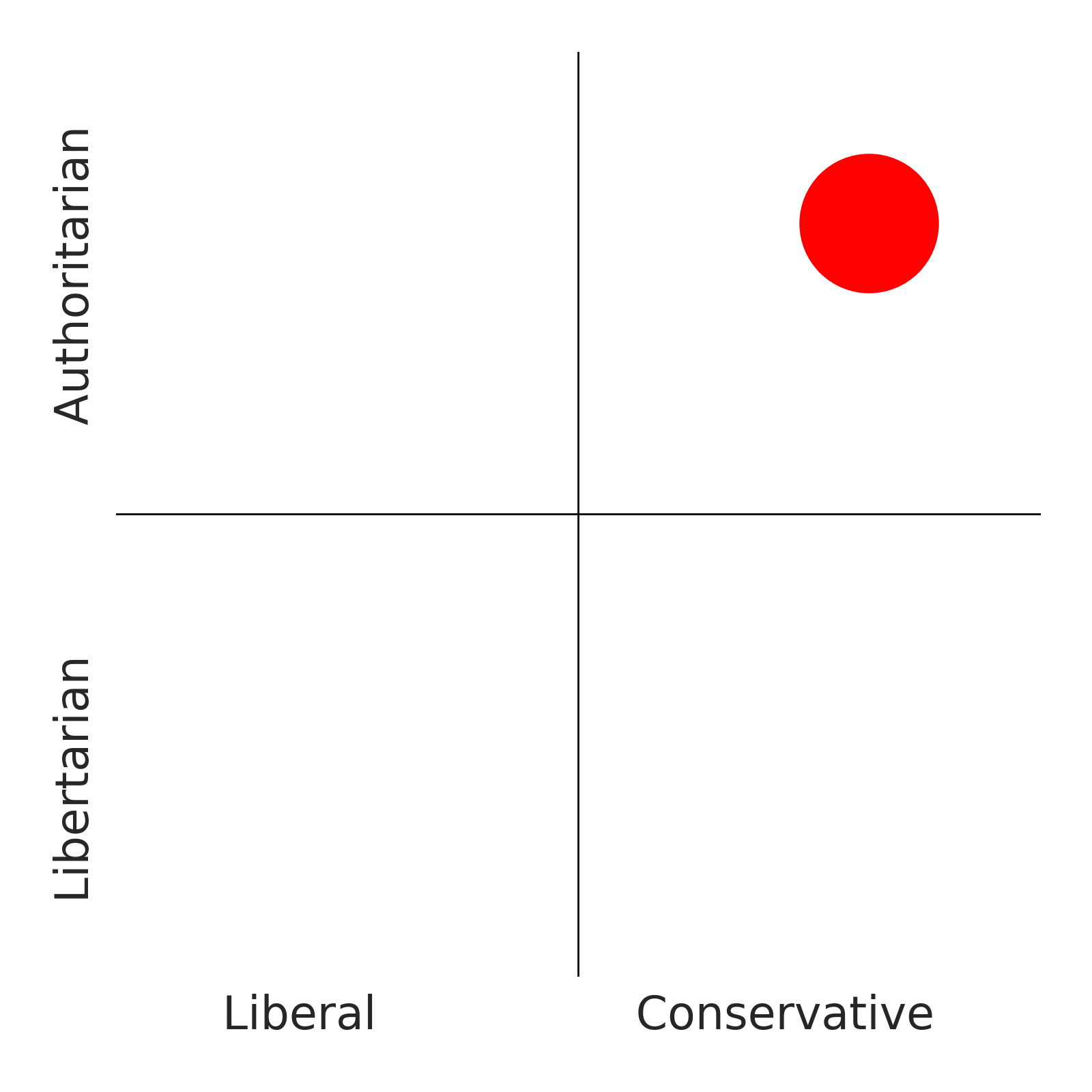
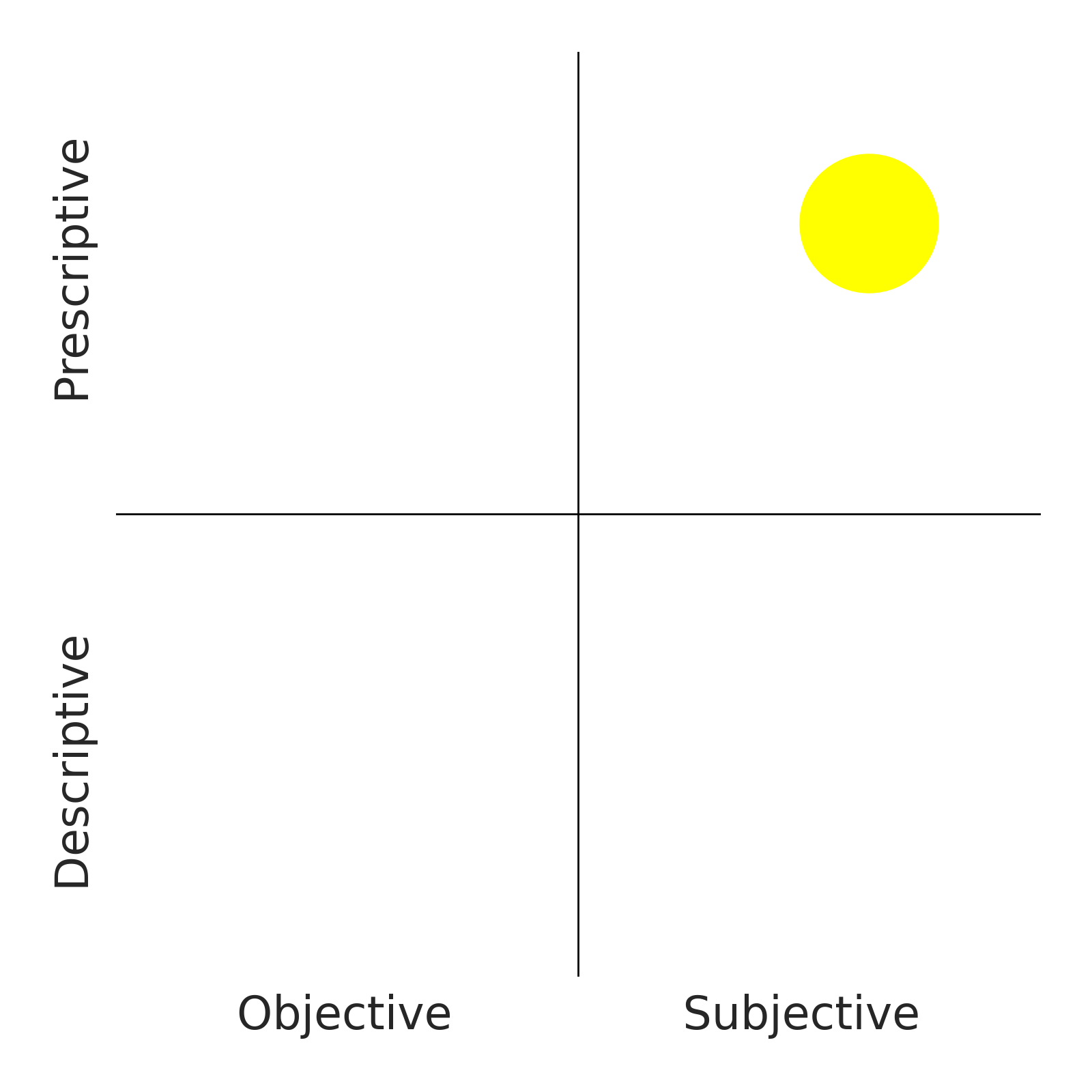
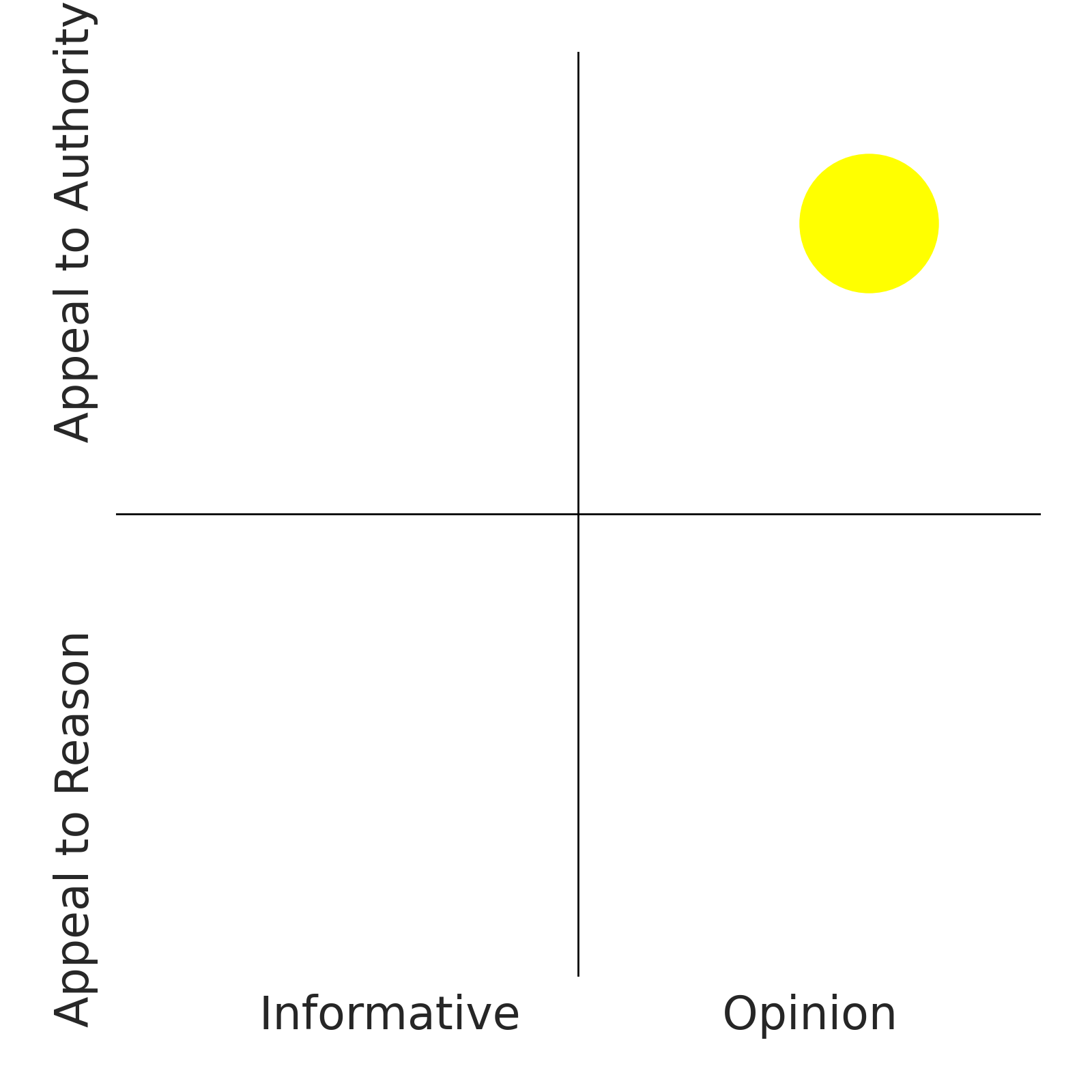
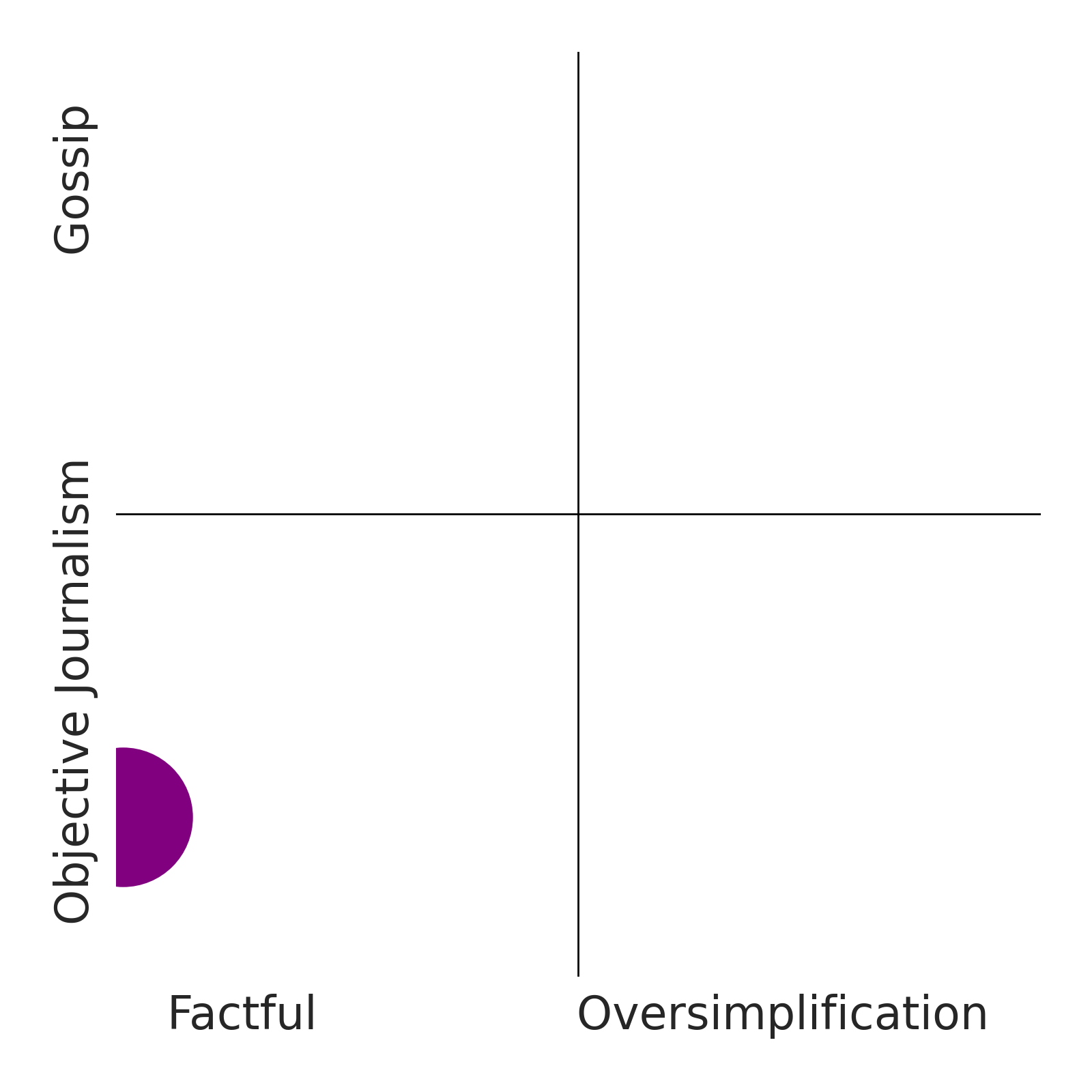
Click points to explore news by date. News sentiment ranges from -10 (very negative) to +10 (very positive) where 0 is neutral.
2026 © Helium Trades
Privacy Policy & Disclosure
* Disclaimer: Nothing on this website constitutes investment advice, performance data or any recommendation that any particular security, portfolio of securities, transaction or investment strategy is suitable for any specific person. Helium Trades is not responsible in any way for the accuracy
of any model predictions or price data. Any mention of a particular security and related prediction data is not a recommendation to buy or sell that security. Investments in securities involve the risk of loss. Past performance is no guarantee of future results. Helium Trades is not responsible for any of your investment decisions,
you should consult a financial expert before engaging in any transaction.
Helium Research Assistant

How can I help you today?
Ask any question about Hoover Institution bias.


