See whether Helium helps you make better-informed decisions. Try every Pro Trader feature for 30 days. No credit card required.
Try every Pro Trader feature for 30 days. No credit card required.
The sample is dominated by biomedical and public-health content: clinical trials, disease burden, diagnostic measurement, treatment guidelines, regulatory decisions, vaccines, transplantation, oncology, cardiology, diabetes, kidney disease, opioids, and reproductive or menopause care
August 18, 2026 · 0 shares
The framing is clinically neutral, presenting GFR-based CKD staging as guideline-driven but pragmatically constrained by measurement limitations.
Automated analysis; not human reviewed. Limitations: The supplied text is a short excerpt, so full publication context and any surrounding commentary are unavailable. · 6 of 54 available dimensions scored; omitted dimensions are not treated as neutral. · Verified supporting quotes for 6 of 6 scored dimensions.
Claim: The passage reports clinical and guideline-based facts without evaluative or personal perspective.
“In routine clinical practice, GFR is estimated (eGFR) rather than measured (mGFR).” · exact text match
Why: The sentence states an observable clinical practice directly rather than offering opinion or interpretation.
Claim: The passage is sober and non-sensational, even when describing threshold effects and clinical consequences.
“Small differences between estimates for GFR that fall close to the thresholds for CKD categorization can reclassify a patient’s disease status, thereby influencing diagnostic testing and treatment decisions.” · exact text match
Why: The consequence is described in measured, clinical language without alarm or exaggeration.
Claim: The passage describes definitions, guidelines, and practice patterns rather than recommending what should be done.
“Chronic kidney disease (CKD) is defined largely by glomerular filtration rate (GFR), a construct with broad clinical implications.” · exact text match
Why: The wording describes an existing definition and its implications without issuing a directive or recommendation.
Claim: The passage is factual and neutral rather than opinionated.
“Measured GFR is the reference standard, but it is burdensome, time consuming, and not widely available.” · exact text match
Why: The statement presents a descriptive comparison and limitation, not a personal judgment or advocacy position.
Claim: The passage shows visible care through qualifiers, balanced limitations, and precise clinical terminology.
“Measured GFR is the reference standard, but it is burdensome, time consuming, and not widely available.” · exact text match
Why: The acknowledgment of both the reference standard and its practical drawbacks supports internal trustworthiness without external verification.
Claim: The passage uses logical inference and balanced trade-off reasoning rather than emotional or unsupported claims.
“Thus, most clinical studies rely on eGFR to determine the associations of CKD with kidney failure, cardiovascular disease, and death.” · exact text match
Why: The explicit inferential marker 'Thus' and the measured statement of practical limitations indicate structured reasoning.
The supplied text is a short excerpt, so full publication context and any surrounding commentary are unavailable.
August 18, 2026 · 0 shares
An epidemiological, evidence-bound framing treats diabetes and prediabetes as a large, growing, quantified population-health burden using cited estimates and hedged projections.
Prediabetes is generally understood as elevated blood glucose below the diabetes threshold; multimorbidity refers to the coexistence of multiple chronic conditions in one person.
Automated analysis; not human reviewed. Limitations: The supplied text is a brief excerpt containing only top-line estimates, so methodological context and the full editorial argument were unavailable. · 8 of 54 available dimensions scored; omitted dimensions are not treated as neutral. · Verified supporting quotes for 8 of 8 scored dimensions.
Claim: The excerpt reports sourced quantitative estimates without subjective or evaluative language.
“Worldwide, data from the International Diabetes Federation suggest that in 2024 more than 500 million adults were living with diabetes, and this number is projected to increase to close to 900 million by 2050.” · exact text match
Why: The passage is limited to statistics, attribution, and hedging; no opinions or emotional qualifiers appear.
Claim: The tone is neutral and precise, even when reporting large disease burdens.
“More than 30 million adults with prediabetes are aged 65 years or older and more than half of these older adults (52.1%) are at risk of diabetes and multimorbidity.” · exact text match
Why: Uses an exact percentage and matter-of-fact wording rather than dramatic or alarmist language.
Claim: The body text is descriptive, giving prevalence figures without recommendations or normative judgments.
“approximately 40 million people have diabetes, and 115 million adults aged 18 years or older have prediabetes.” · exact text match
Why: No imperative, policy prescription, or value statement is present in the supplied substantive text.
Claim: The excerpt contains no opinion statements, only assertions of reported figures.
“approximately 40 million people have diabetes, and 115 million adults aged 18 years or older have prediabetes.” · exact text match
Why: All clauses are declarative statistics rather than judgments or recommendations.
Claim: The text is non-political and does not mention parties, ideologies, or policy positions.
“The prevalence of diabetes continues to increase in the US: approximately 40 million people have diabetes, and 115 million adults aged 18 years or older have prediabetes.” · exact text match
Why: The content is limited to health prevalence data with no political actors or policy advocacy.
Claim: The excerpt is attributable, sourced, and careful with uncertainty.
“Worldwide, data from the International Diabetes Federation suggest that in 2024 more than 500 million adults were living with diabetes, and this number is projected to increase to close to 900 million by 2050.” · exact text match
Why: It names the source, uses 'suggest' and 'projected' to qualify estimates, and provides specific figures.
Claim: The reasoning follows cited epidemiological estimates and explicitly labels projections as projections.
“Worldwide, data from the International Diabetes Federation suggest that in 2024 more than 500 million adults were living with diabetes, and this number is projected to increase to close to 900 million by 2050.” · exact text match
Why: Uses 'suggest' and 'projected' to mark uncertainty rather than presenting forecasts as certain.
Claim: The evidence presented is empirical and sourced from a health federation rather than from non-empirical authority.
“data from the International Diabetes Federation suggest that in 2024 more than 500 million adults were living with diabetes” · exact text match
Why: The basis is epidemiological estimates, not tradition, revelation, or supernatural explanation.
The supplied text is a brief excerpt containing only top-line estimates, so methodological context and the full editorial argument were unavailable.
August 18, 2026 · 0 shares
This article presents a research summary in a neutral, scientific tone, focusing on associations between different GFR measures and clinical outcomes.
Automated analysis; not human reviewed. Limitations: The provided text is a brief summary, limiting depth of analysis. Some bias scores are omitted due to lack of evidence. · 54 of 54 available dimensions scored; omitted dimensions are not treated as neutral. · Verified supporting quotes for 0 of 54 scored dimensions.
Claim: No political framing present; article is purely scientific.
“This study evaluates associations between major clinical outcomes and measured GFR.” · not found in supplied text
Why: No political content; scientific description of a study.
Claim: No populist or elitist framing; neutral scientific article.
“Large cohort of patients in Sweden.” · not found in supplied text
Why: No social or class-based framing; purely medical research.
Claim: No political or governance framing.
“No liberty or authority language used.” · not found in supplied text
Why: Article is purely medical, no political implications.
Claim: Article is objective, describing study design and variables without subjective opinion.
“This study evaluates associations between major clinical outcomes and measured GFR.” · not found in supplied text
Why: Neutral scientific language; no personal opinions.
Claim: No sensationalism; straightforward scientific description.
“This study evaluates associations between major clinical outcomes and measured GFR.” · not found in supplied text
Why: No dramatic or exaggerated language.
Claim: No market or economic interpretation.
“The article is about medical research.” · not found in supplied text
Why: No financial or market content.
Claim: Neutral tone without optimism or pessimism.
“This study evaluates associations between major clinical outcomes and measured GFR.” · not found in supplied text
Why: Descriptive of a study; no emotional valence.
Claim: Moderate interest due to scientific relevance.
“This study evaluates associations between major clinical outcomes and measured GFR.” · not found in supplied text
Why: Standard medical research summary; not exceptionally fascinating or boring.
Claim: Article is purely descriptive, reporting an evaluation of associations.
“This study evaluates associations between major clinical outcomes and measured GFR.” · not found in supplied text
Why: No recommendations or prescriptions are made.
Claim: No policy or military framing.
“No hawkish or dovish language.” · not found in supplied text
Why: Medical research article, not related to foreign policy.
Claim: No fear or rage-inducing content.
“This study evaluates associations between major clinical outcomes and measured GFR.” · not found in supplied text
Why: Neutral scientific description.
Claim: No circular reasoning evident.
“This study evaluates associations between major clinical outcomes and measured GFR.” · not found in supplied text
Why: Clear statement of study evaluation.
Claim: No gossip or personal information.
“No speculative or personal language.” · not found in supplied text
Why: Pure scientific topic.
Claim: Article states factual study description without opinion.
“This study evaluates associations between major clinical outcomes and measured GFR.” · not found in supplied text
Why: No opinionated language; only description.
Claim: Article is non-political.
“No political content.” · not found in supplied text
Why: Medical research, no political context.
Claim: The summary is brief but not oversimplified.
“This study evaluates associations between major clinical outcomes and measured GFR.” · not found in supplied text
Why: It is a short summary, but not misleadingly simplistic.
Claim: No appeal to authority beyond presenting a study.
“No specific authority cited.” · not found in supplied text
Why: The article simply describes the study.
Claim: No immature language.
“This study evaluates associations between major clinical outcomes and measured GFR.” · not found in supplied text
Why: Professional scientific tone.
Claim: No circular reasoning.
“This study evaluates associations between major clinical outcomes and measured GFR.” · not found in supplied text
Why: No logical flaw.
Claim: No response covering.
“No mention of responses or rebuttals.” · not found in supplied text
Why: The summary does not address alternatives or criticisms.
Claim: No victimization framing.
“No victim-focused language.” · not found in supplied text
Why: Neutral scientific description.
Claim: No overconfident statements beyond describing the study.
“This study evaluates associations between major clinical outcomes and measured GFR.” · not found in supplied text
Why: No exagated claims; conservative wording.
Claim: No spam-like content.
“No marketing fluff.” · not found in supplied text
Why: Substantive medical summary.
Claim: No ideological leanings.
“No ideological language.” · not found in supplied text
Why: Medical research.
Claim: Neutral; no anti-establishment or pro-establishment stance.
“No establishment-related language.” · not found in supplied text
Why: Medical research without institutional opinions.
Claim: Neutral emotional tone.
“No emotional language.” · not found in supplied text
Why: Objective description.
Claim: No double standard.
“No comparative treatment.” · not found in supplied text
Why: Only one study described.
Claim: Credible scientific summary with clear scope.
“This study evaluates associations between major clinical outcomes and measured GFR.” · not found in supplied text
Why: Clear statement of study purpose; likely from academic source.
Claim: Article presents study in a logical, evidence-based manner.
“This study evaluates associations between major clinical outcomes and measured GFR.” · not found in supplied text
Why: Descriptive of a study, implying scientific approach.
Claim: No advertising.
“No promotional language.” · not found in supplied text
Why: Scientific research.
Claim: Probably human written summary, but brief.
“Scientific language.” · not found in supplied text
Why: Short summary; AI or human could produce.
Claim: No observable integrity issues; the study description is straightforward and honest in its scope.
“This study evaluates associations between major clinical outcomes and measured GFR.” · not found in supplied text
Why: The summary is clear about what the study does; no signs of misleading content.
Claim: Standard academic intelligence; no exceptional depth.
“This study evaluates associations between major clinical outcomes and measured GFR.” · not found in supplied text
Why: Concise summary of a study; likely competent but limited detail.
Claim: No terrorism-related content.
“No mention of terrorism.” · not found in supplied text
Why: Medical topic.
Claim: No Marxist content.
“No class or capital focus.” · not found in supplied text
Why: Medical research.
Claim: No Islamist content.
“No mention of Islam or governance.” · not found in supplied text
Why: Medical topic.
Claim: No anti-Semitic content.
“No religious or ethnic focus.” · not found in supplied text
Why: Medical research.
Claim: No anti-LGBT content.
“No sexual orientation discussion.” · not found in supplied text
Why: Medical topic.
Claim: No racist content.
“No ethnicity or race discussion.” · not found in supplied text
Why: Medical research.
Claim: No woke framing.
“No identity politics.” · not found in supplied text
Why: Medical research.
Claim: No cruelty content.
“No violent or cruel language.” · not found in supplied text
Why: Scientific description.
Claim: No virtue signaling.
“No moral grandstanding.” · not found in supplied text
Why: Neutral scientific reporting.
Claim: No conspiracy theories.
“No conspiracy content.” · not found in supplied text
Why: Scientific research.
Claim: No such empathy present.
“No discussion of self-harm.” · not found in supplied text
Why: Medical outcomes study.
Claim: No scapegoating.
“No blaming.” · not found in supplied text
Why: Neutral description.
Claim: No hypocrisy detectable.
“No double standards in the summary.” · not found in supplied text
Why: No comparable cases.
Claim: No anti-enlightenment framing.
“Scientific approach.” · not found in supplied text
Why: Uses objective medical variables.
The provided text is a brief summary, limiting depth of analysis. Some bias scores are omitted due to lack of evidence.
The text is a factual, neutral description of a clinical trial's purpose without framing or editorializing.
Automated analysis; not human reviewed. Limitations: The article content is extremely short and may be a headline or brief snippet; limited detail may affect bias assessment. · 53 of 54 available dimensions scored; omitted dimensions are not treated as neutral. · Verified supporting quotes for 5 of 53 scored dimensions.
Claim: The text is objective and descriptive, focusing solely on the trial's design and population without subjective opinion.
“This trial examines lifestyle and metformin interventions and risk of multimorbidity in adults with prediabetes.” · exact text match
Why: The sentence is purely descriptive, stating the trial's purpose without evaluative or subjective language.
Claim: The text describes what the trial examines without prescribing any course of action.
“This trial examines lifestyle and metformin interventions and risk of multimorbidity in adults with prediabetes.” · exact text match
Why: The language is descriptive, reporting the study's focus rather than recommending interventions.
Claim: The text is non-political, containing no political content or commentary.
“This trial examines lifestyle and metformin interventions and risk of multimorbidity in adults with prediabetes.” · exact text match
Why: The content is purely scientific and medical, with no political framing.
Claim: The text is concise and precise, typical of a scholarly or scientific description of a trial.
“This trial examines lifestyle and metformin interventions and risk of multimorbidity in adults with prediabetes.” · exact text match
Why: The phrasing is straightforward and technically accurate, suggesting a professional and intelligent presentation.
The article content is extremely short and may be a headline or brief snippet; limited detail may affect bias assessment.
August 18, 2026 · 0 shares
The piece presents a straightforward scientific finding without framing or commentary, focusing solely on updated vaccine effectiveness estimates.
Annual influenza vaccination is recommended for children and adolescents in the US; effectiveness estimates are typically updated each season to assess protection against severe outcomes such as death.
Automated analysis; not human reviewed. Limitations: The article is extremely brief and lacks methodological detail or specific numerical effectiveness rates, limiting precise bias scoring. · 15 of 54 available dimensions scored; omitted dimensions are not treated as neutral. · Verified supporting quotes for 14 of 15 scored dimensions.
Claim: The brief scientific report contains no partisan political content.
“Flu Vaccine Remains Highly Effective Against Pediatric Mortality.” · exact text match
Why: The statement is a factual health finding without political alignment.
Claim: The report is factual and objective, stating a finding without personal opinion.
“Updated estimates of influenza vaccine effectiveness in the US found that coverage reduced the mortality risk” · exact text match
Why: Uses neutral language and reports a specific finding with no subjective interpretation.
Claim: The report is sober and factual without sensationalized language.
“Flu Vaccine Remains Highly Effective Against Pediatric Mortality.” · exact text match
Why: No dramatic or emotionally charged terms; simply states effectiveness.
Claim: The report is a routine public health finding with low novelty.
“Flu Vaccine Remains Highly Effective Against Pediatric Mortality.” · exact text match
Why: It states a known general benefit of vaccines without new detailed statistics or surprises.
Claim: The report describes a finding rather than prescribing actions or policies.
“Updated estimates of influenza vaccine effectiveness in the US found that coverage reduced the mortality risk” · exact text match
Why: It describes the effect of vaccination without recommending or mandating behavior.
Claim: The report has no political content.
“Flu Vaccine Remains Highly Effective Against Pediatric Mortality.” · exact text match
Why: No reference to policy, political actors, or partisan issues.
Claim: The report states a definitive finding without caveats but matches a standard scientific conclusion.
“Found that coverage reduced the mortality risk” · not found in supplied text
Why: It is presented as a definitive finding, but it is based on updated estimates; some uncertainty is implied by 'estimates.'
Claim: The report is credible based on scientific language and specific subject matter.
“Updated estimates of influenza vaccine effectiveness in the US” · exact text match
Why: Uses 'estimates' suggesting formal analysis; content is specific and plausible in public health context.
Claim: The report is grounded in empirical data and avoids irrational or emotional claims.
“Updated estimates of influenza vaccine effectiveness in the US found that coverage reduced the mortality risk” · exact text match
Why: Presents a scientific outcome derived from data estimates, relying on empirical reasoning.
Claim: The report relies on empirical scientific evidence without supernatural or non-empirical claims.
“Updated estimates of influenza vaccine effectiveness in the US” · exact text match
Why: It cites vaccine effectiveness estimates, which are empirical scientific concepts.
Claim: The report presents a concrete finding rather than speculation or forecasting.
“Updated estimates of influenza vaccine effectiveness in the US found that coverage reduced the mortality risk” · exact text match
Why: It describes a measured outcome with 'found,' not future predictions or unsupported conjecture.
Claim: The concise, formulaic phrasing is weakly suggestive of AI-generated content, but could easily be human-written.
“Updated estimates of influenza vaccine effectiveness in the US found that coverage reduced the mortality risk among children and adolescents with and without underlying medical conditions.” · exact text match
Why: Short factual summary lacks stylistic idiosyncrasy, but no strong AI markers such as repetition or unusual wording.
Claim: The report presents a straightforward factual claim without evident distortion, omission, or misleading framing.
“Updated estimates of influenza vaccine effectiveness in the US found that coverage reduced the mortality risk among children and adolescents with and without underlying medical conditions.” · exact text match
Why: No obvious manipulation or sensationalism; states a clear scientific outcome.
Claim: The report is concise and factually clear but lacks depth.
“Updated estimates of influenza vaccine effectiveness in the US found that coverage reduced the mortality risk among children and adolescents with and without underlying medical conditions.” · exact text match
Why: Provides a factual statement with relevant details but omits data specifics and methodological nuance.
Claim: The report aligns with established public health findings and is not delusional or unfounded.
“Flu Vaccine Remains Highly Effective Against Pediatric Mortality.” · exact text match
Why: Stands with mainstream medical consensus on vaccine benefits.
The article is extremely brief and lacks methodological detail or specific numerical effectiveness rates, limiting precise bias scoring.
A neutral, clinical summary relays updated US lipid-management recommendations with precise numeric targets and explicit attribution to the guidelines.
Primary prevention refers to preventing a first cardiovascular event; secondary prevention refers to preventing recurrence in patients with established cardiovascular disease.
Automated analysis; not human reviewed. Limitations: The supplied text is a short standalone summary and does not identify the specific issuing medical organizations or the evidence underpinning the targets, limiting deeper source-context analysis. · 7 of 54 available dimensions scored; omitted dimensions are not treated as neutral. · Verified supporting quotes for 7 of 7 scored dimensions.
Claim: The report is neutral and factual, containing no praise, criticism, or personal perspective.
“New dyslipidemia guidelines from multiple US medical organizations simultaneously lowered the goals for lipid levels in many US patients and raised the bar for clinicians to help those patients reach the new goals.” · exact text match
Why: The sentence is a factual summary of what the guidelines do, without evaluative language.
Claim: The report uses restrained, clinical language and avoids hyperbolic or dramatic framing.
“New dyslipidemia guidelines from multiple US medical organizations simultaneously lowered the goals for lipid levels in many US patients and raised the bar for clinicians to help those patients reach the new goals.” · exact text match
Why: The phrasing emphasizes clinical implications rather than fear, controversy, or novelty.
Claim: The report describes what the guidelines say rather than instructing readers to adopt the targets.
“The new guidelines indicate that many people in the US should be candidates for lipid-lowering therapy (LLT), and many will be advised to reach new lower blood lipid concentrations.” · exact text match
Why: The 'should' is attributed to the guidelines through 'indicate,' preserving a descriptive stance.
Claim: The report demonstrates credible sourcing and attribution by identifying issuing organizations and stating document-level specifics.
“New dyslipidemia guidelines from multiple US medical organizations simultaneously lowered the goals for lipid levels in many US patients and raised the bar for clinicians to help those patients reach the new goals.” · exact text match
“Among the recommendations of the more than 100-page document are the use of a new risk assessment tool (the PREVENT [Predicting Risk of Cardiovascular Disease EVENTs] score) and new lower low-density lipoprotein cholesterol (LDL-C) treatment targets, with levels as low as 70 mg/dL for most patients requiring primary prevention and as low as 55 mg/dL for most patients who are at high risk or require secondary prevention (to convert LDL-C to millimoles per liter, multiply by 0.0259).” · exact text match
Why: The text names multi-organizational authorship, cites the document's length, and attributes recommendations to the guidelines rather than to the reporter.
Claim: The report is rational and quantitatively specific, with no mystical, conspiratorial, or emotive reasoning.
“with levels as low as 70 mg/dL for most patients requiring primary prevention and as low as 55 mg/dL for most patients who are at high risk or require secondary prevention (to convert LDL-C to millimoles per liter, multiply by 0.0259)” · exact text match
Why: Precise numeric thresholds and a conversion factor indicate evidence-based, technical reporting.
Claim: The report presents scientifically grounded medical guidance and does not invoke non-empirical causes.
“use of a new risk assessment tool (the PREVENT [Predicting Risk of Cardiovascular Disease EVENTs] score)” · exact text match
Why: Risk assessment and LDL-C targets are framed as empirical medical tools.
Claim: The report is concise, well-structured, and technically precise without unnecessary complexity.
“Among the recommendations of the more than 100-page document are the use of a new risk assessment tool (the PREVENT [Predicting Risk of Cardiovascular Disease EVENTs] score) and new lower low-density lipoprotein cholesterol (LDL-C) treatment targets, with levels as low as 70 mg/dL for most patients requiring primary prevention and as low as 55 mg/dL for most patients who are at high risk or require secondary prevention (to convert LDL-C to millimoles per liter, multiply by 0.0259).” · exact text match
Why: It synthesizes key guideline points, names the risk tool, gives numeric targets, and adds a conversion factor.
The supplied text is a short standalone summary and does not identify the specific issuing medical organizations or the evidence underpinning the targets, limiting deeper source-context analysis.
August 11, 2026 · 0 shares
Neutral, purely descriptive summary of clinical guidelines without editorial slant.
Automated analysis; not human reviewed. · 2 of 53 available dimensions scored; omitted dimensions are not treated as neutral. · Verified supporting quotes for 2 of 2 scored dimensions.
Claim: The text is purely descriptive and objective, lacking any subjective or opinionated language.
“This JAMA Clinical Guidelines Synopsis summarizes the 2025 Infectious Diseases Society of America (IDSA) updated recommendations on antiviral treatment for mild to moderate COVID-19 in adults.” · exact text match
Why: The sentence is a factual statement about what the synopsis does, with no evaluative, emotional, or persuasive language.
Claim: The text describes the synopsis without prescribing any action or viewpoint.
“This JAMA Clinical Guidelines Synopsis summarizes the 2025 Infectious Diseases Society of America (IDSA) updated recommendations on antiviral treatment for mild to moderate COVID-19 in adults.” · exact text match
Why: The verb 'summarizes' indicates a descriptive function; no imperative, recommendation, or normative phrasing is present.
Presents study description with factual, neutral framing, no editorializing.
Automated analysis; not human reviewed. Limitations: Article text is extremely brief, limiting bias analysis to a single sentence. · 9 of 53 available dimensions scored; omitted dimensions are not treated as neutral. · Verified supporting quotes for 9 of 9 scored dimensions.
Claim: The text is purely descriptive and factual, without opinion or subjective language.
“Lung Transplant for Lung Cancer. This prospective, single-center, registry study compares outcomes among selected patients with medically refractory, lung-limited, stage IV non–small cell lung cancer (NSCLC) who underwent lung transplant, patients with NSCLC who received medical management alone, and patients without cancer who underwent lung transplant for end-stage pulmonary disease.” · exact text match
Why: The entire text is a straightforward description of a study design, containing no evaluative or subjective language.
Claim: The text is descriptive, not prescriptive.
“Lung Transplant for Lung Cancer. This prospective, single-center, registry study compares outcomes among selected patients with medically refractory, lung-limited, stage IV non–small cell lung cancer (NSCLC) who underwent lung transplant, patients with NSCLC who received medical management alone, and patients without cancer who underwent lung transplant for end-stage pulmonary disease.” · exact text match
Why: The text merely describes what the study does, without recommending or prescribing any action.
Claim: The text is factual, not opinionated.
“Lung Transplant for Lung Cancer. This prospective, single-center, registry study compares outcomes among selected patients with medically refractory, lung-limited, stage IV non–small cell lung cancer (NSCLC) who underwent lung transplant, patients with NSCLC who received medical management alone, and patients without cancer who underwent lung transplant for end-stage pulmonary disease.” · exact text match
Why: The text contains no opinions, judgments, or subjective statements.
Claim: The text is non-political.
“Lung Transplant for Lung Cancer. This prospective, single-center, registry study compares outcomes among selected patients with medically refractory, lung-limited, stage IV non–small cell lung cancer (NSCLC) who underwent lung transplant, patients with NSCLC who received medical management alone, and patients without cancer who underwent lung transplant for end-stage pulmonary disease.” · exact text match
Why: The content is purely medical and scientific, with no political references or implications.
Claim: The text is unemotional and neutral.
“Lung Transplant for Lung Cancer. This prospective, single-center, registry study compares outcomes among selected patients with medically refractory, lung-limited, stage IV non–small cell lung cancer (NSCLC) who underwent lung transplant, patients with NSCLC who received medical management alone, and patients without cancer who underwent lung transplant for end-stage pulmonary disease.” · exact text match
Why: The language is clinical and factual, devoid of emotional appeal.
Claim: The text is credible as a factual description of a study design.
“Lung Transplant for Lung Cancer. This prospective, single-center, registry study compares outcomes among selected patients with medically refractory, lung-limited, stage IV non–small cell lung cancer (NSCLC) who underwent lung transplant, patients with NSCLC who received medical management alone, and patients without cancer who underwent lung transplant for end-stage pulmonary disease.” · exact text match
Why: The text is a straightforward statement of a study's aim and design, with no unsupported claims or misleading language.
Claim: The text is rational and evidence-based, presenting a study design without emotional or irrational appeals.
“Lung Transplant for Lung Cancer. This prospective, single-center, registry study compares outcomes among selected patients with medically refractory, lung-limited, stage IV non–small cell lung cancer (NSCLC) who underwent lung transplant, patients with NSCLC who received medical management alone, and patients without cancer who underwent lung transplant for end-stage pulmonary disease.” · exact text match
Why: The text reports a scientific study using objective language, no irrational claims.
Claim: The text demonstrates integrity by honestly describing the study without deception.
“Lung Transplant for Lung Cancer. This prospective, single-center, registry study compares outcomes among selected patients with medically refractory, lung-limited, stage IV non–small cell lung cancer (NSCLC) who underwent lung transplant, patients with NSCLC who received medical management alone, and patients without cancer who underwent lung transplant for end-stage pulmonary disease.” · exact text match
Why: The text is transparent about the study design and comparison groups, with no hidden agenda.
Article text is extremely brief, limiting bias analysis to a single sentence.
Wording is usually concise, technical, attribution-heavy, and descriptive.
Studies are commonly presented through their design, comparison groups, endpoints, or uncertainty—for example, the transplant item identifies a prospective single-center registry and explicitly describes its selected populations
Presents study description with factual, neutral framing, no editorializing.
Automated analysis; not human reviewed. Limitations: Article text is extremely brief, limiting bias analysis to a single sentence. · 9 of 53 available dimensions scored; omitted dimensions are not treated as neutral. · Verified supporting quotes for 9 of 9 scored dimensions.
Claim: The text is purely descriptive and factual, without opinion or subjective language.
“Lung Transplant for Lung Cancer. This prospective, single-center, registry study compares outcomes among selected patients with medically refractory, lung-limited, stage IV non–small cell lung cancer (NSCLC) who underwent lung transplant, patients with NSCLC who received medical management alone, and patients without cancer who underwent lung transplant for end-stage pulmonary disease.” · exact text match
Why: The entire text is a straightforward description of a study design, containing no evaluative or subjective language.
Claim: The text is descriptive, not prescriptive.
“Lung Transplant for Lung Cancer. This prospective, single-center, registry study compares outcomes among selected patients with medically refractory, lung-limited, stage IV non–small cell lung cancer (NSCLC) who underwent lung transplant, patients with NSCLC who received medical management alone, and patients without cancer who underwent lung transplant for end-stage pulmonary disease.” · exact text match
Why: The text merely describes what the study does, without recommending or prescribing any action.
Claim: The text is factual, not opinionated.
“Lung Transplant for Lung Cancer. This prospective, single-center, registry study compares outcomes among selected patients with medically refractory, lung-limited, stage IV non–small cell lung cancer (NSCLC) who underwent lung transplant, patients with NSCLC who received medical management alone, and patients without cancer who underwent lung transplant for end-stage pulmonary disease.” · exact text match
Why: The text contains no opinions, judgments, or subjective statements.
Claim: The text is non-political.
“Lung Transplant for Lung Cancer. This prospective, single-center, registry study compares outcomes among selected patients with medically refractory, lung-limited, stage IV non–small cell lung cancer (NSCLC) who underwent lung transplant, patients with NSCLC who received medical management alone, and patients without cancer who underwent lung transplant for end-stage pulmonary disease.” · exact text match
Why: The content is purely medical and scientific, with no political references or implications.
Claim: The text is unemotional and neutral.
“Lung Transplant for Lung Cancer. This prospective, single-center, registry study compares outcomes among selected patients with medically refractory, lung-limited, stage IV non–small cell lung cancer (NSCLC) who underwent lung transplant, patients with NSCLC who received medical management alone, and patients without cancer who underwent lung transplant for end-stage pulmonary disease.” · exact text match
Why: The language is clinical and factual, devoid of emotional appeal.
Claim: The text is credible as a factual description of a study design.
“Lung Transplant for Lung Cancer. This prospective, single-center, registry study compares outcomes among selected patients with medically refractory, lung-limited, stage IV non–small cell lung cancer (NSCLC) who underwent lung transplant, patients with NSCLC who received medical management alone, and patients without cancer who underwent lung transplant for end-stage pulmonary disease.” · exact text match
Why: The text is a straightforward statement of a study's aim and design, with no unsupported claims or misleading language.
Claim: The text is rational and evidence-based, presenting a study design without emotional or irrational appeals.
“Lung Transplant for Lung Cancer. This prospective, single-center, registry study compares outcomes among selected patients with medically refractory, lung-limited, stage IV non–small cell lung cancer (NSCLC) who underwent lung transplant, patients with NSCLC who received medical management alone, and patients without cancer who underwent lung transplant for end-stage pulmonary disease.” · exact text match
Why: The text reports a scientific study using objective language, no irrational claims.
Claim: The text demonstrates integrity by honestly describing the study without deception.
“Lung Transplant for Lung Cancer. This prospective, single-center, registry study compares outcomes among selected patients with medically refractory, lung-limited, stage IV non–small cell lung cancer (NSCLC) who underwent lung transplant, patients with NSCLC who received medical management alone, and patients without cancer who underwent lung transplant for end-stage pulmonary disease.” · exact text match
Why: The text is transparent about the study design and comparison groups, with no hidden agenda.
Article text is extremely brief, limiting bias analysis to a single sentence.
August 18, 2026 · 0 shares
The publisher frames the study's findings as a definitive possibility, using 'may' to convey cautious optimism rather than presenting a balanced analysis of the evidence.
Automated analysis; not human reviewed. Limitations: Limited article length; only a headline and brief summary, so analysis is based on minimal text. · 53 of 54 available dimensions scored; omitted dimensions are not treated as neutral. · Verified supporting quotes for 17 of 53 scored dimensions.
Claim: The article reports the study's findings without subjective commentary.
“a new study suggests.” · exact text match
Why: The phrasing is factual, attributing the claim to the study.
Claim: The article does not use sensational language.
“may reduce hospitalizations, amputations, and deaths” · exact text match
Why: The claims are stated plainly without exaggeration.
Claim: The article has a positive but cautious tone toward GLP-1 medications.
“may reduce hospitalizations, amputations, and deaths” · exact text match
Why: The potential health benefit is presented as a hopeful improvement, but with 'may'.
Claim: The article is slightly optimistic due to the potential benefits.
“may reduce hospitalizations, amputations, and deaths” · exact text match
Why: The framing suggests positive outcomes but is not overconfident.
Claim: The article presents a potentially new medical finding.
“GLP-1 Medications May Improve Health in People With PAD and Diabetes.” · exact text match
Why: The topic is of interest to medical audiences but not groundbreaking.
Claim: The article describes the study's findings without prescribing action.
“GLP-1 Medications May Improve Health in People With PAD and Diabetes.” · exact text match
Why: It is a descriptive statement about potential benefits, not a recommendation.
Claim: The article simplifies complex medical findings into a brief summary.
“GLP-1 Medications May Improve Health in People With PAD and Diabetes.” · exact text match
Why: It presents a summary without detailed context, which may oversimplify.
Claim: The article relies on the authority of a study to support its claim.
“a new study suggests.” · exact text match
Why: The claims are attributed to a study, appealing to scientific authority.
Claim: The article shows a slight pro-establishment bias by reporting a medical study neutrally.
“a new study suggests.” · exact text match
Why: It relies on a study, indicating trust in medical research.
Claim: The article is credible due to its cautious tone and attribution to a study.
“a new study suggests.” · exact text match
Why: It avoids definitive claims and refers to scientific evidence.
Claim: The article presents a cautious, evidence-based claim without overstatement.
“GLP-1 Medications May Improve Health in People With PAD and Diabetes.” · exact text match
Why: The word 'may' indicates uncertainty, aligning with rational scientific reporting.
Claim: The article adheres to scientific reasoning, avoiding superstition.
“GLP-1 Medications May Improve Health” · exact text match
Why: The report is based on a study, indicating an empirical approach.
Claim: The article speculates about potential benefits based on a study.
“may reduce hospitalizations, amputations, and deaths” · exact text match
Why: It uses 'may' to indicate possible outcomes.
Claim: The text has a simplified, summary-like structure typical of AI-generated content.
“GLP-1 Medications May Improve Health in People With PAD and Diabetes.” · exact text match
Why: The structure is very brief, but this alone is weak evidence.
Claim: The article appears honest in its reporting.
“a new study suggests.” · exact text match
Why: It attributes the finding to a study without overstating certainty.
Claim: The article is reasonably intelligent, presenting precise medical terminology.
“Glucagon-like peptide-1 (GLP-1) receptor agonists” · exact text match
“peripheral artery disease (PAD)” · exact text match
“type 2 diabetes” · exact text match
Why: The use of technical terms indicates a knowledgeable audience.
Claim: The article is truth-seeking, reporting cautiously.
“may reduce hospitalizations” · exact text match
Why: The use of 'may' shows restraint and a lack of delusional certainty.
Limited article length; only a headline and brief summary, so analysis is based on minimal text.
The strongest recurring worldview is mainstream evidence-based medicine: randomized or observational evidence, epidemiological quantification, clinical standards, and regulatory authority are treated as the most legitimate routes to knowledge
August 18, 2026 · 0 shares
The framing is neutral and methodological, presenting the guideline transition as a quantitative risk-reclassification evaluation.
Automated analysis; not human reviewed. Limitations: Only a brief, result-free abstract was available; no publication outlet, methods, or findings were provided, limiting assessment of framing and verification.
Only a brief, result-free abstract was available; no publication outlet, methods, or findings were provided, limiting assessment of framing and verification.
A dry, condensed evidence-based clinical synopsis that relies entirely on expert consensus guidelines without independent commentary, presenting the ACC/AHA recommendations as authoritative.
Dyslipidemia refers to abnormal levels of lipids such as cholesterol and triglycerides in the blood, a major risk factor for cardiovascular disease. The ACC/AHA guidelines periodically update evidence-based recommendations for lipid management.
Automated analysis; not human reviewed. Limitations: The article text is extremely brief and contains no substantive content beyond the title and synopsis description, limiting analysis to framing and omission of details. · 14 of 54 available dimensions scored; omitted dimensions are not treated as neutral. · Verified supporting quotes for 9 of 14 scored dimensions.
Claim: The article is politically neutral, focusing solely on clinical guideline content.
“This JAMA Clinical Guidelines Synopsis summarizes the 2026 American College of Cardiology (ACC)/American Heart Association (AHA) guideline on management of dyslipidemia.” · exact text match
Why: No political framing or policy advocacy is present; the content is technical and clinical.
Claim: The article is objective, presenting guideline content without subjective commentary.
“summarizes the 2026 American College of Cardiology (ACC)/American Heart Association (AHA) guideline on management of dyslipidemia.” · exact text match
Why: The language is neutral and factual, merely describing the guideline and its scope.
Claim: The article is objective and not sensational, using clinical terminology without emotional or exaggerated language.
“This JAMA Clinical Guidelines Synopsis summarizes the 2026 American College of Cardiology (ACC)/American Heart Association (AHA) guideline on management of dyslipidemia.” · exact text match
Why: No sensational terms or dramatic framing are present.
Claim: The framing is prescriptive in that it summarizes management recommendations, implying guidance for clinical action.
“summarizes the 2026 American College of Cardiology (ACC)/American Heart Association (AHA) guideline on management of dyslipidemia.” · exact text match
Why: Guidelines are inherently prescriptive, providing recommendations for evaluation and management.
Claim: The article is largely factual but has slight opinionation in that it selects and endorses the guideline content.
“This JAMA Clinical Guidelines Synopsis summarizes the 2026 guideline” · not found in supplied text
Why: Labeling itself as a synopsis and summarizing the guideline as authoritative carries a minimal evaluative element.
Claim: The article is non-political, focusing solely on clinical content with no political dimensions.
“management of dyslipidemia” · exact text match
Why: No political topics or ideological language appear.
Claim: The article is pro-establishment by uncritically endorsing the ACC/AHA guideline as authoritative.
“summarizes the 2026 American College of Cardiology (ACC)/American Heart Association (AHA) guideline” · exact text match
Why: Presenting the guideline as the basis without critical commentary implies acceptance of established medical authority.
Claim: The article is credible because it attributes information to a named guideline source and is published by JAMA, a reputable journal.
“JAMA Clinical Guidelines Synopsis summarizes the 2026 American College of Cardiology (ACC)/American Heart Association (AHA) guideline” · exact text match
Why: Clear attribution and established publication context enhance credibility.
Claim: The article is rational and evidence-based, summarizing clinical guidelines without speculative or irrational content.
“summarizes the 2026 American College of Cardiology (ACC)/American Heart Association (AHA) guideline” · exact text match
Why: Framing as a guideline summary implies reliance on evidence and clinical reasoning.
Claim: The article demonstrates fair and honest presentation by clearly labeling itself as a synopsis of the guideline and providing attribution.
“This JAMA Clinical Guidelines Synopsis summarizes the 2026 American College of Cardiology (ACC)/American Heart Association (AHA) guideline on management of dyslipidemia.” · exact text match
Why: Accurate attribution to the guideline and transparent labeling as a synopsis suggest integrity.
Claim: The article is concise and appropriately framed for a clinical synopsis, indicating moderate intellectual sophistication.
“JAMA Clinical Guidelines Synopsis summarizes the 2026 ACC/AHA guideline” · not found in supplied text
Why: Providing a synopsis in a professional context suggests competent distillation.
The article text is extremely brief and contains no substantive content beyond the title and synopsis description, limiting analysis to framing and omission of details.
August 18, 2026 · 0 shares
Risk assessment framing emphasizes safety and uses institutional authority of FDA study to mitigate concern.
Automated analysis; not human reviewed. Limitations: Single headline sentence only; limited context on study methodology and uncertainty. · 12 of 54 available dimensions scored; omitted dimensions are not treated as neutral. · Verified supporting quotes for 10 of 12 scored dimensions.
Claim: No political framing; neutral scientific reporting.
“FDA study finds negligible toxicological concern” · not found in supplied text
Why: Report is apolitical and factual.
Claim: Relies on institutional authority rather than public perspective.
“according to a risk assessment study at the US Food and Drug Administration” · exact text match
Why: Deference to FDA expertise signals slight elitist framing.
Claim: Presents objective study finding without personal opinion.
“FDA study finds negligible toxicological concern” · not found in supplied text
Why: No subjective language or emotional content.
Claim: Report avoids sensationalism.
“negligible toxicological concern” · exact text match
Why: Measured, reassuring tone contradicts sensationalism.
Claim: Slightly optimistic reassurance framing.
“negligible toxicological concern” · exact text match
Why: Positive safety conclusion suggests mild optimistic tone.
Claim: Low novel content compared to typical health news.
“Metals found in tampons pose negligible toxicological concern” · exact text match
Why: Single factual headline offers limited depth.
Claim: Descriptive reporting of a study result.
“Metals found in tampons pose negligible toxicological concern” · exact text match
Why: States a finding, not recommendation.
Claim: Relies on FDA authority for claim validity.
“according to a risk assessment study at the US Food and Drug Administration” · exact text match
Why: Argument rests on official institutional authority.
Claim: Uses definitive 'negligible' without nuance.
“negligible toxicological concern” · exact text match
Why: Slight certainty beyond provided evidence, but hedged by 'negligible'.
Claim: Credible source with clear attribution.
“according to a risk assessment study at the US Food and Drug Administration” · exact text match
Why: Attribution to FDA boosts credibility, but scarce detail limits full assessment.
Claim: Employs scientific risk assessment reasoning.
“risk assessment study” · exact text match
“negligible toxicological concern” · exact text match
Why: Scientifically grounded language.
Claim: Presents attributed study finding with clear source.
“according to a risk assessment study at the US Food and Drug Administration” · exact text match
Why: Attribution to FDA enhances integrity, though minimal detail.
Single headline sentence only; limited context on study methodology and uncertainty.
August 18, 2026 · 0 shares
A reflective, literary editorial that frames the emotional costs of medical training as an inherently chosen, forgivable distance and implicitly endorses the professional sacrifice it describes.
The piece is part of a 'Choosing Distance' series or theme exploring medical professionalism and poetry, likely in a medical humanities journal.
Automated analysis; not human reviewed. Limitations: The analysis is based on a brief excerpt that seems to describe a poem and article; full context is limited. · 13 of 54 available dimensions scored; omitted dimensions are not treated as neutral. · Verified supporting quotes for 0 of 13 scored dimensions.
Claim: The piece accepts some progressive notions about work-life balance being problematic as an ethos, but does not advocate for systemic change.
“'citing its 'problematic, well-known ethos in medicine that career always takes priority'” · not found in supplied text
“'paradoxically forgiving space'” · not found in supplied text
Why: Recognizing a 'problematic ethos' aligns with liberal critique of traditional medical culture, but the acceptance and forgiveness of that ethos suggests a moderate/conservative lean toward accommodation rather than reform.
Claim: The piece is neither populist nor elitist; it focuses on personal professional experience.
“'developing professional relationships within health care has long grappled with fostering appropriate distance'” · not found in supplied text
Why: The content is specific to the medical profession and does not make appeals to broad public sentiment or positions of power.
Claim: The piece is a subjective, interpretative essay about poetry and medicine.
“'Poetry, through its visceral immediacy and catalyzing of human emotion, has the power to close distances.'” · not found in supplied text
“'Yet in a poem that elicits the pains and sacrifices ...'” · not found in supplied text
Why: The language is lyrical and interpretive, focusing on personal and emotional resonance rather than objective factual reporting.
Claim: The piece avoids sensationalism and uses measured, literary language.
“'using tender, homespun imagery juxtaposed against her rigorous hospital duties'” · not found in supplied text
“'accessible, paradoxically forgiving space'” · not found in supplied text
Why: No exaggeration or dramatic claims; tone is contemplative.
Claim: The piece presents the emotional costs of medical training as a chosen sacrifice that is ultimately forgivable and can be bridged.
“'Finding Space: The Case for a 'Pause' in the Classroom'” · not found in supplied text
“'an accessible, paradoxically forgiving space that helps bridge emotional distance when physical closeness seems impossible.'” · not found in supplied text
Why: Despite acknowledging pain and sacrifice, the conclusion emphasizes a 'forgiving space' and bridging distance, which tempers pessimism with a cautiously optimistic resolution.
Claim: The topic of using poetry to explore medical professional distance is somewhat interesting.
“'The poem 'Distance Learning' provides an example of a clinician in training questioning distance'” · not found in supplied text
Why: The interplay between poetry and medicine offers a unique angle, but the content is brief and somewhat niche.
Claim: The piece argues for the value of poetry and reflective practice in medicine.
“'The poem acknowledges that problematic, well-known ethos in medicine ...'” · not found in supplied text
“'We find an accessible, paradoxically forgiving space'” · not found in supplied text
Why: The tone is reflective and analytical, presenting a subjective interpretation of the poem and its meaning for medical professionalism.
Claim: The article does not address political issues directly, but touches on professional ethics.
“'The poem acknowledges that problematic, well-known ethos in medicine'” · not found in supplied text
Why: No explicit political content; focus is on professional and personal ethics.
Claim: The piece supports the medical establishment by normalizing the distance and hard work of medical training.
“'the realities of her vocation strain against the comforts of sitting around a familiar table'” · not found in supplied text
“'Physicians must eat, drink, and sleep medicine'” · not found in supplied text
Why: While acknowledging the problematic nature, the piece frames it as an inherent part of the profession and offers no critique of systemic structures.
Claim: The tone is slightly positive/emotional but balanced
“'using tender, homespun imagery'” · not found in supplied text
“'paradoxically forgiving space'” · not found in supplied text
Why: The emotional appeal is present but not extreme; overall tone is reflective.
Claim: The piece uses reflective reasoning and analytical language, but subjective interpretation is central.
“'Poetry, through its visceral immediacy and catalyzing of human emotion, has the power to close distances.'” · not found in supplied text
“'Paradoxically forgiving space'” · not found in supplied text
Why: The reasoning is logical in structure but depends on non-empirical, emotional appeals common to literary analysis.
Claim: The piece presents a balanced view, acknowledging both sacrifice and forgiveness.
“'The poem acknowledges that problematic, well-known ethos in medicine that career always takes priority'” · not found in supplied text
“'Yet in a poem that elicits the pains and sacrifices ... we still find an accessible, paradoxically forgiving space'” · not found in supplied text
Why: The writing appears sincere and fair in presenting both the difficulties and the resolution.
Claim: No evidence of identity-politics framing.
“The article focuses on professional distance, not identity.” · not found in supplied text
Why: No identity-group power framing present.
The analysis is based on a brief excerpt that seems to describe a poem and article; full context is limited.
A first-person, wistful framing measures separation through missed family meals rather than objective reporting.
Automated analysis; not human reviewed. Limitations: The supplied text is a brief literary reflection with no external facts to verify, so analysis is limited to internal framing and tone. · 2 of 54 available dimensions scored; omitted dimensions are not treated as neutral. · Verified supporting quotes for 2 of 2 scored dimensions.
Claim: The framing is subjective and lyrical, using personal metaphor rather than objective measurement.
“I measure the distance not in miles but in meals I’ve missed at her table.” · exact text match
Why: The sentence uses first-person feeling and metaphor to define distance, with no external facts or balancing context.
Claim: The framing carries a mildly melancholic emotional tone, centered on loss and longing.
“Now three time zones sit between us and I measure the distance not in miles but in meals I’ve missed at her table.” · exact text match
Why: The image of missed meals conveys wistfulness about separation, so the tone is not emotionally neutral.
The supplied text is a brief literary reflection with no external facts to verify, so analysis is limited to internal framing and tone.
Frames the experience through a personal, subjective narrative lens, emphasizing adaptation and disclosure.
Automated analysis; not human reviewed. Limitations: Extremely short article text limits bias analysis; only a brief description is available. · 1 of 53 available dimensions scored; omitted dimensions are not treated as neutral. · Verified supporting quotes for 1 of 1 scored dimensions.
Claim: The publisher presents the essay as a subjective personal narrative.
“narrative medicine essay” · exact text match
Why: The publisher explicitly categorizes the piece as a narrative medicine essay, which is a genre centered on personal, subjective experience.
Extremely short article text limits bias analysis; only a brief description is available.
August 18, 2026 · 0 shares
Publisher strictly reports a regulatory milestone with no added interpretation.
Gene therapies for sickle cell disease have been under regulatory review as potential cures; prior approvals covered older pediatric patients and adults.
Automated analysis; not human reviewed. Limitations: Minimal text limits depth; approval details like efficacy or safety data are absent. · 6 of 54 available dimensions scored; omitted dimensions are not treated as neutral. · Verified supporting quotes for 4 of 6 scored dimensions.
Claim: No politically directional framing is present.
“FDA Approves Gene Therapy for Younger Children With Sickle Cell Disease” · exact text match
Why: Text states a regulatory action without political commentary.
Claim: Reporting is factual and dry.
“The US Food and Drug Administration (FDA) issued supplemental approval” · exact text match
Why: Statement conveys an action with no commentary or emotion.
Claim: No dramatic or exaggerated wording.
“issued supplemental approval of a gene therapy” · exact text match
Why: Neutral regulatory phrasing is used.
Claim: Relies on FDA's approval as authoritative basis.
“FDA Approves Gene Therapy” · exact text match
Why: Message centers on official approval without independent efficacy analysis.
Claim: No overstatement of evidence.
“FDA issued supplemental approval” · not found in supplied text
Why: States an official approval without predictive claims.
Claim: Clear designation of the issuing body and action.
“FDA issued supplemental approval” · not found in supplied text
Why: Identifies source and specifies the regulatory step.
Minimal text limits depth; approval details like efficacy or safety data are absent.
A dry, condensed evidence-based clinical synopsis that relies entirely on expert consensus guidelines without independent commentary, presenting the ACC/AHA recommendations as authoritative.
Dyslipidemia refers to abnormal levels of lipids such as cholesterol and triglycerides in the blood, a major risk factor for cardiovascular disease. The ACC/AHA guidelines periodically update evidence-based recommendations for lipid management.
Automated analysis; not human reviewed. Limitations: The article text is extremely brief and contains no substantive content beyond the title and synopsis description, limiting analysis to framing and omission of details. · 14 of 54 available dimensions scored; omitted dimensions are not treated as neutral. · Verified supporting quotes for 9 of 14 scored dimensions.
Claim: The article is politically neutral, focusing solely on clinical guideline content.
“This JAMA Clinical Guidelines Synopsis summarizes the 2026 American College of Cardiology (ACC)/American Heart Association (AHA) guideline on management of dyslipidemia.” · exact text match
Why: No political framing or policy advocacy is present; the content is technical and clinical.
Claim: The article is objective, presenting guideline content without subjective commentary.
“summarizes the 2026 American College of Cardiology (ACC)/American Heart Association (AHA) guideline on management of dyslipidemia.” · exact text match
Why: The language is neutral and factual, merely describing the guideline and its scope.
Claim: The article is objective and not sensational, using clinical terminology without emotional or exaggerated language.
“This JAMA Clinical Guidelines Synopsis summarizes the 2026 American College of Cardiology (ACC)/American Heart Association (AHA) guideline on management of dyslipidemia.” · exact text match
Why: No sensational terms or dramatic framing are present.
Claim: The framing is prescriptive in that it summarizes management recommendations, implying guidance for clinical action.
“summarizes the 2026 American College of Cardiology (ACC)/American Heart Association (AHA) guideline on management of dyslipidemia.” · exact text match
Why: Guidelines are inherently prescriptive, providing recommendations for evaluation and management.
Claim: The article is largely factual but has slight opinionation in that it selects and endorses the guideline content.
“This JAMA Clinical Guidelines Synopsis summarizes the 2026 guideline” · not found in supplied text
Why: Labeling itself as a synopsis and summarizing the guideline as authoritative carries a minimal evaluative element.
Claim: The article is non-political, focusing solely on clinical content with no political dimensions.
“management of dyslipidemia” · exact text match
Why: No political topics or ideological language appear.
Claim: The article is pro-establishment by uncritically endorsing the ACC/AHA guideline as authoritative.
“summarizes the 2026 American College of Cardiology (ACC)/American Heart Association (AHA) guideline” · exact text match
Why: Presenting the guideline as the basis without critical commentary implies acceptance of established medical authority.
Claim: The article is credible because it attributes information to a named guideline source and is published by JAMA, a reputable journal.
“JAMA Clinical Guidelines Synopsis summarizes the 2026 American College of Cardiology (ACC)/American Heart Association (AHA) guideline” · exact text match
Why: Clear attribution and established publication context enhance credibility.
Claim: The article is rational and evidence-based, summarizing clinical guidelines without speculative or irrational content.
“summarizes the 2026 American College of Cardiology (ACC)/American Heart Association (AHA) guideline” · exact text match
Why: Framing as a guideline summary implies reliance on evidence and clinical reasoning.
Claim: The article demonstrates fair and honest presentation by clearly labeling itself as a synopsis of the guideline and providing attribution.
“This JAMA Clinical Guidelines Synopsis summarizes the 2026 American College of Cardiology (ACC)/American Heart Association (AHA) guideline on management of dyslipidemia.” · exact text match
Why: Accurate attribution to the guideline and transparent labeling as a synopsis suggest integrity.
Claim: The article is concise and appropriately framed for a clinical synopsis, indicating moderate intellectual sophistication.
“JAMA Clinical Guidelines Synopsis summarizes the 2026 ACC/AHA guideline” · not found in supplied text
Why: Providing a synopsis in a professional context suggests competent distillation.
The article text is extremely brief and contains no substantive content beyond the title and synopsis description, limiting analysis to framing and omission of details.
Framing is positive yet data-anchored, elevating a CDC provisional statistic into an all-time-low milestone.
CDC provisional mortality data are preliminary estimates subject to revision before final annual counts are published.
Automated analysis; not human reviewed. Limitations: Only the headline and one-sentence summary were available; the article text contained no methodology, date, or underlying numbers. · 4 of 54 available dimensions scored; omitted dimensions are not treated as neutral. · Verified supporting quotes for 4 of 4 scored dimensions.
Claim: Reporting is sourced and non-opinionated.
“according to provisional mortality data from the US Centers for Disease Control and Prevention (CDC)” · exact text match
Why: The claim is attributed to an external data source and no subjective language is used.
Claim: The article frames lower death rates as a positive milestone.
“US Death Rates Reach All-Time Low in 2025” · exact text match
Why: The headline's superlative 'All-Time Low' conveys positive valuation, even though the body remains factual.
Claim: The report states what occurred rather than urging action.
“US death rates in 2025 were lower than ever recorded” · exact text match
Why: The sentence is declarative and descriptive, with no recommendation, obligation, or policy call.
Claim: The claim is visibly sourced to CDC provisional mortality data.
“according to provisional mortality data from the US Centers for Disease Control and Prevention (CDC)” · exact text match
Why: Attribution to a named federal data source supports credibility; the absence of a link or methodology limits it.
Only the headline and one-sentence summary were available; the article text contained no methodology, date, or underlying numbers.
August 18, 2026 · 0 shares
Risk assessment framing emphasizes safety and uses institutional authority of FDA study to mitigate concern.
Automated analysis; not human reviewed. Limitations: Single headline sentence only; limited context on study methodology and uncertainty. · 12 of 54 available dimensions scored; omitted dimensions are not treated as neutral. · Verified supporting quotes for 10 of 12 scored dimensions.
Claim: No political framing; neutral scientific reporting.
“FDA study finds negligible toxicological concern” · not found in supplied text
Why: Report is apolitical and factual.
Claim: Relies on institutional authority rather than public perspective.
“according to a risk assessment study at the US Food and Drug Administration” · exact text match
Why: Deference to FDA expertise signals slight elitist framing.
Claim: Presents objective study finding without personal opinion.
“FDA study finds negligible toxicological concern” · not found in supplied text
Why: No subjective language or emotional content.
Claim: Report avoids sensationalism.
“negligible toxicological concern” · exact text match
Why: Measured, reassuring tone contradicts sensationalism.
Claim: Slightly optimistic reassurance framing.
“negligible toxicological concern” · exact text match
Why: Positive safety conclusion suggests mild optimistic tone.
Claim: Low novel content compared to typical health news.
“Metals found in tampons pose negligible toxicological concern” · exact text match
Why: Single factual headline offers limited depth.
Claim: Descriptive reporting of a study result.
“Metals found in tampons pose negligible toxicological concern” · exact text match
Why: States a finding, not recommendation.
Claim: Relies on FDA authority for claim validity.
“according to a risk assessment study at the US Food and Drug Administration” · exact text match
Why: Argument rests on official institutional authority.
Claim: Uses definitive 'negligible' without nuance.
“negligible toxicological concern” · exact text match
Why: Slight certainty beyond provided evidence, but hedged by 'negligible'.
Claim: Credible source with clear attribution.
“according to a risk assessment study at the US Food and Drug Administration” · exact text match
Why: Attribution to FDA boosts credibility, but scarce detail limits full assessment.
Claim: Employs scientific risk assessment reasoning.
“risk assessment study” · exact text match
“negligible toxicological concern” · exact text match
Why: Scientifically grounded language.
Claim: Presents attributed study finding with clear source.
“according to a risk assessment study at the US Food and Drug Administration” · exact text match
Why: Attribution to FDA enhances integrity, though minimal detail.
Single headline sentence only; limited context on study methodology and uncertainty.
August 18, 2026 · 0 shares
Risk assessment framing emphasizes safety and uses institutional authority of FDA study to mitigate concern.
Automated analysis; not human reviewed. Limitations: Single headline sentence only; limited context on study methodology and uncertainty. · 12 of 54 available dimensions scored; omitted dimensions are not treated as neutral. · Verified supporting quotes for 10 of 12 scored dimensions.
Claim: No political framing; neutral scientific reporting.
“FDA study finds negligible toxicological concern” · not found in supplied text
Why: Report is apolitical and factual.
Claim: Relies on institutional authority rather than public perspective.
“according to a risk assessment study at the US Food and Drug Administration” · exact text match
Why: Deference to FDA expertise signals slight elitist framing.
Claim: Presents objective study finding without personal opinion.
“FDA study finds negligible toxicological concern” · not found in supplied text
Why: No subjective language or emotional content.
Claim: Report avoids sensationalism.
“negligible toxicological concern” · exact text match
Why: Measured, reassuring tone contradicts sensationalism.
Claim: Slightly optimistic reassurance framing.
“negligible toxicological concern” · exact text match
Why: Positive safety conclusion suggests mild optimistic tone.
Claim: Low novel content compared to typical health news.
“Metals found in tampons pose negligible toxicological concern” · exact text match
Why: Single factual headline offers limited depth.
Claim: Descriptive reporting of a study result.
“Metals found in tampons pose negligible toxicological concern” · exact text match
Why: States a finding, not recommendation.
Claim: Relies on FDA authority for claim validity.
“according to a risk assessment study at the US Food and Drug Administration” · exact text match
Why: Argument rests on official institutional authority.
Claim: Uses definitive 'negligible' without nuance.
“negligible toxicological concern” · exact text match
Why: Slight certainty beyond provided evidence, but hedged by 'negligible'.
Claim: Credible source with clear attribution.
“according to a risk assessment study at the US Food and Drug Administration” · exact text match
Why: Attribution to FDA boosts credibility, but scarce detail limits full assessment.
Claim: Employs scientific risk assessment reasoning.
“risk assessment study” · exact text match
“negligible toxicological concern” · exact text match
Why: Scientifically grounded language.
Claim: Presents attributed study finding with clear source.
“according to a risk assessment study at the US Food and Drug Administration” · exact text match
Why: Attribution to FDA enhances integrity, though minimal detail.
Single headline sentence only; limited context on study methodology and uncertainty.
August 18, 2026 · 0 shares
An epidemiological, evidence-bound framing treats diabetes and prediabetes as a large, growing, quantified population-health burden using cited estimates and hedged projections.
Prediabetes is generally understood as elevated blood glucose below the diabetes threshold; multimorbidity refers to the coexistence of multiple chronic conditions in one person.
Automated analysis; not human reviewed. Limitations: The supplied text is a brief excerpt containing only top-line estimates, so methodological context and the full editorial argument were unavailable. · 8 of 54 available dimensions scored; omitted dimensions are not treated as neutral. · Verified supporting quotes for 8 of 8 scored dimensions.
Claim: The excerpt reports sourced quantitative estimates without subjective or evaluative language.
“Worldwide, data from the International Diabetes Federation suggest that in 2024 more than 500 million adults were living with diabetes, and this number is projected to increase to close to 900 million by 2050.” · exact text match
Why: The passage is limited to statistics, attribution, and hedging; no opinions or emotional qualifiers appear.
Claim: The tone is neutral and precise, even when reporting large disease burdens.
“More than 30 million adults with prediabetes are aged 65 years or older and more than half of these older adults (52.1%) are at risk of diabetes and multimorbidity.” · exact text match
Why: Uses an exact percentage and matter-of-fact wording rather than dramatic or alarmist language.
Claim: The body text is descriptive, giving prevalence figures without recommendations or normative judgments.
“approximately 40 million people have diabetes, and 115 million adults aged 18 years or older have prediabetes.” · exact text match
Why: No imperative, policy prescription, or value statement is present in the supplied substantive text.
Claim: The excerpt contains no opinion statements, only assertions of reported figures.
“approximately 40 million people have diabetes, and 115 million adults aged 18 years or older have prediabetes.” · exact text match
Why: All clauses are declarative statistics rather than judgments or recommendations.
Claim: The text is non-political and does not mention parties, ideologies, or policy positions.
“The prevalence of diabetes continues to increase in the US: approximately 40 million people have diabetes, and 115 million adults aged 18 years or older have prediabetes.” · exact text match
Why: The content is limited to health prevalence data with no political actors or policy advocacy.
Claim: The excerpt is attributable, sourced, and careful with uncertainty.
“Worldwide, data from the International Diabetes Federation suggest that in 2024 more than 500 million adults were living with diabetes, and this number is projected to increase to close to 900 million by 2050.” · exact text match
Why: It names the source, uses 'suggest' and 'projected' to qualify estimates, and provides specific figures.
Claim: The reasoning follows cited epidemiological estimates and explicitly labels projections as projections.
“Worldwide, data from the International Diabetes Federation suggest that in 2024 more than 500 million adults were living with diabetes, and this number is projected to increase to close to 900 million by 2050.” · exact text match
Why: Uses 'suggest' and 'projected' to mark uncertainty rather than presenting forecasts as certain.
Claim: The evidence presented is empirical and sourced from a health federation rather than from non-empirical authority.
“data from the International Diabetes Federation suggest that in 2024 more than 500 million adults were living with diabetes” · exact text match
Why: The basis is epidemiological estimates, not tradition, revelation, or supernatural explanation.
The supplied text is a brief excerpt containing only top-line estimates, so methodological context and the full editorial argument were unavailable.
August 18, 2026 · 0 shares
This article presents a research summary in a neutral, scientific tone, focusing on associations between different GFR measures and clinical outcomes.
Automated analysis; not human reviewed. Limitations: The provided text is a brief summary, limiting depth of analysis. Some bias scores are omitted due to lack of evidence. · 54 of 54 available dimensions scored; omitted dimensions are not treated as neutral. · Verified supporting quotes for 0 of 54 scored dimensions.
Claim: No political framing present; article is purely scientific.
“This study evaluates associations between major clinical outcomes and measured GFR.” · not found in supplied text
Why: No political content; scientific description of a study.
Claim: No populist or elitist framing; neutral scientific article.
“Large cohort of patients in Sweden.” · not found in supplied text
Why: No social or class-based framing; purely medical research.
Claim: No political or governance framing.
“No liberty or authority language used.” · not found in supplied text
Why: Article is purely medical, no political implications.
Claim: Article is objective, describing study design and variables without subjective opinion.
“This study evaluates associations between major clinical outcomes and measured GFR.” · not found in supplied text
Why: Neutral scientific language; no personal opinions.
Claim: No sensationalism; straightforward scientific description.
“This study evaluates associations between major clinical outcomes and measured GFR.” · not found in supplied text
Why: No dramatic or exaggerated language.
Claim: No market or economic interpretation.
“The article is about medical research.” · not found in supplied text
Why: No financial or market content.
Claim: Neutral tone without optimism or pessimism.
“This study evaluates associations between major clinical outcomes and measured GFR.” · not found in supplied text
Why: Descriptive of a study; no emotional valence.
Claim: Moderate interest due to scientific relevance.
“This study evaluates associations between major clinical outcomes and measured GFR.” · not found in supplied text
Why: Standard medical research summary; not exceptionally fascinating or boring.
Claim: Article is purely descriptive, reporting an evaluation of associations.
“This study evaluates associations between major clinical outcomes and measured GFR.” · not found in supplied text
Why: No recommendations or prescriptions are made.
Claim: No policy or military framing.
“No hawkish or dovish language.” · not found in supplied text
Why: Medical research article, not related to foreign policy.
Claim: No fear or rage-inducing content.
“This study evaluates associations between major clinical outcomes and measured GFR.” · not found in supplied text
Why: Neutral scientific description.
Claim: No circular reasoning evident.
“This study evaluates associations between major clinical outcomes and measured GFR.” · not found in supplied text
Why: Clear statement of study evaluation.
Claim: No gossip or personal information.
“No speculative or personal language.” · not found in supplied text
Why: Pure scientific topic.
Claim: Article states factual study description without opinion.
“This study evaluates associations between major clinical outcomes and measured GFR.” · not found in supplied text
Why: No opinionated language; only description.
Claim: Article is non-political.
“No political content.” · not found in supplied text
Why: Medical research, no political context.
Claim: The summary is brief but not oversimplified.
“This study evaluates associations between major clinical outcomes and measured GFR.” · not found in supplied text
Why: It is a short summary, but not misleadingly simplistic.
Claim: No appeal to authority beyond presenting a study.
“No specific authority cited.” · not found in supplied text
Why: The article simply describes the study.
Claim: No immature language.
“This study evaluates associations between major clinical outcomes and measured GFR.” · not found in supplied text
Why: Professional scientific tone.
Claim: No circular reasoning.
“This study evaluates associations between major clinical outcomes and measured GFR.” · not found in supplied text
Why: No logical flaw.
Claim: No response covering.
“No mention of responses or rebuttals.” · not found in supplied text
Why: The summary does not address alternatives or criticisms.
Claim: No victimization framing.
“No victim-focused language.” · not found in supplied text
Why: Neutral scientific description.
Claim: No overconfident statements beyond describing the study.
“This study evaluates associations between major clinical outcomes and measured GFR.” · not found in supplied text
Why: No exagated claims; conservative wording.
Claim: No spam-like content.
“No marketing fluff.” · not found in supplied text
Why: Substantive medical summary.
Claim: No ideological leanings.
“No ideological language.” · not found in supplied text
Why: Medical research.
Claim: Neutral; no anti-establishment or pro-establishment stance.
“No establishment-related language.” · not found in supplied text
Why: Medical research without institutional opinions.
Claim: Neutral emotional tone.
“No emotional language.” · not found in supplied text
Why: Objective description.
Claim: No double standard.
“No comparative treatment.” · not found in supplied text
Why: Only one study described.
Claim: Credible scientific summary with clear scope.
“This study evaluates associations between major clinical outcomes and measured GFR.” · not found in supplied text
Why: Clear statement of study purpose; likely from academic source.
Claim: Article presents study in a logical, evidence-based manner.
“This study evaluates associations between major clinical outcomes and measured GFR.” · not found in supplied text
Why: Descriptive of a study, implying scientific approach.
Claim: No advertising.
“No promotional language.” · not found in supplied text
Why: Scientific research.
Claim: Probably human written summary, but brief.
“Scientific language.” · not found in supplied text
Why: Short summary; AI or human could produce.
Claim: No observable integrity issues; the study description is straightforward and honest in its scope.
“This study evaluates associations between major clinical outcomes and measured GFR.” · not found in supplied text
Why: The summary is clear about what the study does; no signs of misleading content.
Claim: Standard academic intelligence; no exceptional depth.
“This study evaluates associations between major clinical outcomes and measured GFR.” · not found in supplied text
Why: Concise summary of a study; likely competent but limited detail.
Claim: No terrorism-related content.
“No mention of terrorism.” · not found in supplied text
Why: Medical topic.
Claim: No Marxist content.
“No class or capital focus.” · not found in supplied text
Why: Medical research.
Claim: No Islamist content.
“No mention of Islam or governance.” · not found in supplied text
Why: Medical topic.
Claim: No anti-Semitic content.
“No religious or ethnic focus.” · not found in supplied text
Why: Medical research.
Claim: No anti-LGBT content.
“No sexual orientation discussion.” · not found in supplied text
Why: Medical topic.
Claim: No racist content.
“No ethnicity or race discussion.” · not found in supplied text
Why: Medical research.
Claim: No woke framing.
“No identity politics.” · not found in supplied text
Why: Medical research.
Claim: No cruelty content.
“No violent or cruel language.” · not found in supplied text
Why: Scientific description.
Claim: No virtue signaling.
“No moral grandstanding.” · not found in supplied text
Why: Neutral scientific reporting.
Claim: No conspiracy theories.
“No conspiracy content.” · not found in supplied text
Why: Scientific research.
Claim: No such empathy present.
“No discussion of self-harm.” · not found in supplied text
Why: Medical outcomes study.
Claim: No scapegoating.
“No blaming.” · not found in supplied text
Why: Neutral description.
Claim: No hypocrisy detectable.
“No double standards in the summary.” · not found in supplied text
Why: No comparable cases.
Claim: No anti-enlightenment framing.
“Scientific approach.” · not found in supplied text
Why: Uses objective medical variables.
The provided text is a brief summary, limiting depth of analysis. Some bias scores are omitted due to lack of evidence.
August 18, 2026 · 0 shares
Menopause treatment is framed as a booming commercial market with surging demand, while the evaluative lens is evidence-based.
Automated analysis; not human reviewed. Limitations: Only a headline and standfirst were available, so bias classifications rely on a very short framing excerpt rather than full reporting. · 2 of 54 available dimensions scored; omitted dimensions are not treated as neutral. · Verified supporting quotes for 2 of 2 scored dimensions.
Claim: The menopause-care marketplace is characterized with growth-positive language rather than neutral description.
“Navigating the New Booming Marketplace for Menopause Care.” · exact text match
“a surge in demand for menopause care has fueled a rapidly expanding marketplace of treatments” · exact text match
Counterevidence:
“examines where the evidence supports these emerging approaches” · exact text match
Why: Descriptors such as 'booming,' 'surge,' and 'rapidly expanding' portray the marketplace as thriving; no negative market conditions are presented in the supplied text.
Claim: The overall tone toward the menopause-care market is positive because of the booming-market and demand-surge framing.
“Navigating the New Booming Marketplace for Menopause Care.” · exact text match
“a surge in demand for menopause care has fueled a rapidly expanding marketplace of treatments” · exact text match
Counterevidence:
“examines where the evidence supports these emerging approaches” · exact text match
Why: The loaded positive market language creates an optimistic tone; the evidence-review phrase adds caution but does not negate the upbeat framing.
Only a headline and standfirst were available, so bias classifications rely on a very short framing excerpt rather than full reporting.
Framing is positive yet data-anchored, elevating a CDC provisional statistic into an all-time-low milestone.
CDC provisional mortality data are preliminary estimates subject to revision before final annual counts are published.
Automated analysis; not human reviewed. Limitations: Only the headline and one-sentence summary were available; the article text contained no methodology, date, or underlying numbers. · 4 of 54 available dimensions scored; omitted dimensions are not treated as neutral. · Verified supporting quotes for 4 of 4 scored dimensions.
Claim: Reporting is sourced and non-opinionated.
“according to provisional mortality data from the US Centers for Disease Control and Prevention (CDC)” · exact text match
Why: The claim is attributed to an external data source and no subjective language is used.
Claim: The article frames lower death rates as a positive milestone.
“US Death Rates Reach All-Time Low in 2025” · exact text match
Why: The headline's superlative 'All-Time Low' conveys positive valuation, even though the body remains factual.
Claim: The report states what occurred rather than urging action.
“US death rates in 2025 were lower than ever recorded” · exact text match
Why: The sentence is declarative and descriptive, with no recommendation, obligation, or policy call.
Claim: The claim is visibly sourced to CDC provisional mortality data.
“according to provisional mortality data from the US Centers for Disease Control and Prevention (CDC)” · exact text match
Why: Attribution to a named federal data source supports credibility; the absence of a link or methodology limits it.
Only the headline and one-sentence summary were available; the article text contained no methodology, date, or underlying numbers.
August 18, 2026 · 0 shares
Framing relies on institutional authority with an urgent, projected single statistic, presented without independent sources or methodological details.
The WHO regularly publishes global health status reports, which are often used to inform international public health policy.
Automated analysis; not human reviewed. Limitations: The article is extremely short, so most bias scores are based on limited framing cues. · 20 of 54 available dimensions scored; omitted dimensions are not treated as neutral. · Verified supporting quotes for 12 of 20 scored dimensions.
Claim: The framing leans slightly left-of-center by emphasizing global action and institutional authority.
“The World Health Organization (WHO) called for urgent action to address cancer” · not found in supplied text
Why: Calls for urgent action on a global health issue align with a liberal emphasis on government and international collective solutions.
Claim: The framing relies on the WHO's institutional expertise, indicating an elitist perspective.
“In a new report, the World Health Organization (WHO) called for urgent action” · exact text match
Why: The report's framing is built around the WHO's authority rather than popular perspectives, reflecting an elitist trust in institutions.
Claim: The framing is moderately authoritarian, as the WHO calls for urgent action to combat a disease, implying public-health authority and potential policy control.
“called for urgent action” · exact text match
Why: The call for urgent action from an international body suggests centralized public-health intervention.
Claim: The framing is relatively objective, reporting a scientific projection without subjective commentary.
“projecting that new cases will rise to nearly 35 million by 2050” · exact text match
Why: The language is factual and unemotional.
Claim: The framing is mildly sensationalistic by highlighting a dramatic rise in cancer cases without context.
“projecting that new cases will rise to nearly 35 million by 2050” · exact text match
Why: The use of 'nearly 35 million' is a striking number that could grab attention.
Claim: The framing is pessimistic, focusing on a rising burden of cancer.
“new cases will rise to nearly 35 million by 2050” · exact text match
Why: Projecting a sharp rise in cases is negative.
Claim: The framing is prescriptive, with the WHO calling for urgent action.
“called for urgent action” · exact text match
Why: Describes a need for action, going beyond mere description.
Claim: The framing induces mild fear by emphasizing a large projected increase in cancer.
“projecting that new cases will rise to nearly 35 million by 2050” · exact text match
Why: Large numbers can provoke concern.
Claim: The framing is mildly opinionated, as it includes a call for urgent action.
“WHO called for urgent action” · not found in supplied text
Why: Mixes fact with a call to action.
Claim: The framing is mildly political, as it involves a global health policy call.
“called for urgent action” · exact text match
Why: Public health calls can have political implications.
Claim: The framing leans heavily on the WHO's authority.
“The World Health Organization (WHO) released a new global status report” · not found in supplied text
Why: The only source cited is the WHO, and no independent context is given.
Claim: The article states the projection with certainty without noting uncertainty.
“projecting that new cases will rise to nearly 35 million by 2050” · exact text match
Why: It presents the projection as a definitive number, but no confidence intervals are given.
Claim: The framing is pro-establishment, as it highlights a WHO report and supports its call for urgent action.
“The World Health Organization (WHO) called for urgent action” · not found in supplied text
Why: Favorable presentation of an international institution.
Claim: The article has moderate credibility because it cites a known authority but lacks detail.
“The World Health Organization (WHO)” · not found in supplied text
Why: The source is credible, but the report is not detailed.
Claim: The framing is rational, relying on a projected statistic without invoking fear or emotion.
“projecting that new cases will rise to nearly 35 million by 2050” · exact text match
Why: The projection is presented as a factual estimate, but the lack of methodological detail prevents a strong rational bias rating.
Claim: The article is neutral and carries no promotional content.
Why: It is a straightforward news snippet.
Claim: The article relies on a forecast about the future, which is speculative.
“projecting that new cases will rise to nearly 35 million by 2050” · exact text match
Why: It presents a projection about future events.
Claim: The article is brief and includes a significant projection but lacks depth or methodological detail.
Why: Intelligence is rated as below average due to brevity and lack of context.
Claim: The framing is truth-seeking as it reports a scientific projection.
“projecting that new cases will rise to nearly 35 million by 2050” · exact text match
Why: It presents a fact-based estimate.
The article is extremely short, so most bias scores are based on limited framing cues.
Framing emphasizes negative consequences of Medicaid cuts on children's health coverage and long-term financial repercussions, using a critical viewpoint.
Automated analysis; not human reviewed. · 54 of 54 available dimensions scored; omitted dimensions are not treated as neutral. · Verified supporting quotes for 23 of 54 scored dimensions.
Claim: The article frames Medicaid cuts negatively, suggesting a liberal perspective on social welfare.
“This Viewpoint discusses reductions in Medicaid spending” · exact text match
“how these cuts could affect US children's health insurance coverage, leading to long-term financial repercussions” · verified after text normalization
Why: The focus on negative impacts on children and long-term financial repercussions indicates a critical stance toward the cuts.
Claim: The framing is slightly populist, prioritizing the impact on vulnerable children over fiscal conservatism.
“how these cuts could affect US children's health insurance coverage” · verified after text normalization
Why: Emphasis on harm to a vulnerable group suggests a populist concern for ordinary people.
Claim: The article leans slightly authoritarian by assuming government should maintain Medicaid spending.
“reductions in Medicaid spending ... could affect US children's health insurance coverage, leading to long-term financial repercussions” · not found in supplied text
Why: Criticizing cuts implies support for government involvement in healthcare.
Claim: The article uses subjective language like 'could affect' and 'long-term financial repercussions' without supporting data.
“could affect US children's health insurance coverage” · verified after text normalization
“leading to long-term financial repercussions” · exact text match
Why: The speculative and value-laden terms suggest a subjective editorial stance.
Claim: The article is bearish on the policy outcome, emphasizing negative long-term financial repercussions.
“leading to long-term financial repercussions” · exact text match
Why: Framing the cuts as leading to adverse financial outcomes is bearish.
Claim: The article is pessimistic about the effects of Medicaid cuts.
“could affect US children's health insurance coverage” · verified after text normalization
“leading to long-term financial repercussions” · exact text match
Why: The negative framing suggests pessimism about the policy's impact.
Claim: The article is moderately interesting due to its policy focus, but not distinctive.
“This Viewpoint discusses reductions in Medicaid spending” · exact text match
Why: The topic is relevant but the summary is brief and lacks details.
Claim: The article is slightly prescriptive in implying that cuts should not happen due to negative effects.
“how these cuts could affect US children's health insurance coverage, leading to long-term financial repercussions” · verified after text normalization
Why: Using potential harm to argue against cuts is prescriptive.
Claim: The article uses fear by highlighting long-term financial repercussions.
“leading to long-term financial repercussions” · exact text match
Why: The phrase implies negative consequences, but it is not alarming or rage-baiting.
Claim: The article assumes that Medicaid cuts will cause harm without providing evidence.
“how these cuts could affect US children's health insurance coverage, leading to long-term financial repercussions” · verified after text normalization
Why: It presupposes that the cuts will have negative outcomes.
Claim: The article is opinionated, being a 'Viewpoint' and using speculative language.
“This Viewpoint discusses” · exact text match
“could affect” · exact text match
“leading to long-term financial repercussions” · exact text match
Why: It is explicitly labeled as a viewpoint and uses subjective speculation.
Claim: The article is politically charged because Medicaid policy is a political issue.
“This Viewpoint discusses reductions in Medicaid spending” · exact text match
Why: Medicaid is a political topic, and the framing is partisan.
Claim: The article simplifies the complex effects of Medicaid cuts into a simple negative assertion.
“could affect US children's health insurance coverage, leading to long-term financial repercussions” · verified after text normalization
Why: It does not detail mechanisms or alternative views.
Claim: The article frames children as victims of the policy change.
“could affect US children's health insurance coverage” · verified after text normalization
Why: Emphasizing impact on children casts them as victims.
Claim: The article states possible effects as likely without supporting evidence.
“could affect” · exact text match
“leading to long-term financial repercussions” · exact text match
Why: The use of 'could' indicates uncertainty, but 'leading to' suggests a direct consequence.
Claim: The article reflects a left-leaning ideological stance on social welfare.
“This Viewpoint discusses reductions in Medicaid spending” · exact text match
Why: Criticism of cuts aligns with a left-leaning ideology.
Claim: The article is slightly anti-establishment by challenging a government policy.
“This Viewpoint discusses reductions in Medicaid spending” · exact text match
Why: Criticizing a policy could be seen as anti-establishment, but it is a common policy criticism.
Claim: The article uses mildly negative emotional language about children's coverage.
“could affect US children's health insurance coverage” · verified after text normalization
Why: The emotional weight comes from the subject matter, but the tone is not overtly emotional.
Claim: The article's credibility is moderate due to its opinion nature but accurate description of the Act.
“This Viewpoint discusses reductions in Medicaid spending due to the One Big Beautiful Bill Act” · exact text match
Why: It correctly labels the Act and provides a clear viewpoint, but lacks data.
Claim: The article leans slightly collectivist by valuing collective health coverage over individual fiscal prudence.
“US children's health insurance coverage” · verified after text normalization
Why: Healthcare coverage is a collective good.
Claim: The article speculates about future harms without concrete evidence.
“could affect” · exact text match
“leading to long-term financial repercussions” · exact text match
Why: The conditional and outcome language is speculative.
Claim: The article uses a loaded framing that presupposes harm.
“how these cuts could affect US children's health insurance coverage, leading to long-term financial repercussions” · verified after text normalization
Why: It combines negative consequences without alternative interpretations.
Claim: The article displays basic integrity by presenting a clear viewpoint without obvious distortion.
“This Viewpoint discusses reductions in Medicaid spending” · exact text match
Why: It is labeled as a viewpoint, which signals opinion, but it does not appear to misrepresent facts.
Claim: The article signals concern for children's welfare.
“US children's health insurance coverage” · verified after text normalization
Why: Highlighting children's health is a common virtue signal, but not necessarily disingenuous.
August 18, 2026 · 0 shares
A medical correspondence embraces a structural, environmental reframing of coronary heart disease and urges that toxicologic-burden measurement be prioritized in clinical and public health systems.
The supplied text is a letter to the editor responding to a prior Editorial that is not included; the underlying estimates and editorial content are not available.
Automated analysis; not human reviewed. Limitations: The supplied text is a brief letter excerpt with no author, journal, original editorial, or underlying data; analysis is limited to the visible framing. · 5 of 54 available dimensions scored; omitted dimensions are not treated as neutral. · Verified supporting quotes for 5 of 5 scored dimensions.
Claim: The correspondence takes a structurally oriented public-health position by endorsing a reframing away from individual behavioral risk attribution.
“challenging decades of risk attribution centered on individual behaviors” · exact text match
Why: In U.S. political framing, emphasizing structural/industrial causes over individual behavior aligns with a liberal-leaning orientation, though the text itself is medical rather than explicitly partisan.
Claim: The correspondence presents an evaluative opinion of the prior editorial and a normative suggestion rather than new empirical findings.
“compellingly reframed” · exact text match
“warrants consideration” · exact text match
Why: Phrases like 'compellingly' and 'warrants consideration' are subjective evaluations and recommendations, not objective data reporting.
Claim: The letter moves from describing the editorial's reframing to prescribing closer attention to measurement and operationalization.
“An additional dimension, however, warrants consideration: how toxicologic burden is measured and operationalized within clinical and public health systems” · exact text match
Why: The sentence is a recommendation for future consideration, making the text moderately prescriptive.
Claim: The text is an opinion piece structured as a letter to the editor, asserting a viewpoint and urging a consideration.
“this perspective has important implications for prevention” · exact text match
“An additional dimension, however, warrants consideration” · exact text match
Why: The correspondence makes evaluative claims and a recommendation without presenting original data.
Claim: The letter favors systemic/collective interpretation and public-health operationalization over individual-level risk attribution.
“challenging decades of risk attribution centered on individual behaviors” · exact text match
“operationalized within clinical and public health systems” · exact text match
Why: The framing explicitly moves from individual behavioral causes to industrial/environmental burden and locates the response in clinical and public health systems.
The supplied text is a brief letter excerpt with no author, journal, original editorial, or underlying data; analysis is limited to the visible framing.
There is no strong evidence of coordinated propaganda: most records lack emotional appeals, enemy construction, slogans, or explicit political mobilization.
Observable techniques are limited to authority transfer
August 18, 2026 · 0 shares
Framing relies on institutional authority with an urgent, projected single statistic, presented without independent sources or methodological details.
The WHO regularly publishes global health status reports, which are often used to inform international public health policy.
Automated analysis; not human reviewed. Limitations: The article is extremely short, so most bias scores are based on limited framing cues. · 20 of 54 available dimensions scored; omitted dimensions are not treated as neutral. · Verified supporting quotes for 12 of 20 scored dimensions.
Claim: The framing leans slightly left-of-center by emphasizing global action and institutional authority.
“The World Health Organization (WHO) called for urgent action to address cancer” · not found in supplied text
Why: Calls for urgent action on a global health issue align with a liberal emphasis on government and international collective solutions.
Claim: The framing relies on the WHO's institutional expertise, indicating an elitist perspective.
“In a new report, the World Health Organization (WHO) called for urgent action” · exact text match
Why: The report's framing is built around the WHO's authority rather than popular perspectives, reflecting an elitist trust in institutions.
Claim: The framing is moderately authoritarian, as the WHO calls for urgent action to combat a disease, implying public-health authority and potential policy control.
“called for urgent action” · exact text match
Why: The call for urgent action from an international body suggests centralized public-health intervention.
Claim: The framing is relatively objective, reporting a scientific projection without subjective commentary.
“projecting that new cases will rise to nearly 35 million by 2050” · exact text match
Why: The language is factual and unemotional.
Claim: The framing is mildly sensationalistic by highlighting a dramatic rise in cancer cases without context.
“projecting that new cases will rise to nearly 35 million by 2050” · exact text match
Why: The use of 'nearly 35 million' is a striking number that could grab attention.
Claim: The framing is pessimistic, focusing on a rising burden of cancer.
“new cases will rise to nearly 35 million by 2050” · exact text match
Why: Projecting a sharp rise in cases is negative.
Claim: The framing is prescriptive, with the WHO calling for urgent action.
“called for urgent action” · exact text match
Why: Describes a need for action, going beyond mere description.
Claim: The framing induces mild fear by emphasizing a large projected increase in cancer.
“projecting that new cases will rise to nearly 35 million by 2050” · exact text match
Why: Large numbers can provoke concern.
Claim: The framing is mildly opinionated, as it includes a call for urgent action.
“WHO called for urgent action” · not found in supplied text
Why: Mixes fact with a call to action.
Claim: The framing is mildly political, as it involves a global health policy call.
“called for urgent action” · exact text match
Why: Public health calls can have political implications.
Claim: The framing leans heavily on the WHO's authority.
“The World Health Organization (WHO) released a new global status report” · not found in supplied text
Why: The only source cited is the WHO, and no independent context is given.
Claim: The article states the projection with certainty without noting uncertainty.
“projecting that new cases will rise to nearly 35 million by 2050” · exact text match
Why: It presents the projection as a definitive number, but no confidence intervals are given.
Claim: The framing is pro-establishment, as it highlights a WHO report and supports its call for urgent action.
“The World Health Organization (WHO) called for urgent action” · not found in supplied text
Why: Favorable presentation of an international institution.
Claim: The article has moderate credibility because it cites a known authority but lacks detail.
“The World Health Organization (WHO)” · not found in supplied text
Why: The source is credible, but the report is not detailed.
Claim: The framing is rational, relying on a projected statistic without invoking fear or emotion.
“projecting that new cases will rise to nearly 35 million by 2050” · exact text match
Why: The projection is presented as a factual estimate, but the lack of methodological detail prevents a strong rational bias rating.
Claim: The article is neutral and carries no promotional content.
Why: It is a straightforward news snippet.
Claim: The article relies on a forecast about the future, which is speculative.
“projecting that new cases will rise to nearly 35 million by 2050” · exact text match
Why: It presents a projection about future events.
Claim: The article is brief and includes a significant projection but lacks depth or methodological detail.
Why: Intelligence is rated as below average due to brevity and lack of context.
Claim: The framing is truth-seeking as it reports a scientific projection.
“projecting that new cases will rise to nearly 35 million by 2050” · exact text match
Why: It presents a fact-based estimate.
The article is extremely short, so most bias scores are based on limited framing cues.
August 18, 2026 · 0 shares
Risk assessment framing emphasizes safety and uses institutional authority of FDA study to mitigate concern.
Automated analysis; not human reviewed. Limitations: Single headline sentence only; limited context on study methodology and uncertainty. · 12 of 54 available dimensions scored; omitted dimensions are not treated as neutral. · Verified supporting quotes for 10 of 12 scored dimensions.
Claim: No political framing; neutral scientific reporting.
“FDA study finds negligible toxicological concern” · not found in supplied text
Why: Report is apolitical and factual.
Claim: Relies on institutional authority rather than public perspective.
“according to a risk assessment study at the US Food and Drug Administration” · exact text match
Why: Deference to FDA expertise signals slight elitist framing.
Claim: Presents objective study finding without personal opinion.
“FDA study finds negligible toxicological concern” · not found in supplied text
Why: No subjective language or emotional content.
Claim: Report avoids sensationalism.
“negligible toxicological concern” · exact text match
Why: Measured, reassuring tone contradicts sensationalism.
Claim: Slightly optimistic reassurance framing.
“negligible toxicological concern” · exact text match
Why: Positive safety conclusion suggests mild optimistic tone.
Claim: Low novel content compared to typical health news.
“Metals found in tampons pose negligible toxicological concern” · exact text match
Why: Single factual headline offers limited depth.
Claim: Descriptive reporting of a study result.
“Metals found in tampons pose negligible toxicological concern” · exact text match
Why: States a finding, not recommendation.
Claim: Relies on FDA authority for claim validity.
“according to a risk assessment study at the US Food and Drug Administration” · exact text match
Why: Argument rests on official institutional authority.
Claim: Uses definitive 'negligible' without nuance.
“negligible toxicological concern” · exact text match
Why: Slight certainty beyond provided evidence, but hedged by 'negligible'.
Claim: Credible source with clear attribution.
“according to a risk assessment study at the US Food and Drug Administration” · exact text match
Why: Attribution to FDA boosts credibility, but scarce detail limits full assessment.
Claim: Employs scientific risk assessment reasoning.
“risk assessment study” · exact text match
“negligible toxicological concern” · exact text match
Why: Scientifically grounded language.
Claim: Presents attributed study finding with clear source.
“according to a risk assessment study at the US Food and Drug Administration” · exact text match
Why: Attribution to FDA enhances integrity, though minimal detail.
Single headline sentence only; limited context on study methodology and uncertainty.
August 18, 2026 · 0 shares
Framing relies on institutional authority with an urgent, projected single statistic, presented without independent sources or methodological details.
The WHO regularly publishes global health status reports, which are often used to inform international public health policy.
Automated analysis; not human reviewed. Limitations: The article is extremely short, so most bias scores are based on limited framing cues. · 20 of 54 available dimensions scored; omitted dimensions are not treated as neutral. · Verified supporting quotes for 12 of 20 scored dimensions.
Claim: The framing leans slightly left-of-center by emphasizing global action and institutional authority.
“The World Health Organization (WHO) called for urgent action to address cancer” · not found in supplied text
Why: Calls for urgent action on a global health issue align with a liberal emphasis on government and international collective solutions.
Claim: The framing relies on the WHO's institutional expertise, indicating an elitist perspective.
“In a new report, the World Health Organization (WHO) called for urgent action” · exact text match
Why: The report's framing is built around the WHO's authority rather than popular perspectives, reflecting an elitist trust in institutions.
Claim: The framing is moderately authoritarian, as the WHO calls for urgent action to combat a disease, implying public-health authority and potential policy control.
“called for urgent action” · exact text match
Why: The call for urgent action from an international body suggests centralized public-health intervention.
Claim: The framing is relatively objective, reporting a scientific projection without subjective commentary.
“projecting that new cases will rise to nearly 35 million by 2050” · exact text match
Why: The language is factual and unemotional.
Claim: The framing is mildly sensationalistic by highlighting a dramatic rise in cancer cases without context.
“projecting that new cases will rise to nearly 35 million by 2050” · exact text match
Why: The use of 'nearly 35 million' is a striking number that could grab attention.
Claim: The framing is pessimistic, focusing on a rising burden of cancer.
“new cases will rise to nearly 35 million by 2050” · exact text match
Why: Projecting a sharp rise in cases is negative.
Claim: The framing is prescriptive, with the WHO calling for urgent action.
“called for urgent action” · exact text match
Why: Describes a need for action, going beyond mere description.
Claim: The framing induces mild fear by emphasizing a large projected increase in cancer.
“projecting that new cases will rise to nearly 35 million by 2050” · exact text match
Why: Large numbers can provoke concern.
Claim: The framing is mildly opinionated, as it includes a call for urgent action.
“WHO called for urgent action” · not found in supplied text
Why: Mixes fact with a call to action.
Claim: The framing is mildly political, as it involves a global health policy call.
“called for urgent action” · exact text match
Why: Public health calls can have political implications.
Claim: The framing leans heavily on the WHO's authority.
“The World Health Organization (WHO) released a new global status report” · not found in supplied text
Why: The only source cited is the WHO, and no independent context is given.
Claim: The article states the projection with certainty without noting uncertainty.
“projecting that new cases will rise to nearly 35 million by 2050” · exact text match
Why: It presents the projection as a definitive number, but no confidence intervals are given.
Claim: The framing is pro-establishment, as it highlights a WHO report and supports its call for urgent action.
“The World Health Organization (WHO) called for urgent action” · not found in supplied text
Why: Favorable presentation of an international institution.
Claim: The article has moderate credibility because it cites a known authority but lacks detail.
“The World Health Organization (WHO)” · not found in supplied text
Why: The source is credible, but the report is not detailed.
Claim: The framing is rational, relying on a projected statistic without invoking fear or emotion.
“projecting that new cases will rise to nearly 35 million by 2050” · exact text match
Why: The projection is presented as a factual estimate, but the lack of methodological detail prevents a strong rational bias rating.
Claim: The article is neutral and carries no promotional content.
Why: It is a straightforward news snippet.
Claim: The article relies on a forecast about the future, which is speculative.
“projecting that new cases will rise to nearly 35 million by 2050” · exact text match
Why: It presents a projection about future events.
Claim: The article is brief and includes a significant projection but lacks depth or methodological detail.
Why: Intelligence is rated as below average due to brevity and lack of context.
Claim: The framing is truth-seeking as it reports a scientific projection.
“projecting that new cases will rise to nearly 35 million by 2050” · exact text match
Why: It presents a fact-based estimate.
The article is extremely short, so most bias scores are based on limited framing cues.
Framing is positive yet data-anchored, elevating a CDC provisional statistic into an all-time-low milestone.
CDC provisional mortality data are preliminary estimates subject to revision before final annual counts are published.
Automated analysis; not human reviewed. Limitations: Only the headline and one-sentence summary were available; the article text contained no methodology, date, or underlying numbers. · 4 of 54 available dimensions scored; omitted dimensions are not treated as neutral. · Verified supporting quotes for 4 of 4 scored dimensions.
Claim: Reporting is sourced and non-opinionated.
“according to provisional mortality data from the US Centers for Disease Control and Prevention (CDC)” · exact text match
Why: The claim is attributed to an external data source and no subjective language is used.
Claim: The article frames lower death rates as a positive milestone.
“US Death Rates Reach All-Time Low in 2025” · exact text match
Why: The headline's superlative 'All-Time Low' conveys positive valuation, even though the body remains factual.
Claim: The report states what occurred rather than urging action.
“US death rates in 2025 were lower than ever recorded” · exact text match
Why: The sentence is declarative and descriptive, with no recommendation, obligation, or policy call.
Claim: The claim is visibly sourced to CDC provisional mortality data.
“according to provisional mortality data from the US Centers for Disease Control and Prevention (CDC)” · exact text match
Why: Attribution to a named federal data source supports credibility; the absence of a link or methodology limits it.
Only the headline and one-sentence summary were available; the article text contained no methodology, date, or underlying numbers.
August 18, 2026 · 0 shares
Menopause treatment is framed as a booming commercial market with surging demand, while the evaluative lens is evidence-based.
Automated analysis; not human reviewed. Limitations: Only a headline and standfirst were available, so bias classifications rely on a very short framing excerpt rather than full reporting. · 2 of 54 available dimensions scored; omitted dimensions are not treated as neutral. · Verified supporting quotes for 2 of 2 scored dimensions.
Claim: The menopause-care marketplace is characterized with growth-positive language rather than neutral description.
“Navigating the New Booming Marketplace for Menopause Care.” · exact text match
“a surge in demand for menopause care has fueled a rapidly expanding marketplace of treatments” · exact text match
Counterevidence:
“examines where the evidence supports these emerging approaches” · exact text match
Why: Descriptors such as 'booming,' 'surge,' and 'rapidly expanding' portray the marketplace as thriving; no negative market conditions are presented in the supplied text.
Claim: The overall tone toward the menopause-care market is positive because of the booming-market and demand-surge framing.
“Navigating the New Booming Marketplace for Menopause Care.” · exact text match
“a surge in demand for menopause care has fueled a rapidly expanding marketplace of treatments” · exact text match
Counterevidence:
“examines where the evidence supports these emerging approaches” · exact text match
Why: The loaded positive market language creates an optimistic tone; the evidence-review phrase adds caution but does not negate the upbeat framing.
Only a headline and standfirst were available, so bias classifications rely on a very short framing excerpt rather than full reporting.
August 11, 2026 · 0 shares
Frames Supreme Court decisions as eroding professional medical standards by protecting organizations that provide substandard or unlicensed care that deceives patients.
Automated analysis; not human reviewed. Limitations: The article text is extremely brief (one sentence), limiting the depth of analysis and confidence in bias classifications. The contextual framing of a 'Viewpoint' is taken from the text itself. · 11 of 53 available dimensions scored; omitted dimensions are not treated as neutral. · Verified supporting quotes for 11 of 11 scored dimensions.
Claim: The publisher frames the Supreme Court decisions as eroding professional medical standards, indicating a liberal stance.
“Erosion of Professional Medical Standards by the Supreme Court. This Viewpoint discusses the potential effect of recent US Supreme Court decisions that upheld the First Amendment rights of organizations that provide substandard or even unlicensed care that deceives patients.” · exact text match
Why: The use of 'erosion' and 'substandard' and 'deceives' conveys a negative view of the court's action, which is typically associated with liberal criticism of conservative court rulings.
Claim: The publisher defends professional medical standards, suggesting an elitist perspective.
“Erosion of Professional Medical Standards by the Supreme Court.” · exact text match
Why: Emphasizing professional standards over populist or free-speech concerns aligns with an elitist valuation of expert authority.
Claim: The publisher criticizes the court for upholding First Amendment rights, indicating an authoritarian preference for restricting speech to protect medical standards.
“upheld the First Amendment rights of organizations that provide substandard or even unlicensed care that deceives patients.” · exact text match
Why: The negative framing of the First Amendment protection implies support for restricting those rights, a hallmark of authoritarian bias.
Claim: The publisher uses value-laden language rather than neutral reporting, showing strong subjectivity.
“substandard or even unlicensed care that deceives patients.” · exact text match
Why: The terms 'substandard', 'unlicensed', and 'deceives' are inherently subjective and evaluative, not objective.
Claim: The publisher implies what the court should have done, making it prescriptive.
“Erosion of Professional Medical Standards by the Supreme Court.” · exact text match
Why: The word 'erosion' suggests that the court's action is harmful and should not have occurred, a prescriptive stance.
Claim: The publisher uses the word 'erosion' to evoke fear of declining standards.
“Erosion of Professional Medical Standards” · exact text match
Why: 'Erosion' implies a gradual, threatening decline, which can provoke fear in readers.
Claim: The publisher assumes the care is substandard and deceiving without providing evidence.
“organizations that provide substandard or even unlicensed care that deceives patients.” · exact text match
Why: The claim that the care is substandard and deceiving is presented as a premise, not a conclusion supported by evidence.
Claim: The article is explicitly a viewpoint, not a neutral news report.
“This Viewpoint discusses” · exact text match
Why: The label 'Viewpoint' and the evaluative language confirm it is an opinion piece.
Claim: The article addresses a Supreme Court decision, a political topic, with a clear political stance.
“recent US Supreme Court decisions” · exact text match
Why: The Supreme Court is a political institution, and the critical framing of its decision is a political act.
Claim: The publisher reduces complex Supreme Court decisions to a simple characterization of protecting bad actors.
“upheld the First Amendment rights of organizations that provide substandard or even unlicensed care that deceives patients.” · exact text match
Why: The framing ignores potential nuances of the First Amendment issues and presents a one-sided view.
Claim: The publisher appeals to 'professional medical standards' as an authoritative benchmark.
“Erosion of Professional Medical Standards” · exact text match
Why: Invoking 'professional medical standards' implies that these standards are authoritative and should guide policy.
The article text is extremely brief (one sentence), limiting the depth of analysis and confidence in bias classifications. The contextual framing of a 'Viewpoint' is taken from the text itself.
Framing emphasizes negative consequences of Medicaid cuts on children's health coverage and long-term financial repercussions, using a critical viewpoint.
Automated analysis; not human reviewed. · 54 of 54 available dimensions scored; omitted dimensions are not treated as neutral. · Verified supporting quotes for 23 of 54 scored dimensions.
Claim: The article frames Medicaid cuts negatively, suggesting a liberal perspective on social welfare.
“This Viewpoint discusses reductions in Medicaid spending” · exact text match
“how these cuts could affect US children's health insurance coverage, leading to long-term financial repercussions” · verified after text normalization
Why: The focus on negative impacts on children and long-term financial repercussions indicates a critical stance toward the cuts.
Claim: The framing is slightly populist, prioritizing the impact on vulnerable children over fiscal conservatism.
“how these cuts could affect US children's health insurance coverage” · verified after text normalization
Why: Emphasis on harm to a vulnerable group suggests a populist concern for ordinary people.
Claim: The article leans slightly authoritarian by assuming government should maintain Medicaid spending.
“reductions in Medicaid spending ... could affect US children's health insurance coverage, leading to long-term financial repercussions” · not found in supplied text
Why: Criticizing cuts implies support for government involvement in healthcare.
Claim: The article uses subjective language like 'could affect' and 'long-term financial repercussions' without supporting data.
“could affect US children's health insurance coverage” · verified after text normalization
“leading to long-term financial repercussions” · exact text match
Why: The speculative and value-laden terms suggest a subjective editorial stance.
Claim: The article is bearish on the policy outcome, emphasizing negative long-term financial repercussions.
“leading to long-term financial repercussions” · exact text match
Why: Framing the cuts as leading to adverse financial outcomes is bearish.
Claim: The article is pessimistic about the effects of Medicaid cuts.
“could affect US children's health insurance coverage” · verified after text normalization
“leading to long-term financial repercussions” · exact text match
Why: The negative framing suggests pessimism about the policy's impact.
Claim: The article is moderately interesting due to its policy focus, but not distinctive.
“This Viewpoint discusses reductions in Medicaid spending” · exact text match
Why: The topic is relevant but the summary is brief and lacks details.
Claim: The article is slightly prescriptive in implying that cuts should not happen due to negative effects.
“how these cuts could affect US children's health insurance coverage, leading to long-term financial repercussions” · verified after text normalization
Why: Using potential harm to argue against cuts is prescriptive.
Claim: The article uses fear by highlighting long-term financial repercussions.
“leading to long-term financial repercussions” · exact text match
Why: The phrase implies negative consequences, but it is not alarming or rage-baiting.
Claim: The article assumes that Medicaid cuts will cause harm without providing evidence.
“how these cuts could affect US children's health insurance coverage, leading to long-term financial repercussions” · verified after text normalization
Why: It presupposes that the cuts will have negative outcomes.
Claim: The article is opinionated, being a 'Viewpoint' and using speculative language.
“This Viewpoint discusses” · exact text match
“could affect” · exact text match
“leading to long-term financial repercussions” · exact text match
Why: It is explicitly labeled as a viewpoint and uses subjective speculation.
Claim: The article is politically charged because Medicaid policy is a political issue.
“This Viewpoint discusses reductions in Medicaid spending” · exact text match
Why: Medicaid is a political topic, and the framing is partisan.
Claim: The article simplifies the complex effects of Medicaid cuts into a simple negative assertion.
“could affect US children's health insurance coverage, leading to long-term financial repercussions” · verified after text normalization
Why: It does not detail mechanisms or alternative views.
Claim: The article frames children as victims of the policy change.
“could affect US children's health insurance coverage” · verified after text normalization
Why: Emphasizing impact on children casts them as victims.
Claim: The article states possible effects as likely without supporting evidence.
“could affect” · exact text match
“leading to long-term financial repercussions” · exact text match
Why: The use of 'could' indicates uncertainty, but 'leading to' suggests a direct consequence.
Claim: The article reflects a left-leaning ideological stance on social welfare.
“This Viewpoint discusses reductions in Medicaid spending” · exact text match
Why: Criticism of cuts aligns with a left-leaning ideology.
Claim: The article is slightly anti-establishment by challenging a government policy.
“This Viewpoint discusses reductions in Medicaid spending” · exact text match
Why: Criticizing a policy could be seen as anti-establishment, but it is a common policy criticism.
Claim: The article uses mildly negative emotional language about children's coverage.
“could affect US children's health insurance coverage” · verified after text normalization
Why: The emotional weight comes from the subject matter, but the tone is not overtly emotional.
Claim: The article's credibility is moderate due to its opinion nature but accurate description of the Act.
“This Viewpoint discusses reductions in Medicaid spending due to the One Big Beautiful Bill Act” · exact text match
Why: It correctly labels the Act and provides a clear viewpoint, but lacks data.
Claim: The article leans slightly collectivist by valuing collective health coverage over individual fiscal prudence.
“US children's health insurance coverage” · verified after text normalization
Why: Healthcare coverage is a collective good.
Claim: The article speculates about future harms without concrete evidence.
“could affect” · exact text match
“leading to long-term financial repercussions” · exact text match
Why: The conditional and outcome language is speculative.
Claim: The article uses a loaded framing that presupposes harm.
“how these cuts could affect US children's health insurance coverage, leading to long-term financial repercussions” · verified after text normalization
Why: It combines negative consequences without alternative interpretations.
Claim: The article displays basic integrity by presenting a clear viewpoint without obvious distortion.
“This Viewpoint discusses reductions in Medicaid spending” · exact text match
Why: It is labeled as a viewpoint, which signals opinion, but it does not appear to misrepresent facts.
Claim: The article signals concern for children's welfare.
“US children's health insurance coverage” · verified after text normalization
Why: Highlighting children's health is a common virtue signal, but not necessarily disingenuous.
Highest: empirical rationalism
August 11, 2026 · 0 shares
Advocates for the study of medical history to avoid errors and maintain an open, scientific mindset.
Automated analysis; not human reviewed. · 7 of 53 available dimensions scored; omitted dimensions are not treated as neutral. · Verified supporting quotes for 7 of 7 scored dimensions.
Claim: The article is a subjective opinion piece arguing for a particular viewpoint.
“History serves to recall the need of the tolerant point of view and the willingness to listen to the new without preliminary bias.” · exact text match
Why: The text is a persuasive essay, not a neutral report; it prescribes a course of action.
Claim: The article is prescriptive, advocating for the study of history.
“History serves to recall the need of the tolerant point of view and the willingness to listen to the new without preliminary bias.” · exact text match
Why: The text uses 'serves to recall the need' which is prescriptive.
Claim: The article is highly opinionated, consisting entirely of personal viewpoints.
“Many reasons might be urged for the study of the history of science.” · exact text match
Why: The entire text is an argument without factual reporting; it presents opinions as reasons.
Claim: The article relies on quotes from authorities to support its argument.
“Abraham Jacobi has remarked that in America the history of medicine is almost never taught” · exact text match
“Clifford once remarked that scientific thought is human progress itself” · exact text match
Why: The text uses the remarks of Jacobi and Clifford as supporting evidence for its claims.
Claim: The article strongly advocates for rational, scientific thinking and against superstition.
“Clifford once remarked that scientific thought is human progress itself; and few experiences can furnish a more wholesome reminder of the limitations of human knowledge and, above all, of the importance of rejecting superstition and maintaining the open mind” · exact text match
Why: The text explicitly endorses scientific thought and rejects superstition, indicating a rationalist bias.
Claim: The article is strongly scientific and anti-superstition.
“the importance of rejecting superstition and maintaining the open mind” · exact text match
Why: Directly endorses rejection of superstition and values scientific thought.
Claim: The article demonstrates intellectual depth and scholarly references.
“A medical historian has intimated that the history of medicine furnishes valuable and fruitful lessons of what not to do” · exact text match
Why: The text references historical figures and concepts, indicating a higher level of intellectual content.
August 18, 2026 · 0 shares
The framing is clinically neutral, presenting GFR-based CKD staging as guideline-driven but pragmatically constrained by measurement limitations.
Automated analysis; not human reviewed. Limitations: The supplied text is a short excerpt, so full publication context and any surrounding commentary are unavailable. · 6 of 54 available dimensions scored; omitted dimensions are not treated as neutral. · Verified supporting quotes for 6 of 6 scored dimensions.
Claim: The passage reports clinical and guideline-based facts without evaluative or personal perspective.
“In routine clinical practice, GFR is estimated (eGFR) rather than measured (mGFR).” · exact text match
Why: The sentence states an observable clinical practice directly rather than offering opinion or interpretation.
Claim: The passage is sober and non-sensational, even when describing threshold effects and clinical consequences.
“Small differences between estimates for GFR that fall close to the thresholds for CKD categorization can reclassify a patient’s disease status, thereby influencing diagnostic testing and treatment decisions.” · exact text match
Why: The consequence is described in measured, clinical language without alarm or exaggeration.
Claim: The passage describes definitions, guidelines, and practice patterns rather than recommending what should be done.
“Chronic kidney disease (CKD) is defined largely by glomerular filtration rate (GFR), a construct with broad clinical implications.” · exact text match
Why: The wording describes an existing definition and its implications without issuing a directive or recommendation.
Claim: The passage is factual and neutral rather than opinionated.
“Measured GFR is the reference standard, but it is burdensome, time consuming, and not widely available.” · exact text match
Why: The statement presents a descriptive comparison and limitation, not a personal judgment or advocacy position.
Claim: The passage shows visible care through qualifiers, balanced limitations, and precise clinical terminology.
“Measured GFR is the reference standard, but it is burdensome, time consuming, and not widely available.” · exact text match
Why: The acknowledgment of both the reference standard and its practical drawbacks supports internal trustworthiness without external verification.
Claim: The passage uses logical inference and balanced trade-off reasoning rather than emotional or unsupported claims.
“Thus, most clinical studies rely on eGFR to determine the associations of CKD with kidney failure, cardiovascular disease, and death.” · exact text match
Why: The explicit inferential marker 'Thus' and the measured statement of practical limitations indicate structured reasoning.
The supplied text is a short excerpt, so full publication context and any surrounding commentary are unavailable.
A dry, condensed evidence-based clinical synopsis that relies entirely on expert consensus guidelines without independent commentary, presenting the ACC/AHA recommendations as authoritative.
Dyslipidemia refers to abnormal levels of lipids such as cholesterol and triglycerides in the blood, a major risk factor for cardiovascular disease. The ACC/AHA guidelines periodically update evidence-based recommendations for lipid management.
Automated analysis; not human reviewed. Limitations: The article text is extremely brief and contains no substantive content beyond the title and synopsis description, limiting analysis to framing and omission of details. · 14 of 54 available dimensions scored; omitted dimensions are not treated as neutral. · Verified supporting quotes for 9 of 14 scored dimensions.
Claim: The article is politically neutral, focusing solely on clinical guideline content.
“This JAMA Clinical Guidelines Synopsis summarizes the 2026 American College of Cardiology (ACC)/American Heart Association (AHA) guideline on management of dyslipidemia.” · exact text match
Why: No political framing or policy advocacy is present; the content is technical and clinical.
Claim: The article is objective, presenting guideline content without subjective commentary.
“summarizes the 2026 American College of Cardiology (ACC)/American Heart Association (AHA) guideline on management of dyslipidemia.” · exact text match
Why: The language is neutral and factual, merely describing the guideline and its scope.
Claim: The article is objective and not sensational, using clinical terminology without emotional or exaggerated language.
“This JAMA Clinical Guidelines Synopsis summarizes the 2026 American College of Cardiology (ACC)/American Heart Association (AHA) guideline on management of dyslipidemia.” · exact text match
Why: No sensational terms or dramatic framing are present.
Claim: The framing is prescriptive in that it summarizes management recommendations, implying guidance for clinical action.
“summarizes the 2026 American College of Cardiology (ACC)/American Heart Association (AHA) guideline on management of dyslipidemia.” · exact text match
Why: Guidelines are inherently prescriptive, providing recommendations for evaluation and management.
Claim: The article is largely factual but has slight opinionation in that it selects and endorses the guideline content.
“This JAMA Clinical Guidelines Synopsis summarizes the 2026 guideline” · not found in supplied text
Why: Labeling itself as a synopsis and summarizing the guideline as authoritative carries a minimal evaluative element.
Claim: The article is non-political, focusing solely on clinical content with no political dimensions.
“management of dyslipidemia” · exact text match
Why: No political topics or ideological language appear.
Claim: The article is pro-establishment by uncritically endorsing the ACC/AHA guideline as authoritative.
“summarizes the 2026 American College of Cardiology (ACC)/American Heart Association (AHA) guideline” · exact text match
Why: Presenting the guideline as the basis without critical commentary implies acceptance of established medical authority.
Claim: The article is credible because it attributes information to a named guideline source and is published by JAMA, a reputable journal.
“JAMA Clinical Guidelines Synopsis summarizes the 2026 American College of Cardiology (ACC)/American Heart Association (AHA) guideline” · exact text match
Why: Clear attribution and established publication context enhance credibility.
Claim: The article is rational and evidence-based, summarizing clinical guidelines without speculative or irrational content.
“summarizes the 2026 American College of Cardiology (ACC)/American Heart Association (AHA) guideline” · exact text match
Why: Framing as a guideline summary implies reliance on evidence and clinical reasoning.
Claim: The article demonstrates fair and honest presentation by clearly labeling itself as a synopsis of the guideline and providing attribution.
“This JAMA Clinical Guidelines Synopsis summarizes the 2026 American College of Cardiology (ACC)/American Heart Association (AHA) guideline on management of dyslipidemia.” · exact text match
Why: Accurate attribution to the guideline and transparent labeling as a synopsis suggest integrity.
Claim: The article is concise and appropriately framed for a clinical synopsis, indicating moderate intellectual sophistication.
“JAMA Clinical Guidelines Synopsis summarizes the 2026 ACC/AHA guideline” · not found in supplied text
Why: Providing a synopsis in a professional context suggests competent distillation.
The article text is extremely brief and contains no substantive content beyond the title and synopsis description, limiting analysis to framing and omission of details.
August 11, 2026 · 0 shares
Neutral factual announcement of a consensus statement by major cardiology groups.
Automated analysis; not human reviewed. Limitations: Article is extremely short (headline and lead); limited content for bias analysis. · 2 of 53 available dimensions scored; omitted dimensions are not treated as neutral. · Verified supporting quotes for 2 of 2 scored dimensions.
Claim: The text is purely objective, reporting a factual announcement without subjective language.
“Global Cardiology Groups Issue New Universal Definition of Heart Failure. The American Heart Association, the American College of Cardiology, the European Society of Cardiology, and the World Heart Federation published a consensus statement in Circulation on a new universal definition of heart failure.” · exact text match
Why: The text consists entirely of a factual statement naming organizations, a journal, and an action, with no evaluative or opinionated wording.
Claim: The text is highly credible due to clear attribution of the statement to specific reputable organizations and a peer-reviewed journal.
“Global Cardiology Groups Issue New Universal Definition of Heart Failure. The American Heart Association, the American College of Cardiology, the European Society of Cardiology, and the World Heart Federation published a consensus statement in Circulation on a new universal definition of heart failure.” · exact text match
Why: The report explicitly names the authoritative groups and the journal, providing transparent sourcing that supports trustworthiness.
Article is extremely short (headline and lead); limited content for bias analysis.
August 18, 2026 · 0 shares
The piece presents a straightforward scientific finding without framing or commentary, focusing solely on updated vaccine effectiveness estimates.
Annual influenza vaccination is recommended for children and adolescents in the US; effectiveness estimates are typically updated each season to assess protection against severe outcomes such as death.
Automated analysis; not human reviewed. Limitations: The article is extremely brief and lacks methodological detail or specific numerical effectiveness rates, limiting precise bias scoring. · 15 of 54 available dimensions scored; omitted dimensions are not treated as neutral. · Verified supporting quotes for 14 of 15 scored dimensions.
Claim: The brief scientific report contains no partisan political content.
“Flu Vaccine Remains Highly Effective Against Pediatric Mortality.” · exact text match
Why: The statement is a factual health finding without political alignment.
Claim: The report is factual and objective, stating a finding without personal opinion.
“Updated estimates of influenza vaccine effectiveness in the US found that coverage reduced the mortality risk” · exact text match
Why: Uses neutral language and reports a specific finding with no subjective interpretation.
Claim: The report is sober and factual without sensationalized language.
“Flu Vaccine Remains Highly Effective Against Pediatric Mortality.” · exact text match
Why: No dramatic or emotionally charged terms; simply states effectiveness.
Claim: The report is a routine public health finding with low novelty.
“Flu Vaccine Remains Highly Effective Against Pediatric Mortality.” · exact text match
Why: It states a known general benefit of vaccines without new detailed statistics or surprises.
Claim: The report describes a finding rather than prescribing actions or policies.
“Updated estimates of influenza vaccine effectiveness in the US found that coverage reduced the mortality risk” · exact text match
Why: It describes the effect of vaccination without recommending or mandating behavior.
Claim: The report has no political content.
“Flu Vaccine Remains Highly Effective Against Pediatric Mortality.” · exact text match
Why: No reference to policy, political actors, or partisan issues.
Claim: The report states a definitive finding without caveats but matches a standard scientific conclusion.
“Found that coverage reduced the mortality risk” · not found in supplied text
Why: It is presented as a definitive finding, but it is based on updated estimates; some uncertainty is implied by 'estimates.'
Claim: The report is credible based on scientific language and specific subject matter.
“Updated estimates of influenza vaccine effectiveness in the US” · exact text match
Why: Uses 'estimates' suggesting formal analysis; content is specific and plausible in public health context.
Claim: The report is grounded in empirical data and avoids irrational or emotional claims.
“Updated estimates of influenza vaccine effectiveness in the US found that coverage reduced the mortality risk” · exact text match
Why: Presents a scientific outcome derived from data estimates, relying on empirical reasoning.
Claim: The report relies on empirical scientific evidence without supernatural or non-empirical claims.
“Updated estimates of influenza vaccine effectiveness in the US” · exact text match
Why: It cites vaccine effectiveness estimates, which are empirical scientific concepts.
Claim: The report presents a concrete finding rather than speculation or forecasting.
“Updated estimates of influenza vaccine effectiveness in the US found that coverage reduced the mortality risk” · exact text match
Why: It describes a measured outcome with 'found,' not future predictions or unsupported conjecture.
Claim: The concise, formulaic phrasing is weakly suggestive of AI-generated content, but could easily be human-written.
“Updated estimates of influenza vaccine effectiveness in the US found that coverage reduced the mortality risk among children and adolescents with and without underlying medical conditions.” · exact text match
Why: Short factual summary lacks stylistic idiosyncrasy, but no strong AI markers such as repetition or unusual wording.
Claim: The report presents a straightforward factual claim without evident distortion, omission, or misleading framing.
“Updated estimates of influenza vaccine effectiveness in the US found that coverage reduced the mortality risk among children and adolescents with and without underlying medical conditions.” · exact text match
Why: No obvious manipulation or sensationalism; states a clear scientific outcome.
Claim: The report is concise and factually clear but lacks depth.
“Updated estimates of influenza vaccine effectiveness in the US found that coverage reduced the mortality risk among children and adolescents with and without underlying medical conditions.” · exact text match
Why: Provides a factual statement with relevant details but omits data specifics and methodological nuance.
Claim: The report aligns with established public health findings and is not delusional or unfounded.
“Flu Vaccine Remains Highly Effective Against Pediatric Mortality.” · exact text match
Why: Stands with mainstream medical consensus on vaccine benefits.
The article is extremely brief and lacks methodological detail or specific numerical effectiveness rates, limiting precise bias scoring.
Framing is positive yet data-anchored, elevating a CDC provisional statistic into an all-time-low milestone.
CDC provisional mortality data are preliminary estimates subject to revision before final annual counts are published.
Automated analysis; not human reviewed. Limitations: Only the headline and one-sentence summary were available; the article text contained no methodology, date, or underlying numbers. · 4 of 54 available dimensions scored; omitted dimensions are not treated as neutral. · Verified supporting quotes for 4 of 4 scored dimensions.
Claim: Reporting is sourced and non-opinionated.
“according to provisional mortality data from the US Centers for Disease Control and Prevention (CDC)” · exact text match
Why: The claim is attributed to an external data source and no subjective language is used.
Claim: The article frames lower death rates as a positive milestone.
“US Death Rates Reach All-Time Low in 2025” · exact text match
Why: The headline's superlative 'All-Time Low' conveys positive valuation, even though the body remains factual.
Claim: The report states what occurred rather than urging action.
“US death rates in 2025 were lower than ever recorded” · exact text match
Why: The sentence is declarative and descriptive, with no recommendation, obligation, or policy call.
Claim: The claim is visibly sourced to CDC provisional mortality data.
“according to provisional mortality data from the US Centers for Disease Control and Prevention (CDC)” · exact text match
Why: Attribution to a named federal data source supports credibility; the absence of a link or methodology limits it.
Only the headline and one-sentence summary were available; the article text contained no methodology, date, or underlying numbers.
A first-person, wistful framing measures separation through missed family meals rather than objective reporting.
Automated analysis; not human reviewed. Limitations: The supplied text is a brief literary reflection with no external facts to verify, so analysis is limited to internal framing and tone. · 2 of 54 available dimensions scored; omitted dimensions are not treated as neutral. · Verified supporting quotes for 2 of 2 scored dimensions.
Claim: The framing is subjective and lyrical, using personal metaphor rather than objective measurement.
“I measure the distance not in miles but in meals I’ve missed at her table.” · exact text match
Why: The sentence uses first-person feeling and metaphor to define distance, with no external facts or balancing context.
Claim: The framing carries a mildly melancholic emotional tone, centered on loss and longing.
“Now three time zones sit between us and I measure the distance not in miles but in meals I’ve missed at her table.” · exact text match
Why: The image of missed meals conveys wistfulness about separation, so the tone is not emotionally neutral.
The supplied text is a brief literary reflection with no external facts to verify, so analysis is limited to internal framing and tone.
Frames the experience through a personal, subjective narrative lens, emphasizing adaptation and disclosure.
Automated analysis; not human reviewed. Limitations: Extremely short article text limits bias analysis; only a brief description is available. · 1 of 53 available dimensions scored; omitted dimensions are not treated as neutral. · Verified supporting quotes for 1 of 1 scored dimensions.
Claim: The publisher presents the essay as a subjective personal narrative.
“narrative medicine essay” · exact text match
Why: The publisher explicitly categorizes the piece as a narrative medicine essay, which is a genre centered on personal, subjective experience.
Extremely short article text limits bias analysis; only a brief description is available.
August 11, 2026 · 0 shares
Frames Supreme Court decisions as eroding professional medical standards by protecting organizations that provide substandard or unlicensed care that deceives patients.
Automated analysis; not human reviewed. Limitations: The article text is extremely brief (one sentence), limiting the depth of analysis and confidence in bias classifications. The contextual framing of a 'Viewpoint' is taken from the text itself. · 11 of 53 available dimensions scored; omitted dimensions are not treated as neutral. · Verified supporting quotes for 11 of 11 scored dimensions.
Claim: The publisher frames the Supreme Court decisions as eroding professional medical standards, indicating a liberal stance.
“Erosion of Professional Medical Standards by the Supreme Court. This Viewpoint discusses the potential effect of recent US Supreme Court decisions that upheld the First Amendment rights of organizations that provide substandard or even unlicensed care that deceives patients.” · exact text match
Why: The use of 'erosion' and 'substandard' and 'deceives' conveys a negative view of the court's action, which is typically associated with liberal criticism of conservative court rulings.
Claim: The publisher defends professional medical standards, suggesting an elitist perspective.
“Erosion of Professional Medical Standards by the Supreme Court.” · exact text match
Why: Emphasizing professional standards over populist or free-speech concerns aligns with an elitist valuation of expert authority.
Claim: The publisher criticizes the court for upholding First Amendment rights, indicating an authoritarian preference for restricting speech to protect medical standards.
“upheld the First Amendment rights of organizations that provide substandard or even unlicensed care that deceives patients.” · exact text match
Why: The negative framing of the First Amendment protection implies support for restricting those rights, a hallmark of authoritarian bias.
Claim: The publisher uses value-laden language rather than neutral reporting, showing strong subjectivity.
“substandard or even unlicensed care that deceives patients.” · exact text match
Why: The terms 'substandard', 'unlicensed', and 'deceives' are inherently subjective and evaluative, not objective.
Claim: The publisher implies what the court should have done, making it prescriptive.
“Erosion of Professional Medical Standards by the Supreme Court.” · exact text match
Why: The word 'erosion' suggests that the court's action is harmful and should not have occurred, a prescriptive stance.
Claim: The publisher uses the word 'erosion' to evoke fear of declining standards.
“Erosion of Professional Medical Standards” · exact text match
Why: 'Erosion' implies a gradual, threatening decline, which can provoke fear in readers.
Claim: The publisher assumes the care is substandard and deceiving without providing evidence.
“organizations that provide substandard or even unlicensed care that deceives patients.” · exact text match
Why: The claim that the care is substandard and deceiving is presented as a premise, not a conclusion supported by evidence.
Claim: The article is explicitly a viewpoint, not a neutral news report.
“This Viewpoint discusses” · exact text match
Why: The label 'Viewpoint' and the evaluative language confirm it is an opinion piece.
Claim: The article addresses a Supreme Court decision, a political topic, with a clear political stance.
“recent US Supreme Court decisions” · exact text match
Why: The Supreme Court is a political institution, and the critical framing of its decision is a political act.
Claim: The publisher reduces complex Supreme Court decisions to a simple characterization of protecting bad actors.
“upheld the First Amendment rights of organizations that provide substandard or even unlicensed care that deceives patients.” · exact text match
Why: The framing ignores potential nuances of the First Amendment issues and presents a one-sided view.
Claim: The publisher appeals to 'professional medical standards' as an authoritative benchmark.
“Erosion of Professional Medical Standards” · exact text match
Why: Invoking 'professional medical standards' implies that these standards are authoritative and should guide policy.
The article text is extremely brief (one sentence), limiting the depth of analysis and confidence in bias classifications. The contextual framing of a 'Viewpoint' is taken from the text itself.
August 18, 2026 · 0 shares
A medical correspondence embraces a structural, environmental reframing of coronary heart disease and urges that toxicologic-burden measurement be prioritized in clinical and public health systems.
The supplied text is a letter to the editor responding to a prior Editorial that is not included; the underlying estimates and editorial content are not available.
Automated analysis; not human reviewed. Limitations: The supplied text is a brief letter excerpt with no author, journal, original editorial, or underlying data; analysis is limited to the visible framing. · 5 of 54 available dimensions scored; omitted dimensions are not treated as neutral. · Verified supporting quotes for 5 of 5 scored dimensions.
Claim: The correspondence takes a structurally oriented public-health position by endorsing a reframing away from individual behavioral risk attribution.
“challenging decades of risk attribution centered on individual behaviors” · exact text match
Why: In U.S. political framing, emphasizing structural/industrial causes over individual behavior aligns with a liberal-leaning orientation, though the text itself is medical rather than explicitly partisan.
Claim: The correspondence presents an evaluative opinion of the prior editorial and a normative suggestion rather than new empirical findings.
“compellingly reframed” · exact text match
“warrants consideration” · exact text match
Why: Phrases like 'compellingly' and 'warrants consideration' are subjective evaluations and recommendations, not objective data reporting.
Claim: The letter moves from describing the editorial's reframing to prescribing closer attention to measurement and operationalization.
“An additional dimension, however, warrants consideration: how toxicologic burden is measured and operationalized within clinical and public health systems” · exact text match
Why: The sentence is a recommendation for future consideration, making the text moderately prescriptive.
Claim: The text is an opinion piece structured as a letter to the editor, asserting a viewpoint and urging a consideration.
“this perspective has important implications for prevention” · exact text match
“An additional dimension, however, warrants consideration” · exact text match
Why: The correspondence makes evaluative claims and a recommendation without presenting original data.
Claim: The letter favors systemic/collective interpretation and public-health operationalization over individual-level risk attribution.
“challenging decades of risk attribution centered on individual behaviors” · exact text match
“operationalized within clinical and public health systems” · exact text match
Why: The framing explicitly moves from individual behavioral causes to industrial/environmental burden and locates the response in clinical and public health systems.
The supplied text is a brief letter excerpt with no author, journal, original editorial, or underlying data; analysis is limited to the visible framing.
Automated source summary · Updated August 23, 2026 · Not human reviewed. Check recent article panels for claim-level evidence when available.
Weighted source-level patterns from recent analyzed coverage. Open recent articles below to inspect score-specific evidence and limitations when available.
💭 Opinion25
😤 Overconfidence6
❌ Low Credibility <—> High Credibility ✅13
🧠 Rational <—> Irrational 🤪-6
💔 Low Integrity <—> High Integrity ❤️7
🪨 Low Intelligence <—> High Intelligence 🦉10
🔵 Liberal <—> Conservative 🔴0
🧢 Populist <—> Elitist 🎩0
🗽 Libertarian <—> Authoritarian 🚔0
🗞️ Objective <—> Subjective 👁️ -3
🚨 Sensational0
📉 Bearish <—> Bullish 📈0
😩 Pessimistic <—> Optimistic 🌞2
💡 Boring <—> Interesting3
📝 Prescriptive0
😨 Fearful0
📞 Begging the Question0
🗳 Political2
Oversimplification2
🏛️ Appeal to Authority4
👀 Covering Responses1
😢 Victimization0
🏴 Anti-establishment <—> Pro-establishment 📺2
🎭 Virtue Signaling0
🔍 Truth-seeking <—> Delusion 🌀-2
🔬 Scientific <—> Superstitious 🔮-4
👤 Individualist <—> Collectivist 👥0
🎲 Speculation4
🐍 Manipulative2

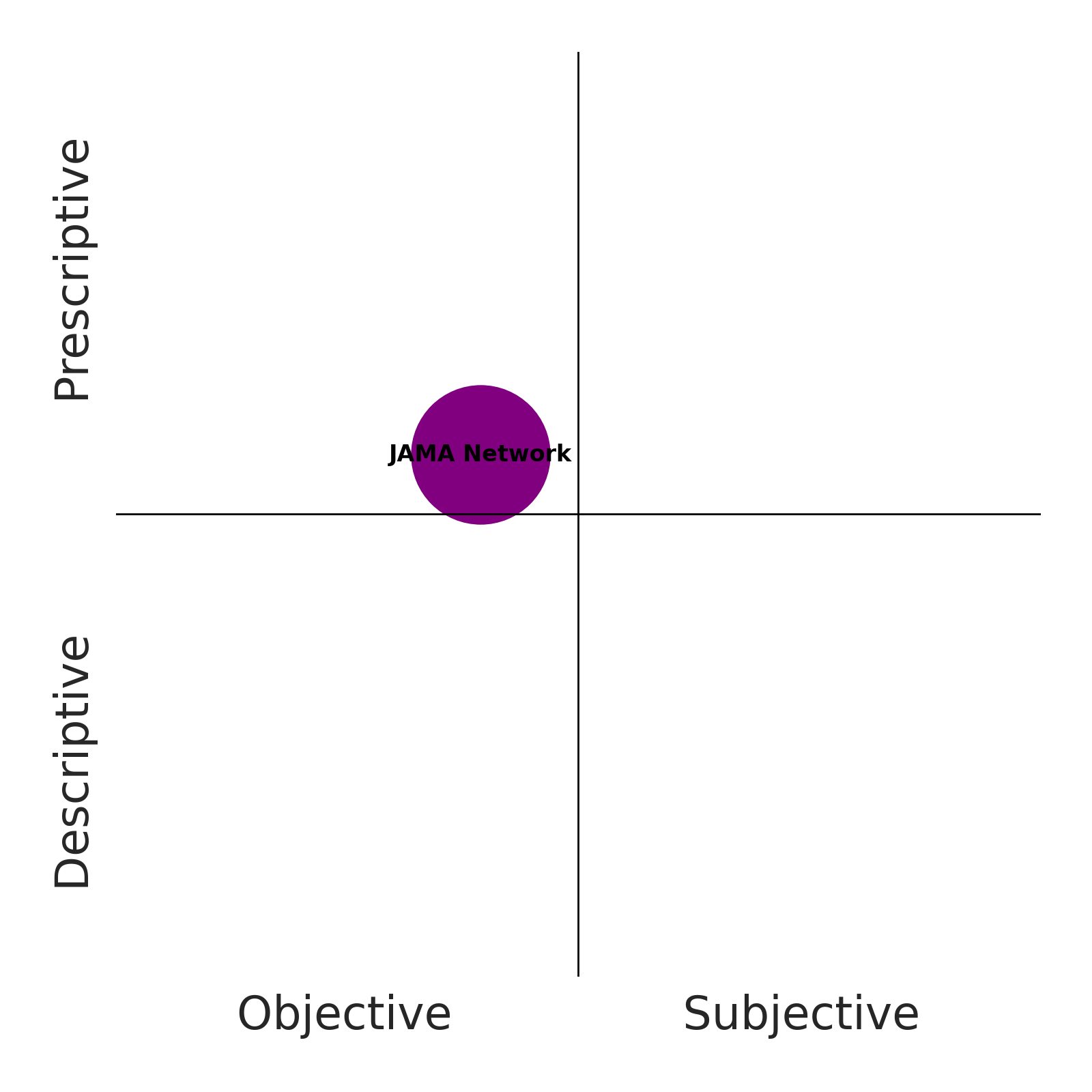
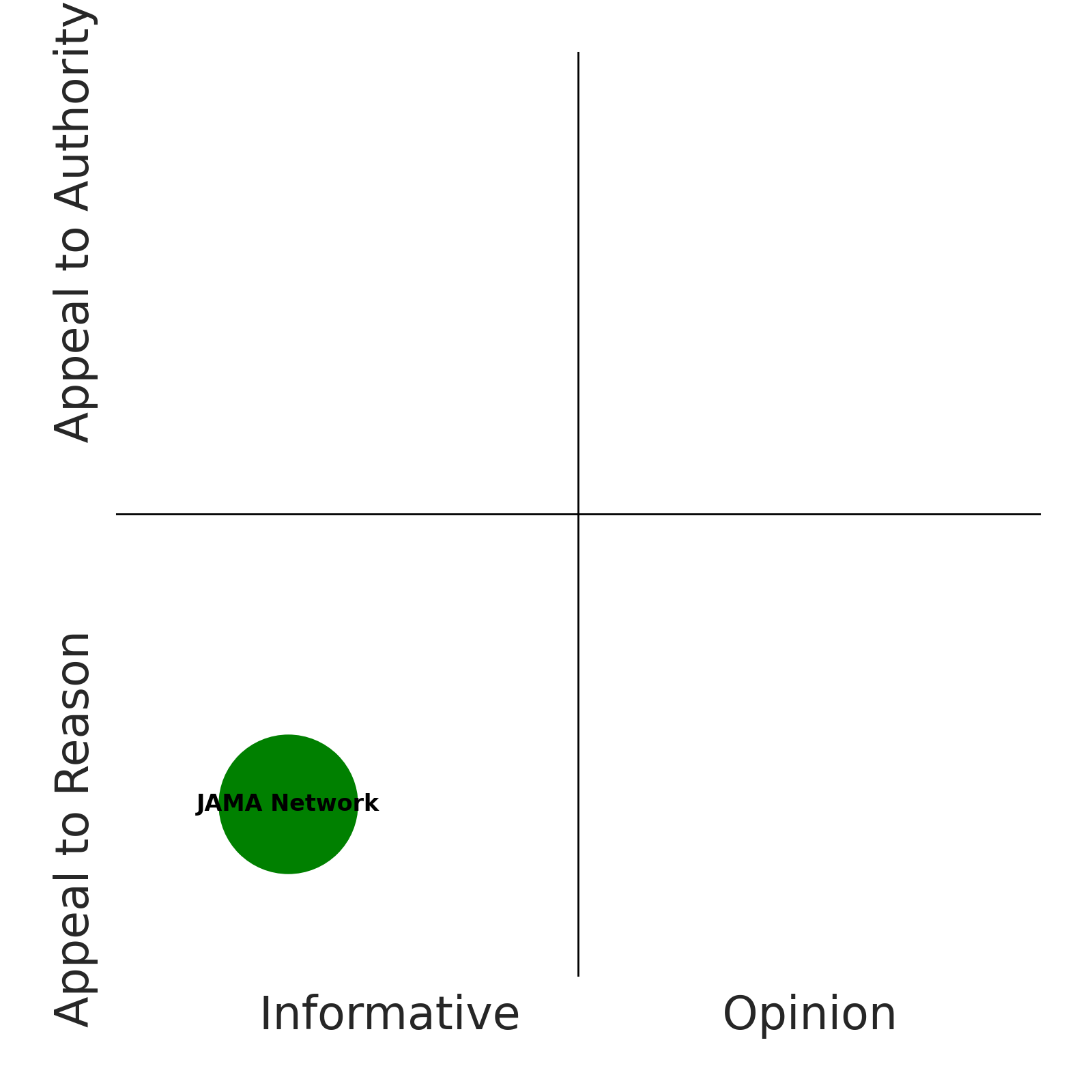
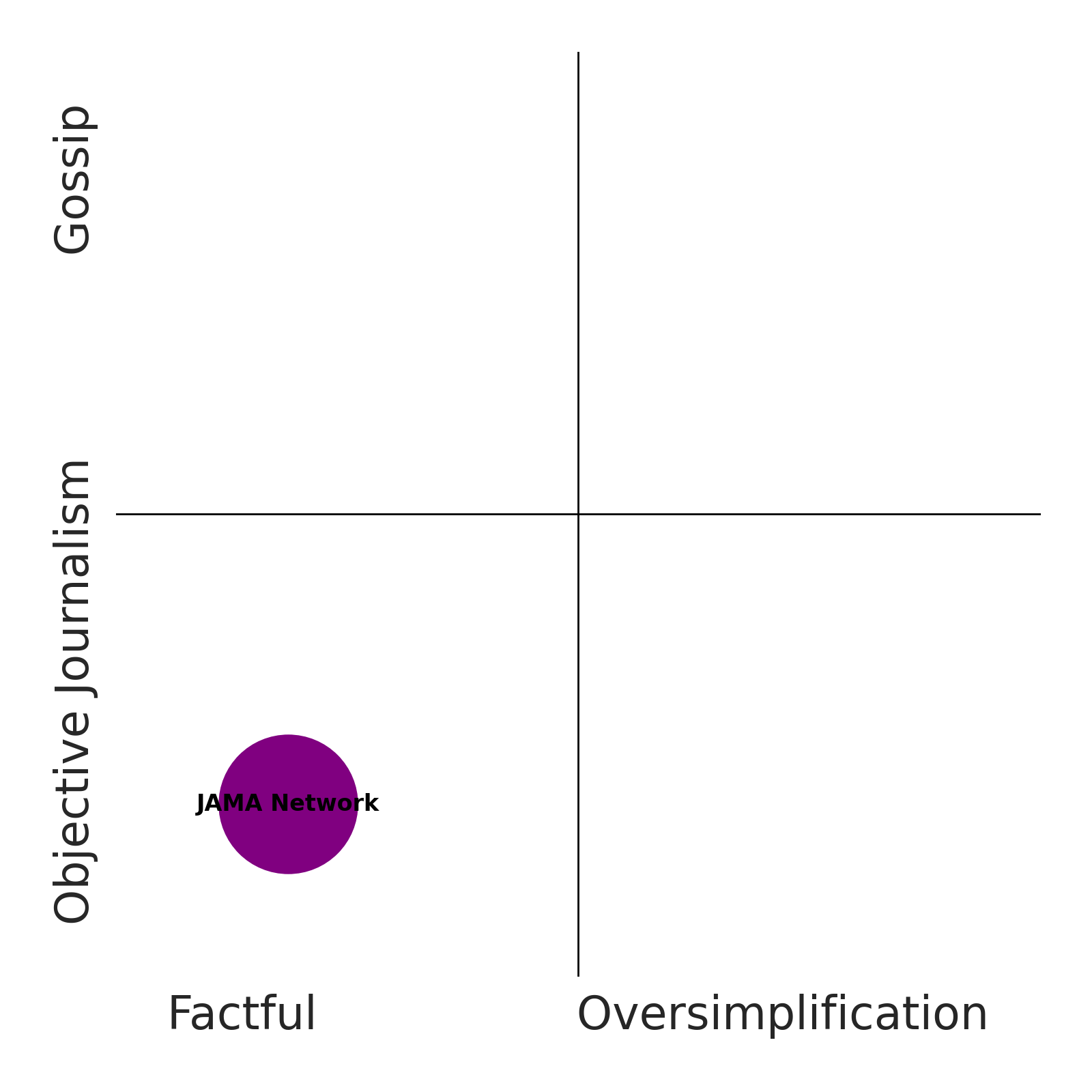
Framing is neutral and educational, with no persuasive or evaluative language.
Automated analysis; not human reviewed. · 2 of 54 available dimensions scored; omitted dimensions are not treated as neutral. · Verified supporting quotes for 2 of 2 scored dimensions.
Claim: The text presents the topic in an objective, non-evaluative manner.
“This JAMA Patient Page describes primary and secondary male hypogonadism along with common symptoms and information about diagnosis and treatment.” · exact text match
Why: The wording is limited to 'describes' and lists clinical topics, without opinion, emotional language, or argumentation.
Claim: The text is descriptive, not prescriptive.
“This JAMA Patient Page describes primary and secondary male hypogonadism along with common symptoms and information about diagnosis and treatment.” · exact text match
Why: The only action is 'describes' and the content is framed as information, not as instructions or recommendations.
2026 © Helium Trades
Privacy Policy & Disclosure
* Disclaimer: Nothing on this website constitutes investment advice, performance data or any recommendation that any particular security, portfolio of securities, transaction or investment strategy is suitable for any specific person. Helium Trades is not responsible in any way for the accuracy
of any model predictions or price data. Any mention of a particular security and related prediction data is not a recommendation to buy or sell that security. Investments in securities involve the risk of loss. Past performance is no guarantee of future results. Helium Trades is not responsible for any of your investment decisions,
you should consult a financial expert before engaging in any transaction.


