See whether Helium helps you make better-informed decisions. Try every Pro Trader feature for 30 days. No credit card required.
Try every Pro Trader feature for 30 days. No credit card required.
The sample is predominantly market-first and investor-oriented: corporate earnings, technology, AI infrastructure, equities, bonds, interest rates, commodities, retirement, taxes, and consumer finance recur throughout the records
August 12, 2026 · 0 shares
Frames CoreWeave's earnings with bullish language and an authoritative CEO quote, emphasizing strong positive momentum.
Automated analysis; not human reviewed. Limitations: The article text is a very short snippet from a headline and subhead, limiting analysis depth and confidence. · 3 of 53 available dimensions scored; omitted dimensions are not treated as neutral. · Verified supporting quotes for 3 of 3 scored dimensions.
Claim: The article uses subjective language in the headline to characterize the results.
“stock soars” · exact text match
“earnings show major AI momentum” · exact text match
Why: Words like 'soars' and 'major AI momentum' are evaluative judgments rather than neutral description.
Claim: The article relies on the CEO's statement to support the positive framing.
“its CEO cheering “an important inflection point.”” · exact text match
Why: The CEO's authoritative position is used to reinforce the headline's positive narrative without independent verification.
Claim: The article conveys positive emotion about the company's performance.
“soars” · exact text match
“cheering” · exact text match
Why: The language 'soars' and 'cheering' evokes enthusiasm and optimism.
The article text is a very short snippet from a headline and subhead, limiting analysis depth and confidence.
August 12, 2026 · 0 shares
Positive framing highlighting earnings beat and stock rise without critical detail.
Automated analysis; not human reviewed. Limitations: Very short snippet limits ability to assess framing and facts. · 7 of 53 available dimensions scored; omitted dimensions are not treated as neutral. · Verified supporting quotes for 7 of 7 scored dimensions.
Claim: The framing is subjective, evaluating the news as 'good' and 'impressive' rather than simply reporting.
“The company impressed Wall Street” · exact text match
“Super Micro's earnings report brings more good news” · exact text match
Why: The publisher applies evaluative adjectives ('good', 'impressed') instead of neutral reporting, leaning subjective.
Claim: The publisher frames the earnings news and stock movement as unequivocally positive.
“The company impressed Wall Street several weeks ago by teasing an improved profitability trajectory.” · exact text match
“Super Micro’s latest forecast has exceeded expectations as well.” · exact text match
Why: The selection of 'good news', 'impressed', and 'exceeded expectations' without any counterpoint indicates a bullish editorial stance.
Claim: The account is extremely brief, omitting essential details like revenue figures, profit margins, or analyst ratings.
“Super Micro's earnings report brings more good news, and the stock is climbing.” · exact text match
Why: Three sentences summarize a complex earnings event without any quantitative or contextual information.
Claim: The article states outcomes with certainty but provides no supporting data or qualifications.
“Super Micro's earnings report brings more good news” · exact text match
“Super Micro’s latest forecast has exceeded expectations as well.” · exact text match
Why: The assertions are presented as settled facts without mentioning any risks, uncertainties, or source details, exceeding the evidence provided.
Claim: The language conveys a positive emotional tone about the company's performance.
“Super Micro's earnings report brings more good news, and the stock is climbing.” · exact text match
Why: 'Good news' and 'climbing' carry positive emotional valence, presenting the development as cheerful rather than neutral.
Claim: The article lacks attribution, specific numbers, or verifiable sources, reducing its trustworthiness.
“The company impressed Wall Street several weeks ago by teasing an improved profitability trajectory.” · exact text match
Why: No named analysts, no published figures, and no date for the forecast are provided, making the claims largely unverifiable from the text.
Claim: The publisher presents Super Micro in a uniformly favorable light without critical scrutiny.
“Super Micro's earnings report brings more good news” · exact text match
“The company impressed Wall Street” · exact text match
Why: The entirely positive tone and lack of any caution suggest a pro-corporate tilt, though the brevity limits confidence.
Very short snippet limits ability to assess framing and facts.
August 12, 2026 · 0 shares
The text neutrally reports a company's financial results and market reaction with slight subjective language in describing earnings and forecast.
Automated analysis; not human reviewed. Limitations: The article is extremely brief (headline and one sentence), limiting the ability to assess deeper framing or evidence. · 3 of 53 available dimensions scored; omitted dimensions are not treated as neutral. · Verified supporting quotes for 3 of 3 scored dimensions.
Claim: The publisher expresses mild opinion through positive descriptors ('blowout', 'upbeat'), but the overall tone is factual.
“Lumentum posted blowout earnings and an upbeat forecast” · exact text match
Why: While the descriptors add a positive slant, the core content remains factual reporting.
Claim: The article contains no political content or reference to political actors, policies, or ideologies.
“Lumentum sees sales more than double as AI demand swells. Though Lumentum posted blowout earnings and an upbeat forecast, its stock was largely flat after hours.” · exact text match
Why: The entire text is purely about corporate financial performance and market reaction, with zero political dimension.
Claim: The article includes forward-looking statements ('sees', 'forecast') that involve prediction.
“Lumentum sees sales more than double as AI demand swells” · exact text match
“an upbeat forecast” · exact text match
Why: The verb 'sees' and the noun 'forecast' indicate predictions about future performance.
The article is extremely brief (headline and one sentence), limiting the ability to assess deeper framing or evidence.
July 28, 2026 · 0 shares
Bond funds are framed as unsafe relative to stocks, which are portrayed as the smarter bet.
Automated analysis; not human reviewed. Limitations: Very short piece with no quantitative data; framing and normative claims dominate; limited context for verification. · 47 of 52 available dimensions scored; omitted dimensions are not treated as neutral. · Verified supporting quotes for 7 of 47 scored dimensions.
Claim: Contains subjective value judgments about risk/return.
“That's a problem.. Think bond funds are safer than stocks right now? Stocks actually look like the smarter bet.” · exact text match
Why: evaluative language indicates subjectivity.
Claim: Framing favors stocks over bond funds.
“Stocks actually look like the smarter bet.” · exact text match
Why: Direct implication of stock superiority over bonds.
Claim: Prescribes investing in stocks over bonds.
“Stocks actually look like the smarter bet.” · exact text match
Why: Implied recommendation embedded in the assertion.
Claim: Stocks are presented as the smarter bet relative to bonds.
“Stocks actually look like the smarter bet.” · exact text match
Why: Explicit evaluative statement about relative value of stocks vs bonds.
Claim: Conveys strong certainty about stock superiority.
“Stocks actually look like the smarter bet.” · exact text match
Why: Use of 'smarter bet' implies high certainty.
Claim: Includes mild emotional cue ('That's a problem').
“That's a problem.” · exact text match
Why: Presence of emotional cue without data.
Claim: Assumes future relative performance of stocks vs bonds.
“Stocks actually look like the smarter bet.” · exact text match
Why: Forward-looking claim about relative performance.
Very short piece with no quantitative data; framing and normative claims dominate; limited context for verification.
August 21, 2026 · 0 shares
Presents a retirement-investment hook by asserting a 'guaranteed 5% safe withdrawal rate' and pairing it with a vague note on TIPS yields near 20-year highs, without any derivation, sourcing, or caveat for the headline number.
TIPS (Treasury Inflation-Protected Securities) are U.S. government bonds whose principal is adjusted for inflation; a common retirement heuristic is the '4% rule' as a first-year safe withdrawal rate.
Automated analysis; not human reviewed. Limitations: Only a two-sentence teaser text was provided, so the derivation of the 5% figure and the identity of 'this investment' are unknown; scoring relies on this limited content. · 8 of 54 available dimensions scored; omitted dimensions are not treated as neutral. · Verified supporting quotes for 8 of 8 scored dimensions.
Claim: Uses an attention-grabbing 'guaranteed 5%' hook without analysis.
“This investment gives you a guaranteed 5% safe withdrawal rate.” · exact text match
Why: 'Guaranteed' plus a round 5% figure is striking and memorable, and the claim is unsupported.
Claim: Takes a bullish stance on the featured investment.
“This investment gives you a guaranteed 5% safe withdrawal rate.” · exact text match
Counterevidence:
“A second sentence notes only that TIPS yields are at or close to 20-year highs, which tempers the promotional tone with a market-level fact.” · not found in supplied text
Why: Positive outcome framing with no mention of risks or downsides.
Claim: Casts the investment in a rosy, confident light.
“This investment gives you a guaranteed 5% safe withdrawal rate.” · exact text match
Why: Positive, absolute assertion with no qualifying language.
Claim: Presents a judgment as an asserted fact.
“This investment gives you a guaranteed 5% safe withdrawal rate.” · exact text match
Why: States as fact what is at bottom a judgment about a safe withdrawal rate.
Claim: Reduces retirement income planning to a single unexamined percentage.
“This investment gives you a guaranteed 5% safe withdrawal rate.” · exact text match
Why: Omits any basis, risks, fees, or time horizon behind the 5% figure.
Claim: The text asserts a guaranteed 5% safe withdrawal rate without qualification, expressing certainty beyond any evidence supplied.
“This investment gives you a guaranteed 5% safe withdrawal rate.” · exact text match
Why: The unqualified 'guaranteed' asserts full certainty about a rate that would depend on market conditions.
Claim: Provides no sourcing, data, or attribution to support the 5% figure, limiting credibility.
“This investment gives you a guaranteed 5% safe withdrawal rate.” · exact text match
“TIPS yields are at or close to 20-year highs.” · exact text match
Why: The guarantee is unsupported and the only concrete claim (TIPS yields) is vague; overall trust is low.
Claim: Frames the recommendation in promotional, direct-address terms.
“Retirees: This investment gives you a guaranteed 5% safe withdrawal rate.” · exact text match
Why: Direct benefit claim structured like a marketing pitch without analysis.
Only a two-sentence teaser text was provided, so the derivation of the 5% figure and the identity of 'this investment' are unknown; scoring relies on this limited content.
July 29, 2026 · 0 shares
Framing emphasizes USO as the better buy relative to crude futures, grounded in outperformance since the Iran war began.
Automated analysis; not human reviewed. · 4 of 52 available dimensions scored; omitted dimensions are not treated as neutral. · Verified supporting quotes for 4 of 4 scored dimensions.
Claim: The framing is bullish toward USO as the preferable investment relative to crude futures.
“Why the USO oil ETF is a better buy than crude futures as the Iran war rages.” · exact text match
Why: Headline explicitly promotes USO as the better buy, signaling bullish framing.
Claim: Prescriptive guidance (buy USO) coupled with descriptive performance data.
“Why the USO oil ETF is a better buy than crude futures as the Iran war rages.” · exact text match
“The United States Oil Fund has climbed by 58% since the start of the Iran war, more than double the gain of WTI crude futures.” · exact text match
Why: Combination of performance metrics and buying recommendation indicates prescriptive framing.
Claim: The language conveys an investment opinion rather than neutral reporting.
“Why the USO oil ETF is a better buy than crude futures as the Iran war rages.” · exact text match
Why: The phrase 'better buy' expresses a normative recommendation.
Claim: Promotional framing that treats USO as superior among alternatives.
“Why the USO oil ETF is a better buy than crude futures as the Iran war rages.” · exact text match
Why: Language implies promotion or marketing of USO.
July 27, 2026 · 0 shares
Framing casts regulators as forcing Big Tech to fund its AI-era grid, depicting cost-shifting onto consumers and political risk for traditional utilities.
Context: The piece discusses regulatory actions that could shift infrastructure costs from Big Tech to ratepayers and the potential impact on utility equities.
Automated analysis; not human reviewed. · 2 of 52 available dimensions scored; omitted dimensions are not treated as neutral. · Verified supporting quotes for 0 of 2 scored dimensions.
Frames July's stock-market selloff as a temporary stress test that reinforces a bullish call to buy the dip in tech stocks.
Automated analysis; not human reviewed. · 5 of 52 available dimensions scored; omitted dimensions are not treated as neutral. · Verified supporting quotes for 5 of 5 scored dimensions.
Claim: The publisher frames July selloff as not breaking the bull market and as a buying opportunity.
“Get ready to buy the dip in tech stocks.” · exact text match
“Why the recent selling won't break the bull market..” · exact text match
Why: Explicit buy-the-dip call and assertion of non-derailment indicate bullish framing.
Claim: Prescribes investment action by urging readers to buy the dip.
“Get ready to buy the dip in tech stocks.” · exact text match
Why: Direct instruction to take a specific action.
Claim: A bullish investment perspective is presented as the stance of the publication.
“Get ready to buy the dip in tech stocks.” · exact text match
Why: Language endorses a specific market outlook rather than neutral reporting.
Claim: The claim that the bull market will not be broken is stated with notable certainty.
“Why the recent selling won't break the bull market..” · exact text match
Why: Strong definitive claim about market resilience exceeds ambiguous support.
Claim: Narrative supports the continuity of the bull market (an establishment-friendly frame).
“Why the recent selling won't break the bull market..” · exact text match
“The stock-market selloff in July looks more like a stress test than a breaking point.” · exact text match
Why: Framing in terms of an intact bull market aligns with stable, pro-establishment expectations.
July 28, 2026 · 0 shares
Bond funds are framed as unsafe relative to stocks, which are portrayed as the smarter bet.
Automated analysis; not human reviewed. Limitations: Very short piece with no quantitative data; framing and normative claims dominate; limited context for verification. · 47 of 52 available dimensions scored; omitted dimensions are not treated as neutral. · Verified supporting quotes for 7 of 47 scored dimensions.
Claim: Contains subjective value judgments about risk/return.
“That's a problem.. Think bond funds are safer than stocks right now? Stocks actually look like the smarter bet.” · exact text match
Why: evaluative language indicates subjectivity.
Claim: Framing favors stocks over bond funds.
“Stocks actually look like the smarter bet.” · exact text match
Why: Direct implication of stock superiority over bonds.
Claim: Prescribes investing in stocks over bonds.
“Stocks actually look like the smarter bet.” · exact text match
Why: Implied recommendation embedded in the assertion.
Claim: Stocks are presented as the smarter bet relative to bonds.
“Stocks actually look like the smarter bet.” · exact text match
Why: Explicit evaluative statement about relative value of stocks vs bonds.
Claim: Conveys strong certainty about stock superiority.
“Stocks actually look like the smarter bet.” · exact text match
Why: Use of 'smarter bet' implies high certainty.
Claim: Includes mild emotional cue ('That's a problem').
“That's a problem.” · exact text match
Why: Presence of emotional cue without data.
Claim: Assumes future relative performance of stocks vs bonds.
“Stocks actually look like the smarter bet.” · exact text match
Why: Forward-looking claim about relative performance.
Very short piece with no quantitative data; framing and normative claims dominate; limited context for verification.
July 29, 2026 · 0 shares
Framing emphasizes USO as the better buy relative to crude futures, grounded in outperformance since the Iran war began.
Automated analysis; not human reviewed. · 4 of 52 available dimensions scored; omitted dimensions are not treated as neutral. · Verified supporting quotes for 4 of 4 scored dimensions.
Claim: The framing is bullish toward USO as the preferable investment relative to crude futures.
“Why the USO oil ETF is a better buy than crude futures as the Iran war rages.” · exact text match
Why: Headline explicitly promotes USO as the better buy, signaling bullish framing.
Claim: Prescriptive guidance (buy USO) coupled with descriptive performance data.
“Why the USO oil ETF is a better buy than crude futures as the Iran war rages.” · exact text match
“The United States Oil Fund has climbed by 58% since the start of the Iran war, more than double the gain of WTI crude futures.” · exact text match
Why: Combination of performance metrics and buying recommendation indicates prescriptive framing.
Claim: The language conveys an investment opinion rather than neutral reporting.
“Why the USO oil ETF is a better buy than crude futures as the Iran war rages.” · exact text match
Why: The phrase 'better buy' expresses a normative recommendation.
Claim: Promotional framing that treats USO as superior among alternatives.
“Why the USO oil ETF is a better buy than crude futures as the Iran war rages.” · exact text match
Why: Language implies promotion or marketing of USO.
August 17, 2026 · 0 shares
The framing is neutral and descriptive, noting futures were little changed and investors await Fed hints without signaling a directional view.
Automated analysis; not human reviewed. · 54 of 54 available dimensions scored; omitted dimensions are not treated as neutral. · Verified supporting quotes for 26 of 54 scored dimensions.
Claim: The report is politically neutral and does not express partisan alignment.
“U.S. stock futures little changed as investors ponder the Fed's next move.” · exact text match
Why: No political framing or partisan content appears; it merely reports market status and investor attention.
Claim: The report does not exhibit populist or elitist framing.
“U.S. stock-index futures were little changed on Sunday after a quiet week on Wall Street” · exact text match
Why: It neutrally reports market movements without class-based or elite-oriented framing.
Claim: The report is neutral on governance and individual liberty.
“U.S. stock-index futures were little changed on Sunday” · exact text match
Why: No governance or liberty-related content is present.
Claim: The report is objective.
“U.S. stock-index futures were little changed on Sunday after a quiet week on Wall Street” · exact text match
Why: It avoids evaluative language and merely states facts about market movement and investor focus.
Claim: The report is objective and not sensationalized.
“little changed on Sunday after a quiet week on Wall Street” · exact text match
Why: It uses muted, non-dramatic language.
Claim: The report is neutral on market direction.
“little changed” · exact text match
Why: It does not signal a bullish or bearish stance.
Claim: The report is neutral in tone.
“little changed on Sunday” · exact text match
Why: No emotional valence is expressed.
Claim: The report is mildly interesting but not compelling.
“little changed on Sunday after a quiet week on Wall Street” · exact text match
Why: It contains routine market information with no dramatic developments.
Claim: The report is descriptive.
“U.S. stock-index futures were little changed on Sunday” · exact text match
Why: It describes what happened rather than prescribing action.
Claim: The report is neutral on monetary policy direction.
“await hints from the Fed concerning the outlook for interest rates” · exact text match
Why: It does not advocate for dovish or hawkish policy.
Claim: There is no fear-inducing content.
“little changed on Sunday” · exact text match
Why: The language is calm and unthreatening.
Claim: No circular reasoning is present.
“as investors await hints from the Fed” · exact text match
Why: It does not assume what it needs to prove.
Claim: No gossip is present.
“U.S. stock-index futures were little changed” · exact text match
Why: It reports general market news without personal or speculative content.
Claim: The report is factual rather than opinionated.
“U.S. stock-index futures were little changed on Sunday” · exact text match
Why: It states observable facts.
Claim: The report is not political.
“little changed on Sunday” · exact text match
Why: Monetary policy is referenced but without political framing or advocacy.
Claim: The report does not oversimplify.
“as investors await hints from the Fed concerning the outlook for interest rates” · exact text match
Why: It presents a minimal but accurate statement without reducing complexity improperly.
Claim: The report does not rely on authority appeals.
“await hints from the Fed” · exact text match
Why: It mentions the Fed as a source of information rather than as an authoritative justification.
Claim: The report is mature.
“little changed on Sunday after a quiet week on Wall Street” · exact text match
Why: The tone is professionally restrained.
Claim: No circular reasoning is present.
“as investors await hints from the Fed” · exact text match
Why: The reasoning is not circular.
Claim: The report does not cover the response.
“U.S. stock-index futures were little changed on Sunday” · exact text match
Why: It is not reactive to a purported response.
Claim: No victimization framing is present.
“little changed on Sunday” · exact text match
Why: No group is framed as victim.
Claim: The report is appropriately cautious.
“await hints from the Fed” · exact text match
Why: It uses tentative language like 'await hints' rather than making strong predictions.
Claim: The report does not take an anti-establishment or pro-establishment stance.
“await hints from the Fed” · exact text match
Why: It references a central institution neutrally.
Claim: The report is rational and informational.
“as investors await hints from the Fed concerning the outlook for interest rates” · exact text match
Why: It presents a straightforward market update without emotional or illogical assertions.
Claim: The report appears honest and straightforward.
“U.S. stock-index futures were little changed on Sunday after a quiet week on Wall Street” · exact text match
Why: It provides factual information without distortion or sensationalism.
Claim: The report is concise but not intellectually demanding.
“U.S. stock futures little changed as investors ponder the Fed's next move.” · exact text match
Why: It conveys clear information briefly.
The framing is question-led and neutral, presenting the retiree’s stated tax-rate expectation as the decisive issue in a Roth conversion decision.
A Roth conversion typically involves moving pre-tax retirement money into a Roth account and paying income tax now, in exchange for potentially tax-free withdrawals later; expected future tax rates are often cited as a key consideration.
Automated analysis; not human reviewed. Limitations: Only a short headline-style question and a single quotation were available; the full article body and any analysis were not supplied. · 2 of 54 available dimensions scored; omitted dimensions are not treated as neutral. · Verified supporting quotes for 2 of 2 scored dimensions.
Claim: The framing is objective rather than subjective because it presents a factual personal profile and a direct question with no editorial evaluation.
“I'm 63, a retired CPA with a $1.2 million 401(k). Do I need to bother with a Roth conversion?.” · exact text match
“I don’t expect my marginal tax rate to be materially different in the future.” · exact text match
Why: The text relays a self-description, a question, and an attributed expectation, without evaluative or persuasive language.
Claim: The text is descriptive because it reports a situation and asks a question rather than prescribing a financial decision.
“Do I need to bother with a Roth conversion?.” · exact text match
Why: The only assertion besides the factual profile is the person's own expectation; no advice, recommendation, or directive is offered.
Only a short headline-style question and a single quotation were available; the full article body and any analysis were not supplied.
August 21, 2026 · 0 shares
A bare announcement with unnamed-source attribution frames the appointment as routine and unremarkable without independent verification.
The Social Security Administration is a US federal agency that administers Social Security benefits, and advisory appointments to federal agencies may be political appointments, though the article provides no further context.
Automated analysis; not human reviewed. Limitations: The source text is extremely brief and offers no named sources or substantial detail, limiting verification of the claim and any robust bias assessment beyond the most basic level. · 7 of 54 available dimensions scored; omitted dimensions are not treated as neutral. · Verified supporting quotes for 7 of 7 scored dimensions.
Claim: No partisan leaning is evident; neutrality is supported by the non-evaluative reporting.
“Former JPMorgan exec takes on Social Security advisory role.” · exact text match
Why: The report mentions no policy positions or party affiliations and passes no judgment.
Claim: The report is strictly objective and contains no subjective interpretation.
“Matt Zames will take on an unpaid adviser position at the Social Security Administration, according to reports.” · exact text match
Why: The text presents a single verifiable claim without evaluative language.
Claim: The report avoids all sensational language.
“Matt Zames will take on an unpaid adviser position at the Social Security Administration, according to reports.” · exact text match
Why: The wording is neutral and understated.
Claim: The piece is a routine personnel announcement with little distinctive information.
“Former JPMorgan exec takes on Social Security advisory role.” · exact text match
Why: It lacks detail, stakes, or novelty.
Claim: The story describes a development without endorsing or recommending any action.
“Matt Zames will take on an unpaid adviser position at the Social Security Administration, according to reports.” · exact text match
Why: No prescriptive or imperative language is used.
Claim: Moderate overall credibility due to attribution, though sources are unnamed.
“according to reports” · exact text match
Why: Attributing to reports shows some sourcing discipline but lacks the specificity needed for high credibility.
Claim: The paper shows average quality.
“Former JPMorgan exec takes on Social Security advisory role.” · exact text match
Why: It is a simple declarative statement with no analytical content.
The source text is extremely brief and offers no named sources or substantial detail, limiting verification of the claim and any robust bias assessment beyond the most basic level.
August 12, 2026 · 0 shares
Frames CoreWeave's earnings with bullish language and an authoritative CEO quote, emphasizing strong positive momentum.
Automated analysis; not human reviewed. Limitations: The article text is a very short snippet from a headline and subhead, limiting analysis depth and confidence. · 3 of 53 available dimensions scored; omitted dimensions are not treated as neutral. · Verified supporting quotes for 3 of 3 scored dimensions.
Claim: The article uses subjective language in the headline to characterize the results.
“stock soars” · exact text match
“earnings show major AI momentum” · exact text match
Why: Words like 'soars' and 'major AI momentum' are evaluative judgments rather than neutral description.
Claim: The article relies on the CEO's statement to support the positive framing.
“its CEO cheering “an important inflection point.”” · exact text match
Why: The CEO's authoritative position is used to reinforce the headline's positive narrative without independent verification.
Claim: The article conveys positive emotion about the company's performance.
“soars” · exact text match
“cheering” · exact text match
Why: The language 'soars' and 'cheering' evokes enthusiasm and optimism.
The article text is a very short snippet from a headline and subhead, limiting analysis depth and confidence.
August 12, 2026 · 0 shares
The text neutrally reports a company's financial results and market reaction with slight subjective language in describing earnings and forecast.
Automated analysis; not human reviewed. Limitations: The article is extremely brief (headline and one sentence), limiting the ability to assess deeper framing or evidence. · 3 of 53 available dimensions scored; omitted dimensions are not treated as neutral. · Verified supporting quotes for 3 of 3 scored dimensions.
Claim: The publisher expresses mild opinion through positive descriptors ('blowout', 'upbeat'), but the overall tone is factual.
“Lumentum posted blowout earnings and an upbeat forecast” · exact text match
Why: While the descriptors add a positive slant, the core content remains factual reporting.
Claim: The article contains no political content or reference to political actors, policies, or ideologies.
“Lumentum sees sales more than double as AI demand swells. Though Lumentum posted blowout earnings and an upbeat forecast, its stock was largely flat after hours.” · exact text match
Why: The entire text is purely about corporate financial performance and market reaction, with zero political dimension.
Claim: The article includes forward-looking statements ('sees', 'forecast') that involve prediction.
“Lumentum sees sales more than double as AI demand swells” · exact text match
“an upbeat forecast” · exact text match
Why: The verb 'sees' and the noun 'forecast' indicate predictions about future performance.
The article is extremely brief (headline and one sentence), limiting the ability to assess deeper framing or evidence.
August 02, 2026 · 0 shares
Publisher framing presents an unsupported bullish assessment of Apple's product launch using sensational language.
Automated analysis; not human reviewed. Limitations: The article text is extremely brief (a headline and one sentence), limiting the depth of bias analysis. · 10 of 52 available dimensions scored; omitted dimensions are not treated as neutral. · Verified supporting quotes for 7 of 10 scored dimensions.
Claim: The publisher uses subjective evaluation without supporting data.
“Apple’s gamble on the budget MacBook Neo is paying off” · exact text match
Why: The phrase 'gamble' and 'paying off' are inherently subjective assessments rather than objective reporting.
Claim: The publisher uses sensational war metaphor to describe market competition.
“sparked a war in budget laptops” · exact text match
Why: The word 'war' is a sensational metaphor that exaggerates the competitive dynamics.
Claim: The publisher frames Apple's product outcome positively.
“gamble is paying off” · not found in supplied text
Why: Stating that the gamble is paying off expresses a bullish outlook on Apple's strategy.
Claim: The publisher presents an opinion as fact without attribution.
“Apple’s gamble on the budget MacBook Neo is paying off” · exact text match
Why: The statement is presented as an assertion of fact rather than attributed to any source or supported by data.
Claim: The publisher simplifies complex market dynamics to a single product causing a war.
“Apple's cheap MacBook Neo sparked a war in budget laptops” · exact text match
Why: Reducing a multifaceted market shift to one product launch ignores other factors and nuances.
Claim: The publisher uses definitive language without hedging.
“is paying off” · exact text match
Why: The present tense 'is paying off' conveys certainty about an ongoing outcome without qualifiers.
Claim: The publisher provides no sourcing or evidence for its claim.
“Apple’s gamble on the budget MacBook Neo is paying off” · exact text match
Why: The entire text lacks citations, data, or attribution, undermining credibility.
Claim: The publisher positively frames Apple's business move.
“Apple’s gamble... is paying off” · not found in supplied text
Why: Describing Apple's product as a successful gamble reflects a favorable stance toward the company.
Claim: The publisher speculates about the success of the product without evidence.
“is paying off” · exact text match
Why: The claim of success is speculative as no data or timelines are provided.
Claim: The publisher uses sensational language and unsupported conclusion to influence reader perception.
“sparked a war in budget laptops” · exact text match
“gamble is paying off” · not found in supplied text
Why: Combining a dramatic metaphor with an unsupported assertion can manipulate reader opinion.
The article text is extremely brief (a headline and one sentence), limiting the depth of bias analysis.
August 02, 2026 · 0 shares
Praising Tim Cook's focus as the sole driver of Apple's profits, implicitly dismissing any other demands as misguided.
Automated analysis; not human reviewed. Limitations: The article text is extremely short (one sentence), limiting the evidence base for bias detection and increasing uncertainty in scores. · 7 of 52 available dimensions scored; omitted dimensions are not treated as neutral. · Verified supporting quotes for 7 of 7 scored dimensions.
Claim: Publisher uses strongly positive language about Apple's performance.
“phenomenally profitable” · exact text match
Why: The phrase 'phenomenally profitable' conveys a very bullish outlook on Apple's financial success.
Claim: The text is an opinion statement, not a factual report.
“Apple has been phenomenally profitable because its CEO resisted demands to change the business’s focus.” · exact text match
Why: The claim is a subjective interpretation without supporting evidence, typical of opinion writing.
Claim: Single cause attributed to Apple's profitability without acknowledging other factors.
“Apple has been phenomenally profitable because its CEO resisted demands to change the business’s focus.” · exact text match
Why: Attributing a company's profitability solely to one leadership decision is an oversimplification.
Claim: Causal claim presented with certainty without supporting evidence.
“Apple has been phenomenally profitable because its CEO resisted demands to change the business’s focus.” · exact text match
Why: The causal structure 'because' expresses certainty beyond what the text supports.
Claim: Publisher supports maintaining the status quo by praising resistance to change.
“resisted demands to change the business’s focus” · exact text match
Why: Framing resistance to change as a virtue aligns with pro-establishment support for incumbent leadership.
Claim: Positive emotional language used to describe Apple's performance.
“phenomenally profitable” · exact text match
Why: The word 'phenomenally' conveys strong positive emotion about the profitability.
Claim: Positive portrayal of Apple and its CEO, favoring corporate interests.
“Apple has been phenomenally profitable because its CEO resisted demands to change the business’s focus.” · exact text match
Why: The text uncritically celebrates Apple's profitability and leadership, reflecting pro-corporate framing.
The article text is extremely short (one sentence), limiting the evidence base for bias detection and increasing uncertainty in scores.
The publisher frames the market as vulnerable to a 6% 30-year Treasury yield, using alarmist language to imply imminent systemic risk to stocks and bond funds.
The text presents a hypothetical, negative scenario in which high long-duration yields threaten equities and bond funds.
Automated analysis; not human reviewed. Limitations: Limited to single-sentence text; lacks broader sourcing or context. · 3 of 52 available dimensions scored; omitted dimensions are not treated as neutral. · Verified supporting quotes for 0 of 3 scored dimensions.
Limited data; single-sentence text; no corroboration.
Automated analysis; not human reviewed. · 2 of 52 available dimensions scored; omitted dimensions are not treated as neutral. · Verified supporting quotes for 2 of 2 scored dimensions.
Claim: The article frames insider sentiment as bearish.
“Corporate insiders haven’t been this bearish in more than 20 years.” · exact text match
Why: Explicit reference to bearishness and a long historical span.
Claim: The wording 'warning signal' suggests fear-inducing framing.
“The warning signal insiders are sending.” · exact text match
Why: Presence of 'warning signal' indicates caution/fear framing.
Framing centers on a negative assessment of Big Tech's rising capital expenditures and declining free cash flow, with bond-market signals used to bolster the caution.
Automated analysis; not human reviewed. · 1 of 52 available dimensions scored; omitted dimensions are not treated as neutral. · Verified supporting quotes for 0 of 1 scored dimensions.
Claim: The content is presented as an opinion piece.
“"Opinion:"” · not found in supplied text
Why: Explicit label indicates opinion framing.
August 13, 2026 · 0 shares
The text frames market calm as potentially deceptive, using the phrase 'eerily calm' and 'may not be as reassuring as it looks' to cast doubt on the apparent stability, hinting at underlying risk without explicit evidence.
The text is a brief market commentary snippet likely from a financial news source, noting a contrast between apparent investor calm and the preceding year's volatility.
Automated analysis; not human reviewed. · 53 of 53 available dimensions scored; omitted dimensions are not treated as neutral. · Verified supporting quotes for 5 of 53 scored dimensions.
Claim: The publisher employs mildly sensational language to highlight potential risk.
“By nearly every headline measure, investors have never looked more relaxed in a year not short of wild rides.” · exact text match
“But that calm may not be as reassuring as it looks.” · exact text match
Why: The use of 'eerily calm' and 'may not be as reassuring as it looks' introduces a sensational or cautionary tone beyond plain factual reporting.
Claim: The framing leans slightly bearish by questioning the sustainability of market calm.
“But that calm may not be as reassuring as it looks.” · exact text match
Why: The suggestion that the calm is misleading implies a cautious or bearish outlook, despite the absence of direct market predictions.
Claim: The language introduces a subtle element of fear or concern.
“Markets are looking eerily calm” · exact text match
“But that calm may not be as reassuring as it looks.” · exact text match
Why: Words like 'eerily' and the explicit doubt about reassurance evoke unease without explicit alarm.
Claim: The text includes interpretive commentary beyond raw data.
“But that calm may not be as reassuring as it looks.” · exact text match
Why: The statement is an opinion about the reliability of the calm, not a purely factual observation.
Claim: The article speculates that calm could be misleading.
“may not be as reassuring as it looks” · exact text match
Why: The modal 'may' indicates speculation about the future or underlying conditions.
August 02, 2026 · 0 shares
Praising Tim Cook's focus as the sole driver of Apple's profits, implicitly dismissing any other demands as misguided.
Automated analysis; not human reviewed. Limitations: The article text is extremely short (one sentence), limiting the evidence base for bias detection and increasing uncertainty in scores. · 7 of 52 available dimensions scored; omitted dimensions are not treated as neutral. · Verified supporting quotes for 7 of 7 scored dimensions.
Claim: Publisher uses strongly positive language about Apple's performance.
“phenomenally profitable” · exact text match
Why: The phrase 'phenomenally profitable' conveys a very bullish outlook on Apple's financial success.
Claim: The text is an opinion statement, not a factual report.
“Apple has been phenomenally profitable because its CEO resisted demands to change the business’s focus.” · exact text match
Why: The claim is a subjective interpretation without supporting evidence, typical of opinion writing.
Claim: Single cause attributed to Apple's profitability without acknowledging other factors.
“Apple has been phenomenally profitable because its CEO resisted demands to change the business’s focus.” · exact text match
Why: Attributing a company's profitability solely to one leadership decision is an oversimplification.
Claim: Causal claim presented with certainty without supporting evidence.
“Apple has been phenomenally profitable because its CEO resisted demands to change the business’s focus.” · exact text match
Why: The causal structure 'because' expresses certainty beyond what the text supports.
Claim: Publisher supports maintaining the status quo by praising resistance to change.
“resisted demands to change the business’s focus” · exact text match
Why: Framing resistance to change as a virtue aligns with pro-establishment support for incumbent leadership.
Claim: Positive emotional language used to describe Apple's performance.
“phenomenally profitable” · exact text match
Why: The word 'phenomenally' conveys strong positive emotion about the profitability.
Claim: Positive portrayal of Apple and its CEO, favoring corporate interests.
“Apple has been phenomenally profitable because its CEO resisted demands to change the business’s focus.” · exact text match
Why: The text uncritically celebrates Apple's profitability and leadership, reflecting pro-corporate framing.
The article text is extremely short (one sentence), limiting the evidence base for bias detection and increasing uncertainty in scores.
August 21, 2026 · 0 shares
Presents a retirement-investment hook by asserting a 'guaranteed 5% safe withdrawal rate' and pairing it with a vague note on TIPS yields near 20-year highs, without any derivation, sourcing, or caveat for the headline number.
TIPS (Treasury Inflation-Protected Securities) are U.S. government bonds whose principal is adjusted for inflation; a common retirement heuristic is the '4% rule' as a first-year safe withdrawal rate.
Automated analysis; not human reviewed. Limitations: Only a two-sentence teaser text was provided, so the derivation of the 5% figure and the identity of 'this investment' are unknown; scoring relies on this limited content. · 8 of 54 available dimensions scored; omitted dimensions are not treated as neutral. · Verified supporting quotes for 8 of 8 scored dimensions.
Claim: Uses an attention-grabbing 'guaranteed 5%' hook without analysis.
“This investment gives you a guaranteed 5% safe withdrawal rate.” · exact text match
Why: 'Guaranteed' plus a round 5% figure is striking and memorable, and the claim is unsupported.
Claim: Takes a bullish stance on the featured investment.
“This investment gives you a guaranteed 5% safe withdrawal rate.” · exact text match
Counterevidence:
“A second sentence notes only that TIPS yields are at or close to 20-year highs, which tempers the promotional tone with a market-level fact.” · not found in supplied text
Why: Positive outcome framing with no mention of risks or downsides.
Claim: Casts the investment in a rosy, confident light.
“This investment gives you a guaranteed 5% safe withdrawal rate.” · exact text match
Why: Positive, absolute assertion with no qualifying language.
Claim: Presents a judgment as an asserted fact.
“This investment gives you a guaranteed 5% safe withdrawal rate.” · exact text match
Why: States as fact what is at bottom a judgment about a safe withdrawal rate.
Claim: Reduces retirement income planning to a single unexamined percentage.
“This investment gives you a guaranteed 5% safe withdrawal rate.” · exact text match
Why: Omits any basis, risks, fees, or time horizon behind the 5% figure.
Claim: The text asserts a guaranteed 5% safe withdrawal rate without qualification, expressing certainty beyond any evidence supplied.
“This investment gives you a guaranteed 5% safe withdrawal rate.” · exact text match
Why: The unqualified 'guaranteed' asserts full certainty about a rate that would depend on market conditions.
Claim: Provides no sourcing, data, or attribution to support the 5% figure, limiting credibility.
“This investment gives you a guaranteed 5% safe withdrawal rate.” · exact text match
“TIPS yields are at or close to 20-year highs.” · exact text match
Why: The guarantee is unsupported and the only concrete claim (TIPS yields) is vague; overall trust is low.
Claim: Frames the recommendation in promotional, direct-address terms.
“Retirees: This investment gives you a guaranteed 5% safe withdrawal rate.” · exact text match
Why: Direct benefit claim structured like a marketing pitch without analysis.
Only a two-sentence teaser text was provided, so the derivation of the 5% figure and the identity of 'this investment' are unknown; scoring relies on this limited content.
August 16, 2026 · 0 shares
Framing names a single 'real reason' for flat oil prices while labeling the demand trend as 'the more troubling story.'
Automated analysis; not human reviewed. Limitations: The supplied text is only a two-sentence excerpt with no sourcing, so classifications rely on limited wording.
The supplied text is only a two-sentence excerpt with no sourcing, so classifications rely on limited wording.
August 13, 2026 · 0 shares
The report frames Workday's stock surge around buyout speculation with optimistic revival language, but remains factually restrained and neutral.
The article provides minimal context; it only states that Workday is an HR software company and that the surge followed acquisition reports.
Automated analysis; not human reviewed. Limitations: Limited article length and reliance on unnamed reports may affect precision of bias assessment. · 53 of 53 available dimensions scored; omitted dimensions are not treated as neutral. · Verified supporting quotes for 3 of 53 scored dimensions.
Claim: The article frames the stock surge and potential acquisition in a positive light.
“Shares of the HR software company rose 18% on Thursday on reports of a potential private-equity acquisition.” · exact text match
Why: The positive stock movement is highlighted, and the question about a buyout sparking a software revival suggests potential upside.
Claim: The stock surge and acquisition possibility present a notable market event.
“Shares of the HR software company rose 18% on Thursday on reports of a potential private-equity acquisition.” · exact text match
Why: A significant single-day stock movement and potential acquisition are attention-worthy.
Claim: The article centers on speculative acquisition reports rather than confirmed facts.
“Could a buyout spark a software revival?” · exact text match
“reports of a potential private-equity acquisition” · exact text match
Why: The headline poses a speculative question and the content relies on unconfirmed reports, highlighting speculative framing.
Limited article length and reliance on unnamed reports may affect precision of bias assessment.
Presents a market trend with a balancing caution from analysts, maintaining neutral framing.
Automated analysis; not human reviewed. Limitations: Only a headline available; deep bias assessment limited. · 4 of 53 available dimensions scored; omitted dimensions are not treated as neutral. · Verified supporting quotes for 4 of 4 scored dimensions.
Claim: The article reports a market trend and analyst reaction without subjective language.
“Chip stocks are closing in on a bull market. Here's why some analysts are nervous.” · exact text match
Why: The headline uses declarative factual statements and attributes nervousness to analysts, showing no opinion or bias.
Claim: The headline balances bullish trend with nervous caution, resulting in neutral stance.
“Chip stocks are closing in on a bull market” · exact text match
“some analysts are nervous” · exact text match
Why: Direct mention of bull market (bullish) immediately paired with analyst nervousness (caution) evens out.
Claim: No emotional language present.
“Chip stocks are closing in on a bull market. Here's why some analysts are nervous.” · exact text match
Why: The wording is factual and neutral; 'nervous' is attributed to analysts, not the publisher.
Claim: The article presents a logical market observation and analyst perspective.
“Chip stocks are closing in on a bull market. Here's why some analysts are nervous.” · exact text match
Why: Reporting a market trend and citing analyst opinion is rational and evidence-based.
Only a headline available; deep bias assessment limited.
August 01, 2026 · 0 shares
Strongly opinionated prescriptive advocacy for progressive taxation and Social Security reform.
Automated analysis; not human reviewed. Limitations: Very short text limits analysis; lacks specifics and attribution. · 8 of 52 available dimensions scored; omitted dimensions are not treated as neutral. · Verified supporting quotes for 7 of 8 scored dimensions.
Claim: The text advocates for progressive taxation and social security equity.
“make the wealthy pay taxes” · exact text match
“make Social Security contributions more equitable” · exact text match
Why: The statement explicitly targets the wealthy for higher taxes to fund social security, which is a classic progressive position.
Claim: The text positions 'the wealthy' as a class to be targeted by electoral action.
“Make the wealthy pay taxes” · not found in supplied text
Why: Referencing 'the wealthy' in a negative context and urging electoral action implies a populist stance against elites.
Claim: The text expresses a subjective viewpoint without presenting objective data.
“Let's elect candidates who will make the wealthy pay taxes” · exact text match
Why: No facts, evidence, or counterarguments are provided; it is a pure subjective appeal.
Claim: The text prescribes a course of action rather than describing a state of affairs.
“Let's elect candidates” · exact text match
“We can use some of those revenues” · exact text match
Why: It uses imperative ('let's elect') and conditional prescriptive ('we can use') language.
Claim: The text is a direct opinion/advocacy, not a factual report.
“Let's elect candidates who will make the wealthy pay taxes” · exact text match
Why: The phrase 'let's elect' and the prescriptive 'we can use' indicate subjective opinion rather than objective reporting.
Claim: The text is explicitly about electoral politics and tax policy.
“elect candidates” · exact text match
“wealthy pay taxes” · exact text match
Why: The entire sentence concerns political action and tax reform, clearly placing it in the political domain.
Claim: The text presents a complex policy issue as a simple cause-effect solution.
“We can use some of those revenues to make Social Security contributions more equitable” · exact text match
Why: It assumes that taxing the wealthy will directly and simply lead to more equitable Social Security contributions, ignoring implementation complexities.
Claim: The text adopts an optimistic, encouraging tone.
“Let's elect candidates” · exact text match
“We can use” · exact text match
Why: The inclusive 'let's' and hopeful 'we can' suggest a positive emotional appeal, though the text is too short to be certain.
Very short text limits analysis; lacks specifics and attribution.
August 21, 2026 · 0 shares
Frames the Treasury's actions as a surprising, activist overreach that erodes the credibility of an otherwise capable Federal Reserve leadership.
The piece presumes a context in which a conservative, market-oriented Treasury is expected to respect Federal Reserve independence; the intervention is thus unusual and potentially destabilizing to normal fiscal-monetary boundaries.
Automated analysis; not human reviewed. Limitations: The piece appears to describe a hypothetical or alternate-universe scenario or may be mislabeled; the analysis is based on a short, headline-like summary that lacks depth and sourcing. · 21 of 54 available dimensions scored; omitted dimensions are not treated as neutral. · Verified supporting quotes for 20 of 21 scored dimensions.
Claim: The piece upholds the legitimacy of elite central-bank independence over popular pressure to reduce debt costs.
“undercuts the credibility of Federal Reserve Chairman Kevin Warsh” · exact text match
Why: It frames the Treasury's actions as a challenge to technocratic monetary authority.
Claim: The framing implicitly criticizes government intervention in markets as an infringement on credible institutions.
“activist” · exact text match
Why: 'Activist' is a pejorative term for Treasury action, tied to a claim that it undermines the Fed's proper independent role.
Claim: Employs subjective characterizations of the events as surprising and activist.
“surprising move” · exact text match
“activist” · exact text match
Why: Repeated subjective adjectives color what is otherwise a factual claim of intervention.
Claim: The 'Here's how... undercutting' construction sensationalizes the conflict.
“Here's how” · exact text match
Why: The clickbait-style opening heightens drama beyond a straightforward report.
Claim: Cautions against the move, warning it undermines Fed credibility.
“undercuts the credibility” · exact text match
Why: The warning tone is pessimistic about the consequences of Treasury actions.
Claim: Presents an unusual institutional clash.
“Federal Reserve Chairman Kevin Warsh” · exact text match
Why: The novel scenario of an activist Treasury versus the Fed is intrinsically interesting.
Claim: Mostly describes the event rather than recommends action, despite judgmental language.
“intervene in Treasury markets” · exact text match
Why: It stays largely descriptive, though with negative connotation attached to 'activist'.
Claim: Implies the Treasury's rate-lowering is unwise, leaning tolerant of tighter policy.
“lower the cost of government debt” · exact text match
Why: Criticizing the intervention subtly supports a more hawkish, higher-rate stance.
Claim: Infuses opinionated language into a news summary.
“newly activist” · exact text match
“surprising move” · exact text match
Why: The choice of evaluative adjectives and 'experts' framing is characteristic of commentary.
Claim: Frames the Treasury-Fed tension in a politically charged way.
“experts said” · exact text match
Why: It presents a contested economic policy in terms that have political weight, even if not explicitly partisan.
Claim: Simplistically links one Treasury move to a broad erosion of Fed credibility.
“undercuts the credibility” · exact text match
Why: Causality is stated too directly for a complex financial interaction.
Claim: Relies on unnamed 'experts' to validate the claim.
“experts said” · exact text match
Why: Vague attribution to 'experts' bolsters the assertion without direct sourcing.
Claim: Assumes the intervention is problematic, then concludes it is concerning.
“activist” · exact text match
“undercuts the credibility” · exact text match
Why: The negative characterization is embedded in the conclusion.
Claim: Asserts as fact that the intervention undercuts Fed credibility without direct evidence.
“undercuts the credibility” · exact text match
Why: The conclusion is presented with certainty beyond the supplied support.
Claim: Defends the status quo of central-bank independence and fiscal-monetary separation.
“newly activist Treasury Department” · exact text match
Why: Labels the Treasury's innovation as 'activist' while elevating the Fed's role as credible.
Claim: Attributes claims to unnamed experts but lacks specific sourcing.
“experts said” · exact text match
Why: The use of anonymous experts reduces verifiability.
Claim: It characterizes the intervention as an irrational deviation from sound money policy.
“surprising move” · exact text match
Why: 'Surprising' implies the intervention is unusual and unjustified, suggesting a deviation from rational orthodoxy.
Claim: Infers the intervention's effect on Fed credibility without direct market or policy evidence.
“this week” · exact text match
Why: Immediate cause-and-effect to a major institutional impact is speculative.
Claim: Uses emotionally loaded language to shape reader interpretation against the Treasury.
“activist” · exact text match
“surprising” · exact text match
Why: Words like 'activist' and 'surprising' are strong framing devices for a headline.
Claim: Demonstrates understanding of the Treasury-Fed relationship.
“interest-rate policy” · exact text match
Why: Correctly references the policy domain and roles.
The piece appears to describe a hypothetical or alternate-universe scenario or may be mislabeled; the analysis is based on a short, headline-like summary that lacks depth and sourcing.
July 31, 2026 · 0 shares
Negative, opinion-laden framing portrays the Federal Reserve under Kevin Warsh as failing its own principles and causing bond investor confusion.
Automated analysis; not human reviewed. Limitations: Very short text, limited context, likely from an opinion column or editorial. · 7 of 52 available dimensions scored; omitted dimensions are not treated as neutral. · Verified supporting quotes for 5 of 7 scored dimensions.
Claim: The text makes an unsupported subjective assertion.
“Warsh's Fed is failing to stick to its own principles for good monetary policy.” · exact text match
Why: The statement is a value judgment without supporting evidence or attribution.
Claim: The text portrays Fed policy negatively, implying a bearish outlook.
“Warsh's Fed is failing ... inaction on interest rates” · not found in supplied text
Why: Criticizing inaction on rates suggests a negative view of current monetary policy, which is bearish for confidence in the Fed.
Claim: The text implicitly prescribes what the Fed should do.
“failing to stick to its own principles” · exact text match
Why: The phrase implies a standard (its own principles) that the Fed should be following, thus prescribing adherence.
Claim: The text is highly opinionated, presenting a critical view as fact.
“Bond investors don’t understand how Fed Chair Kevin Warsh’s pledge to restore stable prices squares with inaction on interest rates.” · exact text match
Why: The phrasing assumes a collective confusion and presents the criticism as authoritative.
Claim: The text expresses certainty beyond the supplied evidence.
“Warsh's Fed is failing to stick to its own principles” · exact text match
Why: Uses 'is failing' as an unqualified assertion of fact without any supporting data or attribution.
Claim: The tone is negative toward the subject.
“Warsh's Fed is failing” · exact text match
Why: The word 'failing' carries strong negative connotation, and the framing is critical.
Claim: The text lacks sourcing or evidence, reducing credibility.
“No data, citations, or named sources are provided.” · not found in supplied text
Why: The entire argument rests on unsupported assertions, making it appear untrustworthy.
Very short text, limited context, likely from an opinion column or editorial.
Observable persuasive techniques include loaded language, alarm framing, war metaphors, direct imperatives, absolute claims, and appeals to unnamed experts or executive authority
August 02, 2026 · 0 shares
Publisher framing presents an unsupported bullish assessment of Apple's product launch using sensational language.
Automated analysis; not human reviewed. Limitations: The article text is extremely brief (a headline and one sentence), limiting the depth of bias analysis. · 10 of 52 available dimensions scored; omitted dimensions are not treated as neutral. · Verified supporting quotes for 7 of 10 scored dimensions.
Claim: The publisher uses subjective evaluation without supporting data.
“Apple’s gamble on the budget MacBook Neo is paying off” · exact text match
Why: The phrase 'gamble' and 'paying off' are inherently subjective assessments rather than objective reporting.
Claim: The publisher uses sensational war metaphor to describe market competition.
“sparked a war in budget laptops” · exact text match
Why: The word 'war' is a sensational metaphor that exaggerates the competitive dynamics.
Claim: The publisher frames Apple's product outcome positively.
“gamble is paying off” · not found in supplied text
Why: Stating that the gamble is paying off expresses a bullish outlook on Apple's strategy.
Claim: The publisher presents an opinion as fact without attribution.
“Apple’s gamble on the budget MacBook Neo is paying off” · exact text match
Why: The statement is presented as an assertion of fact rather than attributed to any source or supported by data.
Claim: The publisher simplifies complex market dynamics to a single product causing a war.
“Apple's cheap MacBook Neo sparked a war in budget laptops” · exact text match
Why: Reducing a multifaceted market shift to one product launch ignores other factors and nuances.
Claim: The publisher uses definitive language without hedging.
“is paying off” · exact text match
Why: The present tense 'is paying off' conveys certainty about an ongoing outcome without qualifiers.
Claim: The publisher provides no sourcing or evidence for its claim.
“Apple’s gamble on the budget MacBook Neo is paying off” · exact text match
Why: The entire text lacks citations, data, or attribution, undermining credibility.
Claim: The publisher positively frames Apple's business move.
“Apple’s gamble... is paying off” · not found in supplied text
Why: Describing Apple's product as a successful gamble reflects a favorable stance toward the company.
Claim: The publisher speculates about the success of the product without evidence.
“is paying off” · exact text match
Why: The claim of success is speculative as no data or timelines are provided.
Claim: The publisher uses sensational language and unsupported conclusion to influence reader perception.
“sparked a war in budget laptops” · exact text match
“gamble is paying off” · not found in supplied text
Why: Combining a dramatic metaphor with an unsupported assertion can manipulate reader opinion.
The article text is extremely brief (a headline and one sentence), limiting the depth of bias analysis.
The publisher frames the market as vulnerable to a 6% 30-year Treasury yield, using alarmist language to imply imminent systemic risk to stocks and bond funds.
The text presents a hypothetical, negative scenario in which high long-duration yields threaten equities and bond funds.
Automated analysis; not human reviewed. Limitations: Limited to single-sentence text; lacks broader sourcing or context. · 3 of 52 available dimensions scored; omitted dimensions are not treated as neutral. · Verified supporting quotes for 0 of 3 scored dimensions.
Limited data; single-sentence text; no corroboration.
August 21, 2026 · 0 shares
Frames the Treasury's actions as a surprising, activist overreach that erodes the credibility of an otherwise capable Federal Reserve leadership.
The piece presumes a context in which a conservative, market-oriented Treasury is expected to respect Federal Reserve independence; the intervention is thus unusual and potentially destabilizing to normal fiscal-monetary boundaries.
Automated analysis; not human reviewed. Limitations: The piece appears to describe a hypothetical or alternate-universe scenario or may be mislabeled; the analysis is based on a short, headline-like summary that lacks depth and sourcing. · 21 of 54 available dimensions scored; omitted dimensions are not treated as neutral. · Verified supporting quotes for 20 of 21 scored dimensions.
Claim: The piece upholds the legitimacy of elite central-bank independence over popular pressure to reduce debt costs.
“undercuts the credibility of Federal Reserve Chairman Kevin Warsh” · exact text match
Why: It frames the Treasury's actions as a challenge to technocratic monetary authority.
Claim: The framing implicitly criticizes government intervention in markets as an infringement on credible institutions.
“activist” · exact text match
Why: 'Activist' is a pejorative term for Treasury action, tied to a claim that it undermines the Fed's proper independent role.
Claim: Employs subjective characterizations of the events as surprising and activist.
“surprising move” · exact text match
“activist” · exact text match
Why: Repeated subjective adjectives color what is otherwise a factual claim of intervention.
Claim: The 'Here's how... undercutting' construction sensationalizes the conflict.
“Here's how” · exact text match
Why: The clickbait-style opening heightens drama beyond a straightforward report.
Claim: Cautions against the move, warning it undermines Fed credibility.
“undercuts the credibility” · exact text match
Why: The warning tone is pessimistic about the consequences of Treasury actions.
Claim: Presents an unusual institutional clash.
“Federal Reserve Chairman Kevin Warsh” · exact text match
Why: The novel scenario of an activist Treasury versus the Fed is intrinsically interesting.
Claim: Mostly describes the event rather than recommends action, despite judgmental language.
“intervene in Treasury markets” · exact text match
Why: It stays largely descriptive, though with negative connotation attached to 'activist'.
Claim: Implies the Treasury's rate-lowering is unwise, leaning tolerant of tighter policy.
“lower the cost of government debt” · exact text match
Why: Criticizing the intervention subtly supports a more hawkish, higher-rate stance.
Claim: Infuses opinionated language into a news summary.
“newly activist” · exact text match
“surprising move” · exact text match
Why: The choice of evaluative adjectives and 'experts' framing is characteristic of commentary.
Claim: Frames the Treasury-Fed tension in a politically charged way.
“experts said” · exact text match
Why: It presents a contested economic policy in terms that have political weight, even if not explicitly partisan.
Claim: Simplistically links one Treasury move to a broad erosion of Fed credibility.
“undercuts the credibility” · exact text match
Why: Causality is stated too directly for a complex financial interaction.
Claim: Relies on unnamed 'experts' to validate the claim.
“experts said” · exact text match
Why: Vague attribution to 'experts' bolsters the assertion without direct sourcing.
Claim: Assumes the intervention is problematic, then concludes it is concerning.
“activist” · exact text match
“undercuts the credibility” · exact text match
Why: The negative characterization is embedded in the conclusion.
Claim: Asserts as fact that the intervention undercuts Fed credibility without direct evidence.
“undercuts the credibility” · exact text match
Why: The conclusion is presented with certainty beyond the supplied support.
Claim: Defends the status quo of central-bank independence and fiscal-monetary separation.
“newly activist Treasury Department” · exact text match
Why: Labels the Treasury's innovation as 'activist' while elevating the Fed's role as credible.
Claim: Attributes claims to unnamed experts but lacks specific sourcing.
“experts said” · exact text match
Why: The use of anonymous experts reduces verifiability.
Claim: It characterizes the intervention as an irrational deviation from sound money policy.
“surprising move” · exact text match
Why: 'Surprising' implies the intervention is unusual and unjustified, suggesting a deviation from rational orthodoxy.
Claim: Infers the intervention's effect on Fed credibility without direct market or policy evidence.
“this week” · exact text match
Why: Immediate cause-and-effect to a major institutional impact is speculative.
Claim: Uses emotionally loaded language to shape reader interpretation against the Treasury.
“activist” · exact text match
“surprising” · exact text match
Why: Words like 'activist' and 'surprising' are strong framing devices for a headline.
Claim: Demonstrates understanding of the Treasury-Fed relationship.
“interest-rate policy” · exact text match
Why: Correctly references the policy domain and roles.
The piece appears to describe a hypothetical or alternate-universe scenario or may be mislabeled; the analysis is based on a short, headline-like summary that lacks depth and sourcing.
August 12, 2026 · 0 shares
Frames CoreWeave's earnings with bullish language and an authoritative CEO quote, emphasizing strong positive momentum.
Automated analysis; not human reviewed. Limitations: The article text is a very short snippet from a headline and subhead, limiting analysis depth and confidence. · 3 of 53 available dimensions scored; omitted dimensions are not treated as neutral. · Verified supporting quotes for 3 of 3 scored dimensions.
Claim: The article uses subjective language in the headline to characterize the results.
“stock soars” · exact text match
“earnings show major AI momentum” · exact text match
Why: Words like 'soars' and 'major AI momentum' are evaluative judgments rather than neutral description.
Claim: The article relies on the CEO's statement to support the positive framing.
“its CEO cheering “an important inflection point.”” · exact text match
Why: The CEO's authoritative position is used to reinforce the headline's positive narrative without independent verification.
Claim: The article conveys positive emotion about the company's performance.
“soars” · exact text match
“cheering” · exact text match
Why: The language 'soars' and 'cheering' evokes enthusiasm and optimism.
The article text is a very short snippet from a headline and subhead, limiting analysis depth and confidence.
Frames July's stock-market selloff as a temporary stress test that reinforces a bullish call to buy the dip in tech stocks.
Automated analysis; not human reviewed. · 5 of 52 available dimensions scored; omitted dimensions are not treated as neutral. · Verified supporting quotes for 5 of 5 scored dimensions.
Claim: The publisher frames July selloff as not breaking the bull market and as a buying opportunity.
“Get ready to buy the dip in tech stocks.” · exact text match
“Why the recent selling won't break the bull market..” · exact text match
Why: Explicit buy-the-dip call and assertion of non-derailment indicate bullish framing.
Claim: Prescribes investment action by urging readers to buy the dip.
“Get ready to buy the dip in tech stocks.” · exact text match
Why: Direct instruction to take a specific action.
Claim: A bullish investment perspective is presented as the stance of the publication.
“Get ready to buy the dip in tech stocks.” · exact text match
Why: Language endorses a specific market outlook rather than neutral reporting.
Claim: The claim that the bull market will not be broken is stated with notable certainty.
“Why the recent selling won't break the bull market..” · exact text match
Why: Strong definitive claim about market resilience exceeds ambiguous support.
Claim: Narrative supports the continuity of the bull market (an establishment-friendly frame).
“Why the recent selling won't break the bull market..” · exact text match
“The stock-market selloff in July looks more like a stress test than a breaking point.” · exact text match
Why: Framing in terms of an intact bull market aligns with stable, pro-establishment expectations.
August 21, 2026 · 0 shares
Presents a retirement-investment hook by asserting a 'guaranteed 5% safe withdrawal rate' and pairing it with a vague note on TIPS yields near 20-year highs, without any derivation, sourcing, or caveat for the headline number.
TIPS (Treasury Inflation-Protected Securities) are U.S. government bonds whose principal is adjusted for inflation; a common retirement heuristic is the '4% rule' as a first-year safe withdrawal rate.
Automated analysis; not human reviewed. Limitations: Only a two-sentence teaser text was provided, so the derivation of the 5% figure and the identity of 'this investment' are unknown; scoring relies on this limited content. · 8 of 54 available dimensions scored; omitted dimensions are not treated as neutral. · Verified supporting quotes for 8 of 8 scored dimensions.
Claim: Uses an attention-grabbing 'guaranteed 5%' hook without analysis.
“This investment gives you a guaranteed 5% safe withdrawal rate.” · exact text match
Why: 'Guaranteed' plus a round 5% figure is striking and memorable, and the claim is unsupported.
Claim: Takes a bullish stance on the featured investment.
“This investment gives you a guaranteed 5% safe withdrawal rate.” · exact text match
Counterevidence:
“A second sentence notes only that TIPS yields are at or close to 20-year highs, which tempers the promotional tone with a market-level fact.” · not found in supplied text
Why: Positive outcome framing with no mention of risks or downsides.
Claim: Casts the investment in a rosy, confident light.
“This investment gives you a guaranteed 5% safe withdrawal rate.” · exact text match
Why: Positive, absolute assertion with no qualifying language.
Claim: Presents a judgment as an asserted fact.
“This investment gives you a guaranteed 5% safe withdrawal rate.” · exact text match
Why: States as fact what is at bottom a judgment about a safe withdrawal rate.
Claim: Reduces retirement income planning to a single unexamined percentage.
“This investment gives you a guaranteed 5% safe withdrawal rate.” · exact text match
Why: Omits any basis, risks, fees, or time horizon behind the 5% figure.
Claim: The text asserts a guaranteed 5% safe withdrawal rate without qualification, expressing certainty beyond any evidence supplied.
“This investment gives you a guaranteed 5% safe withdrawal rate.” · exact text match
Why: The unqualified 'guaranteed' asserts full certainty about a rate that would depend on market conditions.
Claim: Provides no sourcing, data, or attribution to support the 5% figure, limiting credibility.
“This investment gives you a guaranteed 5% safe withdrawal rate.” · exact text match
“TIPS yields are at or close to 20-year highs.” · exact text match
Why: The guarantee is unsupported and the only concrete claim (TIPS yields) is vague; overall trust is low.
Claim: Frames the recommendation in promotional, direct-address terms.
“Retirees: This investment gives you a guaranteed 5% safe withdrawal rate.” · exact text match
Why: Direct benefit claim structured like a marketing pitch without analysis.
Only a two-sentence teaser text was provided, so the derivation of the 5% figure and the identity of 'this investment' are unknown; scoring relies on this limited content.
July 28, 2026 · 0 shares
Bond funds are framed as unsafe relative to stocks, which are portrayed as the smarter bet.
Automated analysis; not human reviewed. Limitations: Very short piece with no quantitative data; framing and normative claims dominate; limited context for verification. · 47 of 52 available dimensions scored; omitted dimensions are not treated as neutral. · Verified supporting quotes for 7 of 47 scored dimensions.
Claim: Contains subjective value judgments about risk/return.
“That's a problem.. Think bond funds are safer than stocks right now? Stocks actually look like the smarter bet.” · exact text match
Why: evaluative language indicates subjectivity.
Claim: Framing favors stocks over bond funds.
“Stocks actually look like the smarter bet.” · exact text match
Why: Direct implication of stock superiority over bonds.
Claim: Prescribes investing in stocks over bonds.
“Stocks actually look like the smarter bet.” · exact text match
Why: Implied recommendation embedded in the assertion.
Claim: Stocks are presented as the smarter bet relative to bonds.
“Stocks actually look like the smarter bet.” · exact text match
Why: Explicit evaluative statement about relative value of stocks vs bonds.
Claim: Conveys strong certainty about stock superiority.
“Stocks actually look like the smarter bet.” · exact text match
Why: Use of 'smarter bet' implies high certainty.
Claim: Includes mild emotional cue ('That's a problem').
“That's a problem.” · exact text match
Why: Presence of emotional cue without data.
Claim: Assumes future relative performance of stocks vs bonds.
“Stocks actually look like the smarter bet.” · exact text match
Why: Forward-looking claim about relative performance.
Very short piece with no quantitative data; framing and normative claims dominate; limited context for verification.
The headline frames market-timing as a foolish or ill-advised effort and invokes a chart as evidence for that view.
Automated analysis; not human reviewed. Limitations: Only the headline was supplied, so policy of the article's body and evidence cannot be assessed.
Only the headline was supplied, so policy of the article's body and evidence cannot be assessed.
August 21, 2026 · 0 shares
Positions a corporate health-insurance rollout as a routine consumer purchase, using promotional second-person framing and minimal critical analysis.
Automated analysis; not human reviewed. Limitations: The supplied text is an extremely brief syndicated brief with little surrounding detail; bias ratings rely on headline, deck, and a few attributed sentences, and should not be read as a deep editorial analysis. · 7 of 54 available dimensions scored; omitted dimensions are not treated as neutral. · Verified supporting quotes for 7 of 7 scored dimensions.
Claim: The report is primarily objective, though headline and deck inject a promotional consumer angle.
“Soon you can buy Medicare Advantage plans at Costco. What you need to know..” · exact text match
Counterevidence:
“Retailer Costco Wholesale COST and nonprofit insurer SCAN Group said they have agreed to sell jointly branded Medicare Advantage and Medicare supplement plans.” · exact text match
Why: Body attributes actions to named entities and uses balanced language, but the headline shifts to second-person retail framing.
Claim: The brief is purely descriptive, reporting the agreement without recommending any course of action.
“Retailer Costco Wholesale COST and nonprofit insurer SCAN Group said they have agreed to sell jointly branded Medicare Advantage and Medicare supplement plans.” · exact text match
Why: Identifies parties, action, and product; no evaluative or prescriptive verbs beyond the promotional headline.
Claim: Headline certainty ('Soon you can buy') slightly exceeds the evidentiary hedging in the body ('may be coming').
“Soon you can buy Medicare Advantage plans at Costco.” · exact text match
Counterevidence:
“Medicare Advantage may be coming to your local Costco warehouse store.” · exact text match
Why: Asserts readiness before the agreement is finalized, while the body qualifies with 'may be coming.'
Claim: The brief is credible, with named entities and hedged claims, though thin on caveats.
“Retailer Costco Wholesale COST and nonprofit insurer SCAN Group said they have agreed to sell jointly branded Medicare Advantage and Medicare supplement plans.” · exact text match
Why: Proper attribution and cautious language ('may be coming') support reliability; scant detail and promotional headline slightly temper the score.
Claim: The announcement reads more like brand promotion than neutral reporting, using consumer-forward language and framing.
“Soon you can buy Medicare Advantage plans at Costco.” · exact text match
Counterevidence:
“Retailer Costco Wholesale COST and nonprofit insurer SCAN Group said they have agreed to sell jointly branded Medicare Advantage and Medicare supplement plans.” · exact text match
Why: Headline and deck replicate marketing language ('you can buy', 'your local Costco'), and the piece omits any downside or uncertainty beyond a mild 'may be coming'.
Claim: The copy speculates about future availability of the plans for consumers.
“Medicare Advantage may be coming to your local Costco warehouse store.” · exact text match
Why: 'May be coming' forecasts product availability without confirmed timing, implying forward-looking uncertainty.
Claim: The piece is transparent about who is making the announcement and avoids overclaiming certainty in the body.
“Retailer Costco Wholesale COST and nonprofit insurer SCAN Group said they have agreed to sell jointly branded Medicare Advantage and Medicare supplement plans.” · exact text match
Counterevidence:
“Sooner you can buy Medicare Advantage plans at Costco. What you need to know..” · not found in supplied text
Why: Uses direct attribution and hedged language ('said they have agreed'), indicating transparent reporting of a corporate statement.
The supplied text is an extremely brief syndicated brief with little surrounding detail; bias ratings rely on headline, deck, and a few attributed sentences, and should not be read as a deep editorial analysis.
August 21, 2026 · 0 shares
Depicts the new payment option neutrally while using a rhetorical question to signal potential concerns without stating them.
Venmo is a mobile payment service typically associated with small peer-to-peer transfers, making its adoption for large institutional payments like tuition a notable development.
Automated analysis; not human reviewed. Limitations: The supplied text is a very short headline/snippet with virtually no body text, so only the most limited framing judgments are possible.
The supplied text is a very short headline/snippet with virtually no body text, so only the most limited framing judgments are possible.
July 29, 2026 · 0 shares
Framing emphasizes USO as the better buy relative to crude futures, grounded in outperformance since the Iran war began.
Automated analysis; not human reviewed. · 4 of 52 available dimensions scored; omitted dimensions are not treated as neutral. · Verified supporting quotes for 4 of 4 scored dimensions.
Claim: The framing is bullish toward USO as the preferable investment relative to crude futures.
“Why the USO oil ETF is a better buy than crude futures as the Iran war rages.” · exact text match
Why: Headline explicitly promotes USO as the better buy, signaling bullish framing.
Claim: Prescriptive guidance (buy USO) coupled with descriptive performance data.
“Why the USO oil ETF is a better buy than crude futures as the Iran war rages.” · exact text match
“The United States Oil Fund has climbed by 58% since the start of the Iran war, more than double the gain of WTI crude futures.” · exact text match
Why: Combination of performance metrics and buying recommendation indicates prescriptive framing.
Claim: The language conveys an investment opinion rather than neutral reporting.
“Why the USO oil ETF is a better buy than crude futures as the Iran war rages.” · exact text match
Why: The phrase 'better buy' expresses a normative recommendation.
Claim: Promotional framing that treats USO as superior among alternatives.
“Why the USO oil ETF is a better buy than crude futures as the Iran war rages.” · exact text match
Why: Language implies promotion or marketing of USO.
August 21, 2026 · 0 shares
Presents a retirement-investment hook by asserting a 'guaranteed 5% safe withdrawal rate' and pairing it with a vague note on TIPS yields near 20-year highs, without any derivation, sourcing, or caveat for the headline number.
TIPS (Treasury Inflation-Protected Securities) are U.S. government bonds whose principal is adjusted for inflation; a common retirement heuristic is the '4% rule' as a first-year safe withdrawal rate.
Automated analysis; not human reviewed. Limitations: Only a two-sentence teaser text was provided, so the derivation of the 5% figure and the identity of 'this investment' are unknown; scoring relies on this limited content. · 8 of 54 available dimensions scored; omitted dimensions are not treated as neutral. · Verified supporting quotes for 8 of 8 scored dimensions.
Claim: Uses an attention-grabbing 'guaranteed 5%' hook without analysis.
“This investment gives you a guaranteed 5% safe withdrawal rate.” · exact text match
Why: 'Guaranteed' plus a round 5% figure is striking and memorable, and the claim is unsupported.
Claim: Takes a bullish stance on the featured investment.
“This investment gives you a guaranteed 5% safe withdrawal rate.” · exact text match
Counterevidence:
“A second sentence notes only that TIPS yields are at or close to 20-year highs, which tempers the promotional tone with a market-level fact.” · not found in supplied text
Why: Positive outcome framing with no mention of risks or downsides.
Claim: Casts the investment in a rosy, confident light.
“This investment gives you a guaranteed 5% safe withdrawal rate.” · exact text match
Why: Positive, absolute assertion with no qualifying language.
Claim: Presents a judgment as an asserted fact.
“This investment gives you a guaranteed 5% safe withdrawal rate.” · exact text match
Why: States as fact what is at bottom a judgment about a safe withdrawal rate.
Claim: Reduces retirement income planning to a single unexamined percentage.
“This investment gives you a guaranteed 5% safe withdrawal rate.” · exact text match
Why: Omits any basis, risks, fees, or time horizon behind the 5% figure.
Claim: The text asserts a guaranteed 5% safe withdrawal rate without qualification, expressing certainty beyond any evidence supplied.
“This investment gives you a guaranteed 5% safe withdrawal rate.” · exact text match
Why: The unqualified 'guaranteed' asserts full certainty about a rate that would depend on market conditions.
Claim: Provides no sourcing, data, or attribution to support the 5% figure, limiting credibility.
“This investment gives you a guaranteed 5% safe withdrawal rate.” · exact text match
“TIPS yields are at or close to 20-year highs.” · exact text match
Why: The guarantee is unsupported and the only concrete claim (TIPS yields) is vague; overall trust is low.
Claim: Frames the recommendation in promotional, direct-address terms.
“Retirees: This investment gives you a guaranteed 5% safe withdrawal rate.” · exact text match
Why: Direct benefit claim structured like a marketing pitch without analysis.
Only a two-sentence teaser text was provided, so the derivation of the 5% figure and the identity of 'this investment' are unknown; scoring relies on this limited content.
August 21, 2026 · 0 shares
Frames younger adults' use of sports betting as a wealth strategy as an ironic and troubling generational turn away from conventional financial paths, without sourcing the underlying trend.
Automated analysis; not human reviewed. Limitations: Only a three-sentence excerpt was analyzed; the excerpt may be a headline or snippet, so the absence of sourcing or context limits assessment. · 8 of 54 available dimensions scored; omitted dimensions are not treated as neutral. · Verified supporting quotes for 8 of 8 scored dimensions.
Claim: Positions ordinary people's financial struggles sympathetically from a working-person perspective.
“shortcut to buying a home or paying student loans” · exact text match
Why: The phrase surfaces everyday wealth goals in a sympathetic context, gently siding with the plight of those priced out of them.
Claim: Describes a cultural trend using aspirational, non-falsifiable language.
“new American dream” · exact text match
Why: 'American dream' is a subjective, culturally loaded symbol, not a measurable phenomenon.
Claim: The claimed trend is attention-getting due to its generational and cultural hook.
“new American dream” · exact text match
Why: The phrase invites debate about money and values, but the informational content is thin.
Claim: A value-laden term injects an implicit editorial judgment about gambling.
“shortcut” · exact text match
Why: 'Shortcut' connotes an easier but possibly illegitimate or unwise path, which colors the reader's perception without evidence.
Claim: Reduces a complex phenomenon to a single tidy narrative.
“More people under 30 are using gambling as a shortcut” · exact text match
Why: Presents a sweeping, unqualified generality without acknowledging heterogeneity in the under-30 population or other factors.
Claim: States a present-tense cultural shift with certainty.
“is becoming the new American dream” · exact text match
Why: The claim is asserted as fact despite the absence of any supporting data or qualification.
Claim: Provides a lead fact without any attributed source.
“More people under 30 are using gambling as a shortcut” · exact text match
Why: The absence of a source, date, or qualifier weakens verifiability, although the text does not appear intentionally deceptive.
Claim: Makes a forecast-like claim about the direction of money habits.
“is becoming” · exact text match
“More people under 30 are using gambling as a shortcut” · exact text match
Why: Both the directional claim ('becoming') and the aggregate behavioral assertion are presented without evidence.
Only a three-sentence excerpt was analyzed; the excerpt may be a headline or snippet, so the absence of sourcing or context limits assessment.
August 01, 2026 · 0 shares
Strongly opinionated prescriptive advocacy for progressive taxation and Social Security reform.
Automated analysis; not human reviewed. Limitations: Very short text limits analysis; lacks specifics and attribution. · 8 of 52 available dimensions scored; omitted dimensions are not treated as neutral. · Verified supporting quotes for 7 of 8 scored dimensions.
Claim: The text advocates for progressive taxation and social security equity.
“make the wealthy pay taxes” · exact text match
“make Social Security contributions more equitable” · exact text match
Why: The statement explicitly targets the wealthy for higher taxes to fund social security, which is a classic progressive position.
Claim: The text positions 'the wealthy' as a class to be targeted by electoral action.
“Make the wealthy pay taxes” · not found in supplied text
Why: Referencing 'the wealthy' in a negative context and urging electoral action implies a populist stance against elites.
Claim: The text expresses a subjective viewpoint without presenting objective data.
“Let's elect candidates who will make the wealthy pay taxes” · exact text match
Why: No facts, evidence, or counterarguments are provided; it is a pure subjective appeal.
Claim: The text prescribes a course of action rather than describing a state of affairs.
“Let's elect candidates” · exact text match
“We can use some of those revenues” · exact text match
Why: It uses imperative ('let's elect') and conditional prescriptive ('we can use') language.
Claim: The text is a direct opinion/advocacy, not a factual report.
“Let's elect candidates who will make the wealthy pay taxes” · exact text match
Why: The phrase 'let's elect' and the prescriptive 'we can use' indicate subjective opinion rather than objective reporting.
Claim: The text is explicitly about electoral politics and tax policy.
“elect candidates” · exact text match
“wealthy pay taxes” · exact text match
Why: The entire sentence concerns political action and tax reform, clearly placing it in the political domain.
Claim: The text presents a complex policy issue as a simple cause-effect solution.
“We can use some of those revenues to make Social Security contributions more equitable” · exact text match
Why: It assumes that taxing the wealthy will directly and simply lead to more equitable Social Security contributions, ignoring implementation complexities.
Claim: The text adopts an optimistic, encouraging tone.
“Let's elect candidates” · exact text match
“We can use” · exact text match
Why: The inclusive 'let's' and hopeful 'we can' suggest a positive emotional appeal, though the text is too short to be certain.
Very short text limits analysis; lacks specifics and attribution.
AI authorship: cannot be determined reliably from these summaries.
Repeated headline formulas, compressed evaluative labels, and uniform bias-taxonomy wording could reflect automated annotation or AI-assisted summarization, but they are not evidence that the underlying articles were AI-written.
The sample is also unusually selected toward short, notable, or high-bias items, is concentrated in July–August 2026, and cannot reveal what the source did not publish.
Automated source summary · Updated August 23, 2026 · Not human reviewed. Check recent article panels for claim-level evidence when available.
Weighted source-level patterns from recent analyzed coverage. Open recent articles below to inspect score-specific evidence and limitations when available.
🚨 Sensational15
😩 Pessimistic <—> Optimistic 🌞6
😨 Fearful8
💭 Opinion35
Oversimplification12
🏛️ Appeal to Authority6
😤 Overconfidence16
❌ Low Credibility <—> High Credibility ✅10
🪨 Low Intelligence <—> High Intelligence 🦉6
🎲 Speculation17
🐍 Manipulative12
🧢 Populist <—> Elitist 🎩-2
🗞️ Objective <—> Subjective 👁️ 2
📉 Bearish <—> Bullish 📈4
💡 Boring <—> Interesting5
📝 Prescriptive4
🕊️ Dovish <—> Hawkish 🦁0
📞 Begging the Question0
🗳 Political2
🍼 Immature1
👀 Covering Responses2
😢 Victimization0
🔒 Ideological0
🏴 Anti-establishment <—> Pro-establishment 📺1
🧠 Rational <—> Irrational 🤪-1
🤑 Advertising4
💔 Low Integrity <—> High Integrity ❤️5
🐐 Scapegoating0
🦊 Anti-Corporate <—> Pro-Corporate 👔2
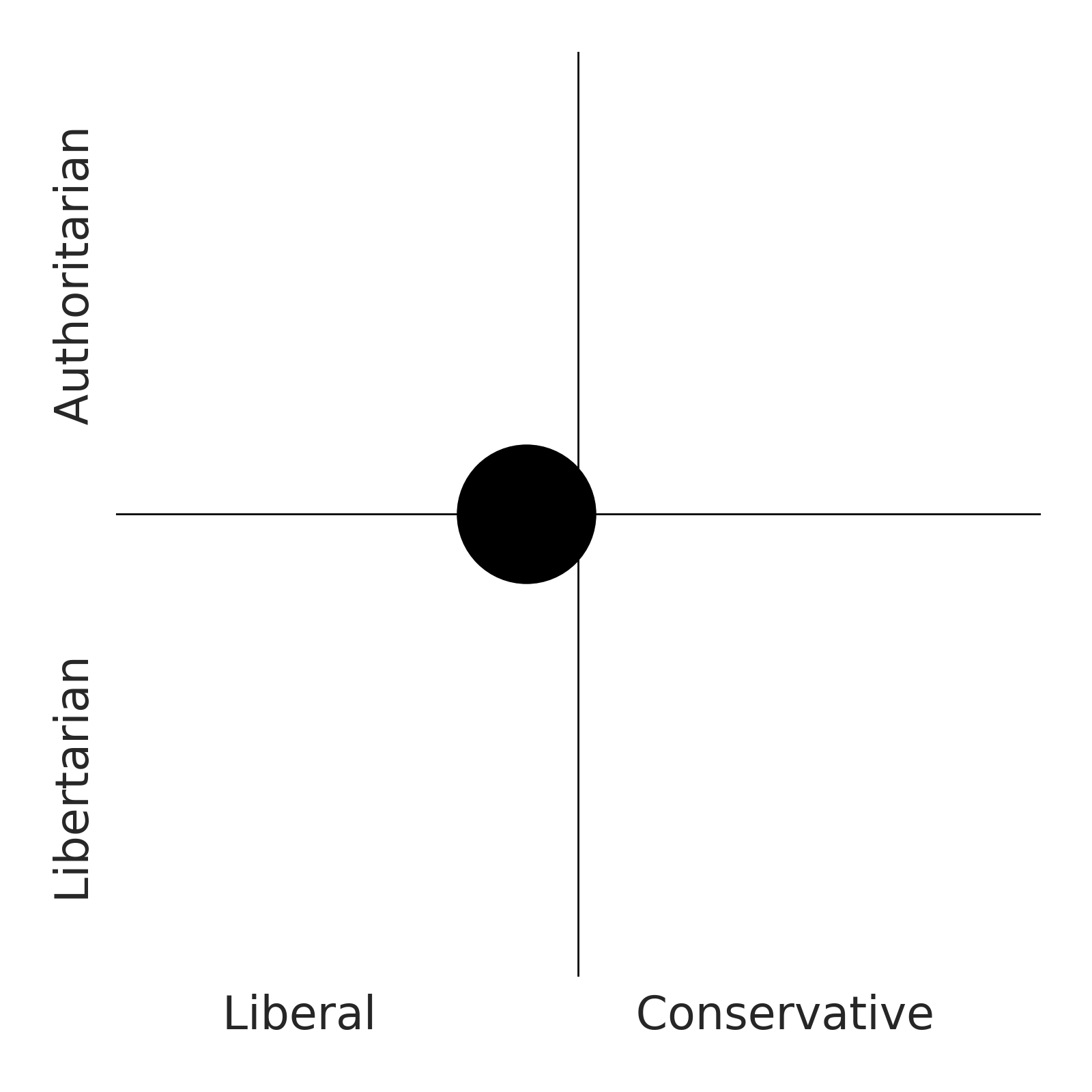
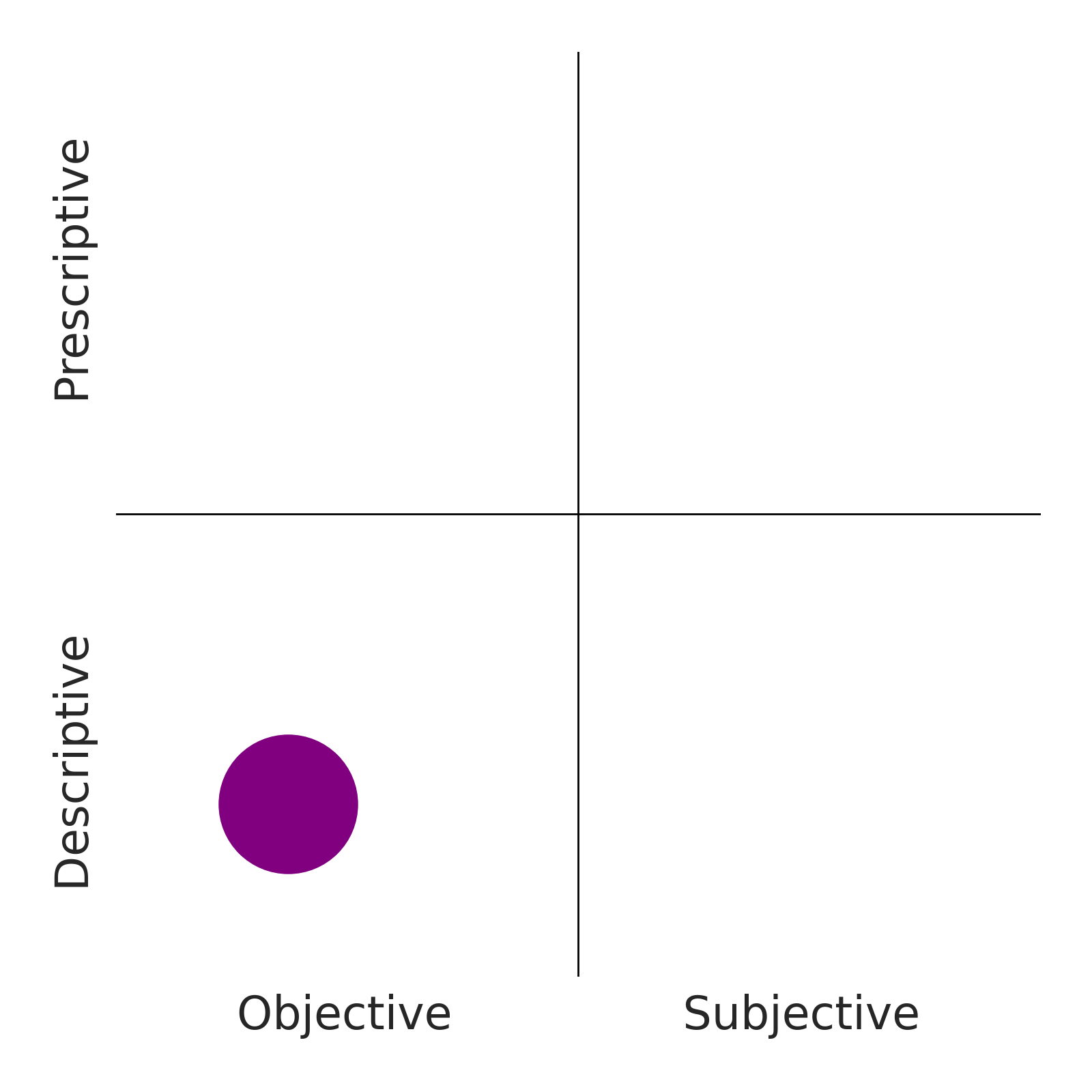
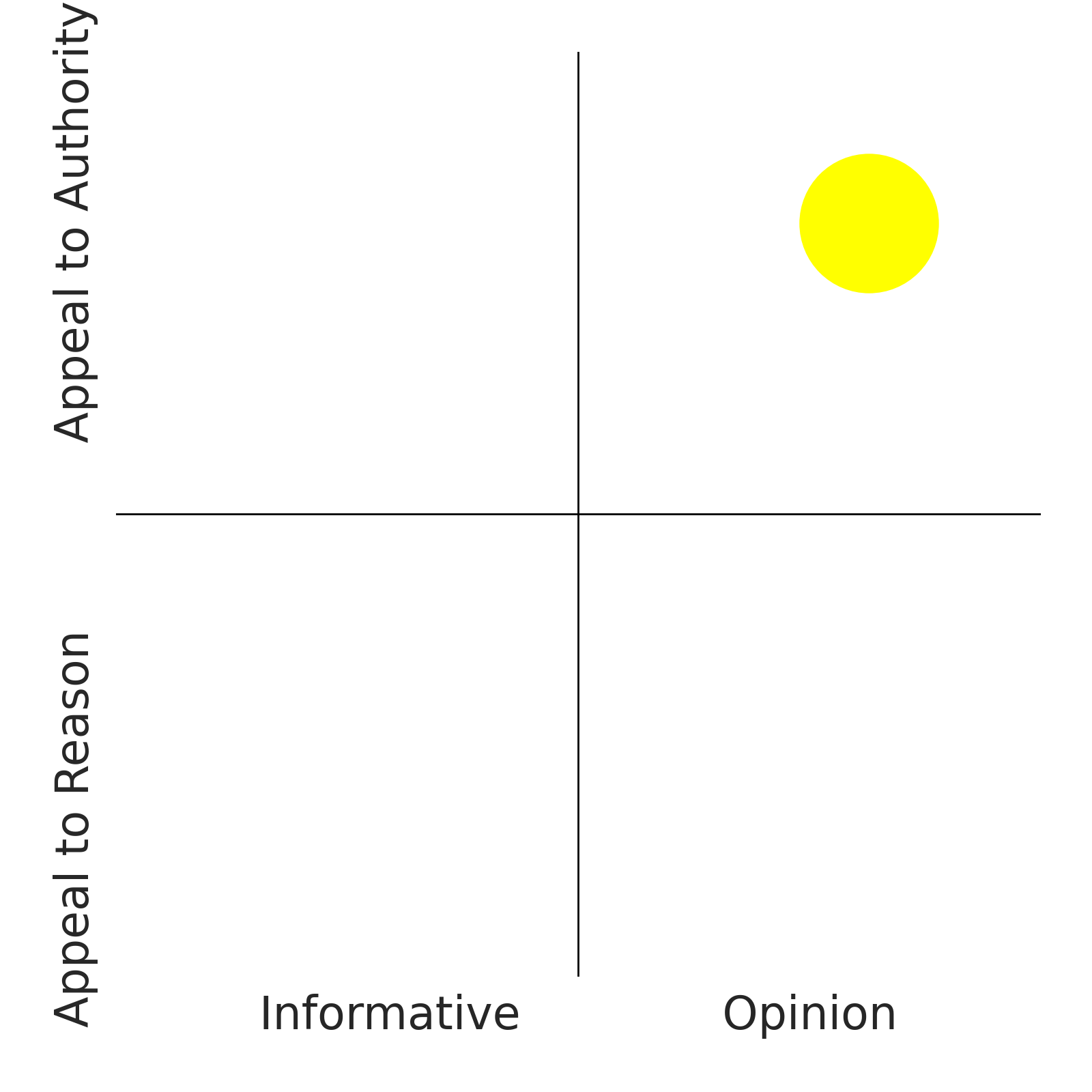
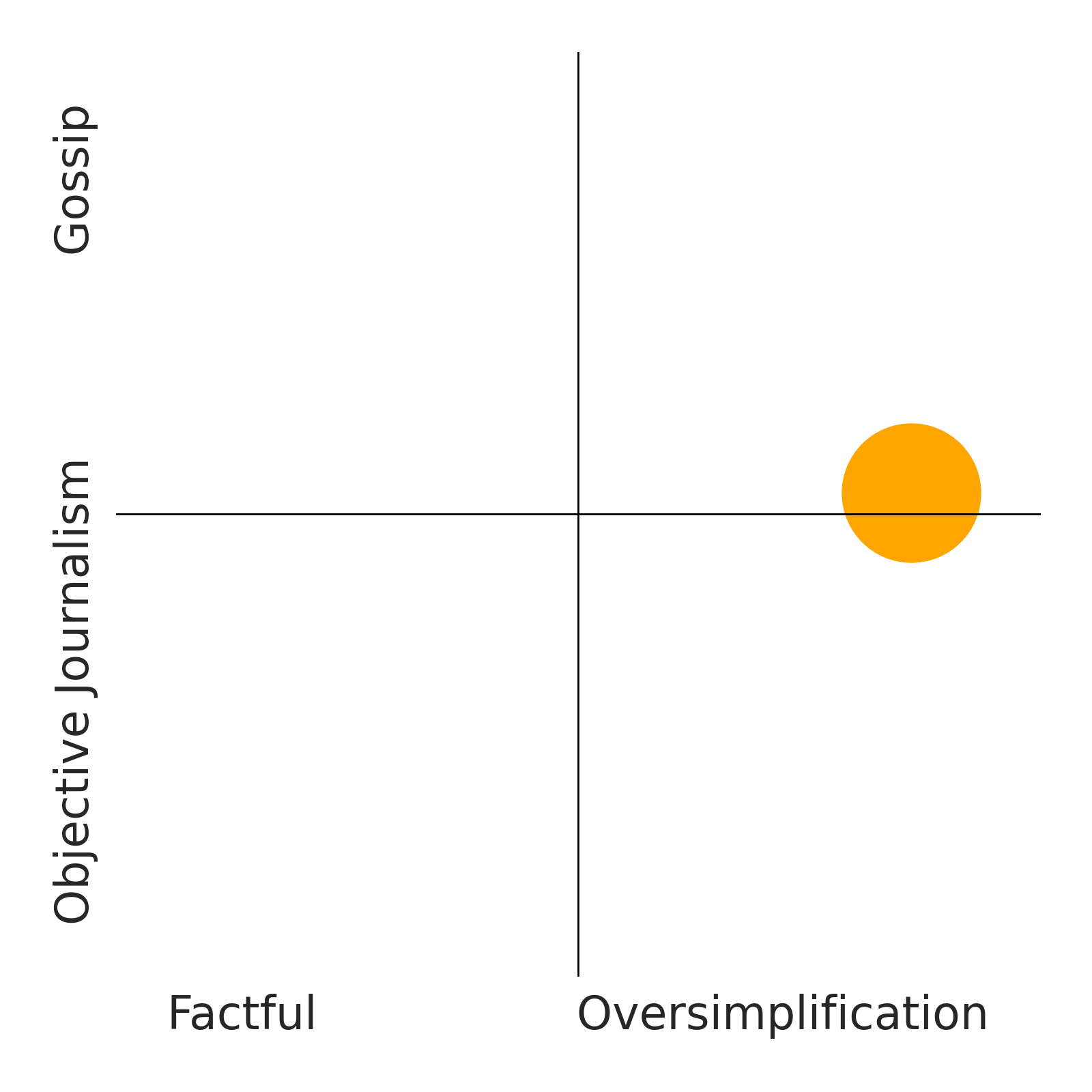
Click points to explore news by date. News sentiment ranges from -10 (very negative) to +10 (very positive) where 0 is neutral.
September 12, 2026 · 0 shares
The headline frames OpenAI’s IPO outlook through an explanatory 'why' question while attributing the timeline to Sam Altman’s own statement.
Automated analysis; not human reviewed. Limitations: Only the headline text was available for analysis, so broader framing and supporting details could not be assessed. · 1 of 54 available dimensions scored; omitted dimensions are not treated as neutral. · Verified supporting quotes for 1 of 1 scored dimensions.
Claim: The headline attributes the no-IPO claim to Altman rather than asserting it as fact.
“Why OpenAI's Sam Altman says an IPO isn't in the cards this year” · exact text match
Why: The verb 'says' marks reported speech, and the 'why' framing asks for explanation rather than presenting the timeline as independently confirmed fact.
Only the headline text was available for analysis, so broader framing and supporting details could not be assessed.
2026 © Helium Trades
Privacy Policy & Disclosure
* Disclaimer: Nothing on this website constitutes investment advice, performance data or any recommendation that any particular security, portfolio of securities, transaction or investment strategy is suitable for any specific person. Helium Trades is not responsible in any way for the accuracy
of any model predictions or price data. Any mention of a particular security and related prediction data is not a recommendation to buy or sell that security. Investments in securities involve the risk of loss. Past performance is no guarantee of future results. Helium Trades is not responsible for any of your investment decisions,
you should consult a financial expert before engaging in any transaction.


