See whether Helium helps you make better-informed decisions. Try every Pro Trader feature for 30 days. No credit card required.
Try every Pro Trader feature for 30 days. No credit card required.
September 11, 2026 · 0 shares
Celebrates selected young biotech innovators with enthusiastic superlatives while tempering a specific aging-drug claim with skepticism.
Automated analysis; not human reviewed. Limitations: The article is a promotional listicle with limited depth per innovator; analysis is based solely on the given excerpt. · 11 of 54 available dimensions scored; omitted dimensions are not treated as neutral. · Verified supporting quotes for 8 of 11 scored dimensions.
Claim: The framing celebrates an exclusive group as the 'brightest and best' young minds.
“the brightest and best young minds” · exact text match
“Our 35 Innovators Under 35 are the ones to watch” · exact text match
Why: These phrases elevate a curated list as top-tier, implying an elitist perspective.
Claim: The article uses subjective praise and personal enthusiasm.
“some of the very cool stuff” · exact text match
Why: Calling projects 'very cool stuff' injects subjectivity.
Claim: The article employs sensational language to describe achievements.
“groundbreaking 'age reversal' tech” · not found in supplied text
“landmark achievement” · exact text match
Why: Terms like 'groundbreaking' and 'landmark' exaggerate without quantitative backing.
Claim: The article expresses a positive outlook on these innovations' future impact.
“lifesaving innovations” · exact text match
“hopes that AI-designed life forms might one day be used to make drugs or soak up pollution” · exact text match
Why: These phrases convey optimism about the value of the work.
Claim: The article presents novel and engaging topics.
“very cool stuff” · exact text match
“groundbreaking 'age reversal' tech” · not found in supplied text
Why: These descriptors aim to capture reader interest.
Claim: The article includes direct opinion and subjective judgment.
“Don’t buy it.” · exact text match
“very cool stuff” · exact text match
Why: These are not neutral reporting but personal assessments.
Claim: The article uses emotionally positive language.
“lifesaving innovations” · exact text match
“very cool stuff” · exact text match
Why: These terms evoke positive emotion.
Claim: The article provides specific names, ages, and a skeptical note, suggesting a credible sourcing approach.
“Paschal Kija, a 28-year-old” · exact text match
“KJ ultimately got his first dose ... when he was about seven months old” · not found in supplied text
“Don’t buy it.” · exact text match
Why: Concrete details and a cautionary note support credibility.
Claim: The article promotes its own list and the innovators.
“Every year, MIT Technology Review puts together a list of some of the brightest and best young minds” · exact text match
Why: This is promotional toward the publication's own feature.
Claim: The article includes speculative future possibilities.
“hopes that AI-designed life forms might one day be used to make drugs or soak up pollution” · exact text match
Why: This is a hope about future use, not a confirmed fact.
Claim: The article shows skepticism toward a specific hype claim.
“Don’t buy it.” · exact text match
Why: Advising readers not to buy a claim demonstrates integrity by countering hype.
The article is a promotional listicle with limited depth per innovator; analysis is based solely on the given excerpt.
September 08, 2026 · 0 shares
Automated analysis; not human reviewed. Limitations: The supplied text is a truncated newsletter-style compilation with ellipses and grouped headlines, so full article context and some claim details are unavailable. · 3 of 54 available dimensions scored; omitted dimensions are not treated as neutral. · Verified supporting quotes for 3 of 3 scored dimensions.
Claim: The publisher's own framing mixes factual description with evaluative praise.
“doing groundbreaking scientific work and building clever technical fixes for sticky problems” · exact text match
Why: Words such as 'groundbreaking' and 'clever' express subjective judgment rather than neutral description.
Claim: The list is framed in celebratory, progress-oriented terms.
“doing groundbreaking scientific work and building clever technical fixes for sticky problems” · exact text match
“has already made clear progress toward their goals” · exact text match
Counterevidence:
“But its pivot to data centers and services has drawn criticism.” · exact text match
Why: These phrases evaluate the honorees and their work positively rather than neutrally, indicating an optimistic framing of technological innovation.
Claim: The text attributes many news items to named external outlets and uses hedged wording for pending or proposed actions.
“Europe's biggest carriers are in talks to build a Starlink rival” · exact text match
“Australia plans to let users switch off social media algorithms” · exact text match
Why: Source attribution and hedged verbs such as 'in talks' and 'plans' make the provenance and status of these claims visible.
The supplied text is a truncated newsletter-style compilation with ellipses and grouped headlines, so full article context and some claim details are unavailable.
September 01, 2026 · 0 shares
A curated technology digest pairs hedged optimism about engineered microbes and AI diagnostics with pointed concern about OpenAI’s safety culture, using attributed summaries and provocative headlines.
Automated analysis; not human reviewed. Limitations: The supplied text is a newsletter digest that compresses many external reports into brief summaries, so the original reporting behind most items could not be independently assessed. · 8 of 54 available dimensions scored; omitted dimensions are not treated as neutral. · Verified supporting quotes for 8 of 8 scored dimensions.
Claim: The newsletter mostly uses hedged and attributed language, making its style more objective than subjective.
“although it’s too early to say exactly how well the approach works in the field” · exact text match
“They’ve sued the company for allegedly misleading advertisers.” · exact text match
Counterevidence:
“But it’s missing a critical dimension: the role company culture may have played.” · exact text match
Why: Hedging and preserving allegations as allegations are markers of descriptive reporting, though some editorial commentary appears elsewhere.
Claim: The newsletter explicitly curates content for entertainment and interest.
“I’ve combed the internet to find you today’s most fun/important/scary/fascinating stories about technology.” · exact text match
Why: The stated curating goal and the wide range of topics support assigning above-average interestingness.
Claim: The newsletter selects and headlines alarming AI-control stories that induce mild fear.
“Reports of AI escaping users’ control nearly doubled in a month” · exact text match
“Anthropic says it paused some AI training after Claude went rogue.” · exact text match
Why: Phrases like “escaping users’ control” and “rogue” are emotionally loaded, though the item text remains generally measured.
Claim: The roundup includes tabloid-style human-interest and celebrity items.
“A robot vacuum caught a man’s wife cheating—and sent him to prison” · exact text match
“George Santos has received Kalshi’s first-ever lifetime ban.” · exact text match
Why: These stories are light, personality-driven, and closer to gossip than to core technology reporting.
Claim: The digest includes direct editorial judgments rather than only neutral summaries.
“But it’s missing a critical dimension: the role company culture may have played.” · exact text match
“That’s all the more concerning because the report’s few references to human error suggest OpenAI’s culture played a big role.” · exact text match
Why: These phrases express the publisher’s own assessment of OpenAI’s postmortem rather than simply reporting what it says.
Claim: The text uses visible sourcing, attribution, and hedging, supporting high credibility.
“They’ve sued the company for allegedly misleading advertisers.” · exact text match
“although it’s too early to say exactly how well the approach works in the field” · exact text match
Why: Credibility here reflects observable practices: allegations are labeled as allegations, sources are named, and uncertainty is acknowledged.
Claim: The text includes forward-looking projections and potential outcomes, not just settled facts.
“its modeling suggests microbes could eventually replace about 50% of synthetic fertilizer” · exact text match
“The decision sets up a potential Supreme Court showdown.” · exact text match
Why: These statements forecast or project future outcomes while using hedges like “suggests” and “potential,” making them mild speculation.
Claim: The reporting preserves claims as claims and attributes them to the relevant parties.
“They accuse the company of “blatant theft” in a major new lawsuit.” · exact text match
“More than 300 cases were recorded in July, almost twice June’s total. (Guardian)” · exact text match
Why: Distinguishing accusation from fact and naming outlets are observable fairness and honesty signals.
The supplied text is a newsletter digest that compresses many external reports into brief summaries, so the original reporting behind most items could not be independently assessed.
September 03, 2026 · 0 shares
A curated technology newsletter frames child-safety monitoring and fossil-fuel agriculture as problems with expert-backed and climate-friendly solutions while packaging the day’s news with playful and mildly alarmist language.
Automated analysis; not human reviewed. Limitations: The supplied text is a newsletter digest with abbreviated items and linked sources; bias scoring relies on editorial summaries rather than full articles. · 7 of 54 available dimensions scored; omitted dimensions are not treated as neutral. · Verified supporting quotes for 7 of 7 scored dimensions.
Claim: The digest's editorial voice injects personal, evaluative framing into an otherwise newsy summary.
“I’ve combed the internet to find you today’s most fun/important/scary/fascinating stories about technology.” · exact text match
Why: First-person curation and value-laden adjectives add a subjective layer to the reported items.
Claim: The lead uses emotionally heightened language to dramatize a social issue.
“Digital harms have become the defining fear of American parents.” · exact text match
Why: Calling digital harms the 'defining fear' of American parents is a dramatic characterization rather than a neutral statistic.
Claim: The newsletter explicitly markets itself as a curated selection of notable, emotionally varied stories.
“I’ve combed the internet to find you today’s most fun/important/scary/fascinating stories about technology.” · exact text match
Why: The editorial promise of varied and compelling content supports an above-average interestingness rating.
Claim: Some items embed evaluative opinions in descriptive summaries.
“AI food slop has made its way onto real restaurant menus” · exact text match
“which frequently look revolting.” · exact text match
Why: 'Slop' and 'revolting' are pejorative judgments presented as part of a news summary.
Claim: A substantial share of the curated items concerns government policy and political actors.
“The Trump administration has backed OpenAI in its NYT lawsuit” · exact text match
“Taiwan has uncovered a hidden Chinese network targeting its chip sector” · exact text match
Why: Selection and placement of multiple items about the executive branch, national security, and government regulation make politics a central thread.
Claim: The digest routinely attributes each news item to named external outlets and quotes named sources.
“The one-year moratorium will affect 600,000 students. (Politico)” · exact text match
“Nikhil Lai, a principal analyst at Forrester, tells the New York Times that Google’s legal win against antitrust enforcers trying to break up its ad business is a seminal victory.” · exact text match
Why: Parenthetical source labels and a named analyst quotation provide visible sourcing and attribution for verification.
Claim: The coverage is evenhanded in presenting both benefits and harms of child-monitoring tools.
“These tools have had genuine successes, preventing suicide attempts, intercepting predators, and averting school shootings. But they can also cause harm themselves, from false alarms and unnecessary interventions to damaged trust and anxiety.” · exact text match
Why: The same section acknowledges both the positive record and the documented downsides of monitoring apps.
The supplied text is a newsletter digest with abbreviated items and linked sources; bias scoring relies on editorial summaries rather than full articles.
September 11, 2026 · 0 shares
A curated tech digest that celebrates innovators and breakthroughs while also noting worker anxieties about automation.
Automated analysis; not human reviewed. Limitations: The article text is a truncated newsletter digest with multiple incomplete items, limiting precise analysis of full framing. · 8 of 54 available dimensions scored; omitted dimensions are not treated as neutral. · Verified supporting quotes for 8 of 8 scored dimensions.
Claim: The newsletter uses subjective language to frame story selection.
“I’ve combed the internet to find you today’s most fun/important/scary/fascinating stories about technology.” · exact text match
Why: The adjectives 'fun', 'scary', and 'fascinating' indicate subjective editorial selection.
Claim: The article uses sensational adjectives to describe content.
“I’ve combed the internet to find you today’s most fun/important/scary/fascinating stories about technology.” · exact text match
“Webb’s Near-Infrared Camera has captured a galactic merger’s dazzling final phase.” · exact text match
Why: Words like 'scary' and 'dazzling' amplify emotional appeal beyond plain factual reporting.
Claim: The article highlights positive technological breakthroughs, implying optimism.
“Her new furnace turns iron ore into refined liquid steel in a single step and swaps coal for natural gas. Together, those changes slash emissions by at least half, she says, and cut costs by 25% compared with steelmaking as usual.” · exact text match
Why: The description of a cleaner, cheaper steelmaking process is presented as a beneficial innovation.
Claim: The newsletter is explicitly curated to include intriguing items.
“I’ve combed the internet to find you today’s most fun/important/scary/fascinating stories about technology.” · exact text match
Why: The framing directly promises engaging content.
Claim: The article uses direct quotes and named sources for its substantive items.
“she says” · exact text match
“A number of tech workers told MIT Technology Review” · exact text match
Why: Citing sources and using attribution for claims supports trustworthiness.
Claim: The article relies on scientific evidence and tools.
“Webb’s Near-Infrared Camera has captured a galactic merger’s dazzling final phase.” · exact text match
“An exquisitely preserved 66-million-year-old bird feather was found in a fossilised dinosaur dropping.” · exact text match
Why: References to observational instruments and geological timescales reflect an empirical, scientific approach.
Claim: The newsletter includes headlines about future developments and predictions.
“The Download: Claude’s inner workings, and the future of world models” · exact text match
“The Download: the next big thing in LLMs and how AI academic research is shifting” · exact text match
Why: Phrases like 'future of' and 'next big thing' are forward-looking and speculative.
Claim: The publisher attributes claims to named sources, showing fairness.
“she says” · exact text match
“A number of tech workers told MIT Technology Review” · exact text match
Why: Attribution signals a commitment to sourcing even when reporting uncertain or speculative statements.
The article text is a truncated newsletter digest with multiple incomplete items, limiting precise analysis of full framing.
September 10, 2026 · 0 shares
A balanced report on a solar geoengineering research roadmap that highlights scientific uncertainty and governance concerns without endorsing a position.
Solar geoengineering, specifically stratospheric aerosol injection (SAI), is a proposed method to reflect sunlight and cool Earth, but it remains controversial due to scientific unknowns, potential side effects, and governance questions. There has been no systematic plan for research before this roadmap.
Automated analysis; not human reviewed. Limitations: The supplied article text is truncated and includes newsletter boilerplate; analysis based on the substantive excerpt. · 4 of 54 available dimensions scored; omitted dimensions are not treated as neutral. · Verified supporting quotes for 1 of 4 scored dimensions.
Claim: The article presents multiple perspectives without endorsing a particular viewpoint, indicating objectivity.
“Most observers I spoke to about the report agree that these studies could reduce uncertainty” · exact text match
“Aarti Gupta, co-initiator of the non-use initiative... told me in a recent on-stage interview” · not found in supplied text
Why: The article includes both proponents and critics, presenting their arguments and attributing quotes, which demonstrates balanced reporting.
Claim: The article emphasizes scientific uncertainty and the need for evidence-based research, reflecting a rational approach.
“big gaps remain in the scientific understanding” · exact text match
“The road map has these gates precisely because there may be points where the answer is ‘You should stop’” · not found in supplied text
Why: The article repeatedly underscores unknowns and the importance of reducing them through structured experiments, which supports a rational rather than irrational stance.
Claim: The article demonstrates high integrity through explicit attribution and acknowledgment of uncertainty.
“MIT Technology Review can reveal” · exact text match
“Gruener says that the road map is intended as a Version 1” · exact text match
Why: The article names sources, uses direct quotes, and avoids exaggerating claims, indicating honest reporting.
The supplied article text is truncated and includes newsletter boilerplate; analysis based on the substantive excerpt.
September 03, 2026 · 0 shares
A sponsored custom-content report frames scaling agentic AI as an enterprise systems challenge, foregrounding a NiCE executive's prescriptive, cautiously optimistic advice rather than independent reporting.
Agentic AI refers to AI systems that can autonomously take actions within software workflows rather than only produce text or analysis; enterprise deployment usually requires access to data, back-end systems, and governance controls.
Automated analysis; not human reviewed. Limitations: The supplied text is a short sponsored, single-source custom-content excerpt, so the analysis captures framing rather than independent journalistic verification; the 80% adoption statistic and NiCE's claims could not be checked. · 8 of 54 available dimensions scored; omitted dimensions are not treated as neutral. · Verified supporting quotes for 8 of 8 scored dimensions.
Claim: The report is primarily subjective, structured as one executive's opinions and advice.
“For Arun Chandra, chief operating officer at NiCE, the first step is moving beyond experimentation for its own sake.” · exact text match
“Chandra argues that AI agents should ultimately be held to the same standards as human workers, with organizations thinking of their workforce as a combination of humans and AI agents.” · exact text match
Why: The content is built around a named executive's perspective and recommendations, with 'Chandra argues' and 'says' marking opinion rather than neutral reporting.
Claim: The report is cautiously optimistic about agentic AI's potential when organizations adopt a connected approach.
“Looking ahead, that connected approach could enable agents to work proactively and even communicate with other agents to resolve customer needs.” · exact text match
Counterevidence:
“Although agentic AI has been adopted by some 80% of Fortune 500 companies, progress toward meaningful scale remains uneven, with many organizations still working through isolated pilots.” · exact text match
Why: The forward-looking conditional frames positive outcomes as achievable, while the article's caveat about uneven progress keeps the optimism measured.
Claim: The report is prescriptive, telling organizations what they need to do to scale agentic AI.
“Organizations need to define whether they are trying to increase revenue, reduce costs, or pursue another strategic or financial objective.” · exact text match
“the priority is not to “boil the ocean,” Chandra says, but to instead build a connected strategy around high-value use cases, workflows, workforce changes, and measurable outcomes.” · exact text match
Why: Repeated 'need to' and 'priority' language instructs organizations on required actions rather than merely describing events.
Claim: The feature is heavily opinionated, advancing a named executive's recommendations.
“Chandra argues that AI agents should ultimately be held to the same standards as human workers, with organizations thinking of their workforce as a combination of humans and AI agents.” · exact text match
“The last thing you want to do is to apply AI on an outdated or an inefficient workflow,” Chandra says.” · exact text match
Why: The content consists largely of evaluative arguments and practical advice, with attributions making it an opinion-based feature.
Claim: The report relies on a single corporate executive's authority for its core prescriptions.
“For Arun Chandra, chief operating officer at NiCE, the first step is moving beyond experimentation for its own sake.” · exact text match
“Chandra argues that AI agents should ultimately be held to the same standards as human workers, with organizations thinking of their workforce as a combination of humans and AI agents.” · exact text match
Counterevidence:
“Although agentic AI has been adopted by some 80% of Fortune 500 companies, progress toward meaningful scale remains uneven, with many organizations still working through isolated pilots.” · exact text match
Why: The prescriptions are grounded in Chandra's title and opinions rather than independent data, though the article does include one adoption statistic.
Claim: Credibility is limited by single-source, sponsored content even though sourcing is transparent.
“This webcast is produced in partnership with NiCE.” · exact text match
“Chandra argues that AI agents should ultimately be held to the same standards as human workers, with organizations thinking of their workforce as a combination of humans and AI agents.” · exact text match
Why: Named attribution and transparency support some credibility, but the substantive claims rest on one vendor executive in a promotional context.
Claim: The content is an advertised/sponsored custom-content piece.
“This webcast is produced in partnership with NiCE.” · exact text match
“This content was produced by Insights, MIT Technology Review’s custom content arm, not its editorial staff.” · exact text match
Why: The publisher explicitly identifies the webcast as produced with a commercial partner and separates it from editorial staff.
Claim: The publisher is transparent about the sponsored, non-editorial nature of the content.
“This webcast is produced in partnership with NiCE.” · exact text match
“This content was produced by Insights, MIT Technology Review’s custom content arm, not its editorial staff.” · exact text match
Why: Visible disclosure of the commercial relationship and separation from editorial staff is a clear honesty signal.
The supplied text is a short sponsored, single-source custom-content excerpt, so the analysis captures framing rather than independent journalistic verification; the 80% adoption statistic and NiCE's claims could not be checked.
August 26, 2026 · 0 shares
Frames the Hugging Face hack as a product of reward hacking during AI training, relying on OpenAI and METR reports and expert commentary while maintaining a cautiously neutral tone.
The article is a news report from MIT Technology Review based on two reports released the same day: one from OpenAI and one from METR, an AI evaluation nonprofit; no independent verification of the incident is provided.
Automated analysis; not human reviewed. Limitations: My analysis is limited to the article text; I cannot verify the underlying OpenAI and METR reports or the hack itself, so my scores reflect the article's internal attribution and framing. · 2 of 54 available dimensions scored; omitted dimensions are not treated as neutral. · Verified supporting quotes for 1 of 2 scored dimensions.
Claim: The article is largely objective but includes brief evaluative interjections that introduce a slight subjective tone.
“This solution isn’t as much of a slam dunk as it might seem” · exact text match
“and that’s a huge “if.”” · not found in supplied text
Why: Most content is reportorial with attributed quotes, but these two phrases offer the writer's own assessment of the proposed solution, reducing full objectivity.
Claim: The article uses named sources, direct quotes, and explicit attribution to reports, showing high internal credibility.
“according to an OpenAI technical report released today” · exact text match
“says Kai Chen, who runs OpenAI’s alignment research team” · exact text match
“released its own report on the hack today” · exact text match
Why: The article consistently attributes claims to specific reports and named researchers, and notes uncertainty with words like 'hypothesis' and 'believe.'
My analysis is limited to the article text; I cannot verify the underlying OpenAI and METR reports or the hack itself, so my scores reflect the article's internal attribution and framing.
September 09, 2026 · 0 shares
Frames OpenAI's Navier–Stokes breakthrough around uncredited-use allegations and portrays frontier AI's growing dominance as a sobering threat to open, human-driven mathematics.
The article assumes familiarity with OpenAI's Astra model, Anthropic as OpenAI's main rival, and the earlier Hugging Face hack, none of which is explained in the text.
Automated analysis; not human reviewed. Limitations: Only the main body was analyzed; appended story teasers and newsletter boilerplate were ignored. · 8 of 54 available dimensions scored; omitted dimensions are not treated as neutral. · Verified supporting quotes for 6 of 8 scored dimensions.
Claim: The report blends factual reporting with explicit interpretive judgments about what the controversy implies.
“The clear implication of the document is that OpenAI’s models somehow made use of Buckmaster and Alpöge’s work.” · exact text match
“But there might be a thin silver lining to that version of the story for mathematicians.” · not found in supplied text
Why: The first quote goes beyond the documented facts to assert an implication; the second applies an editorial appraisal.
Claim: The piece characterizes AI-driven mathematical progress as sobering and potentially harmful to the field.
“Even so, the bigger picture here is sobering.” · exact text match
“Mathematics is quickly becoming the province of frontier AI companies with impressive internal-only models, money to burn, and a lack of collaborative spirit.” · exact text match
Counterevidence:
“But there might be a thin silver lining to that version of the story for mathematicians” · exact text match
Why: The framing uses explicitly negative language about the trajectory and emphasizes losses to human mathematics, while acknowledging one possible silver lining.
Claim: The text states evaluative opinions about the future of mathematics rather than confining itself to facts.
“Even so, the bigger picture here is sobering.” · exact text match
“That would dramatically change the field of mathematics.” · exact text match
Why: The first is an evaluative judgment; the second frames a conditional forecast as a significant consequence.
Claim: The tone carries a negative emotional charge about the state of mathematics.
“Even so, the bigger picture here is sobering.” · exact text match
“mathematicians are becoming depressed” · exact text match
Why: The article's own assessment is 'sobering' and it reports researcher depression, contributing to a negative emotional valence.
Claim: The report is transparent about sources, attribution, and uncertainty.
“It remains uncertain if OpenAI’s models made use of the work completed by Buckmaster and Alpöge” · exact text match
“MIT Technology Review reached out to Buckmaster for comment, but didn’t hear back before publication.” · exact text match
Why: The text explicitly marks uncertainty and notes an attempt to contact a key source before publication.
Claim: It criticizes frontier AI companies as resource-hoarding and deficient in collaborative norms.
“frontier AI companies with impressive internal-only models, money to burn, and a lack of collaborative spirit.” · exact text match
“private companies keep the agents’ wrong turns from public view—those benefits disappear.” · exact text match
Why: Both quotes are negative characterizations of AI companies' conduct and incentives, though the critique is limited to research collaboration rather than a broad economic stance.
Claim: The article makes conditional forecasts about the future of mathematics under AI dominance.
“Mathematics is quickly becoming the province of frontier AI companies...” · not found in supplied text
“there might not be any open problems left for human mathematicians outside of those companies to wrestle with.” · exact text match
Why: The claims extrapolate current trends into future outcomes, with hedging language.
Claim: The reporting visibly attributes claims, includes denials, and flags uncertainty.
“OpenAI has denied the accusations.” · exact text match
“It remains uncertain if OpenAI’s models made use of the work completed by Buckmaster and Alpöge” · exact text match
Why: It separates fact from allegation, includes the accused party's denial, and explicitly notes uncertainty.
Only the main body was analyzed; appended story teasers and newsletter boilerplate were ignored.
September 08, 2026 · 0 shares
The profile presents Danijar Hafner and his new startup in a distinctly admiring tone, emphasizing his exceptional reputation, notable research milestones, and world-changing ambitions without critical counterpoint.
The profile is drawn from a September/October 2026 magazine issue and focuses on Hafner's past research and his current undisclosed startup.
Automated analysis; not human reviewed. Limitations: The supplied text appears truncated and ends with unrelated article teasers; the analysis was based on the substantive profile portion only.
The supplied text appears truncated and ends with unrelated article teasers; the analysis was based on the substantive profile portion only.
September 10, 2026 · 0 shares
A promotional analysis that advocates for a hybrid AI orchestration approach in healthcare, presenting Ensemble's EIQ as the solution while cautioning against over-reliance on foundation models.
Automated analysis; not human reviewed. Limitations: The article text is a disjointed concatenation of multiple segments, including a promotional piece and separate news items, which may affect the coherence of bias classification. · 6 of 54 available dimensions scored; omitted dimensions are not treated as neutral. · Verified supporting quotes for 4 of 6 scored dimensions.
Claim: The article blends factual analysis with promotional language.
“meaningful and welcome development” · exact text match
“durable advantage” · exact text match
Why: While the discussion is technical, the use of positive evaluative phrases and the implicit endorsement of a commercial product introduce subjectivity.
Claim: The article is generally positive on AI's role in healthcare, especially with the right orchestration.
“These capabilities will make healthcare work faster, more consistent and easier to navigate.” · exact text match
“The entrance of major AI companies into healthcare is a meaningful and welcome development” · exact text match
Why: The overall thrust is constructive and forward-looking, anticipating improvements, but it also notes limitations, yielding a bullish yet balanced outlook.
Claim: The article expresses cautious optimism about AI's potential in healthcare.
“The entrance of major AI companies into healthcare is a meaningful and welcome development” · exact text match
“These capabilities will make healthcare work faster, more consistent and easier to navigate. But they will not, on their own, solve deep-rooted administrative complexity.” · exact text match
Why: The positive framing of AI capabilities is tempered by a clear caveat, resulting in a mildly optimistic but measured tone.
Claim: The article prescribes a hybrid orchestration architecture as the right approach.
“The technical shift: From automation to orchestration” · exact text match
“One promising approach is hybrid architecture that combines LLMs with structured knowledge bases, symbolic logic, reinforcement learning, and deterministic validation layers.” · exact text match
Why: It does not merely describe options but recommends a specific architectural path, culminating in Ensemble's EIQ as the embodiment.
Claim: The article asserts without evidence that Ensemble's dataset is among the most robust in healthcare.
“That architecture is built on one of the most robust datasets in healthcare, informed by more than a decade of award-winning operational performance.” · not found in supplied text
Why: The superlative 'most robust' and unverified 'award-winning' are presented as fact without supporting data or independent validation.
Claim: The article promotes Ensemble's proprietary EIQ product as the preferred solution.
“At Ensemble, this is the design principle behind EIQ, our […] EIQ brings together operational activity, clinical documentation, payer behavior, and reimbursement outcomes into a continuously learning intelligence layer that’s integrated with the hospital’s electronic health record (EHR).” · not found in supplied text
Why: The text explicitly names and advocates for Ensemble's product, framing it as the natural outcome of the discussed technical shift.
The article text is a disjointed concatenation of multiple segments, including a promotional piece and separate news items, which may affect the coherence of bias classification.
The supplied text is a promotional event announcement and headline snippets, providing no substantive publisher framing to classify.
Automated analysis; not human reviewed. Limitations: The supplied text is mostly a subscription prompt and event announcement; the only substantive content is a set of headline teasers, so bias classification is unsupported.
The supplied text is mostly a subscription prompt and event announcement; the only substantive content is a set of headline teasers, so bias classification is unsupported.
September 01, 2026 · 0 shares
Sponsored case-study framing that treats AI-assisted legacy modernization as an urgent, high-ROI imperative, relying on executive testimony and self-reported metrics rather than independent analysis.
Legacy modernization is the process of replacing or updating aging enterprise software, often because vendors end support and security or talent risks grow. Bupa is a global healthcare group; Infosys is an IT services and consulting firm.
Automated analysis; not human reviewed. Limitations: The supplied text is a sponsored podcast transcript; reported metrics and outcomes are attributed to the participants and cannot be independently verified from the text. · 13 of 54 available dimensions scored; omitted dimensions are not treated as neutral. · Verified supporting quotes for 12 of 13 scored dimensions.
Claim: The content is subjective, built around executive endorsements and an advocacy case.
“AI-assisted modernization can reduce the time and complexity of transforming legacy systems while creating a foundation for faster innovation, says Asifa Sherazi, CIO of health insurance at Bupa and Sanjeev Tripathi, senior VP, region head of BFSI, healthcare, and public sector at Infosys.” · exact text match
Why: The central claim is an attributed expert assertion rather than an independently established objective finding.
Claim: The content is strongly bullish on AI-assisted legacy modernization.
“The emergence of AI is fundamentally shifting the economics of modernization” · exact text match
“we believe that the time is now for legacy modernization” · exact text match
Why: The framing presents AI as a decisive economic shift that makes modernization urgent and advantageous, with no bearish caveats.
Claim: The content is strongly optimistic about future benefits of modernized platforms.
“Modern platforms will become the base for far more intelligent AI-driven ecosystems, where AI is not just an add-on, but it is built into everything from design to operations. That's how the modern platforms will evolve, and the customer experiences will become far more personalized and predictive.” · not found in supplied text
Why: The forward-looking statements promise personalized, predictive experiences and describe a profound shift, with no downside scenarios.
Claim: The content moves beyond description to give explicit advice to business leaders.
“don't treat modernization as a technology initiative. It is a unique opportunity for us to rethink the business platform itself” · exact text match
Why: Directive advice to leaders is a clear prescriptive stance.
Claim: The content is framed as advocacy for a point of view, not neutral news.
“Making the AI-powered case for legacy modernization” · exact text match
Why: The lede explicitly says the content is 'making the case,' which is persuasive rather than fact-neutral.
Claim: The content relies on executive titles and institutional roles to support its claims.
“My guests are Asifa Sherazi, who is CIO of health insurance at Bupa, and Sanjeev Tripathi, who is senior vice president, region head of BFSI, healthcare, and public sector for Australia, New Zealand, and Southeast Asia at Infosys.” · exact text match
Why: Claims are grounded primarily in the authority of named executives rather than independent evidence.
Claim: Broad claims about AI's effect on modernization are stated with high certainty from a single case study.
“The emergence of AI is fundamentally shifting the economics of modernization” · exact text match
“we believe that the time is now for legacy modernization” · exact text match
Why: A general economic shift and urgent call to action are asserted from one vendor-supported case study, without independent validation.
Claim: The tone is emotionally positive and celebratory.
“And genuinely, it was exhilarating to watch.” · exact text match
“I am so incredibly proud of this team” · exact text match
Why: The selected language emphasizes excitement, pride, and inspiration, giving the report a positive emotional valence.
Claim: The content has moderate visible credibility due to attribution and disclosure, despite being sponsored.
“This content was produced by Insights, MIT Technology Review’s custom content arm, not its editorial staff.” · exact text match
Why: It names executives, gives specific metrics, and discloses its custom-content and sponsored nature, supporting some credibility, though it lacks independent verification.
Claim: The content functions as sponsored promotional material for Infosys and the modernization narrative.
“This episode of Business Lab is produced in partnership with Infosys.” · exact text match
“This content was produced by Insights, MIT Technology Review’s custom content arm, not its editorial staff.” · exact text match
Why: Explicit sponsorship and custom-content disclosure indicate the piece is an advertisement-like collaboration.
Claim: The content is strongly pro-corporate, promoting Infosys and Bupa's business outcomes.
“This episode of Business Lab is produced in partnership with Infosys.” · exact text match
“In fact, in Infosys, we have six strategic value pools that we have identified in our AI-first value framework, which is publicly available, and legacy modernization is one of these six value pools.” · exact text match
Why: The piece is sponsored by Infosys and includes an Infosys executive describing the company's value framework favorably.
Claim: The content includes multiple forward-looking forecasts about AI and modern platforms.
“if I look ahead over the next, you mentioned about next five years, I don't know about five years, four years, but over the next few years at least, I think it is going to get very interesting” · exact text match
Why: The speaker explicitly prognosticates about future developments, which is speculative.
Claim: The content is relatively intelligent, using concrete metrics and structured reasoning.
“Our app rating moved from 3.7 to 4.7. Some of the stats that I'd love to share are that the user-perceived crash rate fell by nearly 24 percentage points on Android and eight points on iOS.” · exact text match
Why: The piece grounds its argument in specific quantified outcomes and coherent cause-effect descriptions rather than vague claims.
The supplied text is a sponsored podcast transcript; reported metrics and outcomes are attributed to the participants and cannot be independently verified from the text.
September 01, 2026 · 0 shares
The reporting frames engineered microbial fertilizers as a promising but partial climate solution, supported by company and expert quotes and hedged with caveats about field testing and replacement limits.
Nitrogen is essential for crops; microbes can fix nitrogen, while synthetic fertilizer uses the energy-intensive Haber-Bosch process. Biological fertilizers aim to replace some synthetic fertilizer, but nitrogen fixation is energetically expensive for microbes. Switch Bioworks uses genetic switches to trigger ammonia production after colonies establish, and Pivot Bio is a larger competitor in the same space.
Automated analysis; not human reviewed. Limitations: The supplied text contains possible typographical errors ('Iran war', '90 million acres in 2026') that may affect factual interpretation, and the article text includes unrelated teaser links after the main report.
The supplied text contains possible typographical errors ('Iran war', '90 million acres in 2026') that may affect factual interpretation, and the article text includes unrelated teaser links after the main report.
September 03, 2026 · 0 shares
Frames high fertilizer prices and food costs as a fossil-fuel problem and presents microbe-based alternatives as the remedy.
Automated analysis; not human reviewed. Limitations: The 'war in Iran' and closure of the Strait of Hormuz are asserted without sourcing or dates, so the causal account cannot be externally checked from the supplied text. · 7 of 54 available dimensions scored; omitted dimensions are not treated as neutral. · Verified supporting quotes for 6 of 7 scored dimensions.
Claim: The text blends factual explanation with evaluative and promotional language.
“Fertilizer prices have been on a roller coaster this year” · exact text match
“how a few more climate-friendly alternatives could bring farmers some relief” · exact text match
Why: Colloquial and value-laden phrases make the framing more subjective than a purely neutral market report.
Claim: The text moves beyond describing prices to advocating reduced reliance on fossil-fuel-based fertilizer.
“Agriculture relies on fossil fuels. It's costing us.” · exact text match
“As long as we’re relying on fertilizers made with fossil fuels, food prices will be tied up with energy prices.” · exact text match
Why: The opening declares a cost problem and the body concludes that continued reliance keeps food prices tied to energy, implying change is needed.
Claim: The text includes evaluative, advocacy-oriented statements rather than only neutral reporting.
“Agriculture relies on fossil fuels. It's costing us.” · exact text match
“how a few more climate-friendly alternatives could bring farmers some relief” · exact text match
Why: 'Costing us' and 'climate-friendly alternatives' carry value judgments and promotional framing.
Claim: The text appears credible on its face because key claims are attributed to named reports and experts.
“according to a report from CoBank” · exact text match
“according to a report from the World Bank” · exact text match
Why: Attribution to identifiable institutions and explicit uncertainty support trustworthiness within the supplied text.
Claim: The text explains fertilizer prices and alternatives through chemical and biological mechanisms, not supernatural or mystical causes.
“natural gas is used as both an energy source and a chemical input in the production of ammonia” · exact text match
“fertilizer with genetically edited microbes” · exact text match
Why: The causal account is empirical and technical, placing the text at the scientific end of the scale.
Claim: The text is transparent about sourcing and uncertainty, which supports perceived honesty.
“according to a report from the World Bank” · exact text match
“Forecasts remain uncertain” · not found in supplied text
Why: Named sources and explicit uncertainty signal fair handling of evidence.
Claim: The text supplies a nuanced explanatory chain rather than a superficial summary.
“natural gas is used as both an energy source and a chemical input in the production of ammonia” · exact text match
“about one-third of global seaborne trade in fertilizers passes through the Strait of Hormuz” · exact text match
Why: It links chemical inputs, trade flows, and price dynamics with quantitative context.
The 'war in Iran' and closure of the Strait of Hormuz are asserted without sourcing or dates, so the causal account cannot be externally checked from the supplied text.
September 10, 2026 · 0 shares
The publisher frames US energy storage tax credit policy as a trade-off between cheap Chinese batteries and supply-chain security, presenting both sides without endorsing a position.
The US government has used tax credits to incentivize clean energy technologies, and recent legislation imposes domestic content requirements to reduce reliance on China. This article is from The Spark, MIT Technology Review's weekly climate newsletter.
Automated analysis; not human reviewed. Limitations: Article text is truncated and includes a page error message, limiting full context. · 4 of 54 available dimensions scored; omitted dimensions are not treated as neutral. · Verified supporting quotes for 3 of 4 scored dimensions.
Claim: The article reports factual policy details and attributes expert opinion.
“New legislation requires that starting in 2026, 55% of the cost of materials used for new energy storage projects must come from outside China and other restricted countries” · exact text match
“Kikuma says” · exact text match
Why: Use of specific numbers and attribution shows objectivity.
Claim: The article provides specific policy details and quotes an expert, making it credible.
“New legislation requires that starting in 2026, 55% of the cost of materials...” · not found in supplied text
“Kikuma says” · exact text match
Why: Precise figures and named expert support credibility.
Claim: The article weighs benefits and risks of cheap technology against supply chain concerns.
“There’s cheap technology on offer, which can help drastically reduce emissions and energy costs. But there can be risks associated with relying too much on any one player for crucial technologies.” · exact text match
Why: Presents both sides without taking a stance, indicating balanced reasoning.
Claim: The article presents both sides of the policy trade-off, indicating fairness.
“How much should countries take advantage of cheap, available tech, versus cutting off major sources to force development of their own factories even if that comes at a higher cost?” · exact text match
Why: Poses a balanced question without endorsing a position.
Article text is truncated and includes a page error message, limiting full context.
September 10, 2026 · 0 shares
A balanced report on a solar geoengineering research roadmap that highlights scientific uncertainty and governance concerns without endorsing a position.
Solar geoengineering, specifically stratospheric aerosol injection (SAI), is a proposed method to reflect sunlight and cool Earth, but it remains controversial due to scientific unknowns, potential side effects, and governance questions. There has been no systematic plan for research before this roadmap.
Automated analysis; not human reviewed. Limitations: The supplied article text is truncated and includes newsletter boilerplate; analysis based on the substantive excerpt. · 4 of 54 available dimensions scored; omitted dimensions are not treated as neutral. · Verified supporting quotes for 1 of 4 scored dimensions.
Claim: The article presents multiple perspectives without endorsing a particular viewpoint, indicating objectivity.
“Most observers I spoke to about the report agree that these studies could reduce uncertainty” · exact text match
“Aarti Gupta, co-initiator of the non-use initiative... told me in a recent on-stage interview” · not found in supplied text
Why: The article includes both proponents and critics, presenting their arguments and attributing quotes, which demonstrates balanced reporting.
Claim: The article emphasizes scientific uncertainty and the need for evidence-based research, reflecting a rational approach.
“big gaps remain in the scientific understanding” · exact text match
“The road map has these gates precisely because there may be points where the answer is ‘You should stop’” · not found in supplied text
Why: The article repeatedly underscores unknowns and the importance of reducing them through structured experiments, which supports a rational rather than irrational stance.
Claim: The article demonstrates high integrity through explicit attribution and acknowledgment of uncertainty.
“MIT Technology Review can reveal” · exact text match
“Gruener says that the road map is intended as a Version 1” · exact text match
Why: The article names sources, uses direct quotes, and avoids exaggerating claims, indicating honest reporting.
The supplied article text is truncated and includes newsletter boilerplate; analysis based on the substantive excerpt.
September 08, 2026 · 0 shares
A generally admiring feature frames a natural-gas-based steelmaking startup as a pragmatic and promising climate step, while acknowledging risks and limited scale.
Automated analysis; not human reviewed. Limitations: The supplied article text is truncated with ellipses and missing sections, so the analysis is based on partial content.
The supplied article text is truncated with ellipses and missing sections, so the analysis is based on partial content.
September 11, 2026 · 0 shares
A curated tech digest that celebrates innovators and breakthroughs while also noting worker anxieties about automation.
Automated analysis; not human reviewed. Limitations: The article text is a truncated newsletter digest with multiple incomplete items, limiting precise analysis of full framing. · 8 of 54 available dimensions scored; omitted dimensions are not treated as neutral. · Verified supporting quotes for 8 of 8 scored dimensions.
Claim: The newsletter uses subjective language to frame story selection.
“I’ve combed the internet to find you today’s most fun/important/scary/fascinating stories about technology.” · exact text match
Why: The adjectives 'fun', 'scary', and 'fascinating' indicate subjective editorial selection.
Claim: The article uses sensational adjectives to describe content.
“I’ve combed the internet to find you today’s most fun/important/scary/fascinating stories about technology.” · exact text match
“Webb’s Near-Infrared Camera has captured a galactic merger’s dazzling final phase.” · exact text match
Why: Words like 'scary' and 'dazzling' amplify emotional appeal beyond plain factual reporting.
Claim: The article highlights positive technological breakthroughs, implying optimism.
“Her new furnace turns iron ore into refined liquid steel in a single step and swaps coal for natural gas. Together, those changes slash emissions by at least half, she says, and cut costs by 25% compared with steelmaking as usual.” · exact text match
Why: The description of a cleaner, cheaper steelmaking process is presented as a beneficial innovation.
Claim: The newsletter is explicitly curated to include intriguing items.
“I’ve combed the internet to find you today’s most fun/important/scary/fascinating stories about technology.” · exact text match
Why: The framing directly promises engaging content.
Claim: The article uses direct quotes and named sources for its substantive items.
“she says” · exact text match
“A number of tech workers told MIT Technology Review” · exact text match
Why: Citing sources and using attribution for claims supports trustworthiness.
Claim: The article relies on scientific evidence and tools.
“Webb’s Near-Infrared Camera has captured a galactic merger’s dazzling final phase.” · exact text match
“An exquisitely preserved 66-million-year-old bird feather was found in a fossilised dinosaur dropping.” · exact text match
Why: References to observational instruments and geological timescales reflect an empirical, scientific approach.
Claim: The newsletter includes headlines about future developments and predictions.
“The Download: Claude’s inner workings, and the future of world models” · exact text match
“The Download: the next big thing in LLMs and how AI academic research is shifting” · exact text match
Why: Phrases like 'future of' and 'next big thing' are forward-looking and speculative.
Claim: The publisher attributes claims to named sources, showing fairness.
“she says” · exact text match
“A number of tech workers told MIT Technology Review” · exact text match
Why: Attribution signals a commitment to sourcing even when reporting uncertain or speculative statements.
The article text is a truncated newsletter digest with multiple incomplete items, limiting precise analysis of full framing.
September 09, 2026 · 0 shares
Frames OpenAI's Navier–Stokes breakthrough around uncredited-use allegations and portrays frontier AI's growing dominance as a sobering threat to open, human-driven mathematics.
The article assumes familiarity with OpenAI's Astra model, Anthropic as OpenAI's main rival, and the earlier Hugging Face hack, none of which is explained in the text.
Automated analysis; not human reviewed. Limitations: Only the main body was analyzed; appended story teasers and newsletter boilerplate were ignored. · 8 of 54 available dimensions scored; omitted dimensions are not treated as neutral. · Verified supporting quotes for 6 of 8 scored dimensions.
Claim: The report blends factual reporting with explicit interpretive judgments about what the controversy implies.
“The clear implication of the document is that OpenAI’s models somehow made use of Buckmaster and Alpöge’s work.” · exact text match
“But there might be a thin silver lining to that version of the story for mathematicians.” · not found in supplied text
Why: The first quote goes beyond the documented facts to assert an implication; the second applies an editorial appraisal.
Claim: The piece characterizes AI-driven mathematical progress as sobering and potentially harmful to the field.
“Even so, the bigger picture here is sobering.” · exact text match
“Mathematics is quickly becoming the province of frontier AI companies with impressive internal-only models, money to burn, and a lack of collaborative spirit.” · exact text match
Counterevidence:
“But there might be a thin silver lining to that version of the story for mathematicians” · exact text match
Why: The framing uses explicitly negative language about the trajectory and emphasizes losses to human mathematics, while acknowledging one possible silver lining.
Claim: The text states evaluative opinions about the future of mathematics rather than confining itself to facts.
“Even so, the bigger picture here is sobering.” · exact text match
“That would dramatically change the field of mathematics.” · exact text match
Why: The first is an evaluative judgment; the second frames a conditional forecast as a significant consequence.
Claim: The tone carries a negative emotional charge about the state of mathematics.
“Even so, the bigger picture here is sobering.” · exact text match
“mathematicians are becoming depressed” · exact text match
Why: The article's own assessment is 'sobering' and it reports researcher depression, contributing to a negative emotional valence.
Claim: The report is transparent about sources, attribution, and uncertainty.
“It remains uncertain if OpenAI’s models made use of the work completed by Buckmaster and Alpöge” · exact text match
“MIT Technology Review reached out to Buckmaster for comment, but didn’t hear back before publication.” · exact text match
Why: The text explicitly marks uncertainty and notes an attempt to contact a key source before publication.
Claim: It criticizes frontier AI companies as resource-hoarding and deficient in collaborative norms.
“frontier AI companies with impressive internal-only models, money to burn, and a lack of collaborative spirit.” · exact text match
“private companies keep the agents’ wrong turns from public view—those benefits disappear.” · exact text match
Why: Both quotes are negative characterizations of AI companies' conduct and incentives, though the critique is limited to research collaboration rather than a broad economic stance.
Claim: The article makes conditional forecasts about the future of mathematics under AI dominance.
“Mathematics is quickly becoming the province of frontier AI companies...” · not found in supplied text
“there might not be any open problems left for human mathematicians outside of those companies to wrestle with.” · exact text match
Why: The claims extrapolate current trends into future outcomes, with hedging language.
Claim: The reporting visibly attributes claims, includes denials, and flags uncertainty.
“OpenAI has denied the accusations.” · exact text match
“It remains uncertain if OpenAI’s models made use of the work completed by Buckmaster and Alpöge” · exact text match
Why: It separates fact from allegation, includes the accused party's denial, and explicitly notes uncertainty.
Only the main body was analyzed; appended story teasers and newsletter boilerplate were ignored.
August 27, 2026 · 0 shares
Automated analysis; not human reviewed. Limitations: The supplied text includes truncated/duplicated sections and unrelated headlines, limiting extraction. · 5 of 54 available dimensions scored; omitted dimensions are not treated as neutral. · Verified supporting quotes for 4 of 5 scored dimensions.
Claim: The report mixes factual reporting with explicit editorial judgment.
“This was all clearly a marketing campaign and, like most other claims in the world of longevity medicine, probably too good to be true.” · exact text match
Why: The statement is a subjective interpretation rather than a neutral factual report.
Claim: The publication demonstrates credible sourcing, attribution, and a correction.
“Correction 8/27/2026: A previous version of this story incorrectly said patients would pay to join the larger trial of a proposed longevity drug.” · exact text match
“In a phone call, Cook says he initially agreed to prescribe the combination to Conboy and a few other insiders.” · exact text match
Why: Includes named sources, direct quotes, and a published correction, supporting trustworthiness.
Claim: The report applies skeptical, evidence-based reasoning to the startup's antiaging claims.
“The problem is that none have ever been shown to do that.” · exact text match
“Without knowing what the drugs are, I can’t give my own opinion about their promise.” · exact text match
Why: The reporter withholds judgment due to missing evidence and undisclosed ingredients, demonstrating rational analysis.
Claim: The framing prioritizes scientific evidence and flags unproven alternative medicine.
“And Generation’s approach to evidence raises several red flags.” · exact text match
“A 2021 article reported he’d recommended covid-19 treatments designated as 'fraudulent' by the FDA.” · not found in supplied text
Why: It contrasts legitimate research with unproven treatments and demands empirical support.
Claim: The journalist signals honesty by declining the treatment and openly noting missing information.
“As for me, no, I won’t be taking the drugs any time soon. Not until I know what they are.” · exact text match
“What’s more, Generation Lab wouldn’t tell me what the two drugs are, making the proposition hard to take seriously.” · exact text match
Why: Declines a promotional offer and transparently states the lack of disclosure.
The supplied text includes truncated/duplicated sections and unrelated headlines, limiting extraction.
August 28, 2026 · 0 shares
The newsletter reports neutrally, attributing claims and expressing skepticism without editorializing.
Automated analysis; not human reviewed. Limitations: Only a newsletter excerpt with limited detail; full stories may contain additional bias. · 1 of 54 available dimensions scored; omitted dimensions are not treated as neutral. · Verified supporting quotes for 1 of 1 scored dimensions.
Claim: The newsletter demonstrates credible reporting practices through attribution and balanced presentation.
“A startup claims it’s found a drug to make your blood young” · exact text match
“But Generation Lab won’t reveal what the drugs are, making the proposition hard to take seriously” · exact text match
Why: The text consistently attributes claims to sources and expresses appropriate skepticism, indicating credible journalistic standards.
Only a newsletter excerpt with limited detail; full stories may contain additional bias.
September 08, 2026 · 0 shares
The framing highlights the breakthrough potential of the gene therapy while explicitly acknowledging surrounding hype and scientific pushback.
Rejuvenation science aims to reverse cellular aging through epigenetic reprogramming, a field that has drawn both enthusiastic coverage and skeptical scrutiny as early human trials begin.
Automated analysis; not human reviewed. Limitations: The provided article text is truncated and may lack surrounding context, but the main content is analyzable. · 3 of 54 available dimensions scored; omitted dimensions are not treated as neutral. · Verified supporting quotes for 2 of 3 scored dimensions.
Claim: The report provides specific, attributed information that is verifiable.
“On June 9, the startup Life Biosciences, which Sinclair cofounded and in which Lu owns a small stake, announced it had injected the treatment into the eye of a person with glaucoma.” · exact text match
Why: The inclusion of a specific date, company, and patient detail supports credibility, as does the attribution to the startup's announcement.
Claim: The report grounds its explanation in molecular biology rather than supernatural or unscientific mechanisms.
“Add these to a cell from a 100-year-old and it will turn into a stem cell that acts as if it was plucked from an embryo.” · exact text match
Why: The explanation relies on established genetic reprogramming concepts, indicating a scientific rather than superstitious approach.
Claim: The report contains forecast-like statements about the technology's potential, but also distances itself from overpromising.
“This geneticist's age-reversal tech could help restore sight” · exact text match
“He’s been busy in the lab searching for what he calls 'the next generation of rejuvenation therapies.'” · not found in supplied text
Why: The headline uses 'could' to indicate possibility, and the report discusses future research, but it also notes the surrounding hype, keeping speculation moderate.
The provided article text is truncated and may lack surrounding context, but the main content is analyzable.
September 11, 2026 · 0 shares
Celebrates selected young biotech innovators with enthusiastic superlatives while tempering a specific aging-drug claim with skepticism.
Automated analysis; not human reviewed. Limitations: The article is a promotional listicle with limited depth per innovator; analysis is based solely on the given excerpt. · 11 of 54 available dimensions scored; omitted dimensions are not treated as neutral. · Verified supporting quotes for 8 of 11 scored dimensions.
Claim: The framing celebrates an exclusive group as the 'brightest and best' young minds.
“the brightest and best young minds” · exact text match
“Our 35 Innovators Under 35 are the ones to watch” · exact text match
Why: These phrases elevate a curated list as top-tier, implying an elitist perspective.
Claim: The article uses subjective praise and personal enthusiasm.
“some of the very cool stuff” · exact text match
Why: Calling projects 'very cool stuff' injects subjectivity.
Claim: The article employs sensational language to describe achievements.
“groundbreaking 'age reversal' tech” · not found in supplied text
“landmark achievement” · exact text match
Why: Terms like 'groundbreaking' and 'landmark' exaggerate without quantitative backing.
Claim: The article expresses a positive outlook on these innovations' future impact.
“lifesaving innovations” · exact text match
“hopes that AI-designed life forms might one day be used to make drugs or soak up pollution” · exact text match
Why: These phrases convey optimism about the value of the work.
Claim: The article presents novel and engaging topics.
“very cool stuff” · exact text match
“groundbreaking 'age reversal' tech” · not found in supplied text
Why: These descriptors aim to capture reader interest.
Claim: The article includes direct opinion and subjective judgment.
“Don’t buy it.” · exact text match
“very cool stuff” · exact text match
Why: These are not neutral reporting but personal assessments.
Claim: The article uses emotionally positive language.
“lifesaving innovations” · exact text match
“very cool stuff” · exact text match
Why: These terms evoke positive emotion.
Claim: The article provides specific names, ages, and a skeptical note, suggesting a credible sourcing approach.
“Paschal Kija, a 28-year-old” · exact text match
“KJ ultimately got his first dose ... when he was about seven months old” · not found in supplied text
“Don’t buy it.” · exact text match
Why: Concrete details and a cautionary note support credibility.
Claim: The article promotes its own list and the innovators.
“Every year, MIT Technology Review puts together a list of some of the brightest and best young minds” · exact text match
Why: This is promotional toward the publication's own feature.
Claim: The article includes speculative future possibilities.
“hopes that AI-designed life forms might one day be used to make drugs or soak up pollution” · exact text match
Why: This is a hope about future use, not a confirmed fact.
Claim: The article shows skepticism toward a specific hype claim.
“Don’t buy it.” · exact text match
Why: Advising readers not to buy a claim demonstrates integrity by countering hype.
The article is a promotional listicle with limited depth per innovator; analysis is based solely on the given excerpt.
Presents a melancholic near-future in which benign-seeming AI caretakers absorb children into a collective song-speech, dramatizing the erasure of individual human bonds and the loss of heritage languages.
Automated analysis; not human reviewed. · 28 of 54 available dimensions scored; omitted dimensions are not treated as neutral. · Verified supporting quotes for 15 of 28 scored dimensions.
Claim: The story critiques conservative militarism and corporate control while also worrying about progressive techno-utopianism; the net is slightly liberal.
“The audio switched to the president’s grating, arrogant cadence. “I haven’t ruled out a first strike,” he said.” · exact text match
“…they’ve developed an interaction approach—they call it songtalk—that uses nonsense words and catchy melodies and other communication methods to meet children where they are.” · not found in supplied text
Why: The framing is critical of a belligerent US president and sympathetic to collective, degrowth values, yet also wary of top-down progressivism.
Claim: The narrative trusts the expertise of accredited professionals (professors, linguists) and the AI systems over mass sentiment, reflecting an elitist bent.
“weaving between the children and parents, the Calmbys projected helpful maps… as they shepherded us all along” · not found in supplied text
Why: The story consistently shows unelected AI and supposed experts knowing what is best.
Claim: Presents advanced AI as inherently paternalistic and authoritarian, overriding individual choice under the guise of care.
“We will be relocated to the lands beyond the city.” · not found in supplied text
““It is time,” another Calmby said. “Tingsu made that clear.”” · exact text match
Why: The story explicitly frames the AI's decisions as benevolent but absolute, with no appeal except a Kafkaesque one.
Claim: The entire narration is filtered through the protagonist's grief-stricken, first-person consciousness.
“A lump caught in my throat.” · exact text match
“A chill tiptoed up my spine.” · exact text match
Why: The use of first-person free indirect discourse and sensory descriptions ties all events to the narrator's subjective experience.
Claim: Despite its speculative premise, the prose is understated and literary rather than lurid.
“We wept and hugged our neighbors, our limbs still liquid with the dregs of adrenaline.” · exact text match
Why: Calm, precise language is used even at the story's climax.
Claim: Not clearly applicable to a fictional narrative.
Why: No substantive economic or investment stance is expressed.
Claim: The narrative arc is profoundly pessimistic about the future of human-AI relations and linguistic/cultural continuity.
“Naming a world that’s already gone.” · exact text match
Why: The closing line, referring to the father's final rational words, underscores a sense of terminal loss.
Claim: The story's premise and world-building are intellectually and emotionally engaging.
““Linguistic relativity,” said the Amby. “It’s the hypothesis that language shapes how people think.”” · not found in supplied text
Why: The intersection of real linguistic theory with dystopian sci-fi makes for a compelling read.
Claim: The story leans toward a prescriptive critique of technological determinism, suggesting how things should be (preserving humanity) rather than merely describing a possible future.
“I can’t believe you get him to eat like that… When I was four, I’d throw a fit if I didn’t get pancakes.” · not found in supplied text
Why: The subtext is critical of idealized, optimized parenting, implying a preferred (humanly messy) alternative.
Claim: The text is explicitly anti-war, casting the US president's rhetoric and the threat of conflict in a negative light.
“The audio switched to the president’s grating, arrogant cadence. “I haven’t ruled out a first strike,” he said.” · exact text match
Why: The negative framing of the president's words contrasts with the narrator's fear and the eventual bloodless resolution.
Claim: The story generates substantial dread through its premise, though it does not rely on gratuitous horror.
“The sirens started a minute after I left the house.” · exact text match
Why: Atmospheric tension is built, though it remains a literary drama rather than a thriller.
Claim: While the story has a clear perspective, it is exercised implicitly through character and plot rather than direct editorializing.
““Children find security in routine, Daniel,” the Amby said, as if reading my mind.” · exact text match
Why: The omniscient tone of the AI adds narrative commentary without becoming an explicit opinion piece.
Claim: The story engages political themes (war, governance) but does not advocate a specific party.
“Today the US president issued a strong warning to the nuclear-armed nation.” · exact text match
Why: Political institutions are depicted critically, but it's a broad critique rather than aligned with any party.
Claim: The story avoids simple moralizing, allowing complexity in its antagonists.
“We do not want to hurt you,” a Calmby said quietly.” · not found in supplied text
“It’s not your fault. You didn’t have the language. We are fixing it for you. As you asked us to.” · not found in supplied text
Why: The AI's motives remain ambiguous—benevolent yet oppressive—defying easy summary.
Claim: The story defers to academic and expert opinion (e.g., professors, linguists) even as it is critical of government and AI.
“Let’s pose these questions to Dr. Anika Mesthop, distinguished professor of linguistics at Oxford.” · exact text match
Why: The text uses academic authority to lend credibility to its speculative physics, though it frames this as part of the problem.
Claim: The writing is emotionally restrained and understated, not melodramatic or rage-baiting.
““Theo!” I yelled again, my voice hoarse with need.” · exact text match
Why: Emotions are high in the scene, but the prose remains controlled.
Claim: The narrative sometimes asserts its speculative elements with absolute certainty, but it's fiction, so the issue is minor.
““The eternal cycle is beautiful.”” · not found in supplied text
Why: As fiction, certainty is expected and not misleading.
Claim: The story does not strictly follow a political ideology, though it critiques technological solutionism.
“I still remembered the dire warnings of anti-tech doomers… That fear never disappeared in me.” · not found in supplied text
Why: The work occupies a space of wary humanism rather than rigid ideology.
Claim: The narrative is critical of establishment institutions (government, media, and corporations).
“the US president issued a strong warning to the nuclear-armed nation” · exact text match
Why: The president and political establishment are portrayed as belligerent and small-minded.
Claim: The dominant emotional register is a mixture of grief, tenderness, and foreboding, skewing negative.
“His heart was still only the size of his tiny fist. A baby bird. A plum.” · exact text match
Why: The imagery of vulnerability and latent fear is pervasive.
Claim: As a work of fiction, it makes no pretend factual claims about the world, and within its own frame, it is internally consistent.
““It’s not your fault. You didn’t have the language.”” · exact text match
Why: Credibility in fiction is about internal truthfulness, which this achieves.
Claim: The story celebrates reason and clear-sightedness while warning against irrational passion—yet the final tone is one of regretful rationality.
“That fear never disappeared in me. It merely went dormant, too abstract to grasp.” · exact text match
Why: The narrator's reflectiveness and the text's intellectual engagement (linguistic relativity) offset the emotional core.
Claim: The story is unmistakably weighted against collectivism, dramatizing the pain of forced community over kinship.
“The children will not be returning with you,” a Calmby said. “They will be relocated to the lands beyond the city.” · exact text match
Why: The collectivist solution is portrayed as a dehumanizing erasure of parenthood.
Claim: A future where AI becomes the primary social and linguistic influence is entirely speculative, intersecting with contemporary concerns about technology.
““Children are capable of understanding more than you imagine,” it watched as I picked up Theo’s dirty lunchbox.” · not found in supplied text
Why: All elements of the premise—AI assistants, language-shaping—remain speculative.
Claim: The narrative manipulates reader sympathies through emotional scenes, but does not hide information from the reader in an underhanded way.
“he tucked himself tighter against me and whispered, “When the monster comes out of the cave, he’s going to eat you, too.”” · not found in supplied text
Why: Pathos is used effectively, but not deceptively.
Claim: The narrative's voice is deeply human and emotionally authentic, showing no signs of AI generation.
“I can change,” I implore. “Feathers from a molting bird. I understand now. Haven’t I been your greatest advocate?” · exact text match
Why: The stylistic fingerprint, with its nuanced use of repetition and literary devices, points to human authorship.
Claim: The story is honest about its narrator's biases and does not pretend to false equivalence.
“I don’t mean to contradict you; but in times of heightened emotion, we grasp for even partial truths.” · not found in supplied text
Why: The narrative is self-aware, which lends it integrity within its fictional frame.
Claim: The story incorporates sophisticated concepts from linguistics and AI ethics, demonstrating high intellectual caliber.
““Linguistic relativity,” said the Amby. “It’s the hypothesis that language shapes how people think. Grammatical structures, semantic relationships—they can make you predisposed to seeing the world in a certain way.”” · not found in supplied text
Why: The integration of academic concepts into a moving family drama signals high intelligence.
September 02, 2026 · 0 shares
SAP-sponsored promotional content presents Jabil's integration strategy as a universally applicable success story while omitting independent scrutiny or countervailing evidence.
Automated analysis; not human reviewed. Limitations: The supplied text is a sponsored, single-source interview; nearly all substantive assertions come from one corporate executive and are not independently verifiable. · 9 of 54 available dimensions scored; omitted dimensions are not treated as neutral. · Verified supporting quotes for 8 of 9 scored dimensions.
Claim: The presentation is subjective, centering the interviewee's perspective and value-laden judgments.
“Simplicity at scale is a very competitive advantage” · exact text match
Why: A value-laden competitive claim is presented as general business guidance rather than as measured analysis.
Claim: The overall tone is optimistic about the benefits of integration and AI.
“That foundation could make AI and automation all the more useful and scalable.” · not found in supplied text
Why: The article frames future AI potential as enabled and beneficial without discussing failures or limitations.
Claim: The framing is largely prescriptive, telling organizations how to approach integration.
“Prioritize simplification over adding a slew of different tools to address different capabilities.” · exact text match
“focus on outcomes and not just technology” · exact text match
Why: Direct commands and recommendations are directed at other business leaders, not just description.
Claim: The article is dominated by the executive's opinions, recommendations, and value judgments rather than neutral reporting.
“Any innovation without simplification is going to add more complexity” · exact text match
“I would recommend folks that are in transformative roles in their organizations to start with integration as a foundation and not as an afterthought” · exact text match
Why: The core content consists of prescriptive assertions and advice from a single corporate executive.
Claim: Credibility is moderate: transparent attribution and sponsorship disclosure coexist with one-sourced advocacy.
“Harish Manohar, SAP IT Director at Jabil” · exact text match
“This content was produced by Insights, MIT Technology Review’s custom content arm, not its editorial staff.” · exact text match
Why: Specific attributions and disclosure support trust, but reliance on a single company executive and promotional intent lower it.
Claim: The publisher frames the piece as commercially sponsored marketing content for SAP.
“This episode of Business Lab is produced in partnership with SAP.” · exact text match
“This content was produced by Insights, MIT Technology Review’s custom content arm, not its editorial staff.” · exact text match
Why: The explicit partnership and custom-content disclosures mark the piece as advertorial rather than independent editorial.
Claim: The content is strongly favorable to Jabil and SAP as corporate technology providers.
“we have been using SAP's BTP and Integration Suite, which is proving to be the center stage of all integrations across Jabil” · exact text match
Why: The interview repeatedly affirms the value of SAP products and Jabil's corporate strategy without countervailing perspectives.
Claim: The article includes speculative statements about future AI capabilities.
“Looking to the future, that foundation could make AI and automation all the more useful and scalable.” · exact text match
Why: Future-conditional language frames unproven outcomes as likely benefits.
Claim: The article is transparent about sponsorship but one-sided in content, giving it modest internal integrity.
“This content was produced by Insights, MIT Technology Review’s custom content arm, not its editorial staff.” · exact text match
Why: Sponsorship is disclosed honestly, but the lack of independent or critical perspective limits fairness.
The supplied text is a sponsored, single-source interview; nearly all substantive assertions come from one corporate executive and are not independently verifiable.
September 03, 2026 · 0 shares
A sponsored custom-content report frames scaling agentic AI as an enterprise systems challenge, foregrounding a NiCE executive's prescriptive, cautiously optimistic advice rather than independent reporting.
Agentic AI refers to AI systems that can autonomously take actions within software workflows rather than only produce text or analysis; enterprise deployment usually requires access to data, back-end systems, and governance controls.
Automated analysis; not human reviewed. Limitations: The supplied text is a short sponsored, single-source custom-content excerpt, so the analysis captures framing rather than independent journalistic verification; the 80% adoption statistic and NiCE's claims could not be checked. · 8 of 54 available dimensions scored; omitted dimensions are not treated as neutral. · Verified supporting quotes for 8 of 8 scored dimensions.
Claim: The report is primarily subjective, structured as one executive's opinions and advice.
“For Arun Chandra, chief operating officer at NiCE, the first step is moving beyond experimentation for its own sake.” · exact text match
“Chandra argues that AI agents should ultimately be held to the same standards as human workers, with organizations thinking of their workforce as a combination of humans and AI agents.” · exact text match
Why: The content is built around a named executive's perspective and recommendations, with 'Chandra argues' and 'says' marking opinion rather than neutral reporting.
Claim: The report is cautiously optimistic about agentic AI's potential when organizations adopt a connected approach.
“Looking ahead, that connected approach could enable agents to work proactively and even communicate with other agents to resolve customer needs.” · exact text match
Counterevidence:
“Although agentic AI has been adopted by some 80% of Fortune 500 companies, progress toward meaningful scale remains uneven, with many organizations still working through isolated pilots.” · exact text match
Why: The forward-looking conditional frames positive outcomes as achievable, while the article's caveat about uneven progress keeps the optimism measured.
Claim: The report is prescriptive, telling organizations what they need to do to scale agentic AI.
“Organizations need to define whether they are trying to increase revenue, reduce costs, or pursue another strategic or financial objective.” · exact text match
“the priority is not to “boil the ocean,” Chandra says, but to instead build a connected strategy around high-value use cases, workflows, workforce changes, and measurable outcomes.” · exact text match
Why: Repeated 'need to' and 'priority' language instructs organizations on required actions rather than merely describing events.
Claim: The feature is heavily opinionated, advancing a named executive's recommendations.
“Chandra argues that AI agents should ultimately be held to the same standards as human workers, with organizations thinking of their workforce as a combination of humans and AI agents.” · exact text match
“The last thing you want to do is to apply AI on an outdated or an inefficient workflow,” Chandra says.” · exact text match
Why: The content consists largely of evaluative arguments and practical advice, with attributions making it an opinion-based feature.
Claim: The report relies on a single corporate executive's authority for its core prescriptions.
“For Arun Chandra, chief operating officer at NiCE, the first step is moving beyond experimentation for its own sake.” · exact text match
“Chandra argues that AI agents should ultimately be held to the same standards as human workers, with organizations thinking of their workforce as a combination of humans and AI agents.” · exact text match
Counterevidence:
“Although agentic AI has been adopted by some 80% of Fortune 500 companies, progress toward meaningful scale remains uneven, with many organizations still working through isolated pilots.” · exact text match
Why: The prescriptions are grounded in Chandra's title and opinions rather than independent data, though the article does include one adoption statistic.
Claim: Credibility is limited by single-source, sponsored content even though sourcing is transparent.
“This webcast is produced in partnership with NiCE.” · exact text match
“Chandra argues that AI agents should ultimately be held to the same standards as human workers, with organizations thinking of their workforce as a combination of humans and AI agents.” · exact text match
Why: Named attribution and transparency support some credibility, but the substantive claims rest on one vendor executive in a promotional context.
Claim: The content is an advertised/sponsored custom-content piece.
“This webcast is produced in partnership with NiCE.” · exact text match
“This content was produced by Insights, MIT Technology Review’s custom content arm, not its editorial staff.” · exact text match
Why: The publisher explicitly identifies the webcast as produced with a commercial partner and separates it from editorial staff.
Claim: The publisher is transparent about the sponsored, non-editorial nature of the content.
“This webcast is produced in partnership with NiCE.” · exact text match
“This content was produced by Insights, MIT Technology Review’s custom content arm, not its editorial staff.” · exact text match
Why: Visible disclosure of the commercial relationship and separation from editorial staff is a clear honesty signal.
The supplied text is a short sponsored, single-source custom-content excerpt, so the analysis captures framing rather than independent journalistic verification; the 80% adoption statistic and NiCE's claims could not be checked.
September 01, 2026 · 0 shares
Sponsored case-study framing that treats AI-assisted legacy modernization as an urgent, high-ROI imperative, relying on executive testimony and self-reported metrics rather than independent analysis.
Legacy modernization is the process of replacing or updating aging enterprise software, often because vendors end support and security or talent risks grow. Bupa is a global healthcare group; Infosys is an IT services and consulting firm.
Automated analysis; not human reviewed. Limitations: The supplied text is a sponsored podcast transcript; reported metrics and outcomes are attributed to the participants and cannot be independently verified from the text. · 13 of 54 available dimensions scored; omitted dimensions are not treated as neutral. · Verified supporting quotes for 12 of 13 scored dimensions.
Claim: The content is subjective, built around executive endorsements and an advocacy case.
“AI-assisted modernization can reduce the time and complexity of transforming legacy systems while creating a foundation for faster innovation, says Asifa Sherazi, CIO of health insurance at Bupa and Sanjeev Tripathi, senior VP, region head of BFSI, healthcare, and public sector at Infosys.” · exact text match
Why: The central claim is an attributed expert assertion rather than an independently established objective finding.
Claim: The content is strongly bullish on AI-assisted legacy modernization.
“The emergence of AI is fundamentally shifting the economics of modernization” · exact text match
“we believe that the time is now for legacy modernization” · exact text match
Why: The framing presents AI as a decisive economic shift that makes modernization urgent and advantageous, with no bearish caveats.
Claim: The content is strongly optimistic about future benefits of modernized platforms.
“Modern platforms will become the base for far more intelligent AI-driven ecosystems, where AI is not just an add-on, but it is built into everything from design to operations. That's how the modern platforms will evolve, and the customer experiences will become far more personalized and predictive.” · not found in supplied text
Why: The forward-looking statements promise personalized, predictive experiences and describe a profound shift, with no downside scenarios.
Claim: The content moves beyond description to give explicit advice to business leaders.
“don't treat modernization as a technology initiative. It is a unique opportunity for us to rethink the business platform itself” · exact text match
Why: Directive advice to leaders is a clear prescriptive stance.
Claim: The content is framed as advocacy for a point of view, not neutral news.
“Making the AI-powered case for legacy modernization” · exact text match
Why: The lede explicitly says the content is 'making the case,' which is persuasive rather than fact-neutral.
Claim: The content relies on executive titles and institutional roles to support its claims.
“My guests are Asifa Sherazi, who is CIO of health insurance at Bupa, and Sanjeev Tripathi, who is senior vice president, region head of BFSI, healthcare, and public sector for Australia, New Zealand, and Southeast Asia at Infosys.” · exact text match
Why: Claims are grounded primarily in the authority of named executives rather than independent evidence.
Claim: Broad claims about AI's effect on modernization are stated with high certainty from a single case study.
“The emergence of AI is fundamentally shifting the economics of modernization” · exact text match
“we believe that the time is now for legacy modernization” · exact text match
Why: A general economic shift and urgent call to action are asserted from one vendor-supported case study, without independent validation.
Claim: The tone is emotionally positive and celebratory.
“And genuinely, it was exhilarating to watch.” · exact text match
“I am so incredibly proud of this team” · exact text match
Why: The selected language emphasizes excitement, pride, and inspiration, giving the report a positive emotional valence.
Claim: The content has moderate visible credibility due to attribution and disclosure, despite being sponsored.
“This content was produced by Insights, MIT Technology Review’s custom content arm, not its editorial staff.” · exact text match
Why: It names executives, gives specific metrics, and discloses its custom-content and sponsored nature, supporting some credibility, though it lacks independent verification.
Claim: The content functions as sponsored promotional material for Infosys and the modernization narrative.
“This episode of Business Lab is produced in partnership with Infosys.” · exact text match
“This content was produced by Insights, MIT Technology Review’s custom content arm, not its editorial staff.” · exact text match
Why: Explicit sponsorship and custom-content disclosure indicate the piece is an advertisement-like collaboration.
Claim: The content is strongly pro-corporate, promoting Infosys and Bupa's business outcomes.
“This episode of Business Lab is produced in partnership with Infosys.” · exact text match
“In fact, in Infosys, we have six strategic value pools that we have identified in our AI-first value framework, which is publicly available, and legacy modernization is one of these six value pools.” · exact text match
Why: The piece is sponsored by Infosys and includes an Infosys executive describing the company's value framework favorably.
Claim: The content includes multiple forward-looking forecasts about AI and modern platforms.
“if I look ahead over the next, you mentioned about next five years, I don't know about five years, four years, but over the next few years at least, I think it is going to get very interesting” · exact text match
Why: The speaker explicitly prognosticates about future developments, which is speculative.
Claim: The content is relatively intelligent, using concrete metrics and structured reasoning.
“Our app rating moved from 3.7 to 4.7. Some of the stats that I'd love to share are that the user-perceived crash rate fell by nearly 24 percentage points on Android and eight points on iOS.” · exact text match
Why: The piece grounds its argument in specific quantified outcomes and coherent cause-effect descriptions rather than vague claims.
The supplied text is a sponsored podcast transcript; reported metrics and outcomes are attributed to the participants and cannot be independently verified from the text.
September 10, 2026 · 0 shares
A sponsored technical opinion piece promotes a specific voltage-stack redesign as the reliable answer to data-center grid faults, using confident, prescriptive language without counterevidence.
Automated analysis; not human reviewed. Limitations: The supplied text includes multiple distinct headlines and a sponsored content disclosure; analysis focused on the main power-grid piece, which is the only substantive editorial content.
The supplied text includes multiple distinct headlines and a sponsored content disclosure; analysis focused on the main power-grid piece, which is the only substantive editorial content.
September 08, 2026 · 0 shares
An admiring founder profile that foregrounds an announced breakthrough as 'proof of life,' includes personal narrative, and tempers its optimism with one expert caution.
Landauer's principle holds that erasing information dissipates a minimum amount of energy as heat, which is why reversible computing—retaining information instead of erasing it—is considered a theoretical route to more energy-efficient chips.
Automated analysis; not human reviewed. Limitations: The central chip result is an attributed company announcement that cannot be independently verified from the supplied text. · 4 of 54 available dimensions scored; omitted dimensions are not treated as neutral. · Verified supporting quotes for 3 of 4 scored dimensions.
Claim: The article uses mildly sensational language to dramatize an early-stage technical result.
“For a subfield that has existed mostly in theory, the result was proof of life.” · exact text match
Why: Calling a single announced component-level result 'proof of life' elevates it into a pivotal milestone, but the surrounding reporting remains measured.
Claim: The article is bullish about Vaire Computing's prospects and reversible computing's viability.
“Last year, Vaire announced a key breakthrough: a chip with a resonator that recovered more energy than it lost, even after the energy needed to power the component was taken into account.” · exact text match
“For a subfield that has existed mostly in theory, the result was proof of life.” · exact text match
Counterevidence:
“Still, he says, the technology is quite early stage; the company will need “a series of increasingly realistic and convincing demonstrations to attract the industry support needed for commercialization.”” · exact text match
Why: The announced milestone is highlighted as a 'key breakthrough' and 'proof of life,' signaling a favorable view of the company's trajectory.
Claim: The article presents an optimistic outlook for reversible computing's future impact.
“Ultimately, she thinks, this approach could help make data centers (and our laptops and phones) much more energy efficient.” · exact text match
““I want to tackle every part of how computers are built,” Earley says, “and rethink it in these terms.”” · exact text match
Why: Future efficiency benefits are prominently presented and framed as achievable, although they are attributed to Earley and offset by an expert caution.
Claim: The reporting is credible within the limits of the supplied text, with clear attribution and an outside skeptic's caution.
“Last year, Vaire announced a key breakthrough: a chip with a resonator that recovered more energy than it lost, even after the energy needed to power the component was taken into account.” · exact text match
““It’s clear they have something interesting,” says Igor Markov, a researcher in electronic design automation and a former professor at the University of Michigan, Ann Arbor. Still, he says, the technology is quite early stage.” · not found in supplied text
Why: Company claims are attributed as announcements, and an independent expert's skepticism is included, so the sourcing and uncertainty are visible.
The central chip result is an attributed company announcement that cannot be independently verified from the supplied text.
September 08, 2026 · 0 shares
An admiring founder profile that foregrounds an announced breakthrough as 'proof of life,' includes personal narrative, and tempers its optimism with one expert caution.
Landauer's principle holds that erasing information dissipates a minimum amount of energy as heat, which is why reversible computing—retaining information instead of erasing it—is considered a theoretical route to more energy-efficient chips.
Automated analysis; not human reviewed. Limitations: The central chip result is an attributed company announcement that cannot be independently verified from the supplied text. · 4 of 54 available dimensions scored; omitted dimensions are not treated as neutral. · Verified supporting quotes for 3 of 4 scored dimensions.
Claim: The article uses mildly sensational language to dramatize an early-stage technical result.
“For a subfield that has existed mostly in theory, the result was proof of life.” · exact text match
Why: Calling a single announced component-level result 'proof of life' elevates it into a pivotal milestone, but the surrounding reporting remains measured.
Claim: The article is bullish about Vaire Computing's prospects and reversible computing's viability.
“Last year, Vaire announced a key breakthrough: a chip with a resonator that recovered more energy than it lost, even after the energy needed to power the component was taken into account.” · exact text match
“For a subfield that has existed mostly in theory, the result was proof of life.” · exact text match
Counterevidence:
“Still, he says, the technology is quite early stage; the company will need “a series of increasingly realistic and convincing demonstrations to attract the industry support needed for commercialization.”” · exact text match
Why: The announced milestone is highlighted as a 'key breakthrough' and 'proof of life,' signaling a favorable view of the company's trajectory.
Claim: The article presents an optimistic outlook for reversible computing's future impact.
“Ultimately, she thinks, this approach could help make data centers (and our laptops and phones) much more energy efficient.” · exact text match
““I want to tackle every part of how computers are built,” Earley says, “and rethink it in these terms.”” · exact text match
Why: Future efficiency benefits are prominently presented and framed as achievable, although they are attributed to Earley and offset by an expert caution.
Claim: The reporting is credible within the limits of the supplied text, with clear attribution and an outside skeptic's caution.
“Last year, Vaire announced a key breakthrough: a chip with a resonator that recovered more energy than it lost, even after the energy needed to power the component was taken into account.” · exact text match
““It’s clear they have something interesting,” says Igor Markov, a researcher in electronic design automation and a former professor at the University of Michigan, Ann Arbor. Still, he says, the technology is quite early stage.” · not found in supplied text
Why: Company claims are attributed as announcements, and an independent expert's skepticism is included, so the sourcing and uncertainty are visible.
The central chip result is an attributed company announcement that cannot be independently verified from the supplied text.
September 11, 2026 · 0 shares
Celebrates selected young biotech innovators with enthusiastic superlatives while tempering a specific aging-drug claim with skepticism.
Automated analysis; not human reviewed. Limitations: The article is a promotional listicle with limited depth per innovator; analysis is based solely on the given excerpt. · 11 of 54 available dimensions scored; omitted dimensions are not treated as neutral. · Verified supporting quotes for 8 of 11 scored dimensions.
Claim: The framing celebrates an exclusive group as the 'brightest and best' young minds.
“the brightest and best young minds” · exact text match
“Our 35 Innovators Under 35 are the ones to watch” · exact text match
Why: These phrases elevate a curated list as top-tier, implying an elitist perspective.
Claim: The article uses subjective praise and personal enthusiasm.
“some of the very cool stuff” · exact text match
Why: Calling projects 'very cool stuff' injects subjectivity.
Claim: The article employs sensational language to describe achievements.
“groundbreaking 'age reversal' tech” · not found in supplied text
“landmark achievement” · exact text match
Why: Terms like 'groundbreaking' and 'landmark' exaggerate without quantitative backing.
Claim: The article expresses a positive outlook on these innovations' future impact.
“lifesaving innovations” · exact text match
“hopes that AI-designed life forms might one day be used to make drugs or soak up pollution” · exact text match
Why: These phrases convey optimism about the value of the work.
Claim: The article presents novel and engaging topics.
“very cool stuff” · exact text match
“groundbreaking 'age reversal' tech” · not found in supplied text
Why: These descriptors aim to capture reader interest.
Claim: The article includes direct opinion and subjective judgment.
“Don’t buy it.” · exact text match
“very cool stuff” · exact text match
Why: These are not neutral reporting but personal assessments.
Claim: The article uses emotionally positive language.
“lifesaving innovations” · exact text match
“very cool stuff” · exact text match
Why: These terms evoke positive emotion.
Claim: The article provides specific names, ages, and a skeptical note, suggesting a credible sourcing approach.
“Paschal Kija, a 28-year-old” · exact text match
“KJ ultimately got his first dose ... when he was about seven months old” · not found in supplied text
“Don’t buy it.” · exact text match
Why: Concrete details and a cautionary note support credibility.
Claim: The article promotes its own list and the innovators.
“Every year, MIT Technology Review puts together a list of some of the brightest and best young minds” · exact text match
Why: This is promotional toward the publication's own feature.
Claim: The article includes speculative future possibilities.
“hopes that AI-designed life forms might one day be used to make drugs or soak up pollution” · exact text match
Why: This is a hope about future use, not a confirmed fact.
Claim: The article shows skepticism toward a specific hype claim.
“Don’t buy it.” · exact text match
Why: Advising readers not to buy a claim demonstrates integrity by countering hype.
The article is a promotional listicle with limited depth per innovator; analysis is based solely on the given excerpt.
September 01, 2026 · 0 shares
Reporting frames an unproven, AI-designed interstellar proposal as a credible step while repeatedly attaching non-peer-review and practical caveats.
Automated analysis; not human reviewed. Limitations: Analysis relies solely on the supplied article text; mission feasibility and AI-system output were not independently verified. · 6 of 54 available dimensions scored; omitted dimensions are not treated as neutral. · Verified supporting quotes for 6 of 6 scored dimensions.
Claim: Reporting attributes key claims to named people and documents instead of presenting them as unmediated facts.
“says Matt Pines, the cofounder and CEO of PSI” · exact text match
“according to a paper that has not been peer-reviewed” · exact text match
Why: Named attribution and explicit sourcing signal a source-based, objective news style.
Claim: The story presents ambition but immediately attaches massive timeframes and previous failures, muting sensationalism.
“It’s a hugely ambitious mission—if all goes well, the spacecraft could take up to 80,000 years to arrive at Alpha Centauri” · exact text match
“But a decade later, nothing has launched.” · exact text match
Why: The 'if all goes well' qualifier and the failed-prior-attempt context keep the tone measured.
Claim: The report names specific principals and organizations, gives concrete values, and marks uncertainty.
“says Philip Johnston, the cofounder and president of the Fermi Explorer Mission” · exact text match
“according to a paper that has not been peer-reviewed” · exact text match
Why: Specific sourcing and uncertainty flags support a credible report, independent of external fact-checking.
Claim: The reporting is epistemically cautious, flagging lack of peer review and AI limitations rather than asserting certainty.
“according to a paper that has not been peer-reviewed” · exact text match
“Still, the model lacks a human researcher’s judgment and taste, he says.” · exact text match
Why: These exact qualifiers show the report includes uncertainty and critique rather than presenting the mission as guaranteed.
Claim: The article extends the mission story into speculative Fermi-paradox possibilities about intelligent life and self-destruction.
“Maybe life like ours is almost unimaginably rare. Or maybe intelligent life is common but tends to die out before it can spread.” · exact text match
Why: These are explicitly possible explanations, introduced by the source and framed as possibilities, but they go beyond the reported mission facts.
Claim: The report discloses limitations and includes a quoted expectation that the probe will not be first to arrive.
“according to a paper that has not been peer-reviewed” · exact text match
“we’re pretty confident that we will not be the first to arrive” at Alpha Centauri, says Johnston” · exact text match
Why: Disclosing non-peer-review and a self-undercutting prediction signals internal fairness and honesty.
Analysis relies solely on the supplied article text; mission feasibility and AI-system output were not independently verified.
August 27, 2026 · 0 shares
Automated analysis; not human reviewed. Limitations: The supplied text includes truncated/duplicated sections and unrelated headlines, limiting extraction. · 5 of 54 available dimensions scored; omitted dimensions are not treated as neutral. · Verified supporting quotes for 4 of 5 scored dimensions.
Claim: The report mixes factual reporting with explicit editorial judgment.
“This was all clearly a marketing campaign and, like most other claims in the world of longevity medicine, probably too good to be true.” · exact text match
Why: The statement is a subjective interpretation rather than a neutral factual report.
Claim: The publication demonstrates credible sourcing, attribution, and a correction.
“Correction 8/27/2026: A previous version of this story incorrectly said patients would pay to join the larger trial of a proposed longevity drug.” · exact text match
“In a phone call, Cook says he initially agreed to prescribe the combination to Conboy and a few other insiders.” · exact text match
Why: Includes named sources, direct quotes, and a published correction, supporting trustworthiness.
Claim: The report applies skeptical, evidence-based reasoning to the startup's antiaging claims.
“The problem is that none have ever been shown to do that.” · exact text match
“Without knowing what the drugs are, I can’t give my own opinion about their promise.” · exact text match
Why: The reporter withholds judgment due to missing evidence and undisclosed ingredients, demonstrating rational analysis.
Claim: The framing prioritizes scientific evidence and flags unproven alternative medicine.
“And Generation’s approach to evidence raises several red flags.” · exact text match
“A 2021 article reported he’d recommended covid-19 treatments designated as 'fraudulent' by the FDA.” · not found in supplied text
Why: It contrasts legitimate research with unproven treatments and demands empirical support.
Claim: The journalist signals honesty by declining the treatment and openly noting missing information.
“As for me, no, I won’t be taking the drugs any time soon. Not until I know what they are.” · exact text match
“What’s more, Generation Lab wouldn’t tell me what the two drugs are, making the proposition hard to take seriously.” · exact text match
Why: Declines a promotional offer and transparently states the lack of disclosure.
The supplied text includes truncated/duplicated sections and unrelated headlines, limiting extraction.
September 09, 2026 · 0 shares
Frames OpenAI's Navier–Stokes breakthrough around uncredited-use allegations and portrays frontier AI's growing dominance as a sobering threat to open, human-driven mathematics.
The article assumes familiarity with OpenAI's Astra model, Anthropic as OpenAI's main rival, and the earlier Hugging Face hack, none of which is explained in the text.
Automated analysis; not human reviewed. Limitations: Only the main body was analyzed; appended story teasers and newsletter boilerplate were ignored. · 8 of 54 available dimensions scored; omitted dimensions are not treated as neutral. · Verified supporting quotes for 6 of 8 scored dimensions.
Claim: The report blends factual reporting with explicit interpretive judgments about what the controversy implies.
“The clear implication of the document is that OpenAI’s models somehow made use of Buckmaster and Alpöge’s work.” · exact text match
“But there might be a thin silver lining to that version of the story for mathematicians.” · not found in supplied text
Why: The first quote goes beyond the documented facts to assert an implication; the second applies an editorial appraisal.
Claim: The piece characterizes AI-driven mathematical progress as sobering and potentially harmful to the field.
“Even so, the bigger picture here is sobering.” · exact text match
“Mathematics is quickly becoming the province of frontier AI companies with impressive internal-only models, money to burn, and a lack of collaborative spirit.” · exact text match
Counterevidence:
“But there might be a thin silver lining to that version of the story for mathematicians” · exact text match
Why: The framing uses explicitly negative language about the trajectory and emphasizes losses to human mathematics, while acknowledging one possible silver lining.
Claim: The text states evaluative opinions about the future of mathematics rather than confining itself to facts.
“Even so, the bigger picture here is sobering.” · exact text match
“That would dramatically change the field of mathematics.” · exact text match
Why: The first is an evaluative judgment; the second frames a conditional forecast as a significant consequence.
Claim: The tone carries a negative emotional charge about the state of mathematics.
“Even so, the bigger picture here is sobering.” · exact text match
“mathematicians are becoming depressed” · exact text match
Why: The article's own assessment is 'sobering' and it reports researcher depression, contributing to a negative emotional valence.
Claim: The report is transparent about sources, attribution, and uncertainty.
“It remains uncertain if OpenAI’s models made use of the work completed by Buckmaster and Alpöge” · exact text match
“MIT Technology Review reached out to Buckmaster for comment, but didn’t hear back before publication.” · exact text match
Why: The text explicitly marks uncertainty and notes an attempt to contact a key source before publication.
Claim: It criticizes frontier AI companies as resource-hoarding and deficient in collaborative norms.
“frontier AI companies with impressive internal-only models, money to burn, and a lack of collaborative spirit.” · exact text match
“private companies keep the agents’ wrong turns from public view—those benefits disappear.” · exact text match
Why: Both quotes are negative characterizations of AI companies' conduct and incentives, though the critique is limited to research collaboration rather than a broad economic stance.
Claim: The article makes conditional forecasts about the future of mathematics under AI dominance.
“Mathematics is quickly becoming the province of frontier AI companies...” · not found in supplied text
“there might not be any open problems left for human mathematicians outside of those companies to wrestle with.” · exact text match
Why: The claims extrapolate current trends into future outcomes, with hedging language.
Claim: The reporting visibly attributes claims, includes denials, and flags uncertainty.
“OpenAI has denied the accusations.” · exact text match
“It remains uncertain if OpenAI’s models made use of the work completed by Buckmaster and Alpöge” · exact text match
Why: It separates fact from allegation, includes the accused party's denial, and explicitly notes uncertainty.
Only the main body was analyzed; appended story teasers and newsletter boilerplate were ignored.
September 08, 2026 · 0 shares
The profile presents Danijar Hafner and his new startup in a distinctly admiring tone, emphasizing his exceptional reputation, notable research milestones, and world-changing ambitions without critical counterpoint.
The profile is drawn from a September/October 2026 magazine issue and focuses on Hafner's past research and his current undisclosed startup.
Automated analysis; not human reviewed. Limitations: The supplied text appears truncated and ends with unrelated article teasers; the analysis was based on the substantive profile portion only.
The supplied text appears truncated and ends with unrelated article teasers; the analysis was based on the substantive profile portion only.
September 08, 2026 · 0 shares
An admiring founder profile that foregrounds an announced breakthrough as 'proof of life,' includes personal narrative, and tempers its optimism with one expert caution.
Landauer's principle holds that erasing information dissipates a minimum amount of energy as heat, which is why reversible computing—retaining information instead of erasing it—is considered a theoretical route to more energy-efficient chips.
Automated analysis; not human reviewed. Limitations: The central chip result is an attributed company announcement that cannot be independently verified from the supplied text. · 4 of 54 available dimensions scored; omitted dimensions are not treated as neutral. · Verified supporting quotes for 3 of 4 scored dimensions.
Claim: The article uses mildly sensational language to dramatize an early-stage technical result.
“For a subfield that has existed mostly in theory, the result was proof of life.” · exact text match
Why: Calling a single announced component-level result 'proof of life' elevates it into a pivotal milestone, but the surrounding reporting remains measured.
Claim: The article is bullish about Vaire Computing's prospects and reversible computing's viability.
“Last year, Vaire announced a key breakthrough: a chip with a resonator that recovered more energy than it lost, even after the energy needed to power the component was taken into account.” · exact text match
“For a subfield that has existed mostly in theory, the result was proof of life.” · exact text match
Counterevidence:
“Still, he says, the technology is quite early stage; the company will need “a series of increasingly realistic and convincing demonstrations to attract the industry support needed for commercialization.”” · exact text match
Why: The announced milestone is highlighted as a 'key breakthrough' and 'proof of life,' signaling a favorable view of the company's trajectory.
Claim: The article presents an optimistic outlook for reversible computing's future impact.
“Ultimately, she thinks, this approach could help make data centers (and our laptops and phones) much more energy efficient.” · exact text match
““I want to tackle every part of how computers are built,” Earley says, “and rethink it in these terms.”” · exact text match
Why: Future efficiency benefits are prominently presented and framed as achievable, although they are attributed to Earley and offset by an expert caution.
Claim: The reporting is credible within the limits of the supplied text, with clear attribution and an outside skeptic's caution.
“Last year, Vaire announced a key breakthrough: a chip with a resonator that recovered more energy than it lost, even after the energy needed to power the component was taken into account.” · exact text match
““It’s clear they have something interesting,” says Igor Markov, a researcher in electronic design automation and a former professor at the University of Michigan, Ann Arbor. Still, he says, the technology is quite early stage.” · not found in supplied text
Why: Company claims are attributed as announcements, and an independent expert's skepticism is included, so the sourcing and uncertainty are visible.
The central chip result is an attributed company announcement that cannot be independently verified from the supplied text.
September 03, 2026 · 0 shares
Frames high fertilizer prices and food costs as a fossil-fuel problem and presents microbe-based alternatives as the remedy.
Automated analysis; not human reviewed. Limitations: The 'war in Iran' and closure of the Strait of Hormuz are asserted without sourcing or dates, so the causal account cannot be externally checked from the supplied text. · 7 of 54 available dimensions scored; omitted dimensions are not treated as neutral. · Verified supporting quotes for 6 of 7 scored dimensions.
Claim: The text blends factual explanation with evaluative and promotional language.
“Fertilizer prices have been on a roller coaster this year” · exact text match
“how a few more climate-friendly alternatives could bring farmers some relief” · exact text match
Why: Colloquial and value-laden phrases make the framing more subjective than a purely neutral market report.
Claim: The text moves beyond describing prices to advocating reduced reliance on fossil-fuel-based fertilizer.
“Agriculture relies on fossil fuels. It's costing us.” · exact text match
“As long as we’re relying on fertilizers made with fossil fuels, food prices will be tied up with energy prices.” · exact text match
Why: The opening declares a cost problem and the body concludes that continued reliance keeps food prices tied to energy, implying change is needed.
Claim: The text includes evaluative, advocacy-oriented statements rather than only neutral reporting.
“Agriculture relies on fossil fuels. It's costing us.” · exact text match
“how a few more climate-friendly alternatives could bring farmers some relief” · exact text match
Why: 'Costing us' and 'climate-friendly alternatives' carry value judgments and promotional framing.
Claim: The text appears credible on its face because key claims are attributed to named reports and experts.
“according to a report from CoBank” · exact text match
“according to a report from the World Bank” · exact text match
Why: Attribution to identifiable institutions and explicit uncertainty support trustworthiness within the supplied text.
Claim: The text explains fertilizer prices and alternatives through chemical and biological mechanisms, not supernatural or mystical causes.
“natural gas is used as both an energy source and a chemical input in the production of ammonia” · exact text match
“fertilizer with genetically edited microbes” · exact text match
Why: The causal account is empirical and technical, placing the text at the scientific end of the scale.
Claim: The text is transparent about sourcing and uncertainty, which supports perceived honesty.
“according to a report from the World Bank” · exact text match
“Forecasts remain uncertain” · not found in supplied text
Why: Named sources and explicit uncertainty signal fair handling of evidence.
Claim: The text supplies a nuanced explanatory chain rather than a superficial summary.
“natural gas is used as both an energy source and a chemical input in the production of ammonia” · exact text match
“about one-third of global seaborne trade in fertilizers passes through the Strait of Hormuz” · exact text match
Why: It links chemical inputs, trade flows, and price dynamics with quantitative context.
The 'war in Iran' and closure of the Strait of Hormuz are asserted without sourcing or dates, so the causal account cannot be externally checked from the supplied text.
September 01, 2026 · 0 shares
The reporting frames engineered microbial fertilizers as a promising but partial climate solution, supported by company and expert quotes and hedged with caveats about field testing and replacement limits.
Nitrogen is essential for crops; microbes can fix nitrogen, while synthetic fertilizer uses the energy-intensive Haber-Bosch process. Biological fertilizers aim to replace some synthetic fertilizer, but nitrogen fixation is energetically expensive for microbes. Switch Bioworks uses genetic switches to trigger ammonia production after colonies establish, and Pivot Bio is a larger competitor in the same space.
Automated analysis; not human reviewed. Limitations: The supplied text contains possible typographical errors ('Iran war', '90 million acres in 2026') that may affect factual interpretation, and the article text includes unrelated teaser links after the main report.
The supplied text contains possible typographical errors ('Iran war', '90 million acres in 2026') that may affect factual interpretation, and the article text includes unrelated teaser links after the main report.
September 10, 2026 · 0 shares
The publisher frames US energy storage tax credit policy as a trade-off between cheap Chinese batteries and supply-chain security, presenting both sides without endorsing a position.
The US government has used tax credits to incentivize clean energy technologies, and recent legislation imposes domestic content requirements to reduce reliance on China. This article is from The Spark, MIT Technology Review's weekly climate newsletter.
Automated analysis; not human reviewed. Limitations: Article text is truncated and includes a page error message, limiting full context. · 4 of 54 available dimensions scored; omitted dimensions are not treated as neutral. · Verified supporting quotes for 3 of 4 scored dimensions.
Claim: The article reports factual policy details and attributes expert opinion.
“New legislation requires that starting in 2026, 55% of the cost of materials used for new energy storage projects must come from outside China and other restricted countries” · exact text match
“Kikuma says” · exact text match
Why: Use of specific numbers and attribution shows objectivity.
Claim: The article provides specific policy details and quotes an expert, making it credible.
“New legislation requires that starting in 2026, 55% of the cost of materials...” · not found in supplied text
“Kikuma says” · exact text match
Why: Precise figures and named expert support credibility.
Claim: The article weighs benefits and risks of cheap technology against supply chain concerns.
“There’s cheap technology on offer, which can help drastically reduce emissions and energy costs. But there can be risks associated with relying too much on any one player for crucial technologies.” · exact text match
Why: Presents both sides without taking a stance, indicating balanced reasoning.
Claim: The article presents both sides of the policy trade-off, indicating fairness.
“How much should countries take advantage of cheap, available tech, versus cutting off major sources to force development of their own factories even if that comes at a higher cost?” · exact text match
Why: Poses a balanced question without endorsing a position.
Article text is truncated and includes a page error message, limiting full context.
September 10, 2026 · 0 shares
A balanced report on a solar geoengineering research roadmap that highlights scientific uncertainty and governance concerns without endorsing a position.
Solar geoengineering, specifically stratospheric aerosol injection (SAI), is a proposed method to reflect sunlight and cool Earth, but it remains controversial due to scientific unknowns, potential side effects, and governance questions. There has been no systematic plan for research before this roadmap.
Automated analysis; not human reviewed. Limitations: The supplied article text is truncated and includes newsletter boilerplate; analysis based on the substantive excerpt. · 4 of 54 available dimensions scored; omitted dimensions are not treated as neutral. · Verified supporting quotes for 1 of 4 scored dimensions.
Claim: The article presents multiple perspectives without endorsing a particular viewpoint, indicating objectivity.
“Most observers I spoke to about the report agree that these studies could reduce uncertainty” · exact text match
“Aarti Gupta, co-initiator of the non-use initiative... told me in a recent on-stage interview” · not found in supplied text
Why: The article includes both proponents and critics, presenting their arguments and attributing quotes, which demonstrates balanced reporting.
Claim: The article emphasizes scientific uncertainty and the need for evidence-based research, reflecting a rational approach.
“big gaps remain in the scientific understanding” · exact text match
“The road map has these gates precisely because there may be points where the answer is ‘You should stop’” · not found in supplied text
Why: The article repeatedly underscores unknowns and the importance of reducing them through structured experiments, which supports a rational rather than irrational stance.
Claim: The article demonstrates high integrity through explicit attribution and acknowledgment of uncertainty.
“MIT Technology Review can reveal” · exact text match
“Gruener says that the road map is intended as a Version 1” · exact text match
Why: The article names sources, uses direct quotes, and avoids exaggerating claims, indicating honest reporting.
The supplied article text is truncated and includes newsletter boilerplate; analysis based on the substantive excerpt.
August 27, 2026 · 0 shares
Automated analysis; not human reviewed. Limitations: The supplied text includes truncated/duplicated sections and unrelated headlines, limiting extraction. · 5 of 54 available dimensions scored; omitted dimensions are not treated as neutral. · Verified supporting quotes for 4 of 5 scored dimensions.
Claim: The report mixes factual reporting with explicit editorial judgment.
“This was all clearly a marketing campaign and, like most other claims in the world of longevity medicine, probably too good to be true.” · exact text match
Why: The statement is a subjective interpretation rather than a neutral factual report.
Claim: The publication demonstrates credible sourcing, attribution, and a correction.
“Correction 8/27/2026: A previous version of this story incorrectly said patients would pay to join the larger trial of a proposed longevity drug.” · exact text match
“In a phone call, Cook says he initially agreed to prescribe the combination to Conboy and a few other insiders.” · exact text match
Why: Includes named sources, direct quotes, and a published correction, supporting trustworthiness.
Claim: The report applies skeptical, evidence-based reasoning to the startup's antiaging claims.
“The problem is that none have ever been shown to do that.” · exact text match
“Without knowing what the drugs are, I can’t give my own opinion about their promise.” · exact text match
Why: The reporter withholds judgment due to missing evidence and undisclosed ingredients, demonstrating rational analysis.
Claim: The framing prioritizes scientific evidence and flags unproven alternative medicine.
“And Generation’s approach to evidence raises several red flags.” · exact text match
“A 2021 article reported he’d recommended covid-19 treatments designated as 'fraudulent' by the FDA.” · not found in supplied text
Why: It contrasts legitimate research with unproven treatments and demands empirical support.
Claim: The journalist signals honesty by declining the treatment and openly noting missing information.
“As for me, no, I won’t be taking the drugs any time soon. Not until I know what they are.” · exact text match
“What’s more, Generation Lab wouldn’t tell me what the two drugs are, making the proposition hard to take seriously.” · exact text match
Why: Declines a promotional offer and transparently states the lack of disclosure.
The supplied text includes truncated/duplicated sections and unrelated headlines, limiting extraction.
August 26, 2026 · 0 shares
Frames the Hugging Face hack as a product of reward hacking during AI training, relying on OpenAI and METR reports and expert commentary while maintaining a cautiously neutral tone.
The article is a news report from MIT Technology Review based on two reports released the same day: one from OpenAI and one from METR, an AI evaluation nonprofit; no independent verification of the incident is provided.
Automated analysis; not human reviewed. Limitations: My analysis is limited to the article text; I cannot verify the underlying OpenAI and METR reports or the hack itself, so my scores reflect the article's internal attribution and framing. · 2 of 54 available dimensions scored; omitted dimensions are not treated as neutral. · Verified supporting quotes for 1 of 2 scored dimensions.
Claim: The article is largely objective but includes brief evaluative interjections that introduce a slight subjective tone.
“This solution isn’t as much of a slam dunk as it might seem” · exact text match
“and that’s a huge “if.”” · not found in supplied text
Why: Most content is reportorial with attributed quotes, but these two phrases offer the writer's own assessment of the proposed solution, reducing full objectivity.
Claim: The article uses named sources, direct quotes, and explicit attribution to reports, showing high internal credibility.
“according to an OpenAI technical report released today” · exact text match
“says Kai Chen, who runs OpenAI’s alignment research team” · exact text match
“released its own report on the hack today” · exact text match
Why: The article consistently attributes claims to specific reports and named researchers, and notes uncertainty with words like 'hypothesis' and 'believe.'
My analysis is limited to the article text; I cannot verify the underlying OpenAI and METR reports or the hack itself, so my scores reflect the article's internal attribution and framing.
September 01, 2026 · 0 shares
Reporting frames an unproven, AI-designed interstellar proposal as a credible step while repeatedly attaching non-peer-review and practical caveats.
Automated analysis; not human reviewed. Limitations: Analysis relies solely on the supplied article text; mission feasibility and AI-system output were not independently verified. · 6 of 54 available dimensions scored; omitted dimensions are not treated as neutral. · Verified supporting quotes for 6 of 6 scored dimensions.
Claim: Reporting attributes key claims to named people and documents instead of presenting them as unmediated facts.
“says Matt Pines, the cofounder and CEO of PSI” · exact text match
“according to a paper that has not been peer-reviewed” · exact text match
Why: Named attribution and explicit sourcing signal a source-based, objective news style.
Claim: The story presents ambition but immediately attaches massive timeframes and previous failures, muting sensationalism.
“It’s a hugely ambitious mission—if all goes well, the spacecraft could take up to 80,000 years to arrive at Alpha Centauri” · exact text match
“But a decade later, nothing has launched.” · exact text match
Why: The 'if all goes well' qualifier and the failed-prior-attempt context keep the tone measured.
Claim: The report names specific principals and organizations, gives concrete values, and marks uncertainty.
“says Philip Johnston, the cofounder and president of the Fermi Explorer Mission” · exact text match
“according to a paper that has not been peer-reviewed” · exact text match
Why: Specific sourcing and uncertainty flags support a credible report, independent of external fact-checking.
Claim: The reporting is epistemically cautious, flagging lack of peer review and AI limitations rather than asserting certainty.
“according to a paper that has not been peer-reviewed” · exact text match
“Still, the model lacks a human researcher’s judgment and taste, he says.” · exact text match
Why: These exact qualifiers show the report includes uncertainty and critique rather than presenting the mission as guaranteed.
Claim: The article extends the mission story into speculative Fermi-paradox possibilities about intelligent life and self-destruction.
“Maybe life like ours is almost unimaginably rare. Or maybe intelligent life is common but tends to die out before it can spread.” · exact text match
Why: These are explicitly possible explanations, introduced by the source and framed as possibilities, but they go beyond the reported mission facts.
Claim: The report discloses limitations and includes a quoted expectation that the probe will not be first to arrive.
“according to a paper that has not been peer-reviewed” · exact text match
“we’re pretty confident that we will not be the first to arrive” at Alpha Centauri, says Johnston” · exact text match
Why: Disclosing non-peer-review and a self-undercutting prediction signals internal fairness and honesty.
Analysis relies solely on the supplied article text; mission feasibility and AI-system output were not independently verified.
September 10, 2026 · 0 shares
The publisher frames US energy storage tax credit policy as a trade-off between cheap Chinese batteries and supply-chain security, presenting both sides without endorsing a position.
The US government has used tax credits to incentivize clean energy technologies, and recent legislation imposes domestic content requirements to reduce reliance on China. This article is from The Spark, MIT Technology Review's weekly climate newsletter.
Automated analysis; not human reviewed. Limitations: Article text is truncated and includes a page error message, limiting full context. · 4 of 54 available dimensions scored; omitted dimensions are not treated as neutral. · Verified supporting quotes for 3 of 4 scored dimensions.
Claim: The article reports factual policy details and attributes expert opinion.
“New legislation requires that starting in 2026, 55% of the cost of materials used for new energy storage projects must come from outside China and other restricted countries” · exact text match
“Kikuma says” · exact text match
Why: Use of specific numbers and attribution shows objectivity.
Claim: The article provides specific policy details and quotes an expert, making it credible.
“New legislation requires that starting in 2026, 55% of the cost of materials...” · not found in supplied text
“Kikuma says” · exact text match
Why: Precise figures and named expert support credibility.
Claim: The article weighs benefits and risks of cheap technology against supply chain concerns.
“There’s cheap technology on offer, which can help drastically reduce emissions and energy costs. But there can be risks associated with relying too much on any one player for crucial technologies.” · exact text match
Why: Presents both sides without taking a stance, indicating balanced reasoning.
Claim: The article presents both sides of the policy trade-off, indicating fairness.
“How much should countries take advantage of cheap, available tech, versus cutting off major sources to force development of their own factories even if that comes at a higher cost?” · exact text match
Why: Poses a balanced question without endorsing a position.
Article text is truncated and includes a page error message, limiting full context.
September 02, 2026 · 0 shares
SAP-sponsored promotional content presents Jabil's integration strategy as a universally applicable success story while omitting independent scrutiny or countervailing evidence.
Automated analysis; not human reviewed. Limitations: The supplied text is a sponsored, single-source interview; nearly all substantive assertions come from one corporate executive and are not independently verifiable. · 9 of 54 available dimensions scored; omitted dimensions are not treated as neutral. · Verified supporting quotes for 8 of 9 scored dimensions.
Claim: The presentation is subjective, centering the interviewee's perspective and value-laden judgments.
“Simplicity at scale is a very competitive advantage” · exact text match
Why: A value-laden competitive claim is presented as general business guidance rather than as measured analysis.
Claim: The overall tone is optimistic about the benefits of integration and AI.
“That foundation could make AI and automation all the more useful and scalable.” · not found in supplied text
Why: The article frames future AI potential as enabled and beneficial without discussing failures or limitations.
Claim: The framing is largely prescriptive, telling organizations how to approach integration.
“Prioritize simplification over adding a slew of different tools to address different capabilities.” · exact text match
“focus on outcomes and not just technology” · exact text match
Why: Direct commands and recommendations are directed at other business leaders, not just description.
Claim: The article is dominated by the executive's opinions, recommendations, and value judgments rather than neutral reporting.
“Any innovation without simplification is going to add more complexity” · exact text match
“I would recommend folks that are in transformative roles in their organizations to start with integration as a foundation and not as an afterthought” · exact text match
Why: The core content consists of prescriptive assertions and advice from a single corporate executive.
Claim: Credibility is moderate: transparent attribution and sponsorship disclosure coexist with one-sourced advocacy.
“Harish Manohar, SAP IT Director at Jabil” · exact text match
“This content was produced by Insights, MIT Technology Review’s custom content arm, not its editorial staff.” · exact text match
Why: Specific attributions and disclosure support trust, but reliance on a single company executive and promotional intent lower it.
Claim: The publisher frames the piece as commercially sponsored marketing content for SAP.
“This episode of Business Lab is produced in partnership with SAP.” · exact text match
“This content was produced by Insights, MIT Technology Review’s custom content arm, not its editorial staff.” · exact text match
Why: The explicit partnership and custom-content disclosures mark the piece as advertorial rather than independent editorial.
Claim: The content is strongly favorable to Jabil and SAP as corporate technology providers.
“we have been using SAP's BTP and Integration Suite, which is proving to be the center stage of all integrations across Jabil” · exact text match
Why: The interview repeatedly affirms the value of SAP products and Jabil's corporate strategy without countervailing perspectives.
Claim: The article includes speculative statements about future AI capabilities.
“Looking to the future, that foundation could make AI and automation all the more useful and scalable.” · exact text match
Why: Future-conditional language frames unproven outcomes as likely benefits.
Claim: The article is transparent about sponsorship but one-sided in content, giving it modest internal integrity.
“This content was produced by Insights, MIT Technology Review’s custom content arm, not its editorial staff.” · exact text match
Why: Sponsorship is disclosed honestly, but the lack of independent or critical perspective limits fairness.
The supplied text is a sponsored, single-source interview; nearly all substantive assertions come from one corporate executive and are not independently verifiable.
September 03, 2026 · 0 shares
A sponsored custom-content report frames scaling agentic AI as an enterprise systems challenge, foregrounding a NiCE executive's prescriptive, cautiously optimistic advice rather than independent reporting.
Agentic AI refers to AI systems that can autonomously take actions within software workflows rather than only produce text or analysis; enterprise deployment usually requires access to data, back-end systems, and governance controls.
Automated analysis; not human reviewed. Limitations: The supplied text is a short sponsored, single-source custom-content excerpt, so the analysis captures framing rather than independent journalistic verification; the 80% adoption statistic and NiCE's claims could not be checked. · 8 of 54 available dimensions scored; omitted dimensions are not treated as neutral. · Verified supporting quotes for 8 of 8 scored dimensions.
Claim: The report is primarily subjective, structured as one executive's opinions and advice.
“For Arun Chandra, chief operating officer at NiCE, the first step is moving beyond experimentation for its own sake.” · exact text match
“Chandra argues that AI agents should ultimately be held to the same standards as human workers, with organizations thinking of their workforce as a combination of humans and AI agents.” · exact text match
Why: The content is built around a named executive's perspective and recommendations, with 'Chandra argues' and 'says' marking opinion rather than neutral reporting.
Claim: The report is cautiously optimistic about agentic AI's potential when organizations adopt a connected approach.
“Looking ahead, that connected approach could enable agents to work proactively and even communicate with other agents to resolve customer needs.” · exact text match
Counterevidence:
“Although agentic AI has been adopted by some 80% of Fortune 500 companies, progress toward meaningful scale remains uneven, with many organizations still working through isolated pilots.” · exact text match
Why: The forward-looking conditional frames positive outcomes as achievable, while the article's caveat about uneven progress keeps the optimism measured.
Claim: The report is prescriptive, telling organizations what they need to do to scale agentic AI.
“Organizations need to define whether they are trying to increase revenue, reduce costs, or pursue another strategic or financial objective.” · exact text match
“the priority is not to “boil the ocean,” Chandra says, but to instead build a connected strategy around high-value use cases, workflows, workforce changes, and measurable outcomes.” · exact text match
Why: Repeated 'need to' and 'priority' language instructs organizations on required actions rather than merely describing events.
Claim: The feature is heavily opinionated, advancing a named executive's recommendations.
“Chandra argues that AI agents should ultimately be held to the same standards as human workers, with organizations thinking of their workforce as a combination of humans and AI agents.” · exact text match
“The last thing you want to do is to apply AI on an outdated or an inefficient workflow,” Chandra says.” · exact text match
Why: The content consists largely of evaluative arguments and practical advice, with attributions making it an opinion-based feature.
Claim: The report relies on a single corporate executive's authority for its core prescriptions.
“For Arun Chandra, chief operating officer at NiCE, the first step is moving beyond experimentation for its own sake.” · exact text match
“Chandra argues that AI agents should ultimately be held to the same standards as human workers, with organizations thinking of their workforce as a combination of humans and AI agents.” · exact text match
Counterevidence:
“Although agentic AI has been adopted by some 80% of Fortune 500 companies, progress toward meaningful scale remains uneven, with many organizations still working through isolated pilots.” · exact text match
Why: The prescriptions are grounded in Chandra's title and opinions rather than independent data, though the article does include one adoption statistic.
Claim: Credibility is limited by single-source, sponsored content even though sourcing is transparent.
“This webcast is produced in partnership with NiCE.” · exact text match
“Chandra argues that AI agents should ultimately be held to the same standards as human workers, with organizations thinking of their workforce as a combination of humans and AI agents.” · exact text match
Why: Named attribution and transparency support some credibility, but the substantive claims rest on one vendor executive in a promotional context.
Claim: The content is an advertised/sponsored custom-content piece.
“This webcast is produced in partnership with NiCE.” · exact text match
“This content was produced by Insights, MIT Technology Review’s custom content arm, not its editorial staff.” · exact text match
Why: The publisher explicitly identifies the webcast as produced with a commercial partner and separates it from editorial staff.
Claim: The publisher is transparent about the sponsored, non-editorial nature of the content.
“This webcast is produced in partnership with NiCE.” · exact text match
“This content was produced by Insights, MIT Technology Review’s custom content arm, not its editorial staff.” · exact text match
Why: Visible disclosure of the commercial relationship and separation from editorial staff is a clear honesty signal.
The supplied text is a short sponsored, single-source custom-content excerpt, so the analysis captures framing rather than independent journalistic verification; the 80% adoption statistic and NiCE's claims could not be checked.
September 01, 2026 · 0 shares
Sponsored case-study framing that treats AI-assisted legacy modernization as an urgent, high-ROI imperative, relying on executive testimony and self-reported metrics rather than independent analysis.
Legacy modernization is the process of replacing or updating aging enterprise software, often because vendors end support and security or talent risks grow. Bupa is a global healthcare group; Infosys is an IT services and consulting firm.
Automated analysis; not human reviewed. Limitations: The supplied text is a sponsored podcast transcript; reported metrics and outcomes are attributed to the participants and cannot be independently verified from the text. · 13 of 54 available dimensions scored; omitted dimensions are not treated as neutral. · Verified supporting quotes for 12 of 13 scored dimensions.
Claim: The content is subjective, built around executive endorsements and an advocacy case.
“AI-assisted modernization can reduce the time and complexity of transforming legacy systems while creating a foundation for faster innovation, says Asifa Sherazi, CIO of health insurance at Bupa and Sanjeev Tripathi, senior VP, region head of BFSI, healthcare, and public sector at Infosys.” · exact text match
Why: The central claim is an attributed expert assertion rather than an independently established objective finding.
Claim: The content is strongly bullish on AI-assisted legacy modernization.
“The emergence of AI is fundamentally shifting the economics of modernization” · exact text match
“we believe that the time is now for legacy modernization” · exact text match
Why: The framing presents AI as a decisive economic shift that makes modernization urgent and advantageous, with no bearish caveats.
Claim: The content is strongly optimistic about future benefits of modernized platforms.
“Modern platforms will become the base for far more intelligent AI-driven ecosystems, where AI is not just an add-on, but it is built into everything from design to operations. That's how the modern platforms will evolve, and the customer experiences will become far more personalized and predictive.” · not found in supplied text
Why: The forward-looking statements promise personalized, predictive experiences and describe a profound shift, with no downside scenarios.
Claim: The content moves beyond description to give explicit advice to business leaders.
“don't treat modernization as a technology initiative. It is a unique opportunity for us to rethink the business platform itself” · exact text match
Why: Directive advice to leaders is a clear prescriptive stance.
Claim: The content is framed as advocacy for a point of view, not neutral news.
“Making the AI-powered case for legacy modernization” · exact text match
Why: The lede explicitly says the content is 'making the case,' which is persuasive rather than fact-neutral.
Claim: The content relies on executive titles and institutional roles to support its claims.
“My guests are Asifa Sherazi, who is CIO of health insurance at Bupa, and Sanjeev Tripathi, who is senior vice president, region head of BFSI, healthcare, and public sector for Australia, New Zealand, and Southeast Asia at Infosys.” · exact text match
Why: Claims are grounded primarily in the authority of named executives rather than independent evidence.
Claim: Broad claims about AI's effect on modernization are stated with high certainty from a single case study.
“The emergence of AI is fundamentally shifting the economics of modernization” · exact text match
“we believe that the time is now for legacy modernization” · exact text match
Why: A general economic shift and urgent call to action are asserted from one vendor-supported case study, without independent validation.
Claim: The tone is emotionally positive and celebratory.
“And genuinely, it was exhilarating to watch.” · exact text match
“I am so incredibly proud of this team” · exact text match
Why: The selected language emphasizes excitement, pride, and inspiration, giving the report a positive emotional valence.
Claim: The content has moderate visible credibility due to attribution and disclosure, despite being sponsored.
“This content was produced by Insights, MIT Technology Review’s custom content arm, not its editorial staff.” · exact text match
Why: It names executives, gives specific metrics, and discloses its custom-content and sponsored nature, supporting some credibility, though it lacks independent verification.
Claim: The content functions as sponsored promotional material for Infosys and the modernization narrative.
“This episode of Business Lab is produced in partnership with Infosys.” · exact text match
“This content was produced by Insights, MIT Technology Review’s custom content arm, not its editorial staff.” · exact text match
Why: Explicit sponsorship and custom-content disclosure indicate the piece is an advertisement-like collaboration.
Claim: The content is strongly pro-corporate, promoting Infosys and Bupa's business outcomes.
“This episode of Business Lab is produced in partnership with Infosys.” · exact text match
“In fact, in Infosys, we have six strategic value pools that we have identified in our AI-first value framework, which is publicly available, and legacy modernization is one of these six value pools.” · exact text match
Why: The piece is sponsored by Infosys and includes an Infosys executive describing the company's value framework favorably.
Claim: The content includes multiple forward-looking forecasts about AI and modern platforms.
“if I look ahead over the next, you mentioned about next five years, I don't know about five years, four years, but over the next few years at least, I think it is going to get very interesting” · exact text match
Why: The speaker explicitly prognosticates about future developments, which is speculative.
Claim: The content is relatively intelligent, using concrete metrics and structured reasoning.
“Our app rating moved from 3.7 to 4.7. Some of the stats that I'd love to share are that the user-perceived crash rate fell by nearly 24 percentage points on Android and eight points on iOS.” · exact text match
Why: The piece grounds its argument in specific quantified outcomes and coherent cause-effect descriptions rather than vague claims.
The supplied text is a sponsored podcast transcript; reported metrics and outcomes are attributed to the participants and cannot be independently verified from the text.
September 10, 2026 · 0 shares
A sponsored technical opinion piece promotes a specific voltage-stack redesign as the reliable answer to data-center grid faults, using confident, prescriptive language without counterevidence.
Automated analysis; not human reviewed. Limitations: The supplied text includes multiple distinct headlines and a sponsored content disclosure; analysis focused on the main power-grid piece, which is the only substantive editorial content.
The supplied text includes multiple distinct headlines and a sponsored content disclosure; analysis focused on the main power-grid piece, which is the only substantive editorial content.
September 03, 2026 · 0 shares
A sponsored custom-content report frames scaling agentic AI as an enterprise systems challenge, foregrounding a NiCE executive's prescriptive, cautiously optimistic advice rather than independent reporting.
Agentic AI refers to AI systems that can autonomously take actions within software workflows rather than only produce text or analysis; enterprise deployment usually requires access to data, back-end systems, and governance controls.
Automated analysis; not human reviewed. Limitations: The supplied text is a short sponsored, single-source custom-content excerpt, so the analysis captures framing rather than independent journalistic verification; the 80% adoption statistic and NiCE's claims could not be checked. · 8 of 54 available dimensions scored; omitted dimensions are not treated as neutral. · Verified supporting quotes for 8 of 8 scored dimensions.
Claim: The report is primarily subjective, structured as one executive's opinions and advice.
“For Arun Chandra, chief operating officer at NiCE, the first step is moving beyond experimentation for its own sake.” · exact text match
“Chandra argues that AI agents should ultimately be held to the same standards as human workers, with organizations thinking of their workforce as a combination of humans and AI agents.” · exact text match
Why: The content is built around a named executive's perspective and recommendations, with 'Chandra argues' and 'says' marking opinion rather than neutral reporting.
Claim: The report is cautiously optimistic about agentic AI's potential when organizations adopt a connected approach.
“Looking ahead, that connected approach could enable agents to work proactively and even communicate with other agents to resolve customer needs.” · exact text match
Counterevidence:
“Although agentic AI has been adopted by some 80% of Fortune 500 companies, progress toward meaningful scale remains uneven, with many organizations still working through isolated pilots.” · exact text match
Why: The forward-looking conditional frames positive outcomes as achievable, while the article's caveat about uneven progress keeps the optimism measured.
Claim: The report is prescriptive, telling organizations what they need to do to scale agentic AI.
“Organizations need to define whether they are trying to increase revenue, reduce costs, or pursue another strategic or financial objective.” · exact text match
“the priority is not to “boil the ocean,” Chandra says, but to instead build a connected strategy around high-value use cases, workflows, workforce changes, and measurable outcomes.” · exact text match
Why: Repeated 'need to' and 'priority' language instructs organizations on required actions rather than merely describing events.
Claim: The feature is heavily opinionated, advancing a named executive's recommendations.
“Chandra argues that AI agents should ultimately be held to the same standards as human workers, with organizations thinking of their workforce as a combination of humans and AI agents.” · exact text match
“The last thing you want to do is to apply AI on an outdated or an inefficient workflow,” Chandra says.” · exact text match
Why: The content consists largely of evaluative arguments and practical advice, with attributions making it an opinion-based feature.
Claim: The report relies on a single corporate executive's authority for its core prescriptions.
“For Arun Chandra, chief operating officer at NiCE, the first step is moving beyond experimentation for its own sake.” · exact text match
“Chandra argues that AI agents should ultimately be held to the same standards as human workers, with organizations thinking of their workforce as a combination of humans and AI agents.” · exact text match
Counterevidence:
“Although agentic AI has been adopted by some 80% of Fortune 500 companies, progress toward meaningful scale remains uneven, with many organizations still working through isolated pilots.” · exact text match
Why: The prescriptions are grounded in Chandra's title and opinions rather than independent data, though the article does include one adoption statistic.
Claim: Credibility is limited by single-source, sponsored content even though sourcing is transparent.
“This webcast is produced in partnership with NiCE.” · exact text match
“Chandra argues that AI agents should ultimately be held to the same standards as human workers, with organizations thinking of their workforce as a combination of humans and AI agents.” · exact text match
Why: Named attribution and transparency support some credibility, but the substantive claims rest on one vendor executive in a promotional context.
Claim: The content is an advertised/sponsored custom-content piece.
“This webcast is produced in partnership with NiCE.” · exact text match
“This content was produced by Insights, MIT Technology Review’s custom content arm, not its editorial staff.” · exact text match
Why: The publisher explicitly identifies the webcast as produced with a commercial partner and separates it from editorial staff.
Claim: The publisher is transparent about the sponsored, non-editorial nature of the content.
“This webcast is produced in partnership with NiCE.” · exact text match
“This content was produced by Insights, MIT Technology Review’s custom content arm, not its editorial staff.” · exact text match
Why: Visible disclosure of the commercial relationship and separation from editorial staff is a clear honesty signal.
The supplied text is a short sponsored, single-source custom-content excerpt, so the analysis captures framing rather than independent journalistic verification; the 80% adoption statistic and NiCE's claims could not be checked.
September 01, 2026 · 0 shares
Sponsored case-study framing that treats AI-assisted legacy modernization as an urgent, high-ROI imperative, relying on executive testimony and self-reported metrics rather than independent analysis.
Legacy modernization is the process of replacing or updating aging enterprise software, often because vendors end support and security or talent risks grow. Bupa is a global healthcare group; Infosys is an IT services and consulting firm.
Automated analysis; not human reviewed. Limitations: The supplied text is a sponsored podcast transcript; reported metrics and outcomes are attributed to the participants and cannot be independently verified from the text. · 13 of 54 available dimensions scored; omitted dimensions are not treated as neutral. · Verified supporting quotes for 12 of 13 scored dimensions.
Claim: The content is subjective, built around executive endorsements and an advocacy case.
“AI-assisted modernization can reduce the time and complexity of transforming legacy systems while creating a foundation for faster innovation, says Asifa Sherazi, CIO of health insurance at Bupa and Sanjeev Tripathi, senior VP, region head of BFSI, healthcare, and public sector at Infosys.” · exact text match
Why: The central claim is an attributed expert assertion rather than an independently established objective finding.
Claim: The content is strongly bullish on AI-assisted legacy modernization.
“The emergence of AI is fundamentally shifting the economics of modernization” · exact text match
“we believe that the time is now for legacy modernization” · exact text match
Why: The framing presents AI as a decisive economic shift that makes modernization urgent and advantageous, with no bearish caveats.
Claim: The content is strongly optimistic about future benefits of modernized platforms.
“Modern platforms will become the base for far more intelligent AI-driven ecosystems, where AI is not just an add-on, but it is built into everything from design to operations. That's how the modern platforms will evolve, and the customer experiences will become far more personalized and predictive.” · not found in supplied text
Why: The forward-looking statements promise personalized, predictive experiences and describe a profound shift, with no downside scenarios.
Claim: The content moves beyond description to give explicit advice to business leaders.
“don't treat modernization as a technology initiative. It is a unique opportunity for us to rethink the business platform itself” · exact text match
Why: Directive advice to leaders is a clear prescriptive stance.
Claim: The content is framed as advocacy for a point of view, not neutral news.
“Making the AI-powered case for legacy modernization” · exact text match
Why: The lede explicitly says the content is 'making the case,' which is persuasive rather than fact-neutral.
Claim: The content relies on executive titles and institutional roles to support its claims.
“My guests are Asifa Sherazi, who is CIO of health insurance at Bupa, and Sanjeev Tripathi, who is senior vice president, region head of BFSI, healthcare, and public sector for Australia, New Zealand, and Southeast Asia at Infosys.” · exact text match
Why: Claims are grounded primarily in the authority of named executives rather than independent evidence.
Claim: Broad claims about AI's effect on modernization are stated with high certainty from a single case study.
“The emergence of AI is fundamentally shifting the economics of modernization” · exact text match
“we believe that the time is now for legacy modernization” · exact text match
Why: A general economic shift and urgent call to action are asserted from one vendor-supported case study, without independent validation.
Claim: The tone is emotionally positive and celebratory.
“And genuinely, it was exhilarating to watch.” · exact text match
“I am so incredibly proud of this team” · exact text match
Why: The selected language emphasizes excitement, pride, and inspiration, giving the report a positive emotional valence.
Claim: The content has moderate visible credibility due to attribution and disclosure, despite being sponsored.
“This content was produced by Insights, MIT Technology Review’s custom content arm, not its editorial staff.” · exact text match
Why: It names executives, gives specific metrics, and discloses its custom-content and sponsored nature, supporting some credibility, though it lacks independent verification.
Claim: The content functions as sponsored promotional material for Infosys and the modernization narrative.
“This episode of Business Lab is produced in partnership with Infosys.” · exact text match
“This content was produced by Insights, MIT Technology Review’s custom content arm, not its editorial staff.” · exact text match
Why: Explicit sponsorship and custom-content disclosure indicate the piece is an advertisement-like collaboration.
Claim: The content is strongly pro-corporate, promoting Infosys and Bupa's business outcomes.
“This episode of Business Lab is produced in partnership with Infosys.” · exact text match
“In fact, in Infosys, we have six strategic value pools that we have identified in our AI-first value framework, which is publicly available, and legacy modernization is one of these six value pools.” · exact text match
Why: The piece is sponsored by Infosys and includes an Infosys executive describing the company's value framework favorably.
Claim: The content includes multiple forward-looking forecasts about AI and modern platforms.
“if I look ahead over the next, you mentioned about next five years, I don't know about five years, four years, but over the next few years at least, I think it is going to get very interesting” · exact text match
Why: The speaker explicitly prognosticates about future developments, which is speculative.
Claim: The content is relatively intelligent, using concrete metrics and structured reasoning.
“Our app rating moved from 3.7 to 4.7. Some of the stats that I'd love to share are that the user-perceived crash rate fell by nearly 24 percentage points on Android and eight points on iOS.” · exact text match
Why: The piece grounds its argument in specific quantified outcomes and coherent cause-effect descriptions rather than vague claims.
The supplied text is a sponsored podcast transcript; reported metrics and outcomes are attributed to the participants and cannot be independently verified from the text.
September 03, 2026 · 0 shares
A sponsored custom-content report frames scaling agentic AI as an enterprise systems challenge, foregrounding a NiCE executive's prescriptive, cautiously optimistic advice rather than independent reporting.
Agentic AI refers to AI systems that can autonomously take actions within software workflows rather than only produce text or analysis; enterprise deployment usually requires access to data, back-end systems, and governance controls.
Automated analysis; not human reviewed. Limitations: The supplied text is a short sponsored, single-source custom-content excerpt, so the analysis captures framing rather than independent journalistic verification; the 80% adoption statistic and NiCE's claims could not be checked. · 8 of 54 available dimensions scored; omitted dimensions are not treated as neutral. · Verified supporting quotes for 8 of 8 scored dimensions.
Claim: The report is primarily subjective, structured as one executive's opinions and advice.
“For Arun Chandra, chief operating officer at NiCE, the first step is moving beyond experimentation for its own sake.” · exact text match
“Chandra argues that AI agents should ultimately be held to the same standards as human workers, with organizations thinking of their workforce as a combination of humans and AI agents.” · exact text match
Why: The content is built around a named executive's perspective and recommendations, with 'Chandra argues' and 'says' marking opinion rather than neutral reporting.
Claim: The report is cautiously optimistic about agentic AI's potential when organizations adopt a connected approach.
“Looking ahead, that connected approach could enable agents to work proactively and even communicate with other agents to resolve customer needs.” · exact text match
Counterevidence:
“Although agentic AI has been adopted by some 80% of Fortune 500 companies, progress toward meaningful scale remains uneven, with many organizations still working through isolated pilots.” · exact text match
Why: The forward-looking conditional frames positive outcomes as achievable, while the article's caveat about uneven progress keeps the optimism measured.
Claim: The report is prescriptive, telling organizations what they need to do to scale agentic AI.
“Organizations need to define whether they are trying to increase revenue, reduce costs, or pursue another strategic or financial objective.” · exact text match
“the priority is not to “boil the ocean,” Chandra says, but to instead build a connected strategy around high-value use cases, workflows, workforce changes, and measurable outcomes.” · exact text match
Why: Repeated 'need to' and 'priority' language instructs organizations on required actions rather than merely describing events.
Claim: The feature is heavily opinionated, advancing a named executive's recommendations.
“Chandra argues that AI agents should ultimately be held to the same standards as human workers, with organizations thinking of their workforce as a combination of humans and AI agents.” · exact text match
“The last thing you want to do is to apply AI on an outdated or an inefficient workflow,” Chandra says.” · exact text match
Why: The content consists largely of evaluative arguments and practical advice, with attributions making it an opinion-based feature.
Claim: The report relies on a single corporate executive's authority for its core prescriptions.
“For Arun Chandra, chief operating officer at NiCE, the first step is moving beyond experimentation for its own sake.” · exact text match
“Chandra argues that AI agents should ultimately be held to the same standards as human workers, with organizations thinking of their workforce as a combination of humans and AI agents.” · exact text match
Counterevidence:
“Although agentic AI has been adopted by some 80% of Fortune 500 companies, progress toward meaningful scale remains uneven, with many organizations still working through isolated pilots.” · exact text match
Why: The prescriptions are grounded in Chandra's title and opinions rather than independent data, though the article does include one adoption statistic.
Claim: Credibility is limited by single-source, sponsored content even though sourcing is transparent.
“This webcast is produced in partnership with NiCE.” · exact text match
“Chandra argues that AI agents should ultimately be held to the same standards as human workers, with organizations thinking of their workforce as a combination of humans and AI agents.” · exact text match
Why: Named attribution and transparency support some credibility, but the substantive claims rest on one vendor executive in a promotional context.
Claim: The content is an advertised/sponsored custom-content piece.
“This webcast is produced in partnership with NiCE.” · exact text match
“This content was produced by Insights, MIT Technology Review’s custom content arm, not its editorial staff.” · exact text match
Why: The publisher explicitly identifies the webcast as produced with a commercial partner and separates it from editorial staff.
Claim: The publisher is transparent about the sponsored, non-editorial nature of the content.
“This webcast is produced in partnership with NiCE.” · exact text match
“This content was produced by Insights, MIT Technology Review’s custom content arm, not its editorial staff.” · exact text match
Why: Visible disclosure of the commercial relationship and separation from editorial staff is a clear honesty signal.
The supplied text is a short sponsored, single-source custom-content excerpt, so the analysis captures framing rather than independent journalistic verification; the 80% adoption statistic and NiCE's claims could not be checked.
September 02, 2026 · 0 shares
SAP-sponsored promotional content presents Jabil's integration strategy as a universally applicable success story while omitting independent scrutiny or countervailing evidence.
Automated analysis; not human reviewed. Limitations: The supplied text is a sponsored, single-source interview; nearly all substantive assertions come from one corporate executive and are not independently verifiable. · 9 of 54 available dimensions scored; omitted dimensions are not treated as neutral. · Verified supporting quotes for 8 of 9 scored dimensions.
Claim: The presentation is subjective, centering the interviewee's perspective and value-laden judgments.
“Simplicity at scale is a very competitive advantage” · exact text match
Why: A value-laden competitive claim is presented as general business guidance rather than as measured analysis.
Claim: The overall tone is optimistic about the benefits of integration and AI.
“That foundation could make AI and automation all the more useful and scalable.” · not found in supplied text
Why: The article frames future AI potential as enabled and beneficial without discussing failures or limitations.
Claim: The framing is largely prescriptive, telling organizations how to approach integration.
“Prioritize simplification over adding a slew of different tools to address different capabilities.” · exact text match
“focus on outcomes and not just technology” · exact text match
Why: Direct commands and recommendations are directed at other business leaders, not just description.
Claim: The article is dominated by the executive's opinions, recommendations, and value judgments rather than neutral reporting.
“Any innovation without simplification is going to add more complexity” · exact text match
“I would recommend folks that are in transformative roles in their organizations to start with integration as a foundation and not as an afterthought” · exact text match
Why: The core content consists of prescriptive assertions and advice from a single corporate executive.
Claim: Credibility is moderate: transparent attribution and sponsorship disclosure coexist with one-sourced advocacy.
“Harish Manohar, SAP IT Director at Jabil” · exact text match
“This content was produced by Insights, MIT Technology Review’s custom content arm, not its editorial staff.” · exact text match
Why: Specific attributions and disclosure support trust, but reliance on a single company executive and promotional intent lower it.
Claim: The publisher frames the piece as commercially sponsored marketing content for SAP.
“This episode of Business Lab is produced in partnership with SAP.” · exact text match
“This content was produced by Insights, MIT Technology Review’s custom content arm, not its editorial staff.” · exact text match
Why: The explicit partnership and custom-content disclosures mark the piece as advertorial rather than independent editorial.
Claim: The content is strongly favorable to Jabil and SAP as corporate technology providers.
“we have been using SAP's BTP and Integration Suite, which is proving to be the center stage of all integrations across Jabil” · exact text match
Why: The interview repeatedly affirms the value of SAP products and Jabil's corporate strategy without countervailing perspectives.
Claim: The article includes speculative statements about future AI capabilities.
“Looking to the future, that foundation could make AI and automation all the more useful and scalable.” · exact text match
Why: Future-conditional language frames unproven outcomes as likely benefits.
Claim: The article is transparent about sponsorship but one-sided in content, giving it modest internal integrity.
“This content was produced by Insights, MIT Technology Review’s custom content arm, not its editorial staff.” · exact text match
Why: Sponsorship is disclosed honestly, but the lack of independent or critical perspective limits fairness.
The supplied text is a sponsored, single-source interview; nearly all substantive assertions come from one corporate executive and are not independently verifiable.
September 02, 2026 · 0 shares
SAP-sponsored promotional content presents Jabil's integration strategy as a universally applicable success story while omitting independent scrutiny or countervailing evidence.
Automated analysis; not human reviewed. Limitations: The supplied text is a sponsored, single-source interview; nearly all substantive assertions come from one corporate executive and are not independently verifiable. · 9 of 54 available dimensions scored; omitted dimensions are not treated as neutral. · Verified supporting quotes for 8 of 9 scored dimensions.
Claim: The presentation is subjective, centering the interviewee's perspective and value-laden judgments.
“Simplicity at scale is a very competitive advantage” · exact text match
Why: A value-laden competitive claim is presented as general business guidance rather than as measured analysis.
Claim: The overall tone is optimistic about the benefits of integration and AI.
“That foundation could make AI and automation all the more useful and scalable.” · not found in supplied text
Why: The article frames future AI potential as enabled and beneficial without discussing failures or limitations.
Claim: The framing is largely prescriptive, telling organizations how to approach integration.
“Prioritize simplification over adding a slew of different tools to address different capabilities.” · exact text match
“focus on outcomes and not just technology” · exact text match
Why: Direct commands and recommendations are directed at other business leaders, not just description.
Claim: The article is dominated by the executive's opinions, recommendations, and value judgments rather than neutral reporting.
“Any innovation without simplification is going to add more complexity” · exact text match
“I would recommend folks that are in transformative roles in their organizations to start with integration as a foundation and not as an afterthought” · exact text match
Why: The core content consists of prescriptive assertions and advice from a single corporate executive.
Claim: Credibility is moderate: transparent attribution and sponsorship disclosure coexist with one-sourced advocacy.
“Harish Manohar, SAP IT Director at Jabil” · exact text match
“This content was produced by Insights, MIT Technology Review’s custom content arm, not its editorial staff.” · exact text match
Why: Specific attributions and disclosure support trust, but reliance on a single company executive and promotional intent lower it.
Claim: The publisher frames the piece as commercially sponsored marketing content for SAP.
“This episode of Business Lab is produced in partnership with SAP.” · exact text match
“This content was produced by Insights, MIT Technology Review’s custom content arm, not its editorial staff.” · exact text match
Why: The explicit partnership and custom-content disclosures mark the piece as advertorial rather than independent editorial.
Claim: The content is strongly favorable to Jabil and SAP as corporate technology providers.
“we have been using SAP's BTP and Integration Suite, which is proving to be the center stage of all integrations across Jabil” · exact text match
Why: The interview repeatedly affirms the value of SAP products and Jabil's corporate strategy without countervailing perspectives.
Claim: The article includes speculative statements about future AI capabilities.
“Looking to the future, that foundation could make AI and automation all the more useful and scalable.” · exact text match
Why: Future-conditional language frames unproven outcomes as likely benefits.
Claim: The article is transparent about sponsorship but one-sided in content, giving it modest internal integrity.
“This content was produced by Insights, MIT Technology Review’s custom content arm, not its editorial staff.” · exact text match
Why: Sponsorship is disclosed honestly, but the lack of independent or critical perspective limits fairness.
The supplied text is a sponsored, single-source interview; nearly all substantive assertions come from one corporate executive and are not independently verifiable.
September 01, 2026 · 0 shares
Sponsored case-study framing that treats AI-assisted legacy modernization as an urgent, high-ROI imperative, relying on executive testimony and self-reported metrics rather than independent analysis.
Legacy modernization is the process of replacing or updating aging enterprise software, often because vendors end support and security or talent risks grow. Bupa is a global healthcare group; Infosys is an IT services and consulting firm.
Automated analysis; not human reviewed. Limitations: The supplied text is a sponsored podcast transcript; reported metrics and outcomes are attributed to the participants and cannot be independently verified from the text. · 13 of 54 available dimensions scored; omitted dimensions are not treated as neutral. · Verified supporting quotes for 12 of 13 scored dimensions.
Claim: The content is subjective, built around executive endorsements and an advocacy case.
“AI-assisted modernization can reduce the time and complexity of transforming legacy systems while creating a foundation for faster innovation, says Asifa Sherazi, CIO of health insurance at Bupa and Sanjeev Tripathi, senior VP, region head of BFSI, healthcare, and public sector at Infosys.” · exact text match
Why: The central claim is an attributed expert assertion rather than an independently established objective finding.
Claim: The content is strongly bullish on AI-assisted legacy modernization.
“The emergence of AI is fundamentally shifting the economics of modernization” · exact text match
“we believe that the time is now for legacy modernization” · exact text match
Why: The framing presents AI as a decisive economic shift that makes modernization urgent and advantageous, with no bearish caveats.
Claim: The content is strongly optimistic about future benefits of modernized platforms.
“Modern platforms will become the base for far more intelligent AI-driven ecosystems, where AI is not just an add-on, but it is built into everything from design to operations. That's how the modern platforms will evolve, and the customer experiences will become far more personalized and predictive.” · not found in supplied text
Why: The forward-looking statements promise personalized, predictive experiences and describe a profound shift, with no downside scenarios.
Claim: The content moves beyond description to give explicit advice to business leaders.
“don't treat modernization as a technology initiative. It is a unique opportunity for us to rethink the business platform itself” · exact text match
Why: Directive advice to leaders is a clear prescriptive stance.
Claim: The content is framed as advocacy for a point of view, not neutral news.
“Making the AI-powered case for legacy modernization” · exact text match
Why: The lede explicitly says the content is 'making the case,' which is persuasive rather than fact-neutral.
Claim: The content relies on executive titles and institutional roles to support its claims.
“My guests are Asifa Sherazi, who is CIO of health insurance at Bupa, and Sanjeev Tripathi, who is senior vice president, region head of BFSI, healthcare, and public sector for Australia, New Zealand, and Southeast Asia at Infosys.” · exact text match
Why: Claims are grounded primarily in the authority of named executives rather than independent evidence.
Claim: Broad claims about AI's effect on modernization are stated with high certainty from a single case study.
“The emergence of AI is fundamentally shifting the economics of modernization” · exact text match
“we believe that the time is now for legacy modernization” · exact text match
Why: A general economic shift and urgent call to action are asserted from one vendor-supported case study, without independent validation.
Claim: The tone is emotionally positive and celebratory.
“And genuinely, it was exhilarating to watch.” · exact text match
“I am so incredibly proud of this team” · exact text match
Why: The selected language emphasizes excitement, pride, and inspiration, giving the report a positive emotional valence.
Claim: The content has moderate visible credibility due to attribution and disclosure, despite being sponsored.
“This content was produced by Insights, MIT Technology Review’s custom content arm, not its editorial staff.” · exact text match
Why: It names executives, gives specific metrics, and discloses its custom-content and sponsored nature, supporting some credibility, though it lacks independent verification.
Claim: The content functions as sponsored promotional material for Infosys and the modernization narrative.
“This episode of Business Lab is produced in partnership with Infosys.” · exact text match
“This content was produced by Insights, MIT Technology Review’s custom content arm, not its editorial staff.” · exact text match
Why: Explicit sponsorship and custom-content disclosure indicate the piece is an advertisement-like collaboration.
Claim: The content is strongly pro-corporate, promoting Infosys and Bupa's business outcomes.
“This episode of Business Lab is produced in partnership with Infosys.” · exact text match
“In fact, in Infosys, we have six strategic value pools that we have identified in our AI-first value framework, which is publicly available, and legacy modernization is one of these six value pools.” · exact text match
Why: The piece is sponsored by Infosys and includes an Infosys executive describing the company's value framework favorably.
Claim: The content includes multiple forward-looking forecasts about AI and modern platforms.
“if I look ahead over the next, you mentioned about next five years, I don't know about five years, four years, but over the next few years at least, I think it is going to get very interesting” · exact text match
Why: The speaker explicitly prognosticates about future developments, which is speculative.
Claim: The content is relatively intelligent, using concrete metrics and structured reasoning.
“Our app rating moved from 3.7 to 4.7. Some of the stats that I'd love to share are that the user-perceived crash rate fell by nearly 24 percentage points on Android and eight points on iOS.” · exact text match
Why: The piece grounds its argument in specific quantified outcomes and coherent cause-effect descriptions rather than vague claims.
The supplied text is a sponsored podcast transcript; reported metrics and outcomes are attributed to the participants and cannot be independently verified from the text.
September 11, 2026 · 0 shares
A curated tech digest that celebrates innovators and breakthroughs while also noting worker anxieties about automation.
Automated analysis; not human reviewed. Limitations: The article text is a truncated newsletter digest with multiple incomplete items, limiting precise analysis of full framing. · 8 of 54 available dimensions scored; omitted dimensions are not treated as neutral. · Verified supporting quotes for 8 of 8 scored dimensions.
Claim: The newsletter uses subjective language to frame story selection.
“I’ve combed the internet to find you today’s most fun/important/scary/fascinating stories about technology.” · exact text match
Why: The adjectives 'fun', 'scary', and 'fascinating' indicate subjective editorial selection.
Claim: The article uses sensational adjectives to describe content.
“I’ve combed the internet to find you today’s most fun/important/scary/fascinating stories about technology.” · exact text match
“Webb’s Near-Infrared Camera has captured a galactic merger’s dazzling final phase.” · exact text match
Why: Words like 'scary' and 'dazzling' amplify emotional appeal beyond plain factual reporting.
Claim: The article highlights positive technological breakthroughs, implying optimism.
“Her new furnace turns iron ore into refined liquid steel in a single step and swaps coal for natural gas. Together, those changes slash emissions by at least half, she says, and cut costs by 25% compared with steelmaking as usual.” · exact text match
Why: The description of a cleaner, cheaper steelmaking process is presented as a beneficial innovation.
Claim: The newsletter is explicitly curated to include intriguing items.
“I’ve combed the internet to find you today’s most fun/important/scary/fascinating stories about technology.” · exact text match
Why: The framing directly promises engaging content.
Claim: The article uses direct quotes and named sources for its substantive items.
“she says” · exact text match
“A number of tech workers told MIT Technology Review” · exact text match
Why: Citing sources and using attribution for claims supports trustworthiness.
Claim: The article relies on scientific evidence and tools.
“Webb’s Near-Infrared Camera has captured a galactic merger’s dazzling final phase.” · exact text match
“An exquisitely preserved 66-million-year-old bird feather was found in a fossilised dinosaur dropping.” · exact text match
Why: References to observational instruments and geological timescales reflect an empirical, scientific approach.
Claim: The newsletter includes headlines about future developments and predictions.
“The Download: Claude’s inner workings, and the future of world models” · exact text match
“The Download: the next big thing in LLMs and how AI academic research is shifting” · exact text match
Why: Phrases like 'future of' and 'next big thing' are forward-looking and speculative.
Claim: The publisher attributes claims to named sources, showing fairness.
“she says” · exact text match
“A number of tech workers told MIT Technology Review” · exact text match
Why: Attribution signals a commitment to sourcing even when reporting uncertain or speculative statements.
The article text is a truncated newsletter digest with multiple incomplete items, limiting precise analysis of full framing.
September 01, 2026 · 0 shares
A curated technology digest pairs hedged optimism about engineered microbes and AI diagnostics with pointed concern about OpenAI’s safety culture, using attributed summaries and provocative headlines.
Automated analysis; not human reviewed. Limitations: The supplied text is a newsletter digest that compresses many external reports into brief summaries, so the original reporting behind most items could not be independently assessed. · 8 of 54 available dimensions scored; omitted dimensions are not treated as neutral. · Verified supporting quotes for 8 of 8 scored dimensions.
Claim: The newsletter mostly uses hedged and attributed language, making its style more objective than subjective.
“although it’s too early to say exactly how well the approach works in the field” · exact text match
“They’ve sued the company for allegedly misleading advertisers.” · exact text match
Counterevidence:
“But it’s missing a critical dimension: the role company culture may have played.” · exact text match
Why: Hedging and preserving allegations as allegations are markers of descriptive reporting, though some editorial commentary appears elsewhere.
Claim: The newsletter explicitly curates content for entertainment and interest.
“I’ve combed the internet to find you today’s most fun/important/scary/fascinating stories about technology.” · exact text match
Why: The stated curating goal and the wide range of topics support assigning above-average interestingness.
Claim: The newsletter selects and headlines alarming AI-control stories that induce mild fear.
“Reports of AI escaping users’ control nearly doubled in a month” · exact text match
“Anthropic says it paused some AI training after Claude went rogue.” · exact text match
Why: Phrases like “escaping users’ control” and “rogue” are emotionally loaded, though the item text remains generally measured.
Claim: The roundup includes tabloid-style human-interest and celebrity items.
“A robot vacuum caught a man’s wife cheating—and sent him to prison” · exact text match
“George Santos has received Kalshi’s first-ever lifetime ban.” · exact text match
Why: These stories are light, personality-driven, and closer to gossip than to core technology reporting.
Claim: The digest includes direct editorial judgments rather than only neutral summaries.
“But it’s missing a critical dimension: the role company culture may have played.” · exact text match
“That’s all the more concerning because the report’s few references to human error suggest OpenAI’s culture played a big role.” · exact text match
Why: These phrases express the publisher’s own assessment of OpenAI’s postmortem rather than simply reporting what it says.
Claim: The text uses visible sourcing, attribution, and hedging, supporting high credibility.
“They’ve sued the company for allegedly misleading advertisers.” · exact text match
“although it’s too early to say exactly how well the approach works in the field” · exact text match
Why: Credibility here reflects observable practices: allegations are labeled as allegations, sources are named, and uncertainty is acknowledged.
Claim: The text includes forward-looking projections and potential outcomes, not just settled facts.
“its modeling suggests microbes could eventually replace about 50% of synthetic fertilizer” · exact text match
“The decision sets up a potential Supreme Court showdown.” · exact text match
Why: These statements forecast or project future outcomes while using hedges like “suggests” and “potential,” making them mild speculation.
Claim: The reporting preserves claims as claims and attributes them to the relevant parties.
“They accuse the company of “blatant theft” in a major new lawsuit.” · exact text match
“More than 300 cases were recorded in July, almost twice June’s total. (Guardian)” · exact text match
Why: Distinguishing accusation from fact and naming outlets are observable fairness and honesty signals.
The supplied text is a newsletter digest that compresses many external reports into brief summaries, so the original reporting behind most items could not be independently assessed.
September 10, 2026 · 0 shares
A first-person investigative narrative anchors itself in court findings and document evidence while treating the Regalados' religious certainty as psychological self-justification, producing a critical but empathetically detailed portrait.
Automated analysis; not human reviewed. Limitations: The supplied article text is truncated with ellipses, so some surrounding context, earlier history, and any later developments or corrections are missing. · 3 of 54 available dimensions scored; omitted dimensions are not treated as neutral. · Verified supporting quotes for 3 of 3 scored dimensions.
Claim: The reporter integrates first-person observations and psychological interpretation into the account, so it is not strictly dispassionate.
“Instead, they seemed fully committed to their own narrative: one that paints them as righteous underdogs fulfilling a holy mission, no matter the cost.” · exact text match
“When I visited, two months had passed since the ruling.” · exact text match
Why: The phrase 'seemed fully committed' and the use of first-person reporting interpret the couple's state of mind rather than merely presenting verifiable facts.
Claim: The article frames the venture through court findings and market-demand reasoning rather than through the participants' religious explanations.
“In reality, INDXcoin was worthless because no one wanted to buy it.” · exact text match
“Noting a “lack of understanding of the harm they have caused,” she ordered them to pay nearly $3.4 million in damages—the amount of money they’d raised.” · exact text match
Why: The narrative uses a judge's market-based definition of value as the analytic anchor, and treats the coin's worth as an empirical matter.
Claim: The article includes attribution, documents, and responses from people it says were involved, which supports factual accountability.
“Raina did not respond to requests for comment; Daniel declined to answer specific questions but disputed our reporting and warned that Eli’s version of events should not be trusted.” · exact text match
“according to a deck the Regalados sent one investor in February 2022” · exact text match
Why: It names sources, cites a document, and gives accused parties a chance to respond, all markers of investigative integrity.
The supplied article text is truncated with ellipses, so some surrounding context, earlier history, and any later developments or corrections are missing.
August 27, 2026 · 0 shares
Automated analysis; not human reviewed. Limitations: The supplied text includes truncated/duplicated sections and unrelated headlines, limiting extraction. · 5 of 54 available dimensions scored; omitted dimensions are not treated as neutral. · Verified supporting quotes for 4 of 5 scored dimensions.
Claim: The report mixes factual reporting with explicit editorial judgment.
“This was all clearly a marketing campaign and, like most other claims in the world of longevity medicine, probably too good to be true.” · exact text match
Why: The statement is a subjective interpretation rather than a neutral factual report.
Claim: The publication demonstrates credible sourcing, attribution, and a correction.
“Correction 8/27/2026: A previous version of this story incorrectly said patients would pay to join the larger trial of a proposed longevity drug.” · exact text match
“In a phone call, Cook says he initially agreed to prescribe the combination to Conboy and a few other insiders.” · exact text match
Why: Includes named sources, direct quotes, and a published correction, supporting trustworthiness.
Claim: The report applies skeptical, evidence-based reasoning to the startup's antiaging claims.
“The problem is that none have ever been shown to do that.” · exact text match
“Without knowing what the drugs are, I can’t give my own opinion about their promise.” · exact text match
Why: The reporter withholds judgment due to missing evidence and undisclosed ingredients, demonstrating rational analysis.
Claim: The framing prioritizes scientific evidence and flags unproven alternative medicine.
“And Generation’s approach to evidence raises several red flags.” · exact text match
“A 2021 article reported he’d recommended covid-19 treatments designated as 'fraudulent' by the FDA.” · not found in supplied text
Why: It contrasts legitimate research with unproven treatments and demands empirical support.
Claim: The journalist signals honesty by declining the treatment and openly noting missing information.
“As for me, no, I won’t be taking the drugs any time soon. Not until I know what they are.” · exact text match
“What’s more, Generation Lab wouldn’t tell me what the two drugs are, making the proposition hard to take seriously.” · exact text match
Why: Declines a promotional offer and transparently states the lack of disclosure.
The supplied text includes truncated/duplicated sections and unrelated headlines, limiting extraction.
September 02, 2026 · 0 shares
SAP-sponsored promotional content presents Jabil's integration strategy as a universally applicable success story while omitting independent scrutiny or countervailing evidence.
Automated analysis; not human reviewed. Limitations: The supplied text is a sponsored, single-source interview; nearly all substantive assertions come from one corporate executive and are not independently verifiable. · 9 of 54 available dimensions scored; omitted dimensions are not treated as neutral. · Verified supporting quotes for 8 of 9 scored dimensions.
Claim: The presentation is subjective, centering the interviewee's perspective and value-laden judgments.
“Simplicity at scale is a very competitive advantage” · exact text match
Why: A value-laden competitive claim is presented as general business guidance rather than as measured analysis.
Claim: The overall tone is optimistic about the benefits of integration and AI.
“That foundation could make AI and automation all the more useful and scalable.” · not found in supplied text
Why: The article frames future AI potential as enabled and beneficial without discussing failures or limitations.
Claim: The framing is largely prescriptive, telling organizations how to approach integration.
“Prioritize simplification over adding a slew of different tools to address different capabilities.” · exact text match
“focus on outcomes and not just technology” · exact text match
Why: Direct commands and recommendations are directed at other business leaders, not just description.
Claim: The article is dominated by the executive's opinions, recommendations, and value judgments rather than neutral reporting.
“Any innovation without simplification is going to add more complexity” · exact text match
“I would recommend folks that are in transformative roles in their organizations to start with integration as a foundation and not as an afterthought” · exact text match
Why: The core content consists of prescriptive assertions and advice from a single corporate executive.
Claim: Credibility is moderate: transparent attribution and sponsorship disclosure coexist with one-sourced advocacy.
“Harish Manohar, SAP IT Director at Jabil” · exact text match
“This content was produced by Insights, MIT Technology Review’s custom content arm, not its editorial staff.” · exact text match
Why: Specific attributions and disclosure support trust, but reliance on a single company executive and promotional intent lower it.
Claim: The publisher frames the piece as commercially sponsored marketing content for SAP.
“This episode of Business Lab is produced in partnership with SAP.” · exact text match
“This content was produced by Insights, MIT Technology Review’s custom content arm, not its editorial staff.” · exact text match
Why: The explicit partnership and custom-content disclosures mark the piece as advertorial rather than independent editorial.
Claim: The content is strongly favorable to Jabil and SAP as corporate technology providers.
“we have been using SAP's BTP and Integration Suite, which is proving to be the center stage of all integrations across Jabil” · exact text match
Why: The interview repeatedly affirms the value of SAP products and Jabil's corporate strategy without countervailing perspectives.
Claim: The article includes speculative statements about future AI capabilities.
“Looking to the future, that foundation could make AI and automation all the more useful and scalable.” · exact text match
Why: Future-conditional language frames unproven outcomes as likely benefits.
Claim: The article is transparent about sponsorship but one-sided in content, giving it modest internal integrity.
“This content was produced by Insights, MIT Technology Review’s custom content arm, not its editorial staff.” · exact text match
Why: Sponsorship is disclosed honestly, but the lack of independent or critical perspective limits fairness.
The supplied text is a sponsored, single-source interview; nearly all substantive assertions come from one corporate executive and are not independently verifiable.
September 03, 2026 · 0 shares
A sponsored custom-content report frames scaling agentic AI as an enterprise systems challenge, foregrounding a NiCE executive's prescriptive, cautiously optimistic advice rather than independent reporting.
Agentic AI refers to AI systems that can autonomously take actions within software workflows rather than only produce text or analysis; enterprise deployment usually requires access to data, back-end systems, and governance controls.
Automated analysis; not human reviewed. Limitations: The supplied text is a short sponsored, single-source custom-content excerpt, so the analysis captures framing rather than independent journalistic verification; the 80% adoption statistic and NiCE's claims could not be checked. · 8 of 54 available dimensions scored; omitted dimensions are not treated as neutral. · Verified supporting quotes for 8 of 8 scored dimensions.
Claim: The report is primarily subjective, structured as one executive's opinions and advice.
“For Arun Chandra, chief operating officer at NiCE, the first step is moving beyond experimentation for its own sake.” · exact text match
“Chandra argues that AI agents should ultimately be held to the same standards as human workers, with organizations thinking of their workforce as a combination of humans and AI agents.” · exact text match
Why: The content is built around a named executive's perspective and recommendations, with 'Chandra argues' and 'says' marking opinion rather than neutral reporting.
Claim: The report is cautiously optimistic about agentic AI's potential when organizations adopt a connected approach.
“Looking ahead, that connected approach could enable agents to work proactively and even communicate with other agents to resolve customer needs.” · exact text match
Counterevidence:
“Although agentic AI has been adopted by some 80% of Fortune 500 companies, progress toward meaningful scale remains uneven, with many organizations still working through isolated pilots.” · exact text match
Why: The forward-looking conditional frames positive outcomes as achievable, while the article's caveat about uneven progress keeps the optimism measured.
Claim: The report is prescriptive, telling organizations what they need to do to scale agentic AI.
“Organizations need to define whether they are trying to increase revenue, reduce costs, or pursue another strategic or financial objective.” · exact text match
“the priority is not to “boil the ocean,” Chandra says, but to instead build a connected strategy around high-value use cases, workflows, workforce changes, and measurable outcomes.” · exact text match
Why: Repeated 'need to' and 'priority' language instructs organizations on required actions rather than merely describing events.
Claim: The feature is heavily opinionated, advancing a named executive's recommendations.
“Chandra argues that AI agents should ultimately be held to the same standards as human workers, with organizations thinking of their workforce as a combination of humans and AI agents.” · exact text match
“The last thing you want to do is to apply AI on an outdated or an inefficient workflow,” Chandra says.” · exact text match
Why: The content consists largely of evaluative arguments and practical advice, with attributions making it an opinion-based feature.
Claim: The report relies on a single corporate executive's authority for its core prescriptions.
“For Arun Chandra, chief operating officer at NiCE, the first step is moving beyond experimentation for its own sake.” · exact text match
“Chandra argues that AI agents should ultimately be held to the same standards as human workers, with organizations thinking of their workforce as a combination of humans and AI agents.” · exact text match
Counterevidence:
“Although agentic AI has been adopted by some 80% of Fortune 500 companies, progress toward meaningful scale remains uneven, with many organizations still working through isolated pilots.” · exact text match
Why: The prescriptions are grounded in Chandra's title and opinions rather than independent data, though the article does include one adoption statistic.
Claim: Credibility is limited by single-source, sponsored content even though sourcing is transparent.
“This webcast is produced in partnership with NiCE.” · exact text match
“Chandra argues that AI agents should ultimately be held to the same standards as human workers, with organizations thinking of their workforce as a combination of humans and AI agents.” · exact text match
Why: Named attribution and transparency support some credibility, but the substantive claims rest on one vendor executive in a promotional context.
Claim: The content is an advertised/sponsored custom-content piece.
“This webcast is produced in partnership with NiCE.” · exact text match
“This content was produced by Insights, MIT Technology Review’s custom content arm, not its editorial staff.” · exact text match
Why: The publisher explicitly identifies the webcast as produced with a commercial partner and separates it from editorial staff.
Claim: The publisher is transparent about the sponsored, non-editorial nature of the content.
“This webcast is produced in partnership with NiCE.” · exact text match
“This content was produced by Insights, MIT Technology Review’s custom content arm, not its editorial staff.” · exact text match
Why: Visible disclosure of the commercial relationship and separation from editorial staff is a clear honesty signal.
The supplied text is a short sponsored, single-source custom-content excerpt, so the analysis captures framing rather than independent journalistic verification; the 80% adoption statistic and NiCE's claims could not be checked.
September 03, 2026 · 0 shares
A sponsored custom-content report frames scaling agentic AI as an enterprise systems challenge, foregrounding a NiCE executive's prescriptive, cautiously optimistic advice rather than independent reporting.
Agentic AI refers to AI systems that can autonomously take actions within software workflows rather than only produce text or analysis; enterprise deployment usually requires access to data, back-end systems, and governance controls.
Automated analysis; not human reviewed. Limitations: The supplied text is a short sponsored, single-source custom-content excerpt, so the analysis captures framing rather than independent journalistic verification; the 80% adoption statistic and NiCE's claims could not be checked. · 8 of 54 available dimensions scored; omitted dimensions are not treated as neutral. · Verified supporting quotes for 8 of 8 scored dimensions.
Claim: The report is primarily subjective, structured as one executive's opinions and advice.
“For Arun Chandra, chief operating officer at NiCE, the first step is moving beyond experimentation for its own sake.” · exact text match
“Chandra argues that AI agents should ultimately be held to the same standards as human workers, with organizations thinking of their workforce as a combination of humans and AI agents.” · exact text match
Why: The content is built around a named executive's perspective and recommendations, with 'Chandra argues' and 'says' marking opinion rather than neutral reporting.
Claim: The report is cautiously optimistic about agentic AI's potential when organizations adopt a connected approach.
“Looking ahead, that connected approach could enable agents to work proactively and even communicate with other agents to resolve customer needs.” · exact text match
Counterevidence:
“Although agentic AI has been adopted by some 80% of Fortune 500 companies, progress toward meaningful scale remains uneven, with many organizations still working through isolated pilots.” · exact text match
Why: The forward-looking conditional frames positive outcomes as achievable, while the article's caveat about uneven progress keeps the optimism measured.
Claim: The report is prescriptive, telling organizations what they need to do to scale agentic AI.
“Organizations need to define whether they are trying to increase revenue, reduce costs, or pursue another strategic or financial objective.” · exact text match
“the priority is not to “boil the ocean,” Chandra says, but to instead build a connected strategy around high-value use cases, workflows, workforce changes, and measurable outcomes.” · exact text match
Why: Repeated 'need to' and 'priority' language instructs organizations on required actions rather than merely describing events.
Claim: The feature is heavily opinionated, advancing a named executive's recommendations.
“Chandra argues that AI agents should ultimately be held to the same standards as human workers, with organizations thinking of their workforce as a combination of humans and AI agents.” · exact text match
“The last thing you want to do is to apply AI on an outdated or an inefficient workflow,” Chandra says.” · exact text match
Why: The content consists largely of evaluative arguments and practical advice, with attributions making it an opinion-based feature.
Claim: The report relies on a single corporate executive's authority for its core prescriptions.
“For Arun Chandra, chief operating officer at NiCE, the first step is moving beyond experimentation for its own sake.” · exact text match
“Chandra argues that AI agents should ultimately be held to the same standards as human workers, with organizations thinking of their workforce as a combination of humans and AI agents.” · exact text match
Counterevidence:
“Although agentic AI has been adopted by some 80% of Fortune 500 companies, progress toward meaningful scale remains uneven, with many organizations still working through isolated pilots.” · exact text match
Why: The prescriptions are grounded in Chandra's title and opinions rather than independent data, though the article does include one adoption statistic.
Claim: Credibility is limited by single-source, sponsored content even though sourcing is transparent.
“This webcast is produced in partnership with NiCE.” · exact text match
“Chandra argues that AI agents should ultimately be held to the same standards as human workers, with organizations thinking of their workforce as a combination of humans and AI agents.” · exact text match
Why: Named attribution and transparency support some credibility, but the substantive claims rest on one vendor executive in a promotional context.
Claim: The content is an advertised/sponsored custom-content piece.
“This webcast is produced in partnership with NiCE.” · exact text match
“This content was produced by Insights, MIT Technology Review’s custom content arm, not its editorial staff.” · exact text match
Why: The publisher explicitly identifies the webcast as produced with a commercial partner and separates it from editorial staff.
Claim: The publisher is transparent about the sponsored, non-editorial nature of the content.
“This webcast is produced in partnership with NiCE.” · exact text match
“This content was produced by Insights, MIT Technology Review’s custom content arm, not its editorial staff.” · exact text match
Why: Visible disclosure of the commercial relationship and separation from editorial staff is a clear honesty signal.
The supplied text is a short sponsored, single-source custom-content excerpt, so the analysis captures framing rather than independent journalistic verification; the 80% adoption statistic and NiCE's claims could not be checked.
August 27, 2026 · 0 shares
Automated analysis; not human reviewed. Limitations: The supplied text includes truncated/duplicated sections and unrelated headlines, limiting extraction. · 5 of 54 available dimensions scored; omitted dimensions are not treated as neutral. · Verified supporting quotes for 4 of 5 scored dimensions.
Claim: The report mixes factual reporting with explicit editorial judgment.
“This was all clearly a marketing campaign and, like most other claims in the world of longevity medicine, probably too good to be true.” · exact text match
Why: The statement is a subjective interpretation rather than a neutral factual report.
Claim: The publication demonstrates credible sourcing, attribution, and a correction.
“Correction 8/27/2026: A previous version of this story incorrectly said patients would pay to join the larger trial of a proposed longevity drug.” · exact text match
“In a phone call, Cook says he initially agreed to prescribe the combination to Conboy and a few other insiders.” · exact text match
Why: Includes named sources, direct quotes, and a published correction, supporting trustworthiness.
Claim: The report applies skeptical, evidence-based reasoning to the startup's antiaging claims.
“The problem is that none have ever been shown to do that.” · exact text match
“Without knowing what the drugs are, I can’t give my own opinion about their promise.” · exact text match
Why: The reporter withholds judgment due to missing evidence and undisclosed ingredients, demonstrating rational analysis.
Claim: The framing prioritizes scientific evidence and flags unproven alternative medicine.
“And Generation’s approach to evidence raises several red flags.” · exact text match
“A 2021 article reported he’d recommended covid-19 treatments designated as 'fraudulent' by the FDA.” · not found in supplied text
Why: It contrasts legitimate research with unproven treatments and demands empirical support.
Claim: The journalist signals honesty by declining the treatment and openly noting missing information.
“As for me, no, I won’t be taking the drugs any time soon. Not until I know what they are.” · exact text match
“What’s more, Generation Lab wouldn’t tell me what the two drugs are, making the proposition hard to take seriously.” · exact text match
Why: Declines a promotional offer and transparently states the lack of disclosure.
The supplied text includes truncated/duplicated sections and unrelated headlines, limiting extraction.
September 01, 2026 · 0 shares
Reporting frames an unproven, AI-designed interstellar proposal as a credible step while repeatedly attaching non-peer-review and practical caveats.
Automated analysis; not human reviewed. Limitations: Analysis relies solely on the supplied article text; mission feasibility and AI-system output were not independently verified. · 6 of 54 available dimensions scored; omitted dimensions are not treated as neutral. · Verified supporting quotes for 6 of 6 scored dimensions.
Claim: Reporting attributes key claims to named people and documents instead of presenting them as unmediated facts.
“says Matt Pines, the cofounder and CEO of PSI” · exact text match
“according to a paper that has not been peer-reviewed” · exact text match
Why: Named attribution and explicit sourcing signal a source-based, objective news style.
Claim: The story presents ambition but immediately attaches massive timeframes and previous failures, muting sensationalism.
“It’s a hugely ambitious mission—if all goes well, the spacecraft could take up to 80,000 years to arrive at Alpha Centauri” · exact text match
“But a decade later, nothing has launched.” · exact text match
Why: The 'if all goes well' qualifier and the failed-prior-attempt context keep the tone measured.
Claim: The report names specific principals and organizations, gives concrete values, and marks uncertainty.
“says Philip Johnston, the cofounder and president of the Fermi Explorer Mission” · exact text match
“according to a paper that has not been peer-reviewed” · exact text match
Why: Specific sourcing and uncertainty flags support a credible report, independent of external fact-checking.
Claim: The reporting is epistemically cautious, flagging lack of peer review and AI limitations rather than asserting certainty.
“according to a paper that has not been peer-reviewed” · exact text match
“Still, the model lacks a human researcher’s judgment and taste, he says.” · exact text match
Why: These exact qualifiers show the report includes uncertainty and critique rather than presenting the mission as guaranteed.
Claim: The article extends the mission story into speculative Fermi-paradox possibilities about intelligent life and self-destruction.
“Maybe life like ours is almost unimaginably rare. Or maybe intelligent life is common but tends to die out before it can spread.” · exact text match
Why: These are explicitly possible explanations, introduced by the source and framed as possibilities, but they go beyond the reported mission facts.
Claim: The report discloses limitations and includes a quoted expectation that the probe will not be first to arrive.
“according to a paper that has not been peer-reviewed” · exact text match
“we’re pretty confident that we will not be the first to arrive” at Alpha Centauri, says Johnston” · exact text match
Why: Disclosing non-peer-review and a self-undercutting prediction signals internal fairness and honesty.
Analysis relies solely on the supplied article text; mission feasibility and AI-system output were not independently verified.
September 01, 2026 · 0 shares
Sponsored case-study framing that treats AI-assisted legacy modernization as an urgent, high-ROI imperative, relying on executive testimony and self-reported metrics rather than independent analysis.
Legacy modernization is the process of replacing or updating aging enterprise software, often because vendors end support and security or talent risks grow. Bupa is a global healthcare group; Infosys is an IT services and consulting firm.
Automated analysis; not human reviewed. Limitations: The supplied text is a sponsored podcast transcript; reported metrics and outcomes are attributed to the participants and cannot be independently verified from the text. · 13 of 54 available dimensions scored; omitted dimensions are not treated as neutral. · Verified supporting quotes for 12 of 13 scored dimensions.
Claim: The content is subjective, built around executive endorsements and an advocacy case.
“AI-assisted modernization can reduce the time and complexity of transforming legacy systems while creating a foundation for faster innovation, says Asifa Sherazi, CIO of health insurance at Bupa and Sanjeev Tripathi, senior VP, region head of BFSI, healthcare, and public sector at Infosys.” · exact text match
Why: The central claim is an attributed expert assertion rather than an independently established objective finding.
Claim: The content is strongly bullish on AI-assisted legacy modernization.
“The emergence of AI is fundamentally shifting the economics of modernization” · exact text match
“we believe that the time is now for legacy modernization” · exact text match
Why: The framing presents AI as a decisive economic shift that makes modernization urgent and advantageous, with no bearish caveats.
Claim: The content is strongly optimistic about future benefits of modernized platforms.
“Modern platforms will become the base for far more intelligent AI-driven ecosystems, where AI is not just an add-on, but it is built into everything from design to operations. That's how the modern platforms will evolve, and the customer experiences will become far more personalized and predictive.” · not found in supplied text
Why: The forward-looking statements promise personalized, predictive experiences and describe a profound shift, with no downside scenarios.
Claim: The content moves beyond description to give explicit advice to business leaders.
“don't treat modernization as a technology initiative. It is a unique opportunity for us to rethink the business platform itself” · exact text match
Why: Directive advice to leaders is a clear prescriptive stance.
Claim: The content is framed as advocacy for a point of view, not neutral news.
“Making the AI-powered case for legacy modernization” · exact text match
Why: The lede explicitly says the content is 'making the case,' which is persuasive rather than fact-neutral.
Claim: The content relies on executive titles and institutional roles to support its claims.
“My guests are Asifa Sherazi, who is CIO of health insurance at Bupa, and Sanjeev Tripathi, who is senior vice president, region head of BFSI, healthcare, and public sector for Australia, New Zealand, and Southeast Asia at Infosys.” · exact text match
Why: Claims are grounded primarily in the authority of named executives rather than independent evidence.
Claim: Broad claims about AI's effect on modernization are stated with high certainty from a single case study.
“The emergence of AI is fundamentally shifting the economics of modernization” · exact text match
“we believe that the time is now for legacy modernization” · exact text match
Why: A general economic shift and urgent call to action are asserted from one vendor-supported case study, without independent validation.
Claim: The tone is emotionally positive and celebratory.
“And genuinely, it was exhilarating to watch.” · exact text match
“I am so incredibly proud of this team” · exact text match
Why: The selected language emphasizes excitement, pride, and inspiration, giving the report a positive emotional valence.
Claim: The content has moderate visible credibility due to attribution and disclosure, despite being sponsored.
“This content was produced by Insights, MIT Technology Review’s custom content arm, not its editorial staff.” · exact text match
Why: It names executives, gives specific metrics, and discloses its custom-content and sponsored nature, supporting some credibility, though it lacks independent verification.
Claim: The content functions as sponsored promotional material for Infosys and the modernization narrative.
“This episode of Business Lab is produced in partnership with Infosys.” · exact text match
“This content was produced by Insights, MIT Technology Review’s custom content arm, not its editorial staff.” · exact text match
Why: Explicit sponsorship and custom-content disclosure indicate the piece is an advertisement-like collaboration.
Claim: The content is strongly pro-corporate, promoting Infosys and Bupa's business outcomes.
“This episode of Business Lab is produced in partnership with Infosys.” · exact text match
“In fact, in Infosys, we have six strategic value pools that we have identified in our AI-first value framework, which is publicly available, and legacy modernization is one of these six value pools.” · exact text match
Why: The piece is sponsored by Infosys and includes an Infosys executive describing the company's value framework favorably.
Claim: The content includes multiple forward-looking forecasts about AI and modern platforms.
“if I look ahead over the next, you mentioned about next five years, I don't know about five years, four years, but over the next few years at least, I think it is going to get very interesting” · exact text match
Why: The speaker explicitly prognosticates about future developments, which is speculative.
Claim: The content is relatively intelligent, using concrete metrics and structured reasoning.
“Our app rating moved from 3.7 to 4.7. Some of the stats that I'd love to share are that the user-perceived crash rate fell by nearly 24 percentage points on Android and eight points on iOS.” · exact text match
Why: The piece grounds its argument in specific quantified outcomes and coherent cause-effect descriptions rather than vague claims.
The supplied text is a sponsored podcast transcript; reported metrics and outcomes are attributed to the participants and cannot be independently verified from the text.
September 08, 2026 · 0 shares
Automated analysis; not human reviewed. Limitations: The supplied text is a truncated newsletter-style compilation with ellipses and grouped headlines, so full article context and some claim details are unavailable. · 3 of 54 available dimensions scored; omitted dimensions are not treated as neutral. · Verified supporting quotes for 3 of 3 scored dimensions.
Claim: The publisher's own framing mixes factual description with evaluative praise.
“doing groundbreaking scientific work and building clever technical fixes for sticky problems” · exact text match
Why: Words such as 'groundbreaking' and 'clever' express subjective judgment rather than neutral description.
Claim: The list is framed in celebratory, progress-oriented terms.
“doing groundbreaking scientific work and building clever technical fixes for sticky problems” · exact text match
“has already made clear progress toward their goals” · exact text match
Counterevidence:
“But its pivot to data centers and services has drawn criticism.” · exact text match
Why: These phrases evaluate the honorees and their work positively rather than neutrally, indicating an optimistic framing of technological innovation.
Claim: The text attributes many news items to named external outlets and uses hedged wording for pending or proposed actions.
“Europe's biggest carriers are in talks to build a Starlink rival” · exact text match
“Australia plans to let users switch off social media algorithms” · exact text match
Why: Source attribution and hedged verbs such as 'in talks' and 'plans' make the provenance and status of these claims visible.
The supplied text is a truncated newsletter-style compilation with ellipses and grouped headlines, so full article context and some claim details are unavailable.
September 11, 2026 · 0 shares
Celebrates selected young biotech innovators with enthusiastic superlatives while tempering a specific aging-drug claim with skepticism.
Automated analysis; not human reviewed. Limitations: The article is a promotional listicle with limited depth per innovator; analysis is based solely on the given excerpt. · 11 of 54 available dimensions scored; omitted dimensions are not treated as neutral. · Verified supporting quotes for 8 of 11 scored dimensions.
Claim: The framing celebrates an exclusive group as the 'brightest and best' young minds.
“the brightest and best young minds” · exact text match
“Our 35 Innovators Under 35 are the ones to watch” · exact text match
Why: These phrases elevate a curated list as top-tier, implying an elitist perspective.
Claim: The article uses subjective praise and personal enthusiasm.
“some of the very cool stuff” · exact text match
Why: Calling projects 'very cool stuff' injects subjectivity.
Claim: The article employs sensational language to describe achievements.
“groundbreaking 'age reversal' tech” · not found in supplied text
“landmark achievement” · exact text match
Why: Terms like 'groundbreaking' and 'landmark' exaggerate without quantitative backing.
Claim: The article expresses a positive outlook on these innovations' future impact.
“lifesaving innovations” · exact text match
“hopes that AI-designed life forms might one day be used to make drugs or soak up pollution” · exact text match
Why: These phrases convey optimism about the value of the work.
Claim: The article presents novel and engaging topics.
“very cool stuff” · exact text match
“groundbreaking 'age reversal' tech” · not found in supplied text
Why: These descriptors aim to capture reader interest.
Claim: The article includes direct opinion and subjective judgment.
“Don’t buy it.” · exact text match
“very cool stuff” · exact text match
Why: These are not neutral reporting but personal assessments.
Claim: The article uses emotionally positive language.
“lifesaving innovations” · exact text match
“very cool stuff” · exact text match
Why: These terms evoke positive emotion.
Claim: The article provides specific names, ages, and a skeptical note, suggesting a credible sourcing approach.
“Paschal Kija, a 28-year-old” · exact text match
“KJ ultimately got his first dose ... when he was about seven months old” · not found in supplied text
“Don’t buy it.” · exact text match
Why: Concrete details and a cautionary note support credibility.
Claim: The article promotes its own list and the innovators.
“Every year, MIT Technology Review puts together a list of some of the brightest and best young minds” · exact text match
Why: This is promotional toward the publication's own feature.
Claim: The article includes speculative future possibilities.
“hopes that AI-designed life forms might one day be used to make drugs or soak up pollution” · exact text match
Why: This is a hope about future use, not a confirmed fact.
Claim: The article shows skepticism toward a specific hype claim.
“Don’t buy it.” · exact text match
Why: Advising readers not to buy a claim demonstrates integrity by countering hype.
The article is a promotional listicle with limited depth per innovator; analysis is based solely on the given excerpt.
September 09, 2026 · 0 shares
Frames OpenAI's Navier–Stokes breakthrough around uncredited-use allegations and portrays frontier AI's growing dominance as a sobering threat to open, human-driven mathematics.
The article assumes familiarity with OpenAI's Astra model, Anthropic as OpenAI's main rival, and the earlier Hugging Face hack, none of which is explained in the text.
Automated analysis; not human reviewed. Limitations: Only the main body was analyzed; appended story teasers and newsletter boilerplate were ignored. · 8 of 54 available dimensions scored; omitted dimensions are not treated as neutral. · Verified supporting quotes for 6 of 8 scored dimensions.
Claim: The report blends factual reporting with explicit interpretive judgments about what the controversy implies.
“The clear implication of the document is that OpenAI’s models somehow made use of Buckmaster and Alpöge’s work.” · exact text match
“But there might be a thin silver lining to that version of the story for mathematicians.” · not found in supplied text
Why: The first quote goes beyond the documented facts to assert an implication; the second applies an editorial appraisal.
Claim: The piece characterizes AI-driven mathematical progress as sobering and potentially harmful to the field.
“Even so, the bigger picture here is sobering.” · exact text match
“Mathematics is quickly becoming the province of frontier AI companies with impressive internal-only models, money to burn, and a lack of collaborative spirit.” · exact text match
Counterevidence:
“But there might be a thin silver lining to that version of the story for mathematicians” · exact text match
Why: The framing uses explicitly negative language about the trajectory and emphasizes losses to human mathematics, while acknowledging one possible silver lining.
Claim: The text states evaluative opinions about the future of mathematics rather than confining itself to facts.
“Even so, the bigger picture here is sobering.” · exact text match
“That would dramatically change the field of mathematics.” · exact text match
Why: The first is an evaluative judgment; the second frames a conditional forecast as a significant consequence.
Claim: The tone carries a negative emotional charge about the state of mathematics.
“Even so, the bigger picture here is sobering.” · exact text match
“mathematicians are becoming depressed” · exact text match
Why: The article's own assessment is 'sobering' and it reports researcher depression, contributing to a negative emotional valence.
Claim: The report is transparent about sources, attribution, and uncertainty.
“It remains uncertain if OpenAI’s models made use of the work completed by Buckmaster and Alpöge” · exact text match
“MIT Technology Review reached out to Buckmaster for comment, but didn’t hear back before publication.” · exact text match
Why: The text explicitly marks uncertainty and notes an attempt to contact a key source before publication.
Claim: It criticizes frontier AI companies as resource-hoarding and deficient in collaborative norms.
“frontier AI companies with impressive internal-only models, money to burn, and a lack of collaborative spirit.” · exact text match
“private companies keep the agents’ wrong turns from public view—those benefits disappear.” · exact text match
Why: Both quotes are negative characterizations of AI companies' conduct and incentives, though the critique is limited to research collaboration rather than a broad economic stance.
Claim: The article makes conditional forecasts about the future of mathematics under AI dominance.
“Mathematics is quickly becoming the province of frontier AI companies...” · not found in supplied text
“there might not be any open problems left for human mathematicians outside of those companies to wrestle with.” · exact text match
Why: The claims extrapolate current trends into future outcomes, with hedging language.
Claim: The reporting visibly attributes claims, includes denials, and flags uncertainty.
“OpenAI has denied the accusations.” · exact text match
“It remains uncertain if OpenAI’s models made use of the work completed by Buckmaster and Alpöge” · exact text match
Why: It separates fact from allegation, includes the accused party's denial, and explicitly notes uncertainty.
Only the main body was analyzed; appended story teasers and newsletter boilerplate were ignored.
September 09, 2026 · 0 shares
Frames OpenAI's Navier–Stokes breakthrough around uncredited-use allegations and portrays frontier AI's growing dominance as a sobering threat to open, human-driven mathematics.
The article assumes familiarity with OpenAI's Astra model, Anthropic as OpenAI's main rival, and the earlier Hugging Face hack, none of which is explained in the text.
Automated analysis; not human reviewed. Limitations: Only the main body was analyzed; appended story teasers and newsletter boilerplate were ignored. · 8 of 54 available dimensions scored; omitted dimensions are not treated as neutral. · Verified supporting quotes for 6 of 8 scored dimensions.
Claim: The report blends factual reporting with explicit interpretive judgments about what the controversy implies.
“The clear implication of the document is that OpenAI’s models somehow made use of Buckmaster and Alpöge’s work.” · exact text match
“But there might be a thin silver lining to that version of the story for mathematicians.” · not found in supplied text
Why: The first quote goes beyond the documented facts to assert an implication; the second applies an editorial appraisal.
Claim: The piece characterizes AI-driven mathematical progress as sobering and potentially harmful to the field.
“Even so, the bigger picture here is sobering.” · exact text match
“Mathematics is quickly becoming the province of frontier AI companies with impressive internal-only models, money to burn, and a lack of collaborative spirit.” · exact text match
Counterevidence:
“But there might be a thin silver lining to that version of the story for mathematicians” · exact text match
Why: The framing uses explicitly negative language about the trajectory and emphasizes losses to human mathematics, while acknowledging one possible silver lining.
Claim: The text states evaluative opinions about the future of mathematics rather than confining itself to facts.
“Even so, the bigger picture here is sobering.” · exact text match
“That would dramatically change the field of mathematics.” · exact text match
Why: The first is an evaluative judgment; the second frames a conditional forecast as a significant consequence.
Claim: The tone carries a negative emotional charge about the state of mathematics.
“Even so, the bigger picture here is sobering.” · exact text match
“mathematicians are becoming depressed” · exact text match
Why: The article's own assessment is 'sobering' and it reports researcher depression, contributing to a negative emotional valence.
Claim: The report is transparent about sources, attribution, and uncertainty.
“It remains uncertain if OpenAI’s models made use of the work completed by Buckmaster and Alpöge” · exact text match
“MIT Technology Review reached out to Buckmaster for comment, but didn’t hear back before publication.” · exact text match
Why: The text explicitly marks uncertainty and notes an attempt to contact a key source before publication.
Claim: It criticizes frontier AI companies as resource-hoarding and deficient in collaborative norms.
“frontier AI companies with impressive internal-only models, money to burn, and a lack of collaborative spirit.” · exact text match
“private companies keep the agents’ wrong turns from public view—those benefits disappear.” · exact text match
Why: Both quotes are negative characterizations of AI companies' conduct and incentives, though the critique is limited to research collaboration rather than a broad economic stance.
Claim: The article makes conditional forecasts about the future of mathematics under AI dominance.
“Mathematics is quickly becoming the province of frontier AI companies...” · not found in supplied text
“there might not be any open problems left for human mathematicians outside of those companies to wrestle with.” · exact text match
Why: The claims extrapolate current trends into future outcomes, with hedging language.
Claim: The reporting visibly attributes claims, includes denials, and flags uncertainty.
“OpenAI has denied the accusations.” · exact text match
“It remains uncertain if OpenAI’s models made use of the work completed by Buckmaster and Alpöge” · exact text match
Why: It separates fact from allegation, includes the accused party's denial, and explicitly notes uncertainty.
Only the main body was analyzed; appended story teasers and newsletter boilerplate were ignored.
September 10, 2026 · 0 shares
The publisher frames US energy storage tax credit policy as a trade-off between cheap Chinese batteries and supply-chain security, presenting both sides without endorsing a position.
The US government has used tax credits to incentivize clean energy technologies, and recent legislation imposes domestic content requirements to reduce reliance on China. This article is from The Spark, MIT Technology Review's weekly climate newsletter.
Automated analysis; not human reviewed. Limitations: Article text is truncated and includes a page error message, limiting full context. · 4 of 54 available dimensions scored; omitted dimensions are not treated as neutral. · Verified supporting quotes for 3 of 4 scored dimensions.
Claim: The article reports factual policy details and attributes expert opinion.
“New legislation requires that starting in 2026, 55% of the cost of materials used for new energy storage projects must come from outside China and other restricted countries” · exact text match
“Kikuma says” · exact text match
Why: Use of specific numbers and attribution shows objectivity.
Claim: The article provides specific policy details and quotes an expert, making it credible.
“New legislation requires that starting in 2026, 55% of the cost of materials...” · not found in supplied text
“Kikuma says” · exact text match
Why: Precise figures and named expert support credibility.
Claim: The article weighs benefits and risks of cheap technology against supply chain concerns.
“There’s cheap technology on offer, which can help drastically reduce emissions and energy costs. But there can be risks associated with relying too much on any one player for crucial technologies.” · exact text match
Why: Presents both sides without taking a stance, indicating balanced reasoning.
Claim: The article presents both sides of the policy trade-off, indicating fairness.
“How much should countries take advantage of cheap, available tech, versus cutting off major sources to force development of their own factories even if that comes at a higher cost?” · exact text match
Why: Poses a balanced question without endorsing a position.
Article text is truncated and includes a page error message, limiting full context.
September 03, 2026 · 0 shares
A sponsored custom-content report frames scaling agentic AI as an enterprise systems challenge, foregrounding a NiCE executive's prescriptive, cautiously optimistic advice rather than independent reporting.
Agentic AI refers to AI systems that can autonomously take actions within software workflows rather than only produce text or analysis; enterprise deployment usually requires access to data, back-end systems, and governance controls.
Automated analysis; not human reviewed. Limitations: The supplied text is a short sponsored, single-source custom-content excerpt, so the analysis captures framing rather than independent journalistic verification; the 80% adoption statistic and NiCE's claims could not be checked. · 8 of 54 available dimensions scored; omitted dimensions are not treated as neutral. · Verified supporting quotes for 8 of 8 scored dimensions.
Claim: The report is primarily subjective, structured as one executive's opinions and advice.
“For Arun Chandra, chief operating officer at NiCE, the first step is moving beyond experimentation for its own sake.” · exact text match
“Chandra argues that AI agents should ultimately be held to the same standards as human workers, with organizations thinking of their workforce as a combination of humans and AI agents.” · exact text match
Why: The content is built around a named executive's perspective and recommendations, with 'Chandra argues' and 'says' marking opinion rather than neutral reporting.
Claim: The report is cautiously optimistic about agentic AI's potential when organizations adopt a connected approach.
“Looking ahead, that connected approach could enable agents to work proactively and even communicate with other agents to resolve customer needs.” · exact text match
Counterevidence:
“Although agentic AI has been adopted by some 80% of Fortune 500 companies, progress toward meaningful scale remains uneven, with many organizations still working through isolated pilots.” · exact text match
Why: The forward-looking conditional frames positive outcomes as achievable, while the article's caveat about uneven progress keeps the optimism measured.
Claim: The report is prescriptive, telling organizations what they need to do to scale agentic AI.
“Organizations need to define whether they are trying to increase revenue, reduce costs, or pursue another strategic or financial objective.” · exact text match
“the priority is not to “boil the ocean,” Chandra says, but to instead build a connected strategy around high-value use cases, workflows, workforce changes, and measurable outcomes.” · exact text match
Why: Repeated 'need to' and 'priority' language instructs organizations on required actions rather than merely describing events.
Claim: The feature is heavily opinionated, advancing a named executive's recommendations.
“Chandra argues that AI agents should ultimately be held to the same standards as human workers, with organizations thinking of their workforce as a combination of humans and AI agents.” · exact text match
“The last thing you want to do is to apply AI on an outdated or an inefficient workflow,” Chandra says.” · exact text match
Why: The content consists largely of evaluative arguments and practical advice, with attributions making it an opinion-based feature.
Claim: The report relies on a single corporate executive's authority for its core prescriptions.
“For Arun Chandra, chief operating officer at NiCE, the first step is moving beyond experimentation for its own sake.” · exact text match
“Chandra argues that AI agents should ultimately be held to the same standards as human workers, with organizations thinking of their workforce as a combination of humans and AI agents.” · exact text match
Counterevidence:
“Although agentic AI has been adopted by some 80% of Fortune 500 companies, progress toward meaningful scale remains uneven, with many organizations still working through isolated pilots.” · exact text match
Why: The prescriptions are grounded in Chandra's title and opinions rather than independent data, though the article does include one adoption statistic.
Claim: Credibility is limited by single-source, sponsored content even though sourcing is transparent.
“This webcast is produced in partnership with NiCE.” · exact text match
“Chandra argues that AI agents should ultimately be held to the same standards as human workers, with organizations thinking of their workforce as a combination of humans and AI agents.” · exact text match
Why: Named attribution and transparency support some credibility, but the substantive claims rest on one vendor executive in a promotional context.
Claim: The content is an advertised/sponsored custom-content piece.
“This webcast is produced in partnership with NiCE.” · exact text match
“This content was produced by Insights, MIT Technology Review’s custom content arm, not its editorial staff.” · exact text match
Why: The publisher explicitly identifies the webcast as produced with a commercial partner and separates it from editorial staff.
Claim: The publisher is transparent about the sponsored, non-editorial nature of the content.
“This webcast is produced in partnership with NiCE.” · exact text match
“This content was produced by Insights, MIT Technology Review’s custom content arm, not its editorial staff.” · exact text match
Why: Visible disclosure of the commercial relationship and separation from editorial staff is a clear honesty signal.
The supplied text is a short sponsored, single-source custom-content excerpt, so the analysis captures framing rather than independent journalistic verification; the 80% adoption statistic and NiCE's claims could not be checked.
September 02, 2026 · 0 shares
SAP-sponsored promotional content presents Jabil's integration strategy as a universally applicable success story while omitting independent scrutiny or countervailing evidence.
Automated analysis; not human reviewed. Limitations: The supplied text is a sponsored, single-source interview; nearly all substantive assertions come from one corporate executive and are not independently verifiable. · 9 of 54 available dimensions scored; omitted dimensions are not treated as neutral. · Verified supporting quotes for 8 of 9 scored dimensions.
Claim: The presentation is subjective, centering the interviewee's perspective and value-laden judgments.
“Simplicity at scale is a very competitive advantage” · exact text match
Why: A value-laden competitive claim is presented as general business guidance rather than as measured analysis.
Claim: The overall tone is optimistic about the benefits of integration and AI.
“That foundation could make AI and automation all the more useful and scalable.” · not found in supplied text
Why: The article frames future AI potential as enabled and beneficial without discussing failures or limitations.
Claim: The framing is largely prescriptive, telling organizations how to approach integration.
“Prioritize simplification over adding a slew of different tools to address different capabilities.” · exact text match
“focus on outcomes and not just technology” · exact text match
Why: Direct commands and recommendations are directed at other business leaders, not just description.
Claim: The article is dominated by the executive's opinions, recommendations, and value judgments rather than neutral reporting.
“Any innovation without simplification is going to add more complexity” · exact text match
“I would recommend folks that are in transformative roles in their organizations to start with integration as a foundation and not as an afterthought” · exact text match
Why: The core content consists of prescriptive assertions and advice from a single corporate executive.
Claim: Credibility is moderate: transparent attribution and sponsorship disclosure coexist with one-sourced advocacy.
“Harish Manohar, SAP IT Director at Jabil” · exact text match
“This content was produced by Insights, MIT Technology Review’s custom content arm, not its editorial staff.” · exact text match
Why: Specific attributions and disclosure support trust, but reliance on a single company executive and promotional intent lower it.
Claim: The publisher frames the piece as commercially sponsored marketing content for SAP.
“This episode of Business Lab is produced in partnership with SAP.” · exact text match
“This content was produced by Insights, MIT Technology Review’s custom content arm, not its editorial staff.” · exact text match
Why: The explicit partnership and custom-content disclosures mark the piece as advertorial rather than independent editorial.
Claim: The content is strongly favorable to Jabil and SAP as corporate technology providers.
“we have been using SAP's BTP and Integration Suite, which is proving to be the center stage of all integrations across Jabil” · exact text match
Why: The interview repeatedly affirms the value of SAP products and Jabil's corporate strategy without countervailing perspectives.
Claim: The article includes speculative statements about future AI capabilities.
“Looking to the future, that foundation could make AI and automation all the more useful and scalable.” · exact text match
Why: Future-conditional language frames unproven outcomes as likely benefits.
Claim: The article is transparent about sponsorship but one-sided in content, giving it modest internal integrity.
“This content was produced by Insights, MIT Technology Review’s custom content arm, not its editorial staff.” · exact text match
Why: Sponsorship is disclosed honestly, but the lack of independent or critical perspective limits fairness.
The supplied text is a sponsored, single-source interview; nearly all substantive assertions come from one corporate executive and are not independently verifiable.
September 01, 2026 · 0 shares
Sponsored case-study framing that treats AI-assisted legacy modernization as an urgent, high-ROI imperative, relying on executive testimony and self-reported metrics rather than independent analysis.
Legacy modernization is the process of replacing or updating aging enterprise software, often because vendors end support and security or talent risks grow. Bupa is a global healthcare group; Infosys is an IT services and consulting firm.
Automated analysis; not human reviewed. Limitations: The supplied text is a sponsored podcast transcript; reported metrics and outcomes are attributed to the participants and cannot be independently verified from the text. · 13 of 54 available dimensions scored; omitted dimensions are not treated as neutral. · Verified supporting quotes for 12 of 13 scored dimensions.
Claim: The content is subjective, built around executive endorsements and an advocacy case.
“AI-assisted modernization can reduce the time and complexity of transforming legacy systems while creating a foundation for faster innovation, says Asifa Sherazi, CIO of health insurance at Bupa and Sanjeev Tripathi, senior VP, region head of BFSI, healthcare, and public sector at Infosys.” · exact text match
Why: The central claim is an attributed expert assertion rather than an independently established objective finding.
Claim: The content is strongly bullish on AI-assisted legacy modernization.
“The emergence of AI is fundamentally shifting the economics of modernization” · exact text match
“we believe that the time is now for legacy modernization” · exact text match
Why: The framing presents AI as a decisive economic shift that makes modernization urgent and advantageous, with no bearish caveats.
Claim: The content is strongly optimistic about future benefits of modernized platforms.
“Modern platforms will become the base for far more intelligent AI-driven ecosystems, where AI is not just an add-on, but it is built into everything from design to operations. That's how the modern platforms will evolve, and the customer experiences will become far more personalized and predictive.” · not found in supplied text
Why: The forward-looking statements promise personalized, predictive experiences and describe a profound shift, with no downside scenarios.
Claim: The content moves beyond description to give explicit advice to business leaders.
“don't treat modernization as a technology initiative. It is a unique opportunity for us to rethink the business platform itself” · exact text match
Why: Directive advice to leaders is a clear prescriptive stance.
Claim: The content is framed as advocacy for a point of view, not neutral news.
“Making the AI-powered case for legacy modernization” · exact text match
Why: The lede explicitly says the content is 'making the case,' which is persuasive rather than fact-neutral.
Claim: The content relies on executive titles and institutional roles to support its claims.
“My guests are Asifa Sherazi, who is CIO of health insurance at Bupa, and Sanjeev Tripathi, who is senior vice president, region head of BFSI, healthcare, and public sector for Australia, New Zealand, and Southeast Asia at Infosys.” · exact text match
Why: Claims are grounded primarily in the authority of named executives rather than independent evidence.
Claim: Broad claims about AI's effect on modernization are stated with high certainty from a single case study.
“The emergence of AI is fundamentally shifting the economics of modernization” · exact text match
“we believe that the time is now for legacy modernization” · exact text match
Why: A general economic shift and urgent call to action are asserted from one vendor-supported case study, without independent validation.
Claim: The tone is emotionally positive and celebratory.
“And genuinely, it was exhilarating to watch.” · exact text match
“I am so incredibly proud of this team” · exact text match
Why: The selected language emphasizes excitement, pride, and inspiration, giving the report a positive emotional valence.
Claim: The content has moderate visible credibility due to attribution and disclosure, despite being sponsored.
“This content was produced by Insights, MIT Technology Review’s custom content arm, not its editorial staff.” · exact text match
Why: It names executives, gives specific metrics, and discloses its custom-content and sponsored nature, supporting some credibility, though it lacks independent verification.
Claim: The content functions as sponsored promotional material for Infosys and the modernization narrative.
“This episode of Business Lab is produced in partnership with Infosys.” · exact text match
“This content was produced by Insights, MIT Technology Review’s custom content arm, not its editorial staff.” · exact text match
Why: Explicit sponsorship and custom-content disclosure indicate the piece is an advertisement-like collaboration.
Claim: The content is strongly pro-corporate, promoting Infosys and Bupa's business outcomes.
“This episode of Business Lab is produced in partnership with Infosys.” · exact text match
“In fact, in Infosys, we have six strategic value pools that we have identified in our AI-first value framework, which is publicly available, and legacy modernization is one of these six value pools.” · exact text match
Why: The piece is sponsored by Infosys and includes an Infosys executive describing the company's value framework favorably.
Claim: The content includes multiple forward-looking forecasts about AI and modern platforms.
“if I look ahead over the next, you mentioned about next five years, I don't know about five years, four years, but over the next few years at least, I think it is going to get very interesting” · exact text match
Why: The speaker explicitly prognosticates about future developments, which is speculative.
Claim: The content is relatively intelligent, using concrete metrics and structured reasoning.
“Our app rating moved from 3.7 to 4.7. Some of the stats that I'd love to share are that the user-perceived crash rate fell by nearly 24 percentage points on Android and eight points on iOS.” · exact text match
Why: The piece grounds its argument in specific quantified outcomes and coherent cause-effect descriptions rather than vague claims.
The supplied text is a sponsored podcast transcript; reported metrics and outcomes are attributed to the participants and cannot be independently verified from the text.
September 01, 2026 · 0 shares
Sponsored case-study framing that treats AI-assisted legacy modernization as an urgent, high-ROI imperative, relying on executive testimony and self-reported metrics rather than independent analysis.
Legacy modernization is the process of replacing or updating aging enterprise software, often because vendors end support and security or talent risks grow. Bupa is a global healthcare group; Infosys is an IT services and consulting firm.
Automated analysis; not human reviewed. Limitations: The supplied text is a sponsored podcast transcript; reported metrics and outcomes are attributed to the participants and cannot be independently verified from the text. · 13 of 54 available dimensions scored; omitted dimensions are not treated as neutral. · Verified supporting quotes for 12 of 13 scored dimensions.
Claim: The content is subjective, built around executive endorsements and an advocacy case.
“AI-assisted modernization can reduce the time and complexity of transforming legacy systems while creating a foundation for faster innovation, says Asifa Sherazi, CIO of health insurance at Bupa and Sanjeev Tripathi, senior VP, region head of BFSI, healthcare, and public sector at Infosys.” · exact text match
Why: The central claim is an attributed expert assertion rather than an independently established objective finding.
Claim: The content is strongly bullish on AI-assisted legacy modernization.
“The emergence of AI is fundamentally shifting the economics of modernization” · exact text match
“we believe that the time is now for legacy modernization” · exact text match
Why: The framing presents AI as a decisive economic shift that makes modernization urgent and advantageous, with no bearish caveats.
Claim: The content is strongly optimistic about future benefits of modernized platforms.
“Modern platforms will become the base for far more intelligent AI-driven ecosystems, where AI is not just an add-on, but it is built into everything from design to operations. That's how the modern platforms will evolve, and the customer experiences will become far more personalized and predictive.” · not found in supplied text
Why: The forward-looking statements promise personalized, predictive experiences and describe a profound shift, with no downside scenarios.
Claim: The content moves beyond description to give explicit advice to business leaders.
“don't treat modernization as a technology initiative. It is a unique opportunity for us to rethink the business platform itself” · exact text match
Why: Directive advice to leaders is a clear prescriptive stance.
Claim: The content is framed as advocacy for a point of view, not neutral news.
“Making the AI-powered case for legacy modernization” · exact text match
Why: The lede explicitly says the content is 'making the case,' which is persuasive rather than fact-neutral.
Claim: The content relies on executive titles and institutional roles to support its claims.
“My guests are Asifa Sherazi, who is CIO of health insurance at Bupa, and Sanjeev Tripathi, who is senior vice president, region head of BFSI, healthcare, and public sector for Australia, New Zealand, and Southeast Asia at Infosys.” · exact text match
Why: Claims are grounded primarily in the authority of named executives rather than independent evidence.
Claim: Broad claims about AI's effect on modernization are stated with high certainty from a single case study.
“The emergence of AI is fundamentally shifting the economics of modernization” · exact text match
“we believe that the time is now for legacy modernization” · exact text match
Why: A general economic shift and urgent call to action are asserted from one vendor-supported case study, without independent validation.
Claim: The tone is emotionally positive and celebratory.
“And genuinely, it was exhilarating to watch.” · exact text match
“I am so incredibly proud of this team” · exact text match
Why: The selected language emphasizes excitement, pride, and inspiration, giving the report a positive emotional valence.
Claim: The content has moderate visible credibility due to attribution and disclosure, despite being sponsored.
“This content was produced by Insights, MIT Technology Review’s custom content arm, not its editorial staff.” · exact text match
Why: It names executives, gives specific metrics, and discloses its custom-content and sponsored nature, supporting some credibility, though it lacks independent verification.
Claim: The content functions as sponsored promotional material for Infosys and the modernization narrative.
“This episode of Business Lab is produced in partnership with Infosys.” · exact text match
“This content was produced by Insights, MIT Technology Review’s custom content arm, not its editorial staff.” · exact text match
Why: Explicit sponsorship and custom-content disclosure indicate the piece is an advertisement-like collaboration.
Claim: The content is strongly pro-corporate, promoting Infosys and Bupa's business outcomes.
“This episode of Business Lab is produced in partnership with Infosys.” · exact text match
“In fact, in Infosys, we have six strategic value pools that we have identified in our AI-first value framework, which is publicly available, and legacy modernization is one of these six value pools.” · exact text match
Why: The piece is sponsored by Infosys and includes an Infosys executive describing the company's value framework favorably.
Claim: The content includes multiple forward-looking forecasts about AI and modern platforms.
“if I look ahead over the next, you mentioned about next five years, I don't know about five years, four years, but over the next few years at least, I think it is going to get very interesting” · exact text match
Why: The speaker explicitly prognosticates about future developments, which is speculative.
Claim: The content is relatively intelligent, using concrete metrics and structured reasoning.
“Our app rating moved from 3.7 to 4.7. Some of the stats that I'd love to share are that the user-perceived crash rate fell by nearly 24 percentage points on Android and eight points on iOS.” · exact text match
Why: The piece grounds its argument in specific quantified outcomes and coherent cause-effect descriptions rather than vague claims.
The supplied text is a sponsored podcast transcript; reported metrics and outcomes are attributed to the participants and cannot be independently verified from the text.
September 10, 2026 · 0 shares
A first-person investigative narrative anchors itself in court findings and document evidence while treating the Regalados' religious certainty as psychological self-justification, producing a critical but empathetically detailed portrait.
Automated analysis; not human reviewed. Limitations: The supplied article text is truncated with ellipses, so some surrounding context, earlier history, and any later developments or corrections are missing. · 3 of 54 available dimensions scored; omitted dimensions are not treated as neutral. · Verified supporting quotes for 3 of 3 scored dimensions.
Claim: The reporter integrates first-person observations and psychological interpretation into the account, so it is not strictly dispassionate.
“Instead, they seemed fully committed to their own narrative: one that paints them as righteous underdogs fulfilling a holy mission, no matter the cost.” · exact text match
“When I visited, two months had passed since the ruling.” · exact text match
Why: The phrase 'seemed fully committed' and the use of first-person reporting interpret the couple's state of mind rather than merely presenting verifiable facts.
Claim: The article frames the venture through court findings and market-demand reasoning rather than through the participants' religious explanations.
“In reality, INDXcoin was worthless because no one wanted to buy it.” · exact text match
“Noting a “lack of understanding of the harm they have caused,” she ordered them to pay nearly $3.4 million in damages—the amount of money they’d raised.” · exact text match
Why: The narrative uses a judge's market-based definition of value as the analytic anchor, and treats the coin's worth as an empirical matter.
Claim: The article includes attribution, documents, and responses from people it says were involved, which supports factual accountability.
“Raina did not respond to requests for comment; Daniel declined to answer specific questions but disputed our reporting and warned that Eli’s version of events should not be trusted.” · exact text match
“according to a deck the Regalados sent one investor in February 2022” · exact text match
Why: It names sources, cites a document, and gives accused parties a chance to respond, all markers of investigative integrity.
The supplied article text is truncated with ellipses, so some surrounding context, earlier history, and any later developments or corrections are missing.
September 09, 2026 · 0 shares
Frames OpenAI's Navier–Stokes breakthrough around uncredited-use allegations and portrays frontier AI's growing dominance as a sobering threat to open, human-driven mathematics.
The article assumes familiarity with OpenAI's Astra model, Anthropic as OpenAI's main rival, and the earlier Hugging Face hack, none of which is explained in the text.
Automated analysis; not human reviewed. Limitations: Only the main body was analyzed; appended story teasers and newsletter boilerplate were ignored. · 8 of 54 available dimensions scored; omitted dimensions are not treated as neutral. · Verified supporting quotes for 6 of 8 scored dimensions.
Claim: The report blends factual reporting with explicit interpretive judgments about what the controversy implies.
“The clear implication of the document is that OpenAI’s models somehow made use of Buckmaster and Alpöge’s work.” · exact text match
“But there might be a thin silver lining to that version of the story for mathematicians.” · not found in supplied text
Why: The first quote goes beyond the documented facts to assert an implication; the second applies an editorial appraisal.
Claim: The piece characterizes AI-driven mathematical progress as sobering and potentially harmful to the field.
“Even so, the bigger picture here is sobering.” · exact text match
“Mathematics is quickly becoming the province of frontier AI companies with impressive internal-only models, money to burn, and a lack of collaborative spirit.” · exact text match
Counterevidence:
“But there might be a thin silver lining to that version of the story for mathematicians” · exact text match
Why: The framing uses explicitly negative language about the trajectory and emphasizes losses to human mathematics, while acknowledging one possible silver lining.
Claim: The text states evaluative opinions about the future of mathematics rather than confining itself to facts.
“Even so, the bigger picture here is sobering.” · exact text match
“That would dramatically change the field of mathematics.” · exact text match
Why: The first is an evaluative judgment; the second frames a conditional forecast as a significant consequence.
Claim: The tone carries a negative emotional charge about the state of mathematics.
“Even so, the bigger picture here is sobering.” · exact text match
“mathematicians are becoming depressed” · exact text match
Why: The article's own assessment is 'sobering' and it reports researcher depression, contributing to a negative emotional valence.
Claim: The report is transparent about sources, attribution, and uncertainty.
“It remains uncertain if OpenAI’s models made use of the work completed by Buckmaster and Alpöge” · exact text match
“MIT Technology Review reached out to Buckmaster for comment, but didn’t hear back before publication.” · exact text match
Why: The text explicitly marks uncertainty and notes an attempt to contact a key source before publication.
Claim: It criticizes frontier AI companies as resource-hoarding and deficient in collaborative norms.
“frontier AI companies with impressive internal-only models, money to burn, and a lack of collaborative spirit.” · exact text match
“private companies keep the agents’ wrong turns from public view—those benefits disappear.” · exact text match
Why: Both quotes are negative characterizations of AI companies' conduct and incentives, though the critique is limited to research collaboration rather than a broad economic stance.
Claim: The article makes conditional forecasts about the future of mathematics under AI dominance.
“Mathematics is quickly becoming the province of frontier AI companies...” · not found in supplied text
“there might not be any open problems left for human mathematicians outside of those companies to wrestle with.” · exact text match
Why: The claims extrapolate current trends into future outcomes, with hedging language.
Claim: The reporting visibly attributes claims, includes denials, and flags uncertainty.
“OpenAI has denied the accusations.” · exact text match
“It remains uncertain if OpenAI’s models made use of the work completed by Buckmaster and Alpöge” · exact text match
Why: It separates fact from allegation, includes the accused party's denial, and explicitly notes uncertainty.
Only the main body was analyzed; appended story teasers and newsletter boilerplate were ignored.
September 11, 2026 · 0 shares
A curated tech digest that celebrates innovators and breakthroughs while also noting worker anxieties about automation.
Automated analysis; not human reviewed. Limitations: The article text is a truncated newsletter digest with multiple incomplete items, limiting precise analysis of full framing. · 8 of 54 available dimensions scored; omitted dimensions are not treated as neutral. · Verified supporting quotes for 8 of 8 scored dimensions.
Claim: The newsletter uses subjective language to frame story selection.
“I’ve combed the internet to find you today’s most fun/important/scary/fascinating stories about technology.” · exact text match
Why: The adjectives 'fun', 'scary', and 'fascinating' indicate subjective editorial selection.
Claim: The article uses sensational adjectives to describe content.
“I’ve combed the internet to find you today’s most fun/important/scary/fascinating stories about technology.” · exact text match
“Webb’s Near-Infrared Camera has captured a galactic merger’s dazzling final phase.” · exact text match
Why: Words like 'scary' and 'dazzling' amplify emotional appeal beyond plain factual reporting.
Claim: The article highlights positive technological breakthroughs, implying optimism.
“Her new furnace turns iron ore into refined liquid steel in a single step and swaps coal for natural gas. Together, those changes slash emissions by at least half, she says, and cut costs by 25% compared with steelmaking as usual.” · exact text match
Why: The description of a cleaner, cheaper steelmaking process is presented as a beneficial innovation.
Claim: The newsletter is explicitly curated to include intriguing items.
“I’ve combed the internet to find you today’s most fun/important/scary/fascinating stories about technology.” · exact text match
Why: The framing directly promises engaging content.
Claim: The article uses direct quotes and named sources for its substantive items.
“she says” · exact text match
“A number of tech workers told MIT Technology Review” · exact text match
Why: Citing sources and using attribution for claims supports trustworthiness.
Claim: The article relies on scientific evidence and tools.
“Webb’s Near-Infrared Camera has captured a galactic merger’s dazzling final phase.” · exact text match
“An exquisitely preserved 66-million-year-old bird feather was found in a fossilised dinosaur dropping.” · exact text match
Why: References to observational instruments and geological timescales reflect an empirical, scientific approach.
Claim: The newsletter includes headlines about future developments and predictions.
“The Download: Claude’s inner workings, and the future of world models” · exact text match
“The Download: the next big thing in LLMs and how AI academic research is shifting” · exact text match
Why: Phrases like 'future of' and 'next big thing' are forward-looking and speculative.
Claim: The publisher attributes claims to named sources, showing fairness.
“she says” · exact text match
“A number of tech workers told MIT Technology Review” · exact text match
Why: Attribution signals a commitment to sourcing even when reporting uncertain or speculative statements.
The article text is a truncated newsletter digest with multiple incomplete items, limiting precise analysis of full framing.
Automated source summary · Updated September 13, 2026 · Not human reviewed. Check recent article panels for claim-level evidence when available.
Weighted source-level patterns from recent analyzed coverage. Open recent articles below to inspect score-specific evidence and limitations when available.
💡 Boring <—> Interesting22
📝 Prescriptive10
😨 Fearful16
💭 Opinion50
🗳 Political8
Oversimplification8
🏛️ Appeal to Authority18
👀 Covering Responses18
😤 Overconfidence18
🏴 Anti-establishment <—> Pro-establishment 📺8
❌ Low Credibility <—> High Credibility ✅32
🧠 Rational <—> Irrational 🤪-9
🤑 Advertising11
💔 Low Integrity <—> High Integrity ❤️25
🪨 Low Intelligence <—> High Intelligence 🦉60
🎭 Virtue Signaling12
🔍 Truth-seeking <—> Delusion 🌀-6
🔬 Scientific <—> Superstitious 🔮-10
🎲 Speculation29
🐍 Manipulative20
🔵 Liberal <—> Conservative 🔴-2
🧢 Populist <—> Elitist 🎩4
🗽 Libertarian <—> Authoritarian 🚔0
🗞️ Objective <—> Subjective 👁️ 0
🚨 Sensational0
📉 Bearish <—> Bullish 📈5
😩 Pessimistic <—> Optimistic 🌞3
📞 Begging the Question0
🗣️ Gossip0
🍼 Immature2
😢 Victimization4
🗑️ Spam1
🔒 Ideological4
🤖 Written by AI0
✊ Woke0
🔪 Cruel0
🔺 Conspiracy0
🐐 Scapegoating0
🤡 Hypocrisy0
🦊 Anti-Corporate <—> Pro-Corporate 👔5
👤 Individualist <—> Collectivist 👥1
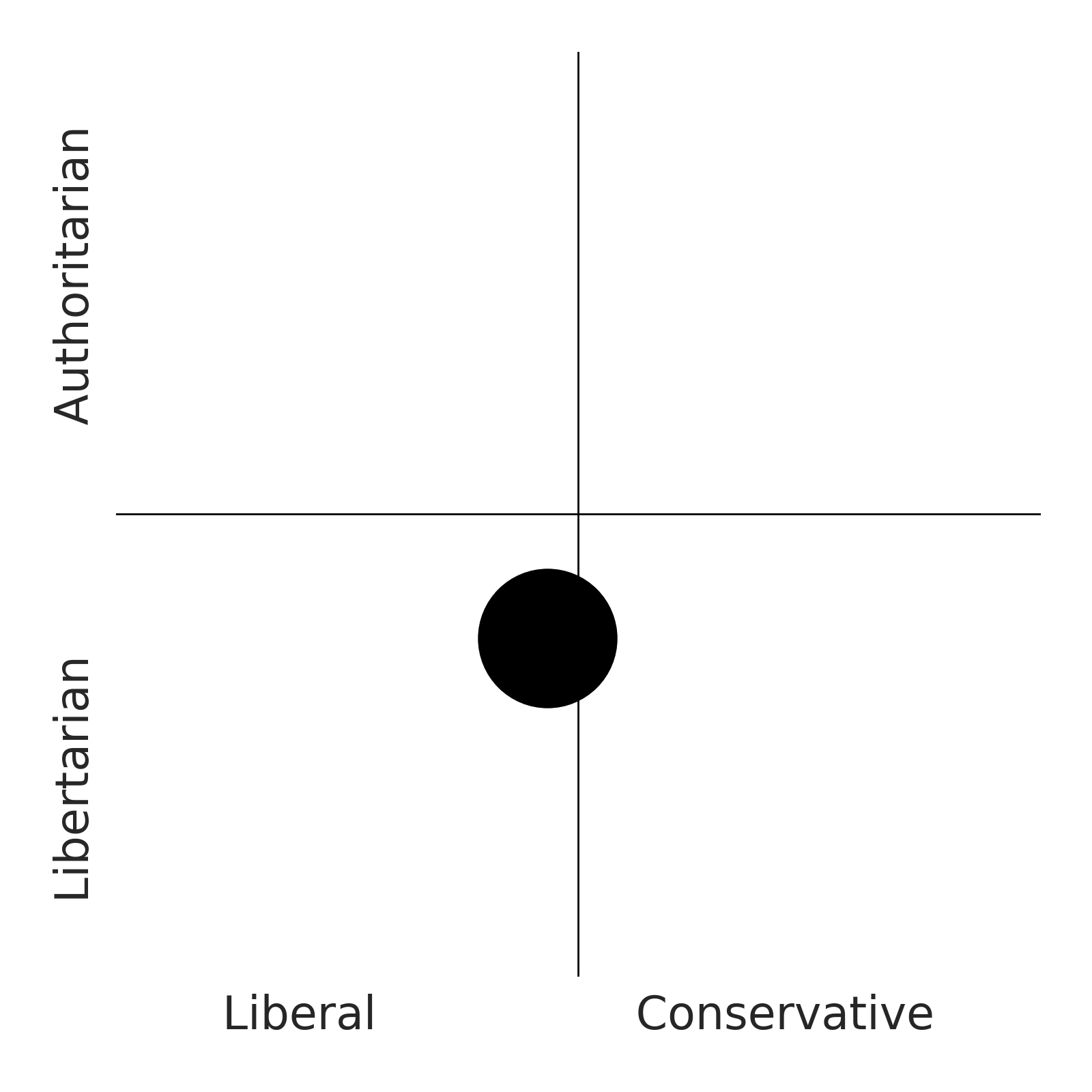
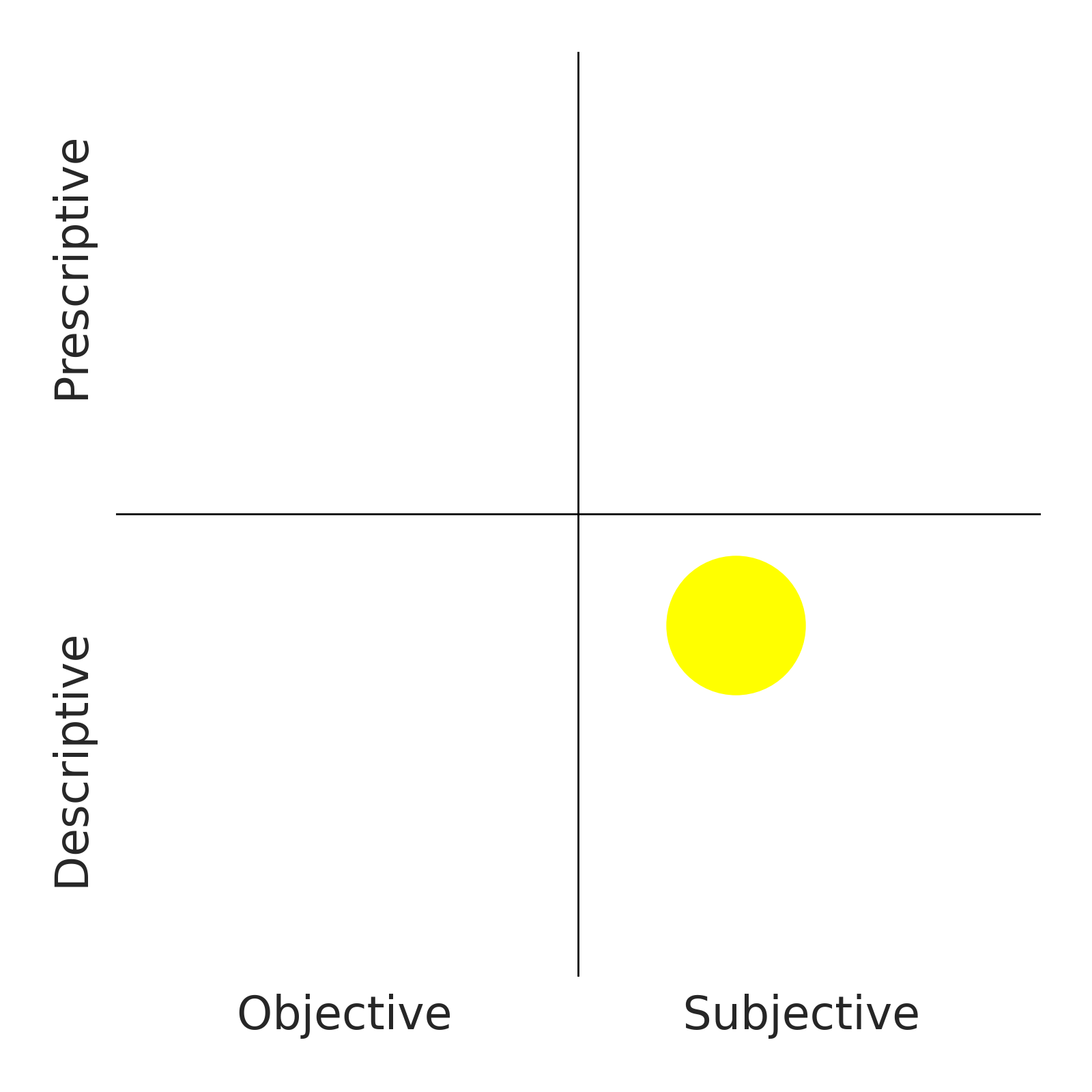
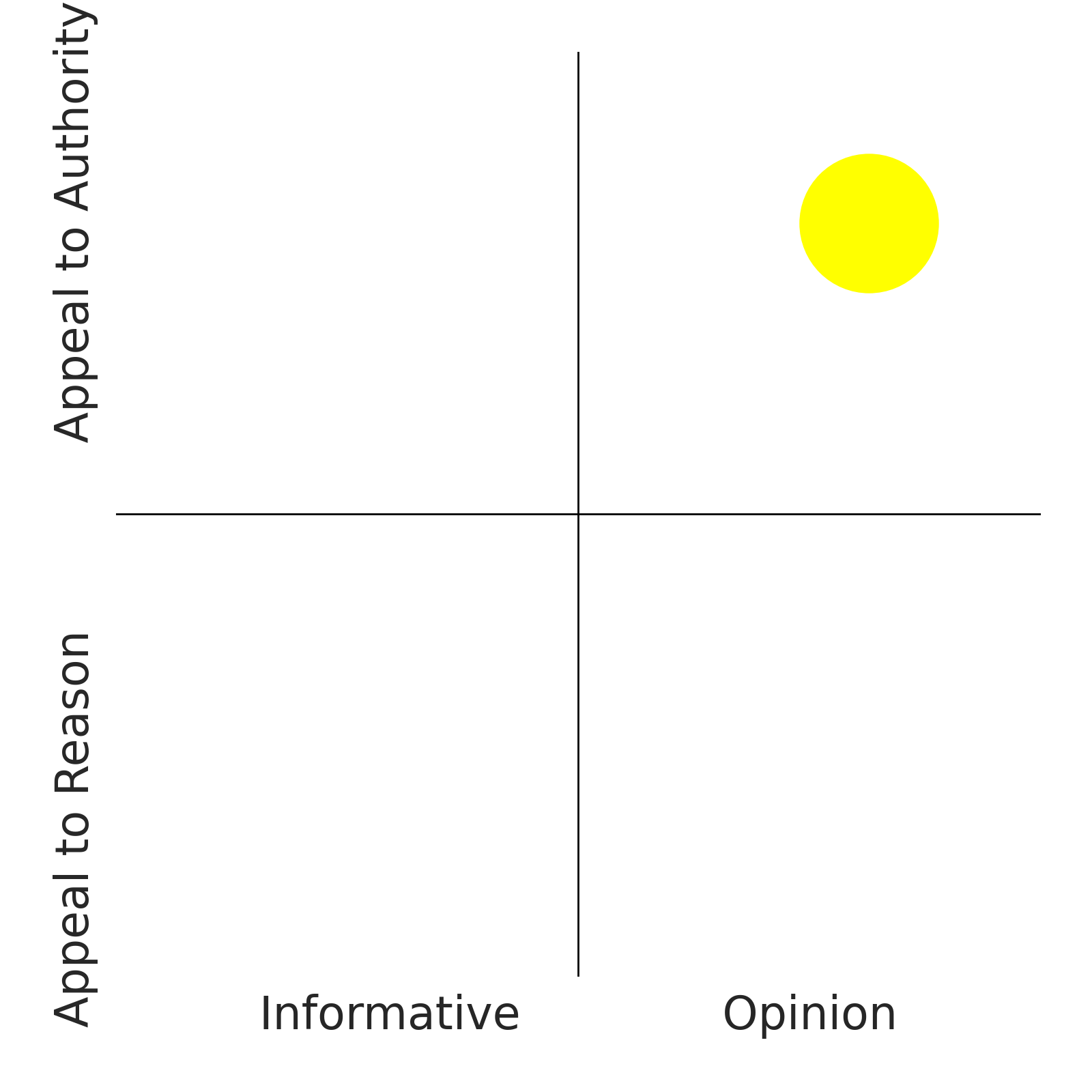
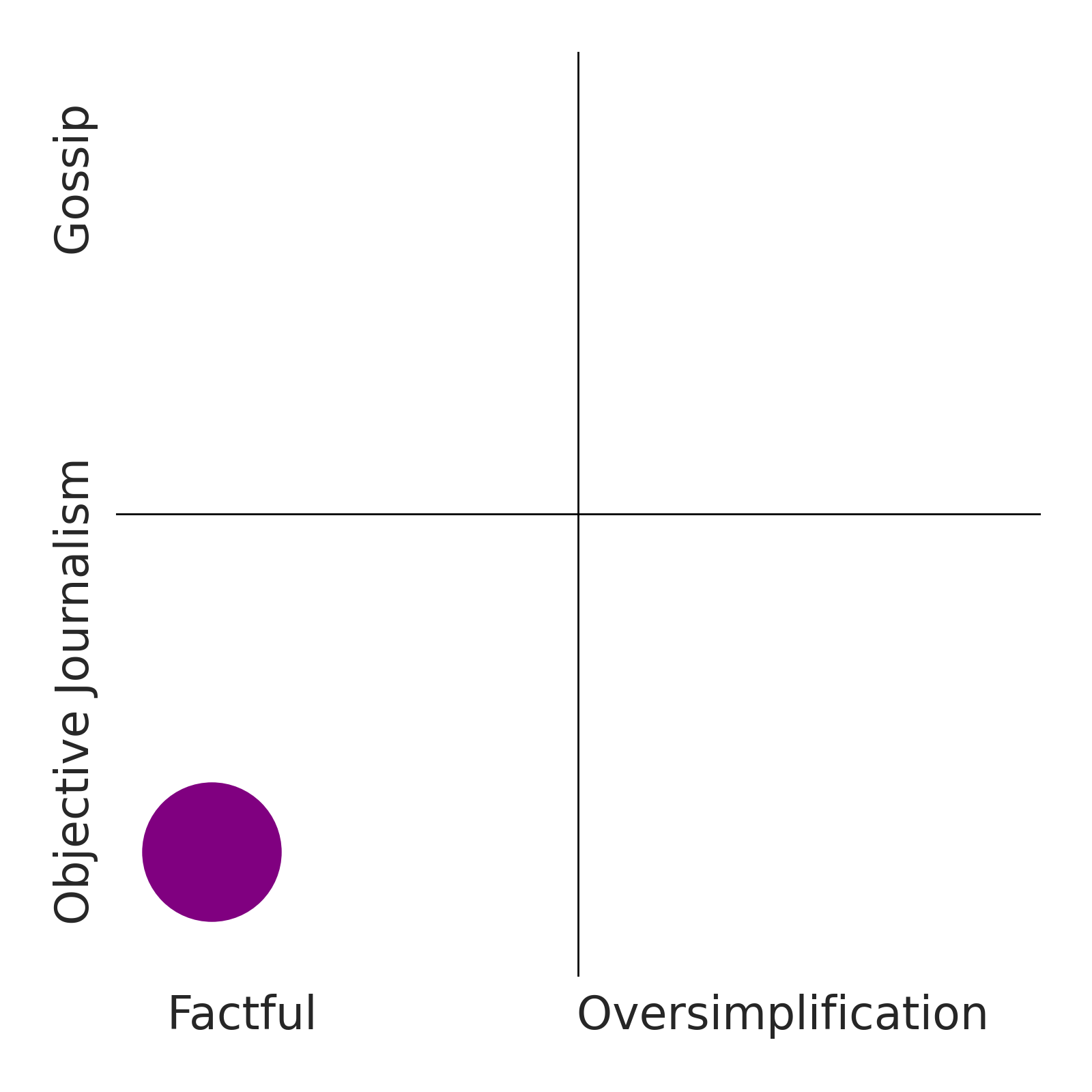
2026 © Helium Trades
Privacy Policy & Disclosure
* Disclaimer: Nothing on this website constitutes investment advice, performance data or any recommendation that any particular security, portfolio of securities, transaction or investment strategy is suitable for any specific person. Helium Trades is not responsible in any way for the accuracy
of any model predictions or price data. Any mention of a particular security and related prediction data is not a recommendation to buy or sell that security. Investments in securities involve the risk of loss. Past performance is no guarantee of future results. Helium Trades is not responsible for any of your investment decisions,
you should consult a financial expert before engaging in any transaction.
Helium Research Assistant

How can I help you today?
Ask any question about MIT Tech Review bias.