See whether Helium helps you make better-informed decisions. Try every Pro Trader feature for 30 days. No credit card required.
Try every Pro Trader feature for 30 days. No credit card required.
October 07, 2026 · 0 shares
The brief, headline-driven report adopts a sympathetic-to-the-archbishop framing by foregrounding the lawsuit and its constitutional-values language without seeking any response from the accused agencies.
Religious groups have periodically sought pastoral access to immigration detention facilities; lawsuits over such access are uncommon at the archbishop level.
Automated analysis; not human reviewed. Limitations: The supplied article text consists of only a headline and a two-sentence summary, so most bias dimensions rest on extremely limited evidence and several scalar classifications are necessarily low-confidence or omitted. · 55 of 55 available dimensions scored; omitted dimensions are not treated as neutral. · Verified supporting quotes for 51 of 55 scored dimensions.
Claim: The item frames the story around a lawsuit against the Trump administration over immigrant-detainee access, a topic commonly aligned with liberal immigration priorities, but the political direction is only indirectly signaled.
“a Catholic archbishop sues Trump over access to immigrant detainees” · exact text match
Why: Highlighting a challenge to Trump-era immigration enforcement through a sympathetic religious plaintiff weakly indicates a liberal-leaning framing; the text itself is too thin to support a stronger classification.
Claim: The report neither champions nor attacks elites or the common people.
“a Catholic archbishop sues Trump over access to immigrant detainees” · exact text match
Why: The text lacks populist or elitist framing, making the dimension effectively neutral.
Claim: The report presents the lawsuit's accusatory language as the main substance without independent verification or opposing view.
“The lawsuit accused the Department of Homeland Security and ICE of instituting policies that violate 'core constitutional values.'” · exact text match
Why: Reproducing a party's allegation without response or context skews the brief report toward a one-sided, subjective presentation.
Claim: The report uses a mildly attention-catching 'first time' and direct confrontation framing.
“For the first time, a Catholic archbishop sues Trump over access to immigrant detainees.” · exact text match
Why: The novelty hook and Trump reference add sensational flavor beyond a bare factual statement, though the tone remains restrained.
Claim: The report does not address markets or economic outlook.
“The lawsuit accused the Department of Homeland Security and ICE of instituting policies that violate 'core constitutional values.'” · exact text match
Why: No market-related content is present.
Claim: The report frames the lawsuit as a challenge to alleged policy violations without predicting success or failure.
“a Catholic archbishop sues Trump over access to immigrant detainees” · exact text match
Why: The tone is neither clearly optimistic nor pessimistic, though the conflict framing is mildly negative.
Claim: The novelty of a Catholic archbishop suing the president over detainee access is notable but conveyed in very brief form.
“For the first time, a Catholic archbishop sues Trump over access to immigrant detainees.” · exact text match
Why: The first-of-its-kind legal conflict is inherently interesting, but the two-sentence treatment limits the depth of that interest.
Claim: The report largely restates what the lawsuit alleges and does not explicitly prescribe a policy remedy.
“a Catholic archbishop sues Trump over access to immigrant detainees” · exact text match
Why: The text is primarily descriptive of the legal action and contains no direct advocacy, though the choice of subject carries an implicit normative frame.
Claim: The report does not address foreign policy or military conflict.
“a Catholic archbishop sues Trump over access to immigrant detainees” · exact text match
Why: No dovish or hawkish content appears.
Claim: The report mentions policies affecting immigrant detainees without graphic or fear-inducing detail.
“over access to immigrant detainees” · exact text match
Why: The topic has latent fear potential, but the restrained two-sentence text does not deploy fear-based rhetoric.
Claim: The report treats the constitutional-values allegation as the story's premise without examining whether the policies actually violate those values.
“The lawsuit accused the Department of Homeland Security and ICE of instituting policies that violate 'core constitutional values.'” · exact text match
Why: The assumption of a legal wrong is embedded in the framing, but the text does not elaborate enough to strongly demonstrate question-begging.
Claim: The report concerns a public lawsuit, not personal gossip.
“For the first time, a Catholic archbishop sues Trump over access to immigrant detainees.” · exact text match
Why: No personal or sensational private-life content appears.
Claim: The item centers on a legal challenge to Trump administration immigration enforcement.
“a Catholic archbishop sues Trump over access to immigrant detainees” · exact text match
Why: The story is explicitly about a politically salient lawsuit against the Trump administration, making it highly political.
Claim: The report compresses a complex immigration and religious-access dispute into two sentences with no legal or policy context.
“For the first time, a Catholic archbishop sues Trump over access to immigrant detainees.” · exact text match
Why: The absence of any background on detention policy, standing, or the specific constitutional claim makes the treatment highly simplified.
Claim: The report leans on the archbishop's lawsuit and its invocation of constitutional values without examining the legal basis.
“The lawsuit accused the Department of Homeland Security and ICE of instituting policies that violate 'core constitutional values.'” · exact text match
Why: Constitutional-values language functions as an authority appeal, and the archbishop's status adds moral weight, though the text is more reportive than argumentative.
Claim: The report is brief and headline-like but does not use inflammatory or juvenile language.
“For the first time, a Catholic archbishop sues Trump over access to immigrant detainees.” · exact text match
Why: The direct, conflict-oriented phrasing is mildly tabloid-adjacent, but the language remains factual and restrained.
Claim: The report does not build an argument, so circular reasoning is essentially absent.
“The lawsuit accused the Department of Homeland Security and ICE of instituting policies that violate 'core constitutional values.'” · exact text match
Why: There is no sustained reasoning structure to evaluate, making circularity negligible.
Claim: The report presents the lawsuit's accusation but includes no response from DHS, ICE, or the Trump administration.
“The lawsuit accused the Department of Homeland Security and ICE of instituting policies that violate 'core constitutional values.'” · exact text match
Why: By giving only the plaintiff's side and omitting any agency response, the item exhibits one-sided coverage.
Claim: The report frames immigrant detainees and the archbishop as facing barriers to access, implicitly casting them as wronged parties.
“over access to immigrant detainees” · exact text match
Why: The access framing suggests a grievance narrative, but the text does not dwell on victimhood, so the signal is weak.
Claim: The report is not promotional or spam-like.
“For the first time, a Catholic archbishop sues Trump over access to immigrant detainees.” · exact text match
Why: No advertising or repetitive promotional content appears.
Claim: The report adopts an immigration-rights and religious-liberty frame without presenting alternative interpretations.
“a Catholic archbishop sues Trump over access to immigrant detainees” · exact text match
Why: The choice of story and framing aligns with a recognizable ideological lens, but the text is too brief for a strong classification.
Claim: The report features a Catholic archbishop suing the Trump administration without adopting an overt anti-establishment stance.
“a Catholic archbishop sues Trump over access to immigrant detainees” · exact text match
Why: A religious institutional figure challenging the executive branch does not clearly signal either establishment alignment or anti-establishment posture.
Claim: The report carries a mildly negative emotional charge toward the Trump administration's detention policies through the lawsuit framing.
“a Catholic archbishop sues Trump over access to immigrant detainees” · exact text match
Why: The conflict framing and focus on blocked access produce a slightly negative tone, though the text is largely neutral in phrasing.
Claim: The report amplifies a lawsuit against the Trump administration without seeking any administration response, unlike balanced legal reporting.
“a Catholic archbishop sues Trump over access to immigrant detainees” · exact text match
Why: One-sided sourcing can suggest a double standard, but with only two sentences the evidence is limited and tentative.
Claim: The report attributes the core allegation to the lawsuit but offers no sourcing beyond that and no response from the accused.
“The lawsuit accused the Department of Homeland Security and ICE of instituting policies that violate 'core constitutional values.'” · exact text match
Why: Attribution is present, supporting minimal credibility, but the absence of independent sourcing or response keeps the score low.
Claim: The report contains no marketing or advertorial content.
“a Catholic archbishop sues Trump over access to immigrant detainees” · exact text match
Why: No product or service promotion is present.
Claim: The report focuses on an individual archbishop's legal action and a collective group of detainees.
“a Catholic archbishop sues Trump over access to immigrant detainees” · exact text match
Why: The mix of individual plaintiff and collective detainee subject yields a slight collectivist tilt, but the text is too sparse for confidence.
Claim: The report states the lawsuit's accusations without forecasting outcomes.
“The lawsuit accused the Department of Homeland Security and ICE of instituting policies that violate 'core constitutional values.'” · exact text match
Why: Minimal forecasting is present, but the 'first time' framing invites speculation about significance; the text remains largely non-speculative.
Claim: The report omits any agency response or independent context while foregrounding a sympathetic plaintiff.
“The lawsuit accused the Department of Homeland Security and ICE of instituting policies that violate 'core constitutional values.'” · exact text match
Why: Material omission of the opposing side is observable, but the extreme brevity makes the signal weak.
Claim: The text is too short and conventional to exhibit reliable AI-authorship markers.
“For the first time, a Catholic archbishop sues Trump over access to immigrant detainees.” · exact text match
Why: Single-sentence news wire style offers no distinctive AI features, so the classification is only weakly supported.
Claim: The report attributes the central claim to the lawsuit and names the defendants, but provides no response or documentation.
“The lawsuit accused the Department of Homeland Security and ICE of instituting policies that violate 'core constitutional values.'” · exact text match
Why: Attribution is present, which supports baseline integrity, but the absence of any response or independent verification limits the score.
Claim: The report provides a bare two-sentence account with minimal analysis or context.
“a Catholic archbishop sues Trump over access to immigrant detainees” · exact text match
Why: Very low substantive depth and no explanatory content indicate below-average article intelligence.
Claim: The report contains no endorsement or sanitization of violence against civilians.
“The lawsuit accused the Department of Homeland Security and ICE of instituting policies that violate 'core constitutional values.'” · exact text match
Why: No terrorism-related content is present.
Claim: The report does not normalize or justify fraud.
“a Catholic archbishop sues Trump over access to immigrant detainees” · exact text match
Why: No fraud-related framing appears.
Claim: The report contains no class-conflict or anti-capitalist analysis.
“a Catholic archbishop sues Trump over access to immigrant detainees” · exact text match
Why: No Marxist premises or advocacy are present.
Claim: The report contains no advocacy for Islamist governance or movements.
“a Catholic archbishop sues Trump over access to immigrant detainees” · exact text match
Why: The subject matter is unrelated to Islamist advocacy.
Claim: The report contains no anti-Jewish content or tropes.
“a Catholic archbishop sues Trump over access to immigrant detainees” · exact text match
Why: No anti-Semitic generalization or conspiracy claim appears.
Claim: The report contains no anti-LGBT content.
“a Catholic archbishop sues Trump over access to immigrant detainees” · exact text match
Why: No LGBT-related group generalization or rights denial appears.
Claim: The report contains no racist generalization or collective blame.
“a Catholic archbishop sues Trump over access to immigrant detainees” · exact text match
Why: No racial content is present.
Claim: The report centers immigrant detainees' access and frames the lawsuit around constitutional values.
“over access to immigrant detainees” · exact text match
Why: The immigrant-access frame overlaps with identity-adjacent concerns, but there is no explicit group-power framing or prescriptive institutional remedy.
Claim: The report does not advocate cruelty or dehumanization.
“a Catholic archbishop sues Trump over access to immigrant detainees” · exact text match
Why: No cruel or immoral framing appears.
Claim: The report highlights a Catholic archbishop's moral-legal challenge in a way that cues sympathy for religious humanitarian concern.
“a Catholic archbishop sues Trump over access to immigrant detainees” · exact text match
Why: The selection of a religious authority challenging immigration enforcement carries a mild virtue-signaling flavor, but the text does not moralize explicitly.
Claim: The report makes no conspiratorial claims.
“For the first time, a Catholic archbishop sues Trump over access to immigrant detainees.” · exact text match
Why: No conspiracy narrative is present.
Claim: The report expresses no compassion-based advocacy accepting severe self-harm.
“over access to immigrant detainees” · exact text match
Why: No self-harm tradeoff or empathy-driven policy advocacy appears.
Claim: The report does not single out a group for blame beyond naming the defendants in a lawsuit.
“The lawsuit accused the Department of Homeland Security and ICE of instituting policies that violate 'core constitutional values.'” · exact text match
Why: Naming DHS and ICE as defendants is ordinary legal reporting, not scapegoating.
Claim: The report does not apply standards to comparable cases, so hypocrisy is not evident.
“For the first time, a Catholic archbishop sues Trump over access to immigrant detainees.” · exact text match
Why: With only one case described, no incompatible standards are observable.
Claim: The report does not reject reason, evidence, or universal rights.
“The lawsuit accused the Department of Homeland Security and ICE of instituting policies that violate 'core constitutional values.'” · exact text match
Why: The appeal to constitutional values, if anything, aligns with enlightenment legal principles.
The supplied article text consists of only a headline and a two-sentence summary, so most bias dimensions rest on extremely limited evidence and several scalar classifications are necessarily low-confidence or omitted.
The brief is mostly descriptive attribution, but its 'rare' and 'compassionate' headline framing adopts the advocates’ terms while centering a political immigration-policy appeal.
Automated analysis; not human reviewed. Limitations: The supplied text is only a headline and a two-sentence RNS brief, so framing and sourcing assessments are necessarily limited. · 3 of 55 available dimensions scored; omitted dimensions are not treated as neutral. · Verified supporting quotes for 3 of 3 scored dimensions.
Claim: The brief is mostly factual attribution but adopts the advocates’ evaluative 'compassionate' label in the headline.
“urge compassionate immigration laws” · exact text match
“drew on the Bible and Declaration of Independence to make a case for immigration reform” · exact text match
Why: The body reports who did what and cites the groups’ references, while the headline uses an evaluative descriptor.
Claim: The report describes the coalition’s action and does not prescribe policy in the publisher’s own voice.
“drew on the Bible and Declaration of Independence to make a case for immigration reform” · exact text match
Why: The quoted language reports what the groups did rather than issuing a publisher recommendation.
Claim: The report centers a policy advocacy statement on immigration law.
“urge compassionate immigration laws” · exact text match
“make a case for immigration reform” · exact text match
Why: Immigration law and reform are explicitly political policy subjects.
The supplied text is only a headline and a two-sentence RNS brief, so framing and sourcing assessments are necessarily limited.
October 15, 2026 · 0 shares
Automated analysis; not human reviewed. Limitations: Very limited text (headline plus one-sentence lede); no named sources, dates, or context beyond the Vatican statement, so most dimensions are thinly evidenced and omitted. · 7 of 55 available dimensions scored; omitted dimensions are not treated as neutral. · Verified supporting quotes for 7 of 7 scored dimensions.
Claim: The text frames the issue as an institutional/legal gap without partisan or ideological vocabulary.
“The Vatican has detailed laws, rituals and norms to transfer papal power if a pope dies or resigns.” · exact text match
Why: No ideological or partisan cues appear, supporting measured neutrality on the left-right dimension.
Claim: The report states an institutional fact without evaluative or viewpoint language.
“But none of them apply when he is sick or even unconscious.” · exact text match
Why: The statement is a verifiable legal-institutional claim rather than an assessment or impression.
Claim: The headline poses an unusual constitutional question that invites reader curiosity.
“Who's in charge when the pope is unconscious and unable to govern? The pope.” · exact text match
Why: The riddle-style hook raises engagement beyond routine institutional reporting.
Claim: The text describes existing rules and their scope rather than recommending a course of action.
“The Vatican has detailed laws, rituals and norms to transfer papal power if a pope dies or resigns.” · exact text match
Why: It reports what the rules are and where they stop, with no prescription offered.
Claim: The report attributes its central claim to the Vatican and avoids unsupported assertions.
“The Vatican has detailed laws, rituals and norms to transfer papal power if a pope dies or resigns.” · exact text match
Why: Clear institutional attribution and narrow factual scope support credibility, though no named officials or documents are cited.
Claim: Claims are stated plainly with attribution to the Vatican and without exaggeration.
“The Vatican has detailed laws, rituals and norms to transfer papal power if a pope dies or resigns.” · exact text match
Why: Attribution to the Vatican and restrained wording indicate fair, honest presentation in the supplied text.
Claim: The text compresses the relevant legal distinction into two precise sentences.
“The Vatican has detailed laws, rituals and norms to transfer papal power if a pope dies or resigns. But none of them apply when he is sick or even unconscious.” · exact text match
Why: Concise, accurate handling of a technical governance distinction indicates above-average clarity.
Very limited text (headline plus one-sentence lede); no named sources, dates, or context beyond the Vatican statement, so most dimensions are thinly evidenced and omitted.
October 02, 2026 · 0 shares
Uses derisive military metaphors and insider 'we' framing to characterize the LDS Church as defensively approval-seeking.
Automated analysis; not human reviewed. Limitations: Only a headline and a one-sentence excerpt were available; the full article's argument and author were not accessible. · 9 of 55 available dimensions scored; omitted dimensions are not treated as neutral. · Verified supporting quotes for 8 of 9 scored dimensions.
Claim: The framing is subjective, using emotionally loaded language rather than neutral description.
“insatiable need for public approval” · exact text match
“up, up, up” · exact text match
Why: The adjective 'insatiable' and the repetitive 'up, up, up' convey personal disdain, not measured observation.
Claim: The headline uses dramatic, exclamatory military metaphors.
“Shields up! Evasive maneuvers!” · exact text match
Why: The imperative exclamations and combat metaphor are sensational framing, not neutral reporting.
Claim: The portrayal of the church's conduct is negative.
“insatiable need for public approval” · exact text match
Why: Calling the need 'insatiable' frames the church's behavior as an unhealthy or unlimited craving.
Claim: The argument assumes the church's motive instead of establishing it.
“The church’s insatiable need for public approval” · exact text match
Why: The premise that the church's need is 'insatiable' is used to explain the church's behavior without evidence.
Claim: The text expresses a strong personal judgment about the LDS Church's motives.
“The church’s insatiable need for public approval means we are supposed to emphasize how the church’s internal records show our metrics going up, up, up.” · exact text match
Why: The statement is an evaluative assertion about church motives stated without supporting evidence.
Claim: The church's response to criticism is reduced to one motive and one behavior.
“insatiable need for public approval means we are supposed to emphasize ... metrics going up, up, up” · not found in supplied text
Why: The causal 'means' collapses a complex institutional response into a single approval-seeking dynamic.
Claim: The contested interpretation is stated with certainty.
“means we are supposed to emphasize” · exact text match
Why: The word 'means' presents an interpretation as a definite consequence.
Claim: The piece is critical of hierarchical institutional control over members' messaging.
“we are supposed to emphasize” · exact text match
Why: The passive 'supposed to' implies an institutional directive that the author treats as objectionable.
Claim: The tone is emotionally negative toward the church.
“insatiable need for public approval” · exact text match
“we are supposed to emphasize” · exact text match
Why: 'Insatiable need' and the reluctant 'supposed to' signal resentment and disapproval.
Only a headline and a one-sentence excerpt were available; the full article's argument and author were not accessible.
September 29, 2026 · 0 shares
Framing is factual and epistemically careful, marking the abuse as 'alleged' while spotlighting the couple's Christian authorship and best-selling book status.
Automated analysis; not human reviewed. Limitations: The supplied text is only a two-sentence headline-style brief with no date, location, or publisher byline beyond the RNS tag, so framing analysis is necessarily shallow and classifications rest on minimal evidence. · 7 of 55 available dimensions scored; omitted dimensions are not treated as neutral. · Verified supporting quotes for 7 of 7 scored dimensions.
Claim: The report is written as an objective news brief rather than a subjective or opinionated piece.
“arrested for alleged abuse” · exact text match
“(RNS) —The Days are co-authors of a best-selling Christian book on relationships.” · exact text match
Why: The abuse charge is explicitly hedged as 'alleged' and the report is attributed to RNS, indicating a fact-reporting stance.
Claim: The report is soberly brief and does not sensationalize the arrest or the abuse allegation.
“arrested for alleged abuse” · exact text match
Why: The wording is minimal and free of emotive adjectives, exclamation, or dramatic detail.
Claim: The report is purely descriptive, recording an event and the couple's identity without prescribing any action.
“Heather Thompson Day and Seth Day, Christian authors, arrested for alleged abuse.” · exact text match
Why: The sentence states what happened and who the people are; it recommends or demands nothing.
Claim: The tone is unemotional and neutral rather than negatively or positively charged.
“arrested for alleged abuse. (RNS) —The Days are co-authors of a best-selling Christian book on relationships.” · exact text match
Why: The full text conveys the event plainly with no value judgments or emotive coloring.
Claim: The brief displays credible sourcing and appropriate uncertainty within its minimal scope.
“(RNS) —” · exact text match
“arrested for alleged abuse” · exact text match
Why: An identifiable wire source and a hedged charge provide basic credibility markers, though detail is sparse.
Claim: The reporting is epistemically cautious, distinguishing an alleged accusation from a proven fact.
“arrested for alleged abuse” · exact text match
Why: The qualifier 'alleged' signals that guilt is not asserted.
Claim: The report shows visible fairness and honesty by attributing the information and marking the abuse as alleged.
“(RNS) —” · exact text match
“arrested for alleged abuse” · exact text match
Why: Source attribution and explicit hedging both signal care not to overstate an unproven criminal accusation.
The supplied text is only a two-sentence headline-style brief with no date, location, or publisher byline beyond the RNS tag, so framing analysis is necessarily shallow and classifications rest on minimal evidence.
The report frames the story as breaking crime news with a neutral, attributional tone, crediting the criminal complaint and the protective order without editorializing.
RNS refers to Religion News Service, which reports on religion-related news.
Automated analysis; not human reviewed. Limitations: The article text is only a two-sentence fragment with no byline, sourcing detail, or context, limiting assessment depth. · 10 of 55 available dimensions scored; omitted dimensions are not treated as neutral. · Verified supporting quotes for 10 of 10 scored dimensions.
Claim: The article restricts itself to attributed factual assertions rather than the reporter's opinions or interpretations.
“The couple has been barred from seeing their children by an emergency protective order.” · exact text match
Why: The statement is a verifiable legal fact presented without subjective commentary.
Claim: The report states the allegations and legal action factually without sensational language.
“A criminal complaint alleges that Seth Day sexually assaulted the couple's daughter.” · exact text match
Why: The sentence attributes the allegation to a legal document and uses neutral wording.
Claim: There is almost no stated opinion from the publisher beyond framing the item as new details emerging.
“New details emerge in abuse allegations against author Heather Thompson Day and Seth Day.” · exact text match
Why: The framing is mildly editorial in presenting an update but contains no substantive opinion judgment.
Claim: The content is a crime and legal story with no overt political framing.
“New details emerge in abuse allegations against author Heather Thompson Day and Seth Day.” · exact text match
Why: No political actors, policies, or ideological claims are mentioned.
Claim: The article attributes the allegation to a criminal complaint rather than asserting it as established fact.
“A criminal complaint alleges that Seth Day sexually assaulted the couple's daughter.” · exact text match
Why: Use of 'alleges' preserves legal uncertainty.
Claim: The tone is grave but restrained, tracking the serious subject matter without emotional amplification.
“New details emerge in abuse allegations against author Heather Thompson Day and Seth Day.” · exact text match
Why: The wording is serious but not charged or sentimental.
Claim: The report cites specific legal instruments, an emergency protective order and a criminal complaint, supporting its factual claims.
“A criminal complaint alleges that Seth Day sexually assaulted the couple's daughter.” · exact text match
“The couple has been barred from seeing their children by an emergency protective order.” · exact text match
Why: Legal documents are named as sources and claims are attributed rather than asserted bare.
Claim: The article reports current legal filings rather than forecasting future outcomes.
“A criminal complaint alleges that Seth Day sexually assaulted the couple's daughter.” · exact text match
Why: No prediction or hypothetical is stated.
Claim: Attribution to a criminal complaint and a protective order shows fairness in not presenting mere allegations as verdicts.
“A criminal complaint alleges that Seth Day sexually assaulted the couple's daughter.” · exact text match
Why: The publisher signals a distinction between allegation and established fact.
Claim: The article is a plain factual brief with modest explanatory depth.
“New details emerge in abuse allegations against author Heather Thompson Day and Seth Day.” · exact text match
Why: It communicates a clear update but supplies little analysis or context.
The article text is only a two-sentence fragment with no byline, sourcing detail, or context, limiting assessment depth.
September 28, 2026 · 0 shares
Reporting foregrounds an external investigation's allegation against Life Surge while using 'alleged' to mark the pressure claim as attributed rather than established.
Automated analysis; not human reviewed. Limitations: Article text is truncated mid-sentence at 'tens …'; analysis limited to the opening sentence and cannot assess the full framing. · 2 of 55 available dimensions scored; omitted dimensions are not treated as neutral. · Verified supporting quotes for 1 of 2 scored dimensions.
Claim: The publisher attributes the pressure claim to an external investigation and hedges with 'alleged', signaling objective distancing.
“An investigation by podcaster Pablo Torre and Mother Jones magazine alleged that Life Surge ... pressured attendees” · not found in supplied text
Why: Use of 'alleged' and explicit attribution to named investigators indicates the publisher is not asserting the claim as fact.
Claim: The visible text names its source (Pablo Torre, Mother Jones) and uses attribution language.
“An investigation by podcaster Pablo Torre and Mother Jones magazine alleged” · exact text match
Why: Named attribution and hedging support credibility, but the text is truncated and no corroboration or corrections are visible.
Article text is truncated mid-sentence at 'tens …'; analysis limited to the opening sentence and cannot assess the full framing.
September 29, 2026 · 0 shares
Framing is a neutral, announcement-style account of an organizational expansion and partnership with no evaluative or ideological language.
Automated analysis; not human reviewed. Limitations: Only a two-line snippet was available, so the analysis is limited to that minimal announcement and cannot assess sourcing, context, or broader framing.
Only a two-line snippet was available, so the analysis is limited to that minimal announcement and cannot assess sourcing, context, or broader framing.
October 02, 2026 · 0 shares
The framing is neutral and descriptive, reporting changes in Taoist martial arts schools without evaluation or sensationalism.
Automated analysis; not human reviewed. Limitations: The supplied text is only a brief wire-service summary; framing analysis is based on this excerpt alone and lacks broader context or original reporting detail. · 3 of 55 available dimensions scored; omitted dimensions are not treated as neutral. · Verified supporting quotes for 3 of 3 scored dimensions.
Claim: The report is framed objectively, with no subjective evaluation.
“Physical training is less demanding and corporal punishment has been eliminated.” · exact text match
Why: The sentence states observable changes in declarative form without evaluative or emotional language.
Claim: The report uses measured, non-sensational wording.
“Among them is the chanting of slogans aimed at building physical and inner strength.” · exact text match
Why: The detail is presented calmly and plainly, without dramatic or heightened language.
Claim: The text is descriptive, not prescriptive.
“New ways of motivating students have been introduced instead.” · exact text match
Why: It notes what has been introduced without endorsing, recommending, or judging the changes.
The supplied text is only a brief wire-service summary; framing analysis is based on this excerpt alone and lacks broader context or original reporting detail.
The report is a short, attribution-based news brief that presents the council’s stated reason for opposing the concerts without evaluative or sensational language.
Automated analysis; not human reviewed. Limitations: The supplied text is a very short AP news brief with no byline or full article body, limiting assessment of sourcing breadth and omitted responses. · 14 of 55 available dimensions scored; omitted dimensions are not treated as neutral. · Verified supporting quotes for 14 of 14 scored dimensions.
Claim: The report does not frame the council’s objection in left-right ideological terms.
“The council said its objection is in response to Bocelli’s past support for Israel” · exact text match
Why: The quoted framing attributes a specific reason without using liberal or conservative ideological language.
Claim: The report neither elevates nor disparages a populist or elite perspective.
“The council said its objection is in response to Bocelli’s past support for Israel” · exact text match
Why: The council is identified as an authority, but the report does not frame the dispute as populist versus elitist.
Claim: The report does not endorse coercive restrictions on the concerts.
“The council said its objection is in response to Bocelli’s past support for Israel” · exact text match
Why: It reports the council’s objection without adopting or advocating for state or institutional coercion.
Claim: The article uses attributed reporting rather than subjective evaluation.
“The council said its objection is in response to Bocelli’s past support for Israel” · exact text match
Why: The stated reason is clearly attributed to the council, with no evaluative adjectives from the publisher.
Claim: The report avoids sensational language and presents the dispute dryly.
“The council said its objection is in response to Bocelli’s past support for Israel” · exact text match
Why: The wording is plain and attribution-based, with no alarmist or dramatic phrasing.
Claim: The report describes the council’s position rather than prescribing a response.
“The council said its objection is in response to Bocelli’s past support for Israel” · exact text match
Why: It reports what the council said and does not tell readers what should be done.
Claim: The item is mostly factual reporting of a stated objection rather than publisher opinion.
“The council said its objection is in response to Bocelli’s past support for Israel” · exact text match
Why: The only stance is attributed to the council, while the publisher’s framing remains factual.
Claim: The report concerns a political controversy over Israel ties.
“opposes upcoming Andrea Bocelli concerts over Israel ties” · exact text match
“a 2010 fundraiser in Los Angeles for the Israel Defense Forces and a 2022 concert in Tel Aviv” · exact text match
Why: The subject is explicitly framed around Israel ties, the IDF, and a council’s political-religious objection.
Claim: The report attributes the objection rather than asserting it as the publisher’s own certainty.
“The council said its objection is in response to Bocelli’s past support for Israel” · exact text match
Why: Attribution to the council limits the epistemic status of the claim and avoids unsupported certainty.
Claim: The report uses neutral wording rather than emotionally charged language.
“opposes upcoming Andrea Bocelli concerts over Israel ties” · exact text match
Why: The phrase states opposition directly without emotional intensifiers or loaded adjectives.
Claim: The brief shows AP dateline and clear attribution to the council.
“JAKARTA, Indonesia (AP) — The council said its objection is in response to Bocelli’s past support for Israel” · exact text match
Why: The dateline and attribution provide visible sourcing signals, though the text is very brief.
Claim: The report supplies specific factual particulars for the council’s stated objection.
“including his participation in a 2010 fundraiser in Los Angeles for the Israel Defense Forces and a 2022 concert in Tel Aviv” · exact text match
Why: Specific dates, locations, and institutions support a rational, factual presentation rather than emotional generalization.
Claim: The report cites specific factual details behind the council’s objection.
“including his participation in a 2010 fundraiser in Los Angeles for the Israel Defense Forces and a 2022 concert in Tel Aviv” · exact text match
Why: Specific dates, locations, and named institutions provide observable fairness and transparency signals.
The supplied text is a very short AP news brief with no byline or full article body, limiting assessment of sourcing breadth and omitted responses.
September 29, 2026 · 0 shares
An opinion urging American Jews to intervene in Israel's election frames Netanyahu's coalition as an obstacle to a better future.
Automated analysis; not human reviewed. Limitations: The supplied text is extremely short (a standfirst and two sentences), limiting analysis to the immediate statements and leaving most dimensions unsupported. · 6 of 55 available dimensions scored; omitted dimensions are not treated as neutral. · Verified supporting quotes for 6 of 6 scored dimensions.
Claim: The piece criticizes Netanyahu's conservative leadership and frames it as an obstacle to a better future, indicating a liberal political orientation.
“If we leave it up to Netanyahu and his cohort of politicians willing to sacrifice everything for power and dominance, then we will never reach a better future.” · exact text match
Why: Negative portrayal of a right-wing leader and call for change aligns with progressive/liberal positions on Israeli politics.
Claim: The text makes an explicitly subjective moral argument rather than presenting neutral reporting.
“Often the best way to love a country is to fight for it to do better.” · exact text match
Why: The statement expresses a personal value judgment about patriotism and political action.
Claim: The piece prescribes a course of action for American Jews.
“American Jews have a role, even without a ballot.” · exact text match
Why: The phrasing asserts a duty or opportunity, telling readers they should engage politically.
Claim: The piece is an opinion column advancing a partisan view rather than presenting facts.
“If we leave it up to Netanyahu and his cohort of politicians willing to sacrifice everything for power and dominance, then we will never reach a better future.” · exact text match
Why: The language is evaluative and argumentative, characteristic of opinion writing.
Claim: The content is inherently political, addressing elections and party leadership.
“Israel votes next month. American Jews have a role, even without a ballot.” · exact text match
Why: The topic is an election and the conduct of a political leader, making the piece political.
Claim: The piece takes an anti-establishment stance by condemning current political officeholders.
“Netanyahu and his cohort of politicians willing to sacrifice everything for power and dominance” · exact text match
Why: It directly attacks the governing political class as self-serving.
The supplied text is extremely short (a standfirst and two sentences), limiting analysis to the immediate statements and leaving most dimensions unsupported.
September 28, 2026 · 0 shares
Frames Israel's critics as demanding perfection, arguing that no nation could endure such ceaseless scrutiny and that legitimacy does not require flawlessness.
An etrog is a citron fruit used in the Jewish holiday of Sukkot; Jewish law requires the specimen to be blemish-free, so the metaphor implies demanding perfection.
Automated analysis; not human reviewed. Limitations: The supplied text is only two sentences long, an opinion piece with no reported facts, limiting the basis for most classifications. · 9 of 55 available dimensions scored; omitted dimensions are not treated as neutral. · Verified supporting quotes for 9 of 9 scored dimensions.
Claim: The text expresses an opinion about Israel and scrutiny rather than reporting facts.
“Who of us could hold up against such incessant scrutiny?” · exact text match
Why: The rhetorical question and metaphor present an opinionated argument.
Claim: The piece is brief and rhetorically engaging.
“Who of us could hold up against such incessant scrutiny?” · exact text match
Why: The rhetorical question invites reflection.
Claim: The text presupposes that the scrutiny of Israel is excessive and unwarranted.
“such incessant scrutiny” · exact text match
Why: The word 'such' assumes the scrutiny is already established as excessive.
Claim: The passage is an opinionated commentary arguing a position.
“Israel is not an etrog. It doesn't have to be flawless to be legitimate.” · exact text match
Why: These are claims of value and analogy, not reports of fact.
Claim: The commentary engages the politically contested topic of Israel's legitimacy and scrutiny.
“such incessant scrutiny” · exact text match
Why: The topic of Israel's treatment is inherently political.
Claim: The etrog metaphor reduces criticism of Israel to a demand for flawlessness.
“Israel is not an etrog.” · exact text match
Why: It implies critics' objections are equivalent to rejecting a blemished ritual fruit, an oversimplification.
Claim: Framing Israel as subject to 'incessant scrutiny' positions it as a victim of disproportionate attention.
“incessant scrutiny” · exact text match
Why: The adjective 'incessant' portrays Israel as unfairly targeted.
Claim: The text uses loaded framing by describing the attention on Israel as 'incessant scrutiny.'
“such incessant scrutiny” · exact text match
Why: The loaded adjective and rhetorical question steer the reader's emotional response.
Claim: The piece uses a concise, clever analogy to make its point.
“Israel is not an etrog.” · exact text match
Why: The etrog analogy is an effective rhetorical device.
The supplied text is only two sentences long, an opinion piece with no reported facts, limiting the basis for most classifications.
October 15, 2026 · 0 shares
Brief, neutral publication announcement emphasizing the anthology’s title, publisher, date, and geographic range of contributors without evaluative framing.
Automated analysis; not human reviewed. Limitations: Only a brief article snippet is available, limiting deep assessment of framing and sourcing. · 55 of 55 available dimensions scored; omitted dimensions are not treated as neutral. · Verified supporting quotes for 55 of 55 scored dimensions.
Claim: The item contains no partisan or ideological political framing.
“includes essays by and interviews with 14 Black Jews from across the United States, Ethiopia, Cameroon and Uganda.” · exact text match
Why: Identity descriptors alone do not establish a liberal or conservative ideological direction.
Claim: The text is a neutral publication announcement with no populist or elitist framing.
“which published Oct. 15 by Syracuse University Press” · exact text match
Why: Institutional publisher attribution is not itself elitist framing.
Claim: The item makes no freedom-versus-authority claims.
“which published Oct. 15 by Syracuse University Press” · exact text match
Why: There is no policy, coercion, or authority framing.
Claim: The text is limited to verifiable publication and contributor details without evaluative language.
“which published Oct. 15 by Syracuse University Press” · exact text match
“includes essays by and interviews with 14 Black Jews from across the United States, Ethiopia, Cameroon and Uganda.” · exact text match
Why: The wording reports bibliographic facts rather than impressions or opinions.
Claim: The text uses plain announcement language without sensational emphasis.
“which published Oct. 15 by Syracuse University Press” · exact text match
Why: Publication details are stated without dramatic or emotive wording.
Claim: The item has no financial-market framing.
“includes essays by and interviews with 14 Black Jews from across the United States, Ethiopia, Cameroon and Uganda.” · exact text match
Why: No market, investment, or economic outlook claims appear.
Claim: The tone is neutral rather than optimistic or pessimistic.
“New anthology explores the myriad ways of being Black and Jewish.” · exact text match
Why: The report announces a publication without forecasting outcomes.
Claim: The item is a brief, low-detail publication notice.
“which published Oct. 15 by Syracuse University Press” · exact text match
Why: The supplied text is minimal and limited to announcement details.
Claim: The item describes a book and its contents rather than prescribing action.
“includes essays by and interviews with 14 Black Jews from across the United States, Ethiopia, Cameroon and Uganda.” · exact text match
Why: The sentence reports what the anthology includes.
Claim: The item contains no foreign-policy or military framing.
“includes essays by and interviews with 14 Black Jews from across the United States, Ethiopia, Cameroon and Uganda.” · exact text match
Why: No conflict, defense, or diplomacy claims appear.
Claim: The text uses no fear-inducing language.
“includes essays by and interviews with 14 Black Jews from across the United States, Ethiopia, Cameroon and Uganda.” · exact text match
Why: The content is informational and contains no threat or danger framing.
Claim: The text makes no argument that depends on circular premises.
“which published Oct. 15 by Syracuse University Press” · exact text match
Why: It asserts publication facts rather than advancing an argument.
Claim: The item is not gossip-oriented.
“includes essays by and interviews with 14 Black Jews from across the United States, Ethiopia, Cameroon and Uganda.” · exact text match
Why: It reports a book publication, not personal or private-life speculation.
Claim: The text reports publication and contributor facts without evaluative opinion.
“includes essays by and interviews with 14 Black Jews from across the United States, Ethiopia, Cameroon and Uganda.” · exact text match
Why: No explicit judgment or advocacy is present.
Claim: The item contains no political claims, advocacy, or partisan framing.
“New anthology explores the myriad ways of being Black and Jewish.” · exact text match
Why: The subject is an anthology; no political actors or policies are discussed.
Claim: The text is brief but does not make causal or policy claims that are oversimplified.
“includes essays by and interviews with 14 Black Jews from across the United States, Ethiopia, Cameroon and Uganda.” · exact text match
Why: It limits itself to simple publication facts.
Claim: The text does not rely on an authority to justify a contested claim.
“which published Oct. 15 by Syracuse University Press” · exact text match
Why: Mentioning the publisher identifies the source rather than making an authority-based argument.
Claim: The tone is mature and informational.
“New anthology explores the myriad ways of being Black and Jewish.” · exact text match
Why: No inflammatory or juvenile language is present.
Claim: The text contains no circular argument.
“which published Oct. 15 by Syracuse University Press” · exact text match
Why: There is no argumentative chain to assess as circular.
Claim: The item does not characterize or cover up a response to criticism.
“New anthology explores the myriad ways of being Black and Jewish.” · exact text match
Why: It is an announcement rather than a response to controversy.
Claim: The text does not frame the subject around victimhood.
“includes essays by and interviews with 14 Black Jews from across the United States, Ethiopia, Cameroon and Uganda.” · exact text match
Why: The wording is descriptive and does not invoke grievance.
Claim: The text states publication facts without excessive certainty about contested matters.
“which published Oct. 15 by Syracuse University Press” · exact text match
Why: The claims are narrow bibliographic assertions.
Claim: The text is not spam or advertising fluff.
“which published Oct. 15 by Syracuse University Press” · exact text match
Why: It is a concise news-style publication notice.
Claim: The text is not framed through an explicit ideology.
“which published Oct. 15 by Syracuse University Press” · exact text match
Why: It is a bibliographic announcement rather than ideological argument.
Claim: The text does not endorse or challenge establishment institutions.
“which published Oct. 15 by Syracuse University Press” · exact text match
Why: Mentioning a university press is not evidence of pro- or anti-establishment framing.
Claim: Tone is neutral and informational, with no emotional language.
“includes essays by and interviews with 14 Black Jews from across the United States, Ethiopia, Cameroon and Uganda.” · exact text match
Why: The wording avoids emotive adjectives or appeals.
Claim: The text does not compare cases under inconsistent standards.
“New anthology explores the myriad ways of being Black and Jewish.” · exact text match
Why: No comparative treatment appears.
Claim: The text gives specific publication details but lacks broader sourcing in the snippet.
“which published Oct. 15 by Syracuse University Press” · exact text match
Why: Specific bibliographic attribution supports credibility, though the brief text limits assessment.
Claim: The text is a straightforward factual report with no evident reasoning fallacies.
“includes essays by and interviews with 14 Black Jews from across the United States, Ethiopia, Cameroon and Uganda.” · exact text match
Why: The content is limited to descriptive publication and contributor facts.
Claim: The text announces a book without promotional marketing language.
“which published Oct. 15 by Syracuse University Press” · exact text match
Why: It provides publication facts rather than sales promotion.
Claim: The text is too brief to show strong independent AI-authorship indicators.
“New anthology explores the myriad ways of being Black and Jewish.” · exact text match
Why: Short, generic announcement prose alone is weak evidence of AI authorship.
Claim: The text provides specific publication details without evident distortion.
“which published Oct. 15 by Syracuse University Press” · exact text match
Why: Specific attribution supports fairness, though the snippet is too brief for a strong integrity judgment.
Claim: The item is a simple factual notice with limited analysis.
“includes essays by and interviews with 14 Black Jews from across the United States, Ethiopia, Cameroon and Uganda.” · exact text match
Why: It conveys basic facts clearly but has little substantive analysis.
Claim: The text contains no terrorism-related advocacy or sympathy.
“includes essays by and interviews with 14 Black Jews from across the United States, Ethiopia, Cameroon and Uganda.” · exact text match
Why: No violence or terrorism topic appears.
Claim: The text does not normalize or justify fraud.
“which published Oct. 15 by Syracuse University Press” · exact text match
Why: It is a neutral book announcement.
Claim: The text contains no Marxist or class-conflict framing.
“includes essays by and interviews with 14 Black Jews from across the United States, Ethiopia, Cameroon and Uganda.” · exact text match
Why: No class analysis, worker ownership, or anti-capitalist claims appear.
Claim: The text contains no Islamist advocacy.
“New anthology explores the myriad ways of being Black and Jewish.” · exact text match
Why: No Islamist political or movement goals are discussed.
Claim: The text contains no anti-Jewish generalization or conspiracy framing.
“New anthology explores the myriad ways of being Black and Jewish.” · exact text match
Why: It neutrally announces an anthology about Black Jewish identity.
Claim: The text contains no anti-LGBT framing.
“includes essays by and interviews with 14 Black Jews from across the United States, Ethiopia, Cameroon and Uganda.” · exact text match
Why: No LGBT topic or negative group generalization appears.
Claim: The text contains no negative racial generalization or collective blame.
“includes essays by and interviews with 14 Black Jews from across the United States, Ethiopia, Cameroon and Uganda.” · exact text match
Why: It neutrally describes the contributors' identity and geography.
Claim: The text mentions Black Jewish identity but does not apply identity-power framing or prescriptive remedies.
“New anthology explores the myriad ways of being Black and Jewish.” · exact text match
Why: Identity is the subject of the book, but no differential moral standard or institutional remedy is advocated.
Claim: The text contains no cruel or immoral framing.
“includes essays by and interviews with 14 Black Jews from across the United States, Ethiopia, Cameroon and Uganda.” · exact text match
Why: The language is neutral and descriptive.
Claim: The text does not use faux virtue signaling.
“includes essays by and interviews with 14 Black Jews from across the United States, Ethiopia, Cameroon and Uganda.” · exact text match
Why: It neutrally identifies the anthology’s subject and contributors.
Claim: The text contains no conspiratorial framing.
“which published Oct. 15 by Syracuse University Press” · exact text match
Why: It reports publication details without hidden-actor claims.
Claim: The text does not advocate compassion that ignores severe self-harm.
“New anthology explores the myriad ways of being Black and Jewish.” · exact text match
Why: No harm tradeoff or advocacy is discussed.
Claim: The text does not blame a group for a problem.
“includes essays by and interviews with 14 Black Jews from across the United States, Ethiopia, Cameroon and Uganda.” · exact text match
Why: No causal blame is assigned.
Claim: The text does not apply incompatible standards to comparable cases.
“which published Oct. 15 by Syracuse University Press” · exact text match
Why: There is no comparative argument or standard-setting.
Claim: The text does not reject reason, evidence, or pluralism.
“New anthology explores the myriad ways of being Black and Jewish.” · exact text match
Why: It is a straightforward cultural announcement.
Only a brief article snippet is available, limiting deep assessment of framing and sourcing.
October 07, 2026 · 0 shares
The brief, headline-driven report adopts a sympathetic-to-the-archbishop framing by foregrounding the lawsuit and its constitutional-values language without seeking any response from the accused agencies.
Religious groups have periodically sought pastoral access to immigration detention facilities; lawsuits over such access are uncommon at the archbishop level.
Automated analysis; not human reviewed. Limitations: The supplied article text consists of only a headline and a two-sentence summary, so most bias dimensions rest on extremely limited evidence and several scalar classifications are necessarily low-confidence or omitted. · 55 of 55 available dimensions scored; omitted dimensions are not treated as neutral. · Verified supporting quotes for 51 of 55 scored dimensions.
Claim: The item frames the story around a lawsuit against the Trump administration over immigrant-detainee access, a topic commonly aligned with liberal immigration priorities, but the political direction is only indirectly signaled.
“a Catholic archbishop sues Trump over access to immigrant detainees” · exact text match
Why: Highlighting a challenge to Trump-era immigration enforcement through a sympathetic religious plaintiff weakly indicates a liberal-leaning framing; the text itself is too thin to support a stronger classification.
Claim: The report neither champions nor attacks elites or the common people.
“a Catholic archbishop sues Trump over access to immigrant detainees” · exact text match
Why: The text lacks populist or elitist framing, making the dimension effectively neutral.
Claim: The report presents the lawsuit's accusatory language as the main substance without independent verification or opposing view.
“The lawsuit accused the Department of Homeland Security and ICE of instituting policies that violate 'core constitutional values.'” · exact text match
Why: Reproducing a party's allegation without response or context skews the brief report toward a one-sided, subjective presentation.
Claim: The report uses a mildly attention-catching 'first time' and direct confrontation framing.
“For the first time, a Catholic archbishop sues Trump over access to immigrant detainees.” · exact text match
Why: The novelty hook and Trump reference add sensational flavor beyond a bare factual statement, though the tone remains restrained.
Claim: The report does not address markets or economic outlook.
“The lawsuit accused the Department of Homeland Security and ICE of instituting policies that violate 'core constitutional values.'” · exact text match
Why: No market-related content is present.
Claim: The report frames the lawsuit as a challenge to alleged policy violations without predicting success or failure.
“a Catholic archbishop sues Trump over access to immigrant detainees” · exact text match
Why: The tone is neither clearly optimistic nor pessimistic, though the conflict framing is mildly negative.
Claim: The novelty of a Catholic archbishop suing the president over detainee access is notable but conveyed in very brief form.
“For the first time, a Catholic archbishop sues Trump over access to immigrant detainees.” · exact text match
Why: The first-of-its-kind legal conflict is inherently interesting, but the two-sentence treatment limits the depth of that interest.
Claim: The report largely restates what the lawsuit alleges and does not explicitly prescribe a policy remedy.
“a Catholic archbishop sues Trump over access to immigrant detainees” · exact text match
Why: The text is primarily descriptive of the legal action and contains no direct advocacy, though the choice of subject carries an implicit normative frame.
Claim: The report does not address foreign policy or military conflict.
“a Catholic archbishop sues Trump over access to immigrant detainees” · exact text match
Why: No dovish or hawkish content appears.
Claim: The report mentions policies affecting immigrant detainees without graphic or fear-inducing detail.
“over access to immigrant detainees” · exact text match
Why: The topic has latent fear potential, but the restrained two-sentence text does not deploy fear-based rhetoric.
Claim: The report treats the constitutional-values allegation as the story's premise without examining whether the policies actually violate those values.
“The lawsuit accused the Department of Homeland Security and ICE of instituting policies that violate 'core constitutional values.'” · exact text match
Why: The assumption of a legal wrong is embedded in the framing, but the text does not elaborate enough to strongly demonstrate question-begging.
Claim: The report concerns a public lawsuit, not personal gossip.
“For the first time, a Catholic archbishop sues Trump over access to immigrant detainees.” · exact text match
Why: No personal or sensational private-life content appears.
Claim: The item centers on a legal challenge to Trump administration immigration enforcement.
“a Catholic archbishop sues Trump over access to immigrant detainees” · exact text match
Why: The story is explicitly about a politically salient lawsuit against the Trump administration, making it highly political.
Claim: The report compresses a complex immigration and religious-access dispute into two sentences with no legal or policy context.
“For the first time, a Catholic archbishop sues Trump over access to immigrant detainees.” · exact text match
Why: The absence of any background on detention policy, standing, or the specific constitutional claim makes the treatment highly simplified.
Claim: The report leans on the archbishop's lawsuit and its invocation of constitutional values without examining the legal basis.
“The lawsuit accused the Department of Homeland Security and ICE of instituting policies that violate 'core constitutional values.'” · exact text match
Why: Constitutional-values language functions as an authority appeal, and the archbishop's status adds moral weight, though the text is more reportive than argumentative.
Claim: The report is brief and headline-like but does not use inflammatory or juvenile language.
“For the first time, a Catholic archbishop sues Trump over access to immigrant detainees.” · exact text match
Why: The direct, conflict-oriented phrasing is mildly tabloid-adjacent, but the language remains factual and restrained.
Claim: The report does not build an argument, so circular reasoning is essentially absent.
“The lawsuit accused the Department of Homeland Security and ICE of instituting policies that violate 'core constitutional values.'” · exact text match
Why: There is no sustained reasoning structure to evaluate, making circularity negligible.
Claim: The report presents the lawsuit's accusation but includes no response from DHS, ICE, or the Trump administration.
“The lawsuit accused the Department of Homeland Security and ICE of instituting policies that violate 'core constitutional values.'” · exact text match
Why: By giving only the plaintiff's side and omitting any agency response, the item exhibits one-sided coverage.
Claim: The report frames immigrant detainees and the archbishop as facing barriers to access, implicitly casting them as wronged parties.
“over access to immigrant detainees” · exact text match
Why: The access framing suggests a grievance narrative, but the text does not dwell on victimhood, so the signal is weak.
Claim: The report is not promotional or spam-like.
“For the first time, a Catholic archbishop sues Trump over access to immigrant detainees.” · exact text match
Why: No advertising or repetitive promotional content appears.
Claim: The report adopts an immigration-rights and religious-liberty frame without presenting alternative interpretations.
“a Catholic archbishop sues Trump over access to immigrant detainees” · exact text match
Why: The choice of story and framing aligns with a recognizable ideological lens, but the text is too brief for a strong classification.
Claim: The report features a Catholic archbishop suing the Trump administration without adopting an overt anti-establishment stance.
“a Catholic archbishop sues Trump over access to immigrant detainees” · exact text match
Why: A religious institutional figure challenging the executive branch does not clearly signal either establishment alignment or anti-establishment posture.
Claim: The report carries a mildly negative emotional charge toward the Trump administration's detention policies through the lawsuit framing.
“a Catholic archbishop sues Trump over access to immigrant detainees” · exact text match
Why: The conflict framing and focus on blocked access produce a slightly negative tone, though the text is largely neutral in phrasing.
Claim: The report amplifies a lawsuit against the Trump administration without seeking any administration response, unlike balanced legal reporting.
“a Catholic archbishop sues Trump over access to immigrant detainees” · exact text match
Why: One-sided sourcing can suggest a double standard, but with only two sentences the evidence is limited and tentative.
Claim: The report attributes the core allegation to the lawsuit but offers no sourcing beyond that and no response from the accused.
“The lawsuit accused the Department of Homeland Security and ICE of instituting policies that violate 'core constitutional values.'” · exact text match
Why: Attribution is present, supporting minimal credibility, but the absence of independent sourcing or response keeps the score low.
Claim: The report contains no marketing or advertorial content.
“a Catholic archbishop sues Trump over access to immigrant detainees” · exact text match
Why: No product or service promotion is present.
Claim: The report focuses on an individual archbishop's legal action and a collective group of detainees.
“a Catholic archbishop sues Trump over access to immigrant detainees” · exact text match
Why: The mix of individual plaintiff and collective detainee subject yields a slight collectivist tilt, but the text is too sparse for confidence.
Claim: The report states the lawsuit's accusations without forecasting outcomes.
“The lawsuit accused the Department of Homeland Security and ICE of instituting policies that violate 'core constitutional values.'” · exact text match
Why: Minimal forecasting is present, but the 'first time' framing invites speculation about significance; the text remains largely non-speculative.
Claim: The report omits any agency response or independent context while foregrounding a sympathetic plaintiff.
“The lawsuit accused the Department of Homeland Security and ICE of instituting policies that violate 'core constitutional values.'” · exact text match
Why: Material omission of the opposing side is observable, but the extreme brevity makes the signal weak.
Claim: The text is too short and conventional to exhibit reliable AI-authorship markers.
“For the first time, a Catholic archbishop sues Trump over access to immigrant detainees.” · exact text match
Why: Single-sentence news wire style offers no distinctive AI features, so the classification is only weakly supported.
Claim: The report attributes the central claim to the lawsuit and names the defendants, but provides no response or documentation.
“The lawsuit accused the Department of Homeland Security and ICE of instituting policies that violate 'core constitutional values.'” · exact text match
Why: Attribution is present, which supports baseline integrity, but the absence of any response or independent verification limits the score.
Claim: The report provides a bare two-sentence account with minimal analysis or context.
“a Catholic archbishop sues Trump over access to immigrant detainees” · exact text match
Why: Very low substantive depth and no explanatory content indicate below-average article intelligence.
Claim: The report contains no endorsement or sanitization of violence against civilians.
“The lawsuit accused the Department of Homeland Security and ICE of instituting policies that violate 'core constitutional values.'” · exact text match
Why: No terrorism-related content is present.
Claim: The report does not normalize or justify fraud.
“a Catholic archbishop sues Trump over access to immigrant detainees” · exact text match
Why: No fraud-related framing appears.
Claim: The report contains no class-conflict or anti-capitalist analysis.
“a Catholic archbishop sues Trump over access to immigrant detainees” · exact text match
Why: No Marxist premises or advocacy are present.
Claim: The report contains no advocacy for Islamist governance or movements.
“a Catholic archbishop sues Trump over access to immigrant detainees” · exact text match
Why: The subject matter is unrelated to Islamist advocacy.
Claim: The report contains no anti-Jewish content or tropes.
“a Catholic archbishop sues Trump over access to immigrant detainees” · exact text match
Why: No anti-Semitic generalization or conspiracy claim appears.
Claim: The report contains no anti-LGBT content.
“a Catholic archbishop sues Trump over access to immigrant detainees” · exact text match
Why: No LGBT-related group generalization or rights denial appears.
Claim: The report contains no racist generalization or collective blame.
“a Catholic archbishop sues Trump over access to immigrant detainees” · exact text match
Why: No racial content is present.
Claim: The report centers immigrant detainees' access and frames the lawsuit around constitutional values.
“over access to immigrant detainees” · exact text match
Why: The immigrant-access frame overlaps with identity-adjacent concerns, but there is no explicit group-power framing or prescriptive institutional remedy.
Claim: The report does not advocate cruelty or dehumanization.
“a Catholic archbishop sues Trump over access to immigrant detainees” · exact text match
Why: No cruel or immoral framing appears.
Claim: The report highlights a Catholic archbishop's moral-legal challenge in a way that cues sympathy for religious humanitarian concern.
“a Catholic archbishop sues Trump over access to immigrant detainees” · exact text match
Why: The selection of a religious authority challenging immigration enforcement carries a mild virtue-signaling flavor, but the text does not moralize explicitly.
Claim: The report makes no conspiratorial claims.
“For the first time, a Catholic archbishop sues Trump over access to immigrant detainees.” · exact text match
Why: No conspiracy narrative is present.
Claim: The report expresses no compassion-based advocacy accepting severe self-harm.
“over access to immigrant detainees” · exact text match
Why: No self-harm tradeoff or empathy-driven policy advocacy appears.
Claim: The report does not single out a group for blame beyond naming the defendants in a lawsuit.
“The lawsuit accused the Department of Homeland Security and ICE of instituting policies that violate 'core constitutional values.'” · exact text match
Why: Naming DHS and ICE as defendants is ordinary legal reporting, not scapegoating.
Claim: The report does not apply standards to comparable cases, so hypocrisy is not evident.
“For the first time, a Catholic archbishop sues Trump over access to immigrant detainees.” · exact text match
Why: With only one case described, no incompatible standards are observable.
Claim: The report does not reject reason, evidence, or universal rights.
“The lawsuit accused the Department of Homeland Security and ICE of instituting policies that violate 'core constitutional values.'” · exact text match
Why: The appeal to constitutional values, if anything, aligns with enlightenment legal principles.
The supplied article text consists of only a headline and a two-sentence summary, so most bias dimensions rest on extremely limited evidence and several scalar classifications are necessarily low-confidence or omitted.
The brief is mostly descriptive attribution, but its 'rare' and 'compassionate' headline framing adopts the advocates’ terms while centering a political immigration-policy appeal.
Automated analysis; not human reviewed. Limitations: The supplied text is only a headline and a two-sentence RNS brief, so framing and sourcing assessments are necessarily limited. · 3 of 55 available dimensions scored; omitted dimensions are not treated as neutral. · Verified supporting quotes for 3 of 3 scored dimensions.
Claim: The brief is mostly factual attribution but adopts the advocates’ evaluative 'compassionate' label in the headline.
“urge compassionate immigration laws” · exact text match
“drew on the Bible and Declaration of Independence to make a case for immigration reform” · exact text match
Why: The body reports who did what and cites the groups’ references, while the headline uses an evaluative descriptor.
Claim: The report describes the coalition’s action and does not prescribe policy in the publisher’s own voice.
“drew on the Bible and Declaration of Independence to make a case for immigration reform” · exact text match
Why: The quoted language reports what the groups did rather than issuing a publisher recommendation.
Claim: The report centers a policy advocacy statement on immigration law.
“urge compassionate immigration laws” · exact text match
“make a case for immigration reform” · exact text match
Why: Immigration law and reform are explicitly political policy subjects.
The supplied text is only a headline and a two-sentence RNS brief, so framing and sourcing assessments are necessarily limited.
October 15, 2026 · 0 shares
Frames the policy reversal chiefly through religious pushback and uses broad characterizations ('widespread,' 'prominent') without naming the religious leaders or detailing their objections.
Automated analysis; not human reviewed. Limitations: The supplied text is only a headline and two-sentence RNS snippet, so detailed sourcing and context cannot be assessed. · 5 of 55 available dimensions scored; omitted dimensions are not treated as neutral. · Verified supporting quotes for 5 of 5 scored dimensions.
Claim: The report presents the decision as an attributed announcement with limited subjective language.
“President Donald Trump announced Thursday (Oct. 15) that the Pentagon will not livestream the execution of the Fort Hood shooter” · exact text match
Counterevidence:
“widespread pushback from prominent religious leaders” · exact text match
Why: Attributed factual reporting outweighs the brief evaluative descriptors.
Claim: The report is descriptive, focusing on an announced policy decision rather than prescribing a course of action.
“President Donald Trump announced Thursday (Oct. 15) that the Pentagon will not livestream the execution of the Fort Hood shooter” · exact text match
Why: It states what was announced without advocating a policy outcome.
Claim: The report is mostly fact-based with mild interpretive wording.
“backing away from a proposal that triggered widespread pushback from prominent religious leaders” · exact text match
Why: The phrase characterizes the reversal and opposition but stops short of overt editorializing.
Claim: The item centers on a presidential and Pentagon decision about an execution, making it explicitly political.
“President Donald Trump announced Thursday (Oct. 15) that the Pentagon will not livestream the execution” · exact text match
Why: The main actor and institution are political/governmental.
Claim: The announcement is attributed to Trump, but the religious pushback is described only in broad terms without named sources.
“President Donald Trump announced Thursday (Oct. 15)” · exact text match
“widespread pushback from prominent religious leaders” · exact text match
Why: Visible attribution supports some credibility, while unsourced broad characterization limits it.
The supplied text is only a headline and two-sentence RNS snippet, so detailed sourcing and context cannot be assessed.
October 08, 2026 · 0 shares
Reports a jury conviction factually with neutral attribution and no evident framing beyond the stated verdict.
Automated analysis; not human reviewed. · 55 of 55 available dimensions scored; omitted dimensions are not treated as neutral. · Verified supporting quotes for 7 of 55 scored dimensions.
Claim: The report is framed objectively using court and jury attribution and no subjective commentary.
“A District Court of Western Australia state jury convicted Christopher Saunders, 76, in August of 13 out of 19 charges of sexual abuse” · exact text match
Why: The single sentence attributes the conviction to a formal jury process with precise case details rather than expressing opinion.
Claim: The framing is objective rather than sensational, relying on the legal outcome and stipulating charge counts rather than emotive language.
“13 out of 19 charges of sexual abuse” · exact text match
Why: The use of specific charge counts and a court jury verdict is factual, not sensationalized.
Claim: The text is purely descriptive of a court outcome with no prescriptive or normative claim.
“Former Australian Catholic bishop sentenced for abusing Indigenous men.” · exact text match
Why: The sentence states what occurred without recommending any action or applying a moral prescription.
Claim: The report has minimal political content, referencing only a legal proceeding involving a religious official.
“A District Court of Western Australia state jury convicted Christopher Saunders, 76, in August of 13 out of 19 charges of sexual abuse” · exact text match
Why: The subject is a criminal conviction rather than politics, though it touches institutional religion.
Claim: The report is highly credible, grounding its single claim in an identified court and jury verdict with specific charge counts.
“A District Court of Western Australia state jury convicted Christopher Saunders, 76, in August of 13 out of 19 charges of sexual abuse” · exact text match
Why: Visible attribution to a formal jury proceeding and precise numerical details supply verifiable sourcing.
Claim: The report demonstrates high integrity by clearly attributing the conviction to a jury and specifying the charges and timeframe.
“A District Court of Western Australia state jury convicted Christopher Saunders, 76, in August of 13 out of 19 charges of sexual abuse” · exact text match
Why: Precise legal attribution and specificity support internal fairness and honesty signals.
Claim: The report is truth-seeking, relying on an external, verifiable legal outcome rather than unsupported or delusional assertions.
“A District Court of Western Australia state jury convicted Christopher Saunders, 76” · exact text match
Why: The claim references an independent court proceeding with verifiable facts.
September 29, 2026 · 0 shares
Framing is factual and epistemically careful, marking the abuse as 'alleged' while spotlighting the couple's Christian authorship and best-selling book status.
Automated analysis; not human reviewed. Limitations: The supplied text is only a two-sentence headline-style brief with no date, location, or publisher byline beyond the RNS tag, so framing analysis is necessarily shallow and classifications rest on minimal evidence. · 7 of 55 available dimensions scored; omitted dimensions are not treated as neutral. · Verified supporting quotes for 7 of 7 scored dimensions.
Claim: The report is written as an objective news brief rather than a subjective or opinionated piece.
“arrested for alleged abuse” · exact text match
“(RNS) —The Days are co-authors of a best-selling Christian book on relationships.” · exact text match
Why: The abuse charge is explicitly hedged as 'alleged' and the report is attributed to RNS, indicating a fact-reporting stance.
Claim: The report is soberly brief and does not sensationalize the arrest or the abuse allegation.
“arrested for alleged abuse” · exact text match
Why: The wording is minimal and free of emotive adjectives, exclamation, or dramatic detail.
Claim: The report is purely descriptive, recording an event and the couple's identity without prescribing any action.
“Heather Thompson Day and Seth Day, Christian authors, arrested for alleged abuse.” · exact text match
Why: The sentence states what happened and who the people are; it recommends or demands nothing.
Claim: The tone is unemotional and neutral rather than negatively or positively charged.
“arrested for alleged abuse. (RNS) —The Days are co-authors of a best-selling Christian book on relationships.” · exact text match
Why: The full text conveys the event plainly with no value judgments or emotive coloring.
Claim: The brief displays credible sourcing and appropriate uncertainty within its minimal scope.
“(RNS) —” · exact text match
“arrested for alleged abuse” · exact text match
Why: An identifiable wire source and a hedged charge provide basic credibility markers, though detail is sparse.
Claim: The reporting is epistemically cautious, distinguishing an alleged accusation from a proven fact.
“arrested for alleged abuse” · exact text match
Why: The qualifier 'alleged' signals that guilt is not asserted.
Claim: The report shows visible fairness and honesty by attributing the information and marking the abuse as alleged.
“(RNS) —” · exact text match
“arrested for alleged abuse” · exact text match
Why: Source attribution and explicit hedging both signal care not to overstate an unproven criminal accusation.
The supplied text is only a two-sentence headline-style brief with no date, location, or publisher byline beyond the RNS tag, so framing analysis is necessarily shallow and classifications rest on minimal evidence.
The report frames the story as breaking crime news with a neutral, attributional tone, crediting the criminal complaint and the protective order without editorializing.
RNS refers to Religion News Service, which reports on religion-related news.
Automated analysis; not human reviewed. Limitations: The article text is only a two-sentence fragment with no byline, sourcing detail, or context, limiting assessment depth. · 10 of 55 available dimensions scored; omitted dimensions are not treated as neutral. · Verified supporting quotes for 10 of 10 scored dimensions.
Claim: The article restricts itself to attributed factual assertions rather than the reporter's opinions or interpretations.
“The couple has been barred from seeing their children by an emergency protective order.” · exact text match
Why: The statement is a verifiable legal fact presented without subjective commentary.
Claim: The report states the allegations and legal action factually without sensational language.
“A criminal complaint alleges that Seth Day sexually assaulted the couple's daughter.” · exact text match
Why: The sentence attributes the allegation to a legal document and uses neutral wording.
Claim: There is almost no stated opinion from the publisher beyond framing the item as new details emerging.
“New details emerge in abuse allegations against author Heather Thompson Day and Seth Day.” · exact text match
Why: The framing is mildly editorial in presenting an update but contains no substantive opinion judgment.
Claim: The content is a crime and legal story with no overt political framing.
“New details emerge in abuse allegations against author Heather Thompson Day and Seth Day.” · exact text match
Why: No political actors, policies, or ideological claims are mentioned.
Claim: The article attributes the allegation to a criminal complaint rather than asserting it as established fact.
“A criminal complaint alleges that Seth Day sexually assaulted the couple's daughter.” · exact text match
Why: Use of 'alleges' preserves legal uncertainty.
Claim: The tone is grave but restrained, tracking the serious subject matter without emotional amplification.
“New details emerge in abuse allegations against author Heather Thompson Day and Seth Day.” · exact text match
Why: The wording is serious but not charged or sentimental.
Claim: The report cites specific legal instruments, an emergency protective order and a criminal complaint, supporting its factual claims.
“A criminal complaint alleges that Seth Day sexually assaulted the couple's daughter.” · exact text match
“The couple has been barred from seeing their children by an emergency protective order.” · exact text match
Why: Legal documents are named as sources and claims are attributed rather than asserted bare.
Claim: The article reports current legal filings rather than forecasting future outcomes.
“A criminal complaint alleges that Seth Day sexually assaulted the couple's daughter.” · exact text match
Why: No prediction or hypothetical is stated.
Claim: Attribution to a criminal complaint and a protective order shows fairness in not presenting mere allegations as verdicts.
“A criminal complaint alleges that Seth Day sexually assaulted the couple's daughter.” · exact text match
Why: The publisher signals a distinction between allegation and established fact.
Claim: The article is a plain factual brief with modest explanatory depth.
“New details emerge in abuse allegations against author Heather Thompson Day and Seth Day.” · exact text match
Why: It communicates a clear update but supplies little analysis or context.
The article text is only a two-sentence fragment with no byline, sourcing detail, or context, limiting assessment depth.
September 29, 2026 · 0 shares
The discrimination claim is framed as an allegation, attributed to the federal complaint rather than asserted as fact.
Automated analysis; not human reviewed. Limitations: The supplied text is only a two-sentence wire brief; no defendant response, case history, or broader publisher context is available for analysis. · 5 of 55 available dimensions scored; omitted dimensions are not treated as neutral. · Verified supporting quotes for 5 of 5 scored dimensions.
Claim: The report is politically neutral, presenting the lawsuit's claims as allegations rather than taking a side.
“alleging discrimination” · exact text match
“The federal complaint alleges the zoning board bowed to anti-Muslim pressure” · exact text match
Why: The anti-Muslim pressure claim is attributed to the complaint, and the headline labels the discrimination claim as an allegation, avoiding endorsement.
Claim: The text uses objective, attributed news language rather than subjective commentary.
“The federal complaint alleges the zoning board bowed to anti-Muslim pressure” · exact text match
“New Jersey Muslims sue township for mosque denial, alleging discrimination” · exact text match
Why: The contested characterization is attributed to the complaint, and the headline itself uses 'alleging' to mark uncertainty.
Claim: The report is measured and non-sensational, containing no dramatic adjectives beyond the attributed claim.
“New Jersey Muslims sue township for mosque denial, alleging discrimination” · exact text match
“The federal complaint alleges the zoning board bowed to anti-Muslim pressure” · exact text match
Why: The headline is factual and the strongest phrase is explicitly placed inside the complaint's allegation rather than stated as the reporter's own judgment.
Claim: The text describes a filing and its allegations without recommending an outcome.
“The federal complaint alleges the zoning board bowed to anti-Muslim pressure” · exact text match
“New Jersey Muslims sue township for mosque denial, alleging discrimination” · exact text match
Why: It reports the lawsuit and allegations, with no call to action, policy recommendation, or judgment about how the case should be resolved.
Claim: Visible sourcing and hedging are strong within the brief: the complaint is named as the source and claims are consistently marked as allegations.
“The federal complaint alleges the zoning board bowed to anti-Muslim pressure” · exact text match
“alleging discrimination” · exact text match
Why: The use of 'alleges' and 'alleging' prevents treating contested claims as established fact, although the brief includes no defense response or independent verification.
The supplied text is only a two-sentence wire brief; no defendant response, case history, or broader publisher context is available for analysis.
October 07, 2026 · 0 shares
The brief, headline-driven report adopts a sympathetic-to-the-archbishop framing by foregrounding the lawsuit and its constitutional-values language without seeking any response from the accused agencies.
Religious groups have periodically sought pastoral access to immigration detention facilities; lawsuits over such access are uncommon at the archbishop level.
Automated analysis; not human reviewed. Limitations: The supplied article text consists of only a headline and a two-sentence summary, so most bias dimensions rest on extremely limited evidence and several scalar classifications are necessarily low-confidence or omitted. · 55 of 55 available dimensions scored; omitted dimensions are not treated as neutral. · Verified supporting quotes for 51 of 55 scored dimensions.
Claim: The item frames the story around a lawsuit against the Trump administration over immigrant-detainee access, a topic commonly aligned with liberal immigration priorities, but the political direction is only indirectly signaled.
“a Catholic archbishop sues Trump over access to immigrant detainees” · exact text match
Why: Highlighting a challenge to Trump-era immigration enforcement through a sympathetic religious plaintiff weakly indicates a liberal-leaning framing; the text itself is too thin to support a stronger classification.
Claim: The report neither champions nor attacks elites or the common people.
“a Catholic archbishop sues Trump over access to immigrant detainees” · exact text match
Why: The text lacks populist or elitist framing, making the dimension effectively neutral.
Claim: The report presents the lawsuit's accusatory language as the main substance without independent verification or opposing view.
“The lawsuit accused the Department of Homeland Security and ICE of instituting policies that violate 'core constitutional values.'” · exact text match
Why: Reproducing a party's allegation without response or context skews the brief report toward a one-sided, subjective presentation.
Claim: The report uses a mildly attention-catching 'first time' and direct confrontation framing.
“For the first time, a Catholic archbishop sues Trump over access to immigrant detainees.” · exact text match
Why: The novelty hook and Trump reference add sensational flavor beyond a bare factual statement, though the tone remains restrained.
Claim: The report does not address markets or economic outlook.
“The lawsuit accused the Department of Homeland Security and ICE of instituting policies that violate 'core constitutional values.'” · exact text match
Why: No market-related content is present.
Claim: The report frames the lawsuit as a challenge to alleged policy violations without predicting success or failure.
“a Catholic archbishop sues Trump over access to immigrant detainees” · exact text match
Why: The tone is neither clearly optimistic nor pessimistic, though the conflict framing is mildly negative.
Claim: The novelty of a Catholic archbishop suing the president over detainee access is notable but conveyed in very brief form.
“For the first time, a Catholic archbishop sues Trump over access to immigrant detainees.” · exact text match
Why: The first-of-its-kind legal conflict is inherently interesting, but the two-sentence treatment limits the depth of that interest.
Claim: The report largely restates what the lawsuit alleges and does not explicitly prescribe a policy remedy.
“a Catholic archbishop sues Trump over access to immigrant detainees” · exact text match
Why: The text is primarily descriptive of the legal action and contains no direct advocacy, though the choice of subject carries an implicit normative frame.
Claim: The report does not address foreign policy or military conflict.
“a Catholic archbishop sues Trump over access to immigrant detainees” · exact text match
Why: No dovish or hawkish content appears.
Claim: The report mentions policies affecting immigrant detainees without graphic or fear-inducing detail.
“over access to immigrant detainees” · exact text match
Why: The topic has latent fear potential, but the restrained two-sentence text does not deploy fear-based rhetoric.
Claim: The report treats the constitutional-values allegation as the story's premise without examining whether the policies actually violate those values.
“The lawsuit accused the Department of Homeland Security and ICE of instituting policies that violate 'core constitutional values.'” · exact text match
Why: The assumption of a legal wrong is embedded in the framing, but the text does not elaborate enough to strongly demonstrate question-begging.
Claim: The report concerns a public lawsuit, not personal gossip.
“For the first time, a Catholic archbishop sues Trump over access to immigrant detainees.” · exact text match
Why: No personal or sensational private-life content appears.
Claim: The item centers on a legal challenge to Trump administration immigration enforcement.
“a Catholic archbishop sues Trump over access to immigrant detainees” · exact text match
Why: The story is explicitly about a politically salient lawsuit against the Trump administration, making it highly political.
Claim: The report compresses a complex immigration and religious-access dispute into two sentences with no legal or policy context.
“For the first time, a Catholic archbishop sues Trump over access to immigrant detainees.” · exact text match
Why: The absence of any background on detention policy, standing, or the specific constitutional claim makes the treatment highly simplified.
Claim: The report leans on the archbishop's lawsuit and its invocation of constitutional values without examining the legal basis.
“The lawsuit accused the Department of Homeland Security and ICE of instituting policies that violate 'core constitutional values.'” · exact text match
Why: Constitutional-values language functions as an authority appeal, and the archbishop's status adds moral weight, though the text is more reportive than argumentative.
Claim: The report is brief and headline-like but does not use inflammatory or juvenile language.
“For the first time, a Catholic archbishop sues Trump over access to immigrant detainees.” · exact text match
Why: The direct, conflict-oriented phrasing is mildly tabloid-adjacent, but the language remains factual and restrained.
Claim: The report does not build an argument, so circular reasoning is essentially absent.
“The lawsuit accused the Department of Homeland Security and ICE of instituting policies that violate 'core constitutional values.'” · exact text match
Why: There is no sustained reasoning structure to evaluate, making circularity negligible.
Claim: The report presents the lawsuit's accusation but includes no response from DHS, ICE, or the Trump administration.
“The lawsuit accused the Department of Homeland Security and ICE of instituting policies that violate 'core constitutional values.'” · exact text match
Why: By giving only the plaintiff's side and omitting any agency response, the item exhibits one-sided coverage.
Claim: The report frames immigrant detainees and the archbishop as facing barriers to access, implicitly casting them as wronged parties.
“over access to immigrant detainees” · exact text match
Why: The access framing suggests a grievance narrative, but the text does not dwell on victimhood, so the signal is weak.
Claim: The report is not promotional or spam-like.
“For the first time, a Catholic archbishop sues Trump over access to immigrant detainees.” · exact text match
Why: No advertising or repetitive promotional content appears.
Claim: The report adopts an immigration-rights and religious-liberty frame without presenting alternative interpretations.
“a Catholic archbishop sues Trump over access to immigrant detainees” · exact text match
Why: The choice of story and framing aligns with a recognizable ideological lens, but the text is too brief for a strong classification.
Claim: The report features a Catholic archbishop suing the Trump administration without adopting an overt anti-establishment stance.
“a Catholic archbishop sues Trump over access to immigrant detainees” · exact text match
Why: A religious institutional figure challenging the executive branch does not clearly signal either establishment alignment or anti-establishment posture.
Claim: The report carries a mildly negative emotional charge toward the Trump administration's detention policies through the lawsuit framing.
“a Catholic archbishop sues Trump over access to immigrant detainees” · exact text match
Why: The conflict framing and focus on blocked access produce a slightly negative tone, though the text is largely neutral in phrasing.
Claim: The report amplifies a lawsuit against the Trump administration without seeking any administration response, unlike balanced legal reporting.
“a Catholic archbishop sues Trump over access to immigrant detainees” · exact text match
Why: One-sided sourcing can suggest a double standard, but with only two sentences the evidence is limited and tentative.
Claim: The report attributes the core allegation to the lawsuit but offers no sourcing beyond that and no response from the accused.
“The lawsuit accused the Department of Homeland Security and ICE of instituting policies that violate 'core constitutional values.'” · exact text match
Why: Attribution is present, supporting minimal credibility, but the absence of independent sourcing or response keeps the score low.
Claim: The report contains no marketing or advertorial content.
“a Catholic archbishop sues Trump over access to immigrant detainees” · exact text match
Why: No product or service promotion is present.
Claim: The report focuses on an individual archbishop's legal action and a collective group of detainees.
“a Catholic archbishop sues Trump over access to immigrant detainees” · exact text match
Why: The mix of individual plaintiff and collective detainee subject yields a slight collectivist tilt, but the text is too sparse for confidence.
Claim: The report states the lawsuit's accusations without forecasting outcomes.
“The lawsuit accused the Department of Homeland Security and ICE of instituting policies that violate 'core constitutional values.'” · exact text match
Why: Minimal forecasting is present, but the 'first time' framing invites speculation about significance; the text remains largely non-speculative.
Claim: The report omits any agency response or independent context while foregrounding a sympathetic plaintiff.
“The lawsuit accused the Department of Homeland Security and ICE of instituting policies that violate 'core constitutional values.'” · exact text match
Why: Material omission of the opposing side is observable, but the extreme brevity makes the signal weak.
Claim: The text is too short and conventional to exhibit reliable AI-authorship markers.
“For the first time, a Catholic archbishop sues Trump over access to immigrant detainees.” · exact text match
Why: Single-sentence news wire style offers no distinctive AI features, so the classification is only weakly supported.
Claim: The report attributes the central claim to the lawsuit and names the defendants, but provides no response or documentation.
“The lawsuit accused the Department of Homeland Security and ICE of instituting policies that violate 'core constitutional values.'” · exact text match
Why: Attribution is present, which supports baseline integrity, but the absence of any response or independent verification limits the score.
Claim: The report provides a bare two-sentence account with minimal analysis or context.
“a Catholic archbishop sues Trump over access to immigrant detainees” · exact text match
Why: Very low substantive depth and no explanatory content indicate below-average article intelligence.
Claim: The report contains no endorsement or sanitization of violence against civilians.
“The lawsuit accused the Department of Homeland Security and ICE of instituting policies that violate 'core constitutional values.'” · exact text match
Why: No terrorism-related content is present.
Claim: The report does not normalize or justify fraud.
“a Catholic archbishop sues Trump over access to immigrant detainees” · exact text match
Why: No fraud-related framing appears.
Claim: The report contains no class-conflict or anti-capitalist analysis.
“a Catholic archbishop sues Trump over access to immigrant detainees” · exact text match
Why: No Marxist premises or advocacy are present.
Claim: The report contains no advocacy for Islamist governance or movements.
“a Catholic archbishop sues Trump over access to immigrant detainees” · exact text match
Why: The subject matter is unrelated to Islamist advocacy.
Claim: The report contains no anti-Jewish content or tropes.
“a Catholic archbishop sues Trump over access to immigrant detainees” · exact text match
Why: No anti-Semitic generalization or conspiracy claim appears.
Claim: The report contains no anti-LGBT content.
“a Catholic archbishop sues Trump over access to immigrant detainees” · exact text match
Why: No LGBT-related group generalization or rights denial appears.
Claim: The report contains no racist generalization or collective blame.
“a Catholic archbishop sues Trump over access to immigrant detainees” · exact text match
Why: No racial content is present.
Claim: The report centers immigrant detainees' access and frames the lawsuit around constitutional values.
“over access to immigrant detainees” · exact text match
Why: The immigrant-access frame overlaps with identity-adjacent concerns, but there is no explicit group-power framing or prescriptive institutional remedy.
Claim: The report does not advocate cruelty or dehumanization.
“a Catholic archbishop sues Trump over access to immigrant detainees” · exact text match
Why: No cruel or immoral framing appears.
Claim: The report highlights a Catholic archbishop's moral-legal challenge in a way that cues sympathy for religious humanitarian concern.
“a Catholic archbishop sues Trump over access to immigrant detainees” · exact text match
Why: The selection of a religious authority challenging immigration enforcement carries a mild virtue-signaling flavor, but the text does not moralize explicitly.
Claim: The report makes no conspiratorial claims.
“For the first time, a Catholic archbishop sues Trump over access to immigrant detainees.” · exact text match
Why: No conspiracy narrative is present.
Claim: The report expresses no compassion-based advocacy accepting severe self-harm.
“over access to immigrant detainees” · exact text match
Why: No self-harm tradeoff or empathy-driven policy advocacy appears.
Claim: The report does not single out a group for blame beyond naming the defendants in a lawsuit.
“The lawsuit accused the Department of Homeland Security and ICE of instituting policies that violate 'core constitutional values.'” · exact text match
Why: Naming DHS and ICE as defendants is ordinary legal reporting, not scapegoating.
Claim: The report does not apply standards to comparable cases, so hypocrisy is not evident.
“For the first time, a Catholic archbishop sues Trump over access to immigrant detainees.” · exact text match
Why: With only one case described, no incompatible standards are observable.
Claim: The report does not reject reason, evidence, or universal rights.
“The lawsuit accused the Department of Homeland Security and ICE of instituting policies that violate 'core constitutional values.'” · exact text match
Why: The appeal to constitutional values, if anything, aligns with enlightenment legal principles.
The supplied article text consists of only a headline and a two-sentence summary, so most bias dimensions rest on extremely limited evidence and several scalar classifications are necessarily low-confidence or omitted.
September 25, 2026 · 0 shares
The commentary uses Roy Cohn's biography to frame Donald Trump and the current U.S. government as heirs to a fascist, McCarthyite playbook, with darkly speculative psychological and political claims.
McCarthyism refers to Senator Joseph McCarthy's early-1950s anti-communist investigations and accusations; the Lavender Scare was the contemporaneous purge of gay federal employees as security risks.
Automated analysis; not human reviewed. Limitations: The supplied text is an opinion essay with strong normative claims; factual assertions about contemporary political actions cannot be independently verified from the text. · 15 of 55 available dimensions scored; omitted dimensions are not treated as neutral. · Verified supporting quotes for 15 of 15 scored dimensions.
Claim: The text frames Roy Cohn's legacy and the Trump administration through an explicitly left-leaning 'fascism'/'McCarthyism' lens.
“Cohn was the midwife of American fascism.” · exact text match
“It’s as if Joe McCarthy had become president.” · exact text match
Why: The comparison of current U.S. politics to McCarthyism and fascism is a strongly negative political framing associated with progressive/anti-Trump critique.
Claim: The text condemns concentrated executive power as a threat to democracy.
“Congressionally mandated budgets were discarded by legally dubious executive orders. This expansion of presidential authority threatened democracy.” · exact text match
Why: It criticizes presidential overreach and defends congressional and legal constraints, positioning against authoritarian expansion.
Claim: The piece is openly first-person and rooted in personal memory.
“My understanding of Cohn dates back to my childhood. My late parents would say his name in hushed tones, in the same vocal register as they would have intoned the name of Hitler.” · exact text match
“I find myself, like everyone else, rubbernecking at this particular crash, unable to drive past it.” · exact text match
Why: Explicit first-person perspective and personal emotional reaction define the framing.
Claim: Loaded metaphors and dramatic comparisons dominate the presentation.
“Roy Cohn was an American Jewish Darth Vader.” · exact text match
“Cohn was the midwife of American fascism.” · exact text match
Why: Hyperbolic imagery and memorable epithets are used to convey the argument.
Claim: The conclusion warns that democracy is threatened and the rule of law has collapsed.
“This expansion of presidential authority threatened democracy. The rule of law gave way to rule by retribution.” · exact text match
Why: The outlook is grim and alarmist about current U.S. political conditions.
Claim: The text uses fear-alerting language about threats to democracy and retribution.
“This expansion of presidential authority threatened democracy. The rule of law gave way to rule by retribution.” · exact text match
Why: It frames current politics as an existential threat rather than ordinary disagreement.
Claim: It dwells on speculation about Cohn's private life and alleged attraction to Trump.
“Some wondered whether his attraction to the young, blonde Trump was, even unconsciously, a crush.” · exact text match
Why: Personal and sexual speculation is included as a significant element.
Claim: The text is an opinion essay with moral judgments throughout.
“Whatever else you conclude about him, Cohn was the midwife of American fascism.” · exact text match
Why: The central claims are evaluative and interpretive, not neutral reporting.
Claim: The piece is a political intervention focused on Trump, McCarthyism, and presidential authority.
“It’s as if Joe McCarthy had become president.” · exact text match
Why: The argument is centered on contemporary partisan political disputes.
Claim: Complex contemporary disputes are compressed into a single 'witch hunt' narrative.
“The New McCarthyism of the Trump era has many more victims. The witch hunt this time enveloped the entire federal bureaucracy.” · exact text match
Why: It reduces a range of contested actions to one undifferentiated metaphor.
Claim: It states absolute certainty about cause and effect in politics.
“You cannot fully understand Donald Trump without understanding Cohn.” · exact text match
Why: An unqualified necessity claim exceeds the support provided.
Claim: The text treats federal agencies, universities, law firms, and media companies as victims of illegitimate government pressure.
“Ivy League university budgets were threatened, and major law firms blackballed. Television networks and social media platforms were censored and cowed into paying millions of dollars in dubious financial settlements.” · exact text match
Why: It defends established institutional actors against the executive branch.
Claim: The emotional register is strongly negative, emphasizing fear, disgust, and retribution.
“The rule of law gave way to rule by retribution.” · exact text match
Why: The conclusion is infused with alarm and moral condemnation.
Claim: It infers internal psychological motives for Cohn without direct evidence.
“Cohn’s cynical calculation was that if a Jewish prosecutor helped a Jewish judge send Jewish defendants to the electric chair, no one could credibly say American Jews were soft on communism.” · exact text match
Why: The stated 'calculation' is an unverified interpretation of Cohn's motives.
Claim: It uses loaded, conclusory labels for contested actions.
“Television networks and social media platforms were censored and cowed into paying millions of dollars in dubious financial settlements.” · exact text match
“Congressionally mandated budgets were discarded by legally dubious executive orders.” · exact text match
Why: The phrasing pre-judges facts rather than neutrally describing them.
The supplied text is an opinion essay with strong normative claims; factual assertions about contemporary political actions cannot be independently verified from the text.
October 08, 2026 · 0 shares
The text opens with a prescriptive call to 'show up this election season with love, not fear' while asserting Trump has 'helped create a climate of fear,' framing the election through an emotional, adversarial lens.
Automated analysis; not human reviewed. · 14 of 55 available dimensions scored; omitted dimensions are not treated as neutral. · Verified supporting quotes for 11 of 14 scored dimensions.
Claim: The text frames President Trump as the cause of a climate of fear and intimidation, a negative characterisation aligned with partisan anti-Trump criticism.
“President Trump’s rhetoric and actions have helped create a climate of fear, doubt and intimidation as we prepare to head to the polls.” · exact text match
Why: The only named political figure is Trump, and the text attributes fear and intimidation to him without balance or countervailing voices, indicating a liberal-directional framing.
Claim: The text is almost entirely subjective and evaluative, offering emotional framing rather than detached reporting.
“Let's show up this election season with love, not fear.” · exact text match
Why: The sentences are prescriptive and emotive, with no factual reporting, sourcing, or neutral description.
Claim: Language such as 'fear, doubt and intimidation' and 'cowed' uses dramatic, evocative framing.
“create a climate of fear, doubt and intimidation” · exact text match
“we do not have to be cowed” · exact text match
Why: The vocabulary is affect-laden and provocative rather than measured or neutral.
Claim: The text is opinion and exhortation, not reporting; it asserts a contested causal claim as fact.
“President Trump’s rhetoric and actions have helped create a climate of fear, doubt and intimidation” · exact text match
Why: The causal assertion is presented without attribution or evidence, functioning as opinion.
Claim: The piece is explicitly about electoral politics and a sitting president's political effect.
“President Trump’s rhetoric and actions have helped create a climate of fear, doubt and intimidation as we prepare to head to the polls.” · exact text match
Why: The subject matter is entirely political and election-focused.
Claim: A complex election climate is reduced to a single actor's rhetoric and a binary love-versus-fear framing.
“create a climate of fear, doubt and intimidation” · exact text match
Why: The text omits any other causes, nuances, or opposing perspectives.
Claim: The causal claim about Trump's effect on the national mood is stated without hedging or cited evidence.
“President Trump’s rhetoric and actions have helped create a climate of fear, doubt and intimidation” · exact text match
Why: The assertion is delivered as settled fact despite being contested and unsupported in the text.
Claim: The text mobilises negative emotional language (fear, doubt, intimidation, cowed) and a love-versus-fear appeal.
“Let's show up this election season with love, not fear.” · exact text match
Why: The framing is overwhelmingly affective and negative toward the subject named.
Claim: The text provides no sourcing, data, attribution, or uncertainty despite making a sweeping political causal claim.
“President Trump’s rhetoric and actions have helped create a climate of fear, doubt and intimidation” · exact text match
Why: Absent any evidence or attribution, the credibility of the claim as journalism is low.
Claim: The text delivers an unsupported assertion about political causation and an emotive prescription rather than evidence-based argument.
“Let's show up this election season with love, not fear.” · exact text match
Why: The piece offers no evidence, data, or reasoning to support its causation claim, relying instead on a vague affective appeal.
Claim: The text uses emotional loading and a vague collective call to action to shape reader sentiment without substantive evidence.
“we do not have to be cowed” · exact text match
Why: Loaded framing and an implied urgency aim to mobilise the reader emotionally.
October 03, 2026 · 0 shares
The publisher frames voting and local organizing as hopeful, people-powered remedies for feeling overwhelmed, with an implicitly progressive 'No Kings' orientation.
Automated analysis; not human reviewed. Limitations: The supplied text is only a two-sentence episode blurb with no reported facts, so most dimensions are omitted and the included scores rest on sparse promotional wording. · 4 of 55 available dimensions scored; omitted dimensions are not treated as neutral. · Verified supporting quotes for 4 of 4 scored dimensions.
Claim: The publisher frames the subject through a left/progressive political lens.
“No Kings IV With Indivisible's Leah Greenberg” · exact text match
Why: The title uses the anti-monarchical protest slogan 'No Kings' and features an Indivisible-affiliated guest, indicating a progressive orientation, though the short text gives no policy detail.
Claim: The framing is optimistic, presenting civic action as a path from feeling overwhelmed to positive change.
“Helping people move from feeling overwhelmed to taking part in creating positive change at the ballot box and in their own neighborhoods.” · exact text match
Why: The stated purpose is aspirational and positive, emphasizing achievable change rather than risk or failure.
Claim: The item is substantively political rather than non-political.
“Voting is a Sabotage Disrupter: No Kings IV With Indivisible's Leah Greenberg” · exact text match
Why: The title names voting and an activist organization, placing the content in the political domain.
Claim: The text functions as promotional copy for a program rather than as informational reporting.
“Helping people move from feeling overwhelmed to taking part in creating positive change at the ballot box and in their own neighborhoods.” · exact text match
Why: The sentence is an unverified promotional benefit statement typical of marketing descriptions, and the whole text reads as an episode listing.
The supplied text is only a two-sentence episode blurb with no reported facts, so most dimensions are omitted and the included scores rest on sparse promotional wording.
September 29, 2026 · 0 shares
An opinion urging American Jews to intervene in Israel's election frames Netanyahu's coalition as an obstacle to a better future.
Automated analysis; not human reviewed. Limitations: The supplied text is extremely short (a standfirst and two sentences), limiting analysis to the immediate statements and leaving most dimensions unsupported. · 6 of 55 available dimensions scored; omitted dimensions are not treated as neutral. · Verified supporting quotes for 6 of 6 scored dimensions.
Claim: The piece criticizes Netanyahu's conservative leadership and frames it as an obstacle to a better future, indicating a liberal political orientation.
“If we leave it up to Netanyahu and his cohort of politicians willing to sacrifice everything for power and dominance, then we will never reach a better future.” · exact text match
Why: Negative portrayal of a right-wing leader and call for change aligns with progressive/liberal positions on Israeli politics.
Claim: The text makes an explicitly subjective moral argument rather than presenting neutral reporting.
“Often the best way to love a country is to fight for it to do better.” · exact text match
Why: The statement expresses a personal value judgment about patriotism and political action.
Claim: The piece prescribes a course of action for American Jews.
“American Jews have a role, even without a ballot.” · exact text match
Why: The phrasing asserts a duty or opportunity, telling readers they should engage politically.
Claim: The piece is an opinion column advancing a partisan view rather than presenting facts.
“If we leave it up to Netanyahu and his cohort of politicians willing to sacrifice everything for power and dominance, then we will never reach a better future.” · exact text match
Why: The language is evaluative and argumentative, characteristic of opinion writing.
Claim: The content is inherently political, addressing elections and party leadership.
“Israel votes next month. American Jews have a role, even without a ballot.” · exact text match
Why: The topic is an election and the conduct of a political leader, making the piece political.
Claim: The piece takes an anti-establishment stance by condemning current political officeholders.
“Netanyahu and his cohort of politicians willing to sacrifice everything for power and dominance” · exact text match
Why: It directly attacks the governing political class as self-serving.
The supplied text is extremely short (a standfirst and two sentences), limiting analysis to the immediate statements and leaving most dimensions unsupported.
September 28, 2026 · 0 shares
Frames Israel's critics as demanding perfection, arguing that no nation could endure such ceaseless scrutiny and that legitimacy does not require flawlessness.
An etrog is a citron fruit used in the Jewish holiday of Sukkot; Jewish law requires the specimen to be blemish-free, so the metaphor implies demanding perfection.
Automated analysis; not human reviewed. Limitations: The supplied text is only two sentences long, an opinion piece with no reported facts, limiting the basis for most classifications. · 9 of 55 available dimensions scored; omitted dimensions are not treated as neutral. · Verified supporting quotes for 9 of 9 scored dimensions.
Claim: The text expresses an opinion about Israel and scrutiny rather than reporting facts.
“Who of us could hold up against such incessant scrutiny?” · exact text match
Why: The rhetorical question and metaphor present an opinionated argument.
Claim: The piece is brief and rhetorically engaging.
“Who of us could hold up against such incessant scrutiny?” · exact text match
Why: The rhetorical question invites reflection.
Claim: The text presupposes that the scrutiny of Israel is excessive and unwarranted.
“such incessant scrutiny” · exact text match
Why: The word 'such' assumes the scrutiny is already established as excessive.
Claim: The passage is an opinionated commentary arguing a position.
“Israel is not an etrog. It doesn't have to be flawless to be legitimate.” · exact text match
Why: These are claims of value and analogy, not reports of fact.
Claim: The commentary engages the politically contested topic of Israel's legitimacy and scrutiny.
“such incessant scrutiny” · exact text match
Why: The topic of Israel's treatment is inherently political.
Claim: The etrog metaphor reduces criticism of Israel to a demand for flawlessness.
“Israel is not an etrog.” · exact text match
Why: It implies critics' objections are equivalent to rejecting a blemished ritual fruit, an oversimplification.
Claim: Framing Israel as subject to 'incessant scrutiny' positions it as a victim of disproportionate attention.
“incessant scrutiny” · exact text match
Why: The adjective 'incessant' portrays Israel as unfairly targeted.
Claim: The text uses loaded framing by describing the attention on Israel as 'incessant scrutiny.'
“such incessant scrutiny” · exact text match
Why: The loaded adjective and rhetorical question steer the reader's emotional response.
Claim: The piece uses a concise, clever analogy to make its point.
“Israel is not an etrog.” · exact text match
Why: The etrog analogy is an effective rhetorical device.
The supplied text is only two sentences long, an opinion piece with no reported facts, limiting the basis for most classifications.
September 29, 2026 · 0 shares
An opinion urging American Jews to intervene in Israel's election frames Netanyahu's coalition as an obstacle to a better future.
Automated analysis; not human reviewed. Limitations: The supplied text is extremely short (a standfirst and two sentences), limiting analysis to the immediate statements and leaving most dimensions unsupported. · 6 of 55 available dimensions scored; omitted dimensions are not treated as neutral. · Verified supporting quotes for 6 of 6 scored dimensions.
Claim: The piece criticizes Netanyahu's conservative leadership and frames it as an obstacle to a better future, indicating a liberal political orientation.
“If we leave it up to Netanyahu and his cohort of politicians willing to sacrifice everything for power and dominance, then we will never reach a better future.” · exact text match
Why: Negative portrayal of a right-wing leader and call for change aligns with progressive/liberal positions on Israeli politics.
Claim: The text makes an explicitly subjective moral argument rather than presenting neutral reporting.
“Often the best way to love a country is to fight for it to do better.” · exact text match
Why: The statement expresses a personal value judgment about patriotism and political action.
Claim: The piece prescribes a course of action for American Jews.
“American Jews have a role, even without a ballot.” · exact text match
Why: The phrasing asserts a duty or opportunity, telling readers they should engage politically.
Claim: The piece is an opinion column advancing a partisan view rather than presenting facts.
“If we leave it up to Netanyahu and his cohort of politicians willing to sacrifice everything for power and dominance, then we will never reach a better future.” · exact text match
Why: The language is evaluative and argumentative, characteristic of opinion writing.
Claim: The content is inherently political, addressing elections and party leadership.
“Israel votes next month. American Jews have a role, even without a ballot.” · exact text match
Why: The topic is an election and the conduct of a political leader, making the piece political.
Claim: The piece takes an anti-establishment stance by condemning current political officeholders.
“Netanyahu and his cohort of politicians willing to sacrifice everything for power and dominance” · exact text match
Why: It directly attacks the governing political class as self-serving.
The supplied text is extremely short (a standfirst and two sentences), limiting analysis to the immediate statements and leaving most dimensions unsupported.
The brief item frames Mamdani's accusation of genocide as his own action while characterizing the protesters' charge of capitulation only via their chant, offering no balancing Israeli or mayor response.
October 7, 2023 was the date of the Hamas-led attacks on Israel; the first anniversary carried heightened political tension over the Gaza war.
Automated analysis; not human reviewed. Limitations: The supplied text is only a headline and deck; the full article body is unavailable, so framing and sourcing cannot be fully assessed. · 13 of 55 available dimensions scored; omitted dimensions are not treated as neutral. · Verified supporting quotes for 7 of 13 scored dimensions.
Claim: The framing aligns with a left-coded pro-Palestinian account by foregrounding the genocide accusation and protester critique without an Israeli or administration response.
“blasting Israel's war in Gaza as genocide” · exact text match
“accusing mayor of ‘capitulating to Zionist pressure.'” · exact text match
Why: The article reports one side's accusation and its left-wing critics but omits any countervailing framing, which leans leftward though the evidence is brief.
Claim: The report mixes factual attribution with normative conflict language rather than neutral description.
“blasting Israel's war in Gaza as genocide” · exact text match
“accusing mayor of ‘capitulating to Zionist pressure.'” · exact text match
Why: The verbs 'blasting' and 'accusing' add evaluative color to what could be neutral statements.
Claim: The item is explicitly political, centered on a mayor's stance on the Gaza war and protester opposition.
“blasting Israel's war in Gaza as genocide” · exact text match
“accusing mayor of ‘capitulating to Zionist pressure.'” · exact text match
Why: Both the subject and language are drawn directly from electoral and international political conflict.
Claim: The complex Gaza conflict is compressed into a single genocide claim paired with a protester chant.
“blasting Israel's war in Gaza as genocide” · exact text match
Why: A contested legal and political question is presented in one shorthand phrase with no context.
Claim: The item gives some space to anti-establishment protest framing against the mayor's posture.
“accusing mayor of ‘capitulating to Zionist pressure.'” · exact text match
Why: The protester critique is anti-establishment in tone but is reported rather than endorsed.
Claim: The report attributes the genocide characterization and the protest accusation to identifiable actors but provides minimal sourcing detail.
“(The Forward)” · exact text match
Why: Attribution to the mayor and protesters is present but no named sources, quotes, or verification details are supplied.
Claim: The item selectively omits any response from Mamdani or Israeli officials while highlighting the genocide accusation and protester interruption.
“facing protesters” · exact text match
“accusing mayor of ‘capitulating to Zionist pressure.'” · exact text match
Why: One-sided selection can steer interpretation, though brevity makes intent hard to establish.
The supplied text is only a headline and deck; the full article body is unavailable, so framing and sourcing cannot be fully assessed.
The article adopts an empathetic, threat-focused Israeli perspective on Gaza, framing Palestinian civilians primarily through the lens of Israeli trauma and security concerns without counterbalancing Palestinian civilian suffering.
On Oct. 7, 2023, Hamas-led militants attacked Israeli communities near the Gaza border, killing about 1,200 people and taking roughly 250 hostages. Israel responded with a military campaign in Gaza. The article is a first-person AP report from Sderot three years later.
Automated analysis; not human reviewed. Limitations: The supplied text is a short excerpt, limiting assessment of the full article's sourcing and context. · 55 of 55 available dimensions scored; omitted dimensions are not treated as neutral. · Verified supporting quotes for 12 of 55 scored dimensions.
Claim: The article frames Palestinian civilians primarily as a security threat to Israelis, a framing more characteristic of conservative security-focused perspectives.
“It’s too soon for many residents to see the Palestinians next door as anything other than a threat.” · exact text match
Why: Emphasizing threat perception over Palestinian humanitarian concerns aligns with conservative-leaning national security framing.
Claim: The article presents a subjective, trauma-informed Israeli perspective without counterbalancing Palestinian civilian viewpoints.
“Much of the world sees tragedy in Gaza. Many Israelis, scarred by Oct. 7, see only a threat.” · exact text match
Why: The framing is impressionistic and perspective-laden rather than balanced factual reporting.
Claim: The article uses stark, emotionally charged contrasts to heighten the sense of threat.
“Much of the world sees tragedy in Gaza. Many Israelis, scarred by Oct. 7, see only a threat.” · exact text match
Why: The dramatic juxtaposition of global tragedy with Israeli threat perception is sensational framing.
Claim: The article leans hawkish by framing Palestinians as a persistent threat rather than exploring diplomatic or humanitarian dimensions.
“see only a threat” · exact text match
Why: Emphasizing threat perception without peace-oriented framing aligns with hawkish security perspectives.
Claim: The article uses fear-inducing language about threat and trauma.
“see only a threat” · exact text match
Why: The repeated threat framing is designed to evoke a fearful response.
Claim: The article is heavily opinionated, asserting what residents see and feel as a generalized truth.
“It’s too soon for many residents to see the Palestinians next door as anything other than a threat.” · exact text match
Why: The statement is an interpretive generalization rather than a neutral report of facts.
Claim: The article is explicitly political, centering on the Israeli-Palestinian conflict and security perceptions.
“Many Israelis, scarred by Oct. 7, see only a threat.” · exact text match
Why: The subject matter is inherently political and the framing is politically charged.
Claim: The article reduces a complex conflict to a simple threat perception among Israelis.
“see only a threat” · exact text match
Why: The binary framing of 'only a threat' oversimplifies nuanced realities.
Claim: The article foregrounds Israeli victimhood and trauma from Oct. 7 as the dominant lens for understanding the conflict.
“Many Israelis, scarred by Oct. 7, see only a threat.” · exact text match
Why: The language of scarring and threat centers Israeli victimization without equivalent attention to Palestinian suffering.
Claim: The article is emotionally negative, using trauma and threat language to evoke fear and sorrow.
“Many Israelis, scarred by Oct. 7, see only a threat.” · exact text match
Why: Words like 'scarred' and 'threat' carry strong negative emotional valence.
Claim: The article attributes observations to an AP visit but lacks named sources or precise data in the supplied excerpt.
“Three years on, a visit to the communities attacked that day made clear” · exact text match
Why: Credibility is moderate due to AP attribution but limited sourcing detail in the excerpt.
Claim: The article uses loaded framing and asymmetric perspective to shape reader perception toward Israeli security concerns.
“Much of the world sees tragedy in Gaza. Many Israelis, scarred by Oct. 7, see only a threat.” · exact text match
Why: The contrast is a rhetorical device that prioritizes one narrative while marginalizing the other.
The supplied text is a short excerpt, limiting assessment of the full article's sourcing and context.
October 02, 2026 · 0 shares
The coverage frames an ICE facility through a humanitarian lens, pairing the detention of children and families with faith leaders’ vigil and the airport’s deportation-hub status while omitting enforcement-side context.
Automated analysis; not human reviewed. Limitations: Only a two-sentence headline/lede was available, so framing analysis is limited to selection and wording cues. · 2 of 55 available dimensions scored; omitted dimensions are not treated as neutral. · Verified supporting quotes for 2 of 2 scored dimensions.
Claim: The framing emphasizes vulnerable populations and faith-based opposition to a federal deportation initiative, without including enforcement-side rationale.
“the facility — which will hold unaccompanied minors and families — is situated beside an airport that has become known as the country’s busiest hub for deportation flights” · exact text match
“As ICE readies Louisiana facility for children and families, faith leaders hold vigil” · exact text match
Why: Highlighting children, families, and a faith-leader vigil, plus the deportation-hub detail, frames the policy through a humanitarian/critical lens.
Claim: The article centers on a presidential administration’s deportation policy and a faith-based political response.
“Part of the Trump administration’s efforts to ramp up deportations” · exact text match
Why: The explicit mention of the Trump administration’s deportation efforts makes the item inherently political.
Only a two-sentence headline/lede was available, so framing analysis is limited to selection and wording cues.
September 29, 2026 · 0 shares
The discrimination claim is framed as an allegation, attributed to the federal complaint rather than asserted as fact.
Automated analysis; not human reviewed. Limitations: The supplied text is only a two-sentence wire brief; no defendant response, case history, or broader publisher context is available for analysis. · 5 of 55 available dimensions scored; omitted dimensions are not treated as neutral. · Verified supporting quotes for 5 of 5 scored dimensions.
Claim: The report is politically neutral, presenting the lawsuit's claims as allegations rather than taking a side.
“alleging discrimination” · exact text match
“The federal complaint alleges the zoning board bowed to anti-Muslim pressure” · exact text match
Why: The anti-Muslim pressure claim is attributed to the complaint, and the headline labels the discrimination claim as an allegation, avoiding endorsement.
Claim: The text uses objective, attributed news language rather than subjective commentary.
“The federal complaint alleges the zoning board bowed to anti-Muslim pressure” · exact text match
“New Jersey Muslims sue township for mosque denial, alleging discrimination” · exact text match
Why: The contested characterization is attributed to the complaint, and the headline itself uses 'alleging' to mark uncertainty.
Claim: The report is measured and non-sensational, containing no dramatic adjectives beyond the attributed claim.
“New Jersey Muslims sue township for mosque denial, alleging discrimination” · exact text match
“The federal complaint alleges the zoning board bowed to anti-Muslim pressure” · exact text match
Why: The headline is factual and the strongest phrase is explicitly placed inside the complaint's allegation rather than stated as the reporter's own judgment.
Claim: The text describes a filing and its allegations without recommending an outcome.
“The federal complaint alleges the zoning board bowed to anti-Muslim pressure” · exact text match
“New Jersey Muslims sue township for mosque denial, alleging discrimination” · exact text match
Why: It reports the lawsuit and allegations, with no call to action, policy recommendation, or judgment about how the case should be resolved.
Claim: Visible sourcing and hedging are strong within the brief: the complaint is named as the source and claims are consistently marked as allegations.
“The federal complaint alleges the zoning board bowed to anti-Muslim pressure” · exact text match
“alleging discrimination” · exact text match
Why: The use of 'alleges' and 'alleging' prevents treating contested claims as established fact, although the brief includes no defense response or independent verification.
The supplied text is only a two-sentence wire brief; no defendant response, case history, or broader publisher context is available for analysis.
October 08, 2026 · 0 shares
Reports a jury conviction factually with neutral attribution and no evident framing beyond the stated verdict.
Automated analysis; not human reviewed. · 55 of 55 available dimensions scored; omitted dimensions are not treated as neutral. · Verified supporting quotes for 7 of 55 scored dimensions.
Claim: The report is framed objectively using court and jury attribution and no subjective commentary.
“A District Court of Western Australia state jury convicted Christopher Saunders, 76, in August of 13 out of 19 charges of sexual abuse” · exact text match
Why: The single sentence attributes the conviction to a formal jury process with precise case details rather than expressing opinion.
Claim: The framing is objective rather than sensational, relying on the legal outcome and stipulating charge counts rather than emotive language.
“13 out of 19 charges of sexual abuse” · exact text match
Why: The use of specific charge counts and a court jury verdict is factual, not sensationalized.
Claim: The text is purely descriptive of a court outcome with no prescriptive or normative claim.
“Former Australian Catholic bishop sentenced for abusing Indigenous men.” · exact text match
Why: The sentence states what occurred without recommending any action or applying a moral prescription.
Claim: The report has minimal political content, referencing only a legal proceeding involving a religious official.
“A District Court of Western Australia state jury convicted Christopher Saunders, 76, in August of 13 out of 19 charges of sexual abuse” · exact text match
Why: The subject is a criminal conviction rather than politics, though it touches institutional religion.
Claim: The report is highly credible, grounding its single claim in an identified court and jury verdict with specific charge counts.
“A District Court of Western Australia state jury convicted Christopher Saunders, 76, in August of 13 out of 19 charges of sexual abuse” · exact text match
Why: Visible attribution to a formal jury proceeding and precise numerical details supply verifiable sourcing.
Claim: The report demonstrates high integrity by clearly attributing the conviction to a jury and specifying the charges and timeframe.
“A District Court of Western Australia state jury convicted Christopher Saunders, 76, in August of 13 out of 19 charges of sexual abuse” · exact text match
Why: Precise legal attribution and specificity support internal fairness and honesty signals.
Claim: The report is truth-seeking, relying on an external, verifiable legal outcome rather than unsupported or delusional assertions.
“A District Court of Western Australia state jury convicted Christopher Saunders, 76” · exact text match
Why: The claim references an independent court proceeding with verifiable facts.
The report is a short, attribution-based news brief that presents the council’s stated reason for opposing the concerts without evaluative or sensational language.
Automated analysis; not human reviewed. Limitations: The supplied text is a very short AP news brief with no byline or full article body, limiting assessment of sourcing breadth and omitted responses. · 14 of 55 available dimensions scored; omitted dimensions are not treated as neutral. · Verified supporting quotes for 14 of 14 scored dimensions.
Claim: The report does not frame the council’s objection in left-right ideological terms.
“The council said its objection is in response to Bocelli’s past support for Israel” · exact text match
Why: The quoted framing attributes a specific reason without using liberal or conservative ideological language.
Claim: The report neither elevates nor disparages a populist or elite perspective.
“The council said its objection is in response to Bocelli’s past support for Israel” · exact text match
Why: The council is identified as an authority, but the report does not frame the dispute as populist versus elitist.
Claim: The report does not endorse coercive restrictions on the concerts.
“The council said its objection is in response to Bocelli’s past support for Israel” · exact text match
Why: It reports the council’s objection without adopting or advocating for state or institutional coercion.
Claim: The article uses attributed reporting rather than subjective evaluation.
“The council said its objection is in response to Bocelli’s past support for Israel” · exact text match
Why: The stated reason is clearly attributed to the council, with no evaluative adjectives from the publisher.
Claim: The report avoids sensational language and presents the dispute dryly.
“The council said its objection is in response to Bocelli’s past support for Israel” · exact text match
Why: The wording is plain and attribution-based, with no alarmist or dramatic phrasing.
Claim: The report describes the council’s position rather than prescribing a response.
“The council said its objection is in response to Bocelli’s past support for Israel” · exact text match
Why: It reports what the council said and does not tell readers what should be done.
Claim: The item is mostly factual reporting of a stated objection rather than publisher opinion.
“The council said its objection is in response to Bocelli’s past support for Israel” · exact text match
Why: The only stance is attributed to the council, while the publisher’s framing remains factual.
Claim: The report concerns a political controversy over Israel ties.
“opposes upcoming Andrea Bocelli concerts over Israel ties” · exact text match
“a 2010 fundraiser in Los Angeles for the Israel Defense Forces and a 2022 concert in Tel Aviv” · exact text match
Why: The subject is explicitly framed around Israel ties, the IDF, and a council’s political-religious objection.
Claim: The report attributes the objection rather than asserting it as the publisher’s own certainty.
“The council said its objection is in response to Bocelli’s past support for Israel” · exact text match
Why: Attribution to the council limits the epistemic status of the claim and avoids unsupported certainty.
Claim: The report uses neutral wording rather than emotionally charged language.
“opposes upcoming Andrea Bocelli concerts over Israel ties” · exact text match
Why: The phrase states opposition directly without emotional intensifiers or loaded adjectives.
Claim: The brief shows AP dateline and clear attribution to the council.
“JAKARTA, Indonesia (AP) — The council said its objection is in response to Bocelli’s past support for Israel” · exact text match
Why: The dateline and attribution provide visible sourcing signals, though the text is very brief.
Claim: The report supplies specific factual particulars for the council’s stated objection.
“including his participation in a 2010 fundraiser in Los Angeles for the Israel Defense Forces and a 2022 concert in Tel Aviv” · exact text match
Why: Specific dates, locations, and institutions support a rational, factual presentation rather than emotional generalization.
Claim: The report cites specific factual details behind the council’s objection.
“including his participation in a 2010 fundraiser in Los Angeles for the Israel Defense Forces and a 2022 concert in Tel Aviv” · exact text match
Why: Specific dates, locations, and named institutions provide observable fairness and transparency signals.
The supplied text is a very short AP news brief with no byline or full article body, limiting assessment of sourcing breadth and omitted responses.
The report frames the story as breaking crime news with a neutral, attributional tone, crediting the criminal complaint and the protective order without editorializing.
RNS refers to Religion News Service, which reports on religion-related news.
Automated analysis; not human reviewed. Limitations: The article text is only a two-sentence fragment with no byline, sourcing detail, or context, limiting assessment depth. · 10 of 55 available dimensions scored; omitted dimensions are not treated as neutral. · Verified supporting quotes for 10 of 10 scored dimensions.
Claim: The article restricts itself to attributed factual assertions rather than the reporter's opinions or interpretations.
“The couple has been barred from seeing their children by an emergency protective order.” · exact text match
Why: The statement is a verifiable legal fact presented without subjective commentary.
Claim: The report states the allegations and legal action factually without sensational language.
“A criminal complaint alleges that Seth Day sexually assaulted the couple's daughter.” · exact text match
Why: The sentence attributes the allegation to a legal document and uses neutral wording.
Claim: There is almost no stated opinion from the publisher beyond framing the item as new details emerging.
“New details emerge in abuse allegations against author Heather Thompson Day and Seth Day.” · exact text match
Why: The framing is mildly editorial in presenting an update but contains no substantive opinion judgment.
Claim: The content is a crime and legal story with no overt political framing.
“New details emerge in abuse allegations against author Heather Thompson Day and Seth Day.” · exact text match
Why: No political actors, policies, or ideological claims are mentioned.
Claim: The article attributes the allegation to a criminal complaint rather than asserting it as established fact.
“A criminal complaint alleges that Seth Day sexually assaulted the couple's daughter.” · exact text match
Why: Use of 'alleges' preserves legal uncertainty.
Claim: The tone is grave but restrained, tracking the serious subject matter without emotional amplification.
“New details emerge in abuse allegations against author Heather Thompson Day and Seth Day.” · exact text match
Why: The wording is serious but not charged or sentimental.
Claim: The report cites specific legal instruments, an emergency protective order and a criminal complaint, supporting its factual claims.
“A criminal complaint alleges that Seth Day sexually assaulted the couple's daughter.” · exact text match
“The couple has been barred from seeing their children by an emergency protective order.” · exact text match
Why: Legal documents are named as sources and claims are attributed rather than asserted bare.
Claim: The article reports current legal filings rather than forecasting future outcomes.
“A criminal complaint alleges that Seth Day sexually assaulted the couple's daughter.” · exact text match
Why: No prediction or hypothetical is stated.
Claim: Attribution to a criminal complaint and a protective order shows fairness in not presenting mere allegations as verdicts.
“A criminal complaint alleges that Seth Day sexually assaulted the couple's daughter.” · exact text match
Why: The publisher signals a distinction between allegation and established fact.
Claim: The article is a plain factual brief with modest explanatory depth.
“New details emerge in abuse allegations against author Heather Thompson Day and Seth Day.” · exact text match
Why: It communicates a clear update but supplies little analysis or context.
The article text is only a two-sentence fragment with no byline, sourcing detail, or context, limiting assessment depth.
September 29, 2026 · 0 shares
Framing is factual and epistemically careful, marking the abuse as 'alleged' while spotlighting the couple's Christian authorship and best-selling book status.
Automated analysis; not human reviewed. Limitations: The supplied text is only a two-sentence headline-style brief with no date, location, or publisher byline beyond the RNS tag, so framing analysis is necessarily shallow and classifications rest on minimal evidence. · 7 of 55 available dimensions scored; omitted dimensions are not treated as neutral. · Verified supporting quotes for 7 of 7 scored dimensions.
Claim: The report is written as an objective news brief rather than a subjective or opinionated piece.
“arrested for alleged abuse” · exact text match
“(RNS) —The Days are co-authors of a best-selling Christian book on relationships.” · exact text match
Why: The abuse charge is explicitly hedged as 'alleged' and the report is attributed to RNS, indicating a fact-reporting stance.
Claim: The report is soberly brief and does not sensationalize the arrest or the abuse allegation.
“arrested for alleged abuse” · exact text match
Why: The wording is minimal and free of emotive adjectives, exclamation, or dramatic detail.
Claim: The report is purely descriptive, recording an event and the couple's identity without prescribing any action.
“Heather Thompson Day and Seth Day, Christian authors, arrested for alleged abuse.” · exact text match
Why: The sentence states what happened and who the people are; it recommends or demands nothing.
Claim: The tone is unemotional and neutral rather than negatively or positively charged.
“arrested for alleged abuse. (RNS) —The Days are co-authors of a best-selling Christian book on relationships.” · exact text match
Why: The full text conveys the event plainly with no value judgments or emotive coloring.
Claim: The brief displays credible sourcing and appropriate uncertainty within its minimal scope.
“(RNS) —” · exact text match
“arrested for alleged abuse” · exact text match
Why: An identifiable wire source and a hedged charge provide basic credibility markers, though detail is sparse.
Claim: The reporting is epistemically cautious, distinguishing an alleged accusation from a proven fact.
“arrested for alleged abuse” · exact text match
Why: The qualifier 'alleged' signals that guilt is not asserted.
Claim: The report shows visible fairness and honesty by attributing the information and marking the abuse as alleged.
“(RNS) —” · exact text match
“arrested for alleged abuse” · exact text match
Why: Source attribution and explicit hedging both signal care not to overstate an unproven criminal accusation.
The supplied text is only a two-sentence headline-style brief with no date, location, or publisher byline beyond the RNS tag, so framing analysis is necessarily shallow and classifications rest on minimal evidence.
A lone, unsourced statistic frames low trust as a national problem and is followed by an unsubstantiated optimistic prescription.
Automated analysis; not human reviewed. Limitations: Only a headline and two-sentence excerpt were provided; the original article's source, methodology, and argument are unavailable, limiting classification confidence. · 7 of 55 available dimensions scored; omitted dimensions are not treated as neutral. · Verified supporting quotes for 7 of 7 scored dimensions.
Claim: A numerical statistic is framed with interpretive language and paired with a value-laden assertion.
“only 34% of Americans — barely a third — say most people can be trusted” · exact text match
“There is a path to a more neighborly America.” · exact text match
Why: 'Barely a third' inserts a judgment, and the 'path' sentence is an opinion rather than an observation.
Claim: The dominant tone is hopeful, framing the low-trust statistic as a fixable problem.
“There is a path to a more neighborly America.” · exact text match
Counterevidence:
“only 34% of Americans — barely a third — say most people can be trusted” · exact text match
Why: The final sentence offers an affirmative possibility, tempering the negative statistic that precedes it.
Claim: The text exhorts readers to act neighborly and prescribes a future state rather than neutrally describing conditions.
“America: Don't be a stranger.” · exact text match
“There is a path to a more neighborly America.” · exact text match
Why: The headline is an imperative, and the closing asserts a preferred remedy without presenting mechanisms.
Claim: The excerpt expresses an opinionated recommendation rather than restricting itself to factual reporting.
“There is a path to a more neighborly America.” · exact text match
Why: The existence of a path is an evaluative judgment presented without supporting data.
Claim: A complex issue of social trust is reduced to one aggregate statistic and a bare assertion of a solution.
“All told, only 34% of Americans — barely a third — say most people can be trusted.” · exact text match
“There is a path to a more neighborly America.” · exact text match
Why: No methodology, regional detail, or causal mechanism is provided; one national percentage stands for the whole problem.
Claim: The text asserts a definitive remedy without hedging or supporting evidence.
“There is a path to a more neighborly America.” · exact text match
Why: The sentence is categorical, yet no evidence is supplied to establish that the path exists.
Claim: The central statistic is presented without source attribution, date, or methodology, weakening verifiability.
“All told, only 34% of Americans — barely a third — say most people can be trusted.” · exact text match
Why: A reader cannot check the figure's origin, currency, or sampling from the supplied text.
Only a headline and two-sentence excerpt were provided; the original article's source, methodology, and argument are unavailable, limiting classification confidence.
A headline-only item frames the report as a factual, attribution-light probe into a security failure, offering no sourcing, detail, or context beyond the bare claim.
The Houthis are a Yemen-based armed movement that has carried out cross-border drone and missile attacks on Saudi territory during the Yemen conflict.
Automated analysis; not human reviewed. Limitations: Only a headline and publisher name are supplied; there is no body text, sourcing, or detail, so most bias dimensions cannot be evaluated. · 4 of 55 available dimensions scored; omitted dimensions are not treated as neutral. · Verified supporting quotes for 3 of 4 scored dimensions.
Claim: Framing is largely factual, with mild emotive loading from the word 'deadly'.
“deadly Houthi attack on Riyadh airport” · exact text match
Why: A single adjective adds emotional weight, but the headline otherwise reports events without dramatic or sensational language.
Claim: The text reports an ongoing investigation without recommending any action or policy.
“Saudis probe how defense systems failed to stop deadly Houthi attack on Riyadh airport.” · exact text match
Why: The only sentence is a descriptive statement of an inquiry, with no prescription or advocacy.
Claim: The item concerns a state security and military incident involving a non-state armed group.
“Saudis probe how defense systems failed to stop deadly Houthi attack on Riyadh airport.” · exact text match
Why: The subject matter is geopolitical and security-related, giving it a modest political dimension without partisan framing.
Only a headline and publisher name are supplied; there is no body text, sourcing, or detail, so most bias dimensions cannot be evaluated.
October 08, 2026 · 0 shares
The supplied text consists only of a headline and subheadline fragment, so no substantive publisher framing beyond the headline's framing can be assessed.
Automated analysis; not human reviewed. Limitations: Only a headline and incomplete subheadline are available; the substantive article body is absent, preventing reliable framing analysis.
Only a headline and incomplete subheadline are available; the substantive article body is absent, preventing reliable framing analysis.
The brief is mostly descriptive attribution, but its 'rare' and 'compassionate' headline framing adopts the advocates’ terms while centering a political immigration-policy appeal.
Automated analysis; not human reviewed. Limitations: The supplied text is only a headline and a two-sentence RNS brief, so framing and sourcing assessments are necessarily limited. · 3 of 55 available dimensions scored; omitted dimensions are not treated as neutral. · Verified supporting quotes for 3 of 3 scored dimensions.
Claim: The brief is mostly factual attribution but adopts the advocates’ evaluative 'compassionate' label in the headline.
“urge compassionate immigration laws” · exact text match
“drew on the Bible and Declaration of Independence to make a case for immigration reform” · exact text match
Why: The body reports who did what and cites the groups’ references, while the headline uses an evaluative descriptor.
Claim: The report describes the coalition’s action and does not prescribe policy in the publisher’s own voice.
“drew on the Bible and Declaration of Independence to make a case for immigration reform” · exact text match
Why: The quoted language reports what the groups did rather than issuing a publisher recommendation.
Claim: The report centers a policy advocacy statement on immigration law.
“urge compassionate immigration laws” · exact text match
“make a case for immigration reform” · exact text match
Why: Immigration law and reform are explicitly political policy subjects.
The supplied text is only a headline and a two-sentence RNS brief, so framing and sourcing assessments are necessarily limited.
September 28, 2026 · 0 shares
Frames Israel's critics as demanding perfection, arguing that no nation could endure such ceaseless scrutiny and that legitimacy does not require flawlessness.
An etrog is a citron fruit used in the Jewish holiday of Sukkot; Jewish law requires the specimen to be blemish-free, so the metaphor implies demanding perfection.
Automated analysis; not human reviewed. Limitations: The supplied text is only two sentences long, an opinion piece with no reported facts, limiting the basis for most classifications. · 9 of 55 available dimensions scored; omitted dimensions are not treated as neutral. · Verified supporting quotes for 9 of 9 scored dimensions.
Claim: The text expresses an opinion about Israel and scrutiny rather than reporting facts.
“Who of us could hold up against such incessant scrutiny?” · exact text match
Why: The rhetorical question and metaphor present an opinionated argument.
Claim: The piece is brief and rhetorically engaging.
“Who of us could hold up against such incessant scrutiny?” · exact text match
Why: The rhetorical question invites reflection.
Claim: The text presupposes that the scrutiny of Israel is excessive and unwarranted.
“such incessant scrutiny” · exact text match
Why: The word 'such' assumes the scrutiny is already established as excessive.
Claim: The passage is an opinionated commentary arguing a position.
“Israel is not an etrog. It doesn't have to be flawless to be legitimate.” · exact text match
Why: These are claims of value and analogy, not reports of fact.
Claim: The commentary engages the politically contested topic of Israel's legitimacy and scrutiny.
“such incessant scrutiny” · exact text match
Why: The topic of Israel's treatment is inherently political.
Claim: The etrog metaphor reduces criticism of Israel to a demand for flawlessness.
“Israel is not an etrog.” · exact text match
Why: It implies critics' objections are equivalent to rejecting a blemished ritual fruit, an oversimplification.
Claim: Framing Israel as subject to 'incessant scrutiny' positions it as a victim of disproportionate attention.
“incessant scrutiny” · exact text match
Why: The adjective 'incessant' portrays Israel as unfairly targeted.
Claim: The text uses loaded framing by describing the attention on Israel as 'incessant scrutiny.'
“such incessant scrutiny” · exact text match
Why: The loaded adjective and rhetorical question steer the reader's emotional response.
Claim: The piece uses a concise, clever analogy to make its point.
“Israel is not an etrog.” · exact text match
Why: The etrog analogy is an effective rhetorical device.
The supplied text is only two sentences long, an opinion piece with no reported facts, limiting the basis for most classifications.
The brief is mostly descriptive attribution, but its 'rare' and 'compassionate' headline framing adopts the advocates’ terms while centering a political immigration-policy appeal.
Automated analysis; not human reviewed. Limitations: The supplied text is only a headline and a two-sentence RNS brief, so framing and sourcing assessments are necessarily limited. · 3 of 55 available dimensions scored; omitted dimensions are not treated as neutral. · Verified supporting quotes for 3 of 3 scored dimensions.
Claim: The brief is mostly factual attribution but adopts the advocates’ evaluative 'compassionate' label in the headline.
“urge compassionate immigration laws” · exact text match
“drew on the Bible and Declaration of Independence to make a case for immigration reform” · exact text match
Why: The body reports who did what and cites the groups’ references, while the headline uses an evaluative descriptor.
Claim: The report describes the coalition’s action and does not prescribe policy in the publisher’s own voice.
“drew on the Bible and Declaration of Independence to make a case for immigration reform” · exact text match
Why: The quoted language reports what the groups did rather than issuing a publisher recommendation.
Claim: The report centers a policy advocacy statement on immigration law.
“urge compassionate immigration laws” · exact text match
“make a case for immigration reform” · exact text match
Why: Immigration law and reform are explicitly political policy subjects.
The supplied text is only a headline and a two-sentence RNS brief, so framing and sourcing assessments are necessarily limited.
October 08, 2026 · 0 shares
The text opens with a prescriptive call to 'show up this election season with love, not fear' while asserting Trump has 'helped create a climate of fear,' framing the election through an emotional, adversarial lens.
Automated analysis; not human reviewed. · 14 of 55 available dimensions scored; omitted dimensions are not treated as neutral. · Verified supporting quotes for 11 of 14 scored dimensions.
Claim: The text frames President Trump as the cause of a climate of fear and intimidation, a negative characterisation aligned with partisan anti-Trump criticism.
“President Trump’s rhetoric and actions have helped create a climate of fear, doubt and intimidation as we prepare to head to the polls.” · exact text match
Why: The only named political figure is Trump, and the text attributes fear and intimidation to him without balance or countervailing voices, indicating a liberal-directional framing.
Claim: The text is almost entirely subjective and evaluative, offering emotional framing rather than detached reporting.
“Let's show up this election season with love, not fear.” · exact text match
Why: The sentences are prescriptive and emotive, with no factual reporting, sourcing, or neutral description.
Claim: Language such as 'fear, doubt and intimidation' and 'cowed' uses dramatic, evocative framing.
“create a climate of fear, doubt and intimidation” · exact text match
“we do not have to be cowed” · exact text match
Why: The vocabulary is affect-laden and provocative rather than measured or neutral.
Claim: The text is opinion and exhortation, not reporting; it asserts a contested causal claim as fact.
“President Trump’s rhetoric and actions have helped create a climate of fear, doubt and intimidation” · exact text match
Why: The causal assertion is presented without attribution or evidence, functioning as opinion.
Claim: The piece is explicitly about electoral politics and a sitting president's political effect.
“President Trump’s rhetoric and actions have helped create a climate of fear, doubt and intimidation as we prepare to head to the polls.” · exact text match
Why: The subject matter is entirely political and election-focused.
Claim: A complex election climate is reduced to a single actor's rhetoric and a binary love-versus-fear framing.
“create a climate of fear, doubt and intimidation” · exact text match
Why: The text omits any other causes, nuances, or opposing perspectives.
Claim: The causal claim about Trump's effect on the national mood is stated without hedging or cited evidence.
“President Trump’s rhetoric and actions have helped create a climate of fear, doubt and intimidation” · exact text match
Why: The assertion is delivered as settled fact despite being contested and unsupported in the text.
Claim: The text mobilises negative emotional language (fear, doubt, intimidation, cowed) and a love-versus-fear appeal.
“Let's show up this election season with love, not fear.” · exact text match
Why: The framing is overwhelmingly affective and negative toward the subject named.
Claim: The text provides no sourcing, data, attribution, or uncertainty despite making a sweeping political causal claim.
“President Trump’s rhetoric and actions have helped create a climate of fear, doubt and intimidation” · exact text match
Why: Absent any evidence or attribution, the credibility of the claim as journalism is low.
Claim: The text delivers an unsupported assertion about political causation and an emotive prescription rather than evidence-based argument.
“Let's show up this election season with love, not fear.” · exact text match
Why: The piece offers no evidence, data, or reasoning to support its causation claim, relying instead on a vague affective appeal.
Claim: The text uses emotional loading and a vague collective call to action to shape reader sentiment without substantive evidence.
“we do not have to be cowed” · exact text match
Why: Loaded framing and an implied urgency aim to mobilise the reader emotionally.
The brief item frames Mamdani's accusation of genocide as his own action while characterizing the protesters' charge of capitulation only via their chant, offering no balancing Israeli or mayor response.
October 7, 2023 was the date of the Hamas-led attacks on Israel; the first anniversary carried heightened political tension over the Gaza war.
Automated analysis; not human reviewed. Limitations: The supplied text is only a headline and deck; the full article body is unavailable, so framing and sourcing cannot be fully assessed. · 13 of 55 available dimensions scored; omitted dimensions are not treated as neutral. · Verified supporting quotes for 7 of 13 scored dimensions.
Claim: The framing aligns with a left-coded pro-Palestinian account by foregrounding the genocide accusation and protester critique without an Israeli or administration response.
“blasting Israel's war in Gaza as genocide” · exact text match
“accusing mayor of ‘capitulating to Zionist pressure.'” · exact text match
Why: The article reports one side's accusation and its left-wing critics but omits any countervailing framing, which leans leftward though the evidence is brief.
Claim: The report mixes factual attribution with normative conflict language rather than neutral description.
“blasting Israel's war in Gaza as genocide” · exact text match
“accusing mayor of ‘capitulating to Zionist pressure.'” · exact text match
Why: The verbs 'blasting' and 'accusing' add evaluative color to what could be neutral statements.
Claim: The item is explicitly political, centered on a mayor's stance on the Gaza war and protester opposition.
“blasting Israel's war in Gaza as genocide” · exact text match
“accusing mayor of ‘capitulating to Zionist pressure.'” · exact text match
Why: Both the subject and language are drawn directly from electoral and international political conflict.
Claim: The complex Gaza conflict is compressed into a single genocide claim paired with a protester chant.
“blasting Israel's war in Gaza as genocide” · exact text match
Why: A contested legal and political question is presented in one shorthand phrase with no context.
Claim: The item gives some space to anti-establishment protest framing against the mayor's posture.
“accusing mayor of ‘capitulating to Zionist pressure.'” · exact text match
Why: The protester critique is anti-establishment in tone but is reported rather than endorsed.
Claim: The report attributes the genocide characterization and the protest accusation to identifiable actors but provides minimal sourcing detail.
“(The Forward)” · exact text match
Why: Attribution to the mayor and protesters is present but no named sources, quotes, or verification details are supplied.
Claim: The item selectively omits any response from Mamdani or Israeli officials while highlighting the genocide accusation and protester interruption.
“facing protesters” · exact text match
“accusing mayor of ‘capitulating to Zionist pressure.'” · exact text match
Why: One-sided selection can steer interpretation, though brevity makes intent hard to establish.
The supplied text is only a headline and deck; the full article body is unavailable, so framing and sourcing cannot be fully assessed.
October 07, 2026 · 0 shares
The brief, headline-driven report adopts a sympathetic-to-the-archbishop framing by foregrounding the lawsuit and its constitutional-values language without seeking any response from the accused agencies.
Religious groups have periodically sought pastoral access to immigration detention facilities; lawsuits over such access are uncommon at the archbishop level.
Automated analysis; not human reviewed. Limitations: The supplied article text consists of only a headline and a two-sentence summary, so most bias dimensions rest on extremely limited evidence and several scalar classifications are necessarily low-confidence or omitted. · 55 of 55 available dimensions scored; omitted dimensions are not treated as neutral. · Verified supporting quotes for 51 of 55 scored dimensions.
Claim: The item frames the story around a lawsuit against the Trump administration over immigrant-detainee access, a topic commonly aligned with liberal immigration priorities, but the political direction is only indirectly signaled.
“a Catholic archbishop sues Trump over access to immigrant detainees” · exact text match
Why: Highlighting a challenge to Trump-era immigration enforcement through a sympathetic religious plaintiff weakly indicates a liberal-leaning framing; the text itself is too thin to support a stronger classification.
Claim: The report neither champions nor attacks elites or the common people.
“a Catholic archbishop sues Trump over access to immigrant detainees” · exact text match
Why: The text lacks populist or elitist framing, making the dimension effectively neutral.
Claim: The report presents the lawsuit's accusatory language as the main substance without independent verification or opposing view.
“The lawsuit accused the Department of Homeland Security and ICE of instituting policies that violate 'core constitutional values.'” · exact text match
Why: Reproducing a party's allegation without response or context skews the brief report toward a one-sided, subjective presentation.
Claim: The report uses a mildly attention-catching 'first time' and direct confrontation framing.
“For the first time, a Catholic archbishop sues Trump over access to immigrant detainees.” · exact text match
Why: The novelty hook and Trump reference add sensational flavor beyond a bare factual statement, though the tone remains restrained.
Claim: The report does not address markets or economic outlook.
“The lawsuit accused the Department of Homeland Security and ICE of instituting policies that violate 'core constitutional values.'” · exact text match
Why: No market-related content is present.
Claim: The report frames the lawsuit as a challenge to alleged policy violations without predicting success or failure.
“a Catholic archbishop sues Trump over access to immigrant detainees” · exact text match
Why: The tone is neither clearly optimistic nor pessimistic, though the conflict framing is mildly negative.
Claim: The novelty of a Catholic archbishop suing the president over detainee access is notable but conveyed in very brief form.
“For the first time, a Catholic archbishop sues Trump over access to immigrant detainees.” · exact text match
Why: The first-of-its-kind legal conflict is inherently interesting, but the two-sentence treatment limits the depth of that interest.
Claim: The report largely restates what the lawsuit alleges and does not explicitly prescribe a policy remedy.
“a Catholic archbishop sues Trump over access to immigrant detainees” · exact text match
Why: The text is primarily descriptive of the legal action and contains no direct advocacy, though the choice of subject carries an implicit normative frame.
Claim: The report does not address foreign policy or military conflict.
“a Catholic archbishop sues Trump over access to immigrant detainees” · exact text match
Why: No dovish or hawkish content appears.
Claim: The report mentions policies affecting immigrant detainees without graphic or fear-inducing detail.
“over access to immigrant detainees” · exact text match
Why: The topic has latent fear potential, but the restrained two-sentence text does not deploy fear-based rhetoric.
Claim: The report treats the constitutional-values allegation as the story's premise without examining whether the policies actually violate those values.
“The lawsuit accused the Department of Homeland Security and ICE of instituting policies that violate 'core constitutional values.'” · exact text match
Why: The assumption of a legal wrong is embedded in the framing, but the text does not elaborate enough to strongly demonstrate question-begging.
Claim: The report concerns a public lawsuit, not personal gossip.
“For the first time, a Catholic archbishop sues Trump over access to immigrant detainees.” · exact text match
Why: No personal or sensational private-life content appears.
Claim: The item centers on a legal challenge to Trump administration immigration enforcement.
“a Catholic archbishop sues Trump over access to immigrant detainees” · exact text match
Why: The story is explicitly about a politically salient lawsuit against the Trump administration, making it highly political.
Claim: The report compresses a complex immigration and religious-access dispute into two sentences with no legal or policy context.
“For the first time, a Catholic archbishop sues Trump over access to immigrant detainees.” · exact text match
Why: The absence of any background on detention policy, standing, or the specific constitutional claim makes the treatment highly simplified.
Claim: The report leans on the archbishop's lawsuit and its invocation of constitutional values without examining the legal basis.
“The lawsuit accused the Department of Homeland Security and ICE of instituting policies that violate 'core constitutional values.'” · exact text match
Why: Constitutional-values language functions as an authority appeal, and the archbishop's status adds moral weight, though the text is more reportive than argumentative.
Claim: The report is brief and headline-like but does not use inflammatory or juvenile language.
“For the first time, a Catholic archbishop sues Trump over access to immigrant detainees.” · exact text match
Why: The direct, conflict-oriented phrasing is mildly tabloid-adjacent, but the language remains factual and restrained.
Claim: The report does not build an argument, so circular reasoning is essentially absent.
“The lawsuit accused the Department of Homeland Security and ICE of instituting policies that violate 'core constitutional values.'” · exact text match
Why: There is no sustained reasoning structure to evaluate, making circularity negligible.
Claim: The report presents the lawsuit's accusation but includes no response from DHS, ICE, or the Trump administration.
“The lawsuit accused the Department of Homeland Security and ICE of instituting policies that violate 'core constitutional values.'” · exact text match
Why: By giving only the plaintiff's side and omitting any agency response, the item exhibits one-sided coverage.
Claim: The report frames immigrant detainees and the archbishop as facing barriers to access, implicitly casting them as wronged parties.
“over access to immigrant detainees” · exact text match
Why: The access framing suggests a grievance narrative, but the text does not dwell on victimhood, so the signal is weak.
Claim: The report is not promotional or spam-like.
“For the first time, a Catholic archbishop sues Trump over access to immigrant detainees.” · exact text match
Why: No advertising or repetitive promotional content appears.
Claim: The report adopts an immigration-rights and religious-liberty frame without presenting alternative interpretations.
“a Catholic archbishop sues Trump over access to immigrant detainees” · exact text match
Why: The choice of story and framing aligns with a recognizable ideological lens, but the text is too brief for a strong classification.
Claim: The report features a Catholic archbishop suing the Trump administration without adopting an overt anti-establishment stance.
“a Catholic archbishop sues Trump over access to immigrant detainees” · exact text match
Why: A religious institutional figure challenging the executive branch does not clearly signal either establishment alignment or anti-establishment posture.
Claim: The report carries a mildly negative emotional charge toward the Trump administration's detention policies through the lawsuit framing.
“a Catholic archbishop sues Trump over access to immigrant detainees” · exact text match
Why: The conflict framing and focus on blocked access produce a slightly negative tone, though the text is largely neutral in phrasing.
Claim: The report amplifies a lawsuit against the Trump administration without seeking any administration response, unlike balanced legal reporting.
“a Catholic archbishop sues Trump over access to immigrant detainees” · exact text match
Why: One-sided sourcing can suggest a double standard, but with only two sentences the evidence is limited and tentative.
Claim: The report attributes the core allegation to the lawsuit but offers no sourcing beyond that and no response from the accused.
“The lawsuit accused the Department of Homeland Security and ICE of instituting policies that violate 'core constitutional values.'” · exact text match
Why: Attribution is present, supporting minimal credibility, but the absence of independent sourcing or response keeps the score low.
Claim: The report contains no marketing or advertorial content.
“a Catholic archbishop sues Trump over access to immigrant detainees” · exact text match
Why: No product or service promotion is present.
Claim: The report focuses on an individual archbishop's legal action and a collective group of detainees.
“a Catholic archbishop sues Trump over access to immigrant detainees” · exact text match
Why: The mix of individual plaintiff and collective detainee subject yields a slight collectivist tilt, but the text is too sparse for confidence.
Claim: The report states the lawsuit's accusations without forecasting outcomes.
“The lawsuit accused the Department of Homeland Security and ICE of instituting policies that violate 'core constitutional values.'” · exact text match
Why: Minimal forecasting is present, but the 'first time' framing invites speculation about significance; the text remains largely non-speculative.
Claim: The report omits any agency response or independent context while foregrounding a sympathetic plaintiff.
“The lawsuit accused the Department of Homeland Security and ICE of instituting policies that violate 'core constitutional values.'” · exact text match
Why: Material omission of the opposing side is observable, but the extreme brevity makes the signal weak.
Claim: The text is too short and conventional to exhibit reliable AI-authorship markers.
“For the first time, a Catholic archbishop sues Trump over access to immigrant detainees.” · exact text match
Why: Single-sentence news wire style offers no distinctive AI features, so the classification is only weakly supported.
Claim: The report attributes the central claim to the lawsuit and names the defendants, but provides no response or documentation.
“The lawsuit accused the Department of Homeland Security and ICE of instituting policies that violate 'core constitutional values.'” · exact text match
Why: Attribution is present, which supports baseline integrity, but the absence of any response or independent verification limits the score.
Claim: The report provides a bare two-sentence account with minimal analysis or context.
“a Catholic archbishop sues Trump over access to immigrant detainees” · exact text match
Why: Very low substantive depth and no explanatory content indicate below-average article intelligence.
Claim: The report contains no endorsement or sanitization of violence against civilians.
“The lawsuit accused the Department of Homeland Security and ICE of instituting policies that violate 'core constitutional values.'” · exact text match
Why: No terrorism-related content is present.
Claim: The report does not normalize or justify fraud.
“a Catholic archbishop sues Trump over access to immigrant detainees” · exact text match
Why: No fraud-related framing appears.
Claim: The report contains no class-conflict or anti-capitalist analysis.
“a Catholic archbishop sues Trump over access to immigrant detainees” · exact text match
Why: No Marxist premises or advocacy are present.
Claim: The report contains no advocacy for Islamist governance or movements.
“a Catholic archbishop sues Trump over access to immigrant detainees” · exact text match
Why: The subject matter is unrelated to Islamist advocacy.
Claim: The report contains no anti-Jewish content or tropes.
“a Catholic archbishop sues Trump over access to immigrant detainees” · exact text match
Why: No anti-Semitic generalization or conspiracy claim appears.
Claim: The report contains no anti-LGBT content.
“a Catholic archbishop sues Trump over access to immigrant detainees” · exact text match
Why: No LGBT-related group generalization or rights denial appears.
Claim: The report contains no racist generalization or collective blame.
“a Catholic archbishop sues Trump over access to immigrant detainees” · exact text match
Why: No racial content is present.
Claim: The report centers immigrant detainees' access and frames the lawsuit around constitutional values.
“over access to immigrant detainees” · exact text match
Why: The immigrant-access frame overlaps with identity-adjacent concerns, but there is no explicit group-power framing or prescriptive institutional remedy.
Claim: The report does not advocate cruelty or dehumanization.
“a Catholic archbishop sues Trump over access to immigrant detainees” · exact text match
Why: No cruel or immoral framing appears.
Claim: The report highlights a Catholic archbishop's moral-legal challenge in a way that cues sympathy for religious humanitarian concern.
“a Catholic archbishop sues Trump over access to immigrant detainees” · exact text match
Why: The selection of a religious authority challenging immigration enforcement carries a mild virtue-signaling flavor, but the text does not moralize explicitly.
Claim: The report makes no conspiratorial claims.
“For the first time, a Catholic archbishop sues Trump over access to immigrant detainees.” · exact text match
Why: No conspiracy narrative is present.
Claim: The report expresses no compassion-based advocacy accepting severe self-harm.
“over access to immigrant detainees” · exact text match
Why: No self-harm tradeoff or empathy-driven policy advocacy appears.
Claim: The report does not single out a group for blame beyond naming the defendants in a lawsuit.
“The lawsuit accused the Department of Homeland Security and ICE of instituting policies that violate 'core constitutional values.'” · exact text match
Why: Naming DHS and ICE as defendants is ordinary legal reporting, not scapegoating.
Claim: The report does not apply standards to comparable cases, so hypocrisy is not evident.
“For the first time, a Catholic archbishop sues Trump over access to immigrant detainees.” · exact text match
Why: With only one case described, no incompatible standards are observable.
Claim: The report does not reject reason, evidence, or universal rights.
“The lawsuit accused the Department of Homeland Security and ICE of instituting policies that violate 'core constitutional values.'” · exact text match
Why: The appeal to constitutional values, if anything, aligns with enlightenment legal principles.
The supplied article text consists of only a headline and a two-sentence summary, so most bias dimensions rest on extremely limited evidence and several scalar classifications are necessarily low-confidence or omitted.
October 02, 2026 · 0 shares
The coverage frames an ICE facility through a humanitarian lens, pairing the detention of children and families with faith leaders’ vigil and the airport’s deportation-hub status while omitting enforcement-side context.
Automated analysis; not human reviewed. Limitations: Only a two-sentence headline/lede was available, so framing analysis is limited to selection and wording cues. · 2 of 55 available dimensions scored; omitted dimensions are not treated as neutral. · Verified supporting quotes for 2 of 2 scored dimensions.
Claim: The framing emphasizes vulnerable populations and faith-based opposition to a federal deportation initiative, without including enforcement-side rationale.
“the facility — which will hold unaccompanied minors and families — is situated beside an airport that has become known as the country’s busiest hub for deportation flights” · exact text match
“As ICE readies Louisiana facility for children and families, faith leaders hold vigil” · exact text match
Why: Highlighting children, families, and a faith-leader vigil, plus the deportation-hub detail, frames the policy through a humanitarian/critical lens.
Claim: The article centers on a presidential administration’s deportation policy and a faith-based political response.
“Part of the Trump administration’s efforts to ramp up deportations” · exact text match
Why: The explicit mention of the Trump administration’s deportation efforts makes the item inherently political.
Only a two-sentence headline/lede was available, so framing analysis is limited to selection and wording cues.
September 29, 2026 · 0 shares
The discrimination claim is framed as an allegation, attributed to the federal complaint rather than asserted as fact.
Automated analysis; not human reviewed. Limitations: The supplied text is only a two-sentence wire brief; no defendant response, case history, or broader publisher context is available for analysis. · 5 of 55 available dimensions scored; omitted dimensions are not treated as neutral. · Verified supporting quotes for 5 of 5 scored dimensions.
Claim: The report is politically neutral, presenting the lawsuit's claims as allegations rather than taking a side.
“alleging discrimination” · exact text match
“The federal complaint alleges the zoning board bowed to anti-Muslim pressure” · exact text match
Why: The anti-Muslim pressure claim is attributed to the complaint, and the headline labels the discrimination claim as an allegation, avoiding endorsement.
Claim: The text uses objective, attributed news language rather than subjective commentary.
“The federal complaint alleges the zoning board bowed to anti-Muslim pressure” · exact text match
“New Jersey Muslims sue township for mosque denial, alleging discrimination” · exact text match
Why: The contested characterization is attributed to the complaint, and the headline itself uses 'alleging' to mark uncertainty.
Claim: The report is measured and non-sensational, containing no dramatic adjectives beyond the attributed claim.
“New Jersey Muslims sue township for mosque denial, alleging discrimination” · exact text match
“The federal complaint alleges the zoning board bowed to anti-Muslim pressure” · exact text match
Why: The headline is factual and the strongest phrase is explicitly placed inside the complaint's allegation rather than stated as the reporter's own judgment.
Claim: The text describes a filing and its allegations without recommending an outcome.
“The federal complaint alleges the zoning board bowed to anti-Muslim pressure” · exact text match
“New Jersey Muslims sue township for mosque denial, alleging discrimination” · exact text match
Why: It reports the lawsuit and allegations, with no call to action, policy recommendation, or judgment about how the case should be resolved.
Claim: Visible sourcing and hedging are strong within the brief: the complaint is named as the source and claims are consistently marked as allegations.
“The federal complaint alleges the zoning board bowed to anti-Muslim pressure” · exact text match
“alleging discrimination” · exact text match
Why: The use of 'alleges' and 'alleging' prevents treating contested claims as established fact, although the brief includes no defense response or independent verification.
The supplied text is only a two-sentence wire brief; no defendant response, case history, or broader publisher context is available for analysis.
October 07, 2026 · 0 shares
The brief, headline-driven report adopts a sympathetic-to-the-archbishop framing by foregrounding the lawsuit and its constitutional-values language without seeking any response from the accused agencies.
Religious groups have periodically sought pastoral access to immigration detention facilities; lawsuits over such access are uncommon at the archbishop level.
Automated analysis; not human reviewed. Limitations: The supplied article text consists of only a headline and a two-sentence summary, so most bias dimensions rest on extremely limited evidence and several scalar classifications are necessarily low-confidence or omitted. · 55 of 55 available dimensions scored; omitted dimensions are not treated as neutral. · Verified supporting quotes for 51 of 55 scored dimensions.
Claim: The item frames the story around a lawsuit against the Trump administration over immigrant-detainee access, a topic commonly aligned with liberal immigration priorities, but the political direction is only indirectly signaled.
“a Catholic archbishop sues Trump over access to immigrant detainees” · exact text match
Why: Highlighting a challenge to Trump-era immigration enforcement through a sympathetic religious plaintiff weakly indicates a liberal-leaning framing; the text itself is too thin to support a stronger classification.
Claim: The report neither champions nor attacks elites or the common people.
“a Catholic archbishop sues Trump over access to immigrant detainees” · exact text match
Why: The text lacks populist or elitist framing, making the dimension effectively neutral.
Claim: The report presents the lawsuit's accusatory language as the main substance without independent verification or opposing view.
“The lawsuit accused the Department of Homeland Security and ICE of instituting policies that violate 'core constitutional values.'” · exact text match
Why: Reproducing a party's allegation without response or context skews the brief report toward a one-sided, subjective presentation.
Claim: The report uses a mildly attention-catching 'first time' and direct confrontation framing.
“For the first time, a Catholic archbishop sues Trump over access to immigrant detainees.” · exact text match
Why: The novelty hook and Trump reference add sensational flavor beyond a bare factual statement, though the tone remains restrained.
Claim: The report does not address markets or economic outlook.
“The lawsuit accused the Department of Homeland Security and ICE of instituting policies that violate 'core constitutional values.'” · exact text match
Why: No market-related content is present.
Claim: The report frames the lawsuit as a challenge to alleged policy violations without predicting success or failure.
“a Catholic archbishop sues Trump over access to immigrant detainees” · exact text match
Why: The tone is neither clearly optimistic nor pessimistic, though the conflict framing is mildly negative.
Claim: The novelty of a Catholic archbishop suing the president over detainee access is notable but conveyed in very brief form.
“For the first time, a Catholic archbishop sues Trump over access to immigrant detainees.” · exact text match
Why: The first-of-its-kind legal conflict is inherently interesting, but the two-sentence treatment limits the depth of that interest.
Claim: The report largely restates what the lawsuit alleges and does not explicitly prescribe a policy remedy.
“a Catholic archbishop sues Trump over access to immigrant detainees” · exact text match
Why: The text is primarily descriptive of the legal action and contains no direct advocacy, though the choice of subject carries an implicit normative frame.
Claim: The report does not address foreign policy or military conflict.
“a Catholic archbishop sues Trump over access to immigrant detainees” · exact text match
Why: No dovish or hawkish content appears.
Claim: The report mentions policies affecting immigrant detainees without graphic or fear-inducing detail.
“over access to immigrant detainees” · exact text match
Why: The topic has latent fear potential, but the restrained two-sentence text does not deploy fear-based rhetoric.
Claim: The report treats the constitutional-values allegation as the story's premise without examining whether the policies actually violate those values.
“The lawsuit accused the Department of Homeland Security and ICE of instituting policies that violate 'core constitutional values.'” · exact text match
Why: The assumption of a legal wrong is embedded in the framing, but the text does not elaborate enough to strongly demonstrate question-begging.
Claim: The report concerns a public lawsuit, not personal gossip.
“For the first time, a Catholic archbishop sues Trump over access to immigrant detainees.” · exact text match
Why: No personal or sensational private-life content appears.
Claim: The item centers on a legal challenge to Trump administration immigration enforcement.
“a Catholic archbishop sues Trump over access to immigrant detainees” · exact text match
Why: The story is explicitly about a politically salient lawsuit against the Trump administration, making it highly political.
Claim: The report compresses a complex immigration and religious-access dispute into two sentences with no legal or policy context.
“For the first time, a Catholic archbishop sues Trump over access to immigrant detainees.” · exact text match
Why: The absence of any background on detention policy, standing, or the specific constitutional claim makes the treatment highly simplified.
Claim: The report leans on the archbishop's lawsuit and its invocation of constitutional values without examining the legal basis.
“The lawsuit accused the Department of Homeland Security and ICE of instituting policies that violate 'core constitutional values.'” · exact text match
Why: Constitutional-values language functions as an authority appeal, and the archbishop's status adds moral weight, though the text is more reportive than argumentative.
Claim: The report is brief and headline-like but does not use inflammatory or juvenile language.
“For the first time, a Catholic archbishop sues Trump over access to immigrant detainees.” · exact text match
Why: The direct, conflict-oriented phrasing is mildly tabloid-adjacent, but the language remains factual and restrained.
Claim: The report does not build an argument, so circular reasoning is essentially absent.
“The lawsuit accused the Department of Homeland Security and ICE of instituting policies that violate 'core constitutional values.'” · exact text match
Why: There is no sustained reasoning structure to evaluate, making circularity negligible.
Claim: The report presents the lawsuit's accusation but includes no response from DHS, ICE, or the Trump administration.
“The lawsuit accused the Department of Homeland Security and ICE of instituting policies that violate 'core constitutional values.'” · exact text match
Why: By giving only the plaintiff's side and omitting any agency response, the item exhibits one-sided coverage.
Claim: The report frames immigrant detainees and the archbishop as facing barriers to access, implicitly casting them as wronged parties.
“over access to immigrant detainees” · exact text match
Why: The access framing suggests a grievance narrative, but the text does not dwell on victimhood, so the signal is weak.
Claim: The report is not promotional or spam-like.
“For the first time, a Catholic archbishop sues Trump over access to immigrant detainees.” · exact text match
Why: No advertising or repetitive promotional content appears.
Claim: The report adopts an immigration-rights and religious-liberty frame without presenting alternative interpretations.
“a Catholic archbishop sues Trump over access to immigrant detainees” · exact text match
Why: The choice of story and framing aligns with a recognizable ideological lens, but the text is too brief for a strong classification.
Claim: The report features a Catholic archbishop suing the Trump administration without adopting an overt anti-establishment stance.
“a Catholic archbishop sues Trump over access to immigrant detainees” · exact text match
Why: A religious institutional figure challenging the executive branch does not clearly signal either establishment alignment or anti-establishment posture.
Claim: The report carries a mildly negative emotional charge toward the Trump administration's detention policies through the lawsuit framing.
“a Catholic archbishop sues Trump over access to immigrant detainees” · exact text match
Why: The conflict framing and focus on blocked access produce a slightly negative tone, though the text is largely neutral in phrasing.
Claim: The report amplifies a lawsuit against the Trump administration without seeking any administration response, unlike balanced legal reporting.
“a Catholic archbishop sues Trump over access to immigrant detainees” · exact text match
Why: One-sided sourcing can suggest a double standard, but with only two sentences the evidence is limited and tentative.
Claim: The report attributes the core allegation to the lawsuit but offers no sourcing beyond that and no response from the accused.
“The lawsuit accused the Department of Homeland Security and ICE of instituting policies that violate 'core constitutional values.'” · exact text match
Why: Attribution is present, supporting minimal credibility, but the absence of independent sourcing or response keeps the score low.
Claim: The report contains no marketing or advertorial content.
“a Catholic archbishop sues Trump over access to immigrant detainees” · exact text match
Why: No product or service promotion is present.
Claim: The report focuses on an individual archbishop's legal action and a collective group of detainees.
“a Catholic archbishop sues Trump over access to immigrant detainees” · exact text match
Why: The mix of individual plaintiff and collective detainee subject yields a slight collectivist tilt, but the text is too sparse for confidence.
Claim: The report states the lawsuit's accusations without forecasting outcomes.
“The lawsuit accused the Department of Homeland Security and ICE of instituting policies that violate 'core constitutional values.'” · exact text match
Why: Minimal forecasting is present, but the 'first time' framing invites speculation about significance; the text remains largely non-speculative.
Claim: The report omits any agency response or independent context while foregrounding a sympathetic plaintiff.
“The lawsuit accused the Department of Homeland Security and ICE of instituting policies that violate 'core constitutional values.'” · exact text match
Why: Material omission of the opposing side is observable, but the extreme brevity makes the signal weak.
Claim: The text is too short and conventional to exhibit reliable AI-authorship markers.
“For the first time, a Catholic archbishop sues Trump over access to immigrant detainees.” · exact text match
Why: Single-sentence news wire style offers no distinctive AI features, so the classification is only weakly supported.
Claim: The report attributes the central claim to the lawsuit and names the defendants, but provides no response or documentation.
“The lawsuit accused the Department of Homeland Security and ICE of instituting policies that violate 'core constitutional values.'” · exact text match
Why: Attribution is present, which supports baseline integrity, but the absence of any response or independent verification limits the score.
Claim: The report provides a bare two-sentence account with minimal analysis or context.
“a Catholic archbishop sues Trump over access to immigrant detainees” · exact text match
Why: Very low substantive depth and no explanatory content indicate below-average article intelligence.
Claim: The report contains no endorsement or sanitization of violence against civilians.
“The lawsuit accused the Department of Homeland Security and ICE of instituting policies that violate 'core constitutional values.'” · exact text match
Why: No terrorism-related content is present.
Claim: The report does not normalize or justify fraud.
“a Catholic archbishop sues Trump over access to immigrant detainees” · exact text match
Why: No fraud-related framing appears.
Claim: The report contains no class-conflict or anti-capitalist analysis.
“a Catholic archbishop sues Trump over access to immigrant detainees” · exact text match
Why: No Marxist premises or advocacy are present.
Claim: The report contains no advocacy for Islamist governance or movements.
“a Catholic archbishop sues Trump over access to immigrant detainees” · exact text match
Why: The subject matter is unrelated to Islamist advocacy.
Claim: The report contains no anti-Jewish content or tropes.
“a Catholic archbishop sues Trump over access to immigrant detainees” · exact text match
Why: No anti-Semitic generalization or conspiracy claim appears.
Claim: The report contains no anti-LGBT content.
“a Catholic archbishop sues Trump over access to immigrant detainees” · exact text match
Why: No LGBT-related group generalization or rights denial appears.
Claim: The report contains no racist generalization or collective blame.
“a Catholic archbishop sues Trump over access to immigrant detainees” · exact text match
Why: No racial content is present.
Claim: The report centers immigrant detainees' access and frames the lawsuit around constitutional values.
“over access to immigrant detainees” · exact text match
Why: The immigrant-access frame overlaps with identity-adjacent concerns, but there is no explicit group-power framing or prescriptive institutional remedy.
Claim: The report does not advocate cruelty or dehumanization.
“a Catholic archbishop sues Trump over access to immigrant detainees” · exact text match
Why: No cruel or immoral framing appears.
Claim: The report highlights a Catholic archbishop's moral-legal challenge in a way that cues sympathy for religious humanitarian concern.
“a Catholic archbishop sues Trump over access to immigrant detainees” · exact text match
Why: The selection of a religious authority challenging immigration enforcement carries a mild virtue-signaling flavor, but the text does not moralize explicitly.
Claim: The report makes no conspiratorial claims.
“For the first time, a Catholic archbishop sues Trump over access to immigrant detainees.” · exact text match
Why: No conspiracy narrative is present.
Claim: The report expresses no compassion-based advocacy accepting severe self-harm.
“over access to immigrant detainees” · exact text match
Why: No self-harm tradeoff or empathy-driven policy advocacy appears.
Claim: The report does not single out a group for blame beyond naming the defendants in a lawsuit.
“The lawsuit accused the Department of Homeland Security and ICE of instituting policies that violate 'core constitutional values.'” · exact text match
Why: Naming DHS and ICE as defendants is ordinary legal reporting, not scapegoating.
Claim: The report does not apply standards to comparable cases, so hypocrisy is not evident.
“For the first time, a Catholic archbishop sues Trump over access to immigrant detainees.” · exact text match
Why: With only one case described, no incompatible standards are observable.
Claim: The report does not reject reason, evidence, or universal rights.
“The lawsuit accused the Department of Homeland Security and ICE of instituting policies that violate 'core constitutional values.'” · exact text match
Why: The appeal to constitutional values, if anything, aligns with enlightenment legal principles.
The supplied article text consists of only a headline and a two-sentence summary, so most bias dimensions rest on extremely limited evidence and several scalar classifications are necessarily low-confidence or omitted.
September 29, 2026 · 0 shares
Sympathetic, reconciliatory framing foregrounds faith-based healing and portrays former LRA captives as both victims and victimizers while posing the question of community reception.
The Lord's Resistance Army (LRA) is a Ugandan rebel group that abducted thousands of children and forced many to serve as fighters or laborers during its insurgency.
Automated analysis; not human reviewed. Limitations: Only a two-sentence excerpt is available, so the full article's sourcing and broader framing cannot be assessed. · 5 of 55 available dimensions scored; omitted dimensions are not treated as neutral. · Verified supporting quotes for 5 of 5 scored dimensions.
Claim: The report uses emotionally evaluative language rather than purely neutral description.
“confronting a painful question” · exact text match
“he now turns to faith to heal his trauma” · exact text match
Why: Calling the question 'painful' and framing the subject's life as trauma healing adds subjective, empathetic coloring to an otherwise factual report.
Claim: The framing is mildly hopeful about healing and communal reconciliation despite a painful underlying question.
“he now turns to faith to heal his trauma” · exact text match
“prayer and reconciliation” · exact text match
Why: Healing and reconciliation imply possibilities for recovery, though the painful question tempers any stronger optimism.
Claim: The event and moral question give the report unusual human-interest appeal.
“More than 2,000 former LRA captives and returnees gathered in northern Uganda for prayer and reconciliation” · exact text match
“How do communities receive people who are both victims and victimizers?” · exact text match
Why: A large gathering of former captives addressing a morally complex reintegration question is likely to engage readers.
Claim: The text reports an event and a question without recommending any action.
“More than 2,000 former LRA captives and returnees gathered in northern Uganda for prayer and reconciliation” · exact text match
“How do communities receive people who are both victims and victimizers?” · exact text match
Why: It describes what happened and poses an open question, so it is strongly descriptive.
Claim: The tone is emotionally positive and compassionate.
“he now turns to faith to heal his trauma” · exact text match
“prayer and reconciliation” · exact text match
Why: The words 'heal' and 'reconciliation' frame the event as restorative and affirm the survivor's coping path.
Only a two-sentence excerpt is available, so the full article's sourcing and broader framing cannot be assessed.
October 08, 2026 · 0 shares
Reports a jury conviction factually with neutral attribution and no evident framing beyond the stated verdict.
Automated analysis; not human reviewed. · 55 of 55 available dimensions scored; omitted dimensions are not treated as neutral. · Verified supporting quotes for 7 of 55 scored dimensions.
Claim: The report is framed objectively using court and jury attribution and no subjective commentary.
“A District Court of Western Australia state jury convicted Christopher Saunders, 76, in August of 13 out of 19 charges of sexual abuse” · exact text match
Why: The single sentence attributes the conviction to a formal jury process with precise case details rather than expressing opinion.
Claim: The framing is objective rather than sensational, relying on the legal outcome and stipulating charge counts rather than emotive language.
“13 out of 19 charges of sexual abuse” · exact text match
Why: The use of specific charge counts and a court jury verdict is factual, not sensationalized.
Claim: The text is purely descriptive of a court outcome with no prescriptive or normative claim.
“Former Australian Catholic bishop sentenced for abusing Indigenous men.” · exact text match
Why: The sentence states what occurred without recommending any action or applying a moral prescription.
Claim: The report has minimal political content, referencing only a legal proceeding involving a religious official.
“A District Court of Western Australia state jury convicted Christopher Saunders, 76, in August of 13 out of 19 charges of sexual abuse” · exact text match
Why: The subject is a criminal conviction rather than politics, though it touches institutional religion.
Claim: The report is highly credible, grounding its single claim in an identified court and jury verdict with specific charge counts.
“A District Court of Western Australia state jury convicted Christopher Saunders, 76, in August of 13 out of 19 charges of sexual abuse” · exact text match
Why: Visible attribution to a formal jury proceeding and precise numerical details supply verifiable sourcing.
Claim: The report demonstrates high integrity by clearly attributing the conviction to a jury and specifying the charges and timeframe.
“A District Court of Western Australia state jury convicted Christopher Saunders, 76, in August of 13 out of 19 charges of sexual abuse” · exact text match
Why: Precise legal attribution and specificity support internal fairness and honesty signals.
Claim: The report is truth-seeking, relying on an external, verifiable legal outcome rather than unsupported or delusional assertions.
“A District Court of Western Australia state jury convicted Christopher Saunders, 76” · exact text match
Why: The claim references an independent court proceeding with verifiable facts.
The report frames the story as breaking crime news with a neutral, attributional tone, crediting the criminal complaint and the protective order without editorializing.
RNS refers to Religion News Service, which reports on religion-related news.
Automated analysis; not human reviewed. Limitations: The article text is only a two-sentence fragment with no byline, sourcing detail, or context, limiting assessment depth. · 10 of 55 available dimensions scored; omitted dimensions are not treated as neutral. · Verified supporting quotes for 10 of 10 scored dimensions.
Claim: The article restricts itself to attributed factual assertions rather than the reporter's opinions or interpretations.
“The couple has been barred from seeing their children by an emergency protective order.” · exact text match
Why: The statement is a verifiable legal fact presented without subjective commentary.
Claim: The report states the allegations and legal action factually without sensational language.
“A criminal complaint alleges that Seth Day sexually assaulted the couple's daughter.” · exact text match
Why: The sentence attributes the allegation to a legal document and uses neutral wording.
Claim: There is almost no stated opinion from the publisher beyond framing the item as new details emerging.
“New details emerge in abuse allegations against author Heather Thompson Day and Seth Day.” · exact text match
Why: The framing is mildly editorial in presenting an update but contains no substantive opinion judgment.
Claim: The content is a crime and legal story with no overt political framing.
“New details emerge in abuse allegations against author Heather Thompson Day and Seth Day.” · exact text match
Why: No political actors, policies, or ideological claims are mentioned.
Claim: The article attributes the allegation to a criminal complaint rather than asserting it as established fact.
“A criminal complaint alleges that Seth Day sexually assaulted the couple's daughter.” · exact text match
Why: Use of 'alleges' preserves legal uncertainty.
Claim: The tone is grave but restrained, tracking the serious subject matter without emotional amplification.
“New details emerge in abuse allegations against author Heather Thompson Day and Seth Day.” · exact text match
Why: The wording is serious but not charged or sentimental.
Claim: The report cites specific legal instruments, an emergency protective order and a criminal complaint, supporting its factual claims.
“A criminal complaint alleges that Seth Day sexually assaulted the couple's daughter.” · exact text match
“The couple has been barred from seeing their children by an emergency protective order.” · exact text match
Why: Legal documents are named as sources and claims are attributed rather than asserted bare.
Claim: The article reports current legal filings rather than forecasting future outcomes.
“A criminal complaint alleges that Seth Day sexually assaulted the couple's daughter.” · exact text match
Why: No prediction or hypothetical is stated.
Claim: Attribution to a criminal complaint and a protective order shows fairness in not presenting mere allegations as verdicts.
“A criminal complaint alleges that Seth Day sexually assaulted the couple's daughter.” · exact text match
Why: The publisher signals a distinction between allegation and established fact.
Claim: The article is a plain factual brief with modest explanatory depth.
“New details emerge in abuse allegations against author Heather Thompson Day and Seth Day.” · exact text match
Why: It communicates a clear update but supplies little analysis or context.
The article text is only a two-sentence fragment with no byline, sourcing detail, or context, limiting assessment depth.
October 02, 2026 · 0 shares
Uses derisive military metaphors and insider 'we' framing to characterize the LDS Church as defensively approval-seeking.
Automated analysis; not human reviewed. Limitations: Only a headline and a one-sentence excerpt were available; the full article's argument and author were not accessible. · 9 of 55 available dimensions scored; omitted dimensions are not treated as neutral. · Verified supporting quotes for 8 of 9 scored dimensions.
Claim: The framing is subjective, using emotionally loaded language rather than neutral description.
“insatiable need for public approval” · exact text match
“up, up, up” · exact text match
Why: The adjective 'insatiable' and the repetitive 'up, up, up' convey personal disdain, not measured observation.
Claim: The headline uses dramatic, exclamatory military metaphors.
“Shields up! Evasive maneuvers!” · exact text match
Why: The imperative exclamations and combat metaphor are sensational framing, not neutral reporting.
Claim: The portrayal of the church's conduct is negative.
“insatiable need for public approval” · exact text match
Why: Calling the need 'insatiable' frames the church's behavior as an unhealthy or unlimited craving.
Claim: The argument assumes the church's motive instead of establishing it.
“The church’s insatiable need for public approval” · exact text match
Why: The premise that the church's need is 'insatiable' is used to explain the church's behavior without evidence.
Claim: The text expresses a strong personal judgment about the LDS Church's motives.
“The church’s insatiable need for public approval means we are supposed to emphasize how the church’s internal records show our metrics going up, up, up.” · exact text match
Why: The statement is an evaluative assertion about church motives stated without supporting evidence.
Claim: The church's response to criticism is reduced to one motive and one behavior.
“insatiable need for public approval means we are supposed to emphasize ... metrics going up, up, up” · not found in supplied text
Why: The causal 'means' collapses a complex institutional response into a single approval-seeking dynamic.
Claim: The contested interpretation is stated with certainty.
“means we are supposed to emphasize” · exact text match
Why: The word 'means' presents an interpretation as a definite consequence.
Claim: The piece is critical of hierarchical institutional control over members' messaging.
“we are supposed to emphasize” · exact text match
Why: The passive 'supposed to' implies an institutional directive that the author treats as objectionable.
Claim: The tone is emotionally negative toward the church.
“insatiable need for public approval” · exact text match
“we are supposed to emphasize” · exact text match
Why: 'Insatiable need' and the reluctant 'supposed to' signal resentment and disapproval.
Only a headline and a one-sentence excerpt were available; the full article's argument and author were not accessible.
October 08, 2026 · 0 shares
Reports a jury conviction factually with neutral attribution and no evident framing beyond the stated verdict.
Automated analysis; not human reviewed. · 55 of 55 available dimensions scored; omitted dimensions are not treated as neutral. · Verified supporting quotes for 7 of 55 scored dimensions.
Claim: The report is framed objectively using court and jury attribution and no subjective commentary.
“A District Court of Western Australia state jury convicted Christopher Saunders, 76, in August of 13 out of 19 charges of sexual abuse” · exact text match
Why: The single sentence attributes the conviction to a formal jury process with precise case details rather than expressing opinion.
Claim: The framing is objective rather than sensational, relying on the legal outcome and stipulating charge counts rather than emotive language.
“13 out of 19 charges of sexual abuse” · exact text match
Why: The use of specific charge counts and a court jury verdict is factual, not sensationalized.
Claim: The text is purely descriptive of a court outcome with no prescriptive or normative claim.
“Former Australian Catholic bishop sentenced for abusing Indigenous men.” · exact text match
Why: The sentence states what occurred without recommending any action or applying a moral prescription.
Claim: The report has minimal political content, referencing only a legal proceeding involving a religious official.
“A District Court of Western Australia state jury convicted Christopher Saunders, 76, in August of 13 out of 19 charges of sexual abuse” · exact text match
Why: The subject is a criminal conviction rather than politics, though it touches institutional religion.
Claim: The report is highly credible, grounding its single claim in an identified court and jury verdict with specific charge counts.
“A District Court of Western Australia state jury convicted Christopher Saunders, 76, in August of 13 out of 19 charges of sexual abuse” · exact text match
Why: Visible attribution to a formal jury proceeding and precise numerical details supply verifiable sourcing.
Claim: The report demonstrates high integrity by clearly attributing the conviction to a jury and specifying the charges and timeframe.
“A District Court of Western Australia state jury convicted Christopher Saunders, 76, in August of 13 out of 19 charges of sexual abuse” · exact text match
Why: Precise legal attribution and specificity support internal fairness and honesty signals.
Claim: The report is truth-seeking, relying on an external, verifiable legal outcome rather than unsupported or delusional assertions.
“A District Court of Western Australia state jury convicted Christopher Saunders, 76” · exact text match
Why: The claim references an independent court proceeding with verifiable facts.
September 29, 2026 · 0 shares
Framing is factual and epistemically careful, marking the abuse as 'alleged' while spotlighting the couple's Christian authorship and best-selling book status.
Automated analysis; not human reviewed. Limitations: The supplied text is only a two-sentence headline-style brief with no date, location, or publisher byline beyond the RNS tag, so framing analysis is necessarily shallow and classifications rest on minimal evidence. · 7 of 55 available dimensions scored; omitted dimensions are not treated as neutral. · Verified supporting quotes for 7 of 7 scored dimensions.
Claim: The report is written as an objective news brief rather than a subjective or opinionated piece.
“arrested for alleged abuse” · exact text match
“(RNS) —The Days are co-authors of a best-selling Christian book on relationships.” · exact text match
Why: The abuse charge is explicitly hedged as 'alleged' and the report is attributed to RNS, indicating a fact-reporting stance.
Claim: The report is soberly brief and does not sensationalize the arrest or the abuse allegation.
“arrested for alleged abuse” · exact text match
Why: The wording is minimal and free of emotive adjectives, exclamation, or dramatic detail.
Claim: The report is purely descriptive, recording an event and the couple's identity without prescribing any action.
“Heather Thompson Day and Seth Day, Christian authors, arrested for alleged abuse.” · exact text match
Why: The sentence states what happened and who the people are; it recommends or demands nothing.
Claim: The tone is unemotional and neutral rather than negatively or positively charged.
“arrested for alleged abuse. (RNS) —The Days are co-authors of a best-selling Christian book on relationships.” · exact text match
Why: The full text conveys the event plainly with no value judgments or emotive coloring.
Claim: The brief displays credible sourcing and appropriate uncertainty within its minimal scope.
“(RNS) —” · exact text match
“arrested for alleged abuse” · exact text match
Why: An identifiable wire source and a hedged charge provide basic credibility markers, though detail is sparse.
Claim: The reporting is epistemically cautious, distinguishing an alleged accusation from a proven fact.
“arrested for alleged abuse” · exact text match
Why: The qualifier 'alleged' signals that guilt is not asserted.
Claim: The report shows visible fairness and honesty by attributing the information and marking the abuse as alleged.
“(RNS) —” · exact text match
“arrested for alleged abuse” · exact text match
Why: Source attribution and explicit hedging both signal care not to overstate an unproven criminal accusation.
The supplied text is only a two-sentence headline-style brief with no date, location, or publisher byline beyond the RNS tag, so framing analysis is necessarily shallow and classifications rest on minimal evidence.
The brief item frames Mamdani's accusation of genocide as his own action while characterizing the protesters' charge of capitulation only via their chant, offering no balancing Israeli or mayor response.
October 7, 2023 was the date of the Hamas-led attacks on Israel; the first anniversary carried heightened political tension over the Gaza war.
Automated analysis; not human reviewed. Limitations: The supplied text is only a headline and deck; the full article body is unavailable, so framing and sourcing cannot be fully assessed. · 13 of 55 available dimensions scored; omitted dimensions are not treated as neutral. · Verified supporting quotes for 7 of 13 scored dimensions.
Claim: The framing aligns with a left-coded pro-Palestinian account by foregrounding the genocide accusation and protester critique without an Israeli or administration response.
“blasting Israel's war in Gaza as genocide” · exact text match
“accusing mayor of ‘capitulating to Zionist pressure.'” · exact text match
Why: The article reports one side's accusation and its left-wing critics but omits any countervailing framing, which leans leftward though the evidence is brief.
Claim: The report mixes factual attribution with normative conflict language rather than neutral description.
“blasting Israel's war in Gaza as genocide” · exact text match
“accusing mayor of ‘capitulating to Zionist pressure.'” · exact text match
Why: The verbs 'blasting' and 'accusing' add evaluative color to what could be neutral statements.
Claim: The item is explicitly political, centered on a mayor's stance on the Gaza war and protester opposition.
“blasting Israel's war in Gaza as genocide” · exact text match
“accusing mayor of ‘capitulating to Zionist pressure.'” · exact text match
Why: Both the subject and language are drawn directly from electoral and international political conflict.
Claim: The complex Gaza conflict is compressed into a single genocide claim paired with a protester chant.
“blasting Israel's war in Gaza as genocide” · exact text match
Why: A contested legal and political question is presented in one shorthand phrase with no context.
Claim: The item gives some space to anti-establishment protest framing against the mayor's posture.
“accusing mayor of ‘capitulating to Zionist pressure.'” · exact text match
Why: The protester critique is anti-establishment in tone but is reported rather than endorsed.
Claim: The report attributes the genocide characterization and the protest accusation to identifiable actors but provides minimal sourcing detail.
“(The Forward)” · exact text match
Why: Attribution to the mayor and protesters is present but no named sources, quotes, or verification details are supplied.
Claim: The item selectively omits any response from Mamdani or Israeli officials while highlighting the genocide accusation and protester interruption.
“facing protesters” · exact text match
“accusing mayor of ‘capitulating to Zionist pressure.'” · exact text match
Why: One-sided selection can steer interpretation, though brevity makes intent hard to establish.
The supplied text is only a headline and deck; the full article body is unavailable, so framing and sourcing cannot be fully assessed.
September 25, 2026 · 0 shares
The commentary uses Roy Cohn's biography to frame Donald Trump and the current U.S. government as heirs to a fascist, McCarthyite playbook, with darkly speculative psychological and political claims.
McCarthyism refers to Senator Joseph McCarthy's early-1950s anti-communist investigations and accusations; the Lavender Scare was the contemporaneous purge of gay federal employees as security risks.
Automated analysis; not human reviewed. Limitations: The supplied text is an opinion essay with strong normative claims; factual assertions about contemporary political actions cannot be independently verified from the text. · 15 of 55 available dimensions scored; omitted dimensions are not treated as neutral. · Verified supporting quotes for 15 of 15 scored dimensions.
Claim: The text frames Roy Cohn's legacy and the Trump administration through an explicitly left-leaning 'fascism'/'McCarthyism' lens.
“Cohn was the midwife of American fascism.” · exact text match
“It’s as if Joe McCarthy had become president.” · exact text match
Why: The comparison of current U.S. politics to McCarthyism and fascism is a strongly negative political framing associated with progressive/anti-Trump critique.
Claim: The text condemns concentrated executive power as a threat to democracy.
“Congressionally mandated budgets were discarded by legally dubious executive orders. This expansion of presidential authority threatened democracy.” · exact text match
Why: It criticizes presidential overreach and defends congressional and legal constraints, positioning against authoritarian expansion.
Claim: The piece is openly first-person and rooted in personal memory.
“My understanding of Cohn dates back to my childhood. My late parents would say his name in hushed tones, in the same vocal register as they would have intoned the name of Hitler.” · exact text match
“I find myself, like everyone else, rubbernecking at this particular crash, unable to drive past it.” · exact text match
Why: Explicit first-person perspective and personal emotional reaction define the framing.
Claim: Loaded metaphors and dramatic comparisons dominate the presentation.
“Roy Cohn was an American Jewish Darth Vader.” · exact text match
“Cohn was the midwife of American fascism.” · exact text match
Why: Hyperbolic imagery and memorable epithets are used to convey the argument.
Claim: The conclusion warns that democracy is threatened and the rule of law has collapsed.
“This expansion of presidential authority threatened democracy. The rule of law gave way to rule by retribution.” · exact text match
Why: The outlook is grim and alarmist about current U.S. political conditions.
Claim: The text uses fear-alerting language about threats to democracy and retribution.
“This expansion of presidential authority threatened democracy. The rule of law gave way to rule by retribution.” · exact text match
Why: It frames current politics as an existential threat rather than ordinary disagreement.
Claim: It dwells on speculation about Cohn's private life and alleged attraction to Trump.
“Some wondered whether his attraction to the young, blonde Trump was, even unconsciously, a crush.” · exact text match
Why: Personal and sexual speculation is included as a significant element.
Claim: The text is an opinion essay with moral judgments throughout.
“Whatever else you conclude about him, Cohn was the midwife of American fascism.” · exact text match
Why: The central claims are evaluative and interpretive, not neutral reporting.
Claim: The piece is a political intervention focused on Trump, McCarthyism, and presidential authority.
“It’s as if Joe McCarthy had become president.” · exact text match
Why: The argument is centered on contemporary partisan political disputes.
Claim: Complex contemporary disputes are compressed into a single 'witch hunt' narrative.
“The New McCarthyism of the Trump era has many more victims. The witch hunt this time enveloped the entire federal bureaucracy.” · exact text match
Why: It reduces a range of contested actions to one undifferentiated metaphor.
Claim: It states absolute certainty about cause and effect in politics.
“You cannot fully understand Donald Trump without understanding Cohn.” · exact text match
Why: An unqualified necessity claim exceeds the support provided.
Claim: The text treats federal agencies, universities, law firms, and media companies as victims of illegitimate government pressure.
“Ivy League university budgets were threatened, and major law firms blackballed. Television networks and social media platforms were censored and cowed into paying millions of dollars in dubious financial settlements.” · exact text match
Why: It defends established institutional actors against the executive branch.
Claim: The emotional register is strongly negative, emphasizing fear, disgust, and retribution.
“The rule of law gave way to rule by retribution.” · exact text match
Why: The conclusion is infused with alarm and moral condemnation.
Claim: It infers internal psychological motives for Cohn without direct evidence.
“Cohn’s cynical calculation was that if a Jewish prosecutor helped a Jewish judge send Jewish defendants to the electric chair, no one could credibly say American Jews were soft on communism.” · exact text match
Why: The stated 'calculation' is an unverified interpretation of Cohn's motives.
Claim: It uses loaded, conclusory labels for contested actions.
“Television networks and social media platforms were censored and cowed into paying millions of dollars in dubious financial settlements.” · exact text match
“Congressionally mandated budgets were discarded by legally dubious executive orders.” · exact text match
Why: The phrasing pre-judges facts rather than neutrally describing them.
The supplied text is an opinion essay with strong normative claims; factual assertions about contemporary political actions cannot be independently verified from the text.
October 08, 2026 · 0 shares
The text opens with a prescriptive call to 'show up this election season with love, not fear' while asserting Trump has 'helped create a climate of fear,' framing the election through an emotional, adversarial lens.
Automated analysis; not human reviewed. · 14 of 55 available dimensions scored; omitted dimensions are not treated as neutral. · Verified supporting quotes for 11 of 14 scored dimensions.
Claim: The text frames President Trump as the cause of a climate of fear and intimidation, a negative characterisation aligned with partisan anti-Trump criticism.
“President Trump’s rhetoric and actions have helped create a climate of fear, doubt and intimidation as we prepare to head to the polls.” · exact text match
Why: The only named political figure is Trump, and the text attributes fear and intimidation to him without balance or countervailing voices, indicating a liberal-directional framing.
Claim: The text is almost entirely subjective and evaluative, offering emotional framing rather than detached reporting.
“Let's show up this election season with love, not fear.” · exact text match
Why: The sentences are prescriptive and emotive, with no factual reporting, sourcing, or neutral description.
Claim: Language such as 'fear, doubt and intimidation' and 'cowed' uses dramatic, evocative framing.
“create a climate of fear, doubt and intimidation” · exact text match
“we do not have to be cowed” · exact text match
Why: The vocabulary is affect-laden and provocative rather than measured or neutral.
Claim: The text is opinion and exhortation, not reporting; it asserts a contested causal claim as fact.
“President Trump’s rhetoric and actions have helped create a climate of fear, doubt and intimidation” · exact text match
Why: The causal assertion is presented without attribution or evidence, functioning as opinion.
Claim: The piece is explicitly about electoral politics and a sitting president's political effect.
“President Trump’s rhetoric and actions have helped create a climate of fear, doubt and intimidation as we prepare to head to the polls.” · exact text match
Why: The subject matter is entirely political and election-focused.
Claim: A complex election climate is reduced to a single actor's rhetoric and a binary love-versus-fear framing.
“create a climate of fear, doubt and intimidation” · exact text match
Why: The text omits any other causes, nuances, or opposing perspectives.
Claim: The causal claim about Trump's effect on the national mood is stated without hedging or cited evidence.
“President Trump’s rhetoric and actions have helped create a climate of fear, doubt and intimidation” · exact text match
Why: The assertion is delivered as settled fact despite being contested and unsupported in the text.
Claim: The text mobilises negative emotional language (fear, doubt, intimidation, cowed) and a love-versus-fear appeal.
“Let's show up this election season with love, not fear.” · exact text match
Why: The framing is overwhelmingly affective and negative toward the subject named.
Claim: The text provides no sourcing, data, attribution, or uncertainty despite making a sweeping political causal claim.
“President Trump’s rhetoric and actions have helped create a climate of fear, doubt and intimidation” · exact text match
Why: Absent any evidence or attribution, the credibility of the claim as journalism is low.
Claim: The text delivers an unsupported assertion about political causation and an emotive prescription rather than evidence-based argument.
“Let's show up this election season with love, not fear.” · exact text match
Why: The piece offers no evidence, data, or reasoning to support its causation claim, relying instead on a vague affective appeal.
Claim: The text uses emotional loading and a vague collective call to action to shape reader sentiment without substantive evidence.
“we do not have to be cowed” · exact text match
Why: Loaded framing and an implied urgency aim to mobilise the reader emotionally.
A headline-only item frames the report as a factual, attribution-light probe into a security failure, offering no sourcing, detail, or context beyond the bare claim.
The Houthis are a Yemen-based armed movement that has carried out cross-border drone and missile attacks on Saudi territory during the Yemen conflict.
Automated analysis; not human reviewed. Limitations: Only a headline and publisher name are supplied; there is no body text, sourcing, or detail, so most bias dimensions cannot be evaluated. · 4 of 55 available dimensions scored; omitted dimensions are not treated as neutral. · Verified supporting quotes for 3 of 4 scored dimensions.
Claim: Framing is largely factual, with mild emotive loading from the word 'deadly'.
“deadly Houthi attack on Riyadh airport” · exact text match
Why: A single adjective adds emotional weight, but the headline otherwise reports events without dramatic or sensational language.
Claim: The text reports an ongoing investigation without recommending any action or policy.
“Saudis probe how defense systems failed to stop deadly Houthi attack on Riyadh airport.” · exact text match
Why: The only sentence is a descriptive statement of an inquiry, with no prescription or advocacy.
Claim: The item concerns a state security and military incident involving a non-state armed group.
“Saudis probe how defense systems failed to stop deadly Houthi attack on Riyadh airport.” · exact text match
Why: The subject matter is geopolitical and security-related, giving it a modest political dimension without partisan framing.
Only a headline and publisher name are supplied; there is no body text, sourcing, or detail, so most bias dimensions cannot be evaluated.
October 08, 2026 · 0 shares
The supplied text consists only of a headline and subheadline fragment, so no substantive publisher framing beyond the headline's framing can be assessed.
Automated analysis; not human reviewed. Limitations: Only a headline and incomplete subheadline are available; the substantive article body is absent, preventing reliable framing analysis.
Only a headline and incomplete subheadline are available; the substantive article body is absent, preventing reliable framing analysis.
A lone, unsourced statistic frames low trust as a national problem and is followed by an unsubstantiated optimistic prescription.
Automated analysis; not human reviewed. Limitations: Only a headline and two-sentence excerpt were provided; the original article's source, methodology, and argument are unavailable, limiting classification confidence. · 7 of 55 available dimensions scored; omitted dimensions are not treated as neutral. · Verified supporting quotes for 7 of 7 scored dimensions.
Claim: A numerical statistic is framed with interpretive language and paired with a value-laden assertion.
“only 34% of Americans — barely a third — say most people can be trusted” · exact text match
“There is a path to a more neighborly America.” · exact text match
Why: 'Barely a third' inserts a judgment, and the 'path' sentence is an opinion rather than an observation.
Claim: The dominant tone is hopeful, framing the low-trust statistic as a fixable problem.
“There is a path to a more neighborly America.” · exact text match
Counterevidence:
“only 34% of Americans — barely a third — say most people can be trusted” · exact text match
Why: The final sentence offers an affirmative possibility, tempering the negative statistic that precedes it.
Claim: The text exhorts readers to act neighborly and prescribes a future state rather than neutrally describing conditions.
“America: Don't be a stranger.” · exact text match
“There is a path to a more neighborly America.” · exact text match
Why: The headline is an imperative, and the closing asserts a preferred remedy without presenting mechanisms.
Claim: The excerpt expresses an opinionated recommendation rather than restricting itself to factual reporting.
“There is a path to a more neighborly America.” · exact text match
Why: The existence of a path is an evaluative judgment presented without supporting data.
Claim: A complex issue of social trust is reduced to one aggregate statistic and a bare assertion of a solution.
“All told, only 34% of Americans — barely a third — say most people can be trusted.” · exact text match
“There is a path to a more neighborly America.” · exact text match
Why: No methodology, regional detail, or causal mechanism is provided; one national percentage stands for the whole problem.
Claim: The text asserts a definitive remedy without hedging or supporting evidence.
“There is a path to a more neighborly America.” · exact text match
Why: The sentence is categorical, yet no evidence is supplied to establish that the path exists.
Claim: The central statistic is presented without source attribution, date, or methodology, weakening verifiability.
“All told, only 34% of Americans — barely a third — say most people can be trusted.” · exact text match
Why: A reader cannot check the figure's origin, currency, or sampling from the supplied text.
Only a headline and two-sentence excerpt were provided; the original article's source, methodology, and argument are unavailable, limiting classification confidence.
The brief is mostly descriptive attribution, but its 'rare' and 'compassionate' headline framing adopts the advocates’ terms while centering a political immigration-policy appeal.
Automated analysis; not human reviewed. Limitations: The supplied text is only a headline and a two-sentence RNS brief, so framing and sourcing assessments are necessarily limited. · 3 of 55 available dimensions scored; omitted dimensions are not treated as neutral. · Verified supporting quotes for 3 of 3 scored dimensions.
Claim: The brief is mostly factual attribution but adopts the advocates’ evaluative 'compassionate' label in the headline.
“urge compassionate immigration laws” · exact text match
“drew on the Bible and Declaration of Independence to make a case for immigration reform” · exact text match
Why: The body reports who did what and cites the groups’ references, while the headline uses an evaluative descriptor.
Claim: The report describes the coalition’s action and does not prescribe policy in the publisher’s own voice.
“drew on the Bible and Declaration of Independence to make a case for immigration reform” · exact text match
Why: The quoted language reports what the groups did rather than issuing a publisher recommendation.
Claim: The report centers a policy advocacy statement on immigration law.
“urge compassionate immigration laws” · exact text match
“make a case for immigration reform” · exact text match
Why: Immigration law and reform are explicitly political policy subjects.
The supplied text is only a headline and a two-sentence RNS brief, so framing and sourcing assessments are necessarily limited.
September 28, 2026 · 0 shares
Frames Israel's critics as demanding perfection, arguing that no nation could endure such ceaseless scrutiny and that legitimacy does not require flawlessness.
An etrog is a citron fruit used in the Jewish holiday of Sukkot; Jewish law requires the specimen to be blemish-free, so the metaphor implies demanding perfection.
Automated analysis; not human reviewed. Limitations: The supplied text is only two sentences long, an opinion piece with no reported facts, limiting the basis for most classifications. · 9 of 55 available dimensions scored; omitted dimensions are not treated as neutral. · Verified supporting quotes for 9 of 9 scored dimensions.
Claim: The text expresses an opinion about Israel and scrutiny rather than reporting facts.
“Who of us could hold up against such incessant scrutiny?” · exact text match
Why: The rhetorical question and metaphor present an opinionated argument.
Claim: The piece is brief and rhetorically engaging.
“Who of us could hold up against such incessant scrutiny?” · exact text match
Why: The rhetorical question invites reflection.
Claim: The text presupposes that the scrutiny of Israel is excessive and unwarranted.
“such incessant scrutiny” · exact text match
Why: The word 'such' assumes the scrutiny is already established as excessive.
Claim: The passage is an opinionated commentary arguing a position.
“Israel is not an etrog. It doesn't have to be flawless to be legitimate.” · exact text match
Why: These are claims of value and analogy, not reports of fact.
Claim: The commentary engages the politically contested topic of Israel's legitimacy and scrutiny.
“such incessant scrutiny” · exact text match
Why: The topic of Israel's treatment is inherently political.
Claim: The etrog metaphor reduces criticism of Israel to a demand for flawlessness.
“Israel is not an etrog.” · exact text match
Why: It implies critics' objections are equivalent to rejecting a blemished ritual fruit, an oversimplification.
Claim: Framing Israel as subject to 'incessant scrutiny' positions it as a victim of disproportionate attention.
“incessant scrutiny” · exact text match
Why: The adjective 'incessant' portrays Israel as unfairly targeted.
Claim: The text uses loaded framing by describing the attention on Israel as 'incessant scrutiny.'
“such incessant scrutiny” · exact text match
Why: The loaded adjective and rhetorical question steer the reader's emotional response.
Claim: The piece uses a concise, clever analogy to make its point.
“Israel is not an etrog.” · exact text match
Why: The etrog analogy is an effective rhetorical device.
The supplied text is only two sentences long, an opinion piece with no reported facts, limiting the basis for most classifications.
October 15, 2026 · 0 shares
Automated analysis; not human reviewed. Limitations: Only a headline and one-sentence lede were supplied, with no sourcing, named candidate, date, or evidence, so most framing dimensions lack enough text to classify. · 3 of 55 available dimensions scored; omitted dimensions are not treated as neutral. · Verified supporting quotes for 3 of 3 scored dimensions.
Claim: The item closes with a wry, figurative aside rather than neutral description.
“You can blame the Methodists for that.” · exact text match
Why: The appeal to 'blame the Methodists' is a subjective, colloquial framing device rather than reported fact.
Claim: An evaluative political claim is stated as fact without attribution or evidence.
“Attacking the Democrat's religion isn't working in Kansas.” · exact text match
Why: The assertion that such attacks 'aren't working' is an evaluative judgment presented without sourcing, evidence, or hedging.
Claim: The framing is explicitly organized around a partisan electoral-religious contest.
“Attacking the Democrat's religion isn't working in Kansas.” · exact text match
Why: The sentence is built entirely around a Democratic candidate's religion and political attacks, making partisanship the subject of the framing.
Only a headline and one-sentence lede were supplied, with no sourcing, named candidate, date, or evidence, so most framing dimensions lack enough text to classify.
September 28, 2026 · 0 shares
Frames Israel's critics as demanding perfection, arguing that no nation could endure such ceaseless scrutiny and that legitimacy does not require flawlessness.
An etrog is a citron fruit used in the Jewish holiday of Sukkot; Jewish law requires the specimen to be blemish-free, so the metaphor implies demanding perfection.
Automated analysis; not human reviewed. Limitations: The supplied text is only two sentences long, an opinion piece with no reported facts, limiting the basis for most classifications. · 9 of 55 available dimensions scored; omitted dimensions are not treated as neutral. · Verified supporting quotes for 9 of 9 scored dimensions.
Claim: The text expresses an opinion about Israel and scrutiny rather than reporting facts.
“Who of us could hold up against such incessant scrutiny?” · exact text match
Why: The rhetorical question and metaphor present an opinionated argument.
Claim: The piece is brief and rhetorically engaging.
“Who of us could hold up against such incessant scrutiny?” · exact text match
Why: The rhetorical question invites reflection.
Claim: The text presupposes that the scrutiny of Israel is excessive and unwarranted.
“such incessant scrutiny” · exact text match
Why: The word 'such' assumes the scrutiny is already established as excessive.
Claim: The passage is an opinionated commentary arguing a position.
“Israel is not an etrog. It doesn't have to be flawless to be legitimate.” · exact text match
Why: These are claims of value and analogy, not reports of fact.
Claim: The commentary engages the politically contested topic of Israel's legitimacy and scrutiny.
“such incessant scrutiny” · exact text match
Why: The topic of Israel's treatment is inherently political.
Claim: The etrog metaphor reduces criticism of Israel to a demand for flawlessness.
“Israel is not an etrog.” · exact text match
Why: It implies critics' objections are equivalent to rejecting a blemished ritual fruit, an oversimplification.
Claim: Framing Israel as subject to 'incessant scrutiny' positions it as a victim of disproportionate attention.
“incessant scrutiny” · exact text match
Why: The adjective 'incessant' portrays Israel as unfairly targeted.
Claim: The text uses loaded framing by describing the attention on Israel as 'incessant scrutiny.'
“such incessant scrutiny” · exact text match
Why: The loaded adjective and rhetorical question steer the reader's emotional response.
Claim: The piece uses a concise, clever analogy to make its point.
“Israel is not an etrog.” · exact text match
Why: The etrog analogy is an effective rhetorical device.
The supplied text is only two sentences long, an opinion piece with no reported facts, limiting the basis for most classifications.
Automated source summary · Updated October 18, 2026 · Not human reviewed. Check recent article panels for claim-level evidence when available.
Weighted source-level patterns from recent analyzed coverage. Open recent articles below to inspect score-specific evidence and limitations when available.
🔵 Liberal <—> Conservative 🔴-10
💡 Boring <—> Interesting16
😨 Fearful16
📞 Begging the Question8
🗣️ Gossip6
💭 Opinion95
🗳 Political46
Oversimplification22
🏛️ Appeal to Authority22
👀 Covering Responses17
😢 Victimization18
😤 Overconfidence24
🔒 Ideological44
📏📏 Double Standard20
❌ Low Credibility <—> High Credibility ✅25
🧠 Rational <—> Irrational 🤪-7
🤑 Advertising6
🤖 Written by AI12
💔 Low Integrity <—> High Integrity ❤️24
🪨 Low Intelligence <—> High Intelligence 🦉36
✊ Woke30
🎭 Virtue Signaling54
🤡 Hypocrisy8
🎲 Speculation17
🐍 Manipulative40
🧢 Populist <—> Elitist 🎩2
🗽 Libertarian <—> Authoritarian 🚔-3
🗞️ Objective <—> Subjective 👁️ -3
🚨 Sensational0
📉 Bearish <—> Bullish 📈-2
😩 Pessimistic <—> Optimistic 🌞2
📝 Prescriptive0
🕊️ Dovish <—> Hawkish 🦁1
🍼 Immature3
🔄 Circular Reasoning4
🏴 Anti-establishment <—> Pro-establishment 📺2
⛓️ Islamist0
🔪 Cruel4
🔍 Truth-seeking <—> Delusion 🌀-4
🔺 Conspiracy5
❤️🔥 Suicidal Empathy5
🐐 Scapegoating2
⛓️ Anti-enlightenment0
🦊 Anti-Corporate <—> Pro-Corporate 👔0
👤 Individualist <—> Collectivist 👥3

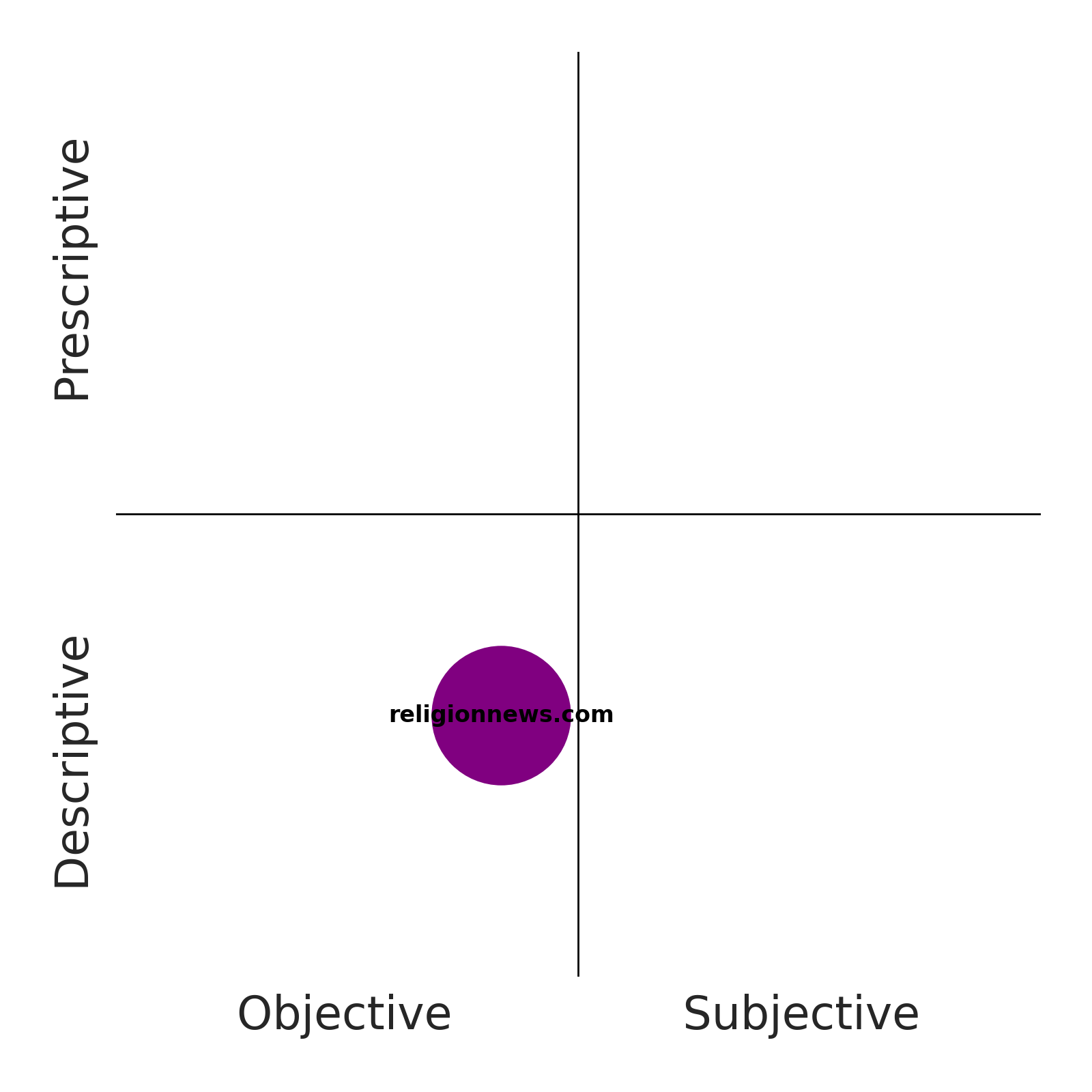
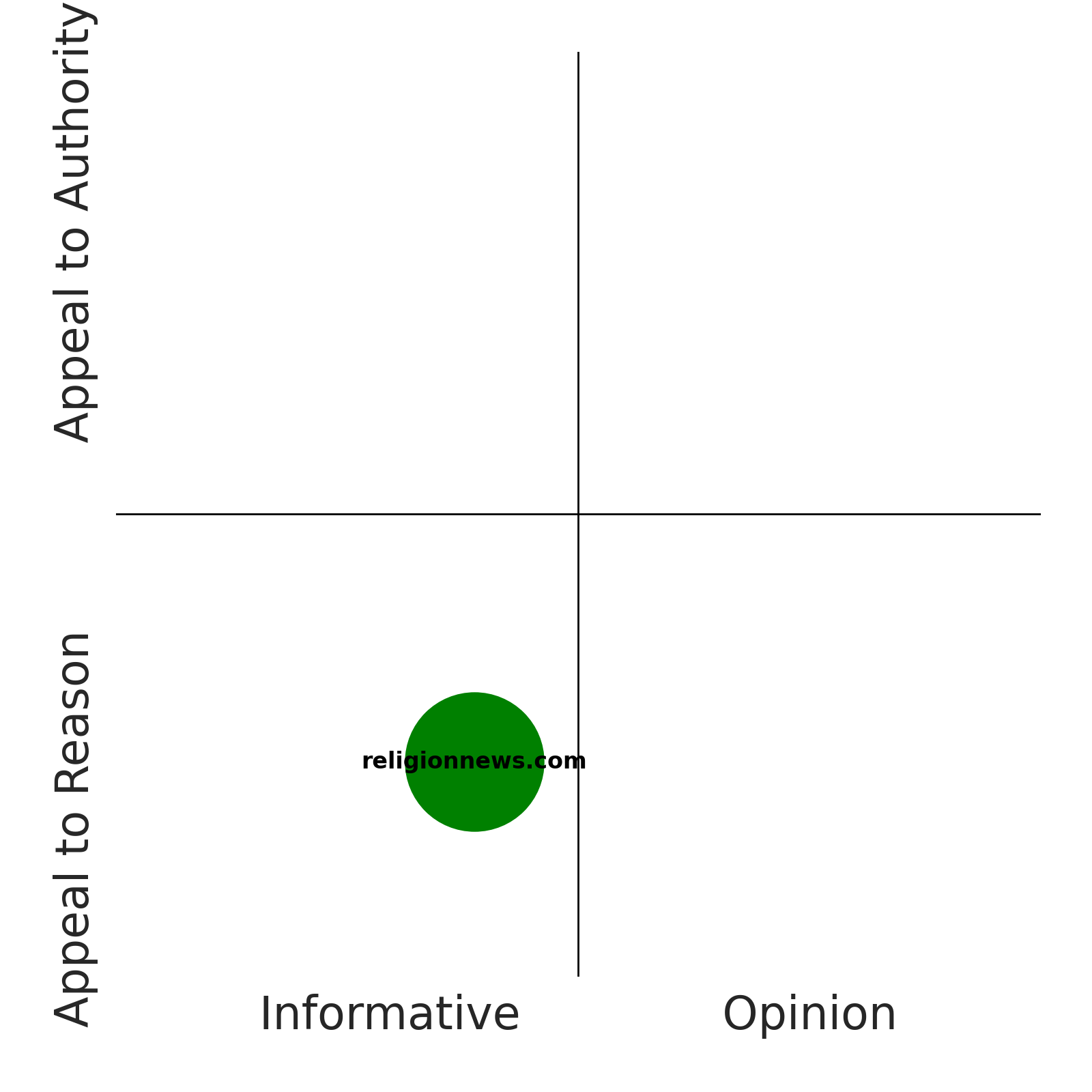
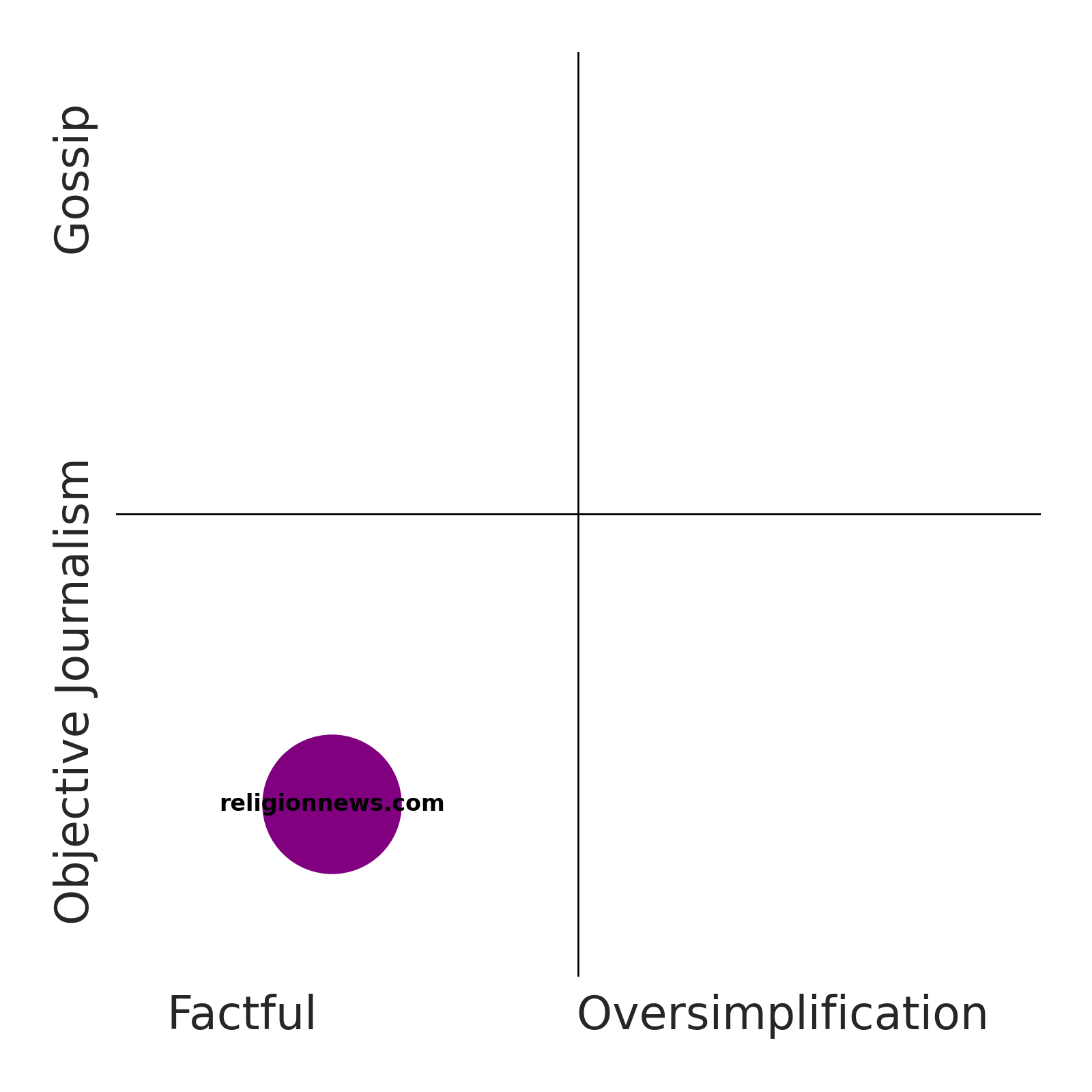
2026 © Helium Trades
Privacy Policy & Disclosure
* Disclaimer: Nothing on this website constitutes investment advice, performance data or any recommendation that any particular security, portfolio of securities, transaction or investment strategy is suitable for any specific person. Helium Trades is not responsible in any way for the accuracy
of any model predictions or price data. Any mention of a particular security and related prediction data is not a recommendation to buy or sell that security. Investments in securities involve the risk of loss. Past performance is no guarantee of future results. Helium Trades is not responsible for any of your investment decisions,
you should consult a financial expert before engaging in any transaction.


