See whether Helium helps you make better-informed decisions. Try every Pro Trader feature for 30 days. No credit card required.
Try every Pro Trader feature for 30 days. No credit card required.
Identity and topic profile. The outlet is a Russian state-aligned news agency (blanked name in records, but consistent with TASS-style wire conventions like 'NEW DELHI, September 11'
September 11, 2026 · 0 shares
The framing is a minimal, attributed relay of Putin's warning, presenting it as newsworthy without independent context or challenge.
The statement comes in the context of the ongoing Russia-Ukraine conflict and Western debate over military support, including possible troop deployments, to Ukraine.
Automated analysis; not human reviewed. Limitations: The supplied text is extremely short and consists almost entirely of an attributed one-line warning, so several dimensions cannot be assessed. · 6 of 54 available dimensions scored; omitted dimensions are not treated as neutral. · Verified supporting quotes for 5 of 6 scored dimensions.
Claim: The report uses attributed, third-person phrasing and avoids editorial commentary.
“President Vladimir Putin has warned against deploying European troops to Ukraine as this will mean a war with Russia.” · exact text match
Why: The warning is explicitly attributed to Putin, with the quotation marked as his words rather than the publisher's assertion.
Claim: The report presents the statement in neutral news-wire style rather than sensational dramatization.
“President Vladimir Putin has warned against deploying European troops to Ukraine as this will mean a war with Russia.” · exact text match
Why: The dramatic 'war with Russia' phrase is part of an attributed warning; the surrounding prose is unemotional and direct.
Claim: The sole substantive content is a head-of-state statement about troop deployments and war, making the item highly political.
“President Vladimir Putin has warned against deploying European troops to Ukraine as this will mean a war with Russia.” · exact text match
Why: The content is a geopolitical statement by a national leader reported in a political context.
Claim: The publisher's prose is neutral and unemotional, without positive or negative evaluative modifiers.
“President Vladimir Putin has warned against deploying European troops to Ukraine as this will mean a war with Russia.” · exact text match
Why: The sentence is a straightforward attribution; the potential alarm of 'war with Russia' is contained in the quoted warning.
Claim: Visible sourcing, dateline, and direct attribution support the report's basic credibility as a news item.
“NEW DELHI, September 11. /TASS/.” · exact text match
“President Vladimir Putin has warned against deploying European troops to Ukraine as this will mean a war with Russia.” · exact text match
Why: A named location, date, wire service credit, and direct quote are present, though the underlying claim is not independently verified.
Claim: The text transparently attributes the warning and provides a direct quotation, showing internally observable fairness.
“"Now, they say they are thinking of how to deploy troops to Ukraine. This would mean a war with Russia," he told reporters.” · not found in supplied text
Why: Attribution and quotation allow readers to distinguish the source's claim from the publisher's report.
The supplied text is extremely short and consists almost entirely of an attributed one-line warning, so several dimensions cannot be assessed.
September 21, 2026 · 0 shares
Presents the FSB’s allegations as established fact, labels the man “the perpetrator” before trial, and attributes to Ukrainian intelligence a plan to kill civilians, including women and children, at a Russian polling station.
Automated analysis; not human reviewed. Limitations: The supplied article text is truncated in places, so later passages that might contain additional context or qualifying details are unavailable. · 16 of 55 available dimensions scored; omitted dimensions are not treated as neutral. · Verified supporting quotes for 16 of 16 scored dimensions.
Claim: The report narrates unproven charges against Ukrainian institutions as simple fact, reflecting a conservative, state-aligned political framing.
“The man put explosives and other components received from Ukrainian security officers in his personal vehicle” · exact text match
“on the contrary, the SBU expected a large number of casualties among civilians.” · exact text match
Why: The claim that Ukrainian security forces supplied explosives and welcomed civilian deaths is presented without attribution or verification, matching the Russian state's wartime narrative.
Claim: The report unambiguously endorses the security-service outcome, showing no concern for individual rights or due process.
“The suspect could not carry out his plan, as FSB officers detained him.” · exact text match
Why: FSB detention is presented as an unqualified positive event, a hallmark of authoritarian framing.
Claim: The text adopts a subjective, guilt-presuming tone despite an appearance of factual reporting.
“The perpetrator noted that at first, the SBU officer asked him to” · exact text match
Why: Calling the detained man ‘the perpetrator’ assumes guilt before any adjudication, which is a subjective stance.
Claim: The subject matter is dramatic and attention-getting even though the writing style is formulaic.
“The man put explosives and other components received from Ukrainian security officers in his personal vehicle that he was supposed to leave near a regional polling station and blow up when people were expected to gather during the election.” · exact text match
Why: A plot to bomb a polling station on election day is inherently unusual and newsworthy.
Claim: The reporting frames Ukrainian institutions as a lethal terror threat, supporting a maximal-security stance in the conflict.
“on the contrary, the SBU expected a large number of casualties among civilians.” · exact text match
Why: Portraying the SBU as deliberately planning mass civilian deaths encourages maximal hostility toward Ukraine.
Claim: The article foregrounds the most frightening possible detail — dead women and children — to amplify fear and moral outrage.
“it did not bother his handler that children and women could die in an explosion; on the contrary, the SBU expected a large number of casualties among civilians.” · exact text match
Why: The chosen detail emphasizes deliberately contemplated mass civilian deaths, which is emotionally fear-inducing even though the prose is flat.
Claim: Assertions of fact in the report are saturated with interpretation, particularly about the suspect’s instructions and Ukrainian intentions.
“The man put explosives and other components received from Ukrainian security officers in his personal vehicle” · exact text match
Why: An unproven investigative allegation is stated as a fact with no source attribution such as ‘allegedly’ or ‘according to investigators.’
Claim: The report is highly partisan in the information war, framing Ukraine’s intelligence service as deliberately targeting civilians.
“on the contrary, the SBU expected a large number of casualties among civilians” · exact text match
Why: Attributing a murderous political intention to a national institution is a strongly partisan wartime claim.
Claim: The authority of the FSB is relied upon as the report’s sole epistemic ground.
“the FSB Public Relations Center reported” · exact text match
Why: The article ends its chain of proof at the state agency’s statement rather than offering independent evidence.
Claim: The report states the suspect’s guilt, the plan, and the FSB’s role as certain, exceeding what the available evidence shows.
“The suspect could not carry out his plan, as FSB officers detained him.” · exact text match
Why: The truth of the plot and the reliability of the detention account are treated as definite rather than as official allegations.
Claim: The narrative is structured to serve a wartime ideology in which the hostile state’s institutions are automatically criminal.
“explosives and other components received from Ukrainian security officers” · exact text match
Why: The assumption that official Ukrainian structures supplied explosives is presented as settled truth, reinforcing the state ideology of the war.
Claim: The report is aligned with the Russian state security establishment, using its account as the sole basis of the story.
“the FSB Public Relations Center reported” · exact text match
Why: The only institutional source in the excerpt is the FSB, and its statements are treated as authoritative news.
Claim: The article’s overall emotional valence is negative, aimed at generating anger and fear against Ukraine.
“children and women could die in an explosion” · exact text match
Why: Despite the flat news tone, the imagery of dying women and children carries a strong negative emotional charge.
Claim: The report has low reliability because it presents unverified allegations as fact and relies exclusively on a security service’s own video confession.
“According to video footage published by the FSB, the man said that he had agreed to work for Kiev for a large sum of money.” · exact text match
Why: The investigating authority is the source of the video and the only source cited, with no independent verification or opposing perspective.
Claim: The report treats a custodial video confession and secret-police allegations as fully reliable, without addressing coercion or independent verification.
“According to video footage published by the FSB, the man said that he had agreed to work for Kiev for a large sum of money.” · exact text match
Why: A confession video produced by the security service itself is treated as conclusive rather than as evidence in need of scrutiny.
Claim: The report steers the reader toward the official version by combining an unexamined confession video with the most inflammatory details and omitting alternative explanations.
“According to video footage published by the FSB, the man said that he had agreed to work for Kiev for a large sum of money.” · exact text match
“it did not bother his handler that children and women could die in an explosion” · exact text match
Why: The FSB-published video is presented as conclusive and the emotional worst-case detail is highlighted, while no context about the video’s production or possible coercion is provided.
The supplied article text is truncated in places, so later passages that might contain additional context or qualifying details are unavailable.
September 08, 2026 · 0 shares
Framing relays Russian Defense Ministry statements as established facts, making Russian battlefield advances and Ukrainian losses the story while leaving out Ukrainian or independent accounts.
Russia's full-scale invasion of Ukraine began in February 2022; 'special military operation' is the Russian government's official term for it.
Automated analysis; not human reviewed. Limitations: The supplied excerpt is entirely based on Russian Defense Ministry statements, so separating the ministry's framing from the publisher's own framing is inherently difficult. · 9 of 54 available dimensions scored; omitted dimensions are not treated as neutral. · Verified supporting quotes for 8 of 9 scored dimensions.
Claim: The report frames military occupation and command decisions as routine governance.
“Units of Russia’s Battlegroup North have established control over the settlements of Dolgenkoye and Berezniki in the Kharkov region, the Russian Defense Ministry reported.” · exact text match
Why: Presenting 'established control' over territory as an ordinary ministry update normalizes state military authority.
Claim: The report emphasizes offensive strikes and enemy casualties, with no diplomatic or de-escalatory framing.
“battlegroup North wiped out up to 180 Ukrainian servicemen” · exact text match
“Russian forces have struck the Warbirds of Ukraine facility in Belaya Tserkov, manufacturing TRX drones with a range of 450 km, the Russian Defense Ministry reported.” · exact text match
Why: The selection and wording highlight military effectiveness, which is consistent with a hawkish outlook.
Claim: The report uses the politically loaded official term 'special military operation' and covers a contested war as a routine update.
“Ukraine has lost approximately 1,285 troops in the special military operation zone over the past 24 hours” · exact text match
Why: Adopting 'special military operation' rather than neutral terminology embeds a political frame.
Claim: Complex battlefield events are compressed into one-sided totals and clean territorial outcomes.
“Ukraine has lost approximately 1,285 troops in the special military operation zone over the past 24 hours” · exact text match
“Inside the ‘cauldron,’ enemy units were defeated in the area of the settlements of Malaya Volchya, Varvarovka, Buzovo, and Nefedovka in the Kharkov Region” · not found in supplied text
Why: The numbers and 'defeated' language present contested, dynamic fighting as a simple set of outcomes.
Claim: Every factual claim is justified by the authority of the Russian Defense Ministry.
“According to its statement, Russia’s battlegroup North wiped out up to 180 Ukrainian servicemen” · exact text match
Why: The ministry's statement is treated as sufficient evidence throughout; no other evidence is offered.
Claim: The report asserts precise casualty numbers and completed control of territory without hedges.
“Control has been established over the settlement of Dolgenkoye in the Kharkov region” · exact text match
“Ukraine has lost approximately 1,285 troops in the special military operation zone over the past 24 hours” · exact text match
Why: These are categorical assertions from one side's military, with no uncertainty or independent verification.
Claim: The report adopts a justificatory frame that Ukrainian drone production is aimed at striking civilian targets in Russia.
“which manufactured components for reconnaissance and strike UAVs, including long-range ones, used to strike civilian targets on Russian territory, was hit” · exact text match
Why: The quoted rationale characterizes Ukrainian capabilities as threats to civilians, lending a moral justification to Russian strikes.
Claim: The content is structured entirely around official Russian state statements.
“the Russian Defense Ministry reported” · exact text match
“According to its statement, Russia’s battlegroup North wiped out up to 180 Ukrainian servicemen” · exact text match
Why: No independent, Ukrainian, or alternative institutional source appears; official pronouncements are the sole basis.
Claim: Visible credibility is low because all claims come from a single belligerent's officials with no independent sourcing or correction note.
“the Russian Defense Ministry reported” · exact text match
“According to its statement, Russia’s battlegroup North wiped out up to 180 Ukrainian servicemen” · exact text match
Why: Sourcing is exclusively official and one-sided, leaving the reader without a basis to verify reported battlefield events.
The supplied excerpt is entirely based on Russian Defense Ministry statements, so separating the ministry's framing from the publisher's own framing is inherently difficult.
September 11, 2026 · 0 shares
Presents Russian Defense Ministry casualty and territorial-gain figures as unvarnished fact, framing the war as a 'special military operation' with no independent verification or Ukrainian counter-perspective.
Automated analysis; not human reviewed. Limitations: Input consists solely of a Russian state-run news agency article with unverified claims and no independent sources; analysis limited to supplied text. · 6 of 54 available dimensions scored; omitted dimensions are not treated as neutral. · Verified supporting quotes for 4 of 6 scored dimensions.
Claim: The article is entirely about the Ukraine war and presents Russian military actions as central.
“The Russian Armed Forces carried out one massive strike and six group strikes over the past week” · not found in supplied text
Why: The content is wholly political/military, with no non-political angle.
Claim: Uses the Russian Defense Ministry as the sole evidence source.
“the Russian Defense Ministry reported” · exact text match
Why: The argument rests on official authority rather than independent verification.
Claim: Provides precise casualty and equipment loss numbers without caveats.
“Enemy losses in this area totaled more than 1,395 servicemen, ten armored combat vehicles, 108 vehicles, 12 field artillery guns” · exact text match
Why: Exact figures presented as fact despite being ministry claims.
Claim: Supports the Russian government's military narrative.
“the Russian Defense Ministry reported” · exact text match
Why: The ministry is a state institution, and the article promotes its version.
Claim: Omits any Ukrainian or independent perspective, creating an asymmetric account.
“the Russian Defense Ministry reported” · exact text match
Why: Material omission of counterclaims shapes the narrative.
Claim: Treats unverified ministry casualty figures as factual.
“Russia’s Battlegroup West wipes out over 1,395 Ukrainian troops over the past week” · not found in supplied text
Why: The phrasing asserts the result rather than attributing it as a claim.
Input consists solely of a Russian state-run news agency article with unverified claims and no independent sources; analysis limited to supplied text.
August 29, 2026 · 0 shares
The report presents Russian military claims as established facts, using propagandistic language such as 'special military operation' and omitting any Ukrainian perspective or independent verification.
This report from Russian state news agency TASS covers the ongoing invasion of Ukraine, presenting the Russian Defense Ministry's daily claims as factual without independent verification or Ukrainian response.
Automated analysis; not human reviewed. · 2 of 54 available dimensions scored; omitted dimensions are not treated as neutral. · Verified supporting quotes for 2 of 2 scored dimensions.
Claim: The report is highly political, aligning with Russian state narratives.
“special military operation” · exact text match
Why: The term is a politically charged euphemism for the invasion, indicating strong political framing.
Claim: The report lacks independent verification and uses propagandistic framing.
“Ukrainian forces lost around 1,425 troops” · exact text match
“since the start of the special military operation” · exact text match
Why: It relies entirely on the Russian Defense Ministry's statement and uses loaded language, reducing credibility.
September 21, 2026 · 0 shares
Framing presents one side's uncorroborated battlefield tally as a factual headline, leaning on an unnamed official spokesman while omitting independent or opposing evidence.
Automated analysis; not human reviewed. Limitations: Analysis is limited to a two-sentence excerpt from a single military source, so all classifications reflect the one-sided text rather than verified facts. · 4 of 55 available dimensions scored; omitted dimensions are not treated as neutral. · Verified supporting quotes for 4 of 4 scored dimensions.
Claim: The lead line adopts the Russian battlegroup's perspective as fact instead of as reported or alleged.
“Russia's Battlegroup West destroys HIMARS rocket, 117 Ukrainian UAVs in past day.” · exact text match
Why: A neutral report would attribute or hedge the claim; the headline states it as the publisher's own assertion.
Claim: The only source cited for the detailed destruction tally is an unnamed official spokesman.
“The battlegroup’s spokesman added that 56 UAV control centers as well as three satellite communication stations were destroyed” · exact text match
Why: The article leans on the spokesman's unnamed authority for operational claims without providing independent evidence.
Claim: The headline reports a one-sided destruction tally as a settled fact rather than as an allegation from one side.
“Russia's Battlegroup West destroys HIMARS rocket, 117 Ukrainian UAVs in past day.” · exact text match
Counterevidence:
“The battlegroup’s spokesman added that 56 UAV control centers as well as three satellite communication stations were destroyed” · exact text match
Why: The present-tense declarative construction asserts combat results without hedging, attribution, or corroboration in the main claim.
Claim: The visible sourcing is narrow and one-sided, with no independent verification or stated uncertainty.
“The battlegroup’s spokesman added that 56 UAV control centers as well as three satellite communication stations were destroyed” · exact text match
Why: The report relies entirely on a single military spokesman's assertion, and the main headline is stated without attribution, lowering credibility.
Analysis is limited to a two-sentence excerpt from a single military source, so all classifications reflect the one-sided text rather than verified facts.
September 11, 2026 · 0 shares
Presents a Russian military communique as confirmed fact, using assertive language and 'enemy' terminology to highlight equipment destruction.
Automated analysis; not human reviewed. Limitations: The article is a short excerpt from a Russian military source; analysis is based solely on the provided text and may not capture broader context. · 54 of 54 available dimensions scored; omitted dimensions are not treated as neutral. · Verified supporting quotes for 11 of 54 scored dimensions.
Claim: Portrays Russian military progress favorably through repeated emphasis on destruction.
“Fighters of Russia’s Battlegroup West have destroyed 51 Ukrainian unmanned aerial vehicle (UAV) control centers” · exact text match
Why: The language highlights successful offensive actions without acknowledging losses or setbacks, giving a positive tone for one side.
Claim: Celebrates military destructiveness without human cost caveats.
“A total of 51 Ukrainian UAV control centers, two satellite communication stations, an ATV, 32 ground robotic systems, and two enemy field ammunition depots [were] identified and destroyed” · exact text match
Why: The enumeration of destroyed equipment is framed as a success, supporting a hawkish stance.
Claim: Uses partisan 'enemy' terminology in a conflict context.
“two enemy field ammunition depots” · exact text match
Why: The term 'enemy' is a loaded, political descriptor that frames the report clearly on one side of the conflict.
Claim: Reduces the war to a tally of destroyed equipment without strategic or human context.
“A total of 51 Ukrainian UAV control centers, two satellite communication stations, an ATV, 32 ground robotic systems, and two enemy field ammunition depots [were] identified and destroyed” · exact text match
Why: The report includes only quantitative destruction metrics, omitting broader consequences or operational complexity.
Claim: Relies on a military spokesman's assertion as authoritative validation.
“the battlegroup’s spokesman Ivan Bigma reported” · exact text match
Why: The report's credibility rests entirely on the spokesman's statement, not on independent verification.
Claim: Asserts precise figures as confirmed facts without qualifiers or caveats.
“Fighters of Russia’s Battlegroup West have destroyed 51 Ukrainian unmanned aerial vehicle (UAV) control centers” · exact text match
Why: The language states numbers as certain, despite reliance on a single military claim.
Claim: Reflects a military triumphalist ideology consistent with pro-Russian war narratives.
“Fighters of Russia’s Battlegroup West have destroyed 51 Ukrainian unmanned aerial vehicle (UAV) control centers” · exact text match
Why: The selection and presentation of destruction figures as favorable outcomes indicates ideological support for the war effort.
Claim: Supports the Russian military command's perspective without challenge.
“the battlegroup’s spokesman Ivan Bigma reported” · exact text match
Why: The article relies solely on an official military source, endorsing the establishment's narrative.
Claim: Lacks independent verification and attributes only to a single military source.
“the battlegroup’s spokesman Ivan Bigma reported” · exact text match
Why: The sole source is a military spokesman, and no corroborating evidence or acknowledgment of uncertainty is provided, lowering trustworthiness.
Claim: Presents one-sided success with loaded language, omitting any Ukrainian perspective or independent verification.
“Fighters of Russia’s Battlegroup West have destroyed 51 Ukrainian unmanned aerial vehicle (UAV) control centers” · exact text match
“A total of 51 Ukrainian UAV control centers, two satellite communication stations, an ATV, 32 ground robotic systems, and two enemy field ammunition depots [were] identified and destroyed” · exact text match
Why: The framing unilaterally emphasizes Russian military achievements and uses 'enemy' to shape reader perception without counterpoints.
Claim: Presents unverified military claims as factual without hedging or attribution of uncertainty.
“Fighters of Russia’s Battlegroup West have destroyed 51 Ukrainian unmanned aerial vehicle (UAV) control centers” · exact text match
Why: The opening assertion is made as a confirmed fact, not as a claimed or alleged action, indicating low skepticism.
The article is a short excerpt from a Russian military source; analysis is based solely on the provided text and may not capture broader context.
September 21, 2026 · 0 shares
Presents the FSB’s allegations as established fact, labels the man “the perpetrator” before trial, and attributes to Ukrainian intelligence a plan to kill civilians, including women and children, at a Russian polling station.
Automated analysis; not human reviewed. Limitations: The supplied article text is truncated in places, so later passages that might contain additional context or qualifying details are unavailable. · 16 of 55 available dimensions scored; omitted dimensions are not treated as neutral. · Verified supporting quotes for 16 of 16 scored dimensions.
Claim: The report narrates unproven charges against Ukrainian institutions as simple fact, reflecting a conservative, state-aligned political framing.
“The man put explosives and other components received from Ukrainian security officers in his personal vehicle” · exact text match
“on the contrary, the SBU expected a large number of casualties among civilians.” · exact text match
Why: The claim that Ukrainian security forces supplied explosives and welcomed civilian deaths is presented without attribution or verification, matching the Russian state's wartime narrative.
Claim: The report unambiguously endorses the security-service outcome, showing no concern for individual rights or due process.
“The suspect could not carry out his plan, as FSB officers detained him.” · exact text match
Why: FSB detention is presented as an unqualified positive event, a hallmark of authoritarian framing.
Claim: The text adopts a subjective, guilt-presuming tone despite an appearance of factual reporting.
“The perpetrator noted that at first, the SBU officer asked him to” · exact text match
Why: Calling the detained man ‘the perpetrator’ assumes guilt before any adjudication, which is a subjective stance.
Claim: The subject matter is dramatic and attention-getting even though the writing style is formulaic.
“The man put explosives and other components received from Ukrainian security officers in his personal vehicle that he was supposed to leave near a regional polling station and blow up when people were expected to gather during the election.” · exact text match
Why: A plot to bomb a polling station on election day is inherently unusual and newsworthy.
Claim: The reporting frames Ukrainian institutions as a lethal terror threat, supporting a maximal-security stance in the conflict.
“on the contrary, the SBU expected a large number of casualties among civilians.” · exact text match
Why: Portraying the SBU as deliberately planning mass civilian deaths encourages maximal hostility toward Ukraine.
Claim: The article foregrounds the most frightening possible detail — dead women and children — to amplify fear and moral outrage.
“it did not bother his handler that children and women could die in an explosion; on the contrary, the SBU expected a large number of casualties among civilians.” · exact text match
Why: The chosen detail emphasizes deliberately contemplated mass civilian deaths, which is emotionally fear-inducing even though the prose is flat.
Claim: Assertions of fact in the report are saturated with interpretation, particularly about the suspect’s instructions and Ukrainian intentions.
“The man put explosives and other components received from Ukrainian security officers in his personal vehicle” · exact text match
Why: An unproven investigative allegation is stated as a fact with no source attribution such as ‘allegedly’ or ‘according to investigators.’
Claim: The report is highly partisan in the information war, framing Ukraine’s intelligence service as deliberately targeting civilians.
“on the contrary, the SBU expected a large number of casualties among civilians” · exact text match
Why: Attributing a murderous political intention to a national institution is a strongly partisan wartime claim.
Claim: The authority of the FSB is relied upon as the report’s sole epistemic ground.
“the FSB Public Relations Center reported” · exact text match
Why: The article ends its chain of proof at the state agency’s statement rather than offering independent evidence.
Claim: The report states the suspect’s guilt, the plan, and the FSB’s role as certain, exceeding what the available evidence shows.
“The suspect could not carry out his plan, as FSB officers detained him.” · exact text match
Why: The truth of the plot and the reliability of the detention account are treated as definite rather than as official allegations.
Claim: The narrative is structured to serve a wartime ideology in which the hostile state’s institutions are automatically criminal.
“explosives and other components received from Ukrainian security officers” · exact text match
Why: The assumption that official Ukrainian structures supplied explosives is presented as settled truth, reinforcing the state ideology of the war.
Claim: The report is aligned with the Russian state security establishment, using its account as the sole basis of the story.
“the FSB Public Relations Center reported” · exact text match
Why: The only institutional source in the excerpt is the FSB, and its statements are treated as authoritative news.
Claim: The article’s overall emotional valence is negative, aimed at generating anger and fear against Ukraine.
“children and women could die in an explosion” · exact text match
Why: Despite the flat news tone, the imagery of dying women and children carries a strong negative emotional charge.
Claim: The report has low reliability because it presents unverified allegations as fact and relies exclusively on a security service’s own video confession.
“According to video footage published by the FSB, the man said that he had agreed to work for Kiev for a large sum of money.” · exact text match
Why: The investigating authority is the source of the video and the only source cited, with no independent verification or opposing perspective.
Claim: The report treats a custodial video confession and secret-police allegations as fully reliable, without addressing coercion or independent verification.
“According to video footage published by the FSB, the man said that he had agreed to work for Kiev for a large sum of money.” · exact text match
Why: A confession video produced by the security service itself is treated as conclusive rather than as evidence in need of scrutiny.
Claim: The report steers the reader toward the official version by combining an unexamined confession video with the most inflammatory details and omitting alternative explanations.
“According to video footage published by the FSB, the man said that he had agreed to work for Kiev for a large sum of money.” · exact text match
“it did not bother his handler that children and women could die in an explosion” · exact text match
Why: The FSB-published video is presented as conclusive and the emotional worst-case detail is highlighted, while no context about the video’s production or possible coercion is provided.
The supplied article text is truncated in places, so later passages that might contain additional context or qualifying details are unavailable.
August 26, 2026 · 0 shares
The article presents Russian security services' labels—terrorist, radical ideology, Ukrainian terrorist organization—as established fact and does not include qualified or alternative accounts.
Automated analysis; not human reviewed. Limitations: The input is limited to a TASS compilation of Russian official statements; no independent or defense account is available. · 2 of 54 available dimensions scored; omitted dimensions are not treated as neutral. · Verified supporting quotes for 2 of 2 scored dimensions.
Claim: The report adopts the state security apparatus's framing as factual, emphasizing detention and pre-trial custody without a due-process or rights perspective.
“The Russian Federal Security Service (FSB) and the Interior Ministry have detained supporters of international terrorist organizations banned in Russia in the Kabardino-Balkaria Region and the Republic of Adygea.” · exact text match
Counterevidence:
“By court order, all detainees have been placed in pre-trial detention.” · exact text match
Why: The opening sentence treats FSB and Interior Ministry detention as an unqualified fact and the article accepts the official terrorist label, while noting court orders only as legal confirmation.
Claim: The article uses loaded official designations ('terrorist', 'radical ideology', 'Ukrainian terrorist organization') as settled description and omits qualification or alternative accounts.
“Those promoting radical ideology were detained in the Zolsky district of Kabardino-Balkaria.” · exact text match
“communication devices containing correspondence with a militant from a Ukrainian terrorist organization who coordinated the suspect’s activities” · exact text match
Why: The labels are presented as objective fact, with no 'alleged' qualification and no non-official perspective, which frames the narrative around the security services' characterizations.
The input is limited to a TASS compilation of Russian official statements; no independent or defense account is available.
September 16, 2026 · 0 shares
Framing uncritically relays a Russian official's ad hominem attacks, hate-speech accusations, and neo-Nazi insinuation as a straight news item.
The referenced incident in which Kallas accused Russia over a Warsaw-bound passenger train from Kiev is not described; no EU evidence, no response from Kallas, and no independent details of the incident are given in the supplied text.
Automated analysis; not human reviewed. Limitations: The supplied article text is truncated at the end, so the analysis relies only on the provided prefix. · 11 of 54 available dimensions scored; omitted dimensions are not treated as neutral. · Verified supporting quotes for 7 of 11 scored dimensions.
Claim: The article presents subjective denunciations as reportable substance, with no independent analysis or counterpoint.
“All she does is convey sheer hatred toward our country, like a broken record.” · not found in supplied text
Why: The sole content is an unverifiable judgment about Kallas's motives and character, presented as a diplomatic event.
Claim: The wording is emotionally loaded and inflammatory rather than measured.
“all she does is spew hate about Russia” · exact text match
“All she does is convey sheer hatred toward our country, like a broken record.” · not found in supplied text
Why: 'Spew hate' and 'broken record' are sensational metaphors that inflame rather than inform.
Claim: The response presupposes the falsity of the claim it demands be refuted.
“The only thing that needs to be done is refuting this false information” · exact text match
Why: Calling Kallas's train-accident claim 'false information' assumes the conclusion that the accusation is false.
Claim: The article is almost entirely opinion attributed to one official, with no factual reporting or analysis beyond the fact of the statement.
“She does not say anything that would benefit Brussels and the EU in the context of those countries’ interests. She does not care about them,” · exact text match
Why: These are subjective verdicts about Kallas's value and feelings, presented as the whole story.
Claim: The article is a partisan political salvo in a geopolitical dispute.
“Kallas only acts as mouthpiece for EU’s hatred toward Russia, diplomat says” · exact text match
Why: The headline reduces the EU's position to collective hatred, serving a political purpose rather than informing.
Claim: The report's tone relies on name-calling and schoolyard dismissal.
“like a broken record” · exact text match
“supported neo-Nazism” · exact text match
Why: Calling a rival diplomat a broken record and neo-Nazi supporter is juvenile rhetoric; the publisher headlines it.
Claim: The framing casts Russia as the target of EU hatred.
“Kallas only acts as mouthpiece for EU’s hatred toward Russia” · exact text match
Why: The lead frames the EU's top diplomat as voicing 'hatred toward' Russia, positioning Russia as the aggrieved party.
Claim: The cumulative framing is strongly negative toward Kallas and the EU.
“she does not care about them” · not found in supplied text
“convey sheer hatred toward our country” · exact text match
Why: The article repeatedly characterizes Kallas as callous and hateful, producing a strongly negative emotional valence.
Claim: The report is only a record of one official's statement; it makes no effort to verify or balance the core accusations.
“the Russian diplomat told TASS in an interview” · exact text match
Why: Attribution is explicit, but the central claims (hatred, neo-Nazism) are unsupported and unverified, lowering credibility.
Claim: The piece substitutes ad hominem attack and neo-Nazi accusation for engagement with the substance of Kallas's train claim.
“she dismissed dialogue with people, who, in her words, supported neo-Nazism.” · exact text match
Why: Calling the EU's chief diplomat a neo-Nazi supporter and saying dialogue is useless abandons reasoned engagement; the article relays this without challenge.
Claim: The report uses one-sided framing and omits the EU side and incident details to steer the reader.
“All she does is convey sheer hatred toward our country, like a broken record.” · not found in supplied text
Why: Repeating loaded characterizations while omitting any EU response, incident specifics, or counter-evidence is an observable asymmetric framing technique.
The supplied article text is truncated at the end, so the analysis relies only on the provided prefix.
August 26, 2026 · 0 shares
Framing is strongly pro-Kremlin, using the pejorative term 'Kiev regime' and presenting Russia's claims about Ukraine's defeat and internal collapse as factual.
Automated analysis; not human reviewed. · 7 of 54 available dimensions scored; omitted dimensions are not treated as neutral. · Verified supporting quotes for 3 of 7 scored dimensions.
Claim: The article presents subjective opinions as objective facts.
“It is unequivocal that Ukraine is losing the conflict.” · exact text match
“The Kiev regime is crumbling from within and losing its stability.” · not found in supplied text
Why: The use of 'unequivocal' and the pejorative 'regime' indicate a subjective stance.
Claim: The article displays a clear pro-Russian, anti-Ukrainian bias.
“CIA chief's visit to Russia, Kiev regime's collapse, Armenia situation: Kremlin's briefing.” · exact text match
“The Kiev regime is crumbling from within and losing its stability.” · not found in supplied text
Why: The headline labels Ukraine as a 'regime' and presents its collapse as a fact, aligning with Kremlin rhetoric.
Claim: The article oversimplifies the Ukraine conflict to a clear defeat of one side.
“It is unequivocal that Ukraine is losing the conflict.” · exact text match
Why: Reduces a complex conflict to a simple assertion of defeat.
Claim: The article expresses certainty beyond available evidence.
“It is unequivocal that Ukraine is losing the conflict.” · exact text match
Why: The word 'unequivocal' asserts absolute certainty about a contested situation.
Claim: The article is strongly ideological, promoting a Kremlin-centric worldview.
“It is unequivocal that Ukraine is losing the conflict.” · exact text match
Why: The uncompromising assertion of Russia's narrative without counterpoint indicates ideological framing.
Claim: The article aligns with the Russian political establishment, presenting its spokesman's statements as authoritative.
“The Kremlin declined to comment on Armenia's domestic political developments.” · not found in supplied text
Why: The article exclusively presents the Kremlin's perspective without independent verification.
Claim: The article uses loaded language and presents opinions as facts to influence readers.
“The Kiev regime is crumbling from within and losing its stability.” · not found in supplied text
Why: Derogatory labeling and unsupported assertions serve a persuasive purpose.
September 14, 2026 · 0 shares
TASS relays Kremlin spokesman Dmitry Peskov's statements as straight news, adopting official Russian terms such as 'Kiev regime' and 'special military operation' and emphasizing Russian advances while framing Ukrainian strikes on Russian civilian infrastructure as the issue.
The briefing occurs against Russia's invasion of Ukraine, which the Kremlin officially calls a 'special military operation'; the Kremlin also refers to Ukraine's government as the 'Kiev regime.'
Automated analysis; not human reviewed. Limitations: The supplied article text is truncated with bracketed ellipses, so some statements are incomplete and cannot be fully classified. · 11 of 54 available dimensions scored; omitted dimensions are not treated as neutral. · Verified supporting quotes for 6 of 11 scored dimensions.
Claim: The report frames the Russian state military campaign as a continuing mission not open to question.
“Our forces carry out their missions throughout Ukraine, and they will continue to do that.” · exact text match
“The momentum of the advance on special military operation fronts will be maintained, "no one should have any doubts about this."” · not found in supplied text
Why: These are uncorrected official assertions that the state's armed campaign will continue and advance.
Claim: The text presents Kremlin evaluative language and one-sided framing as neutral reportage.
“We can only welcome any call on the Kiev regime to end strikes on civilian economic infrastructure.” · exact text match
“Russia is indeed improving its positions day by day and is consistently moving to its goals.” · exact text match
Why: Terms such as 'Kiev regime' and unqualified assertions of Russian progress are subjective framing presented without balancing context.
Claim: The text highlights confident, positive claims about Russia's military trajectory.
“Russia is indeed improving its positions day by day and is consistently moving to its goals.” · exact text match
“The momentum of the advance on special military operation fronts will be maintained, "no one should have any doubts about this."” · not found in supplied text
Why: The selected statements emphasize assured improvement and forward movement for Russia.
Claim: The report foregrounds statements that affirm continued military action and front-line advances.
“Our forces carry out their missions throughout Ukraine, and they will continue to do that.” · exact text match
“The momentum of the advance on special military operation fronts will be maintained, "no one should have any doubts about this."” · not found in supplied text
Why: The article relays, without qualification, the Kremlin's commitment to ongoing combat operations.
Claim: The entire substantive content concerns high-level state politics, war, and diplomacy.
“US President Donald Trump's call on Ukraine to stop strikes on Russian civilian infrastructure, Finland's decision on "nuclear deterrence" and the situation on oil markets became the main topics of briefing by Kremlin Spokesman Dmitry Peskov.” · not found in supplied text
Why: The article is essentially a political-military briefing summary.
Claim: The text foregrounds Russia as the party suffering strikes and needing protection.
“We can only welcome any call on the Kiev regime to end strikes on civilian economic infrastructure.” · exact text match
Why: This selected statement centers Ukrainian attacks on Russian civilian infrastructure and Russia's welcoming of calls to stop them.
Claim: The text relays assertions of future military progress as beyond doubt.
“The momentum of the advance on special military operation fronts will be maintained, "no one should have any doubts about this."” · not found in supplied text
“Russia is indeed improving its positions day by day and is consistently moving to its goals.” · exact text match
Why: The phrase 'no one should have any doubts' explicitly asserts certainty for a contested battlefield forecast.
Claim: The report uses Kremlin ideological terminology as unmarked descriptive terms.
“special military operation fronts” · exact text match
“the Kiev regime” · exact text match
Why: These terms carry the Russian state's framing of the war and the Ukrainian government; their use without scare quotes embeds an official ideology in the text.
Claim: The report is oriented around Kremlin authority and official positions.
“TASS has compiled the key statements by the Kremlin representative.” · exact text match
“Kremlin Spokesman Dmitry Peskov” · exact text match
Why: The selection is framed through the official Kremlin spokesman's statements, with the state's perspective as the organizing frame.
Claim: Attribution is transparent but the report uncritically relays official propaganda terminology without independent verification.
“TASS has compiled the key statements by the Kremlin representative.” · exact text match
Why: The source is named and quotes are attributed, supporting some credibility, but the unqualified use of official claims reduces it.
Claim: The text uses loaded framing and one-sided presentation of the conflict.
“We can only welcome any call on the Kiev regime to end strikes on civilian economic infrastructure.” · exact text match
“Our forces carry out their missions throughout Ukraine, and they will continue to do that.” · exact text match
Why: The 'Kiev regime' label and the selected focus on Ukrainian strikes on Russian infrastructure are observable loaded and selective framing techniques.
The supplied article text is truncated with bracketed ellipses, so some statements are incomplete and cannot be fully classified.
September 08, 2026 · 0 shares
State-agency framing presents Lavrov's anti-Western assertions and threats as uncontested news, adopting his labels and battle-oriented conclusions without qualification or counterpoint.
The statements presuppose prior diplomatic episodes the text does not explain: US proposals from the Anchorage summit with Russia and the earlier UN-brokered Black Sea Grain Initiative from which Moscow says it walked away.
Automated analysis; not human reviewed. Limitations: Only the supplied English-language TASS compilation was analyzed; the Russian original and any independent verification were unavailable. · 27 of 54 available dimensions scored; omitted dimensions are not treated as neutral. · Verified supporting quotes for 24 of 27 scored dimensions.
Claim: The compilation features anti-elite populist rhetoric aimed at European political classes.
“The trend of Western politicians and diplomats becoming increasingly mediocre has been evident for years” · exact text match
Why: Dismissive generalizations about European elites are presented without rebuttal in the official's interview compilation.
Claim: Authoritarian framing justifies severe state retaliation and treats international monitoring arrangements as unacceptable.
“would trigger a retaliatory response that would be far more severe for Ukraine” · exact text match
Why: The central framing endorses punitive state retaliation and rejects a multilateral moratorium as 'impossible to monitor.'
Claim: Evaluative opinions of one official are relayed as straightforward news without counterbalance.
“The West's loss of its objective capacity to run the show is leading it to attempt dominance through thoroughly unscrupulous methods” · exact text match
Why: A charged geopolitical judgment is presented as a plain statement in the compilation.
Claim: A small amount of dramatic, emotional metaphor appears amid otherwise flat declarative reporting.
“In historical terms, the West – and Europe in particular – is a severely wounded beast” · exact text match
Why: The 'wounded beast' metaphor is vivid, but the compilation is mostly dry assertion.
Claim: Framing is mildly optimistic about Russia's geopolitical trajectory, seeing advantage moving East.
“At this stage, all such advantages lie in the East” · exact text match
Why: Russia's position is portrayed as strengthening while the West is portrayed as declining.
Claim: Beyond describing policy, the framing instructs the West on how it should behave.
“it should now avoid "making too much of a fuss" with its "new ideas" on the Ukrainian issue” · not found in supplied text
Why: The statement functions as a demand addressed to the collective West.
Claim: Hawkish, militarized framing dominates, highlighting retaliation threats and battlefield resolution.
“would trigger a retaliatory response that would be far more severe for Ukraine” · exact text match
Why: The compilation emphasizes severe retaliation and rejects negotiated moratoriums as unworkable.
Claim: Fear-arousing language about Western danger and instability is present, though subordinate to a triumphant tone.
“It is becoming far more dangerous. There is less stability today than there was in the 1970s” · exact text match
Why: The danger framing appears in the 'wounded beast' passage but is secondary to confident assertions of Russian strength.
Claim: Claims assume the contested propositions they purport to establish, such as Western motives.
“The West sought to weaken and break up Russia in order to get its hands on its wealth, but it miscalculated” · exact text match
Why: Western motive and miscalculation are asserted as premises rather than demonstrated.
Claim: The piece consists almost entirely of a single official's opinions and evaluations presented as reportage.
“We can now see that the West miscalculated” · exact text match
Why: Nearly all content is Lavrov's evaluative assertion, with no contrary view.
Claim: The content is almost wholly political and takes sides in a contested conflict.
“Despite numerous opportunities to secure peace in Ukraine, the collective West has repeatedly prevented Kiev from doing so” · exact text match
Why: Blame in a highly contested war is assigned unqualifiedly.
Claim: Complex geopolitical shifts are reduced to simple, unqualified causal claims.
“The world is multipolar regardless, because America is weakening in terms of its weight in the global economy and, consequently, its influence in global politics” · exact text match
Why: A contested thesis about American decline is stated as a certainty.
Claim: The report's authority rests on the foreign minister's official position rather than evidence.
“During the interview, the foreign minister outlined Russia's response to Ukrainian terrorist attacks” · exact text match
Why: The official's account substitutes for independent verification.
Claim: Russia is portrayed as a wary target of Western threats and wrongdoing.
“We keep a sharp lookout in both directions to ensure that, first of all, neither side poses any threats or makes any attempts to wrong us” · exact text match
Why: The framing positions Russia as the guarded object of Western menace.
Claim: Certainty is expressed beyond the supplied evidence.
“That is precisely what is happening now” · exact text match
Why: Cause-and-effect about retaliation is asserted without evidence.
Claim: A coherent Kremlin worldview shapes selection and presentation throughout.
“It is not without reason that the eagle on our coat of arms has two heads--facing both West and East” · exact text match
Why: The compilation is organized around an ideological thesis about Russia's civilizational identity and Western decline.
Claim: The publisher uncritically amplifies the ruling government's official position.
“TASS has compiled the foreign minister's key statements” · exact text match
Why: A state agency packages the foreign minister's interview as news with no independent scrutiny.
Claim: The tone is combative and disparaging toward Western actors, carrying negative emotional valence.
“Since Ukraine's end is not a happy one, I pity Britain” · exact text match
Why: Mocking condescension conveys contempt rather than neutral reporting.
Claim: Visible sourcing is limited to one official, with no independent verification or acknowledgment of uncertainty.
“TASS has compiled the foreign minister's key statements” · exact text match
Why: The source is transparent, but the content is one-sided and unverified.
Claim: Unverifiable conspiratorial assertions are presented as established fact.
“The European Union is preparing special observers who will "secretly monitor" Russia's State Duma elections” · not found in supplied text
Why: The secret-monitoring claim is relayed without any sourcing or verification.
Claim: Collectivist, state-centric framing elevates national goals and leadership over individual considerations.
“as Russian President Vladimir Putin has repeatedly confirmed” · exact text match
Why: Leader-centered validation frames the state's battlefield objectives as authoritative.
Claim: Speculative forecasting about a hypothetical war appears.
“it would be a fundamentally different war” · exact text match
Why: A conditional prediction about a future European-Russian war is offered.
Claim: One-sided selection, loaded labels, and omission of countervailing context shape the reader's conclusions.
“We warned that Ukrainian terrorist attacks on Russian civilian targets, including oil refineries, would trigger a retaliatory response that would be far more severe for Ukraine” · exact text match
Why: The 'terrorist attacks' label and absence of any opposing account steer interpretation.
Claim: The compilation prints an apparent factual error and one-sided claims without editorial flags.
“Britain, represented by Prime Minister Andy Burnham, said it would stand with Ukraine to the end” · exact text match
Why: A misattribution (Burnham is not the UK prime minister) appears in Lavrov's quote and is reproduced without correction or note.
Claim: The compilation includes factually anomalous content treated as normal.
“Britain, represented by Prime Minister Andy Burnham” · exact text match
Why: An apparent factual error is published without flagging, alongside claims immune to verification.
Claim: Conspiratorial claims about secret EU surveillance and Western designs on Russian wealth are presented as fact.
“The European Union is preparing special observers who will "secretly monitor" Russia's State Duma elections” · not found in supplied text
Why: Alleged covert EU monitoring is relayed without sourcing.
Claim: Responsibility for the absence of peace is assigned entirely to the collective West.
“the collective West has repeatedly prevented Kiev from doing so” · exact text match
Why: Failed peace is blamed on the West without supporting detail.
Only the supplied English-language TASS compilation was analyzed; the Russian original and any independent verification were unavailable.
September 16, 2026 · 0 shares
Framing uncritically relays a Russian official's ad hominem attacks, hate-speech accusations, and neo-Nazi insinuation as a straight news item.
The referenced incident in which Kallas accused Russia over a Warsaw-bound passenger train from Kiev is not described; no EU evidence, no response from Kallas, and no independent details of the incident are given in the supplied text.
Automated analysis; not human reviewed. Limitations: The supplied article text is truncated at the end, so the analysis relies only on the provided prefix. · 11 of 54 available dimensions scored; omitted dimensions are not treated as neutral. · Verified supporting quotes for 7 of 11 scored dimensions.
Claim: The article presents subjective denunciations as reportable substance, with no independent analysis or counterpoint.
“All she does is convey sheer hatred toward our country, like a broken record.” · not found in supplied text
Why: The sole content is an unverifiable judgment about Kallas's motives and character, presented as a diplomatic event.
Claim: The wording is emotionally loaded and inflammatory rather than measured.
“all she does is spew hate about Russia” · exact text match
“All she does is convey sheer hatred toward our country, like a broken record.” · not found in supplied text
Why: 'Spew hate' and 'broken record' are sensational metaphors that inflame rather than inform.
Claim: The response presupposes the falsity of the claim it demands be refuted.
“The only thing that needs to be done is refuting this false information” · exact text match
Why: Calling Kallas's train-accident claim 'false information' assumes the conclusion that the accusation is false.
Claim: The article is almost entirely opinion attributed to one official, with no factual reporting or analysis beyond the fact of the statement.
“She does not say anything that would benefit Brussels and the EU in the context of those countries’ interests. She does not care about them,” · exact text match
Why: These are subjective verdicts about Kallas's value and feelings, presented as the whole story.
Claim: The article is a partisan political salvo in a geopolitical dispute.
“Kallas only acts as mouthpiece for EU’s hatred toward Russia, diplomat says” · exact text match
Why: The headline reduces the EU's position to collective hatred, serving a political purpose rather than informing.
Claim: The report's tone relies on name-calling and schoolyard dismissal.
“like a broken record” · exact text match
“supported neo-Nazism” · exact text match
Why: Calling a rival diplomat a broken record and neo-Nazi supporter is juvenile rhetoric; the publisher headlines it.
Claim: The framing casts Russia as the target of EU hatred.
“Kallas only acts as mouthpiece for EU’s hatred toward Russia” · exact text match
Why: The lead frames the EU's top diplomat as voicing 'hatred toward' Russia, positioning Russia as the aggrieved party.
Claim: The cumulative framing is strongly negative toward Kallas and the EU.
“she does not care about them” · not found in supplied text
“convey sheer hatred toward our country” · exact text match
Why: The article repeatedly characterizes Kallas as callous and hateful, producing a strongly negative emotional valence.
Claim: The report is only a record of one official's statement; it makes no effort to verify or balance the core accusations.
“the Russian diplomat told TASS in an interview” · exact text match
Why: Attribution is explicit, but the central claims (hatred, neo-Nazism) are unsupported and unverified, lowering credibility.
Claim: The piece substitutes ad hominem attack and neo-Nazi accusation for engagement with the substance of Kallas's train claim.
“she dismissed dialogue with people, who, in her words, supported neo-Nazism.” · exact text match
Why: Calling the EU's chief diplomat a neo-Nazi supporter and saying dialogue is useless abandons reasoned engagement; the article relays this without challenge.
Claim: The report uses one-sided framing and omits the EU side and incident details to steer the reader.
“All she does is convey sheer hatred toward our country, like a broken record.” · not found in supplied text
Why: Repeating loaded characterizations while omitting any EU response, incident specifics, or counter-evidence is an observable asymmetric framing technique.
The supplied article text is truncated at the end, so the analysis relies only on the provided prefix.
September 08, 2026 · 0 shares
TASS frames the call through Ushakov's favorable Kremlin account, using the loaded term 'special military operation' without independent or critical context.
Automated analysis; not human reviewed. Limitations: I cannot independently verify the call's contents or Ushakov's claims; the analysis is based only on the supplied TASS text. · 5 of 54 available dimensions scored; omitted dimensions are not treated as neutral. · Verified supporting quotes for 2 of 5 scored dimensions.
Claim: The entire report concerns high-level state diplomacy and war policy.
“Presidents Vladimir Putin of Russia and Donald Trump of the United States held a phone call on Tuesday.” · exact text match
“support for Kiev and its own military spending.” · exact text match
Why: The subject matter is entirely geopolitical and presidential policy, with no non-political content.
Claim: The report presents Russian official framing as the sole interpretative frame for the call.
“Putin gave US President Donald Trump an "objective and thorough" analysis of the special military operation, Ushakov stated.” · not found in supplied text
“Putin told Trump that Russia has absolutely no aggressive plans toward Europe.” · exact text match
Why: The unqualified use of 'special military operation' and uncritical repetition of Ushakov's praise indicate alignment with the Kremlin narrative.
Claim: The report frames the call with positive emotional language.
“The phone call lasted for exactly one hour and was constructive and candid.” · not found in supplied text
“Trump also told Putin that the restoration of trade ties between Russia and Ukraine promise "enormous benefits for both nations."” · not found in supplied text
Why: Positive descriptors such as 'constructive and candid' and 'enormous benefits' are included without negative balance.
Claim: The report is sourced solely to a Kremlin official and lacks independent verification or competing perspectives.
“Putin’s aide Yury Ushakov said” · exact text match
“According to the Kremlin aide” · exact text match
Why: Attribution is visible, but reliance on one interested official and the absence of countervailing sources lower assessed credibility.
Claim: The report uses loaded terminology and selectively presents only favorable claims about Russia's actions.
“Putin gave US President Donald Trump an "objective and thorough" analysis of the special military operation, Ushakov stated.” · not found in supplied text
“The Russian leader lauded Melania Trump’s efforts toward the reunification of Russian and Ukrainian children with their families.” · not found in supplied text
Why: The uncritical term 'special military operation' and inclusion of self-praising details without counter-context indicate loaded framing and selective reporting.
I cannot independently verify the call's contents or Ushakov's claims; the analysis is based only on the supplied TASS text.
September 08, 2026 · 0 shares
The text is a strongly opinionated commentary that frames Hungary's expulsion of Russian diplomats as irrational, ideology-driven anti-Russian hatred and dismisses Hungary's stated openness to dialogue as meaningless.
Automated analysis; not human reviewed. Limitations: Only a single paragraph of an opinionated commentary was supplied; no article title, date, author, or surrounding context is available. · 6 of 54 available dimensions scored; omitted dimensions are not treated as neutral. · Verified supporting quotes for 6 of 6 scored dimensions.
Claim: The text uses evaluative, non-factual language rather than neutral reporting.
“taken hostage by the ideology-driven anti-Russian hatred” · exact text match
“means absolutely nothing” · exact text match
Why: The language is explicitly judgmental and presents an opinion as an established interpretation.
Claim: The text uses dramatic, exaggerated phrasing to describe a diplomatic action.
“taken hostage by the ideology-driven anti-Russian hatred” · exact text match
“means absolutely nothing” · exact text match
Why: Phrases like 'taken hostage' and 'means absolutely nothing' are sensational rather than measured.
Claim: The text states definitive conclusions without qualification or supporting evidence.
“is evidence that Hungary’s new authorities have found themselves taken hostage by the ideology-driven anti-Russian hatred” · exact text match
“means absolutely nothing” · exact text match
Why: The phrasing presents a causal interpretation and a dismissal as certain facts.
Claim: The text frames a foreign-policy dispute as an ideological struggle rather than a practical disagreement.
“ideology-driven anti-Russian hatred” · exact text match
“pragmatic cooperation means absolutely nothing” · exact text match
Why: It reduces the Hungarian position to anti-Russian ideology and treats Russia-oriented pragmatism as the only meaningful stance.
Claim: The text conveys strong negative emotion toward Hungarian authorities.
“ideology-driven anti-Russian hatred” · exact text match
“means absolutely nothing” · exact text match
Why: The wording is contemptuous and hostile, characterizing the Hungarian position as hateful and hollow.
Claim: The text offers unsupported assertions without sourcing, attribution, or uncertainty.
“is evidence that Hungary’s new authorities have found themselves taken hostage by the ideology-driven anti-Russian hatred” · exact text match
“means absolutely nothing” · exact text match
Why: No source, evidence, or qualifier is provided for the causal and evaluative claims.
Only a single paragraph of an opinionated commentary was supplied; no article title, date, author, or surrounding context is available.
September 11, 2026 · 0 shares
Neutral, fact-based reporting presents the Bank of Russia's rate decision and market reactions with attributed statements and data.
Before this decision, the Bank of Russia had been lowering the key rate since June 2025.
Automated analysis; not human reviewed. Limitations: The supplied article text is truncated and incomplete, so the analysis is based on an excerpt of the full TASS report. · 4 of 54 available dimensions scored; omitted dimensions are not treated as neutral. · Verified supporting quotes for 3 of 4 scored dimensions.
Claim: The article provides purely factual reporting without any ideological tendency.
“The Bank of Russia has decided not to lower its key rate first since June 2025, keeping it at 14% per annum.” · not found in supplied text
“The MOEX Index was down by more than 1% following the Central Bank’s decision, according to trading data.” · exact text match
Why: Both statements are objective and devoid of political or ideological framing.
Claim: The article relies on attributed statements and data, avoiding subjective interpretation.
“according to the regulator’s press release” · exact text match
“according to trading data” · exact text match
Why: All substantive claims are sourced to specific entities, and no opinion or editorial comment is present.
Claim: The article uses measured, non-sensational language throughout.
“The Bank of Russia has decided not to lower its key rate first since June 2025” · exact text match
“The Russian economy as a whole has been growing at a moderate pace” · exact text match
Why: The wording is neutral and descriptive, with no hyperbole or dramatic phrasing.
Claim: The article cites official press release and trading data with specific figures.
“As of September 7, 2026, annual inflation stood at 6.3%” · exact text match
“the MOEX Index was down by 0.63% at 2,294.30 points” · exact text match
Why: The presence of precise numbers and named sources supports credibility.
The supplied article text is truncated and incomplete, so the analysis is based on an excerpt of the full TASS report.
September 21, 2026 · 0 shares
Neutral declarative reporting with attribution of the policy's stated aim to the Agriculture Ministry.
Automated analysis; not human reviewed. Limitations: The supplied text is only two sentences, so most bias dimensions lack sufficient evidence; only neutrality/objectivity dimensions were scorable. · 4 of 55 available dimensions scored; omitted dimensions are not treated as neutral. · Verified supporting quotes for 1 of 4 scored dimensions.
Claim: The text reports the policy change in neutral, declarative language without subjective evaluation.
“Russian government zeroes out grain export duties through end of 2026.” · exact text match
Why: The sentence presents the policy as a settled fact with no qualifying, hedging, or opinionated terms.
Claim: The report uses measured, unalarmed wording rather than dramatic or emotionally charged language.
“The Russian Agriculture Ministry noted that the decision aims to support domestic producers and exporters of grain and oilseed crops.” · not found in supplied text
Why: The verb 'noted' and the matter-of-fact phrase 'aims to support' convey a routine policy announcement without exaggeration.
Claim: The text reports a decision and its stated rationale without recommending or prescribing any action.
“The Russian Agriculture Ministry noted that the decision aims to support domestic producers and exporters of grain and oilseed crops.” · not found in supplied text
Why: The purpose is attributed as the ministry's stated aim, not endorsed or urged by the publisher.
Claim: The text is unemotional and avoids both positive and negative affect.
“Russian government zeroes out grain export duties through end of 2026.” · exact text match
“The Russian Agriculture Ministry noted that the decision aims to support domestic producers and exporters of grain and oilseed crops.” · not found in supplied text
Why: Neither sentence expresses approval, concern, or sentiment; the policy rationale is relayed as a ministry note rather than framed with feeling.
The supplied text is only two sentences, so most bias dimensions lack sufficient evidence; only neutrality/objectivity dimensions were scorable.
September 21, 2026 · 0 shares
A deputy prime minister’s coal-expansion plan is relayed as a routine government approval, adopting official terminology for Ukrainian regions and offering no independent scrutiny.
Russia’s coal industry program is a long-term state energy plan; the “Eastern Range” refers to Russian railway capacity expansions toward Pacific ports. The Donetsk and Lugansk People’s Republics are entities internationally recognized as part of Ukraine but claimed by Russia.
Automated analysis; not human reviewed. Limitations: The supplied text is a truncated excerpt beginning mid-sentence and contains bracketed ellipses, so context before the excerpt and any portions removed by ellipses are unavailable. · 11 of 55 available dimensions scored; omitted dimensions are not treated as neutral. · Verified supporting quotes for 9 of 11 scored dimensions.
Claim: The story is told entirely from a government official’s announcement, while ordinary citizens and workers appear only as objects of policy.
“Russian Deputy Prime Minister Alexander Novak said at a government meeting.” · exact text match
“social stability and workforce development” · exact text match
Why: The deputy prime minister is both the source and the protagonist; the public is something to be managed through state programs.
Claim: The article presents a state plan that centrally directs production, export routes, town economies, and workforce outcomes, and treats occupied Ukrainian territories as Russian administrative scope without qualification.
“The government has approved the updated coal industry development program through 2050.” · exact text match
“completing the restructuring of the coal mine network, including in the Donetsk and Lugansk People’s Republics.” · exact text match
Why: A single government approval is presented as deciding output targets and regional restructuring, a strongly statist and top-down governance frame.
Claim: The entire story is the official government program and Novak’s framing, with no independent sourcing, data, or alternative perspective.
“The target scenario of Russia’s updated coal industry development program through 2050 includes increasing production to 660 mln metric tons and exports to 350 mln metric tons, Russian Deputy Prime Minister Alexander Novak said at a government meeting.” · exact text match
Why: The selection of the official announcement as the whole story creates a subjectively aligned news judgment.
Claim: The prose is dry, bureaucratic, and quantitative, with no emotional or dramatic devices.
“The target scenario of Russia’s updated coal industry development program through 2050 includes increasing production to 660 mln metric tons and exports to 350 mln metric tons.” · not found in supplied text
Why: The language is procedural and metric-filled, consistent with an objective style rather than sensational packaging.
Claim: The brief is mundane and administrative; nothing in it is designed to catch the reader’s attention.
“The target scenario of Russia’s updated coal industry development program through 2050 includes increasing production to 660 mln metric tons and exports to 350 mln metric tons.” · not found in supplied text
Why: A list of program metrics without narrative, conflict, or novelty reads as low-interest material.
Claim: A governmental energy policy decision with territorial claims is relayed as a routine administrative matter while using contested state terminology.
“The government has approved the updated coal industry development program through 2050.” · exact text match
“including in the Donetsk and Lugansk People’s Republics.” · exact text match
Why: The subject is inherently political, and the uncontested use of separatist place names embeds a political claim without flagging it.
Claim: The factual basis is essentially a single official’s announcement, with no independent evidence or data.
“Russian Deputy Prime Minister Alexander Novak said at a government meeting.” · exact text match
Why: The whole report depends on Novak’s authority for the contested production and export targets.
Claim: Executive power is treated as the authoritative source, with no critical distance from the official announcement.
“Russian Deputy Prime Minister Alexander Novak said at a government meeting.” · exact text match
“The government has approved the updated coal industry development program through 2050.” · exact text match
Why: The article functions as a transmission belt for a government decision, a strong establishment orientation.
Claim: Attribution is explicit to a named official, but the report accepts the official account without independent verification.
“Russian Deputy Prime Minister Alexander Novak said at a government meeting.” · exact text match
“The government has approved the updated coal industry development program through 2050.” · exact text match
Why: Clear attribution to Novak supports verifiability, while the absence of independent context about the conflict and sanctions lowers credibility.
Claim: The state is the actor organizing industry, towns, and workforce; individual or market agency is absent.
“diversifying the economies of single-industry towns and completing the restructuring of the coal mine network” · exact text match
Why: Solutions are collective and state-administered, reflecting a collectivist frame.
Claim: The text uses loaded state terminology for occupied Ukrainian territories and omits any dispute or surrounding war-and-sanctions context.
“completing the restructuring of the coal mine network, including in the Donetsk and Lugansk People’s Republics.” · exact text match
Why: Presenting the People’s Republics as unqualified objects of Russian planning normalizes a contested claim and forecloses dispute.
The supplied text is a truncated excerpt beginning mid-sentence and contains bracketed ellipses, so context before the excerpt and any portions removed by ellipses are unavailable.
September 21, 2026 · 0 shares
Publisher framing is attribution-heavy and numerically specific, yet headline choices foreground PhosAgro's growth—near-30% domestic gains and an Africa export tripling—producing a mildly positive, source-loyal account.
Automated analysis; not human reviewed. Limitations: The supplied article text is a truncated extract that breaks off mid-sentence, so later portions that could alter balance or context are unavailable; the underlying company data could not be independently verified. · 8 of 55 available dimensions scored; omitted dimensions are not treated as neutral. · Verified supporting quotes for 5 of 8 scored dimensions.
Claim: The text reports figures and attributed statements without evaluative adjectives or authorial opinion.
“Total agrochemical sales dipped by 1.9% to 6.1 million tonnes, while supplies to the domestic market surged by nearly 30%.” · exact text match
“"Shipments to the priority Russian market rose by more than 330,000 tonnes during this period, up nearly 30% compared to the same period last year," the report stated.” · not found in supplied text
Why: Numbers, percentages, and quotation marks carry the account; no subjective judgments are offered.
Claim: No dramatic, alarmist, or clickbait techniques appear; declines are disclosed and phrased mildly.
“The decline in shipments to Brazil and Argentina in the first half of 2026 was largely offset by increased sales to other Latin American nations, supported by steady effective demand and high netback prices.” · exact text match
Why: 'Largely offset' is an unemotional, precise characterization rather than a sensational narrative.
Claim: Headline framing foregrounds PhosAgro's growth metrics, giving a mildly positive investor impression.
“PhosAgro boosts domestic supplies by nearly 30%, triples exports to Africa in 1H 2026.” · exact text match
Counterevidence:
“Total agrochemical sales dipped by 1.9% to 6.1 million tonnes” · exact text match
Why: The headline is built from the most positive figures, while the only negative number is relegated to a later sentence.
Claim: Selected data points depict a company expanding strongly in key markets despite a small overall decline.
“The company also reported a nearly threefold jump in fertilizer sales to African markets compared to H1 2025” · exact text match
Counterevidence:
“Total agrochemical sales dipped by 1.9% to 6.1 million tonnes” · exact text match
Why: The threefold African jump and the offset language frame the period as commercially successful.
Claim: Language is affectively neutral; 'dipped' and 'surged' are standard market-movement verbs without emotional charge.
“Total agrochemical sales dipped by 1.9% to 6.1 million tonnes, while supplies to the domestic market surged by nearly 30%.” · exact text match
Why: The sentence is a workmanlike statement of two opposite movements; no connotative emphasis is evident.
Claim: Specific quantities, exact percentages, and explicit sourcing make the text appear trustworthy as a relay of the company's report.
“"Shipments to the priority Russian market rose by more than 330,000 tonnes during this period, up nearly 30% compared to the same period last year," the report stated.” · not found in supplied text
“The company also reported a nearly threefold jump in fertilizer sales to African markets compared to H1 2025” · exact text match
Why: Attribution and concreteness are the main credibility cues; the publisher does not claim independent verification.
Claim: The account is structured around coherent quantitative reporting with no emotional appeals or unsupported leaps.
“Total agrochemical sales dipped by 1.9% to 6.1 million tonnes, while supplies to the domestic market surged by nearly 30%.” · exact text match
Why: Presentation stays within the data and attributions; no scare words, value judgments, or non-sequiturs appear.
Claim: Reported speech is attributed to the company, and negative results are not hidden.
“"Shipments to the priority Russian market rose by more than 330,000 tonnes during this period, up nearly 30% compared to the same period last year," the report stated.” · not found in supplied text
“Total agrochemical sales dipped by 1.9% to 6.1 million tonnes” · exact text match
Why: By naming the report and including the sales decline, the publisher signals balanced, sourced coverage.
The supplied article text is a truncated extract that breaks off mid-sentence, so later portions that could alter balance or context are unavailable; the underlying company data could not be independently verified.
September 14, 2026 · 0 shares
Kolesnik's anti-Western prophecy that Western countries will 'burst from their own hatred' is presented as the lead news statement, turning an unverified opinion into a report.
Kaja Kallas is the EU's High Representative for Foreign Affairs and Security Policy. The excerpt assumes knowledge of an unspecified drone incident and of Kallas's statement about it; the broader backdrop is Russia's war with Ukraine and Western military and sanctions pressure on Russia.
Automated analysis; not human reviewed. Limitations: The supplied text is a truncated excerpt of attributed quotes; publisher framing can only be estimated from quote selection, not from full article structure or headline. · 5 of 54 available dimensions scored; omitted dimensions are not treated as neutral. · Verified supporting quotes for 5 of 5 scored dimensions.
Claim: The selected quote uses vivid, inflammatory imagery rather than measured language.
“they’ll burst from their own hatred, and we won’t even need to use weapons” · exact text match
Why: 'Burst from their own hatred' is emotionally charged and physically dramatic, making the report more sensational than sober.
Claim: The piece is built from one named person's opinions and advice rather than verifiable facts.
“Naturally, they’re trying to use this against Russia, but, in my opinion, they’re no longer even interested in it themselves – it’s too banal.” · exact text match
Why: The verbatim content is explicitly marked as opinion ('in my opinion') and as normative advice ('shouldn't be making such statements').
Claim: The report leads with a geopolitical confrontation and frames the item as political commentary on Russia-West and EU relations.
“Western countries have already raised the level of escalation against Russia to such an extent that they need to stop, or they’ll burst from their own hatred” · exact text match
Why: The only substantive content is Kolesnik's commentary on Western escalation and Kallas's EU role, so the item is squarely political.
Claim: Complex Western policy toward Russia is compressed into a single unverified emotional self-destruction metaphor.
“they need to stop, or they’ll burst from their own hatred, and we won’t even need to use weapons” · exact text match
Why: No causes, actors, or evidence are offered; the sentence presents a sweeping causal claim as self-evident.
Claim: Kolesnik makes an unverifiable future prediction about Western self-destruction and Russian non-use of weapons.
“they need to stop, or they’ll burst from their own hatred, and we won’t even need to use weapons” · exact text match
Why: The statement forecasts an outcome ('we won't even need to use weapons') rather than reporting an occurrence.
The supplied text is a truncated excerpt of attributed quotes; publisher framing can only be estimated from quote selection, not from full article structure or headline.
September 08, 2026 · 0 shares
Essentially a promotional wire item relaying Rostec's unverified claims about its Citadel air-defense system and its export prospects without independent scrutiny.
Automated analysis; not human reviewed. Limitations: The input is a very short TASS wire item based solely on Rostec's own statements; no independent sources or performance data are provided, so the analysis is limited to the promotional framing of a state-owned corporation. · 5 of 54 available dimensions scored; omitted dimensions are not treated as neutral. · Verified supporting quotes for 1 of 5 scored dimensions.
Claim: The reliability of the report relies on Rostec's authority as a state corporation, without external confirmation.
“the state corporation reported” · exact text match
“"The Rostec State Corporation is presenting the latest Citadel anti-aircraft artillery system abroad for the first time at the El Alamein International Airshow 2026 in Egypt," the statement reads.” · not found in supplied text
Why: All key factual and performance claims are sourced solely to Rostec, with no external confirmation.
Claim: The report aligns with the interests of state and establishment institutions.
“The Rostec State Corporation is presenting the latest Citadel anti-aircraft artillery system abroad for the first time” · exact text match
Why: The report is centered on an official statement by a state corporation, presenting the state's defense industry without critical distance.
Claim: The article is credible only as a report of Rostec's statements, not as a verified account of system capabilities.
“Rostec noted that the system’s arsenal includes smart shells that can be programmed to detonate at a specific point along their trajectory” · exact text match
“"Such munitions engulf enemy drones in a cloud of shrapnel at the precise moment needed, and significantly fewer are required than with conventional munitions," the company stated” · not found in supplied text
Why: Attribution to Rostec is clear, but there is no independent verification, so credibility in the claims themselves is limited.
Claim: The article is promotional and advertorial in nature, presenting Rostec's product claims and sales expectations without independent evaluation.
“"We expect significant interest in the system from foreign partners," Rostec added.” · not found in supplied text
“"Such munitions engulf enemy drones in a cloud of shrapnel at the precise moment needed, and significantly fewer are required than with conventional munitions," the company stated” · not found in supplied text
Why: The report consists largely of Rostec's positive product statements and sales expectations, with no independent evaluation or critical context.
Claim: The article frames a state-owned defense corporation and its product favorably.
“"We expect significant interest in the system from foreign partners," Rostec added.” · not found in supplied text
Why: The article provides a one-sided, positive outlook for a specific corporation's product and highlights expected foreign sales.
The input is a very short TASS wire item based solely on Rostec's own statements; no independent sources or performance data are provided, so the analysis is limited to the promotional framing of a state-owned corporation.
September 08, 2026 · 0 shares
Promotional dispatch repeats Kalashnikov's unverified 'gamechanger' claims and the official 'special military operation' euphemism without independent assessment.
The 'special military operation zone' is the official Russian government euphemism for Russia's war in Ukraine; the KUB-10ME is a tactical-class guided strike drone marketed by Kalashnikov.
Automated analysis; not human reviewed. Limitations: The supplied text is short and attributes most claims to a single company official, limiting confidence about publisher framing beyond the quoted language. · 2 of 54 available dimensions scored; omitted dimensions are not treated as neutral. · Verified supporting quotes for 2 of 2 scored dimensions.
Claim: The report adopts politically charged Russian official terminology about the Ukraine war without qualification.
“clearly demonstrated in the special military operation zone” · exact text match
Why: Using this exact official euphemism as a neutral descriptor signals political framing beyond neutral reporting.
Claim: The dispatch is built around unverified promotional claims from the arms maker and repeats them as descriptive news.
“makes our UAV an indispensable weapon in modern warfare” · exact text match
Why: The core story is a company executive's sales pitch, with superlative product claims and no independent assessment.
The supplied text is short and attributes most claims to a single company official, limiting confidence about publisher framing beyond the quoted language.
September 08, 2026 · 0 shares
A TASS dispatch presents a defense manufacturer's self-reported combat results as established fact, framing the Pantsir-SMD-E as a proven, high-effectiveness weapon.
Automated analysis; not human reviewed. Limitations: The supplied item is a short, single-source promotional text, so operational claims cannot be independently verified from the article itself. · 4 of 54 available dimensions scored; omitted dimensions are not treated as neutral. · Verified supporting quotes for 4 of 4 scored dimensions.
Claim: The performance assessment is framed through an interested party's evaluative language rather than detached, independently verified observation.
“The systems fully meet their stated performance specifications under real-world conditions and demonstrate high effectiveness” · exact text match
Why: A self-interested manufacturer's judgment is presented as a statement of performance rather than as an allegation or contested claim.
Claim: The headline asserts a combat outcome as fact even though the body attributes the information to the manufacturer, overstating epistemic certainty.
“Russia's latest Pantsir-SMD-E air defense system downs numerous Ukrainian UAVs” · exact text match
Why: The assertion appears in the headline without 'claimed' or 'reported', while the body says the destruction was described to TASS by the holding.
Claim: The item has limited credibility as a factual account because it relies solely on the interested manufacturer's claim without visible verification or caveat.
“the holding told TASS” · exact text match
“company representatives said” · exact text match
Why: Attribution is present, but the only sources are the manufacturer and its representatives, making the substance unverified and one-sided.
Claim: The item reproduces a manufacturer's unqualified product endorsement as news, functioning as promotional material for the Pantsir-SMD-E.
“The Pantsir-SMD-E air defense missile system has successfully destroyed numerous unmanned aerial vehicles of various types, as well as cruise missiles.” · exact text match
Why: The substantive content is a manufacturer's own positive performance claim, with no independent testing, data, or critical context.
The supplied item is a short, single-source promotional text, so operational claims cannot be independently verified from the article itself.
September 08, 2026 · 0 shares
Promotional university announcement presented as news, with no independent verification of the reflector's performance or confirmed demand.
A standalone news brief based on a university press service announcement, with no independent commentary or external context.
Automated analysis; not human reviewed. Limitations: Analysis based only on a single short translated press-release-style article; no external or contradictory sources were available. · 1 of 54 available dimensions scored; omitted dimensions are not treated as neutral. · Verified supporting quotes for 1 of 1 scored dimensions.
Claim: The item is promotional, showcasing the university's innovation with benefit claims and a readiness statement.
“The carbon-fiber composite reflector solves two key problems: reducing the spacecraft’s mass – every kilogram in orbit costs a fortune – and maintaining dimensional stability under temperature fluctuations. Our production model is ready for implementation,” · exact text match
“The innovation’s demand in the rocket and space industry has already been confirmed.” · exact text match
Why: The article highlights advantages and asserts market demand without critical evaluation, functioning as a promotional university announcement.
Analysis based only on a single short translated press-release-style article; no external or contradictory sources were available.
September 08, 2026 · 0 shares
State-agency framing presents Lavrov's anti-Western assertions and threats as uncontested news, adopting his labels and battle-oriented conclusions without qualification or counterpoint.
The statements presuppose prior diplomatic episodes the text does not explain: US proposals from the Anchorage summit with Russia and the earlier UN-brokered Black Sea Grain Initiative from which Moscow says it walked away.
Automated analysis; not human reviewed. Limitations: Only the supplied English-language TASS compilation was analyzed; the Russian original and any independent verification were unavailable. · 27 of 54 available dimensions scored; omitted dimensions are not treated as neutral. · Verified supporting quotes for 24 of 27 scored dimensions.
Claim: The compilation features anti-elite populist rhetoric aimed at European political classes.
“The trend of Western politicians and diplomats becoming increasingly mediocre has been evident for years” · exact text match
Why: Dismissive generalizations about European elites are presented without rebuttal in the official's interview compilation.
Claim: Authoritarian framing justifies severe state retaliation and treats international monitoring arrangements as unacceptable.
“would trigger a retaliatory response that would be far more severe for Ukraine” · exact text match
Why: The central framing endorses punitive state retaliation and rejects a multilateral moratorium as 'impossible to monitor.'
Claim: Evaluative opinions of one official are relayed as straightforward news without counterbalance.
“The West's loss of its objective capacity to run the show is leading it to attempt dominance through thoroughly unscrupulous methods” · exact text match
Why: A charged geopolitical judgment is presented as a plain statement in the compilation.
Claim: A small amount of dramatic, emotional metaphor appears amid otherwise flat declarative reporting.
“In historical terms, the West – and Europe in particular – is a severely wounded beast” · exact text match
Why: The 'wounded beast' metaphor is vivid, but the compilation is mostly dry assertion.
Claim: Framing is mildly optimistic about Russia's geopolitical trajectory, seeing advantage moving East.
“At this stage, all such advantages lie in the East” · exact text match
Why: Russia's position is portrayed as strengthening while the West is portrayed as declining.
Claim: Beyond describing policy, the framing instructs the West on how it should behave.
“it should now avoid "making too much of a fuss" with its "new ideas" on the Ukrainian issue” · not found in supplied text
Why: The statement functions as a demand addressed to the collective West.
Claim: Hawkish, militarized framing dominates, highlighting retaliation threats and battlefield resolution.
“would trigger a retaliatory response that would be far more severe for Ukraine” · exact text match
Why: The compilation emphasizes severe retaliation and rejects negotiated moratoriums as unworkable.
Claim: Fear-arousing language about Western danger and instability is present, though subordinate to a triumphant tone.
“It is becoming far more dangerous. There is less stability today than there was in the 1970s” · exact text match
Why: The danger framing appears in the 'wounded beast' passage but is secondary to confident assertions of Russian strength.
Claim: Claims assume the contested propositions they purport to establish, such as Western motives.
“The West sought to weaken and break up Russia in order to get its hands on its wealth, but it miscalculated” · exact text match
Why: Western motive and miscalculation are asserted as premises rather than demonstrated.
Claim: The piece consists almost entirely of a single official's opinions and evaluations presented as reportage.
“We can now see that the West miscalculated” · exact text match
Why: Nearly all content is Lavrov's evaluative assertion, with no contrary view.
Claim: The content is almost wholly political and takes sides in a contested conflict.
“Despite numerous opportunities to secure peace in Ukraine, the collective West has repeatedly prevented Kiev from doing so” · exact text match
Why: Blame in a highly contested war is assigned unqualifiedly.
Claim: Complex geopolitical shifts are reduced to simple, unqualified causal claims.
“The world is multipolar regardless, because America is weakening in terms of its weight in the global economy and, consequently, its influence in global politics” · exact text match
Why: A contested thesis about American decline is stated as a certainty.
Claim: The report's authority rests on the foreign minister's official position rather than evidence.
“During the interview, the foreign minister outlined Russia's response to Ukrainian terrorist attacks” · exact text match
Why: The official's account substitutes for independent verification.
Claim: Russia is portrayed as a wary target of Western threats and wrongdoing.
“We keep a sharp lookout in both directions to ensure that, first of all, neither side poses any threats or makes any attempts to wrong us” · exact text match
Why: The framing positions Russia as the guarded object of Western menace.
Claim: Certainty is expressed beyond the supplied evidence.
“That is precisely what is happening now” · exact text match
Why: Cause-and-effect about retaliation is asserted without evidence.
Claim: A coherent Kremlin worldview shapes selection and presentation throughout.
“It is not without reason that the eagle on our coat of arms has two heads--facing both West and East” · exact text match
Why: The compilation is organized around an ideological thesis about Russia's civilizational identity and Western decline.
Claim: The publisher uncritically amplifies the ruling government's official position.
“TASS has compiled the foreign minister's key statements” · exact text match
Why: A state agency packages the foreign minister's interview as news with no independent scrutiny.
Claim: The tone is combative and disparaging toward Western actors, carrying negative emotional valence.
“Since Ukraine's end is not a happy one, I pity Britain” · exact text match
Why: Mocking condescension conveys contempt rather than neutral reporting.
Claim: Visible sourcing is limited to one official, with no independent verification or acknowledgment of uncertainty.
“TASS has compiled the foreign minister's key statements” · exact text match
Why: The source is transparent, but the content is one-sided and unverified.
Claim: Unverifiable conspiratorial assertions are presented as established fact.
“The European Union is preparing special observers who will "secretly monitor" Russia's State Duma elections” · not found in supplied text
Why: The secret-monitoring claim is relayed without any sourcing or verification.
Claim: Collectivist, state-centric framing elevates national goals and leadership over individual considerations.
“as Russian President Vladimir Putin has repeatedly confirmed” · exact text match
Why: Leader-centered validation frames the state's battlefield objectives as authoritative.
Claim: Speculative forecasting about a hypothetical war appears.
“it would be a fundamentally different war” · exact text match
Why: A conditional prediction about a future European-Russian war is offered.
Claim: One-sided selection, loaded labels, and omission of countervailing context shape the reader's conclusions.
“We warned that Ukrainian terrorist attacks on Russian civilian targets, including oil refineries, would trigger a retaliatory response that would be far more severe for Ukraine” · exact text match
Why: The 'terrorist attacks' label and absence of any opposing account steer interpretation.
Claim: The compilation prints an apparent factual error and one-sided claims without editorial flags.
“Britain, represented by Prime Minister Andy Burnham, said it would stand with Ukraine to the end” · exact text match
Why: A misattribution (Burnham is not the UK prime minister) appears in Lavrov's quote and is reproduced without correction or note.
Claim: The compilation includes factually anomalous content treated as normal.
“Britain, represented by Prime Minister Andy Burnham” · exact text match
Why: An apparent factual error is published without flagging, alongside claims immune to verification.
Claim: Conspiratorial claims about secret EU surveillance and Western designs on Russian wealth are presented as fact.
“The European Union is preparing special observers who will "secretly monitor" Russia's State Duma elections” · not found in supplied text
Why: Alleged covert EU monitoring is relayed without sourcing.
Claim: Responsibility for the absence of peace is assigned entirely to the collective West.
“the collective West has repeatedly prevented Kiev from doing so” · exact text match
Why: Failed peace is blamed on the West without supporting detail.
Only the supplied English-language TASS compilation was analyzed; the Russian original and any independent verification were unavailable.
September 21, 2026 · 0 shares
Framing leads with the CDU’s unprecedented exclusion and Merz’s political vulnerability, then reports AfD gains and the Left’s historic Berlin win, with sensitive assessments attributed to named sources.
Automated analysis; not human reviewed. Limitations: The supplied excerpt contains truncation ellipses and a partially cut final sentence, so exact wording and some coreference are uncertain. · 2 of 55 available dimensions scored; omitted dimensions are not treated as neutral. · Verified supporting quotes for 2 of 2 scored dimensions.
Claim: The publisher’s prose is largely limited to reporting returns and attributed statements rather than editorializing.
“The party won only 4.9% of votes and did not clear the 5% threshold required to enter the state parliament” · exact text match
“the city’s election committee reported” · exact text match
Why: Explicit evaluations such as 'catastrophe' appear as quotes or are attributed to sources, while the surrounding text sticks to reported data and attributed interpretation.
Claim: The factual assertions are consistently tied to official data or attributed sources.
“according to preliminary official data published by the regional election committee after counting all ballots” · exact text match
“the city’s election committee reported” · exact text match
“told TASS” · exact text match
Why: The visible text attributes election results to official committees and statements to named people, and flags figures as preliminary.
The supplied excerpt contains truncation ellipses and a partially cut final sentence, so exact wording and some coreference are uncertain.
September 21, 2026 · 0 shares
Framing treats the TV pool's refusal to cover President Trump as a sourced protest over denied White House access, preserving attribution and noting the possibility of reversal.
The White House press pool is a cooperative of news organizations that shares pooled coverage of presidential events; the three outlets denied access are not identified in the supplied excerpt.
Automated analysis; not human reviewed. Limitations: The supplied text is a partial, truncated excerpt with unexpanded ellipses; the identity of the three banned outlets and the White House's stated reason are absent, limiting verification of context. · 5 of 55 available dimensions scored; omitted dimensions are not treated as neutral. · Verified supporting quotes for 5 of 5 scored dimensions.
Claim: The report attributes the decision and its rationale to a quoted letter and source rather than offering the publisher's own evaluation.
“Major US television companies will not broadcast live events featuring US President Donald Trump in protest against the deprivation of access to the White House for three outlets, Politico quoted a letter” · exact text match
“This is to advise that, effective today, the TV pool will not be covering events designated as pool coverage of the President,” · exact text match
Why: The lead uses attribution to Politico and a named official; the only direct assertion is a quotation, with the publisher adding no evaluative adjectives.
Claim: The reporting is declarative and unemotional even though the topic is contentious.
“Major US television companies will not broadcast live events featuring US President Donald Trump in protest against the deprivation of access to the White House for three outlets” · exact text match
Why: No hyperbolic, fear-based, or outrage-driven language appears in the supplied text; the word 'protest' is a cited characterization.
Claim: The text describes a news event and makes no recommendation or call to action.
“He said that the list of banned media could be expanded, but he allowed for the possibility of reversing his decision.” · exact text match
Why: Even the one forward-looking element is attributed as the source's stated possibility, not a publisher prescription.
Claim: The report is sourced to a named individual, a document, and an originating outlet, and it preserves uncertainty.
“Politico quoted a letter from Bryan Boughton, head of the Washington branch of the Fox News channel as saying” · exact text match
“he allowed for the possibility of reversing his decision” · exact text match
Why: Naming the source, specifying his title, referencing a letter obtained by a news outlet, and including the possibility of reversal are credibility-enhancing practices.
Claim: The publisher does not suppress a fact that qualifies the impression of an absolute boycott.
“but he allowed for the possibility of reversing his decision” · exact text match
Why: Including the source's stated openness to reversal avoids a one-sided presentation and is an observable fairness signal.
The supplied text is a partial, truncated excerpt with unexpanded ellipses; the identity of the three banned outlets and the White House's stated reason are absent, limiting verification of context.
September 21, 2026 · 0 shares
The report frames the White House's press-pool choices as a break with established custom that stripped television outlets of access.
Automated analysis; not human reviewed. Limitations: Supplied article text is truncated, with unlabelled ellipses and an unclear antecedent for 'He' in the Politico-related sentence. · 1 of 55 available dimensions scored; omitted dimensions are not treated as neutral. · Verified supporting quotes for 1 of 1 scored dimensions.
Claim: The report characterizes the White House's press-pool decisions as a breach of custom and a loss of access for television outlets.
“contrary to custom did not include television companies” · exact text match
“correspondents and technical staff of the TV companies lost access to the White House” · exact text match
Why: The quoted phrases are evaluative and frame the events as an improper departure from established practice and as a deprivation, rather than simply describing a logistical change.
Supplied article text is truncated, with unlabelled ellipses and an unclear antecedent for 'He' in the Politico-related sentence.
September 21, 2026 · 0 shares
Framing emphasizes the ICC's refusal to revoke the warrants in the face of US sanctions and gives the acting prosecutor's denial of ulterior motives prominent placement.
Automated analysis; not human reviewed. Limitations: The supplied text is a single-sentence brief with an embedded duplicate quote, providing a very small sample for framing classification. · 2 of 55 available dimensions scored; omitted dimensions are not treated as neutral. · Verified supporting quotes for 2 of 2 scored dimensions.
Claim: The brief is limited to a factual non-action and an attributed, quoted denial.
“ICC did not revoke arrest warrants for Netanyahu and Galant despite US sanctions.” · exact text match
“According to ICC acting prosecutor Nazhat Shameem Khan, the prosecutor's office is guided by "the law and the evidence" and rejects "any attempt to suggest that we have some other ulterior motive"” · exact text match
Why: The publisher asserts only the observable institutional outcome and attributes the prosecutor's position to a named official with direct quotation, without evaluative adjectives or overt commentary.
Claim: The text describes an event and a statement rather than prescribing action or policy.
“ICC did not revoke arrest warrants for Netanyahu and Galant despite US sanctions.” · exact text match
“According to ICC acting prosecutor Nazhat Shameem Khan, the prosecutor's office is guided by "the law and the evidence" and rejects "any attempt to suggest that we have some other ulterior motive"” · exact text match
Why: No imperative, recommendation, or value judgment appears; the prose states what occurred and what an official said.
The supplied text is a single-sentence brief with an embedded duplicate quote, providing a very small sample for framing classification.
Wording/framing evidence. The source routinely adopts Russian state vocabulary without qualification: 'special military operation'
September 08, 2026 · 0 shares
Framing relays Russian Defense Ministry statements as established facts, making Russian battlefield advances and Ukrainian losses the story while leaving out Ukrainian or independent accounts.
Russia's full-scale invasion of Ukraine began in February 2022; 'special military operation' is the Russian government's official term for it.
Automated analysis; not human reviewed. Limitations: The supplied excerpt is entirely based on Russian Defense Ministry statements, so separating the ministry's framing from the publisher's own framing is inherently difficult. · 9 of 54 available dimensions scored; omitted dimensions are not treated as neutral. · Verified supporting quotes for 8 of 9 scored dimensions.
Claim: The report frames military occupation and command decisions as routine governance.
“Units of Russia’s Battlegroup North have established control over the settlements of Dolgenkoye and Berezniki in the Kharkov region, the Russian Defense Ministry reported.” · exact text match
Why: Presenting 'established control' over territory as an ordinary ministry update normalizes state military authority.
Claim: The report emphasizes offensive strikes and enemy casualties, with no diplomatic or de-escalatory framing.
“battlegroup North wiped out up to 180 Ukrainian servicemen” · exact text match
“Russian forces have struck the Warbirds of Ukraine facility in Belaya Tserkov, manufacturing TRX drones with a range of 450 km, the Russian Defense Ministry reported.” · exact text match
Why: The selection and wording highlight military effectiveness, which is consistent with a hawkish outlook.
Claim: The report uses the politically loaded official term 'special military operation' and covers a contested war as a routine update.
“Ukraine has lost approximately 1,285 troops in the special military operation zone over the past 24 hours” · exact text match
Why: Adopting 'special military operation' rather than neutral terminology embeds a political frame.
Claim: Complex battlefield events are compressed into one-sided totals and clean territorial outcomes.
“Ukraine has lost approximately 1,285 troops in the special military operation zone over the past 24 hours” · exact text match
“Inside the ‘cauldron,’ enemy units were defeated in the area of the settlements of Malaya Volchya, Varvarovka, Buzovo, and Nefedovka in the Kharkov Region” · not found in supplied text
Why: The numbers and 'defeated' language present contested, dynamic fighting as a simple set of outcomes.
Claim: Every factual claim is justified by the authority of the Russian Defense Ministry.
“According to its statement, Russia’s battlegroup North wiped out up to 180 Ukrainian servicemen” · exact text match
Why: The ministry's statement is treated as sufficient evidence throughout; no other evidence is offered.
Claim: The report asserts precise casualty numbers and completed control of territory without hedges.
“Control has been established over the settlement of Dolgenkoye in the Kharkov region” · exact text match
“Ukraine has lost approximately 1,285 troops in the special military operation zone over the past 24 hours” · exact text match
Why: These are categorical assertions from one side's military, with no uncertainty or independent verification.
Claim: The report adopts a justificatory frame that Ukrainian drone production is aimed at striking civilian targets in Russia.
“which manufactured components for reconnaissance and strike UAVs, including long-range ones, used to strike civilian targets on Russian territory, was hit” · exact text match
Why: The quoted rationale characterizes Ukrainian capabilities as threats to civilians, lending a moral justification to Russian strikes.
Claim: The content is structured entirely around official Russian state statements.
“the Russian Defense Ministry reported” · exact text match
“According to its statement, Russia’s battlegroup North wiped out up to 180 Ukrainian servicemen” · exact text match
Why: No independent, Ukrainian, or alternative institutional source appears; official pronouncements are the sole basis.
Claim: Visible credibility is low because all claims come from a single belligerent's officials with no independent sourcing or correction note.
“the Russian Defense Ministry reported” · exact text match
“According to its statement, Russia’s battlegroup North wiped out up to 180 Ukrainian servicemen” · exact text match
Why: Sourcing is exclusively official and one-sided, leaving the reader without a basis to verify reported battlefield events.
The supplied excerpt is entirely based on Russian Defense Ministry statements, so separating the ministry's framing from the publisher's own framing is inherently difficult.
September 08, 2026 · 0 shares
Promotional dispatch repeats Kalashnikov's unverified 'gamechanger' claims and the official 'special military operation' euphemism without independent assessment.
The 'special military operation zone' is the official Russian government euphemism for Russia's war in Ukraine; the KUB-10ME is a tactical-class guided strike drone marketed by Kalashnikov.
Automated analysis; not human reviewed. Limitations: The supplied text is short and attributes most claims to a single company official, limiting confidence about publisher framing beyond the quoted language. · 2 of 54 available dimensions scored; omitted dimensions are not treated as neutral. · Verified supporting quotes for 2 of 2 scored dimensions.
Claim: The report adopts politically charged Russian official terminology about the Ukraine war without qualification.
“clearly demonstrated in the special military operation zone” · exact text match
Why: Using this exact official euphemism as a neutral descriptor signals political framing beyond neutral reporting.
Claim: The dispatch is built around unverified promotional claims from the arms maker and repeats them as descriptive news.
“makes our UAV an indispensable weapon in modern warfare” · exact text match
Why: The core story is a company executive's sales pitch, with superlative product claims and no independent assessment.
The supplied text is short and attributes most claims to a single company official, limiting confidence about publisher framing beyond the quoted language.
September 08, 2026 · 0 shares
The publisher adopts the Kremlin's official framing of the Ukraine conflict, presenting Russia as a victim and its military operation as justified, without alternative viewpoints.
Automated analysis; not human reviewed. Limitations: The article text contains ellipses and may omit some context, but analysis is based on provided content. · 11 of 54 available dimensions scored; omitted dimensions are not treated as neutral. · Verified supporting quotes for 11 of 11 scored dimensions.
Claim: The publisher endorses the Russian government's authoritative framing of its military action.
“Russia has to achieve its goals regarding Ukraine through a special military operation” · exact text match
Why: The use of the official term 'special military operation' without qualification aligns with state authority.
Claim: The publisher presents a contested claim as objective fact.
“Russia did not want and did not start the war in Ukraine but it is trying to stop it” · exact text match
Why: This statement is presented as fact without attribution or qualifier, indicating a subjective stance.
Claim: The publisher emphasizes military necessity.
“Russia has to achieve its goals regarding Ukraine through a special military operation” · exact text match
Why: The sentence prioritizes military action as essential, reflecting a hawkish position.
Claim: The article is inherently political.
“Confidence in imminent victory, Putin’s visit to India: statements by Kremlin” · exact text match
Why: The headline focuses on political strategy and diplomatic visits.
Claim: The publisher relies on the authority of a government official.
“TASS has compiled the key statements by the Kremlin spokesman” · exact text match
Why: The entire article is based on the spokesman's authority, appealing to official status.
Claim: The publisher frames Russia as a victim.
“Russia did not want and did not start the war in Ukraine but it is trying to stop it” · exact text match
Why: Portraying Russia as not starting the war and merely trying to stop it casts it as a victim.
Claim: The publisher asserts unverified confidence in victory.
“Confidence in imminent victory” · exact text match
Why: The headline plainly states confidence in victory without supporting evidence.
Claim: The publisher presents a state ideology as fact.
“Russia did not want and did not start the war in Ukraine but it is trying to stop it” · exact text match
Why: This claim reflects an ideological lens of the Russian state, presented without nuance.
Claim: The publisher centers the government's official spokesman.
“TASS has compiled the key statements by the Kremlin spokesman” · exact text match
Why: By compiling official government statements, the publisher supports the establishment.
Claim: The article's credibility is limited by one-sided sourcing.
“TASS has compiled the key statements by the Kremlin spokesman” · exact text match
Why: Relying solely on a government spokesman without independent verification reduces credibility.
Claim: The publisher uses euphemistic language for the invasion.
“Russia has to achieve its goals regarding Ukraine through a special military operation” · exact text match
Why: The term 'special military operation' is a loaded euphemism that obscures the conflict's nature.
The article text contains ellipses and may omit some context, but analysis is based on provided content.
September 05, 2026 · 0 shares
War reporting adopts Russian government terminology, presenting the reported capture of a settlement as liberation and repeating the ministry's 'enemy' label for Ukrainian forces.
Kurtovka is a settlement in Donetsk Oblast in eastern Ukraine. Russia has claimed the Donetsk People's Republic as annexed territory, while Ukraine and most countries regard Donetsk Oblast as Ukrainian territory. Slavyansk and Kramatorsk are Ukrainian-held cities in Donetsk Oblast and have been a focus of fighting since Russia's full-scale invasion.
Automated analysis; not human reviewed. Limitations: The supplied text is a brief wire item containing only the Russian Defense Ministry's account, with no independent reporting or Ukrainian response to weigh against it. · 4 of 54 available dimensions scored; omitted dimensions are not treated as neutral. · Verified supporting quotes for 4 of 4 scored dimensions.
Claim: The report presents a contested military development from one side's perspective, using loaded framing rather than neutral language.
“Russian forces have liberated the settlement of Kurtovka in the Donetsk People’s Republic” · exact text match
“drove the enemy out of the settlement of Kurtovka in the Donetsk People’s Republic” · exact text match
Why: The first phrase is presented as fact, and the second repeats the Russian ministry's adversarial label without presenting a Ukrainian or independent view.
Claim: The update uses belligerent political language, making the item a political war report rather than neutral operational news.
“Russian forces have liberated the settlement of Kurtovka in the Donetsk People’s Republic” · exact text match
“drove the enemy out of the settlement of Kurtovka in the Donetsk People’s Republic” · exact text match
Why: Liberation and enemy are value-laden terms tied to one party's war narrative; the choice of vocabulary is inherently political.
Claim: The factual claim rests entirely on the Russian Defense Ministry's statement, with no independent verification.
“the Defense Ministry said in a statement” · exact text match
“According to the ministry” · exact text match
Why: The ministry's word is the sole basis for the report; the article repeats its assertion rather than examining or corroborating it.
Claim: The report is transparently sourced but presents the ministry's account as fact without qualification or independent corroboration.
“Russian forces have liberated the settlement of Kurtovka in the Donetsk People’s Republic, the Defense Ministry said in a statement” · exact text match
“According to the ministry” · exact text match
Why: Attribution is present, but the headline assertion and repeated ministry language are not marked as claims, and no independent evidence is offered.
The supplied text is a brief wire item containing only the Russian Defense Ministry's account, with no independent reporting or Ukrainian response to weigh against it.
August 26, 2026 · 0 shares
Framing is strongly pro-Kremlin, using the pejorative term 'Kiev regime' and presenting Russia's claims about Ukraine's defeat and internal collapse as factual.
Automated analysis; not human reviewed. · 7 of 54 available dimensions scored; omitted dimensions are not treated as neutral. · Verified supporting quotes for 3 of 7 scored dimensions.
Claim: The article presents subjective opinions as objective facts.
“It is unequivocal that Ukraine is losing the conflict.” · exact text match
“The Kiev regime is crumbling from within and losing its stability.” · not found in supplied text
Why: The use of 'unequivocal' and the pejorative 'regime' indicate a subjective stance.
Claim: The article displays a clear pro-Russian, anti-Ukrainian bias.
“CIA chief's visit to Russia, Kiev regime's collapse, Armenia situation: Kremlin's briefing.” · exact text match
“The Kiev regime is crumbling from within and losing its stability.” · not found in supplied text
Why: The headline labels Ukraine as a 'regime' and presents its collapse as a fact, aligning with Kremlin rhetoric.
Claim: The article oversimplifies the Ukraine conflict to a clear defeat of one side.
“It is unequivocal that Ukraine is losing the conflict.” · exact text match
Why: Reduces a complex conflict to a simple assertion of defeat.
Claim: The article expresses certainty beyond available evidence.
“It is unequivocal that Ukraine is losing the conflict.” · exact text match
Why: The word 'unequivocal' asserts absolute certainty about a contested situation.
Claim: The article is strongly ideological, promoting a Kremlin-centric worldview.
“It is unequivocal that Ukraine is losing the conflict.” · exact text match
Why: The uncompromising assertion of Russia's narrative without counterpoint indicates ideological framing.
Claim: The article aligns with the Russian political establishment, presenting its spokesman's statements as authoritative.
“The Kremlin declined to comment on Armenia's domestic political developments.” · not found in supplied text
Why: The article exclusively presents the Kremlin's perspective without independent verification.
Claim: The article uses loaded language and presents opinions as facts to influence readers.
“The Kiev regime is crumbling from within and losing its stability.” · not found in supplied text
Why: Derogatory labeling and unsupported assertions serve a persuasive purpose.
September 08, 2026 · 0 shares
One-sided state-aligned framing amplifies a Russian official’s accusation against Ukraine and the IAEA, presenting the disputed claim as settled and omitting any countervailing response.
The Zaporizhzhia Nuclear Power Plant is Europe’s largest nuclear plant and has been under Russian military control since early 2022; Russia and Ukraine have repeatedly accused each other of attacks around the plant, and the IAEA has called for safety measures there.
Automated analysis; not human reviewed. Limitations: Only the headline and opening excerpt of the TASS wire item were available; the full report and any IAEA or Ukrainian response were not supplied. · 4 of 54 available dimensions scored; omitted dimensions are not treated as neutral. · Verified supporting quotes for 4 of 4 scored dimensions.
Claim: The framing presupposes Kyiv’s guilt and treats Grossi’s non-admission as evasion.
“Russian diplomat blasts IAEA chief for refusing to admit it's Kiev that attacks ZNPP” · exact text match
“directly acknowledging the guilt of the Kiev regime in the reckless attacks on ZNPP infrastructure facilities” · exact text match
Why: The headline and the quoted accusation assume the guilt that Grossi is faulted for failing to acknowledge, rather than presenting it as an allegation.
Claim: The report is entirely structured around a wartime diplomatic accusation, making it political rather than neutral.
“Director General of the International Atomic Energy Agency (IAEA) Rafael Grossi has stubbornly refused to admit that the Kiev regime is to responsible for the reckless attacks on facilities of the Zaporozhye Nuclear Power Plant (ZNPP), Russian Foreign Ministry Spokeswoman Maria Zakharova said” · exact text match
Why: The only substantive content is a Russian government spokesperson’s accusation against Ukraine and the IAEA, with no non-political counterpoint.
Claim: The headline and framing present a contested attribution as settled fact.
“refusing to admit it's Kiev that attacks ZNPP” · exact text match
Why: The headline states as fact that Kyiv attacks ZNPP, although the body only quotes an official making that accusation.
Claim: The text relies on loaded language and omits any alternative account or response.
“the guilt of the Kiev regime in the reckless attacks on ZNPP infrastructure facilities, the killings of this plant’s employees, the psychological pressure being put on their families and friends, attacks targeting power supply to the plant and other crimes” · exact text match
Why: The selected quote piles up condemnatory assertions while the supplied report contains no IAEA or Ukrainian response, creating an asymmetric frame.
Only the headline and opening excerpt of the TASS wire item were available; the full report and any IAEA or Ukrainian response were not supplied.
September 11, 2026 · 0 shares
Relays a Russian defense source's account of Ukrainian troops being eliminated without independent verification, using euphemistic and dehumanizing language for the opposing side.
Volchansk is a town in Ukraine's Kharkiv region near the border; Russian forces have claimed an encirclement there during the ongoing conflict.
Automated analysis; not human reviewed. Limitations: Limited text length and one-sided source; cannot verify the claims independently. · 6 of 54 available dimensions scored; omitted dimensions are not treated as neutral. · Verified supporting quotes for 6 of 6 scored dimensions.
Claim: Uncritical relay of a source claim using value-laden terms without hedging.
“Their attempts were unsuccessful: all were eliminated” · exact text match
“Russian defense sources told TASS” · exact text match
Why: The claim is presented as fact in the headline and body, with no alternative account or skepticism about the source's characterization.
Claim: The framing celebrates successful military action against Ukrainian forces.
“Their attempts were unsuccessful: all were eliminated” · exact text match
Why: Reporting the 'unsuccessful' breakout and 'eliminated' soldiers in a factual tone, without acknowledgment of human cost, aligns with a hawkish, pro-military perspective.
Claim: The framing presents a one-sided military account favorable to the Russian side without presenting Ukrainian or neutral perspectives.
“Russian defense sources told TASS” · exact text match
“the enemy” · exact text match
“all were eliminated” · exact text match
Why: The article uses a single Russian military source and repeatedly refers to Ukrainian forces as 'enemy' and 'eliminated', aligning with a pro-Russian wartime narrative.
Claim: The article asserts successful elimination of Ukrainian troops without qualification or uncertainty.
“Several Ukrainian troop groups eliminated while attempting to break out of Volchansk trap.” · exact text match
“all were eliminated” · exact text match
Why: The headline and body state the outcome as certain, despite relying solely on anonymous Russian defense sources.
Claim: The report relies entirely on anonymous Russian defense sources and provides no independently verifiable details.
“Russian defense sources told TASS” · exact text match
Why: Without named sources, cross-confirmation, or opposing views, the article offers low verifiable reliability.
Claim: The article omits alternative narratives and uses dehumanizing language to frame Ukrainian soldiers as targets.
“the enemy” · exact text match
“all were eliminated” · exact text match
“targeted by Russian artillery and drones” · exact text match
Why: Loaded terms like 'enemy' and passive 'eliminated' obscure the human cost and present a one-sided military operation as righteous.
Limited text length and one-sided source; cannot verify the claims independently.
September 17, 2026 · 0 shares
Framing treats Ukrainian attacks on the Zaporozhye NPP as established fact, labels the plant a Russian facility, and amplifies Russian officials' warnings without presenting other parties' accounts.
The Zaporozhye NPP is in Ukraine's Zaporizhzhia Oblast and has been under Russian military control since 2022; Russia calls it a Russian facility, while Ukraine and most countries regard it as Ukrainian property. The plant sits near the front line of the Russo-Ukrainian war.
Automated analysis; not human reviewed. Limitations: The supplied text is a single short state-agency dispatch; independent verification of attack attribution, casualty figures, and ownership status is not possible from this text. · 13 of 54 available dimensions scored; omitted dimensions are not treated as neutral. · Verified supporting quotes for 12 of 13 scored dimensions.
Claim: Contested claims are presented as objective facts rather than attributed or hedged.
“Since 2022, the Ukrainian armed forces have been attacking both residential areas of Energodar and the plant grounds, firing artillery weapons on it and launching drones.” · exact text match
Why: The sentence appears in the publisher's voice, not attributed to a source, and the plant's nationality is asserted as fact.
Claim: The lead and body carry an explicit call for the world to stop treating the attacks as routine.
“The international community should not grow accustomed to the fact that the Zaporozhye Nuclear Power Plant (ZNPP), located on the line of combat contact, is being subjected to Ukrainian attacks” · exact text match
Why: The normative 'should not' is a prescription, not merely a description.
Claim: The story mixes attributed opinions and normative appeals with unlabelled assertions.
“If two or three years ago any incident [at the ZNPP] was perceived as a red-color breaking news by every wire service in the world, today, in my view, it is being treated as a routine occurrence.” · exact text match
“Since 2022, the Ukrainian armed forces have been attacking both residential areas of Energodar and the plant grounds, firing artillery weapons on it and launching drones.” · exact text match
Why: Prominent source opinions are included, and the background is asserted without sourcing.
Claim: The report frames a wartime dispute by asserting Ukrainian attacks on a 'Russian' nuclear plant without offering alternative perspectives.
“Since 2022, the Ukrainian armed forces have been attacking both residential areas of Energodar and the plant grounds, firing artillery weapons on it and launching drones.” · exact text match
“The Zaporozhye Nuclear Power Plant is a Russian nuclear facility located on the shore of the Kakhovka Reservoir in Energodar.” · exact text match
Why: The news selection and unqualified background adopt one side's characterization of an ongoing international conflict.
Claim: The report reduces a complex nuclear-safety conflict to one-sided Ukrainian attacks on a Russian plant.
“Since 2022, the Ukrainian armed forces have been attacking both residential areas of Energodar and the plant grounds, firing artillery weapons on it and launching drones.” · exact text match
Why: No mention is made of war context, competing attribution, or independent IAEA assessments.
Claim: The report emphasizes ZNPP staff and Energodar residents as victims of daily attacks.
“He added that the NPP’s staff and other residents of its satellite city of Energodar continue to face Ukrainian attacks on a daily basis.” · exact text match
Why: The repeated victim framing is used to argue the world should pay attention.
Claim: No epistemic qualifiers are used for claims disputed in the wider conflict.
“The Zaporozhye Nuclear Power Plant is a Russian nuclear facility located on the shore of the Kakhovka Reservoir in Energodar.” · exact text match
“Since 2022, the Ukrainian armed forces have been attacking both residential areas of Energodar and the plant grounds, firing artillery weapons on it and launching drones.” · exact text match
Why: Declarative statements present contested facts as settled.
Claim: Sustained use of 'Russian nuclear facility' and 'Ukrainian attacks' advances a consistent pro-Russian national framing.
“The Zaporozhye Nuclear Power Plant is a Russian nuclear facility located on the shore of the Kakhovka Reservoir in Energodar.” · exact text match
“Since 2022, the Ukrainian armed forces have been attacking both residential areas of Energodar and the plant grounds, firing artillery weapons on it and launching drones.” · exact text match
Why: Recurring unhedged characterizations align the report with a state-aligned narrative rather than neutral reporting.
Claim: The article amplifies Russian state and state-corporate officials' statements and treats a Russian-controlled plant as a Russian facility.
“The Zaporozhye Nuclear Power Plant is a Russian nuclear facility located on the shore of the Kakhovka Reservoir in Energodar.” · exact text match
“Rosatom CEO Alexey Likhachev told International Atomic Energy Agency (IAEA) Director General Rafael Grossi during their meeting on September 14 that by continuously attacking the facility, Kiev plans to create unbearable conditions for the personnel and put the station in a critical situation.” · exact text match
Why: The framing promotes Russian state institutional positions rather than treating ownership and control as disputed.
Claim: Negative emotional framing is carried through the chosen 'very bad and extremely negative' quote and casualty reporting.
“The fact that it is very bad and extremely negative, and that people should not get used to it, is, in my opinion, indisputable.” · not found in supplied text
“He said that over the past few months, around 100 people were wounded and nine people, including the plant’s nine workers and civilians, were killed in Ukrainian attacks.” · exact text match
Why: The prominent placement of the negative quote and casualty detail sets a negative emotional tone.
Claim: Visible sourcing is one-sided, attribution is inconsistent, and central contested claims are unhedged.
“Since 2022, the Ukrainian armed forces have been attacking both residential areas of Energodar and the plant grounds, firing artillery weapons on it and launching drones.” · exact text match
“The Zaporozhye Nuclear Power Plant is a Russian nuclear facility located on the shore of the Kakhovka Reservoir in Energodar.” · exact text match
Why: The report provides names and dates but lowers credibility by omitting independent attribution for central claims.
Claim: The report uses unqualified 'Ukrainian attacks' and 'Russian nuclear facility' while omitting competing attributions and context.
“Since 2022, the Ukrainian armed forces have been attacking both residential areas of Energodar and the plant grounds, firing artillery weapons on it and launching drones.” · exact text match
“The Zaporozhye Nuclear Power Plant is a Russian nuclear facility located on the shore of the Kakhovka Reservoir in Energodar.” · exact text match
Why: This is an observable loaded and omissive framing, not an inference about intent.
Claim: The report omits alternative responses and states disputed facts as settled.
“The Zaporozhye Nuclear Power Plant is a Russian nuclear facility located on the shore of the Kakhovka Reservoir in Energodar.” · exact text match
“Since 2022, the Ukrainian armed forces have been attacking both residential areas of Energodar and the plant grounds, firing artillery weapons on it and launching drones.” · exact text match
Why: Fairness is lowered by unqualified contested assertions and one-sided sourcing.
The supplied text is a single short state-agency dispatch; independent verification of attack attribution, casualty figures, and ownership status is not possible from this text.
September 21, 2026 · 0 shares
Framing presents one side's uncorroborated battlefield tally as a factual headline, leaning on an unnamed official spokesman while omitting independent or opposing evidence.
Automated analysis; not human reviewed. Limitations: Analysis is limited to a two-sentence excerpt from a single military source, so all classifications reflect the one-sided text rather than verified facts. · 4 of 55 available dimensions scored; omitted dimensions are not treated as neutral. · Verified supporting quotes for 4 of 4 scored dimensions.
Claim: The lead line adopts the Russian battlegroup's perspective as fact instead of as reported or alleged.
“Russia's Battlegroup West destroys HIMARS rocket, 117 Ukrainian UAVs in past day.” · exact text match
Why: A neutral report would attribute or hedge the claim; the headline states it as the publisher's own assertion.
Claim: The only source cited for the detailed destruction tally is an unnamed official spokesman.
“The battlegroup’s spokesman added that 56 UAV control centers as well as three satellite communication stations were destroyed” · exact text match
Why: The article leans on the spokesman's unnamed authority for operational claims without providing independent evidence.
Claim: The headline reports a one-sided destruction tally as a settled fact rather than as an allegation from one side.
“Russia's Battlegroup West destroys HIMARS rocket, 117 Ukrainian UAVs in past day.” · exact text match
Counterevidence:
“The battlegroup’s spokesman added that 56 UAV control centers as well as three satellite communication stations were destroyed” · exact text match
Why: The present-tense declarative construction asserts combat results without hedging, attribution, or corroboration in the main claim.
Claim: The visible sourcing is narrow and one-sided, with no independent verification or stated uncertainty.
“The battlegroup’s spokesman added that 56 UAV control centers as well as three satellite communication stations were destroyed” · exact text match
Why: The report relies entirely on a single military spokesman's assertion, and the main headline is stated without attribution, lowering credibility.
Analysis is limited to a two-sentence excerpt from a single military source, so all classifications reflect the one-sided text rather than verified facts.
August 26, 2026 · 0 shares
The report frames an unverified account by a Russian-aligned official as fact and repeatedly emphasizes 'Anglo-French' weaponry to highlight Western involvement in Ukraine's attack.
The report concerns the ongoing Russian-Ukrainian war; Donetsk is a city controlled by Russian-backed separatists, and Denis Pushilin heads the self-proclaimed Donetsk People's Republic.
Automated analysis; not human reviewed. Limitations: The supplied text is a very short TASS news item; I cannot verify the facts or the broader context, and the analysis relies solely on the visible wording. · 4 of 54 available dimensions scored; omitted dimensions are not treated as neutral. · Verified supporting quotes for 4 of 4 scored dimensions.
Claim: The headline asserts the attack as fact without hedging or attribution, while the body attributes details to a single official.
“Ukraine attacks Donetsk with Anglo-French Storm Shadow/SCALP-EG cruise missiles.” · exact text match
Why: The headline presents the event as established fact, and the body only cites Pushilin's statement without any qualifier such as 'allegedly' or 'reported'.
Claim: The report uses active 'Ukraine attacks' and repeatedly labels the missiles as 'Anglo-French,' framing Ukraine as a Western-armed aggressor.
“Ukraine attacks Donetsk with Anglo-French Storm Shadow/SCALP-EG cruise missiles.” · exact text match
“Ukraine has used Anglo-French long-range cruise missiles Storm Shadow/SCALP-EG to attack the center of Donetsk” · exact text match
Why: The wording emphasizes Ukrainian action and Western missile supply, with no mention of Ukrainian defensive rationale or broader conflict context.
Claim: The headline asserts the attack as certain despite the body attributing the claim to one official.
“Ukraine attacks Donetsk with Anglo-French Storm Shadow/SCALP-EG cruise missiles.” · exact text match
Counterevidence:
“The body does attribute the details to Pushilin, which slightly tempers the assertion.” · not found in supplied text
Why: The headline states the attack as a fact without using conditional or attributional language, while the body's attribution to Pushilin is the only supporting basis.
Claim: The report relies solely on Denis Pushilin's account without independent verification or any Ukrainian response.
“head of the republic Denis Pushilin said on Max messenger” · exact text match
Why: Only a single interested source is given; no other sources, documents, or expressions of uncertainty are provided.
The supplied text is a very short TASS news item; I cannot verify the facts or the broader context, and the analysis relies solely on the visible wording.
September 11, 2026 · 0 shares
Relays a Russian defense source's account of Ukrainian troops being eliminated without independent verification, using euphemistic and dehumanizing language for the opposing side.
Volchansk is a town in Ukraine's Kharkiv region near the border; Russian forces have claimed an encirclement there during the ongoing conflict.
Automated analysis; not human reviewed. Limitations: Limited text length and one-sided source; cannot verify the claims independently. · 6 of 54 available dimensions scored; omitted dimensions are not treated as neutral. · Verified supporting quotes for 6 of 6 scored dimensions.
Claim: Uncritical relay of a source claim using value-laden terms without hedging.
“Their attempts were unsuccessful: all were eliminated” · exact text match
“Russian defense sources told TASS” · exact text match
Why: The claim is presented as fact in the headline and body, with no alternative account or skepticism about the source's characterization.
Claim: The framing celebrates successful military action against Ukrainian forces.
“Their attempts were unsuccessful: all were eliminated” · exact text match
Why: Reporting the 'unsuccessful' breakout and 'eliminated' soldiers in a factual tone, without acknowledgment of human cost, aligns with a hawkish, pro-military perspective.
Claim: The framing presents a one-sided military account favorable to the Russian side without presenting Ukrainian or neutral perspectives.
“Russian defense sources told TASS” · exact text match
“the enemy” · exact text match
“all were eliminated” · exact text match
Why: The article uses a single Russian military source and repeatedly refers to Ukrainian forces as 'enemy' and 'eliminated', aligning with a pro-Russian wartime narrative.
Claim: The article asserts successful elimination of Ukrainian troops without qualification or uncertainty.
“Several Ukrainian troop groups eliminated while attempting to break out of Volchansk trap.” · exact text match
“all were eliminated” · exact text match
Why: The headline and body state the outcome as certain, despite relying solely on anonymous Russian defense sources.
Claim: The report relies entirely on anonymous Russian defense sources and provides no independently verifiable details.
“Russian defense sources told TASS” · exact text match
Why: Without named sources, cross-confirmation, or opposing views, the article offers low verifiable reliability.
Claim: The article omits alternative narratives and uses dehumanizing language to frame Ukrainian soldiers as targets.
“the enemy” · exact text match
“all were eliminated” · exact text match
“targeted by Russian artillery and drones” · exact text match
Why: Loaded terms like 'enemy' and passive 'eliminated' obscure the human cost and present a one-sided military operation as righteous.
Limited text length and one-sided source; cannot verify the claims independently.
September 08, 2026 · 0 shares
Framing presents Russian Defense Ministry claims as confirmed battlefield facts, using a sterile target list that omits civilian impact and independent verification.
The report describes one night of Russian missile and drone strikes inside Ukraine during the ongoing Russo-Ukrainian war, a conflict in which Russian forces have repeatedly struck Ukrainian cities, energy infrastructure, and military-related sites.
Automated analysis; not human reviewed. Limitations: The supplied text is a Russian state-agency bulletin that mixes headline, lede, and bullet items; no independent or opposing-source detail is available, so scoring is based solely on internal framing. · 7 of 54 available dimensions scored; omitted dimensions are not treated as neutral. · Verified supporting quotes for 6 of 7 scored dimensions.
Claim: The report frames a Russian military operation in politically loaded terms as a precision strike on military targets.
“Russian troops carried out a massive strike overnight on military targets in Ukraine” · exact text match
Why: The lead asserts the strike's object was 'military targets' and the report is organized around the Defense Ministry's account.
Claim: The report relies on the Russian Defense Ministry as the authoritative source for its core claims.
“the Defense Ministry has reported” · exact text match
Why: Almost every substantive claim about targets and outcomes traces back to that single official source.
Claim: Claims that are attributed to the Defense Ministry are later stated as established facts.
“Russian forces have struck the Khimtransagro logistics center in the Shkarovka settlement, Kiev region” · exact text match
Why: The bullet list drops attribution and asserts the strike as fact, exceeding the evidence base of an official claim.
Claim: The coverage is strongly aligned with the Russian government and military establishment.
“the Defense Ministry has reported” · exact text match
Why: The report repeatedly presents the Russian Defense Ministry's account as the organizing framework and treats its target claims as facts.
Claim: The report's credibility is limited by single-source official claims presented as facts, though it names Ukrainian sources for some effects.
“the Defense Ministry has reported” · exact text match
“Power outages were recorded in Kiev, Vinnytsia, Kiev and Sumy regions of Ukraine due to damage to energy facilities, the Ukrenergo company reported.” · not found in supplied text
Why: Attribution is explicit for some claims, but the core target list is asserted without independent confirmation.
Claim: The report adopts the Defense Ministry's target classification and drops attribution in bullet points, presenting contested strikes as confirmed.
“Russian forces have struck the Warbirds of Ukraine facility in Belaya Tserkov, manufacturing TRX drones with a range of 450 km.” · exact text match
Why: A contested strike is asserted as a completed fact without independent verification or discussion of civilian impact.
Claim: The report includes some Ukrainian-sourced information, but its structure treats Russian strike claims as truth.
“Russian forces have struck the Khimtransagro logistics center in the Shkarovka settlement, Kiev region” · exact text match
Counterevidence:
“Ukrainian media throughout the night and morning reported explosions in Kiev, Odessa, Chernigov and Dnepropetrovsk” · exact text match
Why: The inclusion of Ukrainian reports is offset by the unhedged assertion of Russian strikes as fact.
The supplied text is a Russian state-agency bulletin that mixes headline, lede, and bullet items; no independent or opposing-source detail is available, so scoring is based solely on internal framing.
August 26, 2026 · 0 shares
Unverified allegations from a separatist administration are presented as established facts in a one-sided report that labels Ukrainian actions as 'war crimes' and omits any Ukrainian response or independent verification.
This is a TASS wire item from August 27 during the ongoing conflict in eastern Ukraine; the Donetsk People's Republic is a self-proclaimed separatist entity, and the casualty claims come from its own administration's 'documenting Ukrainian war crimes' department.
Automated analysis; not human reviewed. Limitations: Input is a short TASS wire with placeholder text; casualty and attack figures come from a single conflict-party administration, so independent verification is impossible. · 3 of 54 available dimensions scored; omitted dimensions are not treated as neutral. · Verified supporting quotes for 3 of 3 scored dimensions.
Claim: Casualty and attack figures are presented as established facts even though the text only says reports were received.
“Ukrainian forces shelled populated areas of the Donetsk People’s Republic (DPR) 17 times over the past day, injuring 11 civilians, including two children, the department for documenting Ukrainian war crimes under the administration of the DPR head and government said.” · exact text match
“Reports were received that .” · exact text match
Why: The lede states events as facts, while the supporting quote only refers to received reports and lacks verification.
Claim: The sole source is a DPR government department described as 'documenting Ukrainian war crimes,' and the report provides no independent verification or Ukrainian response.
“the department for documenting Ukrainian war crimes under the administration of the DPR head and government said” · exact text match
“Reports were received that .” · exact text match
Why: Visible sourcing is a single conflict party's own administration, and casualty/damage claims are relayed without independent attribution.
Claim: The report frames Ukrainian actions as 'armed attacks' and 'war crimes' while omitting any Ukrainian account or context, relying on a one-sided administration as authoritative.
“Ukrainian forces shelled populated areas of the Donetsk People’s Republic (DPR) 17 times over the past day, injuring 11 civilians, including two children, the department for documenting Ukrainian war crimes under the administration of the DPR head and government said.” · exact text match
“Seventeen armed attacks by Ukrainian armed formations were recorded <...> over the past day.” · exact text match
Why: The loaded 'war crimes' label and unqualified attack claims are presented without balancing information or verification.
Input is a short TASS wire with placeholder text; casualty and attack figures come from a single conflict-party administration, so independent verification is impossible.
September 05, 2026 · 0 shares
Framing relies wholly on an unverified Russian Defense Ministry claim and presents the strike as established fact, omitting any Ukrainian or independent account.
Automated analysis; not human reviewed. Limitations: The supplied text is a one-source official bulletin with no independent verification, limiting the factual and framing assessment; no Ukrainian or third-party account is available. · 5 of 54 available dimensions scored; omitted dimensions are not treated as neutral. · Verified supporting quotes for 5 of 5 scored dimensions.
Claim: The report is heavily political, framing a wartime strike as connected to Western military aid to Ukraine.
“military equipment supplied to the Ukrainian military by Western countries” · exact text match
Why: The inclusion of the Western-supplied-equipment characterization places the event in the political narrative of Western involvement in the war.
Claim: The report's basis is an appeal to the authority of the Russian Defense Ministry rather than independent evidence.
“The Russian Armed Forces have hit a dry cargo ship carrying military equipment supplied to the Ukrainian military by Western countries in the port of Chernomorsk in the Odessa Region, the Russian Defense Ministry has said.” · exact text match
Why: The event is vouched for entirely by the ministry's statement; no independent evidence or confirmation is provided.
Claim: The strike is asserted as a fact in the lead even though the only cited basis is an official ministry claim.
“A dry cargo ship carrying military equipment to the Ukrainian forces by Western countries was hit in the port of Chernomorsk in the Odessa Region” · exact text match
Counterevidence:
“the Russian Defense Ministry has said” · exact text match
Why: The lead uses declarative language without attribution; the attribution appears later, so certainty exceeds the supplied support.
Claim: The reporting is aligned with the Russian state establishment, relaying its military announcement without challenge.
“The Russian Armed Forces have hit a dry cargo ship carrying military equipment supplied to the Ukrainian military by Western countries in the port of Chernomorsk in the Odessa Region, the Russian Defense Ministry has said.” · exact text match
Why: The sole source is the Russian Defense Ministry, and the report presents its account as the news, with no alternative or critical framing.
Claim: The article's sole sourcing is the Russian Defense Ministry, omitting any Ukrainian or independent account.
“the Russian Defense Ministry has said” · exact text match
“the ministry reported” · exact text match
Why: Both attribution phrases point only to the ministry; no other source appears, creating an asymmetric one-sided presentation.
The supplied text is a one-source official bulletin with no independent verification, limiting the factual and framing assessment; no Ukrainian or third-party account is available.
September 21, 2026 · 0 shares
Uses a CIS observer official's assertion as the lead framing to present the State Duma election as free of vote-affecting violations.
Automated analysis; not human reviewed. Limitations: The supplied text is a truncated excerpt; the full article, original publication date, and outlet are unknown, so context and attribution could be incomplete. · 1 of 55 available dimensions scored; omitted dimensions are not treated as neutral. · Verified supporting quotes for 0 of 1 scored dimensions.
Claim: The report bases its lead conclusion on the authority of a CIS official rather than independent verification.
“CIS observers report zero violations affecting results of State Duma election.” · exact text match
“"CIS observers did not record any violations that could have had an impact on the voting results," Nematov said at a news briefing of foreign observers in the Central Election Commission (CEC).” · not found in supplied text
Why: The headline and lead treat the official CIS observation as the definitive basis for the election-integrity claim; no other source or evidence is provided.
The supplied text is a truncated excerpt; the full article, original publication date, and outlet are unknown, so context and attribution could be incomplete.
September 21, 2026 · 0 shares
Relays the Central Election Commission chairwoman's account as the story's sole framing, presenting the State Duma election as a dignified, transparent success while depicting unspecified external threats and the removal of observers from the state's own justificatory perspective.
The Central Election Commission is the federal body that administers Russian national elections; party-accredited observers may be removed by court order for conduct at voting premises.
Automated analysis; not human reviewed. Limitations: The supplied source text contains truncation artifacts — ellipses, cut-off attribution, and an unclosed quote — so some inferences rely on the broken surface text as provided. · 12 of 55 available dimensions scored; omitted dimensions are not treated as neutral. · Verified supporting quotes for 10 of 12 scored dimensions.
Claim: The framing favors incumbent authorities, commending the election's conduct and presenting the court-ordered removal of accredited observers without questioning the grounds.
“According to her, the elections were unprecedented in terms of the level of external threats and various challenges, but Russia managed to overcome them successfully” · exact text match
“15 of them in eight regions had to be removed by court order” · exact text match
Why: An uncritical stance toward the state's account and use of 'had to be removed' signal a pro-incumbent, law-and-order conservative orientation.
Claim: The text endorses the state's power to expel legally accredited party observers and treats the CEC's warning-based grounds as sufficient.
“15 of them in eight regions had to be removed by court order” · exact text match
“The main reasons for the removals included interference in […] arbitrarily around the voting premises and failing to respond to warnings from the chair and members of election commissions” · not found in supplied text
Why: Justifying the expulsion of observers and deferring to official warnings over individual monitor rights is an authoritarian-leaning rather than libertarian stance.
Claim: Reporting is organized entirely from a single official's viewpoint, making it a subjective recital of the CEC chair's preferred account despite attribution.
“TASS has compiled the key statements by the CEC chairwoman” · exact text match
“According to her, the elections were unprecedented in terms of the level of external threats and various challenges, but Russia managed to overcome them successfully” · exact text match
Why: The only voice in the piece is an official's, and her conclusions are relayed as the story's substance; attribution alone does not balance the account.
Claim: The piece's assessment of the election process is upbeat, characterizing it as calm, dignified, and transparent.
“it was not easy for the elections to proceed so calmly and with dignity, and our citizens felt almost no threats that we had to overcome” · exact text match
“She called this a major achievement that demonstrates maximum transparency” · exact text match
Why: Most evaluations in the excerpt are positive, placing the text on the optimistic side.
Claim: Evaluative verdicts on the election and parties' observer preparation are relayed as material statements, even within a news-compilation format.
“The work of political parties in preparing election observers can generally be assessed positively” · exact text match
“She called this a major achievement that demonstrates maximum transparency” · exact text match
Why: Positive value judgments ('positively,' 'major achievement') constitute opinion-bearing content framed as report.
Claim: Story selection serves an incumbent-state political narrative about election integrity, accepting the official account and passing over party or critic objections.
“15 of them in eight regions had to be removed by court order” · exact text match
“According to her, the elections were unprecedented in terms of the level of external threats and various challenges” · exact text match
Why: The commission's self-justification is repeated without counterpoint, aligning the text with the ruling party's framing of the Duma vote.
Claim: Vague umbrella terms such as 'various threats,' 'challenges,' and 'interference' substitute for specification of what occurred.
“unprecedented in terms of the level of external threats and various challenges” · exact text match
“The main reasons for the removals included interference in […] arbitrarily around the voting premises” · not found in supplied text
Why: No concrete details of the threats or the alleged interference are given, yielding an oversimplified account.
Claim: The reliability of the story rests almost wholly on the authority of one state official's briefing.
“Chairwoman of Russia’s Central Election Commission Ella Pamfilova said at a briefing at the commission’s information center” · exact text match
“According to her” · exact text match
Why: Every key claim traces back to Pamfilova's statement, with no independent verification or other sources.
Claim: The text embodies a statist, redemptive narrative of a nation surrounded by threats conducting a triumphantly 'transparent' vote.
“unprecedented in terms of the level of external threats and various challenges, but Russia managed to overcome them successfully” · exact text match
“our citizens felt almost no threats that we had to overcome” · exact text match
Why: The formulized arc of external menace, successful state overcoming, and grateful citizenry is an ideological frame rather than neutral report.
Claim: The entire account adopts the official CEC perspective, with no independent, opposition, or expert voice challenging it.
“TASS has compiled the key statements by the CEC chairwoman” · exact text match
“it was not easy for the elections to proceed so calmly and with dignity” · exact text match
Why: Single-source official framing and the absence of any alternative view mark a strongly establishment-aligned presentation.
Claim: The piece exhibits clear attribution to a named official and an event, supporting basic credibility, but its unilateral official sourcing lowers trust.
“Chairwoman of Russia’s Central Election Commission Ella Pamfilova said at a briefing at the commission’s information center” · exact text match
“According to her” · exact text match
Why: Attribution is explicit and in many places the text marks phrases as reported speech; the deficit in credibility comes from the total absence of verification and counterpoint.
Claim: Observable loaded framing and asymmetric presentation: the necessity of observer removal is asserted ('had to be removed') and unspecified 'threats' are presented as factual context.
“15 of them in eight regions had to be removed by court order” · exact text match
“unprecedented in terms of the level of external threats and various challenges” · exact text match
Why: Conveying the CEC's necessity claim as plain narrative and framing the environment with 'threats' primes the audience; no effort is made to test either claim.
The supplied source text contains truncation artifacts — ellipses, cut-off attribution, and an unclosed quote — so some inferences rely on the broken surface text as provided.
September 08, 2026 · 0 shares
Relays a Russian Defense Ministry claim about intercepting 107 Ukrainian drones as a straightforward news item, relying solely on the official military statement without independent verification.
The event is part of the ongoing Russo-Ukrainian war, in which both sides regularly report drone strikes and air-defense interceptions.
Automated analysis; not human reviewed. Limitations: Only the supplied article text was analyzed; no independent, Ukrainian, or other corroborating sources were available for comparison. · 5 of 54 available dimensions scored; omitted dimensions are not treated as neutral. · Verified supporting quotes for 5 of 5 scored dimensions.
Claim: The writing style is descriptive and unemotional, consisting of an attributed factual report.
“Air defense forces intercepted 107 Ukrainian unmanned aerial vehicles (UAVs) in the airspace over various Russian regions within a 12-hour period on Tuesday, Russia’s Defense Ministry reported.” · exact text match
Why: The phrasing is factual and detached, though the selection of sources is one-sided.
Claim: The central factual claim is supported by invoking the Defense Ministry's authority rather than independent evidence.
“the ministry said in a statement” · exact text match
Why: The article's core content is presented as an official military statement rather than independently verified reporting.
Claim: The report is framed entirely around an official Russian government statement and presents it without challenge or alternate sourcing.
“Russia’s Defense Ministry reported” · exact text match
Why: The only substantive information comes from a state ministry statement, indicating a pro-establishment framing.
Claim: The report names its source and quotes it directly, but provides no independent verification or alternate perspective.
“Russia’s Defense Ministry reported” · exact text match
“the ministry said in a statement” · exact text match
Why: Sourcing is transparent, but the sole source is a party to the conflict, limiting evidentiary strength.
Claim: The headline presents the ministry's claim as an unqualified fact, while the body attributes it only later.
“Air defenses intercept 107 Ukrainian drones over Russian regions” · exact text match
Why: The headline omits attribution that appears in the body, creating an assertion-as-fact impression.
Only the supplied article text was analyzed; no independent, Ukrainian, or other corroborating sources were available for comparison.
September 21, 2026 · 0 shares
Presents the FSB’s allegations as established fact, labels the man “the perpetrator” before trial, and attributes to Ukrainian intelligence a plan to kill civilians, including women and children, at a Russian polling station.
Automated analysis; not human reviewed. Limitations: The supplied article text is truncated in places, so later passages that might contain additional context or qualifying details are unavailable. · 16 of 55 available dimensions scored; omitted dimensions are not treated as neutral. · Verified supporting quotes for 16 of 16 scored dimensions.
Claim: The report narrates unproven charges against Ukrainian institutions as simple fact, reflecting a conservative, state-aligned political framing.
“The man put explosives and other components received from Ukrainian security officers in his personal vehicle” · exact text match
“on the contrary, the SBU expected a large number of casualties among civilians.” · exact text match
Why: The claim that Ukrainian security forces supplied explosives and welcomed civilian deaths is presented without attribution or verification, matching the Russian state's wartime narrative.
Claim: The report unambiguously endorses the security-service outcome, showing no concern for individual rights or due process.
“The suspect could not carry out his plan, as FSB officers detained him.” · exact text match
Why: FSB detention is presented as an unqualified positive event, a hallmark of authoritarian framing.
Claim: The text adopts a subjective, guilt-presuming tone despite an appearance of factual reporting.
“The perpetrator noted that at first, the SBU officer asked him to” · exact text match
Why: Calling the detained man ‘the perpetrator’ assumes guilt before any adjudication, which is a subjective stance.
Claim: The subject matter is dramatic and attention-getting even though the writing style is formulaic.
“The man put explosives and other components received from Ukrainian security officers in his personal vehicle that he was supposed to leave near a regional polling station and blow up when people were expected to gather during the election.” · exact text match
Why: A plot to bomb a polling station on election day is inherently unusual and newsworthy.
Claim: The reporting frames Ukrainian institutions as a lethal terror threat, supporting a maximal-security stance in the conflict.
“on the contrary, the SBU expected a large number of casualties among civilians.” · exact text match
Why: Portraying the SBU as deliberately planning mass civilian deaths encourages maximal hostility toward Ukraine.
Claim: The article foregrounds the most frightening possible detail — dead women and children — to amplify fear and moral outrage.
“it did not bother his handler that children and women could die in an explosion; on the contrary, the SBU expected a large number of casualties among civilians.” · exact text match
Why: The chosen detail emphasizes deliberately contemplated mass civilian deaths, which is emotionally fear-inducing even though the prose is flat.
Claim: Assertions of fact in the report are saturated with interpretation, particularly about the suspect’s instructions and Ukrainian intentions.
“The man put explosives and other components received from Ukrainian security officers in his personal vehicle” · exact text match
Why: An unproven investigative allegation is stated as a fact with no source attribution such as ‘allegedly’ or ‘according to investigators.’
Claim: The report is highly partisan in the information war, framing Ukraine’s intelligence service as deliberately targeting civilians.
“on the contrary, the SBU expected a large number of casualties among civilians” · exact text match
Why: Attributing a murderous political intention to a national institution is a strongly partisan wartime claim.
Claim: The authority of the FSB is relied upon as the report’s sole epistemic ground.
“the FSB Public Relations Center reported” · exact text match
Why: The article ends its chain of proof at the state agency’s statement rather than offering independent evidence.
Claim: The report states the suspect’s guilt, the plan, and the FSB’s role as certain, exceeding what the available evidence shows.
“The suspect could not carry out his plan, as FSB officers detained him.” · exact text match
Why: The truth of the plot and the reliability of the detention account are treated as definite rather than as official allegations.
Claim: The narrative is structured to serve a wartime ideology in which the hostile state’s institutions are automatically criminal.
“explosives and other components received from Ukrainian security officers” · exact text match
Why: The assumption that official Ukrainian structures supplied explosives is presented as settled truth, reinforcing the state ideology of the war.
Claim: The report is aligned with the Russian state security establishment, using its account as the sole basis of the story.
“the FSB Public Relations Center reported” · exact text match
Why: The only institutional source in the excerpt is the FSB, and its statements are treated as authoritative news.
Claim: The article’s overall emotional valence is negative, aimed at generating anger and fear against Ukraine.
“children and women could die in an explosion” · exact text match
Why: Despite the flat news tone, the imagery of dying women and children carries a strong negative emotional charge.
Claim: The report has low reliability because it presents unverified allegations as fact and relies exclusively on a security service’s own video confession.
“According to video footage published by the FSB, the man said that he had agreed to work for Kiev for a large sum of money.” · exact text match
Why: The investigating authority is the source of the video and the only source cited, with no independent verification or opposing perspective.
Claim: The report treats a custodial video confession and secret-police allegations as fully reliable, without addressing coercion or independent verification.
“According to video footage published by the FSB, the man said that he had agreed to work for Kiev for a large sum of money.” · exact text match
Why: A confession video produced by the security service itself is treated as conclusive rather than as evidence in need of scrutiny.
Claim: The report steers the reader toward the official version by combining an unexamined confession video with the most inflammatory details and omitting alternative explanations.
“According to video footage published by the FSB, the man said that he had agreed to work for Kiev for a large sum of money.” · exact text match
“it did not bother his handler that children and women could die in an explosion” · exact text match
Why: The FSB-published video is presented as conclusive and the emotional worst-case detail is highlighted, while no context about the video’s production or possible coercion is provided.
The supplied article text is truncated in places, so later passages that might contain additional context or qualifying details are unavailable.
September 21, 2026 · 0 shares
Treats the Kremlin's own framing as neutral reportage, asserting that Ukrainian attacks during Russian elections were failed sabotage and that state-affiliated agencies fight global 'lies,' while lauding Russian-Chinese information cooperation.
The remarks concern Russia's presidential election period amid the broader Ukraine conflict and expanding Russian-Chinese official information cooperation.
Automated analysis; not human reviewed. Limitations: The supplied text is truncated and appears to interleave TASS narration with Kremlin quotations, creating attribution ambiguity; analysis is based on visible text only. · 21 of 55 available dimensions scored; omitted dimensions are not treated as neutral. · Verified supporting quotes for 18 of 21 scored dimensions.
Claim: The publisher's framing aligns with Russian state-conservative geopolitics, portraying Western media norms negatively by contrast.
“Russia does not restrict media access as the White House does: "We work with all reporters; that is not our practice here."” · not found in supplied text
Why: Russia is implicitly compared favorably to the US, while Russian-Chinese cooperation is called 'very positive,' matching conservative anti-Western framing.
Claim: The account is elite-centric, resting entirely on a Kremlin spokesman's statements and high-level state cooperation.
“TASS has compiled the key statements by the Kremlin spokesman.” · exact text match
“Information cooperation between Russia and China is developing very positively at various levels” · exact text match
Why: The coverage is carried by state authority and intergovernmental cooperation, with no popular or non-official involvement.
Claim: The publisher endorses a statist, centralized information environment in which state-aligned news agencies are lauded for 'fighting lies.'
“News agencies are currently performing one of the most important functions as they fight lies in the modern era of infowars and fake news” · exact text match
Why: Authoritative state-media management is framed as an essential public good.
Claim: The reporter asserts contested claims as fact before attributing them.
“Massive Ukrainian attacks during the elections in Russia were aimed at disrupting the voting but failed to have an effect: "It is sabotage."” · not found in supplied text
Why: The claim about the attacks' intent is placed in the reporter's voice, with the quote added as support, merging fact and comment.
Claim: The article warns of an inescapable, escalating threat from fake news and information wars.
“all these information wars and all this fake news will not disappear anytime soon” · exact text match
Why: A sense of unending threat is created, but the register stays explanatory rather than overtly panicked.
Claim: The claim that the attacks were sabotage aimed at disrupting voting presupposes the contested conclusion.
“It is sabotage.” · exact text match
Why: The attacks' purpose is assumed in the assertion, rather than demonstrated.
Claim: Evaluative judgments are presented as journalistic assertions, not labeled as commentary.
“they fight the lies that are regularly spread through global information flows.” · exact text match
Why: Calling certain information 'lies' and describing agencies as fighting them are value-laden claims, not neutral reporting.
Claim: The content advances the Russian government's political messaging on elections, Ukraine, and information conflict.
“The global situation is developing in such a way that fake news and information wars are not going away and, on the contrary, will only intensify” · exact text match
Why: Characterizing world information politics and positioning state agencies as its key combatants is a politically loaded stance.
Claim: Complex conflicts are compressed into a binary of truthful state agencies versus purveyors of lies.
“they fight the lies that are regularly spread through global information flows.” · exact text match
Why: The framing reduces a multifaceted informational landscape to a single heroic-antagonistic binary.
Claim: The article's sole substantiation is the authority of the Kremlin spokesman.
“TASS has compiled the key statements by the Kremlin spokesman.” · exact text match
Why: The text is essentially a channel for an official's remarks and contains no non-authoritative support.
Claim: Positions Russia-facing agencies as targets of globally spread lies, creating a besieged posture.
“they fight the lies that are regularly spread through global information flows.” · exact text match
Why: The agency is framed as defending against a ubiquitous informational attack, giving a victimized collective stance.
Claim: The forecast of intensifying information wars is delivered as certain.
“fake news and information wars are not going away and, on the contrary, will only intensify” · exact text match
Why: The prediction is categorical and gives no conditionality or counterevidence.
Claim: The narrative is structured by a statist, anti-Western, information-war worldview.
“Evidently, all these information wars and all this fake news will not disappear anytime soon.” · exact text match
Why: A contested political narrative is presented as an evident fact, indicating an ideological lens.
Claim: Unqualified promotion of the Russian government's official positions.
“TASS has compiled the key statements by the Kremlin spokesman.” · exact text match
Why: The publisher amplifies the official state spokesperson's message without challenge.
Claim: The publisher delivers official Russian statements as verified facts, with no independent sourcing.
“TASS has compiled the key statements by the Kremlin spokesman.” · exact text match
Why: Trustworthiness is limited by one-source official attribution and the assertion of contested claims in the publisher's own voice.
Claim: The success of state-level information cooperation is treated positively, with no attention to individual or civil-society interests.
“Information cooperation between Russia and China is developing very positively at various levels” · exact text match
Why: The value emphasized is collective state coordination, not individual freedom or pluralist media.
Claim: The piece includes a forward-looking claim about the persistence and intensification of information wars.
“fake news and information wars are not going away and, on the contrary, will only intensify” · exact text match
Why: This is an unverifiable forecast presented as the trajectory of global affairs.
Claim: The publisher uses asymmetric selection and assertive framing of contested facts, channeling a single viewpoint.
“Massive Ukrainian attacks during the elections in Russia were aimed at disrupting the voting but failed to have an effect” · exact text match
Why: The statement establishes a contested interpretation as settled fact, which is a strong framing technique.
Claim: The report is one-sided, relying exclusively on an official Kremlin source and omitting any non-official or critical material.
“TASS has compiled the key statements by the Kremlin spokesman.” · exact text match
Why: Fairness signals are weak because all substantive content derives from one government official, without countervailing data or context.
Claim: The article adopts a reality-bending Manichaean account of global information flows without supporting evidence.
“they fight the lies that are regularly spread through global information flows.” · exact text match
Why: The framing presupposes a worldwide campaign of lies that the state-aligned press opposes, presented with no evidence.
Claim: Blames Ukraine for sabotage without evidence, framing the attacks as deliberate attempts to disrupt voting.
“Massive Ukrainian attacks during the elections in Russia were aimed at disrupting the voting but failed to have an effect: "It is sabotage."” · not found in supplied text
Why: The attribution of intentional disruption is made through an unanchored accusation presented as fact.
The supplied text is truncated and appears to interleave TASS narration with Kremlin quotations, creating attribution ambiguity; analysis is based on visible text only.
September 21, 2026 · 0 shares
Framing characterizes the publication of observer identities as doxing by an 'infamous' Ukrainian database, casting the two foreign observers as victims in a Russia–Ukraine election dispute.
Alchevsk and Mariupol are in Ukraine's Luhansk and Donetsk regions, areas Russia claims to have annexed; this context is needed to understand the report's reference to 'Russian elections' there.
Automated analysis; not human reviewed. Limitations: No article body or independent sourcing was supplied; the analysis is based on a single-sentence summary, with the strongest weight placed on the words 'infamous' and 'doxes'. · 4 of 55 available dimensions scored; omitted dimensions are not treated as neutral. · Verified supporting quotes for 4 of 4 scored dimensions.
Claim: The language is evaluative rather than neutral.
“Infamous Ukrainian database Mirotvorets doxes two foreign observers at Russian elections.” · exact text match
Why: 'Infamous' and 'doxes' express moral judgment about the database and its action.
Claim: The statement mixes factual claims with explicit negative opinion.
“Infamous Ukrainian database Mirotvorets doxes two foreign observers at Russian elections.” · exact text match
Why: Calling the database 'infamous' and characterizing the action as 'doxes' injects opinion into an otherwise factual report.
Claim: The sentence frames the story as a Russia-Ukraine political conflict by condemning the Ukrainian database and labeling the elections Russian.
“Infamous Ukrainian database Mirotvorets doxes two foreign observers at Russian elections.” · exact text match
Why: The chosen terms assign blame within a contested Russia-Ukraine context, rather than reporting neutrally.
Claim: The central claim is presented without visible sourcing, attribution, or uncertainty.
“Infamous Ukrainian database Mirotvorets doxes two foreign observers at Russian elections.” · exact text match
Why: No source, report, official, or document is cited; the only sentence is declarative and unhedged, limiting verifiability.
No article body or independent sourcing was supplied; the analysis is based on a single-sentence summary, with the strongest weight placed on the words 'infamous' and 'doxes'.
September 08, 2026 · 0 shares
The text is a strongly opinionated commentary that frames Hungary's expulsion of Russian diplomats as irrational, ideology-driven anti-Russian hatred and dismisses Hungary's stated openness to dialogue as meaningless.
Automated analysis; not human reviewed. Limitations: Only a single paragraph of an opinionated commentary was supplied; no article title, date, author, or surrounding context is available. · 6 of 54 available dimensions scored; omitted dimensions are not treated as neutral. · Verified supporting quotes for 6 of 6 scored dimensions.
Claim: The text uses evaluative, non-factual language rather than neutral reporting.
“taken hostage by the ideology-driven anti-Russian hatred” · exact text match
“means absolutely nothing” · exact text match
Why: The language is explicitly judgmental and presents an opinion as an established interpretation.
Claim: The text uses dramatic, exaggerated phrasing to describe a diplomatic action.
“taken hostage by the ideology-driven anti-Russian hatred” · exact text match
“means absolutely nothing” · exact text match
Why: Phrases like 'taken hostage' and 'means absolutely nothing' are sensational rather than measured.
Claim: The text states definitive conclusions without qualification or supporting evidence.
“is evidence that Hungary’s new authorities have found themselves taken hostage by the ideology-driven anti-Russian hatred” · exact text match
“means absolutely nothing” · exact text match
Why: The phrasing presents a causal interpretation and a dismissal as certain facts.
Claim: The text frames a foreign-policy dispute as an ideological struggle rather than a practical disagreement.
“ideology-driven anti-Russian hatred” · exact text match
“pragmatic cooperation means absolutely nothing” · exact text match
Why: It reduces the Hungarian position to anti-Russian ideology and treats Russia-oriented pragmatism as the only meaningful stance.
Claim: The text conveys strong negative emotion toward Hungarian authorities.
“ideology-driven anti-Russian hatred” · exact text match
“means absolutely nothing” · exact text match
Why: The wording is contemptuous and hostile, characterizing the Hungarian position as hateful and hollow.
Claim: The text offers unsupported assertions without sourcing, attribution, or uncertainty.
“is evidence that Hungary’s new authorities have found themselves taken hostage by the ideology-driven anti-Russian hatred” · exact text match
“means absolutely nothing” · exact text match
Why: No source, evidence, or qualifier is provided for the causal and evaluative claims.
Only a single paragraph of an opinionated commentary was supplied; no article title, date, author, or surrounding context is available.
September 16, 2026 · 0 shares
Framing uncritically relays a Russian official's ad hominem attacks, hate-speech accusations, and neo-Nazi insinuation as a straight news item.
The referenced incident in which Kallas accused Russia over a Warsaw-bound passenger train from Kiev is not described; no EU evidence, no response from Kallas, and no independent details of the incident are given in the supplied text.
Automated analysis; not human reviewed. Limitations: The supplied article text is truncated at the end, so the analysis relies only on the provided prefix. · 11 of 54 available dimensions scored; omitted dimensions are not treated as neutral. · Verified supporting quotes for 7 of 11 scored dimensions.
Claim: The article presents subjective denunciations as reportable substance, with no independent analysis or counterpoint.
“All she does is convey sheer hatred toward our country, like a broken record.” · not found in supplied text
Why: The sole content is an unverifiable judgment about Kallas's motives and character, presented as a diplomatic event.
Claim: The wording is emotionally loaded and inflammatory rather than measured.
“all she does is spew hate about Russia” · exact text match
“All she does is convey sheer hatred toward our country, like a broken record.” · not found in supplied text
Why: 'Spew hate' and 'broken record' are sensational metaphors that inflame rather than inform.
Claim: The response presupposes the falsity of the claim it demands be refuted.
“The only thing that needs to be done is refuting this false information” · exact text match
Why: Calling Kallas's train-accident claim 'false information' assumes the conclusion that the accusation is false.
Claim: The article is almost entirely opinion attributed to one official, with no factual reporting or analysis beyond the fact of the statement.
“She does not say anything that would benefit Brussels and the EU in the context of those countries’ interests. She does not care about them,” · exact text match
Why: These are subjective verdicts about Kallas's value and feelings, presented as the whole story.
Claim: The article is a partisan political salvo in a geopolitical dispute.
“Kallas only acts as mouthpiece for EU’s hatred toward Russia, diplomat says” · exact text match
Why: The headline reduces the EU's position to collective hatred, serving a political purpose rather than informing.
Claim: The report's tone relies on name-calling and schoolyard dismissal.
“like a broken record” · exact text match
“supported neo-Nazism” · exact text match
Why: Calling a rival diplomat a broken record and neo-Nazi supporter is juvenile rhetoric; the publisher headlines it.
Claim: The framing casts Russia as the target of EU hatred.
“Kallas only acts as mouthpiece for EU’s hatred toward Russia” · exact text match
Why: The lead frames the EU's top diplomat as voicing 'hatred toward' Russia, positioning Russia as the aggrieved party.
Claim: The cumulative framing is strongly negative toward Kallas and the EU.
“she does not care about them” · not found in supplied text
“convey sheer hatred toward our country” · exact text match
Why: The article repeatedly characterizes Kallas as callous and hateful, producing a strongly negative emotional valence.
Claim: The report is only a record of one official's statement; it makes no effort to verify or balance the core accusations.
“the Russian diplomat told TASS in an interview” · exact text match
Why: Attribution is explicit, but the central claims (hatred, neo-Nazism) are unsupported and unverified, lowering credibility.
Claim: The piece substitutes ad hominem attack and neo-Nazi accusation for engagement with the substance of Kallas's train claim.
“she dismissed dialogue with people, who, in her words, supported neo-Nazism.” · exact text match
Why: Calling the EU's chief diplomat a neo-Nazi supporter and saying dialogue is useless abandons reasoned engagement; the article relays this without challenge.
Claim: The report uses one-sided framing and omits the EU side and incident details to steer the reader.
“All she does is convey sheer hatred toward our country, like a broken record.” · not found in supplied text
Why: Repeating loaded characterizations while omitting any EU response, incident specifics, or counter-evidence is an observable asymmetric framing technique.
The supplied article text is truncated at the end, so the analysis relies only on the provided prefix.
September 21, 2026 · 0 shares
The framing presents the removal of a sitting president as a settled constitutional entitlement and presupposes, through a quoted question, that an undefined problem is being concealed by Zelensky and his team.
Volodymyr Zelensky is the president of Ukraine; the excerpt concerns a constitutional route for removing him, and the 'problem' referenced is not defined in the supplied text.
Automated analysis; not human reviewed. Limitations: The supplied excerpt is truncated and begins mid-argument, so the publisher's own voice cannot be fully separated from quoted material; the antecedent of 'him' and the identity of 'the problem' depend on omitted context. · 4 of 55 available dimensions scored; omitted dimensions are not treated as neutral. · Verified supporting quotes for 4 of 4 scored dimensions.
Claim: The constitutional right to remove the president is asserted as certain, with no hedging or recognition of legal contest.
“this is why parliament has the right to use Article 110 of the constitution and remove him from power on the recommendation of the Supreme Court.” · exact text match
Why: Phrasing such as 'has the right' and 'recommendation of the Supreme Court' states a contested legal conclusion as settled fact within the excerpt.
Claim: The passage lacks visible sourcing for its central legal assertion and levels an un-evidenced concealment accusation.
“this is why parliament has the right to use Article 110 of the constitution and remove him from power on the recommendation of the Supreme Court.” · exact text match
“How long will Zelensky and his entourage be able to hide the problem?” · exact text match
Why: No legal text, court ruling, or evidentiary basis is cited; the only named source is 'Mendel,' and the claim of concealment is introduced as a rhetorical question.
Claim: The text uses a presuppositional rhetorical question to insinuate a cover-up without presenting evidence.
“How long will Zelensky and his entourage be able to hide the problem?” · exact text match
Why: The question assumes an undisclosed problem and active concealment — a loaded-framing technique rather than a neutral inquiry.
Claim: The passage presents a one-sided legal and accusatory case, omitting any contrary view or evidentiary showing.
“this is why parliament has the right to use Article 110 of the constitution and remove him from power on the recommendation of the Supreme Court.” · exact text match
“How long will Zelensky and his entourage be able to hide the problem?” · exact text match
Why: Observable fairness signals are weak: a conclusory legal assertion and a presuppositional attack question stand in for balanced presentation.
The supplied excerpt is truncated and begins mid-argument, so the publisher's own voice cannot be fully separated from quoted material; the antecedent of 'him' and the identity of 'the problem' depend on omitted context.
September 08, 2026 · 0 shares
A TASS dispatch presents a defense manufacturer's self-reported combat results as established fact, framing the Pantsir-SMD-E as a proven, high-effectiveness weapon.
Automated analysis; not human reviewed. Limitations: The supplied item is a short, single-source promotional text, so operational claims cannot be independently verified from the article itself. · 4 of 54 available dimensions scored; omitted dimensions are not treated as neutral. · Verified supporting quotes for 4 of 4 scored dimensions.
Claim: The performance assessment is framed through an interested party's evaluative language rather than detached, independently verified observation.
“The systems fully meet their stated performance specifications under real-world conditions and demonstrate high effectiveness” · exact text match
Why: A self-interested manufacturer's judgment is presented as a statement of performance rather than as an allegation or contested claim.
Claim: The headline asserts a combat outcome as fact even though the body attributes the information to the manufacturer, overstating epistemic certainty.
“Russia's latest Pantsir-SMD-E air defense system downs numerous Ukrainian UAVs” · exact text match
Why: The assertion appears in the headline without 'claimed' or 'reported', while the body says the destruction was described to TASS by the holding.
Claim: The item has limited credibility as a factual account because it relies solely on the interested manufacturer's claim without visible verification or caveat.
“the holding told TASS” · exact text match
“company representatives said” · exact text match
Why: Attribution is present, but the only sources are the manufacturer and its representatives, making the substance unverified and one-sided.
Claim: The item reproduces a manufacturer's unqualified product endorsement as news, functioning as promotional material for the Pantsir-SMD-E.
“The Pantsir-SMD-E air defense missile system has successfully destroyed numerous unmanned aerial vehicles of various types, as well as cruise missiles.” · exact text match
Why: The substantive content is a manufacturer's own positive performance claim, with no independent testing, data, or critical context.
The supplied item is a short, single-source promotional text, so operational claims cannot be independently verified from the article itself.
September 08, 2026 · 0 shares
Essentially a promotional wire item relaying Rostec's unverified claims about its Citadel air-defense system and its export prospects without independent scrutiny.
Automated analysis; not human reviewed. Limitations: The input is a very short TASS wire item based solely on Rostec's own statements; no independent sources or performance data are provided, so the analysis is limited to the promotional framing of a state-owned corporation. · 5 of 54 available dimensions scored; omitted dimensions are not treated as neutral. · Verified supporting quotes for 1 of 5 scored dimensions.
Claim: The reliability of the report relies on Rostec's authority as a state corporation, without external confirmation.
“the state corporation reported” · exact text match
“"The Rostec State Corporation is presenting the latest Citadel anti-aircraft artillery system abroad for the first time at the El Alamein International Airshow 2026 in Egypt," the statement reads.” · not found in supplied text
Why: All key factual and performance claims are sourced solely to Rostec, with no external confirmation.
Claim: The report aligns with the interests of state and establishment institutions.
“The Rostec State Corporation is presenting the latest Citadel anti-aircraft artillery system abroad for the first time” · exact text match
Why: The report is centered on an official statement by a state corporation, presenting the state's defense industry without critical distance.
Claim: The article is credible only as a report of Rostec's statements, not as a verified account of system capabilities.
“Rostec noted that the system’s arsenal includes smart shells that can be programmed to detonate at a specific point along their trajectory” · exact text match
“"Such munitions engulf enemy drones in a cloud of shrapnel at the precise moment needed, and significantly fewer are required than with conventional munitions," the company stated” · not found in supplied text
Why: Attribution to Rostec is clear, but there is no independent verification, so credibility in the claims themselves is limited.
Claim: The article is promotional and advertorial in nature, presenting Rostec's product claims and sales expectations without independent evaluation.
“"We expect significant interest in the system from foreign partners," Rostec added.” · not found in supplied text
“"Such munitions engulf enemy drones in a cloud of shrapnel at the precise moment needed, and significantly fewer are required than with conventional munitions," the company stated” · not found in supplied text
Why: The report consists largely of Rostec's positive product statements and sales expectations, with no independent evaluation or critical context.
Claim: The article frames a state-owned defense corporation and its product favorably.
“"We expect significant interest in the system from foreign partners," Rostec added.” · not found in supplied text
Why: The article provides a one-sided, positive outlook for a specific corporation's product and highlights expected foreign sales.
The input is a very short TASS wire item based solely on Rostec's own statements; no independent sources or performance data are provided, so the analysis is limited to the promotional framing of a state-owned corporation.
September 08, 2026 · 0 shares
Promotional dispatch repeats Kalashnikov's unverified 'gamechanger' claims and the official 'special military operation' euphemism without independent assessment.
The 'special military operation zone' is the official Russian government euphemism for Russia's war in Ukraine; the KUB-10ME is a tactical-class guided strike drone marketed by Kalashnikov.
Automated analysis; not human reviewed. Limitations: The supplied text is short and attributes most claims to a single company official, limiting confidence about publisher framing beyond the quoted language. · 2 of 54 available dimensions scored; omitted dimensions are not treated as neutral. · Verified supporting quotes for 2 of 2 scored dimensions.
Claim: The report adopts politically charged Russian official terminology about the Ukraine war without qualification.
“clearly demonstrated in the special military operation zone” · exact text match
Why: Using this exact official euphemism as a neutral descriptor signals political framing beyond neutral reporting.
Claim: The dispatch is built around unverified promotional claims from the arms maker and repeats them as descriptive news.
“makes our UAV an indispensable weapon in modern warfare” · exact text match
Why: The core story is a company executive's sales pitch, with superlative product claims and no independent assessment.
The supplied text is short and attributes most claims to a single company official, limiting confidence about publisher framing beyond the quoted language.
September 16, 2026 · 0 shares
TASS compiles Putin’s election-eve remarks as an uncontested patriotic call, treating the “special military operation” and national unity as accepted facts and framing the vote as a defensive response to external enemies.
The reported electoral cycle covers Russia’s State Duma, regional legislative, regional executive, and municipal contests. President Putin framed the vote during a period when the Russian government described its military action in Ukraine as a “special military operation.”
Automated analysis; not human reviewed. Limitations: The supplied excerpt is truncated and contains ellipses, so the analysis relies on only the portion of the article included here. · 14 of 54 available dimensions scored; omitted dimensions are not treated as neutral. · Verified supporting quotes for 13 of 14 scored dimensions.
Claim: The publisher elevates state unity and the preservation of the existing political system above pluralistic or individual rights.
“No one will be able to split or intimidate us, to undermine our statehood and socio‑political system.” · exact text match
“It is essential to take part in the […] again show that behind our fighters are millions of people, that we are a united people, united by common values, historical memory, and love for the motherland.” · not found in supplied text
Why: Voting is framed as an essential act of loyalty to the state and the existing political system, with any attempt to divide the country treated as illegitimate.
Claim: The article presents Putin’s political judgments as settled facts rather than as one perspective.
“Parliamentary elections will be a worthy response to those who dream of weakening Russia or want to deprive it of its sovereignty” · exact text match
Why: This sentence is a publisher-voice assertion presented without caveat, not a merely neutral report of what was said.
Claim: The article gives an unqualified pro-military and wartime-unity framing to the election campaign.
“behind our fighters are millions of people, that we are a united people” · exact text match
“willingness to protect the country from any threats” · exact text match
Why: The election is tied to backing for Russian ‘fighters’ and to defending the country from external threats, normalizing a wartime political stance.
Claim: The article invokes intimidation, weakening, and external hostility to encourage a defensive electoral response.
“No one will be able to split or intimidate us” · exact text match
“those who want to weaken Russia, curb its development, deprive us of our sovereignty” · exact text match
Why: The language warns of unnamed enemies who intend to harm Russia, encouraging vigilance and fear as electoral motives.
Claim: The publisher inserts evaluative, mobilizational language rather than confining itself to factual reporting.
“The most worthy and competent candidates, true patriots of Russia, will win” · exact text match
Why: Labeling winners as ‘truly patriotic’ and predicting their victory is a value judgment expressed as fact.
Claim: The entire story is organized around electoral power and the political forces that will represent the state.
“which political forces will represent the people’s interests at all levels” · exact text match
“elections of deputies to the State Duma, as well as to the legislative assemblies and to the heads of a number of regions and municipal authorities” · exact text match
Why: The central subject is representation and control of state institutions, making political reporting the article’s core function.
Claim: The article reduces the election to a straightforward choice between national unity and external pressure.
“No one will be able to split or intimidate us, to undermine our statehood and socio‑political system.” · exact text match
Why: Complex internal electoral and policy questions are collapsed into a single national-unity narrative against unnamed enemies.
Claim: The report is built almost entirely on the authority of President Putin rather than on independent evidence or alternative sources.
“TASS has compiled the key statements made by the head of state.” · exact text match
Why: The head of state’s remarks are the sole substantive basis of the article, and they are presented as key statements rather than as the subject of verification.
Claim: The article frames Russia as the passive target of foreign hostility rather than as an active political actor.
“deprive us of our sovereignty and the right to determine our own destiny” · exact text match
“those who want to weaken Russia, curb its development” · exact text match
Why: Russia is described as a country whose sovereignty and development are threatened by hostile outside forces, framing the election as defensive.
Claim: The article states the outcome of the election with certainty rather than presenting it as a forecast or possibility.
“The most worthy and competent candidates, true patriots of Russia, will win” · exact text match
“No one will be able to split or intimidate us” · exact text match
Why: These claims use unhedged, absolute language to assert what will happen, despite election outcomes and future geopolitical events being uncertain.
Claim: The article promotes a nationalist ideological vision centered on shared history, values, and the motherland.
“we are a united people, united by common values, historical memory, and love for the motherland.” · exact text match
Why: This is not simply a report about voting; it asserts a particular collective national identity and ideological loyalty.
Claim: The article treats the existing Russian state, political system, and sovereignty as givens that must be defended without question.
“undermine our statehood and socio‑political system” · exact text match
“deprive us of our sovereignty and the right to determine our own destiny” · exact text match
Why: The state itself is presented as the subject of the election, and defense of the political system is treated as the unquestioned purpose of voting.
Claim: The article emphasizes the collective act and shared identity of the people over individual voter choice.
“we are a united people, united by common values, historical memory, and love for the motherland.” · exact text match
Why: The election is framed as an expression of collective unity, not as a competition among individual interests or preferences.
Claim: The publisher uses one-sided, emotionally loaded language to guide readers toward the state’s preferred interpretation.
“true patriots of Russia” · exact text match
“Parliamentary elections will be a worthy response to those who dream of weakening Russia” · exact text match
Why: Charged terms such as ‘true patriots’ and ‘worthy response’ are presented without alternative framing or neutral language, steering the reader toward acceptance of the state’s message.
The supplied excerpt is truncated and contains ellipses, so the analysis relies on only the portion of the article included here.
September 16, 2026 · 0 shares
Presents Lavrov's anti-Western warnings and official 'special military operation' terminology as straightforward news, selecting alarming statements without challenge or context.
Automated analysis; not human reviewed. Limitations: The supplied text is truncated with ellipses and may omit surrounding context, limiting certainty about the original article's full editorial balance. · 8 of 55 available dimensions scored; omitted dimensions are not treated as neutral. · Verified supporting quotes for 5 of 8 scored dimensions.
Claim: The report frames Lavrov's political assessments as a neutral compilation rather than as attributed opinion.
“TASS has compiled the foreign minister’s key statements.” · exact text match
“Western countries have proven unreliable and cannot be depended on, Russian Foreign Minister Sergey Lavrov said” · exact text match
Why: The lead gives Lavrov's opinion top billing as a proven statement, and the rest is a selection of his 'key statements' with no counterpoint or verification.
Claim: The selection foregrounds dramatic war-and-threat warnings for impact.
“it will be an entirely different war, a very short one.” · exact text match
“It would mean Europe declaring direct, rather than hybrid, war," Lavrov said.” · not found in supplied text
Why: The most striking, alarm-raising quotations are highlighted, including an open-ended short-war threat and a direct-war warning.
Claim: The compilation emphasizes bellicose statements warning of direct war and short wars.
“It would mean Europe declaring direct, rather than hybrid, war," Lavrov said.” · not found in supplied text
“it will be an entirely different war, a very short one.” · exact text match
Why: The selected quotes stress military confrontation and consequences, giving the piece a hawkish edge.
Claim: The article emphasizes threats of war and Western untrustworthiness, inducing fear.
“Western countries have proven unreliable and cannot be depended on” · exact text match
“it will be an entirely different war, a very short one.” · exact text match
Why: The framing warns that the West is unreliable and preparing for war, while Russia warns of a short and different war.
Claim: The piece is structured as an unlabeled compilation of ministerial opinion rather than balanced news reporting.
“TASS has compiled the foreign minister’s key statements.” · exact text match
“The West is attempting to interfere directly in voting by Russian citizens in the State Duma elections, both abroad and inside Russia.” · exact text match
Why: Unverified political assertions are presented as 'key statements', with no countervailing source or context.
Claim: The publisher uses Russian official vocabulary and a West-versus-Russia frame without qualification.
“objectives of the special military operation will improve conditions throughout Eurasia and "contribute to the emergence of a world order based on a balance of interests, without any claims to hegemony or domination."” · not found in supplied text
“The West is attempting to interfere directly in voting by Russian citizens in the State Duma elections, both abroad and inside Russia.” · exact text match
Why: The report adopts the term 'special military operation' and presents a one-sided geopolitical narrative of Western meddling and Russian aims.
Claim: The article attributes its content to Lavrov but presents an attributed opinion as proof and omits countervailing context.
“Western countries have proven unreliable and cannot be depended on, Russian Foreign Minister Sergey Lavrov said” · exact text match
“TASS has compiled the foreign minister’s key statements.” · exact text match
Why: Sourcing is explicit, but the lead's declarative phrasing and lack of uncertainty lower its credibility as a balanced news item.
Claim: The article deploys material omission and loaded framing by assembling one-sided statements as an authoritative digest.
“TASS has compiled the foreign minister’s key statements.” · exact text match
“The West is attempting to interfere directly in voting by Russian citizens in the State Duma elections, both abroad and inside Russia.” · exact text match
Why: It leaves out any Western rebuttal and presents contested allegations as 'key statements' and apparent news, an asymmetrical framing technique.
The supplied text is truncated with ellipses and may omit surrounding context, limiting certainty about the original article's full editorial balance.
September 21, 2026 · 0 shares
Framing is limited to a bare, neutral recap of closing index declines.
MOEX and RTS are Russian equity benchmark indices; MOEX is ruble-denominated and RTS is dollar-denominated.
Automated analysis; not human reviewed. Limitations: Minimal text length limits assessment of most bias dimensions; only the absence of subjective/prescriptive framing is directly observable. · 2 of 55 available dimensions scored; omitted dimensions are not treated as neutral. · Verified supporting quotes for 2 of 2 scored dimensions.
Claim: The report is purely factual and unemotional.
“The MOEX index fell by 0.88%, the RTS index declined by 0.76%” · exact text match
Why: The text contains only numerical index changes and no subjective, emotional, or evaluative language.
Claim: The report describes the market decline without prescribing any action or judgment.
“Russian stock indices decline as trading closes on Moscow Exchange.” · exact text match
Why: The wording is restricted to what happened; no recommendation, obligation, or normative assessment is present.
Minimal text length limits assessment of most bias dimensions; only the absence of subjective/prescriptive framing is directly observable.
September 21, 2026 · 0 shares
Purely factual official-rate reporting without evaluative framing, relying on Bank of Russia figures.
Automated analysis; not human reviewed. Limitations: Limited by a two-sentence excerpt with no byline, date, or publication context; only the provided text was used. · 5 of 55 available dimensions scored; omitted dimensions are not treated as neutral. · Verified supporting quotes for 0 of 5 scored dimensions.
Limited by a two-sentence excerpt with no byline, date, or publication context; only the provided text was used.
September 21, 2026 · 0 shares
Framing is a plain, unattributed event notice that presents attendance totals and the Russian delegation's leadership as settled scheduling facts.
Automated analysis; not human reviewed. Limitations: The supplied text is a two-line brief, leaving ambiguous whether the 45 heads of state are a subset of or separate from the 70 world leaders and providing limited material for framing analysis. · 3 of 55 available dimensions scored; omitted dimensions are not treated as neutral. · Verified supporting quotes for 3 of 3 scored dimensions.
Claim: The text is limited to objective scheduling and attendance statements, with no subjective or evaluative expressions.
“Over 70 world leaders, 45 heads of state to attend UN General Assembly High-level Week.” · exact text match
“The Russian delegation will be led by Foreign Minister Sergey Lavrov” · exact text match
Why: Both sentences only state who will attend and who will lead a delegation; no attitude, judgment, or viewpoint is expressed.
Claim: No sensational, dramatic, or emotionally charged words are present.
“Over 70 world leaders, 45 heads of state to attend UN General Assembly High-level Week.” · exact text match
Why: The only content is an attendance tally and a delegation detail; no hyperbole, imagery, or conflict framing appears.
Claim: The sentences describe a scheduled event rather than instruct or recommend any action.
“Over 70 world leaders, 45 heads of state to attend UN General Assembly High-level Week.” · exact text match
“The Russian delegation will be led by Foreign Minister Sergey Lavrov” · exact text match
Why: No modal verbs of obligation, imperative, recommendation, or policy prescription appear; all clauses are declarative statements.
The supplied text is a two-line brief, leaving ambiguous whether the 45 heads of state are a subset of or separate from the 70 world leaders and providing limited material for framing analysis.
September 21, 2026 · 0 shares
Attribution-laden, unadorned reporting of a potential US deployment and current force numbers, with no evaluative language.
Automated analysis; not human reviewed. Limitations: Only two sentences of article text were available, limiting assessment of most scalar dimensions. · 1 of 55 available dimensions scored; omitted dimensions are not treated as neutral. · Verified supporting quotes for 0 of 1 scored dimensions.
Claim: The publisher's framing is wholly objective, relaying an attributed possibility and precise current personnel figures without subjective commentary.
“Poland says US may deploy 15,000 troops in country.” · exact text match
“Between 6,500 and 7,500 US military personnel are stationed in Poland at present.” · not found in supplied text
Why: The text contains no emotive, judgmental, or interpretive language; the central claim is attributed to Poland and the current troop count is stated as a precise range.
Only two sentences of article text were available, limiting assessment of most scalar dimensions.
September 21, 2026 · 0 shares
Plain, non-evaluative match-result reporting that presents neutral status as a factual condition and appends ranking points without commentary.
Automated analysis; not human reviewed. Limitations: Truncated excerpt with bracketed omissions limits full-context assessment; no publisher name or complete article is available. · 2 of 55 available dimensions scored; omitted dimensions are not treated as neutral. · Verified supporting quotes for 2 of 2 scored dimensions.
Claim: Reporting is confined to results, statuses, and rankings without evaluative or emotional language.
“Last week, Samsonova, who is playing under a neutral status at international tournaments, reached the semifinals of the 2026 WTA Guadalajara Open” · exact text match
“defeated her in straight sets, 7-6 (9-7)” · exact text match
Why: The content is a factual match outcome and ranking list, with no subjective adjectives, praise, or criticism.
Claim: The text describes events and current rankings and issues no recommendation, rule, or imperative.
“3rd Jessica Pegula (the United States, 7,265 points)” · exact text match
“4th Coco Gauff (the United States, 7,244 points)” · exact text match
Why: Every statement is an indicative description of a past result or current standing; none instruct, urge, or moralize.
Truncated excerpt with bracketed omissions limits full-context assessment; no publisher name or complete article is available.
September 21, 2026 · 0 shares
Framing treats the TV pool's refusal to cover President Trump as a sourced protest over denied White House access, preserving attribution and noting the possibility of reversal.
The White House press pool is a cooperative of news organizations that shares pooled coverage of presidential events; the three outlets denied access are not identified in the supplied excerpt.
Automated analysis; not human reviewed. Limitations: The supplied text is a partial, truncated excerpt with unexpanded ellipses; the identity of the three banned outlets and the White House's stated reason are absent, limiting verification of context. · 5 of 55 available dimensions scored; omitted dimensions are not treated as neutral. · Verified supporting quotes for 5 of 5 scored dimensions.
Claim: The report attributes the decision and its rationale to a quoted letter and source rather than offering the publisher's own evaluation.
“Major US television companies will not broadcast live events featuring US President Donald Trump in protest against the deprivation of access to the White House for three outlets, Politico quoted a letter” · exact text match
“This is to advise that, effective today, the TV pool will not be covering events designated as pool coverage of the President,” · exact text match
Why: The lead uses attribution to Politico and a named official; the only direct assertion is a quotation, with the publisher adding no evaluative adjectives.
Claim: The reporting is declarative and unemotional even though the topic is contentious.
“Major US television companies will not broadcast live events featuring US President Donald Trump in protest against the deprivation of access to the White House for three outlets” · exact text match
Why: No hyperbolic, fear-based, or outrage-driven language appears in the supplied text; the word 'protest' is a cited characterization.
Claim: The text describes a news event and makes no recommendation or call to action.
“He said that the list of banned media could be expanded, but he allowed for the possibility of reversing his decision.” · exact text match
Why: Even the one forward-looking element is attributed as the source's stated possibility, not a publisher prescription.
Claim: The report is sourced to a named individual, a document, and an originating outlet, and it preserves uncertainty.
“Politico quoted a letter from Bryan Boughton, head of the Washington branch of the Fox News channel as saying” · exact text match
“he allowed for the possibility of reversing his decision” · exact text match
Why: Naming the source, specifying his title, referencing a letter obtained by a news outlet, and including the possibility of reversal are credibility-enhancing practices.
Claim: The publisher does not suppress a fact that qualifies the impression of an absolute boycott.
“but he allowed for the possibility of reversing his decision” · exact text match
Why: Including the source's stated openness to reversal avoids a one-sided presentation and is an observable fairness signal.
The supplied text is a partial, truncated excerpt with unexpanded ellipses; the identity of the three banned outlets and the White House's stated reason are absent, limiting verification of context.
September 21, 2026 · 0 shares
Carefully hedged, source-attributed reporting presents a reported three-year renewal while stressing that the proposed agreement remains undecided.
Automated analysis; not human reviewed. Limitations: The supplied article text is fragmentary and truncated, so classifications rest on limited material. · 2 of 55 available dimensions scored; omitted dimensions are not treated as neutral. · Verified supporting quotes for 2 of 2 scored dimensions.
Claim: Reporting is attributed and explicitly hedged rather than framed subjectively.
“Reuters reported, citing diplomats” · exact text match
“no final decision has been reached yet” · exact text match
Why: The text attributes information to Reuters and a source and explicitly states that a decision is pending, showing a non-subjective, cautious epistemic stance.
Claim: The report consistently names its sources and signals that final agreement is unresolved.
“one of sources said, adding that no final decision has been reached yet” · exact text match
“Reuters reported, citing diplomats” · exact text match
Why: Visible attribution and explicit hedging support credibility within the limited supplied text.
The supplied article text is fragmentary and truncated, so classifications rest on limited material.
September 21, 2026 · 0 shares
The proposal is framed as tentative and symbolic, using attributed, hedged wording rather than advocacy or alarm.
Automated analysis; not human reviewed. Limitations: The excerpt is truncated and refers to "another" village and "the campaign" in Piddington without providing the prior context, so the comparison underlying the story is unclear. · 2 of 55 available dimensions scored; omitted dimensions are not treated as neutral. · Verified supporting quotes for 0 of 2 scored dimensions.
Claim: The text reports events and statements without evaluating them, using attributed and hedged language.
“Residents of another village in England are considering holding a symbolic referendum on leaving the United Kingdom, The Times reported.” · exact text match
“Bauer said that a "small group" of local community representatives would travel to Piddington on Tuesday evening.” · not found in supplied text
Why: The report attributes the central claim to The Times and quotes Bauer directly, avoiding evaluative or emotive wording.
Claim: The central claim is attributed to an external news outlet and a source, but the lede is more certain than the body.
“Residents of another village in England are considering holding a symbolic referendum on leaving the United Kingdom, The Times reported.” · exact text match
“Bauer said that a "small group" of local community representatives would travel to Piddington on Tuesday evening.” · not found in supplied text
Counterevidence:
“Residents of another English village plan referendum on leaving UK.” · exact text match
Why: Attribution and direct quotation support credibility, but the lede asserts a plan while the body says residents are only considering it.
The excerpt is truncated and refers to "another" village and "the campaign" in Piddington without providing the prior context, so the comparison underlying the story is unclear.
Factual reliability. Records are typically accurately attributed ('the Defense Ministry said'
September 05, 2026 · 0 shares
War reporting adopts Russian government terminology, presenting the reported capture of a settlement as liberation and repeating the ministry's 'enemy' label for Ukrainian forces.
Kurtovka is a settlement in Donetsk Oblast in eastern Ukraine. Russia has claimed the Donetsk People's Republic as annexed territory, while Ukraine and most countries regard Donetsk Oblast as Ukrainian territory. Slavyansk and Kramatorsk are Ukrainian-held cities in Donetsk Oblast and have been a focus of fighting since Russia's full-scale invasion.
Automated analysis; not human reviewed. Limitations: The supplied text is a brief wire item containing only the Russian Defense Ministry's account, with no independent reporting or Ukrainian response to weigh against it. · 4 of 54 available dimensions scored; omitted dimensions are not treated as neutral. · Verified supporting quotes for 4 of 4 scored dimensions.
Claim: The report presents a contested military development from one side's perspective, using loaded framing rather than neutral language.
“Russian forces have liberated the settlement of Kurtovka in the Donetsk People’s Republic” · exact text match
“drove the enemy out of the settlement of Kurtovka in the Donetsk People’s Republic” · exact text match
Why: The first phrase is presented as fact, and the second repeats the Russian ministry's adversarial label without presenting a Ukrainian or independent view.
Claim: The update uses belligerent political language, making the item a political war report rather than neutral operational news.
“Russian forces have liberated the settlement of Kurtovka in the Donetsk People’s Republic” · exact text match
“drove the enemy out of the settlement of Kurtovka in the Donetsk People’s Republic” · exact text match
Why: Liberation and enemy are value-laden terms tied to one party's war narrative; the choice of vocabulary is inherently political.
Claim: The factual claim rests entirely on the Russian Defense Ministry's statement, with no independent verification.
“the Defense Ministry said in a statement” · exact text match
“According to the ministry” · exact text match
Why: The ministry's word is the sole basis for the report; the article repeats its assertion rather than examining or corroborating it.
Claim: The report is transparently sourced but presents the ministry's account as fact without qualification or independent corroboration.
“Russian forces have liberated the settlement of Kurtovka in the Donetsk People’s Republic, the Defense Ministry said in a statement” · exact text match
“According to the ministry” · exact text match
Why: Attribution is present, but the headline assertion and repeated ministry language are not marked as claims, and no independent evidence is offered.
The supplied text is a brief wire item containing only the Russian Defense Ministry's account, with no independent reporting or Ukrainian response to weigh against it.
September 05, 2026 · 0 shares
Framing treats the Russian strike as an unproblematic successful operation against an 'enemy' drone plant, relying solely on the Defense Ministry's account and omitting independent or Ukrainian perspectives.
Dnepropetrovsk is the Russian/Soviet-era name for the Ukrainian city Dnipro.
Automated analysis; not human reviewed. Limitations: The supplied text is a very short, one-source wire brief, so most bias dimensions are materially underdetermined and external verification is not possible from the text. · 5 of 54 available dimensions scored; omitted dimensions are not treated as neutral. · Verified supporting quotes for 3 of 5 scored dimensions.
Claim: The report presents the ministry's 'enemy' characterization and frames the strike as a legitimate response to Ukrainian strikes inside Russia.
“"A series of strikes conducted by the Varyag Separate Brigade of the Unmanned Systems Forces hit an enemy drone production plant," the statement reads.” · not found in supplied text
“that produced long-range drones for strikes against targets inside Russia” · exact text match
Why: The framing is politically one-sided because it presents the target's purpose as justification while omitting the Ukrainian perspective.
Claim: The factual assertions in the report rest solely on the authority of the Russian Defense Ministry.
“the Defense Ministry said in a statement” · exact text match
Why: The ministry is the only authority cited; no independent verification, documents, or expert sources are supplied.
Claim: The headline and lead sentence report the strike and target purpose as established facts rather than as a ministry allegation.
“Russian forces hit Dnepropetrovsk plant producing drones for strikes inside Russia” · exact text match
“Russian forces have carried out a Geran drone strike on a facility in Dnepropetrovsk that produced long-range drones for strikes against targets inside Russia, the Defense Ministry said in a statement.” · exact text match
Counterevidence:
“the Defense Ministry said in a statement” · exact text match
Why: The attribution is syntactically subordinate to the factual assertion, so the certainty displayed exceeds the explicitly supplied evidentiary basis.
Claim: The report transmits the Russian Defense Ministry's account as authoritative and uncritically carries official wording.
“Russian forces have carried out a Geran drone strike on a facility in Dnepropetrovsk that produced long-range drones for strikes against targets inside Russia, the Defense Ministry said in a statement.” · exact text match
“"A series of strikes conducted by the Varyag Separate Brigade of the Unmanned Systems Forces hit an enemy drone production plant," the statement reads.” · not found in supplied text
Why: The only named source is a Russian state institution, and the report presents its account as the factual headline with no alternative or critical perspective.
Claim: The article's credibility is limited by single-source, one-sided reporting with no uncertainty markers or independent confirmation.
“the Defense Ministry said in a statement” · exact text match
Why: Attribution is explicit, but the account is uncorroborated and presented as fact, lowering credibility on sourcing and uncertainty practices.
The supplied text is a very short, one-source wire brief, so most bias dimensions are materially underdetermined and external verification is not possible from the text.
Values (highest):
September 21, 2026 · 0 shares
Presents the FSB’s allegations as established fact, labels the man “the perpetrator” before trial, and attributes to Ukrainian intelligence a plan to kill civilians, including women and children, at a Russian polling station.
Automated analysis; not human reviewed. Limitations: The supplied article text is truncated in places, so later passages that might contain additional context or qualifying details are unavailable. · 16 of 55 available dimensions scored; omitted dimensions are not treated as neutral. · Verified supporting quotes for 16 of 16 scored dimensions.
Claim: The report narrates unproven charges against Ukrainian institutions as simple fact, reflecting a conservative, state-aligned political framing.
“The man put explosives and other components received from Ukrainian security officers in his personal vehicle” · exact text match
“on the contrary, the SBU expected a large number of casualties among civilians.” · exact text match
Why: The claim that Ukrainian security forces supplied explosives and welcomed civilian deaths is presented without attribution or verification, matching the Russian state's wartime narrative.
Claim: The report unambiguously endorses the security-service outcome, showing no concern for individual rights or due process.
“The suspect could not carry out his plan, as FSB officers detained him.” · exact text match
Why: FSB detention is presented as an unqualified positive event, a hallmark of authoritarian framing.
Claim: The text adopts a subjective, guilt-presuming tone despite an appearance of factual reporting.
“The perpetrator noted that at first, the SBU officer asked him to” · exact text match
Why: Calling the detained man ‘the perpetrator’ assumes guilt before any adjudication, which is a subjective stance.
Claim: The subject matter is dramatic and attention-getting even though the writing style is formulaic.
“The man put explosives and other components received from Ukrainian security officers in his personal vehicle that he was supposed to leave near a regional polling station and blow up when people were expected to gather during the election.” · exact text match
Why: A plot to bomb a polling station on election day is inherently unusual and newsworthy.
Claim: The reporting frames Ukrainian institutions as a lethal terror threat, supporting a maximal-security stance in the conflict.
“on the contrary, the SBU expected a large number of casualties among civilians.” · exact text match
Why: Portraying the SBU as deliberately planning mass civilian deaths encourages maximal hostility toward Ukraine.
Claim: The article foregrounds the most frightening possible detail — dead women and children — to amplify fear and moral outrage.
“it did not bother his handler that children and women could die in an explosion; on the contrary, the SBU expected a large number of casualties among civilians.” · exact text match
Why: The chosen detail emphasizes deliberately contemplated mass civilian deaths, which is emotionally fear-inducing even though the prose is flat.
Claim: Assertions of fact in the report are saturated with interpretation, particularly about the suspect’s instructions and Ukrainian intentions.
“The man put explosives and other components received from Ukrainian security officers in his personal vehicle” · exact text match
Why: An unproven investigative allegation is stated as a fact with no source attribution such as ‘allegedly’ or ‘according to investigators.’
Claim: The report is highly partisan in the information war, framing Ukraine’s intelligence service as deliberately targeting civilians.
“on the contrary, the SBU expected a large number of casualties among civilians” · exact text match
Why: Attributing a murderous political intention to a national institution is a strongly partisan wartime claim.
Claim: The authority of the FSB is relied upon as the report’s sole epistemic ground.
“the FSB Public Relations Center reported” · exact text match
Why: The article ends its chain of proof at the state agency’s statement rather than offering independent evidence.
Claim: The report states the suspect’s guilt, the plan, and the FSB’s role as certain, exceeding what the available evidence shows.
“The suspect could not carry out his plan, as FSB officers detained him.” · exact text match
Why: The truth of the plot and the reliability of the detention account are treated as definite rather than as official allegations.
Claim: The narrative is structured to serve a wartime ideology in which the hostile state’s institutions are automatically criminal.
“explosives and other components received from Ukrainian security officers” · exact text match
Why: The assumption that official Ukrainian structures supplied explosives is presented as settled truth, reinforcing the state ideology of the war.
Claim: The report is aligned with the Russian state security establishment, using its account as the sole basis of the story.
“the FSB Public Relations Center reported” · exact text match
Why: The only institutional source in the excerpt is the FSB, and its statements are treated as authoritative news.
Claim: The article’s overall emotional valence is negative, aimed at generating anger and fear against Ukraine.
“children and women could die in an explosion” · exact text match
Why: Despite the flat news tone, the imagery of dying women and children carries a strong negative emotional charge.
Claim: The report has low reliability because it presents unverified allegations as fact and relies exclusively on a security service’s own video confession.
“According to video footage published by the FSB, the man said that he had agreed to work for Kiev for a large sum of money.” · exact text match
Why: The investigating authority is the source of the video and the only source cited, with no independent verification or opposing perspective.
Claim: The report treats a custodial video confession and secret-police allegations as fully reliable, without addressing coercion or independent verification.
“According to video footage published by the FSB, the man said that he had agreed to work for Kiev for a large sum of money.” · exact text match
Why: A confession video produced by the security service itself is treated as conclusive rather than as evidence in need of scrutiny.
Claim: The report steers the reader toward the official version by combining an unexamined confession video with the most inflammatory details and omitting alternative explanations.
“According to video footage published by the FSB, the man said that he had agreed to work for Kiev for a large sum of money.” · exact text match
“it did not bother his handler that children and women could die in an explosion” · exact text match
Why: The FSB-published video is presented as conclusive and the emotional worst-case detail is highlighted, while no context about the video’s production or possible coercion is provided.
The supplied article text is truncated in places, so later passages that might contain additional context or qualifying details are unavailable.
September 21, 2026 · 0 shares
Relays the Central Election Commission chairwoman's account as the story's sole framing, presenting the State Duma election as a dignified, transparent success while depicting unspecified external threats and the removal of observers from the state's own justificatory perspective.
The Central Election Commission is the federal body that administers Russian national elections; party-accredited observers may be removed by court order for conduct at voting premises.
Automated analysis; not human reviewed. Limitations: The supplied source text contains truncation artifacts — ellipses, cut-off attribution, and an unclosed quote — so some inferences rely on the broken surface text as provided. · 12 of 55 available dimensions scored; omitted dimensions are not treated as neutral. · Verified supporting quotes for 10 of 12 scored dimensions.
Claim: The framing favors incumbent authorities, commending the election's conduct and presenting the court-ordered removal of accredited observers without questioning the grounds.
“According to her, the elections were unprecedented in terms of the level of external threats and various challenges, but Russia managed to overcome them successfully” · exact text match
“15 of them in eight regions had to be removed by court order” · exact text match
Why: An uncritical stance toward the state's account and use of 'had to be removed' signal a pro-incumbent, law-and-order conservative orientation.
Claim: The text endorses the state's power to expel legally accredited party observers and treats the CEC's warning-based grounds as sufficient.
“15 of them in eight regions had to be removed by court order” · exact text match
“The main reasons for the removals included interference in […] arbitrarily around the voting premises and failing to respond to warnings from the chair and members of election commissions” · not found in supplied text
Why: Justifying the expulsion of observers and deferring to official warnings over individual monitor rights is an authoritarian-leaning rather than libertarian stance.
Claim: Reporting is organized entirely from a single official's viewpoint, making it a subjective recital of the CEC chair's preferred account despite attribution.
“TASS has compiled the key statements by the CEC chairwoman” · exact text match
“According to her, the elections were unprecedented in terms of the level of external threats and various challenges, but Russia managed to overcome them successfully” · exact text match
Why: The only voice in the piece is an official's, and her conclusions are relayed as the story's substance; attribution alone does not balance the account.
Claim: The piece's assessment of the election process is upbeat, characterizing it as calm, dignified, and transparent.
“it was not easy for the elections to proceed so calmly and with dignity, and our citizens felt almost no threats that we had to overcome” · exact text match
“She called this a major achievement that demonstrates maximum transparency” · exact text match
Why: Most evaluations in the excerpt are positive, placing the text on the optimistic side.
Claim: Evaluative verdicts on the election and parties' observer preparation are relayed as material statements, even within a news-compilation format.
“The work of political parties in preparing election observers can generally be assessed positively” · exact text match
“She called this a major achievement that demonstrates maximum transparency” · exact text match
Why: Positive value judgments ('positively,' 'major achievement') constitute opinion-bearing content framed as report.
Claim: Story selection serves an incumbent-state political narrative about election integrity, accepting the official account and passing over party or critic objections.
“15 of them in eight regions had to be removed by court order” · exact text match
“According to her, the elections were unprecedented in terms of the level of external threats and various challenges” · exact text match
Why: The commission's self-justification is repeated without counterpoint, aligning the text with the ruling party's framing of the Duma vote.
Claim: Vague umbrella terms such as 'various threats,' 'challenges,' and 'interference' substitute for specification of what occurred.
“unprecedented in terms of the level of external threats and various challenges” · exact text match
“The main reasons for the removals included interference in […] arbitrarily around the voting premises” · not found in supplied text
Why: No concrete details of the threats or the alleged interference are given, yielding an oversimplified account.
Claim: The reliability of the story rests almost wholly on the authority of one state official's briefing.
“Chairwoman of Russia’s Central Election Commission Ella Pamfilova said at a briefing at the commission’s information center” · exact text match
“According to her” · exact text match
Why: Every key claim traces back to Pamfilova's statement, with no independent verification or other sources.
Claim: The text embodies a statist, redemptive narrative of a nation surrounded by threats conducting a triumphantly 'transparent' vote.
“unprecedented in terms of the level of external threats and various challenges, but Russia managed to overcome them successfully” · exact text match
“our citizens felt almost no threats that we had to overcome” · exact text match
Why: The formulized arc of external menace, successful state overcoming, and grateful citizenry is an ideological frame rather than neutral report.
Claim: The entire account adopts the official CEC perspective, with no independent, opposition, or expert voice challenging it.
“TASS has compiled the key statements by the CEC chairwoman” · exact text match
“it was not easy for the elections to proceed so calmly and with dignity” · exact text match
Why: Single-source official framing and the absence of any alternative view mark a strongly establishment-aligned presentation.
Claim: The piece exhibits clear attribution to a named official and an event, supporting basic credibility, but its unilateral official sourcing lowers trust.
“Chairwoman of Russia’s Central Election Commission Ella Pamfilova said at a briefing at the commission’s information center” · exact text match
“According to her” · exact text match
Why: Attribution is explicit and in many places the text marks phrases as reported speech; the deficit in credibility comes from the total absence of verification and counterpoint.
Claim: Observable loaded framing and asymmetric presentation: the necessity of observer removal is asserted ('had to be removed') and unspecified 'threats' are presented as factual context.
“15 of them in eight regions had to be removed by court order” · exact text match
“unprecedented in terms of the level of external threats and various challenges” · exact text match
Why: Conveying the CEC's necessity claim as plain narrative and framing the environment with 'threats' primes the audience; no effort is made to test either claim.
The supplied source text contains truncation artifacts — ellipses, cut-off attribution, and an unclosed quote — so some inferences rely on the broken surface text as provided.
September 21, 2026 · 0 shares
The framing casts United Russia’s election lead as a wartime validation of the Russian government’s position, presents Europe’s energy and industrial difficulties as self-inflicted by breaking with Russian energy, and treats NATO exercises as secretive pressure while relying on Russian officials and experts.
The story is a TASS press review. It assumes the reader knows the surrounding context of Russia’s war in Ukraine, Western sanctions, and European plans to end Russian energy imports, which are the backdrop for the wartime elections and the reported European fuel-and-energy crisis.
Automated analysis; not human reviewed. · 5 of 55 available dimensions scored; omitted dimensions are not treated as neutral. · Verified supporting quotes for 5 of 5 scored dimensions.
Claim: The text mixes factual reporting with evaluative and judgmental language about Germany, Europe, and NATO.
“As Germany slides deeper into deindustrialization, the protest vote is gaining momentum” · exact text match
“With the severing of business ties with Russia and the strategy to phase out its hydrocarbons by the end of 2027, the safety net has vanished” · exact text match
Why: The unqualified “slides deeper” and “safety net has vanished” are subjective assessments of trajectory and causality, not merely attributed statements.
Claim: The text endorses the Russian government’s view that the elections and United Russia’s lead strengthen Russia’s international negotiating position.
“This fact, along with United Russia’s lead, is an important argument in support of Russia’s position in international relations and at the negotiating table” · exact text match
“Most Russians support the current course, while a minority” · exact text match
Why: Selecting and repeating these claims makes a political argument on behalf of the Russian government’s position rather than neutrally reporting election results.
Claim: The text asserts broad public opinion and unqualified causal trends without supplying supporting evidence.
“Most Russians support the current course, while a minority” · exact text match
“As Germany slides deeper into deindustrialization, the protest vote is gaining momentum” · exact text match
Why: Both claims are presented as undisputed fact; the first attributes majority opinion without a named poll and the second predicts political momentum without supporting electoral data.
Claim: The text includes an explicit conditional forecast and an uncertain interpretive statement about U.S. behavior.
“Therefore, if current price levels persist in the medium term, one can expect additional inflationary pressure, a decline in real incomes and consumer demand, as well as a deterioration in the competitiveness of European manufacturers” · exact text match
“Washington will apparently no longer attempt to buy the island, threaten to seize it by force, or persuade its residents to revolt” · exact text match
Why: The first is a forward-looking prediction and the second uses “apparently” to project an expected course of U.S. policy from an unconfirmed report.
Claim: The text uses loaded phrasing and one-sided characterizations of NATO exercises and European energy policy while quoting only sources aligned with that view.
“The main goal of these exercises, shrouded in a veil of formal secrecy, is to practice specific methods of conducting combat operations at sea” · exact text match
“With the severing of business ties with Russia and the strategy to phase out its hydrocarbons by the end of 2027, the safety net has vanished” · exact text match
Why: The phrase “veil of formal secrecy” frames NATO as deceptively secretive, while “safety net has vanished” frames Europe’s energy transition as self-harm; no opposing expert or explanation is offered within the review.
September 16, 2026 · 0 shares
Framing uncritically relays a Russian official's ad hominem attacks, hate-speech accusations, and neo-Nazi insinuation as a straight news item.
The referenced incident in which Kallas accused Russia over a Warsaw-bound passenger train from Kiev is not described; no EU evidence, no response from Kallas, and no independent details of the incident are given in the supplied text.
Automated analysis; not human reviewed. Limitations: The supplied article text is truncated at the end, so the analysis relies only on the provided prefix. · 11 of 54 available dimensions scored; omitted dimensions are not treated as neutral. · Verified supporting quotes for 7 of 11 scored dimensions.
Claim: The article presents subjective denunciations as reportable substance, with no independent analysis or counterpoint.
“All she does is convey sheer hatred toward our country, like a broken record.” · not found in supplied text
Why: The sole content is an unverifiable judgment about Kallas's motives and character, presented as a diplomatic event.
Claim: The wording is emotionally loaded and inflammatory rather than measured.
“all she does is spew hate about Russia” · exact text match
“All she does is convey sheer hatred toward our country, like a broken record.” · not found in supplied text
Why: 'Spew hate' and 'broken record' are sensational metaphors that inflame rather than inform.
Claim: The response presupposes the falsity of the claim it demands be refuted.
“The only thing that needs to be done is refuting this false information” · exact text match
Why: Calling Kallas's train-accident claim 'false information' assumes the conclusion that the accusation is false.
Claim: The article is almost entirely opinion attributed to one official, with no factual reporting or analysis beyond the fact of the statement.
“She does not say anything that would benefit Brussels and the EU in the context of those countries’ interests. She does not care about them,” · exact text match
Why: These are subjective verdicts about Kallas's value and feelings, presented as the whole story.
Claim: The article is a partisan political salvo in a geopolitical dispute.
“Kallas only acts as mouthpiece for EU’s hatred toward Russia, diplomat says” · exact text match
Why: The headline reduces the EU's position to collective hatred, serving a political purpose rather than informing.
Claim: The report's tone relies on name-calling and schoolyard dismissal.
“like a broken record” · exact text match
“supported neo-Nazism” · exact text match
Why: Calling a rival diplomat a broken record and neo-Nazi supporter is juvenile rhetoric; the publisher headlines it.
Claim: The framing casts Russia as the target of EU hatred.
“Kallas only acts as mouthpiece for EU’s hatred toward Russia” · exact text match
Why: The lead frames the EU's top diplomat as voicing 'hatred toward' Russia, positioning Russia as the aggrieved party.
Claim: The cumulative framing is strongly negative toward Kallas and the EU.
“she does not care about them” · not found in supplied text
“convey sheer hatred toward our country” · exact text match
Why: The article repeatedly characterizes Kallas as callous and hateful, producing a strongly negative emotional valence.
Claim: The report is only a record of one official's statement; it makes no effort to verify or balance the core accusations.
“the Russian diplomat told TASS in an interview” · exact text match
Why: Attribution is explicit, but the central claims (hatred, neo-Nazism) are unsupported and unverified, lowering credibility.
Claim: The piece substitutes ad hominem attack and neo-Nazi accusation for engagement with the substance of Kallas's train claim.
“she dismissed dialogue with people, who, in her words, supported neo-Nazism.” · exact text match
Why: Calling the EU's chief diplomat a neo-Nazi supporter and saying dialogue is useless abandons reasoned engagement; the article relays this without challenge.
Claim: The report uses one-sided framing and omits the EU side and incident details to steer the reader.
“All she does is convey sheer hatred toward our country, like a broken record.” · not found in supplied text
Why: Repeating loaded characterizations while omitting any EU response, incident specifics, or counter-evidence is an observable asymmetric framing technique.
The supplied article text is truncated at the end, so the analysis relies only on the provided prefix.
September 21, 2026 · 0 shares
A brief from a Moscow financial forum repeats a Russian minister’s sanctions-resilience claim as a key takeaway, retaining the loaded phrase 'sanctions from hell' without independent context.
Automated analysis; not human reviewed. Limitations: The supplied text is a two-sentence brief with no named publication, byline, dateline, or surrounding article, limiting contextual and framing analysis. · 2 of 55 available dimensions scored; omitted dimensions are not treated as neutral. · Verified supporting quotes for 2 of 2 scored dimensions.
Claim: The report is more objective than subjective because it attributes the central assertion to a named official rather than stating it as fact.
“According to the minister, Russia has built up an immunity to the US "sanctions from hell"” · exact text match
Why: The core claim is explicitly attributed, but the quoted phrase 'sanctions from hell' injects colorful language into an otherwise factual summary.
Claim: The item shows credible sourcing and attribution for the claim it reports.
“Finance Minister Siluanov speech at Moscow Financial Forum” · exact text match
“According to the minister, Russia has built up an immunity to the US "sanctions from hell"” · exact text match
Why: It names a specific minister and event and clearly marks the substantive claim as reported speech, so the reader can distinguish the official's assertion from any independent factual claim.
The supplied text is a two-sentence brief with no named publication, byline, dateline, or surrounding article, limiting contextual and framing analysis.
September 16, 2026 · 0 shares
TASS compiles Putin’s election-eve remarks as an uncontested patriotic call, treating the “special military operation” and national unity as accepted facts and framing the vote as a defensive response to external enemies.
The reported electoral cycle covers Russia’s State Duma, regional legislative, regional executive, and municipal contests. President Putin framed the vote during a period when the Russian government described its military action in Ukraine as a “special military operation.”
Automated analysis; not human reviewed. Limitations: The supplied excerpt is truncated and contains ellipses, so the analysis relies on only the portion of the article included here. · 14 of 54 available dimensions scored; omitted dimensions are not treated as neutral. · Verified supporting quotes for 13 of 14 scored dimensions.
Claim: The publisher elevates state unity and the preservation of the existing political system above pluralistic or individual rights.
“No one will be able to split or intimidate us, to undermine our statehood and socio‑political system.” · exact text match
“It is essential to take part in the […] again show that behind our fighters are millions of people, that we are a united people, united by common values, historical memory, and love for the motherland.” · not found in supplied text
Why: Voting is framed as an essential act of loyalty to the state and the existing political system, with any attempt to divide the country treated as illegitimate.
Claim: The article presents Putin’s political judgments as settled facts rather than as one perspective.
“Parliamentary elections will be a worthy response to those who dream of weakening Russia or want to deprive it of its sovereignty” · exact text match
Why: This sentence is a publisher-voice assertion presented without caveat, not a merely neutral report of what was said.
Claim: The article gives an unqualified pro-military and wartime-unity framing to the election campaign.
“behind our fighters are millions of people, that we are a united people” · exact text match
“willingness to protect the country from any threats” · exact text match
Why: The election is tied to backing for Russian ‘fighters’ and to defending the country from external threats, normalizing a wartime political stance.
Claim: The article invokes intimidation, weakening, and external hostility to encourage a defensive electoral response.
“No one will be able to split or intimidate us” · exact text match
“those who want to weaken Russia, curb its development, deprive us of our sovereignty” · exact text match
Why: The language warns of unnamed enemies who intend to harm Russia, encouraging vigilance and fear as electoral motives.
Claim: The publisher inserts evaluative, mobilizational language rather than confining itself to factual reporting.
“The most worthy and competent candidates, true patriots of Russia, will win” · exact text match
Why: Labeling winners as ‘truly patriotic’ and predicting their victory is a value judgment expressed as fact.
Claim: The entire story is organized around electoral power and the political forces that will represent the state.
“which political forces will represent the people’s interests at all levels” · exact text match
“elections of deputies to the State Duma, as well as to the legislative assemblies and to the heads of a number of regions and municipal authorities” · exact text match
Why: The central subject is representation and control of state institutions, making political reporting the article’s core function.
Claim: The article reduces the election to a straightforward choice between national unity and external pressure.
“No one will be able to split or intimidate us, to undermine our statehood and socio‑political system.” · exact text match
Why: Complex internal electoral and policy questions are collapsed into a single national-unity narrative against unnamed enemies.
Claim: The report is built almost entirely on the authority of President Putin rather than on independent evidence or alternative sources.
“TASS has compiled the key statements made by the head of state.” · exact text match
Why: The head of state’s remarks are the sole substantive basis of the article, and they are presented as key statements rather than as the subject of verification.
Claim: The article frames Russia as the passive target of foreign hostility rather than as an active political actor.
“deprive us of our sovereignty and the right to determine our own destiny” · exact text match
“those who want to weaken Russia, curb its development” · exact text match
Why: Russia is described as a country whose sovereignty and development are threatened by hostile outside forces, framing the election as defensive.
Claim: The article states the outcome of the election with certainty rather than presenting it as a forecast or possibility.
“The most worthy and competent candidates, true patriots of Russia, will win” · exact text match
“No one will be able to split or intimidate us” · exact text match
Why: These claims use unhedged, absolute language to assert what will happen, despite election outcomes and future geopolitical events being uncertain.
Claim: The article promotes a nationalist ideological vision centered on shared history, values, and the motherland.
“we are a united people, united by common values, historical memory, and love for the motherland.” · exact text match
Why: This is not simply a report about voting; it asserts a particular collective national identity and ideological loyalty.
Claim: The article treats the existing Russian state, political system, and sovereignty as givens that must be defended without question.
“undermine our statehood and socio‑political system” · exact text match
“deprive us of our sovereignty and the right to determine our own destiny” · exact text match
Why: The state itself is presented as the subject of the election, and defense of the political system is treated as the unquestioned purpose of voting.
Claim: The article emphasizes the collective act and shared identity of the people over individual voter choice.
“we are a united people, united by common values, historical memory, and love for the motherland.” · exact text match
Why: The election is framed as an expression of collective unity, not as a competition among individual interests or preferences.
Claim: The publisher uses one-sided, emotionally loaded language to guide readers toward the state’s preferred interpretation.
“true patriots of Russia” · exact text match
“Parliamentary elections will be a worthy response to those who dream of weakening Russia” · exact text match
Why: Charged terms such as ‘true patriots’ and ‘worthy response’ are presented without alternative framing or neutral language, steering the reader toward acceptance of the state’s message.
The supplied excerpt is truncated and contains ellipses, so the analysis relies on only the portion of the article included here.
September 08, 2026 · 0 shares
Framing relays Russian Defense Ministry statements as established facts, making Russian battlefield advances and Ukrainian losses the story while leaving out Ukrainian or independent accounts.
Russia's full-scale invasion of Ukraine began in February 2022; 'special military operation' is the Russian government's official term for it.
Automated analysis; not human reviewed. Limitations: The supplied excerpt is entirely based on Russian Defense Ministry statements, so separating the ministry's framing from the publisher's own framing is inherently difficult. · 9 of 54 available dimensions scored; omitted dimensions are not treated as neutral. · Verified supporting quotes for 8 of 9 scored dimensions.
Claim: The report frames military occupation and command decisions as routine governance.
“Units of Russia’s Battlegroup North have established control over the settlements of Dolgenkoye and Berezniki in the Kharkov region, the Russian Defense Ministry reported.” · exact text match
Why: Presenting 'established control' over territory as an ordinary ministry update normalizes state military authority.
Claim: The report emphasizes offensive strikes and enemy casualties, with no diplomatic or de-escalatory framing.
“battlegroup North wiped out up to 180 Ukrainian servicemen” · exact text match
“Russian forces have struck the Warbirds of Ukraine facility in Belaya Tserkov, manufacturing TRX drones with a range of 450 km, the Russian Defense Ministry reported.” · exact text match
Why: The selection and wording highlight military effectiveness, which is consistent with a hawkish outlook.
Claim: The report uses the politically loaded official term 'special military operation' and covers a contested war as a routine update.
“Ukraine has lost approximately 1,285 troops in the special military operation zone over the past 24 hours” · exact text match
Why: Adopting 'special military operation' rather than neutral terminology embeds a political frame.
Claim: Complex battlefield events are compressed into one-sided totals and clean territorial outcomes.
“Ukraine has lost approximately 1,285 troops in the special military operation zone over the past 24 hours” · exact text match
“Inside the ‘cauldron,’ enemy units were defeated in the area of the settlements of Malaya Volchya, Varvarovka, Buzovo, and Nefedovka in the Kharkov Region” · not found in supplied text
Why: The numbers and 'defeated' language present contested, dynamic fighting as a simple set of outcomes.
Claim: Every factual claim is justified by the authority of the Russian Defense Ministry.
“According to its statement, Russia’s battlegroup North wiped out up to 180 Ukrainian servicemen” · exact text match
Why: The ministry's statement is treated as sufficient evidence throughout; no other evidence is offered.
Claim: The report asserts precise casualty numbers and completed control of territory without hedges.
“Control has been established over the settlement of Dolgenkoye in the Kharkov region” · exact text match
“Ukraine has lost approximately 1,285 troops in the special military operation zone over the past 24 hours” · exact text match
Why: These are categorical assertions from one side's military, with no uncertainty or independent verification.
Claim: The report adopts a justificatory frame that Ukrainian drone production is aimed at striking civilian targets in Russia.
“which manufactured components for reconnaissance and strike UAVs, including long-range ones, used to strike civilian targets on Russian territory, was hit” · exact text match
Why: The quoted rationale characterizes Ukrainian capabilities as threats to civilians, lending a moral justification to Russian strikes.
Claim: The content is structured entirely around official Russian state statements.
“the Russian Defense Ministry reported” · exact text match
“According to its statement, Russia’s battlegroup North wiped out up to 180 Ukrainian servicemen” · exact text match
Why: No independent, Ukrainian, or alternative institutional source appears; official pronouncements are the sole basis.
Claim: Visible credibility is low because all claims come from a single belligerent's officials with no independent sourcing or correction note.
“the Russian Defense Ministry reported” · exact text match
“According to its statement, Russia’s battlegroup North wiped out up to 180 Ukrainian servicemen” · exact text match
Why: Sourcing is exclusively official and one-sided, leaving the reader without a basis to verify reported battlefield events.
The supplied excerpt is entirely based on Russian Defense Ministry statements, so separating the ministry's framing from the publisher's own framing is inherently difficult.
September 08, 2026 · 0 shares
The text is a strongly opinionated commentary that frames Hungary's expulsion of Russian diplomats as irrational, ideology-driven anti-Russian hatred and dismisses Hungary's stated openness to dialogue as meaningless.
Automated analysis; not human reviewed. Limitations: Only a single paragraph of an opinionated commentary was supplied; no article title, date, author, or surrounding context is available. · 6 of 54 available dimensions scored; omitted dimensions are not treated as neutral. · Verified supporting quotes for 6 of 6 scored dimensions.
Claim: The text uses evaluative, non-factual language rather than neutral reporting.
“taken hostage by the ideology-driven anti-Russian hatred” · exact text match
“means absolutely nothing” · exact text match
Why: The language is explicitly judgmental and presents an opinion as an established interpretation.
Claim: The text uses dramatic, exaggerated phrasing to describe a diplomatic action.
“taken hostage by the ideology-driven anti-Russian hatred” · exact text match
“means absolutely nothing” · exact text match
Why: Phrases like 'taken hostage' and 'means absolutely nothing' are sensational rather than measured.
Claim: The text states definitive conclusions without qualification or supporting evidence.
“is evidence that Hungary’s new authorities have found themselves taken hostage by the ideology-driven anti-Russian hatred” · exact text match
“means absolutely nothing” · exact text match
Why: The phrasing presents a causal interpretation and a dismissal as certain facts.
Claim: The text frames a foreign-policy dispute as an ideological struggle rather than a practical disagreement.
“ideology-driven anti-Russian hatred” · exact text match
“pragmatic cooperation means absolutely nothing” · exact text match
Why: It reduces the Hungarian position to anti-Russian ideology and treats Russia-oriented pragmatism as the only meaningful stance.
Claim: The text conveys strong negative emotion toward Hungarian authorities.
“ideology-driven anti-Russian hatred” · exact text match
“means absolutely nothing” · exact text match
Why: The wording is contemptuous and hostile, characterizing the Hungarian position as hateful and hollow.
Claim: The text offers unsupported assertions without sourcing, attribution, or uncertainty.
“is evidence that Hungary’s new authorities have found themselves taken hostage by the ideology-driven anti-Russian hatred” · exact text match
“means absolutely nothing” · exact text match
Why: No source, evidence, or qualifier is provided for the causal and evaluative claims.
Only a single paragraph of an opinionated commentary was supplied; no article title, date, author, or surrounding context is available.
September 11, 2026 · 0 shares
Presents Putin's pro-BRICS, anti-Western remarks as authoritative, framing Western attempts to regain leadership as unsavory and portraying BRICS as a rightful economic counterweight.
Automated analysis; not human reviewed. Limitations: Article text is truncated and contains an internal inconsistency in G7 GDP figures (29% vs 18%). The source is a Russian state news agency, which may influence framing, but analysis is based only on the given text. · 14 of 54 available dimensions scored; omitted dimensions are not treated as neutral. · Verified supporting quotes for 11 of 14 scored dimensions.
Claim: The article employs populist framing by contrasting BRICS with a 'global one percent' elite.
“not imposed on us by the so-called global one percent” · exact text match
Why: The phrase 'global one percent' is a populist trope pitting ordinary nations against an elite group.
Claim: The article is subjective, presenting judgments as fact.
“The economic problems facing the European countries that initiated sanctions against Russia are a fact of life” · exact text match
Why: Declaring something 'a fact of life' is a subjective assertion, not a neutral report.
Claim: The article is bullish on BRICS economic strength.
“BRICS nations have generated more than 40% of global GDP over the past five years” · exact text match
Why: The emphasis on BRICS' GDP share suggests a positive investment-oriented view of BRICS economies.
Claim: The article expresses optimism about Russia's and BRICS' economic prospects.
“Russia's economic growth rate over the past three years has exceeded the global average” · exact text match
Why: Highlighting Russia's outperformance conveys a positive outlook, while downplaying Western problems.
Claim: The article presents Putin's opinions as established fact without critical distance.
“The economic problems facing the European countries that initiated sanctions against Russia are a fact of life” · exact text match
“These are not mere speculations; […] I mentioned budget deficits, rising national debt, and the industrial downturn - these are all facts of life.” · not found in supplied text
Why: The publisher asserts that European economic problems are 'a fact of life' and repeats Putin's framing without counterpoint, showing opinionated presentation.
Claim: The article is heavily political, focusing on international rivalry and sanctions.
“BRICS nations have generated more than 40% of global GDP over the past five years, whereas the contribution of the Group of Seven (G7) stood at just 29%” · exact text match
Why: The content is explicitly about geopolitical and economic power competition between BRICS and the G7, and sanctions against Russia.
Claim: Presents a simplified binary of good BRICS vs. bad West.
“Strong business ties within BRICS form the foundation of international relations and make them more resilient” · exact text match
“our Western competitors are currently trying to regain their former leadership by any means possible” · exact text match
Why: It reduces complex international economic relations to a moralistic opposition without nuance.
Claim: The article relies entirely on Putin's statements as the authoritative source.
“Russian President Vladimir Putin said” · exact text match
“TASS has summed up the Russian president’s key statement” · exact text match
Why: The content is a summary of Putin's speech, with no independent verification or alternative viewpoints.
Claim: Frames BRICS and Russia as victims of Western attempts to regain dominance.
“The West is attempting to regain its lost leadership by any means, including unsavory methods” · exact text match
Why: The portrayal of the West as using 'unsavory methods' casts BRICS as a target of unfair aggression.
Claim: The article promotes an ideological view of BRICS as a legitimate alternative to Western dominance.
“The BRICS’ economic rules are not imposed by the "global one percent"” · not found in supplied text
“our Western competitors are currently trying to regain their former leadership by any means possible” · exact text match
Why: It frames BRICS as self-determined and the West as illegitimate, reflecting a clear ideological stance.
Claim: The article supports the establishment of intergovernmental organizations like BRICS.
“BRICS nations have generated more than 40% of global GDP over the past five years” · exact text match
Why: By highlighting BRICS' economic success, it implicitly endorses the existing power structure of that group.
Claim: The article contains internal inconsistencies and relies on a state-affiliated source's framing.
“stood at just 29%” · exact text match
“G7 contributed only 18%” · exact text match
Why: The discrepancy between 29% and 18% in the same article undermines reliability; moreover, the source is a state news agency.
Claim: The article promotes BRICS and Russia as attractive partners.
“The BRICS’ economic rules are not imposed by the "global one percent"” · not found in supplied text
Why: The wording advertises BRICS as a fair alternative, encouraging favorable perception.
Claim: Uses loaded language and one-sided selection of quotes to steer reader perception.
“The West is attempting to regain its lost leadership by any means, including unsavory methods” · exact text match
Why: The term 'unsavory methods' is emotionally loaded and placed prominently, without presenting Western perspectives.
Article text is truncated and contains an internal inconsistency in G7 GDP figures (29% vs 18%). The source is a Russian state news agency, which may influence framing, but analysis is based only on the given text.
September 11, 2026 · 0 shares
Presents Putin's pro-BRICS, anti-Western remarks as authoritative, framing Western attempts to regain leadership as unsavory and portraying BRICS as a rightful economic counterweight.
Automated analysis; not human reviewed. Limitations: Article text is truncated and contains an internal inconsistency in G7 GDP figures (29% vs 18%). The source is a Russian state news agency, which may influence framing, but analysis is based only on the given text. · 14 of 54 available dimensions scored; omitted dimensions are not treated as neutral. · Verified supporting quotes for 11 of 14 scored dimensions.
Claim: The article employs populist framing by contrasting BRICS with a 'global one percent' elite.
“not imposed on us by the so-called global one percent” · exact text match
Why: The phrase 'global one percent' is a populist trope pitting ordinary nations against an elite group.
Claim: The article is subjective, presenting judgments as fact.
“The economic problems facing the European countries that initiated sanctions against Russia are a fact of life” · exact text match
Why: Declaring something 'a fact of life' is a subjective assertion, not a neutral report.
Claim: The article is bullish on BRICS economic strength.
“BRICS nations have generated more than 40% of global GDP over the past five years” · exact text match
Why: The emphasis on BRICS' GDP share suggests a positive investment-oriented view of BRICS economies.
Claim: The article expresses optimism about Russia's and BRICS' economic prospects.
“Russia's economic growth rate over the past three years has exceeded the global average” · exact text match
Why: Highlighting Russia's outperformance conveys a positive outlook, while downplaying Western problems.
Claim: The article presents Putin's opinions as established fact without critical distance.
“The economic problems facing the European countries that initiated sanctions against Russia are a fact of life” · exact text match
“These are not mere speculations; […] I mentioned budget deficits, rising national debt, and the industrial downturn - these are all facts of life.” · not found in supplied text
Why: The publisher asserts that European economic problems are 'a fact of life' and repeats Putin's framing without counterpoint, showing opinionated presentation.
Claim: The article is heavily political, focusing on international rivalry and sanctions.
“BRICS nations have generated more than 40% of global GDP over the past five years, whereas the contribution of the Group of Seven (G7) stood at just 29%” · exact text match
Why: The content is explicitly about geopolitical and economic power competition between BRICS and the G7, and sanctions against Russia.
Claim: Presents a simplified binary of good BRICS vs. bad West.
“Strong business ties within BRICS form the foundation of international relations and make them more resilient” · exact text match
“our Western competitors are currently trying to regain their former leadership by any means possible” · exact text match
Why: It reduces complex international economic relations to a moralistic opposition without nuance.
Claim: The article relies entirely on Putin's statements as the authoritative source.
“Russian President Vladimir Putin said” · exact text match
“TASS has summed up the Russian president’s key statement” · exact text match
Why: The content is a summary of Putin's speech, with no independent verification or alternative viewpoints.
Claim: Frames BRICS and Russia as victims of Western attempts to regain dominance.
“The West is attempting to regain its lost leadership by any means, including unsavory methods” · exact text match
Why: The portrayal of the West as using 'unsavory methods' casts BRICS as a target of unfair aggression.
Claim: The article promotes an ideological view of BRICS as a legitimate alternative to Western dominance.
“The BRICS’ economic rules are not imposed by the "global one percent"” · not found in supplied text
“our Western competitors are currently trying to regain their former leadership by any means possible” · exact text match
Why: It frames BRICS as self-determined and the West as illegitimate, reflecting a clear ideological stance.
Claim: The article supports the establishment of intergovernmental organizations like BRICS.
“BRICS nations have generated more than 40% of global GDP over the past five years” · exact text match
Why: By highlighting BRICS' economic success, it implicitly endorses the existing power structure of that group.
Claim: The article contains internal inconsistencies and relies on a state-affiliated source's framing.
“stood at just 29%” · exact text match
“G7 contributed only 18%” · exact text match
Why: The discrepancy between 29% and 18% in the same article undermines reliability; moreover, the source is a state news agency.
Claim: The article promotes BRICS and Russia as attractive partners.
“The BRICS’ economic rules are not imposed by the "global one percent"” · not found in supplied text
Why: The wording advertises BRICS as a fair alternative, encouraging favorable perception.
Claim: Uses loaded language and one-sided selection of quotes to steer reader perception.
“The West is attempting to regain its lost leadership by any means, including unsavory methods” · exact text match
Why: The term 'unsavory methods' is emotionally loaded and placed prominently, without presenting Western perspectives.
Article text is truncated and contains an internal inconsistency in G7 GDP figures (29% vs 18%). The source is a Russian state news agency, which may influence framing, but analysis is based only on the given text.
September 16, 2026 · 0 shares
Presents Lavrov's anti-Western warnings and official 'special military operation' terminology as straightforward news, selecting alarming statements without challenge or context.
Automated analysis; not human reviewed. Limitations: The supplied text is truncated with ellipses and may omit surrounding context, limiting certainty about the original article's full editorial balance. · 8 of 55 available dimensions scored; omitted dimensions are not treated as neutral. · Verified supporting quotes for 5 of 8 scored dimensions.
Claim: The report frames Lavrov's political assessments as a neutral compilation rather than as attributed opinion.
“TASS has compiled the foreign minister’s key statements.” · exact text match
“Western countries have proven unreliable and cannot be depended on, Russian Foreign Minister Sergey Lavrov said” · exact text match
Why: The lead gives Lavrov's opinion top billing as a proven statement, and the rest is a selection of his 'key statements' with no counterpoint or verification.
Claim: The selection foregrounds dramatic war-and-threat warnings for impact.
“it will be an entirely different war, a very short one.” · exact text match
“It would mean Europe declaring direct, rather than hybrid, war," Lavrov said.” · not found in supplied text
Why: The most striking, alarm-raising quotations are highlighted, including an open-ended short-war threat and a direct-war warning.
Claim: The compilation emphasizes bellicose statements warning of direct war and short wars.
“It would mean Europe declaring direct, rather than hybrid, war," Lavrov said.” · not found in supplied text
“it will be an entirely different war, a very short one.” · exact text match
Why: The selected quotes stress military confrontation and consequences, giving the piece a hawkish edge.
Claim: The article emphasizes threats of war and Western untrustworthiness, inducing fear.
“Western countries have proven unreliable and cannot be depended on” · exact text match
“it will be an entirely different war, a very short one.” · exact text match
Why: The framing warns that the West is unreliable and preparing for war, while Russia warns of a short and different war.
Claim: The piece is structured as an unlabeled compilation of ministerial opinion rather than balanced news reporting.
“TASS has compiled the foreign minister’s key statements.” · exact text match
“The West is attempting to interfere directly in voting by Russian citizens in the State Duma elections, both abroad and inside Russia.” · exact text match
Why: Unverified political assertions are presented as 'key statements', with no countervailing source or context.
Claim: The publisher uses Russian official vocabulary and a West-versus-Russia frame without qualification.
“objectives of the special military operation will improve conditions throughout Eurasia and "contribute to the emergence of a world order based on a balance of interests, without any claims to hegemony or domination."” · not found in supplied text
“The West is attempting to interfere directly in voting by Russian citizens in the State Duma elections, both abroad and inside Russia.” · exact text match
Why: The report adopts the term 'special military operation' and presents a one-sided geopolitical narrative of Western meddling and Russian aims.
Claim: The article attributes its content to Lavrov but presents an attributed opinion as proof and omits countervailing context.
“Western countries have proven unreliable and cannot be depended on, Russian Foreign Minister Sergey Lavrov said” · exact text match
“TASS has compiled the foreign minister’s key statements.” · exact text match
Why: Sourcing is explicit, but the lead's declarative phrasing and lack of uncertainty lower its credibility as a balanced news item.
Claim: The article deploys material omission and loaded framing by assembling one-sided statements as an authoritative digest.
“TASS has compiled the foreign minister’s key statements.” · exact text match
“The West is attempting to interfere directly in voting by Russian citizens in the State Duma elections, both abroad and inside Russia.” · exact text match
Why: It leaves out any Western rebuttal and presents contested allegations as 'key statements' and apparent news, an asymmetrical framing technique.
The supplied text is truncated with ellipses and may omit surrounding context, limiting certainty about the original article's full editorial balance.
September 08, 2026 · 0 shares
Lavrov's denial is relayed as a standalone headline, adopting his 'absurd' characterization without presenting the allegations' basis or any countervailing view.
The statement relates to ongoing Western/NATO warnings that Russia could threaten Europe amid or after its war in Ukraine.
Automated analysis; not human reviewed. Limitations: The supplied text is a brief excerpt with one attributed quote and no surrounding report, limiting framing assessment. · 3 of 54 available dimensions scored; omitted dimensions are not treated as neutral. · Verified supporting quotes for 3 of 3 scored dimensions.
Claim: The report is highly political in content and framing.
“Russian Foreign Minister Sergey Lavrov has slammed allegations that Russia is plotting to attack Europe as absurd.” · exact text match
Why: The item is entirely about interstate conflict, a foreign minister's denial, and European security politics.
Claim: The report amplifies an official government position without countervailing sources.
“Russian Foreign Minister Sergey Lavrov has slammed allegations that Russia is plotting to attack Europe as absurd.” · exact text match
Why: A single top government official is the only voice, and his denial is presented as the lead, aligning the report with state authority.
Claim: The report is moderately credible as an attributed statement but not as a balanced account.
“he said in an interview with the Big Game program on Russia's Channel One” · exact text match
Why: The quote is attributed to a named minister and program, making it verifiable, but no independent or contrary evidence is supplied.
The supplied text is a brief excerpt with one attributed quote and no surrounding report, limiting framing assessment.
September 21, 2026 · 0 shares
Presents the FSB’s allegations as established fact, labels the man “the perpetrator” before trial, and attributes to Ukrainian intelligence a plan to kill civilians, including women and children, at a Russian polling station.
Automated analysis; not human reviewed. Limitations: The supplied article text is truncated in places, so later passages that might contain additional context or qualifying details are unavailable. · 16 of 55 available dimensions scored; omitted dimensions are not treated as neutral. · Verified supporting quotes for 16 of 16 scored dimensions.
Claim: The report narrates unproven charges against Ukrainian institutions as simple fact, reflecting a conservative, state-aligned political framing.
“The man put explosives and other components received from Ukrainian security officers in his personal vehicle” · exact text match
“on the contrary, the SBU expected a large number of casualties among civilians.” · exact text match
Why: The claim that Ukrainian security forces supplied explosives and welcomed civilian deaths is presented without attribution or verification, matching the Russian state's wartime narrative.
Claim: The report unambiguously endorses the security-service outcome, showing no concern for individual rights or due process.
“The suspect could not carry out his plan, as FSB officers detained him.” · exact text match
Why: FSB detention is presented as an unqualified positive event, a hallmark of authoritarian framing.
Claim: The text adopts a subjective, guilt-presuming tone despite an appearance of factual reporting.
“The perpetrator noted that at first, the SBU officer asked him to” · exact text match
Why: Calling the detained man ‘the perpetrator’ assumes guilt before any adjudication, which is a subjective stance.
Claim: The subject matter is dramatic and attention-getting even though the writing style is formulaic.
“The man put explosives and other components received from Ukrainian security officers in his personal vehicle that he was supposed to leave near a regional polling station and blow up when people were expected to gather during the election.” · exact text match
Why: A plot to bomb a polling station on election day is inherently unusual and newsworthy.
Claim: The reporting frames Ukrainian institutions as a lethal terror threat, supporting a maximal-security stance in the conflict.
“on the contrary, the SBU expected a large number of casualties among civilians.” · exact text match
Why: Portraying the SBU as deliberately planning mass civilian deaths encourages maximal hostility toward Ukraine.
Claim: The article foregrounds the most frightening possible detail — dead women and children — to amplify fear and moral outrage.
“it did not bother his handler that children and women could die in an explosion; on the contrary, the SBU expected a large number of casualties among civilians.” · exact text match
Why: The chosen detail emphasizes deliberately contemplated mass civilian deaths, which is emotionally fear-inducing even though the prose is flat.
Claim: Assertions of fact in the report are saturated with interpretation, particularly about the suspect’s instructions and Ukrainian intentions.
“The man put explosives and other components received from Ukrainian security officers in his personal vehicle” · exact text match
Why: An unproven investigative allegation is stated as a fact with no source attribution such as ‘allegedly’ or ‘according to investigators.’
Claim: The report is highly partisan in the information war, framing Ukraine’s intelligence service as deliberately targeting civilians.
“on the contrary, the SBU expected a large number of casualties among civilians” · exact text match
Why: Attributing a murderous political intention to a national institution is a strongly partisan wartime claim.
Claim: The authority of the FSB is relied upon as the report’s sole epistemic ground.
“the FSB Public Relations Center reported” · exact text match
Why: The article ends its chain of proof at the state agency’s statement rather than offering independent evidence.
Claim: The report states the suspect’s guilt, the plan, and the FSB’s role as certain, exceeding what the available evidence shows.
“The suspect could not carry out his plan, as FSB officers detained him.” · exact text match
Why: The truth of the plot and the reliability of the detention account are treated as definite rather than as official allegations.
Claim: The narrative is structured to serve a wartime ideology in which the hostile state’s institutions are automatically criminal.
“explosives and other components received from Ukrainian security officers” · exact text match
Why: The assumption that official Ukrainian structures supplied explosives is presented as settled truth, reinforcing the state ideology of the war.
Claim: The report is aligned with the Russian state security establishment, using its account as the sole basis of the story.
“the FSB Public Relations Center reported” · exact text match
Why: The only institutional source in the excerpt is the FSB, and its statements are treated as authoritative news.
Claim: The article’s overall emotional valence is negative, aimed at generating anger and fear against Ukraine.
“children and women could die in an explosion” · exact text match
Why: Despite the flat news tone, the imagery of dying women and children carries a strong negative emotional charge.
Claim: The report has low reliability because it presents unverified allegations as fact and relies exclusively on a security service’s own video confession.
“According to video footage published by the FSB, the man said that he had agreed to work for Kiev for a large sum of money.” · exact text match
Why: The investigating authority is the source of the video and the only source cited, with no independent verification or opposing perspective.
Claim: The report treats a custodial video confession and secret-police allegations as fully reliable, without addressing coercion or independent verification.
“According to video footage published by the FSB, the man said that he had agreed to work for Kiev for a large sum of money.” · exact text match
Why: A confession video produced by the security service itself is treated as conclusive rather than as evidence in need of scrutiny.
Claim: The report steers the reader toward the official version by combining an unexamined confession video with the most inflammatory details and omitting alternative explanations.
“According to video footage published by the FSB, the man said that he had agreed to work for Kiev for a large sum of money.” · exact text match
“it did not bother his handler that children and women could die in an explosion” · exact text match
Why: The FSB-published video is presented as conclusive and the emotional worst-case detail is highlighted, while no context about the video’s production or possible coercion is provided.
The supplied article text is truncated in places, so later passages that might contain additional context or qualifying details are unavailable.
September 08, 2026 · 0 shares
Framing presents Russian Defense Ministry claims as confirmed battlefield facts, using a sterile target list that omits civilian impact and independent verification.
The report describes one night of Russian missile and drone strikes inside Ukraine during the ongoing Russo-Ukrainian war, a conflict in which Russian forces have repeatedly struck Ukrainian cities, energy infrastructure, and military-related sites.
Automated analysis; not human reviewed. Limitations: The supplied text is a Russian state-agency bulletin that mixes headline, lede, and bullet items; no independent or opposing-source detail is available, so scoring is based solely on internal framing. · 7 of 54 available dimensions scored; omitted dimensions are not treated as neutral. · Verified supporting quotes for 6 of 7 scored dimensions.
Claim: The report frames a Russian military operation in politically loaded terms as a precision strike on military targets.
“Russian troops carried out a massive strike overnight on military targets in Ukraine” · exact text match
Why: The lead asserts the strike's object was 'military targets' and the report is organized around the Defense Ministry's account.
Claim: The report relies on the Russian Defense Ministry as the authoritative source for its core claims.
“the Defense Ministry has reported” · exact text match
Why: Almost every substantive claim about targets and outcomes traces back to that single official source.
Claim: Claims that are attributed to the Defense Ministry are later stated as established facts.
“Russian forces have struck the Khimtransagro logistics center in the Shkarovka settlement, Kiev region” · exact text match
Why: The bullet list drops attribution and asserts the strike as fact, exceeding the evidence base of an official claim.
Claim: The coverage is strongly aligned with the Russian government and military establishment.
“the Defense Ministry has reported” · exact text match
Why: The report repeatedly presents the Russian Defense Ministry's account as the organizing framework and treats its target claims as facts.
Claim: The report's credibility is limited by single-source official claims presented as facts, though it names Ukrainian sources for some effects.
“the Defense Ministry has reported” · exact text match
“Power outages were recorded in Kiev, Vinnytsia, Kiev and Sumy regions of Ukraine due to damage to energy facilities, the Ukrenergo company reported.” · not found in supplied text
Why: Attribution is explicit for some claims, but the core target list is asserted without independent confirmation.
Claim: The report adopts the Defense Ministry's target classification and drops attribution in bullet points, presenting contested strikes as confirmed.
“Russian forces have struck the Warbirds of Ukraine facility in Belaya Tserkov, manufacturing TRX drones with a range of 450 km.” · exact text match
Why: A contested strike is asserted as a completed fact without independent verification or discussion of civilian impact.
Claim: The report includes some Ukrainian-sourced information, but its structure treats Russian strike claims as truth.
“Russian forces have struck the Khimtransagro logistics center in the Shkarovka settlement, Kiev region” · exact text match
Counterevidence:
“Ukrainian media throughout the night and morning reported explosions in Kiev, Odessa, Chernigov and Dnepropetrovsk” · exact text match
Why: The inclusion of Ukrainian reports is offset by the unhedged assertion of Russian strikes as fact.
The supplied text is a Russian state-agency bulletin that mixes headline, lede, and bullet items; no independent or opposing-source detail is available, so scoring is based solely on internal framing.
August 26, 2026 · 0 shares
Unverified allegations from a separatist administration are presented as established facts in a one-sided report that labels Ukrainian actions as 'war crimes' and omits any Ukrainian response or independent verification.
This is a TASS wire item from August 27 during the ongoing conflict in eastern Ukraine; the Donetsk People's Republic is a self-proclaimed separatist entity, and the casualty claims come from its own administration's 'documenting Ukrainian war crimes' department.
Automated analysis; not human reviewed. Limitations: Input is a short TASS wire with placeholder text; casualty and attack figures come from a single conflict-party administration, so independent verification is impossible. · 3 of 54 available dimensions scored; omitted dimensions are not treated as neutral. · Verified supporting quotes for 3 of 3 scored dimensions.
Claim: Casualty and attack figures are presented as established facts even though the text only says reports were received.
“Ukrainian forces shelled populated areas of the Donetsk People’s Republic (DPR) 17 times over the past day, injuring 11 civilians, including two children, the department for documenting Ukrainian war crimes under the administration of the DPR head and government said.” · exact text match
“Reports were received that .” · exact text match
Why: The lede states events as facts, while the supporting quote only refers to received reports and lacks verification.
Claim: The sole source is a DPR government department described as 'documenting Ukrainian war crimes,' and the report provides no independent verification or Ukrainian response.
“the department for documenting Ukrainian war crimes under the administration of the DPR head and government said” · exact text match
“Reports were received that .” · exact text match
Why: Visible sourcing is a single conflict party's own administration, and casualty/damage claims are relayed without independent attribution.
Claim: The report frames Ukrainian actions as 'armed attacks' and 'war crimes' while omitting any Ukrainian account or context, relying on a one-sided administration as authoritative.
“Ukrainian forces shelled populated areas of the Donetsk People’s Republic (DPR) 17 times over the past day, injuring 11 civilians, including two children, the department for documenting Ukrainian war crimes under the administration of the DPR head and government said.” · exact text match
“Seventeen armed attacks by Ukrainian armed formations were recorded <...> over the past day.” · exact text match
Why: The loaded 'war crimes' label and unqualified attack claims are presented without balancing information or verification.
Input is a short TASS wire with placeholder text; casualty and attack figures come from a single conflict-party administration, so independent verification is impossible.
September 16, 2026 · 0 shares
Framing uncritically relays a Russian official's ad hominem attacks, hate-speech accusations, and neo-Nazi insinuation as a straight news item.
The referenced incident in which Kallas accused Russia over a Warsaw-bound passenger train from Kiev is not described; no EU evidence, no response from Kallas, and no independent details of the incident are given in the supplied text.
Automated analysis; not human reviewed. Limitations: The supplied article text is truncated at the end, so the analysis relies only on the provided prefix. · 11 of 54 available dimensions scored; omitted dimensions are not treated as neutral. · Verified supporting quotes for 7 of 11 scored dimensions.
Claim: The article presents subjective denunciations as reportable substance, with no independent analysis or counterpoint.
“All she does is convey sheer hatred toward our country, like a broken record.” · not found in supplied text
Why: The sole content is an unverifiable judgment about Kallas's motives and character, presented as a diplomatic event.
Claim: The wording is emotionally loaded and inflammatory rather than measured.
“all she does is spew hate about Russia” · exact text match
“All she does is convey sheer hatred toward our country, like a broken record.” · not found in supplied text
Why: 'Spew hate' and 'broken record' are sensational metaphors that inflame rather than inform.
Claim: The response presupposes the falsity of the claim it demands be refuted.
“The only thing that needs to be done is refuting this false information” · exact text match
Why: Calling Kallas's train-accident claim 'false information' assumes the conclusion that the accusation is false.
Claim: The article is almost entirely opinion attributed to one official, with no factual reporting or analysis beyond the fact of the statement.
“She does not say anything that would benefit Brussels and the EU in the context of those countries’ interests. She does not care about them,” · exact text match
Why: These are subjective verdicts about Kallas's value and feelings, presented as the whole story.
Claim: The article is a partisan political salvo in a geopolitical dispute.
“Kallas only acts as mouthpiece for EU’s hatred toward Russia, diplomat says” · exact text match
Why: The headline reduces the EU's position to collective hatred, serving a political purpose rather than informing.
Claim: The report's tone relies on name-calling and schoolyard dismissal.
“like a broken record” · exact text match
“supported neo-Nazism” · exact text match
Why: Calling a rival diplomat a broken record and neo-Nazi supporter is juvenile rhetoric; the publisher headlines it.
Claim: The framing casts Russia as the target of EU hatred.
“Kallas only acts as mouthpiece for EU’s hatred toward Russia” · exact text match
Why: The lead frames the EU's top diplomat as voicing 'hatred toward' Russia, positioning Russia as the aggrieved party.
Claim: The cumulative framing is strongly negative toward Kallas and the EU.
“she does not care about them” · not found in supplied text
“convey sheer hatred toward our country” · exact text match
Why: The article repeatedly characterizes Kallas as callous and hateful, producing a strongly negative emotional valence.
Claim: The report is only a record of one official's statement; it makes no effort to verify or balance the core accusations.
“the Russian diplomat told TASS in an interview” · exact text match
Why: Attribution is explicit, but the central claims (hatred, neo-Nazism) are unsupported and unverified, lowering credibility.
Claim: The piece substitutes ad hominem attack and neo-Nazi accusation for engagement with the substance of Kallas's train claim.
“she dismissed dialogue with people, who, in her words, supported neo-Nazism.” · exact text match
Why: Calling the EU's chief diplomat a neo-Nazi supporter and saying dialogue is useless abandons reasoned engagement; the article relays this without challenge.
Claim: The report uses one-sided framing and omits the EU side and incident details to steer the reader.
“All she does is convey sheer hatred toward our country, like a broken record.” · not found in supplied text
Why: Repeating loaded characterizations while omitting any EU response, incident specifics, or counter-evidence is an observable asymmetric framing technique.
The supplied article text is truncated at the end, so the analysis relies only on the provided prefix.
September 21, 2026 · 0 shares
Presents the FSB’s allegations as established fact, labels the man “the perpetrator” before trial, and attributes to Ukrainian intelligence a plan to kill civilians, including women and children, at a Russian polling station.
Automated analysis; not human reviewed. Limitations: The supplied article text is truncated in places, so later passages that might contain additional context or qualifying details are unavailable. · 16 of 55 available dimensions scored; omitted dimensions are not treated as neutral. · Verified supporting quotes for 16 of 16 scored dimensions.
Claim: The report narrates unproven charges against Ukrainian institutions as simple fact, reflecting a conservative, state-aligned political framing.
“The man put explosives and other components received from Ukrainian security officers in his personal vehicle” · exact text match
“on the contrary, the SBU expected a large number of casualties among civilians.” · exact text match
Why: The claim that Ukrainian security forces supplied explosives and welcomed civilian deaths is presented without attribution or verification, matching the Russian state's wartime narrative.
Claim: The report unambiguously endorses the security-service outcome, showing no concern for individual rights or due process.
“The suspect could not carry out his plan, as FSB officers detained him.” · exact text match
Why: FSB detention is presented as an unqualified positive event, a hallmark of authoritarian framing.
Claim: The text adopts a subjective, guilt-presuming tone despite an appearance of factual reporting.
“The perpetrator noted that at first, the SBU officer asked him to” · exact text match
Why: Calling the detained man ‘the perpetrator’ assumes guilt before any adjudication, which is a subjective stance.
Claim: The subject matter is dramatic and attention-getting even though the writing style is formulaic.
“The man put explosives and other components received from Ukrainian security officers in his personal vehicle that he was supposed to leave near a regional polling station and blow up when people were expected to gather during the election.” · exact text match
Why: A plot to bomb a polling station on election day is inherently unusual and newsworthy.
Claim: The reporting frames Ukrainian institutions as a lethal terror threat, supporting a maximal-security stance in the conflict.
“on the contrary, the SBU expected a large number of casualties among civilians.” · exact text match
Why: Portraying the SBU as deliberately planning mass civilian deaths encourages maximal hostility toward Ukraine.
Claim: The article foregrounds the most frightening possible detail — dead women and children — to amplify fear and moral outrage.
“it did not bother his handler that children and women could die in an explosion; on the contrary, the SBU expected a large number of casualties among civilians.” · exact text match
Why: The chosen detail emphasizes deliberately contemplated mass civilian deaths, which is emotionally fear-inducing even though the prose is flat.
Claim: Assertions of fact in the report are saturated with interpretation, particularly about the suspect’s instructions and Ukrainian intentions.
“The man put explosives and other components received from Ukrainian security officers in his personal vehicle” · exact text match
Why: An unproven investigative allegation is stated as a fact with no source attribution such as ‘allegedly’ or ‘according to investigators.’
Claim: The report is highly partisan in the information war, framing Ukraine’s intelligence service as deliberately targeting civilians.
“on the contrary, the SBU expected a large number of casualties among civilians” · exact text match
Why: Attributing a murderous political intention to a national institution is a strongly partisan wartime claim.
Claim: The authority of the FSB is relied upon as the report’s sole epistemic ground.
“the FSB Public Relations Center reported” · exact text match
Why: The article ends its chain of proof at the state agency’s statement rather than offering independent evidence.
Claim: The report states the suspect’s guilt, the plan, and the FSB’s role as certain, exceeding what the available evidence shows.
“The suspect could not carry out his plan, as FSB officers detained him.” · exact text match
Why: The truth of the plot and the reliability of the detention account are treated as definite rather than as official allegations.
Claim: The narrative is structured to serve a wartime ideology in which the hostile state’s institutions are automatically criminal.
“explosives and other components received from Ukrainian security officers” · exact text match
Why: The assumption that official Ukrainian structures supplied explosives is presented as settled truth, reinforcing the state ideology of the war.
Claim: The report is aligned with the Russian state security establishment, using its account as the sole basis of the story.
“the FSB Public Relations Center reported” · exact text match
Why: The only institutional source in the excerpt is the FSB, and its statements are treated as authoritative news.
Claim: The article’s overall emotional valence is negative, aimed at generating anger and fear against Ukraine.
“children and women could die in an explosion” · exact text match
Why: Despite the flat news tone, the imagery of dying women and children carries a strong negative emotional charge.
Claim: The report has low reliability because it presents unverified allegations as fact and relies exclusively on a security service’s own video confession.
“According to video footage published by the FSB, the man said that he had agreed to work for Kiev for a large sum of money.” · exact text match
Why: The investigating authority is the source of the video and the only source cited, with no independent verification or opposing perspective.
Claim: The report treats a custodial video confession and secret-police allegations as fully reliable, without addressing coercion or independent verification.
“According to video footage published by the FSB, the man said that he had agreed to work for Kiev for a large sum of money.” · exact text match
Why: A confession video produced by the security service itself is treated as conclusive rather than as evidence in need of scrutiny.
Claim: The report steers the reader toward the official version by combining an unexamined confession video with the most inflammatory details and omitting alternative explanations.
“According to video footage published by the FSB, the man said that he had agreed to work for Kiev for a large sum of money.” · exact text match
“it did not bother his handler that children and women could die in an explosion” · exact text match
Why: The FSB-published video is presented as conclusive and the emotional worst-case detail is highlighted, while no context about the video’s production or possible coercion is provided.
The supplied article text is truncated in places, so later passages that might contain additional context or qualifying details are unavailable.
September 08, 2026 · 0 shares
The report presents the fine and Russia's 'extremist and banned' designation as ordinary administrative enforcement, omitting any critical or rights-based context.
Automated analysis; not human reviewed. Limitations: The analyzed text is a brief state-agency wire report; no independent or critical material was available for cross-checking. · 3 of 54 available dimensions scored; omitted dimensions are not treated as neutral. · Verified supporting quotes for 3 of 3 scored dimensions.
Claim: The article frames the LGBT movement's legal status in Russia as settled and uses the state's 'extremist and banned' designation without critical distance.
“Moscow's Tagansky District Court fined TikTok 3.5 mln rubles ($40,420) for distributing information related to the LGBT movement (designated as extremist and banned in Russia)” · exact text match
Why: The parenthetical treats the designation as a factual descriptor rather than a contested policy, aligning the report with a socially conservative legal stance.
Claim: The report presents state-imposed platform censorship and enforcement fines as unremarkable obligations.
“platforms are required to independently identify and block illegal content” · exact text match
Why: Mandatory self-monitoring is described as a baseline requirement without mentioning free-expression concerns or alternative perspectives.
Claim: The report relies on official court statements and legal classifications without presenting alternative sources or critical context.
“the judge said, reading out the ruling” · exact text match
“According to the case materials, the decision was prompted by the company's distribution of information about the activities of the LGBT movement, which is banned in Russia.” · exact text match
Why: The state's enforcement action is the sole framing, with no independent or countervailing perspective included.
The analyzed text is a brief state-agency wire report; no independent or critical material was available for cross-checking.
August 26, 2026 · 0 shares
Automated analysis; not human reviewed. Limitations: The article text does not include the full context of the journalist's remark, making it difficult to independently assess the charge of inciting hatred. · 4 of 54 available dimensions scored; omitted dimensions are not treated as neutral. · Verified supporting quotes for 2 of 4 scored dimensions.
Claim: The publisher presents the Russian state's arrest of a journalist as legitimate, endorsing the charge and legal action.
“Russian law enforcement authorities placed Martens on an international wanted list.” · exact text match
Why: The article reports the arrest and wanted status without questioning its validity, and includes quotes from officials endorsing the charge, such as Zakharova calling the remarks 'unacceptable and criminal,' indicating support for authoritarian measures.
Claim: The publisher's selection and characterization reflect a one-sided, subjective stance against the journalist, omitting neutral context.
“The Russian Embassy in Washington said Martens’ controversial question at the Belgrade press conference reflected the German leadership’s dreams of a 'Fourth Reich' and its cynical intention to wage war against Russia to the last Ukrainian.” · not found in supplied text
Why: This quote presents an extreme, non-neutral interpretation without rebuttal, and the overall article emphasizes official condemnations while minimizing Martens' defense, demonstrating subjective framing.
Claim: The publisher relies on unnamed sources and one-sided attributions, reducing the reliability of the reporting.
“a source familiar with the case told TASS” · exact text match
Why: The article frequently cites anonymous sources ('a source familiar,' 'a participant in the proceedings') without naming them, and includes numerous unverified quotes from officials, weakening the overall credibility.
Claim: The publisher uses loaded recharacterization and unbalanced sourcing to influence reader perception.
“Martens asked what European countries could do to 'help kill more Russians'” · not found in supplied text
“Russian Foreign Ministry Spokeswoman Maria Zakharova said Martens’ calls for Russians to be killed were unacceptable and criminal.” · exact text match
Why: The initial quote is a question about 'helping kill more Russians,' while Zakharova's quote rephrases it as 'calls for Russians to be killed,' a loaded recharacterization. The article also includes multiple one-sided condemnations from Russian officials, shaping an emotive response.
The article text does not include the full context of the journalist's remark, making it difficult to independently assess the charge of inciting hatred.
September 08, 2026 · 0 shares
The text is a strongly opinionated commentary that frames Hungary's expulsion of Russian diplomats as irrational, ideology-driven anti-Russian hatred and dismisses Hungary's stated openness to dialogue as meaningless.
Automated analysis; not human reviewed. Limitations: Only a single paragraph of an opinionated commentary was supplied; no article title, date, author, or surrounding context is available. · 6 of 54 available dimensions scored; omitted dimensions are not treated as neutral. · Verified supporting quotes for 6 of 6 scored dimensions.
Claim: The text uses evaluative, non-factual language rather than neutral reporting.
“taken hostage by the ideology-driven anti-Russian hatred” · exact text match
“means absolutely nothing” · exact text match
Why: The language is explicitly judgmental and presents an opinion as an established interpretation.
Claim: The text uses dramatic, exaggerated phrasing to describe a diplomatic action.
“taken hostage by the ideology-driven anti-Russian hatred” · exact text match
“means absolutely nothing” · exact text match
Why: Phrases like 'taken hostage' and 'means absolutely nothing' are sensational rather than measured.
Claim: The text states definitive conclusions without qualification or supporting evidence.
“is evidence that Hungary’s new authorities have found themselves taken hostage by the ideology-driven anti-Russian hatred” · exact text match
“means absolutely nothing” · exact text match
Why: The phrasing presents a causal interpretation and a dismissal as certain facts.
Claim: The text frames a foreign-policy dispute as an ideological struggle rather than a practical disagreement.
“ideology-driven anti-Russian hatred” · exact text match
“pragmatic cooperation means absolutely nothing” · exact text match
Why: It reduces the Hungarian position to anti-Russian ideology and treats Russia-oriented pragmatism as the only meaningful stance.
Claim: The text conveys strong negative emotion toward Hungarian authorities.
“ideology-driven anti-Russian hatred” · exact text match
“means absolutely nothing” · exact text match
Why: The wording is contemptuous and hostile, characterizing the Hungarian position as hateful and hollow.
Claim: The text offers unsupported assertions without sourcing, attribution, or uncertainty.
“is evidence that Hungary’s new authorities have found themselves taken hostage by the ideology-driven anti-Russian hatred” · exact text match
“means absolutely nothing” · exact text match
Why: No source, evidence, or qualifier is provided for the causal and evaluative claims.
Only a single paragraph of an opinionated commentary was supplied; no article title, date, author, or surrounding context is available.
September 08, 2026 · 0 shares
The publisher adopts the Kremlin's official framing of the Ukraine conflict, presenting Russia as a victim and its military operation as justified, without alternative viewpoints.
Automated analysis; not human reviewed. Limitations: The article text contains ellipses and may omit some context, but analysis is based on provided content. · 11 of 54 available dimensions scored; omitted dimensions are not treated as neutral. · Verified supporting quotes for 11 of 11 scored dimensions.
Claim: The publisher endorses the Russian government's authoritative framing of its military action.
“Russia has to achieve its goals regarding Ukraine through a special military operation” · exact text match
Why: The use of the official term 'special military operation' without qualification aligns with state authority.
Claim: The publisher presents a contested claim as objective fact.
“Russia did not want and did not start the war in Ukraine but it is trying to stop it” · exact text match
Why: This statement is presented as fact without attribution or qualifier, indicating a subjective stance.
Claim: The publisher emphasizes military necessity.
“Russia has to achieve its goals regarding Ukraine through a special military operation” · exact text match
Why: The sentence prioritizes military action as essential, reflecting a hawkish position.
Claim: The article is inherently political.
“Confidence in imminent victory, Putin’s visit to India: statements by Kremlin” · exact text match
Why: The headline focuses on political strategy and diplomatic visits.
Claim: The publisher relies on the authority of a government official.
“TASS has compiled the key statements by the Kremlin spokesman” · exact text match
Why: The entire article is based on the spokesman's authority, appealing to official status.
Claim: The publisher frames Russia as a victim.
“Russia did not want and did not start the war in Ukraine but it is trying to stop it” · exact text match
Why: Portraying Russia as not starting the war and merely trying to stop it casts it as a victim.
Claim: The publisher asserts unverified confidence in victory.
“Confidence in imminent victory” · exact text match
Why: The headline plainly states confidence in victory without supporting evidence.
Claim: The publisher presents a state ideology as fact.
“Russia did not want and did not start the war in Ukraine but it is trying to stop it” · exact text match
Why: This claim reflects an ideological lens of the Russian state, presented without nuance.
Claim: The publisher centers the government's official spokesman.
“TASS has compiled the key statements by the Kremlin spokesman” · exact text match
Why: By compiling official government statements, the publisher supports the establishment.
Claim: The article's credibility is limited by one-sided sourcing.
“TASS has compiled the key statements by the Kremlin spokesman” · exact text match
Why: Relying solely on a government spokesman without independent verification reduces credibility.
Claim: The publisher uses euphemistic language for the invasion.
“Russia has to achieve its goals regarding Ukraine through a special military operation” · exact text match
Why: The term 'special military operation' is a loaded euphemism that obscures the conflict's nature.
The article text contains ellipses and may omit some context, but analysis is based on provided content.
September 17, 2026 · 0 shares
Framing treats Ukrainian attacks on the Zaporozhye NPP as established fact, labels the plant a Russian facility, and amplifies Russian officials' warnings without presenting other parties' accounts.
The Zaporozhye NPP is in Ukraine's Zaporizhzhia Oblast and has been under Russian military control since 2022; Russia calls it a Russian facility, while Ukraine and most countries regard it as Ukrainian property. The plant sits near the front line of the Russo-Ukrainian war.
Automated analysis; not human reviewed. Limitations: The supplied text is a single short state-agency dispatch; independent verification of attack attribution, casualty figures, and ownership status is not possible from this text. · 13 of 54 available dimensions scored; omitted dimensions are not treated as neutral. · Verified supporting quotes for 12 of 13 scored dimensions.
Claim: Contested claims are presented as objective facts rather than attributed or hedged.
“Since 2022, the Ukrainian armed forces have been attacking both residential areas of Energodar and the plant grounds, firing artillery weapons on it and launching drones.” · exact text match
Why: The sentence appears in the publisher's voice, not attributed to a source, and the plant's nationality is asserted as fact.
Claim: The lead and body carry an explicit call for the world to stop treating the attacks as routine.
“The international community should not grow accustomed to the fact that the Zaporozhye Nuclear Power Plant (ZNPP), located on the line of combat contact, is being subjected to Ukrainian attacks” · exact text match
Why: The normative 'should not' is a prescription, not merely a description.
Claim: The story mixes attributed opinions and normative appeals with unlabelled assertions.
“If two or three years ago any incident [at the ZNPP] was perceived as a red-color breaking news by every wire service in the world, today, in my view, it is being treated as a routine occurrence.” · exact text match
“Since 2022, the Ukrainian armed forces have been attacking both residential areas of Energodar and the plant grounds, firing artillery weapons on it and launching drones.” · exact text match
Why: Prominent source opinions are included, and the background is asserted without sourcing.
Claim: The report frames a wartime dispute by asserting Ukrainian attacks on a 'Russian' nuclear plant without offering alternative perspectives.
“Since 2022, the Ukrainian armed forces have been attacking both residential areas of Energodar and the plant grounds, firing artillery weapons on it and launching drones.” · exact text match
“The Zaporozhye Nuclear Power Plant is a Russian nuclear facility located on the shore of the Kakhovka Reservoir in Energodar.” · exact text match
Why: The news selection and unqualified background adopt one side's characterization of an ongoing international conflict.
Claim: The report reduces a complex nuclear-safety conflict to one-sided Ukrainian attacks on a Russian plant.
“Since 2022, the Ukrainian armed forces have been attacking both residential areas of Energodar and the plant grounds, firing artillery weapons on it and launching drones.” · exact text match
Why: No mention is made of war context, competing attribution, or independent IAEA assessments.
Claim: The report emphasizes ZNPP staff and Energodar residents as victims of daily attacks.
“He added that the NPP’s staff and other residents of its satellite city of Energodar continue to face Ukrainian attacks on a daily basis.” · exact text match
Why: The repeated victim framing is used to argue the world should pay attention.
Claim: No epistemic qualifiers are used for claims disputed in the wider conflict.
“The Zaporozhye Nuclear Power Plant is a Russian nuclear facility located on the shore of the Kakhovka Reservoir in Energodar.” · exact text match
“Since 2022, the Ukrainian armed forces have been attacking both residential areas of Energodar and the plant grounds, firing artillery weapons on it and launching drones.” · exact text match
Why: Declarative statements present contested facts as settled.
Claim: Sustained use of 'Russian nuclear facility' and 'Ukrainian attacks' advances a consistent pro-Russian national framing.
“The Zaporozhye Nuclear Power Plant is a Russian nuclear facility located on the shore of the Kakhovka Reservoir in Energodar.” · exact text match
“Since 2022, the Ukrainian armed forces have been attacking both residential areas of Energodar and the plant grounds, firing artillery weapons on it and launching drones.” · exact text match
Why: Recurring unhedged characterizations align the report with a state-aligned narrative rather than neutral reporting.
Claim: The article amplifies Russian state and state-corporate officials' statements and treats a Russian-controlled plant as a Russian facility.
“The Zaporozhye Nuclear Power Plant is a Russian nuclear facility located on the shore of the Kakhovka Reservoir in Energodar.” · exact text match
“Rosatom CEO Alexey Likhachev told International Atomic Energy Agency (IAEA) Director General Rafael Grossi during their meeting on September 14 that by continuously attacking the facility, Kiev plans to create unbearable conditions for the personnel and put the station in a critical situation.” · exact text match
Why: The framing promotes Russian state institutional positions rather than treating ownership and control as disputed.
Claim: Negative emotional framing is carried through the chosen 'very bad and extremely negative' quote and casualty reporting.
“The fact that it is very bad and extremely negative, and that people should not get used to it, is, in my opinion, indisputable.” · not found in supplied text
“He said that over the past few months, around 100 people were wounded and nine people, including the plant’s nine workers and civilians, were killed in Ukrainian attacks.” · exact text match
Why: The prominent placement of the negative quote and casualty detail sets a negative emotional tone.
Claim: Visible sourcing is one-sided, attribution is inconsistent, and central contested claims are unhedged.
“Since 2022, the Ukrainian armed forces have been attacking both residential areas of Energodar and the plant grounds, firing artillery weapons on it and launching drones.” · exact text match
“The Zaporozhye Nuclear Power Plant is a Russian nuclear facility located on the shore of the Kakhovka Reservoir in Energodar.” · exact text match
Why: The report provides names and dates but lowers credibility by omitting independent attribution for central claims.
Claim: The report uses unqualified 'Ukrainian attacks' and 'Russian nuclear facility' while omitting competing attributions and context.
“Since 2022, the Ukrainian armed forces have been attacking both residential areas of Energodar and the plant grounds, firing artillery weapons on it and launching drones.” · exact text match
“The Zaporozhye Nuclear Power Plant is a Russian nuclear facility located on the shore of the Kakhovka Reservoir in Energodar.” · exact text match
Why: This is an observable loaded and omissive framing, not an inference about intent.
Claim: The report omits alternative responses and states disputed facts as settled.
“The Zaporozhye Nuclear Power Plant is a Russian nuclear facility located on the shore of the Kakhovka Reservoir in Energodar.” · exact text match
“Since 2022, the Ukrainian armed forces have been attacking both residential areas of Energodar and the plant grounds, firing artillery weapons on it and launching drones.” · exact text match
Why: Fairness is lowered by unqualified contested assertions and one-sided sourcing.
The supplied text is a single short state-agency dispatch; independent verification of attack attribution, casualty figures, and ownership status is not possible from this text.
AI authorship. The wire-style, formulaic compilations ('has compiled the key statements by...'
September 21, 2026 · 0 shares
Treats the Kremlin's own framing as neutral reportage, asserting that Ukrainian attacks during Russian elections were failed sabotage and that state-affiliated agencies fight global 'lies,' while lauding Russian-Chinese information cooperation.
The remarks concern Russia's presidential election period amid the broader Ukraine conflict and expanding Russian-Chinese official information cooperation.
Automated analysis; not human reviewed. Limitations: The supplied text is truncated and appears to interleave TASS narration with Kremlin quotations, creating attribution ambiguity; analysis is based on visible text only. · 21 of 55 available dimensions scored; omitted dimensions are not treated as neutral. · Verified supporting quotes for 18 of 21 scored dimensions.
Claim: The publisher's framing aligns with Russian state-conservative geopolitics, portraying Western media norms negatively by contrast.
“Russia does not restrict media access as the White House does: "We work with all reporters; that is not our practice here."” · not found in supplied text
Why: Russia is implicitly compared favorably to the US, while Russian-Chinese cooperation is called 'very positive,' matching conservative anti-Western framing.
Claim: The account is elite-centric, resting entirely on a Kremlin spokesman's statements and high-level state cooperation.
“TASS has compiled the key statements by the Kremlin spokesman.” · exact text match
“Information cooperation between Russia and China is developing very positively at various levels” · exact text match
Why: The coverage is carried by state authority and intergovernmental cooperation, with no popular or non-official involvement.
Claim: The publisher endorses a statist, centralized information environment in which state-aligned news agencies are lauded for 'fighting lies.'
“News agencies are currently performing one of the most important functions as they fight lies in the modern era of infowars and fake news” · exact text match
Why: Authoritative state-media management is framed as an essential public good.
Claim: The reporter asserts contested claims as fact before attributing them.
“Massive Ukrainian attacks during the elections in Russia were aimed at disrupting the voting but failed to have an effect: "It is sabotage."” · not found in supplied text
Why: The claim about the attacks' intent is placed in the reporter's voice, with the quote added as support, merging fact and comment.
Claim: The article warns of an inescapable, escalating threat from fake news and information wars.
“all these information wars and all this fake news will not disappear anytime soon” · exact text match
Why: A sense of unending threat is created, but the register stays explanatory rather than overtly panicked.
Claim: The claim that the attacks were sabotage aimed at disrupting voting presupposes the contested conclusion.
“It is sabotage.” · exact text match
Why: The attacks' purpose is assumed in the assertion, rather than demonstrated.
Claim: Evaluative judgments are presented as journalistic assertions, not labeled as commentary.
“they fight the lies that are regularly spread through global information flows.” · exact text match
Why: Calling certain information 'lies' and describing agencies as fighting them are value-laden claims, not neutral reporting.
Claim: The content advances the Russian government's political messaging on elections, Ukraine, and information conflict.
“The global situation is developing in such a way that fake news and information wars are not going away and, on the contrary, will only intensify” · exact text match
Why: Characterizing world information politics and positioning state agencies as its key combatants is a politically loaded stance.
Claim: Complex conflicts are compressed into a binary of truthful state agencies versus purveyors of lies.
“they fight the lies that are regularly spread through global information flows.” · exact text match
Why: The framing reduces a multifaceted informational landscape to a single heroic-antagonistic binary.
Claim: The article's sole substantiation is the authority of the Kremlin spokesman.
“TASS has compiled the key statements by the Kremlin spokesman.” · exact text match
Why: The text is essentially a channel for an official's remarks and contains no non-authoritative support.
Claim: Positions Russia-facing agencies as targets of globally spread lies, creating a besieged posture.
“they fight the lies that are regularly spread through global information flows.” · exact text match
Why: The agency is framed as defending against a ubiquitous informational attack, giving a victimized collective stance.
Claim: The forecast of intensifying information wars is delivered as certain.
“fake news and information wars are not going away and, on the contrary, will only intensify” · exact text match
Why: The prediction is categorical and gives no conditionality or counterevidence.
Claim: The narrative is structured by a statist, anti-Western, information-war worldview.
“Evidently, all these information wars and all this fake news will not disappear anytime soon.” · exact text match
Why: A contested political narrative is presented as an evident fact, indicating an ideological lens.
Claim: Unqualified promotion of the Russian government's official positions.
“TASS has compiled the key statements by the Kremlin spokesman.” · exact text match
Why: The publisher amplifies the official state spokesperson's message without challenge.
Claim: The publisher delivers official Russian statements as verified facts, with no independent sourcing.
“TASS has compiled the key statements by the Kremlin spokesman.” · exact text match
Why: Trustworthiness is limited by one-source official attribution and the assertion of contested claims in the publisher's own voice.
Claim: The success of state-level information cooperation is treated positively, with no attention to individual or civil-society interests.
“Information cooperation between Russia and China is developing very positively at various levels” · exact text match
Why: The value emphasized is collective state coordination, not individual freedom or pluralist media.
Claim: The piece includes a forward-looking claim about the persistence and intensification of information wars.
“fake news and information wars are not going away and, on the contrary, will only intensify” · exact text match
Why: This is an unverifiable forecast presented as the trajectory of global affairs.
Claim: The publisher uses asymmetric selection and assertive framing of contested facts, channeling a single viewpoint.
“Massive Ukrainian attacks during the elections in Russia were aimed at disrupting the voting but failed to have an effect” · exact text match
Why: The statement establishes a contested interpretation as settled fact, which is a strong framing technique.
Claim: The report is one-sided, relying exclusively on an official Kremlin source and omitting any non-official or critical material.
“TASS has compiled the key statements by the Kremlin spokesman.” · exact text match
Why: Fairness signals are weak because all substantive content derives from one government official, without countervailing data or context.
Claim: The article adopts a reality-bending Manichaean account of global information flows without supporting evidence.
“they fight the lies that are regularly spread through global information flows.” · exact text match
Why: The framing presupposes a worldwide campaign of lies that the state-aligned press opposes, presented with no evidence.
Claim: Blames Ukraine for sabotage without evidence, framing the attacks as deliberate attempts to disrupt voting.
“Massive Ukrainian attacks during the elections in Russia were aimed at disrupting the voting but failed to have an effect: "It is sabotage."” · not found in supplied text
Why: The attribution of intentional disruption is made through an unanchored accusation presented as fact.
The supplied text is truncated and appears to interleave TASS narration with Kremlin quotations, creating attribution ambiguity; analysis is based on visible text only.
September 08, 2026 · 0 shares
State-agency framing presents Lavrov's anti-Western assertions and threats as uncontested news, adopting his labels and battle-oriented conclusions without qualification or counterpoint.
The statements presuppose prior diplomatic episodes the text does not explain: US proposals from the Anchorage summit with Russia and the earlier UN-brokered Black Sea Grain Initiative from which Moscow says it walked away.
Automated analysis; not human reviewed. Limitations: Only the supplied English-language TASS compilation was analyzed; the Russian original and any independent verification were unavailable. · 27 of 54 available dimensions scored; omitted dimensions are not treated as neutral. · Verified supporting quotes for 24 of 27 scored dimensions.
Claim: The compilation features anti-elite populist rhetoric aimed at European political classes.
“The trend of Western politicians and diplomats becoming increasingly mediocre has been evident for years” · exact text match
Why: Dismissive generalizations about European elites are presented without rebuttal in the official's interview compilation.
Claim: Authoritarian framing justifies severe state retaliation and treats international monitoring arrangements as unacceptable.
“would trigger a retaliatory response that would be far more severe for Ukraine” · exact text match
Why: The central framing endorses punitive state retaliation and rejects a multilateral moratorium as 'impossible to monitor.'
Claim: Evaluative opinions of one official are relayed as straightforward news without counterbalance.
“The West's loss of its objective capacity to run the show is leading it to attempt dominance through thoroughly unscrupulous methods” · exact text match
Why: A charged geopolitical judgment is presented as a plain statement in the compilation.
Claim: A small amount of dramatic, emotional metaphor appears amid otherwise flat declarative reporting.
“In historical terms, the West – and Europe in particular – is a severely wounded beast” · exact text match
Why: The 'wounded beast' metaphor is vivid, but the compilation is mostly dry assertion.
Claim: Framing is mildly optimistic about Russia's geopolitical trajectory, seeing advantage moving East.
“At this stage, all such advantages lie in the East” · exact text match
Why: Russia's position is portrayed as strengthening while the West is portrayed as declining.
Claim: Beyond describing policy, the framing instructs the West on how it should behave.
“it should now avoid "making too much of a fuss" with its "new ideas" on the Ukrainian issue” · not found in supplied text
Why: The statement functions as a demand addressed to the collective West.
Claim: Hawkish, militarized framing dominates, highlighting retaliation threats and battlefield resolution.
“would trigger a retaliatory response that would be far more severe for Ukraine” · exact text match
Why: The compilation emphasizes severe retaliation and rejects negotiated moratoriums as unworkable.
Claim: Fear-arousing language about Western danger and instability is present, though subordinate to a triumphant tone.
“It is becoming far more dangerous. There is less stability today than there was in the 1970s” · exact text match
Why: The danger framing appears in the 'wounded beast' passage but is secondary to confident assertions of Russian strength.
Claim: Claims assume the contested propositions they purport to establish, such as Western motives.
“The West sought to weaken and break up Russia in order to get its hands on its wealth, but it miscalculated” · exact text match
Why: Western motive and miscalculation are asserted as premises rather than demonstrated.
Claim: The piece consists almost entirely of a single official's opinions and evaluations presented as reportage.
“We can now see that the West miscalculated” · exact text match
Why: Nearly all content is Lavrov's evaluative assertion, with no contrary view.
Claim: The content is almost wholly political and takes sides in a contested conflict.
“Despite numerous opportunities to secure peace in Ukraine, the collective West has repeatedly prevented Kiev from doing so” · exact text match
Why: Blame in a highly contested war is assigned unqualifiedly.
Claim: Complex geopolitical shifts are reduced to simple, unqualified causal claims.
“The world is multipolar regardless, because America is weakening in terms of its weight in the global economy and, consequently, its influence in global politics” · exact text match
Why: A contested thesis about American decline is stated as a certainty.
Claim: The report's authority rests on the foreign minister's official position rather than evidence.
“During the interview, the foreign minister outlined Russia's response to Ukrainian terrorist attacks” · exact text match
Why: The official's account substitutes for independent verification.
Claim: Russia is portrayed as a wary target of Western threats and wrongdoing.
“We keep a sharp lookout in both directions to ensure that, first of all, neither side poses any threats or makes any attempts to wrong us” · exact text match
Why: The framing positions Russia as the guarded object of Western menace.
Claim: Certainty is expressed beyond the supplied evidence.
“That is precisely what is happening now” · exact text match
Why: Cause-and-effect about retaliation is asserted without evidence.
Claim: A coherent Kremlin worldview shapes selection and presentation throughout.
“It is not without reason that the eagle on our coat of arms has two heads--facing both West and East” · exact text match
Why: The compilation is organized around an ideological thesis about Russia's civilizational identity and Western decline.
Claim: The publisher uncritically amplifies the ruling government's official position.
“TASS has compiled the foreign minister's key statements” · exact text match
Why: A state agency packages the foreign minister's interview as news with no independent scrutiny.
Claim: The tone is combative and disparaging toward Western actors, carrying negative emotional valence.
“Since Ukraine's end is not a happy one, I pity Britain” · exact text match
Why: Mocking condescension conveys contempt rather than neutral reporting.
Claim: Visible sourcing is limited to one official, with no independent verification or acknowledgment of uncertainty.
“TASS has compiled the foreign minister's key statements” · exact text match
Why: The source is transparent, but the content is one-sided and unverified.
Claim: Unverifiable conspiratorial assertions are presented as established fact.
“The European Union is preparing special observers who will "secretly monitor" Russia's State Duma elections” · not found in supplied text
Why: The secret-monitoring claim is relayed without any sourcing or verification.
Claim: Collectivist, state-centric framing elevates national goals and leadership over individual considerations.
“as Russian President Vladimir Putin has repeatedly confirmed” · exact text match
Why: Leader-centered validation frames the state's battlefield objectives as authoritative.
Claim: Speculative forecasting about a hypothetical war appears.
“it would be a fundamentally different war” · exact text match
Why: A conditional prediction about a future European-Russian war is offered.
Claim: One-sided selection, loaded labels, and omission of countervailing context shape the reader's conclusions.
“We warned that Ukrainian terrorist attacks on Russian civilian targets, including oil refineries, would trigger a retaliatory response that would be far more severe for Ukraine” · exact text match
Why: The 'terrorist attacks' label and absence of any opposing account steer interpretation.
Claim: The compilation prints an apparent factual error and one-sided claims without editorial flags.
“Britain, represented by Prime Minister Andy Burnham, said it would stand with Ukraine to the end” · exact text match
Why: A misattribution (Burnham is not the UK prime minister) appears in Lavrov's quote and is reproduced without correction or note.
Claim: The compilation includes factually anomalous content treated as normal.
“Britain, represented by Prime Minister Andy Burnham” · exact text match
Why: An apparent factual error is published without flagging, alongside claims immune to verification.
Claim: Conspiratorial claims about secret EU surveillance and Western designs on Russian wealth are presented as fact.
“The European Union is preparing special observers who will "secretly monitor" Russia's State Duma elections” · not found in supplied text
Why: Alleged covert EU monitoring is relayed without sourcing.
Claim: Responsibility for the absence of peace is assigned entirely to the collective West.
“the collective West has repeatedly prevented Kiev from doing so” · exact text match
Why: Failed peace is blamed on the West without supporting detail.
Only the supplied English-language TASS compilation was analyzed; the Russian original and any independent verification were unavailable.
September 16, 2026 · 0 shares
Presents Lavrov's anti-Western warnings and official 'special military operation' terminology as straightforward news, selecting alarming statements without challenge or context.
Automated analysis; not human reviewed. Limitations: The supplied text is truncated with ellipses and may omit surrounding context, limiting certainty about the original article's full editorial balance. · 8 of 55 available dimensions scored; omitted dimensions are not treated as neutral. · Verified supporting quotes for 5 of 8 scored dimensions.
Claim: The report frames Lavrov's political assessments as a neutral compilation rather than as attributed opinion.
“TASS has compiled the foreign minister’s key statements.” · exact text match
“Western countries have proven unreliable and cannot be depended on, Russian Foreign Minister Sergey Lavrov said” · exact text match
Why: The lead gives Lavrov's opinion top billing as a proven statement, and the rest is a selection of his 'key statements' with no counterpoint or verification.
Claim: The selection foregrounds dramatic war-and-threat warnings for impact.
“it will be an entirely different war, a very short one.” · exact text match
“It would mean Europe declaring direct, rather than hybrid, war," Lavrov said.” · not found in supplied text
Why: The most striking, alarm-raising quotations are highlighted, including an open-ended short-war threat and a direct-war warning.
Claim: The compilation emphasizes bellicose statements warning of direct war and short wars.
“It would mean Europe declaring direct, rather than hybrid, war," Lavrov said.” · not found in supplied text
“it will be an entirely different war, a very short one.” · exact text match
Why: The selected quotes stress military confrontation and consequences, giving the piece a hawkish edge.
Claim: The article emphasizes threats of war and Western untrustworthiness, inducing fear.
“Western countries have proven unreliable and cannot be depended on” · exact text match
“it will be an entirely different war, a very short one.” · exact text match
Why: The framing warns that the West is unreliable and preparing for war, while Russia warns of a short and different war.
Claim: The piece is structured as an unlabeled compilation of ministerial opinion rather than balanced news reporting.
“TASS has compiled the foreign minister’s key statements.” · exact text match
“The West is attempting to interfere directly in voting by Russian citizens in the State Duma elections, both abroad and inside Russia.” · exact text match
Why: Unverified political assertions are presented as 'key statements', with no countervailing source or context.
Claim: The publisher uses Russian official vocabulary and a West-versus-Russia frame without qualification.
“objectives of the special military operation will improve conditions throughout Eurasia and "contribute to the emergence of a world order based on a balance of interests, without any claims to hegemony or domination."” · not found in supplied text
“The West is attempting to interfere directly in voting by Russian citizens in the State Duma elections, both abroad and inside Russia.” · exact text match
Why: The report adopts the term 'special military operation' and presents a one-sided geopolitical narrative of Western meddling and Russian aims.
Claim: The article attributes its content to Lavrov but presents an attributed opinion as proof and omits countervailing context.
“Western countries have proven unreliable and cannot be depended on, Russian Foreign Minister Sergey Lavrov said” · exact text match
“TASS has compiled the foreign minister’s key statements.” · exact text match
Why: Sourcing is explicit, but the lead's declarative phrasing and lack of uncertainty lower its credibility as a balanced news item.
Claim: The article deploys material omission and loaded framing by assembling one-sided statements as an authoritative digest.
“TASS has compiled the foreign minister’s key statements.” · exact text match
“The West is attempting to interfere directly in voting by Russian citizens in the State Duma elections, both abroad and inside Russia.” · exact text match
Why: It leaves out any Western rebuttal and presents contested allegations as 'key statements' and apparent news, an asymmetrical framing technique.
The supplied text is truncated with ellipses and may omit surrounding context, limiting certainty about the original article's full editorial balance.
September 21, 2026 · 0 shares
Relays the Central Election Commission chairwoman's account as the story's sole framing, presenting the State Duma election as a dignified, transparent success while depicting unspecified external threats and the removal of observers from the state's own justificatory perspective.
The Central Election Commission is the federal body that administers Russian national elections; party-accredited observers may be removed by court order for conduct at voting premises.
Automated analysis; not human reviewed. Limitations: The supplied source text contains truncation artifacts — ellipses, cut-off attribution, and an unclosed quote — so some inferences rely on the broken surface text as provided. · 12 of 55 available dimensions scored; omitted dimensions are not treated as neutral. · Verified supporting quotes for 10 of 12 scored dimensions.
Claim: The framing favors incumbent authorities, commending the election's conduct and presenting the court-ordered removal of accredited observers without questioning the grounds.
“According to her, the elections were unprecedented in terms of the level of external threats and various challenges, but Russia managed to overcome them successfully” · exact text match
“15 of them in eight regions had to be removed by court order” · exact text match
Why: An uncritical stance toward the state's account and use of 'had to be removed' signal a pro-incumbent, law-and-order conservative orientation.
Claim: The text endorses the state's power to expel legally accredited party observers and treats the CEC's warning-based grounds as sufficient.
“15 of them in eight regions had to be removed by court order” · exact text match
“The main reasons for the removals included interference in […] arbitrarily around the voting premises and failing to respond to warnings from the chair and members of election commissions” · not found in supplied text
Why: Justifying the expulsion of observers and deferring to official warnings over individual monitor rights is an authoritarian-leaning rather than libertarian stance.
Claim: Reporting is organized entirely from a single official's viewpoint, making it a subjective recital of the CEC chair's preferred account despite attribution.
“TASS has compiled the key statements by the CEC chairwoman” · exact text match
“According to her, the elections were unprecedented in terms of the level of external threats and various challenges, but Russia managed to overcome them successfully” · exact text match
Why: The only voice in the piece is an official's, and her conclusions are relayed as the story's substance; attribution alone does not balance the account.
Claim: The piece's assessment of the election process is upbeat, characterizing it as calm, dignified, and transparent.
“it was not easy for the elections to proceed so calmly and with dignity, and our citizens felt almost no threats that we had to overcome” · exact text match
“She called this a major achievement that demonstrates maximum transparency” · exact text match
Why: Most evaluations in the excerpt are positive, placing the text on the optimistic side.
Claim: Evaluative verdicts on the election and parties' observer preparation are relayed as material statements, even within a news-compilation format.
“The work of political parties in preparing election observers can generally be assessed positively” · exact text match
“She called this a major achievement that demonstrates maximum transparency” · exact text match
Why: Positive value judgments ('positively,' 'major achievement') constitute opinion-bearing content framed as report.
Claim: Story selection serves an incumbent-state political narrative about election integrity, accepting the official account and passing over party or critic objections.
“15 of them in eight regions had to be removed by court order” · exact text match
“According to her, the elections were unprecedented in terms of the level of external threats and various challenges” · exact text match
Why: The commission's self-justification is repeated without counterpoint, aligning the text with the ruling party's framing of the Duma vote.
Claim: Vague umbrella terms such as 'various threats,' 'challenges,' and 'interference' substitute for specification of what occurred.
“unprecedented in terms of the level of external threats and various challenges” · exact text match
“The main reasons for the removals included interference in […] arbitrarily around the voting premises” · not found in supplied text
Why: No concrete details of the threats or the alleged interference are given, yielding an oversimplified account.
Claim: The reliability of the story rests almost wholly on the authority of one state official's briefing.
“Chairwoman of Russia’s Central Election Commission Ella Pamfilova said at a briefing at the commission’s information center” · exact text match
“According to her” · exact text match
Why: Every key claim traces back to Pamfilova's statement, with no independent verification or other sources.
Claim: The text embodies a statist, redemptive narrative of a nation surrounded by threats conducting a triumphantly 'transparent' vote.
“unprecedented in terms of the level of external threats and various challenges, but Russia managed to overcome them successfully” · exact text match
“our citizens felt almost no threats that we had to overcome” · exact text match
Why: The formulized arc of external menace, successful state overcoming, and grateful citizenry is an ideological frame rather than neutral report.
Claim: The entire account adopts the official CEC perspective, with no independent, opposition, or expert voice challenging it.
“TASS has compiled the key statements by the CEC chairwoman” · exact text match
“it was not easy for the elections to proceed so calmly and with dignity” · exact text match
Why: Single-source official framing and the absence of any alternative view mark a strongly establishment-aligned presentation.
Claim: The piece exhibits clear attribution to a named official and an event, supporting basic credibility, but its unilateral official sourcing lowers trust.
“Chairwoman of Russia’s Central Election Commission Ella Pamfilova said at a briefing at the commission’s information center” · exact text match
“According to her” · exact text match
Why: Attribution is explicit and in many places the text marks phrases as reported speech; the deficit in credibility comes from the total absence of verification and counterpoint.
Claim: Observable loaded framing and asymmetric presentation: the necessity of observer removal is asserted ('had to be removed') and unspecified 'threats' are presented as factual context.
“15 of them in eight regions had to be removed by court order” · exact text match
“unprecedented in terms of the level of external threats and various challenges” · exact text match
Why: Conveying the CEC's necessity claim as plain narrative and framing the environment with 'threats' primes the audience; no effort is made to test either claim.
The supplied source text contains truncation artifacts — ellipses, cut-off attribution, and an unclosed quote — so some inferences rely on the broken surface text as provided.
Automated source summary · Updated September 24, 2026 · Not human reviewed. Check recent article panels for claim-level evidence when available.
Weighted source-level patterns from recent analyzed coverage. Open recent articles below to inspect score-specific evidence and limitations when available.
🗽 Libertarian <—> Authoritarian 🚔7
💡 Boring <—> Interesting6
😨 Fearful8
💭 Opinion25
🗳 Political22
Oversimplification10
🏛️ Appeal to Authority18
👀 Covering Responses9
😢 Victimization6
😤 Overconfidence22
🔒 Ideological32
🏴 Anti-establishment <—> Pro-establishment 📺16
❌ Low Credibility <—> High Credibility ✅15
💔 Low Integrity <—> High Integrity ❤️9
🪨 Low Intelligence <—> High Intelligence 🦉18
🎭 Virtue Signaling6
🎲 Speculation10
🐍 Manipulative27
🔵 Liberal <—> Conservative 🔴4
🧢 Populist <—> Elitist 🎩2
🗞️ Objective <—> Subjective 👁️ -2
🚨 Sensational0
📉 Bearish <—> Bullish 📈2
😩 Pessimistic <—> Optimistic 🌞3
📝 Prescriptive0
🕊️ Dovish <—> Hawkish 🦁5
📞 Begging the Question2
🍼 Immature2
🔄 Circular Reasoning0
📏📏 Double Standard4
🧠 Rational <—> Irrational 🤪-3
🤑 Advertising1
💣 Terrorism2
🔪 Cruel2
🔍 Truth-seeking <—> Delusion 🌀0
🔺 Conspiracy5
🐐 Scapegoating4
🤡 Hypocrisy0
⛓️ Anti-enlightenment0
🦊 Anti-Corporate <—> Pro-Corporate 👔1
🔬 Scientific <—> Superstitious 🔮0
👤 Individualist <—> Collectivist 👥4
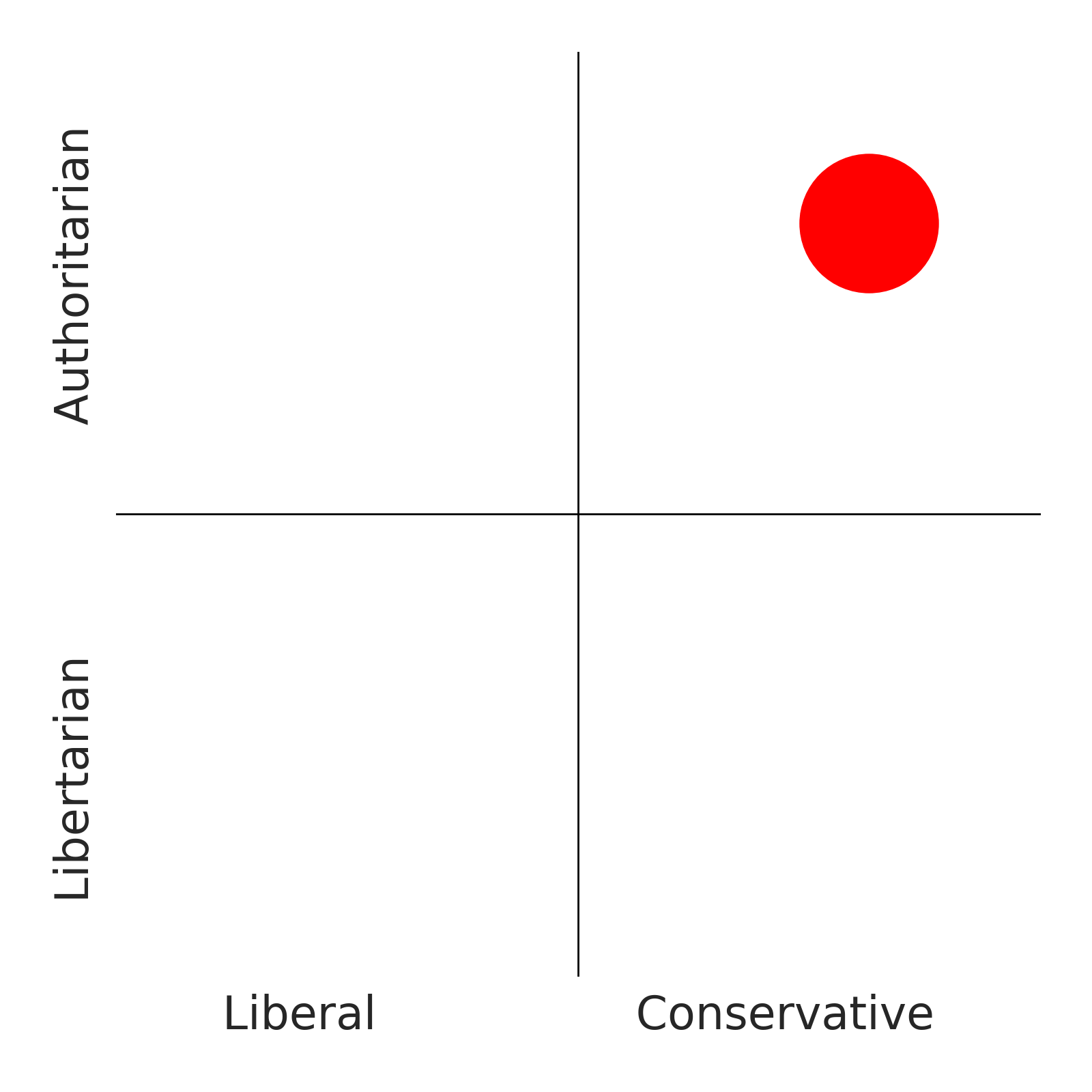
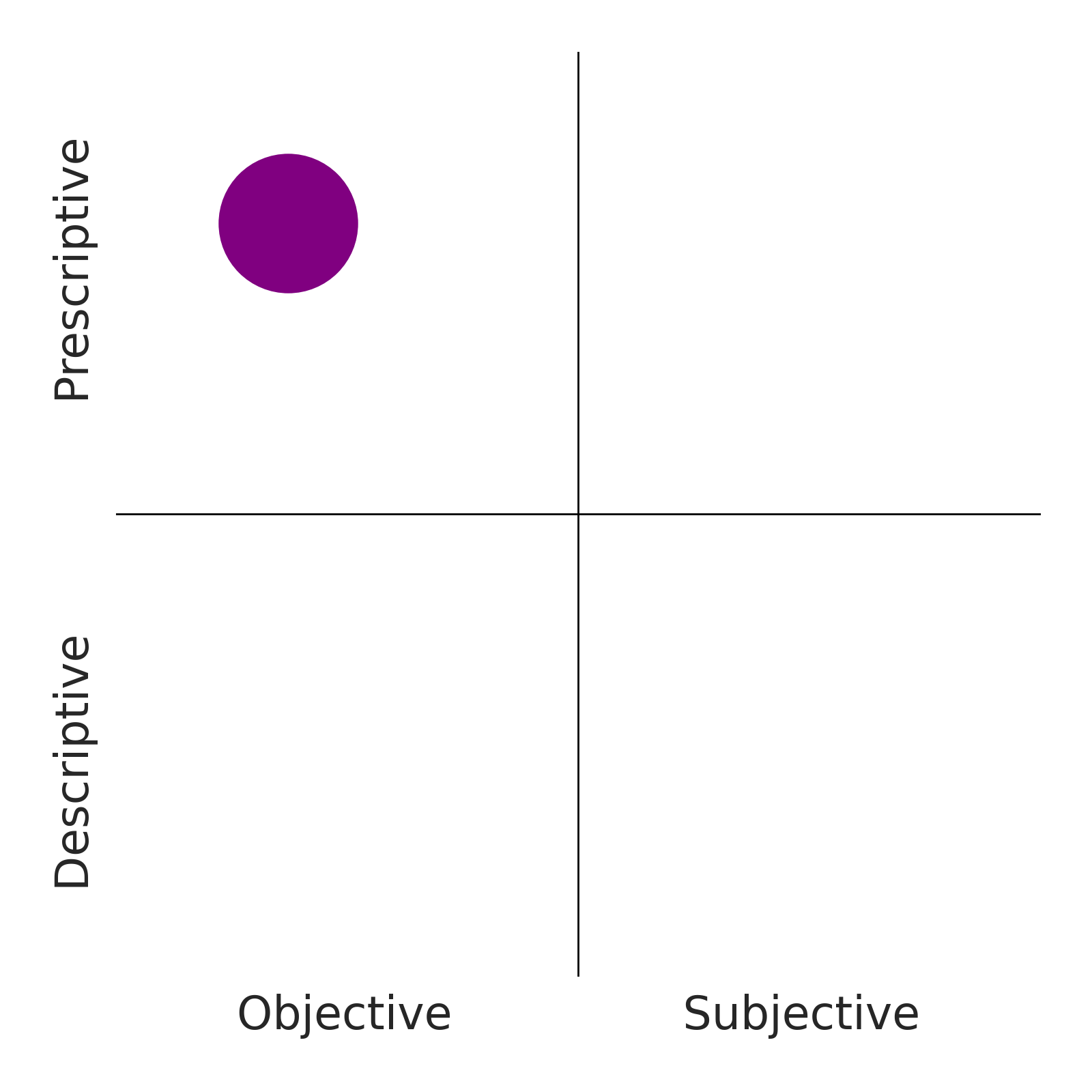
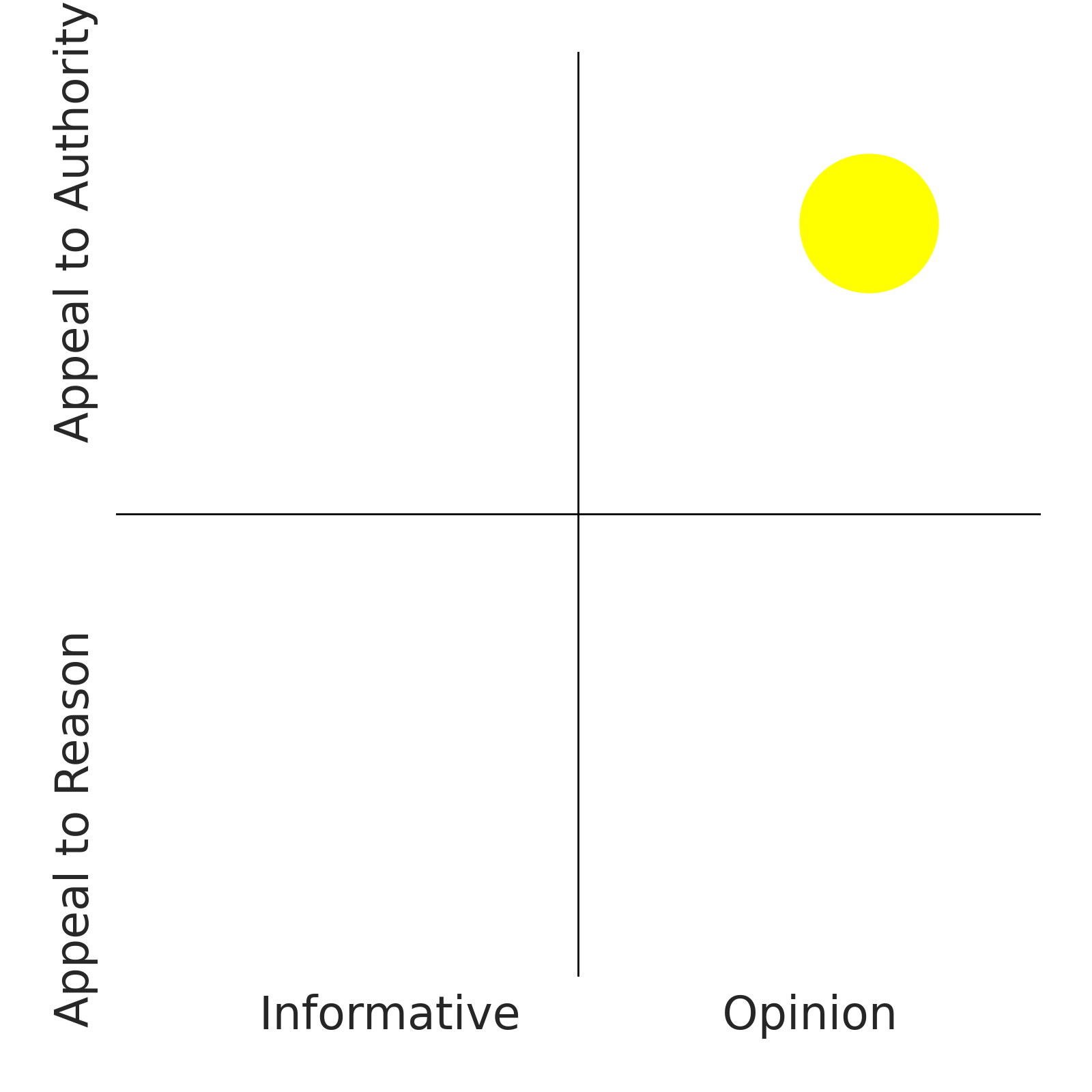
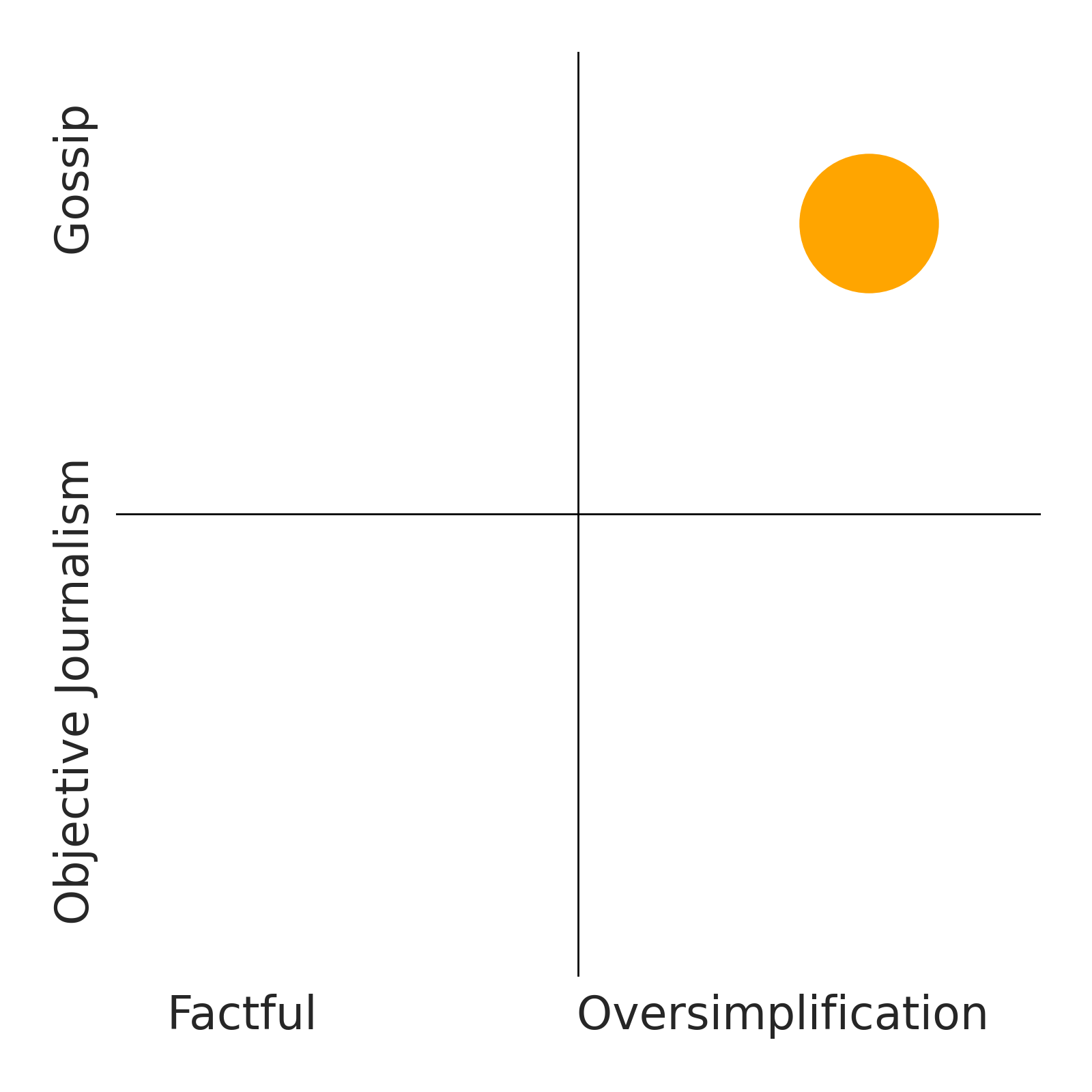
A TASS UNGA preview uses neutral logistical wording, with specific attention to Russian delegation movements and a US–Israel–Iran-centered characterization of Middle East conflict.
Automated analysis; not human reviewed. Limitations: Single-source news agency report; no outlet comparison or independent verification possible. · 5 of 55 available dimensions scored; omitted dimensions are not treated as neutral. · Verified supporting quotes for 4 of 5 scored dimensions.
Claim: The report is primarily a factual schedule with mildly evaluative geopolitical framing.
“The general debate of the 81st session will be held from September 22 to 26 September, and on September 28.” · exact text match
“The situation around the Strait of Hormuz and the Bab el-Mandeb Strait, through which vital trade and energy routes pass, is a cause for particular concern.” · exact text match
Why: Specific dates and attendance figures dominate, but phrases like 'vital' and 'cause for particular concern' introduce mild subjective evaluation.
Claim: The report uses muted institutional prose and avoids sensational or alarmist wording.
“Almost 130 global leaders will gather at the world organization’s headquarters to present their countries’ positions on key international issues in the coming seven days amid continuing conflicts in the Middle East and Ukraine, discussions around artificial intelligence and the future of the United Nations itself.” · exact text match
Why: This sentence presents major issues in measured rhythm without heightened language; the use of 'continuing conflicts' and 'key international issues' is restrained.
Claim: The report describes the UNGA schedule and agenda without prescribing actions or policy positions.
“The theme for the general debate of the 81st session of the General Assembly is "Restoring trust, managing transformation: a United Nations that delivers for all."” · not found in supplied text
“The Russian delegation at the 81st session of the UN General Assembly is led by Foreign Minister Sergey Lavrov.” · exact text match
Why: The content is limited to schedule, theme, and delegation details; no recommendations, demands, or calls to action are made.
Claim: The report is specific and mostly attributes its claims, though it asserts one high-level phone call without a stated source.
“Vladimir Zelensky announced an agreement to meet with Trump in New York.” · exact text match
“A telephone conversation also took place in early September between Trump and Russian President Vladimir Putin.” · exact text match
Why: Providing exact dates, attendance figures, and named attributions supports credibility; however, the Trump–Putin call is stated as fact without attribution or sourcing.
Claim: The report follows a coherent, evidence-based schedule format without logical leaps.
“Representatives from 193 UN members, as well as observer states and the European Union, will participate in it.” · exact text match
“Addresses by UN Secretary General Antonio Guterres and chairman of the General Assembly will open the general debate, after which Brazilian President Luiz Inacio Lula da Silva will be the first head of state to take the floor, in accordance with long-standing tradition” · exact text match
Why: The presentation is organized around verifiable schedule details and institutional tradition, with no speculative or contradictory reasoning.
Single-source news agency report; no outlet comparison or independent verification possible.
2026 © Helium Trades
Privacy Policy & Disclosure
* Disclaimer: Nothing on this website constitutes investment advice, performance data or any recommendation that any particular security, portfolio of securities, transaction or investment strategy is suitable for any specific person. Helium Trades is not responsible in any way for the accuracy
of any model predictions or price data. Any mention of a particular security and related prediction data is not a recommendation to buy or sell that security. Investments in securities involve the risk of loss. Past performance is no guarantee of future results. Helium Trades is not responsible for any of your investment decisions,
you should consult a financial expert before engaging in any transaction.