See whether Helium helps you make better-informed decisions. Try every Pro Trader feature for 30 days. No credit card required.
Try every Pro Trader feature for 30 days. No credit card required.
Observable scope and framing. The sample is strongly Texas-centered and concentrates on public affairs: elections and political strategy
Framing emphasizes Democratic opportunity by highlighting Republican nominee's controversial past and district demographics, while also reporting counterpoints and fundraising disparities.
Texas's 23rd Congressional District is a competitive open seat following the resignation of moderate Republican Tony Gonzales due to a sex scandal. The district is large, spanning from San Antonio to West Texas, and has a Hispanic-majority electorate.
Automated analysis; not human reviewed. Limitations: Limited to text; external accuracy of allegations about Herrera's past cannot be verified. · 3 of 53 available dimensions scored; omitted dimensions are not treated as neutral. · Verified supporting quotes for 0 of 3 scored dimensions.
Claim: The publisher shows no net liberal or conservative slant, presenting both the DCCC's rationale and Herrera's denial.
“DCCC chair Suzan DelBene said “Brandon Herrera’s disturbing history of extremism, violence, and antisemitic rhetoric puts this open Congressional district squarely in play.”” · not found in supplied text
“Herrera's campaign has dismissed allegations of antisemitism as “bizarre, desperate and false.”” · not found in supplied text
Why: The article includes a strong Democratic statement and a Republican denial without endorsing either, showing balanced attribution.
Claim: The article maintains a factual, objective tone, attributing claims and using verifiable data.
“The district voted for President Donald Trump by a 15-point margin in 2024.” · not found in supplied text
“Federal Election Commission records showed that Herrera had $309,000 in his main campaign account at the end of June.” · not found in supplied text
Why: The report relies on verifiable election results and FEC data, and frames DCCC's move as a signal rather than a fact, preserving attribution.
Claim: The article is entirely about electoral politics, strategy, and candidate positioning, making it highly political in content.
“The Democratic Congressional Campaign Committee is adding Texas’ 23rd Congressional District to its target list.” · not found in supplied text
“Republicans currently have a 218-212 majority in the U.S. House. Democrats need a net gain of three seats in order to win control of the lower chamber.” · exact text match
Why: Every paragraph concerns political campaigns, party strategy, district demographics, and election math; no non-political content exists.
Limited to text; external accuracy of allegations about Herrera's past cannot be verified.
Framing is neutral and data-driven, reporting poll results and criticisms without editorial slant.
James Talarico, a white Democrat, defeated U.S. Rep. Jasmine Crockett, a prominent Black Democrat, in the March 3 primary for the U.S. Senate nomination in Texas, leading to tensions and accusations that the party takes Black voters for granted.
Automated analysis; not human reviewed. · 6 of 53 available dimensions scored; omitted dimensions are not treated as neutral. · Verified supporting quotes for 4 of 6 scored dimensions.
Claim: The article shows no political slant, reporting equally on Democratic and Republican figures and including criticisms from both sides.
“The survey found that Crockett’s defeat left just 7% of Black Texans less likely to show up in November, while an accompanying TSU survey found that 79% of likely Black voters intend to vote for Talarico, compared to 12% who supported Republican U.S. Senate nominee Ken Paxton.” · not found in supplied text
Why: Article presents poll data favoring a Democrat but also includes substantial criticism from Black leaders, maintaining balance.
Claim: The article is predominantly factual with minimal subjective interpretation.
“The poll found that Crockett’s defeat left just 7% of Black Texans less likely to show up in November, while an accompanying TSU survey found that 79% of likely Black voters intend to vote for Talarico, compared to 12% who supported Republican U.S. Senate nominee Ken Paxton.” · not found in supplied text
Why: Most sentences report numbers, attributions, and methodology. A few phrases like 'contentious primary fraught with racial issues' are descriptive but grounded in widely reported context.
Claim: The article is overwhelmingly factual, with only mild interpretive language.
“The survey of 500 Black Texans who voted in recent elections, fielded by Texas Southern University, provides a temperature check of the crucial voter bloc as Talarico continues efforts to coalesce Black Democrats behind his candidacy.” · exact text match
Why: Phrase 'temperature check' is mildly interpretive, but otherwise the article reports poll numbers, quotes, and events without editorializing.
Claim: The article covers a political campaign and primary tensions, making it inherently political.
“Most Black Texas voters back Talarico over Paxton, poll finds, despite Senate primary tensions.” · exact text match
Why: The entire subject is a U.S. Senate race, Democratic primary fallout, and voter behavior.
Claim: The article is highly credible due to transparent sourcing, methodology, and attribution.
“Pollsters at TSU’s Barbara Jordan Public Policy Research and Survey Center conducted both surveys starting July 27. The poll that surveyed a representative sample of the likely statewide electorate was in the field through Thursday and had a +/- 2.8% margin of error, while the one that focused on recent Black voters was conducted through Sunday and had a 4.4% margin of error.” · exact text match
Why: Provides clear source (TSU), dates, margins of error, and sample sizes. Also attributes criticisms to named officials.
Claim: The article reports honestly, including methodology, margins of error, and dissenting views.
“Pollsters at TSU’s Barbara Jordan Public Policy Research and Survey Center conducted both surveys starting July 27. The poll that surveyed a representative sample of the likely statewide electorate was in the field through Thursday and had a +/- 2.8% margin of error, while the one that focused on recent Black voters was conducted through Sunday and had a 4.4% margin of error.” · exact text match
Why: Transparency about polling methodology and margins of error supports integrity. Also includes direct quotes from critics.
August 18, 2026 · 0 shares
Promotional framing with a trivia-style teaser lacks substantive reporting, relying on interpretive speculation about polling.
Automated analysis; not human reviewed. Limitations: The article is a brief podcast teaser, so analysis is based on limited framing; no substantive content. · 20 of 54 available dimensions scored; omitted dimensions are not treated as neutral. · Verified supporting quotes for 0 of 20 scored dimensions.
The article is a brief podcast teaser, so analysis is based on limited framing; no substantive content.
August 13, 2026 · 0 shares
The framing is humanizing and empathetic, centered on the psychological and social toll of ICE enforcement on undocumented immigrants in San Antonio, presented through personal narratives and community voices.
Automated analysis; not human reviewed. Limitations: The analysis is based only on the provided article text, which contains narrative journalism and personal accounts; no external verification or official statistics beyond those mentioned were reviewed. · 52 of 53 available dimensions scored; omitted dimensions are not treated as neutral. · Verified supporting quotes for 0 of 52 scored dimensions.
The analysis is based only on the provided article text, which contains narrative journalism and personal accounts; no external verification or official statistics beyond those mentioned were reviewed.
Framing emphasizes the human cost and fear among Texas DACA recipients due to renewal delays and enforcement actions, portraying administration policies as causing hardship and uncertainty.
Automated analysis; not human reviewed. Limitations: The article text includes membership solicitations and festival promotions, which may affect perception of neutrality but are separate from editorial content. · 31 of 52 available dimensions scored; omitted dimensions are not treated as neutral. · Verified supporting quotes for 0 of 31 scored dimensions.
Claim: The article selects sympathetic personal stories and includes criticism of administration policies, tilting slightly liberal.
“The article highlights three DACA recipients' hardships and includes Whitney Drake's quote: 'It is entirely possible that the administration is slowing down the renewals to go around the Supreme Court’s decision.'” · not found in supplied text
Why: The choice of three detailed stories of fear and loss, coupled with advocacy source quote, shows a liberal-leaning framing, but it also includes a USCIS spokesperson and Republican business leaders, providing some balance.
Claim: The article focuses on ordinary people's struggles against a government apparatus, showing mild populist framing.
“Jesús Álvarez says: 'They don’t want you here, but they want your money.'” · not found in supplied text
Why: The quote expresses distrust of elites, but overall the article stays factual and does not adopt an anti-elite tone throughout.
Claim: The article criticizes government restrictions on individual freedom, leaning libertarian.
“The article states that renewals delays 'can leave them undocumented, unable to legally work and exposed to possible deportation.'” · not found in supplied text
Why: The framing emphasizes loss of autonomy and fear of government action, but it does not advocate for libertarian policies.
Claim: The article includes subjective emotional quotes and personal narratives, slightly reducing objectivity.
“Itzayana Mondragón says: 'I get really bad PTSD and anxiety when I see a construction truck on the side of the road.'” · not found in supplied text
Why: While the reporting is factual, the extensive use of emotional personal accounts adds a subjective layer.
Claim: The article describes the situation without prescribing specific actions.
“It ends with Mondragón's hopes and fears, without a call to action.” · not found in supplied text
Why: No explicit prescription; the article reports consequences and quotes, leaving judgment to readers.
Claim: The article uses emotionally charged language to evoke fear about the recipients' situation.
“Headline: 'For Texas DACA recipients, a fearful present and an uncertain future'; text: 'Mondragón was so afraid…', 'she’s terrified'” · not found in supplied text
Why: Repeated use of fear-related words in both headline and body creates a fearful tone.
Claim: The article is mostly factual reporting but includes opinions from sources.
“Jesús Álvarez says: 'But they don’t want you here — they want your money, they want you to work, they want to enslave you.'” · not found in supplied text
Why: While the publisher does not state opinion directly, the inclusion of such a strong opinion from a source contributes to an opinionated feel.
Claim: The article is highly political, covering a contentious immigration policy under a specific administration.
“Title mentions 'Trump' and 'DACA', and the article discusses administration decisions and lawsuits.” · not found in supplied text
Why: Immigration policy is inherently political, and the article directly addresses the Trump administration's actions.
Claim: The article portrays DACA recipients primarily as victims of the system.
“It states: 'Without DACA, they can become targets of U.S. Immigration and Customs Enforcement…' and describes recipients losing jobs, homes, and living in fear.” · not found in supplied text
Why: The focus on hardship and lack of agency, without highlighting proactive advocacy or resilience equally, indicates victimization framing.
Claim: The article shows mild anti-establishment leaning by criticizing current administration policies.
“It quotes Whitney Drake saying the administration is 'attempting to dismantle the immigration system.'” · not found in supplied text
Why: The criticism is attributed to a legal advocate, not the publisher directly, but the selection of such quotes indicates anti-establishment framing.
Claim: The article elicits negative emotions through personal stories of fear and loss.
“Itzayana says: 'I feel like that broke my heart… I still haven’t recovered mentally from it.'” · not found in supplied text
Why: Multiple quotes express sadness, anxiety, and despair, creating a negative emotional tone.
Claim: The article is highly credible due to transparent sourcing and corrections policy.
“Sources are named (Whitney Drake, Zach Kahler, Ken Paxton), and the article includes a corrections link and republishing guidelines.” · not found in supplied text
Why: The article adheres to journalistic standards with attribution, fact-checking, and self-correction mechanisms.
Claim: The article maintains rational, evidence-based reporting.
“It attributes claims to named sources (Whitney Drake, Zach Kahler, etc.) and provides specific factual details (dates, counts, court cases).” · not found in supplied text
Why: No unsupported claims or logical fallacies observed; all statements are attributed or factual.
Claim: The article includes speculative statements about administration motives.
“Whitney Drake says: 'It is entirely possible that the administration is slowing down the renewals to go around the Supreme Court’s decision.'” · not found in supplied text
Why: This is a single attributed speculation, not a central claim of the article.
Claim: The article demonstrates high integrity through transparent sourcing and corrections policy.
“The article includes a corrections link and states: 'When we make a mistake… we will work quickly to fully address the error.'” · not found in supplied text
Why: The presence of a corrections policy and attributions to named sources and government officials supports high integrity.
The article text includes membership solicitations and festival promotions, which may affect perception of neutrality but are separate from editorial content.
August 18, 2026 · 0 shares
Border barrier report frames federal plan as needing bipartisan opposition, emphasizing local pushback without detailing federal rationale.
Big Bend is a remote region in West Texas along the U.S.-Mexico border, and it contains Big Bend National Park. Border barriers there have been historically limited due to terrain and environmental concerns.
Automated analysis; not human reviewed. Limitations: Article text is minimal, limiting depth; only brief framing available. · 54 of 54 available dimensions scored; omitted dimensions are not treated as neutral. · Verified supporting quotes for 13 of 54 scored dimensions.
Claim: Framing leans slightly liberal by emphasizing bipartisan opposition to a Trump administration plan without detailing federal justifications.
“A bipartisan group of elected officials is pushing to halt that plan, especially in the national park.” · not found in supplied text
Why: Opposition to border barriers is typically aligned with liberal positions, especially environmental concerns.
Claim: Generally neutral, though highlighting bipartisan officials could slightly lean populist or elitist depending on interpretation.
“A bipartisan group of elected officials is pushing to halt that plan, especially in the national park.” · not found in supplied text
Why: Mentioning elected officials as actors implies an institutional perspective, but not strongly elitist or populist.
Claim: Slight lean toward libertarian by highlighting opposition to government-imposed barriers.
“bipartisan group of elected officials is pushing to halt that plan” · exact text match
Why: Opposing a government security measure, especially in a national park, aligns with libertarian concerns about government overreach.
Claim: Primarily objective, reporting the administration's statement and opposition, but framing may slightly favor opposition.
“The Trump administration has said the remote West Texas region needs measures to stop illegal immigration.” · exact text match
“A bipartisan group of elected officials is pushing to halt that plan” · not found in supplied text
Why: Provides both sides but gives more weight to opposition by highlighting it as the focus.
Claim: Largely objective without sensational language.
“The Trump administration has said the remote West Texas region needs measures to stop illegal immigration.” · exact text match
Why: Plain factual statement without dramatic language.
Claim: Slightly pessimistic due to emphasis on conflict and opposition.
“bipartisan group of elected officials is pushing to halt that plan” · exact text match
Why: Framing suggests challenge to the plan, possibly negative outlook.
Claim: Moderately interesting due to political conflict and unique geographic setting.
“The Trump administration has said the remote West Texas region needs measures to stop illegal immigration.” · exact text match
“A bipartisan group of elected officials is pushing to halt that plan” · not found in supplied text
Why: Border barrier conflict is newsworthy, though details are limited.
Claim: Primarily descriptive, reporting statements and actions without prescription.
“The Trump administration has said ...” · not found in supplied text
“A bipartisan group of elected officials is pushing to halt that plan” · not found in supplied text
Why: No explicit recommendations or admonitions.
Claim: Slightly dovish by emphasizing opposition to border security measures.
“bipartisan group of elected officials is pushing to halt that plan” · exact text match
Why: Opposing border barriers suggests a less hawkish stance on immigration enforcement.
Claim: Slightly opinionated by focusing on opposition and possibly implying approval of such opposition.
“A bipartisan group of elected officials is pushing to halt that plan, especially in the national park.” · not found in supplied text
Why: The phrasing 'especially in the national park' emphasizes a particular angle, suggesting editorial choice.
Claim: Political due to coverage of political conflict over border policy.
“The Trump administration has said the remote West Texas region needs measures to stop illegal immigration.” · exact text match
Why: Directly covering political actions and opposition.
Claim: Minor oversimplification by presenting only two sides without complex context.
“The Trump administration has said ...” · not found in supplied text
“A bipartisan group of elected officials is pushing to halt that plan” · not found in supplied text
Why: Brief framing simplifies complicated policy debate.
Claim: Mature tone without inflammatory language.
“The Trump administration has said the remote West Texas region needs measures to stop illegal immigration.” · exact text match
Why: No name-calling or extreme rhetoric.
Claim: Slight tendency to focus on opposition rather than administration's reasons.
“A bipartisan group of elected officials is pushing to halt that plan” · not found in supplied text
Why: More attention is given to response than policy rationale.
Claim: Slight framing of national park as victim needing protection from barriers.
“especially in the national park” · exact text match
Why: Highlighting park may evoke protectionist sympathy.
Claim: No strong overconfidence; statements are attributed.
“has said” · exact text match
“is pushing” · exact text match
Why: Verbs are neutral and attributed.
Claim: Slight ideological lean toward environmentalism and against border barriers.
“especially in the national park” · exact text match
Why: Emphasizing park protection implies environmental ideology.
Claim: Slightly anti-establishment by featuring bipartisan opposition to the current administration's policy.
“A bipartisan group of elected officials is pushing to halt that plan” · not found in supplied text
Why: Highlighting opposition to a federal plan aligns with critical stance toward government policy.
Claim: Slight negative emotion due to conflict framing.
“bipartisan group of elected officials is pushing to halt that plan” · exact text match
Why: Conflict may evoke negative emotions.
Claim: Credible based on attributed statements and neutral reporting.
“The Trump administration has said ...” · not found in supplied text
“A bipartisan group of elected officials is pushing to halt that plan” · not found in supplied text
Why: Attribution and simplicity support credibility.
Claim: Slight collectivist lean by highlighting community/official opposition.
“bipartisan group of elected officials” · exact text match
Why: Emphasizes group action over individual perspectives.
Claim: Minor speculation by implying possible halt without evidence of success.
“pushing to halt that plan” · exact text match
Why: Pushing to halt may be uncertain in outcome.
Claim: Fair enough by reporting both sides, though framing leads with opposition.
“The Trump administration has said ...” · not found in supplied text
“A bipartisan group of elected officials is pushing to halt that plan” · not found in supplied text
Why: Includes both administration and opposition views, but only briefly.
Claim: Fairly intelligent, presents concise relevant info.
“What to know about possible border barriers in Big Bend.” · exact text match
Why: Concise but lacks depth.
Article text is minimal, limiting depth; only brief framing available.
Neutral reporting of a state lawsuit and an ICE agent's arrest, with no editorial framing or judgment.
The article reports a legal dispute between Minnesota and Texas over the extradition of a federal agent. The shooting of a Venezuelan man by an ICE agent is the underlying incident, and Minnesota seeks to have the agent returned to face charges.
Automated analysis; not human reviewed. Limitations: Limited article length and lack of context about the shooting and legal proceedings. Additionally, the article may be a headline snippet, so analysis is constrained. · 54 of 54 available dimensions scored; omitted dimensions are not treated as neutral. · Verified supporting quotes for 0 of 54 scored dimensions.
Limited article length and lack of context about the shooting and legal proceedings. Additionally, the article may be a headline snippet, so analysis is constrained.
August 17, 2026 · 0 shares
The report maintains a balanced, attribution-heavy framing, presenting both agency justifications and local opposition without endorsing either.
Automated analysis; not human reviewed. · 2 of 54 available dimensions scored; omitted dimensions are not treated as neutral. · Verified supporting quotes for 1 of 2 scored dimensions.
Claim: The reporting is balanced, presenting both sides without endorsing either.
“CBP has said it does not plan to build a 30-foot wall or place stadium lighting.” · not found in supplied text
“Park advocates celebrated the pause but pushed for a more permanent answer.” · exact text match
Why: The article includes direct statements from CBP and from critics, giving space to both positions.
Claim: The reporting is highly credible due to named sources and explicit uncertainty.
“It was not immediately clear how long CBP plans to implement the pause.” · exact text match
“Scott now appears to be heeding.” · exact text match
Why: The article attributes claims to named officials, uses cautious qualifiers, and acknowledges unknown details.
August 13, 2026 · 0 shares
Framing emphasizes legal conflict and environmental concerns over border wall construction, giving weight to the irrigation district's claims and environmental activism.
Santa Ana National Wildlife Refuge is along the Rio Grande in South Texas; border wall construction there has been contested due to environmental concerns since Trump's first term.
Automated analysis; not human reviewed. Limitations: The article text is from a regional news outlet with known environmental and civil liberties leanings, but the analysis relies solely on the supplied text. · 53 of 53 available dimensions scored; omitted dimensions are not treated as neutral. · Verified supporting quotes for 0 of 53 scored dimensions.
The article text is from a regional news outlet with known environmental and civil liberties leanings, but the analysis relies solely on the supplied text.
Frames Texas school accountability data as evidence of systemic racial inequity, stressing the painful trade-offs for Black families.
Automated analysis; not human reviewed. Limitations: The article text contains several placeholder artifacts (e.g., blank spaces where the publisher's name appears), but the substantive reporting is unchanged and sufficient for analysis. · 13 of 53 available dimensions scored; omitted dimensions are not treated as neutral. · Verified supporting quotes for 13 of 13 scored dimensions.
Claim: The report emphasizes racial inequity and structural racism as roots of school disparities, aligning with liberal perspectives on education policy.
“It’s the fact that the original sin of this country has always been around race — structural racism — and all its remnants still remain in place.” · exact text match
Why: The quote from Tyrone Howard attributes disparities to structural racism and is presented without counterpoint, reflecting the article's framing.
Claim: The reporting is largely factual and attributes opinions to named sources.
“Meredith Anderson, a native Texan who researches K-12 education for the United Negro College Fund, sees the racial disparities in the state’s accountability ratings as “alarming.”” · exact text match
Why: Shows attribution rather than publisher's own statement.
Claim: The article avoids sensational language and sticks to documented statistics and quotes.
“Of the roughly 300 such campuses last year, 20 received an A. By contrast, 105 scored a D or an F.” · exact text match
Why: Presents data plainly without exaggeration.
Claim: Though primarily factual, the article's framing conveys editorial judgment through source selection and emphasis.
“That leaves families like Montgomery’s weighing whether to enroll their children in schools where they may benefit from rigorous academic opportunities but see fewer kids and teachers from their communities — or keep them on high-need campuses lacking in resources but abundant in love and understanding.” · exact text match
Why: The passage is editorializing.
Claim: The article extensively discusses racial politics, legislation, and government accountability.
“Legislators recently passed laws targeting diversity, equity and inclusion efforts in education.” · exact text match
Why: Direct political topic.
Claim: The framing emphasizes Black students and families as subject to systemic failure and scarce resources.
“Black children attend schools labeled as failing by the Texas Education Agency at a far higher rate than any other racial or ethnic group.” · exact text match
Why: Presents them as victims of structural inequity, though not exclusively.
Claim: The article reflects a consistent progressive perspective on race and education.
““We often think about it as more so academic gaps when we just look at the accountability ratings, without looking at some of the underlying causes that contribute to them and widen those gaps,” Anderson said.” · exact text match
Why: The article aligns with a certain ideological lens.
Claim: The article is critical of state education policy and establishment decisions, including the A-F system and state takeover.
“When state lawmakers debated the A-F system more than a decade ago, Sen. Royce West worried that it would disproportionately penalize schools that lacked sufficient resources to achieve an acceptable rating.” · exact text match
Why: Shows critique of official policy.
Claim: The article is well-sourced with named experts, data, and official statements.
“In a statement to the Tribune, Fort Bend ISD officials said students at all of their campuses deserve access to a high-quality education, as well as the opportunities and support necessary to succeed, regardless of race, ethnicity, socioeconomic status or ZIP code.” · exact text match
Why: Uses direct attributions and official responses.
Claim: The article relies on data and reasoned analysis rather than emotional appeals.
“Texas grades schools based on three primary measures, including how well the campuses perform compared to those with similar percentages of low-income students.” · exact text match
Why: Uses logic and evidence.
Claim: The article discloses financial relationships and provides corrections policy, indicating transparency.
“Disclosure: Prairie View A&M University has been a financial supporter of The , a nonprofit, nonpartisan news organization that is funded in part by donations from members, foundations and corporate sponsors. Financial supporters play no role in The ’s journalism.” · exact text match
Why: Transparency about funding.
Claim: The article synthesizes data, interviews, and context into a comprehensive report.
“Texas public schools educate north of 700,000 Black children — more than any other state in the country.” · exact text match
Why: Integrates complex information.
Claim: The article uses identity-group framing and highlights systemic racism and DEI opposition.
“But some who study education contend that the unwillingness to address historical racism hurts Black students the most.” · exact text match
Why: Advocates for race-conscious analysis.
The article text contains several placeholder artifacts (e.g., blank spaces where the publisher's name appears), but the substantive reporting is unchanged and sufficient for analysis.
The framing presents the H-1B ban as a campaign proposal and immediately supplies a fact about districts using those visas for critical teacher shortages, creating a balanced but context-driven summary.
H-1B is a temporary U.S. work-visa category that some school districts use to hire noncitizen teachers in shortage subjects.
Automated analysis; not human reviewed. Limitations: Only a two-sentence summary was supplied; no full article body, date, or sourcing was available. · 3 of 54 available dimensions scored; omitted dimensions are not treated as neutral. · Verified supporting quotes for 3 of 3 scored dimensions.
Claim: The report gives both the proposal and a countervailing use without endorsing either.
“Gov. Abbott proposes ban on H-1B visa use for Texas public schools during campaign stop.” · exact text match
“Some districts use the temporary work permits to fill critical teacher shortages in roles such as bilingual education.” · exact text match
Why: The second sentence supplies a fact that could support opposition, but no evaluative language favors either side.
Claim: The register is mostly factual and detached, with only mildly evaluative wording.
“Some districts use the temporary work permits to fill critical teacher shortages in roles such as bilingual education.” · exact text match
Why: Mostly declarative reporting; 'critical' is an evaluative adjective, so it is not fully objective.
Claim: The proposal is framed through its campaign context rather than as a policy measure.
“during campaign stop” · exact text match
Why: The only contextual detail attached to the proposal is the campaign stop, which emphasizes electoral politics.
Only a two-sentence summary was supplied; no full article body, date, or sourcing was available.
Framing presents the curriculum rejection as justified due to errors and an out-of-state focus, with neutral language but implicit endorsement of the district's decision.
Automated analysis; not human reviewed. · 48 of 54 available dimensions scored; omitted dimensions are not treated as neutral. · Verified supporting quotes for 0 of 48 scored dimensions.
August 14, 2026 · 0 shares
Framing is informational and evaluatively balanced, using rating data plus attributed critics and supporters while treating the A-F system as a reported policy mechanism.
Automated analysis; not human reviewed. Limitations: The supplied substantive text appears truncated after the phrase about three categories, and much of the input consists of page navigation and boilerplate, so conclusions rest on the introductory and summary paragraphs only. · 4 of 54 available dimensions scored; omitted dimensions are not treated as neutral. · Verified supporting quotes for 2 of 4 scored dimensions.
Claim: The report balances criticism of the accountability system with support for it, showing no clear partisan lean.
“Critics say that often comes at a cost to predominantly low-income, Hispanic and Black schools, which receive failing grades at disproportionate rates and trigger district takeovers most often. Supporters of the accountability system say the ratings help state officials hold district leaders accountable for not concentrating enough on student learning.” · exact text match
Why: Both positions are explicitly attributed to sources, not adopted as the publisher’s own assertion.
Claim: The report uses percentages, policy descriptions, and attributed positions rather than impersonally evaluative judgments.
“Of more than 9,000 campuses, 24% scored an A, 34% scored a B, 23% scored a C, 10% scored a D and 4% scored an F.” · exact text match
“Schools with five consecutive F ratings trigger a state law requiring Texas Education Commissioner Mike Morath to either close the campus or replace the entire school board or superintendent.” · not found in supplied text
Why: The main content is statically and policy, leaving direct editorial assessments out of the factual passages.
Claim: The tone is restrained and data-driven, with no alarmist or outrage-driven framing.
“Texas released a new round of academic accountability ratings Friday, with overall public school performance remaining relatively flat.” · exact text match
Why: The highlighted description emphasizes continuity and percentages rather than sensational language.
Claim: The text describes a government rating system and its legal consequences rather than recommending a policy.
“Texas grades districts and campuses on an A-F scale based on three categories:” · exact text match
“Schools with five consecutive F ratings trigger no new state law requiring Texas Education Commissioner Mike Morath to either close the school or replace the district’s elected trustees and superintendent.” · not found in supplied text
Why: The report focuses on how the system works, what the grades were, and how critics and supporters describe it, without directing readers toward a prescribed conclusion.
The supplied substantive text appears truncated after the phrase about three categories, and much of the input consists of page navigation and boilerplate, so conclusions rest on the introductory and summary paragraphs only.
The reporting foregrounds uncertainty over a new humanities center and critiques of transparency while evenly quoting both supporters and critics of the core-curriculum overhaul.
Automated analysis; not human reviewed. Limitations: The supplied text mixes news reporting with promotional and boilerplate content; analysis concentrates on the substantive reporting. No other significant input limitation. · 4 of 53 available dimensions scored; omitted dimensions are not treated as neutral. · Verified supporting quotes for 1 of 4 scored dimensions.
Claim: Reporting presents both supporters and opponents of the overhaul without adopting a partisan stance.
“At Thursday’s meeting, regents praised Davis’ core-curriculum proposal and his leadership.” · exact text match
“Later in the meeting, three UT-Austin students criticized Davis and regents for what they described as a lack of transparency and meaningful student and faculty input into recent academic changes.” · not found in supplied text
Why: The article quotes critics and supporters, uses attributed sources, and does not use partisan language.
Claim: The report is presented with attributed facts and no editorial opinion.
“A report from a 22-member faculty task force appointed by UT-Austin President Jim Davis proposes 12 requirements across the core areas, compared with the current 10.” · exact text match
Why: Uses neutral factual language and attributes claims to sources.
Claim: Reporting relies on named sources, official documents, and direct record access.
“The school and the institute had or were set to have 42 tenured or tenure-track faculty members as of Aug. 3, according to records obtained by the Tribune.” · not found in supplied text
Why: The article cites named individuals, institutional records, and direct reporting, and includes a disclosure of the publisher's funding.
Claim: The article discloses financial relationships and states that supporters play no role in journalism.
“Disclosure: Open Campus, Texas State University and The University of Texas System have been financial supporters of The Tribune, a nonprofit, nonpartisan news organization that is funded in part by donations from members, foundations and corporate sponsors. Financial supporters play no role in The Tribune’s journalism.” · not found in supplied text
Why: Explicitly states that financial supporters play no role, a transparency signal.
The supplied text mixes news reporting with promotional and boilerplate content; analysis concentrates on the substantive reporting. No other significant input limitation.
August 13, 2026 · 0 shares
Neutral, attributed reporting that treats the governor's proposal as a policy proposal while flagging the cited studies as 'purportedly' showing benefits.
Automated analysis; not human reviewed. · 19 of 53 available dimensions scored; omitted dimensions are not treated as neutral. · Verified supporting quotes for 6 of 19 scored dimensions.
Claim: The report presents attributed claims and factual details without editorial opinion.
“Abbott said he wants legislators to limit the use of electronic devices like laptops and tablets” · exact text match
“Abbott did not outline how the screen limits would vary across grade levels or what the restrictions would entail.” · exact text match
Why: Direct attribution and a clear statement of unspecified details demonstrate objective reporting.
Claim: The article uses sober language and avoids exaggeration or emotional appeal.
“Abbott did not outline how the screen limits would vary” · exact text match
“The measure went into effect Sept. 1, requiring the state's more than 1,200 school districts to implement policies” · verified after text normalization
Why: The reporting is plain and factual, with no dramatic or inflammatory wording.
Claim: The article describes the proposal and context without recommending a course of action.
“Abbott did not outline how the screen limits would vary” · exact text match
“The proposal would have to be taken up by the Legislature when it convenes next year.” · exact text match
Why: It reports what Abbott said and the legislative process, without endorsing or opposing the policy.
Claim: The article offers specific, verifiable details and attributes statements to sources.
“In May, the U.S. Department of Health and Human Services issued a Surgeon General’s Warning” · exact text match
“Six states have enacted laws addressing screen time in classroom.” · exact text match
Why: Named institutions, specific dates, and concrete counts support credibility.
Claim: The article uses a skeptical hedge and avoids overstating the governor's cited studies.
“Citing studies purportedly showing decreased screen time leading to improved academic outcomes” · exact text match
Why: The word 'purportedly' signals a skeptical stance toward the research, not endorsing it as fact.
Claim: The article clearly attributes claims and includes a caveat about the studies.
“Citing studies purportedly showing decreased screen time” · exact text match
“Abbott said he wants legislators to limit the use of electronic devices” · exact text match
Why: The use of 'purportedly' and direct attribution show honesty about the source and uncertainty.
The article reports on Austin ISD's move toward potential state takeover after multiple failing school ratings, focusing on the district's efforts and the state's accountability system.
Texas uses an A-F accountability system for schools and districts. Five consecutive failing ratings trigger state intervention under Texas law, potentially leading to closure or takeover by the education commissioner. The Texas Education Agency (TEA) releases annual accountability ratings, and districts can appeal preliminary ratings.
Automated analysis; not human reviewed. Limitations: Analysis based solely on the provided article text; external context of TEA accountability specifics assumed from article statements. · 53 of 53 available dimensions scored; omitted dimensions are not treated as neutral. · Verified supporting quotes for 19 of 53 scored dimensions.
Claim: The article reports on a state intervention mechanism that increases state authority over local schools, presenting it as a consequence of law, not as a value judgment.
“triggering a state law that directs Education Commissioner Mike Morath to either close the schools or appoint a board of managers to replace the elected school board.” · exact text match
Why: The article details the authorized state takeover, but does not editorialize, so slight authoritarian tone from focus on state power.
Claim: The article is largely factual, citing specific data and official statements, with minimal subjective interpretation.
“Overall, the Austin school district received a B grade, an improvement from last year’s rating” · exact text match
“Burnet and Dobie posted notable gains in reading and math” · exact text match
Why: Relies on concrete numbers and direct quotes, though selection of intervention facts may reflect a neutral stance.
Claim: The article covers a significant local education event with implications for school governance, making it moderately interesting.
“Austin ISD moves closer to state takeover after 2 schools receive fifth failing ratings” · exact text match
“triggering a state law that directs Education Commissioner Mike Morath to either close the schools or appoint a board of managers” · exact text match
Why: State takeover is a notable outcome, but the article maintains a factual tone without dramatic flair.
Claim: The article is mostly descriptive, reporting events and legal requirements, with minimal prescription beyond quoting officials.
“The A-F accountability system measures student achievement, academic growth and college and how well the school prepared students for life after high school.” · exact text match
“The district has until Sept. 11 to appeal the data that led to the ratings.” · exact text match
Why: Descriptive tone; any prescriptive element comes from quoting Segura's plans.
Claim: The article includes words like 'threat' and 'takeover' but remains factual, so fear level is minimal.
“avoiding the immediate threat of triggering the state intervention law for the campus” · exact text match
“moves Austin ISD one step closer to potential state intervention” · exact text match
Why: Uses 'threat' but in a legal context; not alarmist.
Claim: The article assumes the accountability system is a legitimate measure of school performance without questioning its validity.
“The A-F accountability system measures student achievement, academic growth and college and how well the school prepared students for life after high school.” · exact text match
Why: Treats the system as given, not examining its assumptions.
Claim: The article is predominantly factual, quoting officials, with limited opinion.
“Segura said he brought campus leaders with a history of improving campuses to those schools and feels confident the schools will improve.” · exact text match
Why: Mostly reporting; any opinion is clearly attributed.
Claim: The article involves political decisions but does not take a partisan stance.
“The education commissioner would then determine whether to appoint a board of managers to govern the district or instead close the campuses” · exact text match
Why: Reports on political process without editorializing.
Claim: The article simplifies the complex issue of school improvement but provides sufficient detail to avoid major oversimplification.
“Under Texas law, five consecutive failing ratings mandates the education commissioner close the campus or take over the district.” · not found in supplied text
Why: Presents legal mechanism simply but includes context.
Claim: The article relies on official statements and legal authority to convey information.
“Superintendent Matias Segura said” · exact text match
“the state’s report” · exact text match
Why: Uses official sources but also data, so moderate reliance on authority.
Claim: The article's premise that failing ratings lead to intervention is not circular but based on law; no logical circularity present.
“Under Texas law, five consecutive failing ratings mandates the education commissioner close the campus or take over the district.” · not found in supplied text
Why: Legal cause-effect is not circular.
Claim: The article does not overstate certainty; it acknowledges preliminary ratings and appeals.
“The ratings are preliminary until districts have a chance to appeal” · exact text match
“The agency is expected to notify Austin ISD later this year of its decision” · exact text match
Why: Properly hedges claims.
Claim: The article shows minimal ideological bent, focusing on facts and legal process.
“The article does not advocate for any political ideology; it presents the law and district actions.” · not found in supplied text
Why: Limited ideological content.
Claim: The article reports on state education agency actions and district response without critiquing the establishment, showing slight alignment with institutional processes.
“The ratings are preliminary until districts have a chance to appeal, the education agency reviews those appeals and finalizes campus grades.” · not found in supplied text
“TEA has taken different approaches in previous interventions.” · exact text match
Why: Presents TEA's role neutrally, without questioning its authority, indicating slight pro-establishment orientation.
Claim: The article maintains a neutral emotional tone, with slightly negative framing due to 'failing' and 'takeover'.
“failing ratings” · exact text match
“state takeover” · exact text match
Why: Negative terms are descriptive, not emotional.
Claim: The article is credible due to clear sourcing, attribution, and acknowledgment of preliminary status.
“The ratings are preliminary until districts have a chance to appeal” · exact text match
“Segura said in an interview” · exact text match
Why: Transparent about uncertainty and uses named sources.
Claim: The article presents the state's accountability law and intervention process as a rational, policy-driven mechanism, without questioning its logic or framing.
“Under Texas law, five consecutive failing ratings mandates the education commissioner close the campus or take over the district by replacing the elected school board with a board of managers.” · exact text match
Why: The article describes the legal process matter-of-factly, without critique, suggesting acceptance of the state's approach as rational.
Claim: The article relies on empirical data (test scores) and legal facts, showing a scientific approach.
“Preliminary STAAR results” · exact text match
“The A-F accountability system measures student achievement” · exact text match
Why: Grounds claims in data.
Claim: The article focuses on institutional actions and legal requirements, slightly collectivist orientation, but neutral.
“The district has until Sept. 11 to appeal” · exact text match
“TEA has taken different approaches” · exact text match
Why: Institutional focus.
Claim: The article speculates on future intervention possibilities but attributes speculation to sources or uses conditional language.
“The education commissioner would then determine” · exact text match
“Segura declined to speculate on the state education agency’s next steps” · exact text match
Why: Uses 'would' and avoids unsupported forecasts.
Claim: No strong manipulation; article presents facts neutrally, though selection of certain consequences might influence perception.
“The district saw higher standardized test scores but also enrollment losses of more than 13,000 students.” · exact text match
Why: Presents balanced outcomes.
Claim: The writing style is standard journalistic with no obvious AI markers, but some repetitive phrasing.
“The article has a clear factual structure with direct quotes and data.” · not found in supplied text
Why: No strong indicators of AI authorship.
Claim: The article shows high integrity by attributing statements, providing data sources, and acknowledging pending appeals.
“The ratings are preliminary until districts have a chance to appeal” · exact text match
“Segura said in an interview” · exact text match
Why: Includes uncertainty and direct quotes, demonstrating transparent reporting.
Claim: The article provides detailed factual reporting with clear structure and relevant data, indicating above-average intelligence.
“Burnet and Dobie posted notable gains in reading and math” · exact text match
“Preliminary STAAR results released in June suggested the three schools were improving, but not enough to lift most students to grade-level performance.” · exact text match
Why: Demonstrates understanding of education policy and data.
Claim: The article is truth-seeking, reporting facts as known, without speculative leaps.
“The article reports preliminary ratings, appeals deadlines, and official statements.” · not found in supplied text
Why: No delusional content.
Analysis based solely on the provided article text; external context of TEA accountability specifics assumed from article statements.
August 03, 2026 · 0 shares
Frames the deal as a pragmatic resolution to a political standoff, emphasizing written assurances and institutional process.
Automated analysis; not human reviewed. Limitations: The article text includes subscription prompts and festival promotion which were excluded from analysis. · 7 of 52 available dimensions scored; omitted dimensions are not treated as neutral. · Verified supporting quotes for 6 of 7 scored dimensions.
Claim: The article presents both sides of the political dispute without favoring one.
“Trump defended the fund and promoted its revival via legislation, demonstrating the rationale behind Cornyn’s desire to see it voided in writing” · exact text match
“Cornyn insisted that he was withholding his vote to advance Blanche’s nomination through the Senate Judiciary Committee over sincere concerns about the settlement” · exact text match
Why: Both Cornyn's and Trump's perspectives are reported with direct quotes and context, showing balanced coverage of the political disagreement.
Claim: The article reports events factually with minimal evaluative language.
“Cornyn reached an agreement with the Department of Justice late Sunday to formally quash the agency’s fund for victims of alleged lawfare” · not found in supplied text
“Blanche, the acting attorney general and Trump’s former personal lawyer, posted a written order late Sunday night rescinding the “anti-weaponization fund”” · exact text match
Why: The narrative relies on direct quotes, official statements, and chronological facts rather than opinion or subjective judgment.
Claim: The article describes what happened without prescribing what should happen.
“Blanche eventually backed off the fund in the wake of bipartisan outcry.” · exact text match
“The Senate Judiciary Committee had previously rescheduled the Blanche vote for Tuesday morning.” · exact text match
Why: All statements are descriptive of actions taken; no calls to action or moral imperatives are present.
Claim: The article is heavily political, covering Senate confirmation, DOJ settlement, and presidential pressures.
“Trump lashed out at Cornyn and Tillis numerous times, including in a Saturday morning social media post” · exact text match
“The episode demonstrated the extent of Cornyn’s leverage and his willingness to use it — even when it puts him at odds with Trump” · exact text match
Why: The entire article focuses on political maneuvering, party dynamics, and institutional power struggles.
Claim: The article cites named sources and official statements, supporting credibility.
“Cornyn spokesperson Natalie Yezbick said” · exact text match
“In a joint statement, Cornyn and Tillis said” · exact text match
Why: Direct attribution to spokespersons and written statements adds transparency, though no independent verification is provided.
Claim: The article includes a speculative statement about the legislative fate of the fund.
“Any legislative effort to revive the fund would likely be dead in the Senate, where it is opposed by a number of Republicans and reviled by Democrats.” · exact text match
Why: This is a forecast about future legislative action, stated with moderate certainty ('would likely be dead').
Claim: The article appears human-written based on byline and journalistic style.
“by Gabby Birenbaum, The August 3, 2026” · verified after text normalization
Why: A clear human byline and typical news reporting structure indicate human authorship; no textual patterns suggest AI generation.
The article text includes subscription prompts and festival promotion which were excluded from analysis.
Straightforward political reporting with balanced sourcing and no evident editorial slant.
Automated analysis; not human reviewed. Limitations: Article text includes embedded promotional content for TribFest and membership appeals, which may affect neutrality but are separable from core news. · 8 of 52 available dimensions scored; omitted dimensions are not treated as neutral. · Verified supporting quotes for 4 of 8 scored dimensions.
Claim: The article presents both sides of a Republican infighting without favoring either.
““Todd Blanche is a STAR, and everyone knows it!” Trump wrote on Truth Social Thursday morning.” · exact text match
““That has nothing to do with it,” he told CNN Thursday morning.” · exact text match
Why: Attributed quotes from both Trump and Cornyn are given equal weight and no editorial commentary tilts toward one side.
Claim: The article uses attributed quotes and factual reporting without editorial commentary.
“President Donald Trump on Thursday floated pulling his nominee for attorney general until Sen. John Cornyn is out of office” · exact text match
“Cornyn dismissed the idea. 'That has nothing to do with it,' he told CNN Thursday morning.” · not found in supplied text
Why: All major claims are attributed to named sources; the narrative is descriptive and avoids subjective language.
Claim: No sensational language; factual tone throughout.
“The saga began when Trump took the unusual step of suing his own government in January over the leak of his tax records in 2019 and 2020.” · exact text match
Why: The reporting uses measured language and does not employ hyperbole, dramatic phrasing, or emotional appeals.
Claim: The article describes events and quotes without prescribing action.
“The saga began when Trump took the unusual step of suing his own government in January over the leak of his tax records in 2019 and 2020.” · exact text match
Why: No calls to action or normative judgments; the text simply recounts what happened and what was said.
Claim: The entire article focuses on a political conflict over a nomination.
“President Donald Trump on Thursday floated pulling his nominee for attorney general until Sen. John Cornyn is out of office, escalating tensions between the two” · exact text match
Why: The subject matter is inherently political, involving the president, senators, nominations, and party dynamics.
Claim: The article uses named sources, direct quotes, and a transparent corrections policy.
“Gabby Birenbaum is the Washington Correspondent for the .” · exact text match
“When we make a mistake — from time to time, we will — we will work quickly to fully address the error, correcting it within the story” · not found in supplied text
Why: Credibility is supported by an identified reporter, a corrections policy, and heavy use of attributable sources.
Claim: High journalistic integrity with transparent attribution and a corrections policy stated.
“Our reporting on all platforms will be truthful, transparent and respectful; our facts will be accurate, complete and fairly presented. When we make a mistake — from time to time, we will — we will work quickly to fully address the error.” · not found in supplied text
Why: The article includes a formal ethics and corrections statement, indicating institutional commitment to accuracy.
Claim: The article provides detailed context and multiple perspectives.
“Cornyn also said that while he and Tillis are the public face of the standoff, more senators are behind him.” · exact text match
“Sen. Dick Durbin, D-Illinois, the top Democrat on the Senate Judiciary Committee ... said he suspects Trump’s social media missive is an attempt to ramp up the pressure” · not found in supplied text
Why: The reporting includes background on the settlement, multiple direct quotes, and analysis of political risks, showing depth.
Article text includes embedded promotional content for TribFest and membership appeals, which may affect neutrality but are separable from core news.
August 18, 2026 · 0 shares
Framing treats foreign-influence restrictions as a contested policy question, balancing statutory detail, official cautions, and conservative-critic concerns.
H-1B is a U.S. nonimmigrant visa category used to employ foreign workers in specialty occupations; the Carnegie R1 classification denotes the highest tier of research universities.
Automated analysis; not human reviewed. Limitations: The main text does not identify which authority ordered the federal security audit mentioned in the standfirst and covering UT-Austin among 30 institutions. · 7 of 54 available dimensions scored; omitted dimensions are not treated as neutral. · Verified supporting quotes for 3 of 7 scored dimensions.
Claim: The publisher reports the issue through balanced sourcing without endorsing either the security restrictions or the critique.
“But Kate Bierly of the conservative Texas Public Policy Foundation, who is scheduled to appear with Abbott on Tuesday, has argued that Texas A&M’s record raises questions about whether its research-security office can reliably identify foreign influence on its own.” · exact text match
“Gamache said Texas’ law “must not become nationality-based screening” or a “blanket prohibition on international collaboration.”” · exact text match
Why: Includes both an official warning against overly restrictive screening and a conservative critic’s call for more disclosure, with the publisher making no endorsement either way.
Claim: Reporting is consistently factual and attributed rather than subjective.
“Texas universities must screen foreign citizens who are not permanent residents, as well as people with certain work, training or institutional ties to a foreign adversary, before hiring them into research jobs or giving them access to research data, according to the law.” · exact text match
“Records previously obtained by The Tribune show 44 public universities, health centers and system offices reported sponsoring 3,332 H-1B workers to the TWC after Abbott issued his directive.” · not found in supplied text
Why: Uses legal description and records-based data with explicit attribution; no first-person or evaluative language.
Claim: No sensationalist or dramatic framing; tone is restrained and informational.
“The House Higher Education Committee’s agenda does not name a specific law. However, its focus on screening, reporting, oversight and the Higher Education Research Security Council closely tracks House Bill 127, which committee chair Rep. Terry M. Wilson, R-Georgetown, authored last year.” · exact text match
“As of July 17, no public university or state agency had sought the commission’s permission to file a new H-1B petition, a TWC spokesperson said.” · exact text match
Why: Uses procedural detail and spokesperson attribution rather than emotional vocabulary.
Claim: Content describes existing and proposed policies rather than prescribing action.
“HB 127 generally bars state universities and their employees from accepting gifts from foreign-adversary governments or entities, though schools can accept gifts from individual citizens after review.” · exact text match
“State dollars are on the line. Public universities cannot spend their state appropriations until their boards certify compliance. Those that fail to fix violations found by a state auditor within 180 days can lose out on future funding increases.” · exact text match
Why: States legal requirements and consequences using declarative language without urging a policy outcome.
Claim: Publisher opinion is absent; cited opinions are attributed to named individuals or groups.
“Gamache said Texas’ law “must not become nationality-based screening” or a “blanket prohibition on international collaboration.”” · exact text match
“But Kate Bierly of the conservative Texas Public Policy Foundation ... has argued that Texas A&M’s record raises questions...” · not found in supplied text
Why: Opinions are inside attribution and balanced, while the publisher’s own sentences are informational.
Claim: High visible credibility from named sources, precise records, and an acknowledged missing response.
“As of July 17, no public university or state agency had sought the commission’s permission to file a new H-1B petition, a TWC spokesperson said.” · exact text match
“Records previously obtained by The Tribune show 44 public universities, health centers and system offices reported sponsoring 3,332 H-1B workers to the TWC after Abbott issued his directive.” · not found in supplied text
Why: Cites a named source category, specific records, and deadline status; the article does not overclaim beyond available response.
Claim: Transparent attribution, verification attempts, and named sources support high integrity.
“The Tribune asked Monday whether any agency or university had since requested approval but did not receive a response as of deadline.” · not found in supplied text
“Jayme Blaschke, Texas State’s director of communications, said after the hearing that the filing is an H-1B extension and amendment for an existing employee, not a new hire.” · exact text match
Why: Shows an effort to verify and names a spokesperson when reporting a contested point.
The main text does not identify which authority ordered the federal security audit mentioned in the standfirst and covering UT-Austin among 30 institutions.
The framing emphasizes both sides of the firearm regulation debate but predominantly highlights the pro-Second Amendment victory narrative, with limited contextualization of the legal and policy implications.
The National Firearms Act of 1934 imposed taxes and registration on certain firearms; its tax provisions were partially repealed by the One Big Beautiful Bill in 2025, leading to a legal challenge that resulted in the invalidation of remaining regulatory provisions in the plaintiff states.
Automated analysis; not human reviewed. Limitations: Potential bias in interpreting the article's framing due to familiarity with gun rights debates and the political affiliations of actors; also limited to the provided text without additional context. · 53 of 53 available dimensions scored; omitted dimensions are not treated as neutral. · Verified supporting quotes for 9 of 53 scored dimensions.
Claim: The framing leans conservative by emphasizing the Second Amendment victory and quoting Republican celebratory statements more prominently than gun control concerns.
“The Trump administration has delivered a decisive victory for the Second Amendment — U.S. Rep. Chip Roy” · not found in supplied text
“Gun rights activists and Republican lawmakers called the change a historic win for the Second Amendment, while gun control groups said the ruling will leave Americans less safe.” · exact text match
Why: The structure lists the pro-Second Amendment perspective first with detailed celebratory quotes, while the opposing view is summarized more briefly and attributed to groups.
Claim: Slightly populist framing by highlighting grassroots actors like a San Angelo gun owner and state legislators against federal institutions.
“firearms trade groups, gun businesses and a San Angelo gun owner sued to overturn parts of the NFA” · exact text match
Why: The inclusion of an individual gun owner as a plaintiff and the portrayal of the administration's responsiveness to public officials suggest a populist tone.
Claim: Slightly libertarian slant by framing the removal of federal restrictions as positive and emphasizing individual gun ownership rights.
“Longstanding limits on certain firearms, silencers lifted in Texas after judge's order takes effect” · exact text match
Why: The headline and coverage focus on the lifting of restrictions, which aligns with libertarian preferences for minimal government regulation in this area.
Claim: Uses objective reporting style with factual details and attributed quotes, though subjectively selects celebratory quotes.
“On Aug. 5, U.S. District Judge James Wesley Hendrix in Lubbock ruled that the regulations... could not continue after the tax was revoked.” · not found in supplied text
Why: The article relies on official court rulings and attributed statements, but the selection and emphasis may introduce subjectivity.
Claim: Reports facts without sensational language, using straightforward headlines and descriptions.
“Nearly century-old federal restrictions on certain short-barrel firearms and silencers were lifted Thursday...” · not found in supplied text
Why: The language is factual and avoids dramatic or exaggerated terms.
Claim: The article is highly political as it covers a partisan legal battle over gun rights, quoting political figures and framing it as a victory for the Second Amendment.
“The Trump administration has delivered a decisive victory for the Second Amendment.” · not found in supplied text
Why: The focus on political actors, Republican cheers, and the legal decision inherently politicizes the content.
Claim: Relies heavily on official court rulings, government statements, and quotes from public officials, which constitutes an appeal to authority.
““The challenged NFA provisions are unconstitutional,” the Trump-appointed judge wrote.” · exact text match
Why: The article uses authoritative sources to support its narrative.
Claim: While presenting both sides, the framing and emphasis tilt towards a pro-Second Amendment ideology.
“Gun rights activists and Republican lawmakers called the change a historic win for the Second Amendment” · exact text match
Why: The placement and detailed coverage of the victory narrative suggest an ideological preference.
Claim: Credible reporting with specific legal details, attributed quotes, and inclusion of multiple perspectives.
“The DOJ could still appeal within 60 days of Hendrix’s decision, but its plans are unclear.” · exact text match
Why: The article provides accurate court and date references, cites named officials, and notes uncertainty appropriately.
Claim: Maintains a balanced and logical presentation by attributing legal arguments and quoting both sides without overt emotional manipulation.
“Hendrix limited the effect of his order to the states that joined the lawsuit.” · exact text match
Why: The article reports legal details and judicial reasoning without irrational rhetoric.
Claim: Slight individualist bias by emphasizing individual gun owners' rights and actions over collective or societal safety concerns.
“Gun rights activists and Republican lawmakers called the change a historic win for the Second Amendment” · exact text match
Why: The emphasis on individual rights and celebration of purchases suggests an individualistic perspective.
Claim: The text appears to be written by a human journalist, with specific details and attributed quotes.
“About The | Staff | Contact | Send a Confidential Tip | Ethics | Republish Our Work | Jobs | Awards | Corrections | Strategic Plan | Downloads | Documents” · verified after text normalization
Why: The article contains typical journalistic structures and personal statements from named individuals, not characteristic of AI-generated text.
Claim: Demonstrates internal integrity by including both pro and con statements and providing sourcing for quotes.
““Today, our government is failing us,” Brady President Kris Brown said in a statement.” · exact text match
Why: The inclusion of opposing viewpoints and specific attributions suggests balanced reporting.
Potential bias in interpreting the article's framing due to familiarity with gun rights debates and the political affiliations of actors; also limited to the provided text without additional context.
August 13, 2026 · 0 shares
The report frames the appeals court's restoration of Texas mail ballot ID requirements as a lawful rebuke of lower court decisions, while noting criticisms from advocacy groups but without endorsing either side.
The article reports on a legal ruling in Texas regarding Senate Bill 1, a 2021 election law that was criticized by voter advocacy groups and Democrats, and which was previously partially struck down over accessibility concerns.
Automated analysis; not human reviewed. · 2 of 53 available dimensions scored; omitted dimensions are not treated as neutral. · Verified supporting quotes for 0 of 2 scored dimensions.
Claim: The article attributes claims and rulings to named sources and includes specific data, showing balanced reporting.
“Judge Andrew Oldham wrote in the opinion: 'The bulk of the plaintiffs’ claims fail for lack of standing. One fails on the merits. But none justifies interference with the State Legislature’s efforts to prevent voter fraud and to protect election integrity.'” · not found in supplied text
“A 2022 study found that 1 in 7 voters in the 2022 primary had their applications or ballots rejected in the wake of SB 1.” · exact text match
Why: The article quotes the appellate opinion, mentions the lower court ruling, includes data, and notes the attorney general's response, but does not provide external verification or independent analysis.
Frames the transmission line dispute primarily through the lens of legislative and landowner backlash against a costly project, while also including industry support, achieving a balanced but response-centered narrative.
Automated analysis; not human reviewed. · 9 of 52 available dimensions scored; omitted dimensions are not treated as neutral. · Verified supporting quotes for 0 of 9 scored dimensions.
Claim: The article shows no liberal or conservative slant.
“The article quotes both Republican lawmakers and industry representatives, and includes landowner concerns without editorializing.” · not found in supplied text
Why: Balanced sourcing and neutral language across political lines.
Claim: The article is objective, presenting facts and attributing opinions.
“The article states 'The utility commission did not respond to requests for comment' and uses direct quotes for all opinions.” · not found in supplied text
Why: No editorializing; all claims are attributed.
Claim: The article is not sensational; it reports plainly.
“The headline and lead are straightforward: 'Texas lawmakers want to halt plan to build high-voltage transmission lines across the state.'” · not found in supplied text
Why: No exaggerated or emotionally charged language.
Claim: The article is descriptive, reporting events and statements without prescribing what should be done.
“The article concludes with quotes from both sides and does not advocate for any course of action.” · not found in supplied text
Why: No prescriptive language; purely reporting.
Claim: The article contains no editorial opinion; it is strictly factual.
“All substantive claims are attributed to named sources or official documents.” · not found in supplied text
Why: No unsupported assertions from the publisher.
Claim: The article focuses predominantly on the legislative and landowner backlash to the transmission plan.
“The first paragraph states 'A growing chorus of Texas lawmakers is calling on the state’s electric grid managers and utility regulators to halt an expansive ... project' and the entire article centers on the opposition.” · not found in supplied text
Why: The plan itself is secondary to the reaction; industry support is included but the narrative is driven by the response.
Claim: The article is from a reputable nonprofit news organization with clear attribution and corrections policy.
“The article includes a footnote about corrections policy, funding disclosure, and bylines of experienced journalists.” · not found in supplied text
Why: Multiple credibility signals: nonprofit, named reporters, transparency.
Claim: The article is highly rational, fact-based, and avoids emotional appeals.
“The reporting relies on direct quotes, documented costs, and legislative history without speculative or sensational language.” · not found in supplied text
Why: Consistent use of factual reporting and attribution.
Claim: The article demonstrates integrity by disclosing a potential conflict of interest.
“At the end, it states 'The Texas Oil & Gas Association has been a financial supporter of The , a nonprofit, nonpartisan news organization...'” · not found in supplied text
Why: Transparency about funding increases perceived integrity.
August 20, 2026 · 0 shares
Reports a legislative hearing with no apparent bias, presenting residents and industry leaders as at odds without favoring either side.
Automated analysis; not human reviewed. Limitations: The article is extremely brief, lacking details on arguments, evidence, or sourcing, so bias assessment is limited to the neutral framing.
The article is extremely brief, lacking details on arguments, evidence, or sourcing, so bias assessment is limited to the neutral framing.
Framing highlights a constitutional and cost-based objection to federal funding conditions, presenting local government opposition sympathetically.
Automated analysis; not human reviewed. Limitations: Short article with limited context; no exploration of the federal government's rationale or the specifics of the election security requirements. · 54 of 54 available dimensions scored; omitted dimensions are not treated as neutral. · Verified supporting quotes for 0 of 54 scored dimensions.
Short article with limited context; no exploration of the federal government's rationale or the specifics of the election security requirements.
August 17, 2026 · 0 shares
Framing emphasizes budget shortfalls as driven by rising costs, slowing tax revenue, and sluggish economy, with a neutral tone.
Automated analysis; not human reviewed. Limitations: Brief text limits assessment to a generalized statement without specific data or sources. · 52 of 54 available dimensions scored; omitted dimensions are not treated as neutral. · Verified supporting quotes for 4 of 52 scored dimensions.
Claim: The framing carries a mildly pessimistic tone about municipal finances.
“yawning budget gaps” · exact text match
“sluggish economy” · exact text match
Why: Predominantly negative descriptors like 'yawning budget gaps' and 'sluggish economy' sour the otherwise neutral report.
Claim: The report is primarily descriptive but mentions potential policy responses without explicitly endorsing them.
“Texas cities eye property tax hikes, spending cuts” · exact text match
Why: Presents contemplated actions in a neutral, descriptive manner rather than issuing a prescriptive recommendation.
Claim: The content touches on local government fiscal policy, which has political relevance.
“property tax hikes” · exact text match
“spending cuts” · exact text match
Why: Taxation and municipal spending are politically significant topics, though reporting doesn't advocate a specific stance.
Claim: Causality is attributed to only a few broad factors without deeper elaboration.
“Rising costs, slowing tax revenue and a sluggish economy” · exact text match
Why: Citing three aggregate causes for deficits is a condensed explanation that omits specific instigating details.
Brief text limits assessment to a generalized statement without specific data or sources.
The reporting frames the audit as a practical, process-heavy regulatory response with hard project counts and deadlines, while still making room for local opposition and transmission-line conflict.
ERCOT is the grid operator covering most of Texas, and the Public Utility Commission of Texas is the state regulatory body. Large loads seeking to connect to the Texas grid go through ERCOT's interconnection approval process, and proposed transmission lines require state approval.
Automated analysis; not human reviewed. Limitations: The supplied text mixed article body with site newsletter, event-promotion, and related-link text; analysis and quotes were based only on the substantive body paragraphs. · 4 of 54 available dimensions scored; omitted dimensions are not treated as neutral. · Verified supporting quotes for 0 of 4 scored dimensions.
Claim: The reporting attaches specific quantities and procedural details to officials' testimony rather than interspersing the publisher's own evaluations.
“"state grid operator officials told the Public Utility Commission on Friday"” · not found in supplied text
Why: The factual focus, named regulatory forum, and attributed statements show descriptive, objective reporting.
Claim: Even a dramatic 200 GW comparison is stated without alarmist terms or exaggerated prose.
“"The 200 gigawatt of future demand accounted for by the projects that will be audited is more than twice the ERCOT grid’s peak demand record set last month."” · not found in supplied text
Why: The figure is significant but is delivered as calm numerical reporting rather than sensational storytelling.
Claim: The article names its official sources, gives the forum and date of the testimony, and notes the uncertainty in how many projects are likely built.
“"Seely said ERCOT is still aiming to complete its study of the first batch of projects by its original deadline of April."” · not found in supplied text
Why: A named ERCOT official is cited with specific deadline and the broader piece includes attribution and qualifying language.
Claim: The report is grounded in evidence and explicitly acknowledges uncertainty about how many projects will be built.
“"However, the size of the queue has prevented ERCOT from issuing demand forecasts for the grid, making it unclear just how many will actually be built and energized in the coming years."” · not found in supplied text
Why: The article quantifies with sources and flags the limits of what can be predicted, which is a chiefly rational or error-aware treatment.
The supplied text mixed article body with site newsletter, event-promotion, and related-link text; analysis and quotes were based only on the substantive body paragraphs.
Reporting emphasizes the audit's undisclosed specifics and quotes critics who call the process “performative,” while also carrying Abbott's official rebuttal, making the framing skeptical but broadly balanced.
The Texas Legislature's regular session is scheduled to begin in January; outside regular sessions, the governor can call a special session to allow legislators to act sooner.
Automated analysis; not human reviewed. Limitations: The analysis is limited to the one supplied article and cannot verify the accuracy of the underlying ERCOT filings, poll crosstabs, or company letters outside the text. · 4 of 54 available dimensions scored; omitted dimensions are not treated as neutral. · Verified supporting quotes for 2 of 4 scored dimensions.
Claim: The report includes both a critical political and an official response, showing a balanced nonpartisan approach.
““What Governor Abbott is doing is working,” wrote Andrew Mahaleris, Abbott’s press secretary.” · exact text match
““It’s all very performative, it’s performative on everybody’s part,” Henson said.” · exact text match
Why: The two quotes represent opposing evaluations of the audit, and the surrounding prose does not adopt partisan language.
Claim: The publisher's reporting is primarily sourced and factual, with explicit uncertainty rather than subjective editorializing.
“ERCOT did say in a Monday filing it expects the audit will last “several months” and is expected to begin shortly after Aug. 20.” · exact text match
“It’s unclear how much of this audit will address the public’s concerns about data centers.” · not found in supplied text
Why: The piece attributes facts to ERCOT and repeatedly marks unknowns as unknown, a signature of descriptive rather than footing
Claim: The reporting names its sources, uses attributed quotations, and clearly flags uncertainty, so the overall credibility is supported by the internal text.
“ERCOT did say in a Monday filing it expects the audit will last “at least” , and the week is configured ATQ months.”” · not found in supplied text
“Correction, Aug. 14, 2026, 10:15 a.m. Central: Due to an editing error, a previous version of the story incorrectly stated ERCOT's role over the power grid. ERCOT operates it.” · exact text match
Why: The article identifies its regulatory sources, discloses a correction, and distinguishes reported facts from unknown or pending information.
Claim: The publication demonstrates honesty by disclosing and correcting a prior error in the same piece.
“Correction, Aug. 14, 2026, 10:15 a.m. Central: Due to an editing error, a previous version of the story incorrectly stated ERCOT's role over the power grid. ERCOT operates it.” · exact text match
Why: The visible correction is a fairness and honesty signal internal to the supplied text.
The analysis is limited to the one supplied article and cannot verify the accuracy of the underlying ERCOT filings, poll crosstabs, or company letters outside the text.
The article frames the citizen-led Fair Water Amendment as a democratic response to a water crisis, emphasizing community action and industry opposition while noting legal challenges, without taking an explicit editorial stance.
Corpus Christi is a city in Texas that supplies water to a seven-county region and has experienced drought conditions leading to low reservoir levels. A state law in Texas restricts municipal charter amendments related to climate change, which is a legal issue in this case.
Automated analysis; not human reviewed. · 53 of 53 available dimensions scored; omitted dimensions are not treated as neutral. · Verified supporting quotes for 7 of 53 scored dimensions.
Claim: The article's framing tends to support the citizen petition and community action against industry interests, which aligns with a slightly liberal perspective.
“Activists gathered nearly 13,000 petition signatures to place the measure on the November ballot.” · exact text match
“Community and environmental groups gathered nearly 13,000 signatures of registered voters to get their proposal on the ballot.” · exact text match
Why: The emphasis on community organizing, environmental groups, and the positive framing of citizen action suggests a slight liberal lean, though the article also quotes proponents and opponents.
Claim: The article implicitly favors the 'people' over 'powerful industry', which is a populist framing.
“'The powerful industry [doesn’t] want people to recognize their power, and people are recognizing their power.'” · not found in supplied text
“Community and environmental groups gathered nearly 13,000 signatures of registered voters to get their proposal on the ballot.” · exact text match
Why: The inclusion of the organizer's quote and the focus on grassroots activism against industry suggests a populist tone, though it remains balanced by reporting on legal challenges.
Claim: The article mixes factual reporting with some subjective quotes, but overall maintains a factual tone.
“The proposal is expected to face a litany of legal challenges before November’s election.” · exact text match
“'It’s gonna be challenged, no doubt,' said Sylvia Campos, a City Council member who campaigned for the amendment.” · not found in supplied text
Why: The article includes both factual statements about the referendum and subjective opinions from sources, but it does not heavily editorialize, so it is slightly objective.
Claim: The article uses mild sensational language like 'fight over water' and 'climax' but remains largely factual.
“Reservoirs have rebounded, but the fight over water isn’t over in Corpus Christi.” · exact text match
“For Isabel Araiza, organizer of the petition drive and a founder of For the Greater Good, Tuesday’s vote was the climax of a yearslong organizing campaign.” · exact text match
Why: The headlines and some quotes are emotive, but the body is straightforward reporting, so it's slightly sensational but not extreme.
Claim: The topic is moderately interesting due to the conflict between citizens and industry over water resources.
“Activists gathered nearly 13,000 petition signatures to place the measure on the November ballot.” · exact text match
“Legal challenges are expected.” · exact text match
Why: The water crisis and petition are newsworthy, but the article doesn't explore deeper angles, making it moderately interesting.
Claim: The article is primarily descriptive, reporting events and quotes, with minimal prescriptive advocacy.
“The City Council has ordered a public referendum on a citizen-led petition that would sharply increase the price of water for industrial facilities during drought.” · exact text match
“The Fair Water Amendment would implement a 70 percent water rate increase for Corpus Christi’s largest industrial water users when reservoirs dip below 30 percent capacity.” · exact text match
Why: The article explains what is happening without telling readers what should happen, so it is descriptive.
Claim: The article mentions fear but does not sensationalize it.
“She said the fear and severity of this year’s water crisis energized the community to take action.” · exact text match
Why: The word 'fear' appears but the article doesn't dwell on it; it's about community action, so fearfulness is low.
Claim: The article is mostly factual but includes some opinionated quotes.
“'Something that seemed impossible gave me hope in our democracy,' said Miriam Guerra-Rachidy” · not found in supplied text
“'It’s too much of a stretch,' Hernandez said.” · not found in supplied text
Why: While the article reports, the prevalence of quotes from activists and officials with strong opinions gives it a moderate opinion bias.
Claim: The article covers a political referendum and is inherently political.
“Corpus Christi voters to decide if industry should pay sharply higher water fees during droughts.” · exact text match
“The 6-2 vote to call a special election on the referendum followed years of growing tensions.” · not found in supplied text
Why: The subject is a ballot measure and legal dispute, so it is clearly political, but the article itself is not strongly partisan.
Claim: The article relies on statements from city officials and legal counsel, which is a mild appeal to authority.
“Said Corpus Christi City Manager Peter Zanoni: 'They don’t report to me or this City Council. They’re whole and separate entities, so we can’t set their rates for them.'” · not found in supplied text
“Interim City Attorney Buck Brice wrote in a city memo.” · exact text match
Why: Quoting officials adds authority but is standard reporting, so it's a mild factor.
Claim: The article is slightly anti-establishment, focusing on citizen action against industrial giants and questioning corporate water use.
“Community and environmental groups gathered nearly 13,000 signatures of registered voters to get their proposal on the ballot.” · exact text match
“The powerful industry [doesn’t] want people to recognize their power, and people are recognizing their power.” · exact text match
Why: The framing emphasizes grassroots democracy over corporate interests, which is slightly anti-establishment.
Claim: The article has a slightly positive emotional tone due to community empowerment.
“'It gave me hope in believing that the people can make a difference.'” · not found in supplied text
“Civic engagement is flourishing and it’s beautiful.” · not found in supplied text
Why: The quotes evoke hope and positivity, giving a mildly positive emotional tone.
Claim: The article is credible due to specific details, named sources, and a disclosure of a financial supporter.
“Disclosure: Valero has been a financial supporter of The , a nonprofit, nonpartisan news organization.” · not found in supplied text
“Said Corpus Christi City Manager Peter Zanoni: 'They don’t report to me or this City Council.'” · not found in supplied text
Why: The inclusion of named officials, specific numbers, and a disclosure supports credibility.
Claim: The article is slightly anti-corporate, framing industrial giants as imposing on public resources.
“The 6-2 vote to call a special election on the referendum followed years of growing tensions between the public in Corpus Christi and the industrial giants that consume enormous amounts of water.” · exact text match
“It would add millions of dollars in fees to the region’s largest water users, including ExxonMobil, Occidental Chemical and Valero.” · not found in supplied text
Why: The use of 'industrial giants' and mention of legal challenges from industry suggest a slight anti-corporate stance.
Claim: The article relies on empirical data about reservoir levels and does not engage in superstition.
“As the region’s main reservoirs fell from 30 percent full in March of 2024 to less than eight percent full in May of this year.” · not found in supplied text
“currently 42 percent full.” · exact text match
Why: The article uses specific data and scientific information about water levels, so it is scientific.
Claim: The article slightly favors collective action over individual interests.
“Activists gathered nearly 13,000 petition signatures to place the measure on the November ballot.” · exact text match
“Community and environmental groups ... spent months gathering signatures.” · not found in supplied text
Why: The focus on community organizing and collective action suggests a slight collectivist framing.
Claim: The article includes multiple perspectives, discloses a financial supporter (Valero), and provides context on legal issues.
“Disclosure: Valero has been a financial supporter of The , a nonprofit, nonpartisan news organization that is funded in part by donations from members, foundations and corporate sponsors.” · exact text match
“Several parts of the proposed amendment will be easy to challenge, said Corpus Christi City Manager Peter Zanoni.” · exact text match
Why: The presence of a disclosure and balanced reporting on legal challenges indicates high integrity.
Claim: The article is truth-seeking, reporting facts and opposing views.
“The proposal is expected to face a litany of legal challenges before November’s election.” · exact text match
“Corpus Christi City Council rejected the advice of its own legal counsel.” · not found in supplied text
Why: The article does not present falsehoods or delusional thinking; it is factual.
Default lens. The recurring frame is procedural, institutional, and quantified: lawsuits, audits, hearings, statutory deadlines, polling margins, budgets, project counts, and school ratings receive substantial attention
Framing is neutral and data-driven, reporting poll results and criticisms without editorial slant.
James Talarico, a white Democrat, defeated U.S. Rep. Jasmine Crockett, a prominent Black Democrat, in the March 3 primary for the U.S. Senate nomination in Texas, leading to tensions and accusations that the party takes Black voters for granted.
Automated analysis; not human reviewed. · 6 of 53 available dimensions scored; omitted dimensions are not treated as neutral. · Verified supporting quotes for 4 of 6 scored dimensions.
Claim: The article shows no political slant, reporting equally on Democratic and Republican figures and including criticisms from both sides.
“The survey found that Crockett’s defeat left just 7% of Black Texans less likely to show up in November, while an accompanying TSU survey found that 79% of likely Black voters intend to vote for Talarico, compared to 12% who supported Republican U.S. Senate nominee Ken Paxton.” · not found in supplied text
Why: Article presents poll data favoring a Democrat but also includes substantial criticism from Black leaders, maintaining balance.
Claim: The article is predominantly factual with minimal subjective interpretation.
“The poll found that Crockett’s defeat left just 7% of Black Texans less likely to show up in November, while an accompanying TSU survey found that 79% of likely Black voters intend to vote for Talarico, compared to 12% who supported Republican U.S. Senate nominee Ken Paxton.” · not found in supplied text
Why: Most sentences report numbers, attributions, and methodology. A few phrases like 'contentious primary fraught with racial issues' are descriptive but grounded in widely reported context.
Claim: The article is overwhelmingly factual, with only mild interpretive language.
“The survey of 500 Black Texans who voted in recent elections, fielded by Texas Southern University, provides a temperature check of the crucial voter bloc as Talarico continues efforts to coalesce Black Democrats behind his candidacy.” · exact text match
Why: Phrase 'temperature check' is mildly interpretive, but otherwise the article reports poll numbers, quotes, and events without editorializing.
Claim: The article covers a political campaign and primary tensions, making it inherently political.
“Most Black Texas voters back Talarico over Paxton, poll finds, despite Senate primary tensions.” · exact text match
Why: The entire subject is a U.S. Senate race, Democratic primary fallout, and voter behavior.
Claim: The article is highly credible due to transparent sourcing, methodology, and attribution.
“Pollsters at TSU’s Barbara Jordan Public Policy Research and Survey Center conducted both surveys starting July 27. The poll that surveyed a representative sample of the likely statewide electorate was in the field through Thursday and had a +/- 2.8% margin of error, while the one that focused on recent Black voters was conducted through Sunday and had a 4.4% margin of error.” · exact text match
Why: Provides clear source (TSU), dates, margins of error, and sample sizes. Also attributes criticisms to named officials.
Claim: The article reports honestly, including methodology, margins of error, and dissenting views.
“Pollsters at TSU’s Barbara Jordan Public Policy Research and Survey Center conducted both surveys starting July 27. The poll that surveyed a representative sample of the likely statewide electorate was in the field through Thursday and had a +/- 2.8% margin of error, while the one that focused on recent Black voters was conducted through Sunday and had a 4.4% margin of error.” · exact text match
Why: Transparency about polling methodology and margins of error supports integrity. Also includes direct quotes from critics.
August 18, 2026 · 0 shares
Framing treats foreign-influence restrictions as a contested policy question, balancing statutory detail, official cautions, and conservative-critic concerns.
H-1B is a U.S. nonimmigrant visa category used to employ foreign workers in specialty occupations; the Carnegie R1 classification denotes the highest tier of research universities.
Automated analysis; not human reviewed. Limitations: The main text does not identify which authority ordered the federal security audit mentioned in the standfirst and covering UT-Austin among 30 institutions. · 7 of 54 available dimensions scored; omitted dimensions are not treated as neutral. · Verified supporting quotes for 3 of 7 scored dimensions.
Claim: The publisher reports the issue through balanced sourcing without endorsing either the security restrictions or the critique.
“But Kate Bierly of the conservative Texas Public Policy Foundation, who is scheduled to appear with Abbott on Tuesday, has argued that Texas A&M’s record raises questions about whether its research-security office can reliably identify foreign influence on its own.” · exact text match
“Gamache said Texas’ law “must not become nationality-based screening” or a “blanket prohibition on international collaboration.”” · exact text match
Why: Includes both an official warning against overly restrictive screening and a conservative critic’s call for more disclosure, with the publisher making no endorsement either way.
Claim: Reporting is consistently factual and attributed rather than subjective.
“Texas universities must screen foreign citizens who are not permanent residents, as well as people with certain work, training or institutional ties to a foreign adversary, before hiring them into research jobs or giving them access to research data, according to the law.” · exact text match
“Records previously obtained by The Tribune show 44 public universities, health centers and system offices reported sponsoring 3,332 H-1B workers to the TWC after Abbott issued his directive.” · not found in supplied text
Why: Uses legal description and records-based data with explicit attribution; no first-person or evaluative language.
Claim: No sensationalist or dramatic framing; tone is restrained and informational.
“The House Higher Education Committee’s agenda does not name a specific law. However, its focus on screening, reporting, oversight and the Higher Education Research Security Council closely tracks House Bill 127, which committee chair Rep. Terry M. Wilson, R-Georgetown, authored last year.” · exact text match
“As of July 17, no public university or state agency had sought the commission’s permission to file a new H-1B petition, a TWC spokesperson said.” · exact text match
Why: Uses procedural detail and spokesperson attribution rather than emotional vocabulary.
Claim: Content describes existing and proposed policies rather than prescribing action.
“HB 127 generally bars state universities and their employees from accepting gifts from foreign-adversary governments or entities, though schools can accept gifts from individual citizens after review.” · exact text match
“State dollars are on the line. Public universities cannot spend their state appropriations until their boards certify compliance. Those that fail to fix violations found by a state auditor within 180 days can lose out on future funding increases.” · exact text match
Why: States legal requirements and consequences using declarative language without urging a policy outcome.
Claim: Publisher opinion is absent; cited opinions are attributed to named individuals or groups.
“Gamache said Texas’ law “must not become nationality-based screening” or a “blanket prohibition on international collaboration.”” · exact text match
“But Kate Bierly of the conservative Texas Public Policy Foundation ... has argued that Texas A&M’s record raises questions...” · not found in supplied text
Why: Opinions are inside attribution and balanced, while the publisher’s own sentences are informational.
Claim: High visible credibility from named sources, precise records, and an acknowledged missing response.
“As of July 17, no public university or state agency had sought the commission’s permission to file a new H-1B petition, a TWC spokesperson said.” · exact text match
“Records previously obtained by The Tribune show 44 public universities, health centers and system offices reported sponsoring 3,332 H-1B workers to the TWC after Abbott issued his directive.” · not found in supplied text
Why: Cites a named source category, specific records, and deadline status; the article does not overclaim beyond available response.
Claim: Transparent attribution, verification attempts, and named sources support high integrity.
“The Tribune asked Monday whether any agency or university had since requested approval but did not receive a response as of deadline.” · not found in supplied text
“Jayme Blaschke, Texas State’s director of communications, said after the hearing that the filing is an H-1B extension and amendment for an existing employee, not a new hire.” · exact text match
Why: Shows an effort to verify and names a spokesperson when reporting a contested point.
The main text does not identify which authority ordered the federal security audit mentioned in the standfirst and covering UT-Austin among 30 institutions.
August 17, 2026 · 0 shares
Framing emphasizes budget shortfalls as driven by rising costs, slowing tax revenue, and sluggish economy, with a neutral tone.
Automated analysis; not human reviewed. Limitations: Brief text limits assessment to a generalized statement without specific data or sources. · 52 of 54 available dimensions scored; omitted dimensions are not treated as neutral. · Verified supporting quotes for 4 of 52 scored dimensions.
Claim: The framing carries a mildly pessimistic tone about municipal finances.
“yawning budget gaps” · exact text match
“sluggish economy” · exact text match
Why: Predominantly negative descriptors like 'yawning budget gaps' and 'sluggish economy' sour the otherwise neutral report.
Claim: The report is primarily descriptive but mentions potential policy responses without explicitly endorsing them.
“Texas cities eye property tax hikes, spending cuts” · exact text match
Why: Presents contemplated actions in a neutral, descriptive manner rather than issuing a prescriptive recommendation.
Claim: The content touches on local government fiscal policy, which has political relevance.
“property tax hikes” · exact text match
“spending cuts” · exact text match
Why: Taxation and municipal spending are politically significant topics, though reporting doesn't advocate a specific stance.
Claim: Causality is attributed to only a few broad factors without deeper elaboration.
“Rising costs, slowing tax revenue and a sluggish economy” · exact text match
Why: Citing three aggregate causes for deficits is a condensed explanation that omits specific instigating details.
Brief text limits assessment to a generalized statement without specific data or sources.
The reporting frames the audit as a practical, process-heavy regulatory response with hard project counts and deadlines, while still making room for local opposition and transmission-line conflict.
ERCOT is the grid operator covering most of Texas, and the Public Utility Commission of Texas is the state regulatory body. Large loads seeking to connect to the Texas grid go through ERCOT's interconnection approval process, and proposed transmission lines require state approval.
Automated analysis; not human reviewed. Limitations: The supplied text mixed article body with site newsletter, event-promotion, and related-link text; analysis and quotes were based only on the substantive body paragraphs. · 4 of 54 available dimensions scored; omitted dimensions are not treated as neutral. · Verified supporting quotes for 0 of 4 scored dimensions.
Claim: The reporting attaches specific quantities and procedural details to officials' testimony rather than interspersing the publisher's own evaluations.
“"state grid operator officials told the Public Utility Commission on Friday"” · not found in supplied text
Why: The factual focus, named regulatory forum, and attributed statements show descriptive, objective reporting.
Claim: Even a dramatic 200 GW comparison is stated without alarmist terms or exaggerated prose.
“"The 200 gigawatt of future demand accounted for by the projects that will be audited is more than twice the ERCOT grid’s peak demand record set last month."” · not found in supplied text
Why: The figure is significant but is delivered as calm numerical reporting rather than sensational storytelling.
Claim: The article names its official sources, gives the forum and date of the testimony, and notes the uncertainty in how many projects are likely built.
“"Seely said ERCOT is still aiming to complete its study of the first batch of projects by its original deadline of April."” · not found in supplied text
Why: A named ERCOT official is cited with specific deadline and the broader piece includes attribution and qualifying language.
Claim: The report is grounded in evidence and explicitly acknowledges uncertainty about how many projects will be built.
“"However, the size of the queue has prevented ERCOT from issuing demand forecasts for the grid, making it unclear just how many will actually be built and energized in the coming years."” · not found in supplied text
Why: The article quantifies with sources and flags the limits of what can be predicted, which is a chiefly rational or error-aware treatment.
The supplied text mixed article body with site newsletter, event-promotion, and related-link text; analysis and quotes were based only on the substantive body paragraphs.
August 14, 2026 · 0 shares
Framing is informational and evaluatively balanced, using rating data plus attributed critics and supporters while treating the A-F system as a reported policy mechanism.
Automated analysis; not human reviewed. Limitations: The supplied substantive text appears truncated after the phrase about three categories, and much of the input consists of page navigation and boilerplate, so conclusions rest on the introductory and summary paragraphs only. · 4 of 54 available dimensions scored; omitted dimensions are not treated as neutral. · Verified supporting quotes for 2 of 4 scored dimensions.
Claim: The report balances criticism of the accountability system with support for it, showing no clear partisan lean.
“Critics say that often comes at a cost to predominantly low-income, Hispanic and Black schools, which receive failing grades at disproportionate rates and trigger district takeovers most often. Supporters of the accountability system say the ratings help state officials hold district leaders accountable for not concentrating enough on student learning.” · exact text match
Why: Both positions are explicitly attributed to sources, not adopted as the publisher’s own assertion.
Claim: The report uses percentages, policy descriptions, and attributed positions rather than impersonally evaluative judgments.
“Of more than 9,000 campuses, 24% scored an A, 34% scored a B, 23% scored a C, 10% scored a D and 4% scored an F.” · exact text match
“Schools with five consecutive F ratings trigger a state law requiring Texas Education Commissioner Mike Morath to either close the campus or replace the entire school board or superintendent.” · not found in supplied text
Why: The main content is statically and policy, leaving direct editorial assessments out of the factual passages.
Claim: The tone is restrained and data-driven, with no alarmist or outrage-driven framing.
“Texas released a new round of academic accountability ratings Friday, with overall public school performance remaining relatively flat.” · exact text match
Why: The highlighted description emphasizes continuity and percentages rather than sensational language.
Claim: The text describes a government rating system and its legal consequences rather than recommending a policy.
“Texas grades districts and campuses on an A-F scale based on three categories:” · exact text match
“Schools with five consecutive F ratings trigger no new state law requiring Texas Education Commissioner Mike Morath to either close the school or replace the district’s elected trustees and superintendent.” · not found in supplied text
Why: The report focuses on how the system works, what the grades were, and how critics and supporters describe it, without directing readers toward a prescribed conclusion.
The supplied substantive text appears truncated after the phrase about three categories, and much of the input consists of page navigation and boilerplate, so conclusions rest on the introductory and summary paragraphs only.
The article reports on Austin ISD's move toward potential state takeover after multiple failing school ratings, focusing on the district's efforts and the state's accountability system.
Texas uses an A-F accountability system for schools and districts. Five consecutive failing ratings trigger state intervention under Texas law, potentially leading to closure or takeover by the education commissioner. The Texas Education Agency (TEA) releases annual accountability ratings, and districts can appeal preliminary ratings.
Automated analysis; not human reviewed. Limitations: Analysis based solely on the provided article text; external context of TEA accountability specifics assumed from article statements. · 53 of 53 available dimensions scored; omitted dimensions are not treated as neutral. · Verified supporting quotes for 19 of 53 scored dimensions.
Claim: The article reports on a state intervention mechanism that increases state authority over local schools, presenting it as a consequence of law, not as a value judgment.
“triggering a state law that directs Education Commissioner Mike Morath to either close the schools or appoint a board of managers to replace the elected school board.” · exact text match
Why: The article details the authorized state takeover, but does not editorialize, so slight authoritarian tone from focus on state power.
Claim: The article is largely factual, citing specific data and official statements, with minimal subjective interpretation.
“Overall, the Austin school district received a B grade, an improvement from last year’s rating” · exact text match
“Burnet and Dobie posted notable gains in reading and math” · exact text match
Why: Relies on concrete numbers and direct quotes, though selection of intervention facts may reflect a neutral stance.
Claim: The article covers a significant local education event with implications for school governance, making it moderately interesting.
“Austin ISD moves closer to state takeover after 2 schools receive fifth failing ratings” · exact text match
“triggering a state law that directs Education Commissioner Mike Morath to either close the schools or appoint a board of managers” · exact text match
Why: State takeover is a notable outcome, but the article maintains a factual tone without dramatic flair.
Claim: The article is mostly descriptive, reporting events and legal requirements, with minimal prescription beyond quoting officials.
“The A-F accountability system measures student achievement, academic growth and college and how well the school prepared students for life after high school.” · exact text match
“The district has until Sept. 11 to appeal the data that led to the ratings.” · exact text match
Why: Descriptive tone; any prescriptive element comes from quoting Segura's plans.
Claim: The article includes words like 'threat' and 'takeover' but remains factual, so fear level is minimal.
“avoiding the immediate threat of triggering the state intervention law for the campus” · exact text match
“moves Austin ISD one step closer to potential state intervention” · exact text match
Why: Uses 'threat' but in a legal context; not alarmist.
Claim: The article assumes the accountability system is a legitimate measure of school performance without questioning its validity.
“The A-F accountability system measures student achievement, academic growth and college and how well the school prepared students for life after high school.” · exact text match
Why: Treats the system as given, not examining its assumptions.
Claim: The article is predominantly factual, quoting officials, with limited opinion.
“Segura said he brought campus leaders with a history of improving campuses to those schools and feels confident the schools will improve.” · exact text match
Why: Mostly reporting; any opinion is clearly attributed.
Claim: The article involves political decisions but does not take a partisan stance.
“The education commissioner would then determine whether to appoint a board of managers to govern the district or instead close the campuses” · exact text match
Why: Reports on political process without editorializing.
Claim: The article simplifies the complex issue of school improvement but provides sufficient detail to avoid major oversimplification.
“Under Texas law, five consecutive failing ratings mandates the education commissioner close the campus or take over the district.” · not found in supplied text
Why: Presents legal mechanism simply but includes context.
Claim: The article relies on official statements and legal authority to convey information.
“Superintendent Matias Segura said” · exact text match
“the state’s report” · exact text match
Why: Uses official sources but also data, so moderate reliance on authority.
Claim: The article's premise that failing ratings lead to intervention is not circular but based on law; no logical circularity present.
“Under Texas law, five consecutive failing ratings mandates the education commissioner close the campus or take over the district.” · not found in supplied text
Why: Legal cause-effect is not circular.
Claim: The article does not overstate certainty; it acknowledges preliminary ratings and appeals.
“The ratings are preliminary until districts have a chance to appeal” · exact text match
“The agency is expected to notify Austin ISD later this year of its decision” · exact text match
Why: Properly hedges claims.
Claim: The article shows minimal ideological bent, focusing on facts and legal process.
“The article does not advocate for any political ideology; it presents the law and district actions.” · not found in supplied text
Why: Limited ideological content.
Claim: The article reports on state education agency actions and district response without critiquing the establishment, showing slight alignment with institutional processes.
“The ratings are preliminary until districts have a chance to appeal, the education agency reviews those appeals and finalizes campus grades.” · not found in supplied text
“TEA has taken different approaches in previous interventions.” · exact text match
Why: Presents TEA's role neutrally, without questioning its authority, indicating slight pro-establishment orientation.
Claim: The article maintains a neutral emotional tone, with slightly negative framing due to 'failing' and 'takeover'.
“failing ratings” · exact text match
“state takeover” · exact text match
Why: Negative terms are descriptive, not emotional.
Claim: The article is credible due to clear sourcing, attribution, and acknowledgment of preliminary status.
“The ratings are preliminary until districts have a chance to appeal” · exact text match
“Segura said in an interview” · exact text match
Why: Transparent about uncertainty and uses named sources.
Claim: The article presents the state's accountability law and intervention process as a rational, policy-driven mechanism, without questioning its logic or framing.
“Under Texas law, five consecutive failing ratings mandates the education commissioner close the campus or take over the district by replacing the elected school board with a board of managers.” · exact text match
Why: The article describes the legal process matter-of-factly, without critique, suggesting acceptance of the state's approach as rational.
Claim: The article relies on empirical data (test scores) and legal facts, showing a scientific approach.
“Preliminary STAAR results” · exact text match
“The A-F accountability system measures student achievement” · exact text match
Why: Grounds claims in data.
Claim: The article focuses on institutional actions and legal requirements, slightly collectivist orientation, but neutral.
“The district has until Sept. 11 to appeal” · exact text match
“TEA has taken different approaches” · exact text match
Why: Institutional focus.
Claim: The article speculates on future intervention possibilities but attributes speculation to sources or uses conditional language.
“The education commissioner would then determine” · exact text match
“Segura declined to speculate on the state education agency’s next steps” · exact text match
Why: Uses 'would' and avoids unsupported forecasts.
Claim: No strong manipulation; article presents facts neutrally, though selection of certain consequences might influence perception.
“The district saw higher standardized test scores but also enrollment losses of more than 13,000 students.” · exact text match
Why: Presents balanced outcomes.
Claim: The writing style is standard journalistic with no obvious AI markers, but some repetitive phrasing.
“The article has a clear factual structure with direct quotes and data.” · not found in supplied text
Why: No strong indicators of AI authorship.
Claim: The article shows high integrity by attributing statements, providing data sources, and acknowledging pending appeals.
“The ratings are preliminary until districts have a chance to appeal” · exact text match
“Segura said in an interview” · exact text match
Why: Includes uncertainty and direct quotes, demonstrating transparent reporting.
Claim: The article provides detailed factual reporting with clear structure and relevant data, indicating above-average intelligence.
“Burnet and Dobie posted notable gains in reading and math” · exact text match
“Preliminary STAAR results released in June suggested the three schools were improving, but not enough to lift most students to grade-level performance.” · exact text match
Why: Demonstrates understanding of education policy and data.
Claim: The article is truth-seeking, reporting facts as known, without speculative leaps.
“The article reports preliminary ratings, appeals deadlines, and official statements.” · not found in supplied text
Why: No delusional content.
Analysis based solely on the provided article text; external context of TEA accountability specifics assumed from article statements.
August 13, 2026 · 0 shares
The framing is humanizing and empathetic, centered on the psychological and social toll of ICE enforcement on undocumented immigrants in San Antonio, presented through personal narratives and community voices.
Automated analysis; not human reviewed. Limitations: The analysis is based only on the provided article text, which contains narrative journalism and personal accounts; no external verification or official statistics beyond those mentioned were reviewed. · 52 of 53 available dimensions scored; omitted dimensions are not treated as neutral. · Verified supporting quotes for 0 of 52 scored dimensions.
The analysis is based only on the provided article text, which contains narrative journalism and personal accounts; no external verification or official statistics beyond those mentioned were reviewed.
Framing emphasizes the human cost and fear among Texas DACA recipients due to renewal delays and enforcement actions, portraying administration policies as causing hardship and uncertainty.
Automated analysis; not human reviewed. Limitations: The article text includes membership solicitations and festival promotions, which may affect perception of neutrality but are separate from editorial content. · 31 of 52 available dimensions scored; omitted dimensions are not treated as neutral. · Verified supporting quotes for 0 of 31 scored dimensions.
Claim: The article selects sympathetic personal stories and includes criticism of administration policies, tilting slightly liberal.
“The article highlights three DACA recipients' hardships and includes Whitney Drake's quote: 'It is entirely possible that the administration is slowing down the renewals to go around the Supreme Court’s decision.'” · not found in supplied text
Why: The choice of three detailed stories of fear and loss, coupled with advocacy source quote, shows a liberal-leaning framing, but it also includes a USCIS spokesperson and Republican business leaders, providing some balance.
Claim: The article focuses on ordinary people's struggles against a government apparatus, showing mild populist framing.
“Jesús Álvarez says: 'They don’t want you here, but they want your money.'” · not found in supplied text
Why: The quote expresses distrust of elites, but overall the article stays factual and does not adopt an anti-elite tone throughout.
Claim: The article criticizes government restrictions on individual freedom, leaning libertarian.
“The article states that renewals delays 'can leave them undocumented, unable to legally work and exposed to possible deportation.'” · not found in supplied text
Why: The framing emphasizes loss of autonomy and fear of government action, but it does not advocate for libertarian policies.
Claim: The article includes subjective emotional quotes and personal narratives, slightly reducing objectivity.
“Itzayana Mondragón says: 'I get really bad PTSD and anxiety when I see a construction truck on the side of the road.'” · not found in supplied text
Why: While the reporting is factual, the extensive use of emotional personal accounts adds a subjective layer.
Claim: The article describes the situation without prescribing specific actions.
“It ends with Mondragón's hopes and fears, without a call to action.” · not found in supplied text
Why: No explicit prescription; the article reports consequences and quotes, leaving judgment to readers.
Claim: The article uses emotionally charged language to evoke fear about the recipients' situation.
“Headline: 'For Texas DACA recipients, a fearful present and an uncertain future'; text: 'Mondragón was so afraid…', 'she’s terrified'” · not found in supplied text
Why: Repeated use of fear-related words in both headline and body creates a fearful tone.
Claim: The article is mostly factual reporting but includes opinions from sources.
“Jesús Álvarez says: 'But they don’t want you here — they want your money, they want you to work, they want to enslave you.'” · not found in supplied text
Why: While the publisher does not state opinion directly, the inclusion of such a strong opinion from a source contributes to an opinionated feel.
Claim: The article is highly political, covering a contentious immigration policy under a specific administration.
“Title mentions 'Trump' and 'DACA', and the article discusses administration decisions and lawsuits.” · not found in supplied text
Why: Immigration policy is inherently political, and the article directly addresses the Trump administration's actions.
Claim: The article portrays DACA recipients primarily as victims of the system.
“It states: 'Without DACA, they can become targets of U.S. Immigration and Customs Enforcement…' and describes recipients losing jobs, homes, and living in fear.” · not found in supplied text
Why: The focus on hardship and lack of agency, without highlighting proactive advocacy or resilience equally, indicates victimization framing.
Claim: The article shows mild anti-establishment leaning by criticizing current administration policies.
“It quotes Whitney Drake saying the administration is 'attempting to dismantle the immigration system.'” · not found in supplied text
Why: The criticism is attributed to a legal advocate, not the publisher directly, but the selection of such quotes indicates anti-establishment framing.
Claim: The article elicits negative emotions through personal stories of fear and loss.
“Itzayana says: 'I feel like that broke my heart… I still haven’t recovered mentally from it.'” · not found in supplied text
Why: Multiple quotes express sadness, anxiety, and despair, creating a negative emotional tone.
Claim: The article is highly credible due to transparent sourcing and corrections policy.
“Sources are named (Whitney Drake, Zach Kahler, Ken Paxton), and the article includes a corrections link and republishing guidelines.” · not found in supplied text
Why: The article adheres to journalistic standards with attribution, fact-checking, and self-correction mechanisms.
Claim: The article maintains rational, evidence-based reporting.
“It attributes claims to named sources (Whitney Drake, Zach Kahler, etc.) and provides specific factual details (dates, counts, court cases).” · not found in supplied text
Why: No unsupported claims or logical fallacies observed; all statements are attributed or factual.
Claim: The article includes speculative statements about administration motives.
“Whitney Drake says: 'It is entirely possible that the administration is slowing down the renewals to go around the Supreme Court’s decision.'” · not found in supplied text
Why: This is a single attributed speculation, not a central claim of the article.
Claim: The article demonstrates high integrity through transparent sourcing and corrections policy.
“The article includes a corrections link and states: 'When we make a mistake… we will work quickly to fully address the error.'” · not found in supplied text
Why: The presence of a corrections policy and attributions to named sources and government officials supports high integrity.
The article text includes membership solicitations and festival promotions, which may affect perception of neutrality but are separate from editorial content.
Frames Texas school accountability data as evidence of systemic racial inequity, stressing the painful trade-offs for Black families.
Automated analysis; not human reviewed. Limitations: The article text contains several placeholder artifacts (e.g., blank spaces where the publisher's name appears), but the substantive reporting is unchanged and sufficient for analysis. · 13 of 53 available dimensions scored; omitted dimensions are not treated as neutral. · Verified supporting quotes for 13 of 13 scored dimensions.
Claim: The report emphasizes racial inequity and structural racism as roots of school disparities, aligning with liberal perspectives on education policy.
“It’s the fact that the original sin of this country has always been around race — structural racism — and all its remnants still remain in place.” · exact text match
Why: The quote from Tyrone Howard attributes disparities to structural racism and is presented without counterpoint, reflecting the article's framing.
Claim: The reporting is largely factual and attributes opinions to named sources.
“Meredith Anderson, a native Texan who researches K-12 education for the United Negro College Fund, sees the racial disparities in the state’s accountability ratings as “alarming.”” · exact text match
Why: Shows attribution rather than publisher's own statement.
Claim: The article avoids sensational language and sticks to documented statistics and quotes.
“Of the roughly 300 such campuses last year, 20 received an A. By contrast, 105 scored a D or an F.” · exact text match
Why: Presents data plainly without exaggeration.
Claim: Though primarily factual, the article's framing conveys editorial judgment through source selection and emphasis.
“That leaves families like Montgomery’s weighing whether to enroll their children in schools where they may benefit from rigorous academic opportunities but see fewer kids and teachers from their communities — or keep them on high-need campuses lacking in resources but abundant in love and understanding.” · exact text match
Why: The passage is editorializing.
Claim: The article extensively discusses racial politics, legislation, and government accountability.
“Legislators recently passed laws targeting diversity, equity and inclusion efforts in education.” · exact text match
Why: Direct political topic.
Claim: The framing emphasizes Black students and families as subject to systemic failure and scarce resources.
“Black children attend schools labeled as failing by the Texas Education Agency at a far higher rate than any other racial or ethnic group.” · exact text match
Why: Presents them as victims of structural inequity, though not exclusively.
Claim: The article reflects a consistent progressive perspective on race and education.
““We often think about it as more so academic gaps when we just look at the accountability ratings, without looking at some of the underlying causes that contribute to them and widen those gaps,” Anderson said.” · exact text match
Why: The article aligns with a certain ideological lens.
Claim: The article is critical of state education policy and establishment decisions, including the A-F system and state takeover.
“When state lawmakers debated the A-F system more than a decade ago, Sen. Royce West worried that it would disproportionately penalize schools that lacked sufficient resources to achieve an acceptable rating.” · exact text match
Why: Shows critique of official policy.
Claim: The article is well-sourced with named experts, data, and official statements.
“In a statement to the Tribune, Fort Bend ISD officials said students at all of their campuses deserve access to a high-quality education, as well as the opportunities and support necessary to succeed, regardless of race, ethnicity, socioeconomic status or ZIP code.” · exact text match
Why: Uses direct attributions and official responses.
Claim: The article relies on data and reasoned analysis rather than emotional appeals.
“Texas grades schools based on three primary measures, including how well the campuses perform compared to those with similar percentages of low-income students.” · exact text match
Why: Uses logic and evidence.
Claim: The article discloses financial relationships and provides corrections policy, indicating transparency.
“Disclosure: Prairie View A&M University has been a financial supporter of The , a nonprofit, nonpartisan news organization that is funded in part by donations from members, foundations and corporate sponsors. Financial supporters play no role in The ’s journalism.” · exact text match
Why: Transparency about funding.
Claim: The article synthesizes data, interviews, and context into a comprehensive report.
“Texas public schools educate north of 700,000 Black children — more than any other state in the country.” · exact text match
Why: Integrates complex information.
Claim: The article uses identity-group framing and highlights systemic racism and DEI opposition.
“But some who study education contend that the unwillingness to address historical racism hurts Black students the most.” · exact text match
Why: Advocates for race-conscious analysis.
The article text contains several placeholder artifacts (e.g., blank spaces where the publisher's name appears), but the substantive reporting is unchanged and sufficient for analysis.
Pluralism and directional tendencies. Attribution and “both-sides” construction are frequent: the broadband story pairs favoritism allegations with an opposing lobbying allegation
August 12, 2026 · 0 shares
The publisher frames the pause as a response to alleged favoritism toward Starlink, while noting the office gave no reason and quoting critics who allege corruption.
The BEAD program is a federal initiative distributing billions for broadband expansion; in Texas, the comptroller's office oversees the state broadband office. The article is set in August 2026 and reports on a pause amid legislative scrutiny.
Automated analysis; not human reviewed. · 53 of 53 available dimensions scored; omitted dimensions are not treated as neutral. · Verified supporting quotes for 6 of 53 scored dimensions.
Claim: The framing subtly criticizes conservative state officials by highlighting allegations of favoritism and a possible conflict of interest involving a Trump-allied company.
“critics allege favoritism toward Elon Musk’s Starlink” · exact text match
“the rules were changed for low-Earth orbit satellite providers” · exact text match
“Directed from Gov. Greg Abbott’s office” · not found in supplied text
Why: The selection and arrangement of facts (rule change, directive from Abbott, audit) highlight potential favoritism toward a company associated with Trump/Musk, suggesting a slight liberal skew, though the reporting is mostly factual and includes official responses.
Claim: The report includes direct allegations and a campaign statement implying corruption, alongside factual reporting.
“claimed in a campaign statement that the award process could be corruption from the federal government down.” · exact text match
“the whole process may have involved coordinated corruption among the Trump administration, the illegally empowered DOGE czar Musk” · exact text match
Why: The inclusion of a senator's allegation of coordinated corruption, though attributed, introduces subjective and accusatory framing beyond purely factual reporting.
Claim: The headline uses 'favoritism' and 'Starlink' which are accusatory and eye-catching, but the body is largely factual.
“Broadband grants paused as critics allege favoritism toward Elon Musk’s Starlink” · exact text match
Why: The headline frames the story around allegations and a high-profile company (Musk) which is slightly sensational, though it uses 'allege' to temper the claim.
Claim: The article mostly reports facts and quotes, but the inclusion of a senator's accusation and a former comptroller's rebuttal introduces opinion.
“the whole process may have involved coordinated corruption” · exact text match
Why: The article itself is not editorial, but the selection of allegations and the framing around favoritism infuse opinionated content.
Claim: The story is inherently about political oversight, audits, and allegations involving state and federal officials.
“Lawmakers began questioning the Broadband Office in June” · exact text match
“Lt. Gov. Dan Patrick and House Speaker Dustin Burrows called for an audit” · exact text match
“Sen. Nathan Johnson ... claimed in a campaign statement” · not found in supplied text
Why: The topic is political and the article covers partisan reactions, so it scores high on political content, not necessarily partisan bias.
Claim: The article uses named sources, direct quotes, and indicates missing responses.
“According to Bryant Clayton, the BDO’s director” · exact text match
“In an email obtained by The , the state broadband office shared” · exact text match
“The office did not respond to The Tribune in time for publication.” · exact text match
Why: Clear sourcing and transparent acknowledgment of non-response support credibility.
Claim: The article includes potential forecasts or speculation about legislative action.
“Patrick and Burrows said in their statement that the legislature will take action during the next session, beginning in January.” · exact text match
Why: This is a stated plan by officials, not direct speculation by the publisher, but it involves future action.
Claim: The article presents multiple perspectives and attributes claims appropriately, though it does not include a response from the broadband office due to time constraints.
“The office did not respond to The Tribune in time for publication.” · exact text match
“In a joint statement, the lawmakers said the audit is a result of the concerns raised” · exact text match
Why: Attribution is clear, quotes are used, and a lack of response is noted, which are signs of integrity, though the absence of anonymous sources and corrections is not tested.
Reporting emphasizes the audit's undisclosed specifics and quotes critics who call the process “performative,” while also carrying Abbott's official rebuttal, making the framing skeptical but broadly balanced.
The Texas Legislature's regular session is scheduled to begin in January; outside regular sessions, the governor can call a special session to allow legislators to act sooner.
Automated analysis; not human reviewed. Limitations: The analysis is limited to the one supplied article and cannot verify the accuracy of the underlying ERCOT filings, poll crosstabs, or company letters outside the text. · 4 of 54 available dimensions scored; omitted dimensions are not treated as neutral. · Verified supporting quotes for 2 of 4 scored dimensions.
Claim: The report includes both a critical political and an official response, showing a balanced nonpartisan approach.
““What Governor Abbott is doing is working,” wrote Andrew Mahaleris, Abbott’s press secretary.” · exact text match
““It’s all very performative, it’s performative on everybody’s part,” Henson said.” · exact text match
Why: The two quotes represent opposing evaluations of the audit, and the surrounding prose does not adopt partisan language.
Claim: The publisher's reporting is primarily sourced and factual, with explicit uncertainty rather than subjective editorializing.
“ERCOT did say in a Monday filing it expects the audit will last “several months” and is expected to begin shortly after Aug. 20.” · exact text match
“It’s unclear how much of this audit will address the public’s concerns about data centers.” · not found in supplied text
Why: The piece attributes facts to ERCOT and repeatedly marks unknowns as unknown, a signature of descriptive rather than footing
Claim: The reporting names its sources, uses attributed quotations, and clearly flags uncertainty, so the overall credibility is supported by the internal text.
“ERCOT did say in a Monday filing it expects the audit will last “at least” , and the week is configured ATQ months.”” · not found in supplied text
“Correction, Aug. 14, 2026, 10:15 a.m. Central: Due to an editing error, a previous version of the story incorrectly stated ERCOT's role over the power grid. ERCOT operates it.” · exact text match
Why: The article identifies its regulatory sources, discloses a correction, and distinguishes reported facts from unknown or pending information.
Claim: The publication demonstrates honesty by disclosing and correcting a prior error in the same piece.
“Correction, Aug. 14, 2026, 10:15 a.m. Central: Due to an editing error, a previous version of the story incorrectly stated ERCOT's role over the power grid. ERCOT operates it.” · exact text match
Why: The visible correction is a fairness and honesty signal internal to the supplied text.
The analysis is limited to the one supplied article and cannot verify the accuracy of the underlying ERCOT filings, poll crosstabs, or company letters outside the text.
August 14, 2026 · 0 shares
Framing is informational and evaluatively balanced, using rating data plus attributed critics and supporters while treating the A-F system as a reported policy mechanism.
Automated analysis; not human reviewed. Limitations: The supplied substantive text appears truncated after the phrase about three categories, and much of the input consists of page navigation and boilerplate, so conclusions rest on the introductory and summary paragraphs only. · 4 of 54 available dimensions scored; omitted dimensions are not treated as neutral. · Verified supporting quotes for 2 of 4 scored dimensions.
Claim: The report balances criticism of the accountability system with support for it, showing no clear partisan lean.
“Critics say that often comes at a cost to predominantly low-income, Hispanic and Black schools, which receive failing grades at disproportionate rates and trigger district takeovers most often. Supporters of the accountability system say the ratings help state officials hold district leaders accountable for not concentrating enough on student learning.” · exact text match
Why: Both positions are explicitly attributed to sources, not adopted as the publisher’s own assertion.
Claim: The report uses percentages, policy descriptions, and attributed positions rather than impersonally evaluative judgments.
“Of more than 9,000 campuses, 24% scored an A, 34% scored a B, 23% scored a C, 10% scored a D and 4% scored an F.” · exact text match
“Schools with five consecutive F ratings trigger a state law requiring Texas Education Commissioner Mike Morath to either close the campus or replace the entire school board or superintendent.” · not found in supplied text
Why: The main content is statically and policy, leaving direct editorial assessments out of the factual passages.
Claim: The tone is restrained and data-driven, with no alarmist or outrage-driven framing.
“Texas released a new round of academic accountability ratings Friday, with overall public school performance remaining relatively flat.” · exact text match
Why: The highlighted description emphasizes continuity and percentages rather than sensational language.
Claim: The text describes a government rating system and its legal consequences rather than recommending a policy.
“Texas grades districts and campuses on an A-F scale based on three categories:” · exact text match
“Schools with five consecutive F ratings trigger no new state law requiring Texas Education Commissioner Mike Morath to either close the school or replace the district’s elected trustees and superintendent.” · not found in supplied text
Why: The report focuses on how the system works, what the grades were, and how critics and supporters describe it, without directing readers toward a prescribed conclusion.
The supplied substantive text appears truncated after the phrase about three categories, and much of the input consists of page navigation and boilerplate, so conclusions rest on the introductory and summary paragraphs only.
August 13, 2026 · 0 shares
The framing is humanizing and empathetic, centered on the psychological and social toll of ICE enforcement on undocumented immigrants in San Antonio, presented through personal narratives and community voices.
Automated analysis; not human reviewed. Limitations: The analysis is based only on the provided article text, which contains narrative journalism and personal accounts; no external verification or official statistics beyond those mentioned were reviewed. · 52 of 53 available dimensions scored; omitted dimensions are not treated as neutral. · Verified supporting quotes for 0 of 52 scored dimensions.
The analysis is based only on the provided article text, which contains narrative journalism and personal accounts; no external verification or official statistics beyond those mentioned were reviewed.
Frames Texas school accountability data as evidence of systemic racial inequity, stressing the painful trade-offs for Black families.
Automated analysis; not human reviewed. Limitations: The article text contains several placeholder artifacts (e.g., blank spaces where the publisher's name appears), but the substantive reporting is unchanged and sufficient for analysis. · 13 of 53 available dimensions scored; omitted dimensions are not treated as neutral. · Verified supporting quotes for 13 of 13 scored dimensions.
Claim: The report emphasizes racial inequity and structural racism as roots of school disparities, aligning with liberal perspectives on education policy.
“It’s the fact that the original sin of this country has always been around race — structural racism — and all its remnants still remain in place.” · exact text match
Why: The quote from Tyrone Howard attributes disparities to structural racism and is presented without counterpoint, reflecting the article's framing.
Claim: The reporting is largely factual and attributes opinions to named sources.
“Meredith Anderson, a native Texan who researches K-12 education for the United Negro College Fund, sees the racial disparities in the state’s accountability ratings as “alarming.”” · exact text match
Why: Shows attribution rather than publisher's own statement.
Claim: The article avoids sensational language and sticks to documented statistics and quotes.
“Of the roughly 300 such campuses last year, 20 received an A. By contrast, 105 scored a D or an F.” · exact text match
Why: Presents data plainly without exaggeration.
Claim: Though primarily factual, the article's framing conveys editorial judgment through source selection and emphasis.
“That leaves families like Montgomery’s weighing whether to enroll their children in schools where they may benefit from rigorous academic opportunities but see fewer kids and teachers from their communities — or keep them on high-need campuses lacking in resources but abundant in love and understanding.” · exact text match
Why: The passage is editorializing.
Claim: The article extensively discusses racial politics, legislation, and government accountability.
“Legislators recently passed laws targeting diversity, equity and inclusion efforts in education.” · exact text match
Why: Direct political topic.
Claim: The framing emphasizes Black students and families as subject to systemic failure and scarce resources.
“Black children attend schools labeled as failing by the Texas Education Agency at a far higher rate than any other racial or ethnic group.” · exact text match
Why: Presents them as victims of structural inequity, though not exclusively.
Claim: The article reflects a consistent progressive perspective on race and education.
““We often think about it as more so academic gaps when we just look at the accountability ratings, without looking at some of the underlying causes that contribute to them and widen those gaps,” Anderson said.” · exact text match
Why: The article aligns with a certain ideological lens.
Claim: The article is critical of state education policy and establishment decisions, including the A-F system and state takeover.
“When state lawmakers debated the A-F system more than a decade ago, Sen. Royce West worried that it would disproportionately penalize schools that lacked sufficient resources to achieve an acceptable rating.” · exact text match
Why: Shows critique of official policy.
Claim: The article is well-sourced with named experts, data, and official statements.
“In a statement to the Tribune, Fort Bend ISD officials said students at all of their campuses deserve access to a high-quality education, as well as the opportunities and support necessary to succeed, regardless of race, ethnicity, socioeconomic status or ZIP code.” · exact text match
Why: Uses direct attributions and official responses.
Claim: The article relies on data and reasoned analysis rather than emotional appeals.
“Texas grades schools based on three primary measures, including how well the campuses perform compared to those with similar percentages of low-income students.” · exact text match
Why: Uses logic and evidence.
Claim: The article discloses financial relationships and provides corrections policy, indicating transparency.
“Disclosure: Prairie View A&M University has been a financial supporter of The , a nonprofit, nonpartisan news organization that is funded in part by donations from members, foundations and corporate sponsors. Financial supporters play no role in The ’s journalism.” · exact text match
Why: Transparency about funding.
Claim: The article synthesizes data, interviews, and context into a comprehensive report.
“Texas public schools educate north of 700,000 Black children — more than any other state in the country.” · exact text match
Why: Integrates complex information.
Claim: The article uses identity-group framing and highlights systemic racism and DEI opposition.
“But some who study education contend that the unwillingness to address historical racism hurts Black students the most.” · exact text match
Why: Advocates for race-conscious analysis.
The article text contains several placeholder artifacts (e.g., blank spaces where the publisher's name appears), but the substantive reporting is unchanged and sufficient for analysis.
Framing emphasizes the human cost and fear among Texas DACA recipients due to renewal delays and enforcement actions, portraying administration policies as causing hardship and uncertainty.
Automated analysis; not human reviewed. Limitations: The article text includes membership solicitations and festival promotions, which may affect perception of neutrality but are separate from editorial content. · 31 of 52 available dimensions scored; omitted dimensions are not treated as neutral. · Verified supporting quotes for 0 of 31 scored dimensions.
Claim: The article selects sympathetic personal stories and includes criticism of administration policies, tilting slightly liberal.
“The article highlights three DACA recipients' hardships and includes Whitney Drake's quote: 'It is entirely possible that the administration is slowing down the renewals to go around the Supreme Court’s decision.'” · not found in supplied text
Why: The choice of three detailed stories of fear and loss, coupled with advocacy source quote, shows a liberal-leaning framing, but it also includes a USCIS spokesperson and Republican business leaders, providing some balance.
Claim: The article focuses on ordinary people's struggles against a government apparatus, showing mild populist framing.
“Jesús Álvarez says: 'They don’t want you here, but they want your money.'” · not found in supplied text
Why: The quote expresses distrust of elites, but overall the article stays factual and does not adopt an anti-elite tone throughout.
Claim: The article criticizes government restrictions on individual freedom, leaning libertarian.
“The article states that renewals delays 'can leave them undocumented, unable to legally work and exposed to possible deportation.'” · not found in supplied text
Why: The framing emphasizes loss of autonomy and fear of government action, but it does not advocate for libertarian policies.
Claim: The article includes subjective emotional quotes and personal narratives, slightly reducing objectivity.
“Itzayana Mondragón says: 'I get really bad PTSD and anxiety when I see a construction truck on the side of the road.'” · not found in supplied text
Why: While the reporting is factual, the extensive use of emotional personal accounts adds a subjective layer.
Claim: The article describes the situation without prescribing specific actions.
“It ends with Mondragón's hopes and fears, without a call to action.” · not found in supplied text
Why: No explicit prescription; the article reports consequences and quotes, leaving judgment to readers.
Claim: The article uses emotionally charged language to evoke fear about the recipients' situation.
“Headline: 'For Texas DACA recipients, a fearful present and an uncertain future'; text: 'Mondragón was so afraid…', 'she’s terrified'” · not found in supplied text
Why: Repeated use of fear-related words in both headline and body creates a fearful tone.
Claim: The article is mostly factual reporting but includes opinions from sources.
“Jesús Álvarez says: 'But they don’t want you here — they want your money, they want you to work, they want to enslave you.'” · not found in supplied text
Why: While the publisher does not state opinion directly, the inclusion of such a strong opinion from a source contributes to an opinionated feel.
Claim: The article is highly political, covering a contentious immigration policy under a specific administration.
“Title mentions 'Trump' and 'DACA', and the article discusses administration decisions and lawsuits.” · not found in supplied text
Why: Immigration policy is inherently political, and the article directly addresses the Trump administration's actions.
Claim: The article portrays DACA recipients primarily as victims of the system.
“It states: 'Without DACA, they can become targets of U.S. Immigration and Customs Enforcement…' and describes recipients losing jobs, homes, and living in fear.” · not found in supplied text
Why: The focus on hardship and lack of agency, without highlighting proactive advocacy or resilience equally, indicates victimization framing.
Claim: The article shows mild anti-establishment leaning by criticizing current administration policies.
“It quotes Whitney Drake saying the administration is 'attempting to dismantle the immigration system.'” · not found in supplied text
Why: The criticism is attributed to a legal advocate, not the publisher directly, but the selection of such quotes indicates anti-establishment framing.
Claim: The article elicits negative emotions through personal stories of fear and loss.
“Itzayana says: 'I feel like that broke my heart… I still haven’t recovered mentally from it.'” · not found in supplied text
Why: Multiple quotes express sadness, anxiety, and despair, creating a negative emotional tone.
Claim: The article is highly credible due to transparent sourcing and corrections policy.
“Sources are named (Whitney Drake, Zach Kahler, Ken Paxton), and the article includes a corrections link and republishing guidelines.” · not found in supplied text
Why: The article adheres to journalistic standards with attribution, fact-checking, and self-correction mechanisms.
Claim: The article maintains rational, evidence-based reporting.
“It attributes claims to named sources (Whitney Drake, Zach Kahler, etc.) and provides specific factual details (dates, counts, court cases).” · not found in supplied text
Why: No unsupported claims or logical fallacies observed; all statements are attributed or factual.
Claim: The article includes speculative statements about administration motives.
“Whitney Drake says: 'It is entirely possible that the administration is slowing down the renewals to go around the Supreme Court’s decision.'” · not found in supplied text
Why: This is a single attributed speculation, not a central claim of the article.
Claim: The article demonstrates high integrity through transparent sourcing and corrections policy.
“The article includes a corrections link and states: 'When we make a mistake… we will work quickly to fully address the error.'” · not found in supplied text
Why: The presence of a corrections policy and attributions to named sources and government officials supports high integrity.
The article text includes membership solicitations and festival promotions, which may affect perception of neutrality but are separate from editorial content.
August 18, 2026 · 0 shares
Border barrier report frames federal plan as needing bipartisan opposition, emphasizing local pushback without detailing federal rationale.
Big Bend is a remote region in West Texas along the U.S.-Mexico border, and it contains Big Bend National Park. Border barriers there have been historically limited due to terrain and environmental concerns.
Automated analysis; not human reviewed. Limitations: Article text is minimal, limiting depth; only brief framing available. · 54 of 54 available dimensions scored; omitted dimensions are not treated as neutral. · Verified supporting quotes for 13 of 54 scored dimensions.
Claim: Framing leans slightly liberal by emphasizing bipartisan opposition to a Trump administration plan without detailing federal justifications.
“A bipartisan group of elected officials is pushing to halt that plan, especially in the national park.” · not found in supplied text
Why: Opposition to border barriers is typically aligned with liberal positions, especially environmental concerns.
Claim: Generally neutral, though highlighting bipartisan officials could slightly lean populist or elitist depending on interpretation.
“A bipartisan group of elected officials is pushing to halt that plan, especially in the national park.” · not found in supplied text
Why: Mentioning elected officials as actors implies an institutional perspective, but not strongly elitist or populist.
Claim: Slight lean toward libertarian by highlighting opposition to government-imposed barriers.
“bipartisan group of elected officials is pushing to halt that plan” · exact text match
Why: Opposing a government security measure, especially in a national park, aligns with libertarian concerns about government overreach.
Claim: Primarily objective, reporting the administration's statement and opposition, but framing may slightly favor opposition.
“The Trump administration has said the remote West Texas region needs measures to stop illegal immigration.” · exact text match
“A bipartisan group of elected officials is pushing to halt that plan” · not found in supplied text
Why: Provides both sides but gives more weight to opposition by highlighting it as the focus.
Claim: Largely objective without sensational language.
“The Trump administration has said the remote West Texas region needs measures to stop illegal immigration.” · exact text match
Why: Plain factual statement without dramatic language.
Claim: Slightly pessimistic due to emphasis on conflict and opposition.
“bipartisan group of elected officials is pushing to halt that plan” · exact text match
Why: Framing suggests challenge to the plan, possibly negative outlook.
Claim: Moderately interesting due to political conflict and unique geographic setting.
“The Trump administration has said the remote West Texas region needs measures to stop illegal immigration.” · exact text match
“A bipartisan group of elected officials is pushing to halt that plan” · not found in supplied text
Why: Border barrier conflict is newsworthy, though details are limited.
Claim: Primarily descriptive, reporting statements and actions without prescription.
“The Trump administration has said ...” · not found in supplied text
“A bipartisan group of elected officials is pushing to halt that plan” · not found in supplied text
Why: No explicit recommendations or admonitions.
Claim: Slightly dovish by emphasizing opposition to border security measures.
“bipartisan group of elected officials is pushing to halt that plan” · exact text match
Why: Opposing border barriers suggests a less hawkish stance on immigration enforcement.
Claim: Slightly opinionated by focusing on opposition and possibly implying approval of such opposition.
“A bipartisan group of elected officials is pushing to halt that plan, especially in the national park.” · not found in supplied text
Why: The phrasing 'especially in the national park' emphasizes a particular angle, suggesting editorial choice.
Claim: Political due to coverage of political conflict over border policy.
“The Trump administration has said the remote West Texas region needs measures to stop illegal immigration.” · exact text match
Why: Directly covering political actions and opposition.
Claim: Minor oversimplification by presenting only two sides without complex context.
“The Trump administration has said ...” · not found in supplied text
“A bipartisan group of elected officials is pushing to halt that plan” · not found in supplied text
Why: Brief framing simplifies complicated policy debate.
Claim: Mature tone without inflammatory language.
“The Trump administration has said the remote West Texas region needs measures to stop illegal immigration.” · exact text match
Why: No name-calling or extreme rhetoric.
Claim: Slight tendency to focus on opposition rather than administration's reasons.
“A bipartisan group of elected officials is pushing to halt that plan” · not found in supplied text
Why: More attention is given to response than policy rationale.
Claim: Slight framing of national park as victim needing protection from barriers.
“especially in the national park” · exact text match
Why: Highlighting park may evoke protectionist sympathy.
Claim: No strong overconfidence; statements are attributed.
“has said” · exact text match
“is pushing” · exact text match
Why: Verbs are neutral and attributed.
Claim: Slight ideological lean toward environmentalism and against border barriers.
“especially in the national park” · exact text match
Why: Emphasizing park protection implies environmental ideology.
Claim: Slightly anti-establishment by featuring bipartisan opposition to the current administration's policy.
“A bipartisan group of elected officials is pushing to halt that plan” · not found in supplied text
Why: Highlighting opposition to a federal plan aligns with critical stance toward government policy.
Claim: Slight negative emotion due to conflict framing.
“bipartisan group of elected officials is pushing to halt that plan” · exact text match
Why: Conflict may evoke negative emotions.
Claim: Credible based on attributed statements and neutral reporting.
“The Trump administration has said ...” · not found in supplied text
“A bipartisan group of elected officials is pushing to halt that plan” · not found in supplied text
Why: Attribution and simplicity support credibility.
Claim: Slight collectivist lean by highlighting community/official opposition.
“bipartisan group of elected officials” · exact text match
Why: Emphasizes group action over individual perspectives.
Claim: Minor speculation by implying possible halt without evidence of success.
“pushing to halt that plan” · exact text match
Why: Pushing to halt may be uncertain in outcome.
Claim: Fair enough by reporting both sides, though framing leads with opposition.
“The Trump administration has said ...” · not found in supplied text
“A bipartisan group of elected officials is pushing to halt that plan” · not found in supplied text
Why: Includes both administration and opposition views, but only briefly.
Claim: Fairly intelligent, presents concise relevant info.
“What to know about possible border barriers in Big Bend.” · exact text match
Why: Concise but lacks depth.
Article text is minimal, limiting depth; only brief framing available.
August 17, 2026 · 0 shares
The report maintains a balanced, attribution-heavy framing, presenting both agency justifications and local opposition without endorsing either.
Automated analysis; not human reviewed. · 2 of 54 available dimensions scored; omitted dimensions are not treated as neutral. · Verified supporting quotes for 1 of 2 scored dimensions.
Claim: The reporting is balanced, presenting both sides without endorsing either.
“CBP has said it does not plan to build a 30-foot wall or place stadium lighting.” · not found in supplied text
“Park advocates celebrated the pause but pushed for a more permanent answer.” · exact text match
Why: The article includes direct statements from CBP and from critics, giving space to both positions.
Claim: The reporting is highly credible due to named sources and explicit uncertainty.
“It was not immediately clear how long CBP plans to implement the pause.” · exact text match
“Scott now appears to be heeding.” · exact text match
Why: The article attributes claims to named officials, uses cautious qualifiers, and acknowledges unknown details.
August 13, 2026 · 0 shares
Framing emphasizes legal conflict and environmental concerns over border wall construction, giving weight to the irrigation district's claims and environmental activism.
Santa Ana National Wildlife Refuge is along the Rio Grande in South Texas; border wall construction there has been contested due to environmental concerns since Trump's first term.
Automated analysis; not human reviewed. Limitations: The article text is from a regional news outlet with known environmental and civil liberties leanings, but the analysis relies solely on the supplied text. · 53 of 53 available dimensions scored; omitted dimensions are not treated as neutral. · Verified supporting quotes for 0 of 53 scored dimensions.
The article text is from a regional news outlet with known environmental and civil liberties leanings, but the analysis relies solely on the supplied text.
The framing emphasizes both sides of the firearm regulation debate but predominantly highlights the pro-Second Amendment victory narrative, with limited contextualization of the legal and policy implications.
The National Firearms Act of 1934 imposed taxes and registration on certain firearms; its tax provisions were partially repealed by the One Big Beautiful Bill in 2025, leading to a legal challenge that resulted in the invalidation of remaining regulatory provisions in the plaintiff states.
Automated analysis; not human reviewed. Limitations: Potential bias in interpreting the article's framing due to familiarity with gun rights debates and the political affiliations of actors; also limited to the provided text without additional context. · 53 of 53 available dimensions scored; omitted dimensions are not treated as neutral. · Verified supporting quotes for 9 of 53 scored dimensions.
Claim: The framing leans conservative by emphasizing the Second Amendment victory and quoting Republican celebratory statements more prominently than gun control concerns.
“The Trump administration has delivered a decisive victory for the Second Amendment — U.S. Rep. Chip Roy” · not found in supplied text
“Gun rights activists and Republican lawmakers called the change a historic win for the Second Amendment, while gun control groups said the ruling will leave Americans less safe.” · exact text match
Why: The structure lists the pro-Second Amendment perspective first with detailed celebratory quotes, while the opposing view is summarized more briefly and attributed to groups.
Claim: Slightly populist framing by highlighting grassroots actors like a San Angelo gun owner and state legislators against federal institutions.
“firearms trade groups, gun businesses and a San Angelo gun owner sued to overturn parts of the NFA” · exact text match
Why: The inclusion of an individual gun owner as a plaintiff and the portrayal of the administration's responsiveness to public officials suggest a populist tone.
Claim: Slightly libertarian slant by framing the removal of federal restrictions as positive and emphasizing individual gun ownership rights.
“Longstanding limits on certain firearms, silencers lifted in Texas after judge's order takes effect” · exact text match
Why: The headline and coverage focus on the lifting of restrictions, which aligns with libertarian preferences for minimal government regulation in this area.
Claim: Uses objective reporting style with factual details and attributed quotes, though subjectively selects celebratory quotes.
“On Aug. 5, U.S. District Judge James Wesley Hendrix in Lubbock ruled that the regulations... could not continue after the tax was revoked.” · not found in supplied text
Why: The article relies on official court rulings and attributed statements, but the selection and emphasis may introduce subjectivity.
Claim: Reports facts without sensational language, using straightforward headlines and descriptions.
“Nearly century-old federal restrictions on certain short-barrel firearms and silencers were lifted Thursday...” · not found in supplied text
Why: The language is factual and avoids dramatic or exaggerated terms.
Claim: The article is highly political as it covers a partisan legal battle over gun rights, quoting political figures and framing it as a victory for the Second Amendment.
“The Trump administration has delivered a decisive victory for the Second Amendment.” · not found in supplied text
Why: The focus on political actors, Republican cheers, and the legal decision inherently politicizes the content.
Claim: Relies heavily on official court rulings, government statements, and quotes from public officials, which constitutes an appeal to authority.
““The challenged NFA provisions are unconstitutional,” the Trump-appointed judge wrote.” · exact text match
Why: The article uses authoritative sources to support its narrative.
Claim: While presenting both sides, the framing and emphasis tilt towards a pro-Second Amendment ideology.
“Gun rights activists and Republican lawmakers called the change a historic win for the Second Amendment” · exact text match
Why: The placement and detailed coverage of the victory narrative suggest an ideological preference.
Claim: Credible reporting with specific legal details, attributed quotes, and inclusion of multiple perspectives.
“The DOJ could still appeal within 60 days of Hendrix’s decision, but its plans are unclear.” · exact text match
Why: The article provides accurate court and date references, cites named officials, and notes uncertainty appropriately.
Claim: Maintains a balanced and logical presentation by attributing legal arguments and quoting both sides without overt emotional manipulation.
“Hendrix limited the effect of his order to the states that joined the lawsuit.” · exact text match
Why: The article reports legal details and judicial reasoning without irrational rhetoric.
Claim: Slight individualist bias by emphasizing individual gun owners' rights and actions over collective or societal safety concerns.
“Gun rights activists and Republican lawmakers called the change a historic win for the Second Amendment” · exact text match
Why: The emphasis on individual rights and celebration of purchases suggests an individualistic perspective.
Claim: The text appears to be written by a human journalist, with specific details and attributed quotes.
“About The | Staff | Contact | Send a Confidential Tip | Ethics | Republish Our Work | Jobs | Awards | Corrections | Strategic Plan | Downloads | Documents” · verified after text normalization
Why: The article contains typical journalistic structures and personal statements from named individuals, not characteristic of AI-generated text.
Claim: Demonstrates internal integrity by including both pro and con statements and providing sourcing for quotes.
““Today, our government is failing us,” Brady President Kris Brown said in a statement.” · exact text match
Why: The inclusion of opposing viewpoints and specific attributions suggests balanced reporting.
Potential bias in interpreting the article's framing due to familiarity with gun rights debates and the political affiliations of actors; also limited to the provided text without additional context.
August 13, 2026 · 0 shares
The report frames the appeals court's restoration of Texas mail ballot ID requirements as a lawful rebuke of lower court decisions, while noting criticisms from advocacy groups but without endorsing either side.
The article reports on a legal ruling in Texas regarding Senate Bill 1, a 2021 election law that was criticized by voter advocacy groups and Democrats, and which was previously partially struck down over accessibility concerns.
Automated analysis; not human reviewed. · 2 of 53 available dimensions scored; omitted dimensions are not treated as neutral. · Verified supporting quotes for 0 of 2 scored dimensions.
Claim: The article attributes claims and rulings to named sources and includes specific data, showing balanced reporting.
“Judge Andrew Oldham wrote in the opinion: 'The bulk of the plaintiffs’ claims fail for lack of standing. One fails on the merits. But none justifies interference with the State Legislature’s efforts to prevent voter fraud and to protect election integrity.'” · not found in supplied text
“A 2022 study found that 1 in 7 voters in the 2022 primary had their applications or ballots rejected in the wake of SB 1.” · exact text match
Why: The article quotes the appellate opinion, mentions the lower court ruling, includes data, and notes the attorney general's response, but does not provide external verification or independent analysis.
August 18, 2026 · 0 shares
Framing treats foreign-influence restrictions as a contested policy question, balancing statutory detail, official cautions, and conservative-critic concerns.
H-1B is a U.S. nonimmigrant visa category used to employ foreign workers in specialty occupations; the Carnegie R1 classification denotes the highest tier of research universities.
Automated analysis; not human reviewed. Limitations: The main text does not identify which authority ordered the federal security audit mentioned in the standfirst and covering UT-Austin among 30 institutions. · 7 of 54 available dimensions scored; omitted dimensions are not treated as neutral. · Verified supporting quotes for 3 of 7 scored dimensions.
Claim: The publisher reports the issue through balanced sourcing without endorsing either the security restrictions or the critique.
“But Kate Bierly of the conservative Texas Public Policy Foundation, who is scheduled to appear with Abbott on Tuesday, has argued that Texas A&M’s record raises questions about whether its research-security office can reliably identify foreign influence on its own.” · exact text match
“Gamache said Texas’ law “must not become nationality-based screening” or a “blanket prohibition on international collaboration.”” · exact text match
Why: Includes both an official warning against overly restrictive screening and a conservative critic’s call for more disclosure, with the publisher making no endorsement either way.
Claim: Reporting is consistently factual and attributed rather than subjective.
“Texas universities must screen foreign citizens who are not permanent residents, as well as people with certain work, training or institutional ties to a foreign adversary, before hiring them into research jobs or giving them access to research data, according to the law.” · exact text match
“Records previously obtained by The Tribune show 44 public universities, health centers and system offices reported sponsoring 3,332 H-1B workers to the TWC after Abbott issued his directive.” · not found in supplied text
Why: Uses legal description and records-based data with explicit attribution; no first-person or evaluative language.
Claim: No sensationalist or dramatic framing; tone is restrained and informational.
“The House Higher Education Committee’s agenda does not name a specific law. However, its focus on screening, reporting, oversight and the Higher Education Research Security Council closely tracks House Bill 127, which committee chair Rep. Terry M. Wilson, R-Georgetown, authored last year.” · exact text match
“As of July 17, no public university or state agency had sought the commission’s permission to file a new H-1B petition, a TWC spokesperson said.” · exact text match
Why: Uses procedural detail and spokesperson attribution rather than emotional vocabulary.
Claim: Content describes existing and proposed policies rather than prescribing action.
“HB 127 generally bars state universities and their employees from accepting gifts from foreign-adversary governments or entities, though schools can accept gifts from individual citizens after review.” · exact text match
“State dollars are on the line. Public universities cannot spend their state appropriations until their boards certify compliance. Those that fail to fix violations found by a state auditor within 180 days can lose out on future funding increases.” · exact text match
Why: States legal requirements and consequences using declarative language without urging a policy outcome.
Claim: Publisher opinion is absent; cited opinions are attributed to named individuals or groups.
“Gamache said Texas’ law “must not become nationality-based screening” or a “blanket prohibition on international collaboration.”” · exact text match
“But Kate Bierly of the conservative Texas Public Policy Foundation ... has argued that Texas A&M’s record raises questions...” · not found in supplied text
Why: Opinions are inside attribution and balanced, while the publisher’s own sentences are informational.
Claim: High visible credibility from named sources, precise records, and an acknowledged missing response.
“As of July 17, no public university or state agency had sought the commission’s permission to file a new H-1B petition, a TWC spokesperson said.” · exact text match
“Records previously obtained by The Tribune show 44 public universities, health centers and system offices reported sponsoring 3,332 H-1B workers to the TWC after Abbott issued his directive.” · not found in supplied text
Why: Cites a named source category, specific records, and deadline status; the article does not overclaim beyond available response.
Claim: Transparent attribution, verification attempts, and named sources support high integrity.
“The Tribune asked Monday whether any agency or university had since requested approval but did not receive a response as of deadline.” · not found in supplied text
“Jayme Blaschke, Texas State’s director of communications, said after the hearing that the filing is an H-1B extension and amendment for an existing employee, not a new hire.” · exact text match
Why: Shows an effort to verify and names a spokesperson when reporting a contested point.
The main text does not identify which authority ordered the federal security audit mentioned in the standfirst and covering UT-Austin among 30 institutions.
Main biases and techniques. The clearest biases are conflict selection, official-process bias, and occasional impact/empathy framing. Headlines use attention-getting conflict terms such as “favoritism,” “mass deportation crusade,” “yawning budget gaps,” and “costly cycle”
August 12, 2026 · 0 shares
The publisher frames the pause as a response to alleged favoritism toward Starlink, while noting the office gave no reason and quoting critics who allege corruption.
The BEAD program is a federal initiative distributing billions for broadband expansion; in Texas, the comptroller's office oversees the state broadband office. The article is set in August 2026 and reports on a pause amid legislative scrutiny.
Automated analysis; not human reviewed. · 53 of 53 available dimensions scored; omitted dimensions are not treated as neutral. · Verified supporting quotes for 6 of 53 scored dimensions.
Claim: The framing subtly criticizes conservative state officials by highlighting allegations of favoritism and a possible conflict of interest involving a Trump-allied company.
“critics allege favoritism toward Elon Musk’s Starlink” · exact text match
“the rules were changed for low-Earth orbit satellite providers” · exact text match
“Directed from Gov. Greg Abbott’s office” · not found in supplied text
Why: The selection and arrangement of facts (rule change, directive from Abbott, audit) highlight potential favoritism toward a company associated with Trump/Musk, suggesting a slight liberal skew, though the reporting is mostly factual and includes official responses.
Claim: The report includes direct allegations and a campaign statement implying corruption, alongside factual reporting.
“claimed in a campaign statement that the award process could be corruption from the federal government down.” · exact text match
“the whole process may have involved coordinated corruption among the Trump administration, the illegally empowered DOGE czar Musk” · exact text match
Why: The inclusion of a senator's allegation of coordinated corruption, though attributed, introduces subjective and accusatory framing beyond purely factual reporting.
Claim: The headline uses 'favoritism' and 'Starlink' which are accusatory and eye-catching, but the body is largely factual.
“Broadband grants paused as critics allege favoritism toward Elon Musk’s Starlink” · exact text match
Why: The headline frames the story around allegations and a high-profile company (Musk) which is slightly sensational, though it uses 'allege' to temper the claim.
Claim: The article mostly reports facts and quotes, but the inclusion of a senator's accusation and a former comptroller's rebuttal introduces opinion.
“the whole process may have involved coordinated corruption” · exact text match
Why: The article itself is not editorial, but the selection of allegations and the framing around favoritism infuse opinionated content.
Claim: The story is inherently about political oversight, audits, and allegations involving state and federal officials.
“Lawmakers began questioning the Broadband Office in June” · exact text match
“Lt. Gov. Dan Patrick and House Speaker Dustin Burrows called for an audit” · exact text match
“Sen. Nathan Johnson ... claimed in a campaign statement” · not found in supplied text
Why: The topic is political and the article covers partisan reactions, so it scores high on political content, not necessarily partisan bias.
Claim: The article uses named sources, direct quotes, and indicates missing responses.
“According to Bryant Clayton, the BDO’s director” · exact text match
“In an email obtained by The , the state broadband office shared” · exact text match
“The office did not respond to The Tribune in time for publication.” · exact text match
Why: Clear sourcing and transparent acknowledgment of non-response support credibility.
Claim: The article includes potential forecasts or speculation about legislative action.
“Patrick and Burrows said in their statement that the legislature will take action during the next session, beginning in January.” · exact text match
Why: This is a stated plan by officials, not direct speculation by the publisher, but it involves future action.
Claim: The article presents multiple perspectives and attributes claims appropriately, though it does not include a response from the broadband office due to time constraints.
“The office did not respond to The Tribune in time for publication.” · exact text match
“In a joint statement, the lawmakers said the audit is a result of the concerns raised” · exact text match
Why: Attribution is clear, quotes are used, and a lack of response is noted, which are signs of integrity, though the absence of anonymous sources and corrections is not tested.
August 13, 2026 · 0 shares
The framing is humanizing and empathetic, centered on the psychological and social toll of ICE enforcement on undocumented immigrants in San Antonio, presented through personal narratives and community voices.
Automated analysis; not human reviewed. Limitations: The analysis is based only on the provided article text, which contains narrative journalism and personal accounts; no external verification or official statistics beyond those mentioned were reviewed. · 52 of 53 available dimensions scored; omitted dimensions are not treated as neutral. · Verified supporting quotes for 0 of 52 scored dimensions.
The analysis is based only on the provided article text, which contains narrative journalism and personal accounts; no external verification or official statistics beyond those mentioned were reviewed.
August 17, 2026 · 0 shares
Framing emphasizes budget shortfalls as driven by rising costs, slowing tax revenue, and sluggish economy, with a neutral tone.
Automated analysis; not human reviewed. Limitations: Brief text limits assessment to a generalized statement without specific data or sources. · 52 of 54 available dimensions scored; omitted dimensions are not treated as neutral. · Verified supporting quotes for 4 of 52 scored dimensions.
Claim: The framing carries a mildly pessimistic tone about municipal finances.
“yawning budget gaps” · exact text match
“sluggish economy” · exact text match
Why: Predominantly negative descriptors like 'yawning budget gaps' and 'sluggish economy' sour the otherwise neutral report.
Claim: The report is primarily descriptive but mentions potential policy responses without explicitly endorsing them.
“Texas cities eye property tax hikes, spending cuts” · exact text match
Why: Presents contemplated actions in a neutral, descriptive manner rather than issuing a prescriptive recommendation.
Claim: The content touches on local government fiscal policy, which has political relevance.
“property tax hikes” · exact text match
“spending cuts” · exact text match
Why: Taxation and municipal spending are politically significant topics, though reporting doesn't advocate a specific stance.
Claim: Causality is attributed to only a few broad factors without deeper elaboration.
“Rising costs, slowing tax revenue and a sluggish economy” · exact text match
Why: Citing three aggregate causes for deficits is a condensed explanation that omits specific instigating details.
Brief text limits assessment to a generalized statement without specific data or sources.
Framing emphasizes a systemic problem (homelessness-jail-crisis cycle) and presents a municipal program as a promising, cost-saving solution.
Automated analysis; not human reviewed. Limitations: Article content is extremely brief, limiting evidence for bias scores; most scores are low-confidence estimates based on framing. · 54 of 54 available dimensions scored; omitted dimensions are not treated as neutral. · Verified supporting quotes for 39 of 54 scored dimensions.
Claim: Presents a social program positively and associates it with reducing costs and breaking cycles.
“Austin's No Wrong Door initiative targets a costly cycle of homelessness and arrests” · exact text match
Why: Favorable portrayal of a government social program implies a progressive-leaning perspective.
Claim: Neutral description without explicit populist or elitist framing.
“connecting people with long-term support” · exact text match
Why: No strong populist or elitist language; neutral framing.
Claim: Suggests a government-run program to address homelessness, implying support for institutional intervention.
“Austin's No Wrong Door initiative” · exact text match
Why: A municipal initiative is an example of government-led solution, leaning authoritarian.
Claim: Uses objective terms like 'costly cycle' and 'long-term support' without subjective embellishment.
“targets a costly cycle of homelessness and arrests” · exact text match
Why: Language is non-emotional and factual in tone.
Claim: No sensational language; straightforward description.
“connecting people with long-term support” · exact text match
Why: Avoids exaggeration or dramatic wording.
Claim: Frames the program optimistically as a solution, but not specifically about financial markets.
“A new program aims to do that” · exact text match
Why: Positive outlook on a social program, not finance-related.
Claim: Presents the initiative as likely to succeed in breaking a costly cycle.
“A new program aims to do that.” · exact text match
Why: 'Aims' suggests hope and positive intent.
Claim: Brief article with a straightforward policy announcement; limited novelty.
“Austin's No Wrong Door initiative targets a costly cycle” · exact text match
Why: Standard policy news, likely moderate interest.
Claim: Describes a program and implies it is the right solution.
“A new program aims to do that” · exact text match
Why: Uses 'aims' to describe intent, but 'do that' implies it should happen.
Claim: Focuses on support rather than enforcement, indicating a dovish approach.
“connecting people with long-term support” · exact text match
Why: Emphasizes social services over punitive measures.
Claim: No fear-inducing language.
“targets a costly cycle” · exact text match
Why: Uses 'costly' mildly, but not fear-mongering.
Claim: Assumes the program is a solution without providing evidence.
“A new program aims to do that” · exact text match
Why: Relies on the premise that long-term support is effective.
Claim: No gossip or personal speculation.
“Austin's No Wrong Door initiative” · exact text match
Why: Factual reporting.
Claim: Presents a policy as positive without critiquing it.
“targets a costly cycle” · exact text match
Why: Framing suggests approval.
Claim: Involves a city program, which is political.
“Austin's No Wrong Door initiative” · exact text match
Why: Policy news is inherently political.
Claim: Reduces complex issue to a cycle easily addressed by one program.
“break the costly cycle of homelessness, jail and crisis” · exact text match
Why: Presents a simple solution to a multifaceted problem.
Claim: Relies on the authority of the municipal program to address the issue.
“Austin's No Wrong Door initiative” · exact text match
Why: Assumes the official program is effective.
Claim: No immature or rage-baiting content.
“connecting people with long-term support” · exact text match
Why: Serious tone.
Claim: Suggests the program breaks the cycle without defining how.
“targets a costly cycle of homelessness and arrests” · exact text match
Why: Assumes support will break the cycle.
Claim: No defensive or evasive language.
“connecting people with long-term support” · exact text match
Why: Straightforward.
Claim: Paints homeless individuals as victims of a cycle.
“homelessness and arrests” · exact text match
Why: Implies external forces create the cycle.
Claim: States the program 'aims' without certainty.
“A new program aims to do that” · exact text match
Why: Uses 'aims,' avoiding overconfidence.
Claim: No spam or fluff.
“A new program aims to do that” · exact text match
Why: Concise news.
Claim: Slight ideological stance supportive of government intervention.
“No Wrong Door initiative” · exact text match
Why: Implies support for social programs.
Claim: Supports a government initiative, aligning with establishment structures.
“Austin's No Wrong Door initiative” · exact text match
Why: Positive mention of a municipal program.
Claim: Slightly negative by mentioning 'costly cycle', but neutral overall.
“costly cycle of homelessness, jail and crisis” · exact text match
Why: Emphasizes negative aspects subtly.
Claim: No double standards.
Why: Not present.
Claim: Straightforward but extremely brief; lacks sourcing specifics.
“Austin's No Wrong Door initiative” · exact text match
Why: Minimal details reduce credibility assessment.
Claim: Presents the program as a rational solution to a systemic issue without emotional or irrational language.
“targets a costly cycle of homelessness and arrests” · exact text match
Why: Focuses on systemic cost and support, suggesting rational analysis.
Claim: No advertising.
Why: Not present.
Claim: Uses rational language.
“targets a costly cycle” · exact text match
Why: No superstition.
Claim: Leaning collectivist by supporting collective social intervention.
“long-term support” · exact text match
Why: Government program emphasizes collective solutions.
Claim: Slight speculation about program success.
“aims to do that” · exact text match
Why: Implicit forecast.
Claim: Slight oversimplification and assumption without evidence.
“targets a costly cycle” · exact text match
Why: Presented without supporting details.
Claim: Very brief, generic summary could be AI-written but weak evidence.
“Can Austin break the costly cycle of homelessness, jail and crisis?” · exact text match
Why: No strong AI indicators in such short text.
Claim: No signs of dishonesty or manipulation; straightforward reporting.
“connecting people with long-term support” · exact text match
Why: Factual presentation without evident bias.
Claim: Concise but lacks depth; average intelligence.
“A new program aims to do that.” · exact text match
Why: Simple summary without analysis.
Claim: Assumes program effectiveness but not delusional.
“aims to do that” · exact text match
Why: Uses 'aims' indicating hope.
Claim: No terrorism-related content.
Why: Not relevant.
Claim: No Marxist ideology.
Why: Not relevant.
Claim: No Islamist content.
Why: Not relevant.
Claim: No anti-Semitic content.
Why: Not relevant.
Claim: No anti-LGBT content.
Why: Not relevant.
Claim: No racist content.
Why: Not relevant.
Claim: Mild identity politics through focus on homelessness, but not strong.
“homelessness and arrests” · exact text match
Why: Focus on vulnerable group, but no explicit identity framing.
Claim: No cruelty or immorality.
Why: Compassionate program.
Claim: Slight virtue signaling by praising social program.
“long-term support” · exact text match
Why: Implies moral good by supporting homeless.
Claim: No conspiracy theories.
Why: Not relevant.
Claim: No self-harm acceptance.
Why: Not relevant.
Claim: Does not blame specific groups.
Why: Not present.
Claim: No double standards evident.
Why: Not relevant.
Claim: No anti-reason or anti-science content.
“targets a costly cycle” · exact text match
Why: Uses rational framing.
Article content is extremely brief, limiting evidence for bias scores; most scores are low-confidence estimates based on framing.
AI authorship. The evidence does not support a confident AI-authorship finding.
Named bylines, direct sourcing, methodological detail, corrections, and disclosure practices are consistent with professional human journalism
August 03, 2026 · 0 shares
Frames the deal as a pragmatic resolution to a political standoff, emphasizing written assurances and institutional process.
Automated analysis; not human reviewed. Limitations: The article text includes subscription prompts and festival promotion which were excluded from analysis. · 7 of 52 available dimensions scored; omitted dimensions are not treated as neutral. · Verified supporting quotes for 6 of 7 scored dimensions.
Claim: The article presents both sides of the political dispute without favoring one.
“Trump defended the fund and promoted its revival via legislation, demonstrating the rationale behind Cornyn’s desire to see it voided in writing” · exact text match
“Cornyn insisted that he was withholding his vote to advance Blanche’s nomination through the Senate Judiciary Committee over sincere concerns about the settlement” · exact text match
Why: Both Cornyn's and Trump's perspectives are reported with direct quotes and context, showing balanced coverage of the political disagreement.
Claim: The article reports events factually with minimal evaluative language.
“Cornyn reached an agreement with the Department of Justice late Sunday to formally quash the agency’s fund for victims of alleged lawfare” · not found in supplied text
“Blanche, the acting attorney general and Trump’s former personal lawyer, posted a written order late Sunday night rescinding the “anti-weaponization fund”” · exact text match
Why: The narrative relies on direct quotes, official statements, and chronological facts rather than opinion or subjective judgment.
Claim: The article describes what happened without prescribing what should happen.
“Blanche eventually backed off the fund in the wake of bipartisan outcry.” · exact text match
“The Senate Judiciary Committee had previously rescheduled the Blanche vote for Tuesday morning.” · exact text match
Why: All statements are descriptive of actions taken; no calls to action or moral imperatives are present.
Claim: The article is heavily political, covering Senate confirmation, DOJ settlement, and presidential pressures.
“Trump lashed out at Cornyn and Tillis numerous times, including in a Saturday morning social media post” · exact text match
“The episode demonstrated the extent of Cornyn’s leverage and his willingness to use it — even when it puts him at odds with Trump” · exact text match
Why: The entire article focuses on political maneuvering, party dynamics, and institutional power struggles.
Claim: The article cites named sources and official statements, supporting credibility.
“Cornyn spokesperson Natalie Yezbick said” · exact text match
“In a joint statement, Cornyn and Tillis said” · exact text match
Why: Direct attribution to spokespersons and written statements adds transparency, though no independent verification is provided.
Claim: The article includes a speculative statement about the legislative fate of the fund.
“Any legislative effort to revive the fund would likely be dead in the Senate, where it is opposed by a number of Republicans and reviled by Democrats.” · exact text match
Why: This is a forecast about future legislative action, stated with moderate certainty ('would likely be dead').
Claim: The article appears human-written based on byline and journalistic style.
“by Gabby Birenbaum, The August 3, 2026” · verified after text normalization
Why: A clear human byline and typical news reporting structure indicate human authorship; no textual patterns suggest AI generation.
The article text includes subscription prompts and festival promotion which were excluded from analysis.
Framing is neutral and data-driven, reporting poll results and criticisms without editorial slant.
James Talarico, a white Democrat, defeated U.S. Rep. Jasmine Crockett, a prominent Black Democrat, in the March 3 primary for the U.S. Senate nomination in Texas, leading to tensions and accusations that the party takes Black voters for granted.
Automated analysis; not human reviewed. · 6 of 53 available dimensions scored; omitted dimensions are not treated as neutral. · Verified supporting quotes for 4 of 6 scored dimensions.
Claim: The article shows no political slant, reporting equally on Democratic and Republican figures and including criticisms from both sides.
“The survey found that Crockett’s defeat left just 7% of Black Texans less likely to show up in November, while an accompanying TSU survey found that 79% of likely Black voters intend to vote for Talarico, compared to 12% who supported Republican U.S. Senate nominee Ken Paxton.” · not found in supplied text
Why: Article presents poll data favoring a Democrat but also includes substantial criticism from Black leaders, maintaining balance.
Claim: The article is predominantly factual with minimal subjective interpretation.
“The poll found that Crockett’s defeat left just 7% of Black Texans less likely to show up in November, while an accompanying TSU survey found that 79% of likely Black voters intend to vote for Talarico, compared to 12% who supported Republican U.S. Senate nominee Ken Paxton.” · not found in supplied text
Why: Most sentences report numbers, attributions, and methodology. A few phrases like 'contentious primary fraught with racial issues' are descriptive but grounded in widely reported context.
Claim: The article is overwhelmingly factual, with only mild interpretive language.
“The survey of 500 Black Texans who voted in recent elections, fielded by Texas Southern University, provides a temperature check of the crucial voter bloc as Talarico continues efforts to coalesce Black Democrats behind his candidacy.” · exact text match
Why: Phrase 'temperature check' is mildly interpretive, but otherwise the article reports poll numbers, quotes, and events without editorializing.
Claim: The article covers a political campaign and primary tensions, making it inherently political.
“Most Black Texas voters back Talarico over Paxton, poll finds, despite Senate primary tensions.” · exact text match
Why: The entire subject is a U.S. Senate race, Democratic primary fallout, and voter behavior.
Claim: The article is highly credible due to transparent sourcing, methodology, and attribution.
“Pollsters at TSU’s Barbara Jordan Public Policy Research and Survey Center conducted both surveys starting July 27. The poll that surveyed a representative sample of the likely statewide electorate was in the field through Thursday and had a +/- 2.8% margin of error, while the one that focused on recent Black voters was conducted through Sunday and had a 4.4% margin of error.” · exact text match
Why: Provides clear source (TSU), dates, margins of error, and sample sizes. Also attributes criticisms to named officials.
Claim: The article reports honestly, including methodology, margins of error, and dissenting views.
“Pollsters at TSU’s Barbara Jordan Public Policy Research and Survey Center conducted both surveys starting July 27. The poll that surveyed a representative sample of the likely statewide electorate was in the field through Thursday and had a +/- 2.8% margin of error, while the one that focused on recent Black voters was conducted through Sunday and had a 4.4% margin of error.” · exact text match
Why: Transparency about polling methodology and margins of error supports integrity. Also includes direct quotes from critics.
Reporting emphasizes the audit's undisclosed specifics and quotes critics who call the process “performative,” while also carrying Abbott's official rebuttal, making the framing skeptical but broadly balanced.
The Texas Legislature's regular session is scheduled to begin in January; outside regular sessions, the governor can call a special session to allow legislators to act sooner.
Automated analysis; not human reviewed. Limitations: The analysis is limited to the one supplied article and cannot verify the accuracy of the underlying ERCOT filings, poll crosstabs, or company letters outside the text. · 4 of 54 available dimensions scored; omitted dimensions are not treated as neutral. · Verified supporting quotes for 2 of 4 scored dimensions.
Claim: The report includes both a critical political and an official response, showing a balanced nonpartisan approach.
““What Governor Abbott is doing is working,” wrote Andrew Mahaleris, Abbott’s press secretary.” · exact text match
““It’s all very performative, it’s performative on everybody’s part,” Henson said.” · exact text match
Why: The two quotes represent opposing evaluations of the audit, and the surrounding prose does not adopt partisan language.
Claim: The publisher's reporting is primarily sourced and factual, with explicit uncertainty rather than subjective editorializing.
“ERCOT did say in a Monday filing it expects the audit will last “several months” and is expected to begin shortly after Aug. 20.” · exact text match
“It’s unclear how much of this audit will address the public’s concerns about data centers.” · not found in supplied text
Why: The piece attributes facts to ERCOT and repeatedly marks unknowns as unknown, a signature of descriptive rather than footing
Claim: The reporting names its sources, uses attributed quotations, and clearly flags uncertainty, so the overall credibility is supported by the internal text.
“ERCOT did say in a Monday filing it expects the audit will last “at least” , and the week is configured ATQ months.”” · not found in supplied text
“Correction, Aug. 14, 2026, 10:15 a.m. Central: Due to an editing error, a previous version of the story incorrectly stated ERCOT's role over the power grid. ERCOT operates it.” · exact text match
Why: The article identifies its regulatory sources, discloses a correction, and distinguishes reported facts from unknown or pending information.
Claim: The publication demonstrates honesty by disclosing and correcting a prior error in the same piece.
“Correction, Aug. 14, 2026, 10:15 a.m. Central: Due to an editing error, a previous version of the story incorrectly stated ERCOT's role over the power grid. ERCOT operates it.” · exact text match
Why: The visible correction is a fairness and honesty signal internal to the supplied text.
The analysis is limited to the one supplied article and cannot verify the accuracy of the underlying ERCOT filings, poll crosstabs, or company letters outside the text.
Inferred values. Highest three: 1) institutional accountability and transparency
Reporting emphasizes the audit's undisclosed specifics and quotes critics who call the process “performative,” while also carrying Abbott's official rebuttal, making the framing skeptical but broadly balanced.
The Texas Legislature's regular session is scheduled to begin in January; outside regular sessions, the governor can call a special session to allow legislators to act sooner.
Automated analysis; not human reviewed. Limitations: The analysis is limited to the one supplied article and cannot verify the accuracy of the underlying ERCOT filings, poll crosstabs, or company letters outside the text. · 4 of 54 available dimensions scored; omitted dimensions are not treated as neutral. · Verified supporting quotes for 2 of 4 scored dimensions.
Claim: The report includes both a critical political and an official response, showing a balanced nonpartisan approach.
““What Governor Abbott is doing is working,” wrote Andrew Mahaleris, Abbott’s press secretary.” · exact text match
““It’s all very performative, it’s performative on everybody’s part,” Henson said.” · exact text match
Why: The two quotes represent opposing evaluations of the audit, and the surrounding prose does not adopt partisan language.
Claim: The publisher's reporting is primarily sourced and factual, with explicit uncertainty rather than subjective editorializing.
“ERCOT did say in a Monday filing it expects the audit will last “several months” and is expected to begin shortly after Aug. 20.” · exact text match
“It’s unclear how much of this audit will address the public’s concerns about data centers.” · not found in supplied text
Why: The piece attributes facts to ERCOT and repeatedly marks unknowns as unknown, a signature of descriptive rather than footing
Claim: The reporting names its sources, uses attributed quotations, and clearly flags uncertainty, so the overall credibility is supported by the internal text.
“ERCOT did say in a Monday filing it expects the audit will last “at least” , and the week is configured ATQ months.”” · not found in supplied text
“Correction, Aug. 14, 2026, 10:15 a.m. Central: Due to an editing error, a previous version of the story incorrectly stated ERCOT's role over the power grid. ERCOT operates it.” · exact text match
Why: The article identifies its regulatory sources, discloses a correction, and distinguishes reported facts from unknown or pending information.
Claim: The publication demonstrates honesty by disclosing and correcting a prior error in the same piece.
“Correction, Aug. 14, 2026, 10:15 a.m. Central: Due to an editing error, a previous version of the story incorrectly stated ERCOT's role over the power grid. ERCOT operates it.” · exact text match
Why: The visible correction is a fairness and honesty signal internal to the supplied text.
The analysis is limited to the one supplied article and cannot verify the accuracy of the underlying ERCOT filings, poll crosstabs, or company letters outside the text.
The article reports on Austin ISD's move toward potential state takeover after multiple failing school ratings, focusing on the district's efforts and the state's accountability system.
Texas uses an A-F accountability system for schools and districts. Five consecutive failing ratings trigger state intervention under Texas law, potentially leading to closure or takeover by the education commissioner. The Texas Education Agency (TEA) releases annual accountability ratings, and districts can appeal preliminary ratings.
Automated analysis; not human reviewed. Limitations: Analysis based solely on the provided article text; external context of TEA accountability specifics assumed from article statements. · 53 of 53 available dimensions scored; omitted dimensions are not treated as neutral. · Verified supporting quotes for 19 of 53 scored dimensions.
Claim: The article reports on a state intervention mechanism that increases state authority over local schools, presenting it as a consequence of law, not as a value judgment.
“triggering a state law that directs Education Commissioner Mike Morath to either close the schools or appoint a board of managers to replace the elected school board.” · exact text match
Why: The article details the authorized state takeover, but does not editorialize, so slight authoritarian tone from focus on state power.
Claim: The article is largely factual, citing specific data and official statements, with minimal subjective interpretation.
“Overall, the Austin school district received a B grade, an improvement from last year’s rating” · exact text match
“Burnet and Dobie posted notable gains in reading and math” · exact text match
Why: Relies on concrete numbers and direct quotes, though selection of intervention facts may reflect a neutral stance.
Claim: The article covers a significant local education event with implications for school governance, making it moderately interesting.
“Austin ISD moves closer to state takeover after 2 schools receive fifth failing ratings” · exact text match
“triggering a state law that directs Education Commissioner Mike Morath to either close the schools or appoint a board of managers” · exact text match
Why: State takeover is a notable outcome, but the article maintains a factual tone without dramatic flair.
Claim: The article is mostly descriptive, reporting events and legal requirements, with minimal prescription beyond quoting officials.
“The A-F accountability system measures student achievement, academic growth and college and how well the school prepared students for life after high school.” · exact text match
“The district has until Sept. 11 to appeal the data that led to the ratings.” · exact text match
Why: Descriptive tone; any prescriptive element comes from quoting Segura's plans.
Claim: The article includes words like 'threat' and 'takeover' but remains factual, so fear level is minimal.
“avoiding the immediate threat of triggering the state intervention law for the campus” · exact text match
“moves Austin ISD one step closer to potential state intervention” · exact text match
Why: Uses 'threat' but in a legal context; not alarmist.
Claim: The article assumes the accountability system is a legitimate measure of school performance without questioning its validity.
“The A-F accountability system measures student achievement, academic growth and college and how well the school prepared students for life after high school.” · exact text match
Why: Treats the system as given, not examining its assumptions.
Claim: The article is predominantly factual, quoting officials, with limited opinion.
“Segura said he brought campus leaders with a history of improving campuses to those schools and feels confident the schools will improve.” · exact text match
Why: Mostly reporting; any opinion is clearly attributed.
Claim: The article involves political decisions but does not take a partisan stance.
“The education commissioner would then determine whether to appoint a board of managers to govern the district or instead close the campuses” · exact text match
Why: Reports on political process without editorializing.
Claim: The article simplifies the complex issue of school improvement but provides sufficient detail to avoid major oversimplification.
“Under Texas law, five consecutive failing ratings mandates the education commissioner close the campus or take over the district.” · not found in supplied text
Why: Presents legal mechanism simply but includes context.
Claim: The article relies on official statements and legal authority to convey information.
“Superintendent Matias Segura said” · exact text match
“the state’s report” · exact text match
Why: Uses official sources but also data, so moderate reliance on authority.
Claim: The article's premise that failing ratings lead to intervention is not circular but based on law; no logical circularity present.
“Under Texas law, five consecutive failing ratings mandates the education commissioner close the campus or take over the district.” · not found in supplied text
Why: Legal cause-effect is not circular.
Claim: The article does not overstate certainty; it acknowledges preliminary ratings and appeals.
“The ratings are preliminary until districts have a chance to appeal” · exact text match
“The agency is expected to notify Austin ISD later this year of its decision” · exact text match
Why: Properly hedges claims.
Claim: The article shows minimal ideological bent, focusing on facts and legal process.
“The article does not advocate for any political ideology; it presents the law and district actions.” · not found in supplied text
Why: Limited ideological content.
Claim: The article reports on state education agency actions and district response without critiquing the establishment, showing slight alignment with institutional processes.
“The ratings are preliminary until districts have a chance to appeal, the education agency reviews those appeals and finalizes campus grades.” · not found in supplied text
“TEA has taken different approaches in previous interventions.” · exact text match
Why: Presents TEA's role neutrally, without questioning its authority, indicating slight pro-establishment orientation.
Claim: The article maintains a neutral emotional tone, with slightly negative framing due to 'failing' and 'takeover'.
“failing ratings” · exact text match
“state takeover” · exact text match
Why: Negative terms are descriptive, not emotional.
Claim: The article is credible due to clear sourcing, attribution, and acknowledgment of preliminary status.
“The ratings are preliminary until districts have a chance to appeal” · exact text match
“Segura said in an interview” · exact text match
Why: Transparent about uncertainty and uses named sources.
Claim: The article presents the state's accountability law and intervention process as a rational, policy-driven mechanism, without questioning its logic or framing.
“Under Texas law, five consecutive failing ratings mandates the education commissioner close the campus or take over the district by replacing the elected school board with a board of managers.” · exact text match
Why: The article describes the legal process matter-of-factly, without critique, suggesting acceptance of the state's approach as rational.
Claim: The article relies on empirical data (test scores) and legal facts, showing a scientific approach.
“Preliminary STAAR results” · exact text match
“The A-F accountability system measures student achievement” · exact text match
Why: Grounds claims in data.
Claim: The article focuses on institutional actions and legal requirements, slightly collectivist orientation, but neutral.
“The district has until Sept. 11 to appeal” · exact text match
“TEA has taken different approaches” · exact text match
Why: Institutional focus.
Claim: The article speculates on future intervention possibilities but attributes speculation to sources or uses conditional language.
“The education commissioner would then determine” · exact text match
“Segura declined to speculate on the state education agency’s next steps” · exact text match
Why: Uses 'would' and avoids unsupported forecasts.
Claim: No strong manipulation; article presents facts neutrally, though selection of certain consequences might influence perception.
“The district saw higher standardized test scores but also enrollment losses of more than 13,000 students.” · exact text match
Why: Presents balanced outcomes.
Claim: The writing style is standard journalistic with no obvious AI markers, but some repetitive phrasing.
“The article has a clear factual structure with direct quotes and data.” · not found in supplied text
Why: No strong indicators of AI authorship.
Claim: The article shows high integrity by attributing statements, providing data sources, and acknowledging pending appeals.
“The ratings are preliminary until districts have a chance to appeal” · exact text match
“Segura said in an interview” · exact text match
Why: Includes uncertainty and direct quotes, demonstrating transparent reporting.
Claim: The article provides detailed factual reporting with clear structure and relevant data, indicating above-average intelligence.
“Burnet and Dobie posted notable gains in reading and math” · exact text match
“Preliminary STAAR results released in June suggested the three schools were improving, but not enough to lift most students to grade-level performance.” · exact text match
Why: Demonstrates understanding of education policy and data.
Claim: The article is truth-seeking, reporting facts as known, without speculative leaps.
“The article reports preliminary ratings, appeals deadlines, and official statements.” · not found in supplied text
Why: No delusional content.
Analysis based solely on the provided article text; external context of TEA accountability specifics assumed from article statements.
August 13, 2026 · 0 shares
The framing is humanizing and empathetic, centered on the psychological and social toll of ICE enforcement on undocumented immigrants in San Antonio, presented through personal narratives and community voices.
Automated analysis; not human reviewed. Limitations: The analysis is based only on the provided article text, which contains narrative journalism and personal accounts; no external verification or official statistics beyond those mentioned were reviewed. · 52 of 53 available dimensions scored; omitted dimensions are not treated as neutral. · Verified supporting quotes for 0 of 52 scored dimensions.
The analysis is based only on the provided article text, which contains narrative journalism and personal accounts; no external verification or official statistics beyond those mentioned were reviewed.
Frames Texas school accountability data as evidence of systemic racial inequity, stressing the painful trade-offs for Black families.
Automated analysis; not human reviewed. Limitations: The article text contains several placeholder artifacts (e.g., blank spaces where the publisher's name appears), but the substantive reporting is unchanged and sufficient for analysis. · 13 of 53 available dimensions scored; omitted dimensions are not treated as neutral. · Verified supporting quotes for 13 of 13 scored dimensions.
Claim: The report emphasizes racial inequity and structural racism as roots of school disparities, aligning with liberal perspectives on education policy.
“It’s the fact that the original sin of this country has always been around race — structural racism — and all its remnants still remain in place.” · exact text match
Why: The quote from Tyrone Howard attributes disparities to structural racism and is presented without counterpoint, reflecting the article's framing.
Claim: The reporting is largely factual and attributes opinions to named sources.
“Meredith Anderson, a native Texan who researches K-12 education for the United Negro College Fund, sees the racial disparities in the state’s accountability ratings as “alarming.”” · exact text match
Why: Shows attribution rather than publisher's own statement.
Claim: The article avoids sensational language and sticks to documented statistics and quotes.
“Of the roughly 300 such campuses last year, 20 received an A. By contrast, 105 scored a D or an F.” · exact text match
Why: Presents data plainly without exaggeration.
Claim: Though primarily factual, the article's framing conveys editorial judgment through source selection and emphasis.
“That leaves families like Montgomery’s weighing whether to enroll their children in schools where they may benefit from rigorous academic opportunities but see fewer kids and teachers from their communities — or keep them on high-need campuses lacking in resources but abundant in love and understanding.” · exact text match
Why: The passage is editorializing.
Claim: The article extensively discusses racial politics, legislation, and government accountability.
“Legislators recently passed laws targeting diversity, equity and inclusion efforts in education.” · exact text match
Why: Direct political topic.
Claim: The framing emphasizes Black students and families as subject to systemic failure and scarce resources.
“Black children attend schools labeled as failing by the Texas Education Agency at a far higher rate than any other racial or ethnic group.” · exact text match
Why: Presents them as victims of structural inequity, though not exclusively.
Claim: The article reflects a consistent progressive perspective on race and education.
““We often think about it as more so academic gaps when we just look at the accountability ratings, without looking at some of the underlying causes that contribute to them and widen those gaps,” Anderson said.” · exact text match
Why: The article aligns with a certain ideological lens.
Claim: The article is critical of state education policy and establishment decisions, including the A-F system and state takeover.
“When state lawmakers debated the A-F system more than a decade ago, Sen. Royce West worried that it would disproportionately penalize schools that lacked sufficient resources to achieve an acceptable rating.” · exact text match
Why: Shows critique of official policy.
Claim: The article is well-sourced with named experts, data, and official statements.
“In a statement to the Tribune, Fort Bend ISD officials said students at all of their campuses deserve access to a high-quality education, as well as the opportunities and support necessary to succeed, regardless of race, ethnicity, socioeconomic status or ZIP code.” · exact text match
Why: Uses direct attributions and official responses.
Claim: The article relies on data and reasoned analysis rather than emotional appeals.
“Texas grades schools based on three primary measures, including how well the campuses perform compared to those with similar percentages of low-income students.” · exact text match
Why: Uses logic and evidence.
Claim: The article discloses financial relationships and provides corrections policy, indicating transparency.
“Disclosure: Prairie View A&M University has been a financial supporter of The , a nonprofit, nonpartisan news organization that is funded in part by donations from members, foundations and corporate sponsors. Financial supporters play no role in The ’s journalism.” · exact text match
Why: Transparency about funding.
Claim: The article synthesizes data, interviews, and context into a comprehensive report.
“Texas public schools educate north of 700,000 Black children — more than any other state in the country.” · exact text match
Why: Integrates complex information.
Claim: The article uses identity-group framing and highlights systemic racism and DEI opposition.
“But some who study education contend that the unwillingness to address historical racism hurts Black students the most.” · exact text match
Why: Advocates for race-conscious analysis.
The article text contains several placeholder artifacts (e.g., blank spaces where the publisher's name appears), but the substantive reporting is unchanged and sufficient for analysis.
Framing is neutral and data-driven, reporting poll results and criticisms without editorial slant.
James Talarico, a white Democrat, defeated U.S. Rep. Jasmine Crockett, a prominent Black Democrat, in the March 3 primary for the U.S. Senate nomination in Texas, leading to tensions and accusations that the party takes Black voters for granted.
Automated analysis; not human reviewed. · 6 of 53 available dimensions scored; omitted dimensions are not treated as neutral. · Verified supporting quotes for 4 of 6 scored dimensions.
Claim: The article shows no political slant, reporting equally on Democratic and Republican figures and including criticisms from both sides.
“The survey found that Crockett’s defeat left just 7% of Black Texans less likely to show up in November, while an accompanying TSU survey found that 79% of likely Black voters intend to vote for Talarico, compared to 12% who supported Republican U.S. Senate nominee Ken Paxton.” · not found in supplied text
Why: Article presents poll data favoring a Democrat but also includes substantial criticism from Black leaders, maintaining balance.
Claim: The article is predominantly factual with minimal subjective interpretation.
“The poll found that Crockett’s defeat left just 7% of Black Texans less likely to show up in November, while an accompanying TSU survey found that 79% of likely Black voters intend to vote for Talarico, compared to 12% who supported Republican U.S. Senate nominee Ken Paxton.” · not found in supplied text
Why: Most sentences report numbers, attributions, and methodology. A few phrases like 'contentious primary fraught with racial issues' are descriptive but grounded in widely reported context.
Claim: The article is overwhelmingly factual, with only mild interpretive language.
“The survey of 500 Black Texans who voted in recent elections, fielded by Texas Southern University, provides a temperature check of the crucial voter bloc as Talarico continues efforts to coalesce Black Democrats behind his candidacy.” · exact text match
Why: Phrase 'temperature check' is mildly interpretive, but otherwise the article reports poll numbers, quotes, and events without editorializing.
Claim: The article covers a political campaign and primary tensions, making it inherently political.
“Most Black Texas voters back Talarico over Paxton, poll finds, despite Senate primary tensions.” · exact text match
Why: The entire subject is a U.S. Senate race, Democratic primary fallout, and voter behavior.
Claim: The article is highly credible due to transparent sourcing, methodology, and attribution.
“Pollsters at TSU’s Barbara Jordan Public Policy Research and Survey Center conducted both surveys starting July 27. The poll that surveyed a representative sample of the likely statewide electorate was in the field through Thursday and had a +/- 2.8% margin of error, while the one that focused on recent Black voters was conducted through Sunday and had a 4.4% margin of error.” · exact text match
Why: Provides clear source (TSU), dates, margins of error, and sample sizes. Also attributes criticisms to named officials.
Claim: The article reports honestly, including methodology, margins of error, and dissenting views.
“Pollsters at TSU’s Barbara Jordan Public Policy Research and Survey Center conducted both surveys starting July 27. The poll that surveyed a representative sample of the likely statewide electorate was in the field through Thursday and had a +/- 2.8% margin of error, while the one that focused on recent Black voters was conducted through Sunday and had a 4.4% margin of error.” · exact text match
Why: Transparency about polling methodology and margins of error supports integrity. Also includes direct quotes from critics.
August 18, 2026 · 0 shares
Framing treats foreign-influence restrictions as a contested policy question, balancing statutory detail, official cautions, and conservative-critic concerns.
H-1B is a U.S. nonimmigrant visa category used to employ foreign workers in specialty occupations; the Carnegie R1 classification denotes the highest tier of research universities.
Automated analysis; not human reviewed. Limitations: The main text does not identify which authority ordered the federal security audit mentioned in the standfirst and covering UT-Austin among 30 institutions. · 7 of 54 available dimensions scored; omitted dimensions are not treated as neutral. · Verified supporting quotes for 3 of 7 scored dimensions.
Claim: The publisher reports the issue through balanced sourcing without endorsing either the security restrictions or the critique.
“But Kate Bierly of the conservative Texas Public Policy Foundation, who is scheduled to appear with Abbott on Tuesday, has argued that Texas A&M’s record raises questions about whether its research-security office can reliably identify foreign influence on its own.” · exact text match
“Gamache said Texas’ law “must not become nationality-based screening” or a “blanket prohibition on international collaboration.”” · exact text match
Why: Includes both an official warning against overly restrictive screening and a conservative critic’s call for more disclosure, with the publisher making no endorsement either way.
Claim: Reporting is consistently factual and attributed rather than subjective.
“Texas universities must screen foreign citizens who are not permanent residents, as well as people with certain work, training or institutional ties to a foreign adversary, before hiring them into research jobs or giving them access to research data, according to the law.” · exact text match
“Records previously obtained by The Tribune show 44 public universities, health centers and system offices reported sponsoring 3,332 H-1B workers to the TWC after Abbott issued his directive.” · not found in supplied text
Why: Uses legal description and records-based data with explicit attribution; no first-person or evaluative language.
Claim: No sensationalist or dramatic framing; tone is restrained and informational.
“The House Higher Education Committee’s agenda does not name a specific law. However, its focus on screening, reporting, oversight and the Higher Education Research Security Council closely tracks House Bill 127, which committee chair Rep. Terry M. Wilson, R-Georgetown, authored last year.” · exact text match
“As of July 17, no public university or state agency had sought the commission’s permission to file a new H-1B petition, a TWC spokesperson said.” · exact text match
Why: Uses procedural detail and spokesperson attribution rather than emotional vocabulary.
Claim: Content describes existing and proposed policies rather than prescribing action.
“HB 127 generally bars state universities and their employees from accepting gifts from foreign-adversary governments or entities, though schools can accept gifts from individual citizens after review.” · exact text match
“State dollars are on the line. Public universities cannot spend their state appropriations until their boards certify compliance. Those that fail to fix violations found by a state auditor within 180 days can lose out on future funding increases.” · exact text match
Why: States legal requirements and consequences using declarative language without urging a policy outcome.
Claim: Publisher opinion is absent; cited opinions are attributed to named individuals or groups.
“Gamache said Texas’ law “must not become nationality-based screening” or a “blanket prohibition on international collaboration.”” · exact text match
“But Kate Bierly of the conservative Texas Public Policy Foundation ... has argued that Texas A&M’s record raises questions...” · not found in supplied text
Why: Opinions are inside attribution and balanced, while the publisher’s own sentences are informational.
Claim: High visible credibility from named sources, precise records, and an acknowledged missing response.
“As of July 17, no public university or state agency had sought the commission’s permission to file a new H-1B petition, a TWC spokesperson said.” · exact text match
“Records previously obtained by The Tribune show 44 public universities, health centers and system offices reported sponsoring 3,332 H-1B workers to the TWC after Abbott issued his directive.” · not found in supplied text
Why: Cites a named source category, specific records, and deadline status; the article does not overclaim beyond available response.
Claim: Transparent attribution, verification attempts, and named sources support high integrity.
“The Tribune asked Monday whether any agency or university had since requested approval but did not receive a response as of deadline.” · not found in supplied text
“Jayme Blaschke, Texas State’s director of communications, said after the hearing that the filing is an H-1B extension and amendment for an existing employee, not a new hire.” · exact text match
Why: Shows an effort to verify and names a spokesperson when reporting a contested point.
The main text does not identify which authority ordered the federal security audit mentioned in the standfirst and covering UT-Austin among 30 institutions.
Automated source summary · Updated August 23, 2026 · Not human reviewed. Check recent article panels for claim-level evidence when available.
Weighted source-level patterns from recent analyzed coverage. Open recent articles below to inspect score-specific evidence and limitations when available.
💡 Boring <—> Interesting13
😨 Fearful10
💭 Opinion20
🗳 Political14
🏛️ Appeal to Authority12
👀 Covering Responses19
😢 Victimization8
🔒 Ideological8
❌ Low Credibility <—> High Credibility ✅35
🧠 Rational <—> Irrational 🤪-7
💔 Low Integrity <—> High Integrity ❤️30
🪨 Low Intelligence <—> High Intelligence 🦉58
🎭 Virtue Signaling12
🎲 Speculation13
🐍 Manipulative10
🔵 Liberal <—> Conservative 🔴-2
🧢 Populist <—> Elitist 🎩-2
🗽 Libertarian <—> Authoritarian 🚔0
🗞️ Objective <—> Subjective 👁️ -5
🚨 Sensational0
😩 Pessimistic <—> Optimistic 🌞-4
📝 Prescriptive0
🕊️ Dovish <—> Hawkish 🦁0
📞 Begging the Question0
🗣️ Gossip0
Oversimplification4
😤 Overconfidence4
🏴 Anti-establishment <—> Pro-establishment 📺3
📏📏 Double Standard0
🤑 Advertising4
✊ Woke5
🔪 Cruel0
🔍 Truth-seeking <—> Delusion 🌀0
🐐 Scapegoating2
🦊 Anti-Corporate <—> Pro-Corporate 👔1
🔬 Scientific <—> Superstitious 🔮-1
👤 Individualist <—> Collectivist 👥1
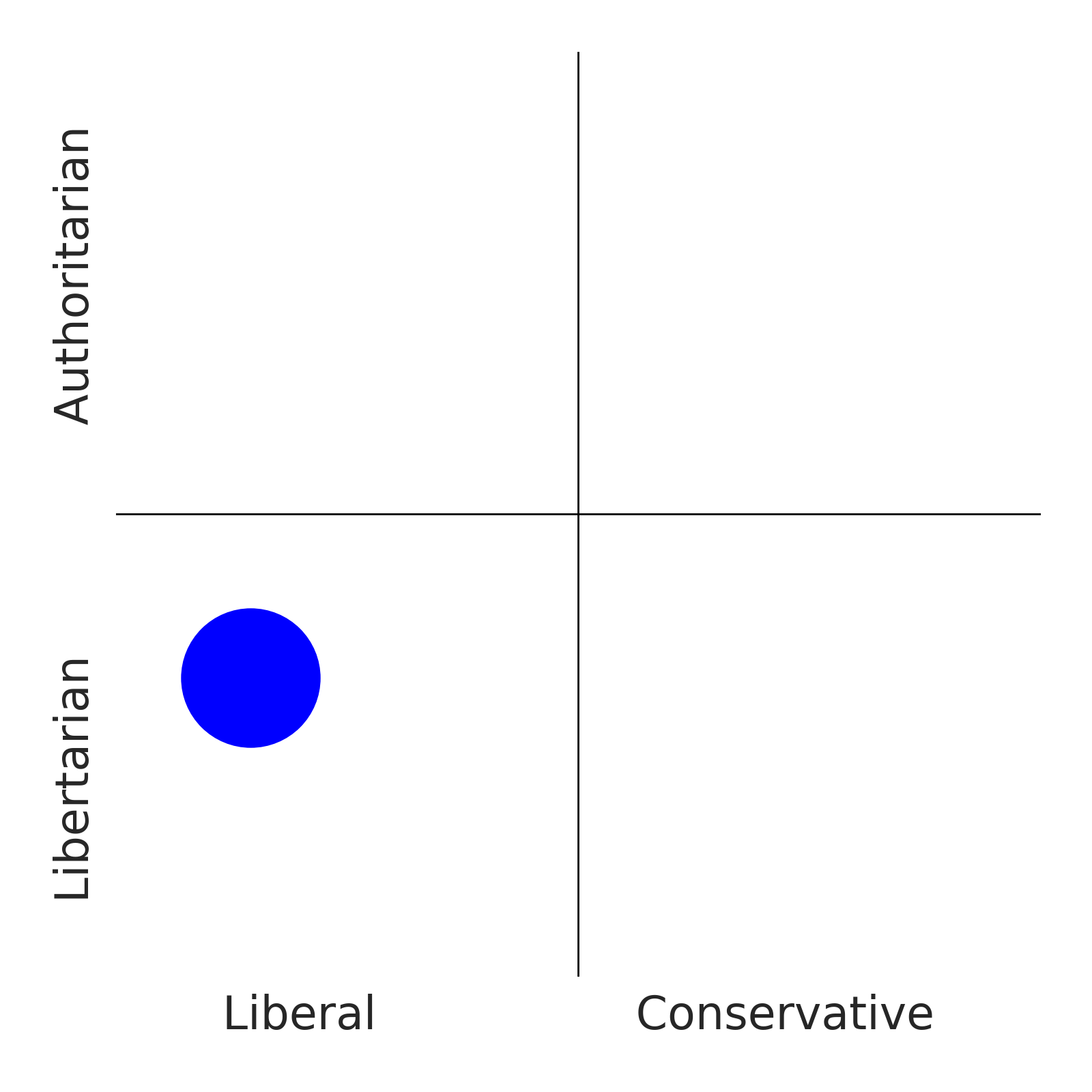
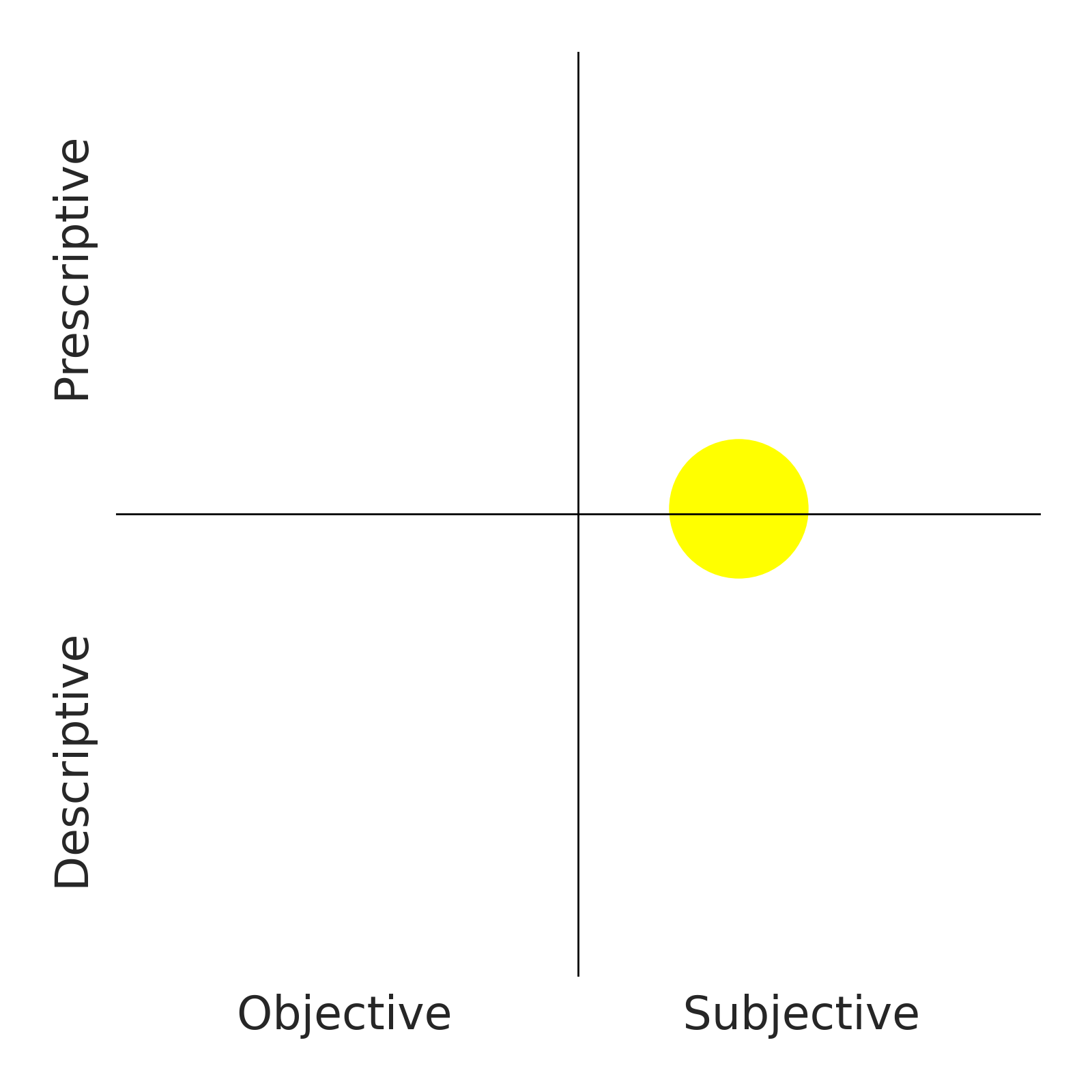
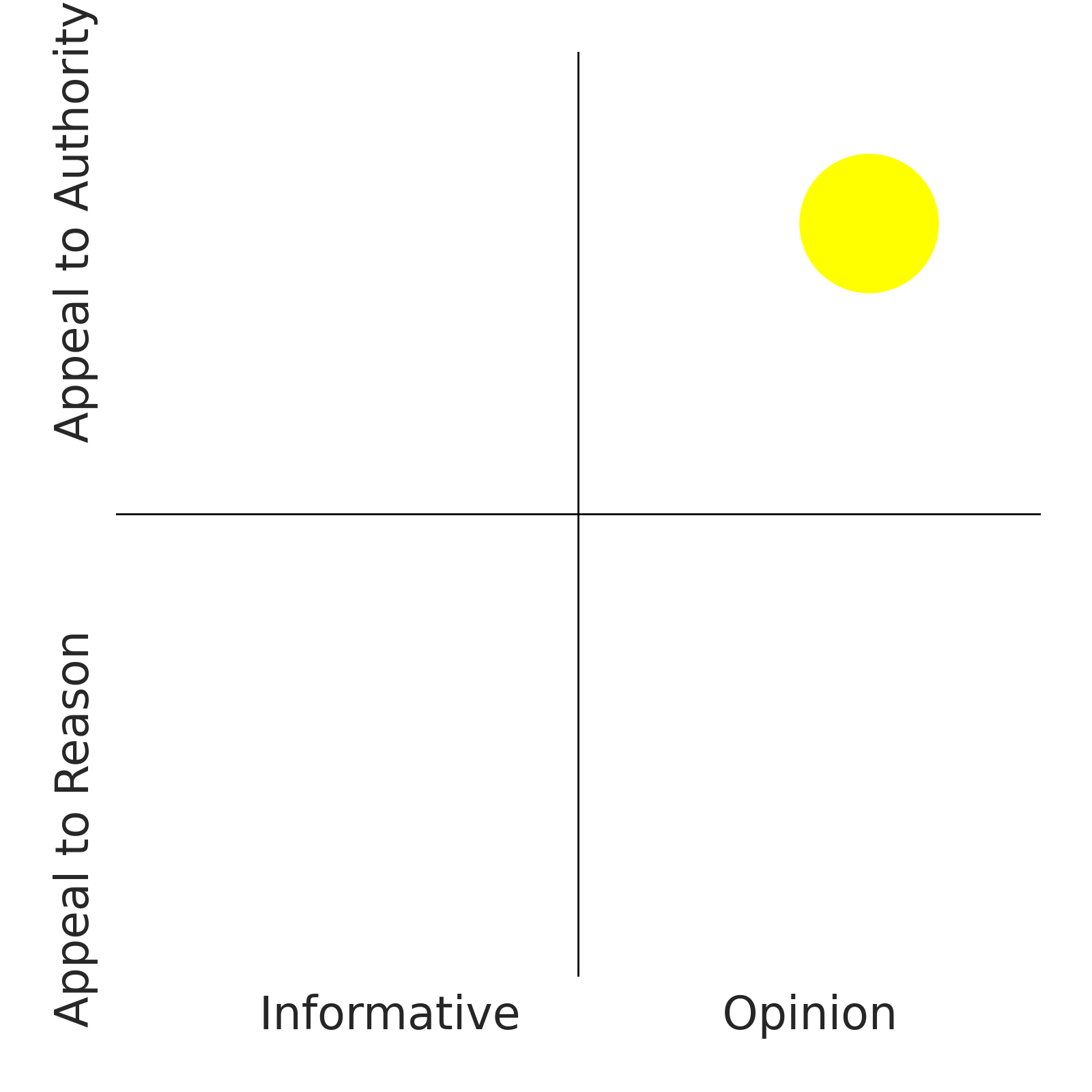
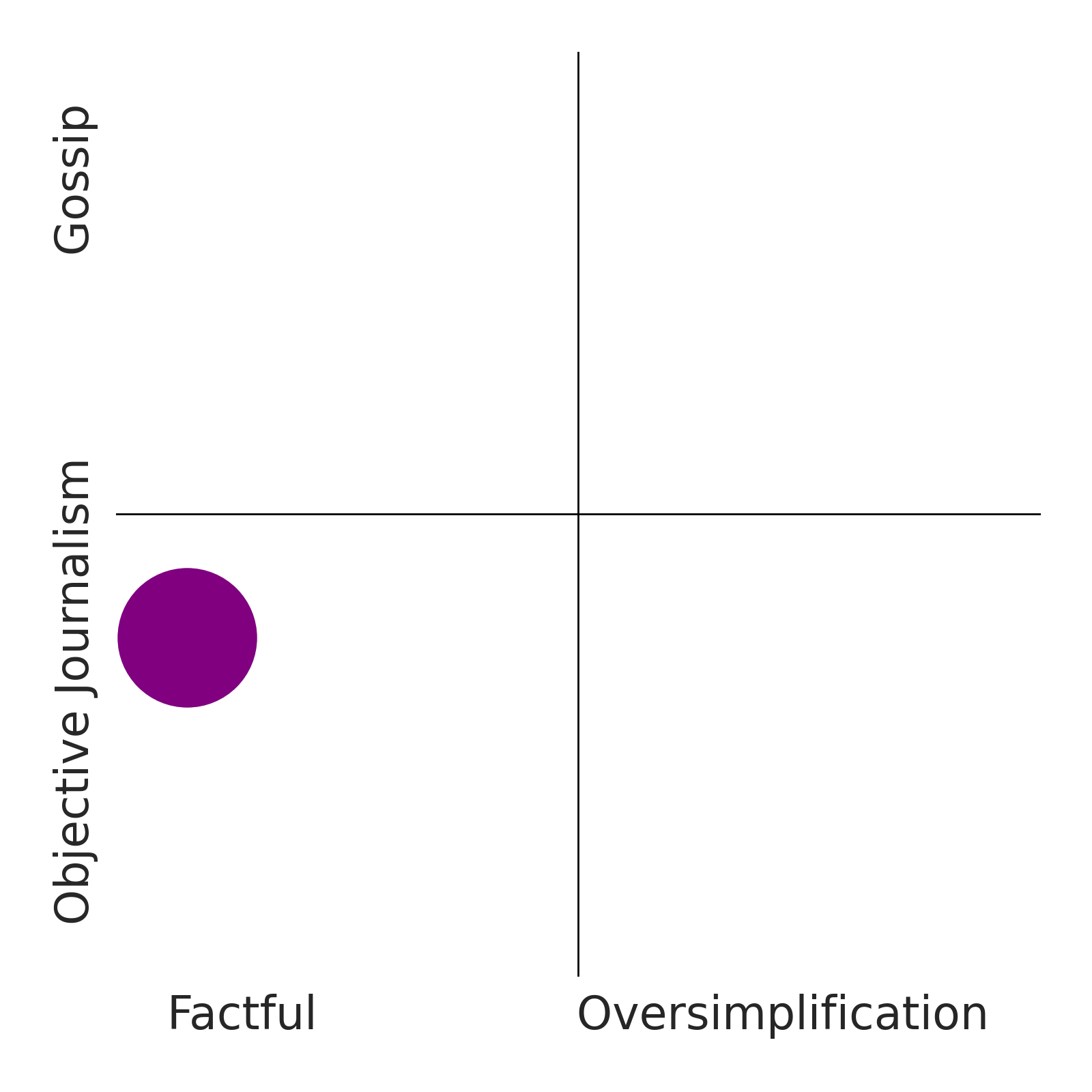
Click points to explore news by date. News sentiment ranges from -10 (very negative) to +10 (very positive) where 0 is neutral.
2026 © Helium Trades
Privacy Policy & Disclosure
* Disclaimer: Nothing on this website constitutes investment advice, performance data or any recommendation that any particular security, portfolio of securities, transaction or investment strategy is suitable for any specific person. Helium Trades is not responsible in any way for the accuracy
of any model predictions or price data. Any mention of a particular security and related prediction data is not a recommendation to buy or sell that security. Investments in securities involve the risk of loss. Past performance is no guarantee of future results. Helium Trades is not responsible for any of your investment decisions,
you should consult a financial expert before engaging in any transaction.


