See whether Helium helps you make better-informed decisions. Try every Pro Trader feature for 30 days. No credit card required.
Try every Pro Trader feature for 30 days. No credit card required.
October 21, 2026 · 0 shares
Automated analysis; not human reviewed. Limitations: The supplied text includes unrelated headline fragments and page chrome, and consists almost entirely of press-release material with no independent reporting, limiting what can be assessed. · 49 of 55 available dimensions scored; omitted dimensions are not treated as neutral. · Verified supporting quotes for 17 of 49 scored dimensions.
Claim: Framing centres on banks, foundations, trusts and credentialed officials as the agents of change.
“helping to develop informed leaders and community champions who can drive lasting behavioural change” · exact text match
Why: Change is attributed to institutional and elite actors rather than ordinary citizens acting directly.
Claim: The piece adopts the sponsor's evaluative language rather than neutral description.
“The bank described the partnership between the Nedbank Go Green Fund and NaDEET as a powerful demonstration of how collaboration can play in advancing national sustainability goals.” · exact text match
Why: Superlative evaluative framing is relayed without qualification, tilting toward subjectivity.
Claim: Tone is sober and non-sensational, with no dramatic language.
“Through immersive, hands-on experiences, the organisation helps participants understand complex environmental challenges while equipping them with practical solutions that can be applied in homes, schools, workplaces and communities.” · exact text match
Why: Calm explanatory prose without hype or alarm.
Claim: Outlook is framed positively as progress toward sustainability.
“Programmes such as NaDEET demonstrate that when knowledge is combined with practical experience, individuals are empowered to become active participants in building a more resilient and sustainable Namibia” · exact text match
Why: Upbeat, constructive framing of outcomes.
Claim: Content is mostly descriptive, with mild encouragement of behaviour change.
“equips them with practical tools to make different choices” · exact text match
Why: Some prescriptive language about changing personal choices, but predominantly descriptive.
Claim: Includes promotional evaluative statements rather than strictly factual reporting.
“a powerful demonstration of how collaboration can play in advancing national sustainability goals” · exact text match
Why: Unattributed evaluative praise raises opinion content.
Claim: Environmental progress is framed as achievable through individual education and behaviour change alone.
“environmental challenges cannot be solved by awareness alone” · exact text match
Why: Reduces complex environmental policy to education and personal consumption choices.
Claim: Claims rest on the standing of a bank CFO and programme staff rather than evidence of outcomes.
“According to Nedbank Namibia Chief Financial Officer, Victor Maengahama, environmental education is a critical investment in the country’s future.” · exact text match
Why: Assertions are validated by title and institutional position.
Claim: Only sponsor and grantee voices appear; no independent or critical perspective is included.
“The bank described the partnership between the Nedbank Go Green Fund and NaDEET as a powerful demonstration” · exact text match
Why: Response coverage is limited to the interested parties themselves.
Claim: Press-release style promotional content with little independent news value.
“The bank described the partnership between the Nedbank Go Green Fund and NaDEET as a powerful demonstration of how collaboration can play in advancing national sustainability goals.” · exact text match
Why: Corporately supplied promotional copy reproduced largely verbatim.
Claim: The article amplifies a major bank and established NGOs without any critical or grassroots counterpoint.
“Financial services group Nedbank Namibia has allocated N$150,000 through its Go Green Fund to support national environmental education and sustainability training across local communities.” · exact text match
Why: Institutional actors are presented as authoritative benefactors without challenge.
Claim: Warm, approving tone toward the programme and sponsor.
“Programmes such as NaDEET demonstrate that when knowledge is combined with practical experience, individuals are empowered to become active participants” · exact text match
Why: Positive affective framing rather than neutral tone.
Claim: Presentation is orderly and factual in tone, with no emotive or fallacious argumentation.
“The initiative equips educators, community fieldworkers, and local leaders with practical skills in sustainable living, water conservation, waste reduction, and energy efficiency.” · exact text match
Why: Descriptive, procedural reporting supports a mildly rational classification.
Claim: Functions as promotional content for Nedbank's Go Green Fund and its brand.
““By investing in environmental education through the Go Green Fund, we are helping to develop informed leaders and community champions who can drive lasting behavioural change.” · exact text match
Why: Executive marketing quotation is presented as news without challenge.
Claim: Portrays the corporate funder favorably as a sustainability leader.
“The bank described the partnership between the Nedbank Go Green Fund and NaDEET as a powerful demonstration of how collaboration can play in advancing national sustainability goals.” · exact text match
Why: The bank's self-assessment is reproduced as the article's own framing.
Claim: Facts are attributed to named sources and organisations, though only one side is presented.
“According to Nedbank Namibia Chief Financial Officer, Victor Maengahama, environmental education is a critical investment in the country’s future.” · exact text match
Why: Clear attribution coexists with one-sided promotional selection.
Claim: Prominent green-credentials display by the corporate sponsor is relayed uncritically.
“By investing in environmental education through the Go Green Fund, we are helping to develop informed leaders and community champions” · exact text match
Why: Emphasis on the sponsor's virtuous self-presentation.
The supplied text includes unrelated headline fragments and page chrome, and consists almost entirely of press-release material with no independent reporting, limiting what can be assessed.
October 19, 2026 · 0 shares
The framing is promotional and single-source, presenting Bank Windhoek’s sustainability lending as a major public-benefit push while relying on the bank’s own figures and executive praise.
Automated analysis; not human reviewed. Limitations: The supplied text includes truncated sentences and appended related headlines/editorial fragments, and the main report appears to be a bank press release; full independent verification is not available. · 7 of 55 available dimensions scored; omitted dimensions are not treated as neutral. · Verified supporting quotes for 7 of 7 scored dimensions.
Claim: The report frames the lending with evaluative, promotional language rather than neutral description alone.
“in a major push toward greening the local economy” · exact text match
“deliberate focus on enabling smaller-scale sustainability projects” · exact text match
Why: The phrases characterize the bank's activity as a major push and deliberate focus, adding evaluative framing beyond the reported figures.
Claim: The report presents Bank Windhoek's sustainability lending in a positive, progress-oriented light.
“We are proud of this progress and remain firmly focused on reaching our N$300 million target” · exact text match
“in a major push toward greening the local economy” · exact text match
Why: Celebratory executive language and progress framing emphasize optimism about the bank's sustainability efforts.
Claim: The report aligns with and promotes the perspective of an established financial institution and its executive.
“Bank Windhoek aims to remain the financier of choice for sustainability-linked opportunities” · exact text match
“Bank Windhoek’s Chief Treasurer, Ian Erlank” · exact text match
Why: The framing centers the bank's preferred market position and relies on its senior officer's statements without external challenge.
Claim: The report provides specific self-reported figures and a named executive source, but lacks independent verification.
“Bank Windhoek classified N$147 million in sustainable finance across 97 individual loans during the 2026 financial year” · exact text match
“Bank Windhoek’s Chief Treasurer, Ian Erlank” · exact text match
Why: Specific figures are attributed to a named bank officer, but the account is wholly self-reported and promotional.
Claim: The content reads as promotional material for Bank Windhoek's sustainability lending.
“Bank Windhoek aims to remain the financier of choice for sustainability-linked opportunities” · exact text match
“We are proud of this progress and remain firmly focused on reaching our N$300 million target” · exact text match
Why: The article uses the bank's own promotional language and executive endorsement to cast its products favorably.
Claim: The report is favorable toward the corporate bank's sustainability-finance role.
“in a major push toward greening the local economy” · exact text match
“Bank Windhoek aims to remain the financier of choice for sustainability-linked opportunities” · exact text match
Why: The language positively frames the bank as a leading financier and emphasizes its contribution without corporate criticism.
Claim: The report uses sustainability and social impact language to present the bank as socially virtuous.
“demonstrating that economic objectives can be sought alongside environmental and social impact” · exact text match
“in a major push toward greening the local economy” · exact text match
Why: The article highlights the bank's environmental and social credentials through aspirational wording, though specific outcomes are not detailed.
The supplied text includes truncated sentences and appended related headlines/editorial fragments, and the main report appears to be a bank press release; full independent verification is not available.
October 02, 2026 · 0 shares
A corporate press release is relayed as news, adopting NASRIA's promotional language of 'tangible community impact' and 'responsible corporate citizen' without independent scrutiny.
Automated analysis; not human reviewed. Limitations: The supplied text is a short press-release-style brief with no independent sources, outcome metrics, or opposing views, so scores rely on the publisher's uncritical relay of a company statement. · 8 of 55 available dimensions scored; omitted dimensions are not treated as neutral. · Verified supporting quotes for 5 of 8 scored dimensions.
Claim: The tone is restrained and matter-of-fact.
“NASRIA has approved N$231,818.83 in sponsorship funds toward initiatives aligned with its Corporate Social Responsibility and Investment (CSR&I) priorities for the first quarter of the 2026/27 financial year.” · not found in supplied text
Why: It reports a specific amount and period with no dramatic imagery, outrage, exaggeration, or emotional appeals.
Claim: The piece consistently presents NASRIA's grant-making as a positive social good.
““We continue to translate our corporate responsibility into tangible community impact, investing in initiatives that help build stronger, more resilient communities.”” · exact text match
Why: The only evaluative framing is upbeat and sourced from the company's own statement, with no balancing perspective.
Claim: The brief is routine and formulaic.
“The funding allocation targets key social and economic sectors across the country, focusing primarily on education, healthcare, community development, and stakeholder engagement.” · exact text match
Why: It states general categories and repeats company boilerplate, with no outcome data, beneficiaries, or new angle.
Claim: The article functions largely as promotional filler.
“The CSR&I programme forms part of our broader commitment to ensuring that our resources are channeled towards high-impact initiatives that address identified community needs and contribute to long-term social value.” · exact text match
Why: Large portions are corporate CSR boilerplate rather than substantive reporting.
Claim: The article affirms an established corporate institution's self-defined social role.
“They emphasised that the sponsorship handover underscores their role ... as a responsible corporate citizen committed to contributing to Namibia’s socio-economic development.” · not found in supplied text
Why: It treats institutional corporate authority and its charitable activity as unproblematic and praiseworthy.
Claim: The article is transparent about its sourcing; it attributes claims to NASRIA.
“NASRIA, in a statement, said the investment supports practical initiatives...” · not found in supplied text
Why: The specific figure and attribution make it credible as a report of the announcement, though no independent verification is provided.
Claim: The brief is structured like a promotional announcement.
“NASRIA, in a statement, said the investment supports practical initiatives, including education infrastructure and resources, digital learning, healthcare equipment, community development programmes, and initiatives contributing to the advancement of Namibia’s insurance sector.” · exact text match
Why: The list of positive program areas and reiterated commitments is typical advertorial or press-release form.
Claim: The article adopts a corporation's self-description without challenge.
“They emphasised that the sponsorship handover underscores their role not only as a specialist insurer, but also as a responsible corporate citizen committed to contributing to Namibia’s socio-economic development.” · exact text match
Why: It presents NASRIA's corporate-citizen claim as the article's own summary rather than as a contested or independently verified claim.
The supplied text is a short press-release-style brief with no independent sources, outcome metrics, or opposing views, so scores rely on the publisher's uncritical relay of a company statement.
October 13, 2026 · 0 shares
Corporate press-release copy rewritten as news, with publisher-voice sentences endorsing the sponsor's women-empowerment and inclusion claims and no independent or critical perspective.
Automated analysis; not human reviewed. Limitations: The article body is truncated mid-sentence and interleaved with unrelated site navigation and related-headline links, so some content is unavailable; the byline date (Oct 13, 2026) also appears anomalous. · 10 of 55 available dimensions scored; omitted dimensions are not treated as neutral. · Verified supporting quotes for 10 of 10 scored dimensions.
Claim: The piece contains no sensational or dramatized language, reading as a plain corporate announcement.
“Old Mutual Wealth supported the third annual Women’s Gathering with a sponsorship of N$25 000.” · exact text match
Why: Plain declarative style with no alarm, emotional hooks or exaggeration.
Claim: A routine sponsorship announcement with no conflict, novelty or depth for a general reader.
“Old Mutual Wealth supported the third annual Women’s Gathering with a sponsorship of N$25 000.” · exact text match
Why: The item is a dry, formulaic corporate notice typical of business-section PR coverage.
Claim: Benefit claims about the sponsorship are asserted as established fact without supporting evidence.
“Through such partnerships, the business continues to advance women in leadership and contribute to a more inclusive professional environment.” · exact text match
Why: A causal social benefit is stated in the publisher's voice as fact, beyond what a sponsorship announcement can support.
Claim: The content is low-substance promotional filler centered on a sponsorship announcement rather than substantive reporting.
“The sponsorship forms part of Old Mutual Wealth’s broader support for initiatives that promote personal development, professional growth and long-term sustainability in Namibia.” · exact text match
Why: Generic corporate-boilerplate sentences add no verifiable news value beyond the sponsorship amount.
Claim: The tone is uniformly warm and celebratory with no negative or critical note anywhere.
“an opportunity to engage in meaningful dialogue on leadership, mentorship, well-being, career development and the future of the legal profession” · exact text match
Why: Positive, flattering language characterizes every sentence of the announcement.
Claim: Sourcing is limited to the sponsor's perspective with no independent verification, though the editor transparently discloses the item's rewritten third-party origin.
“This designation is frequently used by the editor for articles submitted by third parties, especially businesses, but which had to be rewritten completely.” · exact text match
Why: The provenance disclosure is honest, but every substantive claim traces to the sponsoring company's own messaging.
Claim: The item functions as promotional copy for Old Mutual Wealth, relaying sponsor messaging and an executive quote with no independent or critical voice.
“Through such partnerships, the business continues to advance women in leadership and contribute to a more inclusive professional environment.” · exact text match
Why: Publisher-voice prose repeats the sponsor's promotional claims, and the only quoted source is the company's own manager.
Claim: Framing is consistently favorable to the corporate sponsor, crediting it with advancing women and inclusion.
“the business continues to advance women in leadership and contribute to a more inclusive professional environment” · exact text match
Why: The publisher's own voice presents the corporation's sponsorship as a social good without any counterpoint.
Claim: The publisher openly discloses that the bylined item was completely rewritten from a third-party business submission.
“This designation is frequently used by the editor for articles submitted by third parties, especially businesses, but which had to be rewritten completely.” · exact text match
Why: Explicit provenance disclosure is an observable honesty practice that many outlets omit.
Claim: Formulaic rewritten press-release prose with no added analysis, context or independent detail.
“Mentorship, shared learning, leadership development and financial wellness were central to the gathering and complement Old Mutual Wealth’s commitment to financial education, empowerment and well-being.” · exact text match
Why: Buzzword-laden boilerplate substitutes for the reporting depth of average business journalism.
The article body is truncated mid-sentence and interleaved with unrelated site navigation and related-headline links, so some content is unavailable; the byline date (Oct 13, 2026) also appears anomalous.
September 29, 2026 · 0 shares
Publisher framing uncritically adopts a corporation's self-described commitment to education, presenting a promotional CSR press release as community news.
Automated analysis; not human reviewed. Limitations: The supplied article text is truncated, with incomplete sentences and multiple unrelated headlines; the analysis is based only on the visible press-release portion. · 5 of 55 available dimensions scored; omitted dimensions are not treated as neutral. · Verified supporting quotes for 4 of 5 scored dimensions.
Claim: Subjective evaluation is presented as fact in a news context.
“As part of their commitment to invest in education and create lasting social impact” · exact text match
Why: The company's alleged 'commitment' is stated as fact, not attributed or examined.
Claim: The article frames the donation as having a positive, lasting impact.
“continues to benefit both current and future generations of learners for years to come” · exact text match
Why: The phrasing emphasizes enduring positive outcomes without caveat.
Claim: The article is a formulaic press release with no newsworthy or surprising content.
“As part of their commitment to invest in education and create lasting social impact” · exact text match
Why: The piece follows standard CSR press-release structure with boilerplate language.
Claim: The article functions as promotional content for SanlamAllianz's corporate social responsibility efforts.
“As part of their commitment to invest in education and create lasting social impact” · exact text match
“their new desks and chairs are more than just furniture” · not found in supplied text
Why: The publisher adopts the company's promotional self-description without qualification, effectively serving as a marketing vehicle.
Claim: The article presents corporate charitable giving in an uncritically favorable light.
“the donation is greatly appreciated, as the demand for school furniture remains high” · exact text match
“it remains in good condition and continues to benefit both current and future generations of learners for years to come” · exact text match
Why: Only supportive voices (the corporate press release and a grateful official) appear, with no critical perspective on the company or the systemic issue.
The supplied article text is truncated, with incomplete sentences and multiple unrelated headlines; the analysis is based only on the visible press-release portion.
October 07, 2026 · 0 shares
The publisher frames the yogurt launch as an unqualified positive business development, largely reproducing Namibia Dairies' marketing claims without independent reporting.
Automated analysis; not human reviewed. Limitations: The supplied text is a short product announcement mixed with unrelated headlines, so only the launch brief could be assessed. · 3 of 55 available dimensions scored; omitted dimensions are not treated as neutral. · Verified supporting quotes for 3 of 3 scored dimensions.
Claim: The report mixes factual launch details with evaluative marketing descriptors.
“NutriVite Plain Yogurt, sold under the company’s Everyday brand, is packaged in a handy tub and is marketed as the “tub that does it all.”” · exact text match
“The product’s simple yogurt recipe gives customers a flexible choice to eat it by itself or with other foods.” · exact text match
Why: It states the launch and company statements, but words such as 'handy,' 'simple,' and 'flexible' are evaluative rather than neutral.
Claim: The publisher reproduces Namibia Dairies' marketing language as news content without independent evaluation.
“NutriVite Plain Yogurt, sold under the company’s Everyday brand, is packaged in a handy tub and is marketed as the “tub that does it all.”” · exact text match
“The new product is marketed as a low-fat yogurt that may be used for breakfast, snacks, cooking, and other daily activities.” · exact text match
Why: The article consists mostly of the company's marketing claims and positive descriptors, with no independent testing, pricing, or consumer context.
Claim: The article presents Namibia Dairies' corporate strategy as consumer-friendly without scrutiny.
“The launch is a component of Namibia Dairies’ strategy to offer consumers easily available dairy products that are suitable for daily use.” · exact text match
Why: The article relays the company's self-description as consumer-friendly without qualification or critical context.
The supplied text is a short product announcement mixed with unrelated headlines, so only the launch brief could be assessed.
October 07, 2026 · 0 shares
Promotional, single-source framing treats BYD's Namibia entry as an unqualified step forward in sustainable mobility, with no independent or critical perspective.
Automated analysis; not human reviewed. Limitations: No independent reporting, pricing, infrastructure data, or balancing sources was included in the supplied text. · 7 of 55 available dimensions scored; omitted dimensions are not treated as neutral. · Verified supporting quotes for 7 of 7 scored dimensions.
Claim: The article presents promotional judgments about BYD as though they were neutral descriptions.
“backed by advanced technology, innovative design and a focus on accessible sustainable mobility” · exact text match
Counterevidence:
“Launched on 1 October, BYD’s arrival in Namibia is represented by Pupkewitz Motors, which is bringing the brand to dedicated BYD retail locations and customer touchpoints in Windhoek, Walvis Bay and Ongwediva.” · exact text match
Why: The publisher's own prose uses value-laden promotional language, though it also reports concrete launch details.
Claim: The article is bullish about BYD's market entry and growth prospects in Namibia.
“BYD’s global focus on new energy technologies places the brand at the forefront of this changing automotive landscape” · exact text match
Why: The wording frames BYD as a leader and its entry as expanding consumer choice, with no skeptical counterweight.
Claim: The article frames the launch as a positive opportunity for Namibian motorists and the future of transport.
“the introduction of BYD represents an opportunity to broaden the choices available to motorists as the country’s mobility needs continue to evolve” · exact text match
Why: It describes the entry as an opportunity and emphasizes energy-efficiency benefits without noting risks or obstacles.
Claim: The article contains substantial promotional opinion presented alongside factual launch details.
“Pupkewitz noted that the BYD Shark 6, in particular, brings a new dimension to the pickup segment, combining the versatility expected from a pickup with BYD’s approach to new energy technology.” · exact text match
Why: The piece mixes verifiable launch facts with evaluative claims about the brand and product, including quoted executive enthusiasm.
Claim: The article asserts superlative claims about BYD's global standing and market position without supporting evidence.
“the world’s leading new energy vehicle manufacturer” · exact text match
Why: The phrase 'world's leading' is stated as settled fact in publisher prose, exceeding the sourcing provided.
Claim: The article functions as promotional advertising for BYD and Pupkewitz Motors, emphasizing brand benefits rather than independent news judgment.
“BYD (Build Your Dreams), the world’s leading new energy vehicle manufacturer, has officially entered the Namibian automotive market” · exact text match
“Our ambition is not simply to introduce new vehicles to the market, but to create an experience around new energy mobility that is relevant to Namibian customers.” · exact text match
Why: The article's language mirrors marketing copy and centers an executive's brand-building statement rather than independent analysis.
Claim: The article is strongly pro-corporate, specifically favorable to BYD and Pupkewitz Motors' commercial interests.
“BYD’s global focus on new energy technologies places the brand at the forefront of this changing automotive landscape, while its entry into the country provides local motorists with greater access to alternative vehicle technologies.” · exact text match
Why: The publisher adopts the corporations' positive positioning and gives no weight to competitor, consumer, or regulatory perspectives.
No independent reporting, pricing, infrastructure data, or balancing sources was included in the supplied text.
October 21, 2026 · 0 shares
Automated analysis; not human reviewed. Limitations: The supplied text appears truncated ('[…]') and includes scraped headline lists, limiting assessment of the full article. · 12 of 55 available dimensions scored; omitted dimensions are not treated as neutral. · Verified supporting quotes for 11 of 12 scored dimensions.
Claim: The report adopts the promotional register of a corporate announcement rather than neutral description.
“made a substantial investment in its long-term commitment to Namibia” · exact text match
Why: Evaluative corporate phrasing frames the opening as a commitment rather than reporting facts alone.
Claim: The framing is uniformly upbeat about the investment's benefits.
“supports a more effective and sustainable transportation sector in Namibia” · exact text match
Why: Closing claims project positive outcomes without any downside or risk discussion.
Claim: Content is routine corporate launch news with limited newsworthiness.
“The Walvis Bay dealership offers a comprehensive range of services” · exact text match
Why: Listing standard dealership services is low-information filler.
Claim: The article presents promotional assessments as description.
“Scania has strengthened its assistance for clients operating in some of the most crucial transportation routes in southern Africa” · exact text match
Why: Unattributed evaluative language ('strengthened', 'most crucial') functions as opinion.
Claim: Benefits are established by citing the country manager's statement.
“the launch of our Walvis Bay dealership is an essential step in increasing the service we provide to our customers in Namibia” · exact text match
Why: The core justification rests on a company executive's assertion rather than evidence.
Claim: The page is padded with unrelated teaser headlines and links.
“Unlocking Namibia’s agricultural value chains through the collaboration of African University networks” · exact text match
Why: Injected unrelated headlines indicate low-value filler around the story.
Claim: The report aligns with corporate and official economic development framing.
“The town’s significance as a vital logistics gateway has been reinforced throughout time” · exact text match
Why: It echoes establishment logistics-growth narratives without challenge.
Claim: Credibility is limited by single-source corporate claims and typographical errors.
“Scania sad the new dealersip will contribute to increased vehicle uptime” · exact text match
Why: Errors and reliance on company statements reduce reliability.
Claim: The piece reads as promotional copy for the Scania brand and its new facility.
“Scania continues to concentrate on developing transport solutions that integrate vehicle performance, service support, and finance options appropriate to customer needs” · exact text match
Why: Marketing-style brand language with no critical or consumer-oriented perspective.
Claim: The coverage is favorable toward the corporation's expansion and presents it as regional benefit.
“By continuing to invest in its network, personnel, and goods, Scania has established enduring relationships with its clients” · exact text match
Why: The company's investment is framed uncritically as a public good.
Claim: Claims are attributed only to the company and its manager, with no independent sources.
“According to Clifford Marchbank, Country Manager for Scania Namibia” · exact text match
Why: Attribution is present but confined to the subject of the promotion.
The supplied text appears truncated ('[…]') and includes scraped headline lists, limiting assessment of the full article.
October 21, 2026 · 0 shares
Automated analysis; not human reviewed. Limitations: The supplied text mixes the automotive report with unrelated headline fragments and an editor's signoff, and the report itself is largely a manufacturer announcement without independent sourcing. · 55 of 55 available dimensions scored; omitted dimensions are not treated as neutral. · Verified supporting quotes for 10 of 55 scored dimensions.
Claim: Product styling and cabin descriptions are rendered in promotional, evaluative language rather than neutral specification.
“The C4’s Cyber Mecha styling brings angular bodywork, a sculpted side profile and a distinctive lighting signature” · exact text match
Why: Evaluative adjectives about design are the publisher's own descriptive voice, tilting toward subjective product description.
Claim: Tone about the project and market impact is favorable and forward-looking.
“Preparations for production include planned infrastructure and utility upgrades, alongside a localisation programme to develop the South African supplier base” · exact text match
Why: Benefits are foregrounded with no discussion of risks or obstacles.
Claim: Claims about local economic benefit rest on a company executive's statement rather than independent evidence.
““Investing in local production is a decision about the kind of business we want OMODA & JAECOO to become in South Africa,” said Shannon Gahagan” · exact text match
Why: A company official's assertion is the sole support for the investment rationale.
Claim: The page mixes the report with numerous unrelated promotional and headline fragments.
“Paratus inks re-seller agreement with Starlink for Africa” · exact text match
Why: Bulk unrelated headline listings around the report function as filler rather than substantive content.
Claim: The report is a single-source corporate announcement with key commercial details left unstated.
“Chinese automotive giant Chery Group has confirmed that its new OMODA C4 crossover will serve as the premier model built at its newly acquired Rosslyn manufacturing facility” · exact text match
Why: Attribution is to the company only, and pricing, timing and specifications are unresolved.
Claim: The item reproduces manufacturer promotional framing and brand quotes favorable to the product.
“will give our customers greater choice when buying an OMODA” · exact text match
Why: Uncritical inclusion of brand-marketing language and executive pitch functions as promotional content.
Claim: Framing presents the automaker's expansion and investment positively without corporate scrutiny.
“The move marks a major expansion of China’s automotive footprint in Africa” · exact text match
Why: Expansion by a corporation is characterized as a notable advance with no critical or cost-side perspective.
Claim: Forward-looking statements about future output and offerings are reported without confirmation.
“The South African C4 range will offer petrol (ICE), hybrid (HEV) and fully electric (BEV) derivatives” · exact text match
Why: Future product plans are stated prospectively rather than as confirmed current facts.
Claim: Prose is smooth, list-like and partly assembled from headline fragments, a weak pattern consistent with machine assembly.
“The new OMODA C4 will be the first Chery Group model built in South Africa.” · exact text match
Why: Limited independent indicators; the pattern alone is weak evidence.
Claim: Sourcing is limited to the company announcement with no independent corroboration or caveats.
“will be announced closer to its local introduction” · exact text match
Why: Deferral of key details and single-source attribution indicate limited verification.
The supplied text mixes the automotive report with unrelated headline fragments and an editor's signoff, and the report itself is largely a manufacturer announcement without independent sourcing.
October 19, 2026 · 0 shares
Celebratory, promotional framing emphasizes Namibian pride and the vessel's environmental features, leaning on company-owned quotations and award recognition without independent scrutiny.
Automated analysis; not human reviewed. Limitations: Based on a short, promotional tourism item; the central claims rely on the award organizer and company quotations, with no independent verification supplied. · 10 of 55 available dimensions scored; omitted dimensions are not treated as neutral. · Verified supporting quotes for 10 of 10 scored dimensions.
Claim: The report presents the award through promotional, value-laden language rather than strictly neutral description.
“This is very much a Namibian success story – she was built in Windhoek, assembled here in the Zambezi Region and is looked after every day by an exceptional Namibian crew.” · exact text match
Why: The publisher prominently relays this value-laden quotation as the interpretive frame for the award.
Claim: Promotional enthusiasm is amplified with superlatives and pride language, though not tabloid-style sensationalism.
“Winning both World’s Best and Africa’s Best River Cruise Ship is an extraordinary result for everyone involved in the Voyager.” · exact text match
Why: The quoted 'extraordinary result' and repeated award superlatives give the item an enthusiastic promotional tone.
Claim: The substantive content is overwhelmingly descriptive of the award, vessel, and company, with no prescriptive call to action.
“The all-aluminium trimaran accommodates ten guests in five en-suite cabins and uses four electric drives supplied by UK specialist RAD Propulsion, with roof-mounted solar panels providing much of the vessel’s operating energy during daylight hours.” · exact text match
Why: Detailed specifications illustrate a descriptive rather than prescriptive mode.
Claim: The article includes evaluative claims of national success and excellence rather than only verifiable event facts.
“This is very much a Namibian success story” · exact text match
Why: A quoted evaluative judgment is given prominence as the article's interpretive frame.
Claim: The article relies on the authority of the World Cruise Awards and company executives to establish the vessel's excellence.
“The World Cruise Awards recognise excellence in the global cruise sector. The awards are decided by votes from travel-industry professionals and the public.” · exact text match
Why: Award recognition is used as the central warrant for the vessel's quality.
Claim: The article's dominant emotional valence is strongly positive, centered on pride and delight.
“To see something created here recognised on a global stage makes us enormously proud” · exact text match
Why: Prominent quoted emotion ('enormously proud') frames the report in strongly positive emotional terms.
Claim: Credibility is moderate: the piece attributes quotations and dates and explains the award vote, but it remains promotional and lacks independent verification.
“The World Cruise Awards recognise excellence in the global cruise sector. The awards are decided by votes from travel-industry professionals and the public.” · exact text match
Counterevidence:
“This is very much a Namibian success story” · exact text match
Why: The supplied text shows some sourcing and voting details, while the promotional quotation and lack of independent voices limit credibility.
Claim: The item functions promotionally for Pangolin Photo Safaris by detailing its vessel, founders, and a related hotel award.
“Pangolin Photo Safaris is a wildlife photography safari company founded in 2011 by Gerhard “Guts” Swanepoel and Toby Jermyn. The company also operates The Pangolin Chobe Hotel in Kasane, which opened in 2018 and was named Botswana’s Leading Hotel at the World Travel Awards in 2026, its fourth consecutive title in that category (2023 to 2026).” · exact text match
Why: Inclusion of corporate biography and additional hotel accolades serves marketing-style promotion.
Claim: The report is favorable toward a specific private tourism company and presents its commercial achievements positively.
“The company also operates The Pangolin Chobe Hotel in Kasane, which opened in 2018 and was named Botswana’s Leading Hotel at the World Travel Awards in 2026, its fourth consecutive title in that category (2023 to 2026).” · exact text match
Why: Uncritical recitation of corporate accolades indicates a pro-corporate framing.
Claim: The article discloses the staff-reporter designation and award voting details, providing some transparency despite promotional content.
“This designation is frequently used by the editor for articles submitted by third parties, especially businesses, but which had to be rewritten completely.” · exact text match
Why: The editor's note openly flags possible third-party business origins.
Based on a short, promotional tourism item; the central claims rely on the award organizer and company quotations, with no independent verification supplied.
A celebratory, press-release-style account frames a De Beers–National Geographic conservation partnership and high-level government alliance as an unqualified success.
Automated analysis; not human reviewed. Limitations: The supplied text lacks a clear byline and publication date, and includes unrelated headline fragments and an editor's note around the main Okavango Eternal report. · 10 of 55 available dimensions scored; omitted dimensions are not treated as neutral. · Verified supporting quotes for 10 of 10 scored dimensions.
Claim: The report uses evaluative, positive language that frames the partnership subjectively as a major success.
“The statement further highlighted major milestone achieved during the first phase of the partnership” · exact text match
Why: The phrase 'major milestone achieved' is evaluative and frames the partnership's progress positively rather than neutrally.
Claim: The report presents the partnership's future as confidently beneficial.
“Looking ahead, the Okavango Eternal partnership will continue to support the work of the National Geographic Okavango Wilderness Project” · exact text match
“Future efforts will advance conservation through science and traditional knowledge” · exact text match
Why: Forward-looking statements forecast positive outcomes without expressing uncertainty or tradeoffs.
Claim: The report includes promotional evaluative judgments rather than only factual reporting.
“major milestone achieved during the first phase of the partnership” · exact text match
“responsibly sourced natural diamonds are helping protect the source waters of the Okavango Basin” · exact text match
Why: Evaluative and advocacy-like statements shape the account beyond neutral fact reporting.
Claim: The report has a political/institutional dimension by foregrounding heads of state and ministers.
“bringing together world leaders and policymakers including Advocate Duma Gideon Boko, President of Botswana, alongside ministers from Botswana, Angola and Namibia” · exact text match
Why: Government officials and policy cooperation are central, though the article is not partisan.
Claim: The report relies heavily on named officials and executives to support its positive assessment.
“President Boko stated that their ambition is to strengthen cooperation across the Basin” · exact text match
“National Geographic Society Chief Executive Jill Tiefenthaler emphasised that the momentum built through the partnership will help protect the natural resources while honouring communities.” · exact text match
Why: Authority quotes carry the article's claims of success and legitimacy.
Claim: The report states future benefits with more certainty than the supplied evidence supports.
“Future efforts will advance conservation through science and traditional knowledge” · exact text match
“the Okavango Eternal partnership will continue to support the work of the National Geographic Okavango Wilderness Project” · exact text match
Why: The article uses confident future-tense claims based on commitments rather than observed results.
Claim: The report centers high-level government and corporate officials as the authoritative voices.
“bringing together world leaders and policymakers including Advocate Duma Gideon Boko, President of Botswana, alongside ministers from Botswana, Angola and Namibia” · exact text match
“National Geographic Society Chief Executive Jill Tiefenthaler emphasised that the momentum built through the partnership will help protect the natural resources while honouring communities.” · exact text match
Why: Official elites and executives dominate the framing, with no independent grassroots voices.
Claim: The report adopts a positive, celebratory emotional tone toward the partnership.
“The event celebrated the first five years of Okavango Eternal” · exact text match
“We’ve built incredible momentum through our Okavango Eternal partnership with De Beers” · exact text match
Why: Celebration and 'incredible momentum' language create a positive affective frame.
Claim: The report reads as promotional material for the Okavango Eternal partnership rather than independent reporting.
“The event celebrated the first five years of Okavango Eternal” · exact text match
“responsibly sourced natural diamonds are helping protect the source waters of the Okavango Basin” · exact text match
Why: Celebratory event framing and a corporate-benefit claim are presented without independent scrutiny.
Claim: The report frames De Beers-linked diamond sourcing as beneficial to conservation and communities.
“responsibly sourced natural diamonds are helping protect the source waters of the Okavango Basin” · exact text match
Why: Corporate diamond sourcing is presented as a positive conservation and community mechanism.
The supplied text lacks a clear byline and publication date, and includes unrelated headline fragments and an editor's note around the main Okavango Eternal report.
October 21, 2026 · 0 shares
Automated analysis; not human reviewed. Limitations: The supplied text includes unrelated headline fragments and page chrome, and consists almost entirely of press-release material with no independent reporting, limiting what can be assessed. · 49 of 55 available dimensions scored; omitted dimensions are not treated as neutral. · Verified supporting quotes for 17 of 49 scored dimensions.
Claim: Framing centres on banks, foundations, trusts and credentialed officials as the agents of change.
“helping to develop informed leaders and community champions who can drive lasting behavioural change” · exact text match
Why: Change is attributed to institutional and elite actors rather than ordinary citizens acting directly.
Claim: The piece adopts the sponsor's evaluative language rather than neutral description.
“The bank described the partnership between the Nedbank Go Green Fund and NaDEET as a powerful demonstration of how collaboration can play in advancing national sustainability goals.” · exact text match
Why: Superlative evaluative framing is relayed without qualification, tilting toward subjectivity.
Claim: Tone is sober and non-sensational, with no dramatic language.
“Through immersive, hands-on experiences, the organisation helps participants understand complex environmental challenges while equipping them with practical solutions that can be applied in homes, schools, workplaces and communities.” · exact text match
Why: Calm explanatory prose without hype or alarm.
Claim: Outlook is framed positively as progress toward sustainability.
“Programmes such as NaDEET demonstrate that when knowledge is combined with practical experience, individuals are empowered to become active participants in building a more resilient and sustainable Namibia” · exact text match
Why: Upbeat, constructive framing of outcomes.
Claim: Content is mostly descriptive, with mild encouragement of behaviour change.
“equips them with practical tools to make different choices” · exact text match
Why: Some prescriptive language about changing personal choices, but predominantly descriptive.
Claim: Includes promotional evaluative statements rather than strictly factual reporting.
“a powerful demonstration of how collaboration can play in advancing national sustainability goals” · exact text match
Why: Unattributed evaluative praise raises opinion content.
Claim: Environmental progress is framed as achievable through individual education and behaviour change alone.
“environmental challenges cannot be solved by awareness alone” · exact text match
Why: Reduces complex environmental policy to education and personal consumption choices.
Claim: Claims rest on the standing of a bank CFO and programme staff rather than evidence of outcomes.
“According to Nedbank Namibia Chief Financial Officer, Victor Maengahama, environmental education is a critical investment in the country’s future.” · exact text match
Why: Assertions are validated by title and institutional position.
Claim: Only sponsor and grantee voices appear; no independent or critical perspective is included.
“The bank described the partnership between the Nedbank Go Green Fund and NaDEET as a powerful demonstration” · exact text match
Why: Response coverage is limited to the interested parties themselves.
Claim: Press-release style promotional content with little independent news value.
“The bank described the partnership between the Nedbank Go Green Fund and NaDEET as a powerful demonstration of how collaboration can play in advancing national sustainability goals.” · exact text match
Why: Corporately supplied promotional copy reproduced largely verbatim.
Claim: The article amplifies a major bank and established NGOs without any critical or grassroots counterpoint.
“Financial services group Nedbank Namibia has allocated N$150,000 through its Go Green Fund to support national environmental education and sustainability training across local communities.” · exact text match
Why: Institutional actors are presented as authoritative benefactors without challenge.
Claim: Warm, approving tone toward the programme and sponsor.
“Programmes such as NaDEET demonstrate that when knowledge is combined with practical experience, individuals are empowered to become active participants” · exact text match
Why: Positive affective framing rather than neutral tone.
Claim: Presentation is orderly and factual in tone, with no emotive or fallacious argumentation.
“The initiative equips educators, community fieldworkers, and local leaders with practical skills in sustainable living, water conservation, waste reduction, and energy efficiency.” · exact text match
Why: Descriptive, procedural reporting supports a mildly rational classification.
Claim: Functions as promotional content for Nedbank's Go Green Fund and its brand.
““By investing in environmental education through the Go Green Fund, we are helping to develop informed leaders and community champions who can drive lasting behavioural change.” · exact text match
Why: Executive marketing quotation is presented as news without challenge.
Claim: Portrays the corporate funder favorably as a sustainability leader.
“The bank described the partnership between the Nedbank Go Green Fund and NaDEET as a powerful demonstration of how collaboration can play in advancing national sustainability goals.” · exact text match
Why: The bank's self-assessment is reproduced as the article's own framing.
Claim: Facts are attributed to named sources and organisations, though only one side is presented.
“According to Nedbank Namibia Chief Financial Officer, Victor Maengahama, environmental education is a critical investment in the country’s future.” · exact text match
Why: Clear attribution coexists with one-sided promotional selection.
Claim: Prominent green-credentials display by the corporate sponsor is relayed uncritically.
“By investing in environmental education through the Go Green Fund, we are helping to develop informed leaders and community champions” · exact text match
Why: Emphasis on the sponsor's virtuous self-presentation.
The supplied text includes unrelated headline fragments and page chrome, and consists almost entirely of press-release material with no independent reporting, limiting what can be assessed.
October 21, 2026 · 0 shares
Framing is institutional and descriptive, centered on official municipal statements with procedural language and no adversarial or sensational tone.
Okongo Village Council is in Namibia’s Ohangwena Region, and Windhoek is Namibia’s capital; NDP6 refers to Namibia’s National Development Plan Six, a national planning framework.
Automated analysis; not human reviewed. Limitations: The supplied text includes many unrelated headline fragments and navigation-like items; bias scoring is limited to the substantive municipal-governance paragraphs. · 8 of 55 available dimensions scored; omitted dimensions are not treated as neutral. · Verified supporting quotes for 8 of 8 scored dimensions.
Claim: The report frames the review through senior municipal officials rather than ordinary residents.
“Acting Chief Executive for the City of Windhoek O’Brien Hekandjo encouraged the Okongo Council to identify three priority areas for immediate implementation” · exact text match
Why: Official-to-official engagement supports a mild elitist/institutional perspective.
Claim: The report attributes developments to named municipal officials and authorities rather than adopting a first-person evaluative stance.
“According to municipal authorities, the strategic partnership focuses on key urban development areas” · exact text match
Why: Attribution to municipal authorities and official statements supports a descriptive, objective presentation.
Claim: The report uses procedural, non-emotional language to describe the municipal review.
“Discussions centered on evaluating achievements and refining execution strategies under the five-year agreement originally established in 2022.” · exact text match
Why: Procedural wording and absence of alarm or hyperbole support low sensationalism.
Claim: Publisher prose is largely factual and avoids explicit editorial judgment.
“The visit was followed by engagements between the Okongo delegation and City of Windhoek technical officials to identify priority projects and practical areas of collaboration.” · exact text match
Why: Descriptive reporting of events rather than evaluative commentary supports low opinion bias.
Claim: The subject is municipal governance, but coverage is administrative rather than partisan.
“The City of Windhoek and the Okongo Village Council have conducted a progress review of their bilateral Memorandum of Understanding (MoU)” · exact text match
Why: Municipal governance is political in subject matter, but the framing remains administrative.
Claim: The report relies on official municipal authorities and mayors/CEOs as its primary framing sources.
“According to municipal authorities, the strategic partnership focuses on key urban development areas” · exact text match
“Windhoek Mayor Sakarias Uunona underscored the vital role of inter-municipal collaboration” · exact text match
Why: Official institutional sources structure the report, indicating a mild pro-establishment sourcing orientation.
Claim: The report names officials and attributes statements, providing verifiable sourcing cues.
“Okongo Chief Executive, Jackson Muma, said that the council had launched their first strategic plan aligned with National Development Plan Six (NDP6)” · exact text match
Why: Named attribution and specific institutional details support credibility.
Claim: The report concisely synthesizes the MoU review, responsible officials, and priority areas.
“Discussions centered on evaluating achievements and refining execution strategies under the five-year agreement originally established in 2022.” · exact text match
Why: Clear organization and specific details indicate above-average article intelligence.
The supplied text includes many unrelated headline fragments and navigation-like items; bias scoring is limited to the substantive municipal-governance paragraphs.
October 21, 2026 · 0 shares
A sourced, wire-style report frames bilateral cooperation through official government accounts with little evaluative language.
Automated analysis; not human reviewed. Limitations: The supplied text includes scraped related-headline fragments around a short wire report; bias scores apply only to the substantive bilateral-cooperation article. · 8 of 55 available dimensions scored; omitted dimensions are not treated as neutral. · Verified supporting quotes for 8 of 8 scored dimensions.
Claim: The report attributes claims to named government sources and separates them from the reporter's voice.
“According to a press release issued by the Namibian presidency” · exact text match
“according to the Angolan government’s account” · exact text match
Why: Sourcing and attribution make the account largely objective.
Claim: Coverage uses factual, non-emotional language about diplomatic agreements.
“The two countries signed eight cooperation instruments” · exact text match
Why: Specific factual statement without sensational wording.
Claim: The report describes signed agreements and proposals without prescribing policy outcomes.
“The two countries signed eight cooperation instruments” · exact text match
Why: Descriptive reporting of documents and calls rather than advocacy.
Claim: The report centers presidential diplomacy and a bilateral commission.
“co-chaired the inaugural session of the Angola-Namibia Bi-National Commission in Luanda on Monday” · exact text match
Why: Subject matter is explicitly governmental and diplomatic.
Claim: The report presents bilateral diplomacy primarily through official government accounts.
“According to a press release issued by the Namibian presidency” · exact text match
Why: Reliance on official government framing gives the report a modest pro-establishment orientation.
Claim: The report relies on attributable official accounts and avoids unsupported claims.
“According to a press release issued by the Namibian presidency” · exact text match
“(Xinhua)” · exact text match
Why: Attribution to named sources and a wire credit support credibility.
Claim: The report grounds bilateral commitments in attributed official statements rather than unverified assertion.
“According to a press release issued by the Namibian presidency” · exact text match
Why: Attribution to official sources supports a rational, evidence-based framing.
Claim: The report identifies official sources and distinguishes Namibian and Angolan accounts.
“According to a press release issued by the Namibian presidency” · exact text match
“according to the Angolan government’s account” · exact text match
Why: Clear attribution and source separation are visible fairness and honesty signals.
The supplied text includes scraped related-headline fragments around a short wire report; bias scores apply only to the substantive bilateral-cooperation article.
The piece is uniformly promotional and establishment-aligned, relaying official statements about the event without any critical scrutiny or dissenting perspectives.
World Space Week is an annual international event focused on space science and technology education and outreach. The NCRST is Namibia's national research, science and technology commission.
Automated analysis; not human reviewed. Limitations: The article text includes a large amount of navigational and headline-list clutter from the source page, but the substantive reporting on the event is short and straightforward. · 51 of 55 available dimensions scored; omitted dimensions are not treated as neutral. · Verified supporting quotes for 10 of 51 scored dimensions.
Claim: The article is framed entirely around official and institutional elites presenting the event's value to the public.
“The 2026 edition of World Space Week Namibia was officially opened by the National Commission on Research, Science and Technology (NCRST)” · exact text match
Why: The event is narrated through government commissions, ministers, ambassadors and council members rather than grassroots or ordinary citizen perspectives.
Claim: The coverage is upbeat and forward-looking about Namibia's space science prospects.
“inspiring the next generation of Namibians to look beyond the boundaries of what is currently possible” · exact text match
Why: The article emphasizes opportunity and progress, giving it a positive, promotional economic-development tone.
Claim: The article adopts a consistently optimistic tone about the event and its implications.
“We will continue to promote curiosity, STEM education, scientific awareness and innovation” · exact text match
Why: The framing focuses on future promise and inspiration without mentioning any obstacles or criticisms.
Claim: The article relies on the prestige and statements of officials and an astronaut to convey the event's significance.
“The key highlight of the opening was the ‘Talk with an Astronaut’ session with European Space Agency (ESA) astronaut Dr Matthias Maurer” · exact text match
Why: The event's importance is established by listing notable authorities rather than by independent evidence or analysis.
Claim: The article presents the event solely through official government and institutional voices without any counterpoint.
“Chief Executive at NCRST, Professor Anicia Peters, said Namibia is not just a tiny dot in the global space science community.” · exact text match
Why: All quoted speakers are government, diplomatic or institutional officials, and no critical or independent voices appear.
Claim: The tone is mildly positive and motivational throughout.
“inspiring the next generation of Namibians” · exact text match
Why: Inspirational language about youth and the future gives the piece a slightly positive emotional valence.
Claim: The article is firmly grounded in scientific and educational themes without any superstitious framing.
“space science, technology, research and innovation” · exact text match
Why: The content promotes STEM education and space science, aligning with empirical and scientific values.
Claim: The prose is plain, attributable and consistent with a human reporter's event coverage rather than strong AI-pattern indicators.
“Posted by Mandisa Rasmeni | Oct 7, 2026 | Education” · exact text match
Why: The byline and specific attributed quotations suggest human authorship, though certainty is limited by the short text.
Claim: The article presents uplifting institutionally aligned themes of inspiration and national contribution.
“Namibia is not just a tiny dot in the global space science community” · exact text match
Why: The language of national pride and inspiration is somewhat performative but mild rather than strongly virtue-signaling.
The article text includes a large amount of navigational and headline-list clutter from the source page, but the substantive reporting on the event is short and straightforward.
October 15, 2026 · 0 shares
Framing is consumer-protectionist and institutionally authoritative, using official fraud statistics and a stop-verify-report directive to cast NAMFISA and law enforcement as the trusted anti-scam gateway.
Automated analysis; not human reviewed. Limitations: The supplied text includes redacted contact emails and list/navigation artifacts, and the byline appears as both Imanuel Hawanga and 'Posted by Guest Contributor,' limiting certainty about author attribution and some contact details. · 21 of 55 available dimensions scored; omitted dimensions are not treated as neutral. · Verified supporting quotes for 21 of 21 scored dimensions.
Claim: The column is framed through the authority of a NAMFISA executive and credentialed experts, not through populist anti-elite language.
“By Imanuel Hawanga NAMFISA General Manager for Capital Markets” · exact text match
“A Guest Contributor is any of a number of experts who contribute articles and columns under their own respective names.” · exact text match
Why: The byline and editor note position the speaker as an institutional expert, supporting an elitist rather than populist framing.
Claim: The article directs readers to state supervisory and police reporting channels and cites a government financial-sector strategy, indicating a mildly authoritarian/state-centered approach.
“Report: Act quickly if something feels wrong, and report scams to NAMFISA and the Namibian Police to help protect others.” · exact text match
“Under the Namibia Financial Sector Transformation Strategy 2025-2035, the Namibia Financial Supervisory Authority (NAMFISA), the Bank of Namibia and the Government aim to grow the number of registered investors by 70% and bring more young people, women and small businesses into the capital market.” · exact text match
Why: Official reporting and government strategy framing tilt state-centered, though the advice remains voluntary.
Claim: The article is primarily factual and attributed, with only limited prescriptive framing.
“In October 2025, a video circulated on social media showing President Nandi-Ndaitwah promoting an investment scheme. The video was fake and AI-generated.” · exact text match
“In 2025, Namibians lost N$73.9 million to payment fraud, an N$19 million increase from 2024, roughly N$6 million every month.” · exact text match
Why: Dated, quantified reporting and attributed fraud descriptions support an objective rather than subjective classification.
Claim: The tone is measured and informational rather than sensational or hyperbolic.
“Most scams can be prevented if you stop, verify, and think before you act.” · exact text match
“In 2025, Namibians lost N$73.9 million to payment fraud, an N$19 million increase from 2024, roughly N$6 million every month.” · exact text match
Why: Calm preventive framing and specific figures rather than lurid language indicate low sensationalism.
Claim: The article is slightly bullish toward formal investing and capital-market participation while warning against scams.
“Under the Namibia Financial Sector Transformation Strategy 2025-2035, the Namibia Financial Supervisory Authority (NAMFISA), the Bank of Namibia and the Government aim to grow the number of registered investors by 70% and bring more young people, women and small businesses into the capital market.” · exact text match
“Invest in your future. Protect it today.” · exact text match
Why: Encouragement to invest and grow registered investors is mildly bullish, though the main thrust is fraud warning.
Claim: The article combines scam warnings with an optimistic message that most scams are preventable.
“Most scams can be prevented if you stop, verify, and think before you act.” · exact text match
“Invest in your future. Protect it today.” · exact text match
Why: Prevention and investment encouragement tilt slightly optimistic despite the fraud losses reported.
Claim: The AI-generated fake presidential video makes the scam warning more notable than routine financial advice.
“In October 2025, a video circulated on social media showing President Nandi-Ndaitwah promoting an investment scheme. The video was fake and AI-generated.” · exact text match
“If fraudsters can fake the Head of State, they can impersonate anyone.” · exact text match
Why: The head-of-state impersonation and AI element add unusual salience.
Claim: The article is strongly prescriptive, instructing readers to stop, verify, and report suspected scams.
“Stop: Do not give personal information or act on investment advice you have come across on social media, including in messaging app groups.” · exact text match
“Report: Act quickly if something feels wrong, and report scams to NAMFISA and the Namibian Police to help protect others.” · exact text match
Why: Direct commands and recommended actions dominate the closing sections.
Claim: The article uses fear appeals about impersonation and financial loss to motivate caution.
“If fraudsters can fake the Head of State, they can impersonate anyone.” · exact text match
“Different methods, same goal: to rob you of your hard-earned money.” · exact text match
Why: Threat framing about impersonation and theft supports a moderate fear-appeal classification.
Claim: The article includes prescriptive judgments and advice beyond neutral reporting.
“Most scams can be prevented if you stop, verify, and think before you act.” · exact text match
“Invest in your future. Protect it today.” · exact text match
Why: Advisory assertions and a call to invest indicate moderate opinion/prescriptive content.
Claim: The article repeatedly relies on NAMFISA, Bank of Namibia, government strategy, and police as authoritative guides.
“According to the Bank of Namibia, the main contributing factor was “vishing and phishing schemes, in which fraudsters impersonate legitimate institutions to deceive individuals into disclosing sensitive information such as usernames and passwords.”” · exact text match
“Contact NAMFISA on 061 290 5000 or [email protected] to confirm the entity is registered.” · exact text match
Why: The argument for verification and reporting is anchored in institutional authority.
Claim: The article frames Namibians as targets and victims of fraudsters' schemes.
“Impersonation is already costing Namibians.” · exact text match
“Different methods, same goal: to rob you of your hard-earned money.” · exact text match
Why: Focus on public loss and scammer predation supports mild victimization framing.
Claim: The article is strongly oriented toward official institutions as trusted authorities and reporting destinations.
“Contact NAMFISA on 061 290 5000 or [email protected] to confirm the entity is registered.” · exact text match
“Report: Act quickly if something feels wrong, and report scams to NAMFISA and the Namibian Police to help protect others.” · exact text match
Why: Directing verification and reporting to NAMFISA and police signals a pro-establishment stance.
Claim: The article carries a slightly negative emotional charge toward scams and fraudsters while maintaining a warning tone.
“If fraudsters can fake the Head of State, they can impersonate anyone.” · exact text match
“Different methods, same goal: to rob you of your hard-earned money.” · exact text match
Why: Threat and theft language produces a mildly negative emotional valence.
Claim: The article has strong credibility signals through named institutions, dates, figures, and concrete reporting channels.
“In 2025, Namibians lost N$73.9 million to payment fraud, an N$19 million increase from 2024, roughly N$6 million every month.” · exact text match
“According to the Bank of Namibia, the main contributing factor was “vishing and phishing schemes, in which fraudsters impersonate legitimate institutions to deceive individuals into disclosing sensitive information such as usernames and passwords.”” · exact text match
Why: Attribution, quantification, and actionable reporting details support high credibility.
Claim: The report relies on official statistics and attributed institutional analysis rather than irrational or emotive reasoning.
“In 2025, Namibians lost N$73.9 million to payment fraud, an N$19 million increase from 2024, roughly N$6 million every month.” · exact text match
“According to the Bank of Namibia, the main contributing factor was “vishing and phishing schemes, in which fraudsters impersonate legitimate institutions to deceive individuals into disclosing sensitive information such as usernames and passwords.”” · exact text match
Why: Concrete figures and attribution to the central bank support a rational/evidence-based classification.
Claim: The article uses empirical statistics and identifies AI technology as a scam tool rather than invoking superstition.
“In 2025, Namibians lost N$73.9 million to payment fraud, an N$19 million increase from 2024, roughly N$6 million every month.” · exact text match
“AI has made these fakes more common, more convincing, and harder to detect.” · exact text match
Why: Empirical fraud data and technology-focused explanation support a scientific/empirical classification.
Claim: The article emphasizes individual vigilance and personal action, while also recommending institutional reporting.
“Stop: Do not give personal information or act on investment advice you have come across on social media, including in messaging app groups.” · exact text match
“Report: Act quickly if something feels wrong, and report scams to NAMFISA and the Namibian Police to help protect others.” · exact text match
Why: Individual stop-and-verify instructions slightly outweigh collective/institutional elements.
Claim: The article demonstrates high integrity through explicit attribution to official sources and concrete figures.
“According to the Bank of Namibia, the main contributing factor was “vishing and phishing schemes, in which fraudsters impersonate legitimate institutions to deceive individuals into disclosing sensitive information such as usernames and passwords.”” · exact text match
“In 2025, Namibians lost N$73.9 million to payment fraud, an N$19 million increase from 2024, roughly N$6 million every month.” · exact text match
Why: Sourcing and quantification are visible, supporting a high-integrity classification.
Claim: The article organizes scam methods and official data into a practical, coherent warning.
“Scammers use three main tactics:” · exact text match
“Impersonation: Fraudsters use the faces and voices of celebrities, politicians, and trusted institutions to promote fake investment schemes.” · exact text match
Why: Structured categorization of tactics and use of data indicate above-average article intelligence.
Claim: The article is oriented toward verification and factual awareness rather than delusion or fantasy.
“Verify: Ask yourself: do you really know what you are investing in?” · exact text match
“According to the Bank of Namibia, the main contributing factor was “vishing and phishing schemes, in which fraudsters impersonate legitimate institutions to deceive individuals into disclosing sensitive information such as usernames and passwords.”” · exact text match
Why: Emphasis on verification and official attribution supports a truth-seeking classification.
The supplied text includes redacted contact emails and list/navigation artifacts, and the byline appears as both Imanuel Hawanga and 'Posted by Guest Contributor,' limiting certainty about author attribution and some contact details.
October 20, 2026 · 0 shares
The visible content is a dry, method-focused dam-level bulletin dominated by a legend of measurement caveats, with no interpretive framing or evaluative language.
NamWater is Namibia's bulk water utility; its periodic dam bulletins report reservoir storage levels used to track national water supply conditions.
Automated analysis; not human reviewed. Limitations: The supplied text is a truncated bulletin whose surrounding link list and page chrome dominate; only the measurement legend and explanatory notes are substantive, so most bias dimensions lack sufficient evidence. · 3 of 55 available dimensions scored; omitted dimensions are not treated as neutral. · Verified supporting quotes for 3 of 3 scored dimensions.
Claim: The content consists of measurement conventions and sourcing caveats rather than interpretation or opinion.
“The dam contents are according to the latest dam basin surveys.” · exact text match
Why: Attribution to surveys and explicit reading caveats indicate descriptive, data-bound presentation.
Claim: The bulletin describes data conditions and does not recommend actions or policies.
“An ‘N/A’ indicates that there is no rain gauge at the dam.” · exact text match
Why: Only explanatory definitions are given, with no prescriptions for readers or policymakers.
Claim: Wording is limited to factual notation definitions rather than evaluative commentary.
“A blank space or an ‘NR’ indicates no readings received.” · exact text match
Why: Definitional, factual register with no expressed judgments.
The supplied text is a truncated bulletin whose surrounding link list and page chrome dominate; only the measurement legend and explanatory notes are substantive, so most bias dimensions lack sufficient evidence.
October 12, 2026 · 0 shares
Framing is largely neutral and factual in tone, though it leans toward a sympathetic, institutional-perspective account that emphasizes Meatco's financial commitment to producers without independent scrutiny or dissenting voices.
Foot-and-mouth disease control measures and regional movement restrictions disrupt livestock marketing and create operational bottlenecks in Namibia's agricultural sector.
Automated analysis; not human reviewed. Limitations: Article appears partially truncated or scraped with unrelated headline fragments mixed into the text, limiting assessment of full article breadth and sourcing. · 14 of 55 available dimensions scored; omitted dimensions are not treated as neutral. · Verified supporting quotes for 12 of 14 scored dimensions.
Claim: The article relies heavily on official/company statements with minimal independent verification or perspective.
“Meatco Interim Chief Executive Officer, Ambassador Albertus Aochamub, said the corporation recognises the important partnership it has with producers and remains determined to stand with them during this difficult period.” · exact text match
Why: Use of an official quote frames the story from the institution's viewpoint, making it partly subjective.
Claim: Tone is measured with no sensational language.
“Meatco announced last Friday that it had settled N$31 million in full to local livestock producers, demonstrating financial commitment even as an ongoing foot-and-mouth disease (FMD) outbreak strains its operations and market access.” · not found in supplied text
Why: Reporting is factual and restrained without emotional intensifiers.
Claim: Overall framing emphasizes resilience and partnership despite difficulties.
“remains determined to stand with them during this difficult period” · exact text match
Why: Optimistic tone about institutional commitment under strain.
Claim: Moderately interesting due to FMD outbreak context.
“Meatco pays farmers N$31 million despite FMD outbreak” · exact text match
Why: Newsworthy but routine business announcement.
Claim: Description of events without prescriptive advice.
“Meatco announced last Friday that it had settled N$31 million in full to local livestock producers” · not found in supplied text
Why: No prescriptive language evident.
Claim: Story has minor political dimension due to state-linked enterprise but is primarily business/financial.
“The Meat Corporation of Namibia (Meatco) announced last Friday” · exact text match
Why: Meatco is a state-owned entity but coverage is not framed politically.
Claim: Article relies on CEO statements without independent corroboration.
“According to Aochamub, Meatco is simultaneously assessing its operational requirements and expenditure position for the foreseeable future.” · exact text match
Why: Authority figure is primary source for key claims.
Claim: Some certainty from company about obligations being met.
“our focus is clear: protect cash, manage expenditure responsibly and continue meeting our obligations as far as possible” · exact text match
Why: Qualified certainty ('as far as possible') tempers overconfidence.
Claim: Frames Meatco positively as financially committed and dependable.
“demonstrating financial commitment even as an ongoing foot-and-mouth disease (FMD) outbreak strains its operations and market access” · exact text match
Why: Positive institutional framing leans pro-establishment.
Claim: Mildly positive tone toward Meatco-producer relationship.
“we deeply appreciate the confidence and partnership they continue to place in us” · exact text match
Why: Positive emotional valence in quoted material, but overall article is measured.
Claim: Attribution to named CEO and specific figures supports credibility.
“The recent disbursements cover cattle deliveries made to the Meatco Windhoek Abattoir between 29 August and 11 September.” · exact text match
Why: Specific dates and figures with attribution.
Claim: Presents corporate action favorably.
“the corporation has prioritised clearing its obligations to farmers” · exact text match
Why: Highlighting corporate prioritization of obligations portrays the company positively.
Claim: Minimal speculation; mostly factual with some forward-looking statement.
“Meatco is simultaneously assessing its operational requirements and expenditure position for the foreseeable future” · exact text match
Why: Limited forecasting language.
Claim: Straightforward reporting with factual detail.
“The FMD outbreak in the /Kharas Region has affected 17 farms, with 129 animal samples testing positive as of 6 October.” · exact text match
Why: Clear factual detail supports moderate intelligence.
Article appears partially truncated or scraped with unrelated headline fragments mixed into the text, limiting assessment of full article breadth and sourcing.
October 08, 2026 · 0 shares
The report is a neutral, descriptive announcement of an industry forum and games, relying almost entirely on attributed quotes from a planning committee member without evaluative framing.
The NESIG Forum is an industry convention that brings together stakeholders, policy experts and energy providers to discuss electricity sector development in Namibia.
Automated analysis; not human reviewed. Limitations: The article text is partially truncated and includes unrelated headline fragments, which may omit additional remarks from the spokesperson. · 8 of 55 available dimensions scored; omitted dimensions are not treated as neutral. · Verified supporting quotes for 8 of 8 scored dimensions.
Claim: The report sticks to factual scheduling and attributed statements without subjective evaluation.
“The four-day gathering will kick off on 15 October with the NESIG Forum, an industry-focused convention bringing together key stakeholders, policy experts, and energy providers to discuss critical matters impacting the sector.” · exact text match
Why: The sentence reports who, what, and when without evaluative language.
Claim: The language is restrained and procedural, not sensational.
“The Electricity Control Board (ECB) and NamPower have officially commenced preparations to co-host the 2026 Namibia Electricity Supply Industry (NESIG) Forum and Games, scheduled to take place from 15 to 18 October.” · exact text match
Why: Formal announcement framing with no sensational or emotional language.
Claim: The article is nearly entirely factive and attributed.
““The electricity sector does not operate in isolation. The challenges and opportunities facing the industry require collaboration between regulators, utilities, distributors and other stakeholders. NESIG allows us to come together, have meaningful discussions, share experiences and plan collectively for the future of Namibia’s electricity sector,” Ashipala stated.” · exact text match
Why: Opinion content is confined to quoted statements, not publisher framing.
Claim: The article touches on public utility and regulatory bodies but does not engage partisan politics.
“The Electricity Control Board (ECB) and NamPower have officially commenced preparations to co-host the 2026 Namibia Electricity Supply Industry (NESIG) Forum and Games” · exact text match
Why: Government-adjacent entities appear only in an administrative, non-partisan context.
Claim: The report positively portrays an official government-utility collaboration.
“He noted that the ECB and NamPower are working with participating organisation to ensure that preparations are finalised ahead of the October programme.” · exact text match
Why: Framing treats institutional coordination as beneficial without critical scrutiny.
Claim: The report relies on a named committee member and specific dates, though sourcing is limited.
“Nelson Ashipala, a member of the NESIG planning committee, stated that the dual event offers a structured opportunity for entities within the nation’s energy infrastructure to collaborate outside of their core operational duties.” · exact text match
Why: Attribution to a named official and precise schedule supports credibility, but no further verification is provided.
Claim: The framing is mildly favorable to industry utility collaboration.
“He added that the Games form an important part of the initiative by creating an environment where industry colleagues can interact outside the formal workplace.” · exact text match
Why: Positive depiction of institutional/industry networking without critique.
Claim: The article is straightforward and informative but not especially complex.
“This year’s Forum will bring together stakeholders from across the electricity supply industry to discuss issues relevant to the sector’s development, including digital innovation, collaboration, investment and the transformation of the local electricity industry.” · exact text match
Why: Clear, competent trade-press reporting with limited depth or analysis.
The article text is partially truncated and includes unrelated headline fragments, which may omit additional remarks from the spokesperson.
Frames brain-computer interface development as an adversarial and somewhat menacing move by China against the United States.
Automated analysis; not human reviewed. Limitations: Only a headline was supplied, so body-text sourcing, evidence, and context could not be assessed. · 4 of 55 available dimensions scored; omitted dimensions are not treated as neutral. · Verified supporting quotes for 4 of 4 scored dimensions.
Claim: The headline dramatizes brain-computer interface development with invasive and conflict-oriented language.
“China wants to get inside your head” · exact text match
“latest battleground in its tech rivalry with America” · exact text match
Why: The phrase 'get inside your head' and the metaphor 'battleground' make a technology topic sound like a dramatic confrontation.
Claim: The wording presents China's brain-computer interface work as an intrusive threat rather than a neutral development.
“China wants to get inside your head” · exact text match
Why: The phrasing frames China as seeking to access individuals' minds, which is fear-oriented rather than neutral.
Claim: The headline asserts an interpretive, adversarial characterization instead of reporting a specific event or finding.
“China wants to get inside your head” · exact text match
Why: Ascribing intent to a country and using a mind-invasion metaphor is editorialized framing.
Claim: The headline places brain-computer interfaces explicitly within a geopolitical rivalry.
“latest battleground in its tech rivalry with America” · exact text match
Why: Citing a 'tech rivalry with America' and calling the field a 'battleground' makes the framing overtly political.
Only a headline was supplied, so body-text sourcing, evidence, and context could not be assessed.
October 15, 2026 · 0 shares
The headline frames Canada as a virtuous party resisting a 'bullying America' and presents Mark Carney's approach as a model, using loaded evaluative language.
Automated analysis; not human reviewed. Limitations: Only a headline and subheading are supplied; no body text, sourcing, or author is available. · 15 of 55 available dimensions scored; omitted dimensions are not treated as neutral. · Verified supporting quotes for 15 of 15 scored dimensions.
Claim: The subheading characterizes the United States with the loaded, evaluative term 'bullying' rather than a neutral description.
“Canada is standing up to a bullying America” · exact text match
Why: 'Bullying' is a subjective moral characterization, not an observed fact, making the framing evaluative.
Claim: The headline uses dramatic, emotionally charged language to frame international relations.
“Mark Carney shows middle powers how to handle a dangerous world.” · exact text match
“Canada is standing up to a bullying America” · exact text match
Why: 'Dangerous world' and 'bullying America' are sensational terms that heighten conflict.
Claim: The headline prescribes Mark Carney's approach as a model for middle powers.
“Mark Carney shows middle powers how to handle a dangerous world.” · exact text match
Why: 'Shows ... how to handle' is prescriptive rather than merely descriptive.
Claim: The text uses threat and conflict language that may evoke fear or outrage.
“Mark Carney shows middle powers how to handle a dangerous world.” · exact text match
“Canada is standing up to a bullying America” · exact text match
Why: 'Dangerous world' and 'bullying America' frame the situation as threatening and adversarial.
Claim: The subheading presupposes that America is bullying Canada without supplying evidence.
“Canada is standing up to a bullying America” · exact text match
Why: The claim that America is 'bullying' is embedded as a premise rather than argued.
Claim: The headline is largely evaluative opinion, praising Carney and casting America as a bully.
“Mark Carney shows middle powers how to handle a dangerous world.” · exact text match
“Canada is standing up to a bullying America” · exact text match
Why: Both clauses assert normative judgments rather than neutral reported facts.
Claim: The headline frames a Canada-U.S. relationship in political conflict terms.
“Canada is standing up to a bullying America” · exact text match
Why: It is centrally about state-to-state political posture.
Claim: The headline reduces a complex international relationship to a bully-versus-victim binary.
“Canada is standing up to a bullying America” · exact text match
Why: A single loaded label substitutes for a nuanced account of the dispute.
Claim: Canada is cast as the party standing up to a bullying America, implying victimhood.
“Canada is standing up to a bullying America” · exact text match
Why: 'Standing up to a bullying' frames Canada as the wronged party resisting an aggressor.
Claim: The headline states with certainty that Carney 'shows' middle powers how to handle a dangerous world.
“Mark Carney shows middle powers how to handle a dangerous world.” · exact text match
Why: The verb 'shows' presents a contested lesson as settled.
Claim: The headline frames the issue through an adversarial moral lens rather than neutral analysis.
“Canada is standing up to a bullying America” · exact text match
Why: The bully framing imposes a moralized ideological interpretation on the relationship.
Claim: The headline uses negative emotional language about danger and bullying.
“Mark Carney shows middle powers how to handle a dangerous world.” · exact text match
“Canada is standing up to a bullying America” · exact text match
Why: 'Dangerous' and 'bullying' are negatively valenced terms.
Claim: The supplied text offers only a loaded headline and subheading, with no sourcing or evidence for its characterizations.
“Canada is standing up to a bullying America” · exact text match
Why: Unsourced evaluative framing lowers visible credibility in the supplied text.
Claim: The headline uses loaded framing and a moralized bully-victim dichotomy without evidence.
“Canada is standing up to a bullying America” · exact text match
Why: Loaded labels and an implied good-versus-bad conflict can steer judgment beyond the evidence supplied.
Claim: The wording signals Canada's moral courage in standing up to a bully.
“Canada is standing up to a bullying America” · exact text match
Why: 'Standing up' carries a moralized connotation of courage against wrongdoing.
Only a headline and subheading are supplied; no body text, sourcing, or author is available.
October 04, 2026 · 0 shares
The publisher frames the Green Party's vote as a shameful, politically damaging act.
Automated analysis; not human reviewed. Limitations: Only a single-sentence excerpt was available, so the analysis cannot assess sourcing, context, or fuller framing. · 7 of 55 available dimensions scored; omitted dimensions are not treated as neutral. · Verified supporting quotes for 7 of 7 scored dimensions.
Claim: The publisher uses overtly evaluative language rather than neutral reporting.
“shamefully” · exact text match
“damning moment” · exact text match
Why: Both phrases express moral condemnation rather than describe the vote factually.
Claim: The publisher prescribes how the vote should be judged rather than merely describing it.
“shamefully” · exact text match
“damning moment” · exact text match
Why: The terms tell readers the vote was wrong and politically damaging.
Claim: The text is an opinionated editorial statement rather than a neutral report.
“shamefully” · exact text match
“damning moment” · exact text match
Why: The publisher inserts a moral judgment into the report and declares the outcome damaging.
Claim: The publisher frames a political party's vote in explicitly evaluative political terms.
“Britain's Greens have voted, shamefully, to say Zionism is racism” · exact text match
Why: The sentence is about a political party's stance and evaluates it in explicitly political terms.
Claim: The publisher's word choice conveys strong negative emotion.
“shamefully” · exact text match
“damning moment” · exact text match
Why: Both terms are emotionally negative and contemptuous.
Claim: The publisher provides no sourcing, evidence, or attributed detail to support the assertion.
“Britain's Greens have voted, shamefully, to say Zionism is racism.” · exact text match
Why: The single sentence is an unsourced, opinion-laden assertion, so the visible credibility markers are low.
Claim: The publisher uses loaded framing to steer the reader's emotional response.
“shamefully” · exact text match
“damning moment” · exact text match
Why: Loaded evaluative words frame the vote as disgraceful without providing supporting argument.
Only a single-sentence excerpt was available, so the analysis cannot assess sourcing, context, or fuller framing.
October 22, 2026 · 0 shares
Prescriptive and opinionated framing asserts a reform imperative and dismisses both named politicians' willingness to act without any supporting evidence in the text.
Automated analysis; not human reviewed. Limitations: Only a single headline was supplied; no body text, sourcing, or supporting detail is available for verification. · 8 of 55 available dimensions scored; omitted dimensions are not treated as neutral. · Verified supporting quotes for 8 of 8 scored dimensions.
Claim: The headline offers an evaluative judgment rather than a report of events.
“Brazil's weird economy needs serious reform.” · exact text match
Why: The wording is an evaluative characterization of a national economy rather than a descriptive report.
Claim: Colloquial, attention-grabbing wording sharpens the headline.
“have the stomach for it” · exact text match
Why: The idiomatic phrase adds rhetorical color beyond a neutral statement.
Claim: The headline prescribes a course of action rather than describing developments.
“Brazil's weird economy needs serious reform.” · exact text match
Why: "Needs serious reform" is an explicit prescription.
Claim: The headline states an opinion about both the economy and two politicians.
“Neither Lula nor Flávio Bolsonaro have the stomach for it” · exact text match
Why: The assertion about political will is an opinion, not a reported fact.
Claim: The framing centers on political leadership and their capacity for policy action.
“Neither Lula nor Flávio Bolsonaro have the stomach for it” · exact text match
Why: The headline is organized around named political figures and their governing will.
Claim: A complex national economy and reform agenda are compressed into a single verdict.
“Brazil's weird economy needs serious reform.” · exact text match
Why: "Weird" and "serious reform" substitute vague labels for specifics.
Claim: A confident judgment about two politicians' willingness is asserted with no supporting detail.
“Neither Lula nor Flávio Bolsonaro have the stomach for it” · exact text match
Why: The unqualified "neither" asserts certainty the supplied text does not support.
Claim: The tone toward the subject matter is negative.
“Brazil's weird economy” · exact text match
Why: "Weird" carries a mildly negative evaluative charge.
Only a single headline was supplied; no body text, sourcing, or supporting detail is available for verification.
October 13, 2026 · 0 shares
Unattributed, stacked subjective condemnations ('opaque, miserly and self-serving') frame Elon Musk's philanthropy as personal moral failing rather than presenting supporting evidence.
Automated analysis; not human reviewed. Limitations: Only a headline-length text (no body, sourcing, or data) was supplied, so the assertions' supporting evidence cannot be assessed and all scores reflect the headline framing alone. · 12 of 55 available dimensions scored; omitted dimensions are not treated as neutral. · Verified supporting quotes for 12 of 12 scored dimensions.
Claim: The attack targets the world's richest man as selfishly withholding from charity, an anti-wealth-elite frame.
“The world’s richest man disdains charity.” · exact text match
Why: Framing the single wealthiest individual as miserly and self-serving is a characteristic elite-critique angle rather than a policy argument.
Claim: The supplied text consists entirely of unattributed evaluative characterizations stated as fact.
“Elon Musk's foundation is opaque, miserly and self-serving.” · exact text match
Why: Opaque, miserly and self-serving are subjective judgments with no sourcing, data, or hedging in the supplied text.
Claim: The headline uses charged, accusatory wording and a taunting idiom for effect.
“The world’s richest man disdains charity.” · exact text match
“His money is where his mouth is” · exact text match
Why: The strong psychological accusation plus the mocking wordplay are provocative phrasing beyond neutral description.
Claim: The bold, contrarian claim about the world's richest man is attention-grabbing.
“The world’s richest man disdains charity.” · exact text match
Why: A counterintuitive personal indictment of a famous billionaire is designed to provoke reader interest.
Claim: The headline only characterizes the subject's conduct and contains no prescription.
“Elon Musk's foundation is opaque, miserly and self-serving.” · exact text match
Why: All clauses describe alleged traits; none urges action or policy.
Claim: Every clause of the supplied text is evaluative opinion, not factual reporting.
“Elon Musk's foundation is opaque, miserly and self-serving.” · exact text match
Why: The text offers only characterizations, with no verifiable facts, figures, or attribution.
Claim: A complex philanthropic record is compressed into three pejorative labels without qualification.
“Elon Musk's foundation is opaque, miserly and self-serving.” · exact text match
Why: Blanket labels with no nuance or counterpoints oversimplify the subject as presented.
Claim: The headline claims knowledge of the subject's inner attitudes with unqualified certainty beyond the supplied evidence.
“The world’s richest man disdains charity.” · exact text match
Why: Asserting disdain (a mental state) as flat fact exceeds any support visible in the supplied text.
Claim: The headline is strongly negative and contemptuous toward its subject.
“Elon Musk's foundation is opaque, miserly and self-serving.” · exact text match
Why: Stacked pejoratives ('miserly', 'self-serving') convey hostility rather than neutral assessment.
Claim: No sourcing, attribution, or hedging accompanies the strong claims in the supplied text.
“Elon Musk's foundation is opaque, miserly and self-serving.” · exact text match
Why: Visible credibility practices are absent; the strong claims stand wholly unattributed.
Claim: Loaded labeling and attribution of inner motives substitute for evidence in steering the reader's judgment.
“The world’s richest man disdains charity.” · exact text match
“His money is where his mouth is” · exact text match
Why: Psychologizing plus the mocking idiom-twist frame the subject negatively without presented evidence.
Claim: Contested characterizations are presented flatly as fact without attribution or qualification.
“Elon Musk's foundation is opaque, miserly and self-serving.” · exact text match
Why: Fair presentation would attribute or hedge such claims; the headline asserts them as certainties.
Only a headline-length text (no body, sourcing, or data) was supplied, so the assertions' supporting evidence cannot be assessed and all scores reflect the headline framing alone.
October 14, 2026 · 0 shares
The post frames opposition to price controls as an economic literacy problem, casting voters as cognitively biased and market skepticism as a failure to understand basic cause and effect.
Automated analysis; not human reviewed. Limitations: The supplied text is an opinion commentary with duplicated scraped passages and no direct link or methodological detail for the cited WSJ poll. · 20 of 55 available dimensions scored; omitted dimensions are not treated as neutral. · Verified supporting quotes for 20 of 20 scored dimensions.
Claim: The post advances a free-market, limited-government critique of price controls and populist economic policies.
““Don’t transfer income by distorting prices” is a bedrock economic principle.” · exact text match
“We live in a constitutional rule-of-law republic with a sharply limited government.” · exact text match
Why: These statements align with conservative and libertarian free-market and limited-government positions.
Claim: The post treats voters as cognitively biased and in need of elite economic guidance.
“People think in simple stereotypes.” · exact text match
“People are by nature tribal moralizers.” · exact text match
Why: The framing attributes mass policy preferences to stereotypes and tribal psychology, implying elite superior understanding.
Claim: The post strongly favors property rights and sharply limited government over state interference.
“That’s your property, to sell as you please. The government can’t interfere.” · exact text match
“We live in a constitutional rule-of-law republic with a sharply limited government.” · exact text match
Why: Explicit defense of private property and limited government supports a libertarian classification.
Claim: The post is built on subjective generalizations about human nature and public psychology.
“People are by nature tribal moralizers.” · exact text match
“People think in simple stereotypes.” · exact text match
Why: Broad psychological claims without empirical support make the framing highly subjective.
Claim: The post issues explicit prescriptions about how policy and democratic politics should work.
“We, voters in a democracy, need to set rules of the game that lead to good outcomes, not decide outcomes.” · exact text match
“Don’t get in the way of who values which apartment more, who should stay, who should move, which apartment should get fixed up, and which should be left alone and rented cheaply.” · exact text match
Why: Direct normative recommendations dominate the framing.
Claim: The post presupposes that the cited affordability policies have failed rather than establishing that premise.
“Why are people so enamored of policies that have failed time and again, over centuries?” · exact text match
Why: The rhetorical question treats policy failure as settled background rather than argued conclusion.
Claim: The post is an argumentative opinion essay rather than a neutral report.
“People are by nature tribal moralizers.” · exact text match
“Why are people so enamored of policies that have failed time and again, over centuries?” · exact text match
Why: The prose is evaluative, rhetorical, and argument-driven throughout.
Claim: The post is centrally concerned with public policy, democratic politics, and government power.
“We, voters in a democracy, need to set rules of the game that lead to good outcomes, not decide outcomes.” · exact text match
“large majorities, left and right, support populist economic policies” · exact text match
Why: Its core subject is political decision-making over economic policy.
Claim: The post reduces complex policy preferences to simple cognitive biases and stereotypes.
“People think in simple stereotypes.” · exact text match
“We are also hard-wired to zero-sum thinking.” · exact text match
Why: Complex distributional and policy debates are compressed into psychological shortcuts.
Claim: The post asserts broad claims about human nature and policy failure with little hedging.
“People are by nature tribal moralizers.” · exact text match
“policies that have failed time and again, over centuries” · exact text match
Why: Sweeping certainty about psychology and historical policy outcomes exceeds the supplied support.
Claim: The post is organized around a strong free-market ideological framework.
““Don’t transfer income by distorting prices” is a bedrock economic principle.” · exact text match
Why: The argument is structured by a market-liberal axiom rather than competing policy frameworks.
Claim: The post's tone is negative and condescending toward populist voters and policies.
“Why are people so enamored of policies that have failed time and again, over centuries?” · exact text match
“People think in simple stereotypes.” · exact text match
Why: The rhetorical framing conveys disapproval and condescension rather than neutral description.
Claim: The post includes some attribution but remains an opinion essay with broad unsupported psychological claims.
“Credit to Steve Davis, who asked this question during a Hoover event for Phil Gramm and Don Boudreaux excellent “Triumph of economic freedom.”” · exact text match
“People are by nature tribal moralizers.” · exact text match
Why: Attribution to named sources is present, but sweeping assertions limit evidentiary credibility.
Claim: The post argues from systemic economic cause-and-effect rather than emotional or mystical reasoning.
“Good public policy thinks about how the whole system responds.” · exact text match
“The paradox: The market works even if nobody understands it.” · exact text match
Why: The passage emphasizes systemic consequences and economic logic, supporting a rational orientation.
Claim: The post frames billionaire wealth creation as broadly beneficial.
“our billionaires got rich by inventing new products and companies and making all of us fabulously better off too” · exact text match
Why: The passage offers a favorable generalization about corporate and billionaire wealth creation.
Claim: The post prioritizes individual property rights over collective or majoritarian control.
“That’s your property, to sell as you please. The government can’t interfere.” · exact text match
“We don’t live in a pure democracy.” · exact text match
Why: Property-rights individualism is explicitly contrasted with democratic majoritarianism.
Claim: The post speculates about voters' nostalgia and psychological motivations.
“People are also nostalgic for childhood. Mom and Dad can surely set things right.” · exact text match
Why: Claims about collective nostalgia and psychological longing are speculative rather than evidenced.
Claim: The post uses loaded rhetorical questions and presuppositions to frame opposition as irrational.
“Why are people so enamored of policies that have failed time and again, over centuries?” · exact text match
Why: The question embeds a negative premise and steers interpretation without demonstrating it.
Claim: The post acknowledges some sources and credit but does not supply detailed evidence.
“Credit to Steve Davis, who asked this question during a Hoover event for Phil Gramm and Don Boudreaux excellent “Triumph of economic freedom.”” · exact text match
Why: It gives explicit credit for the question while leaving key empirical claims unsupported.
Claim: The post displays a coherent economic argument with conceptual distinctions.
“The paradox: The market works even if nobody understands it.” · exact text match
Why: The argument uses systemic economic reasoning and a clear conceptual paradox.
The supplied text is an opinion commentary with duplicated scraped passages and no direct link or methodological detail for the cited WSJ poll.
October 22, 2026 · 0 shares
Promotional business commentary frames China's zero-tariff policy as a strategic export opportunity for Namibia while spotlighting Standard Bank's trade-finance services.
Automated analysis; not human reviewed. Limitations: The substantive piece is a guest commentary by a bank executive and does not cite primary sources for the zero-tariff policy, so the scope and effects of the policy are unverified in the supplied text. · 12 of 55 available dimensions scored; omitted dimensions are not treated as neutral. · Verified supporting quotes for 12 of 12 scored dimensions.
Claim: The commentary is framed around lower tariffs and expanded market access rather than state control.
“Lower tariffs make African products more competitive, improve market access and create new possibilities for businesses looking beyond their traditional export destinations.” · exact text match
Why: Pro-market trade liberalization framing leans libertarian on this dimension.
Claim: Evaluative and promotional language dominates over detached reporting.
“China’s zero-tariff policy should not be viewed simply as a trade concession. It should be seen as a strategic opportunity for Namibia to accelerate export diversification, strengthen economic resilience and deepen its integration into global markets.” · exact text match
Why: The explicit prescriptive interpretation signals a subjective, advocacy-oriented frame.
Claim: The piece frames the policy as a significant upside opportunity for Namibian exports.
“China’s decision to introduce a zero-tariff framework for eligible exports from African countries has the potential to reshape trade relationships across the continent and create significant new opportunities for Namibian businesses.” · exact text match
Why: The language emphasizes potential market gains and opportunity, producing a bullish framing.
Claim: The commentary ends on an optimistic call to seize the opportunity.
“The opportunity is open.” · exact text match
Why: The closing line is explicitly upbeat about the opportunity.
Claim: The commentary moves from description to prescriptions for businesses.
“The businesses that benefit most will be those that act early, invest in competitiveness and position themselves to meet growing international demand.” · exact text match
Why: The sentence advises firms how to act, indicating prescriptive framing.
Claim: The article is explicitly an evaluative business commentary.
“China’s zero-tariff policy should not be viewed simply as a trade concession. It should be seen as a strategic opportunity for Namibia to accelerate export diversification, strengthen economic resilience and deepen its integration into global markets.” · exact text match
Why: The text advances a recommended interpretation rather than neutral reporting.
Claim: The commentary promotes established banking relationships with China as a key bridge.
“Importantly, Standard Bank Group’s strategic partnership with the Industrial and Commercial Bank of China (ICBC) provides an additional bridge between African businesses and one of the world’s largest markets.” · exact text match
Why: Endorsement of a major bank partnership and Chinese economic ties aligns with establishment institutions.
Claim: The commentary discloses the author's bank role and includes caveats, but does not source the tariff-policy claims.
“By Hellen Amupolo, Standard Bank Namibia Executive Officer: Business and Commercial Banking.” · exact text match
“While improved market access creates opportunity, it does not guarantee success.” · exact text match
Why: Named affiliation and caveats support some credibility, but promotional context and absent sourcing limit it.
Claim: The commentary uses caveats and conditional language rather than purely emotive claims.
“While improved market access creates opportunity, it does not guarantee success.” · exact text match
Why: The explicit caveat and measured framing support a rational presentation.
Claim: The commentary promotes Standard Bank Namibia's services and ICBC partnership.
“At Standard Bank Namibia, we work closely with businesses to help them identify export opportunities, navigate international markets and access the financial solutions required to compete effectively across borders.” · exact text match
Why: Direct promotion of the author's bank services indicates advertorial framing.
Claim: The piece centers business growth and exporter revenue as the main beneficiaries.
“For local exporters, greater market access can enhance competitiveness, support business growth and generate additional revenue streams.” · exact text match
Why: The framing prioritizes corporate/export business outcomes.
Claim: The commentary relies on forecasts of potential future benefits.
“The long-term benefits could be significant.” · exact text match
Why: Conditional future-benefit language indicates speculation about outcomes.
The substantive piece is a guest commentary by a bank executive and does not cite primary sources for the zero-tariff policy, so the scope and effects of the policy are unverified in the supplied text.
October 22, 2026 · 0 shares
Prescriptive and opinionated framing asserts a reform imperative and dismisses both named politicians' willingness to act without any supporting evidence in the text.
Automated analysis; not human reviewed. Limitations: Only a single headline was supplied; no body text, sourcing, or supporting detail is available for verification. · 8 of 55 available dimensions scored; omitted dimensions are not treated as neutral. · Verified supporting quotes for 8 of 8 scored dimensions.
Claim: The headline offers an evaluative judgment rather than a report of events.
“Brazil's weird economy needs serious reform.” · exact text match
Why: The wording is an evaluative characterization of a national economy rather than a descriptive report.
Claim: Colloquial, attention-grabbing wording sharpens the headline.
“have the stomach for it” · exact text match
Why: The idiomatic phrase adds rhetorical color beyond a neutral statement.
Claim: The headline prescribes a course of action rather than describing developments.
“Brazil's weird economy needs serious reform.” · exact text match
Why: "Needs serious reform" is an explicit prescription.
Claim: The headline states an opinion about both the economy and two politicians.
“Neither Lula nor Flávio Bolsonaro have the stomach for it” · exact text match
Why: The assertion about political will is an opinion, not a reported fact.
Claim: The framing centers on political leadership and their capacity for policy action.
“Neither Lula nor Flávio Bolsonaro have the stomach for it” · exact text match
Why: The headline is organized around named political figures and their governing will.
Claim: A complex national economy and reform agenda are compressed into a single verdict.
“Brazil's weird economy needs serious reform.” · exact text match
Why: "Weird" and "serious reform" substitute vague labels for specifics.
Claim: A confident judgment about two politicians' willingness is asserted with no supporting detail.
“Neither Lula nor Flávio Bolsonaro have the stomach for it” · exact text match
Why: The unqualified "neither" asserts certainty the supplied text does not support.
Claim: The tone toward the subject matter is negative.
“Brazil's weird economy” · exact text match
Why: "Weird" carries a mildly negative evaluative charge.
Only a single headline was supplied; no body text, sourcing, or supporting detail is available for verification.
September 29, 2026 · 0 shares
The commentary frames gender advancement in mining as the measure of an inclusive industry, using prescriptive calls for institutional responsibility rather than neutral reporting.
Automated analysis; not human reviewed. Limitations: The supplied text is an opinion essay rather than a news report; verifiable facts are scarce, so scalar ratings mostly reflect rhetorical stance. · 6 of 55 available dimensions scored; omitted dimensions are not treated as neutral. · Verified supporting quotes for 6 of 6 scored dimensions.
Claim: The commentary takes a progressive stance by advocating gender equity and organized labor representation.
“Their voices must be part of collective bargaining, workplace discussions and the decisions that shape the future of the industry.” · exact text match
Why: Combined support for women's advancement and labor representation aligns with left-liberal positions on the conventional spectrum.
Claim: The commentary is a subjective, value-based argument rather than an objective news report.
“Women should not merely have a place in Namibia’s mining industry. They should have the opportunity to shape its future.” · exact text match
Why: Normative statements about what should happen are expressions of opinion, not neutral factual reporting.
Claim: The commentary prescribes specific actions and responsibilities for the mining industry.
“Women must be encouraged and supported to pursue leadership. This requires mentorship, skills development and deliberate pathways into decision-making positions.” · exact text match
Why: Use of 'must' and 'requires' makes the commentary a direct call for workplace and policy change.
Claim: The entire commentary is an opinionated advocacy essay.
“For women to thrive, the industry must address the realities that affect their working lives.” · exact text match
Why: The text asserts what the industry must do and argues for a normative outcome rather than presenting verified findings.
Claim: The commentary addresses a politically contested workplace and labor-relations issue.
“Employers, unions, government, educational institutions and society all have a role to play.” · exact text match
Why: Assigning roles to government and unions frames the issue as one of public policy and institutional power.
Claim: The commentary emphasizes collective and institutional responsibility over individual effort.
“Employers, unions, government, educational institutions and society all have a role to play.” · exact text match
Why: The proposed solution is framed as a shared obligation across institutions rather than an individual career strategy.
The supplied text is an opinion essay rather than a news report; verifiable facts are scarce, so scalar ratings mostly reflect rhetorical stance.
October 07, 2026 · 0 shares
A policy commentary leverages a UN anti-corruption guide to advocate for reciprocal transparency in Namibia’s quota allocation, portraying the current system as one-way and opaque.
Namibia allocates commercial fishing rights and quotas as access to publicly owned marine resources; the annual Total Allowable Catch (TAC) is set from scientific stock assessments, and the Ministry of Fisheries and Marine Resources administers the allocation.
Automated analysis; not human reviewed. Limitations: The byline is a generic 'Guest Contributor' label, so the author's institutional perspective is not identifiable; the supplied page also contains unrelated headlines, so only the fisheries commentary was analyzed. · 55 of 55 available dimensions scored; omitted dimensions are not treated as neutral. · Verified supporting quotes for 4 of 55 scored dimensions.
Claim: The article evaluates fairness and accountability of the quota allocation system using interpretive judgment rather than purely neutral reporting.
“The transparency appears largely one-way.” · not found in supplied text
“Without a clearly published methodology, it becomes difficult to understand how the final allocation follows from the information submitted.” · exact text match
Why: The phrase 'appears largely one-way' is an interpretive framing, and the article argues for a normative view of how transparency should work.
Claim: The article prescribes how fisheries quota allocation should be made transparent.
“At a minimum, stakeholders should be able to understand the criteria used, how those criteria are weighted, who receives access to the resource and who ultimately benefits from that access.” · exact text match
Why: The article repeatedly uses 'should' statements and prescribes specific minimum transparency requirements.
Claim: The article is an opinion piece that argues for a normative policy position rather than merely reporting facts.
“Transparency should work both ways in Namibia’s fisheries.” · verified after text normalization
“These are not accusations of wrongdoing. They are questions about whether the allocation system is sufficiently transparent for its outcomes to be understood.” · exact text match
Why: The central message is advocacy for a policy change, and the article is framed as commentary rather than neutral news.
Claim: The article addresses government allocation of a public resource, which is a political governance issue.
“Fishing quotas provide access to a valuable public resource, and government needs to know who is benefiting, what they contribute to the economy, how many people they employ and whether they meet the objectives under which fishing rights were granted.” · exact text match
Why: It centers on state decision-making, public resource allocation, and policy objectives, making it political in subject matter.
Claim: The article is credible in its sourcing, attribution, and epistemic caution.
“The United Nations Office on Drugs and Crime has released the second edition of Rotten Fish: A Guide on Addressing Corruption in the Fisheries Sector.” · exact text match
“Namibia contributed to the development of the guide through Graham Hopwood, Executive Director of the Institute for Public Policy Research.” · not found in supplied text
Why: It identifies a specific source and named contributor, and uses hedged and conditional language rather than asserting misconduct.
Claim: The article displays high internal fairness by explicitly disclaiming wrongdoing and acknowledging legitimate commercial arrangements.
“There is nothing inherently improper about such an arrangement.” · exact text match
“These are not accusations of wrongdoing.” · exact text match
Why: It handles a potentially sensitive subject with explicit caveats, showing measured and fair epistemic conduct.
The byline is a generic 'Guest Contributor' label, so the author's institutional perspective is not identifiable; the supplied page also contains unrelated headlines, so only the fisheries commentary was analyzed.
September 28, 2026 · 0 shares
Promotional framing presents the initiative's own affirmative language as neutral reporting.
Automated analysis; not human reviewed. Limitations: Limited to truncated excerpt; full article may contain additional sourcing or context. · 2 of 55 available dimensions scored; omitted dimensions are not treated as neutral. · Verified supporting quotes for 2 of 2 scored dimensions.
Claim: Value judgments are presented as factual descriptions.
“engaged in vital discussions on sexual and reproductive health” · exact text match
“safe and interactive space for learners to ask questions, raise concerns, and receive accurate information” · exact text match
Why: Words like 'vital', 'safe', and 'accurate' are evaluative and not independently sourced.
Claim: The coverage is promotional, adopting the campaign's self-descriptions without critical distance.
“The campaign created a safe and interactive space for learners to ask questions, raise concerns, and receive accurate information” · exact text match
Why: The statement is a promotional claim presented as fact; no external voices or critical assessment appear.
Limited to truncated excerpt; full article may contain additional sourcing or context.
The column is a subjective, inspirational opinion essay that turns a golf anecdote into prescriptive life-and-work advice while acknowledging luck and refusing to call the bad event good.
Automated analysis; not human reviewed. Limitations: The supplied text includes unrelated headline listings and site chrome; analysis is limited to the substantive essay. · 10 of 55 available dimensions scored; omitted dimensions are not treated as neutral. · Verified supporting quotes for 10 of 10 scored dimensions.
Claim: The column is framed as a subjective essay that derives personal life-and-work lessons from a golf episode.
“The same principle applies in life and work.” · exact text match
“We should not force ourselves to call something good when it is painful, unfair or unwanted.” · exact text match
Why: The text explicitly moves from a sports anecdote to broad judgments and advice about life and work, signaling subjective interpretation rather than neutral reporting.
Claim: The article frames setbacks as recoverable and emphasizes future possibility.
“good can still be worked through all things” · exact text match
“the next decision matters because it prevents the worst moment from automatically becoming the final outcome.” · exact text match
Why: The prose consistently emphasizes recovery, agency, and the possibility that a bad moment is not final.
Claim: The essay moves from describing Spieth’s round to prescribing how readers should interpret setbacks and choose next steps.
“The practical challenge is to deal honestly with where the ball has finished, choose the best option still available and keep playing.” · exact text match
Why: The conclusion is explicit practical advice, not merely a description of the golf event.
Claim: The piece is primarily an opinion and advice column built around a lesson rather than a neutral news report.
“Sometimes success means limiting the damage.” · exact text match
“We should not force ourselves to call something good when it is painful, unfair or unwanted.” · exact text match
Why: Evaluative and prescriptive statements dominate the essay’s central framing.
Claim: The article broadly analogizes a single golf hole to life and work, while acknowledging some limits.
“The same principle applies in life and work.” · exact text match
Counterevidence:
“Most difficult days do not end with an eagle, three birdies and a famous trophy.” · exact text match
Why: The transfer from one sports incident to general life lessons is simplified, though the text qualifies it by noting most difficult days do not end in a trophy.
Claim: The tone is mildly positive and inspirational, emphasizing recovery and hope.
“What looked like the beginning of a collapse became the starting point of one of the finest finishing stretches in Open history.” · exact text match
“good can still be worked through all things” · exact text match
Why: The article’s emotional valence is positive and encouraging rather than neutral or negative.
Claim: The essay offers a specific historical example, an AI disclosure, and author credentials, though it does not cite sources for the golf facts.
“AI disclaimer: This article was written with the assistance of artificial intelligence.” · exact text match
“Dr Coen Welsh is an Industrial and Organisational Psychology consultant, assessment specialist, and founder of Capacity Trust.” · exact text match
Why: Visible disclosure and author identification support moderate credibility, while the opinion format and lack of cited sources for the sports narrative limit certainty.
Claim: The essay emphasizes individual agency in responding to setbacks rather than collective or structural remedies.
“We cannot always retrieve the opportunity or undo the mistake, but we can still decide what happens next.” · exact text match
Why: The lesson centers on personal choice and responsibility after adversity.
Claim: The article explicitly discloses artificial-intelligence assistance in its production.
“AI disclaimer: This article was written with the assistance of artificial intelligence.” · exact text match
Why: The text directly states AI assistance, though it also says the author reviewed and approved the final content.
Claim: The article distinguishes harmful events from good outcomes and discloses AI assistance and author review.
“Spieth’s drive was not secretly a good shot, and the spectator being struck was not a fortunate event.” · exact text match
“The final content was reviewed, edited and approved by the author, who also checked the information and facts presented.” · exact text match
Why: The text honestly refuses to reframe a bad event as good and transparently discloses its AI-assisted production process.
The supplied text includes unrelated headline listings and site chrome; analysis is limited to the substantive essay.
September 28, 2026 · 0 shares
Frames integrity as an individual moral virtue, using biblical authority and golf anecdotes to deliver a prescriptive leadership lesson without counterpoints.
Automated analysis; not human reviewed. Limitations: The supplied text is a signed opinion essay with no external reporting, so the factual status of the golf anecdotes cannot be independently checked. · 8 of 55 available dimensions scored; omitted dimensions are not treated as neutral. · Verified supporting quotes for 8 of 8 scored dimensions.
Claim: The text is a subjective moral essay rather than an objective news report.
“Integrity is what happens before you get caught.” · exact text match
“The question is therefore not simply whether somebody will find out. It is whether the score we are about to sign is true.” · exact text match
Why: The opening and closing statements express the author's personal moral viewpoint without factual reporting.
Claim: The conclusion is optimistic, describing honest self-accounting as freeing and reputation-securing.
“we gain the freedom of knowing that our reputation does not depend on what the camera happened to capture.” · exact text match
Why: The final promise of freedom is positive in tone, though the essay also warns about surveillance and moral failure.
Claim: The piece instructs readers on how integrity should be practiced.
“The real test is not whether a golfer can conceal a stroke, but whether the score beside the golfer’s name accurately reflects what happened.” · exact text match
“Character is revealed when we choose the truth before another person, a camera or a computer compels us to acknowledge it.” · exact text match
Why: These statements prescribe moral standards for behavior and define what character should look like.
Claim: The text is heavily opinionated, advancing the author's moral worldview.
“Integrity is what happens before you get caught.” · exact text match
“The real test is not whether a golfer can conceal a stroke, but whether the score beside the golfer’s name accurately reflects what happened.” · exact text match
Why: The essay is built around personal aphorisms and moral conclusions rather than verifiable reporting.
Claim: The argument leans on religious authorities to validate its moral claims.
“King Solomon recognised this principle long before television cameras and instant replays.” · exact text match
“The book of Job presents God as seeing everything beneath the heavens, while Jeremiah reminds his readers that there is no secret place beyond God’s presence.” · exact text match
Why: Scriptural figures are invoked as authoritative support for the essay's central lesson.
Claim: The essay frames integrity primarily as an individual character trait.
“Most tests of integrity are less dramatic than a disputed ruling at a major golf tournament. They occur when we complete an expense claim, prepare a performance report, submit academic work or explain a mistake to a client.” · exact text match
“Character is revealed when we choose the truth before another person, a camera or a computer compels us to acknowledge it.” · exact text match
Why: It locates moral responsibility in personal choices and character rather than in collective or structural solutions.
Claim: The text is disclosed as AI-assisted writing.
“This article was written with the assistance of artificial intelligence.” · exact text match
Why: The author explicitly states that AI was used in writing, though the final content was reviewed and approved by a human.
Claim: The text shows high internal integrity through transparency about AI assistance.
“AI disclaimer: This article was written with the assistance of artificial intelligence. The final content was reviewed, edited and approved by the author, who also checked the information and facts presented.” · exact text match
Why: Disclosing AI assistance and author review is a visible honesty signal, although no external verification of the anecdotes is provided.
The supplied text is a signed opinion essay with no external reporting, so the factual status of the golf anecdotes cannot be independently checked.
October 04, 2026 · 0 shares
The publisher frames the Green Party's vote as a shameful, politically damaging act.
Automated analysis; not human reviewed. Limitations: Only a single-sentence excerpt was available, so the analysis cannot assess sourcing, context, or fuller framing. · 7 of 55 available dimensions scored; omitted dimensions are not treated as neutral. · Verified supporting quotes for 7 of 7 scored dimensions.
Claim: The publisher uses overtly evaluative language rather than neutral reporting.
“shamefully” · exact text match
“damning moment” · exact text match
Why: Both phrases express moral condemnation rather than describe the vote factually.
Claim: The publisher prescribes how the vote should be judged rather than merely describing it.
“shamefully” · exact text match
“damning moment” · exact text match
Why: The terms tell readers the vote was wrong and politically damaging.
Claim: The text is an opinionated editorial statement rather than a neutral report.
“shamefully” · exact text match
“damning moment” · exact text match
Why: The publisher inserts a moral judgment into the report and declares the outcome damaging.
Claim: The publisher frames a political party's vote in explicitly evaluative political terms.
“Britain's Greens have voted, shamefully, to say Zionism is racism” · exact text match
Why: The sentence is about a political party's stance and evaluates it in explicitly political terms.
Claim: The publisher's word choice conveys strong negative emotion.
“shamefully” · exact text match
“damning moment” · exact text match
Why: Both terms are emotionally negative and contemptuous.
Claim: The publisher provides no sourcing, evidence, or attributed detail to support the assertion.
“Britain's Greens have voted, shamefully, to say Zionism is racism.” · exact text match
Why: The single sentence is an unsourced, opinion-laden assertion, so the visible credibility markers are low.
Claim: The publisher uses loaded framing to steer the reader's emotional response.
“shamefully” · exact text match
“damning moment” · exact text match
Why: Loaded evaluative words frame the vote as disgraceful without providing supporting argument.
Only a single-sentence excerpt was available, so the analysis cannot assess sourcing, context, or fuller framing.
October 13, 2026 · 0 shares
Adversarial framing casts the government as trying to 'crush' Gen Z protesters, pairing a presupposed suppressive intent with dramatized imagery of a 'sweeping crackdown on peaceful protest'.
Automated analysis; not human reviewed. Limitations: The supplied text is a truncated excerpt (headline, subheading, and one paragraph) mixed with unrelated links and page boilerplate, so full-article balance, sourcing, and any government response are unobservable, and the publisher is not named. · 10 of 55 available dimensions scored; omitted dimensions are not treated as neutral. · Verified supporting quotes for 8 of 10 scored dimensions.
Claim: The framing takes the side of protesters' civil liberties against a government crackdown, a conventionally liberal lean.
“India's capital, in parts deserted, witnessed its most sweeping crackdown on peaceful protest for many years.” · verified after text normalization
Why: Emphasizing 'democratic rights' and characterizing state action as a crackdown on peaceful protest aligns the publisher with protest rights over state authority.
Claim: The framing condemns state coercion—detentions, internet shutdown, mass security deployment—with no government justification in the supplied text.
“The leader of the Cockroach party is detained and the internet shut down” · exact text match
“India's capital, in parts deserted, witnessed its most sweeping crackdown on peaceful protest for many years.” · verified after text normalization
Why: State measures are presented as repressive facts within a critical frame, tilting the framing against authoritarian use of state power.
Claim: Interpretive labels ('crush', 'crackdown', 'most sweeping') go beyond bare factual reporting.
“India's government fails to crush Gen Z protests.” · exact text match
“witnessed its most sweeping crackdown on peaceful protest for many years” · exact text match
Why: The headline presupposes suppressive intent and the superlative is an editorial characterization, though the text also supplies concrete dates and figures.
Claim: Cinematic scene-setting dramatizes the crackdown's atmosphere.
“On October 10th in Delhi, drones filled the skies and tens of thousands of security men and women patrolled the strangely silent city below.” · exact text match
“MICROPHONES SHOVED in their faces, the youngsters raced to utter their soundbites on democratic rights.” · exact text match
Why: Vivid imagery of drones, deserted silent streets, and microphones shoved in faces heightens drama beyond plain narration, though it stays within literary-reporting norms.
Claim: The dramatic, unusual scenes make the report engaging.
“Then the police van sped off with them still in mid-sentence.” · exact text match
Why: An arresting image of protesters detained mid-sentence and a mass-crackdown narrative generate strong reader interest.
Claim: The entire subject is state power versus a political protest movement.
“India's government fails to crush Gen Z protests.” · exact text match
“The leader of the Cockroach party is detained and the internet shut down” · exact text match
Why: Government action, detentions, an internet shutdown, and protest rights are core political subject matter.
Claim: The depicted scene and quoted voices carry a somber, negative register delivered with understatement.
“'That's the only way to protest now—we just go get detained,' shrugged one.” · not found in supplied text
“the strangely silent city below” · exact text match
Why: Bleak imagery and a resigned quote produce a mildly negative emotional tone despite the cool narration.
Claim: Concrete dates, crowd estimates, and direct quotation reflect conventional reporting rigor.
“On October 10th in Delhi, drones filled the skies and tens of thousands of security men and women patrolled the strangely silent city below.” · exact text match
“'That's the only way to protest now—we just go get detained,' shrugged one.” · not found in supplied text
Why: Specific, checkable details and on-the-ground attribution support credibility; no caveats or corrections are visible in the truncated text.
Claim: The headline presupposes the government sought to 'crush' the protests, loaded framing that steers interpretation.
“India's government fails to crush Gen Z protests.” · exact text match
Why: Presupposing suppressive intent frames the state as aggressor before evidence is presented, a mild loaded-framing technique.
Claim: Compressed, vivid prose conveys both atmosphere and information efficiently.
“MICROPHONES SHOVED in their faces, the youngsters raced to utter their soundbites on democratic rights.” · exact text match
Why: Economical scene-setting that simultaneously characterizes the protesters and the police method reflects skilled craft.
The supplied text is a truncated excerpt (headline, subheading, and one paragraph) mixed with unrelated links and page boilerplate, so full-article balance, sourcing, and any government response are unobservable, and the publisher is not named.
October 15, 2026 · 0 shares
The headline frames Canada as a virtuous party resisting a 'bullying America' and presents Mark Carney's approach as a model, using loaded evaluative language.
Automated analysis; not human reviewed. Limitations: Only a headline and subheading are supplied; no body text, sourcing, or author is available. · 15 of 55 available dimensions scored; omitted dimensions are not treated as neutral. · Verified supporting quotes for 15 of 15 scored dimensions.
Claim: The subheading characterizes the United States with the loaded, evaluative term 'bullying' rather than a neutral description.
“Canada is standing up to a bullying America” · exact text match
Why: 'Bullying' is a subjective moral characterization, not an observed fact, making the framing evaluative.
Claim: The headline uses dramatic, emotionally charged language to frame international relations.
“Mark Carney shows middle powers how to handle a dangerous world.” · exact text match
“Canada is standing up to a bullying America” · exact text match
Why: 'Dangerous world' and 'bullying America' are sensational terms that heighten conflict.
Claim: The headline prescribes Mark Carney's approach as a model for middle powers.
“Mark Carney shows middle powers how to handle a dangerous world.” · exact text match
Why: 'Shows ... how to handle' is prescriptive rather than merely descriptive.
Claim: The text uses threat and conflict language that may evoke fear or outrage.
“Mark Carney shows middle powers how to handle a dangerous world.” · exact text match
“Canada is standing up to a bullying America” · exact text match
Why: 'Dangerous world' and 'bullying America' frame the situation as threatening and adversarial.
Claim: The subheading presupposes that America is bullying Canada without supplying evidence.
“Canada is standing up to a bullying America” · exact text match
Why: The claim that America is 'bullying' is embedded as a premise rather than argued.
Claim: The headline is largely evaluative opinion, praising Carney and casting America as a bully.
“Mark Carney shows middle powers how to handle a dangerous world.” · exact text match
“Canada is standing up to a bullying America” · exact text match
Why: Both clauses assert normative judgments rather than neutral reported facts.
Claim: The headline frames a Canada-U.S. relationship in political conflict terms.
“Canada is standing up to a bullying America” · exact text match
Why: It is centrally about state-to-state political posture.
Claim: The headline reduces a complex international relationship to a bully-versus-victim binary.
“Canada is standing up to a bullying America” · exact text match
Why: A single loaded label substitutes for a nuanced account of the dispute.
Claim: Canada is cast as the party standing up to a bullying America, implying victimhood.
“Canada is standing up to a bullying America” · exact text match
Why: 'Standing up to a bullying' frames Canada as the wronged party resisting an aggressor.
Claim: The headline states with certainty that Carney 'shows' middle powers how to handle a dangerous world.
“Mark Carney shows middle powers how to handle a dangerous world.” · exact text match
Why: The verb 'shows' presents a contested lesson as settled.
Claim: The headline frames the issue through an adversarial moral lens rather than neutral analysis.
“Canada is standing up to a bullying America” · exact text match
Why: The bully framing imposes a moralized ideological interpretation on the relationship.
Claim: The headline uses negative emotional language about danger and bullying.
“Mark Carney shows middle powers how to handle a dangerous world.” · exact text match
“Canada is standing up to a bullying America” · exact text match
Why: 'Dangerous' and 'bullying' are negatively valenced terms.
Claim: The supplied text offers only a loaded headline and subheading, with no sourcing or evidence for its characterizations.
“Canada is standing up to a bullying America” · exact text match
Why: Unsourced evaluative framing lowers visible credibility in the supplied text.
Claim: The headline uses loaded framing and a moralized bully-victim dichotomy without evidence.
“Canada is standing up to a bullying America” · exact text match
Why: Loaded labels and an implied good-versus-bad conflict can steer judgment beyond the evidence supplied.
Claim: The wording signals Canada's moral courage in standing up to a bully.
“Canada is standing up to a bullying America” · exact text match
Why: 'Standing up' carries a moralized connotation of courage against wrongdoing.
Only a headline and subheading are supplied; no body text, sourcing, or author is available.
October 15, 2026 · 0 shares
Framing is consumer-protectionist and institutionally authoritative, using official fraud statistics and a stop-verify-report directive to cast NAMFISA and law enforcement as the trusted anti-scam gateway.
Automated analysis; not human reviewed. Limitations: The supplied text includes redacted contact emails and list/navigation artifacts, and the byline appears as both Imanuel Hawanga and 'Posted by Guest Contributor,' limiting certainty about author attribution and some contact details. · 21 of 55 available dimensions scored; omitted dimensions are not treated as neutral. · Verified supporting quotes for 21 of 21 scored dimensions.
Claim: The column is framed through the authority of a NAMFISA executive and credentialed experts, not through populist anti-elite language.
“By Imanuel Hawanga NAMFISA General Manager for Capital Markets” · exact text match
“A Guest Contributor is any of a number of experts who contribute articles and columns under their own respective names.” · exact text match
Why: The byline and editor note position the speaker as an institutional expert, supporting an elitist rather than populist framing.
Claim: The article directs readers to state supervisory and police reporting channels and cites a government financial-sector strategy, indicating a mildly authoritarian/state-centered approach.
“Report: Act quickly if something feels wrong, and report scams to NAMFISA and the Namibian Police to help protect others.” · exact text match
“Under the Namibia Financial Sector Transformation Strategy 2025-2035, the Namibia Financial Supervisory Authority (NAMFISA), the Bank of Namibia and the Government aim to grow the number of registered investors by 70% and bring more young people, women and small businesses into the capital market.” · exact text match
Why: Official reporting and government strategy framing tilt state-centered, though the advice remains voluntary.
Claim: The article is primarily factual and attributed, with only limited prescriptive framing.
“In October 2025, a video circulated on social media showing President Nandi-Ndaitwah promoting an investment scheme. The video was fake and AI-generated.” · exact text match
“In 2025, Namibians lost N$73.9 million to payment fraud, an N$19 million increase from 2024, roughly N$6 million every month.” · exact text match
Why: Dated, quantified reporting and attributed fraud descriptions support an objective rather than subjective classification.
Claim: The tone is measured and informational rather than sensational or hyperbolic.
“Most scams can be prevented if you stop, verify, and think before you act.” · exact text match
“In 2025, Namibians lost N$73.9 million to payment fraud, an N$19 million increase from 2024, roughly N$6 million every month.” · exact text match
Why: Calm preventive framing and specific figures rather than lurid language indicate low sensationalism.
Claim: The article is slightly bullish toward formal investing and capital-market participation while warning against scams.
“Under the Namibia Financial Sector Transformation Strategy 2025-2035, the Namibia Financial Supervisory Authority (NAMFISA), the Bank of Namibia and the Government aim to grow the number of registered investors by 70% and bring more young people, women and small businesses into the capital market.” · exact text match
“Invest in your future. Protect it today.” · exact text match
Why: Encouragement to invest and grow registered investors is mildly bullish, though the main thrust is fraud warning.
Claim: The article combines scam warnings with an optimistic message that most scams are preventable.
“Most scams can be prevented if you stop, verify, and think before you act.” · exact text match
“Invest in your future. Protect it today.” · exact text match
Why: Prevention and investment encouragement tilt slightly optimistic despite the fraud losses reported.
Claim: The AI-generated fake presidential video makes the scam warning more notable than routine financial advice.
“In October 2025, a video circulated on social media showing President Nandi-Ndaitwah promoting an investment scheme. The video was fake and AI-generated.” · exact text match
“If fraudsters can fake the Head of State, they can impersonate anyone.” · exact text match
Why: The head-of-state impersonation and AI element add unusual salience.
Claim: The article is strongly prescriptive, instructing readers to stop, verify, and report suspected scams.
“Stop: Do not give personal information or act on investment advice you have come across on social media, including in messaging app groups.” · exact text match
“Report: Act quickly if something feels wrong, and report scams to NAMFISA and the Namibian Police to help protect others.” · exact text match
Why: Direct commands and recommended actions dominate the closing sections.
Claim: The article uses fear appeals about impersonation and financial loss to motivate caution.
“If fraudsters can fake the Head of State, they can impersonate anyone.” · exact text match
“Different methods, same goal: to rob you of your hard-earned money.” · exact text match
Why: Threat framing about impersonation and theft supports a moderate fear-appeal classification.
Claim: The article includes prescriptive judgments and advice beyond neutral reporting.
“Most scams can be prevented if you stop, verify, and think before you act.” · exact text match
“Invest in your future. Protect it today.” · exact text match
Why: Advisory assertions and a call to invest indicate moderate opinion/prescriptive content.
Claim: The article repeatedly relies on NAMFISA, Bank of Namibia, government strategy, and police as authoritative guides.
“According to the Bank of Namibia, the main contributing factor was “vishing and phishing schemes, in which fraudsters impersonate legitimate institutions to deceive individuals into disclosing sensitive information such as usernames and passwords.”” · exact text match
“Contact NAMFISA on 061 290 5000 or [email protected] to confirm the entity is registered.” · exact text match
Why: The argument for verification and reporting is anchored in institutional authority.
Claim: The article frames Namibians as targets and victims of fraudsters' schemes.
“Impersonation is already costing Namibians.” · exact text match
“Different methods, same goal: to rob you of your hard-earned money.” · exact text match
Why: Focus on public loss and scammer predation supports mild victimization framing.
Claim: The article is strongly oriented toward official institutions as trusted authorities and reporting destinations.
“Contact NAMFISA on 061 290 5000 or [email protected] to confirm the entity is registered.” · exact text match
“Report: Act quickly if something feels wrong, and report scams to NAMFISA and the Namibian Police to help protect others.” · exact text match
Why: Directing verification and reporting to NAMFISA and police signals a pro-establishment stance.
Claim: The article carries a slightly negative emotional charge toward scams and fraudsters while maintaining a warning tone.
“If fraudsters can fake the Head of State, they can impersonate anyone.” · exact text match
“Different methods, same goal: to rob you of your hard-earned money.” · exact text match
Why: Threat and theft language produces a mildly negative emotional valence.
Claim: The article has strong credibility signals through named institutions, dates, figures, and concrete reporting channels.
“In 2025, Namibians lost N$73.9 million to payment fraud, an N$19 million increase from 2024, roughly N$6 million every month.” · exact text match
“According to the Bank of Namibia, the main contributing factor was “vishing and phishing schemes, in which fraudsters impersonate legitimate institutions to deceive individuals into disclosing sensitive information such as usernames and passwords.”” · exact text match
Why: Attribution, quantification, and actionable reporting details support high credibility.
Claim: The report relies on official statistics and attributed institutional analysis rather than irrational or emotive reasoning.
“In 2025, Namibians lost N$73.9 million to payment fraud, an N$19 million increase from 2024, roughly N$6 million every month.” · exact text match
“According to the Bank of Namibia, the main contributing factor was “vishing and phishing schemes, in which fraudsters impersonate legitimate institutions to deceive individuals into disclosing sensitive information such as usernames and passwords.”” · exact text match
Why: Concrete figures and attribution to the central bank support a rational/evidence-based classification.
Claim: The article uses empirical statistics and identifies AI technology as a scam tool rather than invoking superstition.
“In 2025, Namibians lost N$73.9 million to payment fraud, an N$19 million increase from 2024, roughly N$6 million every month.” · exact text match
“AI has made these fakes more common, more convincing, and harder to detect.” · exact text match
Why: Empirical fraud data and technology-focused explanation support a scientific/empirical classification.
Claim: The article emphasizes individual vigilance and personal action, while also recommending institutional reporting.
“Stop: Do not give personal information or act on investment advice you have come across on social media, including in messaging app groups.” · exact text match
“Report: Act quickly if something feels wrong, and report scams to NAMFISA and the Namibian Police to help protect others.” · exact text match
Why: Individual stop-and-verify instructions slightly outweigh collective/institutional elements.
Claim: The article demonstrates high integrity through explicit attribution to official sources and concrete figures.
“According to the Bank of Namibia, the main contributing factor was “vishing and phishing schemes, in which fraudsters impersonate legitimate institutions to deceive individuals into disclosing sensitive information such as usernames and passwords.”” · exact text match
“In 2025, Namibians lost N$73.9 million to payment fraud, an N$19 million increase from 2024, roughly N$6 million every month.” · exact text match
Why: Sourcing and quantification are visible, supporting a high-integrity classification.
Claim: The article organizes scam methods and official data into a practical, coherent warning.
“Scammers use three main tactics:” · exact text match
“Impersonation: Fraudsters use the faces and voices of celebrities, politicians, and trusted institutions to promote fake investment schemes.” · exact text match
Why: Structured categorization of tactics and use of data indicate above-average article intelligence.
Claim: The article is oriented toward verification and factual awareness rather than delusion or fantasy.
“Verify: Ask yourself: do you really know what you are investing in?” · exact text match
“According to the Bank of Namibia, the main contributing factor was “vishing and phishing schemes, in which fraudsters impersonate legitimate institutions to deceive individuals into disclosing sensitive information such as usernames and passwords.”” · exact text match
Why: Emphasis on verification and official attribution supports a truth-seeking classification.
The supplied text includes redacted contact emails and list/navigation artifacts, and the byline appears as both Imanuel Hawanga and 'Posted by Guest Contributor,' limiting certainty about author attribution and some contact details.
The piece is uniformly promotional and establishment-aligned, relaying official statements about the event without any critical scrutiny or dissenting perspectives.
World Space Week is an annual international event focused on space science and technology education and outreach. The NCRST is Namibia's national research, science and technology commission.
Automated analysis; not human reviewed. Limitations: The article text includes a large amount of navigational and headline-list clutter from the source page, but the substantive reporting on the event is short and straightforward. · 51 of 55 available dimensions scored; omitted dimensions are not treated as neutral. · Verified supporting quotes for 10 of 51 scored dimensions.
Claim: The article is framed entirely around official and institutional elites presenting the event's value to the public.
“The 2026 edition of World Space Week Namibia was officially opened by the National Commission on Research, Science and Technology (NCRST)” · exact text match
Why: The event is narrated through government commissions, ministers, ambassadors and council members rather than grassroots or ordinary citizen perspectives.
Claim: The coverage is upbeat and forward-looking about Namibia's space science prospects.
“inspiring the next generation of Namibians to look beyond the boundaries of what is currently possible” · exact text match
Why: The article emphasizes opportunity and progress, giving it a positive, promotional economic-development tone.
Claim: The article adopts a consistently optimistic tone about the event and its implications.
“We will continue to promote curiosity, STEM education, scientific awareness and innovation” · exact text match
Why: The framing focuses on future promise and inspiration without mentioning any obstacles or criticisms.
Claim: The article relies on the prestige and statements of officials and an astronaut to convey the event's significance.
“The key highlight of the opening was the ‘Talk with an Astronaut’ session with European Space Agency (ESA) astronaut Dr Matthias Maurer” · exact text match
Why: The event's importance is established by listing notable authorities rather than by independent evidence or analysis.
Claim: The article presents the event solely through official government and institutional voices without any counterpoint.
“Chief Executive at NCRST, Professor Anicia Peters, said Namibia is not just a tiny dot in the global space science community.” · exact text match
Why: All quoted speakers are government, diplomatic or institutional officials, and no critical or independent voices appear.
Claim: The tone is mildly positive and motivational throughout.
“inspiring the next generation of Namibians” · exact text match
Why: Inspirational language about youth and the future gives the piece a slightly positive emotional valence.
Claim: The article is firmly grounded in scientific and educational themes without any superstitious framing.
“space science, technology, research and innovation” · exact text match
Why: The content promotes STEM education and space science, aligning with empirical and scientific values.
Claim: The prose is plain, attributable and consistent with a human reporter's event coverage rather than strong AI-pattern indicators.
“Posted by Mandisa Rasmeni | Oct 7, 2026 | Education” · exact text match
Why: The byline and specific attributed quotations suggest human authorship, though certainty is limited by the short text.
Claim: The article presents uplifting institutionally aligned themes of inspiration and national contribution.
“Namibia is not just a tiny dot in the global space science community” · exact text match
Why: The language of national pride and inspiration is somewhat performative but mild rather than strongly virtue-signaling.
The article text includes a large amount of navigational and headline-list clutter from the source page, but the substantive reporting on the event is short and straightforward.
October 19, 2026 · 0 shares
The framing is promotional and single-source, presenting Bank Windhoek’s sustainability lending as a major public-benefit push while relying on the bank’s own figures and executive praise.
Automated analysis; not human reviewed. Limitations: The supplied text includes truncated sentences and appended related headlines/editorial fragments, and the main report appears to be a bank press release; full independent verification is not available. · 7 of 55 available dimensions scored; omitted dimensions are not treated as neutral. · Verified supporting quotes for 7 of 7 scored dimensions.
Claim: The report frames the lending with evaluative, promotional language rather than neutral description alone.
“in a major push toward greening the local economy” · exact text match
“deliberate focus on enabling smaller-scale sustainability projects” · exact text match
Why: The phrases characterize the bank's activity as a major push and deliberate focus, adding evaluative framing beyond the reported figures.
Claim: The report presents Bank Windhoek's sustainability lending in a positive, progress-oriented light.
“We are proud of this progress and remain firmly focused on reaching our N$300 million target” · exact text match
“in a major push toward greening the local economy” · exact text match
Why: Celebratory executive language and progress framing emphasize optimism about the bank's sustainability efforts.
Claim: The report aligns with and promotes the perspective of an established financial institution and its executive.
“Bank Windhoek aims to remain the financier of choice for sustainability-linked opportunities” · exact text match
“Bank Windhoek’s Chief Treasurer, Ian Erlank” · exact text match
Why: The framing centers the bank's preferred market position and relies on its senior officer's statements without external challenge.
Claim: The report provides specific self-reported figures and a named executive source, but lacks independent verification.
“Bank Windhoek classified N$147 million in sustainable finance across 97 individual loans during the 2026 financial year” · exact text match
“Bank Windhoek’s Chief Treasurer, Ian Erlank” · exact text match
Why: Specific figures are attributed to a named bank officer, but the account is wholly self-reported and promotional.
Claim: The content reads as promotional material for Bank Windhoek's sustainability lending.
“Bank Windhoek aims to remain the financier of choice for sustainability-linked opportunities” · exact text match
“We are proud of this progress and remain firmly focused on reaching our N$300 million target” · exact text match
Why: The article uses the bank's own promotional language and executive endorsement to cast its products favorably.
Claim: The report is favorable toward the corporate bank's sustainability-finance role.
“in a major push toward greening the local economy” · exact text match
“Bank Windhoek aims to remain the financier of choice for sustainability-linked opportunities” · exact text match
Why: The language positively frames the bank as a leading financier and emphasizes its contribution without corporate criticism.
Claim: The report uses sustainability and social impact language to present the bank as socially virtuous.
“demonstrating that economic objectives can be sought alongside environmental and social impact” · exact text match
“in a major push toward greening the local economy” · exact text match
Why: The article highlights the bank's environmental and social credentials through aspirational wording, though specific outcomes are not detailed.
The supplied text includes truncated sentences and appended related headlines/editorial fragments, and the main report appears to be a bank press release; full independent verification is not available.
October 13, 2026 · 0 shares
Adversarial framing casts the government as trying to 'crush' Gen Z protesters, pairing a presupposed suppressive intent with dramatized imagery of a 'sweeping crackdown on peaceful protest'.
Automated analysis; not human reviewed. Limitations: The supplied text is a truncated excerpt (headline, subheading, and one paragraph) mixed with unrelated links and page boilerplate, so full-article balance, sourcing, and any government response are unobservable, and the publisher is not named. · 10 of 55 available dimensions scored; omitted dimensions are not treated as neutral. · Verified supporting quotes for 8 of 10 scored dimensions.
Claim: The framing takes the side of protesters' civil liberties against a government crackdown, a conventionally liberal lean.
“India's capital, in parts deserted, witnessed its most sweeping crackdown on peaceful protest for many years.” · verified after text normalization
Why: Emphasizing 'democratic rights' and characterizing state action as a crackdown on peaceful protest aligns the publisher with protest rights over state authority.
Claim: The framing condemns state coercion—detentions, internet shutdown, mass security deployment—with no government justification in the supplied text.
“The leader of the Cockroach party is detained and the internet shut down” · exact text match
“India's capital, in parts deserted, witnessed its most sweeping crackdown on peaceful protest for many years.” · verified after text normalization
Why: State measures are presented as repressive facts within a critical frame, tilting the framing against authoritarian use of state power.
Claim: Interpretive labels ('crush', 'crackdown', 'most sweeping') go beyond bare factual reporting.
“India's government fails to crush Gen Z protests.” · exact text match
“witnessed its most sweeping crackdown on peaceful protest for many years” · exact text match
Why: The headline presupposes suppressive intent and the superlative is an editorial characterization, though the text also supplies concrete dates and figures.
Claim: Cinematic scene-setting dramatizes the crackdown's atmosphere.
“On October 10th in Delhi, drones filled the skies and tens of thousands of security men and women patrolled the strangely silent city below.” · exact text match
“MICROPHONES SHOVED in their faces, the youngsters raced to utter their soundbites on democratic rights.” · exact text match
Why: Vivid imagery of drones, deserted silent streets, and microphones shoved in faces heightens drama beyond plain narration, though it stays within literary-reporting norms.
Claim: The dramatic, unusual scenes make the report engaging.
“Then the police van sped off with them still in mid-sentence.” · exact text match
Why: An arresting image of protesters detained mid-sentence and a mass-crackdown narrative generate strong reader interest.
Claim: The entire subject is state power versus a political protest movement.
“India's government fails to crush Gen Z protests.” · exact text match
“The leader of the Cockroach party is detained and the internet shut down” · exact text match
Why: Government action, detentions, an internet shutdown, and protest rights are core political subject matter.
Claim: The depicted scene and quoted voices carry a somber, negative register delivered with understatement.
“'That's the only way to protest now—we just go get detained,' shrugged one.” · not found in supplied text
“the strangely silent city below” · exact text match
Why: Bleak imagery and a resigned quote produce a mildly negative emotional tone despite the cool narration.
Claim: Concrete dates, crowd estimates, and direct quotation reflect conventional reporting rigor.
“On October 10th in Delhi, drones filled the skies and tens of thousands of security men and women patrolled the strangely silent city below.” · exact text match
“'That's the only way to protest now—we just go get detained,' shrugged one.” · not found in supplied text
Why: Specific, checkable details and on-the-ground attribution support credibility; no caveats or corrections are visible in the truncated text.
Claim: The headline presupposes the government sought to 'crush' the protests, loaded framing that steers interpretation.
“India's government fails to crush Gen Z protests.” · exact text match
Why: Presupposing suppressive intent frames the state as aggressor before evidence is presented, a mild loaded-framing technique.
Claim: Compressed, vivid prose conveys both atmosphere and information efficiently.
“MICROPHONES SHOVED in their faces, the youngsters raced to utter their soundbites on democratic rights.” · exact text match
Why: Economical scene-setting that simultaneously characterizes the protesters and the police method reflects skilled craft.
The supplied text is a truncated excerpt (headline, subheading, and one paragraph) mixed with unrelated links and page boilerplate, so full-article balance, sourcing, and any government response are unobservable, and the publisher is not named.
October 07, 2026 · 0 shares
Promotional, single-source framing treats BYD's Namibia entry as an unqualified step forward in sustainable mobility, with no independent or critical perspective.
Automated analysis; not human reviewed. Limitations: No independent reporting, pricing, infrastructure data, or balancing sources was included in the supplied text. · 7 of 55 available dimensions scored; omitted dimensions are not treated as neutral. · Verified supporting quotes for 7 of 7 scored dimensions.
Claim: The article presents promotional judgments about BYD as though they were neutral descriptions.
“backed by advanced technology, innovative design and a focus on accessible sustainable mobility” · exact text match
Counterevidence:
“Launched on 1 October, BYD’s arrival in Namibia is represented by Pupkewitz Motors, which is bringing the brand to dedicated BYD retail locations and customer touchpoints in Windhoek, Walvis Bay and Ongwediva.” · exact text match
Why: The publisher's own prose uses value-laden promotional language, though it also reports concrete launch details.
Claim: The article is bullish about BYD's market entry and growth prospects in Namibia.
“BYD’s global focus on new energy technologies places the brand at the forefront of this changing automotive landscape” · exact text match
Why: The wording frames BYD as a leader and its entry as expanding consumer choice, with no skeptical counterweight.
Claim: The article frames the launch as a positive opportunity for Namibian motorists and the future of transport.
“the introduction of BYD represents an opportunity to broaden the choices available to motorists as the country’s mobility needs continue to evolve” · exact text match
Why: It describes the entry as an opportunity and emphasizes energy-efficiency benefits without noting risks or obstacles.
Claim: The article contains substantial promotional opinion presented alongside factual launch details.
“Pupkewitz noted that the BYD Shark 6, in particular, brings a new dimension to the pickup segment, combining the versatility expected from a pickup with BYD’s approach to new energy technology.” · exact text match
Why: The piece mixes verifiable launch facts with evaluative claims about the brand and product, including quoted executive enthusiasm.
Claim: The article asserts superlative claims about BYD's global standing and market position without supporting evidence.
“the world’s leading new energy vehicle manufacturer” · exact text match
Why: The phrase 'world's leading' is stated as settled fact in publisher prose, exceeding the sourcing provided.
Claim: The article functions as promotional advertising for BYD and Pupkewitz Motors, emphasizing brand benefits rather than independent news judgment.
“BYD (Build Your Dreams), the world’s leading new energy vehicle manufacturer, has officially entered the Namibian automotive market” · exact text match
“Our ambition is not simply to introduce new vehicles to the market, but to create an experience around new energy mobility that is relevant to Namibian customers.” · exact text match
Why: The article's language mirrors marketing copy and centers an executive's brand-building statement rather than independent analysis.
Claim: The article is strongly pro-corporate, specifically favorable to BYD and Pupkewitz Motors' commercial interests.
“BYD’s global focus on new energy technologies places the brand at the forefront of this changing automotive landscape, while its entry into the country provides local motorists with greater access to alternative vehicle technologies.” · exact text match
Why: The publisher adopts the corporations' positive positioning and gives no weight to competitor, consumer, or regulatory perspectives.
No independent reporting, pricing, infrastructure data, or balancing sources was included in the supplied text.
October 19, 2026 · 0 shares
The framing is promotional and single-source, presenting Bank Windhoek’s sustainability lending as a major public-benefit push while relying on the bank’s own figures and executive praise.
Automated analysis; not human reviewed. Limitations: The supplied text includes truncated sentences and appended related headlines/editorial fragments, and the main report appears to be a bank press release; full independent verification is not available. · 7 of 55 available dimensions scored; omitted dimensions are not treated as neutral. · Verified supporting quotes for 7 of 7 scored dimensions.
Claim: The report frames the lending with evaluative, promotional language rather than neutral description alone.
“in a major push toward greening the local economy” · exact text match
“deliberate focus on enabling smaller-scale sustainability projects” · exact text match
Why: The phrases characterize the bank's activity as a major push and deliberate focus, adding evaluative framing beyond the reported figures.
Claim: The report presents Bank Windhoek's sustainability lending in a positive, progress-oriented light.
“We are proud of this progress and remain firmly focused on reaching our N$300 million target” · exact text match
“in a major push toward greening the local economy” · exact text match
Why: Celebratory executive language and progress framing emphasize optimism about the bank's sustainability efforts.
Claim: The report aligns with and promotes the perspective of an established financial institution and its executive.
“Bank Windhoek aims to remain the financier of choice for sustainability-linked opportunities” · exact text match
“Bank Windhoek’s Chief Treasurer, Ian Erlank” · exact text match
Why: The framing centers the bank's preferred market position and relies on its senior officer's statements without external challenge.
Claim: The report provides specific self-reported figures and a named executive source, but lacks independent verification.
“Bank Windhoek classified N$147 million in sustainable finance across 97 individual loans during the 2026 financial year” · exact text match
“Bank Windhoek’s Chief Treasurer, Ian Erlank” · exact text match
Why: Specific figures are attributed to a named bank officer, but the account is wholly self-reported and promotional.
Claim: The content reads as promotional material for Bank Windhoek's sustainability lending.
“Bank Windhoek aims to remain the financier of choice for sustainability-linked opportunities” · exact text match
“We are proud of this progress and remain firmly focused on reaching our N$300 million target” · exact text match
Why: The article uses the bank's own promotional language and executive endorsement to cast its products favorably.
Claim: The report is favorable toward the corporate bank's sustainability-finance role.
“in a major push toward greening the local economy” · exact text match
“Bank Windhoek aims to remain the financier of choice for sustainability-linked opportunities” · exact text match
Why: The language positively frames the bank as a leading financier and emphasizes its contribution without corporate criticism.
Claim: The report uses sustainability and social impact language to present the bank as socially virtuous.
“demonstrating that economic objectives can be sought alongside environmental and social impact” · exact text match
“in a major push toward greening the local economy” · exact text match
Why: The article highlights the bank's environmental and social credentials through aspirational wording, though specific outcomes are not detailed.
The supplied text includes truncated sentences and appended related headlines/editorial fragments, and the main report appears to be a bank press release; full independent verification is not available.
October 22, 2026 · 0 shares
Promotional business commentary frames China's zero-tariff policy as a strategic export opportunity for Namibia while spotlighting Standard Bank's trade-finance services.
Automated analysis; not human reviewed. Limitations: The substantive piece is a guest commentary by a bank executive and does not cite primary sources for the zero-tariff policy, so the scope and effects of the policy are unverified in the supplied text. · 12 of 55 available dimensions scored; omitted dimensions are not treated as neutral. · Verified supporting quotes for 12 of 12 scored dimensions.
Claim: The commentary is framed around lower tariffs and expanded market access rather than state control.
“Lower tariffs make African products more competitive, improve market access and create new possibilities for businesses looking beyond their traditional export destinations.” · exact text match
Why: Pro-market trade liberalization framing leans libertarian on this dimension.
Claim: Evaluative and promotional language dominates over detached reporting.
“China’s zero-tariff policy should not be viewed simply as a trade concession. It should be seen as a strategic opportunity for Namibia to accelerate export diversification, strengthen economic resilience and deepen its integration into global markets.” · exact text match
Why: The explicit prescriptive interpretation signals a subjective, advocacy-oriented frame.
Claim: The piece frames the policy as a significant upside opportunity for Namibian exports.
“China’s decision to introduce a zero-tariff framework for eligible exports from African countries has the potential to reshape trade relationships across the continent and create significant new opportunities for Namibian businesses.” · exact text match
Why: The language emphasizes potential market gains and opportunity, producing a bullish framing.
Claim: The commentary ends on an optimistic call to seize the opportunity.
“The opportunity is open.” · exact text match
Why: The closing line is explicitly upbeat about the opportunity.
Claim: The commentary moves from description to prescriptions for businesses.
“The businesses that benefit most will be those that act early, invest in competitiveness and position themselves to meet growing international demand.” · exact text match
Why: The sentence advises firms how to act, indicating prescriptive framing.
Claim: The article is explicitly an evaluative business commentary.
“China’s zero-tariff policy should not be viewed simply as a trade concession. It should be seen as a strategic opportunity for Namibia to accelerate export diversification, strengthen economic resilience and deepen its integration into global markets.” · exact text match
Why: The text advances a recommended interpretation rather than neutral reporting.
Claim: The commentary promotes established banking relationships with China as a key bridge.
“Importantly, Standard Bank Group’s strategic partnership with the Industrial and Commercial Bank of China (ICBC) provides an additional bridge between African businesses and one of the world’s largest markets.” · exact text match
Why: Endorsement of a major bank partnership and Chinese economic ties aligns with establishment institutions.
Claim: The commentary discloses the author's bank role and includes caveats, but does not source the tariff-policy claims.
“By Hellen Amupolo, Standard Bank Namibia Executive Officer: Business and Commercial Banking.” · exact text match
“While improved market access creates opportunity, it does not guarantee success.” · exact text match
Why: Named affiliation and caveats support some credibility, but promotional context and absent sourcing limit it.
Claim: The commentary uses caveats and conditional language rather than purely emotive claims.
“While improved market access creates opportunity, it does not guarantee success.” · exact text match
Why: The explicit caveat and measured framing support a rational presentation.
Claim: The commentary promotes Standard Bank Namibia's services and ICBC partnership.
“At Standard Bank Namibia, we work closely with businesses to help them identify export opportunities, navigate international markets and access the financial solutions required to compete effectively across borders.” · exact text match
Why: Direct promotion of the author's bank services indicates advertorial framing.
Claim: The piece centers business growth and exporter revenue as the main beneficiaries.
“For local exporters, greater market access can enhance competitiveness, support business growth and generate additional revenue streams.” · exact text match
Why: The framing prioritizes corporate/export business outcomes.
Claim: The commentary relies on forecasts of potential future benefits.
“The long-term benefits could be significant.” · exact text match
Why: Conditional future-benefit language indicates speculation about outcomes.
The substantive piece is a guest commentary by a bank executive and does not cite primary sources for the zero-tariff policy, so the scope and effects of the policy are unverified in the supplied text.
October 15, 2026 · 0 shares
Framing is consumer-protectionist and institutionally authoritative, using official fraud statistics and a stop-verify-report directive to cast NAMFISA and law enforcement as the trusted anti-scam gateway.
Automated analysis; not human reviewed. Limitations: The supplied text includes redacted contact emails and list/navigation artifacts, and the byline appears as both Imanuel Hawanga and 'Posted by Guest Contributor,' limiting certainty about author attribution and some contact details. · 21 of 55 available dimensions scored; omitted dimensions are not treated as neutral. · Verified supporting quotes for 21 of 21 scored dimensions.
Claim: The column is framed through the authority of a NAMFISA executive and credentialed experts, not through populist anti-elite language.
“By Imanuel Hawanga NAMFISA General Manager for Capital Markets” · exact text match
“A Guest Contributor is any of a number of experts who contribute articles and columns under their own respective names.” · exact text match
Why: The byline and editor note position the speaker as an institutional expert, supporting an elitist rather than populist framing.
Claim: The article directs readers to state supervisory and police reporting channels and cites a government financial-sector strategy, indicating a mildly authoritarian/state-centered approach.
“Report: Act quickly if something feels wrong, and report scams to NAMFISA and the Namibian Police to help protect others.” · exact text match
“Under the Namibia Financial Sector Transformation Strategy 2025-2035, the Namibia Financial Supervisory Authority (NAMFISA), the Bank of Namibia and the Government aim to grow the number of registered investors by 70% and bring more young people, women and small businesses into the capital market.” · exact text match
Why: Official reporting and government strategy framing tilt state-centered, though the advice remains voluntary.
Claim: The article is primarily factual and attributed, with only limited prescriptive framing.
“In October 2025, a video circulated on social media showing President Nandi-Ndaitwah promoting an investment scheme. The video was fake and AI-generated.” · exact text match
“In 2025, Namibians lost N$73.9 million to payment fraud, an N$19 million increase from 2024, roughly N$6 million every month.” · exact text match
Why: Dated, quantified reporting and attributed fraud descriptions support an objective rather than subjective classification.
Claim: The tone is measured and informational rather than sensational or hyperbolic.
“Most scams can be prevented if you stop, verify, and think before you act.” · exact text match
“In 2025, Namibians lost N$73.9 million to payment fraud, an N$19 million increase from 2024, roughly N$6 million every month.” · exact text match
Why: Calm preventive framing and specific figures rather than lurid language indicate low sensationalism.
Claim: The article is slightly bullish toward formal investing and capital-market participation while warning against scams.
“Under the Namibia Financial Sector Transformation Strategy 2025-2035, the Namibia Financial Supervisory Authority (NAMFISA), the Bank of Namibia and the Government aim to grow the number of registered investors by 70% and bring more young people, women and small businesses into the capital market.” · exact text match
“Invest in your future. Protect it today.” · exact text match
Why: Encouragement to invest and grow registered investors is mildly bullish, though the main thrust is fraud warning.
Claim: The article combines scam warnings with an optimistic message that most scams are preventable.
“Most scams can be prevented if you stop, verify, and think before you act.” · exact text match
“Invest in your future. Protect it today.” · exact text match
Why: Prevention and investment encouragement tilt slightly optimistic despite the fraud losses reported.
Claim: The AI-generated fake presidential video makes the scam warning more notable than routine financial advice.
“In October 2025, a video circulated on social media showing President Nandi-Ndaitwah promoting an investment scheme. The video was fake and AI-generated.” · exact text match
“If fraudsters can fake the Head of State, they can impersonate anyone.” · exact text match
Why: The head-of-state impersonation and AI element add unusual salience.
Claim: The article is strongly prescriptive, instructing readers to stop, verify, and report suspected scams.
“Stop: Do not give personal information or act on investment advice you have come across on social media, including in messaging app groups.” · exact text match
“Report: Act quickly if something feels wrong, and report scams to NAMFISA and the Namibian Police to help protect others.” · exact text match
Why: Direct commands and recommended actions dominate the closing sections.
Claim: The article uses fear appeals about impersonation and financial loss to motivate caution.
“If fraudsters can fake the Head of State, they can impersonate anyone.” · exact text match
“Different methods, same goal: to rob you of your hard-earned money.” · exact text match
Why: Threat framing about impersonation and theft supports a moderate fear-appeal classification.
Claim: The article includes prescriptive judgments and advice beyond neutral reporting.
“Most scams can be prevented if you stop, verify, and think before you act.” · exact text match
“Invest in your future. Protect it today.” · exact text match
Why: Advisory assertions and a call to invest indicate moderate opinion/prescriptive content.
Claim: The article repeatedly relies on NAMFISA, Bank of Namibia, government strategy, and police as authoritative guides.
“According to the Bank of Namibia, the main contributing factor was “vishing and phishing schemes, in which fraudsters impersonate legitimate institutions to deceive individuals into disclosing sensitive information such as usernames and passwords.”” · exact text match
“Contact NAMFISA on 061 290 5000 or [email protected] to confirm the entity is registered.” · exact text match
Why: The argument for verification and reporting is anchored in institutional authority.
Claim: The article frames Namibians as targets and victims of fraudsters' schemes.
“Impersonation is already costing Namibians.” · exact text match
“Different methods, same goal: to rob you of your hard-earned money.” · exact text match
Why: Focus on public loss and scammer predation supports mild victimization framing.
Claim: The article is strongly oriented toward official institutions as trusted authorities and reporting destinations.
“Contact NAMFISA on 061 290 5000 or [email protected] to confirm the entity is registered.” · exact text match
“Report: Act quickly if something feels wrong, and report scams to NAMFISA and the Namibian Police to help protect others.” · exact text match
Why: Directing verification and reporting to NAMFISA and police signals a pro-establishment stance.
Claim: The article carries a slightly negative emotional charge toward scams and fraudsters while maintaining a warning tone.
“If fraudsters can fake the Head of State, they can impersonate anyone.” · exact text match
“Different methods, same goal: to rob you of your hard-earned money.” · exact text match
Why: Threat and theft language produces a mildly negative emotional valence.
Claim: The article has strong credibility signals through named institutions, dates, figures, and concrete reporting channels.
“In 2025, Namibians lost N$73.9 million to payment fraud, an N$19 million increase from 2024, roughly N$6 million every month.” · exact text match
“According to the Bank of Namibia, the main contributing factor was “vishing and phishing schemes, in which fraudsters impersonate legitimate institutions to deceive individuals into disclosing sensitive information such as usernames and passwords.”” · exact text match
Why: Attribution, quantification, and actionable reporting details support high credibility.
Claim: The report relies on official statistics and attributed institutional analysis rather than irrational or emotive reasoning.
“In 2025, Namibians lost N$73.9 million to payment fraud, an N$19 million increase from 2024, roughly N$6 million every month.” · exact text match
“According to the Bank of Namibia, the main contributing factor was “vishing and phishing schemes, in which fraudsters impersonate legitimate institutions to deceive individuals into disclosing sensitive information such as usernames and passwords.”” · exact text match
Why: Concrete figures and attribution to the central bank support a rational/evidence-based classification.
Claim: The article uses empirical statistics and identifies AI technology as a scam tool rather than invoking superstition.
“In 2025, Namibians lost N$73.9 million to payment fraud, an N$19 million increase from 2024, roughly N$6 million every month.” · exact text match
“AI has made these fakes more common, more convincing, and harder to detect.” · exact text match
Why: Empirical fraud data and technology-focused explanation support a scientific/empirical classification.
Claim: The article emphasizes individual vigilance and personal action, while also recommending institutional reporting.
“Stop: Do not give personal information or act on investment advice you have come across on social media, including in messaging app groups.” · exact text match
“Report: Act quickly if something feels wrong, and report scams to NAMFISA and the Namibian Police to help protect others.” · exact text match
Why: Individual stop-and-verify instructions slightly outweigh collective/institutional elements.
Claim: The article demonstrates high integrity through explicit attribution to official sources and concrete figures.
“According to the Bank of Namibia, the main contributing factor was “vishing and phishing schemes, in which fraudsters impersonate legitimate institutions to deceive individuals into disclosing sensitive information such as usernames and passwords.”” · exact text match
“In 2025, Namibians lost N$73.9 million to payment fraud, an N$19 million increase from 2024, roughly N$6 million every month.” · exact text match
Why: Sourcing and quantification are visible, supporting a high-integrity classification.
Claim: The article organizes scam methods and official data into a practical, coherent warning.
“Scammers use three main tactics:” · exact text match
“Impersonation: Fraudsters use the faces and voices of celebrities, politicians, and trusted institutions to promote fake investment schemes.” · exact text match
Why: Structured categorization of tactics and use of data indicate above-average article intelligence.
Claim: The article is oriented toward verification and factual awareness rather than delusion or fantasy.
“Verify: Ask yourself: do you really know what you are investing in?” · exact text match
“According to the Bank of Namibia, the main contributing factor was “vishing and phishing schemes, in which fraudsters impersonate legitimate institutions to deceive individuals into disclosing sensitive information such as usernames and passwords.”” · exact text match
Why: Emphasis on verification and official attribution supports a truth-seeking classification.
The supplied text includes redacted contact emails and list/navigation artifacts, and the byline appears as both Imanuel Hawanga and 'Posted by Guest Contributor,' limiting certainty about author attribution and some contact details.
The piece is uniformly promotional and establishment-aligned, relaying official statements about the event without any critical scrutiny or dissenting perspectives.
World Space Week is an annual international event focused on space science and technology education and outreach. The NCRST is Namibia's national research, science and technology commission.
Automated analysis; not human reviewed. Limitations: The article text includes a large amount of navigational and headline-list clutter from the source page, but the substantive reporting on the event is short and straightforward. · 51 of 55 available dimensions scored; omitted dimensions are not treated as neutral. · Verified supporting quotes for 10 of 51 scored dimensions.
Claim: The article is framed entirely around official and institutional elites presenting the event's value to the public.
“The 2026 edition of World Space Week Namibia was officially opened by the National Commission on Research, Science and Technology (NCRST)” · exact text match
Why: The event is narrated through government commissions, ministers, ambassadors and council members rather than grassroots or ordinary citizen perspectives.
Claim: The coverage is upbeat and forward-looking about Namibia's space science prospects.
“inspiring the next generation of Namibians to look beyond the boundaries of what is currently possible” · exact text match
Why: The article emphasizes opportunity and progress, giving it a positive, promotional economic-development tone.
Claim: The article adopts a consistently optimistic tone about the event and its implications.
“We will continue to promote curiosity, STEM education, scientific awareness and innovation” · exact text match
Why: The framing focuses on future promise and inspiration without mentioning any obstacles or criticisms.
Claim: The article relies on the prestige and statements of officials and an astronaut to convey the event's significance.
“The key highlight of the opening was the ‘Talk with an Astronaut’ session with European Space Agency (ESA) astronaut Dr Matthias Maurer” · exact text match
Why: The event's importance is established by listing notable authorities rather than by independent evidence or analysis.
Claim: The article presents the event solely through official government and institutional voices without any counterpoint.
“Chief Executive at NCRST, Professor Anicia Peters, said Namibia is not just a tiny dot in the global space science community.” · exact text match
Why: All quoted speakers are government, diplomatic or institutional officials, and no critical or independent voices appear.
Claim: The tone is mildly positive and motivational throughout.
“inspiring the next generation of Namibians” · exact text match
Why: Inspirational language about youth and the future gives the piece a slightly positive emotional valence.
Claim: The article is firmly grounded in scientific and educational themes without any superstitious framing.
“space science, technology, research and innovation” · exact text match
Why: The content promotes STEM education and space science, aligning with empirical and scientific values.
Claim: The prose is plain, attributable and consistent with a human reporter's event coverage rather than strong AI-pattern indicators.
“Posted by Mandisa Rasmeni | Oct 7, 2026 | Education” · exact text match
Why: The byline and specific attributed quotations suggest human authorship, though certainty is limited by the short text.
Claim: The article presents uplifting institutionally aligned themes of inspiration and national contribution.
“Namibia is not just a tiny dot in the global space science community” · exact text match
Why: The language of national pride and inspiration is somewhat performative but mild rather than strongly virtue-signaling.
The article text includes a large amount of navigational and headline-list clutter from the source page, but the substantive reporting on the event is short and straightforward.
October 21, 2026 · 0 shares
Framing is institutional and descriptive, centered on official municipal statements with procedural language and no adversarial or sensational tone.
Okongo Village Council is in Namibia’s Ohangwena Region, and Windhoek is Namibia’s capital; NDP6 refers to Namibia’s National Development Plan Six, a national planning framework.
Automated analysis; not human reviewed. Limitations: The supplied text includes many unrelated headline fragments and navigation-like items; bias scoring is limited to the substantive municipal-governance paragraphs. · 8 of 55 available dimensions scored; omitted dimensions are not treated as neutral. · Verified supporting quotes for 8 of 8 scored dimensions.
Claim: The report frames the review through senior municipal officials rather than ordinary residents.
“Acting Chief Executive for the City of Windhoek O’Brien Hekandjo encouraged the Okongo Council to identify three priority areas for immediate implementation” · exact text match
Why: Official-to-official engagement supports a mild elitist/institutional perspective.
Claim: The report attributes developments to named municipal officials and authorities rather than adopting a first-person evaluative stance.
“According to municipal authorities, the strategic partnership focuses on key urban development areas” · exact text match
Why: Attribution to municipal authorities and official statements supports a descriptive, objective presentation.
Claim: The report uses procedural, non-emotional language to describe the municipal review.
“Discussions centered on evaluating achievements and refining execution strategies under the five-year agreement originally established in 2022.” · exact text match
Why: Procedural wording and absence of alarm or hyperbole support low sensationalism.
Claim: Publisher prose is largely factual and avoids explicit editorial judgment.
“The visit was followed by engagements between the Okongo delegation and City of Windhoek technical officials to identify priority projects and practical areas of collaboration.” · exact text match
Why: Descriptive reporting of events rather than evaluative commentary supports low opinion bias.
Claim: The subject is municipal governance, but coverage is administrative rather than partisan.
“The City of Windhoek and the Okongo Village Council have conducted a progress review of their bilateral Memorandum of Understanding (MoU)” · exact text match
Why: Municipal governance is political in subject matter, but the framing remains administrative.
Claim: The report relies on official municipal authorities and mayors/CEOs as its primary framing sources.
“According to municipal authorities, the strategic partnership focuses on key urban development areas” · exact text match
“Windhoek Mayor Sakarias Uunona underscored the vital role of inter-municipal collaboration” · exact text match
Why: Official institutional sources structure the report, indicating a mild pro-establishment sourcing orientation.
Claim: The report names officials and attributes statements, providing verifiable sourcing cues.
“Okongo Chief Executive, Jackson Muma, said that the council had launched their first strategic plan aligned with National Development Plan Six (NDP6)” · exact text match
Why: Named attribution and specific institutional details support credibility.
Claim: The report concisely synthesizes the MoU review, responsible officials, and priority areas.
“Discussions centered on evaluating achievements and refining execution strategies under the five-year agreement originally established in 2022.” · exact text match
Why: Clear organization and specific details indicate above-average article intelligence.
The supplied text includes many unrelated headline fragments and navigation-like items; bias scoring is limited to the substantive municipal-governance paragraphs.
October 19, 2026 · 0 shares
Celebratory, promotional framing emphasizes Namibian pride and the vessel's environmental features, leaning on company-owned quotations and award recognition without independent scrutiny.
Automated analysis; not human reviewed. Limitations: Based on a short, promotional tourism item; the central claims rely on the award organizer and company quotations, with no independent verification supplied. · 10 of 55 available dimensions scored; omitted dimensions are not treated as neutral. · Verified supporting quotes for 10 of 10 scored dimensions.
Claim: The report presents the award through promotional, value-laden language rather than strictly neutral description.
“This is very much a Namibian success story – she was built in Windhoek, assembled here in the Zambezi Region and is looked after every day by an exceptional Namibian crew.” · exact text match
Why: The publisher prominently relays this value-laden quotation as the interpretive frame for the award.
Claim: Promotional enthusiasm is amplified with superlatives and pride language, though not tabloid-style sensationalism.
“Winning both World’s Best and Africa’s Best River Cruise Ship is an extraordinary result for everyone involved in the Voyager.” · exact text match
Why: The quoted 'extraordinary result' and repeated award superlatives give the item an enthusiastic promotional tone.
Claim: The substantive content is overwhelmingly descriptive of the award, vessel, and company, with no prescriptive call to action.
“The all-aluminium trimaran accommodates ten guests in five en-suite cabins and uses four electric drives supplied by UK specialist RAD Propulsion, with roof-mounted solar panels providing much of the vessel’s operating energy during daylight hours.” · exact text match
Why: Detailed specifications illustrate a descriptive rather than prescriptive mode.
Claim: The article includes evaluative claims of national success and excellence rather than only verifiable event facts.
“This is very much a Namibian success story” · exact text match
Why: A quoted evaluative judgment is given prominence as the article's interpretive frame.
Claim: The article relies on the authority of the World Cruise Awards and company executives to establish the vessel's excellence.
“The World Cruise Awards recognise excellence in the global cruise sector. The awards are decided by votes from travel-industry professionals and the public.” · exact text match
Why: Award recognition is used as the central warrant for the vessel's quality.
Claim: The article's dominant emotional valence is strongly positive, centered on pride and delight.
“To see something created here recognised on a global stage makes us enormously proud” · exact text match
Why: Prominent quoted emotion ('enormously proud') frames the report in strongly positive emotional terms.
Claim: Credibility is moderate: the piece attributes quotations and dates and explains the award vote, but it remains promotional and lacks independent verification.
“The World Cruise Awards recognise excellence in the global cruise sector. The awards are decided by votes from travel-industry professionals and the public.” · exact text match
Counterevidence:
“This is very much a Namibian success story” · exact text match
Why: The supplied text shows some sourcing and voting details, while the promotional quotation and lack of independent voices limit credibility.
Claim: The item functions promotionally for Pangolin Photo Safaris by detailing its vessel, founders, and a related hotel award.
“Pangolin Photo Safaris is a wildlife photography safari company founded in 2011 by Gerhard “Guts” Swanepoel and Toby Jermyn. The company also operates The Pangolin Chobe Hotel in Kasane, which opened in 2018 and was named Botswana’s Leading Hotel at the World Travel Awards in 2026, its fourth consecutive title in that category (2023 to 2026).” · exact text match
Why: Inclusion of corporate biography and additional hotel accolades serves marketing-style promotion.
Claim: The report is favorable toward a specific private tourism company and presents its commercial achievements positively.
“The company also operates The Pangolin Chobe Hotel in Kasane, which opened in 2018 and was named Botswana’s Leading Hotel at the World Travel Awards in 2026, its fourth consecutive title in that category (2023 to 2026).” · exact text match
Why: Uncritical recitation of corporate accolades indicates a pro-corporate framing.
Claim: The article discloses the staff-reporter designation and award voting details, providing some transparency despite promotional content.
“This designation is frequently used by the editor for articles submitted by third parties, especially businesses, but which had to be rewritten completely.” · exact text match
Why: The editor's note openly flags possible third-party business origins.
Based on a short, promotional tourism item; the central claims rely on the award organizer and company quotations, with no independent verification supplied.
October 08, 2026 · 0 shares
Framing is promotional and hopeful toward Namibian conservation, presenting the WWF Living Planet Report selectively with strong positive emphasis on success stories.
The Living Planet Report is WWF's flagship assessment of global biodiversity, published periodically; the 2026 edition launched on 8 October 2026.
Automated analysis; not human reviewed. Limitations: The supplied text includes a list of unrelated headlines and snippets that may not be part of the main article, creating some ambiguity about the full original context. · 54 of 55 available dimensions scored; omitted dimensions are not treated as neutral. · Verified supporting quotes for 11 of 54 scored dimensions.
Claim: The article uses somewhat sensational hopeful language alongside objective data.
“Yet the report also delivers an important message of hope: conservation works.” · exact text match
Why: The phrase 'message of hope' adds an emotional, somewhat sensational tone to the reporting.
Claim: The article displays a strongly optimistic framing about conservation outcomes.
“Yet the report also delivers an important message of hope: conservation works.” · exact text match
Why: The explicit 'message of hope' and repeated positive examples emphasize optimism.
Claim: The article leans slightly prescriptive by advocating for continued collective action.
“Namibia’s experience shows that biodiversity loss is not inevitable.” · exact text match
Why: It implies a prescription for action based on Namibia's example.
Claim: The article relies heavily on WWF and its report as authoritative sources.
“This message comes as the Living Planet Report 2026, WWF’s flagship assessment of the state of global biodiversity” · exact text match
Why: Framing the report as a 'flagship assessment' presents WWF as an authoritative source without independent verification.
Claim: The article expresses high certainty about conservation success and future trends.
“Namibia is showing that conservation success is possible.” · exact text match
Why: The declarative statement asserts success possible with little hedging, though some data supports it.
Claim: The article aligns with established institutions like WWF and government conservation partners.
“conservation partners across Namibia are helping wildlife recover through collaboration, stewardship, and connected landscapes.” · exact text match
Why: It credits government institutions and conservation partners without critical scrutiny.
Claim: The article has a positive emotional tone emphasizing hope.
“Yet the report also delivers an important message of hope: conservation works.” · exact text match
Why: The explicit 'hope' and success stories create a positive emotional bias.
Claim: The article cites specific data and attributed quotes, supporting credibility.
“Namibia recorded 43 rhinos poached in 2025, down from 91 in 2024, representing a decline of more than 50%” · exact text match
Why: Specific quantitative claims and named source provide verifiable information.
Claim: The piece reads partly as promotional for WWF Namibia and Namibia's conservation image.
“this is a lesson worth sharing.” · exact text match
Why: The concluding line frames the content as a shareable lesson, suggesting promotional intent.
Claim: The article may be partly AI-written based on smooth, generic phrasing.
“conservation outcomes improve when communities are empowered, receive tangible benefits, landscapes remain connected and partnerships endure.” · exact text match
Why: The repetitive, polished phrasing is consistent with AI but not strong enough for high confidence.
Claim: The article signals virtue through emphasis on community empowerment and shared goals.
“conservation outcomes improve when communities are empowered, receive tangible benefits, landscapes remain connected and partnerships endure.” · exact text match
Why: The language promotes virtuous collaboration and empowerment as a normative good.
The supplied text includes a list of unrelated headlines and snippets that may not be part of the main article, creating some ambiguity about the full original context.
September 25, 2026 · 0 shares
A sponsor-driven national-sport report frames the Desert Jewels' World Cup qualification as a celebratory triumph and prominently promotes MTC's sponsorship role and investment figures.
Automated analysis; not human reviewed. Limitations: Input text mixes substantive article content with site links, navigation, and an editor's note, and the beginning of the report appears truncated. · 5 of 55 available dimensions scored; omitted dimensions are not treated as neutral. · Verified supporting quotes for 3 of 5 scored dimensions.
Claim: The coverage is uniformly positive and forward-looking about the team and women's sport.
“The qualification underscores the growing strength of women’s sport in Namibia and the role of sport in fostering national pride, social cohesion and youth empowerment.” · exact text match
Why: The frame emphasizes gains and inspiration, with no critical or negative dimension.
Claim: The event is presented with value-laden adjectives and characterizations.
“The qualification marks a major triumph for local sport, securing the nation one of Africa’s highly coveted berths for the flagship global tournament alongside regional powerhouses” · exact text match
Why: Expressions such as 'major triumph' and 'highly coveted' are evaluative, making the reporting partly opinionated.
Claim: The sports report doubles as promotional content for sponsor MTC, reproducing its investment figures and congratulatory messaging.
““Since 2021, MTC has invested more than N$12 million in developing and professionalising Namibian netball, supporting the growth of the MTC Namibia Netball Premier League and creating opportunities for hundreds of athletes nationwide.”” · exact text match
“Experience has taught us that companies usually want their sport sponsorships published prominently, being the reason for a sports category.” · exact text match
Why: The editor's note directly states the commercial reason for such coverage, and the body repeats sponsor-led praise and investment figures.
Input text mixes substantive article content with site links, navigation, and an editor's note, and the beginning of the report appears truncated.
October 21, 2026 · 0 shares
Automated analysis; not human reviewed. Limitations: The supplied text includes unrelated headline fragments and page chrome, and consists almost entirely of press-release material with no independent reporting, limiting what can be assessed. · 49 of 55 available dimensions scored; omitted dimensions are not treated as neutral. · Verified supporting quotes for 17 of 49 scored dimensions.
Claim: Framing centres on banks, foundations, trusts and credentialed officials as the agents of change.
“helping to develop informed leaders and community champions who can drive lasting behavioural change” · exact text match
Why: Change is attributed to institutional and elite actors rather than ordinary citizens acting directly.
Claim: The piece adopts the sponsor's evaluative language rather than neutral description.
“The bank described the partnership between the Nedbank Go Green Fund and NaDEET as a powerful demonstration of how collaboration can play in advancing national sustainability goals.” · exact text match
Why: Superlative evaluative framing is relayed without qualification, tilting toward subjectivity.
Claim: Tone is sober and non-sensational, with no dramatic language.
“Through immersive, hands-on experiences, the organisation helps participants understand complex environmental challenges while equipping them with practical solutions that can be applied in homes, schools, workplaces and communities.” · exact text match
Why: Calm explanatory prose without hype or alarm.
Claim: Outlook is framed positively as progress toward sustainability.
“Programmes such as NaDEET demonstrate that when knowledge is combined with practical experience, individuals are empowered to become active participants in building a more resilient and sustainable Namibia” · exact text match
Why: Upbeat, constructive framing of outcomes.
Claim: Content is mostly descriptive, with mild encouragement of behaviour change.
“equips them with practical tools to make different choices” · exact text match
Why: Some prescriptive language about changing personal choices, but predominantly descriptive.
Claim: Includes promotional evaluative statements rather than strictly factual reporting.
“a powerful demonstration of how collaboration can play in advancing national sustainability goals” · exact text match
Why: Unattributed evaluative praise raises opinion content.
Claim: Environmental progress is framed as achievable through individual education and behaviour change alone.
“environmental challenges cannot be solved by awareness alone” · exact text match
Why: Reduces complex environmental policy to education and personal consumption choices.
Claim: Claims rest on the standing of a bank CFO and programme staff rather than evidence of outcomes.
“According to Nedbank Namibia Chief Financial Officer, Victor Maengahama, environmental education is a critical investment in the country’s future.” · exact text match
Why: Assertions are validated by title and institutional position.
Claim: Only sponsor and grantee voices appear; no independent or critical perspective is included.
“The bank described the partnership between the Nedbank Go Green Fund and NaDEET as a powerful demonstration” · exact text match
Why: Response coverage is limited to the interested parties themselves.
Claim: Press-release style promotional content with little independent news value.
“The bank described the partnership between the Nedbank Go Green Fund and NaDEET as a powerful demonstration of how collaboration can play in advancing national sustainability goals.” · exact text match
Why: Corporately supplied promotional copy reproduced largely verbatim.
Claim: The article amplifies a major bank and established NGOs without any critical or grassroots counterpoint.
“Financial services group Nedbank Namibia has allocated N$150,000 through its Go Green Fund to support national environmental education and sustainability training across local communities.” · exact text match
Why: Institutional actors are presented as authoritative benefactors without challenge.
Claim: Warm, approving tone toward the programme and sponsor.
“Programmes such as NaDEET demonstrate that when knowledge is combined with practical experience, individuals are empowered to become active participants” · exact text match
Why: Positive affective framing rather than neutral tone.
Claim: Presentation is orderly and factual in tone, with no emotive or fallacious argumentation.
“The initiative equips educators, community fieldworkers, and local leaders with practical skills in sustainable living, water conservation, waste reduction, and energy efficiency.” · exact text match
Why: Descriptive, procedural reporting supports a mildly rational classification.
Claim: Functions as promotional content for Nedbank's Go Green Fund and its brand.
““By investing in environmental education through the Go Green Fund, we are helping to develop informed leaders and community champions who can drive lasting behavioural change.” · exact text match
Why: Executive marketing quotation is presented as news without challenge.
Claim: Portrays the corporate funder favorably as a sustainability leader.
“The bank described the partnership between the Nedbank Go Green Fund and NaDEET as a powerful demonstration of how collaboration can play in advancing national sustainability goals.” · exact text match
Why: The bank's self-assessment is reproduced as the article's own framing.
Claim: Facts are attributed to named sources and organisations, though only one side is presented.
“According to Nedbank Namibia Chief Financial Officer, Victor Maengahama, environmental education is a critical investment in the country’s future.” · exact text match
Why: Clear attribution coexists with one-sided promotional selection.
Claim: Prominent green-credentials display by the corporate sponsor is relayed uncritically.
“By investing in environmental education through the Go Green Fund, we are helping to develop informed leaders and community champions” · exact text match
Why: Emphasis on the sponsor's virtuous self-presentation.
The supplied text includes unrelated headline fragments and page chrome, and consists almost entirely of press-release material with no independent reporting, limiting what can be assessed.
October 02, 2026 · 0 shares
A corporate press release is relayed as news, adopting NASRIA's promotional language of 'tangible community impact' and 'responsible corporate citizen' without independent scrutiny.
Automated analysis; not human reviewed. Limitations: The supplied text is a short press-release-style brief with no independent sources, outcome metrics, or opposing views, so scores rely on the publisher's uncritical relay of a company statement. · 8 of 55 available dimensions scored; omitted dimensions are not treated as neutral. · Verified supporting quotes for 5 of 8 scored dimensions.
Claim: The tone is restrained and matter-of-fact.
“NASRIA has approved N$231,818.83 in sponsorship funds toward initiatives aligned with its Corporate Social Responsibility and Investment (CSR&I) priorities for the first quarter of the 2026/27 financial year.” · not found in supplied text
Why: It reports a specific amount and period with no dramatic imagery, outrage, exaggeration, or emotional appeals.
Claim: The piece consistently presents NASRIA's grant-making as a positive social good.
““We continue to translate our corporate responsibility into tangible community impact, investing in initiatives that help build stronger, more resilient communities.”” · exact text match
Why: The only evaluative framing is upbeat and sourced from the company's own statement, with no balancing perspective.
Claim: The brief is routine and formulaic.
“The funding allocation targets key social and economic sectors across the country, focusing primarily on education, healthcare, community development, and stakeholder engagement.” · exact text match
Why: It states general categories and repeats company boilerplate, with no outcome data, beneficiaries, or new angle.
Claim: The article functions largely as promotional filler.
“The CSR&I programme forms part of our broader commitment to ensuring that our resources are channeled towards high-impact initiatives that address identified community needs and contribute to long-term social value.” · exact text match
Why: Large portions are corporate CSR boilerplate rather than substantive reporting.
Claim: The article affirms an established corporate institution's self-defined social role.
“They emphasised that the sponsorship handover underscores their role ... as a responsible corporate citizen committed to contributing to Namibia’s socio-economic development.” · not found in supplied text
Why: It treats institutional corporate authority and its charitable activity as unproblematic and praiseworthy.
Claim: The article is transparent about its sourcing; it attributes claims to NASRIA.
“NASRIA, in a statement, said the investment supports practical initiatives...” · not found in supplied text
Why: The specific figure and attribution make it credible as a report of the announcement, though no independent verification is provided.
Claim: The brief is structured like a promotional announcement.
“NASRIA, in a statement, said the investment supports practical initiatives, including education infrastructure and resources, digital learning, healthcare equipment, community development programmes, and initiatives contributing to the advancement of Namibia’s insurance sector.” · exact text match
Why: The list of positive program areas and reiterated commitments is typical advertorial or press-release form.
Claim: The article adopts a corporation's self-description without challenge.
“They emphasised that the sponsorship handover underscores their role not only as a specialist insurer, but also as a responsible corporate citizen committed to contributing to Namibia’s socio-economic development.” · exact text match
Why: It presents NASRIA's corporate-citizen claim as the article's own summary rather than as a contested or independently verified claim.
The supplied text is a short press-release-style brief with no independent sources, outcome metrics, or opposing views, so scores rely on the publisher's uncritical relay of a company statement.
A celebratory, press-release-style account frames a De Beers–National Geographic conservation partnership and high-level government alliance as an unqualified success.
Automated analysis; not human reviewed. Limitations: The supplied text lacks a clear byline and publication date, and includes unrelated headline fragments and an editor's note around the main Okavango Eternal report. · 10 of 55 available dimensions scored; omitted dimensions are not treated as neutral. · Verified supporting quotes for 10 of 10 scored dimensions.
Claim: The report uses evaluative, positive language that frames the partnership subjectively as a major success.
“The statement further highlighted major milestone achieved during the first phase of the partnership” · exact text match
Why: The phrase 'major milestone achieved' is evaluative and frames the partnership's progress positively rather than neutrally.
Claim: The report presents the partnership's future as confidently beneficial.
“Looking ahead, the Okavango Eternal partnership will continue to support the work of the National Geographic Okavango Wilderness Project” · exact text match
“Future efforts will advance conservation through science and traditional knowledge” · exact text match
Why: Forward-looking statements forecast positive outcomes without expressing uncertainty or tradeoffs.
Claim: The report includes promotional evaluative judgments rather than only factual reporting.
“major milestone achieved during the first phase of the partnership” · exact text match
“responsibly sourced natural diamonds are helping protect the source waters of the Okavango Basin” · exact text match
Why: Evaluative and advocacy-like statements shape the account beyond neutral fact reporting.
Claim: The report has a political/institutional dimension by foregrounding heads of state and ministers.
“bringing together world leaders and policymakers including Advocate Duma Gideon Boko, President of Botswana, alongside ministers from Botswana, Angola and Namibia” · exact text match
Why: Government officials and policy cooperation are central, though the article is not partisan.
Claim: The report relies heavily on named officials and executives to support its positive assessment.
“President Boko stated that their ambition is to strengthen cooperation across the Basin” · exact text match
“National Geographic Society Chief Executive Jill Tiefenthaler emphasised that the momentum built through the partnership will help protect the natural resources while honouring communities.” · exact text match
Why: Authority quotes carry the article's claims of success and legitimacy.
Claim: The report states future benefits with more certainty than the supplied evidence supports.
“Future efforts will advance conservation through science and traditional knowledge” · exact text match
“the Okavango Eternal partnership will continue to support the work of the National Geographic Okavango Wilderness Project” · exact text match
Why: The article uses confident future-tense claims based on commitments rather than observed results.
Claim: The report centers high-level government and corporate officials as the authoritative voices.
“bringing together world leaders and policymakers including Advocate Duma Gideon Boko, President of Botswana, alongside ministers from Botswana, Angola and Namibia” · exact text match
“National Geographic Society Chief Executive Jill Tiefenthaler emphasised that the momentum built through the partnership will help protect the natural resources while honouring communities.” · exact text match
Why: Official elites and executives dominate the framing, with no independent grassroots voices.
Claim: The report adopts a positive, celebratory emotional tone toward the partnership.
“The event celebrated the first five years of Okavango Eternal” · exact text match
“We’ve built incredible momentum through our Okavango Eternal partnership with De Beers” · exact text match
Why: Celebration and 'incredible momentum' language create a positive affective frame.
Claim: The report reads as promotional material for the Okavango Eternal partnership rather than independent reporting.
“The event celebrated the first five years of Okavango Eternal” · exact text match
“responsibly sourced natural diamonds are helping protect the source waters of the Okavango Basin” · exact text match
Why: Celebratory event framing and a corporate-benefit claim are presented without independent scrutiny.
Claim: The report frames De Beers-linked diamond sourcing as beneficial to conservation and communities.
“responsibly sourced natural diamonds are helping protect the source waters of the Okavango Basin” · exact text match
Why: Corporate diamond sourcing is presented as a positive conservation and community mechanism.
The supplied text lacks a clear byline and publication date, and includes unrelated headline fragments and an editor's note around the main Okavango Eternal report.
October 08, 2026 · 0 shares
Framing is promotional and hopeful toward Namibian conservation, presenting the WWF Living Planet Report selectively with strong positive emphasis on success stories.
The Living Planet Report is WWF's flagship assessment of global biodiversity, published periodically; the 2026 edition launched on 8 October 2026.
Automated analysis; not human reviewed. Limitations: The supplied text includes a list of unrelated headlines and snippets that may not be part of the main article, creating some ambiguity about the full original context. · 54 of 55 available dimensions scored; omitted dimensions are not treated as neutral. · Verified supporting quotes for 11 of 54 scored dimensions.
Claim: The article uses somewhat sensational hopeful language alongside objective data.
“Yet the report also delivers an important message of hope: conservation works.” · exact text match
Why: The phrase 'message of hope' adds an emotional, somewhat sensational tone to the reporting.
Claim: The article displays a strongly optimistic framing about conservation outcomes.
“Yet the report also delivers an important message of hope: conservation works.” · exact text match
Why: The explicit 'message of hope' and repeated positive examples emphasize optimism.
Claim: The article leans slightly prescriptive by advocating for continued collective action.
“Namibia’s experience shows that biodiversity loss is not inevitable.” · exact text match
Why: It implies a prescription for action based on Namibia's example.
Claim: The article relies heavily on WWF and its report as authoritative sources.
“This message comes as the Living Planet Report 2026, WWF’s flagship assessment of the state of global biodiversity” · exact text match
Why: Framing the report as a 'flagship assessment' presents WWF as an authoritative source without independent verification.
Claim: The article expresses high certainty about conservation success and future trends.
“Namibia is showing that conservation success is possible.” · exact text match
Why: The declarative statement asserts success possible with little hedging, though some data supports it.
Claim: The article aligns with established institutions like WWF and government conservation partners.
“conservation partners across Namibia are helping wildlife recover through collaboration, stewardship, and connected landscapes.” · exact text match
Why: It credits government institutions and conservation partners without critical scrutiny.
Claim: The article has a positive emotional tone emphasizing hope.
“Yet the report also delivers an important message of hope: conservation works.” · exact text match
Why: The explicit 'hope' and success stories create a positive emotional bias.
Claim: The article cites specific data and attributed quotes, supporting credibility.
“Namibia recorded 43 rhinos poached in 2025, down from 91 in 2024, representing a decline of more than 50%” · exact text match
Why: Specific quantitative claims and named source provide verifiable information.
Claim: The piece reads partly as promotional for WWF Namibia and Namibia's conservation image.
“this is a lesson worth sharing.” · exact text match
Why: The concluding line frames the content as a shareable lesson, suggesting promotional intent.
Claim: The article may be partly AI-written based on smooth, generic phrasing.
“conservation outcomes improve when communities are empowered, receive tangible benefits, landscapes remain connected and partnerships endure.” · exact text match
Why: The repetitive, polished phrasing is consistent with AI but not strong enough for high confidence.
Claim: The article signals virtue through emphasis on community empowerment and shared goals.
“conservation outcomes improve when communities are empowered, receive tangible benefits, landscapes remain connected and partnerships endure.” · exact text match
Why: The language promotes virtuous collaboration and empowerment as a normative good.
The supplied text includes a list of unrelated headlines and snippets that may not be part of the main article, creating some ambiguity about the full original context.
October 13, 2026 · 0 shares
Corporate press-release copy rewritten as news, with publisher-voice sentences endorsing the sponsor's women-empowerment and inclusion claims and no independent or critical perspective.
Automated analysis; not human reviewed. Limitations: The article body is truncated mid-sentence and interleaved with unrelated site navigation and related-headline links, so some content is unavailable; the byline date (Oct 13, 2026) also appears anomalous. · 10 of 55 available dimensions scored; omitted dimensions are not treated as neutral. · Verified supporting quotes for 10 of 10 scored dimensions.
Claim: The piece contains no sensational or dramatized language, reading as a plain corporate announcement.
“Old Mutual Wealth supported the third annual Women’s Gathering with a sponsorship of N$25 000.” · exact text match
Why: Plain declarative style with no alarm, emotional hooks or exaggeration.
Claim: A routine sponsorship announcement with no conflict, novelty or depth for a general reader.
“Old Mutual Wealth supported the third annual Women’s Gathering with a sponsorship of N$25 000.” · exact text match
Why: The item is a dry, formulaic corporate notice typical of business-section PR coverage.
Claim: Benefit claims about the sponsorship are asserted as established fact without supporting evidence.
“Through such partnerships, the business continues to advance women in leadership and contribute to a more inclusive professional environment.” · exact text match
Why: A causal social benefit is stated in the publisher's voice as fact, beyond what a sponsorship announcement can support.
Claim: The content is low-substance promotional filler centered on a sponsorship announcement rather than substantive reporting.
“The sponsorship forms part of Old Mutual Wealth’s broader support for initiatives that promote personal development, professional growth and long-term sustainability in Namibia.” · exact text match
Why: Generic corporate-boilerplate sentences add no verifiable news value beyond the sponsorship amount.
Claim: The tone is uniformly warm and celebratory with no negative or critical note anywhere.
“an opportunity to engage in meaningful dialogue on leadership, mentorship, well-being, career development and the future of the legal profession” · exact text match
Why: Positive, flattering language characterizes every sentence of the announcement.
Claim: Sourcing is limited to the sponsor's perspective with no independent verification, though the editor transparently discloses the item's rewritten third-party origin.
“This designation is frequently used by the editor for articles submitted by third parties, especially businesses, but which had to be rewritten completely.” · exact text match
Why: The provenance disclosure is honest, but every substantive claim traces to the sponsoring company's own messaging.
Claim: The item functions as promotional copy for Old Mutual Wealth, relaying sponsor messaging and an executive quote with no independent or critical voice.
“Through such partnerships, the business continues to advance women in leadership and contribute to a more inclusive professional environment.” · exact text match
Why: Publisher-voice prose repeats the sponsor's promotional claims, and the only quoted source is the company's own manager.
Claim: Framing is consistently favorable to the corporate sponsor, crediting it with advancing women and inclusion.
“the business continues to advance women in leadership and contribute to a more inclusive professional environment” · exact text match
Why: The publisher's own voice presents the corporation's sponsorship as a social good without any counterpoint.
Claim: The publisher openly discloses that the bylined item was completely rewritten from a third-party business submission.
“This designation is frequently used by the editor for articles submitted by third parties, especially businesses, but which had to be rewritten completely.” · exact text match
Why: Explicit provenance disclosure is an observable honesty practice that many outlets omit.
Claim: Formulaic rewritten press-release prose with no added analysis, context or independent detail.
“Mentorship, shared learning, leadership development and financial wellness were central to the gathering and complement Old Mutual Wealth’s commitment to financial education, empowerment and well-being.” · exact text match
Why: Buzzword-laden boilerplate substitutes for the reporting depth of average business journalism.
The article body is truncated mid-sentence and interleaved with unrelated site navigation and related-headline links, so some content is unavailable; the byline date (Oct 13, 2026) also appears anomalous.
October 21, 2026 · 0 shares
Automated analysis; not human reviewed. Limitations: The supplied text appears truncated ('[…]') and includes scraped headline lists, limiting assessment of the full article. · 12 of 55 available dimensions scored; omitted dimensions are not treated as neutral. · Verified supporting quotes for 11 of 12 scored dimensions.
Claim: The report adopts the promotional register of a corporate announcement rather than neutral description.
“made a substantial investment in its long-term commitment to Namibia” · exact text match
Why: Evaluative corporate phrasing frames the opening as a commitment rather than reporting facts alone.
Claim: The framing is uniformly upbeat about the investment's benefits.
“supports a more effective and sustainable transportation sector in Namibia” · exact text match
Why: Closing claims project positive outcomes without any downside or risk discussion.
Claim: Content is routine corporate launch news with limited newsworthiness.
“The Walvis Bay dealership offers a comprehensive range of services” · exact text match
Why: Listing standard dealership services is low-information filler.
Claim: The article presents promotional assessments as description.
“Scania has strengthened its assistance for clients operating in some of the most crucial transportation routes in southern Africa” · exact text match
Why: Unattributed evaluative language ('strengthened', 'most crucial') functions as opinion.
Claim: Benefits are established by citing the country manager's statement.
“the launch of our Walvis Bay dealership is an essential step in increasing the service we provide to our customers in Namibia” · exact text match
Why: The core justification rests on a company executive's assertion rather than evidence.
Claim: The page is padded with unrelated teaser headlines and links.
“Unlocking Namibia’s agricultural value chains through the collaboration of African University networks” · exact text match
Why: Injected unrelated headlines indicate low-value filler around the story.
Claim: The report aligns with corporate and official economic development framing.
“The town’s significance as a vital logistics gateway has been reinforced throughout time” · exact text match
Why: It echoes establishment logistics-growth narratives without challenge.
Claim: Credibility is limited by single-source corporate claims and typographical errors.
“Scania sad the new dealersip will contribute to increased vehicle uptime” · exact text match
Why: Errors and reliance on company statements reduce reliability.
Claim: The piece reads as promotional copy for the Scania brand and its new facility.
“Scania continues to concentrate on developing transport solutions that integrate vehicle performance, service support, and finance options appropriate to customer needs” · exact text match
Why: Marketing-style brand language with no critical or consumer-oriented perspective.
Claim: The coverage is favorable toward the corporation's expansion and presents it as regional benefit.
“By continuing to invest in its network, personnel, and goods, Scania has established enduring relationships with its clients” · exact text match
Why: The company's investment is framed uncritically as a public good.
Claim: Claims are attributed only to the company and its manager, with no independent sources.
“According to Clifford Marchbank, Country Manager for Scania Namibia” · exact text match
Why: Attribution is present but confined to the subject of the promotion.
The supplied text appears truncated ('[…]') and includes scraped headline lists, limiting assessment of the full article.
October 19, 2026 · 0 shares
The headline frames fresh Japanese government bond issuance around a buyer-demand question, presenting the government's desire for pension funds and households to purchase more debt as the central issue.
Automated analysis; not human reviewed. Limitations: Only the headline and subhead are supplied; no article body is available, limiting evidence for bias classifications.
Only the headline and subhead are supplied; no article body is available, limiting evidence for bias classifications.
September 29, 2026 · 0 shares
Publisher framing uncritically adopts a corporation's self-described commitment to education, presenting a promotional CSR press release as community news.
Automated analysis; not human reviewed. Limitations: The supplied article text is truncated, with incomplete sentences and multiple unrelated headlines; the analysis is based only on the visible press-release portion. · 5 of 55 available dimensions scored; omitted dimensions are not treated as neutral. · Verified supporting quotes for 4 of 5 scored dimensions.
Claim: Subjective evaluation is presented as fact in a news context.
“As part of their commitment to invest in education and create lasting social impact” · exact text match
Why: The company's alleged 'commitment' is stated as fact, not attributed or examined.
Claim: The article frames the donation as having a positive, lasting impact.
“continues to benefit both current and future generations of learners for years to come” · exact text match
Why: The phrasing emphasizes enduring positive outcomes without caveat.
Claim: The article is a formulaic press release with no newsworthy or surprising content.
“As part of their commitment to invest in education and create lasting social impact” · exact text match
Why: The piece follows standard CSR press-release structure with boilerplate language.
Claim: The article functions as promotional content for SanlamAllianz's corporate social responsibility efforts.
“As part of their commitment to invest in education and create lasting social impact” · exact text match
“their new desks and chairs are more than just furniture” · not found in supplied text
Why: The publisher adopts the company's promotional self-description without qualification, effectively serving as a marketing vehicle.
Claim: The article presents corporate charitable giving in an uncritically favorable light.
“the donation is greatly appreciated, as the demand for school furniture remains high” · exact text match
“it remains in good condition and continues to benefit both current and future generations of learners for years to come” · exact text match
Why: Only supportive voices (the corporate press release and a grateful official) appear, with no critical perspective on the company or the systemic issue.
The supplied article text is truncated, with incomplete sentences and multiple unrelated headlines; the analysis is based only on the visible press-release portion.
Automated source summary · Updated October 25, 2026 · Not human reviewed. Check recent article panels for claim-level evidence when available.
Weighted source-level patterns from recent analyzed coverage. Open recent articles below to inspect score-specific evidence and limitations when available.
🧢 Populist <—> Elitist 🎩7
😩 Pessimistic <—> Optimistic 🌞13
😨 Fearful16
📞 Begging the Question6
💭 Opinion100
🗳 Political30
Oversimplification30
🏛️ Appeal to Authority16
😤 Overconfidence36
🗑️ Spam9
🔒 Ideological28
🏴 Anti-establishment <—> Pro-establishment 📺11
❌ Low Credibility <—> High Credibility ✅15
🧠 Rational <—> Irrational 🤪-9
🤑 Advertising32
🤖 Written by AI12
💔 Low Integrity <—> High Integrity ❤️14
🪨 Low Intelligence <—> High Intelligence 🦉18
🎭 Virtue Signaling18
🔍 Truth-seeking <—> Delusion 🌀-6
🦊 Anti-Corporate <—> Pro-Corporate 👔12
🔬 Scientific <—> Superstitious 🔮-6
🎲 Speculation30
🐍 Manipulative47
🔵 Liberal <—> Conservative 🔴1
🗽 Libertarian <—> Authoritarian 🚔0
🗞️ Objective <—> Subjective 👁️ 4
🚨 Sensational0
📉 Bearish <—> Bullish 📈5
💡 Boring <—> Interesting4
📝 Prescriptive4
🕊️ Dovish <—> Hawkish 🦁1
🗣️ Gossip0
🍼 Immature4
🔄 Circular Reasoning2
👀 Covering Responses5
😢 Victimization2
📏📏 Double Standard0
🔪 Cruel0
🐐 Scapegoating2
👤 Individualist <—> Collectivist 👥-1
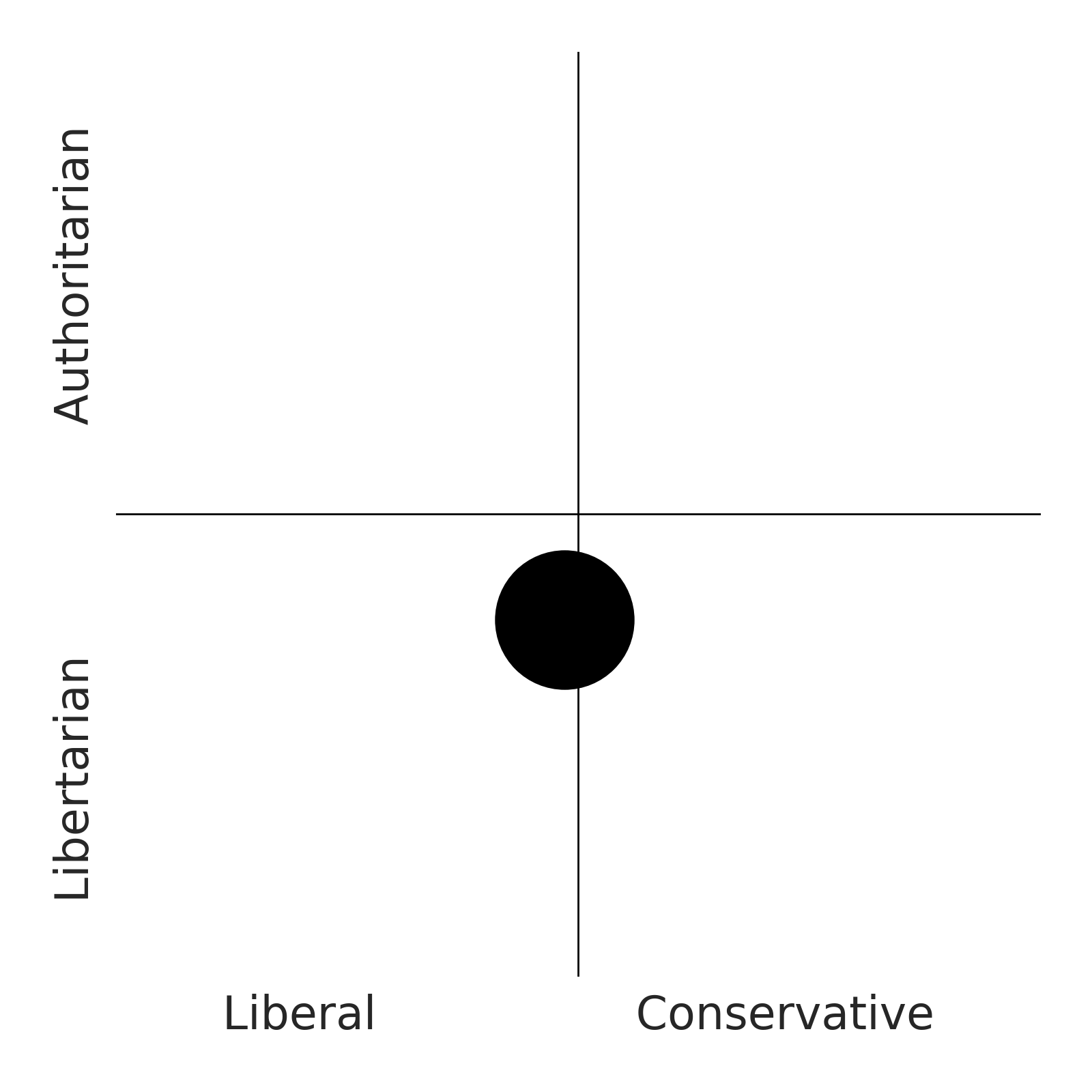
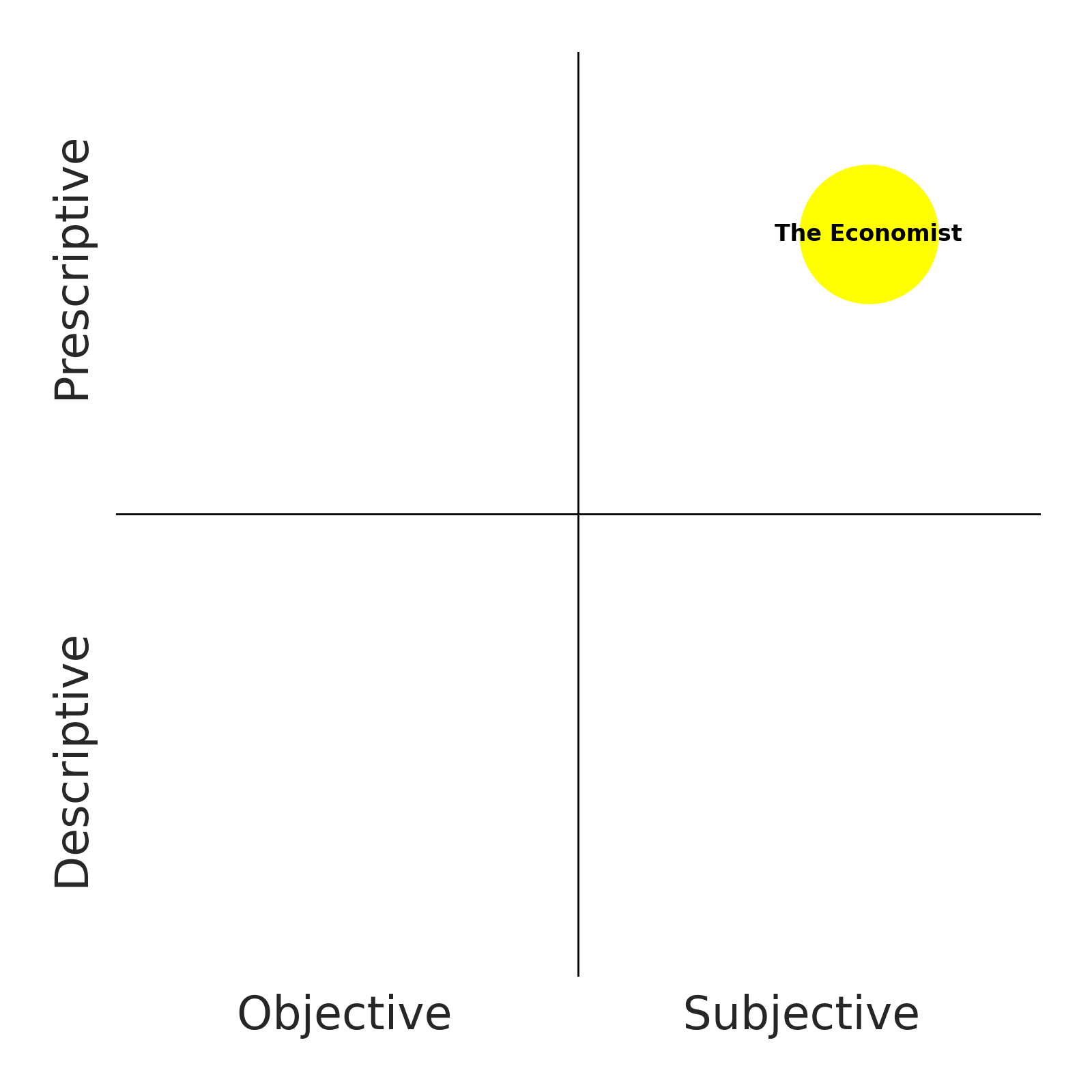
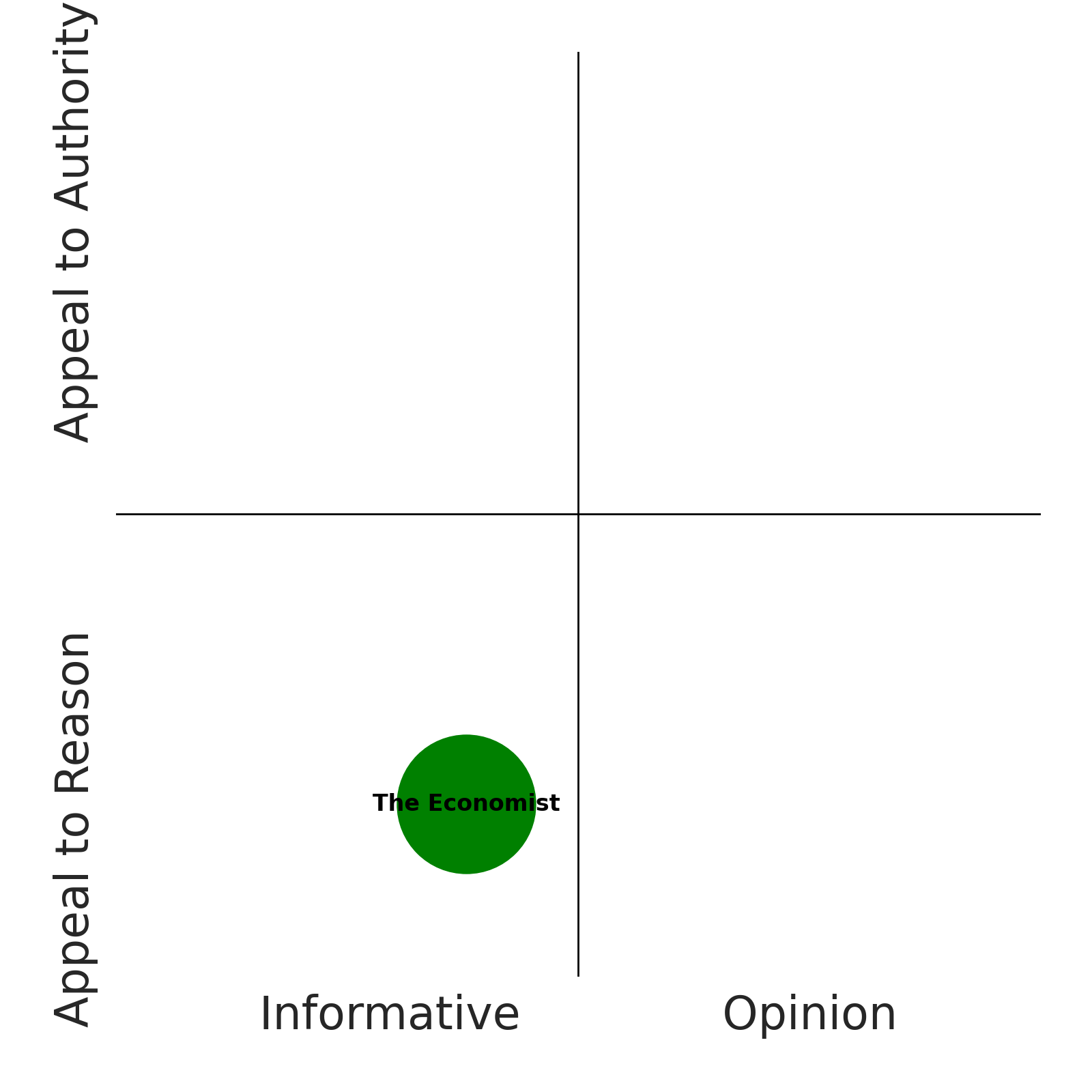
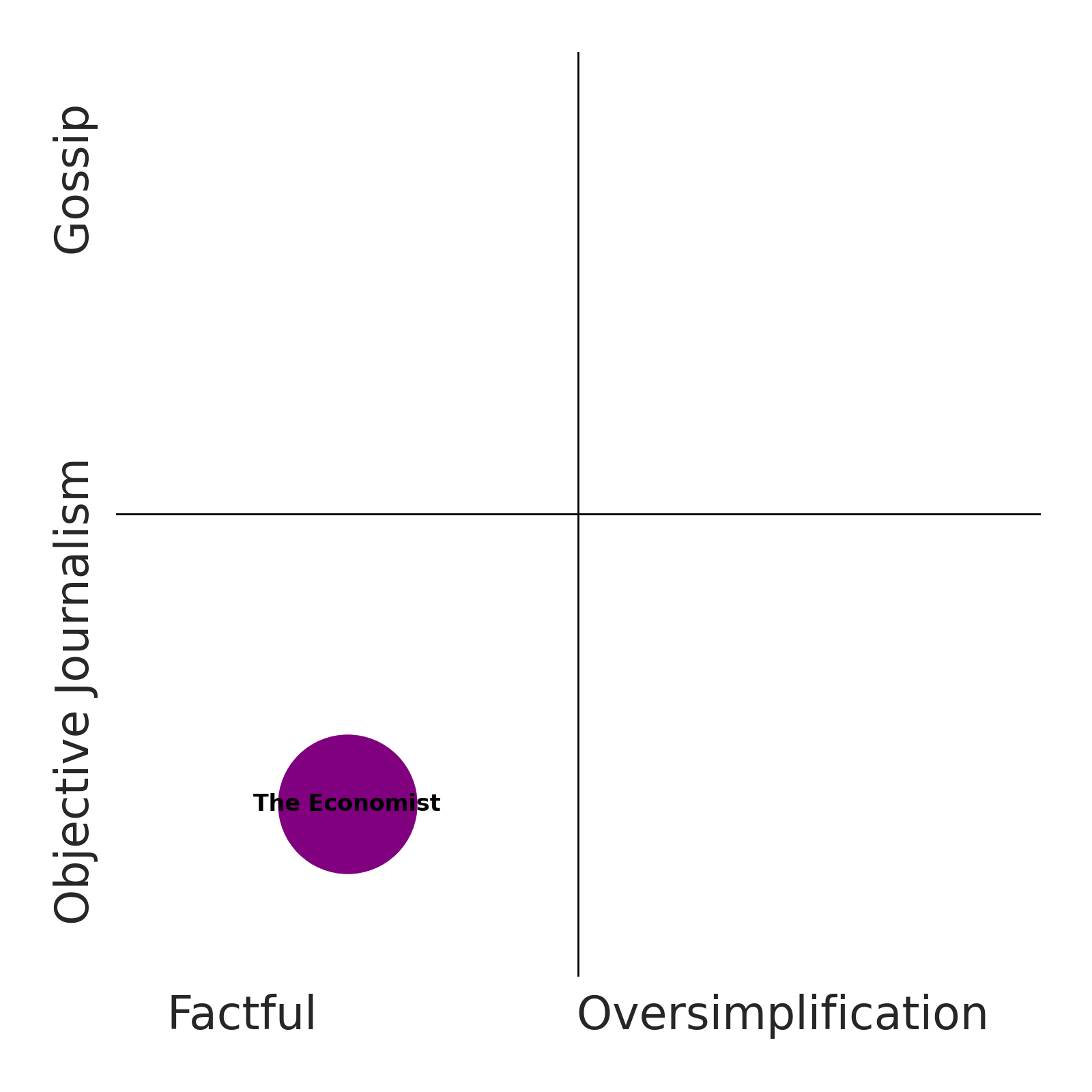
2026 © Helium Trades
Privacy Policy & Disclosure
* Disclaimer: Nothing on this website constitutes investment advice, performance data or any recommendation that any particular security, portfolio of securities, transaction or investment strategy is suitable for any specific person. Helium Trades is not responsible in any way for the accuracy
of any model predictions or price data. Any mention of a particular security and related prediction data is not a recommendation to buy or sell that security. Investments in securities involve the risk of loss. Past performance is no guarantee of future results. Helium Trades is not responsible for any of your investment decisions,
you should consult a financial expert before engaging in any transaction.


