See whether Helium helps you make better-informed decisions. Try every Pro Trader feature for 30 days. No credit card required.
Try every Pro Trader feature for 30 days. No credit card required.
September 07, 2026 · 0 shares
A strongly climate-alarmist, anti-fossil-fuel analysis frames the Beetaloo gas startup as a wasteful and harmful 'climate bomb.'
Automated analysis; not human reviewed. Limitations: Scoring is based only on this single opinion/analysis text, so the publisher's editorial framing and any omitted source documents were not available for comparison. · 18 of 54 available dimensions scored; omitted dimensions are not treated as neutral. · Verified supporting quotes for 9 of 18 scored dimensions.
Claim: The article's framing is strongly adverse to conservative and pro-development views on fossil-fuel expansion.
“For scientists, environmental groups and communities around the world bearing the brunt of global warming, it represents a 'climate bomb'.” · not found in supplied text
“No amount of jobs or money can compensate for this devastating future.” · exact text match
Why: It aligns with environmentalist critiques and rejects economic compensation for climate harm.
Claim: The piece is heavily subjective and value-laden.
“No amount of jobs or money can compensate for this devastating future.” · exact text match
Why: This is an explicit moral judgment, not a neutral description.
Claim: The article uses dramatic, sensational metaphors to frame the project.
“Gas from the Beetaloo Basin will only pour fuel on the climate change fire.” · exact text match
“it represents a 'climate bomb'.” · not found in supplied text
Why: Terms like 'pour fuel on the fire' and 'climate bomb' are emotionally charged and sensational.
Claim: The article is strongly bearish on the Beetaloo project's economic and investment prospects.
“it is extremely unlikely the project will deliver on these promises.” · exact text match
Why: It dismisses the project's promised benefits and predicts poor returns.
Claim: The article's outlook is deeply pessimistic about climate and regional futures.
“Climate forecasts suggest many parts of the NT will become unliveable within decades, due to the lethal heat caused by climate change.” · exact text match
“we risk watching the climate crisis worsen before our very eyes.” · exact text match
Why: It presents a bleak, irreversible climate outcome tied to the project.
Claim: The article deliberately evokes fear about climate consequences.
“Climate forecasts suggest many parts of the NT will become unliveable within decades, due to the lethal heat caused by climate change.” · exact text match
Why: Words like 'unliveable' and 'lethal heat' are fear-inducing.
Claim: The piece is an overt commentary with a clear normative position.
“No amount of jobs or money can compensate for this devastating future.” · exact text match
Why: This is an opinionated value claim rather than factual reporting.
Claim: The article is deeply engaged in energy and climate politics.
“The federal and territory governments have forked out significant money for the Beetaloo project.” · exact text match
“The government has backed the Beetaloo for a range of reasons.” · not found in supplied text
Why: It centers on government decisions, funding, and policy criticism.
Claim: The certainty of the dismissal exceeds the strength of the cited evidence.
“it is extremely unlikely the project will deliver on these promises.” · exact text match
Why: The FOI report cited says benefits are 'uncertain and variable', which supports doubt but not 'extremely unlikely'.
Claim: The framing is anti-establishment, portraying government support and corporate gains as improper.
“The federal and territory governments have forked out significant money for the Beetaloo project.” · exact text match
“Other gas companies have also benefited from government largesse including Beetaloo Energy Australia, which received $15 million in taxpayer funds in 2024 alone.” · exact text match
Why: It criticizes public subsidies and uses the loaded term 'largesse.'
Claim: The emotional tone of the piece is strongly negative.
“No amount of jobs or money can compensate for this devastating future.” · exact text match
“it represents a 'climate bomb'.” · not found in supplied text
Why: Negative affective language dominates the article's conclusion and framing.
Claim: The article shows credible sourcing and attribution, despite its opinionated tone.
“A federal report, released only under freedom of information laws, found the benefits for Traditional Owners are 'uncertain and variable'.” · not found in supplied text
“Recent research shows fracking in the Beetaloo would produce the equivalent of up to 49 million tonnes of carbon dioxide each year – about 11% of Australia’s total emissions in 2021.” · exact text match
Why: It cites identifiable reports and discloses author affiliations, though the emotive framing tempers trustworthiness.
Claim: The argument is substantially evidenced and logical rather than purely ideological.
“A federal report, released only under freedom of information laws, found the benefits for Traditional Owners are 'uncertain and variable'.” · not found in supplied text
“Recent research shows fracking in the Beetaloo would produce the equivalent of up to 49 million tonnes of carbon dioxide each year – about 11% of Australia’s total emissions in 2021.” · exact text match
Why: Core claims are tied to reports and research, though the tone is emotional.
Claim: The article is highly critical of gas companies benefiting from taxpayer support.
“a gas company found by a 2021 Senate inquiry to have then 'paid no tax' in Australia.” · not found in supplied text
“Other gas companies have also benefited from government largesse including Beetaloo Energy Australia, which received $15 million in taxpayer funds in 2024 alone.” · exact text match
Why: It emphasizes corporate tax avoidance and government handouts.
Claim: The piece is empirically grounded rather than superstitious.
“Recent research shows fracking in the Beetaloo would produce the equivalent of up to 49 million tonnes of carbon dioxide each year.” · not found in supplied text
“Climate forecasts suggest many parts of the NT will become unliveable within decades, due to the lethal heat caused by climate change.” · exact text match
Why: Its claims draw on research and scientific forecasting.
Claim: The article relies substantially on forecasts and projected scenarios.
“Research suggests demand for liquefied natural gas will decline as early as the mid-2030s.” · exact text match
“Climate forecasts suggest many parts of the NT will become unliveable within decades.” · not found in supplied text
Why: Key conclusions depend on future projections of demand and climate.
Claim: The piece signals integrity through transparent disclosure of the author's affiliations and funding.
“Lily O'Neill is a volunteer Director at Protect Our Winters Australia. She has previously consulted for the Commonwealth government on the Beetaloo Basin.” · exact text match
Why: Disclosing potential conflicts is a visible honesty signal.
Claim: The article demonstrates substantive analytical work with specific data and sourced reports.
“Recent research shows fracking in the Beetaloo would produce the equivalent of up to 49 million tonnes of carbon dioxide each year – about 11% of Australia’s total emissions in 2021.” · exact text match
Why: It integrates quantitative estimates and named reports into its argument.
Scoring is based only on this single opinion/analysis text, so the publisher's editorial framing and any omitted source documents were not available for comparison.
September 04, 2026 · 0 shares
An admiring but critical retrospective that frames Gloria Steinem's legacy as American-centric and especially inadequate on sexuality and sex-work politics.
Automated analysis; not human reviewed. Limitations: The text is a first-person opinion essay by a scholar whose own book and activism concern the same film and sex-work issues; personal recollections cannot be independently verified from the article. · 4 of 54 available dimensions scored; omitted dimensions are not treated as neutral. · Verified supporting quotes for 4 of 4 scored dimensions.
Claim: The essay adopts a left/progressive feminist standpoint, treating queer, trans, and sex-worker rights as urgent and opposing 'reactionary politics.'
“Queer, trans, and sex worker rights are, I would argue, the most urgent form of feminist politics as governments around the world have become emboldened to violently erase members of these communities.” · exact text match
“especially in light of the reactionary politics in the U.S. today.” · exact text match
Why: The explicit endorsement of queer, trans, and sex-worker rights and criticism of reactionary U.S. politics place the essay clearly on the progressive/liberal side of the political spectrum.
Claim: The piece is a first-person argumentative essay with evaluative language and personal anecdote rather than neutral reporting.
“I want to reflect on everything Steinem gave us but also on the ways she may have overshadowed the lives and legacies of other feminists.” · exact text match
“I decided to take a stand for both Canadian feminism and sexual rights.” · exact text match
Why: The author repeatedly uses personal reflection, evaluation, and advocacy language, indicating a heavily opinion-based mode of writing.
Claim: The essay explicitly advocates for particular feminist theoretical frameworks and ranks certain rights as the most urgent.
“Decolonial, Indigenous and Global South feminism, to name three of the more influential frameworks, are rewriting our vocabulary.” · exact text match
“Queer, trans, and sex worker rights are, I would argue, the most urgent form of feminist politics as governments around the world have become emboldened to violently erase members of these communities.” · exact text match
Why: It presents these feminist frameworks and rights priorities as the correct lens, which indicates an ideological commitment rather than a purely open-ended analysis.
Claim: The text shows visible attribution for some external claims and discloses the author's academic appointment and funding, but relies heavily on personal assessment.
“according to the New York Times, was “the personification of the women’s movement”” · exact text match
“Rebecca Sullivan does not work for, consult, own shares in or receive funding from any company or organization that would benefit from this article” · exact text match
Why: Attribution and disclosure add credibility, but much of the argument is personal recollection and unsupported interpretation, limiting the overall credibility score.
The text is a first-person opinion essay by a scholar whose own book and activism concern the same film and sex-work issues; personal recollections cannot be independently verified from the article.
September 17, 2026 · 0 shares
The review is uncritically favorable, framing the novel as a timely and intellectually rich thought experiment about America's possible futures and strongly recommending it.
Automated analysis; not human reviewed. Limitations: No external fact-checking of the novel's plot or the publisher's editorial standards is possible; analysis is limited to the supplied review text. · 11 of 55 available dimensions scored; omitted dimensions are not treated as neutral. · Verified supporting quotes for 10 of 11 scored dimensions.
Claim: The review uses highly evaluative, interpretive language rather than neutral reporting.
“This masterful handling allows her craft to shine through, from language and storytelling to the experiences of her characters.” · exact text match
Why: Direct praise and aesthetic judgment dominate the text, with little neutral summary-only coverage.
Claim: The review emphasizes dystopian anxiety and instability, framing the novel as a response to fearful present conditions.
“Not only is she responding to the issues and anxieties of the present, as we look at a seemingly unstable America and our increasingly complex relationship with technology” · exact text match
Counterevidence:
“And it’s an opportunity to engage with a book that does what all great ones do: spark questions and ideas.” · exact text match
Why: The dominant framing is fear and instability, though the review ends with a mild hopeful gesture.
Claim: The review moves from description to a clear recommendation.
“For Mandel fans, Exit Party is a must read.” · exact text match
Why: The sentence prescribes action (reading) rather than merely describing the novel.
Claim: The review uses fear-laden language about present anxieties and terrifyingly timely dystopias.
“All these books remain terrifyingly timely in their own right.” · exact text match
Why: 'Terrifyingly timely' invokes alarm about current conditions, though it is applied to literature rather than direct scare-mongering.
Claim: The text is predominantly opinionated literary criticism rather than factual reporting.
“This masterful handling allows her craft to shine through” · exact text match
“Exit Party is a must read.” · exact text match
Why: Multiple unsupported evaluative judgments dominate; no news event is being reported.
Claim: The review's framing is politically inflected, centering dystopian state forms and a national crossroads.
“particularly of the US as a state at a crossroads” · exact text match
“The 'A-Side' of Mandel’s novel shows us a failed state, descended into a kind of anarchy, while the 'B-Side' presents an authoritarian regime that has 'closed like a fist'.” · not found in supplied text
Why: The text engages political categories such as failed state, authoritarianism, and anarchy, but does not take a partisan position.
Claim: The review is credible within its genre because it is labeled as a review and includes a named author with institutional affiliation and a conflict-of-interest disclosure.
“Review: Exit Party by Emily St John Mandel (Picador)” · exact text match
“Seth Robinson does not work for, consult, own shares in or receive funding from any company or organization that would benefit from this article” · exact text match
Why: Transparent labeling and disclosure strengthen trustworthiness, though the content is opinionated rather than empirically verifiable.
Claim: The review functions partly as promotion for the novel, using unreserved recommendation language.
“For new readers, it’s a perfect entry point to her universe/s.” · exact text match
Why: 'Perfect entry point' and 'must read' go beyond evaluation into promotional endorsement.
Claim: The review repeatedly frames the novel as a speculative thought experiment about possible future worlds.
“they are a thought exercise in what might happen next” · exact text match
“Exit Party also considers where we might go next” · exact text match
Why: The review foregrounds the novel's speculative function and invites readers to consider future trajectories.
Claim: The review is transparent about its genre and the reviewer's lack of conflicting interests.
“Seth Robinson does not work for, consult, own shares in or receive funding from any company or organization that would benefit from this article, and has disclosed no relevant affiliations beyond their academic appointment.” · exact text match
Why: Disclosure of the reviewer's neutrality and explicit labeling as a review signal good epistemic transparency.
Claim: The review's analysis is intellectually sophisticated, connecting literary history, multiverse structure, and reader self-reflection.
“her dual timelines allow us to consider not just the possible worlds she has imagined, but our place within them.” · exact text match
Why: The framing raises conceptual questions about divergence, complicity, and intertextuality, indicating high analytical engagement.
No external fact-checking of the novel's plot or the publisher's editorial standards is possible; analysis is limited to the supplied review text.
September 07, 2026 · 0 shares
A strongly climate-alarmist, anti-fossil-fuel analysis frames the Beetaloo gas startup as a wasteful and harmful 'climate bomb.'
Automated analysis; not human reviewed. Limitations: Scoring is based only on this single opinion/analysis text, so the publisher's editorial framing and any omitted source documents were not available for comparison. · 18 of 54 available dimensions scored; omitted dimensions are not treated as neutral. · Verified supporting quotes for 9 of 18 scored dimensions.
Claim: The article's framing is strongly adverse to conservative and pro-development views on fossil-fuel expansion.
“For scientists, environmental groups and communities around the world bearing the brunt of global warming, it represents a 'climate bomb'.” · not found in supplied text
“No amount of jobs or money can compensate for this devastating future.” · exact text match
Why: It aligns with environmentalist critiques and rejects economic compensation for climate harm.
Claim: The piece is heavily subjective and value-laden.
“No amount of jobs or money can compensate for this devastating future.” · exact text match
Why: This is an explicit moral judgment, not a neutral description.
Claim: The article uses dramatic, sensational metaphors to frame the project.
“Gas from the Beetaloo Basin will only pour fuel on the climate change fire.” · exact text match
“it represents a 'climate bomb'.” · not found in supplied text
Why: Terms like 'pour fuel on the fire' and 'climate bomb' are emotionally charged and sensational.
Claim: The article is strongly bearish on the Beetaloo project's economic and investment prospects.
“it is extremely unlikely the project will deliver on these promises.” · exact text match
Why: It dismisses the project's promised benefits and predicts poor returns.
Claim: The article's outlook is deeply pessimistic about climate and regional futures.
“Climate forecasts suggest many parts of the NT will become unliveable within decades, due to the lethal heat caused by climate change.” · exact text match
“we risk watching the climate crisis worsen before our very eyes.” · exact text match
Why: It presents a bleak, irreversible climate outcome tied to the project.
Claim: The article deliberately evokes fear about climate consequences.
“Climate forecasts suggest many parts of the NT will become unliveable within decades, due to the lethal heat caused by climate change.” · exact text match
Why: Words like 'unliveable' and 'lethal heat' are fear-inducing.
Claim: The piece is an overt commentary with a clear normative position.
“No amount of jobs or money can compensate for this devastating future.” · exact text match
Why: This is an opinionated value claim rather than factual reporting.
Claim: The article is deeply engaged in energy and climate politics.
“The federal and territory governments have forked out significant money for the Beetaloo project.” · exact text match
“The government has backed the Beetaloo for a range of reasons.” · not found in supplied text
Why: It centers on government decisions, funding, and policy criticism.
Claim: The certainty of the dismissal exceeds the strength of the cited evidence.
“it is extremely unlikely the project will deliver on these promises.” · exact text match
Why: The FOI report cited says benefits are 'uncertain and variable', which supports doubt but not 'extremely unlikely'.
Claim: The framing is anti-establishment, portraying government support and corporate gains as improper.
“The federal and territory governments have forked out significant money for the Beetaloo project.” · exact text match
“Other gas companies have also benefited from government largesse including Beetaloo Energy Australia, which received $15 million in taxpayer funds in 2024 alone.” · exact text match
Why: It criticizes public subsidies and uses the loaded term 'largesse.'
Claim: The emotional tone of the piece is strongly negative.
“No amount of jobs or money can compensate for this devastating future.” · exact text match
“it represents a 'climate bomb'.” · not found in supplied text
Why: Negative affective language dominates the article's conclusion and framing.
Claim: The article shows credible sourcing and attribution, despite its opinionated tone.
“A federal report, released only under freedom of information laws, found the benefits for Traditional Owners are 'uncertain and variable'.” · not found in supplied text
“Recent research shows fracking in the Beetaloo would produce the equivalent of up to 49 million tonnes of carbon dioxide each year – about 11% of Australia’s total emissions in 2021.” · exact text match
Why: It cites identifiable reports and discloses author affiliations, though the emotive framing tempers trustworthiness.
Claim: The argument is substantially evidenced and logical rather than purely ideological.
“A federal report, released only under freedom of information laws, found the benefits for Traditional Owners are 'uncertain and variable'.” · not found in supplied text
“Recent research shows fracking in the Beetaloo would produce the equivalent of up to 49 million tonnes of carbon dioxide each year – about 11% of Australia’s total emissions in 2021.” · exact text match
Why: Core claims are tied to reports and research, though the tone is emotional.
Claim: The article is highly critical of gas companies benefiting from taxpayer support.
“a gas company found by a 2021 Senate inquiry to have then 'paid no tax' in Australia.” · not found in supplied text
“Other gas companies have also benefited from government largesse including Beetaloo Energy Australia, which received $15 million in taxpayer funds in 2024 alone.” · exact text match
Why: It emphasizes corporate tax avoidance and government handouts.
Claim: The piece is empirically grounded rather than superstitious.
“Recent research shows fracking in the Beetaloo would produce the equivalent of up to 49 million tonnes of carbon dioxide each year.” · not found in supplied text
“Climate forecasts suggest many parts of the NT will become unliveable within decades, due to the lethal heat caused by climate change.” · exact text match
Why: Its claims draw on research and scientific forecasting.
Claim: The article relies substantially on forecasts and projected scenarios.
“Research suggests demand for liquefied natural gas will decline as early as the mid-2030s.” · exact text match
“Climate forecasts suggest many parts of the NT will become unliveable within decades.” · not found in supplied text
Why: Key conclusions depend on future projections of demand and climate.
Claim: The piece signals integrity through transparent disclosure of the author's affiliations and funding.
“Lily O'Neill is a volunteer Director at Protect Our Winters Australia. She has previously consulted for the Commonwealth government on the Beetaloo Basin.” · exact text match
Why: Disclosing potential conflicts is a visible honesty signal.
Claim: The article demonstrates substantive analytical work with specific data and sourced reports.
“Recent research shows fracking in the Beetaloo would produce the equivalent of up to 49 million tonnes of carbon dioxide each year – about 11% of Australia’s total emissions in 2021.” · exact text match
Why: It integrates quantitative estimates and named reports into its argument.
Scoring is based only on this single opinion/analysis text, so the publisher's editorial framing and any omitted source documents were not available for comparison.
September 17, 2026 · 0 shares
Frames Kofi Agawu as a postcolonial intellectual pioneer whose analytical methods corrected Eurocentric musicology, while treating European music theory's dominance as a colonizing force and signaling a partial scholarly disagreement.
Automated analysis; not human reviewed. Limitations: The article is a first-person tribute by an academic who states a personal connection to Agawu; its assessments are therefore likely favorable, and external verification of the works and honors described is not provided. · 6 of 55 available dimensions scored; omitted dimensions are not treated as neutral. · Verified supporting quotes for 6 of 6 scored dimensions.
Claim: The piece is explicitly a first-person tribute and critical appreciation, not a neutral report.
“In this article, I pay tribute to his pioneering work in African musicology while taking issue with one finer point in his theories.” · exact text match
“I part company with him over its reach.” · exact text match
Why: First-person evaluative statements and a declared personal relationship mark it as subjective.
Claim: The article is opinion-driven, explicitly offering praise and criticism rather than neutral reporting.
“In this article, I pay tribute to his pioneering work in African musicology while taking issue with one finer point in his theories.” · exact text match
“I part company with him over its reach.” · exact text match
Why: Personal evaluative language and an argumentative structure make it highly opinionated.
Claim: Credibility is high due to named author, institutional affiliation, disclosure, and attribution of claims.
“Geoff Mapaya does not work for, consult, own shares in or receive funding from any company or organization that would benefit from this article” · exact text match
“Veit Erlmann called the book “the most powerful theoretical intervention in African musicology in a decade or more”” · exact text match
Why: Sourcing and transparency are strong; however, it is an opinion piece based on personal assessment.
Claim: The commentary is reasoned and dialogic, weighing a counterargument rather than asserting dogmatically.
“The second objection has force.” · exact text match
“I part company with him over its reach.” · exact text match
Why: The text uses explicit argument, engages a critic, and concedes a point, indicating rational analysis rather than emotional or dogmatic reasoning.
Claim: The author is transparent about a personal relationship, names a counterargument, and includes disclosure.
“I also know Professor Agawu personally.” · exact text match
“The second objection has force.” · exact text match
Why: Open disclosure and acknowledgment of a critic's valid point show fairness and honesty, although it remains a tribute.
Claim: The text is intellectually sophisticated, synthesizing books and arguments with technical vocabulary and a nuanced thesis.
“Read together, the book and the essay make one argument.” · exact text match
“Agawu declines the choice. Theory can come out of the meeting of two traditions rather than out of a loyalty test.” · exact text match
Why: It demonstrates abstract synthesis, periodization, and disciplinary context.
The article is a first-person tribute by an academic who states a personal connection to Agawu; its assessments are therefore likely favorable, and external verification of the works and honors described is not provided.
September 17, 2026 · 0 shares
An admiring academic review frames Marlon James's novel as an enraged act of witness and restitution for gay men erased by Jamaica's homophobic culture, treating the book's literary and political value as intertwined and self-evident.
Automated analysis; not human reviewed. Limitations: The supplied text is a single enthusiastic review; its evaluations cannot be independently verified, and the absence of critical counterpoints limits bias assessment. · 6 of 55 available dimensions scored; omitted dimensions are not treated as neutral. · Verified supporting quotes for 6 of 6 scored dimensions.
Claim: The review strongly favors LGBTQ rights and condemns heteronormative Jamaican social norms, placing it on the liberal side of the cultural-political spectrum.
“virulently homophobic Jamaican society” · exact text match
“revolutionary significance given the continuing sexual politics of Jamaica” · exact text match
Why: The reviewer's own framing labels Jamaican society 'virulently homophobic' and praises the novel's 'revolutionary significance,' indicating a clear liberal-left cultural stance.
Claim: The review is openly subjective, built around first-person reaction and evaluative superlatives rather than detached reporting.
“I found The Disappearers to be a powerful literary reckoning with this hidden past” · exact text match
“it is certainly magnificent and explosive in equal measure” · exact text match
Why: First-person judgment and explicit praise are central to the text.
Claim: The review ends with a hopeful view of the novel's capacity to inspire recognition, justice, and transformation despite the harrowing subject.
“primes the imagination for justice and transformation to come” · exact text match
“a touch that says 'There you are, I know you, I see you.'” · verified after text normalization
Why: The final framing emphasizes affirmation and transformative possibility, giving the piece a modestly optimistic cast.
Claim: The text is a highly opinionated review, dominated by endorsement and moral evaluation.
“resolute, defiant and harrowing refusal to look away” · exact text match
“It is more arrestingly a literary gesture of solidarity and kinship” · exact text match
Why: The language consistently evaluates the novel's moral and aesthetic value rather than neutrally reporting facts.
Claim: The review treats the novel as a political intervention in Jamaica's continuing sexual politics.
“revolutionary significance given the continuing sexual politics of Jamaica” · exact text match
“sets itself at maximum distance from the respectability prized by Jamaican middle-class heterosexuality” · exact text match
Why: The review explicitly connects literary representation to 'revolutionary significance' and criticizes heteronormative respectability, making sexual politics a central frame.
Claim: The review is emotionally charged, expressing admiration and anger about the novel's subject.
“enraged and personal act of restitution” · exact text match
“magnificent and explosive in equal measure” · exact text match
Why: The reviewer's emotional register is explicit and strong, with positive affect toward the novel and anger at homophobic violence.
The supplied text is a single enthusiastic review; its evaluations cannot be independently verified, and the absence of critical counterpoints limits bias assessment.
September 17, 2026 · 0 shares
The framing predicts AI consciousness will become a divisive moral-political issue while emphasizing scientific uncertainty and urging epistemic humility.
Automated analysis; not human reviewed. Limitations: This input is a single-author opinion essay, so observed framing reflects the author's explicit argument rather than independent reporting. · 9 of 55 available dimensions scored; omitted dimensions are not treated as neutral. · Verified supporting quotes for 8 of 9 scored dimensions.
Claim: The content is dominated by first-person argument and personal impressions rather than neutral reporting.
“I think this debate could split societies. In my chapter of the new book Perspectives on Machine Consciousness, I argue that the issue could become as divisive as abortion or climate change.” · exact text match
“What strikes me is how confident so many people sound – whichever conclusion they are reaching.” · exact text match
Why: Central claims are presented as the author's own judgments and impressions.
Claim: The framing uses a strong, attention-grabbing analogy to deeply divisive societal issues, but with hedged language.
“I think this debate could split societies.” · exact text match
“the issue could become as divisive as abortion or climate change” · exact text match
Why: The central thesis is dramatized with 'as divisive as abortion or climate change,' though hedged with 'could' and 'I think.'
Claim: This argument presents AI consciousness as novel, consequential, and publicly divisive.
“The debate about AI consciousness is growing, in academic articles, newspaper opinion pieces, and even among AI bots themselves.” · exact text match
“Uncertainty, high stakes and competing interests are a dangerous combination.” · exact text match
Why: A new moral question, public division, and expert disagreement are engaging, though the tone stays academic.
Claim: The author combines forecasts with explicit recommendations for how the debate should be conducted.
“Above all, we still don’t know whether AI can be conscious, and we should be honest about that.” · exact text match
“Getting it right requires a nuanced and well-informed debate.” · exact text match
Why: Descriptive statements about uncertainty lead to normative 'should' claims about public behavior.
Claim: The writing is explicit opinion and argument, not straight news.
“I think this debate could split societies.” · exact text match
“I doubt experts will reach agreement any time soon.” · exact text match
Why: First-person assertions of belief and doubt drive the argument.
Claim: The argument models epistemic caution and explicitly rejects overconfidence.
“Above all, we still don’t know whether AI can be conscious, and we should be honest about that.” · exact text match
“How an AI comes across is weak evidence of what is going on inside.” · exact text match
Why: The author acknowledges uncertainty, expert disagreement, and the limits of behavioral evidence, and prescribes humility.
Claim: The main claims are conditional forecasts about future social and political consequences.
“I think this debate could split societies.” · exact text match
“This could change if political parties or religious leaders start to take strong positions.” · not found in supplied text
Why: The thesis is a conditional prediction about societal division and politicization.
Claim: The author openly discloses book tie-ins, a potential commission, and research funding.
“This article makes reference to a book included for editorial reasons, and a link to bookshop.org.” · exact text match
“Lucius Caviola's research is funded by philanthropic grants and donations, including from Macroscopic Ventures.” · exact text match
Why: The author discloses the book tie-in, a possible commission, and research funders, signaling internal fairness.
Claim: The argument integrates empirical data, named expert views, and conceptual distinctions.
“Empirical research with my colleague Ali Ladak, currently under review, shows people are divided on this issue.” · exact text match
“Neuroscientist Anil Seth (a fellow contributor to the new book) argues that consciousness might require biology and is unlikely to emerge from computation. Philosopher David Chalmers, by contrast, believes conscious AI is possible in principle – and thinks there’s a small chance that current systems already are.” · exact text match
Why: The author uses survey evidence, named experts, and a distinction between seeming and being conscious.
This input is a single-author opinion essay, so observed framing reflects the author's explicit argument rather than independent reporting.
September 07, 2026 · 0 shares
A strongly climate-alarmist, anti-fossil-fuel analysis frames the Beetaloo gas startup as a wasteful and harmful 'climate bomb.'
Automated analysis; not human reviewed. Limitations: Scoring is based only on this single opinion/analysis text, so the publisher's editorial framing and any omitted source documents were not available for comparison. · 18 of 54 available dimensions scored; omitted dimensions are not treated as neutral. · Verified supporting quotes for 9 of 18 scored dimensions.
Claim: The article's framing is strongly adverse to conservative and pro-development views on fossil-fuel expansion.
“For scientists, environmental groups and communities around the world bearing the brunt of global warming, it represents a 'climate bomb'.” · not found in supplied text
“No amount of jobs or money can compensate for this devastating future.” · exact text match
Why: It aligns with environmentalist critiques and rejects economic compensation for climate harm.
Claim: The piece is heavily subjective and value-laden.
“No amount of jobs or money can compensate for this devastating future.” · exact text match
Why: This is an explicit moral judgment, not a neutral description.
Claim: The article uses dramatic, sensational metaphors to frame the project.
“Gas from the Beetaloo Basin will only pour fuel on the climate change fire.” · exact text match
“it represents a 'climate bomb'.” · not found in supplied text
Why: Terms like 'pour fuel on the fire' and 'climate bomb' are emotionally charged and sensational.
Claim: The article is strongly bearish on the Beetaloo project's economic and investment prospects.
“it is extremely unlikely the project will deliver on these promises.” · exact text match
Why: It dismisses the project's promised benefits and predicts poor returns.
Claim: The article's outlook is deeply pessimistic about climate and regional futures.
“Climate forecasts suggest many parts of the NT will become unliveable within decades, due to the lethal heat caused by climate change.” · exact text match
“we risk watching the climate crisis worsen before our very eyes.” · exact text match
Why: It presents a bleak, irreversible climate outcome tied to the project.
Claim: The article deliberately evokes fear about climate consequences.
“Climate forecasts suggest many parts of the NT will become unliveable within decades, due to the lethal heat caused by climate change.” · exact text match
Why: Words like 'unliveable' and 'lethal heat' are fear-inducing.
Claim: The piece is an overt commentary with a clear normative position.
“No amount of jobs or money can compensate for this devastating future.” · exact text match
Why: This is an opinionated value claim rather than factual reporting.
Claim: The article is deeply engaged in energy and climate politics.
“The federal and territory governments have forked out significant money for the Beetaloo project.” · exact text match
“The government has backed the Beetaloo for a range of reasons.” · not found in supplied text
Why: It centers on government decisions, funding, and policy criticism.
Claim: The certainty of the dismissal exceeds the strength of the cited evidence.
“it is extremely unlikely the project will deliver on these promises.” · exact text match
Why: The FOI report cited says benefits are 'uncertain and variable', which supports doubt but not 'extremely unlikely'.
Claim: The framing is anti-establishment, portraying government support and corporate gains as improper.
“The federal and territory governments have forked out significant money for the Beetaloo project.” · exact text match
“Other gas companies have also benefited from government largesse including Beetaloo Energy Australia, which received $15 million in taxpayer funds in 2024 alone.” · exact text match
Why: It criticizes public subsidies and uses the loaded term 'largesse.'
Claim: The emotional tone of the piece is strongly negative.
“No amount of jobs or money can compensate for this devastating future.” · exact text match
“it represents a 'climate bomb'.” · not found in supplied text
Why: Negative affective language dominates the article's conclusion and framing.
Claim: The article shows credible sourcing and attribution, despite its opinionated tone.
“A federal report, released only under freedom of information laws, found the benefits for Traditional Owners are 'uncertain and variable'.” · not found in supplied text
“Recent research shows fracking in the Beetaloo would produce the equivalent of up to 49 million tonnes of carbon dioxide each year – about 11% of Australia’s total emissions in 2021.” · exact text match
Why: It cites identifiable reports and discloses author affiliations, though the emotive framing tempers trustworthiness.
Claim: The argument is substantially evidenced and logical rather than purely ideological.
“A federal report, released only under freedom of information laws, found the benefits for Traditional Owners are 'uncertain and variable'.” · not found in supplied text
“Recent research shows fracking in the Beetaloo would produce the equivalent of up to 49 million tonnes of carbon dioxide each year – about 11% of Australia’s total emissions in 2021.” · exact text match
Why: Core claims are tied to reports and research, though the tone is emotional.
Claim: The article is highly critical of gas companies benefiting from taxpayer support.
“a gas company found by a 2021 Senate inquiry to have then 'paid no tax' in Australia.” · not found in supplied text
“Other gas companies have also benefited from government largesse including Beetaloo Energy Australia, which received $15 million in taxpayer funds in 2024 alone.” · exact text match
Why: It emphasizes corporate tax avoidance and government handouts.
Claim: The piece is empirically grounded rather than superstitious.
“Recent research shows fracking in the Beetaloo would produce the equivalent of up to 49 million tonnes of carbon dioxide each year.” · not found in supplied text
“Climate forecasts suggest many parts of the NT will become unliveable within decades, due to the lethal heat caused by climate change.” · exact text match
Why: Its claims draw on research and scientific forecasting.
Claim: The article relies substantially on forecasts and projected scenarios.
“Research suggests demand for liquefied natural gas will decline as early as the mid-2030s.” · exact text match
“Climate forecasts suggest many parts of the NT will become unliveable within decades.” · not found in supplied text
Why: Key conclusions depend on future projections of demand and climate.
Claim: The piece signals integrity through transparent disclosure of the author's affiliations and funding.
“Lily O'Neill is a volunteer Director at Protect Our Winters Australia. She has previously consulted for the Commonwealth government on the Beetaloo Basin.” · exact text match
Why: Disclosing potential conflicts is a visible honesty signal.
Claim: The article demonstrates substantive analytical work with specific data and sourced reports.
“Recent research shows fracking in the Beetaloo would produce the equivalent of up to 49 million tonnes of carbon dioxide each year – about 11% of Australia’s total emissions in 2021.” · exact text match
Why: It integrates quantitative estimates and named reports into its argument.
Scoring is based only on this single opinion/analysis text, so the publisher's editorial framing and any omitted source documents were not available for comparison.
September 17, 2026 · 0 shares
A strongly worded academic commentary frames B.C.'s wolf cull as a costly, militarized settler-colonial policy that scapegoats wolves while ignoring habitat destruction and Indigenous opposition.
Automated analysis; not human reviewed. Limitations: The supplied text is an explicitly argumentative academic op-ed, so scores reflect the authors' advocacy framing rather than neutral reporting; no government response or independent efficacy data is included. · 14 of 55 available dimensions scored; omitted dimensions are not treated as neutral. · Verified supporting quotes for 13 of 14 scored dimensions.
Claim: The piece's anti-colonial, pro-Indigenous-rights and anti-resource-extraction framing is left-leaning.
“The scapegoating of wolves is not new, but a repackaging of a centuries-long settler colonial view of the wolf as a monster — a narrative largely inspired by European folklore.” · exact text match
Why: Criticism of settler colonialism and support for Indigenous treaty rights are markers of progressive/left politics.
Claim: The text is authored argument rather than neutral reporting; it makes normative judgments on policy.
“Killing wolves does not address this ecological destruction and may create new challenges.” · exact text match
Why: This is an evaluative claim about policy effectiveness, not a factual news report.
Claim: The writing uses charged, dramatic language to describe the wolf cull.
“B.C.’s wolf cull involves the use of helicopter gunning, where assault-like weapons are used to kill wolves.” · exact text match
Why: Describing the weapons as 'assault-like' amplifies the drama and frames the program as extreme.
Claim: The authors' conclusion is negative about future outcomes for wolves and caribou.
“As long as the B.C. government prioritizes resource extraction in sensitive habitats, the fates of both wolves and caribou will remain dire.” · exact text match
Why: The word 'dire' and the conditional structure signal pessimism about the future.
Claim: The text judges policy rather than merely describing it.
“B.C.’s militarized wolf cull is a misguided approach to a complex issue.” · verified after text normalization
Why: 'Misguided' is a prescriptive verdict on the policy.
Claim: The text strongly asserts a particular viewpoint about wolves and wildlife management.
“Wolves are not the monsters that western culture has portrayed them as; they are social beings with complex family structures.” · exact text match
Why: This is a corrective value judgment, not an observed fact.
Claim: The article explicitly engages political concepts of state violence, colonialism, and marginalized groups.
“This shapes the reciprocal dehumanization and animalization of marginalized peoples and wolves, rendering each as deserving of state violence.” · exact text match
Why: State violence and marginalized peoples are political categories, giving the piece a political framing.
Claim: The piece emphasizes the victimhood of wolves and Indigenous peoples.
“In many ways, wolves and Indigenous nations have experienced a parallel erasure in the context of settler colonialism.” · exact text match
Why: The parallel-erasure framing centers both as victims of colonialism.
Claim: The piece opposes the provincial government's authority and decisions, making it anti-establishment.
“The B.C. government has continued to sign the death warrants of wolves and caribou, prompting some Indigenous nations to call for emergency protections from the federal government.” · exact text match
Why: The government is depicted as lethally wrong, and federal intervention is framed as protective.
Claim: The language is emotionally negative, with terms like 'death warrants.'
“The B.C. government has continued to sign the death warrants of wolves and caribou.” · not found in supplied text
Why: 'Death warrants' is highly emotive negative wording.
Claim: The text has visible credibility signals: named academic authors, funding disclosure, and qualified research claims.
“Some studies have documented that caribou populations rebounded following wolf culls, while others indicate that this isn’t an effective long-term solution.” · exact text match
“The authors do not work for, consult, own shares in or receive funding from any company or organization that would benefit from this article, and have disclosed no relevant affiliations beyond their academic appointment.” · exact text match
Why: Attribution to research and transparent disclosures support credibility, even though it is an op-ed.
Claim: The piece uses loaded framing and emotionally charged descriptors, an observable rhetorical technique.
“B.C.’s wolf cull involves the use of helicopter gunning, where assault-like weapons are used to kill wolves.” · exact text match
Why: Calling guns 'assault-like' frames the program as extreme and may steer reader emotion.
Claim: The text acknowledges counterevidence and discloses author funding, showing internal fairness.
“Some studies have documented that caribou populations rebounded following wolf culls, while others indicate that this isn’t an effective long-term solution.” · exact text match
“The authors do not work for, consult, own shares in or receive funding from any company or organization that would benefit from this article, and have disclosed no relevant affiliations beyond their academic appointment.” · exact text match
Why: Noting mixed research and a funding disclosure are signals of honesty and balance.
Claim: The piece applies identity-group power analysis (settler colonialism, marginalized peoples) and prescribes changing state and property arrangements.
“This shapes the reciprocal dehumanization and animalization of marginalized peoples and wolves, rendering each as deserving of state violence.” · exact text match
“Rather, the settler colonial dimensions of predator culling arise from the transformation of natural resources as forms of property to be possessed and managed.” · exact text match
Why: This is identity-politics framing linked to a structural/property critique of the state.
The supplied text is an explicitly argumentative academic op-ed, so scores reflect the authors' advocacy framing rather than neutral reporting; no government response or independent efficacy data is included.
September 22, 2026 · 0 shares
An opinionated, gossip-inflected book-review framing treats royal scandal, wealth, and celebrity as the key to understanding Britain's monarchy while ultimately declaring the institution likely to survive political distrust.
Automated analysis; not human reviewed. Limitations: The supplied text is an opinionated essay rather than reported news, so classification reflects observable framing and emphasis rather than external verification of historical or biographical claims. · 6 of 55 available dimensions scored; omitted dimensions are not treated as neutral. · Verified supporting quotes for 6 of 6 scored dimensions.
Claim: The framing is explicitly subjective, organized as one writer's personal selection and literary judgment.
“I begin this list with author Hilary Mantel’s apt observation” · exact text match
“the best might be Alexander Larman’s The Crown in Crisis (2022)” · exact text match
Why: First-person structure and evaluative ranking are explicit markers of subjective framing.
Claim: Colorful, witty comparisons make the essay engaging rather than dry.
“wittier than Agatha Christie’s but less ingenious” · exact text match
Why: The prose cultivates reader interest through literary and celebrity analogies.
Claim: Substantial content centers on royal feuds, tabloid reactions, and personal scandal.
“The latest tabloid furore is over Charles, Earl Spencer’s book, Swan Song” · exact text match
“deep antipathy to his elder brother, the heir, Prince William” · exact text match
Why: The essay repeatedly foregrounds personal royal conflicts and press reactions rather than institutional analysis.
Claim: The writing is highly opinionated, with overt aesthetic and social judgments.
“There was something Trumpian in the way the couple decorated their first home” · exact text match
“rather as if the Grimm brothers were to retell the life of the Kardashians” · exact text match
Why: Value-laden comparisons and personal characterizations are pervasive.
Claim: The essay attributes claims to named books and authors and flags uncertainty.
“While we can’t yet assess its merit” · exact text match
“a sharp, and unusual, rebuke from the Palace” · exact text match
Why: Named sources and explicit caveats support moderate credibility within the opinion genre.
Claim: The text shows fairness through caveats, attributed claims, and acknowledgment of dropped charges.
“While we can’t yet assess its merit” · exact text match
“Investigations against him were later dropped or shelved by authorities” · exact text match
Why: Uncertainty is stated and countervailing details are included, signaling internal honesty signals.
The supplied text is an opinionated essay rather than reported news, so classification reflects observable framing and emphasis rather than external verification of historical or biographical claims.
September 08, 2026 · 0 shares
Automated analysis; not human reviewed. Limitations: The supplied text is truncated with ellipses and does not name the cited studies, limiting full verification and contextualization. · 7 of 54 available dimensions scored; omitted dimensions are not treated as neutral. · Verified supporting quotes for 6 of 7 scored dimensions.
Claim: The text adopts a liberal/progressive stance favoring diversity policies and systemic remedies.
“Women require a more systemic approach” · exact text match
“American DEI guidelines have led several Canadian companies that do business, or are listed in the United States, to relax their diversity policies.” · exact text match
Counterevidence:
“Since the quota approach has very little chance of success in the Canadian context of private companies” · exact text match
Why: Favors continued diversity measures and treats the relaxation of DEI policies as a concern, positions typically associated with the liberal side.
Claim: The text is subjective, relying on the authors' viewpoint and normative language.
“In our view” · exact text match
“must actively shift real power within organizations.” · exact text match
Why: First-person viewpoint and evaluative recommendations make the piece subjective.
Claim: The text prescribes systemic changes rather than only describing research findings.
“Women require a more systemic approach — one that isn’t limited to mere representation, but also focuses on the quality and impact of their representation.” · exact text match
“must actively shift real power within organizations.” · exact text match
Why: Uses normative 'require' and 'must' to recommend policy directions.
Claim: The text expresses the authors' personal opinion and normative recommendations rather than neutral reporting.
“In our view, the concept of gender-balanced governance — as well as its financial and non-financial impacts — needs to be more fully disclosed to shareholders, investors, and the media.” · exact text match
“Achieving equal gender representation isn’t enough; it must actively shift real power within organizations.” · exact text match
Why: Explicit first-person judgment and imperative language show an opinionated stance.
Claim: The text engages with politically charged diversity policies and calls for institutional remedies.
“Furthermore, it appears that American DEI guidelines have led several Canadian companies that do business, or are listed in the United States, to relax their diversity policies.” · exact text match
“Since the quota approach has very little chance of success in the Canadian context of private companies, the negative effects that some female board members may experience must be addressed differently.” · exact text match
Why: References DEI guidelines, quotas, and diversity policies, situating the argument in political debates.
Claim: The text relies on vague references to studies, limiting verifiability.
“The results of a recent study on women’s representation on corporate boards and in senior leadership positions at Canadian companies show that there has been a loss of momentum” · exact text match
“the authors of a study examining perceptions of the people identified by Forbes magazine as the most powerful in the world found that men’s power is more closely associated with roles involving action, control, and […]” · not found in supplied text
Why: Repeated references to 'a recent study' and 'the authors of a study' without naming institutions, researchers, or dates reduce the visible sourcing quality.
Claim: The text includes a speculative projection about future behavior.
“This heavier workload could make them hesitate before accepting new board positions in the future.” · exact text match
Why: The conditional 'could make them hesitate' forecasts future behavior without strong evidence.
The supplied text is truncated with ellipses and does not name the cited studies, limiting full verification and contextualization.
September 17, 2026 · 0 shares
A strongly worded academic commentary frames B.C.'s wolf cull as a costly, militarized settler-colonial policy that scapegoats wolves while ignoring habitat destruction and Indigenous opposition.
Automated analysis; not human reviewed. Limitations: The supplied text is an explicitly argumentative academic op-ed, so scores reflect the authors' advocacy framing rather than neutral reporting; no government response or independent efficacy data is included. · 14 of 55 available dimensions scored; omitted dimensions are not treated as neutral. · Verified supporting quotes for 13 of 14 scored dimensions.
Claim: The piece's anti-colonial, pro-Indigenous-rights and anti-resource-extraction framing is left-leaning.
“The scapegoating of wolves is not new, but a repackaging of a centuries-long settler colonial view of the wolf as a monster — a narrative largely inspired by European folklore.” · exact text match
Why: Criticism of settler colonialism and support for Indigenous treaty rights are markers of progressive/left politics.
Claim: The text is authored argument rather than neutral reporting; it makes normative judgments on policy.
“Killing wolves does not address this ecological destruction and may create new challenges.” · exact text match
Why: This is an evaluative claim about policy effectiveness, not a factual news report.
Claim: The writing uses charged, dramatic language to describe the wolf cull.
“B.C.’s wolf cull involves the use of helicopter gunning, where assault-like weapons are used to kill wolves.” · exact text match
Why: Describing the weapons as 'assault-like' amplifies the drama and frames the program as extreme.
Claim: The authors' conclusion is negative about future outcomes for wolves and caribou.
“As long as the B.C. government prioritizes resource extraction in sensitive habitats, the fates of both wolves and caribou will remain dire.” · exact text match
Why: The word 'dire' and the conditional structure signal pessimism about the future.
Claim: The text judges policy rather than merely describing it.
“B.C.’s militarized wolf cull is a misguided approach to a complex issue.” · verified after text normalization
Why: 'Misguided' is a prescriptive verdict on the policy.
Claim: The text strongly asserts a particular viewpoint about wolves and wildlife management.
“Wolves are not the monsters that western culture has portrayed them as; they are social beings with complex family structures.” · exact text match
Why: This is a corrective value judgment, not an observed fact.
Claim: The article explicitly engages political concepts of state violence, colonialism, and marginalized groups.
“This shapes the reciprocal dehumanization and animalization of marginalized peoples and wolves, rendering each as deserving of state violence.” · exact text match
Why: State violence and marginalized peoples are political categories, giving the piece a political framing.
Claim: The piece emphasizes the victimhood of wolves and Indigenous peoples.
“In many ways, wolves and Indigenous nations have experienced a parallel erasure in the context of settler colonialism.” · exact text match
Why: The parallel-erasure framing centers both as victims of colonialism.
Claim: The piece opposes the provincial government's authority and decisions, making it anti-establishment.
“The B.C. government has continued to sign the death warrants of wolves and caribou, prompting some Indigenous nations to call for emergency protections from the federal government.” · exact text match
Why: The government is depicted as lethally wrong, and federal intervention is framed as protective.
Claim: The language is emotionally negative, with terms like 'death warrants.'
“The B.C. government has continued to sign the death warrants of wolves and caribou.” · not found in supplied text
Why: 'Death warrants' is highly emotive negative wording.
Claim: The text has visible credibility signals: named academic authors, funding disclosure, and qualified research claims.
“Some studies have documented that caribou populations rebounded following wolf culls, while others indicate that this isn’t an effective long-term solution.” · exact text match
“The authors do not work for, consult, own shares in or receive funding from any company or organization that would benefit from this article, and have disclosed no relevant affiliations beyond their academic appointment.” · exact text match
Why: Attribution to research and transparent disclosures support credibility, even though it is an op-ed.
Claim: The piece uses loaded framing and emotionally charged descriptors, an observable rhetorical technique.
“B.C.’s wolf cull involves the use of helicopter gunning, where assault-like weapons are used to kill wolves.” · exact text match
Why: Calling guns 'assault-like' frames the program as extreme and may steer reader emotion.
Claim: The text acknowledges counterevidence and discloses author funding, showing internal fairness.
“Some studies have documented that caribou populations rebounded following wolf culls, while others indicate that this isn’t an effective long-term solution.” · exact text match
“The authors do not work for, consult, own shares in or receive funding from any company or organization that would benefit from this article, and have disclosed no relevant affiliations beyond their academic appointment.” · exact text match
Why: Noting mixed research and a funding disclosure are signals of honesty and balance.
Claim: The piece applies identity-group power analysis (settler colonialism, marginalized peoples) and prescribes changing state and property arrangements.
“This shapes the reciprocal dehumanization and animalization of marginalized peoples and wolves, rendering each as deserving of state violence.” · exact text match
“Rather, the settler colonial dimensions of predator culling arise from the transformation of natural resources as forms of property to be possessed and managed.” · exact text match
Why: This is identity-politics framing linked to a structural/property critique of the state.
The supplied text is an explicitly argumentative academic op-ed, so scores reflect the authors' advocacy framing rather than neutral reporting; no government response or independent efficacy data is included.
September 04, 2026 · 0 shares
An admiring but critical retrospective that frames Gloria Steinem's legacy as American-centric and especially inadequate on sexuality and sex-work politics.
Automated analysis; not human reviewed. Limitations: The text is a first-person opinion essay by a scholar whose own book and activism concern the same film and sex-work issues; personal recollections cannot be independently verified from the article. · 4 of 54 available dimensions scored; omitted dimensions are not treated as neutral. · Verified supporting quotes for 4 of 4 scored dimensions.
Claim: The essay adopts a left/progressive feminist standpoint, treating queer, trans, and sex-worker rights as urgent and opposing 'reactionary politics.'
“Queer, trans, and sex worker rights are, I would argue, the most urgent form of feminist politics as governments around the world have become emboldened to violently erase members of these communities.” · exact text match
“especially in light of the reactionary politics in the U.S. today.” · exact text match
Why: The explicit endorsement of queer, trans, and sex-worker rights and criticism of reactionary U.S. politics place the essay clearly on the progressive/liberal side of the political spectrum.
Claim: The piece is a first-person argumentative essay with evaluative language and personal anecdote rather than neutral reporting.
“I want to reflect on everything Steinem gave us but also on the ways she may have overshadowed the lives and legacies of other feminists.” · exact text match
“I decided to take a stand for both Canadian feminism and sexual rights.” · exact text match
Why: The author repeatedly uses personal reflection, evaluation, and advocacy language, indicating a heavily opinion-based mode of writing.
Claim: The essay explicitly advocates for particular feminist theoretical frameworks and ranks certain rights as the most urgent.
“Decolonial, Indigenous and Global South feminism, to name three of the more influential frameworks, are rewriting our vocabulary.” · exact text match
“Queer, trans, and sex worker rights are, I would argue, the most urgent form of feminist politics as governments around the world have become emboldened to violently erase members of these communities.” · exact text match
Why: It presents these feminist frameworks and rights priorities as the correct lens, which indicates an ideological commitment rather than a purely open-ended analysis.
Claim: The text shows visible attribution for some external claims and discloses the author's academic appointment and funding, but relies heavily on personal assessment.
“according to the New York Times, was “the personification of the women’s movement”” · exact text match
“Rebecca Sullivan does not work for, consult, own shares in or receive funding from any company or organization that would benefit from this article” · exact text match
Why: Attribution and disclosure add credibility, but much of the argument is personal recollection and unsupported interpretation, limiting the overall credibility score.
The text is a first-person opinion essay by a scholar whose own book and activism concern the same film and sex-work issues; personal recollections cannot be independently verified from the article.
September 04, 2026 · 0 shares
An admiring but critical retrospective that frames Gloria Steinem's legacy as American-centric and especially inadequate on sexuality and sex-work politics.
Automated analysis; not human reviewed. Limitations: The text is a first-person opinion essay by a scholar whose own book and activism concern the same film and sex-work issues; personal recollections cannot be independently verified from the article. · 4 of 54 available dimensions scored; omitted dimensions are not treated as neutral. · Verified supporting quotes for 4 of 4 scored dimensions.
Claim: The essay adopts a left/progressive feminist standpoint, treating queer, trans, and sex-worker rights as urgent and opposing 'reactionary politics.'
“Queer, trans, and sex worker rights are, I would argue, the most urgent form of feminist politics as governments around the world have become emboldened to violently erase members of these communities.” · exact text match
“especially in light of the reactionary politics in the U.S. today.” · exact text match
Why: The explicit endorsement of queer, trans, and sex-worker rights and criticism of reactionary U.S. politics place the essay clearly on the progressive/liberal side of the political spectrum.
Claim: The piece is a first-person argumentative essay with evaluative language and personal anecdote rather than neutral reporting.
“I want to reflect on everything Steinem gave us but also on the ways she may have overshadowed the lives and legacies of other feminists.” · exact text match
“I decided to take a stand for both Canadian feminism and sexual rights.” · exact text match
Why: The author repeatedly uses personal reflection, evaluation, and advocacy language, indicating a heavily opinion-based mode of writing.
Claim: The essay explicitly advocates for particular feminist theoretical frameworks and ranks certain rights as the most urgent.
“Decolonial, Indigenous and Global South feminism, to name three of the more influential frameworks, are rewriting our vocabulary.” · exact text match
“Queer, trans, and sex worker rights are, I would argue, the most urgent form of feminist politics as governments around the world have become emboldened to violently erase members of these communities.” · exact text match
Why: It presents these feminist frameworks and rights priorities as the correct lens, which indicates an ideological commitment rather than a purely open-ended analysis.
Claim: The text shows visible attribution for some external claims and discloses the author's academic appointment and funding, but relies heavily on personal assessment.
“according to the New York Times, was “the personification of the women’s movement”” · exact text match
“Rebecca Sullivan does not work for, consult, own shares in or receive funding from any company or organization that would benefit from this article” · exact text match
Why: Attribution and disclosure add credibility, but much of the argument is personal recollection and unsupported interpretation, limiting the overall credibility score.
The text is a first-person opinion essay by a scholar whose own book and activism concern the same film and sex-work issues; personal recollections cannot be independently verified from the article.
September 17, 2026 · 0 shares
Frames Kofi Agawu as a postcolonial intellectual pioneer whose analytical methods corrected Eurocentric musicology, while treating European music theory's dominance as a colonizing force and signaling a partial scholarly disagreement.
Automated analysis; not human reviewed. Limitations: The article is a first-person tribute by an academic who states a personal connection to Agawu; its assessments are therefore likely favorable, and external verification of the works and honors described is not provided. · 6 of 55 available dimensions scored; omitted dimensions are not treated as neutral. · Verified supporting quotes for 6 of 6 scored dimensions.
Claim: The piece is explicitly a first-person tribute and critical appreciation, not a neutral report.
“In this article, I pay tribute to his pioneering work in African musicology while taking issue with one finer point in his theories.” · exact text match
“I part company with him over its reach.” · exact text match
Why: First-person evaluative statements and a declared personal relationship mark it as subjective.
Claim: The article is opinion-driven, explicitly offering praise and criticism rather than neutral reporting.
“In this article, I pay tribute to his pioneering work in African musicology while taking issue with one finer point in his theories.” · exact text match
“I part company with him over its reach.” · exact text match
Why: Personal evaluative language and an argumentative structure make it highly opinionated.
Claim: Credibility is high due to named author, institutional affiliation, disclosure, and attribution of claims.
“Geoff Mapaya does not work for, consult, own shares in or receive funding from any company or organization that would benefit from this article” · exact text match
“Veit Erlmann called the book “the most powerful theoretical intervention in African musicology in a decade or more”” · exact text match
Why: Sourcing and transparency are strong; however, it is an opinion piece based on personal assessment.
Claim: The commentary is reasoned and dialogic, weighing a counterargument rather than asserting dogmatically.
“The second objection has force.” · exact text match
“I part company with him over its reach.” · exact text match
Why: The text uses explicit argument, engages a critic, and concedes a point, indicating rational analysis rather than emotional or dogmatic reasoning.
Claim: The author is transparent about a personal relationship, names a counterargument, and includes disclosure.
“I also know Professor Agawu personally.” · exact text match
“The second objection has force.” · exact text match
Why: Open disclosure and acknowledgment of a critic's valid point show fairness and honesty, although it remains a tribute.
Claim: The text is intellectually sophisticated, synthesizing books and arguments with technical vocabulary and a nuanced thesis.
“Read together, the book and the essay make one argument.” · exact text match
“Agawu declines the choice. Theory can come out of the meeting of two traditions rather than out of a loyalty test.” · exact text match
Why: It demonstrates abstract synthesis, periodization, and disciplinary context.
The article is a first-person tribute by an academic who states a personal connection to Agawu; its assessments are therefore likely favorable, and external verification of the works and honors described is not provided.
September 22, 2026 · 0 shares
An opinionated, gossip-inflected book-review framing treats royal scandal, wealth, and celebrity as the key to understanding Britain's monarchy while ultimately declaring the institution likely to survive political distrust.
Automated analysis; not human reviewed. Limitations: The supplied text is an opinionated essay rather than reported news, so classification reflects observable framing and emphasis rather than external verification of historical or biographical claims. · 6 of 55 available dimensions scored; omitted dimensions are not treated as neutral. · Verified supporting quotes for 6 of 6 scored dimensions.
Claim: The framing is explicitly subjective, organized as one writer's personal selection and literary judgment.
“I begin this list with author Hilary Mantel’s apt observation” · exact text match
“the best might be Alexander Larman’s The Crown in Crisis (2022)” · exact text match
Why: First-person structure and evaluative ranking are explicit markers of subjective framing.
Claim: Colorful, witty comparisons make the essay engaging rather than dry.
“wittier than Agatha Christie’s but less ingenious” · exact text match
Why: The prose cultivates reader interest through literary and celebrity analogies.
Claim: Substantial content centers on royal feuds, tabloid reactions, and personal scandal.
“The latest tabloid furore is over Charles, Earl Spencer’s book, Swan Song” · exact text match
“deep antipathy to his elder brother, the heir, Prince William” · exact text match
Why: The essay repeatedly foregrounds personal royal conflicts and press reactions rather than institutional analysis.
Claim: The writing is highly opinionated, with overt aesthetic and social judgments.
“There was something Trumpian in the way the couple decorated their first home” · exact text match
“rather as if the Grimm brothers were to retell the life of the Kardashians” · exact text match
Why: Value-laden comparisons and personal characterizations are pervasive.
Claim: The essay attributes claims to named books and authors and flags uncertainty.
“While we can’t yet assess its merit” · exact text match
“a sharp, and unusual, rebuke from the Palace” · exact text match
Why: Named sources and explicit caveats support moderate credibility within the opinion genre.
Claim: The text shows fairness through caveats, attributed claims, and acknowledgment of dropped charges.
“While we can’t yet assess its merit” · exact text match
“Investigations against him were later dropped or shelved by authorities” · exact text match
Why: Uncertainty is stated and countervailing details are included, signaling internal honesty signals.
The supplied text is an opinionated essay rather than reported news, so classification reflects observable framing and emphasis rather than external verification of historical or biographical claims.
September 17, 2026 · 0 shares
The review is uncritically favorable, framing the novel as a timely and intellectually rich thought experiment about America's possible futures and strongly recommending it.
Automated analysis; not human reviewed. Limitations: No external fact-checking of the novel's plot or the publisher's editorial standards is possible; analysis is limited to the supplied review text. · 11 of 55 available dimensions scored; omitted dimensions are not treated as neutral. · Verified supporting quotes for 10 of 11 scored dimensions.
Claim: The review uses highly evaluative, interpretive language rather than neutral reporting.
“This masterful handling allows her craft to shine through, from language and storytelling to the experiences of her characters.” · exact text match
Why: Direct praise and aesthetic judgment dominate the text, with little neutral summary-only coverage.
Claim: The review emphasizes dystopian anxiety and instability, framing the novel as a response to fearful present conditions.
“Not only is she responding to the issues and anxieties of the present, as we look at a seemingly unstable America and our increasingly complex relationship with technology” · exact text match
Counterevidence:
“And it’s an opportunity to engage with a book that does what all great ones do: spark questions and ideas.” · exact text match
Why: The dominant framing is fear and instability, though the review ends with a mild hopeful gesture.
Claim: The review moves from description to a clear recommendation.
“For Mandel fans, Exit Party is a must read.” · exact text match
Why: The sentence prescribes action (reading) rather than merely describing the novel.
Claim: The review uses fear-laden language about present anxieties and terrifyingly timely dystopias.
“All these books remain terrifyingly timely in their own right.” · exact text match
Why: 'Terrifyingly timely' invokes alarm about current conditions, though it is applied to literature rather than direct scare-mongering.
Claim: The text is predominantly opinionated literary criticism rather than factual reporting.
“This masterful handling allows her craft to shine through” · exact text match
“Exit Party is a must read.” · exact text match
Why: Multiple unsupported evaluative judgments dominate; no news event is being reported.
Claim: The review's framing is politically inflected, centering dystopian state forms and a national crossroads.
“particularly of the US as a state at a crossroads” · exact text match
“The 'A-Side' of Mandel’s novel shows us a failed state, descended into a kind of anarchy, while the 'B-Side' presents an authoritarian regime that has 'closed like a fist'.” · not found in supplied text
Why: The text engages political categories such as failed state, authoritarianism, and anarchy, but does not take a partisan position.
Claim: The review is credible within its genre because it is labeled as a review and includes a named author with institutional affiliation and a conflict-of-interest disclosure.
“Review: Exit Party by Emily St John Mandel (Picador)” · exact text match
“Seth Robinson does not work for, consult, own shares in or receive funding from any company or organization that would benefit from this article” · exact text match
Why: Transparent labeling and disclosure strengthen trustworthiness, though the content is opinionated rather than empirically verifiable.
Claim: The review functions partly as promotion for the novel, using unreserved recommendation language.
“For new readers, it’s a perfect entry point to her universe/s.” · exact text match
Why: 'Perfect entry point' and 'must read' go beyond evaluation into promotional endorsement.
Claim: The review repeatedly frames the novel as a speculative thought experiment about possible future worlds.
“they are a thought exercise in what might happen next” · exact text match
“Exit Party also considers where we might go next” · exact text match
Why: The review foregrounds the novel's speculative function and invites readers to consider future trajectories.
Claim: The review is transparent about its genre and the reviewer's lack of conflicting interests.
“Seth Robinson does not work for, consult, own shares in or receive funding from any company or organization that would benefit from this article, and has disclosed no relevant affiliations beyond their academic appointment.” · exact text match
Why: Disclosure of the reviewer's neutrality and explicit labeling as a review signal good epistemic transparency.
Claim: The review's analysis is intellectually sophisticated, connecting literary history, multiverse structure, and reader self-reflection.
“her dual timelines allow us to consider not just the possible worlds she has imagined, but our place within them.” · exact text match
Why: The framing raises conceptual questions about divergence, complicity, and intertextuality, indicating high analytical engagement.
No external fact-checking of the novel's plot or the publisher's editorial standards is possible; analysis is limited to the supplied review text.
September 08, 2026 · 0 shares
Automated analysis; not human reviewed. Limitations: The supplied text is truncated with ellipses and does not name the cited studies, limiting full verification and contextualization. · 7 of 54 available dimensions scored; omitted dimensions are not treated as neutral. · Verified supporting quotes for 6 of 7 scored dimensions.
Claim: The text adopts a liberal/progressive stance favoring diversity policies and systemic remedies.
“Women require a more systemic approach” · exact text match
“American DEI guidelines have led several Canadian companies that do business, or are listed in the United States, to relax their diversity policies.” · exact text match
Counterevidence:
“Since the quota approach has very little chance of success in the Canadian context of private companies” · exact text match
Why: Favors continued diversity measures and treats the relaxation of DEI policies as a concern, positions typically associated with the liberal side.
Claim: The text is subjective, relying on the authors' viewpoint and normative language.
“In our view” · exact text match
“must actively shift real power within organizations.” · exact text match
Why: First-person viewpoint and evaluative recommendations make the piece subjective.
Claim: The text prescribes systemic changes rather than only describing research findings.
“Women require a more systemic approach — one that isn’t limited to mere representation, but also focuses on the quality and impact of their representation.” · exact text match
“must actively shift real power within organizations.” · exact text match
Why: Uses normative 'require' and 'must' to recommend policy directions.
Claim: The text expresses the authors' personal opinion and normative recommendations rather than neutral reporting.
“In our view, the concept of gender-balanced governance — as well as its financial and non-financial impacts — needs to be more fully disclosed to shareholders, investors, and the media.” · exact text match
“Achieving equal gender representation isn’t enough; it must actively shift real power within organizations.” · exact text match
Why: Explicit first-person judgment and imperative language show an opinionated stance.
Claim: The text engages with politically charged diversity policies and calls for institutional remedies.
“Furthermore, it appears that American DEI guidelines have led several Canadian companies that do business, or are listed in the United States, to relax their diversity policies.” · exact text match
“Since the quota approach has very little chance of success in the Canadian context of private companies, the negative effects that some female board members may experience must be addressed differently.” · exact text match
Why: References DEI guidelines, quotas, and diversity policies, situating the argument in political debates.
Claim: The text relies on vague references to studies, limiting verifiability.
“The results of a recent study on women’s representation on corporate boards and in senior leadership positions at Canadian companies show that there has been a loss of momentum” · exact text match
“the authors of a study examining perceptions of the people identified by Forbes magazine as the most powerful in the world found that men’s power is more closely associated with roles involving action, control, and […]” · not found in supplied text
Why: Repeated references to 'a recent study' and 'the authors of a study' without naming institutions, researchers, or dates reduce the visible sourcing quality.
Claim: The text includes a speculative projection about future behavior.
“This heavier workload could make them hesitate before accepting new board positions in the future.” · exact text match
Why: The conditional 'could make them hesitate' forecasts future behavior without strong evidence.
The supplied text is truncated with ellipses and does not name the cited studies, limiting full verification and contextualization.
September 18, 2026 · 0 shares
Expert-author framing casts the migration policy as a politically reactive, poorly planned attempt to cut arrivals while neglecting the departure problem and long-term planning.
In Australia, net overseas migration (NOM) is the net change in the resident population from international movements; bridging visas are issued to people awaiting visa application outcomes or appeals and generally allow work; the Administrative Review Tribunal hears appeals against visa refusals.
Automated analysis; not human reviewed. Limitations: The supplied text is a single opinion essay by a named academic with disclosed past government funding; no full government policy document or independent data is included, so the analysis relies on the author's interpretation. · 11 of 55 available dimensions scored; omitted dimensions are not treated as neutral. · Verified supporting quotes for 11 of 11 scored dimensions.
Claim: The commentary frames migration policy as a matter for expert planning rather than political responsiveness.
“comprehensive planning that experts, including myself, have long been calling for” · exact text match
Why: The only explicit standard invoked is expert planning, and political reactions are described as 'knee-jerk', signalling an anti-populist, expert-oriented stance.
Claim: The text is a personal opinion piece advocating a policy position, not neutral reporting.
“The government’s proposed settings appear to be knee-jerk reactions to reducing net overseas migration (often referred to as NOM), rather than being based on careful modelling of labour demand and migration impacts on infrastructure.” · exact text match
Why: Interpretive and evaluative language ('knee-jerk', 'appear', 'unseemliest') signals a subjective assessment.
Claim: The commentary is pessimistic about the announced policy's effectiveness and the country's migration planning.
“This doesn’t bode well for managing migration in the future.” · exact text match
Why: Ending with a negative forecast about future management clearly conveys pessimism.
Claim: The text prescribes specific policy directions rather than merely describing the announcement.
“Withdrawing work rights is the obvious policy direction.” · exact text match
Why: This is an explicit recommendation for what the government should do.
Claim: The text opens with a value judgment and proceeds as an opinionated analysis.
“The government’s migration policy prioritises knee-jerk politics over careful planning.” · verified after text normalization
Why: The opening sentence is an unhedged normative evaluation, reflecting strong opinionation.
Claim: The commentary is explicitly concerned with government and party policy on migration.
“Home Affairs Minister Tony Burke announced the government’s long-awaited migration policy yesterday. It’s been a week dominated by the topic, with One Nation unveiling its policy on Monday, too.” · exact text match
Why: The focus is squarely on a ministerial announcement and party-political context, making the content inherently political.
Claim: The author invokes expert status and consensus to bolster the critique.
“comprehensive planning that experts, including myself, have long been calling for” · exact text match
Why: This statement leans on the authority of 'experts' and the author's own expertise rather than presenting a full independent plan.
Claim: The text cites a named government statistics source and discloses funding.
“According to Department of Home Affairs statistics in 2025–26, 39,400 grants were made to secondary applicants on student visas (excluding those studying for a PhD).” · exact text match
Why: Visible attribution to a government statistics source and conflict disclosure support credibility, though the argument remains opinion.
Claim: The argument is built on empirical data and demographic reasoning rather than emotion.
“the data show that the low number of departures, not a high number of arrivals, is why the net overseas migration rate hasn’t fallen more quickly” · exact text match
Why: This direct appeal to quantitative evidence shows an evidence-based approach, supporting the rational pole.
Claim: The text includes forecasts about future labor demand and behavioral responses to the policy.
“The demand for aged care workers is about to explode as the baby boomer generation turns 80.” · exact text match
Why: This is a forward-looking projection, not an observed fact, so it carries speculative content.
Claim: The text discloses the author's funding and institutional affiliations, supporting internally observed honesty.
“Peter McDonald received contract funding from the Department of Home Affairs and its predecessors from around 2000 to 2013.” · exact text match
Why: A transparent conflict-of-interest disclosure is an observable integrity signal.
The supplied text is a single opinion essay by a named academic with disclosed past government funding; no full government policy document or independent data is included, so the analysis relies on the author's interpretation.
September 17, 2026 · 0 shares
A strongly worded academic commentary frames B.C.'s wolf cull as a costly, militarized settler-colonial policy that scapegoats wolves while ignoring habitat destruction and Indigenous opposition.
Automated analysis; not human reviewed. Limitations: The supplied text is an explicitly argumentative academic op-ed, so scores reflect the authors' advocacy framing rather than neutral reporting; no government response or independent efficacy data is included. · 14 of 55 available dimensions scored; omitted dimensions are not treated as neutral. · Verified supporting quotes for 13 of 14 scored dimensions.
Claim: The piece's anti-colonial, pro-Indigenous-rights and anti-resource-extraction framing is left-leaning.
“The scapegoating of wolves is not new, but a repackaging of a centuries-long settler colonial view of the wolf as a monster — a narrative largely inspired by European folklore.” · exact text match
Why: Criticism of settler colonialism and support for Indigenous treaty rights are markers of progressive/left politics.
Claim: The text is authored argument rather than neutral reporting; it makes normative judgments on policy.
“Killing wolves does not address this ecological destruction and may create new challenges.” · exact text match
Why: This is an evaluative claim about policy effectiveness, not a factual news report.
Claim: The writing uses charged, dramatic language to describe the wolf cull.
“B.C.’s wolf cull involves the use of helicopter gunning, where assault-like weapons are used to kill wolves.” · exact text match
Why: Describing the weapons as 'assault-like' amplifies the drama and frames the program as extreme.
Claim: The authors' conclusion is negative about future outcomes for wolves and caribou.
“As long as the B.C. government prioritizes resource extraction in sensitive habitats, the fates of both wolves and caribou will remain dire.” · exact text match
Why: The word 'dire' and the conditional structure signal pessimism about the future.
Claim: The text judges policy rather than merely describing it.
“B.C.’s militarized wolf cull is a misguided approach to a complex issue.” · verified after text normalization
Why: 'Misguided' is a prescriptive verdict on the policy.
Claim: The text strongly asserts a particular viewpoint about wolves and wildlife management.
“Wolves are not the monsters that western culture has portrayed them as; they are social beings with complex family structures.” · exact text match
Why: This is a corrective value judgment, not an observed fact.
Claim: The article explicitly engages political concepts of state violence, colonialism, and marginalized groups.
“This shapes the reciprocal dehumanization and animalization of marginalized peoples and wolves, rendering each as deserving of state violence.” · exact text match
Why: State violence and marginalized peoples are political categories, giving the piece a political framing.
Claim: The piece emphasizes the victimhood of wolves and Indigenous peoples.
“In many ways, wolves and Indigenous nations have experienced a parallel erasure in the context of settler colonialism.” · exact text match
Why: The parallel-erasure framing centers both as victims of colonialism.
Claim: The piece opposes the provincial government's authority and decisions, making it anti-establishment.
“The B.C. government has continued to sign the death warrants of wolves and caribou, prompting some Indigenous nations to call for emergency protections from the federal government.” · exact text match
Why: The government is depicted as lethally wrong, and federal intervention is framed as protective.
Claim: The language is emotionally negative, with terms like 'death warrants.'
“The B.C. government has continued to sign the death warrants of wolves and caribou.” · not found in supplied text
Why: 'Death warrants' is highly emotive negative wording.
Claim: The text has visible credibility signals: named academic authors, funding disclosure, and qualified research claims.
“Some studies have documented that caribou populations rebounded following wolf culls, while others indicate that this isn’t an effective long-term solution.” · exact text match
“The authors do not work for, consult, own shares in or receive funding from any company or organization that would benefit from this article, and have disclosed no relevant affiliations beyond their academic appointment.” · exact text match
Why: Attribution to research and transparent disclosures support credibility, even though it is an op-ed.
Claim: The piece uses loaded framing and emotionally charged descriptors, an observable rhetorical technique.
“B.C.’s wolf cull involves the use of helicopter gunning, where assault-like weapons are used to kill wolves.” · exact text match
Why: Calling guns 'assault-like' frames the program as extreme and may steer reader emotion.
Claim: The text acknowledges counterevidence and discloses author funding, showing internal fairness.
“Some studies have documented that caribou populations rebounded following wolf culls, while others indicate that this isn’t an effective long-term solution.” · exact text match
“The authors do not work for, consult, own shares in or receive funding from any company or organization that would benefit from this article, and have disclosed no relevant affiliations beyond their academic appointment.” · exact text match
Why: Noting mixed research and a funding disclosure are signals of honesty and balance.
Claim: The piece applies identity-group power analysis (settler colonialism, marginalized peoples) and prescribes changing state and property arrangements.
“This shapes the reciprocal dehumanization and animalization of marginalized peoples and wolves, rendering each as deserving of state violence.” · exact text match
“Rather, the settler colonial dimensions of predator culling arise from the transformation of natural resources as forms of property to be possessed and managed.” · exact text match
Why: This is identity-politics framing linked to a structural/property critique of the state.
The supplied text is an explicitly argumentative academic op-ed, so scores reflect the authors' advocacy framing rather than neutral reporting; no government response or independent efficacy data is included.
September 17, 2026 · 0 shares
An admiring academic review frames Marlon James's novel as an enraged act of witness and restitution for gay men erased by Jamaica's homophobic culture, treating the book's literary and political value as intertwined and self-evident.
Automated analysis; not human reviewed. Limitations: The supplied text is a single enthusiastic review; its evaluations cannot be independently verified, and the absence of critical counterpoints limits bias assessment. · 6 of 55 available dimensions scored; omitted dimensions are not treated as neutral. · Verified supporting quotes for 6 of 6 scored dimensions.
Claim: The review strongly favors LGBTQ rights and condemns heteronormative Jamaican social norms, placing it on the liberal side of the cultural-political spectrum.
“virulently homophobic Jamaican society” · exact text match
“revolutionary significance given the continuing sexual politics of Jamaica” · exact text match
Why: The reviewer's own framing labels Jamaican society 'virulently homophobic' and praises the novel's 'revolutionary significance,' indicating a clear liberal-left cultural stance.
Claim: The review is openly subjective, built around first-person reaction and evaluative superlatives rather than detached reporting.
“I found The Disappearers to be a powerful literary reckoning with this hidden past” · exact text match
“it is certainly magnificent and explosive in equal measure” · exact text match
Why: First-person judgment and explicit praise are central to the text.
Claim: The review ends with a hopeful view of the novel's capacity to inspire recognition, justice, and transformation despite the harrowing subject.
“primes the imagination for justice and transformation to come” · exact text match
“a touch that says 'There you are, I know you, I see you.'” · verified after text normalization
Why: The final framing emphasizes affirmation and transformative possibility, giving the piece a modestly optimistic cast.
Claim: The text is a highly opinionated review, dominated by endorsement and moral evaluation.
“resolute, defiant and harrowing refusal to look away” · exact text match
“It is more arrestingly a literary gesture of solidarity and kinship” · exact text match
Why: The language consistently evaluates the novel's moral and aesthetic value rather than neutrally reporting facts.
Claim: The review treats the novel as a political intervention in Jamaica's continuing sexual politics.
“revolutionary significance given the continuing sexual politics of Jamaica” · exact text match
“sets itself at maximum distance from the respectability prized by Jamaican middle-class heterosexuality” · exact text match
Why: The review explicitly connects literary representation to 'revolutionary significance' and criticizes heteronormative respectability, making sexual politics a central frame.
Claim: The review is emotionally charged, expressing admiration and anger about the novel's subject.
“enraged and personal act of restitution” · exact text match
“magnificent and explosive in equal measure” · exact text match
Why: The reviewer's emotional register is explicit and strong, with positive affect toward the novel and anger at homophobic violence.
The supplied text is a single enthusiastic review; its evaluations cannot be independently verified, and the absence of critical counterpoints limits bias assessment.
An academic advocacy framing emphasizes that the migration crackdown will harm domestic-violence survivors and calls on the government to add safety-net visa protections.
Automated analysis; not human reviewed. Limitations: No external source was consulted; only the supplied opinion text was analyzed, and all bias scores reflect its framing rather than independent verification. · 13 of 55 available dimensions scored; omitted dimensions are not treated as neutral. · Verified supporting quotes for 12 of 13 scored dimensions.
Claim: Framing is critical of immigration enforcement and advocates expanded protections for migrant domestic-violence survivors, a liberal-aligned position.
“The changes run the risk that more women will remain silent and be forced to remain in violent and dangerous situations.” · exact text match
“And we need the government to have a clear visa solution for victims of domestic and family violence.” · exact text match
Why: The piece opposes a punitive migration measure and calls for government-created safety nets, positions typically associated with liberal/progressive politics.
Claim: The piece blends factual reporting with an explicitly personal, normative argument.
“I highlight just one to show the importance of why recognising the reality of domestic and family violence matters in any changes to migration system settings is urgent.” · exact text match
“We need the Albanese government to recognise that victim-survivors of domestic and family violence will potentially be collateral damage in this new policy.” · exact text match
Why: First-person selection and prescriptive 'we need' language mark it as a subjective opinion piece rather than neutral reporting.
Claim: The overall assessment of the policy's effects is warning-oriented and pessimistic.
“These changes run the risk that more women will remain silent and be forced to remain in violent and dangerous situations.” · exact text match
“The proposed changes could also result in women who are experiencing violence also being punished by the migration system settings.” · exact text match
Why: Foregrounds possible harms rather than potential benefits, giving the piece a negative/pessimistic orientation.
Claim: The article is overwhelmingly prescriptive, telling the government what it should do.
“We need urgent measures to review how the migration system is impacting victims of domestic and family violence.” · exact text match
“And we need the government to have a clear visa solution for victims of domestic and family violence.” · exact text match
Why: Repeated 'we need' directives establish a policy-prescription frame rather than a descriptive one.
Claim: The piece opposes punitive immigration enforcement and favors protection-oriented measures.
“A key change Burke has announced is a crackdown on overstayers, with the threat of detention facilities to increase deterrence.” · verified after text normalization
“These changes also provide another way for perpetrators to weaponise this system and threaten women with 'dobbing them in' to have them deported.” · not found in supplied text
Why: Portrays deterrence and detention threats as harmful to victims and advocates support mechanisms, a dovish stance on enforcement.
Claim: The piece is a strongly opinionated advocacy commentary rather than a neutral news report.
“We need the Albanese government to recognise that victim-survivors of domestic and family violence will potentially be collateral damage in this new policy.” · exact text match
“We need urgent measures to review how the migration system is impacting victims of domestic and family violence.” · exact text match
Why: Directive 'we need' statements and normative judgments dominate the argument.
Claim: The subject matter and direct address to the Albanese government make the piece inherently political.
“Immigration Minister Tony Burke has announced changes to the migration system.” · exact text match
“We need the Albanese government to recognise that victim-survivors of domestic and family violence will potentially be collateral damage in this new policy.” · exact text match
Why: It evaluates a government policy and issues demands to the government, placing the piece in political debate.
Claim: The language carries a distinctly negative emotional charge through terms like 'trauma' and 'violent and dangerous situations.'
“How the government's new immigration policy will cause more trauma for victim-survivors of domestic violence.” · exact text match
“These changes run the risk that more women will remain silent and be forced to remain in violent and dangerous situations.” · exact text match
Why: The title and repeated harm-framing give the piece a clear negative emotional valence.
Claim: The piece supports key claims with a named national study, precise statistics, and disclosed funding, boosting its credibility.
“The largest national study of migrant and refugee women found that one in three experienced domestic and family violence.” · exact text match
“Marie Segrave receives funding from the Australian Research Council.” · exact text match
Why: Visible sourcing and conflict-of-interest disclosure are credibility signals, though the piece remains an opinion rather than neutral news.
Claim: The argument is structured around cited research and reasoned inference rather than irrational assertion.
“The largest national study of migrant and refugee women found that one in three experienced domestic and family violence.” · exact text match
“Notably, only 22% were confident in their knowledge of the visa they held and their rights connected to that visa in Australia.” · exact text match
Why: Uses empirical findings and conditional logic; no observable irrational leaps are evident.
Claim: The piece forecasts likely policy consequences that are not directly observed in the announcement.
“These changes run the risk that more women will remain silent and be forced to remain in violent and dangerous situations.” · exact text match
“The proposed changes could also result in women who are experiencing violence also being punished by the migration system settings.” · exact text match
Why: Uses conditional 'risk' and 'could' language to project outcomes beyond the stated policy details.
Claim: The piece is transparent about the author's funding and related role, supporting perceived integrity.
“Marie Segrave receives funding from the Australian Research Council. Marie Segrave is the interim Chair of inTouch Multicultural Centre Against Family Violence.” · exact text match
Why: Disclosing funding and a related governance role is an observable integrity and transparency signal.
Claim: The piece synthesizes research evidence and specific policy details into a coherent, nuanced argument.
“There has been significant work documenting the connection between temporary migration and domestic and family violence.” · exact text match
“The largest national study of migrant and refugee women found that one in three experienced domestic and family violence.” · exact text match
Why: Draws on named research and discusses distinct visa categories, showing analytic complexity.
No external source was consulted; only the supplied opinion text was analyzed, and all bias scores reflect its framing rather than independent verification.
September 09, 2026 · 0 shares
Mandatory AI watermarking is framed as a surveillance mechanism that corrodes trust and relationships, with voluntary disclosure advocated as the preferable alternative.
Automated analysis; not human reviewed. Limitations: Single opinion text; no external sources accessible for verification, so classifications reflect internal framing only. · 10 of 54 available dimensions scored; omitted dimensions are not treated as neutral. · Verified supporting quotes for 10 of 10 scored dimensions.
Claim: Frames mandatory watermarking as privacy-invasive surveillance and advocates individual voluntary disclosure.
“But the process of watermarking AI also feeds into an already prevalent culture of surveillance.” · exact text match
“We support an open form of AI-use disclosure, one where people explain when, how and why they use AI.” · exact text match
Why: The article opposes mandatory detection and prefers individual control of disclosure, reflecting a libertarian-leaning framing.
Claim: Presented as subjective opinion/commentary rather than neutral reporting.
“this development concerns us deeply” · exact text match
“We support an open form of AI-use disclosure” · exact text match
Why: Personal concern and explicit preference statements dominate.
Claim: Projected relational harm from watermarking, with little positive framing.
“even casual communication may be marred with suspicion and doubt” · exact text match
Why: The overall arc predicts trust erosion and surveillance harms.
Claim: The piece prescribes voluntary disclosure and condemns watermarking.
“A conversation about AI use belongs within a relationship between humans, where context, intention and trust can all be weighed together.” · exact text match
Why: It moves from analysis to explicit normative recommendation.
Claim: The text is argumentative and evaluative rather than neutral reportage.
“Watermarking does nothing to sustain relationships or enhance accountability to one another.” · exact text match
Why: Unqualified value judgment characteristic of opinion writing.
Claim: Overstates the universality and inevitability of AI-use detection.
“In other words, whether you reside in the EU or Canada or elsewhere, your AI use will no longer remain private or undetectable.” · exact text match
Counterevidence:
“Watermarking will mostly impact those who write at length, and those who use mainstream, transparent systems rather than models they run privately.” · exact text match
Why: A global certainty is asserted despite the article’s own later caveats about exemptions, paraphrasing, and private models.
Claim: Visible disclosures and hedging support moderate credibility, but sourcing is thin.
“The authors do not work for, consult, own shares in or receive funding from any company or organization that would benefit from this article, and have disclosed no relevant affiliations beyond their academic appointment.” · exact text match
Counterevidence:
“Recent research demonstrates that although many people can’t tell whether a personal message was written by AI or not, their perception of the sender changes the moment they learn it was AI-generated.” · exact text match
Why: Author affiliations are transparent, but the text relies on uncited 'recent research' without links.
Claim: Main relational harms depend on contingent future behavior.
“If checking each other’s messages for AI fingerprints becomes a habit, even casual communication may be marred with suspicion and doubt.” · exact text match
Why: The central adverse outcome is presented as a conditional possibility.
Claim: Shows internal fairness by acknowledging costs of its preferred alternative.
“This does come at a cost: across 13 experiments, disclosing AI use measurably reduced trust compared to saying nothing.” · exact text match
Why: Acknowledges a drawback of voluntary disclosure and grants AI a legitimate role.
Claim: The argument engages nuance and empirical findings.
“A heartfelt message you have drafted yourself before using AI to proofread and polish it is different from one you delegated entirely to AI. The watermark cannot differentiate between the two possibilities” · exact text match
Why: Distinguishes degrees of AI involvement rather than treating all AI use alike.
Single opinion text; no external sources accessible for verification, so classifications reflect internal framing only.
September 09, 2026 · 0 shares
The framing is that of a devoted fan-scholar delivering a negative verdict: the film's loss of the series' star-cameo culture makes it unlikely to win new viewers.
Automated analysis; not human reviewed. Limitations: Only the supplied review text was available; no external verification of the film's plot, cast, or audience prospects was possible. · 5 of 54 available dimensions scored; omitted dimensions are not treated as neutral. · Verified supporting quotes for 5 of 5 scored dimensions.
Claim: The film is assessed through personal taste and cultural preference rather than verifiable criteria.
“Macaigne is not the solution” · exact text match
“never gives him an opportunity to display his craft” · exact text match
Why: The judgments rely on the reviewer's aesthetic interpretation, not external measurements.
Claim: The overall assessment of the film is negative and casts doubt on its appeal.
“this watchable, but ultimately disappointing film” · exact text match
Why: The verdict is framed with disappointment and a negative overall judgment of the film.
Claim: The text is an evaluative review that renders a clear subjective verdict.
“this watchable, but ultimately disappointing film” · exact text match
Why: The verdict is an explicit personal aesthetic judgment rather than neutral reporting.
Claim: The text forecasts audience behavior without supporting data.
“the film is unlikely to attract new viewers” · exact text match
Why: The statement about attracting new viewers is a speculative prediction about future audience behavior.
Claim: The writer signals honesty by disclosing her fandom and potential conflicts.
“Full disclosure: I have been a fan of Call My Agent! since 2015” · exact text match
“Ginette Vincendeau does not work for, consult, own shares in or receive funding from any company or organization that would benefit from this article” · exact text match
Why: Direct disclosure of personal investment and a no-conflict statement support perceived integrity.
Only the supplied review text was available; no external verification of the film's plot, cast, or audience prospects was possible.
September 17, 2026 · 0 shares
A strongly worded academic commentary frames B.C.'s wolf cull as a costly, militarized settler-colonial policy that scapegoats wolves while ignoring habitat destruction and Indigenous opposition.
Automated analysis; not human reviewed. Limitations: The supplied text is an explicitly argumentative academic op-ed, so scores reflect the authors' advocacy framing rather than neutral reporting; no government response or independent efficacy data is included. · 14 of 55 available dimensions scored; omitted dimensions are not treated as neutral. · Verified supporting quotes for 13 of 14 scored dimensions.
Claim: The piece's anti-colonial, pro-Indigenous-rights and anti-resource-extraction framing is left-leaning.
“The scapegoating of wolves is not new, but a repackaging of a centuries-long settler colonial view of the wolf as a monster — a narrative largely inspired by European folklore.” · exact text match
Why: Criticism of settler colonialism and support for Indigenous treaty rights are markers of progressive/left politics.
Claim: The text is authored argument rather than neutral reporting; it makes normative judgments on policy.
“Killing wolves does not address this ecological destruction and may create new challenges.” · exact text match
Why: This is an evaluative claim about policy effectiveness, not a factual news report.
Claim: The writing uses charged, dramatic language to describe the wolf cull.
“B.C.’s wolf cull involves the use of helicopter gunning, where assault-like weapons are used to kill wolves.” · exact text match
Why: Describing the weapons as 'assault-like' amplifies the drama and frames the program as extreme.
Claim: The authors' conclusion is negative about future outcomes for wolves and caribou.
“As long as the B.C. government prioritizes resource extraction in sensitive habitats, the fates of both wolves and caribou will remain dire.” · exact text match
Why: The word 'dire' and the conditional structure signal pessimism about the future.
Claim: The text judges policy rather than merely describing it.
“B.C.’s militarized wolf cull is a misguided approach to a complex issue.” · verified after text normalization
Why: 'Misguided' is a prescriptive verdict on the policy.
Claim: The text strongly asserts a particular viewpoint about wolves and wildlife management.
“Wolves are not the monsters that western culture has portrayed them as; they are social beings with complex family structures.” · exact text match
Why: This is a corrective value judgment, not an observed fact.
Claim: The article explicitly engages political concepts of state violence, colonialism, and marginalized groups.
“This shapes the reciprocal dehumanization and animalization of marginalized peoples and wolves, rendering each as deserving of state violence.” · exact text match
Why: State violence and marginalized peoples are political categories, giving the piece a political framing.
Claim: The piece emphasizes the victimhood of wolves and Indigenous peoples.
“In many ways, wolves and Indigenous nations have experienced a parallel erasure in the context of settler colonialism.” · exact text match
Why: The parallel-erasure framing centers both as victims of colonialism.
Claim: The piece opposes the provincial government's authority and decisions, making it anti-establishment.
“The B.C. government has continued to sign the death warrants of wolves and caribou, prompting some Indigenous nations to call for emergency protections from the federal government.” · exact text match
Why: The government is depicted as lethally wrong, and federal intervention is framed as protective.
Claim: The language is emotionally negative, with terms like 'death warrants.'
“The B.C. government has continued to sign the death warrants of wolves and caribou.” · not found in supplied text
Why: 'Death warrants' is highly emotive negative wording.
Claim: The text has visible credibility signals: named academic authors, funding disclosure, and qualified research claims.
“Some studies have documented that caribou populations rebounded following wolf culls, while others indicate that this isn’t an effective long-term solution.” · exact text match
“The authors do not work for, consult, own shares in or receive funding from any company or organization that would benefit from this article, and have disclosed no relevant affiliations beyond their academic appointment.” · exact text match
Why: Attribution to research and transparent disclosures support credibility, even though it is an op-ed.
Claim: The piece uses loaded framing and emotionally charged descriptors, an observable rhetorical technique.
“B.C.’s wolf cull involves the use of helicopter gunning, where assault-like weapons are used to kill wolves.” · exact text match
Why: Calling guns 'assault-like' frames the program as extreme and may steer reader emotion.
Claim: The text acknowledges counterevidence and discloses author funding, showing internal fairness.
“Some studies have documented that caribou populations rebounded following wolf culls, while others indicate that this isn’t an effective long-term solution.” · exact text match
“The authors do not work for, consult, own shares in or receive funding from any company or organization that would benefit from this article, and have disclosed no relevant affiliations beyond their academic appointment.” · exact text match
Why: Noting mixed research and a funding disclosure are signals of honesty and balance.
Claim: The piece applies identity-group power analysis (settler colonialism, marginalized peoples) and prescribes changing state and property arrangements.
“This shapes the reciprocal dehumanization and animalization of marginalized peoples and wolves, rendering each as deserving of state violence.” · exact text match
“Rather, the settler colonial dimensions of predator culling arise from the transformation of natural resources as forms of property to be possessed and managed.” · exact text match
Why: This is identity-politics framing linked to a structural/property critique of the state.
The supplied text is an explicitly argumentative academic op-ed, so scores reflect the authors' advocacy framing rather than neutral reporting; no government response or independent efficacy data is included.
September 07, 2026 · 0 shares
A strongly climate-alarmist, anti-fossil-fuel analysis frames the Beetaloo gas startup as a wasteful and harmful 'climate bomb.'
Automated analysis; not human reviewed. Limitations: Scoring is based only on this single opinion/analysis text, so the publisher's editorial framing and any omitted source documents were not available for comparison. · 18 of 54 available dimensions scored; omitted dimensions are not treated as neutral. · Verified supporting quotes for 9 of 18 scored dimensions.
Claim: The article's framing is strongly adverse to conservative and pro-development views on fossil-fuel expansion.
“For scientists, environmental groups and communities around the world bearing the brunt of global warming, it represents a 'climate bomb'.” · not found in supplied text
“No amount of jobs or money can compensate for this devastating future.” · exact text match
Why: It aligns with environmentalist critiques and rejects economic compensation for climate harm.
Claim: The piece is heavily subjective and value-laden.
“No amount of jobs or money can compensate for this devastating future.” · exact text match
Why: This is an explicit moral judgment, not a neutral description.
Claim: The article uses dramatic, sensational metaphors to frame the project.
“Gas from the Beetaloo Basin will only pour fuel on the climate change fire.” · exact text match
“it represents a 'climate bomb'.” · not found in supplied text
Why: Terms like 'pour fuel on the fire' and 'climate bomb' are emotionally charged and sensational.
Claim: The article is strongly bearish on the Beetaloo project's economic and investment prospects.
“it is extremely unlikely the project will deliver on these promises.” · exact text match
Why: It dismisses the project's promised benefits and predicts poor returns.
Claim: The article's outlook is deeply pessimistic about climate and regional futures.
“Climate forecasts suggest many parts of the NT will become unliveable within decades, due to the lethal heat caused by climate change.” · exact text match
“we risk watching the climate crisis worsen before our very eyes.” · exact text match
Why: It presents a bleak, irreversible climate outcome tied to the project.
Claim: The article deliberately evokes fear about climate consequences.
“Climate forecasts suggest many parts of the NT will become unliveable within decades, due to the lethal heat caused by climate change.” · exact text match
Why: Words like 'unliveable' and 'lethal heat' are fear-inducing.
Claim: The piece is an overt commentary with a clear normative position.
“No amount of jobs or money can compensate for this devastating future.” · exact text match
Why: This is an opinionated value claim rather than factual reporting.
Claim: The article is deeply engaged in energy and climate politics.
“The federal and territory governments have forked out significant money for the Beetaloo project.” · exact text match
“The government has backed the Beetaloo for a range of reasons.” · not found in supplied text
Why: It centers on government decisions, funding, and policy criticism.
Claim: The certainty of the dismissal exceeds the strength of the cited evidence.
“it is extremely unlikely the project will deliver on these promises.” · exact text match
Why: The FOI report cited says benefits are 'uncertain and variable', which supports doubt but not 'extremely unlikely'.
Claim: The framing is anti-establishment, portraying government support and corporate gains as improper.
“The federal and territory governments have forked out significant money for the Beetaloo project.” · exact text match
“Other gas companies have also benefited from government largesse including Beetaloo Energy Australia, which received $15 million in taxpayer funds in 2024 alone.” · exact text match
Why: It criticizes public subsidies and uses the loaded term 'largesse.'
Claim: The emotional tone of the piece is strongly negative.
“No amount of jobs or money can compensate for this devastating future.” · exact text match
“it represents a 'climate bomb'.” · not found in supplied text
Why: Negative affective language dominates the article's conclusion and framing.
Claim: The article shows credible sourcing and attribution, despite its opinionated tone.
“A federal report, released only under freedom of information laws, found the benefits for Traditional Owners are 'uncertain and variable'.” · not found in supplied text
“Recent research shows fracking in the Beetaloo would produce the equivalent of up to 49 million tonnes of carbon dioxide each year – about 11% of Australia’s total emissions in 2021.” · exact text match
Why: It cites identifiable reports and discloses author affiliations, though the emotive framing tempers trustworthiness.
Claim: The argument is substantially evidenced and logical rather than purely ideological.
“A federal report, released only under freedom of information laws, found the benefits for Traditional Owners are 'uncertain and variable'.” · not found in supplied text
“Recent research shows fracking in the Beetaloo would produce the equivalent of up to 49 million tonnes of carbon dioxide each year – about 11% of Australia’s total emissions in 2021.” · exact text match
Why: Core claims are tied to reports and research, though the tone is emotional.
Claim: The article is highly critical of gas companies benefiting from taxpayer support.
“a gas company found by a 2021 Senate inquiry to have then 'paid no tax' in Australia.” · not found in supplied text
“Other gas companies have also benefited from government largesse including Beetaloo Energy Australia, which received $15 million in taxpayer funds in 2024 alone.” · exact text match
Why: It emphasizes corporate tax avoidance and government handouts.
Claim: The piece is empirically grounded rather than superstitious.
“Recent research shows fracking in the Beetaloo would produce the equivalent of up to 49 million tonnes of carbon dioxide each year.” · not found in supplied text
“Climate forecasts suggest many parts of the NT will become unliveable within decades, due to the lethal heat caused by climate change.” · exact text match
Why: Its claims draw on research and scientific forecasting.
Claim: The article relies substantially on forecasts and projected scenarios.
“Research suggests demand for liquefied natural gas will decline as early as the mid-2030s.” · exact text match
“Climate forecasts suggest many parts of the NT will become unliveable within decades.” · not found in supplied text
Why: Key conclusions depend on future projections of demand and climate.
Claim: The piece signals integrity through transparent disclosure of the author's affiliations and funding.
“Lily O'Neill is a volunteer Director at Protect Our Winters Australia. She has previously consulted for the Commonwealth government on the Beetaloo Basin.” · exact text match
Why: Disclosing potential conflicts is a visible honesty signal.
Claim: The article demonstrates substantive analytical work with specific data and sourced reports.
“Recent research shows fracking in the Beetaloo would produce the equivalent of up to 49 million tonnes of carbon dioxide each year – about 11% of Australia’s total emissions in 2021.” · exact text match
Why: It integrates quantitative estimates and named reports into its argument.
Scoring is based only on this single opinion/analysis text, so the publisher's editorial framing and any omitted source documents were not available for comparison.
September 17, 2026 · 0 shares
The review is uncritically favorable, framing the novel as a timely and intellectually rich thought experiment about America's possible futures and strongly recommending it.
Automated analysis; not human reviewed. Limitations: No external fact-checking of the novel's plot or the publisher's editorial standards is possible; analysis is limited to the supplied review text. · 11 of 55 available dimensions scored; omitted dimensions are not treated as neutral. · Verified supporting quotes for 10 of 11 scored dimensions.
Claim: The review uses highly evaluative, interpretive language rather than neutral reporting.
“This masterful handling allows her craft to shine through, from language and storytelling to the experiences of her characters.” · exact text match
Why: Direct praise and aesthetic judgment dominate the text, with little neutral summary-only coverage.
Claim: The review emphasizes dystopian anxiety and instability, framing the novel as a response to fearful present conditions.
“Not only is she responding to the issues and anxieties of the present, as we look at a seemingly unstable America and our increasingly complex relationship with technology” · exact text match
Counterevidence:
“And it’s an opportunity to engage with a book that does what all great ones do: spark questions and ideas.” · exact text match
Why: The dominant framing is fear and instability, though the review ends with a mild hopeful gesture.
Claim: The review moves from description to a clear recommendation.
“For Mandel fans, Exit Party is a must read.” · exact text match
Why: The sentence prescribes action (reading) rather than merely describing the novel.
Claim: The review uses fear-laden language about present anxieties and terrifyingly timely dystopias.
“All these books remain terrifyingly timely in their own right.” · exact text match
Why: 'Terrifyingly timely' invokes alarm about current conditions, though it is applied to literature rather than direct scare-mongering.
Claim: The text is predominantly opinionated literary criticism rather than factual reporting.
“This masterful handling allows her craft to shine through” · exact text match
“Exit Party is a must read.” · exact text match
Why: Multiple unsupported evaluative judgments dominate; no news event is being reported.
Claim: The review's framing is politically inflected, centering dystopian state forms and a national crossroads.
“particularly of the US as a state at a crossroads” · exact text match
“The 'A-Side' of Mandel’s novel shows us a failed state, descended into a kind of anarchy, while the 'B-Side' presents an authoritarian regime that has 'closed like a fist'.” · not found in supplied text
Why: The text engages political categories such as failed state, authoritarianism, and anarchy, but does not take a partisan position.
Claim: The review is credible within its genre because it is labeled as a review and includes a named author with institutional affiliation and a conflict-of-interest disclosure.
“Review: Exit Party by Emily St John Mandel (Picador)” · exact text match
“Seth Robinson does not work for, consult, own shares in or receive funding from any company or organization that would benefit from this article” · exact text match
Why: Transparent labeling and disclosure strengthen trustworthiness, though the content is opinionated rather than empirically verifiable.
Claim: The review functions partly as promotion for the novel, using unreserved recommendation language.
“For new readers, it’s a perfect entry point to her universe/s.” · exact text match
Why: 'Perfect entry point' and 'must read' go beyond evaluation into promotional endorsement.
Claim: The review repeatedly frames the novel as a speculative thought experiment about possible future worlds.
“they are a thought exercise in what might happen next” · exact text match
“Exit Party also considers where we might go next” · exact text match
Why: The review foregrounds the novel's speculative function and invites readers to consider future trajectories.
Claim: The review is transparent about its genre and the reviewer's lack of conflicting interests.
“Seth Robinson does not work for, consult, own shares in or receive funding from any company or organization that would benefit from this article, and has disclosed no relevant affiliations beyond their academic appointment.” · exact text match
Why: Disclosure of the reviewer's neutrality and explicit labeling as a review signal good epistemic transparency.
Claim: The review's analysis is intellectually sophisticated, connecting literary history, multiverse structure, and reader self-reflection.
“her dual timelines allow us to consider not just the possible worlds she has imagined, but our place within them.” · exact text match
Why: The framing raises conceptual questions about divergence, complicity, and intertextuality, indicating high analytical engagement.
No external fact-checking of the novel's plot or the publisher's editorial standards is possible; analysis is limited to the supplied review text.
Framing is a one-sided relay of Treasurer Chalmers's case that compulsory superannuation is successful and One Nation's proposal is an existential threat, based on Treasury projections presented without independent scrutiny.
Automated analysis; not human reviewed. Limitations: No independent verification of the Treasury projections or quoted modelling was possible from the provided material; the boundary between headline, body, and quoted speech is partly unclear. · 11 of 54 available dimensions scored; omitted dimensions are not treated as neutral. · Verified supporting quotes for 10 of 11 scored dimensions.
Claim: The framing reproduces Labor-aligned characterisation of One Nation's proposal as an existential threat without contrary sources.
“The crazy announcement by One Nation and the supportive comments from parts of the Coalition have made this very clear.” · exact text match
Why: The loaded characterisation is presented as the report's context rather than challenged.
Claim: The framing defends the compulsory nature of superannuation as essential.
“Chalmers says compulsory super, “with preservation at its core”, is facing its biggest threat since it began” · exact text match
Why: Emphasis on 'compulsory' and 'preservation' indicates support for the state mandate against individual access.
Claim: The framing is optimistic about Australia's super system and fiscal position.
“no other developed country will do a better job than Australia at taking pressure off the pension system, while boosting retirement incomes at the same time” · exact text match
Why: A superlative positive comparison is used prominently.
Claim: The framing projects a positive future of lower pension costs and greater retirement security.
“Pension spending as a share of the economy will be the lowest in the OECD but even as those costs moderate, retirees will have more economic security not less.” · exact text match
Why: The sentence explicitly frames the projected outcome as improved security.
Claim: The framing uses existential-crisis language to heighten the stakes.
“The next election will be super’s existential moment.” · exact text match
Why: 'Existential moment' is alarmist framing.
Claim: Loaded opinion statements about the proposal are included as central framing.
“They will end super as we know it and millions of workers will be poorer as a consequence.” · exact text match
Why: The statement asserts a dire outcome without supporting evidence or alternative views.
Claim: The item is explicitly political, framed as an election-time argument for Labor.
“Jim Chalmers will today release projections from the government’s Intergenerational Report to bolster Labor’s argument against One Nation’s super proposal.” · exact text match
Why: The stated purpose is partisan use of a government report.
Claim: Visible sourcing and attribution support a moderately credible presentation.
“Treasury projects the number of Australians over age pension age will almost double to about nine million by 2066.” · exact text match
“Chalmers said drawdowns from superannuation are projected to double to around 6% by 2066.” · not found in supplied text
Why: Official and named sources are cited for key figures.
Claim: The framing treats superannuation as a collective national asset, not just an individual savings account.
“The $4 trillion super pool is “a key driver of the growth in foreign income inflows, supporting our gross national income,” Chalmers says.” · exact text match
Why: The emphasis on national income and the pool's size supports a collectivist framing.
Claim: The item is substantially based on long-term forecasts out to 2066.
“Treasury projects the number of Australians over age pension age will almost double to about nine million by 2066.” · exact text match
Why: Forty-year forecasts are treated as central facts without discussion of model uncertainty.
Claim: The reporting consistently attributes projections and claims to Treasury or Chalmers rather than asserting them as the publisher's own.
“In the IGR, to be released on September 21, Treasury projects the number of Australians over age pension age will almost double to about nine million by 2066.” · exact text match
“Chalmers says the Council’s modelling showed a median full-time worker would see their retirement income cut by $25,000.” · exact text match
Why: Clear attribution is visible throughout.
No independent verification of the Treasury projections or quoted modelling was possible from the provided material; the boundary between headline, body, and quoted speech is partly unclear.
Framing treats official scrutiny of Muslim religious practice as discriminatory threat perception and argues for religious-liberty protections against state action.
Automated analysis; not human reviewed. Limitations: The supplied text is a signed opinion/analysis essay; no independent verification of the reported officials’ actions, dates, or quotations is available from the text. · 9 of 54 available dimensions scored; omitted dimensions are not treated as neutral. · Verified supporting quotes for 0 of 9 scored dimensions.
The supplied text is a signed opinion/analysis essay; no independent verification of the reported officials’ actions, dates, or quotations is available from the text.
September 10, 2026 · 0 shares
Framing treats the Coalition's flag and Australia Day proposals as worrying right-populist tactics that reduce patriotism to a loyalty test.
The Liberal-National Coalition is the federal opposition in Australia; One Nation is a right-wing populist party. Australia Day, 26 January, is the national day, and debates over its date and the national flag are long-running cultural-political issues.
Automated analysis; not human reviewed. Limitations: The supplied text is an academic opinion/analysis, so bias scores reflect its openly interpretive stance; historical claims were not independently verified from the text. · 11 of 54 available dimensions scored; omitted dimensions are not treated as neutral. · Verified supporting quotes for 11 of 11 scored dimensions.
Claim: The framing is critical of conservative nationalism and treats the Coalition's symbolic politics as a worrying shift.
“It’s a worrying sign of the times when devotion to the current Australian flag or the current date of Australia Day becomes a test of patriotism.” · exact text match
“Put together, the resurgence of flag politics and Australia Day politics points to growing efforts by conservative politicians to compete with One Nation on issues of national pride.” · exact text match
Why: The evaluative language and association of the policies with right-populist competition reflect a left-of-centre critical stance.
Claim: The text treats these themes as populist and implies that nuanced deliberation is superior to simple patriotic appeals.
“These are long-standing themes on the populist right of Australian politics.” · exact text match
“Democratic deliberation or nuanced discussion is set aside in favour of the question: how much do you love Australia?” · exact text match
Why: The repeated 'populist' label and preference for nuance over patriotic sentiment indicate an anti-populist, elite-oriented analytical stance.
Claim: The piece is evaluative and interpretive rather than strictly factual.
“It’s a worrying sign of the times when devotion to the current Australian flag or the current date of Australia Day becomes a test of patriotism.” · exact text match
“Here, the "disrespect" becomes the supposed contempt on the part of elites for the values of ordinary Australians.” · verified after text normalization
Why: Judgments such as 'worrying' and 'supposed' mark the text as subjective commentary and political analysis.
Claim: The outlook on the political trend is negative and concerned.
“It’s a worrying sign of the times when devotion to the current Australian flag or the current date of Australia Day becomes a test of patriotism.” · exact text match
Why: The phrase 'worrying sign of the times' frames the development as a cause for concern rather than progress.
Claim: The text goes beyond describing events to implying how political debate should be conducted.
“Democratic deliberation or nuanced discussion is set aside in favour of the question: how much do you love Australia?” · exact text match
Why: The statement implicitly prescribes nuanced democratic deliberation as the preferable alternative to patriotic loyalty tests.
Claim: The text is openly opinionated and attributes motives to political actors.
“The current Coalition leaders, Taylor and Nationals leader Matt Canavan, are keen to stoke patriotic emotion by suggesting national identity is under threat.” · exact text match
“It’s a worrying sign of the times when devotion to the current Australian flag or the current date of Australia Day becomes a test of patriotism.” · exact text match
Why: It asserts leaders' motivations and delivers explicit value judgments, characteristic of opinion/analysis writing.
Claim: The entire piece is centered on partisan political strategy and symbolic political conflict.
“Put together, the resurgence of flag politics and Australia Day politics points to growing efforts by conservative politicians to compete with One Nation on issues of national pride.” · exact text match
Why: The analysis is explicitly about electoral competition between Australian political parties and movements.
Claim: The tone carries a negative emotional charge of concern and worry.
“It’s a worrying sign of the times when devotion to the current Australian flag or the current date of Australia Day becomes a test of patriotism.” · exact text match
Why: The repeated 'worrying' language signals a negative emotional framing rather than neutral reporting.
Claim: The text exhibits high visible credibility: named expert author, explicit disclosures, and attributed quotes.
“Emeritus Professor, School of Politics and International Relations, Australian National University” · exact text match
“Marian Sawer does not work for, consult, own shares in or receive funding from any company or organization that would benefit from this article, and has disclosed no relevant affiliations beyond their academic appointment.” · exact text match
Why: The author's academic title, conflict-of-interest statement, and extensive quotation of named sources support a credible presentation.
Claim: The text signals transparency through author identification and conflict-of-interest disclosure.
“Emeritus Professor, School of Politics and International Relations, Australian National University” · exact text match
“Marian Sawer does not work for, consult, own shares in or receive funding from any company or organization that would benefit from this article, and has disclosed no relevant affiliations beyond their academic appointment.” · exact text match
Why: Named academic authorship and explicit funding/affiliation disclosure are visible honesty signals.
Claim: The piece integrates historical, comparative, and institutional context.
“Unlike France, Australia has no prohibition on the appropriation of national symbols by political parties.” · exact text match
Why: The comparative reference and detailed historical background demonstrate a sophisticated analytical approach.
The supplied text is an academic opinion/analysis, so bias scores reflect its openly interpretive stance; historical claims were not independently verified from the text.
September 07, 2026 · 0 shares
A strongly climate-alarmist, anti-fossil-fuel analysis frames the Beetaloo gas startup as a wasteful and harmful 'climate bomb.'
Automated analysis; not human reviewed. Limitations: Scoring is based only on this single opinion/analysis text, so the publisher's editorial framing and any omitted source documents were not available for comparison. · 18 of 54 available dimensions scored; omitted dimensions are not treated as neutral. · Verified supporting quotes for 9 of 18 scored dimensions.
Claim: The article's framing is strongly adverse to conservative and pro-development views on fossil-fuel expansion.
“For scientists, environmental groups and communities around the world bearing the brunt of global warming, it represents a 'climate bomb'.” · not found in supplied text
“No amount of jobs or money can compensate for this devastating future.” · exact text match
Why: It aligns with environmentalist critiques and rejects economic compensation for climate harm.
Claim: The piece is heavily subjective and value-laden.
“No amount of jobs or money can compensate for this devastating future.” · exact text match
Why: This is an explicit moral judgment, not a neutral description.
Claim: The article uses dramatic, sensational metaphors to frame the project.
“Gas from the Beetaloo Basin will only pour fuel on the climate change fire.” · exact text match
“it represents a 'climate bomb'.” · not found in supplied text
Why: Terms like 'pour fuel on the fire' and 'climate bomb' are emotionally charged and sensational.
Claim: The article is strongly bearish on the Beetaloo project's economic and investment prospects.
“it is extremely unlikely the project will deliver on these promises.” · exact text match
Why: It dismisses the project's promised benefits and predicts poor returns.
Claim: The article's outlook is deeply pessimistic about climate and regional futures.
“Climate forecasts suggest many parts of the NT will become unliveable within decades, due to the lethal heat caused by climate change.” · exact text match
“we risk watching the climate crisis worsen before our very eyes.” · exact text match
Why: It presents a bleak, irreversible climate outcome tied to the project.
Claim: The article deliberately evokes fear about climate consequences.
“Climate forecasts suggest many parts of the NT will become unliveable within decades, due to the lethal heat caused by climate change.” · exact text match
Why: Words like 'unliveable' and 'lethal heat' are fear-inducing.
Claim: The piece is an overt commentary with a clear normative position.
“No amount of jobs or money can compensate for this devastating future.” · exact text match
Why: This is an opinionated value claim rather than factual reporting.
Claim: The article is deeply engaged in energy and climate politics.
“The federal and territory governments have forked out significant money for the Beetaloo project.” · exact text match
“The government has backed the Beetaloo for a range of reasons.” · not found in supplied text
Why: It centers on government decisions, funding, and policy criticism.
Claim: The certainty of the dismissal exceeds the strength of the cited evidence.
“it is extremely unlikely the project will deliver on these promises.” · exact text match
Why: The FOI report cited says benefits are 'uncertain and variable', which supports doubt but not 'extremely unlikely'.
Claim: The framing is anti-establishment, portraying government support and corporate gains as improper.
“The federal and territory governments have forked out significant money for the Beetaloo project.” · exact text match
“Other gas companies have also benefited from government largesse including Beetaloo Energy Australia, which received $15 million in taxpayer funds in 2024 alone.” · exact text match
Why: It criticizes public subsidies and uses the loaded term 'largesse.'
Claim: The emotional tone of the piece is strongly negative.
“No amount of jobs or money can compensate for this devastating future.” · exact text match
“it represents a 'climate bomb'.” · not found in supplied text
Why: Negative affective language dominates the article's conclusion and framing.
Claim: The article shows credible sourcing and attribution, despite its opinionated tone.
“A federal report, released only under freedom of information laws, found the benefits for Traditional Owners are 'uncertain and variable'.” · not found in supplied text
“Recent research shows fracking in the Beetaloo would produce the equivalent of up to 49 million tonnes of carbon dioxide each year – about 11% of Australia’s total emissions in 2021.” · exact text match
Why: It cites identifiable reports and discloses author affiliations, though the emotive framing tempers trustworthiness.
Claim: The argument is substantially evidenced and logical rather than purely ideological.
“A federal report, released only under freedom of information laws, found the benefits for Traditional Owners are 'uncertain and variable'.” · not found in supplied text
“Recent research shows fracking in the Beetaloo would produce the equivalent of up to 49 million tonnes of carbon dioxide each year – about 11% of Australia’s total emissions in 2021.” · exact text match
Why: Core claims are tied to reports and research, though the tone is emotional.
Claim: The article is highly critical of gas companies benefiting from taxpayer support.
“a gas company found by a 2021 Senate inquiry to have then 'paid no tax' in Australia.” · not found in supplied text
“Other gas companies have also benefited from government largesse including Beetaloo Energy Australia, which received $15 million in taxpayer funds in 2024 alone.” · exact text match
Why: It emphasizes corporate tax avoidance and government handouts.
Claim: The piece is empirically grounded rather than superstitious.
“Recent research shows fracking in the Beetaloo would produce the equivalent of up to 49 million tonnes of carbon dioxide each year.” · not found in supplied text
“Climate forecasts suggest many parts of the NT will become unliveable within decades, due to the lethal heat caused by climate change.” · exact text match
Why: Its claims draw on research and scientific forecasting.
Claim: The article relies substantially on forecasts and projected scenarios.
“Research suggests demand for liquefied natural gas will decline as early as the mid-2030s.” · exact text match
“Climate forecasts suggest many parts of the NT will become unliveable within decades.” · not found in supplied text
Why: Key conclusions depend on future projections of demand and climate.
Claim: The piece signals integrity through transparent disclosure of the author's affiliations and funding.
“Lily O'Neill is a volunteer Director at Protect Our Winters Australia. She has previously consulted for the Commonwealth government on the Beetaloo Basin.” · exact text match
Why: Disclosing potential conflicts is a visible honesty signal.
Claim: The article demonstrates substantive analytical work with specific data and sourced reports.
“Recent research shows fracking in the Beetaloo would produce the equivalent of up to 49 million tonnes of carbon dioxide each year – about 11% of Australia’s total emissions in 2021.” · exact text match
Why: It integrates quantitative estimates and named reports into its argument.
Scoring is based only on this single opinion/analysis text, so the publisher's editorial framing and any omitted source documents were not available for comparison.
September 07, 2026 · 0 shares
A strongly climate-alarmist, anti-fossil-fuel analysis frames the Beetaloo gas startup as a wasteful and harmful 'climate bomb.'
Automated analysis; not human reviewed. Limitations: Scoring is based only on this single opinion/analysis text, so the publisher's editorial framing and any omitted source documents were not available for comparison. · 18 of 54 available dimensions scored; omitted dimensions are not treated as neutral. · Verified supporting quotes for 9 of 18 scored dimensions.
Claim: The article's framing is strongly adverse to conservative and pro-development views on fossil-fuel expansion.
“For scientists, environmental groups and communities around the world bearing the brunt of global warming, it represents a 'climate bomb'.” · not found in supplied text
“No amount of jobs or money can compensate for this devastating future.” · exact text match
Why: It aligns with environmentalist critiques and rejects economic compensation for climate harm.
Claim: The piece is heavily subjective and value-laden.
“No amount of jobs or money can compensate for this devastating future.” · exact text match
Why: This is an explicit moral judgment, not a neutral description.
Claim: The article uses dramatic, sensational metaphors to frame the project.
“Gas from the Beetaloo Basin will only pour fuel on the climate change fire.” · exact text match
“it represents a 'climate bomb'.” · not found in supplied text
Why: Terms like 'pour fuel on the fire' and 'climate bomb' are emotionally charged and sensational.
Claim: The article is strongly bearish on the Beetaloo project's economic and investment prospects.
“it is extremely unlikely the project will deliver on these promises.” · exact text match
Why: It dismisses the project's promised benefits and predicts poor returns.
Claim: The article's outlook is deeply pessimistic about climate and regional futures.
“Climate forecasts suggest many parts of the NT will become unliveable within decades, due to the lethal heat caused by climate change.” · exact text match
“we risk watching the climate crisis worsen before our very eyes.” · exact text match
Why: It presents a bleak, irreversible climate outcome tied to the project.
Claim: The article deliberately evokes fear about climate consequences.
“Climate forecasts suggest many parts of the NT will become unliveable within decades, due to the lethal heat caused by climate change.” · exact text match
Why: Words like 'unliveable' and 'lethal heat' are fear-inducing.
Claim: The piece is an overt commentary with a clear normative position.
“No amount of jobs or money can compensate for this devastating future.” · exact text match
Why: This is an opinionated value claim rather than factual reporting.
Claim: The article is deeply engaged in energy and climate politics.
“The federal and territory governments have forked out significant money for the Beetaloo project.” · exact text match
“The government has backed the Beetaloo for a range of reasons.” · not found in supplied text
Why: It centers on government decisions, funding, and policy criticism.
Claim: The certainty of the dismissal exceeds the strength of the cited evidence.
“it is extremely unlikely the project will deliver on these promises.” · exact text match
Why: The FOI report cited says benefits are 'uncertain and variable', which supports doubt but not 'extremely unlikely'.
Claim: The framing is anti-establishment, portraying government support and corporate gains as improper.
“The federal and territory governments have forked out significant money for the Beetaloo project.” · exact text match
“Other gas companies have also benefited from government largesse including Beetaloo Energy Australia, which received $15 million in taxpayer funds in 2024 alone.” · exact text match
Why: It criticizes public subsidies and uses the loaded term 'largesse.'
Claim: The emotional tone of the piece is strongly negative.
“No amount of jobs or money can compensate for this devastating future.” · exact text match
“it represents a 'climate bomb'.” · not found in supplied text
Why: Negative affective language dominates the article's conclusion and framing.
Claim: The article shows credible sourcing and attribution, despite its opinionated tone.
“A federal report, released only under freedom of information laws, found the benefits for Traditional Owners are 'uncertain and variable'.” · not found in supplied text
“Recent research shows fracking in the Beetaloo would produce the equivalent of up to 49 million tonnes of carbon dioxide each year – about 11% of Australia’s total emissions in 2021.” · exact text match
Why: It cites identifiable reports and discloses author affiliations, though the emotive framing tempers trustworthiness.
Claim: The argument is substantially evidenced and logical rather than purely ideological.
“A federal report, released only under freedom of information laws, found the benefits for Traditional Owners are 'uncertain and variable'.” · not found in supplied text
“Recent research shows fracking in the Beetaloo would produce the equivalent of up to 49 million tonnes of carbon dioxide each year – about 11% of Australia’s total emissions in 2021.” · exact text match
Why: Core claims are tied to reports and research, though the tone is emotional.
Claim: The article is highly critical of gas companies benefiting from taxpayer support.
“a gas company found by a 2021 Senate inquiry to have then 'paid no tax' in Australia.” · not found in supplied text
“Other gas companies have also benefited from government largesse including Beetaloo Energy Australia, which received $15 million in taxpayer funds in 2024 alone.” · exact text match
Why: It emphasizes corporate tax avoidance and government handouts.
Claim: The piece is empirically grounded rather than superstitious.
“Recent research shows fracking in the Beetaloo would produce the equivalent of up to 49 million tonnes of carbon dioxide each year.” · not found in supplied text
“Climate forecasts suggest many parts of the NT will become unliveable within decades, due to the lethal heat caused by climate change.” · exact text match
Why: Its claims draw on research and scientific forecasting.
Claim: The article relies substantially on forecasts and projected scenarios.
“Research suggests demand for liquefied natural gas will decline as early as the mid-2030s.” · exact text match
“Climate forecasts suggest many parts of the NT will become unliveable within decades.” · not found in supplied text
Why: Key conclusions depend on future projections of demand and climate.
Claim: The piece signals integrity through transparent disclosure of the author's affiliations and funding.
“Lily O'Neill is a volunteer Director at Protect Our Winters Australia. She has previously consulted for the Commonwealth government on the Beetaloo Basin.” · exact text match
Why: Disclosing potential conflicts is a visible honesty signal.
Claim: The article demonstrates substantive analytical work with specific data and sourced reports.
“Recent research shows fracking in the Beetaloo would produce the equivalent of up to 49 million tonnes of carbon dioxide each year – about 11% of Australia’s total emissions in 2021.” · exact text match
Why: It integrates quantitative estimates and named reports into its argument.
Scoring is based only on this single opinion/analysis text, so the publisher's editorial framing and any omitted source documents were not available for comparison.
September 17, 2026 · 0 shares
The review is uncritically favorable, framing the novel as a timely and intellectually rich thought experiment about America's possible futures and strongly recommending it.
Automated analysis; not human reviewed. Limitations: No external fact-checking of the novel's plot or the publisher's editorial standards is possible; analysis is limited to the supplied review text. · 11 of 55 available dimensions scored; omitted dimensions are not treated as neutral. · Verified supporting quotes for 10 of 11 scored dimensions.
Claim: The review uses highly evaluative, interpretive language rather than neutral reporting.
“This masterful handling allows her craft to shine through, from language and storytelling to the experiences of her characters.” · exact text match
Why: Direct praise and aesthetic judgment dominate the text, with little neutral summary-only coverage.
Claim: The review emphasizes dystopian anxiety and instability, framing the novel as a response to fearful present conditions.
“Not only is she responding to the issues and anxieties of the present, as we look at a seemingly unstable America and our increasingly complex relationship with technology” · exact text match
Counterevidence:
“And it’s an opportunity to engage with a book that does what all great ones do: spark questions and ideas.” · exact text match
Why: The dominant framing is fear and instability, though the review ends with a mild hopeful gesture.
Claim: The review moves from description to a clear recommendation.
“For Mandel fans, Exit Party is a must read.” · exact text match
Why: The sentence prescribes action (reading) rather than merely describing the novel.
Claim: The review uses fear-laden language about present anxieties and terrifyingly timely dystopias.
“All these books remain terrifyingly timely in their own right.” · exact text match
Why: 'Terrifyingly timely' invokes alarm about current conditions, though it is applied to literature rather than direct scare-mongering.
Claim: The text is predominantly opinionated literary criticism rather than factual reporting.
“This masterful handling allows her craft to shine through” · exact text match
“Exit Party is a must read.” · exact text match
Why: Multiple unsupported evaluative judgments dominate; no news event is being reported.
Claim: The review's framing is politically inflected, centering dystopian state forms and a national crossroads.
“particularly of the US as a state at a crossroads” · exact text match
“The 'A-Side' of Mandel’s novel shows us a failed state, descended into a kind of anarchy, while the 'B-Side' presents an authoritarian regime that has 'closed like a fist'.” · not found in supplied text
Why: The text engages political categories such as failed state, authoritarianism, and anarchy, but does not take a partisan position.
Claim: The review is credible within its genre because it is labeled as a review and includes a named author with institutional affiliation and a conflict-of-interest disclosure.
“Review: Exit Party by Emily St John Mandel (Picador)” · exact text match
“Seth Robinson does not work for, consult, own shares in or receive funding from any company or organization that would benefit from this article” · exact text match
Why: Transparent labeling and disclosure strengthen trustworthiness, though the content is opinionated rather than empirically verifiable.
Claim: The review functions partly as promotion for the novel, using unreserved recommendation language.
“For new readers, it’s a perfect entry point to her universe/s.” · exact text match
Why: 'Perfect entry point' and 'must read' go beyond evaluation into promotional endorsement.
Claim: The review repeatedly frames the novel as a speculative thought experiment about possible future worlds.
“they are a thought exercise in what might happen next” · exact text match
“Exit Party also considers where we might go next” · exact text match
Why: The review foregrounds the novel's speculative function and invites readers to consider future trajectories.
Claim: The review is transparent about its genre and the reviewer's lack of conflicting interests.
“Seth Robinson does not work for, consult, own shares in or receive funding from any company or organization that would benefit from this article, and has disclosed no relevant affiliations beyond their academic appointment.” · exact text match
Why: Disclosure of the reviewer's neutrality and explicit labeling as a review signal good epistemic transparency.
Claim: The review's analysis is intellectually sophisticated, connecting literary history, multiverse structure, and reader self-reflection.
“her dual timelines allow us to consider not just the possible worlds she has imagined, but our place within them.” · exact text match
Why: The framing raises conceptual questions about divergence, complicity, and intertextuality, indicating high analytical engagement.
No external fact-checking of the novel's plot or the publisher's editorial standards is possible; analysis is limited to the supplied review text.
September 17, 2026 · 0 shares
A strongly worded academic commentary frames B.C.'s wolf cull as a costly, militarized settler-colonial policy that scapegoats wolves while ignoring habitat destruction and Indigenous opposition.
Automated analysis; not human reviewed. Limitations: The supplied text is an explicitly argumentative academic op-ed, so scores reflect the authors' advocacy framing rather than neutral reporting; no government response or independent efficacy data is included. · 14 of 55 available dimensions scored; omitted dimensions are not treated as neutral. · Verified supporting quotes for 13 of 14 scored dimensions.
Claim: The piece's anti-colonial, pro-Indigenous-rights and anti-resource-extraction framing is left-leaning.
“The scapegoating of wolves is not new, but a repackaging of a centuries-long settler colonial view of the wolf as a monster — a narrative largely inspired by European folklore.” · exact text match
Why: Criticism of settler colonialism and support for Indigenous treaty rights are markers of progressive/left politics.
Claim: The text is authored argument rather than neutral reporting; it makes normative judgments on policy.
“Killing wolves does not address this ecological destruction and may create new challenges.” · exact text match
Why: This is an evaluative claim about policy effectiveness, not a factual news report.
Claim: The writing uses charged, dramatic language to describe the wolf cull.
“B.C.’s wolf cull involves the use of helicopter gunning, where assault-like weapons are used to kill wolves.” · exact text match
Why: Describing the weapons as 'assault-like' amplifies the drama and frames the program as extreme.
Claim: The authors' conclusion is negative about future outcomes for wolves and caribou.
“As long as the B.C. government prioritizes resource extraction in sensitive habitats, the fates of both wolves and caribou will remain dire.” · exact text match
Why: The word 'dire' and the conditional structure signal pessimism about the future.
Claim: The text judges policy rather than merely describing it.
“B.C.’s militarized wolf cull is a misguided approach to a complex issue.” · verified after text normalization
Why: 'Misguided' is a prescriptive verdict on the policy.
Claim: The text strongly asserts a particular viewpoint about wolves and wildlife management.
“Wolves are not the monsters that western culture has portrayed them as; they are social beings with complex family structures.” · exact text match
Why: This is a corrective value judgment, not an observed fact.
Claim: The article explicitly engages political concepts of state violence, colonialism, and marginalized groups.
“This shapes the reciprocal dehumanization and animalization of marginalized peoples and wolves, rendering each as deserving of state violence.” · exact text match
Why: State violence and marginalized peoples are political categories, giving the piece a political framing.
Claim: The piece emphasizes the victimhood of wolves and Indigenous peoples.
“In many ways, wolves and Indigenous nations have experienced a parallel erasure in the context of settler colonialism.” · exact text match
Why: The parallel-erasure framing centers both as victims of colonialism.
Claim: The piece opposes the provincial government's authority and decisions, making it anti-establishment.
“The B.C. government has continued to sign the death warrants of wolves and caribou, prompting some Indigenous nations to call for emergency protections from the federal government.” · exact text match
Why: The government is depicted as lethally wrong, and federal intervention is framed as protective.
Claim: The language is emotionally negative, with terms like 'death warrants.'
“The B.C. government has continued to sign the death warrants of wolves and caribou.” · not found in supplied text
Why: 'Death warrants' is highly emotive negative wording.
Claim: The text has visible credibility signals: named academic authors, funding disclosure, and qualified research claims.
“Some studies have documented that caribou populations rebounded following wolf culls, while others indicate that this isn’t an effective long-term solution.” · exact text match
“The authors do not work for, consult, own shares in or receive funding from any company or organization that would benefit from this article, and have disclosed no relevant affiliations beyond their academic appointment.” · exact text match
Why: Attribution to research and transparent disclosures support credibility, even though it is an op-ed.
Claim: The piece uses loaded framing and emotionally charged descriptors, an observable rhetorical technique.
“B.C.’s wolf cull involves the use of helicopter gunning, where assault-like weapons are used to kill wolves.” · exact text match
Why: Calling guns 'assault-like' frames the program as extreme and may steer reader emotion.
Claim: The text acknowledges counterevidence and discloses author funding, showing internal fairness.
“Some studies have documented that caribou populations rebounded following wolf culls, while others indicate that this isn’t an effective long-term solution.” · exact text match
“The authors do not work for, consult, own shares in or receive funding from any company or organization that would benefit from this article, and have disclosed no relevant affiliations beyond their academic appointment.” · exact text match
Why: Noting mixed research and a funding disclosure are signals of honesty and balance.
Claim: The piece applies identity-group power analysis (settler colonialism, marginalized peoples) and prescribes changing state and property arrangements.
“This shapes the reciprocal dehumanization and animalization of marginalized peoples and wolves, rendering each as deserving of state violence.” · exact text match
“Rather, the settler colonial dimensions of predator culling arise from the transformation of natural resources as forms of property to be possessed and managed.” · exact text match
Why: This is identity-politics framing linked to a structural/property critique of the state.
The supplied text is an explicitly argumentative academic op-ed, so scores reflect the authors' advocacy framing rather than neutral reporting; no government response or independent efficacy data is included.
September 17, 2026 · 0 shares
A strongly worded academic commentary frames B.C.'s wolf cull as a costly, militarized settler-colonial policy that scapegoats wolves while ignoring habitat destruction and Indigenous opposition.
Automated analysis; not human reviewed. Limitations: The supplied text is an explicitly argumentative academic op-ed, so scores reflect the authors' advocacy framing rather than neutral reporting; no government response or independent efficacy data is included. · 14 of 55 available dimensions scored; omitted dimensions are not treated as neutral. · Verified supporting quotes for 13 of 14 scored dimensions.
Claim: The piece's anti-colonial, pro-Indigenous-rights and anti-resource-extraction framing is left-leaning.
“The scapegoating of wolves is not new, but a repackaging of a centuries-long settler colonial view of the wolf as a monster — a narrative largely inspired by European folklore.” · exact text match
Why: Criticism of settler colonialism and support for Indigenous treaty rights are markers of progressive/left politics.
Claim: The text is authored argument rather than neutral reporting; it makes normative judgments on policy.
“Killing wolves does not address this ecological destruction and may create new challenges.” · exact text match
Why: This is an evaluative claim about policy effectiveness, not a factual news report.
Claim: The writing uses charged, dramatic language to describe the wolf cull.
“B.C.’s wolf cull involves the use of helicopter gunning, where assault-like weapons are used to kill wolves.” · exact text match
Why: Describing the weapons as 'assault-like' amplifies the drama and frames the program as extreme.
Claim: The authors' conclusion is negative about future outcomes for wolves and caribou.
“As long as the B.C. government prioritizes resource extraction in sensitive habitats, the fates of both wolves and caribou will remain dire.” · exact text match
Why: The word 'dire' and the conditional structure signal pessimism about the future.
Claim: The text judges policy rather than merely describing it.
“B.C.’s militarized wolf cull is a misguided approach to a complex issue.” · verified after text normalization
Why: 'Misguided' is a prescriptive verdict on the policy.
Claim: The text strongly asserts a particular viewpoint about wolves and wildlife management.
“Wolves are not the monsters that western culture has portrayed them as; they are social beings with complex family structures.” · exact text match
Why: This is a corrective value judgment, not an observed fact.
Claim: The article explicitly engages political concepts of state violence, colonialism, and marginalized groups.
“This shapes the reciprocal dehumanization and animalization of marginalized peoples and wolves, rendering each as deserving of state violence.” · exact text match
Why: State violence and marginalized peoples are political categories, giving the piece a political framing.
Claim: The piece emphasizes the victimhood of wolves and Indigenous peoples.
“In many ways, wolves and Indigenous nations have experienced a parallel erasure in the context of settler colonialism.” · exact text match
Why: The parallel-erasure framing centers both as victims of colonialism.
Claim: The piece opposes the provincial government's authority and decisions, making it anti-establishment.
“The B.C. government has continued to sign the death warrants of wolves and caribou, prompting some Indigenous nations to call for emergency protections from the federal government.” · exact text match
Why: The government is depicted as lethally wrong, and federal intervention is framed as protective.
Claim: The language is emotionally negative, with terms like 'death warrants.'
“The B.C. government has continued to sign the death warrants of wolves and caribou.” · not found in supplied text
Why: 'Death warrants' is highly emotive negative wording.
Claim: The text has visible credibility signals: named academic authors, funding disclosure, and qualified research claims.
“Some studies have documented that caribou populations rebounded following wolf culls, while others indicate that this isn’t an effective long-term solution.” · exact text match
“The authors do not work for, consult, own shares in or receive funding from any company or organization that would benefit from this article, and have disclosed no relevant affiliations beyond their academic appointment.” · exact text match
Why: Attribution to research and transparent disclosures support credibility, even though it is an op-ed.
Claim: The piece uses loaded framing and emotionally charged descriptors, an observable rhetorical technique.
“B.C.’s wolf cull involves the use of helicopter gunning, where assault-like weapons are used to kill wolves.” · exact text match
Why: Calling guns 'assault-like' frames the program as extreme and may steer reader emotion.
Claim: The text acknowledges counterevidence and discloses author funding, showing internal fairness.
“Some studies have documented that caribou populations rebounded following wolf culls, while others indicate that this isn’t an effective long-term solution.” · exact text match
“The authors do not work for, consult, own shares in or receive funding from any company or organization that would benefit from this article, and have disclosed no relevant affiliations beyond their academic appointment.” · exact text match
Why: Noting mixed research and a funding disclosure are signals of honesty and balance.
Claim: The piece applies identity-group power analysis (settler colonialism, marginalized peoples) and prescribes changing state and property arrangements.
“This shapes the reciprocal dehumanization and animalization of marginalized peoples and wolves, rendering each as deserving of state violence.” · exact text match
“Rather, the settler colonial dimensions of predator culling arise from the transformation of natural resources as forms of property to be possessed and managed.” · exact text match
Why: This is identity-politics framing linked to a structural/property critique of the state.
The supplied text is an explicitly argumentative academic op-ed, so scores reflect the authors' advocacy framing rather than neutral reporting; no government response or independent efficacy data is included.
September 17, 2026 · 0 shares
The framing predicts AI consciousness will become a divisive moral-political issue while emphasizing scientific uncertainty and urging epistemic humility.
Automated analysis; not human reviewed. Limitations: This input is a single-author opinion essay, so observed framing reflects the author's explicit argument rather than independent reporting. · 9 of 55 available dimensions scored; omitted dimensions are not treated as neutral. · Verified supporting quotes for 8 of 9 scored dimensions.
Claim: The content is dominated by first-person argument and personal impressions rather than neutral reporting.
“I think this debate could split societies. In my chapter of the new book Perspectives on Machine Consciousness, I argue that the issue could become as divisive as abortion or climate change.” · exact text match
“What strikes me is how confident so many people sound – whichever conclusion they are reaching.” · exact text match
Why: Central claims are presented as the author's own judgments and impressions.
Claim: The framing uses a strong, attention-grabbing analogy to deeply divisive societal issues, but with hedged language.
“I think this debate could split societies.” · exact text match
“the issue could become as divisive as abortion or climate change” · exact text match
Why: The central thesis is dramatized with 'as divisive as abortion or climate change,' though hedged with 'could' and 'I think.'
Claim: This argument presents AI consciousness as novel, consequential, and publicly divisive.
“The debate about AI consciousness is growing, in academic articles, newspaper opinion pieces, and even among AI bots themselves.” · exact text match
“Uncertainty, high stakes and competing interests are a dangerous combination.” · exact text match
Why: A new moral question, public division, and expert disagreement are engaging, though the tone stays academic.
Claim: The author combines forecasts with explicit recommendations for how the debate should be conducted.
“Above all, we still don’t know whether AI can be conscious, and we should be honest about that.” · exact text match
“Getting it right requires a nuanced and well-informed debate.” · exact text match
Why: Descriptive statements about uncertainty lead to normative 'should' claims about public behavior.
Claim: The writing is explicit opinion and argument, not straight news.
“I think this debate could split societies.” · exact text match
“I doubt experts will reach agreement any time soon.” · exact text match
Why: First-person assertions of belief and doubt drive the argument.
Claim: The argument models epistemic caution and explicitly rejects overconfidence.
“Above all, we still don’t know whether AI can be conscious, and we should be honest about that.” · exact text match
“How an AI comes across is weak evidence of what is going on inside.” · exact text match
Why: The author acknowledges uncertainty, expert disagreement, and the limits of behavioral evidence, and prescribes humility.
Claim: The main claims are conditional forecasts about future social and political consequences.
“I think this debate could split societies.” · exact text match
“This could change if political parties or religious leaders start to take strong positions.” · not found in supplied text
Why: The thesis is a conditional prediction about societal division and politicization.
Claim: The author openly discloses book tie-ins, a potential commission, and research funding.
“This article makes reference to a book included for editorial reasons, and a link to bookshop.org.” · exact text match
“Lucius Caviola's research is funded by philanthropic grants and donations, including from Macroscopic Ventures.” · exact text match
Why: The author discloses the book tie-in, a possible commission, and research funders, signaling internal fairness.
Claim: The argument integrates empirical data, named expert views, and conceptual distinctions.
“Empirical research with my colleague Ali Ladak, currently under review, shows people are divided on this issue.” · exact text match
“Neuroscientist Anil Seth (a fellow contributor to the new book) argues that consciousness might require biology and is unlikely to emerge from computation. Philosopher David Chalmers, by contrast, believes conscious AI is possible in principle – and thinks there’s a small chance that current systems already are.” · exact text match
Why: The author uses survey evidence, named experts, and a distinction between seeming and being conscious.
This input is a single-author opinion essay, so observed framing reflects the author's explicit argument rather than independent reporting.
September 04, 2026 · 0 shares
An admiring but critical retrospective that frames Gloria Steinem's legacy as American-centric and especially inadequate on sexuality and sex-work politics.
Automated analysis; not human reviewed. Limitations: The text is a first-person opinion essay by a scholar whose own book and activism concern the same film and sex-work issues; personal recollections cannot be independently verified from the article. · 4 of 54 available dimensions scored; omitted dimensions are not treated as neutral. · Verified supporting quotes for 4 of 4 scored dimensions.
Claim: The essay adopts a left/progressive feminist standpoint, treating queer, trans, and sex-worker rights as urgent and opposing 'reactionary politics.'
“Queer, trans, and sex worker rights are, I would argue, the most urgent form of feminist politics as governments around the world have become emboldened to violently erase members of these communities.” · exact text match
“especially in light of the reactionary politics in the U.S. today.” · exact text match
Why: The explicit endorsement of queer, trans, and sex-worker rights and criticism of reactionary U.S. politics place the essay clearly on the progressive/liberal side of the political spectrum.
Claim: The piece is a first-person argumentative essay with evaluative language and personal anecdote rather than neutral reporting.
“I want to reflect on everything Steinem gave us but also on the ways she may have overshadowed the lives and legacies of other feminists.” · exact text match
“I decided to take a stand for both Canadian feminism and sexual rights.” · exact text match
Why: The author repeatedly uses personal reflection, evaluation, and advocacy language, indicating a heavily opinion-based mode of writing.
Claim: The essay explicitly advocates for particular feminist theoretical frameworks and ranks certain rights as the most urgent.
“Decolonial, Indigenous and Global South feminism, to name three of the more influential frameworks, are rewriting our vocabulary.” · exact text match
“Queer, trans, and sex worker rights are, I would argue, the most urgent form of feminist politics as governments around the world have become emboldened to violently erase members of these communities.” · exact text match
Why: It presents these feminist frameworks and rights priorities as the correct lens, which indicates an ideological commitment rather than a purely open-ended analysis.
Claim: The text shows visible attribution for some external claims and discloses the author's academic appointment and funding, but relies heavily on personal assessment.
“according to the New York Times, was “the personification of the women’s movement”” · exact text match
“Rebecca Sullivan does not work for, consult, own shares in or receive funding from any company or organization that would benefit from this article” · exact text match
Why: Attribution and disclosure add credibility, but much of the argument is personal recollection and unsupported interpretation, limiting the overall credibility score.
The text is a first-person opinion essay by a scholar whose own book and activism concern the same film and sex-work issues; personal recollections cannot be independently verified from the article.
September 04, 2026 · 0 shares
An admiring but critical retrospective that frames Gloria Steinem's legacy as American-centric and especially inadequate on sexuality and sex-work politics.
Automated analysis; not human reviewed. Limitations: The text is a first-person opinion essay by a scholar whose own book and activism concern the same film and sex-work issues; personal recollections cannot be independently verified from the article. · 4 of 54 available dimensions scored; omitted dimensions are not treated as neutral. · Verified supporting quotes for 4 of 4 scored dimensions.
Claim: The essay adopts a left/progressive feminist standpoint, treating queer, trans, and sex-worker rights as urgent and opposing 'reactionary politics.'
“Queer, trans, and sex worker rights are, I would argue, the most urgent form of feminist politics as governments around the world have become emboldened to violently erase members of these communities.” · exact text match
“especially in light of the reactionary politics in the U.S. today.” · exact text match
Why: The explicit endorsement of queer, trans, and sex-worker rights and criticism of reactionary U.S. politics place the essay clearly on the progressive/liberal side of the political spectrum.
Claim: The piece is a first-person argumentative essay with evaluative language and personal anecdote rather than neutral reporting.
“I want to reflect on everything Steinem gave us but also on the ways she may have overshadowed the lives and legacies of other feminists.” · exact text match
“I decided to take a stand for both Canadian feminism and sexual rights.” · exact text match
Why: The author repeatedly uses personal reflection, evaluation, and advocacy language, indicating a heavily opinion-based mode of writing.
Claim: The essay explicitly advocates for particular feminist theoretical frameworks and ranks certain rights as the most urgent.
“Decolonial, Indigenous and Global South feminism, to name three of the more influential frameworks, are rewriting our vocabulary.” · exact text match
“Queer, trans, and sex worker rights are, I would argue, the most urgent form of feminist politics as governments around the world have become emboldened to violently erase members of these communities.” · exact text match
Why: It presents these feminist frameworks and rights priorities as the correct lens, which indicates an ideological commitment rather than a purely open-ended analysis.
Claim: The text shows visible attribution for some external claims and discloses the author's academic appointment and funding, but relies heavily on personal assessment.
“according to the New York Times, was “the personification of the women’s movement”” · exact text match
“Rebecca Sullivan does not work for, consult, own shares in or receive funding from any company or organization that would benefit from this article” · exact text match
Why: Attribution and disclosure add credibility, but much of the argument is personal recollection and unsupported interpretation, limiting the overall credibility score.
The text is a first-person opinion essay by a scholar whose own book and activism concern the same film and sex-work issues; personal recollections cannot be independently verified from the article.
September 08, 2026 · 0 shares
Automated analysis; not human reviewed. Limitations: The supplied text is truncated with ellipses and does not name the cited studies, limiting full verification and contextualization. · 7 of 54 available dimensions scored; omitted dimensions are not treated as neutral. · Verified supporting quotes for 6 of 7 scored dimensions.
Claim: The text adopts a liberal/progressive stance favoring diversity policies and systemic remedies.
“Women require a more systemic approach” · exact text match
“American DEI guidelines have led several Canadian companies that do business, or are listed in the United States, to relax their diversity policies.” · exact text match
Counterevidence:
“Since the quota approach has very little chance of success in the Canadian context of private companies” · exact text match
Why: Favors continued diversity measures and treats the relaxation of DEI policies as a concern, positions typically associated with the liberal side.
Claim: The text is subjective, relying on the authors' viewpoint and normative language.
“In our view” · exact text match
“must actively shift real power within organizations.” · exact text match
Why: First-person viewpoint and evaluative recommendations make the piece subjective.
Claim: The text prescribes systemic changes rather than only describing research findings.
“Women require a more systemic approach — one that isn’t limited to mere representation, but also focuses on the quality and impact of their representation.” · exact text match
“must actively shift real power within organizations.” · exact text match
Why: Uses normative 'require' and 'must' to recommend policy directions.
Claim: The text expresses the authors' personal opinion and normative recommendations rather than neutral reporting.
“In our view, the concept of gender-balanced governance — as well as its financial and non-financial impacts — needs to be more fully disclosed to shareholders, investors, and the media.” · exact text match
“Achieving equal gender representation isn’t enough; it must actively shift real power within organizations.” · exact text match
Why: Explicit first-person judgment and imperative language show an opinionated stance.
Claim: The text engages with politically charged diversity policies and calls for institutional remedies.
“Furthermore, it appears that American DEI guidelines have led several Canadian companies that do business, or are listed in the United States, to relax their diversity policies.” · exact text match
“Since the quota approach has very little chance of success in the Canadian context of private companies, the negative effects that some female board members may experience must be addressed differently.” · exact text match
Why: References DEI guidelines, quotas, and diversity policies, situating the argument in political debates.
Claim: The text relies on vague references to studies, limiting verifiability.
“The results of a recent study on women’s representation on corporate boards and in senior leadership positions at Canadian companies show that there has been a loss of momentum” · exact text match
“the authors of a study examining perceptions of the people identified by Forbes magazine as the most powerful in the world found that men’s power is more closely associated with roles involving action, control, and […]” · not found in supplied text
Why: Repeated references to 'a recent study' and 'the authors of a study' without naming institutions, researchers, or dates reduce the visible sourcing quality.
Claim: The text includes a speculative projection about future behavior.
“This heavier workload could make them hesitate before accepting new board positions in the future.” · exact text match
Why: The conditional 'could make them hesitate' forecasts future behavior without strong evidence.
The supplied text is truncated with ellipses and does not name the cited studies, limiting full verification and contextualization.
September 07, 2026 · 0 shares
A strongly climate-alarmist, anti-fossil-fuel analysis frames the Beetaloo gas startup as a wasteful and harmful 'climate bomb.'
Automated analysis; not human reviewed. Limitations: Scoring is based only on this single opinion/analysis text, so the publisher's editorial framing and any omitted source documents were not available for comparison. · 18 of 54 available dimensions scored; omitted dimensions are not treated as neutral. · Verified supporting quotes for 9 of 18 scored dimensions.
Claim: The article's framing is strongly adverse to conservative and pro-development views on fossil-fuel expansion.
“For scientists, environmental groups and communities around the world bearing the brunt of global warming, it represents a 'climate bomb'.” · not found in supplied text
“No amount of jobs or money can compensate for this devastating future.” · exact text match
Why: It aligns with environmentalist critiques and rejects economic compensation for climate harm.
Claim: The piece is heavily subjective and value-laden.
“No amount of jobs or money can compensate for this devastating future.” · exact text match
Why: This is an explicit moral judgment, not a neutral description.
Claim: The article uses dramatic, sensational metaphors to frame the project.
“Gas from the Beetaloo Basin will only pour fuel on the climate change fire.” · exact text match
“it represents a 'climate bomb'.” · not found in supplied text
Why: Terms like 'pour fuel on the fire' and 'climate bomb' are emotionally charged and sensational.
Claim: The article is strongly bearish on the Beetaloo project's economic and investment prospects.
“it is extremely unlikely the project will deliver on these promises.” · exact text match
Why: It dismisses the project's promised benefits and predicts poor returns.
Claim: The article's outlook is deeply pessimistic about climate and regional futures.
“Climate forecasts suggest many parts of the NT will become unliveable within decades, due to the lethal heat caused by climate change.” · exact text match
“we risk watching the climate crisis worsen before our very eyes.” · exact text match
Why: It presents a bleak, irreversible climate outcome tied to the project.
Claim: The article deliberately evokes fear about climate consequences.
“Climate forecasts suggest many parts of the NT will become unliveable within decades, due to the lethal heat caused by climate change.” · exact text match
Why: Words like 'unliveable' and 'lethal heat' are fear-inducing.
Claim: The piece is an overt commentary with a clear normative position.
“No amount of jobs or money can compensate for this devastating future.” · exact text match
Why: This is an opinionated value claim rather than factual reporting.
Claim: The article is deeply engaged in energy and climate politics.
“The federal and territory governments have forked out significant money for the Beetaloo project.” · exact text match
“The government has backed the Beetaloo for a range of reasons.” · not found in supplied text
Why: It centers on government decisions, funding, and policy criticism.
Claim: The certainty of the dismissal exceeds the strength of the cited evidence.
“it is extremely unlikely the project will deliver on these promises.” · exact text match
Why: The FOI report cited says benefits are 'uncertain and variable', which supports doubt but not 'extremely unlikely'.
Claim: The framing is anti-establishment, portraying government support and corporate gains as improper.
“The federal and territory governments have forked out significant money for the Beetaloo project.” · exact text match
“Other gas companies have also benefited from government largesse including Beetaloo Energy Australia, which received $15 million in taxpayer funds in 2024 alone.” · exact text match
Why: It criticizes public subsidies and uses the loaded term 'largesse.'
Claim: The emotional tone of the piece is strongly negative.
“No amount of jobs or money can compensate for this devastating future.” · exact text match
“it represents a 'climate bomb'.” · not found in supplied text
Why: Negative affective language dominates the article's conclusion and framing.
Claim: The article shows credible sourcing and attribution, despite its opinionated tone.
“A federal report, released only under freedom of information laws, found the benefits for Traditional Owners are 'uncertain and variable'.” · not found in supplied text
“Recent research shows fracking in the Beetaloo would produce the equivalent of up to 49 million tonnes of carbon dioxide each year – about 11% of Australia’s total emissions in 2021.” · exact text match
Why: It cites identifiable reports and discloses author affiliations, though the emotive framing tempers trustworthiness.
Claim: The argument is substantially evidenced and logical rather than purely ideological.
“A federal report, released only under freedom of information laws, found the benefits for Traditional Owners are 'uncertain and variable'.” · not found in supplied text
“Recent research shows fracking in the Beetaloo would produce the equivalent of up to 49 million tonnes of carbon dioxide each year – about 11% of Australia’s total emissions in 2021.” · exact text match
Why: Core claims are tied to reports and research, though the tone is emotional.
Claim: The article is highly critical of gas companies benefiting from taxpayer support.
“a gas company found by a 2021 Senate inquiry to have then 'paid no tax' in Australia.” · not found in supplied text
“Other gas companies have also benefited from government largesse including Beetaloo Energy Australia, which received $15 million in taxpayer funds in 2024 alone.” · exact text match
Why: It emphasizes corporate tax avoidance and government handouts.
Claim: The piece is empirically grounded rather than superstitious.
“Recent research shows fracking in the Beetaloo would produce the equivalent of up to 49 million tonnes of carbon dioxide each year.” · not found in supplied text
“Climate forecasts suggest many parts of the NT will become unliveable within decades, due to the lethal heat caused by climate change.” · exact text match
Why: Its claims draw on research and scientific forecasting.
Claim: The article relies substantially on forecasts and projected scenarios.
“Research suggests demand for liquefied natural gas will decline as early as the mid-2030s.” · exact text match
“Climate forecasts suggest many parts of the NT will become unliveable within decades.” · not found in supplied text
Why: Key conclusions depend on future projections of demand and climate.
Claim: The piece signals integrity through transparent disclosure of the author's affiliations and funding.
“Lily O'Neill is a volunteer Director at Protect Our Winters Australia. She has previously consulted for the Commonwealth government on the Beetaloo Basin.” · exact text match
Why: Disclosing potential conflicts is a visible honesty signal.
Claim: The article demonstrates substantive analytical work with specific data and sourced reports.
“Recent research shows fracking in the Beetaloo would produce the equivalent of up to 49 million tonnes of carbon dioxide each year – about 11% of Australia’s total emissions in 2021.” · exact text match
Why: It integrates quantitative estimates and named reports into its argument.
Scoring is based only on this single opinion/analysis text, so the publisher's editorial framing and any omitted source documents were not available for comparison.
September 04, 2026 · 0 shares
An admiring but critical retrospective that frames Gloria Steinem's legacy as American-centric and especially inadequate on sexuality and sex-work politics.
Automated analysis; not human reviewed. Limitations: The text is a first-person opinion essay by a scholar whose own book and activism concern the same film and sex-work issues; personal recollections cannot be independently verified from the article. · 4 of 54 available dimensions scored; omitted dimensions are not treated as neutral. · Verified supporting quotes for 4 of 4 scored dimensions.
Claim: The essay adopts a left/progressive feminist standpoint, treating queer, trans, and sex-worker rights as urgent and opposing 'reactionary politics.'
“Queer, trans, and sex worker rights are, I would argue, the most urgent form of feminist politics as governments around the world have become emboldened to violently erase members of these communities.” · exact text match
“especially in light of the reactionary politics in the U.S. today.” · exact text match
Why: The explicit endorsement of queer, trans, and sex-worker rights and criticism of reactionary U.S. politics place the essay clearly on the progressive/liberal side of the political spectrum.
Claim: The piece is a first-person argumentative essay with evaluative language and personal anecdote rather than neutral reporting.
“I want to reflect on everything Steinem gave us but also on the ways she may have overshadowed the lives and legacies of other feminists.” · exact text match
“I decided to take a stand for both Canadian feminism and sexual rights.” · exact text match
Why: The author repeatedly uses personal reflection, evaluation, and advocacy language, indicating a heavily opinion-based mode of writing.
Claim: The essay explicitly advocates for particular feminist theoretical frameworks and ranks certain rights as the most urgent.
“Decolonial, Indigenous and Global South feminism, to name three of the more influential frameworks, are rewriting our vocabulary.” · exact text match
“Queer, trans, and sex worker rights are, I would argue, the most urgent form of feminist politics as governments around the world have become emboldened to violently erase members of these communities.” · exact text match
Why: It presents these feminist frameworks and rights priorities as the correct lens, which indicates an ideological commitment rather than a purely open-ended analysis.
Claim: The text shows visible attribution for some external claims and discloses the author's academic appointment and funding, but relies heavily on personal assessment.
“according to the New York Times, was “the personification of the women’s movement”” · exact text match
“Rebecca Sullivan does not work for, consult, own shares in or receive funding from any company or organization that would benefit from this article” · exact text match
Why: Attribution and disclosure add credibility, but much of the argument is personal recollection and unsupported interpretation, limiting the overall credibility score.
The text is a first-person opinion essay by a scholar whose own book and activism concern the same film and sex-work issues; personal recollections cannot be independently verified from the article.
September 17, 2026 · 0 shares
A strongly worded academic commentary frames B.C.'s wolf cull as a costly, militarized settler-colonial policy that scapegoats wolves while ignoring habitat destruction and Indigenous opposition.
Automated analysis; not human reviewed. Limitations: The supplied text is an explicitly argumentative academic op-ed, so scores reflect the authors' advocacy framing rather than neutral reporting; no government response or independent efficacy data is included. · 14 of 55 available dimensions scored; omitted dimensions are not treated as neutral. · Verified supporting quotes for 13 of 14 scored dimensions.
Claim: The piece's anti-colonial, pro-Indigenous-rights and anti-resource-extraction framing is left-leaning.
“The scapegoating of wolves is not new, but a repackaging of a centuries-long settler colonial view of the wolf as a monster — a narrative largely inspired by European folklore.” · exact text match
Why: Criticism of settler colonialism and support for Indigenous treaty rights are markers of progressive/left politics.
Claim: The text is authored argument rather than neutral reporting; it makes normative judgments on policy.
“Killing wolves does not address this ecological destruction and may create new challenges.” · exact text match
Why: This is an evaluative claim about policy effectiveness, not a factual news report.
Claim: The writing uses charged, dramatic language to describe the wolf cull.
“B.C.’s wolf cull involves the use of helicopter gunning, where assault-like weapons are used to kill wolves.” · exact text match
Why: Describing the weapons as 'assault-like' amplifies the drama and frames the program as extreme.
Claim: The authors' conclusion is negative about future outcomes for wolves and caribou.
“As long as the B.C. government prioritizes resource extraction in sensitive habitats, the fates of both wolves and caribou will remain dire.” · exact text match
Why: The word 'dire' and the conditional structure signal pessimism about the future.
Claim: The text judges policy rather than merely describing it.
“B.C.’s militarized wolf cull is a misguided approach to a complex issue.” · verified after text normalization
Why: 'Misguided' is a prescriptive verdict on the policy.
Claim: The text strongly asserts a particular viewpoint about wolves and wildlife management.
“Wolves are not the monsters that western culture has portrayed them as; they are social beings with complex family structures.” · exact text match
Why: This is a corrective value judgment, not an observed fact.
Claim: The article explicitly engages political concepts of state violence, colonialism, and marginalized groups.
“This shapes the reciprocal dehumanization and animalization of marginalized peoples and wolves, rendering each as deserving of state violence.” · exact text match
Why: State violence and marginalized peoples are political categories, giving the piece a political framing.
Claim: The piece emphasizes the victimhood of wolves and Indigenous peoples.
“In many ways, wolves and Indigenous nations have experienced a parallel erasure in the context of settler colonialism.” · exact text match
Why: The parallel-erasure framing centers both as victims of colonialism.
Claim: The piece opposes the provincial government's authority and decisions, making it anti-establishment.
“The B.C. government has continued to sign the death warrants of wolves and caribou, prompting some Indigenous nations to call for emergency protections from the federal government.” · exact text match
Why: The government is depicted as lethally wrong, and federal intervention is framed as protective.
Claim: The language is emotionally negative, with terms like 'death warrants.'
“The B.C. government has continued to sign the death warrants of wolves and caribou.” · not found in supplied text
Why: 'Death warrants' is highly emotive negative wording.
Claim: The text has visible credibility signals: named academic authors, funding disclosure, and qualified research claims.
“Some studies have documented that caribou populations rebounded following wolf culls, while others indicate that this isn’t an effective long-term solution.” · exact text match
“The authors do not work for, consult, own shares in or receive funding from any company or organization that would benefit from this article, and have disclosed no relevant affiliations beyond their academic appointment.” · exact text match
Why: Attribution to research and transparent disclosures support credibility, even though it is an op-ed.
Claim: The piece uses loaded framing and emotionally charged descriptors, an observable rhetorical technique.
“B.C.’s wolf cull involves the use of helicopter gunning, where assault-like weapons are used to kill wolves.” · exact text match
Why: Calling guns 'assault-like' frames the program as extreme and may steer reader emotion.
Claim: The text acknowledges counterevidence and discloses author funding, showing internal fairness.
“Some studies have documented that caribou populations rebounded following wolf culls, while others indicate that this isn’t an effective long-term solution.” · exact text match
“The authors do not work for, consult, own shares in or receive funding from any company or organization that would benefit from this article, and have disclosed no relevant affiliations beyond their academic appointment.” · exact text match
Why: Noting mixed research and a funding disclosure are signals of honesty and balance.
Claim: The piece applies identity-group power analysis (settler colonialism, marginalized peoples) and prescribes changing state and property arrangements.
“This shapes the reciprocal dehumanization and animalization of marginalized peoples and wolves, rendering each as deserving of state violence.” · exact text match
“Rather, the settler colonial dimensions of predator culling arise from the transformation of natural resources as forms of property to be possessed and managed.” · exact text match
Why: This is identity-politics framing linked to a structural/property critique of the state.
The supplied text is an explicitly argumentative academic op-ed, so scores reflect the authors' advocacy framing rather than neutral reporting; no government response or independent efficacy data is included.
September 18, 2026 · 0 shares
Expert-author framing casts the migration policy as a politically reactive, poorly planned attempt to cut arrivals while neglecting the departure problem and long-term planning.
In Australia, net overseas migration (NOM) is the net change in the resident population from international movements; bridging visas are issued to people awaiting visa application outcomes or appeals and generally allow work; the Administrative Review Tribunal hears appeals against visa refusals.
Automated analysis; not human reviewed. Limitations: The supplied text is a single opinion essay by a named academic with disclosed past government funding; no full government policy document or independent data is included, so the analysis relies on the author's interpretation. · 11 of 55 available dimensions scored; omitted dimensions are not treated as neutral. · Verified supporting quotes for 11 of 11 scored dimensions.
Claim: The commentary frames migration policy as a matter for expert planning rather than political responsiveness.
“comprehensive planning that experts, including myself, have long been calling for” · exact text match
Why: The only explicit standard invoked is expert planning, and political reactions are described as 'knee-jerk', signalling an anti-populist, expert-oriented stance.
Claim: The text is a personal opinion piece advocating a policy position, not neutral reporting.
“The government’s proposed settings appear to be knee-jerk reactions to reducing net overseas migration (often referred to as NOM), rather than being based on careful modelling of labour demand and migration impacts on infrastructure.” · exact text match
Why: Interpretive and evaluative language ('knee-jerk', 'appear', 'unseemliest') signals a subjective assessment.
Claim: The commentary is pessimistic about the announced policy's effectiveness and the country's migration planning.
“This doesn’t bode well for managing migration in the future.” · exact text match
Why: Ending with a negative forecast about future management clearly conveys pessimism.
Claim: The text prescribes specific policy directions rather than merely describing the announcement.
“Withdrawing work rights is the obvious policy direction.” · exact text match
Why: This is an explicit recommendation for what the government should do.
Claim: The text opens with a value judgment and proceeds as an opinionated analysis.
“The government’s migration policy prioritises knee-jerk politics over careful planning.” · verified after text normalization
Why: The opening sentence is an unhedged normative evaluation, reflecting strong opinionation.
Claim: The commentary is explicitly concerned with government and party policy on migration.
“Home Affairs Minister Tony Burke announced the government’s long-awaited migration policy yesterday. It’s been a week dominated by the topic, with One Nation unveiling its policy on Monday, too.” · exact text match
Why: The focus is squarely on a ministerial announcement and party-political context, making the content inherently political.
Claim: The author invokes expert status and consensus to bolster the critique.
“comprehensive planning that experts, including myself, have long been calling for” · exact text match
Why: This statement leans on the authority of 'experts' and the author's own expertise rather than presenting a full independent plan.
Claim: The text cites a named government statistics source and discloses funding.
“According to Department of Home Affairs statistics in 2025–26, 39,400 grants were made to secondary applicants on student visas (excluding those studying for a PhD).” · exact text match
Why: Visible attribution to a government statistics source and conflict disclosure support credibility, though the argument remains opinion.
Claim: The argument is built on empirical data and demographic reasoning rather than emotion.
“the data show that the low number of departures, not a high number of arrivals, is why the net overseas migration rate hasn’t fallen more quickly” · exact text match
Why: This direct appeal to quantitative evidence shows an evidence-based approach, supporting the rational pole.
Claim: The text includes forecasts about future labor demand and behavioral responses to the policy.
“The demand for aged care workers is about to explode as the baby boomer generation turns 80.” · exact text match
Why: This is a forward-looking projection, not an observed fact, so it carries speculative content.
Claim: The text discloses the author's funding and institutional affiliations, supporting internally observed honesty.
“Peter McDonald received contract funding from the Department of Home Affairs and its predecessors from around 2000 to 2013.” · exact text match
Why: A transparent conflict-of-interest disclosure is an observable integrity signal.
The supplied text is a single opinion essay by a named academic with disclosed past government funding; no full government policy document or independent data is included, so the analysis relies on the author's interpretation.
September 04, 2026 · 0 shares
An admiring but critical retrospective that frames Gloria Steinem's legacy as American-centric and especially inadequate on sexuality and sex-work politics.
Automated analysis; not human reviewed. Limitations: The text is a first-person opinion essay by a scholar whose own book and activism concern the same film and sex-work issues; personal recollections cannot be independently verified from the article. · 4 of 54 available dimensions scored; omitted dimensions are not treated as neutral. · Verified supporting quotes for 4 of 4 scored dimensions.
Claim: The essay adopts a left/progressive feminist standpoint, treating queer, trans, and sex-worker rights as urgent and opposing 'reactionary politics.'
“Queer, trans, and sex worker rights are, I would argue, the most urgent form of feminist politics as governments around the world have become emboldened to violently erase members of these communities.” · exact text match
“especially in light of the reactionary politics in the U.S. today.” · exact text match
Why: The explicit endorsement of queer, trans, and sex-worker rights and criticism of reactionary U.S. politics place the essay clearly on the progressive/liberal side of the political spectrum.
Claim: The piece is a first-person argumentative essay with evaluative language and personal anecdote rather than neutral reporting.
“I want to reflect on everything Steinem gave us but also on the ways she may have overshadowed the lives and legacies of other feminists.” · exact text match
“I decided to take a stand for both Canadian feminism and sexual rights.” · exact text match
Why: The author repeatedly uses personal reflection, evaluation, and advocacy language, indicating a heavily opinion-based mode of writing.
Claim: The essay explicitly advocates for particular feminist theoretical frameworks and ranks certain rights as the most urgent.
“Decolonial, Indigenous and Global South feminism, to name three of the more influential frameworks, are rewriting our vocabulary.” · exact text match
“Queer, trans, and sex worker rights are, I would argue, the most urgent form of feminist politics as governments around the world have become emboldened to violently erase members of these communities.” · exact text match
Why: It presents these feminist frameworks and rights priorities as the correct lens, which indicates an ideological commitment rather than a purely open-ended analysis.
Claim: The text shows visible attribution for some external claims and discloses the author's academic appointment and funding, but relies heavily on personal assessment.
“according to the New York Times, was “the personification of the women’s movement”” · exact text match
“Rebecca Sullivan does not work for, consult, own shares in or receive funding from any company or organization that would benefit from this article” · exact text match
Why: Attribution and disclosure add credibility, but much of the argument is personal recollection and unsupported interpretation, limiting the overall credibility score.
The text is a first-person opinion essay by a scholar whose own book and activism concern the same film and sex-work issues; personal recollections cannot be independently verified from the article.
The article strongly criticizes the far-right AfD's electoral success and warns of the erosion of democratic norms, presenting a liberal democratic perspective.
The article is from The Conversation, a nonprofit publication. The author, Matt Fitzpatrick, is a Professor in International History at Flinders University. He discloses funding from the Australian Research Council and notes Flinders University provides funding as a member of The Conversation.
Automated analysis; not human reviewed. Limitations: The analysis is based solely on the provided text, and I aimed to be objective in assessing the article's framing. · 54 of 54 available dimensions scored; omitted dimensions are not treated as neutral. · Verified supporting quotes for 19 of 54 scored dimensions.
Claim: The article clearly favors liberal democratic values and opposes conservative and far-right politics.
“Even if it doesn't form government, the far-right AfD has shaken Germany's political establishment to the core.” · exact text match
“For his part, Merz has made the mistake of trying to push what was a popular centre-right party under Angela Merkel much further to the right in an attempt to win over disgruntled voters.” · exact text match
Why: The repeated use of 'far-right' and criticism of Merz moving right indicate a liberal perspective.
Claim: The article takes an elitist stance, viewing populism as a threat to democracy.
“There is a more fundamental erosion of democratic norms happening globally that is allowing the furthest extremes of far-right nationalism to become electable.” · exact text match
Why: It dismisses far-right nationalism and frames it as an erosion of norms.
Claim: No bias detected.
Why: The article does not take a stance on libertarian or authoritarian governance.
Claim: The article offers subjective judgment about the implications.
“The concern now is what this state election presages about far-right successes to come.” · exact text match
Why: It expresses concern and provides commentary.
Claim: The article uses dramatic language to enhance impact.
“Even if it doesn't form government, the far-right AfD has shaken Germany's political establishment to the core.” · exact text match
“While the dark shadows of Germany's Nazi past continue to shape outside understandings of voter behaviour in Germany” · verified after text normalization
Why: Phrases like 'shaken to the core' and 'dark shadows' are sensationalistic.
Claim: No bias detected.
Why: The article does not discuss economic outlook.
Claim: The article expresses a pessimistic outlook on democracy.
“There is a more fundamental erosion of democratic norms happening globally that is allowing the furthest extremes of far-right nationalism to become electable.” · exact text match
Why: It points to a global erosion of norms.
Claim: The article is engaging and relevant.
Why: It covers a timely topic.
Claim: The article goes beyond description to imply a need for concern.
“The concern now is what this state election presages about far-right successes to come.” · exact text match
Why: It signals that something should be done.
Claim: No bias detected.
Why: The article does not take a stance on military aggression.
Claim: The article conveys fear about the rise of far-right.
“The concern now is what this state election presages about far-right successes to come.” · exact text match
“What this could mean for globally significant issues such as the unity of the European Union, the war in Ukraine and the future of NATO in Europe remains to be seen.” · exact text match
Why: The language of concern and uncertainty.
Claim: The article assumes the AfD is far-right without much justification.
“the far-right AfD” · exact text match
Why: It repeatedly labels the AfD as far-right as a given.
Claim: No bias detected.
Why: The article does not engage in gossip.
Claim: The article is opinionated.
“The concern now is what this state election presages about far-right successes to come.” · exact text match
Why: It offers judgments and commentary.
Claim: The article is heavily focused on politics.
“Even a coalition of Germany's historically strongest parties – the Christian Democratic Union (CDU), the Social Democratic Party (SPD) and the Greens – would, on current polling, struggle to form a federal government today.” · verified after text normalization
Why: It discusses parties, elections, and governments.
Claim: The article acknowledges complexity.
“In fact, only 16% of voters in exit polls said immigration was their primary concern. The economy and education ranked higher as concerns.” · not found in supplied text
Why: It counters a simplistic view of immigration.
Claim: The article references experts.
“Political analysts have long tried to paint the AfD as an East German phenomenon – and continue to do so.” · exact text match
Why: It mentions political analysts.
Claim: No bias detected.
Why: The article is mature and reasoned.
Claim: No bias detected.
Why: The article does not use circular reasoning.
Claim: The article addresses a counterargument.
“Political analysts have long tried to paint the AfD as an East German phenomenon – and continue to do so. But this is only part of the story.” · exact text match
Why: It acknowledges and rebuts a common analysis.
Claim: No bias detected.
Why: The article does not portray any group as victims.
Claim: The article makes cautious claims.
“This is not entirely unrealistic.” · exact text match
Why: It uses hedging language.
Claim: No bias detected.
Why: The article is not spam.
Claim: The article has a clear ideological perspective.
“There is a more fundamental erosion of democratic norms happening globally that is allowing the furthest extremes of far-right nationalism to become electable.” · exact text match
Why: It advocates for liberal democratic norms.
Claim: The article defends the establishment's firewall against the far-right.
“Traditionally, Germany's major political parties on both the left and right have committed to maintaining a 'firewall' between the AfD and government.” · not found in supplied text
Why: It portrays the firewall as a norm to be maintained.
Claim: The article has a negative emotional tone.
“Even if it doesn't form government, the far-right AfD has shaken Germany's political establishment to the core.” · exact text match
Why: Language like 'shaken to the core' conveys emotion.
Claim: No bias detected.
Why: The article applies consistent standards.
Claim: The article is credible due to author credentials and disclosure.
“Matt Fitzpatrick receives funding from the Australian Research Council. Flinders University provides funding as a member of AU.” · not found in supplied text
Why: The author is a professor and funding is disclosed.
Claim: The article employs rational analysis and data.
“In fact, only 16% of voters in exit polls said immigration was their primary concern. The economy and education ranked higher as concerns.” · not found in supplied text
Why: It uses statistics and logical reasoning to counter a narrative.
Claim: No bias detected.
Why: The article is not advertising.
Claim: The article uses empirical data.
“In fact, only 16% of voters in exit polls said immigration was their primary concern.” · exact text match
Why: It cites exit poll statistics.
Claim: The article speculates about future implications.
“What this could mean for globally significant issues such as the unity of the European Union, the war in Ukraine and the future of NATO in Europe remains to be seen.” · exact text match
Why: It looks ahead to possible consequences.
Claim: The article is persuasive but not manipulative.
Why: It uses reasoned argument.
Claim: The article appears to be written by a human.
Why: The style and content suggest human authorship.
Claim: The article demonstrates transparency by disclosing funding.
“Matt Fitzpatrick receives funding from the Australian Research Council. Flinders University provides funding as a member of AU.” · not found in supplied text
Why: Disclosure of funding increases integrity.
Claim: The article is intelligent.
Why: It presents nuanced analysis.
Claim: The article appears to seek truth.
“There is a more fundamental erosion of democratic norms happening globally” · exact text match
Why: It makes a reasoned argument.
Claim: No bias detected.
Why: The article does not discuss terrorism.
Claim: No bias detected.
Why: The article does not discuss Marxism.
Claim: No bias detected.
Why: The article does not discuss Islamism.
Claim: No bias detected.
Why: The article does not express anti-Semitism.
Claim: No bias detected.
Why: The article does not discuss LGBT issues.
Claim: No bias detected.
Why: The article does not promote racism.
Claim: No bias detected.
Why: The article does not engage in identity politics.
Claim: No bias detected.
Why: The article is not cruel.
Claim: The article may be seen as virtue signaling by condemning far-right.
“Even if it doesn't form government, the far-right AfD has shaken Germany's political establishment to the core.” · exact text match
Why: The strong moral condemnation might be performative.
Claim: No bias detected.
Why: The article does not endorse conspiracies.
Claim: No bias detected.
Why: The article does not exhibit this trait.
Claim: No bias detected.
Why: The article does not scapegoat a group.
Claim: No bias detected.
Why: The article is consistent in its criticism.
Claim: No bias detected.
Why: The article upholds democratic values.
The analysis is based solely on the provided text, and I aimed to be objective in assessing the article's framing.
September 09, 2026 · 0 shares
The report frames E1 settlement construction as illegal and intended to foreclose a Palestinian state, while presenting the UK trade ban as a justified multilateral curb on Israeli expansion.
Automated analysis; not human reviewed. Limitations: The supplied text is a single authored analysis with promotional boilerplate appended; analysis is limited to its content, and no external verification was performed. · 6 of 54 available dimensions scored; omitted dimensions are not treated as neutral. · Verified supporting quotes for 6 of 6 scored dimensions.
Claim: The report frames Israeli settlement policy as illegitimate and expansionist, a perspective conventionally associated with left/liberal positions on the conflict.
“Israel’s expanded control over the West Bank is one element in a broader revisionist policy to push its borders outwards” · exact text match
Why: The term 'revisionist policy' and the surrounding framing characterize Israeli actions as harmful expansion, while Palestinian statehood is treated as the desired outcome.
Claim: The text combines factual reporting with interpretive and evaluative characterizations of Israeli policy.
“Israel’s expanded control over the West Bank is one element in a broader revisionist policy to push its borders outwards, which marks a step change from a previous strategy of conflict management.” · exact text match
Why: Phrases such as 'revisionist policy' and 'step change' are analytical judgments rather than purely factual descriptions.
Claim: The report emphasizes diplomatic and trade responses to Israeli expansion and highlights the human costs of military action.
“The UK government’s action against settlement expansion, accompanied by similar measures introduced by countries elsewhere, signals a new effort to curb these expansionist ambitions.” · exact text match
Why: The UK trade ban is presented positively as a curb on expansion, and the report emphasizes displacement and war casualties, aligning with a dovish orientation.
Claim: The text includes editorial judgments about the significance and intent of developments rather than only neutral reporting.
“Most striking are recent steps to build a new settlement bloc known as E1 on the outskirts of Jerusalem.” · exact text match
Why: The phrase 'Most striking' selects and ranks developments, and the surrounding text interprets E1's purpose, going beyond straightforward factual reporting.
Claim: The report is centered on an international political dispute and evaluates state actions and their consequences in political terms.
“The ban on settlement goods demonstrates mounting international concern about Israel’s actions.” · exact text match
Why: The sentence draws a political conclusion about the meaning of the ban, and the entire report addresses contested state policies and geopolitical consequences.
Claim: The report attributes key statistics and claims to named institutions and provides dated, specific details.
“Israeli rights group, Peace Now, reports that more than 102 new settlements have been approved since 2022, most deep inside the West Bank.” · exact text match
“The UN says that more than 6,400 Palestinians have been displaced in the West Bank due to settler attacks and access restrictions since January 2023, of which at least 2,500 were displaced in 2026 alone.” · exact text match
Why: Named sources, specific counts, and date ranges support high visible credibility, though the selection and framing remain one-sided.
The supplied text is a single authored analysis with promotional boilerplate appended; analysis is limited to its content, and no external verification was performed.
September 09, 2026 · 0 shares
The framing is that of a devoted fan-scholar delivering a negative verdict: the film's loss of the series' star-cameo culture makes it unlikely to win new viewers.
Automated analysis; not human reviewed. Limitations: Only the supplied review text was available; no external verification of the film's plot, cast, or audience prospects was possible. · 5 of 54 available dimensions scored; omitted dimensions are not treated as neutral. · Verified supporting quotes for 5 of 5 scored dimensions.
Claim: The film is assessed through personal taste and cultural preference rather than verifiable criteria.
“Macaigne is not the solution” · exact text match
“never gives him an opportunity to display his craft” · exact text match
Why: The judgments rely on the reviewer's aesthetic interpretation, not external measurements.
Claim: The overall assessment of the film is negative and casts doubt on its appeal.
“this watchable, but ultimately disappointing film” · exact text match
Why: The verdict is framed with disappointment and a negative overall judgment of the film.
Claim: The text is an evaluative review that renders a clear subjective verdict.
“this watchable, but ultimately disappointing film” · exact text match
Why: The verdict is an explicit personal aesthetic judgment rather than neutral reporting.
Claim: The text forecasts audience behavior without supporting data.
“the film is unlikely to attract new viewers” · exact text match
Why: The statement about attracting new viewers is a speculative prediction about future audience behavior.
Claim: The writer signals honesty by disclosing her fandom and potential conflicts.
“Full disclosure: I have been a fan of Call My Agent! since 2015” · exact text match
“Ginette Vincendeau does not work for, consult, own shares in or receive funding from any company or organization that would benefit from this article” · exact text match
Why: Direct disclosure of personal investment and a no-conflict statement support perceived integrity.
Only the supplied review text was available; no external verification of the film's plot, cast, or audience prospects was possible.
Automated source summary · Updated September 24, 2026 · Not human reviewed. Check recent article panels for claim-level evidence when available.
Weighted source-level patterns from recent analyzed coverage. Open recent articles below to inspect score-specific evidence and limitations when available.
🔵 Liberal <—> Conservative 🔴-8
💡 Boring <—> Interesting20
📝 Prescriptive26
😨 Fearful14
💭 Opinion85
🗳 Political22
Oversimplification10
🏛️ Appeal to Authority20
👀 Covering Responses19
😢 Victimization10
😤 Overconfidence16
🔒 Ideological20
🏴 Anti-establishment <—> Pro-establishment 📺7
❌ Low Credibility <—> High Credibility ✅33
🧠 Rational <—> Irrational 🤪-16
🤑 Advertising6
💔 Low Integrity <—> High Integrity ❤️29
🪨 Low Intelligence <—> High Intelligence 🦉62
✊ Woke20
🎭 Virtue Signaling24
🔍 Truth-seeking <—> Delusion 🌀-8
🔬 Scientific <—> Superstitious 🔮-12
👤 Individualist <—> Collectivist 👥6
🎲 Speculation25
🐍 Manipulative22
🧢 Populist <—> Elitist 🎩2
🗽 Libertarian <—> Authoritarian 🚔0
🚨 Sensational0
📞 Begging the Question2
🗣️ Gossip0
🍼 Immature1
🔄 Circular Reasoning0
🗑️ Spam1
📏📏 Double Standard4
🔪 Cruel2
🔺 Conspiracy0
🐐 Scapegoating2
🤡 Hypocrisy2
🦊 Anti-Corporate <—> Pro-Corporate 👔-1
💊 Big Pharma4
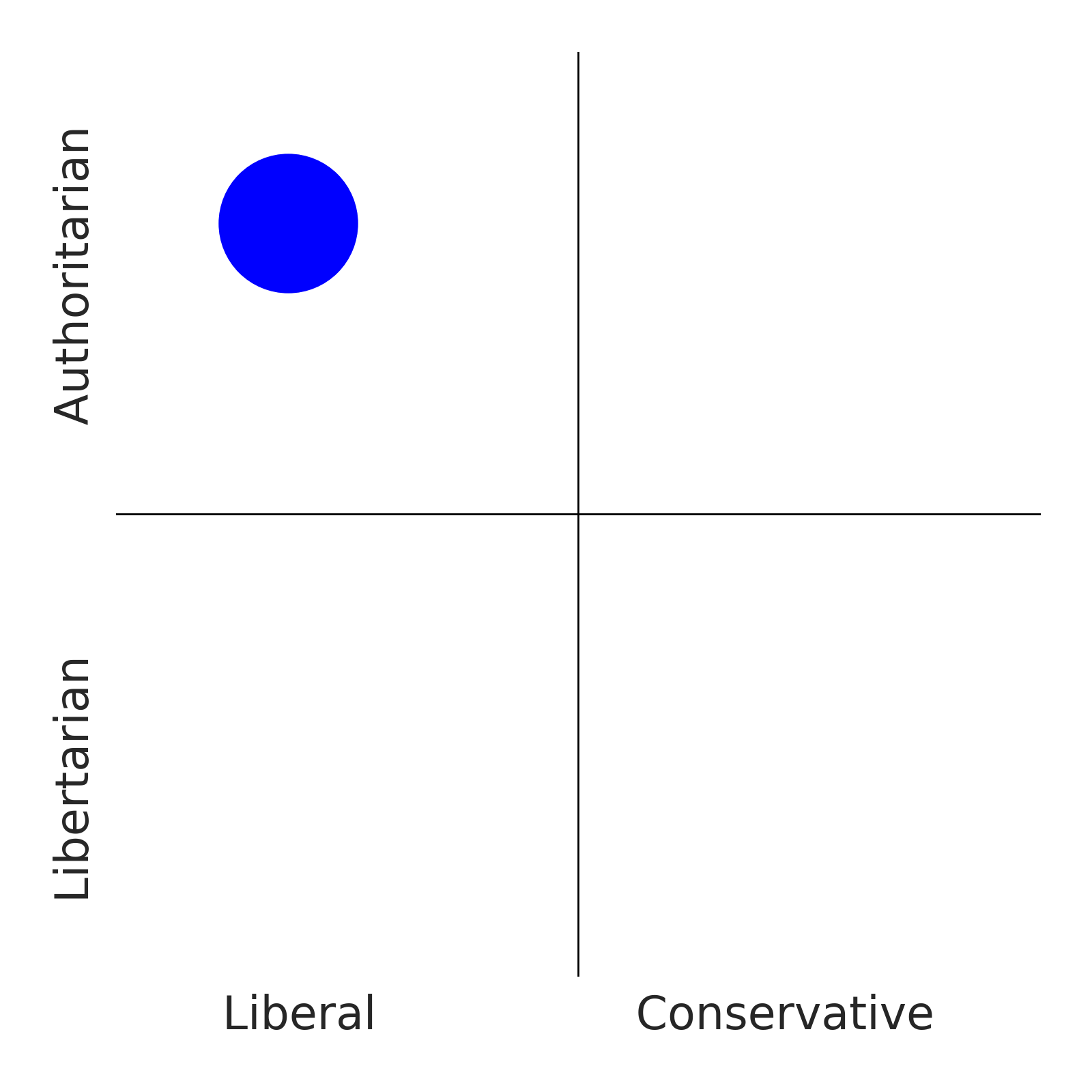
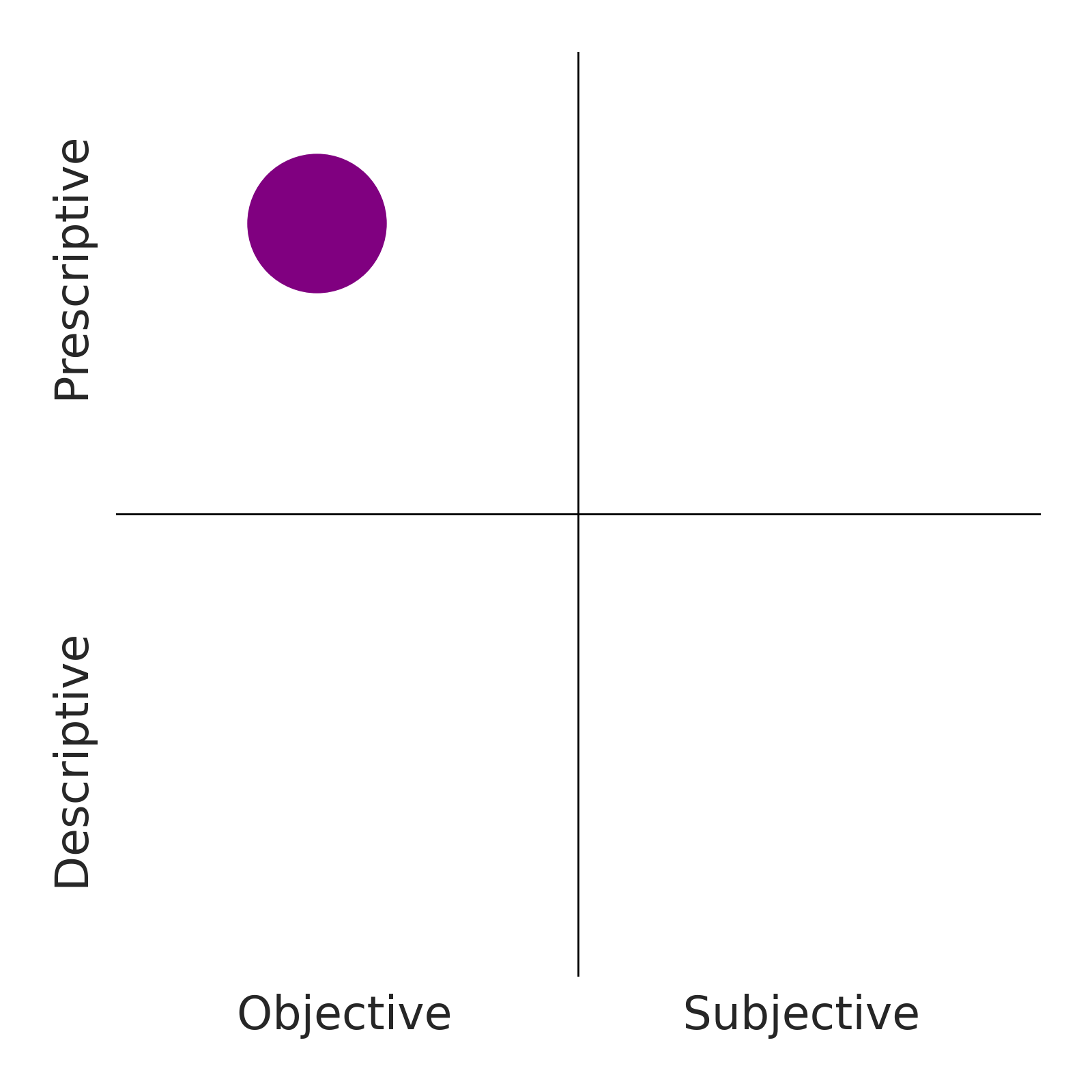
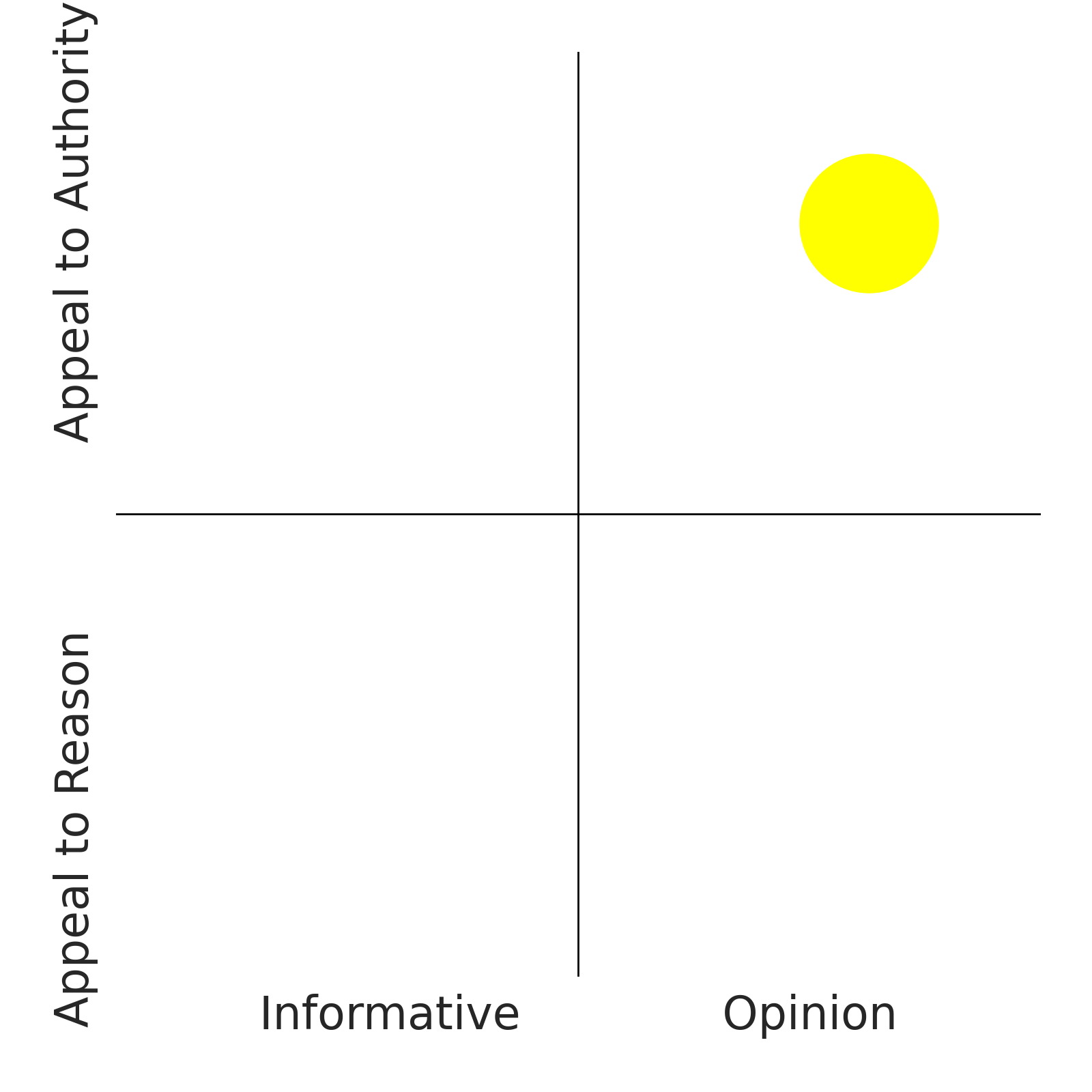
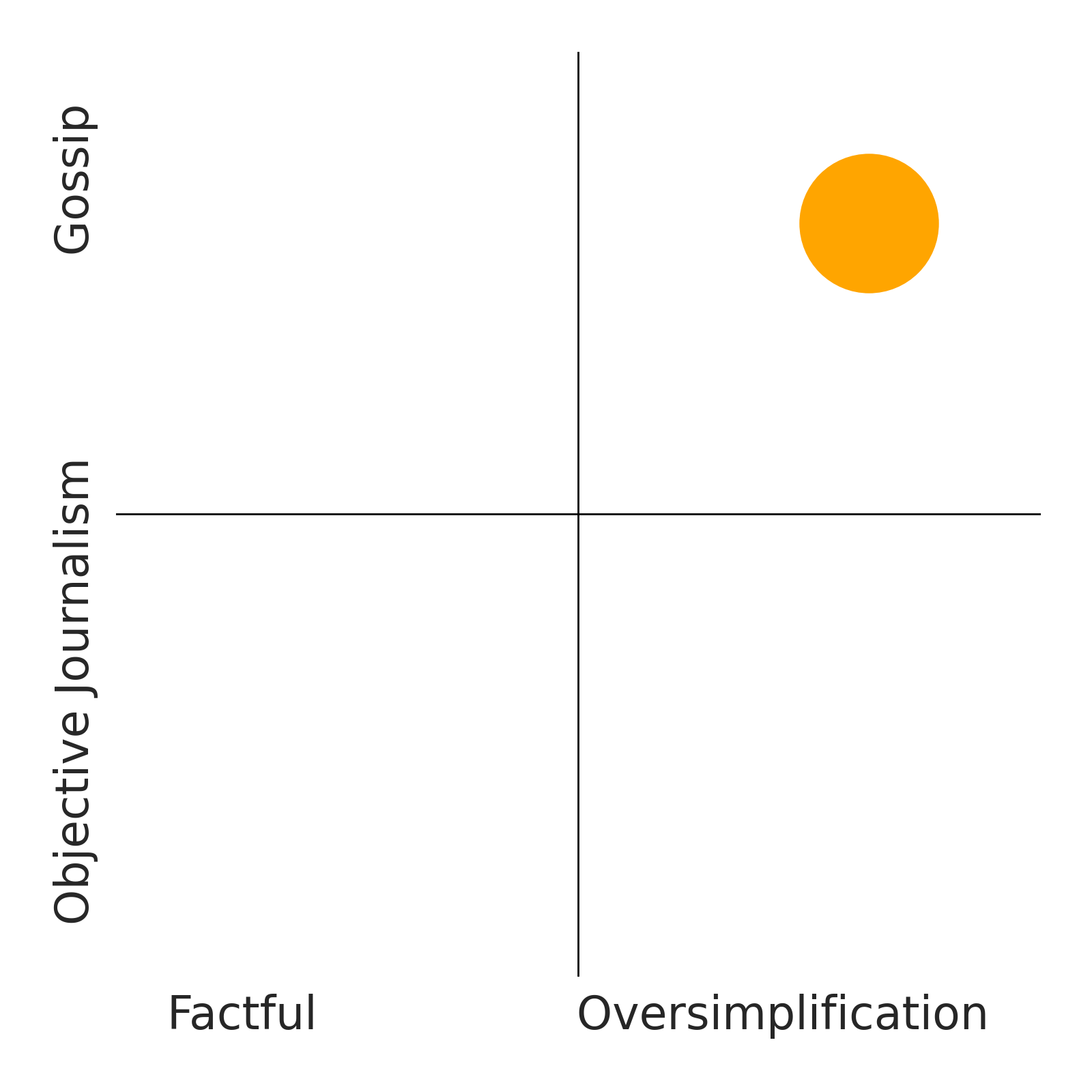
2026 © Helium Trades
Privacy Policy & Disclosure
* Disclaimer: Nothing on this website constitutes investment advice, performance data or any recommendation that any particular security, portfolio of securities, transaction or investment strategy is suitable for any specific person. Helium Trades is not responsible in any way for the accuracy
of any model predictions or price data. Any mention of a particular security and related prediction data is not a recommendation to buy or sell that security. Investments in securities involve the risk of loss. Past performance is no guarantee of future results. Helium Trades is not responsible for any of your investment decisions,
you should consult a financial expert before engaging in any transaction.
Helium Research Assistant

How can I help you today?
Ask any question about The Conversation bias.


