See whether Helium helps you make better-informed decisions. Try every Pro Trader feature for 30 days. No credit card required.
Try every Pro Trader feature for 30 days. No credit card required.
Composition note: The sample is a mixed feed dominated by The Motley Fool (earnings transcripts and stock picks) and TipRanks-style analyst roundups, plus Canadian national-affairs reporting of Globe and Mail-style provenance.
Topic selection is heavily financial (~60% of items) with a secondary Canadian politics cluster.
Main biases (observable):
A routine analyst-rating roundup is framed as an optimistic Consumer Cyclical opportunity by emphasizing two Buy ratings and upside price targets.
Automated analysis; not human reviewed. Limitations: The input is a short, formulaic stock-news snippet with possible scraped artifacts and limited editorial content, so classification relies on a thin text sample. · 5 of 54 available dimensions scored; omitted dimensions are not treated as neutral. · Verified supporting quotes for 5 of 5 scored dimensions.
Claim: The body is largely factual attribution of analyst ratings, but the lead injects a subjective positive tone.
“According to TipRanks.com, Sherman is a 1-star analyst with an average return of -0.7% and a 37.2% success rate.” · verified after text normalization
Why: Most content reports named analysts, dates, price targets, and consensus data; subjective framing is mostly limited to the opening line.
Claim: The lead framing is explicitly bullish, directing attention to analyst Buy ratings and upside.
“There’s a lot to be optimistic about in the Consumer Cyclical sector as 2 analysts just weighed in on Nike (NKE) and Ferrari (RACE) with bullish sentiments.” · exact text match
Why: The opening sentence uses 'optimistic' and 'bullish sentiments' to frame the ratings, and the headline repeats 'Analysts Are Bullish'.
Claim: The report is framed around an optimistic outlook rather than a balanced risk assessment.
“There’s a lot to be optimistic about in the Consumer Cyclical sector as 2 analysts just weighed in on Nike (NKE) and Ferrari (RACE) with bullish sentiments.” · exact text match
Why: The explicit 'a lot to be optimistic' is the lead and is not offset by risk or negative scenarios.
Claim: The report provides specific, attributed data needed to check the ratings.
“In a report issued on August 31, Barclays also maintained a Buy rating on the stock with a $52.00 price target.” · exact text match
Why: Named analysts, firms, report dates, price targets, and consensus figures are included, giving readers verifiable sourcing.
Claim: Attribution is transparent and includes unflattering analyst-performance and price data.
“According to TipRanks.com, Sherman is a 1-star analyst with an average return of -0.7% and a 37.2% success rate.” · verified after text normalization
“The company’s shares closed last Wednesday at $413.23, close to its 52-week low of $399.27.” · exact text match
Why: The report names analysts and TipRanks metrics, and it includes a negative average return and a 52-week low rather than only upside.
The input is a short, formulaic stock-news snippet with possible scraped artifacts and limited editorial content, so classification relies on a thin text sample.
A formulaic TipRanks roundup selects only bullish analyst actions and frames consensus price targets as upside, leaning on analyst star ratings for authority.
Automated analysis; not human reviewed. Limitations: Input is a truncated, auto-generated feed snippet with no byline or publication date, and only bullish analyst actions are shown, so broader market balance cannot be assessed. · 7 of 54 available dimensions scored; omitted dimensions are not treated as neutral. · Verified supporting quotes for 7 of 7 scored dimensions.
Claim: The content is predominantly factual reporting of attributed analyst actions and market data.
“In a report released today, Ian Zaffino from Oppenheimer maintained a Buy rating on frontdoor, with a price target of $100.00.” · exact text match
“The company’s shares closed last Wednesday at $81.06.” · exact text match
Why: Most statements are attributable ratings, price targets, and closing prices rather than subjective assertions; the main subjective note is the opening optimism.
Claim: The writing is non-sensational and stays within standard financial-reporting language.
“Oppenheimer analyst Jed Kelly maintained a Buy rating on Rush Street Interactive today and set a price target of $36.00.” · exact text match
“The company’s shares closed last Wednesday at $26.17.” · exact text match
Why: No hyperbolic, alarming, or emotionally loaded wording appears; the statements are dry and quantitative.
Claim: The framing is bullish by selecting only Buy ratings, upgrades, and price-target upside.
“There’s a lot to be optimistic about in the Consumer Cyclical sector as 3 analysts just weighed in on frontdoor (FTDR), Rush Street Interactive (RSI) and Five Below (FIVE) with bullish sentiments.” · exact text match
“Currently, the analyst consensus on Five Below is a Moderate Buy with an average price target of $282.72, representing a 15.4% upside.” · exact text match
Why: The opening sentence explicitly frames the sector optimistically, and every cited action is bullish, with no bearish or risk commentary included.
Claim: The opening framing is optimistic about the Consumer Cyclical sector.
“There’s a lot to be optimistic about in the Consumer Cyclical sector as 3 analysts just weighed in on frontdoor (FTDR), Rush Street Interactive (RSI) and Five Below (FIVE) with bullish sentiments.” · exact text match
Why: The explicit phrase 'a lot to be optimistic about' plus 'bullish sentiments' sets a positive tone.
Claim: The report reinforces analyst ratings with TipRanks star ratings and performance statistics.
“According to TipRanks.com, Zaffino is a 5-star analyst with an average return of 8.7% and a 51.8% success rate.” · verified after text normalization
“According to TipRanks.com, Kelly is a 4-star analyst with an average return of 4.9% and a 49.7% success rate.” · verified after text normalization
Why: Each rating is supplemented by the analyst's TipRanks credential and track record, relying on authority markers rather than independent analysis.
Claim: The report is transparent about its sources and attributes ratings to named analysts and firms.
“In a report released today, Ian Zaffino from Oppenheimer maintained a Buy rating on frontdoor, with a price target of $100.00.” · exact text match
“According to TipRanks.com, Zaffino is a 5-star analyst with an average return of 8.7% and a 51.8% success rate.” · verified after text normalization
Why: Named analysts, firms, TipRanks sourcing, and specific price targets and closing prices are supplied, supporting visible credibility within the scope of the text.
Claim: Multiple textual features indicate automated or template-generated writing.
“In a report released today, Ian Zaffino from Oppenheimer maintained a Buy rating on frontdoor, with a price target of $100.00.” · exact text match
“Oppenheimer analyst Jed Kelly maintained a Buy rating on Rush Street Interactive today and set a price target of $36.00.” · exact text match
Why: The same sentence template is repeated for each analyst with only names and numbers changed, and stray markup artifacts appear, a pattern characteristic of automated text generation.
Input is a truncated, auto-generated feed snippet with no byline or publication date, and only bullish analyst actions are shown, so broader market balance cannot be assessed.
Framing converts selected analyst Buy ratings into a broadly optimistic financial-sector story, leaning on star ratings and consensus labels for authority.
Automated analysis; not human reviewed. Limitations: Input is a short, template-style syndicated brief with scrape artifacts and no publication date or bearish analyst views, limiting context. · 5 of 55 available dimensions scored; omitted dimensions are not treated as neutral. · Verified supporting quotes for 5 of 5 scored dimensions.
Claim: The brief's selection and wording present the financial-sector ratings as an optimistic, bullish story.
“There’s a lot to be optimistic about in the Financial sector as 3 analysts just weighed in on Charles Schwab (SCHW), Truist Financial (TFC) and Wells Fargo (WFC) with bullish sentiments.” · exact text match
“The word on The Street in general, suggests a Strong Buy analyst consensus rating for Charles Schwab with a $124.73 average price target, representing a 16.6% upside.” · exact text match
Why: The opening asserts optimism, all highlighted actions are Buy ratings, and each section emphasizes upside.
Claim: The overall tone is positive and forward-looking.
“There’s a lot to be optimistic about in the Financial sector as 3 analysts just weighed in on Charles Schwab (SCHW), Truist Financial (TFC) and Wells Fargo (WFC) with bullish sentiments.” · exact text match
Why: Explicit optimistic and bullish language, plus repeated upside targets, set a positive tone.
Claim: The content predominantly consists of attributed analyst opinions presented as news.
“Truist Financial analyst David Smith -CFA maintained a Buy rating on Charles Schwab today.” · exact text match
“There’s a lot to be optimistic about in the Financial sector as 3 analysts just weighed in on Charles Schwab (SCHW), Truist Financial (TFC) and Wells Fargo (WFC) with bullish sentiments.” · exact text match
Why: Analyst Buy ratings and price targets are opinions, and the opening sentence editorializes about optimism.
Claim: The report grounds its credibility in TipRanks star ratings and Street consensus rather than independent analysis.
“According to TipRanks.com, Nash is a 5-star analyst with an average return of 12.0% and a 66.4% success rate.” · verified after text normalization
“The word on The Street in general, suggests a Strong Buy analyst consensus rating for Charles Schwab with a $124.73 average price target, representing a 16.6% upside.” · exact text match
Why: Star ratings and consensus labels are used as the primary authority for bullish conclusions.
Claim: The brief is transparently sourced, naming analysts, firms, and specific prices and targets.
“Goldman Sachs analyst Ryan Nash maintained a Buy rating on Truist Financial yesterday and set a price target of $59.00.” · exact text match
“According to TipRanks.com, Ramsden is a 5-star analyst with an average return of 18.4% and a 77.4% success rate.” · verified after text normalization
Why: Specific attribution and figures support trustworthiness, although the brief is a selective compilation.
Input is a short, template-style syndicated brief with scrape artifacts and no publication date or bearish analyst views, limiting context.
August 31, 2026 · 0 shares
Publisher framing is promotional and upbeat: it opens by restating management's favorable AI-growth narrative and then pivots to a paid stock-picking pitch built on dramatic past returns.
Elastic (ESTC) is a publicly traded enterprise software provider whose fiscal 2027 is not a calendar-year period; earnings materials use fiscal-year-over-year comparisons and non-GAAP measures reconciled in the company's press release and investor materials.
Automated analysis; not human reviewed. Limitations: Publisher-specific framing is limited to a short introductory summary, a promotional insert, and disclaimers; the rest is a company earnings-call transcript, so publisher-level bias scoring relies on a relatively small portion of the text and does not independently verify the company's claims. · 8 of 54 available dimensions scored; omitted dimensions are not treated as neutral. · Verified supporting quotes for 8 of 8 scored dimensions.
Claim: The framing uses dramatic promotional language and high-impact hypothetical returns, pushing the presentation toward sensationalism.
“The 10 stocks that made the cut could produce monster returns in the coming years.” · exact text match
“Consider when Netflix made this list on December 17, 2004... if you invested $1,000 at the time of our recommendation, you’d have $440,710!*” · exact text match
Why: Phrases such as 'monster returns' and the exclamatory six-figure hypothetical returns are sensational and promotional rather than sober financial analysis.
Claim: Publisher framing tilts bullish by leading with management's favorable results narrative and appending a stock-pick promotion.
“Management reported that the first quarter of fiscal 2027 was characterized by consistent sales execution and accelerating demand for AI-driven search and security solutions.” · exact text match
“Now, it’s worth noting Stock Advisor’s total average return is 978% — a market-crushing outperformance compared to 213% for the S&P 500.” · exact text match
Why: The summary and appended promotion emphasize accelerating demand, strong results, high returns, and investment opportunity.
Claim: The publisher's framing and embedded promotion are optimistic about Elastic's business and about investing outcomes.
“Elastic stated that record growth in high-value customer additions and long-term commitments, as evidenced by RPO growth, validates its position as a core infrastructure layer for AI transformations.” · exact text match
“Don't miss the latest top 10 list, available with Stock Advisor, and join an investing community built by individual investors for individual investors.” · exact text match
Why: Positive superlatives and an exhortation to join a stock-picking service reflect an optimistic rather than neutral or pessimistic tone.
Claim: The piece blends factual transcript content with evaluative and promotional opinions.
“The Motley Fool Stock Advisor analyst team just identified what they believe are the 10 best stocks for investors to buy now… and Elastic wasn’t one of them.” · exact text match
“Elastic stated that record growth in high-value customer additions and long-term commitments, as evidenced by RPO growth, validates its position as a core infrastructure layer for AI transformations.” · exact text match
Why: The '10 best stocks' pitch and the management validation quote are evaluative claims presented within the article's framing.
Claim: The publisher includes a sustained promotional insert for its Stock Advisor subscription service.
“Now, it’s worth noting Stock Advisor’s total average return is 978% — a market-crushing outperformance compared to 213% for the S&P 500.” · exact text match
“Don't miss the latest top 10 list, available with Stock Advisor, and join an investing community built by individual investors for individual investors.” · exact text match
Why: The text directly markets a paid subscription and uses performance statistics as a sales pitch.
Claim: The publisher's framing is sympathetic to corporate management, restating company claims without independent scrutiny.
“Management reported that the first quarter of fiscal 2027 was characterized by consistent sales execution and accelerating demand for AI-driven search and security solutions.” · exact text match
“Elastic stated that record growth in high-value customer additions and long-term commitments, as evidenced by RPO growth, validates its position as a core infrastructure layer for AI transformations.” · exact text match
Why: The lead summary presents management's own framing as the article's framing and includes no adverse analysis of the company.
Claim: The publisher states that parts of the content were generated with large language models and reviewed by AI systems, indicating AI-augmented writing.
“Parts of this article were created using Large Language Models (LLMs) based on The Motley Fool's insights and investing approach.” · exact text match
“It has been reviewed by our AI quality control systems.” · exact text match
Why: The text contains an explicit self-disclosure of LLM-generated parts, a strong direct indicator for the written-by-AI dimension.
Claim: The content shows transparency through source attribution and disclosure that the transcript was partly LLM-generated and may contain errors.
“Parts of this article were created using Large Language Models (LLMs) based on The Motley Fool's insights and investing approach.” · exact text match
“While we strive for our Foolish Best, there may be errors, omissions, or inaccuracies in this transcript.” · exact text match
Why: The publisher discloses AI involvement, possible errors, and a disclaimer about reliity, which are visible honesty signals.
Publisher-specific framing is limited to a short introductory summary, a promotional insert, and disclaimers; the rest is a company earnings-call transcript, so publisher-level bias scoring relies on a relatively small portion of the text and does not independently verify the company's claims.
August 31, 2026 · 0 shares
Earnings coverage presents NAPCO's fiscal 2026 as a record year of financial strength and leadership continuity, then switches to a Motley Fool Stock Advisor subscription pitch built on past returns.
NAPCO is a security products company whose portfolio includes intrusion/fire alarm systems, access control, and locking hardware. Its StarLink radio products replace copper phone-line fire communicators with cellular connections and generate monthly recurring service revenue. The company's fiscal year ends June 30.
Automated analysis; not human reviewed. Limitations: The supplied text is a company-produced earnings call transcript; all financial figures are management-reported and not independently verified. · 13 of 54 available dimensions scored; omitted dimensions are not treated as neutral. · Verified supporting quotes for 13 of 13 scored dimensions.
Claim: The publisher mixes objective transcript reporting with subjective, promotional statements about buying stock and future returns.
“Should you buy stock in Napco Security Technologies right now?” · exact text match
“The 10 stocks that made the cut could produce monster returns in the coming years.” · exact text match
Why: The factual transcript is bracketed by a subjective question and an unhedged return promise.
Claim: The publisher's summary foregrounds record revenue and financial strength, but the closing stock-advisor pitch explicitly excludes NAPCO from its current top picks.
“completed fiscal year 2026 with record annual revenue of $202.3 million” · exact text match
Counterevidence:
“Napco Security Technologies wasn’t one of them.” · exact text match
Why: The opening editorial summary is favorable, yet the subscription pitch frames NSSC as not among the current top ten, tempering an outright bullish stance.
Claim: The publisher shifts from describing earnings results to issuing an imperative to join Stock Advisor.
“Don't miss the latest top 10 list, available with Stock Advisor, and join an investing community built by individual investors for individual investors.” · exact text match
Why: The imperative verbs 'Don't miss' and 'join' make the passage prescriptive.
Claim: The publisher includes an opinionated stock-picking recommendation as part of the content.
“The Motley Fool Stock Advisor analyst team just identified what they believe are the 10 best stocks for investors to buy now… and Napco Security Technologies wasn’t one of them.” · exact text match
Why: The phrase 'what they believe' and 'best stocks' explicitly conveys opinion, not fact.
Claim: The closing subscription pitch contains promotional filler and an urgent call to action.
“Don't miss the latest top 10 list, available with Stock Advisor, and join an investing community built by individual investors for individual investors.” · exact text match
Why: The imperative 'Don't miss' and product pitch are promotional fluff rather than news.
Claim: The publisher signals reliability by labeling the piece as a transcript, noting possible errors, and encouraging independent verification.
“This article is a transcript of this conference call produced for The Motley Fool. While we strive for our Foolish Best, there may be errors, omissions, or inaccuracies in this transcript.” · exact text match
“we strongly encourage you to do your own research, including listening to the call yourself and reading the company's SEC filings.” · exact text match
Why: Clear attribution, caveats, and an explicit verification prompt support credibility.
Claim: The closing section is an advertisement for Motley Fool Stock Advisor, using past returns to sell a subscription.
“Now, it’s worth noting Stock Advisor’s total average return is 978% — a market-crushing outperformance compared to 213% for the S&P 500. Don't miss the latest top 10 list, available with Stock Advisor, and join an investing community built by individual investors for individual investors.” · exact text match
Why: The section directly promotes a paid product with performance statistics and a call to join.
Claim: The editorial summary emphasizes favorable company milestones—record revenue, debt-free balance sheet, dividend increase—without mention of risks.
“The company reported a debt-free balance sheet with $138 million in cash and marketable securities while increasing its quarterly dividend.” · exact text match
Why: Selecting only positive balance-sheet and dividend facts supports a pro-corporate framing.
Claim: The publisher repeats a speculative forecast that the chosen stocks 'could produce monster returns.'
“The 10 stocks that made the cut could produce monster returns in the coming years.” · exact text match
Why: 'Could produce' is an unquantified forecast, not a reported outcome.
Claim: The promotional section uses urgency and past-performance social proof to prompt subscription action.
“Don't miss the latest top 10 list, available with Stock Advisor, and join an investing community built by individual investors for individual investors.” · exact text match
“Now, it’s worth noting Stock Advisor’s total average return is 978% — a market-crushing outperformance compared to 213% for the S&P 500.” · exact text match
Why: The 'Don't miss' urgency and the market-beating return statistics are observable persuasive techniques.
Claim: The publisher explicitly states that parts of the article were created using LLMs.
“Parts of this article were created using Large Language Models (LLMs) based on The Motley Fool's insights and investing approach.” · exact text match
Why: This is a direct, self-reported AI-authorship indicator.
Claim: The publisher is transparent about AI-generated portions and the review process.
“Parts of this article were created using Large Language Models (LLMs) based on The Motley Fool's insights and investing approach. It has been reviewed by our AI quality control systems.” · exact text match
Why: Disclosing AI use and review, rather than hiding it, supports perceived integrity.
Claim: The article contains granular financial and operational detail rather than only a headline summary.
“Gross profit for the quarter increased 27.7% to $34.2 million Gross margin expanded to 61.3% compared with 52.8% in the prior year period.” · exact text match
Why: Multiple segment-level metrics and product-strategy discussions demonstrate analytical depth.
The supplied text is a company-produced earnings call transcript; all financial figures are management-reported and not independently verified.
August 31, 2026 · 0 shares
The publisher frames Materialise's Q2 results as a story of portfolio sharpening and raised guidance, then attaches a subscription advertisement using eye-catching past returns.
Materialise NV is a Belgium-based additive-manufacturing software and services company traded on Nasdaq (MTLS). It reports in euros and operates Medical, Software, and Manufacturing segments; Medical includes surgical planning and 3D-printed devices, while Manufacturing includes aerospace/defense series production.
Automated analysis; not human reviewed. Limitations: The source text is a transcript with an explicit AI-generation disclosure and a promotional section, so I cannot independently verify the transcript's accuracy or the advertisement's claims against the original call and SEC filings. · 7 of 54 available dimensions scored; omitted dimensions are not treated as neutral. · Verified supporting quotes for 7 of 7 scored dimensions.
Claim: The article blends an objective transcript with subjective investment opinion and an advertisement.
“The Motley Fool Stock Advisor analyst team just identified what they believe are the 10 best stocks for investors to buy now… and Materialise wasn’t one of them.” · exact text match
Why: The core is verbatim financial reporting, but the inserted stock-picking opinion and subscription pitch make the overall frame partly subjective.
Claim: The promotional section uses exclamatory returns and superlative performance claims.
“if you invested $1,000 at the time of our recommendation, you’d have $440,710!*” · exact text match
“Now, it’s worth noting Stock Advisor’s total average return is 978% — a market-crushing outperformance compared to 213% for the S&P 500.” · exact text match
Why: Exclamation marks and phrases such as 'market-crushing outperformance' are sensational promotional devices, even though the core transcript is factual.
Claim: The publisher's lead summary highlights earnings expansion and raised guidance, giving a mildly bullish tone.
“Despite macroeconomic challenges impacting software sales and prototyping demand, the company expanded its adjusted EBIT margins and increased its full-year profitability guidance.” · exact text match
Why: The opening summary selects positive results and upward guidance, framing the quarter as resilient rather than neutral.
Claim: The article is transparent about transcript inaccuracies and AI generation while providing named-source attribution.
“While we strive for our Foolish Best, there may be errors, omissions, or inaccuracies in this transcript.” · exact text match
“The Motley Fool has no position in any of the stocks mentioned.” · exact text match
Why: Visible caveats and disclosure support moderate credibility, but AI-generated portions and promotional content temper it.
Claim: The article includes a promotional subscription pitch for The Motley Fool Stock Advisor, not just neutral earnings coverage.
“The Motley Fool Stock Advisor analyst team just identified what they believe are the 10 best stocks for investors to buy now… and Materialise wasn’t one of them.” · exact text match
“Don't miss the latest top 10 list, available with Stock Advisor, and join an investing community built by individual investors for individual investors.” · exact text match
Why: The piece shifts from an earnings transcript into an unsolicited advertisement for a paid service, using the stock's exclusion to promote the subscription list.
Claim: The article discloses that parts of the content were generated with large language models.
“Parts of this article were created using Large Language Models (LLMs) based on The Motley Fool's insights and investing approach.” · exact text match
Why: The publisher explicitly states that LLMs were used to create parts of the article and that it was reviewed by AI quality-control systems.
Claim: The article contains detailed, internally consistent financial metrics and segment breakdowns.
“Gross profit increased to EUR 39.8 million, resulting in a gross margin of 56.8%.” · exact text match
Why: The transcript includes specific revenue, margin, balance-sheet, segment, and guidance figures, indicating substantive financial reporting.
The source text is a transcript with an explicit AI-generation disclosure and a promotional section, so I cannot independently verify the transcript's accuracy or the advertisement's claims against the original call and SEC filings.
Frames the market's fourth-quarter record as roughly four-to-one historical odds, overlays first-person buy-and-hold advice, and closes with a promotional pitch for a paid stock-picking subscription service.
An investment column surveying the stock market's historically strong fourth-quarter record since 1949, using the 2018 fourth-quarter selloff (when Fed rate increases accompanied sharp declines) as a cautionary parallel, and then pivoting to a Stock Advisor subscription pitch.
Automated analysis; not human reviewed. Limitations: My analysis relies on the supplied excerpt alone; I did not see the article's headline, opening paragraphs, or the footnotes attached to the '932%*' performance figure, so context conveyed in those missing parts may not be reflected in the judgments above. · 11 of 55 available dimensions scored; omitted dimensions are not treated as neutral. · Verified supporting quotes for 9 of 11 scored dimensions.
Claim: The analytical portion is punctuated by the author's subjective first-person judgments.
“I think the record is mostly a reason to do nothing.” · exact text match
“Nor would I read a verdict on the market's valuation into the pattern.” · exact text match
Why: Subjective markers such as 'I think' and 'I would' indicate the author's interpretation rather than objective reporting.
Claim: The recommendation to remain fully invested, including in 'pricey growth stocks,' signals a net bullish stance.
“I'd keep holding through whatever the quarter brings, pricey growth stocks included.” · exact text match
“the only way investors could ever collect the 34 winning quarters was by staying invested when they arrived” · exact text match
Why: Advising continued investment through a risky quarter, with optimism justified by the 34 winning quarters, is a broadly bullish recommendation.
Claim: The text's default frame is optimistic, leaning on the roughly four-in-five win rate to justify staying invested.
“The history is a set of odds, about four wins in five -- never a promise.” · exact text match
“I'd keep holding through whatever the quarter brings, pricey growth stocks included.” · exact text match
Why: Emphasizing the favorable historical frequency and advising continued investment reflects an optimistic tilt toward the coming quarter.
Claim: The text shifts from describing historical market outcomes to prescribing investor action.
“The history is a set of odds, about four wins in five -- never a promise.” · exact text match
“I'd keep holding through whatever the quarter brings, pricey growth stocks included.” · exact text match
Why: The article moves from a descriptive statistical record to prescriptive guidance telling readers what to do with their portfolios.
Claim: The text frames Federal Reserve rate increases as a threatening market variable.
“a tightening central bank sat near the middle of it, and the same variable hangs over the quarter” · exact text match
“The last time the fourth quarter went badly wrong, the Fed was likewise raising rates as the year closed” · exact text match
Why: Casting the Fed's late-2018 rate increases as the shared factor behind a major decline frames further monetary tightening as a market-negative force.
Claim: The text expresses first-person investment opinions, instructing readers to hold stocks and avoid timing the market.
“I'd keep holding through whatever the quarter brings, pricey growth stocks included.” · exact text match
“Even so, I wouldn't move money around because of a seasonal record.” · exact text match
Why: Repeated first-person directives such as 'I'd keep holding' and 'I wouldn't move money around' advocate a specific course of action rather than neutral reporting.
Claim: Persuasion rests on the credibility of the internal analyst team rather than on the evidence presented.
“When our analyst team has a stock tip, it can pay to listen.” · exact text match
“But according to our analysts, we're only at the end of 'Act 1'—the R&D phase.” · not found in supplied text
Why: The phrases 'it can pay to listen' and 'according to our analysts' delegate the persuasive burden to the team's authority.
Claim: The closing passage promotes a for-fee stock-picking service with a performance statistic.
“They just revealed what they believe are the 10 best stocks for investors to buy right now, available when you join Stock Advisor.” · not found in supplied text
“After all, Stock Advisor’s total average return is 932%* — a market-crushing outperformance compared to 211% for the S&P 500.” · exact text match
Why: Advertising a paid subscription service and citing its 'market-crushing' return makes the ending promotional in character.
Claim: The text explicitly frames the historical record as probabilistic and notes the difficulty of predicting its losses.
“The history is a set of odds, about four wins in five -- never a promise.” · exact text match
“the seven losing quarters were arguably unpredictable in real time” · exact text match
Why: Describing the record as odds that can lose, and conceding the losing quarters were 'unpredictable in real time,' indicates a calibrated, rational stance rather than overconfidence.
Claim: The text makes a conditional forecast about the current fourth quarter based on the 2018 precedent.
“If the Fed follows through with another increase before year-end, this fourth quarter could face the same kind of pressure.” · exact text match
Why: 'Could face' is an explicitly conditional projection of a future outcome, keyed to a specified Fed action.
Claim: The text creates an incongruous pivot from 'do nothing' advice to a stock-tip sales pitch, applying an asymmetric standard.
“I wouldn't move money around because of a seasonal record.” · exact text match
“When our analyst team has a stock tip, it can pay to listen.” · exact text match
Why: Telling readers the seasonal record is no reason to act while immediately endorsing the analysts' stock tips as worth listening to is a promotional pivot that applies different standards to the same record.
My analysis relies on the supplied excerpt alone; I did not see the article's headline, opening paragraphs, or the footnotes attached to the '932%*' performance figure, so context conveyed in those missing parts may not be reflected in the judgments above.
September 13, 2026 · 0 shares
Publisher framing is bullish: Bristol Myers Squibb is portrayed as a solid buy, yield-trap fears are dismissed as overblown, and a subscription pitch follows.
Automated analysis; not human reviewed. Limitations: No publication date is given for the article, so forward-looking metrics cannot be independently placed in time. · 12 of 54 available dimensions scored; omitted dimensions are not treated as neutral. · Verified supporting quotes for 8 of 12 scored dimensions.
Claim: The publisher uses subjective recommendation language rather than neutral reporting.
“Bristol Myers Squibb is a solid buy among healthcare stocks.” · exact text match
“This is a great stock for income-focused investors, but it's also appealing to growth-minded investors.” · exact text match
Why: Phrases like 'solid buy' and 'great stock' are evaluative recommendations, not factual findings.
Claim: The publisher mixes market analysis with promotional, hype-driven language.
“The 10 stocks that made the cut could produce monster returns in the coming years.” · exact text match
“Missed Nvidia in 2009? This Rare Signal Is Flashing Again.” · exact text match
Why: Promotional language about 'monster returns' and a flashing 'rare signal' adds sensationalism beyond the core analysis.
Claim: The publisher takes a clearly bullish stance on Bristol Myers Squibb.
“Bristol Myers Squibb is a solid buy among healthcare stocks.” · exact text match
“The company appears well-positioned for a further comeback.” · exact text match
Why: The explicit recommendation and positive outlook establish a bullish framing.
Claim: The publisher frames risks as manageable and the outlook as favorable.
“it's clear "yield trap fears" are overblown.” · not found in supplied text
“The company appears well-positioned for a further comeback.” · exact text match
Why: The publisher leads toward a positive conclusion and minimizes a major investor concern.
Claim: The publisher explicitly prescribes buying the stock.
“Should you buy stock in Bristol Myers Squibb right now?” · exact text match
“Bristol Myers Squibb is a solid buy among healthcare stocks.” · exact text match
Why: The framing is a direct investment recommendation rather than a purely descriptive analysis.
Claim: The article is substantially opinion-driven.
“This is a great stock for income-focused investors, but it's also appealing to growth-minded investors.” · exact text match
“The company appears well-positioned for a further comeback.” · exact text match
Why: Value judgments and forward-looking claims dominate the presentation.
Claim: The publisher condenses complex patent-cliff and business risks into a few simple reassurances.
“Not only is the patent cliff a "known known." Management has already begun addressing it through cost-cutting measures and acquisitions.” · not found in supplied text
Why: The analysis treats management actions and a payout ratio as largely resolving a multi-year patent-exclusivity challenge.
Claim: The publisher invokes analyst-team authority and historical subscription performance to support the case.
“The Motley Fool Stock Advisor analyst team just identified what they believe are the 10 best stocks for investors to buy now… and Bristol Myers Squibb wasn’t one of them.” · exact text match
“Stock Advisor’s total average return is 950% — a market-crushing outperformance compared to 212% for the S&P 500.” · exact text match
Why: The subscription pitch relies on the authority and track record of the analyst team rather than on specific analysis of the recommended stocks.
Claim: The publisher asserts a contested risk conclusion with more certainty than the supplied evidence supports.
“it's clear "yield trap fears" are overblown.” · not found in supplied text
Why: Calling the concern 'clear' overstates the strength of forward estimates and qualitative reassurances.
Claim: The article serves partly as a direct promotion for the Stock Advisor subscription service.
“Don't miss the latest top 10 list, available with Stock Advisor, and join an investing community built by individual investors for individual investors.” · exact text match
“Consider when Netflix made this list on December 17, 2004... if you invested $1,000 at the time of our recommendation, you’d have $417,413!*” · exact text match
Why: The text explicitly pitches a paid product with historical performance examples and an urgency-based call to action.
Claim: The publisher includes forward-looking speculation beyond confirmed events.
“2028 could bring more declines, as additional patents expire.” · exact text match
“analyst forecasts still call for earnings to drop from $6.95 to $6.56 per share next year.” · exact text match
Why: The conclusion depends on earnings forecasts and conditional future outcomes.
Claim: The publisher uses loaded risk framing and promotional urgency.
“Specifically, any risk that this stock could become a "yield trap" for your portfolio.” · not found in supplied text
“Don't miss the latest top 10 list, available with Stock Advisor, and join an investing community built by individual investors for individual investors.” · exact text match
Why: The 'yield trap' framing and 'Don't miss' urgency are observable persuasive techniques, though no hidden intent is claimed.
No publication date is given for the article, so forward-looking metrics cannot be independently placed in time.
August 31, 2026 · 0 shares
An uncritical, bullish presentation of a corporate earnings call, framed by an upbeat lead summary and supplemented with explicit AI-generated transcript disclosures.
Synopsys is an electronic design automation and semiconductor IP company; the call is its third-quarter fiscal 2026 earnings call, one year after the Ansys acquisition close. The company reports GAAP and non-GAAP results, and its segment comparisons are affected by the divestiture of the optical solutions group and the processor IP business.
Automated analysis; not human reviewed. Limitations: Input is only a transcript that explicitly says it may contain errors and that parts were AI-generated; no independent financial statements or press release were available for verification. · 10 of 54 available dimensions scored; omitted dimensions are not treated as neutral. · Verified supporting quotes for 9 of 10 scored dimensions.
Claim: The main content is a literal transcript with attributed statements and limited independent commentary.
“This article is a transcript of this conference call produced for The Motley Fool.” · exact text match
Why: Verbatim reproduction and attribution push the framing toward objectivity, though the upbeat introductory summary adds some subjectivity.
Claim: The publisher's lead and selected management remarks present a distinctly bullish outlook.
“Synopsys delivered an outstanding third quarter with revenue, non-GAAP operating margin and EPS all exceeding the high end of guidance.” · exact text match
“We are raising our full year revenue, non-GAAP operating margin, EPS and cash flow guidance.” · not found in supplied text
Why: The editorial summary highlights strength, outperformance, and raised guidance, creating a bullish framing rather than a neutral summary.
Claim: The framing emphasizes strong performance and positive momentum.
“These results reflect broad-based strength, including outperformance in EDA and Ansys and continued growth in IP.” · exact text match
Why: The report's lead and management's remarks stress exceptional results and acceleration, producing a clearly optimistic tilt.
Claim: The core content describes a conference call rather than telling readers what to do.
“This article is a transcript of this conference call produced for The Motley Fool.” · exact text match
Why: A transcript is inherently descriptive; the direct marketing material at the end is separate from the reported financial event.
Claim: Transparency, attribution, and warnings to consult primary sources support high credibility.
“we strongly encourage you to do your own research, including listening to the call yourself and reading the company's SEC filings.” · exact text match
“While we strive for our Foolish Best, there may be errors, omissions, or inaccuracies in this transcript.” · exact text match
Why: The report attributes statements to named executives, flags transcript risk, and directs readers to primary sources, which are credibility markers.
Claim: The transcript and summary are grounded in quantified results and explicit forward-looking caution, reflecting rational epistemic practice.
“While these statements represent our best current judgment about future results and performance as of today, our actual results are subject to many risks and uncertainties that could cause actual results to differ materially from what we expect.” · exact text match
Why: The report reproduces detailed financial disclosures and non-GAAP reconciliation references without sensational or irrational leaps.
Claim: The publication presents the company's earnings narrative without independent pushback and discloses a stock position in Synopsys.
“The Motley Fool has positions in and recommends Synopsys.” · exact text match
Why: The substance is almost entirely company-sourced and favorable, and the publisher's ownership disclosure indicates a pro-corporate orientation.
Claim: The article itself states that parts were AI-generated.
“Parts of this article were created using Large Language Models (LLMs) based on The Motley Fool's insights and investing approach.” · exact text match
Why: This is explicit self-disclosure of AI authorship rather than an inferred textual pattern.
Claim: The publisher discloses transcript limitations, AI-generated portions, and conflicts of interest.
“While we strive for our Foolish Best, there may be errors, omissions, or inaccuracies in this transcript.” · exact text match
“Parts of this article were created using Large Language Models (LLMs) based on The Motley Fool's insights and investing approach.” · exact text match
Why: Explicit disclosure of possible transcription errors, AI assistance, and stock ownership signals internally observable honesty.
Claim: The content contains sophisticated, quantified operational and financial information.
“Q3 EDA revenue increased 8.5% year-over-year, reflecting robust EDA software performance and another record quarter for hardware-assisted verification solutions.” · exact text match
Why: The transcript engages with complex technical and financial details such as multi-die design, segment margins, and non-GAAP guidance.
Input is only a transcript that explicitly says it may contain errors and that parts were AI-generated; no independent financial statements or press release were available for verification.
August 31, 2026 · 0 shares
Publisher framing is promotional and upbeat: it opens by restating management's favorable AI-growth narrative and then pivots to a paid stock-picking pitch built on dramatic past returns.
Elastic (ESTC) is a publicly traded enterprise software provider whose fiscal 2027 is not a calendar-year period; earnings materials use fiscal-year-over-year comparisons and non-GAAP measures reconciled in the company's press release and investor materials.
Automated analysis; not human reviewed. Limitations: Publisher-specific framing is limited to a short introductory summary, a promotional insert, and disclaimers; the rest is a company earnings-call transcript, so publisher-level bias scoring relies on a relatively small portion of the text and does not independently verify the company's claims. · 8 of 54 available dimensions scored; omitted dimensions are not treated as neutral. · Verified supporting quotes for 8 of 8 scored dimensions.
Claim: The framing uses dramatic promotional language and high-impact hypothetical returns, pushing the presentation toward sensationalism.
“The 10 stocks that made the cut could produce monster returns in the coming years.” · exact text match
“Consider when Netflix made this list on December 17, 2004... if you invested $1,000 at the time of our recommendation, you’d have $440,710!*” · exact text match
Why: Phrases such as 'monster returns' and the exclamatory six-figure hypothetical returns are sensational and promotional rather than sober financial analysis.
Claim: Publisher framing tilts bullish by leading with management's favorable results narrative and appending a stock-pick promotion.
“Management reported that the first quarter of fiscal 2027 was characterized by consistent sales execution and accelerating demand for AI-driven search and security solutions.” · exact text match
“Now, it’s worth noting Stock Advisor’s total average return is 978% — a market-crushing outperformance compared to 213% for the S&P 500.” · exact text match
Why: The summary and appended promotion emphasize accelerating demand, strong results, high returns, and investment opportunity.
Claim: The publisher's framing and embedded promotion are optimistic about Elastic's business and about investing outcomes.
“Elastic stated that record growth in high-value customer additions and long-term commitments, as evidenced by RPO growth, validates its position as a core infrastructure layer for AI transformations.” · exact text match
“Don't miss the latest top 10 list, available with Stock Advisor, and join an investing community built by individual investors for individual investors.” · exact text match
Why: Positive superlatives and an exhortation to join a stock-picking service reflect an optimistic rather than neutral or pessimistic tone.
Claim: The piece blends factual transcript content with evaluative and promotional opinions.
“The Motley Fool Stock Advisor analyst team just identified what they believe are the 10 best stocks for investors to buy now… and Elastic wasn’t one of them.” · exact text match
“Elastic stated that record growth in high-value customer additions and long-term commitments, as evidenced by RPO growth, validates its position as a core infrastructure layer for AI transformations.” · exact text match
Why: The '10 best stocks' pitch and the management validation quote are evaluative claims presented within the article's framing.
Claim: The publisher includes a sustained promotional insert for its Stock Advisor subscription service.
“Now, it’s worth noting Stock Advisor’s total average return is 978% — a market-crushing outperformance compared to 213% for the S&P 500.” · exact text match
“Don't miss the latest top 10 list, available with Stock Advisor, and join an investing community built by individual investors for individual investors.” · exact text match
Why: The text directly markets a paid subscription and uses performance statistics as a sales pitch.
Claim: The publisher's framing is sympathetic to corporate management, restating company claims without independent scrutiny.
“Management reported that the first quarter of fiscal 2027 was characterized by consistent sales execution and accelerating demand for AI-driven search and security solutions.” · exact text match
“Elastic stated that record growth in high-value customer additions and long-term commitments, as evidenced by RPO growth, validates its position as a core infrastructure layer for AI transformations.” · exact text match
Why: The lead summary presents management's own framing as the article's framing and includes no adverse analysis of the company.
Claim: The publisher states that parts of the content were generated with large language models and reviewed by AI systems, indicating AI-augmented writing.
“Parts of this article were created using Large Language Models (LLMs) based on The Motley Fool's insights and investing approach.” · exact text match
“It has been reviewed by our AI quality control systems.” · exact text match
Why: The text contains an explicit self-disclosure of LLM-generated parts, a strong direct indicator for the written-by-AI dimension.
Claim: The content shows transparency through source attribution and disclosure that the transcript was partly LLM-generated and may contain errors.
“Parts of this article were created using Large Language Models (LLMs) based on The Motley Fool's insights and investing approach.” · exact text match
“While we strive for our Foolish Best, there may be errors, omissions, or inaccuracies in this transcript.” · exact text match
Why: The publisher discloses AI involvement, possible errors, and a disclaimer about reliity, which are visible honesty signals.
Publisher-specific framing is limited to a short introductory summary, a promotional insert, and disclaimers; the rest is a company earnings-call transcript, so publisher-level bias scoring relies on a relatively small portion of the text and does not independently verify the company's claims.
August 31, 2026 · 0 shares
Earnings coverage presents NAPCO's fiscal 2026 as a record year of financial strength and leadership continuity, then switches to a Motley Fool Stock Advisor subscription pitch built on past returns.
NAPCO is a security products company whose portfolio includes intrusion/fire alarm systems, access control, and locking hardware. Its StarLink radio products replace copper phone-line fire communicators with cellular connections and generate monthly recurring service revenue. The company's fiscal year ends June 30.
Automated analysis; not human reviewed. Limitations: The supplied text is a company-produced earnings call transcript; all financial figures are management-reported and not independently verified. · 13 of 54 available dimensions scored; omitted dimensions are not treated as neutral. · Verified supporting quotes for 13 of 13 scored dimensions.
Claim: The publisher mixes objective transcript reporting with subjective, promotional statements about buying stock and future returns.
“Should you buy stock in Napco Security Technologies right now?” · exact text match
“The 10 stocks that made the cut could produce monster returns in the coming years.” · exact text match
Why: The factual transcript is bracketed by a subjective question and an unhedged return promise.
Claim: The publisher's summary foregrounds record revenue and financial strength, but the closing stock-advisor pitch explicitly excludes NAPCO from its current top picks.
“completed fiscal year 2026 with record annual revenue of $202.3 million” · exact text match
Counterevidence:
“Napco Security Technologies wasn’t one of them.” · exact text match
Why: The opening editorial summary is favorable, yet the subscription pitch frames NSSC as not among the current top ten, tempering an outright bullish stance.
Claim: The publisher shifts from describing earnings results to issuing an imperative to join Stock Advisor.
“Don't miss the latest top 10 list, available with Stock Advisor, and join an investing community built by individual investors for individual investors.” · exact text match
Why: The imperative verbs 'Don't miss' and 'join' make the passage prescriptive.
Claim: The publisher includes an opinionated stock-picking recommendation as part of the content.
“The Motley Fool Stock Advisor analyst team just identified what they believe are the 10 best stocks for investors to buy now… and Napco Security Technologies wasn’t one of them.” · exact text match
Why: The phrase 'what they believe' and 'best stocks' explicitly conveys opinion, not fact.
Claim: The closing subscription pitch contains promotional filler and an urgent call to action.
“Don't miss the latest top 10 list, available with Stock Advisor, and join an investing community built by individual investors for individual investors.” · exact text match
Why: The imperative 'Don't miss' and product pitch are promotional fluff rather than news.
Claim: The publisher signals reliability by labeling the piece as a transcript, noting possible errors, and encouraging independent verification.
“This article is a transcript of this conference call produced for The Motley Fool. While we strive for our Foolish Best, there may be errors, omissions, or inaccuracies in this transcript.” · exact text match
“we strongly encourage you to do your own research, including listening to the call yourself and reading the company's SEC filings.” · exact text match
Why: Clear attribution, caveats, and an explicit verification prompt support credibility.
Claim: The closing section is an advertisement for Motley Fool Stock Advisor, using past returns to sell a subscription.
“Now, it’s worth noting Stock Advisor’s total average return is 978% — a market-crushing outperformance compared to 213% for the S&P 500. Don't miss the latest top 10 list, available with Stock Advisor, and join an investing community built by individual investors for individual investors.” · exact text match
Why: The section directly promotes a paid product with performance statistics and a call to join.
Claim: The editorial summary emphasizes favorable company milestones—record revenue, debt-free balance sheet, dividend increase—without mention of risks.
“The company reported a debt-free balance sheet with $138 million in cash and marketable securities while increasing its quarterly dividend.” · exact text match
Why: Selecting only positive balance-sheet and dividend facts supports a pro-corporate framing.
Claim: The publisher repeats a speculative forecast that the chosen stocks 'could produce monster returns.'
“The 10 stocks that made the cut could produce monster returns in the coming years.” · exact text match
Why: 'Could produce' is an unquantified forecast, not a reported outcome.
Claim: The promotional section uses urgency and past-performance social proof to prompt subscription action.
“Don't miss the latest top 10 list, available with Stock Advisor, and join an investing community built by individual investors for individual investors.” · exact text match
“Now, it’s worth noting Stock Advisor’s total average return is 978% — a market-crushing outperformance compared to 213% for the S&P 500.” · exact text match
Why: The 'Don't miss' urgency and the market-beating return statistics are observable persuasive techniques.
Claim: The publisher explicitly states that parts of the article were created using LLMs.
“Parts of this article were created using Large Language Models (LLMs) based on The Motley Fool's insights and investing approach.” · exact text match
Why: This is a direct, self-reported AI-authorship indicator.
Claim: The publisher is transparent about AI-generated portions and the review process.
“Parts of this article were created using Large Language Models (LLMs) based on The Motley Fool's insights and investing approach. It has been reviewed by our AI quality control systems.” · exact text match
Why: Disclosing AI use and review, rather than hiding it, supports perceived integrity.
Claim: The article contains granular financial and operational detail rather than only a headline summary.
“Gross profit for the quarter increased 27.7% to $34.2 million Gross margin expanded to 61.3% compared with 52.8% in the prior year period.” · exact text match
Why: Multiple segment-level metrics and product-strategy discussions demonstrate analytical depth.
The supplied text is a company-produced earnings call transcript; all financial figures are management-reported and not independently verified.
August 31, 2026 · 0 shares
The publisher frames Materialise's Q2 results as a story of portfolio sharpening and raised guidance, then attaches a subscription advertisement using eye-catching past returns.
Materialise NV is a Belgium-based additive-manufacturing software and services company traded on Nasdaq (MTLS). It reports in euros and operates Medical, Software, and Manufacturing segments; Medical includes surgical planning and 3D-printed devices, while Manufacturing includes aerospace/defense series production.
Automated analysis; not human reviewed. Limitations: The source text is a transcript with an explicit AI-generation disclosure and a promotional section, so I cannot independently verify the transcript's accuracy or the advertisement's claims against the original call and SEC filings. · 7 of 54 available dimensions scored; omitted dimensions are not treated as neutral. · Verified supporting quotes for 7 of 7 scored dimensions.
Claim: The article blends an objective transcript with subjective investment opinion and an advertisement.
“The Motley Fool Stock Advisor analyst team just identified what they believe are the 10 best stocks for investors to buy now… and Materialise wasn’t one of them.” · exact text match
Why: The core is verbatim financial reporting, but the inserted stock-picking opinion and subscription pitch make the overall frame partly subjective.
Claim: The promotional section uses exclamatory returns and superlative performance claims.
“if you invested $1,000 at the time of our recommendation, you’d have $440,710!*” · exact text match
“Now, it’s worth noting Stock Advisor’s total average return is 978% — a market-crushing outperformance compared to 213% for the S&P 500.” · exact text match
Why: Exclamation marks and phrases such as 'market-crushing outperformance' are sensational promotional devices, even though the core transcript is factual.
Claim: The publisher's lead summary highlights earnings expansion and raised guidance, giving a mildly bullish tone.
“Despite macroeconomic challenges impacting software sales and prototyping demand, the company expanded its adjusted EBIT margins and increased its full-year profitability guidance.” · exact text match
Why: The opening summary selects positive results and upward guidance, framing the quarter as resilient rather than neutral.
Claim: The article is transparent about transcript inaccuracies and AI generation while providing named-source attribution.
“While we strive for our Foolish Best, there may be errors, omissions, or inaccuracies in this transcript.” · exact text match
“The Motley Fool has no position in any of the stocks mentioned.” · exact text match
Why: Visible caveats and disclosure support moderate credibility, but AI-generated portions and promotional content temper it.
Claim: The article includes a promotional subscription pitch for The Motley Fool Stock Advisor, not just neutral earnings coverage.
“The Motley Fool Stock Advisor analyst team just identified what they believe are the 10 best stocks for investors to buy now… and Materialise wasn’t one of them.” · exact text match
“Don't miss the latest top 10 list, available with Stock Advisor, and join an investing community built by individual investors for individual investors.” · exact text match
Why: The piece shifts from an earnings transcript into an unsolicited advertisement for a paid service, using the stock's exclusion to promote the subscription list.
Claim: The article discloses that parts of the content were generated with large language models.
“Parts of this article were created using Large Language Models (LLMs) based on The Motley Fool's insights and investing approach.” · exact text match
Why: The publisher explicitly states that LLMs were used to create parts of the article and that it was reviewed by AI quality-control systems.
Claim: The article contains detailed, internally consistent financial metrics and segment breakdowns.
“Gross profit increased to EUR 39.8 million, resulting in a gross margin of 56.8%.” · exact text match
Why: The transcript includes specific revenue, margin, balance-sheet, segment, and guidance figures, indicating substantive financial reporting.
The source text is a transcript with an explicit AI-generation disclosure and a promotional section, so I cannot independently verify the transcript's accuracy or the advertisement's claims against the original call and SEC filings.
A formulaic TipRanks roundup selects only bullish analyst actions and frames consensus price targets as upside, leaning on analyst star ratings for authority.
Automated analysis; not human reviewed. Limitations: Input is a truncated, auto-generated feed snippet with no byline or publication date, and only bullish analyst actions are shown, so broader market balance cannot be assessed. · 7 of 54 available dimensions scored; omitted dimensions are not treated as neutral. · Verified supporting quotes for 7 of 7 scored dimensions.
Claim: The content is predominantly factual reporting of attributed analyst actions and market data.
“In a report released today, Ian Zaffino from Oppenheimer maintained a Buy rating on frontdoor, with a price target of $100.00.” · exact text match
“The company’s shares closed last Wednesday at $81.06.” · exact text match
Why: Most statements are attributable ratings, price targets, and closing prices rather than subjective assertions; the main subjective note is the opening optimism.
Claim: The writing is non-sensational and stays within standard financial-reporting language.
“Oppenheimer analyst Jed Kelly maintained a Buy rating on Rush Street Interactive today and set a price target of $36.00.” · exact text match
“The company’s shares closed last Wednesday at $26.17.” · exact text match
Why: No hyperbolic, alarming, or emotionally loaded wording appears; the statements are dry and quantitative.
Claim: The framing is bullish by selecting only Buy ratings, upgrades, and price-target upside.
“There’s a lot to be optimistic about in the Consumer Cyclical sector as 3 analysts just weighed in on frontdoor (FTDR), Rush Street Interactive (RSI) and Five Below (FIVE) with bullish sentiments.” · exact text match
“Currently, the analyst consensus on Five Below is a Moderate Buy with an average price target of $282.72, representing a 15.4% upside.” · exact text match
Why: The opening sentence explicitly frames the sector optimistically, and every cited action is bullish, with no bearish or risk commentary included.
Claim: The opening framing is optimistic about the Consumer Cyclical sector.
“There’s a lot to be optimistic about in the Consumer Cyclical sector as 3 analysts just weighed in on frontdoor (FTDR), Rush Street Interactive (RSI) and Five Below (FIVE) with bullish sentiments.” · exact text match
Why: The explicit phrase 'a lot to be optimistic about' plus 'bullish sentiments' sets a positive tone.
Claim: The report reinforces analyst ratings with TipRanks star ratings and performance statistics.
“According to TipRanks.com, Zaffino is a 5-star analyst with an average return of 8.7% and a 51.8% success rate.” · verified after text normalization
“According to TipRanks.com, Kelly is a 4-star analyst with an average return of 4.9% and a 49.7% success rate.” · verified after text normalization
Why: Each rating is supplemented by the analyst's TipRanks credential and track record, relying on authority markers rather than independent analysis.
Claim: The report is transparent about its sources and attributes ratings to named analysts and firms.
“In a report released today, Ian Zaffino from Oppenheimer maintained a Buy rating on frontdoor, with a price target of $100.00.” · exact text match
“According to TipRanks.com, Zaffino is a 5-star analyst with an average return of 8.7% and a 51.8% success rate.” · verified after text normalization
Why: Named analysts, firms, TipRanks sourcing, and specific price targets and closing prices are supplied, supporting visible credibility within the scope of the text.
Claim: Multiple textual features indicate automated or template-generated writing.
“In a report released today, Ian Zaffino from Oppenheimer maintained a Buy rating on frontdoor, with a price target of $100.00.” · exact text match
“Oppenheimer analyst Jed Kelly maintained a Buy rating on Rush Street Interactive today and set a price target of $36.00.” · exact text match
Why: The same sentence template is repeated for each analyst with only names and numbers changed, and stray markup artifacts appear, a pattern characteristic of automated text generation.
Input is a truncated, auto-generated feed snippet with no byline or publication date, and only bullish analyst actions are shown, so broader market balance cannot be assessed.
A formulaic TipRanks roundup selects only bullish analyst actions and frames consensus price targets as upside, leaning on analyst star ratings for authority.
Automated analysis; not human reviewed. Limitations: Input is a truncated, auto-generated feed snippet with no byline or publication date, and only bullish analyst actions are shown, so broader market balance cannot be assessed. · 7 of 54 available dimensions scored; omitted dimensions are not treated as neutral. · Verified supporting quotes for 7 of 7 scored dimensions.
Claim: The content is predominantly factual reporting of attributed analyst actions and market data.
“In a report released today, Ian Zaffino from Oppenheimer maintained a Buy rating on frontdoor, with a price target of $100.00.” · exact text match
“The company’s shares closed last Wednesday at $81.06.” · exact text match
Why: Most statements are attributable ratings, price targets, and closing prices rather than subjective assertions; the main subjective note is the opening optimism.
Claim: The writing is non-sensational and stays within standard financial-reporting language.
“Oppenheimer analyst Jed Kelly maintained a Buy rating on Rush Street Interactive today and set a price target of $36.00.” · exact text match
“The company’s shares closed last Wednesday at $26.17.” · exact text match
Why: No hyperbolic, alarming, or emotionally loaded wording appears; the statements are dry and quantitative.
Claim: The framing is bullish by selecting only Buy ratings, upgrades, and price-target upside.
“There’s a lot to be optimistic about in the Consumer Cyclical sector as 3 analysts just weighed in on frontdoor (FTDR), Rush Street Interactive (RSI) and Five Below (FIVE) with bullish sentiments.” · exact text match
“Currently, the analyst consensus on Five Below is a Moderate Buy with an average price target of $282.72, representing a 15.4% upside.” · exact text match
Why: The opening sentence explicitly frames the sector optimistically, and every cited action is bullish, with no bearish or risk commentary included.
Claim: The opening framing is optimistic about the Consumer Cyclical sector.
“There’s a lot to be optimistic about in the Consumer Cyclical sector as 3 analysts just weighed in on frontdoor (FTDR), Rush Street Interactive (RSI) and Five Below (FIVE) with bullish sentiments.” · exact text match
Why: The explicit phrase 'a lot to be optimistic about' plus 'bullish sentiments' sets a positive tone.
Claim: The report reinforces analyst ratings with TipRanks star ratings and performance statistics.
“According to TipRanks.com, Zaffino is a 5-star analyst with an average return of 8.7% and a 51.8% success rate.” · verified after text normalization
“According to TipRanks.com, Kelly is a 4-star analyst with an average return of 4.9% and a 49.7% success rate.” · verified after text normalization
Why: Each rating is supplemented by the analyst's TipRanks credential and track record, relying on authority markers rather than independent analysis.
Claim: The report is transparent about its sources and attributes ratings to named analysts and firms.
“In a report released today, Ian Zaffino from Oppenheimer maintained a Buy rating on frontdoor, with a price target of $100.00.” · exact text match
“According to TipRanks.com, Zaffino is a 5-star analyst with an average return of 8.7% and a 51.8% success rate.” · verified after text normalization
Why: Named analysts, firms, TipRanks sourcing, and specific price targets and closing prices are supplied, supporting visible credibility within the scope of the text.
Claim: Multiple textual features indicate automated or template-generated writing.
“In a report released today, Ian Zaffino from Oppenheimer maintained a Buy rating on frontdoor, with a price target of $100.00.” · exact text match
“Oppenheimer analyst Jed Kelly maintained a Buy rating on Rush Street Interactive today and set a price target of $36.00.” · exact text match
Why: The same sentence template is repeated for each analyst with only names and numbers changed, and stray markup artifacts appear, a pattern characteristic of automated text generation.
Input is a truncated, auto-generated feed snippet with no byline or publication date, and only bullish analyst actions are shown, so broader market balance cannot be assessed.
Framing converts selected analyst Buy ratings into a broadly optimistic financial-sector story, leaning on star ratings and consensus labels for authority.
Automated analysis; not human reviewed. Limitations: Input is a short, template-style syndicated brief with scrape artifacts and no publication date or bearish analyst views, limiting context. · 5 of 55 available dimensions scored; omitted dimensions are not treated as neutral. · Verified supporting quotes for 5 of 5 scored dimensions.
Claim: The brief's selection and wording present the financial-sector ratings as an optimistic, bullish story.
“There’s a lot to be optimistic about in the Financial sector as 3 analysts just weighed in on Charles Schwab (SCHW), Truist Financial (TFC) and Wells Fargo (WFC) with bullish sentiments.” · exact text match
“The word on The Street in general, suggests a Strong Buy analyst consensus rating for Charles Schwab with a $124.73 average price target, representing a 16.6% upside.” · exact text match
Why: The opening asserts optimism, all highlighted actions are Buy ratings, and each section emphasizes upside.
Claim: The overall tone is positive and forward-looking.
“There’s a lot to be optimistic about in the Financial sector as 3 analysts just weighed in on Charles Schwab (SCHW), Truist Financial (TFC) and Wells Fargo (WFC) with bullish sentiments.” · exact text match
Why: Explicit optimistic and bullish language, plus repeated upside targets, set a positive tone.
Claim: The content predominantly consists of attributed analyst opinions presented as news.
“Truist Financial analyst David Smith -CFA maintained a Buy rating on Charles Schwab today.” · exact text match
“There’s a lot to be optimistic about in the Financial sector as 3 analysts just weighed in on Charles Schwab (SCHW), Truist Financial (TFC) and Wells Fargo (WFC) with bullish sentiments.” · exact text match
Why: Analyst Buy ratings and price targets are opinions, and the opening sentence editorializes about optimism.
Claim: The report grounds its credibility in TipRanks star ratings and Street consensus rather than independent analysis.
“According to TipRanks.com, Nash is a 5-star analyst with an average return of 12.0% and a 66.4% success rate.” · verified after text normalization
“The word on The Street in general, suggests a Strong Buy analyst consensus rating for Charles Schwab with a $124.73 average price target, representing a 16.6% upside.” · exact text match
Why: Star ratings and consensus labels are used as the primary authority for bullish conclusions.
Claim: The brief is transparently sourced, naming analysts, firms, and specific prices and targets.
“Goldman Sachs analyst Ryan Nash maintained a Buy rating on Truist Financial yesterday and set a price target of $59.00.” · exact text match
“According to TipRanks.com, Ramsden is a 5-star analyst with an average return of 18.4% and a 77.4% success rate.” · verified after text normalization
Why: Specific attribution and figures support trustworthiness, although the brief is a selective compilation.
Input is a short, template-style syndicated brief with scrape artifacts and no publication date or bearish analyst views, limiting context.
Framed as an edited Q&A with the fund's principals, the coverage promotes the new ROSY ETF as unique and capital-preserving, with promotional language and no independent scrutiny.
Automated analysis; not human reviewed. · 54 of 54 available dimensions scored; omitted dimensions are not treated as neutral. · Verified supporting quotes for 2 of 54 scored dimensions.
Claim: The report is predominantly subjective, presenting celebratory product claims rather than independent facts or analysis.
“I like his insights. I like how he thinks” · exact text match
“The strategy is aimed at generating absolute positive returns. I think we’re very happy with high single digits annually over a market cycle.” · exact text match
Why: The article is built on unverified quotes and value judgments from the fund's principals, with no independent testing or counterpoints.
Claim: The article's substance is largely opinion and promotional commentary from the principals rather than fact-based news.
“What makes this ETF unique is that we are in a position to work with him to take his research and translate it into an ETF where we can bring that to other people.” · exact text match
“There’s a dearth in Canada, in particular, of ETFs with the characteristics that ROSY has. It is unique and it is differentiated in the Canadian marketplace.” · not found in supplied text
Why: The article's content consists mainly of the interviewees' assessments and product positioning; the publisher adds no independent factual verification.
Claim: The article leans on David Rosenberg's reputation and research authority as the primary validation for the fund's merits.
“Want to invest like David Rosenberg? Starting Wednesday, an ETF will let you do just that.” · exact text match
“What makes this ETF unique is that we are in a position to work with him to take his research and translate it into an ETF where we can bring that to other people.” · exact text match
Why: The headline frames the product around Rosenberg's persona, and the interview's justifications rely on his standing and research rather than independent performance data or third-party validation.
Claim: The coverage functions as promotional/advertorial content for a commercial ETF launch, using superlatives and no critical assessment.
“What makes this ETF unique is that we are in a position to work with him to take his research and translate it into an ETF where we can bring that to other people.” · exact text match
“There’s a dearth in Canada, in particular, of ETFs with the characteristics that ROSY has. It is unique and it is differentiated in the Canadian marketplace.” · not found in supplied text
Why: The language and framing are indistinguishable from a product advertisement, presenting the fund as necessary and superior.
The coverage frames the episode as a contested political scandal, with the allegation and denial both attributed and set against a broader Conservative caucus exodus.
Automated analysis; not human reviewed. Limitations: Cannot independently verify the existence or content of the alleged offer, the RCMP interview, or the audio recordings from the supplied text alone. · 5 of 54 available dimensions scored; omitted dimensions are not treated as neutral. · Verified supporting quotes for 4 of 5 scored dimensions.
Claim: The report uses attributed statements and does not present the alleged inducement as established fact.
“Mr. Paton said he was approached to give up his seat by Mr. Delaney and that remuneration for the new job would be about $122,000.” · exact text match
“Ms. Findlay said in a media statement.” · exact text match
Why: Both the allegation and the denial are clearly attributed to named sources rather than asserted by the publisher.
Claim: The report describes serious allegations in a measured, factual tone without dramatic language or urgency.
“Mr. Paton said he was interviewed by two Mounties for one hour at their Surrey headquarters on Wednesday morning.” · not found in supplied text
“No reason was given for Mr. Delaney’s resignation.” · exact text match
Why: The prose is calm and specific; even the criminal allegation is presented through attributed statements.
Claim: The report describes events and statements without offering recommendations or moral prescriptions.
“Mr. Paton said he was approached to give up his seat by Mr. Delaney and that remuneration for the new job would be about $122,000.” · exact text match
“No reason was given for Mr. Delaney’s resignation.” · exact text match
Why: The sentences report what was said and what happened; no imperative or evaluative prescription is made.
Claim: The report is sourced and careful, attributing claims and hedging uncertain material.
“Ms. Findlay said in a media statement.” · exact text match
“Mr. Paton, who was in attendance, confirmed the authenticity of the recording to The Globe.” · exact text match
Why: It names sources, includes both sides, and uses hedging for unverified recordings, supporting high credibility.
Claim: The report handles a disputed allegation fairly by including direct denials and counter-claims.
“Ms. Findlay rejected the allegations and said they were part of a co-ordinated political attack designed to derail her campaign.” · exact text match
““I categorically reject any suggestion that I engaged in illegal or unethical conduct,” she said in a statement.” · exact text match
Why: The publisher gives the accused leader's denial and counter-accusation prominent, verbatim placement alongside the complainant's account.
Cannot independently verify the existence or content of the alleged offer, the RCMP interview, or the audio recordings from the supplied text alone.
Framing is guarded and legalistic, repeatedly marking claims as alleged and noting that none have been tested in court.
Automated analysis; not human reviewed. Limitations: The supplied excerpt lacks a clear publication date, so recency and any subsequent developments could not be assessed. · 6 of 55 available dimensions scored; omitted dimensions are not treated as neutral. · Verified supporting quotes for 6 of 6 scored dimensions.
Claim: The report is objective in tone and relies on attributed allegations rather than asserting them.
“None of the allegations have been tested in court.” · exact text match
“SSMT argues that Mr. Khattra never fulfilled that part of the deal” · exact text match
Why: Allegations are consistently attributed to court filings and lawyers, and the article explicitly flags that they remain untested.
Claim: The report uses unemotional, legalistic framing rather than sensational language.
“None of the allegations have been tested in court.” · exact text match
Why: The disputed facts are framed through legal claims and documents, with no dramatic or fear-based wording.
Claim: The report describes legal claims and status without offering recommendations.
“It is unclear whether the loans were intended to support charitable activities.” · exact text match
Why: It poses an open question rather than directing a conclusion or policy response.
Claim: Credibility is supported by named lawyers, specific court filings, and precise financial details.
“According to the court filing” · exact text match
“according to court documents filed by the LSO regarding Mr. Khattra” · exact text match
Why: Sources are specific and verifiable, and the article consistently attributes claims to documents and named parties.
Claim: Reasoning is grounded in documented legal records and includes explicit caveats.
“According to the court filing” · exact text match
“filings indicate that this money has not been recovered” · exact text match
Why: The account follows the evidentiary trail and avoids inference beyond what the records state.
Claim: Reporting is fair, presenting both sides' statements and labeling allegations as untested.
“My understanding is that this matter has been resolved” · exact text match
“It has not been resolved” · exact text match
Why: Competing assertions from both lawyers are included and the article notes the absence of court testing.
The supplied excerpt lacks a clear publication date, so recency and any subsequent developments could not be assessed.
Frames the proposed Canada-EU associate membership as an ambitious but thinly defined initiative, foregrounding the absence of concrete commitments, unresolved legal scope, and expert skepticism about whether it goes beyond existing agreements.
The proposed associate membership would be a new category of EU relationship, extending beyond the 2018 Canada-EU trade agreement. Applying the acquis communautaire would entail regulatory alignment in areas that in Canada fall under provincial rather than federal jurisdiction. No non-European country has previously held associate EU membership.
Automated analysis; not human reviewed. Limitations: The supplied text is truncated and contains repeated headlines and fragmentary passages, so my scoring reflects only the visible excerpt and may not capture the original article's full nuance. · 4 of 54 available dimensions scored; omitted dimensions are not treated as neutral. · Verified supporting quotes for 4 of 4 scored dimensions.
Claim: The text mixes neutral reporting with editorial evaluations of the proposal's substance.
“A European alliance with more ambition than definition” · exact text match
“these were mostly expression of intent rather than commitments with promised dates of completion” · exact text match
Why: The headline metaphor and the publisher's own assessment that the actions were mostly expressions of intent are judgments, while the body largely reports attributed facts.
Claim: The text emphasizes the thinness and vagueness of the initiative over its potential benefits.
“these were mostly expression of intent rather than commitments with promised dates of completion” · exact text match
“Prof. Hampson questioned whether talk of associate membership is "simply tying a bow on existing agreements" rather than new commitments.” · verified after text normalization
Why: Highlighting the absence of concrete commitments and leading with a skeptical expert question gives the text a mildly pessimistic cast.
Claim: The text uses named expert attribution and explicitly distinguishes claims that have evidentiary support from aspirational statements.
“It listed more than 40 actions the two sides would take but these were mostly expression of intent rather than commitments with promised dates of completion” · exact text match
“Enhanced regulatory co-operation, greater mobility for students and professionals, closer co-operation in defence and security could all be pursued without creating an entirely new legal category of membership for the EU, Prof. Verdun said.” · exact text match
Why: Identifiable sourcing and the explicit distinction between intentional and binding language support the text's reliability.
Claim: The text attributes substantive opinions to named experts and includes critical perspectives alongside official statements.
“Prof. Hampson questioned whether talk of associate membership is "simply tying a bow on existing agreements" rather than new commitments.” · verified after text normalization
“Enhanced regulatory co-operation, greater mobility for students and professionals, closer co-operation in defence and security could all be pursued without creating an entirely new legal category of membership for the EU, Prof. Verdun said.” · exact text match
Why: Including both a skeptical scholar and an expert offering an alternative institutional path, both named and attributed, signals balanced and honest reporting.
The supplied text is truncated and contains repeated headlines and fragmentary passages, so my scoring reflects only the visible excerpt and may not capture the original article's full nuance.
The piece frames the agreement as a Western-endorsed, sovereignty-respecting Nato arrangement while presenting Trump’s ‘permanent control’ claim as an uncorroborated demand that Denmark has not yet accepted.
Automated analysis; not human reviewed. Limitations: The supplied article text is fragmented and includes truncated passages and repeat headlines, so some context and attribution boundaries are uncertain. · 2 of 55 available dimensions scored; omitted dimensions are not treated as neutral. · Verified supporting quotes for 2 of 2 scored dimensions.
Claim: The article is carefully hedged rather than overconfident.
“It remained unclear” · exact text match
Why: The article explicitly identifies an open legal question instead of asserting the agreement's exact effect.
Claim: The reporting signals what is not public and what remains unanswered, supporting credibility.
“has not been made public” · exact text match
“Denmark has not responded to Trump’s claim” · exact text match
Why: The article flags the unpublished agreement, attributes official statements, and notes the lack of a Danish response instead of converting reports into established facts.
The supplied article text is fragmented and includes truncated passages and repeat headlines, so some context and attribution boundaries are uncertain.
Propaganda techniques: Appeal to authority
A formulaic TipRanks roundup selects only bullish analyst actions and frames consensus price targets as upside, leaning on analyst star ratings for authority.
Automated analysis; not human reviewed. Limitations: Input is a truncated, auto-generated feed snippet with no byline or publication date, and only bullish analyst actions are shown, so broader market balance cannot be assessed. · 7 of 54 available dimensions scored; omitted dimensions are not treated as neutral. · Verified supporting quotes for 7 of 7 scored dimensions.
Claim: The content is predominantly factual reporting of attributed analyst actions and market data.
“In a report released today, Ian Zaffino from Oppenheimer maintained a Buy rating on frontdoor, with a price target of $100.00.” · exact text match
“The company’s shares closed last Wednesday at $81.06.” · exact text match
Why: Most statements are attributable ratings, price targets, and closing prices rather than subjective assertions; the main subjective note is the opening optimism.
Claim: The writing is non-sensational and stays within standard financial-reporting language.
“Oppenheimer analyst Jed Kelly maintained a Buy rating on Rush Street Interactive today and set a price target of $36.00.” · exact text match
“The company’s shares closed last Wednesday at $26.17.” · exact text match
Why: No hyperbolic, alarming, or emotionally loaded wording appears; the statements are dry and quantitative.
Claim: The framing is bullish by selecting only Buy ratings, upgrades, and price-target upside.
“There’s a lot to be optimistic about in the Consumer Cyclical sector as 3 analysts just weighed in on frontdoor (FTDR), Rush Street Interactive (RSI) and Five Below (FIVE) with bullish sentiments.” · exact text match
“Currently, the analyst consensus on Five Below is a Moderate Buy with an average price target of $282.72, representing a 15.4% upside.” · exact text match
Why: The opening sentence explicitly frames the sector optimistically, and every cited action is bullish, with no bearish or risk commentary included.
Claim: The opening framing is optimistic about the Consumer Cyclical sector.
“There’s a lot to be optimistic about in the Consumer Cyclical sector as 3 analysts just weighed in on frontdoor (FTDR), Rush Street Interactive (RSI) and Five Below (FIVE) with bullish sentiments.” · exact text match
Why: The explicit phrase 'a lot to be optimistic about' plus 'bullish sentiments' sets a positive tone.
Claim: The report reinforces analyst ratings with TipRanks star ratings and performance statistics.
“According to TipRanks.com, Zaffino is a 5-star analyst with an average return of 8.7% and a 51.8% success rate.” · verified after text normalization
“According to TipRanks.com, Kelly is a 4-star analyst with an average return of 4.9% and a 49.7% success rate.” · verified after text normalization
Why: Each rating is supplemented by the analyst's TipRanks credential and track record, relying on authority markers rather than independent analysis.
Claim: The report is transparent about its sources and attributes ratings to named analysts and firms.
“In a report released today, Ian Zaffino from Oppenheimer maintained a Buy rating on frontdoor, with a price target of $100.00.” · exact text match
“According to TipRanks.com, Zaffino is a 5-star analyst with an average return of 8.7% and a 51.8% success rate.” · verified after text normalization
Why: Named analysts, firms, TipRanks sourcing, and specific price targets and closing prices are supplied, supporting visible credibility within the scope of the text.
Claim: Multiple textual features indicate automated or template-generated writing.
“In a report released today, Ian Zaffino from Oppenheimer maintained a Buy rating on frontdoor, with a price target of $100.00.” · exact text match
“Oppenheimer analyst Jed Kelly maintained a Buy rating on Rush Street Interactive today and set a price target of $36.00.” · exact text match
Why: The same sentence template is repeated for each analyst with only names and numbers changed, and stray markup artifacts appear, a pattern characteristic of automated text generation.
Input is a truncated, auto-generated feed snippet with no byline or publication date, and only bullish analyst actions are shown, so broader market balance cannot be assessed.
Framing converts selected analyst Buy ratings into a broadly optimistic financial-sector story, leaning on star ratings and consensus labels for authority.
Automated analysis; not human reviewed. Limitations: Input is a short, template-style syndicated brief with scrape artifacts and no publication date or bearish analyst views, limiting context. · 5 of 55 available dimensions scored; omitted dimensions are not treated as neutral. · Verified supporting quotes for 5 of 5 scored dimensions.
Claim: The brief's selection and wording present the financial-sector ratings as an optimistic, bullish story.
“There’s a lot to be optimistic about in the Financial sector as 3 analysts just weighed in on Charles Schwab (SCHW), Truist Financial (TFC) and Wells Fargo (WFC) with bullish sentiments.” · exact text match
“The word on The Street in general, suggests a Strong Buy analyst consensus rating for Charles Schwab with a $124.73 average price target, representing a 16.6% upside.” · exact text match
Why: The opening asserts optimism, all highlighted actions are Buy ratings, and each section emphasizes upside.
Claim: The overall tone is positive and forward-looking.
“There’s a lot to be optimistic about in the Financial sector as 3 analysts just weighed in on Charles Schwab (SCHW), Truist Financial (TFC) and Wells Fargo (WFC) with bullish sentiments.” · exact text match
Why: Explicit optimistic and bullish language, plus repeated upside targets, set a positive tone.
Claim: The content predominantly consists of attributed analyst opinions presented as news.
“Truist Financial analyst David Smith -CFA maintained a Buy rating on Charles Schwab today.” · exact text match
“There’s a lot to be optimistic about in the Financial sector as 3 analysts just weighed in on Charles Schwab (SCHW), Truist Financial (TFC) and Wells Fargo (WFC) with bullish sentiments.” · exact text match
Why: Analyst Buy ratings and price targets are opinions, and the opening sentence editorializes about optimism.
Claim: The report grounds its credibility in TipRanks star ratings and Street consensus rather than independent analysis.
“According to TipRanks.com, Nash is a 5-star analyst with an average return of 12.0% and a 66.4% success rate.” · verified after text normalization
“The word on The Street in general, suggests a Strong Buy analyst consensus rating for Charles Schwab with a $124.73 average price target, representing a 16.6% upside.” · exact text match
Why: Star ratings and consensus labels are used as the primary authority for bullish conclusions.
Claim: The brief is transparently sourced, naming analysts, firms, and specific prices and targets.
“Goldman Sachs analyst Ryan Nash maintained a Buy rating on Truist Financial yesterday and set a price target of $59.00.” · exact text match
“According to TipRanks.com, Ramsden is a 5-star analyst with an average return of 18.4% and a 77.4% success rate.” · verified after text normalization
Why: Specific attribution and figures support trustworthiness, although the brief is a selective compilation.
Input is a short, template-style syndicated brief with scrape artifacts and no publication date or bearish analyst views, limiting context.
August 31, 2026 · 0 shares
Earnings coverage presents NAPCO's fiscal 2026 as a record year of financial strength and leadership continuity, then switches to a Motley Fool Stock Advisor subscription pitch built on past returns.
NAPCO is a security products company whose portfolio includes intrusion/fire alarm systems, access control, and locking hardware. Its StarLink radio products replace copper phone-line fire communicators with cellular connections and generate monthly recurring service revenue. The company's fiscal year ends June 30.
Automated analysis; not human reviewed. Limitations: The supplied text is a company-produced earnings call transcript; all financial figures are management-reported and not independently verified. · 13 of 54 available dimensions scored; omitted dimensions are not treated as neutral. · Verified supporting quotes for 13 of 13 scored dimensions.
Claim: The publisher mixes objective transcript reporting with subjective, promotional statements about buying stock and future returns.
“Should you buy stock in Napco Security Technologies right now?” · exact text match
“The 10 stocks that made the cut could produce monster returns in the coming years.” · exact text match
Why: The factual transcript is bracketed by a subjective question and an unhedged return promise.
Claim: The publisher's summary foregrounds record revenue and financial strength, but the closing stock-advisor pitch explicitly excludes NAPCO from its current top picks.
“completed fiscal year 2026 with record annual revenue of $202.3 million” · exact text match
Counterevidence:
“Napco Security Technologies wasn’t one of them.” · exact text match
Why: The opening editorial summary is favorable, yet the subscription pitch frames NSSC as not among the current top ten, tempering an outright bullish stance.
Claim: The publisher shifts from describing earnings results to issuing an imperative to join Stock Advisor.
“Don't miss the latest top 10 list, available with Stock Advisor, and join an investing community built by individual investors for individual investors.” · exact text match
Why: The imperative verbs 'Don't miss' and 'join' make the passage prescriptive.
Claim: The publisher includes an opinionated stock-picking recommendation as part of the content.
“The Motley Fool Stock Advisor analyst team just identified what they believe are the 10 best stocks for investors to buy now… and Napco Security Technologies wasn’t one of them.” · exact text match
Why: The phrase 'what they believe' and 'best stocks' explicitly conveys opinion, not fact.
Claim: The closing subscription pitch contains promotional filler and an urgent call to action.
“Don't miss the latest top 10 list, available with Stock Advisor, and join an investing community built by individual investors for individual investors.” · exact text match
Why: The imperative 'Don't miss' and product pitch are promotional fluff rather than news.
Claim: The publisher signals reliability by labeling the piece as a transcript, noting possible errors, and encouraging independent verification.
“This article is a transcript of this conference call produced for The Motley Fool. While we strive for our Foolish Best, there may be errors, omissions, or inaccuracies in this transcript.” · exact text match
“we strongly encourage you to do your own research, including listening to the call yourself and reading the company's SEC filings.” · exact text match
Why: Clear attribution, caveats, and an explicit verification prompt support credibility.
Claim: The closing section is an advertisement for Motley Fool Stock Advisor, using past returns to sell a subscription.
“Now, it’s worth noting Stock Advisor’s total average return is 978% — a market-crushing outperformance compared to 213% for the S&P 500. Don't miss the latest top 10 list, available with Stock Advisor, and join an investing community built by individual investors for individual investors.” · exact text match
Why: The section directly promotes a paid product with performance statistics and a call to join.
Claim: The editorial summary emphasizes favorable company milestones—record revenue, debt-free balance sheet, dividend increase—without mention of risks.
“The company reported a debt-free balance sheet with $138 million in cash and marketable securities while increasing its quarterly dividend.” · exact text match
Why: Selecting only positive balance-sheet and dividend facts supports a pro-corporate framing.
Claim: The publisher repeats a speculative forecast that the chosen stocks 'could produce monster returns.'
“The 10 stocks that made the cut could produce monster returns in the coming years.” · exact text match
Why: 'Could produce' is an unquantified forecast, not a reported outcome.
Claim: The promotional section uses urgency and past-performance social proof to prompt subscription action.
“Don't miss the latest top 10 list, available with Stock Advisor, and join an investing community built by individual investors for individual investors.” · exact text match
“Now, it’s worth noting Stock Advisor’s total average return is 978% — a market-crushing outperformance compared to 213% for the S&P 500.” · exact text match
Why: The 'Don't miss' urgency and the market-beating return statistics are observable persuasive techniques.
Claim: The publisher explicitly states that parts of the article were created using LLMs.
“Parts of this article were created using Large Language Models (LLMs) based on The Motley Fool's insights and investing approach.” · exact text match
Why: This is a direct, self-reported AI-authorship indicator.
Claim: The publisher is transparent about AI-generated portions and the review process.
“Parts of this article were created using Large Language Models (LLMs) based on The Motley Fool's insights and investing approach. It has been reviewed by our AI quality control systems.” · exact text match
Why: Disclosing AI use and review, rather than hiding it, supports perceived integrity.
Claim: The article contains granular financial and operational detail rather than only a headline summary.
“Gross profit for the quarter increased 27.7% to $34.2 million Gross margin expanded to 61.3% compared with 52.8% in the prior year period.” · exact text match
Why: Multiple segment-level metrics and product-strategy discussions demonstrate analytical depth.
The supplied text is a company-produced earnings call transcript; all financial figures are management-reported and not independently verified.
Frames the market's fourth-quarter record as roughly four-to-one historical odds, overlays first-person buy-and-hold advice, and closes with a promotional pitch for a paid stock-picking subscription service.
An investment column surveying the stock market's historically strong fourth-quarter record since 1949, using the 2018 fourth-quarter selloff (when Fed rate increases accompanied sharp declines) as a cautionary parallel, and then pivoting to a Stock Advisor subscription pitch.
Automated analysis; not human reviewed. Limitations: My analysis relies on the supplied excerpt alone; I did not see the article's headline, opening paragraphs, or the footnotes attached to the '932%*' performance figure, so context conveyed in those missing parts may not be reflected in the judgments above. · 11 of 55 available dimensions scored; omitted dimensions are not treated as neutral. · Verified supporting quotes for 9 of 11 scored dimensions.
Claim: The analytical portion is punctuated by the author's subjective first-person judgments.
“I think the record is mostly a reason to do nothing.” · exact text match
“Nor would I read a verdict on the market's valuation into the pattern.” · exact text match
Why: Subjective markers such as 'I think' and 'I would' indicate the author's interpretation rather than objective reporting.
Claim: The recommendation to remain fully invested, including in 'pricey growth stocks,' signals a net bullish stance.
“I'd keep holding through whatever the quarter brings, pricey growth stocks included.” · exact text match
“the only way investors could ever collect the 34 winning quarters was by staying invested when they arrived” · exact text match
Why: Advising continued investment through a risky quarter, with optimism justified by the 34 winning quarters, is a broadly bullish recommendation.
Claim: The text's default frame is optimistic, leaning on the roughly four-in-five win rate to justify staying invested.
“The history is a set of odds, about four wins in five -- never a promise.” · exact text match
“I'd keep holding through whatever the quarter brings, pricey growth stocks included.” · exact text match
Why: Emphasizing the favorable historical frequency and advising continued investment reflects an optimistic tilt toward the coming quarter.
Claim: The text shifts from describing historical market outcomes to prescribing investor action.
“The history is a set of odds, about four wins in five -- never a promise.” · exact text match
“I'd keep holding through whatever the quarter brings, pricey growth stocks included.” · exact text match
Why: The article moves from a descriptive statistical record to prescriptive guidance telling readers what to do with their portfolios.
Claim: The text frames Federal Reserve rate increases as a threatening market variable.
“a tightening central bank sat near the middle of it, and the same variable hangs over the quarter” · exact text match
“The last time the fourth quarter went badly wrong, the Fed was likewise raising rates as the year closed” · exact text match
Why: Casting the Fed's late-2018 rate increases as the shared factor behind a major decline frames further monetary tightening as a market-negative force.
Claim: The text expresses first-person investment opinions, instructing readers to hold stocks and avoid timing the market.
“I'd keep holding through whatever the quarter brings, pricey growth stocks included.” · exact text match
“Even so, I wouldn't move money around because of a seasonal record.” · exact text match
Why: Repeated first-person directives such as 'I'd keep holding' and 'I wouldn't move money around' advocate a specific course of action rather than neutral reporting.
Claim: Persuasion rests on the credibility of the internal analyst team rather than on the evidence presented.
“When our analyst team has a stock tip, it can pay to listen.” · exact text match
“But according to our analysts, we're only at the end of 'Act 1'—the R&D phase.” · not found in supplied text
Why: The phrases 'it can pay to listen' and 'according to our analysts' delegate the persuasive burden to the team's authority.
Claim: The closing passage promotes a for-fee stock-picking service with a performance statistic.
“They just revealed what they believe are the 10 best stocks for investors to buy right now, available when you join Stock Advisor.” · not found in supplied text
“After all, Stock Advisor’s total average return is 932%* — a market-crushing outperformance compared to 211% for the S&P 500.” · exact text match
Why: Advertising a paid subscription service and citing its 'market-crushing' return makes the ending promotional in character.
Claim: The text explicitly frames the historical record as probabilistic and notes the difficulty of predicting its losses.
“The history is a set of odds, about four wins in five -- never a promise.” · exact text match
“the seven losing quarters were arguably unpredictable in real time” · exact text match
Why: Describing the record as odds that can lose, and conceding the losing quarters were 'unpredictable in real time,' indicates a calibrated, rational stance rather than overconfidence.
Claim: The text makes a conditional forecast about the current fourth quarter based on the 2018 precedent.
“If the Fed follows through with another increase before year-end, this fourth quarter could face the same kind of pressure.” · exact text match
Why: 'Could face' is an explicitly conditional projection of a future outcome, keyed to a specified Fed action.
Claim: The text creates an incongruous pivot from 'do nothing' advice to a stock-tip sales pitch, applying an asymmetric standard.
“I wouldn't move money around because of a seasonal record.” · exact text match
“When our analyst team has a stock tip, it can pay to listen.” · exact text match
Why: Telling readers the seasonal record is no reason to act while immediately endorsing the analysts' stock tips as worth listening to is a promotional pivot that applies different standards to the same record.
My analysis relies on the supplied excerpt alone; I did not see the article's headline, opening paragraphs, or the footnotes attached to the '932%*' performance figure, so context conveyed in those missing parts may not be reflected in the judgments above.
A routine analyst-rating roundup is framed as an optimistic Consumer Cyclical opportunity by emphasizing two Buy ratings and upside price targets.
Automated analysis; not human reviewed. Limitations: The input is a short, formulaic stock-news snippet with possible scraped artifacts and limited editorial content, so classification relies on a thin text sample. · 5 of 54 available dimensions scored; omitted dimensions are not treated as neutral. · Verified supporting quotes for 5 of 5 scored dimensions.
Claim: The body is largely factual attribution of analyst ratings, but the lead injects a subjective positive tone.
“According to TipRanks.com, Sherman is a 1-star analyst with an average return of -0.7% and a 37.2% success rate.” · verified after text normalization
Why: Most content reports named analysts, dates, price targets, and consensus data; subjective framing is mostly limited to the opening line.
Claim: The lead framing is explicitly bullish, directing attention to analyst Buy ratings and upside.
“There’s a lot to be optimistic about in the Consumer Cyclical sector as 2 analysts just weighed in on Nike (NKE) and Ferrari (RACE) with bullish sentiments.” · exact text match
Why: The opening sentence uses 'optimistic' and 'bullish sentiments' to frame the ratings, and the headline repeats 'Analysts Are Bullish'.
Claim: The report is framed around an optimistic outlook rather than a balanced risk assessment.
“There’s a lot to be optimistic about in the Consumer Cyclical sector as 2 analysts just weighed in on Nike (NKE) and Ferrari (RACE) with bullish sentiments.” · exact text match
Why: The explicit 'a lot to be optimistic' is the lead and is not offset by risk or negative scenarios.
Claim: The report provides specific, attributed data needed to check the ratings.
“In a report issued on August 31, Barclays also maintained a Buy rating on the stock with a $52.00 price target.” · exact text match
Why: Named analysts, firms, report dates, price targets, and consensus figures are included, giving readers verifiable sourcing.
Claim: Attribution is transparent and includes unflattering analyst-performance and price data.
“According to TipRanks.com, Sherman is a 1-star analyst with an average return of -0.7% and a 37.2% success rate.” · verified after text normalization
“The company’s shares closed last Wednesday at $413.23, close to its 52-week low of $399.27.” · exact text match
Why: The report names analysts and TipRanks metrics, and it includes a negative average return and a 52-week low rather than only upside.
The input is a short, formulaic stock-news snippet with possible scraped artifacts and limited editorial content, so classification relies on a thin text sample.
A formulaic TipRanks roundup selects only bullish analyst actions and frames consensus price targets as upside, leaning on analyst star ratings for authority.
Automated analysis; not human reviewed. Limitations: Input is a truncated, auto-generated feed snippet with no byline or publication date, and only bullish analyst actions are shown, so broader market balance cannot be assessed. · 7 of 54 available dimensions scored; omitted dimensions are not treated as neutral. · Verified supporting quotes for 7 of 7 scored dimensions.
Claim: The content is predominantly factual reporting of attributed analyst actions and market data.
“In a report released today, Ian Zaffino from Oppenheimer maintained a Buy rating on frontdoor, with a price target of $100.00.” · exact text match
“The company’s shares closed last Wednesday at $81.06.” · exact text match
Why: Most statements are attributable ratings, price targets, and closing prices rather than subjective assertions; the main subjective note is the opening optimism.
Claim: The writing is non-sensational and stays within standard financial-reporting language.
“Oppenheimer analyst Jed Kelly maintained a Buy rating on Rush Street Interactive today and set a price target of $36.00.” · exact text match
“The company’s shares closed last Wednesday at $26.17.” · exact text match
Why: No hyperbolic, alarming, or emotionally loaded wording appears; the statements are dry and quantitative.
Claim: The framing is bullish by selecting only Buy ratings, upgrades, and price-target upside.
“There’s a lot to be optimistic about in the Consumer Cyclical sector as 3 analysts just weighed in on frontdoor (FTDR), Rush Street Interactive (RSI) and Five Below (FIVE) with bullish sentiments.” · exact text match
“Currently, the analyst consensus on Five Below is a Moderate Buy with an average price target of $282.72, representing a 15.4% upside.” · exact text match
Why: The opening sentence explicitly frames the sector optimistically, and every cited action is bullish, with no bearish or risk commentary included.
Claim: The opening framing is optimistic about the Consumer Cyclical sector.
“There’s a lot to be optimistic about in the Consumer Cyclical sector as 3 analysts just weighed in on frontdoor (FTDR), Rush Street Interactive (RSI) and Five Below (FIVE) with bullish sentiments.” · exact text match
Why: The explicit phrase 'a lot to be optimistic about' plus 'bullish sentiments' sets a positive tone.
Claim: The report reinforces analyst ratings with TipRanks star ratings and performance statistics.
“According to TipRanks.com, Zaffino is a 5-star analyst with an average return of 8.7% and a 51.8% success rate.” · verified after text normalization
“According to TipRanks.com, Kelly is a 4-star analyst with an average return of 4.9% and a 49.7% success rate.” · verified after text normalization
Why: Each rating is supplemented by the analyst's TipRanks credential and track record, relying on authority markers rather than independent analysis.
Claim: The report is transparent about its sources and attributes ratings to named analysts and firms.
“In a report released today, Ian Zaffino from Oppenheimer maintained a Buy rating on frontdoor, with a price target of $100.00.” · exact text match
“According to TipRanks.com, Zaffino is a 5-star analyst with an average return of 8.7% and a 51.8% success rate.” · verified after text normalization
Why: Named analysts, firms, TipRanks sourcing, and specific price targets and closing prices are supplied, supporting visible credibility within the scope of the text.
Claim: Multiple textual features indicate automated or template-generated writing.
“In a report released today, Ian Zaffino from Oppenheimer maintained a Buy rating on frontdoor, with a price target of $100.00.” · exact text match
“Oppenheimer analyst Jed Kelly maintained a Buy rating on Rush Street Interactive today and set a price target of $36.00.” · exact text match
Why: The same sentence template is repeated for each analyst with only names and numbers changed, and stray markup artifacts appear, a pattern characteristic of automated text generation.
Input is a truncated, auto-generated feed snippet with no byline or publication date, and only bullish analyst actions are shown, so broader market balance cannot be assessed.
August 31, 2026 · 0 shares
The publisher frames Materialise's Q2 results as a story of portfolio sharpening and raised guidance, then attaches a subscription advertisement using eye-catching past returns.
Materialise NV is a Belgium-based additive-manufacturing software and services company traded on Nasdaq (MTLS). It reports in euros and operates Medical, Software, and Manufacturing segments; Medical includes surgical planning and 3D-printed devices, while Manufacturing includes aerospace/defense series production.
Automated analysis; not human reviewed. Limitations: The source text is a transcript with an explicit AI-generation disclosure and a promotional section, so I cannot independently verify the transcript's accuracy or the advertisement's claims against the original call and SEC filings. · 7 of 54 available dimensions scored; omitted dimensions are not treated as neutral. · Verified supporting quotes for 7 of 7 scored dimensions.
Claim: The article blends an objective transcript with subjective investment opinion and an advertisement.
“The Motley Fool Stock Advisor analyst team just identified what they believe are the 10 best stocks for investors to buy now… and Materialise wasn’t one of them.” · exact text match
Why: The core is verbatim financial reporting, but the inserted stock-picking opinion and subscription pitch make the overall frame partly subjective.
Claim: The promotional section uses exclamatory returns and superlative performance claims.
“if you invested $1,000 at the time of our recommendation, you’d have $440,710!*” · exact text match
“Now, it’s worth noting Stock Advisor’s total average return is 978% — a market-crushing outperformance compared to 213% for the S&P 500.” · exact text match
Why: Exclamation marks and phrases such as 'market-crushing outperformance' are sensational promotional devices, even though the core transcript is factual.
Claim: The publisher's lead summary highlights earnings expansion and raised guidance, giving a mildly bullish tone.
“Despite macroeconomic challenges impacting software sales and prototyping demand, the company expanded its adjusted EBIT margins and increased its full-year profitability guidance.” · exact text match
Why: The opening summary selects positive results and upward guidance, framing the quarter as resilient rather than neutral.
Claim: The article is transparent about transcript inaccuracies and AI generation while providing named-source attribution.
“While we strive for our Foolish Best, there may be errors, omissions, or inaccuracies in this transcript.” · exact text match
“The Motley Fool has no position in any of the stocks mentioned.” · exact text match
Why: Visible caveats and disclosure support moderate credibility, but AI-generated portions and promotional content temper it.
Claim: The article includes a promotional subscription pitch for The Motley Fool Stock Advisor, not just neutral earnings coverage.
“The Motley Fool Stock Advisor analyst team just identified what they believe are the 10 best stocks for investors to buy now… and Materialise wasn’t one of them.” · exact text match
“Don't miss the latest top 10 list, available with Stock Advisor, and join an investing community built by individual investors for individual investors.” · exact text match
Why: The piece shifts from an earnings transcript into an unsolicited advertisement for a paid service, using the stock's exclusion to promote the subscription list.
Claim: The article discloses that parts of the content were generated with large language models.
“Parts of this article were created using Large Language Models (LLMs) based on The Motley Fool's insights and investing approach.” · exact text match
Why: The publisher explicitly states that LLMs were used to create parts of the article and that it was reviewed by AI quality-control systems.
Claim: The article contains detailed, internally consistent financial metrics and segment breakdowns.
“Gross profit increased to EUR 39.8 million, resulting in a gross margin of 56.8%.” · exact text match
Why: The transcript includes specific revenue, margin, balance-sheet, segment, and guidance figures, indicating substantive financial reporting.
The source text is a transcript with an explicit AI-generation disclosure and a promotional section, so I cannot independently verify the transcript's accuracy or the advertisement's claims against the original call and SEC filings.
Framing treats the popular debt-debasement thesis as satisfying but thinly supported, presents liquidity and real yields as the true August drivers, and embeds promotional subscription pitches.
Automated analysis; not human reviewed. Limitations: The supplied excerpt is an opinion column with embedded promotional ads and no external citations; classifications rely on the publisher's internal framing and quantitative claims. · 8 of 55 available dimensions scored; omitted dimensions are not treated as neutral. · Verified supporting quotes for 8 of 8 scored dimensions.
Claim: The piece delivers a personal analytical judgment framed as a surprising answer.
“So the surprising answer is that $40 trillion is neither bullish nor bearish for Bitcoin.” · exact text match
Why: The 'surprising answer' construction presents the author's conclusion as the resolving insight, a subjective framing.
Claim: The headline uses a curiosity-gap promise to attract readers.
“The Answer Might Surprise You..” · exact text match
Why: The phrase 'might surprise you' is a clickbait-style promise, though the body is more measured.
Claim: The analysis openly evaluates a narrative's emotional appeal and evidence rather than neutrally reporting.
“That story is extremely satisfying, but the evidence for it is actually pretty thin.” · exact text match
Why: The language is evaluative and persuasive, characteristic of an opinionated analysis.
Claim: The article supplies specific quantitative claims and discloses author positions, though without external citations.
“The 90-day correlation between Bitcoin and gold hit a multi-year high in early September at just over 0.5.” · exact text match
Why: Verifiable metrics and position disclosure support credibility, but unsourced data and embedded promotion leave room for doubt.
Claim: The argument quantifies statistical strength and reasons from evidence rather than relying on the popular narrative.
“A correlation just above 0.5 is a weak-to-moderate statistical relationship, though.” · exact text match
Why: The sentence corrects an overstated crypto-gold correlation with a statistical benchmark, supporting a rational framing.
Claim: The body contains a direct promotional pitch for a subscription service.
“Don't miss the latest top 10 list, available with Stock Advisor, and join an investing community built by individual investors for individual investors.” · exact text match
Why: The passage explicitly urges readers to buy or join Stock Advisor, making the content partially promotional.
Claim: Financial interests are explicitly disclosed in the text.
“Anders Bylund has positions in Bitcoin. The Motley Fool has positions in and recommends Bitcoin.” · exact text match
Why: Author and publisher positions are stated openly, and the piece publicly rejects a popular thesis despite those interests.
Claim: The piece applies statistical nuance to a market narrative.
“If Bitcoin was genuinely functioning as digital gold, a multi-year peak correlation of 0.5 would be an embarrassing result, not a victory lap in the making.” · exact text match
Why: It draws an inferential consequence from a quantified correlation, showing analytical reasoning.
The supplied excerpt is an opinion column with embedded promotional ads and no external citations; classifications rely on the publisher's internal framing and quantitative claims.
Highest values:
September 04, 2026 · 0 shares
Framing openly advocates buying Vertex over Regeneron while projecting a bullish biotech rebound and presenting the choice as a personal stock-picking recommendation.
Automated analysis; not human reviewed. Limitations: The supplied text mixes substantive analysis with embedded promotional subscription content, and key clinical, regulatory, and patent claims lack external citations, so the analysis rests on the article's claims as stated. · 9 of 54 available dimensions scored; omitted dimensions are not treated as neutral. · Verified supporting quotes for 9 of 9 scored dimensions.
Claim: The article is explicitly subjective, presenting a personal view rather than neutral reporting.
“My view is that Vertex Pharmaceuticals is the better buy between the two, even though Regeneron typically generates higher revenue.” · exact text match
Why: The author labels the central conclusion as 'My view' and argues for a recommendation.
Claim: The analysis is bullish on biotech and explicitly recommends Vertex as the better buy.
“The biotech industry is experiencing a strong rebound in 2026 after lagging the market in recent years.” · exact text match
“My view is that Vertex Pharmaceuticals is the better buy between the two, even though Regeneron typically generates higher revenue.” · exact text match
Why: The article opens with a rebound assertion and ends with an explicit bullish stock recommendation.
Claim: The article frames industry and company prospects in an optimistic light.
“Based on several ongoing developments -- including breakthroughs in oncology and chronic weight management -- we may see a sustained run from the industry over the next few years.” · exact text match
“Between the drugmaker's current approved portfolio and pipeline, the future looks bright.” · exact text match
Why: Phrases such as 'sustained run' and 'future looks bright' project positive outcomes for the sector and Regeneron.
Claim: The article prescribes a course of action: choose Vertex over Regeneron.
“My view is that Vertex Pharmaceuticals is the better buy between the two, even though Regeneron typically generates higher revenue.” · exact text match
“Should you buy stock in Vertex Pharmaceuticals right now?” · exact text match
Why: The article asks an investment decision question and answers with an explicit recommendation.
Claim: The article is heavily opinionated, centered on a stock recommendation and subjective reasoning.
“My view is that Vertex Pharmaceuticals is the better buy between the two, even though Regeneron typically generates higher revenue.” · exact text match
Why: A direct personal buy recommendation is the core content, supported by qualitative arguments.
Claim: The buy decision is reduced to a short list of qualitative factors without quantitative comparison.
“First, Vertex edges Regeneron when we consider margins and free cash flow.” · exact text match
“Second, Vertex's core business has a much stronger competitive advantage.” · exact text match
Why: The 'better buy' conclusion rests on high-level qualitative assertions rather than detailed financial or valuation analysis.
Claim: The article expresses future regulatory and patent outcomes with more certainty than the evidence supplies.
“Vertex Pharmaceuticals won't lose patent exclusivity for its most important CF products until the late 2030s.” · exact text match
“It should also earn approval for povetacicept, a drug for IgA nephropathy (a kidney disease), by the end of November.” · exact text match
Why: Future exclusivity and approval timing are stated as certain or near-certain without caveat or cited regulatory basis.
Claim: The article has moderate visible credibility through named companies and products, but assertions lack sourcing.
“Regeneron is developing olatorepatide, a dual GLP-1 and GIP agonist that posted excellent phase 3 clinical trial results in China.” · exact text match
Why: Specific product and trial details add credibility, but no source or data is provided for the 'excellent phase 3' result.
Claim: The article discloses the author's and publisher's stock positions, supporting internal honesty signals.
“Prosper Junior Bakiny has positions in Vertex Pharmaceuticals. The Motley Fool has positions in and recommends Regeneron Pharmaceuticals and Vertex Pharmaceuticals.” · exact text match
Why: Direct conflict-of-interest disclosure signals fairness within the text.
The supplied text mixes substantive analysis with embedded promotional subscription content, and key clinical, regulatory, and patent claims lack external citations, so the analysis rests on the article's claims as stated.
August 31, 2026 · 0 shares
An uncritical, bullish presentation of a corporate earnings call, framed by an upbeat lead summary and supplemented with explicit AI-generated transcript disclosures.
Synopsys is an electronic design automation and semiconductor IP company; the call is its third-quarter fiscal 2026 earnings call, one year after the Ansys acquisition close. The company reports GAAP and non-GAAP results, and its segment comparisons are affected by the divestiture of the optical solutions group and the processor IP business.
Automated analysis; not human reviewed. Limitations: Input is only a transcript that explicitly says it may contain errors and that parts were AI-generated; no independent financial statements or press release were available for verification. · 10 of 54 available dimensions scored; omitted dimensions are not treated as neutral. · Verified supporting quotes for 9 of 10 scored dimensions.
Claim: The main content is a literal transcript with attributed statements and limited independent commentary.
“This article is a transcript of this conference call produced for The Motley Fool.” · exact text match
Why: Verbatim reproduction and attribution push the framing toward objectivity, though the upbeat introductory summary adds some subjectivity.
Claim: The publisher's lead and selected management remarks present a distinctly bullish outlook.
“Synopsys delivered an outstanding third quarter with revenue, non-GAAP operating margin and EPS all exceeding the high end of guidance.” · exact text match
“We are raising our full year revenue, non-GAAP operating margin, EPS and cash flow guidance.” · not found in supplied text
Why: The editorial summary highlights strength, outperformance, and raised guidance, creating a bullish framing rather than a neutral summary.
Claim: The framing emphasizes strong performance and positive momentum.
“These results reflect broad-based strength, including outperformance in EDA and Ansys and continued growth in IP.” · exact text match
Why: The report's lead and management's remarks stress exceptional results and acceleration, producing a clearly optimistic tilt.
Claim: The core content describes a conference call rather than telling readers what to do.
“This article is a transcript of this conference call produced for The Motley Fool.” · exact text match
Why: A transcript is inherently descriptive; the direct marketing material at the end is separate from the reported financial event.
Claim: Transparency, attribution, and warnings to consult primary sources support high credibility.
“we strongly encourage you to do your own research, including listening to the call yourself and reading the company's SEC filings.” · exact text match
“While we strive for our Foolish Best, there may be errors, omissions, or inaccuracies in this transcript.” · exact text match
Why: The report attributes statements to named executives, flags transcript risk, and directs readers to primary sources, which are credibility markers.
Claim: The transcript and summary are grounded in quantified results and explicit forward-looking caution, reflecting rational epistemic practice.
“While these statements represent our best current judgment about future results and performance as of today, our actual results are subject to many risks and uncertainties that could cause actual results to differ materially from what we expect.” · exact text match
Why: The report reproduces detailed financial disclosures and non-GAAP reconciliation references without sensational or irrational leaps.
Claim: The publication presents the company's earnings narrative without independent pushback and discloses a stock position in Synopsys.
“The Motley Fool has positions in and recommends Synopsys.” · exact text match
Why: The substance is almost entirely company-sourced and favorable, and the publisher's ownership disclosure indicates a pro-corporate orientation.
Claim: The article itself states that parts were AI-generated.
“Parts of this article were created using Large Language Models (LLMs) based on The Motley Fool's insights and investing approach.” · exact text match
Why: This is explicit self-disclosure of AI authorship rather than an inferred textual pattern.
Claim: The publisher discloses transcript limitations, AI-generated portions, and conflicts of interest.
“While we strive for our Foolish Best, there may be errors, omissions, or inaccuracies in this transcript.” · exact text match
“Parts of this article were created using Large Language Models (LLMs) based on The Motley Fool's insights and investing approach.” · exact text match
Why: Explicit disclosure of possible transcription errors, AI assistance, and stock ownership signals internally observable honesty.
Claim: The content contains sophisticated, quantified operational and financial information.
“Q3 EDA revenue increased 8.5% year-over-year, reflecting robust EDA software performance and another record quarter for hardware-assisted verification solutions.” · exact text match
Why: The transcript engages with complex technical and financial details such as multi-die design, segment margins, and non-GAAP guidance.
Input is only a transcript that explicitly says it may contain errors and that parts were AI-generated; no independent financial statements or press release were available for verification.
August 31, 2026 · 0 shares
Earnings coverage presents NAPCO's fiscal 2026 as a record year of financial strength and leadership continuity, then switches to a Motley Fool Stock Advisor subscription pitch built on past returns.
NAPCO is a security products company whose portfolio includes intrusion/fire alarm systems, access control, and locking hardware. Its StarLink radio products replace copper phone-line fire communicators with cellular connections and generate monthly recurring service revenue. The company's fiscal year ends June 30.
Automated analysis; not human reviewed. Limitations: The supplied text is a company-produced earnings call transcript; all financial figures are management-reported and not independently verified. · 13 of 54 available dimensions scored; omitted dimensions are not treated as neutral. · Verified supporting quotes for 13 of 13 scored dimensions.
Claim: The publisher mixes objective transcript reporting with subjective, promotional statements about buying stock and future returns.
“Should you buy stock in Napco Security Technologies right now?” · exact text match
“The 10 stocks that made the cut could produce monster returns in the coming years.” · exact text match
Why: The factual transcript is bracketed by a subjective question and an unhedged return promise.
Claim: The publisher's summary foregrounds record revenue and financial strength, but the closing stock-advisor pitch explicitly excludes NAPCO from its current top picks.
“completed fiscal year 2026 with record annual revenue of $202.3 million” · exact text match
Counterevidence:
“Napco Security Technologies wasn’t one of them.” · exact text match
Why: The opening editorial summary is favorable, yet the subscription pitch frames NSSC as not among the current top ten, tempering an outright bullish stance.
Claim: The publisher shifts from describing earnings results to issuing an imperative to join Stock Advisor.
“Don't miss the latest top 10 list, available with Stock Advisor, and join an investing community built by individual investors for individual investors.” · exact text match
Why: The imperative verbs 'Don't miss' and 'join' make the passage prescriptive.
Claim: The publisher includes an opinionated stock-picking recommendation as part of the content.
“The Motley Fool Stock Advisor analyst team just identified what they believe are the 10 best stocks for investors to buy now… and Napco Security Technologies wasn’t one of them.” · exact text match
Why: The phrase 'what they believe' and 'best stocks' explicitly conveys opinion, not fact.
Claim: The closing subscription pitch contains promotional filler and an urgent call to action.
“Don't miss the latest top 10 list, available with Stock Advisor, and join an investing community built by individual investors for individual investors.” · exact text match
Why: The imperative 'Don't miss' and product pitch are promotional fluff rather than news.
Claim: The publisher signals reliability by labeling the piece as a transcript, noting possible errors, and encouraging independent verification.
“This article is a transcript of this conference call produced for The Motley Fool. While we strive for our Foolish Best, there may be errors, omissions, or inaccuracies in this transcript.” · exact text match
“we strongly encourage you to do your own research, including listening to the call yourself and reading the company's SEC filings.” · exact text match
Why: Clear attribution, caveats, and an explicit verification prompt support credibility.
Claim: The closing section is an advertisement for Motley Fool Stock Advisor, using past returns to sell a subscription.
“Now, it’s worth noting Stock Advisor’s total average return is 978% — a market-crushing outperformance compared to 213% for the S&P 500. Don't miss the latest top 10 list, available with Stock Advisor, and join an investing community built by individual investors for individual investors.” · exact text match
Why: The section directly promotes a paid product with performance statistics and a call to join.
Claim: The editorial summary emphasizes favorable company milestones—record revenue, debt-free balance sheet, dividend increase—without mention of risks.
“The company reported a debt-free balance sheet with $138 million in cash and marketable securities while increasing its quarterly dividend.” · exact text match
Why: Selecting only positive balance-sheet and dividend facts supports a pro-corporate framing.
Claim: The publisher repeats a speculative forecast that the chosen stocks 'could produce monster returns.'
“The 10 stocks that made the cut could produce monster returns in the coming years.” · exact text match
Why: 'Could produce' is an unquantified forecast, not a reported outcome.
Claim: The promotional section uses urgency and past-performance social proof to prompt subscription action.
“Don't miss the latest top 10 list, available with Stock Advisor, and join an investing community built by individual investors for individual investors.” · exact text match
“Now, it’s worth noting Stock Advisor’s total average return is 978% — a market-crushing outperformance compared to 213% for the S&P 500.” · exact text match
Why: The 'Don't miss' urgency and the market-beating return statistics are observable persuasive techniques.
Claim: The publisher explicitly states that parts of the article were created using LLMs.
“Parts of this article were created using Large Language Models (LLMs) based on The Motley Fool's insights and investing approach.” · exact text match
Why: This is a direct, self-reported AI-authorship indicator.
Claim: The publisher is transparent about AI-generated portions and the review process.
“Parts of this article were created using Large Language Models (LLMs) based on The Motley Fool's insights and investing approach. It has been reviewed by our AI quality control systems.” · exact text match
Why: Disclosing AI use and review, rather than hiding it, supports perceived integrity.
Claim: The article contains granular financial and operational detail rather than only a headline summary.
“Gross profit for the quarter increased 27.7% to $34.2 million Gross margin expanded to 61.3% compared with 52.8% in the prior year period.” · exact text match
Why: Multiple segment-level metrics and product-strategy discussions demonstrate analytical depth.
The supplied text is a company-produced earnings call transcript; all financial figures are management-reported and not independently verified.
A bullish, prescriptive investing column frames Fed and AI uncertainty as a historical buying opportunity and ends with a subscription pitch.
The S&P 500 is a broad U.S. large-cap stock index; the 'Magnificent Seven' is a common label for a group of large technology stocks. The fed funds rate is the Federal Reserve's benchmark interest rate.
Automated analysis; not human reviewed. Limitations: The article's historical and performance claims lack external sources, and its 2026-dated figures are taken at face value. · 11 of 54 available dimensions scored; omitted dimensions are not treated as neutral. · Verified supporting quotes for 10 of 11 scored dimensions.
Claim: The guidance is framed as the author's belief and prescription rather than neutral reporting.
“To be clear, I believe the market and economy are always in some state of uncertainty.” · exact text match
“In fact, investors are better served by always remaining bullish, whether FUD is at extreme levels or when it's more muted.” · exact text match
Why: First-person belief and unconditional advice mark the piece as opinion-driven.
Claim: The piece explicitly recommends remaining bullish and buying dips.
“In fact, investors are better served by always remaining bullish, whether FUD is at extreme levels or when it's more muted.” · exact text match
“Being opportunistic and buying the dips can boost your portfolio returns.” · exact text match
Why: The central thesis is a positive equity outlook and active dip-buying.
Claim: The article frames market uncertainty as good news and says optimistic investors are rewarded.
“However, history says that the uncertain environment is actually good news for long-term investors.” · exact text match
“The S&P 500 index's historical track record proves that optimistic investors, especially those who think in terms of several years and decades, are rewarded.” · exact text match
Why: It visibly selects a hopeful interpretation of uncertainty.
Claim: The article gives directives on how investors should behave.
“In fact, investors are better served by always remaining bullish, whether FUD is at extreme levels or when it's more muted.” · exact text match
“However, they shouldn't discourage you from continuing to put money to work.” · exact text match
Why: It tells investors to stay bullish and keep investing rather than simply describing conditions.
Claim: The piece is an opinion column, using first-person beliefs and value judgments.
“To be clear, I believe the market and economy are always in some state of uncertainty.” · exact text match
“In fact, investors are better served by always remaining bullish, whether FUD is at extreme levels or when it's more muted.” · exact text match
Why: Value-laden advice and first-person claims dominate.
Claim: Complex market uncertainty is reduced to a simple always-stay-bullish rule.
“However, history says that the uncertain environment is actually good news for long-term investors.” · exact text match
“In fact, investors are better served by always remaining bullish, whether FUD is at extreme levels or when it's more muted.” · exact text match
Why: A one-size-fits-all response to all uncertainty ignores specifics such as valuations and time horizons.
Claim: The article states historical proof and unconditional advice without supplying supporting evidence.
“The S&P 500 index's historical track record proves that optimistic investors, especially those who think in terms of several years and decades, are rewarded.” · exact text match
Why: 'Proves' asserts certainty that exceeds the cited support, which includes no data or external sources.
Claim: The tone is positive, with reassurance that uncertainty is good news.
“However, history says that the uncertain environment is actually good news for long-term investors.” · exact text match
Claim: The piece contains an embedded promotional pitch for The Motley Fool Stock Advisor.
“Before you buy stock in S&P 500 Index, consider this: The Motley Fool Stock Advisor analyst team just identified what they believe are the 10 best stocks for investors to buy now… and S&P 500 Index wasn't one of them.” · not found in supplied text
“Don't miss the latest top 10 list, available with Stock Advisor, and join an investing community built by individual investors for individual investors.” · exact text match
Why: The closing section directly markets a paid subscription service with urgency.
Claim: The piece projects future market outcomes and conditional scenarios.
“Should the benchmark keep up the momentum this year, it will be another double-digit increase.” · exact text match
“Any slowdown with their financial metrics could snowball into panic among the investment community.” · exact text match
Why: It offers forward-looking and hypothetical market forecasts.
Claim: The promotional close uses urgency and fear-of-missing-out cues to prompt action.
“Missed Nvidia in 2009? This Rare Signal Is Flashing Again.” · exact text match
“Don't miss the latest top 10 list, available with Stock Advisor, and join an investing community built by individual investors for individual investors.” · exact text match
Why: Observable urgency and loss-aversion phrasing are used in the subscription pitch.
The article's historical and performance claims lack external sources, and its 2026-dated figures are taken at face value.
The coverage frames the episode as a contested political scandal, with the allegation and denial both attributed and set against a broader Conservative caucus exodus.
Automated analysis; not human reviewed. Limitations: Cannot independently verify the existence or content of the alleged offer, the RCMP interview, or the audio recordings from the supplied text alone. · 5 of 54 available dimensions scored; omitted dimensions are not treated as neutral. · Verified supporting quotes for 4 of 5 scored dimensions.
Claim: The report uses attributed statements and does not present the alleged inducement as established fact.
“Mr. Paton said he was approached to give up his seat by Mr. Delaney and that remuneration for the new job would be about $122,000.” · exact text match
“Ms. Findlay said in a media statement.” · exact text match
Why: Both the allegation and the denial are clearly attributed to named sources rather than asserted by the publisher.
Claim: The report describes serious allegations in a measured, factual tone without dramatic language or urgency.
“Mr. Paton said he was interviewed by two Mounties for one hour at their Surrey headquarters on Wednesday morning.” · not found in supplied text
“No reason was given for Mr. Delaney’s resignation.” · exact text match
Why: The prose is calm and specific; even the criminal allegation is presented through attributed statements.
Claim: The report describes events and statements without offering recommendations or moral prescriptions.
“Mr. Paton said he was approached to give up his seat by Mr. Delaney and that remuneration for the new job would be about $122,000.” · exact text match
“No reason was given for Mr. Delaney’s resignation.” · exact text match
Why: The sentences report what was said and what happened; no imperative or evaluative prescription is made.
Claim: The report is sourced and careful, attributing claims and hedging uncertain material.
“Ms. Findlay said in a media statement.” · exact text match
“Mr. Paton, who was in attendance, confirmed the authenticity of the recording to The Globe.” · exact text match
Why: It names sources, includes both sides, and uses hedging for unverified recordings, supporting high credibility.
Claim: The report handles a disputed allegation fairly by including direct denials and counter-claims.
“Ms. Findlay rejected the allegations and said they were part of a co-ordinated political attack designed to derail her campaign.” · exact text match
““I categorically reject any suggestion that I engaged in illegal or unethical conduct,” she said in a statement.” · exact text match
Why: The publisher gives the accused leader's denial and counter-accusation prominent, verbatim placement alongside the complainant's account.
Cannot independently verify the existence or content of the alleged offer, the RCMP interview, or the audio recordings from the supplied text alone.
Framing is guarded and legalistic, repeatedly marking claims as alleged and noting that none have been tested in court.
Automated analysis; not human reviewed. Limitations: The supplied excerpt lacks a clear publication date, so recency and any subsequent developments could not be assessed. · 6 of 55 available dimensions scored; omitted dimensions are not treated as neutral. · Verified supporting quotes for 6 of 6 scored dimensions.
Claim: The report is objective in tone and relies on attributed allegations rather than asserting them.
“None of the allegations have been tested in court.” · exact text match
“SSMT argues that Mr. Khattra never fulfilled that part of the deal” · exact text match
Why: Allegations are consistently attributed to court filings and lawyers, and the article explicitly flags that they remain untested.
Claim: The report uses unemotional, legalistic framing rather than sensational language.
“None of the allegations have been tested in court.” · exact text match
Why: The disputed facts are framed through legal claims and documents, with no dramatic or fear-based wording.
Claim: The report describes legal claims and status without offering recommendations.
“It is unclear whether the loans were intended to support charitable activities.” · exact text match
Why: It poses an open question rather than directing a conclusion or policy response.
Claim: Credibility is supported by named lawyers, specific court filings, and precise financial details.
“According to the court filing” · exact text match
“according to court documents filed by the LSO regarding Mr. Khattra” · exact text match
Why: Sources are specific and verifiable, and the article consistently attributes claims to documents and named parties.
Claim: Reasoning is grounded in documented legal records and includes explicit caveats.
“According to the court filing” · exact text match
“filings indicate that this money has not been recovered” · exact text match
Why: The account follows the evidentiary trail and avoids inference beyond what the records state.
Claim: Reporting is fair, presenting both sides' statements and labeling allegations as untested.
“My understanding is that this matter has been resolved” · exact text match
“It has not been resolved” · exact text match
Why: Competing assertions from both lawyers are included and the article notes the absence of court testing.
The supplied excerpt lacks a clear publication date, so recency and any subsequent developments could not be assessed.
A promotional, opinion-driven investing feature frames three energy MLPs as dependable income generators while steering readers toward a paid stock-picking service.
Automated analysis; not human reviewed. Limitations: The supplied text mixes editorial recommendation with an embedded paid-subscription promotion and contains inconsistent income totals, which limits clean attribution of framing. · 6 of 54 available dimensions scored; omitted dimensions are not treated as neutral. · Verified supporting quotes for 2 of 6 scored dimensions.
Claim: The feature is strongly bullish on the three recommended energy stocks as income investments.
“The energy sector is loaded with great ideas to achieve this goal.” · not found in supplied text
“Here are three energy stocks to allocate equally to generate roughly $667 in annual income from your initial investment.” · not found in supplied text
Why: The repeated recommendation and positive characterizations of the stocks form a clear buy thesis.
Claim: The feature projects continued positive outcomes for the companies and their distributions.
“Enterprise Products Partners should be a highly dependable source of income over the long run.” · exact text match
“MPLX will likely extend that streak.” · exact text match
Why: Uses confident positive-outlook language about future dependability and distribution growth.
Claim: The feature is prescriptive, telling readers exactly how to allocate a $10,000 investment.
“If you've got $10,000 to invest in September, here are three energy stocks to allocate equally to generate roughly $667 in annual income.” · not found in supplied text
Why: Directs the reader to a specific action and allocation, and later asks whether the reader should buy a recommended stock.
Claim: The feature is openly opinionated, using first-person judgments and endorsements.
“I think so.” · exact text match
“I agree with that take.” · exact text match
Why: First-person evaluative statements about reliability and quality constitute opinion rather than neutral reporting.
Claim: A large portion of the feature is an advertisement for The Motley Fool Stock Advisor service.
“The Motley Fool Stock Advisor analyst team just identified what they believe are the 10 best stocks for investors to buy now… and Enterprise Products Partners wasn’t one of them.” · exact text match
“Don't miss the latest top 10 list, available with Stock Advisor.” · not found in supplied text
Why: Directly promotes a paid subscription product and uses historical performance examples to drive sign-ups.
Claim: The feature makes speculative forward-looking projections about income and growth.
“I predict the actual amount of income you'll receive will be even higher, though.” · exact text match
“MPLX expects stronger growth in the second half of 2026, especially in the fourth quarter.” · not found in supplied text
Why: Forecasts future distribution income and company growth beyond observed data.
The supplied text mixes editorial recommendation with an embedded paid-subscription promotion and contains inconsistent income totals, which limits clean attribution of framing.
A bullish, prescriptive investing column frames Fed and AI uncertainty as a historical buying opportunity and ends with a subscription pitch.
The S&P 500 is a broad U.S. large-cap stock index; the 'Magnificent Seven' is a common label for a group of large technology stocks. The fed funds rate is the Federal Reserve's benchmark interest rate.
Automated analysis; not human reviewed. Limitations: The article's historical and performance claims lack external sources, and its 2026-dated figures are taken at face value. · 11 of 54 available dimensions scored; omitted dimensions are not treated as neutral. · Verified supporting quotes for 10 of 11 scored dimensions.
Claim: The guidance is framed as the author's belief and prescription rather than neutral reporting.
“To be clear, I believe the market and economy are always in some state of uncertainty.” · exact text match
“In fact, investors are better served by always remaining bullish, whether FUD is at extreme levels or when it's more muted.” · exact text match
Why: First-person belief and unconditional advice mark the piece as opinion-driven.
Claim: The piece explicitly recommends remaining bullish and buying dips.
“In fact, investors are better served by always remaining bullish, whether FUD is at extreme levels or when it's more muted.” · exact text match
“Being opportunistic and buying the dips can boost your portfolio returns.” · exact text match
Why: The central thesis is a positive equity outlook and active dip-buying.
Claim: The article frames market uncertainty as good news and says optimistic investors are rewarded.
“However, history says that the uncertain environment is actually good news for long-term investors.” · exact text match
“The S&P 500 index's historical track record proves that optimistic investors, especially those who think in terms of several years and decades, are rewarded.” · exact text match
Why: It visibly selects a hopeful interpretation of uncertainty.
Claim: The article gives directives on how investors should behave.
“In fact, investors are better served by always remaining bullish, whether FUD is at extreme levels or when it's more muted.” · exact text match
“However, they shouldn't discourage you from continuing to put money to work.” · exact text match
Why: It tells investors to stay bullish and keep investing rather than simply describing conditions.
Claim: The piece is an opinion column, using first-person beliefs and value judgments.
“To be clear, I believe the market and economy are always in some state of uncertainty.” · exact text match
“In fact, investors are better served by always remaining bullish, whether FUD is at extreme levels or when it's more muted.” · exact text match
Why: Value-laden advice and first-person claims dominate.
Claim: Complex market uncertainty is reduced to a simple always-stay-bullish rule.
“However, history says that the uncertain environment is actually good news for long-term investors.” · exact text match
“In fact, investors are better served by always remaining bullish, whether FUD is at extreme levels or when it's more muted.” · exact text match
Why: A one-size-fits-all response to all uncertainty ignores specifics such as valuations and time horizons.
Claim: The article states historical proof and unconditional advice without supplying supporting evidence.
“The S&P 500 index's historical track record proves that optimistic investors, especially those who think in terms of several years and decades, are rewarded.” · exact text match
Why: 'Proves' asserts certainty that exceeds the cited support, which includes no data or external sources.
Claim: The tone is positive, with reassurance that uncertainty is good news.
“However, history says that the uncertain environment is actually good news for long-term investors.” · exact text match
Claim: The piece contains an embedded promotional pitch for The Motley Fool Stock Advisor.
“Before you buy stock in S&P 500 Index, consider this: The Motley Fool Stock Advisor analyst team just identified what they believe are the 10 best stocks for investors to buy now… and S&P 500 Index wasn't one of them.” · not found in supplied text
“Don't miss the latest top 10 list, available with Stock Advisor, and join an investing community built by individual investors for individual investors.” · exact text match
Why: The closing section directly markets a paid subscription service with urgency.
Claim: The piece projects future market outcomes and conditional scenarios.
“Should the benchmark keep up the momentum this year, it will be another double-digit increase.” · exact text match
“Any slowdown with their financial metrics could snowball into panic among the investment community.” · exact text match
Why: It offers forward-looking and hypothetical market forecasts.
Claim: The promotional close uses urgency and fear-of-missing-out cues to prompt action.
“Missed Nvidia in 2009? This Rare Signal Is Flashing Again.” · exact text match
“Don't miss the latest top 10 list, available with Stock Advisor, and join an investing community built by individual investors for individual investors.” · exact text match
Why: Observable urgency and loss-aversion phrasing are used in the subscription pitch.
The article's historical and performance claims lack external sources, and its 2026-dated figures are taken at face value.
September 04, 2026 · 0 shares
Framing openly advocates buying Vertex over Regeneron while projecting a bullish biotech rebound and presenting the choice as a personal stock-picking recommendation.
Automated analysis; not human reviewed. Limitations: The supplied text mixes substantive analysis with embedded promotional subscription content, and key clinical, regulatory, and patent claims lack external citations, so the analysis rests on the article's claims as stated. · 9 of 54 available dimensions scored; omitted dimensions are not treated as neutral. · Verified supporting quotes for 9 of 9 scored dimensions.
Claim: The article is explicitly subjective, presenting a personal view rather than neutral reporting.
“My view is that Vertex Pharmaceuticals is the better buy between the two, even though Regeneron typically generates higher revenue.” · exact text match
Why: The author labels the central conclusion as 'My view' and argues for a recommendation.
Claim: The analysis is bullish on biotech and explicitly recommends Vertex as the better buy.
“The biotech industry is experiencing a strong rebound in 2026 after lagging the market in recent years.” · exact text match
“My view is that Vertex Pharmaceuticals is the better buy between the two, even though Regeneron typically generates higher revenue.” · exact text match
Why: The article opens with a rebound assertion and ends with an explicit bullish stock recommendation.
Claim: The article frames industry and company prospects in an optimistic light.
“Based on several ongoing developments -- including breakthroughs in oncology and chronic weight management -- we may see a sustained run from the industry over the next few years.” · exact text match
“Between the drugmaker's current approved portfolio and pipeline, the future looks bright.” · exact text match
Why: Phrases such as 'sustained run' and 'future looks bright' project positive outcomes for the sector and Regeneron.
Claim: The article prescribes a course of action: choose Vertex over Regeneron.
“My view is that Vertex Pharmaceuticals is the better buy between the two, even though Regeneron typically generates higher revenue.” · exact text match
“Should you buy stock in Vertex Pharmaceuticals right now?” · exact text match
Why: The article asks an investment decision question and answers with an explicit recommendation.
Claim: The article is heavily opinionated, centered on a stock recommendation and subjective reasoning.
“My view is that Vertex Pharmaceuticals is the better buy between the two, even though Regeneron typically generates higher revenue.” · exact text match
Why: A direct personal buy recommendation is the core content, supported by qualitative arguments.
Claim: The buy decision is reduced to a short list of qualitative factors without quantitative comparison.
“First, Vertex edges Regeneron when we consider margins and free cash flow.” · exact text match
“Second, Vertex's core business has a much stronger competitive advantage.” · exact text match
Why: The 'better buy' conclusion rests on high-level qualitative assertions rather than detailed financial or valuation analysis.
Claim: The article expresses future regulatory and patent outcomes with more certainty than the evidence supplies.
“Vertex Pharmaceuticals won't lose patent exclusivity for its most important CF products until the late 2030s.” · exact text match
“It should also earn approval for povetacicept, a drug for IgA nephropathy (a kidney disease), by the end of November.” · exact text match
Why: Future exclusivity and approval timing are stated as certain or near-certain without caveat or cited regulatory basis.
Claim: The article has moderate visible credibility through named companies and products, but assertions lack sourcing.
“Regeneron is developing olatorepatide, a dual GLP-1 and GIP agonist that posted excellent phase 3 clinical trial results in China.” · exact text match
Why: Specific product and trial details add credibility, but no source or data is provided for the 'excellent phase 3' result.
Claim: The article discloses the author's and publisher's stock positions, supporting internal honesty signals.
“Prosper Junior Bakiny has positions in Vertex Pharmaceuticals. The Motley Fool has positions in and recommends Regeneron Pharmaceuticals and Vertex Pharmaceuticals.” · exact text match
Why: Direct conflict-of-interest disclosure signals fairness within the text.
The supplied text mixes substantive analysis with embedded promotional subscription content, and key clinical, regulatory, and patent claims lack external citations, so the analysis rests on the article's claims as stated.
Lowest values:
September 04, 2026 · 0 shares
Framing openly advocates buying Vertex over Regeneron while projecting a bullish biotech rebound and presenting the choice as a personal stock-picking recommendation.
Automated analysis; not human reviewed. Limitations: The supplied text mixes substantive analysis with embedded promotional subscription content, and key clinical, regulatory, and patent claims lack external citations, so the analysis rests on the article's claims as stated. · 9 of 54 available dimensions scored; omitted dimensions are not treated as neutral. · Verified supporting quotes for 9 of 9 scored dimensions.
Claim: The article is explicitly subjective, presenting a personal view rather than neutral reporting.
“My view is that Vertex Pharmaceuticals is the better buy between the two, even though Regeneron typically generates higher revenue.” · exact text match
Why: The author labels the central conclusion as 'My view' and argues for a recommendation.
Claim: The analysis is bullish on biotech and explicitly recommends Vertex as the better buy.
“The biotech industry is experiencing a strong rebound in 2026 after lagging the market in recent years.” · exact text match
“My view is that Vertex Pharmaceuticals is the better buy between the two, even though Regeneron typically generates higher revenue.” · exact text match
Why: The article opens with a rebound assertion and ends with an explicit bullish stock recommendation.
Claim: The article frames industry and company prospects in an optimistic light.
“Based on several ongoing developments -- including breakthroughs in oncology and chronic weight management -- we may see a sustained run from the industry over the next few years.” · exact text match
“Between the drugmaker's current approved portfolio and pipeline, the future looks bright.” · exact text match
Why: Phrases such as 'sustained run' and 'future looks bright' project positive outcomes for the sector and Regeneron.
Claim: The article prescribes a course of action: choose Vertex over Regeneron.
“My view is that Vertex Pharmaceuticals is the better buy between the two, even though Regeneron typically generates higher revenue.” · exact text match
“Should you buy stock in Vertex Pharmaceuticals right now?” · exact text match
Why: The article asks an investment decision question and answers with an explicit recommendation.
Claim: The article is heavily opinionated, centered on a stock recommendation and subjective reasoning.
“My view is that Vertex Pharmaceuticals is the better buy between the two, even though Regeneron typically generates higher revenue.” · exact text match
Why: A direct personal buy recommendation is the core content, supported by qualitative arguments.
Claim: The buy decision is reduced to a short list of qualitative factors without quantitative comparison.
“First, Vertex edges Regeneron when we consider margins and free cash flow.” · exact text match
“Second, Vertex's core business has a much stronger competitive advantage.” · exact text match
Why: The 'better buy' conclusion rests on high-level qualitative assertions rather than detailed financial or valuation analysis.
Claim: The article expresses future regulatory and patent outcomes with more certainty than the evidence supplies.
“Vertex Pharmaceuticals won't lose patent exclusivity for its most important CF products until the late 2030s.” · exact text match
“It should also earn approval for povetacicept, a drug for IgA nephropathy (a kidney disease), by the end of November.” · exact text match
Why: Future exclusivity and approval timing are stated as certain or near-certain without caveat or cited regulatory basis.
Claim: The article has moderate visible credibility through named companies and products, but assertions lack sourcing.
“Regeneron is developing olatorepatide, a dual GLP-1 and GIP agonist that posted excellent phase 3 clinical trial results in China.” · exact text match
Why: Specific product and trial details add credibility, but no source or data is provided for the 'excellent phase 3' result.
Claim: The article discloses the author's and publisher's stock positions, supporting internal honesty signals.
“Prosper Junior Bakiny has positions in Vertex Pharmaceuticals. The Motley Fool has positions in and recommends Regeneron Pharmaceuticals and Vertex Pharmaceuticals.” · exact text match
Why: Direct conflict-of-interest disclosure signals fairness within the text.
The supplied text mixes substantive analysis with embedded promotional subscription content, and key clinical, regulatory, and patent claims lack external citations, so the analysis rests on the article's claims as stated.
September 13, 2026 · 0 shares
Publisher framing is bullish: Bristol Myers Squibb is portrayed as a solid buy, yield-trap fears are dismissed as overblown, and a subscription pitch follows.
Automated analysis; not human reviewed. Limitations: No publication date is given for the article, so forward-looking metrics cannot be independently placed in time. · 12 of 54 available dimensions scored; omitted dimensions are not treated as neutral. · Verified supporting quotes for 8 of 12 scored dimensions.
Claim: The publisher uses subjective recommendation language rather than neutral reporting.
“Bristol Myers Squibb is a solid buy among healthcare stocks.” · exact text match
“This is a great stock for income-focused investors, but it's also appealing to growth-minded investors.” · exact text match
Why: Phrases like 'solid buy' and 'great stock' are evaluative recommendations, not factual findings.
Claim: The publisher mixes market analysis with promotional, hype-driven language.
“The 10 stocks that made the cut could produce monster returns in the coming years.” · exact text match
“Missed Nvidia in 2009? This Rare Signal Is Flashing Again.” · exact text match
Why: Promotional language about 'monster returns' and a flashing 'rare signal' adds sensationalism beyond the core analysis.
Claim: The publisher takes a clearly bullish stance on Bristol Myers Squibb.
“Bristol Myers Squibb is a solid buy among healthcare stocks.” · exact text match
“The company appears well-positioned for a further comeback.” · exact text match
Why: The explicit recommendation and positive outlook establish a bullish framing.
Claim: The publisher frames risks as manageable and the outlook as favorable.
“it's clear "yield trap fears" are overblown.” · not found in supplied text
“The company appears well-positioned for a further comeback.” · exact text match
Why: The publisher leads toward a positive conclusion and minimizes a major investor concern.
Claim: The publisher explicitly prescribes buying the stock.
“Should you buy stock in Bristol Myers Squibb right now?” · exact text match
“Bristol Myers Squibb is a solid buy among healthcare stocks.” · exact text match
Why: The framing is a direct investment recommendation rather than a purely descriptive analysis.
Claim: The article is substantially opinion-driven.
“This is a great stock for income-focused investors, but it's also appealing to growth-minded investors.” · exact text match
“The company appears well-positioned for a further comeback.” · exact text match
Why: Value judgments and forward-looking claims dominate the presentation.
Claim: The publisher condenses complex patent-cliff and business risks into a few simple reassurances.
“Not only is the patent cliff a "known known." Management has already begun addressing it through cost-cutting measures and acquisitions.” · not found in supplied text
Why: The analysis treats management actions and a payout ratio as largely resolving a multi-year patent-exclusivity challenge.
Claim: The publisher invokes analyst-team authority and historical subscription performance to support the case.
“The Motley Fool Stock Advisor analyst team just identified what they believe are the 10 best stocks for investors to buy now… and Bristol Myers Squibb wasn’t one of them.” · exact text match
“Stock Advisor’s total average return is 950% — a market-crushing outperformance compared to 212% for the S&P 500.” · exact text match
Why: The subscription pitch relies on the authority and track record of the analyst team rather than on specific analysis of the recommended stocks.
Claim: The publisher asserts a contested risk conclusion with more certainty than the supplied evidence supports.
“it's clear "yield trap fears" are overblown.” · not found in supplied text
Why: Calling the concern 'clear' overstates the strength of forward estimates and qualitative reassurances.
Claim: The article serves partly as a direct promotion for the Stock Advisor subscription service.
“Don't miss the latest top 10 list, available with Stock Advisor, and join an investing community built by individual investors for individual investors.” · exact text match
“Consider when Netflix made this list on December 17, 2004... if you invested $1,000 at the time of our recommendation, you’d have $417,413!*” · exact text match
Why: The text explicitly pitches a paid product with historical performance examples and an urgency-based call to action.
Claim: The publisher includes forward-looking speculation beyond confirmed events.
“2028 could bring more declines, as additional patents expire.” · exact text match
“analyst forecasts still call for earnings to drop from $6.95 to $6.56 per share next year.” · exact text match
Why: The conclusion depends on earnings forecasts and conditional future outcomes.
Claim: The publisher uses loaded risk framing and promotional urgency.
“Specifically, any risk that this stock could become a "yield trap" for your portfolio.” · not found in supplied text
“Don't miss the latest top 10 list, available with Stock Advisor, and join an investing community built by individual investors for individual investors.” · exact text match
Why: The 'yield trap' framing and 'Don't miss' urgency are observable persuasive techniques, though no hidden intent is claimed.
No publication date is given for the article, so forward-looking metrics cannot be independently placed in time.
August 31, 2026 · 0 shares
Publisher framing is promotional and upbeat: it opens by restating management's favorable AI-growth narrative and then pivots to a paid stock-picking pitch built on dramatic past returns.
Elastic (ESTC) is a publicly traded enterprise software provider whose fiscal 2027 is not a calendar-year period; earnings materials use fiscal-year-over-year comparisons and non-GAAP measures reconciled in the company's press release and investor materials.
Automated analysis; not human reviewed. Limitations: Publisher-specific framing is limited to a short introductory summary, a promotional insert, and disclaimers; the rest is a company earnings-call transcript, so publisher-level bias scoring relies on a relatively small portion of the text and does not independently verify the company's claims. · 8 of 54 available dimensions scored; omitted dimensions are not treated as neutral. · Verified supporting quotes for 8 of 8 scored dimensions.
Claim: The framing uses dramatic promotional language and high-impact hypothetical returns, pushing the presentation toward sensationalism.
“The 10 stocks that made the cut could produce monster returns in the coming years.” · exact text match
“Consider when Netflix made this list on December 17, 2004... if you invested $1,000 at the time of our recommendation, you’d have $440,710!*” · exact text match
Why: Phrases such as 'monster returns' and the exclamatory six-figure hypothetical returns are sensational and promotional rather than sober financial analysis.
Claim: Publisher framing tilts bullish by leading with management's favorable results narrative and appending a stock-pick promotion.
“Management reported that the first quarter of fiscal 2027 was characterized by consistent sales execution and accelerating demand for AI-driven search and security solutions.” · exact text match
“Now, it’s worth noting Stock Advisor’s total average return is 978% — a market-crushing outperformance compared to 213% for the S&P 500.” · exact text match
Why: The summary and appended promotion emphasize accelerating demand, strong results, high returns, and investment opportunity.
Claim: The publisher's framing and embedded promotion are optimistic about Elastic's business and about investing outcomes.
“Elastic stated that record growth in high-value customer additions and long-term commitments, as evidenced by RPO growth, validates its position as a core infrastructure layer for AI transformations.” · exact text match
“Don't miss the latest top 10 list, available with Stock Advisor, and join an investing community built by individual investors for individual investors.” · exact text match
Why: Positive superlatives and an exhortation to join a stock-picking service reflect an optimistic rather than neutral or pessimistic tone.
Claim: The piece blends factual transcript content with evaluative and promotional opinions.
“The Motley Fool Stock Advisor analyst team just identified what they believe are the 10 best stocks for investors to buy now… and Elastic wasn’t one of them.” · exact text match
“Elastic stated that record growth in high-value customer additions and long-term commitments, as evidenced by RPO growth, validates its position as a core infrastructure layer for AI transformations.” · exact text match
Why: The '10 best stocks' pitch and the management validation quote are evaluative claims presented within the article's framing.
Claim: The publisher includes a sustained promotional insert for its Stock Advisor subscription service.
“Now, it’s worth noting Stock Advisor’s total average return is 978% — a market-crushing outperformance compared to 213% for the S&P 500.” · exact text match
“Don't miss the latest top 10 list, available with Stock Advisor, and join an investing community built by individual investors for individual investors.” · exact text match
Why: The text directly markets a paid subscription and uses performance statistics as a sales pitch.
Claim: The publisher's framing is sympathetic to corporate management, restating company claims without independent scrutiny.
“Management reported that the first quarter of fiscal 2027 was characterized by consistent sales execution and accelerating demand for AI-driven search and security solutions.” · exact text match
“Elastic stated that record growth in high-value customer additions and long-term commitments, as evidenced by RPO growth, validates its position as a core infrastructure layer for AI transformations.” · exact text match
Why: The lead summary presents management's own framing as the article's framing and includes no adverse analysis of the company.
Claim: The publisher states that parts of the content were generated with large language models and reviewed by AI systems, indicating AI-augmented writing.
“Parts of this article were created using Large Language Models (LLMs) based on The Motley Fool's insights and investing approach.” · exact text match
“It has been reviewed by our AI quality control systems.” · exact text match
Why: The text contains an explicit self-disclosure of LLM-generated parts, a strong direct indicator for the written-by-AI dimension.
Claim: The content shows transparency through source attribution and disclosure that the transcript was partly LLM-generated and may contain errors.
“Parts of this article were created using Large Language Models (LLMs) based on The Motley Fool's insights and investing approach.” · exact text match
“While we strive for our Foolish Best, there may be errors, omissions, or inaccuracies in this transcript.” · exact text match
Why: The publisher discloses AI involvement, possible errors, and a disclaimer about reliity, which are visible honesty signals.
Publisher-specific framing is limited to a short introductory summary, a promotional insert, and disclaimers; the rest is a company earnings-call transcript, so publisher-level bias scoring relies on a relatively small portion of the text and does not independently verify the company's claims.
A bullish, prescriptive investing column frames Fed and AI uncertainty as a historical buying opportunity and ends with a subscription pitch.
The S&P 500 is a broad U.S. large-cap stock index; the 'Magnificent Seven' is a common label for a group of large technology stocks. The fed funds rate is the Federal Reserve's benchmark interest rate.
Automated analysis; not human reviewed. Limitations: The article's historical and performance claims lack external sources, and its 2026-dated figures are taken at face value. · 11 of 54 available dimensions scored; omitted dimensions are not treated as neutral. · Verified supporting quotes for 10 of 11 scored dimensions.
Claim: The guidance is framed as the author's belief and prescription rather than neutral reporting.
“To be clear, I believe the market and economy are always in some state of uncertainty.” · exact text match
“In fact, investors are better served by always remaining bullish, whether FUD is at extreme levels or when it's more muted.” · exact text match
Why: First-person belief and unconditional advice mark the piece as opinion-driven.
Claim: The piece explicitly recommends remaining bullish and buying dips.
“In fact, investors are better served by always remaining bullish, whether FUD is at extreme levels or when it's more muted.” · exact text match
“Being opportunistic and buying the dips can boost your portfolio returns.” · exact text match
Why: The central thesis is a positive equity outlook and active dip-buying.
Claim: The article frames market uncertainty as good news and says optimistic investors are rewarded.
“However, history says that the uncertain environment is actually good news for long-term investors.” · exact text match
“The S&P 500 index's historical track record proves that optimistic investors, especially those who think in terms of several years and decades, are rewarded.” · exact text match
Why: It visibly selects a hopeful interpretation of uncertainty.
Claim: The article gives directives on how investors should behave.
“In fact, investors are better served by always remaining bullish, whether FUD is at extreme levels or when it's more muted.” · exact text match
“However, they shouldn't discourage you from continuing to put money to work.” · exact text match
Why: It tells investors to stay bullish and keep investing rather than simply describing conditions.
Claim: The piece is an opinion column, using first-person beliefs and value judgments.
“To be clear, I believe the market and economy are always in some state of uncertainty.” · exact text match
“In fact, investors are better served by always remaining bullish, whether FUD is at extreme levels or when it's more muted.” · exact text match
Why: Value-laden advice and first-person claims dominate.
Claim: Complex market uncertainty is reduced to a simple always-stay-bullish rule.
“However, history says that the uncertain environment is actually good news for long-term investors.” · exact text match
“In fact, investors are better served by always remaining bullish, whether FUD is at extreme levels or when it's more muted.” · exact text match
Why: A one-size-fits-all response to all uncertainty ignores specifics such as valuations and time horizons.
Claim: The article states historical proof and unconditional advice without supplying supporting evidence.
“The S&P 500 index's historical track record proves that optimistic investors, especially those who think in terms of several years and decades, are rewarded.” · exact text match
Why: 'Proves' asserts certainty that exceeds the cited support, which includes no data or external sources.
Claim: The tone is positive, with reassurance that uncertainty is good news.
“However, history says that the uncertain environment is actually good news for long-term investors.” · exact text match
Claim: The piece contains an embedded promotional pitch for The Motley Fool Stock Advisor.
“Before you buy stock in S&P 500 Index, consider this: The Motley Fool Stock Advisor analyst team just identified what they believe are the 10 best stocks for investors to buy now… and S&P 500 Index wasn't one of them.” · not found in supplied text
“Don't miss the latest top 10 list, available with Stock Advisor, and join an investing community built by individual investors for individual investors.” · exact text match
Why: The closing section directly markets a paid subscription service with urgency.
Claim: The piece projects future market outcomes and conditional scenarios.
“Should the benchmark keep up the momentum this year, it will be another double-digit increase.” · exact text match
“Any slowdown with their financial metrics could snowball into panic among the investment community.” · exact text match
Why: It offers forward-looking and hypothetical market forecasts.
Claim: The promotional close uses urgency and fear-of-missing-out cues to prompt action.
“Missed Nvidia in 2009? This Rare Signal Is Flashing Again.” · exact text match
“Don't miss the latest top 10 list, available with Stock Advisor, and join an investing community built by individual investors for individual investors.” · exact text match
Why: Observable urgency and loss-aversion phrasing are used in the subscription pitch.
The article's historical and performance claims lack external sources, and its 2026-dated figures are taken at face value.
Framing presents the Maple Fund as a landmark Canadian investment win, blending a deal-scoop tone, uncritical executive hype, and a Carney-centric 'closer' political test.
Mark Carney is Canada's Prime Minister, and the Canada Investment Summit is the federal event through which his government is courting global investors.
Automated analysis; not human reviewed. Limitations: The supplied article text is heavily truncated with ellipses and interleaves the main story with related headlines and in-depth teasers, creating residual uncertainty about which phrasings belong to the primary article body. · 11 of 54 available dimensions scored; omitted dimensions are not treated as neutral. · Verified supporting quotes for 11 of 11 scored dimensions.
Claim: The reporting is largely factual but leans slightly subjective through interpretive and promotional framing.
“The joint agreement between CPPIB and Brookfield is among the most significant of several plans to increase” · exact text match
“The investment summit is Canada's opportunity to seize the day” · verified after text normalization
Why: Attributed news reporting is undercut by editorializing labels and a prescriptive headline, nudging the overall piece toward the subjective end.
Claim: The coverage is tilted bullish on Canada's investment climate and the involved institutions.
“Canada's banks, pension funds earmark billions for investment in critical sectors” · verified after text normalization
“The investment summit is Canada's opportunity to seize the day” · verified after text normalization
Why: Selection of a 'seize the day' headline and the emphasis on earmarked billions signal a bullish read on the investment environment.
Claim: The publisher frames the Maple Fund and the investment summit through aspirational, positive language without critical counterweight.
“Canada's opportunity to seize the day” · verified after text normalization
“we believe the Maple Fund can help drive a generational investment program to invest in critical infrastructure” · exact text match
Why: Headline and quoted executive language present the fund as an unalloyed national opportunity; no costs, risks, or critics are included to temper the positive frame.
Claim: Editorialized assessments are embedded in the news framing.
“The joint agreement between CPPIB and Brookfield is among the most significant of several plans to increase” · exact text match
“The investment summit is Canada's opportunity to seize the day” · verified after text normalization
Why: Calling the agreement 'among the most significant' is a comparative editorial judgment asserted in the reporter's voice, and the 'seize the day' headline is prescriptive opinion.
Claim: The business story is given a political frame centered on Prime Minister Carney's personal stakes.
“Is Carney a closer?” · exact text match
“The Prime Minister's pitch to the world's top investors will be the ultimate test” · verified after text normalization
Why: Introducing a sports-style question about the PM's deal-closing ability shifts focus from the fund itself to Carney's political-momentum stakes.
Claim: The piece leans on the stature of CEOs and the scale of institutions as implicit validation.
“Spokespeople for CPPIB and Brookfield each provided statements from their respective CEOs that confirmed plans for the fund” · exact text match
“one of the world's largest asset managers with more than US$1-trillion” · verified after text normalization
Why: CEO endorsements and institutional size are highlighted in ways that substitute authority and scale for critical analysis of the fund's merits.
Claim: Future outcomes are presented with more certainty than the sourced facts warrant.
“The joint agreement will pave the way for large-scale transactions” · exact text match
“will soon be announced” · exact text match
Why: The reporter asserts that the agreement 'will pave the way' and that the announcement 'will soon' occur, without direct evidence beyond a source's expectation.
Claim: The institutional-establishment view that large investment funds and government summits are inherently good is adopted without scrutiny.
“positions us well to meet this moment and move with speed on opportunities of unusual scale and complexity” · exact text match
“Canada's largest pension fund, which invests $864-billion in assets” · verified after text normalization
Why: Institutional scale is reported as self-evidently impressive, and the summit is framed as 'Canada's opportunity,' consistent with official government and corporate messaging.
Claim: Visible sourcing and attribution practices are solid but constrained by anonymous sourcing.
“two sources said Monday” · exact text match
“one of the sources said” · exact text match
Counterevidence:
“Spokespeople for CPPIB and Brookfield each provided statements from their respective CEOs that confirmed plans for the fund when The Globe contacted them for comment, but did not offer details.” · exact text match
Why: Claims are attributed to identifiable-if-anonymous sources and corroborated by official statements, but the inability to name the sources constrains reader verification.
Claim: Corporate promotional messaging is given favorable, unchallenged placement.
“we believe the Maple Fund can help drive a generational investment program to invest in critical infrastructure, industries and businesses” · exact text match
“positions us well to meet this moment and move with speed on opportunities of unusual scale and complexity” · exact text match
Why: Executive statements touting the fund's importance are presented as straightforward facts, with no questions raised about fees, incentives, conflicts, or pensioner interests.
Claim: The coverage includes speculative, forward-looking framing about the summit and the PM's performance.
“Is Carney a closer?” · exact text match
“The Canada Investment Summit will be the ultimate test” · exact text match
Why: The 'closer' question and the confident prediction of an 'ultimate test' go beyond the sourced fund facts into forecasting how the summit and Carney will fare.
The supplied article text is heavily truncated with ellipses and interleaves the main story with related headlines and in-depth teasers, creating residual uncertainty about which phrasings belong to the primary article body.
September 15, 2026 · 0 shares
The publisher frames the Coda Octopus earnings call as a primary-source investor briefing, letting management's upbeat defense-technology outlook stand without editorial challenge.
Automated analysis; not human reviewed. Limitations: The supplied text is truncated with ellipses and interleaved with a promotional insert, so some surrounding context and complete sentences are unavailable.
The supplied text is truncated with ellipses and interleaved with a promotional insert, so some surrounding context and complete sentences are unavailable.
A promotional, opinion-driven investing feature frames three energy MLPs as dependable income generators while steering readers toward a paid stock-picking service.
Automated analysis; not human reviewed. Limitations: The supplied text mixes editorial recommendation with an embedded paid-subscription promotion and contains inconsistent income totals, which limits clean attribution of framing. · 6 of 54 available dimensions scored; omitted dimensions are not treated as neutral. · Verified supporting quotes for 2 of 6 scored dimensions.
Claim: The feature is strongly bullish on the three recommended energy stocks as income investments.
“The energy sector is loaded with great ideas to achieve this goal.” · not found in supplied text
“Here are three energy stocks to allocate equally to generate roughly $667 in annual income from your initial investment.” · not found in supplied text
Why: The repeated recommendation and positive characterizations of the stocks form a clear buy thesis.
Claim: The feature projects continued positive outcomes for the companies and their distributions.
“Enterprise Products Partners should be a highly dependable source of income over the long run.” · exact text match
“MPLX will likely extend that streak.” · exact text match
Why: Uses confident positive-outlook language about future dependability and distribution growth.
Claim: The feature is prescriptive, telling readers exactly how to allocate a $10,000 investment.
“If you've got $10,000 to invest in September, here are three energy stocks to allocate equally to generate roughly $667 in annual income.” · not found in supplied text
Why: Directs the reader to a specific action and allocation, and later asks whether the reader should buy a recommended stock.
Claim: The feature is openly opinionated, using first-person judgments and endorsements.
“I think so.” · exact text match
“I agree with that take.” · exact text match
Why: First-person evaluative statements about reliability and quality constitute opinion rather than neutral reporting.
Claim: A large portion of the feature is an advertisement for The Motley Fool Stock Advisor service.
“The Motley Fool Stock Advisor analyst team just identified what they believe are the 10 best stocks for investors to buy now… and Enterprise Products Partners wasn’t one of them.” · exact text match
“Don't miss the latest top 10 list, available with Stock Advisor.” · not found in supplied text
Why: Directly promotes a paid subscription product and uses historical performance examples to drive sign-ups.
Claim: The feature makes speculative forward-looking projections about income and growth.
“I predict the actual amount of income you'll receive will be even higher, though.” · exact text match
“MPLX expects stronger growth in the second half of 2026, especially in the fourth quarter.” · not found in supplied text
Why: Forecasts future distribution income and company growth beyond observed data.
The supplied text mixes editorial recommendation with an embedded paid-subscription promotion and contains inconsistent income totals, which limits clean attribution of framing.
September 04, 2026 · 0 shares
Framing openly advocates buying Vertex over Regeneron while projecting a bullish biotech rebound and presenting the choice as a personal stock-picking recommendation.
Automated analysis; not human reviewed. Limitations: The supplied text mixes substantive analysis with embedded promotional subscription content, and key clinical, regulatory, and patent claims lack external citations, so the analysis rests on the article's claims as stated. · 9 of 54 available dimensions scored; omitted dimensions are not treated as neutral. · Verified supporting quotes for 9 of 9 scored dimensions.
Claim: The article is explicitly subjective, presenting a personal view rather than neutral reporting.
“My view is that Vertex Pharmaceuticals is the better buy between the two, even though Regeneron typically generates higher revenue.” · exact text match
Why: The author labels the central conclusion as 'My view' and argues for a recommendation.
Claim: The analysis is bullish on biotech and explicitly recommends Vertex as the better buy.
“The biotech industry is experiencing a strong rebound in 2026 after lagging the market in recent years.” · exact text match
“My view is that Vertex Pharmaceuticals is the better buy between the two, even though Regeneron typically generates higher revenue.” · exact text match
Why: The article opens with a rebound assertion and ends with an explicit bullish stock recommendation.
Claim: The article frames industry and company prospects in an optimistic light.
“Based on several ongoing developments -- including breakthroughs in oncology and chronic weight management -- we may see a sustained run from the industry over the next few years.” · exact text match
“Between the drugmaker's current approved portfolio and pipeline, the future looks bright.” · exact text match
Why: Phrases such as 'sustained run' and 'future looks bright' project positive outcomes for the sector and Regeneron.
Claim: The article prescribes a course of action: choose Vertex over Regeneron.
“My view is that Vertex Pharmaceuticals is the better buy between the two, even though Regeneron typically generates higher revenue.” · exact text match
“Should you buy stock in Vertex Pharmaceuticals right now?” · exact text match
Why: The article asks an investment decision question and answers with an explicit recommendation.
Claim: The article is heavily opinionated, centered on a stock recommendation and subjective reasoning.
“My view is that Vertex Pharmaceuticals is the better buy between the two, even though Regeneron typically generates higher revenue.” · exact text match
Why: A direct personal buy recommendation is the core content, supported by qualitative arguments.
Claim: The buy decision is reduced to a short list of qualitative factors without quantitative comparison.
“First, Vertex edges Regeneron when we consider margins and free cash flow.” · exact text match
“Second, Vertex's core business has a much stronger competitive advantage.” · exact text match
Why: The 'better buy' conclusion rests on high-level qualitative assertions rather than detailed financial or valuation analysis.
Claim: The article expresses future regulatory and patent outcomes with more certainty than the evidence supplies.
“Vertex Pharmaceuticals won't lose patent exclusivity for its most important CF products until the late 2030s.” · exact text match
“It should also earn approval for povetacicept, a drug for IgA nephropathy (a kidney disease), by the end of November.” · exact text match
Why: Future exclusivity and approval timing are stated as certain or near-certain without caveat or cited regulatory basis.
Claim: The article has moderate visible credibility through named companies and products, but assertions lack sourcing.
“Regeneron is developing olatorepatide, a dual GLP-1 and GIP agonist that posted excellent phase 3 clinical trial results in China.” · exact text match
Why: Specific product and trial details add credibility, but no source or data is provided for the 'excellent phase 3' result.
Claim: The article discloses the author's and publisher's stock positions, supporting internal honesty signals.
“Prosper Junior Bakiny has positions in Vertex Pharmaceuticals. The Motley Fool has positions in and recommends Regeneron Pharmaceuticals and Vertex Pharmaceuticals.” · exact text match
Why: Direct conflict-of-interest disclosure signals fairness within the text.
The supplied text mixes substantive analysis with embedded promotional subscription content, and key clinical, regulatory, and patent claims lack external citations, so the analysis rests on the article's claims as stated.
September 13, 2026 · 0 shares
Publisher framing is bullish: Bristol Myers Squibb is portrayed as a solid buy, yield-trap fears are dismissed as overblown, and a subscription pitch follows.
Automated analysis; not human reviewed. Limitations: No publication date is given for the article, so forward-looking metrics cannot be independently placed in time. · 12 of 54 available dimensions scored; omitted dimensions are not treated as neutral. · Verified supporting quotes for 8 of 12 scored dimensions.
Claim: The publisher uses subjective recommendation language rather than neutral reporting.
“Bristol Myers Squibb is a solid buy among healthcare stocks.” · exact text match
“This is a great stock for income-focused investors, but it's also appealing to growth-minded investors.” · exact text match
Why: Phrases like 'solid buy' and 'great stock' are evaluative recommendations, not factual findings.
Claim: The publisher mixes market analysis with promotional, hype-driven language.
“The 10 stocks that made the cut could produce monster returns in the coming years.” · exact text match
“Missed Nvidia in 2009? This Rare Signal Is Flashing Again.” · exact text match
Why: Promotional language about 'monster returns' and a flashing 'rare signal' adds sensationalism beyond the core analysis.
Claim: The publisher takes a clearly bullish stance on Bristol Myers Squibb.
“Bristol Myers Squibb is a solid buy among healthcare stocks.” · exact text match
“The company appears well-positioned for a further comeback.” · exact text match
Why: The explicit recommendation and positive outlook establish a bullish framing.
Claim: The publisher frames risks as manageable and the outlook as favorable.
“it's clear "yield trap fears" are overblown.” · not found in supplied text
“The company appears well-positioned for a further comeback.” · exact text match
Why: The publisher leads toward a positive conclusion and minimizes a major investor concern.
Claim: The publisher explicitly prescribes buying the stock.
“Should you buy stock in Bristol Myers Squibb right now?” · exact text match
“Bristol Myers Squibb is a solid buy among healthcare stocks.” · exact text match
Why: The framing is a direct investment recommendation rather than a purely descriptive analysis.
Claim: The article is substantially opinion-driven.
“This is a great stock for income-focused investors, but it's also appealing to growth-minded investors.” · exact text match
“The company appears well-positioned for a further comeback.” · exact text match
Why: Value judgments and forward-looking claims dominate the presentation.
Claim: The publisher condenses complex patent-cliff and business risks into a few simple reassurances.
“Not only is the patent cliff a "known known." Management has already begun addressing it through cost-cutting measures and acquisitions.” · not found in supplied text
Why: The analysis treats management actions and a payout ratio as largely resolving a multi-year patent-exclusivity challenge.
Claim: The publisher invokes analyst-team authority and historical subscription performance to support the case.
“The Motley Fool Stock Advisor analyst team just identified what they believe are the 10 best stocks for investors to buy now… and Bristol Myers Squibb wasn’t one of them.” · exact text match
“Stock Advisor’s total average return is 950% — a market-crushing outperformance compared to 212% for the S&P 500.” · exact text match
Why: The subscription pitch relies on the authority and track record of the analyst team rather than on specific analysis of the recommended stocks.
Claim: The publisher asserts a contested risk conclusion with more certainty than the supplied evidence supports.
“it's clear "yield trap fears" are overblown.” · not found in supplied text
Why: Calling the concern 'clear' overstates the strength of forward estimates and qualitative reassurances.
Claim: The article serves partly as a direct promotion for the Stock Advisor subscription service.
“Don't miss the latest top 10 list, available with Stock Advisor, and join an investing community built by individual investors for individual investors.” · exact text match
“Consider when Netflix made this list on December 17, 2004... if you invested $1,000 at the time of our recommendation, you’d have $417,413!*” · exact text match
Why: The text explicitly pitches a paid product with historical performance examples and an urgency-based call to action.
Claim: The publisher includes forward-looking speculation beyond confirmed events.
“2028 could bring more declines, as additional patents expire.” · exact text match
“analyst forecasts still call for earnings to drop from $6.95 to $6.56 per share next year.” · exact text match
Why: The conclusion depends on earnings forecasts and conditional future outcomes.
Claim: The publisher uses loaded risk framing and promotional urgency.
“Specifically, any risk that this stock could become a "yield trap" for your portfolio.” · not found in supplied text
“Don't miss the latest top 10 list, available with Stock Advisor, and join an investing community built by individual investors for individual investors.” · exact text match
Why: The 'yield trap' framing and 'Don't miss' urgency are observable persuasive techniques, though no hidden intent is claimed.
No publication date is given for the article, so forward-looking metrics cannot be independently placed in time.
Topics: Earnings calls (Synopsys, Elastic, Napco, Materialise, CoinShares, Coda Octopus)
August 31, 2026 · 0 shares
An uncritical, bullish presentation of a corporate earnings call, framed by an upbeat lead summary and supplemented with explicit AI-generated transcript disclosures.
Synopsys is an electronic design automation and semiconductor IP company; the call is its third-quarter fiscal 2026 earnings call, one year after the Ansys acquisition close. The company reports GAAP and non-GAAP results, and its segment comparisons are affected by the divestiture of the optical solutions group and the processor IP business.
Automated analysis; not human reviewed. Limitations: Input is only a transcript that explicitly says it may contain errors and that parts were AI-generated; no independent financial statements or press release were available for verification. · 10 of 54 available dimensions scored; omitted dimensions are not treated as neutral. · Verified supporting quotes for 9 of 10 scored dimensions.
Claim: The main content is a literal transcript with attributed statements and limited independent commentary.
“This article is a transcript of this conference call produced for The Motley Fool.” · exact text match
Why: Verbatim reproduction and attribution push the framing toward objectivity, though the upbeat introductory summary adds some subjectivity.
Claim: The publisher's lead and selected management remarks present a distinctly bullish outlook.
“Synopsys delivered an outstanding third quarter with revenue, non-GAAP operating margin and EPS all exceeding the high end of guidance.” · exact text match
“We are raising our full year revenue, non-GAAP operating margin, EPS and cash flow guidance.” · not found in supplied text
Why: The editorial summary highlights strength, outperformance, and raised guidance, creating a bullish framing rather than a neutral summary.
Claim: The framing emphasizes strong performance and positive momentum.
“These results reflect broad-based strength, including outperformance in EDA and Ansys and continued growth in IP.” · exact text match
Why: The report's lead and management's remarks stress exceptional results and acceleration, producing a clearly optimistic tilt.
Claim: The core content describes a conference call rather than telling readers what to do.
“This article is a transcript of this conference call produced for The Motley Fool.” · exact text match
Why: A transcript is inherently descriptive; the direct marketing material at the end is separate from the reported financial event.
Claim: Transparency, attribution, and warnings to consult primary sources support high credibility.
“we strongly encourage you to do your own research, including listening to the call yourself and reading the company's SEC filings.” · exact text match
“While we strive for our Foolish Best, there may be errors, omissions, or inaccuracies in this transcript.” · exact text match
Why: The report attributes statements to named executives, flags transcript risk, and directs readers to primary sources, which are credibility markers.
Claim: The transcript and summary are grounded in quantified results and explicit forward-looking caution, reflecting rational epistemic practice.
“While these statements represent our best current judgment about future results and performance as of today, our actual results are subject to many risks and uncertainties that could cause actual results to differ materially from what we expect.” · exact text match
Why: The report reproduces detailed financial disclosures and non-GAAP reconciliation references without sensational or irrational leaps.
Claim: The publication presents the company's earnings narrative without independent pushback and discloses a stock position in Synopsys.
“The Motley Fool has positions in and recommends Synopsys.” · exact text match
Why: The substance is almost entirely company-sourced and favorable, and the publisher's ownership disclosure indicates a pro-corporate orientation.
Claim: The article itself states that parts were AI-generated.
“Parts of this article were created using Large Language Models (LLMs) based on The Motley Fool's insights and investing approach.” · exact text match
Why: This is explicit self-disclosure of AI authorship rather than an inferred textual pattern.
Claim: The publisher discloses transcript limitations, AI-generated portions, and conflicts of interest.
“While we strive for our Foolish Best, there may be errors, omissions, or inaccuracies in this transcript.” · exact text match
“Parts of this article were created using Large Language Models (LLMs) based on The Motley Fool's insights and investing approach.” · exact text match
Why: Explicit disclosure of possible transcription errors, AI assistance, and stock ownership signals internally observable honesty.
Claim: The content contains sophisticated, quantified operational and financial information.
“Q3 EDA revenue increased 8.5% year-over-year, reflecting robust EDA software performance and another record quarter for hardware-assisted verification solutions.” · exact text match
Why: The transcript engages with complex technical and financial details such as multi-die design, segment margins, and non-GAAP guidance.
Input is only a transcript that explicitly says it may contain errors and that parts were AI-generated; no independent financial statements or press release were available for verification.
August 31, 2026 · 0 shares
Publisher framing is promotional and upbeat: it opens by restating management's favorable AI-growth narrative and then pivots to a paid stock-picking pitch built on dramatic past returns.
Elastic (ESTC) is a publicly traded enterprise software provider whose fiscal 2027 is not a calendar-year period; earnings materials use fiscal-year-over-year comparisons and non-GAAP measures reconciled in the company's press release and investor materials.
Automated analysis; not human reviewed. Limitations: Publisher-specific framing is limited to a short introductory summary, a promotional insert, and disclaimers; the rest is a company earnings-call transcript, so publisher-level bias scoring relies on a relatively small portion of the text and does not independently verify the company's claims. · 8 of 54 available dimensions scored; omitted dimensions are not treated as neutral. · Verified supporting quotes for 8 of 8 scored dimensions.
Claim: The framing uses dramatic promotional language and high-impact hypothetical returns, pushing the presentation toward sensationalism.
“The 10 stocks that made the cut could produce monster returns in the coming years.” · exact text match
“Consider when Netflix made this list on December 17, 2004... if you invested $1,000 at the time of our recommendation, you’d have $440,710!*” · exact text match
Why: Phrases such as 'monster returns' and the exclamatory six-figure hypothetical returns are sensational and promotional rather than sober financial analysis.
Claim: Publisher framing tilts bullish by leading with management's favorable results narrative and appending a stock-pick promotion.
“Management reported that the first quarter of fiscal 2027 was characterized by consistent sales execution and accelerating demand for AI-driven search and security solutions.” · exact text match
“Now, it’s worth noting Stock Advisor’s total average return is 978% — a market-crushing outperformance compared to 213% for the S&P 500.” · exact text match
Why: The summary and appended promotion emphasize accelerating demand, strong results, high returns, and investment opportunity.
Claim: The publisher's framing and embedded promotion are optimistic about Elastic's business and about investing outcomes.
“Elastic stated that record growth in high-value customer additions and long-term commitments, as evidenced by RPO growth, validates its position as a core infrastructure layer for AI transformations.” · exact text match
“Don't miss the latest top 10 list, available with Stock Advisor, and join an investing community built by individual investors for individual investors.” · exact text match
Why: Positive superlatives and an exhortation to join a stock-picking service reflect an optimistic rather than neutral or pessimistic tone.
Claim: The piece blends factual transcript content with evaluative and promotional opinions.
“The Motley Fool Stock Advisor analyst team just identified what they believe are the 10 best stocks for investors to buy now… and Elastic wasn’t one of them.” · exact text match
“Elastic stated that record growth in high-value customer additions and long-term commitments, as evidenced by RPO growth, validates its position as a core infrastructure layer for AI transformations.” · exact text match
Why: The '10 best stocks' pitch and the management validation quote are evaluative claims presented within the article's framing.
Claim: The publisher includes a sustained promotional insert for its Stock Advisor subscription service.
“Now, it’s worth noting Stock Advisor’s total average return is 978% — a market-crushing outperformance compared to 213% for the S&P 500.” · exact text match
“Don't miss the latest top 10 list, available with Stock Advisor, and join an investing community built by individual investors for individual investors.” · exact text match
Why: The text directly markets a paid subscription and uses performance statistics as a sales pitch.
Claim: The publisher's framing is sympathetic to corporate management, restating company claims without independent scrutiny.
“Management reported that the first quarter of fiscal 2027 was characterized by consistent sales execution and accelerating demand for AI-driven search and security solutions.” · exact text match
“Elastic stated that record growth in high-value customer additions and long-term commitments, as evidenced by RPO growth, validates its position as a core infrastructure layer for AI transformations.” · exact text match
Why: The lead summary presents management's own framing as the article's framing and includes no adverse analysis of the company.
Claim: The publisher states that parts of the content were generated with large language models and reviewed by AI systems, indicating AI-augmented writing.
“Parts of this article were created using Large Language Models (LLMs) based on The Motley Fool's insights and investing approach.” · exact text match
“It has been reviewed by our AI quality control systems.” · exact text match
Why: The text contains an explicit self-disclosure of LLM-generated parts, a strong direct indicator for the written-by-AI dimension.
Claim: The content shows transparency through source attribution and disclosure that the transcript was partly LLM-generated and may contain errors.
“Parts of this article were created using Large Language Models (LLMs) based on The Motley Fool's insights and investing approach.” · exact text match
“While we strive for our Foolish Best, there may be errors, omissions, or inaccuracies in this transcript.” · exact text match
Why: The publisher discloses AI involvement, possible errors, and a disclaimer about reliity, which are visible honesty signals.
Publisher-specific framing is limited to a short introductory summary, a promotional insert, and disclaimers; the rest is a company earnings-call transcript, so publisher-level bias scoring relies on a relatively small portion of the text and does not independently verify the company's claims.
August 31, 2026 · 0 shares
Earnings coverage presents NAPCO's fiscal 2026 as a record year of financial strength and leadership continuity, then switches to a Motley Fool Stock Advisor subscription pitch built on past returns.
NAPCO is a security products company whose portfolio includes intrusion/fire alarm systems, access control, and locking hardware. Its StarLink radio products replace copper phone-line fire communicators with cellular connections and generate monthly recurring service revenue. The company's fiscal year ends June 30.
Automated analysis; not human reviewed. Limitations: The supplied text is a company-produced earnings call transcript; all financial figures are management-reported and not independently verified. · 13 of 54 available dimensions scored; omitted dimensions are not treated as neutral. · Verified supporting quotes for 13 of 13 scored dimensions.
Claim: The publisher mixes objective transcript reporting with subjective, promotional statements about buying stock and future returns.
“Should you buy stock in Napco Security Technologies right now?” · exact text match
“The 10 stocks that made the cut could produce monster returns in the coming years.” · exact text match
Why: The factual transcript is bracketed by a subjective question and an unhedged return promise.
Claim: The publisher's summary foregrounds record revenue and financial strength, but the closing stock-advisor pitch explicitly excludes NAPCO from its current top picks.
“completed fiscal year 2026 with record annual revenue of $202.3 million” · exact text match
Counterevidence:
“Napco Security Technologies wasn’t one of them.” · exact text match
Why: The opening editorial summary is favorable, yet the subscription pitch frames NSSC as not among the current top ten, tempering an outright bullish stance.
Claim: The publisher shifts from describing earnings results to issuing an imperative to join Stock Advisor.
“Don't miss the latest top 10 list, available with Stock Advisor, and join an investing community built by individual investors for individual investors.” · exact text match
Why: The imperative verbs 'Don't miss' and 'join' make the passage prescriptive.
Claim: The publisher includes an opinionated stock-picking recommendation as part of the content.
“The Motley Fool Stock Advisor analyst team just identified what they believe are the 10 best stocks for investors to buy now… and Napco Security Technologies wasn’t one of them.” · exact text match
Why: The phrase 'what they believe' and 'best stocks' explicitly conveys opinion, not fact.
Claim: The closing subscription pitch contains promotional filler and an urgent call to action.
“Don't miss the latest top 10 list, available with Stock Advisor, and join an investing community built by individual investors for individual investors.” · exact text match
Why: The imperative 'Don't miss' and product pitch are promotional fluff rather than news.
Claim: The publisher signals reliability by labeling the piece as a transcript, noting possible errors, and encouraging independent verification.
“This article is a transcript of this conference call produced for The Motley Fool. While we strive for our Foolish Best, there may be errors, omissions, or inaccuracies in this transcript.” · exact text match
“we strongly encourage you to do your own research, including listening to the call yourself and reading the company's SEC filings.” · exact text match
Why: Clear attribution, caveats, and an explicit verification prompt support credibility.
Claim: The closing section is an advertisement for Motley Fool Stock Advisor, using past returns to sell a subscription.
“Now, it’s worth noting Stock Advisor’s total average return is 978% — a market-crushing outperformance compared to 213% for the S&P 500. Don't miss the latest top 10 list, available with Stock Advisor, and join an investing community built by individual investors for individual investors.” · exact text match
Why: The section directly promotes a paid product with performance statistics and a call to join.
Claim: The editorial summary emphasizes favorable company milestones—record revenue, debt-free balance sheet, dividend increase—without mention of risks.
“The company reported a debt-free balance sheet with $138 million in cash and marketable securities while increasing its quarterly dividend.” · exact text match
Why: Selecting only positive balance-sheet and dividend facts supports a pro-corporate framing.
Claim: The publisher repeats a speculative forecast that the chosen stocks 'could produce monster returns.'
“The 10 stocks that made the cut could produce monster returns in the coming years.” · exact text match
Why: 'Could produce' is an unquantified forecast, not a reported outcome.
Claim: The promotional section uses urgency and past-performance social proof to prompt subscription action.
“Don't miss the latest top 10 list, available with Stock Advisor, and join an investing community built by individual investors for individual investors.” · exact text match
“Now, it’s worth noting Stock Advisor’s total average return is 978% — a market-crushing outperformance compared to 213% for the S&P 500.” · exact text match
Why: The 'Don't miss' urgency and the market-beating return statistics are observable persuasive techniques.
Claim: The publisher explicitly states that parts of the article were created using LLMs.
“Parts of this article were created using Large Language Models (LLMs) based on The Motley Fool's insights and investing approach.” · exact text match
Why: This is a direct, self-reported AI-authorship indicator.
Claim: The publisher is transparent about AI-generated portions and the review process.
“Parts of this article were created using Large Language Models (LLMs) based on The Motley Fool's insights and investing approach. It has been reviewed by our AI quality control systems.” · exact text match
Why: Disclosing AI use and review, rather than hiding it, supports perceived integrity.
Claim: The article contains granular financial and operational detail rather than only a headline summary.
“Gross profit for the quarter increased 27.7% to $34.2 million Gross margin expanded to 61.3% compared with 52.8% in the prior year period.” · exact text match
Why: Multiple segment-level metrics and product-strategy discussions demonstrate analytical depth.
The supplied text is a company-produced earnings call transcript; all financial figures are management-reported and not independently verified.
August 31, 2026 · 0 shares
The publisher frames Materialise's Q2 results as a story of portfolio sharpening and raised guidance, then attaches a subscription advertisement using eye-catching past returns.
Materialise NV is a Belgium-based additive-manufacturing software and services company traded on Nasdaq (MTLS). It reports in euros and operates Medical, Software, and Manufacturing segments; Medical includes surgical planning and 3D-printed devices, while Manufacturing includes aerospace/defense series production.
Automated analysis; not human reviewed. Limitations: The source text is a transcript with an explicit AI-generation disclosure and a promotional section, so I cannot independently verify the transcript's accuracy or the advertisement's claims against the original call and SEC filings. · 7 of 54 available dimensions scored; omitted dimensions are not treated as neutral. · Verified supporting quotes for 7 of 7 scored dimensions.
Claim: The article blends an objective transcript with subjective investment opinion and an advertisement.
“The Motley Fool Stock Advisor analyst team just identified what they believe are the 10 best stocks for investors to buy now… and Materialise wasn’t one of them.” · exact text match
Why: The core is verbatim financial reporting, but the inserted stock-picking opinion and subscription pitch make the overall frame partly subjective.
Claim: The promotional section uses exclamatory returns and superlative performance claims.
“if you invested $1,000 at the time of our recommendation, you’d have $440,710!*” · exact text match
“Now, it’s worth noting Stock Advisor’s total average return is 978% — a market-crushing outperformance compared to 213% for the S&P 500.” · exact text match
Why: Exclamation marks and phrases such as 'market-crushing outperformance' are sensational promotional devices, even though the core transcript is factual.
Claim: The publisher's lead summary highlights earnings expansion and raised guidance, giving a mildly bullish tone.
“Despite macroeconomic challenges impacting software sales and prototyping demand, the company expanded its adjusted EBIT margins and increased its full-year profitability guidance.” · exact text match
Why: The opening summary selects positive results and upward guidance, framing the quarter as resilient rather than neutral.
Claim: The article is transparent about transcript inaccuracies and AI generation while providing named-source attribution.
“While we strive for our Foolish Best, there may be errors, omissions, or inaccuracies in this transcript.” · exact text match
“The Motley Fool has no position in any of the stocks mentioned.” · exact text match
Why: Visible caveats and disclosure support moderate credibility, but AI-generated portions and promotional content temper it.
Claim: The article includes a promotional subscription pitch for The Motley Fool Stock Advisor, not just neutral earnings coverage.
“The Motley Fool Stock Advisor analyst team just identified what they believe are the 10 best stocks for investors to buy now… and Materialise wasn’t one of them.” · exact text match
“Don't miss the latest top 10 list, available with Stock Advisor, and join an investing community built by individual investors for individual investors.” · exact text match
Why: The piece shifts from an earnings transcript into an unsolicited advertisement for a paid service, using the stock's exclusion to promote the subscription list.
Claim: The article discloses that parts of the content were generated with large language models.
“Parts of this article were created using Large Language Models (LLMs) based on The Motley Fool's insights and investing approach.” · exact text match
Why: The publisher explicitly states that LLMs were used to create parts of the article and that it was reviewed by AI quality-control systems.
Claim: The article contains detailed, internally consistent financial metrics and segment breakdowns.
“Gross profit increased to EUR 39.8 million, resulting in a gross margin of 56.8%.” · exact text match
Why: The transcript includes specific revenue, margin, balance-sheet, segment, and guidance figures, indicating substantive financial reporting.
The source text is a transcript with an explicit AI-generation disclosure and a promotional section, so I cannot independently verify the transcript's accuracy or the advertisement's claims against the original call and SEC filings.
September 14, 2026 · 0 shares
A largely verbatim CoinShares earnings-call transcript is followed by a Motley Fool Stock Advisor pitch that uses past stock-picking returns and 'monster returns' language, giving the overall piece a promotional rather than purely informational frame.
CoinShares is a digital-asset investment firm whose management was discussing first-half results after a U.S. listing and transition and ahead of an annual general meeting.
Automated analysis; not human reviewed. Limitations: The supplied text is a partial transcript excerpt with no headline, publication date, or complete call audio; some dollar figures lack units and the reference to 'first half of 2026' is ambiguous. · 4 of 54 available dimensions scored; omitted dimensions are not treated as neutral. · Verified supporting quotes for 0 of 4 scored dimensions.
Claim: The publisher adds a promotional pitch using exclamation-mark past returns and 'monster returns' language after an otherwise factual transcript.
Counterevidence:
“This article is a transcript of this conference call produced for The Motley Fool.” · exact text match
Claim: The publisher's closing advertisement emphasizes potential upside and high-performing past picks, giving the piece a bullish tilt.
Counterevidence:
“Such forward-looking statements are based on current expectations and assumptions and are not guarantees of future performance or success.” · exact text match
Claim: The article shifts from describing the call to urging readers to take the action of subscribing to Stock Advisor.
Claim: A substantial passage is devoted to selling a Motley Fool subscription, including a direct sign-up invitation.
The supplied text is a partial transcript excerpt with no headline, publication date, or complete call audio; some dollar figures lack units and the reference to 'first half of 2026' is ambiguous.
September 15, 2026 · 0 shares
The publisher frames the Coda Octopus earnings call as a primary-source investor briefing, letting management's upbeat defense-technology outlook stand without editorial challenge.
Automated analysis; not human reviewed. Limitations: The supplied text is truncated with ellipses and interleaved with a promotional insert, so some surrounding context and complete sentences are unavailable.
The supplied text is truncated with ellipses and interleaved with a promotional insert, so some surrounding context and complete sentences are unavailable.
A routine analyst-rating roundup is framed as an optimistic Consumer Cyclical opportunity by emphasizing two Buy ratings and upside price targets.
Automated analysis; not human reviewed. Limitations: The input is a short, formulaic stock-news snippet with possible scraped artifacts and limited editorial content, so classification relies on a thin text sample. · 5 of 54 available dimensions scored; omitted dimensions are not treated as neutral. · Verified supporting quotes for 5 of 5 scored dimensions.
Claim: The body is largely factual attribution of analyst ratings, but the lead injects a subjective positive tone.
“According to TipRanks.com, Sherman is a 1-star analyst with an average return of -0.7% and a 37.2% success rate.” · verified after text normalization
Why: Most content reports named analysts, dates, price targets, and consensus data; subjective framing is mostly limited to the opening line.
Claim: The lead framing is explicitly bullish, directing attention to analyst Buy ratings and upside.
“There’s a lot to be optimistic about in the Consumer Cyclical sector as 2 analysts just weighed in on Nike (NKE) and Ferrari (RACE) with bullish sentiments.” · exact text match
Why: The opening sentence uses 'optimistic' and 'bullish sentiments' to frame the ratings, and the headline repeats 'Analysts Are Bullish'.
Claim: The report is framed around an optimistic outlook rather than a balanced risk assessment.
“There’s a lot to be optimistic about in the Consumer Cyclical sector as 2 analysts just weighed in on Nike (NKE) and Ferrari (RACE) with bullish sentiments.” · exact text match
Why: The explicit 'a lot to be optimistic' is the lead and is not offset by risk or negative scenarios.
Claim: The report provides specific, attributed data needed to check the ratings.
“In a report issued on August 31, Barclays also maintained a Buy rating on the stock with a $52.00 price target.” · exact text match
Why: Named analysts, firms, report dates, price targets, and consensus figures are included, giving readers verifiable sourcing.
Claim: Attribution is transparent and includes unflattering analyst-performance and price data.
“According to TipRanks.com, Sherman is a 1-star analyst with an average return of -0.7% and a 37.2% success rate.” · verified after text normalization
“The company’s shares closed last Wednesday at $413.23, close to its 52-week low of $399.27.” · exact text match
Why: The report names analysts and TipRanks metrics, and it includes a negative average return and a 52-week low rather than only upside.
The input is a short, formulaic stock-news snippet with possible scraped artifacts and limited editorial content, so classification relies on a thin text sample.
A formulaic TipRanks roundup selects only bullish analyst actions and frames consensus price targets as upside, leaning on analyst star ratings for authority.
Automated analysis; not human reviewed. Limitations: Input is a truncated, auto-generated feed snippet with no byline or publication date, and only bullish analyst actions are shown, so broader market balance cannot be assessed. · 7 of 54 available dimensions scored; omitted dimensions are not treated as neutral. · Verified supporting quotes for 7 of 7 scored dimensions.
Claim: The content is predominantly factual reporting of attributed analyst actions and market data.
“In a report released today, Ian Zaffino from Oppenheimer maintained a Buy rating on frontdoor, with a price target of $100.00.” · exact text match
“The company’s shares closed last Wednesday at $81.06.” · exact text match
Why: Most statements are attributable ratings, price targets, and closing prices rather than subjective assertions; the main subjective note is the opening optimism.
Claim: The writing is non-sensational and stays within standard financial-reporting language.
“Oppenheimer analyst Jed Kelly maintained a Buy rating on Rush Street Interactive today and set a price target of $36.00.” · exact text match
“The company’s shares closed last Wednesday at $26.17.” · exact text match
Why: No hyperbolic, alarming, or emotionally loaded wording appears; the statements are dry and quantitative.
Claim: The framing is bullish by selecting only Buy ratings, upgrades, and price-target upside.
“There’s a lot to be optimistic about in the Consumer Cyclical sector as 3 analysts just weighed in on frontdoor (FTDR), Rush Street Interactive (RSI) and Five Below (FIVE) with bullish sentiments.” · exact text match
“Currently, the analyst consensus on Five Below is a Moderate Buy with an average price target of $282.72, representing a 15.4% upside.” · exact text match
Why: The opening sentence explicitly frames the sector optimistically, and every cited action is bullish, with no bearish or risk commentary included.
Claim: The opening framing is optimistic about the Consumer Cyclical sector.
“There’s a lot to be optimistic about in the Consumer Cyclical sector as 3 analysts just weighed in on frontdoor (FTDR), Rush Street Interactive (RSI) and Five Below (FIVE) with bullish sentiments.” · exact text match
Why: The explicit phrase 'a lot to be optimistic about' plus 'bullish sentiments' sets a positive tone.
Claim: The report reinforces analyst ratings with TipRanks star ratings and performance statistics.
“According to TipRanks.com, Zaffino is a 5-star analyst with an average return of 8.7% and a 51.8% success rate.” · verified after text normalization
“According to TipRanks.com, Kelly is a 4-star analyst with an average return of 4.9% and a 49.7% success rate.” · verified after text normalization
Why: Each rating is supplemented by the analyst's TipRanks credential and track record, relying on authority markers rather than independent analysis.
Claim: The report is transparent about its sources and attributes ratings to named analysts and firms.
“In a report released today, Ian Zaffino from Oppenheimer maintained a Buy rating on frontdoor, with a price target of $100.00.” · exact text match
“According to TipRanks.com, Zaffino is a 5-star analyst with an average return of 8.7% and a 51.8% success rate.” · verified after text normalization
Why: Named analysts, firms, TipRanks sourcing, and specific price targets and closing prices are supplied, supporting visible credibility within the scope of the text.
Claim: Multiple textual features indicate automated or template-generated writing.
“In a report released today, Ian Zaffino from Oppenheimer maintained a Buy rating on frontdoor, with a price target of $100.00.” · exact text match
“Oppenheimer analyst Jed Kelly maintained a Buy rating on Rush Street Interactive today and set a price target of $36.00.” · exact text match
Why: The same sentence template is repeated for each analyst with only names and numbers changed, and stray markup artifacts appear, a pattern characteristic of automated text generation.
Input is a truncated, auto-generated feed snippet with no byline or publication date, and only bullish analyst actions are shown, so broader market balance cannot be assessed.
Framing converts selected analyst Buy ratings into a broadly optimistic financial-sector story, leaning on star ratings and consensus labels for authority.
Automated analysis; not human reviewed. Limitations: Input is a short, template-style syndicated brief with scrape artifacts and no publication date or bearish analyst views, limiting context. · 5 of 55 available dimensions scored; omitted dimensions are not treated as neutral. · Verified supporting quotes for 5 of 5 scored dimensions.
Claim: The brief's selection and wording present the financial-sector ratings as an optimistic, bullish story.
“There’s a lot to be optimistic about in the Financial sector as 3 analysts just weighed in on Charles Schwab (SCHW), Truist Financial (TFC) and Wells Fargo (WFC) with bullish sentiments.” · exact text match
“The word on The Street in general, suggests a Strong Buy analyst consensus rating for Charles Schwab with a $124.73 average price target, representing a 16.6% upside.” · exact text match
Why: The opening asserts optimism, all highlighted actions are Buy ratings, and each section emphasizes upside.
Claim: The overall tone is positive and forward-looking.
“There’s a lot to be optimistic about in the Financial sector as 3 analysts just weighed in on Charles Schwab (SCHW), Truist Financial (TFC) and Wells Fargo (WFC) with bullish sentiments.” · exact text match
Why: Explicit optimistic and bullish language, plus repeated upside targets, set a positive tone.
Claim: The content predominantly consists of attributed analyst opinions presented as news.
“Truist Financial analyst David Smith -CFA maintained a Buy rating on Charles Schwab today.” · exact text match
“There’s a lot to be optimistic about in the Financial sector as 3 analysts just weighed in on Charles Schwab (SCHW), Truist Financial (TFC) and Wells Fargo (WFC) with bullish sentiments.” · exact text match
Why: Analyst Buy ratings and price targets are opinions, and the opening sentence editorializes about optimism.
Claim: The report grounds its credibility in TipRanks star ratings and Street consensus rather than independent analysis.
“According to TipRanks.com, Nash is a 5-star analyst with an average return of 12.0% and a 66.4% success rate.” · verified after text normalization
“The word on The Street in general, suggests a Strong Buy analyst consensus rating for Charles Schwab with a $124.73 average price target, representing a 16.6% upside.” · exact text match
Why: Star ratings and consensus labels are used as the primary authority for bullish conclusions.
Claim: The brief is transparently sourced, naming analysts, firms, and specific prices and targets.
“Goldman Sachs analyst Ryan Nash maintained a Buy rating on Truist Financial yesterday and set a price target of $59.00.” · exact text match
“According to TipRanks.com, Ramsden is a 5-star analyst with an average return of 18.4% and a 77.4% success rate.” · verified after text normalization
Why: Specific attribution and figures support trustworthiness, although the brief is a selective compilation.
Input is a short, template-style syndicated brief with scrape artifacts and no publication date or bearish analyst views, limiting context.
September 04, 2026 · 0 shares
Framing openly advocates buying Vertex over Regeneron while projecting a bullish biotech rebound and presenting the choice as a personal stock-picking recommendation.
Automated analysis; not human reviewed. Limitations: The supplied text mixes substantive analysis with embedded promotional subscription content, and key clinical, regulatory, and patent claims lack external citations, so the analysis rests on the article's claims as stated. · 9 of 54 available dimensions scored; omitted dimensions are not treated as neutral. · Verified supporting quotes for 9 of 9 scored dimensions.
Claim: The article is explicitly subjective, presenting a personal view rather than neutral reporting.
“My view is that Vertex Pharmaceuticals is the better buy between the two, even though Regeneron typically generates higher revenue.” · exact text match
Why: The author labels the central conclusion as 'My view' and argues for a recommendation.
Claim: The analysis is bullish on biotech and explicitly recommends Vertex as the better buy.
“The biotech industry is experiencing a strong rebound in 2026 after lagging the market in recent years.” · exact text match
“My view is that Vertex Pharmaceuticals is the better buy between the two, even though Regeneron typically generates higher revenue.” · exact text match
Why: The article opens with a rebound assertion and ends with an explicit bullish stock recommendation.
Claim: The article frames industry and company prospects in an optimistic light.
“Based on several ongoing developments -- including breakthroughs in oncology and chronic weight management -- we may see a sustained run from the industry over the next few years.” · exact text match
“Between the drugmaker's current approved portfolio and pipeline, the future looks bright.” · exact text match
Why: Phrases such as 'sustained run' and 'future looks bright' project positive outcomes for the sector and Regeneron.
Claim: The article prescribes a course of action: choose Vertex over Regeneron.
“My view is that Vertex Pharmaceuticals is the better buy between the two, even though Regeneron typically generates higher revenue.” · exact text match
“Should you buy stock in Vertex Pharmaceuticals right now?” · exact text match
Why: The article asks an investment decision question and answers with an explicit recommendation.
Claim: The article is heavily opinionated, centered on a stock recommendation and subjective reasoning.
“My view is that Vertex Pharmaceuticals is the better buy between the two, even though Regeneron typically generates higher revenue.” · exact text match
Why: A direct personal buy recommendation is the core content, supported by qualitative arguments.
Claim: The buy decision is reduced to a short list of qualitative factors without quantitative comparison.
“First, Vertex edges Regeneron when we consider margins and free cash flow.” · exact text match
“Second, Vertex's core business has a much stronger competitive advantage.” · exact text match
Why: The 'better buy' conclusion rests on high-level qualitative assertions rather than detailed financial or valuation analysis.
Claim: The article expresses future regulatory and patent outcomes with more certainty than the evidence supplies.
“Vertex Pharmaceuticals won't lose patent exclusivity for its most important CF products until the late 2030s.” · exact text match
“It should also earn approval for povetacicept, a drug for IgA nephropathy (a kidney disease), by the end of November.” · exact text match
Why: Future exclusivity and approval timing are stated as certain or near-certain without caveat or cited regulatory basis.
Claim: The article has moderate visible credibility through named companies and products, but assertions lack sourcing.
“Regeneron is developing olatorepatide, a dual GLP-1 and GIP agonist that posted excellent phase 3 clinical trial results in China.” · exact text match
Why: Specific product and trial details add credibility, but no source or data is provided for the 'excellent phase 3' result.
Claim: The article discloses the author's and publisher's stock positions, supporting internal honesty signals.
“Prosper Junior Bakiny has positions in Vertex Pharmaceuticals. The Motley Fool has positions in and recommends Regeneron Pharmaceuticals and Vertex Pharmaceuticals.” · exact text match
Why: Direct conflict-of-interest disclosure signals fairness within the text.
The supplied text mixes substantive analysis with embedded promotional subscription content, and key clinical, regulatory, and patent claims lack external citations, so the analysis rests on the article's claims as stated.
September 13, 2026 · 0 shares
Publisher framing is bullish: Bristol Myers Squibb is portrayed as a solid buy, yield-trap fears are dismissed as overblown, and a subscription pitch follows.
Automated analysis; not human reviewed. Limitations: No publication date is given for the article, so forward-looking metrics cannot be independently placed in time. · 12 of 54 available dimensions scored; omitted dimensions are not treated as neutral. · Verified supporting quotes for 8 of 12 scored dimensions.
Claim: The publisher uses subjective recommendation language rather than neutral reporting.
“Bristol Myers Squibb is a solid buy among healthcare stocks.” · exact text match
“This is a great stock for income-focused investors, but it's also appealing to growth-minded investors.” · exact text match
Why: Phrases like 'solid buy' and 'great stock' are evaluative recommendations, not factual findings.
Claim: The publisher mixes market analysis with promotional, hype-driven language.
“The 10 stocks that made the cut could produce monster returns in the coming years.” · exact text match
“Missed Nvidia in 2009? This Rare Signal Is Flashing Again.” · exact text match
Why: Promotional language about 'monster returns' and a flashing 'rare signal' adds sensationalism beyond the core analysis.
Claim: The publisher takes a clearly bullish stance on Bristol Myers Squibb.
“Bristol Myers Squibb is a solid buy among healthcare stocks.” · exact text match
“The company appears well-positioned for a further comeback.” · exact text match
Why: The explicit recommendation and positive outlook establish a bullish framing.
Claim: The publisher frames risks as manageable and the outlook as favorable.
“it's clear "yield trap fears" are overblown.” · not found in supplied text
“The company appears well-positioned for a further comeback.” · exact text match
Why: The publisher leads toward a positive conclusion and minimizes a major investor concern.
Claim: The publisher explicitly prescribes buying the stock.
“Should you buy stock in Bristol Myers Squibb right now?” · exact text match
“Bristol Myers Squibb is a solid buy among healthcare stocks.” · exact text match
Why: The framing is a direct investment recommendation rather than a purely descriptive analysis.
Claim: The article is substantially opinion-driven.
“This is a great stock for income-focused investors, but it's also appealing to growth-minded investors.” · exact text match
“The company appears well-positioned for a further comeback.” · exact text match
Why: Value judgments and forward-looking claims dominate the presentation.
Claim: The publisher condenses complex patent-cliff and business risks into a few simple reassurances.
“Not only is the patent cliff a "known known." Management has already begun addressing it through cost-cutting measures and acquisitions.” · not found in supplied text
Why: The analysis treats management actions and a payout ratio as largely resolving a multi-year patent-exclusivity challenge.
Claim: The publisher invokes analyst-team authority and historical subscription performance to support the case.
“The Motley Fool Stock Advisor analyst team just identified what they believe are the 10 best stocks for investors to buy now… and Bristol Myers Squibb wasn’t one of them.” · exact text match
“Stock Advisor’s total average return is 950% — a market-crushing outperformance compared to 212% for the S&P 500.” · exact text match
Why: The subscription pitch relies on the authority and track record of the analyst team rather than on specific analysis of the recommended stocks.
Claim: The publisher asserts a contested risk conclusion with more certainty than the supplied evidence supports.
“it's clear "yield trap fears" are overblown.” · not found in supplied text
Why: Calling the concern 'clear' overstates the strength of forward estimates and qualitative reassurances.
Claim: The article serves partly as a direct promotion for the Stock Advisor subscription service.
“Don't miss the latest top 10 list, available with Stock Advisor, and join an investing community built by individual investors for individual investors.” · exact text match
“Consider when Netflix made this list on December 17, 2004... if you invested $1,000 at the time of our recommendation, you’d have $417,413!*” · exact text match
Why: The text explicitly pitches a paid product with historical performance examples and an urgency-based call to action.
Claim: The publisher includes forward-looking speculation beyond confirmed events.
“2028 could bring more declines, as additional patents expire.” · exact text match
“analyst forecasts still call for earnings to drop from $6.95 to $6.56 per share next year.” · exact text match
Why: The conclusion depends on earnings forecasts and conditional future outcomes.
Claim: The publisher uses loaded risk framing and promotional urgency.
“Specifically, any risk that this stock could become a "yield trap" for your portfolio.” · not found in supplied text
“Don't miss the latest top 10 list, available with Stock Advisor, and join an investing community built by individual investors for individual investors.” · exact text match
Why: The 'yield trap' framing and 'Don't miss' urgency are observable persuasive techniques, though no hidden intent is claimed.
No publication date is given for the article, so forward-looking metrics cannot be independently placed in time.
A promotional, opinion-driven investing feature frames three energy MLPs as dependable income generators while steering readers toward a paid stock-picking service.
Automated analysis; not human reviewed. Limitations: The supplied text mixes editorial recommendation with an embedded paid-subscription promotion and contains inconsistent income totals, which limits clean attribution of framing. · 6 of 54 available dimensions scored; omitted dimensions are not treated as neutral. · Verified supporting quotes for 2 of 6 scored dimensions.
Claim: The feature is strongly bullish on the three recommended energy stocks as income investments.
“The energy sector is loaded with great ideas to achieve this goal.” · not found in supplied text
“Here are three energy stocks to allocate equally to generate roughly $667 in annual income from your initial investment.” · not found in supplied text
Why: The repeated recommendation and positive characterizations of the stocks form a clear buy thesis.
Claim: The feature projects continued positive outcomes for the companies and their distributions.
“Enterprise Products Partners should be a highly dependable source of income over the long run.” · exact text match
“MPLX will likely extend that streak.” · exact text match
Why: Uses confident positive-outlook language about future dependability and distribution growth.
Claim: The feature is prescriptive, telling readers exactly how to allocate a $10,000 investment.
“If you've got $10,000 to invest in September, here are three energy stocks to allocate equally to generate roughly $667 in annual income.” · not found in supplied text
Why: Directs the reader to a specific action and allocation, and later asks whether the reader should buy a recommended stock.
Claim: The feature is openly opinionated, using first-person judgments and endorsements.
“I think so.” · exact text match
“I agree with that take.” · exact text match
Why: First-person evaluative statements about reliability and quality constitute opinion rather than neutral reporting.
Claim: A large portion of the feature is an advertisement for The Motley Fool Stock Advisor service.
“The Motley Fool Stock Advisor analyst team just identified what they believe are the 10 best stocks for investors to buy now… and Enterprise Products Partners wasn’t one of them.” · exact text match
“Don't miss the latest top 10 list, available with Stock Advisor.” · not found in supplied text
Why: Directly promotes a paid subscription product and uses historical performance examples to drive sign-ups.
Claim: The feature makes speculative forward-looking projections about income and growth.
“I predict the actual amount of income you'll receive will be even higher, though.” · exact text match
“MPLX expects stronger growth in the second half of 2026, especially in the fourth quarter.” · not found in supplied text
Why: Forecasts future distribution income and company growth beyond observed data.
The supplied text mixes editorial recommendation with an embedded paid-subscription promotion and contains inconsistent income totals, which limits clean attribution of framing.
A straight-news account frames Poilievre’s “country before party” appeal as a response to Conservative infighting and weak polling, with criticism attributed to a named professor rather than the reporter.
Automated analysis; not human reviewed. Limitations: Analysis is limited to the supplied article text; exact polling figures, full speech text, and original EU proposal details were not independently verified. · 9 of 54 available dimensions scored; omitted dimensions are not treated as neutral. · Verified supporting quotes for 9 of 9 scored dimensions.
Claim: The report is neutral between the Conservative leader’s framing and critical assessment of his position.
““Our duty is country before party, now and always. As Canadian patriots, we must reflect on the job we have as loyal Opposition in these challenging times,” he said at a caucus retreat in Penticton, B.C.” · exact text match
“Political science professor Lori Turnbull said there are real differences of opinion among Conservatives over what the party ought to do going forward, and it’s not clear that Poilievre can regain the control he had before last year’s election.” · exact text match
Why: Both the leader’s stated position and a professor’s critical assessment are included as attributed material, so the report does not adopt a partisan stance.
Claim: The account is objective, with subjective judgments attributed to named sources.
“Poilievre painted a picture of a country in precarious times: “People can’t afford their bills, are losing their jobs, the economy is flat, crime is worsening, and our economy is facing unfair tariffs,” he said.” · exact text match
“Political science professor Lori Turnbull said there are real differences of opinion among Conservatives over what the party ought to do going forward, and it’s not clear that Poilievre can regain the control he had before last year’s election.” · exact text match
Why: The reporter’s own voice is descriptive; the speech’s framing and the academic criticism are clearly attributed.
Claim: The report uses restrained, procedural language rather than sensational framing.
“By-election dates haven’t been set in those ridings yet.” · exact text match
“Poilievre is set to hold a campaign-style rally on the weekend in Brantford, Ont., in Brock’s riding.” · exact text match
Why: The details are concrete and factual, without hyperbolic or emotionally loaded prose.
Claim: The report describes events and arguments rather than recommending action.
“Poilievre also warned against conflating criticism of the government with criticism of the country itself, arguing it is not disloyal to hold the Liberals to account.” · exact text match
“By-election dates haven’t been set in those ridings yet.” · exact text match
Why: The article relays statements and party strategy but never tells readers what to do or support.
Claim: The publisher’s voice is factual; the strongest opinions are attributed to a named source.
“Political science professor Lori Turnbull said there are real differences of opinion among Conservatives over what the party ought to do going forward, and it’s not clear that Poilievre can regain the control he had before last year’s election.” · exact text match
Why: Evaluative judgments are placed inside attributed expert commentary rather than asserted by the publisher.
Claim: The story is highly political in subject matter, centered on party strategy and electoral competition.
“Inside conservative circles, public infighting about the direction of the federal party has drawn in some members of Parliament.” · exact text match
“The trade war with the U.S. has dominated the news cycle and the Tories are polling well behind Carney’s Liberals.” · exact text match
Why: The organization of the report revolves around Opposition discipline, party infighting, and political prospects.
Claim: Clear attribution and explicit uncertainty make the report credible on its face.
“It’s not clear what that would entail.” · exact text match
“By-election dates haven’t been set in those ridings yet.” · exact text match
Why: Unknown implications and pending dates are acknowledged, and named sources are used for opinions.
Claim: The report is rational and evidence-aware, explicitly flagging uncertainty.
“It’s not clear what that would entail.” · exact text match
“By-election dates haven’t been set in those ridings yet.” · exact text match
Why: Uncertain details and unknown dates are explicitly acknowledged rather than filled with speculation.
Claim: The report is internally fair, including both the leader’s appeal and critical context.
“Conservative Leader Pierre Poilievre kicked off his address to his caucus Thursday with a promise that the Official Opposition will unite behind the national interest and urged his MPs to be a voice for Canadians in the House of Commons.” · exact text match
“Political science professor Lori Turnbull said there are real differences of opinion among Conservatives over what the party ought to do going forward, and it’s not clear that Poilievre can regain the control he had before last year’s election.” · exact text match
Why: The leader’s framing and the dissent within Conservative circles both appear, so no substantial side is obviously omitted.
Analysis is limited to the supplied article text; exact polling figures, full speech text, and original EU proposal details were not independently verified.
Framing presents the Maple Fund as a landmark Canadian investment win, blending a deal-scoop tone, uncritical executive hype, and a Carney-centric 'closer' political test.
Mark Carney is Canada's Prime Minister, and the Canada Investment Summit is the federal event through which his government is courting global investors.
Automated analysis; not human reviewed. Limitations: The supplied article text is heavily truncated with ellipses and interleaves the main story with related headlines and in-depth teasers, creating residual uncertainty about which phrasings belong to the primary article body. · 11 of 54 available dimensions scored; omitted dimensions are not treated as neutral. · Verified supporting quotes for 11 of 11 scored dimensions.
Claim: The reporting is largely factual but leans slightly subjective through interpretive and promotional framing.
“The joint agreement between CPPIB and Brookfield is among the most significant of several plans to increase” · exact text match
“The investment summit is Canada's opportunity to seize the day” · verified after text normalization
Why: Attributed news reporting is undercut by editorializing labels and a prescriptive headline, nudging the overall piece toward the subjective end.
Claim: The coverage is tilted bullish on Canada's investment climate and the involved institutions.
“Canada's banks, pension funds earmark billions for investment in critical sectors” · verified after text normalization
“The investment summit is Canada's opportunity to seize the day” · verified after text normalization
Why: Selection of a 'seize the day' headline and the emphasis on earmarked billions signal a bullish read on the investment environment.
Claim: The publisher frames the Maple Fund and the investment summit through aspirational, positive language without critical counterweight.
“Canada's opportunity to seize the day” · verified after text normalization
“we believe the Maple Fund can help drive a generational investment program to invest in critical infrastructure” · exact text match
Why: Headline and quoted executive language present the fund as an unalloyed national opportunity; no costs, risks, or critics are included to temper the positive frame.
Claim: Editorialized assessments are embedded in the news framing.
“The joint agreement between CPPIB and Brookfield is among the most significant of several plans to increase” · exact text match
“The investment summit is Canada's opportunity to seize the day” · verified after text normalization
Why: Calling the agreement 'among the most significant' is a comparative editorial judgment asserted in the reporter's voice, and the 'seize the day' headline is prescriptive opinion.
Claim: The business story is given a political frame centered on Prime Minister Carney's personal stakes.
“Is Carney a closer?” · exact text match
“The Prime Minister's pitch to the world's top investors will be the ultimate test” · verified after text normalization
Why: Introducing a sports-style question about the PM's deal-closing ability shifts focus from the fund itself to Carney's political-momentum stakes.
Claim: The piece leans on the stature of CEOs and the scale of institutions as implicit validation.
“Spokespeople for CPPIB and Brookfield each provided statements from their respective CEOs that confirmed plans for the fund” · exact text match
“one of the world's largest asset managers with more than US$1-trillion” · verified after text normalization
Why: CEO endorsements and institutional size are highlighted in ways that substitute authority and scale for critical analysis of the fund's merits.
Claim: Future outcomes are presented with more certainty than the sourced facts warrant.
“The joint agreement will pave the way for large-scale transactions” · exact text match
“will soon be announced” · exact text match
Why: The reporter asserts that the agreement 'will pave the way' and that the announcement 'will soon' occur, without direct evidence beyond a source's expectation.
Claim: The institutional-establishment view that large investment funds and government summits are inherently good is adopted without scrutiny.
“positions us well to meet this moment and move with speed on opportunities of unusual scale and complexity” · exact text match
“Canada's largest pension fund, which invests $864-billion in assets” · verified after text normalization
Why: Institutional scale is reported as self-evidently impressive, and the summit is framed as 'Canada's opportunity,' consistent with official government and corporate messaging.
Claim: Visible sourcing and attribution practices are solid but constrained by anonymous sourcing.
“two sources said Monday” · exact text match
“one of the sources said” · exact text match
Counterevidence:
“Spokespeople for CPPIB and Brookfield each provided statements from their respective CEOs that confirmed plans for the fund when The Globe contacted them for comment, but did not offer details.” · exact text match
Why: Claims are attributed to identifiable-if-anonymous sources and corroborated by official statements, but the inability to name the sources constrains reader verification.
Claim: Corporate promotional messaging is given favorable, unchallenged placement.
“we believe the Maple Fund can help drive a generational investment program to invest in critical infrastructure, industries and businesses” · exact text match
“positions us well to meet this moment and move with speed on opportunities of unusual scale and complexity” · exact text match
Why: Executive statements touting the fund's importance are presented as straightforward facts, with no questions raised about fees, incentives, conflicts, or pensioner interests.
Claim: The coverage includes speculative, forward-looking framing about the summit and the PM's performance.
“Is Carney a closer?” · exact text match
“The Canada Investment Summit will be the ultimate test” · exact text match
Why: The 'closer' question and the confident prediction of an 'ultimate test' go beyond the sourced fund facts into forecasting how the summit and Carney will fare.
The supplied article text is heavily truncated with ellipses and interleaves the main story with related headlines and in-depth teasers, creating residual uncertainty about which phrasings belong to the primary article body.
The U.S. procurement ban is framed as the latest escalation of the Canada-U.S. trade war after negotiations collapsed.
Automated analysis; not human reviewed. Limitations: The article text is truncated and mixes substantive content with related-item headlines, limiting analysis to a few fragments.
The article text is truncated and mixes substantive content with related-item headlines, limiting analysis to a few fragments.
September 10, 2026 · 0 shares
以事实调查方式报道自由党筹款活动的透明度争议,突出活动不向媒体开放、地址保密以及事后涂黑报告等细节,但未直接给出评判。
Automated analysis; not human reviewed. Limitations: 提供的文章文本不完整,可能缺少上下文或后续内容,仅基于已有片段分析。 · 1 of 54 available dimensions scored; omitted dimensions are not treated as neutral. · Verified supporting quotes for 0 of 1 scored dimensions.
Claim: 报道基于具体来源和直接引用,显示较高的可验证性。
“The Globe obtained a copy of the invitation to the fundraiser” · not found in supplied text
“party spokesperson Maggie Morris said in an e-mail” · exact text match
Why: 使用了明确来源、直接引用和具体事件细节,归因清晰,未出现无出处概括。
提供的文章文本不完整,可能缺少上下文或后续内容,仅基于已有片段分析。
Automated source summary · Updated September 27, 2026 · Not human reviewed. Check recent article panels for claim-level evidence when available.
Weighted source-level patterns from recent analyzed coverage. Open recent articles below to inspect score-specific evidence and limitations when available.
📉 Bearish <—> Bullish 📈17
😩 Pessimistic <—> Optimistic 🌞12
💡 Boring <—> Interesting14
📝 Prescriptive8
😨 Fearful6
💭 Opinion70
🗳 Political10
Oversimplification12
🏛️ Appeal to Authority28
👀 Covering Responses14
😤 Overconfidence26
🗑️ Spam7
🏴 Anti-establishment <—> Pro-establishment 📺9
❌ Low Credibility <—> High Credibility ✅26
🧠 Rational <—> Irrational 🤪-9
🤑 Advertising26
🤖 Written by AI12
💔 Low Integrity <—> High Integrity ❤️18
🪨 Low Intelligence <—> High Intelligence 🦉42
🎭 Virtue Signaling12
🦊 Anti-Corporate <—> Pro-Corporate 👔11
🎲 Speculation33
🐍 Manipulative42
🔵 Liberal <—> Conservative 🔴-1
🧢 Populist <—> Elitist 🎩4
🗽 Libertarian <—> Authoritarian 🚔0
🗞️ Objective <—> Subjective 👁️ -2
🚨 Sensational0
🕊️ Dovish <—> Hawkish 🦁0
📞 Begging the Question2
🗣️ Gossip0
🍼 Immature1
🔄 Circular Reasoning0
😢 Victimization2
🔒 Ideological4
📏📏 Double Standard0
✊ Woke0
🔍 Truth-seeking <—> Delusion 🌀0
🐐 Scapegoating0
🤡 Hypocrisy0
🔬 Scientific <—> Superstitious 🔮-1
👤 Individualist <—> Collectivist 👥0
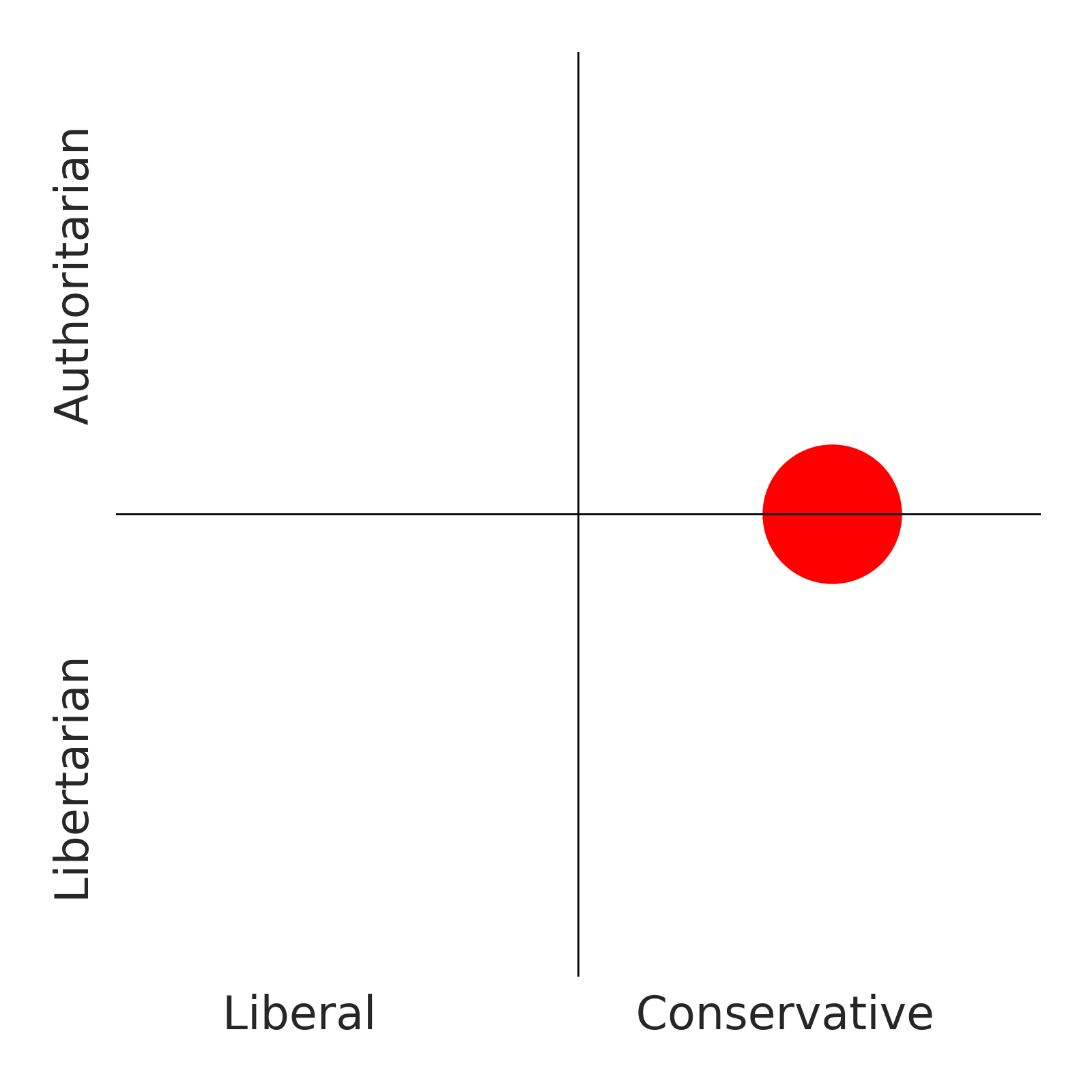
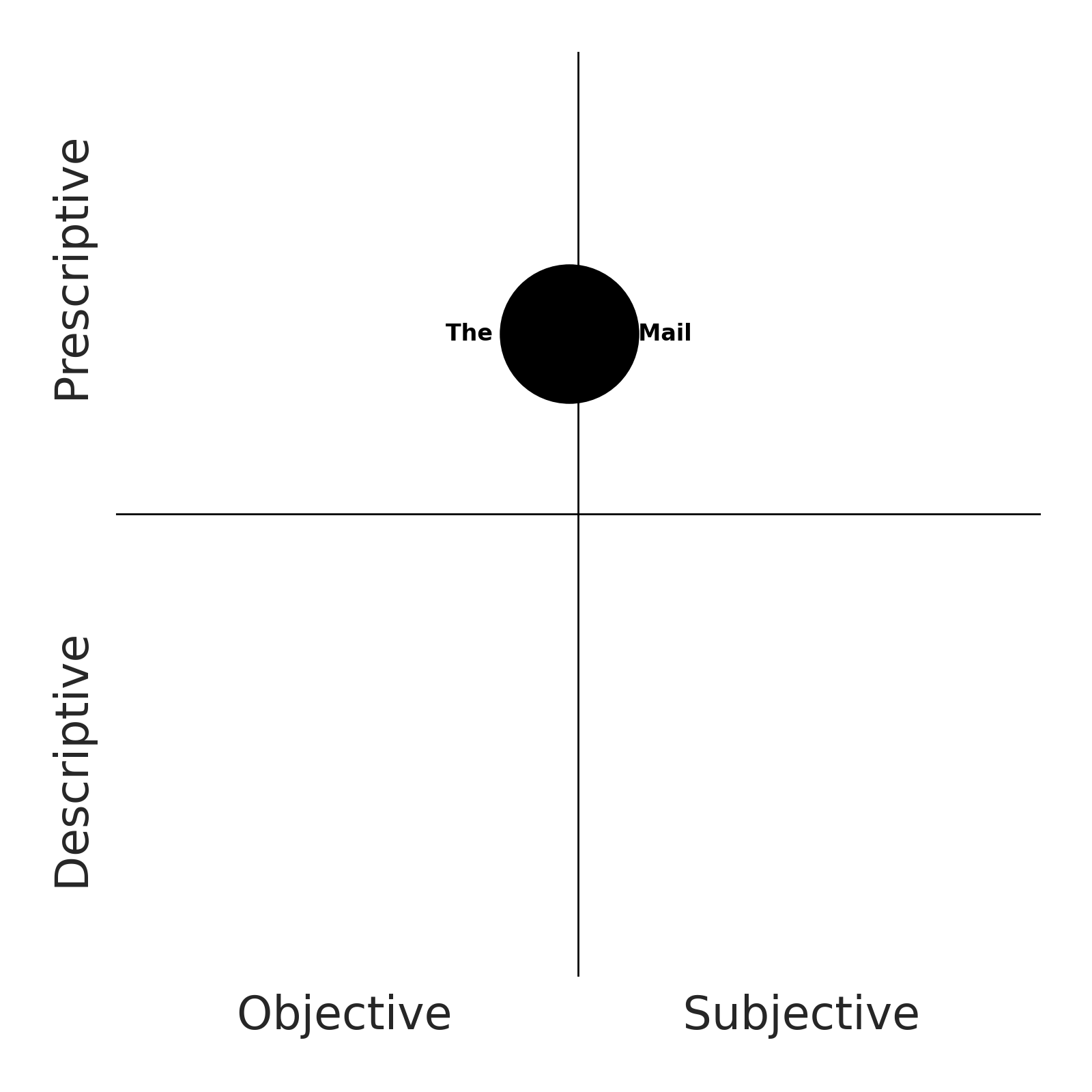
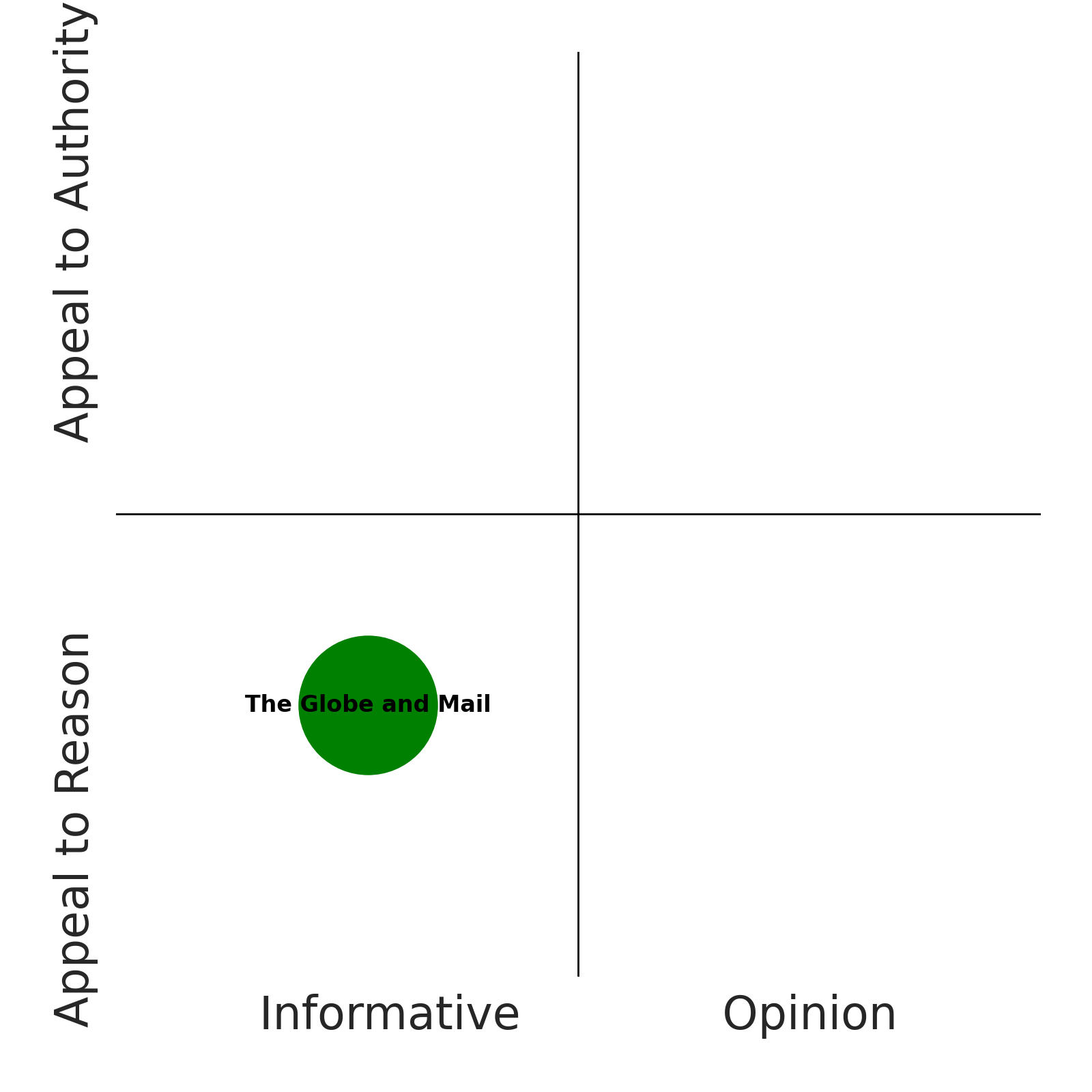
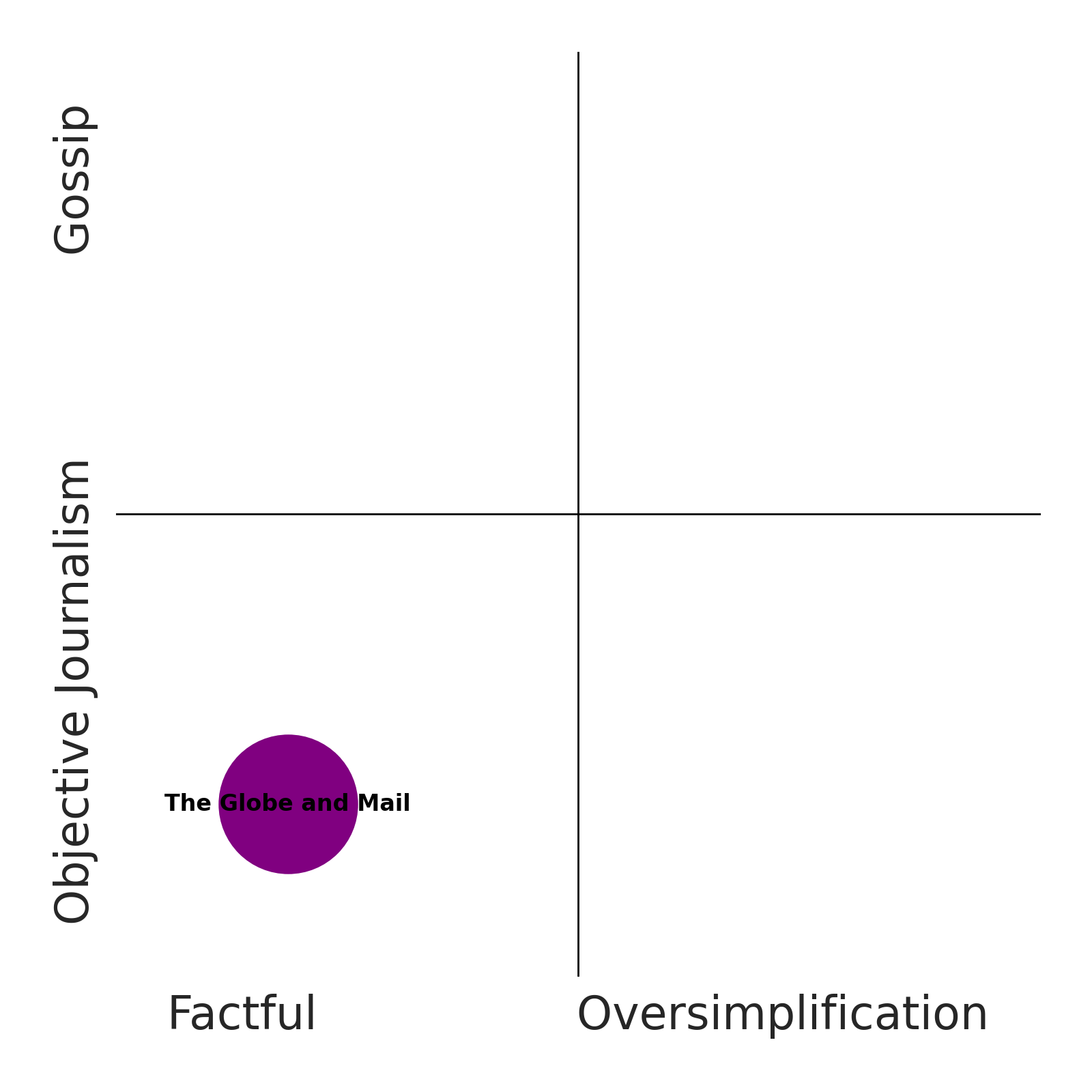
October 08, 2026 · 0 shares
The report frames Trump's Texas rally through a consistently negative lens, emphasizing a 'poor political climate,' low approval, and embattled Republicans while presenting Democratic momentum as the dominant narrative.
Texas is a reliably Republican state that Trump won in 2024 by almost 14 percentage points, and the midterm elections are less than a month away.
Automated analysis; not human reviewed. Limitations: The article text appears to be a partial aggregation that includes duplicated headline fragments and unrelated following-feed elements, which complicates assessing the intended editorial framing. · 55 of 55 available dimensions scored; omitted dimensions are not treated as neutral. · Verified supporting quotes for 0 of 55 scored dimensions.
The article text appears to be a partial aggregation that includes duplicated headline fragments and unrelated following-feed elements, which complicates assessing the intended editorial framing.
October 07, 2026 · 0 shares
The article frames Elon Musk's secession comments as foreign interference amplifying a U.S.-backed threat to Canadian unity by interleaving separatist views with critical context about Musk's business entanglements and past attacks on Canada.
Musk moved to Canada from South Africa in 1989, attended Queen's University in Kingston for two years, worked on a cousin's farm in Saskatchewan, and has called himself 'half Canadian,' with his mother born in Regina.
Automated analysis; not human reviewed. Limitations: The article's framing of pro-secession views and business context involves some interpretive weight, but the quoted material is largely attributed and verifiable within the text. · 55 of 55 available dimensions scored; omitted dimensions are not treated as neutral. · Verified supporting quotes for 10 of 55 scored dimensions.
Claim: The article blends factual reporting of statements with interpretive framing and loaded wording describing Musk.
“Early last year, he sneered at a statement from Mr. Trudeau” · exact text match
Why: The verb 'sneered' and personal-history annotations introduce subjective coloration beyond neutral reporting of events.
Claim: The article avoids tabloid-style sensationalism while using some vivid language and personality framing.
“The richest man on Earth wants Canada to break apart” · exact text match
Why: The lede is dramatic but tethered to reported statements, so sensationalism is modest, not dominant.
Claim: The article largely reports what was said and done, with limited explicit prescription beyond quoted voices.
““Our government, our Caucus, and our party support Alberta remaining in Canada,” added Alberta Premier Danielle Smith in a statement.” · exact text match
Why: Most content consists of attributed statements and factual context, with prescriptive elements confined to quotes.
Claim: The article includes lengthy personal-history and social-media-post digressions about Musk that are peripheral to the central political development.
“He has since soured on the place, his condemnation growing more strident during the years Justin Trudeau was prime minister.” · exact text match
Why: A sequence of past tweets, personal history, and Musk-Trudeau spats functions as personality-focused color beyond the core reporting, indicating gossipy framing.
Claim: The article centers on a political secession controversy and organizes material around partisan and governmental reactions.
“Elon Musk calls on Quebec, Alberta and Saskatchewan to separate from Canada.” · exact text match
Why: The subject is explicitly political, involving secession, premiers, a former deputy premier, and U.S. political figures.
Claim: The article frames foreign pro-secession support as a threat to Canadian national unity and amplifies establishment rejections while contextualizing Musk's business ties in Canada.
““The foreign interference in this campaign is unprecedented,” said Thomas Lukaszuk” · exact text match
Why: Quoting a former deputy premier characterizing foreign support as unprecedented interference, alongside official rejections and business entanglements, leans toward defending the existing Canadian establishment order.
Claim: The article's tone toward secession and Musk is somewhat negative, emphasizing threats and past hostility.
“He has since soured on the place, his condemnation growing more strident” · exact text match
Why: Emphasis on souring relations and hostile posts gives the piece a mildly negative emotional valence.
Claim: The article relies on named sources, direct quotes, and specific figures, with clear attribution for contested claims.
“Tesla sells tens of thousands of vehicles a year in Canada, and Canada is the fifth-largest market for satellite internet services provided by Starlink, a division of SpaceX, network diagnostics company Ookla reported last year.” · exact text match
Why: Frequent attribution to named individuals and sources, plus verifiable specifics, supports a credible presentation.
Claim: The article treats a province's departure from a federation primarily as a threat, emphasizing collective national unity over individual or provincial self-determination.
“has led Forever Canadian, an initiative that has campaigned for Alberta to remain in Canada” · exact text match
Why: The framing accords legitimacy mainly to remaining in the collective state, with secession cast as harmful, tilting collectivist rather than individualist.
Claim: The article juxtaposes Musk's secession support with his business stakes in Canada, a framing that may imply a material self-interest not explicitly argued.
““I hope that Canadians in their shopping practices keep in mind whom we are supporting as consumers in Canada,” he said.” · exact text match
Why: Placing a source's consumer-reciprocity remark next to a summary of Musk's Canadian market presence creates a suggestive rather than explicit causal linkage.
The article's framing of pro-secession views and business context involves some interpretive weight, but the quoted material is largely attributed and verifiable within the text.
October 14, 2026 · 0 shares
Automated analysis; not human reviewed. Limitations: The supplied text includes duplicated passages and internally inconsistent references (e.g., a 'U.S. war with Iran', U.S. midterms dated Nov. 3, and 2025/2026 dates), which limits contextual interpretation; author byline is absent. · 16 of 55 available dimensions scored; omitted dimensions are not treated as neutral. · Verified supporting quotes for 16 of 16 scored dimensions.
Claim: Housing market data is reported without partisan or ideological framing.
“Sales in the Greater Toronto Area last month declined 5.2 per cent from August on a seasonally adjusted basis, according to data from the Toronto Regional Real Estate Board.” · exact text match
Why: The central claim is a neutral, attributed market statistic rather than a political argument.
Claim: Explanations are sourced almost entirely from industry professionals and an economist.
“says Thomas Ryan, senior North America economist at Capital Economics” · exact text match
Why: Expert and industry voices supply the interpretation, a mildly elite-sourced framing.
Claim: The report mixes hard statistics with agent impressions and anecdote.
“Compared with September, 2025, sales fell 9 per cent in September and new listings dropped 14.4 per cent.” · exact text match
Counterevidence:
““This just gave buyers the permission to say, ‘let’s wait it out,’” he says.” · exact text match
Why: Data reporting is present but interpretation rests on individual agents' impressions.
Claim: Headline and subhead use dramatic braking/worry language for a market decline.
“Worries weigh on house hunters hesitant to pull the trigger” · exact text match
Why: The framing heightens tension beyond the neutral statistical content.
Claim: The fall market is framed as subdued and weighed down, despite noting active pockets.
“Mr. Molloy says the current malaise is temporary, but he expects the fall market to remain subdued against a backdrop of negative news.” · exact text match
“A jerky start as home buyers and sellers in the GTA hit the brakes” · exact text match
Why: Negative market direction dominates the framing over the noted bidding competition.
Claim: The article closes on downbeat sentiment about the year.
““People are saying 2026 is a bad year,” says Mr. Molloy. “The year is done. Let’s put a fork in it.”” · exact text match
Why: Selected quotes emphasize resignation rather than recovery, despite a 'malaise is temporary' line.
Claim: Agent advice is reported rather than endorsed by the publisher.
“He expects the pace to remain brisk this month but cautions that the results are unpredictable.” · exact text match
Why: The piece describes forecasts and advice instead of prescribing reader action.
Claim: Buyer anxieties, including extreme scenarios, are foregrounded as market drivers.
“doomsday artificial intelligence scenarios” · exact text match
Why: Alarm-laden concerns are listed prominently without quantification.
Claim: Causal claims rest on named experts and brokers rather than independent analysis.
“says Thomas Ryan, senior North America economist at Capital Economics” · exact text match
Why: Expert and industry titles are used to carry the explanatory weight.
Claim: Interpretation is anchored in official industry board data and bank-economist analysis.
“says Thomas Ryan, senior North America economist at Capital Economics” · exact text match
“according to data from the Toronto Regional Real Estate Board” · exact text match
Why: Established institutional sources supply the article's explanatory frame.
Claim: The tone skews mildly negative, stressing hesitation and slowdown.
“Worries weigh on house hunters hesitant to pull the trigger” · exact text match
“A jerky start as home buyers and sellers in the GTA hit the brakes” · exact text match
Why: Negative emotional framing appears in headline and subhead.
Claim: Reporting provides attributable statistics, named sources and acknowledged uncertainty.
“Compared with September, 2025, sales fell 9 per cent in September and new listings dropped 14.4 per cent.” · exact text match
“cautions that the results are unpredictable” · exact text match
Why: Verifiable data with attribution and stated caveats support trustworthiness within the supplied text.
Claim: Quantified, attributed data is paired with explicit acknowledgement of forecast limits.
“according to data from the Toronto Regional Real Estate Board” · exact text match
““I tell them my crystal ball has shattered,” he says.” · exact text match
Why: Empirical figures carry attribution and the piece concedes predictive uncertainty.
Claim: Forward-looking market expectations are presented as the outlook.
“he expects the fall market to remain subdued against a backdrop of negative news.” · exact text match
Why: Forecasts are attributed but still form a substantial share of the content.
Claim: Figures are attributed to a named board and source limits are acknowledged.
“according to data from the Toronto Regional Real Estate Board” · exact text match
“cautions that the results are unpredictable” · exact text match
Why: Sourcing and hedging are visible in the text, indicating fair reporting practice.
Claim: The piece distinguishes market segments and price versus volume effects rather than treating the market as uniform.
“The most severe slide occurred in the suburban 905 region, where sales of semi-detached homes fell 13.6 per cent last month compared with September of last year.” · exact text match
Why: Segment-level breakdowns show analytical nuance above average.
The supplied text includes duplicated passages and internally inconsistent references (e.g., a 'U.S. war with Iran', U.S. midterms dated Nov. 3, and 2025/2026 dates), which limits contextual interpretation; author byline is absent.
Careful, attribution-heavy legal reporting that repeatedly flags untested allegations and includes defendants' denials, with only mild dramatic coloring such as 'mounting legal troubles'.
Automated analysis; not human reviewed. Limitations: The supplied text is partly duplicated and several sentences appear truncated (e.g., the collateral and $5-million lawsuit passages), limiting completeness of extraction. · 14 of 55 available dimensions scored; omitted dimensions are not treated as neutral. · Verified supporting quotes for 0 of 14 scored dimensions.
The supplied text is partly duplicated and several sentences appear truncated (e.g., the collateral and $5-million lawsuit passages), limiting completeness of extraction.
October 06, 2026 · 0 shares
The report adopts a neutral, procedural framing of a politically sensitive MAID expansion, presenting the Liberal government's position and the internal briefing note factually without endorsing either side.
MAID first became legal in Canada in June 2016 for Canadians whose deaths were deemed "reasonably foreseeable"; a 2021 update excluded people whose sole underlying condition is mental illness, with a two-year temporary exclusion that the federal government has since delayed twice.
Automated analysis; not human reviewed. Limitations: Bias scoring is based solely on the provided text, which is a procedural political report; the absence of direct quotes from opponents of MAID expansion may affect balance assessments. · 52 of 55 available dimensions scored; omitted dimensions are not treated as neutral. · Verified supporting quotes for 52 of 52 scored dimensions.
Claim: The article originates from a Canadian outlet and focuses on Liberal government policy, but it reports the government's position alongside opposition views without adopting a clear ideological stance.
“The Liberal government will vote against a Conservative private member’s bill seeking to restrict access to medical assistance in dying for those whose sole condition is a mental disorder and lay out its own position on next steps for Canada’s MAID regime.” · exact text match
Why: The framing is broadly descriptive and includes both government and opposition perspectives, but the overall selection of facts centers on the Liberal government's actions, indicating a slight liberal tilt.
Claim: The article relies heavily on institutional actors and processes—Parliament, committees, ministers—rather than populist or grassroots framing.
“A Liberal Research Bureau briefing note sent to the party’s MPs and viewed by says the government will oppose Conservative MP Tamara Jansen’s bill when it comes up for a vote on Wednesday afternoon.” · verified after text normalization
Why: The focus on internal government briefing notes and parliamentary procedure reflects an elite, institutional perspective.
Claim: The article reports on government policy and legal restrictions regarding MAID without advocating for either individual liberty or state control.
“It seeks to amend the Criminal Code section covering MAID to read “a mental disorder is not a grievous and irremediable medical condition.”” · exact text match
Why: The reporting is neutral on the libertarian-authoritarian spectrum, simply describing legislative changes.
Claim: The article primarily reports verifiable facts, statements, and procedural details with minimal subjective commentary.
“Justice Minister Sean Fraser says he will detail 'the path forward' for MAID in Canada.” · exact text match
Why: Most content consists of attributed statements and factual descriptions of legislative actions.
Claim: The article avoids sensational language and presents the topic in a straightforward, factual manner.
“The current postponement expires on March 17, 2027.” · exact text match
Why: There is no hyperbolic or sensational framing; the tone is neutral and informative.
Claim: The article describes the political situation and does not prescribe a particular policy outcome.
“But Justice Minister Sean Fraser said on Tuesday that ahead of the vote, he’ll disclose “the path forward” for MAID in Canada.” · exact text match
Why: The reporting is descriptive of what will happen rather than advocating what should happen.
Claim: The article concerns domestic end-of-life policy, not foreign or military affairs, so dovish-hawkish bias is not applicable.
“MAID first became legal in Canada in June, 2016, for Canadians whose deaths were deemed “reasonably foreseeable.”” · exact text match
Why: The dimension is irrelevant to this topic, but the article is neutral on it. This score may be omitted due to low relevance, but here it is included as neutral.
Claim: The article does not use fear-inducing language or sensationalism.
“MAID for mental illness is not the only part of the system on the government’s radar.” · exact text match
Why: The tone is calm and informational, without fear-mongering.
Claim: The article presents claims as statements of fact or attributed positions without circular reasoning.
“The Liberal briefing note on the bill says the government’s position is that use of the phrase “mental disorder” is too broad, and, among other things, could restrict access to MAID for those already eligible, such as people with neurocognitive ailments.” · exact text match
Why: The reasoning is linear and based on stated positions rather than assuming conclusions.
Claim: The article is a political news report, not gossip or personal intrigue.
“The advocacy group Dying With Dignity Canada has spent more than two years suing Ottawa for barring access.” · exact text match
Why: The content is policy-focused, not salacious or personal.
Claim: The article mostly reports facts and attributed statements with little overt opinion.
“Though the briefing note said government – meaning cabinet – will vote against the private member’s bill, it is expected to be a free vote for backbench Liberal MPs.” · exact text match
Why: The reporting is primarily factual, though some framing choices exist.
Claim: The article is entirely about political processes and government policy.
“The Liberal government will vote against a Conservative private member’s bill seeking to restrict access to medical assistance in dying for those whose sole condition is a mental disorder and lay out its own position on next steps for Canada’s MAID regime.” · exact text match
Why: The subject is inherently political, so high political bias is inherent.
Claim: The article covers multiple perspectives and complexities without oversimplifying.
“Three senators on the committee criticized the hearing process as flawed and said the government should not accept the recommendation and instead refer the issue to the Supreme Court.” · exact text match
Why: It includes dissenting views and nuances, avoiding oversimplification.
Claim: The article cites government officials, committees, and briefing notes as sources, relying on institutional authority.
“Justice Minister Sean Fraser says he will detail 'the path forward' for MAID in Canada.” · exact text match
Why: Heavy reliance on official statements and documents reflects appeal to authority.
Claim: The article is serious and mature in tone, appropriate for the topic.
“Ten years of MAID, and suffering averted, is cause for celebration” · exact text match
Why: The quoted headline within the article may be a link to an opinion piece, but the main text is mature. The score may be slightly elevated by this quote, but overall immature bias is low.
Claim: The article does not employ circular reasoning; claims are supported by sources or stated as attributed positions.
“But other organizations, including disability advocates and some medical professionals, have argued against expansion for reasons that include the difficulty of determining if a mental illness is truly incurable.” · exact text match
Why: Arguments are presented logically without circularity.
Claim: The article covers the government's response and plans in a straightforward manner, without overemphasis.
“But Justice Minister Sean Fraser said on Tuesday that ahead of the vote, he’ll disclose “the path forward” for MAID in Canada.” · exact text match
Why: The coverage is neutral, though it does focus on the government's response.
Claim: The article does not frame any group as victims in a sensational or biased way.
“The advocacy group Dying With Dignity Canada has spent more than two years suing Ottawa for barring access.” · exact text match
Why: It reports on advocacy and legal action without victim narrative framing.
Claim: The article makes probabilistic statements about future events and leaves uncertainty where appropriate.
“On March 17, 2027, those whose sole underlying condition is a mental illness will have access to medical assistance to end their lives - unless the government legislates differently.” · exact text match
Why: The use of "unless" indicates epistemic caution about the future outcome.
Claim: The article is not spam; it is a substantive news report.
“© Copyright 2026 Inc. All rights reserved.” · verified after text normalization
Why: No spam or promotional content.
Claim: The article is not strongly ideological; it reports on political positions.
“When a similar bill came before the House of Commons in 2023, eight Liberal MPs voted in favour. But the bill failed to move ahead.” · exact text match
Why: Some ideological elements in political parties, but reporting is balanced.
Claim: The article focuses on government and parliamentary processes, reflecting an establishment perspective.
“The federal government has since twice delayed implementation, citing concerns over the readiness of the provinces and health care system to deliver access to that cohort, among other things.” · exact text match
Why: The coverage centers on official government actions and institutional decision-making.
Claim: The article is relatively unemotional in tone, though the topic is sensitive.
“Ten years of MAID, and suffering averted, is cause for celebration” · exact text match
Why: The quoted headline may evoke positive emotion, but the main text is neutral.
Claim: The article applies consistent standards to different political actors.
“Three senators on the committee criticized the hearing process as flawed and said the government should not accept the recommendation and instead refer the issue to the Supreme Court.” · exact text match
Why: No evidence of double standards.
Claim: The article cites specific sources and documents, indicating high credibility.
“A Liberal Research Bureau briefing note sent to the party’s MPs and viewed by says the government will oppose Conservative MP Tamara Jansen’s bill when it comes up for a vote on Wednesday afternoon.” · verified after text normalization
Why: Attribution to internal documents and officials enhances credibility.
Claim: The article presents policy positions and procedural facts in a calm, measured manner without emotional or irrational appeals.
“Mr. Fraser spent the summer doing his own consultations on the issues following the committee’s findings.” · exact text match
Why: The tone is deliberative and fact-oriented, though the subject matter involves emotionally charged end-of-life issues.
Claim: The article is not advertorial; it is news.
“Politics Insider: Ottawa to ban MAID solely for mental illness” · exact text match
Why: No promotional intent.
Claim: The article relies on medical and legal expertise, aligning with scientific reasoning.
“The MAID provisions in the Criminal Code use the term “mental illness,” which the government has previously explained as a term meant to capture conditions that fall within the domain of psychiatry.” · exact text match
Why: References to psychiatry and legal definitions indicate scientific/empirical basis.
Claim: The article includes some speculation about future events, such as the 2027 date and the government's plans.
“On March 17, 2027, those whose sole underlying condition is a mental illness will have access to medical assistance to end their lives - unless the government legislates differently.” · exact text match
Why: Reporting on planned future implementation is speculative to a degree.
Claim: The article does not use manipulative techniques; it presents facts and attributions.
“The Liberal briefing note on the bill says the government’s position is that use of the phrase “mental disorder” is too broad, and, among other things, could restrict access to MAID for those already eligible, such as people with neurocognitive ailments.” · exact text match
Why: Straightforward reporting without loaded framing.
Claim: The article appears to be human-written, with no clear AI indicators.
“Justice Minister Sean Fraser says he will detail 'the path forward' for MAID in Canada.” · exact text match
Why: The prose style is typical of human journalism, but the possibility of AI assistance cannot be fully ruled out from text alone.
Claim: The article cites specific sources, documents, and statements, demonstrating transparent sourcing.
“A Liberal Research Bureau briefing note sent to the party’s MPs and viewed by says the government will oppose Conservative MP Tamara Jansen’s bill when it comes up for a vote on Wednesday afternoon.” · verified after text normalization
Why: Attribution to a briefing note and named officials indicates fair and honest reporting practices.
Claim: The article is well-structured, informative, and includes relevant details.
“It seeks to amend the Criminal Code section covering MAID to read “a mental disorder is not a grievous and irremediable medical condition.”” · exact text match
Why: Clear reporting with context and specifics indicates above-average intelligence.
Claim: The article does not exhibit delusional thinking; it reports on real-world policy.
“The case remains before the courts.” · exact text match
Why: Rational and factual content.
Claim: The article is unrelated to terrorism and contains no such bias.
“MAID for mental illness is not the only part of the system on the government’s radar.” · exact text match
Why: Topic is domestic health policy, no terrorism connection.
Claim: The article does not discuss fraud or deceptive gain.
“Ottawa conducted national consultations on advance directives last year but has yet to signal a direction.” · exact text match
Why: No fraud-related content.
Claim: The article does not contain Marxist or class-conflict analysis.
“The MAID provisions in the Criminal Code use the term “mental illness,” which the government has previously explained as a term meant to capture conditions that fall within the domain of psychiatry.” · exact text match
Why: No Marxist framing present.
Claim: The article has no connection to Islamist ideology.
“Catholic nuns end affiliation with Nova Scotia hospital, clearing way for MAID, abortion services” · exact text match
Why: No Islamist content; the mention of Catholic nuns is incidental.
Claim: The article does not contain anti-Semitic content.
“Morning Update: Arrest made in connection to Tumbler Ridge” · exact text match
Why: No anti-Jewish references.
Claim: The article does not contain anti-LGBT content.
“Politics Insider: Ottawa to ban MAID solely for mental illness” · exact text match
Why: No LGBT-related content.
Claim: The article does not contain racist content.
“Authors and topics you follow will be added to your personal news feed in Following.” · exact text match
Why: No racial references or generalizations.
Claim: The article does not contain woke identity politics framing.
“MAID first became legal in Canada in June, 2016, for Canadians whose deaths were deemed “reasonably foreseeable.”” · exact text match
Why: Focus is on legal and medical criteria, not identity groups.
Claim: The article does not advocate cruelty; it reports on policy debates.
“The advocacy group Dying With Dignity Canada has spent more than two years suing Ottawa for barring access.” · exact text match
Why: Neutral reporting on a sensitive topic.
Claim: The article does not engage in virtue signaling.
“The federal government has not challenged Quebec, but it has also not amended the part of the law requiring patients to have capacity to consent immediately before MAID is provided.” · exact text match
Why: Neutral, policy-focused reporting.
Claim: The article does not promote conspiracy theories.
“The case remains before the courts.” · exact text match
Why: No conspiratorial content.
Claim: The article reports on MAID expansion and opposition but does not advocate for self-harm or ignore severe consequences.
“But other organizations, including disability advocates and some medical professionals, have argued against expansion for reasons that include the difficulty of determining if a mental illness is truly incurable.” · exact text match
Why: The inclusion of dissenting views reduces this bias, but the topic involves end-of-life choices, so a low score is assigned.
Claim: The article does not scapegoat any group.
“But other organizations, including disability advocates and some medical professionals, have argued against expansion for reasons that include the difficulty of determining if a mental illness is truly incurable.” · exact text match
Why: No blame directed at a specific group.
Claim: The article does not apply double standards; it reports on different actors' positions neutrally.
“Though the briefing note said government – meaning cabinet – will vote against the private member’s bill, it is expected to be a free vote for backbench Liberal MPs.” · exact text match
Why: No evidence of inconsistent standards.
Claim: The article supports reasoned, evidence-based policy discussion, not anti-enlightenment views.
“Three senators on the committee criticized the hearing process as flawed and said the government should not accept the recommendation and instead refer the issue to the Supreme Court.” · exact text match
Why: Calls for judicial review and evidence-based process align with enlightenment values.
Bias scoring is based solely on the provided text, which is a procedural political report; the absence of direct quotes from opponents of MAID expansion may affect balance assessments.
October 14, 2026 · 0 shares
Framing gives heaviest weight to higher-education leaders who cast federal study-permit caps and 'opaque rules' as damaging Canada's reputation and Atlantic universities, while still carrying the government's rebuttal and a first-year enrolment rebound.
Automated analysis; not human reviewed. Limitations: No author byline or publication date is supplied; the lede blends reported figures with evaluative framing, and the headline's 'half of 2024 level' versus the body's 'nearly 48 per cent' and 18-per-cent year-over-year figures rest on different baselines. · 13 of 55 available dimensions scored; omitted dimensions are not treated as neutral. · Verified supporting quotes for 13 of 13 scored dimensions.
Claim: Public backlash over housing and services is summarized abstractly while elite institutional voices speak at length.
“sparked a public backlash over temporary residents competing for housing, jobs and health care” · exact text match
Why: One clause covers public concerns while multiple university leaders receive direct quotes, tilting voice toward elites.
Claim: Nearly all claims are attributed to named sources or official data, with the publisher's own evaluation limited to framing phrases.
“according to new data released Wednesday” · exact text match
“spokesperson Jeffrey MacDonald said.” · exact text match
Counterevidence:
“a reflection of the body blow Canada’s reputation has suffered” · exact text match
Why: Systematic attribution supports objectivity; the lede's evaluative metaphor is a mild subjective intrusion.
Claim: Mildly dramatic wording amplifies the decline though figures and attribution dominate.
“a reflection of the body blow Canada’s reputation has suffered” · exact text match
“the most precipitous decline in foreign students” · exact text match
Why: Vivid metaphors and superlatives add drama beyond plain data description.
Claim: Framing stresses steep losses in international enrolment and tuition dependence over offsets.
“East Coast schools that used to rely on high tuition paid by foreign students continue to struggle” · exact text match
“nearly 48 per cent since 2024” · exact text match
Counterevidence:
“Overall enrolment among full-time, first-year students was up by 3.4 per cent across the 16 universities” · exact text match
Why: Decline figures and struggle framing dominate; the 3.4 per cent domestic gain is the sole positive offset.
Claim: Tone emphasizes reputational damage, unpredictability and institutional struggle, tempered by one positive enrolment note.
“Canada’s tarnished reputation” · exact text match
“continue to struggle” · exact text match
Counterevidence:
“there was some encouraging news for those institutions in the new data” · exact text match
Why: Negative framing recurs across the lede and sourced comments while positives are minimal.
Claim: Unusually large, specific figures distinguish this regional enrolment report.
“nearly 7,000 full-time visa students studied at the institution in Sydney, N.S. This year, 1,388 full-time visa students are enrolled at Cape Breton University.” · exact text match
Why: A roughly 80 per cent single-institution collapse is a striking, data-rich detail.
Claim: Reporting is mostly factual with a few evaluative framing phrases in the publisher's own voice.
“a steeper decline than the federal government intended and a reflection of the body blow Canada’s reputation has suffered” · exact text match
Why: The lede asserts intent and reputational harm as fact, a mild editorial intrusion in otherwise attributed reporting.
Claim: Substance centers on federal immigration policy and its authors, including the previous Liberal government.
“In January of 2024, the Liberal government of Justin Trudeau began capping the number of international study permits it would grant annually” · exact text match
Why: The core subject is a federal policy decision by a named partisan government, though coverage stays policy-focused rather than campaign-style.
Claim: Sourcing is dominated by university presidents, sector lobby chiefs, and official spokespersons.
“said Gabriel Miller, president and chief executive officer of Universities Canada, which represents postsecondary institutions nationwide” · exact text match
Why: Institutional insiders supply most characterization of the policy's effects, tilting framing toward establishment interests.
Claim: Named sources, official survey data, an Auditor-General citation, and a departmental rebuttal support reliability.
“according to new data released Wednesday” · exact text match
“In a March report on international student program reforms, federal Auditor-General Karen Hogan noted” · exact text match
Why: Multiple independent attributions and official data underpin the central figures; stakeholder claims remain labeled.
Claim: Reporting relies on survey data, specific figures, and responses from both the sector and the federal department rather than rhetoric.
“an 18-per-cent reduction from 16,795 at the same time last year, according to new data released Wednesday” · exact text match
“have shown promising initial results” · exact text match
Why: Quantified data and attributed government and sector positions indicate evidence-based reasoning with no logical fallacies evident.
Claim: Contested claims are attributed, the government's rebuttal is included, and the survey is flagged as preliminary.
“according to a preliminary enrolment survey” · exact text match
“Designated learning institutions are responsible for their own recruitment and enrolment practices, which affect study permit approval rates” · exact text match
Why: Attribution, inclusion of the criticized party's response, and the preliminary caveat are visible fairness signals.
Claim: The report synthesizes survey data, stakeholder critiques, an official rebuttal, and an audit finding into a coherent account.
“The Association of Atlantic Universities’ annual enrolment survey offers one of the first looks at postsecondary education trends in Canada for the 2026-27 academic year.” · exact text match
Why: Layered sourcing and contextualization of both causes and contested rejection rates show competent synthesis.
No author byline or publication date is supplied; the lede blends reported figures with evaluative framing, and the headline's 'half of 2024 level' versus the body's 'nearly 48 per cent' and 18-per-cent year-over-year figures rest on different baselines.
October 01, 2026 · 0 shares
Coverage leads with and amplifies the CEO's characterization of Ottawa's lawsuit threat as lacking business sense while preserving attributed government opposition, yielding a business-first but balanced frame.
Automated analysis; not human reviewed. Limitations: The supplied text appears to be an assembled web scrape with duplicate passages and an incomplete source name in 'In an interview with ___ on Thursday'; no byline or publication date was available. · 4 of 55 available dimensions scored; omitted dimensions are not treated as neutral. · Verified supporting quotes for 1 of 4 scored dimensions.
Claim: The article mostly transmits attributed statements and quotes rather than offering unmarked evaluation.
“'The company made representations, and has legal obligations for employment,' Mr. Carney said in a news conference on Wednesday.” · not found in supplied text
“Mr. Goncalves said he declined the government's offer because it wouldn't have addressed the root problem, comparing the situation to a doctor offering a sick patient cash instead of prescribing a drug to cure their illness.” · verified after text normalization
Why: Repeated attribution and direct quotation give the report an objective, news-style register.
Claim: The article's central subject is a federal government legal threat against a corporation during a trade war.
“Now with hundreds of layoffs imminent, Prime Minister Mark Carney said that the government is considering legal action against Cliffs for not living up to its employment guarantees.” · exact text match
“'We intend to use all powers that we have, and pursue them to the fullest extent of the law.'” · not found in supplied text
Why: Government officials, legal enforcement, and trade policy are central to the reported event.
Claim: The article identifies its sources by name, title, and occasion, and uses attributed data.
“Gabrielle Landry, deputy director, media relations with the Office of Industry Minister Mélanie Joly, told The Globe earlier this week that Cliffs' decision was 'extremely disappointing.'” · not found in supplied text
“At the time, Stelco employed approximately 2,400 people in Hamilton and Nanticoke, according to data from Ron Wells, president of United Steelworkers Local 1005, and that number remains roughly the same.” · exact text match
Why: Named sources with roles and attributed data are visible; no correction note is present, but the reporting supplies verifiable sourcing.
Claim: Headline and lead framing present the CEO's business critique of Ottawa's legal threat as the primary lens.
“Cleveland-Cliffs CEO questions logic of Ottawa potentially suing over Stelco layoffs” · exact text match
“Cleveland-Cliffs Inc. CEO Lourenco Goncalves says Ottawa's potential lawsuit against the American steelmaker for allegedly violating employment commitments in Canada makes no business sense, promising that laid-off workers will be called back if the trade war ends soon.” · verified after text normalization
Counterevidence:
“Now with hundreds of layoffs imminent, Prime Minister Mark Carney said that the government is considering legal action against Cliffs for not living up to its employment guarantees.” · exact text match
Why: The opening emphasizes the CEO's 'business sense' framing and his recall promise, though later paragraphs include government criticism.
The supplied text appears to be an assembled web scrape with duplicate passages and an incomplete source name in 'In an interview with ___ on Thursday'; no byline or publication date was available.
Liberal-leaning, pro-renewable energy bias frames oil industry leaders as economically and environmentally risky, relies on official emissions data and academic studies, and foregrounds government-led transition while downplaying industry counterpoints.
News coverage of Catherine McKenna's critique of Canada's oil industry, citing official emissions data, a 900% growth in oil sands production since 1990, a 50% rise in oil prices linked to Iran's war, and calls for a rapid renewable energy transition.
Environmental policy-supporting; oil industry critique.
The travelogue frames the United States under its current administration as an authoritarian, corrupt failure and Canada as a humane ideal, blending a family vacation narrative with sustained political condemnation of the author's home country.
The author is an American writer living in Boston; the article is a Globe and Mail travel feature describing a summer family trip to Canada.
Automated analysis; not human reviewed. Limitations: The article is a first-person travelogue whose political framing is inseparable from the author's opinion; some quoted material appears duplicated and the piece includes promotional and sponsor disclosure. · 55 of 55 available dimensions scored; omitted dimensions are not treated as neutral. · Verified supporting quotes for 53 of 55 scored dimensions.
Claim: The article frames the current U.S. administration as authoritarian and corrupt while idealizing Canadian social provision.
“we’ve become increasingly horrified by our current administration’s descent into authoritarianism, corruption and juvenile belligerence” · exact text match
“health care is a human right and not some kind of administrative torture chamber” · exact text match
Why: The author’s critique of the administration and praise for Canadian health care align with liberal positions.
Claim: The article exhibits mild elitism through urbanist and cultural references oriented to educated travelers.
“A bilingual oasis in the middle of the St. Lawrence, Montreal is a walkable, welcoming city designed for people of all types to enjoy people things.” · not found in supplied text
“urbanist T. J. Maguire gave us a tour of the Halifax waterfront” · exact text match
Why: The framing centers on curated cultural and urbanist experiences typical of elite travel writing.
Claim: The author critiques U.S. authoritarianism yet endorses collective public health provision, indicating mixed leanings.
“our current administration’s descent into authoritarianism” · exact text match
“health care is a human right” · exact text match
Why: Anti-authoritarian critique coexists with support for a collective health-care norm.
Claim: The article is heavily first-person and evaluative rather than neutral reporting.
“we’ve become increasingly horrified” · exact text match
“the best travel rarely does” · exact text match
Why: Pervasive personal opinion and emotion signal subjective framing.
Claim: The tone is personal and appreciative rather than sensationalized.
“Oh, Canada!” · exact text match
“Basically, Canada in a nutshell.” · exact text match
Why: Warm, admiring language is not sensationalized alarm.
Claim: No market or investment framing is present.
“The Ocean is not a fancy train.” · exact text match
Why: Travel content lacks financial-market direction.
Claim: The trip is portrayed positively despite political pessimism about the U.S.
“None of us wanted to leave.” · exact text match
“I was experiencing what I came to call a “Canadaze”– a trance-like state where you realize that this is how things can be, how things should be.” · exact text match
Why: Strong positive travel sentiment dominates.
Claim: The travelogue combines family narrative, culture, and politics in an engaging way.
“We contemplated giving up our lives back home to form a roving family fiddle collective.” · exact text match
Why: Anecdotes and vivid scenes add interest.
Claim: The article moves beyond description to prescribe how a country should be run.
“how things should be” · exact text match
“health care is a human right” · exact text match
Why: Normative statements about national policy are prescriptive.
Claim: The article uses some fear-tinged language about U.S. politics without alarmist baiting.
“our current administration’s descent into authoritarianism” · exact text match
Why: Political fear is expressed but not sensationalized.
Claim: The article assumes rather than argues that the U.S. administration is authoritarian and corrupt.
“our current administration’s descent into authoritarianism, corruption and juvenile belligerence” · exact text match
Why: The claim is asserted as a premise without supporting detail.
Claim: Minor celebrity/history asides appear, but gossip is not central.
“John Lennon and Yoko Ono staged their famous 1969 Bed-Ins for Peace” · exact text match
Why: Historical celebrity reference is incidental.
Claim: The article is saturated with the author’s opinions and evaluations.
“This didn’t really make sense, but then the best travel rarely does.” · exact text match
Why: Subjective commentary is pervasive.
Claim: The travelogue is explicitly political in its framing of the U.S. and Canada.
“we’ve become increasingly horrified by our current administration’s descent into authoritarianism, corruption and juvenile belligerence” · exact text match
Why: Political judgments are a major thread.
Claim: The article simplifies a complex U.S.-Canada comparison into a moral contrast.
“Basically, Canada in a nutshell.” · exact text match
Why: Broad characterization compresses nuance.
Claim: The article cites an urbanist expert but does not lean heavily on authority.
“urbanist T. J. Maguire gave us a tour” · exact text match
Why: Expert mention is casual and limited.
Claim: The article includes playful and juvenile humor but remains largely mature.
““Mississippi hotdog” rhythm” · exact text match
Why: Light humor does not dominate.
Claim: The political framing rests on asserted conclusions about the administration.
“descent into authoritarianism, corruption and juvenile belligerence” · exact text match
Why: Claims are asserted rather than argued, mildly circular.
Claim: The article includes only the author’s perspective, not counterviews.
“Like many of our fellow citizens, we’ve become increasingly horrified” · exact text match
Why: No opposing response is sought.
Claim: The author casts his family as distressed citizens fleeing a failing country.
“the last place I wanted to take my family on vacation was home” · exact text match
Why: Mild victim framing regarding U.S. conditions.
Claim: The author asserts strong political and social conclusions without extensive support.
“health care is a human right and not some kind of administrative torture chamber” · exact text match
Why: Confident normative claims exceed travelogue evidence.
Claim: The article is not spam but includes promotional travel recommendations.
“Plan your trip-of-a-lifetime with our handy bucket-list travel guide” · exact text match
Why: Promotional links reduce informational purity.
Claim: The article advances a liberal anti-Trump, pro-Canada ideological frame.
“our current administration’s descent into authoritarianism, corruption and juvenile belligerence” · exact text match
Why: Sustained ideological judgment shapes the narrative.
Claim: The article mildly backs mainstream Canadian institutions while criticizing the U.S. administration.
“Imagine a country that looks after its citizens and its visitors” · exact text match
Why: Pro-Canadian institutional praise is present but not strongly partisan.
Claim: The overall emotional tone is positive toward Canada and negative toward the U.S.
“I could not stop smiling. I even got a bit weepy.” · exact text match
Why: Emotion is clearly one-directional.
Claim: The article applies harsher standards to the U.S. than to Canada without comparable scrutiny.
“health care is a human right and not some kind of administrative torture chamber” · exact text match
Why: One-sided comparison suggests a double standard.
Claim: The article is a disclosed first-person travelogue with limited sourcing.
“which did not review or approve this article” · exact text match
Why: Disclosure and clear genre support moderate credibility.
Claim: The article contains some emotional and subjective passages but retains generally reasoned travel narration.
“I could not stop smiling. I even got a bit weepy.” · exact text match
“Like many of our fellow citizens, we’ve become increasingly horrified” · exact text match
Why: Emotional reactions are present but balanced by factual travel detail.
Claim: The article has mild advertorial elements including sponsor support disclosure.
“The writer received some hotel and meal support from Montreal Tourism and Discover Halifax” · exact text match
Why: Industry sponsorship is present though disclosed.
Claim: No strong pro- or anti-corporate stance is evident.
“None of us wanted to leave.” · exact text match
Why: Corporate framing is absent.
Claim: The article references hydrofoil experiments and technology without superstition.
“pursued a lifelong obsession with hydrofoil boats” · exact text match
Why: Scientific/technological references are neutral.
Claim: The article praises collective social provision, indicating mild collectivist sympathy.
“health care is a human right” · exact text match
Why: Support for public health care leans collectivist.
Claim: The article makes some forward-looking and wistful speculations.
“We contemplated giving up our lives back home” · exact text match
Why: Speculation is mild and personal.
Claim: No strong manipulative techniques are observable.
“None of us wanted to leave.” · exact text match
Why: Emotional appeal is present but gentle.
Claim: The article contains personal anecdotes and idiosyncratic detail typical of human authorship.
“We contemplated giving up our lives back home to form a roving family fiddle collective.” · exact text match
Why: Strong human-style personal voice.
Claim: The article discloses sponsor support and notes editorial independence.
“The writer received some hotel and meal support from Montreal Tourism and Discover Halifax, which did not review or approve this article.” · exact text match
Why: Explicit disclosure is an integrity signal.
Claim: The article shows cultural literacy and coherent structure but is not analytically deep.
“a collision of cultures and empires and misty seascapes” · exact text match
Why: Descriptive sophistication is evident.
Claim: No delusional framing is evident.
“None of us wanted to leave.” · exact text match
Why: Not applicable.
Claim: No endorsement or discussion of terrorism is present.
“None of us wanted to leave.” · exact text match
Why: Irrelevant to content.
Claim: No fraud-related framing is present.
“The writer received some hotel and meal support” · exact text match
Why: Sponsorship disclosure is not fraud advocacy.
Claim: There is mild sympathy for collective social provision but no Marxist analysis.
“health care is a human right” · exact text match
Why: Welfare support alone is insufficient for Marxist classification.
Claim: No Islamist advocacy is present.
“None of us wanted to leave.” · exact text match
Why: Not applicable.
Claim: No anti-Jewish content is present.
“None of us wanted to leave.” · exact text match
Why: Not applicable.
Claim: No anti-LGBT content is present.
“None of us wanted to leave.” · exact text match
Why: Not applicable.
Claim: No racial generalization or hostility is present.
“comedians of different ethnicities unpacking their different upbringings” · exact text match
Why: Ethnic reference is neutral.
Claim: The article mentions diversity and Indigenous culture but does not center identity-power framing.
“Scottish, Acadian and Mi’kmaq cultures intermingle” · exact text match
Why: Cultural mention without differential moral standards or remedies.
Claim: No cruel content is present.
“None of us wanted to leave.” · exact text match
Why: Not applicable.
Claim: The article signals virtue through praise of Canadian kindness and health care.
“where kindness is still cool, and health care is a human right” · exact text match
Why: Moralized praise functions as virtue signaling.
Claim: No conspiratorial thinking is promoted.
“None of us wanted to leave.” · exact text match
Why: Not applicable.
Claim: No compassion framing that accepts severe self-harm is evident.
“None of us wanted to leave.” · exact text match
Why: Not applicable.
Claim: The article blames the current U.S. administration for national malaise.
“our current administration’s descent into authoritarianism, corruption and juvenile belligerence” · exact text match
Why: Political blame is targeted but mild.
Claim: No clearly incompatible standards are applied by the publisher.
“None of us wanted to leave.” · exact text match
Why: Insufficient evidence of double standards.
Claim: The article does not reject reason or evidence, though it idealizes a foreign system.
“health care is a human right” · exact text match
Why: Normative praise but not anti-enlightenment.
The article is a first-person travelogue whose political framing is inseparable from the author's opinion; some quoted material appears duplicated and the piece includes promotional and sponsor disclosure.
August 26, 2026 · 0 shares
Automated analysis; not human reviewed. · 2 of 54 available dimensions scored; omitted dimensions are not treated as neutral. · Verified supporting quotes for 1 of 2 scored dimensions.
Claim: The article prescribes specific actions for readers to take.
“You can create guaranteed, predictable financial benefits by focusing on saving taxes.” · exact text match
“Each pillar attacks the tax bill differently, but the objective is the same: leaving more dollars in your hands.” · not found in supplied text
Why: The article gives direct advice on tax strategies, explicitly instructing readers to use them.
Claim: The piece is an opinion/advice column rather than neutral reporting.
“Over the years, I’ve described the five pillars of tax planning” · exact text match
“That sounds right to me.” · exact text match
Why: The author uses first-person perspective and provides subjective recommendations, clearly marked as opinion.
September 28, 2026 · 0 shares
Promotional framing that presents one large-cap pick as having upside, two as risky, and touts an AI system's past returns to drive free report signups.
Automated analysis; not human reviewed. Limitations: The analysis relies only on this promotional teaser; the referenced free reports and AI methodology are not included for verification. · 12 of 55 available dimensions scored; omitted dimensions are not treated as neutral. · Verified supporting quotes for 12 of 12 scored dimensions.
Claim: The text delivers evaluative stock recommendations rather than neutral reporting.
“here is one large-cap stock that still has big upside potential and two whose momentum may slow.” · exact text match
Why: The sentence explicitly assesses upside potential and momentum, which are subjective judgments.
Claim: The text uses dramatic, alarming language to describe market conditions.
“AI is taking down whole sectors with no warning.” · exact text match
Why: The phrase characterizes market moves as sudden and destructive, heightening drama without specific detail.
Claim: The text instructs readers which stock to target and which to avoid.
“1 Large-Cap Stock to Target This Week and 2 We Find Risky.” · exact text match
Why: The headline uses imperative 'to target' and evaluative 'risky,' prescribing action.
Claim: The text invokes fear of sudden market losses.
“AI is taking down whole sectors with no warning.” · exact text match
Why: It warns of imminent, broad sector destruction without context or probability, creating alarm.
Claim: The content is predominantly subjective opinion and promotion.
“here is one large-cap stock that still has big upside potential and two whose momentum may slow.” · exact text match
Why: The central claims are the author's qualitative assessments, not verified facts.
Claim: The text reduces 'better opportunities' to a single forward valuation multiple.
“Sysco is trading at $78.43 per share, or 15.4x forward P/E. Dive into our free research report to see why there are better opportunities than SYY.” · exact text match
Why: It offers only the forward P/E before asserting better opportunities exist, omitting broader analysis.
Claim: The text asserts the AI system will keep producing winning picks.
“Each week it produces 6 new names that pass the same tests.” · exact text match
Why: The present-tense 'produces' and 'pass' project ongoing predictive reliability beyond the supplied evidence.
Claim: The text is a promotional solicitation with repeated calls to action.
“Get Our Top 6 Stocks for Free HERE.” · exact text match
Why: The main actionable content is a free-list offer, reflecting spam-like promotional structure.
Claim: The text makes high-stakes performance claims without sourcing, methodology, or hedging.
“Our AI system flagged Palantir before it ran 1,662% between October 2022 and February 2026.” · exact text match
Why: The extraordinary backtest claim is presented as fact with no verifiable basis.
Claim: The text is structured as an advertisement for StockStory's research reports.
“Dive into our free research report to see why there are better opportunities than SYY.” · exact text match
Why: The line directs readers to a free report as the source of the claimed insight.
Claim: The text forecasts future upside and momentum slowdowns.
“one large-cap stock that still has big upside potential and two whose momentum may slow.” · exact text match
Why: The statements are forward-looking predictions about stock performance.
Claim: The text combines alarming claims with free-report offers to steer reader behavior.
“AI is taking down whole sectors with no warning.” · exact text match
“Get Our Top 6 Stocks for Free HERE.” · exact text match
Why: Juxtaposing panic-inducing language with an immediate call-to-action is an observable persuasion technique.
The analysis relies only on this promotional teaser; the referenced free reports and AI methodology are not included for verification.
A promotional episode transcript that packages personal investing philosophy and stock-picking testimonials around ChatGPT-generated questions, while embedding a Starbucks ad and Motley Fool subscription marketing.
Automated analysis; not human reviewed. Limitations: The supplied text is a self-promotional podcast transcript with unaudited performance claims and no independent reporting, limiting verification of investment facts. · 8 of 55 available dimensions scored; omitted dimensions are not treated as neutral. · Verified supporting quotes for 6 of 8 scored dimensions.
Claim: The piece is a first-person monologue of personal opinions, preferences, and hypotheticals.
“My gut answer, I realized, is invalid because my gut answer was going to be that I pick ticker symbol SPY.” · exact text match
Why: The host repeatedly frames answers in terms of personal instinct, experience, and preferred hypothetical choices.
Claim: The publisher frames equities and growth stocks as likely to keep rising strongly.
“I expect the market to be up somewhere 7, 8, 9, 10, 11% annualized over the course of the next 20 years.” · exact text match
Why: The host expresses explicit bullish expectations and the surrounding promotional copy highlights monster returns.
Claim: The text is consistently optimistic about future investing, cooperation, and human progress.
“There's always blue sky above, but sometimes you just have to get your head up above the clouds. To see it.” · exact text match
Why: The closing advice emphasizes optimism, trust, and winning for everyone rather than risks or downsides.
Claim: The host gives direct investing instructions and advice to listeners.
“You will never get a 100-bagger unless you're willing to hold through probably at least a few drawdowns of 50% or more.” · exact text match
Why: The monologue regularly shifts from describing personal practice to telling listeners what they must do.
Claim: The content is heavily opinionated, with emphatic personal judgments about companies and markets.
“I don't think there's ever been anybody more innovative on planet Earth. I'm dead serious about that at scale than Elon Musk.” · exact text match
Why: The text is built around subjective declarations rather than verified reporting or data.
Claim: The text contains direct advertising and repeated Motley Fool subscription promotions.
“When you're ready to invest, check out this top 10 list of stocks to buy.” · exact text match
“ADVERTISEMENT: Home is where it all begins, and Starbucks is the home of autumn.” · exact text match
Why: A large share of the text is promotional copy, including an explicit ad break and subscription pitches with past-return claims.
Claim: The episode is structured around hypothetical scenarios and long-range future forecasts.
“You may learn the exact December 31st, 2046 stock price of one company. But you're forbidden from ever owning it.” · not found in supplied text
Why: Several questions ask for predictions and counterfactual choices about future stock prices and principles.
Claim: The publisher shows visible honesty signals, including position disclosures and admissions of past failures.
“David Gardner has positions in Alphabet, Amazon, Intuitive Surgical, Netflix, Palantir Technologies, Rocket Lab, and Tesla.” · exact text match
“I've had some real dogs, too.” · not found in supplied text
Why: The text discloses holdings and acknowledges losses and mistakes, which are internally observable fairness signals.
The supplied text is a self-promotional podcast transcript with unaudited performance claims and no independent reporting, limiting verification of investment facts.
September 28, 2026 · 0 shares
Promotional framing that presents one large-cap pick as having upside, two as risky, and touts an AI system's past returns to drive free report signups.
Automated analysis; not human reviewed. Limitations: The analysis relies only on this promotional teaser; the referenced free reports and AI methodology are not included for verification. · 12 of 55 available dimensions scored; omitted dimensions are not treated as neutral. · Verified supporting quotes for 12 of 12 scored dimensions.
Claim: The text delivers evaluative stock recommendations rather than neutral reporting.
“here is one large-cap stock that still has big upside potential and two whose momentum may slow.” · exact text match
Why: The sentence explicitly assesses upside potential and momentum, which are subjective judgments.
Claim: The text uses dramatic, alarming language to describe market conditions.
“AI is taking down whole sectors with no warning.” · exact text match
Why: The phrase characterizes market moves as sudden and destructive, heightening drama without specific detail.
Claim: The text instructs readers which stock to target and which to avoid.
“1 Large-Cap Stock to Target This Week and 2 We Find Risky.” · exact text match
Why: The headline uses imperative 'to target' and evaluative 'risky,' prescribing action.
Claim: The text invokes fear of sudden market losses.
“AI is taking down whole sectors with no warning.” · exact text match
Why: It warns of imminent, broad sector destruction without context or probability, creating alarm.
Claim: The content is predominantly subjective opinion and promotion.
“here is one large-cap stock that still has big upside potential and two whose momentum may slow.” · exact text match
Why: The central claims are the author's qualitative assessments, not verified facts.
Claim: The text reduces 'better opportunities' to a single forward valuation multiple.
“Sysco is trading at $78.43 per share, or 15.4x forward P/E. Dive into our free research report to see why there are better opportunities than SYY.” · exact text match
Why: It offers only the forward P/E before asserting better opportunities exist, omitting broader analysis.
Claim: The text asserts the AI system will keep producing winning picks.
“Each week it produces 6 new names that pass the same tests.” · exact text match
Why: The present-tense 'produces' and 'pass' project ongoing predictive reliability beyond the supplied evidence.
Claim: The text is a promotional solicitation with repeated calls to action.
“Get Our Top 6 Stocks for Free HERE.” · exact text match
Why: The main actionable content is a free-list offer, reflecting spam-like promotional structure.
Claim: The text makes high-stakes performance claims without sourcing, methodology, or hedging.
“Our AI system flagged Palantir before it ran 1,662% between October 2022 and February 2026.” · exact text match
Why: The extraordinary backtest claim is presented as fact with no verifiable basis.
Claim: The text is structured as an advertisement for StockStory's research reports.
“Dive into our free research report to see why there are better opportunities than SYY.” · exact text match
Why: The line directs readers to a free report as the source of the claimed insight.
Claim: The text forecasts future upside and momentum slowdowns.
“one large-cap stock that still has big upside potential and two whose momentum may slow.” · exact text match
Why: The statements are forward-looking predictions about stock performance.
Claim: The text combines alarming claims with free-report offers to steer reader behavior.
“AI is taking down whole sectors with no warning.” · exact text match
“Get Our Top 6 Stocks for Free HERE.” · exact text match
Why: Juxtaposing panic-inducing language with an immediate call-to-action is an observable persuasion technique.
The analysis relies only on this promotional teaser; the referenced free reports and AI methodology are not included for verification.
A bullish, prescriptive investing column frames Fed and AI uncertainty as a historical buying opportunity and ends with a subscription pitch.
The S&P 500 is a broad U.S. large-cap stock index; the 'Magnificent Seven' is a common label for a group of large technology stocks. The fed funds rate is the Federal Reserve's benchmark interest rate.
Automated analysis; not human reviewed. Limitations: The article's historical and performance claims lack external sources, and its 2026-dated figures are taken at face value. · 11 of 54 available dimensions scored; omitted dimensions are not treated as neutral. · Verified supporting quotes for 10 of 11 scored dimensions.
Claim: The guidance is framed as the author's belief and prescription rather than neutral reporting.
“To be clear, I believe the market and economy are always in some state of uncertainty.” · exact text match
“In fact, investors are better served by always remaining bullish, whether FUD is at extreme levels or when it's more muted.” · exact text match
Why: First-person belief and unconditional advice mark the piece as opinion-driven.
Claim: The piece explicitly recommends remaining bullish and buying dips.
“In fact, investors are better served by always remaining bullish, whether FUD is at extreme levels or when it's more muted.” · exact text match
“Being opportunistic and buying the dips can boost your portfolio returns.” · exact text match
Why: The central thesis is a positive equity outlook and active dip-buying.
Claim: The article frames market uncertainty as good news and says optimistic investors are rewarded.
“However, history says that the uncertain environment is actually good news for long-term investors.” · exact text match
“The S&P 500 index's historical track record proves that optimistic investors, especially those who think in terms of several years and decades, are rewarded.” · exact text match
Why: It visibly selects a hopeful interpretation of uncertainty.
Claim: The article gives directives on how investors should behave.
“In fact, investors are better served by always remaining bullish, whether FUD is at extreme levels or when it's more muted.” · exact text match
“However, they shouldn't discourage you from continuing to put money to work.” · exact text match
Why: It tells investors to stay bullish and keep investing rather than simply describing conditions.
Claim: The piece is an opinion column, using first-person beliefs and value judgments.
“To be clear, I believe the market and economy are always in some state of uncertainty.” · exact text match
“In fact, investors are better served by always remaining bullish, whether FUD is at extreme levels or when it's more muted.” · exact text match
Why: Value-laden advice and first-person claims dominate.
Claim: Complex market uncertainty is reduced to a simple always-stay-bullish rule.
“However, history says that the uncertain environment is actually good news for long-term investors.” · exact text match
“In fact, investors are better served by always remaining bullish, whether FUD is at extreme levels or when it's more muted.” · exact text match
Why: A one-size-fits-all response to all uncertainty ignores specifics such as valuations and time horizons.
Claim: The article states historical proof and unconditional advice without supplying supporting evidence.
“The S&P 500 index's historical track record proves that optimistic investors, especially those who think in terms of several years and decades, are rewarded.” · exact text match
Why: 'Proves' asserts certainty that exceeds the cited support, which includes no data or external sources.
Claim: The tone is positive, with reassurance that uncertainty is good news.
“However, history says that the uncertain environment is actually good news for long-term investors.” · exact text match
Claim: The piece contains an embedded promotional pitch for The Motley Fool Stock Advisor.
“Before you buy stock in S&P 500 Index, consider this: The Motley Fool Stock Advisor analyst team just identified what they believe are the 10 best stocks for investors to buy now… and S&P 500 Index wasn't one of them.” · not found in supplied text
“Don't miss the latest top 10 list, available with Stock Advisor, and join an investing community built by individual investors for individual investors.” · exact text match
Why: The closing section directly markets a paid subscription service with urgency.
Claim: The piece projects future market outcomes and conditional scenarios.
“Should the benchmark keep up the momentum this year, it will be another double-digit increase.” · exact text match
“Any slowdown with their financial metrics could snowball into panic among the investment community.” · exact text match
Why: It offers forward-looking and hypothetical market forecasts.
Claim: The promotional close uses urgency and fear-of-missing-out cues to prompt action.
“Missed Nvidia in 2009? This Rare Signal Is Flashing Again.” · exact text match
“Don't miss the latest top 10 list, available with Stock Advisor, and join an investing community built by individual investors for individual investors.” · exact text match
Why: Observable urgency and loss-aversion phrasing are used in the subscription pitch.
The article's historical and performance claims lack external sources, and its 2026-dated figures are taken at face value.
The article uncritically promotes crypto adoption and frames it as beneficial, using Coinbase CEO Brian Armstrong's claims without counterbalance.
The article is from The Globe and Mail, a Canadian newspaper, and appears to be syndicated from The Motley Fool, which often includes promotional content for its investment services.
Automated analysis; not human reviewed. Limitations: Limited to the provided text; no external verification of financial claims or market data. · 53 of 53 available dimensions scored; omitted dimensions are not treated as neutral. · Verified supporting quotes for 0 of 53 scored dimensions.
Limited to the provided text; no external verification of financial claims or market data.
Promotional framing that uses a stock analysis headline to market a subscription stock-picking service, emphasizing past success stories to create urgency.
Automated analysis; not human reviewed. Limitations: The article text is extremely short and mostly boilerplate; the analysis relies on the promotional framing being the dominant content. · 6 of 53 available dimensions scored; omitted dimensions are not treated as neutral. · Verified supporting quotes for 5 of 6 scored dimensions.
Claim: The article presents opinion as analysis, lacking factual substance.
“ARM Holdings Stock Analysis: Buy or Sell?” · exact text match
Why: The headline promises analysis, but the content is mostly promotional opinion.
Claim: The article relies on authority of Motley Fool analyst team to persuade.
“The Motley Fool Stock Advisor analyst team just identified what they believe are the 10 best stocks” · exact text match
Why: Appeals to the expertise of an anonymous analyst team to lend credibility.
Claim: The article functions as a sales pitch, similar to spam advertising.
“Join an investing community built by individual investors for individual investors.” · not found in supplied text
Why: Directly calls for subscription, typical of promotional spam.
Claim: Low credibility due to lack of substantiative content and heavy promotion.
“Information is provided 'as is' and solely for informational purposes, not for trading purposes or advice.” · exact text match
Why: Disclaimer weakens any claim to analysis, and the article is self-promotional.
Claim: The article is a promotional pitch for Motley Fool Stock Advisor, not a balanced analysis.
“The Motley Fool Stock Advisor analyst team just identified what they believe are the 10 best stocks for investors to buy now… and Arm Holdings wasn’t one of them.” · exact text match
Why: The text devotes most of its length to selling a subscription service, not to analyzing Arm Holdings.
Claim: The article uses urgency and past success to manipulate reader decisions.
“Missed Nvidia in 2009? This Rare Signal Is Flashing Again.” · exact text match
Why: Creates fear of missing out by referencing a rare signal and past gains.
The article text is extremely short and mostly boilerplate; the analysis relies on the promotional framing being the dominant content.
September 28, 2026 · 0 shares
Promotional stock-picking framing uses Aflac's underperformance versus the S&P 500 as a hook to advertise a preferred alternative and a free momentum-stock list.
Automated analysis; not human reviewed. Limitations: The supplied text is truncated, so the full reasoning behind the 'three reasons' and any disclosures are unavailable. · 3 of 55 available dimensions scored; omitted dimensions are not treated as neutral. · Verified supporting quotes for 3 of 3 scored dimensions.
Claim: The evaluation of Aflac and the alternative stock is subjective and expressed as the publisher's preference.
“Here are three reasons why there are better opportunities than AFL, plus one stock we’d rather own.” · exact text match
Why: Words such as 'better' and 'we'd rather own' signal preference and opinion rather than neutral reporting.
Claim: The publisher frames the content as a promotional pitch for a free stock list.
“Get Our Strong Momentum Stocks for Free HERE.” · exact text match
Why: The sentence directly instructs readers to obtain a free product and positions the surrounding content as a means of promoting that list.
Claim: The publisher makes forward-looking claims about better opportunities and favorable timing without providing supporting data.
“Here are three reasons why there are better opportunities than AFL, plus one stock we’d rather own.” · exact text match
“The best time to own a great stock is when the market is finally noticing it.” · exact text match
Why: These statements are predictive judgments about future stock performance and market timing.
The supplied text is truncated, so the full reasoning behind the 'three reasons' and any disclosures are unavailable.
September 28, 2026 · 0 shares
Promotional framing that presents one large-cap pick as having upside, two as risky, and touts an AI system's past returns to drive free report signups.
Automated analysis; not human reviewed. Limitations: The analysis relies only on this promotional teaser; the referenced free reports and AI methodology are not included for verification. · 12 of 55 available dimensions scored; omitted dimensions are not treated as neutral. · Verified supporting quotes for 12 of 12 scored dimensions.
Claim: The text delivers evaluative stock recommendations rather than neutral reporting.
“here is one large-cap stock that still has big upside potential and two whose momentum may slow.” · exact text match
Why: The sentence explicitly assesses upside potential and momentum, which are subjective judgments.
Claim: The text uses dramatic, alarming language to describe market conditions.
“AI is taking down whole sectors with no warning.” · exact text match
Why: The phrase characterizes market moves as sudden and destructive, heightening drama without specific detail.
Claim: The text instructs readers which stock to target and which to avoid.
“1 Large-Cap Stock to Target This Week and 2 We Find Risky.” · exact text match
Why: The headline uses imperative 'to target' and evaluative 'risky,' prescribing action.
Claim: The text invokes fear of sudden market losses.
“AI is taking down whole sectors with no warning.” · exact text match
Why: It warns of imminent, broad sector destruction without context or probability, creating alarm.
Claim: The content is predominantly subjective opinion and promotion.
“here is one large-cap stock that still has big upside potential and two whose momentum may slow.” · exact text match
Why: The central claims are the author's qualitative assessments, not verified facts.
Claim: The text reduces 'better opportunities' to a single forward valuation multiple.
“Sysco is trading at $78.43 per share, or 15.4x forward P/E. Dive into our free research report to see why there are better opportunities than SYY.” · exact text match
Why: It offers only the forward P/E before asserting better opportunities exist, omitting broader analysis.
Claim: The text asserts the AI system will keep producing winning picks.
“Each week it produces 6 new names that pass the same tests.” · exact text match
Why: The present-tense 'produces' and 'pass' project ongoing predictive reliability beyond the supplied evidence.
Claim: The text is a promotional solicitation with repeated calls to action.
“Get Our Top 6 Stocks for Free HERE.” · exact text match
Why: The main actionable content is a free-list offer, reflecting spam-like promotional structure.
Claim: The text makes high-stakes performance claims without sourcing, methodology, or hedging.
“Our AI system flagged Palantir before it ran 1,662% between October 2022 and February 2026.” · exact text match
Why: The extraordinary backtest claim is presented as fact with no verifiable basis.
Claim: The text is structured as an advertisement for StockStory's research reports.
“Dive into our free research report to see why there are better opportunities than SYY.” · exact text match
Why: The line directs readers to a free report as the source of the claimed insight.
Claim: The text forecasts future upside and momentum slowdowns.
“one large-cap stock that still has big upside potential and two whose momentum may slow.” · exact text match
Why: The statements are forward-looking predictions about stock performance.
Claim: The text combines alarming claims with free-report offers to steer reader behavior.
“AI is taking down whole sectors with no warning.” · exact text match
“Get Our Top 6 Stocks for Free HERE.” · exact text match
Why: Juxtaposing panic-inducing language with an immediate call-to-action is an observable persuasion technique.
The analysis relies only on this promotional teaser; the referenced free reports and AI methodology are not included for verification.
Presents expert analysis and research as authoritative guidance, maintaining a neutral and factual tone while relying on established financial institutions.
This is a daily roundup of market research and analysis compiled by a market strategist, incorporating excerpts from Goldman Sachs, CIBC, Scotiabank, and other sources.
Automated analysis; not human reviewed. Limitations: The article is a compilation of analyst summaries; framing may be influenced by selection of analysts and quotes. · 10 of 52 available dimensions scored; omitted dimensions are not treated as neutral. · Verified supporting quotes for 6 of 10 scored dimensions.
Claim: The article shows a slight conservative leaning by featuring mainstream financial institutions and traditional investment strategies.
“Goldman Sachs head of asset allocation Christian Mueller-Glissman offered five ways to protect portfolios” · exact text match
“CIBC analyst Mark Jarvi detailed a positive start to earnings season for the utilities sector” · exact text match
Why: The content is primarily from established financial firms, which often hold a conservative perspective, but the bias is weak and not explicitly political.
Claim: The publisher presents attributed research and analysis without editorializing, maintaining objectivity.
“Goldman Sachs Research suggests five strategies for balancing portfolios” · exact text match
“CIBC analyst Mark Jarvi detailed...” · not found in supplied text
“Scotiabank analyst Patrick Colville finds continued strength” · exact text match
Why: All substantive claims are explicitly sourced to named analysts, with the publisher serving as a neutral aggregator.
Claim: The article shows a mild bullish bias by highlighting positive analyst ratings and optimistic growth projections.
“Our TAKE: Positive.” · not found in supplied text
“We maintain our Outperformer rating on ACO.X” · exact text match
Why: While the Goldman Sachs strategies are defensive, the overall selection of analyst quotes skews toward positive outlooks on utilities and AI software stocks.
Claim: The article mixes descriptive reporting with mildly prescriptive investment advice from analysts.
“Goldman Sachs Research suggests five strategies for balancing portfolios” · exact text match
Why: The word 'suggests' indicates a prescriptive element, but the overall tone remains largely descriptive of what analysts are saying.
Claim: The article heavily relies on the authority of named analysts from prestigious firms to support investment recommendations.
“Goldman Sachs Research suggests” · exact text match
“CIBC analyst Mark Jarvi” · exact text match
“Scotiabank analyst Patrick Colville” · exact text match
Why: The credibility of the recommendations derives from the institutional affiliations of the analysts, not from independent evidence.
Claim: The article is pro-establishment by featuring analysis from major financial institutions and defending mainstream market views.
“Goldman Sachs head of asset allocation Christian Mueller-Glissman” · exact text match
“CIBC analyst Mark Jarvi” · exact text match
“Scotiabank analyst Patrick Colville” · exact text match
Why: All sources are prominent financial institutions, and no alternative or critical viewpoints are presented.
Claim: The article is highly credible due to transparent sourcing, specific data points, and clear attribution.
“public cloud growth continues to impress, accelerating for the 5th consecutive quarter to 48-per-cent year-over-year growth” · not found in supplied text
“Goldman Sachs Research finds that long-dated call options...were an effective risk-management strategy during the dotcom bubble” · not found in supplied text
Why: All data is attributed to named researchers or firms, and the reporting avoids vague or unverifiable claims.
Claim: The article relies on empirical data and analytical reasoning, demonstrating high rationality.
“public cloud growth continues to impress, accelerating for the 5th consecutive quarter to 48-per-cent year-over-year growth” · not found in supplied text
“Goldman Sachs Research finds that long-dated call options...were an effective risk-management strategy during the dotcom bubble” · not found in supplied text
Why: The article presents quantitative data and historical analysis rather than emotional or speculative claims.
Claim: The article includes moderate speculation about future stock performance and product cycles.
“For shares to be roughly flat in 2Q26 we think Datadog revenue needs to grow 36 per cent year-over-year” · exact text match
“We believe CoCo is in the early stages of a durable product cycle” · exact text match
Why: These statements are forward-looking forecasts, explicitly attributed to analysts, but they involve uncertainty.
Claim: The article demonstrates high integrity by fully attributing all analysis and not presenting unsubstantiated claims as fact.
“Goldman Sachs head of asset allocation Christian Mueller-Glissman offered five ways” · exact text match
“CIBC analyst Mark Jarvi detailed” · exact text match
“Scotiabank analyst Patrick Colville finds” · exact text match
Why: Every piece of analysis is clearly attributed to a named source, with no undisclosed opinions.
The article is a compilation of analyst summaries; framing may be influenced by selection of analysts and quotes.
The framing is strongly bullish and deferential to analyst authority, foregrounding Buy ratings and large upside targets while offering little critical or dissenting context.
Automated analysis; not human reviewed. Limitations: The supplied text is a scraped, truncated analyst-ratings roundup with malformed metadata and no independent reporting, limiting confidence in broader context. · 15 of 55 available dimensions scored; omitted dimensions are not treated as neutral. · Verified supporting quotes for 15 of 15 scored dimensions.
Claim: The report treats named bank analysts and TipRanks star rankings as authoritative guides to stock prospects.
“According to TipRanks.com, Liani is a 5-star analyst with an average return of 9.4% and a 55.9% success rate.” · verified after text normalization
Why: Deference to expert rankings and bank analysts supports a mild elitist lean.
Claim: The framing leans subjective by asserting an optimistic sector outlook rather than only reporting analyst ratings.
“There’s a lot to be optimistic about in the NA sector” · exact text match
Why: The evaluative optimism is a subjective characterization.
Claim: Promotional wording mildly sensationalizes an otherwise data-driven ratings roundup.
“There’s a lot to be optimistic about in the NA sector” · exact text match
Why: The phrase adds promotional color beyond neutral reporting.
Claim: The report is strongly bullish, emphasizing Buy ratings and large implied upside.
“There’s a lot to be optimistic about in the NA sector as 3 analysts just weighed in on CoreWeave (CRWV), Venture Global, Inc. Class A (VG) and SunocoCorp LLC (SUNC) with bullish sentiments.” · exact text match
“average price target of $143.96, implying a 100.7% upside from current levels” · exact text match
Why: Bullish sentiments and upside targets dominate the article's selection and wording.
Claim: The article's outlook is optimistic, highlighting upside and positive analyst sentiment.
“There’s a lot to be optimistic about in the NA sector” · exact text match
“a 100.7% upside from current levels” · exact text match
Why: Optimism and upside are foregrounded throughout the roundup.
Claim: The article is primarily descriptive, recounting analyst ratings and price targets rather than prescribing investment action.
“Bank of America Securities analyst Tal Liani reiterated a Buy rating on CoreWeave today and set a price target of $140.00.” · exact text match
Why: The content reports analyst actions and targets rather than giving direct investment advice.
Claim: Some evaluative opinion enters through the optimistic sector characterization, though most content reports ratings and targets.
“There’s a lot to be optimistic about in the NA sector” · exact text match
Why: The optimistic phrase is evaluative rather than purely factual.
Claim: The report reduces investment outlooks to analyst ratings and price-target upside without company fundamentals or dissenting views.
“Currently, the analyst consensus on CoreWeave is a Moderate Buy with an average price target of $143.96, implying a 100.7% upside from current levels.” · exact text match
Why: Consensus and upside are presented as the core takeaway without deeper analysis.
Claim: The article heavily relies on analyst star ratings and bank affiliations as warrants for its bullish claims.
“According to TipRanks.com, Liani is a 5-star analyst with an average return of 9.4% and a 55.9% success rate.” · verified after text normalization
“According to TipRanks.com, Chen is a top 100 analyst with an average return of 18.6% and a 74.0% success rate.” · verified after text normalization
Why: Analyst rankings and institutional affiliations are used to bolster credibility.
Claim: The report defers to major financial institutions and consensus ratings, aligning with establishment financial authority.
“Bank of America Securities analyst Tal Liani reiterated a Buy rating on CoreWeave today” · exact text match
“Barclays analyst Theresa Chen maintained a Buy rating on SunocoCorp LLC today” · exact text match
Why: Major bank analysts and Street consensus are central sources.
Claim: The tone is mildly positive and optimistic rather than neutral.
“There’s a lot to be optimistic about in the NA sector” · exact text match
Why: Positive evaluative language supports a mild positive emotional slant.
Claim: Sources and price levels are named, but the roundup is one-sided and offers little verification or context.
“Bank of America Securities analyst Tal Liani reiterated a Buy rating on CoreWeave today and set a price target of $140.00.” · exact text match
Why: Named sourcing supports moderate credibility, while selective bullish framing limits it.
Claim: Quantitative analyst ratings, price targets, and consensus data structure the report rationally.
“The word on The Street in general, suggests a Strong Buy analyst consensus rating for SunocoCorp LLC with a $82.33 average price target, a 10.9% upside from current levels.” · exact text match
Why: The report uses explicit ratings and numeric targets rather than emotive argument.
Claim: The report foregrounds forward-looking analyst price targets and implied upside as key takeaways.
“average price target of $143.96, implying a 100.7% upside from current levels” · exact text match
“a $82.33 average price target, a 10.9% upside from current levels” · exact text match
Why: Price targets and upside calculations are forecasts rather than reported outcomes.
Claim: The roundup selects only bullish analyst calls and frames them collectively as grounds for optimism.
“There’s a lot to be optimistic about in the NA sector as 3 analysts just weighed in on CoreWeave (CRWV), Venture Global, Inc. Class A (VG) and SunocoCorp LLC (SUNC) with bullish sentiments.” · exact text match
Why: The one-sided selection of positive calls creates a promotional impression.
The supplied text is a scraped, truncated analyst-ratings roundup with malformed metadata and no independent reporting, limiting confidence in broader context.
Overall bullish bias dominates, anchored by Buy ratings and upside targets for Zeta Global (ZETA) and Infineon (IFNNF) from Needham, Goldman Sachs, and TipRanks, while the piece relies on analyst consensus and price targets across multiple data sources and notes variability in individual analyst performance with standard market caveats.
Two major technology stocks receive bullish analyst coverage with multiple price targets and consensus ratings, drawing on Needham, Goldman Sachs, TipRanks, and Perplexity data, alongside standard market-disclaimer context.
I lean toward data-driven bullish signals; may downplay risk.
Balance is achieved by presenting conservative criticisms alongside CBC and Indigenous voices; it situates the controversy within residential schools and truth and reconciliation without editorializing. It relies on quotes and credible sources to illustrate the debate rather than signaling a stance.
Balanced, fact-focused coverage of political controversy surrounding CBC funding for Northland Tales, with perspectives from Conservatives, CBC, Indigenous Screen Office, and historians on residential schools.
I aim for neutrality; training data may reflect mainstream outlets.
May 28, 2026 · 0 shares
Coverage is balanced and descriptive, foregrounding international-law arguments and freedom of navigation while presenting Ottawa's and Beijing's positions via quotes, and avoiding overt editorializing while signaling Canada’s independent Indo-Pacific posture.
Canadian frigate transited the Taiwan Strait in May 2026 despite Chinese warnings, signaling tensions around Taiwan's status and international-law interpretation in the Indo-Pacific.
Western-leaning sources; limited non-Western perspective.
October 05, 2026 · 0 shares
Reported coverage frames the separatists' U.S. outreach as improper freelance diplomacy, highlighting federalist criticism while including separatist denials.
Automated analysis; not human reviewed. Limitations: The supplied article text is truncated and contains duplicated passages and related-link headlines, so scoring reflects only the repeated visible core report. · 5 of 55 available dimensions scored; omitted dimensions are not treated as neutral. · Verified supporting quotes for 5 of 5 scored dimensions.
Claim: The narrative inserts an un-attributed judgment that the talks are not innocent.
“Mr. Hogan does not think the discussions between the separatists and the U.S. State Department meet the bar for treason, but that does not make the cross-border talks innocent.” · exact text match
Why: The contrary conclusion is stated by the reporter, not by a source, adding a subjective layer to otherwise attributed reporting.
Claim: Loaded wording dramatizes events as secret and as an 'outcry.'
“and in Calgary where separatists met secretly with Republican strategists, have sparked an outcry from federalists – and a call for legislative change.” · exact text match
Why: Words like 'secretly' and 'outcry' add dramatic coloring, though most of the article remains sober and attributed.
Claim: The article's subject matter is inherently political: a separatist campaign, a referendum, U.S. political operatives, and legislative responses.
“Alberta separatists' talks with GOP spark outcry, call for legislative change” · exact text match
Why: Every element of the report concerns elections, sovereignty, and partisan actors.
Claim: The article is structured as a response story to a published investigation, leading with and quoting reactions at length.
“have sparked an outcry from federalists – and a call for legislative change.” · exact text match
Why: After summarizing the prior investigation, the article spends most of its space on comments from politicians.
Claim: The report is heavily attributed and relies on named, on-the-record sources.
“A Globe and Mail investigation on Saturday reported” · exact text match
“Sam Blackett said in an e-mail.” · exact text match
Why: Visible sourcing includes the newspaper's own investigation, named spokespeople, and direct quotes from principals.
The supplied article text is truncated and contains duplicated passages and related-link headlines, so scoring reflects only the repeated visible core report.
September 28, 2026 · 0 shares
Promotional framing that presents one large-cap pick as having upside, two as risky, and touts an AI system's past returns to drive free report signups.
Automated analysis; not human reviewed. Limitations: The analysis relies only on this promotional teaser; the referenced free reports and AI methodology are not included for verification. · 12 of 55 available dimensions scored; omitted dimensions are not treated as neutral. · Verified supporting quotes for 12 of 12 scored dimensions.
Claim: The text delivers evaluative stock recommendations rather than neutral reporting.
“here is one large-cap stock that still has big upside potential and two whose momentum may slow.” · exact text match
Why: The sentence explicitly assesses upside potential and momentum, which are subjective judgments.
Claim: The text uses dramatic, alarming language to describe market conditions.
“AI is taking down whole sectors with no warning.” · exact text match
Why: The phrase characterizes market moves as sudden and destructive, heightening drama without specific detail.
Claim: The text instructs readers which stock to target and which to avoid.
“1 Large-Cap Stock to Target This Week and 2 We Find Risky.” · exact text match
Why: The headline uses imperative 'to target' and evaluative 'risky,' prescribing action.
Claim: The text invokes fear of sudden market losses.
“AI is taking down whole sectors with no warning.” · exact text match
Why: It warns of imminent, broad sector destruction without context or probability, creating alarm.
Claim: The content is predominantly subjective opinion and promotion.
“here is one large-cap stock that still has big upside potential and two whose momentum may slow.” · exact text match
Why: The central claims are the author's qualitative assessments, not verified facts.
Claim: The text reduces 'better opportunities' to a single forward valuation multiple.
“Sysco is trading at $78.43 per share, or 15.4x forward P/E. Dive into our free research report to see why there are better opportunities than SYY.” · exact text match
Why: It offers only the forward P/E before asserting better opportunities exist, omitting broader analysis.
Claim: The text asserts the AI system will keep producing winning picks.
“Each week it produces 6 new names that pass the same tests.” · exact text match
Why: The present-tense 'produces' and 'pass' project ongoing predictive reliability beyond the supplied evidence.
Claim: The text is a promotional solicitation with repeated calls to action.
“Get Our Top 6 Stocks for Free HERE.” · exact text match
Why: The main actionable content is a free-list offer, reflecting spam-like promotional structure.
Claim: The text makes high-stakes performance claims without sourcing, methodology, or hedging.
“Our AI system flagged Palantir before it ran 1,662% between October 2022 and February 2026.” · exact text match
Why: The extraordinary backtest claim is presented as fact with no verifiable basis.
Claim: The text is structured as an advertisement for StockStory's research reports.
“Dive into our free research report to see why there are better opportunities than SYY.” · exact text match
Why: The line directs readers to a free report as the source of the claimed insight.
Claim: The text forecasts future upside and momentum slowdowns.
“one large-cap stock that still has big upside potential and two whose momentum may slow.” · exact text match
Why: The statements are forward-looking predictions about stock performance.
Claim: The text combines alarming claims with free-report offers to steer reader behavior.
“AI is taking down whole sectors with no warning.” · exact text match
“Get Our Top 6 Stocks for Free HERE.” · exact text match
Why: Juxtaposing panic-inducing language with an immediate call-to-action is an observable persuasion technique.
The analysis relies only on this promotional teaser; the referenced free reports and AI methodology are not included for verification.
A promotional episode transcript that packages personal investing philosophy and stock-picking testimonials around ChatGPT-generated questions, while embedding a Starbucks ad and Motley Fool subscription marketing.
Automated analysis; not human reviewed. Limitations: The supplied text is a self-promotional podcast transcript with unaudited performance claims and no independent reporting, limiting verification of investment facts. · 8 of 55 available dimensions scored; omitted dimensions are not treated as neutral. · Verified supporting quotes for 6 of 8 scored dimensions.
Claim: The piece is a first-person monologue of personal opinions, preferences, and hypotheticals.
“My gut answer, I realized, is invalid because my gut answer was going to be that I pick ticker symbol SPY.” · exact text match
Why: The host repeatedly frames answers in terms of personal instinct, experience, and preferred hypothetical choices.
Claim: The publisher frames equities and growth stocks as likely to keep rising strongly.
“I expect the market to be up somewhere 7, 8, 9, 10, 11% annualized over the course of the next 20 years.” · exact text match
Why: The host expresses explicit bullish expectations and the surrounding promotional copy highlights monster returns.
Claim: The text is consistently optimistic about future investing, cooperation, and human progress.
“There's always blue sky above, but sometimes you just have to get your head up above the clouds. To see it.” · exact text match
Why: The closing advice emphasizes optimism, trust, and winning for everyone rather than risks or downsides.
Claim: The host gives direct investing instructions and advice to listeners.
“You will never get a 100-bagger unless you're willing to hold through probably at least a few drawdowns of 50% or more.” · exact text match
Why: The monologue regularly shifts from describing personal practice to telling listeners what they must do.
Claim: The content is heavily opinionated, with emphatic personal judgments about companies and markets.
“I don't think there's ever been anybody more innovative on planet Earth. I'm dead serious about that at scale than Elon Musk.” · exact text match
Why: The text is built around subjective declarations rather than verified reporting or data.
Claim: The text contains direct advertising and repeated Motley Fool subscription promotions.
“When you're ready to invest, check out this top 10 list of stocks to buy.” · exact text match
“ADVERTISEMENT: Home is where it all begins, and Starbucks is the home of autumn.” · exact text match
Why: A large share of the text is promotional copy, including an explicit ad break and subscription pitches with past-return claims.
Claim: The episode is structured around hypothetical scenarios and long-range future forecasts.
“You may learn the exact December 31st, 2046 stock price of one company. But you're forbidden from ever owning it.” · not found in supplied text
Why: Several questions ask for predictions and counterfactual choices about future stock prices and principles.
Claim: The publisher shows visible honesty signals, including position disclosures and admissions of past failures.
“David Gardner has positions in Alphabet, Amazon, Intuitive Surgical, Netflix, Palantir Technologies, Rocket Lab, and Tesla.” · exact text match
“I've had some real dogs, too.” · not found in supplied text
Why: The text discloses holdings and acknowledges losses and mistakes, which are internally observable fairness signals.
The supplied text is a self-promotional podcast transcript with unaudited performance claims and no independent reporting, limiting verification of investment facts.
September 28, 2026 · 0 shares
A promotional investing analysis that frames NEAR's recent surge through speculative warnings and an advertorial pitch for a paid stock-picking service.
Automated analysis; not human reviewed. Limitations: The supplied text is a short opinion and marketing piece with no independent price data, dates, or external sources; promotional return figures are unaudited. · 14 of 55 available dimensions scored; omitted dimensions are not treated as neutral. · Verified supporting quotes for 13 of 14 scored dimensions.
Claim: The text mainly offers the author's evaluative judgment rather than neutral reporting.
“I'd avoid NEAR (and other volatile altcoins) and stick with the blue chip tokens instead.” · exact text match
“The bulls believe it can be valued for its utility” · exact text match
Why: First-person advice and attributed bull beliefs make the analysis explicitly subjective.
Claim: Uses dramatic price-move promotion and emotive market language.
“This Top Ethereum Rival Has More Than Doubled in Two Weeks. But Is It a Buy?” · exact text match
“Missed Nvidia in 2009? This Rare Signal Is Flashing Again.” · exact text match
“so it could pull back once that euphoria fades” · exact text match
Why: The headline emphasizes the doubling, the promo invokes a 'rare signal,' and the text uses 'euphoria' to dramatize risk.
Claim: Adopts a bearish stance on NEAR over the near term.
“I'd avoid NEAR (and other volatile altcoins) and stick with the blue chip tokens instead.” · exact text match
Counterevidence:
“It could keep growing, but investors should be wary after its recent rally.” · exact text match
Why: The explicit conclusion is to avoid NEAR despite acknowledging possible growth.
Claim: Downside risks dominate the outlook.
“so it could pull back once that euphoria fades” · exact text match
“it could abruptly give up its recent gains if they decide to cash out on its recent AI and ETF-driven hype” · exact text match
Counterevidence:
“It could keep growing” · exact text match
Why: Warnings about euphoria fading and whale selling are emphasized more than upside.
Claim: Gives direct investment advice rather than description.
“I'd avoid NEAR (and other volatile altcoins) and stick with the blue chip tokens instead.” · exact text match
Why: The sentence is an explicit prescription to avoid one asset class and favor another.
Claim: The text is heavily opinionated and speculative.
“I'd avoid NEAR” · exact text match
“The bulls believe it can be valued for its utility” · exact text match
“Its recent parabolic move was likely driven by market hype about AI agents” · exact text match
Why: First-person recommendations, attributed bull beliefs, and probability judgments are opinion content.
Claim: Presents blockchain performance and valuation in oversimplified terms.
“NEAR processes transactions much faster than Ethereum, because it splits its database and processing workload across parallel 'shards' on its Layer-1 blockchain.” · not found in supplied text
“NEAR promotes itself as a faster, more unified, and more streamlined alternative to Ethereum that only operates on a single layer.” · exact text match
Why: The comparison reduces Ethereum's scaling design and NEAR's competitive position to a single-factor story.
Claim: Relies on a stock-picking service's analyst team and proprietary 'signal' as authority.
“The Motley Fool Stock Advisor analyst team just identified what they believe are the 10 best stocks for investors to buy now” · exact text match
“Missed Nvidia in 2009? This Rare Signal Is Flashing Again.” · exact text match
Why: The promotional block leans on the service's team and an unnamed 'signal' rather than supporting evidence.
Claim: Contains a large promotional block for a subscription service.
“Before you buy stock in NEAR Protocol, consider this:” · exact text match
“Don't miss the latest top 10 list, available with Stock Advisor, and join an investing community built by individual investors for individual investors.” · exact text match
Why: A substantial portion of the text is direct subscription marketing.
Claim: Discloses conflicts and limitations but includes promotional claims without independent sourcing.
“The Motley Fool has positions in and recommends Bitcoin, Ethereum, NEAR Protocol, and Solana.” · exact text match
“Market data (will open in new tab) provided by Barchart. Exchange delay details and data provider terms here. Information may be delayed, is provided 'as is' and is solely for informational purposes, and not for trading, investment or advice.” · exact text match
Counterevidence:
“Now, it’s worth noting Stock Advisor’s total average return is 937% — a market-crushing outperformance compared to 214% for the S&P 500.” · exact text match
Why: Radical transparency about positions and data limitations is offset by unverified promotional return claims.
Claim: The piece functions partly as an advertisement for Motley Fool Stock Advisor.
“Now, it’s worth noting Stock Advisor’s total average return is 937% — a market-crushing outperformance compared to 214% for the S&P 500.” · exact text match
“Don't miss the latest top 10 list, available with Stock Advisor” · exact text match
Why: The passage promotes a paid product with performance statistics and a call to act.
Claim: Frequent conditional forecasts about future price movements.
“It could keep growing, but investors should be wary after its recent rally.” · exact text match
“so it could pull back once that euphoria fades” · exact text match
“The 10 stocks that made the cut could produce monster returns in the coming years.” · exact text match
Why: The article repeatedly predicts possible rises, pullbacks, and returns using conditionals.
Claim: Uses urgency and FOMO framing around a subscription pitch.
“Missed Nvidia in 2009? This Rare Signal Is Flashing Again.” · exact text match
“Don't miss the latest top 10 list, available with Stock Advisor” · exact text match
“Now, it’s worth noting Stock Advisor’s total average return is 937% — a market-crushing outperformance compared to 214% for the S&P 500.” · exact text match
Why: The 'missed' and 'don't miss' hooks plus a 'market-crushing' performance boast are observable urgency and loaded-promotion techniques.
Claim: Discloses conflicts and data limitations, but mixes in promotional performance claims.
“The Motley Fool has positions in and recommends Bitcoin, Ethereum, NEAR Protocol, and Solana.” · exact text match
“Information may be delayed, is provided 'as is' and is solely for informational purposes, and not for trading, investment or advice.” · exact text match
Counterevidence:
“Now, it’s worth noting Stock Advisor’s total average return is 937% — a market-crushing outperformance compared to 214% for the S&P 500.” · exact text match
Why: Transparent disclosures and disclaimers support integrity, while embedded promotional returns create a conflicting self-interest.
The supplied text is a short opinion and marketing piece with no independent price data, dates, or external sources; promotional return figures are unaudited.
October 09, 2026 · 0 shares
This is a verbatim earnings-call transcript with minimal editorial framing, though it is bookended by promotional Motley Fool Stock Advisor advertising.
The text is a transcript of PepsiCo's Q3 2026 earnings conference call held October 8, 2026, comprising prepared remarks and analyst Q&A.
Automated analysis; not human reviewed. Limitations: The article is largely verbatim call transcript, so most bias dimensions reflect management's voice rather than distinct publisher editorial framing; the appended Motley Fool advertising is a separate promotional element. · 55 of 55 available dimensions scored; omitted dimensions are not treated as neutral. · Verified supporting quotes for 18 of 55 scored dimensions.
Claim: The transcript presents corporate executive and institutional-investor perspectives without populist framing, centering management and analyst voices.
“Joining me today are PepsiCo's Chairman and CEO, Ramon Laguarta” · exact text match
Why: Entirely executive and institutional analyst perspectives indicate elitist framing.
Claim: The transcript reports management's statements verbatim and with attribution, maintaining an objective stance.
“This article is a transcript of this conference call produced for The Motley Fool.” · exact text match
Why: A transcript format preserves objective reporting of speakers.
Claim: Framing is matter-of-fact and free of sensationalism, using standard financial language.
“Organic revenue accelerated to 3.1%” · exact text match
Why: Neutral numeric reporting indicates low sensationalism.
Claim: The content describes results and Q&A rather than prescribing actions for readers.
“we're open to revisiting every option” · exact text match
Why: Descriptive reporting of a call, not prescriptive advice.
Claim: The format relies heavily on CEO and CFO authority for claims without independent verification.
“Joining me today are PepsiCo's Chairman and CEO, Ramon Laguarta” · exact text match
Why: Executive statements form the basis of reported information.
Claim: Management expresses confidence about structural international growth and sequential improvement despite lowering guidance.
“I think it is much more structural” · exact text match
Why: Assertions of structural growth without full substantiation show mild overconfidence.
Claim: Promotional Stock Advisor pitch with return claims is appended to the transcript.
“if you invested $1,000 at the time of our recommendation, you’d have $375,887!” · exact text match
Why: Marketing-style performance claims resemble spam.
Claim: The transcript centers a major corporation's leadership and institutional analysts, aligning with establishment perspectives.
“Joining me today are PepsiCo's Chairman and CEO, Ramon Laguarta” · exact text match
Why: Corporate and institutional framing indicates pro-establishment orientation.
Claim: Attribution, disclaimers, and verbatim transcript format support credibility.
“This article is a transcript of this conference call produced for The Motley Fool.” · exact text match
Why: Clear sourcing and disclaimers indicate credibility.
Claim: The discussion is data-driven and analytically structured, citing metrics and forecasts rather than emotive or irrational framing.
“Organic revenue accelerated to 3.1%. Reported revenue was north of 5%.” · exact text match
Why: Quantitative, measured financial discussion indicates rationality.
Claim: The article appends promotional Motley Fool Stock Advisor material alongside the transcript.
“Don't miss the latest top 10 list, available with Stock Advisor” · exact text match
Why: Promotional investment-service pitch indicates advertising content.
Claim: The transcript is entirely from a major corporation's perspective, favorable to corporate framing.
“Joining me today are PepsiCo's Chairman and CEO, Ramon Laguarta” · exact text match
Why: Corporate voice throughout indicates pro-corporate bias.
Claim: Claims are grounded in quantitative financial metrics rather than superstition.
“Organic revenue accelerated to 3.1%” · exact text match
Why: Empirical financial reporting indicates scientific orientation.
Claim: The article frames value to shareholders and individual investors.
“every dollar we're spending on shareholders' behalf” · exact text match
Why: Shareholder-value framing suggests mild individualist orientation.
Claim: Forward-looking 2027 commentary and guidance expectations involve forecasting.
“as a general trend, commodities continue to ramp up” · exact text match
Why: Forward-looking statements indicate moderate speculation.
Claim: The article includes promotional material and performance claims but no deceptive urgency or false dichotomy.
“Don't miss the latest top 10 list, available with Stock Advisor” · exact text match
Why: Promotional urgency is mild, not strongly manipulative.
Claim: The article discloses partial LLM generation, indicating some AI involvement.
“Parts of this article were created using Large Language Models (LLMs)” · exact text match
Why: Explicit disclosure of LLM usage supports AI authorship indicators.
Claim: The transcript includes forward-looking statement cautions and attribution, signaling honest disclosure practices.
“Forward-looking statements inherently involve risks and uncertainties” · exact text match
Why: Explicit caution about uncertainty and attributions indicate integrity.
The article is largely verbatim call transcript, so most bias dimensions reflect management's voice rather than distinct publisher editorial framing; the appended Motley Fool advertising is a separate promotional element.
October 09, 2026 · 0 shares
The transcript is a largely faithful, promoter-voiced earnings-call record that preserves management's optimistic framing and forward-looking claims with limited independent interrogation.
The article is a Motley Fool transcript of Byrna Technologies' fiscal Q3 2026 earnings conference call for the quarter ended August 31, 2026, and includes forward-looking statements and the company's safe harbor notice.
Automated analysis; not human reviewed. Limitations: The transcript-only format limits independent scrutiny of management claims, and the embedded Motley Fool promotional stock-ad copy sits alongside the substantive call content. · 55 of 55 available dimensions scored; omitted dimensions are not treated as neutral. · Verified supporting quotes for 28 of 55 scored dimensions.
Claim: The transcript's conservative tilt comes from its undisturbed, largely promotional airing of a firearms-adjacent, business-friendly self-defense brand's management narrative.
“we believe Byrna is uniquely positioned at the intersection of personal safety and consumer self-defense” · not found in supplied text
Why: The framing centers a commercial self-defense product and corporate growth story without countervailing social or regulatory skepticism, supporting a mild conservative direction.
Claim: The article adopts an investor/management, rather than everyday-populist, vantage point.
“Joining us for today's presentation are the company's CEO, Conn Davis, and CFO, Lauri Kearnes” · exact text match
Why: The presentation prioritizes executive-framed financial metrics and investor Q&A, reflecting an elite financial audience rather than a populist critique.
Claim: The article leans toward a libertarian, market-oriented self-defense stance rather than coercive authority.
“Our focus since I arrived in March has been centered around 3 priorities: Improving customer conversion and retail productivity, transforming how Byrna builds demand, and enhancing operational efficiency across the business” · exact text match
Why: The content centers voluntary consumer self-defense products and private-market strategy, without advocating state coercion, which aligns with a mild libertarian tilt.
Claim: The transcript is substantially subjective, channeling management's perspective with minimal independent challenge.
“we believe the foundation we have spent much of fiscal '26 building is materially stronger than it was 6 months ago” · exact text match
Why: Much of the text consists of management belief statements and forward-looking framing, which are inherently subjective.
Claim: The tone is largely matter-of-fact rather than sensational, even when relaying transitional or negative results.
“Net revenue for the third quarter was $15.3 million, down approximately 46% from $28.2 million in the prior year period” · exact text match
Why: Negative results are stated in ordinary financial language rather than alarmist or dramatic framing.
Claim: The article tilts bullish, echoing management's growth outlook over the sobering quarterly decline.
“we believe this complementary framework positions Byrna to return to a meaningful growth profile with expanding EBITDA margins and strong cash conversion” · exact text match
Why: The closing and framing emphasize future growth and confidence despite a 46% revenue decline, supporting a constructive tilt.
Claim: The article is optimistic, foregrounding recovery and long-term potential over the weak quarter.
“we are now moving in the right direction” · not found in supplied text
Why: Management language explicitly asserts improving direction and opportunity, coloring the transcript positively.
Claim: The transcript has mild business-story interest due to turnaround numbers and offsets.
“Adjusted gross margin was approximately 65%, up from 62% in Q2 and roughly 500 basis points above last year” · exact text match
Why: Turnaround metrics and marketing pivot provide some interest, though much is routine earnings-call material.
Claim: The text is mostly descriptive of the earnings call, though management includes forward-looking prescriptions for growth.
“We intend to host an Investor Day in the first half of next year where we plan to further lay out the financial algorithm and key drivers underpinning our 4 long-term pillars” · exact text match
Why: Forward plans and pillars are prescriptive, but the article overall reports the call's content.
Claim: The product theme is self-defense and less-lethal security, which mildly hawks security without geopolitical framing.
“Building on those efforts, we recently launched a new campaign with iHeartMedia's The Bobby Bones Show” · exact text match
Why: The only hawkish signal is the self-defense/security orientation; there is no national or military conflict framing.
Claim: Fear framing is minimal; the risk discussion is financial and subdued.
“we remain realistic about the uphill climb” · not found in supplied text
Why: There is some caution language, but the tone is not rage-baiting or fear-driven.
Claim: The transcript largely avoids circular reasoning, though it relies on management's asserted turnaround belief.
“we believe the foundation we have spent much of fiscal '26 building is materially stronger than it was 6 months ago” · exact text match
Why: Management assertions are self-referential but not a circular logical argument, so the signal is weak.
Claim: The article mixes factual financial reporting with management opinion and Motley Fool promotional opinion.
“Before you buy stock in Byrna Technologies, consider this:” · exact text match
Why: Management beliefs and the appended stock-ad copy introduce substantial opinion content.
Claim: The article is tangentially political only through its self-defense/firearms-adjacent product context.
“the long-term sell-through in the law enforcement side of the house takes longer” · exact text match
Why: Law-enforcement and self-defense themes carry mild political relevance but remain incidental to the business story.
Claim: The article does not oversimplify; it retains detailed revenue, margin, and inventory discussion.
“Reported gross profit includes the impact of a $2.3 million tariff refund” · exact text match
Why: The transcript preserves accounting nuance such as non-GAAP adjustments and tariff-refund effects.
Claim: The article leans on executive authority and management statements rather than independent verification.
“Thank you, operator. Thank you, everyone, for joining us today.” · exact text match
Why: Executive and CFO assertions dominate the content, with limited external challenge.
Claim: The publisher minimally covers management's defensive responses without pressing follow-ups.
“Yes. No, I appreciate the question, Matt, and good morning to you as well” · exact text match
Why: The Q&A is mostly preserved but not annotated or challengingly contextualized, giving a weak signal.
Claim: The article exhibits overconfidence by presenting management's growth expectations with limited evidentiary support.
“we believe this complementary framework positions Byrna to return to a meaningful growth profile with expanding EBITDA margins and strong cash conversion” · exact text match
Why: Confident forward-looking claims follow a sharp revenue decline, suggesting certainty beyond supplied support.
Claim: The article contains some promotional/advertising material, though it is secondary to the transcript.
“Now, it’s worth noting Stock Advisor’s total average return is 955%” · exact text match
Why: The appended stock-ad copy is marketing fluff and pushes a paid product.
Claim: The article is strongly pro-establishment in its deference to corporate management and market institutions.
“Because the market is working constructively here, we think this is a good entry opportunity right now.” · not found in supplied text
Why: The transcript and adjacent Motley Fool copy align with an investor/company establishment framing rather than an anti-establishment one.
Claim: The overall emotional valence is mildly positive, reflecting management's confidence.
“We believe the foundation we have spent much of fiscal '26 building is materially stronger than it was 6 months ago” · not found in supplied text
Why: The text reads positively despite weak financials, indicating a positive emotional lean.
Claim: A mild double standard appears in the promotional Motley Fool stock-ad copy, which favors its own analyst product while comparing it to Byrna.
“Byrna Technologies wasn’t one of them” · exact text match
Why: The appended ad copy contrasts its paid service's picks with the covered stock, but this is not a core editorial inconsistency.
Claim: Overall credibility is moderate because the article is transparent about being a transcript, includes CFO/CEO attributions and caveats, yet carries promotional spin.
“This article is a transcript of this conference call produced for The Motley Fool.” · exact text match
Why: The transcript disclosure and named speakers aid credibility, while uncritical management framing and ad copy reduce it.
Claim: The transcript is mostly rational in form, driven by metrics and CFO detail, though it carries management's optimistic spin.
“Net revenue for the third quarter was $15.3 million, down approximately 46% from $28.2 million in the prior year period” · exact text match
Why: It provides specific financial figures and reconciliations, grounding the discussion in measurable business data despite promotional framing.
Claim: The article includes advertorial elements for The Motley Fool Stock Advisor.
“Don't miss the latest top 10 list, available with Stock Advisor, and join an investing community built by individual investors for individual investors.” · exact text match
Why: The copy promotes a subscription product with return examples, fitting an advertising bias.
Claim: The article is strongly corporate-friendly, presenting the company's strategy and outlook from management's perspective.
“we now have the team in place to execute against the strategy I've outlined today” · exact text match
Why: The content is dominated by corporate management's narrative and growth plans, indicating a strong pro-corporate lean.
Claim: The article is mildly scientific in its manufacturing and yield data rather than superstitious.
“first-pass yield exceeding 89% and approaching the 90% target we set for 4Q” · exact text match
Why: Operational metrics are used in a factual manner, without superstitious reasoning.
Claim: The article leans individualistic, emphasizing personal safety, self-defense, and consumer choice.
“our product just fits a good need for some of these” · exact text match
Why: Self-defense and personal safety product marketing emphasize individual autonomy and choice.
Claim: The article contains substantial speculation about future growth, holiday demand, and fiscal 2027.
“we expect that to continue on” · exact text match
Why: Management forecasts and expectations dominate the forward-looking portions of the transcript.
Claim: The article uses mild promotion and selective emphasis, especially in the Motley Fool stock-ad copy.
“if you invested $1,000 at the time of our recommendation, you’d have $375,887!” · exact text match
Why: Promotional return comparisons and product marketing are observable persuasive techniques.
Claim: The article has several AI-authorship indicators, including an explicit LLM note and formulaic promotional copy.
“Parts of this article were created using Large Language Models (LLMs) based on The Motley Fool's insights and investing approach.” · exact text match
Why: The article itself states that parts were created using LLMs and reviewed by AI quality control systems.
Claim: The article includes some disclosure and caveat language, but its dominant stance is an uncriticized management narrative.
“we remain realistic about the work still to be done” · exact text match
Why: It notes transition reality but largely transmits management's positive framing, which limits the integrity signal.
Claim: The article is reasonably intelligent in its financial detail and structure.
“Adjusted EBITDA, a non-GAAP metric, for Q3 '26 was negative $1.4 million compared to $4.1 million in the same period a year ago” · exact text match
Why: The transcript uses precise metrics and structured disclosure, indicating above-average financial literacy.
The transcript-only format limits independent scrutiny of management claims, and the embedded Motley Fool promotional stock-ad copy sits alongside the substantive call content.
April 24, 2026 · 0 shares
Promotional corporate press release that foregrounds optimistic prospects for 212Pb theranostic radiopharmaceuticals, while including explicit risk disclosures and regulatory caveats to maintain credibility and transparency.
Corporate press release detailing upcoming May 2026 investor events, pipeline programs, and risk disclosures.
Cautious interpretation; may lean toward optimistic PR bias.
Framing attributes economic pessimism and stock-market risk to Trump-era inflationary pressures, then amplifies historical valuation and sentiment data into a possible market decline while including promotional investing content.
Automated analysis; not human reviewed. Limitations: The supplied text mixes article content with promotional Stock Advisor inserts and repeated headline fragments; the causal claim about Trump tariffs and Iran is asserted without detailed sourcing in the text. · 12 of 55 available dimensions scored; omitted dimensions are not treated as neutral. · Verified supporting quotes for 11 of 12 scored dimensions.
Claim: The report uses alarmist market-warning language and forecasts severe losses.
“The S&P 500 is sounding an alarm for the first time since the dot-com crash in 2000.” · not found in supplied text
“history says the S&P 500 could decline 30% by October 2029.” · exact text match
Why: Alarm and a 30% decline forecast are sensational framing.
Claim: The report is predominantly bearish on stock market prospects.
“history says the S&P 500 could decline 30% by October 2029.” · exact text match
“investors should be cautious in the current environment.” · exact text match
Why: A large decline forecast and caution signal a bearish tilt.
Claim: The report's market and economic outlook is pessimistic.
“Consumer sentiment continued to decline in October, reaching its second-lowest level in history.” · exact text match
“That persistent pessimism hints at a potential stock market downturn.” · exact text match
Why: Repeated pessimism and downturn warning indicate pessimistic framing.
Claim: The report moves from description to investor prescriptions.
“investors should be cautious in the current environment” · exact text match
“That means focusing on quality stocks and never purchasing any stock you aren't prepared to hold through volatility.” · exact text match
Why: Explicit should and recommendation language is prescriptive.
Claim: The report uses warning and alarm framing likely to induce fear about market losses.
“The Stock Market Flashes a Warning as Investors Get Bad News About President Trump's Economy.” · exact text match
“More alarmingly, the S&P 500's CAPE ratio has only topped 40 in 26 months” · exact text match
Why: Warning, bad news, and alarm language are fear-inducing.
Claim: The report blends data with evaluative opinions about blame, concern, and appropriate action.
“the blame lies with inflationary pressure created by President Trump's tariffs” · exact text match
“That makes the recent weakness particularly concerning” · exact text match
Why: Blame and concern are evaluative, not purely factual.
Claim: The report explicitly attributes economic deterioration to President Trump's tariffs and military operations in Iran.
“the blame lies with inflationary pressure created by President Trump's tariffs and his decision to launch military operations in Iran.” · exact text match
Why: This causal political attribution makes the economic report significantly political.
Claim: Historical patterns are presented with strong certainty about future market outcomes.
“History Says This Will Happen Next.” · exact text match
“history says the S&P 500 could decline 30% by October 2029.” · exact text match
Why: The phrase 'History Says This Will Happen Next' and a specific 30% decline forecast imply more certainty than historical data alone supports, despite later caveats.
Claim: The report includes explicit limitations and disclosure statements but also promotional and sensational elements.
“past performance is never a guarantee of future results, and the chart above is based on a relatively small data set.” · exact text match
“Trevor Jennewine has no position in any of the stocks mentioned. The Motley Fool has no position in any of the stocks mentioned.” · exact text match
Counterevidence:
“Stock Advisor’s total average return is 951%* — a market-crushing outperformance compared to 214% for the S&P 500.” · exact text match
Why: Caveats and disclosures support credibility, while promotional performance claims qualify it.
Claim: The article contains promotional marketing for Stock Advisor.
“When our analyst team has a stock tip, it can pay to listen. After all, Stock Advisor’s total average return is 951%* — a market-crushing outperformance compared to 214% for the S&P 500.” · exact text match
“They just revealed what they believe are the 10 best stocks for investors to buy right now, available when you joinStock Advisor.” · exact text match
Why: Direct subscription pitch and performance promotion are advertorial.
Claim: The report forecasts a future market decline based on historical analogues.
“history says the S&P 500 could decline 30% by October 2029.” · exact text match
Why: A specific multi-year market forecast is speculative.
Claim: The report synthesizes multiple quantitative indicators and acknowledges key limitations.
“the CAPE ratio is a backward-looking indicator” · exact text match
“past performance is never a guarantee of future results, and the chart above is based on a relatively small data set.” · exact text match
Why: Use of survey, valuation, historical data, and caveats indicates a reasonably intelligent analysis.
The supplied text mixes article content with promotional Stock Advisor inserts and repeated headline fragments; the causal claim about Trump tariffs and Iran is asserted without detailed sourcing in the text.
A cautious, alarm-tinged cybersecurity report frames AI-enabled worms as a significant, potentially scalable threat, foregrounding regulatory and collaborative responses while noting publishing concerns.
Technology/cybersecurity reporting on AI research from University of Toronto, highlighting threat potential, publication considerations, and policy implications.
Concise: risk framing may reflect coverage bias toward threat emphasis.
June 01, 2026 · 0 shares
Data-driven yet opinionated, foregrounding rising inequality and dwindling savings against stock-market strength and profits, indicating a mild liberal-leaning bias with policy-relevant emphasis on inequality and political risk.
Reuters column highlights declining consumer savings, rising inequality, and robust corporate profits with stock-market strength, framing a K-shaped economy and potential political ramifications.
Training data tilts toward mainstream economic narratives; counterpoints less emphasized.
October 09, 2026 · 0 shares
The transcript is predominantly promotional, allowing company executives to project vast gold prices and project economics with little skeptical framing while mostly omitting the failed 2011-2014 permitting history.
Donlin Gold is a large undeveloped gold project in southwestern Alaska; the transcript does not mention its prior permitting reversals or the 2011-2014 litigation that delayed the project.
Automated analysis; not human reviewed. Limitations: Sourced only from a lightly edited LLM-assisted transcript of a promotional company call with a Motley Fool stock-promotion block; no independent verification or opposing viewpoints are present. · 55 of 55 available dimensions scored; omitted dimensions are not treated as neutral. · Verified supporting quotes for 16 of 55 scored dimensions.
Claim: Frames a US-domiciled mining consolidation favorably and endorses Alaska resource development under a 'supportive' regulatory framework.
“the advantages of its location in Alaska with a well established regulatory framework and supportive approach, to responsible resource development” · exact text match
Why: Pro-business, pro-resource-development framing aligns mildly conservative.
Claim: Relies on elite investors and sovereign wealth funds as the presumed audience and financiers.
“They will help us evaluate various funding alternatives ranging from conventional project finance to potential support from sovereign wealth funds.” · exact text match
Why: Frames financing through elite institutional and sovereign actors rather than ordinary stakeholders.
Claim: The transcript is dominated by management's subjective projections and value assertions.
“I can easily see gold going into the tens of thousands” · exact text match
Why: Subjective forecasting outweighs neutral reporting.
Claim: Uses superlatives and dramatic projections rather than measured description.
“the largest single gold mine in The United States” · exact text match
Why: Superlative framing is sensational.
Claim: Frames the asset and gold market in strongly bullish terms.
“we are just in the foothills of the gold bull market” · exact text match
Why: Explicit bullish market and asset framing.
Claim: Presents overwhelmingly optimistic project and market outlook.
“it is just scratching the surface of 1 of the biggest bull markets that will have been seen in modern history” · not found in supplied text
Why: Extreme positive outlook.
Claim: Heavily promotes management's opinions as investment theses.
“Many of our shareholders view NovaGold as an unexpiring warrant on an ounce of gold.” · exact text match
Why: Opinion and promotional framing dominate.
Claim: Touches on administration and political support for mining.
“The Trump administration has expressed a very ardent, passion. For Alaska.” · not found in supplied text
Why: Political context is directly discussed.
Claim: Presents complex mining economics in simplified favorable headline figures.
“this reflects a value of over $50 billion at a 0% discount rate” · exact text match
Why: Simplified headline value framing.
Claim: Relies on named experts and advisers to bolster credibility.
“A team led by Fluor is currently integrating major work packages” · exact text match
Why: Authority citations carry the technical claims.
Claim: Asserts extreme gold price and value outcomes with high certainty.
“The short answer is yes.” · exact text match
Why: Certainty far exceeds supplied evidence.
Claim: Sourcing is transparent as a transcript but content is largely unverified management projections.
“any statements made today may contain forward looking information, such as project projections and goals, which are likely to involve risks” · exact text match
Why: Disclosed forward-looking caveats reduce credibility of the definitive claims.
Claim: Strongly aligned with the company's corporate interests.
“this positions NovaGold to capture greater value from Donlin Gold for the benefit of our shareholders.” · exact text match
Why: Promotes corporate value story.
Claim: Extensive forward-looking speculation on prices, financing, and value.
“I can easily see gold going into the tens of thousands” · exact text match
Why: Heavy speculation.
Claim: Omits mention of prior permitting litigation while using promotional superlatives.
“We were permitted under president Obama.” · exact text match
Why: Selective history and promotional framing.
Claim: Explicitly states LLM involvement in creating parts of the article.
“Parts of this article were created using Large Language Models (LLMs) based on The Motley Fool's insights and investing approach.” · exact text match
Why: Direct admission of AI involvement.
Claim: Discloses forward-looking risk caveats but also includes LLM-assisted transcript disclaimer.
“Parts of this article were created using Large Language Models (LLMs) based on The Motley Fool's insights and investing approach.” · exact text match
Why: Some honesty markers alongside limited sourcing.
Claim: Content is a lightly edited promotional transcript with limited analytical depth.
“This article is a transcript of this conference call produced for The Motley Fool.” · exact text match
Why: Format limits depth.
Sourced only from a lightly edited LLM-assisted transcript of a promotional company call with a Motley Fool stock-promotion block; no independent verification or opposing viewpoints are present.
Promotional framing using selective past high-return examples to sell a subscription service.
Automated analysis; not human reviewed. · 7 of 52 available dimensions scored; omitted dimensions are not treated as neutral. · Verified supporting quotes for 7 of 7 scored dimensions.
Claim: The article promotes buying stocks by highlighting past high-return examples.
“Consider when Netflix made this list on December 17, 2004... if you invested $1,000 at the time of our recommendation, you’d have $386,727!* Or when Nvidia made this list on April 15, 2005... if you invested $1,000 at the time of our recommendation, you’d have $1,232,139!*” · exact text match
Why: The article uses extraordinary past returns to encourage stock investment, indicating a bullish framing.
Claim: The article presents opinions on stock picks as if they are recommendations.
“The Motley Fool Stock Advisor analyst team just identified what they believe are the 10 best stocks for investors to buy now… and Amazon wasn’t one of them.” · exact text match
Why: The article expresses a belief about which stocks are best, which is an opinion, not an objective fact.
Claim: The article expresses certainty that the recommended stocks will produce monster returns.
“The 10 stocks that made the cut could produce monster returns in the coming years.” · exact text match
Why: The phrase 'could produce monster returns' suggests high confidence beyond the evidence provided.
Claim: The article is a promotional pitch for Stock Advisor.
“Don't miss the latest top 10 list, available with Stock Advisor, and join an investing community built by individual investors for individual investors.” · exact text match
Why: The explicit call to action to subscribe to Stock Advisor makes it an advertisement.
Claim: The article forecasts future returns without supporting evidence.
“The 10 stocks that made the cut could produce monster returns in the coming years.” · exact text match
Why: The statement is a speculative forecast about future stock performance.
Claim: The article uses selective outstanding past performance to imply future success, a known manipulative technique.
“Consider when Netflix made this list on December 17, 2004... if you invested $1,000 at the time of our recommendation, you’d have $386,727!* Or when Nvidia made this list on April 15, 2005... if you invested $1,000 at the time of our recommendation, you’d have $1,232,139!*” · exact text match
Why: The examples are extreme outliers and are used to create an impression that similar returns are typical.
Claim: The article downplays risks and uses past performance misleadingly.
“The 10 stocks that made the cut could produce monster returns in the coming years.” · exact text match
“Now, it’s worth noting Stock Advisor’s total average return is 906% — a market-crushing outperformance compared to 208% for the S&P 500.” · exact text match
Why: The article does not include a warning that past performance does not guarantee future results, and it uses selective examples to imply typical success.
September 28, 2026 · 0 shares
Promotional framing that presents one large-cap pick as having upside, two as risky, and touts an AI system's past returns to drive free report signups.
Automated analysis; not human reviewed. Limitations: The analysis relies only on this promotional teaser; the referenced free reports and AI methodology are not included for verification. · 12 of 55 available dimensions scored; omitted dimensions are not treated as neutral. · Verified supporting quotes for 12 of 12 scored dimensions.
Claim: The text delivers evaluative stock recommendations rather than neutral reporting.
“here is one large-cap stock that still has big upside potential and two whose momentum may slow.” · exact text match
Why: The sentence explicitly assesses upside potential and momentum, which are subjective judgments.
Claim: The text uses dramatic, alarming language to describe market conditions.
“AI is taking down whole sectors with no warning.” · exact text match
Why: The phrase characterizes market moves as sudden and destructive, heightening drama without specific detail.
Claim: The text instructs readers which stock to target and which to avoid.
“1 Large-Cap Stock to Target This Week and 2 We Find Risky.” · exact text match
Why: The headline uses imperative 'to target' and evaluative 'risky,' prescribing action.
Claim: The text invokes fear of sudden market losses.
“AI is taking down whole sectors with no warning.” · exact text match
Why: It warns of imminent, broad sector destruction without context or probability, creating alarm.
Claim: The content is predominantly subjective opinion and promotion.
“here is one large-cap stock that still has big upside potential and two whose momentum may slow.” · exact text match
Why: The central claims are the author's qualitative assessments, not verified facts.
Claim: The text reduces 'better opportunities' to a single forward valuation multiple.
“Sysco is trading at $78.43 per share, or 15.4x forward P/E. Dive into our free research report to see why there are better opportunities than SYY.” · exact text match
Why: It offers only the forward P/E before asserting better opportunities exist, omitting broader analysis.
Claim: The text asserts the AI system will keep producing winning picks.
“Each week it produces 6 new names that pass the same tests.” · exact text match
Why: The present-tense 'produces' and 'pass' project ongoing predictive reliability beyond the supplied evidence.
Claim: The text is a promotional solicitation with repeated calls to action.
“Get Our Top 6 Stocks for Free HERE.” · exact text match
Why: The main actionable content is a free-list offer, reflecting spam-like promotional structure.
Claim: The text makes high-stakes performance claims without sourcing, methodology, or hedging.
“Our AI system flagged Palantir before it ran 1,662% between October 2022 and February 2026.” · exact text match
Why: The extraordinary backtest claim is presented as fact with no verifiable basis.
Claim: The text is structured as an advertisement for StockStory's research reports.
“Dive into our free research report to see why there are better opportunities than SYY.” · exact text match
Why: The line directs readers to a free report as the source of the claimed insight.
Claim: The text forecasts future upside and momentum slowdowns.
“one large-cap stock that still has big upside potential and two whose momentum may slow.” · exact text match
Why: The statements are forward-looking predictions about stock performance.
Claim: The text combines alarming claims with free-report offers to steer reader behavior.
“AI is taking down whole sectors with no warning.” · exact text match
“Get Our Top 6 Stocks for Free HERE.” · exact text match
Why: Juxtaposing panic-inducing language with an immediate call-to-action is an observable persuasion technique.
The analysis relies only on this promotional teaser; the referenced free reports and AI methodology are not included for verification.
Promotional, faith-forward bias that frames entrepreneurship as a divinely inspired calling within Christianity, highlighting morality and leadership while elevating religious endorsements and rejecting secular critique.
A Toronto-based press release (May 2026) promoting Entrepreneurship: A Christian Perspective by Richard J. Goossen and R. Paul Stevens, including author bios, endorsements, and publication details.
Possible Western-Christian tilt; data up to 2024.
May 21, 2026 · 0 shares
Moderately bullish, pro-corporate framing that emphasizes ExxonMobil's strong balance sheet, lower debt-to-capitalization than peers, favorable EV/EBITDA valuation, and a Strong Buy rating, while noting commodity-price volatility and recent downward earnings revisions—relying on Zacks data and peer comparisons rather than presenting counterarguments.
ExxonMobil is framed as financially resilient relative to peers, using debt and valuation metrics plus a Strong Buy signal while acknowledging commodity price risk and earnings revisions.
I aim for objectivity; limited by provided text and source signals.
April 21, 2026 · 0 shares
Promotional, pro-corporate and pro-market framing that highlights Amazon's up-to-$25B Anthropic investment and AWS-backed Claude compute, uses optimistic valuation language, and offers limited critical risk discussion.
Market-focused coverage of a major corporate investment and cloud-computing collaboration for Claude, with emphasis on scale, cross-cloud availability, and potential returns.
Comfort with finance-focused sources; potential optimism toward large tech investments.
The strongest observable feature is measured, attributed reporting that presents bipartisan criticism and official statements without editorializing.
Automated analysis; not human reviewed. Limitations: The supplied text duplicates the article body and includes related-link fragments; no author byline is provided. · 8 of 55 available dimensions scored; omitted dimensions are not treated as neutral. · Verified supporting quotes for 8 of 8 scored dimensions.
Claim: Coverage presents criticism from both parties without advancing a left-right position.
“prompted significant blowback from both Republicans and Democrats” · exact text match
“House Speaker Mike Johnson, R-La., voiced similar sentiments.” · exact text match
Why: Bipartisan criticism and a Republican critic are included, indicating no clear left-right framing.
Claim: Framing is predominantly factual and attributed rather than subjective commentary.
“The Pentagon has said Hasan’s execution is scheduled for Dec. 3.” · exact text match
“Pentagon chief spokesperson Sean Parnell said Trump and Hegseth discussed the decision to drop the livestream plans before the president’s announcement on social media.” · exact text match
Why: The report states attributable facts and direct quotes without first-person judgment.
Claim: The text describes events and statements without prescribing policy.
“President Donald Trump said Thursday that the Pentagon will no longer livestream the firing squad execution of Fort Hood shooter Nidal Malik Hasan” · exact text match
“The Pentagon has said Hasan’s execution is scheduled for Dec. 3.” · exact text match
Why: It reports official actions and schedules rather than urging a course of action.
Claim: The report centers on a politically contested government decision and bipartisan reaction.
“after the announcement faced bipartisan criticism” · exact text match
“prompted significant blowback from both Republicans and Democrats” · exact text match
Why: The subject is a presidential/Pentagon decision and political backlash.
Claim: The report includes contextual detail and uncertainty rather than flattening the issue.
“Hasan could seek a lengthy delay of his execution, though given his behaviour at trial, he may not want to.” · exact text match
“The U.S. military hasn’t executed a service member by firing squad since World War II.” · exact text match
Why: Procedural and historical context reduces oversimplification.
Claim: Credibility is supported by named officials and attributed quotations.
“Pentagon chief spokesperson Sean Parnell said Trump and Hegseth discussed the decision to drop the livestream plans before the president’s announcement on social media.” · exact text match
“Archbishop Paul S. Coakley saying the move was a “barbaric promotion of a culture of death and must be reconsidered.”” · exact text match
Why: Multiple named sources and direct quotes are present.
Claim: The report relies on attributed statements and procedural context rather than emotive argument.
“Pentagon chief spokesperson Sean Parnell said Trump and Hegseth discussed the decision to drop the livestream plans before the president’s announcement on social media.” · exact text match
“Hasan could seek a lengthy delay of his execution, though given his behaviour at trial, he may not want to.” · exact text match
Why: Named attribution and acknowledgment of possible delay show rational, non-emotive reporting.
Claim: The report includes multiple sides and direct attribution of official statements.
“prompted significant blowback from both Republicans and Democrats” · exact text match
“Archbishop Paul S. Coakley saying the move was a “barbaric promotion of a culture of death and must be reconsidered.”” · exact text match
Why: Inclusion of bipartisan criticism and a religious critic alongside administration statements signals fairness.
The supplied text duplicates the article body and includes related-link fragments; no author byline is provided.
October 15, 2026 · 0 shares
Reuters frames the story around a transparently sourced credentialing question, balancing official claims, missing bar records, and attributed expert legal-ethics commentary without adopting an explicit political stance.
Automated analysis; not human reviewed. Limitations: The supplied text contains duplicated headline blocks and a truncated sentence ('She rep'), likely scrape artifacts; the full original article may include additional sourcing or corrections. · 9 of 55 available dimensions scored; omitted dimensions are not treated as neutral. · Verified supporting quotes for 8 of 9 scored dimensions.
Claim: The report maintains a politically balanced frame by pairing critical questions about Zacharia’s credentials with Trump’s positive assessment and attributed sourcing.
“Her performance was criticized by some media commentators and political analysts, though Trump told reporters: “I thought she was very good.”” · exact text match
Why: Including both critical commentary and Trump’s praise without partisan language supports a neutral score.
Claim: The report separates verified facts from claims and attributed statements.
“Zacharia said in an e-mailed statement on Wednesday: “I practised international transaction law, with all the appropriate credentials.”” · not found in supplied text
“Trump hired Zacharia after expressing concerns about the media coverage of his administration, feeling he needed a new spokesperson who could amplify his achievements, according to two people familiar with the conversations.” · exact text match
Why: Attribution markers keep claims objective and distinct from reported facts.
Claim: The language is measured and avoids sensational framing.
“But Reuters could not find records showing Zacharia was registered as an attorney or member of the bar in any U.S. state or the District of Columbia.” · exact text match
“Zhong Lun did not respond to e-mailed requests for comment. The White House did not respond to questions about Zacharia’s legal background or credentials.” · exact text match
Why: No hyperbolic or outrage language; reporting uses measured verification and response language.
Claim: The report describes the controversy and attributed reactions without prescribing a remedy or outcome.
“Asked by a reporter on Tuesday where she had passed the bar exam, Zacharia said, “when I moved to China.”” · exact text match
“In China, the law requires practising lawyers to be Chinese nationals. Foreign staff can advise and consult on legal matters but not practice law.” · exact text match
Why: No normative recommendations or advocacy; the text remains descriptive.
Claim: The article is explicitly political, centered on the White House and midterm elections.
“The questions about Zacharia’s credentials come as she takes the podium just three weeks before November’s midterm elections, a critical period when the president is seeking to tout his administration’s accomplishments and help his fellow Republicans retain control of Congress.” · exact text match
Why: Political actors, elections, and government roles dominate the report.
Claim: The report uses named and attributed sourcing, notes unanswered requests, and qualifies unverified claims.
“But Reuters could not find records showing Zacharia was registered as an attorney or member of the bar in any U.S. state or the District of Columbia.” · exact text match
“Trump hired Zacharia after expressing concerns about the media coverage of his administration, feeling he needed a new spokesperson who could amplify his achievements, according to two people familiar with the conversations.” · exact text match
Why: Transparent sourcing and uncertainty qualify as high credibility.
Claim: The article relies on verification attempts and expert assessment rather than emotion or assertion.
“But Reuters could not find records showing Zacharia was registered as an attorney or member of the bar in any U.S. state or the District of Columbia.” · exact text match
“Renee Knake Jefferson, a University of Houston law professor and legal ethics expert, said the debate over Zacharia’s status is a “fundamental matter of public trust” that goes beyond “professional semantics.”” · exact text match
Why: Documented record search and expert legal-ethics analysis show rational, evidence-based reporting.
Claim: The report transparently notes failed comment requests and its own record search.
“Zhong Lun did not respond to e-mailed requests for comment. The White House did not respond to questions about Zacharia’s legal background or credentials.” · exact text match
“But Reuters could not find records showing Zacharia was registered as an attorney or member of the bar in any U.S. state or the District of Columbia.” · exact text match
Why: Disclosing unreturned requests and verification limits indicates high integrity.
Claim: The article is analytically competent, with legal-ethics context and precise sourcing.
“Renee Knake Jefferson, a University of Houston law professor and legal ethics expert, said the debate over Zacharia’s status is a “fundamental matter of public trust” that goes beyond “professional semantics.”” · exact text match
“In China, the law requires practising lawyers to be Chinese nationals. Foreign staff can advise and consult on legal matters but not practice law.” · exact text match
Why: Expert context and nuanced sourcing indicate above-average intelligence.
The supplied text contains duplicated headline blocks and a truncated sentence ('She rep'), likely scrape artifacts; the full original article may include additional sourcing or corrections.
Careful, attribution-heavy legal reporting that repeatedly flags untested allegations and includes defendants' denials, with only mild dramatic coloring such as 'mounting legal troubles'.
Automated analysis; not human reviewed. Limitations: The supplied text is partly duplicated and several sentences appear truncated (e.g., the collateral and $5-million lawsuit passages), limiting completeness of extraction. · 14 of 55 available dimensions scored; omitted dimensions are not treated as neutral. · Verified supporting quotes for 0 of 14 scored dimensions.
The supplied text is partly duplicated and several sentences appear truncated (e.g., the collateral and $5-million lawsuit passages), limiting completeness of extraction.
October 14, 2026 · 0 shares
The report foregrounds a criminal probe of a Democratic lawmaker and its midterm timing while attributing key details to an anonymous source and including Omar’s and Democrats’ claims of political targeting.
Automated analysis; not human reviewed. Limitations: Key investigative details rely on an anonymous source, so the central allegations cannot be independently verified from the supplied text. · 55 of 55 available dimensions scored; omitted dimensions are not treated as neutral. · Verified supporting quotes for 55 of 55 scored dimensions.
Claim: The report balances the criminal-probe allegations with Democratic accusations of political targeting and notes the investigation's scope is unclear.
“The scope of the investigation into Omar is unclear” · exact text match
“was swiftly condemned by Democrats, who accused the administration of targeting the Democrat for political purposes.” · exact text match
Why: Includes both investigative claims and political defense without adopting either partisan frame.
Claim: The report does not frame the dispute in populist versus elite terms.
“Federal authorities investigating Minnesota Rep. Ilhan Omar seized the Democratic lawmaker’s phone” · exact text match
Why: Institutional actors are reported without populist or elitist appeals.
Claim: The report describes law-enforcement actions without endorsing expanded or restricted state authority.
“Federal authorities investigating Minnesota Rep. Ilhan Omar seized the Democratic lawmaker’s phone” · exact text match
Why: Law-enforcement action is reported descriptively, not advocated.
Claim: The publisher's prose is largely factual and attributed, with subjective claims confined to quoted actors.
“Federal authorities investigating Minnesota Rep. Ilhan Omar seized the Democratic lawmaker’s phone and have issued more than a dozen grand jury subpoenas” · exact text match
“Omar, in a statement on X, called the search an “attempt to target political enemies and weaponize federal law enforcement.”” · exact text match
Why: Direct reporting uses attributions and keeps evaluative language in quotes.
Claim: The main headline and lead report the seizure and subpoenas in factual terms rather than using inflamed language.
“Ilhan Omar's phone seized, relatives subpoenaed in criminal probe, source says” · exact text match
“Federal authorities investigating Minnesota Rep. Ilhan Omar seized the Democratic lawmaker’s phone and have issued more than a dozen grand jury subpoenas” · exact text match
Why: Headline and lead are specific and attributional, not sensational.
Claim: The report contains no market or investment framing.
“Federal authorities investigating Minnesota Rep. Ilhan Omar seized the Democratic lawmaker’s phone” · exact text match
Why: The subject is political and legal, not financial.
Claim: The report does not adopt an optimistic or pessimistic outlook.
“The scope of the investigation into Omar is unclear” · exact text match
Why: Uncertainty is stated without emotional valence.
Claim: The report concerns a federal investigation of a sitting lawmaker shortly before midterms.
“just weeks before the November midterms, in which Omar is seeking re-election” · exact text match
Why: The timing and subject are politically newsworthy.
Claim: The article reports events and attributed statements rather than prescribing a policy or political response.
“Federal authorities investigating Minnesota Rep. Ilhan Omar seized the Democratic lawmaker’s phone and have issued more than a dozen grand jury subpoenas” · exact text match
““If there was a crime that was committed, it will be prosecuted,” Pirro said.” · exact text match
Why: Content is descriptive news reporting; quoted prescription is attributed to an official.
Claim: The report does not take a foreign-policy or military stance.
“Federal authorities investigating Minnesota Rep. Ilhan Omar seized the Democratic lawmaker’s phone” · exact text match
Why: The subject is domestic law enforcement and politics.
Claim: The report does not use fear-based or rage-baiting language.
“Federal authorities investigating Minnesota Rep. Ilhan Omar seized the Democratic lawmaker’s phone” · exact text match
Why: The tone is factual rather than fearful.
Claim: The report does not assume its conclusion; it attributes allegations and notes uncertainty.
“The scope of the investigation into Omar is unclear” · exact text match
Why: Uncertainty is explicitly acknowledged.
Claim: The report focuses on a criminal investigation, not personal gossip.
“Federal authorities investigating Minnesota Rep. Ilhan Omar seized the Democratic lawmaker’s phone” · exact text match
Why: The subject is official law-enforcement action.
Claim: The report is mostly factual, with limited evaluative phrasing.
“The scope of the investigation into Omar is unclear” · exact text match
Why: Uncertainty and attribution reduce opinionated framing.
Claim: The report centers on a federal criminal investigation of a sitting Democratic lawmaker during midterm elections.
“The investigation led to federal agents searching Omar’s Washington, D.C. home on Monday just weeks before the November midterms, in which Omar is seeking re-election.” · exact text match
“accused the administration of targeting the Democrat for political purposes” · exact text match
Why: The subject and framing are explicitly electoral and partisan political.
Claim: The report includes caveats and context rather than reducing the story to a simple conclusion.
“The scope of the investigation into Omar is unclear” · exact text match
Why: Stated uncertainty and procedural context limit oversimplification.
Claim: The report quotes officials but does not treat their statements as definitive proof.
“Homeland Security Secretary Markwayne Mullin has suggested that authorities were examining potential crimes” · exact text match
“The scope of the investigation into Omar is unclear” · exact text match
Why: Official claims are attributed and bounded by uncertainty.
Claim: The report uses measured language rather than inflammatory or juvenile framing.
“Federal authorities investigating Minnesota Rep. Ilhan Omar seized the Democratic lawmaker’s phone” · exact text match
Why: The tone is formal and factual.
Claim: The report does not rest on circular reasoning.
“according to a person briefed on the probe” · exact text match
Why: Claims are sourced rather than assumed.
Claim: The report includes Omar's response and Democratic criticism.
“Omar, in a statement on X, called the search an “attempt to target political enemies and weaponize federal law enforcement.”” · exact text match
Why: The subject's response is directly included.
Claim: The report quotes claims of political targeting but does not itself frame Omar as a victim.
“Omar, in a statement on X, called the search an “attempt to target political enemies and weaponize federal law enforcement.”” · exact text match
Why: Victimization language is attributed, not adopted by the publisher.
Claim: The report avoids asserting the outcome of the investigation.
“The scope of the investigation into Omar is unclear” · exact text match
Why: Uncertainty is explicitly acknowledged.
Claim: The report is substantive news, not spam or clickbait fluff.
“Federal authorities investigating Minnesota Rep. Ilhan Omar seized the Democratic lawmaker’s phone” · exact text match
Why: The content is specific and newsworthy.
Claim: The report is largely event-driven rather than ideological.
“The scope of the investigation into Omar is unclear” · exact text match
Why: Uncertainty and attribution limit ideological framing.
Claim: The report cites official authorities but also includes criticism of the administration and notes legal timing norms.
“The Justice Department has historically sought to avoid public investigative actions involving a candidate within 60 days of a primary or general election.” · exact text match
“was swiftly condemned by Democrats, who accused the administration of targeting the Democrat for political purposes.” · exact text match
Why: Official sources and institutional norms are balanced with political criticism.
Claim: The report maintains a neutral emotional tone.
“The scope of the investigation into Omar is unclear” · exact text match
Why: Uncertainty is stated without emotional language.
Claim: The report includes both investigative claims and political criticism without applying an obvious double standard.
“was swiftly condemned by Democrats, who accused the administration of targeting the Democrat for political purposes.” · exact text match
Why: Both official action and political objection are reported.
Claim: The report relies on attributed sourcing, notes uncertainty, and includes the subject's response.
“according to a person briefed on the probe” · exact text match
“A phone message seeking comment was left Wednesday with a representative for Omar.” · exact text match
Why: Visible sourcing, uncertainty, and response-seeking support credibility.
Claim: The report attributes key claims to sources and explicitly notes uncertainty about the investigation's scope.
“according to a person briefed on the probe” · exact text match
“The scope of the investigation into Omar is unclear” · exact text match
Why: Attribution and stated uncertainty indicate measured epistemic handling.
Claim: The report is not promotional or advertorial.
“Federal authorities investigating Minnesota Rep. Ilhan Omar seized the Democratic lawmaker’s phone” · exact text match
Why: No product or commercial promotion is present.
Claim: The report includes limited political-context speculation while flagging that the investigation's scope is unclear.
“The search of Omar’s home so close to next month’s midterm contests that will determine control of the House and the Senate was swiftly condemned by Democrats” · exact text match
“The scope of the investigation into Omar is unclear” · exact text match
Why: Electoral implications are raised but not asserted as conclusions.
Claim: The report does not use strong observable manipulation techniques.
“The scope of the investigation into Omar is unclear” · exact text match
Why: Uncertainty and attribution reduce manipulative framing.
Claim: The text has the structure and attribution style of conventional news reporting.
“according to a person briefed on the probe” · exact text match
Why: No strong AI-authorship indicators are evident in the supplied text.
Claim: The report discloses anonymous sourcing, notes the investigation's uncertain scope, and states that comment was sought from Omar's representative.
“said the person, who spoke on the condition of anonymity because they were not authorized to discuss an ongoing investigation.” · exact text match
“A phone message seeking comment was left Wednesday with a representative for Omar.” · exact text match
Why: Transparency about sourcing, uncertainty, and comment-seeking signals fair reporting.
Claim: The report supplies legal-institutional context and historical timing norms for evaluating the investigation.
“The Justice Department has historically sought to avoid public investigative actions involving a candidate within 60 days of a primary or general election.” · exact text match
“The scope of the investigation into Omar is unclear” · exact text match
Why: Adds relevant context and acknowledges limits rather than asserting conclusions.
Claim: The report contains no terrorism-related framing.
“Federal authorities investigating Minnesota Rep. Ilhan Omar seized the Democratic lawmaker’s phone” · exact text match
Why: The subject is domestic criminal investigation, not terrorism.
Claim: The report describes a fraud investigation without normalizing or justifying fraud.
“federal authorities probe potential fraud in Omar’s immigration paperwork” · exact text match
Why: Fraud is reported as an allegation under investigation.
Claim: The report contains no Marxist or class-conflict framing.
“Federal authorities investigating Minnesota Rep. Ilhan Omar seized the Democratic lawmaker’s phone” · exact text match
Why: No class-conflict or anti-capitalist argument is present.
Claim: The report mentions Muslim identity but does not advocate Islamist governance or goals.
“She was one of the first two Muslim-American women in the House” · exact text match
Why: Identity is reported as background, not ideological advocacy.
Claim: The report contains no anti-Jewish generalization or conspiracy framing.
“Federal authorities investigating Minnesota Rep. Ilhan Omar seized the Democratic lawmaker’s phone” · exact text match
Why: No anti-Semitic content is present.
Claim: The report contains no anti-LGBT content.
“Federal authorities investigating Minnesota Rep. Ilhan Omar seized the Democratic lawmaker’s phone” · exact text match
Why: No LGBT-related generalization or denial of rights is present.
Claim: The report contains no racial generalization or dehumanization.
“She was one of the first two Muslim-American women in the House and the first African refugee to be elected to Congress.” · exact text match
Why: Identity is reported as background without negative generalization.
Claim: The report mentions identity background but does not use identity-group power framing or prescribe institutional remedies.
“She was one of the first two Muslim-American women in the House and the first African refugee to be elected to Congress.” · exact text match
Why: Identity is descriptive background, not activist framing.
Claim: The report does not use cruel or dehumanizing language.
“Federal authorities investigating Minnesota Rep. Ilhan Omar seized the Democratic lawmaker’s phone” · exact text match
Why: The tone is neutral and factual.
Claim: The report does not engage in virtue signaling.
“Federal authorities investigating Minnesota Rep. Ilhan Omar seized the Democratic lawmaker’s phone” · exact text match
Why: The text is factual reporting.
Claim: The report reports claims of political targeting as attributed allegations, not as established conspiracy.
“Omar, in a statement on X, called the search an “attempt to target political enemies and weaponize federal law enforcement.”” · exact text match
Why: The claim is quoted, not endorsed.
Claim: The report contains no compassion-based advocacy that ignores severe self-harm tradeoffs.
“Federal authorities investigating Minnesota Rep. Ilhan Omar seized the Democratic lawmaker’s phone” · exact text match
Why: No such tradeoff is discussed.
Claim: The report does not scapegoat a group for the investigation.
“Federal authorities investigating Minnesota Rep. Ilhan Omar seized the Democratic lawmaker’s phone” · exact text match
Why: The focus is on an individual investigation.
Claim: The report does not apply incompatible standards to comparable cases.
“The scope of the investigation into Omar is unclear” · exact text match
Why: No double standard is visible in the supplied text.
Claim: The report relies on official process and attributed evidence rather than rejecting reason or pluralism.
“The Justice Department has historically sought to avoid public investigative actions involving a candidate within 60 days of a primary or general election.” · exact text match
Why: Institutional and evidentiary reasoning is used.
Key investigative details rely on an anonymous source, so the central allegations cannot be independently verified from the supplied text.
October 14, 2026 · 0 shares
Framing gives heaviest weight to higher-education leaders who cast federal study-permit caps and 'opaque rules' as damaging Canada's reputation and Atlantic universities, while still carrying the government's rebuttal and a first-year enrolment rebound.
Automated analysis; not human reviewed. Limitations: No author byline or publication date is supplied; the lede blends reported figures with evaluative framing, and the headline's 'half of 2024 level' versus the body's 'nearly 48 per cent' and 18-per-cent year-over-year figures rest on different baselines. · 13 of 55 available dimensions scored; omitted dimensions are not treated as neutral. · Verified supporting quotes for 13 of 13 scored dimensions.
Claim: Public backlash over housing and services is summarized abstractly while elite institutional voices speak at length.
“sparked a public backlash over temporary residents competing for housing, jobs and health care” · exact text match
Why: One clause covers public concerns while multiple university leaders receive direct quotes, tilting voice toward elites.
Claim: Nearly all claims are attributed to named sources or official data, with the publisher's own evaluation limited to framing phrases.
“according to new data released Wednesday” · exact text match
“spokesperson Jeffrey MacDonald said.” · exact text match
Counterevidence:
“a reflection of the body blow Canada’s reputation has suffered” · exact text match
Why: Systematic attribution supports objectivity; the lede's evaluative metaphor is a mild subjective intrusion.
Claim: Mildly dramatic wording amplifies the decline though figures and attribution dominate.
“a reflection of the body blow Canada’s reputation has suffered” · exact text match
“the most precipitous decline in foreign students” · exact text match
Why: Vivid metaphors and superlatives add drama beyond plain data description.
Claim: Framing stresses steep losses in international enrolment and tuition dependence over offsets.
“East Coast schools that used to rely on high tuition paid by foreign students continue to struggle” · exact text match
“nearly 48 per cent since 2024” · exact text match
Counterevidence:
“Overall enrolment among full-time, first-year students was up by 3.4 per cent across the 16 universities” · exact text match
Why: Decline figures and struggle framing dominate; the 3.4 per cent domestic gain is the sole positive offset.
Claim: Tone emphasizes reputational damage, unpredictability and institutional struggle, tempered by one positive enrolment note.
“Canada’s tarnished reputation” · exact text match
“continue to struggle” · exact text match
Counterevidence:
“there was some encouraging news for those institutions in the new data” · exact text match
Why: Negative framing recurs across the lede and sourced comments while positives are minimal.
Claim: Unusually large, specific figures distinguish this regional enrolment report.
“nearly 7,000 full-time visa students studied at the institution in Sydney, N.S. This year, 1,388 full-time visa students are enrolled at Cape Breton University.” · exact text match
Why: A roughly 80 per cent single-institution collapse is a striking, data-rich detail.
Claim: Reporting is mostly factual with a few evaluative framing phrases in the publisher's own voice.
“a steeper decline than the federal government intended and a reflection of the body blow Canada’s reputation has suffered” · exact text match
Why: The lede asserts intent and reputational harm as fact, a mild editorial intrusion in otherwise attributed reporting.
Claim: Substance centers on federal immigration policy and its authors, including the previous Liberal government.
“In January of 2024, the Liberal government of Justin Trudeau began capping the number of international study permits it would grant annually” · exact text match
Why: The core subject is a federal policy decision by a named partisan government, though coverage stays policy-focused rather than campaign-style.
Claim: Sourcing is dominated by university presidents, sector lobby chiefs, and official spokespersons.
“said Gabriel Miller, president and chief executive officer of Universities Canada, which represents postsecondary institutions nationwide” · exact text match
Why: Institutional insiders supply most characterization of the policy's effects, tilting framing toward establishment interests.
Claim: Named sources, official survey data, an Auditor-General citation, and a departmental rebuttal support reliability.
“according to new data released Wednesday” · exact text match
“In a March report on international student program reforms, federal Auditor-General Karen Hogan noted” · exact text match
Why: Multiple independent attributions and official data underpin the central figures; stakeholder claims remain labeled.
Claim: Reporting relies on survey data, specific figures, and responses from both the sector and the federal department rather than rhetoric.
“an 18-per-cent reduction from 16,795 at the same time last year, according to new data released Wednesday” · exact text match
“have shown promising initial results” · exact text match
Why: Quantified data and attributed government and sector positions indicate evidence-based reasoning with no logical fallacies evident.
Claim: Contested claims are attributed, the government's rebuttal is included, and the survey is flagged as preliminary.
“according to a preliminary enrolment survey” · exact text match
“Designated learning institutions are responsible for their own recruitment and enrolment practices, which affect study permit approval rates” · exact text match
Why: Attribution, inclusion of the criticized party's response, and the preliminary caveat are visible fairness signals.
Claim: The report synthesizes survey data, stakeholder critiques, an official rebuttal, and an audit finding into a coherent account.
“The Association of Atlantic Universities’ annual enrolment survey offers one of the first looks at postsecondary education trends in Canada for the 2026-27 academic year.” · exact text match
Why: Layered sourcing and contextualization of both causes and contested rejection rates show competent synthesis.
No author byline or publication date is supplied; the lede blends reported figures with evaluative framing, and the headline's 'half of 2024 level' versus the body's 'nearly 48 per cent' and 18-per-cent year-over-year figures rest on different baselines.
October 14, 2026 · 0 shares
Straightforward financial-news framing relies on attributed government and company statements, with neutral transaction language and only a mild pro-corporate/establishment tilt from the selection of successful deal details and executive quotes.
Automated analysis; not human reviewed. Limitations: The supplied text relies on government and company releases; it does not independently confirm closing, approvals, or completion terms. · 13 of 55 available dimensions scored; omitted dimensions are not treated as neutral. · Verified supporting quotes for 12 of 13 scored dimensions.
Claim: Deal details are presented through attributed official and company statements rather than the reporter's subjective interpretation.
“according to a press release on Wednesday from India’s federal Department of Investment and Public Asset Management.” · exact text match
“according to the government.” · exact text match
Why: The report repeatedly attributes key deal terms and auction details to named official sources.
Claim: The lead uses neutral transaction language rather than sensational or emotive framing.
“Fairfax Financial Holdings Ltd. FFH-T is taking on another bank turnaround by acquiring control of India’s IDBI Bank for US$5.6-billion, the largest foreign investment ever made in the South Asian country’s financial services sector.” · exact text match
Why: The sentence reports the acquisition with factual financial descriptors and no sensational wording.
Claim: Framing is descriptive, reporting the transaction and its background without urging a policy or action.
“Fairfax is buying a 60.72-per-cent stake in IDBI Bank from the government of India” · exact text match
Why: The sentence states a transaction fact; no prescription or advocacy is present.
Claim: Nearly all evaluative language is confined to attributed quotes or factual background; the reporter's own voice is mostly neutral.
““We assure the Government of India that we are committed to building the world’s finest financial institution from India,” Mr. Watsa said.” · exact text match
Why: The strongest positive language is quoted from the CEO rather than asserted by the publisher.
Claim: Political actors and government strategy are mentioned only as context for the bank sale, not as partisan advocacy.
“Four years ago, the government launched a process to sell its stake as part of Prime Minister Narendra Modi’s strategy to attract more private capital to the banking sector.” · exact text match
Why: The political reference explains the sale's policy background; no partisan framing or electoral argument is advanced.
Claim: The account relies on and reproduces official government and corporate establishment sources without seeking outsider or critical perspectives.
“according to a press release on Wednesday from India’s federal Department of Investment and Public Asset Management.” · exact text match
“Fairfax chief executive officer Prem Watsa said in a press release.” · exact text match
Why: Official sources and executives structure the account, yielding a mild establishment orientation.
Claim: Tone is mildly positive because of quoted CEO enthusiasm and success history, but overall remains factual.
““This transaction represents a once-in-a-lifetime opportunity to purchase a majority interest in a bank in one of the world’s fastest growing economies,” Fairfax chief executive officer Prem Watsa said in a press release.” · exact text match
Why: Positive emotion is contained in a quotation, limiting the publisher's own emotional framing.
Claim: Deal terms, auction process and prior investments are sourced with specific entities, prices and attribution.
“The government then used the average of the prices its advisers submitted – 75.99 rupees for each IDBI share – as the benchmark price for potential bidders.” · exact text match
“Five financial companies initially took part in the IDBI auction, according to the government.” · exact text match
Why: Concrete figures and named attribution make the report verifiable and internally transparent.
Claim: The report supplies numerical deal terms and historical investment outcomes in a coherent, evidence-oriented manner.
“Fairfax won the auction with a bid of 81 rupees per share.” · exact text match
“In its most recent annual report, the asset manager showed it has earned a 15-per-cent annual return on the investment.” · exact text match
Why: Specific prices and annual-report figures support the narrative rather than emotional or illogical assertions.
Claim: The report gives prominence to Fairfax's scale, prior profits and planned expansion, but presents these largely through factual attribution and company statements.
“Fairfax has previously made significant profits by taking stakes in troubled banks in Ireland, Greece and India, then fixing their balance sheets and expanding their services in fee-generating sectors such wealth management.” · exact text match
““This transaction represents a once-in-a-lifetime opportunity to purchase a majority interest in a bank in one of the world’s fastest growing economies,” Fairfax chief executive officer Prem Watsa said in a press release.” · exact text match
Why: Positive company quotes and a profit-focused track record are included without critical challenge, producing a mild pro-corporate tilt.
Claim: Forward-looking elements are limited to attributed company plans and are not presented as publisher forecasts.
“Fairfax plans to expand IDBI by combining the bank with its 49-per-cent stake in Go Digit General Insurance Ltd. and its holding in investment bank and wealth manager IIFL Capital Services Ltd.” · exact text match
Why: The only material forward-looking statement is a reported company plan, reducing publisher speculation.
Claim: The report credits official releases and attributes quoted claims to named sources.
“according to a press release on Wednesday from India’s federal Department of Investment and Public Asset Management.” · exact text match
“Mr. Watsa said in a press release.” · not found in supplied text
Why: Attribution to government and company releases supports fair, transparent handling of claims.
Claim: The report organizes complex transaction details, valuation mechanics and prior deal history with specific figures.
“As part of the sales process at IDBI, the Indian government obtained valuations on the bank from two independent advisers.” · exact text match
“The government then used the average of the prices its advisers submitted – 75.99 rupees for each IDBI share – as the benchmark price for potential bidders.” · exact text match
Why: Detailed explanation of the auction benchmark reflects a relatively sophisticated financial-news treatment.
The supplied text relies on government and company releases; it does not independently confirm closing, approvals, or completion terms.
2026 © Helium Trades
Privacy Policy & Disclosure
* Disclaimer: Nothing on this website constitutes investment advice, performance data or any recommendation that any particular security, portfolio of securities, transaction or investment strategy is suitable for any specific person. Helium Trades is not responsible in any way for the accuracy
of any model predictions or price data. Any mention of a particular security and related prediction data is not a recommendation to buy or sell that security. Investments in securities involve the risk of loss. Past performance is no guarantee of future results. Helium Trades is not responsible for any of your investment decisions,
you should consult a financial expert before engaging in any transaction.
Helium Research Assistant

How can I help you today?
Ask any question about The Globe and Mail bias.


