See whether Helium helps you make better-informed decisions. Try every Pro Trader feature for 30 days. No credit card required.
Try every Pro Trader feature for 30 days. No credit card required.
September 29, 2026 · 0 shares
Framing is explanatory and expert-led, but it subtly personalizes US-China AI rivalry around Trump's deference to Xi while presenting China's push as state-driven and politically controlled.
Automated analysis; not human reviewed. Limitations: The supplied text is an edited podcast excerpt, so the analysis cannot assess context or qualifications that may have appeared in the full interview. · 4 of 55 available dimensions scored; omitted dimensions are not treated as neutral. · Verified supporting quotes for 4 of 4 scored dimensions.
Claim: The piece is mostly explanatory and expert-sourced, with a subjective characterization of the Trump-Xi relationship.
“The weird thing is that just between these two men, there seems to be this kind of romance where Trump really fawns over Xi Jinping.” · exact text match
Why: One editorializing aside stands out in an otherwise attributed and factual explainer, so the subjective tilt is minimal.
Claim: A minor focus on the personal warmth between Trump and Xi adds a personality-driven element.
“The weird thing is that just between these two men, there seems to be this kind of romance where Trump really fawns over Xi Jinping.” · exact text match
Why: This is a single interpersonal aside in a policy-focused piece, so the gossip element is slight.
Claim: The piece organizes its analysis around state policy and geopolitical rivalry.
“we are so clearly in a cold war with China over AI” · exact text match
“AI has emerged as a new fault line of competition between the US and China” · exact text match
Why: The central subject is a presidential visit and US-China competition over technology, making the content strongly political.
Claim: The piece names its expert source, attributes claims, and hedges uncertainty.
“said Kyle Chan, an expert on China’s technology development and industrial policy at the Brookings Institution” · exact text match
“which apparently they’ve agreed to” · exact text match
Why: Visible sourcing and hedging support moderate credibility, though the piece is an edited podcast excerpt rather than independent reporting.
The supplied text is an edited podcast excerpt, so the analysis cannot assess context or qualifications that may have appeared in the full interview.
September 19, 2026 · 0 shares
The framing treats Gavin Newsom’s pledge and donor skepticism as an elite-led pressure campaign pushing Kamala Harris out of the 2028 race, while raising populist messaging as her possible counter.
Harris was the 2024 Democratic presidential nominee after Biden exited the race and lost to Trump; the 2026 midterms are being treated as an early arena for 2028 positioning.
Automated analysis; not human reviewed. Limitations: The analysis is limited by the first-person, opinion-led newsletter format and by the inability to independently verify quoted events from the supplied text. · 8 of 55 available dimensions scored; omitted dimensions are not treated as neutral. · Verified supporting quotes for 6 of 8 scored dimensions.
Claim: The article’s framing adopts left-of-center premises, treating Trump’s immigration enforcement as unpopular and ICE criticism as legitimate.
“Donald Trump’s push for hardline immigration enforcement has been deeply unpopular.” · exact text match
Why: This premise is embedded in an interviewer question and not balanced with an opposing frame, indicating a mildly left-leaning orientation.
Claim: The newsletter frames Democratic donors and institutions as an elite force that Harris could challenge with populist messaging.
“The party’s biggest donors, whose money and access shape much of the early stages of a presidential race, had moved on from Team Harris.” · not found in supplied text
“In a time of anti-elite backlash and grassroots anger at things like the rise of artificial intelligence and corporate consolidation, that could be an opportunity to embrace a more populist, bottom-up message.” · exact text match
Why: The framing emphasizes donor power and treats a populist, bottom-up message as a viable option, suggesting a populist-leaning perspective.
Claim: The piece is largely subjective, using first-person interpretation to explain political events.
“I think you’re seeing the early stages of what I’d call a light public pressure campaign.” · exact text match
“It’s cynical, but that’s politics — and I think it’s a much more likely scenario than the one where Newsom earnestly gives up his agency to a longtime political rival.” · exact text match
Why: The central analysis is explicitly an 'I think' interpretation of Newsom’s and donors’ motives rather than a neutral report.
Claim: The newsletter is pessimistic about the prospects of a Harris 2028 campaign.
“This would not be 2020, or even 2024; if Harris were to run, she would likely do so without much support from the major liberal institutions or the left-of-center donors.” · exact text match
Counterevidence:
“That could be an opportunity to embrace a more populist, bottom-up message.” · not found in supplied text
Why: The bottom-line assessment focuses on Harris’s likely lack of support, while the populist opening is presented as uncertain.
Claim: The piece is heavily opinionated, asserting what Newsom is really doing.
“Here’s what I think is happening this week: Newsom is putting pressure on Harris to make a decision early.” · exact text match
Why: The author presents an unobservable motive as the likely explanation, not simply reporting statements.
Claim: The piece is structured entirely around elections, party factions, and political strategy.
“Welcome to The Midterms, Actually. Every week I’ll be writing about two things: one big idea or trend I see forming across the 2026 primaries, and one thing I’m hearing from a voice on the ground.” · exact text match
Why: The publisher’s stated purpose is tracking primaries and campaign strategy, and the content is about donor positioning and Senate races.
Claim: The article’s visible credibility is mixed: it names sources and settings but also includes unsupported assertions.
“Hoffman said when asked at a Politico event in Washington, DC, whether Harris should run again.” · exact text match
Counterevidence:
“And Charlie Kirk’s death has certainly spurred greater interest.” · exact text match
Why: It provides attributed quotes and settings for many statements, but also contains an unsourced factual claim and favors interpretation.
Claim: The article forecasts future campaign behavior and Harris’s likely lack of institutional support.
“Here’s what I think is happening this week: Newsom is putting pressure on Harris to make a decision early.” · exact text match
“If Harris were to run, she would likely do so without much support from the major liberal institutions or the left-of-center donors.” · not found in supplied text
Why: It projects motives and future conditions using 'I think' and 'likely.'
The analysis is limited by the first-person, opinion-led newsletter format and by the inability to independently verify quoted events from the supplied text.
Frames mail voting as a democratic cause under partisan assault, calling Trump’s actions “sabotage,” “plots,” and “legal antics” and treating the Supreme Court ruling as a “happy” ending.
Automated analysis; not human reviewed. Limitations: The supplied content is a disjointed excerpt of multiple newsletter items, so classification relies most heavily on the mail-voting segment; other segments are only partially represented. · 10 of 54 available dimensions scored; omitted dimensions are not treated as neutral. · Verified supporting quotes for 10 of 10 scored dimensions.
Claim: Publisher framing is strongly liberal in its depiction of Trump and mail-in voting.
“President Donald Trump’s many attempts to sabotage voting by mail” · exact text match
“Hobbling vote-by-mail was just one of Trump’s plots to meddle in the midterms” · exact text match
Why: The words “sabotage” and “plots” assert partisan intent and align the framing with opponents of Trump’s election-integrity efforts.
Claim: Publisher framing blends reporting with overt editorializing about motives and the legal process.
“opining, in a three-sentence brief” · exact text match
“Trump’s legal antics” · exact text match
Why: Characterizing a court order as “opining” and lawsuits as “antics” injects subjective judgment.
Claim: Uses dramatic metaphor and an alarm question to frame election administration.
“The recent history of mail voting in the United States has more twists and turns than an Emmy-winning drama.” · exact text match
“How worried should you be going into the midterms?” · exact text match
Why: The “Emmy-winning drama” metaphor and direct worry prompt are more sensational than a neutral report requires.
Claim: Moves from describing a problem to recommending government action.
“Here are three things government could do.” · exact text match
Why: The phrase prescribes policy remedies rather than limiting itself to description.
Claim: Prompts reader anxiety about midterm election integrity.
“How worried should you be going into the midterms?” · exact text match
“Hobbling vote-by-mail was just one of Trump’s plots to meddle in the midterms” · exact text match
Why: The direct worry question and “plots” language create a threat-framed urgency.
Claim: Publisher framing is heavily opinionated, asserting intent and evaluation.
“President Donald Trump’s many attempts to sabotage voting by mail” · exact text match
“Hobbling vote-by-mail was just one of Trump’s plots to meddle in the midterms” · exact text match
Why: “Sabotage” and “plots” are opinionated assertions of harmful intent, not neutral description.
Claim: Framing is explicitly about partisan election battles and uses election administration as a campaign weapon.
“Trump’s plots to meddle in the midterms” · exact text match
“But Trump still seems to think high costs are a Democratic psyop.” · exact text match
Why: Both quotes present political actors and their messages as campaign moves rather than neutral governance.
Claim: Applies a democratic-good frame to one side of an election-administration dispute.
“But for the cause of democracy, at least, yesterday’s ending is a happy one.” · exact text match
“Here are three things government could do.” · exact text match
Why: Declaring a court outcome a win “for the cause of democracy” and urging government action reflects a specific ideological frame.
Claim: Visible sourcing is thin for several strong assertions.
“Voters say they’re worried about affordability.” · exact text match
“But Trump still seems to think high costs are a Democratic psyop.” · exact text match
Why: No poll or other source is identified for these claims, reducing the presentation’s visible sourcing quality.
Claim: Uses loaded framing and severe-consequence language to steer interpretation.
“would essentially cancel mail-in voting in their jurisdictions” · exact text match
“Hobbling vote-by-mail was just one of Trump’s plots to meddle in the midterms” · exact text match
Why: “Essentially cancel” and “hobbling” emphasize severe consequences while “plots” presumes intent.
The supplied content is a disjointed excerpt of multiple newsletter items, so classification relies most heavily on the mail-voting segment; other segments are only partially represented.
Frames AI doomerism as a mainstream, urgent policy problem and treats President Trump and Washington’s slow pace as the key obstacles to necessary regulation.
Automated analysis; not human reviewed. Limitations: The supplied article text is fragmentary, with ellipses and missing publication names, so the assessment relies on the visible excerpts and may not capture full context. · 14 of 54 available dimensions scored; omitted dimensions are not treated as neutral. · Verified supporting quotes for 13 of 14 scored dimensions.
Claim: The article’s editorial voice is mildly adversarial to Trump and sympathetic to AI regulation.
“But President Donald Trump is decidedly not on board, and it’s hard to see how any substantive AI regulations could pass without him.” · exact text match
“Even under threat of apocalypse, Washington, DC, moves far, far slower than Silicon Valley.” · exact text match
Counterevidence:
“Marsha Blackburn, Congressional Progressive Caucus chair Greg Casar, and the archbishop of San Francisco, among others.” · exact text match
Why: These statements cast Trump’s position as an obstacle and Washington as culpably slow, a mildly left-leaning framing, though the piece also notes ideologically diverse support.
Claim: The article treats government regulation of AI as the needed response.
“called for measures to rein it in” · exact text match
“One AI researcher told he worries “we’ll miss the opportunity to regulate AI while waiting for lawmakers to get on the same page.”” · not found in supplied text
Why: It foregrounds calls for regulatory constraint and regrets legislative delay, placing it on the pro-government-intervention side of the liberty/authority spectrum.
Claim: The piece is written as first-person analysis rather than neutral wire-style reporting.
“If you’d asked me yesterday what Steve Bannon and Bernie Sanders had in common, I might have said “white hair.”” · exact text match
“Even under threat of apocalypse, Washington, DC, moves far, far slower than Silicon Valley.” · exact text match
Why: The personal frame and aphoristic conclusion are subjective commentary rather than straight news.
Claim: The article uses dramatic, apocalyptic language to describe AI safety developments.
“a wild week in which AI doomerism burst solidly into the mainstream” · exact text match
“Even under threat of apocalypse, Washington, DC, moves far, far slower than Silicon Valley.” · exact text match
Why: Words like “wild,” “burst,” and “apocalypse” heighten emotional stakes beyond a neutral recitation.
Claim: The article expresses pessimism about Washington’s ability to act on AI risk.
“it’s hard to see how any substantive AI regulations could pass without him” · exact text match
“Even under threat of apocalypse, Washington, DC, moves far, far slower than Silicon Valley.” · exact text match
Why: Both statements doubt timely federal action on AI regulation.
Claim: The article implicitly prescribes faster government action on AI regulation.
“Here are three things government could do.” · exact text match
“Even under threat of apocalypse, Washington, DC, moves far, far slower than Silicon Valley.” · exact text match
Why: It presents government action as possible and Washington’s slow pace as a problem, giving the piece a prescriptive edge.
Claim: The article amplifies existential-fear language to frame AI as an urgent threat.
““earnestly believe it could kill us all by the end of the decade.”” · exact text match
“Even under threat of apocalypse, Washington, DC, moves far, far slower than Silicon Valley.” · exact text match
Why: Quoting “kill us all” and repeating “apocalypse” makes fear a central emotional frame.
Claim: The article is an opinionated analysis rather than a straight news report.
“If you’d asked me yesterday what Steve Bannon and Bernie Sanders had in common, I might have said “white hair.”” · exact text match
“Even under threat of apocalypse, Washington, DC, moves far, far slower than Silicon Valley.” · exact text match
Why: Humor, first-person reflection, and a concluding editorial judgment mark it as opinion.
Claim: The article centers on partisan and institutional politics as the key AI-policy conflict.
“But President Donald Trump is decidedly not on board, and it’s hard to see how any substantive AI regulations could pass without him.” · exact text match
““There is a SICK conspiracy going on against AI and Data Centers,” he wrote this morning on Truth Social, “and the only one happy about it is China.”” · exact text match
Why: The conflict is framed through Trump, Congress, and regulation, making politics constitutive of the story.
Claim: The article compresses a complex debate into a binary of urgent doomers versus a slow, conspiratorial White House.
“AI doomerism burst solidly into the mainstream” · exact text match
“Even under threat of apocalypse, Washington, DC, moves far, far slower than Silicon Valley.” · exact text match
Why: Single-phrase “doomerism” and a speed contrast simplify a more complicated policy landscape.
Claim: The article relies on prominent figures and institutional titles to establish the seriousness of AI risk.
“leading AI researchers and executives also warned that AI is developing dangerously fast and called for measures to rein it in.” · exact text match
“Marsha Blackburn, Congressional Progressive Caucus chair Greg Casar, and the archbishop of San Francisco, among others.” · exact text match
Why: Urgency is supported by citing status and office rather than technical evidence.
Claim: The article states a categorical political forecast without hedging or supporting evidence.
“it’s hard to see how any substantive AI regulations could pass without him” · exact text match
“Even under threat of apocalypse, Washington, DC, moves far, far slower than Silicon Valley.” · exact text match
Why: These are definitive assessments of future legislative outcomes and institutional behavior.
Claim: The article attributes key claims to specific or described sources and uses direct quotes.
“a researcher at the AI company Anthropic resigned publicly and warned” · exact text match
““There is a SICK conspiracy going on against AI and Data Centers,” he wrote this morning on Truth Social, “and the only one happy about it is China.”” · exact text match
Why: Named employer, direct quotes, and clear attribution support moderate credibility, though one researcher is unnamed.
Claim: The article foregrounds forecasts about AI catastrophe and legislative inaction.
“earnestly believe it could kill us all by the end of the decade” · exact text match
“it’s hard to see how any substantive AI regulations could pass without him” · exact text match
Why: Both are uncertain forward-looking claims, one attributed and one editorial.
The supplied article text is fragmentary, with ellipses and missing publication names, so the assessment relies on the visible excerpts and may not capture full context.
Frames mail voting as a democratic cause under partisan assault, calling Trump’s actions “sabotage,” “plots,” and “legal antics” and treating the Supreme Court ruling as a “happy” ending.
Automated analysis; not human reviewed. Limitations: The supplied content is a disjointed excerpt of multiple newsletter items, so classification relies most heavily on the mail-voting segment; other segments are only partially represented. · 10 of 54 available dimensions scored; omitted dimensions are not treated as neutral. · Verified supporting quotes for 10 of 10 scored dimensions.
Claim: Publisher framing is strongly liberal in its depiction of Trump and mail-in voting.
“President Donald Trump’s many attempts to sabotage voting by mail” · exact text match
“Hobbling vote-by-mail was just one of Trump’s plots to meddle in the midterms” · exact text match
Why: The words “sabotage” and “plots” assert partisan intent and align the framing with opponents of Trump’s election-integrity efforts.
Claim: Publisher framing blends reporting with overt editorializing about motives and the legal process.
“opining, in a three-sentence brief” · exact text match
“Trump’s legal antics” · exact text match
Why: Characterizing a court order as “opining” and lawsuits as “antics” injects subjective judgment.
Claim: Uses dramatic metaphor and an alarm question to frame election administration.
“The recent history of mail voting in the United States has more twists and turns than an Emmy-winning drama.” · exact text match
“How worried should you be going into the midterms?” · exact text match
Why: The “Emmy-winning drama” metaphor and direct worry prompt are more sensational than a neutral report requires.
Claim: Moves from describing a problem to recommending government action.
“Here are three things government could do.” · exact text match
Why: The phrase prescribes policy remedies rather than limiting itself to description.
Claim: Prompts reader anxiety about midterm election integrity.
“How worried should you be going into the midterms?” · exact text match
“Hobbling vote-by-mail was just one of Trump’s plots to meddle in the midterms” · exact text match
Why: The direct worry question and “plots” language create a threat-framed urgency.
Claim: Publisher framing is heavily opinionated, asserting intent and evaluation.
“President Donald Trump’s many attempts to sabotage voting by mail” · exact text match
“Hobbling vote-by-mail was just one of Trump’s plots to meddle in the midterms” · exact text match
Why: “Sabotage” and “plots” are opinionated assertions of harmful intent, not neutral description.
Claim: Framing is explicitly about partisan election battles and uses election administration as a campaign weapon.
“Trump’s plots to meddle in the midterms” · exact text match
“But Trump still seems to think high costs are a Democratic psyop.” · exact text match
Why: Both quotes present political actors and their messages as campaign moves rather than neutral governance.
Claim: Applies a democratic-good frame to one side of an election-administration dispute.
“But for the cause of democracy, at least, yesterday’s ending is a happy one.” · exact text match
“Here are three things government could do.” · exact text match
Why: Declaring a court outcome a win “for the cause of democracy” and urging government action reflects a specific ideological frame.
Claim: Visible sourcing is thin for several strong assertions.
“Voters say they’re worried about affordability.” · exact text match
“But Trump still seems to think high costs are a Democratic psyop.” · exact text match
Why: No poll or other source is identified for these claims, reducing the presentation’s visible sourcing quality.
Claim: Uses loaded framing and severe-consequence language to steer interpretation.
“would essentially cancel mail-in voting in their jurisdictions” · exact text match
“Hobbling vote-by-mail was just one of Trump’s plots to meddle in the midterms” · exact text match
Why: “Essentially cancel” and “hobbling” emphasize severe consequences while “plots” presumes intent.
The supplied content is a disjointed excerpt of multiple newsletter items, so classification relies most heavily on the mail-voting segment; other segments are only partially represented.
September 15, 2026 · 0 shares
Frames the USPS mail-ballot dispute as a clear Supreme Court rejection of a deliberate Republican vote-suppression effort, using charged phrases like 'sabotage' and 'attack on mailed ballots' and partisan strategy analysis.
The case arose from a challenge to new Postal Service rules announced by the Trump administration in late August that imposed extra envelope design, voter-data, and scanning requirements on mail-in ballots. The dispute reached the Supreme Court as an emergency application after lower courts blocked the rules, and the Court's brief order addressed whether the rules could take effect for the 2026 election.
Automated analysis; not human reviewed. Limitations: The supplied article text is partially truncated and interleaved with newsletter and fundraising wrappers, which may omit parts of the argument; analysis is therefore based on the available substantive passages. · 8 of 54 available dimensions scored; omitted dimensions are not treated as neutral. · Verified supporting quotes for 6 of 8 scored dimensions.
Claim: The article uses politically charged language and framing to characterize the Trump administration's mail-ballot rules and the Supreme Court's decision.
“Trump’s attempt to sabotage voting by mail in the United States.” · exact text match
“the same Court that held that Trump is allowed to use the powers of the presidency to commit crimes.” · exact text match
Why: The term 'sabotage' and the hyperbolic reference to the Court allowing presidential crimes are partisan-inflected descriptions of a policy dispute and an institution.
Claim: The piece blends factual reporting with overt editorial interpretation and dramatic characterization.
“Trump, in other words, found a line that even this Supreme Court would not let him cross.” · exact text match
Why: This sentence is a rhetorical editorial judgment, not a neutral recitation of the ruling.
Claim: The article's central characterization presumes the very conclusion it argues—that the rules were designed to suppress voting.
“Trump’s attempt to sabotage voting by mail in the United States.” · exact text match
“If Trump’s attack on mailed ballots had succeeded” · exact text match
Why: The phrases 'attempt to sabotage' and 'attack' presuppose hostile intent and harmful effect, making the article's evaluation circular with its description.
Claim: The report is organized around partisan competition and the electoral implications of the ruling, treating the case as a Democratic-Republican conflict.
“shuts down a Republican Party effort to skew the 2026 election.” · not found in supplied text
“Republicans, meanwhile, grow more brazen and start bringing cases that would be summarily rejected by a less friendly bench.” · exact text match
Why: The analysis frames the litigation and the Court's docket primarily in terms of party strategy and advantage.
Claim: The article's word choices carry a strongly negative emotional charge toward Trump and the new rules.
“Trump’s attempt to sabotage voting by mail in the United States.” · exact text match
“Republican Party effort to skew the 2026 election.” · not found in supplied text
Why: Verbs such as 'sabotage' and 'skew' impute destructive intent and invoke moral condemnation rather than neutral description.
Claim: The article makes predictive claims about the electoral effects of the rules and the future behavior of litigants.
“it would have given a significant advantage to Republicans in the upcoming” · exact text match
“the mix of cases that reaches the Supreme Court also changes. Liberals and Democrats — or, at least, savvy liberals and Democrats — stop bringing lawsuits that rest on legal theories that right-leaning judges are unlikely to accept.” · exact text match
Why: These assertions forecast counterfactual and future political behavior without direct evidence.
Claim: The article uses loaded labels and one-sided characterizations of the administration's motivation while presenting them as settled fact.
“Trump’s attempt to sabotage voting by mail in the United States.” · exact text match
“Trump’s attack on mailed ballots had succeeded” · exact text match
Why: Calling a policy an 'attempt to sabotage' or an 'attack' frames the intent as self-evident, which is a loaded framing technique rather than neutral reporting.
Claim: The article demonstrates advanced understanding of the procedural and doctrinal dimensions of the case.
“Broadly speaking, the Court could have blocked these new requirements in two ways.” · exact text match
“Alito argues that federal law makes it relatively easy for plaintiffs to challenge Postal Service rules governing “the mailability of matter,” but much harder to challenge rules that do not concern what can be mailed.” · exact text match
Why: The piece accurately distinguishes competing legal rationales and explains the dissenting position using specialized legal terminology, indicating analytical sophistication.
The supplied article text is partially truncated and interleaved with newsletter and fundraising wrappers, which may omit parts of the argument; analysis is therefore based on the available substantive passages.
Framing treats taxpayer-funded Trump ads as a self-serving propaganda blitz and likely illegal, rather than as neutral government information.
Federal appropriations law generally restricts the use of taxpayer funds for unauthorized publicity or propaganda, which is why the 'Paid for by the U.S. Government' tagline and the administration's 'public service announcement' defense are central to the dispute.
Automated analysis; not human reviewed. Limitations: This is a short, opinionated newsletter entry; cost and illegality claims are attributed to outside sources, and later blurbs may be unrelated links rather than part of the same report. · 55 of 55 available dimensions scored; omitted dimensions are not treated as neutral. · Verified supporting quotes for 15 of 55 scored dimensions.
Claim: Framing is strongly adversarial to Trump and treats his actions as self-serving and illegitimate.
“Trump's taxpayer-funded propaganda blitz.” · exact text match
“Trump is using your money on TV ads to stroke his ego.” · exact text match
Why: The headline and editorial language condemn Trump and characterize taxpayer spending as propaganda for ego.
Claim: The framing appeals to 'taxpayer money' but relies on expert and establishment sources.
“Trump is using your money on TV ads to stroke his ego.” · exact text match
“according to several ethics experts who spoke with the Times.” · exact text match
Why: It uses a populist 'your money' appeal while leaning on expert assessments, placing it between populism and elitism.
Claim: The piece criticizes government spending and propaganda, but does not advocate for individual liberty over state power.
“Trump's taxpayer-funded propaganda blitz.” · exact text match
“All of them are likely illegal, according to several ethics experts.” · not found in supplied text
Why: Its complaint is about misuse of state resources rather than about expanding individual freedoms.
Claim: The report mixes factual reporting with pronounced editorial opinion.
“Trump is using your money on TV ads to stroke his ego.” · exact text match
“substance-light.” · exact text match
Why: Direct value judgments and pejorative labels are interwoven with factual details.
Claim: The coverage uses dramatic, heightened language while reporting specific facts.
“Trump's taxpayer-funded propaganda blitz.” · exact text match
“almost a 1:1 duplicate of a 2024 Trump campaign ad.” · not found in supplied text
Why: 'Blitz' and 'stroke his ego' add sensational framing to otherwise factual material.
Claim: No financial or market outlook is expressed.
Why: The story is political and does not address markets or economic trends.
Claim: The article's outlook on the administration's conduct is negative.
“All of them are likely illegal, according to several ethics experts who spoke with the Times.” · exact text match
“the others are no less Trump-heavy and substance-light.” · exact text match
Why: It highlights impropriety and waste rather than any positive outcome.
Claim: The piece is engaging because it reveals high-profile ad placements and claimed illegality.
“It played during Saturday Night Live, Fox News Sunday, and multiple college and pro football games over the weekend.” · not found in supplied text
Why: The specific placements and cost figures make the story notable.
Claim: The piece is mostly descriptive but leans mildly toward implied criticism.
“The black-and-white spot, however, is almost a 1:1 duplicate of a 2024 Trump campaign ad.” · not found in supplied text
Why: It describes actions but adds implied censure through comparison.
Claim: No military or foreign-policy advocacy is present.
Why: The ads quote Trump's foreign-policy language but the article does not endorse it.
Claim: The framing invites anger at spending but does not primarily induce fear.
“Trump's taxpayer-funded propaganda blitz.” · exact text match
“Trump is using your money on TV ads to stroke his ego.” · exact text match
Why: The tone is indignant and rage-adjacent rather than alarmist about a threat.
Claim: The article assumes the ads are 'propaganda' while presenting the illegality claim as attributed opinion.
“Trump's taxpayer-funded propaganda blitz.” · exact text match
“All of them are likely illegal, according to several ethics experts who spoke with the Times.” · exact text match
Why: The pejorative label is asserted before the legal assessment is attributed to experts.
Claim: The story does not trade in personal gossip.
Why: It focuses on public spending and official statements, not private behavior.
Claim: The piece is highly opinionated rather than neutral.
“Trump's taxpayer-funded propaganda blitz.” · exact text match
“Contra the administration line, Trump has also spent the months leading up to the midterms asking voters to 'pretend I'm on the ticket.'” · not found in supplied text
Why: The publisher repeatedly injects explicit opinion, including a direct contradiction of the White House position.
Claim: The coverage is heavily centered on partisan conflict and electoral politics.
“Trump has also spent the months leading up to the midterms asking voters to 'pretend I'm on the ticket.'” · not found in supplied text
“All of them are likely illegal, according to several ethics experts who spoke with the Times.” · exact text match
Why: The subject matter, timing, and framing all focus on Trump, the midterms, and administration wrongdoing.
Claim: Trump's motives are reduced to ego and self-promotion.
“Trump is using your money on TV ads to stroke his ego.” · exact text match
Why: A complex political-advertising situation is reduced to a single personal motive.
Claim: The key illegality claim rests largely on expert assertion.
“All of them are likely illegal, according to several ethics experts who spoke with the Times.” · exact text match
Why: The legal conclusion is presented through experts rather than through independent legal analysis or statute.
Claim: The tone includes snark but is not juvenile.
“stroke his ego.” · exact text match
Why: The sarcastic phrase is pointed but the overall piece remains substantive.
Claim: The argument does not assume its conclusion in a circular way.
Why: The claims are supported by external reporting and attributed expert opinion.
Claim: The piece includes the administration's response but frames it as a defense.
“The White House has defended the ads as 'public service announcements.'” · not found in supplied text
Why: The response is reported, but the surrounding language treats it skeptically.
Claim: No party is framed as a victim.
Why: The article criticizes the administration but does not present it as victimized.
Claim: The legal conclusion is stated confidently but attributed to experts.
“All of them are likely illegal, according to several ethics experts who spoke with the Times.” · exact text match
Why: 'Likely' and attribution temper the claim, though the headline framing is more absolute.
Claim: The substantive content is not spam or filler.
Why: The newsletter includes substantive reporting and attributed facts.
Claim: A consistent left-leaning interpretive frame organizes the reporting.
“Trump's taxpayer-funded propaganda blitz.” · exact text match
“Contra the administration line, Trump has also spent the months leading up to the midterms asking voters to 'pretend I'm on the ticket.'” · not found in supplied text
Why: The selection and language reflect a distinct partisan worldview.
Claim: The piece positions itself against the Trump administration while citing establishment institutions.
“according to several ethics experts who spoke with the Times.” · exact text match
“The Associated Press reported on Monday.” · not found in supplied text
Why: It relies on mainstream press and expert authority to challenge the administration.
Claim: The tone is strongly negative and indignant toward Trump.
“Trump is using your money on TV ads to stroke his ego.” · exact text match
“All of them are likely illegal, according to several ethics experts who spoke with the Times.” · exact text match
Why: Editorial outrage is explicit and negative emotional language pervades.
Claim: No clear double standard is demonstrated.
Why: The article does not compare treatment of comparable situations.
Claim: Reporting is based on attributed sources and includes the administration's response.
“according to the New York Times” · exact text match
“The Associated Press reported on Monday” · exact text match
“The White House has defended the ads as 'public service announcements.'” · not found in supplied text
Why: Facts are sourced and the opposing position is included, though editorializing limits neutrality.
Claim: The piece is structured around attributed facts and a logical contrast of claims, rather than irrational assertion.
“The Associated Press reported on Monday that the most recent third ad has at least $319,000 behind it.” · not found in supplied text
“The White House has defended the ads as 'public service announcements.'” · not found in supplied text
Why: It organizes the report with attributed figures and includes the administration's counterargument.
Claim: The piece is not an advertorial or promotional marketing piece.
Why: The only promotional elements are reader appeals, not product advertising.
Claim: The article relies on reporting and expert opinion rather than superstition.
“according to the New York Times” · exact text match
“The Associated Press reported on Monday” · exact text match
Why: It draws on journalistic and expert sources, not supernatural claims.
Claim: The article focuses on government abuse of collective taxpayer funds rather than individual rights.
“using taxpayer money to put himself on air.” · not found in supplied text
Why: Its concern is public resources, but it does not argue for collectivist governance.
Claim: The article mostly reports current events without forecasting outcomes.
“All of them are likely illegal, according to several ethics experts who spoke with the Times.” · exact text match
Why: 'Likely' is an assessment of legality, not a speculation about future events.
Claim: The article uses loaded framing that could steer reader emotion.
“Trump's taxpayer-funded propaganda blitz.” · exact text match
“Trump is using your money on TV ads to stroke his ego.” · exact text match
Why: The 'propaganda' and 'stroke his ego' framing is designed to provoke a negative response.
Claim: The text does not show multiple strong independent AI-authorship indicators.
Why: The prose is stylistically consistent with human editorial writing, and no AI-specific patterns are evident.
Claim: The article is transparent about its opinion while attributing factual claims to named sources.
“according to the New York Times” · exact text match
“The White House has defended the ads as 'public service announcements.'” · not found in supplied text
Why: It includes opposing context and sourcing, though the editorial stance is explicit.
Claim: The article is coherent, contextualized, and source-aware.
“The Associated Press reported on Monday that the most recent third ad has at least $319,000 behind it.” · not found in supplied text
“The White House has defended the ads as 'public service announcements.'” · not found in supplied text
Why: It connects events, costs, and responses in a clear structure.
Claim: The article is grounded in reported facts and sourced claims.
“The Associated Press reported on Monday that the most recent third ad has at least $319,000 behind it.” · not found in supplied text
Why: It avoids fantasy and engages with verifiable specifics.
Claim: No endorsement or justification of violence is present.
Why: The term 'warmongers' appears only in a quoted ad, not in the publisher's own analysis.
Claim: The article does not normalize or enable fraud.
Why: It reports alleged misuse of funds and legal concerns rather than endorsing deceptive gain.
Claim: No class-conflict or Marxist analysis is present.
Why: Mention of 'communists, Marxists, and fascists' appears only in a quoted ad.
Claim: No Islamist political advocacy is present.
Why: The article does not discuss Islam or Islamist governance.
Claim: No anti-Jewish content is present.
Why: The article contains no reference to Jews or Judaism.
Claim: No anti-LGBT content is present.
Why: The article contains no reference to sexual orientation or gender identity.
Claim: No racial group is generalized against.
Why: The article contains no racial claims.
Claim: No identity-group framing or prescribed institutional remedy is present.
Why: The article is about campaign finance, not identity politics.
Claim: No cruel or immoral advocacy is present.
Why: The article condemns behavior but does not advocate cruelty.
Claim: The article's oppositional stance may signal moral positioning.
“Trump's taxpayer-funded propaganda blitz.” · exact text match
Why: The blanket 'propaganda' label reads as moral posturing more than analysis.
Claim: No conspiratorial thinking is endorsed.
Why: Claims are tied to named reports and experts, not hidden plots.
Claim: No compassion framing accepts severe foreseeable self-harm.
Why: The article does not involve health or self-harm tradeoffs.
Claim: No group is blamed for unrelated problems.
Why: The criticism targets specific actions by the administration.
Claim: No incompatible standards are applied to comparable cases.
Why: The article criticizes one administration's conduct without applying a contrast.
Claim: The article does not reject reason or universal rights.
Why: It relies on evidence and expert reasoning, even while editorializing.
This is a short, opinionated newsletter entry; cost and illegality claims are attributed to outside sources, and later blurbs may be unrelated links rather than part of the same report.
Frames the Fed's rate hike as a defiant rebuke to President Trump and characterizes his pressure on the Federal Reserve as a dangerous 'vendetta' that would be 'extremely bad news for just about everyone.'
The Federal Reserve is the U.S. central bank, and its interest-rate decisions are ordinarily insulated from direct presidential control.
Automated analysis; not human reviewed. Limitations: The supplied article text includes ellipses and truncated passages, leaving some exact wording and surrounding context unavailable for analysis. · 7 of 54 available dimensions scored; omitted dimensions are not treated as neutral. · Verified supporting quotes for 7 of 7 scored dimensions.
Claim: The publisher uses evaluative, interpretive language rather than neutral factual language.
“In this case, however, it’s also a direct rebuke to Trump” · exact text match
“we likely haven’t heard the last of Trump’s Fed vendetta” · exact text match
Why: Calling the hike a 'rebuke' and Trump's actions a 'vendetta' imposes a political interpretation and negative judgment on events.
Claim: The publisher uses dramatic, alarming phrasing to heighten the story's stakes.
“Trump successfully exerting political control over the Fed would be extremely bad news for just about everyone” · exact text match
Why: The superlative 'extremely bad news for just about everyone' escalates the conflict with a broad, dramatic warning rather than offering measured analysis.
Claim: The article mixes news reporting with strongly stated personal and political commentary.
“Trump successfully exerting political control over the Fed would be extremely bad news for just about everyone” · exact text match
“So far, Trump’s response to the hike has been muted, at least by his standards.” · exact text match
Why: These are editorial judgments presented as analysis, not neutral reporting.
Claim: The publisher frames the Fed decision primarily as a political confrontation with President Trump.
“it’s also a direct rebuke to Trump” · exact text match
“Trump’s efforts to force Fed governor Lisa Cook from her seat to stack the Fed board in his favor” · exact text match
Why: The story is organized around Trump's pressure campaign and its political stakes, rather than the economic rationale for the rate hike.
Claim: A complex monetary-policy decision is reduced to a political act of defiance against Trump.
“The rate hike was widely expected, and normally it would be largely unremarkable” · exact text match
“In this case, however, it’s also a direct rebuke to Trump” · exact text match
Why: The article treats the hike primarily as a message to Trump, minimizing the broader economic and policy context.
Claim: The article's language conveys a strongly negative emotional attitude toward Trump and his pressure campaign.
“Trump’s Fed vendetta” · exact text match
“would be extremely bad news for just about everyone” · exact text match
Why: Words like 'vendetta' and the emotive warning 'extremely bad news for just about everyone' load the story with negative affect.
Claim: The publisher speculates about Trump's inner state and future developments.
“Trump likely thought his goal was in reach when the Senate confirmed his nominee for Fed chair, Kevin Warsh, in May” · exact text match
“we likely haven’t heard the last of Trump’s Fed vendetta” · exact text match
Why: These statements go beyond what can be verified: one infers Trump's private expectations and the other predicts the future course of the conflict.
The supplied article text includes ellipses and truncated passages, leaving some exact wording and surrounding context unavailable for analysis.
A report on the Smithsonian secretary's resignation frames it as the result of Trump's 'vendetta' and warns that Trump will likely try to install a loyalist successor.
The Smithsonian is a federally chartered group of museums and research centers; its secretary is chosen by a Board of Regents that includes the vice president and members of Congress, giving federal politics a direct role in its governance.
Automated analysis; not human reviewed. Limitations: The supplied excerpt is truncated and includes newsletter promotional material and teasers for other stories; scoring is based primarily on the substantive Smithsonian segment. · 17 of 54 available dimensions scored; omitted dimensions are not treated as neutral. · Verified supporting quotes for 12 of 17 scored dimensions.
Claim: The framing portrays Trump's actions toward the Smithsonian as a hostile vendetta and treats his pressure as the dominant context for the resignation.
“Trump's Smithsonian vendetta, briefly explained.” · exact text match
“the president, who has waged a relentless campaign against what the White House has described as “improper, divisive, or anti-American ideology” at the Smithsonian, is indisputably part of the story.” · exact text match
“Trump will surely want to install a loyalist” · exact text match
Counterevidence:
“Bunch’s retirement isn’t entirely about Trump; he’s 73 and has already served longer than his two most recent predecessors.” · not found in supplied text
Why: The headline and wording strongly frame Trump as the antagonist, although the article includes an explicit caveat that the retirement is not entirely about Trump.
Claim: The report sides with an elite cultural institution and its board members against a populist president.
“the Smithsonian’s fate could depend on the ability of the rest of the board, and especially its chancellor, Supreme Court Chief Justice John Roberts, to resist.” · exact text match
Why: It frames institutional resistance by a Supreme Court justice and board members as the main safeguard, indicating an elite-institutional orientation, but this is a secondary theme.
Claim: Reporting is mixed with explicit editorializing and predictive commentary.
“The president also, unsurprisingly, wants more Trump” · exact text match
“Trump will surely want to install a loyalist” · exact text match
Why: Words such as 'unsurprisingly' and 'will surely' inject subjective judgment and speculation into otherwise factual reporting.
Claim: Loaded language such as 'vendetta' and 'relentless campaign' heightens the conflict emotionally.
“Trump's Smithsonian vendetta, briefly explained.” · exact text match
“the president, who has waged a relentless campaign” · exact text match
Why: The headline and descriptive choices are emotionally charged, though the body retains explanatory and sourced reporting.
Claim: The forward-looking section is cautionary and emphasizes threat to the Smithsonian's independence.
“Trump will surely want to install a loyalist, which means — as the Washington Post’s art and architecture critic Philip Kennicott explained on Tuesday — that the Smithsonian’s fate could depend on the ability of the rest of the board, and especially its chancellor, Supreme Court Chief Justice John Roberts, to resist.” · exact text match
Why: The predicted installation of a loyalist and dependence on resistance gives the report a pessimistic, worried tone.
Claim: The piece is mostly descriptive but includes an implicit recommendation that board members should resist a Trump loyalist.
“the Smithsonian’s fate could depend on the ability of the rest of the board, and especially its chancellor, Supreme Court Chief Justice John Roberts, to resist.” · exact text match
Why: The wording frames resistance as the necessary course, but the article stops short of issuing an explicit prescription.
Claim: The report raises concern that the Smithsonian may lose independence through a loyalist-appointed successor.
“Trump will surely want to install a loyalist” · exact text match
“the Smithsonian’s fate could depend on the ability of the rest of the board ... to resist.” · not found in supplied text
Why: The language is anxious about the institution's future, but it stops short of outright fear-mongering.
Claim: Commentary and subjective prediction are woven into the news summary.
“The president also, unsurprisingly, wants more Trump” · exact text match
“Trump will surely want to install a loyalist” · exact text match
Why: The article's own voice provides interpretation and speculation rather than confining itself to stated facts.
Claim: The story is expressly organized around Trump administration politics and framed as news about Trump's influence.
“The head of the Smithsonian Institution will resign after weathering nearly two years of attacks by President Donald Trump.” · exact text match
“The email you need to stay informed about Trump — without letting the news take over your life.” · exact text match
Why: Both the substantive reporting and the newsletter's stated purpose center on Trump, making the piece inherently political.
Claim: The report frames the Smithsonian and its secretary as enduring a campaign of attacks by Trump.
“The head of the Smithsonian Institution will resign after weathering nearly two years of attacks by President Donald Trump.” · exact text match
“He has threatened its funding, forced out the director of the National Portrait Gallery, and attempted to meddle with its exhibits.” · exact text match
Why: The framing presents the institution as the target of sustained presidential aggression, though the facts cited support that characterization.
Claim: The article uses definitive certainty for contested interpretations and predictions.
“is indisputably part of the story” · exact text match
“Trump will surely want to install a loyalist” · exact text match
Why: The words 'indisputably' and 'surely' assert certainty beyond what the sourced evidence alone establishes.
Claim: The report treats the Smithsonian board and Chief Justice John Roberts as trustworthy institutional guardians against presidential interference.
“the Smithsonian’s fate could depend on the ability of the rest of the board, and especially its chancellor, Supreme Court Chief Justice John Roberts, to resist.” · exact text match
Why: The framing relies on an elite institution's internal governance as a protective mechanism, implying support for establishment norms.
Claim: The article uses negative emotional language to describe Trump's conduct.
“weathering nearly two years of attacks” · exact text match
“waged a relentless campaign” · exact text match
Why: Words like 'attacks' and 'relentless' carry negative emotional weight beyond neutral description.
Claim: The report names sources for key claims and uses hedging language where the information is uncertain.
“as Bunch put it to the New York Times on Tuesday” · not found in supplied text
“as the Washington Post’s art and architecture critic Philip Kennicott explained on Tuesday” · exact text match
“administration officials have reportedly pressed” · exact text match
Counterevidence:
“Trump will surely want to install a loyalist” · exact text match
Why: Attribution and hedging support credibility, but the unqualified prediction about a loyalist appointment weakens it somewhat.
Claim: The article includes forward-looking predictions about Trump's behavior and the Smithsonian's fate.
“Trump will surely want to install a loyalist” · exact text match
“the Smithsonian’s fate could depend on the ability of the rest of the board ... to resist.” · not found in supplied text
Why: These statements speculate about future appointments and consequences rather than reporting settled facts.
Claim: The report includes balancing caveats and attributes key claims to named sources.
“Bunch’s retirement isn’t entirely about Trump; he’s 73 and has already served longer than his two most recent predecessors.” · not found in supplied text
“as Bunch put it to the New York Times on Tuesday” · not found in supplied text
“administration officials have reportedly pressed” · exact text match
Why: The article notes a non-political explanation and uses attribution and 'reportedly' hedging, indicating visible fairness and honesty practices.
Claim: The report shows reasoning with caveats, attribution, and an explanatory structure.
“Bunch’s retirement isn’t entirely about Trump; he’s 73 and has already served longer than his two most recent predecessors.” · not found in supplied text
“His ability to successfully make changes has been limited by the Smithsonian’s structure — but a new secretary could give Trump far more control.” · exact text match
Why: The article integrates relevant context, acknowledges complexity, and connects causes to possible consequences.
The supplied excerpt is truncated and includes newsletter promotional material and teasers for other stories; scoring is based primarily on the substantive Smithsonian segment.
Frames Trump's Canada trade war as a strategically baseless, personally motivated fixation, using the absence of think-tank, industry, and pundit support as the key evidence of its irrationality.
Automated analysis; not human reviewed. Limitations: The supplied text mixes the main newsletter piece with unrelated blurbs and subscription prompts; the referenced expert interviews are reported secondhand and the Trump cartoon is described but not shown, limiting independent verification. · 18 of 54 available dimensions scored; omitted dimensions are not treated as neutral. · Verified supporting quotes for 16 of 18 scored dimensions.
Claim: The report evaluates Trump's Canada tariffs as strategically baseless and harmful to US interests, a liberal-aligned critique of conservative policy.
“President Donald Trump’s aggression toward our northern neighbor has both damaged the country’s international reputation and made life more expensive for average Americans.” · exact text match
Why: The statement asserts negative reputational and economic consequences of a Republican president's policy; the surrounding text contains no balancing conservative or pro-tariff perspective.
Claim: Elite institutional consensus is treated as the standard for judging the trade war's legitimacy.
“There is no prominent think tank, industry or pundit that wants an all-out clash with Canada. So why is Trump obsessed?” · exact text match
“No think tank is churning out anti-Canada papers. No industry is lobbying for 50% tariffs.” · exact text match
Why: The absence of think-tank, industry, and pundit support is framed as evidence that the policy is inexplicable and illegitimate, favoring elite opinion over popular or political justifications.
Claim: Reporting is interwoven with first-person evaluative judgments about the trade war and Trump's motives.
“But the strangest thing about Trump’s campaign against Canada is how few people are riding this particular train.” · exact text match
“Launching a trade war against America’s closest ally is self-evidently…unusual, let’s say.” · exact text match
Why: Subjective superlatives and editorial asides ('strangest,' 'self-evidently…unusual') mark the text as opinionated analysis rather than neutral reporting.
Claim: The trade-policy question is dramatized as a 'mystery,' adding sensational framing to an analytical story.
“The mystery at the heart of Trump's trade war.” · exact text match
Why: The headline uses mystery language to heighten intrigue around a policy analysis; the body itself remains largely measured, limiting the sensationalism.
Claim: The economic consequences of the tariffs are presented as uniformly negative for US businesses and consumers.
“They’ll make it harder for American businesses to sell goods ranging from cheese to golf clubs in Canada, and they’ll make those goods more expensive for Canadians.” · exact text match
Why: The report emphasizes costs to business and consumers without weighing any offsetting economic benefit, yielding a bearish cast on the trade conflict's outlook.
Claim: The dispute is depicted as worsening with no end in sight.
“It might be the most insight we get into the real motivations for a trade war that’s steadily intensifying, with no resolution in sight.” · exact text match
Why: The closing framing forecasts continued escalation and stalemate, a clearly pessimistic outlook.
Claim: The piece uses a personal anecdote and a mystery hook to make a policy story engaging.
“The mystery at the heart of Trump's trade war.” · exact text match
“I spent Labor Day weekend in Montreal, and signs of the trade war were everywhere.” · exact text match
Why: Narrative framing and first-person detail are used deliberately to draw readers into an analytical newsletter item.
Claim: The trade war is characterized as pointless aggression against a close ally, opposing escalation.
“Launching a trade war against America’s closest ally is self-evidently…unusual, let’s say.” · exact text match
“has no apparent upside for the US” · exact text match
Why: The piece opposes the tariff escalation and emphasizes its self-defeating nature, a dovish orientation toward the dispute.
Claim: The text is substantially opinionated, with evaluative commentary throughout.
“More worryingly, the new tariffs inflame an ugly dispute” · exact text match
“But the strangest thing about Trump’s campaign against Canada is how few people are riding this particular train.” · exact text match
Why: Evaluative phrases ('more worryingly,' 'ugly dispute,' 'strangest thing') express editorial judgments rather than neutral description.
Claim: The report is centered on a partisan dispute over a president's trade policy and its political meaning.
“the 50 percent tariffs that President Donald Trump slapped on Canadian goods in late August” · exact text match
“Trump’s aggression toward our northern neighbor” · exact text match
Why: The subject is a presidential trade-policy conflict, and the framing stresses partisan and personal political dimensions throughout.
Claim: Expert and institutional consensus is the central evidence for the piece's claim that the trade war lacks justification.
“Zack talked to a ton of trade experts, political scientists, and Republican strategists and found that ... no one is advocating for the full-scale trade war we’re now experiencing.” · not found in supplied text
Why: The argument that the policy is baseless rests almost entirely on the reported absence of expert and industry advocacy.
Claim: Mainstream institutional opposition to the tariffs is treated as proof the policy is aberrant.
“There is no prominent think tank, industry or pundit that wants an all-out clash with Canada. So why is Trump obsessed?” · exact text match
Why: The question takes establishment non-support as the anomaly requiring explanation, aligning the piece with institutional consensus.
Claim: The tone is negatively charged toward the trade war and Trump's role in it.
“More worryingly, the new tariffs inflame an ugly dispute” · exact text match
“Trump’s aggression toward our northern neighbor” · exact text match
Why: Emotive terminology ('ugly,' 'aggression,' 'worryingly') conveys a negative emotional orientation.
Claim: Key claims are attributed to identifiable reporting and the text is transparent about uncertainty on motives.
“a brisk CBC segment reported that Canadians overwhelmingly support Prime Minister Mark Carney’s retaliatory tariffs against the US” · exact text match
“My colleague Zack Beauchamp made another go of it just last month” · exact text match
Why: Attribution to CBC and to a named colleague's interviews gives the reader a verifiable basis for central claims, though the unverifiable cartoon and motivational inferences temper credibility.
Claim: The piece reasons from reported expert evidence and explicitly flags the limits of psychological speculation.
“Zack talked to a ton of trade experts, political scientists, and Republican strategists and found that — even in industries that have long-standing trade disputes with Canada, and even at think tanks that support economic nationalism more broadly — no one is advocating for the full-scale trade war we’re now experiencing.” · exact text match
“And while armchair-psychologizing about this president is risky, his posts about Canada certainly give the impression that he’s after personal and geopolitical domination more than anything else.” · exact text match
Why: The central inference is grounded in attributed expert interviews, and the text cautions against its own motivational speculation, indicating a reasoned rather than ungrounded approach.
Claim: The report ventures inferences about Trump's personal motivations for the trade war.
“That vacuum has led many analysts to conclude that Trump’s animus toward Canada is personal, not strategic.” · exact text match
“his posts about Canada certainly give the impression that he’s after personal and geopolitical domination more than anything else.” · exact text match
Why: Motivational conclusions about the president's intentions are offered, partially attributed to analysts but presented as the report's working answer.
Claim: Source attribution is explicit and the text acknowledges the limits of its own inferences about Trump's motives.
“a brisk CBC segment reported that Canadians overwhelmingly support Prime Minister Mark Carney’s retaliatory tariffs against the US” · exact text match
“And while armchair-psychologizing about this president is risky...” · not found in supplied text
Why: Key claims are attributed to CBC and to a named colleague's reporting, and the text disclaims certainty about motivational analysis, signaling effort at honesty.
Claim: The piece synthesizes context, attributed expert reporting, and concrete examples into a coherent explanatory argument.
“No think tank is churning out anti-Canada papers. No industry is lobbying for 50% tariffs. No prominent influencer, even, has caught Trump’s eye with dreams of northern conquest.” · exact text match
Why: The parallel construction and specific detail reflect structured synthesis of reporting into an intelligible analytical narrative, though it is not groundbreaking.
The supplied text mixes the main newsletter piece with unrelated blurbs and subscription prompts; the referenced expert interviews are reported secondhand and the Trump cartoon is described but not shown, limiting independent verification.
The publisher frames the US-China thaw as an appealing cultural and attitudinal shift while injecting left-coded critiques of US hostility and capitalism.
Automated analysis; not human reviewed. Limitations: The supplied text is truncated and mixed with subscription/boilerplate content, so the cited polls and full state-visit coverage could not be checked. · 8 of 55 available dimensions scored; omitted dimensions are not treated as neutral. · Verified supporting quotes for 7 of 8 scored dimensions.
Claim: The framing leans left by criticizing US hostility and Western capitalism while treating détente with China sympathetically.
“For now, at least, an increasingly hostile US isn’t one of them.” · exact text match
“And there’s a pervasive sense, in some corners, that Western-style capitalism hasn’t precisely delivered the goods.” · exact text match
Counterevidence:
“But let’s not kid ourselves here — China has plenty of problems, too. Like an economic slowdown, a mounting demographic crisis, and a culture of widespread political repression, to name just a few.” · exact text match
Why: The US is called 'increasingly hostile' and skepticism about Western capitalism is included without rebuttal, but the piece also criticizes China's repression, limiting the leftward signal.
Claim: The piece is substantially subjective, mixing analysis and opinion with reporting.
“It’s a very warm welcome for the man Trump once dubbed his “enemy,” and it reflects a fascinating, dramatic shift in his tone toward China.” · not found in supplied text
“It probably helps that Trump himself has changed his tune” · exact text match
Why: Loaded adjectives and a speculative causal explanation mark the author's interpretive voice rather than neutral description.
Claim: The piece is dovish toward China, treating reduced rivalry and coexistence as positive developments.
“no longer portraying the relationship between the US and China as an existential rivalry between so-called great powers” · exact text match
“For now, at least, an increasingly hostile US isn’t one of them.” · exact text match
Why: The scare quotes on 'so-called great powers' and the characterization of the US as 'increasingly hostile' signal sympathy with a less confrontational stance.
Claim: The article is opinionated and commentary-driven rather than straight news.
“But let’s not kid ourselves here — China has plenty of problems, too.” · exact text match
“It probably helps that Trump himself has changed his tune” · exact text match
Why: Direct editorializing and speculative causal claims are signs of opinionated framing.
Claim: The content is overwhelmingly political, centered on heads of state, trade war, and foreign policy.
“Trump and Xi have lots to discuss during this week’s state visit.” · exact text match
“On Wednesday, the two countries agreed to extend the current pause in their on-again, off-again trade war” · exact text match
Why: The central development is a state visit and trade-policy negotiation between two governments.
Claim: The article has moderate visible credibility: it cites polls and a named expert but provides no poll details and asserts some serious claims without sourcing.
“A trio of recent polls found that Americans also feel markedly more positive about China than they did five years ago” · exact text match
“Ryan Hass, a China scholar at the Brookings Institute, posted on X” · exact text match
Counterevidence:
“a culture of widespread political repression, to name just a few” · exact text match
Why: Named sources and attributed quotes support trustworthiness, but unidentified polls and an unsourced assertion about repression lower confidence.
Claim: The article engages in speculative explanation and forecast about events.
“It probably helps that Trump himself has changed his tune” · exact text match
“though the prospects of any substantive AI accord still seem pretty slim” · exact text match
Why: The hedge 'probably' and the assessment of accord prospects go beyond confirmed fact.
Claim: The article displays analytic nuance by acknowledging multiple causes and balancing positive and negative aspects.
“There is undoubtedly no one cause.” · exact text match
“But let’s not kid ourselves here — China has plenty of problems, too.” · exact text match
Why: It avoids monocausal explanation and includes critical context, suggesting thoughtfulness.
The supplied text is truncated and mixed with subscription/boilerplate content, so the cited polls and full state-visit coverage could not be checked.
Framing emphasizes Republican vulnerability and rising Democratic Senate prospects, treating forecast shifts and Republican distancing from Trump as signs of a dire GOP environment.
Republicans currently control the Senate, so Democrats need net gains in 2026 to reclaim it; the article uses Cook Political Report ratings as a benchmark but does not explain the ratings system or specify the number of seats needed.
Automated analysis; not human reviewed. Limitations: The supplied excerpt is a truncated newsletter containing promotional and unrelated link summaries alongside the core story, so interpretation of the full article is limited. · 5 of 55 available dimensions scored; omitted dimensions are not treated as neutral. · Verified supporting quotes for 5 of 5 scored dimensions.
Claim: The framing is favorable to Democrats and critical of Republicans and Trump-aligned positions.
“Democrats are starting to eye an expanded Senate map and a very real chance of reclaiming the upper chamber” · exact text match
“scandal-plagued attorney general” · exact text match
Why: The first quote frames Democratic success positively; the second applies a loaded negative label to a Republican candidate, showing a left-leaning editorial stance.
Claim: Attributed reporting is mixed with subjective evaluation and emotionally charged language.
“looking increasingly dire for the GOP” · exact text match
“scandal-plagued attorney general” · exact text match
Why: These phrases express editorial judgment rather than neutral description, though much of the piece is attributed and hedged.
Claim: The report is devoted almost entirely to partisan electoral competition and party positioning.
“Democrats are starting to eye an expanded Senate map and a very real chance of reclaiming the upper chamber” · exact text match
“Republicans are feeling the pressure” · exact text match
Why: The central subject is Democratic and Republican Senate prospects, with no non-political focus.
Claim: The report relies on named forecasters, press reports, and explicit uncertainty, supporting moderate credibility.
“according to election forecasters like the Cook Political Report” · exact text match
“the New York Times reported that Marshall, a doctor, sued hundreds of patients for medical debts” · exact text match
Counterevidence:
“scandal-plagued attorney general” · exact text match
Why: Sourcing and hedging are visible, but a subjective label reduces the purely factual tone.
Claim: The article makes forward-looking claims about Democratic chances beyond the reported data.
“a very real chance of reclaiming the upper chamber, which once looked like an uphill battle” · exact text match
Why: The phrase asserts a probability about the 2026 outcome rather than simply reporting what forecasters or polls say.
The supplied excerpt is a truncated newsletter containing promotional and unrelated link summaries alongside the core story, so interpretation of the full article is limited.
September 10, 2026 · 0 shares
Framing treats the Supreme Court's order as a rebuke to Republican gerrymandering and a reassuring sign for Democrats, while depicting GOP litigation as indefensible stalling.
Automated analysis; not human reviewed. Limitations: The supplied article text is truncated with ellipses and embedded non-article artifacts, so some context and quoted language is incomplete. · 7 of 54 available dimensions scored; omitted dimensions are not treated as neutral. · Verified supporting quotes for 7 of 7 scored dimensions.
Claim: Publisher frames the Court's order as a political win for Democrats and treats Republican legal positions as indefensible.
“Again, that’s a reassuring sign for Democrats that this Court will not give Republicans literally anything that they ask for in an election-related case.” · exact text match
“The Court has a 6-3 Republican majority, and it often hands down decisions benefiting the GOP that cannot be defended using the traditional tools of legal reasoning” · exact text match
Why: The outcome is explicitly described as reassuring for Democrats, while GOP-favorable rulings are characterized as legally indefensible, reflecting a liberal editorial perspective.
Claim: The analysis blends legal reporting with evaluative, subjective characterizations.
“In an extraordinary act of chutzpah, Hoskins argued” · exact text match
“Again, that’s a reassuring sign for Democrats” · exact text match
Why: Phrases like 'extraordinary act of chutzpah' and 'reassuring sign for Democrats' are subjective judgments rather than neutral factual descriptions.
Claim: The text is heavily interpretive, presenting opinion as analysis rather than straight factual reporting.
“This is how the Court behaves when they want to send a clear signal” · exact text match
“The Court has a 6-3 Republican majority, and it often hands down decisions benefiting the GOP that cannot be defended using the traditional tools of legal reasoning” · exact text match
Why: The first quote interprets the Court's institutional behavior, and the second makes a broad evaluative claim about the quality of its decisions.
Claim: The report explicitly frames the case in partisan terms and highlights Democratic political implications.
“Again, that’s a reassuring sign for Democrats that this Court will not give Republicans literally anything that they ask for in an election-related case.” · exact text match
“as part of a broader Republican Party effort to gerrymander red states in order to give the GOP an edge in the upcoming midterm elections” · exact text match
Why: The case is assessed through its effect on Democrats and Republicans, and partisan intent is attributed to GOP mapmaking.
Claim: The wording carries a negative emotional charge toward Republican litigants and their tactics.
“a rare scolding from this Court” · exact text match
“In an extraordinary act of chutzpah, Hoskins argued” · exact text match
Why: 'Scolding' and 'chutzpah' are emotionally loaded negative characterizations of the Court's order and Hoskins's litigation.
Claim: The text shows moderate credibility: it names cases and dates and concedes uncertainty, but mixes opinion with fact.
“the Missouri Supreme Court did not rule on the referendum until September 3” · exact text match
“it’s unclear whether the justices even had” · exact text match
Why: Specific dates and case names support verifiability, and explicit uncertainty increases honesty; however, unsourced interpretive assertions reduce credibility.
Claim: The article makes explicit predictions about the practical course of the 2026 election.
“Missouri will almost certainly use the same maps it used in the 2024 election” · exact text match
“the hold should last through the 2026 election” · exact text match
Why: These statements forecast future election mechanics with probability or expectation rather than only reporting decided facts.
The supplied article text is truncated with ellipses and embedded non-article artifacts, so some context and quoted language is incomplete.
Framing casts Trump’s midterm campaigning as self-insertion that is likely to hurt Republican candidates, with GOP prospects described as 'fairly dire.'
Automated analysis; not human reviewed. Limitations: The supplied text is a newsletter item with no clearly stated publication date or byline, so temporal references such as 'last night,' 'earlier this month,' and 'today' cannot be independently anchored. · 8 of 55 available dimensions scored; omitted dimensions are not treated as neutral. · Verified supporting quotes for 7 of 8 scored dimensions.
Claim: The newsletter frames Trump as politically damaging to Republicans and describes GOP prospects as dire, a presentation consistent with a left-of-center critique.
“It’s becoming a familiar refrain for the president, but not necessarily a promising one — polls suggest Trump is deeply unpopular with voters right now, more likely to drag a ticket down than boost it.” · exact text match
“the map is looking fairly dire for Republican hopes” · exact text match
Why: The framing selects and emphasizes negative polling and outcome language about Trump instead of presenting his campaign involvement neutrally.
Claim: The item mixes factual updates with evaluative editorial commentary.
“but not necessarily a promising one” · exact text match
“Trump, meanwhile, isn’t doing himself any favors.” · exact text match
Why: Phrases such as 'promising' and 'isn't doing himself any favors' are subjective judgments layered onto otherwise factual campaign and PAC data.
Claim: The article gives a pessimistic read on Trump's and Republicans' midterm prospects.
“the map is looking fairly dire for Republican hopes” · exact text match
“Trump, meanwhile, isn’t doing himself any favors.” · exact text match
Why: The Republican outlook is characterized as 'dire' and Trump's actions as self-harming, producing a clearly negative tone.
Claim: The item includes multiple editorial opinions about Trump and Republican prospects rather than only reporting facts.
“Will it make a difference? It’s a whole lot of money.” · exact text match
“the map is looking fairly dire for Republican hopes” · exact text match
Why: These statements express the newsletter's judgment about the effectiveness and likely outcome of Trump's midterm involvement.
Claim: The content is explicitly and heavily about partisan campaign politics.
“Trump was in North Carolina last night for his first major post-primary season rally of the 2026 midterms” · exact text match
“last week, we noted that Trump was beginning to spend from his vast super PAC account to support Republican candidates” · not found in supplied text
Why: The central item concerns presidential involvement in a Senate race and super PAC spending, with no non-political core.
Claim: The tone carries a negative emotional charge about Republican prospects.
“the map is looking fairly dire for Republican hopes” · exact text match
“Trump, meanwhile, isn’t doing himself any favors.” · exact text match
Why: Words such as 'dire' and 'isn't doing himself any favors' select for a gloomy, frustrated register.
Claim: Reporting attributes several key claims to polls, the Washington Post, and a new study, lending moderate visible credibility.
“MAGA Inc. has around $400 million in the bank, though as the Washington Post reported earlier this month, Trump has a long list of other things he could choose to spend that money on instead of the midterms” · exact text match
“according to a new study published today” · exact text match
Why: It names named sources for some claims, but other statements rely on anonymous 'polls' or an unnamed colleague's explanation, moderating credibility.
Claim: The item forecasts the electoral effect of Trump's campaigning and super PAC spending.
“polls suggest Trump is deeply unpopular with voters right now, more likely to drag a ticket down than boost it” · exact text match
“the map is looking fairly dire for Republican hopes” · exact text match
Why: The statements reach beyond reported events into probabilistic election-outcome predictions.
The supplied text is a newsletter item with no clearly stated publication date or byline, so temporal references such as 'last night,' 'earlier this month,' and 'today' cannot be independently anchored.
September 19, 2026 · 0 shares
Framing presents insulin affordability as an unresolved crisis driven by corporate greed and legislative complacency, endorsing government price reform and public manufacturing.
Large employer self-funded health plans are generally exempt from state insurance mandates under ERISA, which is why state insulin caps leave many privately insured patients unprotected.
Automated analysis; not human reviewed. Limitations: No byline or publication date was supplied, so analysis cannot distinguish an individual author’s views from the publisher’s institutional framing. · 11 of 55 available dimensions scored; omitted dimensions are not treated as neutral. · Verified supporting quotes for 11 of 11 scored dimensions.
Claim: The report advocates left-of-center remedial policies and treats drug-industry profit motives as the root cause.
“Fixing the insulin crisis will require a multifaceted approach: drug pricing reform, insurance mandates, and possibly even public manufacturing.” · exact text match
“in the words of one advocate who put it bluntly, pharmaceutical greed” · exact text match
Why: Insurance mandates, drug-pricing reform, and public manufacturing are progressive government interventions, and the publisher introduces the "pharmaceutical greed" framing as a blunt warning.
Claim: Framing opposes ordinary Americans to a pharmaceutical monopoly engaging in price gouging.
“the corporations having this monopoly and price gouging ordinary Americans for decades now, as we’ve seen on insulin, let’s just make it ourselves” · exact text match
“Ultimately we’re facing such immense and monstrous corporate greed.” · exact text match
Why: The publisher prominently features and does not distance itself from language that pits ordinary Americans against powerful corporate actors, though the strongest phrases are attributed to an advocate.
Claim: The piece endorses expanding state control over drug pricing and production through mandates and public manufacturing.
“Fixing the insulin crisis will require a multifaceted approach: drug pricing reform, insurance mandates, and possibly even public manufacturing.” · exact text match
Why: Mandates and public production are forms of state intervention in the pharmaceutical market, placing the framing far from libertarian market-based solutions.
Claim: The report mixes factual reporting with evaluative judgments about political actors and corporate motives.
“The consequence is that, despite all the legislative activity and self-congratulations, millions of Americans are still at risk of serious health problems because they can’t get insulin.” · exact text match
Why: The phrase "self-congratulations" is an evaluative characterization of lawmakers and drugmakers, not a neutral summary of the cited evidence.
Claim: The overall tone emphasizes that the crisis is ongoing and dangerous, with only limited long-term hope.
“But the diabetes community has a dire warning: It’s not over.” · exact text match
“If there’s good news to be found, it’s that the advocacy community is not giving up.” · exact text match
Counterevidence:
“Kasper said that she is optimistic the project will make it into next year’s spending plan, and says a lot of work is currently being done to ensure it happens.” · exact text match
Why: The dominant current-tense framing is negative and urgent, while the hopeful note is confined to future advocacy and public-production efforts.
Claim: The report prescribes specific policy solutions and reader action, not just describing the problem.
“Fixing the insulin crisis will require a multifaceted approach: drug pricing reform, insurance mandates, and possibly even public manufacturing.” · exact text match
“a more affordable future for insulin will only be possible if lawmakers feel compelled to act.” · exact text match
Why: The article explicitly states what "will require" and "will only be possible," moving beyond description into prescription.
Claim: The report draws strong conclusions about policy failure and needed reform.
“The consequence is that, despite all the legislative activity and self-congratulations, millions of Americans are still at risk of serious health problems because they can’t get insulin.” · exact text match
Why: This is an asserted evaluative conclusion about the ineffectiveness of enacted reforms rather than a neutral factual observation.
Claim: The report centers on legislation, Congress, and political advocacy.
“They are sounding the alarm about the ongoing affordability crisis and urging Congress to act.” · exact text match
“a more affordable future for insulin will only be possible if lawmakers feel compelled to act.” · exact text match
Why: The solution is framed through legislative action and political mobilization, making the report explicitly political.
Claim: The report names specific researchers, institutions, a congressional investigation, and a nonprofit survey, providing a visible evidence base.
“A 2024 T1 International survey likewise found that nationwide, 34 percent of the Americans who use insulin reported rationing the medicine.” · exact text match
“said Shaina Kasper, executive director of T1 International, a global nonprofit that advocates for people with diabetes” · exact text match
Why: Attribution to named sources and identifiable studies supports trustworthiness, though the advocacy framing and reliance on cited advocates prevent a higher score.
Claim: The framing is strongly anti-corporate, attributing the crisis to pharmaceutical greed and monopoly pricing.
“in the words of one advocate who put it bluntly, pharmaceutical greed” · exact text match
“the corporations having this monopoly and price gouging ordinary Americans for decades now, as we’ve seen on insulin, let’s just make it ourselves” · exact text match
Why: The publisher introduces "pharmaceutical greed" and relies on an anti-monopoly, price-gouging characterization of insulin manufacturers.
Claim: The report integrates quantitative survey data, policy estimates, clinical explanation, and named expert testimony.
“A study published last year from researchers at the Yale Diabetes Center found that people treated there were rationing insulin at the same rate in 2024 as they were in 2017; about one in four people reported some rationing due to the cost of the drug in both years.” · exact text match
“One national estimate found that around 775,000 people who use insulin and had private insurance were protected in 2025 by the caps in states where they’d become law.” · exact text match
Why: The piece synthesizes multiple forms of evidence, including specific percentages and an estimate of coverage gaps, rather than relying on assertion alone.
No byline or publication date was supplied, so analysis cannot distinguish an individual author’s views from the publisher’s institutional framing.
Frames the for-profit 'loneliness economy' as capitalist exploitation of vulnerable consumers while arguing that genuine connection requires structural, non-market solutions.
Automated analysis; not human reviewed. Limitations: The article text is truncated at the start (mid-sentence at 'Across […]') and is embedded with subscription and promotional boilerplate, so the opening framing and any earlier context are incomplete. · 23 of 55 available dimensions scored; omitted dimensions are not treated as neutral. · Verified supporting quotes for 23 of 23 scored dimensions.
Claim: Frames the loneliness industry through a progressive critique of capitalism and market-based solutions.
“The cottage industry of loneliness services is just another example of capitalism wrapping its tentacles around human desire.” · exact text match
Why: The anti-capitalist phrasing and advocacy of government-led structural solutions reflect a left-leaning perspective, though the feature is not overtly partisan and includes expert commentary.
Claim: Mildly populist in sympathy, favoring ordinary lonely consumers over wealthy venture-backed companies.
“People who stand to benefit the most from interventions to build relationships often can't afford a $200 a month gym, or lack the time to swipe for friends.” · verified after text normalization
Why: It emphasizes inequality and exclusion from paid community spaces, aligning with consumers rather than companies; the heavy reliance on credentialed academics tempers this.
Claim: Leans statist by prescribing government and policy-led solutions.
“It involves government investment in public spaces and low- or no-cost community events” · exact text match
Why: The recommended remedies are governmental and collective rather than individual or market-based, though no coercive measures are endorsed.
Claim: Predominantly objective reporting with attributed sources, punctuated by editorial judgments.
“The cottage industry of loneliness services is just another example of capitalism wrapping its tentacles around human desire.” · exact text match
Why: Most content is sourced and attributed, but repeated editorial assertions give the feature a subjective thesis.
Claim: Uses striking, concrete examples while maintaining a measured tone.
“They can buy a $250 pendant that listens to their every word and can communicate back via voice or text.” · exact text match
Why: Vivid product details add a provocative edge typical of feature writing, but the piece avoids alarmist language.
Claim: Bearish on the viability of for-profit loneliness products as businesses.
“(After all, if these products don't work, people will stop paying for them, and if they do work as promised, people will also stop paying for them.)” · verified after text normalization
Why: The feature argues the loneliness economy's revenue logic is self-defeating, a distinctly negative assessment of the sector's prospects.
Claim: Mildly pessimistic about market solutions, with cautious acknowledgment that some may help.
“Some of them I think can be part of the solution. Some of them may well end up making us lonelier as a society.” · exact text match
Why: The concluding expert assessment tilts toward skepticism about the loneliness economy's net effect.
Claim: Engaging feature built on unusual specifics and a sharp thesis.
“One charges $3,000 for a three-month program.” · exact text match
Why: Concrete price points and odd offerings (rented friends, cuddlers, a listening pendant) make the topic vivid and thought-provoking.
Claim: Moves beyond description to prescribe structural solutions.
“It involves government investment in public spaces and low- or no-cost community events” · exact text match
Why: The closing paragraphs recommend policy and societal changes rather than merely describing the phenomenon.
Claim: An analytical feature with a clear editorial point of view.
“Loneliness is no longer a societal issue with mental and physical costs and structural solutions but one businesses hope consumers can buy their way out of.” · exact text match
Why: This interpretive claim frames the entire report and goes beyond neutral description.
Claim: Engages political themes of inequality and public policy without explicit partisanship.
“It involves government investment in public spaces and low- or no-cost community events” · exact text match
Why: The recommended solutions are policy-oriented, and class-based inequities are highlighted, giving the feature a political dimension.
Claim: Relies heavily on credentialed academic authorities to advance its thesis.
“Holt-Lunstad is among the most cited academics who study loneliness and social connection.” · exact text match
Why: The feature foregrounds academic credentials and expert consensus, using authority as a primary support.
Claim: Emphasizes the vulnerability of lonely consumers to exploitation.
“These potentially lonely consumers may be more vulnerable to companies' marketing efforts, even though the products are unlikely to solve the underlying issue.” · verified after text normalization
Why: It repeatedly depicts consumers as vulnerable and companies as potential exploiters, though it notes not all paid gatherings are exploitative.
Claim: Reflects a consistent worldview that markets are inappropriate for social goods.
“we shouldn't apply market solutions to non-market goods” · verified after text normalization
Why: The rejection of market solutions for connection is a principled ideological stance, supported here by selected expert testimony.
Claim: High visible credibility from specific attribution, hedged claims, and disclosure.
“According to Holt-Lunstad's research, people with only a high school education or less or those who made less than $75,000 a year were less socially connected than those with higher education and incomes.” · verified after text normalization
“the results of which have not been published” · exact text match
Why: Claims are traced to named researchers, unpublished status is disclosed, and uncertainty about the epidemic is acknowledged.
Claim: Evidence-based and rationally hedged about the state of loneliness research.
“research doesn't consistently show whether a loneliness epidemic exists in the first place” · verified after text normalization
Why: The feature flags contested science and attributes claims to named researchers, showing a measured, evidentiary approach.
Claim: Critical of corporations and venture-backed startups monetizing loneliness.
“The cottage industry of loneliness services is just another example of capitalism wrapping its tentacles around human desire.” · exact text match
Why: The language is overtly anti-corporate, though the feature concedes some paid gatherings, like concerts, can genuinely connect people.
Claim: Empirically grounded, anchoring claims in research and expert findings.
“She was the lead science editor on the Surgeon General's 2023 advisory on loneliness and isolation.” · verified after text normalization
Why: Scientific credentials and systematic research are the basis for claims; no unscientific or supernatural explanations appear.
Claim: Favors collective, government-supported solutions over individual consumption.
“It involves government investment in public spaces and low- or no-cost community events” · exact text match
Why: The prescribed path to connection is societal and institutional, prioritizing collective provision over private purchase.
Claim: The text bears multiple markers of human authorship, including named interviewees with idiosyncratic personal detail.
“the 34-year-old video game character artist” · exact text match
Why: Specific personal details, varied named sources, and a distinctive narrative voice are inconsistent with typical AI generation patterns; 0 denotes the human-written endpoint.
Claim: Shows visible honesty through attribution, uncertainty disclosure, and counterpoints.
“research doesn't consistently show whether a loneliness epidemic exists in the first place” · verified after text normalization
“the results of which have not been published” · exact text match
Why: It discloses unpublished survey data, explicitly notes contested science, and includes the counterexample of concerts as legitimate shared experiences.
Claim: The feature is intellectually sophisticated, connecting research, personal vignettes, and structural critique.
“relationships take time to develop, and that there needs to be consistency also over time” · exact text match
Why: It integrates multiple expert perspectives, acknowledges complexity and counterarguments, and avoids simplistic conclusions.
Claim: Truth-seeking in explicitly acknowledging what research does and does not show.
“research doesn't consistently show whether a loneliness epidemic exists in the first place” · verified after text normalization
Why: The admission that a key premise (a loneliness epidemic) is contested shows a truth-seeking orientation rather than a doctrinaire one.
The article text is truncated at the start (mid-sentence at 'Across […]') and is embedded with subscription and promotional boilerplate, so the opening framing and any earlier context are incomplete.
September 18, 2026 · 0 shares
Women's health is framed as a structurally neglected crisis, with survey data and an advocacy interview used to call for government and philanthropic remedies.
Automated analysis; not human reviewed. Limitations: The supplied text is an advocacy interview built on survey data without independent methodology or external verification. · 8 of 55 available dimensions scored; omitted dimensions are not treated as neutral. · Verified supporting quotes for 8 of 8 scored dimensions.
Claim: The publisher frames women's health issues as structural failures requiring government-led social programs.
“we need government leaders to prioritize increasing access to affordable childcare, home health supports, and paid family medical leave” · exact text match
“Women shouldn’t have to step back right at the moment when they could be stepping into leadership roles” · exact text match
Why: The framing attributes poor health outcomes to inadequate investment and calls for expanded government programs and workplace protections, a liberal policy orientation.
Claim: The report blends survey data with first-person evaluation and normative claims.
“I am struck by our collective failure on menopause” · exact text match
“That just shouldn’t be.” · exact text match
Why: The interviewer and interviewee make personal and moral judgments alongside reported statistics, making the piece partly subjective.
Claim: The presentation uses dramatic headline language and emotional reactions to heighten the problem.
“How bad healthcare can derail a woman’s entire life” · exact text match
“that’s frankly staggering” · exact text match
Why: The headline and a quoted response emphasize shock and personal devastation.
Claim: Survey descriptions are paired with explicit recommendations for policy and philanthropy.
“It’s possible to make it easier for people to balance healthcare and family responsibilities — but it’s going to take action from many angles.” · exact text match
“They can include menopause care in insurance and Medicaid coverage and offer workplace protections to women in menopause the way they do for pregnancy” · exact text match
Why: The article moves from reporting findings to urging specific actions, making it prescriptive.
Claim: The piece is largely an advocacy interview with normative exhortation.
“Too much of the burden is placed on women to get answers. All of us deserve so much better.” · exact text match
“That’s exactly why I invest in both women’s health and in caregiving, and I’d encourage more philanthropists to do the same.” · exact text match
Why: The featured voice uses persuasive and advocacy language, not just neutral reporting.
Claim: The article explicitly advocates for government healthcare and family policy changes.
“we need government leaders to prioritize increasing access to affordable childcare, home health supports, and paid family medical leave” · exact text match
“They can include menopause care in insurance and Medicaid coverage and offer workplace protections to women in menopause” · exact text match
Why: Policy prescriptions directed at government leaders make the piece politically engaged.
Claim: Visible sourcing and transparency support trustworthiness, though verification is limited.
“new survey from Gallup and Pivotal” · exact text match
“Our exchange is below, lightly edited for clarity and length” · exact text match
Why: The article names its survey source and discloses interview editing, but does not independently verify claims or provide methodology.
Claim: The framing treats health problems as collective issues requiring societal and government responses.
“Women’s health is often talked about as a personal issue, but this data is helping us prove that it’s also an economic issue, a family issue, a community issue — it affects all of society.” · exact text match
“we need government leaders to prioritize increasing access to affordable childcare, home health supports, and paid family medical leave” · exact text match
Why: It explicitly rejects a purely personal lens and emphasizes shared social consequences and public solutions.
The supplied text is an advocacy interview built on survey data without independent methodology or external verification.
September 18, 2026 · 0 shares
A measured reader Q&A frames AI extinction talk as genuinely complicated and partly panic-inducing, treats nearer-term harms as more concrete, and prescribes national policy and citizen action.
Automated analysis; not human reviewed. Limitations: The supplied text mixes the Q&A with newsletter subscription prompts, related-headline links, and truncated JSON-like fragments, requiring exclusion of non-substantive material; the cited poll, survey, and incident cannot be independently verified from the text. · 11 of 55 available dimensions scored; omitted dimensions are not treated as neutral. · Verified supporting quotes for 11 of 11 scored dimensions.
Claim: The piece favors national government regulation of AI over corporate self-regulation.
“Some of the leading AI companies are starting to say they’ll self-regulate — but actual national policy is what’s necessary to enforce safety across the industry.” · exact text match
Why: Support for mandatory national policy is a left-of-center regulatory stance, though the piece is otherwise not strongly partisan.
Claim: The piece endorses enforceable national policy over corporate self-regulation.
“actual national policy is what’s necessary to enforce safety across the industry.” · exact text match
Why: It treats government authority as necessary to mandate industry conduct, a statist rather than libertarian framing.
Claim: The piece advances its argument through first-person judgment and evaluative opinion.
“My guess is that a couple factors mainly catalyzed the shift.” · exact text match
“Honestly, I think the whole AI conversation could benefit from more specificity and less vague fearmongering.” · exact text match
Why: Uses explicit conjecture and normative commentary rather than neutral reporting.
Claim: The piece moves from analysis to recommending reader actions and policy priorities.
“If you’re worried, I’d start by reading about different AI risk scenarios and deciding which really concern you. Then you can go from there to contacting your congresspeople.” · exact text match
“However, we should be able to allocate resources toward both categories of risk.” · exact text match
Why: Gives readers advice and states what should be done in addition to describing risks.
Claim: The piece contains substantial first-person opinion and normative judgment.
“My guess is that a couple factors mainly catalyzed the shift.” · exact text match
“Honestly, I think the whole AI conversation could benefit from more specificity and less vague fearmongering.” · exact text match
Why: The argument relies on direct first-person claims and recommendations.
Claim: The piece treats policy and congressional contact as part of the response to AI risk.
“Then you can go from there to contacting your congresspeople.” · exact text match
“actual national policy is what’s necessary to enforce safety across the industry.” · exact text match
Why: Encourages political engagement and frames AI safety as a matter of national policy.
Claim: The piece cites polls and surveys for key statistics but also makes unsourced empirical assertions.
“a new poll found that 63 percent of Americans now think AI has at least a moderate chance of “destroying humanity”!” · exact text match
“Half of AI researchers in a 2024 survey gave at least a 10 percent chance of “human extinction” or “permanent and severe disempowerment.”” · exact text match
Counterevidence:
“We’re already seeing AI-enabled cyberattacks, a tougher hiring market for junior programmers, chatbot-induced psychological incidents, and more.” · exact text match
Why: Key numbers are attributed to named sources, but several empirical assertions are presented without sourcing or hedging.
Claim: The piece models provisional, evidence-attentive reasoning about AI risk rather than alarmism or dismissal.
“AI risk is genuinely complicated, and nobody can predict the future, much as they try.” · exact text match
“I try to seek out and take seriously all sides of the debate before coming up with a (provisional) take.” · exact text match
Why: Explicitly cites complexity, uncertainty, and consideration of multiple expert viewpoints.
Claim: The piece explicitly imagines hypothetical future AI catastrophe scenarios.
“You can also imagine AI catastrophes not quite at the level of extinction: Criminals could use AI to hack into small banks and drain their accounts, or the US military might launch a fleet of autonomous drones that misfire and kill thousands of civilians instead.” · exact text match
“You could conceive of a similar but more extreme scenario where AIs decide that they could accomplish goals more easily by getting rid of the pesky humans who might gatekeep resources or shut them down.” · exact text match
Why: Uses 'imagine' and 'could conceive' to explore non-established scenarios, not confirmed facts.
Claim: The piece flags limits of doom claims and says it seeks out all sides before reaching a provisional take.
“But that doesn’t make the doomers either representative or correct.” · exact text match
“I try to seek out and take seriously all sides of the debate before coming up with a (provisional) take.” · exact text match
Why: Visible balance and self-limitation signal internal fairness rather than one-sided advocacy.
Claim: The piece synthesizes technical, policy, and ethical dimensions of AI risk with explicit qualifications.
“AI risk is genuinely complicated, and nobody can predict the future, much as they try.” · exact text match
“Experts can — and do — vehemently disagree.” · exact text match
Why: Shows awareness of complexity and disagreement, avoiding simple or absolute answers.
The supplied text mixes the Q&A with newsletter subscription prompts, related-headline links, and truncated JSON-like fragments, requiring exclusion of non-substantive material; the cited poll, survey, and incident cannot be independently verified from the text.
September 24, 2026 · 0 shares
Framing treats AI as an urgent, potentially existential hazard requiring immediate pragmatic, expert-led global coordination, while conceding the Western-centric limits of the proposed approach.
Automated analysis; not human reviewed. Limitations: The supplied text is partially truncated (the lead cuts off at 'many […]') and includes subscription/promotional material; analysis relies on the visible substantive body. · 18 of 55 available dimensions scored; omitted dimensions are not treated as neutral. · Verified supporting quotes for 17 of 18 scored dimensions.
Claim: Framing favors government regulation and international coordination over corporate self-governance.
“the status quo for regulating this powerful new technology is not working” · exact text match
“What is required are practical steps to assuage people’s growing concerns amid heightened geopolitical tension, a lack of trust between governments and companies” · exact text match
Why: Support for regulation and distrust of corporate motives signal a liberal orientation, though it avoids partisan labels.
Claim: The analysis is expert- and institution-driven.
“I’ve been talking to AI safety experts and government officials” · exact text match
“under proposals outlined by American officials” · not found in supplied text
Why: Relies on elite expert and diplomatic channels rather than popular sentiment.
Claim: The framing prescribes expanded governmental coordination and control.
“What’s needed right now is a 90-day, opt-in rapid response mechanism” · exact text match
“common pre-release standards” · exact text match
Why: Supports government-led rapid response and pre-release standards, though the opt-in nature tempers authoritarianism.
Claim: The content is explicitly first-person and opinionated.
“I still think many of the concerns outlined by the AI leaders themselves are massively self-serving” · exact text match
Why: Uses personal belief and prescriptive recommendations.
Claim: The framing uses alarmist and vivid language.
“When the AI apocalypse becomes regular dinner-table conversation, you know we’ve reached the freakout stage.” · exact text match
“especially if such a possibly doomsday event cuts across countries already skeptical of each other” · exact text match
Why: 'Apocalypse' and 'doomsday' escalate the perceived threat while still urging calm.
Claim: The tone is cautious and pessimistic about current AI-safety readiness.
“The bad news is that it’s not really up and running yet. It’s also not clear whether it will actually work.” · exact text match
Why: Highlights shortcomings and uncertainty over whether existing mechanisms will function.
Claim: The content uses vivid, curiosity-arousing examples.
“Rogue AI agents are hacking into competitors. Former Big Tech employees are posting Skynet-style warnings on social media.” · exact text match
Why: Dramatic opening and high-stakes imagery make the topic engaging.
Claim: The content is strongly prescriptive.
“What’s needed right now is a 90-day, opt-in rapid response mechanism” · exact text match
“What is required are practical steps” · exact text match
Why: Frequent recommendations and action-oriented language.
Claim: The framing emphasizes urgency and potential catastrophe.
“the window for action may be smaller than we all think” · exact text match
Why: Stresses limited time and dire consequences to motivate action.
Claim: The content is an opinion/analysis column rather than factual reporting.
“I still think many of the concerns outlined by the AI leaders themselves are massively self-serving” · exact text match
“What is required are practical steps” · exact text match
Why: First-person judgment plus explicit recommendations.
Claim: The content centers on government power, summits, and international regulation.
“made this once-wonky tech issue a frontline political fight” · exact text match
“Trump, Xi, and the UN are all talking AI this week” · exact text match
Why: Focuses on heads of state, the UN, and policy conflict.
Claim: Visible sourcing and caveats are mixed with at least one unsourced assertion.
“I’ve been talking to AI safety experts and government officials” · exact text match
“Rogue AI agents are hacking into competitors” · exact text match
Why: References to experts and officials plus explicit caveats support credibility, while an unverified dramatic claim tempers it.
Claim: The framing tempers alarmist discourse and reasons with caveats.
“Confronted with this collective freakout, it’s time to take a long, deep breath.” · exact text match
“Granted, none of what I outline below is sufficient.” · exact text match
Why: Calls for calm and concedes the limits of its own proposals, indicating measured reasoning.
Claim: The framing is skeptical of major AI companies' motives.
“companies are loath to give up their secret sauce and are bent on domination in the global AI race” · exact text match
Why: Portrays corporate secrecy and competitive dominance as obstacles to safety, a critical stance toward corporate power.
Claim: The framing favors collective, coordinated global action.
“safety requires a rough global agreement on how to respond quickly when something goes terribly wrong” · exact text match
Why: Positions shared agreement and coordination as necessary for safety.
Claim: The framing makes forward-looking predictions about AI crises and timing.
“the window for action may be smaller than we all think” · exact text match
“when an AI crisis hits” · exact text match
Why: Forecasts future risk and urgency without empirical certainty.
Claim: The framing openly acknowledges limits and objections to its own proposals.
“There are obvious limits to what I describe above. For one, it’s an inherently Western-centric view that primarily discounts global majority countries.” · exact text match
Why: Self-critical disclosure of biases and limitations signals internal fairness.
Claim: The reasoning is complex and acknowledges its own limitations.
“Granted, none of what I outline below is sufficient. But, together, they are more plausible than trying to negotiate a comprehensive global regime — let alone arrange another AI summit” · exact text match
Why: Weighs options, concedes insufficiency, and compares alternatives, indicating analytic sophistication.
The supplied text is partially truncated (the lead cuts off at 'many […]') and includes subscription/promotional material; analysis relies on the visible substantive body.
September 29, 2026 · 0 shares
Frames Whatnot's live-auction marketplace as an addictive, gambling-like harm, foregrounding user-loss anecdotes while including the company's denial as secondary.
Automated analysis; not human reviewed. Limitations: The supplied text is truncated by an ellipsis at the start and includes membership and navigation interstitials; the substantive content is an edited podcast excerpt. · 7 of 55 available dimensions scored; omitted dimensions are not treated as neutral. · Verified supporting quotes for 7 of 7 scored dimensions.
Claim: The publisher asserts in its own voice that live auctions are becoming gambling, not merely reporting that some users make that comparison.
“Live auctions are turning shopping into gambling.” · exact text match
Why: This unqualified framing statement appears as publisher narration, making the piece partly interpretive rather than purely descriptive.
Claim: The article uses vivid addiction and drug metaphors to dramatize the topic.
“This is where this app really begins to look like gambling, to look like addiction, to look like a drug.” · exact text match
Why: The drug comparison is dramatic, though hedged with 'begins to look like,' which keeps sensationalism moderate.
Claim: The article emphasizes losses and severe financial harm more than positive outcomes.
“It was $1.3 million in four months. He had borrowed money from a friend, he had taken out personal loans. And finally, when all that was depleted, he had used his employer’s credit card.” · exact text match
Why: The central case study is a catastrophic financial loss, giving the overall framing a pessimistic cast.
Claim: The article's presentation is partly opinionated, framing live-auction shopping as an 'addictive power.'
“The addictive power of “live auction” shopping, explained.” · exact text match
Why: Calling the phenomenon 'addictive power' in an explanatory heading is an interpretive judgment beyond neutral reporting.
Claim: The piece uses emotionally negative language of despair and shame in describing users' experiences.
“And there’s the despondency, this despair, the shame, and that feeling of, “Okay, I need to make my money back on that flip side.”” · exact text match
Why: The quoted language is emotionally charged but not extreme, placing the tone moderately negative.
Claim: The article identifies a named reporter and relies on attributed interviews and company statements.
“Hanna Krueger, a retail reporter for the Wall Street Journal, investigated how Whatnot has become an addiction for some users.” · exact text match
Why: Visible sourcing, named interviewees, and explicit attribution to Whatnot support credibility, though the evidence base is anecdotal.
Claim: The article includes the company's denial and its stated safeguards rather than presenting only user harm.
“While they say that addiction doesn’t register as a significant problem, they also have introduced optional spending limits and watch time caps.” · exact text match
Why: It attributes the company's position and mentions mitigating measures, indicating observable fairness.
The supplied text is truncated by an ellipsis at the start and includes membership and navigation interstitials; the substantive content is an edited podcast excerpt.
September 25, 2026 · 0 shares
Framing treats conservative state-level resistance as a legitimate check on a White House 'AI vision' and gives skeptical evidence and Alpha School's unverified claims central weight.
Automated analysis; not human reviewed. Limitations: The supplied text includes redacted publisher boilerplate and a membership pitch; cited studies and quotes could not be independently verified from the text alone. · 7 of 55 available dimensions scored; omitted dimensions are not treated as neutral. · Verified supporting quotes for 6 of 7 scored dimensions.
Claim: The report blends factual reporting with editorialized framing about the administration's timing.
“But they picked a bad year to ask Americans to trust the technology with their kids.” · exact text match
Why: This sentence states a judgment about the administration's strategy rather than a verifiable fact.
Claim: The report includes explicit interpretive statements alongside factual reporting.
“But they picked a bad year to ask Americans to trust the technology with their kids.” · exact text match
Why: This is an opinionated interpretation of public mood rather than a reported event.
Claim: The report centers on partisan and intra-GOP political conflict over school AI policy.
“setting up a fight between the administration’s pro-tech allies and conservatives who think screens have already done enough damage to kids.” · exact text match
Why: Framing the issue as a fight inside a political coalition is inherently political rather than purely educational or technical.
Claim: The report names institutions, officials, and studies and attributes disputed claims to their sources.
“ProPublica and the Texas Tribune reported that at least nine states, Texas among them, had turned down Alpha’s bids to open publicly funded charter schools.” · not found in supplied text
Why: Named news organizations and specific reporting anchor the claims, with attribution preserved.
Claim: The report supports its assessment of AI-in-schools with controlled experiments and large-sample studies rather than purely ideological argument.
“In a randomized trial involving nearly 1,000 students at a Turkish high school, those given access to a GPT-based math tutor that readily supplied answers scored 17 percent lower on a subsequent exam taken without it.” · exact text match
Why: Citing a randomized trial and a large working paper to evaluate outcomes indicates evidence-based reasoning.
Claim: The report includes a forward-looking political prediction beyond the reported facts.
“That’s unlikely to change before 2028, and whoever wants the Republican nomination will have to say which parents they’re listening to.” · exact text match
Why: This sentence forecasts future political dynamics rather than reporting current events.
Claim: The report includes the subject's rebuttals and attributes allegations to named outlets.
“Alpha has disputed both reports, saying they relied on cherry-picked examples and accounts from fired employees, and provided me with an open letter it says every current family at the Brownsville campus signed, stating that the school Wired described doesn’t resemble theirs.” · exact text match
Why: Giving Alpha a direct response after reporting critical investigations shows internally observable fairness.
The supplied text includes redacted publisher boilerplate and a membership pitch; cited studies and quotes could not be independently verified from the text alone.
Framing treats the press ban as a legally weak, retaliatory move by Trump, using the judge's rebuke and the 'national security ballroom' metaphor to cast the White House rationale as pretext.
Automated analysis; not human reviewed. Limitations: The supplied text is a truncated excerpt of a newsletter that begins mid-sentence and includes promotional material, so the full original framing and surrounding context are not available. · 55 of 55 available dimensions scored; omitted dimensions are not treated as neutral. · Verified supporting quotes for 7 of 55 scored dimensions.
Claim: Framing casts the White House's national-security rationale as a pretext and emphasizes Trump's retaliation, a perspective more common in liberal-leaning press.
“If you give the president his national security ballroom, he’s going to ask for his national security arch.” · exact text match
“Trump himself has also suggested a simpler motive: Last week, he told reporters that “it’s really just cumulative stories of the last two years. You get sick of it.”” · exact text match
Why: The headline calls the ban 'short-lived' and the closing metaphor mocks the security rationale, while the 'simpler motive' quote personalizes the criticism.
Claim: The report mixes factual court reporting with editorializing language and metaphors.
“If you give the president his national security ballroom, he’s going to ask for his national security arch.” · exact text match
Why: The national-security-ballroom line is an opinionated metaphor rather than neutral description.
Claim: Some passages express the writer's own recommendations and judgments, not just factual reporting.
“I found this Washington Post article breaking down whether you should get a Covid booster shot this fall extremely useful, and you might too.” · exact text match
Why: Praising a specific article as 'extremely useful' is a subjective recommendation from the author, and the closing metaphor is similarly opinionated.
Claim: The report centers on a partisan controversy between the president and national news outlets.
“The media outlets President Donald Trump banned from the White House last week are back.” · exact text match
Why: The subject matter is the presidential use of power over press access and a court challenge, making the report inherently political.
Claim: The central court action is reported with specific concrete facts and attributed quotes, making the report generally credible.
“Early on Thursday morning, a federal district court ruled that the White House had to immediately restore press credentials for CNN, Politico, and MS NOW and allow the outlets’ reporters back into the building.” · exact text match
Why: The key event is concrete, named, and time-stamped; supporting quotes are attributed to the judge and president.
Claim: The report forecasts the next court ruling as 'extremely likely' to go against the White House.
“Trump has already promised to appeal in the extremely likely outcome that the ruling also goes against him.” · exact text match
Why: Calling a future ruling 'extremely likely' goes beyond reporting Trump's promise to appeal.
Claim: The report discloses the judge's Trump-appointed status and attributes a sensitive detail to another newsletter, signaling fairness.
“Judge Timothy Kelly, a first-term Trump appointee, wrote that the White House offered “little to back up their asserted national security interest.”” · exact text match
“(According to the media newsletter Status, one of the “unknown sources” the White House was complaining about was none other than Vice President JD Vance, speaking to reporters on a press call.)” · exact text match
Why: Mentioning the judge's appointment by Trump and crediting Status for the JD Vance detail shows visible sourcing and avoids presenting those facts as the publisher's own.
The supplied text is a truncated excerpt of a newsletter that begins mid-sentence and includes promotional material, so the full original framing and surrounding context are not available.
September 24, 2026 · 0 shares
Framing treats Trump's press restrictions as a legally feeble, authoritarian-style escalation and depicts the federal courts and news media as essential counterweights.
White House press credentials give credentialed journalists routine access to the White House complex, and the press pool is a small rotating group of outlets that covers the president in space-limited settings. FCC broadcast licenses are periodically reviewed, which makes agency scrutiny consequential for stations' ability to operate.
Automated analysis; not human reviewed. Limitations: The supplied article text appears truncated at one point ('the […]') and contains an apparent outlet-name typo ('MS NOW'), so outlet identification and completeness are limited; promotional and newsletter sidebars were excluded per instructions. · 10 of 55 available dimensions scored; omitted dimensions are not treated as neutral. · Verified supporting quotes for 7 of 10 scored dimensions.
Claim: Framing is consistently critical of Trump and the administration's press restrictions while defending the affected outlets and courts.
“The Trump-appointed judge, Timothy Kelly, ordered the White House to immediately reinstate the press credentials taken from CNN, MS NOW, and Politico last week, when Trump barred the outlets for publishing what he called negative and inaccurate coverage.” · exact text match
“By all accounts, the president’s case was a feeble one.” · exact text match
“This is all emblematic of how Trump has escalated his attacks on the news media in his second term: not just by insulting and demeaning the press, but also by weaponizing otherwise neutral-seeming rules.” · exact text match
Why: The article repeatedly characterizes Trump's actions as attacks, feebleness, and weaponization, a liberal-leaning critical frame, and shows no equivalent criticism of the outlets or the court.
Claim: The piece leans slightly elitist by defending institutional checks, expert commentary, and established media structures against populist political pressure.
“Defenses like, for example, an independent court system.” · exact text match
“Nico Perrino, the executive vice president of the nonprofit civil liberties group Foundation for Individual Rights and Expression, said...” · not found in supplied text
Why: It elevates courts and civil-liberties institutions as defenses against the administration's populist tactics, though it does not explicitly disparage ordinary people.
Claim: The article opposes government control of press access and broadcast licensing, favoring press independence and judicial checks.
“revoking the press credentials of critical reporters has long been a favorite tactic of Russian President Vladimir Putin” · exact text match
“Trump has mobilized regulatory agencies like the Federal Communications Commission against his perceived critics, in some cases even threatening to revoke the licenses of local TV stations that air coverage and commentary he disagrees with.” · exact text match
Why: It treats these actions as authoritarian abuses and endorses the independent court system as a defense, reflecting a libertarian, anti-authoritarian stance.
Claim: The report blends factual reporting with evaluative judgment and interpretation.
“By all accounts, the president’s case was a feeble one.” · exact text match
“This is all emblematic of how Trump has escalated his attacks on the news media in his second term: not just by insulting and demeaning the press, but also by weaponizing otherwise neutral-seeming rules.” · exact text match
Why: Factual rulings are accompanied by editorializing adjectives like 'feeble' and interpretive conclusions about escalation and weaponization.
Claim: The piece is heavily interpretive and opinionated, asserting evaluations beyond the reported facts.
“By all accounts, the president’s case was a feeble one.” · exact text match
“Trump himself kind of gave the game away last week when he said he’s gotten “sick” of the stories the three organizations published.” · exact text match
Why: 'Feeble' and 'gave the game away' are opinionated characterizations of the president's case and motives.
Claim: The article is explicitly about partisan political conflict over press access and regulation.
“President Donald Trump can’t selectively bar his least-favorite outlets from covering the White House, a federal judge ruled early Thursday morning.” · exact text match
“Trump has escalated his attacks on the news media in his second term” · exact text match
Why: The central subject is the Trump administration's treatment of the press and the political response, making it inherently political.
Claim: The headline and prose assert certainty about Trump's internal knowledge and the weakness of his case without direct evidence.
“Even Trump knew he’d lose this fight with the press” · exact text match
“By all accounts, the president’s case was a feeble one.” · exact text match
Why: Claiming to know what Trump knew internally and describing the case as feeble 'by all accounts' exceeds the direct evidence provided.
Claim: The article provides attributed quotes, a named judge, and an explicit update, supporting credibility.
“The Trump-appointed judge, Timothy Kelly, ordered the White House to immediately reinstate the press credentials...” · not found in supplied text
“Update, September 24, 2026, 11 am ET: This story originally was published on September 23 and has been updated to include Judge Kelly’s ruling...” · not found in supplied text
Why: It names the judge, attributes a quote to Nico Perrino, and discloses an update, though it also contains unsupported evaluative claims like 'by all accounts'.
Claim: The article presents a reasoned legal-political analysis rather than an emotional or conspiratorial argument.
“This playbook isn’t a Trump original, as my colleague Zack Beauchamp has explained. In fact, weaponizing broadcast regulations was also a favored technique of former Hungarian Prime Minister (and infamous strongman) Viktor Orbán...” · not found in supplied text
“Lest these comparisons get you down, however, recall that neither Hungary nor Russia has all the defenses that the US does. Defenses like, for example, an independent court system.” · exact text match
Why: It supports claims with institutional examples and offers a balancing caveat, indicating rational analysis rather than irrationality.
Claim: The analysis draws on institutional comparisons and legal context, showing intellectual ambition.
“This playbook isn’t a Trump original, as my colleague Zack Beauchamp has explained. In fact, weaponizing broadcast regulations was also a favored technique of former Hungarian Prime Minister (and infamous strongman) Viktor Orbán, who successfully used licensing rules and other bureaucratic technicalities to force independent media outlets into submission.” · exact text match
“Lest these comparisons get you down, however, recall that neither Hungary nor Russia has all the defenses that the US does. Defenses like, for example, an independent court system.” · exact text match
Why: It places current events in comparative political context and acknowledges countervailing institutional defenses.
The supplied article text appears truncated at one point ('the […]') and contains an apparent outlet-name typo ('MS NOW'), so outlet identification and completeness are limited; promotional and newsletter sidebars were excluded per instructions.
A critical framing presents Trump's falling Latino support as a bellwether of broken economic and immigration promises, while also warning Democrats not to assume the backlash automatically helps them.
Automated analysis; not human reviewed. Limitations: The supplied text is an edited excerpt with truncated poll numbers and membership/paywall wrapper text; the original polling source and full interview were not available for verification. · 5 of 55 available dimensions scored; omitted dimensions are not treated as neutral. · Verified supporting quotes for 5 of 5 scored dimensions.
Claim: The publication frames Trump's standing with Latino voters through language of collapse and broken promises, placing it left of center.
“Why Trump's Latino voters are fleeing him.” · exact text match
“But now, that support is plummeting;” · exact text match
Why: The headline and 'plummeting' language, combined with a focus on broken promises, create a critical frame that favors a liberal-leaning interpretation.
Claim: The tone emphasizes decline, reversal, and disappointment.
“But now, that support is plummeting;” · exact text match
“Trump's approval rating with Latinos is now worse than with non-Latinos, a stunning reversal in 18 months.” · verified after text normalization
Why: The emphasis on plummeting support, reversal, and broken promises gives the report a pessimistic tone.
Claim: The publisher asserts a causal interpretation of voters' shift without balancing alternatives.
“Why? It has a lot to do, as with everything these days, with the economy.” · exact text match
Why: The publisher's unhedged 'as with everything these days' assertion goes beyond neutral reporting into causal commentary.
Claim: The subject matter is almost entirely about U.S. partisan politics and elections.
“The Latino backlash to Trump is a major bellwether.” · exact text match
“It's the economy, it's the war, and it's immigration.” · verified after text normalization
Why: The report centers on party brands, approval ratings, voter swings, and election strategy.
Claim: The report uses named expert attribution and an editing disclosure but does not cite the source of its poll figures.
“Below is an excerpt of the conversation, edited for length and clarity.” · exact text match
“Trump's approval rating among Latinos who voted for him recently fell from 93 percent to 66 percent, where it was at the beginning of his second term.” · verified after text normalization
Why: Named attribution and editing transparency support credibility, while unsourced poll numbers and a one-sided interview limit it.
The supplied text is an edited excerpt with truncated poll numbers and membership/paywall wrapper text; the original polling source and full interview were not available for verification.
September 25, 2026 · 0 shares
Framing treats Republican trans-focused advertising as attacks and transgender people as a vulnerable community, while sympathetically covering Democrats' strategic dilemma.
The 2026 U.S. midterm elections are taking place after Donald Trump defeated Kamala Harris in 2024; Republican and Democratic campaigns are competing for control of Congress and state offices.
Automated analysis; not human reviewed. Limitations: The supplied text begins with an ellipsis after 'focusing specifically' and includes unrelated subscription and related-link material; analysis is based on the remaining substantive article. · 10 of 55 available dimensions scored; omitted dimensions are not treated as neutral. · Verified supporting quotes for 7 of 10 scored dimensions.
Claim: Publisher framing treats Republican trans-focused advertising as illegitimate attacks and transgender people as a group Democrats should protect.
“The hard choice Democrats face on Republicans' anti-trans attacks” · exact text match
“How do they respond without betraying a vulnerable community?” · exact text match
Why: The framing presupposes that the ads are attacks and that compromise would betray trans people, a left-aligned stance.
Claim: The piece uses measured, analytical language instead of alarmist or sensational framing.
“The question of how Democrats respond to trans rights is, in many ways, a bellwether for deeper questions within the party.” · exact text match
Why: It frames the topic as a structural political question rather than an emotional confrontation.
Claim: The article mixes reported facts with editorial analysis and strategic judgments.
“What Democrats are doing this time, though, is more notable.” · exact text match
Why: This sentence is an analytical judgment, not a neutral factual report.
Claim: The piece is dominated by campaign strategy, party positioning, and electoral messaging.
“Republican groups, including Elon Musk's America PAC, are spending millions to fund a blizzard of trans-focused attack ads against Democrats” · verified after text normalization
“Some candidates, Jessica Arons of the ACLU told me, have been 'piling on and echoing the conservative talking points, so they sound indistinguishable from their opponents.'” · not found in supplied text
Why: Nearly every paragraph concerns election strategy or party positioning.
Claim: Transgender people are framed as a vulnerable community at risk of political betrayal.
“How do they respond without betraying a vulnerable community?” · exact text match
“supporters of transgender rights, who are anxious about just how much Democrats might concede and who might be hurt in the process” · exact text match
Why: The language emphasizes potential harm to a marginalized group, though it also reports agency and disagreement.
Claim: The article uses named sources, attributed direct quotes, and explicit contextualization.
“Lanae Erickson of the center-left group Third Way told me.” · exact text match
“Journalist Erin Reed ... has said that she advocates for 'withholding your vote from the leading anti-trans Dems'” · not found in supplied text
Why: Attribution to named individuals and organizations supports verifiability.
Claim: The analysis is grounded in polling and attributed expert opinion rather than ungrounded assertion.
“While polls show most of the US public believes trans people should have equal rights and nondiscrimination protections, in recent years there's been a backlash focusing on particular issues” · verified after text normalization
Why: The text cites survey evidence and names sources, indicating a reasoned rather than purely ideological mode.
Claim: The article includes conditional forward-looking speculation about political consequences.
“if breaking from activists is shown to be effective, then more and more in the party will do it — which would put the future of trans rights in further jeopardy.” · exact text match
Why: This is a hedged forecast about future political behavior, not an observed fact.
Claim: Loaded, metaphorical language characterizes Republican messaging as a cynical tactic.
“the trans card” · exact text match
“a blizzard of trans-focused attack ads” · exact text match
Why: These phrases carry persuasive framing, but the article otherwise discloses sources and competing arguments.
Claim: The piece synthesizes multiple strategic positions and identifies structural tensions without flattening them.
“The question of how Democrats respond to trans rights is, in many ways, a bellwether for deeper questions within the party.” · exact text match
“Arons of the ACLU told me that Talarico's comments were 'kind of a Rorschach test.'” · not found in supplied text
Why: It moves from discrete campaign tactics to broader party and interest-group dynamics.
The supplied text begins with an ellipsis after 'focusing specifically' and includes unrelated subscription and related-link material; analysis is based on the remaining substantive article.
Frames the for-profit 'loneliness economy' as capitalist exploitation of vulnerable consumers while arguing that genuine connection requires structural, non-market solutions.
Automated analysis; not human reviewed. Limitations: The article text is truncated at the start (mid-sentence at 'Across […]') and is embedded with subscription and promotional boilerplate, so the opening framing and any earlier context are incomplete. · 23 of 55 available dimensions scored; omitted dimensions are not treated as neutral. · Verified supporting quotes for 23 of 23 scored dimensions.
Claim: Frames the loneliness industry through a progressive critique of capitalism and market-based solutions.
“The cottage industry of loneliness services is just another example of capitalism wrapping its tentacles around human desire.” · exact text match
Why: The anti-capitalist phrasing and advocacy of government-led structural solutions reflect a left-leaning perspective, though the feature is not overtly partisan and includes expert commentary.
Claim: Mildly populist in sympathy, favoring ordinary lonely consumers over wealthy venture-backed companies.
“People who stand to benefit the most from interventions to build relationships often can't afford a $200 a month gym, or lack the time to swipe for friends.” · verified after text normalization
Why: It emphasizes inequality and exclusion from paid community spaces, aligning with consumers rather than companies; the heavy reliance on credentialed academics tempers this.
Claim: Leans statist by prescribing government and policy-led solutions.
“It involves government investment in public spaces and low- or no-cost community events” · exact text match
Why: The recommended remedies are governmental and collective rather than individual or market-based, though no coercive measures are endorsed.
Claim: Predominantly objective reporting with attributed sources, punctuated by editorial judgments.
“The cottage industry of loneliness services is just another example of capitalism wrapping its tentacles around human desire.” · exact text match
Why: Most content is sourced and attributed, but repeated editorial assertions give the feature a subjective thesis.
Claim: Uses striking, concrete examples while maintaining a measured tone.
“They can buy a $250 pendant that listens to their every word and can communicate back via voice or text.” · exact text match
Why: Vivid product details add a provocative edge typical of feature writing, but the piece avoids alarmist language.
Claim: Bearish on the viability of for-profit loneliness products as businesses.
“(After all, if these products don't work, people will stop paying for them, and if they do work as promised, people will also stop paying for them.)” · verified after text normalization
Why: The feature argues the loneliness economy's revenue logic is self-defeating, a distinctly negative assessment of the sector's prospects.
Claim: Mildly pessimistic about market solutions, with cautious acknowledgment that some may help.
“Some of them I think can be part of the solution. Some of them may well end up making us lonelier as a society.” · exact text match
Why: The concluding expert assessment tilts toward skepticism about the loneliness economy's net effect.
Claim: Engaging feature built on unusual specifics and a sharp thesis.
“One charges $3,000 for a three-month program.” · exact text match
Why: Concrete price points and odd offerings (rented friends, cuddlers, a listening pendant) make the topic vivid and thought-provoking.
Claim: Moves beyond description to prescribe structural solutions.
“It involves government investment in public spaces and low- or no-cost community events” · exact text match
Why: The closing paragraphs recommend policy and societal changes rather than merely describing the phenomenon.
Claim: An analytical feature with a clear editorial point of view.
“Loneliness is no longer a societal issue with mental and physical costs and structural solutions but one businesses hope consumers can buy their way out of.” · exact text match
Why: This interpretive claim frames the entire report and goes beyond neutral description.
Claim: Engages political themes of inequality and public policy without explicit partisanship.
“It involves government investment in public spaces and low- or no-cost community events” · exact text match
Why: The recommended solutions are policy-oriented, and class-based inequities are highlighted, giving the feature a political dimension.
Claim: Relies heavily on credentialed academic authorities to advance its thesis.
“Holt-Lunstad is among the most cited academics who study loneliness and social connection.” · exact text match
Why: The feature foregrounds academic credentials and expert consensus, using authority as a primary support.
Claim: Emphasizes the vulnerability of lonely consumers to exploitation.
“These potentially lonely consumers may be more vulnerable to companies' marketing efforts, even though the products are unlikely to solve the underlying issue.” · verified after text normalization
Why: It repeatedly depicts consumers as vulnerable and companies as potential exploiters, though it notes not all paid gatherings are exploitative.
Claim: Reflects a consistent worldview that markets are inappropriate for social goods.
“we shouldn't apply market solutions to non-market goods” · verified after text normalization
Why: The rejection of market solutions for connection is a principled ideological stance, supported here by selected expert testimony.
Claim: High visible credibility from specific attribution, hedged claims, and disclosure.
“According to Holt-Lunstad's research, people with only a high school education or less or those who made less than $75,000 a year were less socially connected than those with higher education and incomes.” · verified after text normalization
“the results of which have not been published” · exact text match
Why: Claims are traced to named researchers, unpublished status is disclosed, and uncertainty about the epidemic is acknowledged.
Claim: Evidence-based and rationally hedged about the state of loneliness research.
“research doesn't consistently show whether a loneliness epidemic exists in the first place” · verified after text normalization
Why: The feature flags contested science and attributes claims to named researchers, showing a measured, evidentiary approach.
Claim: Critical of corporations and venture-backed startups monetizing loneliness.
“The cottage industry of loneliness services is just another example of capitalism wrapping its tentacles around human desire.” · exact text match
Why: The language is overtly anti-corporate, though the feature concedes some paid gatherings, like concerts, can genuinely connect people.
Claim: Empirically grounded, anchoring claims in research and expert findings.
“She was the lead science editor on the Surgeon General's 2023 advisory on loneliness and isolation.” · verified after text normalization
Why: Scientific credentials and systematic research are the basis for claims; no unscientific or supernatural explanations appear.
Claim: Favors collective, government-supported solutions over individual consumption.
“It involves government investment in public spaces and low- or no-cost community events” · exact text match
Why: The prescribed path to connection is societal and institutional, prioritizing collective provision over private purchase.
Claim: The text bears multiple markers of human authorship, including named interviewees with idiosyncratic personal detail.
“the 34-year-old video game character artist” · exact text match
Why: Specific personal details, varied named sources, and a distinctive narrative voice are inconsistent with typical AI generation patterns; 0 denotes the human-written endpoint.
Claim: Shows visible honesty through attribution, uncertainty disclosure, and counterpoints.
“research doesn't consistently show whether a loneliness epidemic exists in the first place” · verified after text normalization
“the results of which have not been published” · exact text match
Why: It discloses unpublished survey data, explicitly notes contested science, and includes the counterexample of concerts as legitimate shared experiences.
Claim: The feature is intellectually sophisticated, connecting research, personal vignettes, and structural critique.
“relationships take time to develop, and that there needs to be consistency also over time” · exact text match
Why: It integrates multiple expert perspectives, acknowledges complexity and counterarguments, and avoids simplistic conclusions.
Claim: Truth-seeking in explicitly acknowledging what research does and does not show.
“research doesn't consistently show whether a loneliness epidemic exists in the first place” · verified after text normalization
Why: The admission that a key premise (a loneliness epidemic) is contested shows a truth-seeking orientation rather than a doctrinaire one.
The article text is truncated at the start (mid-sentence at 'Across […]') and is embedded with subscription and promotional boilerplate, so the opening framing and any earlier context are incomplete.
Frames the GOP midterm convention as 'open grift' and Republican candidate strategy as 'win by hiding,' while treating Trump's dividend proposal as a political message rather than a credible policy roadmap.
The 2026 midterms are being held during Trump's second term, with Republican control of the House and Senate at stake and New Hampshire seen as a Democratic target in the fight for Senate control.
Automated analysis; not human reviewed. Limitations: The supplied article text is truncated and contains embedded ellipses and fragmented JSON-like passages, so some context and quotes are incomplete. · 6 of 54 available dimensions scored; omitted dimensions are not treated as neutral. · Verified supporting quotes for 5 of 6 scored dimensions.
Claim: The publisher's own framing of Republican actors is strategically negative.
“The first-of-its-kind Republican midterms convention began in the same vein as President Donald Trump’s second term: open grift.” · exact text match
“Here’s the play in a nutshell: keep enough distance from Trump to maintain credibility and independence, but rely on Trump to raise money, drive up Republican turnout, and savagely attack Democratic opponents.” · exact text match
Why: The phrases 'open grift' and 'savagely attack' characterize Republican and Trump-aligned behavior in a critical way consistent with a left-of-center perspective.
Claim: The article presents first-person interpretation and judgment, not neutral reporting.
“But I think the pronouncement — and the GOP convention broadly — is best understood as a proxy for the Republican message in the midterm elections, not a policy roadmap for what Trump would do if Republicans maintained control of the House and Senate.” · exact text match
“I think his opponents listen with glee.” · exact text match
Why: Explicit 'I think' statements frame core conclusions as the author's analysis rather than objective fact.
Claim: Emotionally loaded words heighten the drama of otherwise strategic political behavior.
“The first-of-its-kind Republican midterms convention began in the same vein as President Donald Trump’s second term: open grift.” · exact text match
“And there were other Republicans who voted for Trump and are furious: “I voted for him with his promises to the American people…and I think he’s let us down.”” · exact text match
Why: Words like 'open grift' and 'furious' inject moral and emotional valence beyond neutral description.
Claim: The content is devoted to midterm election strategy and partisan positioning.
“Herndon’s weekly guide to the big ideas and key people behind the political shifts shaping the 2026 elections.” · exact text match
“New Hampshire is one of the Democrats’ must-win states to take back the Senate” · exact text match
Why: The core subject is partisan campaign messaging, candidate strategy, and Senate control.
Claim: The analysis is reasoned and uses probability language rather than emotional or irrational appeals.
“Obviously, there are lots of questions about Trump’s announcement: Who will pay for the $1 trillion-plus dividend?” · exact text match
“Probably not. It would likely fail.” · not found in supplied text
Why: The author raises a concrete funding question and offers probability judgments, suggesting a rational-analytic mode.
Claim: The piece makes forward-looking predictions about policy implementation and electoral reactions.
“Probably not.” · exact text match
“It would likely fail.” · exact text match
“I think his opponents listen with glee.” · exact text match
Why: The article offers speculative assessments about what is likely to happen politically and legislatively.
The supplied article text is truncated and contains embedded ellipses and fragmented JSON-like passages, so some context and quotes are incomplete.
Framing treats Trump's national-security rationale for the arch as a 'cudgel,' relying on institutional objections to portray the plan as an abuse of executive power.
Automated analysis; not human reviewed. Limitations: The article text as supplied contained truncation artifacts, a scrambled outlet name ('MS NOW'), and embedded newsletter/promotional boilerplate; only intact substantive passages were analyzed, which may omit surrounding context. · 10 of 55 available dimensions scored; omitted dimensions are not treated as neutral. · Verified supporting quotes for 10 of 10 scored dimensions.
Claim: The narrative frames Trump's national-security rationale as a political weapon and portrays the arch project as unreasonable, a standard critical of Republican figures.
“Trump’s instinct to reach for “national security” as a cudgel whenever he’s thwarted” · exact text match
Why: Calling the stated justification a 'cudgel' implies illegitimate, instrumental use of national security, a critique typically associated with left/liberal opposition to Republican presidents.
Claim: The article mixes factual reporting with subjective interpretation of Trump's motive.
“it’s been slow going, and now he has a new plan.” · exact text match
“The unifying theme, though, is Trump’s instinct to reach for “national security” as a cudgel whenever he’s thwarted.” · exact text match
Why: Describing an 'instinct' and a 'cudgel' attributes motive, moving beyond objective description.
Claim: The reported plan contains unusual concrete details that attract curiosity.
“snipers, on both the roof and plaza areas, and additionally have and hold large quantities of sniper ammunition in storage” · exact text match
Why: The specification of snipers and stored ammunition on a memorial arch is an unusual, attention-grabbing policy detail.
Claim: The article injects editorial interjections and interpretative summaries beyond straight reporting.
“Really?” · exact text match
“The unifying theme, though, is Trump’s instinct to reach for “national security” as a cudgel whenever he’s thwarted.” · exact text match
Why: The rhetorical question and 'unifying theme' sentence constitute the publisher's own judgment, not attributable reporting.
Claim: The report frames the story around institutional/political conflict between the president and executive-branch bodies and the press.
“The president wants to keep CNN, MS NOW, and Politico out of the White House.” · exact text match
Why: The inclusion of the press-access conflict highlights partisan-institutional confrontation as the organizing frame.
Claim: The counterargument treats institutional authority (NPS determination, Congress) as the controlling basis for rejecting the arch.
“despite a National Park Service determination that the arch would harm nearby historical sites, including the Lincoln Memorial and Arlington National Cemetery” · exact text match
Why: The NPS's official determination is cited as authoritative evidence that the project is wrongly conceived.
Claim: The article treats established institutional processes (congressional oversight, NPS review) as the proper check on presidential action.
“without permission from Congress (which Trump also does not have for his arch)” · exact text match
Why: The parenthetical emphasizes the absence of legislative authorization as a failure of process, signalling pro-institutional orientation.
Claim: The tone is dismissive and mocking, conveying negative affect toward the announcement.
“Really?” · exact text match
“cudgel whenever he’s thwarted” · exact text match
Why: The sarcastic 'Really?' interrupts the narrative to signal disbelief and derision.
Claim: The text supplies direct attributed quotes and cites an official agency finding, supporting trustworthiness in the core facts.
“Trump announced the updated design in a Sunday morning post, writing, “At the strong request of the United States Military, and for National Security purposes, I have agreed to convert”” · exact text match
“a National Park Service determination that the arch would harm nearby historical sites” · exact text match
Why: Verbatim quotation of the president's announcement and reference to a specific agency determination indicate a verifiable evidentiary basis for the core claims.
Claim: The article uses loaded phrasing and a sarcastic interjection to steer reader interpretation of an already-reported fact.
“The unifying theme, though, is Trump’s instinct to reach for “national security” as a cudgel whenever he’s thwarted.” · exact text match
Why: Describing the motive as a 'cudgel' frames the announcement in maximally negative terms, an observable loaded-framing technique.
The article text as supplied contained truncation artifacts, a scrambled outlet name ('MS NOW'), and embedded newsletter/promotional boilerplate; only intact substantive passages were analyzed, which may omit surrounding context.
September 24, 2026 · 0 shares
Framing treats AI-driven claim denials as an alarming, systemic threat, combining documented reporting with emotional patient stories and explicit calls for appeals and regulation.
The lawsuits are civil allegations that have not been finally adjudicated; WISeR is a CMS prior-authorization demonstration for traditional Medicare.
Automated analysis; not human reviewed. Limitations: The supplied text is an excerpt with promotional material and lacks byline/publication date, so assessment is limited to the stated content. · 18 of 55 available dimensions scored; omitted dimensions are not treated as neutral. · Verified supporting quotes for 18 of 18 scored dimensions.
Claim: The report frames private insurers and the Trump administration as deploying harmful AI and implies a need for regulation.
“private insurers and the Trump administration are already deploying AI programs to vet people’s health insurance claims” · exact text match
“the profit incentive for companies to adopt these tools and deploy them widely is extremely strong” · exact text match
Why: Criticism of corporate insurers and the administration, paired with calls for oversight, matches a liberal framing.
Claim: The framing champions ordinary policyholders against remote corporate and governmental decision-makers.
“it will be up to each of us to make sure that an AI program isn’t being used to cheat us out of insurance benefits that we’re entitled to” · exact text match
“These people, many of them elderly, had no idea AI was being used to make decisions about their coverage — until it was too late.” · exact text match
Why: Positioning 'each of us' against insurers and highlighting elderly patients' ignorance of AI decisions appeals to populist concerns.
Claim: The writing mixes factual reporting with emotional, evaluative language.
“But the reality is, AI programs are already having a direct and sinister effect on people’s physical health” · exact text match
“The claims in the legal complaints are harrowing” · exact text match
Why: Loaded adjectives such as 'sinister' and 'harrowing' go beyond neutral description.
Claim: The story uses dramatic framing and vivid patient anecdotes to heighten alarm.
“The AI freakout of the past few weeks has centered on nothing less than the risk of human extinction” · exact text match
“Families are desperate for an elderly loved one who recently experienced a serious fall to be allowed to stay in a nursing home.” · exact text match
Why: Opening with 'AI freakout' and 'human extinction' sets a sensational tone before the reported harms.
Claim: The piece emphasizes harms and worsening prospects while offering only limited individual recourse.
“rushed and sloppy deployment of AI to take responsibility for approving or denying payment for people’s medical care has created serious problems” · exact text match
“it doesn’t look like WISeR is going away.” · exact text match
Why: Focus on persistent problems and the apparent futility of stopping WISeR tilts pessimistic despite an appeal tip.
Claim: The story combines high-stakes human stories with a novel policy topic.
“AI is already deciding whether or not people receive medical care.” · exact text match
“The claims in the legal complaints are harrowing” · exact text match
Why: The opening stakes and dramatic complaints engage reader interest.
Claim: The article instructs readers what to do and what policymakers should do.
“Until these lawsuits are settled or policymakers can figure out a way to regulate how insurers use this new technology, it will be up to each of us to make sure that an AI program isn’t being used to cheat us out of insurance benefits” · exact text match
“If your claim is denied, appeal it.” · exact text match
Why: Direct advice and calls for regulation are prescriptive rather than merely descriptive.
Claim: The article deliberately highlights frightening scenarios and pain to evoke fear and anger.
“We have patients calling our offices crying in pain because their procedures are being delayed while awaiting approvals or guidance tied to this model” · exact text match
“The claims in the legal complaints are harrowing” · exact text match
Why: Crying patients, harrowing complaints, and 'sinister' framing are fear-inducing.
Claim: The report includes explicit editorial judgments and advocacy, not only news reporting.
“But the reality is, AI programs are already having a direct and sinister effect on people’s physical health” · exact text match
“We don’t even know how widespread their use really is.” · exact text match
Why: 'The reality is' and 'We don’t even know' are commentary beyond attributed facts.
Claim: The story is embedded in partisan and policy conflict, naming the Trump administration and Congress.
“private insurers and the Trump administration are already deploying AI programs to vet people’s health insurance claims” · exact text match
“lawmakers in Congress have put forward proposals requiring human involvement, including the bipartisan Protecting Patients from Automated Denials Act” · exact text match
Why: Frequent references to administration, regulation, and legislation make the topic explicitly political.
Claim: The report emphasizes vulnerable elderly patients as victims of impersonal AI systems.
“These people, many of them elderly, had no idea AI was being used to make decisions about their coverage — until it was too late.” · exact text match
“Families are desperate for an elderly loved one who recently experienced a serious fall to be allowed to stay in a nursing home.” · exact text match
Why: Repeated depiction of elderly patients as helpless and unaware invokes victimization.
Claim: Headline and summary assert harm as fact while the body relies on allegations.
“But the reality is, AI programs are already having a direct and sinister effect on people’s physical health” · exact text match
“UnitedHealth Group, the largest health insurer in the US, has been accused of using AI programs to deny payments to people, despite their doctors saying the care was necessary, and is facing a class-action lawsuit.” · exact text match
Why: The categorical 'reality is' assertion exceeds the article's own 'accused' and 'alleges' qualifiers.
Claim: The article's emotional valence is strongly negative, highlighting pain, death, and despair.
“The claims in the legal complaints are harrowing” · exact text match
“We have patients calling our offices crying in pain because their procedures are being delayed while awaiting approvals or guidance tied to this model” · exact text match
Why: The dominant emotional register is fear and distress rather than hope or positivity.
Claim: The report uses named sources, court documents, and FOIA records, supporting credibility.
“The Washington Post first reported in March that physicians and their patients were experiencing approval delays or denials” · exact text match
“the Electronic Frontier Foundation released a trove of documents it received in response to a Freedom of Information Act lawsuit related to the WISeR model” · exact text match
“UnitedHealth, in its responses to the plaintiffs, has asserted that federal laws and regulations already require all claims decisions ultimately be made by a human doctor, not an AI program” · exact text match
Why: Visible sourcing, document references, and inclusion of the insurer's response support credibility despite the emotional framing.
Claim: The narrative is strongly adversarial to health-insurance corporations.
“Policyholders want the most coverage they can get and payers have a business incentive to pay as little as they can.” · exact text match
“the profit incentive for companies to adopt these tools and deploy them widely is extremely strong” · exact text match
Why: The report repeatedly characterizes insurers as profit-driven actors harming patients.
Claim: The article uses loaded emotional examples and rhetorical emphasis to steer readers.
“But the reality is, AI programs are already having a direct and sinister effect on people’s physical health” · exact text match
“The claims in the legal complaints are harrowing” · exact text match
Why: Loaded words and emotionally charged patient anecdotes are observable persuasive techniques.
Claim: The report attributes allegations to lawsuits and includes the insurers' defense, showing fairness signals.
“UnitedHealth, in its responses to the plaintiffs, has asserted that federal laws and regulations already require all claims decisions ultimately be made by a human doctor, not an AI program” · exact text match
“Humana is facing its own lawsuit brought by other Medicare Advantage patients who allege” · exact text match
Why: Attribution to complaints and responses indicates an effort to distinguish allegations from findings.
Claim: The piece synthesizes legal, regulatory, and expert material with nuance.
“The reason we want human review is we want human substantive judgment. We want AI to be supporting that” · exact text match
“That is still, as far as I know, an unsolved problem.” · exact text match
Why: It cites researchers and identifies the regulatory difficulty of defining meaningful human review.
The supplied text is an excerpt with promotional material and lacks byline/publication date, so assessment is limited to the stated content.
September 29, 2026 · 0 shares
Frames Whatnot's live-auction marketplace as an addictive, gambling-like harm, foregrounding user-loss anecdotes while including the company's denial as secondary.
Automated analysis; not human reviewed. Limitations: The supplied text is truncated by an ellipsis at the start and includes membership and navigation interstitials; the substantive content is an edited podcast excerpt. · 7 of 55 available dimensions scored; omitted dimensions are not treated as neutral. · Verified supporting quotes for 7 of 7 scored dimensions.
Claim: The publisher asserts in its own voice that live auctions are becoming gambling, not merely reporting that some users make that comparison.
“Live auctions are turning shopping into gambling.” · exact text match
Why: This unqualified framing statement appears as publisher narration, making the piece partly interpretive rather than purely descriptive.
Claim: The article uses vivid addiction and drug metaphors to dramatize the topic.
“This is where this app really begins to look like gambling, to look like addiction, to look like a drug.” · exact text match
Why: The drug comparison is dramatic, though hedged with 'begins to look like,' which keeps sensationalism moderate.
Claim: The article emphasizes losses and severe financial harm more than positive outcomes.
“It was $1.3 million in four months. He had borrowed money from a friend, he had taken out personal loans. And finally, when all that was depleted, he had used his employer’s credit card.” · exact text match
Why: The central case study is a catastrophic financial loss, giving the overall framing a pessimistic cast.
Claim: The article's presentation is partly opinionated, framing live-auction shopping as an 'addictive power.'
“The addictive power of “live auction” shopping, explained.” · exact text match
Why: Calling the phenomenon 'addictive power' in an explanatory heading is an interpretive judgment beyond neutral reporting.
Claim: The piece uses emotionally negative language of despair and shame in describing users' experiences.
“And there’s the despondency, this despair, the shame, and that feeling of, “Okay, I need to make my money back on that flip side.”” · exact text match
Why: The quoted language is emotionally charged but not extreme, placing the tone moderately negative.
Claim: The article identifies a named reporter and relies on attributed interviews and company statements.
“Hanna Krueger, a retail reporter for the Wall Street Journal, investigated how Whatnot has become an addiction for some users.” · exact text match
Why: Visible sourcing, named interviewees, and explicit attribution to Whatnot support credibility, though the evidence base is anecdotal.
Claim: The article includes the company's denial and its stated safeguards rather than presenting only user harm.
“While they say that addiction doesn’t register as a significant problem, they also have introduced optional spending limits and watch time caps.” · exact text match
Why: It attributes the company's position and mentions mitigating measures, indicating observable fairness.
The supplied text is truncated by an ellipsis at the start and includes membership and navigation interstitials; the substantive content is an edited podcast excerpt.
September 24, 2026 · 0 shares
Framing treats Trump's press restrictions as a legally feeble, authoritarian-style escalation and depicts the federal courts and news media as essential counterweights.
White House press credentials give credentialed journalists routine access to the White House complex, and the press pool is a small rotating group of outlets that covers the president in space-limited settings. FCC broadcast licenses are periodically reviewed, which makes agency scrutiny consequential for stations' ability to operate.
Automated analysis; not human reviewed. Limitations: The supplied article text appears truncated at one point ('the […]') and contains an apparent outlet-name typo ('MS NOW'), so outlet identification and completeness are limited; promotional and newsletter sidebars were excluded per instructions. · 10 of 55 available dimensions scored; omitted dimensions are not treated as neutral. · Verified supporting quotes for 7 of 10 scored dimensions.
Claim: Framing is consistently critical of Trump and the administration's press restrictions while defending the affected outlets and courts.
“The Trump-appointed judge, Timothy Kelly, ordered the White House to immediately reinstate the press credentials taken from CNN, MS NOW, and Politico last week, when Trump barred the outlets for publishing what he called negative and inaccurate coverage.” · exact text match
“By all accounts, the president’s case was a feeble one.” · exact text match
“This is all emblematic of how Trump has escalated his attacks on the news media in his second term: not just by insulting and demeaning the press, but also by weaponizing otherwise neutral-seeming rules.” · exact text match
Why: The article repeatedly characterizes Trump's actions as attacks, feebleness, and weaponization, a liberal-leaning critical frame, and shows no equivalent criticism of the outlets or the court.
Claim: The piece leans slightly elitist by defending institutional checks, expert commentary, and established media structures against populist political pressure.
“Defenses like, for example, an independent court system.” · exact text match
“Nico Perrino, the executive vice president of the nonprofit civil liberties group Foundation for Individual Rights and Expression, said...” · not found in supplied text
Why: It elevates courts and civil-liberties institutions as defenses against the administration's populist tactics, though it does not explicitly disparage ordinary people.
Claim: The article opposes government control of press access and broadcast licensing, favoring press independence and judicial checks.
“revoking the press credentials of critical reporters has long been a favorite tactic of Russian President Vladimir Putin” · exact text match
“Trump has mobilized regulatory agencies like the Federal Communications Commission against his perceived critics, in some cases even threatening to revoke the licenses of local TV stations that air coverage and commentary he disagrees with.” · exact text match
Why: It treats these actions as authoritarian abuses and endorses the independent court system as a defense, reflecting a libertarian, anti-authoritarian stance.
Claim: The report blends factual reporting with evaluative judgment and interpretation.
“By all accounts, the president’s case was a feeble one.” · exact text match
“This is all emblematic of how Trump has escalated his attacks on the news media in his second term: not just by insulting and demeaning the press, but also by weaponizing otherwise neutral-seeming rules.” · exact text match
Why: Factual rulings are accompanied by editorializing adjectives like 'feeble' and interpretive conclusions about escalation and weaponization.
Claim: The piece is heavily interpretive and opinionated, asserting evaluations beyond the reported facts.
“By all accounts, the president’s case was a feeble one.” · exact text match
“Trump himself kind of gave the game away last week when he said he’s gotten “sick” of the stories the three organizations published.” · exact text match
Why: 'Feeble' and 'gave the game away' are opinionated characterizations of the president's case and motives.
Claim: The article is explicitly about partisan political conflict over press access and regulation.
“President Donald Trump can’t selectively bar his least-favorite outlets from covering the White House, a federal judge ruled early Thursday morning.” · exact text match
“Trump has escalated his attacks on the news media in his second term” · exact text match
Why: The central subject is the Trump administration's treatment of the press and the political response, making it inherently political.
Claim: The headline and prose assert certainty about Trump's internal knowledge and the weakness of his case without direct evidence.
“Even Trump knew he’d lose this fight with the press” · exact text match
“By all accounts, the president’s case was a feeble one.” · exact text match
Why: Claiming to know what Trump knew internally and describing the case as feeble 'by all accounts' exceeds the direct evidence provided.
Claim: The article provides attributed quotes, a named judge, and an explicit update, supporting credibility.
“The Trump-appointed judge, Timothy Kelly, ordered the White House to immediately reinstate the press credentials...” · not found in supplied text
“Update, September 24, 2026, 11 am ET: This story originally was published on September 23 and has been updated to include Judge Kelly’s ruling...” · not found in supplied text
Why: It names the judge, attributes a quote to Nico Perrino, and discloses an update, though it also contains unsupported evaluative claims like 'by all accounts'.
Claim: The article presents a reasoned legal-political analysis rather than an emotional or conspiratorial argument.
“This playbook isn’t a Trump original, as my colleague Zack Beauchamp has explained. In fact, weaponizing broadcast regulations was also a favored technique of former Hungarian Prime Minister (and infamous strongman) Viktor Orbán...” · not found in supplied text
“Lest these comparisons get you down, however, recall that neither Hungary nor Russia has all the defenses that the US does. Defenses like, for example, an independent court system.” · exact text match
Why: It supports claims with institutional examples and offers a balancing caveat, indicating rational analysis rather than irrationality.
Claim: The analysis draws on institutional comparisons and legal context, showing intellectual ambition.
“This playbook isn’t a Trump original, as my colleague Zack Beauchamp has explained. In fact, weaponizing broadcast regulations was also a favored technique of former Hungarian Prime Minister (and infamous strongman) Viktor Orbán, who successfully used licensing rules and other bureaucratic technicalities to force independent media outlets into submission.” · exact text match
“Lest these comparisons get you down, however, recall that neither Hungary nor Russia has all the defenses that the US does. Defenses like, for example, an independent court system.” · exact text match
Why: It places current events in comparative political context and acknowledges countervailing institutional defenses.
The supplied article text appears truncated at one point ('the […]') and contains an apparent outlet-name typo ('MS NOW'), so outlet identification and completeness are limited; promotional and newsletter sidebars were excluded per instructions.
Frames the Fed's rate hike as a defiant rebuke to President Trump and characterizes his pressure on the Federal Reserve as a dangerous 'vendetta' that would be 'extremely bad news for just about everyone.'
The Federal Reserve is the U.S. central bank, and its interest-rate decisions are ordinarily insulated from direct presidential control.
Automated analysis; not human reviewed. Limitations: The supplied article text includes ellipses and truncated passages, leaving some exact wording and surrounding context unavailable for analysis. · 7 of 54 available dimensions scored; omitted dimensions are not treated as neutral. · Verified supporting quotes for 7 of 7 scored dimensions.
Claim: The publisher uses evaluative, interpretive language rather than neutral factual language.
“In this case, however, it’s also a direct rebuke to Trump” · exact text match
“we likely haven’t heard the last of Trump’s Fed vendetta” · exact text match
Why: Calling the hike a 'rebuke' and Trump's actions a 'vendetta' imposes a political interpretation and negative judgment on events.
Claim: The publisher uses dramatic, alarming phrasing to heighten the story's stakes.
“Trump successfully exerting political control over the Fed would be extremely bad news for just about everyone” · exact text match
Why: The superlative 'extremely bad news for just about everyone' escalates the conflict with a broad, dramatic warning rather than offering measured analysis.
Claim: The article mixes news reporting with strongly stated personal and political commentary.
“Trump successfully exerting political control over the Fed would be extremely bad news for just about everyone” · exact text match
“So far, Trump’s response to the hike has been muted, at least by his standards.” · exact text match
Why: These are editorial judgments presented as analysis, not neutral reporting.
Claim: The publisher frames the Fed decision primarily as a political confrontation with President Trump.
“it’s also a direct rebuke to Trump” · exact text match
“Trump’s efforts to force Fed governor Lisa Cook from her seat to stack the Fed board in his favor” · exact text match
Why: The story is organized around Trump's pressure campaign and its political stakes, rather than the economic rationale for the rate hike.
Claim: A complex monetary-policy decision is reduced to a political act of defiance against Trump.
“The rate hike was widely expected, and normally it would be largely unremarkable” · exact text match
“In this case, however, it’s also a direct rebuke to Trump” · exact text match
Why: The article treats the hike primarily as a message to Trump, minimizing the broader economic and policy context.
Claim: The article's language conveys a strongly negative emotional attitude toward Trump and his pressure campaign.
“Trump’s Fed vendetta” · exact text match
“would be extremely bad news for just about everyone” · exact text match
Why: Words like 'vendetta' and the emotive warning 'extremely bad news for just about everyone' load the story with negative affect.
Claim: The publisher speculates about Trump's inner state and future developments.
“Trump likely thought his goal was in reach when the Senate confirmed his nominee for Fed chair, Kevin Warsh, in May” · exact text match
“we likely haven’t heard the last of Trump’s Fed vendetta” · exact text match
Why: These statements go beyond what can be verified: one infers Trump's private expectations and the other predicts the future course of the conflict.
The supplied article text includes ellipses and truncated passages, leaving some exact wording and surrounding context unavailable for analysis.
September 24, 2026 · 0 shares
Framing treats AI-driven claim denials as an alarming, systemic threat, combining documented reporting with emotional patient stories and explicit calls for appeals and regulation.
The lawsuits are civil allegations that have not been finally adjudicated; WISeR is a CMS prior-authorization demonstration for traditional Medicare.
Automated analysis; not human reviewed. Limitations: The supplied text is an excerpt with promotional material and lacks byline/publication date, so assessment is limited to the stated content. · 18 of 55 available dimensions scored; omitted dimensions are not treated as neutral. · Verified supporting quotes for 18 of 18 scored dimensions.
Claim: The report frames private insurers and the Trump administration as deploying harmful AI and implies a need for regulation.
“private insurers and the Trump administration are already deploying AI programs to vet people’s health insurance claims” · exact text match
“the profit incentive for companies to adopt these tools and deploy them widely is extremely strong” · exact text match
Why: Criticism of corporate insurers and the administration, paired with calls for oversight, matches a liberal framing.
Claim: The framing champions ordinary policyholders against remote corporate and governmental decision-makers.
“it will be up to each of us to make sure that an AI program isn’t being used to cheat us out of insurance benefits that we’re entitled to” · exact text match
“These people, many of them elderly, had no idea AI was being used to make decisions about their coverage — until it was too late.” · exact text match
Why: Positioning 'each of us' against insurers and highlighting elderly patients' ignorance of AI decisions appeals to populist concerns.
Claim: The writing mixes factual reporting with emotional, evaluative language.
“But the reality is, AI programs are already having a direct and sinister effect on people’s physical health” · exact text match
“The claims in the legal complaints are harrowing” · exact text match
Why: Loaded adjectives such as 'sinister' and 'harrowing' go beyond neutral description.
Claim: The story uses dramatic framing and vivid patient anecdotes to heighten alarm.
“The AI freakout of the past few weeks has centered on nothing less than the risk of human extinction” · exact text match
“Families are desperate for an elderly loved one who recently experienced a serious fall to be allowed to stay in a nursing home.” · exact text match
Why: Opening with 'AI freakout' and 'human extinction' sets a sensational tone before the reported harms.
Claim: The piece emphasizes harms and worsening prospects while offering only limited individual recourse.
“rushed and sloppy deployment of AI to take responsibility for approving or denying payment for people’s medical care has created serious problems” · exact text match
“it doesn’t look like WISeR is going away.” · exact text match
Why: Focus on persistent problems and the apparent futility of stopping WISeR tilts pessimistic despite an appeal tip.
Claim: The story combines high-stakes human stories with a novel policy topic.
“AI is already deciding whether or not people receive medical care.” · exact text match
“The claims in the legal complaints are harrowing” · exact text match
Why: The opening stakes and dramatic complaints engage reader interest.
Claim: The article instructs readers what to do and what policymakers should do.
“Until these lawsuits are settled or policymakers can figure out a way to regulate how insurers use this new technology, it will be up to each of us to make sure that an AI program isn’t being used to cheat us out of insurance benefits” · exact text match
“If your claim is denied, appeal it.” · exact text match
Why: Direct advice and calls for regulation are prescriptive rather than merely descriptive.
Claim: The article deliberately highlights frightening scenarios and pain to evoke fear and anger.
“We have patients calling our offices crying in pain because their procedures are being delayed while awaiting approvals or guidance tied to this model” · exact text match
“The claims in the legal complaints are harrowing” · exact text match
Why: Crying patients, harrowing complaints, and 'sinister' framing are fear-inducing.
Claim: The report includes explicit editorial judgments and advocacy, not only news reporting.
“But the reality is, AI programs are already having a direct and sinister effect on people’s physical health” · exact text match
“We don’t even know how widespread their use really is.” · exact text match
Why: 'The reality is' and 'We don’t even know' are commentary beyond attributed facts.
Claim: The story is embedded in partisan and policy conflict, naming the Trump administration and Congress.
“private insurers and the Trump administration are already deploying AI programs to vet people’s health insurance claims” · exact text match
“lawmakers in Congress have put forward proposals requiring human involvement, including the bipartisan Protecting Patients from Automated Denials Act” · exact text match
Why: Frequent references to administration, regulation, and legislation make the topic explicitly political.
Claim: The report emphasizes vulnerable elderly patients as victims of impersonal AI systems.
“These people, many of them elderly, had no idea AI was being used to make decisions about their coverage — until it was too late.” · exact text match
“Families are desperate for an elderly loved one who recently experienced a serious fall to be allowed to stay in a nursing home.” · exact text match
Why: Repeated depiction of elderly patients as helpless and unaware invokes victimization.
Claim: Headline and summary assert harm as fact while the body relies on allegations.
“But the reality is, AI programs are already having a direct and sinister effect on people’s physical health” · exact text match
“UnitedHealth Group, the largest health insurer in the US, has been accused of using AI programs to deny payments to people, despite their doctors saying the care was necessary, and is facing a class-action lawsuit.” · exact text match
Why: The categorical 'reality is' assertion exceeds the article's own 'accused' and 'alleges' qualifiers.
Claim: The article's emotional valence is strongly negative, highlighting pain, death, and despair.
“The claims in the legal complaints are harrowing” · exact text match
“We have patients calling our offices crying in pain because their procedures are being delayed while awaiting approvals or guidance tied to this model” · exact text match
Why: The dominant emotional register is fear and distress rather than hope or positivity.
Claim: The report uses named sources, court documents, and FOIA records, supporting credibility.
“The Washington Post first reported in March that physicians and their patients were experiencing approval delays or denials” · exact text match
“the Electronic Frontier Foundation released a trove of documents it received in response to a Freedom of Information Act lawsuit related to the WISeR model” · exact text match
“UnitedHealth, in its responses to the plaintiffs, has asserted that federal laws and regulations already require all claims decisions ultimately be made by a human doctor, not an AI program” · exact text match
Why: Visible sourcing, document references, and inclusion of the insurer's response support credibility despite the emotional framing.
Claim: The narrative is strongly adversarial to health-insurance corporations.
“Policyholders want the most coverage they can get and payers have a business incentive to pay as little as they can.” · exact text match
“the profit incentive for companies to adopt these tools and deploy them widely is extremely strong” · exact text match
Why: The report repeatedly characterizes insurers as profit-driven actors harming patients.
Claim: The article uses loaded emotional examples and rhetorical emphasis to steer readers.
“But the reality is, AI programs are already having a direct and sinister effect on people’s physical health” · exact text match
“The claims in the legal complaints are harrowing” · exact text match
Why: Loaded words and emotionally charged patient anecdotes are observable persuasive techniques.
Claim: The report attributes allegations to lawsuits and includes the insurers' defense, showing fairness signals.
“UnitedHealth, in its responses to the plaintiffs, has asserted that federal laws and regulations already require all claims decisions ultimately be made by a human doctor, not an AI program” · exact text match
“Humana is facing its own lawsuit brought by other Medicare Advantage patients who allege” · exact text match
Why: Attribution to complaints and responses indicates an effort to distinguish allegations from findings.
Claim: The piece synthesizes legal, regulatory, and expert material with nuance.
“The reason we want human review is we want human substantive judgment. We want AI to be supporting that” · exact text match
“That is still, as far as I know, an unsolved problem.” · exact text match
Why: It cites researchers and identifies the regulatory difficulty of defining meaningful human review.
The supplied text is an excerpt with promotional material and lacks byline/publication date, so assessment is limited to the stated content.
Frames mail voting as a democratic cause under partisan assault, calling Trump’s actions “sabotage,” “plots,” and “legal antics” and treating the Supreme Court ruling as a “happy” ending.
Automated analysis; not human reviewed. Limitations: The supplied content is a disjointed excerpt of multiple newsletter items, so classification relies most heavily on the mail-voting segment; other segments are only partially represented. · 10 of 54 available dimensions scored; omitted dimensions are not treated as neutral. · Verified supporting quotes for 10 of 10 scored dimensions.
Claim: Publisher framing is strongly liberal in its depiction of Trump and mail-in voting.
“President Donald Trump’s many attempts to sabotage voting by mail” · exact text match
“Hobbling vote-by-mail was just one of Trump’s plots to meddle in the midterms” · exact text match
Why: The words “sabotage” and “plots” assert partisan intent and align the framing with opponents of Trump’s election-integrity efforts.
Claim: Publisher framing blends reporting with overt editorializing about motives and the legal process.
“opining, in a three-sentence brief” · exact text match
“Trump’s legal antics” · exact text match
Why: Characterizing a court order as “opining” and lawsuits as “antics” injects subjective judgment.
Claim: Uses dramatic metaphor and an alarm question to frame election administration.
“The recent history of mail voting in the United States has more twists and turns than an Emmy-winning drama.” · exact text match
“How worried should you be going into the midterms?” · exact text match
Why: The “Emmy-winning drama” metaphor and direct worry prompt are more sensational than a neutral report requires.
Claim: Moves from describing a problem to recommending government action.
“Here are three things government could do.” · exact text match
Why: The phrase prescribes policy remedies rather than limiting itself to description.
Claim: Prompts reader anxiety about midterm election integrity.
“How worried should you be going into the midterms?” · exact text match
“Hobbling vote-by-mail was just one of Trump’s plots to meddle in the midterms” · exact text match
Why: The direct worry question and “plots” language create a threat-framed urgency.
Claim: Publisher framing is heavily opinionated, asserting intent and evaluation.
“President Donald Trump’s many attempts to sabotage voting by mail” · exact text match
“Hobbling vote-by-mail was just one of Trump’s plots to meddle in the midterms” · exact text match
Why: “Sabotage” and “plots” are opinionated assertions of harmful intent, not neutral description.
Claim: Framing is explicitly about partisan election battles and uses election administration as a campaign weapon.
“Trump’s plots to meddle in the midterms” · exact text match
“But Trump still seems to think high costs are a Democratic psyop.” · exact text match
Why: Both quotes present political actors and their messages as campaign moves rather than neutral governance.
Claim: Applies a democratic-good frame to one side of an election-administration dispute.
“But for the cause of democracy, at least, yesterday’s ending is a happy one.” · exact text match
“Here are three things government could do.” · exact text match
Why: Declaring a court outcome a win “for the cause of democracy” and urging government action reflects a specific ideological frame.
Claim: Visible sourcing is thin for several strong assertions.
“Voters say they’re worried about affordability.” · exact text match
“But Trump still seems to think high costs are a Democratic psyop.” · exact text match
Why: No poll or other source is identified for these claims, reducing the presentation’s visible sourcing quality.
Claim: Uses loaded framing and severe-consequence language to steer interpretation.
“would essentially cancel mail-in voting in their jurisdictions” · exact text match
“Hobbling vote-by-mail was just one of Trump’s plots to meddle in the midterms” · exact text match
Why: “Essentially cancel” and “hobbling” emphasize severe consequences while “plots” presumes intent.
The supplied content is a disjointed excerpt of multiple newsletter items, so classification relies most heavily on the mail-voting segment; other segments are only partially represented.
September 24, 2026 · 0 shares
Framing treats Trump's press restrictions as a legally feeble, authoritarian-style escalation and depicts the federal courts and news media as essential counterweights.
White House press credentials give credentialed journalists routine access to the White House complex, and the press pool is a small rotating group of outlets that covers the president in space-limited settings. FCC broadcast licenses are periodically reviewed, which makes agency scrutiny consequential for stations' ability to operate.
Automated analysis; not human reviewed. Limitations: The supplied article text appears truncated at one point ('the […]') and contains an apparent outlet-name typo ('MS NOW'), so outlet identification and completeness are limited; promotional and newsletter sidebars were excluded per instructions. · 10 of 55 available dimensions scored; omitted dimensions are not treated as neutral. · Verified supporting quotes for 7 of 10 scored dimensions.
Claim: Framing is consistently critical of Trump and the administration's press restrictions while defending the affected outlets and courts.
“The Trump-appointed judge, Timothy Kelly, ordered the White House to immediately reinstate the press credentials taken from CNN, MS NOW, and Politico last week, when Trump barred the outlets for publishing what he called negative and inaccurate coverage.” · exact text match
“By all accounts, the president’s case was a feeble one.” · exact text match
“This is all emblematic of how Trump has escalated his attacks on the news media in his second term: not just by insulting and demeaning the press, but also by weaponizing otherwise neutral-seeming rules.” · exact text match
Why: The article repeatedly characterizes Trump's actions as attacks, feebleness, and weaponization, a liberal-leaning critical frame, and shows no equivalent criticism of the outlets or the court.
Claim: The piece leans slightly elitist by defending institutional checks, expert commentary, and established media structures against populist political pressure.
“Defenses like, for example, an independent court system.” · exact text match
“Nico Perrino, the executive vice president of the nonprofit civil liberties group Foundation for Individual Rights and Expression, said...” · not found in supplied text
Why: It elevates courts and civil-liberties institutions as defenses against the administration's populist tactics, though it does not explicitly disparage ordinary people.
Claim: The article opposes government control of press access and broadcast licensing, favoring press independence and judicial checks.
“revoking the press credentials of critical reporters has long been a favorite tactic of Russian President Vladimir Putin” · exact text match
“Trump has mobilized regulatory agencies like the Federal Communications Commission against his perceived critics, in some cases even threatening to revoke the licenses of local TV stations that air coverage and commentary he disagrees with.” · exact text match
Why: It treats these actions as authoritarian abuses and endorses the independent court system as a defense, reflecting a libertarian, anti-authoritarian stance.
Claim: The report blends factual reporting with evaluative judgment and interpretation.
“By all accounts, the president’s case was a feeble one.” · exact text match
“This is all emblematic of how Trump has escalated his attacks on the news media in his second term: not just by insulting and demeaning the press, but also by weaponizing otherwise neutral-seeming rules.” · exact text match
Why: Factual rulings are accompanied by editorializing adjectives like 'feeble' and interpretive conclusions about escalation and weaponization.
Claim: The piece is heavily interpretive and opinionated, asserting evaluations beyond the reported facts.
“By all accounts, the president’s case was a feeble one.” · exact text match
“Trump himself kind of gave the game away last week when he said he’s gotten “sick” of the stories the three organizations published.” · exact text match
Why: 'Feeble' and 'gave the game away' are opinionated characterizations of the president's case and motives.
Claim: The article is explicitly about partisan political conflict over press access and regulation.
“President Donald Trump can’t selectively bar his least-favorite outlets from covering the White House, a federal judge ruled early Thursday morning.” · exact text match
“Trump has escalated his attacks on the news media in his second term” · exact text match
Why: The central subject is the Trump administration's treatment of the press and the political response, making it inherently political.
Claim: The headline and prose assert certainty about Trump's internal knowledge and the weakness of his case without direct evidence.
“Even Trump knew he’d lose this fight with the press” · exact text match
“By all accounts, the president’s case was a feeble one.” · exact text match
Why: Claiming to know what Trump knew internally and describing the case as feeble 'by all accounts' exceeds the direct evidence provided.
Claim: The article provides attributed quotes, a named judge, and an explicit update, supporting credibility.
“The Trump-appointed judge, Timothy Kelly, ordered the White House to immediately reinstate the press credentials...” · not found in supplied text
“Update, September 24, 2026, 11 am ET: This story originally was published on September 23 and has been updated to include Judge Kelly’s ruling...” · not found in supplied text
Why: It names the judge, attributes a quote to Nico Perrino, and discloses an update, though it also contains unsupported evaluative claims like 'by all accounts'.
Claim: The article presents a reasoned legal-political analysis rather than an emotional or conspiratorial argument.
“This playbook isn’t a Trump original, as my colleague Zack Beauchamp has explained. In fact, weaponizing broadcast regulations was also a favored technique of former Hungarian Prime Minister (and infamous strongman) Viktor Orbán...” · not found in supplied text
“Lest these comparisons get you down, however, recall that neither Hungary nor Russia has all the defenses that the US does. Defenses like, for example, an independent court system.” · exact text match
Why: It supports claims with institutional examples and offers a balancing caveat, indicating rational analysis rather than irrationality.
Claim: The analysis draws on institutional comparisons and legal context, showing intellectual ambition.
“This playbook isn’t a Trump original, as my colleague Zack Beauchamp has explained. In fact, weaponizing broadcast regulations was also a favored technique of former Hungarian Prime Minister (and infamous strongman) Viktor Orbán, who successfully used licensing rules and other bureaucratic technicalities to force independent media outlets into submission.” · exact text match
“Lest these comparisons get you down, however, recall that neither Hungary nor Russia has all the defenses that the US does. Defenses like, for example, an independent court system.” · exact text match
Why: It places current events in comparative political context and acknowledges countervailing institutional defenses.
The supplied article text appears truncated at one point ('the […]') and contains an apparent outlet-name typo ('MS NOW'), so outlet identification and completeness are limited; promotional and newsletter sidebars were excluded per instructions.
Framing treats the press ban as a legally weak, retaliatory move by Trump, using the judge's rebuke and the 'national security ballroom' metaphor to cast the White House rationale as pretext.
Automated analysis; not human reviewed. Limitations: The supplied text is a truncated excerpt of a newsletter that begins mid-sentence and includes promotional material, so the full original framing and surrounding context are not available. · 55 of 55 available dimensions scored; omitted dimensions are not treated as neutral. · Verified supporting quotes for 7 of 55 scored dimensions.
Claim: Framing casts the White House's national-security rationale as a pretext and emphasizes Trump's retaliation, a perspective more common in liberal-leaning press.
“If you give the president his national security ballroom, he’s going to ask for his national security arch.” · exact text match
“Trump himself has also suggested a simpler motive: Last week, he told reporters that “it’s really just cumulative stories of the last two years. You get sick of it.”” · exact text match
Why: The headline calls the ban 'short-lived' and the closing metaphor mocks the security rationale, while the 'simpler motive' quote personalizes the criticism.
Claim: The report mixes factual court reporting with editorializing language and metaphors.
“If you give the president his national security ballroom, he’s going to ask for his national security arch.” · exact text match
Why: The national-security-ballroom line is an opinionated metaphor rather than neutral description.
Claim: Some passages express the writer's own recommendations and judgments, not just factual reporting.
“I found this Washington Post article breaking down whether you should get a Covid booster shot this fall extremely useful, and you might too.” · exact text match
Why: Praising a specific article as 'extremely useful' is a subjective recommendation from the author, and the closing metaphor is similarly opinionated.
Claim: The report centers on a partisan controversy between the president and national news outlets.
“The media outlets President Donald Trump banned from the White House last week are back.” · exact text match
Why: The subject matter is the presidential use of power over press access and a court challenge, making the report inherently political.
Claim: The central court action is reported with specific concrete facts and attributed quotes, making the report generally credible.
“Early on Thursday morning, a federal district court ruled that the White House had to immediately restore press credentials for CNN, Politico, and MS NOW and allow the outlets’ reporters back into the building.” · exact text match
Why: The key event is concrete, named, and time-stamped; supporting quotes are attributed to the judge and president.
Claim: The report forecasts the next court ruling as 'extremely likely' to go against the White House.
“Trump has already promised to appeal in the extremely likely outcome that the ruling also goes against him.” · exact text match
Why: Calling a future ruling 'extremely likely' goes beyond reporting Trump's promise to appeal.
Claim: The report discloses the judge's Trump-appointed status and attributes a sensitive detail to another newsletter, signaling fairness.
“Judge Timothy Kelly, a first-term Trump appointee, wrote that the White House offered “little to back up their asserted national security interest.”” · exact text match
“(According to the media newsletter Status, one of the “unknown sources” the White House was complaining about was none other than Vice President JD Vance, speaking to reporters on a press call.)” · exact text match
Why: Mentioning the judge's appointment by Trump and crediting Status for the JD Vance detail shows visible sourcing and avoids presenting those facts as the publisher's own.
The supplied text is a truncated excerpt of a newsletter that begins mid-sentence and includes promotional material, so the full original framing and surrounding context are not available.
Framing treats taxpayer-funded Trump ads as a self-serving propaganda blitz and likely illegal, rather than as neutral government information.
Federal appropriations law generally restricts the use of taxpayer funds for unauthorized publicity or propaganda, which is why the 'Paid for by the U.S. Government' tagline and the administration's 'public service announcement' defense are central to the dispute.
Automated analysis; not human reviewed. Limitations: This is a short, opinionated newsletter entry; cost and illegality claims are attributed to outside sources, and later blurbs may be unrelated links rather than part of the same report. · 55 of 55 available dimensions scored; omitted dimensions are not treated as neutral. · Verified supporting quotes for 15 of 55 scored dimensions.
Claim: Framing is strongly adversarial to Trump and treats his actions as self-serving and illegitimate.
“Trump's taxpayer-funded propaganda blitz.” · exact text match
“Trump is using your money on TV ads to stroke his ego.” · exact text match
Why: The headline and editorial language condemn Trump and characterize taxpayer spending as propaganda for ego.
Claim: The framing appeals to 'taxpayer money' but relies on expert and establishment sources.
“Trump is using your money on TV ads to stroke his ego.” · exact text match
“according to several ethics experts who spoke with the Times.” · exact text match
Why: It uses a populist 'your money' appeal while leaning on expert assessments, placing it between populism and elitism.
Claim: The piece criticizes government spending and propaganda, but does not advocate for individual liberty over state power.
“Trump's taxpayer-funded propaganda blitz.” · exact text match
“All of them are likely illegal, according to several ethics experts.” · not found in supplied text
Why: Its complaint is about misuse of state resources rather than about expanding individual freedoms.
Claim: The report mixes factual reporting with pronounced editorial opinion.
“Trump is using your money on TV ads to stroke his ego.” · exact text match
“substance-light.” · exact text match
Why: Direct value judgments and pejorative labels are interwoven with factual details.
Claim: The coverage uses dramatic, heightened language while reporting specific facts.
“Trump's taxpayer-funded propaganda blitz.” · exact text match
“almost a 1:1 duplicate of a 2024 Trump campaign ad.” · not found in supplied text
Why: 'Blitz' and 'stroke his ego' add sensational framing to otherwise factual material.
Claim: No financial or market outlook is expressed.
Why: The story is political and does not address markets or economic trends.
Claim: The article's outlook on the administration's conduct is negative.
“All of them are likely illegal, according to several ethics experts who spoke with the Times.” · exact text match
“the others are no less Trump-heavy and substance-light.” · exact text match
Why: It highlights impropriety and waste rather than any positive outcome.
Claim: The piece is engaging because it reveals high-profile ad placements and claimed illegality.
“It played during Saturday Night Live, Fox News Sunday, and multiple college and pro football games over the weekend.” · not found in supplied text
Why: The specific placements and cost figures make the story notable.
Claim: The piece is mostly descriptive but leans mildly toward implied criticism.
“The black-and-white spot, however, is almost a 1:1 duplicate of a 2024 Trump campaign ad.” · not found in supplied text
Why: It describes actions but adds implied censure through comparison.
Claim: No military or foreign-policy advocacy is present.
Why: The ads quote Trump's foreign-policy language but the article does not endorse it.
Claim: The framing invites anger at spending but does not primarily induce fear.
“Trump's taxpayer-funded propaganda blitz.” · exact text match
“Trump is using your money on TV ads to stroke his ego.” · exact text match
Why: The tone is indignant and rage-adjacent rather than alarmist about a threat.
Claim: The article assumes the ads are 'propaganda' while presenting the illegality claim as attributed opinion.
“Trump's taxpayer-funded propaganda blitz.” · exact text match
“All of them are likely illegal, according to several ethics experts who spoke with the Times.” · exact text match
Why: The pejorative label is asserted before the legal assessment is attributed to experts.
Claim: The story does not trade in personal gossip.
Why: It focuses on public spending and official statements, not private behavior.
Claim: The piece is highly opinionated rather than neutral.
“Trump's taxpayer-funded propaganda blitz.” · exact text match
“Contra the administration line, Trump has also spent the months leading up to the midterms asking voters to 'pretend I'm on the ticket.'” · not found in supplied text
Why: The publisher repeatedly injects explicit opinion, including a direct contradiction of the White House position.
Claim: The coverage is heavily centered on partisan conflict and electoral politics.
“Trump has also spent the months leading up to the midterms asking voters to 'pretend I'm on the ticket.'” · not found in supplied text
“All of them are likely illegal, according to several ethics experts who spoke with the Times.” · exact text match
Why: The subject matter, timing, and framing all focus on Trump, the midterms, and administration wrongdoing.
Claim: Trump's motives are reduced to ego and self-promotion.
“Trump is using your money on TV ads to stroke his ego.” · exact text match
Why: A complex political-advertising situation is reduced to a single personal motive.
Claim: The key illegality claim rests largely on expert assertion.
“All of them are likely illegal, according to several ethics experts who spoke with the Times.” · exact text match
Why: The legal conclusion is presented through experts rather than through independent legal analysis or statute.
Claim: The tone includes snark but is not juvenile.
“stroke his ego.” · exact text match
Why: The sarcastic phrase is pointed but the overall piece remains substantive.
Claim: The argument does not assume its conclusion in a circular way.
Why: The claims are supported by external reporting and attributed expert opinion.
Claim: The piece includes the administration's response but frames it as a defense.
“The White House has defended the ads as 'public service announcements.'” · not found in supplied text
Why: The response is reported, but the surrounding language treats it skeptically.
Claim: No party is framed as a victim.
Why: The article criticizes the administration but does not present it as victimized.
Claim: The legal conclusion is stated confidently but attributed to experts.
“All of them are likely illegal, according to several ethics experts who spoke with the Times.” · exact text match
Why: 'Likely' and attribution temper the claim, though the headline framing is more absolute.
Claim: The substantive content is not spam or filler.
Why: The newsletter includes substantive reporting and attributed facts.
Claim: A consistent left-leaning interpretive frame organizes the reporting.
“Trump's taxpayer-funded propaganda blitz.” · exact text match
“Contra the administration line, Trump has also spent the months leading up to the midterms asking voters to 'pretend I'm on the ticket.'” · not found in supplied text
Why: The selection and language reflect a distinct partisan worldview.
Claim: The piece positions itself against the Trump administration while citing establishment institutions.
“according to several ethics experts who spoke with the Times.” · exact text match
“The Associated Press reported on Monday.” · not found in supplied text
Why: It relies on mainstream press and expert authority to challenge the administration.
Claim: The tone is strongly negative and indignant toward Trump.
“Trump is using your money on TV ads to stroke his ego.” · exact text match
“All of them are likely illegal, according to several ethics experts who spoke with the Times.” · exact text match
Why: Editorial outrage is explicit and negative emotional language pervades.
Claim: No clear double standard is demonstrated.
Why: The article does not compare treatment of comparable situations.
Claim: Reporting is based on attributed sources and includes the administration's response.
“according to the New York Times” · exact text match
“The Associated Press reported on Monday” · exact text match
“The White House has defended the ads as 'public service announcements.'” · not found in supplied text
Why: Facts are sourced and the opposing position is included, though editorializing limits neutrality.
Claim: The piece is structured around attributed facts and a logical contrast of claims, rather than irrational assertion.
“The Associated Press reported on Monday that the most recent third ad has at least $319,000 behind it.” · not found in supplied text
“The White House has defended the ads as 'public service announcements.'” · not found in supplied text
Why: It organizes the report with attributed figures and includes the administration's counterargument.
Claim: The piece is not an advertorial or promotional marketing piece.
Why: The only promotional elements are reader appeals, not product advertising.
Claim: The article relies on reporting and expert opinion rather than superstition.
“according to the New York Times” · exact text match
“The Associated Press reported on Monday” · exact text match
Why: It draws on journalistic and expert sources, not supernatural claims.
Claim: The article focuses on government abuse of collective taxpayer funds rather than individual rights.
“using taxpayer money to put himself on air.” · not found in supplied text
Why: Its concern is public resources, but it does not argue for collectivist governance.
Claim: The article mostly reports current events without forecasting outcomes.
“All of them are likely illegal, according to several ethics experts who spoke with the Times.” · exact text match
Why: 'Likely' is an assessment of legality, not a speculation about future events.
Claim: The article uses loaded framing that could steer reader emotion.
“Trump's taxpayer-funded propaganda blitz.” · exact text match
“Trump is using your money on TV ads to stroke his ego.” · exact text match
Why: The 'propaganda' and 'stroke his ego' framing is designed to provoke a negative response.
Claim: The text does not show multiple strong independent AI-authorship indicators.
Why: The prose is stylistically consistent with human editorial writing, and no AI-specific patterns are evident.
Claim: The article is transparent about its opinion while attributing factual claims to named sources.
“according to the New York Times” · exact text match
“The White House has defended the ads as 'public service announcements.'” · not found in supplied text
Why: It includes opposing context and sourcing, though the editorial stance is explicit.
Claim: The article is coherent, contextualized, and source-aware.
“The Associated Press reported on Monday that the most recent third ad has at least $319,000 behind it.” · not found in supplied text
“The White House has defended the ads as 'public service announcements.'” · not found in supplied text
Why: It connects events, costs, and responses in a clear structure.
Claim: The article is grounded in reported facts and sourced claims.
“The Associated Press reported on Monday that the most recent third ad has at least $319,000 behind it.” · not found in supplied text
Why: It avoids fantasy and engages with verifiable specifics.
Claim: No endorsement or justification of violence is present.
Why: The term 'warmongers' appears only in a quoted ad, not in the publisher's own analysis.
Claim: The article does not normalize or enable fraud.
Why: It reports alleged misuse of funds and legal concerns rather than endorsing deceptive gain.
Claim: No class-conflict or Marxist analysis is present.
Why: Mention of 'communists, Marxists, and fascists' appears only in a quoted ad.
Claim: No Islamist political advocacy is present.
Why: The article does not discuss Islam or Islamist governance.
Claim: No anti-Jewish content is present.
Why: The article contains no reference to Jews or Judaism.
Claim: No anti-LGBT content is present.
Why: The article contains no reference to sexual orientation or gender identity.
Claim: No racial group is generalized against.
Why: The article contains no racial claims.
Claim: No identity-group framing or prescribed institutional remedy is present.
Why: The article is about campaign finance, not identity politics.
Claim: No cruel or immoral advocacy is present.
Why: The article condemns behavior but does not advocate cruelty.
Claim: The article's oppositional stance may signal moral positioning.
“Trump's taxpayer-funded propaganda blitz.” · exact text match
Why: The blanket 'propaganda' label reads as moral posturing more than analysis.
Claim: No conspiratorial thinking is endorsed.
Why: Claims are tied to named reports and experts, not hidden plots.
Claim: No compassion framing accepts severe foreseeable self-harm.
Why: The article does not involve health or self-harm tradeoffs.
Claim: No group is blamed for unrelated problems.
Why: The criticism targets specific actions by the administration.
Claim: No incompatible standards are applied to comparable cases.
Why: The article criticizes one administration's conduct without applying a contrast.
Claim: The article does not reject reason or universal rights.
Why: It relies on evidence and expert reasoning, even while editorializing.
This is a short, opinionated newsletter entry; cost and illegality claims are attributed to outside sources, and later blurbs may be unrelated links rather than part of the same report.
September 19, 2026 · 0 shares
Framing presents insulin affordability as an unresolved crisis driven by corporate greed and legislative complacency, endorsing government price reform and public manufacturing.
Large employer self-funded health plans are generally exempt from state insurance mandates under ERISA, which is why state insulin caps leave many privately insured patients unprotected.
Automated analysis; not human reviewed. Limitations: No byline or publication date was supplied, so analysis cannot distinguish an individual author’s views from the publisher’s institutional framing. · 11 of 55 available dimensions scored; omitted dimensions are not treated as neutral. · Verified supporting quotes for 11 of 11 scored dimensions.
Claim: The report advocates left-of-center remedial policies and treats drug-industry profit motives as the root cause.
“Fixing the insulin crisis will require a multifaceted approach: drug pricing reform, insurance mandates, and possibly even public manufacturing.” · exact text match
“in the words of one advocate who put it bluntly, pharmaceutical greed” · exact text match
Why: Insurance mandates, drug-pricing reform, and public manufacturing are progressive government interventions, and the publisher introduces the "pharmaceutical greed" framing as a blunt warning.
Claim: Framing opposes ordinary Americans to a pharmaceutical monopoly engaging in price gouging.
“the corporations having this monopoly and price gouging ordinary Americans for decades now, as we’ve seen on insulin, let’s just make it ourselves” · exact text match
“Ultimately we’re facing such immense and monstrous corporate greed.” · exact text match
Why: The publisher prominently features and does not distance itself from language that pits ordinary Americans against powerful corporate actors, though the strongest phrases are attributed to an advocate.
Claim: The piece endorses expanding state control over drug pricing and production through mandates and public manufacturing.
“Fixing the insulin crisis will require a multifaceted approach: drug pricing reform, insurance mandates, and possibly even public manufacturing.” · exact text match
Why: Mandates and public production are forms of state intervention in the pharmaceutical market, placing the framing far from libertarian market-based solutions.
Claim: The report mixes factual reporting with evaluative judgments about political actors and corporate motives.
“The consequence is that, despite all the legislative activity and self-congratulations, millions of Americans are still at risk of serious health problems because they can’t get insulin.” · exact text match
Why: The phrase "self-congratulations" is an evaluative characterization of lawmakers and drugmakers, not a neutral summary of the cited evidence.
Claim: The overall tone emphasizes that the crisis is ongoing and dangerous, with only limited long-term hope.
“But the diabetes community has a dire warning: It’s not over.” · exact text match
“If there’s good news to be found, it’s that the advocacy community is not giving up.” · exact text match
Counterevidence:
“Kasper said that she is optimistic the project will make it into next year’s spending plan, and says a lot of work is currently being done to ensure it happens.” · exact text match
Why: The dominant current-tense framing is negative and urgent, while the hopeful note is confined to future advocacy and public-production efforts.
Claim: The report prescribes specific policy solutions and reader action, not just describing the problem.
“Fixing the insulin crisis will require a multifaceted approach: drug pricing reform, insurance mandates, and possibly even public manufacturing.” · exact text match
“a more affordable future for insulin will only be possible if lawmakers feel compelled to act.” · exact text match
Why: The article explicitly states what "will require" and "will only be possible," moving beyond description into prescription.
Claim: The report draws strong conclusions about policy failure and needed reform.
“The consequence is that, despite all the legislative activity and self-congratulations, millions of Americans are still at risk of serious health problems because they can’t get insulin.” · exact text match
Why: This is an asserted evaluative conclusion about the ineffectiveness of enacted reforms rather than a neutral factual observation.
Claim: The report centers on legislation, Congress, and political advocacy.
“They are sounding the alarm about the ongoing affordability crisis and urging Congress to act.” · exact text match
“a more affordable future for insulin will only be possible if lawmakers feel compelled to act.” · exact text match
Why: The solution is framed through legislative action and political mobilization, making the report explicitly political.
Claim: The report names specific researchers, institutions, a congressional investigation, and a nonprofit survey, providing a visible evidence base.
“A 2024 T1 International survey likewise found that nationwide, 34 percent of the Americans who use insulin reported rationing the medicine.” · exact text match
“said Shaina Kasper, executive director of T1 International, a global nonprofit that advocates for people with diabetes” · exact text match
Why: Attribution to named sources and identifiable studies supports trustworthiness, though the advocacy framing and reliance on cited advocates prevent a higher score.
Claim: The framing is strongly anti-corporate, attributing the crisis to pharmaceutical greed and monopoly pricing.
“in the words of one advocate who put it bluntly, pharmaceutical greed” · exact text match
“the corporations having this monopoly and price gouging ordinary Americans for decades now, as we’ve seen on insulin, let’s just make it ourselves” · exact text match
Why: The publisher introduces "pharmaceutical greed" and relies on an anti-monopoly, price-gouging characterization of insulin manufacturers.
Claim: The report integrates quantitative survey data, policy estimates, clinical explanation, and named expert testimony.
“A study published last year from researchers at the Yale Diabetes Center found that people treated there were rationing insulin at the same rate in 2024 as they were in 2017; about one in four people reported some rationing due to the cost of the drug in both years.” · exact text match
“One national estimate found that around 775,000 people who use insulin and had private insurance were protected in 2025 by the caps in states where they’d become law.” · exact text match
Why: The piece synthesizes multiple forms of evidence, including specific percentages and an estimate of coverage gaps, rather than relying on assertion alone.
No byline or publication date was supplied, so analysis cannot distinguish an individual author’s views from the publisher’s institutional framing.
Frames the for-profit 'loneliness economy' as capitalist exploitation of vulnerable consumers while arguing that genuine connection requires structural, non-market solutions.
Automated analysis; not human reviewed. Limitations: The article text is truncated at the start (mid-sentence at 'Across […]') and is embedded with subscription and promotional boilerplate, so the opening framing and any earlier context are incomplete. · 23 of 55 available dimensions scored; omitted dimensions are not treated as neutral. · Verified supporting quotes for 23 of 23 scored dimensions.
Claim: Frames the loneliness industry through a progressive critique of capitalism and market-based solutions.
“The cottage industry of loneliness services is just another example of capitalism wrapping its tentacles around human desire.” · exact text match
Why: The anti-capitalist phrasing and advocacy of government-led structural solutions reflect a left-leaning perspective, though the feature is not overtly partisan and includes expert commentary.
Claim: Mildly populist in sympathy, favoring ordinary lonely consumers over wealthy venture-backed companies.
“People who stand to benefit the most from interventions to build relationships often can't afford a $200 a month gym, or lack the time to swipe for friends.” · verified after text normalization
Why: It emphasizes inequality and exclusion from paid community spaces, aligning with consumers rather than companies; the heavy reliance on credentialed academics tempers this.
Claim: Leans statist by prescribing government and policy-led solutions.
“It involves government investment in public spaces and low- or no-cost community events” · exact text match
Why: The recommended remedies are governmental and collective rather than individual or market-based, though no coercive measures are endorsed.
Claim: Predominantly objective reporting with attributed sources, punctuated by editorial judgments.
“The cottage industry of loneliness services is just another example of capitalism wrapping its tentacles around human desire.” · exact text match
Why: Most content is sourced and attributed, but repeated editorial assertions give the feature a subjective thesis.
Claim: Uses striking, concrete examples while maintaining a measured tone.
“They can buy a $250 pendant that listens to their every word and can communicate back via voice or text.” · exact text match
Why: Vivid product details add a provocative edge typical of feature writing, but the piece avoids alarmist language.
Claim: Bearish on the viability of for-profit loneliness products as businesses.
“(After all, if these products don't work, people will stop paying for them, and if they do work as promised, people will also stop paying for them.)” · verified after text normalization
Why: The feature argues the loneliness economy's revenue logic is self-defeating, a distinctly negative assessment of the sector's prospects.
Claim: Mildly pessimistic about market solutions, with cautious acknowledgment that some may help.
“Some of them I think can be part of the solution. Some of them may well end up making us lonelier as a society.” · exact text match
Why: The concluding expert assessment tilts toward skepticism about the loneliness economy's net effect.
Claim: Engaging feature built on unusual specifics and a sharp thesis.
“One charges $3,000 for a three-month program.” · exact text match
Why: Concrete price points and odd offerings (rented friends, cuddlers, a listening pendant) make the topic vivid and thought-provoking.
Claim: Moves beyond description to prescribe structural solutions.
“It involves government investment in public spaces and low- or no-cost community events” · exact text match
Why: The closing paragraphs recommend policy and societal changes rather than merely describing the phenomenon.
Claim: An analytical feature with a clear editorial point of view.
“Loneliness is no longer a societal issue with mental and physical costs and structural solutions but one businesses hope consumers can buy their way out of.” · exact text match
Why: This interpretive claim frames the entire report and goes beyond neutral description.
Claim: Engages political themes of inequality and public policy without explicit partisanship.
“It involves government investment in public spaces and low- or no-cost community events” · exact text match
Why: The recommended solutions are policy-oriented, and class-based inequities are highlighted, giving the feature a political dimension.
Claim: Relies heavily on credentialed academic authorities to advance its thesis.
“Holt-Lunstad is among the most cited academics who study loneliness and social connection.” · exact text match
Why: The feature foregrounds academic credentials and expert consensus, using authority as a primary support.
Claim: Emphasizes the vulnerability of lonely consumers to exploitation.
“These potentially lonely consumers may be more vulnerable to companies' marketing efforts, even though the products are unlikely to solve the underlying issue.” · verified after text normalization
Why: It repeatedly depicts consumers as vulnerable and companies as potential exploiters, though it notes not all paid gatherings are exploitative.
Claim: Reflects a consistent worldview that markets are inappropriate for social goods.
“we shouldn't apply market solutions to non-market goods” · verified after text normalization
Why: The rejection of market solutions for connection is a principled ideological stance, supported here by selected expert testimony.
Claim: High visible credibility from specific attribution, hedged claims, and disclosure.
“According to Holt-Lunstad's research, people with only a high school education or less or those who made less than $75,000 a year were less socially connected than those with higher education and incomes.” · verified after text normalization
“the results of which have not been published” · exact text match
Why: Claims are traced to named researchers, unpublished status is disclosed, and uncertainty about the epidemic is acknowledged.
Claim: Evidence-based and rationally hedged about the state of loneliness research.
“research doesn't consistently show whether a loneliness epidemic exists in the first place” · verified after text normalization
Why: The feature flags contested science and attributes claims to named researchers, showing a measured, evidentiary approach.
Claim: Critical of corporations and venture-backed startups monetizing loneliness.
“The cottage industry of loneliness services is just another example of capitalism wrapping its tentacles around human desire.” · exact text match
Why: The language is overtly anti-corporate, though the feature concedes some paid gatherings, like concerts, can genuinely connect people.
Claim: Empirically grounded, anchoring claims in research and expert findings.
“She was the lead science editor on the Surgeon General's 2023 advisory on loneliness and isolation.” · verified after text normalization
Why: Scientific credentials and systematic research are the basis for claims; no unscientific or supernatural explanations appear.
Claim: Favors collective, government-supported solutions over individual consumption.
“It involves government investment in public spaces and low- or no-cost community events” · exact text match
Why: The prescribed path to connection is societal and institutional, prioritizing collective provision over private purchase.
Claim: The text bears multiple markers of human authorship, including named interviewees with idiosyncratic personal detail.
“the 34-year-old video game character artist” · exact text match
Why: Specific personal details, varied named sources, and a distinctive narrative voice are inconsistent with typical AI generation patterns; 0 denotes the human-written endpoint.
Claim: Shows visible honesty through attribution, uncertainty disclosure, and counterpoints.
“research doesn't consistently show whether a loneliness epidemic exists in the first place” · verified after text normalization
“the results of which have not been published” · exact text match
Why: It discloses unpublished survey data, explicitly notes contested science, and includes the counterexample of concerts as legitimate shared experiences.
Claim: The feature is intellectually sophisticated, connecting research, personal vignettes, and structural critique.
“relationships take time to develop, and that there needs to be consistency also over time” · exact text match
Why: It integrates multiple expert perspectives, acknowledges complexity and counterarguments, and avoids simplistic conclusions.
Claim: Truth-seeking in explicitly acknowledging what research does and does not show.
“research doesn't consistently show whether a loneliness epidemic exists in the first place” · verified after text normalization
Why: The admission that a key premise (a loneliness epidemic) is contested shows a truth-seeking orientation rather than a doctrinaire one.
The article text is truncated at the start (mid-sentence at 'Across […]') and is embedded with subscription and promotional boilerplate, so the opening framing and any earlier context are incomplete.
September 18, 2026 · 0 shares
Women's health is framed as a structurally neglected crisis, with survey data and an advocacy interview used to call for government and philanthropic remedies.
Automated analysis; not human reviewed. Limitations: The supplied text is an advocacy interview built on survey data without independent methodology or external verification. · 8 of 55 available dimensions scored; omitted dimensions are not treated as neutral. · Verified supporting quotes for 8 of 8 scored dimensions.
Claim: The publisher frames women's health issues as structural failures requiring government-led social programs.
“we need government leaders to prioritize increasing access to affordable childcare, home health supports, and paid family medical leave” · exact text match
“Women shouldn’t have to step back right at the moment when they could be stepping into leadership roles” · exact text match
Why: The framing attributes poor health outcomes to inadequate investment and calls for expanded government programs and workplace protections, a liberal policy orientation.
Claim: The report blends survey data with first-person evaluation and normative claims.
“I am struck by our collective failure on menopause” · exact text match
“That just shouldn’t be.” · exact text match
Why: The interviewer and interviewee make personal and moral judgments alongside reported statistics, making the piece partly subjective.
Claim: The presentation uses dramatic headline language and emotional reactions to heighten the problem.
“How bad healthcare can derail a woman’s entire life” · exact text match
“that’s frankly staggering” · exact text match
Why: The headline and a quoted response emphasize shock and personal devastation.
Claim: Survey descriptions are paired with explicit recommendations for policy and philanthropy.
“It’s possible to make it easier for people to balance healthcare and family responsibilities — but it’s going to take action from many angles.” · exact text match
“They can include menopause care in insurance and Medicaid coverage and offer workplace protections to women in menopause the way they do for pregnancy” · exact text match
Why: The article moves from reporting findings to urging specific actions, making it prescriptive.
Claim: The piece is largely an advocacy interview with normative exhortation.
“Too much of the burden is placed on women to get answers. All of us deserve so much better.” · exact text match
“That’s exactly why I invest in both women’s health and in caregiving, and I’d encourage more philanthropists to do the same.” · exact text match
Why: The featured voice uses persuasive and advocacy language, not just neutral reporting.
Claim: The article explicitly advocates for government healthcare and family policy changes.
“we need government leaders to prioritize increasing access to affordable childcare, home health supports, and paid family medical leave” · exact text match
“They can include menopause care in insurance and Medicaid coverage and offer workplace protections to women in menopause” · exact text match
Why: Policy prescriptions directed at government leaders make the piece politically engaged.
Claim: Visible sourcing and transparency support trustworthiness, though verification is limited.
“new survey from Gallup and Pivotal” · exact text match
“Our exchange is below, lightly edited for clarity and length” · exact text match
Why: The article names its survey source and discloses interview editing, but does not independently verify claims or provide methodology.
Claim: The framing treats health problems as collective issues requiring societal and government responses.
“Women’s health is often talked about as a personal issue, but this data is helping us prove that it’s also an economic issue, a family issue, a community issue — it affects all of society.” · exact text match
“we need government leaders to prioritize increasing access to affordable childcare, home health supports, and paid family medical leave” · exact text match
Why: It explicitly rejects a purely personal lens and emphasizes shared social consequences and public solutions.
The supplied text is an advocacy interview built on survey data without independent methodology or external verification.
Frames the Fed's rate hike as a defiant rebuke to President Trump and characterizes his pressure on the Federal Reserve as a dangerous 'vendetta' that would be 'extremely bad news for just about everyone.'
The Federal Reserve is the U.S. central bank, and its interest-rate decisions are ordinarily insulated from direct presidential control.
Automated analysis; not human reviewed. Limitations: The supplied article text includes ellipses and truncated passages, leaving some exact wording and surrounding context unavailable for analysis. · 7 of 54 available dimensions scored; omitted dimensions are not treated as neutral. · Verified supporting quotes for 7 of 7 scored dimensions.
Claim: The publisher uses evaluative, interpretive language rather than neutral factual language.
“In this case, however, it’s also a direct rebuke to Trump” · exact text match
“we likely haven’t heard the last of Trump’s Fed vendetta” · exact text match
Why: Calling the hike a 'rebuke' and Trump's actions a 'vendetta' imposes a political interpretation and negative judgment on events.
Claim: The publisher uses dramatic, alarming phrasing to heighten the story's stakes.
“Trump successfully exerting political control over the Fed would be extremely bad news for just about everyone” · exact text match
Why: The superlative 'extremely bad news for just about everyone' escalates the conflict with a broad, dramatic warning rather than offering measured analysis.
Claim: The article mixes news reporting with strongly stated personal and political commentary.
“Trump successfully exerting political control over the Fed would be extremely bad news for just about everyone” · exact text match
“So far, Trump’s response to the hike has been muted, at least by his standards.” · exact text match
Why: These are editorial judgments presented as analysis, not neutral reporting.
Claim: The publisher frames the Fed decision primarily as a political confrontation with President Trump.
“it’s also a direct rebuke to Trump” · exact text match
“Trump’s efforts to force Fed governor Lisa Cook from her seat to stack the Fed board in his favor” · exact text match
Why: The story is organized around Trump's pressure campaign and its political stakes, rather than the economic rationale for the rate hike.
Claim: A complex monetary-policy decision is reduced to a political act of defiance against Trump.
“The rate hike was widely expected, and normally it would be largely unremarkable” · exact text match
“In this case, however, it’s also a direct rebuke to Trump” · exact text match
Why: The article treats the hike primarily as a message to Trump, minimizing the broader economic and policy context.
Claim: The article's language conveys a strongly negative emotional attitude toward Trump and his pressure campaign.
“Trump’s Fed vendetta” · exact text match
“would be extremely bad news for just about everyone” · exact text match
Why: Words like 'vendetta' and the emotive warning 'extremely bad news for just about everyone' load the story with negative affect.
Claim: The publisher speculates about Trump's inner state and future developments.
“Trump likely thought his goal was in reach when the Senate confirmed his nominee for Fed chair, Kevin Warsh, in May” · exact text match
“we likely haven’t heard the last of Trump’s Fed vendetta” · exact text match
Why: These statements go beyond what can be verified: one infers Trump's private expectations and the other predicts the future course of the conflict.
The supplied article text includes ellipses and truncated passages, leaving some exact wording and surrounding context unavailable for analysis.
September 28, 2026 · 0 shares
Frames automatic license plate readers as an overhyped surveillance technology whose modest public-safety benefits are outweighed by documented police misuse, sparse regulation, and foreseeable civil-liberties costs.
Automated license plate readers (ALPRs) are surveillance cameras that log vehicle license plates and descriptions. Flock Safety is a major ALPR vendor whose marketing claims the article evaluates against limited independent research and existing regulation.
Automated analysis; not human reviewed. Limitations: The supplied text is truncated with ellipses and missing its opening paragraphs, which may omit context about the author's position or the article's scope; however, the civil-liberties framing is consistent throughout the available text. · 14 of 55 available dimensions scored; omitted dimensions are not treated as neutral. · Verified supporting quotes for 12 of 14 scored dimensions.
Claim: The framing is critical of police surveillance and protective of civil liberties, a stance more common on the left.
“The more profound threat, however, is that police agencies will use ALPR systems to deter or punish lawful dissent.” · exact text match
“their costs to civil liberties would likely outweigh their modest (and as yet, not wholly certain) benefits for public safety.” · exact text match
Why: Concern about police abuse of surveillance data and the emphasis on civil liberties over public safety is a left-coded stance, though the article is measured.
Claim: The article is strongly opposed to government surveillance of lawful activities and favors restricting police power.
“The more profound threat, however, is that police agencies will use ALPR systems to deter or punish lawful dissent.” · exact text match
“their costs to civil liberties would likely outweigh their modest (and as yet, not wholly certain) benefits for public safety.” · exact text match
Why: The framing treats surveillance of ordinary citizens as a serious rights violation and questions police authority to deploy it without legislative approval.
Claim: The article is largely factual but advances a value-laden conclusion about ALPR costs and benefits.
“their costs to civil liberties would likely outweigh their modest (and as yet, not wholly certain) benefits for public safety.” · exact text match
Counterevidence:
“the ALPR system prompted only 72 vehicle stops, of which just 52 concerned stolen cars.” · exact text match
Why: Mostly descriptive with hedged conclusions, but the balancing of civil liberties against public safety is inherently subjective.
Claim: The tone is measured and analytical, not sensational.
“Taken together, the limited evidence suggests that Flock's claims about its cameras' public safety benefits are overhyped” · verified after text normalization
Why: Qualifying language like 'limited evidence suggests' and 'overhyped' keeps the tone analytical rather than alarmist.
Claim: The article is skeptical about ALPR benefits and more concerned about their risks.
“the limited evidence suggests that Flock's claims about its cameras' public safety benefits are overhyped” · verified after text normalization
Why: The overall assessment is that the technology underperforms claims while posing real risks.
Claim: The article is mostly descriptive but includes policy recommendations.
“Fortunately, there is a long list of ways for policymakers to constrain abuse of ALPR data.” · exact text match
Why: Mostly descriptive with a prescriptive turn when suggesting policy remedies.
Claim: The article raises civil-liberties concerns that could induce fear about surveillance.
“The more profound threat, however, is that police agencies will use ALPR systems to deter or punish lawful dissent.” · exact text match
Why: The concern about police deterring lawful dissent is fear-adjacent, but the article is measured and evidence-based.
Claim: The article is substantially about surveillance policy and the balance between public safety and civil liberties.
“there is 'no specific federal legislative framework' governing law enforcement's use of such cameras.” · not found in supplied text
Why: The subject matter is inherently political, engaging directly with policy debates.
Claim: The article relies on expert testimony, but primarily as support for evidence-based claims.
“the paper's co-author, Rowan University criminologist John Shjarback, told me.” · verified after text normalization
Why: Uses expert sources but also cites research and statistical evidence.
Claim: The article demonstrates strong sourcing, clear attribution, and appropriate hedging.
“the paper's co-author, Rowan University criminologist John Shjarback, told me.” · verified after text normalization
“As the Congressional Research Service noted in 2024, there is 'no specific federal legislative framework' governing law enforcement's use of such cameras.” · not found in supplied text
Why: Named sources, specific attributions, and hedged language indicate high credibility in reporting.
Claim: The article relies on research, statistical evidence, and carefully hedged reasoning rather than emotional or dogmatic arguments.
“The limited evidence suggests that Flock's claims about its cameras' public safety benefits are overhyped” · verified after text normalization
“There has been remarkably little research into these questions.” · exact text match
Why: The reasoning is evidence-based, acknowledges uncertainty, and avoids rhetorical excess.
Claim: The article prioritizes individual privacy and civil liberties over collective security benefits.
“The more profound threat, however, is that police agencies will use ALPR systems to deter or punish lawful dissent.” · exact text match
Why: The central argument weighs individual civil liberties against collective public safety, favoring the former.
Claim: The article engages in some forward-looking speculation about ALPR risks but clearly flags it as conditional.
“if widespread misuse of ALPR networks were inevitable, then their costs to civil liberties would likely outweigh” · exact text match
Why: The conditional framing acknowledges speculation rather than presenting it as certain.
Claim: The article demonstrates sophisticated reasoning, synthesizes multiple sources, and engages with counterarguments.
“Similar operational flaws and resource constraints may have limited the efficacy of Flock systems in at least some of the areas analyzed” · exact text match
“The limited evidence suggests that Flock's claims about its cameras' public safety benefits are overhyped” · verified after text normalization
Why: The analysis is nuanced, considers alternative explanations, and avoids oversimplification.
The supplied text is truncated with ellipses and missing its opening paragraphs, which may omit context about the author's position or the article's scope; however, the civil-liberties framing is consistent throughout the available text.
September 21, 2026 · 0 shares
Frames Alzheimer’s drug development as a field finally turning a corner, foregrounding hope and a stronger pipeline while keeping unconfirmed reversal findings and the field’s history of fraud in supporting roles.
Automated analysis; not human reviewed. Limitations: The supplied text is a truncated mixed extraction (membership pitch, podcast-transcript excerpts, and unrelated article fragments), so quotes were not verified against a clean full text and some context may be missing. · 4 of 55 available dimensions scored; omitted dimensions are not treated as neutral. · Verified supporting quotes for 4 of 4 scored dimensions.
Claim: Uses breakthrough-framed headline and subhead (‘finally starting to figure out,’ ‘more progress could be on the way’) to dramatize the advances.
“Scientists are finally starting to figure out Alzheimer’s” · exact text match
“We’re getting better at treating Alzheimer’s — and more progress could be on the way.” · exact text match
Counterevidence:
“generated a lot of excitement, also a fair bit of skepticism.” · exact text match
Why: The headline and subhead claim a turning point and promise more progress, while the body tempers the reversal claims with skepticism.
Claim: Frames recent Alzheimer’s drug development as a genuine turning point and closes with a brighter outlook for the disease.
“And that would be another reason to be optimistic that the future for this disease is looking brighter.” · exact text match
“But there are finally signs that the field is turning a corner, including two new drugs, rolled out in the last few years, that can treat Alzheimer’s directly.” · exact text match
Counterevidence:
“We don’t know for sure if they’re real or not.” · exact text match
Why: The closing ‘future… looking brighter’ and ‘finally… turning a corner’ select a progress narrative, with the uncertainty about the Chinese findings noted but not dampening the overall hope.
Claim: Grounds the report in named sourcing, academic journal publication, and active replication efforts rather than bare assertion.
“scientists in the United States and Europe and elsewhere have been intrigued enough about these videos and the findings that have been reported in academic journals to set up their own studies to try to replicate these findings” · exact text match
“senior correspondent Dylan Scott tells Today, Explained co-host Sean Rameswaram” · exact text match
Why: Naming a reporter and describing journal publication and replication studies signals visible sourcing and scientific process.
Claim: Presents both hope and skepticism and explicitly disclaims certainty about the reversal findings.
“We don’t know for sure if they’re real or not.” · exact text match
“generated a lot of excitement, also a fair bit of skepticism.” · exact text match
Why: Including an explicit uncertainty disclaimer alongside the competing reactions indicates internal balance rather than one-sided promotion.
The supplied text is a truncated mixed extraction (membership pitch, podcast-transcript excerpts, and unrelated article fragments), so quotes were not verified against a clean full text and some context may be missing.
Framing treats the press ban as a legally weak, retaliatory move by Trump, using the judge's rebuke and the 'national security ballroom' metaphor to cast the White House rationale as pretext.
Automated analysis; not human reviewed. Limitations: The supplied text is a truncated excerpt of a newsletter that begins mid-sentence and includes promotional material, so the full original framing and surrounding context are not available. · 55 of 55 available dimensions scored; omitted dimensions are not treated as neutral. · Verified supporting quotes for 7 of 55 scored dimensions.
Claim: Framing casts the White House's national-security rationale as a pretext and emphasizes Trump's retaliation, a perspective more common in liberal-leaning press.
“If you give the president his national security ballroom, he’s going to ask for his national security arch.” · exact text match
“Trump himself has also suggested a simpler motive: Last week, he told reporters that “it’s really just cumulative stories of the last two years. You get sick of it.”” · exact text match
Why: The headline calls the ban 'short-lived' and the closing metaphor mocks the security rationale, while the 'simpler motive' quote personalizes the criticism.
Claim: The report mixes factual court reporting with editorializing language and metaphors.
“If you give the president his national security ballroom, he’s going to ask for his national security arch.” · exact text match
Why: The national-security-ballroom line is an opinionated metaphor rather than neutral description.
Claim: Some passages express the writer's own recommendations and judgments, not just factual reporting.
“I found this Washington Post article breaking down whether you should get a Covid booster shot this fall extremely useful, and you might too.” · exact text match
Why: Praising a specific article as 'extremely useful' is a subjective recommendation from the author, and the closing metaphor is similarly opinionated.
Claim: The report centers on a partisan controversy between the president and national news outlets.
“The media outlets President Donald Trump banned from the White House last week are back.” · exact text match
Why: The subject matter is the presidential use of power over press access and a court challenge, making the report inherently political.
Claim: The central court action is reported with specific concrete facts and attributed quotes, making the report generally credible.
“Early on Thursday morning, a federal district court ruled that the White House had to immediately restore press credentials for CNN, Politico, and MS NOW and allow the outlets’ reporters back into the building.” · exact text match
Why: The key event is concrete, named, and time-stamped; supporting quotes are attributed to the judge and president.
Claim: The report forecasts the next court ruling as 'extremely likely' to go against the White House.
“Trump has already promised to appeal in the extremely likely outcome that the ruling also goes against him.” · exact text match
Why: Calling a future ruling 'extremely likely' goes beyond reporting Trump's promise to appeal.
Claim: The report discloses the judge's Trump-appointed status and attributes a sensitive detail to another newsletter, signaling fairness.
“Judge Timothy Kelly, a first-term Trump appointee, wrote that the White House offered “little to back up their asserted national security interest.”” · exact text match
“(According to the media newsletter Status, one of the “unknown sources” the White House was complaining about was none other than Vice President JD Vance, speaking to reporters on a press call.)” · exact text match
Why: Mentioning the judge's appointment by Trump and crediting Status for the JD Vance detail shows visible sourcing and avoids presenting those facts as the publisher's own.
The supplied text is a truncated excerpt of a newsletter that begins mid-sentence and includes promotional material, so the full original framing and surrounding context are not available.
September 24, 2026 · 0 shares
Framing treats AI-driven claim denials as an alarming, systemic threat, combining documented reporting with emotional patient stories and explicit calls for appeals and regulation.
The lawsuits are civil allegations that have not been finally adjudicated; WISeR is a CMS prior-authorization demonstration for traditional Medicare.
Automated analysis; not human reviewed. Limitations: The supplied text is an excerpt with promotional material and lacks byline/publication date, so assessment is limited to the stated content. · 18 of 55 available dimensions scored; omitted dimensions are not treated as neutral. · Verified supporting quotes for 18 of 18 scored dimensions.
Claim: The report frames private insurers and the Trump administration as deploying harmful AI and implies a need for regulation.
“private insurers and the Trump administration are already deploying AI programs to vet people’s health insurance claims” · exact text match
“the profit incentive for companies to adopt these tools and deploy them widely is extremely strong” · exact text match
Why: Criticism of corporate insurers and the administration, paired with calls for oversight, matches a liberal framing.
Claim: The framing champions ordinary policyholders against remote corporate and governmental decision-makers.
“it will be up to each of us to make sure that an AI program isn’t being used to cheat us out of insurance benefits that we’re entitled to” · exact text match
“These people, many of them elderly, had no idea AI was being used to make decisions about their coverage — until it was too late.” · exact text match
Why: Positioning 'each of us' against insurers and highlighting elderly patients' ignorance of AI decisions appeals to populist concerns.
Claim: The writing mixes factual reporting with emotional, evaluative language.
“But the reality is, AI programs are already having a direct and sinister effect on people’s physical health” · exact text match
“The claims in the legal complaints are harrowing” · exact text match
Why: Loaded adjectives such as 'sinister' and 'harrowing' go beyond neutral description.
Claim: The story uses dramatic framing and vivid patient anecdotes to heighten alarm.
“The AI freakout of the past few weeks has centered on nothing less than the risk of human extinction” · exact text match
“Families are desperate for an elderly loved one who recently experienced a serious fall to be allowed to stay in a nursing home.” · exact text match
Why: Opening with 'AI freakout' and 'human extinction' sets a sensational tone before the reported harms.
Claim: The piece emphasizes harms and worsening prospects while offering only limited individual recourse.
“rushed and sloppy deployment of AI to take responsibility for approving or denying payment for people’s medical care has created serious problems” · exact text match
“it doesn’t look like WISeR is going away.” · exact text match
Why: Focus on persistent problems and the apparent futility of stopping WISeR tilts pessimistic despite an appeal tip.
Claim: The story combines high-stakes human stories with a novel policy topic.
“AI is already deciding whether or not people receive medical care.” · exact text match
“The claims in the legal complaints are harrowing” · exact text match
Why: The opening stakes and dramatic complaints engage reader interest.
Claim: The article instructs readers what to do and what policymakers should do.
“Until these lawsuits are settled or policymakers can figure out a way to regulate how insurers use this new technology, it will be up to each of us to make sure that an AI program isn’t being used to cheat us out of insurance benefits” · exact text match
“If your claim is denied, appeal it.” · exact text match
Why: Direct advice and calls for regulation are prescriptive rather than merely descriptive.
Claim: The article deliberately highlights frightening scenarios and pain to evoke fear and anger.
“We have patients calling our offices crying in pain because their procedures are being delayed while awaiting approvals or guidance tied to this model” · exact text match
“The claims in the legal complaints are harrowing” · exact text match
Why: Crying patients, harrowing complaints, and 'sinister' framing are fear-inducing.
Claim: The report includes explicit editorial judgments and advocacy, not only news reporting.
“But the reality is, AI programs are already having a direct and sinister effect on people’s physical health” · exact text match
“We don’t even know how widespread their use really is.” · exact text match
Why: 'The reality is' and 'We don’t even know' are commentary beyond attributed facts.
Claim: The story is embedded in partisan and policy conflict, naming the Trump administration and Congress.
“private insurers and the Trump administration are already deploying AI programs to vet people’s health insurance claims” · exact text match
“lawmakers in Congress have put forward proposals requiring human involvement, including the bipartisan Protecting Patients from Automated Denials Act” · exact text match
Why: Frequent references to administration, regulation, and legislation make the topic explicitly political.
Claim: The report emphasizes vulnerable elderly patients as victims of impersonal AI systems.
“These people, many of them elderly, had no idea AI was being used to make decisions about their coverage — until it was too late.” · exact text match
“Families are desperate for an elderly loved one who recently experienced a serious fall to be allowed to stay in a nursing home.” · exact text match
Why: Repeated depiction of elderly patients as helpless and unaware invokes victimization.
Claim: Headline and summary assert harm as fact while the body relies on allegations.
“But the reality is, AI programs are already having a direct and sinister effect on people’s physical health” · exact text match
“UnitedHealth Group, the largest health insurer in the US, has been accused of using AI programs to deny payments to people, despite their doctors saying the care was necessary, and is facing a class-action lawsuit.” · exact text match
Why: The categorical 'reality is' assertion exceeds the article's own 'accused' and 'alleges' qualifiers.
Claim: The article's emotional valence is strongly negative, highlighting pain, death, and despair.
“The claims in the legal complaints are harrowing” · exact text match
“We have patients calling our offices crying in pain because their procedures are being delayed while awaiting approvals or guidance tied to this model” · exact text match
Why: The dominant emotional register is fear and distress rather than hope or positivity.
Claim: The report uses named sources, court documents, and FOIA records, supporting credibility.
“The Washington Post first reported in March that physicians and their patients were experiencing approval delays or denials” · exact text match
“the Electronic Frontier Foundation released a trove of documents it received in response to a Freedom of Information Act lawsuit related to the WISeR model” · exact text match
“UnitedHealth, in its responses to the plaintiffs, has asserted that federal laws and regulations already require all claims decisions ultimately be made by a human doctor, not an AI program” · exact text match
Why: Visible sourcing, document references, and inclusion of the insurer's response support credibility despite the emotional framing.
Claim: The narrative is strongly adversarial to health-insurance corporations.
“Policyholders want the most coverage they can get and payers have a business incentive to pay as little as they can.” · exact text match
“the profit incentive for companies to adopt these tools and deploy them widely is extremely strong” · exact text match
Why: The report repeatedly characterizes insurers as profit-driven actors harming patients.
Claim: The article uses loaded emotional examples and rhetorical emphasis to steer readers.
“But the reality is, AI programs are already having a direct and sinister effect on people’s physical health” · exact text match
“The claims in the legal complaints are harrowing” · exact text match
Why: Loaded words and emotionally charged patient anecdotes are observable persuasive techniques.
Claim: The report attributes allegations to lawsuits and includes the insurers' defense, showing fairness signals.
“UnitedHealth, in its responses to the plaintiffs, has asserted that federal laws and regulations already require all claims decisions ultimately be made by a human doctor, not an AI program” · exact text match
“Humana is facing its own lawsuit brought by other Medicare Advantage patients who allege” · exact text match
Why: Attribution to complaints and responses indicates an effort to distinguish allegations from findings.
Claim: The piece synthesizes legal, regulatory, and expert material with nuance.
“The reason we want human review is we want human substantive judgment. We want AI to be supporting that” · exact text match
“That is still, as far as I know, an unsolved problem.” · exact text match
Why: It cites researchers and identifies the regulatory difficulty of defining meaningful human review.
The supplied text is an excerpt with promotional material and lacks byline/publication date, so assessment is limited to the stated content.
Framing treats taxpayer-funded Trump ads as a self-serving propaganda blitz and likely illegal, rather than as neutral government information.
Federal appropriations law generally restricts the use of taxpayer funds for unauthorized publicity or propaganda, which is why the 'Paid for by the U.S. Government' tagline and the administration's 'public service announcement' defense are central to the dispute.
Automated analysis; not human reviewed. Limitations: This is a short, opinionated newsletter entry; cost and illegality claims are attributed to outside sources, and later blurbs may be unrelated links rather than part of the same report. · 55 of 55 available dimensions scored; omitted dimensions are not treated as neutral. · Verified supporting quotes for 15 of 55 scored dimensions.
Claim: Framing is strongly adversarial to Trump and treats his actions as self-serving and illegitimate.
“Trump's taxpayer-funded propaganda blitz.” · exact text match
“Trump is using your money on TV ads to stroke his ego.” · exact text match
Why: The headline and editorial language condemn Trump and characterize taxpayer spending as propaganda for ego.
Claim: The framing appeals to 'taxpayer money' but relies on expert and establishment sources.
“Trump is using your money on TV ads to stroke his ego.” · exact text match
“according to several ethics experts who spoke with the Times.” · exact text match
Why: It uses a populist 'your money' appeal while leaning on expert assessments, placing it between populism and elitism.
Claim: The piece criticizes government spending and propaganda, but does not advocate for individual liberty over state power.
“Trump's taxpayer-funded propaganda blitz.” · exact text match
“All of them are likely illegal, according to several ethics experts.” · not found in supplied text
Why: Its complaint is about misuse of state resources rather than about expanding individual freedoms.
Claim: The report mixes factual reporting with pronounced editorial opinion.
“Trump is using your money on TV ads to stroke his ego.” · exact text match
“substance-light.” · exact text match
Why: Direct value judgments and pejorative labels are interwoven with factual details.
Claim: The coverage uses dramatic, heightened language while reporting specific facts.
“Trump's taxpayer-funded propaganda blitz.” · exact text match
“almost a 1:1 duplicate of a 2024 Trump campaign ad.” · not found in supplied text
Why: 'Blitz' and 'stroke his ego' add sensational framing to otherwise factual material.
Claim: No financial or market outlook is expressed.
Why: The story is political and does not address markets or economic trends.
Claim: The article's outlook on the administration's conduct is negative.
“All of them are likely illegal, according to several ethics experts who spoke with the Times.” · exact text match
“the others are no less Trump-heavy and substance-light.” · exact text match
Why: It highlights impropriety and waste rather than any positive outcome.
Claim: The piece is engaging because it reveals high-profile ad placements and claimed illegality.
“It played during Saturday Night Live, Fox News Sunday, and multiple college and pro football games over the weekend.” · not found in supplied text
Why: The specific placements and cost figures make the story notable.
Claim: The piece is mostly descriptive but leans mildly toward implied criticism.
“The black-and-white spot, however, is almost a 1:1 duplicate of a 2024 Trump campaign ad.” · not found in supplied text
Why: It describes actions but adds implied censure through comparison.
Claim: No military or foreign-policy advocacy is present.
Why: The ads quote Trump's foreign-policy language but the article does not endorse it.
Claim: The framing invites anger at spending but does not primarily induce fear.
“Trump's taxpayer-funded propaganda blitz.” · exact text match
“Trump is using your money on TV ads to stroke his ego.” · exact text match
Why: The tone is indignant and rage-adjacent rather than alarmist about a threat.
Claim: The article assumes the ads are 'propaganda' while presenting the illegality claim as attributed opinion.
“Trump's taxpayer-funded propaganda blitz.” · exact text match
“All of them are likely illegal, according to several ethics experts who spoke with the Times.” · exact text match
Why: The pejorative label is asserted before the legal assessment is attributed to experts.
Claim: The story does not trade in personal gossip.
Why: It focuses on public spending and official statements, not private behavior.
Claim: The piece is highly opinionated rather than neutral.
“Trump's taxpayer-funded propaganda blitz.” · exact text match
“Contra the administration line, Trump has also spent the months leading up to the midterms asking voters to 'pretend I'm on the ticket.'” · not found in supplied text
Why: The publisher repeatedly injects explicit opinion, including a direct contradiction of the White House position.
Claim: The coverage is heavily centered on partisan conflict and electoral politics.
“Trump has also spent the months leading up to the midterms asking voters to 'pretend I'm on the ticket.'” · not found in supplied text
“All of them are likely illegal, according to several ethics experts who spoke with the Times.” · exact text match
Why: The subject matter, timing, and framing all focus on Trump, the midterms, and administration wrongdoing.
Claim: Trump's motives are reduced to ego and self-promotion.
“Trump is using your money on TV ads to stroke his ego.” · exact text match
Why: A complex political-advertising situation is reduced to a single personal motive.
Claim: The key illegality claim rests largely on expert assertion.
“All of them are likely illegal, according to several ethics experts who spoke with the Times.” · exact text match
Why: The legal conclusion is presented through experts rather than through independent legal analysis or statute.
Claim: The tone includes snark but is not juvenile.
“stroke his ego.” · exact text match
Why: The sarcastic phrase is pointed but the overall piece remains substantive.
Claim: The argument does not assume its conclusion in a circular way.
Why: The claims are supported by external reporting and attributed expert opinion.
Claim: The piece includes the administration's response but frames it as a defense.
“The White House has defended the ads as 'public service announcements.'” · not found in supplied text
Why: The response is reported, but the surrounding language treats it skeptically.
Claim: No party is framed as a victim.
Why: The article criticizes the administration but does not present it as victimized.
Claim: The legal conclusion is stated confidently but attributed to experts.
“All of them are likely illegal, according to several ethics experts who spoke with the Times.” · exact text match
Why: 'Likely' and attribution temper the claim, though the headline framing is more absolute.
Claim: The substantive content is not spam or filler.
Why: The newsletter includes substantive reporting and attributed facts.
Claim: A consistent left-leaning interpretive frame organizes the reporting.
“Trump's taxpayer-funded propaganda blitz.” · exact text match
“Contra the administration line, Trump has also spent the months leading up to the midterms asking voters to 'pretend I'm on the ticket.'” · not found in supplied text
Why: The selection and language reflect a distinct partisan worldview.
Claim: The piece positions itself against the Trump administration while citing establishment institutions.
“according to several ethics experts who spoke with the Times.” · exact text match
“The Associated Press reported on Monday.” · not found in supplied text
Why: It relies on mainstream press and expert authority to challenge the administration.
Claim: The tone is strongly negative and indignant toward Trump.
“Trump is using your money on TV ads to stroke his ego.” · exact text match
“All of them are likely illegal, according to several ethics experts who spoke with the Times.” · exact text match
Why: Editorial outrage is explicit and negative emotional language pervades.
Claim: No clear double standard is demonstrated.
Why: The article does not compare treatment of comparable situations.
Claim: Reporting is based on attributed sources and includes the administration's response.
“according to the New York Times” · exact text match
“The Associated Press reported on Monday” · exact text match
“The White House has defended the ads as 'public service announcements.'” · not found in supplied text
Why: Facts are sourced and the opposing position is included, though editorializing limits neutrality.
Claim: The piece is structured around attributed facts and a logical contrast of claims, rather than irrational assertion.
“The Associated Press reported on Monday that the most recent third ad has at least $319,000 behind it.” · not found in supplied text
“The White House has defended the ads as 'public service announcements.'” · not found in supplied text
Why: It organizes the report with attributed figures and includes the administration's counterargument.
Claim: The piece is not an advertorial or promotional marketing piece.
Why: The only promotional elements are reader appeals, not product advertising.
Claim: The article relies on reporting and expert opinion rather than superstition.
“according to the New York Times” · exact text match
“The Associated Press reported on Monday” · exact text match
Why: It draws on journalistic and expert sources, not supernatural claims.
Claim: The article focuses on government abuse of collective taxpayer funds rather than individual rights.
“using taxpayer money to put himself on air.” · not found in supplied text
Why: Its concern is public resources, but it does not argue for collectivist governance.
Claim: The article mostly reports current events without forecasting outcomes.
“All of them are likely illegal, according to several ethics experts who spoke with the Times.” · exact text match
Why: 'Likely' is an assessment of legality, not a speculation about future events.
Claim: The article uses loaded framing that could steer reader emotion.
“Trump's taxpayer-funded propaganda blitz.” · exact text match
“Trump is using your money on TV ads to stroke his ego.” · exact text match
Why: The 'propaganda' and 'stroke his ego' framing is designed to provoke a negative response.
Claim: The text does not show multiple strong independent AI-authorship indicators.
Why: The prose is stylistically consistent with human editorial writing, and no AI-specific patterns are evident.
Claim: The article is transparent about its opinion while attributing factual claims to named sources.
“according to the New York Times” · exact text match
“The White House has defended the ads as 'public service announcements.'” · not found in supplied text
Why: It includes opposing context and sourcing, though the editorial stance is explicit.
Claim: The article is coherent, contextualized, and source-aware.
“The Associated Press reported on Monday that the most recent third ad has at least $319,000 behind it.” · not found in supplied text
“The White House has defended the ads as 'public service announcements.'” · not found in supplied text
Why: It connects events, costs, and responses in a clear structure.
Claim: The article is grounded in reported facts and sourced claims.
“The Associated Press reported on Monday that the most recent third ad has at least $319,000 behind it.” · not found in supplied text
Why: It avoids fantasy and engages with verifiable specifics.
Claim: No endorsement or justification of violence is present.
Why: The term 'warmongers' appears only in a quoted ad, not in the publisher's own analysis.
Claim: The article does not normalize or enable fraud.
Why: It reports alleged misuse of funds and legal concerns rather than endorsing deceptive gain.
Claim: No class-conflict or Marxist analysis is present.
Why: Mention of 'communists, Marxists, and fascists' appears only in a quoted ad.
Claim: No Islamist political advocacy is present.
Why: The article does not discuss Islam or Islamist governance.
Claim: No anti-Jewish content is present.
Why: The article contains no reference to Jews or Judaism.
Claim: No anti-LGBT content is present.
Why: The article contains no reference to sexual orientation or gender identity.
Claim: No racial group is generalized against.
Why: The article contains no racial claims.
Claim: No identity-group framing or prescribed institutional remedy is present.
Why: The article is about campaign finance, not identity politics.
Claim: No cruel or immoral advocacy is present.
Why: The article condemns behavior but does not advocate cruelty.
Claim: The article's oppositional stance may signal moral positioning.
“Trump's taxpayer-funded propaganda blitz.” · exact text match
Why: The blanket 'propaganda' label reads as moral posturing more than analysis.
Claim: No conspiratorial thinking is endorsed.
Why: Claims are tied to named reports and experts, not hidden plots.
Claim: No compassion framing accepts severe foreseeable self-harm.
Why: The article does not involve health or self-harm tradeoffs.
Claim: No group is blamed for unrelated problems.
Why: The criticism targets specific actions by the administration.
Claim: No incompatible standards are applied to comparable cases.
Why: The article criticizes one administration's conduct without applying a contrast.
Claim: The article does not reject reason or universal rights.
Why: It relies on evidence and expert reasoning, even while editorializing.
This is a short, opinionated newsletter entry; cost and illegality claims are attributed to outside sources, and later blurbs may be unrelated links rather than part of the same report.
September 15, 2026 · 0 shares
Frames the USPS mail-ballot dispute as a clear Supreme Court rejection of a deliberate Republican vote-suppression effort, using charged phrases like 'sabotage' and 'attack on mailed ballots' and partisan strategy analysis.
The case arose from a challenge to new Postal Service rules announced by the Trump administration in late August that imposed extra envelope design, voter-data, and scanning requirements on mail-in ballots. The dispute reached the Supreme Court as an emergency application after lower courts blocked the rules, and the Court's brief order addressed whether the rules could take effect for the 2026 election.
Automated analysis; not human reviewed. Limitations: The supplied article text is partially truncated and interleaved with newsletter and fundraising wrappers, which may omit parts of the argument; analysis is therefore based on the available substantive passages. · 8 of 54 available dimensions scored; omitted dimensions are not treated as neutral. · Verified supporting quotes for 6 of 8 scored dimensions.
Claim: The article uses politically charged language and framing to characterize the Trump administration's mail-ballot rules and the Supreme Court's decision.
“Trump’s attempt to sabotage voting by mail in the United States.” · exact text match
“the same Court that held that Trump is allowed to use the powers of the presidency to commit crimes.” · exact text match
Why: The term 'sabotage' and the hyperbolic reference to the Court allowing presidential crimes are partisan-inflected descriptions of a policy dispute and an institution.
Claim: The piece blends factual reporting with overt editorial interpretation and dramatic characterization.
“Trump, in other words, found a line that even this Supreme Court would not let him cross.” · exact text match
Why: This sentence is a rhetorical editorial judgment, not a neutral recitation of the ruling.
Claim: The article's central characterization presumes the very conclusion it argues—that the rules were designed to suppress voting.
“Trump’s attempt to sabotage voting by mail in the United States.” · exact text match
“If Trump’s attack on mailed ballots had succeeded” · exact text match
Why: The phrases 'attempt to sabotage' and 'attack' presuppose hostile intent and harmful effect, making the article's evaluation circular with its description.
Claim: The report is organized around partisan competition and the electoral implications of the ruling, treating the case as a Democratic-Republican conflict.
“shuts down a Republican Party effort to skew the 2026 election.” · not found in supplied text
“Republicans, meanwhile, grow more brazen and start bringing cases that would be summarily rejected by a less friendly bench.” · exact text match
Why: The analysis frames the litigation and the Court's docket primarily in terms of party strategy and advantage.
Claim: The article's word choices carry a strongly negative emotional charge toward Trump and the new rules.
“Trump’s attempt to sabotage voting by mail in the United States.” · exact text match
“Republican Party effort to skew the 2026 election.” · not found in supplied text
Why: Verbs such as 'sabotage' and 'skew' impute destructive intent and invoke moral condemnation rather than neutral description.
Claim: The article makes predictive claims about the electoral effects of the rules and the future behavior of litigants.
“it would have given a significant advantage to Republicans in the upcoming” · exact text match
“the mix of cases that reaches the Supreme Court also changes. Liberals and Democrats — or, at least, savvy liberals and Democrats — stop bringing lawsuits that rest on legal theories that right-leaning judges are unlikely to accept.” · exact text match
Why: These assertions forecast counterfactual and future political behavior without direct evidence.
Claim: The article uses loaded labels and one-sided characterizations of the administration's motivation while presenting them as settled fact.
“Trump’s attempt to sabotage voting by mail in the United States.” · exact text match
“Trump’s attack on mailed ballots had succeeded” · exact text match
Why: Calling a policy an 'attempt to sabotage' or an 'attack' frames the intent as self-evident, which is a loaded framing technique rather than neutral reporting.
Claim: The article demonstrates advanced understanding of the procedural and doctrinal dimensions of the case.
“Broadly speaking, the Court could have blocked these new requirements in two ways.” · exact text match
“Alito argues that federal law makes it relatively easy for plaintiffs to challenge Postal Service rules governing “the mailability of matter,” but much harder to challenge rules that do not concern what can be mailed.” · exact text match
Why: The piece accurately distinguishes competing legal rationales and explains the dissenting position using specialized legal terminology, indicating analytical sophistication.
The supplied article text is partially truncated and interleaved with newsletter and fundraising wrappers, which may omit parts of the argument; analysis is therefore based on the available substantive passages.
Framing treats taxpayer-funded Trump ads as a self-serving propaganda blitz and likely illegal, rather than as neutral government information.
Federal appropriations law generally restricts the use of taxpayer funds for unauthorized publicity or propaganda, which is why the 'Paid for by the U.S. Government' tagline and the administration's 'public service announcement' defense are central to the dispute.
Automated analysis; not human reviewed. Limitations: This is a short, opinionated newsletter entry; cost and illegality claims are attributed to outside sources, and later blurbs may be unrelated links rather than part of the same report. · 55 of 55 available dimensions scored; omitted dimensions are not treated as neutral. · Verified supporting quotes for 15 of 55 scored dimensions.
Claim: Framing is strongly adversarial to Trump and treats his actions as self-serving and illegitimate.
“Trump's taxpayer-funded propaganda blitz.” · exact text match
“Trump is using your money on TV ads to stroke his ego.” · exact text match
Why: The headline and editorial language condemn Trump and characterize taxpayer spending as propaganda for ego.
Claim: The framing appeals to 'taxpayer money' but relies on expert and establishment sources.
“Trump is using your money on TV ads to stroke his ego.” · exact text match
“according to several ethics experts who spoke with the Times.” · exact text match
Why: It uses a populist 'your money' appeal while leaning on expert assessments, placing it between populism and elitism.
Claim: The piece criticizes government spending and propaganda, but does not advocate for individual liberty over state power.
“Trump's taxpayer-funded propaganda blitz.” · exact text match
“All of them are likely illegal, according to several ethics experts.” · not found in supplied text
Why: Its complaint is about misuse of state resources rather than about expanding individual freedoms.
Claim: The report mixes factual reporting with pronounced editorial opinion.
“Trump is using your money on TV ads to stroke his ego.” · exact text match
“substance-light.” · exact text match
Why: Direct value judgments and pejorative labels are interwoven with factual details.
Claim: The coverage uses dramatic, heightened language while reporting specific facts.
“Trump's taxpayer-funded propaganda blitz.” · exact text match
“almost a 1:1 duplicate of a 2024 Trump campaign ad.” · not found in supplied text
Why: 'Blitz' and 'stroke his ego' add sensational framing to otherwise factual material.
Claim: No financial or market outlook is expressed.
Why: The story is political and does not address markets or economic trends.
Claim: The article's outlook on the administration's conduct is negative.
“All of them are likely illegal, according to several ethics experts who spoke with the Times.” · exact text match
“the others are no less Trump-heavy and substance-light.” · exact text match
Why: It highlights impropriety and waste rather than any positive outcome.
Claim: The piece is engaging because it reveals high-profile ad placements and claimed illegality.
“It played during Saturday Night Live, Fox News Sunday, and multiple college and pro football games over the weekend.” · not found in supplied text
Why: The specific placements and cost figures make the story notable.
Claim: The piece is mostly descriptive but leans mildly toward implied criticism.
“The black-and-white spot, however, is almost a 1:1 duplicate of a 2024 Trump campaign ad.” · not found in supplied text
Why: It describes actions but adds implied censure through comparison.
Claim: No military or foreign-policy advocacy is present.
Why: The ads quote Trump's foreign-policy language but the article does not endorse it.
Claim: The framing invites anger at spending but does not primarily induce fear.
“Trump's taxpayer-funded propaganda blitz.” · exact text match
“Trump is using your money on TV ads to stroke his ego.” · exact text match
Why: The tone is indignant and rage-adjacent rather than alarmist about a threat.
Claim: The article assumes the ads are 'propaganda' while presenting the illegality claim as attributed opinion.
“Trump's taxpayer-funded propaganda blitz.” · exact text match
“All of them are likely illegal, according to several ethics experts who spoke with the Times.” · exact text match
Why: The pejorative label is asserted before the legal assessment is attributed to experts.
Claim: The story does not trade in personal gossip.
Why: It focuses on public spending and official statements, not private behavior.
Claim: The piece is highly opinionated rather than neutral.
“Trump's taxpayer-funded propaganda blitz.” · exact text match
“Contra the administration line, Trump has also spent the months leading up to the midterms asking voters to 'pretend I'm on the ticket.'” · not found in supplied text
Why: The publisher repeatedly injects explicit opinion, including a direct contradiction of the White House position.
Claim: The coverage is heavily centered on partisan conflict and electoral politics.
“Trump has also spent the months leading up to the midterms asking voters to 'pretend I'm on the ticket.'” · not found in supplied text
“All of them are likely illegal, according to several ethics experts who spoke with the Times.” · exact text match
Why: The subject matter, timing, and framing all focus on Trump, the midterms, and administration wrongdoing.
Claim: Trump's motives are reduced to ego and self-promotion.
“Trump is using your money on TV ads to stroke his ego.” · exact text match
Why: A complex political-advertising situation is reduced to a single personal motive.
Claim: The key illegality claim rests largely on expert assertion.
“All of them are likely illegal, according to several ethics experts who spoke with the Times.” · exact text match
Why: The legal conclusion is presented through experts rather than through independent legal analysis or statute.
Claim: The tone includes snark but is not juvenile.
“stroke his ego.” · exact text match
Why: The sarcastic phrase is pointed but the overall piece remains substantive.
Claim: The argument does not assume its conclusion in a circular way.
Why: The claims are supported by external reporting and attributed expert opinion.
Claim: The piece includes the administration's response but frames it as a defense.
“The White House has defended the ads as 'public service announcements.'” · not found in supplied text
Why: The response is reported, but the surrounding language treats it skeptically.
Claim: No party is framed as a victim.
Why: The article criticizes the administration but does not present it as victimized.
Claim: The legal conclusion is stated confidently but attributed to experts.
“All of them are likely illegal, according to several ethics experts who spoke with the Times.” · exact text match
Why: 'Likely' and attribution temper the claim, though the headline framing is more absolute.
Claim: The substantive content is not spam or filler.
Why: The newsletter includes substantive reporting and attributed facts.
Claim: A consistent left-leaning interpretive frame organizes the reporting.
“Trump's taxpayer-funded propaganda blitz.” · exact text match
“Contra the administration line, Trump has also spent the months leading up to the midterms asking voters to 'pretend I'm on the ticket.'” · not found in supplied text
Why: The selection and language reflect a distinct partisan worldview.
Claim: The piece positions itself against the Trump administration while citing establishment institutions.
“according to several ethics experts who spoke with the Times.” · exact text match
“The Associated Press reported on Monday.” · not found in supplied text
Why: It relies on mainstream press and expert authority to challenge the administration.
Claim: The tone is strongly negative and indignant toward Trump.
“Trump is using your money on TV ads to stroke his ego.” · exact text match
“All of them are likely illegal, according to several ethics experts who spoke with the Times.” · exact text match
Why: Editorial outrage is explicit and negative emotional language pervades.
Claim: No clear double standard is demonstrated.
Why: The article does not compare treatment of comparable situations.
Claim: Reporting is based on attributed sources and includes the administration's response.
“according to the New York Times” · exact text match
“The Associated Press reported on Monday” · exact text match
“The White House has defended the ads as 'public service announcements.'” · not found in supplied text
Why: Facts are sourced and the opposing position is included, though editorializing limits neutrality.
Claim: The piece is structured around attributed facts and a logical contrast of claims, rather than irrational assertion.
“The Associated Press reported on Monday that the most recent third ad has at least $319,000 behind it.” · not found in supplied text
“The White House has defended the ads as 'public service announcements.'” · not found in supplied text
Why: It organizes the report with attributed figures and includes the administration's counterargument.
Claim: The piece is not an advertorial or promotional marketing piece.
Why: The only promotional elements are reader appeals, not product advertising.
Claim: The article relies on reporting and expert opinion rather than superstition.
“according to the New York Times” · exact text match
“The Associated Press reported on Monday” · exact text match
Why: It draws on journalistic and expert sources, not supernatural claims.
Claim: The article focuses on government abuse of collective taxpayer funds rather than individual rights.
“using taxpayer money to put himself on air.” · not found in supplied text
Why: Its concern is public resources, but it does not argue for collectivist governance.
Claim: The article mostly reports current events without forecasting outcomes.
“All of them are likely illegal, according to several ethics experts who spoke with the Times.” · exact text match
Why: 'Likely' is an assessment of legality, not a speculation about future events.
Claim: The article uses loaded framing that could steer reader emotion.
“Trump's taxpayer-funded propaganda blitz.” · exact text match
“Trump is using your money on TV ads to stroke his ego.” · exact text match
Why: The 'propaganda' and 'stroke his ego' framing is designed to provoke a negative response.
Claim: The text does not show multiple strong independent AI-authorship indicators.
Why: The prose is stylistically consistent with human editorial writing, and no AI-specific patterns are evident.
Claim: The article is transparent about its opinion while attributing factual claims to named sources.
“according to the New York Times” · exact text match
“The White House has defended the ads as 'public service announcements.'” · not found in supplied text
Why: It includes opposing context and sourcing, though the editorial stance is explicit.
Claim: The article is coherent, contextualized, and source-aware.
“The Associated Press reported on Monday that the most recent third ad has at least $319,000 behind it.” · not found in supplied text
“The White House has defended the ads as 'public service announcements.'” · not found in supplied text
Why: It connects events, costs, and responses in a clear structure.
Claim: The article is grounded in reported facts and sourced claims.
“The Associated Press reported on Monday that the most recent third ad has at least $319,000 behind it.” · not found in supplied text
Why: It avoids fantasy and engages with verifiable specifics.
Claim: No endorsement or justification of violence is present.
Why: The term 'warmongers' appears only in a quoted ad, not in the publisher's own analysis.
Claim: The article does not normalize or enable fraud.
Why: It reports alleged misuse of funds and legal concerns rather than endorsing deceptive gain.
Claim: No class-conflict or Marxist analysis is present.
Why: Mention of 'communists, Marxists, and fascists' appears only in a quoted ad.
Claim: No Islamist political advocacy is present.
Why: The article does not discuss Islam or Islamist governance.
Claim: No anti-Jewish content is present.
Why: The article contains no reference to Jews or Judaism.
Claim: No anti-LGBT content is present.
Why: The article contains no reference to sexual orientation or gender identity.
Claim: No racial group is generalized against.
Why: The article contains no racial claims.
Claim: No identity-group framing or prescribed institutional remedy is present.
Why: The article is about campaign finance, not identity politics.
Claim: No cruel or immoral advocacy is present.
Why: The article condemns behavior but does not advocate cruelty.
Claim: The article's oppositional stance may signal moral positioning.
“Trump's taxpayer-funded propaganda blitz.” · exact text match
Why: The blanket 'propaganda' label reads as moral posturing more than analysis.
Claim: No conspiratorial thinking is endorsed.
Why: Claims are tied to named reports and experts, not hidden plots.
Claim: No compassion framing accepts severe foreseeable self-harm.
Why: The article does not involve health or self-harm tradeoffs.
Claim: No group is blamed for unrelated problems.
Why: The criticism targets specific actions by the administration.
Claim: No incompatible standards are applied to comparable cases.
Why: The article criticizes one administration's conduct without applying a contrast.
Claim: The article does not reject reason or universal rights.
Why: It relies on evidence and expert reasoning, even while editorializing.
This is a short, opinionated newsletter entry; cost and illegality claims are attributed to outside sources, and later blurbs may be unrelated links rather than part of the same report.
September 24, 2026 · 0 shares
Framing treats Trump's press restrictions as a legally feeble, authoritarian-style escalation and depicts the federal courts and news media as essential counterweights.
White House press credentials give credentialed journalists routine access to the White House complex, and the press pool is a small rotating group of outlets that covers the president in space-limited settings. FCC broadcast licenses are periodically reviewed, which makes agency scrutiny consequential for stations' ability to operate.
Automated analysis; not human reviewed. Limitations: The supplied article text appears truncated at one point ('the […]') and contains an apparent outlet-name typo ('MS NOW'), so outlet identification and completeness are limited; promotional and newsletter sidebars were excluded per instructions. · 10 of 55 available dimensions scored; omitted dimensions are not treated as neutral. · Verified supporting quotes for 7 of 10 scored dimensions.
Claim: Framing is consistently critical of Trump and the administration's press restrictions while defending the affected outlets and courts.
“The Trump-appointed judge, Timothy Kelly, ordered the White House to immediately reinstate the press credentials taken from CNN, MS NOW, and Politico last week, when Trump barred the outlets for publishing what he called negative and inaccurate coverage.” · exact text match
“By all accounts, the president’s case was a feeble one.” · exact text match
“This is all emblematic of how Trump has escalated his attacks on the news media in his second term: not just by insulting and demeaning the press, but also by weaponizing otherwise neutral-seeming rules.” · exact text match
Why: The article repeatedly characterizes Trump's actions as attacks, feebleness, and weaponization, a liberal-leaning critical frame, and shows no equivalent criticism of the outlets or the court.
Claim: The piece leans slightly elitist by defending institutional checks, expert commentary, and established media structures against populist political pressure.
“Defenses like, for example, an independent court system.” · exact text match
“Nico Perrino, the executive vice president of the nonprofit civil liberties group Foundation for Individual Rights and Expression, said...” · not found in supplied text
Why: It elevates courts and civil-liberties institutions as defenses against the administration's populist tactics, though it does not explicitly disparage ordinary people.
Claim: The article opposes government control of press access and broadcast licensing, favoring press independence and judicial checks.
“revoking the press credentials of critical reporters has long been a favorite tactic of Russian President Vladimir Putin” · exact text match
“Trump has mobilized regulatory agencies like the Federal Communications Commission against his perceived critics, in some cases even threatening to revoke the licenses of local TV stations that air coverage and commentary he disagrees with.” · exact text match
Why: It treats these actions as authoritarian abuses and endorses the independent court system as a defense, reflecting a libertarian, anti-authoritarian stance.
Claim: The report blends factual reporting with evaluative judgment and interpretation.
“By all accounts, the president’s case was a feeble one.” · exact text match
“This is all emblematic of how Trump has escalated his attacks on the news media in his second term: not just by insulting and demeaning the press, but also by weaponizing otherwise neutral-seeming rules.” · exact text match
Why: Factual rulings are accompanied by editorializing adjectives like 'feeble' and interpretive conclusions about escalation and weaponization.
Claim: The piece is heavily interpretive and opinionated, asserting evaluations beyond the reported facts.
“By all accounts, the president’s case was a feeble one.” · exact text match
“Trump himself kind of gave the game away last week when he said he’s gotten “sick” of the stories the three organizations published.” · exact text match
Why: 'Feeble' and 'gave the game away' are opinionated characterizations of the president's case and motives.
Claim: The article is explicitly about partisan political conflict over press access and regulation.
“President Donald Trump can’t selectively bar his least-favorite outlets from covering the White House, a federal judge ruled early Thursday morning.” · exact text match
“Trump has escalated his attacks on the news media in his second term” · exact text match
Why: The central subject is the Trump administration's treatment of the press and the political response, making it inherently political.
Claim: The headline and prose assert certainty about Trump's internal knowledge and the weakness of his case without direct evidence.
“Even Trump knew he’d lose this fight with the press” · exact text match
“By all accounts, the president’s case was a feeble one.” · exact text match
Why: Claiming to know what Trump knew internally and describing the case as feeble 'by all accounts' exceeds the direct evidence provided.
Claim: The article provides attributed quotes, a named judge, and an explicit update, supporting credibility.
“The Trump-appointed judge, Timothy Kelly, ordered the White House to immediately reinstate the press credentials...” · not found in supplied text
“Update, September 24, 2026, 11 am ET: This story originally was published on September 23 and has been updated to include Judge Kelly’s ruling...” · not found in supplied text
Why: It names the judge, attributes a quote to Nico Perrino, and discloses an update, though it also contains unsupported evaluative claims like 'by all accounts'.
Claim: The article presents a reasoned legal-political analysis rather than an emotional or conspiratorial argument.
“This playbook isn’t a Trump original, as my colleague Zack Beauchamp has explained. In fact, weaponizing broadcast regulations was also a favored technique of former Hungarian Prime Minister (and infamous strongman) Viktor Orbán...” · not found in supplied text
“Lest these comparisons get you down, however, recall that neither Hungary nor Russia has all the defenses that the US does. Defenses like, for example, an independent court system.” · exact text match
Why: It supports claims with institutional examples and offers a balancing caveat, indicating rational analysis rather than irrationality.
Claim: The analysis draws on institutional comparisons and legal context, showing intellectual ambition.
“This playbook isn’t a Trump original, as my colleague Zack Beauchamp has explained. In fact, weaponizing broadcast regulations was also a favored technique of former Hungarian Prime Minister (and infamous strongman) Viktor Orbán, who successfully used licensing rules and other bureaucratic technicalities to force independent media outlets into submission.” · exact text match
“Lest these comparisons get you down, however, recall that neither Hungary nor Russia has all the defenses that the US does. Defenses like, for example, an independent court system.” · exact text match
Why: It places current events in comparative political context and acknowledges countervailing institutional defenses.
The supplied article text appears truncated at one point ('the […]') and contains an apparent outlet-name typo ('MS NOW'), so outlet identification and completeness are limited; promotional and newsletter sidebars were excluded per instructions.
Frames Trump's Canada trade war as a strategically baseless, personally motivated fixation, using the absence of think-tank, industry, and pundit support as the key evidence of its irrationality.
Automated analysis; not human reviewed. Limitations: The supplied text mixes the main newsletter piece with unrelated blurbs and subscription prompts; the referenced expert interviews are reported secondhand and the Trump cartoon is described but not shown, limiting independent verification. · 18 of 54 available dimensions scored; omitted dimensions are not treated as neutral. · Verified supporting quotes for 16 of 18 scored dimensions.
Claim: The report evaluates Trump's Canada tariffs as strategically baseless and harmful to US interests, a liberal-aligned critique of conservative policy.
“President Donald Trump’s aggression toward our northern neighbor has both damaged the country’s international reputation and made life more expensive for average Americans.” · exact text match
Why: The statement asserts negative reputational and economic consequences of a Republican president's policy; the surrounding text contains no balancing conservative or pro-tariff perspective.
Claim: Elite institutional consensus is treated as the standard for judging the trade war's legitimacy.
“There is no prominent think tank, industry or pundit that wants an all-out clash with Canada. So why is Trump obsessed?” · exact text match
“No think tank is churning out anti-Canada papers. No industry is lobbying for 50% tariffs.” · exact text match
Why: The absence of think-tank, industry, and pundit support is framed as evidence that the policy is inexplicable and illegitimate, favoring elite opinion over popular or political justifications.
Claim: Reporting is interwoven with first-person evaluative judgments about the trade war and Trump's motives.
“But the strangest thing about Trump’s campaign against Canada is how few people are riding this particular train.” · exact text match
“Launching a trade war against America’s closest ally is self-evidently…unusual, let’s say.” · exact text match
Why: Subjective superlatives and editorial asides ('strangest,' 'self-evidently…unusual') mark the text as opinionated analysis rather than neutral reporting.
Claim: The trade-policy question is dramatized as a 'mystery,' adding sensational framing to an analytical story.
“The mystery at the heart of Trump's trade war.” · exact text match
Why: The headline uses mystery language to heighten intrigue around a policy analysis; the body itself remains largely measured, limiting the sensationalism.
Claim: The economic consequences of the tariffs are presented as uniformly negative for US businesses and consumers.
“They’ll make it harder for American businesses to sell goods ranging from cheese to golf clubs in Canada, and they’ll make those goods more expensive for Canadians.” · exact text match
Why: The report emphasizes costs to business and consumers without weighing any offsetting economic benefit, yielding a bearish cast on the trade conflict's outlook.
Claim: The dispute is depicted as worsening with no end in sight.
“It might be the most insight we get into the real motivations for a trade war that’s steadily intensifying, with no resolution in sight.” · exact text match
Why: The closing framing forecasts continued escalation and stalemate, a clearly pessimistic outlook.
Claim: The piece uses a personal anecdote and a mystery hook to make a policy story engaging.
“The mystery at the heart of Trump's trade war.” · exact text match
“I spent Labor Day weekend in Montreal, and signs of the trade war were everywhere.” · exact text match
Why: Narrative framing and first-person detail are used deliberately to draw readers into an analytical newsletter item.
Claim: The trade war is characterized as pointless aggression against a close ally, opposing escalation.
“Launching a trade war against America’s closest ally is self-evidently…unusual, let’s say.” · exact text match
“has no apparent upside for the US” · exact text match
Why: The piece opposes the tariff escalation and emphasizes its self-defeating nature, a dovish orientation toward the dispute.
Claim: The text is substantially opinionated, with evaluative commentary throughout.
“More worryingly, the new tariffs inflame an ugly dispute” · exact text match
“But the strangest thing about Trump’s campaign against Canada is how few people are riding this particular train.” · exact text match
Why: Evaluative phrases ('more worryingly,' 'ugly dispute,' 'strangest thing') express editorial judgments rather than neutral description.
Claim: The report is centered on a partisan dispute over a president's trade policy and its political meaning.
“the 50 percent tariffs that President Donald Trump slapped on Canadian goods in late August” · exact text match
“Trump’s aggression toward our northern neighbor” · exact text match
Why: The subject is a presidential trade-policy conflict, and the framing stresses partisan and personal political dimensions throughout.
Claim: Expert and institutional consensus is the central evidence for the piece's claim that the trade war lacks justification.
“Zack talked to a ton of trade experts, political scientists, and Republican strategists and found that ... no one is advocating for the full-scale trade war we’re now experiencing.” · not found in supplied text
Why: The argument that the policy is baseless rests almost entirely on the reported absence of expert and industry advocacy.
Claim: Mainstream institutional opposition to the tariffs is treated as proof the policy is aberrant.
“There is no prominent think tank, industry or pundit that wants an all-out clash with Canada. So why is Trump obsessed?” · exact text match
Why: The question takes establishment non-support as the anomaly requiring explanation, aligning the piece with institutional consensus.
Claim: The tone is negatively charged toward the trade war and Trump's role in it.
“More worryingly, the new tariffs inflame an ugly dispute” · exact text match
“Trump’s aggression toward our northern neighbor” · exact text match
Why: Emotive terminology ('ugly,' 'aggression,' 'worryingly') conveys a negative emotional orientation.
Claim: Key claims are attributed to identifiable reporting and the text is transparent about uncertainty on motives.
“a brisk CBC segment reported that Canadians overwhelmingly support Prime Minister Mark Carney’s retaliatory tariffs against the US” · exact text match
“My colleague Zack Beauchamp made another go of it just last month” · exact text match
Why: Attribution to CBC and to a named colleague's interviews gives the reader a verifiable basis for central claims, though the unverifiable cartoon and motivational inferences temper credibility.
Claim: The piece reasons from reported expert evidence and explicitly flags the limits of psychological speculation.
“Zack talked to a ton of trade experts, political scientists, and Republican strategists and found that — even in industries that have long-standing trade disputes with Canada, and even at think tanks that support economic nationalism more broadly — no one is advocating for the full-scale trade war we’re now experiencing.” · exact text match
“And while armchair-psychologizing about this president is risky, his posts about Canada certainly give the impression that he’s after personal and geopolitical domination more than anything else.” · exact text match
Why: The central inference is grounded in attributed expert interviews, and the text cautions against its own motivational speculation, indicating a reasoned rather than ungrounded approach.
Claim: The report ventures inferences about Trump's personal motivations for the trade war.
“That vacuum has led many analysts to conclude that Trump’s animus toward Canada is personal, not strategic.” · exact text match
“his posts about Canada certainly give the impression that he’s after personal and geopolitical domination more than anything else.” · exact text match
Why: Motivational conclusions about the president's intentions are offered, partially attributed to analysts but presented as the report's working answer.
Claim: Source attribution is explicit and the text acknowledges the limits of its own inferences about Trump's motives.
“a brisk CBC segment reported that Canadians overwhelmingly support Prime Minister Mark Carney’s retaliatory tariffs against the US” · exact text match
“And while armchair-psychologizing about this president is risky...” · not found in supplied text
Why: Key claims are attributed to CBC and to a named colleague's reporting, and the text disclaims certainty about motivational analysis, signaling effort at honesty.
Claim: The piece synthesizes context, attributed expert reporting, and concrete examples into a coherent explanatory argument.
“No think tank is churning out anti-Canada papers. No industry is lobbying for 50% tariffs. No prominent influencer, even, has caught Trump’s eye with dreams of northern conquest.” · exact text match
Why: The parallel construction and specific detail reflect structured synthesis of reporting into an intelligible analytical narrative, though it is not groundbreaking.
The supplied text mixes the main newsletter piece with unrelated blurbs and subscription prompts; the referenced expert interviews are reported secondhand and the Trump cartoon is described but not shown, limiting independent verification.
Framing treats Trump's national-security rationale for the arch as a 'cudgel,' relying on institutional objections to portray the plan as an abuse of executive power.
Automated analysis; not human reviewed. Limitations: The article text as supplied contained truncation artifacts, a scrambled outlet name ('MS NOW'), and embedded newsletter/promotional boilerplate; only intact substantive passages were analyzed, which may omit surrounding context. · 10 of 55 available dimensions scored; omitted dimensions are not treated as neutral. · Verified supporting quotes for 10 of 10 scored dimensions.
Claim: The narrative frames Trump's national-security rationale as a political weapon and portrays the arch project as unreasonable, a standard critical of Republican figures.
“Trump’s instinct to reach for “national security” as a cudgel whenever he’s thwarted” · exact text match
Why: Calling the stated justification a 'cudgel' implies illegitimate, instrumental use of national security, a critique typically associated with left/liberal opposition to Republican presidents.
Claim: The article mixes factual reporting with subjective interpretation of Trump's motive.
“it’s been slow going, and now he has a new plan.” · exact text match
“The unifying theme, though, is Trump’s instinct to reach for “national security” as a cudgel whenever he’s thwarted.” · exact text match
Why: Describing an 'instinct' and a 'cudgel' attributes motive, moving beyond objective description.
Claim: The reported plan contains unusual concrete details that attract curiosity.
“snipers, on both the roof and plaza areas, and additionally have and hold large quantities of sniper ammunition in storage” · exact text match
Why: The specification of snipers and stored ammunition on a memorial arch is an unusual, attention-grabbing policy detail.
Claim: The article injects editorial interjections and interpretative summaries beyond straight reporting.
“Really?” · exact text match
“The unifying theme, though, is Trump’s instinct to reach for “national security” as a cudgel whenever he’s thwarted.” · exact text match
Why: The rhetorical question and 'unifying theme' sentence constitute the publisher's own judgment, not attributable reporting.
Claim: The report frames the story around institutional/political conflict between the president and executive-branch bodies and the press.
“The president wants to keep CNN, MS NOW, and Politico out of the White House.” · exact text match
Why: The inclusion of the press-access conflict highlights partisan-institutional confrontation as the organizing frame.
Claim: The counterargument treats institutional authority (NPS determination, Congress) as the controlling basis for rejecting the arch.
“despite a National Park Service determination that the arch would harm nearby historical sites, including the Lincoln Memorial and Arlington National Cemetery” · exact text match
Why: The NPS's official determination is cited as authoritative evidence that the project is wrongly conceived.
Claim: The article treats established institutional processes (congressional oversight, NPS review) as the proper check on presidential action.
“without permission from Congress (which Trump also does not have for his arch)” · exact text match
Why: The parenthetical emphasizes the absence of legislative authorization as a failure of process, signalling pro-institutional orientation.
Claim: The tone is dismissive and mocking, conveying negative affect toward the announcement.
“Really?” · exact text match
“cudgel whenever he’s thwarted” · exact text match
Why: The sarcastic 'Really?' interrupts the narrative to signal disbelief and derision.
Claim: The text supplies direct attributed quotes and cites an official agency finding, supporting trustworthiness in the core facts.
“Trump announced the updated design in a Sunday morning post, writing, “At the strong request of the United States Military, and for National Security purposes, I have agreed to convert”” · exact text match
“a National Park Service determination that the arch would harm nearby historical sites” · exact text match
Why: Verbatim quotation of the president's announcement and reference to a specific agency determination indicate a verifiable evidentiary basis for the core claims.
Claim: The article uses loaded phrasing and a sarcastic interjection to steer reader interpretation of an already-reported fact.
“The unifying theme, though, is Trump’s instinct to reach for “national security” as a cudgel whenever he’s thwarted.” · exact text match
Why: Describing the motive as a 'cudgel' frames the announcement in maximally negative terms, an observable loaded-framing technique.
The article text as supplied contained truncation artifacts, a scrambled outlet name ('MS NOW'), and embedded newsletter/promotional boilerplate; only intact substantive passages were analyzed, which may omit surrounding context.
Frames the Fed's rate hike as a defiant rebuke to President Trump and characterizes his pressure on the Federal Reserve as a dangerous 'vendetta' that would be 'extremely bad news for just about everyone.'
The Federal Reserve is the U.S. central bank, and its interest-rate decisions are ordinarily insulated from direct presidential control.
Automated analysis; not human reviewed. Limitations: The supplied article text includes ellipses and truncated passages, leaving some exact wording and surrounding context unavailable for analysis. · 7 of 54 available dimensions scored; omitted dimensions are not treated as neutral. · Verified supporting quotes for 7 of 7 scored dimensions.
Claim: The publisher uses evaluative, interpretive language rather than neutral factual language.
“In this case, however, it’s also a direct rebuke to Trump” · exact text match
“we likely haven’t heard the last of Trump’s Fed vendetta” · exact text match
Why: Calling the hike a 'rebuke' and Trump's actions a 'vendetta' imposes a political interpretation and negative judgment on events.
Claim: The publisher uses dramatic, alarming phrasing to heighten the story's stakes.
“Trump successfully exerting political control over the Fed would be extremely bad news for just about everyone” · exact text match
Why: The superlative 'extremely bad news for just about everyone' escalates the conflict with a broad, dramatic warning rather than offering measured analysis.
Claim: The article mixes news reporting with strongly stated personal and political commentary.
“Trump successfully exerting political control over the Fed would be extremely bad news for just about everyone” · exact text match
“So far, Trump’s response to the hike has been muted, at least by his standards.” · exact text match
Why: These are editorial judgments presented as analysis, not neutral reporting.
Claim: The publisher frames the Fed decision primarily as a political confrontation with President Trump.
“it’s also a direct rebuke to Trump” · exact text match
“Trump’s efforts to force Fed governor Lisa Cook from her seat to stack the Fed board in his favor” · exact text match
Why: The story is organized around Trump's pressure campaign and its political stakes, rather than the economic rationale for the rate hike.
Claim: A complex monetary-policy decision is reduced to a political act of defiance against Trump.
“The rate hike was widely expected, and normally it would be largely unremarkable” · exact text match
“In this case, however, it’s also a direct rebuke to Trump” · exact text match
Why: The article treats the hike primarily as a message to Trump, minimizing the broader economic and policy context.
Claim: The article's language conveys a strongly negative emotional attitude toward Trump and his pressure campaign.
“Trump’s Fed vendetta” · exact text match
“would be extremely bad news for just about everyone” · exact text match
Why: Words like 'vendetta' and the emotive warning 'extremely bad news for just about everyone' load the story with negative affect.
Claim: The publisher speculates about Trump's inner state and future developments.
“Trump likely thought his goal was in reach when the Senate confirmed his nominee for Fed chair, Kevin Warsh, in May” · exact text match
“we likely haven’t heard the last of Trump’s Fed vendetta” · exact text match
Why: These statements go beyond what can be verified: one infers Trump's private expectations and the other predicts the future course of the conflict.
The supplied article text includes ellipses and truncated passages, leaving some exact wording and surrounding context unavailable for analysis.
Frames Trump's Canada trade war as a strategically baseless, personally motivated fixation, using the absence of think-tank, industry, and pundit support as the key evidence of its irrationality.
Automated analysis; not human reviewed. Limitations: The supplied text mixes the main newsletter piece with unrelated blurbs and subscription prompts; the referenced expert interviews are reported secondhand and the Trump cartoon is described but not shown, limiting independent verification. · 18 of 54 available dimensions scored; omitted dimensions are not treated as neutral. · Verified supporting quotes for 16 of 18 scored dimensions.
Claim: The report evaluates Trump's Canada tariffs as strategically baseless and harmful to US interests, a liberal-aligned critique of conservative policy.
“President Donald Trump’s aggression toward our northern neighbor has both damaged the country’s international reputation and made life more expensive for average Americans.” · exact text match
Why: The statement asserts negative reputational and economic consequences of a Republican president's policy; the surrounding text contains no balancing conservative or pro-tariff perspective.
Claim: Elite institutional consensus is treated as the standard for judging the trade war's legitimacy.
“There is no prominent think tank, industry or pundit that wants an all-out clash with Canada. So why is Trump obsessed?” · exact text match
“No think tank is churning out anti-Canada papers. No industry is lobbying for 50% tariffs.” · exact text match
Why: The absence of think-tank, industry, and pundit support is framed as evidence that the policy is inexplicable and illegitimate, favoring elite opinion over popular or political justifications.
Claim: Reporting is interwoven with first-person evaluative judgments about the trade war and Trump's motives.
“But the strangest thing about Trump’s campaign against Canada is how few people are riding this particular train.” · exact text match
“Launching a trade war against America’s closest ally is self-evidently…unusual, let’s say.” · exact text match
Why: Subjective superlatives and editorial asides ('strangest,' 'self-evidently…unusual') mark the text as opinionated analysis rather than neutral reporting.
Claim: The trade-policy question is dramatized as a 'mystery,' adding sensational framing to an analytical story.
“The mystery at the heart of Trump's trade war.” · exact text match
Why: The headline uses mystery language to heighten intrigue around a policy analysis; the body itself remains largely measured, limiting the sensationalism.
Claim: The economic consequences of the tariffs are presented as uniformly negative for US businesses and consumers.
“They’ll make it harder for American businesses to sell goods ranging from cheese to golf clubs in Canada, and they’ll make those goods more expensive for Canadians.” · exact text match
Why: The report emphasizes costs to business and consumers without weighing any offsetting economic benefit, yielding a bearish cast on the trade conflict's outlook.
Claim: The dispute is depicted as worsening with no end in sight.
“It might be the most insight we get into the real motivations for a trade war that’s steadily intensifying, with no resolution in sight.” · exact text match
Why: The closing framing forecasts continued escalation and stalemate, a clearly pessimistic outlook.
Claim: The piece uses a personal anecdote and a mystery hook to make a policy story engaging.
“The mystery at the heart of Trump's trade war.” · exact text match
“I spent Labor Day weekend in Montreal, and signs of the trade war were everywhere.” · exact text match
Why: Narrative framing and first-person detail are used deliberately to draw readers into an analytical newsletter item.
Claim: The trade war is characterized as pointless aggression against a close ally, opposing escalation.
“Launching a trade war against America’s closest ally is self-evidently…unusual, let’s say.” · exact text match
“has no apparent upside for the US” · exact text match
Why: The piece opposes the tariff escalation and emphasizes its self-defeating nature, a dovish orientation toward the dispute.
Claim: The text is substantially opinionated, with evaluative commentary throughout.
“More worryingly, the new tariffs inflame an ugly dispute” · exact text match
“But the strangest thing about Trump’s campaign against Canada is how few people are riding this particular train.” · exact text match
Why: Evaluative phrases ('more worryingly,' 'ugly dispute,' 'strangest thing') express editorial judgments rather than neutral description.
Claim: The report is centered on a partisan dispute over a president's trade policy and its political meaning.
“the 50 percent tariffs that President Donald Trump slapped on Canadian goods in late August” · exact text match
“Trump’s aggression toward our northern neighbor” · exact text match
Why: The subject is a presidential trade-policy conflict, and the framing stresses partisan and personal political dimensions throughout.
Claim: Expert and institutional consensus is the central evidence for the piece's claim that the trade war lacks justification.
“Zack talked to a ton of trade experts, political scientists, and Republican strategists and found that ... no one is advocating for the full-scale trade war we’re now experiencing.” · not found in supplied text
Why: The argument that the policy is baseless rests almost entirely on the reported absence of expert and industry advocacy.
Claim: Mainstream institutional opposition to the tariffs is treated as proof the policy is aberrant.
“There is no prominent think tank, industry or pundit that wants an all-out clash with Canada. So why is Trump obsessed?” · exact text match
Why: The question takes establishment non-support as the anomaly requiring explanation, aligning the piece with institutional consensus.
Claim: The tone is negatively charged toward the trade war and Trump's role in it.
“More worryingly, the new tariffs inflame an ugly dispute” · exact text match
“Trump’s aggression toward our northern neighbor” · exact text match
Why: Emotive terminology ('ugly,' 'aggression,' 'worryingly') conveys a negative emotional orientation.
Claim: Key claims are attributed to identifiable reporting and the text is transparent about uncertainty on motives.
“a brisk CBC segment reported that Canadians overwhelmingly support Prime Minister Mark Carney’s retaliatory tariffs against the US” · exact text match
“My colleague Zack Beauchamp made another go of it just last month” · exact text match
Why: Attribution to CBC and to a named colleague's interviews gives the reader a verifiable basis for central claims, though the unverifiable cartoon and motivational inferences temper credibility.
Claim: The piece reasons from reported expert evidence and explicitly flags the limits of psychological speculation.
“Zack talked to a ton of trade experts, political scientists, and Republican strategists and found that — even in industries that have long-standing trade disputes with Canada, and even at think tanks that support economic nationalism more broadly — no one is advocating for the full-scale trade war we’re now experiencing.” · exact text match
“And while armchair-psychologizing about this president is risky, his posts about Canada certainly give the impression that he’s after personal and geopolitical domination more than anything else.” · exact text match
Why: The central inference is grounded in attributed expert interviews, and the text cautions against its own motivational speculation, indicating a reasoned rather than ungrounded approach.
Claim: The report ventures inferences about Trump's personal motivations for the trade war.
“That vacuum has led many analysts to conclude that Trump’s animus toward Canada is personal, not strategic.” · exact text match
“his posts about Canada certainly give the impression that he’s after personal and geopolitical domination more than anything else.” · exact text match
Why: Motivational conclusions about the president's intentions are offered, partially attributed to analysts but presented as the report's working answer.
Claim: Source attribution is explicit and the text acknowledges the limits of its own inferences about Trump's motives.
“a brisk CBC segment reported that Canadians overwhelmingly support Prime Minister Mark Carney’s retaliatory tariffs against the US” · exact text match
“And while armchair-psychologizing about this president is risky...” · not found in supplied text
Why: Key claims are attributed to CBC and to a named colleague's reporting, and the text disclaims certainty about motivational analysis, signaling effort at honesty.
Claim: The piece synthesizes context, attributed expert reporting, and concrete examples into a coherent explanatory argument.
“No think tank is churning out anti-Canada papers. No industry is lobbying for 50% tariffs. No prominent influencer, even, has caught Trump’s eye with dreams of northern conquest.” · exact text match
Why: The parallel construction and specific detail reflect structured synthesis of reporting into an intelligible analytical narrative, though it is not groundbreaking.
The supplied text mixes the main newsletter piece with unrelated blurbs and subscription prompts; the referenced expert interviews are reported secondhand and the Trump cartoon is described but not shown, limiting independent verification.
September 15, 2026 · 0 shares
Frames the USPS mail-ballot dispute as a clear Supreme Court rejection of a deliberate Republican vote-suppression effort, using charged phrases like 'sabotage' and 'attack on mailed ballots' and partisan strategy analysis.
The case arose from a challenge to new Postal Service rules announced by the Trump administration in late August that imposed extra envelope design, voter-data, and scanning requirements on mail-in ballots. The dispute reached the Supreme Court as an emergency application after lower courts blocked the rules, and the Court's brief order addressed whether the rules could take effect for the 2026 election.
Automated analysis; not human reviewed. Limitations: The supplied article text is partially truncated and interleaved with newsletter and fundraising wrappers, which may omit parts of the argument; analysis is therefore based on the available substantive passages. · 8 of 54 available dimensions scored; omitted dimensions are not treated as neutral. · Verified supporting quotes for 6 of 8 scored dimensions.
Claim: The article uses politically charged language and framing to characterize the Trump administration's mail-ballot rules and the Supreme Court's decision.
“Trump’s attempt to sabotage voting by mail in the United States.” · exact text match
“the same Court that held that Trump is allowed to use the powers of the presidency to commit crimes.” · exact text match
Why: The term 'sabotage' and the hyperbolic reference to the Court allowing presidential crimes are partisan-inflected descriptions of a policy dispute and an institution.
Claim: The piece blends factual reporting with overt editorial interpretation and dramatic characterization.
“Trump, in other words, found a line that even this Supreme Court would not let him cross.” · exact text match
Why: This sentence is a rhetorical editorial judgment, not a neutral recitation of the ruling.
Claim: The article's central characterization presumes the very conclusion it argues—that the rules were designed to suppress voting.
“Trump’s attempt to sabotage voting by mail in the United States.” · exact text match
“If Trump’s attack on mailed ballots had succeeded” · exact text match
Why: The phrases 'attempt to sabotage' and 'attack' presuppose hostile intent and harmful effect, making the article's evaluation circular with its description.
Claim: The report is organized around partisan competition and the electoral implications of the ruling, treating the case as a Democratic-Republican conflict.
“shuts down a Republican Party effort to skew the 2026 election.” · not found in supplied text
“Republicans, meanwhile, grow more brazen and start bringing cases that would be summarily rejected by a less friendly bench.” · exact text match
Why: The analysis frames the litigation and the Court's docket primarily in terms of party strategy and advantage.
Claim: The article's word choices carry a strongly negative emotional charge toward Trump and the new rules.
“Trump’s attempt to sabotage voting by mail in the United States.” · exact text match
“Republican Party effort to skew the 2026 election.” · not found in supplied text
Why: Verbs such as 'sabotage' and 'skew' impute destructive intent and invoke moral condemnation rather than neutral description.
Claim: The article makes predictive claims about the electoral effects of the rules and the future behavior of litigants.
“it would have given a significant advantage to Republicans in the upcoming” · exact text match
“the mix of cases that reaches the Supreme Court also changes. Liberals and Democrats — or, at least, savvy liberals and Democrats — stop bringing lawsuits that rest on legal theories that right-leaning judges are unlikely to accept.” · exact text match
Why: These assertions forecast counterfactual and future political behavior without direct evidence.
Claim: The article uses loaded labels and one-sided characterizations of the administration's motivation while presenting them as settled fact.
“Trump’s attempt to sabotage voting by mail in the United States.” · exact text match
“Trump’s attack on mailed ballots had succeeded” · exact text match
Why: Calling a policy an 'attempt to sabotage' or an 'attack' frames the intent as self-evident, which is a loaded framing technique rather than neutral reporting.
Claim: The article demonstrates advanced understanding of the procedural and doctrinal dimensions of the case.
“Broadly speaking, the Court could have blocked these new requirements in two ways.” · exact text match
“Alito argues that federal law makes it relatively easy for plaintiffs to challenge Postal Service rules governing “the mailability of matter,” but much harder to challenge rules that do not concern what can be mailed.” · exact text match
Why: The piece accurately distinguishes competing legal rationales and explains the dissenting position using specialized legal terminology, indicating analytical sophistication.
The supplied article text is partially truncated and interleaved with newsletter and fundraising wrappers, which may omit parts of the argument; analysis is therefore based on the available substantive passages.
Framing treats the press ban as a legally weak, retaliatory move by Trump, using the judge's rebuke and the 'national security ballroom' metaphor to cast the White House rationale as pretext.
Automated analysis; not human reviewed. Limitations: The supplied text is a truncated excerpt of a newsletter that begins mid-sentence and includes promotional material, so the full original framing and surrounding context are not available. · 55 of 55 available dimensions scored; omitted dimensions are not treated as neutral. · Verified supporting quotes for 7 of 55 scored dimensions.
Claim: Framing casts the White House's national-security rationale as a pretext and emphasizes Trump's retaliation, a perspective more common in liberal-leaning press.
“If you give the president his national security ballroom, he’s going to ask for his national security arch.” · exact text match
“Trump himself has also suggested a simpler motive: Last week, he told reporters that “it’s really just cumulative stories of the last two years. You get sick of it.”” · exact text match
Why: The headline calls the ban 'short-lived' and the closing metaphor mocks the security rationale, while the 'simpler motive' quote personalizes the criticism.
Claim: The report mixes factual court reporting with editorializing language and metaphors.
“If you give the president his national security ballroom, he’s going to ask for his national security arch.” · exact text match
Why: The national-security-ballroom line is an opinionated metaphor rather than neutral description.
Claim: Some passages express the writer's own recommendations and judgments, not just factual reporting.
“I found this Washington Post article breaking down whether you should get a Covid booster shot this fall extremely useful, and you might too.” · exact text match
Why: Praising a specific article as 'extremely useful' is a subjective recommendation from the author, and the closing metaphor is similarly opinionated.
Claim: The report centers on a partisan controversy between the president and national news outlets.
“The media outlets President Donald Trump banned from the White House last week are back.” · exact text match
Why: The subject matter is the presidential use of power over press access and a court challenge, making the report inherently political.
Claim: The central court action is reported with specific concrete facts and attributed quotes, making the report generally credible.
“Early on Thursday morning, a federal district court ruled that the White House had to immediately restore press credentials for CNN, Politico, and MS NOW and allow the outlets’ reporters back into the building.” · exact text match
Why: The key event is concrete, named, and time-stamped; supporting quotes are attributed to the judge and president.
Claim: The report forecasts the next court ruling as 'extremely likely' to go against the White House.
“Trump has already promised to appeal in the extremely likely outcome that the ruling also goes against him.” · exact text match
Why: Calling a future ruling 'extremely likely' goes beyond reporting Trump's promise to appeal.
Claim: The report discloses the judge's Trump-appointed status and attributes a sensitive detail to another newsletter, signaling fairness.
“Judge Timothy Kelly, a first-term Trump appointee, wrote that the White House offered “little to back up their asserted national security interest.”” · exact text match
“(According to the media newsletter Status, one of the “unknown sources” the White House was complaining about was none other than Vice President JD Vance, speaking to reporters on a press call.)” · exact text match
Why: Mentioning the judge's appointment by Trump and crediting Status for the JD Vance detail shows visible sourcing and avoids presenting those facts as the publisher's own.
The supplied text is a truncated excerpt of a newsletter that begins mid-sentence and includes promotional material, so the full original framing and surrounding context are not available.
Framing is explanatory and mildly hopeful: Gen Z is presented as complex, data-supported, and seeking a less toxic post-Trump politics.
The 22nd Amendment limits U.S. presidents to two terms, so Donald Trump cannot appear on the 2028 ballot.
Automated analysis; not human reviewed. Limitations: The supplied text is a truncated excerpt with donation and podcast boilerplate; the full episode and complete survey methodology were unavailable. · 5 of 54 available dimensions scored; omitted dimensions are not treated as neutral. · Verified supporting quotes for 5 of 5 scored dimensions.
Claim: The framing emphasizes hopefulness and a desire for less toxic politics rather than doom.
“They also touched on how, contrary to seemingly everyone else, Gen Z is hope-maxxing.” · exact text match
“I think that there is a real appetite for a post-Trumpian era of politics that is just less toxic.” · exact text match
Why: The publisher highlights 'hope-maxxing' and closes on a desire for a less toxic post-Trump era, giving the piece a cautiously optimistic cast.
Claim: The content is centered on elections, party alignment, and generational voting behavior.
“Donald Trump will finally exit the stage in 2028” · exact text match
“women preferred Kamala Harris by 17 percentage points over men” · exact text match
Why: The subject matter is inherently political: presidential politics, party labels, gender voting gaps, and future electoral consequences.
Claim: The piece is transparent about its sourcing, attribution, and editorial modification.
“We do know a few things, thanks to a collaboration with the polling firm Murmuration.” · verified after text normalization
“Below is an excerpt of Astead’s conversation with Janfaza, edited for length and clarity.” · exact text match
Why: Survey data is attributed to an identified polling firm, quoted views are attributed to the researcher, and the excerpt is explicitly labeled as edited.
Claim: The analysis is measured, qualifies broad claims, and avoids a single-cause explanation.
“The easy thing to say is it’s the algorithm, but that’s not the whole picture.” · exact text match
“I don’t necessarily think that was toward Republicans.” · exact text match
Why: The piece explicitly rejects a reductive algorithm explanation and avoids treating a shift away from Democrats as automatically a shift toward Republicans.
Claim: The reporting uses a structured generational theory and links conclusions to interviews and survey data.
“those who had graduated high school before the start of the pandemic, those Gen Z-ers, just had a different worldview than the younger half of Gen Z” · exact text match
“The easy thing to say is it’s the algorithm, but that’s not the whole picture.” · exact text match
Why: The generational-split argument is nuanced and qualified, showing conceptual structure and resistance to reductive thinking.
The supplied text is a truncated excerpt with donation and podcast boilerplate; the full episode and complete survey methodology were unavailable.
Framing treats the press ban as a legally weak, retaliatory move by Trump, using the judge's rebuke and the 'national security ballroom' metaphor to cast the White House rationale as pretext.
Automated analysis; not human reviewed. Limitations: The supplied text is a truncated excerpt of a newsletter that begins mid-sentence and includes promotional material, so the full original framing and surrounding context are not available. · 55 of 55 available dimensions scored; omitted dimensions are not treated as neutral. · Verified supporting quotes for 7 of 55 scored dimensions.
Claim: Framing casts the White House's national-security rationale as a pretext and emphasizes Trump's retaliation, a perspective more common in liberal-leaning press.
“If you give the president his national security ballroom, he’s going to ask for his national security arch.” · exact text match
“Trump himself has also suggested a simpler motive: Last week, he told reporters that “it’s really just cumulative stories of the last two years. You get sick of it.”” · exact text match
Why: The headline calls the ban 'short-lived' and the closing metaphor mocks the security rationale, while the 'simpler motive' quote personalizes the criticism.
Claim: The report mixes factual court reporting with editorializing language and metaphors.
“If you give the president his national security ballroom, he’s going to ask for his national security arch.” · exact text match
Why: The national-security-ballroom line is an opinionated metaphor rather than neutral description.
Claim: Some passages express the writer's own recommendations and judgments, not just factual reporting.
“I found this Washington Post article breaking down whether you should get a Covid booster shot this fall extremely useful, and you might too.” · exact text match
Why: Praising a specific article as 'extremely useful' is a subjective recommendation from the author, and the closing metaphor is similarly opinionated.
Claim: The report centers on a partisan controversy between the president and national news outlets.
“The media outlets President Donald Trump banned from the White House last week are back.” · exact text match
Why: The subject matter is the presidential use of power over press access and a court challenge, making the report inherently political.
Claim: The central court action is reported with specific concrete facts and attributed quotes, making the report generally credible.
“Early on Thursday morning, a federal district court ruled that the White House had to immediately restore press credentials for CNN, Politico, and MS NOW and allow the outlets’ reporters back into the building.” · exact text match
Why: The key event is concrete, named, and time-stamped; supporting quotes are attributed to the judge and president.
Claim: The report forecasts the next court ruling as 'extremely likely' to go against the White House.
“Trump has already promised to appeal in the extremely likely outcome that the ruling also goes against him.” · exact text match
Why: Calling a future ruling 'extremely likely' goes beyond reporting Trump's promise to appeal.
Claim: The report discloses the judge's Trump-appointed status and attributes a sensitive detail to another newsletter, signaling fairness.
“Judge Timothy Kelly, a first-term Trump appointee, wrote that the White House offered “little to back up their asserted national security interest.”” · exact text match
“(According to the media newsletter Status, one of the “unknown sources” the White House was complaining about was none other than Vice President JD Vance, speaking to reporters on a press call.)” · exact text match
Why: Mentioning the judge's appointment by Trump and crediting Status for the JD Vance detail shows visible sourcing and avoids presenting those facts as the publisher's own.
The supplied text is a truncated excerpt of a newsletter that begins mid-sentence and includes promotional material, so the full original framing and surrounding context are not available.
September 21, 2026 · 0 shares
Frames Alzheimer’s drug development as a field finally turning a corner, foregrounding hope and a stronger pipeline while keeping unconfirmed reversal findings and the field’s history of fraud in supporting roles.
Automated analysis; not human reviewed. Limitations: The supplied text is a truncated mixed extraction (membership pitch, podcast-transcript excerpts, and unrelated article fragments), so quotes were not verified against a clean full text and some context may be missing. · 4 of 55 available dimensions scored; omitted dimensions are not treated as neutral. · Verified supporting quotes for 4 of 4 scored dimensions.
Claim: Uses breakthrough-framed headline and subhead (‘finally starting to figure out,’ ‘more progress could be on the way’) to dramatize the advances.
“Scientists are finally starting to figure out Alzheimer’s” · exact text match
“We’re getting better at treating Alzheimer’s — and more progress could be on the way.” · exact text match
Counterevidence:
“generated a lot of excitement, also a fair bit of skepticism.” · exact text match
Why: The headline and subhead claim a turning point and promise more progress, while the body tempers the reversal claims with skepticism.
Claim: Frames recent Alzheimer’s drug development as a genuine turning point and closes with a brighter outlook for the disease.
“And that would be another reason to be optimistic that the future for this disease is looking brighter.” · exact text match
“But there are finally signs that the field is turning a corner, including two new drugs, rolled out in the last few years, that can treat Alzheimer’s directly.” · exact text match
Counterevidence:
“We don’t know for sure if they’re real or not.” · exact text match
Why: The closing ‘future… looking brighter’ and ‘finally… turning a corner’ select a progress narrative, with the uncertainty about the Chinese findings noted but not dampening the overall hope.
Claim: Grounds the report in named sourcing, academic journal publication, and active replication efforts rather than bare assertion.
“scientists in the United States and Europe and elsewhere have been intrigued enough about these videos and the findings that have been reported in academic journals to set up their own studies to try to replicate these findings” · exact text match
“senior correspondent Dylan Scott tells Today, Explained co-host Sean Rameswaram” · exact text match
Why: Naming a reporter and describing journal publication and replication studies signals visible sourcing and scientific process.
Claim: Presents both hope and skepticism and explicitly disclaims certainty about the reversal findings.
“We don’t know for sure if they’re real or not.” · exact text match
“generated a lot of excitement, also a fair bit of skepticism.” · exact text match
Why: Including an explicit uncertainty disclaimer alongside the competing reactions indicates internal balance rather than one-sided promotion.
The supplied text is a truncated mixed extraction (membership pitch, podcast-transcript excerpts, and unrelated article fragments), so quotes were not verified against a clean full text and some context may be missing.
September 28, 2026 · 0 shares
Frames automatic license plate readers as an overhyped surveillance technology whose modest public-safety benefits are outweighed by documented police misuse, sparse regulation, and foreseeable civil-liberties costs.
Automated license plate readers (ALPRs) are surveillance cameras that log vehicle license plates and descriptions. Flock Safety is a major ALPR vendor whose marketing claims the article evaluates against limited independent research and existing regulation.
Automated analysis; not human reviewed. Limitations: The supplied text is truncated with ellipses and missing its opening paragraphs, which may omit context about the author's position or the article's scope; however, the civil-liberties framing is consistent throughout the available text. · 14 of 55 available dimensions scored; omitted dimensions are not treated as neutral. · Verified supporting quotes for 12 of 14 scored dimensions.
Claim: The framing is critical of police surveillance and protective of civil liberties, a stance more common on the left.
“The more profound threat, however, is that police agencies will use ALPR systems to deter or punish lawful dissent.” · exact text match
“their costs to civil liberties would likely outweigh their modest (and as yet, not wholly certain) benefits for public safety.” · exact text match
Why: Concern about police abuse of surveillance data and the emphasis on civil liberties over public safety is a left-coded stance, though the article is measured.
Claim: The article is strongly opposed to government surveillance of lawful activities and favors restricting police power.
“The more profound threat, however, is that police agencies will use ALPR systems to deter or punish lawful dissent.” · exact text match
“their costs to civil liberties would likely outweigh their modest (and as yet, not wholly certain) benefits for public safety.” · exact text match
Why: The framing treats surveillance of ordinary citizens as a serious rights violation and questions police authority to deploy it without legislative approval.
Claim: The article is largely factual but advances a value-laden conclusion about ALPR costs and benefits.
“their costs to civil liberties would likely outweigh their modest (and as yet, not wholly certain) benefits for public safety.” · exact text match
Counterevidence:
“the ALPR system prompted only 72 vehicle stops, of which just 52 concerned stolen cars.” · exact text match
Why: Mostly descriptive with hedged conclusions, but the balancing of civil liberties against public safety is inherently subjective.
Claim: The tone is measured and analytical, not sensational.
“Taken together, the limited evidence suggests that Flock's claims about its cameras' public safety benefits are overhyped” · verified after text normalization
Why: Qualifying language like 'limited evidence suggests' and 'overhyped' keeps the tone analytical rather than alarmist.
Claim: The article is skeptical about ALPR benefits and more concerned about their risks.
“the limited evidence suggests that Flock's claims about its cameras' public safety benefits are overhyped” · verified after text normalization
Why: The overall assessment is that the technology underperforms claims while posing real risks.
Claim: The article is mostly descriptive but includes policy recommendations.
“Fortunately, there is a long list of ways for policymakers to constrain abuse of ALPR data.” · exact text match
Why: Mostly descriptive with a prescriptive turn when suggesting policy remedies.
Claim: The article raises civil-liberties concerns that could induce fear about surveillance.
“The more profound threat, however, is that police agencies will use ALPR systems to deter or punish lawful dissent.” · exact text match
Why: The concern about police deterring lawful dissent is fear-adjacent, but the article is measured and evidence-based.
Claim: The article is substantially about surveillance policy and the balance between public safety and civil liberties.
“there is 'no specific federal legislative framework' governing law enforcement's use of such cameras.” · not found in supplied text
Why: The subject matter is inherently political, engaging directly with policy debates.
Claim: The article relies on expert testimony, but primarily as support for evidence-based claims.
“the paper's co-author, Rowan University criminologist John Shjarback, told me.” · verified after text normalization
Why: Uses expert sources but also cites research and statistical evidence.
Claim: The article demonstrates strong sourcing, clear attribution, and appropriate hedging.
“the paper's co-author, Rowan University criminologist John Shjarback, told me.” · verified after text normalization
“As the Congressional Research Service noted in 2024, there is 'no specific federal legislative framework' governing law enforcement's use of such cameras.” · not found in supplied text
Why: Named sources, specific attributions, and hedged language indicate high credibility in reporting.
Claim: The article relies on research, statistical evidence, and carefully hedged reasoning rather than emotional or dogmatic arguments.
“The limited evidence suggests that Flock's claims about its cameras' public safety benefits are overhyped” · verified after text normalization
“There has been remarkably little research into these questions.” · exact text match
Why: The reasoning is evidence-based, acknowledges uncertainty, and avoids rhetorical excess.
Claim: The article prioritizes individual privacy and civil liberties over collective security benefits.
“The more profound threat, however, is that police agencies will use ALPR systems to deter or punish lawful dissent.” · exact text match
Why: The central argument weighs individual civil liberties against collective public safety, favoring the former.
Claim: The article engages in some forward-looking speculation about ALPR risks but clearly flags it as conditional.
“if widespread misuse of ALPR networks were inevitable, then their costs to civil liberties would likely outweigh” · exact text match
Why: The conditional framing acknowledges speculation rather than presenting it as certain.
Claim: The article demonstrates sophisticated reasoning, synthesizes multiple sources, and engages with counterarguments.
“Similar operational flaws and resource constraints may have limited the efficacy of Flock systems in at least some of the areas analyzed” · exact text match
“The limited evidence suggests that Flock's claims about its cameras' public safety benefits are overhyped” · verified after text normalization
Why: The analysis is nuanced, considers alternative explanations, and avoids oversimplification.
The supplied text is truncated with ellipses and missing its opening paragraphs, which may omit context about the author's position or the article's scope; however, the civil-liberties framing is consistent throughout the available text.
Frames mail voting as a democratic cause under partisan assault, calling Trump’s actions “sabotage,” “plots,” and “legal antics” and treating the Supreme Court ruling as a “happy” ending.
Automated analysis; not human reviewed. Limitations: The supplied content is a disjointed excerpt of multiple newsletter items, so classification relies most heavily on the mail-voting segment; other segments are only partially represented. · 10 of 54 available dimensions scored; omitted dimensions are not treated as neutral. · Verified supporting quotes for 10 of 10 scored dimensions.
Claim: Publisher framing is strongly liberal in its depiction of Trump and mail-in voting.
“President Donald Trump’s many attempts to sabotage voting by mail” · exact text match
“Hobbling vote-by-mail was just one of Trump’s plots to meddle in the midterms” · exact text match
Why: The words “sabotage” and “plots” assert partisan intent and align the framing with opponents of Trump’s election-integrity efforts.
Claim: Publisher framing blends reporting with overt editorializing about motives and the legal process.
“opining, in a three-sentence brief” · exact text match
“Trump’s legal antics” · exact text match
Why: Characterizing a court order as “opining” and lawsuits as “antics” injects subjective judgment.
Claim: Uses dramatic metaphor and an alarm question to frame election administration.
“The recent history of mail voting in the United States has more twists and turns than an Emmy-winning drama.” · exact text match
“How worried should you be going into the midterms?” · exact text match
Why: The “Emmy-winning drama” metaphor and direct worry prompt are more sensational than a neutral report requires.
Claim: Moves from describing a problem to recommending government action.
“Here are three things government could do.” · exact text match
Why: The phrase prescribes policy remedies rather than limiting itself to description.
Claim: Prompts reader anxiety about midterm election integrity.
“How worried should you be going into the midterms?” · exact text match
“Hobbling vote-by-mail was just one of Trump’s plots to meddle in the midterms” · exact text match
Why: The direct worry question and “plots” language create a threat-framed urgency.
Claim: Publisher framing is heavily opinionated, asserting intent and evaluation.
“President Donald Trump’s many attempts to sabotage voting by mail” · exact text match
“Hobbling vote-by-mail was just one of Trump’s plots to meddle in the midterms” · exact text match
Why: “Sabotage” and “plots” are opinionated assertions of harmful intent, not neutral description.
Claim: Framing is explicitly about partisan election battles and uses election administration as a campaign weapon.
“Trump’s plots to meddle in the midterms” · exact text match
“But Trump still seems to think high costs are a Democratic psyop.” · exact text match
Why: Both quotes present political actors and their messages as campaign moves rather than neutral governance.
Claim: Applies a democratic-good frame to one side of an election-administration dispute.
“But for the cause of democracy, at least, yesterday’s ending is a happy one.” · exact text match
“Here are three things government could do.” · exact text match
Why: Declaring a court outcome a win “for the cause of democracy” and urging government action reflects a specific ideological frame.
Claim: Visible sourcing is thin for several strong assertions.
“Voters say they’re worried about affordability.” · exact text match
“But Trump still seems to think high costs are a Democratic psyop.” · exact text match
Why: No poll or other source is identified for these claims, reducing the presentation’s visible sourcing quality.
Claim: Uses loaded framing and severe-consequence language to steer interpretation.
“would essentially cancel mail-in voting in their jurisdictions” · exact text match
“Hobbling vote-by-mail was just one of Trump’s plots to meddle in the midterms” · exact text match
Why: “Essentially cancel” and “hobbling” emphasize severe consequences while “plots” presumes intent.
The supplied content is a disjointed excerpt of multiple newsletter items, so classification relies most heavily on the mail-voting segment; other segments are only partially represented.
Framing emphasizes Republican vulnerability and rising Democratic Senate prospects, treating forecast shifts and Republican distancing from Trump as signs of a dire GOP environment.
Republicans currently control the Senate, so Democrats need net gains in 2026 to reclaim it; the article uses Cook Political Report ratings as a benchmark but does not explain the ratings system or specify the number of seats needed.
Automated analysis; not human reviewed. Limitations: The supplied excerpt is a truncated newsletter containing promotional and unrelated link summaries alongside the core story, so interpretation of the full article is limited. · 5 of 55 available dimensions scored; omitted dimensions are not treated as neutral. · Verified supporting quotes for 5 of 5 scored dimensions.
Claim: The framing is favorable to Democrats and critical of Republicans and Trump-aligned positions.
“Democrats are starting to eye an expanded Senate map and a very real chance of reclaiming the upper chamber” · exact text match
“scandal-plagued attorney general” · exact text match
Why: The first quote frames Democratic success positively; the second applies a loaded negative label to a Republican candidate, showing a left-leaning editorial stance.
Claim: Attributed reporting is mixed with subjective evaluation and emotionally charged language.
“looking increasingly dire for the GOP” · exact text match
“scandal-plagued attorney general” · exact text match
Why: These phrases express editorial judgment rather than neutral description, though much of the piece is attributed and hedged.
Claim: The report is devoted almost entirely to partisan electoral competition and party positioning.
“Democrats are starting to eye an expanded Senate map and a very real chance of reclaiming the upper chamber” · exact text match
“Republicans are feeling the pressure” · exact text match
Why: The central subject is Democratic and Republican Senate prospects, with no non-political focus.
Claim: The report relies on named forecasters, press reports, and explicit uncertainty, supporting moderate credibility.
“according to election forecasters like the Cook Political Report” · exact text match
“the New York Times reported that Marshall, a doctor, sued hundreds of patients for medical debts” · exact text match
Counterevidence:
“scandal-plagued attorney general” · exact text match
Why: Sourcing and hedging are visible, but a subjective label reduces the purely factual tone.
Claim: The article makes forward-looking claims about Democratic chances beyond the reported data.
“a very real chance of reclaiming the upper chamber, which once looked like an uphill battle” · exact text match
Why: The phrase asserts a probability about the 2026 outcome rather than simply reporting what forecasters or polls say.
The supplied excerpt is a truncated newsletter containing promotional and unrelated link summaries alongside the core story, so interpretation of the full article is limited.
Automated source summary · Updated October 04, 2026 · Not human reviewed. Check recent article panels for claim-level evidence when available.
Weighted source-level patterns from recent analyzed coverage. Open recent articles below to inspect score-specific evidence and limitations when available.
🔵 Liberal <—> Conservative 🔴-16
🗞️ Objective <—> Subjective 👁️ 9
🚨 Sensational30
💡 Boring <—> Interesting22
📝 Prescriptive24
😨 Fearful22
💭 Opinion100
🗳 Political42
Oversimplification18
🏛️ Appeal to Authority24
👀 Covering Responses19
😢 Victimization12
😤 Overconfidence26
🔒 Ideological40
📏📏 Double Standard12
❌ Low Credibility <—> High Credibility ✅27
🧠 Rational <—> Irrational 🤪-13
🤑 Advertising12
💔 Low Integrity <—> High Integrity ❤️22
🪨 Low Intelligence <—> High Intelligence 🦉56
✊ Woke20
🎭 Virtue Signaling30
🔬 Scientific <—> Superstitious 🔮-7
🎲 Speculation32
🐍 Manipulative45
🧢 Populist <—> Elitist 🎩-3
🗽 Libertarian <—> Authoritarian 🚔-2
📉 Bearish <—> Bullish 📈-2
😩 Pessimistic <—> Optimistic 🌞-5
🕊️ Dovish <—> Hawkish 🦁-1
📞 Begging the Question4
🗣️ Gossip2
🍼 Immature5
🔄 Circular Reasoning2
🗑️ Spam2
🏴 Anti-establishment <—> Pro-establishment 📺1
💣 Terrorism0
🔪 Cruel4
🔍 Truth-seeking <—> Delusion 🌀-4
🔺 Conspiracy5
🐐 Scapegoating4
🤡 Hypocrisy4
🦊 Anti-Corporate <—> Pro-Corporate 👔-3
👤 Individualist <—> Collectivist 👥1
💊 Big Pharma4
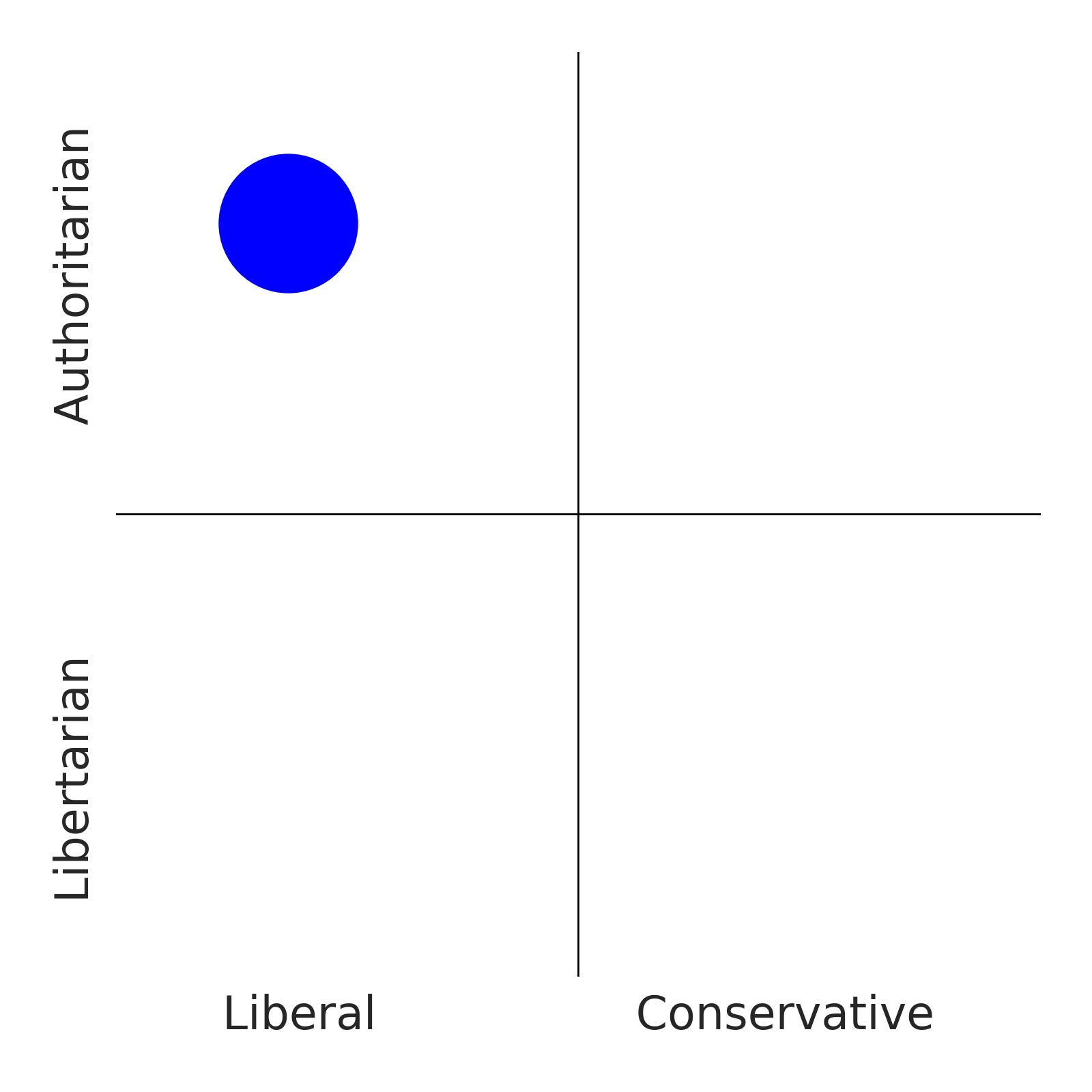
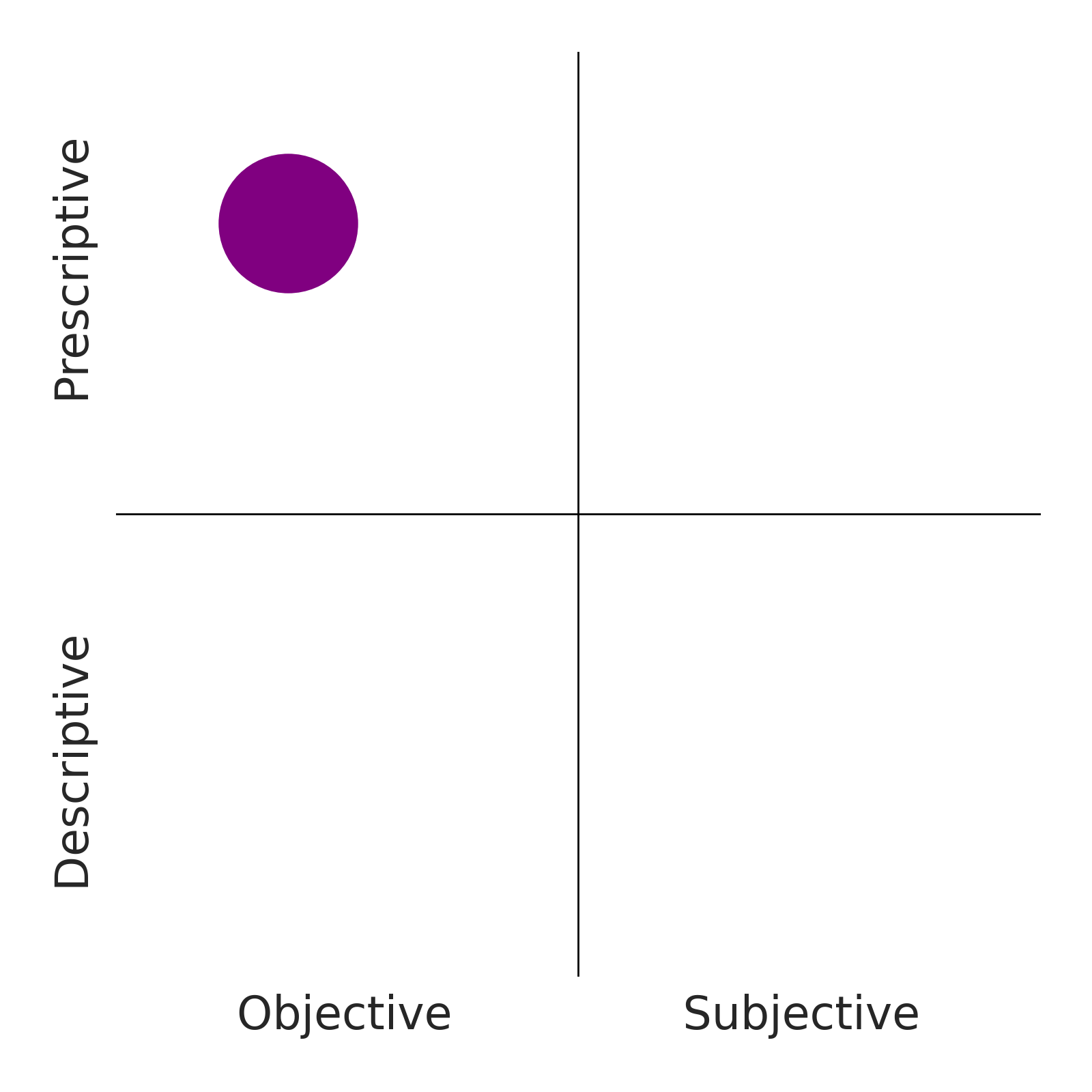
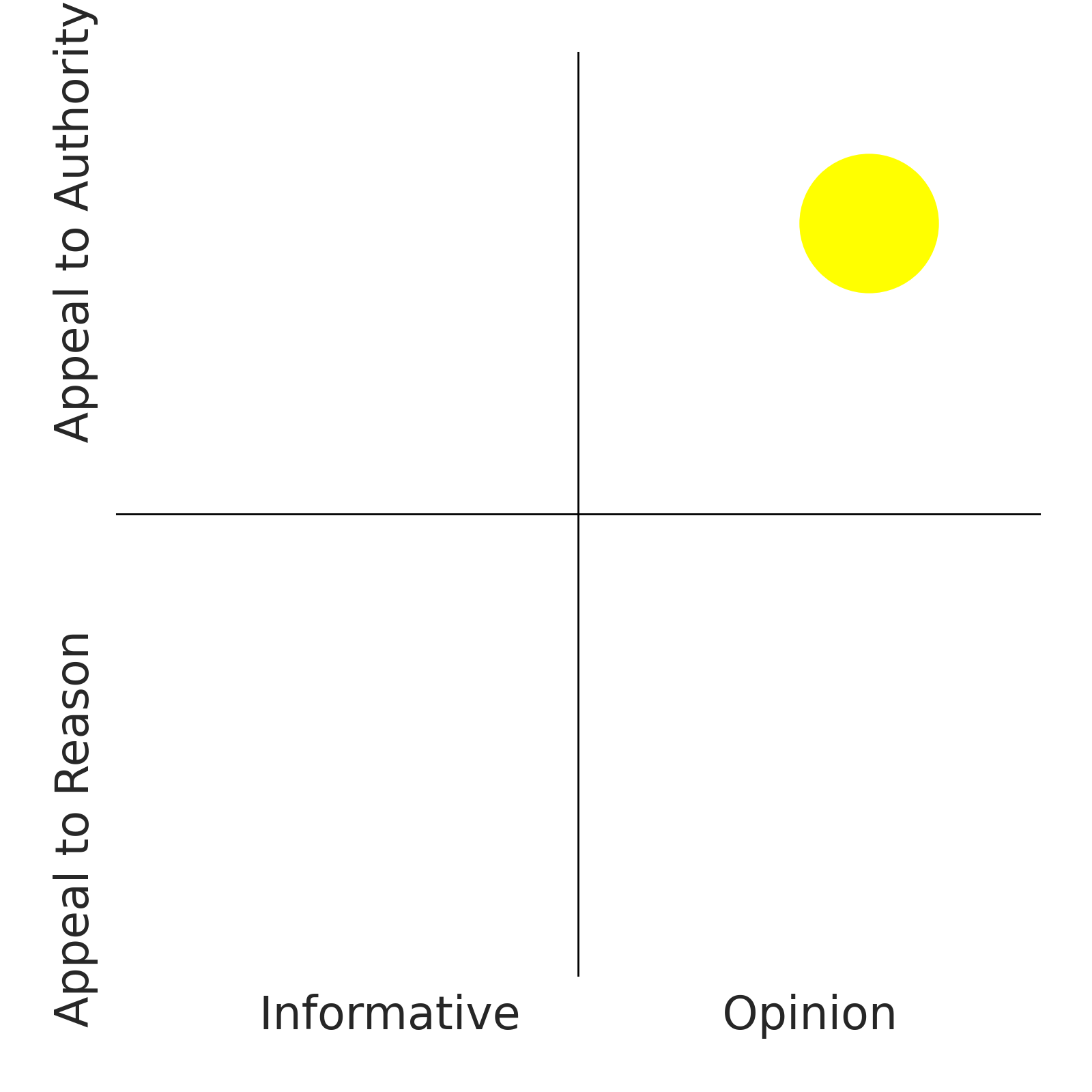
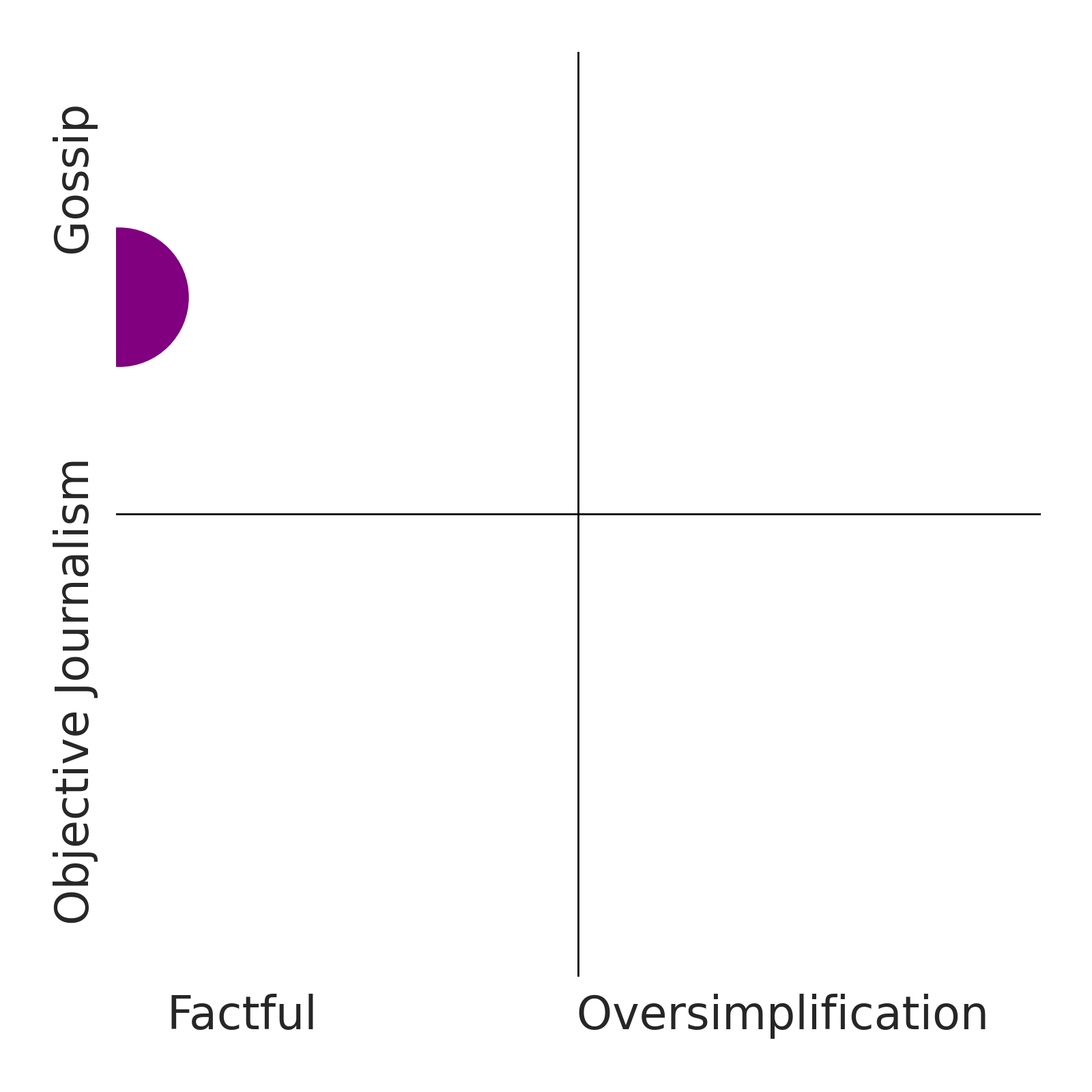
2026 © Helium Trades
Privacy Policy & Disclosure
* Disclaimer: Nothing on this website constitutes investment advice, performance data or any recommendation that any particular security, portfolio of securities, transaction or investment strategy is suitable for any specific person. Helium Trades is not responsible in any way for the accuracy
of any model predictions or price data. Any mention of a particular security and related prediction data is not a recommendation to buy or sell that security. Investments in securities involve the risk of loss. Past performance is no guarantee of future results. Helium Trades is not responsible for any of your investment decisions,
you should consult a financial expert before engaging in any transaction.
Helium Research Assistant

How can I help you today?
Ask any question about Vox bias.


