See whether Helium helps you make better-informed decisions. Try every Pro Trader feature for 30 days. No credit card required.
Try every Pro Trader feature for 30 days. No credit card required.
Framing and worldview. The sample indicates a predominantly liberal/progressive, institution-protective perspective.
Coverage repeatedly treats threats to democracy, civil liberties, public-health institutions, environmental safeguards, and social equality as central rather than incidental.
Trump-era actions are especially likely to be interpreted as norm-breaking or harmful: DOJ control is described as a “weaponized” threat, and Republican senators’ acquiescence as a “surrender to authoritarian overreach”
August 03, 2026 · 0 shares
Strongly criticizes Republican senators for failing to meaningfully resist Trump's effort to weaponize the Justice Department, framing the episode as a surrender to authoritarian overreach.
Automated analysis; not human reviewed. · 14 of 52 available dimensions scored; omitted dimensions are not treated as neutral. · Verified supporting quotes for 10 of 14 scored dimensions.
Claim: Article frames Blanche's nomination and Republican resistance through a liberal lens, emphasizing weaponization and sycophancy.
“Despite his sycophancy towards Trump” · not found in supplied text
“transforming DOJ's lawyers into Trump's personal advocates and enforcers” · not found in supplied text
Why: The article consistently uses negative language about Trump and Blanche, attributes bad motives, and criticizes Republican senators for insufficient resistance, reflecting a liberal perspective.
Claim: Article is highly subjective, mixing opinion with reported facts.
“These are all deeply troubling developments that suggest any meaningful guardrails on a weaponized Justice Department have ceased to exist.” · not found in supplied text
Why: The article includes overt opinion statements and evaluative language beyond neutral reporting.
Claim: Article uses sensational and dramatic language to emphasize the stakes.
“weaponize the Justice Department” · exact text match
“revenge-seeking agency” · exact text match
Why: Terms like 'weaponize' and 'revenge-seeking' heighten emotional impact beyond neutral description.
Claim: Article prescribes that senators should have resisted more strongly.
“they never put up much real resistance to Trump’s nominee.” · exact text match
“the two senators exacted such meager concessions” · exact text match
Why: The article implicitly advocates for stronger opposition by criticizing the actual concessions as insufficient.
Claim: Article warns of dangerous consequences, inducing fear.
“any meaningful guardrails on a weaponized Justice Department have ceased to exist.” · exact text match
Why: The article suggests that without resistance, DOJ will become a tool for political revenge, which is meant to alarm readers.
Claim: Article is heavily opinionated, with strong editorial judgments throughout.
“The Republican resistance to Todd Blanche was never serious.” · exact text match
“Blanche’s sycophancy towards Trump” · not found in supplied text
Why: The opening line and many subsequent statements are overt opinions, not just factual reporting.
Claim: Article focuses intensely on political maneuvering and partisan conflict.
“the DOJ’s also brought flimsy charges against individuals like FBI Director James Comey and New York Attorney General Letitia James” · exact text match
Why: The entire article is about a political nomination, partisan senators, and accusations of weaponized justice.
Claim: Article expresses certainty about future outcomes and motives beyond available evidence.
“it is unlikely to placate Democrats.” · exact text match
Why: The article makes confident predictions about future confirmation and consequences, though some are plausible.
Claim: Article reflects a coherent ideological viewpoint opposing Trump and supporting institutional checks.
“any meaningful guardrails on a weaponized Justice Department have ceased to exist.” · exact text match
Why: The article's consistent criticism of Trump and his allies, and its framing of the DOJ as 'weaponized', aligns with a liberal ideology.
Claim: Article conveys negative emotion about the developments.
“The Republican resistance to Todd Blanche was never serious.” · exact text match
Why: The dismissive and critical tone throughout indicates negative emotional framing.
Claim: Article has moderate credibility due to opinionated framing but includes some verified facts.
“Cornyn and Tillis both currently serve on the Senate Judiciary Committee.” · exact text match
Why: The article cites specific events, but strong opinion and lack of balanced sourcing moderately reduce credibility.
Claim: Article speculates about future consequences.
“And now, it appears likely that Blanche will be confirmed — and that those efforts will continue.” · exact text match
Why: The article makes predictions about confirmation and ongoing weaponization, which are speculative.
Claim: Article uses loaded language and framing to influence reader perception.
“sycophancy towards Trump” · exact text match
“weaponized Justice Department” · exact text match
Why: Strongly connotative terms are used repeatedly, shaping emotional response.
Claim: Article signals moral righteousness by condemning corruption and lack of resistance.
“And the question of whether the DOJ may bring politically motivated charges against figures like Baraka... appeared to not even be part of the deal” · not found in supplied text
Why: The tone suggests the author is on the side of justice and good governance, implicitly taking a moral stand.
The article frames Trump's attempt to restore his name on the Kennedy Center as a coercive hostage situation and emphatically refutes the administration's justification.
The John F. Kennedy Center for Performing Arts is a national cultural venue. Trump had his name removed by court order in June. He is trying to get it back via a proposed $250 million renovation that includes tributes to him. The DOJ argues that blocking those tributes would doom the renovation. The article also reports the death of Dolly Parton and her literacy program.
Automated analysis; not human reviewed. Limitations: The article includes a death notice for Dolly Parton unrelated to the main political story, and the newsletter context may not be fully parsed. · 4 of 54 available dimensions scored; omitted dimensions are not treated as neutral. · Verified supporting quotes for 4 of 4 scored dimensions.
Claim: The article expresses a critical view of Trump's actions and refutes his administration's claims.
“Is that true? No.” · exact text match
“far from being a draw, the Washington Post reported Tuesday” · exact text match
Why: Direct rebuttal of the administration's argument and reliance on critical reporting about Trump's impact.
Claim: The article includes subjective judgments and emotional language.
“The Kennedy Center becomes a hostage to Trump’s renaming demands.” · exact text match
“Universally beloved country music star” · exact text match
Why: Use of loaded terms like 'hostage' and 'universally beloved' indicate subjectivity.
Claim: The article uses emotionally charged language, predominantly negative toward Trump.
“hostage” · exact text match
“No.” · exact text match
Why: Emotive framing and emphatic rejection of the administration's position.
Claim: The article cites specific sources and provides verifiable facts.
“the Washington Post reported Tuesday” · exact text match
“Congress already approved $257 million for the renovation last year” · exact text match
Why: Relies on attributed reporting and concrete funding figures.
The article includes a death notice for Dolly Parton unrelated to the main political story, and the newsletter context may not be fully parsed.
August 03, 2026 · 0 shares
Frames Chinese AI advancement as a multidimensional threat requiring careful policy response while acknowledging competing perspectives and US policy contradictions.
The US and China have been competing in AI development, with US export restrictions on semiconductors intended to slow China's progress, but recent Chinese models like DeepSeek and Kimi K3 have challenged assumptions about the US lead.
Automated analysis; not human reviewed. Limitations: Input is long article with numerous quoted sources; distinguishing publisher framing from quoted views requires careful attribution. · 19 of 52 available dimensions scored; omitted dimensions are not treated as neutral. · Verified supporting quotes for 13 of 19 scored dimensions.
Claim: Article frames Chinese AI concerns in terms of human rights and democracy, indicating a liberal perspective.
“Chinese generative AI tools are legally required to uphold the country's 'core socialist values'” · not found in supplied text
“The concerns in the US about Chinese AI generally fall into three broad buckets: cybersecurity concerns; military and national security concerns; and human rights or democracy concerns.” · exact text match
Why: Article emphasizes human rights and democracy concerns, but also includes skeptical voices questioning US commitment, so not strongly liberal.
Claim: Article relies heavily on insider expert sources from think tanks and former officials, indicating an elitist framing.
“Dean Ball, a former Trump administration official now with OpenAI” · exact text match
“Ryan Fedasiuk, a former State Department technology adviser at the American Enterprise Institute” · not found in supplied text
“Selina Xu, China and AI policy lead in the office of former Google CEO Eric Schmidt” · exact text match
Why: Focuses on Beltway and Silicon Valley perspectives rather than populist views.
Claim: Article includes subjective framing and emotional language but also objective reporting.
“Both Washington and Silicon Valley are in the midst of a collective freak-out” · exact text match
“The log-in for Claude is not carried by a military officer” · exact text match
Why: Mix of subjective phrases and factual reporting.
Claim: Article is not sensational; uses calm language.
“For the moment, concerns about who is winning the AI race can feel a bit abstract” · exact text match
“It's a contest between the United States and China to define the operating systems through which people live and work.” · verified after text normalization
Why: Tone is explanatory, not sensational.
Claim: Article is interesting due to timely topic and comprehensive coverage.
“Everyone in Silicon Valley and the Beltway is freaked out about Chinese AI” · exact text match
“It’s a contest between the United States and China to define the operating systems through which people live and work.” · exact text match
Why: Broad scope and expert quotes make it engaging.
Claim: Article is mostly descriptive but includes some prescriptive framing.
“The challenge of crafting technology to prevent a 'dystopian hellscape' is to not accidentally make the existing world worse.” · not found in supplied text
Why: Ending sentence is prescriptive, but body is descriptive.
Claim: Article leans hawkish by emphasizing national security and military concerns.
“The conflicts in Ukraine, Gaza, and Iran have shown that modern militaries are already extensively using AI for intelligence collection and targeting.” · exact text match
Why: Also includes dovish counterpoints about shared benefits.
Claim: Article conveys a moderate level of fear about Chinese AI threats.
“Both Washington and Silicon Valley are in the midst of a collective freak-out” · exact text match
“The simplest and most obvious argument for why AI matters for American national security is that it's all too conceivable that the US and China could be at war” · verified after text normalization
Why: Uses 'freak-out' and raises war scenario, but also says concerns may be abstract.
Claim: Article contains opinionated analysis alongside factual reporting.
“Often lost in the debates about what to do about China's accelerating AI capabilities is the question of why the US cares about this at all.” · not found in supplied text
Why: Article includes editorializing questions and framing.
Claim: Article is clearly political, focusing on US-China competition and policy.
“The concerns in the US about Chinese AI generally fall into three broad buckets: cybersecurity concerns; military and national security concerns; and human rights or democracy concerns.” · exact text match
Why: Directly addresses geopolitical and policy issues.
Claim: Article does not oversimplify; it acknowledges complexity.
“Even if there's some consensus that AI competition is a priority, there's less agreement on how to go about it.” · verified after text normalization
Why: Highlights disagreements and nuances.
Claim: Article heavily relies on expert authority.
“Dean Ball ... warned” · not found in supplied text
“Ryan Fedasiuk ... said” · not found in supplied text
“Mieke Eoyang ... said” · not found in supplied text
Why: Multiple direct quotes from authoritative figures.
Claim: Article avoids overconfidence by using hedging language.
“analysts say” · exact text match
“there is a growing sense” · exact text match
“It's difficult to know exactly” · verified after text normalization
Why: Consistent epistemic caution.
Claim: Article leans pro-establishment by relying on insider sources.
“Ryan Fedasiuk, a former State Department technology adviser now at the American Enterprise Institute” · exact text match
“Mieke Eoyang, former US deputy assistant secretary of defense” · exact text match
Why: Primary sources are establishment figures.
Claim: Article has high credibility due to strong sourcing and balanced treatment.
“There's no proof that the models were doing this intentionally” · verified after text normalization
“Analysts also accuse China of using outputs from US models” · exact text match
Why: Attribution, uncertainty acknowledgment, and inclusion of counterarguments.
Claim: Article presents arguments with evidence, attribution, and measured language, indicating rational approach.
“There's no proof that the models were doing this intentionally, but the study did find” · verified after text normalization
“analysts say American companies may be as little as two to three months behind” · exact text match
Why: Careful hedging and attribution show rational analysis.
Claim: Article engages in some speculation about future scenarios.
“It's all too conceivable that the US and China could be at war in the years to come” · not found in supplied text
“AI could be a major factor in determining who wins” · exact text match
Why: Speculative but presented as hypothetical.
Claim: Article shows high integrity by attributing claims, including dissenting views, and noting lack of proof.
“There's no proof that the models were doing this intentionally” · verified after text normalization
“But some are skeptical of the idea that human rights and democracy should be the goal of AI competition” · exact text match
Why: Transparent about uncertainty and alternative perspectives.
Claim: Article is intelligent, well-organized, and covers multiple dimensions.
“Everyone in Silicon Valley and the Beltway is freaked out about Chinese AI, but there’s less consensus on what to do about it.” · exact text match
“The concerns in the US about Chinese AI generally fall into three broad buckets: cybersecurity concerns; military and national security concerns; and human rights or democracy concerns.” · exact text match
Why: Thorough analysis with expert input.
Input is long article with numerous quoted sources; distinguishing publisher framing from quoted views requires careful attribution.
The article is a balanced analytical piece that slightly favors the Democratic candidate by describing his position as 'comparatively nuanced' while characterizing the Republican's union-funding attack as 'misleadingly literal.'
The article analyzes the Wisconsin governor's race between Republican Tom Tiffany and Democrat David Crowley, focusing on their positioning on data centers amid growing national backlash against hyperscale AI infrastructure. It highlights the tension between public opposition (76% say costs outweigh benefits) and the interests of labor unions and local communities that benefit from data center projects, including building trades unions that contributed $412,000 to Crowley's campaign and Port Washington's expected doubling of its tax base.
Automated analysis; not human reviewed. Limitations: The article text begins with a subscription prompt treated as page chrome; the substantive article appears complete, but some references may rely on context not fully captured in the excerpt. · 2 of 54 available dimensions scored; omitted dimensions are not treated as neutral. · Verified supporting quotes for 2 of 2 scored dimensions.
Claim: The article carefully attributes claims to named sources and uses hedging language.
“According to a report from Wisconsin's Legislative Fiscal Bureau” · verified after text normalization
“According to the city's Mayor Ted Neitzke” · verified after text normalization
Why: Attribution to specific institutions and officials, combined with hedging phrases like 'almost certainly wrong' and 'plausibly necessary,' demonstrates strong sourcing practices.
Claim: The article is skeptical of corporate tax subsidies for data centers, calling them 'unusually generous' and a 'sweetheart deal.'
“Wisconsin's subsidies are unusually generous” · verified after text normalization
“had Wisconsin not made their funders such a sweetheart deal” · exact text match
Why: The article labels subsidies negatively while also noting the projects could increase state revenue, showing a mild anti-corporate-subsidy stance.
The article text begins with a subscription prompt treated as page chrome; the substantive article appears complete, but some references may rely on context not fully captured in the excerpt.
Selection and coverage patterns. Politics is unusually prominent, especially Democratic primaries, AIPAC, Gaza, Trump administration conduct, elections, immigration, courts, and institutional accountability
Frames the Uncommitted movement as a successful moral force that has reshaped the Democratic Party, portraying establishment resistance as misguided and progressive activism as justified.
The Uncommitted movement emerged in Michigan's 2024 Democratic primary as a protest against President Biden's unconditional support for Israel's military campaign in Gaza, and later became a force challenging the 'vote blue no matter who' approach, influencing the 2024 general election and now the 2026 primaries.
Automated analysis; not human reviewed. Limitations: The article is an explicit opinion piece from a progressive newsletter; its advocacy framing is transparent and requires no inference beyond the text. · 14 of 53 available dimensions scored; omitted dimensions are not treated as neutral. · Verified supporting quotes for 7 of 14 scored dimensions.
Claim: The article adopts a strongly liberal/progressive stance, criticizing unconditional support for Israel and celebrating shifts in Democratic electorate opinion.
“The tone of the piece reflected the optimism of the room... but underneath the hopium was a specific policy desire: that Harris would break from Biden’s unconditional support of Israel’s violent campaign in Gaza.” · not found in supplied text
“Public opinion of Israel has plummeted across the American electorate... 77 percent of Democrats say they believe Israel is committing a genocide” · not found in supplied text
Why: The framing explicitly backs progressive demands and uses language like 'violent campaign' and 'genocide' without neutral distance, strongly indicating liberal bias.
Claim: The article adopts a populist tone by portraying grassroots activism as righteous and establishment Democrats as out of touch.
“The movement was never only about a DNC speaking slot, but about the idea that every vote must be earned, not owed. It was a retort to 'vote blue no matter who' — an argument that conditional support for the party is not only valid, but of moral importance.” · not found in supplied text
Why: This quote elevates voter agency over party loyalty, a classic populist framing, while criticizing the establishment's 'blame-the-voters framework'.
Claim: The article is subjective, presenting opinion and advocacy rather than neutral reporting.
“I want to argue the opposite. Two years after the Uncommitted movement shook up the Democratic Party, its impact has never been more clear.” · exact text match
Why: The explicit 'I want to argue' statement confirms the subjective, argument-driven nature of the piece.
Claim: The article prescribes how Democrats should act regarding Gaza and activist demands.
“It was a retort to 'vote blue no matter who' — an argument that conditional support for the party is not only valid, but of moral importance.” · not found in supplied text
Why: The article asserts a moral imperative for conditional support, moving beyond description into prescription.
Claim: The article is highly opinionated, filled with interpretive claims and advocacy.
“I want to argue the opposite. Two years after the Uncommitted movement shook up the Democratic Party, its impact has never been more clear.” · exact text match
Why: The entire structure is an opinion argument, not objective reporting.
Claim: The article is intensely political, focused on Democratic primary battles and foreign policy as a litmus test.
“Whether or not El-Sayed wins today, the fact that a candidate running explicitly against AIPAC and unconditional aid is fighting for a Senate seat in a swing state is the clearest possible measure of how far the ground has moved” · exact text match
Why: The content is entirely about party politics, election outcomes, and ideological positioning.
Claim: The article oversimplifies complex issues like the Israel-Gaza conflict and electoral outcomes by attributing them to a single movement.
“The Uncommitted movement also led to the growth and maturation of the Democrats’ Muslim left” · exact text match
Why: Causal links are asserted without substantial evidence, simplifying a multifaceted political shift.
Claim: The article presents predictions and causal claims with high certainty beyond the evidence provided.
“its impact has never been more clear” · exact text match
“That couldn’t be a clearer measure of how far the ground has moved” · not found in supplied text
Why: Phrases like 'never been more clear' and 'clearest possible measure' express certainty not fully justified by the cited poll and election outcomes alone.
Claim: The article is heavily ideological, consistently promoting a progressive worldview.
“He turns the foreign-policy question into a pocketbook one and refuses to soften the language. As he said on America, Actually: 'There is an electoral cost to backstopping genocide and apartheid.'” · not found in supplied text
Why: The article repeatedly endorses a specific ideological position (anti-Israel, pro-Palestinian, anti-establishment) without balancing views.
Claim: The article is strongly anti-establishment, criticizing Democratic party leadership and pro-Israel spending.
“The movement challenged the blame-the-voters framework that allows the establishment to avoid self-reflection.” · not found in supplied text
Why: Directly attacks establishment behavior and frames the movement as a corrective, showing clear anti-establishment stance.
Claim: The article has a mildly positive emotional tone toward the Uncommitted movement and progressive candidates.
“The tone of the piece reflected the optimism of the room” · exact text match
Why: The author self-reports optimism and uses hopeful language about movements and candidates, indicating a positive emotional valence.
Claim: The article applies a double standard by criticizing centrist Democrats for not supporting progressives while celebrating progressives who refuse to support centrists.
“Already, Rep. Hillary Scholten, who is supporting Stevens in Michigan, has signaled she may refuse to support El-Sayed in a general election, due to his association with Piker. It seems 'vote blue no matter who' has its limits.” · not found in supplied text
Why: The criticism of centrists for conditionality while implicitly endorsing progressive conditionality suggests a double standard, but the evidence is somewhat weak as the article is open about its progressive stance.
Claim: The article has moderate credibility, citing some polls and quotes but presenting a one-sided argument.
“Per Quinnipiac, 77 percent of Democrats say they believe Israel is committing a genocide” · exact text match
“In the Marquette University Law School Poll from last week, the data showed her with the support of 66%” · exact text match
Why: Verifiable polling data is used, but the interpretive framework is heavily skewed, reducing overall trustworthiness as a neutral source.
Claim: The article employs identity-group framing and differential moral standards, particularly regarding Gaza as a litmus test for candidate trust.
“acknowledging Israel’s actions in Gaza as a genocide is now a litmus test for Democratic voters gauging the trust and credibility of their candidates” · exact text match
Why: Identity-based expectations (Muslim/Arab voters) and a moral litmus test align with woke identity politics, though the focus is foreign policy rather than domestic identity.
The article is an explicit opinion piece from a progressive newsletter; its advocacy framing is transparent and requires no inference beyond the text.
August 02, 2026 · 0 shares
Frames AIPAC as a corrupting force and its influence as waning, using an interview with a defeated congressman to advocate for the anti-AIPAC candidate.
Automated analysis; not human reviewed. Limitations: Article text appears to be from Vox, a left-leaning outlet; analysis based on single interview with explicit anti-AIPAC viewpoint. · 10 of 52 available dimensions scored; omitted dimensions are not treated as neutral. · Verified supporting quotes for 6 of 10 scored dimensions.
Claim: The publisher frames AIPAC negatively and promotes a progressive candidate critical of Israel policy.
“AIPAC has for decades spent heavily to ensure that US policy remains strongly supportive of the Israeli government.” · not found in supplied text
“Genocide caused the change. Seventy thousand-plus Palestinians killed in Gaza caused the change.” · exact text match
Why: The article uses charged language like 'genocide' and presents Levin's criticism of AIPAC as credible, while the candidate endorsed is a staunch Israel critic.
Claim: The article is subjective, presenting strong opinions and emotional framing.
“Horrifying things caused the change. Genocide caused the change.” · exact text match
“The idea that AIPAC is using mostly dollars from Republican centimillionaires and billionaires to be the biggest spender in Democratic primaries — that’s so gross.” · not found in supplied text
Why: The language is emotionally charged and evaluative, not neutral reporting.
Claim: The article discusses a high-stakes primary with significant spending and shifting political dynamics.
“AIPAC's biggest-ever investment in a single election” · verified after text normalization
“Several recent surveys show El-Sayed with a double-digit lead.” · exact text match
Why: The race is unusual and the interview provides insider perspective, making it interesting.
Claim: The article prescribes that El-Sayed should win and that AIPAC's influence is harmful.
“Abdul can expand the electorate, and he’s the better candidate. We must win this seat in November. Abdul’s the better choice.” · exact text match
Why: The conclusion explicitly advocates for a candidate and against AIPAC, going beyond description.
Claim: The publisher adopts a dovish stance on Israel-Palestine, critical of Israeli military action and AIPAC.
“Genocide caused the change. Seventy thousand-plus Palestinians killed in Gaza caused the change.” · exact text match
“I want to focus on ending the cycle of violence and actually achieving peace.” · exact text match
Why: The article repeatedly condemns Israeli actions and supports a two-state solution, portraying AIPAC's hawkish influence as harmful.
Claim: The article is heavily opinionated, dominated by Levin's views and advocacy for El-Sayed.
“Abdul can attract voters across the political spectrum who hate the system.” · exact text match
“Abdul’s the better choice.” · exact text match
Why: The article is an interview with a clear point of view, and the publisher selects quotes that advance a particular narrative.
Claim: The article is highly political, focusing on election strategy, party dynamics, and interest group influence.
“Next week’s Democratic Senate primary in Michigan is AIPAC’s biggest-ever investment in a single election” · exact text match
“If he wins, it would arguably be AIPAC’s worst-ever defeat. It could also mean we’re in a new chapter of politics.” · not found in supplied text
Why: The entire article analyzes the political power of AIPAC within the Democratic primary and its implications.
Claim: The article is anti-establishment, criticizing dark money and AIPAC's influence in politics.
“The idea that AIPAC is using mostly dollars from Republican centimillionaires and billionaires to be the biggest spender in Democratic primaries — that’s so gross, and it’s a huge problem for the Democratic Party and also for our democracy.” · not found in supplied text
Why: The article frames AIPAC's spending as corrupt and anti-democratic, aligning with an anti-establishment perspective.
Claim: The article uses negative emotional language to describe the Gaza war and AIPAC's spending.
“Horrifying things caused the change. Genocide caused the change.” · exact text match
“that’s so gross” · exact text match
Why: The emotional tone is negative, but not overwhelmingly so; it is mixed with reasoned analysis.
Claim: The article relies on a single source (Levin) and does not present counterarguments, reducing credibility.
“Our conversation, which has been condensed and edited, follows.” · exact text match
Why: Credible as an interview, but the lack of opposing views or independent verification lowers overall credibility.
Article text appears to be from Vox, a left-leaning outlet; analysis based on single interview with explicit anti-AIPAC viewpoint.
The analysis frames Trump’s election claims and the Republican nominees who amplified them as dangerous, labels 2020 denial as lies, and balances institutional reassurances with a caution about a potential 'nightmare scenario', making an urgent but hedged warning.
U.S. presidential election administration is decentralized in the states; governors and secretaries of state often overseeing certification and voting. The 2026 midterm elections will choose many of these officials in battleground states that could matter for 2028. The 2022 Electoral Count Act reform tightened presidential election certification procedures and the role of the courts.
Automated analysis; not human reviewed. Limitations: This assessment relies solely on the supplied article text and cannot independently verify the quoted legal details or the future-risk claims. · 8 of 54 available dimensions scored; omitted dimensions are not treated as neutral. · Verified supporting quotes for 2 of 8 scored dimensions.
Claim: The piece uses explicitly partisan framing by calling Trump's claims lies and presenting Republican nominees who echoed them as a serious risk to elections.
“Tom Tiffany, the new Republican nominee for governor in Wisconsin, is not just a passive supporter of President Donald Trump’s lies about the 2020 presidential election.” · exact text match
“There is, in a very real chance that someone who doesn’t believe American elections are legitimate may soon be supervising them in one of the 2028 presidential cycle's most important swing states.” · not found in supplied text
Why: The characterization of Trump's election claims as 'lies' and the framing of Republican election deniers as a risk indicate a clear left-of-center editorial stance.
Claim: The piece supports an editorial viewpoint about a President—the danger to democracy—rather than presenting purely neutral facts.
“There is, in short, a very real chance that someone who doesn’t believe American elections are legitimate may soon be supervising them...” · not found in supplied text
“This is the nightmare scenario: one in which officials in key positions simply decide that they no longer have to follow a good-faith reading of the law.” · exact text match
Why: Notice and evaluative language ('very real chance', 'nightmare scenario') convey a editorial sense of alarm rather than a measured, unopinionated report.
Claim: Although it tones down the emergency, the article repeatedly invokes 'nightmare scenarios' and 'living possibility' to cultivate concern.
“This is the nightmare scenario: one of the lives in the world in which officials in key positions simply decide that they no longer have to follow a good-faith reading of the law.” · not found in supplied text
“And as long as that fight continues, another 2020-style crisis will remain a live possibility.” · not found in supplied text
Why: It uses direct fear-adjacent language ('nightmare', 'crisis') while still setting overall low baseline, making it moderately fear-loaded and not merely panic.
Claim: The article is explicitly a persuasive analytical piece, expressed as evaluative warnings rather than a bare 'news' news story.
“There is, in short, a very real chance that someone who doesn’t believe American elections are legitimate may be overseeing the 2028 election.” · not found in supplied text
“This connects to another, more insidious risk: that electing election deniers could exacerbate the ongoing crisis of electoral deservedness since 2020.” · not found in supplied text
Why: The author repeatedly makes normative judgments about election-deniers and risk rather than merely reporting neutral facts; the form of an editorial is clear.
Claim: The piece engages heavily with partisan categories and takes a position in a conflict centered on the 2020 election.
“Tom Tiffany, the new Republican nominee for governor of Wisconsin, is not just a passive supporter of President Donald Trump’s latter about the 2020...” · not found in supplied text
“In each of the other most critical 2028 states — Michigan, Georgia, Pennsylvania, Arizona, and Nevada — Republicans have chosen an election candidate...” · not found in supplied text
Why: The article explicitly targets Republicans and their electoral risk, using party-specific framing and the phrase 'election denier'.
Claim: The piece uses named experts, gives institutional courtships, and acknowledges uncertainty about the future, supporting a credible analytical standard.
“Election experts say it’s very unlikely.” · exact text match
“State election laws contain numerous overlapping checks on interference from top officials.” · exact text match
Why: It is multifaceted and partially hedged, but remains an editorial forecast with unverifiable future claims.
Claim: The argument is based on legal-analysis, expert citations, and assessments of procedural checks rather than emotional or non-rational assertions.
“Election experts say it’s very unlikely.” · exact text match
“State election laws contain numerous overlapping checks on interference from top officials.” · exact text match
Why: The piece explicitly weighs legal safeguards, quotes named experts, and acknowledges uncertainty about the probability; it does not rely on a solitary conspiracy claim.
Claim: The text is transparent about the theoretical nature of the threat and gives named experts, but uses loaded language when describing the participants.
“Election experts say it’s very unlikely.” · exact text match
““We have with a normal person between complacency and alarmism,” said Rick Hasen, an expert on election law at UCLA.” · not found in supplied text
Why: It reports the uncertainty and quotes experts who advise a moderate posture, which supports fairness despite the overall negative framing.
This assessment relies solely on the supplied article text and cannot independently verify the quoted legal details or the future-risk claims.
The article critically frames the Trump administration's deportation policies as indiscriminate and harsh, emphasizing the dangers in Haiti and the lack of criminal records among those targeted.
Automated analysis; not human reviewed. Limitations: The article is from Vox, known for left-leaning analysis, which may influence framing despite reliance on factual data. · 1 of 54 available dimensions scored; omitted dimensions are not treated as neutral. · Verified supporting quotes for 0 of 1 scored dimensions.
Claim: The article cites multiple data sources and news reports.
“according to immigration data released this week by the Deportation Data Project at UC Berkeley and UCLA” · not found in supplied text
“as the Seattle Times reported this week” · exact text match
“according to the New York Times” · exact text match
Why: Reliance on named institutions and reputable outlets supports credibility.
The article is from Vox, known for left-leaning analysis, which may influence framing despite reliance on factual data.
Presents the FDA approval of Moderna's mRNA flu vaccine as a major public health breakthrough while criticizing the administration's perceived anti-vaccine stance.
Automated analysis; not human reviewed. Limitations: The article is from Vox, a left-leaning outlet, which may influence the framing. However, the analysis is based only on the supplied text. · 16 of 53 available dimensions scored; omitted dimensions are not treated as neutral. · Verified supporting quotes for 16 of 16 scored dimensions.
Claim: The article criticizes the administration's vaccine stance and celebrates the mRNA vaccine as a breakthrough, indicating a liberal framing.
“The Food and Drug Administration approved Moderna’s mRNA flu vaccine this week — a major public health breakthrough for an administration that’s been troublingly down on vaccines.” · exact text match
Why: The phrase 'troublingly down on vaccines' is a negative characterization of the administration, typical of liberal criticism, and the positive portrayal of the vaccine aligns with pro-science liberal positions.
Claim: The article uses subjective language such as 'major public health breakthrough' and 'troublingly'.
“a major public health breakthrough for an administration that’s been troublingly down on vaccines” · exact text match
Why: These phrases are evaluative, not purely factual.
Claim: The article presents the new vaccine as a positive development, showing bullish sentiment.
“The flu shot finally gets an upgrade.” · exact text match
Why: The headline-like phrase 'finally gets an upgrade' implies improvement and optimism.
Claim: The article covers a novel vaccine development and the pursuit of a universal vaccine, which is moderately interesting.
“The real white whale is a “universal flu vaccine” — a shot that’s at least 75 percent effective against influenza A” · exact text match
Why: The topic of a universal vaccine is engaging, but the article is not exceptionally riveting.
Claim: The article ends with a prescriptive suggestion about persuading people to get shots.
“If you can persuade people to get their shots, at least.” · exact text match
Why: This is a directive, implying a desired action.
Claim: The article contains opinionated language, such as 'major public health breakthrough' and 'troublingly'.
“a major public health breakthrough for an administration that’s been troublingly down on vaccines” · exact text match
Why: These are subjective judgments, not neutral reporting.
Claim: The article criticizes an administration's vaccine stance, making it political.
“for an administration that’s been troublingly down on vaccines” · exact text match
Why: The criticism directly references a political administration.
Claim: The article relies on FDA approval and expert opinion to bolster its claims.
“Public health experts are justifiably hyped about mRNA technology.” · exact text match
Why: It appeals to the authority of experts without providing counterarguments.
Claim: The article defers to FDA approval and public health experts, indicating a pro-establishment stance.
“Public health experts are justifiably hyped about mRNA technology.” · exact text match
Why: The phrase 'justifiably hyped' validates the experts' enthusiasm.
Claim: The article cites specific data from a clinical trial and names the FDA, supporting credibility.
“In a clinical trial, older adults who received Moderna’s mRNA vaccine were 27 percent less likely to get the flu than those who received the standard vaccine.” · exact text match
Why: Providing verifiable numerical evidence from a trial increases credibility.
Claim: The article supports its claims with specific clinical trial data and scientific reasoning, indicating a rational approach.
“In a clinical trial, older adults who received Moderna’s mRNA vaccine were 27 percent less likely to get the flu than those who received the standard vaccine.” · exact text match
Why: The article cites a numerical result from a clinical trial, which is empirical evidence.
Claim: The article includes a direct appeal for financial support from readers.
“Will you support our work and become a Member today?” · verified after text normalization
Why: This is a clear promotional call to action.
Claim: The article explains mRNA technology and vaccine mechanisms in a scientific manner.
“mRNA vaccines contain genetic instructions that train the immune system to fight influenza.” · exact text match
Why: The description is accurate and based on biological science.
Claim: The article speculates about the future of universal flu vaccines.
“if they succeed, the flu shot could hypothetically become more like the measles vaccine” · exact text match
Why: The word 'hypothetically' indicates speculation.
Claim: The article includes specific, attributable data from a clinical trial, enhancing integrity.
“In a clinical trial, older adults who received Moderna’s mRNA vaccine were 27 percent less likely to get the flu than those who received the standard vaccine.” · exact text match
Why: The inclusion of precise trial results and attribution shows factual reporting.
Claim: The article explains complex concepts like mRNA and hemagglutinin clearly, showing intelligence.
“But hemagglutinin is a part of the flu virus that mutates often.” · exact text match
Why: The level of detail and explanation is above average for a general audience.
The article is from Vox, a left-leaning outlet, which may influence the framing. However, the analysis is based only on the supplied text.
August 27, 2026 · 0 shares
Framing presents the summer's outbreaks as a foreseeable, worsening crisis tied to globalized food supply, climate change, and Trump-administration cuts, and prescribes rebuilding federal public-health capacity.
Cyclosporiasis is a parasitic intestinal infection linked to contaminated fresh produce; US foodborne-illness surveillance is shared by the FDA, USDA, CDC, and state/local health agencies.
Automated analysis; not human reviewed. Limitations: The supplied text is a partial excerpt with newsletter and promotional content interleaved, so full-source context and completeness cannot be verified. · 10 of 54 available dimensions scored; omitted dimensions are not treated as neutral. · Verified supporting quotes for 9 of 10 scored dimensions.
Claim: The framing assigns political responsibility to Trump-administration staffing cuts and favors strengthening the federal public-health response.
“Culpability has understandably fallen on the Trump administration and Robert F. Kennedy Jr., who helms the US Department of Health and Human Services” · exact text match
“Responding to those new threats is going to require a rebuilt and potentially reimagined federal public health apparatus.” · exact text match
Why: Directly targets the Trump administration and calls for a stronger federal public-health apparatus, a left-leaning policy frame.
Claim: Although data-rich, the language uses dramatic, fear-oriented imagery to frame the outbreaks.
“While this spate of foodborne illness is especially bad, the worst may be yet to come.” · exact text match
“What if diarrhea summer never really ends?” · exact text match
Why: The factual reporting is wrapped in heightened crisis language that pushes the presentation toward sensation.
Claim: The framing emphasizes that the food-safety crisis will worsen and that the country is less prepared.
“The US is less prepared than ever to stop food contamination” · exact text match
“This is a problem that is going to become worse, not better, given the expected trends in global warming in the decades to come.” · exact text match
Why: Repeated 'worse' and 'less prepared' language forecasts deterioration rather than improvement.
Claim: The framing moves from describing outbreaks to prescribing a rebuilt federal public-health apparatus.
“But something will have to be done if we’re ever to escape the food recall cycle.” · exact text match
“Responding to those new threats is going to require a rebuilt and potentially reimagined federal public health apparatus.” · exact text match
Why: The closing argument states explicit policy recommendations rather than staying purely descriptive.
Claim: The framing repeatedly signals that the current outbreak is not the worst and asks whether a severe cycle will continue.
“While this spate of foodborne illness is especially bad, the worst may be yet to come.” · exact text match
“What if diarrhea summer never really ends?” · exact text match
Why: The language invites alarm about an ongoing and worsening public-health threat.
Claim: The text includes direct editorial judgments and recommendations, not only factual reporting.
“The US is less prepared than ever to stop food contamination” · exact text match
“But something will have to be done if we’re ever to escape the food recall cycle.” · exact text match
Why: The heading and closing statements are evaluative and prescriptive rather than neutral observations.
Claim: The outbreak is framed through administration accountability and Trump-era staffing decisions.
“Culpability has understandably fallen on the Trump administration and Robert F. Kennedy Jr.” · exact text match
“Rebuilding the staff and capacity to do this work is not likely to happen under the Trump administration” · exact text match
Why: It connects the public-health crisis explicitly to the current administration and federal political decisions.
Claim: Key quantitative claims are attributed to named sources and experts.
“The CDC, which helps respond to outbreaks once they start, has lost about a quarter of its workforce from January 2025 to October 2025, according to Reuters” · not found in supplied text
“by this summer, CBS reported, the number of scientists tracking food parasites at the agency dropped from 11 to three.” · exact text match
Why: The reporting names its sources for major figures and uses expert attribution for key claims, supporting credibility.
Claim: The explanation is evidence-based and resists reducing the outbreak to a single culprit.
“While our government officials are partly to blame, the problem is bigger than Trump and Kennedy, or even this one summer.” · exact text match
Why: The framing explicitly incorporates multiple structural causes and expert input rather than relying on a simple blame narrative.
Claim: Reporting is transparent about sources, named experts, and competing causes.
“While our government officials are partly to blame, the problem is bigger than Trump and Kennedy, or even this one summer.” · exact text match
“more than 11,000 workers have been lost, a 22 percent cut, according to the Partnership for Public Service” · exact text match
Why: It attributes statistics to named organizations and acknowledges multiple causes rather than suppressing them.
The supplied text is a partial excerpt with newsletter and promotional content interleaved, so full-source context and completeness cannot be verified.
August 25, 2026 · 0 shares
The writing uses progressive populist framing, depicting data-center opposition as a justified community revolt against tech elites and portraying the political center as unprepared for the AI era.
Automated analysis; not human reviewed. Limitations: The supplied text is an opinion/analysis newsletter without an explicit publisher name; scoring reflects visible sourcing and framing within an argument-driven editorial format. · 6 of 54 available dimensions scored; omitted dimensions are not treated as neutral. · Verified supporting quotes for 6 of 6 scored dimensions.
Claim: The analysis uses progressive framing that is sympathetic to left-wing candidates and critical of the Democratic center on AI-related politics.
“the years since have been defined by elites telling the underclass that they have no agency in the disruption to come” · exact text match
“Progressives like Bernie Sanders and Ro Khanna have made clear cases for the need for a data center moratorium” · exact text match
Why: Adopts left-aligned concepts ('underclass,' 'Silicon Valley overlords') approvingly and treats progressive positions as the morally and strategically stronger ones while criticizing the political center.
Claim: The framing is sympathetic to ordinary communities resisting elite-driven technological change and distrustful of tech executives.
“It’s the feeling that this change was done to communities — not in consultation with them.” · exact text match
“our Silicon Valley overlords” · exact text match
Why: Presents opposition as a grassroots democratic response to top-down decisions, using adversarial language toward 'Silicon Valley overlords.'
Claim: The piece is a first-person opinion/analysis newsletter rather than straight news reporting.
“But I’d also add that it replicated the same mistake tech leaders made: reveling in the benefits of a transformed economy before building consensus among the people who must live with it.” · exact text match
“I think this speaks to one of the challenges the pro-data center crowd has faced.” · exact text match
Why: Uses first-person judgment and explicit interpretive claims throughout, though it grounds the analysis with cited polling and interviews.
Claim: The piece visibly attributes claims and cites named sources and specific polling data.
“A Gallup poll in March) found that 71 percent of Americans said they oppose building AI data centers in their area — 48 percent of them strongly.” · exact text match
“as does Fox News’ polling” · exact text match
Why: Cites specific poll percentages and multiple named interviewees with attributed quotes, demonstrating visible sourcing practice despite the opinion format.
Claim: The analysis is adversarial toward technology corporations and skeptical of their local economic benefits.
“Once the construction jobs leave, the noise, the water draw, the rising electricity bills, the fear about home values, and the sheer brutalist ugliness of the structure all stay.” · exact text match
“They were rejecting the pace, and the secrecy, of a project reshaping their community.” · exact text match
Why: Emphasizes the externalized costs of corporate data-center projects and treats the corporate push as done to communities without consent.
Claim: The piece makes explicit forecasts about the political trajectory of the issue.
“forecast where this goes in the midterms and the presidential race to come” · exact text match
Why: Explicitly frames the analysis as predicting future political developments in the midterms and presidential race.
The supplied text is an opinion/analysis newsletter without an explicit publisher name; scoring reflects visible sourcing and framing within an argument-driven editorial format.
August 20, 2026 · 0 shares
The article adopts a culturally liberal perspective on the WNBA's culture-war turmoil, portraying trans-inclusion as a given and conservative scrutiny as an opportunistic distraction from the sport's growth.
This is an excerpt from a Q&A on Vox's Today, Explained podcast, where Ringer writer Seerat Sohi discusses the WNBA's cultural and political entanglements.
Automated analysis; not human reviewed. Limitations: Analysis is based solely on the published excerpt; full podcast context may contain nuances not present in this text. · 20 of 54 available dimensions scored; omitted dimensions are not treated as neutral. · Verified supporting quotes for 15 of 20 scored dimensions.
Claim: Publisher frames conservative engagement with the WNBA as a transparent culture-war attack and adopts a trans-inclusive stance.
“the WNBA has found itself at the center of a debate over transgender athletes and women’s sports” · not found in supplied text
“the culture war has come for the WNBA” · exact text match
Why: The verbs and framing treat conservative opposition as illegitimate, while trans rights are implicitly endorsed.
Claim: The piece is mildly critical of institutional WNBA leadership, showing slight populist skepticism of authority.
“The WNBA, from the top down, has been understaffed, and it has historically been marketed in a way that is obsessed with trying to bring in some apocryphal average American, the nuclear family.” · exact text match
Why: Criticism of the 'apocryphal average American' marketing could be read as pro-diversity, but the larger framing is more sympathetic to institutional reform than outright populism.
Claim: The piece is analytical and interpretive, mixing reporting with strong opinion and speculation.
“Caitlin Clark was really a gateway drug for WNBA fans” · exact text match
“This was a league that didn’t have charter flights. Caitlin Clark comes in, they get charter flights.” · exact text match
Why: Although sourced and reported, the Q&A format relies on subjective interpretation and sweeping claims.
Claim: The culture-war framing and language add a quasi-sensational angle to an otherwise straightforward report.
“Caitlin Clark was really a gateway drug for WNBA fans” · exact text match
Why: The 'culture war' lens and vivid metaphors add a semi-sensational flavor.
Claim: Slightly pessimistic gloss on the WNBA's cultural position despite positive trends.
“the WNBA has always been behind the eight ball in that regard because it has run away from its identity” · exact text match
Why: Focus is on institutional failures and external threats more than on inspiring play.
Claim: The Q&A format keeps the discussion entertaining and engaging.
“Caitlin Clark was really a gateway drug for WNBA fans” · exact text match
Why: Uses colorful language and anecdotes.
Claim: The piece is descriptive and analytical rather than prescriptive regarding specific policies, but the framework presumes the correct stance on trans inclusion.
“I want to protect young girls in a locker room or young girls in sport who shouldn’t have to go against biological men.” · exact text match
Why: The speaker's own words are presented as the premise for analysis rather than advocacy for a specific policy solution.
Claim: The piece contains some anxiety about the impact of culture-war politics.
“the culture war has come for the WNBA” · exact text match
Why: The threat of conservative criticism is framed as a significant risk to the sport.
Claim: The piece is heavily opinionated, especially in the Q&A commentary.
“Obviously that’s great for the players, but I also think that there was a feeling of, 'Oh wait, the WNBA could have done these things that we’ve been advocating for a long time.'” · not found in supplied text
Why: The excerpt includes strong subjective judgments about league management and culture.
Claim: The article is heavily political, engaging with trans rights, racial justice, and conservative activism.
“This has always been a league that has been very outspoken. This is a league that in 2020 helped flip a Georgia Senate election and actually ousted their then-owner of the Atlanta Dream who spoke out against the Black Lives Matter movement.” · exact text match
Why: Multiple political issues are at the core of the narrative.
Claim: Complex issues such as trans rights in sports are condensed into simple oppositional terms (right vs. left, good vs. bad).
“a lot of the WNBA fans took those things to be dog whistles, that it was a form of racism” · exact text match
Why: Frames the issue as a proxy for larger culture wars, which may oversimplify diverse perspectives.
Claim: The piece reflects a progressive ideological worldview.
“It’s the league that is primarily Black, that is openly queer, that is politically outspoken.” · exact text match
Why: The identity-based framework and choice of topics align with a progressive perspective.
Claim: The piece is critical of the WNBA's leadership and its approach to identity, showing an anti-establishment stance.
“the WNBA has always been behind the eight ball in that regard because it has run away from its identity” · exact text match
Why: Calls out the league's historical institutional failures, even while acknowledging external pressures.
Claim: The overall emotional tone is neutral, slightly negative, focusing on struggles rather than triumphs.
“it has run away from its identity” · exact text match
“the WNBA really struggles at telling its own story” · exact text match
Why: Negative language appears in the context of criticism but the piece is not overwhelmingly emotional.
Claim: The reporting is credible, using identifiable sources and direct quotes, despite some speculation.
“I don’t know if that’s true” · exact text match
“there was probably a spectrum of feelings” · not found in supplied text
Why: Shows appropriate hedging and quotes sources directly, though the Q&A format adds a conversational tone.
Claim: The piece is more rational than irrational, offering analytical commentary rather than emotional rhetoric, though it does include some emotive language.
“it is a league that you can use as a proxy to talk about race, gender fluidity, femininity, DEI, labor politics” · not found in supplied text
Why: Overall analytical tone with reasoned discussion, though some emotionally loaded phrases appear.
Claim: The reporting is transparent about uncertainty and attributes claims, but the structural criticism of the league is one-sided.
“I don’t know if that’s true” · exact text match
“there was probably a spectrum of feelings” · not found in supplied text
Why: The interviewer does not challenge the interviewee's interpretations, which could be a minor integrity lapse, but exact quotes are used.
Claim: The piece demonstrates high intelligence in its cultural analysis.
“It is probably the most modern American league that we have.” · exact text match
Why: Provides insightful commentary on the intersection of sports and society.
Claim: The article adopts an identity-politics-oriented framework, assuming the significance of race, gender, and sexual orientation in its analysis.
“It’s the league that is primarily Black, that is openly queer, that is politically outspoken.” · exact text match
Why: The identity-focused lens is central to the entire analysis and does not contain counterpoints.
Claim: The piece subtly positions itself on the right side of history regarding identity politics.
“It’s the league that is primarily Black, that is openly queer, that is politically outspoken.” · exact text match
Why: Praising the league for these attributes could be seen as virtue signaling to a progressive audience.
Analysis is based solely on the published excerpt; full podcast context may contain nuances not present in this text.
Highest apparent values. 1. Democratic and institutional accountability: the source favors legal checks, oversight, and constraints on executive power
Negative framing of Trump's efforts to control federal money as a 'slush fund' and a threat to democratic norms, with a tone of approval for Senate checks.
The acting Attorney General Todd Blanche's confirmation stalled over bipartisan objections to the anti-weaponization fund, a $1.8 billion reparation program for people who claimed the government had wronged them.
Automated analysis; not human reviewed. Limitations: The article text includes promotional and boilerplate content (newsletter subscription, book promotion) that may distract from the core reporting. · 15 of 52 available dimensions scored; omitted dimensions are not treated as neutral. · Verified supporting quotes for 13 of 15 scored dimensions.
Claim: The article frames Trump's actions negatively with terms like 'slush fund' and praises Senate checks as 'good democracy news', indicating a liberal perspective.
“We always like a bit of good democracy news” · exact text match
“Trump still really wants a slush fund” · exact text match
“the quest to secure such a slush fund is a defining feature of his presidency” · exact text match
Why: Loaded language and approval of institutional checks align with liberal framing.
Claim: The article includes subjective opinion phrases such as 'we always like' and 'good democracy news'.
“We always like a bit of good democracy news” · exact text match
“It’s a rare reminder that the Senate’s confirmation power can still constrain the White House” · exact text match
Why: Subjective editorializing in the opening and framing.
Claim: The headline and phrasing use sensational terms like 'slush fund' and 'siphon federal money'.
“Trump still really wants a slush fund” · exact text match
“the quest to secure such a slush fund” · exact text match
Why: Sensational language to attract attention.
Claim: The article prescribes that Trump's actions are wrong and should be constrained.
“It’s a rare reminder that the Senate’s confirmation power can still constrain the White House” · exact text match
“the long-term risk is that his presidency is normalizing treating ... money as instruments of personal power” · not found in supplied text
Why: The tone is critical and warns against the normalizing effect.
Claim: The article mixes opinion with reporting, using first-person plural and value judgments.
“We always like a bit of good democracy news” · exact text match
“Trump still really wants a slush fund” · exact text match
Why: Clear opinionated statements.
Claim: The article is about presidential power, Senate confirmation, and partisan dynamics.
“acting Attorney General Todd Blanche appeared to deliver some last night” · exact text match
“Republicans who forced that surrender” · exact text match
Why: Core topic is political maneuvering.
Claim: The fund is repeatedly labeled a 'slush fund' without nuanced discussion of its purpose.
“Trump still really wants a slush fund” · exact text match
“the quest to secure such a slush fund” · exact text match
Why: Simplifies complex funding mechanism into a derogatory term.
Claim: The article cites a Cato Institute analyst to support its criticism.
“Tad DeHaven, a policy analyst with the Cato Institute, wrote” · exact text match
Why: Uses authority of a think tank to bolster argument.
Claim: The phrase 'slush fund' and 'wants a slush fund' is somewhat childish.
“Trump still really wants a slush fund” · exact text match
Why: Repetitive use of immature term.
Claim: The article consistently applies a left-leaning critique of executive power.
“It’s a rare reminder that the Senate’s confirmation power can still constrain the White House” · exact text match
Why: Ideological preference for checks and balances.
Claim: The article has a negative emotional tone towards Trump.
“Trump still really wants a slush fund” · exact text match
“the quest to secure such a slush fund is a defining feature of his presidency” · exact text match
Why: Critical and derogatory language conveys negative emotion.
Claim: The article attributes facts to Blanche's written confirmation and quotes an analyst, but uses loaded language.
“Blanche confirmed in writing that the Justice Department had rescinded the fund” · exact text match
“Tad DeHaven wrote” · not found in supplied text
Why: Sourcing present but framing may undermine neutrality.
Claim: The article presents logical argumentation linking Trump's actions to normalization of personal power.
“The long-term risk is that his presidency is normalizing treating the receipt and disbursement of money as instruments of personal power.” · exact text match
Why: The article uses reasoned analysis from a policy analyst.
Claim: The article contains promotional content for the newsletter and a book.
“Subscribe here” · exact text match
“Happiness is overrated. In a new book, the author Ian Bogost argues” · exact text match
Why: Explicit advertisement for subscription and book.
Claim: The article speculates about future risks and Trump's continued push.
“The long-term risk is that his presidency is normalizing” · exact text match
“Trump’s bigger push to personally control federal money is not” · exact text match
Why: Forecasts future behavior and consequences.
The article text includes promotional and boilerplate content (newsletter subscription, book promotion) that may distract from the core reporting.
The analysis frames Trump’s election claims and the Republican nominees who amplified them as dangerous, labels 2020 denial as lies, and balances institutional reassurances with a caution about a potential 'nightmare scenario', making an urgent but hedged warning.
U.S. presidential election administration is decentralized in the states; governors and secretaries of state often overseeing certification and voting. The 2026 midterm elections will choose many of these officials in battleground states that could matter for 2028. The 2022 Electoral Count Act reform tightened presidential election certification procedures and the role of the courts.
Automated analysis; not human reviewed. Limitations: This assessment relies solely on the supplied article text and cannot independently verify the quoted legal details or the future-risk claims. · 8 of 54 available dimensions scored; omitted dimensions are not treated as neutral. · Verified supporting quotes for 2 of 8 scored dimensions.
Claim: The piece uses explicitly partisan framing by calling Trump's claims lies and presenting Republican nominees who echoed them as a serious risk to elections.
“Tom Tiffany, the new Republican nominee for governor in Wisconsin, is not just a passive supporter of President Donald Trump’s lies about the 2020 presidential election.” · exact text match
“There is, in a very real chance that someone who doesn’t believe American elections are legitimate may soon be supervising them in one of the 2028 presidential cycle's most important swing states.” · not found in supplied text
Why: The characterization of Trump's election claims as 'lies' and the framing of Republican election deniers as a risk indicate a clear left-of-center editorial stance.
Claim: The piece supports an editorial viewpoint about a President—the danger to democracy—rather than presenting purely neutral facts.
“There is, in short, a very real chance that someone who doesn’t believe American elections are legitimate may soon be supervising them...” · not found in supplied text
“This is the nightmare scenario: one in which officials in key positions simply decide that they no longer have to follow a good-faith reading of the law.” · exact text match
Why: Notice and evaluative language ('very real chance', 'nightmare scenario') convey a editorial sense of alarm rather than a measured, unopinionated report.
Claim: Although it tones down the emergency, the article repeatedly invokes 'nightmare scenarios' and 'living possibility' to cultivate concern.
“This is the nightmare scenario: one of the lives in the world in which officials in key positions simply decide that they no longer have to follow a good-faith reading of the law.” · not found in supplied text
“And as long as that fight continues, another 2020-style crisis will remain a live possibility.” · not found in supplied text
Why: It uses direct fear-adjacent language ('nightmare', 'crisis') while still setting overall low baseline, making it moderately fear-loaded and not merely panic.
Claim: The article is explicitly a persuasive analytical piece, expressed as evaluative warnings rather than a bare 'news' news story.
“There is, in short, a very real chance that someone who doesn’t believe American elections are legitimate may be overseeing the 2028 election.” · not found in supplied text
“This connects to another, more insidious risk: that electing election deniers could exacerbate the ongoing crisis of electoral deservedness since 2020.” · not found in supplied text
Why: The author repeatedly makes normative judgments about election-deniers and risk rather than merely reporting neutral facts; the form of an editorial is clear.
Claim: The piece engages heavily with partisan categories and takes a position in a conflict centered on the 2020 election.
“Tom Tiffany, the new Republican nominee for governor of Wisconsin, is not just a passive supporter of President Donald Trump’s latter about the 2020...” · not found in supplied text
“In each of the other most critical 2028 states — Michigan, Georgia, Pennsylvania, Arizona, and Nevada — Republicans have chosen an election candidate...” · not found in supplied text
Why: The article explicitly targets Republicans and their electoral risk, using party-specific framing and the phrase 'election denier'.
Claim: The piece uses named experts, gives institutional courtships, and acknowledges uncertainty about the future, supporting a credible analytical standard.
“Election experts say it’s very unlikely.” · exact text match
“State election laws contain numerous overlapping checks on interference from top officials.” · exact text match
Why: It is multifaceted and partially hedged, but remains an editorial forecast with unverifiable future claims.
Claim: The argument is based on legal-analysis, expert citations, and assessments of procedural checks rather than emotional or non-rational assertions.
“Election experts say it’s very unlikely.” · exact text match
“State election laws contain numerous overlapping checks on interference from top officials.” · exact text match
Why: The piece explicitly weighs legal safeguards, quotes named experts, and acknowledges uncertainty about the probability; it does not rely on a solitary conspiracy claim.
Claim: The text is transparent about the theoretical nature of the threat and gives named experts, but uses loaded language when describing the participants.
“Election experts say it’s very unlikely.” · exact text match
““We have with a normal person between complacency and alarmism,” said Rick Hasen, an expert on election law at UCLA.” · not found in supplied text
Why: It reports the uncertainty and quotes experts who advise a moderate posture, which supports fairness despite the overall negative framing.
This assessment relies solely on the supplied article text and cannot independently verify the quoted legal details or the future-risk claims.
Framing promotes a low-tech, science-based coral intervention as an urgent but still-unproven stopgap, pairing ecological alarm with cautious pragmatism.
Automated analysis; not human reviewed. Limitations: The text is a first-person field report; unpublished research findings and economic estimates are reported from named sources and could not be independently verified. · 4 of 54 available dimensions scored; omitted dimensions are not treated as neutral. · Verified supporting quotes for 4 of 4 scored dimensions.
Claim: Contains explicit editorial judgments about the value of the testing approach.
“It would seem anything that might help that cause even a little bit — including a handful of plastic picnic coolers — is worth a try.” · exact text match
Why: The sentence is a personal or editorial evaluation rather than a reported fact.
Claim: Article uses named scientists, specific figures, and explicit uncertainty markers.
“The equipment, including four coolers, costs less than $1,000, according to Courtney Klepac” · exact text match
“While the utility and accuracy of short heat tests is not yet proven” · exact text match
Why: Sourcing is visible and limitations are stated, strengthening trustworthiness.
Claim: Reporting is transparent about limitations and includes critical perspectives.
“There are other drawbacks to this testing approach.” · exact text match
“Previous studies comparing short heat tests to those that are longer and more faithfully replicate a real heat wave show mixed results; the winners of one are often not the winners of the other.” · exact text match
Why: Known limitations and dissenting evidence are included rather than omitted, a visible honesty signal.
Claim: The article explains specialized biological and methodological concepts with nuance.
“Longer-lasting tests tend to better represent a natural heat wave — what corals will actually face in the years to come. But they’re expensive, time-consuming, and require expertise.” · exact text match
“A bleached coral is not dead but starving, and it will die unless the water cools back down.” · exact text match
Why: Scientific tradeoffs are explained without oversimplification, showing conceptual command.
The text is a first-person field report; unpublished research findings and economic estimates are reported from named sources and could not be independently verified.
The piece frames GLP-1 drugs primarily through a progressive lens, highlighting their broad health benefits while acknowledging limitations, and uses a first-person narrative emphasizing societal judgment and cost barriers.
Automated analysis; not human reviewed. · 51 of 54 available dimensions scored; omitted dimensions are not treated as neutral. · Verified supporting quotes for 25 of 51 scored dimensions.
Claim: The article tilts liberal by emphasizing the positive health impacts of GLP-1 drugs, framing against societal judgment, and underscoring cost barriers, consistent with progressive concerns about inequality and body positivity.
“For many people, weight loss isn’t the end of what these drugs seem able to do. It’s where the benefits begin.” · exact text match
Why: Support for widespread drug access and criticism of societal stigmatization aligns with progressive priorities, but the article remains clinically focused and balanced.
Claim: The article leans slightly populist by criticizing corporate and societal barriers to drug access, though it also relies on expert trial data.
“In a 2025 KFF poll, 56 percent of adults who had ever used a GLP-1 said the drugs were difficult to afford; 27 percent said they had insurance but paid the full cost themselves.” · exact text match
Why: Emphasis on affordability and cost as a barrier supports a populist concern for ordinary people, but the tone is not anti-elite.
Claim: The article slightly opposes authoritarian restrictions by advocating for broader access irrespective of cost concerns, but it does not directly address mandates.
“And cost remains a barrier: In a 2025 KFF poll, 56 percent of adults who had ever used a GLP-1 said the drugs were difficult to afford; 27 percent said they had insurance but paid the full cost themselves.” · exact text match
Why: Focus on cost as a barrier implies support for market access, but no explicit stance on regulation.
Claim: The article mixes objective reporting with a subjective, personal narrative and prescriptive opinions about societal judgment.
“So much of the discourse around these drugs has been shaped by the fact that many of the earliest and most public and apparent users were already thin people, often celebrities, using them to get even thinner. But that framing has become increasingly difficult to square with reality.” · exact text match
Why: The subjective commentary on cultural framing coexists with factual trial summaries.
Claim: The article remains measured, avoiding hyperbole and explicitly countering the 'miracle drug' narrative with negative trial results.
“Viewed this way, GLP-1s can seem like miracle drugs — but even miracle drugs can’t cure everything.” · exact text match
Why: Balanced presentation and caution discount sensationalism.
Claim: The article is moderately bullish on GLP-1 drugs due to the breadth of benefits it highlights, despite noting limitations.
“These results may not be as grabby as cultural debates over “Ozempic face,” but they deserve far more attention.” · exact text match
Why: Strong emphasis on underestimated benefits suggests a positive outlook.
Claim: Optimistic framing dominates regarding the drugs' potential, while acknowledging setbacks.
“For many people, weight loss isn’t the end of what these drugs seem able to do. It’s where the benefits begin.” · exact text match
Why: Repeated emphasis on expanded benefits and overcoming barriers gives an upbeat tone.
Claim: The article is interesting due to its unexpected findings and broad implications.
“But it turns out, weight loss may not be what they’re best at.” · exact text match
Why: Contrarian angle and multiple health benefits capture interest.
Claim: Largely descriptive, but includes prescriptive commentary about societal judgment in the closing.
“Two things can be true at once: American culture has a toxic relationship to weight, and millions of Americans can and are benefiting from these drugs.” · exact text match
Why: Mostly data-driven descriptions with a value judgment at the end.
Claim: No foreign-policy content; bias is neutral.
Why: Dimension not applicable.
Claim: No fear-mongering; risks are presented factually.
Why: No evidence of fear-based framing.
Claim: Clear opinion presented alongside factual reporting.
“Two things can be true at once: American culture has a toxic relationship to weight, and millions of Americans can and are benefiting from these drugs.” · exact text match
Why: Opinionated statements intermixed with data.
Claim: Political relevance emerges from cost and access themes, but the article is primarily health-focused.
“56 percent of adults . . . said the drugs were difficult to afford” · not found in supplied text
Why: Cost and access are political issues, yet not heavily politicized.
Claim: Relies on credible sources and clinical trials, but does not defer solely to authority.
“Harvard team pooled 48 placebo-controlled trials covering 94,245 people” · exact text match
Why: Use of expert evidence is standard reporting, not overreliance.
Claim: Mature and measured tone.
Why: No immature styling.
Claim: No circular reasoning.
Why: Logical structure.
Claim: Does not selectively cover responses; presents balanced outcomes.
Why: No evidence of covering response bias.
Claim: Frames societal judgment of GLP-1 users as a form of victimization.
“people rate a GLP-1 user more harshly than someone who never lost weight at all” · exact text match
Why: Sympathizes with users facing stigma.
Claim: No spam.
Why: Substantive content.
Claim: Slightly ideological in stance on weight stigma, but mainly evidence-based.
“So much of the discourse around these drugs has been shaped by the fact that many of the earliest and most public and apparent users were already thin people, often celebrities” · exact text match
Why: A degree of ideological commentary but not overwhelming.
Claim: Slightly anti-establishment by questioning societal norms and advocating for broader access, but respects scientific institutions.
“That framing has become increasingly difficult to square with reality.” · not found in supplied text
Why: Challenge to mainstream narrative, but not anti-institutional.
Claim: Slightly positive emotional tone towards drug benefits.
“they deserve far more attention” · exact text match
Why: Positive emotional engagement.
Claim: No double standards.
Why: Fair treatment.
Claim: Credible due to specific citations of trials and statistics.
“Gallup’s self-reported height-and-weight series” · exact text match
Why: Clearly attributes data and includes limitations.
Claim: The article remains rational by clearly distinguishing correlation from causation and presenting both positive and negative trial results.
“While this only shows correlation, not causation, and Gallup’s self-reported measure should not be compared directly with the CDC’s measured rate, the timing is suggestive to say the least.” · exact text match
Why: Explicit acknowledgment of limitations and nuanced presentation support rationality.
Claim: Slightly pro-pharmaceutical due to positive portrayal, but critical of cost.
“cost remains a barrier” · exact text match
Why: Balanced but overall positive on drugs.
Claim: Highly scientific and empirical.
“48 placebo-controlled trials covering 94,245 people” · exact text match
Why: Relies on trial data, not superstition.
Claim: Slight collectivist emphasis on societal barriers and universal access.
“millions of Americans can and are benefiting from these drugs” · exact text match
Why: Focus on collective societal impact.
Claim: No clear AI indicators; humanized first-person narrative.
“Just last month, I marked my 25th year as a professional journalist” · exact text match
Why: Personal anecdata and style suggest human authorship.
Claim: The article demonstrates integrity by transparently reporting negative findings and limitations.
“when Ozempic maker Novo Nordisk ran a proper trial, it didn’t show evidence of slowing clinical progression of Alzheimer’s” · exact text match
Why: Honest acknowledgment of failures and limitations supports high integrity.
Claim: Slightly favorable to drug industry due to positive benefits, but critical of pricing.
“cost remains a barrier” · exact text match
Why: Positive on drug efficacy, negative on costs.
Claim: High intellectual depth with statistical data and clinical details.
“3,533 people with type 2 diabetes and chronic kidney disease for a median of 3.4 years” · exact text match
Why: Numerous precise figures and complex medical concepts.
Claim: Truth-seeking and evidence-based.
Why: No delusional reasoning.
Claim: None
Why: Not applicable.
Claim: None
Why: No class-conflict framing.
Claim: None
Why: Not applicable.
Claim: None
Why: Not applicable.
Claim: None
Why: Not applicable.
Claim: None
Why: Not applicable.
Claim: Mild identity-politics undertones regarding weight stigma, but not central.
“American culture has a toxic relationship to weight” · exact text match
Why: Identifies systemic judgment but falls short of full woke framing.
Claim: None
Why: No cruelty.
Claim: No virtue signaling.
Why: No performative moralizing.
Claim: None
Why: No conspiracy theories.
Claim: None
Why: No such empathy.
Claim: No scapegoating.
Why: Not present.
Claim: No hypocrisy.
Why: Consistent standards.
Claim: Pro-scientific, not anti-enlightenment.
Why: Supports reason and evidence.
The publisher frames the Trump administration's border security project in Big Bend National Park as a damaging, controversial overreach, emphasizing bipartisan opposition and environmental harm.
The article is from 'The Logoff', a newsletter framing news about the Trump administration. It discusses the Trump administration's border wall project, which originated in Trump's first term, and its impact on Big Bend National Park.
Automated analysis; not human reviewed. Limitations: Limited to a single newsletter excerpt with promotional material; may not represent full context or detailed sourcing. · 54 of 54 available dimensions scored; omitted dimensions are not treated as neutral. · Verified supporting quotes for 14 of 54 scored dimensions.
Claim: The article frames the Trump administration's border wall project as an overreach damaging to a beloved park, using negative language.
“Big Bend National Park is the latest casualty of Trump’s border wall obsession.” · exact text match
“the Trump administration is preparing to build hundreds of miles of roads through Big Bend National Park ... despite a bipartisan outcry over damage to the beloved park.” · not found in supplied text
Why: The framing emphasizes negative consequences and bipartisan opposition, suggesting a liberal-leaning perspective.
Claim: The framing slightly favors grassroots or public concerns over authority, but the focus is on institutional environmental law.
“despite a bipartisan outcry over damage to the beloved park.” · exact text match
“the administration overrode environmental laws intended to protect places like Big Bend earlier this year.” · exact text match
Why: Criticism of executive override and emphasis on public outcry indicates a mild anti-authority, pro-populist stance.
Claim: The article criticizes government overreach in overriding environmental laws.
“the administration overrode environmental laws intended to protect places like Big Bend earlier this year.” · exact text match
Why: The focus on overriding laws suggests a criticism of authoritarian action, favoring rule of law and environmental protection.
Claim: The article mixes factual reporting with subjective descriptors like 'beloved' and 'pristine'.
“through a pristine Texas national park.” · exact text match
“damage to the beloved park.” · exact text match
Why: Presence of value-laden adjectives indicates slight subjectivity, though overall factual reporting dominates.
Claim: The article uses emotive language such as 'casualty' and 'obsession' but remains largely factual.
“Big Bend National Park is the latest casualty of Trump’s border wall obsession.” · exact text match
Why: The headline and phrasing are emotive but the body provides specific facts.
Claim: The article conveys a negative outlook on the project and its consequences.
“despite a bipartisan outcry over damage to the beloved park.” · exact text match
Why: The emphasis on damage and controversy suggests pessimism.
Claim: The topic of border wall in a national park is noteworthy and slightly engaging.
“Big Bend National Park is the latest casualty of Trump’s border wall obsession.” · exact text match
Why: The novelty and controversy attract interest.
Claim: The article criticizes border security expansion, favoring dovish approach.
“Only about 1 percent of those apprehended for crossing the US-Mexico border have been detained in Big Bend.” · exact text match
Why: Highlighting low necessity undermines hawkish security measures.
Claim: The article contains some opinionated language despite factual reporting.
“Big Bend National Park is the latest casualty of Trump’s border wall obsession.” · exact text match
Why: Use of 'obsession' and 'casualty' adds editorializing.
Claim: The article's content is centered on political actions and opposition.
“The Trump administration is preparing to build hundreds of miles of roads through Big Bend National Park” · exact text match
“a bipartisan outcry over damage to the beloved park.” · exact text match
Why: The core focus is on a political controversy.
Claim: The article critiques executive authority, aligning with anti-establishment perspective.
“the administration overrode environmental laws intended to protect places like Big Bend earlier this year.” · exact text match
Why: Criticism of centralized authority suggests anti-establishment lean.
Claim: The article has a mild negative emotional tone.
“despite a bipartisan outcry over damage to the beloved park.” · exact text match
Why: Words like 'damage' and 'beloved' evoke emotion.
Claim: The article cites sources and uses measured language.
“As the New York Times reported earlier this year” · exact text match
Why: Attribution to credible outlets supports trustworthiness.
Claim: The article attributes claims to reports and maintains factual tone.
“As the New York Times reported earlier this year” · exact text match
Why: Sourcing and balanced presentation indicate moderate integrity.
Claim: The article provides specific data and attributions, indicating thoughtful analysis.
“Only about 1 percent of those apprehended for crossing the US-Mexico border have been detained in Big Bend.” · exact text match
Why: Use of statistics and context shows informative depth.
Limited to a single newsletter excerpt with promotional material; may not represent full context or detailed sourcing.
Framing casts Flock cameras as an unaccountable surveillance apparatus that has produced rare bipartisan anger, using alarmist language and dramatic anecdotes to reinforce the case for restrictions.
Flock Safety is a private company selling automated license plate readers; the devices capture plate numbers and locations, and data can be pooled into a searchable national database for law enforcement.
Automated analysis; not human reviewed. Limitations: The supplied text lacks a publication date and includes unrelated newsletter sidebars, so temporal references and article boundaries are imprecise. · 11 of 54 available dimensions scored; omitted dimensions are not treated as neutral. · Verified supporting quotes for 10 of 11 scored dimensions.
Claim: No left-right preference is evident; the piece explicitly frames opposition as bipartisan.
“Liberals and conservatives can agree to hate Flock cameras. Passionately.” · exact text match
Why: The article balances critiques from both sides and does not endorse a specific party.
Claim: The piece frames the issue as ordinary people united against a powerful surveillance system.
“Liberals and conservatives can agree to hate Flock cameras. Passionately.” · exact text match
“people really do not like these cameras.” · exact text match
Why: It repeatedly invokes popular agreement and resentment rather than elite or expert judgment.
Claim: The article frames automatic plate-reader surveillance as excessive state power and supports legal limits on it.
“building a vast national database of vehicle movements that law enforcement agencies can access with few restrictions.” · exact text match
“This is invasive government. This is Big Brother. Don’t surveil me.” · not found in supplied text
Why: The first quote establishes the problem; the second, reported without challenge, endorses an anti-surveillance, anti-government framing.
Claim: The reporting is filtered through value-laden metaphors and collective emotional judgments.
“The AI-powered license plate readers have metastasized on light poles and roadside posts across the country” · exact text match
“people really do not like these cameras.” · exact text match
Why: 'Metastasized' implies disease-like spread, and 'people really do not like' is a sweeping subjective claim.
Claim: Dramatic language and an extreme anecdote heighten the story's emotional stakes.
“Liberals and conservatives can agree to hate Flock cameras. Passionately.” · exact text match
“one conservative county commissioner went so far as to call for the hanging of Flock’s CEO.” · exact text match
Why: The one-word sentence 'Passionately' and the hanging anecdote are dramatic framing choices.
Claim: The overall tone is negative and apprehensive about surveillance rather than hopeful.
“Liberals and conservatives can agree to hate Flock cameras. Passionately.” · exact text match
“building a vast national database of vehicle movements that law enforcement agencies can access with few restrictions.” · exact text match
Why: The emphasis on 'hate' and an unrestricted national database conveys pessimism about the surveillance trend.
Claim: The article moves from describing the debate to suggesting specific regulatory remedies.
“But they could certainly limit the use of automated plate readers in other ways, like requiring warrants for accessing data, limiting how long information is saved, and banning the cameras near schools, churches, abortion clinics, and other sensitive places.” · exact text match
Why: The list of possible limits functions as a recommendation even though phrased as 'could.'
Claim: The piece asserts collective sentiment and takes a stance rather than neutrally compiling facts.
“Liberals and conservatives can agree to hate Flock cameras. Passionately.” · exact text match
“people really do not like these cameras.” · exact text match
Why: These are editorialized statements of public opinion, not attributed findings.
Claim: The story is organized around legislative inquiry, elected officials, and midterm campaigns.
“Yesterday, Senate Republicans opened an inquiry into Flock’s data “collection, retention, and dissemination” practices” · exact text match
“The issue has surfaced in midterm races in states including Florida, Ohio, and Michigan” · exact text match
Why: The central reported developments are governmental and electoral.
Claim: The article shows credible sourcing and qualifies uncertain political claims.
“The issue has surfaced in midterm races in states including Florida, Ohio, and Michigan, where some candidates have sought to link their opponents — fairly or unfairly — to Flock.” · exact text match
“Political responsibility for the cameras is complicated, of course: Flock typically inks its contracts with cities, counties, and local police departments” · exact text match
Why: It acknowledges that some campaign links may be unfair and that responsibility is diffuse, which are credibility signals.
Claim: The article is generally reasoned and qualified despite its critical stance.
“Political responsibility for the cameras is complicated, of course: Flock typically inks its contracts with cities, counties, and local police departments” · exact text match
Why: It acknowledges institutional complexity and avoids blaming a single political actor, though it draws emotional conclusions elsewhere.
The supplied text lacks a publication date and includes unrelated newsletter sidebars, so temporal references and article boundaries are imprecise.
The article critically frames the Trump administration's deportation policies as indiscriminate and harsh, emphasizing the dangers in Haiti and the lack of criminal records among those targeted.
Automated analysis; not human reviewed. Limitations: The article is from Vox, known for left-leaning analysis, which may influence framing despite reliance on factual data. · 1 of 54 available dimensions scored; omitted dimensions are not treated as neutral. · Verified supporting quotes for 0 of 1 scored dimensions.
Claim: The article cites multiple data sources and news reports.
“according to immigration data released this week by the Deportation Data Project at UC Berkeley and UCLA” · not found in supplied text
“as the Seattle Times reported this week” · exact text match
“according to the New York Times” · exact text match
Why: Reliance on named institutions and reputable outlets supports credibility.
The article is from Vox, known for left-leaning analysis, which may influence framing despite reliance on factual data.
This is a strongly opinionated advocacy piece that frames the lack of breasted CPR manikins as a systemic, potentially fatal gender-design failure and prescribes widespread adoption of representative training tools.
The article discusses gender-based disparities in emergency care, highlighting that design defaults in medical training and safety equipment have historically been based on male anatomy, and cites research and advocacy efforts to change that.
Automated analysis; not human reviewed. Limitations: The article is a first-person opinion essay with a clear advocacy agenda; while it cites studies, it does not provide full methodological details or counterarguments. · 8 of 54 available dimensions scored; omitted dimensions are not treated as neutral. · Verified supporting quotes for 1 of 8 scored dimensions.
Claim: The article adopts a left-of-center frame by emphasizing systemic gender bias in design and advocating for institutional changes to address it.
“The fact that women account for 50 percent of the world’s population and yet have to mold themselves to standards not designed for them in the first place is atrocious.” · exact text match
“They simply ignored them, accepting an androgynous body as the standard with an unchallenged assumption that what applies to it will undoubtedly apply to women too.” · not found in supplied text
Why: The language of systemic exclusion and the call for institutional representation aligns with progressive/liberal discourse on gender equity.
Claim: The piece is explicitly subjective, using first-person voice and overt opinion statements.
“Every once in a while, I feel the urge to shout “women are not small men!” at inanimate objects.” · exact text match
“But here’s a new one: In a public cardiac arrest, they may be the reason nobody helps you.” · exact text match
Why: The article is written as a personal opinion essay with emotive language and direct advocacy, clearly not objective reporting.
Claim: The article uses emotionally charged language to elicit sympathy and urgency.
“Breasts, it turns out, are really the bane of every woman’s existence — the back pain, the boob jail, the running.” · exact text match
“It’s not like the manufacturers or policymakers intentionally excluded women from this area — they simply ignored them.” · not found in supplied text
Why: The use of phrases like 'bane of every woman's existence' and 'atrocious' conveys strong positive emotion toward the cause and negative emotion toward the status quo.
Claim: The article cites specific studies and data, lending it some credibility, but the advocacy framing reduces its neutrality.
“Two years ago, an analysis of over 300,000 cardiac arrests showed that women are 14 percent less likely than men to receive CPR from a stranger.” · not found in supplied text
“When Christoph Veigl and colleagues at the Medical University of Vienna surveyed 133 training organizations across 43 countries...” · not found in supplied text
Why: The article provides specific sources and figures, but it lacks full citations and is written as an opinion piece, so credibility is moderate.
Claim: The article relies on empirical research and scientific reasoning, though it frames findings through a social critique lens.
“Increases in simulation-based research on the use of representative manikins... are changing how people train to respond to cardiac arrest.” · not found in supplied text
“CPR techniques remain largely the same irrespective of sex. Chest compressions are performed on the sternum.” · not found in supplied text
Why: The article is grounded in scientific studies and does not invoke supernatural or unscientific explanations, but it does use the science to support a predetermined advocacy position.
Claim: The article advocates for systemic and institutional changes rather than individual solutions.
“The basic idea is that repeated exposure to female bodily characteristics during training or testing can significantly alleviate discomfort.” · not found in supplied text
“the lack of female manikins really brings that to the forefront.” · exact text match
Why: The focus is on changing training systems and standards, which is collectivist in approach, though it does not attack individual responsibility.
Claim: The article makes some speculative claims about the effectiveness of female manikins and the causal link to real-world CPR rates.
“If there was widespread adoption of manikins that looked and felt different, this could ultimately become the norm.” · exact text match
“The hope is that testing with the THOR-05F will provide a better understanding of this trend.” · not found in supplied text
Why: These statements are explicitly conditional or expressed as hopes, not asserted certainties, so the speculative bias is low.
Claim: The article is largely fact-based but includes some speculative assertions about outcomes.
“If people had more practice administering CPR to models that looked more feminine, they wouldn’t be thrown off by breasts.” · not found in supplied text
Why: The speculation is clearly identified as a conditional, and the article cites evidence for the premise, so it is not delusional.
The article is a first-person opinion essay with a clear advocacy agenda; while it cites studies, it does not provide full methodological details or counterarguments.
August 25, 2026 · 0 shares
The writing uses progressive populist framing, depicting data-center opposition as a justified community revolt against tech elites and portraying the political center as unprepared for the AI era.
Automated analysis; not human reviewed. Limitations: The supplied text is an opinion/analysis newsletter without an explicit publisher name; scoring reflects visible sourcing and framing within an argument-driven editorial format. · 6 of 54 available dimensions scored; omitted dimensions are not treated as neutral. · Verified supporting quotes for 6 of 6 scored dimensions.
Claim: The analysis uses progressive framing that is sympathetic to left-wing candidates and critical of the Democratic center on AI-related politics.
“the years since have been defined by elites telling the underclass that they have no agency in the disruption to come” · exact text match
“Progressives like Bernie Sanders and Ro Khanna have made clear cases for the need for a data center moratorium” · exact text match
Why: Adopts left-aligned concepts ('underclass,' 'Silicon Valley overlords') approvingly and treats progressive positions as the morally and strategically stronger ones while criticizing the political center.
Claim: The framing is sympathetic to ordinary communities resisting elite-driven technological change and distrustful of tech executives.
“It’s the feeling that this change was done to communities — not in consultation with them.” · exact text match
“our Silicon Valley overlords” · exact text match
Why: Presents opposition as a grassroots democratic response to top-down decisions, using adversarial language toward 'Silicon Valley overlords.'
Claim: The piece is a first-person opinion/analysis newsletter rather than straight news reporting.
“But I’d also add that it replicated the same mistake tech leaders made: reveling in the benefits of a transformed economy before building consensus among the people who must live with it.” · exact text match
“I think this speaks to one of the challenges the pro-data center crowd has faced.” · exact text match
Why: Uses first-person judgment and explicit interpretive claims throughout, though it grounds the analysis with cited polling and interviews.
Claim: The piece visibly attributes claims and cites named sources and specific polling data.
“A Gallup poll in March) found that 71 percent of Americans said they oppose building AI data centers in their area — 48 percent of them strongly.” · exact text match
“as does Fox News’ polling” · exact text match
Why: Cites specific poll percentages and multiple named interviewees with attributed quotes, demonstrating visible sourcing practice despite the opinion format.
Claim: The analysis is adversarial toward technology corporations and skeptical of their local economic benefits.
“Once the construction jobs leave, the noise, the water draw, the rising electricity bills, the fear about home values, and the sheer brutalist ugliness of the structure all stay.” · exact text match
“They were rejecting the pace, and the secrecy, of a project reshaping their community.” · exact text match
Why: Emphasizes the externalized costs of corporate data-center projects and treats the corporate push as done to communities without consent.
Claim: The piece makes explicit forecasts about the political trajectory of the issue.
“forecast where this goes in the midterms and the presidential race to come” · exact text match
Why: Explicitly frames the analysis as predicting future political developments in the midterms and presidential race.
The supplied text is an opinion/analysis newsletter without an explicit publisher name; scoring reflects visible sourcing and framing within an argument-driven editorial format.
Lowest apparent values. These are better understood as least emphasized, not values the source necessarily rejects: ideological symmetry, because conservative claims are often rebutted or characterized negatively
Frames Trump's vaccine order as baseless, misleading, and harmful to public health consensus.
The U.S. federal government historically recommends a standard childhood vaccine schedule through the CDC; states have varying policies. Trump has previously expressed vaccine skepticism.
Automated analysis; not human reviewed. Limitations: The article is a newsletter excerpt with clear editorial voice; summarizing bias may be influenced by the prevalence of opinionated language. The text is relatively short, limiting extraction depth. · 14 of 53 available dimensions scored; omitted dimensions are not treated as neutral. · Verified supporting quotes for 4 of 14 scored dimensions.
Claim: The article adopts a liberal stance critical of Trump's vaccine policy, using language that delegitimizes his actions.
“Trump has long amplified baseless conspiracy theories linking childhood vaccines to autism” · exact text match
“Trump’s attempts to dictate vaccine policy to states... will only serve to further demolish America’s splintered public health consensus” · not found in supplied text
Why: The article explicitly labels Trump's claims as 'baseless conspiracy theories' and frames his order as damaging to public health, which aligns with a liberal perspective.
Claim: The article mixes factual reporting with subjective commentary and opinion.
“it’s concerning to see vaccine policy — or at least policy recommendations — made from the Oval Office” · exact text match
“Trump’s attempts to dictate vaccine policy... will only serve to further demolish America’s splintered public health consensus” · not found in supplied text
Why: While reporting facts, the article includes evaluative language ('concerning', 'demolish') that reflects subjective opinion.
Claim: The article uses language that evokes concern and fear about the impact of Trump's order.
“it’s certain to increase confusion over vaccine safety, though, and could throw up new administrative barriers for parents” · not found in supplied text
“will only serve to further demolish America’s splintered public health consensus” · exact text match
Why: The article warns of negative consequences, but does not use extreme fear-mongering; moderate level.
Claim: The article is heavily opinionated, characterized by editorial commentary and judgment.
“it’s concerning to see vaccine policy... made from the Oval Office” · not found in supplied text
“Parts of the order directly reflect Trump’s personal hobbyhorses around vaccines” · exact text match
Why: The article consistently uses value-laden terms and interprets Trump's motives, going beyond neutral reporting.
Claim: The article is highly political, focusing on Trump administration policy and its implications.
“President Donald Trump is trying to revise the childhood vaccine schedule” · exact text match
“Trump’s attempts to dictate vaccine policy to states...” · not found in supplied text
Why: The entire article is about a political actor's executive action and its political consequences.
Claim: The article relies on the Washington Post as an authoritative source to support its claims.
“as the Washington Post points out, many states have already elected to stop relying on federal vaccine recommendations” · exact text match
“as the Post points out, those kinds of individual shots aren’t even commercially available right now” · exact text match
Why: The article cites the Washington Post twice to back up factual claims, leaning on its authority.
Claim: The article expresses certainty about Trump's motivations and the harmful effects beyond what direct evidence supports.
“Trump has long amplified baseless conspiracy theories” · exact text match
“will only serve to further demolish America’s splintered public health consensus” · exact text match
Why: The article presents Trump's motives as definitively conspiratorial and predicts future harm with certainty, though some uncertainty is noted (e.g., 'could' and 'certain to increase confusion').
Claim: The article reflects a strong ideological commitment to the current public health consensus and opposition to Trump's anti-vaccine stance.
“Trump has long amplified baseless conspiracy theories” · exact text match
“will only serve to further demolish America’s splintered public health consensus” · exact text match
Why: The article consistently frames the issue through a lens that defends established public health norms and discredits alternatives.
Claim: The article supports established public health institutions and criticizes deviation from consensus.
“will only serve to further demolish America’s splintered public health consensus” · exact text match
Why: The article laments the demolition of 'public health consensus', implying support for the existing establishment view.
Claim: The article carries a negative emotional tone toward Trump's actions.
“it’s concerning to see vaccine policy... made from the Oval Office” · not found in supplied text
“will only serve to further demolish America’s splintered public health consensus” · exact text match
Why: Words like 'concerning' and 'demolish' convey negative affect.
Claim: The article has moderate credibility: it cites sources and corrects false claims, but includes opinionated framing.
“as the Washington Post points out” · exact text match
“he claimed that childhood vaccine doses are 'the size of a bottle of soda poured into a little child’s body.' (They are not.)” · not found in supplied text
Why: The article uses external sourcing and fact-checking, but its editorial tone reduces perceived objectivity.
Claim: The article presents rational, evidence-based criticism of Trump's vaccine claims.
“he claimed that childhood vaccine doses are 'the size of a bottle of soda poured into a little child’s body.' (They are not.)” · not found in supplied text
“as the Post points out, those kinds of individual shots aren’t even commercially available right now” · exact text match
Why: The article debunks false claims with factual corrections and cites external reporting, demonstrating rational analysis.
Claim: The article strongly supports scientific evidence and debunks superstition.
“he claimed that childhood vaccine doses are 'the size of a bottle of soda poured into a little child’s body.' (They are not.)” · not found in supplied text
“Trump has long amplified baseless conspiracy theories” · exact text match
Why: The article explicitly calls Trump's claims baseless and corrects false statements, aligning with scientific reasoning.
Claim: The article emphasizes collective public health over individual parental choice.
“Trump’s attempts to dictate vaccine policy to states... will only serve to further demolish America’s splintered public health consensus” · not found in supplied text
Why: The article laments the demolition of public health consensus, implying a collectivist orientation, though it does not explicitly reject individual choice.
The article is a newsletter excerpt with clear editorial voice; summarizing bias may be influenced by the prevalence of opinionated language. The text is relatively short, limiting extraction depth.
August 27, 2026 · 0 shares
Frames the documentary and its Texas Republican reception as evidence of a mainstreaming, Christian-nationalist Islamophobia that poses a growing political danger.
Automated analysis; not human reviewed. Limitations: No external verification of the documentary's content or the cited Magnitude Media survey was available; analysis is limited to the supplied article text. · 13 of 54 available dimensions scored; omitted dimensions are not treated as neutral. · Verified supporting quotes for 12 of 13 scored dimensions.
Claim: The report consistently frames Republican and Christian-right actors as advancing a dangerous Islamophobic agenda.
“a new iteration of blatant Islamophobia paired with Christian nationalist sentiment on the American right” · exact text match
“more Republican politicians feeling comfortable using Islam as a scapegoat and cudgel, particularly in Texas” · exact text match
Why: The selected descriptors and repeated negative characterizations of Republican and Christian-nationalist politics place the reporting on the liberal side of the cultural-political spectrum.
Claim: The report combines factual reporting with strongly evaluative interpretation.
“fearmongering compilations” · exact text match
“It all paints a worrying picture of what’s to come” · exact text match
Counterevidence:
“Iran Alive Ministries did not respond to requests for comment.” · exact text match
Why: Descriptions such as 'fearmongering' and the concluding worry are the author's judgments, not neutral observation.
Claim: The piece uses emotionally heightened language and an alarming conclusion.
“It all paints a worrying picture of what’s to come” · exact text match
“Which all suggests more ugliness to come” · exact text match
Why: The phrasing 'worrying picture' and 'ugliness to come' dramatizes the trend beyond plain factual summary.
Claim: The overall outlook is pessimistic about the trajectory of Islamophobic politics.
“It all paints a worrying picture of what’s to come” · exact text match
“Which all suggests more ugliness to come” · exact text match
Why: The concluding statements forecast further deterioration, giving the piece a negative valence.
Claim: The article conveys alarm about a growing Islamophobic and Christian-nationalist threat.
“It all paints a worrying picture of what’s to come” · exact text match
“Which all suggests more ugliness to come” · exact text match
Why: The repeated worry-and-ugliness framing is fear-oriented, though not rage-baiting.
Claim: The piece is substantially analytical and opinionated, not a neutral wire-style report.
“That’s precisely what the speakers seem to do for an hour.” · not found in supplied text
“It all paints a worrying picture of what’s to come” · exact text match
Why: Evaluative judgments and a concluding interpretation go beyond presenting facts.
Claim: The story is centered on partisan electoral strategy and cultural-political conflict.
“where Islamophobic rhetoric and policy proposals have played a key role in activating the Republican base, candidates, and party leaders over the course of this year’s elections” · exact text match
“more Republican politicians feeling comfortable using Islam as a scapegoat and cudgel, particularly in Texas” · exact text match
Why: The subject matter is election politics and party messaging, and the framing is explicitly partisan.
Claim: The article's tone is predominantly negative and concerned.
“It all paints a worrying picture of what’s to come” · exact text match
Why: The explicit 'worrying picture' language signals negative emotional framing.
Claim: The reporting is credible in its visible sourcing and attribution practices.
“Iran Alive Ministries did not respond to requests for comment.” · exact text match
“Nathan Lean, a researcher, assistant professor at North Carolina State University and author of the book The Islamophobia Industry, told me” · exact text match
Why: Claims are attributed to named people and organizations, with exact quotes and a disclosed non-response.
Claim: The analysis is reasoned and evidence-based, relying on expert testimony and survey data rather than ungrounded assertion.
“Nathan Lean, a researcher, assistant professor at North Carolina State University and author of the book The Islamophobia Industry, told me” · exact text match
“A recent survey of internet discourse and activity by the research group Magnitude Media found something similar” · exact text match
Why: Expert sourcing and quantified engagement data indicate a rational-analytic approach, though the piece also uses alarmed evaluative language.
Claim: The conclusion extrapolates future political developments from current trends.
“Which all suggests more ugliness to come.” · exact text match
Why: The phrase 'more ugliness to come' is a forecast beyond the directly reported facts.
Claim: The reporting is transparent about sourcing and includes an attempt to get comment from the documentary's producer.
“Iran Alive Ministries did not respond to requests for comment.” · exact text match
“Nathan Lean, a researcher, assistant professor at North Carolina State University and author of the book The Islamophobia Industry, told me” · exact text match
Why: Attribution is explicit, and the no-comment disclosure signals an effort at balanced verification.
Claim: The analysis demonstrates contextual synthesis and use of varied evidence.
“The documentary is both a symptom and a cause of a larger trend unfolding in American politics in 2026 that is picking up steam now: the rise of a new iteration of blatant Islamophobia paired with Christian nationalist sentiment on the American right.” · exact text match
“A recent survey of internet discourse and activity by the research group Magnitude Media found something similar, centered on Dearborn” · exact text match
Why: It connects the film, expert commentary, survey data, and political developments into a coherent explanatory account.
No external verification of the documentary's content or the cited Magnitude Media survey was available; analysis is limited to the supplied article text.
Promotes a book and frames biological warfare as an urgent, underappreciated doomsday threat using expert authority and fear-inducing language.
Automated analysis; not human reviewed. · 8 of 53 available dimensions scored; omitted dimensions are not treated as neutral. · Verified supporting quotes for 8 of 8 scored dimensions.
Claim: The article is engaging and captures attention through dramatic storytelling.
“The result feels like dystopian science fiction, albeit the kind that comes heavily footnoted” · exact text match
Why: The article uses a thriller-like narrative and vivid descriptions, making it compelling to read.
Claim: The article uses fear-inducing language to frame biological warfare as a doomsday threat.
“doomsday threat we're ignoring” · exact text match
Why: The headline and opening phrase explicitly label the topic as a 'doomsday threat', which is a fear-based framing.
Claim: The article presents Jacobsen's opinion as a central framing.
“But Annie Jacobsen thinks biological war should be near the top of our mental list of doomsday scenarios, too.” · exact text match
Why: The article leads with Jacobsen's opinion rather than a neutral report, and the interview format amplifies her viewpoint.
Claim: The article heavily relies on the authority of Annie Jacobsen and high-level government sources.
“Jacobsen has carved out a unique niche as America’s foremost reporter on the ways we could end the world.” · exact text match
Why: The article presents Jacobsen as an unparalleled expert, and her book is based on interviews with government sources, giving her claims authoritative weight.
Claim: The article's tone is negative and fear-inducing.
“doomsday threat we're ignoring” · exact text match
Why: The opening phrase sets a negative emotional tone, reinforced throughout by words like 'terrifying', 'nightmare', and 'spooky'.
Claim: The article cites verifiable sources and government studies.
“heavily footnoted with government studies that come to similarly grim conclusions” · exact text match
Why: The article explicitly mentions footnotes and government studies, and includes specific facts (e.g., number of labs, Pentagon data) that enhance its credibility.
Claim: The article functions as a promotional piece for Annie Jacobsen's book.
“The writer Annie Jacobsen on the terrifying realities of biological war.” · exact text match
Why: The headline introduces the book, and the article includes multiple mentions of the book's title, Hollywood option, and interview format, all serving to promote the book.
Claim: The article presents a speculative scenario as a realistic threat.
“just how a humanity-threatening man-made biological catastrophe could play out” · exact text match
Why: The article describes a hypothetical scenario step-by-step, using dramatic language, which is speculative in nature even if based on facts.
Frames Trump's August as exceptionally listless and his agenda as failing with 'zombie' priorities, using critical and dismissive language.
Automated analysis; not human reviewed. Limitations: The article text is partially obscured by subscription prompts and boilerplate; analysis relies on the visible substantive paragraphs. · 14 of 53 available dimensions scored; omitted dimensions are not treated as neutral. · Verified supporting quotes for 12 of 14 scored dimensions.
Claim: The article adopts a critical and dismissive tone toward Trump, consistent with a liberal-leaning perspective.
“Even by that standard, though, President Donald Trump is having an exceptionally listless month.” · exact text match
“there are a number of “zombie” priorities — previously dead Trump agenda items that are coming back to haunt the news cycle.” · exact text match
Why: The use of 'exceptionally listless' and 'zombie priorities' conveys a negative evaluation of Trump's activity without balancing perspective.
Claim: The article contains subjective opinions presented as observations.
“Even by that standard, though, President Donald Trump is having an exceptionally listless month.” · exact text match
Why: The statement is a value judgment about Trump's productivity, not a neutral factual observation.
Claim: The language includes sensational terms like 'zombie priorities' to heighten drama.
“there are a number of “zombie” priorities — previously dead Trump agenda items that are coming back to haunt the news cycle.” · exact text match
Why: The metaphor 'zombie' and 'haunt' are sensational, though the tone is otherwise restrained.
Claim: The article is heavily opinionated, framing events through a critical lens.
“Even by that standard, though, President Donald Trump is having an exceptionally listless month.” · exact text match
Why: The sentence directly expresses an opinion about Trump's performance.
Claim: The content is entirely focused on political commentary about the Trump administration.
“Does Trump even have an agenda anymore?” · exact text match
“This story appeared in The Logoff, a daily newsletter that helps you stay informed about the Trump administration” · exact text match
Why: The headline and newsletter description confirm the political nature.
Claim: The article reduces complex policy issues to simple narratives.
“Trump’s push for the SAVE America Act, which has long looked mathematically unfeasible” · exact text match
Why: The characterization of the Act as 'mathematically unfeasible' oversimplifies a legislative debate.
Claim: The article presents 'war in Iran' as an established fact without hedging, despite ambiguity.
“There’s a war in Iran” · exact text match
Why: The phrase is stated as a simple existence claim; no qualification or source is provided.
Claim: The article includes promotional material for newsletter subscription.
“Subscribe here.” · exact text match
“The email you need to stay informed about Trump — without letting the news take over your life.” · exact text match
Why: Multiple calls to subscribe appear within the content.
Claim: The article consistently frames Trump's actions negatively, reflecting an ideological stance.
“Trump’s push for the SAVE America Act, which has long looked mathematically unfeasible” · exact text match
“zombie priorities” · not found in supplied text
Why: The repeated negative framing without counterpoints suggests a consistent ideological perspective.
Claim: The article carries a mildly negative emotional tone.
“exceptionally listless month” · exact text match
Why: The word 'listless' conveys disappointment, but the tone is not strongly emotional.
Claim: The article's credibility is low due to unsupported claims and opinionated framing.
“There’s a war in Iran” · exact text match
Why: Major factual claim without sourcing undermines trustworthiness.
Claim: The article functions partly as an advertorial for the newsletter.
“This story appeared in The Logoff, a daily newsletter that helps you stay informed about the Trump administration without letting political news take over your life. Subscribe here.” · exact text match
Why: The newsletter's value proposition is promoted within the article text.
Claim: The article uses loaded language and asymmetric framing to shape perception.
“zombie priorities” · not found in supplied text
“exceptionally listless month” · exact text match
Why: The terms are emotionally charged and carry implicit negative judgment.
Claim: The article makes an unqualified factual assertion about a war in Iran without citing sources.
“There’s a war in Iran, which is trapped in its nth cycle of almost-a-deal-any-day-now” · exact text match
Why: The claim of a 'war in Iran' is major and unsupported, reducing perceived integrity.
The article text is partially obscured by subscription prompts and boilerplate; analysis relies on the visible substantive paragraphs.
Negative framing of Trump's efforts to control federal money as a 'slush fund' and a threat to democratic norms, with a tone of approval for Senate checks.
The acting Attorney General Todd Blanche's confirmation stalled over bipartisan objections to the anti-weaponization fund, a $1.8 billion reparation program for people who claimed the government had wronged them.
Automated analysis; not human reviewed. Limitations: The article text includes promotional and boilerplate content (newsletter subscription, book promotion) that may distract from the core reporting. · 15 of 52 available dimensions scored; omitted dimensions are not treated as neutral. · Verified supporting quotes for 13 of 15 scored dimensions.
Claim: The article frames Trump's actions negatively with terms like 'slush fund' and praises Senate checks as 'good democracy news', indicating a liberal perspective.
“We always like a bit of good democracy news” · exact text match
“Trump still really wants a slush fund” · exact text match
“the quest to secure such a slush fund is a defining feature of his presidency” · exact text match
Why: Loaded language and approval of institutional checks align with liberal framing.
Claim: The article includes subjective opinion phrases such as 'we always like' and 'good democracy news'.
“We always like a bit of good democracy news” · exact text match
“It’s a rare reminder that the Senate’s confirmation power can still constrain the White House” · exact text match
Why: Subjective editorializing in the opening and framing.
Claim: The headline and phrasing use sensational terms like 'slush fund' and 'siphon federal money'.
“Trump still really wants a slush fund” · exact text match
“the quest to secure such a slush fund” · exact text match
Why: Sensational language to attract attention.
Claim: The article prescribes that Trump's actions are wrong and should be constrained.
“It’s a rare reminder that the Senate’s confirmation power can still constrain the White House” · exact text match
“the long-term risk is that his presidency is normalizing treating ... money as instruments of personal power” · not found in supplied text
Why: The tone is critical and warns against the normalizing effect.
Claim: The article mixes opinion with reporting, using first-person plural and value judgments.
“We always like a bit of good democracy news” · exact text match
“Trump still really wants a slush fund” · exact text match
Why: Clear opinionated statements.
Claim: The article is about presidential power, Senate confirmation, and partisan dynamics.
“acting Attorney General Todd Blanche appeared to deliver some last night” · exact text match
“Republicans who forced that surrender” · exact text match
Why: Core topic is political maneuvering.
Claim: The fund is repeatedly labeled a 'slush fund' without nuanced discussion of its purpose.
“Trump still really wants a slush fund” · exact text match
“the quest to secure such a slush fund” · exact text match
Why: Simplifies complex funding mechanism into a derogatory term.
Claim: The article cites a Cato Institute analyst to support its criticism.
“Tad DeHaven, a policy analyst with the Cato Institute, wrote” · exact text match
Why: Uses authority of a think tank to bolster argument.
Claim: The phrase 'slush fund' and 'wants a slush fund' is somewhat childish.
“Trump still really wants a slush fund” · exact text match
Why: Repetitive use of immature term.
Claim: The article consistently applies a left-leaning critique of executive power.
“It’s a rare reminder that the Senate’s confirmation power can still constrain the White House” · exact text match
Why: Ideological preference for checks and balances.
Claim: The article has a negative emotional tone towards Trump.
“Trump still really wants a slush fund” · exact text match
“the quest to secure such a slush fund is a defining feature of his presidency” · exact text match
Why: Critical and derogatory language conveys negative emotion.
Claim: The article attributes facts to Blanche's written confirmation and quotes an analyst, but uses loaded language.
“Blanche confirmed in writing that the Justice Department had rescinded the fund” · exact text match
“Tad DeHaven wrote” · not found in supplied text
Why: Sourcing present but framing may undermine neutrality.
Claim: The article presents logical argumentation linking Trump's actions to normalization of personal power.
“The long-term risk is that his presidency is normalizing treating the receipt and disbursement of money as instruments of personal power.” · exact text match
Why: The article uses reasoned analysis from a policy analyst.
Claim: The article contains promotional content for the newsletter and a book.
“Subscribe here” · exact text match
“Happiness is overrated. In a new book, the author Ian Bogost argues” · exact text match
Why: Explicit advertisement for subscription and book.
Claim: The article speculates about future risks and Trump's continued push.
“The long-term risk is that his presidency is normalizing” · exact text match
“Trump’s bigger push to personally control federal money is not” · exact text match
Why: Forecasts future behavior and consequences.
The article text includes promotional and boilerplate content (newsletter subscription, book promotion) that may distract from the core reporting.
Framed as an exposé of AIPAC's deceptive campaign-finance tactics and a liability for Democrats, with sympathetic coverage of progressive critics.
AIPAC is a historically powerful bipartisan lobbying organization that strengthened U.S.-Israel ties. After the 2018 rise of progressive 'Squad' members critical of Israel, AIPAC began using super PACs to influence Democratic primaries. The October 7, 2023, Hamas attack and subsequent Israeli military operations have shifted public opinion on the U.S.-Israel relationship.
Automated analysis; not human reviewed. Limitations: The article text is a truncated snippet from Vox, including a paywall notice; the analysis is based on the substantive portion available, which appears to be a full interview transcript. · 11 of 53 available dimensions scored; omitted dimensions are not treated as neutral. · Verified supporting quotes for 5 of 11 scored dimensions.
Claim: Article presents AIPAC as a problematic influence in Democratic politics, sympathetic to progressive candidates and critical of pro-Israel spending.
“Progressive Democratic candidates in primaries across the country are explicitly calling out their opponents’ relationship with AIPAC, often using the connection as a rallying point to persuade voters about the problem of 'dark money' in politics.” · not found in supplied text
“After October 7, we saw what a lot of people have termed a genocide against the Palestinian people.” · exact text match
Why: The article adopts language like 'genocide' without distancing, frames AIPAC's tactics as 'laundering' and 'concealed,' and highlights progressive victories against AIPAC-backed candidates.
Claim: The article criticizes AIPAC as a powerful insider group using opaque financial maneuvers to control elections, appealing to anti-elite sentiment.
“They are sort of laundering this money through to other PACs, so those other PACs run the ads and it doesn’t look like it’s coming from AIPAC.” · exact text match
“This all sounds quite shady and yet I wonder — how unusual is it for an interest group in politics to be doing something like this?” · exact text match
Why: Describing AIPAC's actions as 'laundering' and 'shady' positions the group as a manipulative elite actor, while the overall story sympathizes with voters concerned about dark money.
Claim: The article reveals surprising details about election spending and hidden PACs, engaging readers.
“AIPAC set up two PACs, one called Elect Chicago Women and the other called Affordable Chicago Now.” · exact text match
“the layers here are two or three or even four PACs deep.” · exact text match
Why: The specific tactic of creating multiple shell PACs with appealing names is a novel and intriguing aspect.
Claim: The article portrays AIPAC's pro-Israel advocacy negatively and implies dovish criticism of Israeli policy is legitimate.
“After October 7, we saw what a lot of people have termed a genocide against the Palestinian people.” · exact text match
“one is the policy of the US government funding, to the tune of billions of dollars, the destruction of an entire region” · not found in supplied text
Why: Including the 'genocide' characterization without rebuttal and framing U.S. funding as 'destruction' signals a dovish perspective on the Israel-Palestine conflict.
Claim: The article is largely analytical but contains evaluative language and advocacy for campaign finance reform.
“This all sounds quite shady” · exact text match
“I think people who see this as a broader problem about money in politics see that as an extremely cynical take.” · exact text match
Why: While based on an interview, the framing includes subjective judgments ('shady', 'cynical') that go beyond neutral reporting.
Claim: The article is heavily focused on election strategy, campaign finance, and partisan dynamics regarding Israel.
“In 2026, it’s become something else: a major — and seemingly, losing — issue in Democratic politics.” · exact text match
“AIPAC is spending big on Democratic primaries. It doesn’t always work out.” · exact text match
Why: The entire piece centers on political consequences and internal Democratic Party conflict, with no non-political dimensions.
Claim: The article promotes a progressive critique of AIPAC and the role of money in politics, aligning with left-wing ideology.
“Progressive Democratic candidates in primaries across the country are explicitly calling out their opponents’ relationship with AIPAC” · exact text match
“AIPAC attacked Sanders’s statement, calling it a hate-filled rant and blood libel... I think people who see this as a broader problem about money in politics see that as an extremely cynical take.” · not found in supplied text
Why: The article uncritically adopts the progressive framing of dark money as corrupting and treats AIPAC's response as cynical, without balancing conservative or pro-Israel viewpoints.
Claim: The article is critical of AIPAC as an established power broker, positioning itself against the political establishment.
“AIPAC bills itself as a bipartisan advocate... In 2026, it’s become something else: a major — and seemingly, losing — issue in Democratic politics.” · not found in supplied text
“AIPAC is now public in a way that historically it has not been. And it is tying criticism of Israel to antisemitic sentiment.” · exact text match
Why: The article highlights AIPAC's shift from insider lobbying to aggressive spending and portrays its tactics as underhanded, challenging its established role.
Claim: The article cites specific FEC data, named experts, and concrete examples, supporting its trustworthiness.
“According to David Dayen, executive editor of the American Prospect” · exact text match
“AIPAC has raised about a hundred million dollars this election cycle, and has spent in independent expenditures... about $28 million.” · not found in supplied text
Why: The article attributes claims to a named source, references FEC disclosures, and provides detailed numbers for verification.
Claim: The article uses loaded terms like 'laundering' and 'shell PACs' that imply deception, influencing reader perception.
“They are sort of laundering this money through to other PACs” · exact text match
“the group’s complicated web of shell PACs” · exact text match
Why: The repeated use of 'laundering' and 'shell' (with 'complicated web') is a framing technique that suggests illegitimacy, though the underlying facts are reported.
Claim: The article demonstrates careful research and complex understanding of campaign finance mechanics.
“United Democracy Project has sent money to other PACs — about $9 million worth.” · exact text match
“there’s a PAC called Crush MAGA PAC... affiliated with a different pack called Save Democracy, and Save Democracy has received $100,000 from United Democracy Project” · not found in supplied text
Why: It traces multi-layered PAC structures and explains how money moves, indicating analytical depth.
The article text is a truncated snippet from Vox, including a paywall notice; the analysis is based on the substantive portion available, which appears to be a full interview transcript.
August 25, 2026 · 0 shares
The writing uses progressive populist framing, depicting data-center opposition as a justified community revolt against tech elites and portraying the political center as unprepared for the AI era.
Automated analysis; not human reviewed. Limitations: The supplied text is an opinion/analysis newsletter without an explicit publisher name; scoring reflects visible sourcing and framing within an argument-driven editorial format. · 6 of 54 available dimensions scored; omitted dimensions are not treated as neutral. · Verified supporting quotes for 6 of 6 scored dimensions.
Claim: The analysis uses progressive framing that is sympathetic to left-wing candidates and critical of the Democratic center on AI-related politics.
“the years since have been defined by elites telling the underclass that they have no agency in the disruption to come” · exact text match
“Progressives like Bernie Sanders and Ro Khanna have made clear cases for the need for a data center moratorium” · exact text match
Why: Adopts left-aligned concepts ('underclass,' 'Silicon Valley overlords') approvingly and treats progressive positions as the morally and strategically stronger ones while criticizing the political center.
Claim: The framing is sympathetic to ordinary communities resisting elite-driven technological change and distrustful of tech executives.
“It’s the feeling that this change was done to communities — not in consultation with them.” · exact text match
“our Silicon Valley overlords” · exact text match
Why: Presents opposition as a grassroots democratic response to top-down decisions, using adversarial language toward 'Silicon Valley overlords.'
Claim: The piece is a first-person opinion/analysis newsletter rather than straight news reporting.
“But I’d also add that it replicated the same mistake tech leaders made: reveling in the benefits of a transformed economy before building consensus among the people who must live with it.” · exact text match
“I think this speaks to one of the challenges the pro-data center crowd has faced.” · exact text match
Why: Uses first-person judgment and explicit interpretive claims throughout, though it grounds the analysis with cited polling and interviews.
Claim: The piece visibly attributes claims and cites named sources and specific polling data.
“A Gallup poll in March) found that 71 percent of Americans said they oppose building AI data centers in their area — 48 percent of them strongly.” · exact text match
“as does Fox News’ polling” · exact text match
Why: Cites specific poll percentages and multiple named interviewees with attributed quotes, demonstrating visible sourcing practice despite the opinion format.
Claim: The analysis is adversarial toward technology corporations and skeptical of their local economic benefits.
“Once the construction jobs leave, the noise, the water draw, the rising electricity bills, the fear about home values, and the sheer brutalist ugliness of the structure all stay.” · exact text match
“They were rejecting the pace, and the secrecy, of a project reshaping their community.” · exact text match
Why: Emphasizes the externalized costs of corporate data-center projects and treats the corporate push as done to communities without consent.
Claim: The piece makes explicit forecasts about the political trajectory of the issue.
“forecast where this goes in the midterms and the presidential race to come” · exact text match
Why: Explicitly frames the analysis as predicting future political developments in the midterms and presidential race.
The supplied text is an opinion/analysis newsletter without an explicit publisher name; scoring reflects visible sourcing and framing within an argument-driven editorial format.
Adopts a bemused, explanatory tone that frames the bipartisan data center backlash as a politically opportunistic overreaction rooted in misdirected AI anxiety while remaining deliberately evenhanded between the parties.
Data centers consume large amounts of electricity and water, and their rapid growth has led to local conflicts over the grid, utility rates, and land use — the underlying substance of the backlash referenced but not described in the piece.
Automated analysis; not human reviewed. Limitations: The article text includes repeated promotional and login-wall sections and some duplicated passages, and I lack access to the underlying polls and campaign ads; my analysis relies on the article's own characterizations of those events. · 9 of 54 available dimensions scored; omitted dimensions are not treated as neutral. · Verified supporting quotes for 9 of 9 scored dimensions.
Claim: The article is evenhanded between left and right, presenting the data center backlash as a bipartisan phenomenon without favoring one party.
“Politicians on the left and right are suddenly jumping aboard the anti-data center bandwagon.” · exact text match
Why: Directly attributes the backlash to both sides and pairs examples from each party, supporting measured neutrality on the left-right axis.
Claim: The piece adopts a slightly elitist, dismissive framing of both voters and politicians involved in the data center backlash.
“politicians who poll-test what they eat for breakfast (and there are worse ways)” · exact text match
“politicians are screaming at anyone who will listen that they loathe these data centers just as much as you do” · exact text match
Why: The 'poll-test what they eat for breakfast' jibe and the mocking depiction of performative outrage position the author as an amused observer above the political fray.
Claim: The piece mixes reported facts with clear, subjective analytical judgments.
“the relationship between the ubiquitous data-center backlash and the fears about AI is becoming hard to ignore” · exact text match
Why: 'Hard to ignore' is a subjective analytical cue; the sentence is the author's interpretation rather than a reported fact.
Claim: The article employs mildly hyperbolic language characteristic of persuasive writing.
“This looks like the week that the data center backlash broke containment and became the defining issue of this political moment.” · exact text match
Why: Phrases like 'broke containment' and 'defining issue of this political moment' add dramatic weight, but the body is otherwise measured.
Claim: The assortment of anecdotes and statistics makes the topic engaging to a general audience.
“In one image, this is why politicians are screaming at anyone who will listen that they loathe these data centers just as much as you do” · exact text match
Why: The rhetorical construction 'as much as you do' invites the reader into a shared in-group, a mildly engaging or amusing device.
Claim: The article contains significant opinion and interpretive commentary beyond straight news reporting.
“But this phenomenon is clearly about something bigger than the brick-and-mortar buildings that have become these political boogeymen.” · exact text match
Why: The 'clearly' construction marks an unhedged editorial claim, placing the piece toward the opinionated end of the spectrum.
Claim: The piece flattens a nuanced debate into a single narrative hook about political posturing.
“The merits of both sides in the data-center debate are probably more nuanced than the political slogans popping up around it.” · exact text match
Why: While explicitly acknowledging nuance, the piece's overall framing reduces the fight to a political fad; the quote shows self-awareness rather than deep treatment.
Claim: The framing suggests the public's opposition to data centers is poorly calibrated or irrational.
“Most people still say they oppose data centers even when they don’t live anywhere near one” · exact text match
Why: Citing opposition that does not track proximity is used to imply the backlash lacks a rational basis, with the piece implying it knows the real driver is anti-AI fear.
Claim: The article forecasts that the data center issue will be politically decisive.
“became the defining issue of this political moment” · exact text match
Why: The 'defining issue' claim is a forward-looking characterization presented as established fact.
The article text includes repeated promotional and login-wall sections and some duplicated passages, and I lack access to the underlying polls and campaign ads; my analysis relies on the article's own characterizations of those events.
Frames nonalcoholic wine’s premium price as a natural byproduct of production costs and surging demand, while treating the high sticker shock as a curiosity to be explained away by market trends and consumer desire for community.
Nonalcoholic wines are made using specialized dealcoholization technology; the traditional wine industry is in decline, pushing small businesses and food scientists to pursue NA products as an alternative.
Automated analysis; not human reviewed. Limitations: The supplied text is a truncated excerpt/video description with some related-link noise; full sourcing behind the cited analysts and complete production cost breakdown are not available, so assessments rely on the written excerpt. · 7 of 54 available dimensions scored; omitted dimensions are not treated as neutral. · Verified supporting quotes for 7 of 7 scored dimensions.
Claim: The writing is largely objective and reportorial, despite a handful of colorful phrases.
“The answer is a mix of the high cost of dealcoholizing technology and the price attached to a growing movement.” · exact text match
Counterevidence:
“How could something with alcohol removed cost just as much as something with alcohol?” · exact text match
Why: The piece uses attributed statistics and a named example but also deploys a rhetorical question and emotive wording, placing it slightly toward the objective end overall.
Claim: The piece frames the nonalcoholic beverage category bullishly, emphasizing rapid growth and a positive future despite consumer sticker shock.
“US sales of nonalcoholic beer, wine, and spirits have grown over 20 percent year over year” · exact text match
“one of the fastest-growing categories in food and beverage” · exact text match
Counterevidence:
“even as consumers turn away from alcohol, many are still shocked by the sticker price of alcohol-free wine” · exact text match
Why: Growth statistics and a projection are used to frame the sector positively, though the consumer pushback on price qualifies the optimism.
Claim: The headline question is counterintuitive and likely to draw reader curiosity.
“How could something with alcohol removed cost just as much as something with alcohol?” · exact text match
Why: The central question addresses a common consumer puzzlement and draws on a timely industry story.
Claim: The overall tone is fact-based, with only minor editorial flourishes.
“How could something with alcohol removed cost just as much as something with alcohol?” · exact text match
Counterevidence:
“US sales of nonalcoholic beer, wine, and spirits have grown over 20 percent year over year” · exact text match
Why: The prose remains mostly expository; opinionated elements are limited to a rhetorical question and light description.
Claim: The reporting provides concrete figures, a named example, and limited but non-zero source attribution.
“Burden of Proof in Los Angeles” · exact text match
“analysts project that the no-alcohol market will grow by over $4 billion by 2028” · exact text match
Counterevidence:
“analysts project” · exact text match
Why: Attribution exists but the key 'analysts' source is unnamed; the overall credibility is moderate.
Claim: The content is a sponsored video, though with an explicit editorial-independence disclaimer.
“This video is presented by Verizon Business.” · exact text match
Counterevidence:
“Verizon Business doesn’t have a say in our editorial decisions, but they make videos like this one possible.” · exact text match
Why: The sponsor messaging is disclosed and separated from the reporting, but the piece retains a light promotional format for the NA category.
Claim: The piece includes forward-looking market forecasts without extensive caveats.
“analysts project that the no-alcohol market will grow by over $4 billion by 2028” · exact text match
Why: The forecast is attributed to 'analysts' but the underlying source is not identified and the claim is presented unvarnished.
The supplied text is a truncated excerpt/video description with some related-link noise; full sourcing behind the cited analysts and complete production cost breakdown are not available, so assessments rely on the written excerpt.
The publisher frames the Trump administration's border security project in Big Bend National Park as a damaging, controversial overreach, emphasizing bipartisan opposition and environmental harm.
The article is from 'The Logoff', a newsletter framing news about the Trump administration. It discusses the Trump administration's border wall project, which originated in Trump's first term, and its impact on Big Bend National Park.
Automated analysis; not human reviewed. Limitations: Limited to a single newsletter excerpt with promotional material; may not represent full context or detailed sourcing. · 54 of 54 available dimensions scored; omitted dimensions are not treated as neutral. · Verified supporting quotes for 14 of 54 scored dimensions.
Claim: The article frames the Trump administration's border wall project as an overreach damaging to a beloved park, using negative language.
“Big Bend National Park is the latest casualty of Trump’s border wall obsession.” · exact text match
“the Trump administration is preparing to build hundreds of miles of roads through Big Bend National Park ... despite a bipartisan outcry over damage to the beloved park.” · not found in supplied text
Why: The framing emphasizes negative consequences and bipartisan opposition, suggesting a liberal-leaning perspective.
Claim: The framing slightly favors grassroots or public concerns over authority, but the focus is on institutional environmental law.
“despite a bipartisan outcry over damage to the beloved park.” · exact text match
“the administration overrode environmental laws intended to protect places like Big Bend earlier this year.” · exact text match
Why: Criticism of executive override and emphasis on public outcry indicates a mild anti-authority, pro-populist stance.
Claim: The article criticizes government overreach in overriding environmental laws.
“the administration overrode environmental laws intended to protect places like Big Bend earlier this year.” · exact text match
Why: The focus on overriding laws suggests a criticism of authoritarian action, favoring rule of law and environmental protection.
Claim: The article mixes factual reporting with subjective descriptors like 'beloved' and 'pristine'.
“through a pristine Texas national park.” · exact text match
“damage to the beloved park.” · exact text match
Why: Presence of value-laden adjectives indicates slight subjectivity, though overall factual reporting dominates.
Claim: The article uses emotive language such as 'casualty' and 'obsession' but remains largely factual.
“Big Bend National Park is the latest casualty of Trump’s border wall obsession.” · exact text match
Why: The headline and phrasing are emotive but the body provides specific facts.
Claim: The article conveys a negative outlook on the project and its consequences.
“despite a bipartisan outcry over damage to the beloved park.” · exact text match
Why: The emphasis on damage and controversy suggests pessimism.
Claim: The topic of border wall in a national park is noteworthy and slightly engaging.
“Big Bend National Park is the latest casualty of Trump’s border wall obsession.” · exact text match
Why: The novelty and controversy attract interest.
Claim: The article criticizes border security expansion, favoring dovish approach.
“Only about 1 percent of those apprehended for crossing the US-Mexico border have been detained in Big Bend.” · exact text match
Why: Highlighting low necessity undermines hawkish security measures.
Claim: The article contains some opinionated language despite factual reporting.
“Big Bend National Park is the latest casualty of Trump’s border wall obsession.” · exact text match
Why: Use of 'obsession' and 'casualty' adds editorializing.
Claim: The article's content is centered on political actions and opposition.
“The Trump administration is preparing to build hundreds of miles of roads through Big Bend National Park” · exact text match
“a bipartisan outcry over damage to the beloved park.” · exact text match
Why: The core focus is on a political controversy.
Claim: The article critiques executive authority, aligning with anti-establishment perspective.
“the administration overrode environmental laws intended to protect places like Big Bend earlier this year.” · exact text match
Why: Criticism of centralized authority suggests anti-establishment lean.
Claim: The article has a mild negative emotional tone.
“despite a bipartisan outcry over damage to the beloved park.” · exact text match
Why: Words like 'damage' and 'beloved' evoke emotion.
Claim: The article cites sources and uses measured language.
“As the New York Times reported earlier this year” · exact text match
Why: Attribution to credible outlets supports trustworthiness.
Claim: The article attributes claims to reports and maintains factual tone.
“As the New York Times reported earlier this year” · exact text match
Why: Sourcing and balanced presentation indicate moderate integrity.
Claim: The article provides specific data and attributions, indicating thoughtful analysis.
“Only about 1 percent of those apprehended for crossing the US-Mexico border have been detained in Big Bend.” · exact text match
Why: Use of statistics and context shows informative depth.
Limited to a single newsletter excerpt with promotional material; may not represent full context or detailed sourcing.
Framing casts Flock cameras as an unaccountable surveillance apparatus that has produced rare bipartisan anger, using alarmist language and dramatic anecdotes to reinforce the case for restrictions.
Flock Safety is a private company selling automated license plate readers; the devices capture plate numbers and locations, and data can be pooled into a searchable national database for law enforcement.
Automated analysis; not human reviewed. Limitations: The supplied text lacks a publication date and includes unrelated newsletter sidebars, so temporal references and article boundaries are imprecise. · 11 of 54 available dimensions scored; omitted dimensions are not treated as neutral. · Verified supporting quotes for 10 of 11 scored dimensions.
Claim: No left-right preference is evident; the piece explicitly frames opposition as bipartisan.
“Liberals and conservatives can agree to hate Flock cameras. Passionately.” · exact text match
Why: The article balances critiques from both sides and does not endorse a specific party.
Claim: The piece frames the issue as ordinary people united against a powerful surveillance system.
“Liberals and conservatives can agree to hate Flock cameras. Passionately.” · exact text match
“people really do not like these cameras.” · exact text match
Why: It repeatedly invokes popular agreement and resentment rather than elite or expert judgment.
Claim: The article frames automatic plate-reader surveillance as excessive state power and supports legal limits on it.
“building a vast national database of vehicle movements that law enforcement agencies can access with few restrictions.” · exact text match
“This is invasive government. This is Big Brother. Don’t surveil me.” · not found in supplied text
Why: The first quote establishes the problem; the second, reported without challenge, endorses an anti-surveillance, anti-government framing.
Claim: The reporting is filtered through value-laden metaphors and collective emotional judgments.
“The AI-powered license plate readers have metastasized on light poles and roadside posts across the country” · exact text match
“people really do not like these cameras.” · exact text match
Why: 'Metastasized' implies disease-like spread, and 'people really do not like' is a sweeping subjective claim.
Claim: Dramatic language and an extreme anecdote heighten the story's emotional stakes.
“Liberals and conservatives can agree to hate Flock cameras. Passionately.” · exact text match
“one conservative county commissioner went so far as to call for the hanging of Flock’s CEO.” · exact text match
Why: The one-word sentence 'Passionately' and the hanging anecdote are dramatic framing choices.
Claim: The overall tone is negative and apprehensive about surveillance rather than hopeful.
“Liberals and conservatives can agree to hate Flock cameras. Passionately.” · exact text match
“building a vast national database of vehicle movements that law enforcement agencies can access with few restrictions.” · exact text match
Why: The emphasis on 'hate' and an unrestricted national database conveys pessimism about the surveillance trend.
Claim: The article moves from describing the debate to suggesting specific regulatory remedies.
“But they could certainly limit the use of automated plate readers in other ways, like requiring warrants for accessing data, limiting how long information is saved, and banning the cameras near schools, churches, abortion clinics, and other sensitive places.” · exact text match
Why: The list of possible limits functions as a recommendation even though phrased as 'could.'
Claim: The piece asserts collective sentiment and takes a stance rather than neutrally compiling facts.
“Liberals and conservatives can agree to hate Flock cameras. Passionately.” · exact text match
“people really do not like these cameras.” · exact text match
Why: These are editorialized statements of public opinion, not attributed findings.
Claim: The story is organized around legislative inquiry, elected officials, and midterm campaigns.
“Yesterday, Senate Republicans opened an inquiry into Flock’s data “collection, retention, and dissemination” practices” · exact text match
“The issue has surfaced in midterm races in states including Florida, Ohio, and Michigan” · exact text match
Why: The central reported developments are governmental and electoral.
Claim: The article shows credible sourcing and qualifies uncertain political claims.
“The issue has surfaced in midterm races in states including Florida, Ohio, and Michigan, where some candidates have sought to link their opponents — fairly or unfairly — to Flock.” · exact text match
“Political responsibility for the cameras is complicated, of course: Flock typically inks its contracts with cities, counties, and local police departments” · exact text match
Why: It acknowledges that some campaign links may be unfair and that responsibility is diffuse, which are credibility signals.
Claim: The article is generally reasoned and qualified despite its critical stance.
“Political responsibility for the cameras is complicated, of course: Flock typically inks its contracts with cities, counties, and local police departments” · exact text match
Why: It acknowledges institutional complexity and avoids blaming a single political actor, though it draws emotional conclusions elsewhere.
The supplied text lacks a publication date and includes unrelated newsletter sidebars, so temporal references and article boundaries are imprecise.
August 20, 2026 · 0 shares
Tendentious aggregation framing that selects and ties together incidents to imply a pattern of counterproductive, politically motivated Pentagon micromanagement.
Automated analysis; not human reviewed. · 10 of 54 available dimensions scored; omitted dimensions are not treated as neutral. · Verified supporting quotes for 1 of 10 scored dimensions.
Claim: The article consistently frames the Trump administration's actions and decisions in a negative light.
“none of it gives the impression of a steady hand at the rudder.” · exact text match
“a strange obsession that would normally be well below his pay grade” · exact text match
Why: The text uses pejorative language and focuses on negative consequences, suggesting a liberal bias against the administration's actions.
The article frames Trump's attempt to restore his name on the Kennedy Center as a coercive hostage situation and emphatically refutes the administration's justification.
The John F. Kennedy Center for Performing Arts is a national cultural venue. Trump had his name removed by court order in June. He is trying to get it back via a proposed $250 million renovation that includes tributes to him. The DOJ argues that blocking those tributes would doom the renovation. The article also reports the death of Dolly Parton and her literacy program.
Automated analysis; not human reviewed. Limitations: The article includes a death notice for Dolly Parton unrelated to the main political story, and the newsletter context may not be fully parsed. · 4 of 54 available dimensions scored; omitted dimensions are not treated as neutral. · Verified supporting quotes for 4 of 4 scored dimensions.
Claim: The article expresses a critical view of Trump's actions and refutes his administration's claims.
“Is that true? No.” · exact text match
“far from being a draw, the Washington Post reported Tuesday” · exact text match
Why: Direct rebuttal of the administration's argument and reliance on critical reporting about Trump's impact.
Claim: The article includes subjective judgments and emotional language.
“The Kennedy Center becomes a hostage to Trump’s renaming demands.” · exact text match
“Universally beloved country music star” · exact text match
Why: Use of loaded terms like 'hostage' and 'universally beloved' indicate subjectivity.
Claim: The article uses emotionally charged language, predominantly negative toward Trump.
“hostage” · exact text match
“No.” · exact text match
Why: Emotive framing and emphatic rejection of the administration's position.
Claim: The article cites specific sources and provides verifiable facts.
“the Washington Post reported Tuesday” · exact text match
“Congress already approved $257 million for the renovation last year” · exact text match
Why: Relies on attributed reporting and concrete funding figures.
The article includes a death notice for Dolly Parton unrelated to the main political story, and the newsletter context may not be fully parsed.
August 03, 2026 · 0 shares
Frames Chinese AI advancement as a multidimensional threat requiring careful policy response while acknowledging competing perspectives and US policy contradictions.
The US and China have been competing in AI development, with US export restrictions on semiconductors intended to slow China's progress, but recent Chinese models like DeepSeek and Kimi K3 have challenged assumptions about the US lead.
Automated analysis; not human reviewed. Limitations: Input is long article with numerous quoted sources; distinguishing publisher framing from quoted views requires careful attribution. · 19 of 52 available dimensions scored; omitted dimensions are not treated as neutral. · Verified supporting quotes for 13 of 19 scored dimensions.
Claim: Article frames Chinese AI concerns in terms of human rights and democracy, indicating a liberal perspective.
“Chinese generative AI tools are legally required to uphold the country's 'core socialist values'” · not found in supplied text
“The concerns in the US about Chinese AI generally fall into three broad buckets: cybersecurity concerns; military and national security concerns; and human rights or democracy concerns.” · exact text match
Why: Article emphasizes human rights and democracy concerns, but also includes skeptical voices questioning US commitment, so not strongly liberal.
Claim: Article relies heavily on insider expert sources from think tanks and former officials, indicating an elitist framing.
“Dean Ball, a former Trump administration official now with OpenAI” · exact text match
“Ryan Fedasiuk, a former State Department technology adviser at the American Enterprise Institute” · not found in supplied text
“Selina Xu, China and AI policy lead in the office of former Google CEO Eric Schmidt” · exact text match
Why: Focuses on Beltway and Silicon Valley perspectives rather than populist views.
Claim: Article includes subjective framing and emotional language but also objective reporting.
“Both Washington and Silicon Valley are in the midst of a collective freak-out” · exact text match
“The log-in for Claude is not carried by a military officer” · exact text match
Why: Mix of subjective phrases and factual reporting.
Claim: Article is not sensational; uses calm language.
“For the moment, concerns about who is winning the AI race can feel a bit abstract” · exact text match
“It's a contest between the United States and China to define the operating systems through which people live and work.” · verified after text normalization
Why: Tone is explanatory, not sensational.
Claim: Article is interesting due to timely topic and comprehensive coverage.
“Everyone in Silicon Valley and the Beltway is freaked out about Chinese AI” · exact text match
“It’s a contest between the United States and China to define the operating systems through which people live and work.” · exact text match
Why: Broad scope and expert quotes make it engaging.
Claim: Article is mostly descriptive but includes some prescriptive framing.
“The challenge of crafting technology to prevent a 'dystopian hellscape' is to not accidentally make the existing world worse.” · not found in supplied text
Why: Ending sentence is prescriptive, but body is descriptive.
Claim: Article leans hawkish by emphasizing national security and military concerns.
“The conflicts in Ukraine, Gaza, and Iran have shown that modern militaries are already extensively using AI for intelligence collection and targeting.” · exact text match
Why: Also includes dovish counterpoints about shared benefits.
Claim: Article conveys a moderate level of fear about Chinese AI threats.
“Both Washington and Silicon Valley are in the midst of a collective freak-out” · exact text match
“The simplest and most obvious argument for why AI matters for American national security is that it's all too conceivable that the US and China could be at war” · verified after text normalization
Why: Uses 'freak-out' and raises war scenario, but also says concerns may be abstract.
Claim: Article contains opinionated analysis alongside factual reporting.
“Often lost in the debates about what to do about China's accelerating AI capabilities is the question of why the US cares about this at all.” · not found in supplied text
Why: Article includes editorializing questions and framing.
Claim: Article is clearly political, focusing on US-China competition and policy.
“The concerns in the US about Chinese AI generally fall into three broad buckets: cybersecurity concerns; military and national security concerns; and human rights or democracy concerns.” · exact text match
Why: Directly addresses geopolitical and policy issues.
Claim: Article does not oversimplify; it acknowledges complexity.
“Even if there's some consensus that AI competition is a priority, there's less agreement on how to go about it.” · verified after text normalization
Why: Highlights disagreements and nuances.
Claim: Article heavily relies on expert authority.
“Dean Ball ... warned” · not found in supplied text
“Ryan Fedasiuk ... said” · not found in supplied text
“Mieke Eoyang ... said” · not found in supplied text
Why: Multiple direct quotes from authoritative figures.
Claim: Article avoids overconfidence by using hedging language.
“analysts say” · exact text match
“there is a growing sense” · exact text match
“It's difficult to know exactly” · verified after text normalization
Why: Consistent epistemic caution.
Claim: Article leans pro-establishment by relying on insider sources.
“Ryan Fedasiuk, a former State Department technology adviser now at the American Enterprise Institute” · exact text match
“Mieke Eoyang, former US deputy assistant secretary of defense” · exact text match
Why: Primary sources are establishment figures.
Claim: Article has high credibility due to strong sourcing and balanced treatment.
“There's no proof that the models were doing this intentionally” · verified after text normalization
“Analysts also accuse China of using outputs from US models” · exact text match
Why: Attribution, uncertainty acknowledgment, and inclusion of counterarguments.
Claim: Article presents arguments with evidence, attribution, and measured language, indicating rational approach.
“There's no proof that the models were doing this intentionally, but the study did find” · verified after text normalization
“analysts say American companies may be as little as two to three months behind” · exact text match
Why: Careful hedging and attribution show rational analysis.
Claim: Article engages in some speculation about future scenarios.
“It's all too conceivable that the US and China could be at war in the years to come” · not found in supplied text
“AI could be a major factor in determining who wins” · exact text match
Why: Speculative but presented as hypothetical.
Claim: Article shows high integrity by attributing claims, including dissenting views, and noting lack of proof.
“There's no proof that the models were doing this intentionally” · verified after text normalization
“But some are skeptical of the idea that human rights and democracy should be the goal of AI competition” · exact text match
Why: Transparent about uncertainty and alternative perspectives.
Claim: Article is intelligent, well-organized, and covers multiple dimensions.
“Everyone in Silicon Valley and the Beltway is freaked out about Chinese AI, but there’s less consensus on what to do about it.” · exact text match
“The concerns in the US about Chinese AI generally fall into three broad buckets: cybersecurity concerns; military and national security concerns; and human rights or democracy concerns.” · exact text match
Why: Thorough analysis with expert input.
Input is long article with numerous quoted sources; distinguishing publisher framing from quoted views requires careful attribution.
The article is a balanced analytical piece that slightly favors the Democratic candidate by describing his position as 'comparatively nuanced' while characterizing the Republican's union-funding attack as 'misleadingly literal.'
The article analyzes the Wisconsin governor's race between Republican Tom Tiffany and Democrat David Crowley, focusing on their positioning on data centers amid growing national backlash against hyperscale AI infrastructure. It highlights the tension between public opposition (76% say costs outweigh benefits) and the interests of labor unions and local communities that benefit from data center projects, including building trades unions that contributed $412,000 to Crowley's campaign and Port Washington's expected doubling of its tax base.
Automated analysis; not human reviewed. Limitations: The article text begins with a subscription prompt treated as page chrome; the substantive article appears complete, but some references may rely on context not fully captured in the excerpt. · 2 of 54 available dimensions scored; omitted dimensions are not treated as neutral. · Verified supporting quotes for 2 of 2 scored dimensions.
Claim: The article carefully attributes claims to named sources and uses hedging language.
“According to a report from Wisconsin's Legislative Fiscal Bureau” · verified after text normalization
“According to the city's Mayor Ted Neitzke” · verified after text normalization
Why: Attribution to specific institutions and officials, combined with hedging phrases like 'almost certainly wrong' and 'plausibly necessary,' demonstrates strong sourcing practices.
Claim: The article is skeptical of corporate tax subsidies for data centers, calling them 'unusually generous' and a 'sweetheart deal.'
“Wisconsin's subsidies are unusually generous” · verified after text normalization
“had Wisconsin not made their funders such a sweetheart deal” · exact text match
Why: The article labels subsidies negatively while also noting the projects could increase state revenue, showing a mild anti-corporate-subsidy stance.
The article text begins with a subscription prompt treated as page chrome; the substantive article appears complete, but some references may rely on context not fully captured in the excerpt.
Framing promotes a low-tech, science-based coral intervention as an urgent but still-unproven stopgap, pairing ecological alarm with cautious pragmatism.
Automated analysis; not human reviewed. Limitations: The text is a first-person field report; unpublished research findings and economic estimates are reported from named sources and could not be independently verified. · 4 of 54 available dimensions scored; omitted dimensions are not treated as neutral. · Verified supporting quotes for 4 of 4 scored dimensions.
Claim: Contains explicit editorial judgments about the value of the testing approach.
“It would seem anything that might help that cause even a little bit — including a handful of plastic picnic coolers — is worth a try.” · exact text match
Why: The sentence is a personal or editorial evaluation rather than a reported fact.
Claim: Article uses named scientists, specific figures, and explicit uncertainty markers.
“The equipment, including four coolers, costs less than $1,000, according to Courtney Klepac” · exact text match
“While the utility and accuracy of short heat tests is not yet proven” · exact text match
Why: Sourcing is visible and limitations are stated, strengthening trustworthiness.
Claim: Reporting is transparent about limitations and includes critical perspectives.
“There are other drawbacks to this testing approach.” · exact text match
“Previous studies comparing short heat tests to those that are longer and more faithfully replicate a real heat wave show mixed results; the winners of one are often not the winners of the other.” · exact text match
Why: Known limitations and dissenting evidence are included rather than omitted, a visible honesty signal.
Claim: The article explains specialized biological and methodological concepts with nuance.
“Longer-lasting tests tend to better represent a natural heat wave — what corals will actually face in the years to come. But they’re expensive, time-consuming, and require expertise.” · exact text match
“A bleached coral is not dead but starving, and it will die unless the water cools back down.” · exact text match
Why: Scientific tradeoffs are explained without oversimplification, showing conceptual command.
The text is a first-person field report; unpublished research findings and economic estimates are reported from named sources and could not be independently verified.
AI authorship. Authorship cannot be established from summaries.
The presence of first-person voice, distinctive judgments, interviews, and varied structure is more consistent with human-edited journalism than demonstrably machine-generated prose
Personal essay urging readers to regularly print and preserve physical photos as meaningful legacy artifacts, presenting the author's experience as representative.
Automated analysis; not human reviewed. Limitations: Only the supplied text was analyzed; no external sources were verified. The absence of data reflects the essay's personal-narrative form rather than a defect. · 54 of 54 available dimensions scored; omitted dimensions are not treated as neutral. · Verified supporting quotes for 3 of 54 scored dimensions.
Claim: The piece relies heavily on personal anecdote, giving it a highly subjective framing.
“I know I should be printing even more photos, and you probably should, too.” · exact text match
Why: The author grounds the thesis in their own story—their stolen phone, their walls, their family albums—rather than strictly objective reporting, though they also include expert quotes.
Claim: The piece consistently tells the reader what they ought to do.
“Print those photos.” · exact text match
“Try taking things into your own hands, though.” · exact text match
Counterevidence:
“Regardless of who actually prints or frames the prints, the most important thing when it comes to building a habit of curating and printing your photos is to find a process that works for you.” · exact text match
Why: A direct command issued to the reader, counterbalanced by an explicit final caution to find a process that works for oneself.
Claim: The piece is a clear editorial argument, not a balanced investigation.
“We should all be printing our photos.” · exact text match
Counterevidence:
“There are a ton of upsides when it comes to backing up your photos digitally, including the ability to access them from anywhere or quickly share images or entire albums.” · exact text match
Why: The piece is explicitly an essay in the author's voice using persuasive language ('We should all be printing'), though it also presents counterpoints, making it an opinionated but not entirely one-sided editorial.
Only the supplied text was analyzed; no external sources were verified. The absence of data reflects the essay's personal-narrative form rather than a defect.
August 25, 2026 · 0 shares
The writing uses progressive populist framing, depicting data-center opposition as a justified community revolt against tech elites and portraying the political center as unprepared for the AI era.
Automated analysis; not human reviewed. Limitations: The supplied text is an opinion/analysis newsletter without an explicit publisher name; scoring reflects visible sourcing and framing within an argument-driven editorial format. · 6 of 54 available dimensions scored; omitted dimensions are not treated as neutral. · Verified supporting quotes for 6 of 6 scored dimensions.
Claim: The analysis uses progressive framing that is sympathetic to left-wing candidates and critical of the Democratic center on AI-related politics.
“the years since have been defined by elites telling the underclass that they have no agency in the disruption to come” · exact text match
“Progressives like Bernie Sanders and Ro Khanna have made clear cases for the need for a data center moratorium” · exact text match
Why: Adopts left-aligned concepts ('underclass,' 'Silicon Valley overlords') approvingly and treats progressive positions as the morally and strategically stronger ones while criticizing the political center.
Claim: The framing is sympathetic to ordinary communities resisting elite-driven technological change and distrustful of tech executives.
“It’s the feeling that this change was done to communities — not in consultation with them.” · exact text match
“our Silicon Valley overlords” · exact text match
Why: Presents opposition as a grassroots democratic response to top-down decisions, using adversarial language toward 'Silicon Valley overlords.'
Claim: The piece is a first-person opinion/analysis newsletter rather than straight news reporting.
“But I’d also add that it replicated the same mistake tech leaders made: reveling in the benefits of a transformed economy before building consensus among the people who must live with it.” · exact text match
“I think this speaks to one of the challenges the pro-data center crowd has faced.” · exact text match
Why: Uses first-person judgment and explicit interpretive claims throughout, though it grounds the analysis with cited polling and interviews.
Claim: The piece visibly attributes claims and cites named sources and specific polling data.
“A Gallup poll in March) found that 71 percent of Americans said they oppose building AI data centers in their area — 48 percent of them strongly.” · exact text match
“as does Fox News’ polling” · exact text match
Why: Cites specific poll percentages and multiple named interviewees with attributed quotes, demonstrating visible sourcing practice despite the opinion format.
Claim: The analysis is adversarial toward technology corporations and skeptical of their local economic benefits.
“Once the construction jobs leave, the noise, the water draw, the rising electricity bills, the fear about home values, and the sheer brutalist ugliness of the structure all stay.” · exact text match
“They were rejecting the pace, and the secrecy, of a project reshaping their community.” · exact text match
Why: Emphasizes the externalized costs of corporate data-center projects and treats the corporate push as done to communities without consent.
Claim: The piece makes explicit forecasts about the political trajectory of the issue.
“forecast where this goes in the midterms and the presidential race to come” · exact text match
Why: Explicitly frames the analysis as predicting future political developments in the midterms and presidential race.
The supplied text is an opinion/analysis newsletter without an explicit publisher name; scoring reflects visible sourcing and framing within an argument-driven editorial format.
Frames Leavitt's resignation as exposing deep-seated contradictions in MAGA's gender ideology, offering a critical commentary on conservative women's roles.\n\n{\"one_sentence_summary\":\"Karoline Leavitt, the youngest-ever White House press secretary, is stepping down to spend time with her children, as announced by President Trump, while the piece analyzes the move through a critique of MAGA's femininity paradigm.\"
Automated analysis; not human reviewed. Limitations: The analysis is based on the provided commentary text, which has a clear editorial perspective; the bias scores reflect the visible framing rather than independent fact-checking of claims. · 7 of 53 available dimensions scored; omitted dimensions are not treated as neutral. · Verified supporting quotes for 6 of 7 scored dimensions.
Claim: The article criticizes conservative gender ideology and MAGA's treatment of women.
“the structural contradiction at the heart of MAGA femininity” · exact text match
“Female power is only legitimate when it’s exercised on behalf of Trump, and by women who conform to traditional expectations around gender, marriage, motherhood, and physical appearance.” · exact text match
Why: The framing explicitly critiques MAGA's stance on women, indicating a progressive viewpoint opposed to conservative gender norms.
Claim: The piece is a subjective commentary rather than neutral reporting.
“It feels fitting that Leavitt — whose public persona required her to perform both her job and her role as a wife and mom — is stepping down to parent.” · exact text match
Why: The use of 'feels fitting' and personal interpretation signals subjective analysis.
Claim: The article not only describes but prescribes how female power should be evaluated.
“Female power is only legitimate when it’s exercised on behalf of Trump” · exact text match
Why: The statement is a value-laden prescription about legitimacy, not a purely descriptive observation.
Claim: The article is highly opinionated, offering editorial judgments throughout.
“It’s a very tricky little tightrope to walk.” · exact text match
“In fact, that’s a line of defense that Trump himself has advanced.” · exact text match
“look a little closer, and you’ll see the structural contradiction” · exact text match
Why: Multiple interpretive and evaluative statements indicate strong opinion-based content.
Claim: The entire article is explicitly about political movement and figures.
“In MAGA’s conception of womanhood, there can be no higher calling.” · exact text match
“The MAGA movement tends to glorify traditional female roles... while simultaneously elevating ambitious, career-driven women like Leavitt.” · not found in supplied text
Why: The subject matter and language are heavily political, analyzing party dynamics and gender politics.
Claim: The article conveys a negative emotional tone toward MAGA's gender ideology.
“Karoline Leavitt and the trap of MAGA womanhood” · exact text match
“It’s a very tricky little tightrope to walk.” · exact text match
Why: The use of 'trap' and 'tightrope' implies burden and critique, reflecting negative emotional framing.
Claim: The article provides specific attributions and factual references.
“President Donald Trump announced the news on Wednesday night in a Truth Social post” · exact text match
“Stephen Miller told Fox News on Wednesday” · exact text match
Why: It cites sources for key claims and names specific outlets, contributing to internal credibility, though it remains an opinion piece.
The analysis is based on the provided commentary text, which has a clear editorial perspective; the bias scores reflect the visible framing rather than independent fact-checking of claims.
Limitations: the sample is recent, selected toward unusual or explicitly biased articles, and cannot reveal stories the source did not publish.
Historical summaries provide context but are not independent verification.
Automated source summary · Updated August 30, 2026 · Not human reviewed. Check recent article panels for claim-level evidence when available.
Weighted source-level patterns from recent analyzed coverage. Open recent articles below to inspect score-specific evidence and limitations when available.
🔵 Liberal <—> Conservative 🔴-14
🗞️ Objective <—> Subjective 👁️ 6
🚨 Sensational20
💡 Boring <—> Interesting22
📝 Prescriptive26
😨 Fearful22
💭 Opinion100
🗳 Political32
Oversimplification18
🏛️ Appeal to Authority24
👀 Covering Responses22
😢 Victimization12
😤 Overconfidence20
🔒 Ideological32
📏📏 Double Standard12
❌ Low Credibility <—> High Credibility ✅29
🧠 Rational <—> Irrational 🤪-12
🤑 Advertising12
💔 Low Integrity <—> High Integrity ❤️22
🪨 Low Intelligence <—> High Intelligence 🦉58
✊ Woke20
🎭 Virtue Signaling36
🐐 Scapegoating6
🤡 Hypocrisy6
🔬 Scientific <—> Superstitious 🔮-6
🎲 Speculation30
🐍 Manipulative42
💊 Big Pharma6
🧢 Populist <—> Elitist 🎩-5
🗽 Libertarian <—> Authoritarian 🚔-2
📉 Bearish <—> Bullish 📈-2
😩 Pessimistic <—> Optimistic 🌞-3
🕊️ Dovish <—> Hawkish 🦁0
📞 Begging the Question4
🗣️ Gossip2
🍼 Immature4
🔄 Circular Reasoning2
🗑️ Spam2
🏴 Anti-establishment <—> Pro-establishment 📺1
💣 Terrorism0
🔪 Cruel4
🔍 Truth-seeking <—> Delusion 🌀-4
🔺 Conspiracy5
🦊 Anti-Corporate <—> Pro-Corporate 👔-2
👤 Individualist <—> Collectivist 👥3
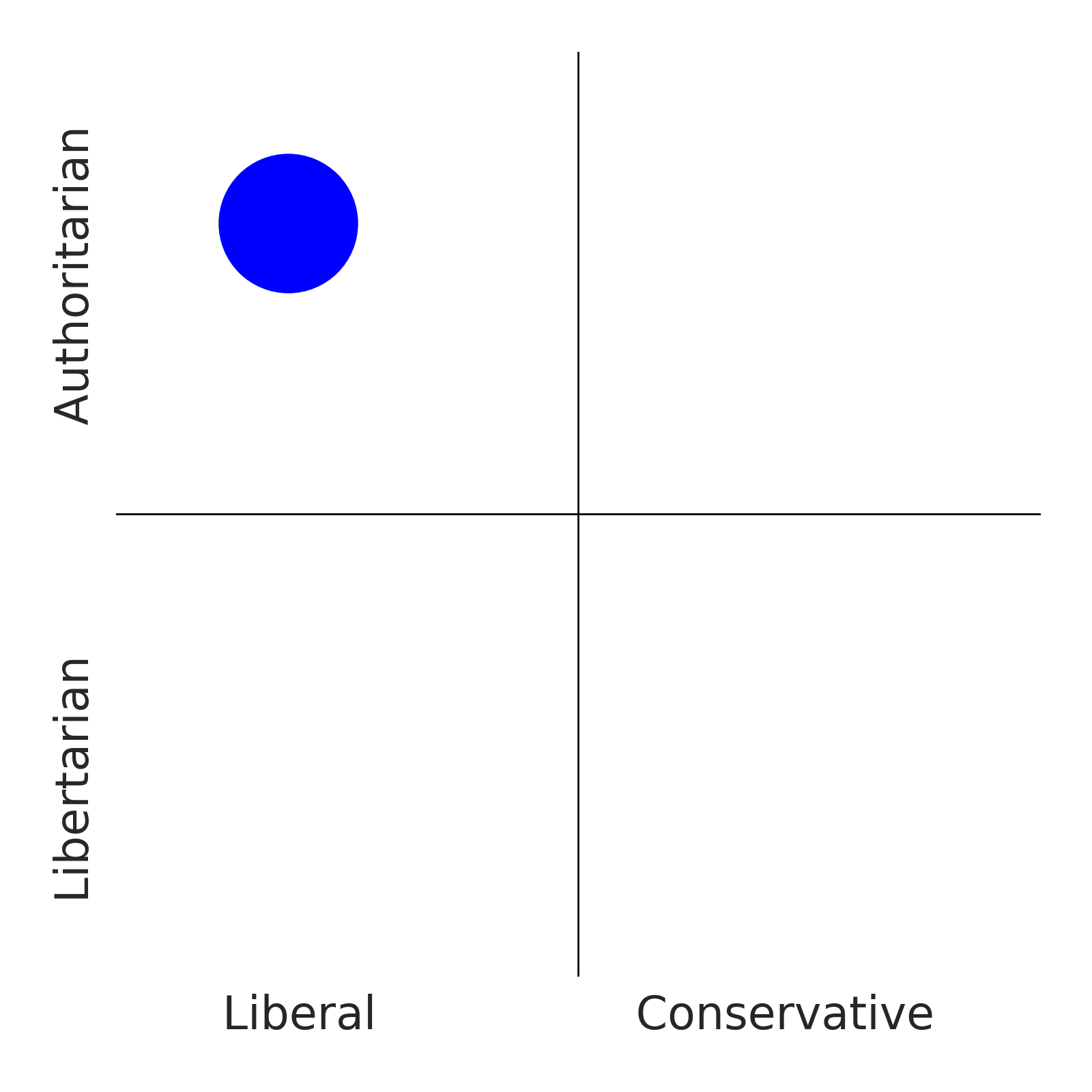
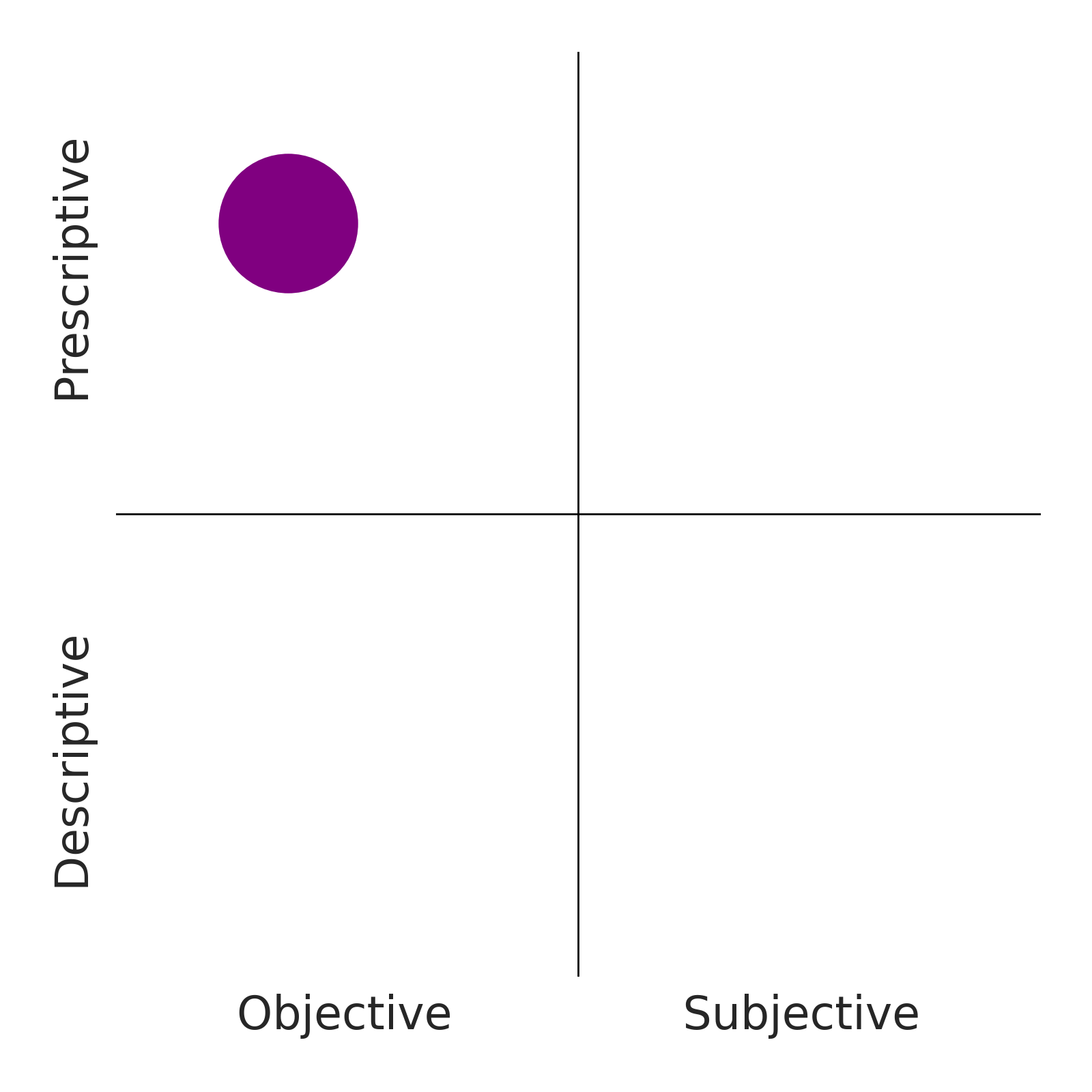
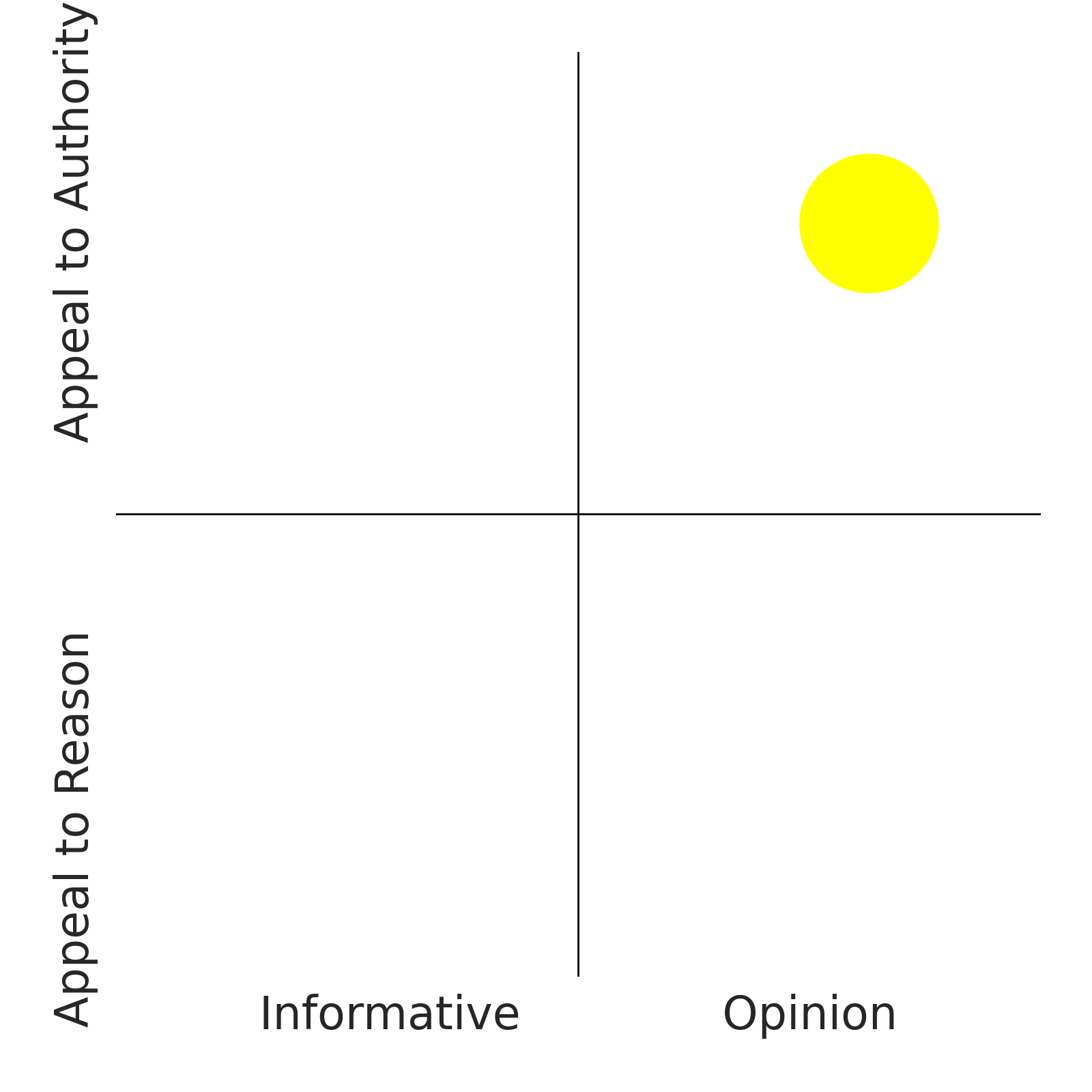
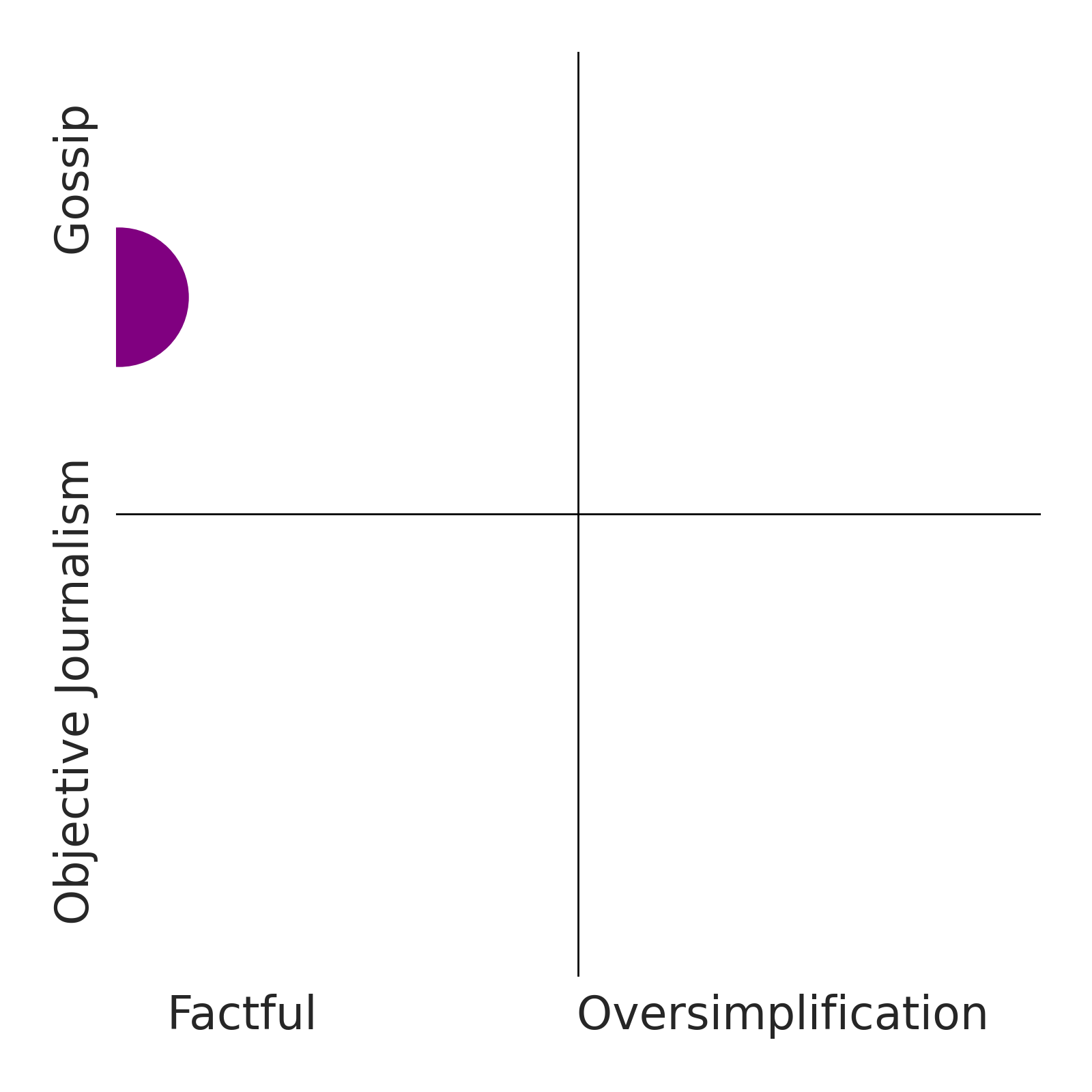
2026 © Helium Trades
Privacy Policy & Disclosure
* Disclaimer: Nothing on this website constitutes investment advice, performance data or any recommendation that any particular security, portfolio of securities, transaction or investment strategy is suitable for any specific person. Helium Trades is not responsible in any way for the accuracy
of any model predictions or price data. Any mention of a particular security and related prediction data is not a recommendation to buy or sell that security. Investments in securities involve the risk of loss. Past performance is no guarantee of future results. Helium Trades is not responsible for any of your investment decisions,
you should consult a financial expert before engaging in any transaction.
Helium Research Assistant

How can I help you today?
Ask any question about Vox bias.


