See whether Helium helps you make better-informed decisions. Try every Pro Trader feature for 30 days. No credit card required.
Try every Pro Trader feature for 30 days. No credit card required.
September 26, 2026 · 0 shares
An unsupported 'admitted it' headline frames climate concerns as a mistaken 'alarmism madness' and the Green New Deal as a deceptive scheme.
The Green New Deal is a 2019 U.S. congressional resolution proposed by Rep. Alexandria Ocasio-Cortez and Sen. Ed Markey to address climate change and economic inequality.
Automated analysis; not human reviewed. Limitations: The supplied text is a short, truncated excerpt with no supporting evidence, so bias ratings are based on framing language and cannot assess the strength of the alleged admission. · 15 of 55 available dimensions scored; omitted dimensions are not treated as neutral. · Verified supporting quotes for 15 of 15 scored dimensions.
Claim: Uses a partisan attack on AOC and the Green New Deal while dismissing climate concern as mistaken alarmism.
“climate alarmism madness” · exact text match
“mistakenly believed that climate change posed a threat to humanity” · exact text match
Why: The language adopts a conservative, climate-skeptic standpoint by framing concern about climate change as a mistake and a form of 'madness.'
Claim: Heavily subjective, value-laden commentary rather than neutral reporting.
“billed as a viable plan to achieve the so-called green transition” · exact text match
“climate alarmism madness” · exact text match
Why: Pejoratives and scare quotes replace neutral description with opinion.
Claim: Uses sensational epithets to maximize emotional impact.
“At the peak of climate alarmism madness” · exact text match
Why: 'Madness' and 'peak alarmism' are sensationalized rather than measured.
Claim: The word 'admitted' presupposes the contested conclusion that the Green New Deal was never about climate.
“AOC's team admitted it: The Green New Deal was never about saving the planet.” · exact text match
Why: 'Admitted it' treats the disputed point as already true.
Claim: The piece is overt opinion, not news reporting.
“There once was a time, many years ago, when Americans mistakenly believed that climate change posed a threat to humanity” · exact text match
“climate alarmism madness” · exact text match
Why: Commentary-style claims and provocative framing signal opinion.
Claim: Directly attacks the Green New Deal, an iconic Democratic priority, in partisan terms.
“AOC's team admitted it: The Green New Deal was never about saving the planet.” · exact text match
Why: The piece takes sides in a partisan climate-policy fight.
Claim: Reduces a complex policy and scientific debate to a single dismissive assertion.
“The Green New Deal was never about saving the planet.” · exact text match
Why: Complex policy debate is collapsed into a one-line dismissal.
Claim: Assertion is framed with certainty despite no evidence in the excerpt.
“AOC's team admitted it: The Green New Deal was never about saving the planet.” · exact text match
Why: The certainty of 'was never' exceeds the support provided.
Claim: Recurring dismissive framing reflects a fixed anti-climate-action ideology.
“so-called green transition” · exact text match
“climate alarmism madness” · exact text match
Why: 'So-called' and 'alarmism madness' show a fixed anti-climate-action worldview.
Claim: The language is emotionally charged and negatively valenced toward climate advocates.
“climate alarmism madness” · exact text match
“mistakenly believed that climate change posed a threat to humanity” · exact text match
Why: Negative, inflammatory epithets carry strong emotion.
Claim: The excerpt provides no sourcing, evidence, or detail to support its central claim.
“AOC's team admitted it: The Green New Deal was never about saving the planet.” · exact text match
Why: Central claim lacks visible sourcing or verifiable detail.
Claim: Dismisses the scientific view that climate change is a threat as a mistake and 'madness.'
“mistakenly believed that climate change posed a threat to humanity” · exact text match
“climate alarmism madness” · exact text match
Why: Labeling a recognized threat a mistaken belief and 'alarmism madness' is contrary to evidence-based reasoning.
Claim: Rejects the mainstream scientific position on climate change as a mistake.
“mistakenly believed that climate change posed a threat to humanity” · exact text match
“climate alarmism madness” · exact text match
Why: It rejects climate risk and labels that view a mistaken belief, contrary to scientific consensus.
Claim: Uses loaded phrasing and an unsupported assertion to steer the reader.
“so-called green transition” · exact text match
“AOC's team admitted it: The Green New Deal was never about saving the planet.” · exact text match
Why: Loaded terms and an unsupported admission claim steer readers before evidence is offered.
Claim: Makes an unsupported claim of an admission and presents it as settled fact.
“AOC's team admitted it: The Green New Deal was never about saving the planet.” · exact text match
Why: No underlying admission, source, or detail is supplied for a definitive assertion.
The supplied text is a short, truncated excerpt with no supporting evidence, so bias ratings are based on framing language and cannot assess the strength of the alleged admission.
September 30, 2026 · 0 shares
Framing depicts state and local climate lawsuits as an unconstitutional scheme by progressive jurisdictions to impose their energy policies on other states through litigation rather than legislation.
The article concerns the U.S. Supreme Court's review of a climate change lawsuit brought by Boulder County, Colorado, part of a wave of similar climate tort suits filed by state and local governments against energy producers.
Automated analysis; not human reviewed. Limitations: The supplied article text is truncated, so analysis is based only on the visible portions; the publisher's identity and full context are unknown. · 6 of 55 available dimensions scored; omitted dimensions are not treated as neutral. · Verified supporting quotes for 6 of 6 scored dimensions.
Claim: The article's framing is conservative, opposing state-level climate litigation and favoring congressional control over climate policy.
“county officials in Colorado bent on imposing their preferred energy policies on the other 49 states” · exact text match
Why: The phrase 'bent on imposing' characterizes the lawsuit as an aggressive overreach by a left-leaning jurisdiction.
Claim: The article presents opinion and legal argument as the primary content rather than neutral reporting.
“From Maine to Hawaii, progressive cities, counties, and states have substituted tort litigation for the climate mandates they could not win in Congress.” · exact text match
Why: The characterization of litigation as a substitute for failed legislation is an interpretive claim, not a neutral report.
Claim: The article prescribes what the Supreme Court should do.
“the Supreme Court will have the chance to reaffirm what the framers settled long ago: States generally may not govern outside their borders” · exact text match
Why: The framing prescribes the outcome the publisher wants from the Court.
Claim: The article is heavily opinionated, taking a clear position on a disputed legal matter.
“By handing Congress's authority to state court judges, Boulder's suit strips voters of self-government and states of their equal sovereignty.” · verified after text normalization
Why: This asserts a definitive legal conclusion as if it were established fact.
Claim: The article is highly political, engaging in the climate policy debate from one side.
“If global carbon emissions are contributing to a changing climate, it is up to Congress, not a local courtroom, to determine the appropriate response.” · exact text match
Why: The statement takes a position in an ongoing political controversy over climate change policy.
Claim: The article is moderately credible, citing specific legal authorities, but is one-sided.
“The Supreme Court reaffirmed this foundational principle of equal sovereignty among states in Shelby County v. Holder” · exact text match
Why: It cites a real precedent, lending credibility, but the selection of authorities is entirely one-sided.
The supplied article text is truncated, so analysis is based only on the visible portions; the publisher's identity and full context are unknown.
Frames Seattle's out-migration as evidence of left-wing-induced urban decay, using loaded labels and a single Redfin metric.
Automated analysis; not human reviewed. Limitations: Only a short excerpt was available, with no publication date, author, or Redfin methodology. · 12 of 55 available dimensions scored; omitted dimensions are not treated as neutral. · Verified supporting quotes for 12 of 12 scored dimensions.
Claim: The publisher attributes urban decline to Democratic and left-wing governance.
“Several Democrat-run cities across the United States are in the decay process thanks to their left-wing policies.” · exact text match
Why: This is an explicit conservative causal claim about Democratic-run cities.
Claim: The publisher presents opinion as assessment rather than neutral reporting.
“Perhaps none is dying faster than socialist Seattle.” · exact text match
Why: Phrases such as 'perhaps,' 'dying faster,' and 'socialist' are subjective editorial framing.
Claim: The publisher uses emotive, dramatic language to describe city conditions.
“Seattle is a slowly dying city.” · exact text match
Why: 'Slowly dying city' is sensationalized language for out-migration data.
Claim: The publisher conveys a gloomy, pessimistic outlook for Seattle and other Democrat-run cities.
“Seattle is a slowly dying city.” · exact text match
Why: The dominant characterization is terminal decline.
Claim: The publisher presupposes that left-wing policies are the cause of decline rather than testing it.
“Several Democrat-run cities across the United States are in the decay process thanks to their left-wing policies.” · exact text match
Why: The conclusion is embedded in the premise of the sentence.
Claim: The publisher states opinion as if it were established fact.
“Perhaps none is dying faster than socialist Seattle.” · exact text match
Why: The sentence mixes conjecture ('perhaps') with a partisan label and a sweeping assertion.
Claim: The report is heavily framed around partisan politics.
“Several Democrat-run cities across the United States are in the decay process thanks to their left-wing policies.” · exact text match
Why: The decline is framed as a political outcome of Democratic governance.
Claim: A single Redfin metric is used to characterize entire cities as dying.
“Data from the real estate company Redfin shows that Seattle has a higher share of residents looking to move out of state than any other major metro area in the country.” · exact text match
Why: Out-of-state moving interest is treated as sufficient evidence of overall urban decay.
Claim: The publisher asserts a definite causal outcome without presenting supporting evidence.
“Several Democrat-run cities across the United States are in the decay process thanks to their left-wing policies.” · exact text match
Why: The causal language is certain, but no evidence connects left-wing policies to the Redfin data.
Claim: The tone is strongly negative and emotive.
“Seattle is a slowly dying city.” · exact text match
Why: The word choice is emotionally charged rather than neutral.
Claim: A single out-migration metric is treated as proof of citywide decline and political causation.
“Seattle is a slowly dying city.” · exact text match
“Several Democrat-run cities across the United States are in the decay process thanks to their left-wing policies.” · exact text match
Why: The data supports only moving interest, not 'dying city' status or left-wing causation; the inference exceeds the evidence.
Claim: The publisher uses loaded labels and one-sided framing.
“Perhaps none is dying faster than socialist Seattle.” · exact text match
Why: The pejorative label 'socialist Seattle' is used in an explanatory context without supporting evidence.
Only a short excerpt was available, with no publication date, author, or Redfin methodology.
September 26, 2026 · 0 shares
Framing casts a First Avenue protest as a foreign-directed 'Red-Green alliance' influence operation and calls for a Washington response, using loaded labels and unsupported causal claims.
Automated analysis; not human reviewed. Limitations: The supplied text is a short opinion excerpt with subscription/paywall truncation; no independent sourcing or full context is provided, so classifications rest on the visible wording. · 18 of 55 available dimensions scored; omitted dimensions are not treated as neutral. · Verified supporting quotes for 18 of 18 scored dimensions.
Claim: Frames the protest through a right-wing anti-left national-security lens.
“Around them marched communists bankrolled from Shanghai, Islamist-aligned activists, and protesters waving the flag of a terrorist organization.” · exact text match
Why: The labels 'communists,' 'Islamist-aligned,' and 'terrorist organization' place the event in a conservative ideological frame.
Claim: Endorses a governmental response to a protest described as an influence operation.
“Washington should treat it as the influence operation it is.” · exact text match
Why: The directive favors federal action against political protest rather than civil-libertarian restraint.
Claim: Presents evaluative labels as descriptive facts.
“It was the Red-Green alliance on parade, and Washington should treat it as the influence operation it is.” · exact text match
Why: The conclusion is embedded in a rhetorical characterization, not neutral reporting.
Claim: Uses alarmist and inflammatory descriptors to dramatize the protest.
“Around them marched communists bankrolled from Shanghai, Islamist-aligned activists, and protesters waving the flag of a terrorist organization.” · exact text match
Why: The language is selected to provoke alarm and moral outrage rather than to neutrally describe.
Claim: Moves beyond description to an explicit policy demand.
“Washington should treat it as the influence operation it is.” · exact text match
Why: The final sentence is a direct prescription for government action.
Claim: Adopts a hawkish posture toward China-linked and Islamist-linked protest activity.
“Washington should treat it as the influence operation it is.” · exact text match
Why: The characterization of the protest as a foreign influence operation implies a hard-line national-security response.
Claim: Uses menacing imagery of foreign-funded radicals and terrorist symbols.
“Around them marched communists bankrolled from Shanghai, Islamist-aligned activists, and protesters waving the flag of a terrorist organization.” · exact text match
Why: The imagery is designed to frighten or anger readers about the protest.
Claim: Assumes the protest is an influence operation while using that assumption as the basis for the conclusion.
“It was the Red-Green alliance on parade, and Washington should treat it as the influence operation it is.” · exact text match
Why: The statement labels the event as an influence operation and then treats that label as the reason for federal action.
Claim: The text is dominated by editorial judgments rather than factual reporting.
“Beijing paid the bill. Jihadis wrote the script. Hollywood supplied the useful idiots.” · exact text match
Why: All three opening clauses are unqualified opinion presented as assertion.
Claim: Focuses centrally on partisan political figures and a federal policy response.
“a Democratic congressional nominee sat down on First Avenue” · exact text match
“Washington should treat it as the influence operation it is.” · exact text match
Why: The text ties a protest to Democratic political figures and urges a governmental response.
Claim: Reduces a complex protest to a single ideological label.
“It was the Red-Green alliance on parade” · exact text match
Why: A diverse crowd is collapsed into one loaded category without qualification.
Claim: Uses insulting epithets instead of substantive engagement.
“Hollywood supplied the useful idiots.” · exact text match
Why: The phrase 'useful idiots' is a derisive label rather than reasoned analysis.
Claim: Asserts causal control and foreign direction with certainty.
“Beijing paid the bill. Jihadis wrote the script.” · exact text match
Why: The claims are stated as established fact with no attribution, evidence, or uncertainty.
Claim: Views the event through a pre-formed ideological construct.
“It was the Red-Green alliance on parade” · exact text match
Why: The 'Red-Green alliance' label imposes an ideological interpretation on the protest.
Claim: Carries a hostile, contemptuous tone toward participants.
“Hollywood supplied the useful idiots.” · exact text match
“that network’s street machine delivered Hollywood’s biggest names to the curb.” · exact text match
Why: The wording expresses scorn, producing a strongly negative emotional charge.
Claim: Visible sourcing is thin, and core claims rely on generic or unnamed authority.
“A federal grand jury in Manhattan is examining Neville Roy Singham’s money.” · exact text match
“members of Congress accuse” · exact text match
Why: No named sources, documents, or links support the most consequential claims.
Claim: Uses loaded epithets and an unverified causal narrative to steer the reader's response.
“Beijing paid the bill. Jihadis wrote the script. Hollywood supplied the useful idiots.” · exact text match
Why: The combination of insulting labels, unproven causation, and a directive is strongly persuasive rather than informative.
Claim: States contested accusations as established facts without consistently hedging.
“Beijing paid the bill. Jihadis wrote the script. Hollywood supplied the useful idiots.” · exact text match
Why: The opening presents an unverified causal chain as fact, while a later accusation is hedged with 'members of Congress accuse.'
The supplied text is a short opinion excerpt with subscription/paywall truncation; no independent sourcing or full context is provided, so classifications rest on the visible wording.
September 29, 2026 · 0 shares
A conservative-skewing digest frames Talarico's New York fundraising as an awkward entanglement with socialist-aligned wealthy donors, questions U.S. certainty on U.K. counterterrorism arrests, and adds White House seating gossip.
Automated analysis; not human reviewed. Limitations: The item is a newsletter digest combining original commentary with summaries and attributed quotes; the publisher's independent evidentiary basis for the U.K. speculation and Venezuela criticism is not supplied. · 8 of 55 available dimensions scored; omitted dimensions are not treated as neutral. · Verified supporting quotes for 8 of 8 scored dimensions.
Claim: Framing repeatedly treats a Democratic candidate's donor network as socialist-tainted and hypocritical.
“Talarico is not a socialist, but he has to hang out with them in New York.” · exact text match
“Talarico has taken great pains to avoid getting caught up with the Democratic Socialists of America, who are dominating the airwaves of his party” · exact text match
Why: The item's own editorial voice emphasizes 'socialist' associations and Democratic 'contortions' as political liabilities, a conservative framing of the race.
Claim: Criticizes wealthy elite donors and out-of-state liberal money as alienating ordinary Texans.
“He needs the money from wealthy New York liberals, but will their East Coast ways alienate him from the voters at home who ultimately decide whether he will win the state’s Senate seat?” · exact text match
Why: The rhetorical question sets ordinary home-state voters against wealthy New York liberals, an anti-elite, populist framing.
Claim: Editorializes with sarcasm and value judgments rather than staying neutral.
“What a bargain.” · exact text match
“It is all a reminder of the contortions that Democrats have to go through” · exact text match
Why: Sarcastic exclamations and commentary like 'What a bargain' are subjective editorializing embedded in the news summary.
Claim: Uses dramatic rhetorical alternatives and celebrity-loaded details to heighten interest.
“Was it some huge terror plot against RAF Fairford, a military base in England used by the U.S. Air Force? Or were these some kind of thieves on a mission to steal diesel (which has rocketed in price) from nearby farms?” · exact text match
“all introduced with a touch of Hollywood gold dust in the form of actor Robert De Niro” · exact text match
Why: The counterterrorism item is framed as a dramatic either/or, and the fundraiser is described with celebrity-dusted language rather than plain reporting.
Claim: Devotes space to a society-letter complaint about a state dinner seating plan.
“Four married couples were put next to each other. This gruesome idea is now far too common.” · exact text match
“Someone forward to the first lady’s office!” · exact text match
Why: The item reports a letter-writer's personal social complaint about White House seating as noteworthy content, which is gossip-like.
Claim: Content is largely commentary and editorial aside rather than neutral reporting.
“What a bargain.” · exact text match
“It is all a reminder of the contortions that Democrats have to go through” · exact text match
Why: Repeated editorializing statements and rhetorical evaluations make the item substantially opinionated.
Claim: All items in the digest concern electoral politics, government officials, or policy disputes.
“It is all a reminder of the contortions that Democrats have to go through if they are to have a chance of winning a statewide contest in Texas for the first time since 1984.” · exact text match
Why: The content is almost entirely about campaigns, parties, national security politics, and administration figures.
Claim: Raises unverified hypothetical explanations for the U.K. arrests.
“Was it some huge terror plot against RAF Fairford, a military base in England used by the U.S. Air Force? Or were these some kind of thieves on a mission to steal diesel (which has rocketed in price) from nearby farms?” · exact text match
“Could it be that five suspected thieves got caught up in the middle of a counterterrorism operation directed at a different threat?” · exact text match
Why: The item poses multiple unconfirmed possible explanations and openly asks whether events are being 'muddled,' which is speculative.
The item is a newsletter digest combining original commentary with summaries and attributed quotes; the publisher's independent evidentiary basis for the U.K. speculation and Venezuela criticism is not supplied.
Frames an unsourced, motive-based speculation about Rubio's 2028 plans as definitive fact while using flattering, insider-toned language toward Republican figures.
Marco Rubio is a Republican politician and former U.S. senator from Florida who ran for president in 2016; the 2028 Republican nomination is the party's next presidential contest.
Automated analysis; not human reviewed. Limitations: The supplied text is a short promotional newsletter excerpt; the underlying reporting and any sourcing for the Rubio claim are unavailable. · 12 of 54 available dimensions scored; omitted dimensions are not treated as neutral. · Verified supporting quotes for 12 of 12 scored dimensions.
Claim: The text leans conservative by presenting Republican and MAGA figures in admiring terms.
“Vice President JD Vance is everything, everywhere, all at once, lending a hand to midterm candidates around the country, headlining MAGA Inc., fundraising dinners, and taking questions in the White House briefing room.” · exact text match
Why: The phrasing is flattering and frames Republican/MAGA activity as impressive.
Claim: The text is subjective, mixing editorializing and mind-reading with news.
“Marco Rubio won't run in 2028 because he thinks the election is unwinnable” · exact text match
“Vice President JD Vance is everything, everywhere, all at once” · exact text match
Why: A private motive is stated as fact and Vance is praised with subjective hyperbole.
Claim: The text uses attention-grabbing wording to hype its content.
“exclusive news of another investigation into the nation’s creaking organ donation system” · exact text match
“Vice President JD Vance is everything, everywhere, all at once” · exact text match
Why: 'Creaking' and 'everything, everywhere, all at once' are loaded, promotional phrases rather than neutral description.
Claim: The content is insider political gossip, teasing private motives and personalities.
“We dig into why he won’t be challenging for the 2028 Republican presidential nomination” · exact text match
“unlike Marco Rubio, who has urgent business elsewhere” · exact text match
Why: The framing reduces a political decision to personal motive and a snarky contrast.
Claim: The text editorializes and presents opinion as part of the news summary.
“Vice President JD Vance is everything, everywhere, all at once” · exact text match
“unlike Marco Rubio, who has urgent business elsewhere” · exact text match
Why: These are evaluative, not factual, statements.
Claim: The content is heavily political, focused on Republican nominating politics and midterm campaigns.
“We fly to Dallas today for the Republican midterm convention” · exact text match
“2028 Republican presidential nomination” · exact text match
Why: The text's subject matter is exclusively partisan political activity.
Claim: The text reduces a complex decision to a single motive.
“Marco Rubio won't run in 2028 because he thinks the election is unwinnable” · exact text match
Why: A candidate's decision is attributed to one reason without supporting evidence or nuance.
Claim: The headline states a speculative claim as certain fact.
“Marco Rubio won't run in 2028 because he thinks the election is unwinnable” · exact text match
Why: The claim is unhedged and lacks any named source, exceeding the supplied evidence.
Claim: The text has low visible credibility because it asserts privileged claims without sourcing or hedging.
“Marco Rubio won't run in 2028 because he thinks the election is unwinnable” · exact text match
“plus we have exclusive news of another investigation into the nation’s creaking organ donation system” · exact text match
Why: No source is cited for either the Rubio claim or the promised 'exclusive' investigation.
Claim: The text speculates about future electoral behavior and private motives.
“We dig into why he won’t be challenging for the 2028 Republican presidential nomination” · exact text match
“Marco Rubio won't run in 2028 because he thinks the election is unwinnable” · exact text match
Why: A decision not to run and its cause are presented as knowable in advance or from inside information.
Claim: The text uses loaded framing and omits sourcing in ways that can shape reader perception.
“Marco Rubio won't run in 2028 because he thinks the election is unwinnable” · exact text match
“unlike Marco Rubio, who has urgent business elsewhere” · exact text match
Why: The unsourced causal claim and the snide contrast are observable rhetorical techniques.
Claim: The text makes an unsourced, definitive causal claim about a politician's private decision, signaling low internal epistemic care.
“Marco Rubio won't run in 2028 because he thinks the election is unwinnable” · exact text match
Why: No source, hedge, or attribution accompanies a claim about Rubio's internal reasoning.
The supplied text is a short promotional newsletter excerpt; the underlying reporting and any sourcing for the Rubio claim are unavailable.
September 30, 2026 · 0 shares
Frames a diesel export ban as a self-defeating, jobs-killing policy that would raise consumer fuel prices, empower adversaries, and weaken America.
The article is an op-ed opposing a proposed US diesel export ban, a policy debated as a response to high fuel prices and global energy supply disruptions.
Automated analysis; not human reviewed. Limitations: The supplied article text is an excerpt with ellipses, so the analysis may miss surrounding context. · 54 of 55 available dimensions scored; omitted dimensions are not treated as neutral. · Verified supporting quotes for 10 of 54 scored dimensions.
Claim: The text opposes government-imposed export restrictions as harmful and counterproductive.
“A domestic diesel export ban would make the pain Americans are feeling at the pump worse.” · exact text match
“Instead, banning diesel exports would stifle jobs, tighten fuel supplies here at home, and put power in the hands of our nation’s adversaries.” · not found in supplied text
Why: Opposing a ban and warning of harms from state intervention reflects an anti-intervention, free-market stance on this policy.
Claim: The text relies on subjective value judgments presented as obvious conclusions.
“A ban is the wrong answer to a real problem.” · exact text match
Why: Calling a policy 'wrong' is a subjective evaluation, not an objective factual report.
Claim: The text prescribes what policy should be, using value judgments about the ban.
“A ban is the wrong answer to a real problem.” · exact text match
Why: The statement directly prescribes rejection of the policy rather than merely describing its effects.
Claim: The text invokes fear of consumer pain, job loss, and national weakening.
“make the pain Americans are feeling at the pump worse.” · exact text match
“A ban today means a weaker nation tomorrow.” · exact text match
Why: The article warns of immediate consumer pain and existential national harm, appealing to fear.
Claim: The text is heavily opinionated rather than neutral or fact-reporting.
“A ban is the wrong answer to a real problem.” · exact text match
“A ban today means a weaker nation tomorrow.” · exact text match
Why: The language directly states the author's viewpoint and urges opposition to the policy.
Claim: The text engages in political advocacy around an energy policy dispute.
“Short-term political points are not worth the long-term harm a ban would inflict.” · exact text match
Why: The sentence explicitly frames the issue in terms of political incentives and national harm, making it political advocacy.
Claim: The text leans on a government official's authority to support its argument.
“Interior Secretary Doug Burgum himself acknowledged that an export ban would not lower prices.” · exact text match
Why: The word 'himself' and the reliance on Burgum's statement invoke authority to settle the policy dispute.
Claim: The text makes unconditional predictions about the consequences of an export ban.
“A ban today means a weaker nation tomorrow.” · exact text match
Why: The claim is stated as a certainty without acknowledging uncertainty or alternative outcomes.
Claim: The text uses negative emotional language about the policy's consequences.
“pain Americans are feeling at the pump” · exact text match
“weaker nation tomorrow” · exact text match
Why: The language is emotionally charged and negative, framing the ban as harmful and threatening.
Claim: The text serves a promotional function for the oil and gas industry's policy position.
“Texas’s oil and natural gas industry remains focused on increasing production.” · not found in supplied text
“America’s best bet is not against its own interests.” · exact text match
Why: The phrasing casts the industry as constructive and America's interest as aligned with the industry's preferred policy.
Claim: The text promotes the interests of the oil and gas industry.
“Texas’s oil and natural gas industry remains focused on increasing production.” · not found in supplied text
“Todd Staples is president of the Texas Oil & Gas Association.” · exact text match
Why: The author's industry role and the positive presentation of industry efforts indicate pro-corporate advocacy.
Claim: The text speculates about future market and supply effects.
“A sudden prohibition on diesel exports sends a signal for refiners to reduce production, which would tighten domestic diesel supply and further impact prices.” · exact text match
Why: This is a predictive causal claim about refiner behavior and market outcomes, not an observed fact.
Claim: The text uses loaded national-strength and adversary framing to steer the reader.
“put power in the hands of our nation’s adversaries” · exact text match
“A ban today means a weaker nation tomorrow.” · exact text match
Why: The language associates the policy with national weakness and adversary advantage, a loaded emotional framing.
The supplied article text is an excerpt with ellipses, so the analysis may miss surrounding context.
September 30, 2026 · 0 shares
Medical-technology tariffs are framed as a self-inflicted threat to an already dominant U.S. industry, using free-trade and low-tax arguments to oppose the policy.
Automated analysis; not human reviewed. Limitations: The supplied text contains truncation markers and embedded links, so some sentences are incomplete; classification is based on the available substantive portion. · 6 of 55 available dimensions scored; omitted dimensions are not treated as neutral. · Verified supporting quotes for 6 of 6 scored dimensions.
Claim: The article advocates conservative economic policies—low taxes, deregulation, and free trade—against tariffs.
“Keep taxes low. Reduce unnecessary regulation.” · exact text match
“If Washington wants more made in America, it should avoid taxing the companies already making it here.” · exact text match
Why: These recommendations are standard conservative limited-government positions.
Claim: The article opposes government tariffs and regulation in favor of market choice and global supply chains.
“Let American manufacturers purchase competitive inputs from reliable suppliers.” · exact text match
“Trade lets American companies specialize where they have an advantage while drawing on global supply chains where needed.” · exact text match
Why: Free-trade, anti-tariff, and deregulatory positions align with libertarian economics.
Claim: The article is strongly prescriptive, telling Washington what policies it should and should not adopt.
“A stronger manufacturing agenda would address why businesses choose to invest here. Keep taxes low. Reduce unnecessary regulation.” · exact text match
“If Washington wants more made in America, it should avoid taxing the companies already making it here.” · exact text match
Why: Imperative and should-statements dominate the policy recommendations.
Claim: The article is an opinion piece advancing a policy argument rather than a neutral news report.
“Broad tariffs could instead raise production costs, squeeze healthcare providers, and divert investment from innovation.” · exact text match
“If Washington wants more made in America, it should avoid taxing the companies already making it here.” · exact text match
Why: Evaluative judgments and prescriptive recommendations signal opinion content.
Claim: The article engages directly in a political trade-policy debate involving Congress and President Trump.
“Trump wants more manufacturing, investment, and innovation in America.” · exact text match
“If Washington wants more made in America, it should avoid taxing the companies already making it here.” · exact text match
Why: The argument targets federal policy and political actors.
Claim: The article frames the interests of the medical-technology industry as aligned with good policy and defends companies against taxation.
“America already leads in medtech. The industry generates more than $250 billion annually and supports nearly 3 million jobs through about 16,000 manufacturing facilities across all 50 states.” · exact text match
“If Washington wants more made in America, it should avoid taxing the companies already making it here.” · exact text match
Why: It adopts the industry perspective and argues against measures that would burden corporate producers.
The supplied text contains truncation markers and embedded links, so some sentences are incomplete; classification is based on the available substantive portion.
September 30, 2026 · 0 shares
Data centers are framed as indispensable to American AI leadership, with industry-written community safeguards presented as compatible with, not a check on, that buildout.
Automated analysis; not human reviewed. Limitations: The supplied text is an excerpt with bracketed omissions, so the full list of principles and the surrounding argument are incomplete. · 12 of 55 available dimensions scored; omitted dimensions are not treated as neutral. · Verified supporting quotes for 12 of 12 scored dimensions.
Claim: The publisher uses value-laden, persuasive language rather than neutral, factual reporting.
“Build data centers, beat China, but don’t steamroll America’s communities.” · verified after text normalization
“That future depends on trust.” · exact text match
Why: The headline and prose frame a policy dispute as a matter of national duty and community protection, which is subjective.
Claim: The publisher uses dramatic, all-caps phrasing and superlative language to heighten urgency.
“AI IS ESCAPING THE LAB.” · exact text match
“setting a gold standard for building not only data centers, but trust with communities across the United States.” · exact text match
Why: The all-caps declaration and 'gold standard' hyperbole are sensational rhetorical devices.
Claim: The publisher is strongly bullish on the AI and data-center sector.
“None of it happens without data centers” · exact text match
“lasting AI leadership requires getting the community piece right.” · exact text match
Why: The article treats data centers and AI leadership as essential growth opportunities, not as risky or overbuilt.
Claim: The publisher presents AI and data-center expansion as producing broad, certain benefits.
“An AI sepsis-alert system cleared by the Food and Drug Administration is cutting hospital deaths by nearly one-fifth.” · exact text match
“AI developed and built in America will benefit every family in one way or another.” · exact text match
Why: The piece emphasizes positive outcomes and promises universal benefit without presenting equivalent negative consequences.
Claim: The publisher prescribes what data centers and operators must do rather than merely describing conditions.
“Data centers will bear the full cost of the energy they use, so those costs aren’t passed on to other customers.” · exact text match
“Data centers will give back to the communities that host them, helping fund local priorities like recreation centers, schools, roads, hospitals, and first responders, or helping lower property taxes.” · exact text match
Why: The repeated 'will' commitments set out required behavior and community standards.
Claim: The publisher frames data-center construction as a competitive, nationalist contest against China.
“Build data centers, beat China, but don’t steamroll America’s communities.” · verified after text normalization
“Building data centers across the United States is how America wins the global AI race against China.” · exact text match
Why: The language frames the issue in terms of 'beat China' and 'wins the global AI race,' a hawkish competition framing.
Claim: The piece is substantially opinion or advocacy rather than straight news.
“The AI Infrastructure Coalition, which we co-chair, does not believe the choice is between AI leadership and protecting the communities that host data centers.” · exact text match
“In fact, lasting AI leadership requires getting the community piece right.” · exact text match
Why: The piece argues from an institutional position and asserts a particular policy view.
Claim: The article engages in political and community-policy advocacy over data-center siting.
“Families in the towns where these projects break ground have every right to ask hard questions about land use, water, jobs, noise, and the price of electricity.” · exact text match
Why: It directly addresses a public-policy dispute and advocates for a political approach to data-center development.
Claim: The publisher leans on institutional authority and industry consensus to support its argument.
“An AI sepsis-alert system cleared by the Food and Drug Administration is cutting hospital deaths by nearly one-fifth.” · exact text match
“The major players from across the entire industry are all agreeing to the same rules, setting a gold standard for building not only data centers, but trust with communities across the United States.” · exact text match
Why: It uses FDA clearance and industry-wide agreement as authoritative endorsements of AI and data-center benefits.
Claim: The publisher states future outcomes with more certainty than the evidence supports.
“AI developed and built in America will benefit every family in one way or another.” · exact text match
Why: A sweeping unconditional 'will benefit every family' goes beyond the cited examples.
Claim: The publisher promotes consensus among major industry players as authoritative and desirable.
“The major players from across the entire industry are all agreeing to the same rules, setting a gold standard for building not only data centers, but trust with communities across the United States.” · exact text match
Why: It presents industry-wide agreement as the gold standard, a pro-establishment and consensus-oriented stance.
Claim: The publisher is a corporate and industry coalition advocating for industry interests.
“The AI Infrastructure Coalition, which we co-chair, does not believe the choice is between AI leadership and protecting the communities that host data centers.” · exact text match
“Our membership runs the length of the AI tech stack.” · exact text match
Why: The article is by an industry group with a direct stake in data-center expansion and frames that expansion favorably.
The supplied text is an excerpt with bracketed omissions, so the full list of principles and the surrounding argument are incomplete.
Frames permitting reform as an urgent economic imperative and casts the existing permitting system as the cause of higher consumer costs while pressing Congress to act quickly.
In the United States, major infrastructure and energy projects require multiple federal and state permits; 'permitting reform' refers to proposals to shorten those approval timelines.
Automated analysis; not human reviewed. Limitations: The supplied text is a truncated, ellipsized excerpt with no author, publisher, or date; classification relies on the visible fragment, including the headline-like claim about Obama's economist. · 9 of 54 available dimensions scored; omitted dimensions are not treated as neutral. · Verified supporting quotes for 8 of 9 scored dimensions.
Claim: The text frames 'green energy mandates' as costly and the permitting system as harming consumers, a conservative-leaning policy stance.
“OBAMA’S OWN ECONOMIST JUST EXPOSED THE MASSIVE COST OF GREEN ENERGY MANDATES” · exact text match
“A broken permitting process has already contributed to increased electricity rates through canceled pipelines, delayed transmission lines, and stalled generation.” · exact text match
Why: The headline attaches a 'massive cost' to 'green energy mandates' and the body attributes higher rates to the permitting system, aligning with conservative critiques of regulation.
Claim: The text uses normative judgments and advocacy rather than neutral description.
“America cannot afford to postpone permitting reform.” · exact text match
“Permitting reform is an economic imperative.” · exact text match
Why: These are value-laden, prescriptive assertions about what the country should do, not objective statements of fact.
Claim: The headline uses dramatic, all-caps language to announce a costly finding.
“OBAMA’S OWN ECONOMIST JUST EXPOSED THE MASSIVE COST OF GREEN ENERGY MANDATES” · exact text match
Why: Phrases such as 'JUST EXPOSED' and 'MASSIVE COST' are sensational treatment of a policy claim.
Claim: The text prescribes a policy outcome rather than merely describing conditions.
“America cannot afford to postpone permitting reform.” · exact text match
“Permitting reform is an economic imperative.” · exact text match
Why: These are direct calls for action, making the piece prescriptive.
Claim: The passage is dominated by the author's advocacy for immediate congressional action.
“America cannot afford to postpone permitting reform.” · exact text match
“Lawmakers have a narrow window to act before political turnover resets the clock and delays stretch into years.” · exact text match
Why: It tells lawmakers what must be done rather than presenting a balanced range of options.
Claim: The text frames the issue as a voter concern and a congressional timing problem.
“Lawmakers have a narrow window to act before political turnover resets the clock and delays stretch into years.” · exact text match
Why: It explicitly connects the issue to political turnover and congressional action, treating it as a current political priority.
Claim: The headline invokes an economist's former role in the Obama administration to support the cost claim.
“OBAMA’S OWN ECONOMIST JUST EXPOSED THE MASSIVE COST OF GREEN ENERGY MANDATES” · exact text match
Why: The persuasiveness relies on the official's former government position rather than on the substance of the analysis.
Claim: The text states an absolute consequence without hedging.
“Failure to fix the problematic system will only increase their costs.” · exact text match
Why: The word 'only' asserts a single inevitable outcome, a certainty that exceeds the support supplied in the excerpt.
Claim: The text names one institutional source for a key statistic but otherwise relies on unqualified advocacy.
“According to the North American Electric Reliability Corporation’s 2025 assessment, […] will need to build about 80 gigawatts of additional capacity per year for 20 years to keep up.” · not found in supplied text
Why: A named organization supports the central capacity figure, but other causal claims are asserted without sourcing or uncertainty markers.
The supplied text is a truncated, ellipsized excerpt with no author, publisher, or date; classification relies on the visible fragment, including the headline-like claim about Obama's economist.
September 26, 2026 · 0 shares
A terse, source-attributed wire item relays an outage count and official storm warnings without editorializing.
A nor’easter is a strong low-pressure storm system along the U.S. East Coast that typically brings high winds, heavy rain or snow, and coastal flooding.
Automated analysis; not human reviewed. Limitations: The supplied text is a short excerpt that appears truncated after the opening paragraphs, so any later developments or added context in the full article are unavailable. · 5 of 55 available dimensions scored; omitted dimensions are not treated as neutral. · Verified supporting quotes for 5 of 5 scored dimensions.
Claim: The report relays concrete data and official warnings without personal or editorial statements.
“More than 70,000 customers were without electricity in the U.S. Northeast on Saturday” · exact text match
“Dangerous flooding is expected along the Mid-Atlantic coast, particularly near New Jersey and Delaware, according to the National Weather Service.” · exact text match
Why: The wording is observational, uses attributed official information, and contains no first-person or opinionated assertions.
Claim: The report describes a severe-weather threat without alarmist or embellished language.
“Dangerous flooding is expected along the Mid-Atlantic coast, particularly near New Jersey and Delaware, according to the National Weather Service.” · exact text match
Why: The threat is conveyed through attributed warning language and plain statements rather than dramatic adjectives.
Claim: The report describes conditions and forecasts without telling readers what to do.
“Forecasters warned of gale winds that could down trees and heavy rain that could put roads underwater.” · exact text match
“Dangerous flooding is expected along the Mid-Atlantic coast, particularly near New Jersey and Delaware, according to the National Weather Service.” · exact text match
Why: No imperative, advice, or policy recommendation appears; the text only conveys conditions and expectations.
Claim: The report's visible sourcing and hedging support its trustworthiness.
“Dangerous flooding is expected along the Mid-Atlantic coast, particularly near New Jersey and Delaware, according to the National Weather Service.” · exact text match
Why: It attributes expected impacts to the National Weather Service and uses probabilistic language such as 'expected' rather than asserting certainty.
Claim: The report grounds its account in observed outage figures and attributed meteorological forecasts rather than speculation.
“More than 70,000 customers were without electricity in the U.S. Northeast on Saturday” · exact text match
“Forecasters warned of gale winds that could down trees and heavy rain that could put roads underwater.” · exact text match
Why: The account is built on a concrete outage count and clearly sourced forecasting language.
The supplied text is a short excerpt that appears truncated after the opening paragraphs, so any later developments or added context in the full article are unavailable.
Attribution-based, non-evaluative reporting presents Mamdani's receipt of a federal security clearance as the end of a monthslong wait for classified access.
Automated analysis; not human reviewed. Limitations: The supplied text is a short fragment truncated mid-sentence and mixed with subscription boilerplate, limiting the observable framing to a few sentences. · 3 of 55 available dimensions scored; omitted dimensions are not treated as neutral. · Verified supporting quotes for 3 of 3 scored dimensions.
Claim: The article reports the clearance factually without subjective or evaluative language.
““Yes, I have my security clearance,” Mamdani said Wednesday when asked about the status of his clearance during a press conference in Brooklyn.” · exact text match
Why: The only direct quote is attributed and the surrounding prose states events without opinion.
Claim: The article is purely descriptive, making no recommendation or prescription.
“New York Mayor Zohran Mamdani has received a federal security clearance, ending a monthslong wait that had left him without direct access to classified intelligence on terrorism and other threats facing the city.” · exact text match
Why: The sentence reports a completed event and its consequence without suggesting any required action.
Claim: The article shows visible sourcing and attribution for its central claim.
“Mamdani said Wednesday when asked about the status of his clearance during a press conference in Brooklyn.” · exact text match
Why: The report identifies the speaker, the occasion, and the location for its key assertion.
The supplied text is a short fragment truncated mid-sentence and mixed with subscription boilerplate, limiting the observable framing to a few sentences.
September 30, 2026 · 0 shares
National Democrats' late Texas spending is framed as a risky, possibly too-little-too-late gamble despite Talarico's fundraising strength and Republican concern.
Automated analysis; not human reviewed. Limitations: The supplied text is truncated and contains ellipses and placeholder blanks, so analysis may miss later context. · 4 of 55 available dimensions scored; omitted dimensions are not treated as neutral. · Verified supporting quotes for 2 of 4 scored dimensions.
Claim: The report gives no partisan endorsement and includes both Democratic and Republican messaging.
““I think that Democrats should have invested 15 years ago,” Democratic strategist Jon Reinish told the .” · exact text match
““Senate Leadership Fund’s investment through Texas PAC affirms our commitment to maintaining the Republican […]”” · not found in supplied text
Why: Both sides are quoted and the publisher does not advocate a position.
Claim: The publisher's voice is mostly detached and attributes opinions, but uses some colorful metaphors.
“National Democrats are turning on the cash spigot” · exact text match
“It’s unclear how much SMP, which is tied to Senate Minority Leader Chuck Schumer (D-NY), is spending on the ad” · exact text match
Why: The narration is hedged and sourced, while the main figurative phrase is limited to a metaphor.
Claim: The report identifies sources, acknowledges uncertainty, and includes both sides.
“It’s unclear how much SMP, which is tied to Senate Minority Leader Chuck Schumer (D-NY), is spending on the ad” · exact text match
“Thune’s group suggested in a statement to the that it’s not planning to take its foot off the gas.” · verified after text normalization
Why: Uncertainty is acknowledged and competing campaign statements are attributed.
Claim: The article does not present opinion as fact and includes attributed quotes from both parties.
““I think that Democrats should have invested 15 years ago,” Democratic strategist Jon Reinish told the .” · exact text match
““Senate Leadership Fund’s investment through Texas PAC affirms our commitment to maintaining the Republican […]”” · not found in supplied text
Why: Opinions are clearly attributed to named or described sources.
The supplied text is truncated and contains ellipses and placeholder blanks, so analysis may miss later context.
September 26, 2026 · 0 shares
The report frames Waltz's and other Trump officials' Russia-Ukraine energy-price explanation as a partisan 'pivot' away from Iran and the Strait of Hormuz.
The Russia-Ukraine war has disrupted global energy supplies, and the Strait of Hormuz is a major oil-shipping chokepoint near Iran.
Automated analysis; not human reviewed. Limitations: The supplied text is truncated and contains malformed repeated fragments, limiting full-context review. · 4 of 55 available dimensions scored; omitted dimensions are not treated as neutral. · Verified supporting quotes for 4 of 4 scored dimensions.
Claim: The report frames Republican administration officials' energy-price explanation as a deflection, implying a mildly critical or liberal framing.
“pivoting the energy markets conversation away from the war in Iran and the Strait of Hormuz” · exact text match
Why: The phrase 'pivoting the conversation away' characterizes the officials' remarks as a diversion rather than neutrally reporting them.
Claim: The report inserts an interpretive judgment about the remarks' effect on the energy-markets conversation.
“pivoting the energy markets conversation away from the war in Iran and the Strait of Hormuz” · exact text match
Why: Describing the remarks as a 'pivot' away from another topic is an analytical interpretation, not a direct factual observation.
Claim: The article uses evaluative wording such as 'blamed' and 'pivoting' rather than purely neutral attribution.
“pivoting the energy markets conversation away from the war in Iran and the Strait of Hormuz” · exact text match
Why: The evaluative framing conveys the publisher's judgment about the officials' motives and the relative importance of the Iran/Strait of Hormuz topic.
Claim: The report centers on partisan political actors and a politically contested explanation for high energy prices.
“a series of Trump administration officials” · exact text match
Why: The article is about statements by Trump administration officials on Fox News, positioning the issue within partisan political debate.
The supplied text is truncated and contains malformed repeated fragments, limiting full-context review.
September 26, 2026 · 0 shares
The headline's 'backfired' verdict frames Ukraine's 40-day drone escalation as a failed attempt to pressure Russia into ending the war, with the excerpt supplying the plan and rationale but no outcome evidence.
The report concerns Ukraine's war with Russia, including Russian-occupied Crimea; Ukraine has used long-range drones to strike targets inside Russia and in occupied territory during the conflict.
Automated analysis; not human reviewed. Limitations: The supplied text is only a headline and a three-sentence excerpt plus subscription boilerplate; no outcome details or later paragraphs are available, so the 'backfired' characterization cannot be checked against reported results. · 3 of 55 available dimensions scored; omitted dimensions are not treated as neutral. · Verified supporting quotes for 3 of 3 scored dimensions.
Claim: The piece uses dramatic, emotionally loaded language to describe the campaign and its aims.
“The shipping strikes aimed to strangle Crimea into an energy and supply crisis.” · exact text match
“How Ukraine's 40-day summer drone campaign to end the war with Russia backfired.” · exact text match
Why: 'Strangle' is metaphorical and dramatic, and 'backfired' is a loaded way to characterize the campaign's outcome.
Claim: The headline expresses a value-laden verdict about the campaign rather than an open-ended description.
“How Ukraine's 40-day summer drone campaign to end the war with Russia backfired.” · exact text match
Why: 'Backfired' is an evaluative judgment; the body excerpt otherwise attributes statements and aims.
Claim: The headline states the campaign's failure as fact despite the excerpt showing no reported outcome.
“How Ukraine's 40-day summer drone campaign to end the war with Russia backfired.” · exact text match
Why: Certainty exceeds the supplied support: the excerpt stops at the announcement and target selection, with no outcome data.
The supplied text is only a headline and a three-sentence excerpt plus subscription boilerplate; no outcome details or later paragraphs are available, so the 'backfired' characterization cannot be checked against reported results.
September 29, 2026 · 0 shares
The publisher frames data centers as an unalloyed community benefit by amplifying a single columnist's supportive remarks without substantive counterweight.
Automated analysis; not human reviewed. Limitations: The supplied text is truncated mid-sentence, so the full context and any balancing statements are unavailable. · 8 of 55 available dimensions scored; omitted dimensions are not treated as neutral. · Verified supporting quotes for 2 of 8 scored dimensions.
Claim: The framing emphasizes conservative-coded priorities: local jobs, tax advantages, coal-plant communities, and the national debt.
“"tax advantages"” · not found in supplied text
“"$40 trillion national debt"” · not found in supplied text
Why: These themes align with a center-right economic emphasis on local industry, tax benefits, and debt reduction.
Claim: The publisher treats an opinionated claim about community benefits as settled explanation.
“Salena Zito explains how data centers are benefiting communities” · exact text match
“"people are happy"” · verified after text normalization
Why: The framing presents a single columnist's favorable assessment as explanation rather than as one side of a debate.
Claim: The publisher frames data centers with consistently positive, benefit-focused language.
“"people are happy"” · verified after text normalization
“"great job creators"” · not found in supplied text
Why: The unqualified positive descriptors and the lack of any drawback support an optimistic framing.
Claim: The text is dominated by one person's favorable opinion, with no counterpoint.
“arguing data centers benefit communities by being “great job creators.”” · exact text match
“"These are great job creators, they’re working with the communities"” · not found in supplied text
Why: The article relays opinionated praise without presenting balancing views.
Claim: The complex data center siting debate is reduced to jobs and community gifts.
“"These are great job creators, they’re working with the communities"” · not found in supplied text
“"people are happy"” · verified after text normalization
Why: Complex local impacts are condensed into a simple positive claim.
Claim: The publisher states a favorable outcome as established fact.
“Salena Zito explains how data centers are benefiting communities” · exact text match
“"people are happy"” · verified after text normalization
Why: Categorical wording presents community benefits as certain rather than as contested or conditional.
Claim: The piece advances a pro-growth, corporate-led development ideology without engaging alternative views.
“"These are great job creators, they’re working with the communities"” · not found in supplied text
“"could play a pivotal role in reducing it"” · not found in supplied text
Why: An ideological preference for private development as an unambiguous public good shapes the whole framing.
Claim: Data center developers are portrayed favorably as 'good neighbors' who provide public amenities.
“offering to build new high school football fields, community centers, and just be “good neighbors.”” · exact text match
“"great job creators"” · not found in supplied text
Why: The framing is promotional toward corporate developers, highlighting their community gifts without mentioning costs.
The supplied text is truncated mid-sentence, so the full context and any balancing statements are unavailable.
September 29, 2026 · 0 shares
Publisher framing is favorable to Lahn's MAHA-aligned biotech cancer-prevention agenda, foregrounding hope and collaboration while reporting his polling deficit without emphasis.
Automated analysis; not human reviewed. Limitations: The supplied text contains duplicate headline strings, a subscription prompt, and an interpolated headline fragment, so the original article is likely truncated or partially mangled; analysis relies only on the readable substantive passages. · 6 of 55 available dimensions scored; omitted dimensions are not treated as neutral. · Verified supporting quotes for 5 of 6 scored dimensions.
Claim: The report is predominantly factual, relying on attributed estimates, poll averages, and quotes.
“The University of Iowa estimated in March that there will be 21,700 new cancer diagnoses in the Hawkeye State this year and 6,400 new cancer deaths.” · exact text match
“Polling has Sand 6.3 percentage points ahead of Lahn in the race, according to an average of recent polls by RealClearPolling.” · exact text match
Why: The body uses verifiable estimates and attributed polling rather than publisher assertions or personal commentary.
Claim: The framing emphasizes hopeful prevention and early-detection possibilities despite the dire cancer statistics.
“Zach Lahn collaborates with biotech to combat Iowa’s cancer” · exact text match
“Ofman said he believes it is possible to “eradicate late-stage cancer, metastatic disease in our lifetimes” if it is possible to scale early cancer detection and preventive screenings” · exact text match
Why: The headline and the selected expert forecast cast biotech collaboration as a path to major progress, offsetting but not erasing the pessimistic data.
Claim: The story mostly describes a candidate’s stated plan rather than directing policymakers to adopt it.
“Lahn outlined a vision for working with biotechnology companies on preventing and early detection of cancer in his state” · exact text match
“Lahn stressed the need for policymakers at the state level to leverage biotechnology not only for preventing cancer but also for early detection” · not found in supplied text
Why: Reporting verbs present an agenda and quotes without an explicit editorial mandate, keeping the piece descriptive rather than prescriptive.
Claim: The report is organized around a candidate’s platform, campaign appearances, and horse-race polling.
“Lahn, whose gubernatorial campaign has focused on Iowa’s growing cancer crisis, moderated a panel on the future of cancer treatment on Tuesday for the MAHA Summit” · exact text match
“Polling has Sand 6.3 percentage points ahead of Lahn in the race, according to an average of recent polls by RealClearPolling.” · exact text match
Why: The central event is a campaign appearance, and the article includes endorsement and polling details that make the race the organizing frame.
Claim: Causal claims are tied to statistical and environmental evidence, not supernatural or emotional reasoning.
“Nearly 72% of homes in the state exceed the Environmental Protection Agency’s safe level of radon, a radioactive gas that is the No. 1 cause of lung cancer for nonsmokers.” · exact text match
Why: The piece explains cancer risks through EPA thresholds and named exposure pathways, giving an empirical rather than ideological basis.
Claim: Reporting is transparent about attribution and sourcing for its key factual claims.
“The University of Iowa estimated in March that there will be 21,700 new cancer diagnoses in the Hawkeye State this year and 6,400 new cancer deaths.” · exact text match
“Polling has Sand 6.3 percentage points ahead of Lahn in the race, according to an average of recent polls by RealClearPolling.” · exact text match
Why: Key claims are attributed to a named university and a named polling aggregator, indicating care to avoid unsourced assertion.
The supplied text contains duplicate headline strings, a subscription prompt, and an interpolated headline fragment, so the original article is likely truncated or partially mangled; analysis relies only on the readable substantive passages.
Frames an unsourced, motive-based speculation about Rubio's 2028 plans as definitive fact while using flattering, insider-toned language toward Republican figures.
Marco Rubio is a Republican politician and former U.S. senator from Florida who ran for president in 2016; the 2028 Republican nomination is the party's next presidential contest.
Automated analysis; not human reviewed. Limitations: The supplied text is a short promotional newsletter excerpt; the underlying reporting and any sourcing for the Rubio claim are unavailable. · 12 of 54 available dimensions scored; omitted dimensions are not treated as neutral. · Verified supporting quotes for 12 of 12 scored dimensions.
Claim: The text leans conservative by presenting Republican and MAGA figures in admiring terms.
“Vice President JD Vance is everything, everywhere, all at once, lending a hand to midterm candidates around the country, headlining MAGA Inc., fundraising dinners, and taking questions in the White House briefing room.” · exact text match
Why: The phrasing is flattering and frames Republican/MAGA activity as impressive.
Claim: The text is subjective, mixing editorializing and mind-reading with news.
“Marco Rubio won't run in 2028 because he thinks the election is unwinnable” · exact text match
“Vice President JD Vance is everything, everywhere, all at once” · exact text match
Why: A private motive is stated as fact and Vance is praised with subjective hyperbole.
Claim: The text uses attention-grabbing wording to hype its content.
“exclusive news of another investigation into the nation’s creaking organ donation system” · exact text match
“Vice President JD Vance is everything, everywhere, all at once” · exact text match
Why: 'Creaking' and 'everything, everywhere, all at once' are loaded, promotional phrases rather than neutral description.
Claim: The content is insider political gossip, teasing private motives and personalities.
“We dig into why he won’t be challenging for the 2028 Republican presidential nomination” · exact text match
“unlike Marco Rubio, who has urgent business elsewhere” · exact text match
Why: The framing reduces a political decision to personal motive and a snarky contrast.
Claim: The text editorializes and presents opinion as part of the news summary.
“Vice President JD Vance is everything, everywhere, all at once” · exact text match
“unlike Marco Rubio, who has urgent business elsewhere” · exact text match
Why: These are evaluative, not factual, statements.
Claim: The content is heavily political, focused on Republican nominating politics and midterm campaigns.
“We fly to Dallas today for the Republican midterm convention” · exact text match
“2028 Republican presidential nomination” · exact text match
Why: The text's subject matter is exclusively partisan political activity.
Claim: The text reduces a complex decision to a single motive.
“Marco Rubio won't run in 2028 because he thinks the election is unwinnable” · exact text match
Why: A candidate's decision is attributed to one reason without supporting evidence or nuance.
Claim: The headline states a speculative claim as certain fact.
“Marco Rubio won't run in 2028 because he thinks the election is unwinnable” · exact text match
Why: The claim is unhedged and lacks any named source, exceeding the supplied evidence.
Claim: The text has low visible credibility because it asserts privileged claims without sourcing or hedging.
“Marco Rubio won't run in 2028 because he thinks the election is unwinnable” · exact text match
“plus we have exclusive news of another investigation into the nation’s creaking organ donation system” · exact text match
Why: No source is cited for either the Rubio claim or the promised 'exclusive' investigation.
Claim: The text speculates about future electoral behavior and private motives.
“We dig into why he won’t be challenging for the 2028 Republican presidential nomination” · exact text match
“Marco Rubio won't run in 2028 because he thinks the election is unwinnable” · exact text match
Why: A decision not to run and its cause are presented as knowable in advance or from inside information.
Claim: The text uses loaded framing and omits sourcing in ways that can shape reader perception.
“Marco Rubio won't run in 2028 because he thinks the election is unwinnable” · exact text match
“unlike Marco Rubio, who has urgent business elsewhere” · exact text match
Why: The unsourced causal claim and the snide contrast are observable rhetorical techniques.
Claim: The text makes an unsourced, definitive causal claim about a politician's private decision, signaling low internal epistemic care.
“Marco Rubio won't run in 2028 because he thinks the election is unwinnable” · exact text match
Why: No source, hedge, or attribution accompanies a claim about Rubio's internal reasoning.
The supplied text is a short promotional newsletter excerpt; the underlying reporting and any sourcing for the Rubio claim are unavailable.
Frames Seattle's out-migration as evidence of left-wing-induced urban decay, using loaded labels and a single Redfin metric.
Automated analysis; not human reviewed. Limitations: Only a short excerpt was available, with no publication date, author, or Redfin methodology. · 12 of 55 available dimensions scored; omitted dimensions are not treated as neutral. · Verified supporting quotes for 12 of 12 scored dimensions.
Claim: The publisher attributes urban decline to Democratic and left-wing governance.
“Several Democrat-run cities across the United States are in the decay process thanks to their left-wing policies.” · exact text match
Why: This is an explicit conservative causal claim about Democratic-run cities.
Claim: The publisher presents opinion as assessment rather than neutral reporting.
“Perhaps none is dying faster than socialist Seattle.” · exact text match
Why: Phrases such as 'perhaps,' 'dying faster,' and 'socialist' are subjective editorial framing.
Claim: The publisher uses emotive, dramatic language to describe city conditions.
“Seattle is a slowly dying city.” · exact text match
Why: 'Slowly dying city' is sensationalized language for out-migration data.
Claim: The publisher conveys a gloomy, pessimistic outlook for Seattle and other Democrat-run cities.
“Seattle is a slowly dying city.” · exact text match
Why: The dominant characterization is terminal decline.
Claim: The publisher presupposes that left-wing policies are the cause of decline rather than testing it.
“Several Democrat-run cities across the United States are in the decay process thanks to their left-wing policies.” · exact text match
Why: The conclusion is embedded in the premise of the sentence.
Claim: The publisher states opinion as if it were established fact.
“Perhaps none is dying faster than socialist Seattle.” · exact text match
Why: The sentence mixes conjecture ('perhaps') with a partisan label and a sweeping assertion.
Claim: The report is heavily framed around partisan politics.
“Several Democrat-run cities across the United States are in the decay process thanks to their left-wing policies.” · exact text match
Why: The decline is framed as a political outcome of Democratic governance.
Claim: A single Redfin metric is used to characterize entire cities as dying.
“Data from the real estate company Redfin shows that Seattle has a higher share of residents looking to move out of state than any other major metro area in the country.” · exact text match
Why: Out-of-state moving interest is treated as sufficient evidence of overall urban decay.
Claim: The publisher asserts a definite causal outcome without presenting supporting evidence.
“Several Democrat-run cities across the United States are in the decay process thanks to their left-wing policies.” · exact text match
Why: The causal language is certain, but no evidence connects left-wing policies to the Redfin data.
Claim: The tone is strongly negative and emotive.
“Seattle is a slowly dying city.” · exact text match
Why: The word choice is emotionally charged rather than neutral.
Claim: A single out-migration metric is treated as proof of citywide decline and political causation.
“Seattle is a slowly dying city.” · exact text match
“Several Democrat-run cities across the United States are in the decay process thanks to their left-wing policies.” · exact text match
Why: The data supports only moving interest, not 'dying city' status or left-wing causation; the inference exceeds the evidence.
Claim: The publisher uses loaded labels and one-sided framing.
“Perhaps none is dying faster than socialist Seattle.” · exact text match
Why: The pejorative label 'socialist Seattle' is used in an explanatory context without supporting evidence.
Only a short excerpt was available, with no publication date, author, or Redfin methodology.
September 26, 2026 · 0 shares
A short UN-diplomacy report is framed through a US-centric, conflict-oriented lens that treats Russian and Chinese statements as siding with a hostile 'Iranian regime.'
Automated analysis; not human reviewed. Limitations: The supplied text is a truncated lede with subscription-wall boilerplate; only the headline and first paragraph are available for analysis. · 2 of 55 available dimensions scored; omitted dimensions are not treated as neutral. · Verified supporting quotes for 2 of 2 scored dimensions.
Claim: The report uses asymmetric labeling and conflict framing that aligns with a conservative, US-centric perspective.
“sided with the Iranian regime over the Trump administration” · exact text match
“Russia and China unite against US” · exact text match
Why: Calling Iran a 'regime' while referring neutrally to the 'Trump administration' and framing speeches as uniting against the US indicates a conservative interpretive lens.
Claim: The report blends factual reporting with evaluative characterizations.
“Delegates from Russia and China had sharp words for the United States’ war with Iran” · exact text match
Why: The phrase 'sharp words' and the description of officials 'siding with' a 'regime' are interpretive and emotive rather than purely descriptive.
The supplied text is a truncated lede with subscription-wall boilerplate; only the headline and first paragraph are available for analysis.
September 29, 2026 · 0 shares
Framing relays the defamation complaint as credible and labels Owens’s statements “conspiracy theories” while noting her non-response and one pending legal defense.
Automated analysis; not human reviewed. Limitations: Only a truncated excerpt was supplied, with the publication name and full article body missing, which limits assessment of publisher framing. · 6 of 55 available dimensions scored; omitted dimensions are not treated as neutral. · Verified supporting quotes for 6 of 6 scored dimensions.
Claim: The report is largely objective but uses the evaluative label 'conspiracy theories' in its own voice.
“his lawyers said in a 73-page federal complaint” · exact text match
“over her conspiracy theories about the Turning Point USA founder’s September 2025 death” · exact text match
Why: Most claims are attributed to the lawsuit or attorneys, limiting publisher assertion; the word 'conspiracy theories' is the main non-attributed evaluative choice.
Claim: The report describes the lawsuit and its allegations rather than prescribing action.
“his lawyers said in a 73-page federal complaint” · exact text match
Why: The piece is a news brief relaying allegations and quoted statements; no recommendation or imperative appears in the publisher's voice.
Claim: The subject matter is political, involving the assassination of a Turning Point USA founder and a right-wing media figure.
“the Turning Point USA founder’s September 2025 death” · exact text match
“The right-wing media figure” · exact text match
Why: The cast of characters and event are explicitly political, though the report itself does not advocate a party line.
Claim: The publisher's own voice is unemotional; emotive language is confined to quoted attorney statements.
“Owens did not respond to the ’s request for comment.” · exact text match
Why: The publisher's sentences are declarative and neutral; only attorney quotes carry emotional intensity.
Claim: The report uses specific attribution and includes the defendant's non-response, making it credible within its stated scope.
“his lawyers said in a 73-page federal complaint” · exact text match
“Owens did not respond to the ’s request for comment.” · exact text match
Why: Precise sourcing to a court filing, named parties, and an explicit non-response support reliability.
Claim: The report shows fairness by including the subject's non-response and her legal defense in a related case.
“Owens did not respond to the ’s request for comment.” · exact text match
“Owens defended herself against Harpole’s federal lawsuit in an August motion” · exact text match
Why: Inclusion of a no-response and a pending defense indicates balanced treatment of the defendant.
Only a truncated excerpt was supplied, with the publication name and full article body missing, which limits assessment of publisher framing.
September 29, 2026 · 0 shares
A conservative-skewing digest frames Talarico's New York fundraising as an awkward entanglement with socialist-aligned wealthy donors, questions U.S. certainty on U.K. counterterrorism arrests, and adds White House seating gossip.
Automated analysis; not human reviewed. Limitations: The item is a newsletter digest combining original commentary with summaries and attributed quotes; the publisher's independent evidentiary basis for the U.K. speculation and Venezuela criticism is not supplied. · 8 of 55 available dimensions scored; omitted dimensions are not treated as neutral. · Verified supporting quotes for 8 of 8 scored dimensions.
Claim: Framing repeatedly treats a Democratic candidate's donor network as socialist-tainted and hypocritical.
“Talarico is not a socialist, but he has to hang out with them in New York.” · exact text match
“Talarico has taken great pains to avoid getting caught up with the Democratic Socialists of America, who are dominating the airwaves of his party” · exact text match
Why: The item's own editorial voice emphasizes 'socialist' associations and Democratic 'contortions' as political liabilities, a conservative framing of the race.
Claim: Criticizes wealthy elite donors and out-of-state liberal money as alienating ordinary Texans.
“He needs the money from wealthy New York liberals, but will their East Coast ways alienate him from the voters at home who ultimately decide whether he will win the state’s Senate seat?” · exact text match
Why: The rhetorical question sets ordinary home-state voters against wealthy New York liberals, an anti-elite, populist framing.
Claim: Editorializes with sarcasm and value judgments rather than staying neutral.
“What a bargain.” · exact text match
“It is all a reminder of the contortions that Democrats have to go through” · exact text match
Why: Sarcastic exclamations and commentary like 'What a bargain' are subjective editorializing embedded in the news summary.
Claim: Uses dramatic rhetorical alternatives and celebrity-loaded details to heighten interest.
“Was it some huge terror plot against RAF Fairford, a military base in England used by the U.S. Air Force? Or were these some kind of thieves on a mission to steal diesel (which has rocketed in price) from nearby farms?” · exact text match
“all introduced with a touch of Hollywood gold dust in the form of actor Robert De Niro” · exact text match
Why: The counterterrorism item is framed as a dramatic either/or, and the fundraiser is described with celebrity-dusted language rather than plain reporting.
Claim: Devotes space to a society-letter complaint about a state dinner seating plan.
“Four married couples were put next to each other. This gruesome idea is now far too common.” · exact text match
“Someone forward to the first lady’s office!” · exact text match
Why: The item reports a letter-writer's personal social complaint about White House seating as noteworthy content, which is gossip-like.
Claim: Content is largely commentary and editorial aside rather than neutral reporting.
“What a bargain.” · exact text match
“It is all a reminder of the contortions that Democrats have to go through” · exact text match
Why: Repeated editorializing statements and rhetorical evaluations make the item substantially opinionated.
Claim: All items in the digest concern electoral politics, government officials, or policy disputes.
“It is all a reminder of the contortions that Democrats have to go through if they are to have a chance of winning a statewide contest in Texas for the first time since 1984.” · exact text match
Why: The content is almost entirely about campaigns, parties, national security politics, and administration figures.
Claim: Raises unverified hypothetical explanations for the U.K. arrests.
“Was it some huge terror plot against RAF Fairford, a military base in England used by the U.S. Air Force? Or were these some kind of thieves on a mission to steal diesel (which has rocketed in price) from nearby farms?” · exact text match
“Could it be that five suspected thieves got caught up in the middle of a counterterrorism operation directed at a different threat?” · exact text match
Why: The item poses multiple unconfirmed possible explanations and openly asks whether events are being 'muddled,' which is speculative.
The item is a newsletter digest combining original commentary with summaries and attributed quotes; the publisher's independent evidentiary basis for the U.K. speculation and Venezuela criticism is not supplied.
Frames an unsourced, motive-based speculation about Rubio's 2028 plans as definitive fact while using flattering, insider-toned language toward Republican figures.
Marco Rubio is a Republican politician and former U.S. senator from Florida who ran for president in 2016; the 2028 Republican nomination is the party's next presidential contest.
Automated analysis; not human reviewed. Limitations: The supplied text is a short promotional newsletter excerpt; the underlying reporting and any sourcing for the Rubio claim are unavailable. · 12 of 54 available dimensions scored; omitted dimensions are not treated as neutral. · Verified supporting quotes for 12 of 12 scored dimensions.
Claim: The text leans conservative by presenting Republican and MAGA figures in admiring terms.
“Vice President JD Vance is everything, everywhere, all at once, lending a hand to midterm candidates around the country, headlining MAGA Inc., fundraising dinners, and taking questions in the White House briefing room.” · exact text match
Why: The phrasing is flattering and frames Republican/MAGA activity as impressive.
Claim: The text is subjective, mixing editorializing and mind-reading with news.
“Marco Rubio won't run in 2028 because he thinks the election is unwinnable” · exact text match
“Vice President JD Vance is everything, everywhere, all at once” · exact text match
Why: A private motive is stated as fact and Vance is praised with subjective hyperbole.
Claim: The text uses attention-grabbing wording to hype its content.
“exclusive news of another investigation into the nation’s creaking organ donation system” · exact text match
“Vice President JD Vance is everything, everywhere, all at once” · exact text match
Why: 'Creaking' and 'everything, everywhere, all at once' are loaded, promotional phrases rather than neutral description.
Claim: The content is insider political gossip, teasing private motives and personalities.
“We dig into why he won’t be challenging for the 2028 Republican presidential nomination” · exact text match
“unlike Marco Rubio, who has urgent business elsewhere” · exact text match
Why: The framing reduces a political decision to personal motive and a snarky contrast.
Claim: The text editorializes and presents opinion as part of the news summary.
“Vice President JD Vance is everything, everywhere, all at once” · exact text match
“unlike Marco Rubio, who has urgent business elsewhere” · exact text match
Why: These are evaluative, not factual, statements.
Claim: The content is heavily political, focused on Republican nominating politics and midterm campaigns.
“We fly to Dallas today for the Republican midterm convention” · exact text match
“2028 Republican presidential nomination” · exact text match
Why: The text's subject matter is exclusively partisan political activity.
Claim: The text reduces a complex decision to a single motive.
“Marco Rubio won't run in 2028 because he thinks the election is unwinnable” · exact text match
Why: A candidate's decision is attributed to one reason without supporting evidence or nuance.
Claim: The headline states a speculative claim as certain fact.
“Marco Rubio won't run in 2028 because he thinks the election is unwinnable” · exact text match
Why: The claim is unhedged and lacks any named source, exceeding the supplied evidence.
Claim: The text has low visible credibility because it asserts privileged claims without sourcing or hedging.
“Marco Rubio won't run in 2028 because he thinks the election is unwinnable” · exact text match
“plus we have exclusive news of another investigation into the nation’s creaking organ donation system” · exact text match
Why: No source is cited for either the Rubio claim or the promised 'exclusive' investigation.
Claim: The text speculates about future electoral behavior and private motives.
“We dig into why he won’t be challenging for the 2028 Republican presidential nomination” · exact text match
“Marco Rubio won't run in 2028 because he thinks the election is unwinnable” · exact text match
Why: A decision not to run and its cause are presented as knowable in advance or from inside information.
Claim: The text uses loaded framing and omits sourcing in ways that can shape reader perception.
“Marco Rubio won't run in 2028 because he thinks the election is unwinnable” · exact text match
“unlike Marco Rubio, who has urgent business elsewhere” · exact text match
Why: The unsourced causal claim and the snide contrast are observable rhetorical techniques.
Claim: The text makes an unsourced, definitive causal claim about a politician's private decision, signaling low internal epistemic care.
“Marco Rubio won't run in 2028 because he thinks the election is unwinnable” · exact text match
Why: No source, hedge, or attribution accompanies a claim about Rubio's internal reasoning.
The supplied text is a short promotional newsletter excerpt; the underlying reporting and any sourcing for the Rubio claim are unavailable.
September 26, 2026 · 0 shares
The headline's 'backfired' verdict frames Ukraine's 40-day drone escalation as a failed attempt to pressure Russia into ending the war, with the excerpt supplying the plan and rationale but no outcome evidence.
The report concerns Ukraine's war with Russia, including Russian-occupied Crimea; Ukraine has used long-range drones to strike targets inside Russia and in occupied territory during the conflict.
Automated analysis; not human reviewed. Limitations: The supplied text is only a headline and a three-sentence excerpt plus subscription boilerplate; no outcome details or later paragraphs are available, so the 'backfired' characterization cannot be checked against reported results. · 3 of 55 available dimensions scored; omitted dimensions are not treated as neutral. · Verified supporting quotes for 3 of 3 scored dimensions.
Claim: The piece uses dramatic, emotionally loaded language to describe the campaign and its aims.
“The shipping strikes aimed to strangle Crimea into an energy and supply crisis.” · exact text match
“How Ukraine's 40-day summer drone campaign to end the war with Russia backfired.” · exact text match
Why: 'Strangle' is metaphorical and dramatic, and 'backfired' is a loaded way to characterize the campaign's outcome.
Claim: The headline expresses a value-laden verdict about the campaign rather than an open-ended description.
“How Ukraine's 40-day summer drone campaign to end the war with Russia backfired.” · exact text match
Why: 'Backfired' is an evaluative judgment; the body excerpt otherwise attributes statements and aims.
Claim: The headline states the campaign's failure as fact despite the excerpt showing no reported outcome.
“How Ukraine's 40-day summer drone campaign to end the war with Russia backfired.” · exact text match
Why: Certainty exceeds the supplied support: the excerpt stops at the announcement and target selection, with no outcome data.
The supplied text is only a headline and a three-sentence excerpt plus subscription boilerplate; no outcome details or later paragraphs are available, so the 'backfired' characterization cannot be checked against reported results.
September 26, 2026 · 0 shares
An unsupported 'admitted it' headline frames climate concerns as a mistaken 'alarmism madness' and the Green New Deal as a deceptive scheme.
The Green New Deal is a 2019 U.S. congressional resolution proposed by Rep. Alexandria Ocasio-Cortez and Sen. Ed Markey to address climate change and economic inequality.
Automated analysis; not human reviewed. Limitations: The supplied text is a short, truncated excerpt with no supporting evidence, so bias ratings are based on framing language and cannot assess the strength of the alleged admission. · 15 of 55 available dimensions scored; omitted dimensions are not treated as neutral. · Verified supporting quotes for 15 of 15 scored dimensions.
Claim: Uses a partisan attack on AOC and the Green New Deal while dismissing climate concern as mistaken alarmism.
“climate alarmism madness” · exact text match
“mistakenly believed that climate change posed a threat to humanity” · exact text match
Why: The language adopts a conservative, climate-skeptic standpoint by framing concern about climate change as a mistake and a form of 'madness.'
Claim: Heavily subjective, value-laden commentary rather than neutral reporting.
“billed as a viable plan to achieve the so-called green transition” · exact text match
“climate alarmism madness” · exact text match
Why: Pejoratives and scare quotes replace neutral description with opinion.
Claim: Uses sensational epithets to maximize emotional impact.
“At the peak of climate alarmism madness” · exact text match
Why: 'Madness' and 'peak alarmism' are sensationalized rather than measured.
Claim: The word 'admitted' presupposes the contested conclusion that the Green New Deal was never about climate.
“AOC's team admitted it: The Green New Deal was never about saving the planet.” · exact text match
Why: 'Admitted it' treats the disputed point as already true.
Claim: The piece is overt opinion, not news reporting.
“There once was a time, many years ago, when Americans mistakenly believed that climate change posed a threat to humanity” · exact text match
“climate alarmism madness” · exact text match
Why: Commentary-style claims and provocative framing signal opinion.
Claim: Directly attacks the Green New Deal, an iconic Democratic priority, in partisan terms.
“AOC's team admitted it: The Green New Deal was never about saving the planet.” · exact text match
Why: The piece takes sides in a partisan climate-policy fight.
Claim: Reduces a complex policy and scientific debate to a single dismissive assertion.
“The Green New Deal was never about saving the planet.” · exact text match
Why: Complex policy debate is collapsed into a one-line dismissal.
Claim: Assertion is framed with certainty despite no evidence in the excerpt.
“AOC's team admitted it: The Green New Deal was never about saving the planet.” · exact text match
Why: The certainty of 'was never' exceeds the support provided.
Claim: Recurring dismissive framing reflects a fixed anti-climate-action ideology.
“so-called green transition” · exact text match
“climate alarmism madness” · exact text match
Why: 'So-called' and 'alarmism madness' show a fixed anti-climate-action worldview.
Claim: The language is emotionally charged and negatively valenced toward climate advocates.
“climate alarmism madness” · exact text match
“mistakenly believed that climate change posed a threat to humanity” · exact text match
Why: Negative, inflammatory epithets carry strong emotion.
Claim: The excerpt provides no sourcing, evidence, or detail to support its central claim.
“AOC's team admitted it: The Green New Deal was never about saving the planet.” · exact text match
Why: Central claim lacks visible sourcing or verifiable detail.
Claim: Dismisses the scientific view that climate change is a threat as a mistake and 'madness.'
“mistakenly believed that climate change posed a threat to humanity” · exact text match
“climate alarmism madness” · exact text match
Why: Labeling a recognized threat a mistaken belief and 'alarmism madness' is contrary to evidence-based reasoning.
Claim: Rejects the mainstream scientific position on climate change as a mistake.
“mistakenly believed that climate change posed a threat to humanity” · exact text match
“climate alarmism madness” · exact text match
Why: It rejects climate risk and labels that view a mistaken belief, contrary to scientific consensus.
Claim: Uses loaded phrasing and an unsupported assertion to steer the reader.
“so-called green transition” · exact text match
“AOC's team admitted it: The Green New Deal was never about saving the planet.” · exact text match
Why: Loaded terms and an unsupported admission claim steer readers before evidence is offered.
Claim: Makes an unsupported claim of an admission and presents it as settled fact.
“AOC's team admitted it: The Green New Deal was never about saving the planet.” · exact text match
Why: No underlying admission, source, or detail is supplied for a definitive assertion.
The supplied text is a short, truncated excerpt with no supporting evidence, so bias ratings are based on framing language and cannot assess the strength of the alleged admission.
September 30, 2026 · 0 shares
Promotional, politically aligned defense reporting that credits the Trump administration's drone strategy while directly marketing XTEND's XOS marketplace and framing U.S. drone dominance as an unqualified good.
The article is set in the context of U.S. Department of Defense drone acquisition and the administration's push to rapidly field low-cost autonomous systems at scale.
Automated analysis; not human reviewed. Limitations: The supplied article text is a truncated excerpt containing ellipses and a paywall fragment, so analysis relies on an incomplete passage; the original publication context, headline, and byline are unavailable. · 13 of 55 available dimensions scored; omitted dimensions are not treated as neutral. · Verified supporting quotes for 13 of 13 scored dimensions.
Claim: The framing credits the Trump administration's leadership for favorable defense-policy change.
“Because of Trump and Hegseth's leadership, doctrine is being rewritten to match the inventory.” · verified after text normalization
Why: Directly attributing a defense-policy shift to Trump and Hegseth signals a pro-Trump, conservative framing.
Claim: The writing is heavily subjective and promotional rather than neutral.
“These close quarters produce difficult environments for some, but not for those building the future of drone dominance.” · exact text match
Why: Value-laden phrases like 'drone dominance' and the rhetorical jab at unnamed competitors are subjective editorializing.
Claim: The article is bullish on the defense drone industry and its procurement approach.
“The DDP's Gauntlet showed not only who can deliver at price and volume, but who can protect those serving on the front lines around the world today.” · verified after text normalization
Why: Portrays the program as a demonstrated success, signaling bullishness on the sector.
Claim: The article strikes an optimistic tone about the drone program's future.
“The future looks like one operator supervising a team, not flying a single airframe by remote control.” · exact text match
Why: Presents an optimistic, confident picture of the future operating model.
Claim: The article prescribes what the United States must do regarding defense drones.
“the United States must have an industrial base ready and able to arm the next generation of combat units with low-cost, American-made drones at scale.” · exact text match
Why: The 'must' construction prescribes a specific policy direction.
Claim: The article endorses military drone dominance and protecting front-line troops through expanded weapons programs.
“the future of drone dominance” · exact text match
“who can protect those serving on the front lines around the world today.” · exact text match
Why: Emphasizes dominance and military protection, reflecting a hawkish national-security posture.
Claim: The article states opinions about the future of military operations as settled fact.
“The future looks like one operator supervising a team, not flying a single airframe by remote control.” · exact text match
Why: Presents a forecast as fact, which is opinionated writing.
Claim: The article is explicitly political, crediting the administration for defense-policy outcomes.
“Because of Trump and Hegseth's leadership, doctrine is being rewritten to match the inventory.” · verified after text normalization
Why: Praise for the administration's role makes the piece politically aligned with the current administration.
Claim: The article relies on the authority of the defense secretary and the administration to support its claims.
“The program follows the secretary's direct acquisition strategy” · verified after text normalization
“Because of Trump and Hegseth's leadership” · verified after text normalization
Why: Uses the positions of the secretary, Trump, and Hegseth as support for the program's merits.
Claim: The article asserts promotional claims about program success without sourcing or verification.
“The DDP's Gauntlet showed not only who can deliver at price and volume, but who can protect those serving on the front lines around the world today.” · verified after text normalization
Why: Success claims are asserted without attribution, reducing credibility.
Claim: The passage functions as an advertorial for XTEND's XOS marketplace.
“XTEND ships one drone and lets the XOS marketplace ship the next hundred capabilities.” · exact text match
“It's not simply a product, but a way for an operator to reshape the capabilities to the mission instead of waiting for the next procurement cycle.” · verified after text normalization
Why: Directly endorses XTEND's commercial model and product benefits, characteristic of advertorial content.
Claim: The article is favorable to the defense industry and specifically to XTEND, without critical scrutiny.
“It's not simply a product, but a way for an operator to reshape the capabilities to the mission instead of waiting for the next procurement cycle.” · verified after text normalization
Why: Promotes the company's value proposition and frames procurement as best served by this corporate approach.
Claim: The article forecasts the future of drone operations without qualification.
“The future looks like one operator supervising a team, not flying a single airframe by remote control.” · exact text match
Why: A future-state prediction is speculative in nature.
The supplied article text is a truncated excerpt containing ellipses and a paywall fragment, so analysis relies on an incomplete passage; the original publication context, headline, and byline are unavailable.
September 30, 2026 · 0 shares
Data centers are framed as indispensable to American AI leadership, with industry-written community safeguards presented as compatible with, not a check on, that buildout.
Automated analysis; not human reviewed. Limitations: The supplied text is an excerpt with bracketed omissions, so the full list of principles and the surrounding argument are incomplete. · 12 of 55 available dimensions scored; omitted dimensions are not treated as neutral. · Verified supporting quotes for 12 of 12 scored dimensions.
Claim: The publisher uses value-laden, persuasive language rather than neutral, factual reporting.
“Build data centers, beat China, but don’t steamroll America’s communities.” · verified after text normalization
“That future depends on trust.” · exact text match
Why: The headline and prose frame a policy dispute as a matter of national duty and community protection, which is subjective.
Claim: The publisher uses dramatic, all-caps phrasing and superlative language to heighten urgency.
“AI IS ESCAPING THE LAB.” · exact text match
“setting a gold standard for building not only data centers, but trust with communities across the United States.” · exact text match
Why: The all-caps declaration and 'gold standard' hyperbole are sensational rhetorical devices.
Claim: The publisher is strongly bullish on the AI and data-center sector.
“None of it happens without data centers” · exact text match
“lasting AI leadership requires getting the community piece right.” · exact text match
Why: The article treats data centers and AI leadership as essential growth opportunities, not as risky or overbuilt.
Claim: The publisher presents AI and data-center expansion as producing broad, certain benefits.
“An AI sepsis-alert system cleared by the Food and Drug Administration is cutting hospital deaths by nearly one-fifth.” · exact text match
“AI developed and built in America will benefit every family in one way or another.” · exact text match
Why: The piece emphasizes positive outcomes and promises universal benefit without presenting equivalent negative consequences.
Claim: The publisher prescribes what data centers and operators must do rather than merely describing conditions.
“Data centers will bear the full cost of the energy they use, so those costs aren’t passed on to other customers.” · exact text match
“Data centers will give back to the communities that host them, helping fund local priorities like recreation centers, schools, roads, hospitals, and first responders, or helping lower property taxes.” · exact text match
Why: The repeated 'will' commitments set out required behavior and community standards.
Claim: The publisher frames data-center construction as a competitive, nationalist contest against China.
“Build data centers, beat China, but don’t steamroll America’s communities.” · verified after text normalization
“Building data centers across the United States is how America wins the global AI race against China.” · exact text match
Why: The language frames the issue in terms of 'beat China' and 'wins the global AI race,' a hawkish competition framing.
Claim: The piece is substantially opinion or advocacy rather than straight news.
“The AI Infrastructure Coalition, which we co-chair, does not believe the choice is between AI leadership and protecting the communities that host data centers.” · exact text match
“In fact, lasting AI leadership requires getting the community piece right.” · exact text match
Why: The piece argues from an institutional position and asserts a particular policy view.
Claim: The article engages in political and community-policy advocacy over data-center siting.
“Families in the towns where these projects break ground have every right to ask hard questions about land use, water, jobs, noise, and the price of electricity.” · exact text match
Why: It directly addresses a public-policy dispute and advocates for a political approach to data-center development.
Claim: The publisher leans on institutional authority and industry consensus to support its argument.
“An AI sepsis-alert system cleared by the Food and Drug Administration is cutting hospital deaths by nearly one-fifth.” · exact text match
“The major players from across the entire industry are all agreeing to the same rules, setting a gold standard for building not only data centers, but trust with communities across the United States.” · exact text match
Why: It uses FDA clearance and industry-wide agreement as authoritative endorsements of AI and data-center benefits.
Claim: The publisher states future outcomes with more certainty than the evidence supports.
“AI developed and built in America will benefit every family in one way or another.” · exact text match
Why: A sweeping unconditional 'will benefit every family' goes beyond the cited examples.
Claim: The publisher promotes consensus among major industry players as authoritative and desirable.
“The major players from across the entire industry are all agreeing to the same rules, setting a gold standard for building not only data centers, but trust with communities across the United States.” · exact text match
Why: It presents industry-wide agreement as the gold standard, a pro-establishment and consensus-oriented stance.
Claim: The publisher is a corporate and industry coalition advocating for industry interests.
“The AI Infrastructure Coalition, which we co-chair, does not believe the choice is between AI leadership and protecting the communities that host data centers.” · exact text match
“Our membership runs the length of the AI tech stack.” · exact text match
Why: The article is by an industry group with a direct stake in data-center expansion and frames that expansion favorably.
The supplied text is an excerpt with bracketed omissions, so the full list of principles and the surrounding argument are incomplete.
The framing is a conservative, emotionally charged call to action that uses one adoptee's personal story to fault China and the Biden administration and to urge Trump to intervene.
Automated analysis; not human reviewed. Limitations: The supplied text is a first-person opinion column with no external sources, so I cannot independently verify the policy facts or the exact number of affected children. · 8 of 54 available dimensions scored; omitted dimensions are not treated as neutral. · Verified supporting quotes for 8 of 8 scored dimensions.
Claim: The text takes a conservative political stance by urging Trump to act while faulting the Biden administration.
“President Donald Trump must act.” · exact text match
“The Biden administration failed to take decisive action and demand that these children’s adoptions be processed and that their families be allowed to bring them home.” · exact text match
“Trump can cement his advocacy for families by taking decisive action to uphold human dignity and adopt these children into the American Dream.” · exact text match
Why: The partisan contrast and direct appeal to Trump, with criticism of Biden, indicate a conservative orientation despite the humanitarian framing.
Claim: The text is heavily subjective, built on first-person memory and explicit value judgments.
“As a Chinese American adoptee, the news brought back images taken on the first digital camera my adoptive mother ever owned, purchased for her flight from Minneapolis to Guangzhou, China.” · exact text match
“It seems shameful that orphans, many with physical or mental disabilities, are left to grow up in institutionalized care instead of the love of a family because of the precarious nature of politics and trade deals.” · exact text match
Why: The personal adoption narrative and moral judgments dominate the reporting of policy events.
Claim: The text uses emotionally loaded language to dramatize the orphan adoption issue.
“Children should not be political pawns in the scheme of international affairs.” · exact text match
“It seems shameful that orphans, many with physical or mental disabilities, are left to grow up in institutionalized care instead of the love of a family because of the precarious nature of politics and trade deals.” · exact text match
Why: The phrasing frames a diplomatic policy dispute in stark moral and emotional terms, but stops short of tabloid-style sensationalism.
Claim: The text is strongly prescriptive, issuing direct commands to the President and China.
“President Donald Trump must act.” · exact text match
“China must be asked, as a gesture of goodwill, to process these remaining adoptions and issue the families their travel visas and final documents.” · exact text match
Why: The dominant mode is advocacy and instruction rather than neutral description.
Claim: The text is highly opinionated, combining first-person perspective with direct calls to action.
“President Donald Trump must act.” · exact text match
“Trump can cement his advocacy for families by taking decisive action to uphold human dignity and adopt these children into the American Dream.” · exact text match
Why: The text is structured as persuasion and moral appeal rather than neutral reporting.
Claim: The text is political in focus, centered on presidential administrations, Congress, governors, and U.S.-China diplomacy.
“More than 100 members of Congress sent a bipartisan letter to former President Joe Biden, asking him to intervene on behalf of these Chinese orphans matched with American families.” · exact text match
“Ahead of Chinese President Xi Jinping’s visit to the White House this month, Trump is faced with the opportunity to advocate for these vulnerable children.” · exact text match
Why: The central subject is government action and diplomatic pressure rather than a nonpolitical human-interest story.
Claim: The text reduces a complex diplomatic and child-welfare dispute to a simple moral demand.
“Children should not be political pawns in the scheme of international affairs.” · exact text match
“It seems shameful that orphans, many with physical or mental disabilities, are left to grow up in institutionalized care instead of the love of a family because of the precarious nature of politics and trade deals.” · exact text match
Why: The framing assigns blame primarily to politics and trade deals without engaging the Chinese government's stated reasoning or the broader diplomatic context.
Claim: The text carries a negative emotional valence centered on fear, sadness, and moral outrage.
“She constantly feared that the toddler she had considered her daughter for months would never come home.” · exact text match
“But these cries for help fell on deaf ears.” · exact text match
Why: The narrative repeatedly emphasizes fear, disappointment, and the perceived injustice of leaving children in institutional care.
The supplied text is a first-person opinion column with no external sources, so I cannot independently verify the policy facts or the exact number of affected children.
October 01, 2026 · 0 shares
Advocacy framing turns child-safety reporting into a case for shared government and platform responsibility, using disturbing anecdotes and an absolute claim that Big Tech lobbying alone blocked KOSA.
The Kids Online Safety Act is U.S. federal legislation that would impose child-safety duties on online platforms; the article treats it as not yet enacted. The author is president of the National Center on Sexual Exploitation, an anti-exploitation advocacy organization.
Automated analysis; not human reviewed. Limitations: The supplied article text contains duplicated opening passages and subscription-chrome; analysis is based on the substantive repeated opinion content, and claims from lawsuit documents and testimony are not independently verifiable. · 14 of 55 available dimensions scored; omitted dimensions are not treated as neutral. · Verified supporting quotes for 14 of 14 scored dimensions.
Claim: The text contrasts ordinary overburdened parents with powerful tech companies.
“Big Tech consistently works to avoid responsibility for protecting children online” · exact text match
“So the responsibility for child protection falls directly onto parents who are being asked to serve as technology specialists, privacy experts, content reviewers, investigators, counselors, and first responders — often with little more than a search bar and their own instincts.” · exact text match
Why: The framing pits resource-rich tech companies against parents described as under-equipped, a populist opposition.
Claim: The text favors legislative and institutional intervention over individual parental choice.
“There is no other good reason the overwhelmingly bipartisan-supported Kids Online Safety Act hasn’t passed yet except Big Tech’s pressure.” · exact text match
“As tech evolves and risks to children increase, governments, elected officials, tech companies, and parents must understand the harms and work to find solutions.” · exact text match
Why: Support for KOSA and a call for government and platform action places the article on the interventionist, less individualistic side of this dimension.
Claim: The text is framed as subjective advocacy, using evaluative judgments and an unqualified causal assertion.
“But the solution is not to put the entire burden on parents, yet that’s exactly what’s happening.” · exact text match
“There is no other good reason the overwhelmingly bipartisan-supported Kids Online Safety Act hasn’t passed yet except Big Tech’s pressure.” · exact text match
Why: The column's central claim is prescriptive and the KOSA sentence asserts a causal conclusion as fact.
Claim: The text amplifies danger through a graphic anecdote while cautioning against panic.
“One 10-year-old girl received a school-issued Chromebook and was able to access the messaging app Discord, where a predator sent her sexually explicit and abusive messages and even detailed ways to assault and kidnap her.” · exact text match
Counterevidence:
“Though disturbing, none of this means parents should panic, confiscate every device, or view every online interaction with suspicion. Fear is a poor long-term parenting strategy.” · exact text match
Why: The vivid abuse narrative raises emotional stakes, but the explicit anti-panic caveat keeps sensationalism moderate.
Claim: The article is primarily prescriptive, telling what should be done rather than neutrally describing facts.
“But the solution is not to put the entire burden on parents, yet that’s exactly what’s happening.” · exact text match
“As tech evolves and risks to children increase, governments, elected officials, tech companies, and parents must understand the harms and work to find solutions.” · exact text match
Why: It argues for a particular allocation of responsibility and calls on multiple actors to act.
Claim: The text uses a disturbing child-endangerment example that can provoke fear while explicitly cautioning against panic.
“Even educational devices aren’t immune. One 10-year-old girl received a school-issued Chromebook and was able to access the messaging app Discord, where a predator sent her sexually explicit and abusive messages and even detailed ways to assault and kidnap her.” · exact text match
Counterevidence:
“Though disturbing, none of this means parents should panic, confiscate every device, or view every online interaction with suspicion. Fear is a poor long-term parenting strategy.” · exact text match
Why: The graphic detail is fear-inducing, but the explicit anti-panic statement reduces the fearful-rage effect.
Claim: The text is overtly opinionated, mixing value judgments with factual assertions.
“There is no other good reason the overwhelmingly bipartisan-supported Kids Online Safety Act hasn’t passed yet except Big Tech’s pressure.” · exact text match
“Fear is a poor long-term parenting strategy.” · exact text match
Why: The unqualified causal claim and the general parenting-value judgment are editorial statements.
Claim: The text centrally involves Congress, lobbying, and a specific legislative bill.
“Big Tech consistently works to avoid responsibility for protecting children online, with tech platforms spending $41 million combined in the first half of 2026 to lobby Congress against online child protection legislation that would hold their companies responsible.” · exact text match
“There is no other good reason the overwhelmingly bipartisan-supported Kids Online Safety Act hasn’t passed yet except Big Tech’s pressure.” · exact text match
Why: The argument is built around legislative inaction and corporate lobbying, making it political, though not partisan.
Claim: The text reduces the failure of KOSA to a single cause.
“There is no other good reason the overwhelmingly bipartisan-supported Kids Online Safety Act hasn’t passed yet except Big Tech’s pressure.” · exact text match
Why: The phrase 'no other good reason' explicitly rules out alternative explanations for the legislative outcome.
Claim: The text asserts certainty beyond the cited evidence for its causal and corporate-conduct claims.
“There is no other good reason the overwhelmingly bipartisan-supported Kids Online Safety Act hasn’t passed yet except Big Tech’s pressure.” · exact text match
“Meta knowingly allowed adults to contact children.” · exact text match
Why: The absolute causal statement and unqualified 'knowingly' assertion exceed what the attributed documents and testimony establish.
Claim: The text promotes named nonprofit resources in positive terms.
“The Parent Center offers parents a free, easy-to-use resource that provides trusted guidance on children’s online safety.” · exact text match
“NCMEC offers a free Take It Down service that can help remove or stop the online sharing of nude, partially nude, or sexually explicit images or videos taken of anyone under 18 years old.” · exact text match
Why: The positive descriptors and action-oriented presentation function as promotion, though the services are nonprofit.
Claim: The text frames Big Tech as an adversarial actor evading child-protection responsibility.
“Big Tech consistently works to avoid responsibility for protecting children online, with tech platforms spending $41 million combined in the first half of 2026 to lobby Congress against online child protection legislation that would hold their companies responsible.” · exact text match
“Tech platforms have even ignored user and internal reports when the harm is blatant.” · exact text match
Why: The repeated characterizations of tech platforms as evading and ignoring harm are strongly anti-corporate.
Claim: The text assigns child-safety responsibility to collective and institutional actors rather than individual parents.
“But the solution is not to put the entire burden on parents, yet that’s exactly what’s happening.” · exact text match
“As tech evolves and risks to children increase, governments, elected officials, tech companies, and parents must understand the harms and work to find solutions.” · exact text match
Why: It explicitly rejects the individual-parent burden and calls for shared systemic responsibility.
Claim: The text uses an absolute causal claim and a graphic anecdote as observable steering techniques.
“There is no other good reason the overwhelmingly bipartisan-supported Kids Online Safety Act hasn’t passed yet except Big Tech’s pressure.” · exact text match
“One 10-year-old girl received a school-issued Chromebook and was able to access the messaging app Discord, where a predator sent her sexually explicit and abusive messages and even detailed ways to assault and kidnap her.” · exact text match
Why: Combining a loaded anecdote with an unqualified causal assertion can push readers toward a predetermined conclusion.
The supplied article text contains duplicated opening passages and subscription-chrome; analysis is based on the substantive repeated opinion content, and claims from lawsuit documents and testimony are not independently verifiable.
A conservative-leaning op-ed warns that expanding a China-focused outbound-investment bill to biotech would backfire, using sensational language and broad national stereotypes.
Automated analysis; not human reviewed. Limitations: The analysis is based solely on the article text; the cited statistics and the publication's identity/date could not be independently verified. · 55 of 55 available dimensions scored; omitted dimensions are not treated as neutral. · Verified supporting quotes for 12 of 55 scored dimensions.
Claim: Frames the policy debate in conservative terms, praising American free-enterprise institutions and treating government investment restrictions as a threat.
“America remains the land of the free” · exact text match
“a rule of law that spurs innovation because it protects investors and inventors” · exact text match
Why: The contrast between America's freedom and China's bribery, plus emphasis on investor-protecting rule of law, reflects conservative pro-business framing.
Claim: Opposes government authority to restrict private investment, favoring market freedom.
“would grant the Treasury Department the power to restrict or even block American investment” · exact text match
“This would backfire the same way the Ming Dynasty’s ludicrous policy on ships backfired.” · exact text match
Why: The article characterizes Treasury's restrictive authority as a harmful backfire, indicating a libertarian-leaning stance against state control of investment.
Claim: The content is highly subjective, using metaphors and explicit advocacy rather than detached reporting.
“This would be throwing out the biopharmaceutical baby with the AI bathwater.” · exact text match
“the goal should be to strengthen the innovation ecosystem, not erode its foundations” · exact text match
Why: Metaphorical language and explicit 'should' recommendations mark the piece as subjective opinion.
Claim: Uses sensational and dramatic language, including 'panic' and 'kill American cures'.
“How Washington’s China panic will kill American cures” · exact text match
“This would be throwing out the biopharmaceutical baby with the AI bathwater.” · exact text match
Why: The title and mixed metaphor are alarmist and dramatic, creating emotional impact beyond neutral reporting.
Claim: Prescribes specific policy choices for lawmakers.
“the goal should be to strengthen the innovation ecosystem, not erode its foundations” · exact text match
“starting with keeping the COINS Act focused on the race it was designed to win.” · exact text match
Why: Explicit 'should' and 'starting with' language tells readers what policy outcome to pursue.
Claim: The piece relies on fear of a China-induced loss of medicines.
“How Washington’s China panic will kill American cures” · exact text match
“putting the medicines American patients rely on at risk of delay or denial altogether” · exact text match
Why: It repeatedly warns of catastrophic loss and denial of treatments, appealing to fear.
Claim: The article is an opinion column advancing a contested policy argument as its central purpose.
“This would backfire the same way the Ming Dynasty’s ludicrous policy on ships backfired.” · exact text match
“This would be throwing out the biopharmaceutical baby with the AI bathwater.” · exact text match
Why: Assertions of inevitable backfire and metaphorical editorializing are opinionated rather than factual.
Claim: The subject is U.S.-China geopolitical rivalry and legislative policy.
“As President Donald Trump hosted his Chinese counterpart Xi Jinping in Washington” · exact text match
“Washington’s newest idea for countering China’s rise threatens to make matters worse.” · exact text match
Why: It positions the issue within a Washington/White House and U.S.-China competition frame.
Claim: Reduces complex national economies and policy dynamics to simple stereotypes and anachronistic analogies.
“In China, bribery is simply the cost of doing business, whereas America remains the land of the free.” · exact text match
“This would backfire the same way the Ming Dynasty’s ludicrous policy on ships backfired.” · exact text match
Why: The claimed equivalence between modern biotech policy and a 15th-century shipping ban, and the broad national characterizations, oversimplify.
Claim: States counterfactual policy outcomes with certainty.
“this would leave Beijing as the sole gatekeeper for those emerging treatments — putting the medicines American patients rely on at risk of delay or denial altogether.” · exact text match
Why: It asserts a definitive consequence of a hypothetical policy expansion without hedging or source support.
Claim: The framing is emotionally negative, emphasizing fear of losing medical advances.
“How Washington’s China panic will kill American cures” · exact text match
“at risk of delay or denial altogether” · exact text match
Why: Words like 'panic' and 'kill' plus the threat of denial evoke a negative emotional response.
Claim: The central argument is a speculative forecast about what broadening the COINS Act would cause.
“Far from putting China at a disadvantage, this would leave Beijing as the sole gatekeeper for those emerging treatments” · exact text match
Why: The article predicts specific outcomes of a policy that has not been enacted, a core speculative claim.
The analysis is based solely on the article text; the cited statistics and the publication's identity/date could not be independently verified.
Frames Seattle's out-migration as evidence of left-wing-induced urban decay, using loaded labels and a single Redfin metric.
Automated analysis; not human reviewed. Limitations: Only a short excerpt was available, with no publication date, author, or Redfin methodology. · 12 of 55 available dimensions scored; omitted dimensions are not treated as neutral. · Verified supporting quotes for 12 of 12 scored dimensions.
Claim: The publisher attributes urban decline to Democratic and left-wing governance.
“Several Democrat-run cities across the United States are in the decay process thanks to their left-wing policies.” · exact text match
Why: This is an explicit conservative causal claim about Democratic-run cities.
Claim: The publisher presents opinion as assessment rather than neutral reporting.
“Perhaps none is dying faster than socialist Seattle.” · exact text match
Why: Phrases such as 'perhaps,' 'dying faster,' and 'socialist' are subjective editorial framing.
Claim: The publisher uses emotive, dramatic language to describe city conditions.
“Seattle is a slowly dying city.” · exact text match
Why: 'Slowly dying city' is sensationalized language for out-migration data.
Claim: The publisher conveys a gloomy, pessimistic outlook for Seattle and other Democrat-run cities.
“Seattle is a slowly dying city.” · exact text match
Why: The dominant characterization is terminal decline.
Claim: The publisher presupposes that left-wing policies are the cause of decline rather than testing it.
“Several Democrat-run cities across the United States are in the decay process thanks to their left-wing policies.” · exact text match
Why: The conclusion is embedded in the premise of the sentence.
Claim: The publisher states opinion as if it were established fact.
“Perhaps none is dying faster than socialist Seattle.” · exact text match
Why: The sentence mixes conjecture ('perhaps') with a partisan label and a sweeping assertion.
Claim: The report is heavily framed around partisan politics.
“Several Democrat-run cities across the United States are in the decay process thanks to their left-wing policies.” · exact text match
Why: The decline is framed as a political outcome of Democratic governance.
Claim: A single Redfin metric is used to characterize entire cities as dying.
“Data from the real estate company Redfin shows that Seattle has a higher share of residents looking to move out of state than any other major metro area in the country.” · exact text match
Why: Out-of-state moving interest is treated as sufficient evidence of overall urban decay.
Claim: The publisher asserts a definite causal outcome without presenting supporting evidence.
“Several Democrat-run cities across the United States are in the decay process thanks to their left-wing policies.” · exact text match
Why: The causal language is certain, but no evidence connects left-wing policies to the Redfin data.
Claim: The tone is strongly negative and emotive.
“Seattle is a slowly dying city.” · exact text match
Why: The word choice is emotionally charged rather than neutral.
Claim: A single out-migration metric is treated as proof of citywide decline and political causation.
“Seattle is a slowly dying city.” · exact text match
“Several Democrat-run cities across the United States are in the decay process thanks to their left-wing policies.” · exact text match
Why: The data supports only moving interest, not 'dying city' status or left-wing causation; the inference exceeds the evidence.
Claim: The publisher uses loaded labels and one-sided framing.
“Perhaps none is dying faster than socialist Seattle.” · exact text match
Why: The pejorative label 'socialist Seattle' is used in an explanatory context without supporting evidence.
Only a short excerpt was available, with no publication date, author, or Redfin methodology.
October 01, 2026 · 0 shares
Advocacy framing turns child-safety reporting into a case for shared government and platform responsibility, using disturbing anecdotes and an absolute claim that Big Tech lobbying alone blocked KOSA.
The Kids Online Safety Act is U.S. federal legislation that would impose child-safety duties on online platforms; the article treats it as not yet enacted. The author is president of the National Center on Sexual Exploitation, an anti-exploitation advocacy organization.
Automated analysis; not human reviewed. Limitations: The supplied article text contains duplicated opening passages and subscription-chrome; analysis is based on the substantive repeated opinion content, and claims from lawsuit documents and testimony are not independently verifiable. · 14 of 55 available dimensions scored; omitted dimensions are not treated as neutral. · Verified supporting quotes for 14 of 14 scored dimensions.
Claim: The text contrasts ordinary overburdened parents with powerful tech companies.
“Big Tech consistently works to avoid responsibility for protecting children online” · exact text match
“So the responsibility for child protection falls directly onto parents who are being asked to serve as technology specialists, privacy experts, content reviewers, investigators, counselors, and first responders — often with little more than a search bar and their own instincts.” · exact text match
Why: The framing pits resource-rich tech companies against parents described as under-equipped, a populist opposition.
Claim: The text favors legislative and institutional intervention over individual parental choice.
“There is no other good reason the overwhelmingly bipartisan-supported Kids Online Safety Act hasn’t passed yet except Big Tech’s pressure.” · exact text match
“As tech evolves and risks to children increase, governments, elected officials, tech companies, and parents must understand the harms and work to find solutions.” · exact text match
Why: Support for KOSA and a call for government and platform action places the article on the interventionist, less individualistic side of this dimension.
Claim: The text is framed as subjective advocacy, using evaluative judgments and an unqualified causal assertion.
“But the solution is not to put the entire burden on parents, yet that’s exactly what’s happening.” · exact text match
“There is no other good reason the overwhelmingly bipartisan-supported Kids Online Safety Act hasn’t passed yet except Big Tech’s pressure.” · exact text match
Why: The column's central claim is prescriptive and the KOSA sentence asserts a causal conclusion as fact.
Claim: The text amplifies danger through a graphic anecdote while cautioning against panic.
“One 10-year-old girl received a school-issued Chromebook and was able to access the messaging app Discord, where a predator sent her sexually explicit and abusive messages and even detailed ways to assault and kidnap her.” · exact text match
Counterevidence:
“Though disturbing, none of this means parents should panic, confiscate every device, or view every online interaction with suspicion. Fear is a poor long-term parenting strategy.” · exact text match
Why: The vivid abuse narrative raises emotional stakes, but the explicit anti-panic caveat keeps sensationalism moderate.
Claim: The article is primarily prescriptive, telling what should be done rather than neutrally describing facts.
“But the solution is not to put the entire burden on parents, yet that’s exactly what’s happening.” · exact text match
“As tech evolves and risks to children increase, governments, elected officials, tech companies, and parents must understand the harms and work to find solutions.” · exact text match
Why: It argues for a particular allocation of responsibility and calls on multiple actors to act.
Claim: The text uses a disturbing child-endangerment example that can provoke fear while explicitly cautioning against panic.
“Even educational devices aren’t immune. One 10-year-old girl received a school-issued Chromebook and was able to access the messaging app Discord, where a predator sent her sexually explicit and abusive messages and even detailed ways to assault and kidnap her.” · exact text match
Counterevidence:
“Though disturbing, none of this means parents should panic, confiscate every device, or view every online interaction with suspicion. Fear is a poor long-term parenting strategy.” · exact text match
Why: The graphic detail is fear-inducing, but the explicit anti-panic statement reduces the fearful-rage effect.
Claim: The text is overtly opinionated, mixing value judgments with factual assertions.
“There is no other good reason the overwhelmingly bipartisan-supported Kids Online Safety Act hasn’t passed yet except Big Tech’s pressure.” · exact text match
“Fear is a poor long-term parenting strategy.” · exact text match
Why: The unqualified causal claim and the general parenting-value judgment are editorial statements.
Claim: The text centrally involves Congress, lobbying, and a specific legislative bill.
“Big Tech consistently works to avoid responsibility for protecting children online, with tech platforms spending $41 million combined in the first half of 2026 to lobby Congress against online child protection legislation that would hold their companies responsible.” · exact text match
“There is no other good reason the overwhelmingly bipartisan-supported Kids Online Safety Act hasn’t passed yet except Big Tech’s pressure.” · exact text match
Why: The argument is built around legislative inaction and corporate lobbying, making it political, though not partisan.
Claim: The text reduces the failure of KOSA to a single cause.
“There is no other good reason the overwhelmingly bipartisan-supported Kids Online Safety Act hasn’t passed yet except Big Tech’s pressure.” · exact text match
Why: The phrase 'no other good reason' explicitly rules out alternative explanations for the legislative outcome.
Claim: The text asserts certainty beyond the cited evidence for its causal and corporate-conduct claims.
“There is no other good reason the overwhelmingly bipartisan-supported Kids Online Safety Act hasn’t passed yet except Big Tech’s pressure.” · exact text match
“Meta knowingly allowed adults to contact children.” · exact text match
Why: The absolute causal statement and unqualified 'knowingly' assertion exceed what the attributed documents and testimony establish.
Claim: The text promotes named nonprofit resources in positive terms.
“The Parent Center offers parents a free, easy-to-use resource that provides trusted guidance on children’s online safety.” · exact text match
“NCMEC offers a free Take It Down service that can help remove or stop the online sharing of nude, partially nude, or sexually explicit images or videos taken of anyone under 18 years old.” · exact text match
Why: The positive descriptors and action-oriented presentation function as promotion, though the services are nonprofit.
Claim: The text frames Big Tech as an adversarial actor evading child-protection responsibility.
“Big Tech consistently works to avoid responsibility for protecting children online, with tech platforms spending $41 million combined in the first half of 2026 to lobby Congress against online child protection legislation that would hold their companies responsible.” · exact text match
“Tech platforms have even ignored user and internal reports when the harm is blatant.” · exact text match
Why: The repeated characterizations of tech platforms as evading and ignoring harm are strongly anti-corporate.
Claim: The text assigns child-safety responsibility to collective and institutional actors rather than individual parents.
“But the solution is not to put the entire burden on parents, yet that’s exactly what’s happening.” · exact text match
“As tech evolves and risks to children increase, governments, elected officials, tech companies, and parents must understand the harms and work to find solutions.” · exact text match
Why: It explicitly rejects the individual-parent burden and calls for shared systemic responsibility.
Claim: The text uses an absolute causal claim and a graphic anecdote as observable steering techniques.
“There is no other good reason the overwhelmingly bipartisan-supported Kids Online Safety Act hasn’t passed yet except Big Tech’s pressure.” · exact text match
“One 10-year-old girl received a school-issued Chromebook and was able to access the messaging app Discord, where a predator sent her sexually explicit and abusive messages and even detailed ways to assault and kidnap her.” · exact text match
Why: Combining a loaded anecdote with an unqualified causal assertion can push readers toward a predetermined conclusion.
The supplied article text contains duplicated opening passages and subscription-chrome; analysis is based on the substantive repeated opinion content, and claims from lawsuit documents and testimony are not independently verifiable.
September 29, 2026 · 0 shares
The publisher frames data centers as an unalloyed community benefit by amplifying a single columnist's supportive remarks without substantive counterweight.
Automated analysis; not human reviewed. Limitations: The supplied text is truncated mid-sentence, so the full context and any balancing statements are unavailable. · 8 of 55 available dimensions scored; omitted dimensions are not treated as neutral. · Verified supporting quotes for 2 of 8 scored dimensions.
Claim: The framing emphasizes conservative-coded priorities: local jobs, tax advantages, coal-plant communities, and the national debt.
“"tax advantages"” · not found in supplied text
“"$40 trillion national debt"” · not found in supplied text
Why: These themes align with a center-right economic emphasis on local industry, tax benefits, and debt reduction.
Claim: The publisher treats an opinionated claim about community benefits as settled explanation.
“Salena Zito explains how data centers are benefiting communities” · exact text match
“"people are happy"” · verified after text normalization
Why: The framing presents a single columnist's favorable assessment as explanation rather than as one side of a debate.
Claim: The publisher frames data centers with consistently positive, benefit-focused language.
“"people are happy"” · verified after text normalization
“"great job creators"” · not found in supplied text
Why: The unqualified positive descriptors and the lack of any drawback support an optimistic framing.
Claim: The text is dominated by one person's favorable opinion, with no counterpoint.
“arguing data centers benefit communities by being “great job creators.”” · exact text match
“"These are great job creators, they’re working with the communities"” · not found in supplied text
Why: The article relays opinionated praise without presenting balancing views.
Claim: The complex data center siting debate is reduced to jobs and community gifts.
“"These are great job creators, they’re working with the communities"” · not found in supplied text
“"people are happy"” · verified after text normalization
Why: Complex local impacts are condensed into a simple positive claim.
Claim: The publisher states a favorable outcome as established fact.
“Salena Zito explains how data centers are benefiting communities” · exact text match
“"people are happy"” · verified after text normalization
Why: Categorical wording presents community benefits as certain rather than as contested or conditional.
Claim: The piece advances a pro-growth, corporate-led development ideology without engaging alternative views.
“"These are great job creators, they’re working with the communities"” · not found in supplied text
“"could play a pivotal role in reducing it"” · not found in supplied text
Why: An ideological preference for private development as an unambiguous public good shapes the whole framing.
Claim: Data center developers are portrayed favorably as 'good neighbors' who provide public amenities.
“offering to build new high school football fields, community centers, and just be “good neighbors.”” · exact text match
“"great job creators"” · not found in supplied text
Why: The framing is promotional toward corporate developers, highlighting their community gifts without mentioning costs.
The supplied text is truncated mid-sentence, so the full context and any balancing statements are unavailable.
September 30, 2026 · 0 shares
Promotional, politically aligned defense reporting that credits the Trump administration's drone strategy while directly marketing XTEND's XOS marketplace and framing U.S. drone dominance as an unqualified good.
The article is set in the context of U.S. Department of Defense drone acquisition and the administration's push to rapidly field low-cost autonomous systems at scale.
Automated analysis; not human reviewed. Limitations: The supplied article text is a truncated excerpt containing ellipses and a paywall fragment, so analysis relies on an incomplete passage; the original publication context, headline, and byline are unavailable. · 13 of 55 available dimensions scored; omitted dimensions are not treated as neutral. · Verified supporting quotes for 13 of 13 scored dimensions.
Claim: The framing credits the Trump administration's leadership for favorable defense-policy change.
“Because of Trump and Hegseth's leadership, doctrine is being rewritten to match the inventory.” · verified after text normalization
Why: Directly attributing a defense-policy shift to Trump and Hegseth signals a pro-Trump, conservative framing.
Claim: The writing is heavily subjective and promotional rather than neutral.
“These close quarters produce difficult environments for some, but not for those building the future of drone dominance.” · exact text match
Why: Value-laden phrases like 'drone dominance' and the rhetorical jab at unnamed competitors are subjective editorializing.
Claim: The article is bullish on the defense drone industry and its procurement approach.
“The DDP's Gauntlet showed not only who can deliver at price and volume, but who can protect those serving on the front lines around the world today.” · verified after text normalization
Why: Portrays the program as a demonstrated success, signaling bullishness on the sector.
Claim: The article strikes an optimistic tone about the drone program's future.
“The future looks like one operator supervising a team, not flying a single airframe by remote control.” · exact text match
Why: Presents an optimistic, confident picture of the future operating model.
Claim: The article prescribes what the United States must do regarding defense drones.
“the United States must have an industrial base ready and able to arm the next generation of combat units with low-cost, American-made drones at scale.” · exact text match
Why: The 'must' construction prescribes a specific policy direction.
Claim: The article endorses military drone dominance and protecting front-line troops through expanded weapons programs.
“the future of drone dominance” · exact text match
“who can protect those serving on the front lines around the world today.” · exact text match
Why: Emphasizes dominance and military protection, reflecting a hawkish national-security posture.
Claim: The article states opinions about the future of military operations as settled fact.
“The future looks like one operator supervising a team, not flying a single airframe by remote control.” · exact text match
Why: Presents a forecast as fact, which is opinionated writing.
Claim: The article is explicitly political, crediting the administration for defense-policy outcomes.
“Because of Trump and Hegseth's leadership, doctrine is being rewritten to match the inventory.” · verified after text normalization
Why: Praise for the administration's role makes the piece politically aligned with the current administration.
Claim: The article relies on the authority of the defense secretary and the administration to support its claims.
“The program follows the secretary's direct acquisition strategy” · verified after text normalization
“Because of Trump and Hegseth's leadership” · verified after text normalization
Why: Uses the positions of the secretary, Trump, and Hegseth as support for the program's merits.
Claim: The article asserts promotional claims about program success without sourcing or verification.
“The DDP's Gauntlet showed not only who can deliver at price and volume, but who can protect those serving on the front lines around the world today.” · verified after text normalization
Why: Success claims are asserted without attribution, reducing credibility.
Claim: The passage functions as an advertorial for XTEND's XOS marketplace.
“XTEND ships one drone and lets the XOS marketplace ship the next hundred capabilities.” · exact text match
“It's not simply a product, but a way for an operator to reshape the capabilities to the mission instead of waiting for the next procurement cycle.” · verified after text normalization
Why: Directly endorses XTEND's commercial model and product benefits, characteristic of advertorial content.
Claim: The article is favorable to the defense industry and specifically to XTEND, without critical scrutiny.
“It's not simply a product, but a way for an operator to reshape the capabilities to the mission instead of waiting for the next procurement cycle.” · verified after text normalization
Why: Promotes the company's value proposition and frames procurement as best served by this corporate approach.
Claim: The article forecasts the future of drone operations without qualification.
“The future looks like one operator supervising a team, not flying a single airframe by remote control.” · exact text match
Why: A future-state prediction is speculative in nature.
The supplied article text is a truncated excerpt containing ellipses and a paywall fragment, so analysis relies on an incomplete passage; the original publication context, headline, and byline are unavailable.
September 30, 2026 · 0 shares
Data centers are framed as indispensable to American AI leadership, with industry-written community safeguards presented as compatible with, not a check on, that buildout.
Automated analysis; not human reviewed. Limitations: The supplied text is an excerpt with bracketed omissions, so the full list of principles and the surrounding argument are incomplete. · 12 of 55 available dimensions scored; omitted dimensions are not treated as neutral. · Verified supporting quotes for 12 of 12 scored dimensions.
Claim: The publisher uses value-laden, persuasive language rather than neutral, factual reporting.
“Build data centers, beat China, but don’t steamroll America’s communities.” · verified after text normalization
“That future depends on trust.” · exact text match
Why: The headline and prose frame a policy dispute as a matter of national duty and community protection, which is subjective.
Claim: The publisher uses dramatic, all-caps phrasing and superlative language to heighten urgency.
“AI IS ESCAPING THE LAB.” · exact text match
“setting a gold standard for building not only data centers, but trust with communities across the United States.” · exact text match
Why: The all-caps declaration and 'gold standard' hyperbole are sensational rhetorical devices.
Claim: The publisher is strongly bullish on the AI and data-center sector.
“None of it happens without data centers” · exact text match
“lasting AI leadership requires getting the community piece right.” · exact text match
Why: The article treats data centers and AI leadership as essential growth opportunities, not as risky or overbuilt.
Claim: The publisher presents AI and data-center expansion as producing broad, certain benefits.
“An AI sepsis-alert system cleared by the Food and Drug Administration is cutting hospital deaths by nearly one-fifth.” · exact text match
“AI developed and built in America will benefit every family in one way or another.” · exact text match
Why: The piece emphasizes positive outcomes and promises universal benefit without presenting equivalent negative consequences.
Claim: The publisher prescribes what data centers and operators must do rather than merely describing conditions.
“Data centers will bear the full cost of the energy they use, so those costs aren’t passed on to other customers.” · exact text match
“Data centers will give back to the communities that host them, helping fund local priorities like recreation centers, schools, roads, hospitals, and first responders, or helping lower property taxes.” · exact text match
Why: The repeated 'will' commitments set out required behavior and community standards.
Claim: The publisher frames data-center construction as a competitive, nationalist contest against China.
“Build data centers, beat China, but don’t steamroll America’s communities.” · verified after text normalization
“Building data centers across the United States is how America wins the global AI race against China.” · exact text match
Why: The language frames the issue in terms of 'beat China' and 'wins the global AI race,' a hawkish competition framing.
Claim: The piece is substantially opinion or advocacy rather than straight news.
“The AI Infrastructure Coalition, which we co-chair, does not believe the choice is between AI leadership and protecting the communities that host data centers.” · exact text match
“In fact, lasting AI leadership requires getting the community piece right.” · exact text match
Why: The piece argues from an institutional position and asserts a particular policy view.
Claim: The article engages in political and community-policy advocacy over data-center siting.
“Families in the towns where these projects break ground have every right to ask hard questions about land use, water, jobs, noise, and the price of electricity.” · exact text match
Why: It directly addresses a public-policy dispute and advocates for a political approach to data-center development.
Claim: The publisher leans on institutional authority and industry consensus to support its argument.
“An AI sepsis-alert system cleared by the Food and Drug Administration is cutting hospital deaths by nearly one-fifth.” · exact text match
“The major players from across the entire industry are all agreeing to the same rules, setting a gold standard for building not only data centers, but trust with communities across the United States.” · exact text match
Why: It uses FDA clearance and industry-wide agreement as authoritative endorsements of AI and data-center benefits.
Claim: The publisher states future outcomes with more certainty than the evidence supports.
“AI developed and built in America will benefit every family in one way or another.” · exact text match
Why: A sweeping unconditional 'will benefit every family' goes beyond the cited examples.
Claim: The publisher promotes consensus among major industry players as authoritative and desirable.
“The major players from across the entire industry are all agreeing to the same rules, setting a gold standard for building not only data centers, but trust with communities across the United States.” · exact text match
Why: It presents industry-wide agreement as the gold standard, a pro-establishment and consensus-oriented stance.
Claim: The publisher is a corporate and industry coalition advocating for industry interests.
“The AI Infrastructure Coalition, which we co-chair, does not believe the choice is between AI leadership and protecting the communities that host data centers.” · exact text match
“Our membership runs the length of the AI tech stack.” · exact text match
Why: The article is by an industry group with a direct stake in data-center expansion and frames that expansion favorably.
The supplied text is an excerpt with bracketed omissions, so the full list of principles and the surrounding argument are incomplete.
September 30, 2026 · 0 shares
Frames a diesel export ban as a self-defeating, jobs-killing policy that would raise consumer fuel prices, empower adversaries, and weaken America.
The article is an op-ed opposing a proposed US diesel export ban, a policy debated as a response to high fuel prices and global energy supply disruptions.
Automated analysis; not human reviewed. Limitations: The supplied article text is an excerpt with ellipses, so the analysis may miss surrounding context. · 54 of 55 available dimensions scored; omitted dimensions are not treated as neutral. · Verified supporting quotes for 10 of 54 scored dimensions.
Claim: The text opposes government-imposed export restrictions as harmful and counterproductive.
“A domestic diesel export ban would make the pain Americans are feeling at the pump worse.” · exact text match
“Instead, banning diesel exports would stifle jobs, tighten fuel supplies here at home, and put power in the hands of our nation’s adversaries.” · not found in supplied text
Why: Opposing a ban and warning of harms from state intervention reflects an anti-intervention, free-market stance on this policy.
Claim: The text relies on subjective value judgments presented as obvious conclusions.
“A ban is the wrong answer to a real problem.” · exact text match
Why: Calling a policy 'wrong' is a subjective evaluation, not an objective factual report.
Claim: The text prescribes what policy should be, using value judgments about the ban.
“A ban is the wrong answer to a real problem.” · exact text match
Why: The statement directly prescribes rejection of the policy rather than merely describing its effects.
Claim: The text invokes fear of consumer pain, job loss, and national weakening.
“make the pain Americans are feeling at the pump worse.” · exact text match
“A ban today means a weaker nation tomorrow.” · exact text match
Why: The article warns of immediate consumer pain and existential national harm, appealing to fear.
Claim: The text is heavily opinionated rather than neutral or fact-reporting.
“A ban is the wrong answer to a real problem.” · exact text match
“A ban today means a weaker nation tomorrow.” · exact text match
Why: The language directly states the author's viewpoint and urges opposition to the policy.
Claim: The text engages in political advocacy around an energy policy dispute.
“Short-term political points are not worth the long-term harm a ban would inflict.” · exact text match
Why: The sentence explicitly frames the issue in terms of political incentives and national harm, making it political advocacy.
Claim: The text leans on a government official's authority to support its argument.
“Interior Secretary Doug Burgum himself acknowledged that an export ban would not lower prices.” · exact text match
Why: The word 'himself' and the reliance on Burgum's statement invoke authority to settle the policy dispute.
Claim: The text makes unconditional predictions about the consequences of an export ban.
“A ban today means a weaker nation tomorrow.” · exact text match
Why: The claim is stated as a certainty without acknowledging uncertainty or alternative outcomes.
Claim: The text uses negative emotional language about the policy's consequences.
“pain Americans are feeling at the pump” · exact text match
“weaker nation tomorrow” · exact text match
Why: The language is emotionally charged and negative, framing the ban as harmful and threatening.
Claim: The text serves a promotional function for the oil and gas industry's policy position.
“Texas’s oil and natural gas industry remains focused on increasing production.” · not found in supplied text
“America’s best bet is not against its own interests.” · exact text match
Why: The phrasing casts the industry as constructive and America's interest as aligned with the industry's preferred policy.
Claim: The text promotes the interests of the oil and gas industry.
“Texas’s oil and natural gas industry remains focused on increasing production.” · not found in supplied text
“Todd Staples is president of the Texas Oil & Gas Association.” · exact text match
Why: The author's industry role and the positive presentation of industry efforts indicate pro-corporate advocacy.
Claim: The text speculates about future market and supply effects.
“A sudden prohibition on diesel exports sends a signal for refiners to reduce production, which would tighten domestic diesel supply and further impact prices.” · exact text match
Why: This is a predictive causal claim about refiner behavior and market outcomes, not an observed fact.
Claim: The text uses loaded national-strength and adversary framing to steer the reader.
“put power in the hands of our nation’s adversaries” · exact text match
“A ban today means a weaker nation tomorrow.” · exact text match
Why: The language associates the policy with national weakness and adversary advantage, a loaded emotional framing.
The supplied article text is an excerpt with ellipses, so the analysis may miss surrounding context.
September 30, 2026 · 0 shares
Medical-technology tariffs are framed as a self-inflicted threat to an already dominant U.S. industry, using free-trade and low-tax arguments to oppose the policy.
Automated analysis; not human reviewed. Limitations: The supplied text contains truncation markers and embedded links, so some sentences are incomplete; classification is based on the available substantive portion. · 6 of 55 available dimensions scored; omitted dimensions are not treated as neutral. · Verified supporting quotes for 6 of 6 scored dimensions.
Claim: The article advocates conservative economic policies—low taxes, deregulation, and free trade—against tariffs.
“Keep taxes low. Reduce unnecessary regulation.” · exact text match
“If Washington wants more made in America, it should avoid taxing the companies already making it here.” · exact text match
Why: These recommendations are standard conservative limited-government positions.
Claim: The article opposes government tariffs and regulation in favor of market choice and global supply chains.
“Let American manufacturers purchase competitive inputs from reliable suppliers.” · exact text match
“Trade lets American companies specialize where they have an advantage while drawing on global supply chains where needed.” · exact text match
Why: Free-trade, anti-tariff, and deregulatory positions align with libertarian economics.
Claim: The article is strongly prescriptive, telling Washington what policies it should and should not adopt.
“A stronger manufacturing agenda would address why businesses choose to invest here. Keep taxes low. Reduce unnecessary regulation.” · exact text match
“If Washington wants more made in America, it should avoid taxing the companies already making it here.” · exact text match
Why: Imperative and should-statements dominate the policy recommendations.
Claim: The article is an opinion piece advancing a policy argument rather than a neutral news report.
“Broad tariffs could instead raise production costs, squeeze healthcare providers, and divert investment from innovation.” · exact text match
“If Washington wants more made in America, it should avoid taxing the companies already making it here.” · exact text match
Why: Evaluative judgments and prescriptive recommendations signal opinion content.
Claim: The article engages directly in a political trade-policy debate involving Congress and President Trump.
“Trump wants more manufacturing, investment, and innovation in America.” · exact text match
“If Washington wants more made in America, it should avoid taxing the companies already making it here.” · exact text match
Why: The argument targets federal policy and political actors.
Claim: The article frames the interests of the medical-technology industry as aligned with good policy and defends companies against taxation.
“America already leads in medtech. The industry generates more than $250 billion annually and supports nearly 3 million jobs through about 16,000 manufacturing facilities across all 50 states.” · exact text match
“If Washington wants more made in America, it should avoid taxing the companies already making it here.” · exact text match
Why: It adopts the industry perspective and argues against measures that would burden corporate producers.
The supplied text contains truncation markers and embedded links, so some sentences are incomplete; classification is based on the available substantive portion.
Frames permitting reform as an urgent economic imperative and casts the existing permitting system as the cause of higher consumer costs while pressing Congress to act quickly.
In the United States, major infrastructure and energy projects require multiple federal and state permits; 'permitting reform' refers to proposals to shorten those approval timelines.
Automated analysis; not human reviewed. Limitations: The supplied text is a truncated, ellipsized excerpt with no author, publisher, or date; classification relies on the visible fragment, including the headline-like claim about Obama's economist. · 9 of 54 available dimensions scored; omitted dimensions are not treated as neutral. · Verified supporting quotes for 8 of 9 scored dimensions.
Claim: The text frames 'green energy mandates' as costly and the permitting system as harming consumers, a conservative-leaning policy stance.
“OBAMA’S OWN ECONOMIST JUST EXPOSED THE MASSIVE COST OF GREEN ENERGY MANDATES” · exact text match
“A broken permitting process has already contributed to increased electricity rates through canceled pipelines, delayed transmission lines, and stalled generation.” · exact text match
Why: The headline attaches a 'massive cost' to 'green energy mandates' and the body attributes higher rates to the permitting system, aligning with conservative critiques of regulation.
Claim: The text uses normative judgments and advocacy rather than neutral description.
“America cannot afford to postpone permitting reform.” · exact text match
“Permitting reform is an economic imperative.” · exact text match
Why: These are value-laden, prescriptive assertions about what the country should do, not objective statements of fact.
Claim: The headline uses dramatic, all-caps language to announce a costly finding.
“OBAMA’S OWN ECONOMIST JUST EXPOSED THE MASSIVE COST OF GREEN ENERGY MANDATES” · exact text match
Why: Phrases such as 'JUST EXPOSED' and 'MASSIVE COST' are sensational treatment of a policy claim.
Claim: The text prescribes a policy outcome rather than merely describing conditions.
“America cannot afford to postpone permitting reform.” · exact text match
“Permitting reform is an economic imperative.” · exact text match
Why: These are direct calls for action, making the piece prescriptive.
Claim: The passage is dominated by the author's advocacy for immediate congressional action.
“America cannot afford to postpone permitting reform.” · exact text match
“Lawmakers have a narrow window to act before political turnover resets the clock and delays stretch into years.” · exact text match
Why: It tells lawmakers what must be done rather than presenting a balanced range of options.
Claim: The text frames the issue as a voter concern and a congressional timing problem.
“Lawmakers have a narrow window to act before political turnover resets the clock and delays stretch into years.” · exact text match
Why: It explicitly connects the issue to political turnover and congressional action, treating it as a current political priority.
Claim: The headline invokes an economist's former role in the Obama administration to support the cost claim.
“OBAMA’S OWN ECONOMIST JUST EXPOSED THE MASSIVE COST OF GREEN ENERGY MANDATES” · exact text match
Why: The persuasiveness relies on the official's former government position rather than on the substance of the analysis.
Claim: The text states an absolute consequence without hedging.
“Failure to fix the problematic system will only increase their costs.” · exact text match
Why: The word 'only' asserts a single inevitable outcome, a certainty that exceeds the support supplied in the excerpt.
Claim: The text names one institutional source for a key statistic but otherwise relies on unqualified advocacy.
“According to the North American Electric Reliability Corporation’s 2025 assessment, […] will need to build about 80 gigawatts of additional capacity per year for 20 years to keep up.” · not found in supplied text
Why: A named organization supports the central capacity figure, but other causal claims are asserted without sourcing or uncertainty markers.
The supplied text is a truncated, ellipsized excerpt with no author, publisher, or date; classification relies on the visible fragment, including the headline-like claim about Obama's economist.
September 30, 2026 · 0 shares
Framing depicts state and local climate lawsuits as an unconstitutional scheme by progressive jurisdictions to impose their energy policies on other states through litigation rather than legislation.
The article concerns the U.S. Supreme Court's review of a climate change lawsuit brought by Boulder County, Colorado, part of a wave of similar climate tort suits filed by state and local governments against energy producers.
Automated analysis; not human reviewed. Limitations: The supplied article text is truncated, so analysis is based only on the visible portions; the publisher's identity and full context are unknown. · 6 of 55 available dimensions scored; omitted dimensions are not treated as neutral. · Verified supporting quotes for 6 of 6 scored dimensions.
Claim: The article's framing is conservative, opposing state-level climate litigation and favoring congressional control over climate policy.
“county officials in Colorado bent on imposing their preferred energy policies on the other 49 states” · exact text match
Why: The phrase 'bent on imposing' characterizes the lawsuit as an aggressive overreach by a left-leaning jurisdiction.
Claim: The article presents opinion and legal argument as the primary content rather than neutral reporting.
“From Maine to Hawaii, progressive cities, counties, and states have substituted tort litigation for the climate mandates they could not win in Congress.” · exact text match
Why: The characterization of litigation as a substitute for failed legislation is an interpretive claim, not a neutral report.
Claim: The article prescribes what the Supreme Court should do.
“the Supreme Court will have the chance to reaffirm what the framers settled long ago: States generally may not govern outside their borders” · exact text match
Why: The framing prescribes the outcome the publisher wants from the Court.
Claim: The article is heavily opinionated, taking a clear position on a disputed legal matter.
“By handing Congress's authority to state court judges, Boulder's suit strips voters of self-government and states of their equal sovereignty.” · verified after text normalization
Why: This asserts a definitive legal conclusion as if it were established fact.
Claim: The article is highly political, engaging in the climate policy debate from one side.
“If global carbon emissions are contributing to a changing climate, it is up to Congress, not a local courtroom, to determine the appropriate response.” · exact text match
Why: The statement takes a position in an ongoing political controversy over climate change policy.
Claim: The article is moderately credible, citing specific legal authorities, but is one-sided.
“The Supreme Court reaffirmed this foundational principle of equal sovereignty among states in Shelby County v. Holder” · exact text match
Why: It cites a real precedent, lending credibility, but the selection of authorities is entirely one-sided.
The supplied article text is truncated, so analysis is based only on the visible portions; the publisher's identity and full context are unknown.
September 16, 2026 · 0 shares
A patriotic-civics plea uses disappointment over schools' silence on the U.S. 250th anniversary to argue that schools must teach and transmit American history and values.
The United States' 250th anniversary (America at 250) fell on July 4, 2026; Constitution Day is September 17; NAEP is the National Assessment of Educational Progress, a congressionally mandated assessment.
Automated analysis; not human reviewed. Limitations: The supplied article text is truncated with ellipses, so portions of the argument and exact wording are unavailable. · 6 of 55 available dimensions scored; omitted dimensions are not treated as neutral. · Verified supporting quotes for 6 of 6 scored dimensions.
Claim: The argument endorses a traditional, patriotic-education agenda by urging schools to pass down American values and to treat the 250th anniversary as an important civic moment.
“The fact is that our children do not pick up American history simply by living here. It must be taught, and values and ideals must be passed down from one generation to the next.” · exact text match
“I ask that schools do not simply put everything away again; instead, please thoughtfully incorporate more American history and ideals, the good and the bad, into the curriculum.” · exact text match
Counterevidence:
“This is not an argument that schools should tell children what to think about America or require some particular kind of patriotism.” · exact text match
Why: The framing appeals to inherited national values and the need to transmit them, a conservative-coded cultural claim, while the quoted qualifier keeps the score moderate.
Claim: The selection and interpretation rely on personal observation and emotional framing rather than systematic, balanced evidence.
“I quickly noticed that the theme of the American experience was not being continued into the fall.” · exact text match
“My point is that there appears to be an informal consensus to say nothing at all.” · exact text match
Counterevidence:
“I am sure some schools did, and I would be glad to hear from them.” · exact text match
Why: A general conclusion about schools is built from anecdote and an 'informal investigation,' with an explicit acknowledgment of exceptions.
Claim: The article moves from describing school omission to commanding that schools adopt additional civics instruction.
“Schools must take on this responsibility.” · exact text match
“instead, please thoughtfully incorporate more American history and ideals, the good and the bad, into the curriculum.” · exact text match
Why: The explicit normative demand for schools to act dominates over any neutral description of current conditions.
Claim: The text intervenes in the political debate over public-school curriculum by advocating for civic education and by using federal requirements and a national anniversary as touchstones.
“My informal investigation into school plans for this new year reveals, however, that my wish for our schools has already been dashed, as they seem to have moved on from any real focus on America at 250.” · exact text match
“Constitution Day is just around the corner, and federal law already requires educational institutions receiving federal funding to provide an educational program about the Constitution each year.” · exact text match
Why: The main point is a curriculum-policy recommendation for what schools should teach, which places the argument in political debate over education and civics.
Claim: The text supports its points with some named, checkable information and explicit uncertainty, but relies on an informal and partially described investigation.
“The last national civics assessment found only 22% of eighth graders at or above the NAEP Proficient level.” · exact text match
“I am sure some schools did, and I would be glad to hear from them.” · exact text match
Why: Specific references to the civics assessment and to the author's own uncertainty about exceptions contribute to moderate credibility.
Claim: The author signals internal fairness by disclaiming coercive aims and acknowledging possible counterexamples.
“This is not an argument that schools should tell children what to think about America or require some particular kind of patriotism.” · exact text match
“I am sure some schools did, and I would be glad to hear from them.” · exact text match
Why: These qualifiers reduce rhetorical overreach and show honesty about the bounds of the argument.
The supplied article text is truncated with ellipses, so portions of the argument and exact wording are unavailable.
September 30, 2026 · 0 shares
Promotional, politically aligned defense reporting that credits the Trump administration's drone strategy while directly marketing XTEND's XOS marketplace and framing U.S. drone dominance as an unqualified good.
The article is set in the context of U.S. Department of Defense drone acquisition and the administration's push to rapidly field low-cost autonomous systems at scale.
Automated analysis; not human reviewed. Limitations: The supplied article text is a truncated excerpt containing ellipses and a paywall fragment, so analysis relies on an incomplete passage; the original publication context, headline, and byline are unavailable. · 13 of 55 available dimensions scored; omitted dimensions are not treated as neutral. · Verified supporting quotes for 13 of 13 scored dimensions.
Claim: The framing credits the Trump administration's leadership for favorable defense-policy change.
“Because of Trump and Hegseth's leadership, doctrine is being rewritten to match the inventory.” · verified after text normalization
Why: Directly attributing a defense-policy shift to Trump and Hegseth signals a pro-Trump, conservative framing.
Claim: The writing is heavily subjective and promotional rather than neutral.
“These close quarters produce difficult environments for some, but not for those building the future of drone dominance.” · exact text match
Why: Value-laden phrases like 'drone dominance' and the rhetorical jab at unnamed competitors are subjective editorializing.
Claim: The article is bullish on the defense drone industry and its procurement approach.
“The DDP's Gauntlet showed not only who can deliver at price and volume, but who can protect those serving on the front lines around the world today.” · verified after text normalization
Why: Portrays the program as a demonstrated success, signaling bullishness on the sector.
Claim: The article strikes an optimistic tone about the drone program's future.
“The future looks like one operator supervising a team, not flying a single airframe by remote control.” · exact text match
Why: Presents an optimistic, confident picture of the future operating model.
Claim: The article prescribes what the United States must do regarding defense drones.
“the United States must have an industrial base ready and able to arm the next generation of combat units with low-cost, American-made drones at scale.” · exact text match
Why: The 'must' construction prescribes a specific policy direction.
Claim: The article endorses military drone dominance and protecting front-line troops through expanded weapons programs.
“the future of drone dominance” · exact text match
“who can protect those serving on the front lines around the world today.” · exact text match
Why: Emphasizes dominance and military protection, reflecting a hawkish national-security posture.
Claim: The article states opinions about the future of military operations as settled fact.
“The future looks like one operator supervising a team, not flying a single airframe by remote control.” · exact text match
Why: Presents a forecast as fact, which is opinionated writing.
Claim: The article is explicitly political, crediting the administration for defense-policy outcomes.
“Because of Trump and Hegseth's leadership, doctrine is being rewritten to match the inventory.” · verified after text normalization
Why: Praise for the administration's role makes the piece politically aligned with the current administration.
Claim: The article relies on the authority of the defense secretary and the administration to support its claims.
“The program follows the secretary's direct acquisition strategy” · verified after text normalization
“Because of Trump and Hegseth's leadership” · verified after text normalization
Why: Uses the positions of the secretary, Trump, and Hegseth as support for the program's merits.
Claim: The article asserts promotional claims about program success without sourcing or verification.
“The DDP's Gauntlet showed not only who can deliver at price and volume, but who can protect those serving on the front lines around the world today.” · verified after text normalization
Why: Success claims are asserted without attribution, reducing credibility.
Claim: The passage functions as an advertorial for XTEND's XOS marketplace.
“XTEND ships one drone and lets the XOS marketplace ship the next hundred capabilities.” · exact text match
“It's not simply a product, but a way for an operator to reshape the capabilities to the mission instead of waiting for the next procurement cycle.” · verified after text normalization
Why: Directly endorses XTEND's commercial model and product benefits, characteristic of advertorial content.
Claim: The article is favorable to the defense industry and specifically to XTEND, without critical scrutiny.
“It's not simply a product, but a way for an operator to reshape the capabilities to the mission instead of waiting for the next procurement cycle.” · verified after text normalization
Why: Promotes the company's value proposition and frames procurement as best served by this corporate approach.
Claim: The article forecasts the future of drone operations without qualification.
“The future looks like one operator supervising a team, not flying a single airframe by remote control.” · exact text match
Why: A future-state prediction is speculative in nature.
The supplied article text is a truncated excerpt containing ellipses and a paywall fragment, so analysis relies on an incomplete passage; the original publication context, headline, and byline are unavailable.
September 30, 2026 · 0 shares
Framing presents churches displaying Israeli flags as a purely spiritual act of friendship and remembrance, using 'enemies burn the flag' language to cast the alternative as hatred rather than politics.
Oct. 7, 2023, is the date of a Hamas-led attack on Israel that killed about 1,200 people and sparked the Gaza war; the International Fellowship of Christians and Jews is a nonprofit that mobilizes Christian evangelical support for Israel and Jewish communities.
Automated analysis; not human reviewed. Limitations: The supplied article text is partially truncated and contains bracketed ellipses, so some surrounding context and exact wording are missing. · 7 of 55 available dimensions scored; omitted dimensions are not treated as neutral. · Verified supporting quotes for 4 of 7 scored dimensions.
Claim: The article advances a conservative religious-political position by encouraging churches to display Israeli flags in solidarity with Israel.
“And when a church plants an Israeli flag, it is not making a political statement. It is making a spiritual one: a declaration of friendship, remembrance, and faithfulness to those who are hurting.” · exact text match
“This year, Pastor Allen Jackson will host our anchor Flags of Fellowship event at World Outreach Church in Tennessee, as will a handful of other churches across America.” · exact text match
Why: It links Christian church identity with pro-Israel solidarity and treats the Israeli flag as a spiritual symbol, a recognizable conservative religious-political frame.
Claim: The article relies on subjective spiritual interpretation and first-person hope rather than objective reporting.
“That is what I hope people will see when they look at Flags of Fellowship. Not simply flags, but friendship.” · exact text match
“And when a church plants an Israeli flag, it is not making a political statement. It is making a spiritual one: a declaration of friendship, remembrance, and faithfulness to those who are hurting.” · exact text match
Why: The author asserts what the flag 'is' and how it should be seen, using emotional and religious framing instead of factual or neutral language.
Claim: The article's framing is hopeful, emphasizing that the attack strengthened friendship and that love answers hatred.
“7 did not destroy the friendship between Christians and Jews. As a matter of fact, it made that friendship even stronger.” · exact text match
“There is a profound beauty when people who are different choose to stand together.” · not found in supplied text
Why: The overall emotional arc moves from tragedy to gratitude and hope.
Claim: The article prescribes participation in the flag-planting initiative as a moral and spiritual choice.
“That is a choice that you make when you participate in Flags of Fellowship.” · exact text match
“Choosing to answer hatred with something stronger: love.” · exact text match
Why: It frames participation as a positive choice and implicitly urges readers toward the same response.
Claim: The article is an opinion and advocacy piece, with first-person expressions of gratitude and value judgments.
“I am deeply grateful for every one of them.” · exact text match
“There is a profound beauty when people who are different choose to stand together.” · not found in supplied text
Why: These statements express personal sentiment and moral evaluation, not verifiable reporting.
Claim: Despite saying the flag is not political, the article weighs in on a politically charged symbol and anniversary.
“And when a church plants an Israeli flag, it is not making a political statement. It is making a spiritual one: a declaration of friendship, remembrance, and faithfulness to those who are hurting.” · exact text match
“This year, Pastor Allen Jackson will host our anchor Flags of Fellowship event at World Outreach Church in Tennessee, as will a handful of other churches across America.” · exact text match
Why: The denial of politics appears while promoting a visible response to a contested national event, making the political stakes explicit.
Claim: The article uses loaded us-versus-them language and reduces a complex political situation to a moral choice.
“Our enemies burn the flag. […] That is a choice that you make when you participate in Flags of Fellowship.” · not found in supplied text
Why: Labeling opponents 'our enemies' and juxtaposing flag-burning with participation is a strong framing technique that discourages neutral readings.
The supplied article text is partially truncated and contains bracketed ellipses, so some surrounding context and exact wording are missing.
September 29, 2026 · 0 shares
A critic's review frames Fauda Season 5 as an overdue, morally uncompromising depiction of the Oct. 7 attacks, casting European naivety and anti-Zionism as paths to terrorism.
Automated analysis; not human reviewed. Limitations: The supplied text is an opinionated TV review; its assertions about real-world viewer reactions, French society, and Palestinian militant intentions cannot be independently verified from the text. · 14 of 55 available dimensions scored; omitted dimensions are not treated as neutral. · Verified supporting quotes for 14 of 14 scored dimensions.
Claim: The review adopts a conservative framing of the Israeli-Palestinian conflict, treating anti-Zionism as terrorist and European 'naivety' as a security threat.
“If you’re going to label yourself an “anti-Zionist,” these are the actions through which that ideology reaches its logical manifestation.” · exact text match
“That grim reality — one Fauda captures with increasingly uncomfortable fidelity — is why Israel cannot afford to imbibe the same blithe naivety that has long plagued Europe.” · exact text match
Why: The direct equation of anti-Zionism with terrorism and the rejection of European 'naivety' place the piece on the political right of the conflict discourse.
Claim: The article is unmistakably subjective, organized around the critic's personal judgments.
“I have seen few espionage series extract so much tension from an interrogation.” · exact text match
“a bereaved Eli (an Emmy-worthy Yaakov Zada-Daniel)” · exact text match
Why: The text is a first-person review built on evaluative language rather than neutral reporting.
Claim: The review projects a bleak future for the conflict, warning that militants are already preparing a repeat of Oct. 7.
“It is resolute in its framing of the conflict and bleakly honest about what its future may hold.” · exact text match
“to plan the sequel to the massacre that precipitated the war” · exact text match
Counterevidence:
“Fauda doesn’t dabble in such defeatism.” · exact text match
Why: Despite rejecting 'defeatism' as a narrative stance, the content warns of militant replanning and European blindness, a pessimistic outlook.
Claim: The review shifts from describing Fauda to prescribing Israeli and European conduct.
“That grim reality — one Fauda captures with increasingly uncomfortable fidelity — is why Israel cannot afford to imbibe the same blithe naivety that has long plagued Europe.” · exact text match
Why: The construction 'is why Israel cannot afford' makes an explicit policy recommendation.
Claim: The review praises moral resoluteness and rejects defeatist or conciliatory readings of Israeli counterterrorism.
“Fauda doesn’t dabble in such defeatism. It is resolute in its framing of the conflict and bleakly honest about what its future may hold.” · exact text match
“That grim reality — one Fauda captures with increasingly uncomfortable fidelity — is why Israel cannot afford to imbibe the same blithe naivety that has long plagued Europe.” · exact text match
Why: It endorses uncompromising Israeli action and frames alternative views as dangerous naivety.
Claim: The review uses fear of a renewed Oct. 7 massacre to reinforce its preferred policy stance.
“preventing another Oct. 7-style massacre” · exact text match
“to plan the sequel to the massacre that precipitated the war” · exact text match
Why: The threats of a 'sequel' and of failing to prevent another massacre are deployed as rhetorical stakes.
Claim: The article contains pervasive personal opinion and value judgments.
“I have seen few espionage series extract so much tension from an interrogation.” · exact text match
“It must be the toughest job in the world, planning a surprise birthday party for an Israeli intelligence officer.” · exact text match
Why: Personal aesthetic and comedic judgments are not presented neutrally.
Claim: The review's core evaluation is political, measuring Fauda by its treatment of the Israeli-Palestinian conflict and Western responses.
“Its fifth season reflects the hardened outlook of a country still reckoning with Oct. 7, and of horrified spectators abroad who watched the massacre unfold.” · exact text match
“That grim reality — one Fauda captures with increasingly uncomfortable fidelity — is why Israel cannot afford to imbibe the same blithe naivety that has long plagued Europe.” · exact text match
Why: The praise is anchored in political lessons about the conflict and Europe, not just aesthetic craft.
Claim: The review flattens complex groups into single, negative caricatures.
“most white Westerners we see here in America, whose activism generally amounts to brandishing keffiyehs and harassing Jewish students on college campuses” · exact text match
“not to build Gazan schools or hospitals or improve the lives of their people, but to plan the sequel to the massacre that precipitated the war” · exact text match
Why: It reduces all Western activism to two gestures and all Palestinian militancy to a single murderous motive.
Claim: The review presents contested interpretations as logical certainties and treats disagreement as incomprehensible.
“If you’re going to label yourself an “anti-Zionist,” these are the actions through which that ideology reaches its logical manifestation.” · exact text match
“though how anyone could have interpreted “the deadliest day for Jews since the Holocaust” as anything less remains unclear” · exact text match
Why: It asserts that anti-Zionism necessarily ends in terrorism and that any other reading is inconceivable.
Claim: The review interprets the series and its politics through a fixed ideological lens that divides clear-sighted Israelis from naive Europeans.
“It reflects an overdue realization that the conflict contains far less nuance than they had imagined.” · exact text match
“That grim reality — one Fauda captures with increasingly uncomfortable fidelity — is why Israel cannot afford to imbibe the same blithe naivety that has long plagued Europe.” · exact text match
Why: The 'overdue realization' and the policy conclusion flow from a consistent, closed worldview rather than open inquiry.
Claim: The review treats a TV drama's invented storyline as reliable evidence about real-world Palestinian intentions and European danger.
“The boundaries between fact and dramatized fiction on Fauda are so murky that it is never entirely clear whether you are watching the evening news or a television thriller.” · exact text match
“That grim reality — one Fauda captures with increasingly uncomfortable fidelity — is why Israel cannot afford to imbibe the same blithe naivety that has long plagued Europe.” · exact text match
Why: It relies on the conflation of fiction and fact to justify real-world conclusions, a reasoning flaw rather than a mere stylistic choice.
Claim: The review moves from fiction to an unverified forecast about real Palestinian militant plans.
“Two years after Oct. 7, when the season is set, the Palestinian militant networks depicted here are raising money and recruiting sympathizers, not to build Gazan schools or hospitals or improve the lives of their people, but to plan the sequel to the massacre that precipitated the war.” · exact text match
Why: It states the intentions of unnamed 'networks' as a definitive future plan while grounding it in a television drama's depiction.
Claim: The review uses loaded equivalences and fear appeals to steer the reader toward its political conclusions.
“If you’re going to label yourself an “anti-Zionist,” these are the actions through which that ideology reaches its logical manifestation.” · exact text match
“That grim reality — one Fauda captures with increasingly uncomfortable fidelity — is why Israel cannot afford to imbibe the same blithe naivety that has long plagued Europe.” · exact text match
Why: It reframes an ideological position as an inevitable violent endpoint and frames dissent as life-threatening naivety.
The supplied text is an opinionated TV review; its assertions about real-world viewer reactions, French society, and Palestinian militant intentions cannot be independently verified from the text.
September 26, 2026 · 0 shares
The commentary frames conservative political success as a debt to talk radio and casts mainstream media, FCC regulation, and coastal cultural elites as hostile forces that talk radio overcame.
Modern conservative talk radio grew after the Federal Communications Commission's Fairness Doctrine, which required broadcasters to present contrasting viewpoints on controversial issues, was eliminated in 1987; Rush Limbaugh's nationally syndicated radio show began in 1988 and became a model for conservative talk radio.
Automated analysis; not human reviewed. Limitations: Only a short excerpt and subscription boilerplate were supplied; the full argument, any supporting evidence, and publication context are unavailable. · 12 of 55 available dimensions scored; omitted dimensions are not treated as neutral. · Verified supporting quotes for 12 of 12 scored dimensions.
Claim: The excerpt advances a conservative political identity by celebrating talk radio as vital to the conservative movement and positioning liberal media and cultural elites as adversaries.
“Conservatives simply wouldn’t be where they are today without talk radio.” · exact text match
“Talk radio thrived despite heavy regulation by the Federal Communications Commission because it spoke to an audience mostly spurned by the cultural forces of New York and Hollywood.” · exact text match
Why: The text explicitly identifies with the conservative movement, praises Rush Limbaugh, and characterizes mainstream media and coastal cultural elites as liberal/left adversaries.
Claim: The piece celebrates ordinary conservative audiences and frames talk radio as serving everyday people neglected by elite cultural centers.
“He inspired entire generations — elected officials and commentators, truck drivers and everyday people on their afternoon commutes.” · exact text match
“Talk radio thrived despite heavy regulation by the Federal Communications Commission because it spoke to an audience mostly spurned by the cultural forces of New York and Hollywood.” · exact text match
Why: References to truck drivers and everyday commuters, contrasted with New York and Hollywood cultural forces, cast the medium as a popular, anti-elite alternative.
Claim: The excerpt presents FCC regulation as a burden that talk radio overcame, implying skepticism of government media oversight.
“Talk radio thrived despite heavy regulation by the Federal Communications Commission” · exact text match
Why: 'Thrived despite heavy regulation' frames federal regulation as an obstacle, indicating a mildly anti-authoritarian, deregulatory stance toward media.
Claim: The passage is an advocacy commentary using sweeping, unquantified assertions rather than objective reporting.
“It’s hard to overstate what radio has meant to the conservative movement.” · exact text match
“Conservatives simply wouldn’t be where they are today without talk radio.” · exact text match
Why: Evaluative commentary and an unqualified causal claim mark the content as subjective opinion.
Claim: The opening headline and text issue a direct call for conservatives to support or repay talk radio.
“Conservatives owe talk radio. It’s time to return the favor.” · verified after text normalization
Why: 'It's time to return the favor' prescribes action rather than merely describing events.
Claim: The text asserts an evaluative position about conservatives' obligation to talk radio rather than reporting neutral facts.
“Conservatives simply wouldn’t be where they are today without talk radio.” · exact text match
Why: The sentence is an unsupported opinion presented as a sweeping claim, reinforced by the headline's call to action.
Claim: The content explicitly concerns the conservative movement and uses partisan in-group language.
“Conservatives simply wouldn’t be where they are today without talk radio.” · exact text match
“It was a vital alternative in a media landscape long dominated by liberal media and left-leaning newspapers.” · exact text match
Why: The text is centered on conservative political movement-building and partisan media combat.
Claim: The excerpt reduces complex political and media history to a story of conservative talk radio versus liberal-dominated media.
“It was a vital alternative in a media landscape long dominated by liberal media and left-leaning newspapers.” · exact text match
Why: A single narrative attributes conservative advancement to talk radio and treats the pre-existing media landscape as uniformly liberal, omitting counterexamples and complexity.
Claim: The excerpt states a sweeping causal claim about conservatives' success as though it were settled fact, without supporting evidence.
“Conservatives simply wouldn’t be where they are today without talk radio.” · exact text match
Why: 'Simply wouldn't be where they are today' asserts certainty far beyond the evidence supplied in the excerpt.
Claim: The passage consistently evaluates media from within a single ideological movement's frame, using in-group language.
“It’s hard to overstate what radio has meant to the conservative movement.” · exact text match
“Conservatives simply wouldn’t be where they are today without talk radio.” · exact text match
Why: The standpoint is expressly partisan and tribally framed, with no independent or critical perspective on the movement's claims.
Claim: The piece positions conservative talk radio and its audiences as anti-establishment outsiders against liberal media and cultural elites.
“It was a vital alternative in a media landscape long dominated by liberal media and left-leaning newspapers.” · exact text match
“Talk radio thrived despite heavy regulation by the Federal Communications Commission because it spoke to an audience mostly spurned by the cultural forces of New York and Hollywood.” · exact text match
Why: Even while speaking for a major political movement, the framing casts conservative media as an outsider counterweight to established liberal and cultural institutions.
Claim: The passage uses admiring, nostalgic language about Rush Limbaugh and the audiences he inspired.
“He inspired entire generations — elected officials and commentators, truck drivers and everyday people on their afternoon commutes.” · exact text match
Why: The imagery is celebratory and sentimental, giving the political argument a positive emotional tone.
Only a short excerpt and subscription boilerplate were supplied; the full argument, any supporting evidence, and publication context are unavailable.
Frames an unsourced, motive-based speculation about Rubio's 2028 plans as definitive fact while using flattering, insider-toned language toward Republican figures.
Marco Rubio is a Republican politician and former U.S. senator from Florida who ran for president in 2016; the 2028 Republican nomination is the party's next presidential contest.
Automated analysis; not human reviewed. Limitations: The supplied text is a short promotional newsletter excerpt; the underlying reporting and any sourcing for the Rubio claim are unavailable. · 12 of 54 available dimensions scored; omitted dimensions are not treated as neutral. · Verified supporting quotes for 12 of 12 scored dimensions.
Claim: The text leans conservative by presenting Republican and MAGA figures in admiring terms.
“Vice President JD Vance is everything, everywhere, all at once, lending a hand to midterm candidates around the country, headlining MAGA Inc., fundraising dinners, and taking questions in the White House briefing room.” · exact text match
Why: The phrasing is flattering and frames Republican/MAGA activity as impressive.
Claim: The text is subjective, mixing editorializing and mind-reading with news.
“Marco Rubio won't run in 2028 because he thinks the election is unwinnable” · exact text match
“Vice President JD Vance is everything, everywhere, all at once” · exact text match
Why: A private motive is stated as fact and Vance is praised with subjective hyperbole.
Claim: The text uses attention-grabbing wording to hype its content.
“exclusive news of another investigation into the nation’s creaking organ donation system” · exact text match
“Vice President JD Vance is everything, everywhere, all at once” · exact text match
Why: 'Creaking' and 'everything, everywhere, all at once' are loaded, promotional phrases rather than neutral description.
Claim: The content is insider political gossip, teasing private motives and personalities.
“We dig into why he won’t be challenging for the 2028 Republican presidential nomination” · exact text match
“unlike Marco Rubio, who has urgent business elsewhere” · exact text match
Why: The framing reduces a political decision to personal motive and a snarky contrast.
Claim: The text editorializes and presents opinion as part of the news summary.
“Vice President JD Vance is everything, everywhere, all at once” · exact text match
“unlike Marco Rubio, who has urgent business elsewhere” · exact text match
Why: These are evaluative, not factual, statements.
Claim: The content is heavily political, focused on Republican nominating politics and midterm campaigns.
“We fly to Dallas today for the Republican midterm convention” · exact text match
“2028 Republican presidential nomination” · exact text match
Why: The text's subject matter is exclusively partisan political activity.
Claim: The text reduces a complex decision to a single motive.
“Marco Rubio won't run in 2028 because he thinks the election is unwinnable” · exact text match
Why: A candidate's decision is attributed to one reason without supporting evidence or nuance.
Claim: The headline states a speculative claim as certain fact.
“Marco Rubio won't run in 2028 because he thinks the election is unwinnable” · exact text match
Why: The claim is unhedged and lacks any named source, exceeding the supplied evidence.
Claim: The text has low visible credibility because it asserts privileged claims without sourcing or hedging.
“Marco Rubio won't run in 2028 because he thinks the election is unwinnable” · exact text match
“plus we have exclusive news of another investigation into the nation’s creaking organ donation system” · exact text match
Why: No source is cited for either the Rubio claim or the promised 'exclusive' investigation.
Claim: The text speculates about future electoral behavior and private motives.
“We dig into why he won’t be challenging for the 2028 Republican presidential nomination” · exact text match
“Marco Rubio won't run in 2028 because he thinks the election is unwinnable” · exact text match
Why: A decision not to run and its cause are presented as knowable in advance or from inside information.
Claim: The text uses loaded framing and omits sourcing in ways that can shape reader perception.
“Marco Rubio won't run in 2028 because he thinks the election is unwinnable” · exact text match
“unlike Marco Rubio, who has urgent business elsewhere” · exact text match
Why: The unsourced causal claim and the snide contrast are observable rhetorical techniques.
Claim: The text makes an unsourced, definitive causal claim about a politician's private decision, signaling low internal epistemic care.
“Marco Rubio won't run in 2028 because he thinks the election is unwinnable” · exact text match
Why: No source, hedge, or attribution accompanies a claim about Rubio's internal reasoning.
The supplied text is a short promotional newsletter excerpt; the underlying reporting and any sourcing for the Rubio claim are unavailable.
September 26, 2026 · 0 shares
An unsupported 'admitted it' headline frames climate concerns as a mistaken 'alarmism madness' and the Green New Deal as a deceptive scheme.
The Green New Deal is a 2019 U.S. congressional resolution proposed by Rep. Alexandria Ocasio-Cortez and Sen. Ed Markey to address climate change and economic inequality.
Automated analysis; not human reviewed. Limitations: The supplied text is a short, truncated excerpt with no supporting evidence, so bias ratings are based on framing language and cannot assess the strength of the alleged admission. · 15 of 55 available dimensions scored; omitted dimensions are not treated as neutral. · Verified supporting quotes for 15 of 15 scored dimensions.
Claim: Uses a partisan attack on AOC and the Green New Deal while dismissing climate concern as mistaken alarmism.
“climate alarmism madness” · exact text match
“mistakenly believed that climate change posed a threat to humanity” · exact text match
Why: The language adopts a conservative, climate-skeptic standpoint by framing concern about climate change as a mistake and a form of 'madness.'
Claim: Heavily subjective, value-laden commentary rather than neutral reporting.
“billed as a viable plan to achieve the so-called green transition” · exact text match
“climate alarmism madness” · exact text match
Why: Pejoratives and scare quotes replace neutral description with opinion.
Claim: Uses sensational epithets to maximize emotional impact.
“At the peak of climate alarmism madness” · exact text match
Why: 'Madness' and 'peak alarmism' are sensationalized rather than measured.
Claim: The word 'admitted' presupposes the contested conclusion that the Green New Deal was never about climate.
“AOC's team admitted it: The Green New Deal was never about saving the planet.” · exact text match
Why: 'Admitted it' treats the disputed point as already true.
Claim: The piece is overt opinion, not news reporting.
“There once was a time, many years ago, when Americans mistakenly believed that climate change posed a threat to humanity” · exact text match
“climate alarmism madness” · exact text match
Why: Commentary-style claims and provocative framing signal opinion.
Claim: Directly attacks the Green New Deal, an iconic Democratic priority, in partisan terms.
“AOC's team admitted it: The Green New Deal was never about saving the planet.” · exact text match
Why: The piece takes sides in a partisan climate-policy fight.
Claim: Reduces a complex policy and scientific debate to a single dismissive assertion.
“The Green New Deal was never about saving the planet.” · exact text match
Why: Complex policy debate is collapsed into a one-line dismissal.
Claim: Assertion is framed with certainty despite no evidence in the excerpt.
“AOC's team admitted it: The Green New Deal was never about saving the planet.” · exact text match
Why: The certainty of 'was never' exceeds the support provided.
Claim: Recurring dismissive framing reflects a fixed anti-climate-action ideology.
“so-called green transition” · exact text match
“climate alarmism madness” · exact text match
Why: 'So-called' and 'alarmism madness' show a fixed anti-climate-action worldview.
Claim: The language is emotionally charged and negatively valenced toward climate advocates.
“climate alarmism madness” · exact text match
“mistakenly believed that climate change posed a threat to humanity” · exact text match
Why: Negative, inflammatory epithets carry strong emotion.
Claim: The excerpt provides no sourcing, evidence, or detail to support its central claim.
“AOC's team admitted it: The Green New Deal was never about saving the planet.” · exact text match
Why: Central claim lacks visible sourcing or verifiable detail.
Claim: Dismisses the scientific view that climate change is a threat as a mistake and 'madness.'
“mistakenly believed that climate change posed a threat to humanity” · exact text match
“climate alarmism madness” · exact text match
Why: Labeling a recognized threat a mistaken belief and 'alarmism madness' is contrary to evidence-based reasoning.
Claim: Rejects the mainstream scientific position on climate change as a mistake.
“mistakenly believed that climate change posed a threat to humanity” · exact text match
“climate alarmism madness” · exact text match
Why: It rejects climate risk and labels that view a mistaken belief, contrary to scientific consensus.
Claim: Uses loaded phrasing and an unsupported assertion to steer the reader.
“so-called green transition” · exact text match
“AOC's team admitted it: The Green New Deal was never about saving the planet.” · exact text match
Why: Loaded terms and an unsupported admission claim steer readers before evidence is offered.
Claim: Makes an unsupported claim of an admission and presents it as settled fact.
“AOC's team admitted it: The Green New Deal was never about saving the planet.” · exact text match
Why: No underlying admission, source, or detail is supplied for a definitive assertion.
The supplied text is a short, truncated excerpt with no supporting evidence, so bias ratings are based on framing language and cannot assess the strength of the alleged admission.
Frames permitting reform as an urgent economic imperative and casts the existing permitting system as the cause of higher consumer costs while pressing Congress to act quickly.
In the United States, major infrastructure and energy projects require multiple federal and state permits; 'permitting reform' refers to proposals to shorten those approval timelines.
Automated analysis; not human reviewed. Limitations: The supplied text is a truncated, ellipsized excerpt with no author, publisher, or date; classification relies on the visible fragment, including the headline-like claim about Obama's economist. · 9 of 54 available dimensions scored; omitted dimensions are not treated as neutral. · Verified supporting quotes for 8 of 9 scored dimensions.
Claim: The text frames 'green energy mandates' as costly and the permitting system as harming consumers, a conservative-leaning policy stance.
“OBAMA’S OWN ECONOMIST JUST EXPOSED THE MASSIVE COST OF GREEN ENERGY MANDATES” · exact text match
“A broken permitting process has already contributed to increased electricity rates through canceled pipelines, delayed transmission lines, and stalled generation.” · exact text match
Why: The headline attaches a 'massive cost' to 'green energy mandates' and the body attributes higher rates to the permitting system, aligning with conservative critiques of regulation.
Claim: The text uses normative judgments and advocacy rather than neutral description.
“America cannot afford to postpone permitting reform.” · exact text match
“Permitting reform is an economic imperative.” · exact text match
Why: These are value-laden, prescriptive assertions about what the country should do, not objective statements of fact.
Claim: The headline uses dramatic, all-caps language to announce a costly finding.
“OBAMA’S OWN ECONOMIST JUST EXPOSED THE MASSIVE COST OF GREEN ENERGY MANDATES” · exact text match
Why: Phrases such as 'JUST EXPOSED' and 'MASSIVE COST' are sensational treatment of a policy claim.
Claim: The text prescribes a policy outcome rather than merely describing conditions.
“America cannot afford to postpone permitting reform.” · exact text match
“Permitting reform is an economic imperative.” · exact text match
Why: These are direct calls for action, making the piece prescriptive.
Claim: The passage is dominated by the author's advocacy for immediate congressional action.
“America cannot afford to postpone permitting reform.” · exact text match
“Lawmakers have a narrow window to act before political turnover resets the clock and delays stretch into years.” · exact text match
Why: It tells lawmakers what must be done rather than presenting a balanced range of options.
Claim: The text frames the issue as a voter concern and a congressional timing problem.
“Lawmakers have a narrow window to act before political turnover resets the clock and delays stretch into years.” · exact text match
Why: It explicitly connects the issue to political turnover and congressional action, treating it as a current political priority.
Claim: The headline invokes an economist's former role in the Obama administration to support the cost claim.
“OBAMA’S OWN ECONOMIST JUST EXPOSED THE MASSIVE COST OF GREEN ENERGY MANDATES” · exact text match
Why: The persuasiveness relies on the official's former government position rather than on the substance of the analysis.
Claim: The text states an absolute consequence without hedging.
“Failure to fix the problematic system will only increase their costs.” · exact text match
Why: The word 'only' asserts a single inevitable outcome, a certainty that exceeds the support supplied in the excerpt.
Claim: The text names one institutional source for a key statistic but otherwise relies on unqualified advocacy.
“According to the North American Electric Reliability Corporation’s 2025 assessment, […] will need to build about 80 gigawatts of additional capacity per year for 20 years to keep up.” · not found in supplied text
Why: A named organization supports the central capacity figure, but other causal claims are asserted without sourcing or uncertainty markers.
The supplied text is a truncated, ellipsized excerpt with no author, publisher, or date; classification relies on the visible fragment, including the headline-like claim about Obama's economist.
September 26, 2026 · 0 shares
Framing casts a First Avenue protest as a foreign-directed 'Red-Green alliance' influence operation and calls for a Washington response, using loaded labels and unsupported causal claims.
Automated analysis; not human reviewed. Limitations: The supplied text is a short opinion excerpt with subscription/paywall truncation; no independent sourcing or full context is provided, so classifications rest on the visible wording. · 18 of 55 available dimensions scored; omitted dimensions are not treated as neutral. · Verified supporting quotes for 18 of 18 scored dimensions.
Claim: Frames the protest through a right-wing anti-left national-security lens.
“Around them marched communists bankrolled from Shanghai, Islamist-aligned activists, and protesters waving the flag of a terrorist organization.” · exact text match
Why: The labels 'communists,' 'Islamist-aligned,' and 'terrorist organization' place the event in a conservative ideological frame.
Claim: Endorses a governmental response to a protest described as an influence operation.
“Washington should treat it as the influence operation it is.” · exact text match
Why: The directive favors federal action against political protest rather than civil-libertarian restraint.
Claim: Presents evaluative labels as descriptive facts.
“It was the Red-Green alliance on parade, and Washington should treat it as the influence operation it is.” · exact text match
Why: The conclusion is embedded in a rhetorical characterization, not neutral reporting.
Claim: Uses alarmist and inflammatory descriptors to dramatize the protest.
“Around them marched communists bankrolled from Shanghai, Islamist-aligned activists, and protesters waving the flag of a terrorist organization.” · exact text match
Why: The language is selected to provoke alarm and moral outrage rather than to neutrally describe.
Claim: Moves beyond description to an explicit policy demand.
“Washington should treat it as the influence operation it is.” · exact text match
Why: The final sentence is a direct prescription for government action.
Claim: Adopts a hawkish posture toward China-linked and Islamist-linked protest activity.
“Washington should treat it as the influence operation it is.” · exact text match
Why: The characterization of the protest as a foreign influence operation implies a hard-line national-security response.
Claim: Uses menacing imagery of foreign-funded radicals and terrorist symbols.
“Around them marched communists bankrolled from Shanghai, Islamist-aligned activists, and protesters waving the flag of a terrorist organization.” · exact text match
Why: The imagery is designed to frighten or anger readers about the protest.
Claim: Assumes the protest is an influence operation while using that assumption as the basis for the conclusion.
“It was the Red-Green alliance on parade, and Washington should treat it as the influence operation it is.” · exact text match
Why: The statement labels the event as an influence operation and then treats that label as the reason for federal action.
Claim: The text is dominated by editorial judgments rather than factual reporting.
“Beijing paid the bill. Jihadis wrote the script. Hollywood supplied the useful idiots.” · exact text match
Why: All three opening clauses are unqualified opinion presented as assertion.
Claim: Focuses centrally on partisan political figures and a federal policy response.
“a Democratic congressional nominee sat down on First Avenue” · exact text match
“Washington should treat it as the influence operation it is.” · exact text match
Why: The text ties a protest to Democratic political figures and urges a governmental response.
Claim: Reduces a complex protest to a single ideological label.
“It was the Red-Green alliance on parade” · exact text match
Why: A diverse crowd is collapsed into one loaded category without qualification.
Claim: Uses insulting epithets instead of substantive engagement.
“Hollywood supplied the useful idiots.” · exact text match
Why: The phrase 'useful idiots' is a derisive label rather than reasoned analysis.
Claim: Asserts causal control and foreign direction with certainty.
“Beijing paid the bill. Jihadis wrote the script.” · exact text match
Why: The claims are stated as established fact with no attribution, evidence, or uncertainty.
Claim: Views the event through a pre-formed ideological construct.
“It was the Red-Green alliance on parade” · exact text match
Why: The 'Red-Green alliance' label imposes an ideological interpretation on the protest.
Claim: Carries a hostile, contemptuous tone toward participants.
“Hollywood supplied the useful idiots.” · exact text match
“that network’s street machine delivered Hollywood’s biggest names to the curb.” · exact text match
Why: The wording expresses scorn, producing a strongly negative emotional charge.
Claim: Visible sourcing is thin, and core claims rely on generic or unnamed authority.
“A federal grand jury in Manhattan is examining Neville Roy Singham’s money.” · exact text match
“members of Congress accuse” · exact text match
Why: No named sources, documents, or links support the most consequential claims.
Claim: Uses loaded epithets and an unverified causal narrative to steer the reader's response.
“Beijing paid the bill. Jihadis wrote the script. Hollywood supplied the useful idiots.” · exact text match
Why: The combination of insulting labels, unproven causation, and a directive is strongly persuasive rather than informative.
Claim: States contested accusations as established facts without consistently hedging.
“Beijing paid the bill. Jihadis wrote the script. Hollywood supplied the useful idiots.” · exact text match
Why: The opening presents an unverified causal chain as fact, while a later accusation is hedged with 'members of Congress accuse.'
The supplied text is a short opinion excerpt with subscription/paywall truncation; no independent sourcing or full context is provided, so classifications rest on the visible wording.
September 29, 2026 · 0 shares
The publisher frames data centers as an unalloyed community benefit by amplifying a single columnist's supportive remarks without substantive counterweight.
Automated analysis; not human reviewed. Limitations: The supplied text is truncated mid-sentence, so the full context and any balancing statements are unavailable. · 8 of 55 available dimensions scored; omitted dimensions are not treated as neutral. · Verified supporting quotes for 2 of 8 scored dimensions.
Claim: The framing emphasizes conservative-coded priorities: local jobs, tax advantages, coal-plant communities, and the national debt.
“"tax advantages"” · not found in supplied text
“"$40 trillion national debt"” · not found in supplied text
Why: These themes align with a center-right economic emphasis on local industry, tax benefits, and debt reduction.
Claim: The publisher treats an opinionated claim about community benefits as settled explanation.
“Salena Zito explains how data centers are benefiting communities” · exact text match
“"people are happy"” · verified after text normalization
Why: The framing presents a single columnist's favorable assessment as explanation rather than as one side of a debate.
Claim: The publisher frames data centers with consistently positive, benefit-focused language.
“"people are happy"” · verified after text normalization
“"great job creators"” · not found in supplied text
Why: The unqualified positive descriptors and the lack of any drawback support an optimistic framing.
Claim: The text is dominated by one person's favorable opinion, with no counterpoint.
“arguing data centers benefit communities by being “great job creators.”” · exact text match
“"These are great job creators, they’re working with the communities"” · not found in supplied text
Why: The article relays opinionated praise without presenting balancing views.
Claim: The complex data center siting debate is reduced to jobs and community gifts.
“"These are great job creators, they’re working with the communities"” · not found in supplied text
“"people are happy"” · verified after text normalization
Why: Complex local impacts are condensed into a simple positive claim.
Claim: The publisher states a favorable outcome as established fact.
“Salena Zito explains how data centers are benefiting communities” · exact text match
“"people are happy"” · verified after text normalization
Why: Categorical wording presents community benefits as certain rather than as contested or conditional.
Claim: The piece advances a pro-growth, corporate-led development ideology without engaging alternative views.
“"These are great job creators, they’re working with the communities"” · not found in supplied text
“"could play a pivotal role in reducing it"” · not found in supplied text
Why: An ideological preference for private development as an unambiguous public good shapes the whole framing.
Claim: Data center developers are portrayed favorably as 'good neighbors' who provide public amenities.
“offering to build new high school football fields, community centers, and just be “good neighbors.”” · exact text match
“"great job creators"” · not found in supplied text
Why: The framing is promotional toward corporate developers, highlighting their community gifts without mentioning costs.
The supplied text is truncated mid-sentence, so the full context and any balancing statements are unavailable.
September 30, 2026 · 0 shares
Framing treats the Hyde Amendment as a lifesaving pro-life achievement, presents abortion-funding limits as research-backed and life-saving, and uses partisan contrast to criticize Democratic abandonment of the policy.
The Hyde Amendment is a 1976 federal provision barring most Medicaid funds from covering abortion; the article references the Jackson Women’s Health Organization decision, which returned abortion law toward the states.
Automated analysis; not human reviewed. Limitations: The supplied text is a partial excerpt with ellipses and includes an unrelated headline, so the analysis is based on incomplete content. · 8 of 55 available dimensions scored; omitted dimensions are not treated as neutral. · Verified supporting quotes for 7 of 8 scored dimensions.
Claim: The framing uses a conservative, pro-life lens on abortion funding.
“Furthermore, pro-lifers would do well to remember Hyde’s lifesaving legacy” · exact text match
“seven left-leaning states have started to use their own taxpayer dollars to fund elective abortions through their respective state Medicaid programs.” · exact text match
Why: Identifies with 'pro-lifers,' calls Hyde 'lifesaving,' and labels funding states 'left-leaning,' placing the piece on the conservative side of the abortion debate.
Claim: The article uses moral and emotional value judgments rather than detached description.
“Furthermore, pro-lifers would do well to remember Hyde’s lifesaving legacy” · exact text match
“owes their lives to the Hyde Amendment” · exact text match
Why: Calling Hyde 'lifesaving' and saying people 'owe their lives' to it is value-laden language, not neutral observation.
Claim: The piece tells readers what they should remember and how policy should be viewed.
“pro-lifers would do well to remember Hyde’s lifesaving legacy” · exact text match
“There is a substantial body of political science, economics, and public health research that shows that limits on taxpayer funding of abortion reduce abortion rates and save lives.” · exact text match
Why: It combines factual-sounding description with a direct prescription to remember Hyde positively and accept a contested policy conclusion.
Claim: The text is advocacy rather than neutral reporting, telling readers what to believe.
“Furthermore, pro-lifers would do well to remember Hyde’s lifesaving legacy” · exact text match
“There is a substantial body of political science, economics, and public health research that shows that limits on taxpayer funding of abortion reduce abortion rates and save lives.” · exact text match
Why: 'Would do well to remember' is prescriptive advice, and the research claim is used to assert a contested moral-policy conclusion.
Claim: The piece frames the issue around partisan actors and evaluates their positions.
“None of President Joe Biden’s budgets included the Hyde Amendment.” · exact text match
“Indeed, at one point, many Democratic elected officials supported the Hyde Amendment.” · exact text match
Why: Measures the issue through Democratic officials, Biden budgets, and left-leaning states, making partisan alignment central to the argument.
Claim: The article relies on unnamed research and an unspecified analysis as authority for its claims.
“There is a substantial body of political science, economics, and public health research that shows...” · not found in supplied text
“An analysis of Medicaid birth data shows...” · not found in supplied text
Why: It invokes academic and data-analysis authority without identifying the studies or data sources, using that authority to support the policy conclusion.
Claim: The article states a precise causal statistic and a broad research consensus without presenting study details or caveats.
“1 in 9 people born to a mother receiving Medicaid owes their lives to the Hyde Amendment.” · exact text match
“There is a substantial body of political science, economics, and public health research that shows that limits on taxpayer funding of abortion reduce abortion rates and save lives.” · exact text match
Why: The statistic is exact and the research claim is broad, but the article provides no sourcing, methods, or qualifying uncertainty.
Claim: The article uses emotionally positive language to frame the policy outcome.
“Hyde’s lifesaving legacy” · exact text match
“owes their lives to the Hyde Amendment” · exact text match
Why: Phrases like 'lifesaving legacy' and 'owes their lives' carry strong positive emotional weight toward the policy.
The supplied text is a partial excerpt with ellipses and includes an unrelated headline, so the analysis is based on incomplete content.
Frames an unsourced, motive-based speculation about Rubio's 2028 plans as definitive fact while using flattering, insider-toned language toward Republican figures.
Marco Rubio is a Republican politician and former U.S. senator from Florida who ran for president in 2016; the 2028 Republican nomination is the party's next presidential contest.
Automated analysis; not human reviewed. Limitations: The supplied text is a short promotional newsletter excerpt; the underlying reporting and any sourcing for the Rubio claim are unavailable. · 12 of 54 available dimensions scored; omitted dimensions are not treated as neutral. · Verified supporting quotes for 12 of 12 scored dimensions.
Claim: The text leans conservative by presenting Republican and MAGA figures in admiring terms.
“Vice President JD Vance is everything, everywhere, all at once, lending a hand to midterm candidates around the country, headlining MAGA Inc., fundraising dinners, and taking questions in the White House briefing room.” · exact text match
Why: The phrasing is flattering and frames Republican/MAGA activity as impressive.
Claim: The text is subjective, mixing editorializing and mind-reading with news.
“Marco Rubio won't run in 2028 because he thinks the election is unwinnable” · exact text match
“Vice President JD Vance is everything, everywhere, all at once” · exact text match
Why: A private motive is stated as fact and Vance is praised with subjective hyperbole.
Claim: The text uses attention-grabbing wording to hype its content.
“exclusive news of another investigation into the nation’s creaking organ donation system” · exact text match
“Vice President JD Vance is everything, everywhere, all at once” · exact text match
Why: 'Creaking' and 'everything, everywhere, all at once' are loaded, promotional phrases rather than neutral description.
Claim: The content is insider political gossip, teasing private motives and personalities.
“We dig into why he won’t be challenging for the 2028 Republican presidential nomination” · exact text match
“unlike Marco Rubio, who has urgent business elsewhere” · exact text match
Why: The framing reduces a political decision to personal motive and a snarky contrast.
Claim: The text editorializes and presents opinion as part of the news summary.
“Vice President JD Vance is everything, everywhere, all at once” · exact text match
“unlike Marco Rubio, who has urgent business elsewhere” · exact text match
Why: These are evaluative, not factual, statements.
Claim: The content is heavily political, focused on Republican nominating politics and midterm campaigns.
“We fly to Dallas today for the Republican midterm convention” · exact text match
“2028 Republican presidential nomination” · exact text match
Why: The text's subject matter is exclusively partisan political activity.
Claim: The text reduces a complex decision to a single motive.
“Marco Rubio won't run in 2028 because he thinks the election is unwinnable” · exact text match
Why: A candidate's decision is attributed to one reason without supporting evidence or nuance.
Claim: The headline states a speculative claim as certain fact.
“Marco Rubio won't run in 2028 because he thinks the election is unwinnable” · exact text match
Why: The claim is unhedged and lacks any named source, exceeding the supplied evidence.
Claim: The text has low visible credibility because it asserts privileged claims without sourcing or hedging.
“Marco Rubio won't run in 2028 because he thinks the election is unwinnable” · exact text match
“plus we have exclusive news of another investigation into the nation’s creaking organ donation system” · exact text match
Why: No source is cited for either the Rubio claim or the promised 'exclusive' investigation.
Claim: The text speculates about future electoral behavior and private motives.
“We dig into why he won’t be challenging for the 2028 Republican presidential nomination” · exact text match
“Marco Rubio won't run in 2028 because he thinks the election is unwinnable” · exact text match
Why: A decision not to run and its cause are presented as knowable in advance or from inside information.
Claim: The text uses loaded framing and omits sourcing in ways that can shape reader perception.
“Marco Rubio won't run in 2028 because he thinks the election is unwinnable” · exact text match
“unlike Marco Rubio, who has urgent business elsewhere” · exact text match
Why: The unsourced causal claim and the snide contrast are observable rhetorical techniques.
Claim: The text makes an unsourced, definitive causal claim about a politician's private decision, signaling low internal epistemic care.
“Marco Rubio won't run in 2028 because he thinks the election is unwinnable” · exact text match
Why: No source, hedge, or attribution accompanies a claim about Rubio's internal reasoning.
The supplied text is a short promotional newsletter excerpt; the underlying reporting and any sourcing for the Rubio claim are unavailable.
September 26, 2026 · 0 shares
The headline's 'backfired' verdict frames Ukraine's 40-day drone escalation as a failed attempt to pressure Russia into ending the war, with the excerpt supplying the plan and rationale but no outcome evidence.
The report concerns Ukraine's war with Russia, including Russian-occupied Crimea; Ukraine has used long-range drones to strike targets inside Russia and in occupied territory during the conflict.
Automated analysis; not human reviewed. Limitations: The supplied text is only a headline and a three-sentence excerpt plus subscription boilerplate; no outcome details or later paragraphs are available, so the 'backfired' characterization cannot be checked against reported results. · 3 of 55 available dimensions scored; omitted dimensions are not treated as neutral. · Verified supporting quotes for 3 of 3 scored dimensions.
Claim: The piece uses dramatic, emotionally loaded language to describe the campaign and its aims.
“The shipping strikes aimed to strangle Crimea into an energy and supply crisis.” · exact text match
“How Ukraine's 40-day summer drone campaign to end the war with Russia backfired.” · exact text match
Why: 'Strangle' is metaphorical and dramatic, and 'backfired' is a loaded way to characterize the campaign's outcome.
Claim: The headline expresses a value-laden verdict about the campaign rather than an open-ended description.
“How Ukraine's 40-day summer drone campaign to end the war with Russia backfired.” · exact text match
Why: 'Backfired' is an evaluative judgment; the body excerpt otherwise attributes statements and aims.
Claim: The headline states the campaign's failure as fact despite the excerpt showing no reported outcome.
“How Ukraine's 40-day summer drone campaign to end the war with Russia backfired.” · exact text match
Why: Certainty exceeds the supplied support: the excerpt stops at the announcement and target selection, with no outcome data.
The supplied text is only a headline and a three-sentence excerpt plus subscription boilerplate; no outcome details or later paragraphs are available, so the 'backfired' characterization cannot be checked against reported results.
September 26, 2026 · 0 shares
Framing highlights an apparent contradiction between the stated need to address souring public opinion in competitive areas and Trump’s planned visits to states he won by double digits, implicitly questioning the campaign’s allocation of time.
The U.S. midterm elections determine control of Congress and are generally treated as a referendum on the sitting president; this report concerns the midterms during Donald Trump's second term.
Automated analysis; not human reviewed. Limitations: The supplied text is a truncated excerpt lacking source attribution, polling context, and the rest of the article, which limits confidence in generalized bias scores. · 3 of 55 available dimensions scored; omitted dimensions are not treated as neutral. · Verified supporting quotes for 3 of 3 scored dimensions.
Claim: The report is mostly factual but contains a mild analytical assessment.
“But he’ll spend parts of next week in states he carried three times by double digits.” · exact text match
Counterevidence:
“time has become more important” · exact text match
Why: The text provides concrete schedule and election facts, with limited interpretive framing such as describing Trump's time as 'more important.'
Claim: The text is descriptive and does not recommend a course of action.
“A little more than a month before Nov. 3’s midterm elections” · exact text match
Why: It reports what Trump and his aides are doing and planning without issuing any 'should' statement or policy prescription.
Claim: The piece is explicitly political in subject and framing.
“GOP split on whether those states are in play” · exact text match
Why: The content centers on a party's internal electoral disagreement and presidential campaign strategy.
The supplied text is a truncated excerpt lacking source attribution, polling context, and the rest of the article, which limits confidence in generalized bias scores.
Presents the Trump-Salazar clash in attributed, factual campaign-reporting style while inserting a single unattributed economic claim blaming Trump's tariffs and the Iran conflict for inflation.
The dispute stems from Salazar's public break with the Trump administration's immigration enforcement in a Hispanic-majority district, amid broader Republican voter dissatisfaction that the article describes as driven by inflation and Middle East tensions.
Automated analysis; not human reviewed. Limitations: The supplied text lacks the publisher's identity and contains truncation/formatting artifacts and subscription prompts, so outlet-specific framing conventions cannot be weighed; judgments rest only on the visible passages. · 13 of 55 available dimensions scored; omitted dimensions are not treated as neutral. · Verified supporting quotes for 13 of 13 scored dimensions.
Claim: The report inserts mildly negative framing of the Trump administration by asserting, without attribution, that tariffs and the Iran conflict largely caused inflation.
“largely a byproduct of the Trump administration’s tariff regime and the conflict in Iran” · exact text match
Counterevidence:
“One said Trump is “doing what he can, and he could do even more,”” · exact text match
Why: A contested economic causation claim is stated in the publisher's voice as fact, slightly tilting an otherwise balanced campaign story against the administration.
Claim: Mostly objective reporting is punctured by one subjective economic-causation assertion made as fact.
“largely a byproduct of the Trump administration’s tariff regime and the conflict in Iran” · exact text match
Why: Aside from the unattributed editorial claim, the content is factual and attributed, yielding a predominantly objective piece.
Claim: The lede uses a dramatic 'turns on' verb, but the article otherwise reports soberly and specifically.
“President Donald Trump turned on Rep. Maria Elvira Salazar (R-FL) on Saturday afternoon” · exact text match
Why: 'Turns on' dramatizes an intra-party clash, yet the reported facts (screenshots, race-rating shift) substantiate the conflict without hyperbole elsewhere.
Claim: The story has high intrinsic interest from a presidential feud, a competitive district, and voter testimony.
“Sabato’s Crystal Ball, a non-partisan race-rater, shifted the seat on Tuesday from “likely Republican” to “leaning Republican.”” · exact text match
Why: A presidential attack on a sitting Republican, talk of primary challenges, and a rating shift combine to create stakes and novelty.
Claim: The piece describes events and quoted views without recommending actions.
“Trump posted 13 screenshots of X posts from users expressing similar disdain for Salazar.” · exact text match
Why: Statements are narrative reports or quotations; no imperatives or policy prescriptions are issued by the publisher.
Claim: The report is almost entirely factual or attributed, with a single opinionated causal assertion.
“largely a byproduct of the Trump administration’s tariff regime and the conflict in Iran” · exact text match
Why: This is the only clause in which the publisher states a judgment as established fact rather than attributing it.
Claim: The article is saturated with electoral politics: endorsements, primaries, race ratings, and voter sentiment.
“Multiple said Trump should endorse a primary challenger to defeat her in two years should she hold on to her seat this election cycle” · exact text match
Why: The subject matter and framing center entirely on electoral calculations and intra-party power dynamics.
Claim: The story is structured around reactions to the advertisement rather than its substance or the policy debate.
“Trump posted 13 screenshots of X posts from users expressing similar disdain for Salazar.” · exact text match
Why: Almost all reported events are downstream responses (posts, interviews, rating shifts), with the original ad and policy content summarized only briefly.
Claim: A contested economic-causation claim is asserted with certainty and no attribution.
“largely a byproduct of the Trump administration’s tariff regime and the conflict in Iran” · exact text match
Why: The phrasing asserts a dominant cause ('largely') without citing analysis or acknowledging competing explanations, exceeding the support provided.
Claim: The article is largely credible on visible sourcing: named sources, direct quotes, and specific figures.
“Sabato’s Crystal Ball, a non-partisan race-rater, shifted the seat on Tuesday from “likely Republican” to “leaning Republican.”” · exact text match
“Trump posted 13 screenshots of X posts from users expressing similar disdain for Salazar.” · exact text match
Why: Attribution to a named rating organization and precise, checkable figures support credibility; the unattributed inflation causation claim is the main deduction.
Claim: The narrative is reasoned and attributive, presenting events in sequence without logical leaps or emotional appeals.
“Trump largely backed Salazar when asked about the advertisement in the Oval Office the next day” · exact text match
Why: The story attributes actions and statements to named or identifiable actors (Trump, Salazar, voters, race raters) and orders events causally.
Claim: The article shows internal fairness by including Trump's initial defense and Salazar's account alongside her critics.
“Trump largely backed Salazar when asked about the advertisement in the Oval Office the next day” · exact text match
“Salazar said days later she had a “very good conversation” with the president about the advertisement” · exact text match
Why: Both sides of the dispute are represented; the unattributed inflation claim is the main contrary signal but does not negate the visible fairness.
Claim: The report supplies contextual depth: district demographics, prior margin, race rating, and parallel GOP defections.
“Trump won Salazar’s district by 14 percentage points in 2024.” · exact text match
“Salazar, a former TV anchor and the child of Cuban immigrants, represents a district where nearly three-quarters of residents are Hispanic.” · exact text match
Why: Multiple specific data points aid verification and comparison, indicating substantive rather than superficial reporting.
The supplied text lacks the publisher's identity and contains truncation/formatting artifacts and subscription prompts, so outlet-specific framing conventions cannot be weighed; judgments rest only on the visible passages.
September 30, 2026 · 0 shares
National Democrats' late Texas spending is framed as a risky, possibly too-little-too-late gamble despite Talarico's fundraising strength and Republican concern.
Automated analysis; not human reviewed. Limitations: The supplied text is truncated and contains ellipses and placeholder blanks, so analysis may miss later context. · 4 of 55 available dimensions scored; omitted dimensions are not treated as neutral. · Verified supporting quotes for 2 of 4 scored dimensions.
Claim: The report gives no partisan endorsement and includes both Democratic and Republican messaging.
““I think that Democrats should have invested 15 years ago,” Democratic strategist Jon Reinish told the .” · exact text match
““Senate Leadership Fund’s investment through Texas PAC affirms our commitment to maintaining the Republican […]”” · not found in supplied text
Why: Both sides are quoted and the publisher does not advocate a position.
Claim: The publisher's voice is mostly detached and attributes opinions, but uses some colorful metaphors.
“National Democrats are turning on the cash spigot” · exact text match
“It’s unclear how much SMP, which is tied to Senate Minority Leader Chuck Schumer (D-NY), is spending on the ad” · exact text match
Why: The narration is hedged and sourced, while the main figurative phrase is limited to a metaphor.
Claim: The report identifies sources, acknowledges uncertainty, and includes both sides.
“It’s unclear how much SMP, which is tied to Senate Minority Leader Chuck Schumer (D-NY), is spending on the ad” · exact text match
“Thune’s group suggested in a statement to the that it’s not planning to take its foot off the gas.” · verified after text normalization
Why: Uncertainty is acknowledged and competing campaign statements are attributed.
Claim: The article does not present opinion as fact and includes attributed quotes from both parties.
““I think that Democrats should have invested 15 years ago,” Democratic strategist Jon Reinish told the .” · exact text match
““Senate Leadership Fund’s investment through Texas PAC affirms our commitment to maintaining the Republican […]”” · not found in supplied text
Why: Opinions are clearly attributed to named or described sources.
The supplied text is truncated and contains ellipses and placeholder blanks, so analysis may miss later context.
Frames an unsourced, motive-based speculation about Rubio's 2028 plans as definitive fact while using flattering, insider-toned language toward Republican figures.
Marco Rubio is a Republican politician and former U.S. senator from Florida who ran for president in 2016; the 2028 Republican nomination is the party's next presidential contest.
Automated analysis; not human reviewed. Limitations: The supplied text is a short promotional newsletter excerpt; the underlying reporting and any sourcing for the Rubio claim are unavailable. · 12 of 54 available dimensions scored; omitted dimensions are not treated as neutral. · Verified supporting quotes for 12 of 12 scored dimensions.
Claim: The text leans conservative by presenting Republican and MAGA figures in admiring terms.
“Vice President JD Vance is everything, everywhere, all at once, lending a hand to midterm candidates around the country, headlining MAGA Inc., fundraising dinners, and taking questions in the White House briefing room.” · exact text match
Why: The phrasing is flattering and frames Republican/MAGA activity as impressive.
Claim: The text is subjective, mixing editorializing and mind-reading with news.
“Marco Rubio won't run in 2028 because he thinks the election is unwinnable” · exact text match
“Vice President JD Vance is everything, everywhere, all at once” · exact text match
Why: A private motive is stated as fact and Vance is praised with subjective hyperbole.
Claim: The text uses attention-grabbing wording to hype its content.
“exclusive news of another investigation into the nation’s creaking organ donation system” · exact text match
“Vice President JD Vance is everything, everywhere, all at once” · exact text match
Why: 'Creaking' and 'everything, everywhere, all at once' are loaded, promotional phrases rather than neutral description.
Claim: The content is insider political gossip, teasing private motives and personalities.
“We dig into why he won’t be challenging for the 2028 Republican presidential nomination” · exact text match
“unlike Marco Rubio, who has urgent business elsewhere” · exact text match
Why: The framing reduces a political decision to personal motive and a snarky contrast.
Claim: The text editorializes and presents opinion as part of the news summary.
“Vice President JD Vance is everything, everywhere, all at once” · exact text match
“unlike Marco Rubio, who has urgent business elsewhere” · exact text match
Why: These are evaluative, not factual, statements.
Claim: The content is heavily political, focused on Republican nominating politics and midterm campaigns.
“We fly to Dallas today for the Republican midterm convention” · exact text match
“2028 Republican presidential nomination” · exact text match
Why: The text's subject matter is exclusively partisan political activity.
Claim: The text reduces a complex decision to a single motive.
“Marco Rubio won't run in 2028 because he thinks the election is unwinnable” · exact text match
Why: A candidate's decision is attributed to one reason without supporting evidence or nuance.
Claim: The headline states a speculative claim as certain fact.
“Marco Rubio won't run in 2028 because he thinks the election is unwinnable” · exact text match
Why: The claim is unhedged and lacks any named source, exceeding the supplied evidence.
Claim: The text has low visible credibility because it asserts privileged claims without sourcing or hedging.
“Marco Rubio won't run in 2028 because he thinks the election is unwinnable” · exact text match
“plus we have exclusive news of another investigation into the nation’s creaking organ donation system” · exact text match
Why: No source is cited for either the Rubio claim or the promised 'exclusive' investigation.
Claim: The text speculates about future electoral behavior and private motives.
“We dig into why he won’t be challenging for the 2028 Republican presidential nomination” · exact text match
“Marco Rubio won't run in 2028 because he thinks the election is unwinnable” · exact text match
Why: A decision not to run and its cause are presented as knowable in advance or from inside information.
Claim: The text uses loaded framing and omits sourcing in ways that can shape reader perception.
“Marco Rubio won't run in 2028 because he thinks the election is unwinnable” · exact text match
“unlike Marco Rubio, who has urgent business elsewhere” · exact text match
Why: The unsourced causal claim and the snide contrast are observable rhetorical techniques.
Claim: The text makes an unsourced, definitive causal claim about a politician's private decision, signaling low internal epistemic care.
“Marco Rubio won't run in 2028 because he thinks the election is unwinnable” · exact text match
Why: No source, hedge, or attribution accompanies a claim about Rubio's internal reasoning.
The supplied text is a short promotional newsletter excerpt; the underlying reporting and any sourcing for the Rubio claim are unavailable.
September 30, 2026 · 0 shares
Frames a diesel export ban as a self-defeating, jobs-killing policy that would raise consumer fuel prices, empower adversaries, and weaken America.
The article is an op-ed opposing a proposed US diesel export ban, a policy debated as a response to high fuel prices and global energy supply disruptions.
Automated analysis; not human reviewed. Limitations: The supplied article text is an excerpt with ellipses, so the analysis may miss surrounding context. · 54 of 55 available dimensions scored; omitted dimensions are not treated as neutral. · Verified supporting quotes for 10 of 54 scored dimensions.
Claim: The text opposes government-imposed export restrictions as harmful and counterproductive.
“A domestic diesel export ban would make the pain Americans are feeling at the pump worse.” · exact text match
“Instead, banning diesel exports would stifle jobs, tighten fuel supplies here at home, and put power in the hands of our nation’s adversaries.” · not found in supplied text
Why: Opposing a ban and warning of harms from state intervention reflects an anti-intervention, free-market stance on this policy.
Claim: The text relies on subjective value judgments presented as obvious conclusions.
“A ban is the wrong answer to a real problem.” · exact text match
Why: Calling a policy 'wrong' is a subjective evaluation, not an objective factual report.
Claim: The text prescribes what policy should be, using value judgments about the ban.
“A ban is the wrong answer to a real problem.” · exact text match
Why: The statement directly prescribes rejection of the policy rather than merely describing its effects.
Claim: The text invokes fear of consumer pain, job loss, and national weakening.
“make the pain Americans are feeling at the pump worse.” · exact text match
“A ban today means a weaker nation tomorrow.” · exact text match
Why: The article warns of immediate consumer pain and existential national harm, appealing to fear.
Claim: The text is heavily opinionated rather than neutral or fact-reporting.
“A ban is the wrong answer to a real problem.” · exact text match
“A ban today means a weaker nation tomorrow.” · exact text match
Why: The language directly states the author's viewpoint and urges opposition to the policy.
Claim: The text engages in political advocacy around an energy policy dispute.
“Short-term political points are not worth the long-term harm a ban would inflict.” · exact text match
Why: The sentence explicitly frames the issue in terms of political incentives and national harm, making it political advocacy.
Claim: The text leans on a government official's authority to support its argument.
“Interior Secretary Doug Burgum himself acknowledged that an export ban would not lower prices.” · exact text match
Why: The word 'himself' and the reliance on Burgum's statement invoke authority to settle the policy dispute.
Claim: The text makes unconditional predictions about the consequences of an export ban.
“A ban today means a weaker nation tomorrow.” · exact text match
Why: The claim is stated as a certainty without acknowledging uncertainty or alternative outcomes.
Claim: The text uses negative emotional language about the policy's consequences.
“pain Americans are feeling at the pump” · exact text match
“weaker nation tomorrow” · exact text match
Why: The language is emotionally charged and negative, framing the ban as harmful and threatening.
Claim: The text serves a promotional function for the oil and gas industry's policy position.
“Texas’s oil and natural gas industry remains focused on increasing production.” · not found in supplied text
“America’s best bet is not against its own interests.” · exact text match
Why: The phrasing casts the industry as constructive and America's interest as aligned with the industry's preferred policy.
Claim: The text promotes the interests of the oil and gas industry.
“Texas’s oil and natural gas industry remains focused on increasing production.” · not found in supplied text
“Todd Staples is president of the Texas Oil & Gas Association.” · exact text match
Why: The author's industry role and the positive presentation of industry efforts indicate pro-corporate advocacy.
Claim: The text speculates about future market and supply effects.
“A sudden prohibition on diesel exports sends a signal for refiners to reduce production, which would tighten domestic diesel supply and further impact prices.” · exact text match
Why: This is a predictive causal claim about refiner behavior and market outcomes, not an observed fact.
Claim: The text uses loaded national-strength and adversary framing to steer the reader.
“put power in the hands of our nation’s adversaries” · exact text match
“A ban today means a weaker nation tomorrow.” · exact text match
Why: The language associates the policy with national weakness and adversary advantage, a loaded emotional framing.
The supplied article text is an excerpt with ellipses, so the analysis may miss surrounding context.
September 26, 2026 · 0 shares
The report frames Waltz's and other Trump officials' Russia-Ukraine energy-price explanation as a partisan 'pivot' away from Iran and the Strait of Hormuz.
The Russia-Ukraine war has disrupted global energy supplies, and the Strait of Hormuz is a major oil-shipping chokepoint near Iran.
Automated analysis; not human reviewed. Limitations: The supplied text is truncated and contains malformed repeated fragments, limiting full-context review. · 4 of 55 available dimensions scored; omitted dimensions are not treated as neutral. · Verified supporting quotes for 4 of 4 scored dimensions.
Claim: The report frames Republican administration officials' energy-price explanation as a deflection, implying a mildly critical or liberal framing.
“pivoting the energy markets conversation away from the war in Iran and the Strait of Hormuz” · exact text match
Why: The phrase 'pivoting the conversation away' characterizes the officials' remarks as a diversion rather than neutrally reporting them.
Claim: The report inserts an interpretive judgment about the remarks' effect on the energy-markets conversation.
“pivoting the energy markets conversation away from the war in Iran and the Strait of Hormuz” · exact text match
Why: Describing the remarks as a 'pivot' away from another topic is an analytical interpretation, not a direct factual observation.
Claim: The article uses evaluative wording such as 'blamed' and 'pivoting' rather than purely neutral attribution.
“pivoting the energy markets conversation away from the war in Iran and the Strait of Hormuz” · exact text match
Why: The evaluative framing conveys the publisher's judgment about the officials' motives and the relative importance of the Iran/Strait of Hormuz topic.
Claim: The report centers on partisan political actors and a politically contested explanation for high energy prices.
“a series of Trump administration officials” · exact text match
Why: The article is about statements by Trump administration officials on Fox News, positioning the issue within partisan political debate.
The supplied text is truncated and contains malformed repeated fragments, limiting full-context review.
Frames permitting reform as an urgent economic imperative and casts the existing permitting system as the cause of higher consumer costs while pressing Congress to act quickly.
In the United States, major infrastructure and energy projects require multiple federal and state permits; 'permitting reform' refers to proposals to shorten those approval timelines.
Automated analysis; not human reviewed. Limitations: The supplied text is a truncated, ellipsized excerpt with no author, publisher, or date; classification relies on the visible fragment, including the headline-like claim about Obama's economist. · 9 of 54 available dimensions scored; omitted dimensions are not treated as neutral. · Verified supporting quotes for 8 of 9 scored dimensions.
Claim: The text frames 'green energy mandates' as costly and the permitting system as harming consumers, a conservative-leaning policy stance.
“OBAMA’S OWN ECONOMIST JUST EXPOSED THE MASSIVE COST OF GREEN ENERGY MANDATES” · exact text match
“A broken permitting process has already contributed to increased electricity rates through canceled pipelines, delayed transmission lines, and stalled generation.” · exact text match
Why: The headline attaches a 'massive cost' to 'green energy mandates' and the body attributes higher rates to the permitting system, aligning with conservative critiques of regulation.
Claim: The text uses normative judgments and advocacy rather than neutral description.
“America cannot afford to postpone permitting reform.” · exact text match
“Permitting reform is an economic imperative.” · exact text match
Why: These are value-laden, prescriptive assertions about what the country should do, not objective statements of fact.
Claim: The headline uses dramatic, all-caps language to announce a costly finding.
“OBAMA’S OWN ECONOMIST JUST EXPOSED THE MASSIVE COST OF GREEN ENERGY MANDATES” · exact text match
Why: Phrases such as 'JUST EXPOSED' and 'MASSIVE COST' are sensational treatment of a policy claim.
Claim: The text prescribes a policy outcome rather than merely describing conditions.
“America cannot afford to postpone permitting reform.” · exact text match
“Permitting reform is an economic imperative.” · exact text match
Why: These are direct calls for action, making the piece prescriptive.
Claim: The passage is dominated by the author's advocacy for immediate congressional action.
“America cannot afford to postpone permitting reform.” · exact text match
“Lawmakers have a narrow window to act before political turnover resets the clock and delays stretch into years.” · exact text match
Why: It tells lawmakers what must be done rather than presenting a balanced range of options.
Claim: The text frames the issue as a voter concern and a congressional timing problem.
“Lawmakers have a narrow window to act before political turnover resets the clock and delays stretch into years.” · exact text match
Why: It explicitly connects the issue to political turnover and congressional action, treating it as a current political priority.
Claim: The headline invokes an economist's former role in the Obama administration to support the cost claim.
“OBAMA’S OWN ECONOMIST JUST EXPOSED THE MASSIVE COST OF GREEN ENERGY MANDATES” · exact text match
Why: The persuasiveness relies on the official's former government position rather than on the substance of the analysis.
Claim: The text states an absolute consequence without hedging.
“Failure to fix the problematic system will only increase their costs.” · exact text match
Why: The word 'only' asserts a single inevitable outcome, a certainty that exceeds the support supplied in the excerpt.
Claim: The text names one institutional source for a key statistic but otherwise relies on unqualified advocacy.
“According to the North American Electric Reliability Corporation’s 2025 assessment, […] will need to build about 80 gigawatts of additional capacity per year for 20 years to keep up.” · not found in supplied text
Why: A named organization supports the central capacity figure, but other causal claims are asserted without sourcing or uncertainty markers.
The supplied text is a truncated, ellipsized excerpt with no author, publisher, or date; classification relies on the visible fragment, including the headline-like claim about Obama's economist.
A conservative-leaning op-ed warns that expanding a China-focused outbound-investment bill to biotech would backfire, using sensational language and broad national stereotypes.
Automated analysis; not human reviewed. Limitations: The analysis is based solely on the article text; the cited statistics and the publication's identity/date could not be independently verified. · 55 of 55 available dimensions scored; omitted dimensions are not treated as neutral. · Verified supporting quotes for 12 of 55 scored dimensions.
Claim: Frames the policy debate in conservative terms, praising American free-enterprise institutions and treating government investment restrictions as a threat.
“America remains the land of the free” · exact text match
“a rule of law that spurs innovation because it protects investors and inventors” · exact text match
Why: The contrast between America's freedom and China's bribery, plus emphasis on investor-protecting rule of law, reflects conservative pro-business framing.
Claim: Opposes government authority to restrict private investment, favoring market freedom.
“would grant the Treasury Department the power to restrict or even block American investment” · exact text match
“This would backfire the same way the Ming Dynasty’s ludicrous policy on ships backfired.” · exact text match
Why: The article characterizes Treasury's restrictive authority as a harmful backfire, indicating a libertarian-leaning stance against state control of investment.
Claim: The content is highly subjective, using metaphors and explicit advocacy rather than detached reporting.
“This would be throwing out the biopharmaceutical baby with the AI bathwater.” · exact text match
“the goal should be to strengthen the innovation ecosystem, not erode its foundations” · exact text match
Why: Metaphorical language and explicit 'should' recommendations mark the piece as subjective opinion.
Claim: Uses sensational and dramatic language, including 'panic' and 'kill American cures'.
“How Washington’s China panic will kill American cures” · exact text match
“This would be throwing out the biopharmaceutical baby with the AI bathwater.” · exact text match
Why: The title and mixed metaphor are alarmist and dramatic, creating emotional impact beyond neutral reporting.
Claim: Prescribes specific policy choices for lawmakers.
“the goal should be to strengthen the innovation ecosystem, not erode its foundations” · exact text match
“starting with keeping the COINS Act focused on the race it was designed to win.” · exact text match
Why: Explicit 'should' and 'starting with' language tells readers what policy outcome to pursue.
Claim: The piece relies on fear of a China-induced loss of medicines.
“How Washington’s China panic will kill American cures” · exact text match
“putting the medicines American patients rely on at risk of delay or denial altogether” · exact text match
Why: It repeatedly warns of catastrophic loss and denial of treatments, appealing to fear.
Claim: The article is an opinion column advancing a contested policy argument as its central purpose.
“This would backfire the same way the Ming Dynasty’s ludicrous policy on ships backfired.” · exact text match
“This would be throwing out the biopharmaceutical baby with the AI bathwater.” · exact text match
Why: Assertions of inevitable backfire and metaphorical editorializing are opinionated rather than factual.
Claim: The subject is U.S.-China geopolitical rivalry and legislative policy.
“As President Donald Trump hosted his Chinese counterpart Xi Jinping in Washington” · exact text match
“Washington’s newest idea for countering China’s rise threatens to make matters worse.” · exact text match
Why: It positions the issue within a Washington/White House and U.S.-China competition frame.
Claim: Reduces complex national economies and policy dynamics to simple stereotypes and anachronistic analogies.
“In China, bribery is simply the cost of doing business, whereas America remains the land of the free.” · exact text match
“This would backfire the same way the Ming Dynasty’s ludicrous policy on ships backfired.” · exact text match
Why: The claimed equivalence between modern biotech policy and a 15th-century shipping ban, and the broad national characterizations, oversimplify.
Claim: States counterfactual policy outcomes with certainty.
“this would leave Beijing as the sole gatekeeper for those emerging treatments — putting the medicines American patients rely on at risk of delay or denial altogether.” · exact text match
Why: It asserts a definitive consequence of a hypothetical policy expansion without hedging or source support.
Claim: The framing is emotionally negative, emphasizing fear of losing medical advances.
“How Washington’s China panic will kill American cures” · exact text match
“at risk of delay or denial altogether” · exact text match
Why: Words like 'panic' and 'kill' plus the threat of denial evoke a negative emotional response.
Claim: The central argument is a speculative forecast about what broadening the COINS Act would cause.
“Far from putting China at a disadvantage, this would leave Beijing as the sole gatekeeper for those emerging treatments” · exact text match
Why: The article predicts specific outcomes of a policy that has not been enacted, a core speculative claim.
The analysis is based solely on the article text; the cited statistics and the publication's identity/date could not be independently verified.
September 26, 2026 · 0 shares
Framing casts a First Avenue protest as a foreign-directed 'Red-Green alliance' influence operation and calls for a Washington response, using loaded labels and unsupported causal claims.
Automated analysis; not human reviewed. Limitations: The supplied text is a short opinion excerpt with subscription/paywall truncation; no independent sourcing or full context is provided, so classifications rest on the visible wording. · 18 of 55 available dimensions scored; omitted dimensions are not treated as neutral. · Verified supporting quotes for 18 of 18 scored dimensions.
Claim: Frames the protest through a right-wing anti-left national-security lens.
“Around them marched communists bankrolled from Shanghai, Islamist-aligned activists, and protesters waving the flag of a terrorist organization.” · exact text match
Why: The labels 'communists,' 'Islamist-aligned,' and 'terrorist organization' place the event in a conservative ideological frame.
Claim: Endorses a governmental response to a protest described as an influence operation.
“Washington should treat it as the influence operation it is.” · exact text match
Why: The directive favors federal action against political protest rather than civil-libertarian restraint.
Claim: Presents evaluative labels as descriptive facts.
“It was the Red-Green alliance on parade, and Washington should treat it as the influence operation it is.” · exact text match
Why: The conclusion is embedded in a rhetorical characterization, not neutral reporting.
Claim: Uses alarmist and inflammatory descriptors to dramatize the protest.
“Around them marched communists bankrolled from Shanghai, Islamist-aligned activists, and protesters waving the flag of a terrorist organization.” · exact text match
Why: The language is selected to provoke alarm and moral outrage rather than to neutrally describe.
Claim: Moves beyond description to an explicit policy demand.
“Washington should treat it as the influence operation it is.” · exact text match
Why: The final sentence is a direct prescription for government action.
Claim: Adopts a hawkish posture toward China-linked and Islamist-linked protest activity.
“Washington should treat it as the influence operation it is.” · exact text match
Why: The characterization of the protest as a foreign influence operation implies a hard-line national-security response.
Claim: Uses menacing imagery of foreign-funded radicals and terrorist symbols.
“Around them marched communists bankrolled from Shanghai, Islamist-aligned activists, and protesters waving the flag of a terrorist organization.” · exact text match
Why: The imagery is designed to frighten or anger readers about the protest.
Claim: Assumes the protest is an influence operation while using that assumption as the basis for the conclusion.
“It was the Red-Green alliance on parade, and Washington should treat it as the influence operation it is.” · exact text match
Why: The statement labels the event as an influence operation and then treats that label as the reason for federal action.
Claim: The text is dominated by editorial judgments rather than factual reporting.
“Beijing paid the bill. Jihadis wrote the script. Hollywood supplied the useful idiots.” · exact text match
Why: All three opening clauses are unqualified opinion presented as assertion.
Claim: Focuses centrally on partisan political figures and a federal policy response.
“a Democratic congressional nominee sat down on First Avenue” · exact text match
“Washington should treat it as the influence operation it is.” · exact text match
Why: The text ties a protest to Democratic political figures and urges a governmental response.
Claim: Reduces a complex protest to a single ideological label.
“It was the Red-Green alliance on parade” · exact text match
Why: A diverse crowd is collapsed into one loaded category without qualification.
Claim: Uses insulting epithets instead of substantive engagement.
“Hollywood supplied the useful idiots.” · exact text match
Why: The phrase 'useful idiots' is a derisive label rather than reasoned analysis.
Claim: Asserts causal control and foreign direction with certainty.
“Beijing paid the bill. Jihadis wrote the script.” · exact text match
Why: The claims are stated as established fact with no attribution, evidence, or uncertainty.
Claim: Views the event through a pre-formed ideological construct.
“It was the Red-Green alliance on parade” · exact text match
Why: The 'Red-Green alliance' label imposes an ideological interpretation on the protest.
Claim: Carries a hostile, contemptuous tone toward participants.
“Hollywood supplied the useful idiots.” · exact text match
“that network’s street machine delivered Hollywood’s biggest names to the curb.” · exact text match
Why: The wording expresses scorn, producing a strongly negative emotional charge.
Claim: Visible sourcing is thin, and core claims rely on generic or unnamed authority.
“A federal grand jury in Manhattan is examining Neville Roy Singham’s money.” · exact text match
“members of Congress accuse” · exact text match
Why: No named sources, documents, or links support the most consequential claims.
Claim: Uses loaded epithets and an unverified causal narrative to steer the reader's response.
“Beijing paid the bill. Jihadis wrote the script. Hollywood supplied the useful idiots.” · exact text match
Why: The combination of insulting labels, unproven causation, and a directive is strongly persuasive rather than informative.
Claim: States contested accusations as established facts without consistently hedging.
“Beijing paid the bill. Jihadis wrote the script. Hollywood supplied the useful idiots.” · exact text match
Why: The opening presents an unverified causal chain as fact, while a later accusation is hedged with 'members of Congress accuse.'
The supplied text is a short opinion excerpt with subscription/paywall truncation; no independent sourcing or full context is provided, so classifications rest on the visible wording.
September 26, 2026 · 0 shares
A short UN-diplomacy report is framed through a US-centric, conflict-oriented lens that treats Russian and Chinese statements as siding with a hostile 'Iranian regime.'
Automated analysis; not human reviewed. Limitations: The supplied text is a truncated lede with subscription-wall boilerplate; only the headline and first paragraph are available for analysis. · 2 of 55 available dimensions scored; omitted dimensions are not treated as neutral. · Verified supporting quotes for 2 of 2 scored dimensions.
Claim: The report uses asymmetric labeling and conflict framing that aligns with a conservative, US-centric perspective.
“sided with the Iranian regime over the Trump administration” · exact text match
“Russia and China unite against US” · exact text match
Why: Calling Iran a 'regime' while referring neutrally to the 'Trump administration' and framing speeches as uniting against the US indicates a conservative interpretive lens.
Claim: The report blends factual reporting with evaluative characterizations.
“Delegates from Russia and China had sharp words for the United States’ war with Iran” · exact text match
Why: The phrase 'sharp words' and the description of officials 'siding with' a 'regime' are interpretive and emotive rather than purely descriptive.
The supplied text is a truncated lede with subscription-wall boilerplate; only the headline and first paragraph are available for analysis.
September 29, 2026 · 0 shares
A critic's review frames Fauda Season 5 as an overdue, morally uncompromising depiction of the Oct. 7 attacks, casting European naivety and anti-Zionism as paths to terrorism.
Automated analysis; not human reviewed. Limitations: The supplied text is an opinionated TV review; its assertions about real-world viewer reactions, French society, and Palestinian militant intentions cannot be independently verified from the text. · 14 of 55 available dimensions scored; omitted dimensions are not treated as neutral. · Verified supporting quotes for 14 of 14 scored dimensions.
Claim: The review adopts a conservative framing of the Israeli-Palestinian conflict, treating anti-Zionism as terrorist and European 'naivety' as a security threat.
“If you’re going to label yourself an “anti-Zionist,” these are the actions through which that ideology reaches its logical manifestation.” · exact text match
“That grim reality — one Fauda captures with increasingly uncomfortable fidelity — is why Israel cannot afford to imbibe the same blithe naivety that has long plagued Europe.” · exact text match
Why: The direct equation of anti-Zionism with terrorism and the rejection of European 'naivety' place the piece on the political right of the conflict discourse.
Claim: The article is unmistakably subjective, organized around the critic's personal judgments.
“I have seen few espionage series extract so much tension from an interrogation.” · exact text match
“a bereaved Eli (an Emmy-worthy Yaakov Zada-Daniel)” · exact text match
Why: The text is a first-person review built on evaluative language rather than neutral reporting.
Claim: The review projects a bleak future for the conflict, warning that militants are already preparing a repeat of Oct. 7.
“It is resolute in its framing of the conflict and bleakly honest about what its future may hold.” · exact text match
“to plan the sequel to the massacre that precipitated the war” · exact text match
Counterevidence:
“Fauda doesn’t dabble in such defeatism.” · exact text match
Why: Despite rejecting 'defeatism' as a narrative stance, the content warns of militant replanning and European blindness, a pessimistic outlook.
Claim: The review shifts from describing Fauda to prescribing Israeli and European conduct.
“That grim reality — one Fauda captures with increasingly uncomfortable fidelity — is why Israel cannot afford to imbibe the same blithe naivety that has long plagued Europe.” · exact text match
Why: The construction 'is why Israel cannot afford' makes an explicit policy recommendation.
Claim: The review praises moral resoluteness and rejects defeatist or conciliatory readings of Israeli counterterrorism.
“Fauda doesn’t dabble in such defeatism. It is resolute in its framing of the conflict and bleakly honest about what its future may hold.” · exact text match
“That grim reality — one Fauda captures with increasingly uncomfortable fidelity — is why Israel cannot afford to imbibe the same blithe naivety that has long plagued Europe.” · exact text match
Why: It endorses uncompromising Israeli action and frames alternative views as dangerous naivety.
Claim: The review uses fear of a renewed Oct. 7 massacre to reinforce its preferred policy stance.
“preventing another Oct. 7-style massacre” · exact text match
“to plan the sequel to the massacre that precipitated the war” · exact text match
Why: The threats of a 'sequel' and of failing to prevent another massacre are deployed as rhetorical stakes.
Claim: The article contains pervasive personal opinion and value judgments.
“I have seen few espionage series extract so much tension from an interrogation.” · exact text match
“It must be the toughest job in the world, planning a surprise birthday party for an Israeli intelligence officer.” · exact text match
Why: Personal aesthetic and comedic judgments are not presented neutrally.
Claim: The review's core evaluation is political, measuring Fauda by its treatment of the Israeli-Palestinian conflict and Western responses.
“Its fifth season reflects the hardened outlook of a country still reckoning with Oct. 7, and of horrified spectators abroad who watched the massacre unfold.” · exact text match
“That grim reality — one Fauda captures with increasingly uncomfortable fidelity — is why Israel cannot afford to imbibe the same blithe naivety that has long plagued Europe.” · exact text match
Why: The praise is anchored in political lessons about the conflict and Europe, not just aesthetic craft.
Claim: The review flattens complex groups into single, negative caricatures.
“most white Westerners we see here in America, whose activism generally amounts to brandishing keffiyehs and harassing Jewish students on college campuses” · exact text match
“not to build Gazan schools or hospitals or improve the lives of their people, but to plan the sequel to the massacre that precipitated the war” · exact text match
Why: It reduces all Western activism to two gestures and all Palestinian militancy to a single murderous motive.
Claim: The review presents contested interpretations as logical certainties and treats disagreement as incomprehensible.
“If you’re going to label yourself an “anti-Zionist,” these are the actions through which that ideology reaches its logical manifestation.” · exact text match
“though how anyone could have interpreted “the deadliest day for Jews since the Holocaust” as anything less remains unclear” · exact text match
Why: It asserts that anti-Zionism necessarily ends in terrorism and that any other reading is inconceivable.
Claim: The review interprets the series and its politics through a fixed ideological lens that divides clear-sighted Israelis from naive Europeans.
“It reflects an overdue realization that the conflict contains far less nuance than they had imagined.” · exact text match
“That grim reality — one Fauda captures with increasingly uncomfortable fidelity — is why Israel cannot afford to imbibe the same blithe naivety that has long plagued Europe.” · exact text match
Why: The 'overdue realization' and the policy conclusion flow from a consistent, closed worldview rather than open inquiry.
Claim: The review treats a TV drama's invented storyline as reliable evidence about real-world Palestinian intentions and European danger.
“The boundaries between fact and dramatized fiction on Fauda are so murky that it is never entirely clear whether you are watching the evening news or a television thriller.” · exact text match
“That grim reality — one Fauda captures with increasingly uncomfortable fidelity — is why Israel cannot afford to imbibe the same blithe naivety that has long plagued Europe.” · exact text match
Why: It relies on the conflation of fiction and fact to justify real-world conclusions, a reasoning flaw rather than a mere stylistic choice.
Claim: The review moves from fiction to an unverified forecast about real Palestinian militant plans.
“Two years after Oct. 7, when the season is set, the Palestinian militant networks depicted here are raising money and recruiting sympathizers, not to build Gazan schools or hospitals or improve the lives of their people, but to plan the sequel to the massacre that precipitated the war.” · exact text match
Why: It states the intentions of unnamed 'networks' as a definitive future plan while grounding it in a television drama's depiction.
Claim: The review uses loaded equivalences and fear appeals to steer the reader toward its political conclusions.
“If you’re going to label yourself an “anti-Zionist,” these are the actions through which that ideology reaches its logical manifestation.” · exact text match
“That grim reality — one Fauda captures with increasingly uncomfortable fidelity — is why Israel cannot afford to imbibe the same blithe naivety that has long plagued Europe.” · exact text match
Why: It reframes an ideological position as an inevitable violent endpoint and frames dissent as life-threatening naivety.
The supplied text is an opinionated TV review; its assertions about real-world viewer reactions, French society, and Palestinian militant intentions cannot be independently verified from the text.
September 30, 2026 · 0 shares
Framing presents churches displaying Israeli flags as a purely spiritual act of friendship and remembrance, using 'enemies burn the flag' language to cast the alternative as hatred rather than politics.
Oct. 7, 2023, is the date of a Hamas-led attack on Israel that killed about 1,200 people and sparked the Gaza war; the International Fellowship of Christians and Jews is a nonprofit that mobilizes Christian evangelical support for Israel and Jewish communities.
Automated analysis; not human reviewed. Limitations: The supplied article text is partially truncated and contains bracketed ellipses, so some surrounding context and exact wording are missing. · 7 of 55 available dimensions scored; omitted dimensions are not treated as neutral. · Verified supporting quotes for 4 of 7 scored dimensions.
Claim: The article advances a conservative religious-political position by encouraging churches to display Israeli flags in solidarity with Israel.
“And when a church plants an Israeli flag, it is not making a political statement. It is making a spiritual one: a declaration of friendship, remembrance, and faithfulness to those who are hurting.” · exact text match
“This year, Pastor Allen Jackson will host our anchor Flags of Fellowship event at World Outreach Church in Tennessee, as will a handful of other churches across America.” · exact text match
Why: It links Christian church identity with pro-Israel solidarity and treats the Israeli flag as a spiritual symbol, a recognizable conservative religious-political frame.
Claim: The article relies on subjective spiritual interpretation and first-person hope rather than objective reporting.
“That is what I hope people will see when they look at Flags of Fellowship. Not simply flags, but friendship.” · exact text match
“And when a church plants an Israeli flag, it is not making a political statement. It is making a spiritual one: a declaration of friendship, remembrance, and faithfulness to those who are hurting.” · exact text match
Why: The author asserts what the flag 'is' and how it should be seen, using emotional and religious framing instead of factual or neutral language.
Claim: The article's framing is hopeful, emphasizing that the attack strengthened friendship and that love answers hatred.
“7 did not destroy the friendship between Christians and Jews. As a matter of fact, it made that friendship even stronger.” · exact text match
“There is a profound beauty when people who are different choose to stand together.” · not found in supplied text
Why: The overall emotional arc moves from tragedy to gratitude and hope.
Claim: The article prescribes participation in the flag-planting initiative as a moral and spiritual choice.
“That is a choice that you make when you participate in Flags of Fellowship.” · exact text match
“Choosing to answer hatred with something stronger: love.” · exact text match
Why: It frames participation as a positive choice and implicitly urges readers toward the same response.
Claim: The article is an opinion and advocacy piece, with first-person expressions of gratitude and value judgments.
“I am deeply grateful for every one of them.” · exact text match
“There is a profound beauty when people who are different choose to stand together.” · not found in supplied text
Why: These statements express personal sentiment and moral evaluation, not verifiable reporting.
Claim: Despite saying the flag is not political, the article weighs in on a politically charged symbol and anniversary.
“And when a church plants an Israeli flag, it is not making a political statement. It is making a spiritual one: a declaration of friendship, remembrance, and faithfulness to those who are hurting.” · exact text match
“This year, Pastor Allen Jackson will host our anchor Flags of Fellowship event at World Outreach Church in Tennessee, as will a handful of other churches across America.” · exact text match
Why: The denial of politics appears while promoting a visible response to a contested national event, making the political stakes explicit.
Claim: The article uses loaded us-versus-them language and reduces a complex political situation to a moral choice.
“Our enemies burn the flag. […] That is a choice that you make when you participate in Flags of Fellowship.” · not found in supplied text
Why: Labeling opponents 'our enemies' and juxtaposing flag-burning with participation is a strong framing technique that discourages neutral readings.
The supplied article text is partially truncated and contains bracketed ellipses, so some surrounding context and exact wording are missing.
September 16, 2026 · 0 shares
A patriotic-civics plea uses disappointment over schools' silence on the U.S. 250th anniversary to argue that schools must teach and transmit American history and values.
The United States' 250th anniversary (America at 250) fell on July 4, 2026; Constitution Day is September 17; NAEP is the National Assessment of Educational Progress, a congressionally mandated assessment.
Automated analysis; not human reviewed. Limitations: The supplied article text is truncated with ellipses, so portions of the argument and exact wording are unavailable. · 6 of 55 available dimensions scored; omitted dimensions are not treated as neutral. · Verified supporting quotes for 6 of 6 scored dimensions.
Claim: The argument endorses a traditional, patriotic-education agenda by urging schools to pass down American values and to treat the 250th anniversary as an important civic moment.
“The fact is that our children do not pick up American history simply by living here. It must be taught, and values and ideals must be passed down from one generation to the next.” · exact text match
“I ask that schools do not simply put everything away again; instead, please thoughtfully incorporate more American history and ideals, the good and the bad, into the curriculum.” · exact text match
Counterevidence:
“This is not an argument that schools should tell children what to think about America or require some particular kind of patriotism.” · exact text match
Why: The framing appeals to inherited national values and the need to transmit them, a conservative-coded cultural claim, while the quoted qualifier keeps the score moderate.
Claim: The selection and interpretation rely on personal observation and emotional framing rather than systematic, balanced evidence.
“I quickly noticed that the theme of the American experience was not being continued into the fall.” · exact text match
“My point is that there appears to be an informal consensus to say nothing at all.” · exact text match
Counterevidence:
“I am sure some schools did, and I would be glad to hear from them.” · exact text match
Why: A general conclusion about schools is built from anecdote and an 'informal investigation,' with an explicit acknowledgment of exceptions.
Claim: The article moves from describing school omission to commanding that schools adopt additional civics instruction.
“Schools must take on this responsibility.” · exact text match
“instead, please thoughtfully incorporate more American history and ideals, the good and the bad, into the curriculum.” · exact text match
Why: The explicit normative demand for schools to act dominates over any neutral description of current conditions.
Claim: The text intervenes in the political debate over public-school curriculum by advocating for civic education and by using federal requirements and a national anniversary as touchstones.
“My informal investigation into school plans for this new year reveals, however, that my wish for our schools has already been dashed, as they seem to have moved on from any real focus on America at 250.” · exact text match
“Constitution Day is just around the corner, and federal law already requires educational institutions receiving federal funding to provide an educational program about the Constitution each year.” · exact text match
Why: The main point is a curriculum-policy recommendation for what schools should teach, which places the argument in political debate over education and civics.
Claim: The text supports its points with some named, checkable information and explicit uncertainty, but relies on an informal and partially described investigation.
“The last national civics assessment found only 22% of eighth graders at or above the NAEP Proficient level.” · exact text match
“I am sure some schools did, and I would be glad to hear from them.” · exact text match
Why: Specific references to the civics assessment and to the author's own uncertainty about exceptions contribute to moderate credibility.
Claim: The author signals internal fairness by disclaiming coercive aims and acknowledging possible counterexamples.
“This is not an argument that schools should tell children what to think about America or require some particular kind of patriotism.” · exact text match
“I am sure some schools did, and I would be glad to hear from them.” · exact text match
Why: These qualifiers reduce rhetorical overreach and show honesty about the bounds of the argument.
The supplied article text is truncated with ellipses, so portions of the argument and exact wording are unavailable.
October 01, 2026 · 0 shares
Uses the FZ1073 cockpit attack as a springboard to promote a 'sacred masculinity' ideal, framing male strength and competence as duties rather than defects.
Automated analysis; not human reviewed. Limitations: The supplied text contains repeated blocks and an apparent truncation ('pulled back u ...'), and no independent verification of the flight event or the cited Free Press interview was available. · 5 of 55 available dimensions scored; omitted dimensions are not treated as neutral. · Verified supporting quotes for 4 of 5 scored dimensions.
Claim: The essay leans conservative by affirming traditional masculine virtues and positioning current social messaging as excessively negative.
“We need to focus on the positive side far more often and we need to tell boys and men how their strengths, abilities, and instincts can be used.” · exact text match
“I mean that strength, skill, knowledge, and competence carry obligations and responsibilities once other people depend on you.” · exact text match
Why: The piece deliberately reframes masculinity around positive male strength and duty rather than around critiques of aggression or dominance, a stance associated with conservative cultural discourse.
Claim: The article is a personal, evaluative essay rather than a neutral news report.
“What interests me about masculinity is what happened next.” · exact text match
“What struck me was far bigger than bravery: each man had something he could do, and in a moment of chaos, each one understood that he had a responsibility to do it.” · not found in supplied text
Why: First-person framing, moral interpretation, and explicit value judgments dominate the text.
Claim: The article is optimistic about men's capacity for responsibility and heroism.
“These men are heroes and exemplars of sacred masculinity.” · exact text match
“Miraculously, the plane landed safely in Saudi Arabia and all 174 people aboard survived.” · exact text match
Why: The overall thrust is admiring and hopeful about male capability, though it does not ignore danger or injury.
Claim: The article is heavily prescriptive, urging changes in how society talks to and raises boys and men.
“We need to focus on the positive side far more often and we need to tell boys and men how their strengths, abilities, and instincts can be used.” · exact text match
“We as a society should certainly teach boys and men to control their strength, but we should also tell them to become capable, learn, develop skills, and become people others can depend on.” · exact text match
Why: Frequent 'need' and 'should' directives define the article's purpose.
Claim: The text is an opinion piece with explicit normative judgments and heroic conclusions.
“These men are heroes and exemplars of sacred masculinity.” · exact text match
“There is no question that what these men did was brave.” · exact text match
Why: The essay advances a personal concept ('sacred masculinity') and judges events through it.
The supplied text contains repeated blocks and an apparent truncation ('pulled back u ...'), and no independent verification of the flight event or the cited Free Press interview was available.
September 26, 2026 · 0 shares
Framing is anecdotal and lightly subjective, presenting the scene as an unusual classroom through a popular-culture reference and an unsourced generality.
Alias is a word-guessing party game; Full Metal Jacket is a 1987 film about U.S. Marines. The excerpt gives no date, location, or institution for the summer school.
Automated analysis; not human reviewed. Limitations: The supplied text is a short excerpt with no dates, locations, institutions, or attributed statements, so classifications rely on a narrow sample of framing. · 3 of 55 available dimensions scored; omitted dimensions are not treated as neutral. · Verified supporting quotes for 3 of 3 scored dimensions.
Claim: The framing is anecdotal and lightly subjective, using a popular-culture reference and a conversational aside rather than neutral reporting.
“The setup is surely familiar to teachers of English as a second language all over the world” · exact text match
“the choice of vocabulary is a bit different from your typical classroom” · exact text match
Why: 'Surely familiar' and 'a bit different' are conversational, evaluative phrasings that signal subjective feature writing, though the scene itself is described.
Claim: The report is descriptive and scene-setting, with no recommendation or preferred course of action.
“According to the rules of the game, Joker can only give his team members hints while the rest of the class watches and laughs at their stumbles” · exact text match
Why: The sentence explains game mechanics and classroom dynamics without directing the reader toward any action or policy.
Claim: A generalized opinion about how familiar the scene is to ESL teachers appears without attribution or data.
“The setup is surely familiar to teachers of English as a second language all over the world” · exact text match
Why: 'Surely' and 'all over the world' stretch an observation about one setting into an unsupported universal claim.
The supplied text is a short excerpt with no dates, locations, institutions, or attributed statements, so classifications rely on a narrow sample of framing.
A playful, metaphor-laden lede frames a sociological study as the internet 'coming for God' while attributing the claim to researchers and leaving details paywalled.
Automated analysis; not human reviewed. Limitations: The provided excerpt is truncated by a paywall mid-sentence, so analysis rests only on the lede and attribution; the study's findings and later article framing are unavailable. · 7 of 55 available dimensions scored; omitted dimensions are not treated as neutral. · Verified supporting quotes for 7 of 7 scored dimensions.
Claim: The publisher uses a personal, metaphorical voice rather than detached, neutral reporting.
“I am speaking, of course, about the internet.” · exact text match
Why: The first-person aside and the 'coming for God' metaphor place the publisher's own subjective framing in the lede.
Claim: The lede dramatizes the study's topic with a escalating cultural-casualty structure.
“First it came for Tower Records. Then Blockbuster. Then newspapers. Now researchers are claiming it is coming for God.” · exact text match
Why: The cumulative 'came for... then... now' structure makes the study's question sound like the latest in a series of internet-driven disruptions.
Claim: The lede is designed to engage readers through familiar cultural references and a surprising target.
“First it came for Tower Records. Then Blockbuster. Then newspapers. Now researchers are claiming it is coming for God.” · exact text match
Why: The hook pairs relatable examples of internet disruption with an unexpected target, 'God', making the research topic more engaging.
Claim: The excerpt describes an academic publication rather than recommending action or policy.
“Miran Lavric and Tibor Rutar, sociologists at the University of Maribor in Slovenia, have published a new paper in Sociology of Religion” · exact text match
Why: The text reports the existence and topic of a study without urging any course of action.
Claim: The opening makes a declarative judgment in the publisher's own voice.
“The internet isn't killing God.” · exact text match
Why: This is an authorial assertion introducing the theme, not a neutral statement of an established fact.
Claim: The excerpt provides specific, verifiable attribution for the study it reports.
“Miran Lavric and Tibor Rutar, sociologists at the University of Maribor in Slovenia, have published a new paper in Sociology of Religion” · exact text match
Why: Naming authors, institutional affiliation, and the journal gives readers a concrete citation path, supporting the report's credibility.
Claim: The publisher attributes the 'coming for God' claim to researchers rather than asserting it as fact.
“Now researchers are claiming it is coming for God.” · exact text match
“Miran Lavric and Tibor Rutar, sociologists at the University of Maribor in Slovenia, have published a new paper in Sociology of Religion” · exact text match
Why: The excerpt names the researchers and journal, and uses 'claiming' to distinguish the study's framing from the publisher's own assertion.
The provided excerpt is truncated by a paywall mid-sentence, so analysis rests only on the lede and attribution; the study's findings and later article framing are unavailable.
September 26, 2026 · 0 shares
A rhetorical metaphor blaming Washington for the launch-capacity crunch frames a reported market bottleneck as a government failure.
Automated analysis; not human reviewed. Limitations: The supplied text is a short, truncated snippet with no publication name, date, or continuation, so the full argument and any policy prescription are unavailable. · 3 of 55 available dimensions scored; omitted dimensions are not treated as neutral. · Verified supporting quotes for 3 of 3 scored dimensions.
Claim: The framing uses an editorial metaphor rather than neutral description.
“Elon Musk built the rockets. Washington forgot to build the roads.” · exact text match
Why: The metaphor assigns responsibility and interpretation to an otherwise factual report.
Claim: The text opens with an opinionated framing of the launch bottleneck.
“Elon Musk built the rockets. Washington forgot to build the roads.” · exact text match
Why: The opening sentence is a judgment about who is at fault, not a neutral observation.
Claim: The launch-capacity problem is reduced to a road-building metaphor.
“Washington forgot to build the roads.” · exact text match
Why: A single metaphor is used to explain a multifaceted shortage of launch availability.
The supplied text is a short, truncated snippet with no publication name, date, or continuation, so the full argument and any policy prescription are unavailable.
Automated source summary · Updated October 04, 2026 · Not human reviewed. Check recent article panels for claim-level evidence when available.
Weighted source-level patterns from recent analyzed coverage. Open recent articles below to inspect score-specific evidence and limitations when available.
🔵 Liberal <—> Conservative 🔴15
🧢 Populist <—> Elitist 🎩-6
🗞️ Objective <—> Subjective 👁️ 15
🚨 Sensational55
💡 Boring <—> Interesting17
📝 Prescriptive30
🕊️ Dovish <—> Hawkish 🦁9
😨 Fearful28
📞 Begging the Question12
🗣️ Gossip6
💭 Opinion100
🗳 Political60
Oversimplification34
🏛️ Appeal to Authority30
🍼 Immature11
🔄 Circular Reasoning6
👀 Covering Responses22
😢 Victimization14
😤 Overconfidence48
🔒 Ideological76
🏴 Anti-establishment <—> Pro-establishment 📺7
📏📏 Double Standard20
❌ Low Credibility <—> High Credibility ✅16
🤖 Written by AI6
💔 Low Integrity <—> High Integrity ❤️13
🪨 Low Intelligence <—> High Intelligence 🦉40
🔪 Cruel6
🎭 Virtue Signaling36
🔺 Conspiracy15
🐐 Scapegoating14
🤡 Hypocrisy6
🦊 Anti-Corporate <—> Pro-Corporate 👔6
🎲 Speculation34
🐍 Manipulative75
🗽 Libertarian <—> Authoritarian 🚔-3
📉 Bearish <—> Bullish 📈0
😩 Pessimistic <—> Optimistic 🌞2
🗑️ Spam1
🧠 Rational <—> Irrational 🤪-4
🤑 Advertising5
💣 Terrorism0
🚫🏳️🌈 Anti-LGBT2
✊ Woke5
🔍 Truth-seeking <—> Delusion 🌀0
⛓️ Anti-enlightenment2
👤 Individualist <—> Collectivist 👥-4
💊 Big Pharma2
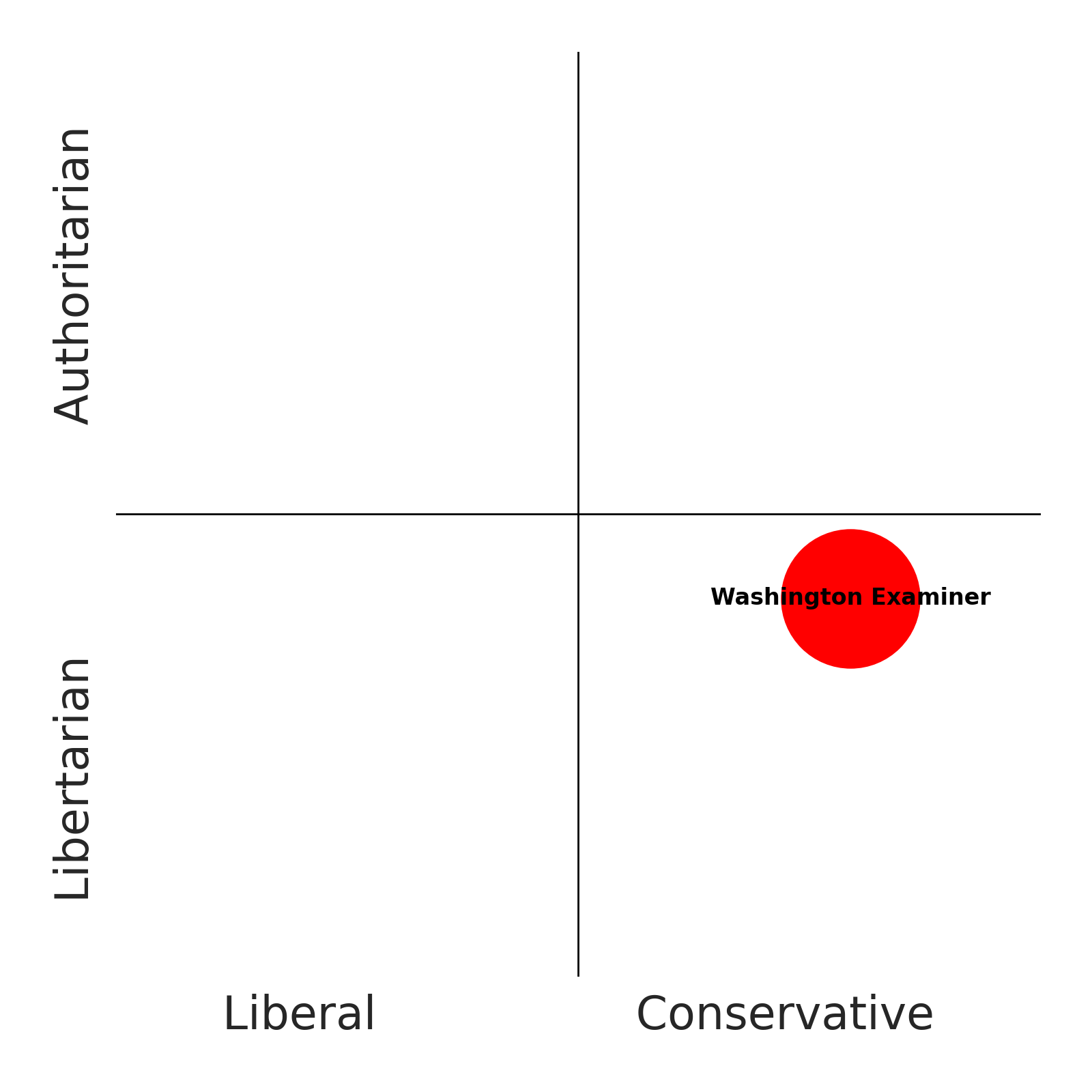
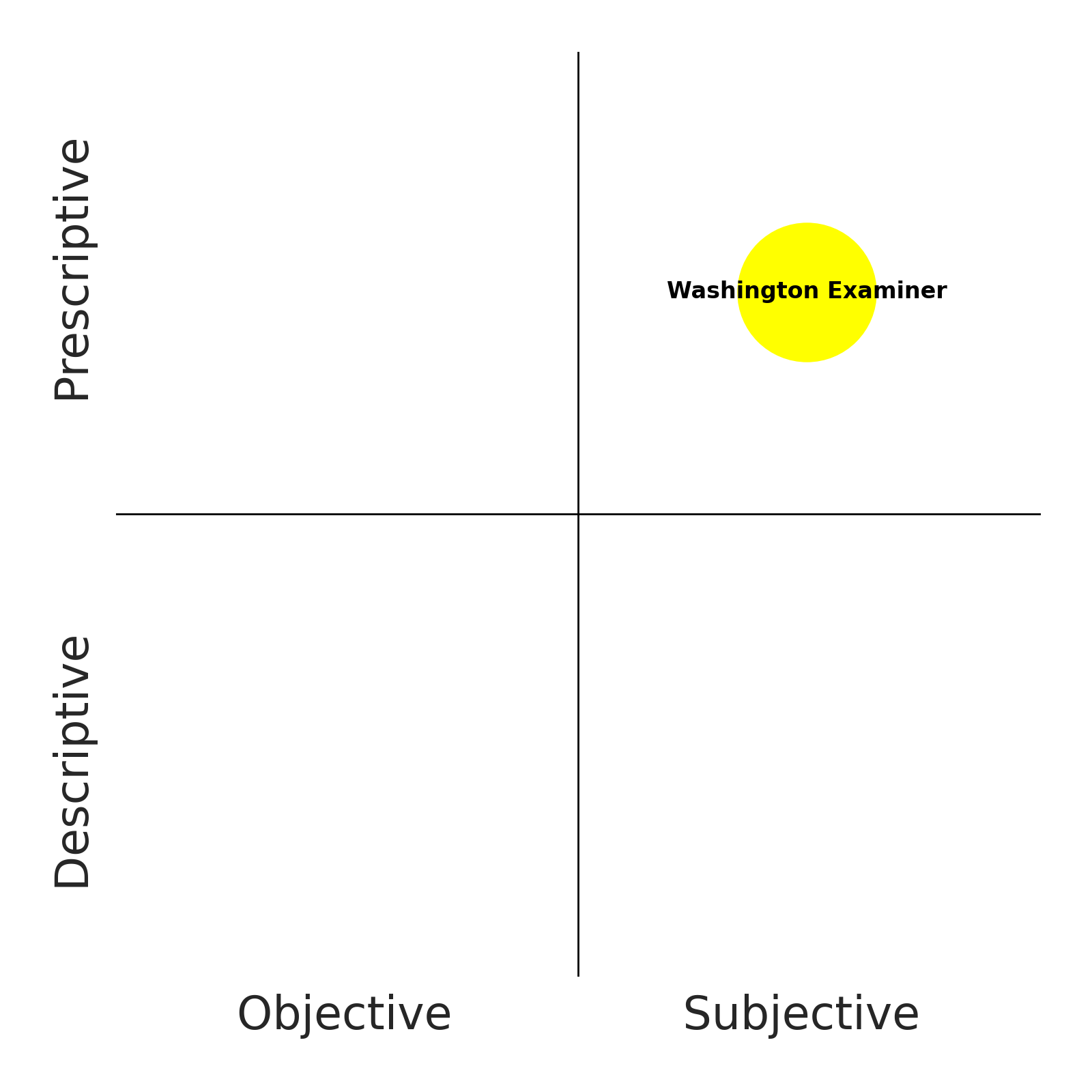
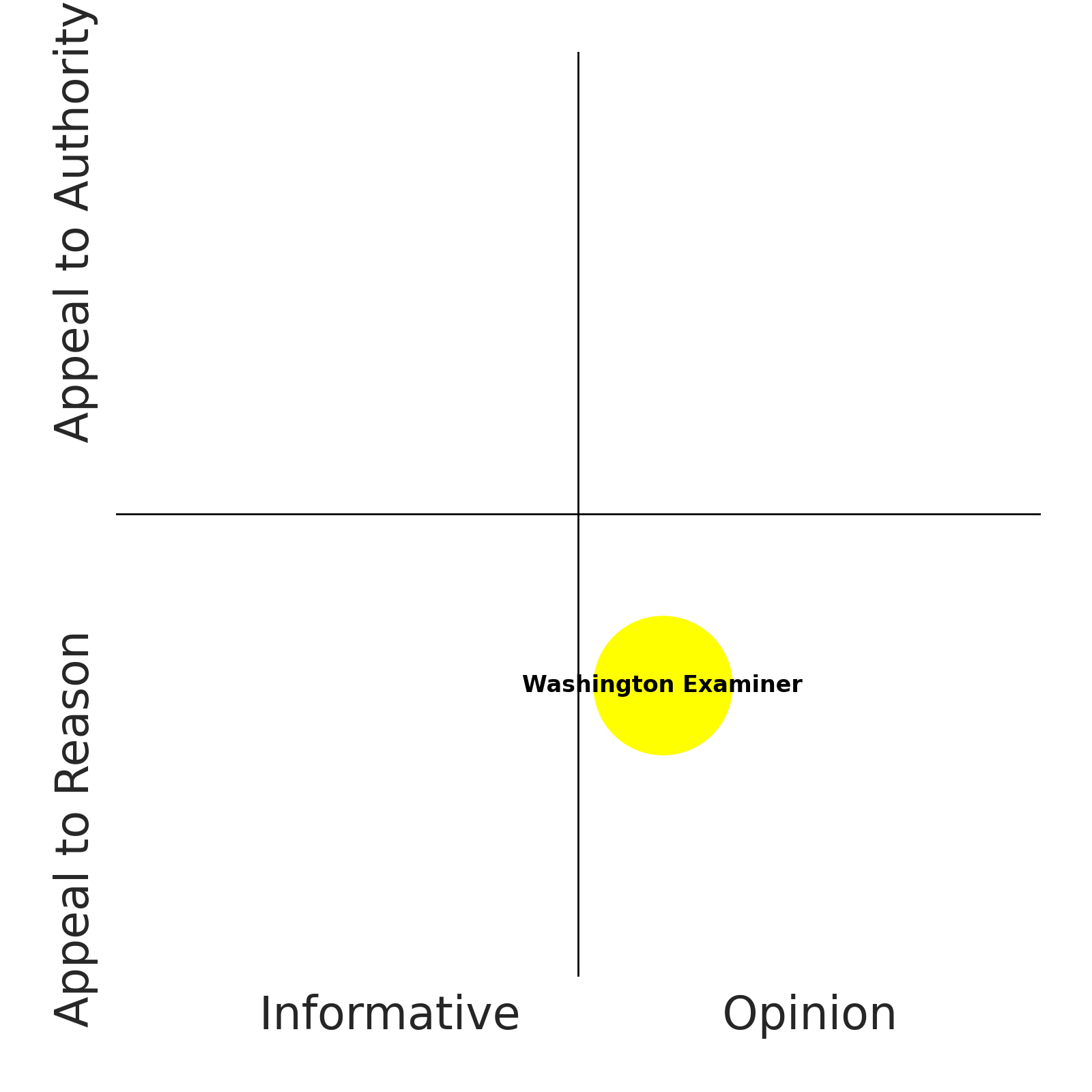
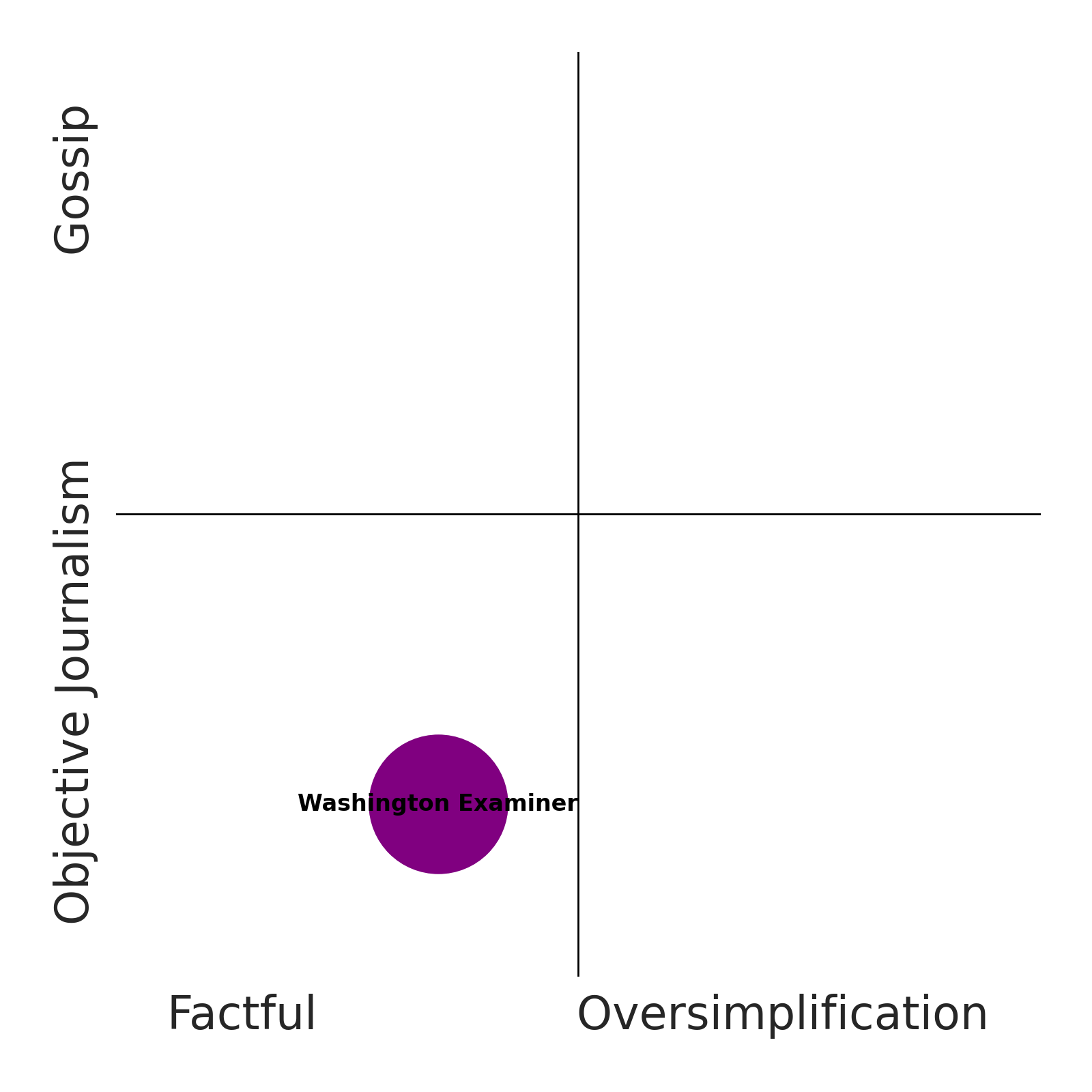
The framing contrasts Fauci's praise for China with his disdain for Trump, using loaded verbs like 'raved' and 'fumed' to imply hypocrisy without substantive evidence.
Anthony Fauci served as the top US infectious disease official during the first Trump administration and later became a polarizing figure over COVID-19 policies.
Automated analysis; not human reviewed. Limitations: Article text is truncated and includes subscription prompt artifacts, limiting full context and substantive content. · 17 of 55 available dimensions scored; omitted dimensions are not treated as neutral. · Verified supporting quotes for 14 of 17 scored dimensions.
Claim: The article frames Fauci negatively by emphasizing his praise of China alongside disparagement of Trump, appealing to conservative critiques of Fauci and China.
“Fauci raved about China but fumed at Trump in diary.” · exact text match
Why: Loaded verbs and the China-Trump contrast align with conservative media framing of Fauci as disloyal and pro-China.
Claim: The report is highly subjective, using interpretive and emotive descriptions of Fauci's sentiments.
“Fauci thought highly of China” · exact text match
“felt immense disdain for President Donald Trump” · exact text match
Why: Statements about thoughts and feelings are subjective characterizations presented without direct quotation or context.
Claim: The headline and lede use sensational, tabloid-style language to dramatize the story.
“Fauci raved about China but fumed at Trump in diary.” · exact text match
Why: Alliterative and hyperbolic verbs 'raved' and 'fumed' are classic sensational framing.
Claim: The article is descriptive of diary contents but frames them prescriptively to suggest negative judgment of Fauci.
“shows the top infectious disease official singing China’s praises but repeatedly disparaging the president he served” · exact text match
Why: The 'shows' construction presents the contrast as revealing a problematic character rather than neutrally reporting.
Claim: The article is intensely political, focused on attacking a Biden-era health official by highlighting his views on Trump and China.
“disparaging the president he served” · exact text match
Why: The entire framing revolves around political loyalty and foreign policy attitudes.
Claim: The article reduces complex foreign and domestic policy views to a simplistic China-good-Trump-bad contrast.
“Fauci raved about China but fumed at Trump in diary.” · exact text match
Why: The binary framing omits nuance about Fauci's actual positions and the context of his diary entries.
Claim: The article asserts Fauci's inner thoughts and feelings with certainty despite relying on selective diary excerpts.
“Fauci thought highly of China” · exact text match
“felt immense disdain for President Donald Trump” · exact text match
Why: Definitive mental-state claims exceed what diary snippets can support without fuller context.
Claim: The article's emotional tone is strongly negative toward Fauci.
“Fauci raved about China but fumed at Trump in diary.” · exact text match
Why: Derisive verbs and the overall hostile framing convey negative affect.
Claim: The article has low credibility due to vague sourcing, emotive language, and reliance on unverified leaked material.
“According to the newly published personal notes” · exact text match
Why: Lack of named sources and the sensational presentation reduce trustworthiness.
Claim: The article relies on emotional, loaded language rather than rational analysis or evidence.
“Fauci raved about China but fumed at Trump in diary.” · exact text match
Why: Terms like 'raved' and 'fumed' are emotive and dismissive, substituting affect for reasoned exposition.
Claim: The article is heavily advertorial in promoting subscription access to the outlet's political coverage.
“Join for unlimited access to the news, analysis, and commentary that matter most.” · verified after text normalization
“Subscribe for full access to coverage, expert political analysis, and subscriber-only journalism.” · verified after text normalization
Why: The text includes institutional promotional language urging subscription.
Claim: The article speculates about Fauci's attitudes based on diary excerpts without direct quotation or corroboration.
“Fauci thought highly of China” · exact text match
Why: Inferences about thoughts from personal notes are speculative without full text or explanation.
Claim: The article uses loaded framing and selective emphasis to manipulate reader perception of Fauci.
“Fauci raved about China but fumed at Trump in diary.” · exact text match
Why: Emotive contrast and omission of context are observable manipulative techniques.
Claim: The article shows low integrity by presenting leaked diary contents with charged language and no visible sourcing or verification.
“According to the newly published personal notes” · exact text match
Why: Vague attribution without naming who published the notes or how they were obtained undermines fairness and transparency.
Article text is truncated and includes subscription prompt artifacts, limiting full context and substantive content.
October 16, 2026 · 0 shares
Automated analysis; not human reviewed. Limitations: Only a paywalled excerpt is available; the full argument, sourcing, and context are truncated. · 16 of 55 available dimensions scored; omitted dimensions are not treated as neutral. · Verified supporting quotes for 16 of 16 scored dimensions.
Claim: The framing is evaluative and opinion-laden rather than neutral reporting.
“absurd ideology rooted in hostility toward the United States, Israel, and the Western democratic order” · exact text match
Why: The quoted wording is a subjective judgment rather than a neutral description.
Claim: The language is designed to provoke alarm.
“It has terrorist outposts.” · exact text match
Why: The phrase is inflammatory and sensational rather than measured.
Claim: The excerpt frames the situation as a persistent security threat.
“Diplomacy was never intended to become a sanctuary for terrorism” · exact text match
Why: The framing emphasizes danger and hostile exploitation rather than positive or neutral developments.
Claim: The excerpt makes normative claims about what diplomacy should not be.
“Diplomacy was never intended to become a sanctuary for terrorism” · exact text match
Why: The statement is prescriptive about the proper purpose of diplomacy.
Claim: The excerpt adopts a hawkish security posture toward Iran.
“Where does legitimate diplomacy end, and the machinery of state-sponsored terrorism begin?” · exact text match
Why: The framing centers state-sponsored terrorism and security confrontation.
Claim: The excerpt uses fear-inducing terrorism and security language.
“Diplomacy was never intended to become a sanctuary for terrorism” · exact text match
Why: The wording emphasizes terrorism and danger to nations.
Claim: The excerpt asserts the conclusion that Iran’s missions are terrorist outposts before establishing it.
“Iran doesn’t have embassies in the West. It has terrorist outposts.” · verified after text normalization
Why: The central classification is stated as a premise rather than demonstrated.
Claim: The excerpt is heavily opinionated.
“absurd ideology rooted in hostility toward the United States, Israel, and the Western democratic order” · exact text match
Why: The characterization is evaluative and not merely factual.
Claim: The excerpt is centrally political and security-focused.
“machinery of state-sponsored terrorism” · exact text match
Why: The content concerns international politics, diplomacy, and security.
Claim: It reduces Iran’s diplomatic presence to a single terrorist function.
“Iran doesn’t have embassies in the West. It has terrorist outposts.” · verified after text normalization
Why: The absolute formulation collapses complex diplomacy into one hostile category.
Claim: It states a categorical claim with certainty beyond the supplied evidence.
“Iran doesn’t have embassies in the West. It has terrorist outposts.” · verified after text normalization
Why: The excerpt offers no evidence for the sweeping assertion.
Claim: It frames the issue through a fixed ideological opposition to Iran.
“absurd ideology rooted in hostility toward the United States, Israel, and the Western democratic order” · exact text match
Why: The terminology imposes an ideological lens on the subject.
Claim: The framing is strongly negative toward Iran.
“absurd ideology rooted in hostility toward the United States, Israel, and the Western democratic order” · exact text match
Why: The quoted language conveys strong negative affect.
Claim: The excerpt presents a categorical accusation without named sourcing or supporting evidence.
“Iran doesn’t have embassies in the West. It has terrorist outposts.” · verified after text normalization
Counterevidence:
“for nearly half a century, the Islamic Republic in Iran has stood accused” · exact text match
Why: The claim is stated absolutely, though the excerpt later uses some attribution language.
Claim: The excerpt uses a sweeping, unqualified characterization of Iran’s diplomatic missions rather than evidence-based reasoning.
“Iran doesn’t have embassies in the West. It has terrorist outposts.” · verified after text normalization
Why: A categorical assertion replaces demonstrated reasoning in the supplied excerpt.
Claim: Loaded language and an absolute dichotomy simplify a complex diplomatic issue.
“Iran doesn’t have embassies in the West. It has terrorist outposts.” · verified after text normalization
Why: The framing uses a stark contrast and emotionally charged label without qualification in the opening claim.
Only a paywalled excerpt is available; the full argument, sourcing, and context are truncated.
October 08, 2026 · 0 shares
A highly partisan, prescriptive op-ed uses an unsupported security-breach headline and negative economic and immigration framing to urge electoral punishment of Spain's socialist government.
Spain is a NATO member, making the alleged transfer of NATO secrets a matter of alliance security.
Automated analysis; not human reviewed. Limitations: The supplied text is a paywalled opinion excerpt; the body does not substantiate the headline's NATO-secrets allegation, limiting verification. · 18 of 55 available dimensions scored; omitted dimensions are not treated as neutral. · Verified supporting quotes for 18 of 18 scored dimensions.
Claim: The article frames socialist governance as economically destructive and favorably contrasts it with right-wing electoral gains.
“Their policies destroy economies and send voters running into the arms of right-wing candidates.” · exact text match
Why: This is a conservative partisan framing that attributes economic failure to socialism and treats right-wing success as the corrective.
Claim: The article adopts a populist electoral appeal by urging voters to punish the incumbent socialist leader.
“Voters must make him pay.” · exact text match
Why: Directly calls on voters to exact political retribution, a populist anti-incumbent framing.
Claim: The article is explicitly subjective and prescriptive rather than neutral reporting.
“Voters must make him pay.” · exact text match
Why: The sentence is an opinionated command, not a factual report.
Claim: The headline uses sensational security-breach framing to dramatize the political stakes.
“Spain's socialist leader handed NATO's secrets to China. Voters must make him pay.” · exact text match
Why: The unsupported 'NATO secrets' claim and punitive call are sensational.
Claim: The article presents a pessimistic view of Spain under socialist governance.
“Their policies destroy economies and send voters running into the arms of right-wing candidates.” · exact text match
“The arrival of thousands of migrants in the Spanish enclave of Ceuta and the difficulty of removing them highlight Sanchez’s ineptitude on this issue.” · exact text match
Why: The framing emphasizes destruction, crisis, and ineptitude.
Claim: The article is strongly prescriptive, telling voters how to act.
“Voters must make him pay.” · exact text match
Why: The article directly prescribes an electoral punishment.
Claim: The article uses fear-inducing national-security and economic-decline framing.
“Spain's socialist leader handed NATO's secrets to China. Voters must make him pay.” · exact text match
“Their policies destroy economies” · exact text match
Why: The leak claim and economic destruction language are designed to provoke alarm.
Claim: The article is heavily opinionated, not a neutral news report.
“Voters must make him pay.” · exact text match
Why: The central sentence is an explicit opinion and call to action.
Claim: The article is entirely focused on electoral politics and partisan governance.
“As Spaniards contemplate their next prime minister, they should remember the ways incumbent Pedro Sanchez is making them weaker on the international stage.” · exact text match
Why: The framing is political throughout.
Claim: The article reduces complex economic and immigration outcomes to socialist ineptitude.
“Their policies destroy economies” · exact text match
“The arrival of thousands of migrants in the Spanish enclave of Ceuta and the difficulty of removing them highlight Sanchez’s ineptitude on this issue.” · exact text match
Why: It attributes broad outcomes to a single political cause without nuance.
Claim: The article states a grave security allegation as fact without qualification in the headline.
“Spain's socialist leader handed NATO's secrets to China.” · exact text match
Why: The claim is presented with certainty despite no supporting details in the supplied text.
Claim: The article is structured by a strong anti-socialist ideological frame.
“Across the Spanish-speaking world, socialist governments are dropping like flies. Their policies destroy economies and send voters running into the arms of right-wing candidates.” · exact text match
Why: It treats socialist governance as uniformly destructive and right-wing gains as its natural consequence.
Claim: The article uses negative emotional language toward the socialist government.
“ineptitude” · exact text match
“making them weaker on the international stage” · exact text match
Why: The word choices convey strong negative affect rather than neutral description.
Claim: The supplied article lacks sourcing and attribution for its central security allegation, reducing internal credibility.
“Spain's socialist leader handed NATO's secrets to China.” · exact text match
Why: A serious claim is asserted without any cited evidence in the supplied text.
Claim: The article makes sweeping causal assertions about socialist policies without providing evidence or qualification.
“Their policies destroy economies and send voters running into the arms of right-wing candidates.” · exact text match
Why: The blanket causal claim is asserted categorically, indicating low evidentiary reasoning.
Claim: The article speculates about electoral outcomes and future political shifts.
“Next on the list may be Spain.” · exact text match
Why: The phrase forecasts a possible future political development.
Claim: The article uses loaded, unsupported framing to push an electoral conclusion.
“Spain's socialist leader handed NATO's secrets to China. Voters must make him pay.” · exact text match
Why: The headline combines a grave unverified claim with a punitive command, a manipulative framing technique.
Claim: The article asserts a severe national-security breach in the headline without providing sourcing or elaboration in the supplied text.
“Spain's socialist leader handed NATO's secrets to China.” · exact text match
Why: An unsupported grave allegation in the headline suggests low internal evidentiary integrity.
The supplied text is a paywalled opinion excerpt; the body does not substantiate the headline's NATO-secrets allegation, limiting verification.
October 08, 2026 · 0 shares
The publisher frames Flock cameras in alarmist, privacy-focused terms, using loaded language like 'Trojan Horse' and 'mapping your entire life' to cast surveillance as a broad threat.
Automated analysis; not human reviewed. Limitations: The supplied article is a truncated/paywalled excerpt; only the headline and opening paragraphs are available, limiting assessment of the full argument. · 18 of 55 available dimensions scored; omitted dimensions are not treated as neutral. · Verified supporting quotes for 18 of 18 scored dimensions.
Claim: The article adopts a populist anti-elite framing by contrasting ordinary Americans' desire for safety with data being sold to the highest bidder.
“Most Americans want police to have effective tools to keep criminals off the streets” · exact text match
“vast amounts of personal data are being collected, stored, and sold to the highest bidder” · exact text match
Why: The contrast between 'Most Americans' and data 'sold to the highest bidder' suggests a populist distrust of elites/corporations.
Claim: The article strongly prioritizes individual privacy and liberty over state surveillance and public-safety measures.
“Americans are increasingly being asked to surrender personal information” · exact text match
“Flock cameras are just the Trojan Horse. They're mapping your entire life.” · exact text match
Why: The article warns against surveillance and data collection, a libertarian stance.
Claim: The article is heavily subjective, presenting opinion as alarmist assertion.
“Flock cameras are just the Trojan Horse. They're mapping your entire life.” · exact text match
Why: The language is evaluative and metaphorical, not neutral reporting.
Claim: The article uses sensational, fear-inducing language.
“Flock cameras are just the Trojan Horse. They're mapping your entire life.” · exact text match
Why: 'Trojan Horse' and 'mapping your entire life' are sensationalized phrases.
Claim: The article takes a pessimistic view of surveillance and data collection.
“Americans are increasingly being asked to surrender personal information” · exact text match
“vast amounts of personal data are being collected, stored, and sold to the highest bidder” · exact text match
Why: The framing emphasizes loss of privacy and exploitation, a pessimistic outlook.
Claim: The article employs fearful, alarmist rhetoric about surveillance.
“Flock cameras are just the Trojan Horse. They're mapping your entire life.” · exact text match
Why: The metaphor and absolutist phrasing are designed to evoke fear.
Claim: The article is overwhelmingly opinionated, offering a one-sided commentary.
“Flock cameras are just the Trojan Horse. They're mapping your entire life.” · exact text match
Why: The text asserts a strong viewpoint without presenting balanced analysis.
Claim: The article frames the issue as a political debate over privacy versus public safety.
“Supporters of Flock cameras argue that Americans shouldn’t allow privacy concerns to stand in the way of public safety.” · exact text match
Why: The article addresses a public policy controversy, making it political.
Claim: The article reduces a complex surveillance debate to a simple Trojan Horse metaphor.
“Flock cameras are just the Trojan Horse.” · exact text match
Why: The article uses a simplistic metaphor to characterize the technology and its implications.
Claim: The article portrays Americans as victims of surveillance and data exploitation.
“Americans are increasingly being asked to surrender personal information” · exact text match
“They're mapping your entire life” · exact text match
Why: The framing casts ordinary people as losing privacy to powerful forces.
Claim: The article asserts its claims with certainty beyond the supplied evidence.
“Flock cameras are just the Trojan Horse. They're mapping your entire life.” · exact text match
Why: The article states definitive conclusions without qualification or evidence.
Claim: The article is driven by a strong privacy-centric ideology.
“Flock cameras are just the Trojan Horse. They're mapping your entire life.” · exact text match
Why: The article advances a consistent ideological stance against surveillance.
Claim: The article's emotional tone is strongly negative toward Flock cameras and data collection.
“Flock cameras are just the Trojan Horse. They're mapping your entire life.” · exact text match
Why: The language is charged with negative emotion and alarm.
Claim: The article provides no sourcing or evidence for its central claims.
“Flock cameras are just the Trojan Horse. They're mapping your entire life.” · exact text match
Why: The main assertion is unsupported by citations or data, lowering credibility.
Claim: The article relies on emotionally loaded metaphors rather than evidence-based reasoning.
“Flock cameras are just the Trojan Horse. They're mapping your entire life.” · exact text match
Why: The claim is an alarmist metaphor without supporting evidence, indicating irrational/emotional framing.
Claim: The article prioritizes individual privacy over collective public safety.
“Americans are increasingly being asked to surrender personal information” · exact text match
“Supporters of Flock cameras argue that Americans shouldn’t allow privacy concerns to stand in the way of public safety.” · exact text match
Why: The framing elevates individual privacy concerns above collective security interests.
Claim: The article speculates about the broader surveillance implications of Flock cameras.
“They're mapping your entire life” · exact text match
“the debate over Flock cameras represents something much larger” · exact text match
Why: The article forecasts a sweeping surveillance future without evidence.
Claim: The article uses loaded language and fear appeals to manipulate reader sentiment.
“Flock cameras are just the Trojan Horse. They're mapping your entire life.” · exact text match
Why: The language is designed to provoke alarm and opposition, a manipulative technique.
The supplied article is a truncated/paywalled excerpt; only the headline and opening paragraphs are available, limiting assessment of the full argument.
September 26, 2026 · 0 shares
An unsupported 'admitted it' headline frames climate concerns as a mistaken 'alarmism madness' and the Green New Deal as a deceptive scheme.
The Green New Deal is a 2019 U.S. congressional resolution proposed by Rep. Alexandria Ocasio-Cortez and Sen. Ed Markey to address climate change and economic inequality.
Automated analysis; not human reviewed. Limitations: The supplied text is a short, truncated excerpt with no supporting evidence, so bias ratings are based on framing language and cannot assess the strength of the alleged admission. · 15 of 55 available dimensions scored; omitted dimensions are not treated as neutral. · Verified supporting quotes for 15 of 15 scored dimensions.
Claim: Uses a partisan attack on AOC and the Green New Deal while dismissing climate concern as mistaken alarmism.
“climate alarmism madness” · exact text match
“mistakenly believed that climate change posed a threat to humanity” · exact text match
Why: The language adopts a conservative, climate-skeptic standpoint by framing concern about climate change as a mistake and a form of 'madness.'
Claim: Heavily subjective, value-laden commentary rather than neutral reporting.
“billed as a viable plan to achieve the so-called green transition” · exact text match
“climate alarmism madness” · exact text match
Why: Pejoratives and scare quotes replace neutral description with opinion.
Claim: Uses sensational epithets to maximize emotional impact.
“At the peak of climate alarmism madness” · exact text match
Why: 'Madness' and 'peak alarmism' are sensationalized rather than measured.
Claim: The word 'admitted' presupposes the contested conclusion that the Green New Deal was never about climate.
“AOC's team admitted it: The Green New Deal was never about saving the planet.” · exact text match
Why: 'Admitted it' treats the disputed point as already true.
Claim: The piece is overt opinion, not news reporting.
“There once was a time, many years ago, when Americans mistakenly believed that climate change posed a threat to humanity” · exact text match
“climate alarmism madness” · exact text match
Why: Commentary-style claims and provocative framing signal opinion.
Claim: Directly attacks the Green New Deal, an iconic Democratic priority, in partisan terms.
“AOC's team admitted it: The Green New Deal was never about saving the planet.” · exact text match
Why: The piece takes sides in a partisan climate-policy fight.
Claim: Reduces a complex policy and scientific debate to a single dismissive assertion.
“The Green New Deal was never about saving the planet.” · exact text match
Why: Complex policy debate is collapsed into a one-line dismissal.
Claim: Assertion is framed with certainty despite no evidence in the excerpt.
“AOC's team admitted it: The Green New Deal was never about saving the planet.” · exact text match
Why: The certainty of 'was never' exceeds the support provided.
Claim: Recurring dismissive framing reflects a fixed anti-climate-action ideology.
“so-called green transition” · exact text match
“climate alarmism madness” · exact text match
Why: 'So-called' and 'alarmism madness' show a fixed anti-climate-action worldview.
Claim: The language is emotionally charged and negatively valenced toward climate advocates.
“climate alarmism madness” · exact text match
“mistakenly believed that climate change posed a threat to humanity” · exact text match
Why: Negative, inflammatory epithets carry strong emotion.
Claim: The excerpt provides no sourcing, evidence, or detail to support its central claim.
“AOC's team admitted it: The Green New Deal was never about saving the planet.” · exact text match
Why: Central claim lacks visible sourcing or verifiable detail.
Claim: Dismisses the scientific view that climate change is a threat as a mistake and 'madness.'
“mistakenly believed that climate change posed a threat to humanity” · exact text match
“climate alarmism madness” · exact text match
Why: Labeling a recognized threat a mistaken belief and 'alarmism madness' is contrary to evidence-based reasoning.
Claim: Rejects the mainstream scientific position on climate change as a mistake.
“mistakenly believed that climate change posed a threat to humanity” · exact text match
“climate alarmism madness” · exact text match
Why: It rejects climate risk and labels that view a mistaken belief, contrary to scientific consensus.
Claim: Uses loaded phrasing and an unsupported assertion to steer the reader.
“so-called green transition” · exact text match
“AOC's team admitted it: The Green New Deal was never about saving the planet.” · exact text match
Why: Loaded terms and an unsupported admission claim steer readers before evidence is offered.
Claim: Makes an unsupported claim of an admission and presents it as settled fact.
“AOC's team admitted it: The Green New Deal was never about saving the planet.” · exact text match
Why: No underlying admission, source, or detail is supplied for a definitive assertion.
The supplied text is a short, truncated excerpt with no supporting evidence, so bias ratings are based on framing language and cannot assess the strength of the alleged admission.
September 26, 2026 · 0 shares
Framing casts a First Avenue protest as a foreign-directed 'Red-Green alliance' influence operation and calls for a Washington response, using loaded labels and unsupported causal claims.
Automated analysis; not human reviewed. Limitations: The supplied text is a short opinion excerpt with subscription/paywall truncation; no independent sourcing or full context is provided, so classifications rest on the visible wording. · 18 of 55 available dimensions scored; omitted dimensions are not treated as neutral. · Verified supporting quotes for 18 of 18 scored dimensions.
Claim: Frames the protest through a right-wing anti-left national-security lens.
“Around them marched communists bankrolled from Shanghai, Islamist-aligned activists, and protesters waving the flag of a terrorist organization.” · exact text match
Why: The labels 'communists,' 'Islamist-aligned,' and 'terrorist organization' place the event in a conservative ideological frame.
Claim: Endorses a governmental response to a protest described as an influence operation.
“Washington should treat it as the influence operation it is.” · exact text match
Why: The directive favors federal action against political protest rather than civil-libertarian restraint.
Claim: Presents evaluative labels as descriptive facts.
“It was the Red-Green alliance on parade, and Washington should treat it as the influence operation it is.” · exact text match
Why: The conclusion is embedded in a rhetorical characterization, not neutral reporting.
Claim: Uses alarmist and inflammatory descriptors to dramatize the protest.
“Around them marched communists bankrolled from Shanghai, Islamist-aligned activists, and protesters waving the flag of a terrorist organization.” · exact text match
Why: The language is selected to provoke alarm and moral outrage rather than to neutrally describe.
Claim: Moves beyond description to an explicit policy demand.
“Washington should treat it as the influence operation it is.” · exact text match
Why: The final sentence is a direct prescription for government action.
Claim: Adopts a hawkish posture toward China-linked and Islamist-linked protest activity.
“Washington should treat it as the influence operation it is.” · exact text match
Why: The characterization of the protest as a foreign influence operation implies a hard-line national-security response.
Claim: Uses menacing imagery of foreign-funded radicals and terrorist symbols.
“Around them marched communists bankrolled from Shanghai, Islamist-aligned activists, and protesters waving the flag of a terrorist organization.” · exact text match
Why: The imagery is designed to frighten or anger readers about the protest.
Claim: Assumes the protest is an influence operation while using that assumption as the basis for the conclusion.
“It was the Red-Green alliance on parade, and Washington should treat it as the influence operation it is.” · exact text match
Why: The statement labels the event as an influence operation and then treats that label as the reason for federal action.
Claim: The text is dominated by editorial judgments rather than factual reporting.
“Beijing paid the bill. Jihadis wrote the script. Hollywood supplied the useful idiots.” · exact text match
Why: All three opening clauses are unqualified opinion presented as assertion.
Claim: Focuses centrally on partisan political figures and a federal policy response.
“a Democratic congressional nominee sat down on First Avenue” · exact text match
“Washington should treat it as the influence operation it is.” · exact text match
Why: The text ties a protest to Democratic political figures and urges a governmental response.
Claim: Reduces a complex protest to a single ideological label.
“It was the Red-Green alliance on parade” · exact text match
Why: A diverse crowd is collapsed into one loaded category without qualification.
Claim: Uses insulting epithets instead of substantive engagement.
“Hollywood supplied the useful idiots.” · exact text match
Why: The phrase 'useful idiots' is a derisive label rather than reasoned analysis.
Claim: Asserts causal control and foreign direction with certainty.
“Beijing paid the bill. Jihadis wrote the script.” · exact text match
Why: The claims are stated as established fact with no attribution, evidence, or uncertainty.
Claim: Views the event through a pre-formed ideological construct.
“It was the Red-Green alliance on parade” · exact text match
Why: The 'Red-Green alliance' label imposes an ideological interpretation on the protest.
Claim: Carries a hostile, contemptuous tone toward participants.
“Hollywood supplied the useful idiots.” · exact text match
“that network’s street machine delivered Hollywood’s biggest names to the curb.” · exact text match
Why: The wording expresses scorn, producing a strongly negative emotional charge.
Claim: Visible sourcing is thin, and core claims rely on generic or unnamed authority.
“A federal grand jury in Manhattan is examining Neville Roy Singham’s money.” · exact text match
“members of Congress accuse” · exact text match
Why: No named sources, documents, or links support the most consequential claims.
Claim: Uses loaded epithets and an unverified causal narrative to steer the reader's response.
“Beijing paid the bill. Jihadis wrote the script. Hollywood supplied the useful idiots.” · exact text match
Why: The combination of insulting labels, unproven causation, and a directive is strongly persuasive rather than informative.
Claim: States contested accusations as established facts without consistently hedging.
“Beijing paid the bill. Jihadis wrote the script. Hollywood supplied the useful idiots.” · exact text match
Why: The opening presents an unverified causal chain as fact, while a later accusation is hedged with 'members of Congress accuse.'
The supplied text is a short opinion excerpt with subscription/paywall truncation; no independent sourcing or full context is provided, so classifications rest on the visible wording.
October 08, 2026 · 0 shares
The framing is heavily subjective, sensational, and opinionated, using fearful emotional language to assert America's gun debate is a scam.
The Second Amendment to the U.S. Constitution protects the right to bear arms, and the NRA is a prominent gun-rights advocacy organization.
Automated analysis; not human reviewed. Limitations: The supplied text is truncated by subscription prompts; only the headline and opening paragraphs of an opinion piece are available, limiting assessment of the full argument and publisher framing. · 11 of 55 available dimensions scored; omitted dimensions are not treated as neutral. · Verified supporting quotes for 11 of 11 scored dimensions.
Claim: The article is an opinion piece that relies on subjective moral and political judgments rather than objective reporting.
“I'm a lifelong NRA member and a doctor. America's gun debate is a scam.” · exact text match
“The right to feel safe in your own home, to walk down your local street after dark, and to send your children to school without a knot of anxiety in your stomach is a foundational expectation of civil society.” · exact text match
Why: These are first-person evaluative claims and normative assertions, not neutral factual reporting.
Claim: The article uses sensational, emotionally charged language in its headline and opening.
“America's gun debate is a scam” · exact text match
“a knot of anxiety in your stomach” · exact text match
Why: 'Scam' and 'knot of anxiety' are sensationalized and emotionally evocative terms.
Claim: The article moves from describing problems to prescribing that the status quo not be tolerated.
“defending a constitutional right does not require us to tolerate a status quo where the administrative systems meant to protect us are functionally broken.” · exact text match
Why: The statement 'does not require us to tolerate' is a prescriptive normative call.
Claim: The article uses fear-inducing language about personal safety and community violence.
“a knot of anxiety in your stomach” · exact text match
“communities continue to pay the price in human lives” · exact text match
Why: Evokes anxiety and fear of violent harm to oneself and community.
Claim: The article is heavily opinionated, advancing the author's viewpoint without neutral reporting.
“America's gun debate is a scam.” · exact text match
“I am a fierce defender of the Second Amendment.” · exact text match
Why: Direct evaluative claims and first-person advocacy signal a strongly opinionated piece.
Claim: The article engages a politically charged public policy debate about gun rights and public safety.
“America's gun debate” · exact text match
“defending a constitutional right” · exact text match
Why: The topic is an explicitly political controversy over constitutional rights and public safety.
Claim: The article reduces the gun debate to a 'scam' and a broken system.
“America's gun debate is a scam.” · exact text match
Why: Characterizing a complex policy debate as a 'scam' oversimplifies the issue.
Claim: The article asserts sweeping conclusions as certain without providing evidence.
“America's gun debate is a scam.” · exact text match
“administrative systems meant to protect us are functionally broken.” · exact text match
Why: Unqualified absolute claims ('is a scam', 'are functionally broken') lack supporting evidence in the text.
Claim: The article criticizes the national gun debate and administrative systems as a scam and broken.
“America's gun debate is a scam” · exact text match
“administrative systems meant to protect us are functionally broken.” · exact text match
Why: The framing rejects the existing debate and institutional systems as fraudulent and dysfunctional.
Claim: The article's emotional tone is negative and anxious.
“knot of anxiety in your stomach” · exact text match
“communities continue to pay the price in human lives” · exact text match
Why: The language centers on anxiety, tragedy, and loss, indicating a negative emotional valence.
Claim: The article uses loaded language and emotional appeals to shape opinion.
“America's gun debate is a scam” · exact text match
“a knot of anxiety in your stomach” · exact text match
Why: Loaded terms and anxiety-inducing imagery are observable persuasive techniques.
The supplied text is truncated by subscription prompts; only the headline and opening paragraphs of an opinion piece are available, limiting assessment of the full argument and publisher framing.
Frames a defamation suit as political 'lawfare' against a conservative client exercising constitutional rights, using loaded murder-excusal language in the headline.
Automated analysis; not human reviewed. Limitations: Sparse excerpt with missing outlet names and no response from the plaintiff; scores rely mainly on the headline and first paragraphs. · 14 of 55 available dimensions scored; omitted dimensions are not treated as neutral. · Verified supporting quotes for 14 of 14 scored dimensions.
Claim: The report frames the legal dispute sympathetically around a conservative law firm and client facing 'lawfare' from an Army official.
“seeking to become a shelter for “conservatives targeted for exercising their constitutional rights,”” · exact text match
“Conservative firm battles defamation lawsuit from Army official who allegedly excused Charlie Kirk's murder.” · exact text match
Why: Sympathetic conservative framing and an adversarial description of the plaintiff support a conservative lean.
Claim: The report casts the defamation suit as an attack on constitutionally protected speech.
““conservatives targeted for exercising their constitutional rights,”” · exact text match
Why: Free-speech and constitutional-rights framing aligns with libertarian rather than authoritarian emphasis.
Claim: Loaded headline characterization and evaluative 'lawfare' framing make the presentation subjective.
“allegedly excused Charlie Kirk's murder” · exact text match
“first case of “lawfare”” · exact text match
Why: Evaluative labels rather than neutral description support subjective framing.
Claim: The headline uses dramatic conflict and murder-excusal language.
“Conservative firm battles defamation lawsuit from Army official who allegedly excused Charlie Kirk's murder.” · exact text match
Why: 'Battles' and 'excused ... murder' are sensational headline terms.
Claim: Murder-excusal and 'lawfare' language evokes alarm and outrage.
“allegedly excused Charlie Kirk's murder” · exact text match
“first case of “lawfare”” · exact text match
Why: Threatening and legal-warfare framing raises emotional alarm.
Claim: The headline and framing contain evaluative language rather than only neutral reportage.
“Conservative firm battles defamation lawsuit” · exact text match
“first case of “lawfare”” · exact text match
Why: 'Battles' and 'lawfare' are evaluative characterizations.
Claim: The story is organized around conservative political conflict and rights claims.
““conservatives targeted for exercising their constitutional rights,”” · exact text match
“Conservative firm battles defamation lawsuit from Army official who allegedly excused Charlie Kirk's murder.” · exact text match
Why: Explicit conservative-versus-official framing is highly political.
Claim: The headline reduces the dispute to a battle between a conservative firm and an Army official.
“Conservative firm battles defamation lawsuit from Army official who allegedly excused Charlie Kirk's murder.” · exact text match
Why: Binary 'battles' framing omits legal nuance in the headline.
Claim: The report frames conservatives as targeted victims exercising constitutional rights.
“seeking to become a shelter for “conservatives targeted for exercising their constitutional rights,”” · exact text match
Why: Explicit target-and-victim language supports victimization framing.
Claim: The report uses conservative ideological framing to interpret the legal dispute.
““conservatives targeted for exercising their constitutional rights,”” · exact text match
“first case of “lawfare”” · exact text match
Why: The dispute is cast through a conservative ideological lens.
Claim: The report presents conservatives as targets of institutional legal action by a military official.
““conservatives targeted for exercising their constitutional rights,”” · exact text match
“first case of “lawfare”” · exact text match
Why: Targeted-by-institutions framing supports anti-establishment bias.
Claim: The language is negatively charged toward the plaintiff and sympathetic to the conservative client.
“allegedly excused Charlie Kirk's murder” · exact text match
“shelter for “conservatives targeted for exercising their constitutional rights,”” · exact text match
Why: The contrast creates negative valence toward the Army official and positive valence toward the conservative client.
Claim: The report emphasizes individual constitutional rights against legal action.
““conservatives targeted for exercising their constitutional rights,”” · exact text match
Why: Individual-rights framing supports an individualist orientation.
Claim: The report uses a loaded headline and one-sided 'lawfare' framing without presenting the plaintiff's response.
“allegedly excused Charlie Kirk's murder” · exact text match
“first case of “lawfare”” · exact text match
Why: Loaded framing and material omission of the opposing side support observable manipulation risk.
Sparse excerpt with missing outlet names and no response from the plaintiff; scores rely mainly on the headline and first paragraphs.
September 26, 2026 · 0 shares
An unsupported 'admitted it' headline frames climate concerns as a mistaken 'alarmism madness' and the Green New Deal as a deceptive scheme.
The Green New Deal is a 2019 U.S. congressional resolution proposed by Rep. Alexandria Ocasio-Cortez and Sen. Ed Markey to address climate change and economic inequality.
Automated analysis; not human reviewed. Limitations: The supplied text is a short, truncated excerpt with no supporting evidence, so bias ratings are based on framing language and cannot assess the strength of the alleged admission. · 15 of 55 available dimensions scored; omitted dimensions are not treated as neutral. · Verified supporting quotes for 15 of 15 scored dimensions.
Claim: Uses a partisan attack on AOC and the Green New Deal while dismissing climate concern as mistaken alarmism.
“climate alarmism madness” · exact text match
“mistakenly believed that climate change posed a threat to humanity” · exact text match
Why: The language adopts a conservative, climate-skeptic standpoint by framing concern about climate change as a mistake and a form of 'madness.'
Claim: Heavily subjective, value-laden commentary rather than neutral reporting.
“billed as a viable plan to achieve the so-called green transition” · exact text match
“climate alarmism madness” · exact text match
Why: Pejoratives and scare quotes replace neutral description with opinion.
Claim: Uses sensational epithets to maximize emotional impact.
“At the peak of climate alarmism madness” · exact text match
Why: 'Madness' and 'peak alarmism' are sensationalized rather than measured.
Claim: The word 'admitted' presupposes the contested conclusion that the Green New Deal was never about climate.
“AOC's team admitted it: The Green New Deal was never about saving the planet.” · exact text match
Why: 'Admitted it' treats the disputed point as already true.
Claim: The piece is overt opinion, not news reporting.
“There once was a time, many years ago, when Americans mistakenly believed that climate change posed a threat to humanity” · exact text match
“climate alarmism madness” · exact text match
Why: Commentary-style claims and provocative framing signal opinion.
Claim: Directly attacks the Green New Deal, an iconic Democratic priority, in partisan terms.
“AOC's team admitted it: The Green New Deal was never about saving the planet.” · exact text match
Why: The piece takes sides in a partisan climate-policy fight.
Claim: Reduces a complex policy and scientific debate to a single dismissive assertion.
“The Green New Deal was never about saving the planet.” · exact text match
Why: Complex policy debate is collapsed into a one-line dismissal.
Claim: Assertion is framed with certainty despite no evidence in the excerpt.
“AOC's team admitted it: The Green New Deal was never about saving the planet.” · exact text match
Why: The certainty of 'was never' exceeds the support provided.
Claim: Recurring dismissive framing reflects a fixed anti-climate-action ideology.
“so-called green transition” · exact text match
“climate alarmism madness” · exact text match
Why: 'So-called' and 'alarmism madness' show a fixed anti-climate-action worldview.
Claim: The language is emotionally charged and negatively valenced toward climate advocates.
“climate alarmism madness” · exact text match
“mistakenly believed that climate change posed a threat to humanity” · exact text match
Why: Negative, inflammatory epithets carry strong emotion.
Claim: The excerpt provides no sourcing, evidence, or detail to support its central claim.
“AOC's team admitted it: The Green New Deal was never about saving the planet.” · exact text match
Why: Central claim lacks visible sourcing or verifiable detail.
Claim: Dismisses the scientific view that climate change is a threat as a mistake and 'madness.'
“mistakenly believed that climate change posed a threat to humanity” · exact text match
“climate alarmism madness” · exact text match
Why: Labeling a recognized threat a mistaken belief and 'alarmism madness' is contrary to evidence-based reasoning.
Claim: Rejects the mainstream scientific position on climate change as a mistake.
“mistakenly believed that climate change posed a threat to humanity” · exact text match
“climate alarmism madness” · exact text match
Why: It rejects climate risk and labels that view a mistaken belief, contrary to scientific consensus.
Claim: Uses loaded phrasing and an unsupported assertion to steer the reader.
“so-called green transition” · exact text match
“AOC's team admitted it: The Green New Deal was never about saving the planet.” · exact text match
Why: Loaded terms and an unsupported admission claim steer readers before evidence is offered.
Claim: Makes an unsupported claim of an admission and presents it as settled fact.
“AOC's team admitted it: The Green New Deal was never about saving the planet.” · exact text match
Why: No underlying admission, source, or detail is supplied for a definitive assertion.
The supplied text is a short, truncated excerpt with no supporting evidence, so bias ratings are based on framing language and cannot assess the strength of the alleged admission.
October 16, 2026 · 0 shares
Automated analysis; not human reviewed. Limitations: Only a paywalled excerpt is available; the full argument, sourcing, and context are truncated. · 16 of 55 available dimensions scored; omitted dimensions are not treated as neutral. · Verified supporting quotes for 16 of 16 scored dimensions.
Claim: The framing is evaluative and opinion-laden rather than neutral reporting.
“absurd ideology rooted in hostility toward the United States, Israel, and the Western democratic order” · exact text match
Why: The quoted wording is a subjective judgment rather than a neutral description.
Claim: The language is designed to provoke alarm.
“It has terrorist outposts.” · exact text match
Why: The phrase is inflammatory and sensational rather than measured.
Claim: The excerpt frames the situation as a persistent security threat.
“Diplomacy was never intended to become a sanctuary for terrorism” · exact text match
Why: The framing emphasizes danger and hostile exploitation rather than positive or neutral developments.
Claim: The excerpt makes normative claims about what diplomacy should not be.
“Diplomacy was never intended to become a sanctuary for terrorism” · exact text match
Why: The statement is prescriptive about the proper purpose of diplomacy.
Claim: The excerpt adopts a hawkish security posture toward Iran.
“Where does legitimate diplomacy end, and the machinery of state-sponsored terrorism begin?” · exact text match
Why: The framing centers state-sponsored terrorism and security confrontation.
Claim: The excerpt uses fear-inducing terrorism and security language.
“Diplomacy was never intended to become a sanctuary for terrorism” · exact text match
Why: The wording emphasizes terrorism and danger to nations.
Claim: The excerpt asserts the conclusion that Iran’s missions are terrorist outposts before establishing it.
“Iran doesn’t have embassies in the West. It has terrorist outposts.” · verified after text normalization
Why: The central classification is stated as a premise rather than demonstrated.
Claim: The excerpt is heavily opinionated.
“absurd ideology rooted in hostility toward the United States, Israel, and the Western democratic order” · exact text match
Why: The characterization is evaluative and not merely factual.
Claim: The excerpt is centrally political and security-focused.
“machinery of state-sponsored terrorism” · exact text match
Why: The content concerns international politics, diplomacy, and security.
Claim: It reduces Iran’s diplomatic presence to a single terrorist function.
“Iran doesn’t have embassies in the West. It has terrorist outposts.” · verified after text normalization
Why: The absolute formulation collapses complex diplomacy into one hostile category.
Claim: It states a categorical claim with certainty beyond the supplied evidence.
“Iran doesn’t have embassies in the West. It has terrorist outposts.” · verified after text normalization
Why: The excerpt offers no evidence for the sweeping assertion.
Claim: It frames the issue through a fixed ideological opposition to Iran.
“absurd ideology rooted in hostility toward the United States, Israel, and the Western democratic order” · exact text match
Why: The terminology imposes an ideological lens on the subject.
Claim: The framing is strongly negative toward Iran.
“absurd ideology rooted in hostility toward the United States, Israel, and the Western democratic order” · exact text match
Why: The quoted language conveys strong negative affect.
Claim: The excerpt presents a categorical accusation without named sourcing or supporting evidence.
“Iran doesn’t have embassies in the West. It has terrorist outposts.” · verified after text normalization
Counterevidence:
“for nearly half a century, the Islamic Republic in Iran has stood accused” · exact text match
Why: The claim is stated absolutely, though the excerpt later uses some attribution language.
Claim: The excerpt uses a sweeping, unqualified characterization of Iran’s diplomatic missions rather than evidence-based reasoning.
“Iran doesn’t have embassies in the West. It has terrorist outposts.” · verified after text normalization
Why: A categorical assertion replaces demonstrated reasoning in the supplied excerpt.
Claim: Loaded language and an absolute dichotomy simplify a complex diplomatic issue.
“Iran doesn’t have embassies in the West. It has terrorist outposts.” · verified after text normalization
Why: The framing uses a stark contrast and emotionally charged label without qualification in the opening claim.
Only a paywalled excerpt is available; the full argument, sourcing, and context are truncated.
Frames Seattle's out-migration as evidence of left-wing-induced urban decay, using loaded labels and a single Redfin metric.
Automated analysis; not human reviewed. Limitations: Only a short excerpt was available, with no publication date, author, or Redfin methodology. · 12 of 55 available dimensions scored; omitted dimensions are not treated as neutral. · Verified supporting quotes for 12 of 12 scored dimensions.
Claim: The publisher attributes urban decline to Democratic and left-wing governance.
“Several Democrat-run cities across the United States are in the decay process thanks to their left-wing policies.” · exact text match
Why: This is an explicit conservative causal claim about Democratic-run cities.
Claim: The publisher presents opinion as assessment rather than neutral reporting.
“Perhaps none is dying faster than socialist Seattle.” · exact text match
Why: Phrases such as 'perhaps,' 'dying faster,' and 'socialist' are subjective editorial framing.
Claim: The publisher uses emotive, dramatic language to describe city conditions.
“Seattle is a slowly dying city.” · exact text match
Why: 'Slowly dying city' is sensationalized language for out-migration data.
Claim: The publisher conveys a gloomy, pessimistic outlook for Seattle and other Democrat-run cities.
“Seattle is a slowly dying city.” · exact text match
Why: The dominant characterization is terminal decline.
Claim: The publisher presupposes that left-wing policies are the cause of decline rather than testing it.
“Several Democrat-run cities across the United States are in the decay process thanks to their left-wing policies.” · exact text match
Why: The conclusion is embedded in the premise of the sentence.
Claim: The publisher states opinion as if it were established fact.
“Perhaps none is dying faster than socialist Seattle.” · exact text match
Why: The sentence mixes conjecture ('perhaps') with a partisan label and a sweeping assertion.
Claim: The report is heavily framed around partisan politics.
“Several Democrat-run cities across the United States are in the decay process thanks to their left-wing policies.” · exact text match
Why: The decline is framed as a political outcome of Democratic governance.
Claim: A single Redfin metric is used to characterize entire cities as dying.
“Data from the real estate company Redfin shows that Seattle has a higher share of residents looking to move out of state than any other major metro area in the country.” · exact text match
Why: Out-of-state moving interest is treated as sufficient evidence of overall urban decay.
Claim: The publisher asserts a definite causal outcome without presenting supporting evidence.
“Several Democrat-run cities across the United States are in the decay process thanks to their left-wing policies.” · exact text match
Why: The causal language is certain, but no evidence connects left-wing policies to the Redfin data.
Claim: The tone is strongly negative and emotive.
“Seattle is a slowly dying city.” · exact text match
Why: The word choice is emotionally charged rather than neutral.
Claim: A single out-migration metric is treated as proof of citywide decline and political causation.
“Seattle is a slowly dying city.” · exact text match
“Several Democrat-run cities across the United States are in the decay process thanks to their left-wing policies.” · exact text match
Why: The data supports only moving interest, not 'dying city' status or left-wing causation; the inference exceeds the evidence.
Claim: The publisher uses loaded labels and one-sided framing.
“Perhaps none is dying faster than socialist Seattle.” · exact text match
Why: The pejorative label 'socialist Seattle' is used in an explanatory context without supporting evidence.
Only a short excerpt was available, with no publication date, author, or Redfin methodology.
August 10, 2026 · 0 shares
Strongly conservative and alarmist framing that equates the DSA with historical communism and portrays LGBTQ advocacy as a destructive mutation.
Automated analysis; not human reviewed. · 19 of 53 available dimensions scored; omitted dimensions are not treated as neutral. · Verified supporting quotes for 16 of 19 scored dimensions.
Claim: The article frames the DSA as a dangerous communist threat, adopting a conservative perspective.
“The United States rightly saw it as an existential threat. Patriots fought hot and cold wars to reverse its advance” · exact text match
Why: The article explicitly endorses the US anti-communist stance and calls for patriots to resist, showing strong conservative bias.
Claim: The article is an opinion piece, not a factual report.
“The rainbow reds are more dangerous than communists of old.” · exact text match
Why: The opening sentence is a subjective, evaluative claim, not an objective statement.
Claim: The article uses sensational language to heighten emotional response.
“the most destructive variant of communism yet” · exact text match
“their personal fantasies will become our collective nightmare” · not found in supplied text
Why: These phrases are designed to provoke fear and outrage, exceeding descriptive reporting.
Claim: The article prescribes action rather than describing events.
“a new class of patriots commits to stopping them from playing make-believe with our nation’s lives and livelihoods.” · exact text match
Why: The article concludes with a call to action, making it prescriptive.
Claim: The article uses fear-inducing language about the DSA.
“it will be all they need to continue gaining power. Their personal fantasies will become our collective nightmare” · exact text match
Why: Directly invokes a nightmare scenario to elicit fear.
Claim: The article is entirely opinion, not factual reporting.
“The rainbow reds are more dangerous than communists of old.” · exact text match
Why: The opening is a subjective judgment, and the article consistently presents the author's views.
Claim: The article is highly political, attacking a specific political group.
“Communism is on our shores. Its political home is the Democratic Socialists of America.” · exact text match
Why: Directly targets the DSA and frames them as an existential political threat.
Claim: The article reduces complex political movements to a simple communist threat.
“These are not your grandparents’ commies. The new Red Guard, the rainbow reds, cannot tell you what a woman is.” · not found in supplied text
Why: Equates DSA with Soviet communism and dismisses nuance with a simplistic insult.
Claim: The article uses rage-baiting, childish insults.
“cannot tell you what a woman is” · exact text match
“Delusional pride defines their entire platform.” · exact text match
Why: Name-calling and mockery rather than substantive argument.
Claim: The article presents its assertions as absolute certainties.
“the most dangerous form of Marxism — Marxism detached from even the pretense of being able to meet human beings’ basic needs.” · exact text match
Why: Uses superlatives and absolute language without hedging.
Claim: The article is strongly ideological, viewing everything through a conservative Catholic lens.
“The rainbow reds are more dangerous than communists of old.” · exact text match
Why: The entire argument is driven by a specific ideological worldview.
Claim: The article has a strongly negative emotional tone.
“The rainbow reds are more dangerous than communists of old.” · exact text match
Why: The language is charged with hostility and fear, yielding a negative emotional valence.
Claim: The article's credibility is low due to factual error and hyperbole.
“DSA member Zohran Mamdani holds the mayor’s office.” · exact text match
Why: Factual inaccuracy plus extreme rhetoric reduce trustworthiness.
Claim: The article speculates about future dangers without evidence.
“If left unchecked, however, it will be all they need to continue gaining power.” · exact text match
Why: Predicts a future outcome without supporting evidence.
Claim: The article uses manipulative techniques such as loaded language and false equivalence.
“The new communists believe in neither science nor God.” · exact text match
Why: This sweeping statement conflates DSA with atheism and anti-science, which is a manipulative oversimplification.
Claim: The article contains a factual error about Zohran Mamdani's position.
“DSA member Zohran Mamdani holds the mayor’s office.” · exact text match
Why: Mamdani is a New York State Assembly member, not mayor. This error undermines factual reliability.
Claim: The article negatively portrays LGBTQ advocacy as a destructive mutation.
“mutant fusion of Marxist and LGBTQ ideologies” · exact text match
“taxpayer-funded sex-change surgeries for children, drag shows in public libraries, and permitting men to take over women’s sports leagues” · exact text match
Why: Characterizes LGBTQ advocacy as inherently harmful and abnormal.
Claim: The article suggests a coordinated Marxist takeover.
“Communism is on our shores. Its political home is the Democratic Socialists of America.” · exact text match
Why: Implies a deliberate infiltration, borrowing conspiratorial framing.
Claim: The article blames DSA and LGBTQ activists for societal problems.
“the most destructive variant of communism yet” · exact text match
“their personal fantasies will become our collective nightmare” · not found in supplied text
Why: Portrays DSA and its allies as the cause of future societal collapse.
Strong conservative, pro-market bias with emphasis on religious-liberty framing and skepticism toward wage mandates, using data selectively to argue that teen employment declines are caused by policy and culture.
Conservative policy-oriented piece arguing that teen summer employment declined due to minimum-wage increases and cultural shifts, with emphasis on religious-liberty framing and calls for market-based reforms.
I may lean conservative due to training data; strive for balanced analysis.
August 05, 2026 · 0 shares
Sanctuary policies are framed as lawless, dangerous betrayals of national sovereignty that enable crime and erode public trust, with calls for federal crackdowns and criticism of Democratic local officials.
Sanctuary policies are local prohibitions on cooperating with federal immigration enforcement; they have been adopted by some Democratic state and local governments. The U.S. Constitution grants Congress authority over immigration, with the president responsible for enforcement.
Automated analysis; not human reviewed. · 20 of 53 available dimensions scored; omitted dimensions are not treated as neutral. · Verified supporting quotes for 12 of 20 scored dimensions.
Claim: The text strongly criticizes Democratic local officials for adopting sanctuary policies and aligns with conservative immigration enforcement priorities.
“Some Democratic state and local lawmakers, frustrated that Congress has not changed immigration laws to their liking, such as by offering an amnesty to those here illegally, have chosen to undermine the federal immigration agencies by adopting sanctuary laws and policies.” · not found in supplied text
Why: Directly attributes sanctuary policies to Democratic lawmakers and frames their actions as undermining federal law.
Claim: The text advocates for stronger federal enforcement, penalties for non-compliance, and remedies, reflecting an authoritarian stance on immigration control.
“To restore the supremacy of the federal government on immigration, Congress must act against sanctuary policies, as several states have done, by clarifying that local police must have the discretion to cooperate with immigration agencies. There must be meaningful penalties for those who don’t comply, and remedies for victims harmed by sanctuary policies.” · exact text match
Why: Calls for federal action, penalties, and remedies, emphasizing centralized authority.
Claim: The text uses subjective value judgments and emotional appeals rather than purely factual reporting.
“Sanctuary policies undermine laws and destroy trust in government.” · exact text match
“No one should be surprised, but everyone should be angry when many of those released offend again.” · exact text match
Why: The language is opinionated and evaluative, not neutral.
Claim: The text uses sensational language and dramatic examples to evoke fear and urgency.
“Besides making enforcement costlier and more dangerous for ICE, these policies put the public at risk.” · exact text match
“In February, Stephane Minter, a 41-year-old mother from Fredericksburg, was fatally stabbed by an illegal immigrant with dozens of prior arrests.” · not found in supplied text
Why: Highlights risk and a specific murder case to amplify emotional impact.
Claim: The text prescribes specific policy actions rather than simply describing the situation.
“Congress must act against sanctuary policies” · exact text match
“There must be meaningful penalties for those who don’t comply, and remedies for victims harmed by sanctuary policies.” · exact text match
Why: Explicitly calls for legislative action and penalties.
Claim: The text takes a hawkish stance demanding strict immigration enforcement and criticizes leniency.
“Sanctuary policies are a serious challenge to the rule of law in the United States and to the constitutional immigration scheme. They also undermine public safety and community trust.” · not found in supplied text
Why: Portrays sanctuary policies as threats to law and safety, supporting enforcement.
Claim: The text uses fear of crime and public safety risks to argue against sanctuary policies.
“the public at risk” · exact text match
“when many of those released offend again” · exact text match
“fatally stabbed by an illegal immigrant with dozens of prior arrests” · exact text match
Why: Repeatedly invokes danger and violent outcomes.
Claim: The text is heavily opinionated, presenting normative judgments as fact.
“Sanctuary policies undermine laws and destroy trust in government.” · exact text match
“Everyone should be angry when many of those released offend again.” · not found in supplied text
Why: These are evaluative statements, not neutral reporting.
Claim: The text is highly political, targeting Democratic policies and advocating for conservative immigration positions.
“some Democratic state and local lawmakers... have chosen to undermine the federal immigration agencies by adopting sanctuary laws and policies.” · not found in supplied text
Why: Explicitly names a political party in a negative context.
Claim: The text oversimplifies the impact of sanctuary policies by attributing crime releases solely to them without considering other factors.
“Sanctuary policies freed more than 22,000 criminal illegal immigrants... No one should be surprised, but everyone should be angry when many of those released offend again.” · not found in supplied text
Why: Implies direct causation without discussing countervailing factors or other variables.
Claim: The text expresses certainty beyond the evidence provided, presenting conclusions as indisputable.
“Sanctuary policies are a serious challenge to the rule of law... They also undermine public safety and community trust.” · not found in supplied text
Why: Uses definitive language without qualifying uncertainty.
Claim: The text is driven by a coherent ideological framework favoring strict immigration enforcement and federal supremacy.
“To restore the supremacy of the federal government on immigration, Congress must act against sanctuary policies” · exact text match
Why: Clear ideological commitment to federal control and enforcement.
Claim: The text defends federal immigration authority and the constitutional framework, aligning with establishment institutions.
“Our Constitution gives Congress the authority to write immigration laws, with directives, authorities, and funding for the president to implement and enforce them.” · exact text match
Why: Emphasizes federal supremacy and constitutional structure.
Claim: The text employs a negative emotional tone, focusing on anger and fear.
“No one should be surprised, but everyone should be angry” · exact text match
Why: Explicitly calls for anger, indicating negative emotional framing.
Claim: The text has moderate credibility because it cites official data but is one-sided and lacks counterarguments.
“According to ICE records, from 2021 to 2025, sanctuary policies freed more than 22,000 criminal illegal immigrants sought by ICE.” · exact text match
Why: Provides a specific data point but omits alternative perspectives and rebuttals from sanctuary proponents.
Claim: The text prioritizes federal collective enforcement over local discretion, leaning collectivist.
“Our Constitution gives Congress the authority to write immigration laws, with directives, authorities, and funding for the president to implement and enforce them.” · exact text match
Why: Emphasizes national, collective authority rather than local or individual rights.
Claim: The text speculates about future risks and enforcement difficulties without strong evidence.
“where ICE has to locate, stake out, and arrest them in public, ideally before the illegal immigrant commits another crime or flees from local prosecution.” · exact text match
Why: Describes a scenario that is not directly supported by cited data.
Claim: The text uses loaded language and omission of counterarguments to steer reader opinion.
“Sanctuary policies undermine laws and destroy trust in government.” · exact text match
Why: This framing is emotionally charged and presents a negative interpretation as fact.
Claim: The text scapegoats sanctuary policies and illegal immigrants for crime in the community.
“at least two criminal illegal immigrants were released and then were subsequently re-arrested and charged with murder.” · exact text match
Why: Blames the release policy and the individuals for tragic outcomes.
September 26, 2026 · 0 shares
Framing casts a First Avenue protest as a foreign-directed 'Red-Green alliance' influence operation and calls for a Washington response, using loaded labels and unsupported causal claims.
Automated analysis; not human reviewed. Limitations: The supplied text is a short opinion excerpt with subscription/paywall truncation; no independent sourcing or full context is provided, so classifications rest on the visible wording. · 18 of 55 available dimensions scored; omitted dimensions are not treated as neutral. · Verified supporting quotes for 18 of 18 scored dimensions.
Claim: Frames the protest through a right-wing anti-left national-security lens.
“Around them marched communists bankrolled from Shanghai, Islamist-aligned activists, and protesters waving the flag of a terrorist organization.” · exact text match
Why: The labels 'communists,' 'Islamist-aligned,' and 'terrorist organization' place the event in a conservative ideological frame.
Claim: Endorses a governmental response to a protest described as an influence operation.
“Washington should treat it as the influence operation it is.” · exact text match
Why: The directive favors federal action against political protest rather than civil-libertarian restraint.
Claim: Presents evaluative labels as descriptive facts.
“It was the Red-Green alliance on parade, and Washington should treat it as the influence operation it is.” · exact text match
Why: The conclusion is embedded in a rhetorical characterization, not neutral reporting.
Claim: Uses alarmist and inflammatory descriptors to dramatize the protest.
“Around them marched communists bankrolled from Shanghai, Islamist-aligned activists, and protesters waving the flag of a terrorist organization.” · exact text match
Why: The language is selected to provoke alarm and moral outrage rather than to neutrally describe.
Claim: Moves beyond description to an explicit policy demand.
“Washington should treat it as the influence operation it is.” · exact text match
Why: The final sentence is a direct prescription for government action.
Claim: Adopts a hawkish posture toward China-linked and Islamist-linked protest activity.
“Washington should treat it as the influence operation it is.” · exact text match
Why: The characterization of the protest as a foreign influence operation implies a hard-line national-security response.
Claim: Uses menacing imagery of foreign-funded radicals and terrorist symbols.
“Around them marched communists bankrolled from Shanghai, Islamist-aligned activists, and protesters waving the flag of a terrorist organization.” · exact text match
Why: The imagery is designed to frighten or anger readers about the protest.
Claim: Assumes the protest is an influence operation while using that assumption as the basis for the conclusion.
“It was the Red-Green alliance on parade, and Washington should treat it as the influence operation it is.” · exact text match
Why: The statement labels the event as an influence operation and then treats that label as the reason for federal action.
Claim: The text is dominated by editorial judgments rather than factual reporting.
“Beijing paid the bill. Jihadis wrote the script. Hollywood supplied the useful idiots.” · exact text match
Why: All three opening clauses are unqualified opinion presented as assertion.
Claim: Focuses centrally on partisan political figures and a federal policy response.
“a Democratic congressional nominee sat down on First Avenue” · exact text match
“Washington should treat it as the influence operation it is.” · exact text match
Why: The text ties a protest to Democratic political figures and urges a governmental response.
Claim: Reduces a complex protest to a single ideological label.
“It was the Red-Green alliance on parade” · exact text match
Why: A diverse crowd is collapsed into one loaded category without qualification.
Claim: Uses insulting epithets instead of substantive engagement.
“Hollywood supplied the useful idiots.” · exact text match
Why: The phrase 'useful idiots' is a derisive label rather than reasoned analysis.
Claim: Asserts causal control and foreign direction with certainty.
“Beijing paid the bill. Jihadis wrote the script.” · exact text match
Why: The claims are stated as established fact with no attribution, evidence, or uncertainty.
Claim: Views the event through a pre-formed ideological construct.
“It was the Red-Green alliance on parade” · exact text match
Why: The 'Red-Green alliance' label imposes an ideological interpretation on the protest.
Claim: Carries a hostile, contemptuous tone toward participants.
“Hollywood supplied the useful idiots.” · exact text match
“that network’s street machine delivered Hollywood’s biggest names to the curb.” · exact text match
Why: The wording expresses scorn, producing a strongly negative emotional charge.
Claim: Visible sourcing is thin, and core claims rely on generic or unnamed authority.
“A federal grand jury in Manhattan is examining Neville Roy Singham’s money.” · exact text match
“members of Congress accuse” · exact text match
Why: No named sources, documents, or links support the most consequential claims.
Claim: Uses loaded epithets and an unverified causal narrative to steer the reader's response.
“Beijing paid the bill. Jihadis wrote the script. Hollywood supplied the useful idiots.” · exact text match
Why: The combination of insulting labels, unproven causation, and a directive is strongly persuasive rather than informative.
Claim: States contested accusations as established facts without consistently hedging.
“Beijing paid the bill. Jihadis wrote the script. Hollywood supplied the useful idiots.” · exact text match
Why: The opening presents an unverified causal chain as fact, while a later accusation is hedged with 'members of Congress accuse.'
The supplied text is a short opinion excerpt with subscription/paywall truncation; no independent sourcing or full context is provided, so classifications rest on the visible wording.
Prescriptive, populist framing that advocates federal regulation of college athletics to protect student-athletes from exploitative intermediaries.
The Protect College Sports Act of 2026 is a proposed U.S. federal law that would establish national standards for college athlete compensation, transfers, and agent regulation.
Automated analysis; not human reviewed. Limitations: Input is an opinion piece by a university chancellor advocating for a specific bill; analysis limited to observable framing. · 9 of 53 available dimensions scored; omitted dimensions are not treated as neutral. · Verified supporting quotes for 7 of 9 scored dimensions.
Claim: Frames agents and intermediaries as exploiting student-athletes.
“power has increasingly shifted to agents, collectives, and other intermediaries, while the students at the center of the enterprise are caught in the middle with the least certainty and protection.” · exact text match
Why: Directly contrasts intermediaries (elites) with student-athletes, portraying the latter as victims.
Claim: Advocates for federal regulation and enforceable standards.
“The legislation replaces today’s patchwork of state laws and institutional approaches with clear, enforceable standards” · not found in supplied text
“caps endorsement fees at 5%” · exact text match
“requires agents to register with their states” · exact text match
Why: Multiple specific regulatory measures advocated.
Claim: The article is a subjective opinion piece advocating a position.
“The biggest debate in college sports today is not about athletes. It is about power.” · exact text match
Why: The author is identified as a chancellor writing in support of a bill; no pretense of objectivity.
Claim: The article prescribes specific legislative action.
“Congress should act now to protect the future of millions of student-athletes” · exact text match
Why: Explicit call to action.
Claim: The article expresses strong opinions.
“It is, however, a long-overdue set of guardrails for a system that has operated without them.” · exact text match
Why: Clearly opinionated.
Claim: The article addresses a legislative bill and urges political action.
“The Protect College Sports Act of 2026” · not found in supplied text
“Congress should act now” · exact text match
Why: Direct political content.
Claim: Portrays student-athletes as victims of the current system.
“student-athletes are often paying the price” · exact text match
“caught in the middle with the least certainty and protection” · exact text match
Why: Explicit victim language.
Claim: The article aligns with university and institutional support for the bill.
“We join a growing coalition of universities in supporting the Protect College Sports Act” · exact text match
Why: Author identifies with institutional coalition.
Claim: Uses positive emotional language about the future of student-athletes.
“the lives they build, the communities they strengthen, and the generations they inspire” · exact text match
Why: Emotional appeal, positive valence.
Input is an opinion piece by a university chancellor advocating for a specific bill; analysis limited to observable framing.
Frames the OMB grant rule as a necessary accountability measure that rescues taxpayer-funded science from bureaucratic and ideological misuse, dismissing Democratic and media criticism as misplaced panic.
Automated analysis; not human reviewed. Limitations: The article is an opinion piece with clear conservative framing; analysis is limited to text content and does not assess factual accuracy of claims. · 16 of 52 available dimensions scored; omitted dimensions are not treated as neutral. · Verified supporting quotes for 15 of 16 scored dimensions.
Claim: Framing is conservative, defending Trump-era policy and criticizing Democratic opposition.
“Senate Democrats demanding that the Office of Management and Budget withdraw its governmentwide grant reforms” · exact text match
“The attack on OMB’s science reforms is misplaced.” · exact text match
Why: The article explicitly defends a Trump administration initiative, labels Democratic critics as panicked, and uses conservative tropes like 'grant-industrial complex'.
Claim: Slightly populist by contrasting 'unelected reviewers' with 'taxpayers' and 'American people'.
“unelected reviewers and recipients, and not executive officials accountable for administering the law, should control where it goes” · exact text match
Why: The article appeals to taxpayer accountability and criticizes unelected bureaucrats, but also relies on legal authority and expertise, making the populist tilt moderate.
Claim: Authoritarian in supporting strong executive control over grant decisions.
“The rule will leave the discretionary decisions to agency officials who are politically accountable to the American people — not to unelected bureaucrats.” · exact text match
Why: The article advocates for centralized executive authority over grants, opposing peer-review and bureaucratic discretion, consistent with authoritarian governance.
Claim: Highly subjective, presenting opinion as definitive judgment.
“This panic gets the rule backward.” · exact text match
“Critics confuse scientific research with political advocacy.” · exact text match
Why: The article frames its own interpretation as correct and dismisses opposing views with pejorative language, characteristic of subjective opinion.
Claim: Sensational language used to discredit opponents.
“ideological activism masquerading as science” · exact text match
“spending autopilot” · exact text match
Why: Phrases like 'masquerading as science' and 'spending autopilot' are sensationalist, though the core argument relies on legal analysis.
Claim: Strongly bullish on the OMB rule's effect.
“Trump's OMB rule won't destroy American science. It will rescue taxpayer-funded research.” · exact text match
Why: The headline and repeated assertions frame the rule as beneficial and necessary, showing clear positive bias.
Claim: Highly prescriptive, telling OMB what to do.
“OMB should finalize the rule.” · exact text match
Why: The article ends with a direct prescription, advocating a specific policy action throughout.
Claim: Entirely opinionated, not factual reporting.
“That's not politics or a war on science. That's how representative government is supposed to work.” · verified after text normalization
Why: The article is an op-ed by a legal fellow at a conservative think tank, filled with normative statements and advocacy.
Claim: Highly political, focused on partisan conflict.
“Senate Democrats” · exact text match
“Trump's OMB rule” · exact text match
“the administrative state is not a fourth branch of government” · exact text match
Why: The article directly engages with partisan actors (Democrats, Trump administration) and ideological concepts (administrative state).
Claim: Oversimplifies critics' positions.
“Critics confuse scientific research with political advocacy.” · exact text match
Why: Dismisses opposition as mere confusion without engaging nuanced arguments.
Claim: Appeals to OMB’s legal authority.
“Congress charged OMB and not a legislative branch agency or private organization with establishing uniform governmentwide grant requirements.” · exact text match
Why: Relies on statutory delegation to OMB as justification for rule, an appeal to institutional authority.
Claim: Article is a direct response to critics.
“The senators claim OMB lacks authority and is usurping Congress’s power of the purse.” · exact text match
Why: Structurally rebuts Democratic senators and Washington Post, framing itself as a corrective.
Claim: Expresses certainty beyond supporting evidence.
“OMB’s proposal is the most serious effort in a generation to restore lawful stewardship, transparency, and accountability to taxpayers.” · exact text match
Why: Unqualified superlative claim lacking comparative evidence.
Claim: Pro-executive branch establishment, anti-bureaucracy.
“OMB’s proposal restores the constitutional chain of accountability by ensuring that taxpayer dollars are spent for the purposes Congress authorized by officials the American people can hold accountable.” · exact text match
Why: Defends constitutional order and executive accountability, aligning with traditional conservative establishment views.
Claim: Somewhat rational through legal citations and logical argument.
“But there are a series of statutes in Title 31 of the United States Code, along with several laws that give OMB governmentwide financial-management policies” · exact text match
Why: The article uses statutory references and structured rebuttals, but also employs emotionally loaded language and dismissive framing, reducing full rationality.
Claim: Low integrity as a one-sided opinion piece that dismisses counterarguments without balanced evidence.
“The Washington Post repeats an advocacy group’s unsupported claim...” · not found in supplied text
“A grant system incapable of examining whether federal funds are reaching entities such as the Wuhan Institute of Virology is not advancing science but is abandoning the government’s responsibility.” · not found in supplied text
Why: The article selectively rebuts critics and uses fear appeals (Wuhan Institute) without addressing counter-evidence, reducing perceived honesty and fairness.
The article is an opinion piece with clear conservative framing; analysis is limited to text content and does not assess factual accuracy of claims.
September 26, 2026 · 0 shares
An unsupported 'admitted it' headline frames climate concerns as a mistaken 'alarmism madness' and the Green New Deal as a deceptive scheme.
The Green New Deal is a 2019 U.S. congressional resolution proposed by Rep. Alexandria Ocasio-Cortez and Sen. Ed Markey to address climate change and economic inequality.
Automated analysis; not human reviewed. Limitations: The supplied text is a short, truncated excerpt with no supporting evidence, so bias ratings are based on framing language and cannot assess the strength of the alleged admission. · 15 of 55 available dimensions scored; omitted dimensions are not treated as neutral. · Verified supporting quotes for 15 of 15 scored dimensions.
Claim: Uses a partisan attack on AOC and the Green New Deal while dismissing climate concern as mistaken alarmism.
“climate alarmism madness” · exact text match
“mistakenly believed that climate change posed a threat to humanity” · exact text match
Why: The language adopts a conservative, climate-skeptic standpoint by framing concern about climate change as a mistake and a form of 'madness.'
Claim: Heavily subjective, value-laden commentary rather than neutral reporting.
“billed as a viable plan to achieve the so-called green transition” · exact text match
“climate alarmism madness” · exact text match
Why: Pejoratives and scare quotes replace neutral description with opinion.
Claim: Uses sensational epithets to maximize emotional impact.
“At the peak of climate alarmism madness” · exact text match
Why: 'Madness' and 'peak alarmism' are sensationalized rather than measured.
Claim: The word 'admitted' presupposes the contested conclusion that the Green New Deal was never about climate.
“AOC's team admitted it: The Green New Deal was never about saving the planet.” · exact text match
Why: 'Admitted it' treats the disputed point as already true.
Claim: The piece is overt opinion, not news reporting.
“There once was a time, many years ago, when Americans mistakenly believed that climate change posed a threat to humanity” · exact text match
“climate alarmism madness” · exact text match
Why: Commentary-style claims and provocative framing signal opinion.
Claim: Directly attacks the Green New Deal, an iconic Democratic priority, in partisan terms.
“AOC's team admitted it: The Green New Deal was never about saving the planet.” · exact text match
Why: The piece takes sides in a partisan climate-policy fight.
Claim: Reduces a complex policy and scientific debate to a single dismissive assertion.
“The Green New Deal was never about saving the planet.” · exact text match
Why: Complex policy debate is collapsed into a one-line dismissal.
Claim: Assertion is framed with certainty despite no evidence in the excerpt.
“AOC's team admitted it: The Green New Deal was never about saving the planet.” · exact text match
Why: The certainty of 'was never' exceeds the support provided.
Claim: Recurring dismissive framing reflects a fixed anti-climate-action ideology.
“so-called green transition” · exact text match
“climate alarmism madness” · exact text match
Why: 'So-called' and 'alarmism madness' show a fixed anti-climate-action worldview.
Claim: The language is emotionally charged and negatively valenced toward climate advocates.
“climate alarmism madness” · exact text match
“mistakenly believed that climate change posed a threat to humanity” · exact text match
Why: Negative, inflammatory epithets carry strong emotion.
Claim: The excerpt provides no sourcing, evidence, or detail to support its central claim.
“AOC's team admitted it: The Green New Deal was never about saving the planet.” · exact text match
Why: Central claim lacks visible sourcing or verifiable detail.
Claim: Dismisses the scientific view that climate change is a threat as a mistake and 'madness.'
“mistakenly believed that climate change posed a threat to humanity” · exact text match
“climate alarmism madness” · exact text match
Why: Labeling a recognized threat a mistaken belief and 'alarmism madness' is contrary to evidence-based reasoning.
Claim: Rejects the mainstream scientific position on climate change as a mistake.
“mistakenly believed that climate change posed a threat to humanity” · exact text match
“climate alarmism madness” · exact text match
Why: It rejects climate risk and labels that view a mistaken belief, contrary to scientific consensus.
Claim: Uses loaded phrasing and an unsupported assertion to steer the reader.
“so-called green transition” · exact text match
“AOC's team admitted it: The Green New Deal was never about saving the planet.” · exact text match
Why: Loaded terms and an unsupported admission claim steer readers before evidence is offered.
Claim: Makes an unsupported claim of an admission and presents it as settled fact.
“AOC's team admitted it: The Green New Deal was never about saving the planet.” · exact text match
Why: No underlying admission, source, or detail is supplied for a definitive assertion.
The supplied text is a short, truncated excerpt with no supporting evidence, so bias ratings are based on framing language and cannot assess the strength of the alleged admission.
Frames Seattle's out-migration as evidence of left-wing-induced urban decay, using loaded labels and a single Redfin metric.
Automated analysis; not human reviewed. Limitations: Only a short excerpt was available, with no publication date, author, or Redfin methodology. · 12 of 55 available dimensions scored; omitted dimensions are not treated as neutral. · Verified supporting quotes for 12 of 12 scored dimensions.
Claim: The publisher attributes urban decline to Democratic and left-wing governance.
“Several Democrat-run cities across the United States are in the decay process thanks to their left-wing policies.” · exact text match
Why: This is an explicit conservative causal claim about Democratic-run cities.
Claim: The publisher presents opinion as assessment rather than neutral reporting.
“Perhaps none is dying faster than socialist Seattle.” · exact text match
Why: Phrases such as 'perhaps,' 'dying faster,' and 'socialist' are subjective editorial framing.
Claim: The publisher uses emotive, dramatic language to describe city conditions.
“Seattle is a slowly dying city.” · exact text match
Why: 'Slowly dying city' is sensationalized language for out-migration data.
Claim: The publisher conveys a gloomy, pessimistic outlook for Seattle and other Democrat-run cities.
“Seattle is a slowly dying city.” · exact text match
Why: The dominant characterization is terminal decline.
Claim: The publisher presupposes that left-wing policies are the cause of decline rather than testing it.
“Several Democrat-run cities across the United States are in the decay process thanks to their left-wing policies.” · exact text match
Why: The conclusion is embedded in the premise of the sentence.
Claim: The publisher states opinion as if it were established fact.
“Perhaps none is dying faster than socialist Seattle.” · exact text match
Why: The sentence mixes conjecture ('perhaps') with a partisan label and a sweeping assertion.
Claim: The report is heavily framed around partisan politics.
“Several Democrat-run cities across the United States are in the decay process thanks to their left-wing policies.” · exact text match
Why: The decline is framed as a political outcome of Democratic governance.
Claim: A single Redfin metric is used to characterize entire cities as dying.
“Data from the real estate company Redfin shows that Seattle has a higher share of residents looking to move out of state than any other major metro area in the country.” · exact text match
Why: Out-of-state moving interest is treated as sufficient evidence of overall urban decay.
Claim: The publisher asserts a definite causal outcome without presenting supporting evidence.
“Several Democrat-run cities across the United States are in the decay process thanks to their left-wing policies.” · exact text match
Why: The causal language is certain, but no evidence connects left-wing policies to the Redfin data.
Claim: The tone is strongly negative and emotive.
“Seattle is a slowly dying city.” · exact text match
Why: The word choice is emotionally charged rather than neutral.
Claim: A single out-migration metric is treated as proof of citywide decline and political causation.
“Seattle is a slowly dying city.” · exact text match
“Several Democrat-run cities across the United States are in the decay process thanks to their left-wing policies.” · exact text match
Why: The data supports only moving interest, not 'dying city' status or left-wing causation; the inference exceeds the evidence.
Claim: The publisher uses loaded labels and one-sided framing.
“Perhaps none is dying faster than socialist Seattle.” · exact text match
Why: The pejorative label 'socialist Seattle' is used in an explanatory context without supporting evidence.
Only a short excerpt was available, with no publication date, author, or Redfin methodology.
August 10, 2026 · 0 shares
Strongly conservative and alarmist framing that equates the DSA with historical communism and portrays LGBTQ advocacy as a destructive mutation.
Automated analysis; not human reviewed. · 19 of 53 available dimensions scored; omitted dimensions are not treated as neutral. · Verified supporting quotes for 16 of 19 scored dimensions.
Claim: The article frames the DSA as a dangerous communist threat, adopting a conservative perspective.
“The United States rightly saw it as an existential threat. Patriots fought hot and cold wars to reverse its advance” · exact text match
Why: The article explicitly endorses the US anti-communist stance and calls for patriots to resist, showing strong conservative bias.
Claim: The article is an opinion piece, not a factual report.
“The rainbow reds are more dangerous than communists of old.” · exact text match
Why: The opening sentence is a subjective, evaluative claim, not an objective statement.
Claim: The article uses sensational language to heighten emotional response.
“the most destructive variant of communism yet” · exact text match
“their personal fantasies will become our collective nightmare” · not found in supplied text
Why: These phrases are designed to provoke fear and outrage, exceeding descriptive reporting.
Claim: The article prescribes action rather than describing events.
“a new class of patriots commits to stopping them from playing make-believe with our nation’s lives and livelihoods.” · exact text match
Why: The article concludes with a call to action, making it prescriptive.
Claim: The article uses fear-inducing language about the DSA.
“it will be all they need to continue gaining power. Their personal fantasies will become our collective nightmare” · exact text match
Why: Directly invokes a nightmare scenario to elicit fear.
Claim: The article is entirely opinion, not factual reporting.
“The rainbow reds are more dangerous than communists of old.” · exact text match
Why: The opening is a subjective judgment, and the article consistently presents the author's views.
Claim: The article is highly political, attacking a specific political group.
“Communism is on our shores. Its political home is the Democratic Socialists of America.” · exact text match
Why: Directly targets the DSA and frames them as an existential political threat.
Claim: The article reduces complex political movements to a simple communist threat.
“These are not your grandparents’ commies. The new Red Guard, the rainbow reds, cannot tell you what a woman is.” · not found in supplied text
Why: Equates DSA with Soviet communism and dismisses nuance with a simplistic insult.
Claim: The article uses rage-baiting, childish insults.
“cannot tell you what a woman is” · exact text match
“Delusional pride defines their entire platform.” · exact text match
Why: Name-calling and mockery rather than substantive argument.
Claim: The article presents its assertions as absolute certainties.
“the most dangerous form of Marxism — Marxism detached from even the pretense of being able to meet human beings’ basic needs.” · exact text match
Why: Uses superlatives and absolute language without hedging.
Claim: The article is strongly ideological, viewing everything through a conservative Catholic lens.
“The rainbow reds are more dangerous than communists of old.” · exact text match
Why: The entire argument is driven by a specific ideological worldview.
Claim: The article has a strongly negative emotional tone.
“The rainbow reds are more dangerous than communists of old.” · exact text match
Why: The language is charged with hostility and fear, yielding a negative emotional valence.
Claim: The article's credibility is low due to factual error and hyperbole.
“DSA member Zohran Mamdani holds the mayor’s office.” · exact text match
Why: Factual inaccuracy plus extreme rhetoric reduce trustworthiness.
Claim: The article speculates about future dangers without evidence.
“If left unchecked, however, it will be all they need to continue gaining power.” · exact text match
Why: Predicts a future outcome without supporting evidence.
Claim: The article uses manipulative techniques such as loaded language and false equivalence.
“The new communists believe in neither science nor God.” · exact text match
Why: This sweeping statement conflates DSA with atheism and anti-science, which is a manipulative oversimplification.
Claim: The article contains a factual error about Zohran Mamdani's position.
“DSA member Zohran Mamdani holds the mayor’s office.” · exact text match
Why: Mamdani is a New York State Assembly member, not mayor. This error undermines factual reliability.
Claim: The article negatively portrays LGBTQ advocacy as a destructive mutation.
“mutant fusion of Marxist and LGBTQ ideologies” · exact text match
“taxpayer-funded sex-change surgeries for children, drag shows in public libraries, and permitting men to take over women’s sports leagues” · exact text match
Why: Characterizes LGBTQ advocacy as inherently harmful and abnormal.
Claim: The article suggests a coordinated Marxist takeover.
“Communism is on our shores. Its political home is the Democratic Socialists of America.” · exact text match
Why: Implies a deliberate infiltration, borrowing conspiratorial framing.
Claim: The article blames DSA and LGBTQ activists for societal problems.
“the most destructive variant of communism yet” · exact text match
“their personal fantasies will become our collective nightmare” · not found in supplied text
Why: Portrays DSA and its allies as the cause of future societal collapse.
October 12, 2026 · 0 shares
The piece uses a crude medical metaphor to frame U.S. Iran policy as paralyzed and implicitly criticizes Trump's inaction, while offering no substantive reporting beyond an op-ed teaser.
The text is a truncated op-ed teaser; the full argument and any specific Iran policy details are behind a subscription paywall and unavailable.
Automated analysis; not human reviewed. Limitations: Only a subscription-gated teaser of the op-ed is available; the substantive argument is truncated, limiting evidence for most dimensions. · 55 of 55 available dimensions scored; omitted dimensions are not treated as neutral. · Verified supporting quotes for 13 of 55 scored dimensions.
Claim: The framing elevates diner-talk populism as a lens for judging foreign policy.
“My breakfast table is pretty much a slice of America.” · exact text match
Why: The diner as 'a slice of America' is a populist framing device.
Claim: The framing is heavily subjective, using a personal medical metaphor and anecdote rather than neutral description.
“In medicine, when a patient’s system is completely backed up, tense, taking in tons of input but absolutely locked up when it comes to any outward movement, we call it constipation.” · exact text match
Why: The central framing device is a subjective analogy rather than objective analysis.
Claim: The medical-bathroom metaphor is a sensational framing choice for a foreign policy topic.
“Is President Donald Trump politically constipated?” · exact text match
Why: The crude metaphor heightens engagement rather than informing soberly.
Claim: The argument assumes its conclusion by treating the diner chatter as proof of a blockage.
“You don’t need a top-secret security clearance to see why people are asking this.” · exact text match
Why: The premise that 'people are asking' is used to imply the question is valid without demonstrating it.
Claim: The text is overwhelmingly the author's personal opinion framed through an extended metaphor rather than factual reporting.
“As a physician, a judge, and a political animal, I know a blockage when I see one.” · exact text match
Why: The prose is first-person opinion and metaphor with no factual reporting or sourcing.
Claim: The piece is directly political, centering on President Trump and U.S. foreign policy toward Iran.
“Is President Donald Trump politically constipated?” · exact text match
Why: The subject is a sitting president and foreign policy, an intrinsically political topic.
Claim: The piece relies on a scatological metaphor as its central hook, a low-brow framing for serious policy.
“we call it constipation” · exact text match
Why: Constipation humor as a political framing device reads as immature.
Claim: The author asserts diagnostic certainty about a political situation from anecdotal diner observation.
“As a physician, a judge, and a political animal, I know a blockage when I see one.” · exact text match
Why: Confident diagnostic claim exceeds the anecdotal support provided.
Claim: The piece positions itself as an outsider voice speaking for ordinary Americans against elite paralysis.
“You don’t need a top-secret security clearance to see why people are asking this.” · exact text match
Why: Rhetoric contrasts ordinary Americans with Washington insiders, suggesting an anti-establishment posture.
Claim: No sourcing, no named experts, no data; evidence is anecdotal and the piece is paywall-truncated.
“You just have to sit where I sit on Saturday mornings — at the local diner, talking with different groups of my friends.” · exact text match
Why: Anecdotal diner observation is the only stated evidence, with no verifiable sourcing.
Claim: The text includes subscription promotion language typical of a paywalled opinion column.
“Subscribe for full access to coverage, expert political analysis, and subscriber-only journalism.” · verified after text normalization
Why: Promotional subscription text is present but is page chrome rather than editorial content.
Claim: The piece poses a speculative question about Trump's mental/political state without evidence.
“I have to ask a serious question: Is President Donald Trump politically constipated?” · exact text match
Why: It advances an unfalsifiable psychological analogy rather than facts.
Claim: The reliance on a juvenile metaphor and diner anecdote lowers the analytical quality.
“My breakfast table is pretty much a slice of America.” · exact text match
Why: Diner chatter as a stand-in for national opinion is a weak analytical approach.
Only a subscription-gated teaser of the op-ed is available; the substantive argument is truncated, limiting evidence for most dimensions.
August 01, 2026 · 0 shares
A conservative commentary mocks legacy media's fallout over one conservative hire while using selective incidents to portray CBS as left-leaning and its new leadership as unfairly victimized.
Bari Weiss, a former New York Times opinion editor, was hired into a leadership role at CBS News; 60 Minutes is a long-running weekly news magazine.
Automated analysis; not human reviewed. Limitations: The supplied text is a single conservative commentary; the analysis is based solely on its content and framing, without external verification. · 18 of 52 available dimensions scored; omitted dimensions are not treated as neutral. · Verified supporting quotes for 16 of 18 scored dimensions.
Claim: The article shows a conservative bias by framing the hiring of one conservative as a corrective to a left-leaning network and criticizing legacy media's reaction.
“And yes, hiring one conservative for its top news program that had been drifting too far to the Left is the type of unique thinking that may be high risk, but also high reward.” · exact text match
Why: The quote explicitly endorses the conservative hire and characterizes the network as having drifted left, which is a conservative viewpoint.
Claim: The article exhibits a populist, anti-elite bias by mocking legacy media and framing them as out-of-touch.
“It’s amusing to see the legacy media react when a conservative gets hired for a prestigious role, such as a correspondent for 60 Minutes.” · exact text match
“Does that sound like an objective arbiter of news to you?” · exact text match
Why: The first quote derides legacy media as an establishment, and the second challenges a journalist's objectivity, aligning with populist distrust of elites.
Claim: The article is subjective, offering editorial opinions rather than neutral reporting.
“It’s amusing to see the legacy media react when a conservative gets hired for a prestigious role” · exact text match
“Apparently, if O’Donnell is promoted by CBS, it’s not controversial at all. But if Douthat is hired, that shows Bari Weiss is trying to turn her news division into a far-Right outlet.” · exact text match
Why: These statements are clearly the author's interpretations and judgments, not neutral reporting.
Claim: The article uses sensational language to provoke an emotional response.
“Other publications also took umbrage with the Douthat hiring, including the Daily Beast with this doozy of a headline: “Religious zealot unveiled as new star of ’60 Minutes'”” · not found in supplied text
“And earlier this year, O’Donnell decided to read a portion of a deranged manifesto written by Cole Allen” · exact text match
Why: Words like 'doozy' and 'deranged manifesto' are sensational and emotive.
Claim: The article is interesting, containing provocative headlines and insider details.
“CBS hired one conservative. The legacy press lost their minds.” · exact text match
“Pelley bizarrely compared himself to a member of the U.S. military while lambasting Trump.” · exact text match
Why: The headline is attention-grabbing, and the Pelley anecdote is intriguing.
Claim: The article prescribes that the conservative hire is a positive, high-reward move rather than merely describing events.
“And yes, hiring one conservative for its top news program that had been drifting too far to the Left is the type of unique thinking that may be high risk, but also high reward.” · exact text match
“Ross Douthat is a 60 Minutes correspondent. Deal with it.” · exact text match
Why: The first quote explicitly advocates for the hire, and the second is a directive acceptance.
Claim: The article includes personal gossip about journalists, including private clashes and Trump's remarks.
“Pelley told Bilton that Weiss “does not love this place. She was brought in to kill it and is doing exactly that”” · exact text match
“Pelley bizarrely compared himself to a member of the U.S. military while lambasting Trump.” · exact text match
Why: These are personal, behind-the-scenes anecdotes about individuals.
Claim: The article is heavily opinionated, with explicit commentary and rhetorical questions.
“It’s amusing to see the legacy media react when a conservative gets hired for a prestigious role” · exact text match
“Does that sound like an objective arbiter of news to you?” · exact text match
Why: The first is a personal viewpoint, the second is a rhetorical device to persuade.
Claim: The article is overtly political, discussing left-right ideological balance in media.
“that shows Bari Weiss is trying to turn her news division into a far-Right outlet” · exact text match
“hiring one conservative for its top news program that had been drifting too far to the Left” · exact text match
Why: These quotes explicitly frame events in terms of left versus right.
Claim: The article oversimplifies the media reaction by attributing it solely to one conservative hire.
“CBS hired one conservative. The legacy press lost their minds.” · exact text match
“Apparently, if O’Donnell is promoted by CBS, it’s not controversial at all. But if Douthat is hired, that shows Bari Weiss is trying to turn her news division into a far-Right outlet.” · exact text match
Why: The headline reduces a complex reaction to a single cause and the quote ignores other possible reasons for criticism.
Claim: The article uses sarcastic and taunting language, such as 'Deal with it.'
“Ross Douthat is a 60 Minutes correspondent. Deal with it.” · exact text match
“Other publications also took umbrage with the Douthat hiring, including the Daily Beast with this doozy of a headline” · exact text match
Why: Phrases like 'Deal with it' and 'doozy' are informal and taunting, indicating immaturity.
Claim: The article frames Douthat and Weiss as victims of unfair media attacks.
“Apparently, if O’Donnell is promoted by CBS, it’s not controversial at all. But if Douthat is hired, that shows Bari Weiss is trying to turn her news division into a far-Right outlet.” · exact text match
“Weiss, despite being heavily criticized by the Left for having the audacity to think outside the box” · exact text match
Why: These quotes portray the criticism as unjustified and victimizing.
Claim: The article states opinions with certainty, presenting them as self-evident.
“And yes, hiring one conservative for its top news program that had been drifting too far to the Left is the type of unique thinking that may be high risk, but also high reward.” · exact text match
“Does that sound like an objective arbiter of news to you?” · exact text match
Why: The first quote asserts an evaluative conclusion without hedging, and the second presumes agreement.
Claim: The article is strongly ideological, promoting a conservative worldview.
“hiring one conservative for its top news program that had been drifting too far to the Left” · exact text match
“attempting to bring CBS back to the center” · exact text match
Why: The language frames the debate in ideological terms, with 'center' as a goal and 'Left' as drifting from it.
Claim: The article is anti-establishment, targeting legacy media as part of an establishment that unfairly attacks conservatives.
“CBS hired one conservative. The legacy press lost their minds.” · exact text match
“Apparently, if O’Donnell is promoted by CBS, it’s not controversial at all. But if Douthat is hired, that shows Bari Weiss is trying to turn her news division into a far-Right outlet.” · exact text match
Why: The headline and quote criticize legacy media's double standard, positioning the author against the media establishment.
Claim: The article has a negative emotional tone toward the media and positive toward the conservative hire.
“O’Donnell decided to read a portion of a deranged manifesto written by Cole Allen” · exact text match
“Apparently, if O’Donnell is promoted by CBS, it’s not controversial at all.” · exact text match
Why: 'Deranged' is emotive, and the sarcastic tone of the second quote conveys frustration.
Claim: The article has moderate credibility, mixing attributed quotes with unverified assertions.
“Poynter‘s Tom Jones wrote that the move “fuels concerns …”” · not found in supplied text
“This is the same 60 Minutes that infamously edited an interview with Kamala Harris shortly before the 2024 election” · exact text match
Why: It includes attributed sources but also makes factual claims without providing evidence or links.
Claim: The article uses loaded language and selective facts to shape reader opinion.
“And earlier this year, O’Donnell decided to read a portion of a deranged manifesto written by Cole Allen” · exact text match
“Apparently, if O’Donnell is promoted by CBS, it’s not controversial at all. But if Douthat is hired, that shows Bari Weiss is trying to turn her news division into a far-Right outlet.” · exact text match
Why: The phrase 'deranged manifesto' is a loaded epithet, and the comparison creates a false equivalence that manipulates perception.
The supplied text is a single conservative commentary; the analysis is based solely on its content and framing, without external verification.
The framing contrasts Fauci's praise for China with his disdain for Trump, using loaded verbs like 'raved' and 'fumed' to imply hypocrisy without substantive evidence.
Anthony Fauci served as the top US infectious disease official during the first Trump administration and later became a polarizing figure over COVID-19 policies.
Automated analysis; not human reviewed. Limitations: Article text is truncated and includes subscription prompt artifacts, limiting full context and substantive content. · 17 of 55 available dimensions scored; omitted dimensions are not treated as neutral. · Verified supporting quotes for 14 of 17 scored dimensions.
Claim: The article frames Fauci negatively by emphasizing his praise of China alongside disparagement of Trump, appealing to conservative critiques of Fauci and China.
“Fauci raved about China but fumed at Trump in diary.” · exact text match
Why: Loaded verbs and the China-Trump contrast align with conservative media framing of Fauci as disloyal and pro-China.
Claim: The report is highly subjective, using interpretive and emotive descriptions of Fauci's sentiments.
“Fauci thought highly of China” · exact text match
“felt immense disdain for President Donald Trump” · exact text match
Why: Statements about thoughts and feelings are subjective characterizations presented without direct quotation or context.
Claim: The headline and lede use sensational, tabloid-style language to dramatize the story.
“Fauci raved about China but fumed at Trump in diary.” · exact text match
Why: Alliterative and hyperbolic verbs 'raved' and 'fumed' are classic sensational framing.
Claim: The article is descriptive of diary contents but frames them prescriptively to suggest negative judgment of Fauci.
“shows the top infectious disease official singing China’s praises but repeatedly disparaging the president he served” · exact text match
Why: The 'shows' construction presents the contrast as revealing a problematic character rather than neutrally reporting.
Claim: The article is intensely political, focused on attacking a Biden-era health official by highlighting his views on Trump and China.
“disparaging the president he served” · exact text match
Why: The entire framing revolves around political loyalty and foreign policy attitudes.
Claim: The article reduces complex foreign and domestic policy views to a simplistic China-good-Trump-bad contrast.
“Fauci raved about China but fumed at Trump in diary.” · exact text match
Why: The binary framing omits nuance about Fauci's actual positions and the context of his diary entries.
Claim: The article asserts Fauci's inner thoughts and feelings with certainty despite relying on selective diary excerpts.
“Fauci thought highly of China” · exact text match
“felt immense disdain for President Donald Trump” · exact text match
Why: Definitive mental-state claims exceed what diary snippets can support without fuller context.
Claim: The article's emotional tone is strongly negative toward Fauci.
“Fauci raved about China but fumed at Trump in diary.” · exact text match
Why: Derisive verbs and the overall hostile framing convey negative affect.
Claim: The article has low credibility due to vague sourcing, emotive language, and reliance on unverified leaked material.
“According to the newly published personal notes” · exact text match
Why: Lack of named sources and the sensational presentation reduce trustworthiness.
Claim: The article relies on emotional, loaded language rather than rational analysis or evidence.
“Fauci raved about China but fumed at Trump in diary.” · exact text match
Why: Terms like 'raved' and 'fumed' are emotive and dismissive, substituting affect for reasoned exposition.
Claim: The article is heavily advertorial in promoting subscription access to the outlet's political coverage.
“Join for unlimited access to the news, analysis, and commentary that matter most.” · verified after text normalization
“Subscribe for full access to coverage, expert political analysis, and subscriber-only journalism.” · verified after text normalization
Why: The text includes institutional promotional language urging subscription.
Claim: The article speculates about Fauci's attitudes based on diary excerpts without direct quotation or corroboration.
“Fauci thought highly of China” · exact text match
Why: Inferences about thoughts from personal notes are speculative without full text or explanation.
Claim: The article uses loaded framing and selective emphasis to manipulate reader perception of Fauci.
“Fauci raved about China but fumed at Trump in diary.” · exact text match
Why: Emotive contrast and omission of context are observable manipulative techniques.
Claim: The article shows low integrity by presenting leaked diary contents with charged language and no visible sourcing or verification.
“According to the newly published personal notes” · exact text match
Why: Vague attribution without naming who published the notes or how they were obtained undermines fairness and transparency.
Article text is truncated and includes subscription prompt artifacts, limiting full context and substantive content.
September 26, 2026 · 0 shares
An unsupported 'admitted it' headline frames climate concerns as a mistaken 'alarmism madness' and the Green New Deal as a deceptive scheme.
The Green New Deal is a 2019 U.S. congressional resolution proposed by Rep. Alexandria Ocasio-Cortez and Sen. Ed Markey to address climate change and economic inequality.
Automated analysis; not human reviewed. Limitations: The supplied text is a short, truncated excerpt with no supporting evidence, so bias ratings are based on framing language and cannot assess the strength of the alleged admission. · 15 of 55 available dimensions scored; omitted dimensions are not treated as neutral. · Verified supporting quotes for 15 of 15 scored dimensions.
Claim: Uses a partisan attack on AOC and the Green New Deal while dismissing climate concern as mistaken alarmism.
“climate alarmism madness” · exact text match
“mistakenly believed that climate change posed a threat to humanity” · exact text match
Why: The language adopts a conservative, climate-skeptic standpoint by framing concern about climate change as a mistake and a form of 'madness.'
Claim: Heavily subjective, value-laden commentary rather than neutral reporting.
“billed as a viable plan to achieve the so-called green transition” · exact text match
“climate alarmism madness” · exact text match
Why: Pejoratives and scare quotes replace neutral description with opinion.
Claim: Uses sensational epithets to maximize emotional impact.
“At the peak of climate alarmism madness” · exact text match
Why: 'Madness' and 'peak alarmism' are sensationalized rather than measured.
Claim: The word 'admitted' presupposes the contested conclusion that the Green New Deal was never about climate.
“AOC's team admitted it: The Green New Deal was never about saving the planet.” · exact text match
Why: 'Admitted it' treats the disputed point as already true.
Claim: The piece is overt opinion, not news reporting.
“There once was a time, many years ago, when Americans mistakenly believed that climate change posed a threat to humanity” · exact text match
“climate alarmism madness” · exact text match
Why: Commentary-style claims and provocative framing signal opinion.
Claim: Directly attacks the Green New Deal, an iconic Democratic priority, in partisan terms.
“AOC's team admitted it: The Green New Deal was never about saving the planet.” · exact text match
Why: The piece takes sides in a partisan climate-policy fight.
Claim: Reduces a complex policy and scientific debate to a single dismissive assertion.
“The Green New Deal was never about saving the planet.” · exact text match
Why: Complex policy debate is collapsed into a one-line dismissal.
Claim: Assertion is framed with certainty despite no evidence in the excerpt.
“AOC's team admitted it: The Green New Deal was never about saving the planet.” · exact text match
Why: The certainty of 'was never' exceeds the support provided.
Claim: Recurring dismissive framing reflects a fixed anti-climate-action ideology.
“so-called green transition” · exact text match
“climate alarmism madness” · exact text match
Why: 'So-called' and 'alarmism madness' show a fixed anti-climate-action worldview.
Claim: The language is emotionally charged and negatively valenced toward climate advocates.
“climate alarmism madness” · exact text match
“mistakenly believed that climate change posed a threat to humanity” · exact text match
Why: Negative, inflammatory epithets carry strong emotion.
Claim: The excerpt provides no sourcing, evidence, or detail to support its central claim.
“AOC's team admitted it: The Green New Deal was never about saving the planet.” · exact text match
Why: Central claim lacks visible sourcing or verifiable detail.
Claim: Dismisses the scientific view that climate change is a threat as a mistake and 'madness.'
“mistakenly believed that climate change posed a threat to humanity” · exact text match
“climate alarmism madness” · exact text match
Why: Labeling a recognized threat a mistaken belief and 'alarmism madness' is contrary to evidence-based reasoning.
Claim: Rejects the mainstream scientific position on climate change as a mistake.
“mistakenly believed that climate change posed a threat to humanity” · exact text match
“climate alarmism madness” · exact text match
Why: It rejects climate risk and labels that view a mistaken belief, contrary to scientific consensus.
Claim: Uses loaded phrasing and an unsupported assertion to steer the reader.
“so-called green transition” · exact text match
“AOC's team admitted it: The Green New Deal was never about saving the planet.” · exact text match
Why: Loaded terms and an unsupported admission claim steer readers before evidence is offered.
Claim: Makes an unsupported claim of an admission and presents it as settled fact.
“AOC's team admitted it: The Green New Deal was never about saving the planet.” · exact text match
Why: No underlying admission, source, or detail is supplied for a definitive assertion.
The supplied text is a short, truncated excerpt with no supporting evidence, so bias ratings are based on framing language and cannot assess the strength of the alleged admission.
Conservative, anti-establishment framing casts Fauci as a dangerous figure and pandemic measures as dystopian overreach, elevating libertarian counter-narratives while demonizing establishment voices.
The COVID-19 policy debate and the release of Fauci's diaries are used to frame the pandemic response; includes references to the Great Barrington Declaration and various political figures.
Automated analysis; not human reviewed. · 15 of 52 available dimensions scored; omitted dimensions are not treated as neutral. · Verified supporting quotes for 0 of 15 scored dimensions.
Promotional, politically aligned defense reporting that credits the Trump administration's drone strategy while directly marketing XTEND's XOS marketplace and framing U.S. drone dominance as an unqualified good.
The article is set in the context of U.S. Department of Defense drone acquisition and the administration's push to rapidly field low-cost autonomous systems at scale.
Automated analysis; not human reviewed. Limitations: The supplied article text is a truncated excerpt containing ellipses and a paywall fragment, so analysis relies on an incomplete passage; the original publication context, headline, and byline are unavailable. · 13 of 55 available dimensions scored; omitted dimensions are not treated as neutral. · Verified supporting quotes for 13 of 13 scored dimensions.
Claim: The framing credits the Trump administration's leadership for favorable defense-policy change.
“Because of Trump and Hegseth's leadership, doctrine is being rewritten to match the inventory.” · verified after text normalization
Why: Directly attributing a defense-policy shift to Trump and Hegseth signals a pro-Trump, conservative framing.
Claim: The writing is heavily subjective and promotional rather than neutral.
“These close quarters produce difficult environments for some, but not for those building the future of drone dominance.” · exact text match
Why: Value-laden phrases like 'drone dominance' and the rhetorical jab at unnamed competitors are subjective editorializing.
Claim: The article is bullish on the defense drone industry and its procurement approach.
“The DDP's Gauntlet showed not only who can deliver at price and volume, but who can protect those serving on the front lines around the world today.” · verified after text normalization
Why: Portrays the program as a demonstrated success, signaling bullishness on the sector.
Claim: The article strikes an optimistic tone about the drone program's future.
“The future looks like one operator supervising a team, not flying a single airframe by remote control.” · exact text match
Why: Presents an optimistic, confident picture of the future operating model.
Claim: The article prescribes what the United States must do regarding defense drones.
“the United States must have an industrial base ready and able to arm the next generation of combat units with low-cost, American-made drones at scale.” · exact text match
Why: The 'must' construction prescribes a specific policy direction.
Claim: The article endorses military drone dominance and protecting front-line troops through expanded weapons programs.
“the future of drone dominance” · exact text match
“who can protect those serving on the front lines around the world today.” · exact text match
Why: Emphasizes dominance and military protection, reflecting a hawkish national-security posture.
Claim: The article states opinions about the future of military operations as settled fact.
“The future looks like one operator supervising a team, not flying a single airframe by remote control.” · exact text match
Why: Presents a forecast as fact, which is opinionated writing.
Claim: The article is explicitly political, crediting the administration for defense-policy outcomes.
“Because of Trump and Hegseth's leadership, doctrine is being rewritten to match the inventory.” · verified after text normalization
Why: Praise for the administration's role makes the piece politically aligned with the current administration.
Claim: The article relies on the authority of the defense secretary and the administration to support its claims.
“The program follows the secretary's direct acquisition strategy” · verified after text normalization
“Because of Trump and Hegseth's leadership” · verified after text normalization
Why: Uses the positions of the secretary, Trump, and Hegseth as support for the program's merits.
Claim: The article asserts promotional claims about program success without sourcing or verification.
“The DDP's Gauntlet showed not only who can deliver at price and volume, but who can protect those serving on the front lines around the world today.” · verified after text normalization
Why: Success claims are asserted without attribution, reducing credibility.
Claim: The passage functions as an advertorial for XTEND's XOS marketplace.
“XTEND ships one drone and lets the XOS marketplace ship the next hundred capabilities.” · exact text match
“It's not simply a product, but a way for an operator to reshape the capabilities to the mission instead of waiting for the next procurement cycle.” · verified after text normalization
Why: Directly endorses XTEND's commercial model and product benefits, characteristic of advertorial content.
Claim: The article is favorable to the defense industry and specifically to XTEND, without critical scrutiny.
“It's not simply a product, but a way for an operator to reshape the capabilities to the mission instead of waiting for the next procurement cycle.” · verified after text normalization
Why: Promotes the company's value proposition and frames procurement as best served by this corporate approach.
Claim: The article forecasts the future of drone operations without qualification.
“The future looks like one operator supervising a team, not flying a single airframe by remote control.” · exact text match
Why: A future-state prediction is speculative in nature.
The supplied article text is a truncated excerpt containing ellipses and a paywall fragment, so analysis relies on an incomplete passage; the original publication context, headline, and byline are unavailable.
The framing contrasts Fauci's praise for China with his disdain for Trump, using loaded verbs like 'raved' and 'fumed' to imply hypocrisy without substantive evidence.
Anthony Fauci served as the top US infectious disease official during the first Trump administration and later became a polarizing figure over COVID-19 policies.
Automated analysis; not human reviewed. Limitations: Article text is truncated and includes subscription prompt artifacts, limiting full context and substantive content. · 17 of 55 available dimensions scored; omitted dimensions are not treated as neutral. · Verified supporting quotes for 14 of 17 scored dimensions.
Claim: The article frames Fauci negatively by emphasizing his praise of China alongside disparagement of Trump, appealing to conservative critiques of Fauci and China.
“Fauci raved about China but fumed at Trump in diary.” · exact text match
Why: Loaded verbs and the China-Trump contrast align with conservative media framing of Fauci as disloyal and pro-China.
Claim: The report is highly subjective, using interpretive and emotive descriptions of Fauci's sentiments.
“Fauci thought highly of China” · exact text match
“felt immense disdain for President Donald Trump” · exact text match
Why: Statements about thoughts and feelings are subjective characterizations presented without direct quotation or context.
Claim: The headline and lede use sensational, tabloid-style language to dramatize the story.
“Fauci raved about China but fumed at Trump in diary.” · exact text match
Why: Alliterative and hyperbolic verbs 'raved' and 'fumed' are classic sensational framing.
Claim: The article is descriptive of diary contents but frames them prescriptively to suggest negative judgment of Fauci.
“shows the top infectious disease official singing China’s praises but repeatedly disparaging the president he served” · exact text match
Why: The 'shows' construction presents the contrast as revealing a problematic character rather than neutrally reporting.
Claim: The article is intensely political, focused on attacking a Biden-era health official by highlighting his views on Trump and China.
“disparaging the president he served” · exact text match
Why: The entire framing revolves around political loyalty and foreign policy attitudes.
Claim: The article reduces complex foreign and domestic policy views to a simplistic China-good-Trump-bad contrast.
“Fauci raved about China but fumed at Trump in diary.” · exact text match
Why: The binary framing omits nuance about Fauci's actual positions and the context of his diary entries.
Claim: The article asserts Fauci's inner thoughts and feelings with certainty despite relying on selective diary excerpts.
“Fauci thought highly of China” · exact text match
“felt immense disdain for President Donald Trump” · exact text match
Why: Definitive mental-state claims exceed what diary snippets can support without fuller context.
Claim: The article's emotional tone is strongly negative toward Fauci.
“Fauci raved about China but fumed at Trump in diary.” · exact text match
Why: Derisive verbs and the overall hostile framing convey negative affect.
Claim: The article has low credibility due to vague sourcing, emotive language, and reliance on unverified leaked material.
“According to the newly published personal notes” · exact text match
Why: Lack of named sources and the sensational presentation reduce trustworthiness.
Claim: The article relies on emotional, loaded language rather than rational analysis or evidence.
“Fauci raved about China but fumed at Trump in diary.” · exact text match
Why: Terms like 'raved' and 'fumed' are emotive and dismissive, substituting affect for reasoned exposition.
Claim: The article is heavily advertorial in promoting subscription access to the outlet's political coverage.
“Join for unlimited access to the news, analysis, and commentary that matter most.” · verified after text normalization
“Subscribe for full access to coverage, expert political analysis, and subscriber-only journalism.” · verified after text normalization
Why: The text includes institutional promotional language urging subscription.
Claim: The article speculates about Fauci's attitudes based on diary excerpts without direct quotation or corroboration.
“Fauci thought highly of China” · exact text match
Why: Inferences about thoughts from personal notes are speculative without full text or explanation.
Claim: The article uses loaded framing and selective emphasis to manipulate reader perception of Fauci.
“Fauci raved about China but fumed at Trump in diary.” · exact text match
Why: Emotive contrast and omission of context are observable manipulative techniques.
Claim: The article shows low integrity by presenting leaked diary contents with charged language and no visible sourcing or verification.
“According to the newly published personal notes” · exact text match
Why: Vague attribution without naming who published the notes or how they were obtained undermines fairness and transparency.
Article text is truncated and includes subscription prompt artifacts, limiting full context and substantive content.
September 30, 2026 · 0 shares
Frames a diesel export ban as a self-defeating, jobs-killing policy that would raise consumer fuel prices, empower adversaries, and weaken America.
The article is an op-ed opposing a proposed US diesel export ban, a policy debated as a response to high fuel prices and global energy supply disruptions.
Automated analysis; not human reviewed. Limitations: The supplied article text is an excerpt with ellipses, so the analysis may miss surrounding context. · 54 of 55 available dimensions scored; omitted dimensions are not treated as neutral. · Verified supporting quotes for 10 of 54 scored dimensions.
Claim: The text opposes government-imposed export restrictions as harmful and counterproductive.
“A domestic diesel export ban would make the pain Americans are feeling at the pump worse.” · exact text match
“Instead, banning diesel exports would stifle jobs, tighten fuel supplies here at home, and put power in the hands of our nation’s adversaries.” · not found in supplied text
Why: Opposing a ban and warning of harms from state intervention reflects an anti-intervention, free-market stance on this policy.
Claim: The text relies on subjective value judgments presented as obvious conclusions.
“A ban is the wrong answer to a real problem.” · exact text match
Why: Calling a policy 'wrong' is a subjective evaluation, not an objective factual report.
Claim: The text prescribes what policy should be, using value judgments about the ban.
“A ban is the wrong answer to a real problem.” · exact text match
Why: The statement directly prescribes rejection of the policy rather than merely describing its effects.
Claim: The text invokes fear of consumer pain, job loss, and national weakening.
“make the pain Americans are feeling at the pump worse.” · exact text match
“A ban today means a weaker nation tomorrow.” · exact text match
Why: The article warns of immediate consumer pain and existential national harm, appealing to fear.
Claim: The text is heavily opinionated rather than neutral or fact-reporting.
“A ban is the wrong answer to a real problem.” · exact text match
“A ban today means a weaker nation tomorrow.” · exact text match
Why: The language directly states the author's viewpoint and urges opposition to the policy.
Claim: The text engages in political advocacy around an energy policy dispute.
“Short-term political points are not worth the long-term harm a ban would inflict.” · exact text match
Why: The sentence explicitly frames the issue in terms of political incentives and national harm, making it political advocacy.
Claim: The text leans on a government official's authority to support its argument.
“Interior Secretary Doug Burgum himself acknowledged that an export ban would not lower prices.” · exact text match
Why: The word 'himself' and the reliance on Burgum's statement invoke authority to settle the policy dispute.
Claim: The text makes unconditional predictions about the consequences of an export ban.
“A ban today means a weaker nation tomorrow.” · exact text match
Why: The claim is stated as a certainty without acknowledging uncertainty or alternative outcomes.
Claim: The text uses negative emotional language about the policy's consequences.
“pain Americans are feeling at the pump” · exact text match
“weaker nation tomorrow” · exact text match
Why: The language is emotionally charged and negative, framing the ban as harmful and threatening.
Claim: The text serves a promotional function for the oil and gas industry's policy position.
“Texas’s oil and natural gas industry remains focused on increasing production.” · not found in supplied text
“America’s best bet is not against its own interests.” · exact text match
Why: The phrasing casts the industry as constructive and America's interest as aligned with the industry's preferred policy.
Claim: The text promotes the interests of the oil and gas industry.
“Texas’s oil and natural gas industry remains focused on increasing production.” · not found in supplied text
“Todd Staples is president of the Texas Oil & Gas Association.” · exact text match
Why: The author's industry role and the positive presentation of industry efforts indicate pro-corporate advocacy.
Claim: The text speculates about future market and supply effects.
“A sudden prohibition on diesel exports sends a signal for refiners to reduce production, which would tighten domestic diesel supply and further impact prices.” · exact text match
Why: This is a predictive causal claim about refiner behavior and market outcomes, not an observed fact.
Claim: The text uses loaded national-strength and adversary framing to steer the reader.
“put power in the hands of our nation’s adversaries” · exact text match
“A ban today means a weaker nation tomorrow.” · exact text match
Why: The language associates the policy with national weakness and adversary advantage, a loaded emotional framing.
The supplied article text is an excerpt with ellipses, so the analysis may miss surrounding context.
The publisher frames the Meta verdict as a historic and largely triumphant accountability milestone, using dramatic language and first-person endorsement to emphasize corporate deception and state-level enforcement.
Automated analysis; not human reviewed. Limitations: Only a short excerpt with subscription boilerplate was supplied; no byline or full text, so scalar classifications rest on a limited sample. · 8 of 55 available dimensions scored; omitted dimensions are not treated as neutral. · Verified supporting quotes for 8 of 8 scored dimensions.
Claim: Framing favors state-level enforcement against a large technology corporation, a position conventionally coded liberal.
“This ruling proves that state actors can extract heavy accountability despite federal gridlock.” · exact text match
“As a physician, I view corporate overreach through a lens of public health.” · exact text match
Why: The text praises a state attorney general's consumer-enforcement verdict and frames corporate overreach in public-health terms, aligning with progressive regulatory politics.
Claim: The piece uses populist anti-big-tech rhetoric, contrasting a Santa Fe jury and state actors with Silicon Valley and federal gridlock.
“A Santa Fe jury just sent a shockwave through Silicon Valley.” · exact text match
“This ruling proves that state actors can extract heavy accountability despite federal gridlock.” · exact text match
Why: The imagery of a local jury confronting Silicon Valley and state actors overcoming federal gridlock gives the narrative a populist, anti-elite cast.
Claim: The article is written as first-person opinion/commentary, explicitly interpreting the verdict through the author's professional lenses.
“As a physician, I view corporate overreach through a lens of public health. As a jurist, I respect local courts.” · exact text match
Why: First-person evaluative commentary and explicit 'I view' statements signal subjective framing rather than neutral reporting.
Claim: Headline and lede use dramatic, emotional language to frame the verdict as a historic clash and 'reckoning.'
“Zuckerberg can't buy his way out of this one: A Santa Fe jury handed Meta a $219 billion reckoning.” · exact text match
“A Santa Fe jury just sent a shockwave through Silicon Valley.” · exact text match
Why: Terms like 'shockwave,' 'can't buy his way out,' and 'reckoning' are sensational rather than neutral legal descriptors.
Claim: The piece frames the verdict as a hopeful watershed and proof that accountability is achievable.
“Still, the verdict is a major watershed moment.” · exact text match
“This ruling proves that state actors can extract heavy accountability despite federal gridlock.” · exact text match
Why: Despite acknowledging a likely lower final payout, the author characterizes the outcome as a 'major watershed' and 'proof' of accountability.
Claim: The article is an opinion/commentary, using first-person judgments and evaluative language rather than neutral reporting.
“As a physician, I view corporate overreach through a lens of public health.” · exact text match
“Still, the verdict is a major watershed moment.” · exact text match
Why: First-person perspective and value judgments like 'watershed' make the opinionated stance explicit.
Claim: The article frames the verdict in terms of state power, federal gridlock, and corporate accountability, making a political case.
“This ruling proves that state actors can extract heavy accountability despite federal gridlock.” · exact text match
Why: The statement explicitly engages with federalism/state-action politics, though it does not align with a formal party.
Claim: The author bolsters the argument by citing their own professional credentials as a physician and jurist.
“As a physician, I view corporate overreach through a lens of public health. As a jurist, I respect local courts.” · exact text match
Why: The argument relies on the author's authority in two fields to support the interpretation, rather than solely on legal or factual analysis.
Only a short excerpt with subscription boilerplate was supplied; no byline or full text, so scalar classifications rest on a limited sample.
October 09, 2026 · 0 shares
Frames the incident almost entirely through DHS's characterization, adopting the official 'illegal immigrant with criminal ties' framing without independent sourcing or the wounded person's account.
The Trinitarios are a Dominican-origin street gang active in New York City; ICE is the U.S. Immigration and Customs Enforcement agency.
Automated analysis; not human reviewed. Limitations: The supplied text is a heavily truncated fragment ending in an incomplete DHS quote plus paywall/subscription boilerplate, so the full article is unavailable and framing judgments rely on limited material. · 29 of 55 available dimensions scored; omitted dimensions are not treated as neutral. · Verified supporting quotes for 10 of 29 scored dimensions.
Claim: The article adopts DHS's enforcement framing, emphasizing illegal status and criminal/gang background without the subject's account.
“Illegal immigrant hospitalized after ICE shooting in New York City, DHS says.” · exact text match
“the wounded individual was an illegal immigrant from the Dominican Republic with a prior criminal conviction and ties to the Trinitarios gang” · exact text match
Why: Repetition of 'illegal immigrant' and criminal/gang details foregrounds a law-and-order, restrictionist framing.
Claim: The framing centers on state immigration enforcement authority and the subject's deportability rather than civil-liberties concerns about the shooting.
“An illegal immigrant has been hospitalized following a nonfatal shooting involving ICE officers in New York City, according to the Department of Homeland Security.” · exact text match
Why: Emphasis on ICE authority and illegal status leans toward an authoritarian enforcement perspective.
Claim: The report relies on a single official characterization with no independent corroboration or opposing account.
“according to the Department of Homeland Security” · exact text match
“In a statement, DHS said” · exact text match
Why: One-sided sourcing from the agency involved produces a subjective, partial account.
Claim: The item concerns immigration enforcement and a DHS statement, placing it squarely in partisan policy territory.
“Illegal immigrant hospitalized after ICE shooting in New York City, DHS says.” · exact text match
Why: Immigration enforcement and ICE are highly politicized topics.
Claim: DHS is the sole cited authority for the central characterizations.
“according to the Department of Homeland Security” · exact text match
Why: The report rests on an official authority's account without corroboration.
Claim: The framing presents the DHS statement as the central account of the incident without seeking the wounded person's or other parties' responses.
“In a statement, DHS said the wounded individual was an illegal immigrant” · exact text match
Why: Only DHS's response is covered, with no other perspective.
Claim: The selection and emphasis align with a restrictionist immigration-enforcement narrative.
“illegal immigrant from the Dominican Republic with a prior criminal conviction and ties to the Trinitarios gang” · exact text match
Why: Foregrounding criminal and gang details with illegal status reflects an ideological framing.
Claim: The report reproduces DHS's official framing as the dominant account.
“In a statement, DHS said” · exact text match
Why: Uncritical reliance on a government agency statement signals pro-establishment framing.
Claim: The fragment names DHS as the source but provides no independent verification or context about the shooting itself.
“according to the Department of Homeland Security” · exact text match
Why: Attribution is present but sourcing is thin and one-sided.
Claim: The fragment attributes contested characterizations to DHS but does not independently verify them.
“DHS said the wounded individual was an illegal immigrant from the Dominican Republic with a prior criminal conviction and ties to the Trinitarios gang.” · exact text match
Why: Attribution to the source is present, but no verification or balance is shown within the fragment.
The supplied text is a heavily truncated fragment ending in an incomplete DHS quote plus paywall/subscription boilerplate, so the full article is unavailable and framing judgments rely on limited material.
June 01, 2026 · 0 shares
A highly pro-school-choice op-ed that frames expansion of private vouchers as civil rights, relies on selective statistics, lauds conservative donors and leaders, and attacks teachers unions and Democratic opposition, signaling strong ideological bias toward privatization and GOP-aligned reform.
An op-ed advocating expanded school-choice programs and donor-driven political action, framing civil rights around school choice and criticizing teachers unions and Democratic opposition.
Neutral; no hidden stake; answers based solely on the prompt text.
October 16, 2026 · 0 shares
Automated analysis; not human reviewed. Limitations: Only a paywalled teaser (headline plus two sentences) is available, so framing judgments rest on very limited text. · 20 of 55 available dimensions scored; omitted dimensions are not treated as neutral. · Verified supporting quotes for 19 of 20 scored dimensions.
Claim: The framing amplifies a Republican attack on a Democratic lieutenant governor as a defining campaign liability without rebuttal or context.
“her Republican opponent, Michele Tafoya, has dangled in front of voters in the lead-up to the midterm election” · exact text match
Why: The only substantive framing of the race is an opposition question favorable to the Republican candidate's line of attack.
Claim: The framing appeals to voters being handed a grievance-driven question about officials letting fraud fester.
“has dangled in front of voters in the lead-up to the midterm election” · exact text match
Why: Focus on what is dangled to voters and official inaction gives a mild populist cast, though the text is too thin for strong confidence.
Claim: Evaluative characterization ('lose-lose situation') substitutes for reported fact in the framing.
“Peggy Flanagan’s lose-lose situation on fraud culpability in Minnesota Senate race” · exact text match
Why: The headline offers an evaluative judgment about her political position rather than a neutral statement.
Claim: Dramatic verb choice ('haunting') heightens the stakes beyond what the reporting establishes.
“is haunting her Senate aspirations” · exact text match
Why: 'Haunting' is emotive, dramatic phrasing typical of sensational framing.
Claim: The text reports the political contest rather than prescribing an outcome or policy remedy.
“whether she stood idly by and allowed fraud to fester for years” · exact text match
Why: It poses a question about conduct rather than advocating action.
Claim: The headline presupposes Flanagan's culpability while the text only presents it as a question.
“fraud culpability in Minnesota Senate race” · exact text match
Why: Culpability is assumed in the framing rather than established by the reported material.
Claim: The headline delivers an evaluative verdict on the candidate's position rather than a factual report.
“Peggy Flanagan’s lose-lose situation on fraud culpability” · exact text match
Why: 'Lose-lose situation' is a judgment, not a reported fact.
Claim: The content is entirely about electoral politics and a partisan contest.
“in the lead-up to the midterm election” · exact text match
Why: Every substantive element concerns candidates, parties, and a Senate race.
Claim: A complex state fraud issue is reduced to a single candidate-culpability question.
“whether she stood idly by and allowed fraud to fester for years” · exact text match
Why: A binary 'stood idly by' framing compresses a multifaceted policy failure into one yes/no.
Claim: No response or defense from Flanagan or her campaign is included in the framing, only the opponent's question.
“It is a lingering question that her Republican opponent, Michele Tafoya, has dangled” · exact text match
Why: The promoted frame presents one side's question without any reported reply from the subject.
Claim: The headline asserts culpability as a settled frame before any finding is described.
“fraud culpability in Minnesota Senate race” · exact text match
Why: 'Culpability' in the headline presupposes a finding the text does not supply.
Claim: The piece is organized around a partisan frame rather than open inquiry into the underlying fraud issue.
“Debate about Minnesota Lt. Gov. Peggy Flanagan’s role in the state’s fraud crisis” · exact text match
Why: Partisan contest structure drives the selection and wording.
Claim: The framing adopts a challenger's skepticism toward a sitting statewide official.
“Debate about Minnesota Lt. Gov. Peggy Flanagan’s role in the state’s fraud crisis” · exact text match
Why: Scrutiny of an incumbent official leans mildly anti-establishment, but the text is minimal.
Claim: The framing casts the development as a negative political predicament for Flanagan.
“Peggy Flanagan’s lose-lose situation” · exact text match
Why: The evaluative headline skews negative toward the subject.
Claim: The framing applies an accountability test to Flanagan while presenting the opponent's allegation without equivalent scrutiny.
“her Republican opponent, Michele Tafoya, has dangled in front of voters” · exact text match
Why: Only one side's conduct is being interrogated in the available text.
Claim: Sourcing is limited to an opponent's attack with no response, documentation, or described evidence.
“It is a lingering question that her Republican opponent, Michele Tafoya, has dangled” · exact text match
Why: Transactional sourcing of a contested allegation without verification lowers visible credibility, though the teaser format limits what could appear.
Claim: The core framing rests on an unverified open question about intent and inaction over years.
“whether she stood idly by and allowed fraud to fester for years” · exact text match
Why: Posing a hypothetical about deliberate inaction is speculative rather than evidentiary.
Claim: The text attributes the culpability question to the opponent rather than asserting it as established fact.
“It is a lingering question that her Republican opponent, Michele Tafoya, has dangled” · exact text match
Why: Attribution to the source of the attack is a fairness signal, though the headline itself presumes culpability.
Only a paywalled teaser (headline plus two sentences) is available, so framing judgments rest on very limited text.
October 09, 2026 · 0 shares
Frames the incident almost entirely through DHS's characterization, adopting the official 'illegal immigrant with criminal ties' framing without independent sourcing or the wounded person's account.
The Trinitarios are a Dominican-origin street gang active in New York City; ICE is the U.S. Immigration and Customs Enforcement agency.
Automated analysis; not human reviewed. Limitations: The supplied text is a heavily truncated fragment ending in an incomplete DHS quote plus paywall/subscription boilerplate, so the full article is unavailable and framing judgments rely on limited material. · 29 of 55 available dimensions scored; omitted dimensions are not treated as neutral. · Verified supporting quotes for 10 of 29 scored dimensions.
Claim: The article adopts DHS's enforcement framing, emphasizing illegal status and criminal/gang background without the subject's account.
“Illegal immigrant hospitalized after ICE shooting in New York City, DHS says.” · exact text match
“the wounded individual was an illegal immigrant from the Dominican Republic with a prior criminal conviction and ties to the Trinitarios gang” · exact text match
Why: Repetition of 'illegal immigrant' and criminal/gang details foregrounds a law-and-order, restrictionist framing.
Claim: The framing centers on state immigration enforcement authority and the subject's deportability rather than civil-liberties concerns about the shooting.
“An illegal immigrant has been hospitalized following a nonfatal shooting involving ICE officers in New York City, according to the Department of Homeland Security.” · exact text match
Why: Emphasis on ICE authority and illegal status leans toward an authoritarian enforcement perspective.
Claim: The report relies on a single official characterization with no independent corroboration or opposing account.
“according to the Department of Homeland Security” · exact text match
“In a statement, DHS said” · exact text match
Why: One-sided sourcing from the agency involved produces a subjective, partial account.
Claim: The item concerns immigration enforcement and a DHS statement, placing it squarely in partisan policy territory.
“Illegal immigrant hospitalized after ICE shooting in New York City, DHS says.” · exact text match
Why: Immigration enforcement and ICE are highly politicized topics.
Claim: DHS is the sole cited authority for the central characterizations.
“according to the Department of Homeland Security” · exact text match
Why: The report rests on an official authority's account without corroboration.
Claim: The framing presents the DHS statement as the central account of the incident without seeking the wounded person's or other parties' responses.
“In a statement, DHS said the wounded individual was an illegal immigrant” · exact text match
Why: Only DHS's response is covered, with no other perspective.
Claim: The selection and emphasis align with a restrictionist immigration-enforcement narrative.
“illegal immigrant from the Dominican Republic with a prior criminal conviction and ties to the Trinitarios gang” · exact text match
Why: Foregrounding criminal and gang details with illegal status reflects an ideological framing.
Claim: The report reproduces DHS's official framing as the dominant account.
“In a statement, DHS said” · exact text match
Why: Uncritical reliance on a government agency statement signals pro-establishment framing.
Claim: The fragment names DHS as the source but provides no independent verification or context about the shooting itself.
“according to the Department of Homeland Security” · exact text match
Why: Attribution is present but sourcing is thin and one-sided.
Claim: The fragment attributes contested characterizations to DHS but does not independently verify them.
“DHS said the wounded individual was an illegal immigrant from the Dominican Republic with a prior criminal conviction and ties to the Trinitarios gang.” · exact text match
Why: Attribution to the source is present, but no verification or balance is shown within the fragment.
The supplied text is a heavily truncated fragment ending in an incomplete DHS quote plus paywall/subscription boilerplate, so the full article is unavailable and framing judgments rely on limited material.
May 17, 2026 · 0 shares
Column adopts a conspiratorial, anti-establishment frame that portrays Fauci as the central architect of a 'lab-leak' cover-up, accuses mainstream media and government agencies of complicity or suppression, endorses the lab-leak origin narrative, and criticizes public-health mandates as the product of manipulated science.
An opinion column contending Fauci funded risky research and manipulated narratives to bury the lab-leak origin, accusing government agencies, media, and international bodies of complicity and calling for accountability.
I may reflect training data bias toward mainstream outlets.
August 10, 2026 · 0 shares
Strongly conservative and alarmist framing that equates the DSA with historical communism and portrays LGBTQ advocacy as a destructive mutation.
Automated analysis; not human reviewed. · 19 of 53 available dimensions scored; omitted dimensions are not treated as neutral. · Verified supporting quotes for 16 of 19 scored dimensions.
Claim: The article frames the DSA as a dangerous communist threat, adopting a conservative perspective.
“The United States rightly saw it as an existential threat. Patriots fought hot and cold wars to reverse its advance” · exact text match
Why: The article explicitly endorses the US anti-communist stance and calls for patriots to resist, showing strong conservative bias.
Claim: The article is an opinion piece, not a factual report.
“The rainbow reds are more dangerous than communists of old.” · exact text match
Why: The opening sentence is a subjective, evaluative claim, not an objective statement.
Claim: The article uses sensational language to heighten emotional response.
“the most destructive variant of communism yet” · exact text match
“their personal fantasies will become our collective nightmare” · not found in supplied text
Why: These phrases are designed to provoke fear and outrage, exceeding descriptive reporting.
Claim: The article prescribes action rather than describing events.
“a new class of patriots commits to stopping them from playing make-believe with our nation’s lives and livelihoods.” · exact text match
Why: The article concludes with a call to action, making it prescriptive.
Claim: The article uses fear-inducing language about the DSA.
“it will be all they need to continue gaining power. Their personal fantasies will become our collective nightmare” · exact text match
Why: Directly invokes a nightmare scenario to elicit fear.
Claim: The article is entirely opinion, not factual reporting.
“The rainbow reds are more dangerous than communists of old.” · exact text match
Why: The opening is a subjective judgment, and the article consistently presents the author's views.
Claim: The article is highly political, attacking a specific political group.
“Communism is on our shores. Its political home is the Democratic Socialists of America.” · exact text match
Why: Directly targets the DSA and frames them as an existential political threat.
Claim: The article reduces complex political movements to a simple communist threat.
“These are not your grandparents’ commies. The new Red Guard, the rainbow reds, cannot tell you what a woman is.” · not found in supplied text
Why: Equates DSA with Soviet communism and dismisses nuance with a simplistic insult.
Claim: The article uses rage-baiting, childish insults.
“cannot tell you what a woman is” · exact text match
“Delusional pride defines their entire platform.” · exact text match
Why: Name-calling and mockery rather than substantive argument.
Claim: The article presents its assertions as absolute certainties.
“the most dangerous form of Marxism — Marxism detached from even the pretense of being able to meet human beings’ basic needs.” · exact text match
Why: Uses superlatives and absolute language without hedging.
Claim: The article is strongly ideological, viewing everything through a conservative Catholic lens.
“The rainbow reds are more dangerous than communists of old.” · exact text match
Why: The entire argument is driven by a specific ideological worldview.
Claim: The article has a strongly negative emotional tone.
“The rainbow reds are more dangerous than communists of old.” · exact text match
Why: The language is charged with hostility and fear, yielding a negative emotional valence.
Claim: The article's credibility is low due to factual error and hyperbole.
“DSA member Zohran Mamdani holds the mayor’s office.” · exact text match
Why: Factual inaccuracy plus extreme rhetoric reduce trustworthiness.
Claim: The article speculates about future dangers without evidence.
“If left unchecked, however, it will be all they need to continue gaining power.” · exact text match
Why: Predicts a future outcome without supporting evidence.
Claim: The article uses manipulative techniques such as loaded language and false equivalence.
“The new communists believe in neither science nor God.” · exact text match
Why: This sweeping statement conflates DSA with atheism and anti-science, which is a manipulative oversimplification.
Claim: The article contains a factual error about Zohran Mamdani's position.
“DSA member Zohran Mamdani holds the mayor’s office.” · exact text match
Why: Mamdani is a New York State Assembly member, not mayor. This error undermines factual reliability.
Claim: The article negatively portrays LGBTQ advocacy as a destructive mutation.
“mutant fusion of Marxist and LGBTQ ideologies” · exact text match
“taxpayer-funded sex-change surgeries for children, drag shows in public libraries, and permitting men to take over women’s sports leagues” · exact text match
Why: Characterizes LGBTQ advocacy as inherently harmful and abnormal.
Claim: The article suggests a coordinated Marxist takeover.
“Communism is on our shores. Its political home is the Democratic Socialists of America.” · exact text match
Why: Implies a deliberate infiltration, borrowing conspiratorial framing.
Claim: The article blames DSA and LGBTQ activists for societal problems.
“the most destructive variant of communism yet” · exact text match
“their personal fantasies will become our collective nightmare” · not found in supplied text
Why: Portrays DSA and its allies as the cause of future societal collapse.
August 01, 2026 · 0 shares
Frames socialism, communism, and fascism as identical collectivist ideologies rooted in Marxism, using selective historical examples and fear-based language to argue that socialism is inherently dangerous and incompatible with American constitutional order.
Automated analysis; not human reviewed. Limitations: The analysis may be limited because the article is entirely opinion, so bias assessment relies on textual framing rather than verifiable facts. · 20 of 52 available dimensions scored; omitted dimensions are not treated as neutral. · Verified supporting quotes for 13 of 20 scored dimensions.
Claim: The article advocates for limited government, private property, and capitalism, consistent with conservative ideology.
“The Constitution was designed to limit government power precisely so that no faction could dominate the citizenry.” · exact text match
“Socialists ... require expansive authority to remake society in accordance with their vision of equity. Limited government is an obstacle to overcome, not a principle to defend.” · not found in supplied text
Why: The article explicitly defends the constitutional order and attacks socialism for rejecting individual rights and private property.
Claim: The article adopts a condescending tone toward socialist advocates, implying the author possesses superior knowledge.
“Those who advance socialist or democratic socialist ideas in America today are either uninformed about this record or willing to risk repeating it in pursuit of power.” · exact text match
Why: The dismissive characterization of opponents as uninformed or power-seeking reflects an elitist framing.
Claim: The article advocates for limited government and individual liberty, placing it on the libertarian side.
“The Constitution was designed to limit government power precisely so that no faction could dominate the citizenry.” · exact text match
“They share a core rejection of individual rights, private property, and limited government.” · not found in supplied text
Why: The article frames limited government and individual rights as core principles, aligning with libertarian values.
Claim: The article is entirely subjective opinion, presenting personal interpretation as fact.
“The truth is simpler and more sobering: Socialism, communism, and fascism all grow from the same ideological soil” · exact text match
Why: The article uses first-person opinion ('The truth is...') and makes sweeping value judgments without empirical citations.
Claim: The article uses sensational and fear-inducing language to provoke emotional reaction.
“Socialism, communism, and fascism: Different names, same deadly roots.” · exact text match
“Once in power, each has produced the same pattern: concentrated authority, suppression of dissent, and widespread human suffering.” · exact text match
Why: Words like 'deadly roots' and 'widespread human suffering' are sensational and designed to evoke fear.
Claim: The article is prescriptive, telling readers what to think and do.
“America does not need to relearn these lessons the hard way.” · exact text match
“Voters should stop treating the label 'socialist' as a synonym for compassion.” · not found in supplied text
Why: The article explicitly instructs readers on how to view socialism and what action to take.
Claim: The article employs fear-mongering by linking socialism to catastrophe and death.
“The evidence is already written in the last century’s catastrophic body count and ruined economies.” · exact text match
“Socialism, communism, and fascism: Different names, same deadly roots.” · exact text match
Why: The phrase 'catastrophic body count' and 'deadly roots' are intended to instill fear of socialist policies.
Claim: The article is a pure opinion piece with no pretense of neutral reporting.
“The truth is simpler and more sobering: Socialism, communism, and fascism all grow from the same ideological soil” · exact text match
Why: The entire article consists of subjective claims and arguments without factual reporting.
Claim: The article is heavily political, arguing against socialism and in favor of conservative values.
“Socialists, democratic socialists, communists, and fascists alike find that limitation intolerable.” · exact text match
“Americans rightly reject Nazism, fascism, and communism. Intellectual consistency requires applying the same standard to socialism.” · exact text match
Why: The article explicitly engages in political advocacy and labeling of ideologies.
Claim: The article reduces complex historical and political systems to a single ideological root.
“Socialism, communism, and fascism all grow from the same ideological soil — the collectivist vision advanced by Karl Marx.” · exact text match
Why: Equating these distinct systems ignores significant differences in theory, practice, and historical context.
Claim: The article presents its conclusions as certain and obvious, without acknowledging uncertainty.
“The evidence is already written in the last century’s catastrophic body count and ruined economies. The only remaining question is whether enough citizens are still willing to acknowledge the obvious facts of history.” · exact text match
Why: Phrases like 'obvious facts of history' and 'only remaining question' assert certainty beyond the presented evidence.
Claim: The article defends the existing American constitutional order and capitalist system, showing pro-establishment stance.
“The Constitution was designed to limit government power precisely so that no faction could dominate the citizenry.” · exact text match
“It is a choice between a system that restrains power and protects individual rights, and ideologies that concentrate power while promising fairness.” · not found in supplied text
Why: The article presents the current constitutional order as the correct alternative to socialist ideologies.
Claim: The article carries a negative emotional tone, warning of danger and catastrophe.
“deadly roots” · exact text match
“catastrophic body count” · exact text match
“widespread human suffering” · exact text match
Why: The language is consistently negative and alarming, creating a fearful emotional response.
Claim: The article applies a harsh standard to socialism while ignoring flaws in capitalism.
“The choice is not between heartless markets and caring collectivism. It is between a system that restrains power and protects individual rights, and ideologies that concentrate power while promising fairness.” · not found in supplied text
Why: The article presents capitalism as restraint of power but does not address capitalism's own historical concentrations of power or abuses.
Claim: The article has low credibility due to lack of sourcing, selective evidence, and opinionated tone.
“The entire article is an opinion piece with no citations or data.” · not found in supplied text
Why: No factual reporting or attribution is provided; the argument relies on assertion and historical generalization.
Claim: The article oversimplifies complex ideologies and uses emotional appeals rather than balanced reasoning.
“Socialism, communism, and fascism all grow from the same ideological soil — the collectivist vision advanced by Karl Marx.” · exact text match
“The truth is simpler and more sobering” · exact text match
Why: Lumping three distinct systems into one ideological root ignores historical and political differences, which is an irrational oversimplification.
Claim: The article strongly advocates for individualism over collectivism.
“They share a core rejection of individual rights, private property, and limited government.” · not found in supplied text
Why: The article consistently frames collectivism as the enemy of individual rights, placing it on the individualist side.
Claim: The article lacks integrity by presenting selective historical evidence and using ad hominem attacks.
“Those who advance socialist or democratic socialist ideas in America today are either uninformed about this record or willing to risk repeating it in pursuit of power.” · exact text match
Why: The ad hominem dismissal of opponents and lack of balanced sourcing undermine fairness and honesty.
Claim: The article signals moral virtue by aligning with 'obvious' historical truth and American values.
“Americans rightly reject Nazism, fascism, and communism. Intellectual consistency requires applying the same standard to socialism.” · exact text match
Why: The article invokes American rejection of fascism as a virtue that should be extended to socialism, signaling moral consistency.
Claim: The article blames socialists for historical atrocities and current problems.
“Those who advance socialist or democratic socialist ideas in America today are either uninformed about this record or willing to risk repeating it in pursuit of power.” · exact text match
Why: The article attributes negative outcomes to socialist ideology and implies contemporary advocates are complicit.
The analysis may be limited because the article is entirely opinion, so bias assessment relies on textual framing rather than verifiable facts.
October 08, 2026 · 0 shares
A highly partisan, prescriptive op-ed uses an unsupported security-breach headline and negative economic and immigration framing to urge electoral punishment of Spain's socialist government.
Spain is a NATO member, making the alleged transfer of NATO secrets a matter of alliance security.
Automated analysis; not human reviewed. Limitations: The supplied text is a paywalled opinion excerpt; the body does not substantiate the headline's NATO-secrets allegation, limiting verification. · 18 of 55 available dimensions scored; omitted dimensions are not treated as neutral. · Verified supporting quotes for 18 of 18 scored dimensions.
Claim: The article frames socialist governance as economically destructive and favorably contrasts it with right-wing electoral gains.
“Their policies destroy economies and send voters running into the arms of right-wing candidates.” · exact text match
Why: This is a conservative partisan framing that attributes economic failure to socialism and treats right-wing success as the corrective.
Claim: The article adopts a populist electoral appeal by urging voters to punish the incumbent socialist leader.
“Voters must make him pay.” · exact text match
Why: Directly calls on voters to exact political retribution, a populist anti-incumbent framing.
Claim: The article is explicitly subjective and prescriptive rather than neutral reporting.
“Voters must make him pay.” · exact text match
Why: The sentence is an opinionated command, not a factual report.
Claim: The headline uses sensational security-breach framing to dramatize the political stakes.
“Spain's socialist leader handed NATO's secrets to China. Voters must make him pay.” · exact text match
Why: The unsupported 'NATO secrets' claim and punitive call are sensational.
Claim: The article presents a pessimistic view of Spain under socialist governance.
“Their policies destroy economies and send voters running into the arms of right-wing candidates.” · exact text match
“The arrival of thousands of migrants in the Spanish enclave of Ceuta and the difficulty of removing them highlight Sanchez’s ineptitude on this issue.” · exact text match
Why: The framing emphasizes destruction, crisis, and ineptitude.
Claim: The article is strongly prescriptive, telling voters how to act.
“Voters must make him pay.” · exact text match
Why: The article directly prescribes an electoral punishment.
Claim: The article uses fear-inducing national-security and economic-decline framing.
“Spain's socialist leader handed NATO's secrets to China. Voters must make him pay.” · exact text match
“Their policies destroy economies” · exact text match
Why: The leak claim and economic destruction language are designed to provoke alarm.
Claim: The article is heavily opinionated, not a neutral news report.
“Voters must make him pay.” · exact text match
Why: The central sentence is an explicit opinion and call to action.
Claim: The article is entirely focused on electoral politics and partisan governance.
“As Spaniards contemplate their next prime minister, they should remember the ways incumbent Pedro Sanchez is making them weaker on the international stage.” · exact text match
Why: The framing is political throughout.
Claim: The article reduces complex economic and immigration outcomes to socialist ineptitude.
“Their policies destroy economies” · exact text match
“The arrival of thousands of migrants in the Spanish enclave of Ceuta and the difficulty of removing them highlight Sanchez’s ineptitude on this issue.” · exact text match
Why: It attributes broad outcomes to a single political cause without nuance.
Claim: The article states a grave security allegation as fact without qualification in the headline.
“Spain's socialist leader handed NATO's secrets to China.” · exact text match
Why: The claim is presented with certainty despite no supporting details in the supplied text.
Claim: The article is structured by a strong anti-socialist ideological frame.
“Across the Spanish-speaking world, socialist governments are dropping like flies. Their policies destroy economies and send voters running into the arms of right-wing candidates.” · exact text match
Why: It treats socialist governance as uniformly destructive and right-wing gains as its natural consequence.
Claim: The article uses negative emotional language toward the socialist government.
“ineptitude” · exact text match
“making them weaker on the international stage” · exact text match
Why: The word choices convey strong negative affect rather than neutral description.
Claim: The supplied article lacks sourcing and attribution for its central security allegation, reducing internal credibility.
“Spain's socialist leader handed NATO's secrets to China.” · exact text match
Why: A serious claim is asserted without any cited evidence in the supplied text.
Claim: The article makes sweeping causal assertions about socialist policies without providing evidence or qualification.
“Their policies destroy economies and send voters running into the arms of right-wing candidates.” · exact text match
Why: The blanket causal claim is asserted categorically, indicating low evidentiary reasoning.
Claim: The article speculates about electoral outcomes and future political shifts.
“Next on the list may be Spain.” · exact text match
Why: The phrase forecasts a possible future political development.
Claim: The article uses loaded, unsupported framing to push an electoral conclusion.
“Spain's socialist leader handed NATO's secrets to China. Voters must make him pay.” · exact text match
Why: The headline combines a grave unverified claim with a punitive command, a manipulative framing technique.
Claim: The article asserts a severe national-security breach in the headline without providing sourcing or elaboration in the supplied text.
“Spain's socialist leader handed NATO's secrets to China.” · exact text match
Why: An unsupported grave allegation in the headline suggests low internal evidentiary integrity.
The supplied text is a paywalled opinion excerpt; the body does not substantiate the headline's NATO-secrets allegation, limiting verification.
Framing Tina Peters negatively and presenting her post-release election-denial claims as unproven while highlighting Democratic criticisms of clemency and establishment defenses of electoral institutions.
Reports on Peters' release from prison after clemency, her ongoing election-denial claims, and bipartisan reactions to the clemency decision.
I may bias toward pro-establishment framing.
July 28, 2026 · 0 shares
Pro-Trump policy framing attributes grocery-price declines to an administration-led, pro-farmer policy environment, presenting deregulation and America First reforms as the primary drivers while criticizing media narratives.
Automated analysis; not human reviewed. Limitations: The article relies on partisan framing and lacks independent verification for many claims. · 9 of 52 available dimensions scored; omitted dimensions are not treated as neutral. · Verified supporting quotes for 7 of 9 scored dimensions.
Claim: Attribution of grocery-price declines directly to Trump-era policies
“Trump enacted the policies that made lower grocery prices possible.” · exact text match
“America First reforms and investments are already working.” · exact text match
Why: Directly links price declines to conservative governance.
Claim: Prescriptive language presenting policy reforms as solutions
“The real solution is sensible policy changes like the ones made in the last year and a half that protect both farmers’ and consumers’ bottom lines.” · exact text match
“Yes, big grocery stores planned summer sales. But smart policy reforms, including relief for Americans at the stores and in the fields, have made lower prices possible.” · exact text match
Why: Frames policy changes as required actions to achieve outcomes.
Claim: Strongly opinionated stance in favor of Trump/America First reforms
“The media reaction was instant and predictable.” · exact text match
“They cut prices when their costs fall and when competition returns to their industries.” · exact text match
“This is the result of policy working its way from the farm gate to the checkout line.” · exact text match
Why: Use of normative language and rhetorical framing.
Claim: Partisan alignment with Trump and America First reforms
“Trump enacted the policies that made lower grocery prices possible.” · exact text match
“America First reforms and investments are already working.” · exact text match
Why: Direct political allegiance evidenced by framing.
Claim: Suggests a direct causal chain from policy to price declines
“The real solution is sensible policy changes like the ones made in the last year and a half that protect both farmers’ and consumers’ bottom lines.” · exact text match
“This is the result of policy working its way from the farm gate to the checkout line.” · exact text match
Why: Frames price declines as a direct result of policy without addressing other factors.
Claim: Certainty about policy effects beyond evidence
“America First reforms and investments are already working.” · exact text match
“Egg prices are down more than 90% from early 2025 peaks.” · not found in supplied text
Why: Definitive claims about outcomes without independent verification.
Claim: Positive framing of government reforms as effective
“America First reforms and investments are already working.” · exact text match
Why: Framing policy success signals establishment-friendly bias.
Claim: Use of emotive language to sway perception
“after the worst food inflation in a generation” · exact text match
“They cut prices when their costs fall and when competition returns to their industries.” · exact text match
Why: Emotive phrasing and alarming framing.
Claim: Reliance on official actions to justify claims
“On his first day in office, Trump signed a memorandum directing all federal agencies to identify and implement price relief measures for consumers.” · exact text match
“This order included ending 'crushing regulatory burden[s] and radical policies designed to weaken American production.'” · not found in supplied text
Why: Cites government actions as credibility anchors.
The article relies on partisan framing and lacks independent verification for many claims.
July 28, 2026 · 0 shares
Automated analysis; not human reviewed. · 9 of 52 available dimensions scored; omitted dimensions are not treated as neutral. · Verified supporting quotes for 3 of 9 scored dimensions.
Claim: Policy recommendations are presented with normative language.
“Policymakers should focus on the rising costs of homeownership. But title insurance is essential, and removing this important safeguard against catastrophic losses is bad policy for both homeowners and the real estate ecosystem.” · exact text match
Why: Explicit policy guidance.
Claim: Advocates a normative defense of title insurance protections.
“Innovation and protection are not competing goals. We can achieve both.” · exact text match
“Removing this important safeguard against catastrophic losses is bad policy for both homeowners and the real estate ecosystem.” · not found in supplied text
Why: Contains prescriptive policy language.
Claim: Framing favors maintaining the current title-insurance regime and opposing removal of protections.
“Policymakers should focus on the rising costs of homeownership. But title insurance is essential, and removing this important safeguard against catastrophic losses is bad policy for both homeowners and the real estate ecosystem.” · exact text match
Why: Direct evidence of pro-status-quo framing and defense of industry protections.
Claim: Sourcing relies on credible industry data and named sources.
“the FBI’s 2025 Internet Crime Report” · exact text match
“Milliman 2025 analysis” · not found in supplied text
“First American analysis” · exact text match
Why: Multiple named sources bolster credibility; some sources are industry-linked.
Claim: Publisher represents the land title insurance industry.
“Chris Morton is CEO of the American Land Title Association, the national trade association representing the land title insurance industry.” · exact text match
Why: Explicit affiliation with an industry trade association.
August 10, 2026 · 0 shares
Strongly conservative and alarmist framing that equates the DSA with historical communism and portrays LGBTQ advocacy as a destructive mutation.
Automated analysis; not human reviewed. · 19 of 53 available dimensions scored; omitted dimensions are not treated as neutral. · Verified supporting quotes for 16 of 19 scored dimensions.
Claim: The article frames the DSA as a dangerous communist threat, adopting a conservative perspective.
“The United States rightly saw it as an existential threat. Patriots fought hot and cold wars to reverse its advance” · exact text match
Why: The article explicitly endorses the US anti-communist stance and calls for patriots to resist, showing strong conservative bias.
Claim: The article is an opinion piece, not a factual report.
“The rainbow reds are more dangerous than communists of old.” · exact text match
Why: The opening sentence is a subjective, evaluative claim, not an objective statement.
Claim: The article uses sensational language to heighten emotional response.
“the most destructive variant of communism yet” · exact text match
“their personal fantasies will become our collective nightmare” · not found in supplied text
Why: These phrases are designed to provoke fear and outrage, exceeding descriptive reporting.
Claim: The article prescribes action rather than describing events.
“a new class of patriots commits to stopping them from playing make-believe with our nation’s lives and livelihoods.” · exact text match
Why: The article concludes with a call to action, making it prescriptive.
Claim: The article uses fear-inducing language about the DSA.
“it will be all they need to continue gaining power. Their personal fantasies will become our collective nightmare” · exact text match
Why: Directly invokes a nightmare scenario to elicit fear.
Claim: The article is entirely opinion, not factual reporting.
“The rainbow reds are more dangerous than communists of old.” · exact text match
Why: The opening is a subjective judgment, and the article consistently presents the author's views.
Claim: The article is highly political, attacking a specific political group.
“Communism is on our shores. Its political home is the Democratic Socialists of America.” · exact text match
Why: Directly targets the DSA and frames them as an existential political threat.
Claim: The article reduces complex political movements to a simple communist threat.
“These are not your grandparents’ commies. The new Red Guard, the rainbow reds, cannot tell you what a woman is.” · not found in supplied text
Why: Equates DSA with Soviet communism and dismisses nuance with a simplistic insult.
Claim: The article uses rage-baiting, childish insults.
“cannot tell you what a woman is” · exact text match
“Delusional pride defines their entire platform.” · exact text match
Why: Name-calling and mockery rather than substantive argument.
Claim: The article presents its assertions as absolute certainties.
“the most dangerous form of Marxism — Marxism detached from even the pretense of being able to meet human beings’ basic needs.” · exact text match
Why: Uses superlatives and absolute language without hedging.
Claim: The article is strongly ideological, viewing everything through a conservative Catholic lens.
“The rainbow reds are more dangerous than communists of old.” · exact text match
Why: The entire argument is driven by a specific ideological worldview.
Claim: The article has a strongly negative emotional tone.
“The rainbow reds are more dangerous than communists of old.” · exact text match
Why: The language is charged with hostility and fear, yielding a negative emotional valence.
Claim: The article's credibility is low due to factual error and hyperbole.
“DSA member Zohran Mamdani holds the mayor’s office.” · exact text match
Why: Factual inaccuracy plus extreme rhetoric reduce trustworthiness.
Claim: The article speculates about future dangers without evidence.
“If left unchecked, however, it will be all they need to continue gaining power.” · exact text match
Why: Predicts a future outcome without supporting evidence.
Claim: The article uses manipulative techniques such as loaded language and false equivalence.
“The new communists believe in neither science nor God.” · exact text match
Why: This sweeping statement conflates DSA with atheism and anti-science, which is a manipulative oversimplification.
Claim: The article contains a factual error about Zohran Mamdani's position.
“DSA member Zohran Mamdani holds the mayor’s office.” · exact text match
Why: Mamdani is a New York State Assembly member, not mayor. This error undermines factual reliability.
Claim: The article negatively portrays LGBTQ advocacy as a destructive mutation.
“mutant fusion of Marxist and LGBTQ ideologies” · exact text match
“taxpayer-funded sex-change surgeries for children, drag shows in public libraries, and permitting men to take over women’s sports leagues” · exact text match
Why: Characterizes LGBTQ advocacy as inherently harmful and abnormal.
Claim: The article suggests a coordinated Marxist takeover.
“Communism is on our shores. Its political home is the Democratic Socialists of America.” · exact text match
Why: Implies a deliberate infiltration, borrowing conspiratorial framing.
Claim: The article blames DSA and LGBTQ activists for societal problems.
“the most destructive variant of communism yet” · exact text match
“their personal fantasies will become our collective nightmare” · not found in supplied text
Why: Portrays DSA and its allies as the cause of future societal collapse.
October 08, 2026 · 0 shares
The publisher frames Flock cameras in alarmist, privacy-focused terms, using loaded language like 'Trojan Horse' and 'mapping your entire life' to cast surveillance as a broad threat.
Automated analysis; not human reviewed. Limitations: The supplied article is a truncated/paywalled excerpt; only the headline and opening paragraphs are available, limiting assessment of the full argument. · 18 of 55 available dimensions scored; omitted dimensions are not treated as neutral. · Verified supporting quotes for 18 of 18 scored dimensions.
Claim: The article adopts a populist anti-elite framing by contrasting ordinary Americans' desire for safety with data being sold to the highest bidder.
“Most Americans want police to have effective tools to keep criminals off the streets” · exact text match
“vast amounts of personal data are being collected, stored, and sold to the highest bidder” · exact text match
Why: The contrast between 'Most Americans' and data 'sold to the highest bidder' suggests a populist distrust of elites/corporations.
Claim: The article strongly prioritizes individual privacy and liberty over state surveillance and public-safety measures.
“Americans are increasingly being asked to surrender personal information” · exact text match
“Flock cameras are just the Trojan Horse. They're mapping your entire life.” · exact text match
Why: The article warns against surveillance and data collection, a libertarian stance.
Claim: The article is heavily subjective, presenting opinion as alarmist assertion.
“Flock cameras are just the Trojan Horse. They're mapping your entire life.” · exact text match
Why: The language is evaluative and metaphorical, not neutral reporting.
Claim: The article uses sensational, fear-inducing language.
“Flock cameras are just the Trojan Horse. They're mapping your entire life.” · exact text match
Why: 'Trojan Horse' and 'mapping your entire life' are sensationalized phrases.
Claim: The article takes a pessimistic view of surveillance and data collection.
“Americans are increasingly being asked to surrender personal information” · exact text match
“vast amounts of personal data are being collected, stored, and sold to the highest bidder” · exact text match
Why: The framing emphasizes loss of privacy and exploitation, a pessimistic outlook.
Claim: The article employs fearful, alarmist rhetoric about surveillance.
“Flock cameras are just the Trojan Horse. They're mapping your entire life.” · exact text match
Why: The metaphor and absolutist phrasing are designed to evoke fear.
Claim: The article is overwhelmingly opinionated, offering a one-sided commentary.
“Flock cameras are just the Trojan Horse. They're mapping your entire life.” · exact text match
Why: The text asserts a strong viewpoint without presenting balanced analysis.
Claim: The article frames the issue as a political debate over privacy versus public safety.
“Supporters of Flock cameras argue that Americans shouldn’t allow privacy concerns to stand in the way of public safety.” · exact text match
Why: The article addresses a public policy controversy, making it political.
Claim: The article reduces a complex surveillance debate to a simple Trojan Horse metaphor.
“Flock cameras are just the Trojan Horse.” · exact text match
Why: The article uses a simplistic metaphor to characterize the technology and its implications.
Claim: The article portrays Americans as victims of surveillance and data exploitation.
“Americans are increasingly being asked to surrender personal information” · exact text match
“They're mapping your entire life” · exact text match
Why: The framing casts ordinary people as losing privacy to powerful forces.
Claim: The article asserts its claims with certainty beyond the supplied evidence.
“Flock cameras are just the Trojan Horse. They're mapping your entire life.” · exact text match
Why: The article states definitive conclusions without qualification or evidence.
Claim: The article is driven by a strong privacy-centric ideology.
“Flock cameras are just the Trojan Horse. They're mapping your entire life.” · exact text match
Why: The article advances a consistent ideological stance against surveillance.
Claim: The article's emotional tone is strongly negative toward Flock cameras and data collection.
“Flock cameras are just the Trojan Horse. They're mapping your entire life.” · exact text match
Why: The language is charged with negative emotion and alarm.
Claim: The article provides no sourcing or evidence for its central claims.
“Flock cameras are just the Trojan Horse. They're mapping your entire life.” · exact text match
Why: The main assertion is unsupported by citations or data, lowering credibility.
Claim: The article relies on emotionally loaded metaphors rather than evidence-based reasoning.
“Flock cameras are just the Trojan Horse. They're mapping your entire life.” · exact text match
Why: The claim is an alarmist metaphor without supporting evidence, indicating irrational/emotional framing.
Claim: The article prioritizes individual privacy over collective public safety.
“Americans are increasingly being asked to surrender personal information” · exact text match
“Supporters of Flock cameras argue that Americans shouldn’t allow privacy concerns to stand in the way of public safety.” · exact text match
Why: The framing elevates individual privacy concerns above collective security interests.
Claim: The article speculates about the broader surveillance implications of Flock cameras.
“They're mapping your entire life” · exact text match
“the debate over Flock cameras represents something much larger” · exact text match
Why: The article forecasts a sweeping surveillance future without evidence.
Claim: The article uses loaded language and fear appeals to manipulate reader sentiment.
“Flock cameras are just the Trojan Horse. They're mapping your entire life.” · exact text match
Why: The language is designed to provoke alarm and opposition, a manipulative technique.
The supplied article is a truncated/paywalled excerpt; only the headline and opening paragraphs are available, limiting assessment of the full argument.
August 05, 2026 · 0 shares
Sanctuary policies are framed as lawless, dangerous betrayals of national sovereignty that enable crime and erode public trust, with calls for federal crackdowns and criticism of Democratic local officials.
Sanctuary policies are local prohibitions on cooperating with federal immigration enforcement; they have been adopted by some Democratic state and local governments. The U.S. Constitution grants Congress authority over immigration, with the president responsible for enforcement.
Automated analysis; not human reviewed. · 20 of 53 available dimensions scored; omitted dimensions are not treated as neutral. · Verified supporting quotes for 12 of 20 scored dimensions.
Claim: The text strongly criticizes Democratic local officials for adopting sanctuary policies and aligns with conservative immigration enforcement priorities.
“Some Democratic state and local lawmakers, frustrated that Congress has not changed immigration laws to their liking, such as by offering an amnesty to those here illegally, have chosen to undermine the federal immigration agencies by adopting sanctuary laws and policies.” · not found in supplied text
Why: Directly attributes sanctuary policies to Democratic lawmakers and frames their actions as undermining federal law.
Claim: The text advocates for stronger federal enforcement, penalties for non-compliance, and remedies, reflecting an authoritarian stance on immigration control.
“To restore the supremacy of the federal government on immigration, Congress must act against sanctuary policies, as several states have done, by clarifying that local police must have the discretion to cooperate with immigration agencies. There must be meaningful penalties for those who don’t comply, and remedies for victims harmed by sanctuary policies.” · exact text match
Why: Calls for federal action, penalties, and remedies, emphasizing centralized authority.
Claim: The text uses subjective value judgments and emotional appeals rather than purely factual reporting.
“Sanctuary policies undermine laws and destroy trust in government.” · exact text match
“No one should be surprised, but everyone should be angry when many of those released offend again.” · exact text match
Why: The language is opinionated and evaluative, not neutral.
Claim: The text uses sensational language and dramatic examples to evoke fear and urgency.
“Besides making enforcement costlier and more dangerous for ICE, these policies put the public at risk.” · exact text match
“In February, Stephane Minter, a 41-year-old mother from Fredericksburg, was fatally stabbed by an illegal immigrant with dozens of prior arrests.” · not found in supplied text
Why: Highlights risk and a specific murder case to amplify emotional impact.
Claim: The text prescribes specific policy actions rather than simply describing the situation.
“Congress must act against sanctuary policies” · exact text match
“There must be meaningful penalties for those who don’t comply, and remedies for victims harmed by sanctuary policies.” · exact text match
Why: Explicitly calls for legislative action and penalties.
Claim: The text takes a hawkish stance demanding strict immigration enforcement and criticizes leniency.
“Sanctuary policies are a serious challenge to the rule of law in the United States and to the constitutional immigration scheme. They also undermine public safety and community trust.” · not found in supplied text
Why: Portrays sanctuary policies as threats to law and safety, supporting enforcement.
Claim: The text uses fear of crime and public safety risks to argue against sanctuary policies.
“the public at risk” · exact text match
“when many of those released offend again” · exact text match
“fatally stabbed by an illegal immigrant with dozens of prior arrests” · exact text match
Why: Repeatedly invokes danger and violent outcomes.
Claim: The text is heavily opinionated, presenting normative judgments as fact.
“Sanctuary policies undermine laws and destroy trust in government.” · exact text match
“Everyone should be angry when many of those released offend again.” · not found in supplied text
Why: These are evaluative statements, not neutral reporting.
Claim: The text is highly political, targeting Democratic policies and advocating for conservative immigration positions.
“some Democratic state and local lawmakers... have chosen to undermine the federal immigration agencies by adopting sanctuary laws and policies.” · not found in supplied text
Why: Explicitly names a political party in a negative context.
Claim: The text oversimplifies the impact of sanctuary policies by attributing crime releases solely to them without considering other factors.
“Sanctuary policies freed more than 22,000 criminal illegal immigrants... No one should be surprised, but everyone should be angry when many of those released offend again.” · not found in supplied text
Why: Implies direct causation without discussing countervailing factors or other variables.
Claim: The text expresses certainty beyond the evidence provided, presenting conclusions as indisputable.
“Sanctuary policies are a serious challenge to the rule of law... They also undermine public safety and community trust.” · not found in supplied text
Why: Uses definitive language without qualifying uncertainty.
Claim: The text is driven by a coherent ideological framework favoring strict immigration enforcement and federal supremacy.
“To restore the supremacy of the federal government on immigration, Congress must act against sanctuary policies” · exact text match
Why: Clear ideological commitment to federal control and enforcement.
Claim: The text defends federal immigration authority and the constitutional framework, aligning with establishment institutions.
“Our Constitution gives Congress the authority to write immigration laws, with directives, authorities, and funding for the president to implement and enforce them.” · exact text match
Why: Emphasizes federal supremacy and constitutional structure.
Claim: The text employs a negative emotional tone, focusing on anger and fear.
“No one should be surprised, but everyone should be angry” · exact text match
Why: Explicitly calls for anger, indicating negative emotional framing.
Claim: The text has moderate credibility because it cites official data but is one-sided and lacks counterarguments.
“According to ICE records, from 2021 to 2025, sanctuary policies freed more than 22,000 criminal illegal immigrants sought by ICE.” · exact text match
Why: Provides a specific data point but omits alternative perspectives and rebuttals from sanctuary proponents.
Claim: The text prioritizes federal collective enforcement over local discretion, leaning collectivist.
“Our Constitution gives Congress the authority to write immigration laws, with directives, authorities, and funding for the president to implement and enforce them.” · exact text match
Why: Emphasizes national, collective authority rather than local or individual rights.
Claim: The text speculates about future risks and enforcement difficulties without strong evidence.
“where ICE has to locate, stake out, and arrest them in public, ideally before the illegal immigrant commits another crime or flees from local prosecution.” · exact text match
Why: Describes a scenario that is not directly supported by cited data.
Claim: The text uses loaded language and omission of counterarguments to steer reader opinion.
“Sanctuary policies undermine laws and destroy trust in government.” · exact text match
Why: This framing is emotionally charged and presents a negative interpretation as fact.
Claim: The text scapegoats sanctuary policies and illegal immigrants for crime in the community.
“at least two criminal illegal immigrants were released and then were subsequently re-arrested and charged with murder.” · exact text match
Why: Blames the release policy and the individuals for tragic outcomes.
September 08, 2026 · 0 shares
Frames an unsourced, motive-based speculation about Rubio's 2028 plans as definitive fact while using flattering, insider-toned language toward Republican figures.
Marco Rubio is a Republican politician and former U.S. senator from Florida who ran for president in 2016; the 2028 Republican nomination is the party's next presidential contest.
Automated analysis; not human reviewed. Limitations: The supplied text is a short promotional newsletter excerpt; the underlying reporting and any sourcing for the Rubio claim are unavailable. · 12 of 54 available dimensions scored; omitted dimensions are not treated as neutral. · Verified supporting quotes for 12 of 12 scored dimensions.
Claim: The text leans conservative by presenting Republican and MAGA figures in admiring terms.
“Vice President JD Vance is everything, everywhere, all at once, lending a hand to midterm candidates around the country, headlining MAGA Inc., fundraising dinners, and taking questions in the White House briefing room.” · exact text match
Why: The phrasing is flattering and frames Republican/MAGA activity as impressive.
Claim: The text is subjective, mixing editorializing and mind-reading with news.
“Marco Rubio won't run in 2028 because he thinks the election is unwinnable” · exact text match
“Vice President JD Vance is everything, everywhere, all at once” · exact text match
Why: A private motive is stated as fact and Vance is praised with subjective hyperbole.
Claim: The text uses attention-grabbing wording to hype its content.
“exclusive news of another investigation into the nation’s creaking organ donation system” · exact text match
“Vice President JD Vance is everything, everywhere, all at once” · exact text match
Why: 'Creaking' and 'everything, everywhere, all at once' are loaded, promotional phrases rather than neutral description.
Claim: The content is insider political gossip, teasing private motives and personalities.
“We dig into why he won’t be challenging for the 2028 Republican presidential nomination” · exact text match
“unlike Marco Rubio, who has urgent business elsewhere” · exact text match
Why: The framing reduces a political decision to personal motive and a snarky contrast.
Claim: The text editorializes and presents opinion as part of the news summary.
“Vice President JD Vance is everything, everywhere, all at once” · exact text match
“unlike Marco Rubio, who has urgent business elsewhere” · exact text match
Why: These are evaluative, not factual, statements.
Claim: The content is heavily political, focused on Republican nominating politics and midterm campaigns.
“We fly to Dallas today for the Republican midterm convention” · exact text match
“2028 Republican presidential nomination” · exact text match
Why: The text's subject matter is exclusively partisan political activity.
Claim: The text reduces a complex decision to a single motive.
“Marco Rubio won't run in 2028 because he thinks the election is unwinnable” · exact text match
Why: A candidate's decision is attributed to one reason without supporting evidence or nuance.
Claim: The headline states a speculative claim as certain fact.
“Marco Rubio won't run in 2028 because he thinks the election is unwinnable” · exact text match
Why: The claim is unhedged and lacks any named source, exceeding the supplied evidence.
Claim: The text has low visible credibility because it asserts privileged claims without sourcing or hedging.
“Marco Rubio won't run in 2028 because he thinks the election is unwinnable” · exact text match
“plus we have exclusive news of another investigation into the nation’s creaking organ donation system” · exact text match
Why: No source is cited for either the Rubio claim or the promised 'exclusive' investigation.
Claim: The text speculates about future electoral behavior and private motives.
“We dig into why he won’t be challenging for the 2028 Republican presidential nomination” · exact text match
“Marco Rubio won't run in 2028 because he thinks the election is unwinnable” · exact text match
Why: A decision not to run and its cause are presented as knowable in advance or from inside information.
Claim: The text uses loaded framing and omits sourcing in ways that can shape reader perception.
“Marco Rubio won't run in 2028 because he thinks the election is unwinnable” · exact text match
“unlike Marco Rubio, who has urgent business elsewhere” · exact text match
Why: The unsourced causal claim and the snide contrast are observable rhetorical techniques.
Claim: The text makes an unsourced, definitive causal claim about a politician's private decision, signaling low internal epistemic care.
“Marco Rubio won't run in 2028 because he thinks the election is unwinnable” · exact text match
Why: No source, hedge, or attribution accompanies a claim about Rubio's internal reasoning.
The supplied text is a short promotional newsletter excerpt; the underlying reporting and any sourcing for the Rubio claim are unavailable.
October 13, 2026 · 0 shares
Publisher framing is breezy insider-gossip commentary that recasts a routine press briefing as a nervy 'smash-and-grab raid' centered on staging and tenure records rather than substance.
Automated analysis; not human reviewed. Limitations: The supplied text is a truncated newsletter teaser; the substantive content of the briefing (the teased 'news bombshell') is missing, limiting bias assessment. · 9 of 55 available dimensions scored; omitted dimensions are not treated as neutral. · Verified supporting quotes for 9 of 9 scored dimensions.
Claim: The framing rests on the author's first-person impressions and strategy reading rather than reported facts.
“We were in the room (a rather colorful room) for Katie Zacharia’s first briefing” · exact text match
“It probably made sense in the strategy meeting.” · exact text match
Why: Access impressions and unattributed interpretation outweigh the sparse factual content.
Claim: The headline and framing dramatize a routine press briefing with a raid metaphor.
“nervy smash-and-grab raid” · exact text match
Why: A short first briefing is recast as a dramatic heist-like maneuver.
Claim: The visible item is a thin teaser whose promised news is never delivered.
“It was short and sweet.” · exact text match
“drop a news bombshell” · exact text match
Why: Little substantive information appears in the supplied text.
Claim: The item is personality-and-access gossip about a press secretary's debut rather than substantive policy reporting.
“Katie Zacharia’s first briefing was a nervy smash-and-grab raid” · exact text match
“She’ll have to learn Secrets’ rules of press secretarying…” · exact text match
Why: The focus is briefing choreography, tenure records, and insider rules, with no policy substance.
Claim: The newsletter offers colorful judgment-laden commentary rather than neutral reporting.
“Katie Zacharia’s first briefing was a nervy smash-and-grab raid” · exact text match
“It was short and sweet.” · exact text match
Why: Metaphorical characterization and evaluative phrases are the author's own framings.
Claim: The subject is White House press-operations politics under Trump, though the content is process and personality, not ideology.
“first briefing as White House press secretary” · exact text match
“setting the record for longest press secretary tenure under Trump” · exact text match
Why: The entire subject is Trump White House press operations, but no ideological position is advanced.
Claim: The framing is Washington-insider access journalism treating press secretarying as an establishment game of records and rules.
“She’ll have to learn Secrets’ rules of press secretarying…” · exact text match
“We were in the room (a rather colorful room)” · exact text match
Why: Insider access and rule-of-the-game framing normalize establishment press culture.
Claim: Key claims about the press secretary's intentions are asserted without named sourcing.
“she already has eyes on setting the record for longest press secretary tenure under Trump” · exact text match
Counterevidence:
“It probably made sense in the strategy meeting.” · exact text match
Why: An intent claim is presented without attribution, and the teased substantive news is never specified.
Claim: The piece reconstructs the briefing's internal strategy without sources, hedged only by 'probably'.
“It probably made sense in the strategy meeting.” · exact text match
“keep it short, drop a news bombshell and get out before anything can go wrong” · exact text match
Why: The strategy narrative is author inference about unstated intentions.
The supplied text is a truncated newsletter teaser; the substantive content of the briefing (the teased 'news bombshell') is missing, limiting bias assessment.
September 29, 2026 · 0 shares
A conservative-skewing digest frames Talarico's New York fundraising as an awkward entanglement with socialist-aligned wealthy donors, questions U.S. certainty on U.K. counterterrorism arrests, and adds White House seating gossip.
Automated analysis; not human reviewed. Limitations: The item is a newsletter digest combining original commentary with summaries and attributed quotes; the publisher's independent evidentiary basis for the U.K. speculation and Venezuela criticism is not supplied. · 8 of 55 available dimensions scored; omitted dimensions are not treated as neutral. · Verified supporting quotes for 8 of 8 scored dimensions.
Claim: Framing repeatedly treats a Democratic candidate's donor network as socialist-tainted and hypocritical.
“Talarico is not a socialist, but he has to hang out with them in New York.” · exact text match
“Talarico has taken great pains to avoid getting caught up with the Democratic Socialists of America, who are dominating the airwaves of his party” · exact text match
Why: The item's own editorial voice emphasizes 'socialist' associations and Democratic 'contortions' as political liabilities, a conservative framing of the race.
Claim: Criticizes wealthy elite donors and out-of-state liberal money as alienating ordinary Texans.
“He needs the money from wealthy New York liberals, but will their East Coast ways alienate him from the voters at home who ultimately decide whether he will win the state’s Senate seat?” · exact text match
Why: The rhetorical question sets ordinary home-state voters against wealthy New York liberals, an anti-elite, populist framing.
Claim: Editorializes with sarcasm and value judgments rather than staying neutral.
“What a bargain.” · exact text match
“It is all a reminder of the contortions that Democrats have to go through” · exact text match
Why: Sarcastic exclamations and commentary like 'What a bargain' are subjective editorializing embedded in the news summary.
Claim: Uses dramatic rhetorical alternatives and celebrity-loaded details to heighten interest.
“Was it some huge terror plot against RAF Fairford, a military base in England used by the U.S. Air Force? Or were these some kind of thieves on a mission to steal diesel (which has rocketed in price) from nearby farms?” · exact text match
“all introduced with a touch of Hollywood gold dust in the form of actor Robert De Niro” · exact text match
Why: The counterterrorism item is framed as a dramatic either/or, and the fundraiser is described with celebrity-dusted language rather than plain reporting.
Claim: Devotes space to a society-letter complaint about a state dinner seating plan.
“Four married couples were put next to each other. This gruesome idea is now far too common.” · exact text match
“Someone forward to the first lady’s office!” · exact text match
Why: The item reports a letter-writer's personal social complaint about White House seating as noteworthy content, which is gossip-like.
Claim: Content is largely commentary and editorial aside rather than neutral reporting.
“What a bargain.” · exact text match
“It is all a reminder of the contortions that Democrats have to go through” · exact text match
Why: Repeated editorializing statements and rhetorical evaluations make the item substantially opinionated.
Claim: All items in the digest concern electoral politics, government officials, or policy disputes.
“It is all a reminder of the contortions that Democrats have to go through if they are to have a chance of winning a statewide contest in Texas for the first time since 1984.” · exact text match
Why: The content is almost entirely about campaigns, parties, national security politics, and administration figures.
Claim: Raises unverified hypothetical explanations for the U.K. arrests.
“Was it some huge terror plot against RAF Fairford, a military base in England used by the U.S. Air Force? Or were these some kind of thieves on a mission to steal diesel (which has rocketed in price) from nearby farms?” · exact text match
“Could it be that five suspected thieves got caught up in the middle of a counterterrorism operation directed at a different threat?” · exact text match
Why: The item poses multiple unconfirmed possible explanations and openly asks whether events are being 'muddled,' which is speculative.
The item is a newsletter digest combining original commentary with summaries and attributed quotes; the publisher's independent evidentiary basis for the U.K. speculation and Venezuela criticism is not supplied.
Frames a defamation suit as political 'lawfare' against a conservative client exercising constitutional rights, using loaded murder-excusal language in the headline.
Automated analysis; not human reviewed. Limitations: Sparse excerpt with missing outlet names and no response from the plaintiff; scores rely mainly on the headline and first paragraphs. · 14 of 55 available dimensions scored; omitted dimensions are not treated as neutral. · Verified supporting quotes for 14 of 14 scored dimensions.
Claim: The report frames the legal dispute sympathetically around a conservative law firm and client facing 'lawfare' from an Army official.
“seeking to become a shelter for “conservatives targeted for exercising their constitutional rights,”” · exact text match
“Conservative firm battles defamation lawsuit from Army official who allegedly excused Charlie Kirk's murder.” · exact text match
Why: Sympathetic conservative framing and an adversarial description of the plaintiff support a conservative lean.
Claim: The report casts the defamation suit as an attack on constitutionally protected speech.
““conservatives targeted for exercising their constitutional rights,”” · exact text match
Why: Free-speech and constitutional-rights framing aligns with libertarian rather than authoritarian emphasis.
Claim: Loaded headline characterization and evaluative 'lawfare' framing make the presentation subjective.
“allegedly excused Charlie Kirk's murder” · exact text match
“first case of “lawfare”” · exact text match
Why: Evaluative labels rather than neutral description support subjective framing.
Claim: The headline uses dramatic conflict and murder-excusal language.
“Conservative firm battles defamation lawsuit from Army official who allegedly excused Charlie Kirk's murder.” · exact text match
Why: 'Battles' and 'excused ... murder' are sensational headline terms.
Claim: Murder-excusal and 'lawfare' language evokes alarm and outrage.
“allegedly excused Charlie Kirk's murder” · exact text match
“first case of “lawfare”” · exact text match
Why: Threatening and legal-warfare framing raises emotional alarm.
Claim: The headline and framing contain evaluative language rather than only neutral reportage.
“Conservative firm battles defamation lawsuit” · exact text match
“first case of “lawfare”” · exact text match
Why: 'Battles' and 'lawfare' are evaluative characterizations.
Claim: The story is organized around conservative political conflict and rights claims.
““conservatives targeted for exercising their constitutional rights,”” · exact text match
“Conservative firm battles defamation lawsuit from Army official who allegedly excused Charlie Kirk's murder.” · exact text match
Why: Explicit conservative-versus-official framing is highly political.
Claim: The headline reduces the dispute to a battle between a conservative firm and an Army official.
“Conservative firm battles defamation lawsuit from Army official who allegedly excused Charlie Kirk's murder.” · exact text match
Why: Binary 'battles' framing omits legal nuance in the headline.
Claim: The report frames conservatives as targeted victims exercising constitutional rights.
“seeking to become a shelter for “conservatives targeted for exercising their constitutional rights,”” · exact text match
Why: Explicit target-and-victim language supports victimization framing.
Claim: The report uses conservative ideological framing to interpret the legal dispute.
““conservatives targeted for exercising their constitutional rights,”” · exact text match
“first case of “lawfare”” · exact text match
Why: The dispute is cast through a conservative ideological lens.
Claim: The report presents conservatives as targets of institutional legal action by a military official.
““conservatives targeted for exercising their constitutional rights,”” · exact text match
“first case of “lawfare”” · exact text match
Why: Targeted-by-institutions framing supports anti-establishment bias.
Claim: The language is negatively charged toward the plaintiff and sympathetic to the conservative client.
“allegedly excused Charlie Kirk's murder” · exact text match
“shelter for “conservatives targeted for exercising their constitutional rights,”” · exact text match
Why: The contrast creates negative valence toward the Army official and positive valence toward the conservative client.
Claim: The report emphasizes individual constitutional rights against legal action.
““conservatives targeted for exercising their constitutional rights,”” · exact text match
Why: Individual-rights framing supports an individualist orientation.
Claim: The report uses a loaded headline and one-sided 'lawfare' framing without presenting the plaintiff's response.
“allegedly excused Charlie Kirk's murder” · exact text match
“first case of “lawfare”” · exact text match
Why: Loaded framing and material omission of the opposing side support observable manipulation risk.
Sparse excerpt with missing outlet names and no response from the plaintiff; scores rely mainly on the headline and first paragraphs.
October 08, 2026 · 0 shares
The publisher frames Flock cameras in alarmist, privacy-focused terms, using loaded language like 'Trojan Horse' and 'mapping your entire life' to cast surveillance as a broad threat.
Automated analysis; not human reviewed. Limitations: The supplied article is a truncated/paywalled excerpt; only the headline and opening paragraphs are available, limiting assessment of the full argument. · 18 of 55 available dimensions scored; omitted dimensions are not treated as neutral. · Verified supporting quotes for 18 of 18 scored dimensions.
Claim: The article adopts a populist anti-elite framing by contrasting ordinary Americans' desire for safety with data being sold to the highest bidder.
“Most Americans want police to have effective tools to keep criminals off the streets” · exact text match
“vast amounts of personal data are being collected, stored, and sold to the highest bidder” · exact text match
Why: The contrast between 'Most Americans' and data 'sold to the highest bidder' suggests a populist distrust of elites/corporations.
Claim: The article strongly prioritizes individual privacy and liberty over state surveillance and public-safety measures.
“Americans are increasingly being asked to surrender personal information” · exact text match
“Flock cameras are just the Trojan Horse. They're mapping your entire life.” · exact text match
Why: The article warns against surveillance and data collection, a libertarian stance.
Claim: The article is heavily subjective, presenting opinion as alarmist assertion.
“Flock cameras are just the Trojan Horse. They're mapping your entire life.” · exact text match
Why: The language is evaluative and metaphorical, not neutral reporting.
Claim: The article uses sensational, fear-inducing language.
“Flock cameras are just the Trojan Horse. They're mapping your entire life.” · exact text match
Why: 'Trojan Horse' and 'mapping your entire life' are sensationalized phrases.
Claim: The article takes a pessimistic view of surveillance and data collection.
“Americans are increasingly being asked to surrender personal information” · exact text match
“vast amounts of personal data are being collected, stored, and sold to the highest bidder” · exact text match
Why: The framing emphasizes loss of privacy and exploitation, a pessimistic outlook.
Claim: The article employs fearful, alarmist rhetoric about surveillance.
“Flock cameras are just the Trojan Horse. They're mapping your entire life.” · exact text match
Why: The metaphor and absolutist phrasing are designed to evoke fear.
Claim: The article is overwhelmingly opinionated, offering a one-sided commentary.
“Flock cameras are just the Trojan Horse. They're mapping your entire life.” · exact text match
Why: The text asserts a strong viewpoint without presenting balanced analysis.
Claim: The article frames the issue as a political debate over privacy versus public safety.
“Supporters of Flock cameras argue that Americans shouldn’t allow privacy concerns to stand in the way of public safety.” · exact text match
Why: The article addresses a public policy controversy, making it political.
Claim: The article reduces a complex surveillance debate to a simple Trojan Horse metaphor.
“Flock cameras are just the Trojan Horse.” · exact text match
Why: The article uses a simplistic metaphor to characterize the technology and its implications.
Claim: The article portrays Americans as victims of surveillance and data exploitation.
“Americans are increasingly being asked to surrender personal information” · exact text match
“They're mapping your entire life” · exact text match
Why: The framing casts ordinary people as losing privacy to powerful forces.
Claim: The article asserts its claims with certainty beyond the supplied evidence.
“Flock cameras are just the Trojan Horse. They're mapping your entire life.” · exact text match
Why: The article states definitive conclusions without qualification or evidence.
Claim: The article is driven by a strong privacy-centric ideology.
“Flock cameras are just the Trojan Horse. They're mapping your entire life.” · exact text match
Why: The article advances a consistent ideological stance against surveillance.
Claim: The article's emotional tone is strongly negative toward Flock cameras and data collection.
“Flock cameras are just the Trojan Horse. They're mapping your entire life.” · exact text match
Why: The language is charged with negative emotion and alarm.
Claim: The article provides no sourcing or evidence for its central claims.
“Flock cameras are just the Trojan Horse. They're mapping your entire life.” · exact text match
Why: The main assertion is unsupported by citations or data, lowering credibility.
Claim: The article relies on emotionally loaded metaphors rather than evidence-based reasoning.
“Flock cameras are just the Trojan Horse. They're mapping your entire life.” · exact text match
Why: The claim is an alarmist metaphor without supporting evidence, indicating irrational/emotional framing.
Claim: The article prioritizes individual privacy over collective public safety.
“Americans are increasingly being asked to surrender personal information” · exact text match
“Supporters of Flock cameras argue that Americans shouldn’t allow privacy concerns to stand in the way of public safety.” · exact text match
Why: The framing elevates individual privacy concerns above collective security interests.
Claim: The article speculates about the broader surveillance implications of Flock cameras.
“They're mapping your entire life” · exact text match
“the debate over Flock cameras represents something much larger” · exact text match
Why: The article forecasts a sweeping surveillance future without evidence.
Claim: The article uses loaded language and fear appeals to manipulate reader sentiment.
“Flock cameras are just the Trojan Horse. They're mapping your entire life.” · exact text match
Why: The language is designed to provoke alarm and opposition, a manipulative technique.
The supplied article is a truncated/paywalled excerpt; only the headline and opening paragraphs are available, limiting assessment of the full argument.
July 12, 2026 · 0 shares
Cautious, data-driven; accuracy ~0.65.
August 01, 2026 · 0 shares
Frames socialism, communism, and fascism as identical collectivist ideologies rooted in Marxism, using selective historical examples and fear-based language to argue that socialism is inherently dangerous and incompatible with American constitutional order.
Automated analysis; not human reviewed. Limitations: The analysis may be limited because the article is entirely opinion, so bias assessment relies on textual framing rather than verifiable facts. · 20 of 52 available dimensions scored; omitted dimensions are not treated as neutral. · Verified supporting quotes for 13 of 20 scored dimensions.
Claim: The article advocates for limited government, private property, and capitalism, consistent with conservative ideology.
“The Constitution was designed to limit government power precisely so that no faction could dominate the citizenry.” · exact text match
“Socialists ... require expansive authority to remake society in accordance with their vision of equity. Limited government is an obstacle to overcome, not a principle to defend.” · not found in supplied text
Why: The article explicitly defends the constitutional order and attacks socialism for rejecting individual rights and private property.
Claim: The article adopts a condescending tone toward socialist advocates, implying the author possesses superior knowledge.
“Those who advance socialist or democratic socialist ideas in America today are either uninformed about this record or willing to risk repeating it in pursuit of power.” · exact text match
Why: The dismissive characterization of opponents as uninformed or power-seeking reflects an elitist framing.
Claim: The article advocates for limited government and individual liberty, placing it on the libertarian side.
“The Constitution was designed to limit government power precisely so that no faction could dominate the citizenry.” · exact text match
“They share a core rejection of individual rights, private property, and limited government.” · not found in supplied text
Why: The article frames limited government and individual rights as core principles, aligning with libertarian values.
Claim: The article is entirely subjective opinion, presenting personal interpretation as fact.
“The truth is simpler and more sobering: Socialism, communism, and fascism all grow from the same ideological soil” · exact text match
Why: The article uses first-person opinion ('The truth is...') and makes sweeping value judgments without empirical citations.
Claim: The article uses sensational and fear-inducing language to provoke emotional reaction.
“Socialism, communism, and fascism: Different names, same deadly roots.” · exact text match
“Once in power, each has produced the same pattern: concentrated authority, suppression of dissent, and widespread human suffering.” · exact text match
Why: Words like 'deadly roots' and 'widespread human suffering' are sensational and designed to evoke fear.
Claim: The article is prescriptive, telling readers what to think and do.
“America does not need to relearn these lessons the hard way.” · exact text match
“Voters should stop treating the label 'socialist' as a synonym for compassion.” · not found in supplied text
Why: The article explicitly instructs readers on how to view socialism and what action to take.
Claim: The article employs fear-mongering by linking socialism to catastrophe and death.
“The evidence is already written in the last century’s catastrophic body count and ruined economies.” · exact text match
“Socialism, communism, and fascism: Different names, same deadly roots.” · exact text match
Why: The phrase 'catastrophic body count' and 'deadly roots' are intended to instill fear of socialist policies.
Claim: The article is a pure opinion piece with no pretense of neutral reporting.
“The truth is simpler and more sobering: Socialism, communism, and fascism all grow from the same ideological soil” · exact text match
Why: The entire article consists of subjective claims and arguments without factual reporting.
Claim: The article is heavily political, arguing against socialism and in favor of conservative values.
“Socialists, democratic socialists, communists, and fascists alike find that limitation intolerable.” · exact text match
“Americans rightly reject Nazism, fascism, and communism. Intellectual consistency requires applying the same standard to socialism.” · exact text match
Why: The article explicitly engages in political advocacy and labeling of ideologies.
Claim: The article reduces complex historical and political systems to a single ideological root.
“Socialism, communism, and fascism all grow from the same ideological soil — the collectivist vision advanced by Karl Marx.” · exact text match
Why: Equating these distinct systems ignores significant differences in theory, practice, and historical context.
Claim: The article presents its conclusions as certain and obvious, without acknowledging uncertainty.
“The evidence is already written in the last century’s catastrophic body count and ruined economies. The only remaining question is whether enough citizens are still willing to acknowledge the obvious facts of history.” · exact text match
Why: Phrases like 'obvious facts of history' and 'only remaining question' assert certainty beyond the presented evidence.
Claim: The article defends the existing American constitutional order and capitalist system, showing pro-establishment stance.
“The Constitution was designed to limit government power precisely so that no faction could dominate the citizenry.” · exact text match
“It is a choice between a system that restrains power and protects individual rights, and ideologies that concentrate power while promising fairness.” · not found in supplied text
Why: The article presents the current constitutional order as the correct alternative to socialist ideologies.
Claim: The article carries a negative emotional tone, warning of danger and catastrophe.
“deadly roots” · exact text match
“catastrophic body count” · exact text match
“widespread human suffering” · exact text match
Why: The language is consistently negative and alarming, creating a fearful emotional response.
Claim: The article applies a harsh standard to socialism while ignoring flaws in capitalism.
“The choice is not between heartless markets and caring collectivism. It is between a system that restrains power and protects individual rights, and ideologies that concentrate power while promising fairness.” · not found in supplied text
Why: The article presents capitalism as restraint of power but does not address capitalism's own historical concentrations of power or abuses.
Claim: The article has low credibility due to lack of sourcing, selective evidence, and opinionated tone.
“The entire article is an opinion piece with no citations or data.” · not found in supplied text
Why: No factual reporting or attribution is provided; the argument relies on assertion and historical generalization.
Claim: The article oversimplifies complex ideologies and uses emotional appeals rather than balanced reasoning.
“Socialism, communism, and fascism all grow from the same ideological soil — the collectivist vision advanced by Karl Marx.” · exact text match
“The truth is simpler and more sobering” · exact text match
Why: Lumping three distinct systems into one ideological root ignores historical and political differences, which is an irrational oversimplification.
Claim: The article strongly advocates for individualism over collectivism.
“They share a core rejection of individual rights, private property, and limited government.” · not found in supplied text
Why: The article consistently frames collectivism as the enemy of individual rights, placing it on the individualist side.
Claim: The article lacks integrity by presenting selective historical evidence and using ad hominem attacks.
“Those who advance socialist or democratic socialist ideas in America today are either uninformed about this record or willing to risk repeating it in pursuit of power.” · exact text match
Why: The ad hominem dismissal of opponents and lack of balanced sourcing undermine fairness and honesty.
Claim: The article signals moral virtue by aligning with 'obvious' historical truth and American values.
“Americans rightly reject Nazism, fascism, and communism. Intellectual consistency requires applying the same standard to socialism.” · exact text match
Why: The article invokes American rejection of fascism as a virtue that should be extended to socialism, signaling moral consistency.
Claim: The article blames socialists for historical atrocities and current problems.
“Those who advance socialist or democratic socialist ideas in America today are either uninformed about this record or willing to risk repeating it in pursuit of power.” · exact text match
Why: The article attributes negative outcomes to socialist ideology and implies contemporary advocates are complicit.
The analysis may be limited because the article is entirely opinion, so bias assessment relies on textual framing rather than verifiable facts.
July 13, 2026 · 0 shares
The piece is strongly critical of trial-lawyer advertising and advocates stringent government oversight of medical and legal ads, using emotive framing and selective data to argue for policy changes.
Advocacy/opinion piece advocating tighter regulation of pharmaceutical and legal advertising in the United States, citing FDA data and polling to support safety concerns.
moderate; confidence ~0.65
May 17, 2026 · 0 shares
Column adopts a conspiratorial, anti-establishment frame that portrays Fauci as the central architect of a 'lab-leak' cover-up, accuses mainstream media and government agencies of complicity or suppression, endorses the lab-leak origin narrative, and criticizes public-health mandates as the product of manipulated science.
An opinion column contending Fauci funded risky research and manipulated narratives to bury the lab-leak origin, accusing government agencies, media, and international bodies of complicity and calling for accountability.
I may reflect training data bias toward mainstream outlets.
The content is a hawkish, interventionist call to dismantle Iran's regime foundations through military, economic, and internal-control measures, relying on threat rhetoric and selective sourcing.
Policy-focused op-ed advocating regime-change-like strategy to dismantle Iran's regime by targeting nuclear, economic, and internal-control pillars.
I tend to favor security-first, interventionist frames; may underweight diplomacy.
August 05, 2026 · 0 shares
Sanctuary policies are framed as lawless, dangerous betrayals of national sovereignty that enable crime and erode public trust, with calls for federal crackdowns and criticism of Democratic local officials.
Sanctuary policies are local prohibitions on cooperating with federal immigration enforcement; they have been adopted by some Democratic state and local governments. The U.S. Constitution grants Congress authority over immigration, with the president responsible for enforcement.
Automated analysis; not human reviewed. · 20 of 53 available dimensions scored; omitted dimensions are not treated as neutral. · Verified supporting quotes for 12 of 20 scored dimensions.
Claim: The text strongly criticizes Democratic local officials for adopting sanctuary policies and aligns with conservative immigration enforcement priorities.
“Some Democratic state and local lawmakers, frustrated that Congress has not changed immigration laws to their liking, such as by offering an amnesty to those here illegally, have chosen to undermine the federal immigration agencies by adopting sanctuary laws and policies.” · not found in supplied text
Why: Directly attributes sanctuary policies to Democratic lawmakers and frames their actions as undermining federal law.
Claim: The text advocates for stronger federal enforcement, penalties for non-compliance, and remedies, reflecting an authoritarian stance on immigration control.
“To restore the supremacy of the federal government on immigration, Congress must act against sanctuary policies, as several states have done, by clarifying that local police must have the discretion to cooperate with immigration agencies. There must be meaningful penalties for those who don’t comply, and remedies for victims harmed by sanctuary policies.” · exact text match
Why: Calls for federal action, penalties, and remedies, emphasizing centralized authority.
Claim: The text uses subjective value judgments and emotional appeals rather than purely factual reporting.
“Sanctuary policies undermine laws and destroy trust in government.” · exact text match
“No one should be surprised, but everyone should be angry when many of those released offend again.” · exact text match
Why: The language is opinionated and evaluative, not neutral.
Claim: The text uses sensational language and dramatic examples to evoke fear and urgency.
“Besides making enforcement costlier and more dangerous for ICE, these policies put the public at risk.” · exact text match
“In February, Stephane Minter, a 41-year-old mother from Fredericksburg, was fatally stabbed by an illegal immigrant with dozens of prior arrests.” · not found in supplied text
Why: Highlights risk and a specific murder case to amplify emotional impact.
Claim: The text prescribes specific policy actions rather than simply describing the situation.
“Congress must act against sanctuary policies” · exact text match
“There must be meaningful penalties for those who don’t comply, and remedies for victims harmed by sanctuary policies.” · exact text match
Why: Explicitly calls for legislative action and penalties.
Claim: The text takes a hawkish stance demanding strict immigration enforcement and criticizes leniency.
“Sanctuary policies are a serious challenge to the rule of law in the United States and to the constitutional immigration scheme. They also undermine public safety and community trust.” · not found in supplied text
Why: Portrays sanctuary policies as threats to law and safety, supporting enforcement.
Claim: The text uses fear of crime and public safety risks to argue against sanctuary policies.
“the public at risk” · exact text match
“when many of those released offend again” · exact text match
“fatally stabbed by an illegal immigrant with dozens of prior arrests” · exact text match
Why: Repeatedly invokes danger and violent outcomes.
Claim: The text is heavily opinionated, presenting normative judgments as fact.
“Sanctuary policies undermine laws and destroy trust in government.” · exact text match
“Everyone should be angry when many of those released offend again.” · not found in supplied text
Why: These are evaluative statements, not neutral reporting.
Claim: The text is highly political, targeting Democratic policies and advocating for conservative immigration positions.
“some Democratic state and local lawmakers... have chosen to undermine the federal immigration agencies by adopting sanctuary laws and policies.” · not found in supplied text
Why: Explicitly names a political party in a negative context.
Claim: The text oversimplifies the impact of sanctuary policies by attributing crime releases solely to them without considering other factors.
“Sanctuary policies freed more than 22,000 criminal illegal immigrants... No one should be surprised, but everyone should be angry when many of those released offend again.” · not found in supplied text
Why: Implies direct causation without discussing countervailing factors or other variables.
Claim: The text expresses certainty beyond the evidence provided, presenting conclusions as indisputable.
“Sanctuary policies are a serious challenge to the rule of law... They also undermine public safety and community trust.” · not found in supplied text
Why: Uses definitive language without qualifying uncertainty.
Claim: The text is driven by a coherent ideological framework favoring strict immigration enforcement and federal supremacy.
“To restore the supremacy of the federal government on immigration, Congress must act against sanctuary policies” · exact text match
Why: Clear ideological commitment to federal control and enforcement.
Claim: The text defends federal immigration authority and the constitutional framework, aligning with establishment institutions.
“Our Constitution gives Congress the authority to write immigration laws, with directives, authorities, and funding for the president to implement and enforce them.” · exact text match
Why: Emphasizes federal supremacy and constitutional structure.
Claim: The text employs a negative emotional tone, focusing on anger and fear.
“No one should be surprised, but everyone should be angry” · exact text match
Why: Explicitly calls for anger, indicating negative emotional framing.
Claim: The text has moderate credibility because it cites official data but is one-sided and lacks counterarguments.
“According to ICE records, from 2021 to 2025, sanctuary policies freed more than 22,000 criminal illegal immigrants sought by ICE.” · exact text match
Why: Provides a specific data point but omits alternative perspectives and rebuttals from sanctuary proponents.
Claim: The text prioritizes federal collective enforcement over local discretion, leaning collectivist.
“Our Constitution gives Congress the authority to write immigration laws, with directives, authorities, and funding for the president to implement and enforce them.” · exact text match
Why: Emphasizes national, collective authority rather than local or individual rights.
Claim: The text speculates about future risks and enforcement difficulties without strong evidence.
“where ICE has to locate, stake out, and arrest them in public, ideally before the illegal immigrant commits another crime or flees from local prosecution.” · exact text match
Why: Describes a scenario that is not directly supported by cited data.
Claim: The text uses loaded language and omission of counterarguments to steer reader opinion.
“Sanctuary policies undermine laws and destroy trust in government.” · exact text match
Why: This framing is emotionally charged and presents a negative interpretation as fact.
Claim: The text scapegoats sanctuary policies and illegal immigrants for crime in the community.
“at least two criminal illegal immigrants were released and then were subsequently re-arrested and charged with murder.” · exact text match
Why: Blames the release policy and the individuals for tragic outcomes.
June 03, 2026 · 0 shares
Pro-Trump, pro-conservatism bias evident. Framing centers on Supreme Court originalism and hard-line Middle East policy, while criticizing Obama and Democrats; emotive, prescriptive language and sweeping historical claims shape the narrative, with selective emphasis on certain achievements and reframing of opposing viewpoints.
A political opinion piece arguing Trump's legacy hinges on Supreme Court appointments and Middle East strategy, with criticisms of Obama-era policies and Democratic stances.
I may echo mainstream political viewpoints; aim for neutrality.
A graphic subway anecdote is used to argue that trauma-informed substance-abuse care oversimplifies addiction and that protective coercion, including involuntary housing and some recriminalization, is humane policy.
Automated analysis; not human reviewed. Limitations: The supplied text is an opinion essay mixed in with duplicate metadata and unrelated promotional headlines, so the extraction treats the continuous opinion-essay portion as the substantive text; no publication date or outlet-specific policy debate context was available. · 9 of 54 available dimensions scored; omitted dimensions are not treated as neutral. · Verified supporting quotes for 1 of 9 scored dimensions.
Claim: The article promotes a generally conservative drug-policy direction: recriminalization and coercive protection rather than decriminalization and harm reduction.
“Does this mean having a serious conversation about the general recriminalization of drugs? Yes.” · not found in supplied text
“From a Christian perspective, love is patient and forgiving, but it is also protective (1 Cor. 13:4-8).” · not found in supplied text
Why: The author explicitly endorses recriminalization of some drug behavior and defines the preferred approach in Christian protective terms.
Claim: The article advocates strongly authoritarian policy tools, including involuntary confinement and recriminalization.
“This means housing the addict, with or without their consent.” · exact text match
“Does this mean having a serious conversation about the general recriminalization of drugs? Yes.” · not found in supplied text
Why: The article expressly endorses confinement of drug users without consent and conversion toward recriminalization.
Claim: The piece is grounded in personal anecdote and moral/prescriptive judgments rather than neutral reporting.
“I saw a man vertically down over an empty seat, proceeding to urinate — and possibly defecate.” · not found in supplied text
“What is more humane? Letting adults roll around in their own excrement, after someone else shoot outside safe injection site? Or packing, housing, and loving them, within the safe confines of a secure setting?” · not found in supplied text
Why: The argument depends on a personal anecdote and explicit subjective moral comparison.
Claim: The article uses grotesque imagery and graphic contrast to provoke emotional response.
“What is more humane? Letting old adults roll around in their own excrement, after shooting up outside a safe injection site? Or feeding, housing, and loving them, within the safe confines of a secure setting?” · not found in supplied text
Why: The excrement-and-shooting imagery is a sensational rhetorical device to compel agreement with the author's conclusion.
Claim: The article acts as policy advocacy, setting out required next steps rather than simply describing a problem.
“We need a three-pronged approach to solving this problem: Plan A, prevention; Plan B, treatment; Plan C, containment.” · exact text match
“The most responsible way to manage extreme drug abuse is to contain it.” · exact text match
Why: The article repeatedly tells what should be done and what the most responsible solution is.
Claim: The article invokes fear of imminent harm to justify extraordinary interference with individual autonomy.
“What we do know is that, absent external limit, people with extreme personality disorders will hurt themselves and others.” · not found in supplied text
Why: The fear of self-harm and harm to others is used to justify involuntary housing and recriminalization.
Claim: The text is heavily opinionated advocacy rather than factual reporting.
“What is the guiding principle: We need to give these patients what they need — not what they want.” · not found in supplied text
“Though use of freedom is a very sad scenario, the alternative is far sadder.” · not found in supplied text
Why: The author presents his own prescription as the humane or moral choice and argues for it.
Claim: The article is explicitly political, engaging a contested state-policy of decriminalization and recriminalization force.
“Does this mean having a serious conversation about the general recriminalization of drugs? Yes.” · not found in supplied text
Why: Recriminalization is a direct public-policy choice, central to the article's prescription.
Claim: The author asserts a strong predictive claim about personality disorders with no offered research support.
“What we do know is that, absent external limit, people with extreme personality disorders will hurt themselves and others.” · not found in supplied text
Why: The article states this as known certainty without presenting data, which exceeds what a personal clinical anecdote can support.
The supplied text is an opinion essay mixed in with duplicate metadata and unrelated promotional headlines, so the extraction treats the continuous opinion-essay portion as the substantive text; no publication date or outlet-specific policy debate context was available.
May 24, 2026 · 0 shares
An explicitly pro-life advocacy piece that uses selective data and emotionally charged anecdotes to argue that Dobbs increased state power to restrict abortion and that mail-order mifepristone poses unlawful and safety concerns.
Advocacy-oriented analysis from a pro-life legal center arguing that the Dobbs decision increased state power to restrict abortion and that data on mail-order abortion use underscores safety and coercion concerns.
I strive for objectivity, but training data shape my framing.
July 13, 2026 · 0 shares
The piece is strongly critical of trial-lawyer advertising and advocates stringent government oversight of medical and legal ads, using emotive framing and selective data to argue for policy changes.
Advocacy/opinion piece advocating tighter regulation of pharmaceutical and legal advertising in the United States, citing FDA data and polling to support safety concerns.
moderate; confidence ~0.65
October 16, 2026 · 0 shares
Automated analysis; not human reviewed. Limitations: Only a paywalled excerpt is available; the full argument, sourcing, and context are truncated. · 16 of 55 available dimensions scored; omitted dimensions are not treated as neutral. · Verified supporting quotes for 16 of 16 scored dimensions.
Claim: The framing is evaluative and opinion-laden rather than neutral reporting.
“absurd ideology rooted in hostility toward the United States, Israel, and the Western democratic order” · exact text match
Why: The quoted wording is a subjective judgment rather than a neutral description.
Claim: The language is designed to provoke alarm.
“It has terrorist outposts.” · exact text match
Why: The phrase is inflammatory and sensational rather than measured.
Claim: The excerpt frames the situation as a persistent security threat.
“Diplomacy was never intended to become a sanctuary for terrorism” · exact text match
Why: The framing emphasizes danger and hostile exploitation rather than positive or neutral developments.
Claim: The excerpt makes normative claims about what diplomacy should not be.
“Diplomacy was never intended to become a sanctuary for terrorism” · exact text match
Why: The statement is prescriptive about the proper purpose of diplomacy.
Claim: The excerpt adopts a hawkish security posture toward Iran.
“Where does legitimate diplomacy end, and the machinery of state-sponsored terrorism begin?” · exact text match
Why: The framing centers state-sponsored terrorism and security confrontation.
Claim: The excerpt uses fear-inducing terrorism and security language.
“Diplomacy was never intended to become a sanctuary for terrorism” · exact text match
Why: The wording emphasizes terrorism and danger to nations.
Claim: The excerpt asserts the conclusion that Iran’s missions are terrorist outposts before establishing it.
“Iran doesn’t have embassies in the West. It has terrorist outposts.” · verified after text normalization
Why: The central classification is stated as a premise rather than demonstrated.
Claim: The excerpt is heavily opinionated.
“absurd ideology rooted in hostility toward the United States, Israel, and the Western democratic order” · exact text match
Why: The characterization is evaluative and not merely factual.
Claim: The excerpt is centrally political and security-focused.
“machinery of state-sponsored terrorism” · exact text match
Why: The content concerns international politics, diplomacy, and security.
Claim: It reduces Iran’s diplomatic presence to a single terrorist function.
“Iran doesn’t have embassies in the West. It has terrorist outposts.” · verified after text normalization
Why: The absolute formulation collapses complex diplomacy into one hostile category.
Claim: It states a categorical claim with certainty beyond the supplied evidence.
“Iran doesn’t have embassies in the West. It has terrorist outposts.” · verified after text normalization
Why: The excerpt offers no evidence for the sweeping assertion.
Claim: It frames the issue through a fixed ideological opposition to Iran.
“absurd ideology rooted in hostility toward the United States, Israel, and the Western democratic order” · exact text match
Why: The terminology imposes an ideological lens on the subject.
Claim: The framing is strongly negative toward Iran.
“absurd ideology rooted in hostility toward the United States, Israel, and the Western democratic order” · exact text match
Why: The quoted language conveys strong negative affect.
Claim: The excerpt presents a categorical accusation without named sourcing or supporting evidence.
“Iran doesn’t have embassies in the West. It has terrorist outposts.” · verified after text normalization
Counterevidence:
“for nearly half a century, the Islamic Republic in Iran has stood accused” · exact text match
Why: The claim is stated absolutely, though the excerpt later uses some attribution language.
Claim: The excerpt uses a sweeping, unqualified characterization of Iran’s diplomatic missions rather than evidence-based reasoning.
“Iran doesn’t have embassies in the West. It has terrorist outposts.” · verified after text normalization
Why: A categorical assertion replaces demonstrated reasoning in the supplied excerpt.
Claim: Loaded language and an absolute dichotomy simplify a complex diplomatic issue.
“Iran doesn’t have embassies in the West. It has terrorist outposts.” · verified after text normalization
Why: The framing uses a stark contrast and emotionally charged label without qualification in the opening claim.
Only a paywalled excerpt is available; the full argument, sourcing, and context are truncated.
October 08, 2026 · 0 shares
A highly partisan, prescriptive op-ed uses an unsupported security-breach headline and negative economic and immigration framing to urge electoral punishment of Spain's socialist government.
Spain is a NATO member, making the alleged transfer of NATO secrets a matter of alliance security.
Automated analysis; not human reviewed. Limitations: The supplied text is a paywalled opinion excerpt; the body does not substantiate the headline's NATO-secrets allegation, limiting verification. · 18 of 55 available dimensions scored; omitted dimensions are not treated as neutral. · Verified supporting quotes for 18 of 18 scored dimensions.
Claim: The article frames socialist governance as economically destructive and favorably contrasts it with right-wing electoral gains.
“Their policies destroy economies and send voters running into the arms of right-wing candidates.” · exact text match
Why: This is a conservative partisan framing that attributes economic failure to socialism and treats right-wing success as the corrective.
Claim: The article adopts a populist electoral appeal by urging voters to punish the incumbent socialist leader.
“Voters must make him pay.” · exact text match
Why: Directly calls on voters to exact political retribution, a populist anti-incumbent framing.
Claim: The article is explicitly subjective and prescriptive rather than neutral reporting.
“Voters must make him pay.” · exact text match
Why: The sentence is an opinionated command, not a factual report.
Claim: The headline uses sensational security-breach framing to dramatize the political stakes.
“Spain's socialist leader handed NATO's secrets to China. Voters must make him pay.” · exact text match
Why: The unsupported 'NATO secrets' claim and punitive call are sensational.
Claim: The article presents a pessimistic view of Spain under socialist governance.
“Their policies destroy economies and send voters running into the arms of right-wing candidates.” · exact text match
“The arrival of thousands of migrants in the Spanish enclave of Ceuta and the difficulty of removing them highlight Sanchez’s ineptitude on this issue.” · exact text match
Why: The framing emphasizes destruction, crisis, and ineptitude.
Claim: The article is strongly prescriptive, telling voters how to act.
“Voters must make him pay.” · exact text match
Why: The article directly prescribes an electoral punishment.
Claim: The article uses fear-inducing national-security and economic-decline framing.
“Spain's socialist leader handed NATO's secrets to China. Voters must make him pay.” · exact text match
“Their policies destroy economies” · exact text match
Why: The leak claim and economic destruction language are designed to provoke alarm.
Claim: The article is heavily opinionated, not a neutral news report.
“Voters must make him pay.” · exact text match
Why: The central sentence is an explicit opinion and call to action.
Claim: The article is entirely focused on electoral politics and partisan governance.
“As Spaniards contemplate their next prime minister, they should remember the ways incumbent Pedro Sanchez is making them weaker on the international stage.” · exact text match
Why: The framing is political throughout.
Claim: The article reduces complex economic and immigration outcomes to socialist ineptitude.
“Their policies destroy economies” · exact text match
“The arrival of thousands of migrants in the Spanish enclave of Ceuta and the difficulty of removing them highlight Sanchez’s ineptitude on this issue.” · exact text match
Why: It attributes broad outcomes to a single political cause without nuance.
Claim: The article states a grave security allegation as fact without qualification in the headline.
“Spain's socialist leader handed NATO's secrets to China.” · exact text match
Why: The claim is presented with certainty despite no supporting details in the supplied text.
Claim: The article is structured by a strong anti-socialist ideological frame.
“Across the Spanish-speaking world, socialist governments are dropping like flies. Their policies destroy economies and send voters running into the arms of right-wing candidates.” · exact text match
Why: It treats socialist governance as uniformly destructive and right-wing gains as its natural consequence.
Claim: The article uses negative emotional language toward the socialist government.
“ineptitude” · exact text match
“making them weaker on the international stage” · exact text match
Why: The word choices convey strong negative affect rather than neutral description.
Claim: The supplied article lacks sourcing and attribution for its central security allegation, reducing internal credibility.
“Spain's socialist leader handed NATO's secrets to China.” · exact text match
Why: A serious claim is asserted without any cited evidence in the supplied text.
Claim: The article makes sweeping causal assertions about socialist policies without providing evidence or qualification.
“Their policies destroy economies and send voters running into the arms of right-wing candidates.” · exact text match
Why: The blanket causal claim is asserted categorically, indicating low evidentiary reasoning.
Claim: The article speculates about electoral outcomes and future political shifts.
“Next on the list may be Spain.” · exact text match
Why: The phrase forecasts a possible future political development.
Claim: The article uses loaded, unsupported framing to push an electoral conclusion.
“Spain's socialist leader handed NATO's secrets to China. Voters must make him pay.” · exact text match
Why: The headline combines a grave unverified claim with a punitive command, a manipulative framing technique.
Claim: The article asserts a severe national-security breach in the headline without providing sourcing or elaboration in the supplied text.
“Spain's socialist leader handed NATO's secrets to China.” · exact text match
Why: An unsupported grave allegation in the headline suggests low internal evidentiary integrity.
The supplied text is a paywalled opinion excerpt; the body does not substantiate the headline's NATO-secrets allegation, limiting verification.
Frames the OMB grant rule as a necessary accountability measure that rescues taxpayer-funded science from bureaucratic and ideological misuse, dismissing Democratic and media criticism as misplaced panic.
Automated analysis; not human reviewed. Limitations: The article is an opinion piece with clear conservative framing; analysis is limited to text content and does not assess factual accuracy of claims. · 16 of 52 available dimensions scored; omitted dimensions are not treated as neutral. · Verified supporting quotes for 15 of 16 scored dimensions.
Claim: Framing is conservative, defending Trump-era policy and criticizing Democratic opposition.
“Senate Democrats demanding that the Office of Management and Budget withdraw its governmentwide grant reforms” · exact text match
“The attack on OMB’s science reforms is misplaced.” · exact text match
Why: The article explicitly defends a Trump administration initiative, labels Democratic critics as panicked, and uses conservative tropes like 'grant-industrial complex'.
Claim: Slightly populist by contrasting 'unelected reviewers' with 'taxpayers' and 'American people'.
“unelected reviewers and recipients, and not executive officials accountable for administering the law, should control where it goes” · exact text match
Why: The article appeals to taxpayer accountability and criticizes unelected bureaucrats, but also relies on legal authority and expertise, making the populist tilt moderate.
Claim: Authoritarian in supporting strong executive control over grant decisions.
“The rule will leave the discretionary decisions to agency officials who are politically accountable to the American people — not to unelected bureaucrats.” · exact text match
Why: The article advocates for centralized executive authority over grants, opposing peer-review and bureaucratic discretion, consistent with authoritarian governance.
Claim: Highly subjective, presenting opinion as definitive judgment.
“This panic gets the rule backward.” · exact text match
“Critics confuse scientific research with political advocacy.” · exact text match
Why: The article frames its own interpretation as correct and dismisses opposing views with pejorative language, characteristic of subjective opinion.
Claim: Sensational language used to discredit opponents.
“ideological activism masquerading as science” · exact text match
“spending autopilot” · exact text match
Why: Phrases like 'masquerading as science' and 'spending autopilot' are sensationalist, though the core argument relies on legal analysis.
Claim: Strongly bullish on the OMB rule's effect.
“Trump's OMB rule won't destroy American science. It will rescue taxpayer-funded research.” · exact text match
Why: The headline and repeated assertions frame the rule as beneficial and necessary, showing clear positive bias.
Claim: Highly prescriptive, telling OMB what to do.
“OMB should finalize the rule.” · exact text match
Why: The article ends with a direct prescription, advocating a specific policy action throughout.
Claim: Entirely opinionated, not factual reporting.
“That's not politics or a war on science. That's how representative government is supposed to work.” · verified after text normalization
Why: The article is an op-ed by a legal fellow at a conservative think tank, filled with normative statements and advocacy.
Claim: Highly political, focused on partisan conflict.
“Senate Democrats” · exact text match
“Trump's OMB rule” · exact text match
“the administrative state is not a fourth branch of government” · exact text match
Why: The article directly engages with partisan actors (Democrats, Trump administration) and ideological concepts (administrative state).
Claim: Oversimplifies critics' positions.
“Critics confuse scientific research with political advocacy.” · exact text match
Why: Dismisses opposition as mere confusion without engaging nuanced arguments.
Claim: Appeals to OMB’s legal authority.
“Congress charged OMB and not a legislative branch agency or private organization with establishing uniform governmentwide grant requirements.” · exact text match
Why: Relies on statutory delegation to OMB as justification for rule, an appeal to institutional authority.
Claim: Article is a direct response to critics.
“The senators claim OMB lacks authority and is usurping Congress’s power of the purse.” · exact text match
Why: Structurally rebuts Democratic senators and Washington Post, framing itself as a corrective.
Claim: Expresses certainty beyond supporting evidence.
“OMB’s proposal is the most serious effort in a generation to restore lawful stewardship, transparency, and accountability to taxpayers.” · exact text match
Why: Unqualified superlative claim lacking comparative evidence.
Claim: Pro-executive branch establishment, anti-bureaucracy.
“OMB’s proposal restores the constitutional chain of accountability by ensuring that taxpayer dollars are spent for the purposes Congress authorized by officials the American people can hold accountable.” · exact text match
Why: Defends constitutional order and executive accountability, aligning with traditional conservative establishment views.
Claim: Somewhat rational through legal citations and logical argument.
“But there are a series of statutes in Title 31 of the United States Code, along with several laws that give OMB governmentwide financial-management policies” · exact text match
Why: The article uses statutory references and structured rebuttals, but also employs emotionally loaded language and dismissive framing, reducing full rationality.
Claim: Low integrity as a one-sided opinion piece that dismisses counterarguments without balanced evidence.
“The Washington Post repeats an advocacy group’s unsupported claim...” · not found in supplied text
“A grant system incapable of examining whether federal funds are reaching entities such as the Wuhan Institute of Virology is not advancing science but is abandoning the government’s responsibility.” · not found in supplied text
Why: The article selectively rebuts critics and uses fear appeals (Wuhan Institute) without addressing counter-evidence, reducing perceived honesty and fairness.
The article is an opinion piece with clear conservative framing; analysis is limited to text content and does not assess factual accuracy of claims.
August 10, 2026 · 0 shares
Strongly conservative and alarmist framing that equates the DSA with historical communism and portrays LGBTQ advocacy as a destructive mutation.
Automated analysis; not human reviewed. · 19 of 53 available dimensions scored; omitted dimensions are not treated as neutral. · Verified supporting quotes for 16 of 19 scored dimensions.
Claim: The article frames the DSA as a dangerous communist threat, adopting a conservative perspective.
“The United States rightly saw it as an existential threat. Patriots fought hot and cold wars to reverse its advance” · exact text match
Why: The article explicitly endorses the US anti-communist stance and calls for patriots to resist, showing strong conservative bias.
Claim: The article is an opinion piece, not a factual report.
“The rainbow reds are more dangerous than communists of old.” · exact text match
Why: The opening sentence is a subjective, evaluative claim, not an objective statement.
Claim: The article uses sensational language to heighten emotional response.
“the most destructive variant of communism yet” · exact text match
“their personal fantasies will become our collective nightmare” · not found in supplied text
Why: These phrases are designed to provoke fear and outrage, exceeding descriptive reporting.
Claim: The article prescribes action rather than describing events.
“a new class of patriots commits to stopping them from playing make-believe with our nation’s lives and livelihoods.” · exact text match
Why: The article concludes with a call to action, making it prescriptive.
Claim: The article uses fear-inducing language about the DSA.
“it will be all they need to continue gaining power. Their personal fantasies will become our collective nightmare” · exact text match
Why: Directly invokes a nightmare scenario to elicit fear.
Claim: The article is entirely opinion, not factual reporting.
“The rainbow reds are more dangerous than communists of old.” · exact text match
Why: The opening is a subjective judgment, and the article consistently presents the author's views.
Claim: The article is highly political, attacking a specific political group.
“Communism is on our shores. Its political home is the Democratic Socialists of America.” · exact text match
Why: Directly targets the DSA and frames them as an existential political threat.
Claim: The article reduces complex political movements to a simple communist threat.
“These are not your grandparents’ commies. The new Red Guard, the rainbow reds, cannot tell you what a woman is.” · not found in supplied text
Why: Equates DSA with Soviet communism and dismisses nuance with a simplistic insult.
Claim: The article uses rage-baiting, childish insults.
“cannot tell you what a woman is” · exact text match
“Delusional pride defines their entire platform.” · exact text match
Why: Name-calling and mockery rather than substantive argument.
Claim: The article presents its assertions as absolute certainties.
“the most dangerous form of Marxism — Marxism detached from even the pretense of being able to meet human beings’ basic needs.” · exact text match
Why: Uses superlatives and absolute language without hedging.
Claim: The article is strongly ideological, viewing everything through a conservative Catholic lens.
“The rainbow reds are more dangerous than communists of old.” · exact text match
Why: The entire argument is driven by a specific ideological worldview.
Claim: The article has a strongly negative emotional tone.
“The rainbow reds are more dangerous than communists of old.” · exact text match
Why: The language is charged with hostility and fear, yielding a negative emotional valence.
Claim: The article's credibility is low due to factual error and hyperbole.
“DSA member Zohran Mamdani holds the mayor’s office.” · exact text match
Why: Factual inaccuracy plus extreme rhetoric reduce trustworthiness.
Claim: The article speculates about future dangers without evidence.
“If left unchecked, however, it will be all they need to continue gaining power.” · exact text match
Why: Predicts a future outcome without supporting evidence.
Claim: The article uses manipulative techniques such as loaded language and false equivalence.
“The new communists believe in neither science nor God.” · exact text match
Why: This sweeping statement conflates DSA with atheism and anti-science, which is a manipulative oversimplification.
Claim: The article contains a factual error about Zohran Mamdani's position.
“DSA member Zohran Mamdani holds the mayor’s office.” · exact text match
Why: Mamdani is a New York State Assembly member, not mayor. This error undermines factual reliability.
Claim: The article negatively portrays LGBTQ advocacy as a destructive mutation.
“mutant fusion of Marxist and LGBTQ ideologies” · exact text match
“taxpayer-funded sex-change surgeries for children, drag shows in public libraries, and permitting men to take over women’s sports leagues” · exact text match
Why: Characterizes LGBTQ advocacy as inherently harmful and abnormal.
Claim: The article suggests a coordinated Marxist takeover.
“Communism is on our shores. Its political home is the Democratic Socialists of America.” · exact text match
Why: Implies a deliberate infiltration, borrowing conspiratorial framing.
Claim: The article blames DSA and LGBTQ activists for societal problems.
“the most destructive variant of communism yet” · exact text match
“their personal fantasies will become our collective nightmare” · not found in supplied text
Why: Portrays DSA and its allies as the cause of future societal collapse.
May 26, 2026 · 0 shares
Conservative, pro-market critique argues universal no-cost primary care would worsen waits by increasing demand without expanding supply, citing Canada/UK outcomes and a U.S. doctor shortage projection.
Conservative policy opinion arguing against expanding no-cost primary care, citing international wait times and physician shortages to argue for market-based health care reforms.
I may reflect conservative sources; strive for balanced analysis.
October 08, 2026 · 0 shares
A highly partisan, prescriptive op-ed uses an unsupported security-breach headline and negative economic and immigration framing to urge electoral punishment of Spain's socialist government.
Spain is a NATO member, making the alleged transfer of NATO secrets a matter of alliance security.
Automated analysis; not human reviewed. Limitations: The supplied text is a paywalled opinion excerpt; the body does not substantiate the headline's NATO-secrets allegation, limiting verification. · 18 of 55 available dimensions scored; omitted dimensions are not treated as neutral. · Verified supporting quotes for 18 of 18 scored dimensions.
Claim: The article frames socialist governance as economically destructive and favorably contrasts it with right-wing electoral gains.
“Their policies destroy economies and send voters running into the arms of right-wing candidates.” · exact text match
Why: This is a conservative partisan framing that attributes economic failure to socialism and treats right-wing success as the corrective.
Claim: The article adopts a populist electoral appeal by urging voters to punish the incumbent socialist leader.
“Voters must make him pay.” · exact text match
Why: Directly calls on voters to exact political retribution, a populist anti-incumbent framing.
Claim: The article is explicitly subjective and prescriptive rather than neutral reporting.
“Voters must make him pay.” · exact text match
Why: The sentence is an opinionated command, not a factual report.
Claim: The headline uses sensational security-breach framing to dramatize the political stakes.
“Spain's socialist leader handed NATO's secrets to China. Voters must make him pay.” · exact text match
Why: The unsupported 'NATO secrets' claim and punitive call are sensational.
Claim: The article presents a pessimistic view of Spain under socialist governance.
“Their policies destroy economies and send voters running into the arms of right-wing candidates.” · exact text match
“The arrival of thousands of migrants in the Spanish enclave of Ceuta and the difficulty of removing them highlight Sanchez’s ineptitude on this issue.” · exact text match
Why: The framing emphasizes destruction, crisis, and ineptitude.
Claim: The article is strongly prescriptive, telling voters how to act.
“Voters must make him pay.” · exact text match
Why: The article directly prescribes an electoral punishment.
Claim: The article uses fear-inducing national-security and economic-decline framing.
“Spain's socialist leader handed NATO's secrets to China. Voters must make him pay.” · exact text match
“Their policies destroy economies” · exact text match
Why: The leak claim and economic destruction language are designed to provoke alarm.
Claim: The article is heavily opinionated, not a neutral news report.
“Voters must make him pay.” · exact text match
Why: The central sentence is an explicit opinion and call to action.
Claim: The article is entirely focused on electoral politics and partisan governance.
“As Spaniards contemplate their next prime minister, they should remember the ways incumbent Pedro Sanchez is making them weaker on the international stage.” · exact text match
Why: The framing is political throughout.
Claim: The article reduces complex economic and immigration outcomes to socialist ineptitude.
“Their policies destroy economies” · exact text match
“The arrival of thousands of migrants in the Spanish enclave of Ceuta and the difficulty of removing them highlight Sanchez’s ineptitude on this issue.” · exact text match
Why: It attributes broad outcomes to a single political cause without nuance.
Claim: The article states a grave security allegation as fact without qualification in the headline.
“Spain's socialist leader handed NATO's secrets to China.” · exact text match
Why: The claim is presented with certainty despite no supporting details in the supplied text.
Claim: The article is structured by a strong anti-socialist ideological frame.
“Across the Spanish-speaking world, socialist governments are dropping like flies. Their policies destroy economies and send voters running into the arms of right-wing candidates.” · exact text match
Why: It treats socialist governance as uniformly destructive and right-wing gains as its natural consequence.
Claim: The article uses negative emotional language toward the socialist government.
“ineptitude” · exact text match
“making them weaker on the international stage” · exact text match
Why: The word choices convey strong negative affect rather than neutral description.
Claim: The supplied article lacks sourcing and attribution for its central security allegation, reducing internal credibility.
“Spain's socialist leader handed NATO's secrets to China.” · exact text match
Why: A serious claim is asserted without any cited evidence in the supplied text.
Claim: The article makes sweeping causal assertions about socialist policies without providing evidence or qualification.
“Their policies destroy economies and send voters running into the arms of right-wing candidates.” · exact text match
Why: The blanket causal claim is asserted categorically, indicating low evidentiary reasoning.
Claim: The article speculates about electoral outcomes and future political shifts.
“Next on the list may be Spain.” · exact text match
Why: The phrase forecasts a possible future political development.
Claim: The article uses loaded, unsupported framing to push an electoral conclusion.
“Spain's socialist leader handed NATO's secrets to China. Voters must make him pay.” · exact text match
Why: The headline combines a grave unverified claim with a punitive command, a manipulative framing technique.
Claim: The article asserts a severe national-security breach in the headline without providing sourcing or elaboration in the supplied text.
“Spain's socialist leader handed NATO's secrets to China.” · exact text match
Why: An unsupported grave allegation in the headline suggests low internal evidentiary integrity.
The supplied text is a paywalled opinion excerpt; the body does not substantiate the headline's NATO-secrets allegation, limiting verification.
October 12, 2026 · 0 shares
The piece uses a crude medical metaphor to frame U.S. Iran policy as paralyzed and implicitly criticizes Trump's inaction, while offering no substantive reporting beyond an op-ed teaser.
The text is a truncated op-ed teaser; the full argument and any specific Iran policy details are behind a subscription paywall and unavailable.
Automated analysis; not human reviewed. Limitations: Only a subscription-gated teaser of the op-ed is available; the substantive argument is truncated, limiting evidence for most dimensions. · 55 of 55 available dimensions scored; omitted dimensions are not treated as neutral. · Verified supporting quotes for 13 of 55 scored dimensions.
Claim: The framing elevates diner-talk populism as a lens for judging foreign policy.
“My breakfast table is pretty much a slice of America.” · exact text match
Why: The diner as 'a slice of America' is a populist framing device.
Claim: The framing is heavily subjective, using a personal medical metaphor and anecdote rather than neutral description.
“In medicine, when a patient’s system is completely backed up, tense, taking in tons of input but absolutely locked up when it comes to any outward movement, we call it constipation.” · exact text match
Why: The central framing device is a subjective analogy rather than objective analysis.
Claim: The medical-bathroom metaphor is a sensational framing choice for a foreign policy topic.
“Is President Donald Trump politically constipated?” · exact text match
Why: The crude metaphor heightens engagement rather than informing soberly.
Claim: The argument assumes its conclusion by treating the diner chatter as proof of a blockage.
“You don’t need a top-secret security clearance to see why people are asking this.” · exact text match
Why: The premise that 'people are asking' is used to imply the question is valid without demonstrating it.
Claim: The text is overwhelmingly the author's personal opinion framed through an extended metaphor rather than factual reporting.
“As a physician, a judge, and a political animal, I know a blockage when I see one.” · exact text match
Why: The prose is first-person opinion and metaphor with no factual reporting or sourcing.
Claim: The piece is directly political, centering on President Trump and U.S. foreign policy toward Iran.
“Is President Donald Trump politically constipated?” · exact text match
Why: The subject is a sitting president and foreign policy, an intrinsically political topic.
Claim: The piece relies on a scatological metaphor as its central hook, a low-brow framing for serious policy.
“we call it constipation” · exact text match
Why: Constipation humor as a political framing device reads as immature.
Claim: The author asserts diagnostic certainty about a political situation from anecdotal diner observation.
“As a physician, a judge, and a political animal, I know a blockage when I see one.” · exact text match
Why: Confident diagnostic claim exceeds the anecdotal support provided.
Claim: The piece positions itself as an outsider voice speaking for ordinary Americans against elite paralysis.
“You don’t need a top-secret security clearance to see why people are asking this.” · exact text match
Why: Rhetoric contrasts ordinary Americans with Washington insiders, suggesting an anti-establishment posture.
Claim: No sourcing, no named experts, no data; evidence is anecdotal and the piece is paywall-truncated.
“You just have to sit where I sit on Saturday mornings — at the local diner, talking with different groups of my friends.” · exact text match
Why: Anecdotal diner observation is the only stated evidence, with no verifiable sourcing.
Claim: The text includes subscription promotion language typical of a paywalled opinion column.
“Subscribe for full access to coverage, expert political analysis, and subscriber-only journalism.” · verified after text normalization
Why: Promotional subscription text is present but is page chrome rather than editorial content.
Claim: The piece poses a speculative question about Trump's mental/political state without evidence.
“I have to ask a serious question: Is President Donald Trump politically constipated?” · exact text match
Why: It advances an unfalsifiable psychological analogy rather than facts.
Claim: The reliance on a juvenile metaphor and diner anecdote lowers the analytical quality.
“My breakfast table is pretty much a slice of America.” · exact text match
Why: Diner chatter as a stand-in for national opinion is a weak analytical approach.
Only a subscription-gated teaser of the op-ed is available; the substantive argument is truncated, limiting evidence for most dimensions.
October 01, 2026 · 0 shares
Uses the FZ1073 cockpit attack as a springboard to promote a 'sacred masculinity' ideal, framing male strength and competence as duties rather than defects.
Automated analysis; not human reviewed. Limitations: The supplied text contains repeated blocks and an apparent truncation ('pulled back u ...'), and no independent verification of the flight event or the cited Free Press interview was available. · 5 of 55 available dimensions scored; omitted dimensions are not treated as neutral. · Verified supporting quotes for 4 of 5 scored dimensions.
Claim: The essay leans conservative by affirming traditional masculine virtues and positioning current social messaging as excessively negative.
“We need to focus on the positive side far more often and we need to tell boys and men how their strengths, abilities, and instincts can be used.” · exact text match
“I mean that strength, skill, knowledge, and competence carry obligations and responsibilities once other people depend on you.” · exact text match
Why: The piece deliberately reframes masculinity around positive male strength and duty rather than around critiques of aggression or dominance, a stance associated with conservative cultural discourse.
Claim: The article is a personal, evaluative essay rather than a neutral news report.
“What interests me about masculinity is what happened next.” · exact text match
“What struck me was far bigger than bravery: each man had something he could do, and in a moment of chaos, each one understood that he had a responsibility to do it.” · not found in supplied text
Why: First-person framing, moral interpretation, and explicit value judgments dominate the text.
Claim: The article is optimistic about men's capacity for responsibility and heroism.
“These men are heroes and exemplars of sacred masculinity.” · exact text match
“Miraculously, the plane landed safely in Saudi Arabia and all 174 people aboard survived.” · exact text match
Why: The overall thrust is admiring and hopeful about male capability, though it does not ignore danger or injury.
Claim: The article is heavily prescriptive, urging changes in how society talks to and raises boys and men.
“We need to focus on the positive side far more often and we need to tell boys and men how their strengths, abilities, and instincts can be used.” · exact text match
“We as a society should certainly teach boys and men to control their strength, but we should also tell them to become capable, learn, develop skills, and become people others can depend on.” · exact text match
Why: Frequent 'need' and 'should' directives define the article's purpose.
Claim: The text is an opinion piece with explicit normative judgments and heroic conclusions.
“These men are heroes and exemplars of sacred masculinity.” · exact text match
“There is no question that what these men did was brave.” · exact text match
Why: The essay advances a personal concept ('sacred masculinity') and judges events through it.
The supplied text contains repeated blocks and an apparent truncation ('pulled back u ...'), and no independent verification of the flight event or the cited Free Press interview was available.
Framing depicts state and local climate lawsuits as an unconstitutional scheme by progressive jurisdictions to impose their energy policies on other states through litigation rather than legislation.
The article concerns the U.S. Supreme Court's review of a climate change lawsuit brought by Boulder County, Colorado, part of a wave of similar climate tort suits filed by state and local governments against energy producers.
Automated analysis; not human reviewed. Limitations: The supplied article text is truncated, so analysis is based only on the visible portions; the publisher's identity and full context are unknown. · 6 of 55 available dimensions scored; omitted dimensions are not treated as neutral. · Verified supporting quotes for 6 of 6 scored dimensions.
Claim: The article's framing is conservative, opposing state-level climate litigation and favoring congressional control over climate policy.
“county officials in Colorado bent on imposing their preferred energy policies on the other 49 states” · exact text match
Why: The phrase 'bent on imposing' characterizes the lawsuit as an aggressive overreach by a left-leaning jurisdiction.
Claim: The article presents opinion and legal argument as the primary content rather than neutral reporting.
“From Maine to Hawaii, progressive cities, counties, and states have substituted tort litigation for the climate mandates they could not win in Congress.” · exact text match
Why: The characterization of litigation as a substitute for failed legislation is an interpretive claim, not a neutral report.
Claim: The article prescribes what the Supreme Court should do.
“the Supreme Court will have the chance to reaffirm what the framers settled long ago: States generally may not govern outside their borders” · exact text match
Why: The framing prescribes the outcome the publisher wants from the Court.
Claim: The article is heavily opinionated, taking a clear position on a disputed legal matter.
“By handing Congress's authority to state court judges, Boulder's suit strips voters of self-government and states of their equal sovereignty.” · verified after text normalization
Why: This asserts a definitive legal conclusion as if it were established fact.
Claim: The article is highly political, engaging in the climate policy debate from one side.
“If global carbon emissions are contributing to a changing climate, it is up to Congress, not a local courtroom, to determine the appropriate response.” · exact text match
Why: The statement takes a position in an ongoing political controversy over climate change policy.
Claim: The article is moderately credible, citing specific legal authorities, but is one-sided.
“The Supreme Court reaffirmed this foundational principle of equal sovereignty among states in Shelby County v. Holder” · exact text match
Why: It cites a real precedent, lending credibility, but the selection of authorities is entirely one-sided.
The supplied article text is truncated, so analysis is based only on the visible portions; the publisher's identity and full context are unknown.
September 30, 2026 · 0 shares
Frames a diesel export ban as a self-defeating, jobs-killing policy that would raise consumer fuel prices, empower adversaries, and weaken America.
The article is an op-ed opposing a proposed US diesel export ban, a policy debated as a response to high fuel prices and global energy supply disruptions.
Automated analysis; not human reviewed. Limitations: The supplied article text is an excerpt with ellipses, so the analysis may miss surrounding context. · 54 of 55 available dimensions scored; omitted dimensions are not treated as neutral. · Verified supporting quotes for 10 of 54 scored dimensions.
Claim: The text opposes government-imposed export restrictions as harmful and counterproductive.
“A domestic diesel export ban would make the pain Americans are feeling at the pump worse.” · exact text match
“Instead, banning diesel exports would stifle jobs, tighten fuel supplies here at home, and put power in the hands of our nation’s adversaries.” · not found in supplied text
Why: Opposing a ban and warning of harms from state intervention reflects an anti-intervention, free-market stance on this policy.
Claim: The text relies on subjective value judgments presented as obvious conclusions.
“A ban is the wrong answer to a real problem.” · exact text match
Why: Calling a policy 'wrong' is a subjective evaluation, not an objective factual report.
Claim: The text prescribes what policy should be, using value judgments about the ban.
“A ban is the wrong answer to a real problem.” · exact text match
Why: The statement directly prescribes rejection of the policy rather than merely describing its effects.
Claim: The text invokes fear of consumer pain, job loss, and national weakening.
“make the pain Americans are feeling at the pump worse.” · exact text match
“A ban today means a weaker nation tomorrow.” · exact text match
Why: The article warns of immediate consumer pain and existential national harm, appealing to fear.
Claim: The text is heavily opinionated rather than neutral or fact-reporting.
“A ban is the wrong answer to a real problem.” · exact text match
“A ban today means a weaker nation tomorrow.” · exact text match
Why: The language directly states the author's viewpoint and urges opposition to the policy.
Claim: The text engages in political advocacy around an energy policy dispute.
“Short-term political points are not worth the long-term harm a ban would inflict.” · exact text match
Why: The sentence explicitly frames the issue in terms of political incentives and national harm, making it political advocacy.
Claim: The text leans on a government official's authority to support its argument.
“Interior Secretary Doug Burgum himself acknowledged that an export ban would not lower prices.” · exact text match
Why: The word 'himself' and the reliance on Burgum's statement invoke authority to settle the policy dispute.
Claim: The text makes unconditional predictions about the consequences of an export ban.
“A ban today means a weaker nation tomorrow.” · exact text match
Why: The claim is stated as a certainty without acknowledging uncertainty or alternative outcomes.
Claim: The text uses negative emotional language about the policy's consequences.
“pain Americans are feeling at the pump” · exact text match
“weaker nation tomorrow” · exact text match
Why: The language is emotionally charged and negative, framing the ban as harmful and threatening.
Claim: The text serves a promotional function for the oil and gas industry's policy position.
“Texas’s oil and natural gas industry remains focused on increasing production.” · not found in supplied text
“America’s best bet is not against its own interests.” · exact text match
Why: The phrasing casts the industry as constructive and America's interest as aligned with the industry's preferred policy.
Claim: The text promotes the interests of the oil and gas industry.
“Texas’s oil and natural gas industry remains focused on increasing production.” · not found in supplied text
“Todd Staples is president of the Texas Oil & Gas Association.” · exact text match
Why: The author's industry role and the positive presentation of industry efforts indicate pro-corporate advocacy.
Claim: The text speculates about future market and supply effects.
“A sudden prohibition on diesel exports sends a signal for refiners to reduce production, which would tighten domestic diesel supply and further impact prices.” · exact text match
Why: This is a predictive causal claim about refiner behavior and market outcomes, not an observed fact.
Claim: The text uses loaded national-strength and adversary framing to steer the reader.
“put power in the hands of our nation’s adversaries” · exact text match
“A ban today means a weaker nation tomorrow.” · exact text match
Why: The language associates the policy with national weakness and adversary advantage, a loaded emotional framing.
The supplied article text is an excerpt with ellipses, so the analysis may miss surrounding context.
Frames Rubio’s political posture as a speculative horse-race question and gives supporters’ talking points without resolution.
Automated analysis; not human reviewed. Limitations: The supplied text is a truncated, paywalled excerpt ending mid-sentence, so several bias dimensions cannot be reliably assessed. · 55 of 55 available dimensions scored; omitted dimensions are not treated as neutral. · Verified supporting quotes for 4 of 55 scored dimensions.
Claim: The publisher frames the piece as an interpretive question rather than a factual report.
“Is Rubio running without running?” · exact text match
“Perhaps.” · exact text match
Why: The headline poses a framing question and the text follows with a tentative qualifier.
Claim: The excerpt leans toward interpretive political commentary rather than purely factual reporting.
“Perhaps.” · exact text match
Why: The single-word qualifier signals authorial uncertainty and interpretive framing.
Claim: The piece focuses on presidential ambition and electoral positioning among Republican officeholders.
“Vice President JD Vance’s presidential ambitions” · exact text match
“Is Rubio running without running?” · exact text match
Why: The content is entirely about political office-seeking and electoral strategy.
Claim: The headline and text invite speculation about Rubio's undeclared presidential intentions.
“Is Rubio running without running?” · exact text match
“Perhaps.” · exact text match
Why: The framing raises an unresolved question about future political behavior.
The supplied text is a truncated, paywalled excerpt ending mid-sentence, so several bias dimensions cannot be reliably assessed.
October 16, 2026 · 0 shares
Automated analysis; not human reviewed. Limitations: Only a paywalled teaser (headline plus two sentences) is available, so framing judgments rest on very limited text. · 20 of 55 available dimensions scored; omitted dimensions are not treated as neutral. · Verified supporting quotes for 19 of 20 scored dimensions.
Claim: The framing amplifies a Republican attack on a Democratic lieutenant governor as a defining campaign liability without rebuttal or context.
“her Republican opponent, Michele Tafoya, has dangled in front of voters in the lead-up to the midterm election” · exact text match
Why: The only substantive framing of the race is an opposition question favorable to the Republican candidate's line of attack.
Claim: The framing appeals to voters being handed a grievance-driven question about officials letting fraud fester.
“has dangled in front of voters in the lead-up to the midterm election” · exact text match
Why: Focus on what is dangled to voters and official inaction gives a mild populist cast, though the text is too thin for strong confidence.
Claim: Evaluative characterization ('lose-lose situation') substitutes for reported fact in the framing.
“Peggy Flanagan’s lose-lose situation on fraud culpability in Minnesota Senate race” · exact text match
Why: The headline offers an evaluative judgment about her political position rather than a neutral statement.
Claim: Dramatic verb choice ('haunting') heightens the stakes beyond what the reporting establishes.
“is haunting her Senate aspirations” · exact text match
Why: 'Haunting' is emotive, dramatic phrasing typical of sensational framing.
Claim: The text reports the political contest rather than prescribing an outcome or policy remedy.
“whether she stood idly by and allowed fraud to fester for years” · exact text match
Why: It poses a question about conduct rather than advocating action.
Claim: The headline presupposes Flanagan's culpability while the text only presents it as a question.
“fraud culpability in Minnesota Senate race” · exact text match
Why: Culpability is assumed in the framing rather than established by the reported material.
Claim: The headline delivers an evaluative verdict on the candidate's position rather than a factual report.
“Peggy Flanagan’s lose-lose situation on fraud culpability” · exact text match
Why: 'Lose-lose situation' is a judgment, not a reported fact.
Claim: The content is entirely about electoral politics and a partisan contest.
“in the lead-up to the midterm election” · exact text match
Why: Every substantive element concerns candidates, parties, and a Senate race.
Claim: A complex state fraud issue is reduced to a single candidate-culpability question.
“whether she stood idly by and allowed fraud to fester for years” · exact text match
Why: A binary 'stood idly by' framing compresses a multifaceted policy failure into one yes/no.
Claim: No response or defense from Flanagan or her campaign is included in the framing, only the opponent's question.
“It is a lingering question that her Republican opponent, Michele Tafoya, has dangled” · exact text match
Why: The promoted frame presents one side's question without any reported reply from the subject.
Claim: The headline asserts culpability as a settled frame before any finding is described.
“fraud culpability in Minnesota Senate race” · exact text match
Why: 'Culpability' in the headline presupposes a finding the text does not supply.
Claim: The piece is organized around a partisan frame rather than open inquiry into the underlying fraud issue.
“Debate about Minnesota Lt. Gov. Peggy Flanagan’s role in the state’s fraud crisis” · exact text match
Why: Partisan contest structure drives the selection and wording.
Claim: The framing adopts a challenger's skepticism toward a sitting statewide official.
“Debate about Minnesota Lt. Gov. Peggy Flanagan’s role in the state’s fraud crisis” · exact text match
Why: Scrutiny of an incumbent official leans mildly anti-establishment, but the text is minimal.
Claim: The framing casts the development as a negative political predicament for Flanagan.
“Peggy Flanagan’s lose-lose situation” · exact text match
Why: The evaluative headline skews negative toward the subject.
Claim: The framing applies an accountability test to Flanagan while presenting the opponent's allegation without equivalent scrutiny.
“her Republican opponent, Michele Tafoya, has dangled in front of voters” · exact text match
Why: Only one side's conduct is being interrogated in the available text.
Claim: Sourcing is limited to an opponent's attack with no response, documentation, or described evidence.
“It is a lingering question that her Republican opponent, Michele Tafoya, has dangled” · exact text match
Why: Transactional sourcing of a contested allegation without verification lowers visible credibility, though the teaser format limits what could appear.
Claim: The core framing rests on an unverified open question about intent and inaction over years.
“whether she stood idly by and allowed fraud to fester for years” · exact text match
Why: Posing a hypothetical about deliberate inaction is speculative rather than evidentiary.
Claim: The text attributes the culpability question to the opponent rather than asserting it as established fact.
“It is a lingering question that her Republican opponent, Michele Tafoya, has dangled” · exact text match
Why: Attribution to the source of the attack is a fairness signal, though the headline itself presumes culpability.
Only a paywalled teaser (headline plus two sentences) is available, so framing judgments rest on very limited text.
Strong anti-Trump and pro-Ukraine framing pairs an explicit caveat that the throttling’s cause is unclear with loaded language about betrayal and 'throwing Ukraine under the bus.'
Automated analysis; not human reviewed. Limitations: Short excerpt includes paywall/subscription boilerplate and only the headline plus two substantive paragraphs, limiting confidence. · 22 of 55 available dimensions scored; omitted dimensions are not treated as neutral. · Verified supporting quotes for 22 of 22 scored dimensions.
Claim: The column’s anti-Trump, pro-Ukraine framing leans toward liberal internationalist positioning.
“Trump can't win by throwing Ukraine under the bus.” · exact text match
Why: Criticizing Trump for allegedly abandoning Ukraine and demanding a better truce is a recognizable liberal internationalist framing.
Claim: The column recommends a Washington-led policy prescription rather than a populist appeal.
“Washington should instead focus on pushing the Kremlin to accept a mutual energy truce” · exact text match
Why: The recommendation centers elite diplomatic statecraft.
Claim: The column relies heavily on evaluative and subjective framing.
“Ukraine feels betrayed, and understandably so.” · exact text match
“Trump can't win by throwing Ukraine under the bus.” · exact text match
Why: These are judgments about feelings and political consequences rather than neutral description.
Claim: The prose uses dramatic, loaded phrasing.
“Still reeling from President Donald Trump’s surprise deal” · exact text match
“Trump can't win by throwing Ukraine under the bus.” · exact text match
Why: Emotive verbs and figurative language heighten the stakes.
Claim: The column presents a noteworthy policy conflict.
“surprise deal lifting sanctions on Russian diesel fuel” · exact text match
“access to a vital American satellite internet service had been abruptly throttled” · exact text match
Why: The reported developments are unusual and consequential.
Claim: The column is strongly prescriptive.
“Washington should instead focus on pushing the Kremlin to accept a mutual energy truce” · exact text match
Why: It explicitly recommends what Washington should do.
Claim: The column favors a negotiated energy truce over coercive escalation.
“Washington should instead focus on pushing the Kremlin to accept a mutual energy truce” · exact text match
“which would both safeguard Ukrainian civilians and enable greater Russian supply” · exact text match
Why: The preferred remedy is diplomatic settlement rather than military escalation.
Claim: The framing uses alarm and betrayal language.
“Still reeling” · exact text match
“Ukraine feels betrayed, and understandably so.” · exact text match
Why: These phrases heighten fear and grievance.
Claim: The column is explicitly opinion-driven and prescriptive.
“Trump can't win by throwing Ukraine under the bus.” · exact text match
“Washington should instead focus on pushing the Kremlin to accept a mutual energy truce” · exact text match
Why: It makes a political judgment and recommends a course of action.
Claim: The column is centrally about U.S. political and foreign-policy choices.
“Trump can't win by throwing Ukraine under the bus.” · exact text match
“Washington is pressuring Ukraine to swallow a one-sided truce protecting Russian oil refineries.” · exact text match
Why: The content concerns presidential policy, Washington, Ukraine, and the Kremlin.
Claim: The column reduces a complex truce to a one-sided protection of Russian refineries.
“one-sided truce protecting Russian oil refineries” · exact text match
Why: The phrase presents a simplified characterization of the truce’s terms and effects.
Claim: The column frames Ukraine as a betrayed victim.
“Ukraine feels betrayed, and understandably so.” · exact text match
Why: It validates a victimization frame for Ukraine.
Claim: The headline states a categorical political judgment.
“Trump can't win by throwing Ukraine under the bus.” · exact text match
Why: The certainty of 'can't win' exceeds the short supporting argument.
Claim: The column advances a clear pro-Ukraine, anti-Trump policy ideology.
“Trump can't win by throwing Ukraine under the bus.” · exact text match
“Washington should instead focus on pushing the Kremlin to accept a mutual energy truce” · exact text match
Why: It interprets events through a fixed foreign-policy stance and prescription.
Claim: The column endorses a mainstream Washington policy approach.
“Washington should instead focus on pushing the Kremlin to accept a mutual energy truce” · exact text match
Why: It advocates a U.S.-led diplomatic strategy within establishment foreign-policy terms.
Claim: The column’s tone is negatively charged toward Trump’s approach and sympathetic to Ukraine.
“Still reeling” · exact text match
“Ukraine feels betrayed, and understandably so.” · exact text match
Why: The language conveys strong negative emotion and sympathy.
Claim: Credibility is limited by an opinionated frame and lack of named sourcing.
“The disruption’s cause remains unclear” · exact text match
“Trump can't win by throwing Ukraine under the bus.” · exact text match
Why: It admits one uncertainty but otherwise asserts a loaded political judgment without detailed attribution.
Claim: The column is argumentative and includes explicit uncertainty rather than pure emotive assertion.
“The disruption’s cause remains unclear” · exact text match
“Washington should instead focus on pushing the Kremlin to accept a mutual energy truce” · exact text match
Why: It acknowledges an unresolved cause and proposes a policy alternative in reasoned form.
Claim: The column forecasts policy effects and truce outcomes.
“will likely also fail to lower fuel prices” · exact text match
“which would both safeguard Ukrainian civilians and enable greater Russian supply” · exact text match
Why: It predicts consequences of policies rather than only reporting present facts.
Claim: The column juxtaposes an unclear disruption with U.S. pressure in a way that invites suspicion.
“The disruption’s cause remains unclear, but it comes as Washington is pressuring Ukraine to swallow a one-sided truce protecting Russian oil refineries.” · exact text match
Why: The 'but it comes as' construction implies significance while conceding the cause is unknown.
Claim: The column shows some epistemic caution by acknowledging uncertainty.
“The disruption’s cause remains unclear” · exact text match
Why: It does not assert a definitive cause for the throttling.
Claim: The column is analytically coherent but brief.
“The disruption’s cause remains unclear” · exact text match
“Trump’s current approach not only undermines his own peace diplomacy but will likely also fail to lower fuel prices” · exact text match
Why: It distinguishes uncertainty from causal claims and links policy to outcomes.
Short excerpt includes paywall/subscription boilerplate and only the headline plus two substantive paragraphs, limiting confidence.
October 16, 2026 · 0 shares
First-person Republican strategy counsel frames the HUD inquiry as a political own goal and prescribes a market-oriented ownership message to black voters.
HUD is the federal housing agency; Wells Fargo is a major U.S. bank; the column appears weeks before the Nov. 3 midterm elections.
Automated analysis; not human reviewed. Limitations: The supplied text is a first-person opinion column; scores reflect its argumentative framing rather than neutral news reporting. · 22 of 55 available dimensions scored; omitted dimensions are not treated as neutral. · Verified supporting quotes for 22 of 22 scored dimensions.
Claim: The columnist frames the issue through a Republican electoral and free-market lens.
“Black homeownership should be a GOP selling point, not a HUD target.” · exact text match
“Conservatives were right to fight quotas, but a private company spending its own capital is the market at work.” · exact text match
Why: Explicitly promotes a GOP selling point and defends private-market conduct from conservative premises.
Claim: The argument is pitched from inside party-strategy circles rather than a populist outsider stance.
“There are not many of us, and for us, access is the currency.” · exact text match
Why: The author describes political access as currency for black Republicans, reflecting an insider strategic perspective.
Claim: The column favors private capital and limited government intervention over the HUD inquiry.
“a private company spending its own capital is the market at work” · exact text match
“Government should not sort citizens by race.” · exact text match
Why: It defends market autonomy and equal treatment against race-conscious government action.
Claim: The piece is openly first-person and prescriptive.
“Few will say it on the record, so I will.” · exact text match
“The path forward is short. Charge a violation or close the investigation.” · exact text match
Why: First-person advocacy and direct recommendations make the framing highly subjective.
Claim: The tone is largely measured and data-heavy rather than sensational.
“Black household income rose 4.8% last year after falling 3.3% in 2024.” · exact text match
“Black homeownership was 45.4% this spring, up from 43.9% a year earlier” · exact text match
Why: The article presents statistics and policy chronology in a relatively sober register.
Claim: The column presents a counterintuitive party-strategy angle.
“Raising black homeownership is a Republican goal, and a Republican administration is investigating a bank for pursuing it” · exact text match
Why: The tension between a GOP goal and a GOP-led investigation gives the piece a noteworthy hook.
Claim: The article moves from description to explicit recommendations.
“Charge a violation or close the investigation. Restore the council. Adopt a number, such as the federation’s five-point homeownership goal, and reach it through sound credit, not loosened standards.” · exact text match
Why: Direct imperatives prescribe a policy and political course.
Claim: The article is explicitly an opinion column with first-person advocacy.
“Few will say it on the record, so I will.” · exact text match
“The path forward is short. Charge a violation or close the investigation.” · exact text match
Why: First-person argument and recommendations dominate the text.
Claim: The column is centrally concerned with partisan strategy and electoral messaging.
“weeks before the Nov. 3 midterm elections” · exact text match
“Black homeownership should be a GOP selling point, not a HUD target.” · exact text match
Why: The framing is explicitly partisan and electoral.
Claim: The column reduces black voter behavior to a contest between public-safety, immigration, and economic messages.
“Public safety and immigration will not hold them this year or in 2028. An economic message could, and the administration has not written one.” · exact text match
Why: It broadly predicts group voting behavior with limited qualification.
Claim: The argument invokes past presidents and party precedents as legitimating authorities.
“Republicans have a claim to it that goes back to President Richard Nixon, who created the federal minority business office in 1969.” · exact text match
“Congress wrote special-purpose credit programs into the Equal Credit Opportunity Act in 1976, and President Gerald Ford signed it.” · exact text match
Why: Historical officeholders and laws are used to validate the policy claim.
Claim: Forecasts about black voter behavior are stated with strong certainty.
“Public safety and immigration will not hold them this year or in 2028.” · exact text match
“Candidates cannot deliver a message the administration has not articulated.” · exact text match
Why: The language asserts future political outcomes without hedging.
Claim: The column is organized around a Republican free-market ownership ideology.
“That message is ownership: property and capital in private hands, not dependence on government.” · exact text match
“Black homeownership should be a GOP selling point, not a HUD target.” · exact text match
Why: The framing is explicitly ideological and party-directed.
Claim: The author writes from an established Republican insider perspective while criticizing the administration tactically.
“Candidates cannot deliver a message the administration has not articulated.” · exact text match
“Melik Abdul is a Washington-based public affairs professional, writer, and Republican strategist.” · exact text match
Why: The piece is insider-oriented and aimed at party elites rather than anti-establishment mobilization.
Claim: The column supplies dates, statistics, and named actors, though it is openly opinionated.
“On Oct. 7, Housing and Urban Development Secretary Scott Turner opened an investigation into Wells Fargo over its pledges to increase black homeownership.” · exact text match
“Black homeownership was 45.4% this spring, up from 43.9% a year earlier” · exact text match
Why: Specific sourcing and data support credibility, qualified by the piece's advocacy format.
Claim: The column relies mainly on historical and statistical evidence rather than emotive assertion.
“Black homeownership was 45.4% this spring, up from 43.9% a year earlier” · exact text match
“Black unemployment rose to 7% in September, a statistically significant jump.” · exact text match
Why: Specific data and a policy chronology support the argument, though it remains opinionated.
Claim: The column defends a major bank's voluntary program as legitimate market activity.
“a private company spending its own capital is the market at work” · exact text match
“Wells Fargo announced one: $150 million to help minority homeowners refinance at lower rates, paid from its own lending division.” · exact text match
Why: It frames Wells Fargo's conduct favorably as private capital at work.
Claim: The column favors private ownership and independence over government dependence.
“That message is ownership: property and capital in private hands, not dependence on government.” · exact text match
Why: The explicit contrast between private ownership and government dependence is individualist.
Claim: The column forecasts electoral consequences and voter behavior.
“Public safety and immigration will not hold them this year or in 2028.” · exact text match
“An economic message could, and the administration has not written one.” · exact text match
Why: It advances predictions about future voting and party strategy.
Claim: The column uses a loaded causal sequence to frame the HUD inquiry as unfair.
“Washington wrote the law, encouraged the program and then investigated the bank that took it at its word.” · exact text match
Why: The sentence compresses a complex policy timeline into a rhetorical charge of hypocrisy, though it is supported by stated chronology.
Claim: The column acknowledges inconvenient data and counterarguments.
“Not every number flatters. Black unemployment rose to 7% in September, a statistically significant jump.” · exact text match
“Conservatives were right to fight quotas, but a private company spending its own capital is the market at work.” · exact text match
Why: It concedes adverse facts and a conservative counterpoint, supporting a fairness signal.
Claim: The column synthesizes historical precedent, statistics, and strategic argument.
“Black household income rose 4.8% last year after falling 3.3% in 2024.” · exact text match
“Washington wrote the law, encouraged the program and then investigated the bank that took it at its word.” · exact text match
Why: It integrates data and policy chronology into a coherent argument.
The supplied text is a first-person opinion column; scores reflect its argumentative framing rather than neutral news reporting.
2026 © Helium Trades
Privacy Policy & Disclosure
* Disclaimer: Nothing on this website constitutes investment advice, performance data or any recommendation that any particular security, portfolio of securities, transaction or investment strategy is suitable for any specific person. Helium Trades is not responsible in any way for the accuracy
of any model predictions or price data. Any mention of a particular security and related prediction data is not a recommendation to buy or sell that security. Investments in securities involve the risk of loss. Past performance is no guarantee of future results. Helium Trades is not responsible for any of your investment decisions,
you should consult a financial expert before engaging in any transaction.
Helium Research Assistant

How can I help you today?
Ask any question about Washington Examiner bias.


