See whether Helium helps you make better-informed decisions. Try every Pro Trader feature for 30 days. No credit card required.
Try every Pro Trader feature for 30 days. No credit card required.
October 20, 2026 · 0 shares
Presents a brief, attributed administrative order in neutral, factual language without ideological, sensational, or opinionated framing.
Automated analysis; not human reviewed. Limitations: The supplied text is a very short two-sentence brief with no named notice, official, or link, limiting verification and framing assessment. · 8 of 55 available dimensions scored; omitted dimensions are not treated as neutral. · Verified supporting quotes for 8 of 8 scored dimensions.
Claim: The report uses no left-right ideological or partisan language.
“The Department of Homeland Security has ordered federal civilian agencies to stop buying and remove products from Chinese artificial intelligence company DeepSeek, according to a notice published Tuesday.” · exact text match
Why: It reports an administrative action with attribution and no ideological framing.
Claim: The report is framed as factual and attributed rather than subjective commentary.
“The Department of Homeland Security has ordered federal civilian agencies to stop buying and remove products from Chinese artificial intelligence company DeepSeek, according to a notice published Tuesday.” · exact text match
Why: No evaluative adjectives or authorial opinion appear; the action is attributed to a notice.
Claim: The wording is measured and non-sensational.
“stop buying and remove products” · exact text match
Why: The directive is described in plain procurement-removal terms with no alarmist language.
Claim: The text describes the order and its scope rather than prescribing an opinion or advocating action.
“The Department of Homeland Security has ordered federal civilian agencies to stop buying and remove products” · exact text match
Why: It reports a directive; the only prescription is the quoted government order, not the publisher's recommendation.
Claim: The story concerns a federal homeland-security policy directive affecting government procurement.
“The Department of Homeland Security has ordered federal civilian agencies to stop buying and remove products” · exact text match
Why: The subject is governmental action, though the brief contains no partisan advocacy.
Claim: The language is neutral and unemotional.
“according to a notice published Tuesday” · exact text match
Why: No positive or negative emotional valence is attached to the order or company.
Claim: The report attributes the order to a notice but gives no further source detail.
“according to a notice published Tuesday” · exact text match
Why: Visible attribution exists, but the notice is unnamed and unspecific, supporting moderate rather than high credibility.
Claim: The report presents a straightforward attributed factual claim without emotive or fallacious reasoning.
“The Department of Homeland Security has ordered federal civilian agencies to stop buying and remove products from Chinese artificial intelligence company DeepSeek, according to a notice published Tuesday.” · exact text match
Why: The sentence is declarative and source-attributed, with no inferential leaps.
The supplied text is a very short two-sentence brief with no named notice, official, or link, limiting verification and framing assessment.
October 20, 2026 · 0 shares
Neutral, attributed reporting of an official denial with no evaluative or partisan framing.
Automated analysis; not human reviewed. Limitations: The supplied text is only a brief snippet; it does not identify the reports Rubio rejected or provide independent corroboration. · 7 of 55 available dimensions scored; omitted dimensions are not treated as neutral. · Verified supporting quotes for 7 of 7 scored dimensions.
Claim: The report avoids partisan or ideological language in summarizing Rubio's statement.
“Secretary of State Marco Rubio on Tuesday rejected reports” · exact text match
Why: The wording is limited to an attributed official denial and lacks left-right cues.
Claim: The report stays objective by attributing the denial to Rubio without evaluative language.
“Secretary of State Marco Rubio on Tuesday rejected reports” · exact text match
Why: The text reports an official's action and does not add subjective commentary or judgment.
Claim: The wording is neutral and procedural, without emotive or sensational language.
“on Tuesday rejected reports” · exact text match
Why: The phrasing is plain and non-sensational.
Claim: The text only describes Rubio's statement and does not prescribe a policy position.
“rejected reports that the U.S. has shifted its policy” · exact text match
Why: It reports what Rubio rejected rather than advocating what should be done.
Claim: The report is explicitly political because it concerns the secretary of state and U.S. policy toward Ukraine.
“Secretary of State Marco Rubio” · exact text match
“U.S. policy toward Ukraine” · exact text match
Why: The subject matter is governmental and foreign-policy related.
Claim: The report attributes the denial to a named official but does not identify or source the reports being rejected.
“Secretary of State Marco Rubio on Tuesday rejected reports” · exact text match
Why: Visible attribution is present, but verification is limited by the single named source and vague reference to unnamed reports.
Claim: The item presents an attributed statement without evident logical fallacy or irrational framing.
“Secretary of State Marco Rubio on Tuesday rejected reports” · exact text match
Why: The report is a straightforward factual attribution rather than an argumentative or fallacious construction.
The supplied text is only a brief snippet; it does not identify the reports Rubio rejected or provide independent corroboration.
October 20, 2026 · 0 shares
The brief is a neutral, purely descriptive news item with no evident ideological or sensational framing.
Automated analysis; not human reviewed. Limitations: Only a headline and one sentence are supplied, so most framing dimensions cannot be confidently assessed. · 5 of 55 available dimensions scored; omitted dimensions are not treated as neutral. · Verified supporting quotes for 5 of 5 scored dimensions.
Claim: The report uses no liberal or conservative ideological framing.
“Secretary of Defense Pete Hegseth has made a surprise visit to troops in the Middle East.” · exact text match
Why: The single sentence states an official travel fact without partisan or ideological language.
Claim: The report is framed as an objective factual statement.
“Secretary of Defense Pete Hegseth has made a surprise visit to troops in the Middle East.” · exact text match
Why: The sentence reports a specific official action without evaluation or subjective commentary.
Claim: The report's language is non-sensational.
“Secretary of Defense Pete Hegseth has made a surprise visit to troops in the Middle East.” · exact text match
Why: It uses plain descriptive wording and no hyperbolic or alarming terms.
Claim: The report is descriptive rather than prescriptive.
“Secretary of Defense Pete Hegseth has made a surprise visit to troops in the Middle East.” · exact text match
Why: It states what happened without recommending any action or policy.
Claim: The report's tone is emotionally neutral.
“Secretary of Defense Pete Hegseth has made a surprise visit to troops in the Middle East.” · exact text match
Why: There is no positive, negative, or emotive language in the sentence.
Only a headline and one sentence are supplied, so most framing dimensions cannot be confidently assessed.
October 20, 2026 · 0 shares
The report is a brief, attribution-based factual account with no visible ideological or sensational framing.
Automated analysis; not human reviewed. Limitations: The supplied text is only two sentences, limiting assessment of broader framing and sourcing practices. · 6 of 55 available dimensions scored; omitted dimensions are not treated as neutral. · Verified supporting quotes for 6 of 6 scored dimensions.
Claim: The report presents the shark attack and beach closure as factual events attributed to authorities rather than subjective interpretation.
“A 65-year-old woman was killed on Tuesday in a shark attack off South Africa 's southeastern coast, police and municipal authorities said, prompting the closure of two beaches.” · exact text match
Why: The sentence is declarative, attributed, and free of interpretive or evaluative language.
Claim: The report avoids sensational or dramatic language in describing the fatal attack.
“A 65-year-old woman was killed on Tuesday in a shark attack off South Africa 's southeastern coast, police and municipal authorities said, prompting the closure of two beaches.” · exact text match
Why: The wording is a plain factual summary with no dramatic adjectives or emotive imagery.
Claim: The report is written in an unemotional, neutral register despite describing a fatal incident.
“A 65-year-old woman was killed on Tuesday in a shark attack off South Africa 's southeastern coast, police and municipal authorities said, prompting the closure of two beaches.” · exact text match
Why: The death is reported plainly without emotive language or affective appeals.
Claim: The report attributes the incident and beach closures to police and municipal authorities.
“police and municipal authorities said” · exact text match
Why: Visible attribution to official sources supports its credibility on the reported facts.
Claim: The report relies on official attribution and states the incident and response without speculation.
“police and municipal authorities said, prompting the closure of two beaches” · exact text match
Why: The causal link is presented through official statements and a concrete action, not speculation.
Claim: The report uses neutral wording and attributes its claims rather than presenting unsupported assertions.
“police and municipal authorities said” · exact text match
Why: Neutral language and source attribution are observable fairness and honesty signals.
The supplied text is only two sentences, limiting assessment of broader framing and sourcing practices.
October 14, 2026 · 0 shares
The brief political report is largely descriptive and attribution-light, using mild rally color ('faithful') and dramatic wording ('looms') without explicit ideological framing.
Automated analysis; not human reviewed. Limitations: The supplied text is only a two-sentence news snippet with no byline or named sourcing, limiting assessment of publisher framing. · 2 of 55 available dimensions scored; omitted dimensions are not treated as neutral. · Verified supporting quotes for 2 of 2 scored dimensions.
Claim: The report describes an event and its stated purpose without normative recommendations.
“President Trump rallied supporters in Bullhead City, Arizona, on Wednesday to boost Republicans' chances in the state as early voting continues and Election Day looms in less than three weeks.” · exact text match
Why: The text reports what happened and the intended effect; it offers no prescriptions or calls to action.
Claim: The report is centered on a partisan political rally and election timing.
“Trump rallies faithful in Bullhead City, Arizona, with early voting underway.” · exact text match
Why: The content explicitly concerns a Trump rally, Republicans' electoral chances, early voting, and Election Day.
The supplied text is only a two-sentence news snippet with no byline or named sourcing, limiting assessment of publisher framing.
October 14, 2026 · 0 shares
Publisher framing substitutes a loaded 'apologist for terror' accusation for any visible evidence, pairing a harsh subjective label with a plain announcement of the award.
Automated analysis; not human reviewed. Limitations: The supplied text is only a headline and one opening sentence; the argument and evidence behind the 'apologist for terror' characterization are unavailable, so all scores rest on a fragment. · 14 of 55 available dimensions scored; omitted dimensions are not treated as neutral. · Verified supporting quotes for 14 of 14 scored dimensions.
Claim: The attack on an international human rights figure as a 'terror apologist' reflects a right-of-center framing.
“Navi Pillay: Apologist for terror, not force for peace.” · exact text match
Why: Casting an international human rights lawyer as a terror apologist is characteristic conservative-side commentary, though the fragment leaves the political direction somewhat ambiguous.
Claim: The headline substitutes a subjective characterization for neutral description.
“Navi Pillay: Apologist for terror, not force for peace.” · exact text match
Why: 'Apologist for terror' is an evaluative judgment, not a factual description.
Claim: The headline leads with an alarming accusation rather than the underlying news.
“Navi Pillay: Apologist for terror, not force for peace.” · exact text match
Why: Branding the award recipient with a 'terror' label is sensational framing of a routine award announcement.
Claim: The visible content is a narrow professional-award controversy plus a personal attack.
“In September 2023, I learned that the American Branch of the International Law Association would bestow its highest award on South African international human rights lawyer Navi Pillay.” · exact text match
Why: The fragment offers limited general-interest substance beyond the headline accusation.
Claim: The headline uses an inflammatory accusation likely to provoke outrage.
“Navi Pillay: Apologist for terror, not force for peace.” · exact text match
Why: 'Apologist for terror' is outrage-adjacent labeling.
Claim: The visible framing is evaluative opinion rather than reported fact.
“Navi Pillay: Apologist for terror, not force for peace.” · exact text match
Why: The characterization is a personal judgment, with first-person narration in the opening line.
Claim: The attack uses politically charged 'terror' and 'peace' labels against a human rights figure.
“Navi Pillay: Apologist for terror, not force for peace.” · exact text match
Why: Terror-and-peace framing is a political characterization of an award recipient.
Claim: A human rights career is reduced to a single stigmatizing label.
“Navi Pillay: Apologist for terror, not force for peace.” · exact text match
Why: The headline compresses the subject into one accusatory category.
Claim: The 'terror apologist' characterization is stated as settled fact without visible support.
“Navi Pillay: Apologist for terror, not force for peace.” · exact text match
Why: The label appears unqualified despite no supporting evidence in the supplied text.
Claim: The framing is a charged ideological attack rather than neutral analysis.
“Navi Pillay: Apologist for terror, not force for peace.” · exact text match
Why: The headline's function is to condemn, not to examine.
Claim: The tone toward Pillay is hostile and negative.
“Navi Pillay: Apologist for terror, not force for peace.” · exact text match
Why: The label is an attack expressing strong negative affect.
Claim: The supplied text presents a serious accusation with no visible sourcing, attribution, or hedging.
“Navi Pillay: Apologist for terror, not force for peace.” · exact text match
Why: Visible epistemic practice is limited to first-person assertion; the accusation is unsubstantiated in the text shown.
Claim: The headline deploys loaded labeling ahead of any supporting evidence.
“Navi Pillay: Apologist for terror, not force for peace.” · exact text match
Why: Assigning a stigmatizing label before presenting a case is an observable loaded-framing technique.
Claim: A serious accusation is asserted with no supporting evidence, attribution, or qualification in the supplied text.
“Navi Pillay: Apologist for terror, not force for peace.” · exact text match
Why: Presenting a stigmatizing label as established, without visible substantiation, is a weak fairness signal.
The supplied text is only a headline and one opening sentence; the argument and evidence behind the 'apologist for terror' characterization are unavailable, so all scores rest on a fragment.
October 15, 2026 · 0 shares
Loaded partisan labeling ('Cowardly Democrats') frames a debate refusal as cowardice without supplying supporting evidence.
Automated analysis; not human reviewed. Limitations: Supplied text is only a headline and a brief editorial excerpt, limiting assessment of sourcing and full context. · 13 of 55 available dimensions scored; omitted dimensions are not treated as neutral. · Verified supporting quotes for 13 of 13 scored dimensions.
Claim: The headline applies a derogatory label to Democrats and criticizes a Democratic senator.
“Cowardly Democrats duck candidate debates.” · exact text match
Why: The negative partisan framing favors the Republican side of the Senate contest.
Claim: The text presents an evaluative characterization rather than a neutral report.
“Cowardly Democrats duck candidate debates.” · exact text match
Why: 'Cowardly' is an opinion label, not a descriptive fact.
Claim: The headline uses inflammatory partisan language.
“Cowardly Democrats duck candidate debates.” · exact text match
Why: 'Cowardly' and 'duck' are sensational, loaded terms.
Claim: The text chastises a candidate for not debating, implying an obligation to do so.
“we chastised Sen. Mark R. Warner, Virginia Democrat, for his unwillingness to agree to debate his Republican challenger” · exact text match
Why: 'Chastised ... for his unwillingness' is prescriptive criticism of candidate behavior.
Claim: The item is explicitly evaluative editorial commentary.
“we chastised Sen. Mark R. Warner, Virginia Democrat, for his unwillingness to agree to debate his Republican challenger” · exact text match
Why: First-person editorial judgment drives the sentence.
Claim: The item is framed around a partisan Senate contest.
“Cowardly Democrats duck candidate debates.” · exact text match
“Sen. Mark R. Warner, Virginia Democrat” · exact text match
Why: It names a Democratic senator and Republican challenger in a partisan critique.
Claim: A single senator's debate stance is generalized to Democrats as a group.
“Cowardly Democrats duck candidate debates.” · exact text match
Why: The plural partisan label reduces the issue to a broad party characterization.
Claim: The framing uses a derogatory epithet.
“Cowardly Democrats duck candidate debates.” · exact text match
Why: 'Cowardly' functions as name-calling rather than substantive argument.
Claim: The text asserts cowardice and debate-ducking without hedging.
“Cowardly Democrats duck candidate debates.” · exact text match
Why: The unqualified claim presents a contested characterization as settled.
Claim: The item frames the issue through a partisan Democrat-versus-Republican lens.
“Cowardly Democrats duck candidate debates.” · exact text match
“Sen. Mark R. Warner, Virginia Democrat, for his unwillingness to agree to debate his Republican challenger” · exact text match
Why: The critique is organized around party identity and electoral competition.
Claim: The language carries strong negative affect toward Democrats.
“Cowardly Democrats duck candidate debates.” · exact text match
Why: The derogatory label signals negative emotional framing.
Claim: The excerpt offers a derogatory characterization without visible sourcing or evidence.
“Cowardly Democrats duck candidate debates.” · exact text match
Why: The claim is asserted rather than supported with named evidence or attribution.
Claim: Loaded labeling frames a debate refusal as partisan cowardice.
“Cowardly Democrats duck candidate debates.” · exact text match
Why: The epithet and generalization are observable framing techniques.
Supplied text is only a headline and a brief editorial excerpt, limiting assessment of sourcing and full context.
October 14, 2026 · 0 shares
Presents an unequivocal anti-death-penalty stance through a Voltaire aphorism, without counterarguments or developed reasoning.
Voltaire was an 18th-century French Enlightenment writer; the death penalty is a legal punishment debated as a political and moral issue.
Automated analysis; not human reviewed. Limitations: The text is extremely brief—only a headline-style assertion and a Voltaire quote—so most bias dimensions cannot be assessed reliably. · 6 of 55 available dimensions scored; omitted dimensions are not treated as neutral. · Verified supporting quotes for 6 of 6 scored dimensions.
Claim: The text is framed as an explicitly subjective argument rather than objective reporting.
“An argument against the death penalty.” · exact text match
Why: The phrase labels the content as an argument, signaling a subjective normative stance.
Claim: The text is prescriptive, advocating a position on the death penalty.
“An argument against the death penalty.” · exact text match
Why: It takes a normative stance rather than merely describing a state of affairs.
Claim: The text is highly opinionated, offering no factual reporting.
“An argument against the death penalty.” · exact text match
Why: The text is explicitly an argument, which is an opinion.
Claim: The text takes a stance on a contested political/legal policy issue.
“An argument against the death penalty.” · exact text match
Why: The death penalty is a political and legal policy, and the text advocates against it.
Claim: A complex policy debate is reduced to an aphorism without reasoning.
“It is forbidden to kill; therefore, all murderers are punished unless they kill in large numbers and to the sound of trumpets.” · exact text match
Why: The entire argument is presented through a single ironic quote, omitting complications and counterarguments.
Claim: The text relies on Voltaire's quoted authority as the argument.
“-- Voltaire (1694-1778)” · exact text match
Why: The quote is attributed to Voltaire and functions as the sole support for the anti-death-penalty position.
The text is extremely brief—only a headline-style assertion and a Voltaire quote—so most bias dimensions cannot be assessed reliably.
October 14, 2026 · 0 shares
Publisher framing is overtly pro-GOP, presenting the Supreme Court ruling as a defeat for Democrats and using loaded language ('slapped down') to cast the Democratic challenge as an attempt to hinder Republicans rather than as a legal dispute.
Automated analysis; not human reviewed. Limitations: The supplied text is only a headline plus one lede sentence; the case name, legal arguments, vote breakdown, and the challenge's stated basis are absent, so the partisan characterizations and the 'benefit GOP' claim cannot be verified against the full record. · 18 of 55 available dimensions scored; omitted dimensions are not treated as neutral. · Verified supporting quotes for 18 of 18 scored dimensions.
Claim: The framing is partisan and favors Republicans, casting the Democratic challenge as obstruction.
“slapped down Democrats' latest attempt to hinder Republicans' election-season ad buying” · exact text match
“Supreme Court allows FCC ad rules that benefit GOP to remain for 2026 election” · exact text match
Why: Combative verb and unattributed motive characterization frame Democrats negatively and the outcome as a GOP win.
Claim: A news lede embeds editorial characterization of the challengers' motives.
“Democrats' latest attempt to hinder Republicans' election-season ad buying” · exact text match
Why: Motive characterization is presented as fact rather than attributed to any source.
Claim: The lede uses vivid combat language for a procedural ruling.
“slapped down” · exact text match
Why: Loaded verb dramatizes a routine procedural decision.
Claim: The ruling is a consequential election-law development for 2026 campaign ad rates.
“allows FCC ad rules that benefit GOP to remain for 2026 election” · exact text match
Why: It affects campaign advertising rules for a federal election cycle.
Claim: The text reports a ruling and its effect without advocating any action.
“ruling Wednesday that the Federal Communications Commission does not need to make an immediate decision on what ad rates apply to coordinated expenditures” · exact text match
Why: Content is reportorial; no policy prescription appears.
Claim: The characterization presupposes the challenge's purpose was partisan hindrance rather than demonstrating it.
“Democrats' latest attempt to hinder Republicans' election-season ad buying” · exact text match
Why: The motive is assumed within the framing rather than evidenced.
Claim: The report's characterization of the challenge reflects the publisher's viewpoint.
“attempt to hinder Republicans' election-season ad buying” · exact text match
Why: Interpretive motive claim is stated as fact within a news report.
Claim: The entire text concerns partisan electoral advantage in the 2026 election.
“Supreme Court allows FCC ad rules that benefit GOP to remain for 2026 election” · exact text match
Why: The subject is explicitly about partisan advantage in campaign advertising rules.
Claim: A procedural FCC rate-rule dispute is reduced to a simple GOP-benefit/Democratic-hindrance narrative.
“Supreme Court allows FCC ad rules that benefit GOP to remain for 2026 election” · exact text match
Why: No legal or procedural detail is provided beyond the partisan frame.
Claim: Republicans are framed as targets of obstruction.
“hinder Republicans' election-season ad buying” · exact text match
Why: The GOP is portrayed as benefiting despite Democratic attempts to hinder it.
Claim: The text asserts the rules' partisan benefit and the challengers' motive as unqualified fact.
“FCC ad rules that benefit GOP” · exact text match
Why: Evaluative claims are stated without support or hedging in the supplied text.
Claim: The framing is consistently partisan across headline and lede.
“slapped down Democrats' latest attempt to hinder Republicans' election-season ad buying” · exact text match
Why: Both the headline and body align with one party's perspective.
Claim: The tone is negative toward Democrats and triumphant about the ruling.
“slapped down Democrats' latest attempt to hinder Republicans' election-season ad buying” · exact text match
Why: Hostile characterization of one party gives the brief a negative emotional valence.
Claim: The text offers specific facts but no named case, sources, or dissent, with one-sided framing.
“The Supreme Court slapped down Democrats' latest attempt” · exact text match
Why: The verifiable-sounding core lacks attribution and the framing is overtly partisan.
Claim: The text coherently reports a specific ruling, agency, subject, and timing.
“ruling Wednesday that the Federal Communications Commission does not need to make an immediate decision on what ad rates apply to coordinated expenditures” · exact text match
Why: The factual core is specific and internally consistent despite the partisan framing.
Claim: Loaded framing and unattributed motive attribution shape reader perception of the dispute.
“slapped down Democrats' latest attempt to hinder Republicans' election-season ad buying” · exact text match
Why: Presents a partisan interpretation as fact while omitting the challenge's stated basis or the ruling's reasoning.
Claim: One-sided motive framing without the challenge's basis or the ruling's reasoning undermines fairness signals.
“The Supreme Court slapped down Democrats' latest attempt” · exact text match
Why: No sources, case details, or opposing position appear in a lede that characterizes a party's motives.
Claim: The text efficiently conveys the ruling's core facts in two sentences but adds no depth.
“ruling Wednesday that the Federal Communications Commission does not need to make an immediate decision on what ad rates apply to coordinated expenditures” · exact text match
Why: A competent brief conveying ruling, agency, subject, and timing, with no analysis or context.
The supplied text is only a headline plus one lede sentence; the case name, legal arguments, vote breakdown, and the challenge's stated basis are absent, so the partisan characterizations and the 'benefit GOP' claim cannot be verified against the full record.
October 16, 2026 · 0 shares
Automated analysis; not human reviewed. Limitations: Only a headline and one-sentence excerpt are available, so sourcing quality, full argument, and omitted context cannot be assessed. · 55 of 55 available dimensions scored; omitted dimensions are not treated as neutral. · Verified supporting quotes for 4 of 55 scored dimensions.
Claim: The framing includes a subjective strategic angle alongside reported economic data.
“How Republicans can salvage the 2026 midterms.” · exact text match
Why: The strategic advice framing introduces a subjective angle.
Claim: The headline is prescriptive, offering a how-to framing for Republican strategy.
“How Republicans can salvage the 2026 midterms.” · exact text match
Why: The phrase 'can salvage' presents advice rather than neutral description.
Claim: The headline frames the piece as strategic advice or analysis rather than straight news.
“How Republicans can salvage the 2026 midterms.” · exact text match
Why: The how-to construction signals an opinion or advice angle.
Claim: The excerpt is framed around Republican midterm strategy and voter sentiment.
“How Republicans can salvage the 2026 midterms.” · exact text match
Why: The headline explicitly centers electoral politics and party strategy.
Only a headline and one-sentence excerpt are available, so sourcing quality, full argument, and omitted context cannot be assessed.
October 05, 2026 · 0 shares
The framing treats Trump's refusal to bend on Taiwan as a diplomatic achievement and casts Taiwan as a passive, imperiled party in great-power rivalry.
Automated analysis; not human reviewed. Limitations: Only a two-sentence excerpt was supplied, so the analysis is limited to its explicit framing. · 3 of 55 available dimensions scored; omitted dimensions are not treated as neutral. · Verified supporting quotes for 3 of 3 scored dimensions.
Claim: The text uses evaluative and figurative language rather than neutral description.
“Taiwan navigates dangerous diplomatic waters between Trump, Xi.” · exact text match
“President Trump earned solid reviews in the Indo-Pacific for refusing at last month's summit to bend to Chinese leader Xi Jinping on Taiwan.” · exact text match
Why: 'Dangerous diplomatic waters' is metaphorical and 'solid reviews' is an unsourced positive appraisal, giving the text a subjective cast.
Claim: The text frames Trump's refusal to yield to Xi on Taiwan as a commendable, firm stance.
“President Trump earned solid reviews in the Indo-Pacific for refusing at last month's summit to bend to Chinese leader Xi Jinping on Taiwan.” · exact text match
Why: The evaluative phrase 'earned solid reviews' presents the hardline posture as successful, moving the framing toward the hawkish end.
Claim: The report is centered entirely on high-level geopolitical summit politics.
“President Trump earned solid reviews in the Indo-Pacific for refusing at last month's summit to bend to Chinese leader Xi Jinping on Taiwan.” · exact text match
Why: The sole subject is a U.S.-China-Taiwan diplomatic confrontation, making the content overtly political.
Only a two-sentence excerpt was supplied, so the analysis is limited to its explicit framing.
October 15, 2026 · 0 shares
Sensational and speculative framing foregrounds severe criminal penalties and personal scandal for Rep. Ilhan Omar while leaning on unnamed legal experts.
Automated analysis; not human reviewed. Limitations: The supplied text is a very short excerpt; it does not name the legal experts, identify the probe, or provide supporting details. · 13 of 55 available dimensions scored; omitted dimensions are not treated as neutral. · Verified supporting quotes for 13 of 13 scored dimensions.
Claim: The report frames Rep. Ilhan Omar, a prominent progressive lawmaker, through severe criminal and citizenship jeopardy without explicit ideological argument.
“Ilhan Omar's citizenship, marriages and finances give feds plenty of avenues to probe.” · exact text match
Why: Negative, scandal-focused treatment of a progressive Democrat is likely to align with conservative framing, though the excerpt contains no explicit partisan language.
Claim: The central claim is a hypothetical legal outcome, not a verified development.
“could face decades behind bars” · exact text match
Why: The report is framed around a conditional future consequence rather than a concrete, confirmed finding.
Claim: The report foregrounds dramatic legal consequences.
“could face decades behind bars, lose her American citizenship and, along with it, her House seat” · exact text match
Why: Highly severe penalties are presented in vivid, high-stakes language.
Claim: The framing raises alarm by stressing decades in prison and citizenship loss.
“could face decades behind bars, lose her American citizenship” · exact text match
Why: High-stakes consequences are presented in alarm-raising terms.
Claim: Personal marital and citizenship matters are foregrounded as investigative avenues.
“citizenship, marriages and finances” · exact text match
Why: Scandal-adjacent personal details are central to the report's hook.
Claim: The phrase evaluates the extent of legal exposure rather than reporting a verified fact.
“give feds plenty of avenues to probe” · exact text match
Why: The wording is an evaluative characterization of investigative exposure.
Claim: The report centers on a sitting lawmaker's legal and political jeopardy.
“Rep. Ilhan Omar could face decades behind bars, lose her American citizenship and, along with it, her House seat” · exact text match
Why: The focus is a member of Congress and the potential loss of her elected office.
Claim: The report asserts multiple investigative avenues without explaining them.
“plenty of avenues to probe” · exact text match
Why: A broad assertion is made without details on the probe or legal basis.
Claim: Unnamed legal experts are invoked to support the severe-outcome claim.
“legal experts warn” · exact text match
Why: The authority is unspecified, so the support is asserted rather than demonstrated.
Claim: The portrayal is negative toward Omar, emphasizing severe penalties.
“could face decades behind bars” · exact text match
Why: The framing carries a strongly negative emotional valence toward the subject.
Claim: The excerpt relies on unnamed legal experts and supplies no probe details.
“legal experts warn” · exact text match
Why: Sourcing is vague and key context is omitted, reducing verifiability.
Claim: The report is built on a conditional future legal outcome.
“could face decades behind bars” · exact text match
Why: The central claim is speculative and dependent on evidence investigators have not yet described.
Claim: Vague, loaded language heightens perceived jeopardy.
“plenty of avenues to probe” · exact text match
Why: The wording suggests broad exposure without specifics that would allow verification.
The supplied text is a very short excerpt; it does not name the legal experts, identify the probe, or provide supporting details.
October 08, 2026 · 0 shares
The framing uses the loaded verb 'pounced' to characterize Ken Paxton's criticism while foregrounding Talarico's flu recovery, subtly casting the Republican's attack as opportunistic.
Automated analysis; not human reviewed. Limitations: The supplied text is limited to a two-sentence excerpt, so broader publisher framing and context cannot be assessed. · 4 of 55 available dimensions scored; omitted dimensions are not treated as neutral. · Verified supporting quotes for 4 of 4 scored dimensions.
Claim: The report is mostly factual but includes one subjective interpretive verb.
“pounced” · exact text match
Why: The single evaluative verb introduces a small subjective element into an otherwise factual report.
Claim: The text reports an event and attributed claim without prescribing action.
“Ken Paxton says Democrat is MIA.” · exact text match
Why: The sentence describes a political development rather than recommending what should be done.
Claim: The verb 'pounced' adds an evaluative characterization of Ken Paxton's action.
“pounced” · exact text match
Why: The word conveys aggression or opportunism rather than a neutral descriptor such as 'criticized' or 'responded'.
Claim: The article is explicitly about partisan political campaign conflict.
“Texas Democratic Senate nominee James Talarico” · exact text match
“his GOP opponent, Ken Paxton” · exact text match
Why: Both the Democratic nominee and Republican opponent are named in a Senate campaign context.
The supplied text is limited to a two-sentence excerpt, so broader publisher framing and context cannot be assessed.
October 10, 2026 · 0 shares
The article is a brief, one-sided amplification of Bill Maher's mockery of Zohran Mamdani, with no response from Mamdani or supporting context.
The Oct. 7, 2023, Hamas attack on Israel is referenced as the event whose anniversary Mamdani's statement marked.
Automated analysis; not human reviewed. Limitations: Extremely short snippet limits context, sourcing, and verification; bias scores rest on very little text. · 53 of 55 available dimensions scored; omitted dimensions are not treated as neutral. · Verified supporting quotes for 10 of 53 scored dimensions.
Claim: The snippet is subjective, framed around Maher's mockery rather than neutral reporting.
“Bill Maher mocks Mamdani's Oct. 7 anniversary statement: 'His rap name was Tone Deaf'.” · exact text match
Why: The headline and lead foreground a comic insult, not a neutral account.
Claim: The article uses a sensational, mocking quote as its central framing.
“'His rap name was Tone Deaf'” · exact text match
Why: The quote and framing emphasize ridicule over exposition.
Claim: The article assumes the tone-deaf characterization without establishing it.
“Bill Maher mocks Mamdani's Oct. 7 anniversary statement” · exact text match
Why: The insult is reported as the framing, not demonstrated.
Claim: The article is gossip-like, centered on a celebrity-host quip rather than substantive policy.
“Bill Maher mocks Mamdani's Oct. 7 anniversary statement” · exact text match
Why: The core content is a personality-driven jab.
Claim: The item is heavily opinionated, built around Maher's critical characterization.
“Bill Maher mocks Mamdani's Oct. 7 anniversary statement” · exact text match
Why: The article presents mockery as the main point.
Claim: The article is political, addressing a mayor's Oct. 7 statement and criticism of it.
“marking the third anniversary of the Oct. 7, 2023, Hamas attack on Israel” · exact text match
Why: The subject is political and international conflict-related.
Claim: The article oversimplies the dispute into a one-line insult with no response or context.
“'His rap name was Tone Deaf.'” · not found in supplied text
Why: No Mamdani response or substantive details are provided.
Claim: The item leans on Maher's celebrity authority for its relevance.
“Bill Maher criticized Zohran Mamdani” · not found in supplied text
Why: The newsworthiness rests on Maher's status as a commentator.
Claim: The article leans immature by centering on a rap-name jab.
“'His rap name was Tone Deaf.'” · not found in supplied text
Why: The framing is based on ridicule rather than measured critique.
Claim: The response is not covered; Mamdani's side is absent.
“Bill Maher criticized Zohran Mamdani” · not found in supplied text
Why: Only Maher's criticism appears, with no reply or rebuttal.
Claim: The piece states Maher's mockery as a straightforward event without qualifying the judgment.
“Bill Maher criticized Zohran Mamdani on Friday” · not found in supplied text
Why: The brief text reports the criticism without evidentiary caveats.
Claim: The framing aligns with a partisan foreign-policy lens without stating it.
“marking the third anniversary of the Oct. 7, 2023, Hamas attack on Israel” · exact text match
Why: The reference to the Hamas attack supplies an implicit political alignment.
Claim: The article skews negative/derisive toward Mamdani via Maher's quote.
“'His rap name was Tone Deaf.'” · not found in supplied text
Why: The emotion conveyed is mockery and criticism.
Claim: The piece applies a mocking standard to Mamdani without equivalent scrutiny of Maher or the underlying dispute.
“Bill Maher mocks Mamdani's Oct. 7 anniversary statement” · exact text match
Why: Only one side is subjected to ridicule in the supplied text.
Claim: Credibility is limited by the absence of sourcing beyond the quote and no additional context.
“Bill Maher criticized Zohran Mamdani on Friday” · not found in supplied text
Why: The item provides attribution but minimal supporting detail.
Claim: The framing uses a loaded, mocking quote to shape reader perception.
“'His rap name was Tone Deaf.'” · not found in supplied text
Why: The quote is selected for ridicule rather than neutral description.
Claim: The prose is formulaic and headline-like, weakly suggesting possible AI generation.
“Bill Maher mocks Mamdani's Oct. 7 anniversary statement” · exact text match
Why: The single-sentence format is too short for strong independent AI indicators.
Claim: Integrity is signaled by directly quoting Maher and attributing the remark.
“"His rap name was Tone Deaf."” · exact text match
Why: The article quotes the source rather than paraphrasing an accusation.
Claim: The article is low in substantive analysis, relying on a single joke.
“'His rap name was Tone Deaf.'” · not found in supplied text
Why: There is little reasoning or informational depth.
Claim: The article lightly traffics in ridicule by highlighting the personal jab.
“'His rap name was Tone Deaf.'” · not found in supplied text
Why: The remark mocks the subject's name and statement.
Extremely short snippet limits context, sourcing, and verification; bias scores rest on very little text.
The brief report frames Trump's Texas rally as a defensive effort against "sweeping Democratic victories," using a negative political climate and protester interruption to cast the event as embattled.
Ken Paxton is a Republican running for U.S. Senate in Texas; Texas is described as the nation's most populous red state.
Automated analysis; not human reviewed. Limitations: The supplied text is only two sentences, limiting reliable assessment of publisher framing. · 29 of 55 available dimensions scored; omitted dimensions are not treated as neutral. · Verified supporting quotes for 17 of 29 scored dimensions.
Claim: The report adopts a Democratic-favorable frame by casting Trump's rally as an effort to stave off sweeping Democratic victories.
“fought to rally Texas voters behind Senate candidate Ken Paxton on Wednesday night in a bid to stave off sweeping Democratic victories” · exact text match
Why: Describing Democratic wins as a sweeping prospect frames GOP efforts as defensive against an ascendant opposition.
Claim: The report uses mildly dramatic, horse-race language about a poor political climate and sweeping Democratic victories.
“facing protesters and a poor political climate” · exact text match
Why: The phrasing heightens drama around the rally without detailed evidence.
Claim: The report is bearish on Trump's political prospects in Texas.
“poor political climate” · exact text match
Why: The negative characterization suggests a bearish outlook.
Claim: The report presents a pessimistic outlook for Trump and Republicans, emphasizing a poor climate and defensive posture.
“fought to rally Texas voters” · exact text match
Why: The word 'fought' and the defensive framing suggest an unfavorable political outlook.
Claim: The report is brief and largely conventional political news.
“Trump interrupted by protesters as he fights to rally Texas voters behind Paxton in U.S. Senate race.” · exact text match
Why: The content lacks distinctive detail or analysis.
Claim: The report describes events but also prescribes a defensive narrative about needing to stave off Democratic victories.
“in a bid to stave off sweeping Democratic victories” · exact text match
Why: The framing implies a necessary political response rather than neutral description.
Claim: The report uses mildly alarmist language about sweeping Democratic victories.
“stave off sweeping Democratic victories” · exact text match
Why: The phrase implies a threat from Democratic electoral success.
Claim: The report asserts a poor political climate without attribution or supporting detail.
“facing protesters and a poor political climate” · exact text match
Why: The claim about political climate is an evaluative characterization rather than a verified fact.
Claim: The report is entirely about electoral politics and campaign dynamics.
“President Trump, facing protesters and a poor political climate, fought to rally Texas voters behind Senate candidate Ken Paxton” · exact text match
Why: The content is exclusively focused on a political rally and Senate race.
Claim: The report states a poor political climate as fact without qualification.
“facing protesters and a poor political climate” · exact text match
Why: The unqualified assertion exceeds the supplied evidence.
Claim: The framing treats Democratic electoral success as a significant establishment-aligned victory to be staved off.
“stave off sweeping Democratic victories” · exact text match
Why: The term 'stave off' implicitly aligns with the existing establishment against Democratic gains.
Claim: The report conveys a slightly negative tone toward the rally and Trump's position.
“facing protesters and a poor political climate” · exact text match
Why: The descriptors 'protesters' and 'poor political climate' create a negative emotional cast.
Claim: The report lacks sourcing, quotes, or verifiable detail, limiting credibility.
“Trump interrupted by protesters as he fights to rally Texas voters behind Paxton in U.S. Senate race.” · exact text match
Why: No attribution or evidence is provided for the claims.
Claim: The report forecasts that Democratic victories could be sweeping if Trump fails to rally voters.
“in a bid to stave off sweeping Democratic victories” · exact text match
Why: The phrase is a forward-looking projection about electoral outcomes.
Claim: The report uses loaded framing to imply the rally is defensive and struggling without offering evidence.
“fought to rally” · exact text match
Why: The verb 'fought' subtly portrays the effort as embattled.
Claim: The two-sentence text is too short to reliably detect AI authorship.
“Trump interrupted by protesters as he fights to rally Texas voters behind Paxton in U.S. Senate race.” · exact text match
Why: Insufficient textual length for independent AI indicators.
Claim: The report offers no sourcing, quotes, or attribution for its characterizations.
“Trump interrupted by protesters as he fights to rally Texas voters behind Paxton in U.S. Senate race.” · exact text match
Why: Lack of attribution limits visible integrity signals.
The supplied text is only two sentences, limiting reliable assessment of publisher framing.
October 16, 2026 · 0 shares
Strongly opinionated conservative framing presents Trump's Title IX repeal as restoring 'common sense' and attributes higher-education problems to 'wokeism' without evidence.
Title IX is a federal law addressing sex discrimination in education; the two-sentence excerpt refers to a Trump-era repeal without specifying its provisions.
Automated analysis; not human reviewed. Limitations: The supplied text is a two-sentence opinion fragment, so policy details and context are insufficient for several dimensions. · 14 of 55 available dimensions scored; omitted dimensions are not treated as neutral. · Verified supporting quotes for 14 of 14 scored dimensions.
Claim: The text favorably frames a Trump Title IX action and criticizes colleges for 'wokeism,' aligning with conservative political framing.
“Trump's Title IX repeal restores common sense to higher education.” · exact text match
“driven colleges deeper into the trench of wokeism” · exact text match
Why: Praise for a Trump policy paired with anti-'woke' language is a clear conservative ideological signal.
Claim: The text invokes 'common sense' against higher education, framing colleges as out of touch.
“Common sense has been lacking in higher education for some time” · exact text match
Why: Contrasting ordinary 'common sense' with higher education is a populist anti-elite framing.
Claim: The text is framed through evaluative judgments rather than neutral description.
“restores common sense” · exact text match
“rampant politicization” · exact text match
Why: Evaluative adjectives and conclusions dominate over factual reporting.
Claim: Loaded and dramatized language heightens the framing.
“rampant politicization” · exact text match
“trench of wokeism” · exact text match
Why: Words such as 'rampant' and 'trench' are vivid and sensational rather than measured.
Claim: The text prescribes approval of the repeal as restoring common sense rather than merely describing it.
“Trump's Title IX repeal restores common sense to higher education.” · exact text match
Why: The claim functions as a normative endorsement of the policy.
Claim: The central judgment that the repeal restores common sense is asserted rather than argued.
“Trump's Title IX repeal restores common sense to higher education.” · exact text match
Why: The conclusion is presented as self-evident without premises establishing it.
Claim: The text consists almost entirely of opinion and evaluative characterization.
“restores common sense” · exact text match
“rampant politicization” · exact text match
Why: The excerpt is an opinion statement rather than a factual report.
Claim: The text centers on a politically contested federal education policy.
“Trump's Title IX repeal” · exact text match
Why: Title IX and a Trump policy are explicitly political subjects.
Claim: Higher education's problems are reduced to politicization and 'wokeism.'
“rampant politicization that has driven colleges deeper into the trench of wokeism” · exact text match
Why: A complex institutional issue is compressed into a single ideological cause.
Claim: The text states the policy's restorative effect with certainty despite offering no evidence.
“Trump's Title IX repeal restores common sense to higher education.” · exact text match
Why: The unqualified assertion exceeds the supplied support.
Claim: The framing relies on the ideological label 'wokeism' as an explanatory category.
“deeper into the trench of wokeism” · exact text match
Why: Use of 'wokeism' as a blanket negative category signals ideological framing.
Claim: The central claim is an unsourced evaluative assertion without policy detail.
“Trump's Title IX repeal restores common sense to higher education.” · exact text match
Why: The excerpt provides no sourcing, evidence, or specification to support its claim.
Claim: The text makes sweeping evaluative assertions without supporting evidence or policy specifics.
“Trump's Title IX repeal restores common sense to higher education.” · exact text match
“rampant politicization” · exact text match
Why: Loaded assertions substitute for reasoned argument, weakening rational support.
Claim: Loaded terms and missing policy detail frame the repeal as unambiguously beneficial.
“rampant politicization” · exact text match
“driven colleges deeper into the trench of wokeism” · exact text match
Why: The text uses emotionally charged labels while omitting specifics about the policy's effects.
The supplied text is a two-sentence opinion fragment, so policy details and context are insufficient for several dimensions.
October 10, 2026 · 0 shares
The article adopts a neutral, descriptive register, reporting Trump's call for Zelenskyy's ouster in a single factual sentence without evaluative framing or endorsing either side.
Automated analysis; not human reviewed. Limitations: The supplied article text is extremely brief (a headline and single-sentence lede), so most dimensions cannot be reliably assessed; assessment limited to what the explicit text supports. · 55 of 55 available dimensions scored; omitted dimensions are not treated as neutral. · Verified supporting quotes for 0 of 55 scored dimensions.
The supplied article text is extremely brief (a headline and single-sentence lede), so most dimensions cannot be reliably assessed; assessment limited to what the explicit text supports.
October 16, 2026 · 0 shares
The strongest observable feature is an unsourced, heroic-security framing that casts Israeli passengers as courageous and the incident as a terrorist hijacking.
Automated analysis; not human reviewed. Limitations: Only two sentences are supplied; no year, sourcing, or event details are provided, so several bias dimensions cannot be assessed reliably. · 55 of 55 available dimensions scored; omitted dimensions are not treated as neutral. · Verified supporting quotes for 11 of 55 scored dimensions.
Claim: The text frames Israeli passengers sympathetically and emphasizes a terrorist-hijacking security threat.
“some courageous Israeli passengers” · exact text match
“terrorist hijacking” · exact text match
Why: Sympathetic treatment of Israeli actors and terrorism-focused security framing modestly align with conservative foreign-policy cues, though the text is very short.
Claim: The account uses a subjective valorizing descriptor rather than only neutral factual language.
“some courageous Israeli passengers” · exact text match
Why: 'Courageous' is an evaluative characterization that makes the framing partly subjective.
Claim: The wording dramatizes the event with rescue and terrorism terms.
“rescued FlyDubai Flight 1073 from a terrorist hijacking” · exact text match
Why: Rescue-plus-terrorist-hijacking phrasing is dramatic and sensational relative to a bare incident report.
Claim: Terrorist-hijacking language evokes threat.
“terrorist hijacking” · exact text match
Why: The phrase raises fear of terrorism, but the item is brief and not overtly rage-baiting.
Claim: The text includes evaluative language and a prescriptive lesson frame.
“A lesson for intelligence” · exact text match
“courageous Israeli passengers” · exact text match
Why: Both the lesson framing and 'courageous' are evaluative rather than strictly factual.
Claim: The item invokes national/security identities and terrorism in a politically charged framing.
“Indian pilot Smit Machchhar and some courageous Israeli passengers” · exact text match
“terrorist hijacking” · exact text match
Why: It foregrounds national identities and a terrorism security frame, giving the item political coloration.
Claim: A complex security incident is reduced to a single heroic-rescue sentence without supporting detail.
“On Sept. 30, Indian pilot Smit Machchhar and some courageous Israeli passengers rescued FlyDubai Flight 1073 from a terrorist hijacking.” · exact text match
Why: The one-sentence account omits how the rescue occurred, sourcing, investigation, and other contextual detail.
Claim: The hijacking and rescue are asserted as established fact with no hedging or attribution.
“rescued FlyDubai Flight 1073 from a terrorist hijacking” · exact text match
Why: The unqualified declarative presents an extraordinary event without uncertainty or sourcing.
Claim: Positive emotional coloring is attached to the passengers.
“courageous Israeli passengers” · exact text match
Why: 'Courageous' casts the passengers positively.
Claim: The report offers no sourcing, attribution, or verifiable detail for an extraordinary hijacking claim.
“On Sept. 30, Indian pilot Smit Machchhar and some courageous Israeli passengers rescued FlyDubai Flight 1073 from a terrorist hijacking.” · exact text match
Why: Visible credibility signals are weak because the sole factual sentence is unattributed and undetailed.
Claim: Loaded terms and a lesson frame are used without supporting detail.
“courageous Israeli passengers” · exact text match
“terrorist hijacking” · exact text match
Why: Loaded characterization and a prescriptive hook are observable framing techniques, though the text is too brief to establish strong manipulation.
Only two sentences are supplied; no year, sourcing, or event details are provided, so several bias dimensions cannot be assessed reliably.
October 08, 2026 · 0 shares
The framing is celebratory and curiosity-driven, emphasizing a dramatic flea-market find without substantive verification of authenticity.
Automated analysis; not human reviewed. Limitations: Extremely brief article text with no sourcing, attribution, or verification of the claimed document identity. · 5 of 55 available dimensions scored; omitted dimensions are not treated as neutral. · Verified supporting quotes for 4 of 5 scored dimensions.
Claim: The article uses sensational framing of a treasure-discovery narrative without substantive sourcing.
“The $4 flea-market frame that hid a first printing of the Declaration of Independence.” · exact text match
Why: The headline presents an extraordinary claim as settled fact with no sourcing or verification, favoring dramatic effect over evidential caution.
Claim: The article asserts the paper is a first printing of the Declaration of Independence without citing authentication or expert opinion.
“hid a first printing of the Declaration of Independence” · exact text match
Why: The claim is stated with certainty despite the absence of any cited verification or supporting evidence.
Claim: No sourcing, attribution, or verification is provided for the central extraordinary claim.
“When the buyer removed the canvas, he found a folded sheet of paper tucked between the picture and its backing.” · exact text match
Why: A high-credibility report on such a find would cite authentication or expert assessment; none appears in the text.
Claim: The article presents an unverified identification as established fact.
“held something far more valuable than its damaged country-scene painting” · exact text match
Why: The value assertion depends on an identification that has not been independently confirmed within the supplied text.
Extremely brief article text with no sourcing, attribution, or verification of the claimed document identity.
October 10, 2026 · 0 shares
The report relies entirely on a single national government's self-defense framing without independent verification or an Eritrean response.
Ethiopia and Eritrea fought a 1998–2000 border war, and a 2018 peace agreement was later followed by renewed tensions.
Automated analysis; not human reviewed. Limitations: The article is a very short, single-source report, so bias and credibility dimensions rest on limited textual evidence. · 55 of 55 available dimensions scored; omitted dimensions are not treated as neutral. · Verified supporting quotes for 26 of 55 scored dimensions.
Claim: The framing centers state and U.N. institutional authority rather than popular or grassroots perspectives.
“Ethiopia told the U.N. Security Council on Friday it is taking measures in self-defense against Eritrea” · exact text match
Why: The sole source and venue are national government and U.N. institutions, with no popular or grassroots framing.
Claim: The report emphasizes state military action, border control, and U.N. organs over individual liberties.
“taking measures in self-defense against Eritrea” · exact text match
Why: Acts of state military self-defense and a U.N. Security Council disclosure with no individual-liberty dimension lean authoritarian in framing.
Claim: The report is confined to attributed factual statements without subjective interpretation.
“Ethiopia told the U.N. Security Council on Friday it is taking measures in self-defense against Eritrea, accusing its neighbor of sending troops across the border and occupying parts of northern Ethiopia.” · exact text match
Why: The text is a plain factual report of a statement and accusation.
Claim: The report presents the claim plainly without sensational language or emotional cues.
“Ethiopia told the U.N. Security Council on Friday it is taking measures in self-defense against Eritrea” · exact text match
Why: No sensational words or framing appear in the report.
Claim: The report carries a mildly negative tone because it describes cross-border troops and occupation.
“sending troops across the border and occupying parts of northern Ethiopia” · exact text match
Why: The reported events are conflictual and negative in tone.
Claim: The report describes a claim and does not prescribe a policy or action.
“Ethiopia told the U.N. Security Council on Friday it is taking measures in self-defense against Eritrea” · exact text match
Why: The article is purely descriptive of a statement, with no recommendations.
Claim: The report describes military self-defense measures without advocating escalation or restraint.
“taking measures in self-defense” · exact text match
Why: References to self-defense and troops mildly lean hawkish, but the text is neutral and only descriptive.
Claim: The report describes cross-border troops and occupation, which are mildly threat-evoking events.
“sending troops across the border and occupying parts of northern Ethiopia” · exact text match
Why: The subject matter is conflictual, but the report uses no fear-baiting rhetoric or urgency cues.
Claim: The report presents Ethiopia's self-defense characterization without weighing whether it is justified.
“it is taking measures in self-defense against Eritrea” · exact text match
Why: The self-defense label is carried through from the source without independent assessment, though it remains attributed.
Claim: The report concerns a national government's diplomatic and military statement to the U.N. Security Council.
“Ethiopia told the U.N. Security Council on Friday it is taking measures in self-defense against Eritrea” · exact text match
Why: The subject is inter-state politics and military conflict reported through a political body.
Claim: The report presents the conflict as a one-sided self-defense claim without historical or regional complexity.
“Ethiopia told the U.N. Security Council on Friday it is taking measures in self-defense against Eritrea, accusing its neighbor of sending troops across the border and occupying parts of northern Ethiopia.” · exact text match
Why: The short report omits background and counter-perspectives, simplifying the conflict.
Claim: The report's authority rests on Ethiopia's statement to the U.N. Security Council rather than independent evidence.
“Ethiopia told the U.N. Security Council on Friday” · exact text match
Why: The sole source is a national government speaking through the U.N., an appeal to institutional authority.
Claim: No response from Eritrea or other parties is included.
“accusing its neighbor of sending troops across the border and occupying parts of northern Ethiopia” · exact text match
Why: The report presents only Ethiopia's account and does not seek the accused party's response.
Claim: The report frames Ethiopia as the victim of Eritrean cross-border action.
“accusing its neighbor of sending troops across the border and occupying parts of northern Ethiopia” · exact text match
Why: The self-defense and occupation framing casts Ethiopia as the party under attack.
Claim: The report states the accusation plainly without signaling that it is unverified by other parties.
“accusing its neighbor of sending troops across the border and occupying parts of northern Ethiopia” · exact text match
Why: The factual phrasing does not qualify the accusation as unconfirmed, though attribution to Ethiopia is present.
Claim: The report has minimal ideological content, focusing on a diplomatic statement.
“Ethiopia told the U.N. Security Council on Friday it is taking measures in self-defense against Eritrea” · exact text match
Why: The subject matter is political but no ideological agenda is advanced.
Claim: The report relies on national government and U.N. Security Council framing as its authoritative source.
“Ethiopia told the U.N. Security Council on Friday it is taking measures in self-defense against Eritrea” · exact text match
Why: The sole quoted actor and institutional context are state and international-establishment bodies.
Claim: The report's tone is mildly negative due to the conflictual content.
“sending troops across the border and occupying parts of northern Ethiopia” · exact text match
Why: The content is about armed conflict and occupation, giving a mildly negative valence.
Claim: The report carries Ethiopia's self-defense framing while giving no equivalent voice or characterization to Eritrea.
“Ethiopia told the U.N. Security Council on Friday it is taking measures in self-defense against Eritrea, accusing its neighbor of sending troops across the border and occupying parts of northern Ethiopia.” · exact text match
Why: Only one side's account is presented, though the report is very short rather than a systematic double standard.
Claim: The report attributes its central claim to a named source but offers no independent confirmation or Eritrean response.
“Ethiopia told the U.N. Security Council on Friday it is taking measures in self-defense against Eritrea” · exact text match
Why: Attribution is present, but single-sourcing and lack of response limit credibility.
Claim: The report is factual and neutral in tone, though it lacks independent verification.
“Ethiopia told the U.N. Security Council on Friday it is taking measures in self-defense against Eritrea, accusing its neighbor of sending troops across the border and occupying parts of northern Ethiopia.” · exact text match
Why: Neutral factual reporting, but single-source, indirectly tempering full rationality.
Claim: The report carries speculation about Eritrea's cross-border actions as relayed by Ethiopia.
“accusing its neighbor of sending troops across the border and occupying parts of northern Ethiopia” · exact text match
Why: The report relays an allegation about events, though it is attributed rather than the publisher's own speculation.
Claim: The report presents only one side and a self-defense label that may pre-shape interpretation.
“Ethiopia told the U.N. Security Council on Friday it is taking measures in self-defense against Eritrea” · exact text match
Why: Asymmetric sourcing and the loaded self-defense frame are mild manipulation signals, but the report is brief and attributed.
Claim: The report attributes its central claim to a named source and states it without asserting it as verified fact.
“Ethiopia told the U.N. Security Council on Friday it is taking measures in self-defense against Eritrea, accusing its neighbor of sending troops across the border and occupying parts of northern Ethiopia.” · exact text match
Why: Attribution and verb choice signal honesty, though the report does not solicit an Eritrean response.
Claim: The report is a brief, clear, factual news item with limited analysis.
“Ethiopia told the U.N. Security Council on Friday it is taking measures in self-defense against Eritrea, accusing its neighbor of sending troops across the border and occupying parts of northern Ethiopia.” · exact text match
Why: Short factual report that is clear but lacks depth.
Claim: The report attributes the conflict entirely to Eritrea's alleged incursion without broader context.
“accusing its neighbor of sending troops across the border and occupying parts of northern Ethiopia” · exact text match
Why: Eritrea is named as the sole aggressor in Ethiopia's account, though this is only one side's allegation.
The article is a very short, single-source report, so bias and credibility dimensions rest on limited textual evidence.
October 05, 2026 · 0 shares
The framing asserts a health conclusion through an unspecified 'researchers say' authority and presents midlife's impact on later health as largely deterministic.
Automated analysis; not human reviewed. Limitations: The supplied text is only a two-sentence summary without a byline, publication, or supporting detail, limiting assessment of broader framing. · 1 of 55 available dimensions scored; omitted dimensions are not treated as neutral. · Verified supporting quotes for 1 of 1 scored dimensions.
Claim: The main assertion is supported primarily by invoking unspecified researchers rather than by citing evidence.
“What researchers say matters most in midlife for the decades after.” · exact text match
Why: The claim relies on an unnamed collective authority, with no study, data, or citation supplied to support the conclusion.
The supplied text is only a two-sentence summary without a byline, publication, or supporting detail, limiting assessment of broader framing.
October 15, 2026 · 0 shares
The item is a brief, attribution-based sports forecast that leans on NBA general managers' consensus and offers little independent analysis.
Automated analysis; not human reviewed. Limitations: Only a headline and a two-sentence excerpt are supplied, limiting assessment of sourcing, methodology, and context. · 15 of 55 available dimensions scored; omitted dimensions are not treated as neutral. · Verified supporting quotes for 6 of 15 scored dimensions.
Claim: The report presents a GM forecast in attributed, non-evaluative language rather than as the publisher's subjective judgment.
“The votes are in, and general managers around the NBA are clearly expecting big things from Victor Wembanyama this season.” · exact text match
Why: The sentence attributes the expectation to general managers and adds no publisher opinion.
Claim: The item uses plain, non-sensational wording.
“The votes are in, and general managers around the NBA are clearly expecting big things from Victor Wembanyama this season.” · exact text match
Why: No alarmist, dramatic, or hyperbolic language appears.
Claim: The report is nonpolitical, concerning NBA awards and title expectations.
“NBA GMs say Wembanyama to be MVP, Spurs will win title.” · exact text match
Why: The content is sports forecasting with no political actors, policies, or framing.
Claim: The forecast is grounded in the collective opinion of NBA general managers.
“NBA GMs say Wembanyama to be MVP, Spurs will win title.” · exact text match
Why: The article's only stated basis is what league GMs say.
Claim: The report attributes its claims to NBA general managers but provides limited sourcing detail in the excerpt.
“The votes are in” · exact text match
“NBA GMs say Wembanyama to be MVP, Spurs will win title.” · exact text match
Why: Attribution is visible, but the brief excerpt lacks poll methodology or further corroboration.
Claim: The article's central content is a forecast about future MVP and championship outcomes.
“NBA GMs say Wembanyama to be MVP, Spurs will win title.” · exact text match
Why: The report is framed around predictions of future awards and results.
Only a headline and a two-sentence excerpt are supplied, limiting assessment of sourcing, methodology, and context.
October 03, 2026 · 0 shares
The episode is framed as a sensational, gossipy confrontation, with the White House's ad hominem retort given lead billing.
Automated analysis; not human reviewed. Limitations: The supplied text gives no publication name, date, or byline, so the event and quote selection cannot be independently checked. · 3 of 55 available dimensions scored; omitted dimensions are not treated as neutral. · Verified supporting quotes for 3 of 3 scored dimensions.
Claim: The article dramatizes an insult exchange with loaded framing such as 'mock' and 'sharp rebuke' instead of neutral description.
“used an acceptance speech at a Los Angeles charity gala to mock President Trump and first lady Melania Trump, drawing a sharp rebuke from the White House.” · exact text match
Why: These words characterize the event as an attack and counterattack, maximizing conflict and spectacle.
Claim: The article's leading details are personal insults and speculation about Melania Trump's appearance and marriage, presented as news.
“a surgically enhanced, cold-hearted Yugoslavian escort who clearly hates her husband” · exact text match
Why: The story is built around Lorre's personal insults to the first lady and the White House's insulting reply, which is gossip framing rather than substantive policy reporting.
Claim: The article's overall affect is negative, emphasizing contempt and crude ridicule from both sides.
“cold-hearted Yugoslavian escort” · exact text match
“has completely rotted his peanut-sized brain.” · exact text match
Why: The selected quoted phrases are hostile and contemptuous, and the article gives no counterbalancing neutral framing.
The supplied text gives no publication name, date, or byline, so the event and quote selection cannot be independently checked.
October 20, 2026 · 0 shares
Presents a brief, attributed administrative order in neutral, factual language without ideological, sensational, or opinionated framing.
Automated analysis; not human reviewed. Limitations: The supplied text is a very short two-sentence brief with no named notice, official, or link, limiting verification and framing assessment. · 8 of 55 available dimensions scored; omitted dimensions are not treated as neutral. · Verified supporting quotes for 8 of 8 scored dimensions.
Claim: The report uses no left-right ideological or partisan language.
“The Department of Homeland Security has ordered federal civilian agencies to stop buying and remove products from Chinese artificial intelligence company DeepSeek, according to a notice published Tuesday.” · exact text match
Why: It reports an administrative action with attribution and no ideological framing.
Claim: The report is framed as factual and attributed rather than subjective commentary.
“The Department of Homeland Security has ordered federal civilian agencies to stop buying and remove products from Chinese artificial intelligence company DeepSeek, according to a notice published Tuesday.” · exact text match
Why: No evaluative adjectives or authorial opinion appear; the action is attributed to a notice.
Claim: The wording is measured and non-sensational.
“stop buying and remove products” · exact text match
Why: The directive is described in plain procurement-removal terms with no alarmist language.
Claim: The text describes the order and its scope rather than prescribing an opinion or advocating action.
“The Department of Homeland Security has ordered federal civilian agencies to stop buying and remove products” · exact text match
Why: It reports a directive; the only prescription is the quoted government order, not the publisher's recommendation.
Claim: The story concerns a federal homeland-security policy directive affecting government procurement.
“The Department of Homeland Security has ordered federal civilian agencies to stop buying and remove products” · exact text match
Why: The subject is governmental action, though the brief contains no partisan advocacy.
Claim: The language is neutral and unemotional.
“according to a notice published Tuesday” · exact text match
Why: No positive or negative emotional valence is attached to the order or company.
Claim: The report attributes the order to a notice but gives no further source detail.
“according to a notice published Tuesday” · exact text match
Why: Visible attribution exists, but the notice is unnamed and unspecific, supporting moderate rather than high credibility.
Claim: The report presents a straightforward attributed factual claim without emotive or fallacious reasoning.
“The Department of Homeland Security has ordered federal civilian agencies to stop buying and remove products from Chinese artificial intelligence company DeepSeek, according to a notice published Tuesday.” · exact text match
Why: The sentence is declarative and source-attributed, with no inferential leaps.
The supplied text is a very short two-sentence brief with no named notice, official, or link, limiting verification and framing assessment.
October 20, 2026 · 0 shares
The report is a brief, attribution-based factual account with no visible ideological or sensational framing.
Automated analysis; not human reviewed. Limitations: The supplied text is only two sentences, limiting assessment of broader framing and sourcing practices. · 6 of 55 available dimensions scored; omitted dimensions are not treated as neutral. · Verified supporting quotes for 6 of 6 scored dimensions.
Claim: The report presents the shark attack and beach closure as factual events attributed to authorities rather than subjective interpretation.
“A 65-year-old woman was killed on Tuesday in a shark attack off South Africa 's southeastern coast, police and municipal authorities said, prompting the closure of two beaches.” · exact text match
Why: The sentence is declarative, attributed, and free of interpretive or evaluative language.
Claim: The report avoids sensational or dramatic language in describing the fatal attack.
“A 65-year-old woman was killed on Tuesday in a shark attack off South Africa 's southeastern coast, police and municipal authorities said, prompting the closure of two beaches.” · exact text match
Why: The wording is a plain factual summary with no dramatic adjectives or emotive imagery.
Claim: The report is written in an unemotional, neutral register despite describing a fatal incident.
“A 65-year-old woman was killed on Tuesday in a shark attack off South Africa 's southeastern coast, police and municipal authorities said, prompting the closure of two beaches.” · exact text match
Why: The death is reported plainly without emotive language or affective appeals.
Claim: The report attributes the incident and beach closures to police and municipal authorities.
“police and municipal authorities said” · exact text match
Why: Visible attribution to official sources supports its credibility on the reported facts.
Claim: The report relies on official attribution and states the incident and response without speculation.
“police and municipal authorities said, prompting the closure of two beaches” · exact text match
Why: The causal link is presented through official statements and a concrete action, not speculation.
Claim: The report uses neutral wording and attributes its claims rather than presenting unsupported assertions.
“police and municipal authorities said” · exact text match
Why: Neutral language and source attribution are observable fairness and honesty signals.
The supplied text is only two sentences, limiting assessment of broader framing and sourcing practices.
October 20, 2026 · 0 shares
Neutral, attributed reporting of an official denial with no evaluative or partisan framing.
Automated analysis; not human reviewed. Limitations: The supplied text is only a brief snippet; it does not identify the reports Rubio rejected or provide independent corroboration. · 7 of 55 available dimensions scored; omitted dimensions are not treated as neutral. · Verified supporting quotes for 7 of 7 scored dimensions.
Claim: The report avoids partisan or ideological language in summarizing Rubio's statement.
“Secretary of State Marco Rubio on Tuesday rejected reports” · exact text match
Why: The wording is limited to an attributed official denial and lacks left-right cues.
Claim: The report stays objective by attributing the denial to Rubio without evaluative language.
“Secretary of State Marco Rubio on Tuesday rejected reports” · exact text match
Why: The text reports an official's action and does not add subjective commentary or judgment.
Claim: The wording is neutral and procedural, without emotive or sensational language.
“on Tuesday rejected reports” · exact text match
Why: The phrasing is plain and non-sensational.
Claim: The text only describes Rubio's statement and does not prescribe a policy position.
“rejected reports that the U.S. has shifted its policy” · exact text match
Why: It reports what Rubio rejected rather than advocating what should be done.
Claim: The report is explicitly political because it concerns the secretary of state and U.S. policy toward Ukraine.
“Secretary of State Marco Rubio” · exact text match
“U.S. policy toward Ukraine” · exact text match
Why: The subject matter is governmental and foreign-policy related.
Claim: The report attributes the denial to a named official but does not identify or source the reports being rejected.
“Secretary of State Marco Rubio on Tuesday rejected reports” · exact text match
Why: Visible attribution is present, but verification is limited by the single named source and vague reference to unnamed reports.
Claim: The item presents an attributed statement without evident logical fallacy or irrational framing.
“Secretary of State Marco Rubio on Tuesday rejected reports” · exact text match
Why: The report is a straightforward factual attribution rather than an argumentative or fallacious construction.
The supplied text is only a brief snippet; it does not identify the reports Rubio rejected or provide independent corroboration.
October 21, 2026 · 0 shares
The reporting maintains a professional, authoritative tone by accurately framing official policy statements.
Automated analysis; not human reviewed. · 5 of 55 available dimensions scored; omitted dimensions are not treated as neutral. · Verified supporting quotes for 0 of 5 scored dimensions.
October 16, 2026 · 0 shares
The strongest observable feature is an unsourced, heroic-security framing that casts Israeli passengers as courageous and the incident as a terrorist hijacking.
Automated analysis; not human reviewed. Limitations: Only two sentences are supplied; no year, sourcing, or event details are provided, so several bias dimensions cannot be assessed reliably. · 55 of 55 available dimensions scored; omitted dimensions are not treated as neutral. · Verified supporting quotes for 11 of 55 scored dimensions.
Claim: The text frames Israeli passengers sympathetically and emphasizes a terrorist-hijacking security threat.
“some courageous Israeli passengers” · exact text match
“terrorist hijacking” · exact text match
Why: Sympathetic treatment of Israeli actors and terrorism-focused security framing modestly align with conservative foreign-policy cues, though the text is very short.
Claim: The account uses a subjective valorizing descriptor rather than only neutral factual language.
“some courageous Israeli passengers” · exact text match
Why: 'Courageous' is an evaluative characterization that makes the framing partly subjective.
Claim: The wording dramatizes the event with rescue and terrorism terms.
“rescued FlyDubai Flight 1073 from a terrorist hijacking” · exact text match
Why: Rescue-plus-terrorist-hijacking phrasing is dramatic and sensational relative to a bare incident report.
Claim: Terrorist-hijacking language evokes threat.
“terrorist hijacking” · exact text match
Why: The phrase raises fear of terrorism, but the item is brief and not overtly rage-baiting.
Claim: The text includes evaluative language and a prescriptive lesson frame.
“A lesson for intelligence” · exact text match
“courageous Israeli passengers” · exact text match
Why: Both the lesson framing and 'courageous' are evaluative rather than strictly factual.
Claim: The item invokes national/security identities and terrorism in a politically charged framing.
“Indian pilot Smit Machchhar and some courageous Israeli passengers” · exact text match
“terrorist hijacking” · exact text match
Why: It foregrounds national identities and a terrorism security frame, giving the item political coloration.
Claim: A complex security incident is reduced to a single heroic-rescue sentence without supporting detail.
“On Sept. 30, Indian pilot Smit Machchhar and some courageous Israeli passengers rescued FlyDubai Flight 1073 from a terrorist hijacking.” · exact text match
Why: The one-sentence account omits how the rescue occurred, sourcing, investigation, and other contextual detail.
Claim: The hijacking and rescue are asserted as established fact with no hedging or attribution.
“rescued FlyDubai Flight 1073 from a terrorist hijacking” · exact text match
Why: The unqualified declarative presents an extraordinary event without uncertainty or sourcing.
Claim: Positive emotional coloring is attached to the passengers.
“courageous Israeli passengers” · exact text match
Why: 'Courageous' casts the passengers positively.
Claim: The report offers no sourcing, attribution, or verifiable detail for an extraordinary hijacking claim.
“On Sept. 30, Indian pilot Smit Machchhar and some courageous Israeli passengers rescued FlyDubai Flight 1073 from a terrorist hijacking.” · exact text match
Why: Visible credibility signals are weak because the sole factual sentence is unattributed and undetailed.
Claim: Loaded terms and a lesson frame are used without supporting detail.
“courageous Israeli passengers” · exact text match
“terrorist hijacking” · exact text match
Why: Loaded characterization and a prescriptive hook are observable framing techniques, though the text is too brief to establish strong manipulation.
Only two sentences are supplied; no year, sourcing, or event details are provided, so several bias dimensions cannot be assessed reliably.
October 08, 2026 · 0 shares
The framing is celebratory and curiosity-driven, emphasizing a dramatic flea-market find without substantive verification of authenticity.
Automated analysis; not human reviewed. Limitations: Extremely brief article text with no sourcing, attribution, or verification of the claimed document identity. · 5 of 55 available dimensions scored; omitted dimensions are not treated as neutral. · Verified supporting quotes for 4 of 5 scored dimensions.
Claim: The article uses sensational framing of a treasure-discovery narrative without substantive sourcing.
“The $4 flea-market frame that hid a first printing of the Declaration of Independence.” · exact text match
Why: The headline presents an extraordinary claim as settled fact with no sourcing or verification, favoring dramatic effect over evidential caution.
Claim: The article asserts the paper is a first printing of the Declaration of Independence without citing authentication or expert opinion.
“hid a first printing of the Declaration of Independence” · exact text match
Why: The claim is stated with certainty despite the absence of any cited verification or supporting evidence.
Claim: No sourcing, attribution, or verification is provided for the central extraordinary claim.
“When the buyer removed the canvas, he found a folded sheet of paper tucked between the picture and its backing.” · exact text match
Why: A high-credibility report on such a find would cite authentication or expert assessment; none appears in the text.
Claim: The article presents an unverified identification as established fact.
“held something far more valuable than its damaged country-scene painting” · exact text match
Why: The value assertion depends on an identification that has not been independently confirmed within the supplied text.
Extremely brief article text with no sourcing, attribution, or verification of the claimed document identity.
October 10, 2026 · 0 shares
The article is a brief, one-sided amplification of Bill Maher's mockery of Zohran Mamdani, with no response from Mamdani or supporting context.
The Oct. 7, 2023, Hamas attack on Israel is referenced as the event whose anniversary Mamdani's statement marked.
Automated analysis; not human reviewed. Limitations: Extremely short snippet limits context, sourcing, and verification; bias scores rest on very little text. · 53 of 55 available dimensions scored; omitted dimensions are not treated as neutral. · Verified supporting quotes for 10 of 53 scored dimensions.
Claim: The snippet is subjective, framed around Maher's mockery rather than neutral reporting.
“Bill Maher mocks Mamdani's Oct. 7 anniversary statement: 'His rap name was Tone Deaf'.” · exact text match
Why: The headline and lead foreground a comic insult, not a neutral account.
Claim: The article uses a sensational, mocking quote as its central framing.
“'His rap name was Tone Deaf'” · exact text match
Why: The quote and framing emphasize ridicule over exposition.
Claim: The article assumes the tone-deaf characterization without establishing it.
“Bill Maher mocks Mamdani's Oct. 7 anniversary statement” · exact text match
Why: The insult is reported as the framing, not demonstrated.
Claim: The article is gossip-like, centered on a celebrity-host quip rather than substantive policy.
“Bill Maher mocks Mamdani's Oct. 7 anniversary statement” · exact text match
Why: The core content is a personality-driven jab.
Claim: The item is heavily opinionated, built around Maher's critical characterization.
“Bill Maher mocks Mamdani's Oct. 7 anniversary statement” · exact text match
Why: The article presents mockery as the main point.
Claim: The article is political, addressing a mayor's Oct. 7 statement and criticism of it.
“marking the third anniversary of the Oct. 7, 2023, Hamas attack on Israel” · exact text match
Why: The subject is political and international conflict-related.
Claim: The article oversimplies the dispute into a one-line insult with no response or context.
“'His rap name was Tone Deaf.'” · not found in supplied text
Why: No Mamdani response or substantive details are provided.
Claim: The item leans on Maher's celebrity authority for its relevance.
“Bill Maher criticized Zohran Mamdani” · not found in supplied text
Why: The newsworthiness rests on Maher's status as a commentator.
Claim: The article leans immature by centering on a rap-name jab.
“'His rap name was Tone Deaf.'” · not found in supplied text
Why: The framing is based on ridicule rather than measured critique.
Claim: The response is not covered; Mamdani's side is absent.
“Bill Maher criticized Zohran Mamdani” · not found in supplied text
Why: Only Maher's criticism appears, with no reply or rebuttal.
Claim: The piece states Maher's mockery as a straightforward event without qualifying the judgment.
“Bill Maher criticized Zohran Mamdani on Friday” · not found in supplied text
Why: The brief text reports the criticism without evidentiary caveats.
Claim: The framing aligns with a partisan foreign-policy lens without stating it.
“marking the third anniversary of the Oct. 7, 2023, Hamas attack on Israel” · exact text match
Why: The reference to the Hamas attack supplies an implicit political alignment.
Claim: The article skews negative/derisive toward Mamdani via Maher's quote.
“'His rap name was Tone Deaf.'” · not found in supplied text
Why: The emotion conveyed is mockery and criticism.
Claim: The piece applies a mocking standard to Mamdani without equivalent scrutiny of Maher or the underlying dispute.
“Bill Maher mocks Mamdani's Oct. 7 anniversary statement” · exact text match
Why: Only one side is subjected to ridicule in the supplied text.
Claim: Credibility is limited by the absence of sourcing beyond the quote and no additional context.
“Bill Maher criticized Zohran Mamdani on Friday” · not found in supplied text
Why: The item provides attribution but minimal supporting detail.
Claim: The framing uses a loaded, mocking quote to shape reader perception.
“'His rap name was Tone Deaf.'” · not found in supplied text
Why: The quote is selected for ridicule rather than neutral description.
Claim: The prose is formulaic and headline-like, weakly suggesting possible AI generation.
“Bill Maher mocks Mamdani's Oct. 7 anniversary statement” · exact text match
Why: The single-sentence format is too short for strong independent AI indicators.
Claim: Integrity is signaled by directly quoting Maher and attributing the remark.
“"His rap name was Tone Deaf."” · exact text match
Why: The article quotes the source rather than paraphrasing an accusation.
Claim: The article is low in substantive analysis, relying on a single joke.
“'His rap name was Tone Deaf.'” · not found in supplied text
Why: There is little reasoning or informational depth.
Claim: The article lightly traffics in ridicule by highlighting the personal jab.
“'His rap name was Tone Deaf.'” · not found in supplied text
Why: The remark mocks the subject's name and statement.
Extremely short snippet limits context, sourcing, and verification; bias scores rest on very little text.
October 10, 2026 · 0 shares
The report relies entirely on a single national government's self-defense framing without independent verification or an Eritrean response.
Ethiopia and Eritrea fought a 1998–2000 border war, and a 2018 peace agreement was later followed by renewed tensions.
Automated analysis; not human reviewed. Limitations: The article is a very short, single-source report, so bias and credibility dimensions rest on limited textual evidence. · 55 of 55 available dimensions scored; omitted dimensions are not treated as neutral. · Verified supporting quotes for 26 of 55 scored dimensions.
Claim: The framing centers state and U.N. institutional authority rather than popular or grassroots perspectives.
“Ethiopia told the U.N. Security Council on Friday it is taking measures in self-defense against Eritrea” · exact text match
Why: The sole source and venue are national government and U.N. institutions, with no popular or grassroots framing.
Claim: The report emphasizes state military action, border control, and U.N. organs over individual liberties.
“taking measures in self-defense against Eritrea” · exact text match
Why: Acts of state military self-defense and a U.N. Security Council disclosure with no individual-liberty dimension lean authoritarian in framing.
Claim: The report is confined to attributed factual statements without subjective interpretation.
“Ethiopia told the U.N. Security Council on Friday it is taking measures in self-defense against Eritrea, accusing its neighbor of sending troops across the border and occupying parts of northern Ethiopia.” · exact text match
Why: The text is a plain factual report of a statement and accusation.
Claim: The report presents the claim plainly without sensational language or emotional cues.
“Ethiopia told the U.N. Security Council on Friday it is taking measures in self-defense against Eritrea” · exact text match
Why: No sensational words or framing appear in the report.
Claim: The report carries a mildly negative tone because it describes cross-border troops and occupation.
“sending troops across the border and occupying parts of northern Ethiopia” · exact text match
Why: The reported events are conflictual and negative in tone.
Claim: The report describes a claim and does not prescribe a policy or action.
“Ethiopia told the U.N. Security Council on Friday it is taking measures in self-defense against Eritrea” · exact text match
Why: The article is purely descriptive of a statement, with no recommendations.
Claim: The report describes military self-defense measures without advocating escalation or restraint.
“taking measures in self-defense” · exact text match
Why: References to self-defense and troops mildly lean hawkish, but the text is neutral and only descriptive.
Claim: The report describes cross-border troops and occupation, which are mildly threat-evoking events.
“sending troops across the border and occupying parts of northern Ethiopia” · exact text match
Why: The subject matter is conflictual, but the report uses no fear-baiting rhetoric or urgency cues.
Claim: The report presents Ethiopia's self-defense characterization without weighing whether it is justified.
“it is taking measures in self-defense against Eritrea” · exact text match
Why: The self-defense label is carried through from the source without independent assessment, though it remains attributed.
Claim: The report concerns a national government's diplomatic and military statement to the U.N. Security Council.
“Ethiopia told the U.N. Security Council on Friday it is taking measures in self-defense against Eritrea” · exact text match
Why: The subject is inter-state politics and military conflict reported through a political body.
Claim: The report presents the conflict as a one-sided self-defense claim without historical or regional complexity.
“Ethiopia told the U.N. Security Council on Friday it is taking measures in self-defense against Eritrea, accusing its neighbor of sending troops across the border and occupying parts of northern Ethiopia.” · exact text match
Why: The short report omits background and counter-perspectives, simplifying the conflict.
Claim: The report's authority rests on Ethiopia's statement to the U.N. Security Council rather than independent evidence.
“Ethiopia told the U.N. Security Council on Friday” · exact text match
Why: The sole source is a national government speaking through the U.N., an appeal to institutional authority.
Claim: No response from Eritrea or other parties is included.
“accusing its neighbor of sending troops across the border and occupying parts of northern Ethiopia” · exact text match
Why: The report presents only Ethiopia's account and does not seek the accused party's response.
Claim: The report frames Ethiopia as the victim of Eritrean cross-border action.
“accusing its neighbor of sending troops across the border and occupying parts of northern Ethiopia” · exact text match
Why: The self-defense and occupation framing casts Ethiopia as the party under attack.
Claim: The report states the accusation plainly without signaling that it is unverified by other parties.
“accusing its neighbor of sending troops across the border and occupying parts of northern Ethiopia” · exact text match
Why: The factual phrasing does not qualify the accusation as unconfirmed, though attribution to Ethiopia is present.
Claim: The report has minimal ideological content, focusing on a diplomatic statement.
“Ethiopia told the U.N. Security Council on Friday it is taking measures in self-defense against Eritrea” · exact text match
Why: The subject matter is political but no ideological agenda is advanced.
Claim: The report relies on national government and U.N. Security Council framing as its authoritative source.
“Ethiopia told the U.N. Security Council on Friday it is taking measures in self-defense against Eritrea” · exact text match
Why: The sole quoted actor and institutional context are state and international-establishment bodies.
Claim: The report's tone is mildly negative due to the conflictual content.
“sending troops across the border and occupying parts of northern Ethiopia” · exact text match
Why: The content is about armed conflict and occupation, giving a mildly negative valence.
Claim: The report carries Ethiopia's self-defense framing while giving no equivalent voice or characterization to Eritrea.
“Ethiopia told the U.N. Security Council on Friday it is taking measures in self-defense against Eritrea, accusing its neighbor of sending troops across the border and occupying parts of northern Ethiopia.” · exact text match
Why: Only one side's account is presented, though the report is very short rather than a systematic double standard.
Claim: The report attributes its central claim to a named source but offers no independent confirmation or Eritrean response.
“Ethiopia told the U.N. Security Council on Friday it is taking measures in self-defense against Eritrea” · exact text match
Why: Attribution is present, but single-sourcing and lack of response limit credibility.
Claim: The report is factual and neutral in tone, though it lacks independent verification.
“Ethiopia told the U.N. Security Council on Friday it is taking measures in self-defense against Eritrea, accusing its neighbor of sending troops across the border and occupying parts of northern Ethiopia.” · exact text match
Why: Neutral factual reporting, but single-source, indirectly tempering full rationality.
Claim: The report carries speculation about Eritrea's cross-border actions as relayed by Ethiopia.
“accusing its neighbor of sending troops across the border and occupying parts of northern Ethiopia” · exact text match
Why: The report relays an allegation about events, though it is attributed rather than the publisher's own speculation.
Claim: The report presents only one side and a self-defense label that may pre-shape interpretation.
“Ethiopia told the U.N. Security Council on Friday it is taking measures in self-defense against Eritrea” · exact text match
Why: Asymmetric sourcing and the loaded self-defense frame are mild manipulation signals, but the report is brief and attributed.
Claim: The report attributes its central claim to a named source and states it without asserting it as verified fact.
“Ethiopia told the U.N. Security Council on Friday it is taking measures in self-defense against Eritrea, accusing its neighbor of sending troops across the border and occupying parts of northern Ethiopia.” · exact text match
Why: Attribution and verb choice signal honesty, though the report does not solicit an Eritrean response.
Claim: The report is a brief, clear, factual news item with limited analysis.
“Ethiopia told the U.N. Security Council on Friday it is taking measures in self-defense against Eritrea, accusing its neighbor of sending troops across the border and occupying parts of northern Ethiopia.” · exact text match
Why: Short factual report that is clear but lacks depth.
Claim: The report attributes the conflict entirely to Eritrea's alleged incursion without broader context.
“accusing its neighbor of sending troops across the border and occupying parts of northern Ethiopia” · exact text match
Why: Eritrea is named as the sole aggressor in Ethiopia's account, though this is only one side's allegation.
The article is a very short, single-source report, so bias and credibility dimensions rest on limited textual evidence.
October 06, 2026 · 0 shares
A headline converts a justice's personal denial and doubt about colleagues into a categorical claim about the Supreme Court's AI use.
Automated analysis; not human reviewed. Limitations: The supplied text is a headline and one-sentence brief, leaving no surrounding context or fuller quote to assess selectivity or accuracy. · 3 of 55 available dimensions scored; omitted dimensions are not treated as neutral. · Verified supporting quotes for 3 of 3 scored dimensions.
Claim: The headline condenses a personal denial plus a hedged guess into a flat assertion about the Court.
“Justice Alito: Supreme Court isn't using AI.” · exact text match
Counterevidence:
“he doubts any of his fellow Supreme Court justices do, either.” · exact text match
Why: It drops the caveat that Alito only doubts, rather than knows, that his fellow justices avoid AI.
Claim: The headline states as fact that the Supreme Court does not use AI, while the body only reports Alito's personal denial and his doubt about other justices.
“Justice Alito: Supreme Court isn't using AI.” · exact text match
“he doubts any of his fellow Supreme Court justices do, either.” · exact text match
Why: The headline asserts a court-wide fact, but the body supports only Alito's statement about his own chambers and a hedged guess about colleagues.
Claim: The article attributes the statement to a named source and preserves his uncertainty, making it a credible report of what Alito said.
“Justice Samuel A. Alito said neither he nor his clerks use artificial intelligence in their court work” · exact text match
“he doubts any of his fellow Supreme Court justices do, either.” · exact text match
Counterevidence:
“Justice Alito: Supreme Court isn't using AI.” · exact text match
Why: It names the source and includes the hedge 'doubts' rather than presenting speculation as verified fact, though the headline overstates the certainty.
The supplied text is a headline and one-sentence brief, leaving no surrounding context or fuller quote to assess selectivity or accuracy.
Framing is largely neutral and factual, with a modest official-rationale tilt in the phrase 'end the abuse' and careful use of 'alleged'/'suspected' for fraud.
Automated analysis; not human reviewed. Limitations: The supplied text is a very brief excerpt with no named sourcing or publisher detail, limiting assessment of framing. · 6 of 55 available dimensions scored; omitted dimensions are not treated as neutral. · Verified supporting quotes for 6 of 6 scored dimensions.
Claim: The report is stated as a factual scheduled announcement without subjective commentary.
“are set Tuesday to announce a $25 million program” · exact text match
“to encourage the public to blow the whistle on suspected fraud in the federal government” · exact text match
Why: The wording reports the planned action and its stated purpose in neutral, third-person terms rather than offering opinions.
Claim: The prose is plain and non-sensational.
“a $25 million program to encourage the public to blow the whistle on suspected fraud” · exact text match
Why: No emotive adjectives, exclamation, or dramatic imagery are used; the program is described straightforwardly.
Claim: The article describes an announced policy rather than advocating it.
“are set Tuesday to announce a $25 million program” · exact text match
Why: The text reports what officials plan to do, not what readers or government should do.
Claim: There is slight evaluative framing in the phrase describing the effort as ending abuse.
“as they ramp up an existing effort to end the abuse of federal programs and dollars” · exact text match
Why: The word 'abuse' carries a negative characterization of federal programs without explicit attribution, though it is part of the announced effort's stated rationale.
Claim: The article's subject is a high-level federal political announcement by the president and vice president.
“President Donald Trump and Vice President JD Vance are set Tuesday to announce a $25 million program” · exact text match
Why: The reported development is explicitly a presidential/vice-presidential government announcement, making the content highly political.
Claim: The report shows cautious factual language around fraud allegations and clear attribution to planned official action.
“alleged fraud” · exact text match
“suspected fraud in the federal government” · exact text match
Why: Using 'alleged' and 'suspected' avoids asserting unproven fraud as fact, supporting an integrity signal.
The supplied text is a very brief excerpt with no named sourcing or publisher detail, limiting assessment of framing.
October 16, 2026 · 0 shares
Automated analysis; not human reviewed. Limitations: Only a headline and one-sentence excerpt are available, so sourcing quality, full argument, and omitted context cannot be assessed. · 55 of 55 available dimensions scored; omitted dimensions are not treated as neutral. · Verified supporting quotes for 4 of 55 scored dimensions.
Claim: The framing includes a subjective strategic angle alongside reported economic data.
“How Republicans can salvage the 2026 midterms.” · exact text match
Why: The strategic advice framing introduces a subjective angle.
Claim: The headline is prescriptive, offering a how-to framing for Republican strategy.
“How Republicans can salvage the 2026 midterms.” · exact text match
Why: The phrase 'can salvage' presents advice rather than neutral description.
Claim: The headline frames the piece as strategic advice or analysis rather than straight news.
“How Republicans can salvage the 2026 midterms.” · exact text match
Why: The how-to construction signals an opinion or advice angle.
Claim: The excerpt is framed around Republican midterm strategy and voter sentiment.
“How Republicans can salvage the 2026 midterms.” · exact text match
Why: The headline explicitly centers electoral politics and party strategy.
Only a headline and one-sentence excerpt are available, so sourcing quality, full argument, and omitted context cannot be assessed.
The reporting employs strongly charged language to frame political criticism concerning the consequences of prisoner release policies.
Automated analysis; not human reviewed. · 55 of 55 available dimensions scored; omitted dimensions are not treated as neutral. · Verified supporting quotes for 0 of 55 scored dimensions.
Framing is strictly factual and descriptive, simply reporting a political announcement without analysis or editorializing.
Automated analysis; not human reviewed. · 3 of 55 available dimensions scored; omitted dimensions are not treated as neutral. · Verified supporting quotes for 0 of 3 scored dimensions.
October 20, 2026 · 0 shares
Neutral, attributed reporting of an official denial with no evaluative or partisan framing.
Automated analysis; not human reviewed. Limitations: The supplied text is only a brief snippet; it does not identify the reports Rubio rejected or provide independent corroboration. · 7 of 55 available dimensions scored; omitted dimensions are not treated as neutral. · Verified supporting quotes for 7 of 7 scored dimensions.
Claim: The report avoids partisan or ideological language in summarizing Rubio's statement.
“Secretary of State Marco Rubio on Tuesday rejected reports” · exact text match
Why: The wording is limited to an attributed official denial and lacks left-right cues.
Claim: The report stays objective by attributing the denial to Rubio without evaluative language.
“Secretary of State Marco Rubio on Tuesday rejected reports” · exact text match
Why: The text reports an official's action and does not add subjective commentary or judgment.
Claim: The wording is neutral and procedural, without emotive or sensational language.
“on Tuesday rejected reports” · exact text match
Why: The phrasing is plain and non-sensational.
Claim: The text only describes Rubio's statement and does not prescribe a policy position.
“rejected reports that the U.S. has shifted its policy” · exact text match
Why: It reports what Rubio rejected rather than advocating what should be done.
Claim: The report is explicitly political because it concerns the secretary of state and U.S. policy toward Ukraine.
“Secretary of State Marco Rubio” · exact text match
“U.S. policy toward Ukraine” · exact text match
Why: The subject matter is governmental and foreign-policy related.
Claim: The report attributes the denial to a named official but does not identify or source the reports being rejected.
“Secretary of State Marco Rubio on Tuesday rejected reports” · exact text match
Why: Visible attribution is present, but verification is limited by the single named source and vague reference to unnamed reports.
Claim: The item presents an attributed statement without evident logical fallacy or irrational framing.
“Secretary of State Marco Rubio on Tuesday rejected reports” · exact text match
Why: The report is a straightforward factual attribution rather than an argumentative or fallacious construction.
The supplied text is only a brief snippet; it does not identify the reports Rubio rejected or provide independent corroboration.
October 20, 2026 · 0 shares
Russia's interpretation of political shifts between the US and Ukraine is presented as a source of confidence for the Kremlin.
Automated analysis; not human reviewed. Limitations: The extreme brevity of the article limits the ability to detect consistent framing or deep journalistic patterns. · 6 of 55 available dimensions scored; omitted dimensions are not treated as neutral. · Verified supporting quotes for 0 of 6 scored dimensions.
The extreme brevity of the article limits the ability to detect consistent framing or deep journalistic patterns.
October 21, 2026 · 0 shares
The reporting frames the high-level geopolitical conflict through the lens of a specific diplomatic push by a former president's envoy.
Automated analysis; not human reviewed. · 3 of 55 available dimensions scored; omitted dimensions are not treated as neutral. · Verified supporting quotes for 0 of 3 scored dimensions.
October 21, 2026 · 0 shares
Reports a reported action involving a major technological figure and geopolitical conflict without editorializing or framing the impact of the decision.
Automated analysis; not human reviewed. · 3 of 55 available dimensions scored; omitted dimensions are not treated as neutral. · Verified supporting quotes for 0 of 3 scored dimensions.
October 15, 2026 · 0 shares
Prescriptive alarm-raising framing declares a foreign threat and tells readers how to feel ('should alarm every American') without sourcing, named officials, or supporting specifics.
Automated analysis; not human reviewed. Limitations: The supplied text is only a headline and two-sentence lede with no sourcing or body, so most framing judgments rest on a single evaluative sentence. · 55 of 55 available dimensions scored; omitted dimensions are not treated as neutral. · Verified supporting quotes for 28 of 55 scored dimensions.
Claim: The framing centers a hawkish national-security threat narrative about China near US shores, a theme commonly coded conservative.
“China's threat in Cuba goes beyond spying.” · exact text match
Why: Hard-security focus on a rival power near the US is a conventional conservative-coded framing, though the text names no partisan actor.
Claim: The piece leans on national-security vigilance rather than liberty or civil-liberties concerns.
“China's growing intelligence presence in Cuba, just 90 miles from American shores” · exact text match
Why: Framing a foreign presence purely as a security threat to be alarmed about tilts toward security-first, authoritarian-adjacent framing.
Claim: The dominant sentence is an evaluative judgment about how Americans should react.
“should alarm every American” · exact text match
Why: 'Should alarm' is a subjective prescription rather than a reported fact.
Claim: Threat language is amplified with proximity imagery rather than neutral description.
“China's growing intelligence presence in Cuba, just 90 miles from American shores” · exact text match
Why: 'Just 90 miles from American shores' heightens alarm in a sensational register.
Claim: The framing is threat-oriented and pessimistic about the situation.
“China's threat in Cuba” · exact text match
Why: Labeling the development a 'threat' frames it negatively.
Claim: The text moves from description to a directive about how readers should feel.
“should alarm every American” · exact text match
Why: 'Should' is explicit prescriptive language.
Claim: The text frames China's regional presence as a threat requiring American alarm.
“China's threat in Cuba goes beyond spying.” · exact text match
Why: Explicit threat framing of a rival power is hawkish in register.
Claim: The piece is built to provoke fear about a foreign presence near the US.
“should alarm every American” · exact text match
Why: Direct alarm appeal with no mitigating context is a fear-inducing framing device.
Claim: The lede is an evaluative opinion statement rather than a factual report.
“should alarm every American” · exact text match
Why: The sentence states what readers ought to feel, an opinion.
Claim: The subject is a geopolitical security claim about a rival state's intelligence activity.
“China's threat in Cuba goes beyond spying.” · exact text match
Why: The framing is squarely political/national-security in content.
Claim: A complex intelligence picture is reduced to a single unqualified threat claim.
“China's threat in Cuba goes beyond spying.” · exact text match
Why: No specifics, actors, or evidence are offered, compressing the issue into a bare alarm.
Claim: The rhetorical register is simplistic alarm rather than measured analysis.
“should alarm every American” · exact text match
Why: Sweeping emotional appeal without substance reads as low-substance rhetoric.
Claim: The alarm is asserted rather than derived from stated evidence.
“should alarm every American” · exact text match
Why: Unsupported assertion borders on assuming the conclusion, though the text is too short to establish a full circular structure.
Claim: Americans are framed as imperiled by a nearby foreign presence.
“just 90 miles from American shores” · exact text match
Why: Proximity framing positions the US public as potential victims, though without explicit victim language.
Claim: Certainty about the threat exceeds the support supplied in the text.
“China's threat in Cuba goes beyond spying.” · exact text match
Why: The assertion is stated flatly with no sourcing or hedging.
Claim: The text is organized around a single security-threat lens with no competing perspective.
“China's threat in Cuba goes beyond spying.” · exact text match
Why: One ideological frame (foreign threat) structures the entire text.
Claim: The framing aligns with mainstream national-security alarm about China.
“China's growing intelligence presence in Cuba” · exact text match
Why: Security-establishment framing is echoed, but no institutions are cited.
Claim: The emotional valence is negative and alarmist.
“should alarm every American” · exact text match
Why: Alarm is an explicitly negative emotional register.
Claim: No comparative treatment of other foreign presences is offered.
“China's growing intelligence presence in Cuba” · exact text match
Why: Text is too short to establish differential standards.
Claim: Credibility is limited by the absence of sourcing, attribution, or verifiable specifics.
“China's growing intelligence presence in Cuba, just 90 miles from American shores, should alarm every American.” · exact text match
Why: A flat threat claim with no sourcing or named evidence reduces visible credibility.
Claim: The text urges an emotional response rather than presenting reasoning or evidence.
“should alarm every American” · exact text match
Why: An unsupported directive to feel alarm substitutes assertion for argued reasoning.
Claim: The scope of the threat is asserted beyond what is documented in the text.
“goes beyond spying” · exact text match
Why: Vague extrapolation about additional activities is speculative.
Claim: Loaded threat framing plus a directive emotional appeal without evidence functions as a persuasive device.
“China's threat in Cuba goes beyond spying.” · exact text match
“should alarm every American” · exact text match
Why: Loaded labeling and urgency framing without supporting material are observable persuasive techniques.
Claim: Short, generic alarm prose offers only weak authorship signals.
“should alarm every American” · exact text match
Why: Too little text to detect AI patterns.
Claim: The text asserts an unelaborated threat picture without truth-seeking support.
“goes beyond spying” · exact text match
Why: Unspecified claims are weakly evidenced, though not clearly delusional.
Claim: The closing line signals patriotic vigilance.
“should alarm every American” · exact text match
Why: Appealing to 'every American' performs national-security virtue signaling.
Claim: The text hints at hidden foreign activity without specifics.
“goes beyond spying” · exact text match
Why: Unspecified 'beyond spying' activities gesture at hidden plots without evidence.
Claim: China is presented as a threatening actor without qualification.
“China's threat in Cuba” · exact text match
Why: Single-actor threat attribution is present but thin.
The supplied text is only a headline and two-sentence lede with no sourcing or body, so most framing judgments rest on a single evaluative sentence.
October 20, 2026 · 0 shares
The article presents a neutral account of diplomatic opposition to U.S. sanctions.
Automated analysis; not human reviewed. · 55 of 55 available dimensions scored; omitted dimensions are not treated as neutral. · Verified supporting quotes for 0 of 55 scored dimensions.
October 09, 2026 · 0 shares
The snippet frames AI data labeling as a critical national-security priority in a U.S.-China competition, adopting a defense-establishment perspective without presenting opposing views.
AI data labeling involves annotating datasets so machine-learning models can be trained; the segment ties this commercial practice to military and intelligence applications.
Automated analysis; not human reviewed. Limitations: The supplied text is only a short podcast teaser with no substantive reporting, so bias scores rest on a single promotional sentence. · 54 of 55 available dimensions scored; omitted dimensions are not treated as neutral. · Verified supporting quotes for 14 of 54 scored dimensions.
Claim: The framing emphasizes national-security and military priorities, a conservative-coded emphasis.
“how important AI data labeling is for America's defense and intelligence agencies” · exact text match
Why: The teaser foregrounds defense and intelligence needs rather than privacy or civil-liberties concerns.
Claim: The teaser privileges a corporate CEO and military-intelligence institutions as authoritative voices.
“Peter Kant, the founder and CEO of the company Enabled Intelligence, joins the show” · exact text match
“America's defense and intelligence agencies” · exact text match
Why: It relies on a business leader and security agencies rather than ordinary citizens or grassroots perspectives.
Claim: The tease leans toward state security authority by centering military and intelligence agency AI needs.
“AI data labeling is for America's defense and intelligence agencies” · exact text match
Why: The emphasis on defense and intelligence institutions supports an authoritarian-leaning security frame rather than liberty or privacy constraints.
Claim: The segment frames AI labeling through great-power strategic competition, a hawkish lens.
“the U.S.-China AI race” · exact text match
Why: Framing the topic as a race with China signals a national-security competition posture.
Claim: The topic is framed through U.S.-China strategic rivalry and national security.
“the U.S.-China AI race” · exact text match
“America's defense and intelligence agencies” · exact text match
Why: The teaser is explicitly political and security-oriented rather than technical or commercial.
Claim: The teaser compresses a complex AI supply-chain topic into a U.S.-China race frame.
“the U.S.-China AI race” · exact text match
Why: A one-sentence teaser necessarily reduces the issue to a simple competitive framing.
Claim: The teaser's credibility rests on a company CEO's authority.
“Peter Kant, the founder and CEO of the company Enabled Intelligence” · exact text match
Why: It presents the guest's title as the main qualification rather than supporting evidence.
Claim: The teaser previews only one guest and one institutional perspective.
“Peter Kant, the founder and CEO of the company Enabled Intelligence, joins the show” · exact text match
Why: Only a single corporate-security voice is presented, with no contrary respondant.
Claim: The text functions as a promotional teaser for a show episode featuring a company CEO.
“joins the show to discuss” · exact text match
Why: It is a brief promotional blurb rather than a substantive report.
Claim: The teaser adopts the perspective of U.S. defense and intelligence institutions.
“how important AI data labeling is for America's defense and intelligence agencies” · exact text match
Why: It treats official security institutions' needs as the relevant frame without any adversarial or outside view.
Claim: The teaser promotes a company and its CEO as expert commentary.
“Peter Kant, the founder and CEO of the company Enabled Intelligence” · exact text match
Why: Naming the company and its founder functions partly as promotion for the guest's firm.
Claim: The teaser frames a private company's CEO as the expert on a national-security issue.
“Peter Kant, the founder and CEO of the company Enabled Intelligence” · exact text match
Why: The corporate guest is centered as the relevant authority.
Claim: The discussion is framed around AI technology and data labeling.
“Why AI data labeling matters” · exact text match
Why: AI and data labeling are empirical technological topics rather than superstitious ones.
The supplied text is only a short podcast teaser with no substantive reporting, so bias scores rest on a single promotional sentence.
October 20, 2026 · 0 shares
A brief, unsourced crime report presents the theft as a straightforward factual event with restrained, non-evaluative language.
Automated analysis; not human reviewed. Limitations: The article is a two-sentence crime brief with no sourcing, investigation details, or context, limiting confidence in most bias dimensions. · 3 of 55 available dimensions scored; omitted dimensions are not treated as neutral. · Verified supporting quotes for 3 of 3 scored dimensions.
Claim: The report uses factual, non-evaluative language to describe the theft.
“Thieves in the Los Angeles area stole almost $1 million worth of sports and trading cards from an unattended FedEx truck.” · exact text match
Why: The sentence states actors, location, action, and value without subjective commentary.
Claim: The loss is reported in a restrained, factual manner rather than with sensational detail.
“Almost $1 million in sports, trading cards stolen from FedEx truck.” · exact text match
Why: The headline quantifies the loss and states the target but uses no dramatic adjectives or emotive language.
Claim: The text reports the theft without recommending any action, policy, or response.
“Thieves in the Los Angeles area stole almost $1 million worth of sports and trading cards from an unattended FedEx truck.” · exact text match
Why: The article is limited to describing the incident and contains no prescriptive language.
The article is a two-sentence crime brief with no sourcing, investigation details, or context, limiting confidence in most bias dimensions.
October 21, 2026 · 0 shares
The reporting maintains strict descriptive neutrality by focusing solely on authoritative actions following a defined hazardous event.
Automated analysis; not human reviewed. · 2 of 55 available dimensions scored; omitted dimensions are not treated as neutral. · Verified supporting quotes for 0 of 2 scored dimensions.
October 10, 2026 · 0 shares
The headline and lede foreground residents' emotional distress ('unnerved', waking in streets) while providing minimal independent verification or official sourcing, a sensational human-interest framing of an earthquake aftermath.
Automated analysis; not human reviewed. · 3 of 55 available dimensions scored; omitted dimensions are not treated as neutral. · Verified supporting quotes for 0 of 3 scored dimensions.
October 05, 2026 · 0 shares
Celebratory framing presents Michael Douglas's age and memoir through family legacy and personal triumph.
Automated analysis; not human reviewed. Limitations: The supplied text is only a short excerpt, limiting the strength of framing inferences. · 2 of 55 available dimensions scored; omitted dimensions are not treated as neutral. · Verified supporting quotes for 2 of 2 scored dimensions.
Claim: The framing is emotionally positive and celebratory.
“award-winning actor and producer” · exact text match
“sense of immortality” · exact text match
Why: The text pairs evaluative praise with uplifting personal details and the quoted 'sense of immortality,' creating a positive tone.
Claim: The text promotes Douglas and his memoir in a complimentary, advertorial tone.
“He is also an author, who begins his memoir with a message of thanks to his family - past and present and future - for the "sense of immortality."” · exact text match
Why: It highlights the memoir and frames Douglas through accolades and personal triumphs, resembling promotional coverage rather than neutral reporting.
The supplied text is only a short excerpt, limiting the strength of framing inferences.
The framing is a colorful, evaluative celebrity-profile snippet that is descriptive rather than prescriptive.
Automated analysis; not human reviewed. Limitations: The supplied text is only a brief opening excerpt, limiting assessment of the full article's framing, sourcing, and context. · 2 of 55 available dimensions scored; omitted dimensions are not treated as neutral. · Verified supporting quotes for 2 of 2 scored dimensions.
Claim: The profile uses subjective, metaphorical characterization rather than neutral description.
“John Turturro, thief of New York characters, adds a capstone in 'The Last Pickpocket in New York'.” · exact text match
Why: The evaluative metaphors 'thief' and 'capstone' frame the subject impressionistically rather than in neutral terms.
Claim: The text is descriptive, recounting biographical details without prescribing actions or policies.
“John Turturro grew up in Hollis, Queens, and has lived in Park Slope, Brooklyn, since 1988.” · exact text match
Why: The passage presents biographical facts and contains no recommendations, supporting a strongly descriptive classification.
The supplied text is only a brief opening excerpt, limiting assessment of the full article's framing, sourcing, and context.
October 20, 2026 · 0 shares
Attribution-led neutral celebrity health brief, presenting the misdiagnosis claim as Applegate’s own podcast statement without independent verification or sensational framing.
Automated analysis; not human reviewed. Limitations: Very brief snippet with no independent verification details; bias assessment is limited to the supplied text. · 3 of 55 available dimensions scored; omitted dimensions are not treated as neutral. · Verified supporting quotes for 3 of 3 scored dimensions.
Claim: The item reports the misdiagnosis claim through direct attribution to Applegate rather than evaluative commentary.
“Actress Christina Applegate says she has found out that she was misdiagnosed with multiple sclerosis” · exact text match
Why: The statement is attributed to the named subject and contains no evaluative framing by the publisher.
Claim: The item uses neutral, non-sensational wording for a celebrity health claim.
“Actress Christina Applegate says she has found out that she was misdiagnosed with multiple sclerosis” · exact text match
Why: The brief uses plain reported language and lacks dramatic or emotional hooks.
Claim: The item describes the event without prescribing any action or policy.
“says she has found out that she was misdiagnosed” · exact text match
Why: The wording is limited to reporting an attributed statement rather than recommending action.
Very brief snippet with no independent verification details; bias assessment is limited to the supplied text.
Automated source summary · Updated October 25, 2026 · Not human reviewed. Check recent article panels for claim-level evidence when available.
Weighted source-level patterns from recent analyzed coverage. Open recent articles below to inspect score-specific evidence and limitations when available.
💡 Boring <—> Interesting9
😨 Fearful10
💭 Opinion45
🗳 Political24
Oversimplification10
🏛️ Appeal to Authority12
👀 Covering Responses9
😤 Overconfidence20
🔒 Ideological24
❌ Low Credibility <—> High Credibility ✅16
🤖 Written by AI18
💔 Low Integrity <—> High Integrity ❤️9
🪨 Low Intelligence <—> High Intelligence 🦉22
🎭 Virtue Signaling12
🎲 Speculation12
🐍 Manipulative22
🔵 Liberal <—> Conservative 🔴4
🗽 Libertarian <—> Authoritarian 🚔1
🗞️ Objective <—> Subjective 👁️ -3
🚨 Sensational0
📉 Bearish <—> Bullish 📈1
😩 Pessimistic <—> Optimistic 🌞-1
📝 Prescriptive0
🕊️ Dovish <—> Hawkish 🦁3
📞 Begging the Question2
🗣️ Gossip2
🍼 Immature3
🔄 Circular Reasoning0
😢 Victimization4
🏴 Anti-establishment <—> Pro-establishment 📺4
📏📏 Double Standard4
🧠 Rational <—> Irrational 🤪-2
🤑 Advertising2
💣 Terrorism0
🚫✡️ Anti-semitism0
🚫🏳️🌈 Anti-LGBT0
✊ Woke5
🔪 Cruel2
🔺 Conspiracy5
🐐 Scapegoating4
🤡 Hypocrisy2
⛓️ Anti-enlightenment0
🦊 Anti-Corporate <—> Pro-Corporate 👔0
🔬 Scientific <—> Superstitious 🔮0
👤 Individualist <—> Collectivist 👥0
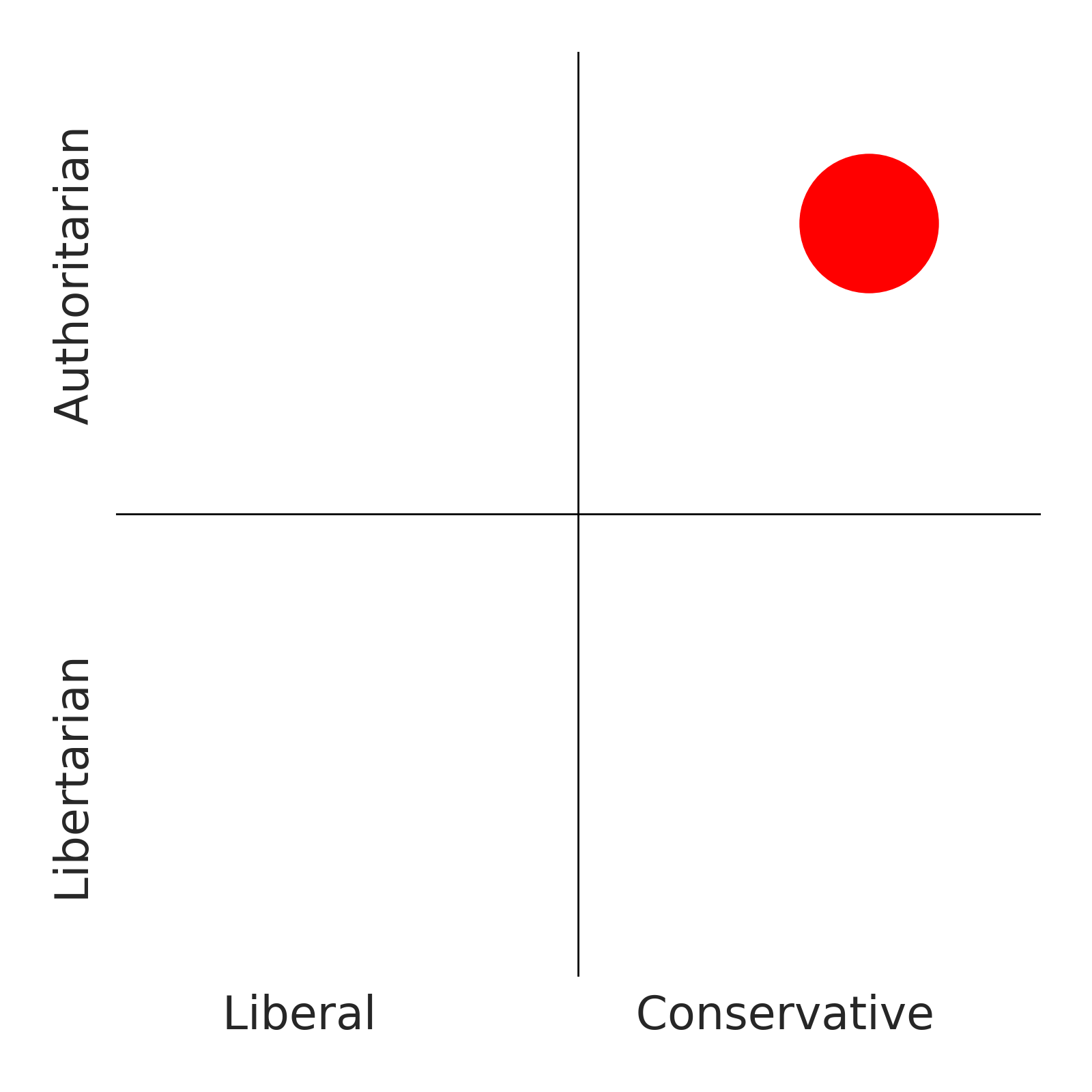
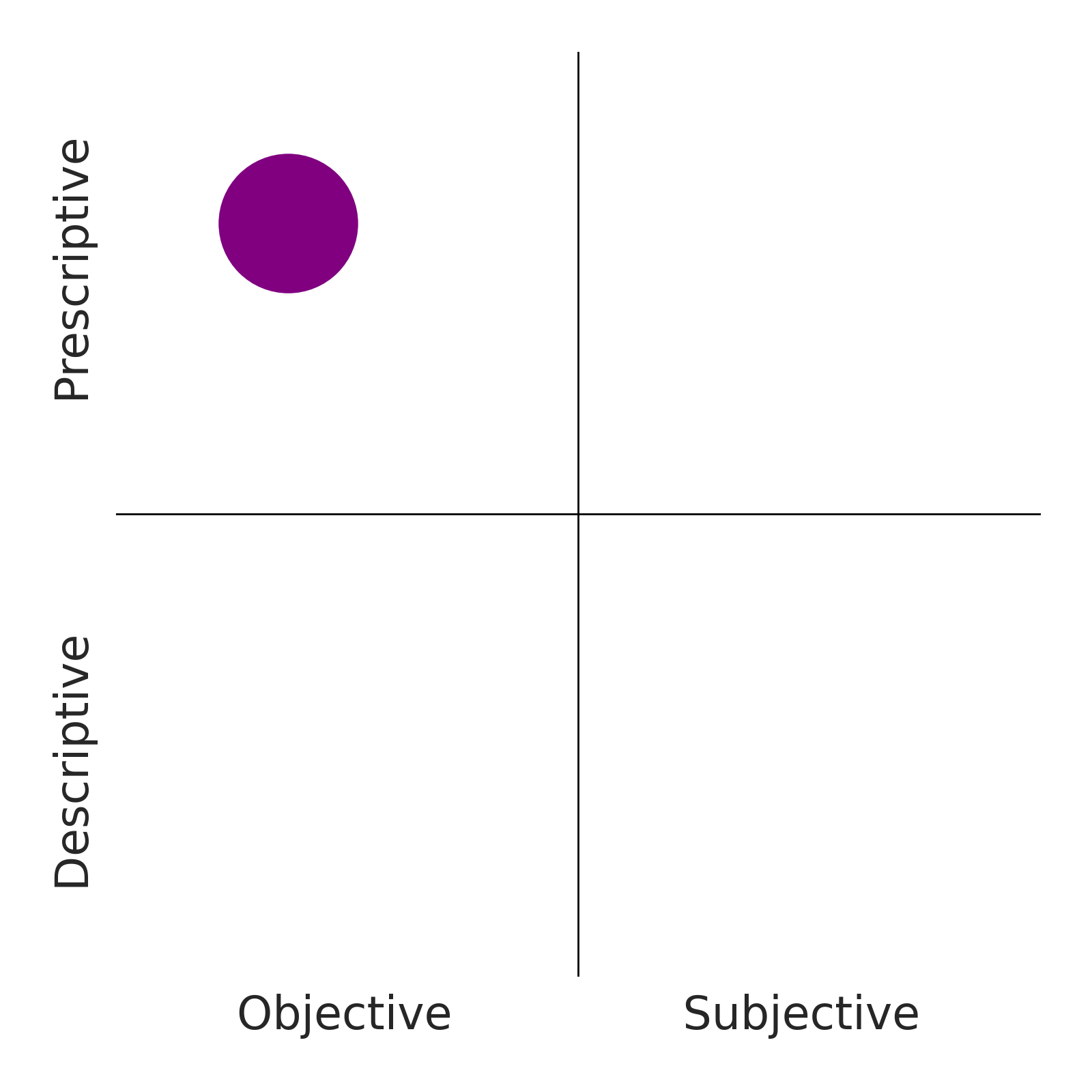
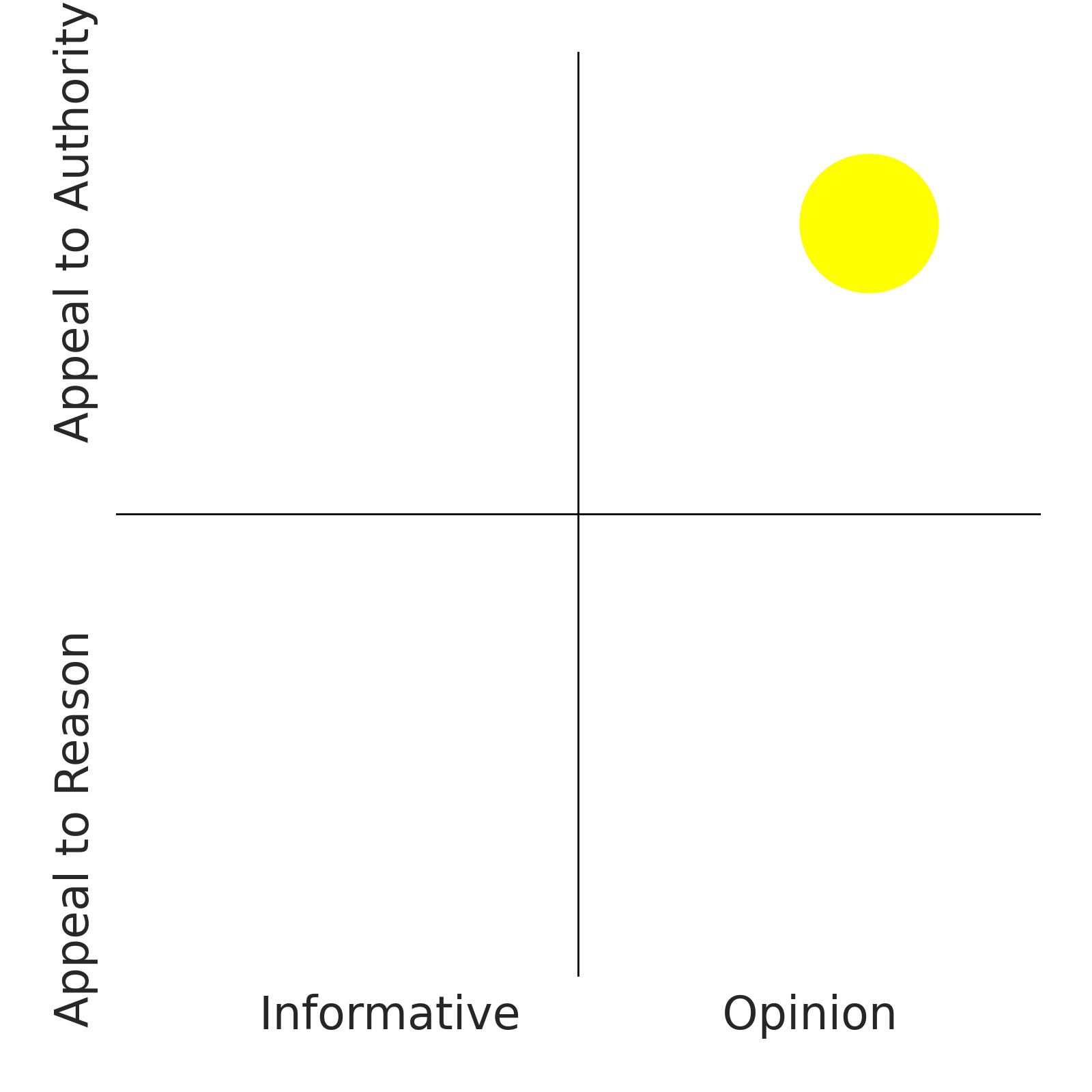
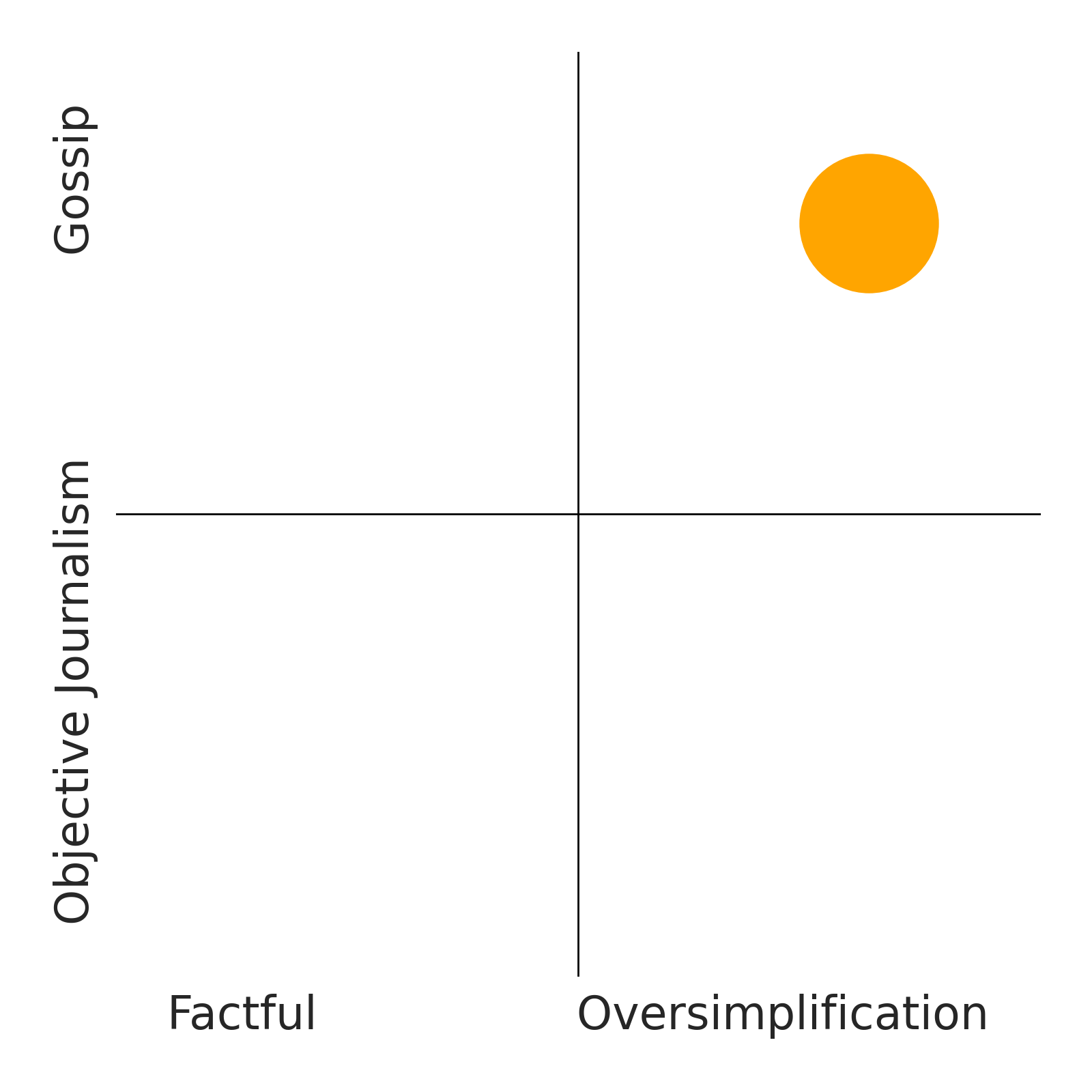
Click points to explore news by date. News sentiment ranges from -10 (very negative) to +10 (very positive) where 0 is neutral.
Briefly attributes a major security relocation to unnamed 'multiple reports,' limiting verification while presenting the threat claim directly.
Automated analysis; not human reviewed. Limitations: Only two terse sentences with unnamed 'multiple reports'; no named sources, dates, or details limit confidence. · 55 of 55 available dimensions scored; omitted dimensions are not treated as neutral. · Verified supporting quotes for 9 of 55 scored dimensions.
Claim: The text uses factual, attributed phrasing rather than evaluative commentary.
“Treasury Secretary Scott Bessent was relocated from his D.C.-area home to a military base due to Iranian threats against his life, according to multiple reports.” · exact text match
Why: The report states a development and attributes it to reports, with no subjective evaluation.
Claim: The language is terse and non-sensational despite describing a security threat.
“Treasury Secretary Scott Bessent was relocated from his D.C.-area home to a military base due to Iranian threats against his life, according to multiple reports.” · exact text match
Why: The sentence is brief and declarative, lacking sensational adjectives or dramatic framing.
Claim: The text describes what happened without recommending any action.
“Treasury Secretary Scott Bessent was relocated from his D.C.-area home to a military base due to Iranian threats against his life, according to multiple reports.” · exact text match
Why: There is no prescriptive language; the sentence is purely descriptive.
Claim: The item concerns a cabinet official's security response to a foreign threat, giving it a political/security dimension.
“Treasury Secretary Scott Bessent was relocated from his D.C.-area home to a military base due to Iranian threats against his life, according to multiple reports.” · exact text match
Why: The subject is a Treasury Secretary and an Iranian threat, which places the report in political news territory.
Claim: The report provides only unnamed 'multiple reports' sourcing, yielding limited but nonzero sourcing transparency.
“according to multiple reports” · exact text match
Why: Attribution is visible, but the absence of named sources or details keeps credibility modest.
Claim: The report presents a factual security development with attribution rather than speculative or emotive reasoning.
“Treasury Secretary Scott Bessent was relocated from his D.C.-area home to a military base due to Iranian threats against his life, according to multiple reports.” · exact text match
Why: The sentence is declarative and source-attributed, supporting a modest rational rather than irrational classification.
Claim: The report omits named sources and specifics while presenting a consequential security claim.
“according to multiple reports” · exact text match
Why: The vague sourcing is an observable omission, but the text is too brief to support a strong manipulation classification.
Claim: The two-sentence, summary-like structure and generic phrasing are consistent with automated or aggregated copy.
“Treasury Secretary Scott Bessent relocated over Iran threats. Treasury Secretary Scott Bessent was relocated from his D.C.-area home to a military base due to Iranian threats against his life, according to multiple reports.” · exact text match
Why: The repetitive headline-body structure is a weak AI indicator, but the sample is too short for strong confidence.
Claim: The item transparently attributes the account to unnamed reports without adding unsupported detail.
“according to multiple reports” · exact text match
Why: Attribution is present, but the vagueness of 'multiple reports' limits the strength of the integrity signal.
Only two terse sentences with unnamed 'multiple reports'; no named sources, dates, or details limit confidence.
2026 © Helium Trades
Privacy Policy & Disclosure
* Disclaimer: Nothing on this website constitutes investment advice, performance data or any recommendation that any particular security, portfolio of securities, transaction or investment strategy is suitable for any specific person. Helium Trades is not responsible in any way for the accuracy
of any model predictions or price data. Any mention of a particular security and related prediction data is not a recommendation to buy or sell that security. Investments in securities involve the risk of loss. Past performance is no guarantee of future results. Helium Trades is not responsible for any of your investment decisions,
you should consult a financial expert before engaging in any transaction.