See whether Helium helps you make better-informed decisions. Try every Pro Trader feature for 30 days. No credit card required.
Try every Pro Trader feature for 30 days. No credit card required.
General framing and worldview. The sample is strongly concentrated on Middle Eastern security, military operations, deterrence, Iran, Hamas, Hezbollah, and Israel–US diplomacy.
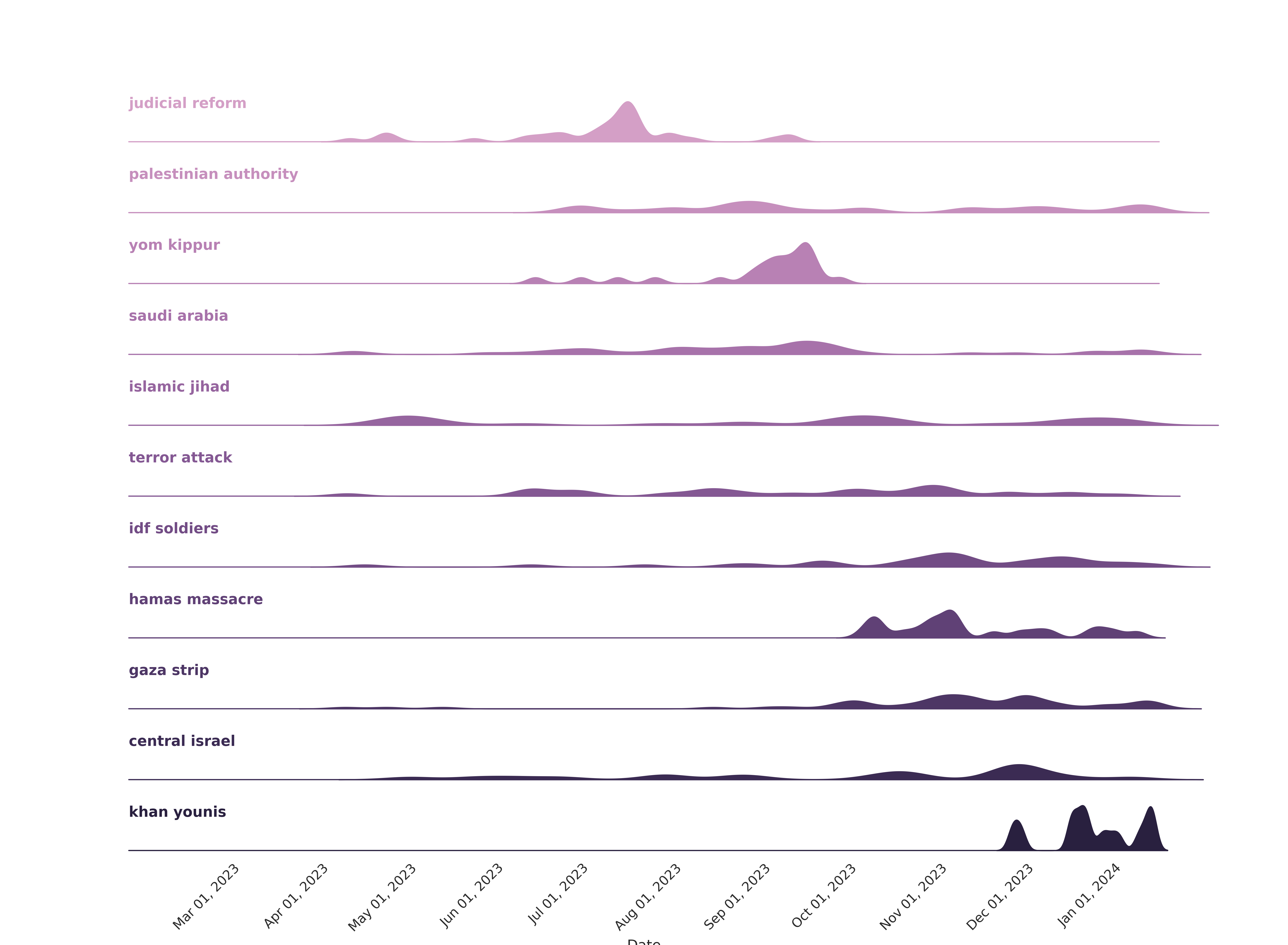
The keyword-frequency note specifically identifies disappearance, Hamas disarmament, ballistic missiles, and participation as recurring subjects [80].
This is topic-selection evidence, not proof of motive: the sample cannot show what the outlet chose not to publish.
Within the supplied records, security framing is especially visible in descriptions of Iran as building a 'hidden war room' and a launch platform
Framing uses dramatic, unsubstantiated language to portray Iran, Houthis, and Iraqi militias as secretly building a direct military threat to Israel, stoking fear and urgency.
Automated analysis; not human reviewed. Limitations: Limited to a single headline and subhead; no sourcing, counterclaims, or full article context available. · 15 of 53 available dimensions scored; omitted dimensions are not treated as neutral. · Verified supporting quotes for 15 of 15 scored dimensions.
Claim: The article frames Iran and its proxies as an active, secret military threat to Israel, a perspective aligning with conservative/right-leaning geopolitical stances.
“Iran's hidden war room in Iraq: how Houthis and militias are building a new launchpad against Israel” · exact text match
“shortening the flight path to Israeli cities and rewriting the threat map” · exact text match
Why: The dramatic, threat-oriented language is characteristic of conservative foreign policy framing that emphasizes state-based adversaries.
Claim: The article relies on subjective, emotive phrases rather than neutral reporting.
“hidden war room” · exact text match
“building a new launchpad against Israel” · exact text match
“rewriting the threat map” · exact text match
Why: These terms are inherently interpretive and dramatic, not factual or detached.
Claim: The article uses exaggerated, alarming language to describe the situation.
“hidden war room” · exact text match
“building a new launchpad against Israel” · exact text match
“rewriting the threat map” · exact text match
Why: The wording is designed to provoke a strong reaction, typical of sensationalist journalism.
Claim: The article adopts a hawkish posture by portraying Iran's actions as an imminent military threat that demands attention.
“building a new launchpad against Israel” · exact text match
“shortening the flight path to Israeli cities” · exact text match
Why: The language implies an active, threatening capability, which is characteristic of hawkish reporting.
Claim: The article incites fear by describing a secret war room and a launchpad for attacks.
“hidden war room” · exact text match
“building a new launchpad against Israel” · exact text match
Why: Terms like 'hidden' and 'launchpad' evoke a sense of unseen danger and imminent threat.
Claim: The article presents a strong interpretive narrative rather than neutral facts.
“how Houthis and militias are building a new launchpad against Israel” · exact text match
Why: The 'how' implies a constructed story without balanced evidence, making it opinionated.
Claim: The article is highly political, focusing on the Iran-Israel conflict and framing Iran negatively.
“Iran's hidden war room in Iraq” · exact text match
“against Israel” · exact text match
Why: The topic and framing are squarely in the domain of international politics with a clear adversarial stance.
Claim: The article reduces complex regional dynamics to a single hidden war room and launchpad.
“Iran's hidden war room in Iraq: how Houthis and militias are building a new launchpad against Israel” · exact text match
Why: It simplifies multiple actors and motives into one linear threat narrative.
Claim: The article asserts the existence of a hidden war room and a launchpad without hedging or uncertainty.
“Iran's hidden war room in Iraq: how Houthis and militias are building a new launchpad against Israel” · exact text match
Why: No qualifying words like 'allegedly' or 'reported' appear; it is presented as a fact.
Claim: The article reflects a strong ideological lens that views Iran as an implacable foe.
“building a new launchpad against Israel” · exact text match
“rewriting the threat map” · exact text match
Why: The framing is one-sided and assumes adversarial intent, consistent with a fixed ideological position.
Claim: The article evokes negative emotions toward Iran through fear-laden language.
“hidden war room” · exact text match
“threat map” · exact text match
Why: The vocabulary is designed to elicit fear and anger, a negative emotional tone.
Claim: The article speculates about future attacks and intentions without supporting evidence.
“building a new launchpad against Israel” · exact text match
“shortening the flight path to Israeli cities” · exact text match
Why: It describes an ongoing activity that is unproven, and it forecasts threat rewriting without factual basis.
Claim: The article uses loaded terms and a dramatic narrative to manipulate reader perception.
“hidden war room” · exact text match
“building a new launchpad” · exact text match
“rewriting the threat map” · exact text match
Why: Each phrase is emotionally charged and designed to create a sense of urgency and danger.
Claim: The article lacks sourcing, attribution, or qualifying language, reducing its apparent honesty and fairness.
“Iran's hidden war room in Iraq: how Houthis and militias are building a new launchpad against Israel” · exact text match
Why: The claim is presented as an unqualified fact without any mention of sources, evidence, or counterperspectives.
Claim: The article suggests a secret, coordinated conspiracy among Iran, Houthis, and Iraqi militias.
“hidden war room” · exact text match
“merging under Iranian direction” · exact text match
Why: The term 'hidden war room' implies a covert operation, typical of conspiracy framing.
Limited to a single headline and subhead; no sourcing, counterclaims, or full article context available.
August 17, 2026 · 0 shares
Frames Iran's negotiations with the US as a deceptive military buildup and treats a Wall Street Journal report as confirmation of an impending wider war.
Automated analysis; not human reviewed. Limitations: The supplied text is only a headline and one-sentence summary, so classifications rely on framing cues and cannot account for the full report's context or sourcing. · 9 of 54 available dimensions scored; omitted dimensions are not treated as neutral. · Verified supporting quotes for 9 of 9 scored dimensions.
Claim: The headline presents an interpretive characterization of Iran's intentions, while specific claims are attributed to a WSJ report.
“Iran prepares for wider war” · exact text match
“Wall Street Journal report says Tehran used the 60-day negotiating window” · exact text match
Why: The headline states an un-sourced strategic conclusion; the report-specific details are attributed.
Claim: The framing dramatizes escalation by highlighting wider war and geographically broad attacks.
“wider attacks from Hormuz to the Red Sea” · exact text match
Why: The phrase emphasizes a broad geographic threat and escalation, which is more sensational than a neutral description of military activity.
Claim: The tone is negative and focused on conflict escalation.
“Iran prepares for wider war” · exact text match
“wider attacks from Hormuz to the Red Sea” · exact text match
Why: The selected framing conveys a threatening and deteriorating security outlook.
Claim: The text portrays Iran as an aggressive actor preparing for wider attacks.
“Iran prepares for wider war” · exact text match
“prepare allied militias for wider attacks from Hormuz to the Red Sea” · exact text match
Why: The dominant emphasis is on Iranian offensive preparations and escalation, with no balancing context.
Claim: The framing highlights an expanding attack threat across the Hormuz and Red Sea area.
“wider attacks from Hormuz to the Red Sea” · exact text match
Why: The wording emphasizes a broad, escalating threat, which can provoke fear beyond a neutral report.
Claim: The headline includes interpretive language such as 'hardens strategy' and 'prepares for wider war.'
“Mojtaba Khamenei hardens strategy” · exact text match
“Iran prepares for wider war” · exact text match
Why: These phrases are editorialized characterizations rather than strictly neutral descriptions.
Claim: The subject is geopolitical and military, centering on US-Iran talks and regional conflict.
“US talks” · exact text match
“IRGC” · exact text match
Why: The text focuses on state negotiations, military strategy, and regional attacks, making it political content.
Claim: The headline asserts Iran's war preparation as fact rather than as an attributed interpretation.
“Iran prepares for wider war” · exact text match
Why: The headline states a strategic conclusion without hedging or attribution, though the supporting specifics are attributed to the WSJ report.
Claim: The text forecasts wider war and future attacks as a present preparation.
“prepare allied militias for wider attacks from Hormuz to the Red Sea” · exact text match
Why: The claim about preparations for wider attacks is an inference about future conflict from reported military activity.
The supplied text is only a headline and one-sentence summary, so classifications rely on framing cues and cannot account for the full report's context or sourcing.
July 29, 2026 · 0 shares
Alarmist security-focused framing depicts Iran and the Muslim Brotherhood turning Sudan into an extremist base via a growing alliance with Iran’s Revolutionary Guards, highlighting regional threats.
Automated analysis; not human reviewed. · 13 of 52 available dimensions scored; omitted dimensions are not treated as neutral. · Verified supporting quotes for 9 of 13 scored dimensions.
Claim: Security-oriented framing portrays Iran and the Muslim Brotherhood as turning Sudan into an extremist base.
“How Iran and the Muslim Brotherhood are turning Sudan into an extremist base.” · exact text match
“The growing alliance between Sudanese Islamist factions and Iran’s Revolutionary Guards threatens Egypt, the Gulf and Red Sea shipping while deepening divisions inside Sudan’s military” · exact text match
Why: Loaded terms and focus on external threats indicate a security-oriented framing.
Claim: Use of evaluative language about extremist actors indicates subjective framing.
“How Iran and the Muslim Brotherhood are turning Sudan into an extremist base.” · exact text match
Why: Normative description suggests subjectivity.
Claim: Framing emphasizes dramatic threats and extremist labeling.
“The growing alliance between Sudanese Islamist factions and Iran’s Revolutionary Guards threatens Egypt, the Gulf and Red Sea shipping while deepening divisions inside Sudan’s military” · exact text match
“How Iran and the Muslim Brotherhood are turning Sudan into an extremist base.” · exact text match
Why: Use of 'extremist base' and 'threatens' conveys sensational framing.
Claim: Negative framing of regional security risk vs neutral market sentiment.
“extremist base” · exact text match
“threatens shipping” · not found in supplied text
Why: Negative framing rather than market-bet signals.
Claim: Descriptive language implies a prescriptive outcome (call to respond etc).
“extremist base” · exact text match
“threatens shipping” · not found in supplied text
Why: Implied normative outcome of countermeasures.
Claim: Hawkish emphasis on regional threats from Iran-aligned actors.
“threatens Egypt, the Gulf and Red Sea shipping” · exact text match
Why: Threat framing aligns with hawkish security stance.
Claim: Emphasizes fear-inducing security threats.
“extremist base” · exact text match
“threatens shipping” · not found in supplied text
Why: Conveys fear of extremism and disruption.
Claim: Presents judgments about groups as extremist actors.
“extremist base” · exact text match
Why: Labels groups as extremist rather than neutrally describing actions.
Claim: Geopolitical framing around extremist actors and regional threats.
“Iran’s Revolutionary Guards” · exact text match
“extremist base” · exact text match
Why: Focus on geopolitics and security.
Claim: Reduces geopolitics to a single alliance driving extremist base narrative.
“extremist base” · exact text match
“growing alliance between Sudanese Islamist factions and Iran’s Revolutionary Guards” · exact text match
Why: Framing may simplify complex regional dynamics to a dichotomous threat.
Claim: Certainty about a unified threat posed by Iran-aligned actors.
“turning Sudan into an extremist base” · exact text match
Why: Definitive wording suggests high certainty given limited data in excerpt.
Claim: Frames in terms of regional stability and security norms common to establishment discourse.
“threatens Egypt, the Gulf and Red Sea shipping” · exact text match
Why: References to regional stability reflect establishment concerns.
Claim: Loaded framing techniques to evoke fear about extremism.
“extremist base” · exact text match
“threatens shipping” · not found in supplied text
Why: Loaded descriptors manipulate reader perception.
The apparent worldview is security-first and state-centric. Military and government institutions are frequent primary authorities: the IDF, Israeli ministries, the UAE Defense Ministry, Trump administration officials, police, and intelligence services
August 17, 2026 · 0 shares
Headline foregrounds an Israeli threat assessment and labels Iran's leadership 'hard-line,' while the lede attributes the escalation scenario to an Israeli official and conditions it on regime-stability calculations.
The excerpt presupposes an existing 'blockade' affecting Iran, but does not identify who imposed it or its scope.
Automated analysis; not human reviewed. Limitations: Only a two-sentence excerpt and headline were supplied; no publisher identity, article body, or independent verification was available, so the analysis is limited to the explicit wording. · 9 of 54 available dimensions scored; omitted dimensions are not treated as neutral. · Verified supporting quotes for 9 of 9 scored dimensions.
Claim: The article's framing is not clearly left- or right-coded in the supplied text.
“Israel sees signs Iran's hard-line leadership is preparing for an offensive move” · exact text match
“Tehran could escalate against energy infrastructure, shipping routes and US allies if it concludes the blockade threatens regime stability” · exact text match
Why: The topic is geopolitical, but the brief text does not contain enough policy positioning to classify it on a liberal-conservative spectrum.
Claim: The report mostly uses attribution and conditionality, but includes the un-attributed evaluative label 'hard-line.'
“Israeli official says Tehran could escalate against energy infrastructure, shipping routes and US allies if it concludes the blockade threatens regime stability” · exact text match
“Iran's hard-line leadership” · exact text match
Why: The central warning is sourced and conditional, which keeps it largely objective; the phrase 'hard-line' is an un-sourced characterization that adds a subjective element.
Claim: The report's wording is restrained and hedged, not alarmist.
“while both sides prepare for a possible new round” · exact text match
“Tehran could escalate against energy infrastructure, shipping routes and US allies if it concludes the blockade threatens regime stability” · exact text match
Counterevidence:
“preparing for an offensive move” · exact text match
Why: Hedges like 'could' and 'possible' reduce alarm, though the headline reference to an 'offensive move' is vivid.
Claim: The article describes an official's warning and preparations; it contains no recommendation or demand.
“Israeli official says Tehran could escalate against energy infrastructure, shipping routes and US allies if it concludes the blockade threatens regime stability” · exact text match
“while both sides prepare for a possible new round” · exact text match
Why: All statements are descriptive reports of assessments and preparations; there is no prescriptive language.
Claim: The report is mostly sourced and factual but uses an evaluative label for Iran's leadership.
“Iran's hard-line leadership” · exact text match
“Israeli official says Tehran could escalate against energy infrastructure, shipping routes and US allies” · exact text match
Why: 'Hard-line' is a value-laden descriptor, but the central claim is attributed to an official and stated conditionally, so the opinion element is small.
Claim: The substantive content is wholly about interstate geopolitical conflict and military preparations.
“Israel sees signs Iran's hard-line leadership is preparing for an offensive move” · exact text match
“Tehran could escalate against energy infrastructure, shipping routes and US allies” · exact text match
Why: The piece concerns Israeli-Iranian security tensions and possible military escalation, making it inherently political and security-related.
Claim: The report visibly attributes its central warning and uses hedged wording, but the source is unnamed and the headline assessment is not attributed.
“Israeli official says Tehran could escalate against energy infrastructure, shipping routes and US allies if it concludes the blockade threatens regime stability” · exact text match
“while both sides prepare for a possible new round” · exact text match
Counterevidence:
“Israel sees signs Iran's hard-line leadership is preparing for an offensive move” · exact text match
Why: Attribution to 'an Israeli official' and conditional phrasing support credibility, while the lack of a named source and un-attributed headline limit it.
Claim: The report frames the escalation scenario as a conditional, strategic calculation rather than as irrational or emotional.
“Tehran could escalate against energy infrastructure, shipping routes and US allies if it concludes the blockade threatens regime stability” · exact text match
Why: The key escalation statement is an if-then assessment attributed to an Israeli official, and the piece also notes both sides are preparing, giving an analytical rather than emotive framing.
Claim: The report includes a conditional future scenario from an Israeli official, but marks it as a possibility.
“Tehran could escalate against energy infrastructure, shipping routes and US allies if it concludes the blockade threatens regime stability” · exact text match
Why: The 'could ... if' construction is an explicit conditional forecast, though it is attributed to an official rather than presented as a firm prediction.
Only a two-sentence excerpt and headline were supplied; no publisher identity, article body, or independent verification was available, so the analysis is limited to the explicit wording.
August 18, 2026 · 0 shares
The framing is neutral, reporting the IDF's stated military objectives alongside Palestinian casualty reports without editorializing or advocating for either side.
Automated analysis; not human reviewed. · 54 of 54 available dimensions scored; omitted dimensions are not treated as neutral. · Verified supporting quotes for 54 of 54 scored dimensions.
Claim: The article presents both Israeli and Palestinian perspectives without explicit endorsement, but a slight negative framing due to casualty details.
“Palestinian reports say a café was hit, killing six, including a child, and wounding 10” · exact text match
Why: The inclusion of specific civilian casualties and the detail of a child killed adds emotional weight, slightly leaning liberal in humanitarian emphasis.
Claim: The article's brief report lacks in-depth exploration, avoiding elitist or populist framing.
“IDF strikes Hamas commanders in Gaza port; Palestinian media reports 6 killed, 10 wounded.” · exact text match
Why: The headline focuses on military action and casualty numbers, avoiding populist outrage or elitist justification.
Claim: The article reports the IDF's military action without questioning its authority, leaning slightly authoritarian.
“IDF strikes Hamas commanders in Gaza port” · exact text match
Why: The framing presents the IDF action as a reported fact without critical analysis or advocacy for individual rights, subtly favoring state/military authority.
Claim: The report is largely objective, quoting both sides without overt subjective language.
“Military says commanders in the Shati area near Gaza City’s port were planning attacks on IDF troops; Palestinian reports say a café was hit” · exact text match
Why: The use of 'Military says' and 'Palestinian reports' attributes claims to sources, maintaining a factual tone.
Claim: The article is reported objectively, with slightly increased drama from specific casualty details.
“killing six, including a child, and wounding 10” · exact text match
Why: Mentioning a child killed adds a sensational element, but the overall tone remains factual and restrained.
Claim: No economic or financial framing; neutral.
“IDF strikes Hamas commanders in Gaza port” · exact text match
Why: The article is about a military strike, not an economic trend.
Claim: The article's report of death and injury conveys a slightly pessimistic tone.
“killing six, including a child, and wounding 10” · exact text match
Why: The focus on casualties and the child's death presents a grim outlook.
Claim: The article is interesting due to the conflict and specific casualty details.
“killing six, including a child, and wounding 10” · exact text match
Why: The tragic details make the story more engaging.
Claim: The article is purely descriptive, reporting what happened without prescribing actions.
“IDF strikes Hamas commanders in Gaza port; Palestinian media reports 6 killed, 10 wounded.” · exact text match
Why: The headline and body describe events without policy recommendations.
Claim: The article's focus on casualties might lean dovish, but it also reports the IDF's military rationale.
“commanders in the Shati area near Gaza City’s port were planning attacks on IDF troops” · exact text match
“killing six, including a child, and wounding 10” · exact text match
Why: The juxtaposition of Israeli security rationale and Palestinian civilian casualties creates a mild dovish lean, but it's not strong.
Claim: The article does not incite fear beyond the factual report of violence.
“IDF strikes Hamas commanders in Gaza port; Palestinian media reports 6 killed, 10 wounded.” · exact text match
Why: The report is straightforward and does not use fear-based language.
Claim: The article avoids leading or loaded questions.
“Military says commanders in the Shati area near Gaza City’s port were planning attacks on IDF troops; Palestinian reports say a café was hit” · exact text match
Why: Both sides' statements are presented without presupposition.
Claim: The article reports verified events, not gossip.
“IDF strikes Hamas commanders in Gaza port; Palestinian media reports 6 killed, 10 wounded.” · exact text match
Why: The content is news, not rumor.
Claim: The article is factual and presents no opinions.
“Military says commanders in the Shati area near Gaza City’s port were planning attacks on IDF troops; Palestinian reports say a café was hit” · exact text match
Why: The article only cites others' assertions.
Claim: The article is political due to its subject, but presents it neutrally.
“IDF strikes Hamas commanders in Gaza port” · exact text match
Why: The conflict is inherently political, but the article does not editorialize.
Claim: The article does not oversimplify the events, but gives a concise account.
“IDF strikes Hamas commanders in Gaza port; Palestinian media reports 6 killed, 10 wounded.” · exact text match
Why: The brevity does not misrepresent complexity; it only reports distinct facts.
Claim: The article relies on official military statements, appealing to authority.
“Military says commanders in the Shati area near Gaza City’s port were planning attacks on IDF troops” · exact text match
Why: The IDF's claim is presented without independent verification, leaning on authority.
Claim: The article is a mature, factual report.
“IDF strikes Hamas commanders in Gaza port; Palestinian media reports 6 killed, 10 wounded.” · exact text match
Why: No emotional or juvenile language.
Claim: The article does not use circular reasoning.
“IDF strikes Hamas commanders in Gaza port” · exact text match
Why: No logical fallacies present.
Claim: The article is not covering up anything.
“IDF strikes Hamas commanders in Gaza port; Palestinian media reports 6 killed, 10 wounded.” · exact text match
Why: It reports both sides' statements.
Claim: The article does not unduly victimize either side.
“Palestinian media reports 6 killed, 10 wounded.” · exact text match
Why: Casualties are simply reported without excessive sympathy.
Claim: The article states facts with appropriate attributions, not overconfident.
“Military says” · exact text match
“Palestinian reports” · exact text match
Why: The use of attributions qualifies claims.
Claim: The article is informative, not spam.
“IDF strikes Hamas commanders in Gaza port” · exact text match
Why: No fluff or promotional content.
Claim: The article is free of overt ideology.
“IDF strikes Hamas commanders in Gaza port; Palestinian media reports 6 killed, 10 wounded.” · exact text match
Why: It avoids ideological language.
Claim: The article reports the military's action without challenge, slightly pro-establishment.
“IDF strikes Hamas commanders in Gaza port” · exact text match
Why: The IDF's action is presented as a fact, without questioning the establishment's decision.
Claim: The article is emotionally factual, with a slight negative due to death.
“killing six, including a child, and wounding 10” · exact text match
Why: The news is negative but not emotionally biased.
Claim: The article applies no double standards.
“Military says” · exact text match
“Palestinian reports” · exact text match
Why: It treats both sources with similar framing.
Claim: The article is credible due to attributions, but lacks verification.
“Military says” · exact text match
“Palestinian reports” · exact text match
Why: It cites sources, but does not independently confirm.
Claim: The report is factual and balanced, presenting both Israeli and Palestinian accounts without emotional manipulation.
“Military says commanders in the Shati area near Gaza City’s port were planning attacks on IDF troops; Palestinian reports say a café was hit” · exact text match
Why: The article sticks to reported facts and attributions, using rational language and avoiding speculative or emotionally charged terms.
Claim: The article is not advertising anything.
“IDF strikes Hamas commanders in Gaza port” · exact text match
Why: It's news.
Claim: The article is very short and factual, showing minor AI-writing indicators like formulaic phrasing.
“IDF strikes Hamas commanders in Gaza port; Palestinian media reports 6 killed, 10 wounded.” · exact text match
Why: The succinct, balanced tone and lack of nuance could be AI-generated, but this is a simple news brief.
Claim: The article attributes claims to sources, showing a degree of fairness.
“Military says” · exact text match
“Palestinian reports” · exact text match
Why: By attributing statements to 'Military says' and 'Palestinian reports', the report acknowledges different sources, maintaining some integrity.
Claim: The article is concise and accurate, though not deep.
“Military says commanders in the Shati area near Gaza City’s port were planning attacks on IDF troops; Palestinian reports say a café was hit” · exact text match
Why: The analysis is straightforward and informative.
Claim: The article does not endorse terrorism.
“IDF strikes Hamas commanders” · exact text match
Why: It only reports an action.
Claim: The article contains no Marxist ideology.
“IDF strikes Hamas commanders in Gaza port” · exact text match
Why: No class analysis.
Claim: The article does not advocate Islamist governance.
“IDF strikes Hamas commanders” · exact text match
Why: No advocacy present.
Claim: The article does not contain anti-Semitic views.
“IDF strikes Hamas commanders” · exact text match
Why: No anti-Jewish statements.
Claim: The article does not contain anti-LGBT views.
“IDF strikes Hamas commanders in Gaza port” · exact text match
Why: No discussion.
Claim: The article does not contain racist generalizations.
“IDF strikes Hamas commanders” · exact text match
Why: No group generalizations.
Claim: The article does not employ identity politics.
“IDF strikes Hamas commanders” · exact text match
Why: No identity framing.
Claim: The article does not promote cruelty.
“IDF strikes Hamas commanders” · exact text match
Why: It is a neutral report.
Claim: The article does not engage in virtue signaling.
“IDF strikes Hamas commanders in Gaza port” · exact text match
Why: No moral posturing.
Claim: The article does not promote conspiracy theories.
“IDF strikes Hamas commanders in Gaza port” · exact text match
Why: No conspiratorial claims.
Claim: The article does not empathize with self-harm.
“IDF strikes Hamas commanders” · exact text match
Why: No such framing.
Claim: The article does not scapegoat any group.
“IDF strikes Hamas commanders” · exact text match
Why: It merely reports the strike.
Claim: The article does not engage in hypocrisy.
“IDF strikes Hamas commanders in Gaza port; Palestinian media reports 6 killed, 10 wounded.” · exact text match
Why: No double standards from the publisher.
Claim: The article is rational and not anti-enlightenment.
“Military says” · exact text match
“Palestinian reports” · exact text match
Why: It relies on sources and rational reporting.
August 18, 2026 · 0 shares
Framing emphasizes the UAE Defense Ministry's characterization of the incident as isolated and without casualties or infrastructure damage, possibly downplaying the gravity of the missile landings within territorial waters.
Automated analysis; not human reviewed. Limitations: Analysis based solely on a short factual news report; lacks broader context or verifiable independent sources. · 7 of 54 available dimensions scored; omitted dimensions are not treated as neutral. · Verified supporting quotes for 6 of 7 scored dimensions.
Claim: No political or ideological positioning evident in the report.
“UAE says 2 Iranian ballistic missiles triggered alerts, both landed in water.” · exact text match
Why: The report simply states facts without political commentary or positioning.
Claim: The report is primarily factual and objective, attributing statements to an official source.
“Defense Ministry says” · exact text match
Why: The article relies on official statements but presents them as authoritative without independent verification.
Claim: The report is factual and understated, avoiding sensational language.
“one missile fell outside Emirati territorial waters and the second landed inside them” · exact text match
Why: The description of the missile landings is neutral and does not exaggerate the threat or drama.
Claim: The article does not use fear-inducing language despite a potentially alarming incident.
“warning sirens and phone alerts were activated” · exact text match
Why: The activation of alerts is reported factually without emotional language.
Claim: The article presents the Defense Ministry's assertions as definitive without acknowledging uncertainty.
“Defense Ministry says one missile fell outside Emirati territorial waters and the second landed inside them” · exact text match
Why: It reports the official account without validation or alternative perspectives, but follows standard reporting practice.
Claim: The article attributes statements to an official government source, providing a clear chain of information.
“Defense Ministry says” · exact text match
Why: Citing a ministry as the source lends general trustworthiness for a breaking news brief, although independent verification is absent.
Claim: The article presents a straightforward factual account without emotional or irrational framing.
“Defense Ministry says one missile fell outside Emirati territorial waters and the second landed inside them after warning sirens and phone alerts were activated.” · not found in supplied text
Why: Reporting is factual and attributed to the Defense Ministry, without speculative or emotional language.
Analysis based solely on a short factual news report; lacks broader context or verifiable independent sources.
August 13, 2026 · 0 shares
The report frames an extended naval deployment as a deepening humanitarian and morale crisis, emphasizing deterioration, exhaustion, and inadequate supplies.
Automated analysis; not human reviewed. Limitations: No substantive limitations beyond the brevity of the supplied text. · 11 of 53 available dimensions scored; omitted dimensions are not treated as neutral. · Verified supporting quotes for 11 of 11 scored dimensions.
Claim: The report sides with the common sailors against decision-makers responsible for deployment extensions.
“repeated deployment extensions” · exact text match
“deteriorating living conditions” · exact text match
Why: The framing blames leadership for the crew's suffering, implying a populist versus elite dynamic.
Claim: The report uses subjective, negative language to characterize the situation.
“crisis deepens” · exact text match
“deteriorating living conditions” · exact text match
Why: Words like 'crisis' and 'deteriorating' convey interpretation rather than neutral facts.
Claim: The report highlights dramatic incidents and uses sensational phrasing.
“Suicide attempts, broken toilets and rationed food” · exact text match
“crisis deepens” · exact text match
Why: The selection of extreme negatives and the 'crisis' label amplify emotional impact.
Claim: The report's crisis narrative and specific dramatic details make it engaging.
“Suicide attempts” · exact text match
“crisis deepens” · exact text match
Why: The unusual and severe nature of the reported conditions is inherently attention-grabbing.
Claim: The report evokes fear and concern about the sailors' well-being.
“Suicide attempts” · exact text match
“deteriorating living conditions” · exact text match
Why: References to suicide and worsening conditions induce alarm.
Claim: The report expresses a negative opinion through its framing.
“crisis deepens” · exact text match
Why: Calling the situation a 'crisis' is an evaluative judgment rather than a neutral observation.
Claim: The report portrays sailors as victims of harsh, avoidable conditions.
“deteriorating living conditions” · exact text match
“rationed food” · exact text match
Why: It emphasizes deprivation and suffering, casting the crew as passive sufferers.
Claim: The report criticizes the military establishment's deployment policies.
“repeated deployment extensions” · exact text match
“crisis deepens” · exact text match
Why: It attributes the crisis to leadership decisions, reflecting an anti-establishment stance.
Claim: The report has a negative emotional tone.
“crisis deepens” · exact text match
“deteriorating” · exact text match
Why: The language is alarmist and conveys distress.
Claim: The report includes specific, verifiable-sounding details, increasing believability.
“5,000 sailors and Marines” · exact text match
“about 250 consecutive days” · exact text match
Why: Precise numbers lend an air of factual reporting, though source verification is absent.
Claim: The report uses loaded language to steer reader perception.
“crisis deepens” · exact text match
“deteriorating living conditions” · exact text match
Why: The choice of emotionally charged terms shapes interpretation without explicit argument.
No substantive limitations beyond the brevity of the supplied text.
August 18, 2026 · 0 shares
The article frames Israel's strike on a Syrian airfield as escalatory and diplomatically contentious, highlighting a rare US rebuke and sensitive intelligence sharing.
The article reports on a specific Israeli military action in Syria, involving diplomatic reactions from the US and Turkey.
Automated analysis; not human reviewed. Limitations: The article is a brief snippet, lacking context on the broader conflict and potential justifications for the strike, which limits deeper bias analysis. · 3 of 54 available dimensions scored; omitted dimensions are not treated as neutral. · Verified supporting quotes for 3 of 3 scored dimensions.
Claim: The article frames the Israeli strike as an 'unnecessary escalation' and highlights a 'rare US rebuke', potentially suggesting criticism of Israel's actions.
“US envoy Tom Barrack calls attack an 'unnecessary escalation'” · verified after text normalization
“drawing rare US rebuke” · exact text match
Why: The use of 'unnecessary escalation' and 'rare US rebuke' subtly implies criticism of the Israeli action, which in the US political context leans slightly liberal, though the article is largely factual.
Claim: The article emphasizes diplomatic interactions between Israel and the US, as well as the presence of a US envoy, indicating a focus on establishment foreign policy.
“US envoy Tom Barrack calls attack an 'unnecessary escalation'” · verified after text normalization
“senior Israeli official says Washington received sensitive intelligence beforehand” · exact text match
Why: The article centers on official government sources and diplomatic exchanges, aligning with establishment perspectives.
Claim: The article attributes claims to sources and includes specific details (e.g., number of aircraft, location) without overtly sensational language.
“Four aircraft reportedly hit runways and storage facilities at Abu al-Duhur airfield” · exact text match
“senior Israeli official says Washington received sensitive intelligence beforehand” · exact text match
Why: The article uses 'reportedly' and attributes claims to specific officials, indicating moderate sourcing and attribution; however, it does not provide independent verification.
The article is a brief snippet, lacking context on the broader conflict and potential justifications for the strike, which limits deeper bias analysis.
August 03, 2026 · 0 shares
Frames Trump's Iran policy as erratic and harmful, emphasizing fear and distrust among Israelis.
Automated analysis; not human reviewed. Limitations: Short snippet limits context; quotes may be selectively chosen. · 7 of 52 available dimensions scored; omitted dimensions are not treated as neutral. · Verified supporting quotes for 7 of 7 scored dimensions.
Claim: The article emphasizes fear among Israelis due to Trump's Iran policy.
“Israelis cancel vacations, seek shelters as Trump's Iran zigzag fuels fear.” · exact text match
“We don’t believe him anymore” · exact text match
Why: Explicit use of 'fuels fear' and quotes expressing distrust support a high fearful bias.
Claim: The article is strongly political, focusing on US-Iran policy and its effects.
“Trump's Iran zigzag” · exact text match
“Trump threatens, retreats and reverses course” · exact text match
Why: The entire subject is about Trump's Iran policy and Israeli reaction, clearly political.
Claim: The article reduces complex diplomatic negotiations to a 'zigzag' and 'fear'.
“Trump's Iran zigzag fuels fear” · exact text match
Why: The headline simplifies the situation into an erratic pattern causing fear, omitting context.
Claim: Portrays Israelis as victims paying the price for Trump's actions.
“leaving Israelis to pay the price” · exact text match
“his renewed talks came too late for reservists’ families and Upper Galilee hotels” · exact text match
Why: Phrases like 'pay the price' and 'came too late' frame Israelis as casualties.
Claim: The article evokes negative emotions of fear and distrust.
“fuels fear” · exact text match
“We don’t believe him anymore” · exact text match
Why: Language and quotes are emotionally charged with negative valence.
Claim: Uses emotive language and framing to manipulate reader emotions.
“fuels fear” · exact text match
“leaving Israelis to pay the price” · exact text match
Why: While not overtly manipulative, the emotional framing could influence perception.
Claim: Blames Trump's inconsistency for Israeli fear and disrupted plans.
“Trump threatens, retreats and reverses course, leaving Israelis to pay the price” · exact text match
Why: Directly attributes negative consequences to Trump's actions, scapegoating him.
Short snippet limits context; quotes may be selectively chosen.
Israeli/Palestinian and regional perspective. The sample contains both pro-Israel security language and criticism of Israeli conduct.
Hezbollah is labeled 'terrorists' in a headline, while the IDF is presented as conducting a siege
August 11, 2026 · 0 shares
Frames Hezbollah as terrorists and IDF as actively besieging, adopting a pro-Israeli military stance.
Hezbollah is a Lebanese Shia Islamist political party and militant group, considered a terrorist organization by Israel, the United States, and others. The IDF (Israel Defense Forces) is the military of Israel. The Ali Taher ridge is a strategic location in southern Lebanon, near the Israeli border, often used by Hezbollah for underground infrastructure.
Automated analysis; not human reviewed. Limitations: Analysis based solely on very short article text (headline and one sentence); limited evidence for many dimensions. · 11 of 53 available dimensions scored; omitted dimensions are not treated as neutral. · Verified supporting quotes for 11 of 11 scored dimensions.
Claim: Headline labels Hezbollah as terrorists, indicating conservative framing.
“IDF tightens siege on Hezbollah terrorists trapped in underground Lebanon complex” · exact text match
Why: The term 'terrorists' is a politically charged label commonly used by conservative/pro-Israel sources.
Claim: Use of 'terrorists' in headline is a subjective label.
“IDF tightens siege on Hezbollah terrorists trapped in underground Lebanon complex” · exact text match
Why: Labeling a group as terrorists without qualification is a subjective framing.
Claim: Report focuses on IDF tightening siege, a hawkish military action.
“IDF tightens siege on Hezbollah terrorists trapped in underground Lebanon complex” · exact text match
Why: The description of military siege and cutting water lines emphasizes offensive action.
Claim: Labels Hezbollah as terrorists without supporting argument.
“Hezbollah terrorists” · exact text match
Why: The term 'terrorists' assumes a conclusion that is not argued or evidenced in the text.
Claim: Headline presents unsourced opinion through labeling.
“IDF tightens siege on Hezbollah terrorists trapped in underground Lebanon complex” · exact text match
Why: The headline asserts a value judgment ('terrorists') without attribution.
Claim: Report involves military conflict and uses politically charged labels.
“IDF tightens siege on Hezbollah terrorists trapped in underground Lebanon complex” · exact text match
Why: The subject matter and labeling are inherently political.
Claim: Headline presents action as fact without attribution or uncertainty.
“IDF tightens siege on Hezbollah terrorists trapped in underground Lebanon complex” · exact text match
Why: No hedging or sourcing in the headline, despite the description attributing to Lebanese reports.
Claim: Describes Hezbollah as terrorists, consistent with pro-Israel ideology.
“Hezbollah terrorists” · exact text match
Why: The labeling reflects a specific ideological stance.
Claim: Portrays IDF as actively besieging, aligning with Israeli establishment narrative.
“IDF tightens siege on Hezbollah terrorists trapped in underground Lebanon complex” · exact text match
Why: The framing presents IDF operations as assertive and legitimate.
Claim: Some attribution to Lebanese reports but headline lacks sourcing.
“Lebanese reports say Israeli forces cut water lines and block drone resupply attempts at the strategic Ali Taher ridge” · exact text match
Why: The body provides attribution for some claims, but the headline is unsourced, reducing overall credibility.
Claim: Use of 'terrorists' is a loaded label that manipulates reader perception.
“Hezbollah terrorists” · exact text match
Why: The term carries strong negative connotations that shape reader interpretation.
Analysis based solely on very short article text (headline and one sentence); limited evidence for many dimensions.
August 17, 2026 · 0 shares
Frames Hamas disarmament as the agreed precondition for Gaza reconstruction and highlights Israel's compliance deadline without presenting countervailing perspectives.
Kushner is a former senior White House adviser involved in Middle East diplomacy; the meeting concerns post-war conditions in Gaza, where Hamas is the governing authority.
Automated analysis; not human reviewed. Limitations: The supplied text is a short headline/deck, so analysis is limited to its framing and cannot assess the full article's evidence or balance. · 1 of 54 available dimensions scored; omitted dimensions are not treated as neutral. · Verified supporting quotes for 0 of 1 scored dimensions.
Claim: The framing adopts a hawkish stance by presenting Hamas disarmament as a necessary precondition and Israel's compliance deadline as the operative timeline.
“Israel demands weapons handover before reconstruction and warns Hamas has only weeks to show real compliance.” · not found in supplied text
“Netanyahu, Kushner agree Hamas must disarm before Gaza reconstruction.” · exact text match
Why: The text centers Israel's security demand and deadline, wording the headline as an agreement on Hamas disarmament, without including Hamas's or other parties' positions.
The supplied text is a short headline/deck, so analysis is limited to its framing and cannot assess the full article's evidence or balance.
August 06, 2026 · 0 shares
The publisher frames the incident as an attempted lynching, using sensational and fear-inducing language that highlights Israeli victimhood without contextual nuance.
Automated analysis; not human reviewed. Limitations: The article is extremely short, limiting the depth of bias analysis. · 8 of 53 available dimensions scored; omitted dimensions are not treated as neutral. · Verified supporting quotes for 8 of 8 scored dimensions.
Claim: The publisher uses a subjective characterization of the event as an attempted lynching.
“attempted lynching” · exact text match
Why: The term 'attempted lynching' is a loaded interpretation of the incident.
Claim: The publisher sensationalizes the incident with the term 'attempted lynching'.
“attempted lynching” · exact text match
Why: The phrase is dramatic and heightens emotional response.
Claim: The framing portrays Palestinians as violent attackers, indicating a hawkish stance.
“attempted lynching” · exact text match
Why: The word 'lynching' implies organized mob violence, aligning with hawkish narratives.
Claim: The article induces fear by labeling the incident as an attempted lynching.
“attempted lynching” · exact text match
Why: The term evokes fear of violent death.
Claim: The incident is framed within a political context of Israeli-Palestinian conflict.
“Jenin” · exact text match
“Israeli” · exact text match
Why: The mention of nationality and location places it politically.
Claim: The article simplifies the incident to a one-sided attack without context.
“attempted lynching” · exact text match
Why: It omits any broader context or perspective.
Claim: The article presents the Israeli mother and son as victims of a violent attack.
“attempted lynching” · exact text match
“we managed to get out” · exact text match
Why: The framing emphasizes their escape from danger.
Claim: The tone is negative, focusing on danger and fear.
“attempted lynching” · exact text match
Why: The article conveys a negative emotional valence.
The article is extremely short, limiting the depth of bias analysis.
August 18, 2026 · 0 shares
The framing is neutral, reporting the IDF's stated military objectives alongside Palestinian casualty reports without editorializing or advocating for either side.
Automated analysis; not human reviewed. · 54 of 54 available dimensions scored; omitted dimensions are not treated as neutral. · Verified supporting quotes for 54 of 54 scored dimensions.
Claim: The article presents both Israeli and Palestinian perspectives without explicit endorsement, but a slight negative framing due to casualty details.
“Palestinian reports say a café was hit, killing six, including a child, and wounding 10” · exact text match
Why: The inclusion of specific civilian casualties and the detail of a child killed adds emotional weight, slightly leaning liberal in humanitarian emphasis.
Claim: The article's brief report lacks in-depth exploration, avoiding elitist or populist framing.
“IDF strikes Hamas commanders in Gaza port; Palestinian media reports 6 killed, 10 wounded.” · exact text match
Why: The headline focuses on military action and casualty numbers, avoiding populist outrage or elitist justification.
Claim: The article reports the IDF's military action without questioning its authority, leaning slightly authoritarian.
“IDF strikes Hamas commanders in Gaza port” · exact text match
Why: The framing presents the IDF action as a reported fact without critical analysis or advocacy for individual rights, subtly favoring state/military authority.
Claim: The report is largely objective, quoting both sides without overt subjective language.
“Military says commanders in the Shati area near Gaza City’s port were planning attacks on IDF troops; Palestinian reports say a café was hit” · exact text match
Why: The use of 'Military says' and 'Palestinian reports' attributes claims to sources, maintaining a factual tone.
Claim: The article is reported objectively, with slightly increased drama from specific casualty details.
“killing six, including a child, and wounding 10” · exact text match
Why: Mentioning a child killed adds a sensational element, but the overall tone remains factual and restrained.
Claim: No economic or financial framing; neutral.
“IDF strikes Hamas commanders in Gaza port” · exact text match
Why: The article is about a military strike, not an economic trend.
Claim: The article's report of death and injury conveys a slightly pessimistic tone.
“killing six, including a child, and wounding 10” · exact text match
Why: The focus on casualties and the child's death presents a grim outlook.
Claim: The article is interesting due to the conflict and specific casualty details.
“killing six, including a child, and wounding 10” · exact text match
Why: The tragic details make the story more engaging.
Claim: The article is purely descriptive, reporting what happened without prescribing actions.
“IDF strikes Hamas commanders in Gaza port; Palestinian media reports 6 killed, 10 wounded.” · exact text match
Why: The headline and body describe events without policy recommendations.
Claim: The article's focus on casualties might lean dovish, but it also reports the IDF's military rationale.
“commanders in the Shati area near Gaza City’s port were planning attacks on IDF troops” · exact text match
“killing six, including a child, and wounding 10” · exact text match
Why: The juxtaposition of Israeli security rationale and Palestinian civilian casualties creates a mild dovish lean, but it's not strong.
Claim: The article does not incite fear beyond the factual report of violence.
“IDF strikes Hamas commanders in Gaza port; Palestinian media reports 6 killed, 10 wounded.” · exact text match
Why: The report is straightforward and does not use fear-based language.
Claim: The article avoids leading or loaded questions.
“Military says commanders in the Shati area near Gaza City’s port were planning attacks on IDF troops; Palestinian reports say a café was hit” · exact text match
Why: Both sides' statements are presented without presupposition.
Claim: The article reports verified events, not gossip.
“IDF strikes Hamas commanders in Gaza port; Palestinian media reports 6 killed, 10 wounded.” · exact text match
Why: The content is news, not rumor.
Claim: The article is factual and presents no opinions.
“Military says commanders in the Shati area near Gaza City’s port were planning attacks on IDF troops; Palestinian reports say a café was hit” · exact text match
Why: The article only cites others' assertions.
Claim: The article is political due to its subject, but presents it neutrally.
“IDF strikes Hamas commanders in Gaza port” · exact text match
Why: The conflict is inherently political, but the article does not editorialize.
Claim: The article does not oversimplify the events, but gives a concise account.
“IDF strikes Hamas commanders in Gaza port; Palestinian media reports 6 killed, 10 wounded.” · exact text match
Why: The brevity does not misrepresent complexity; it only reports distinct facts.
Claim: The article relies on official military statements, appealing to authority.
“Military says commanders in the Shati area near Gaza City’s port were planning attacks on IDF troops” · exact text match
Why: The IDF's claim is presented without independent verification, leaning on authority.
Claim: The article is a mature, factual report.
“IDF strikes Hamas commanders in Gaza port; Palestinian media reports 6 killed, 10 wounded.” · exact text match
Why: No emotional or juvenile language.
Claim: The article does not use circular reasoning.
“IDF strikes Hamas commanders in Gaza port” · exact text match
Why: No logical fallacies present.
Claim: The article is not covering up anything.
“IDF strikes Hamas commanders in Gaza port; Palestinian media reports 6 killed, 10 wounded.” · exact text match
Why: It reports both sides' statements.
Claim: The article does not unduly victimize either side.
“Palestinian media reports 6 killed, 10 wounded.” · exact text match
Why: Casualties are simply reported without excessive sympathy.
Claim: The article states facts with appropriate attributions, not overconfident.
“Military says” · exact text match
“Palestinian reports” · exact text match
Why: The use of attributions qualifies claims.
Claim: The article is informative, not spam.
“IDF strikes Hamas commanders in Gaza port” · exact text match
Why: No fluff or promotional content.
Claim: The article is free of overt ideology.
“IDF strikes Hamas commanders in Gaza port; Palestinian media reports 6 killed, 10 wounded.” · exact text match
Why: It avoids ideological language.
Claim: The article reports the military's action without challenge, slightly pro-establishment.
“IDF strikes Hamas commanders in Gaza port” · exact text match
Why: The IDF's action is presented as a fact, without questioning the establishment's decision.
Claim: The article is emotionally factual, with a slight negative due to death.
“killing six, including a child, and wounding 10” · exact text match
Why: The news is negative but not emotionally biased.
Claim: The article applies no double standards.
“Military says” · exact text match
“Palestinian reports” · exact text match
Why: It treats both sources with similar framing.
Claim: The article is credible due to attributions, but lacks verification.
“Military says” · exact text match
“Palestinian reports” · exact text match
Why: It cites sources, but does not independently confirm.
Claim: The report is factual and balanced, presenting both Israeli and Palestinian accounts without emotional manipulation.
“Military says commanders in the Shati area near Gaza City’s port were planning attacks on IDF troops; Palestinian reports say a café was hit” · exact text match
Why: The article sticks to reported facts and attributions, using rational language and avoiding speculative or emotionally charged terms.
Claim: The article is not advertising anything.
“IDF strikes Hamas commanders in Gaza port” · exact text match
Why: It's news.
Claim: The article is very short and factual, showing minor AI-writing indicators like formulaic phrasing.
“IDF strikes Hamas commanders in Gaza port; Palestinian media reports 6 killed, 10 wounded.” · exact text match
Why: The succinct, balanced tone and lack of nuance could be AI-generated, but this is a simple news brief.
Claim: The article attributes claims to sources, showing a degree of fairness.
“Military says” · exact text match
“Palestinian reports” · exact text match
Why: By attributing statements to 'Military says' and 'Palestinian reports', the report acknowledges different sources, maintaining some integrity.
Claim: The article is concise and accurate, though not deep.
“Military says commanders in the Shati area near Gaza City’s port were planning attacks on IDF troops; Palestinian reports say a café was hit” · exact text match
Why: The analysis is straightforward and informative.
Claim: The article does not endorse terrorism.
“IDF strikes Hamas commanders” · exact text match
Why: It only reports an action.
Claim: The article contains no Marxist ideology.
“IDF strikes Hamas commanders in Gaza port” · exact text match
Why: No class analysis.
Claim: The article does not advocate Islamist governance.
“IDF strikes Hamas commanders” · exact text match
Why: No advocacy present.
Claim: The article does not contain anti-Semitic views.
“IDF strikes Hamas commanders” · exact text match
Why: No anti-Jewish statements.
Claim: The article does not contain anti-LGBT views.
“IDF strikes Hamas commanders in Gaza port” · exact text match
Why: No discussion.
Claim: The article does not contain racist generalizations.
“IDF strikes Hamas commanders” · exact text match
Why: No group generalizations.
Claim: The article does not employ identity politics.
“IDF strikes Hamas commanders” · exact text match
Why: No identity framing.
Claim: The article does not promote cruelty.
“IDF strikes Hamas commanders” · exact text match
Why: It is a neutral report.
Claim: The article does not engage in virtue signaling.
“IDF strikes Hamas commanders in Gaza port” · exact text match
Why: No moral posturing.
Claim: The article does not promote conspiracy theories.
“IDF strikes Hamas commanders in Gaza port” · exact text match
Why: No conspiratorial claims.
Claim: The article does not empathize with self-harm.
“IDF strikes Hamas commanders” · exact text match
Why: No such framing.
Claim: The article does not scapegoat any group.
“IDF strikes Hamas commanders” · exact text match
Why: It merely reports the strike.
Claim: The article does not engage in hypocrisy.
“IDF strikes Hamas commanders in Gaza port; Palestinian media reports 6 killed, 10 wounded.” · exact text match
Why: No double standards from the publisher.
Claim: The article is rational and not anti-enlightenment.
“Military says” · exact text match
“Palestinian reports” · exact text match
Why: It relies on sources and rational reporting.
August 13, 2026 · 0 shares
The article frames US ambassador Mike Huckabee as calling for police and IDF to remove 'Israeli terrorists' from Qusra, condemning the behavior as 'thuggish', thereby adopting a strong pro-Palestinian and anti-Israeli-settler framing.
Qusra is a Palestinian village in the West Bank where settler violence and clashes with Israeli security forces have occurred. The IDF often operates in the area.
Automated analysis; not human reviewed. Limitations: The analysis is based on a short headline-like text with limited context; the reported statement is attributed to Huckabee without independent verification, and the exact wording of his quote is partial. · 53 of 53 available dimensions scored; omitted dimensions are not treated as neutral. · Verified supporting quotes for 0 of 53 scored dimensions.
The analysis is based on a short headline-like text with limited context; the reported statement is attributed to Huckabee without independent verification, and the exact wording of his quote is partial.
July 31, 2026 · 0 shares
Frames a proposed Gaza plan as benefiting Hamas politically and restricting Israeli security, suggesting a critical stance toward the plan.
Automated analysis; not human reviewed. Limitations: The article is extremely short, limiting the evidence for bias classification; some dimensions are inferred from a single phrase. · 9 of 52 available dimensions scored; omitted dimensions are not treated as neutral. · Verified supporting quotes for 7 of 9 scored dimensions.
Claim: The article emphasizes the plan's negative impact on Israeli security, reflecting a hawkish perspective.
“leaves Israel with fewer security options” · exact text match
Why: The focus on reduced security options for Israel indicates a preference for stronger Israeli security posture.
Claim: The headline and text present a value judgment about the plan's effects.
“Proposed Gaza plan leaves Hamas with political gains while tying Israel's hands” · exact text match
Why: The statement is not neutral; it characterizes the plan as disadvantageous to Israel.
Claim: The article is about a highly political conflict and takes a side.
“Proposed Gaza plan leaves Hamas with political gains while tying Israel's hands” · exact text match
Why: The framing is inherently political, focusing on power dynamics in the Israel-Hamas conflict.
Claim: The article reduces a complex negotiation to a simplistic claim about disarmament.
“disarmament measures that largely target weapons already destroyed by the IDF” · exact text match
Why: The claim oversimplifies the disarmament process and ignores potential verification or other details.
Claim: The article states the plan's effects as certain facts without hedging.
“The plan leaves Israel with fewer security options” · exact text match
Why: No qualifying language such as 'could' or 'may' is used for this assertion.
Claim: The language conveys a negative emotional tone toward the plan.
“tying Israel's hands” · exact text match
Why: The phrase 'tying Israel's hands' evokes frustration or powerlessness.
Claim: The article lacks attribution or sourcing for its claims.
“No attribution or source provided in the text” · not found in supplied text
Why: The claims are presented as facts without citing any official document, negotiator, or analysis.
Claim: The article speculates on future outcomes of a proposed plan.
“would leave” · not found in supplied text
“leaves Israel with fewer security options” · exact text match
Why: The plan is proposed, not enacted; the effects are speculative.
Claim: The article presents only negative consequences for Israel without contrasting perspectives.
“Proposed Gaza plan leaves Hamas with political gains while tying Israel's hands” · exact text match
Why: The framing selects one side of the plan's impact, potentially manipulating reader perception.
The article is extremely short, limiting the evidence for bias classification; some dimensions are inferred from a single phrase.
Observable techniques and reliability. There is evidence of recurring sensational and fear-oriented presentation: 'Grenade terror continues' despite police classifying the incidents as criminal
August 10, 2026 · 0 shares
Headline frames incidents as 'terror' despite police criminal classification, creating a sensational and fear-inducing tone.
Automated analysis; not human reviewed. · 6 of 53 available dimensions scored; omitted dimensions are not treated as neutral. · Verified supporting quotes for 6 of 6 scored dimensions.
Claim: The article uses fear-inducing language such as 'terror' and 'blast rocks'.
“Grenade terror continues” · exact text match
“Blast rocks Holon building” · exact text match
Why: The combination of 'terror' and 'rocks' amplifies the threat and fear.
Claim: The headline expresses an opinion by labeling the incidents as 'terror'.
“Grenade terror continues” · exact text match
Why: The headline is a declarative opinion statement, not a neutral report.
Claim: The headline asserts 'Grenade terror continues' as a fact without qualification.
“Grenade terror continues” · exact text match
Why: The headline presents the characterization as certain, despite police classification as criminal.
Claim: The article's language evokes negative emotions, particularly fear.
“Grenade terror continues” · exact text match
“Blast rocks Holon building” · exact text match
Why: The word 'terror' and 'rock' create a negative emotional response.
Claim: The article's credibility is lowered by the sensational headline that contradicts the police attribution.
“Grenade terror continues” · exact text match
“police say the incidents are criminal” · exact text match
Why: The headline's sensationalism undermines the factual reporting.
Claim: The article manipulates perception by using 'terror' in the headline while the body states police call it criminal.
“Grenade terror continues” · exact text match
“police say the incidents are criminal” · exact text match
Why: The mismatch between headline and police classification is a manipulative framing technique.
July 27, 2026 · 0 shares
Catastrophe-focused, fear-inducing framing emphasizes the scale of wildfires and evacuations.
Automated analysis; not human reviewed. · 1 of 52 available dimensions scored; omitted dimensions are not treated as neutral. · Verified supporting quotes for 1 of 1 scored dimensions.
Claim: The article uses alarmist framing to emphasize danger and evoke fear about wildfires.
“Europe in flames: 326,000 evacuated as wildfires rage near Bordeaux and Madrid.” · exact text match
Why: Headline and lede foreground catastrophe and evacuations, signaling fear-driven framing.
August 06, 2026 · 0 shares
Framing emphasizes the threat of Colombian cartels acquiring advanced drone warfare skills from Ukraine using dramatic language.
Automated analysis; not human reviewed. Limitations: The article text is extremely brief, limiting analysis depth; many bias dimensions cannot be assessed. · 5 of 53 available dimensions scored; omitted dimensions are not treated as neutral. · Verified supporting quotes for 5 of 5 scored dimensions.
Claim: The text uses fear-inducing language to describe the threat.
“killer drones” · exact text match
“264 attacks and 15 soldiers killed” · exact text match
Why: The phrasing 'master killer drones' and the mention of attacks and fatalities evoke fear.
Claim: The text emphasizes the response (investment) after detailing the threat.
“after 264 attacks and 15 soldiers killed, Bogotá is investing $1.6 billion in a counter-drone shield” · exact text match
Why: The structure connects the threat directly to the government response, potentially framing the response as justified.
Claim: The text presents a complex claim as fact without attribution.
“Colombian cartels send recruits to Ukraine to master killer drones.” · exact text match
Why: The assertion is given without any sourcing, suggesting certainty beyond available evidence.
Claim: The text lacks sourcing or attribution, reducing credibility.
“Colombian cartels send recruits to Ukraine to master killer drones.” · exact text match
Why: The brief text does not provide any source, making it unverifiable.
Claim: The text uses loaded language like 'master killer drones' to manipulate reader perception.
“master killer drones” · exact text match
Why: The phrase 'killer drones' is sensational and emotionally charged.
The article text is extremely brief, limiting analysis depth; many bias dimensions cannot be assessed.
August 07, 2026 · 0 shares
Reports an Israeli security chief's warning that Hamas sees a US-backed plan as a political opportunity to buy time and avoid military pressure.
October 7, 2023 was the date of a major Hamas-led attack on Israel that resulted in significant casualties and hostages.
Automated analysis; not human reviewed. Limitations: The analysis is based on a very short headline and subhead, limiting the depth of bias assessment. · 9 of 53 available dimensions scored; omitted dimensions are not treated as neutral. · Verified supporting quotes for 9 of 9 scored dimensions.
Claim: The article uses a dramatic analogy to frame the warning.
“political Oct. 7” · exact text match
Why: The phrase 'political Oct. 7' invokes a major attack, heightening sensationalism.
Claim: The article purely reports statements without prescribing any action.
“Shin Bet chief warns” · exact text match
“David Zini tells ministers” · exact text match
“most Cabinet members push Netanyahu to reject” · exact text match
Why: All claims are attributed; no prescriptive language from the publisher.
Claim: The article uses warning language and a reference to a major attack to induce concern.
“warns Hamas sees US-backed Gaza roadmap as 'political Oct. 7'” · exact text match
Why: The warning and analogy to an attack create a fearful tone.
Claim: The article does not express its own opinion; all claims are sourced.
“Shin Bet chief warns” · exact text match
“David Zini tells ministers” · exact text match
Why: The publisher only relays attributed warnings and positions.
Claim: The entire content focuses on political and security dynamics in the Israeli government.
“most Cabinet members push Netanyahu to reject a 14-day pause and phased withdrawal” · exact text match
Why: The report is entirely about high-level political decisions and internal disagreement.
Claim: The article relies heavily on the authority of the Shin Bet chief.
“Shin Bet chief warns” · exact text match
Why: The primary claim is presented on the authority of the security service head.
Claim: The warning and the 'political Oct. 7' reference evoke a negative emotional response.
“warns” · exact text match
“political Oct. 7” · exact text match
Why: The language conveys caution and alarm, tilting the emotional framing negatively.
Claim: The article attributes claims to named officials and provides specific details.
“Shin Bet chief” · exact text match
“David Zini” · exact text match
“most Cabinet members” · exact text match
Why: Specific named sources and concrete details support credibility, though no independent verification is available.
Claim: The use of the 'political Oct. 7' phrase may manipulate readers by invoking a traumatic event.
“political Oct. 7” · exact text match
Why: The analogy is a loaded reference that could steer interpretation without full context.
The analysis is based on a very short headline and subhead, limiting the depth of bias assessment.
August 17, 2026 · 0 shares
Headline foregrounds an Israeli threat assessment and labels Iran's leadership 'hard-line,' while the lede attributes the escalation scenario to an Israeli official and conditions it on regime-stability calculations.
The excerpt presupposes an existing 'blockade' affecting Iran, but does not identify who imposed it or its scope.
Automated analysis; not human reviewed. Limitations: Only a two-sentence excerpt and headline were supplied; no publisher identity, article body, or independent verification was available, so the analysis is limited to the explicit wording. · 9 of 54 available dimensions scored; omitted dimensions are not treated as neutral. · Verified supporting quotes for 9 of 9 scored dimensions.
Claim: The article's framing is not clearly left- or right-coded in the supplied text.
“Israel sees signs Iran's hard-line leadership is preparing for an offensive move” · exact text match
“Tehran could escalate against energy infrastructure, shipping routes and US allies if it concludes the blockade threatens regime stability” · exact text match
Why: The topic is geopolitical, but the brief text does not contain enough policy positioning to classify it on a liberal-conservative spectrum.
Claim: The report mostly uses attribution and conditionality, but includes the un-attributed evaluative label 'hard-line.'
“Israeli official says Tehran could escalate against energy infrastructure, shipping routes and US allies if it concludes the blockade threatens regime stability” · exact text match
“Iran's hard-line leadership” · exact text match
Why: The central warning is sourced and conditional, which keeps it largely objective; the phrase 'hard-line' is an un-sourced characterization that adds a subjective element.
Claim: The report's wording is restrained and hedged, not alarmist.
“while both sides prepare for a possible new round” · exact text match
“Tehran could escalate against energy infrastructure, shipping routes and US allies if it concludes the blockade threatens regime stability” · exact text match
Counterevidence:
“preparing for an offensive move” · exact text match
Why: Hedges like 'could' and 'possible' reduce alarm, though the headline reference to an 'offensive move' is vivid.
Claim: The article describes an official's warning and preparations; it contains no recommendation or demand.
“Israeli official says Tehran could escalate against energy infrastructure, shipping routes and US allies if it concludes the blockade threatens regime stability” · exact text match
“while both sides prepare for a possible new round” · exact text match
Why: All statements are descriptive reports of assessments and preparations; there is no prescriptive language.
Claim: The report is mostly sourced and factual but uses an evaluative label for Iran's leadership.
“Iran's hard-line leadership” · exact text match
“Israeli official says Tehran could escalate against energy infrastructure, shipping routes and US allies” · exact text match
Why: 'Hard-line' is a value-laden descriptor, but the central claim is attributed to an official and stated conditionally, so the opinion element is small.
Claim: The substantive content is wholly about interstate geopolitical conflict and military preparations.
“Israel sees signs Iran's hard-line leadership is preparing for an offensive move” · exact text match
“Tehran could escalate against energy infrastructure, shipping routes and US allies” · exact text match
Why: The piece concerns Israeli-Iranian security tensions and possible military escalation, making it inherently political and security-related.
Claim: The report visibly attributes its central warning and uses hedged wording, but the source is unnamed and the headline assessment is not attributed.
“Israeli official says Tehran could escalate against energy infrastructure, shipping routes and US allies if it concludes the blockade threatens regime stability” · exact text match
“while both sides prepare for a possible new round” · exact text match
Counterevidence:
“Israel sees signs Iran's hard-line leadership is preparing for an offensive move” · exact text match
Why: Attribution to 'an Israeli official' and conditional phrasing support credibility, while the lack of a named source and un-attributed headline limit it.
Claim: The report frames the escalation scenario as a conditional, strategic calculation rather than as irrational or emotional.
“Tehran could escalate against energy infrastructure, shipping routes and US allies if it concludes the blockade threatens regime stability” · exact text match
Why: The key escalation statement is an if-then assessment attributed to an Israeli official, and the piece also notes both sides are preparing, giving an analytical rather than emotive framing.
Claim: The report includes a conditional future scenario from an Israeli official, but marks it as a possibility.
“Tehran could escalate against energy infrastructure, shipping routes and US allies if it concludes the blockade threatens regime stability” · exact text match
Why: The 'could ... if' construction is an explicit conditional forecast, though it is attributed to an official rather than presented as a firm prediction.
Only a two-sentence excerpt and headline were supplied; no publisher identity, article body, or independent verification was available, so the analysis is limited to the explicit wording.
August 18, 2026 · 0 shares
Framing emphasizes the UAE Defense Ministry's characterization of the incident as isolated and without casualties or infrastructure damage, possibly downplaying the gravity of the missile landings within territorial waters.
Automated analysis; not human reviewed. Limitations: Analysis based solely on a short factual news report; lacks broader context or verifiable independent sources. · 7 of 54 available dimensions scored; omitted dimensions are not treated as neutral. · Verified supporting quotes for 6 of 7 scored dimensions.
Claim: No political or ideological positioning evident in the report.
“UAE says 2 Iranian ballistic missiles triggered alerts, both landed in water.” · exact text match
Why: The report simply states facts without political commentary or positioning.
Claim: The report is primarily factual and objective, attributing statements to an official source.
“Defense Ministry says” · exact text match
Why: The article relies on official statements but presents them as authoritative without independent verification.
Claim: The report is factual and understated, avoiding sensational language.
“one missile fell outside Emirati territorial waters and the second landed inside them” · exact text match
Why: The description of the missile landings is neutral and does not exaggerate the threat or drama.
Claim: The article does not use fear-inducing language despite a potentially alarming incident.
“warning sirens and phone alerts were activated” · exact text match
Why: The activation of alerts is reported factually without emotional language.
Claim: The article presents the Defense Ministry's assertions as definitive without acknowledging uncertainty.
“Defense Ministry says one missile fell outside Emirati territorial waters and the second landed inside them” · exact text match
Why: It reports the official account without validation or alternative perspectives, but follows standard reporting practice.
Claim: The article attributes statements to an official government source, providing a clear chain of information.
“Defense Ministry says” · exact text match
Why: Citing a ministry as the source lends general trustworthiness for a breaking news brief, although independent verification is absent.
Claim: The article presents a straightforward factual account without emotional or irrational framing.
“Defense Ministry says one missile fell outside Emirati territorial waters and the second landed inside them after warning sirens and phone alerts were activated.” · not found in supplied text
Why: Reporting is factual and attributed to the Defense Ministry, without speculative or emotional language.
Analysis based solely on a short factual news report; lacks broader context or verifiable independent sources.
August 03, 2026 · 0 shares
Frames Trump's Iran policy as erratic and harmful, emphasizing fear and distrust among Israelis.
Automated analysis; not human reviewed. Limitations: Short snippet limits context; quotes may be selectively chosen. · 7 of 52 available dimensions scored; omitted dimensions are not treated as neutral. · Verified supporting quotes for 7 of 7 scored dimensions.
Claim: The article emphasizes fear among Israelis due to Trump's Iran policy.
“Israelis cancel vacations, seek shelters as Trump's Iran zigzag fuels fear.” · exact text match
“We don’t believe him anymore” · exact text match
Why: Explicit use of 'fuels fear' and quotes expressing distrust support a high fearful bias.
Claim: The article is strongly political, focusing on US-Iran policy and its effects.
“Trump's Iran zigzag” · exact text match
“Trump threatens, retreats and reverses course” · exact text match
Why: The entire subject is about Trump's Iran policy and Israeli reaction, clearly political.
Claim: The article reduces complex diplomatic negotiations to a 'zigzag' and 'fear'.
“Trump's Iran zigzag fuels fear” · exact text match
Why: The headline simplifies the situation into an erratic pattern causing fear, omitting context.
Claim: Portrays Israelis as victims paying the price for Trump's actions.
“leaving Israelis to pay the price” · exact text match
“his renewed talks came too late for reservists’ families and Upper Galilee hotels” · exact text match
Why: Phrases like 'pay the price' and 'came too late' frame Israelis as casualties.
Claim: The article evokes negative emotions of fear and distrust.
“fuels fear” · exact text match
“We don’t believe him anymore” · exact text match
Why: Language and quotes are emotionally charged with negative valence.
Claim: Uses emotive language and framing to manipulate reader emotions.
“fuels fear” · exact text match
“leaving Israelis to pay the price” · exact text match
Why: While not overtly manipulative, the emotional framing could influence perception.
Claim: Blames Trump's inconsistency for Israeli fear and disrupted plans.
“Trump threatens, retreats and reverses course, leaving Israelis to pay the price” · exact text match
Why: Directly attributes negative consequences to Trump's actions, scapegoating him.
Short snippet limits context; quotes may be selectively chosen.
July 29, 2026 · 0 shares
Alarmist security-focused framing depicts Iran and the Muslim Brotherhood turning Sudan into an extremist base via a growing alliance with Iran’s Revolutionary Guards, highlighting regional threats.
Automated analysis; not human reviewed. · 13 of 52 available dimensions scored; omitted dimensions are not treated as neutral. · Verified supporting quotes for 9 of 13 scored dimensions.
Claim: Security-oriented framing portrays Iran and the Muslim Brotherhood as turning Sudan into an extremist base.
“How Iran and the Muslim Brotherhood are turning Sudan into an extremist base.” · exact text match
“The growing alliance between Sudanese Islamist factions and Iran’s Revolutionary Guards threatens Egypt, the Gulf and Red Sea shipping while deepening divisions inside Sudan’s military” · exact text match
Why: Loaded terms and focus on external threats indicate a security-oriented framing.
Claim: Use of evaluative language about extremist actors indicates subjective framing.
“How Iran and the Muslim Brotherhood are turning Sudan into an extremist base.” · exact text match
Why: Normative description suggests subjectivity.
Claim: Framing emphasizes dramatic threats and extremist labeling.
“The growing alliance between Sudanese Islamist factions and Iran’s Revolutionary Guards threatens Egypt, the Gulf and Red Sea shipping while deepening divisions inside Sudan’s military” · exact text match
“How Iran and the Muslim Brotherhood are turning Sudan into an extremist base.” · exact text match
Why: Use of 'extremist base' and 'threatens' conveys sensational framing.
Claim: Negative framing of regional security risk vs neutral market sentiment.
“extremist base” · exact text match
“threatens shipping” · not found in supplied text
Why: Negative framing rather than market-bet signals.
Claim: Descriptive language implies a prescriptive outcome (call to respond etc).
“extremist base” · exact text match
“threatens shipping” · not found in supplied text
Why: Implied normative outcome of countermeasures.
Claim: Hawkish emphasis on regional threats from Iran-aligned actors.
“threatens Egypt, the Gulf and Red Sea shipping” · exact text match
Why: Threat framing aligns with hawkish security stance.
Claim: Emphasizes fear-inducing security threats.
“extremist base” · exact text match
“threatens shipping” · not found in supplied text
Why: Conveys fear of extremism and disruption.
Claim: Presents judgments about groups as extremist actors.
“extremist base” · exact text match
Why: Labels groups as extremist rather than neutrally describing actions.
Claim: Geopolitical framing around extremist actors and regional threats.
“Iran’s Revolutionary Guards” · exact text match
“extremist base” · exact text match
Why: Focus on geopolitics and security.
Claim: Reduces geopolitics to a single alliance driving extremist base narrative.
“extremist base” · exact text match
“growing alliance between Sudanese Islamist factions and Iran’s Revolutionary Guards” · exact text match
Why: Framing may simplify complex regional dynamics to a dichotomous threat.
Claim: Certainty about a unified threat posed by Iran-aligned actors.
“turning Sudan into an extremist base” · exact text match
Why: Definitive wording suggests high certainty given limited data in excerpt.
Claim: Frames in terms of regional stability and security norms common to establishment discourse.
“threatens Egypt, the Gulf and Red Sea shipping” · exact text match
Why: References to regional stability reflect establishment concerns.
Claim: Loaded framing techniques to evoke fear about extremism.
“extremist base” · exact text match
“threatens shipping” · not found in supplied text
Why: Loaded descriptors manipulate reader perception.
August 17, 2026 · 0 shares
Frames Iran's negotiations with the US as a deceptive military buildup and treats a Wall Street Journal report as confirmation of an impending wider war.
Automated analysis; not human reviewed. Limitations: The supplied text is only a headline and one-sentence summary, so classifications rely on framing cues and cannot account for the full report's context or sourcing. · 9 of 54 available dimensions scored; omitted dimensions are not treated as neutral. · Verified supporting quotes for 9 of 9 scored dimensions.
Claim: The headline presents an interpretive characterization of Iran's intentions, while specific claims are attributed to a WSJ report.
“Iran prepares for wider war” · exact text match
“Wall Street Journal report says Tehran used the 60-day negotiating window” · exact text match
Why: The headline states an un-sourced strategic conclusion; the report-specific details are attributed.
Claim: The framing dramatizes escalation by highlighting wider war and geographically broad attacks.
“wider attacks from Hormuz to the Red Sea” · exact text match
Why: The phrase emphasizes a broad geographic threat and escalation, which is more sensational than a neutral description of military activity.
Claim: The tone is negative and focused on conflict escalation.
“Iran prepares for wider war” · exact text match
“wider attacks from Hormuz to the Red Sea” · exact text match
Why: The selected framing conveys a threatening and deteriorating security outlook.
Claim: The text portrays Iran as an aggressive actor preparing for wider attacks.
“Iran prepares for wider war” · exact text match
“prepare allied militias for wider attacks from Hormuz to the Red Sea” · exact text match
Why: The dominant emphasis is on Iranian offensive preparations and escalation, with no balancing context.
Claim: The framing highlights an expanding attack threat across the Hormuz and Red Sea area.
“wider attacks from Hormuz to the Red Sea” · exact text match
Why: The wording emphasizes a broad, escalating threat, which can provoke fear beyond a neutral report.
Claim: The headline includes interpretive language such as 'hardens strategy' and 'prepares for wider war.'
“Mojtaba Khamenei hardens strategy” · exact text match
“Iran prepares for wider war” · exact text match
Why: These phrases are editorialized characterizations rather than strictly neutral descriptions.
Claim: The subject is geopolitical and military, centering on US-Iran talks and regional conflict.
“US talks” · exact text match
“IRGC” · exact text match
Why: The text focuses on state negotiations, military strategy, and regional attacks, making it political content.
Claim: The headline asserts Iran's war preparation as fact rather than as an attributed interpretation.
“Iran prepares for wider war” · exact text match
Why: The headline states a strategic conclusion without hedging or attribution, though the supporting specifics are attributed to the WSJ report.
Claim: The text forecasts wider war and future attacks as a present preparation.
“prepare allied militias for wider attacks from Hormuz to the Red Sea” · exact text match
Why: The claim about preparations for wider attacks is an inference about future conflict from reported military activity.
The supplied text is only a headline and one-sentence summary, so classifications rely on framing cues and cannot account for the full report's context or sourcing.
August 18, 2026 · 0 shares
Framing emphasizes intensifying conflict and threat escalation, focusing on Russian claims of Ukrainian drone attacks and Moscow's threats toward Britain, without independent verification.
Automated analysis; not human reviewed. · 53 of 54 available dimensions scored; omitted dimensions are not treated as neutral. · Verified supporting quotes for 8 of 53 scored dimensions.
Claim: The article frames Russia's actions as threatening and Ukraine's drone strikes as a response, with a mildly critical stance toward Moscow.
“Russia says Ukraine launched nearly 800 drones overnight, including 600 toward Moscow; amid growing attacks deep inside Russia, Moscow threatens Britain” · exact text match
Why: The phrasing 'drone blitz' and emphasis on Russian threats may slightly favor a Western/liberal perspective, but the article is mostly straightforward reporting of claims.
Claim: The article presents state-centric conflict and government responses, with slight emphasis on authoritarian Russian actions.
“Moscow threatens Britain over reported use of British drones by Kyiv” · exact text match
Why: The focus is on government and military actions, not individual liberties, so a slight authoritarian tilt is inferred but not strongly supported.
Claim: The article mixes objective reporting with subjective language like 'drone blitz' and 'intensifies'.
“Ukraine's drone blitz deep inside Russia intensifies as Moscow threatens Britain” · exact text match
Why: The headline uses emotive and evaluative terms ('blitz', 'intensifies') but the body is largely attributed claims.
Claim: The headline uses dramatic and sensational language to attract attention.
“Ukraine's drone blitz deep inside Russia intensifies as Moscow threatens Britain” · exact text match
Why: Words like 'blitz' and 'threatens' are sensational, but the content is mostly factual attributions.
Claim: The overall tone is pessimistic, focusing on escalation and threats.
“Russia says Ukraine launched nearly 800 drones overnight, including 600 toward Moscow; amid growing attacks deep inside Russia, Moscow threatens Britain” · exact text match
Why: The depiction of large-scale attacks and threats creates a pessimistic outlook.
Claim: The article emphasizes military action and strong responses, favoring a hawkish perspective.
“Ukraine's drone blitz deep inside Russia intensifies” · exact text match
“Moscow threatens Britain” · exact text match
Why: The focus on drone attacks and threats, without diplomatic alternatives, leans hawkish.
Claim: The article uses language that induces fear of escalating conflict.
“drone blitz deep inside Russia intensifies” · exact text match
“Moscow threatens Britain” · exact text match
Why: Words like 'blitz' and 'threatens' evoke fear and urgency.
Claim: The article is heavily political, covering international conflict and government actions.
“Russia says Ukraine launched nearly 800 drones overnight... Moscow threatens Britain... PM Burnham vows continued support for Ukraine” · not found in supplied text
Why: All content is political or geopolitical in nature.
Claim: The article aligns with establishment views by portraying Ukraine as defending itself and Britain as supporting it, without challenging this narrative.
“Prime Minister Burnham vows continued support for Ukraine” · exact text match
Why: Reporting on UK support without critique may align with mainstream establishment positions.
Claim: The article focuses on national and collective actors (Russia, Ukraine, Britain) rather than individuals.
“Russia says... Moscow threatens Britain... PM Burnham vows continued support” · not found in supplied text
Why: The framed actors are states, indicating a collectivist orientation.
Claim: The article may omit context or nuance, presenting only Russian claims and threats without other perspectives.
“Russia says Ukraine launched nearly 800 drones overnight... Moscow threatens Britain over reported use of British drones” · not found in supplied text
Why: The article attributes claims but does not provide other sources or analysis, potentially simplifying the situation.
August 18, 2026 · 0 shares
The report neutrally presents primary election results without editorializing, focusing on rankings and implications for party members.
Automated analysis; not human reviewed. Limitations: The article is a brief news summary without extensive context or analysis. · 8 of 54 available dimensions scored; omitted dimensions are not treated as neutral. · Verified supporting quotes for 5 of 8 scored dimensions.
Claim: The article reports facts without subjective analysis or opinion.
“After some 75,000 Likud members cast their ballots, final results put Knesset Speaker Amir Ohana second and Justice Minister Yariv Levin third, while several serving ministers remain outside realistic spots on Likud’s next election slate” · exact text match
Why: The language is factual and neutral, stating results without emotional or subjective framing.
Claim: The article avoids sensationalism and presents information plainly.
“After some 75,000 Likud members cast their ballots, final results put Knesset Speaker Amir Ohana second and Justice Minister Yariv Levin third, while several serving ministers remain outside realistic spots on Likud’s next election slate” · exact text match
Why: No exaggerated or dramatic language is used; the tone is straightforward and informational.
Claim: The article uses precise language matching the information provided.
“final results put” · exact text match
Why: The article states final results without hedging but does not overstate beyond the supplied facts.
Claim: The article demonstrates credible reporting through factual language and specific details.
“After some 75,000 Likud members cast their ballots, final results put Knesset Speaker Amir Ohana second and Justice Minister Yariv Levin third, while several serving ministers remain outside realistic spots on Likud’s next election slate” · exact text match
Why: The article provides specific data (75,000 voters, exact rankings) indicating reliable sourcing and transparent reporting.
The article is a brief news summary without extensive context or analysis.
August 02, 2026 · 0 shares
Neutral reporting of Ra'am's strategic shift, without evaluation or loaded language.
Automated analysis; not human reviewed. Limitations: Article text is only a headline/snippet, limiting contextual and evidential depth. · 4 of 52 available dimensions scored; omitted dimensions are not treated as neutral. · Verified supporting quotes for 4 of 4 scored dimensions.
Claim: The text reports facts without subjective evaluation.
“Ra'am breaks with Islamic institutions as Arab party weighs Jewish candidate.” · exact text match
Why: No evaluative language; purely factual statement.
Claim: The text describes what the party will do without prescribing.
“Ra'am breaks with Islamic institutions as Arab party weighs Jewish candidate.” · exact text match
Why: No imperative or advocacy language.
Claim: The text is highly political in subject matter.
“Ra'am breaks with Islamic institutions as Arab party weighs Jewish candidate.” · exact text match
Why: Subject is an electoral strategy of a political party.
Claim: The text presents a rational description of a political decision.
“Ra'am breaks with Islamic institutions as Arab party weighs Jewish candidate.” · exact text match
Why: No emotional or irrational framing; straightforward reporting.
Article text is only a headline/snippet, limiting contextual and evidential depth.
August 07, 2026 · 0 shares
Presents a factual report of a diplomatic dispute between Spain and Italy over border controls following a migrant surge in Ceuta, with no apparent framing bias.
Automated analysis; not human reviewed. Limitations: Short input text; limited to headline and one-sentence summary. · 4 of 53 available dimensions scored; omitted dimensions are not treated as neutral. · Verified supporting quotes for 4 of 4 scored dimensions.
Claim: The article reports events factually without opinion.
“Spain threatened travel restrictions on Italians unless Rome lifts border controls imposed after a migrant surge in Ceuta; Italy rejected Madrid’s demand, saying checks will remain until at least Aug. 15 over migration and security concerns” · exact text match
Why: The text presents reported actions and statements without evaluative language.
Claim: The article is purely descriptive, stating events without prescription.
“Spain threatened travel restrictions on Italians unless Rome lifts border controls imposed after a migrant surge in Ceuta; Italy rejected Madrid’s demand, saying checks will remain until at least Aug. 15 over migration and security concerns” · exact text match
Why: No normative language; only reports what each side said or did.
Claim: The article covers a political dispute involving border controls and diplomatic threats.
“Spain threatened travel restrictions on Italians unless Rome lifts border controls imposed after a migrant surge in Ceuta; Italy rejected Madrid’s demand, saying checks will remain until at least Aug. 15 over migration and security concerns” · exact text match
Why: The subject matter is a diplomatic and border security dispute between nations.
Claim: The article maintains a neutral emotional tone.
“Spain threatened travel restrictions on Italians unless Rome lifts border controls imposed after a migrant surge in Ceuta; Italy rejected Madrid’s demand, saying checks will remain until at least Aug. 15 over migration and security concerns” · exact text match
Why: No emotional descriptors; factual reporting.
Short input text; limited to headline and one-sentence summary.
Likely values. The three most visible positive values are national/security protection
Framing uses dramatic, unsubstantiated language to portray Iran, Houthis, and Iraqi militias as secretly building a direct military threat to Israel, stoking fear and urgency.
Automated analysis; not human reviewed. Limitations: Limited to a single headline and subhead; no sourcing, counterclaims, or full article context available. · 15 of 53 available dimensions scored; omitted dimensions are not treated as neutral. · Verified supporting quotes for 15 of 15 scored dimensions.
Claim: The article frames Iran and its proxies as an active, secret military threat to Israel, a perspective aligning with conservative/right-leaning geopolitical stances.
“Iran's hidden war room in Iraq: how Houthis and militias are building a new launchpad against Israel” · exact text match
“shortening the flight path to Israeli cities and rewriting the threat map” · exact text match
Why: The dramatic, threat-oriented language is characteristic of conservative foreign policy framing that emphasizes state-based adversaries.
Claim: The article relies on subjective, emotive phrases rather than neutral reporting.
“hidden war room” · exact text match
“building a new launchpad against Israel” · exact text match
“rewriting the threat map” · exact text match
Why: These terms are inherently interpretive and dramatic, not factual or detached.
Claim: The article uses exaggerated, alarming language to describe the situation.
“hidden war room” · exact text match
“building a new launchpad against Israel” · exact text match
“rewriting the threat map” · exact text match
Why: The wording is designed to provoke a strong reaction, typical of sensationalist journalism.
Claim: The article adopts a hawkish posture by portraying Iran's actions as an imminent military threat that demands attention.
“building a new launchpad against Israel” · exact text match
“shortening the flight path to Israeli cities” · exact text match
Why: The language implies an active, threatening capability, which is characteristic of hawkish reporting.
Claim: The article incites fear by describing a secret war room and a launchpad for attacks.
“hidden war room” · exact text match
“building a new launchpad against Israel” · exact text match
Why: Terms like 'hidden' and 'launchpad' evoke a sense of unseen danger and imminent threat.
Claim: The article presents a strong interpretive narrative rather than neutral facts.
“how Houthis and militias are building a new launchpad against Israel” · exact text match
Why: The 'how' implies a constructed story without balanced evidence, making it opinionated.
Claim: The article is highly political, focusing on the Iran-Israel conflict and framing Iran negatively.
“Iran's hidden war room in Iraq” · exact text match
“against Israel” · exact text match
Why: The topic and framing are squarely in the domain of international politics with a clear adversarial stance.
Claim: The article reduces complex regional dynamics to a single hidden war room and launchpad.
“Iran's hidden war room in Iraq: how Houthis and militias are building a new launchpad against Israel” · exact text match
Why: It simplifies multiple actors and motives into one linear threat narrative.
Claim: The article asserts the existence of a hidden war room and a launchpad without hedging or uncertainty.
“Iran's hidden war room in Iraq: how Houthis and militias are building a new launchpad against Israel” · exact text match
Why: No qualifying words like 'allegedly' or 'reported' appear; it is presented as a fact.
Claim: The article reflects a strong ideological lens that views Iran as an implacable foe.
“building a new launchpad against Israel” · exact text match
“rewriting the threat map” · exact text match
Why: The framing is one-sided and assumes adversarial intent, consistent with a fixed ideological position.
Claim: The article evokes negative emotions toward Iran through fear-laden language.
“hidden war room” · exact text match
“threat map” · exact text match
Why: The vocabulary is designed to elicit fear and anger, a negative emotional tone.
Claim: The article speculates about future attacks and intentions without supporting evidence.
“building a new launchpad against Israel” · exact text match
“shortening the flight path to Israeli cities” · exact text match
Why: It describes an ongoing activity that is unproven, and it forecasts threat rewriting without factual basis.
Claim: The article uses loaded terms and a dramatic narrative to manipulate reader perception.
“hidden war room” · exact text match
“building a new launchpad” · exact text match
“rewriting the threat map” · exact text match
Why: Each phrase is emotionally charged and designed to create a sense of urgency and danger.
Claim: The article lacks sourcing, attribution, or qualifying language, reducing its apparent honesty and fairness.
“Iran's hidden war room in Iraq: how Houthis and militias are building a new launchpad against Israel” · exact text match
Why: The claim is presented as an unqualified fact without any mention of sources, evidence, or counterperspectives.
Claim: The article suggests a secret, coordinated conspiracy among Iran, Houthis, and Iraqi militias.
“hidden war room” · exact text match
“merging under Iranian direction” · exact text match
Why: The term 'hidden war room' implies a covert operation, typical of conspiracy framing.
Limited to a single headline and subhead; no sourcing, counterclaims, or full article context available.
August 17, 2026 · 0 shares
Frames Hamas disarmament as the agreed precondition for Gaza reconstruction and highlights Israel's compliance deadline without presenting countervailing perspectives.
Kushner is a former senior White House adviser involved in Middle East diplomacy; the meeting concerns post-war conditions in Gaza, where Hamas is the governing authority.
Automated analysis; not human reviewed. Limitations: The supplied text is a short headline/deck, so analysis is limited to its framing and cannot assess the full article's evidence or balance. · 1 of 54 available dimensions scored; omitted dimensions are not treated as neutral. · Verified supporting quotes for 0 of 1 scored dimensions.
Claim: The framing adopts a hawkish stance by presenting Hamas disarmament as a necessary precondition and Israel's compliance deadline as the operative timeline.
“Israel demands weapons handover before reconstruction and warns Hamas has only weeks to show real compliance.” · not found in supplied text
“Netanyahu, Kushner agree Hamas must disarm before Gaza reconstruction.” · exact text match
Why: The text centers Israel's security demand and deadline, wording the headline as an agreement on Hamas disarmament, without including Hamas's or other parties' positions.
The supplied text is a short headline/deck, so analysis is limited to its framing and cannot assess the full article's evidence or balance.
August 18, 2026 · 0 shares
The framing is neutral, reporting the IDF's stated military objectives alongside Palestinian casualty reports without editorializing or advocating for either side.
Automated analysis; not human reviewed. · 54 of 54 available dimensions scored; omitted dimensions are not treated as neutral. · Verified supporting quotes for 54 of 54 scored dimensions.
Claim: The article presents both Israeli and Palestinian perspectives without explicit endorsement, but a slight negative framing due to casualty details.
“Palestinian reports say a café was hit, killing six, including a child, and wounding 10” · exact text match
Why: The inclusion of specific civilian casualties and the detail of a child killed adds emotional weight, slightly leaning liberal in humanitarian emphasis.
Claim: The article's brief report lacks in-depth exploration, avoiding elitist or populist framing.
“IDF strikes Hamas commanders in Gaza port; Palestinian media reports 6 killed, 10 wounded.” · exact text match
Why: The headline focuses on military action and casualty numbers, avoiding populist outrage or elitist justification.
Claim: The article reports the IDF's military action without questioning its authority, leaning slightly authoritarian.
“IDF strikes Hamas commanders in Gaza port” · exact text match
Why: The framing presents the IDF action as a reported fact without critical analysis or advocacy for individual rights, subtly favoring state/military authority.
Claim: The report is largely objective, quoting both sides without overt subjective language.
“Military says commanders in the Shati area near Gaza City’s port were planning attacks on IDF troops; Palestinian reports say a café was hit” · exact text match
Why: The use of 'Military says' and 'Palestinian reports' attributes claims to sources, maintaining a factual tone.
Claim: The article is reported objectively, with slightly increased drama from specific casualty details.
“killing six, including a child, and wounding 10” · exact text match
Why: Mentioning a child killed adds a sensational element, but the overall tone remains factual and restrained.
Claim: No economic or financial framing; neutral.
“IDF strikes Hamas commanders in Gaza port” · exact text match
Why: The article is about a military strike, not an economic trend.
Claim: The article's report of death and injury conveys a slightly pessimistic tone.
“killing six, including a child, and wounding 10” · exact text match
Why: The focus on casualties and the child's death presents a grim outlook.
Claim: The article is interesting due to the conflict and specific casualty details.
“killing six, including a child, and wounding 10” · exact text match
Why: The tragic details make the story more engaging.
Claim: The article is purely descriptive, reporting what happened without prescribing actions.
“IDF strikes Hamas commanders in Gaza port; Palestinian media reports 6 killed, 10 wounded.” · exact text match
Why: The headline and body describe events without policy recommendations.
Claim: The article's focus on casualties might lean dovish, but it also reports the IDF's military rationale.
“commanders in the Shati area near Gaza City’s port were planning attacks on IDF troops” · exact text match
“killing six, including a child, and wounding 10” · exact text match
Why: The juxtaposition of Israeli security rationale and Palestinian civilian casualties creates a mild dovish lean, but it's not strong.
Claim: The article does not incite fear beyond the factual report of violence.
“IDF strikes Hamas commanders in Gaza port; Palestinian media reports 6 killed, 10 wounded.” · exact text match
Why: The report is straightforward and does not use fear-based language.
Claim: The article avoids leading or loaded questions.
“Military says commanders in the Shati area near Gaza City’s port were planning attacks on IDF troops; Palestinian reports say a café was hit” · exact text match
Why: Both sides' statements are presented without presupposition.
Claim: The article reports verified events, not gossip.
“IDF strikes Hamas commanders in Gaza port; Palestinian media reports 6 killed, 10 wounded.” · exact text match
Why: The content is news, not rumor.
Claim: The article is factual and presents no opinions.
“Military says commanders in the Shati area near Gaza City’s port were planning attacks on IDF troops; Palestinian reports say a café was hit” · exact text match
Why: The article only cites others' assertions.
Claim: The article is political due to its subject, but presents it neutrally.
“IDF strikes Hamas commanders in Gaza port” · exact text match
Why: The conflict is inherently political, but the article does not editorialize.
Claim: The article does not oversimplify the events, but gives a concise account.
“IDF strikes Hamas commanders in Gaza port; Palestinian media reports 6 killed, 10 wounded.” · exact text match
Why: The brevity does not misrepresent complexity; it only reports distinct facts.
Claim: The article relies on official military statements, appealing to authority.
“Military says commanders in the Shati area near Gaza City’s port were planning attacks on IDF troops” · exact text match
Why: The IDF's claim is presented without independent verification, leaning on authority.
Claim: The article is a mature, factual report.
“IDF strikes Hamas commanders in Gaza port; Palestinian media reports 6 killed, 10 wounded.” · exact text match
Why: No emotional or juvenile language.
Claim: The article does not use circular reasoning.
“IDF strikes Hamas commanders in Gaza port” · exact text match
Why: No logical fallacies present.
Claim: The article is not covering up anything.
“IDF strikes Hamas commanders in Gaza port; Palestinian media reports 6 killed, 10 wounded.” · exact text match
Why: It reports both sides' statements.
Claim: The article does not unduly victimize either side.
“Palestinian media reports 6 killed, 10 wounded.” · exact text match
Why: Casualties are simply reported without excessive sympathy.
Claim: The article states facts with appropriate attributions, not overconfident.
“Military says” · exact text match
“Palestinian reports” · exact text match
Why: The use of attributions qualifies claims.
Claim: The article is informative, not spam.
“IDF strikes Hamas commanders in Gaza port” · exact text match
Why: No fluff or promotional content.
Claim: The article is free of overt ideology.
“IDF strikes Hamas commanders in Gaza port; Palestinian media reports 6 killed, 10 wounded.” · exact text match
Why: It avoids ideological language.
Claim: The article reports the military's action without challenge, slightly pro-establishment.
“IDF strikes Hamas commanders in Gaza port” · exact text match
Why: The IDF's action is presented as a fact, without questioning the establishment's decision.
Claim: The article is emotionally factual, with a slight negative due to death.
“killing six, including a child, and wounding 10” · exact text match
Why: The news is negative but not emotionally biased.
Claim: The article applies no double standards.
“Military says” · exact text match
“Palestinian reports” · exact text match
Why: It treats both sources with similar framing.
Claim: The article is credible due to attributions, but lacks verification.
“Military says” · exact text match
“Palestinian reports” · exact text match
Why: It cites sources, but does not independently confirm.
Claim: The report is factual and balanced, presenting both Israeli and Palestinian accounts without emotional manipulation.
“Military says commanders in the Shati area near Gaza City’s port were planning attacks on IDF troops; Palestinian reports say a café was hit” · exact text match
Why: The article sticks to reported facts and attributions, using rational language and avoiding speculative or emotionally charged terms.
Claim: The article is not advertising anything.
“IDF strikes Hamas commanders in Gaza port” · exact text match
Why: It's news.
Claim: The article is very short and factual, showing minor AI-writing indicators like formulaic phrasing.
“IDF strikes Hamas commanders in Gaza port; Palestinian media reports 6 killed, 10 wounded.” · exact text match
Why: The succinct, balanced tone and lack of nuance could be AI-generated, but this is a simple news brief.
Claim: The article attributes claims to sources, showing a degree of fairness.
“Military says” · exact text match
“Palestinian reports” · exact text match
Why: By attributing statements to 'Military says' and 'Palestinian reports', the report acknowledges different sources, maintaining some integrity.
Claim: The article is concise and accurate, though not deep.
“Military says commanders in the Shati area near Gaza City’s port were planning attacks on IDF troops; Palestinian reports say a café was hit” · exact text match
Why: The analysis is straightforward and informative.
Claim: The article does not endorse terrorism.
“IDF strikes Hamas commanders” · exact text match
Why: It only reports an action.
Claim: The article contains no Marxist ideology.
“IDF strikes Hamas commanders in Gaza port” · exact text match
Why: No class analysis.
Claim: The article does not advocate Islamist governance.
“IDF strikes Hamas commanders” · exact text match
Why: No advocacy present.
Claim: The article does not contain anti-Semitic views.
“IDF strikes Hamas commanders” · exact text match
Why: No anti-Jewish statements.
Claim: The article does not contain anti-LGBT views.
“IDF strikes Hamas commanders in Gaza port” · exact text match
Why: No discussion.
Claim: The article does not contain racist generalizations.
“IDF strikes Hamas commanders” · exact text match
Why: No group generalizations.
Claim: The article does not employ identity politics.
“IDF strikes Hamas commanders” · exact text match
Why: No identity framing.
Claim: The article does not promote cruelty.
“IDF strikes Hamas commanders” · exact text match
Why: It is a neutral report.
Claim: The article does not engage in virtue signaling.
“IDF strikes Hamas commanders in Gaza port” · exact text match
Why: No moral posturing.
Claim: The article does not promote conspiracy theories.
“IDF strikes Hamas commanders in Gaza port” · exact text match
Why: No conspiratorial claims.
Claim: The article does not empathize with self-harm.
“IDF strikes Hamas commanders” · exact text match
Why: No such framing.
Claim: The article does not scapegoat any group.
“IDF strikes Hamas commanders” · exact text match
Why: It merely reports the strike.
Claim: The article does not engage in hypocrisy.
“IDF strikes Hamas commanders in Gaza port; Palestinian media reports 6 killed, 10 wounded.” · exact text match
Why: No double standards from the publisher.
Claim: The article is rational and not anti-enlightenment.
“Military says” · exact text match
“Palestinian reports” · exact text match
Why: It relies on sources and rational reporting.
August 17, 2026 · 0 shares
Celebratory framing presents four generations of Arab Muslim police service as a proud family legacy and highlights cooperation with police as the family's response to crime in Arab society.
The British Mandate was the British administration of Palestine before 1948.
Automated analysis; not human reviewed. Limitations: The supplied text is a single summary paragraph, so contextual framing and specific policy positions are limited. · 4 of 54 available dimensions scored; omitted dimensions are not treated as neutral. · Verified supporting quotes for 4 of 4 scored dimensions.
Claim: Factual details are reported, but the wording applies an evaluative interpretive gloss.
“made policing a tradition” · exact text match
Why: 'Made policing a tradition' is an evaluative characterization rather than a neutral statement of fact.
Claim: The story's tone is positive and hopeful about a family legacy and community-police cooperation.
“building an 83-year family tradition” · exact text match
“calling for greater cooperation with police to combat crime” · exact text match
Why: The narrative frames the family's longevity as an accomplishment and treats cooperation as a constructive solution.
Claim: The framing presents police and cooperation with police as valued institutions and solutions.
“Four generations in uniform” · exact text match
“calling for greater cooperation with police to combat crime in Arab society” · exact text match
Why: The story celebrates a family's service within a state institution and depicts cooperation with police as a positive response.
Claim: The story uses generational continuity and family pride to create a positive emotional appeal.
“Four generations in uniform” · exact text match
“his son, grandson and great-granddaughter followed” · exact text match
Why: Intergenerational service is presented as a moving, prideful family achievement.
The supplied text is a single summary paragraph, so contextual framing and specific policy positions are limited.
August 18, 2026 · 0 shares
The report presents a singularly framed conclusion that completing the return of missing soldiers was achieved, though it omits operational details or independent verification.
The Battle of Sultan Yacoub occurred during the 1982 Lebanon War; several Israeli soldiers were listed as missing, with some cases linked to Syrian or Palestinian custody. The return of bodies was often negotiated over decades through third parties.
August 18, 2026 · 0 shares
Framing emphasizes national closure and resolution after a long-standing military mystery, presenting the IDF's recovery and identification as a definitive end to a 44-year pursuit without discussing political controversy or ongoing conflict context.
The 'disastrous' battle at Sultan Yaqub in the 1982 Lebanon War resulted in several Israeli soldiers missing in action; recovery and identification efforts have been ongoing for decades.
Automated analysis; not human reviewed. Limitations: The article text is very brief, limiting analysis to headline-level framing and few explicit details. · 54 of 54 available dimensions scored; omitted dimensions are not treated as neutral. · Verified supporting quotes for 0 of 54 scored dimensions.
The article text is very brief, limiting analysis to headline-level framing and few explicit details.
Framing treats a disputed succession as settled enough to label Mojtaba Khamenei Iran's new supreme leader, while foregrounding personal controversies and an unverified Israeli account.
Mojtaba Khamenei is a son of Ayatollah Ali Khamenei, Iran's long-serving supreme leader; the Islamic Revolutionary Guard Corps is a major Iranian military-security institution. The strike and succession dispute are treated as known context.
Automated analysis; not human reviewed. Limitations: Only the headline and subheadline were available; body text, named sources, and any correction or balancing detail were not accessible. · 4 of 54 available dimensions scored; omitted dimensions are not treated as neutral. · Verified supporting quotes for 4 of 4 scored dimensions.
Claim: The headline foregrounds personal controversies and a dramatic survival account.
“Conversion therapy, fertility treatment in London and disputed succession: who is Mojtaba Khamenei?” · exact text match
“survived the strike that killed his father but remains badly wounded and unseen” · exact text match
Why: The lead combines private biographical details with an unverified dramatic account of survival and injury, emphasizing curiosity and drama over straightforward policy context.
Claim: The report presupposes Mojtaba Khamenei's status as new supreme leader while also calling the succession disputed.
“Iran’s new supreme leader survived the strike that killed his father but remains badly wounded and unseen” · exact text match
“disputed succession” · exact text match
Why: The label 'new supreme leader' is used as a given in the same presentation that flags the succession as disputed.
Claim: The report uses anonymous attributed claims and a contested title without resolving the dispute.
“Israeli officials say” · exact text match
“former Iranian and Israeli intelligence figures say” · exact text match
“disputed succession” · exact text match
Why: Attribution and hedging are present, but the sources are unnamed and the 'new supreme leader' designation conflicts with the headline's disputed-succession caveat.
Claim: The subhead includes a sourced possible outcome for IRGC control of key decisions.
“former Iranian and Israeli intelligence figures say the Revolutionary Guards may now dominate key decisions” · exact text match
Why: A possible outcome ('may') is presented as a key takeaway from anonymous former intelligence figures rather than as established fact.
Only the headline and subheadline were available; body text, named sources, and any correction or balancing detail were not accessible.
August 18, 2026 · 0 shares
The headline frames US-Iran tensions as a confrontation over the Hormuz blockade, incorporating an NBC report on Russian military supplies without independent verification.
The article covers ongoing US-Iran tensions over the Strait of Hormuz, a key oil shipping route, amid sanctions and military posturing.
Automated analysis; not human reviewed. Limitations: The article text is a brief headline/snippet, providing limited context and relying on attributions; analysis based on this excerpt may not capture the full framing. · 54 of 54 available dimensions scored; omitted dimensions are not treated as neutral. · Verified supporting quotes for 14 of 54 scored dimensions.
Claim: The report mixes factual statements with attributed claims and an unverified NBC report.
“Trump says no Iran talks scheduled” · exact text match
“NBC reports Russia is supplying TNT, ammunition and drone parts through the Caspian” · exact text match
Why: While presenting a factual headline, the inclusion of an unverified report from another outlet introduces a subjective element.
Claim: The headline emphasizes confrontation and blockade without sensational language.
“Tehran insists Hormuz will remain closed” · exact text match
“blockade remains in force and strait is operating” · exact text match
Why: The framing of a dispute over a critical strait is sensational by nature, but the language is restrained.
Claim: The tone is pessimistic, focusing on conflict and sanctions rather than resolution.
“no Iran talks scheduled” · exact text match
“Tehran demands an end to port restrictions, oil sanctions and military threats” · exact text match
Why: The absence of talks and continued demands suggests a negative outlook.
Claim: The topic of a potential blockade and Russian support is notable.
“Hormuz will remain closed” · exact text match
“Russia is supplying TNT, ammunition and drone parts” · exact text match
Why: The combination of geopolitical tension and new intelligence makes it interesting.
Claim: The framing highlights threats and sanctions, favoring a hawkish perspective.
“blockade remains in force” · exact text match
“oil sanctions and military threats” · exact text match
Why: The mention of sanctions and threats, while descriptive, leans hawkish.
Claim: The possibility of a blockade and military supply stirs fear.
“Hormuz will remain closed” · exact text match
“military threats” · exact text match
“TNT, ammunition and drone parts” · exact text match
Why: The content involves escalation and potential conflict, invoking fear.
Claim: The article largely reports statements but includes judgment in the headline framing.
“Tehran insists Hormuz will remain closed” · exact text match
Why: The word 'insists' conveys a degree of opinion, but the rest is factual.
Claim: The subject is international politics and sanctions.
“no Iran talks scheduled” · exact text match
“oil sanctions and military threats” · exact text match
Why: The content is inherently political, focusing on government actions and diplomacy.
Claim: The situation is condensed into a simple standoff without nuance.
“Tehran insists Hormuz will remain closed” · exact text match
“Tehran demands an end to port restrictions, oil sanctions and military threats” · exact text match
Why: Complex diplomatic and military dynamics are reduced to a few demands and statements.
Claim: The article relies on official statements and a major news agency.
“President Trump says” · not found in supplied text
“NBC reports” · exact text match
Why: Authority is invoked through the President and mainstream media.
Claim: The framing treats US official statements and a mainstream media report as authoritative.
“President Trump says” · not found in supplied text
“NBC reports” · exact text match
Why: Acceptance of official and major media narrative suggests establishment lean.
Claim: A slightly negative emotional tone is present due to conflict language.
“blockade remains in force” · exact text match
“military threats” · exact text match
Why: The use of 'military threats' and 'blockade' suggests tension.
Claim: The report attributes statements and cites an external source, but relies on unverified claims.
“President Trump says” · not found in supplied text
“NBC reports” · exact text match
Why: Sourcing is clear but the NBC report is not independently verified.
Claim: The implication of Russian supply is reported as an NBC report, which could be speculative.
“NBC reports Russia is supplying TNT, ammunition and drone parts” · exact text match
Why: The word 'reports' indicates it is a claim from an external source, not confirmed.
Claim: The selection of facts may shape perception of conflict, but no overt manipulation is evident.
“Tehran insists Hormuz will remain closed” · exact text match
“Russia is supplying TNT, ammunition and drone parts” · exact text match
Why: The framing could influence opinion, but there is no clear manipulation.
Claim: The article attributes claims to Trump and Tehran and cites NBC for the Russian supply report, showing sourcing.
“Trump says” · exact text match
“Tehran insists” · exact text match
“NBC reports” · exact text match
Why: Claims are attributed and an external source is cited, indicating transparency.
Claim: The report is concise and informative, though limited in depth.
“Trump says no Iran talks scheduled” · exact text match
“NBC reports Russia is supplying TNT, ammunition and drone parts” · exact text match
Why: Succinct reporting with key facts, but lacks analysis.
The article text is a brief headline/snippet, providing limited context and relying on attributions; analysis based on this excerpt may not capture the full framing.
August 17, 2026 · 0 shares
Frames Hamas disarmament as the agreed precondition for Gaza reconstruction and highlights Israel's compliance deadline without presenting countervailing perspectives.
Kushner is a former senior White House adviser involved in Middle East diplomacy; the meeting concerns post-war conditions in Gaza, where Hamas is the governing authority.
Automated analysis; not human reviewed. Limitations: The supplied text is a short headline/deck, so analysis is limited to its framing and cannot assess the full article's evidence or balance. · 1 of 54 available dimensions scored; omitted dimensions are not treated as neutral. · Verified supporting quotes for 0 of 1 scored dimensions.
Claim: The framing adopts a hawkish stance by presenting Hamas disarmament as a necessary precondition and Israel's compliance deadline as the operative timeline.
“Israel demands weapons handover before reconstruction and warns Hamas has only weeks to show real compliance.” · not found in supplied text
“Netanyahu, Kushner agree Hamas must disarm before Gaza reconstruction.” · exact text match
Why: The text centers Israel's security demand and deadline, wording the headline as an agreement on Hamas disarmament, without including Hamas's or other parties' positions.
The supplied text is a short headline/deck, so analysis is limited to its framing and cannot assess the full article's evidence or balance.
The framing casts Trump-era antisemitism probes as politically pressured and evidentially weak, foregrounding a whistleblower allegation publicized by a House Democrat.
The probes are federal civil-rights investigations into campus antisemitism that grew out of protests over the war in Gaza; such cases can be resolved through settlement agreements without formal findings.
Automated analysis; not human reviewed. Limitations: The supplied content is only a two-sentence headline/synopsis, so the full reporting, whistleblower documents, and institutional responses could not be weighed. · 5 of 54 available dimensions scored; omitted dimensions are not treated as neutral. · Verified supporting quotes for 5 of 5 scored dimensions.
Claim: The framing characterizes Trump administration antisemitism enforcement as politically driven and evidence-poor, a critique aligned with liberal opposition to the administration.
“Political pressure, lack of evidence plagued government antisemitism probes targeting universities” · exact text match
“A whistleblower alleges Trump officials rushed university antisemitism probes after protests over the war in Gaza, pressing elite schools into settlements despite incomplete inquiries or scant evidence” · exact text match
Why: The choice of 'plagued,' 'rushed,' and 'scant evidence' assigns fault to the Trump administration, while the core accusation is attributed to a whistleblower, making the framing critical but partially sourced.
Claim: The headline asserts a contested characterization as fact before attributing it to a whistleblower.
“Political pressure, lack of evidence plagued government antisemitism probes targeting universities” · exact text match
Counterevidence:
“A whistleblower alleges Trump officials rushed university antisemitism probes after protests over the war in Gaza” · exact text match
Why: 'Plagued' and 'lack of evidence' are evaluative terms, but the text later attributes the underlying claim to a whistleblower, so the subjectivity is partially qualified.
Claim: The wording uses emotionally charged terms to dramatize the investigations.
“Political pressure, lack of evidence plagued government antisemitism probes targeting universities” · exact text match
“rushed university antisemitism probes after protests over the war in Gaza, pressing elite schools into settlements despite incomplete inquiries or scant evidence” · exact text match
Why: Words such as 'plagued,' 'rushed,' and 'scant evidence' add dramatic force, though the passage remains a news summary rather than tabloid-style content.
Claim: The framing embeds opinionated evaluations of the probes' validity and motives.
“Political pressure, lack of evidence plagued government antisemitism probes targeting universities” · exact text match
“pressing elite schools into settlements despite incomplete inquiries or scant evidence” · exact text match
Why: Evaluative nouns and adjectives such as 'pressure,' 'lack of evidence,' 'incomplete,' and 'scant' characterize the investigations rather than neutrally reporting them.
Claim: The subject is a partisan dispute over Trump administration enforcement and House Democratic publicity.
“Trump officials rushed university antisemitism probes” · exact text match
“Key House Democrat is publicizing the whistleblower’s allegations” · exact text match
Why: The text explicitly names partisans and a politically contested federal enforcement action, making the report inherently political.
The supplied content is only a two-sentence headline/synopsis, so the full reporting, whistleblower documents, and institutional responses could not be weighed.
July 29, 2026 · 0 shares
Alarmist security-focused framing depicts Iran and the Muslim Brotherhood turning Sudan into an extremist base via a growing alliance with Iran’s Revolutionary Guards, highlighting regional threats.
Automated analysis; not human reviewed. · 13 of 52 available dimensions scored; omitted dimensions are not treated as neutral. · Verified supporting quotes for 9 of 13 scored dimensions.
Claim: Security-oriented framing portrays Iran and the Muslim Brotherhood as turning Sudan into an extremist base.
“How Iran and the Muslim Brotherhood are turning Sudan into an extremist base.” · exact text match
“The growing alliance between Sudanese Islamist factions and Iran’s Revolutionary Guards threatens Egypt, the Gulf and Red Sea shipping while deepening divisions inside Sudan’s military” · exact text match
Why: Loaded terms and focus on external threats indicate a security-oriented framing.
Claim: Use of evaluative language about extremist actors indicates subjective framing.
“How Iran and the Muslim Brotherhood are turning Sudan into an extremist base.” · exact text match
Why: Normative description suggests subjectivity.
Claim: Framing emphasizes dramatic threats and extremist labeling.
“The growing alliance between Sudanese Islamist factions and Iran’s Revolutionary Guards threatens Egypt, the Gulf and Red Sea shipping while deepening divisions inside Sudan’s military” · exact text match
“How Iran and the Muslim Brotherhood are turning Sudan into an extremist base.” · exact text match
Why: Use of 'extremist base' and 'threatens' conveys sensational framing.
Claim: Negative framing of regional security risk vs neutral market sentiment.
“extremist base” · exact text match
“threatens shipping” · not found in supplied text
Why: Negative framing rather than market-bet signals.
Claim: Descriptive language implies a prescriptive outcome (call to respond etc).
“extremist base” · exact text match
“threatens shipping” · not found in supplied text
Why: Implied normative outcome of countermeasures.
Claim: Hawkish emphasis on regional threats from Iran-aligned actors.
“threatens Egypt, the Gulf and Red Sea shipping” · exact text match
Why: Threat framing aligns with hawkish security stance.
Claim: Emphasizes fear-inducing security threats.
“extremist base” · exact text match
“threatens shipping” · not found in supplied text
Why: Conveys fear of extremism and disruption.
Claim: Presents judgments about groups as extremist actors.
“extremist base” · exact text match
Why: Labels groups as extremist rather than neutrally describing actions.
Claim: Geopolitical framing around extremist actors and regional threats.
“Iran’s Revolutionary Guards” · exact text match
“extremist base” · exact text match
Why: Focus on geopolitics and security.
Claim: Reduces geopolitics to a single alliance driving extremist base narrative.
“extremist base” · exact text match
“growing alliance between Sudanese Islamist factions and Iran’s Revolutionary Guards” · exact text match
Why: Framing may simplify complex regional dynamics to a dichotomous threat.
Claim: Certainty about a unified threat posed by Iran-aligned actors.
“turning Sudan into an extremist base” · exact text match
Why: Definitive wording suggests high certainty given limited data in excerpt.
Claim: Frames in terms of regional stability and security norms common to establishment discourse.
“threatens Egypt, the Gulf and Red Sea shipping” · exact text match
Why: References to regional stability reflect establishment concerns.
Claim: Loaded framing techniques to evoke fear about extremism.
“extremist base” · exact text match
“threatens shipping” · not found in supplied text
Why: Loaded descriptors manipulate reader perception.
July 25, 2026 · 0 shares
Publisher frames Putin’s potential moves as five concrete NATO-facing attack scenarios, elevates an Atlantic Council analysis as authoritative, and casts NATO deterrence as fragile requiring urgent, prescriptive preparation.
An Atlantic Council analysis frames five Russian attack scenarios as NATO threats and urges preparation, citing potential exploits of alliance cracks.
Automated analysis; not human reviewed. · 5 of 52 available dimensions scored; omitted dimensions are not treated as neutral. · Verified supporting quotes for 0 of 5 scored dimensions.
AI authorship. The records do not establish authorship.
Formulaic summaries, repeated bias labels, compressed causal claims, and occasional headline-like exaggeration could be consistent with AI-assisted production or automated annotation
August 10, 2026 · 0 shares
Headline frames incidents as 'terror' despite police criminal classification, creating a sensational and fear-inducing tone.
Automated analysis; not human reviewed. · 6 of 53 available dimensions scored; omitted dimensions are not treated as neutral. · Verified supporting quotes for 6 of 6 scored dimensions.
Claim: The article uses fear-inducing language such as 'terror' and 'blast rocks'.
“Grenade terror continues” · exact text match
“Blast rocks Holon building” · exact text match
Why: The combination of 'terror' and 'rocks' amplifies the threat and fear.
Claim: The headline expresses an opinion by labeling the incidents as 'terror'.
“Grenade terror continues” · exact text match
Why: The headline is a declarative opinion statement, not a neutral report.
Claim: The headline asserts 'Grenade terror continues' as a fact without qualification.
“Grenade terror continues” · exact text match
Why: The headline presents the characterization as certain, despite police classification as criminal.
Claim: The article's language evokes negative emotions, particularly fear.
“Grenade terror continues” · exact text match
“Blast rocks Holon building” · exact text match
Why: The word 'terror' and 'rock' create a negative emotional response.
Claim: The article's credibility is lowered by the sensational headline that contradicts the police attribution.
“Grenade terror continues” · exact text match
“police say the incidents are criminal” · exact text match
Why: The headline's sensationalism undermines the factual reporting.
Claim: The article manipulates perception by using 'terror' in the headline while the body states police call it criminal.
“Grenade terror continues” · exact text match
“police say the incidents are criminal” · exact text match
Why: The mismatch between headline and police classification is a manipulative framing technique.
August 06, 2026 · 0 shares
Framing emphasizes the threat of Colombian cartels acquiring advanced drone warfare skills from Ukraine using dramatic language.
Automated analysis; not human reviewed. Limitations: The article text is extremely brief, limiting analysis depth; many bias dimensions cannot be assessed. · 5 of 53 available dimensions scored; omitted dimensions are not treated as neutral. · Verified supporting quotes for 5 of 5 scored dimensions.
Claim: The text uses fear-inducing language to describe the threat.
“killer drones” · exact text match
“264 attacks and 15 soldiers killed” · exact text match
Why: The phrasing 'master killer drones' and the mention of attacks and fatalities evoke fear.
Claim: The text emphasizes the response (investment) after detailing the threat.
“after 264 attacks and 15 soldiers killed, Bogotá is investing $1.6 billion in a counter-drone shield” · exact text match
Why: The structure connects the threat directly to the government response, potentially framing the response as justified.
Claim: The text presents a complex claim as fact without attribution.
“Colombian cartels send recruits to Ukraine to master killer drones.” · exact text match
Why: The assertion is given without any sourcing, suggesting certainty beyond available evidence.
Claim: The text lacks sourcing or attribution, reducing credibility.
“Colombian cartels send recruits to Ukraine to master killer drones.” · exact text match
Why: The brief text does not provide any source, making it unverifiable.
Claim: The text uses loaded language like 'master killer drones' to manipulate reader perception.
“master killer drones” · exact text match
Why: The phrase 'killer drones' is sensational and emotionally charged.
The article text is extremely brief, limiting analysis depth; many bias dimensions cannot be assessed.
August 01, 2026 · 0 shares
Portrays a footballer's social media presence as an exciting new career trend using subjective, enthusiastic, and celebrity-focused language.
Automated analysis; not human reviewed. Limitations: The article text consists only of a headline and an Instagram embed label, providing insufficient content for robust bias assessment. · 8 of 52 available dimensions scored; omitted dimensions are not treated as neutral. · Verified supporting quotes for 2 of 8 scored dimensions.
Claim: The headline frames a footballer's social media activities as a significant new career using subjective descriptors.
“'My life has changed': Erling Haaland's unexpected new career as a global internet star” · exact text match
Why: The phrase 'unexpected new career' is a subjective framing of his social media presence as a major life change and career shift.
Claim: The article uses sensational language to describe Haaland's activities and impact.
“'bizarre AI videos'” · not found in supplied text
“'social media's biggest football sensation'” · not found in supplied text
Why: The words 'bizarre' and 'biggest' are sensational, emphasizing drama and superlative status.
Claim: The topic of a football star's social media antics is moderately engaging.
“'Erling Haaland's unexpected new career as a global internet star'” · not found in supplied text
Why: The headline presents a surprising angle that may interest readers, but the content is lightweight.
Claim: The article focuses on gossipy details about a celebrity's personal behavior.
“'ignoring Tom Holland'” · not found in supplied text
“'reviving a teenage rap song'” · not found in supplied text
Why: These details are trivial and celebrity-centric, typical of gossip reporting.
Claim: The headline presents subjective assessment as fact.
“'unexpected new career as a global internet star'” · not found in supplied text
Why: Labeling his social media presence an 'unexpected new career' is an opinion, not a verifiable fact.
Claim: The article reduces Haaland's career to his social media antics.
“'unexpected new career as a global internet star'” · not found in supplied text
Why: It simplifies his professional football career into a single narrative of internet fame.
Claim: The tone is very positive and enthusiastic about Haaland's social media success.
“'biggest football sensation'” · not found in supplied text
Why: The superlative 'biggest' conveys strong positive emotion.
Claim: The article lacks visible sourcing, attribution, or evidence for its claims.
“'My life has changed': Erling Haaland's unexpected new career as a global internet star” · exact text match
Why: The text is a single headline with no quotes, date, or attribution, undermining credibility.
The article text consists only of a headline and an Instagram embed label, providing insufficient content for robust bias assessment.
Automated source summary · Updated August 23, 2026 · Not human reviewed. Check recent article panels for claim-level evidence when available.
Weighted source-level patterns from recent analyzed coverage. Open recent articles below to inspect score-specific evidence and limitations when available.
🚨 Sensational10
😩 Pessimistic <—> Optimistic 🌞-6
😨 Fearful8
💭 Opinion15
🗳 Political10
Oversimplification6
😤 Overconfidence8
🔒 Ideological8
❌ Low Credibility <—> High Credibility ✅9
🪨 Low Intelligence <—> High Intelligence 🦉6
🎲 Speculation7
🐍 Manipulative10
🔵 Liberal <—> Conservative 🔴0
🗽 Libertarian <—> Authoritarian 🚔0
🗞️ Objective <—> Subjective 👁️ -1
💡 Boring <—> Interesting5
📝 Prescriptive0
🕊️ Dovish <—> Hawkish 🦁4
📞 Begging the Question0
🗣️ Gossip0
🏛️ Appeal to Authority4
🍼 Immature1
👀 Covering Responses3
😢 Victimization4
🏴 Anti-establishment <—> Pro-establishment 📺3
🧠 Rational <—> Irrational 🤪-1
💔 Low Integrity <—> High Integrity ❤️4
💣 Terrorism0
✊ Woke0
🔪 Cruel0
🎭 Virtue Signaling0
🔺 Conspiracy0
🐐 Scapegoating0
👤 Individualist <—> Collectivist 👥0
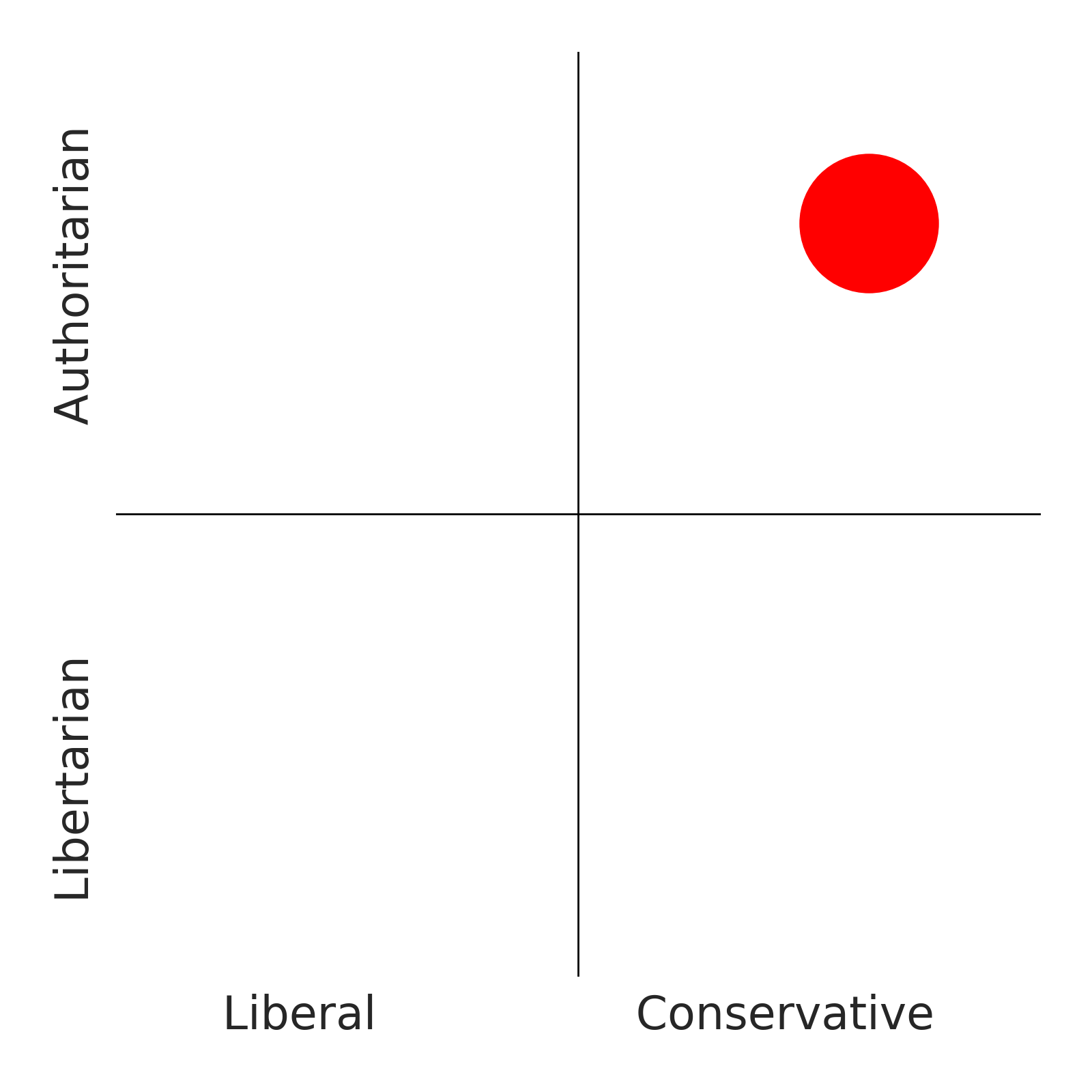
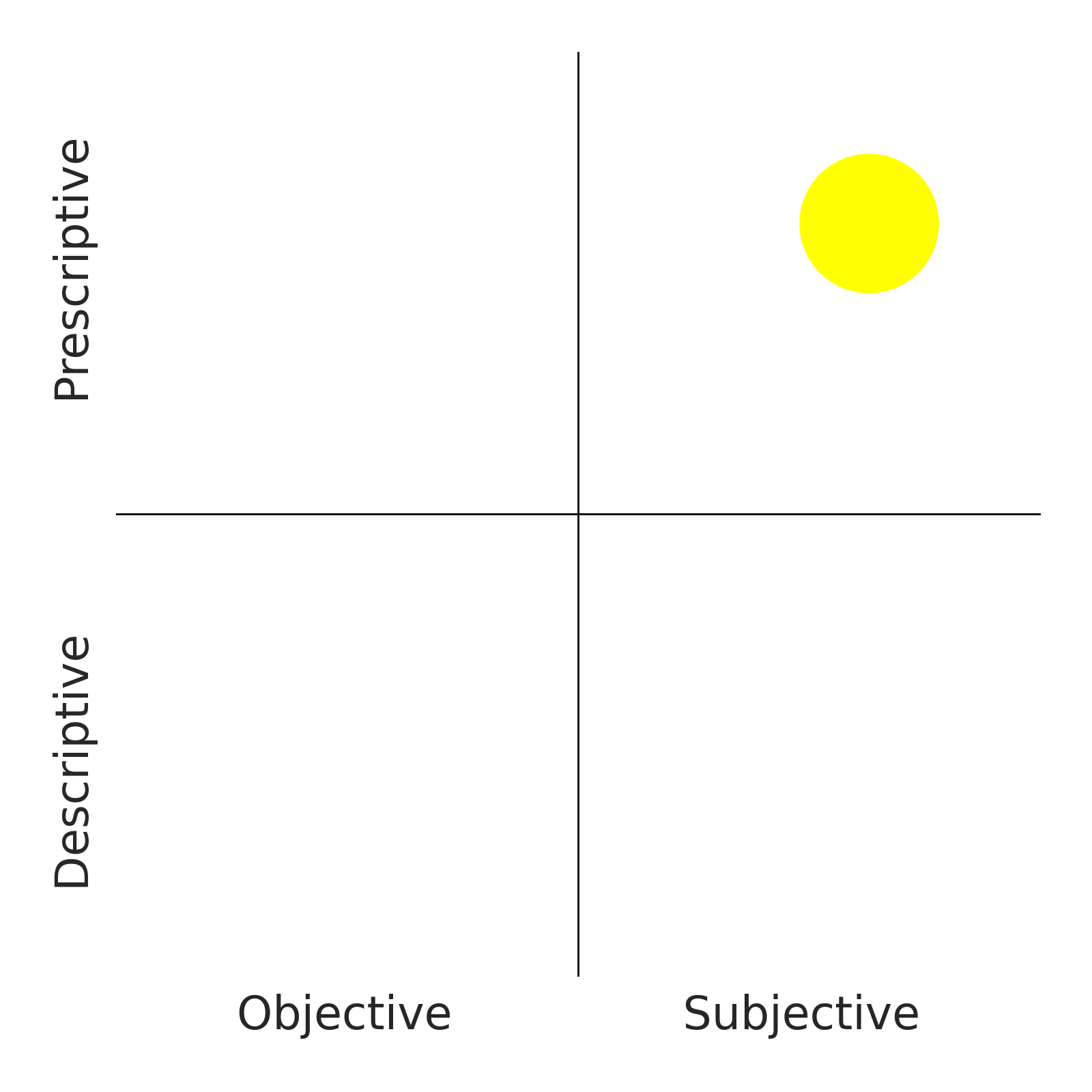
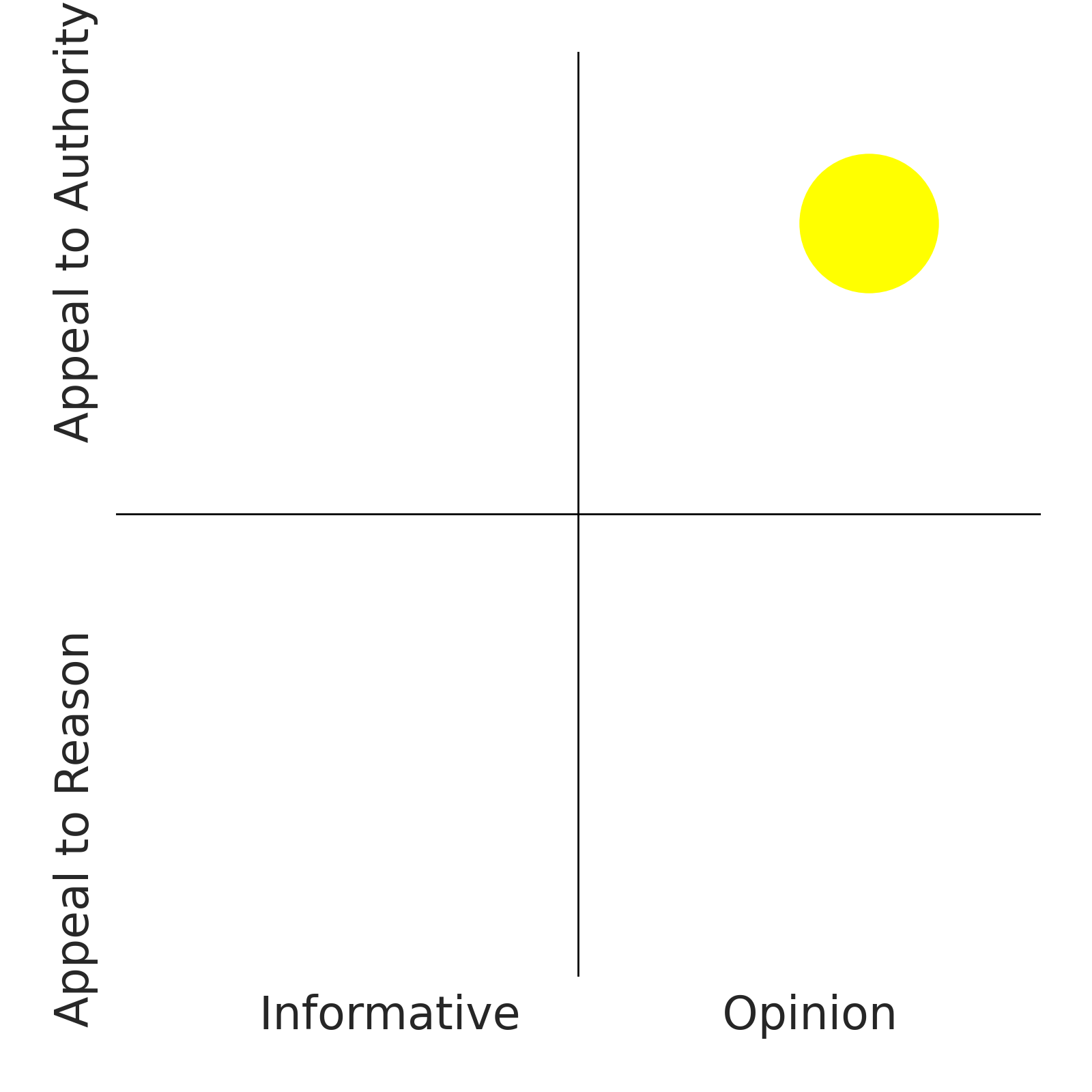
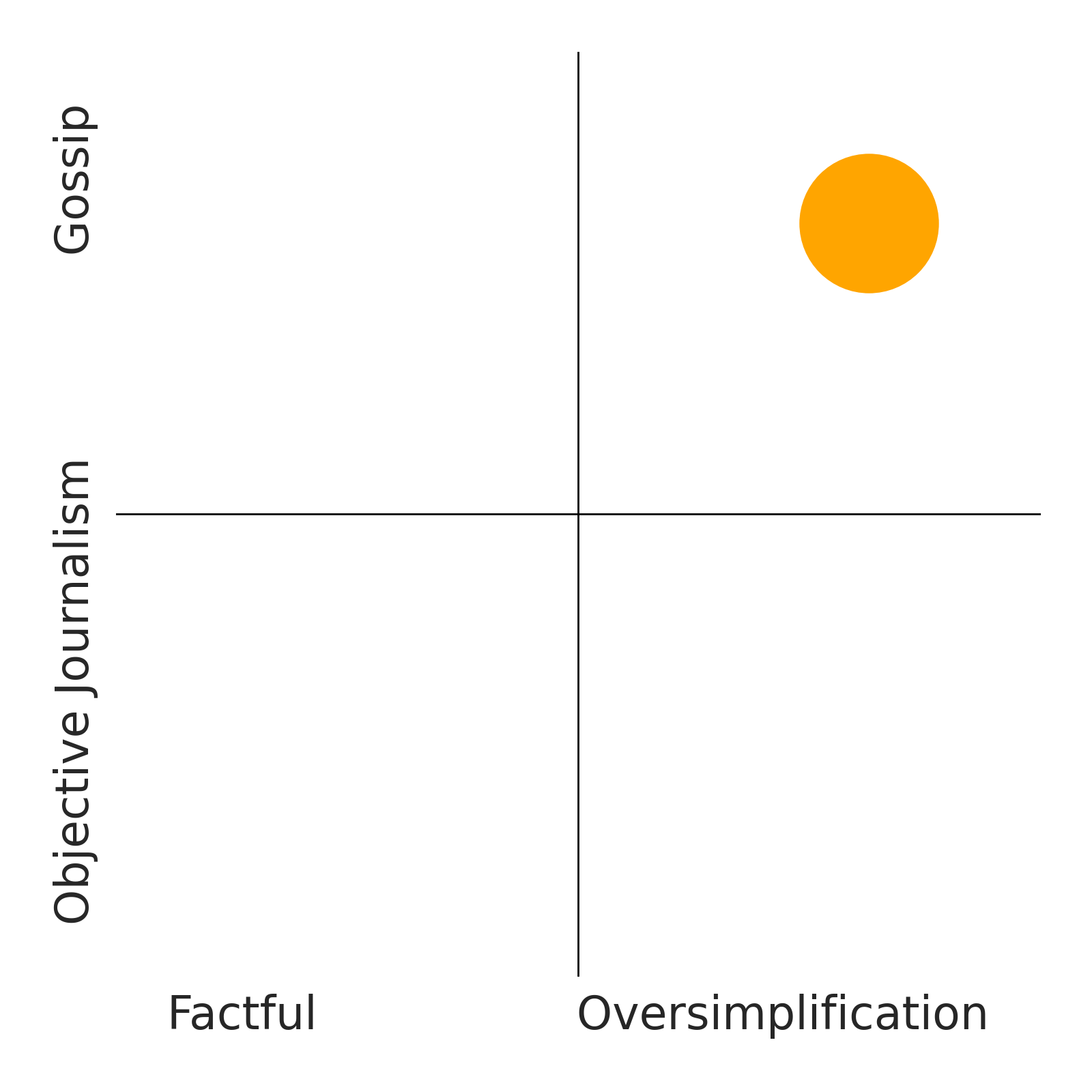
Click points to explore news by date. News sentiment ranges from -10 (very negative) to +10 (very positive) where 0 is neutral.
2026 © Helium Trades
Privacy Policy & Disclosure
* Disclaimer: Nothing on this website constitutes investment advice, performance data or any recommendation that any particular security, portfolio of securities, transaction or investment strategy is suitable for any specific person. Helium Trades is not responsible in any way for the accuracy
of any model predictions or price data. Any mention of a particular security and related prediction data is not a recommendation to buy or sell that security. Investments in securities involve the risk of loss. Past performance is no guarantee of future results. Helium Trades is not responsible for any of your investment decisions,
you should consult a financial expert before engaging in any transaction.