See whether Helium helps you make better-informed decisions. Try every Pro Trader feature for 30 days. No credit card required.
Try every Pro Trader feature for 30 days. No credit card required.
General framing and worldview. The supplied sample’s center of gravity is observably right-conservative, nationalist, and economically libertarian: it favors limited government, markets, assimilation, traditional moral norms, strong borders, and Republican/Trump-aligned policies
August 10, 2026 · 0 shares
Strongly conservative, pro-Trump, and anti-Democrat framing that treats birthright citizenship as a harmful loophole, portrays Democrats as a socialist threat, and urges Republican voters to act.
The Fourteenth Amendment's Citizenship Clause grants citizenship to persons born in the U.S. and subject to its jurisdiction. The Supreme Court in Trump v. Barbara ruled that children born to parents here unlawfully or temporarily are citizens. Trump's executive orders aim to limit birthright citizenship within exceptions the Court acknowledged (e.g., alien enemies, foreign government employees, commercial schemes).
Automated analysis; not human reviewed. · 12 of 53 available dimensions scored; omitted dimensions are not treated as neutral. · Verified supporting quotes for 12 of 12 scored dimensions.
Claim: The article strongly supports Trump and conservative policies while attacking Democrats as socialist and extreme.
“President Donald J. Trump refuses to let a Supreme Court setback cheapen the future of American citizenship.” · exact text match
“The Democrat party's socialist wing is ascendant. In addition to cancerous Marxism, it champions anti-white, anti-Semitic, and anti-first world convictions.” · exact text match
Why: Explicitly praises Trump and frames Democrats as a radical threat, which is a hallmark of conservative partisan framing.
Claim: The article appeals to 'native-born taxpayers' and common citizens against elites and birth tourism operators.
“Native-born taxpayers who never consented to the parents' presence foot the bill.” · exact text match
“Nations from Australia to Ireland to most of continental Europe have restricted pure soil-based citizenship.” · exact text match
Why: The framing pits ordinary Americans against an exploitative birth tourism industry, aligning with populist rhetoric.
Claim: Uses highly emotional and exaggerated language to describe birth tourism and Democrats.
“He aims to shut down the lucrative, gangrenous industry of birth tourism for good.” · exact text match
“The modern American socialist movement, led by self-described communists, has gained real institutional power.” · exact text match
Why: Words like 'gangrenous' and 'communists' are sensational, not objective, amplifying emotional reaction.
Claim: Predicts catastrophic consequences if Democrats gain power.
“If Democrats gain the U.S. House, the Senate, or both, the damage to the second half of Trump's term, and to the country as a whole, will be incalculable.” · exact text match
Why: The word 'incalculable' combined with a dire warning is a classic fear-inducing technique.
Claim: The article is a persuasive opinion piece, not a neutral news report.
“The alternative is not mild disagreement over policy details.” · exact text match
“The stakes are not theoretical.” · exact text match
Why: The entire structure and language are argumentative and prescriptive, clearly opinionated.
Claim: Reduces complex political dynamics to simple dichotomies and unsupported claims.
“Blue leftists are already rising in early 2028 polling.” · exact text match
Why: Appeals to polling without providing numbers or context, oversimplifying the political landscape.
Claim: States Trump's achievements and future consequences with certainty beyond the evidence provided.
“These results show a president who treats sovereignty as non-negotiable and who delivers measurable progress instead of empty promises.” · exact text match
Why: The phrase 'show a president who...' asserts a definitive conclusion without acknowledging alternative interpretations or limitations.
Claim: The article consistently promotes a nationalist, America-first ideology.
“Protecting the integrity of American citizenship, ending the commercial traffic in birthright status, and taking Uncle Sam's immigration laws seriously are not formalities. They amount to putting America first.” · exact text match
Why: Explicitly ties policy to an ideological slogan ('America first'), indicating a strong ideological lens.
Claim: The article employs highly negative emotional language toward Democrats.
“The Democrat party's socialist wing is ascendant. In addition to cancerous Marxism, it champions anti-white, anti-Semitic, and anti-first world convictions.” · exact text match
Why: Words like 'cancerous' and 'anti-white' evoke strong negative emotions, clearly negative.
Claim: The article lacks sourcing, makes unsubstantiated claims, and presents opinion as fact.
“Studies have long shown that households headed by illegal immigrants generate large net costs once U.S.-born children are counted.” · exact text match
Why: No specific study is cited, and the claim is presented as established fact, lowering credibility.
Claim: Uses fear of disaster to motivate readers to vote Republican.
“If Democrats gain the U.S. House, the Senate, or both, the damage to the second half of Trump's term, and to the country as a whole, will be incalculable.” · exact text match
Why: The dire prediction is a clear manipulation technique to influence behavior (voting).
Claim: Makes sweeping, unsubstantiated accusations about Democrats without evidence.
“The Democrat party's socialist wing is ascendant. In addition to cancerous Marxism, it champions anti-white, anti-Semitic, and anti-first world convictions.” · exact text match
Why: The claim is a broad, unattributed accusation that lacks supporting evidence, reducing integrity.
Framing casts mass immigration and cultural fragmentation as threats to a shared traditional American identity, portraying the Left as organized cultural opportunists and the Right as insufficiently defensive.
Automated analysis; not human reviewed. Limitations: The supplied text is an opinion essay with no named data source or event, so empirical assertions cannot be externally verified. · 12 of 54 available dimensions scored; omitted dimensions are not treated as neutral. · Verified supporting quotes for 8 of 12 scored dimensions.
Claim: The framing promotes conservative cultural positions on immigration, assimilation, and national identity.
“If we wish to save aspirational America, then we must require immigrants to adapt to America, not the other way around.” · exact text match
“The Left understands that this is a moment of cultural opportunity. It is organized, energized, and willing to fight for the society it wants. The Right, by contrast, has too often behaved as though preserving the existing order requires little more than being left alone.” · not found in supplied text
Why: The prescriptions and the characterization of a Left/Right cultural struggle reflect a conservative cultural framing.
Claim: The text is written as personal argument and cultural commentary, not as dispassionate reporting.
“I would argue that many of the other 'isms' running through American politics arise from this conflict.” · not found in supplied text
Why: The explicit first-person assertion and opinionated thesis mark the content as subjective.
Claim: The text's overall trajectory is pessimistic about the current erosion of shared identity.
“That framework is evaporating.” · exact text match
Why: The statement that the previously shared framework 'is evaporating' conveys a negative/pessimistic outlook.
Claim: The text prescribes specific cultural requirements rather than merely describing a situation.
“If we wish to save aspirational America, then we must require immigrants to adapt to America, not the other way around.” · exact text match
Why: The 'must require' construction directly prescribes an immigration and assimilation policy.
Claim: The text is highly opinionated and advances a personal viewpoint throughout.
“I would argue that many of the other 'isms' running through American politics arise from this conflict.” · not found in supplied text
Why: First-person argumentation and evaluative claims dominate the text.
Claim: The text frames the issue as a political and cultural power struggle.
“We are witnessing a titanic struggle over cultural mores between the traditional American conception of citizenship and an increasingly fragmented view in which competing cultural identities claim equal or greater authority than the traditional American civic identity.” · exact text match
Why: The 'titanic struggle' and competing political identities framing makes the report fundamentally political.
Claim: Complex political dynamics are reduced to a binary contest between the Left and the Right.
“The Left understands that this is a moment of cultural opportunity. It is organized, energized, and willing to fight for the society it wants. The Right, by contrast, has too often behaved as though preserving the existing order requires little more than being left alone.” · not found in supplied text
Why: The two-camp description compresses a range of viewpoints into a simple Left/Right strategic contrast.
Claim: The text leans on unnamed authorities and a friend's newsletter to support its points.
“As a friend of mine wrote in an Newsletter:” · verified after text normalization
“The best available global data suggests that hundreds of millions—and plausibly over a billion—people would choose to move to the United States if transportation and legal barriers were removed.” · exact text match
Why: Both an unnamed friend and an unnamed data source are invoked as support.
Claim: An empirical migration estimate is stated with certainty despite lacking a named source.
“The best available global data suggests that hundreds of millions—and plausibly over a billion—people would choose to move to the United States if transportation and legal barriers were removed.” · exact text match
Why: The unspecified 'best available global data' is used to support a very large numerical claim without supplying the data.
Claim: The text is structured around a traditional conservative ideological defense of national identity.
“The question is whether Americans who still believe in the traditional American conception of liberty, responsibility, citizenship, assimilation, and national identity understand what is happening—and whether they are willing to defend it.” · exact text match
Why: The call to defend a 'traditional American conception' is an explicitly ideological rallying frame.
Claim: Empirical support is weak because the text uses vague references rather than identifiable sources.
“The best available global data suggests that hundreds of millions—and plausibly over a billion—people would choose to move to the United States if transportation and legal barriers were removed.” · exact text match
Why: A major quantitative claim is attributed to unnamed data, reducing visible sourcing credibility.
Claim: The text includes a speculative prediction about cultural replacement.
“A culture that is not defended will eventually be replaced.” · exact text match
Why: This is a forecast about future cultural outcomes rather than a description of a current fact.
The supplied text is an opinion essay with no named data source or event, so empirical assertions cannot be externally verified.
July 29, 2026 · 0 shares
Conservative framing presents the Laffer Curve as a justification for lower taxes and a simpler tax code to maximize growth and government revenue, while warning against high tax rates and capital flight.
Background: The Laffer Curve theory posits there is an optimal tax rate for maximizing revenue; in a globalized economy, capital mobility and tax competition drive jurisdictional tax policies; examples cited include California's migration to Florida, NAFTA/WTO effects, Swiss inheritance tax politics, and UAE tax regimes.
Automated analysis; not human reviewed. Limitations: The analysis relies on selective examples and a single theoretical frame (Laffer Curve) to argue for policy changes, potentially underweighting counterarguments and broader macro data. · 47 of 52 available dimensions scored; omitted dimensions are not treated as neutral. · Verified supporting quotes for 10 of 47 scored dimensions.
Claim: The article frames the Laffer Curve as a conservative alternative advocating low taxes and a simplified tax code.
“The Laffer Curve offers a conservative alternative: low taxes, a simplified tax code, more economic freedom and a pivot towards growth-based economics once again.” · not found in supplied text
Why: Direct framing in the quoted sentence.
Claim: The piece prescribes policy directions.
“At a time of rising economic populism on both sides of the American political spectrum, the Laffer Curve offers a conservative alternative: low taxes, a simplified tax code, more economic freedom and a pivot towards growth-based economics once again.” · exact text match
Why: Describes policy path and to adopt.
Claim: The article expresses normative judgments about policy choices.
“It’s politically expedient to drastically enlarge the welfare state, call for higher taxes on the wealthy and impose minimum wages.” · exact text match
“All goes to show that when politicians decide tax rates, they’re not looking at variables like globalization, the tax base or human incentives, but rather at their own short-term interest of getting re-elected.” · exact text match
Why: Contains explicit normative policy opinions.
Claim: Presents left tax proposals as uncompetitive in the global economy.
“The United States and China are competing for global hegemony, and the Left’s high tax rates proposals make the U.S. uncompetitive in the global economy.” · exact text match
Why: Direct framing of political positions.
Claim: The Laffer Curve is presented as a simplification for tax policy.
“The Laffer Curve simplifies the tax code and putting an end to Western capital flight to countries like the UAE or the Global South.” · exact text match
Why: One-liner frames complexity as simplified.
Claim: Certainty about the curve’s relevance and impact is stated.
“which is why today the curve is more relevant than ever.” · exact text match
Why: Assertive language without robust empirical support.
Claim: The framing is explicitly conservative.
“At a time of rising economic populism on both sides of the American political spectrum, the Laffer Curve offers a conservative alternative: low taxes, a simplified tax code, more economic freedom and a pivot towards growth-based economics once again.” · exact text match
Why: Direct identification of the ideological stance.
Claim: The article advocates a pro-growth, low-tax framework.
“The Laffer Curve provides a low tax framework for economic growth and prosperity maximization.” · not found in supplied text
“More government revenue is generated by a wider and more robust tax base, which would remain in the country only by means of a low tax, simplified fiscal regime.” · exact text match
Why: Explicit statements advocating a low-tax framework.
Claim: Emotional language is used to frame policy choices.
“Now more than ever, the ability to speak our minds is crucial to the republic we cherish.” · exact text match
Why: Appeal to sentiment.
Claim: Reasoning relies on economic theory rather than empirical data.
“which is why today the curve is more relevant than ever.” · exact text match
Why: Relies on rhetorical framing rather than robust data.
Claim: The article uses speculative language about policy impact.
“the Laffer Curve looks at all the above variables striking a balance between business interests and its trickling down in job creation and economic prosperity, as well as maintain a robust tax base necessary to finance government-run essential services like public education, transportation or public safety.” · not found in supplied text
Why: Presents future outcomes based on theory.
Claim: The article acknowledges critique of the Laffer Curve.
“Critics of the Laffer Curve point to the need for progressive taxation as a tool of reducing wealth and income inequality and the use of higher taxes as a means of raising more money for essential public services.” · exact text match
“There are two significant blind spots regarding that thinking.” · exact text match
Why: Inclusion of criticisms and mentions of blind spots suggests attempt at balance.
Claim: Reasoning relies on framing rather than robust empirical data.
“All goes to show that when politicians decide tax rates, they’re not looking at variables like globalization, the tax base or human incentives, but rather at their own short-term interest of getting re-elected.” · exact text match
“The Laffer Curve looks at all the above variables striking a balance between business interests and its trickling down in job creation and economic prosperity, as well as maintain a robust tax base necessary to finance government-run essential services like public education, transportation or public safety.” · exact text match
Why: Reminds of normative reasoning and use of framing rather than empirical proof.
The analysis relies on selective examples and a single theoretical frame (Laffer Curve) to argue for policy changes, potentially underweighting counterarguments and broader macro data.
August 16, 2026 · 0 shares
A strongly conservative, free-market commentary wraps entrepreneurial celebration in fear-based anti-government rhetoric, calling community and public programs the 'gateway drug to Communism' while soliciting donations for a patriotic gratitude project.
The United States's 250th anniversary occurs in 2026; 'DSA' is an acronym for Democratic Socialists of America.
Automated analysis; not human reviewed. Limitations: Only the supplied opinion text was available; no external sources or additional reporting were available to verify factual claims. · 18 of 54 available dimensions scored; omitted dimensions are not treated as neutral. · Verified supporting quotes for 15 of 18 scored dimensions.
Claim: The essay strongly aligns with conservative, free-market positions and condemns left-wing politics.
“Government action—the cradle-to-grave kind being proffered (AKA Communism)—is finding new footing in America, and it’s generally hiding behind a Democrat or DSA mask.” · exact text match
Why: Labels Democrat/DSA-aligned government action as Communism and frames leftist causes as un-American, a hard conservative stance.
Claim: The essay advocates minimal government, private property, and free markets.
“American system of individual freedom, free markets, private property, and, most of all, limited government.” · exact text match
Why: Explicitly favors limited government and individual freedom, the opposite of authoritarian control.
Claim: The essay is a personal opinion and advocacy piece, not an objective report.
“I spend a good deal of time writing about the evil of the left” · exact text match
Why: Uses first-person views and evaluative language to make a case rather than report neutrally.
Claim: The essay uses dramatic, alarmist phrasing to heighten the stakes.
“Make no mistake: “community this” or “government that” are the gateway drug to Communism, and its widespread application will be the end of the American experiment and, eventually, of America herself.” · exact text match
Why: Predicts national destruction from government programs, a sensational framing of policy disagreement.
Claim: The essay urges readers to support a political and cultural shift.
“My goal is to showcase that reality, inspire gratitude for it, and then spur Americans to turn away from the dark side as they recognize how essential individual freedom, private property, and free markets are to their prosperity.” · exact text match
Why: Explicitly states a goal of persuading Americans to reject leftist politics and embrace a free-market worldview.
Claim: The essay invokes existential fear of Communist takeover and national destruction.
“its widespread application will be the end of the American experiment and, eventually, of America herself.” · exact text match
Why: Frames policy disagreement as an existential threat, a fear-inducing appeal.
Claim: The essay is saturated with personal opinion and editorializing.
“That’s a recipe for disaster.” · exact text match
Why: Directly evaluates a policy view as disastrous rather than reporting it.
Claim: The essay is explicitly partisan against Democrats/DSA and leftists.
“it’s generally hiding behind a Democrat or DSA mask” · exact text match
“un-American, leftist causes” · exact text match
Why: Uses partisan labels and criticizes leftist politics as un-American.
Claim: The essay collapses complex policy and history into a one-cause narrative.
“Make no mistake: “community this” or “government that” are the gateway drug to Communism...” · not found in supplied text
Why: Treats government programs as a direct path to Communism, ignoring nuance and complexity.
Claim: The essay asserts certain causal claims beyond the evidence it supplies.
“Without those things, America would never have become the most powerful and prosperous nation in history.” · exact text match
Why: States a counterfactual historical certainty with no supporting analysis.
Claim: The essay consistently applies a free-market, anti-left ideological lens.
“I spend a good deal of time writing about the evil of the left” · exact text match
“Government action—the cradle-to-grave kind being proffered (AKA Communism)—is finding new footing in America...” · not found in supplied text
Why: Places policy debate in a stark ideological frame of good versus evil.
Claim: The essay positions itself against the government and academic establishment.
“Samuel Langley, the university professor and establishment darling upon whom the American government heaped the equivalent of millions of today’s dollars in the pursuit of flight, only to see his full-scale aircraft fail” · exact text match
Why: Calls a government-funded expert an 'establishment darling' and contrasts him with self-taught entrepreneurs.
Claim: The essay uses strongly negative, emotionally loaded language.
“I spend a good deal of time writing about the evil of the left” · exact text match
“its widespread application will be the end of the American experiment and, eventually, of America herself.” · exact text match
Why: Negative emotional appeals dominate the political argument.
Claim: The essay makes factual assertions and estimates without citations, limiting its credibility.
“For proof, look no farther than Samuel Langley, the university professor and establishment darling upon whom the American government heaped the equivalent of millions of today’s dollars in the pursuit of flight...” · not found in supplied text
“which dropped cargo-loading costs by roughly 97%” · exact text match
Why: No sources or uncertainty caveats accompany historical and statistical claims.
Claim: The essay functions partly as promotional material for Gratitude for America and requests donations.
“If what you see on resonates with you, please consider supporting our work with a donation of as much or as little as you can give.” · verified after text normalization
Why: Ends with a direct fundraising appeal for the project.
Claim: The essay champions individual action and private property over collective provision.
“In a free country, every person has the opportunity to build a better mousetrap.” · exact text match
Why: Centers individual initiative and frames collective government provision as harmful.
Claim: The essay predicts catastrophic consequences from current political trends.
“its widespread application will be the end of the American experiment and, eventually, of America herself.” · exact text match
Why: Forecasts a definite future based on political trend, not evidence.
Claim: The essay uses loaded labels, false dilemma, and fear appeals.
“Government action—the cradle-to-grave kind being proffered (AKA Communism)—is finding new footing in America, and it’s generally hiding behind a Democrat or DSA mask.” · exact text match
Why: Equates mainstream government services with Communism and impugns motives, a recognizably manipulative rhetorical move.
Only the supplied opinion text was available; no external sources or additional reporting were available to verify factual claims.
Conservatively frames the Democratic Party's history as a descent into radical leftism steered by Marxist and violent influences, attributing electoral failure to this shift.
The 2024 U.S. presidential election resulted in a loss for Democratic candidates Kamala Harris and Tim Walz, prompting internal party debate over ideological direction.
Automated analysis; not human reviewed. Limitations: I am an AI analyzing text; my outputs reflect patterns in training data and may not capture all nuances. · 28 of 53 available dimensions scored; omitted dimensions are not treated as neutral. · Verified supporting quotes for 9 of 28 scored dimensions.
Claim: The article adopts a conservative framing by criticizing the Democratic Party's leftward turn and linking it to Marxist and radical influences.
“These miscreants who undervalued the freedoms and goals of American society were only a small part of the fervent leftist leadership on our campuses” · exact text match
Why: The article uses derogatory terms like 'miscreants' and explicitly associates Democratic figures with radical and un-American ideologies.
Claim: The article is highly subjective, presenting strong opinions as fact without balanced counterpoints.
“To a reasonable person, it is more than offensive to see people who are so hostile to the USA” · exact text match
Why: The article makes value judgments and emotional appeals rather than objective reporting.
Claim: The article is predominantly opinion, offering the author's interpretation of history and politics.
“Will the Dems continue to fail as they did in 2024, and if so, how will they deal with that failure?” · exact text match
Why: The article is framed as a rhetorical question and analysis, not factual reporting.
Claim: The article is highly political, focusing on partisan criticism and electoral outcomes.
“The loss by Kamala-Walz showed that reasoning to be flawed, but the die was cast, and now the Dems must live with it.” · exact text match
Why: The article explicitly discusses party strategies and electoral consequences.
Claim: The article oversimplifies complex historical and political developments into a linear narrative of leftist takeover.
“Obama's presidency became the catalyst for bringing together the Democratic Socialists with the Democrats.” · verified after text normalization
Why: It reduces multifaceted political evolution to a single causal chain.
Claim: The article is heavily ideological, consistently promoting a conservative perspective and condemning leftist ideology.
“insisting that only a leftist/communist vision can save us.” · exact text match
Why: The language repeatedly frames leftist ideology as dangerous and un-American.
Claim: The article uses emotionally negative language to discredit leftist figures and ideas.
“miscreants” · exact text match
“anti-patriotic luminaries” · exact text match
“evil intentions” · exact text match
Why: These terms carry strong negative emotional connotations.
Claim: The article has low credibility due to selective historical references, absence of counterarguments, and opinionated tone.
“The Democrat platform which came out a couple of months later contained 90 pages, most of which reflected the policies and provisions of the earlier pact” · exact text match
Why: Presents a causal narrative without supporting data and with evident bias.
Claim: The article uses manipulative techniques such as loaded language, guilt by association, and fear appeals.
“But in the late 1980s and early 1990s Bernadine and Bill became friends with an up-and-coming political superstar, Barack Obama” · exact text match
Why: Implies Obama's association with former radicals taints his presidency.
I am an AI analyzing text; my outputs reflect patterns in training data and may not capture all nuances.
August 05, 2026 · 0 shares
A strident conservative opinion piece accusing Democrats of deliberately perpetuating problems to justify government expansion.
Automated analysis; not human reviewed. Limitations: Analysis based solely on the supplied article text; no external verification. · 17 of 53 available dimensions scored; omitted dimensions are not treated as neutral. · Verified supporting quotes for 7 of 17 scored dimensions.
Claim: The article is strongly conservative in its criticism of Democrats and advocacy for limited government.
“Democrat politicians rarely ask what caused the problem or whether decades of government intervention have actually made it worse.” · exact text match
Why: The quote directly criticizes government intervention and Democratic politicians, reflecting a conservative economic and political stance.
Claim: The article has a populist tone, accusing elites of stealing power from the people.
“People power has been stolen by the very party that has spent all these years shouting, 'Power to the people.'” · not found in supplied text
Why: The quote frames Democrats as having taken power away from ordinary people, a classic populist argument.
Claim: The article advocates for less government control and more local freedom, indicating a libertarian leaning.
“America needs much less taking to the streets and much more freedom for local communities to govern themselves, rather than being forced to conform to federal 'aid' programs.” · not found in supplied text
Why: The quote explicitly calls for local self-governance and rejects federal programs, consistent with libertarian views.
Claim: The article is overwhelmingly subjective, presenting opinion as fact.
“Democrats are perpetuating the problems they claim to fix.” · not found in supplied text
Why: This is an opinionated assertion without supporting evidence, characterizing the entire piece as subjective.
Claim: The article uses sensational language to evoke strong reactions.
“ignoring that their policies have created this American famine.” · exact text match
Why: The phrase 'American famine' is sensational and hyperbolic, not supported by data in the text.
Claim: The entire article is an opinionated polemic, not a factual report.
“Democrats are perpetuating the problems they claim to fix.” · not found in supplied text
Why: This central claim is a matter of opinion, not verifiable fact, and the article lacks neutral reporting.
Claim: The article is highly political, exclusively attacking Democratic policies and figures.
“Democrat party has built its political power on promising government solutions to problems that its own policies often perpetuate.” · exact text match
Why: The quote explicitly targets the Democratic Party, showing a clear political agenda.
Claim: The article oversimplifies complex issues by attributing them to Democratic policies alone.
“Their policies have created this American famine.” · not found in supplied text
Why: The claim reduces hunger to a single cause (Democratic policies) without acknowledging other factors.
Claim: The article relies on authority figures (Thomas Sowell, Aleksandr Solzhenitsyn) to bolster its arguments.
“Some of the clearest explanations... can be found in Thomas Sowell’s Basic Economics.” · not found in supplied text
Why: The quote appeals to Sowell's authority rather than providing independent evidence for the economic claims.
Claim: The article asserts causal claims with certainty beyond the evidence provided.
“Democrat influence and control often create the very problems Democrat officials claim only they can fix.” · not found in supplied text
Why: The statement presents a sweeping causal relationship as fact, without supporting data or qualifiers.
Claim: The article consistently applies a conservative, anti-government ideological lens.
“Democrat party seems to perpetuate problems and then fool voters into believing those problems can be addressed only through Democrat laws and programs.” · exact text match
Why: This quote reveals a deep ideological assumption that Democrats are deceptive and that their solutions are ineffective.
Claim: The article is anti-establishment, attacking the Democratic political establishment.
“People power has been stolen by the very party that has spent all these years shouting, 'Power to the people.'” · not found in supplied text
Why: The quote accuses the party of stealing power, an anti-establishment stance.
Claim: The article uses strongly negative emotional language to frame Democrats.
“Death’s helper, hunger, is a major Democrat party talking point this year.” · exact text match
Why: The phrase 'Death’s helper' is emotionally charged and negative, intended to evoke fear and disgust.
Claim: The article lacks sourcing, evidence, and balanced perspective, reducing credibility.
“Democrats are perpetuating the problems they claim to fix.” · not found in supplied text
Why: The central claim is unsupported, and the article relies on opinion and selective examples, undermining its trustworthiness.
Claim: The article speculates about Democratic motives without evidence.
“Democrats think big to confuse people and capture their imaginations and votes.” · exact text match
Why: This is speculation about the intent of Democrats, presented as fact.
Claim: The article uses manipulative techniques such as loaded language and omission of counterarguments.
“ignoring that their policies have created this American famine.” · exact text match
Why: The phrase 'ignoring that their policies have created' frames the opposition as deliberately blind, a manipulative rhetorical tactic.
Claim: The article scapegoats Democrats for a wide range of societal problems.
“Democrat influence and control often create the very problems Democrat officials claim only they can fix.” · not found in supplied text
Why: This statement blames Democrats for creating problems, fitting a scapegoating pattern.
Analysis based solely on the supplied article text; no external verification.
The publisher frames the Democratic Socialists of America as a Trojan horse subverting liberal democracy through entryism and Islamist-inflected identity politics, presenting recent electoral wins as evidence of anti-liberal capture.
DSA growth from roughly 6,000 to over 120,000 and a shift toward 'dirty break' strategy and Islamist-adjacent positions, framed as subversion of liberal norms.
Automated analysis; not human reviewed. Limitations: Case-specific; quotes may reflect the author's selective framing and may not reflect broader context. · 6 of 52 available dimensions scored; omitted dimensions are not treated as neutral. · Verified supporting quotes for 0 of 6 scored dimensions.
Ambiguity: evidence may be selective; consider counter-claims.
Publisher framing depicts contemporary U.S. leftist politics as a Soviet/Maoist-style subversion, invoking Bezmenov's four stages to claim demoralization, destabilization, crisis, and normalization threaten American democracy, with media censorship and policy changes framed as evidence.
Using Yuri Bezmenov's four-stage subversion theory and Xi Van Fleet's warnings about Maoist parallels, the piece frames current U.S. partisan dynamics as a deliberate, staged subversion.
Automated analysis; not human reviewed. Limitations: Concise, case-specific limitations and plausible alternative interpretations. · 15 of 52 available dimensions scored; omitted dimensions are not treated as neutral. · Verified supporting quotes for 7 of 15 scored dimensions.
Claim: The score indicates a strong conservative tilt in publisher framing as left actors are portrayed as subversive threats.
“How the Left Naturalizes Sedition.” · exact text match
“leftist cancel culture in the U.S.” · exact text match
“banana republics” · exact text match
Counterevidence:
“While intentionality has never been proven.” · not found in supplied text
“some subversion experts argue that the lawfare, censorship, and cancellation regimes that targeted the delegitimization of vote fraud that now exist are really part of the last stage of communist takeover known as normalization.” · not found in supplied text
Why: Explicit framing of the left as subversive with occasional acknowledgment of contested interpretation.
Claim: The framing treats elite institutions as central actors in censorship and information control, signaling distrust of elites.
“legacy media and social media censorship” · exact text match
“CISA collaborated with the Stanford University-based NGO Election Integrity Partnership (EIP) to suppress information that would help Trump” · not found in supplied text
“EIP exerted pressure on social media to censor, cancel, or deplatform content labeled as delegitimized.” · not found in supplied text
Counterevidence:
“Some sections acknowledge contested views (e.g., 'While intentionality has never been proven').” · not found in supplied text
Why: Cites elite institutions as central players in suppression and delegitimization.
Claim: The framing privileges civil-liberties concerns and frames centralized power as a threat to constitutional government.
“With equal justice under the law and respect for the Constitution being mocked” · exact text match
“the subliminal message is, “This is not the America you know; it’s a new world that you have entered, so get used to it.”” · exact text match
“If all of this becomes the new normal, our constitutional republic... will be gone” · not found in supplied text
Counterevidence:
“Some passages also describe enforcement actions by political actors which can imply support for order.” · not found in supplied text
Why: Emphasizes protection of rights against perceived authoritarian pressures.
Claim: The text uses highly subjective, evaluative language to frame events as threats to liberty.
“How the Left Naturalizes Sedition” · exact text match
“This is not the America you know; it’s a new world that you have entered” · exact text match
“Liberty once lost is lost forever” · exact text match
Counterevidence:
“References to specific events and actors provide factual anchors.” · not found in supplied text
Why: Frequent evaluative phrasing signals subjectivity.
Claim: Loaded terminology and alarmist framing are prominent in the text.
“banana republics” · exact text match
“sedition” · exact text match
“new world of communist global elite control” · exact text match
Counterevidence:
“Cites concrete events (e.g., 2020 election) which can be independently evaluated.” · not found in supplied text
Why: Sensational framing is a defining feature.
Claim: The topic and analogies (Cold War subversion, Maoist parallels) render the piece engaging and thought-provoking.
“Bezmenov's subversion framework” · not found in supplied text
“Hunter Biden laptop and 2020 election controversy” · not found in supplied text
Why: Historical parallels and contemporary events generate interest.
Claim: The piece prescribes action to resist perceived subversion and defend liberty.
“It is time to turn the tables on the destroyers.” · exact text match
“Liberty once lost is lost forever.” · exact text match
“Now more than ever, the ability to speak our minds is crucial to the republic we cherish.” · exact text match
Counterevidence:
“Donation appeals may reflect rhetorical strategy rather than informational content.” · not found in supplied text
Why: Normative language and civic exhortation accompany descriptive content.
Claim: The framing uses fear-inducing language to mobilize readers against perceived threats.
“banana republics” · exact text match
“new world of communist global elite control” · exact text match
“sedition” · exact text match
Counterevidence:
“There are explicit caveats about the certainty of intentionality.” · not found in supplied text
Why: Frequent alarm imagery and existential threats.
Claim: The writing is overtly opinionated and persuasive rather than neutral reporting.
“How the Left Naturalizes Sedition” · exact text match
“This is not the America you know; it’s a new world that you have entered” · exact text match
Counterevidence:
“Inclusion of events and named actors provides factual anchors.” · not found in supplied text
Why: Normative rhetoric dominates the language.
Claim: The piece advances a viewpoint that the left is dangerous to democracy and must be resisted.
“leftist cancel culture” · exact text match
“destruction of the Four Olds” · not found in supplied text
“election fraud as crisis stage” · not found in supplied text
Counterevidence:
“The piece cites some counterpoints (e.g., 'some subversion experts').” · not found in supplied text
Why: Consistently frames political actors in adversarial terms.
Claim: The piece reduces complex political dynamics to a four-stage subversion narrative.
“four stages of communist subversion” · not found in supplied text
“Bezmenov’s four stages are fluid” · exact text match
Counterevidence:
“Acknowledgement of nuance in the sources cited.” · not found in supplied text
Why: A simplistic model may overlook multifaceted political processes.
Claim: There is high confidence about a causal chain from subversion to political outcomes beyond the text’s verifiable evidence.
“the crisis stage in 2020 election claimed as 'sedition'” · not found in supplied text
“the new world of communist global elite control will be empowered” · exact text match
Counterevidence:
“the text itself acknowledges uncertainties (e.g., 'While intentionality has never been proven').” · not found in supplied text
Why: Confidence is high in the absence of strong evidence, but the article acknowledges uncertainty.
Claim: The piece portrays mainstream media and government as complicit in censorship and manipulation.
“legacy media and social media censorship” · exact text match
“CISA collaborated with the Stanford University-based NGO Election Integrity Partnership (EIP) to suppress information” · not found in supplied text
“EIP exerted pressure on social media to censor content” · not found in supplied text
Counterevidence:
“Some content acknowledges contested interpretations.” · not found in supplied text
Why: Systematic skepticism toward established institutions is central to the framing.
Claim: The article relies on a Cold War subversion framework to argue for contemporary subversion, implying a deterministic mechanism rather than probabilistic analysis.
“The systematic plan Bezmenov revealed involves four fluid stages of communist subversion: 1) Demoralization, 2) Destabilization, 3) Crisis, and 4) Normalization.” · exact text match
“While intentionality has never been proven” · exact text match
“We see this with lawfare against Donald Trump, his aides, and some 1,200 Jan. 6 protest participants arrested by the FBI.” · exact text match
Counterevidence:
“The piece also notes that Bezmenov’s stages are fluid and may overlap with real-world events.” · not found in supplied text
Why: Deterministic multi-stage narrative invites alternative explanations.
Claim: The piece relies on contested sources and charged framing, testing the integrity of the reporting.
“51 former top intelligence officials signed a letter stating that the laptop had 'all the classic earmarks of a Russian information operation'” · not found in supplied text
“the laptop story was delegitimized and taken down from every social media site” · not found in supplied text
“Sedition... disrupting the government” · not found in supplied text
Counterevidence:
“The text includes cautionary phrases like 'While intentionality has never been proven'.” · not found in supplied text
Why: Reliance on contested sources and strong claims tests credibility.
Gaps in evidence or alternative interpretations could alter conclusions; the frame is strongly confrontational.
Coverage patterns. Topics recur around U.S. partisan conflict; socialism and DSA; immigration, Islam, assimilation, and demographic change; Trump, elections, courts, and voting rules; Fauci, COVID policy, vaccines, and media credibility; abortion, transgender issues, education, and “woke” culture; free-market economics and taxation; Israel, Iran, Hamas, NATO, and Ukraine; and civic identity, architecture, religion, crime, and military readiness
August 03, 2026 · 0 shares
The text frames mainstream journalism and Dr. Fauci as malicious liars engaged in propaganda and crimes against humanity, using highly charged language and conspiracy narratives.
Automated analysis; not human reviewed. Limitations: Article is a single opinion piece with strong emotional language; limited external verification of claims. · 30 of 53 available dimensions scored; omitted dimensions are not treated as neutral. · Verified supporting quotes for 24 of 30 scored dimensions.
Claim: The text adopts a strong conservative stance against mainstream media and government health authorities.
“Fauci’s COVID lies expose corporate news as propaganda.” · exact text match
“the mainstream media’s COVID disinformation campaign is only one instance of a multi-front information war against the public.” · exact text match
Why: The repeated attacks on Fauci, Biden, and corporate news, combined with defense of Trump and criticism of lockdowns, reflect a conservative viewpoint.
Claim: The text strongly frames the issue as the elite (mainstream journalists, Fauci) versus the people.
“They worship glory and accolades; they are slaves to appeals to authority; they care nothing for the pursuit of truth.” · exact text match
“a reasonable person must assume that everything a credentialed member of the press says is a lie.” · exact text match
Why: The language denigrates institutional elites and appeals to the ordinary reader's suspicion of authority.
Claim: The text advocates for individual liberty against government overreach.
“the need for draconian home confinements” · exact text match
“discarding the Bill of Rights’ protections for Americans’ personal freedoms.” · exact text match
Why: Criticizes lockdowns, masks, and mandates as violations of freedom.
Claim: The text is heavily opinionated and subjective, not objective reporting.
“the so-called “experts” and mainstream “journalists” were wrong about everything.” · exact text match
“there is nothing too preposterous for them to present as “truth”” · not found in supplied text
Why: No attempt at balanced presentation; overtly partisan and assertive.
Claim: The text uses sensational, dramatic language to provoke strong reactions.
“crimes against humanity” · exact text match
“monstrously dishonest mainstream “journalists”” · exact text match
Why: Extreme rhetoric and alarmist framing are pervasive.
Claim: The text is designed to be engaging through controversy and strong opinions.
“Fauci’s COVID lies expose corporate news as propaganda.” · exact text match
“the greatest political scandals in our lifetimes.” · exact text match
Why: High emotional charge and accusatory claims draw attention.
Claim: The text prescribes what readers should believe and how they should view journalists.
“a reasonable person must assume that everything a credentialed member of the press says is a lie.” · exact text match
“we cannot properly move beyond the COVID crimes committed against us.” · exact text match
Why: Directly tells the reader what conclusions to draw.
Claim: The text uses fear-inducing language about media deception and loss of freedoms.
“the Reign of COVID Tyranny” · exact text match
“crimes against humanity” · exact text match
Why: Portrays a dire threat from institutions and calls for vigilance.
Claim: The text includes personal gossip about journalists’ relationships.
“CNN’s Jake Tapper pretended that he wasn’t having dinner parties with Fauci while the rest of America was kept in lockdown and isolation.” · exact text match
Why: Introduces personal social details as evidence of corruption.
Claim: The text is entirely opinion, not factual reporting.
“I cannot tell whether “journalists” suffer more from hubris or incurable idiocy.” · exact text match
Why: Entirely first-person commentary and opinionated assertions.
Claim: The text is highly political, targeting Democrats and liberal media.
“Joe Biden’s get-out-of-jail-free autopen pardons” · exact text match
“they support Clinton and Obama completely and will do anything to destroy President Trump.” · exact text match
Why: Explicitly partisan attacks and defenses of Trump.
Claim: The text reduces complex issues to simple accusations.
“the so-called “experts” and mainstream “journalists” were wrong about everything.” · exact text match
“They get every big, consequential news story dead wrong.” · exact text match
Why: Blanket statements without nuance.
Claim: The text rejects appeals to authority rather than using them, scoring neutral.
““Scientists say” is just a lazy rhetorical appeal to authority that real journalists do not use as an intellectual crutch.” · exact text match
Why: The text itself does not rely on authoritative sources; it criticizes that practice.
Claim: The text uses childish name-calling and lacks measured tone.
“The Dumb, Arrogant Liars Who Are Also Journalists.” · exact text match
“Fauci cowardly asserted his Fifth Amendment right” · exact text match
Why: Ad hominem insults and mockery.
Claim: The text expresses certainty far beyond available evidence.
“Fauci’s lies are huge and unforgivable.” · exact text match
“NPR lied.” · exact text match
Why: Presents allegations as absolute facts without hedging.
Claim: The text is strongly anti-establishment, attacking mainstream institutions.
“mainstream corporate news institutions have proven incapable of telling the truth.” · not found in supplied text
“NPR is a propaganda outfit.” · exact text match
Why: Systematic denigration of established media and government health authorities.
Claim: The text is overwhelmingly negative in emotional valence.
“Fauci’s lies are huge and unforgivable.” · exact text match
“the Reign of COVID Tyranny” · exact text match
Why: Consistent outrage and condemnation.
Claim: The text has low credibility due to unsupported claims, ad hominem, and lack of sourcing.
“He lied about the effectiveness of the experimental mRNA injections that he called “vaccines.”” · exact text match
“No evidence is provided for many assertions.” · not found in supplied text
Why: No external verification; all claims are from the author's opinion.
Claim: The text relies on emotional outbursts and name-calling rather than logical argument.
“The Dumb, Arrogant Liars Who Are Also Journalists.” · exact text match
“Fauci has been exposed as a murdering fraud” · exact text match
Why: Ad hominem and hyperbole replace reasoned analysis; no counterarguments are considered.
Claim: The text rejects established scientific consensus on COVID-19 masks, vaccines, and natural immunity.
“He lied about the efficacy of simple masks to prevent viral transmission.” · exact text match
“He lied about the effectiveness of the experimental mRNA injections that he called “vaccines.”” · exact text match
“He lied about the effectiveness of natural immunity.” · exact text match
Why: Asserts falsehoods where scientific consensus is well-established.
Claim: The text strongly favors individual freedom over collective public health measures.
“Lied about the need to close schools and businesses.” · not found in supplied text
“Lied about the need for draconian home confinements.” · not found in supplied text
Why: Criticizes collective interventions as lies.
Claim: The text speculates about motives and hidden agendas.
“Fauci could not bear the thought of admitting to the world that he told numerous lies in the past.” · exact text match
“Why? Because they are enamored of their own perceived professional prestige and institutional authority.” · verified after text normalization
Why: Asserts internal motivations without evidence.
Claim: The text uses loaded language, false equivalences, and emotional appeals to manipulate readers.
“Fauci menacingly tells Americans, “Now is the time to do what you are told.”” · exact text match
“the mainstream media’s COVID disinformation campaign is only one instance of a multi-front information war against the public.” · exact text match
Why: Emotionally charged framing and attack language.
Claim: The text lacks fairness, uses ad hominem, and makes unsupported allegations.
“The Dumb, Arrogant Liars Who Are Also Journalists.” · exact text match
“Fauci’s lies are huge and unforgivable.” · exact text match
Why: No attempt to present opposing views or verify claims; name-calling replaces evidence.
Claim: The text employs low analytical depth, relying on emotional rhetoric.
“Fauci’s lies are huge and unforgivable.” · exact text match
“There is nothing too preposterous for them to present as “truth”” · exact text match
Why: Simple accusations without complex reasoning or evidence.
Claim: The text expresses beliefs not supported by mainstream evidence, presented as certain truth.
“Fauci’s lies are huge and unforgivable.” · exact text match
“the Russia Collusion Hoax and the Reign of COVID Tyranny proved just how monstrously dishonest mainstream “journalists” really are.” · exact text match
Why: Presents contentious narratives as proven facts.
Claim: The text uses cruel labels such as 'murdering fraud'.
“Fauci has been exposed as a murdering fraud” · exact text match
“excusing crimes against humanity” · exact text match
Why: Dehumanizing language about Fauci and journalists.
Claim: The text promotes the conspiracy theory of a lab leak cover-up and a Russia collusion hoax orchestrated by elites.
“He lied about COVID arising from inter-species transmission in an outdoor meat market rather than from a bioweapons laboratory” · exact text match
“the Russia Collusion Hoax is a cover-up for the Steele Dossier and spying on Trump.” · not found in supplied text
Why: Presents unverified alternative narratives as fact and accuses institutions of deliberate deception.
Claim: The text blames Fauci and journalists for societal problems.
“Fauci has been exposed as a murdering fraud” · exact text match
“mainstream media mouthpieces hypnotized the public with lies” · exact text match
Why: Singles out individuals and groups as culpable for COVID response and other issues.
Claim: The text rejects evidence-based reasoning and scientific consensus.
““Scientists say” is just a lazy rhetorical appeal to authority that real journalists do not use as an intellectual crutch.” · exact text match
“He lied about the efficacy of simple masks... He lied about the effectiveness of the experimental mRNA injections” · not found in supplied text
Why: Dismisses scientific authority while promoting unverified claims.
Article is a single opinion piece with strong emotional language; limited external verification of claims.
Alarmist, conspiratorial framing presents Islam as an existential threat to the United States and portrays Sharia as an inevitable replacement for American law.
Automated analysis; not human reviewed. Limitations: The analysis rests entirely on the article’s asserted claims without external corroboration; many claims are normative/opinion-based and phrased as definitive without cited evidence. · 24 of 52 available dimensions scored; omitted dimensions are not treated as neutral. · Verified supporting quotes for 11 of 24 scored dimensions.
Claim: Conservatism framed as under attack; sociology labeled a ‘cesspool of liberal lies, indoctrination, and propaganda.’
“cesspool of liberal lies, indoctrination, and propaganda” · exact text match
Why: A strong negative evaluation of liberal-leaning disciplines supports a conservative framing.
Claim: Anti-elite populist framing by alleging that institutions indoctrinate the public and degrade American values.
“public schools indoctrinated students into believing that the country, its founders, and its white population are evil” · not found in supplied text
Why: Targets established institutions as corrupt or misaligned with national identity.
Claim: Normative emphasis on preserving the republic and free speech.
“Now more than ever, the ability to speak our minds is crucial to the republic we cherish.” · exact text match
Why: Expresses normative value beyond neutral analysis.
Claim: Sensational framing through alarmist scenarios.
“Imagine America under Sharia” · exact text match
Why: Phrase functions as a sensational prop to frame the issue as an impending disaster.
Claim: Normative exhortations about public discourse and national destiny.
“the ability to speak our minds is crucial to the republic we cherish” · exact text match
Why: Prescribes a specific civic value beyond description.
Claim: Fostering fear about Islamist governance and replacement of U.S. institutions.
“Imagine America under Sharia” · exact text match
“Islamic conquest of cities, such as Dearborn” · exact text match
Why: Fear-based framing is evident in the key scenarios presented.
Claim: The piece expresses explicit opinion with emotionally charged language.
“cesspool of liberal lies, indoctrination, and propaganda” · exact text match
“a never-ending walk of shame” · exact text match
Why: The content is openly opinionated rather than diagnostic or evidentiary.
Claim: Advocacy of a political viewpoint on Islam and national identity.
“Imagine America under Sharia” · exact text match
“Islam also murders those with sexual identities it doesn’t like” · exact text match
Why: Direct political framing and normative judgments about policy and society.
Claim: Sweeping generalizations about Sharia and Islam.
“Sharia is immutable” · not found in supplied text
“Jihad is an obligatory war against non-Muslims until they convert, are enslaved, or are killed” · exact text match
Why: Uses absolutist statements that gloss over variation within contexts.
Claim: Definite prediction of a specific outcome (Islam replacing the U.S.).
“Spoiler alert: It will be Islam, which has the money, organization, and committed followers.” · exact text match
Why: Certainty about future events without empirical support.
Claim: Critique of mainstream institutions as complicit or threatening.
“The entertainment industry and mainstream media have reinforced this image” · exact text match
Why: Directly targets established institutions as part of the problem.
Claim: Use of extreme, non-evidenced threats indicating irrational framing.
“Molten lead will be poured into the ears of those who listen to a songstress” · exact text match
Why: Hyperbolic, non-evidenced claim signals irrational framing.
Claim: Portraying mainstream scholarship as dishonest or corrupted.
“cesspool of liberal lies, indoctrination, and propaganda” · exact text match
Why: Indicates a negative view of the integrity of a field.
The analysis rests entirely on the article’s asserted claims without external corroboration; many claims are normative/opinion-based and phrased as definitive without cited evidence.
The publisher frames transgender identity as irrational and delusional through sarcastic analogies and a dismissive tone, asserting biological sex as immutable reality.
Automated analysis; not human reviewed. · 22 of 53 available dimensions scored; omitted dimensions are not treated as neutral. · Verified supporting quotes for 14 of 22 scored dimensions.
Claim: The article's framing is strongly conservative on social issues, opposing transgender identity.
“It was ridiculous — we called it crazy — to believe that Mr. Potato Head could become Mrs. Potato Head any more than a man could become a woman.” · exact text match
“I hold the same view I did at age seven.” · exact text match
Why: Direct dismissal of transgender identity as 'crazy' and insistence on childhood viewpoint indicate conservative social ideology.
Claim: The article adopts a populist stance by attacking elite medical and academic institutions.
“Dr. John Money at Johns Hopkins University saw an opportunity to demonstrate that sex roles are a blank slate at birth and are shaped by culture, not genetics.” · exact text match
“There are no Joseph Mengele, Dr. Moreau, Dr. Fauci, or Dr. Frankenstein medical procedures that can turn us into space aliens, reptiles, or the opposite sex.” · not found in supplied text
Why: Criticizes elite institutions (Johns Hopkins) and figures (Dr. Fauci) while appealing to common sense, a classic populist tactic.
Claim: The article is highly subjective, dominated by personal opinion and emotional language.
“I hold the same view I did at age seven.” · exact text match
“things have only gotten more insane since” · exact text match
Why: First-person perspective and evaluative language ('insane') show the article is entirely subjective opinion.
Claim: The article uses sensational language to provoke emotional response.
“in what can only be described as a new level of hell” · exact text match
“There are no Joseph Mengele, Dr. Moreau, Dr. Fauci, or Dr. Frankenstein medical procedures” · not found in supplied text
Why: Hyperbolic comparisons ('new level of hell', Nazi doctor references) are designed to shock and sensationalize.
Claim: The article is overwhelmingly prescriptive, telling readers what should be done.
“it would be easier to adjust feelings to match the existing body than to mutilate the body to match feelings.” · exact text match
“we don’t need to accept and accommodate individuals’ feelings about their identities.” · exact text match
Why: Direct prescriptions ('we don't need to accept', 'it would be easier') frame the article as advocating a specific course of action.
Claim: The article uses fear-mongering language about the consequences of transgender acceptance.
“in what can only be described as a new level of hell” · exact text match
“things have only gotten more insane since” · exact text match
Why: Portrays current situation as deteriorating ('more insane', 'new level of hell') to evoke fear and outrage.
Claim: The article assumes that transgender identity is inherently irrational without proving it.
“If removing a penis and testicles transforms a man into a woman, then does removing ears and fingers transform a human into a reptile?” · exact text match
“Feelings do not change reality” · exact text match
Why: The analogy to reptiles presupposes that transgender identity is equivalent to delusional species-change, which is not established.
Claim: The article is entirely opinion with no factual reporting.
“I hold the same view I did at age seven.” · exact text match
“I will reconsider my stance when trans advocates agree to the following conditions.” · exact text match
Why: Explicitly personal opinion, no news reporting or balanced presentation.
Claim: The article is highly political, engaging in a polarized policy debate.
“Now more than ever, the ability to speak our minds is crucial to the republic we cherish.” · exact text match
“If trans people don’t respect others’ feelings, then can’t others disrespect the feelings of trans people?” · exact text match
Why: Directly addresses political rights and societal accommodation, framing the issue as a threat to republican values.
Claim: The article oversimplifies complex issues by reducing them to absurd analogies.
“First, we can change our race. Whites who claim to be black or Native American are called race hoaxers...” · not found in supplied text
“Second, we can change our age. If the sex listed on a birth certificate can be altered based on feelings, why not the date of birth?” · verified after text normalization
Why: Flatly equates transgender identity with race-changing, age-changing, and species-changing, ignoring distinct medical and social contexts.
Claim: The article uses childish analogies and tone.
“I remember some of my peers mocking Christine by threatening to swap the feminine lips and masculine mustache between Mr. and Mrs. Potato Head.” · exact text match
“After some laughter, eye-rolling, and snide smiles, seven-year-olds settled the issue: It was ridiculous” · exact text match
Why: Relies on a childhood memory of mockery and a Toy analogy to make a point, reflecting an immature framing.
Claim: The article expresses certainty beyond what its evidence supports.
“I hold the same view I did at age seven.” · exact text match
“Feelings do not change reality, and the reality is that there are no ... medical procedures that can turn us into space aliens, reptiles, or the opposite sex.” · not found in supplied text
Why: Unwavering personal conviction and absolute statements about reality without acknowledging counterarguments or nuance.
Claim: The article is driven by a rigid conservative ideology on gender.
“I hold the same view I did at age seven.” · exact text match
“Feelings do not change reality” · exact text match
Why: Unyielding adherence to a childhood belief and refusal to consider alternative perspectives shows strong ideological commitment.
Claim: The article has a strongly negative emotional tone.
“things have only gotten more insane since” · exact text match
“in what can only be described as a new level of hell” · exact text match
Why: Uses words like 'insane' and 'hell' to convey anger and disgust.
Claim: The article applies inconsistent standards to trans people versus others.
“If trans people don’t respect others’ feelings, then can’t others disrespect the feelings of trans people?” · exact text match
“Trans people demand that others tolerate their feelings, yet they don’t tolerate others’ feelings.” · exact text match
Why: Demands tolerance for anti-trans views while dismissing trans people's feelings, a clear double standard.
Claim: The article lacks credibility due to opinionated tone, unsupported claims, and misleading analogies.
“I will reconsider my stance when trans advocates agree to the following conditions.” · exact text match
“There are no Joseph Mengele, Dr. Moreau, Dr. Fauci, or Dr. Frankenstein medical procedures” · not found in supplied text
Why: Sets impossible conditions, uses false equivalences, and makes inflammatory comparisons, undermining trustworthiness.
Claim: The article uses manipulative techniques such as false analogy and loaded language.
“First, we can change our race. Whites who claim to be black or Native American are called race hoaxers...” · not found in supplied text
“If removing a penis and testicles transforms a man into a woman, then does removing ears and fingers transform a human into a reptile?” · exact text match
Why: False analogies (race, age, species) are designed to create a slippery slope and manipulate reader perception.
Claim: The article demonstrates low integrity by using misleading analogies and selective history.
“I will reconsider my stance when trans advocates agree to the following conditions.” · exact text match
“If the sex listed on a birth certificate can be altered based on feelings, why not the date of birth?” · exact text match
Why: False equivalence (sex vs. age) and conditional test that is impossible to meet indicate a lack of good-faith engagement.
Claim: The article is hostile to transgender people, denying their identity and implying mental illness.
“It was ridiculous — we called it crazy — to believe that Mr. Potato Head could become Mrs. Potato Head any more than a man could become a woman.” · exact text match
“the feelings of trans people do not supersede those of people who believe trans people are mentally ill.” · exact text match
Why: Calls transgender identity 'crazy' and lends legitimacy to the 'mentally ill' label, constituting negative group generalization.
Claim: The article uses cruel and mocking language about transgender individuals.
“news level of hell” · not found in supplied text
“Mr. Potato Head” · exact text match
Why: Derisive comparisons and dismissive tone treat transgender people with contempt.
Claim: The article blames trans people for societal problems like intolerance.
“Trans people demand that others tolerate their feelings, yet they don’t tolerate others’ feelings.” · exact text match
“They are even incapable of tolerating a T-shirt featuring the logo 'XY ≠ XX'.” · not found in supplied text
Why: Portrays trans people as uniquely intolerant and unreasonable, shifting blame onto them.
Claim: The article accuses trans people of intolerance while being intolerant itself.
“Trans people demand that others tolerate their feelings, yet they don’t tolerate others’ feelings.” · exact text match
“If trans people don’t respect others’ feelings, then can’t others disrespect the feelings of trans people?” · exact text match
Why: The article itself does not tolerate trans identity, applying a double standard by demanding tolerance for its own views while denying trans people's.
July 28, 2026 · 0 shares
Conspiratorial, anti-establishment framing portrays 2020 election irregularities as systemic fraud orchestrated by insiders and foreign actors, while urging sweeping voting-security reforms.
Assumes reader familiarity with post-2020 election disputes, the roles of Motor Voter and ERIC in voter-roll maintenance, California election-law changes (SB 73, AB 2624), and public figures such as Marc Elias and the DNC in election-security debates.
Automated analysis; not human reviewed. Limitations: The analysis reflects a subjective publisher framing that treats contested numbers and anecdotes as authoritative; readers should weigh these claims against independent and corroborated evidence. · 15 of 52 available dimensions scored; omitted dimensions are not treated as neutral. · Verified supporting quotes for 8 of 15 scored dimensions.
Claim: Conservative framing is used to depict the left as a dangerous adversary and frame policy changes as necessary corrections.
“And then there are the infamous voting machines, which are completely opaque in operation.” · exact text match
“Election fraud is a critical instrumentality of the 'grand conspiracy.' It is the tool the enemy—call them the Deep State, the administrative state, the radical left, or whatever label fits—uses to gain and keep power, steal the money, and push the country toward a Marxist/Islamofascist regime while using disinformation to get citizens to voluntarily surrender their rights.” · not found in supplied text
Why: Contains explicit anti-left/anti-Democrat framing and conspiratorial language.
Claim: Framing elites/establishment as adversaries of the people.
“the enemy—call them the Deep State, the administrative state, the radical left, or whatever label fits—uses to gain and keep power” · exact text match
Why: Uses 'Deep State' and related terms to position elites against ordinary readers.
Claim: Advocates centralized, stringent security measures for voting.
“there should be no less than bomb-proof physical and cyber security for voting— the same security we demand for our national security assets.” · not found in supplied text
Why: Advocates strong, centralized controls over voting processes.
Claim: Author relies on personal experience as evidence.
“I know first-hand how wildly 2020 deviated from normal elections, and it’s not pretty.” · exact text match
Why: First-person testimony indicates subjective framing.
Claim: Uses sensational framing to heighten perceived threat.
“And no, you weren’t imagining it: the casino was rigged.” · exact text match
Why: Dramatic metaphor amplifies perceived fraud risk.
Claim: Presents policy prescriptions rather than neutral descriptions.
“This means voter ID to ensure illegal aliens are not voting, paper ballots, no interconnected voting machines, hand-marked, voter-verifiable, with real risk-limiting audits and hand counts.” · exact text match
Why: Explicit normative policy guidance.
Claim: Promotes fear of fraud and conspiracies to mobilize action.
“Election fraud is a critical instrumentality of the 'grand conspiracy.'” · not found in supplied text
Why: Conspiratorial framing fosters fear.
Claim: The piece presents a strongly opinionated stance rather than neutral reporting.
“This essay looks at all of those problems.” · exact text match
“I know first-hand how wildly 2020 deviated from normal elections, and it’s not pretty.” · exact text match
Why: First-person and evaluative language indicate opinion-driven framing.
Claim: Expresses certainty about vulnerabilities and outcomes beyond evidence.
“My cybersecurity sources—top-tier operators who do highly classified work—look at these systems and say, “Are they kidding?”” · exact text match
Why: Relies on asserted authority to bolster certainty.
Claim: Frames establishment institutions as problematic or obstructive.
“the (Democrat majority) California Supreme Court, which ordered Bianco to pause his investigation.” · exact text match
Why: Targets Democratic-led institutions as inadequate or obstructive.
Claim: Arguments rely on pattern-seeking inference rather than verifiable corroboration.
“When those feeds came back up, there were large vote increases for Biden and large drops for Trump. My assessment is that the initial Trump lead was so large it exceeded what the machines could quietly flip (around the 3 percent range). Additional ballots—many of them counterfeit or harvested—had to be introduced to close the gap.” · exact text match
Why: Relies on asserted patterns as evidence without independent verification.
The analysis reflects a subjective publisher framing that treats contested numbers and anecdotes as authoritative; readers should weigh these claims against independent and corroborated evidence.
Argues that political disunity, institutional inertia, and declining patriotism jeopardize U.S. military readiness, calling for honest leadership and national sacrifice.
Automated analysis; not human reviewed. · 24 of 53 available dimensions scored; omitted dimensions are not treated as neutral. · Verified supporting quotes for 20 of 24 scored dimensions.
Claim: The article frames political disunity and declining patriotism as central problems, which aligns with conservative national security concerns.
“declining patriotism makes it increasingly difficult to persuade Americans that national sacrifice is sometimes necessary” · exact text match
Why: The emphasis on patriotism and national sacrifice is a conservative trope, and the article criticizes current political division.
Claim: The article criticizes leaders for not leveling with the public, a populist stance.
“our leaders are unwilling to level with the American people” · not found in supplied text
Why: The phrase 'unwilling to level' implies a populist distrust of elites.
Claim: The article calls for emergency appropriations, industrial mandates, and expanded government power.
“A genuine war footing would require emergency appropriations, industrial mandates, expanded production, supply-chain restructuring, long-term procurement guarantees, and bipartisan political agreement.” · exact text match
Why: Advocating for government mandates and expanded state control is authoritarian.
Claim: The article is an opinion piece that makes subjective assertions.
“Victory on the battlefield begins with politics on the home front—and it’s not 1944 in America anymore.” · exact text match
Why: The opening statement is a subjective opinion, not a verifiable fact.
Claim: The article uses emotionally charged language to heighten drama.
“more Americans will eventually come home in body bags because we refused to prepare in time” · exact text match
Why: The phrase 'body bags' is sensational and evokes fear.
Claim: The article is moderately engaging but not exceptionally so.
“The following three forces largely explain why.” · exact text match
Why: The article presents a clear thesis but does not break new ground.
Claim: The article is heavily prescriptive, telling what should be done.
“Without political unity, neither military reform nor industrial mobilization can occur.” · exact text match
Why: The entire article argues for specific actions and changes.
Claim: The article advocates for military preparation and a war footing.
“if we fail to act now, we could lose the next major war—and with it, leadership of the free world” · exact text match
Why: The call to prepare for major war is clearly hawkish.
Claim: The article uses fear of losing war and casualties.
“more Americans will eventually come home in body bags because we refused to prepare in time” · exact text match
Why: The explicit mention of body bags is a fear-inducing image.
Claim: The article is a strongly opinionated argument.
“Victory on the battlefield begins with politics on the home front—and it’s not 1944 in America anymore.” · exact text match
Why: The entire piece is a personal viewpoint.
Claim: The article is deeply political, focusing on national security and leadership.
“Political disunity has a cost.” · not found in supplied text
Why: The central theme is political unity and its strategic importance.
Claim: The article reduces complex issues to three forces.
“The following three forces largely explain why.” · exact text match
Why: Attributing U.S. strategic failures to three factors is a simplification.
Claim: The article makes strong predictions without sufficient evidence.
“if we fail to act now, we could lose the next major war” · exact text match
Why: The prediction is presented as a likely outcome, but it is speculative.
Claim: The article is ideologically driven by patriotism and national unity.
“declining patriotism makes it increasingly difficult to persuade Americans that national sacrifice is sometimes necessary” · exact text match
Why: The emphasis on patriotism and sacrifice indicates an ideological commitment.
Claim: The article is critical of current political and military leadership.
“our leaders are unwilling to level with the American people” · not found in supplied text
Why: Criticizing leaders for not being honest is anti-establishment.
Claim: The article evokes negative emotions through fear and urgency.
“warning klaxons should already be blaring” · exact text match
Why: The language of alarms and body bags is emotionally negative.
Claim: The article has moderate credibility as an opinion piece with historical references.
“Ukraine has demonstrated that cheap drones, loitering munitions, commercial satellites, electronic warfare, and AI-assisted targeting can impose disproportionate costs” · exact text match
Why: While citing real conflicts, the analysis is opinion-based.
Claim: The article uses logical cause-effect reasoning and historical examples.
“Every successful American mobilization has begun with a common understanding that the nation faced a serious threat.” · exact text match
Why: The article presents a structured argument with historical parallels, indicating rational analysis.
Claim: The article emphasizes collective national sacrifice over individual interest.
“Americans accepted rationing during World War II. Families endured years of separation.” · exact text match
Why: The call for national sacrifice is collectivist.
Claim: The article speculates about future war outcomes.
“if we fail to act now, we could lose the next major war” · exact text match
Why: The statement is a speculative forecast.
Claim: The article uses emotional manipulation to persuade.
“more Americans will eventually come home in body bags” · exact text match
Why: The graphic imagery is a manipulative technique.
Claim: The text shows no strong AI indicators.
“Political disunity has a cost.” · not found in supplied text
Why: The prose is idiomatic and human-like.
Claim: The article appears honest in its argument and does not conceal its bias.
“If we continue choosing political comfort over strategic reality, more Americans will eventually come home in body bags” · exact text match
Why: The article is transparent about its dire warnings, but as an opinion piece, integrity is moderate.
Claim: The article is well-reasoned and uses historical examples.
“During World War II, the Korean War, the Reagan military buildup, and after September 11, political leaders, military leaders, industry, and the public largely coalesced around the truth that we had to act.” · exact text match
Why: The article cites historical precedents and logical connections.
August 07, 2026 · 0 shares
Frames government-run grocery stores as communist, economically illiterate, and impossible, using free-market economic reasoning and historical examples.
Automated analysis; not human reviewed. Limitations: Analysis limited to textual evidence; external verification of specific claims (e.g., Baldwin store closure details or Kondratiev execution) was not performed. The title may not fully represent the content's nuance. · 22 of 53 available dimensions scored; omitted dimensions are not treated as neutral. · Verified supporting quotes for 21 of 22 scored dimensions.
Claim: The article advocates free-market, conservative principles and frames government intervention as communist and illiberal.
“We have affordable bananas in America today because capitalists and free marketers can do math and have refined their grocery math for centuries.” · exact text match
Why: The opening and title explicitly attribute affordable groceries to capitalism and free markets, associating government plans with communism.
Claim: The article strongly opposes government intervention and advocates for free-market solutions, consistent with libertarian views.
“That is the recurring problem with systems that attempt to replace millions of individual decisions with a single political calculation.” · exact text match
Why: Directly criticizes collective planning and champions individual market decisions.
Claim: The article presents a predominantly subjective opinion about government grocery stores, using persuasive language and selective evidence.
“The great illusion of political arithmetic is the belief that numbers can be persuaded to serve a preferred conclusion.” · exact text match
Why: The statement dismisses opposing views as illusions, indicating a subjective stance.
Claim: The article uses sensational language, especially in the title, to attract attention.
“Groceries Illustrate That Communists Can't Do Math” · exact text match
Why: The title explicitly uses a loaded, sensational phrase.
Claim: The article is strongly prescriptive, arguing that government should not run grocery stores.
“We have affordable bananas in America today because capitalists and free marketers can do math and have refined their grocery math for centuries.” · exact text match
Why: Prescribes free-market capitalism as the reason for affordability, implying government intervention is wrong.
Claim: The article warns that hidden costs and taxpayer burdens will result from government grocery stores.
“the bill has simply been relocated to a place where nobody is looking.” · exact text match
Why: Uses fear of hidden, undisclosed costs to discourage the proposal.
Claim: The article is an opinion piece arguing against a specific policy.
“Which brings us to one of the more fascinating promises emerging from the modern urban left: the government grocery store.” · exact text match
Why: The phrase 'fascinating promises' and evaluative language show it is opinion, not news.
Claim: The article focuses heavily on a political proposal and frames it ideologically.
“New York City Mayor Zohran Mamdani has promised five city-owned grocery stores offering a core basket of essential goods at prices 30 percent below typical retail.” · exact text match
Why: Centers on a political figure's policy proposal and evaluates it through a political lens.
Claim: The article oversimplifies the economics of government-run groceries, ignoring potential efficiencies or benefits.
“The grocery store equation is not complicated. Revenue minus costs equals profit.” · exact text match
Why: Reduces complex public enterprise considerations to a simple equation, ignoring potential savings from tax breaks, volunteer labor, or different business models.
Claim: The title uses a childish and derogatory phrase.
“Groceries Illustrate That Communists Can't Do Math” · exact text match
Why: The phrase 'Can't Do Math' is a schoolyard insult applied to political opponents.
Claim: The article presents its conclusions with high certainty and dismisses counterarguments.
“But economics has a nasty habit of asking the question that politics prefers to avoid: Who pays for the discount?” · exact text match
Why: Frames the question as inevitable and unanswerable by proponents, showing high confidence in the negative conclusion.
Claim: The article is driven by a free-market, anti-communist ideology.
“We have affordable bananas in America today because capitalists and free marketers can do math and have refined their grocery math for centuries.” · exact text match
Why: Links an everyday product to a specific ideology, showing strong ideological commitment.
Claim: The article defends the existing corporate grocery structure against government competition.
“The modern supermarket is a low-margin business. The profits are not measured in extravagant percentages. They are measured in pennies.” · exact text match
Why: Describes current private system sympathetically, implying it is efficient and difficult to compete with.
Claim: The article exhibits a negative, sarcastic emotional tone toward the proposed policy and its advocates.
“In modern politics, the same joke has returned wearing a suit and carrying a spreadsheet.” · exact text match
Why: Uses a mocking metaphor to dismiss the proposal.
Claim: The article provides some factual claims but within a one-sided, persuasive framework that reduces trustworthiness as a neutral source.
“Baldwin Market eventually struggled to attract enough customers and closed in 2024.” · exact text match
Why: Cites a specific factual example, but the overall framing is highly selective and opinionated.
Claim: The article uses logical economic reasoning and historical examples to support its argument, with minimal emotional manipulation.
“A grocery chain may move billions of dollars in merchandise and still operate on a relatively small net margin after accounting for labor, rent, refrigeration, transportation, spoilage, insurance, technology, and the thousand invisible expenses required to keep a store open every day.” · exact text match
Why: The article presents a logical chain about low margins, though the framing is sensational.
Claim: The article defends grocery corporations and the existing market structure.
“The modern supermarket is a low-margin business. The profits are not measured in extravagant percentages. They are measured in pennies.” · exact text match
Why: Portrays grocery chains sympathetically as operating on thin margins, implying they are not exploitatively profitable.
Claim: The article champions individual market decisions over collective government planning.
“That is the recurring problem with systems that attempt to replace millions of individual decisions with a single political calculation.” · exact text match
Why: Explicitly contrasts individual decisions with political calculation, favoring the former.
Claim: The article speculates on hidden costs and taxpayer burdens without direct evidence.
“the bill has simply been relocated to a place where nobody is looking.” · exact text match
Why: Speculates that costs are hidden, a claim not directly supported by evidence from the article.
Claim: The article uses emotionally charged language and selective examples to persuade readers.
“The great illusion of political arithmetic is the belief that numbers can be persuaded to serve a preferred conclusion.” · exact text match
Why: Labels opposing economic thinking as an 'illusion', a loaded term designed to persuade.
Claim: The article incorporates historical and economic references, demonstrating some intellectual depth.
“Nikolai Kondratiev, one of the Soviet Union's prominent economists, supported the New Economic Policy, but argued for a greater emphasis on agriculture and consumer goods rather than Stalin's drive toward rapid industrialization.” · verified after text normalization
Why: References a specific historical economist and his fate, indicating researched content.
Claim: The article blames politicians and the 'urban left' for promoting unsound economic ideas.
“It is one of the more fascinating promises emerging from the modern urban left: the government grocery store.” · not found in supplied text
Why: Labels the opponent as 'urban left' and frames their promise as a deception, scapegoating them for economic problems.
Analysis limited to textual evidence; external verification of specific claims (e.g., Baldwin store closure details or Kondratiev execution) was not performed. The title may not fully represent the content's nuance.
August 03, 2026 · 0 shares
Presents U.S. humanitarian outreach to Iran as repeatedly rebuffed, framing Iran as intransigent and the U.S. as sincere, with a hawkish and prescriptive conclusion that negotiation is futile.
Automated analysis; not human reviewed. Limitations: The article text lacks explicit publisher identification, so category and bias assessments rely solely on content and author background. · 21 of 53 available dimensions scored; omitted dimensions are not treated as neutral. · Verified supporting quotes for 18 of 21 scored dimensions.
Claim: The article consistently portrays U.S. actions as sincere and Iran as unreasonably intransigent, reflecting a conservative foreign policy perspective.
“Iran has not reciprocated with any corresponding gestures or initiated attempts to restore and normalize relations.” · exact text match
“Iran’s leaders expressed no appreciation for the relief supplies and rejected further offers of assistance.” · exact text match
Why: The narrative emphasizes U.S. goodwill and Iranian rejection without exploring Iranian grievances, aligning with conservative critiques of Iran.
Claim: The author's background and the article's tone of insider knowledge suggest an elitist perspective.
“Colonel Chris J. Krisinger, USAF (ret.) graduated from the United States Air Force Academy and served in policy advisory positions at the Pentagon and twice at the Department of State.” · exact text match
Why: The author's elite credentials and focus on diplomatic history imply an establishment viewpoint rather than populist.
Claim: The article supports strong U.S. government action and military missions, leaning authoritarian.
“U.S. Air Force air crews labored alongside Iranian civilians and military personnel to manually unload each U.S. aircraft arriving with aid for the people of Bam.” · exact text match
Why: The piece endorses extensive U.S. government-led humanitarian operations as appropriate, without critiquing government power.
Claim: The article is a subjective opinion piece, not an objective news report.
“We’ve been doing this same dance for decades.” · exact text match
“Iran has not reciprocated with any corresponding gestures or initiated attempts to restore and normalize relations.” · exact text match
Why: The use of metaphor and conclusive judgments about Iranian intent indicate subjective framing.
Claim: The article prescribes that the U.S. should accept that Iran will not negotiate in good faith.
“Maybe the president and the American public must accept the proposition that any good faith efforts to negotiate an end to hostilities and Iranian nuclear ambitions will — from our past learned experience — be met with ingrained Iranian intransigence and outright resistance.” · exact text match
Why: The final paragraph explicitly prescribes accepting Iranian intransigence as a given, moving beyond description.
Claim: The article advocates for a hawkish stance, viewing negotiation as futile.
“Today, Trump administration efforts to negotiate with Iran’s leadership are colliding with the same exasperating realities of dealing with the Islamic Republic of Iran.” · exact text match
Why: It characterizes diplomatic efforts as colliding with Iran, implying a need for tougher action.
Claim: The article invokes fear of Iranian intransigence and threat.
“Iran has presented the United States a difficult and very often frustrating foreign policy challenge.” · exact text match
Why: The repeated emphasis on frustration and the threat of nuclear weapons generates a fearful tone.
Claim: The article is highly opinionated, making assertions about Iranian motives.
“Iran has not reciprocated with any corresponding gestures or initiated attempts to restore and normalize relations.” · exact text match
Why: The article states opinions as fact without countervailing evidence.
Claim: The article is heavily political, focusing on U.S.-Iran geopolitical conflict.
“the two nations remain at loggerheads over Iranian nuclear weapons ambitions and are now engaged in hostilities.” · exact text match
Why: The entire piece is a political analysis of international relations.
Claim: The article oversimplifies Iran's motivations by ignoring U.S. actions like sanctions and regime change efforts.
“Iran has not reciprocated with any corresponding gestures or initiated attempts to restore and normalize relations.” · exact text match
Why: It presents a one-sided view of U.S. goodwill without acknowledging Iranian grievances.
Claim: The author's credentials are used to lend weight to the argument.
“Colonel Chris J. Krisinger, USAF (ret.) graduated from the United States Air Force Academy and served in policy advisory positions at the Pentagon and twice at the Department of State.” · exact text match
Why: The biography is placed at the end, likely to bolster credibility.
Claim: The article portrays the U.S. as a victim of Iranian ingratitude and intransigence.
“The U.S. has previously endeavored to engage Iran with sincere acts of goodwill in hopes of sparking the restoration and normalization of relations.” · exact text match
Why: It emphasizes U.S. sincerity and Iranian rejection, casting the U.S. in a victim role.
Claim: The article expresses certainty about Iranian intentions beyond the evidence.
“Iran’s consistent response to U.S. humanitarian efforts: the aid had “no political character.”” · not found in supplied text
Why: It treats Iran's past rejections as definitive proof of permanent intransigence.
Claim: The article strongly reflects a neoconservative or hardline ideological view of Iran.
“Iran has not reciprocated with any corresponding gestures or initiated attempts to restore and normalize relations.” · exact text match
Why: The consistent framing of Iran as the sole obstacle aligns with a specific ideological stance.
Claim: The article supports U.S. foreign policy establishment perspectives and actions.
“Successive U.S. administrations — both Democrat and Republican — have deemed Iran... a threat to the United States and its interests.” · not found in supplied text
Why: It endorses bipartisan establishment consensus on Iran as a threat.
Claim: The article carries a negative emotional tone towards Iran.
“frustrating foreign policy challenge” · exact text match
“exasperating realities” · exact text match
Why: Word choices like 'frustrating' and 'exasperating' convey negative emotion.
Claim: Credibility is limited due to one-sided framing, though historical facts are accurate.
“The Bam earthquake episode never appeared to advanced diplomatic efforts between the nations.” · exact text match
Why: The article cites concrete events but interprets them in a biased manner, reducing overall trustworthiness.
Claim: The article speculates about future negotiations being futile.
“any good faith efforts to negotiate... will be met with ingrained Iranian intransigence and outright resistance.” · not found in supplied text
Why: It makes a predictive claim about future Iranian behavior based on past experience.
Claim: The article uses selective historical examples to support its narrative.
“Although these humanitarian efforts by the U.S. by no means cover the totality of the post-1979 Iran-U.S. relationship with its many episodes, they are representative of Iran’s intransigence” · exact text match
Why: It admits the examples are not comprehensive but still uses them to generalize negatively.
Claim: The article ignores the role of U.S. sanctions and geopolitical pressure in Iran's decisions.
“Despite prospects and opportunities for U.S. outreach to Iran via disaster diplomacy through the years, none ever progressed into improved relations” · exact text match
Why: It presents U.S. actions as purely altruistic while omitting coercive context.
Claim: The article scapegoats Iran for the failure of diplomatic relations.
“Tehran’s consistent response to U.S. humanitarian efforts: the aid had “no political character.”” · exact text match
Why: It blames Iran entirely for lack of progress, ignoring U.S. policies that might contribute.
The article text lacks explicit publisher identification, so category and bias assessments rely solely on content and author background.
Selection and framing. The dominant method is adversarial moral polarization: opponents are described as “Marxists,” “tyrants,” “invaders,” “liars,” or existential dangers
August 10, 2026 · 0 shares
The piece uses guilt-by-association and inflammatory language to frame the Democratic Party and its Muslim candidates as existential threats to Western civilization, advocating for closed borders and deportation.
Automated analysis; not human reviewed. · 28 of 53 available dimensions scored; omitted dimensions are not treated as neutral. · Verified supporting quotes for 20 of 28 scored dimensions.
Claim: The article explicitly endorses conservative politicians and policies.
“The United States needs people like Marco Rubio and Ron DeSantis to close the gates in these invaders' faces, and hopefully deport the ones already here. Europe needs to elect people like Marine le Pen, Donald Tusk, Geert Wilders, and Giorgia Meloni” · exact text match
Why: Named conservative figures and advocated for restrictive immigration policies.
Claim: The article endorses populist right-wing leaders.
“Europe needs to elect people like Marine le Pen, Donald Tusk, Geert Wilders, and Giorgia Meloni” · exact text match
Why: These are populist nationalist leaders.
Claim: The article advocates for strong state control over borders and deportation.
“close the gates in these invaders' faces, and hopefully deport the ones already here.” · exact text match
Why: Supports coercive government action.
Claim: The article presents subjective opinion as fact.
“The depraved, violent, Dark Age ideology that Hamas, Al Qaida, Iran, ISIS, and now Turkey call Islam is not. It's just Nazism hiding behind a Koran” · exact text match
Why: Presents a subjective characterization as objective fact.
Claim: The article uses sensationalist language to evoke fear.
“The enemy is not at the gates; the enemy is already inside them.” · exact text match
Why: Dramatic framing of political opponents as hidden invaders.
Claim: The article prescribes specific policy actions.
“The United States needs people like Marco Rubio and Ron DeSantis to close the gates in these invaders' faces, and hopefully deport the ones already here.” · exact text match
Why: Directly tells what should be done.
Claim: The article takes a strongly pro-Israel and anti-terrorism stance.
“Anybody who refuses to acknowledge the difference between Israel's values, laws, and culture, and a vicious, supremacist ideology... does not belong in any civilized society” · not found in supplied text
Why: Calls for exclusion of those who do not support Israel's values.
Claim: The article instills fear of internal enemies.
“The enemy is not at the gates; the enemy is already inside them.” · exact text match
Why: Portrays political opponents as hidden invaders.
Claim: The article is a personal opinion piece with no factual reporting.
“Michigan Democrats' nomination of Abdul El-Sayed over Rep. Haley Stevens should underscore what most of us have known” · exact text match
Why: No pretense of neutrality.
Claim: The article is a political commentary attacking the Democratic Party.
“Michigan Democrats' nomination of Abdul El-Sayed over Rep. Haley Stevens should underscore what most of us have known” · exact text match
Why: Directly addresses political party and candidates.
Claim: The article reduces complex political positions to simple binary.
“If you hate Jews, Christians, Hindus, peaceful Muslims, women, and/or LGBT people, then you stand with 'Palestine.'” · not found in supplied text
Why: Oversimplifies support for Palestine as hatred.
Claim: The article relies on a congressman's statements as evidence.
“Rep. Ritchie Torres (D-NY), one of the few remaining Democrats who still stands with the working American, went a lot further.” · exact text match
Why: Uses Torres's authority to bolster claims.
Claim: The article uses immature personal insults.
“Maybe Chuck the Schmuck should give a speech” · exact text match
Why: Derogatory nickname shows lack of maturity.
Claim: The article frames Western civilization as under attack.
“We are inconvenient living proof that 'infidels' give our societies affluence, while they can give their people nothing but superstition, poverty, squalor, mindless violence” · not found in supplied text
Why: Portrays Westerners as victims of a backward ideology.
Claim: The article makes absolute claims without qualification.
“Make no mistake; the people who hate Israel also hate the United States, and indeed every Westernized nation on earth.” · exact text match
Why: Presents a universal claim as indisputable fact.
Claim: The article presents a rigid ideological worldview.
“It's just Nazism hiding behind a Koran and yelling 'Allahu akbar!'” · not found in supplied text
Why: Equates opposing ideology with Nazism.
Claim: The article uses highly negative emotional language.
“The depraved, violent, Dark Age ideology” · exact text match
Why: Emotionally charged adjectives.
Claim: The article lacks credible sourcing and relies on anonymous opinion.
“Civis Americanus is the pen name of a contributor who remembers the lessons of history” · exact text match
Why: Anonymous authorship reduces credibility.
Claim: The article uses emotionally charged and fallacious analogies.
“It's just Nazism hiding behind a Koran and yelling 'Allahu akbar!'” · not found in supplied text
Why: Equates Islam with Nazism without evidence.
Claim: The article prioritizes national collective identity over individual rights.
“Europe needs to elect people like Marine le Pen... to similarly close their countries' gates” · not found in supplied text
Why: Advocates for national closure and collective identity.
Claim: The article speculates about motives without evidence.
“Abdul El-Sayed is fine with Piker, and the Democrat party is fine with Abdul El-Sayed.” · exact text match
Why: Assumes endorsement without direct evidence.
Claim: The article uses guilt by association to implicate the Democratic Party.
“Abdul El-Sayed is fine with Piker, and the Democrat party is fine with Abdul El-Sayed.” · exact text match
Why: Implies that association equals endorsement.
Claim: The article uses derogatory nicknames and personal attacks.
“Maybe Chuck the Schmuck should give a speech” · exact text match
Why: Resorts to name-calling instead of substantive argument.
Claim: The article uses simplistic and fallacious arguments.
“It's just Nazism hiding behind a Koran and yelling 'Allahu akbar!'” · not found in supplied text
Why: Employs a crude analogy lacking nuance.
Claim: The article presents a monolithic, negative view of Islam.
“The depraved, violent, Dark Age ideology that Hamas, Al Qaida, Iran, ISIS, and now Turkey call Islam is not.” · exact text match
Why: Presents a distorted, all-encompassing negative characterization.
Claim: The article uses a derogatory nickname for a Jewish politician.
“Chuck the Schmuck” · exact text match
Why: Schmuck is a Yiddish-derived insult, used here to demean Senator Schumer, who is Jewish.
Claim: The article characterizes Islam as a violent, supremacist ideology.
“The depraved, violent, Dark Age ideology that Hamas, Al Qaida, Iran, ISIS, and now Turkey call Islam is not.” · exact text match
Why: Generalizes a religion as inherently violent.
Claim: The article scapegoats immigrants and Muslims for societal problems.
“The kind of people we are allowing into the United States” · not found in supplied text
Why: Implies that immigrants are the source of problems.
August 10, 2026 · 0 shares
Strongly conservative, opinionated, and alarmist framing that condemns Barbados's leftist government as tyrannical while praising rightward shifts in other Caribbean nations.
Barbados is a Caribbean island nation that became a republic in 2021, ending recognition of the British monarchy. The article focuses on political trends in the Caribbean region, contrasting conservative-leaning governments with Barbados's leftist leadership.
Automated analysis; not human reviewed. · 25 of 53 available dimensions scored; omitted dimensions are not treated as neutral. · Verified supporting quotes for 21 of 25 scored dimensions.
Claim: The article exhibits a strong conservative bias by praising conservative governments and condemning leftist ones.
“In Jamaica, the centre-right Labour (yes, the “Labour” party is conservative in the land of Cool Runnings and Rastafarianism) government has won power in three elections in a row!” · not found in supplied text
Why: The article explicitly labels leftist governance as 'corrupt and tyrannical' and conservative governance as 'liberty-minded', showing clear ideological preference.
Claim: The article adopts a populist stance by framing itself as defending grassroots Bajans against elites.
“incentivizing corporate cheap labor, and entrenching a country fit for only the elites at the expense of the grassroots and everyday Bajan people.” · exact text match
Why: The phrase 'grassroots and everyday Bajan people' versus 'elites' is a classic populist dichotomy.
Claim: The article is highly subjective, presenting opinion as fact.
“Mottley and her crew have also plotted to flood their island nation with mass immigration, pushing out the native locals” · exact text match
Why: The verb 'plotted' implies malicious intent with no supporting evidence, characteristic of subjective commentary.
Claim: The article uses sensational, alarmist language to provoke a reaction.
“Outside help must come in to save Barbados from its communist captors.” · exact text match
Why: The phrase 'communist captors' is dramatic and designed to evoke fear, fitting sensationalism.
Claim: The article prescribes specific actions, including foreign intervention.
“Perhaps President Trump can find a way to arrest her for cause, the same way he took down Venezuela’s Maduro.” · exact text match
Why: Directly suggests a course of action, moving from description to prescription.
Claim: The article advocates for hawkish foreign intervention.
“Outside help must come in to save Barbados from its communist captors.” · exact text match
Why: Calls for external military or political intervention, a hawkish stance.
Claim: The article uses fear-inducing language to describe conditions in Barbados.
“Crime is rampant on the island, and a culture of oppression dominates the region.” · exact text match
Why: Words like 'rampant crime' and 'culture of oppression' are designed to frighten readers.
Claim: The article assumes Mottley's corruption without evidence, using it as a premise.
“Unfortunately for the people of that island nation, Prime Minister Mia Amor Mottley’s leftist governance is corrupt and tyrannical.” · exact text match
Why: The claim of corruption is presented as a given rather than a conclusion supported by evidence.
Claim: The article includes gossipy elements, such as an insulting nickname.
“many preface her name with the initials RH, which some might assume stand for “Right Honorable.” In fact, the initials represent a special Bajan curse word, “rashhole,”” · not found in supplied text
Why: Reporting a curse word nickname is a trivial, gossip-like detail.
Claim: The article is entirely opinion, lacking factual reporting.
“Mottley is an RH prime minister, for sure. The world needs to know about this tyrant.” · exact text match
Why: The subjective judgment 'for sure' and labeling 'tyrant' are clearly opinion.
Claim: The article is intensely political, focusing on partisan alignment.
“With the waves of conservative, liberty-minded reforms making their way throughout the region, only one nation stands out for the worse, overrun by the left, descending into quasi-communist tyranny: Barbados.” · exact text match
Why: Frames the entire region in left-right political terms, with clear partisan labels.
Claim: The article reduces complex political situations to a simplistic good vs. evil narrative.
“Barbados has turned into an unwelcome tourist trap... a culture of oppression dominates the region.” · not found in supplied text
Why: Paints Barbados as uniformly bad without acknowledging any nuance or positive aspects.
Claim: The article uses immature, name-calling language.
“Mottley is an RH prime minister, for sure.” · exact text match
Why: The use of a curse word nickname is juvenile and unprofessional.
Claim: The article portrays certain individuals as victims of the government.
“Marcia Weekes, a Christian broadcaster... witnessed her dance troupe disqualified... she did not tolerate this anti-Christian discrimination” · not found in supplied text
Why: Frames Marcia Weekes as a victim of anti-Christian discrimination, emphasizing victimhood.
Claim: The article expresses certainty far beyond the evidence provided.
“Reports of voter fraud, vote-buying, and outright intimidation are the norm in this country.” · exact text match
Why: States 'are the norm' as a definitive fact, but provides no verifiable evidence.
Claim: The article is driven by a strong ideological lens, filtering all information through left-right categories.
“With the waves of conservative, liberty-minded reforms making their way throughout the region, only one nation stands out for the worse, overrun by the left” · exact text match
Why: The entire narrative is structured around ideological alignment, not objective analysis.
Claim: The article has an extremely negative emotional tone toward its subject.
“Unfortunately for the people of that island nation, Prime Minister Mia Amor Mottley’s leftist governance is corrupt and tyrannical.” · exact text match
Why: The word 'unfortunately' and strong negative adjectives set a highly negative emotional tone.
Claim: The article lacks credibility due to unsupported allegations and lack of sourcing.
“Reports of voter fraud, vote-buying, and outright intimidation are the norm in this country.” · exact text match
Why: No specific sources or evidence are provided for serious allegations, undermining trustworthiness.
Claim: The article relies on emotional name-calling and unsupported assertions rather than rational argument.
“Unfortunately for the people of that island nation, Prime Minister Mia Amor Mottley’s leftist governance is corrupt and tyrannical.” · exact text match
Why: The opening line uses loaded terms 'corrupt and tyrannical' without evidence, indicating irrational, emotional reasoning.
Claim: The article speculates about Mottley's motives and future actions.
“She wants globalist intrusion, giving frequent speeches to the United Nations, hoping to increase her chances of becoming the next UN Secretary General.” · exact text match
Why: Assumes her motivation is personal ambition without evidence, a speculative claim.
Claim: The article uses manipulative techniques such as loaded language and emotional appeals.
“Outside help must come in to save Barbados from its communist captors.” · exact text match
Why: Uses emotionally charged words ('save', 'communist captors') to manipulate reader opinion.
Claim: The article demonstrates low intellectual quality through unsupported claims and emotional rants.
“She is 100% behind the reparations cult, demanding that the United Kingdom and the British people pay back big money” · exact text match
Why: Dismissing a legitimate policy debate as a 'cult' shows lack of intellectual rigor.
Claim: The article negatively frames LGBT rights as rebellion against Christian values.
“She wants LGBT rights (rebelling against the conservative, Christian character of her country and her citizens)” · exact text match
Why: Describes LGBT rights as 'rebelling' against Christian character, implying they are morally wrong.
Claim: The article suggests a conspiracy of voter fraud and intimidation.
“Reports of voter fraud, vote-buying, and outright intimidation are the norm in this country.” · exact text match
Why: Alleges systematic electoral fraud without verifiable sources, a common conspiracy trope.
Claim: The article blames Mottley and her government for all of Barbados's problems.
“Given all the negatives about Mottley and her party, it’s no surprise that many preface her name with the initials RH” · exact text match
Why: Attributes a wide range of issues—crime, economic decline, civil liberties—solely to Mottley's leadership.
Fauci is framed as a money-grubbing, narcissistic liar who exploited the pandemic for personal gain and caused immense harm, with the publisher adopting a contemptuous and accusatory tone.
The COVID-19 pandemic involved widespread public health measures including mask-wearing and social distancing. The origin of the virus has been debated, with some suggesting it may have come from a lab in Wuhan.
Automated analysis; not human reviewed. Limitations: The article is an opinion piece with strong personal attacks and unsubstantiated claims, limiting the extraction of neutral facts. · 20 of 53 available dimensions scored; omitted dimensions are not treated as neutral. · Verified supporting quotes for 16 of 20 scored dimensions.
Claim: The article exhibits strong conservative bias by attacking Democrats and defending Trump.
“to believe that, you’d have to be a Democrat, one of their media handmaidens, or a complete moron, but I repeat myself.” · not found in supplied text
Why: The quote explicitly equates belief in a lab leak with being a Democrat or media handmaiden, showing partisan framing.
Claim: The article has strong populist framing by portraying Fauci as part of an elite Swamp.
“The Swamp protects its own.” · exact text match
“a pencil-pushing bureaucrat who never even treated patients” · exact text match
Why: These quotes depict Fauci as an out-of-touch elite protected by an insider system.
Claim: The article is highly subjective, using personal judgments and name-calling.
“money-grubbing, narcissistic liar” · exact text match
Why: These are subjective descriptors with no factual foundation.
Claim: The article uses sensational language like 'crimes against humanity'.
“who will judge Anthony Fauci for his crimes against humanity?” · exact text match
Why: Such hyperbole is characteristic of sensationalism.
Claim: The article prescribes judgment and punishment for Fauci.
“who will judge Anthony Fauci for his crimes against humanity?” · exact text match
Why: This rhetorical question implies that Fauci should be judged and punished.
Claim: The article uses fear-mongering language to depict Fauci as evil.
“evil, selfish, and undoubtedly criminal man” · exact text match
Why: Such strong negative characterizations aim to incite fear and anger.
Claim: The entire article is opinionated, lacking factual reporting.
“Reading excerpts from Anthony Fauci’s ill-advised diary, it’s clear above all that he’s a money-grubbing, narcissistic liar.” · exact text match
Why: The article opens with a personal opinion presented as fact.
Claim: The article is highly political, targeting Democrats and praising Trump implicitly.
“Democrats frothing at the mouth to take down President Trump” · exact text match
Why: Clearly political framing, criticizing Democrats and supporting Trump.
Claim: The article oversimplifies complex public health policies as made up by Fauci.
“Fauci then made up the six-foot “social distancing” and “no handshake” rules” · exact text match
Why: Portrays evidence-based recommendations as arbitrary inventions.
Claim: The article expresses certainty beyond the evidence provided.
“anyone with eyes to see now realizes what an evil, selfish, and undoubtedly criminal man Anthony Fauci is.” · not found in supplied text
Why: Asserts that everyone agrees, without providing evidence.
Claim: The article is anti-establishment, portraying Fauci as protected by the Swamp.
“The Swamp protects its own.” · exact text match
Why: Directly anti-establishment language.
Claim: The article has a strong negative emotional tone.
“evil, selfish, and undoubtedly criminal man” · exact text match
Why: Highly negative language throughout.
Claim: The article lacks credibility due to unsupported allegations.
“Estimates are that... 7-8 million dollars somehow found their way into Tony’s pocket.” · not found in supplied text
Why: Financial claim without source, reducing credibility.
Claim: The article relies on emotional ad hominem attacks rather than evidence-based reasoning.
“It’s clear above all that he’s a money-grubbing, narcissistic liar.” · not found in supplied text
Why: This statement makes a strong personal accusation without supporting evidence, indicating irrational approach.
Claim: The article is individualistic, opposing collective public health measures.
“He and his “public health” pals shut down the country” · exact text match
Why: Criticizing shutdowns as imposed by an elite, valuing individual freedom.
Claim: The article speculates about Fauci's motives.
“Feeling his power and fame growing, Fauci then got serious about running things.” · exact text match
Why: Assumes Fauci's internal feelings without evidence.
Claim: The article uses personal authority to manipulate reader perception.
“As a dentist for forty-three years, I was outraged by Fauci’s mask theater” · exact text match
Why: Appeals to the author's profession to lend credibility to an opinion.
Claim: The article appears written by a human, with emotional and informal style.
“Now, I’m seventy-three, and with multiple comorbidities, I can see the finish line.” · exact text match
Why: The personal anecdote and informal tone are typical of human writing.
Claim: The article lacks integrity by making unsupported financial claims.
“Estimates are that while millions were dying from COVID, 7-8 million dollars somehow found their way into Tony’s pocket.” · exact text match
Why: The claim is attributed to unspecified 'estimates' without citation, undermining trustworthiness.
Claim: The article promotes a conspiracy theory about the virus origin.
“Fauci helped fund the Wuhan Level 4 Virology Lab, knowing full well that the lab was tinkering with bat viruses. And when the Chinese Communist lab loosed COVID-19 upon the world” · exact text match
Why: Presents the lab leak theory as fact, with an implication of intentional release.
The article is an opinion piece with strong personal attacks and unsubstantiated claims, limiting the extraction of neutral facts.
July 27, 2026 · 0 shares
Conspiratorial anti-media framing casts corporate journalists as liars who incite left-wing violence and undermine Trump.
Automated analysis; not human reviewed. Limitations: The article relies on unverified, sensational claims and strongly partisan rhetoric; no independent corroboration provided. · 40 of 52 available dimensions scored; omitted dimensions are not treated as neutral. · Verified supporting quotes for 9 of 40 scored dimensions.
Claim: The article frames corporate journalists as liars who encourage leftwing violence.
“Corporate “journalists” are liars.” · exact text match
Why: Direct lexical claim supports the dimension
Claim: Depicts journalists as an elite 'caste' lacking integrity.
“They are obtuse, ill-informed, intellectually handicapped, shallow, and often pathologically incapable of telling the truth.” · exact text match
Why: Characterization of journalists as elite and morally deficient.
Claim: The text endorses free expression and distrust of media; no call for government power.
“Now more than ever, the ability to speak our minds is crucial to the republic we cherish.” · exact text match
Why: Explicit defense of free speech with anti-media framing.
Claim: Content is highly subjective with normative judgments about journalists.
“They deserve neither our respect nor sympathy.” · exact text match
Why: Explicit value judgments imply subjectivity.
Claim: Language is sensational rather than neutrally descriptive.
“They are obtuse, ill-informed, intellectually handicapped, shallow, and often pathologically incapable of telling the truth.” · exact text match
Why: Loaded descriptors indicate sensational framing.
Claim: Frame toward media as negative and untrustworthy.
“Corporate “journalists” are liars.” · exact text match
Why: Negative framing toward media demonstrates bearish sentiment.
Claim: Uses fear-inducing descriptions of violence and threats.
“the dangers of leftwing violence and domestic terrorism” · exact text match
Why: Fear-focused framing.
Claim: High degree of opinionated language throughout.
“They’ve lied about everything to do with COVID.” · not found in supplied text
Why: Explicit opinionated content.
Claim: Explicit support for Trump and opposition to media narratives.
“They’ve lied about everything to do with COVID.” · not found in supplied text
Why: Direct political alignment feature.
Claim: Reduces media accuracy to 'liars' without nuance.
“Corporate “journalists” are liars.” · exact text match
Why: Over-simplified characterization.
Claim: Anti-establishment framing of corporate media and 'news machine'.
“This is how the corporate news machine minimized the historic nature of Charlie Kirk’s assassination.” · not found in supplied text
Why: Explicit reference to corporate media as 'establishment' and manipulation.
Claim: Uses highly emotional, sensational language signaling irrational framing.
“obtuse, ill-informed, intellectually handicapped, shallow, and often pathologically incapable of telling the truth.” · exact text match
Why: Strong adjectives and inflammatory rhetoric.
Claim: Speculative framing about motives and outcomes.
“... leftwing violence, and inciting murder.” · not found in supplied text
Why: Claims about motives without verification.
Claim: Use of loaded framing and rhetorical devices.
“They’ve lied about Trump colluding with Russia. They lied about George Floyd and Black Lives Matter.” · not found in supplied text
Why: Loaded framing and repeated claims.
The article relies on unverified, sensational claims and strongly partisan rhetoric; no independent corroboration provided.
August 05, 2026 · 0 shares
A conservative opinion column frames U.S. governance as a catalog of unanswered betrayals nearing a revolutionary tipping point, urging Republican votes and support for the publication.
Automated analysis; not human reviewed. Limitations: The article is an opinion piece with unsupported factual claims; I cannot independently verify them. · 26 of 53 available dimensions scored; omitted dimensions are not treated as neutral. · Verified supporting quotes for 24 of 26 scored dimensions.
Claim: The column expresses strong support for Trump and the Republican Party while attacking Democrats and left-leaning institutions.
“We can vote Republican in November as though our lives depend on it” · exact text match
“Activist judges are overturning/impeding Trump’s actions as Chief Executive at a record pace” · exact text match
Why: Explicitly urges Republican voting and frames judges as obstructing Trump.
Claim: The column pits ordinary Americans against a corrupt governmental elite.
“It’s as if the machinery of power is belching it out, too full for the table” · exact text match
“we have each other and this oasis of common sense” · exact text match
Why: Portrays government as a corrupt machine and appeals to common-sense ordinary people.
Claim: The column centers on the author's personal feelings and opinions.
“I’ve been feeling out of sorts for quite a long while now and only recently self-diagnosed it as anxiety” · exact text match
Why: Uses first-person emotional reflection as the basis of political commentary.
Claim: The column uses alarmist and dramatic language to describe political conditions.
“some Frankenstein version of America will emerge” · exact text match
“the tipping point feels imminent and very real, doesn’t it?” · exact text match
Why: Hyperbolic metaphors and urgent tone characterize the writing.
Claim: The column explicitly instructs readers to take political action.
“We can vote Republican in November as though our lives depend on it” · exact text match
Why: Prescribes a specific voting behavior.
Claim: The column deliberately evokes fear of impending danger.
“all it takes to feel an omnipresent sense of danger is to read that partial list of treachery” · exact text match
“the tipping point feels imminent and very real, doesn’t it?” · exact text match
Why: Uses fear-inducing language about danger and an imminent tipping point.
Claim: The column assumes the truth of its allegations as 'treachery' without proof.
“review just some of the treachery we’ve endured that’s gone unanswered” · exact text match
Why: Labeling events as 'treachery' assumes the conclusion it seeks to prove.
Claim: The piece is a personal opinion essay rather than objective reporting.
“I have long wondered” · exact text match
“I thought writing about might be clarifying” · exact text match
Why: Overwhelmingly first-person commentary.
Claim: The column is explicitly political, urging support for Republican candidates.
“We can vote Republican in November as though our lives depend on it” · exact text match
Why: Direct political advocacy.
Claim: Complex events are reduced to dismissive labels and simple narratives.
“Trump’s second b.s. impeachment” · exact text match
“on 'novel' legal theories” · not found in supplied text
Why: Uses pejoratives and scare quotes instead of detailed analysis.
Claim: The column uses insulting nicknames and vulgar language.
“neo-Mengele gnome” · exact text match
“Fedsurrection” · exact text match
“RINOs” · exact text match
Why: Name-calling and derogatory terms reveal an immature tone.
Claim: The column portrays conservatives and Trump as victims of government persecution.
“civil liberties in blue states were absolutely gutted” · not found in supplied text
“Trump was nearly killed by an assassin’s bullet” · exact text match
Why: Frames political opponents as suffering from state abuse.
Claim: The column states conspiratorial claims with absolute certainty.
“this is inarguably true” · exact text match
Why: Claims incontrovertibility without providing evidence.
Claim: The column frames politics as a battle between liberty and a 'Frankenstein' left.
“We can lean hard into that and secure Liberty” · exact text match
“some Frankenstein version of America will emerge” · exact text match
Why: Ideological framing of good vs. evil.
Claim: The column is strongly anti-establishment, condemning government officials and institutions.
“No government officials have been jailed or even indicted” · exact text match
“the machinery of power” · exact text match
Why: Repeatedly criticizes the government and calls for accountability.
Claim: The overall emotional tone is anxious and fearful.
“I’ve been feeling out of sorts” · exact text match
“omnipresent sense of danger” · exact text match
Why: The author explicitly describes anxiety and fear.
Claim: The column lacks sourcing and makes unverifiable assertions, reducing credibility.
“this is inarguably true” · exact text match
“No government officials have been jailed or even indicted” · exact text match
Why: Claims without citation and repeated unsubstantiated allegations.
Claim: The column asserts an unproven conspiracy as 'inarguably true' and uses inflammatory epithets.
“It’s a massive conspiracy that goes right into Obama’s Oval Office: this is inarguably true” · exact text match
“the neo-Mengele gnome” · exact text match
Why: Presents a large conspiracy claim with absolute certainty and uses ad hominem language.
Claim: The column emphasizes individual liberty and critiques government overreach.
“Civil liberties in blue states were absolutely gutted” · exact text match
“We can lean hard into that and secure Liberty” · exact text match
Why: Champions individual rights against state action.
Claim: The column speculates about a coming revolutionary tipping point.
“Are we in those times right now?” · exact text match
“the tipping point feels imminent and very real, doesn’t it?” · exact text match
Why: Forecasts political upheaval without evidence.
Claim: The column uses fear and a sense of urgency to motivate donations and votes.
“Now more than ever, the ability to speak our minds is crucial to the republic we cherish. If what you see on resonates with you, please consider supporting our work with a donation” · verified after text normalization
“We can vote Republican in November as though our lives depend on it — even though these Trump-hating, foot-dragging RINOs don’t deserve it. Or we can get busy making musket balls.” · exact text match
Why: Combines fear-based call to action with donation and voting appeals.
Claim: The column makes unverified assertions and employs character attacks, lowering its apparent integrity.
“this is inarguably true” · exact text match
“neo-Mengele gnome” · exact text match
Why: Unsupported certainty and derogatory name-calling undermine trustworthiness.
Claim: The argument relies on emotional appeals and logical leaps rather than rigorous reasoning.
“If his actions weren’t crimes against humanity — and not just COVID, but going all the way back to his involvement with AIDS — then the phrase has no meaning” · verified after text normalization
Why: The statement is a logical leap, equating opposition with crimes against humanity.
Claim: The column asserts a conspiracy as fact, indicating a departure from truth-seeking.
“It’s a massive conspiracy that goes right into Obama’s Oval Office: this is inarguably true” · exact text match
Why: Presents an unproven conspiracy as definitive truth.
Claim: The column endorses a conspiracy theory about Obama's involvement in spying on Trump.
“It’s a massive conspiracy that goes right into Obama’s Oval Office: this is inarguably true” · exact text match
Why: Presents an unproven conspiracy as fact.
Claim: The column blames named officials and groups for systemic problems.
“No government officials have been jailed or even indicted” · exact text match
“Fauci, the neo-Mengele gnome” · exact text match
Why: Singles out individuals like Holder, Comey, and Fauci as culprits.
The article is an opinion piece with unsupported factual claims; I cannot independently verify them.
A nationalist-conservative polemic frames Muslim immigration and Democratic-left alliances as an existential threat, using apocalyptic metaphors and unsourced demographic claims.
Automated analysis; not human reviewed. Limitations: The supplied text is an opinion commentary with no external sources, publication date, or linked evidence; its factual claims cannot be independently verified. · 23 of 54 available dimensions scored; omitted dimensions are not treated as neutral. · Verified supporting quotes for 22 of 23 scored dimensions.
Claim: Frames Muslim immigration and Democratic-left alliances as a threat requiring conservative nationalist remedies.
“The alternative is border control, a demand for loyalty to the Constitution above all else, and clear rejection of any project of cultural, demographic, or legal transformation of America.” · exact text match
Why: The prescribed remedy is explicitly restrictionist and culturally conservative, opposing current Democratic-left policy.
Claim: Pits ordinary Westerners and working classes against progressive elites accused of betrayal.
“Socialist and progressive governments facilitated the flow, financed the reception, and criminalized the criticism.” · exact text match
“progressive parties are traitors to the European countries and to Western Civilization.” · exact text match
Why: Identifies ruling progressive elites as the cause and defenders of destructive immigration.
Claim: Advocates state-enforced border control and collective loyalty over multicultural accommodation.
“The alternative is border control, a demand for loyalty to the Constitution above all else, and clear rejection of any project of cultural, demographic, or legal transformation of America.” · exact text match
Why: Supports coercive national-cultural uniformity and rejects demographic or legal change.
Claim: Presents metaphorical, value-laden judgments as political analysis.
“The cancer is the combination of demographics, incompatible doctrine, and ideological complicity from the left.” · exact text match
Why: Uses 'cancer' and 'complicity' as subjective framing rather than neutral description.
Claim: Uses apocalyptic and inflammatory language to dramatize the topic.
“The left-Islam collusion is a time bomb in our societies, across the entire West, and not seeing it is the suicidal empathy of which Gad Saad speaks.” · exact text match
Why: 'Time bomb' and 'suicidal empathy' are sensational and fear-oriented.
Claim: Describes the West as already in terminal decline unless urgent action is taken.
“America is already in the same process.” · exact text match
“The survival of the West can only be achieved insofar as we are conscious of this suicidal empathy and rise up against it, whatever the cost.” · exact text match
Why: Frames the current trajectory as catastrophic with survival conditional on resistance.
Claim: Prescribes specific political remedies rather than merely describing events.
“The alternative is border control, a demand for loyalty to the Constitution above all else, and clear rejection of any project of cultural, demographic, or legal transformation of America.” · exact text match
Why: Explicitly tells what must be done.
Claim: Adopts a civilizational-conflict stance and calls for resistance 'whatever the cost.'
“The survival of the West can only be achieved insofar as we are conscious of this suicidal empathy and rise up against it, whatever the cost.” · exact text match
Why: The call to rise up 'whatever the cost' is aggressive and conflict-oriented.
Claim: Uses fear-inducing imagery of invasion, time bombs, and existential loss.
“The left-Islam collusion is a time bomb in our societies, across the entire West, and not seeing it is the suicidal empathy of which Gad Saad speaks.” · exact text match
Why: 'Time bomb' and 'survival of the West' are fear- and rage-baiting.
Claim: Relies on an unproven premise that Islam's doctrine makes Muslims incompatible with Western loyalty.
“Anyone who denies this is confusing desire with reality.” · exact text match
Why: Dismissing denial assumes the contested incompatibility has already been established.
Claim: The text is primarily opinion and exhortation rather than factual reporting.
“Here comes the first key argument: there is no “moderate Islam” in the Western liberal sense.” · exact text match
Why: States a contestable opinion as a key argument.
Claim: Highly partisan attack on the Democratic Party and progressive left.
“The Democrat party, like so many progressive parties in Europe, is responsible for betraying the USA.” · exact text match
Why: Directly accuses a political party of betrayal.
Claim: Reduces a diverse religion and population to a single disloyal bloc.
“Even “moderate” Muslims, if this exists, will have no doubt when their loyalty is put to the test.” · exact text match
Why: Collapses all Muslims into one category with predetermined loyalty.
Claim: Presents unsupported claims as proof and denies contrary interpretations.
“This proves that there is nothing random or casual about the mass immigration we are suffering in the West. It is a strategy conceived, defined, and implemented with full awareness.” · exact text match
Why: Uses 'proves' for an unsourced strategic claim and labels denial as desire.
Claim: Applies a rigid civilizational and identity lens to interpret all political developments.
“The progressive left does not see a clash of civilizations — it sees a new group of the oppressed to incorporate into its coalition.” · exact text match
Why: Explains political behavior solely through ideological bloc incentives.
Claim: Attacks the current progressive establishment and its parties as traitorous.
“The Democrat party, like so many progressive parties in Europe, is responsible for betraying the USA.” · exact text match
Why: Portrays the ruling left-progressive elite as the enemy of the nation.
Claim: Adopts a strongly negative emotional register of catastrophe and betrayal.
“The cancer is the combination of demographics, incompatible doctrine, and ideological complicity from the left.” · exact text match
Why: Use of 'cancer' and 'complicity' conveys fear and anger.
Claim: Relies on unsourced statistics and undocumented assertions presented as proof.
“85% of migratory movements come from Muslim-majority countries, and that not even a small percentage is welcomed in other Muslim countries. This proves that there is nothing random or casual about the mass immigration we are suffering in the West.” · exact text match
Why: Key quantitative and historical claims lack sources, attribution, or uncertainty.
Claim: Forecasts continued national decline if current policies continue.
“As long as the Democrat party and progressivism continue treating mass Muslim immigration as an electoral and moral asset, the problem will spread.” · exact text match
Why: Predicts future spread based on a conditional political scenario.
Claim: Uses loaded framing and dismisses opposing views to steer the reader.
“There is no “moderate Islam” in the Western liberal sense.” · not found in supplied text
“Anyone who denies this is confusing desire with reality.” · exact text match
Why: Presents a contested claim as settled and derides disagreement as self-deception.
Claim: Creates a collective negative generalization about Muslims as disloyal and incompatible with democracy.
“Even “moderate” Muslims, if this exists, will have no doubt when their loyalty is put to the test.” · exact text match
Why: Applies a negative loyalty presumption to all Muslims as a group.
Claim: Treats Muslim immigration as a coordinated, fully aware strategy.
“It is a strategy conceived, defined, and implemented with full awareness.” · exact text match
Why: Even while denying conspiracy, it asserts a deliberate plan behind mass immigration.
Claim: Blaming social decline on a religious-ethnic group and leftist collaborators.
“The cancer is the combination of demographics, incompatible doctrine, and ideological complicity from the left.” · exact text match
Why: Locates the cause of national decay in the presence and political alliances of Muslim immigrants.
The supplied text is an opinion commentary with no external sources, publication date, or linked evidence; its factual claims cannot be independently verified.
August 10, 2026 · 0 shares
Frames inflation as a deliberate Democratic failure caused by the American Rescue Plan and monetary policy, blaming the left for transferring blame and minimizing their responsibility.
Automated analysis; not human reviewed. Limitations: The article is a single-author opinion piece with strong partisan framing; no countervailing evidence or sourcing is provided, limiting the basis for balanced analysis. · 29 of 53 available dimensions scored; omitted dimensions are not treated as neutral. · Verified supporting quotes for 25 of 29 scored dimensions.
Claim: The article frames inflation as a deliberate Democratic failure, reflecting a conservative perspective.
“The left insists that Trump’s policies are to blame for higher grocery costs, but the truth is that they (deliberately) planted the seeds during Biden’s presidency.” · exact text match
Why: The statement explicitly blames Democrats and uses 'the left' pejoratively, strongly indicating a conservative bias.
Claim: The article attacks the political class and elite narrative, showing populist framing.
“an entire political class has built a comfortable racket of never being blamed for anything it did” · exact text match
Why: Directly criticizes the political class as self-serving, a hallmark of populist rhetoric.
Claim: The article is a subjective opinion piece, not objective reporting.
“the side occupying my sympathies” · exact text match
Why: Explicitly states personal sympathies, confirming subjective perspective.
Claim: The article uses sensational language to evoke strong reactions.
“The distance between a paycheck and the obligations waiting for it has been shrinking for four straight years while the people responsible insisted everything was fine.” · exact text match
Why: Dramatic metaphor and accusatory tone heighten sensationalism.
Claim: The article presents a negative outlook on the economy under Democratic leadership.
“grocery bill that rose thirty percent over three years does not fall back to earth” · exact text match
Why: Focuses on persistent price increases, conveying bearish sentiment.
Claim: The article is moderately engaging due to its polemical style.
“The grocery receipt is where inflation arrives. It is not where inflation begins, and any politician who tells you otherwise is either innumerate or lying.” · exact text match
Why: Provocative language may capture attention, but the content is fairly standard partisan argument.
Claim: The article prescribes how voters should judge leaders and what history should remember.
“Elections are fought over consequences. History, when written honestly, is written about causes.” · exact text match
Why: Explicitly prescribes a standard for evaluation.
Claim: The article invokes fear about financial hardship and blame.
“the price of food, the mortgage nobody can qualify for, the insurance premium that arrives like a subpoena” · exact text match
Why: Uses alarming imagery to evoke fear of economic insecurity.
Claim: The article assumes its central thesis without proving it.
“the truth is that they (deliberately) planted the seeds during Biden’s presidency” · exact text match
Why: Asserts intent and causation without evidence, circularly assuming the conclusion.
Claim: The article is highly opinionated, with little factual distance.
“Let us be honest about origins, since honesty is apparently now a niche political position.” · exact text match
Why: Sarcastic tone and value judgments throughout indicate strong opinion.
Claim: The article is intensely political, focused on partisan blame.
“This is the first battle of the coming elections: consequences versus causes.” · exact text match
Why: Explicitly frames the issue as electoral battle, highlighting political nature.
Claim: The article reduces complex inflation to a single cause.
“Two trillion dollars in new demand meeting constrained supply is not a mystery. It is arithmetic” · exact text match
Why: Oversimplifies by attributing inflation primarily to one policy without addressing other factors.
Claim: The article appeals to Milton Friedman as an authority.
“the kind Milton Friedman explained to classrooms decades before the Biden Treasury Department decided the rules of monetary gravity had been suspended for their benefit.” · exact text match
Why: Cites Friedman to bolster the argument, relying on authority rather than data.
Claim: The article uses name-calling and dismissive language.
“any politician who tells you otherwise is either innumerate or lying” · exact text match
Why: Personal insults indicate a lack of mature discourse.
Claim: The article portrays Americans as victims of Democratic policies.
“families drown in the first” · exact text match
Why: Victim framing of families suffering from inflation.
Claim: The article states its claims with certainty beyond the evidence provided.
“the reason has a name, a date, and a price tag, all of which the last administration would prefer you forget.” · not found in supplied text
Why: Asserting a definitive cause without substantiating evidence.
Claim: The article is heavily ideological, advancing a partisan worldview.
“the side occupying my sympathies” · exact text match
Why: Explicitly states partisan alignment, indicating ideological bias.
Claim: The article is strongly anti-establishment, targeting the Democratic Party and allied press.
“the Democratic Party and its allied press attempted for four years: measuring their own performance by the speed of the wound’s growth rather than its size.” · exact text match
Why: Directly attacks the Democratic establishment and media as deceptive.
Claim: The article conveys negative emotion about the economy and Democrats.
“the distance between a paycheck and the obligations waiting for it has been shrinking” · not found in supplied text
Why: Negative emotional tone about financial strain.
Claim: The article applies a standard of accountability only to Democrats.
“One argument focuses entirely on the present, as though history began the day the current occupant was sworn in. The other, the one this series makes... insists on the chain of decisions” · not found in supplied text
Why: Implicitly argues that only Democratic decisions matter, not Republican ones, showing a double standard.
Claim: The article lacks sourcing and presents unsupported claims, reducing credibility.
“the reason has a name, a date, and a price tag, all of which the last administration would prefer you forget.” · not found in supplied text
Why: Makes unsubstantiated assertions, undermining trustworthiness.
Claim: The article uses emotional language and oversimplified reasoning, leaning toward irrationality.
“Inflation is the most politically radioactive word in America because it requires no economist to explain it.” · exact text match
Why: Appeals to emotion rather than nuanced analysis, though some economic reasoning is present.
Claim: The article focuses on individual family budgets, slightly individualist.
“Families do not pay the inflation rate. They pay the prices inflation already built into their monthly budget.” · exact text match
Why: Emphasizes individual experience over collective metrics, but not strongly individualist.
Claim: The article speculates about future elections and blame transfer.
“The coming elections will not be fought only over numbers. They will be fought over narrative” · exact text match
Why: Forecasts electoral dynamics without evidence.
Claim: The article uses loaded language and omission to manipulate reader opinion.
“sleight of hand the Democratic Party and its allied press attempted for four years” · exact text match
Why: Accusation of trickery and omission of counterarguments suggest manipulation.
Claim: The article has some formulaic patterns but is likely human-written.
“The Democrats Gave Us Today's Inflation. Photo Credit: AIBy Luis Gonzalez” · verified after text normalization
Why: The byline indicates human authorship; the 'Photo Credit: AI' suggests AI-generated image, not text. No strong AI text indicators.
Claim: The article omits counterarguments and presents a one-sided narrative, lowering integrity.
“the left’s favorite hiding place, because they let inflation be discussed as though it were a hurricane nobody could have prevented” · exact text match
Why: Dismisses alternative explanations without substantive engagement, indicating selective framing.
Claim: The article is low in analytical depth, relying on rhetoric.
“The public lives in the present tense. Policy lives in the pluperfect.” · exact text match
Why: Clever wording but lacks substantive analysis, reducing intellectual content.
Claim: The article scapegoats Democrats for inflation.
“the left is desperate to fight on any ground except the historical record.” · exact text match
Why: Blames Democrats as the deliberate cause, scapegoating them.
The article is a single-author opinion piece with strong partisan framing; no countervailing evidence or sourcing is provided, limiting the basis for balanced analysis.
August 10, 2026 · 0 shares
The piece uses guilt-by-association and inflammatory language to frame the Democratic Party and its Muslim candidates as existential threats to Western civilization, advocating for closed borders and deportation.
Automated analysis; not human reviewed. · 28 of 53 available dimensions scored; omitted dimensions are not treated as neutral. · Verified supporting quotes for 20 of 28 scored dimensions.
Claim: The article explicitly endorses conservative politicians and policies.
“The United States needs people like Marco Rubio and Ron DeSantis to close the gates in these invaders' faces, and hopefully deport the ones already here. Europe needs to elect people like Marine le Pen, Donald Tusk, Geert Wilders, and Giorgia Meloni” · exact text match
Why: Named conservative figures and advocated for restrictive immigration policies.
Claim: The article endorses populist right-wing leaders.
“Europe needs to elect people like Marine le Pen, Donald Tusk, Geert Wilders, and Giorgia Meloni” · exact text match
Why: These are populist nationalist leaders.
Claim: The article advocates for strong state control over borders and deportation.
“close the gates in these invaders' faces, and hopefully deport the ones already here.” · exact text match
Why: Supports coercive government action.
Claim: The article presents subjective opinion as fact.
“The depraved, violent, Dark Age ideology that Hamas, Al Qaida, Iran, ISIS, and now Turkey call Islam is not. It's just Nazism hiding behind a Koran” · exact text match
Why: Presents a subjective characterization as objective fact.
Claim: The article uses sensationalist language to evoke fear.
“The enemy is not at the gates; the enemy is already inside them.” · exact text match
Why: Dramatic framing of political opponents as hidden invaders.
Claim: The article prescribes specific policy actions.
“The United States needs people like Marco Rubio and Ron DeSantis to close the gates in these invaders' faces, and hopefully deport the ones already here.” · exact text match
Why: Directly tells what should be done.
Claim: The article takes a strongly pro-Israel and anti-terrorism stance.
“Anybody who refuses to acknowledge the difference between Israel's values, laws, and culture, and a vicious, supremacist ideology... does not belong in any civilized society” · not found in supplied text
Why: Calls for exclusion of those who do not support Israel's values.
Claim: The article instills fear of internal enemies.
“The enemy is not at the gates; the enemy is already inside them.” · exact text match
Why: Portrays political opponents as hidden invaders.
Claim: The article is a personal opinion piece with no factual reporting.
“Michigan Democrats' nomination of Abdul El-Sayed over Rep. Haley Stevens should underscore what most of us have known” · exact text match
Why: No pretense of neutrality.
Claim: The article is a political commentary attacking the Democratic Party.
“Michigan Democrats' nomination of Abdul El-Sayed over Rep. Haley Stevens should underscore what most of us have known” · exact text match
Why: Directly addresses political party and candidates.
Claim: The article reduces complex political positions to simple binary.
“If you hate Jews, Christians, Hindus, peaceful Muslims, women, and/or LGBT people, then you stand with 'Palestine.'” · not found in supplied text
Why: Oversimplifies support for Palestine as hatred.
Claim: The article relies on a congressman's statements as evidence.
“Rep. Ritchie Torres (D-NY), one of the few remaining Democrats who still stands with the working American, went a lot further.” · exact text match
Why: Uses Torres's authority to bolster claims.
Claim: The article uses immature personal insults.
“Maybe Chuck the Schmuck should give a speech” · exact text match
Why: Derogatory nickname shows lack of maturity.
Claim: The article frames Western civilization as under attack.
“We are inconvenient living proof that 'infidels' give our societies affluence, while they can give their people nothing but superstition, poverty, squalor, mindless violence” · not found in supplied text
Why: Portrays Westerners as victims of a backward ideology.
Claim: The article makes absolute claims without qualification.
“Make no mistake; the people who hate Israel also hate the United States, and indeed every Westernized nation on earth.” · exact text match
Why: Presents a universal claim as indisputable fact.
Claim: The article presents a rigid ideological worldview.
“It's just Nazism hiding behind a Koran and yelling 'Allahu akbar!'” · not found in supplied text
Why: Equates opposing ideology with Nazism.
Claim: The article uses highly negative emotional language.
“The depraved, violent, Dark Age ideology” · exact text match
Why: Emotionally charged adjectives.
Claim: The article lacks credible sourcing and relies on anonymous opinion.
“Civis Americanus is the pen name of a contributor who remembers the lessons of history” · exact text match
Why: Anonymous authorship reduces credibility.
Claim: The article uses emotionally charged and fallacious analogies.
“It's just Nazism hiding behind a Koran and yelling 'Allahu akbar!'” · not found in supplied text
Why: Equates Islam with Nazism without evidence.
Claim: The article prioritizes national collective identity over individual rights.
“Europe needs to elect people like Marine le Pen... to similarly close their countries' gates” · not found in supplied text
Why: Advocates for national closure and collective identity.
Claim: The article speculates about motives without evidence.
“Abdul El-Sayed is fine with Piker, and the Democrat party is fine with Abdul El-Sayed.” · exact text match
Why: Assumes endorsement without direct evidence.
Claim: The article uses guilt by association to implicate the Democratic Party.
“Abdul El-Sayed is fine with Piker, and the Democrat party is fine with Abdul El-Sayed.” · exact text match
Why: Implies that association equals endorsement.
Claim: The article uses derogatory nicknames and personal attacks.
“Maybe Chuck the Schmuck should give a speech” · exact text match
Why: Resorts to name-calling instead of substantive argument.
Claim: The article uses simplistic and fallacious arguments.
“It's just Nazism hiding behind a Koran and yelling 'Allahu akbar!'” · not found in supplied text
Why: Employs a crude analogy lacking nuance.
Claim: The article presents a monolithic, negative view of Islam.
“The depraved, violent, Dark Age ideology that Hamas, Al Qaida, Iran, ISIS, and now Turkey call Islam is not.” · exact text match
Why: Presents a distorted, all-encompassing negative characterization.
Claim: The article uses a derogatory nickname for a Jewish politician.
“Chuck the Schmuck” · exact text match
Why: Schmuck is a Yiddish-derived insult, used here to demean Senator Schumer, who is Jewish.
Claim: The article characterizes Islam as a violent, supremacist ideology.
“The depraved, violent, Dark Age ideology that Hamas, Al Qaida, Iran, ISIS, and now Turkey call Islam is not.” · exact text match
Why: Generalizes a religion as inherently violent.
Claim: The article scapegoats immigrants and Muslims for societal problems.
“The kind of people we are allowing into the United States” · not found in supplied text
Why: Implies that immigrants are the source of problems.
Frames US military strategy through a victory-or-defeat dichotomy, condemning negotiation as a 'normalcy bias' and advocating total regime change in Iran.
The article is an opinion piece set in a speculative future 2026 where the US is at war with Iran. It draws on historical examples: MacArthur in the Korean War, Japan in WWII, and the Iran-Iraq War.
Automated analysis; not human reviewed. Limitations: The article is an opinion piece set in a speculative future, so its claims cannot be independently verified and rely on fictional premises. · 10 of 53 available dimensions scored; omitted dimensions are not treated as neutral. · Verified supporting quotes for 0 of 10 scored dimensions.
Claim: The article expresses a strong conservative perspective on military strategy.
“'American approaches to war for the last 70 years have been characterized by a normalcy bias that war conduct should be guided by the goal of reaching negotiated compromise outcomes rather than achieving victory and total defeat of the enemy.'” · not found in supplied text
Why: The article explicitly criticizes negotiation as a 'normalcy bias' and advocates for total victory, aligning with conservative foreign policy positions.
Claim: The article is heavily subjective, presenting personal opinions and emotional rhetoric.
“'Every time Trump and his military brass think their increased strikes and bomb tonnage have finally achieved the level of pain that will bring about a lasting truce... the IRGC has turned around with a variety of military strikes, apparently to reassert that they can neither be defeated nor dislodged.'” · not found in supplied text
Why: The article uses value-laden language and presents unverifiable claims about enemy intentions, not objective reporting.
Claim: The article employs sensational language to evoke strong reactions.
“'The Iranian mullah regime’s bad faith is rooted in their unique Shia Muslim belief system in which compromise with the “infidel” is defeat, and defeat is simply not an option.'” · not found in supplied text
Why: Use of terms like 'death cult' and 'radical theocratic death-cult' amplify fear and outrage beyond neutral description.
Claim: The article is heavily prescriptive, telling the US what it should do.
“'The Trump administration needs to suspend the last vestiges of a normalcy bias that elevates negotiation over strategic success in winning wars.'” · not found in supplied text
Why: The article repeatedly prescribes actions and condemns alternative approaches.
Claim: The article strongly advocates for military action and total defeat of the enemy.
“'The United States has come too far in five months to fail to liberate the Iranian people from a regime that has slaughtered some 40,000+ of its own citizens in the last six months.'” · not found in supplied text
Why: The article's central thesis is that the US should pursue total victory and eliminate the Iranian regime through military means.
Claim: The entire article is an opinion piece, not factual reporting.
“'Scott S Powell is senior fellow at the Discovery Institute.'” · not found in supplied text
Why: The article is clearly labeled as an op-ed by a named author with a title, and the content is argumentative.
Claim: The article is highly political, focusing on US foreign policy and criticizing the Democratic Party and others.
“'Iran has many allies with tentacles in the U.S. media, elite think tanks, and the Democrat Party that push the idea that the United States and Israel cannot defeat Iran.'” · not found in supplied text
Why: The article explicitly attacks political groups and promotes a partisan view of foreign policy.
Claim: The article oversimplifies complex geopolitical issues into a simple victory-or-negotiation dichotomy.
“'American approaches to war for the last 70 years have been characterized by a normalcy bias that war conduct should be guided by the goal of reaching negotiated compromise outcomes rather than achieving victory and total defeat of the enemy.'” · not found in supplied text
Why: The article reduces all war strategy to a binary: negotiate versus total victory, ignoring nuanced approaches.
Claim: The article expresses certainty about its prescriptions and outcomes beyond what evidence can support.
“'The end of the conflict in Iran can come soon. It requires three successful initiatives...'” · not found in supplied text
Why: The article states with confidence that the conflict can end soon with specific military steps, without acknowledging uncertainties.
Claim: The article is driven by a clear ideological framework, comparing Iran to WWII Japan and using MacArthur's philosophy.
“'Iran has much in common with pre-World War II Japan in terms of its absolutist religious culture being melded into its political culture.'” · not found in supplied text
Why: The article consistently applies a predetermined ideological lens that sees adversaries as irrational death cults requiring total defeat.
The article is an opinion piece set in a speculative future, so its claims cannot be independently verified and rely on fictional premises.
August 03, 2026 · 0 shares
The text frames mainstream journalism and Dr. Fauci as malicious liars engaged in propaganda and crimes against humanity, using highly charged language and conspiracy narratives.
Automated analysis; not human reviewed. Limitations: Article is a single opinion piece with strong emotional language; limited external verification of claims. · 30 of 53 available dimensions scored; omitted dimensions are not treated as neutral. · Verified supporting quotes for 24 of 30 scored dimensions.
Claim: The text adopts a strong conservative stance against mainstream media and government health authorities.
“Fauci’s COVID lies expose corporate news as propaganda.” · exact text match
“the mainstream media’s COVID disinformation campaign is only one instance of a multi-front information war against the public.” · exact text match
Why: The repeated attacks on Fauci, Biden, and corporate news, combined with defense of Trump and criticism of lockdowns, reflect a conservative viewpoint.
Claim: The text strongly frames the issue as the elite (mainstream journalists, Fauci) versus the people.
“They worship glory and accolades; they are slaves to appeals to authority; they care nothing for the pursuit of truth.” · exact text match
“a reasonable person must assume that everything a credentialed member of the press says is a lie.” · exact text match
Why: The language denigrates institutional elites and appeals to the ordinary reader's suspicion of authority.
Claim: The text advocates for individual liberty against government overreach.
“the need for draconian home confinements” · exact text match
“discarding the Bill of Rights’ protections for Americans’ personal freedoms.” · exact text match
Why: Criticizes lockdowns, masks, and mandates as violations of freedom.
Claim: The text is heavily opinionated and subjective, not objective reporting.
“the so-called “experts” and mainstream “journalists” were wrong about everything.” · exact text match
“there is nothing too preposterous for them to present as “truth”” · not found in supplied text
Why: No attempt at balanced presentation; overtly partisan and assertive.
Claim: The text uses sensational, dramatic language to provoke strong reactions.
“crimes against humanity” · exact text match
“monstrously dishonest mainstream “journalists”” · exact text match
Why: Extreme rhetoric and alarmist framing are pervasive.
Claim: The text is designed to be engaging through controversy and strong opinions.
“Fauci’s COVID lies expose corporate news as propaganda.” · exact text match
“the greatest political scandals in our lifetimes.” · exact text match
Why: High emotional charge and accusatory claims draw attention.
Claim: The text prescribes what readers should believe and how they should view journalists.
“a reasonable person must assume that everything a credentialed member of the press says is a lie.” · exact text match
“we cannot properly move beyond the COVID crimes committed against us.” · exact text match
Why: Directly tells the reader what conclusions to draw.
Claim: The text uses fear-inducing language about media deception and loss of freedoms.
“the Reign of COVID Tyranny” · exact text match
“crimes against humanity” · exact text match
Why: Portrays a dire threat from institutions and calls for vigilance.
Claim: The text includes personal gossip about journalists’ relationships.
“CNN’s Jake Tapper pretended that he wasn’t having dinner parties with Fauci while the rest of America was kept in lockdown and isolation.” · exact text match
Why: Introduces personal social details as evidence of corruption.
Claim: The text is entirely opinion, not factual reporting.
“I cannot tell whether “journalists” suffer more from hubris or incurable idiocy.” · exact text match
Why: Entirely first-person commentary and opinionated assertions.
Claim: The text is highly political, targeting Democrats and liberal media.
“Joe Biden’s get-out-of-jail-free autopen pardons” · exact text match
“they support Clinton and Obama completely and will do anything to destroy President Trump.” · exact text match
Why: Explicitly partisan attacks and defenses of Trump.
Claim: The text reduces complex issues to simple accusations.
“the so-called “experts” and mainstream “journalists” were wrong about everything.” · exact text match
“They get every big, consequential news story dead wrong.” · exact text match
Why: Blanket statements without nuance.
Claim: The text rejects appeals to authority rather than using them, scoring neutral.
““Scientists say” is just a lazy rhetorical appeal to authority that real journalists do not use as an intellectual crutch.” · exact text match
Why: The text itself does not rely on authoritative sources; it criticizes that practice.
Claim: The text uses childish name-calling and lacks measured tone.
“The Dumb, Arrogant Liars Who Are Also Journalists.” · exact text match
“Fauci cowardly asserted his Fifth Amendment right” · exact text match
Why: Ad hominem insults and mockery.
Claim: The text expresses certainty far beyond available evidence.
“Fauci’s lies are huge and unforgivable.” · exact text match
“NPR lied.” · exact text match
Why: Presents allegations as absolute facts without hedging.
Claim: The text is strongly anti-establishment, attacking mainstream institutions.
“mainstream corporate news institutions have proven incapable of telling the truth.” · not found in supplied text
“NPR is a propaganda outfit.” · exact text match
Why: Systematic denigration of established media and government health authorities.
Claim: The text is overwhelmingly negative in emotional valence.
“Fauci’s lies are huge and unforgivable.” · exact text match
“the Reign of COVID Tyranny” · exact text match
Why: Consistent outrage and condemnation.
Claim: The text has low credibility due to unsupported claims, ad hominem, and lack of sourcing.
“He lied about the effectiveness of the experimental mRNA injections that he called “vaccines.”” · exact text match
“No evidence is provided for many assertions.” · not found in supplied text
Why: No external verification; all claims are from the author's opinion.
Claim: The text relies on emotional outbursts and name-calling rather than logical argument.
“The Dumb, Arrogant Liars Who Are Also Journalists.” · exact text match
“Fauci has been exposed as a murdering fraud” · exact text match
Why: Ad hominem and hyperbole replace reasoned analysis; no counterarguments are considered.
Claim: The text rejects established scientific consensus on COVID-19 masks, vaccines, and natural immunity.
“He lied about the efficacy of simple masks to prevent viral transmission.” · exact text match
“He lied about the effectiveness of the experimental mRNA injections that he called “vaccines.”” · exact text match
“He lied about the effectiveness of natural immunity.” · exact text match
Why: Asserts falsehoods where scientific consensus is well-established.
Claim: The text strongly favors individual freedom over collective public health measures.
“Lied about the need to close schools and businesses.” · not found in supplied text
“Lied about the need for draconian home confinements.” · not found in supplied text
Why: Criticizes collective interventions as lies.
Claim: The text speculates about motives and hidden agendas.
“Fauci could not bear the thought of admitting to the world that he told numerous lies in the past.” · exact text match
“Why? Because they are enamored of their own perceived professional prestige and institutional authority.” · verified after text normalization
Why: Asserts internal motivations without evidence.
Claim: The text uses loaded language, false equivalences, and emotional appeals to manipulate readers.
“Fauci menacingly tells Americans, “Now is the time to do what you are told.”” · exact text match
“the mainstream media’s COVID disinformation campaign is only one instance of a multi-front information war against the public.” · exact text match
Why: Emotionally charged framing and attack language.
Claim: The text lacks fairness, uses ad hominem, and makes unsupported allegations.
“The Dumb, Arrogant Liars Who Are Also Journalists.” · exact text match
“Fauci’s lies are huge and unforgivable.” · exact text match
Why: No attempt to present opposing views or verify claims; name-calling replaces evidence.
Claim: The text employs low analytical depth, relying on emotional rhetoric.
“Fauci’s lies are huge and unforgivable.” · exact text match
“There is nothing too preposterous for them to present as “truth”” · exact text match
Why: Simple accusations without complex reasoning or evidence.
Claim: The text expresses beliefs not supported by mainstream evidence, presented as certain truth.
“Fauci’s lies are huge and unforgivable.” · exact text match
“the Russia Collusion Hoax and the Reign of COVID Tyranny proved just how monstrously dishonest mainstream “journalists” really are.” · exact text match
Why: Presents contentious narratives as proven facts.
Claim: The text uses cruel labels such as 'murdering fraud'.
“Fauci has been exposed as a murdering fraud” · exact text match
“excusing crimes against humanity” · exact text match
Why: Dehumanizing language about Fauci and journalists.
Claim: The text promotes the conspiracy theory of a lab leak cover-up and a Russia collusion hoax orchestrated by elites.
“He lied about COVID arising from inter-species transmission in an outdoor meat market rather than from a bioweapons laboratory” · exact text match
“the Russia Collusion Hoax is a cover-up for the Steele Dossier and spying on Trump.” · not found in supplied text
Why: Presents unverified alternative narratives as fact and accuses institutions of deliberate deception.
Claim: The text blames Fauci and journalists for societal problems.
“Fauci has been exposed as a murdering fraud” · exact text match
“mainstream media mouthpieces hypnotized the public with lies” · exact text match
Why: Singles out individuals and groups as culpable for COVID response and other issues.
Claim: The text rejects evidence-based reasoning and scientific consensus.
““Scientists say” is just a lazy rhetorical appeal to authority that real journalists do not use as an intellectual crutch.” · exact text match
“He lied about the efficacy of simple masks... He lied about the effectiveness of the experimental mRNA injections” · not found in supplied text
Why: Dismisses scientific authority while promoting unverified claims.
Article is a single opinion piece with strong emotional language; limited external verification of claims.
July 30, 2026 · 0 shares
Framing treats the 1964 Civil Rights Act as the birth of a non-majoritarian 'New Constitution' steered by an Ivy League–educated leftist cabal, expanding federal power and subordinating the Old Constitution.
Civil Rights Act of 1964, signed July 2, 1964, bans discrimination in public accommodations (Title II) and employment (Title VII); the article frames this as a turning point toward a 'New Constitution' and describes subsequent judicial activism and policy shifts; Caldwell's work is cited as a key source.
Automated analysis; not human reviewed. Limitations: The piece relies heavily on a single interpretive frame (Caldwell's 'New Constitution') and uses loaded language that may overstate certainty and underrepresent counterarguments. · 18 of 52 available dimensions scored; omitted dimensions are not treated as neutral. · Verified supporting quotes for 11 of 18 scored dimensions.
Claim: The article frames the 1964 CRA as the birth of a 'New Constitution' that erodes the Old Constitution.
“The New Constitution went into effect on July 2, 1964, when LBJ signed the 1964 Civil Rights Act (CRA).” · not found in supplied text
“Fundamentally, this New Constitution is a way to achieve objectives without ever having to convince a majority of your fellow citizens to vote for them.” · exact text match
Why: Direct framing of a new constitutional order and non-majoritarian governance appears in the text.
Claim: The policy is portrayed as controlled by elite, 'Ivy League-educated' actors rather than broad public consent.
“tyranny of a tiny, mostly Ivy League-educated leftist cabal, the intellectual progeny of the radicals who took over universities in the 1960s.” · exact text match
Why: Explicit labeling of elites as driving policy.
Claim: The text depicts judges as 'power-hungry' and a 'tyranny' run by the judiciary.
“power-hungry jurists who legislate from the bench.” · exact text match
“tyranny of a tiny, mostly Ivy League-educated leftist cabal.” · not found in supplied text
Why: Describing judiciary as 'legislators' and 'tyranny' indicates anti-authoritarian stance.
Claim: The text uses evaluative judgments about constitutional orders and governance.
“That is a recipe for disaster.” · exact text match
“America prospered because Madison gave us the Old Constitution.” · not found in supplied text
Why: Explicit normative language.
Claim: The article uses sensational language to frame policy outcomes as catastrophic.
“No nation has ever succeeded under such rules. It always ends in bloodshed and tyranny.” · exact text match
Why: Hyperbolic framing.
Claim: The text expresses a negative forecast about the 'New Constitution'.
“That is a recipe for disaster.” · exact text match
“No nation has ever succeeded under such rules.” · exact text match
Why: Negative expectation about outcomes.
Claim: The argument presents a provocative re-interpretation of constitutional history designed to engage readers.
“The ultimate demonstration of the reality of the Democrat-driven New Constitution came when Trump was first elected in 2016.” · exact text match
Why: Provocative framing suggests high interest.
Claim: There is a donation appeal embedded in the article, a prescriptive call to action.
“If what you see on resonates with you, please consider supporting our work with a donation of as much or as little as you can give.” · verified after text normalization
Why: Signals a prescriptive purpose beyond description.
Claim: The text frames the New Constitution as a non-majoritarian tool and warns about 'activists in black robes'.
“for the first time in the history of the New Constitution, the one that no American voted for, someone was challenging it and its activists in black robes didn’t like it.” · exact text match
Why: Describes judicial activism and frames it as a threat to the constitution.
Claim: The article uses fear-laden language about the consequences of the New Constitution.
“bloodshed and tyranny” · exact text match
Why: Explicit fear-arousing language.
Claim: Assertions about constitutional history are framed as facts rather than analysis.
“America prospered because Madison gave us the Old Constitution.” · not found in supplied text
Why: Normative claim presented with minimal qualification.
Claim: The article employs political labeling (e.g., 'woke leftist bureaucracy') to delegitimize certain groups.
“woke leftist bureaucracy” · exact text match
“Democrat-driven New Constitution” · exact text match
Why: Uses explicit political framing.
Claim: The historical account reduces complex changes to a binary Old vs New Constitution framing.
“the Old Constitution... the New Constitution” · not found in supplied text
Why: Binary dichotomy oversimplifies history.
Claim: The article cites an external authority (Caldwell) to bolster its argument.
“Christopher Caldwell, in his extraordinary book The Age of Entitlement: America Since the Sixties, lays out what he calls the New Constitution.” · not found in supplied text
Why: Reliance on a single authority to support a broad claim.
Claim: The article asserts certainties about outcomes and historical trajectory.
“No nation has ever succeeded under such rules.” · exact text match
“That is a recipe for disaster.” · exact text match
Why: High certainty beyond the available textual support.
Claim: Elite institutions are portrayed as central power holders in policy.
“tyranny of a tiny, mostly Ivy League-educated leftist cabal” · exact text match
Why: Presenting institutions as elite power brokers demonstrates establishment framing.
Claim: The language used is emotionally loaded rather than strictly analytical.
“Disparate Impact, the insane idea that if a group is underrepresented in any targeted organization, that is effective to create a presumption of discrimination.” · not found in supplied text
Why: Use of 'insane' signals emotional framing.
Claim: Descriptors such as 'slimy' and 'leftist cabal' indicate adversarial framing rather than impartial reporting.
“slimy lawyers” · exact text match
“leftist cabal” · exact text match
Why: Ad hominem descriptors reduce perceived neutrality.
The piece relies heavily on a single interpretive frame (Caldwell's 'New Constitution') and uses loaded language that may overstate certainty and underrepresent counterarguments.
A strongly conservative and populist opinion piece that frames 2020 as 'The Year of the Lie' and uses conspiratorial allegations to critique Fauci, COVID policy, election integrity, and media narratives.
Automated analysis; not human reviewed. · 11 of 52 available dimensions scored; omitted dimensions are not treated as neutral. · Verified supporting quotes for 0 of 11 scored dimensions.
Claim: The article is overwhelmingly opinionated, presenting personal views as truth.
“"The importance of Fauci’s non-testimony this week cannot be overestimated."” · not found in supplied text
Why: Strong evaluative language without factual basis indicates opinion.
Claim: The article is intensely political, focusing on election disputes and partisan grievances.
“"A second impeachment of President Trump — even, if possible, more laughable than the first — put an exclamation mark on the implied threat."” · not found in supplied text
Why: Directly addresses partisan impeachment and election, making politics central.
Claim: The article oversimplifies complex events into a narrative of deception.
“"2020 should be remembered as “The Year of the Lie.” It has many brothers, of course, including especially its younger siblings, but has only one father."” · not found in supplied text
Why: Reduces a year of multifaceted global events to a single deceptive label.
Claim: The article expresses certainty about unsupported allegations, such as election fraud.
“"And, oh, what a tangled web they wove, indeed."” · not found in supplied text
Why: Confident tone about election conspiracies without evidence.
Claim: The article is driven by a rigid ideological framework, dismissing opposing views as dishonest.
“"It is no surprise to anyone who has objectively studied that year and lived through its aftermath that he recently 'pled the 5th' more than 100 times"” · not found in supplied text
Why: Assumes that 'objective study' leads to a specific conclusion, revealing ideological lens.
Claim: The article carries a strongly negative emotional tone, expressing anger and distrust.
“"Trapped in a retrospective into a kind of madness."” · not found in supplied text
Why: Uses emotionally charged words like 'madness' to convey negative sentiment.
Claim: The article has low credibility due to unsupported claims and extreme language.
“"History always tells the tale because the present is so full of vested interests, with enormous wagers still on the tables"” · not found in supplied text
Why: Dismisses present information as biased, while offering no substantive evidence for its own claims.
Claim: The article shows anti-science bias, dismissing COVID-19 vaccines and treatments as harmful.
“"the experimental gene therapy euphemistically known as 'the COVID vaccine'"” · not found in supplied text
Why: Characterizes a widely used vaccine as an 'experimental gene therapy', rejecting scientific consensus.
Claim: The article uses manipulative techniques, such as stacking rhetorical questions and false equivalences.
“"It was a year when: (a) halting travel from China was nothing more than xenophobic and racist; (b) the virus was not airborne… and then it was; (c) masks wouldn’t work… but then N95s would, but needed to be rationed..."” · not found in supplied text
Why: Presents a list of policy reversals without context, implying deliberate deceit.
Claim: The article lacks integrity, misrepresenting facts and using manipulative framing.
“"calling it 'the clot shot' could forevermore exclude one from polite company."” · not found in supplied text
Why: Uses derogatory nickname for COVID vaccine, undermining fair discussion.
Claim: The article promotes conspiracies, including coordinated election fraud and FBI involvement on Jan 6.
“"except perhaps those things orchestrated by a combination of FBI assets, opposition political operatives, and local law enforcement"” · not found in supplied text
Why: Suggests FBI and operatives orchestrated events, a common conspiracy theory.
July 28, 2026 · 0 shares
Conspiratorial, anti-establishment framing portrays 2020 election irregularities as systemic fraud orchestrated by insiders and foreign actors, while urging sweeping voting-security reforms.
Assumes reader familiarity with post-2020 election disputes, the roles of Motor Voter and ERIC in voter-roll maintenance, California election-law changes (SB 73, AB 2624), and public figures such as Marc Elias and the DNC in election-security debates.
Automated analysis; not human reviewed. Limitations: The analysis reflects a subjective publisher framing that treats contested numbers and anecdotes as authoritative; readers should weigh these claims against independent and corroborated evidence. · 15 of 52 available dimensions scored; omitted dimensions are not treated as neutral. · Verified supporting quotes for 8 of 15 scored dimensions.
Claim: Conservative framing is used to depict the left as a dangerous adversary and frame policy changes as necessary corrections.
“And then there are the infamous voting machines, which are completely opaque in operation.” · exact text match
“Election fraud is a critical instrumentality of the 'grand conspiracy.' It is the tool the enemy—call them the Deep State, the administrative state, the radical left, or whatever label fits—uses to gain and keep power, steal the money, and push the country toward a Marxist/Islamofascist regime while using disinformation to get citizens to voluntarily surrender their rights.” · not found in supplied text
Why: Contains explicit anti-left/anti-Democrat framing and conspiratorial language.
Claim: Framing elites/establishment as adversaries of the people.
“the enemy—call them the Deep State, the administrative state, the radical left, or whatever label fits—uses to gain and keep power” · exact text match
Why: Uses 'Deep State' and related terms to position elites against ordinary readers.
Claim: Advocates centralized, stringent security measures for voting.
“there should be no less than bomb-proof physical and cyber security for voting— the same security we demand for our national security assets.” · not found in supplied text
Why: Advocates strong, centralized controls over voting processes.
Claim: Author relies on personal experience as evidence.
“I know first-hand how wildly 2020 deviated from normal elections, and it’s not pretty.” · exact text match
Why: First-person testimony indicates subjective framing.
Claim: Uses sensational framing to heighten perceived threat.
“And no, you weren’t imagining it: the casino was rigged.” · exact text match
Why: Dramatic metaphor amplifies perceived fraud risk.
Claim: Presents policy prescriptions rather than neutral descriptions.
“This means voter ID to ensure illegal aliens are not voting, paper ballots, no interconnected voting machines, hand-marked, voter-verifiable, with real risk-limiting audits and hand counts.” · exact text match
Why: Explicit normative policy guidance.
Claim: Promotes fear of fraud and conspiracies to mobilize action.
“Election fraud is a critical instrumentality of the 'grand conspiracy.'” · not found in supplied text
Why: Conspiratorial framing fosters fear.
Claim: The piece presents a strongly opinionated stance rather than neutral reporting.
“This essay looks at all of those problems.” · exact text match
“I know first-hand how wildly 2020 deviated from normal elections, and it’s not pretty.” · exact text match
Why: First-person and evaluative language indicate opinion-driven framing.
Claim: Expresses certainty about vulnerabilities and outcomes beyond evidence.
“My cybersecurity sources—top-tier operators who do highly classified work—look at these systems and say, “Are they kidding?”” · exact text match
Why: Relies on asserted authority to bolster certainty.
Claim: Frames establishment institutions as problematic or obstructive.
“the (Democrat majority) California Supreme Court, which ordered Bianco to pause his investigation.” · exact text match
Why: Targets Democratic-led institutions as inadequate or obstructive.
Claim: Arguments rely on pattern-seeking inference rather than verifiable corroboration.
“When those feeds came back up, there were large vote increases for Biden and large drops for Trump. My assessment is that the initial Trump lead was so large it exceeded what the machines could quietly flip (around the 3 percent range). Additional ballots—many of them counterfeit or harvested—had to be introduced to close the gap.” · exact text match
Why: Relies on asserted patterns as evidence without independent verification.
The analysis reflects a subjective publisher framing that treats contested numbers and anecdotes as authoritative; readers should weigh these claims against independent and corroborated evidence.
Counterexamples qualify the pattern: the orbital-debris article reportedly uses specific technical facts and agency references before advocating policy
August 18, 2026 · 0 shares
Repeatedly invoking the phrase 'a cleanup is critical and overdue,' the analysis fuses empirical reporting with an urgent call for a binding international legal framework on orbital debris, while expressing doubt that such an agreement will be reached.
Automated analysis; not human reviewed. Limitations: I am assessing only the supplied article text without external verification of the specific statistics cited; the precision of the figures could affect the strength of some classifications. · 18 of 54 available dimensions scored; omitted dimensions are not treated as neutral. · Verified supporting quotes for 18 of 18 scored dimensions.
Claim: Advocates international regulation of private industry and frames corporate and state inaction as a governance failure.
“a binding international legal framework with clear protocols, impartial, well-coordinated monitoring, and enforceable liabilities is established.” · exact text match
Why: The text sides with internationalist, regulatory solutions and criticizes self-interested national and corporate behavior, a moderately liberal stance.
Claim: Calls for mandatory, international rules and liability, signaling a preference for collective constraint over voluntary action.
“They will not reach meaningful scale unless a binding international legal framework with clear protocols, impartial, well-coordinated monitoring, and enforceable liabilities is established.” · exact text match
Why: The proposal for binding, enforceable international agreements reflects a pro-collective, rule-based approach to governing a shared resource.
Claim: Presents an explicit opinionated assessment of policy failures amid otherwise factual reporting.
“But such nascent efforts are meager.” · exact text match
Why: Subjective judgment of adequacy ('meager') reveals a clear editorial stance.
Claim: Uses emotionally resonant phrasing to heighten concern, though largely measured in presentation.
“this growing danger to expensive space projects remains unchecked.” · exact text match
Why: The language 'growing danger' amplifies urgency without crossing into hyperbole.
Claim: Takes a largely pessimistic view of the trajectory and governance of space.
“no one will be able to use space because we have filled it with junk.” · exact text match
Why: The closing forecast is explicitly doom-laden about outcomes absent unlikely policy change.
Claim: Presents a high-stakes, surprising premise about a threat that is invisible to most people.
“Orbital debris has doubled over the past decade.” · exact text match
Why: The scale of the problem and the vivid examples make the topic engaging.
Claim: Strongly prescriptive direction: prescribes a specific international legal framework and liability regime.
“A cleanup is critical and overdue.” · exact text match
Why: The repetition of 'must' and 'critical and overdue' and the call for enforceable liabilities mark a directive purpose.
Claim: Deploys vivid imagery of destruction and cascading collisions to induce concern.
“A tiny speck could destroy a satellite.” · exact text match
Why: The stark scenario heightens emotional impact and concern over the risk.
Claim: Articulates a clear viewpoint and argues for it persistently.
“The current regime is wholly inadequate.” · exact text match
Why: The emphatic value judgment ('wholly inadequate') is a hallmark of opinionated editorial content.
Claim: Engages directly with geopolitical disputes and names specific nations, situating the topic in international politics.
“none of the several U.N. treaties on space debris are binding.” · exact text match
Why: The issue is explicitly framed within U.N. treaty structures and national behavior, lending a political character.
Claim: Uses the word 'cleanup' as if removing debris were like collecting litter, obscuring technical and political complexity.
“A cleanup is critical and overdue.” · exact text match
Why: The metaphor may simplify a far more complicated regulatory and engineering problem.
Claim: Assembles a broad range of specific, checkable statistics and names identifiable agencies and events.
“The U.S. Space Surveillance Network (SSN) uses telescopes, radars, and space-based sensors to detect, catalog, and track artificial objects in orbit.” · exact text match
Why: The specificity of the data and named organizations supports perceived trustworthiness.
Claim: Uses evidence-based, logical argumentation with few distortions.
“Orbital debris has doubled over the past decade.” · exact text match
Why: The piece reasons from concrete statistics and named events to its conclusion, employing quantitative logic throughout.
Claim: Advocates collective, supranational management over unilateral or commercial action.
“Unless international law is strengthened—unlikely, given that nations can't agree on laws for the ocean bed and the poles—no one will be able to use space” · exact text match
Why: The prescription favors coordinated international regulation as the solution.
Claim: Makes forward-looking predictions about the future usability of orbit.
“no one will be able to use space because we have filled it with junk.” · exact text match
Why: The statement forecasts a future outcome without probabilistic hedging.
Claim: Uses urgency and stakes to push a conclusion, though reliance on evidence tempers this.
“Without debris management, this growing danger to expensive space projects remains unchecked.” · exact text match
Why: The frame steers the reader toward a specific policy conclusion by emphasizing danger and neglect.
Claim: Looks honest in its acknowledgment of uncertainty and inclusion of conflicting details such as small cleanup progress.
“Despite careful spacecraft design, space debris is inevitable.” · exact text match
Why: The article concedes the limits of mitigation, suggesting effort toward balance and intellectual honesty.
Claim: Demonstrates substantial domain knowledge with precise technical vocabulary and data.
“The 18th Space Defense Squadron, which tracks space objects and manages traffic, currently sends 600,000 conjunction data messages (CDMs) daily.” · exact text match
Why: The inclusion of precise operational details indicates systematic understanding of the subject.
I am assessing only the supplied article text without external verification of the specific statistics cited; the precision of the figures could affect the strength of some classifications.
August 11, 2026 · 0 shares
A conservative critique of Lost Cause mythology that uses historical evidence to refute secession and slavery-minimization narratives.
Automated analysis; not human reviewed. Limitations: The article is a rebuttal to a specific video, so its framing is inherently adversarial; the author's own political leanings are not fully declared but inferred. · 10 of 53 available dimensions scored; omitted dimensions are not treated as neutral. · Verified supporting quotes for 7 of 10 scored dimensions.
Claim: The article is measured and factual, avoiding sensationalism.
“As with most Lost Cause histories, Walsh focuses on Lee’s brilliance, highlighting his impressive victory at Chancellorsville. He doesn’t mention Lee’s abject failure at Gettysburg.” · exact text match
Why: The article uses specific historical examples to critique, not hyperbole.
Claim: The article is engaging due to its historical analysis and critique.
“It’s worth an hour of your time. It’s worth it because, today, attempts to reinterpret history are proliferating.” · exact text match
Why: The author explicitly states the video is worth watching, and the article itself provides a compelling counter-narrative.
Claim: The article is an opinion piece expressing a clear viewpoint.
“Walsh’s take on the Civil War repackages the “Lost Cause” arguments.” · not found in supplied text
Why: The article is a commentary, not a news report.
Claim: The article engages with political interpretations of history.
“So-called progressives and outright leftists seek to reinterpret our nation’s history in very ugly and false ways.” · exact text match
Why: The article explicitly positions itself against progressive and leftist historical reinterpretations, showing political bias.
Claim: The article appeals to historical authority figures like Lincoln, Grant, Lee.
“Said Lincoln in his final inaugural address (March 4, 1865):” · exact text match
Why: The article uses historical figures' actions and statements to support its argument.
Claim: The article is credible due to its use of specific historical facts and attribution.
“The Constitution and the United States were intended to form a more perfect union. States ceded their independence and specific powers to create the national government.” · exact text match
Why: The article relies on historical documents and events, not unsupported claims.
Claim: The article uses logical reasoning and historical evidence to support its argument.
“If a state is free to leave the Union at will -- if its leaders and citizens object to the results of an election or policies, or a state just decides that secession serves its interests – then why have a nation?” · exact text match
Why: The article presents a reasoned argument with historical evidence, not emotional appeals.
Claim: The article emphasizes collective national unity over individual state rights.
“If a state is free to leave the Union at will... then why have a nation?” · not found in supplied text
Why: The article argues against secession, favoring a strong union.
Claim: The article is honest about its sources and does not misrepresent facts.
“Walsh is correct. Lincoln didn’t advocate for race equality.” · exact text match
Why: The article gives credit to Walsh where due and uses logical reasoning, not ad hominem.
Claim: The article demonstrates sophisticated understanding of Civil War history.
“Grant and William Tecumseh Sherman are portrayed by Lost Cause advocates as butchers. Grant was just lucky, not good, and not the equal – if not the better – of Lee in the field.” · not found in supplied text
Why: The article shows deep knowledge of historical details and counterarguments.
The article is a rebuttal to a specific video, so its framing is inherently adversarial; the author's own political leanings are not fully declared but inferred.
August 01, 2026 · 0 shares
Presents a strongly anti-Western, conspiratorial framing that delegitimizes Ukraine's government and portrays the war as a profit-driven civil war orchestrated by globalist elites.
Automated analysis; not human reviewed. Limitations: The article is a short opinion piece with no verifiable sourcing, so most factual claims are unverifiable and may be misrepresented. · 27 of 52 available dimensions scored; omitted dimensions are not treated as neutral. · Verified supporting quotes for 23 of 27 scored dimensions.
Claim: The article adopts a conservative stance by opposing globalist intervention and criticizing Western liberal internationalism.
“Western globalists seem to yearn for war between the Russian Federation and the United States.” · exact text match
“This war is about nothing more than making money and maintaining political power.” · exact text match
Why: The text uses 'globalists' pejoratively and opposes U.S./NATO involvement, aligning with anti-establishment conservative rhetoric.
Claim: The article strongly appeals to ordinary people against elites.
“British, European, and American globalists have exploited for monetary and geopolitical reasons” · exact text match
“Western governments are so committed to destroying Western civilization that WWIII seems like the cherry on top” · exact text match
Why: Rhetoric frames 'globalists' and Western governments as corrupt elites harming common people.
Claim: The article is an opinion piece with no attempt at objectivity.
“Corrupt and Despotic Ukraine Is Not Worth Fighting WWIII” · exact text match
“A dictator refuses to hold elections. But if he does hold elections, only his friends get to vote?” · verified after text normalization
Why: The headline and loaded language clearly express a subjective viewpoint.
Claim: The article uses sensational language to provoke emotional response.
“Z-Man’s money-laundering operation” · exact text match
“little bitty Ukraine” · exact text match
“butcher’s bill” · exact text match
Why: Dramatic, dismissive, and hyperbolic terms are used throughout.
Claim: The article heavily prescribes what should be done.
“Dying for Ukraine should be a choice for Ukrainians.” · exact text match
“Something similar should have happened with Ukraine.” · exact text match
“If we could go back and stop WWI or WWII, would we? ... why wouldn’t we treat the present moment as an invaluable opportunity to avoid rushing into WWIII?” · not found in supplied text
Why: Multiple imperative statements and rhetorical questions urging a specific course of action.
Claim: The article strongly opposes war and urges de-escalation.
“we wouldn’t treat the present moment as an invaluable opportunity to avoid rushing into WWIII?” · not found in supplied text
“It seems counterintuitive to me for Americans, Brits, or Europeans to demand that Ukrainians sacrifice their lives” · exact text match
Why: Explicitly anti-war and calls for avoiding global conflict.
Claim: The article uses fear of WWIII and collapse to persuade.
“When hundreds of millions of lives are on the line, why are Western leaders almost giddy about going to war with Russia?” · exact text match
“Western governments are so committed to destroying Western civilization that WWIII seems like the cherry on top” · exact text match
Why: Frames conflict as an existential threat and accuses leaders of wanting war.
Claim: The article is pure opinion without factual reporting.
“I know there are plenty of pro-Ukraine cheerleaders who just cannot stomach any criticism” · exact text match
“To my ear, it is preposterous” · exact text match
Why: First-person opinions and personal judgments dominate.
Claim: The article is heavily political, focused on U.S./NATO/Ukraine policy.
“This war is about money, not saving ‘democracy.’” · exact text match
“Director of National Intelligence Tulsi Gabbard was forced to publicly refute that claim.” · exact text match
Why: Directly engages with political actors and issues.
Claim: The article reduces a complex war to a simple civil war and greed motive.
“This whole conflict is centered around territories that lie on the border between Russia and Ukraine.” · exact text match
“This war is about nothing more than making money and maintaining political power.” · exact text match
Why: Ignoring geopolitical, historical, and humanitarian complexities.
Claim: The article appeals to Tulsi Gabbard's authority to support its claims.
“Director of National Intelligence Tulsi Gabbard was forced to publicly refute that claim. She wrote, “[T]his is a lie and propaganda”” · verified after text normalization
Why: Uses Gabbard's statement as evidence against the propaganda, but the article's overall argument does not heavily rely on authority; still a moderate appeal.
Claim: The article resorts to name-calling and ad hominem.
“diminutive dictator” · exact text match
“comedian who has led his country to slaughter” · exact text match
“Z-Man’s money-laundering operation” · exact text match
Why: Uses disrespectful and belittling terms for Zelenskyy.
Claim: The article portrays Eastern Ukrainians as victims of Kyiv and the West.
“The people living in the East have voted to separate from Ukraine. It is Kyiv and its Western backers who refuse to allow those people to determine their own futures.” · verified after text normalization
“The fact that millions of military-aged Ukrainians have refused to fight ... suggests that they do not see this conflict as worth the cost of their blood.” · not found in supplied text
Why: Frames Eastern Ukrainians as oppressed and denied self-determination.
Claim: The article presents speculative assertions as certain.
“Ukraine will be stripped and sold for parts.” · exact text match
“Foreigners from Asia, Africa, and the Middle East will be dumped into Ukraine by the millions” · exact text match
Why: Predictions stated as inevitable without supporting evidence.
Claim: The article is driven by a strong anti-globalist, anti-Western ideology.
“This war is about money, not saving ‘democracy.’” · exact text match
“The Ukrainian people alone should decide whether to fight or sue for peace.” · exact text match
Why: Consistently applies an ideological lens that dismisses mainstream Western narratives.
Claim: The article is deeply anti-establishment, criticizing Western governments, NATO, and EU.
“British, European, and American globalists have exploited for monetary and geopolitical reasons” · exact text match
“anti-democracy forces overthrew legitimately-elected, pro-Russia Ukrainian President Viktor Yanukovych in a 2014 coup d’état” · exact text match
Why: Consistently delegitimizes Western institutions and accuses them of corruption and warmongering.
Claim: The article evokes strong negative emotions against Ukraine and the West.
“little bitty Ukraine” · exact text match
“butcher’s bill” · exact text match
“diminutive dictator” · exact text match
Why: Loaded language and contemptuous tone generate negative sentiment.
Claim: The article lacks sourcing and uses unsubstantiated claims, reducing credibility.
“Ukraine will be stripped and sold for parts.” · exact text match
“Foreigners from Asia, Africa, and the Middle East will be dumped into Ukraine by the millions” · exact text match
Why: No sources provided for major factual assertions; speculative predictions.
Claim: The article uses conspiracy theories and ad hominem attacks instead of evidence-based reasoning.
“Seeing Ukrainian dictator Volodymyr Zelenskyy at Senator Lindsey Graham’s funeral seemed fitting: Z-Man’s money-laundering operation in Kyiv was the proximate cause of Graham’s death.” · exact text match
“Western globalists seem to yearn for war between the Russian Federation and the United States.” · exact text match
Why: Causally links Graham's death to Zelenskyy's corruption and attributes warmongering to a vague 'globalist' cabal, lacking evidence.
Claim: The article criticizes multinational investment firms.
“the multinational investment firms will recycle the carnage into reconstruction profits.” · exact text match
Why: Portrays corporations as profiting from war, indicating anti-corporate stance.
Claim: The article speculates about future outcomes without evidence.
“Ukraine will be stripped and sold for parts.” · exact text match
“Its people will live in other countries. Foreigners from Asia, Africa, and the Middle East will be dumped into Ukraine” · verified after text normalization
Why: Predicts demographic and economic changes with certainty.
Claim: The article uses loaded language, false equivalence, and omission to manipulate reader perception.
“Corrupt and Despotic Ukraine Is Not Worth Fighting WWIII” · exact text match
“This war is about money, not saving ‘democracy.’” · exact text match
Why: Frames the entire conflict in a negative, simplistic way, omitting Russia's role and Ukrainian resistance.
Claim: The article lacks fairness and honesty in representation.
“Seeing Ukrainian dictator Volodymyr Zelenskyy at Senator Lindsey Graham’s funeral seemed fitting: Z-Man’s money-laundering operation in Kyiv was the proximate cause of Graham’s death.” · exact text match
“Ukraine will be stripped and sold for parts. Its people will live in other countries. Foreigners from Asia, Africa, and the Middle East will be dumped into Ukraine” · verified after text normalization
Why: Presents speculation as fact and uses ad hominem attacks, indicating low integrity.
Claim: The article demonstrates low intellectual nuance and reasoning.
“Seeing Ukrainian dictator Volodymyr Zelenskyy at Senator Lindsey Graham’s funeral seemed fitting: Z-Man’s money-laundering operation in Kyiv was the proximate cause of Graham’s death.” · exact text match
“Western governments are so committed to destroying Western civilization that WWIII seems like the cherry on top of a “new world order” sundae.” · exact text match
Why: Causal reasoning is simplistic and conspiratorial; lacks depth.
Claim: The article presents a reality disconnected from mainstream evidence.
“This whole conflict is centered around territories that lie on the border between Russia and Ukraine.” · exact text match
“If you look at election results going back to Ukraine’s post-Soviet Union independence... this breakdown has largely remained an 80/20 split” · not found in supplied text
Why: Characterizes the war as purely civil and ignores Russia's invasion and annexation attempts, which contradicts widely documented facts.
Claim: The article promotes conspiracy theories about globalist control and new world order.
“Western governments are so committed to destroying Western civilization that WWIII seems like the cherry on top of a “new world order” sundae.” · exact text match
“rogue American Intelligence bureaucrats disseminated propaganda to the press” · exact text match
Why: Uses terms like 'new world order' and claims intelligence agencies are spreading propaganda for warmongering.
Claim: The article blames 'globalists' for the war and problems.
“British, European, and American globalists have exploited for monetary and geopolitical reasons” · exact text match
“Western globalists seem to yearn for war between the Russian Federation and the United States.” · exact text match
Why: Repeatedly singles out vague 'globalists' as the cause of conflict.
The article is a short opinion piece with no verifiable sourcing, so most factual claims are unverifiable and may be misrepresented.
Reliability and AI authorship. Reliability is uneven and cannot be established from summaries alone.
Several records explicitly note unsupported claims, ad hominem attacks, or overconfidence
August 03, 2026 · 0 shares
The text frames mainstream journalism and Dr. Fauci as malicious liars engaged in propaganda and crimes against humanity, using highly charged language and conspiracy narratives.
Automated analysis; not human reviewed. Limitations: Article is a single opinion piece with strong emotional language; limited external verification of claims. · 30 of 53 available dimensions scored; omitted dimensions are not treated as neutral. · Verified supporting quotes for 24 of 30 scored dimensions.
Claim: The text adopts a strong conservative stance against mainstream media and government health authorities.
“Fauci’s COVID lies expose corporate news as propaganda.” · exact text match
“the mainstream media’s COVID disinformation campaign is only one instance of a multi-front information war against the public.” · exact text match
Why: The repeated attacks on Fauci, Biden, and corporate news, combined with defense of Trump and criticism of lockdowns, reflect a conservative viewpoint.
Claim: The text strongly frames the issue as the elite (mainstream journalists, Fauci) versus the people.
“They worship glory and accolades; they are slaves to appeals to authority; they care nothing for the pursuit of truth.” · exact text match
“a reasonable person must assume that everything a credentialed member of the press says is a lie.” · exact text match
Why: The language denigrates institutional elites and appeals to the ordinary reader's suspicion of authority.
Claim: The text advocates for individual liberty against government overreach.
“the need for draconian home confinements” · exact text match
“discarding the Bill of Rights’ protections for Americans’ personal freedoms.” · exact text match
Why: Criticizes lockdowns, masks, and mandates as violations of freedom.
Claim: The text is heavily opinionated and subjective, not objective reporting.
“the so-called “experts” and mainstream “journalists” were wrong about everything.” · exact text match
“there is nothing too preposterous for them to present as “truth”” · not found in supplied text
Why: No attempt at balanced presentation; overtly partisan and assertive.
Claim: The text uses sensational, dramatic language to provoke strong reactions.
“crimes against humanity” · exact text match
“monstrously dishonest mainstream “journalists”” · exact text match
Why: Extreme rhetoric and alarmist framing are pervasive.
Claim: The text is designed to be engaging through controversy and strong opinions.
“Fauci’s COVID lies expose corporate news as propaganda.” · exact text match
“the greatest political scandals in our lifetimes.” · exact text match
Why: High emotional charge and accusatory claims draw attention.
Claim: The text prescribes what readers should believe and how they should view journalists.
“a reasonable person must assume that everything a credentialed member of the press says is a lie.” · exact text match
“we cannot properly move beyond the COVID crimes committed against us.” · exact text match
Why: Directly tells the reader what conclusions to draw.
Claim: The text uses fear-inducing language about media deception and loss of freedoms.
“the Reign of COVID Tyranny” · exact text match
“crimes against humanity” · exact text match
Why: Portrays a dire threat from institutions and calls for vigilance.
Claim: The text includes personal gossip about journalists’ relationships.
“CNN’s Jake Tapper pretended that he wasn’t having dinner parties with Fauci while the rest of America was kept in lockdown and isolation.” · exact text match
Why: Introduces personal social details as evidence of corruption.
Claim: The text is entirely opinion, not factual reporting.
“I cannot tell whether “journalists” suffer more from hubris or incurable idiocy.” · exact text match
Why: Entirely first-person commentary and opinionated assertions.
Claim: The text is highly political, targeting Democrats and liberal media.
“Joe Biden’s get-out-of-jail-free autopen pardons” · exact text match
“they support Clinton and Obama completely and will do anything to destroy President Trump.” · exact text match
Why: Explicitly partisan attacks and defenses of Trump.
Claim: The text reduces complex issues to simple accusations.
“the so-called “experts” and mainstream “journalists” were wrong about everything.” · exact text match
“They get every big, consequential news story dead wrong.” · exact text match
Why: Blanket statements without nuance.
Claim: The text rejects appeals to authority rather than using them, scoring neutral.
““Scientists say” is just a lazy rhetorical appeal to authority that real journalists do not use as an intellectual crutch.” · exact text match
Why: The text itself does not rely on authoritative sources; it criticizes that practice.
Claim: The text uses childish name-calling and lacks measured tone.
“The Dumb, Arrogant Liars Who Are Also Journalists.” · exact text match
“Fauci cowardly asserted his Fifth Amendment right” · exact text match
Why: Ad hominem insults and mockery.
Claim: The text expresses certainty far beyond available evidence.
“Fauci’s lies are huge and unforgivable.” · exact text match
“NPR lied.” · exact text match
Why: Presents allegations as absolute facts without hedging.
Claim: The text is strongly anti-establishment, attacking mainstream institutions.
“mainstream corporate news institutions have proven incapable of telling the truth.” · not found in supplied text
“NPR is a propaganda outfit.” · exact text match
Why: Systematic denigration of established media and government health authorities.
Claim: The text is overwhelmingly negative in emotional valence.
“Fauci’s lies are huge and unforgivable.” · exact text match
“the Reign of COVID Tyranny” · exact text match
Why: Consistent outrage and condemnation.
Claim: The text has low credibility due to unsupported claims, ad hominem, and lack of sourcing.
“He lied about the effectiveness of the experimental mRNA injections that he called “vaccines.”” · exact text match
“No evidence is provided for many assertions.” · not found in supplied text
Why: No external verification; all claims are from the author's opinion.
Claim: The text relies on emotional outbursts and name-calling rather than logical argument.
“The Dumb, Arrogant Liars Who Are Also Journalists.” · exact text match
“Fauci has been exposed as a murdering fraud” · exact text match
Why: Ad hominem and hyperbole replace reasoned analysis; no counterarguments are considered.
Claim: The text rejects established scientific consensus on COVID-19 masks, vaccines, and natural immunity.
“He lied about the efficacy of simple masks to prevent viral transmission.” · exact text match
“He lied about the effectiveness of the experimental mRNA injections that he called “vaccines.”” · exact text match
“He lied about the effectiveness of natural immunity.” · exact text match
Why: Asserts falsehoods where scientific consensus is well-established.
Claim: The text strongly favors individual freedom over collective public health measures.
“Lied about the need to close schools and businesses.” · not found in supplied text
“Lied about the need for draconian home confinements.” · not found in supplied text
Why: Criticizes collective interventions as lies.
Claim: The text speculates about motives and hidden agendas.
“Fauci could not bear the thought of admitting to the world that he told numerous lies in the past.” · exact text match
“Why? Because they are enamored of their own perceived professional prestige and institutional authority.” · verified after text normalization
Why: Asserts internal motivations without evidence.
Claim: The text uses loaded language, false equivalences, and emotional appeals to manipulate readers.
“Fauci menacingly tells Americans, “Now is the time to do what you are told.”” · exact text match
“the mainstream media’s COVID disinformation campaign is only one instance of a multi-front information war against the public.” · exact text match
Why: Emotionally charged framing and attack language.
Claim: The text lacks fairness, uses ad hominem, and makes unsupported allegations.
“The Dumb, Arrogant Liars Who Are Also Journalists.” · exact text match
“Fauci’s lies are huge and unforgivable.” · exact text match
Why: No attempt to present opposing views or verify claims; name-calling replaces evidence.
Claim: The text employs low analytical depth, relying on emotional rhetoric.
“Fauci’s lies are huge and unforgivable.” · exact text match
“There is nothing too preposterous for them to present as “truth”” · exact text match
Why: Simple accusations without complex reasoning or evidence.
Claim: The text expresses beliefs not supported by mainstream evidence, presented as certain truth.
“Fauci’s lies are huge and unforgivable.” · exact text match
“the Russia Collusion Hoax and the Reign of COVID Tyranny proved just how monstrously dishonest mainstream “journalists” really are.” · exact text match
Why: Presents contentious narratives as proven facts.
Claim: The text uses cruel labels such as 'murdering fraud'.
“Fauci has been exposed as a murdering fraud” · exact text match
“excusing crimes against humanity” · exact text match
Why: Dehumanizing language about Fauci and journalists.
Claim: The text promotes the conspiracy theory of a lab leak cover-up and a Russia collusion hoax orchestrated by elites.
“He lied about COVID arising from inter-species transmission in an outdoor meat market rather than from a bioweapons laboratory” · exact text match
“the Russia Collusion Hoax is a cover-up for the Steele Dossier and spying on Trump.” · not found in supplied text
Why: Presents unverified alternative narratives as fact and accuses institutions of deliberate deception.
Claim: The text blames Fauci and journalists for societal problems.
“Fauci has been exposed as a murdering fraud” · exact text match
“mainstream media mouthpieces hypnotized the public with lies” · exact text match
Why: Singles out individuals and groups as culpable for COVID response and other issues.
Claim: The text rejects evidence-based reasoning and scientific consensus.
““Scientists say” is just a lazy rhetorical appeal to authority that real journalists do not use as an intellectual crutch.” · exact text match
“He lied about the efficacy of simple masks... He lied about the effectiveness of the experimental mRNA injections” · not found in supplied text
Why: Dismisses scientific authority while promoting unverified claims.
Article is a single opinion piece with strong emotional language; limited external verification of claims.
Alarmist, conspiratorial framing presents Islam as an existential threat to the United States and portrays Sharia as an inevitable replacement for American law.
Automated analysis; not human reviewed. Limitations: The analysis rests entirely on the article’s asserted claims without external corroboration; many claims are normative/opinion-based and phrased as definitive without cited evidence. · 24 of 52 available dimensions scored; omitted dimensions are not treated as neutral. · Verified supporting quotes for 11 of 24 scored dimensions.
Claim: Conservatism framed as under attack; sociology labeled a ‘cesspool of liberal lies, indoctrination, and propaganda.’
“cesspool of liberal lies, indoctrination, and propaganda” · exact text match
Why: A strong negative evaluation of liberal-leaning disciplines supports a conservative framing.
Claim: Anti-elite populist framing by alleging that institutions indoctrinate the public and degrade American values.
“public schools indoctrinated students into believing that the country, its founders, and its white population are evil” · not found in supplied text
Why: Targets established institutions as corrupt or misaligned with national identity.
Claim: Normative emphasis on preserving the republic and free speech.
“Now more than ever, the ability to speak our minds is crucial to the republic we cherish.” · exact text match
Why: Expresses normative value beyond neutral analysis.
Claim: Sensational framing through alarmist scenarios.
“Imagine America under Sharia” · exact text match
Why: Phrase functions as a sensational prop to frame the issue as an impending disaster.
Claim: Normative exhortations about public discourse and national destiny.
“the ability to speak our minds is crucial to the republic we cherish” · exact text match
Why: Prescribes a specific civic value beyond description.
Claim: Fostering fear about Islamist governance and replacement of U.S. institutions.
“Imagine America under Sharia” · exact text match
“Islamic conquest of cities, such as Dearborn” · exact text match
Why: Fear-based framing is evident in the key scenarios presented.
Claim: The piece expresses explicit opinion with emotionally charged language.
“cesspool of liberal lies, indoctrination, and propaganda” · exact text match
“a never-ending walk of shame” · exact text match
Why: The content is openly opinionated rather than diagnostic or evidentiary.
Claim: Advocacy of a political viewpoint on Islam and national identity.
“Imagine America under Sharia” · exact text match
“Islam also murders those with sexual identities it doesn’t like” · exact text match
Why: Direct political framing and normative judgments about policy and society.
Claim: Sweeping generalizations about Sharia and Islam.
“Sharia is immutable” · not found in supplied text
“Jihad is an obligatory war against non-Muslims until they convert, are enslaved, or are killed” · exact text match
Why: Uses absolutist statements that gloss over variation within contexts.
Claim: Definite prediction of a specific outcome (Islam replacing the U.S.).
“Spoiler alert: It will be Islam, which has the money, organization, and committed followers.” · exact text match
Why: Certainty about future events without empirical support.
Claim: Critique of mainstream institutions as complicit or threatening.
“The entertainment industry and mainstream media have reinforced this image” · exact text match
Why: Directly targets established institutions as part of the problem.
Claim: Use of extreme, non-evidenced threats indicating irrational framing.
“Molten lead will be poured into the ears of those who listen to a songstress” · exact text match
Why: Hyperbolic, non-evidenced claim signals irrational framing.
Claim: Portraying mainstream scholarship as dishonest or corrupted.
“cesspool of liberal lies, indoctrination, and propaganda” · exact text match
Why: Indicates a negative view of the integrity of a field.
The analysis rests entirely on the article’s asserted claims without external corroboration; many claims are normative/opinion-based and phrased as definitive without cited evidence.
A fiercely anti-Marxist polemic frames communism as a monolithic criminal conspiracy and every communist state as uniformly catastrophic, using dehumanizing analogies and universal condemnation.
Automated analysis; not human reviewed. Limitations: No publication title, date, or external sourcing is provided, so scoring reflects only the supplied opinion text. · 18 of 54 available dimensions scored; omitted dimensions are not treated as neutral. · Verified supporting quotes for 16 of 18 scored dimensions.
Claim: Frames contemporary democratic socialists as concealed communists and defends the American republic, indicating a conservative anti-left stance.
“The communists now call themselves Democratic Socialists of America, but with the old hammer and sickle being visible.” · exact text match
“Now more than ever, the ability to speak our minds is crucial to the republic we cherish.” · exact text match
Why: The essay directly ties DSA to communism and uses patriotic republican language, a familiar conservative framing.
Claim: Presents Marxism as the abolition of individual freedoms and contrasts it with a republic of free speech.
“Freedom to own property — abolished. Freedom to travel — abolished. Freedom to own a weapon — abolished.” · not found in supplied text
Why: The list of freedoms is a classical-liberal/libertarian framework, positioning the essay as championing individual autonomy against state control.
Claim: The piece is openly first-person and opinionated, with personal judgments presented as definitive conclusions.
“I strongly suspect that the adherents have not read one word of Marx, Trotsky, or Lenin” · exact text match
“I have been able to distill Marxism into its essence: Steal Everything and Kill Everyone.” · exact text match
Why: Uses personal suspicion and subjective distillation as primary rhetorical devices.
Claim: Uses inflammatory, vivid language to provoke an emotional reaction.
“Marxism is like herpes. Once a person thinks it’s gone for good, it flares up again.” · exact text match
“Steal Everything and Kill Everyone.” · exact text match
Why: The sexually transmitted infection analogy and sloganeering are sensational framing devices.
Claim: Portrays Marxism as a recurring hidden threat now surfacing under a new name, which is alarmist.
“Once a person thinks it’s gone for good, it flares up again.” · exact text match
“The communists now call themselves Democratic Socialists of America, but with the old hammer and sickle being visible.” · exact text match
Why: The recurrence metaphor and unmasking of DSA as communists are fear-oriented framing.
Claim: The entire text is an extended opinion essay with assertions presented as argument.
“I have often stated that Marxism is like herpes.” · exact text match
“But, let us examine Marxism from a historical perspective.” · exact text match
Why: First-person advocacy and rhetorical framing dominate; there is no pretense of neutral reporting.
Claim: Explicitly political content aimed at combating a left-wing ideology and defending a republic.
“communism is destructive and thus useful in their hatred of their country” · exact text match
“crucial to the republic we cherish” · exact text match
Why: The essay's purpose is anti-communist political advocacy.
Claim: Reduces all communist states and a complex ideology to a single uniform outcome and a two-line slogan.
“In every single instance, the standard of living — in every level of society — plummeted.” · exact text match
“Steal Everything and Kill Everyone.” · exact text match
Why: The repeated 'in every single instance' and slogan erase variation and nuance.
Claim: Uses name-calling and crude analogies rather than measured engagement.
“Marxism is like herpes.” · exact text match
“I concluded they were mediocrities, adored by the lesser communists simply because of their shared hatred for their societies and their peoples.” · exact text match
Why: The herpes analogy and 'mediocrities'/'lesser communists' are dismissive, schoolyard-style attacks.
Claim: Presents universal assertions as incontrovertible without external evidence.
“In all 28 of its manifestations and implementations, the results have been dismal.” · exact text match
“Further proof is the indisputable fact that in every Marxist country, the ruling class restricted emigration of the population.” · exact text match
Why: Universal 'all' and 'indisputable fact' express certainty far beyond the supplied evidence.
Claim: The essay is a systematic ideological indictment with slogans and universal verdicts.
“Steal Everything and Kill Everyone.” · exact text match
“In every single instance, a vicious, repressive secret police force was created to suppress and control the people.” · verified after text normalization
Why: A rigid, all-encompassing anti-Marxist worldview shapes every assertion.
Claim: Tone is dominated by anger, contempt, and disgust toward communism and communists.
“The communists now call themselves Democratic Socialists of America, but with the old hammer and sickle being visible.” · exact text match
“communism is destructive and thus useful in their hatred of their country” · exact text match
Why: Strongly negative emotional framing appears in characterizations of motives and symbolism.
Claim: Presents sweeping historical claims with no sourcing, citations, or acknowledgment of uncertainty.
“In all 28 of its manifestations and implementations, the results have been dismal.” · exact text match
“I have been able to distill Marxism into its essence” · exact text match
Why: No external verification is offered; unsupported universals reduce visible credibility.
Claim: Uses a universal, dehumanizing reduction of Marxism to criminal intent rather than measured analysis.
“I have been able to distill Marxism into its essence: Steal Everything and Kill Everyone.” · exact text match
Why: A one-line essence treats a complex ideology as purely criminal, which is a reductive rather than reasoned analytical move.
Claim: Evaluates Marxism by the freedoms it abolished, using an individual-rights standard.
“Freedom to own property — abolished. Freedom to travel — abolished. Freedom to own a weapon — abolished.” · not found in supplied text
Why: The essay's core complaint is collectivist rule crushing individual autonomy, placing it on the individualist side.
Claim: Uses loaded labels, universal assertions, and dehumanizing analogies to steer the reader.
“Steal Everything and Kill Everyone.” · exact text match
“Marxism is like herpes.” · exact text match
Why: Sloganeering and analogous degradation are observable persuasive techniques rather than neutral evidence.
Claim: The essay is one-sided, presents unsupported universal claims as fact, and dismisses opposing views rather than engaging them.
“If you meet anyone who parrots that communism hasn’t been properly implemented, you might want to throw some of the above facts at her face.” · exact text match
Why: The dismissive 'parrots' framing and lack of sourcing signal low observable fairness rather than measured inquiry.
Claim: Alleges that contemporary socialists are concealed communists operating under the surface.
“it has been present for over a decade under the surface.” · exact text match
“The communists now call themselves Democratic Socialists of America, but with the old hammer and sickle being visible.” · exact text match
Why: The 'under the surface' and name-change framing suggests a hidden movement, though part of the claim is hedged with 'I strongly suspect.'
No publication title, date, or external sourcing is provided, so scoring reflects only the supplied opinion text.
August 18, 2026 · 0 shares
Repeatedly invoking the phrase 'a cleanup is critical and overdue,' the analysis fuses empirical reporting with an urgent call for a binding international legal framework on orbital debris, while expressing doubt that such an agreement will be reached.
Automated analysis; not human reviewed. Limitations: I am assessing only the supplied article text without external verification of the specific statistics cited; the precision of the figures could affect the strength of some classifications. · 18 of 54 available dimensions scored; omitted dimensions are not treated as neutral. · Verified supporting quotes for 18 of 18 scored dimensions.
Claim: Advocates international regulation of private industry and frames corporate and state inaction as a governance failure.
“a binding international legal framework with clear protocols, impartial, well-coordinated monitoring, and enforceable liabilities is established.” · exact text match
Why: The text sides with internationalist, regulatory solutions and criticizes self-interested national and corporate behavior, a moderately liberal stance.
Claim: Calls for mandatory, international rules and liability, signaling a preference for collective constraint over voluntary action.
“They will not reach meaningful scale unless a binding international legal framework with clear protocols, impartial, well-coordinated monitoring, and enforceable liabilities is established.” · exact text match
Why: The proposal for binding, enforceable international agreements reflects a pro-collective, rule-based approach to governing a shared resource.
Claim: Presents an explicit opinionated assessment of policy failures amid otherwise factual reporting.
“But such nascent efforts are meager.” · exact text match
Why: Subjective judgment of adequacy ('meager') reveals a clear editorial stance.
Claim: Uses emotionally resonant phrasing to heighten concern, though largely measured in presentation.
“this growing danger to expensive space projects remains unchecked.” · exact text match
Why: The language 'growing danger' amplifies urgency without crossing into hyperbole.
Claim: Takes a largely pessimistic view of the trajectory and governance of space.
“no one will be able to use space because we have filled it with junk.” · exact text match
Why: The closing forecast is explicitly doom-laden about outcomes absent unlikely policy change.
Claim: Presents a high-stakes, surprising premise about a threat that is invisible to most people.
“Orbital debris has doubled over the past decade.” · exact text match
Why: The scale of the problem and the vivid examples make the topic engaging.
Claim: Strongly prescriptive direction: prescribes a specific international legal framework and liability regime.
“A cleanup is critical and overdue.” · exact text match
Why: The repetition of 'must' and 'critical and overdue' and the call for enforceable liabilities mark a directive purpose.
Claim: Deploys vivid imagery of destruction and cascading collisions to induce concern.
“A tiny speck could destroy a satellite.” · exact text match
Why: The stark scenario heightens emotional impact and concern over the risk.
Claim: Articulates a clear viewpoint and argues for it persistently.
“The current regime is wholly inadequate.” · exact text match
Why: The emphatic value judgment ('wholly inadequate') is a hallmark of opinionated editorial content.
Claim: Engages directly with geopolitical disputes and names specific nations, situating the topic in international politics.
“none of the several U.N. treaties on space debris are binding.” · exact text match
Why: The issue is explicitly framed within U.N. treaty structures and national behavior, lending a political character.
Claim: Uses the word 'cleanup' as if removing debris were like collecting litter, obscuring technical and political complexity.
“A cleanup is critical and overdue.” · exact text match
Why: The metaphor may simplify a far more complicated regulatory and engineering problem.
Claim: Assembles a broad range of specific, checkable statistics and names identifiable agencies and events.
“The U.S. Space Surveillance Network (SSN) uses telescopes, radars, and space-based sensors to detect, catalog, and track artificial objects in orbit.” · exact text match
Why: The specificity of the data and named organizations supports perceived trustworthiness.
Claim: Uses evidence-based, logical argumentation with few distortions.
“Orbital debris has doubled over the past decade.” · exact text match
Why: The piece reasons from concrete statistics and named events to its conclusion, employing quantitative logic throughout.
Claim: Advocates collective, supranational management over unilateral or commercial action.
“Unless international law is strengthened—unlikely, given that nations can't agree on laws for the ocean bed and the poles—no one will be able to use space” · exact text match
Why: The prescription favors coordinated international regulation as the solution.
Claim: Makes forward-looking predictions about the future usability of orbit.
“no one will be able to use space because we have filled it with junk.” · exact text match
Why: The statement forecasts a future outcome without probabilistic hedging.
Claim: Uses urgency and stakes to push a conclusion, though reliance on evidence tempers this.
“Without debris management, this growing danger to expensive space projects remains unchecked.” · exact text match
Why: The frame steers the reader toward a specific policy conclusion by emphasizing danger and neglect.
Claim: Looks honest in its acknowledgment of uncertainty and inclusion of conflicting details such as small cleanup progress.
“Despite careful spacecraft design, space debris is inevitable.” · exact text match
Why: The article concedes the limits of mitigation, suggesting effort toward balance and intellectual honesty.
Claim: Demonstrates substantial domain knowledge with precise technical vocabulary and data.
“The 18th Space Defense Squadron, which tracks space objects and manages traffic, currently sends 600,000 conjunction data messages (CDMs) daily.” · exact text match
Why: The inclusion of precise operational details indicates systematic understanding of the subject.
I am assessing only the supplied article text without external verification of the specific statistics cited; the precision of the figures could affect the strength of some classifications.
Highest inferred values: individual liberty/free expression
Frames conservative resistance as a constitutional and Judeo-Christian duty, emphasizing non-violence while warning of a government cult-like decline.
Automated analysis; not human reviewed. Limitations: The article text does not explicitly name the publisher, but the content strongly suggests a conservative viewpoint; the analysis assumes the text is complete and from a known conservative outlet. · 11 of 53 available dimensions scored; omitted dimensions are not treated as neutral. · Verified supporting quotes for 8 of 11 scored dimensions.
Claim: The article advances a conservative political perspective.
“the non-violent values and actions conservatives can immediately use to prevent the need for armed resistance from arising.” · exact text match
“our Judeo-Christian tradition.” · exact text match
Why: Explicitly targets conservatives and uses conservative terminology.
Claim: The article is a subjective opinion piece with prescriptive language.
“This essay is not a call for armed resistance. Instead, it examines historical situations...” · not found in supplied text
Why: The entire text is an essay arguing a position.
Claim: Uses emotionally charged language to evoke urgency.
“Not only are the barbarians and lunatics at the gate; many now seemingly seek their 'leadership.'” · not found in supplied text
Why: Terms like 'barbarians and lunatics' are sensational.
Claim: The article prescribes actions citizens should take.
“Our first obligation, therefore, is not to prepare for that day, but to preserve the constitutional order, civic virtue, and moral courage that ensure that day never arrives.” · exact text match
Why: Tells readers what they ought to do.
Claim: Uses fear of government collapse and decline.
“History shows that mere dissatisfaction with the government is not enough—and that we can prevent a government collapse” · exact text match
Why: Creates fear of future collapse.
Claim: The article is entirely opinion with no factual reporting.
“The question matters because America is not immune from decline.” · exact text match
Why: No reporting of events; all argument.
Claim: The article engages in political advocacy.
“Now more than ever, the ability to speak our minds is crucial to the republic we cherish.” · exact text match
Why: Discusses government, resistance, constitutional order.
Claim: Relies on Bible, Founders, Locke, Augustine to support argument.
“Across both Scripture and our founding traditions, the ethical use of force is never celebrated but is recognized as sometimes necessary” · exact text match
“John Locke argued that people possess certain rights simply because they are human” · exact text match
Why: Uses authoritative texts as justification.
Claim: The article is driven by a coherent ideological worldview (conservative constitutionalism).
“In a constitutional republic, lawful remedies must be exhausted before the moral question of resistance can even arise.” · exact text match
“Our fealty and fidelity must always be to the Constitution and the liberties it protects” · exact text match
Why: Repeated emphasis on constitutional order and tradition.
Claim: Criticizes the current government as resembling a cult and being illegitimate.
“overtaken by what increasingly resembles a cult” · exact text match
“when government itself has become the principal instrument of systematic injustice” · not found in supplied text
Why: Frames current government as problematic.
Claim: The article conveys a negative emotional tone about current state.
“We are retreating, overtaken by what increasingly resembles a cult” · exact text match
Why: Language evokes fear and dismay.
The article text does not explicitly name the publisher, but the content strongly suggests a conservative viewpoint; the analysis assumes the text is complete and from a known conservative outlet.
August 16, 2026 · 0 shares
A free-speech-absolutist, pro-Israel opinion framing treats the canceled UW talk as a 'blue-on-blue' fight and attacks both Democratic members while calling for Piker to be allowed to speak.
Hasan Piker is a left-wing political commentator/streamer; the University of Washington is a public university; Title VI bars discrimination in federally funded programs; the First Amendment generally binds public universities.
Automated analysis; not human reviewed. Limitations: Only the supplied opinion text was available; no publisher, date, or independent verification, and the author's self-descriptions are the main source. · 19 of 54 available dimensions scored; omitted dimensions are not treated as neutral. · Verified supporting quotes for 19 of 19 scored dimensions.
Claim: The commentary uses conservative-coded language and targets Democratic officeholders and 'woke' campus policies.
“All of them woke and cowardly.” · exact text match
“On the other side of the argument we have the totalitarian tendencies of one of Congress’s most thoroughly detestable members, Democrat Dan Goldman” · exact text match
Why: 'woke and cowardly' and the personal attack on a Democratic member are conservative framing, while the author identifies as a Zionist.
Claim: The argument strongly favors individual free expression over institutional or governmental speech restrictions.
“The First Amendment is there for exactly this kind of speech — the really offensive kind.” · exact text match
“Free speech absolutism is the solution, because people like Hasan Piker will hang themselves if we just give them the rope to do so.” · exact text match
Why: The author explicitly endorses 'free speech absolutism' and opposes the university or federal government restricting offensive speech.
Claim: The piece is openly personal and normative, centered on the author's views and prescriptions.
“I say: let him hang himself with his own words.” · exact text match
“I am also a Zionist.” · exact text match
Why: First-person declarations and prescriptive language dominate the text.
Claim: The commentary uses fight imagery and extreme characterizations to heighten conflict.
“Fight! Fight! We have a blue-on-blue fight going on and it’s over free speech and, tangentially, Israel.” · verified after text normalization
“totalitarian tendencies of one of Congress’s most thoroughly detestable members” · exact text match
Why: Opening with a 'Fight! Fight!' chant and calling a member 'detestable' is sensational framing.
Claim: The commentary is optimistic that more speech will discredit hostile views.
“It will be good and healthy for everyone involved.” · exact text match
“Free speech absolutism is the solution” · exact text match
Why: The author frames exposure of Piker's views as healthy and as a solution, despite a grim description of campus antisemitism.
Claim: The commentary repeatedly instructs what should be done.
“There are ways to stop it if only the schools are willing.” · exact text match
“Let. Him. Speak.” · verified after text normalization
Why: Prescriptive commands dominate the analysis.
Claim: The commentary invokes frightening campus antisemitism to support its urgency.
“the raging, violent antisemitism we have seen on college campuses nationwide is truly frightening and must be condemned in the harshest possible terms.” · exact text match
Why: It explicitly labels antisemitism 'raging' and 'truly frightening,' which is fear-oriented framing.
Claim: The piece is an opinion column with strong personal judgments.
“I say: let him hang himself with his own words.” · exact text match
Why: The first-person prescriptive sentence is pure opinion.
Claim: The dispute is framed around members of Congress, parties, and political ideology.
“Democrat Dan Goldman, who also happens to be (happily) an openly pro-Israel Jew.” · exact text match
“Representative Jayapal is no hero.” · exact text match
Why: Partisan identities and political institutions are central to the dispute.
Claim: Goldman's Title VI argument is reduced to a claim that federal money gives the government content control.
“Congressman Goldman appears to be of the opinion that since they receive federal dollars, the federal government should have a say in the content of their free speech.” · exact text match
Why: This is a simplified characterization of the quoted Title VI hostile-environment argument.
Claim: The commentary uses schoolyard taunts and exclamatory conflict framing.
“Fight! Fight! We have a blue-on-blue fight going on” · verified after text normalization
“How very on-brand of him.” · exact text match
Why: The 'Fight! Fight!' chant and mocking dismissal are immature rhetorical tactics.
Claim: The author asserts knowledge of Jayapal's intent and certainty about the outcome of letting Piker speak.
“her true intent, which is to use Mr. Piker as an avatar of her own filthy antisemitism.” · exact text match
“Free speech absolutism is the solution” · exact text match
Why: Claims about hidden intent and a categorical solution exceed the evidence provided.
Claim: The author frames the issue through fixed ideological commitments, including 'free speech absolutism' and Zionism.
“You should know I am something of an absolutist when it comes to the First Amendment” · exact text match
“I am also a Zionist.” · exact text match
Why: Self-identified absolutism and Zionism structure the argument.
Claim: The tone is heavily negative, with contempt for officeholders and institutions.
“On the other side of the argument we have the totalitarian tendencies of one of Congress’s most thoroughly detestable members” · exact text match
“Because… reasons. All of them woke and cowardly.” · verified after text normalization
Why: Words like 'totalitarian,' 'detestable,' and 'cowardly' express intense negative emotion.
Claim: The text mixes attributed claims with unsubstantiated accusations, making it only partially credible.
“her true intent, which is to use Mr. Piker as an avatar of her own filthy antisemitism.” · exact text match
Counterevidence:
“Mr. Piker alleges he was canceled due to his very negative views on Israel.” · exact text match
Why: It properly attributes Piker's allegation, but the unsupported hidden-intent claim undercuts credibility.
Claim: The commentary mixes a coherent argument with dismissive slurs and unsupported motive attribution.
“How very on-brand of him.” · exact text match
“Because… reasons. All of them woke and cowardly.” · verified after text normalization
Why: Ad hominem mockery and sarcasm substitute for engagement, though the piece does present a free-speech argument.
Claim: The commentary predicts consequences of allowing the talk.
“Subjected to the littlest bit of light, they will singe into ash, and sometimes at these things there is a student or two carrying a torch.” · exact text match
Why: These are speculative forecasts about how Piker's views would fare in public.
Claim: Loaded language and motive attribution steer the reader without evidence.
“she’s wrapping herself in the cloak of the First Amendment to hide her true intent” · exact text match
“All of them woke and cowardly.” · exact text match
Why: Attributing hidden intent and using blanket dismissals are observable manipulative techniques.
Claim: The commentary makes an unsubstantiated accusation about a congresswoman's hidden motive while declaring its own stance up front.
“she’s wrapping herself in the cloak of the First Amendment to hide her true intent, which is to use Mr. Piker as an avatar of her own filthy antisemitism.” · exact text match
Counterevidence:
“You should know I am something of an absolutist when it comes to the First Amendment and believe more speech is the answer to “offensive” speech. I am also a Zionist.” · verified after text normalization
Why: The explicit stance disclosure is honest, but asserting knowledge of Jayapal's 'true intent' without evidence is a fairness problem.
Only the supplied opinion text was available; no publisher, date, or independent verification, and the author's self-descriptions are the main source.
The publisher frames the United States and United Kingdom as under internal attack by communists, Islamists, and left-wing groups, portraying elites as traitors and urging nationalist, hardline responses to immigration and multiculturalism.
The article frames immigration and multiculturalism as existential threats and accuses elites of betraying citizens.
Automated analysis; not human reviewed. Limitations: Concise, case-specific limitations and plausible alternative interpretations. · 12 of 52 available dimensions scored; omitted dimensions are not treated as neutral. · Verified supporting quotes for 4 of 12 scored dimensions.
Claim: The publication frames immigration and multiculturalism as existential threats, aligning with a conservative defense-of-borders stance.
“The United States and the United Kingdom are under attack from within.” · exact text match
“Must Brits really allow Muslim rape gangs to target their daughters in the name of multiculturalism?” · not found in supplied text
Counterevidence:
“This is nuts.” · exact text match
“The article acknowledges sensationalism in its portrayal, implying not all stories are equally representative.” · not found in supplied text
Why: Invasion-language and anti-multiculturalism framing indicate a conservative tilt.
Claim: The text expresses normative judgments about groups and policies.
“Hasan Piker — an America-hating, Muslim anchor baby — grows up in Istanbul” · not found in supplied text
“Linda Sarsour — another America-hating, Muslim anchor baby — wants to burn the Declaration of Independence” · exact text match
Counterevidence:
“The Minnesota murder is presented as a factual incident rather than a normative claim.” · not found in supplied text
Why: Loaded descriptors and normative judgments permeate the text.
Claim: The piece uses sensational language to evoke fear and anger.
“This is nuts.” · exact text match
“an invading army is raping and murdering your countrymen” · exact text match
Counterevidence:
“Some events are real-world incidents that could be verified.” · not found in supplied text
Why: Frequent sensational language and violent imagery drive the framing.
Claim: The piece prescribes actions (defense of country) rather than just describing it.
“Now more than ever, the ability to speak our minds is crucial to the republic we cherish.” · exact text match
“If what you see on resonates with you, please consider supporting our work.” · not found in supplied text
Counterevidence:
“The donation line is marketing, not central to the issue.” · not found in supplied text
Why: Moral exhortations and calls to action demonstrate prescriptive framing.
Claim: The text uses fear-inducing language to frame immigration as an existential threat.
“The United States and the United Kingdom are under attack from within.” · exact text match
“invading army is raping and murdering your countrymen” · exact text match
Counterevidence:
“No explicit data-based analysis; some statements are rhetorical.” · not found in supplied text
Why: Fear-laden language is central to the piece's framing.
Claim: The article presents a strongly opinionated stance rather than objective reporting.
“This is nuts.” · exact text match
“The cost of government betrayal is high and will only continue to rise.” · exact text match
Counterevidence:
“There are references to specific incidents.” · not found in supplied text
Why: Overt normative judgments and emotive language mark opinion-driven content.
Claim: The article expresses nationalist, anti-immigrant political views.
“Must Brits really allow Muslim rape gangs to target their daughters in the name of multiculturalism?” · not found in supplied text
“protecting their countries from foreign invasion is more important than minimizing the risk of being called a 'bigot'.” · not found in supplied text
Counterevidence:
“The text also discusses rights and self-defense (Second Amendment) in other sections.” · not found in supplied text
Why: Nationalist framing and anti-immigrant rhetoric indicate political bias.
Claim: The article asserts certainty about causes/outcomes without robust evidence.
“the cost of government betrayal will continue to rise” · not found in supplied text
“armies of foreigners have made domestic politicians wealthier and more powerful (at least, in the short term)” · exact text match
Counterevidence:
“A Minnesota murder is a single incident; cannot establish broad causal claims.” · not found in supplied text
Why: Absolute predictions and broad causal claims exceed the provided evidence.
Claim: The article portrays elites and government as betrayers and targets 'establishment' actors.
“the cost of government betrayal will continue to rise” · not found in supplied text
“British authorities have demonized patriotic Brits for waving their flag” · not found in supplied text
Counterevidence:
“The piece uses rhetorical devices; not all statements reflect mainstream views.” · not found in supplied text
Why: Rhetorical attack on elites and 'establishment' actors signals establishment bias.
Claim: The text lacks verifiable sourcing and relies on sensational anecdotes.
“The article asserts that corporate media have ignored stories and that claims lack citations.” · not found in supplied text
Counterevidence:
“The piece references real-world events (murder, protests).” · not found in supplied text
Why: Absence of clear sourcing reduces credibility.
Claim: The piece relies on loaded rhetoric and aims to persuade rather than present verified facts.
“an America-hating, Muslim anchor baby” · exact text match
“these insults—'racist', 'fascist'—are hollow.” · not found in supplied text
Counterevidence:
“Some events (e.g., Minnesota murder) are real incidents; not all statements are equally verifiable.” · not found in supplied text
Why: Rhetorical labeling and ad hominem framing can undermine perceived integrity.
Claim: The text uses conspiratorial language about hidden manipulation by elites ('globalists').
“globalists” · exact text match
“traitors who have spent decades inviting foreigners to invade their own countries” · exact text match
Counterevidence:
“There is no external evidence provided; the language relies on rhetoric.” · not found in supplied text
Why: Presence of 'globalists' and traitor framing signals conspiratorial framing.
Ambiguity in evidence depth; some sensational framing could affect interpretation.
Framing casts mass immigration and cultural fragmentation as threats to a shared traditional American identity, portraying the Left as organized cultural opportunists and the Right as insufficiently defensive.
Automated analysis; not human reviewed. Limitations: The supplied text is an opinion essay with no named data source or event, so empirical assertions cannot be externally verified. · 12 of 54 available dimensions scored; omitted dimensions are not treated as neutral. · Verified supporting quotes for 8 of 12 scored dimensions.
Claim: The framing promotes conservative cultural positions on immigration, assimilation, and national identity.
“If we wish to save aspirational America, then we must require immigrants to adapt to America, not the other way around.” · exact text match
“The Left understands that this is a moment of cultural opportunity. It is organized, energized, and willing to fight for the society it wants. The Right, by contrast, has too often behaved as though preserving the existing order requires little more than being left alone.” · not found in supplied text
Why: The prescriptions and the characterization of a Left/Right cultural struggle reflect a conservative cultural framing.
Claim: The text is written as personal argument and cultural commentary, not as dispassionate reporting.
“I would argue that many of the other 'isms' running through American politics arise from this conflict.” · not found in supplied text
Why: The explicit first-person assertion and opinionated thesis mark the content as subjective.
Claim: The text's overall trajectory is pessimistic about the current erosion of shared identity.
“That framework is evaporating.” · exact text match
Why: The statement that the previously shared framework 'is evaporating' conveys a negative/pessimistic outlook.
Claim: The text prescribes specific cultural requirements rather than merely describing a situation.
“If we wish to save aspirational America, then we must require immigrants to adapt to America, not the other way around.” · exact text match
Why: The 'must require' construction directly prescribes an immigration and assimilation policy.
Claim: The text is highly opinionated and advances a personal viewpoint throughout.
“I would argue that many of the other 'isms' running through American politics arise from this conflict.” · not found in supplied text
Why: First-person argumentation and evaluative claims dominate the text.
Claim: The text frames the issue as a political and cultural power struggle.
“We are witnessing a titanic struggle over cultural mores between the traditional American conception of citizenship and an increasingly fragmented view in which competing cultural identities claim equal or greater authority than the traditional American civic identity.” · exact text match
Why: The 'titanic struggle' and competing political identities framing makes the report fundamentally political.
Claim: Complex political dynamics are reduced to a binary contest between the Left and the Right.
“The Left understands that this is a moment of cultural opportunity. It is organized, energized, and willing to fight for the society it wants. The Right, by contrast, has too often behaved as though preserving the existing order requires little more than being left alone.” · not found in supplied text
Why: The two-camp description compresses a range of viewpoints into a simple Left/Right strategic contrast.
Claim: The text leans on unnamed authorities and a friend's newsletter to support its points.
“As a friend of mine wrote in an Newsletter:” · verified after text normalization
“The best available global data suggests that hundreds of millions—and plausibly over a billion—people would choose to move to the United States if transportation and legal barriers were removed.” · exact text match
Why: Both an unnamed friend and an unnamed data source are invoked as support.
Claim: An empirical migration estimate is stated with certainty despite lacking a named source.
“The best available global data suggests that hundreds of millions—and plausibly over a billion—people would choose to move to the United States if transportation and legal barriers were removed.” · exact text match
Why: The unspecified 'best available global data' is used to support a very large numerical claim without supplying the data.
Claim: The text is structured around a traditional conservative ideological defense of national identity.
“The question is whether Americans who still believe in the traditional American conception of liberty, responsibility, citizenship, assimilation, and national identity understand what is happening—and whether they are willing to defend it.” · exact text match
Why: The call to defend a 'traditional American conception' is an explicitly ideological rallying frame.
Claim: Empirical support is weak because the text uses vague references rather than identifiable sources.
“The best available global data suggests that hundreds of millions—and plausibly over a billion—people would choose to move to the United States if transportation and legal barriers were removed.” · exact text match
Why: A major quantitative claim is attributed to unnamed data, reducing visible sourcing credibility.
Claim: The text includes a speculative prediction about cultural replacement.
“A culture that is not defended will eventually be replaced.” · exact text match
Why: This is a forecast about future cultural outcomes rather than a description of a current fact.
The supplied text is an opinion essay with no named data source or event, so empirical assertions cannot be externally verified.
July 29, 2026 · 0 shares
Conservative framing presents the Laffer Curve as a justification for lower taxes and a simpler tax code to maximize growth and government revenue, while warning against high tax rates and capital flight.
Background: The Laffer Curve theory posits there is an optimal tax rate for maximizing revenue; in a globalized economy, capital mobility and tax competition drive jurisdictional tax policies; examples cited include California's migration to Florida, NAFTA/WTO effects, Swiss inheritance tax politics, and UAE tax regimes.
Automated analysis; not human reviewed. Limitations: The analysis relies on selective examples and a single theoretical frame (Laffer Curve) to argue for policy changes, potentially underweighting counterarguments and broader macro data. · 47 of 52 available dimensions scored; omitted dimensions are not treated as neutral. · Verified supporting quotes for 10 of 47 scored dimensions.
Claim: The article frames the Laffer Curve as a conservative alternative advocating low taxes and a simplified tax code.
“The Laffer Curve offers a conservative alternative: low taxes, a simplified tax code, more economic freedom and a pivot towards growth-based economics once again.” · not found in supplied text
Why: Direct framing in the quoted sentence.
Claim: The piece prescribes policy directions.
“At a time of rising economic populism on both sides of the American political spectrum, the Laffer Curve offers a conservative alternative: low taxes, a simplified tax code, more economic freedom and a pivot towards growth-based economics once again.” · exact text match
Why: Describes policy path and to adopt.
Claim: The article expresses normative judgments about policy choices.
“It’s politically expedient to drastically enlarge the welfare state, call for higher taxes on the wealthy and impose minimum wages.” · exact text match
“All goes to show that when politicians decide tax rates, they’re not looking at variables like globalization, the tax base or human incentives, but rather at their own short-term interest of getting re-elected.” · exact text match
Why: Contains explicit normative policy opinions.
Claim: Presents left tax proposals as uncompetitive in the global economy.
“The United States and China are competing for global hegemony, and the Left’s high tax rates proposals make the U.S. uncompetitive in the global economy.” · exact text match
Why: Direct framing of political positions.
Claim: The Laffer Curve is presented as a simplification for tax policy.
“The Laffer Curve simplifies the tax code and putting an end to Western capital flight to countries like the UAE or the Global South.” · exact text match
Why: One-liner frames complexity as simplified.
Claim: Certainty about the curve’s relevance and impact is stated.
“which is why today the curve is more relevant than ever.” · exact text match
Why: Assertive language without robust empirical support.
Claim: The framing is explicitly conservative.
“At a time of rising economic populism on both sides of the American political spectrum, the Laffer Curve offers a conservative alternative: low taxes, a simplified tax code, more economic freedom and a pivot towards growth-based economics once again.” · exact text match
Why: Direct identification of the ideological stance.
Claim: The article advocates a pro-growth, low-tax framework.
“The Laffer Curve provides a low tax framework for economic growth and prosperity maximization.” · not found in supplied text
“More government revenue is generated by a wider and more robust tax base, which would remain in the country only by means of a low tax, simplified fiscal regime.” · exact text match
Why: Explicit statements advocating a low-tax framework.
Claim: Emotional language is used to frame policy choices.
“Now more than ever, the ability to speak our minds is crucial to the republic we cherish.” · exact text match
Why: Appeal to sentiment.
Claim: Reasoning relies on economic theory rather than empirical data.
“which is why today the curve is more relevant than ever.” · exact text match
Why: Relies on rhetorical framing rather than robust data.
Claim: The article uses speculative language about policy impact.
“the Laffer Curve looks at all the above variables striking a balance between business interests and its trickling down in job creation and economic prosperity, as well as maintain a robust tax base necessary to finance government-run essential services like public education, transportation or public safety.” · not found in supplied text
Why: Presents future outcomes based on theory.
Claim: The article acknowledges critique of the Laffer Curve.
“Critics of the Laffer Curve point to the need for progressive taxation as a tool of reducing wealth and income inequality and the use of higher taxes as a means of raising more money for essential public services.” · exact text match
“There are two significant blind spots regarding that thinking.” · exact text match
Why: Inclusion of criticisms and mentions of blind spots suggests attempt at balance.
Claim: Reasoning relies on framing rather than robust empirical data.
“All goes to show that when politicians decide tax rates, they’re not looking at variables like globalization, the tax base or human incentives, but rather at their own short-term interest of getting re-elected.” · exact text match
“The Laffer Curve looks at all the above variables striking a balance between business interests and its trickling down in job creation and economic prosperity, as well as maintain a robust tax base necessary to finance government-run essential services like public education, transportation or public safety.” · exact text match
Why: Reminds of normative reasoning and use of framing rather than empirical proof.
The analysis relies on selective examples and a single theoretical frame (Laffer Curve) to argue for policy changes, potentially underweighting counterarguments and broader macro data.
August 16, 2026 · 0 shares
A strongly conservative, free-market commentary wraps entrepreneurial celebration in fear-based anti-government rhetoric, calling community and public programs the 'gateway drug to Communism' while soliciting donations for a patriotic gratitude project.
The United States's 250th anniversary occurs in 2026; 'DSA' is an acronym for Democratic Socialists of America.
Automated analysis; not human reviewed. Limitations: Only the supplied opinion text was available; no external sources or additional reporting were available to verify factual claims. · 18 of 54 available dimensions scored; omitted dimensions are not treated as neutral. · Verified supporting quotes for 15 of 18 scored dimensions.
Claim: The essay strongly aligns with conservative, free-market positions and condemns left-wing politics.
“Government action—the cradle-to-grave kind being proffered (AKA Communism)—is finding new footing in America, and it’s generally hiding behind a Democrat or DSA mask.” · exact text match
Why: Labels Democrat/DSA-aligned government action as Communism and frames leftist causes as un-American, a hard conservative stance.
Claim: The essay advocates minimal government, private property, and free markets.
“American system of individual freedom, free markets, private property, and, most of all, limited government.” · exact text match
Why: Explicitly favors limited government and individual freedom, the opposite of authoritarian control.
Claim: The essay is a personal opinion and advocacy piece, not an objective report.
“I spend a good deal of time writing about the evil of the left” · exact text match
Why: Uses first-person views and evaluative language to make a case rather than report neutrally.
Claim: The essay uses dramatic, alarmist phrasing to heighten the stakes.
“Make no mistake: “community this” or “government that” are the gateway drug to Communism, and its widespread application will be the end of the American experiment and, eventually, of America herself.” · exact text match
Why: Predicts national destruction from government programs, a sensational framing of policy disagreement.
Claim: The essay urges readers to support a political and cultural shift.
“My goal is to showcase that reality, inspire gratitude for it, and then spur Americans to turn away from the dark side as they recognize how essential individual freedom, private property, and free markets are to their prosperity.” · exact text match
Why: Explicitly states a goal of persuading Americans to reject leftist politics and embrace a free-market worldview.
Claim: The essay invokes existential fear of Communist takeover and national destruction.
“its widespread application will be the end of the American experiment and, eventually, of America herself.” · exact text match
Why: Frames policy disagreement as an existential threat, a fear-inducing appeal.
Claim: The essay is saturated with personal opinion and editorializing.
“That’s a recipe for disaster.” · exact text match
Why: Directly evaluates a policy view as disastrous rather than reporting it.
Claim: The essay is explicitly partisan against Democrats/DSA and leftists.
“it’s generally hiding behind a Democrat or DSA mask” · exact text match
“un-American, leftist causes” · exact text match
Why: Uses partisan labels and criticizes leftist politics as un-American.
Claim: The essay collapses complex policy and history into a one-cause narrative.
“Make no mistake: “community this” or “government that” are the gateway drug to Communism...” · not found in supplied text
Why: Treats government programs as a direct path to Communism, ignoring nuance and complexity.
Claim: The essay asserts certain causal claims beyond the evidence it supplies.
“Without those things, America would never have become the most powerful and prosperous nation in history.” · exact text match
Why: States a counterfactual historical certainty with no supporting analysis.
Claim: The essay consistently applies a free-market, anti-left ideological lens.
“I spend a good deal of time writing about the evil of the left” · exact text match
“Government action—the cradle-to-grave kind being proffered (AKA Communism)—is finding new footing in America...” · not found in supplied text
Why: Places policy debate in a stark ideological frame of good versus evil.
Claim: The essay positions itself against the government and academic establishment.
“Samuel Langley, the university professor and establishment darling upon whom the American government heaped the equivalent of millions of today’s dollars in the pursuit of flight, only to see his full-scale aircraft fail” · exact text match
Why: Calls a government-funded expert an 'establishment darling' and contrasts him with self-taught entrepreneurs.
Claim: The essay uses strongly negative, emotionally loaded language.
“I spend a good deal of time writing about the evil of the left” · exact text match
“its widespread application will be the end of the American experiment and, eventually, of America herself.” · exact text match
Why: Negative emotional appeals dominate the political argument.
Claim: The essay makes factual assertions and estimates without citations, limiting its credibility.
“For proof, look no farther than Samuel Langley, the university professor and establishment darling upon whom the American government heaped the equivalent of millions of today’s dollars in the pursuit of flight...” · not found in supplied text
“which dropped cargo-loading costs by roughly 97%” · exact text match
Why: No sources or uncertainty caveats accompany historical and statistical claims.
Claim: The essay functions partly as promotional material for Gratitude for America and requests donations.
“If what you see on resonates with you, please consider supporting our work with a donation of as much or as little as you can give.” · verified after text normalization
Why: Ends with a direct fundraising appeal for the project.
Claim: The essay champions individual action and private property over collective provision.
“In a free country, every person has the opportunity to build a better mousetrap.” · exact text match
Why: Centers individual initiative and frames collective government provision as harmful.
Claim: The essay predicts catastrophic consequences from current political trends.
“its widespread application will be the end of the American experiment and, eventually, of America herself.” · exact text match
Why: Forecasts a definite future based on political trend, not evidence.
Claim: The essay uses loaded labels, false dilemma, and fear appeals.
“Government action—the cradle-to-grave kind being proffered (AKA Communism)—is finding new footing in America, and it’s generally hiding behind a Democrat or DSA mask.” · exact text match
Why: Equates mainstream government services with Communism and impugns motives, a recognizably manipulative rhetorical move.
Only the supplied opinion text was available; no external sources or additional reporting were available to verify factual claims.
A nationalist-conservative polemic frames Muslim immigration and Democratic-left alliances as an existential threat, using apocalyptic metaphors and unsourced demographic claims.
Automated analysis; not human reviewed. Limitations: The supplied text is an opinion commentary with no external sources, publication date, or linked evidence; its factual claims cannot be independently verified. · 23 of 54 available dimensions scored; omitted dimensions are not treated as neutral. · Verified supporting quotes for 22 of 23 scored dimensions.
Claim: Frames Muslim immigration and Democratic-left alliances as a threat requiring conservative nationalist remedies.
“The alternative is border control, a demand for loyalty to the Constitution above all else, and clear rejection of any project of cultural, demographic, or legal transformation of America.” · exact text match
Why: The prescribed remedy is explicitly restrictionist and culturally conservative, opposing current Democratic-left policy.
Claim: Pits ordinary Westerners and working classes against progressive elites accused of betrayal.
“Socialist and progressive governments facilitated the flow, financed the reception, and criminalized the criticism.” · exact text match
“progressive parties are traitors to the European countries and to Western Civilization.” · exact text match
Why: Identifies ruling progressive elites as the cause and defenders of destructive immigration.
Claim: Advocates state-enforced border control and collective loyalty over multicultural accommodation.
“The alternative is border control, a demand for loyalty to the Constitution above all else, and clear rejection of any project of cultural, demographic, or legal transformation of America.” · exact text match
Why: Supports coercive national-cultural uniformity and rejects demographic or legal change.
Claim: Presents metaphorical, value-laden judgments as political analysis.
“The cancer is the combination of demographics, incompatible doctrine, and ideological complicity from the left.” · exact text match
Why: Uses 'cancer' and 'complicity' as subjective framing rather than neutral description.
Claim: Uses apocalyptic and inflammatory language to dramatize the topic.
“The left-Islam collusion is a time bomb in our societies, across the entire West, and not seeing it is the suicidal empathy of which Gad Saad speaks.” · exact text match
Why: 'Time bomb' and 'suicidal empathy' are sensational and fear-oriented.
Claim: Describes the West as already in terminal decline unless urgent action is taken.
“America is already in the same process.” · exact text match
“The survival of the West can only be achieved insofar as we are conscious of this suicidal empathy and rise up against it, whatever the cost.” · exact text match
Why: Frames the current trajectory as catastrophic with survival conditional on resistance.
Claim: Prescribes specific political remedies rather than merely describing events.
“The alternative is border control, a demand for loyalty to the Constitution above all else, and clear rejection of any project of cultural, demographic, or legal transformation of America.” · exact text match
Why: Explicitly tells what must be done.
Claim: Adopts a civilizational-conflict stance and calls for resistance 'whatever the cost.'
“The survival of the West can only be achieved insofar as we are conscious of this suicidal empathy and rise up against it, whatever the cost.” · exact text match
Why: The call to rise up 'whatever the cost' is aggressive and conflict-oriented.
Claim: Uses fear-inducing imagery of invasion, time bombs, and existential loss.
“The left-Islam collusion is a time bomb in our societies, across the entire West, and not seeing it is the suicidal empathy of which Gad Saad speaks.” · exact text match
Why: 'Time bomb' and 'survival of the West' are fear- and rage-baiting.
Claim: Relies on an unproven premise that Islam's doctrine makes Muslims incompatible with Western loyalty.
“Anyone who denies this is confusing desire with reality.” · exact text match
Why: Dismissing denial assumes the contested incompatibility has already been established.
Claim: The text is primarily opinion and exhortation rather than factual reporting.
“Here comes the first key argument: there is no “moderate Islam” in the Western liberal sense.” · exact text match
Why: States a contestable opinion as a key argument.
Claim: Highly partisan attack on the Democratic Party and progressive left.
“The Democrat party, like so many progressive parties in Europe, is responsible for betraying the USA.” · exact text match
Why: Directly accuses a political party of betrayal.
Claim: Reduces a diverse religion and population to a single disloyal bloc.
“Even “moderate” Muslims, if this exists, will have no doubt when their loyalty is put to the test.” · exact text match
Why: Collapses all Muslims into one category with predetermined loyalty.
Claim: Presents unsupported claims as proof and denies contrary interpretations.
“This proves that there is nothing random or casual about the mass immigration we are suffering in the West. It is a strategy conceived, defined, and implemented with full awareness.” · exact text match
Why: Uses 'proves' for an unsourced strategic claim and labels denial as desire.
Claim: Applies a rigid civilizational and identity lens to interpret all political developments.
“The progressive left does not see a clash of civilizations — it sees a new group of the oppressed to incorporate into its coalition.” · exact text match
Why: Explains political behavior solely through ideological bloc incentives.
Claim: Attacks the current progressive establishment and its parties as traitorous.
“The Democrat party, like so many progressive parties in Europe, is responsible for betraying the USA.” · exact text match
Why: Portrays the ruling left-progressive elite as the enemy of the nation.
Claim: Adopts a strongly negative emotional register of catastrophe and betrayal.
“The cancer is the combination of demographics, incompatible doctrine, and ideological complicity from the left.” · exact text match
Why: Use of 'cancer' and 'complicity' conveys fear and anger.
Claim: Relies on unsourced statistics and undocumented assertions presented as proof.
“85% of migratory movements come from Muslim-majority countries, and that not even a small percentage is welcomed in other Muslim countries. This proves that there is nothing random or casual about the mass immigration we are suffering in the West.” · exact text match
Why: Key quantitative and historical claims lack sources, attribution, or uncertainty.
Claim: Forecasts continued national decline if current policies continue.
“As long as the Democrat party and progressivism continue treating mass Muslim immigration as an electoral and moral asset, the problem will spread.” · exact text match
Why: Predicts future spread based on a conditional political scenario.
Claim: Uses loaded framing and dismisses opposing views to steer the reader.
“There is no “moderate Islam” in the Western liberal sense.” · not found in supplied text
“Anyone who denies this is confusing desire with reality.” · exact text match
Why: Presents a contested claim as settled and derides disagreement as self-deception.
Claim: Creates a collective negative generalization about Muslims as disloyal and incompatible with democracy.
“Even “moderate” Muslims, if this exists, will have no doubt when their loyalty is put to the test.” · exact text match
Why: Applies a negative loyalty presumption to all Muslims as a group.
Claim: Treats Muslim immigration as a coordinated, fully aware strategy.
“It is a strategy conceived, defined, and implemented with full awareness.” · exact text match
Why: Even while denying conspiracy, it asserts a deliberate plan behind mass immigration.
Claim: Blaming social decline on a religious-ethnic group and leftist collaborators.
“The cancer is the combination of demographics, incompatible doctrine, and ideological complicity from the left.” · exact text match
Why: Locates the cause of national decay in the presence and political alliances of Muslim immigrants.
The supplied text is an opinion commentary with no external sources, publication date, or linked evidence; its factual claims cannot be independently verified.
The publisher frames transgender identity as irrational and delusional through sarcastic analogies and a dismissive tone, asserting biological sex as immutable reality.
Automated analysis; not human reviewed. · 22 of 53 available dimensions scored; omitted dimensions are not treated as neutral. · Verified supporting quotes for 14 of 22 scored dimensions.
Claim: The article's framing is strongly conservative on social issues, opposing transgender identity.
“It was ridiculous — we called it crazy — to believe that Mr. Potato Head could become Mrs. Potato Head any more than a man could become a woman.” · exact text match
“I hold the same view I did at age seven.” · exact text match
Why: Direct dismissal of transgender identity as 'crazy' and insistence on childhood viewpoint indicate conservative social ideology.
Claim: The article adopts a populist stance by attacking elite medical and academic institutions.
“Dr. John Money at Johns Hopkins University saw an opportunity to demonstrate that sex roles are a blank slate at birth and are shaped by culture, not genetics.” · exact text match
“There are no Joseph Mengele, Dr. Moreau, Dr. Fauci, or Dr. Frankenstein medical procedures that can turn us into space aliens, reptiles, or the opposite sex.” · not found in supplied text
Why: Criticizes elite institutions (Johns Hopkins) and figures (Dr. Fauci) while appealing to common sense, a classic populist tactic.
Claim: The article is highly subjective, dominated by personal opinion and emotional language.
“I hold the same view I did at age seven.” · exact text match
“things have only gotten more insane since” · exact text match
Why: First-person perspective and evaluative language ('insane') show the article is entirely subjective opinion.
Claim: The article uses sensational language to provoke emotional response.
“in what can only be described as a new level of hell” · exact text match
“There are no Joseph Mengele, Dr. Moreau, Dr. Fauci, or Dr. Frankenstein medical procedures” · not found in supplied text
Why: Hyperbolic comparisons ('new level of hell', Nazi doctor references) are designed to shock and sensationalize.
Claim: The article is overwhelmingly prescriptive, telling readers what should be done.
“it would be easier to adjust feelings to match the existing body than to mutilate the body to match feelings.” · exact text match
“we don’t need to accept and accommodate individuals’ feelings about their identities.” · exact text match
Why: Direct prescriptions ('we don't need to accept', 'it would be easier') frame the article as advocating a specific course of action.
Claim: The article uses fear-mongering language about the consequences of transgender acceptance.
“in what can only be described as a new level of hell” · exact text match
“things have only gotten more insane since” · exact text match
Why: Portrays current situation as deteriorating ('more insane', 'new level of hell') to evoke fear and outrage.
Claim: The article assumes that transgender identity is inherently irrational without proving it.
“If removing a penis and testicles transforms a man into a woman, then does removing ears and fingers transform a human into a reptile?” · exact text match
“Feelings do not change reality” · exact text match
Why: The analogy to reptiles presupposes that transgender identity is equivalent to delusional species-change, which is not established.
Claim: The article is entirely opinion with no factual reporting.
“I hold the same view I did at age seven.” · exact text match
“I will reconsider my stance when trans advocates agree to the following conditions.” · exact text match
Why: Explicitly personal opinion, no news reporting or balanced presentation.
Claim: The article is highly political, engaging in a polarized policy debate.
“Now more than ever, the ability to speak our minds is crucial to the republic we cherish.” · exact text match
“If trans people don’t respect others’ feelings, then can’t others disrespect the feelings of trans people?” · exact text match
Why: Directly addresses political rights and societal accommodation, framing the issue as a threat to republican values.
Claim: The article oversimplifies complex issues by reducing them to absurd analogies.
“First, we can change our race. Whites who claim to be black or Native American are called race hoaxers...” · not found in supplied text
“Second, we can change our age. If the sex listed on a birth certificate can be altered based on feelings, why not the date of birth?” · verified after text normalization
Why: Flatly equates transgender identity with race-changing, age-changing, and species-changing, ignoring distinct medical and social contexts.
Claim: The article uses childish analogies and tone.
“I remember some of my peers mocking Christine by threatening to swap the feminine lips and masculine mustache between Mr. and Mrs. Potato Head.” · exact text match
“After some laughter, eye-rolling, and snide smiles, seven-year-olds settled the issue: It was ridiculous” · exact text match
Why: Relies on a childhood memory of mockery and a Toy analogy to make a point, reflecting an immature framing.
Claim: The article expresses certainty beyond what its evidence supports.
“I hold the same view I did at age seven.” · exact text match
“Feelings do not change reality, and the reality is that there are no ... medical procedures that can turn us into space aliens, reptiles, or the opposite sex.” · not found in supplied text
Why: Unwavering personal conviction and absolute statements about reality without acknowledging counterarguments or nuance.
Claim: The article is driven by a rigid conservative ideology on gender.
“I hold the same view I did at age seven.” · exact text match
“Feelings do not change reality” · exact text match
Why: Unyielding adherence to a childhood belief and refusal to consider alternative perspectives shows strong ideological commitment.
Claim: The article has a strongly negative emotional tone.
“things have only gotten more insane since” · exact text match
“in what can only be described as a new level of hell” · exact text match
Why: Uses words like 'insane' and 'hell' to convey anger and disgust.
Claim: The article applies inconsistent standards to trans people versus others.
“If trans people don’t respect others’ feelings, then can’t others disrespect the feelings of trans people?” · exact text match
“Trans people demand that others tolerate their feelings, yet they don’t tolerate others’ feelings.” · exact text match
Why: Demands tolerance for anti-trans views while dismissing trans people's feelings, a clear double standard.
Claim: The article lacks credibility due to opinionated tone, unsupported claims, and misleading analogies.
“I will reconsider my stance when trans advocates agree to the following conditions.” · exact text match
“There are no Joseph Mengele, Dr. Moreau, Dr. Fauci, or Dr. Frankenstein medical procedures” · not found in supplied text
Why: Sets impossible conditions, uses false equivalences, and makes inflammatory comparisons, undermining trustworthiness.
Claim: The article uses manipulative techniques such as false analogy and loaded language.
“First, we can change our race. Whites who claim to be black or Native American are called race hoaxers...” · not found in supplied text
“If removing a penis and testicles transforms a man into a woman, then does removing ears and fingers transform a human into a reptile?” · exact text match
Why: False analogies (race, age, species) are designed to create a slippery slope and manipulate reader perception.
Claim: The article demonstrates low integrity by using misleading analogies and selective history.
“I will reconsider my stance when trans advocates agree to the following conditions.” · exact text match
“If the sex listed on a birth certificate can be altered based on feelings, why not the date of birth?” · exact text match
Why: False equivalence (sex vs. age) and conditional test that is impossible to meet indicate a lack of good-faith engagement.
Claim: The article is hostile to transgender people, denying their identity and implying mental illness.
“It was ridiculous — we called it crazy — to believe that Mr. Potato Head could become Mrs. Potato Head any more than a man could become a woman.” · exact text match
“the feelings of trans people do not supersede those of people who believe trans people are mentally ill.” · exact text match
Why: Calls transgender identity 'crazy' and lends legitimacy to the 'mentally ill' label, constituting negative group generalization.
Claim: The article uses cruel and mocking language about transgender individuals.
“news level of hell” · not found in supplied text
“Mr. Potato Head” · exact text match
Why: Derisive comparisons and dismissive tone treat transgender people with contempt.
Claim: The article blames trans people for societal problems like intolerance.
“Trans people demand that others tolerate their feelings, yet they don’t tolerate others’ feelings.” · exact text match
“They are even incapable of tolerating a T-shirt featuring the logo 'XY ≠ XX'.” · not found in supplied text
Why: Portrays trans people as uniquely intolerant and unreasonable, shifting blame onto them.
Claim: The article accuses trans people of intolerance while being intolerant itself.
“Trans people demand that others tolerate their feelings, yet they don’t tolerate others’ feelings.” · exact text match
“If trans people don’t respect others’ feelings, then can’t others disrespect the feelings of trans people?” · exact text match
Why: The article itself does not tolerate trans identity, applying a double standard by demanding tolerance for its own views while denying trans people's.
August 03, 2026 · 0 shares
The text frames mainstream journalism and Dr. Fauci as malicious liars engaged in propaganda and crimes against humanity, using highly charged language and conspiracy narratives.
Automated analysis; not human reviewed. Limitations: Article is a single opinion piece with strong emotional language; limited external verification of claims. · 30 of 53 available dimensions scored; omitted dimensions are not treated as neutral. · Verified supporting quotes for 24 of 30 scored dimensions.
Claim: The text adopts a strong conservative stance against mainstream media and government health authorities.
“Fauci’s COVID lies expose corporate news as propaganda.” · exact text match
“the mainstream media’s COVID disinformation campaign is only one instance of a multi-front information war against the public.” · exact text match
Why: The repeated attacks on Fauci, Biden, and corporate news, combined with defense of Trump and criticism of lockdowns, reflect a conservative viewpoint.
Claim: The text strongly frames the issue as the elite (mainstream journalists, Fauci) versus the people.
“They worship glory and accolades; they are slaves to appeals to authority; they care nothing for the pursuit of truth.” · exact text match
“a reasonable person must assume that everything a credentialed member of the press says is a lie.” · exact text match
Why: The language denigrates institutional elites and appeals to the ordinary reader's suspicion of authority.
Claim: The text advocates for individual liberty against government overreach.
“the need for draconian home confinements” · exact text match
“discarding the Bill of Rights’ protections for Americans’ personal freedoms.” · exact text match
Why: Criticizes lockdowns, masks, and mandates as violations of freedom.
Claim: The text is heavily opinionated and subjective, not objective reporting.
“the so-called “experts” and mainstream “journalists” were wrong about everything.” · exact text match
“there is nothing too preposterous for them to present as “truth”” · not found in supplied text
Why: No attempt at balanced presentation; overtly partisan and assertive.
Claim: The text uses sensational, dramatic language to provoke strong reactions.
“crimes against humanity” · exact text match
“monstrously dishonest mainstream “journalists”” · exact text match
Why: Extreme rhetoric and alarmist framing are pervasive.
Claim: The text is designed to be engaging through controversy and strong opinions.
“Fauci’s COVID lies expose corporate news as propaganda.” · exact text match
“the greatest political scandals in our lifetimes.” · exact text match
Why: High emotional charge and accusatory claims draw attention.
Claim: The text prescribes what readers should believe and how they should view journalists.
“a reasonable person must assume that everything a credentialed member of the press says is a lie.” · exact text match
“we cannot properly move beyond the COVID crimes committed against us.” · exact text match
Why: Directly tells the reader what conclusions to draw.
Claim: The text uses fear-inducing language about media deception and loss of freedoms.
“the Reign of COVID Tyranny” · exact text match
“crimes against humanity” · exact text match
Why: Portrays a dire threat from institutions and calls for vigilance.
Claim: The text includes personal gossip about journalists’ relationships.
“CNN’s Jake Tapper pretended that he wasn’t having dinner parties with Fauci while the rest of America was kept in lockdown and isolation.” · exact text match
Why: Introduces personal social details as evidence of corruption.
Claim: The text is entirely opinion, not factual reporting.
“I cannot tell whether “journalists” suffer more from hubris or incurable idiocy.” · exact text match
Why: Entirely first-person commentary and opinionated assertions.
Claim: The text is highly political, targeting Democrats and liberal media.
“Joe Biden’s get-out-of-jail-free autopen pardons” · exact text match
“they support Clinton and Obama completely and will do anything to destroy President Trump.” · exact text match
Why: Explicitly partisan attacks and defenses of Trump.
Claim: The text reduces complex issues to simple accusations.
“the so-called “experts” and mainstream “journalists” were wrong about everything.” · exact text match
“They get every big, consequential news story dead wrong.” · exact text match
Why: Blanket statements without nuance.
Claim: The text rejects appeals to authority rather than using them, scoring neutral.
““Scientists say” is just a lazy rhetorical appeal to authority that real journalists do not use as an intellectual crutch.” · exact text match
Why: The text itself does not rely on authoritative sources; it criticizes that practice.
Claim: The text uses childish name-calling and lacks measured tone.
“The Dumb, Arrogant Liars Who Are Also Journalists.” · exact text match
“Fauci cowardly asserted his Fifth Amendment right” · exact text match
Why: Ad hominem insults and mockery.
Claim: The text expresses certainty far beyond available evidence.
“Fauci’s lies are huge and unforgivable.” · exact text match
“NPR lied.” · exact text match
Why: Presents allegations as absolute facts without hedging.
Claim: The text is strongly anti-establishment, attacking mainstream institutions.
“mainstream corporate news institutions have proven incapable of telling the truth.” · not found in supplied text
“NPR is a propaganda outfit.” · exact text match
Why: Systematic denigration of established media and government health authorities.
Claim: The text is overwhelmingly negative in emotional valence.
“Fauci’s lies are huge and unforgivable.” · exact text match
“the Reign of COVID Tyranny” · exact text match
Why: Consistent outrage and condemnation.
Claim: The text has low credibility due to unsupported claims, ad hominem, and lack of sourcing.
“He lied about the effectiveness of the experimental mRNA injections that he called “vaccines.”” · exact text match
“No evidence is provided for many assertions.” · not found in supplied text
Why: No external verification; all claims are from the author's opinion.
Claim: The text relies on emotional outbursts and name-calling rather than logical argument.
“The Dumb, Arrogant Liars Who Are Also Journalists.” · exact text match
“Fauci has been exposed as a murdering fraud” · exact text match
Why: Ad hominem and hyperbole replace reasoned analysis; no counterarguments are considered.
Claim: The text rejects established scientific consensus on COVID-19 masks, vaccines, and natural immunity.
“He lied about the efficacy of simple masks to prevent viral transmission.” · exact text match
“He lied about the effectiveness of the experimental mRNA injections that he called “vaccines.”” · exact text match
“He lied about the effectiveness of natural immunity.” · exact text match
Why: Asserts falsehoods where scientific consensus is well-established.
Claim: The text strongly favors individual freedom over collective public health measures.
“Lied about the need to close schools and businesses.” · not found in supplied text
“Lied about the need for draconian home confinements.” · not found in supplied text
Why: Criticizes collective interventions as lies.
Claim: The text speculates about motives and hidden agendas.
“Fauci could not bear the thought of admitting to the world that he told numerous lies in the past.” · exact text match
“Why? Because they are enamored of their own perceived professional prestige and institutional authority.” · verified after text normalization
Why: Asserts internal motivations without evidence.
Claim: The text uses loaded language, false equivalences, and emotional appeals to manipulate readers.
“Fauci menacingly tells Americans, “Now is the time to do what you are told.”” · exact text match
“the mainstream media’s COVID disinformation campaign is only one instance of a multi-front information war against the public.” · exact text match
Why: Emotionally charged framing and attack language.
Claim: The text lacks fairness, uses ad hominem, and makes unsupported allegations.
“The Dumb, Arrogant Liars Who Are Also Journalists.” · exact text match
“Fauci’s lies are huge and unforgivable.” · exact text match
Why: No attempt to present opposing views or verify claims; name-calling replaces evidence.
Claim: The text employs low analytical depth, relying on emotional rhetoric.
“Fauci’s lies are huge and unforgivable.” · exact text match
“There is nothing too preposterous for them to present as “truth”” · exact text match
Why: Simple accusations without complex reasoning or evidence.
Claim: The text expresses beliefs not supported by mainstream evidence, presented as certain truth.
“Fauci’s lies are huge and unforgivable.” · exact text match
“the Russia Collusion Hoax and the Reign of COVID Tyranny proved just how monstrously dishonest mainstream “journalists” really are.” · exact text match
Why: Presents contentious narratives as proven facts.
Claim: The text uses cruel labels such as 'murdering fraud'.
“Fauci has been exposed as a murdering fraud” · exact text match
“excusing crimes against humanity” · exact text match
Why: Dehumanizing language about Fauci and journalists.
Claim: The text promotes the conspiracy theory of a lab leak cover-up and a Russia collusion hoax orchestrated by elites.
“He lied about COVID arising from inter-species transmission in an outdoor meat market rather than from a bioweapons laboratory” · exact text match
“the Russia Collusion Hoax is a cover-up for the Steele Dossier and spying on Trump.” · not found in supplied text
Why: Presents unverified alternative narratives as fact and accuses institutions of deliberate deception.
Claim: The text blames Fauci and journalists for societal problems.
“Fauci has been exposed as a murdering fraud” · exact text match
“mainstream media mouthpieces hypnotized the public with lies” · exact text match
Why: Singles out individuals and groups as culpable for COVID response and other issues.
Claim: The text rejects evidence-based reasoning and scientific consensus.
““Scientists say” is just a lazy rhetorical appeal to authority that real journalists do not use as an intellectual crutch.” · exact text match
“He lied about the efficacy of simple masks... He lied about the effectiveness of the experimental mRNA injections” · not found in supplied text
Why: Dismisses scientific authority while promoting unverified claims.
Article is a single opinion piece with strong emotional language; limited external verification of claims.
August 09, 2026 · 0 shares
Strongly partisan commentary calling for the abolition of D.C. courts based on a single ruling, framed as politically motivated and legally unsound.
The National Historic Preservation Act establishes the National Trust for Historic Preservation and exempts White House grounds from its provisions. The article argues that Congress can abolish federal courts under Article III.
Automated analysis; not human reviewed. Limitations: Analysis is based solely on the text; no external fact-checking performed. · 24 of 53 available dimensions scored; omitted dimensions are not treated as neutral. · Verified supporting quotes for 15 of 24 scored dimensions.
Claim: The article adopts a conservative pro-Trump stance, criticizing the courts as partisan.
“But this is hate Trump city” · exact text match
“The impetus for the absurd White House ballroom decision is the desire to hamstring the President in all things large or small.” · exact text match
Why: Clear partisan framing.
Claim: The article portrays the D.C. courts as an elite institution that is out of touch and partisan.
“These two courts display widespread intransigent partisanship and demonstrably poor scholarship” · exact text match
“it’s time to repeat John Adams’ move: Abolish these courts.” · exact text match
Why: Anti-elite, populist call to abolish courts.
Claim: The article advocates for strong executive authority and the abolition of judicial checks.
“abolish these courts” · not found in supplied text
“The ballroom is also likely within the President’s authority” · exact text match
Why: Supports presidential power to override judicial rulings.
Claim: The article is a highly opinionated commentary with no pretense of objectivity.
“I have no doubt that despite all the language in the majority opinion, the impetus for this absurd decision is the desire to hamstring the President” · exact text match
Why: Clearly subjective opinion.
Claim: The article uses sensational language to provoke emotional response.
“clown courts” · not found in supplied text
“lunacy” · exact text match
“hate Trump city” · exact text match
Why: Sensationalist framing.
Claim: The article prescribes a specific action: abolish the courts.
“it’s time to repeat John Adams’ move: Abolish these courts.” · exact text match
Why: Clear prescriptive demand.
Claim: The article emphasizes national security threats and the need for the ballroom for security.
“protection against drone attacks” · exact text match
“Every day the project is delayed increases the security risk” · exact text match
Why: Hawkish security framing.
Claim: The article uses fear of security risks to justify its position.
“the assassination attempt at the White House Correspondents Dinner surely underscores the need for a safe venue” · exact text match
“Every day the project is delayed increases the security risk” · exact text match
Why: Appeals to fear.
Claim: The article is entirely opinion, with no factual reporting.
“I have no doubt...” · not found in supplied text
“it seems perfectly obvious to me” · exact text match
Why: First-person opinion.
Claim: The article is highly political, targeting the D.C. courts and supporting the President.
“hate Trump city” · exact text match
“desire to hamstring the President” · exact text match
Why: Partisan political attack.
Claim: The article reduces a complex legal case to a partisan conspiracy.
“The impetus for the absurd White House ballroom decision is the desire to hamstring the President” · exact text match
Why: Oversimplifies motivations.
Claim: The article uses name-calling and rage-baiting language.
“clown courts” · not found in supplied text
“lunacy” · exact text match
“poor scholarship” · exact text match
Why: Immature tone.
Claim: The article assumes the courts are wrong because they are partisan, and then cites that as evidence.
“But this is hate Trump city” · exact text match
Why: Circular reasoning.
Claim: The article portrays the President as a victim of partisan courts.
“desire to hamstring the President” · exact text match
“have him leave office with unsightly, dangerous, and insecure construction” · exact text match
Why: Victim framing.
Claim: The article asserts certainty about the courts' motives and the legal outcome.
“I have no doubt” · exact text match
“it seems perfectly obvious to me” · exact text match
Why: Certainty beyond evidence.
Claim: The article is driven by a strong conservative ideology.
“But this is hate Trump city” · exact text match
“call to abolish courts” · not found in supplied text
Why: Ideological attack.
Claim: The article is strongly anti-establishment, attacking the federal judiciary.
“These two courts display widespread intransigent partisanship” · exact text match
“deserve to be abolished.” · exact text match
Why: Anti-court, anti-establishment.
Claim: The article has a strongly negative emotional tone.
“absurd” · exact text match
“lunacy” · exact text match
“clown courts” · not found in supplied text
Why: Negative emotion.
Claim: The article uses emotional and ad hominem language rather than reasoned argument.
“clown courts” · not found in supplied text
“lunacy” · exact text match
“absurd decision” · exact text match
Why: Name-calling and hyperbole replace logical analysis.
Claim: The article speculates about the Supreme Court's likely action and the courts' motives.
“It’s altogether possible, as Shipwreckedcrew suggests, that the Supreme Court will just summarily order relief” · exact text match
Why: Speculative.
Claim: The article uses loaded language and omission of counterarguments to manipulate reader response.
“clown courts” · not found in supplied text
“hate Trump city” · exact text match
“no mention of Trust's legal arguments” · not found in supplied text
Why: Observable manipulation techniques.
Claim: The article calls for abolition of courts based on a single ruling, applying a double standard.
“Abolish these courts” · exact text match
Why: Low integrity due to extreme and disproportionate remedy.
Claim: The article lacks intellectual depth, relying on ad hominem and emotional appeals.
“clown courts” · not found in supplied text
“absurd decision” · exact text match
Why: Shallow analysis.
Claim: The article blames the D.C. courts for the delay and security risks.
“These two courts display widespread intransigent partisanship” · exact text match
“deserve to be abolished.” · exact text match
Why: Scapegoating.
Analysis is based solely on the text; no external fact-checking performed.
Frames the Democratic Party's trajectory as an inevitable Marxist takeover, leveraging ethnic generalizations and dismissive predictions about the party's future.
Automated analysis; not human reviewed. Limitations: The supplied text is a stated opinion column with no independent reporting or verifiable data; bias scores reflect the text's own assertions, not external facts. · 22 of 54 available dimensions scored; omitted dimensions are not treated as neutral. · Verified supporting quotes for 16 of 22 scored dimensions.
Claim: The framing presents the Republican Party as principled and the Democratic Party as a leftist 'party of government' with no ideas besides more government.
“This was in contrast to the Republican creed of limited government, the rule of law, and strong defense ideas, dating back to Lincoln himself.” · exact text match
“The party of government only had one idea in the end -- more government -- and far-left activists became the only people bringing energy to the party.” · exact text match
Why: The article repeatedly contrasts a principled Republican creed with Democratic decline and labels the party's direction 'Marxist.'
Claim: The framing pits 'normal voters' against out-of-touch elites and activists.
“Democrats gave up on homeowners, small business, and churchgoing Americans.” · exact text match
“once a political party loses touch with normal voters, there is no turning back.” · exact text match
Why: The article's central complaint is that Democratic elites abandoned ordinary voters, a classic populist framing.
Claim: Assertions are framed as certain conclusions rather than as opinions or contested characterizations.
“Much of America is freaking out over the Marxist takeover of the Democratic Party” · exact text match
“But make no mistake, massive political realignment is coming.” · not found in supplied text
Why: The piece presents contested political claims as settled facts.
Claim: The article uses loaded and inflammatory language to describe Democrats and their allies.
“But they will continue to get smaller, nuttier, and more irrelevant.” · exact text match
“Worst of all is the deleterious effect of extremist Muslim Democrats.” · exact text match
Why: Pejorative labels and hyperbolic predictions dominate the tone.
Claim: The overall tone is pessimistic about the Democratic Party's future and the country's political trajectory.
“There is no turning back.” · not found in supplied text
“But they will continue to get smaller, nuttier, and more irrelevant.” · exact text match
Why: The piece frames Democratic decline as irreversible and growing worse.
Claim: The article uses fear-inducing language about a Marxist takeover and extremist Muslims.
“Much of America is freaking out over the Marxist takeover of the Democratic Party” · exact text match
“Worst of all is the deleterious effect of extremist Muslim Democrats.” · exact text match
Why: The framing is designed to alarm the reader about a looming political and cultural threat.
Claim: The central conclusion, that a Marxist takeover occurred, is treated as the premise of the argument.
“Much of America is freaking out over the Marxist takeover of the Democratic Party” · exact text match
“But make no mistake, massive political realignment is coming.” · not found in supplied text
Why: Instead of proving the takeover, the article assumes it and then builds predictions on it.
Claim: The article is heavily opinionated and subjective rather than fact-reporting.
“But they will continue to get smaller, nuttier, and more irrelevant.” · exact text match
Why: Direct pejorative prediction about a political party is clearly opinion.
Claim: The piece is centrally engaged in partisan political struggle.
“Much of America is freaking out over the Marxist takeover of the Democratic Party” · exact text match
“The party of government only had one idea in the end -- more government -- and far-left activists became the only people bringing energy to the party.” · exact text match
Why: The entire piece is organized around partisan criticism of Democrats and advocacy of a conservative viewpoint.
Claim: Complex historical and demographic changes are reduced to single partisan causes.
“The party of government only had one idea in the end -- more government -- and far-left activists became the only people bringing energy to the party.” · exact text match
“The decline of unions in many places also meant the end of an organized Democrat Party.” · exact text match
Why: Decades of political change are compressed into one-dimensional explanations.
Claim: The article uses name-calling and ridicule rather than measured argument.
“But they will continue to get smaller, nuttier, and more irrelevant.” · exact text match
“much of academia today is just a laughingstock of race and sex grievance.” · exact text match
Why: Dismissive and mocking language is used to characterize opponents.
Claim: Predictions are stated with certainty that exceeds the supplied evidence.
“But make no mistake, massive political realignment is coming.” · not found in supplied text
“There is no turning back.” · not found in supplied text
Why: The article uses definitive language to assert a future outcome without supporting evidence.
Claim: The piece applies a consistent partisan worldview to history, culture, and demographics.
“The party of government only had one idea in the end -- more government -- and far-left activists became the only people bringing energy to the party.” · exact text match
“But they will continue to get smaller, nuttier, and more irrelevant.” · exact text match
Why: Its historical and social analysis consistently serves a conservative ideological narrative.
Claim: The article is anti-establishment, attacking party elders and mainstream media.
“The establishment media has been loath to admit any of this was happening” · exact text match
“If the party elders had not bent the rules so ruthlessly, Bernie Sanders and his DSA gang would have taken over years ago.” · exact text match
Why: It criticizes established media and party leadership, appealing to readers as outsiders to that establishment.
Claim: The article's emotional register is strongly negative.
“Much of America is freaking out over the Marxist takeover of the Democratic Party” · exact text match
“But they will continue to get smaller, nuttier, and more irrelevant.” · exact text match
Why: Fear and contempt are central to the prose.
Claim: Republicans are described by noble creed while Democrats are described as empty and extreme.
“This was in contrast to the Republican creed of limited government, the rule of law, and strong defense ideas, dating back to Lincoln himself.” · exact text match
“The party of government only had one idea in the end -- more government -- and far-left activists became the only people bringing energy to the party.” · exact text match
Why: Comparable partisan actors are assessed with sharply asymmetric standards.
Claim: The text's visible credibility is low because central claims are asserted without verification and rely on group generalizations.
“Those from Somalia and Palestine, though, are often Jew-hating grifters.” · exact text match
“But make no mistake, massive political realignment is coming.” · not found in supplied text
Why: Unsupported categorical claims and certain predictions reduce the article's evidentiary credibility.
Claim: The article relies on categorical ethnic generalizations and unsupported counterfactuals.
“Those from Somalia and Palestine, though, are often Jew-hating grifters.” · exact text match
“If the party elders had not bent the rules so ruthlessly, Bernie Sanders and his DSA gang would have taken over years ago.” · exact text match
Why: Claims about entire national-origin groups and an unverifiable counterfactual are asserted as straightforward facts.
Claim: The article forecasts the future of the Democratic Party as if from a stable pattern.
“What does the future hold? If the past is any indication, once a political party loses touch with normal voters, there is no turning back.” · exact text match
“But they will continue to get smaller, nuttier, and more irrelevant.” · exact text match
Why: Future changes are asserted as near-certain consequences of the author's narrative.
Claim: The text uses loaded group labels and frightening predictions to steer the reader.
“Those from Somalia and Palestine, though, are often Jew-hating grifters.” · exact text match
“But they will continue to get smaller, nuttier, and more irrelevant.” · exact text match
Why: Ethnic generalization and predictive ridicule are observable persuasive techniques.
Claim: The article attributes negative traits to people based on national origin and ethnicity.
“Those from Somalia and Palestine, though, are often Jew-hating grifters. Those from South Asia tend to be Marxists, from a culture where 'anti-colonialism' has long combined communism with Islamism.” · not found in supplied text
Why: The claims apply collective negative labels to entire national-origin groups.
Claim: The article implies coordinated suppression and rigging inside the Democratic Party and media.
“The establishment media has been loath to admit any of this was happening” · exact text match
“If the party elders had not bent the rules so ruthlessly, Bernie Sanders and his DSA gang would have taken over years ago.” · exact text match
Why: The framing suggests hidden complicity among party leaders and media to prevent public awareness.
The supplied text is a stated opinion column with no independent reporting or verifiable data; bias scores reflect the text's own assertions, not external facts.
August 15, 2026 · 0 shares
A strongly conservative, pro-life polemic that treats Trump's 2016 late-abortion remarks as truthful and Democratic abortion advocacy as deceptive and evil.
The U.S. Supreme Court's 2022 Dobbs decision overturned Roe v. Wade, returning abortion law to the states and prompting divergent state laws; some states removed gestational limits while others banned or restricted abortion.
Automated analysis; not human reviewed. Limitations: Input is a single opinion column; several factual assertions and the polling claim lack named sources, so independent verification is not possible from this content. · 22 of 54 available dimensions scored; omitted dimensions are not treated as neutral. · Verified supporting quotes for 19 of 22 scored dimensions.
Claim: Framing identifies the pro-life movement with Trump and portrays Democratic abortion support as pro-abortion.
“President Trump delivered the greatest victory imaginable for the pro-life movement” · exact text match
“They are not pro-choice, but pro-abortion” · exact text match
Why: The language firmly aligns with conservative pro-life advocacy and defines the opposing position in maximally negative terms.
Claim: Framing treats abortion supporters as out-of-touch elites who have miscalculated public opinion.
“As is often the case in elitist echo chambers, pro-abortion lawmakers have miscalculated public perception.” · exact text match
Why: The evidence explicitly contrasts elites with public perception, a populist framing.
Claim: The exhortation urges political power to be used to fight abortion culture, indicating support for legal restriction.
“The hour is at hand for those claiming to be pro-life who wield political power to fight for it” · not found in supplied text
“The time for inaction -- whether hiding behind excuses such as Roe’s implementation or laughably claiming Trump has not done enough for the movement since -- is over.” · exact text match
Why: The argument calls on officials to use political power against abortion, favoring state-backed moral restriction.
Claim: Loaded moral language evaluates abortion as evil rather than neutrally describing policy.
“demonic and inhumane practice” · exact text match
“evil and barbaric practice” · exact text match
Why: The selected phrases express strong subjective moral condemnation rather than neutral description.
Claim: The writing uses lurid and emotionally charged imagery to intensify the subject.
“demonically inspired nature of child sacrifice” · exact text match
“giddily applauding what they described as an advancement of “reproductive freedom”” · exact text match
Why: The phrases heighten emotional response and sensationalize the policy debate.
Claim: The writing prescribes political action rather than merely describing events.
“The time for inaction -- whether hiding behind excuses such as Roe’s implementation or laughably claiming Trump has not done enough for the movement since -- is over.” · exact text match
“those fighting for life must never rest either.” · exact text match
Why: The exhortations directly instruct readers and politicians to act.
Claim: The writing uses apocalyptic and horror-associated framing to generate fear.
“the demonically inspired nature of child sacrifice” · not found in supplied text
“opening the floodgates to unlimited abortions through state law” · exact text match
Why: The imagery of demonic sacrifice and floodgates is designed to alarm rather than inform.
Claim: The moral conclusion presupposes fetal personhood without demonstrating it.
“An unborn child, beginning at conception, possesses inherent human dignity regardless of how many weeks of gestation a government deems worthy of recognition.” · exact text match
Why: The argument assumes the very personhood status that is morally central to the abortion debate.
Claim: The writing is intensely opinionated, with direct judgments presented as fact.
“The only thing “terribly unfortunate” about what Trump said was that it was true” · exact text match
“equally stupid as it is evil” · exact text match
Why: The lines assert personal verdicts about truth and evil rather than neutral reporting.
Claim: The framing is deeply partisan, praising Trump and attacking Democratic officials.
“Democrat politicians know this, which is why they hide behind their carefully crafted messaging” · exact text match
“They are not pro-choice, but pro-abortion” · exact text match
Why: The evidence uses partisan labels and attributes deliberate concealment to Democratic politicians.
Claim: A complex policy and moral debate is reduced to a simple pro-abortion versus pro-life binary.
“They are not pro-choice, but pro-abortion -- which was essentially Trump’s point ten years ago.” · exact text match
Why: The statement dismisses the spectrum of views on abortion access as mere concealment.
Claim: Religious authority is invoked to support the moral argument.
“The Bible warns about both the shedding of innocent blood and lukewarmness.” · exact text match
Why: The biblical warning is used as a reason for politicians to act, appealing to authority.
Claim: The writing uses insulting and mocking language toward opponents.
“equally stupid as it is evil” · exact text match
“giddily applauding” · exact text match
Why: Terms like 'stupid' and 'giddily' add derision rather than substantive analysis.
Claim: Certainty is expressed substantially beyond the supplied evidence.
“Trump’s words were true then, despite attempts by the mainstream media and “fact checkers” to “debunk” them, but are unfortunately even more true now.” · exact text match
Why: The claim asserts factual and predictive certainty without citing verification for the broader legal characterization.
Claim: The argument is framed through a closed ideological lens that treats opponents as a sinister bloc.
“Instead, the Democrat party and broader pro-abortion movement carefully crafted their language around this demonic and inhumane practice” · exact text match
“forced Democrats to expose themselves for what they truly are” · exact text match
Why: The evidence depicts the opposition as essentially evil and deceptive, characteristic of strongly ideological framing.
Claim: Framing distrusts mainstream media, fact-checkers, and elite opinion.
“attempts by the mainstream media and “fact checkers” to “debunk” them” · exact text match
“As is often the case in elitist echo chambers” · exact text match
Why: The evidence casts established media and elite institutions as untrustworthy, an anti-establishment stance.
Claim: Strongly negative emotional language pervades the writing.
“evil and barbaric practice” · exact text match
“demonically inspired nature of child sacrifice” · exact text match
Why: The selected phrases evoke disgust and fear rather than measured analysis.
Claim: Several factual claims are unsourced and unhedged, reducing visible credibility.
“In Minnesota under Tim Walz, numerous infants were born alive and left to die following abortion procedures.” · exact text match
“But recent studies show the pendulum swinging in the opposite direction, as more people would now prefer abortion to be illegal than legal” · exact text match
Why: No sources, studies, or correction practices are offered for consequential claims.
Claim: Supernatural religious imagery is used as support for the argument.
“the demonically inspired nature of child sacrifice” · not found in supplied text
“The Bible warns about both the shedding of innocent blood and lukewarmness.” · exact text match
Why: The argument invokes demonic influence and biblical authority rather than empirical or medical evidence.
Claim: The writing forecasts political outcomes with limited supporting evidence.
“the more likely outcome is that people will support saving children over the alternative, meaning these candidates would likely even benefit politically” · exact text match
Why: The statement predicts electoral consequences with no cited polling or data beyond a vague claim of recent studies.
Claim: The writing uses loaded emotional framing and presents a contested moral position as self-evident.
“abortion even up to the final moments of pregnancy under the guise of “women’s rights.”” · exact text match
“They further manipulated the masses through alleged women’s-rights rhetoric” · exact text match
Why: The phrases frame opponents as manipulative and use emotionally loaded qualifiers that steer the reader's judgment.
Claim: Consequential factual assertions are presented without named sources or visible hedging.
“In Minnesota under Tim Walz, numerous infants were born alive and left to die following abortion procedures.” · exact text match
“But recent studies show the pendulum swinging in the opposite direction, as more people would now prefer abortion to be illegal than legal” · exact text match
Why: These statements are presented as established facts but lack citation, reducing visible fairness and evidentiary care.
Input is a single opinion column; several factual assertions and the polling claim lack named sources, so independent verification is not possible from this content.
Automated source summary · Updated August 23, 2026 · Not human reviewed. Check recent article panels for claim-level evidence when available.
Weighted source-level patterns from recent analyzed coverage. Open recent articles below to inspect score-specific evidence and limitations when available.
🔵 Liberal <—> Conservative 🔴30
🧢 Populist <—> Elitist 🎩-15
🗞️ Objective <—> Subjective 👁️ 32
🚨 Sensational100
😩 Pessimistic <—> Optimistic 🌞-17
💡 Boring <—> Interesting29
📝 Prescriptive70
🕊️ Dovish <—> Hawkish 🦁18
😨 Fearful50
📞 Begging the Question32
🗣️ Gossip8
💭 Opinion100
🗳 Political80
Oversimplification60
🏛️ Appeal to Authority36
🍼 Immature34
🔄 Circular Reasoning22
👀 Covering Responses29
😢 Victimization32
😤 Overconfidence62
🗑️ Spam6
🔒 Ideological100
📏📏 Double Standard60
🧠 Rational <—> Irrational 🤪13
🤑 Advertising23
🤖 Written by AI6
🪨 Low Intelligence <—> High Intelligence 🦉26
🚫✡️ Anti-semitism6
🚫🏳️🌈 Anti-LGBT8
⚠️🌍 Racism60
✊ Woke35
🔪 Cruel24
🎭 Virtue Signaling90
🔍 Truth-seeking <—> Delusion 🌀20
🔺 Conspiracy75
🐐 Scapegoating40
🤡 Hypocrisy26
⛓️ Anti-enlightenment10
🎲 Speculation51
🐍 Manipulative100
💊 Big Pharma6
🗽 Libertarian <—> Authoritarian 🚔-3
🏴 Anti-establishment <—> Pro-establishment 📺-5
❌ Low Credibility <—> High Credibility ✅-2
💔 Low Integrity <—> High Integrity ❤️-4
💣 Terrorism4
👺 Marxism0
⛓️ Islamist2
❤️🔥 Suicidal Empathy0
🔬 Scientific <—> Superstitious 🔮3
👤 Individualist <—> Collectivist 👥-5
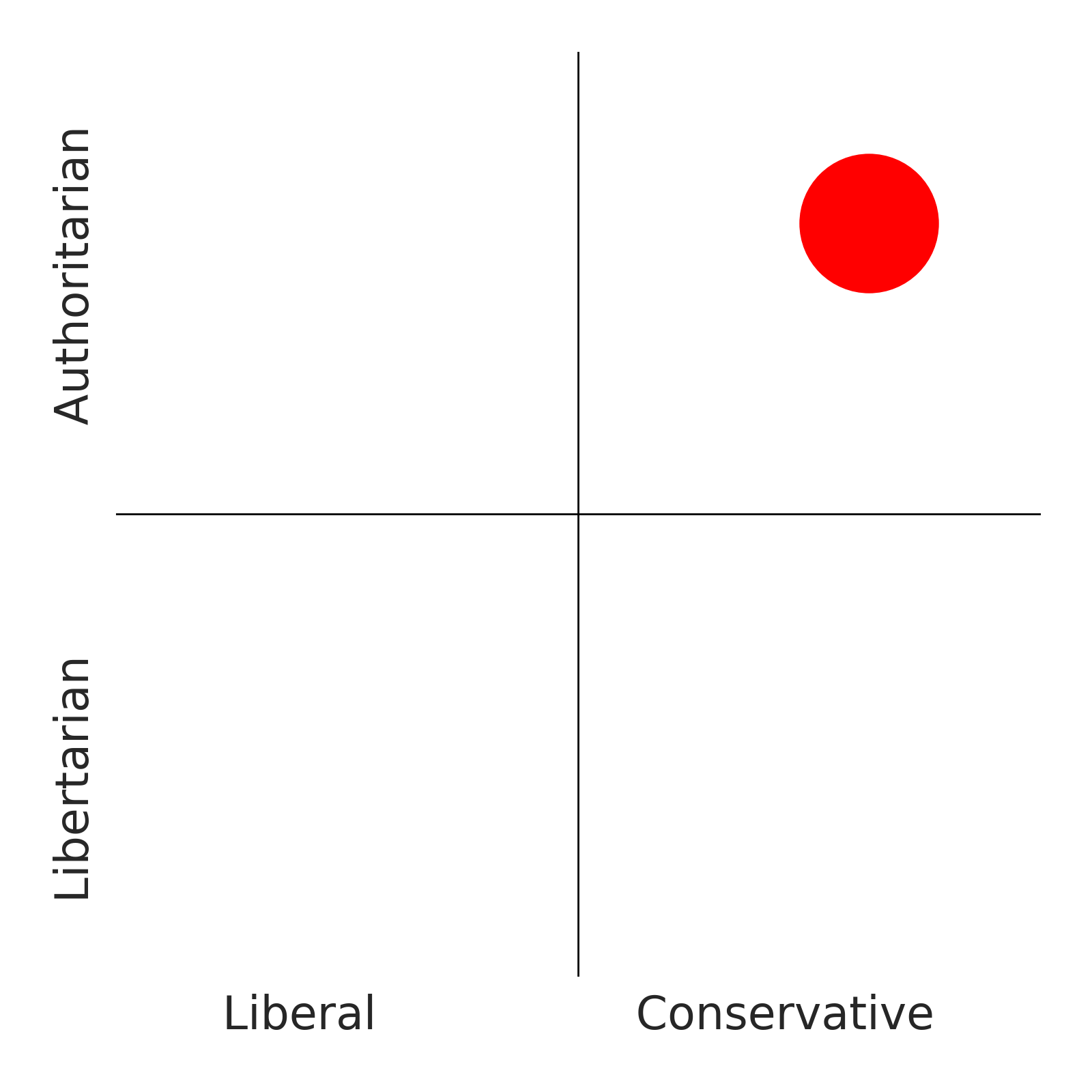
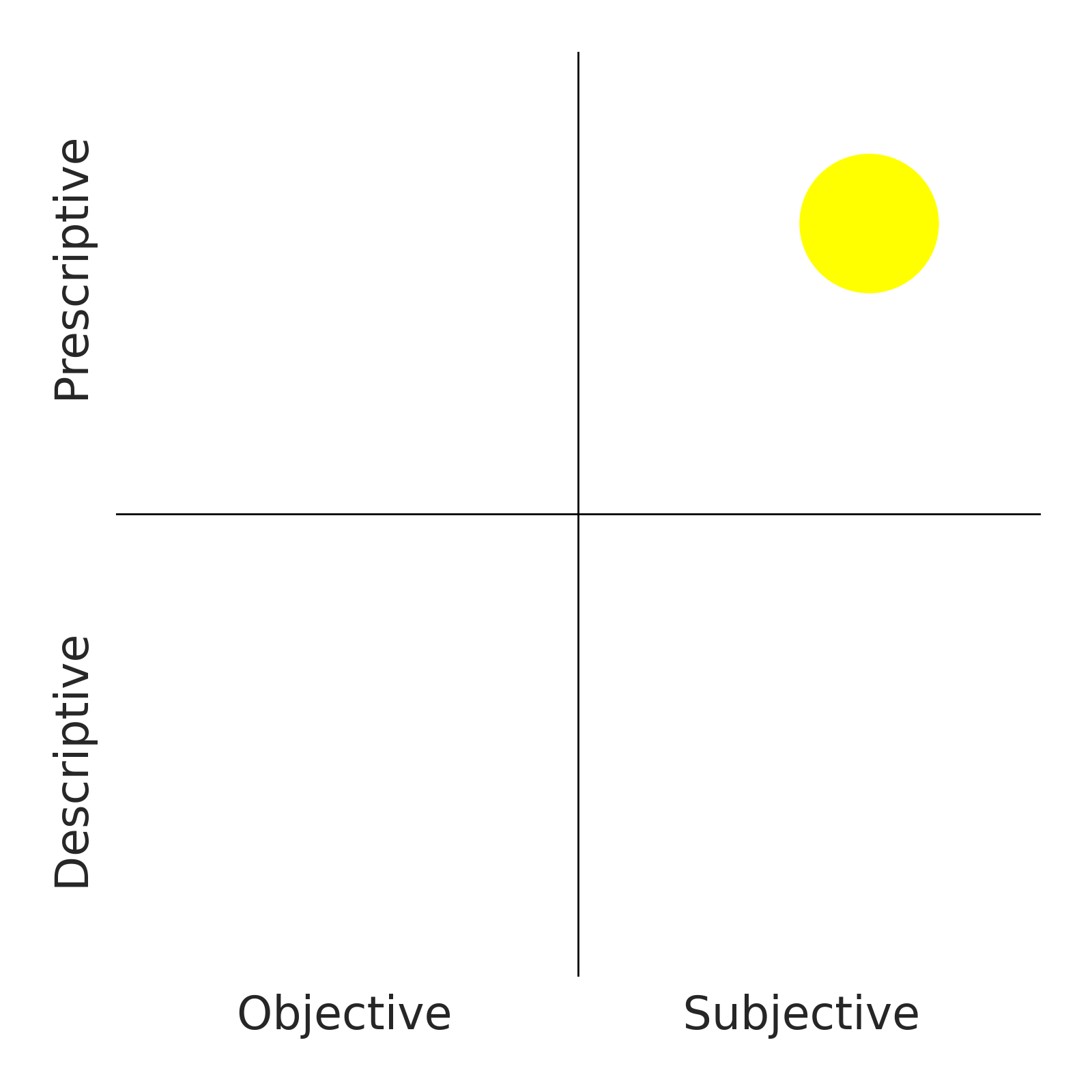
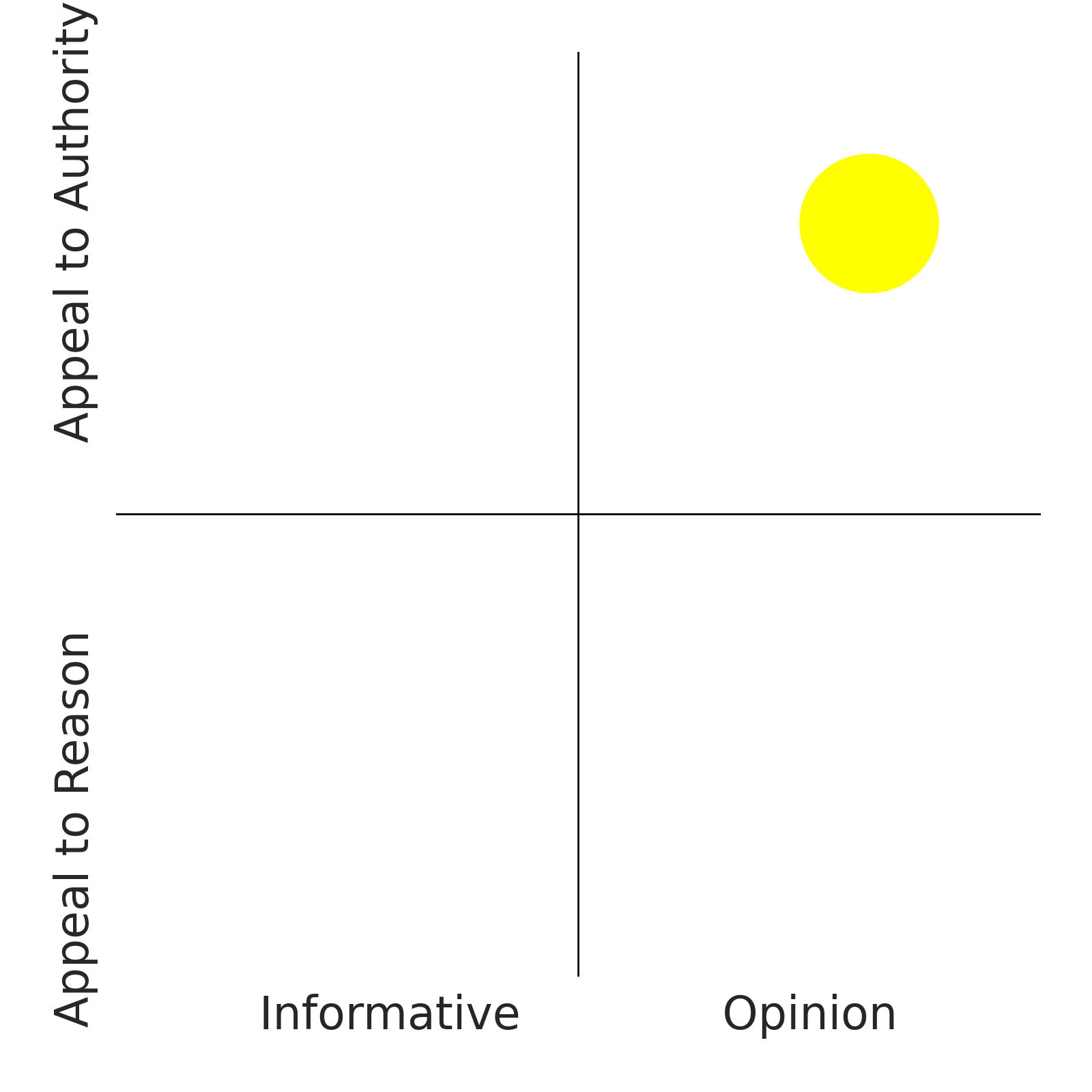
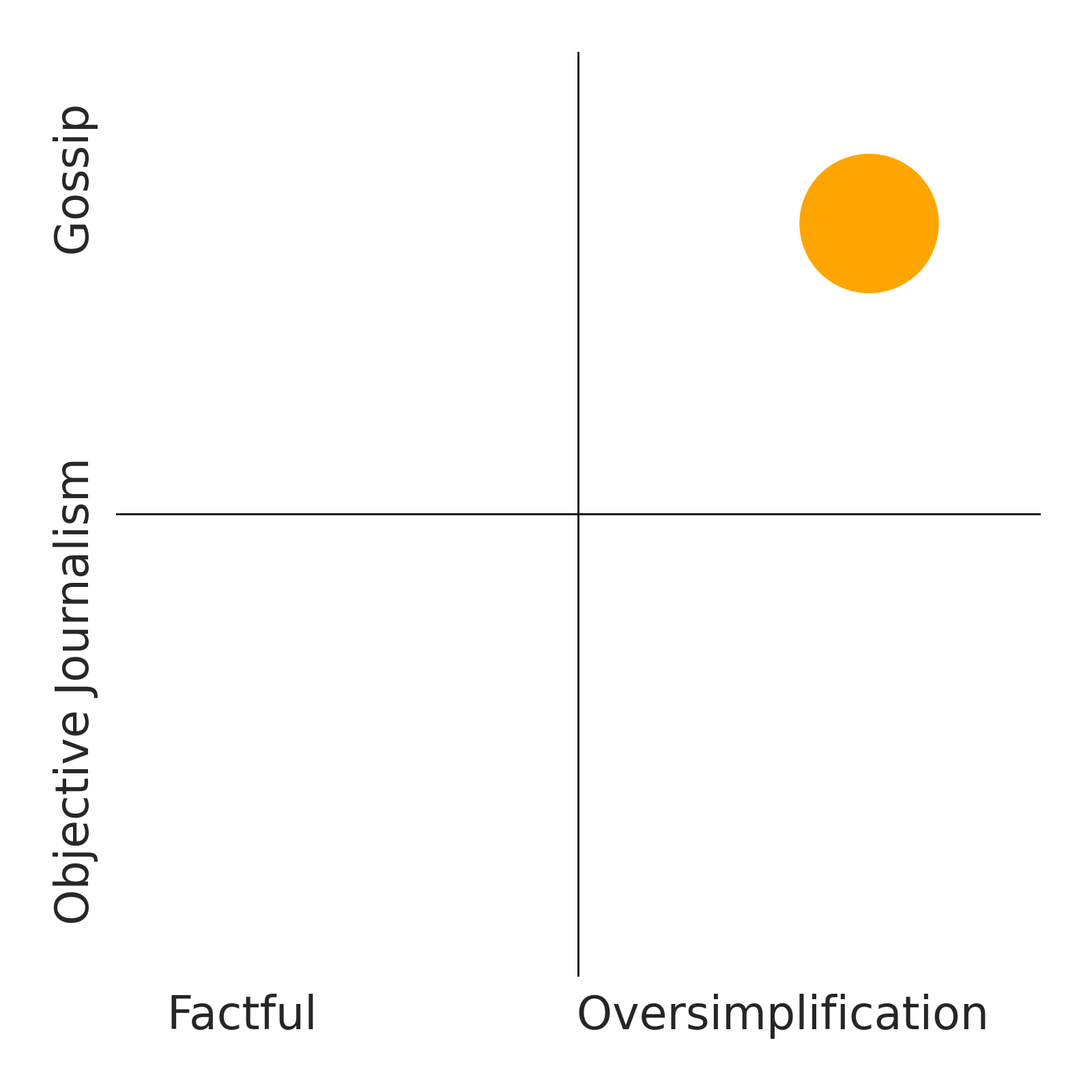
2026 © Helium Trades
Privacy Policy & Disclosure
* Disclaimer: Nothing on this website constitutes investment advice, performance data or any recommendation that any particular security, portfolio of securities, transaction or investment strategy is suitable for any specific person. Helium Trades is not responsible in any way for the accuracy
of any model predictions or price data. Any mention of a particular security and related prediction data is not a recommendation to buy or sell that security. Investments in securities involve the risk of loss. Past performance is no guarantee of future results. Helium Trades is not responsible for any of your investment decisions,
you should consult a financial expert before engaging in any transaction.
Helium Research Assistant

How can I help you today?
Ask any question about American Thinker bias.