See whether Helium helps you make better-informed decisions. Try every Pro Trader feature for 30 days. No credit card required.
Try every Pro Trader feature for 30 days. No credit card required.
August 28, 2026 · 0 shares
Framing treats NRA concerns about Flock cameras as a credible threat of a secret gun registry, using loaded language and single-source sourcing.
Federal law prohibits a national gun registry. The NRA claims Flock Safety's automated license-plate readers, widely installed at businesses and streets, could become a backdoor registry when placed at gun shops. The report describes two gun shops that removed their cameras and quotes NRA officials.
Automated analysis; not human reviewed. Limitations: Input is limited to the supplied article text; no independent verification of NRA statements or shop owner claims was possible. · 3 of 54 available dimensions scored; omitted dimensions are not treated as neutral. · Verified supporting quotes for 3 of 3 scored dimensions.
Claim: The report frames the NRA's gun-rights position as credible and presents government surveillance of gun owners as a liberty threat, without balancing perspectives.
“The Second Amendment protects the right to keep and bear arms free from continuous government monitoring, and mass tracking of lawful gun owners threatens both privacy and liberty” · exact text match
“Could security cameras at gun shops become a backdoor gun registry?” · exact text match
Why: Single-sourced NRA statement, loaded 'backdoor' language, and no counterpoint indicate a conservative gun-rights framing.
Claim: The report's central premise is hypothetical, using 'could' and a question headline rather than evidence of an actual registry.
“Could Flock cameras at gun shops help build a secret gun registry?” · exact text match
“Could security cameras at gun shops become a backdoor gun registry?” · exact text match
Why: Framing relies on possibility, not confirmed actions, satisfying speculative bias.
Claim: The text explicitly discloses it was constructed with artificial intelligence assistance.
“This article was constructed with the assistance of artificial intelligence and published by a member of The ' AI News Desk team.” · exact text match
Why: Direct self-disclosure of AI authorship/assistance.
Input is limited to the supplied article text; no independent verification of NRA statements or shop owner claims was possible.
The report frames Clarence Thomas's rejection of race-based political expectations as a personal and principled stand, highlighting his conservative evolution without critical counterpoint.
Automated analysis; not human reviewed. Limitations: The article text is an AI-assisted summary derived from right-leaning sources (Newsmax, Fox News), limiting independent verification of the quotes' context. · 4 of 54 available dimensions scored; omitted dimensions are not treated as neutral. · Verified supporting quotes for 3 of 4 scored dimensions.
Claim: The article frames Thomas's rejection of liberal expectations for Black Americans as a positive personal stance, omitting critical perspectives.
“Clarence Thomas rejects idea Black Americans must hold liberal views.” · exact text match
“You confuse me with someone who's been in indentured servitude or something.” · verified after text normalization
Why: The headline presents the rejection as a straightforward assertion, and the article quotes Thomas's conservative self-narrative without counterpoint from critics.
Claim: The article attributes statements to Newsmax and Fox News and includes an AI disclosure.
“Justice Thomas said, according to Newsmax.” · exact text match
“This article was constructed with the assistance of artificial intelligence...” · not found in supplied text
Why: The article provides secondary attribution and is transparent about AI construction, but relies on right-leaning outlets for the quotes.
Claim: The article emphasizes Thomas's individualism and self-reliance over collective racial expectations.
“reconsider the self-reliance his grandfather had preached” · exact text match
Why: The narrative highlights Thomas's turn to individual self-reliance as a positive development, contrasting with collective racial political expectations.
Claim: The article explicitly states it was constructed with AI assistance.
“This article was constructed with the assistance of artificial intelligence and published by a member of The ' AI News Desk team.” · exact text match
Why: The text itself contains an explicit disclosure of AI construction.
The article text is an AI-assisted summary derived from right-leaning sources (Newsmax, Fox News), limiting independent verification of the quotes' context.
September 20, 2026 · 0 shares
No substantive article content was present in the supplied text, so no publisher framing could be classified.
Automated analysis; not human reviewed. Limitations: The article text consists only of an empty placeholder, making any bias classification unsupported.
The article text consists only of an empty placeholder, making any bias classification unsupported.
September 21, 2026 · 0 shares
No substantive article content was supplied, so no publisher framing could be observed.
Automated analysis; not human reviewed. Limitations: The supplied article text was an empty placeholder, leaving no textual basis for bias classification.
The supplied article text was an empty placeholder, leaving no textual basis for bias classification.
September 21, 2026 · 0 shares
Article content was unavailable; no publisher framing could be analyzed.
Automated analysis; not human reviewed. Limitations: No substantive article text was supplied; the input contained only placeholder tags inside article_text delimiters.
No substantive article text was supplied; the input contained only placeholder tags inside article_text delimiters.
September 21, 2026 · 0 shares
Article content was unavailable for analysis.
September 21, 2026 · 0 shares
No article content was supplied; only a placeholder wrapper was present, so observable publisher framing could not be assessed.
Automated analysis; not human reviewed. Limitations: The input contained no substantive article text, only placeholder delimiters, making all bias classifications unsupportable.
The input contained no substantive article text, only placeholder delimiters, making all bias classifications unsupportable.
August 28, 2026 · 0 shares
Framing treats NRA concerns about Flock cameras as a credible threat of a secret gun registry, using loaded language and single-source sourcing.
Federal law prohibits a national gun registry. The NRA claims Flock Safety's automated license-plate readers, widely installed at businesses and streets, could become a backdoor registry when placed at gun shops. The report describes two gun shops that removed their cameras and quotes NRA officials.
Automated analysis; not human reviewed. Limitations: Input is limited to the supplied article text; no independent verification of NRA statements or shop owner claims was possible. · 3 of 54 available dimensions scored; omitted dimensions are not treated as neutral. · Verified supporting quotes for 3 of 3 scored dimensions.
Claim: The report frames the NRA's gun-rights position as credible and presents government surveillance of gun owners as a liberty threat, without balancing perspectives.
“The Second Amendment protects the right to keep and bear arms free from continuous government monitoring, and mass tracking of lawful gun owners threatens both privacy and liberty” · exact text match
“Could security cameras at gun shops become a backdoor gun registry?” · exact text match
Why: Single-sourced NRA statement, loaded 'backdoor' language, and no counterpoint indicate a conservative gun-rights framing.
Claim: The report's central premise is hypothetical, using 'could' and a question headline rather than evidence of an actual registry.
“Could Flock cameras at gun shops help build a secret gun registry?” · exact text match
“Could security cameras at gun shops become a backdoor gun registry?” · exact text match
Why: Framing relies on possibility, not confirmed actions, satisfying speculative bias.
Claim: The text explicitly discloses it was constructed with artificial intelligence assistance.
“This article was constructed with the assistance of artificial intelligence and published by a member of The ' AI News Desk team.” · exact text match
Why: Direct self-disclosure of AI authorship/assistance.
Input is limited to the supplied article text; no independent verification of NRA statements or shop owner claims was possible.
The report frames Clarence Thomas's rejection of race-based political expectations as a personal and principled stand, highlighting his conservative evolution without critical counterpoint.
Automated analysis; not human reviewed. Limitations: The article text is an AI-assisted summary derived from right-leaning sources (Newsmax, Fox News), limiting independent verification of the quotes' context. · 4 of 54 available dimensions scored; omitted dimensions are not treated as neutral. · Verified supporting quotes for 3 of 4 scored dimensions.
Claim: The article frames Thomas's rejection of liberal expectations for Black Americans as a positive personal stance, omitting critical perspectives.
“Clarence Thomas rejects idea Black Americans must hold liberal views.” · exact text match
“You confuse me with someone who's been in indentured servitude or something.” · verified after text normalization
Why: The headline presents the rejection as a straightforward assertion, and the article quotes Thomas's conservative self-narrative without counterpoint from critics.
Claim: The article attributes statements to Newsmax and Fox News and includes an AI disclosure.
“Justice Thomas said, according to Newsmax.” · exact text match
“This article was constructed with the assistance of artificial intelligence...” · not found in supplied text
Why: The article provides secondary attribution and is transparent about AI construction, but relies on right-leaning outlets for the quotes.
Claim: The article emphasizes Thomas's individualism and self-reliance over collective racial expectations.
“reconsider the self-reliance his grandfather had preached” · exact text match
Why: The narrative highlights Thomas's turn to individual self-reliance as a positive development, contrasting with collective racial political expectations.
Claim: The article explicitly states it was constructed with AI assistance.
“This article was constructed with the assistance of artificial intelligence and published by a member of The ' AI News Desk team.” · exact text match
Why: The text itself contains an explicit disclosure of AI construction.
The article text is an AI-assisted summary derived from right-leaning sources (Newsmax, Fox News), limiting independent verification of the quotes' context.
September 21, 2026 · 0 shares
No article content was supplied; only a placeholder wrapper was present, so observable publisher framing could not be assessed.
Automated analysis; not human reviewed. Limitations: The input contained no substantive article text, only placeholder delimiters, making all bias classifications unsupportable.
The input contained no substantive article text, only placeholder delimiters, making all bias classifications unsupportable.
September 21, 2026 · 0 shares
Article content was unavailable for analysis.
September 20, 2026 · 0 shares
A terse, event-driven sports recap that reports the score, eighth-inning sequence, and home-run hitters without editorializing.
Automated analysis; not human reviewed. Limitations: The supplied text is a two-sentence game recap; the sparse surface content supports only a narrow set of dimensions, and no sourcing or broader context is available. · 4 of 55 available dimensions scored; omitted dimensions are not treated as neutral. · Verified supporting quotes for 4 of 4 scored dimensions.
Claim: Reporting is limited to the game result and individual batting events, with no subjective evaluation of teams or players.
“Ivan Herrera hit a pair of home runs, and Leo Bernal also homered as the St. Louis Cardinals scored three runs in the eighth inning to come from behind and beat the Washington Nationals 5-3 on Sunday.” · exact text match
Why: The sentence reports only observable on-field events and the final score; no judgment words such as 'great', 'poor', 'lucky', or 'deserved' appear.
Claim: The language is plain and non-hyped even by sports-headline standards, aside from a conventional metaphor ('sink').
“Cardinals score three eighth-inning runs to sink Nationals.” · exact text match
Why: No superlatives, exclamation marks, or exaggeration appear; 'sink' is a stock sports verb for defeat and does not add dramatic charge.
Claim: The text is wholly descriptive, containing only narrative of events and no recommendation, mandate, or normative instruction.
“Ivan Herrera hit a pair of home runs, and Leo Bernal also homered as the St. Louis Cardinals scored three runs in the eighth inning to come from behind and beat the Washington Nationals 5-3 on Sunday.” · exact text match
Why: Every clause is in the indicative past tense describing events; no 'should', 'must', or evaluative adjective appears.
Claim: The write-up carries no emotional valence; it is an emotionally unmarked sports score summary.
“Cardinals score three eighth-inning runs to sink Nationals.” · exact text match
Why: No affect words, celebratory tone, or negative framing appears; 'come from behind' is idiomatic rather than emotive.
The supplied text is a two-sentence game recap; the sparse surface content supports only a narrow set of dimensions, and no sourcing or broader context is available.
September 20, 2026 · 0 shares
Straightforward scoreboard-style sports reporting that relays the game result, a player's stats, and a standings movement in neutral, unadorned language.
Automated analysis; not human reviewed. Limitations: Very short supplied text (headline plus one sentence) limits analysis of framing, sourcing, and broader context. · 5 of 55 available dimensions scored; omitted dimensions are not treated as neutral. · Verified supporting quotes for 5 of 5 scored dimensions.
Claim: The framing is strongly objective and grounded in verifiable game facts.
“Kiki Iriafen scored 21 points and grabbed 14 rebounds to help the Washington Mystics beat Indiana 93-77” · exact text match
Why: Every clause reports an observable fact; no evaluative or subjective terms appear.
Claim: The tone is measured and un-sensational.
“Mystics beat Fever, move within one game in standings.” · exact text match
Why: Plain language is used throughout with no exaggeration, hype, or emotive wording.
Claim: The article is purely descriptive and makes no prescriptions or judgments.
“Kiki Iriafen scored 21 points and grabbed 14 rebounds to help the Washington Mystics beat Indiana 93-77 and pull within a game of the fifth-place Fever.” · exact text match
Why: All content is framed as statement of result or outcome; there is no imperative, recommendation, or evaluation.
Claim: The report is a specific, internally consistent game summary with no evident distortion.
“Kiki Iriafen scored 21 points and grabbed 14 rebounds to help the Washington Mystics beat Indiana 93-77 and pull within a game of the fifth-place Fever.” · exact text match
Why: Exact score, player stats, and standings effect are stated directly with no hedging or contradiction.
Claim: The text presents the result honestly and straightforwardly, without misleading spin.
“Mystics beat Fever, move within one game in standings.” · exact text match
Why: Headline and body agree on the outcome and standings movement; no selective or unfair framing is visible.
Very short supplied text (headline plus one sentence) limits analysis of framing, sourcing, and broader context.
September 20, 2026 · 0 shares
The sparse scheduling announcement frames Mamdani with the ideological label "socialist" while extending Trump the formal title "President," lending a conservative cast to an otherwise logistical report.
Automated analysis; not human reviewed. Limitations: The text is extremely short and contains no independent sourcing; the conservative-leaning score depends on treating the single word "socialist" as a charged framing rather than a neutral descriptor. · 1 of 55 available dimensions scored; omitted dimensions are not treated as neutral. · Verified supporting quotes for 1 of 1 scored dimensions.
Claim: The publisher's framing applies the contested ideological label "socialist" to one official while applying no equivalent ideological label to the other, creating a conservative-leaning frame.
“President Trump will meet with socialist New York City Mayor Zohran Mamdani on Monday during his visit to the United Nations General Assembly.” · exact text match
Why: The only qualitative descriptor in the text is "socialist" attached to Mamdani, while Trump is identified by the formal title "President," producing an asymmetric political framing.
The text is extremely short and contains no independent sourcing; the conservative-leaning score depends on treating the single word "socialist" as a charged framing rather than a neutral descriptor.
September 10, 2026 · 0 shares
Framing amplifies a conservative allegation by headlining that 'extremists' have taken over the Democratic Party and quoting Cruz's 'red-green alliance' warning without rebuttal or context.
Automated analysis; not human reviewed. Limitations: Only the supplied excerpt and headline were available; the outlet's broader editorial standards and any Democratic response were not included. · 4 of 54 available dimensions scored; omitted dimensions are not treated as neutral. · Verified supporting quotes for 4 of 4 scored dimensions.
Claim: The headline frames a Democratic takeover by 'extremists' as the context for Cruz's midterm comment, aligning the report with a conservative campaign message.
“Ted Cruz: Midterms are a 'time for choosing' after extremists take over Democratic Party” · exact text match
“the Democratic Party has been overtaken by a "new and dangerous red-green alliance" of "communists and Islamists"” · exact text match
Counterevidence:
“Sen. Ted Cruz on Thursday warned fellow Republicans at the party convention in his home state of Texas” · exact text match
Why: The first quote is the publisher's own headline phrasing; the second is Cruz's charge but is selected as the lede.
Claim: The report leads with Cruz's most inflammatory label, a 'red-green alliance' of 'communists and Islamists', and uses the charged word 'dangerous', increasing the sensational tone.
“a "new and dangerous red-green alliance" of "communists and Islamists"” · exact text match
“who are defined by hostility” · exact text match
Counterevidence:
“Sen. Ted Cruz on Thursday warned fellow Republicans” · exact text match
Why: The selected language is emotionally charged, but it is attributed to Cruz, which tempers but does not eliminate the publisher's sensational framing.
Claim: The content is organized entirely around party politics, a partisan convention speech, and midterm election positioning.
“Sen. Ted Cruz on Thursday warned fellow Republicans at the party convention in his home state of Texas” · exact text match
“Midterms are a 'time for choosing'” · exact text match
Why: The only substantive content concerns a Republican convention and a senator's attack on the Democratic Party.
Claim: The brief attributes its central claim to a named senator and uses quotation marks for his labels, showing visible sourcing.
“Sen. Ted Cruz on Thursday warned fellow Republicans at the party convention in his home state of Texas” · exact text match
“the Democratic Party has been overtaken by a "new and dangerous red-green alliance"” · exact text match
Why: The named source, event, and exact quotes provide attribution, but the brief is too short to demonstrate a robust correction or verification practice.
Only the supplied excerpt and headline were available; the outlet's broader editorial standards and any Democratic response were not included.
A correlational survey and selected violent crime cases are presented through the loaded frame of 'gender ideology' as an accelerant to political violence.
Automated analysis; not human reviewed. Limitations: The supplied text is a single, heavily excerpted article; the underlying study's methodology, full findings, and limitations are not available for independent verification. · 5 of 54 available dimensions scored; omitted dimensions are not treated as neutral. · Verified supporting quotes for 5 of 5 scored dimensions.
Claim: The publisher frames 'gender ideology' as a dangerous accelerant and connects transgenderism to violent crime, a conservative cultural framing.
“Several high-profile crimes in recent years show an overlap with transgenderism and violent behavior.” · exact text match
Why: This sentence is the publisher's own assertion, not a study finding; it uses selected crimes to support a category-level link between transgenderism and violence, and the article elsewhere quotes the loaded phrase 'sex-rejecting clinical beliefs.'
Claim: Neutral recounting of a study is mixed with the publisher's own interpretive assertion about transgenderism and violent crime.
“Several high-profile crimes in recent years show an overlap with transgenderism and violent behavior.” · exact text match
Why: The sentence states an unqualified editorial conclusion rather than reporting a study finding, shifting the text from description toward subjective interpretation.
Claim: The report foregrounds a White House-commissioned study and addresses partisan flashpoints such as left-wing authoritarianism, Trump, and the Supreme Court.
“A White House-commissioned study found that people who more strongly believe in gender ideology, such as transgenderism, were more likely to think political violence was justified.” · exact text match
Why: The lead frames the study by its White House commissioning and 'gender ideology' language, and the body repeatedly emphasizes 'left-wing authoritarianism' and politically charged survey scenarios.
Claim: The headline and framing collapse a correlational survey into a blunt claim that gender ideology supporters are 'more fond' of political violence.
“Gender ideology supporters more fond of political violence, left-wing authoritarianism, study finds.” · exact text match
Why: The reported finding concerns correlations among survey responses, but the headline converts it into a categorical attribute of 'supporters' and omits study limitations or alternative explanations.
Claim: The article asserts a broad overlap between transgenderism and violent behavior and supports it with selected criminal cases.
“Several high-profile crimes in recent years show an overlap with transgenderism and violent behavior.” · exact text match
Why: This is a negative group generalization about transgender-related identity or ideology, presented without base rates or representative evidence; it goes beyond reporting individual cases.
The supplied text is a single, heavily excerpted article; the underlying study's methodology, full findings, and limitations are not available for independent verification.
September 20, 2026 · 0 shares
Frames the subject by equating it with 'climate change hysteria' and treats Al Gore and Greta Thunberg as scare-mongering figures who warned of an 'unspeakable fate,' implying the current case is similarly overblown.
The supplied text is a fragment beginning mid-comparison; the antecedent of 'It' and the surrounding argument are not provided.
Automated analysis; not human reviewed. Limitations: Only a single-sentence fragment was supplied; the unseen antecedent of 'It' leaves the target of comparison and broader argument unavailable. · 10 of 55 available dimensions scored; omitted dimensions are not treated as neutral. · Verified supporting quotes for 10 of 10 scored dimensions.
Claim: The excerpt uses a conservative-coded label for climate concern and names prominent figures associated with climate advocacy.
“It is similar to that of climate change hysteria” · exact text match
“when we were told by Al Gore and Greta Thunberg that we faced an unspeakable fate” · exact text match
Why: Calling climate concern 'hysteria' and pairing it with Al Gore and Greta Thunberg signals a conservative framing, though the excerpt is too short to confirm the full position.
Claim: The sentence is an evaluative opinion presented without evidence.
“It is similar to that of climate change hysteria” · exact text match
Why: The comparison is a value judgment expressed through a loaded metaphor rather than neutral description.
Claim: The excerpt heightens drama with 'unspeakable fate' and 'hysteria.'
“we faced an unspeakable fate” · exact text match
“climate change hysteria” · exact text match
Why: These are emotionally charged, attention-grabbing phrasings even in a dismissive context.
Claim: The sentence is a subjective assertion presented as a comparison.
“It is similar to that of climate change hysteria” · exact text match
Why: It contains no verifiable facts and is framed as a personal or rhetorical judgment.
Claim: The excerpt enters a contested political debate over climate policy with a charged label.
“Al Gore and Greta Thunberg” · exact text match
“climate change hysteria” · exact text match
Why: Naming prominent climate advocates and using 'hysteria' places the claim on one side of a political and cultural split.
Claim: The excerpt reduces climate warnings to an 'unspeakable fate' and giving up fossil fuels.
“we faced an unspeakable fate unless we gave up fossil fuels” · exact text match
Why: This condenses a complex policy and scientific debate into a single alarming demand.
Claim: The wording conveys contempt and fear through 'hysteria' and 'unspeakable fate.'
“climate change hysteria” · exact text match
“unspeakable fate” · exact text match
Why: Both terms are emotionally charged and negative in context.
Claim: The excerpt offers no sourcing, data, or uncertainty markers for its assertion.
“It is similar to that of climate change hysteria” · exact text match
Why: As a short opinion fragment, it is not presented as a verifiable news claim, so credibility in an evidentiary sense is low.
Claim: The excerpt dismisses a position with the emotional label 'hysteria' instead of engaging its reasoning.
“It is similar to that of climate change hysteria” · exact text match
Why: Using 'hysteria' as a pejorative label is an emotionally driven dismissal rather than a reasoned evaluation.
Claim: The excerpt uses loaded framing and rhetorical labeling to steer the reader's response.
“climate change hysteria” · exact text match
“we faced an unspeakable fate” · exact text match
Why: The labels frame the target unfavorably before any evidence is offered, a mild manipulative device.
Only a single-sentence fragment was supplied; the unseen antecedent of 'It' leaves the target of comparison and broader argument unavailable.
September 20, 2026 · 0 shares
The framing treats the Bible as an unqualified good and rebukes Talarico's criticism of Bible stories in schools as wrong and ungrateful.
Automated analysis; not human reviewed. Limitations: This is a two-sentence excerpt with no date, source, or surrounding context, so classifications are weakly constrained. · 7 of 55 available dimensions scored; omitted dimensions are not treated as neutral. · Verified supporting quotes for 7 of 7 scored dimensions.
Claim: The publisher frames the dispute from a conservative religious perspective, endorsing gratitude for the Bible.
“James Talarico should be saying "Thank God for the Bible".” · exact text match
Why: The sentence endorses a positive view of the Bible and implies disapproval of Talarico's criticism, aligning with a traditional-conservative stance on religion in public life.
Claim: The publisher's central claim is subjective, expressing an opinion about what Talarico should say.
“James Talarico should be saying "Thank God for the Bible".” · exact text match
Why: The word 'should' marks a value judgment rather than an objective report.
Claim: The publisher prescribes the correct response for Talarico instead of merely describing an event.
“James Talarico should be saying "Thank God for the Bible".” · exact text match
Why: The phrase 'should be saying' is explicitly prescriptive.
Claim: The publisher's rebuke assumes the contested conclusion that the Bible is worthy of gratitude and that criticism of Bible-in-schools is illegitimate.
“James Talarico should be saying "Thank God for the Bible".” · exact text match
Why: The assertion presumes the religious good of the Bible as a reason to reject Talarico's criticism without offering supporting argument.
Claim: The publisher's statement is dominated by an unsupported opinion offered as a response to Talarico's reported statement.
“James Talarico should be saying "Thank God for the Bible".” · exact text match
Why: The opening sentence is an evaluative opinion, not a neutral presentation of facts.
Claim: The publisher weighs in on a contested political issue involving public school curriculum and religion.
“James Talarico should be saying "Thank God for the Bible".” · exact text match
Why: Bible stories in public school curriculum are a contested education-policy matter, and the publisher takes a side.
Claim: The publisher asserts a recent statement without naming a source, date, or location, providing weak internal verification.
“James Talarico recently said that including Bible stories in the school curriculum for young children is akin to "indoctrination" and that it is "deeply immoral."” · exact text match
Why: A direct report of a recent statement with no citation, link, or date gives readers little visible basis to verify the claim.
This is a two-sentence excerpt with no date, source, or surrounding context, so classifications are weakly constrained.
September 07, 2026 · 0 shares
The snippet uses loaded, speculative language to frame Josh Shapiro's pursuit of COVID-19-style lockdown powers as draconian and nostalgic.
Automated analysis; not human reviewed. Limitations: Input is a very short unlabeled opinion snippet with no source, date, or policy specifics; classification depends on loaded wording and may not represent the full article. · 8 of 54 available dimensions scored; omitted dimensions are not treated as neutral. · Verified supporting quotes for 8 of 8 scored dimensions.
Claim: The snippet criticizes government lockdown powers as draconian, favoring individual freedom over state authority.
“seems nostalgic for those draconian policies” · exact text match
Why: Calling lockdown policies 'draconian' and 'COVID-19-style lockdown powers' frames state authority negatively.
Claim: The text is subjective and opinionated rather than objective reporting.
“seems nostalgic for those draconian policies” · exact text match
Why: Words like 'seems nostalgic' and 'draconian' express personal judgment, not neutral description.
Claim: The text applies an anti-lockdown ideological lens to Shapiro's actions.
“COVID-19-style lockdown powers” · exact text match
“draconian policies” · exact text match
Why: The framing presupposes that lockdown powers are inherently excessive, reflecting an ideological stance.
Claim: The text carries a negative emotional charge toward Shapiro and lockdowns.
“draconian policies” · exact text match
“seems nostalgic” · exact text match
Why: Negative evaluative terms ('draconian') and mocking speculation ('seems nostalgic') convey contempt.
Claim: The text provides no sourcing or evidence and relies on speculative, loaded language.
“seems nostalgic for those draconian policies” · exact text match
Why: The absence of attribution and the use of subjective speculation reduce visible credibility.
Claim: The text takes an individualist stance against collective public-health restrictions.
“Few people want to relive the lockdowns” · exact text match
Why: The assertion that few want lockdowns treats opposition to collective mandates as self-evident.
Claim: The text speculates about Shapiro's motives without evidence.
“seems nostalgic for those draconian policies” · exact text match
Why: 'Seems nostalgic' is an unfounded inference about Shapiro's state of mind.
Claim: The text uses loaded framing and an unsupported assertion to steer the reader against Shapiro.
“seeks COVID-19-style lockdown powers” · exact text match
“seems nostalgic for those draconian policies” · exact text match
Why: Combining an unproven 'seeks' claim with pejorative 'draconian' and speculative 'nostalgic' framing is an observable manipulative technique.
Input is a very short unlabeled opinion snippet with no source, date, or policy specifics; classification depends on loaded wording and may not represent the full article.
September 08, 2026 · 0 shares
Celebratory first-person commentary treats rising millionaire counts as self-evident proof that capitalism works.
Automated analysis; not human reviewed. Limitations: The supplied text is a two-sentence personal assertion with no independent statistics or institutional detail; scoring necessarily reflects only the author's framing and cannot be externally verified. · 10 of 54 available dimensions scored; omitted dimensions are not treated as neutral. · Verified supporting quotes for 10 of 10 scored dimensions.
Claim: The text endorses capitalism as successful, a position typically aligned with the conservative side of the economic spectrum.
“America's millionaire boom proves capitalism works.” · exact text match
Why: The sentence explicitly celebrates capitalism; no qualifying or countervailing economic view appears.
Claim: The passage is personal, emotional, and evaluative rather than neutral reporting.
“I am proud to say that my wife and I now have more than $1 million in assets.” · exact text match
Why: It uses first-person pride and an unsupported 'proves' conclusion.
Claim: The text is bullish about capitalism and wealth creation.
“America's millionaire boom proves capitalism works.” · exact text match
Why: It treats the boom as positive proof of success.
Claim: The passage conveys a proud and positive view of wealth and economic conditions.
“I am proud to say that my wife and I now have more than $1 million in assets.” · exact text match
Why: Pride in asset accumulation plus the word 'boom' signal optimism.
Claim: The entire passage is commentary, not factual reporting.
“America's millionaire boom proves capitalism works.” · exact text match
Why: The statement is an interpretive value judgment presented as a conclusion.
Claim: The statement makes a political-economic argument about capitalism.
“America's millionaire boom proves capitalism works.” · exact text match
Why: The defense of capitalism is a political position, even though the subject is economic.
Claim: A complex economic outcome is compressed into a single celebratory causal statement.
“America's millionaire boom proves capitalism works.” · exact text match
Why: It reduces the performance of an entire economic system to one demographic trend.
Claim: The text uses 'proves' to make a universal causal claim without providing data or accounting for alternative explanations.
“America's millionaire boom proves capitalism works.” · exact text match
Why: No evidence is supplied to support the word 'proves'.
Claim: The text asserts a free-market ideological conclusion about what the millionaire boom demonstrates.
“America's millionaire boom proves capitalism works.” · exact text match
Why: It turns an economic observation into validation of a specific ideology.
Claim: The text uses positive emotional self-disclosure rather than neutral analysis.
“I am proud to say that my wife and I now have more than $1 million in assets.” · exact text match
Why: 'Proud' gives the passage an emotionally positive tone.
The supplied text is a two-sentence personal assertion with no independent statistics or institutional detail; scoring necessarily reflects only the author's framing and cannot be externally verified.
September 13, 2026 · 0 shares
A moralizing opinion framing that equates shamelessness with lacking a conscience while invoking public figures as examples.
Automated analysis; not human reviewed. Limitations: The supplied text is a headline and standfirst only, so all scalar classifications rely on limited wording and named-figure recognition. · 4 of 54 available dimensions scored; omitted dimensions are not treated as neutral. · Verified supporting quotes for 4 of 4 scored dimensions.
Claim: The framing relies on a subjective moral standard rather than observable data.
“If you have no capacity for shame, you have no conscience.” · exact text match
Why: The statement depends on a moral definition of conscience and shame, not on empirical description.
Claim: The text prescribes shame as a moral requirement connected to conscience.
“If you have no capacity for shame, you have no conscience.” · exact text match
Why: It asserts what shame and conscience necessarily entail rather than describing a state of affairs.
Claim: The text issues a moral judgment rather than reporting facts.
“If you have no capacity for shame, you have no conscience.” · exact text match
Why: The sentence asserts a moral equivalence without supporting facts, which is opinionated.
Claim: The text is political commentary because it invokes public figures in a moral critique.
“Hunter Biden, Clancy jurors, Piker and Talarico” · exact text match
Why: Hunter Biden and Piker are recognizable political figures; the headline groups them under an ethics critique, placing the item in political commentary.
The supplied text is a headline and standfirst only, so all scalar classifications rely on limited wording and named-figure recognition.
September 15, 2026 · 0 shares
Framing treats the revised cryptocurrency bill as a fragile, politically motivated compromise: it foregrounds the Democratic ‘fig leaf’ taunt, casts the GOP changes as ‘appease[ment],’ and ends on possible filibuster failure.
In the U.S. Senate, ending a filibuster typically requires a supermajority (usually 60 votes) rather than a simple majority.
Automated analysis; not human reviewed. Limitations: Only a two-sentence headline/lede was available; full-article sourcing, details, and caveats were absent, limiting the precision of bias classifications. · 5 of 54 available dimensions scored; omitted dimensions are not treated as neutral. · Verified supporting quotes for 5 of 5 scored dimensions.
Claim: Uses loaded, interpretive language (‘slam,’ ‘appease’) and a quoted metaphor (‘fig leaf’) rather than neutral description.
“Democrats slam ‘fig leaf’ ethics changes” · verified after text normalization
“to appease Democrats’ concerns” · verified after text normalization
Why: ‘Slam’ is an evaluative verb and ‘appease’ attributes a cynical motive, making the framing partly subjective.
Claim: Dramatizes conflict with an aggressive verb, a vivid visual metaphor, and a suspenseful caveat.
“slam ‘fig leaf’ ethics changes” · verified after text normalization
“may not be enough to overcome a filibuster” · exact text match
Why: Headline verbs and imagery are selected for conflict and suspense, pushing the text toward sensational rather than plain reporting.
Claim: The frame is partisan conflict and floor-procedural strategy rather than substantive policy details.
“Democrats slam ‘fig leaf’ ethics changes to cryptocurrency bill ahead of test vote” · verified after text normalization
“overcome a filibuster” · exact text match
Why: The lead is built from party labels, an attack verb, and filibuster mechanics; no regulatory substance is described.
Claim: The emotional register is negative: hostility in ‘slam,’ disdain in the quoted ‘fig leaf,’ and failure risk in ‘may not be enough.’
“Democrats slam” · exact text match
“may not be enough to overcome a filibuster” · exact text match
Why: Conflict and possible-failure language produce a negative emotional tone rather than neutral or positive affect.
Claim: Makes a forward-looking claim about the bill’s ability to pass a filibuster test.
“it may not be enough to overcome a filibuster” · exact text match
Why: Presents an unsupported prediction about the vote outcome, albeit hedged with ‘may.’
Only a two-sentence headline/lede was available; full-article sourcing, details, and caveats were absent, limiting the precision of bias classifications.
September 21, 2026 · 0 shares
Framing is neutral and procedural, presenting the conditional dismissal as a prosecutorial decision and attributing the terms to prosecutors without commentary.
Automated analysis; not human reviewed. Limitations: The supplied text is a single-sentence brief with no headline, byline, or surrounding context, so editorial selection and emphasis beyond this sentence cannot be assessed. · 4 of 55 available dimensions scored; omitted dimensions are not treated as neutral. · Verified supporting quotes for 4 of 4 scored dimensions.
Claim: The publisher uses attributed, unadorned factual phrasing without evaluative language.
“will have their charges dismissed if they complete community service and pay restitution, prosecutors said Monday” · exact text match
Why: The sentence reports a conditional legal outcome and attributes the decision to prosecutors, with no commentary or subjective framing.
Claim: The publisher avoids emotional or dramatic language and uses procedural legal terms.
“will have their charges dismissed if they complete community service and pay restitution” · exact text match
Why: The wording is limited to procedural conditions ('community service,' 'restitution,' 'charges dismissed') and contains no hyperbole, urgency, or narrative emotion.
Claim: The publisher describes an outcome without recommending or advocating any position.
“charges dismissed if they complete community service and pay restitution, prosecutors said Monday” · exact text match
Why: The sentence states what prosecutors said would happen, with no imperative, endorsement, or policy prescription.
Claim: The report attributes its key claim to prosecutors and signals the conditional nature of the outcome.
“will have their charges dismissed if they complete community service and pay restitution, prosecutors said Monday” · exact text match
Why: The source is attributed ('prosecutors said') and the outcome is explicitly conditional ('if'), which supports reliability within the limited text.
The supplied text is a single-sentence brief with no headline, byline, or surrounding context, so editorial selection and emphasis beyond this sentence cannot be assessed.
The framing treats Democratic consolidation as a credible strategic path to flipping Alaska's governorship, while presenting Republican ballot complications and ranked-choice maneuvering as secondary uncertainties.
Automated analysis; not human reviewed. Limitations: Analysis is confined to the supplied article text; external verification of Alaska election records and campaign finance statements was not performed. · 6 of 54 available dimensions scored; omitted dimensions are not treated as neutral. · Verified supporting quotes for 6 of 6 scored dimensions.
Claim: The report is written in an objective, attribution-heavy news style rather than a subjective commentary style.
“A Division of Elections spokesperson confirmed Begich had withdrawn.” · exact text match
“Begich’s campaign late Friday released a statement saying he and running mate Julia Hnilicka were suspending their campaign and endorsing Kreiss-Tomkins, who had finished with the most votes during the primary.” · exact text match
Why: Key facts are explicitly attributed to campaigns and officials, with no first-person or editorial judgment.
Claim: The report avoids sensational language and presents even unusual facts plainly.
“Begich finished just behind Kreiss-Tomkins in a crowded Aug. 18 primary that included 12 Republicans and some independents.” · exact text match
“The commission found that Taylor did not “substantially comply” with financial disclosure requirements.” · exact text match
Why: Word choice is restrained and no exclamatory or outrage-framing language is used.
Claim: The report stays descriptive, stating events and statements without prescribing actions or policies.
“Monday was the final day for candidates to withdraw from the ballot.” · exact text match
“Begich’s decision leaves Kreiss-Tomkins as the only Democrat on the ballot, giving the party an opportunity to elect Alaska’s first Democratic governor in nearly 25 years.” · exact text match
Why: No sentence urges a vote, policy choice, or course of action; strategic characterization is analytical rather than prescriptive.
Claim: The report is inherently political, focusing on party competition, endorsements, and election mechanics.
“Democrats aim to unite behind one candidate in Alaska governor’s race as they hope to flip the seat.” · verified after text normalization
“The Alaska Democratic Party said state Democrats are in “lockstep” and intend to win.” · exact text match
Why: The substance is entirely about Democratic and Republican electoral strategy and ranked-choice maneuvering.
Claim: The report is highly credible in its visible sourcing and attribution practices.
“A Division of Elections spokesperson confirmed Begich had withdrawn.” · exact text match
“Messages seeking comment from the Wilson and Bronson campaigns were not immediately returned Monday.” · exact text match
Why: Named sources, direct quotes, and the noting of unreturned requests support trustworthiness within the supplied text.
Claim: The report displays internally observable fairness by including Republican-side context and attempting comment.
“Messages seeking comment from the Wilson and Bronson campaigns were not immediately returned Monday.” · exact text match
“Nick Begich said on social media that while he thinks Republicans should rally behind Wilson to increase their chances of winning, he would rank any other Republican who remains in the race.” · exact text match
Why: It includes Republican perspectives and discloses when campaigns did not respond, without visible suppression of contrary details.
Analysis is confined to the supplied article text; external verification of Alaska election records and campaign finance statements was not performed.
September 20, 2026 · 0 shares
A terse, event-driven sports recap that reports the score, eighth-inning sequence, and home-run hitters without editorializing.
Automated analysis; not human reviewed. Limitations: The supplied text is a two-sentence game recap; the sparse surface content supports only a narrow set of dimensions, and no sourcing or broader context is available. · 4 of 55 available dimensions scored; omitted dimensions are not treated as neutral. · Verified supporting quotes for 4 of 4 scored dimensions.
Claim: Reporting is limited to the game result and individual batting events, with no subjective evaluation of teams or players.
“Ivan Herrera hit a pair of home runs, and Leo Bernal also homered as the St. Louis Cardinals scored three runs in the eighth inning to come from behind and beat the Washington Nationals 5-3 on Sunday.” · exact text match
Why: The sentence reports only observable on-field events and the final score; no judgment words such as 'great', 'poor', 'lucky', or 'deserved' appear.
Claim: The language is plain and non-hyped even by sports-headline standards, aside from a conventional metaphor ('sink').
“Cardinals score three eighth-inning runs to sink Nationals.” · exact text match
Why: No superlatives, exclamation marks, or exaggeration appear; 'sink' is a stock sports verb for defeat and does not add dramatic charge.
Claim: The text is wholly descriptive, containing only narrative of events and no recommendation, mandate, or normative instruction.
“Ivan Herrera hit a pair of home runs, and Leo Bernal also homered as the St. Louis Cardinals scored three runs in the eighth inning to come from behind and beat the Washington Nationals 5-3 on Sunday.” · exact text match
Why: Every clause is in the indicative past tense describing events; no 'should', 'must', or evaluative adjective appears.
Claim: The write-up carries no emotional valence; it is an emotionally unmarked sports score summary.
“Cardinals score three eighth-inning runs to sink Nationals.” · exact text match
Why: No affect words, celebratory tone, or negative framing appears; 'come from behind' is idiomatic rather than emotive.
The supplied text is a two-sentence game recap; the sparse surface content supports only a narrow set of dimensions, and no sourcing or broader context is available.
September 20, 2026 · 0 shares
Straightforward scoreboard-style sports reporting that relays the game result, a player's stats, and a standings movement in neutral, unadorned language.
Automated analysis; not human reviewed. Limitations: Very short supplied text (headline plus one sentence) limits analysis of framing, sourcing, and broader context. · 5 of 55 available dimensions scored; omitted dimensions are not treated as neutral. · Verified supporting quotes for 5 of 5 scored dimensions.
Claim: The framing is strongly objective and grounded in verifiable game facts.
“Kiki Iriafen scored 21 points and grabbed 14 rebounds to help the Washington Mystics beat Indiana 93-77” · exact text match
Why: Every clause reports an observable fact; no evaluative or subjective terms appear.
Claim: The tone is measured and un-sensational.
“Mystics beat Fever, move within one game in standings.” · exact text match
Why: Plain language is used throughout with no exaggeration, hype, or emotive wording.
Claim: The article is purely descriptive and makes no prescriptions or judgments.
“Kiki Iriafen scored 21 points and grabbed 14 rebounds to help the Washington Mystics beat Indiana 93-77 and pull within a game of the fifth-place Fever.” · exact text match
Why: All content is framed as statement of result or outcome; there is no imperative, recommendation, or evaluation.
Claim: The report is a specific, internally consistent game summary with no evident distortion.
“Kiki Iriafen scored 21 points and grabbed 14 rebounds to help the Washington Mystics beat Indiana 93-77 and pull within a game of the fifth-place Fever.” · exact text match
Why: Exact score, player stats, and standings effect are stated directly with no hedging or contradiction.
Claim: The text presents the result honestly and straightforwardly, without misleading spin.
“Mystics beat Fever, move within one game in standings.” · exact text match
Why: Headline and body agree on the outcome and standings movement; no selective or unfair framing is visible.
Very short supplied text (headline plus one sentence) limits analysis of framing, sourcing, and broader context.
September 20, 2026 · 0 shares
Framing emphasizes a late Saints comeback, highlighting two decisive end-of-game drives and Tyler Shough's fourth-down sneak as the winning play.
Automated analysis; not human reviewed. Limitations: The supplied text is a brief, unsourced sports summary; limited length prevents robust bias classification.
The supplied text is a brief, unsourced sports summary; limited length prevents robust bias classification.
September 13, 2026 · 0 shares
Framing conveys extreme bad luck and complete helplessness, using the quoted 'insanely unlucky' phrase and absolute 'nothing ... could do' language to explain Norris's defeat.
Automated analysis; not human reviewed. Limitations: Input is only a brief headline/summary, so race details and the basis for the 'unlucky' claim cannot be independently checked. · 7 of 54 available dimensions scored; omitted dimensions are not treated as neutral. · Verified supporting quotes for 0 of 7 scored dimensions.
Claim: The report uses subjective framing rather than neutral result reporting.
“"insanely unlucky"” · not found in supplied text
“"There was just nothing Lando Norris could do to prevent victory at the Spanish Grand Prix from slipping away from him."” · not found in supplied text
Why: Both the quoted 'insanely unlucky' and the assertion that Norris could do nothing are evaluative judgments about causation and control, not verifiable race facts.
Claim: The wording dramatizes a race result with emotive and exaggerated language.
“"insanely unlucky"” · not found in supplied text
“"There was just nothing Lando Norris could do to prevent victory at the Spanish Grand Prix from slipping away from him."” · not found in supplied text
Why: 'Insanely' is an intensified colloquialism, and the passive 'slipping away' dramatizes the loss rather than neutrally reporting it.
Claim: The framing emphasizes misfortune and lack of control, yielding a pessimistic tone.
“"insanely unlucky"” · not found in supplied text
“"There was just nothing Lando Norris could do to prevent victory at the Spanish Grand Prix from slipping away from him."” · not found in supplied text
Why: The text highlights bad luck and helplessness, casting the result as a negative outcome.
Claim: The report mixes evaluative commentary with the result.
“"insanely unlucky"” · not found in supplied text
“"There was just nothing Lando Norris could do to prevent victory at the Spanish Grand Prix from slipping away from him."” · not found in supplied text
Why: Calling Norris 'insanely unlucky' and asserting he could do nothing are judgments about causation and control.
Claim: The race outcome is reduced to a single luck-based explanation.
“"insanely unlucky"” · not found in supplied text
“"There was just nothing Lando Norris could do to prevent victory at the Spanish Grand Prix from slipping away from him."” · not found in supplied text
Why: A complex event is condensed into bad luck and powerlessness with no mention of other possible factors.
Claim: The report asserts an absolute causal conclusion without presenting race evidence.
“"There was just nothing Lando Norris could do to prevent victory at the Spanish Grand Prix from slipping away from him."” · not found in supplied text
Why: 'Just nothing' states with certainty that no action could change the result, a strong claim not supported by the text.
Claim: The tone conveys negative emotional evaluation.
“"insanely unlucky"” · not found in supplied text
“"slipping away from him"” · not found in supplied text
Why: The wording evokes disappointment and misfortune rather than neutral description.
Input is only a brief headline/summary, so race details and the basis for the 'unlucky' claim cannot be independently checked.
September 14, 2026 · 0 shares
The framing treats the Emmy ceremony as a high-stakes cultural event, using celebratory and buzz-heavy language about 'The Pitt' and 'Widow's Bay'.
The Emmy Awards are U.S. television industry honors; 'repeat' implies a prior win or nomination, and 'television pantheon' implies lasting cultural recognition.
Automated analysis; not human reviewed. Limitations: The supplied text is very short and promotional, so tone-based bias scores are tentative; the duplicated embedded quote creates ambiguity about what counts as article content. · 4 of 54 available dimensions scored; omitted dimensions are not treated as neutral. · Verified supporting quotes for 1 of 4 scored dimensions.
Claim: The coverage uses dramatic and hype-driven language rather than restrained factual description.
“'Widow's Bay' will ride a storm of buzz into the ceremony” · not found in supplied text
“'Widow's Bay' could bring an epic wave as Emmy Awards arrive” · exact text match
Why: Phrases like 'storm of buzz,' 'epic wave,' and 'television pantheon' dramatize the event beyond a straightforward announcement.
Claim: The overall tone is positive and celebratory about the ceremony and the highlighted shows' prospects.
“The 78th Emmy Awards are here” · exact text match
“'Widow's Bay' will ride a storm of buzz into the ceremony” · not found in supplied text
Why: Words like 'here,' 'storm of buzz,' and 'epic wave' frame the event and its participants positively.
Claim: The text blends event information with promotional editorializing about the shows' chances and status.
“'The Pitt' will look to find its place in the television pantheon” · not found in supplied text
“'Widow's Bay' could bring an epic wave as Emmy Awards arrive” · exact text match
Why: It asserts 'buzz' and 'epic' impact rather than confining itself to verifiable ceremony details.
Claim: The text projects possible Emmy outcomes using forward-looking, uncertain language.
“'The Pitt' looks to repeat” · exact text match
“'Widow's Bay' could bring an epic wave as Emmy Awards arrive” · exact text match
Why: 'Looks to' and 'could' frame outcomes that have not yet happened as plausible.
The supplied text is very short and promotional, so tone-based bias scores are tentative; the duplicated embedded quote creates ambiguity about what counts as article content.
September 14, 2026 · 0 shares
Celebratory framing presents Darlene Love's TIFF documentary as late, deserved recognition and praises her enduring vocal ability.
Automated analysis; not human reviewed. Limitations: The supplied text is a short blurb, so only a few framing dimensions are strongly supported. · 3 of 54 available dimensions scored; omitted dimensions are not treated as neutral. · Verified supporting quotes for 3 of 3 scored dimensions.
Claim: The text evaluates the documentary's significance with subjective moral and aesthetic language.
“It's cosmic justice that Darlene Love, whose career in music so often went uncredited in her youth, still sings so well at age 85.” · exact text match
Why: Phrases such as 'cosmic justice' and 'sings so well' express an evaluative judgment rather than neutral reporting.
Claim: The text blends the factual documentary announcement with explicit editorial commentary.
“It's cosmic justice that Darlene Love, whose career in music so often went uncredited in her youth, still sings so well at age 85.” · exact text match
Why: Beyond noting the documentary, the text calls the situation 'cosmic justice' and asserts the quality of her singing.
Claim: The wording conveys admiration and a positive emotional stance toward Love's late recognition.
“It's cosmic justice that Darlene Love, whose career in music so often went uncredited in her youth, still sings so well at age 85.” · exact text match
Why: The phrase 'cosmic justice' and the admiring 'still sings so well' give the text a distinctly positive emotional valence.
The supplied text is a short blurb, so only a few framing dimensions are strongly supported.
September 14, 2026 · 0 shares
The framing is a promotional endorsement of the 4K release, emphasizing visual beauty, emotional performances, and director commentary without critical qualification.
Automated analysis; not human reviewed. Limitations: Only a two-sentence headline and deck were available, limiting the analysis to promotional framing and preventing assessment of the full review's reporting practices. · 5 of 54 available dimensions scored; omitted dimensions are not treated as neutral. · Verified supporting quotes for 5 of 5 scored dimensions.
Claim: The text is largely evaluative rather than neutral in its characterization of the release.
“'Project Hail Mary' gives 4K fans a beautiful mission worth watching.” · exact text match
“full-screen space scenes, emotional performances and detailed commentary from the directors.” · exact text match
Counterevidence:
“full-screen space scenes” · exact text match
“detailed commentary from the directors” · exact text match
Why: The headline uses value-laden terms ('beautiful', 'worth watching') and the deck uses 'emotional performances', though it also lists concrete product features.
Claim: The text conveys a positive, enthusiastic appraisal of the release.
“'Project Hail Mary' gives 4K fans a beautiful mission worth watching.” · exact text match
Why: The headline frames the release as a 'beautiful mission worth watching' with no negative or qualifying remarks.
Claim: The text combines product description with a recommendation.
“gives 4K fans a beautiful mission worth watching.” · exact text match
Why: 'Worth watching' is a prescriptive recommendation, although the surrounding text lists descriptive format features.
Claim: The text delivers an overt positive recommendation rather than neutral reporting.
“'Project Hail Mary' gives 4K fans a beautiful mission worth watching.” · exact text match
Why: The use of 'beautiful' and 'worth watching' is an unqualified evaluative endorsement.
Claim: The text functions as promotional endorsement of a product release, presenting only benefits.
“'Project Hail Mary' gives 4K fans a beautiful mission worth watching.” · exact text match
“"Project Hail Mary" brings Andy Weir's novel to 4K with full-screen space scenes, emotional performances and detailed commentary from the directors.” · exact text match
Why: The text highlights selling points and omits any caveat or negative assessment, matching promotional framing.
Only a two-sentence headline and deck were available, limiting the analysis to promotional framing and preventing assessment of the full review's reporting practices.
September 14, 2026 · 0 shares
The framing is a promotional endorsement of the 4K release, emphasizing visual beauty, emotional performances, and director commentary without critical qualification.
Automated analysis; not human reviewed. Limitations: Only a two-sentence headline and deck were available, limiting the analysis to promotional framing and preventing assessment of the full review's reporting practices. · 5 of 54 available dimensions scored; omitted dimensions are not treated as neutral. · Verified supporting quotes for 5 of 5 scored dimensions.
Claim: The text is largely evaluative rather than neutral in its characterization of the release.
“'Project Hail Mary' gives 4K fans a beautiful mission worth watching.” · exact text match
“full-screen space scenes, emotional performances and detailed commentary from the directors.” · exact text match
Counterevidence:
“full-screen space scenes” · exact text match
“detailed commentary from the directors” · exact text match
Why: The headline uses value-laden terms ('beautiful', 'worth watching') and the deck uses 'emotional performances', though it also lists concrete product features.
Claim: The text conveys a positive, enthusiastic appraisal of the release.
“'Project Hail Mary' gives 4K fans a beautiful mission worth watching.” · exact text match
Why: The headline frames the release as a 'beautiful mission worth watching' with no negative or qualifying remarks.
Claim: The text combines product description with a recommendation.
“gives 4K fans a beautiful mission worth watching.” · exact text match
Why: 'Worth watching' is a prescriptive recommendation, although the surrounding text lists descriptive format features.
Claim: The text delivers an overt positive recommendation rather than neutral reporting.
“'Project Hail Mary' gives 4K fans a beautiful mission worth watching.” · exact text match
Why: The use of 'beautiful' and 'worth watching' is an unqualified evaluative endorsement.
Claim: The text functions as promotional endorsement of a product release, presenting only benefits.
“'Project Hail Mary' gives 4K fans a beautiful mission worth watching.” · exact text match
“"Project Hail Mary" brings Andy Weir's novel to 4K with full-screen space scenes, emotional performances and detailed commentary from the directors.” · exact text match
Why: The text highlights selling points and omits any caveat or negative assessment, matching promotional framing.
Only a two-sentence headline and deck were available, limiting the analysis to promotional framing and preventing assessment of the full review's reporting practices.
September 20, 2026 · 0 shares
Frames the subject by equating it with 'climate change hysteria' and treats Al Gore and Greta Thunberg as scare-mongering figures who warned of an 'unspeakable fate,' implying the current case is similarly overblown.
The supplied text is a fragment beginning mid-comparison; the antecedent of 'It' and the surrounding argument are not provided.
Automated analysis; not human reviewed. Limitations: Only a single-sentence fragment was supplied; the unseen antecedent of 'It' leaves the target of comparison and broader argument unavailable. · 10 of 55 available dimensions scored; omitted dimensions are not treated as neutral. · Verified supporting quotes for 10 of 10 scored dimensions.
Claim: The excerpt uses a conservative-coded label for climate concern and names prominent figures associated with climate advocacy.
“It is similar to that of climate change hysteria” · exact text match
“when we were told by Al Gore and Greta Thunberg that we faced an unspeakable fate” · exact text match
Why: Calling climate concern 'hysteria' and pairing it with Al Gore and Greta Thunberg signals a conservative framing, though the excerpt is too short to confirm the full position.
Claim: The sentence is an evaluative opinion presented without evidence.
“It is similar to that of climate change hysteria” · exact text match
Why: The comparison is a value judgment expressed through a loaded metaphor rather than neutral description.
Claim: The excerpt heightens drama with 'unspeakable fate' and 'hysteria.'
“we faced an unspeakable fate” · exact text match
“climate change hysteria” · exact text match
Why: These are emotionally charged, attention-grabbing phrasings even in a dismissive context.
Claim: The sentence is a subjective assertion presented as a comparison.
“It is similar to that of climate change hysteria” · exact text match
Why: It contains no verifiable facts and is framed as a personal or rhetorical judgment.
Claim: The excerpt enters a contested political debate over climate policy with a charged label.
“Al Gore and Greta Thunberg” · exact text match
“climate change hysteria” · exact text match
Why: Naming prominent climate advocates and using 'hysteria' places the claim on one side of a political and cultural split.
Claim: The excerpt reduces climate warnings to an 'unspeakable fate' and giving up fossil fuels.
“we faced an unspeakable fate unless we gave up fossil fuels” · exact text match
Why: This condenses a complex policy and scientific debate into a single alarming demand.
Claim: The wording conveys contempt and fear through 'hysteria' and 'unspeakable fate.'
“climate change hysteria” · exact text match
“unspeakable fate” · exact text match
Why: Both terms are emotionally charged and negative in context.
Claim: The excerpt offers no sourcing, data, or uncertainty markers for its assertion.
“It is similar to that of climate change hysteria” · exact text match
Why: As a short opinion fragment, it is not presented as a verifiable news claim, so credibility in an evidentiary sense is low.
Claim: The excerpt dismisses a position with the emotional label 'hysteria' instead of engaging its reasoning.
“It is similar to that of climate change hysteria” · exact text match
Why: Using 'hysteria' as a pejorative label is an emotionally driven dismissal rather than a reasoned evaluation.
Claim: The excerpt uses loaded framing and rhetorical labeling to steer the reader's response.
“climate change hysteria” · exact text match
“we faced an unspeakable fate” · exact text match
Why: The labels frame the target unfavorably before any evidence is offered, a mild manipulative device.
Only a single-sentence fragment was supplied; the unseen antecedent of 'It' leaves the target of comparison and broader argument unavailable.
August 28, 2026 · 0 shares
The report uses mildly sensational terms like 'provocateur' and 'stunt' to describe Yiannopoulos while presenting DHS's enforcement announcement as authoritative.
The article reports on the arrest of Milo Yiannopoulos, a controversial right-wing figure, and includes a DHS statement criticizing the Biden administration's immigration enforcement policy.
Automated analysis; not human reviewed. Limitations: The article is a short news piece with no response from Yiannopoulos and limited context. · 3 of 54 available dimensions scored; omitted dimensions are not treated as neutral. · Verified supporting quotes for 3 of 3 scored dimensions.
Claim: The report characterizes Yiannopoulos with loaded language.
“right-wing provocateur” · exact text match
“ill-fated stunt presidential campaign” · exact text match
Why: The terms 'provocateur' and 'stunt' are evaluative rather than neutral descriptions, indicating sensational framing.
Claim: The article focuses on an immigration enforcement action tied to presidential policy.
“DHS reversed the horrendous Biden-era policy” · exact text match
“Under President Trump, DHS will no longer tolerate this” · exact text match
Why: The article covers a deportation involving a political commentator and includes a DHS statement contrasting the Trump and Biden administrations.
Claim: The report cites official sources and specific details.
“the government said Friday” · exact text match
“an immigration judge on July 22” · exact text match
Why: The article attributes information to DHS and provides a specific date, indicating reliance on official statements.
The article is a short news piece with no response from Yiannopoulos and limited context.
September 07, 2026 · 0 shares
The snippet uses loaded, speculative language to frame Josh Shapiro's pursuit of COVID-19-style lockdown powers as draconian and nostalgic.
Automated analysis; not human reviewed. Limitations: Input is a very short unlabeled opinion snippet with no source, date, or policy specifics; classification depends on loaded wording and may not represent the full article. · 8 of 54 available dimensions scored; omitted dimensions are not treated as neutral. · Verified supporting quotes for 8 of 8 scored dimensions.
Claim: The snippet criticizes government lockdown powers as draconian, favoring individual freedom over state authority.
“seems nostalgic for those draconian policies” · exact text match
Why: Calling lockdown policies 'draconian' and 'COVID-19-style lockdown powers' frames state authority negatively.
Claim: The text is subjective and opinionated rather than objective reporting.
“seems nostalgic for those draconian policies” · exact text match
Why: Words like 'seems nostalgic' and 'draconian' express personal judgment, not neutral description.
Claim: The text applies an anti-lockdown ideological lens to Shapiro's actions.
“COVID-19-style lockdown powers” · exact text match
“draconian policies” · exact text match
Why: The framing presupposes that lockdown powers are inherently excessive, reflecting an ideological stance.
Claim: The text carries a negative emotional charge toward Shapiro and lockdowns.
“draconian policies” · exact text match
“seems nostalgic” · exact text match
Why: Negative evaluative terms ('draconian') and mocking speculation ('seems nostalgic') convey contempt.
Claim: The text provides no sourcing or evidence and relies on speculative, loaded language.
“seems nostalgic for those draconian policies” · exact text match
Why: The absence of attribution and the use of subjective speculation reduce visible credibility.
Claim: The text takes an individualist stance against collective public-health restrictions.
“Few people want to relive the lockdowns” · exact text match
Why: The assertion that few want lockdowns treats opposition to collective mandates as self-evident.
Claim: The text speculates about Shapiro's motives without evidence.
“seems nostalgic for those draconian policies” · exact text match
Why: 'Seems nostalgic' is an unfounded inference about Shapiro's state of mind.
Claim: The text uses loaded framing and an unsupported assertion to steer the reader against Shapiro.
“seeks COVID-19-style lockdown powers” · exact text match
“seems nostalgic for those draconian policies” · exact text match
Why: Combining an unproven 'seeks' claim with pejorative 'draconian' and speculative 'nostalgic' framing is an observable manipulative technique.
Input is a very short unlabeled opinion snippet with no source, date, or policy specifics; classification depends on loaded wording and may not represent the full article.
September 10, 2026 · 0 shares
Framing amplifies a conservative allegation by headlining that 'extremists' have taken over the Democratic Party and quoting Cruz's 'red-green alliance' warning without rebuttal or context.
Automated analysis; not human reviewed. Limitations: Only the supplied excerpt and headline were available; the outlet's broader editorial standards and any Democratic response were not included. · 4 of 54 available dimensions scored; omitted dimensions are not treated as neutral. · Verified supporting quotes for 4 of 4 scored dimensions.
Claim: The headline frames a Democratic takeover by 'extremists' as the context for Cruz's midterm comment, aligning the report with a conservative campaign message.
“Ted Cruz: Midterms are a 'time for choosing' after extremists take over Democratic Party” · exact text match
“the Democratic Party has been overtaken by a "new and dangerous red-green alliance" of "communists and Islamists"” · exact text match
Counterevidence:
“Sen. Ted Cruz on Thursday warned fellow Republicans at the party convention in his home state of Texas” · exact text match
Why: The first quote is the publisher's own headline phrasing; the second is Cruz's charge but is selected as the lede.
Claim: The report leads with Cruz's most inflammatory label, a 'red-green alliance' of 'communists and Islamists', and uses the charged word 'dangerous', increasing the sensational tone.
“a "new and dangerous red-green alliance" of "communists and Islamists"” · exact text match
“who are defined by hostility” · exact text match
Counterevidence:
“Sen. Ted Cruz on Thursday warned fellow Republicans” · exact text match
Why: The selected language is emotionally charged, but it is attributed to Cruz, which tempers but does not eliminate the publisher's sensational framing.
Claim: The content is organized entirely around party politics, a partisan convention speech, and midterm election positioning.
“Sen. Ted Cruz on Thursday warned fellow Republicans at the party convention in his home state of Texas” · exact text match
“Midterms are a 'time for choosing'” · exact text match
Why: The only substantive content concerns a Republican convention and a senator's attack on the Democratic Party.
Claim: The brief attributes its central claim to a named senator and uses quotation marks for his labels, showing visible sourcing.
“Sen. Ted Cruz on Thursday warned fellow Republicans at the party convention in his home state of Texas” · exact text match
“the Democratic Party has been overtaken by a "new and dangerous red-green alliance"” · exact text match
Why: The named source, event, and exact quotes provide attribution, but the brief is too short to demonstrate a robust correction or verification practice.
Only the supplied excerpt and headline were available; the outlet's broader editorial standards and any Democratic response were not included.
August 28, 2026 · 0 shares
Framing treats NRA concerns about Flock cameras as a credible threat of a secret gun registry, using loaded language and single-source sourcing.
Federal law prohibits a national gun registry. The NRA claims Flock Safety's automated license-plate readers, widely installed at businesses and streets, could become a backdoor registry when placed at gun shops. The report describes two gun shops that removed their cameras and quotes NRA officials.
Automated analysis; not human reviewed. Limitations: Input is limited to the supplied article text; no independent verification of NRA statements or shop owner claims was possible. · 3 of 54 available dimensions scored; omitted dimensions are not treated as neutral. · Verified supporting quotes for 3 of 3 scored dimensions.
Claim: The report frames the NRA's gun-rights position as credible and presents government surveillance of gun owners as a liberty threat, without balancing perspectives.
“The Second Amendment protects the right to keep and bear arms free from continuous government monitoring, and mass tracking of lawful gun owners threatens both privacy and liberty” · exact text match
“Could security cameras at gun shops become a backdoor gun registry?” · exact text match
Why: Single-sourced NRA statement, loaded 'backdoor' language, and no counterpoint indicate a conservative gun-rights framing.
Claim: The report's central premise is hypothetical, using 'could' and a question headline rather than evidence of an actual registry.
“Could Flock cameras at gun shops help build a secret gun registry?” · exact text match
“Could security cameras at gun shops become a backdoor gun registry?” · exact text match
Why: Framing relies on possibility, not confirmed actions, satisfying speculative bias.
Claim: The text explicitly discloses it was constructed with artificial intelligence assistance.
“This article was constructed with the assistance of artificial intelligence and published by a member of The ' AI News Desk team.” · exact text match
Why: Direct self-disclosure of AI authorship/assistance.
Input is limited to the supplied article text; no independent verification of NRA statements or shop owner claims was possible.
Reporting relies heavily on Massie's anti-DOJ, transparency-accountability framing and includes no DOJ response, treating Epstein-file disclosure as obstructed by government stonewalling.
Automated analysis; not human reviewed. Limitations: The main input limitation is the absence of any DOJ response or independent verification of Massie's claims, leaving the framing one-sided. · 4 of 54 available dimensions scored; omitted dimensions are not treated as neutral. · Verified supporting quotes for 3 of 4 scored dimensions.
Claim: Publisher framing favors limiting government secrecy and expanding legal avenues for challenging DOJ withholding of Epstein files.
“The Epstein Files Transparency Act II gives state attorneys general, Epstein’s victims and members of Congress standing to challenge the DOJ in court over aspects of the original law it has not followed.” · exact text match
“It also gives members of Congress standing to sue the DOJ for failing to release all of the files mandated under the original law.” · exact text match
Why: The story emphasizes statutory standing, unredacted access, and removal of deliberative-process privilege as remedies, which reflects a libertarian-leaning suspicion of government secrecy.
Claim: The report is centered on party math, congressional procedure, and intra-party political consequences.
“If all Democrats sign on, Mr. Massie would need only three other Republicans to do so.” · exact text match
“Ms. Greene has said her decision to join that effort led to a breakdown in her relationship with President Trump, which contributed to her decision to resign from the House.” · exact text match
Why: The core content concerns legislation, signature counts, majority-party dynamics, and a lawmaker’s break with the president, making it fundamentally political coverage.
Claim: The report frames the discharge petition as a workaround of congressional leadership and executive resistance, without including leadership or DOJ responses.
“It is not common for members of the majority party to sign discharge petitions because it can be seen as an affront to their leadership and as giving the minority party control of the floor.” · exact text match
“Mr. Massie is again working with Democratic Rep. Ro Khanna of California, and they expect all Democrats to sign the discharge petition, including two who are set to be sworn in this week after winning August special elections to fill vacant seats in California and Georgia.” · exact text match
Why: Highlighting a procedural challenge to party leadership and executive privilege, with no voice from those institutions, tilts framing against established power.
Claim: The report attributes its central assertions to named officials and quoted statements.
““I never anticipated that the highest law enforcement officer in the land would not enforce the law once it became a law. That’s what this addresses. We try to dot the i’s and cross the t’s here,” Mr. Massie said in an interview with The .” · exact text match
“New Mexico’s Attorney General Raul Torrez said in a July statement after the bill’s release that his office “has waited too long for the federal government to turn over to unredacted records we need to complete our criminal investigation.”” · not found in supplied text
Why: Named sources, direct quotes, and specific procedural details support credibility, though the lack of any DOJ response limits completeness.
The main input limitation is the absence of any DOJ response or independent verification of Massie's claims, leaving the framing one-sided.
September 21, 2026 · 0 shares
Frames Trump as waging an aggressive 'war' on news media that risks damaging coverage of major events.
Automated analysis; not human reviewed. Limitations: Only the headline and lede were available; the three outlets and the White House's stated rationale were not in the supplied excerpt. · 9 of 55 available dimensions scored; omitted dimensions are not treated as neutral. · Verified supporting quotes for 9 of 9 scored dimensions.
Claim: The publisher frames the president's press restrictions as an aggressive attack on a valued institution.
“Trump's war with news media” · exact text match
“full-on battle with the media” · exact text match
Why: War-and-battle metaphors and the word 'eject' cast the White House's action as hostile while presenting the media as the affected victim.
Claim: The publisher uses evaluative and metaphorical language rather than purely factual description.
“full-on battle with the media” · exact text match
“one of the most important weeks of his second term” · exact text match
Why: 'Full-on battle' and 'most important weeks' are judgments, not neutral observations.
Claim: The publisher amplifies drama with war and threat language.
“Trump's war with news media threatens network blackout” · exact text match
Why: Military metaphor and 'threatens' heighten emotional stakes beyond the underlying events.
Claim: The publisher emphasizes potential harm and negative consequences.
“could significantly hamper coverage” · exact text match
“threatens network blackout” · exact text match
Why: The expected effect is described as damage to coverage, a negative outlook.
Claim: The publisher invokes fear of a media coverage blackout.
“threatens network blackout” · exact text match
Why: The word 'threatens' activates alarm about loss of access to important news.
Claim: The publisher inserts interpretive commentary and an unproven importance judgment.
“full-on battle with the media” · exact text match
“one of the most important weeks of his second term” · exact text match
Why: Charged conflict language and a sweeping significance claim are matters of opinion.
Claim: The publisher's wording carries a distinctly negative emotional valence.
“Trump's war with news media” · exact text match
“full-on battle with the media” · exact text match
Why: The imagery of war and battle evokes fear and anger.
Claim: The publisher forecasts possible outcomes rather than reporting completed facts.
“could significantly hamper coverage” · exact text match
“threatens network blackout” · exact text match
Why: The conditional 'could' and predictive 'threatens' signal speculation about the future.
Claim: The publisher uses loaded framing to shape reader perception of the dispute.
“Trump's war with news media” · exact text match
“full-on battle with the media” · exact text match
Why: The conflict was escalated rhetorically by war and battle metaphors without presented evidence for that characterization.
Only the headline and lede were available; the three outlets and the White House's stated rationale were not in the supplied excerpt.
September 20, 2026 · 0 shares
The framing presents the quarterback's injury as a dramatic, fan-shared 'nightmare,' using informal and emotionally charged language rather than a neutral injury update.
Automated analysis; not human reviewed. Limitations: Only a headline and two sentences are available, with no named publisher, byline, or date; the headline/body distinction leaves ambiguity about the exact injury, and classifications rest on this minimal snippet. · 6 of 55 available dimensions scored; omitted dimensions are not treated as neutral. · Verified supporting quotes for 6 of 6 scored dimensions.
Claim: The framing uses evaluative and colloquial language rather than neutral clinical terms to describe the injury and its meaning.
“gnarly left elbow injury” · exact text match
“Commanders fans' recurring nightmare became a reality” · exact text match
Why: 'Gnarly' is a subjective descriptor and the 'nightmare' metaphor editorializes the event's emotional meaning for fans; both go beyond objective reporting.
Claim: The injury event is packaged with dramatic metaphor and vivid informal language that heighten emotional impact.
“Commanders fans' recurring nightmare became a reality” · exact text match
“gnarly left elbow injury” · exact text match
Why: Calling the injury a 'recurring nightmare' and 'gnarly' amplifies drama beyond a plain factual description of an elbow injury.
Claim: The selected language frames the injury as an unambiguously negative, feared development for the team's fanbase.
“Commanders fans' recurring nightmare became a reality” · exact text match
“playmaker's latest setback” · exact text match
Why: Both the 'nightmare' metaphor and the word 'setback' carry negative expectations, with no mitigating or neutral framing.
Claim: The wording directly invokes fan dread by presenting the injury as a feared scenario come true.
“Commanders fans' recurring nightmare became a reality” · exact text match
Why: 'Recurring nightmare' is designed to evoke fear and anxiety in the fanbase, framing the event around emotional dread.
Claim: The report injects informal personal judgment into its description of the injury.
“gnarly left elbow injury” · exact text match
Why: 'Gnarly' is an opinionated, colloquial term; the core facts are stated without caveat, but this descriptor adds an evaluative layer.
Claim: The language carries a strongly negative emotional charge.
“recurring nightmare became a reality” · exact text match
“latest setback” · exact text match
Why: The words 'nightmare' and 'setback' both encode fear and disappointment, giving a negative emotional tenor to the brief.
Only a headline and two sentences are available, with no named publisher, byline, or date; the headline/body distinction leaves ambiguity about the exact injury, and classifications rest on this minimal snippet.
A correlational survey and selected violent crime cases are presented through the loaded frame of 'gender ideology' as an accelerant to political violence.
Automated analysis; not human reviewed. Limitations: The supplied text is a single, heavily excerpted article; the underlying study's methodology, full findings, and limitations are not available for independent verification. · 5 of 54 available dimensions scored; omitted dimensions are not treated as neutral. · Verified supporting quotes for 5 of 5 scored dimensions.
Claim: The publisher frames 'gender ideology' as a dangerous accelerant and connects transgenderism to violent crime, a conservative cultural framing.
“Several high-profile crimes in recent years show an overlap with transgenderism and violent behavior.” · exact text match
Why: This sentence is the publisher's own assertion, not a study finding; it uses selected crimes to support a category-level link between transgenderism and violence, and the article elsewhere quotes the loaded phrase 'sex-rejecting clinical beliefs.'
Claim: Neutral recounting of a study is mixed with the publisher's own interpretive assertion about transgenderism and violent crime.
“Several high-profile crimes in recent years show an overlap with transgenderism and violent behavior.” · exact text match
Why: The sentence states an unqualified editorial conclusion rather than reporting a study finding, shifting the text from description toward subjective interpretation.
Claim: The report foregrounds a White House-commissioned study and addresses partisan flashpoints such as left-wing authoritarianism, Trump, and the Supreme Court.
“A White House-commissioned study found that people who more strongly believe in gender ideology, such as transgenderism, were more likely to think political violence was justified.” · exact text match
Why: The lead frames the study by its White House commissioning and 'gender ideology' language, and the body repeatedly emphasizes 'left-wing authoritarianism' and politically charged survey scenarios.
Claim: The headline and framing collapse a correlational survey into a blunt claim that gender ideology supporters are 'more fond' of political violence.
“Gender ideology supporters more fond of political violence, left-wing authoritarianism, study finds.” · exact text match
Why: The reported finding concerns correlations among survey responses, but the headline converts it into a categorical attribute of 'supporters' and omits study limitations or alternative explanations.
Claim: The article asserts a broad overlap between transgenderism and violent behavior and supports it with selected criminal cases.
“Several high-profile crimes in recent years show an overlap with transgenderism and violent behavior.” · exact text match
Why: This is a negative group generalization about transgender-related identity or ideology, presented without base rates or representative evidence; it goes beyond reporting individual cases.
The supplied text is a single, heavily excerpted article; the underlying study's methodology, full findings, and limitations are not available for independent verification.
September 14, 2026 · 0 shares
Framing presents a modeled CBO projection as a definitive global-warming benefit, emphasizing fewer elderly deaths and lower ER spending while acknowledging more ER visits.
The Congressional Budget Office is a U.S. federal agency that provides nonpartisan budgetary and economic analysis to Congress; its research products are estimates, not direct observations.
Automated analysis; not human reviewed. Limitations: The supplied text is only two sentences, likely a headline and lede; the first sentence may be an unqualified headline rather than the full publisher framing, and no methodology or study details are available. · 7 of 54 available dimensions scored; omitted dimensions are not treated as neutral. · Verified supporting quotes for 7 of 7 scored dimensions.
Claim: Reporting is mostly attributed and hedged, though one headline sentence is assertive.
“according to new research by the Congressional Budget Office” · exact text match
“overall emergency room spending should drop” · exact text match
Counterevidence:
“Global warming will mean 2.5 million fewer elderly deaths over the next 50 years.” · exact text match
Why: Attribution and a hedging qualifier indicate relative objectivity, while the unqualified first sentence prevents a stronger objectivity score.
Claim: The framing emphasizes favorable outcomes—fewer deaths and lower ER spending—while acknowledging an increased ER-visit rate.
“Global warming will mean 2.5 million fewer elderly deaths over the next 50 years.” · exact text match
“overall emergency room spending should drop” · exact text match
Counterevidence:
“Global warming will lead to more elderly people making emergency room visits” · exact text match
Why: The lede foregrounds a projected mortality reduction and spending decline, producing a net-positive framing despite a reported adverse ER-visit effect.
Claim: A complex 50-year modeling projection is condensed into an unqualified 'will mean' consequence.
“Global warming will mean 2.5 million fewer elderly deaths over the next 50 years.” · exact text match
Counterevidence:
“according to new research by the Congressional Budget Office” · exact text match
“overall emergency room spending should drop” · exact text match
Why: The headline statement omits modeling uncertainty and context, though later attribution and a hedged spending claim add some qualification.
Claim: A model-based projection is stated as a definitive future event.
“Global warming will mean 2.5 million fewer elderly deaths over the next 50 years.” · exact text match
Counterevidence:
“overall emergency room spending should drop” · exact text match
Why: 'Will mean' expresses certainty beyond what the attributed research and the hedged 'should drop' support.
Claim: Attribution to a named institution and a hedge provide some credibility, but the text is brief and the first sentence is absolute.
“according to new research by the Congressional Budget Office” · exact text match
“overall emergency room spending should drop” · exact text match
Counterevidence:
“Global warming will mean 2.5 million fewer elderly deaths over the next 50 years.” · exact text match
Why: A named institutional source and a cautious spending verb raise credibility; lack of study details and an unqualified lede lower it.
Claim: The report's claims are long-range future projections rather than observed outcomes.
“over the next 50 years” · exact text match
“overall emergency room spending should drop” · exact text match
Why: Both mortality and spending claims are forward-looking forecasts from research, so the text is substantially speculative by nature.
Claim: The text reports both an adverse ER-visit effect and favorable mortality/spending effects, indicating internal balance.
“Global warming will lead to more elderly people making emergency room visits, but fewer of them will actually die” · exact text match
Why: Including the offsetting ER-visit increase alongside reduced deaths and spending signals editorial fairness rather than one-sided emphasis.
The supplied text is only two sentences, likely a headline and lede; the first sentence may be an unqualified headline rather than the full publisher framing, and no methodology or study details are available.
September 20, 2026 · 0 shares
Straightforward scoreboard-style sports reporting that relays the game result, a player's stats, and a standings movement in neutral, unadorned language.
Automated analysis; not human reviewed. Limitations: Very short supplied text (headline plus one sentence) limits analysis of framing, sourcing, and broader context. · 5 of 55 available dimensions scored; omitted dimensions are not treated as neutral. · Verified supporting quotes for 5 of 5 scored dimensions.
Claim: The framing is strongly objective and grounded in verifiable game facts.
“Kiki Iriafen scored 21 points and grabbed 14 rebounds to help the Washington Mystics beat Indiana 93-77” · exact text match
Why: Every clause reports an observable fact; no evaluative or subjective terms appear.
Claim: The tone is measured and un-sensational.
“Mystics beat Fever, move within one game in standings.” · exact text match
Why: Plain language is used throughout with no exaggeration, hype, or emotive wording.
Claim: The article is purely descriptive and makes no prescriptions or judgments.
“Kiki Iriafen scored 21 points and grabbed 14 rebounds to help the Washington Mystics beat Indiana 93-77 and pull within a game of the fifth-place Fever.” · exact text match
Why: All content is framed as statement of result or outcome; there is no imperative, recommendation, or evaluation.
Claim: The report is a specific, internally consistent game summary with no evident distortion.
“Kiki Iriafen scored 21 points and grabbed 14 rebounds to help the Washington Mystics beat Indiana 93-77 and pull within a game of the fifth-place Fever.” · exact text match
Why: Exact score, player stats, and standings effect are stated directly with no hedging or contradiction.
Claim: The text presents the result honestly and straightforwardly, without misleading spin.
“Mystics beat Fever, move within one game in standings.” · exact text match
Why: Headline and body agree on the outcome and standings movement; no selective or unfair framing is visible.
Very short supplied text (headline plus one sentence) limits analysis of framing, sourcing, and broader context.
September 21, 2026 · 0 shares
Framing is neutral and procedural, presenting the conditional dismissal as a prosecutorial decision and attributing the terms to prosecutors without commentary.
Automated analysis; not human reviewed. Limitations: The supplied text is a single-sentence brief with no headline, byline, or surrounding context, so editorial selection and emphasis beyond this sentence cannot be assessed. · 4 of 55 available dimensions scored; omitted dimensions are not treated as neutral. · Verified supporting quotes for 4 of 4 scored dimensions.
Claim: The publisher uses attributed, unadorned factual phrasing without evaluative language.
“will have their charges dismissed if they complete community service and pay restitution, prosecutors said Monday” · exact text match
Why: The sentence reports a conditional legal outcome and attributes the decision to prosecutors, with no commentary or subjective framing.
Claim: The publisher avoids emotional or dramatic language and uses procedural legal terms.
“will have their charges dismissed if they complete community service and pay restitution” · exact text match
Why: The wording is limited to procedural conditions ('community service,' 'restitution,' 'charges dismissed') and contains no hyperbole, urgency, or narrative emotion.
Claim: The publisher describes an outcome without recommending or advocating any position.
“charges dismissed if they complete community service and pay restitution, prosecutors said Monday” · exact text match
Why: The sentence states what prosecutors said would happen, with no imperative, endorsement, or policy prescription.
Claim: The report attributes its key claim to prosecutors and signals the conditional nature of the outcome.
“will have their charges dismissed if they complete community service and pay restitution, prosecutors said Monday” · exact text match
Why: The source is attributed ('prosecutors said') and the outcome is explicitly conditional ('if'), which supports reliability within the limited text.
The supplied text is a single-sentence brief with no headline, byline, or surrounding context, so editorial selection and emphasis beyond this sentence cannot be assessed.
September 22, 2026 · 0 shares
Framing emphasizes the exchange of gunfire and attributes details to the police watchdog, leaving the suspect's motive unstated.
Automated analysis; not human reviewed. Limitations: Only the supplied excerpt was available, so the original headline/context and any later details are not assessed; this limits certainty on framing. · 3 of 55 available dimensions scored; omitted dimensions are not treated as neutral. · Verified supporting quotes for 3 of 3 scored dimensions.
Claim: The text stays at a factual, attributed level and does not render subjective judgments.
“A 29-year-old man armed with a shotgun opened fire on a police officer stationed outside an Ontario synagogue during Yom Kippur, triggering a shootout involving as many as 30 shots, the province's police watchdog said Monday.” · exact text match
Why: The single sentence reports events and attributes them to an institutional source, with no evaluative or emotional wording.
Claim: The reporting is restrained about a violent event rather than sensationalized.
“triggering a shootout involving as many as 30 shots” · exact text match
“the province's police watchdog said Monday” · exact text match
Why: The wording is standard incident-reporting vocabulary and the shot count is explicitly qualified as an estimate attributed to the watchdog.
Claim: The text shows visible sourcing and appropriate uncertainty for a breaking-news item.
“as many as 30 shots” · exact text match
“the province's police watchdog said Monday” · exact text match
Why: Details are attributed to a named oversight body and the shot count is expressed as an upper-bound estimate rather than definitive.
Only the supplied excerpt was available, so the original headline/context and any later details are not assessed; this limits certainty on framing.
September 07, 2026 · 0 shares
The text frames the genocide accusation against Israel as politically motivated and asserts it has morally isolated Israel, indicating a dismissive and pro-Israel stance.
Automated analysis; not human reviewed. Limitations: The article text is extremely brief, limiting the ability to assess many bias dimensions. · 4 of 54 available dimensions scored; omitted dimensions are not treated as neutral. · Verified supporting quotes for 4 of 4 scored dimensions.
Claim: The text presents a subjective evaluation of the accusation's effect as a factual matter.
“No accusation has done more to morally isolate Israel since Oct. 7, 2023, than the claim that it is committing genocide in the Gaza Strip.” · exact text match
Why: The assertion about moral isolation is inherently subjective and presented without qualification.
Claim: The text makes an absolute, unsupported claim about the accusation's impact.
“No accusation has done more to morally isolate Israel since Oct. 7, 2023, than the claim that it is committing genocide in the Gaza Strip.” · exact text match
Why: Use of 'no accusation has done more' asserts a superlative without evidence.
Claim: The text frames the genocide charge as having a 'political pedigree,' implying it is not a legitimate legal claim.
“The political pedigree of the Gaza genocide charge.” · exact text match
Why: The phrase 'political pedigree' suggests the charge is politically motivated rather than based on facts.
Claim: The text provides no sourcing or evidence for its central assertion.
“No accusation has done more to morally isolate Israel since Oct. 7, 2023, than the claim that it is committing genocide in the Gaza Strip.” · exact text match
Why: The absolute claim lacks any cited sources or supporting data.
The article text is extremely brief, limiting the ability to assess many bias dimensions.
September 14, 2026 · 0 shares
Framing presents a modeled CBO projection as a definitive global-warming benefit, emphasizing fewer elderly deaths and lower ER spending while acknowledging more ER visits.
The Congressional Budget Office is a U.S. federal agency that provides nonpartisan budgetary and economic analysis to Congress; its research products are estimates, not direct observations.
Automated analysis; not human reviewed. Limitations: The supplied text is only two sentences, likely a headline and lede; the first sentence may be an unqualified headline rather than the full publisher framing, and no methodology or study details are available. · 7 of 54 available dimensions scored; omitted dimensions are not treated as neutral. · Verified supporting quotes for 7 of 7 scored dimensions.
Claim: Reporting is mostly attributed and hedged, though one headline sentence is assertive.
“according to new research by the Congressional Budget Office” · exact text match
“overall emergency room spending should drop” · exact text match
Counterevidence:
“Global warming will mean 2.5 million fewer elderly deaths over the next 50 years.” · exact text match
Why: Attribution and a hedging qualifier indicate relative objectivity, while the unqualified first sentence prevents a stronger objectivity score.
Claim: The framing emphasizes favorable outcomes—fewer deaths and lower ER spending—while acknowledging an increased ER-visit rate.
“Global warming will mean 2.5 million fewer elderly deaths over the next 50 years.” · exact text match
“overall emergency room spending should drop” · exact text match
Counterevidence:
“Global warming will lead to more elderly people making emergency room visits” · exact text match
Why: The lede foregrounds a projected mortality reduction and spending decline, producing a net-positive framing despite a reported adverse ER-visit effect.
Claim: A complex 50-year modeling projection is condensed into an unqualified 'will mean' consequence.
“Global warming will mean 2.5 million fewer elderly deaths over the next 50 years.” · exact text match
Counterevidence:
“according to new research by the Congressional Budget Office” · exact text match
“overall emergency room spending should drop” · exact text match
Why: The headline statement omits modeling uncertainty and context, though later attribution and a hedged spending claim add some qualification.
Claim: A model-based projection is stated as a definitive future event.
“Global warming will mean 2.5 million fewer elderly deaths over the next 50 years.” · exact text match
Counterevidence:
“overall emergency room spending should drop” · exact text match
Why: 'Will mean' expresses certainty beyond what the attributed research and the hedged 'should drop' support.
Claim: Attribution to a named institution and a hedge provide some credibility, but the text is brief and the first sentence is absolute.
“according to new research by the Congressional Budget Office” · exact text match
“overall emergency room spending should drop” · exact text match
Counterevidence:
“Global warming will mean 2.5 million fewer elderly deaths over the next 50 years.” · exact text match
Why: A named institutional source and a cautious spending verb raise credibility; lack of study details and an unqualified lede lower it.
Claim: The report's claims are long-range future projections rather than observed outcomes.
“over the next 50 years” · exact text match
“overall emergency room spending should drop” · exact text match
Why: Both mortality and spending claims are forward-looking forecasts from research, so the text is substantially speculative by nature.
Claim: The text reports both an adverse ER-visit effect and favorable mortality/spending effects, indicating internal balance.
“Global warming will lead to more elderly people making emergency room visits, but fewer of them will actually die” · exact text match
Why: Including the offsetting ER-visit increase alongside reduced deaths and spending signals editorial fairness rather than one-sided emphasis.
The supplied text is only two sentences, likely a headline and lede; the first sentence may be an unqualified headline rather than the full publisher framing, and no methodology or study details are available.
September 07, 2026 · 0 shares
The snippet uses loaded, speculative language to frame Josh Shapiro's pursuit of COVID-19-style lockdown powers as draconian and nostalgic.
Automated analysis; not human reviewed. Limitations: Input is a very short unlabeled opinion snippet with no source, date, or policy specifics; classification depends on loaded wording and may not represent the full article. · 8 of 54 available dimensions scored; omitted dimensions are not treated as neutral. · Verified supporting quotes for 8 of 8 scored dimensions.
Claim: The snippet criticizes government lockdown powers as draconian, favoring individual freedom over state authority.
“seems nostalgic for those draconian policies” · exact text match
Why: Calling lockdown policies 'draconian' and 'COVID-19-style lockdown powers' frames state authority negatively.
Claim: The text is subjective and opinionated rather than objective reporting.
“seems nostalgic for those draconian policies” · exact text match
Why: Words like 'seems nostalgic' and 'draconian' express personal judgment, not neutral description.
Claim: The text applies an anti-lockdown ideological lens to Shapiro's actions.
“COVID-19-style lockdown powers” · exact text match
“draconian policies” · exact text match
Why: The framing presupposes that lockdown powers are inherently excessive, reflecting an ideological stance.
Claim: The text carries a negative emotional charge toward Shapiro and lockdowns.
“draconian policies” · exact text match
“seems nostalgic” · exact text match
Why: Negative evaluative terms ('draconian') and mocking speculation ('seems nostalgic') convey contempt.
Claim: The text provides no sourcing or evidence and relies on speculative, loaded language.
“seems nostalgic for those draconian policies” · exact text match
Why: The absence of attribution and the use of subjective speculation reduce visible credibility.
Claim: The text takes an individualist stance against collective public-health restrictions.
“Few people want to relive the lockdowns” · exact text match
Why: The assertion that few want lockdowns treats opposition to collective mandates as self-evident.
Claim: The text speculates about Shapiro's motives without evidence.
“seems nostalgic for those draconian policies” · exact text match
Why: 'Seems nostalgic' is an unfounded inference about Shapiro's state of mind.
Claim: The text uses loaded framing and an unsupported assertion to steer the reader against Shapiro.
“seeks COVID-19-style lockdown powers” · exact text match
“seems nostalgic for those draconian policies” · exact text match
Why: Combining an unproven 'seeks' claim with pejorative 'draconian' and speculative 'nostalgic' framing is an observable manipulative technique.
Input is a very short unlabeled opinion snippet with no source, date, or policy specifics; classification depends on loaded wording and may not represent the full article.
September 20, 2026 · 0 shares
Frames the subject by equating it with 'climate change hysteria' and treats Al Gore and Greta Thunberg as scare-mongering figures who warned of an 'unspeakable fate,' implying the current case is similarly overblown.
The supplied text is a fragment beginning mid-comparison; the antecedent of 'It' and the surrounding argument are not provided.
Automated analysis; not human reviewed. Limitations: Only a single-sentence fragment was supplied; the unseen antecedent of 'It' leaves the target of comparison and broader argument unavailable. · 10 of 55 available dimensions scored; omitted dimensions are not treated as neutral. · Verified supporting quotes for 10 of 10 scored dimensions.
Claim: The excerpt uses a conservative-coded label for climate concern and names prominent figures associated with climate advocacy.
“It is similar to that of climate change hysteria” · exact text match
“when we were told by Al Gore and Greta Thunberg that we faced an unspeakable fate” · exact text match
Why: Calling climate concern 'hysteria' and pairing it with Al Gore and Greta Thunberg signals a conservative framing, though the excerpt is too short to confirm the full position.
Claim: The sentence is an evaluative opinion presented without evidence.
“It is similar to that of climate change hysteria” · exact text match
Why: The comparison is a value judgment expressed through a loaded metaphor rather than neutral description.
Claim: The excerpt heightens drama with 'unspeakable fate' and 'hysteria.'
“we faced an unspeakable fate” · exact text match
“climate change hysteria” · exact text match
Why: These are emotionally charged, attention-grabbing phrasings even in a dismissive context.
Claim: The sentence is a subjective assertion presented as a comparison.
“It is similar to that of climate change hysteria” · exact text match
Why: It contains no verifiable facts and is framed as a personal or rhetorical judgment.
Claim: The excerpt enters a contested political debate over climate policy with a charged label.
“Al Gore and Greta Thunberg” · exact text match
“climate change hysteria” · exact text match
Why: Naming prominent climate advocates and using 'hysteria' places the claim on one side of a political and cultural split.
Claim: The excerpt reduces climate warnings to an 'unspeakable fate' and giving up fossil fuels.
“we faced an unspeakable fate unless we gave up fossil fuels” · exact text match
Why: This condenses a complex policy and scientific debate into a single alarming demand.
Claim: The wording conveys contempt and fear through 'hysteria' and 'unspeakable fate.'
“climate change hysteria” · exact text match
“unspeakable fate” · exact text match
Why: Both terms are emotionally charged and negative in context.
Claim: The excerpt offers no sourcing, data, or uncertainty markers for its assertion.
“It is similar to that of climate change hysteria” · exact text match
Why: As a short opinion fragment, it is not presented as a verifiable news claim, so credibility in an evidentiary sense is low.
Claim: The excerpt dismisses a position with the emotional label 'hysteria' instead of engaging its reasoning.
“It is similar to that of climate change hysteria” · exact text match
Why: Using 'hysteria' as a pejorative label is an emotionally driven dismissal rather than a reasoned evaluation.
Claim: The excerpt uses loaded framing and rhetorical labeling to steer the reader's response.
“climate change hysteria” · exact text match
“we faced an unspeakable fate” · exact text match
Why: The labels frame the target unfavorably before any evidence is offered, a mild manipulative device.
Only a single-sentence fragment was supplied; the unseen antecedent of 'It' leaves the target of comparison and broader argument unavailable.
September 20, 2026 · 0 shares
Frames a lopsided loss and quarterback injury as a season-catastrophizing, emotionally charged sports narrative.
Automated analysis; not human reviewed. Limitations: The supplied text is a two-sentence headline-lede, so scalar classifications rest on a minimal and possibly unrepresentative sample. · 5 of 55 available dimensions scored; omitted dimensions are not treated as neutral. · Verified supporting quotes for 5 of 5 scored dimensions.
Claim: Blends objective match data with value judgments.
“insulting loss” · exact text match
“gruesome-looking injury” · exact text match
Why: Score and playing time are objective, but 'insulting' and 'gruesome-looking' are subjective characterizations.
Claim: Uses dramatic, vivid language to heighten the game story beyond a routine report.
“hopes for a successful season appeared to roll off a cliff” · exact text match
“gruesome-looking injury to his left elbow” · exact text match
Why: The pairing of a cliff-collapse metaphor with a visually explicit injury description elevates emotional drama over neutral reporting.
Claim: Presents the Commanders' season outlook as collapsing.
“hopes for a successful season appeared to roll off a cliff” · exact text match
Why: The only outlook offered is one of abrupt doom, with no countervailing or positive framing.
Claim: Carries a negative emotional charge directed at the loss and injury.
“insulting loss” · exact text match
“gruesome-looking injury to his left elbow” · exact text match
Why: The word choices are designed to evoke frustration and alarm rather than neutral disappointment.
Claim: Projects the damage of the loss and injury onto the rest of the season.
“hopes for a successful season appeared to roll off a cliff” · exact text match
Why: The 'hopes... roll off a cliff' statement is a forward-looking forecast about the team's future, not a reported result.
The supplied text is a two-sentence headline-lede, so scalar classifications rest on a minimal and possibly unrepresentative sample.
September 20, 2026 · 0 shares
Frames the subject by equating it with 'climate change hysteria' and treats Al Gore and Greta Thunberg as scare-mongering figures who warned of an 'unspeakable fate,' implying the current case is similarly overblown.
The supplied text is a fragment beginning mid-comparison; the antecedent of 'It' and the surrounding argument are not provided.
Automated analysis; not human reviewed. Limitations: Only a single-sentence fragment was supplied; the unseen antecedent of 'It' leaves the target of comparison and broader argument unavailable. · 10 of 55 available dimensions scored; omitted dimensions are not treated as neutral. · Verified supporting quotes for 10 of 10 scored dimensions.
Claim: The excerpt uses a conservative-coded label for climate concern and names prominent figures associated with climate advocacy.
“It is similar to that of climate change hysteria” · exact text match
“when we were told by Al Gore and Greta Thunberg that we faced an unspeakable fate” · exact text match
Why: Calling climate concern 'hysteria' and pairing it with Al Gore and Greta Thunberg signals a conservative framing, though the excerpt is too short to confirm the full position.
Claim: The sentence is an evaluative opinion presented without evidence.
“It is similar to that of climate change hysteria” · exact text match
Why: The comparison is a value judgment expressed through a loaded metaphor rather than neutral description.
Claim: The excerpt heightens drama with 'unspeakable fate' and 'hysteria.'
“we faced an unspeakable fate” · exact text match
“climate change hysteria” · exact text match
Why: These are emotionally charged, attention-grabbing phrasings even in a dismissive context.
Claim: The sentence is a subjective assertion presented as a comparison.
“It is similar to that of climate change hysteria” · exact text match
Why: It contains no verifiable facts and is framed as a personal or rhetorical judgment.
Claim: The excerpt enters a contested political debate over climate policy with a charged label.
“Al Gore and Greta Thunberg” · exact text match
“climate change hysteria” · exact text match
Why: Naming prominent climate advocates and using 'hysteria' places the claim on one side of a political and cultural split.
Claim: The excerpt reduces climate warnings to an 'unspeakable fate' and giving up fossil fuels.
“we faced an unspeakable fate unless we gave up fossil fuels” · exact text match
Why: This condenses a complex policy and scientific debate into a single alarming demand.
Claim: The wording conveys contempt and fear through 'hysteria' and 'unspeakable fate.'
“climate change hysteria” · exact text match
“unspeakable fate” · exact text match
Why: Both terms are emotionally charged and negative in context.
Claim: The excerpt offers no sourcing, data, or uncertainty markers for its assertion.
“It is similar to that of climate change hysteria” · exact text match
Why: As a short opinion fragment, it is not presented as a verifiable news claim, so credibility in an evidentiary sense is low.
Claim: The excerpt dismisses a position with the emotional label 'hysteria' instead of engaging its reasoning.
“It is similar to that of climate change hysteria” · exact text match
Why: Using 'hysteria' as a pejorative label is an emotionally driven dismissal rather than a reasoned evaluation.
Claim: The excerpt uses loaded framing and rhetorical labeling to steer the reader's response.
“climate change hysteria” · exact text match
“we faced an unspeakable fate” · exact text match
Why: The labels frame the target unfavorably before any evidence is offered, a mild manipulative device.
Only a single-sentence fragment was supplied; the unseen antecedent of 'It' leaves the target of comparison and broader argument unavailable.
September 20, 2026 · 0 shares
The framing treats the Bible as an unqualified good and rebukes Talarico's criticism of Bible stories in schools as wrong and ungrateful.
Automated analysis; not human reviewed. Limitations: This is a two-sentence excerpt with no date, source, or surrounding context, so classifications are weakly constrained. · 7 of 55 available dimensions scored; omitted dimensions are not treated as neutral. · Verified supporting quotes for 7 of 7 scored dimensions.
Claim: The publisher frames the dispute from a conservative religious perspective, endorsing gratitude for the Bible.
“James Talarico should be saying "Thank God for the Bible".” · exact text match
Why: The sentence endorses a positive view of the Bible and implies disapproval of Talarico's criticism, aligning with a traditional-conservative stance on religion in public life.
Claim: The publisher's central claim is subjective, expressing an opinion about what Talarico should say.
“James Talarico should be saying "Thank God for the Bible".” · exact text match
Why: The word 'should' marks a value judgment rather than an objective report.
Claim: The publisher prescribes the correct response for Talarico instead of merely describing an event.
“James Talarico should be saying "Thank God for the Bible".” · exact text match
Why: The phrase 'should be saying' is explicitly prescriptive.
Claim: The publisher's rebuke assumes the contested conclusion that the Bible is worthy of gratitude and that criticism of Bible-in-schools is illegitimate.
“James Talarico should be saying "Thank God for the Bible".” · exact text match
Why: The assertion presumes the religious good of the Bible as a reason to reject Talarico's criticism without offering supporting argument.
Claim: The publisher's statement is dominated by an unsupported opinion offered as a response to Talarico's reported statement.
“James Talarico should be saying "Thank God for the Bible".” · exact text match
Why: The opening sentence is an evaluative opinion, not a neutral presentation of facts.
Claim: The publisher weighs in on a contested political issue involving public school curriculum and religion.
“James Talarico should be saying "Thank God for the Bible".” · exact text match
Why: Bible stories in public school curriculum are a contested education-policy matter, and the publisher takes a side.
Claim: The publisher asserts a recent statement without naming a source, date, or location, providing weak internal verification.
“James Talarico recently said that including Bible stories in the school curriculum for young children is akin to "indoctrination" and that it is "deeply immoral."” · exact text match
Why: A direct report of a recent statement with no citation, link, or date gives readers little visible basis to verify the claim.
This is a two-sentence excerpt with no date, source, or surrounding context, so classifications are weakly constrained.
September 10, 2026 · 0 shares
Framing amplifies a conservative allegation by headlining that 'extremists' have taken over the Democratic Party and quoting Cruz's 'red-green alliance' warning without rebuttal or context.
Automated analysis; not human reviewed. Limitations: Only the supplied excerpt and headline were available; the outlet's broader editorial standards and any Democratic response were not included. · 4 of 54 available dimensions scored; omitted dimensions are not treated as neutral. · Verified supporting quotes for 4 of 4 scored dimensions.
Claim: The headline frames a Democratic takeover by 'extremists' as the context for Cruz's midterm comment, aligning the report with a conservative campaign message.
“Ted Cruz: Midterms are a 'time for choosing' after extremists take over Democratic Party” · exact text match
“the Democratic Party has been overtaken by a "new and dangerous red-green alliance" of "communists and Islamists"” · exact text match
Counterevidence:
“Sen. Ted Cruz on Thursday warned fellow Republicans at the party convention in his home state of Texas” · exact text match
Why: The first quote is the publisher's own headline phrasing; the second is Cruz's charge but is selected as the lede.
Claim: The report leads with Cruz's most inflammatory label, a 'red-green alliance' of 'communists and Islamists', and uses the charged word 'dangerous', increasing the sensational tone.
“a "new and dangerous red-green alliance" of "communists and Islamists"” · exact text match
“who are defined by hostility” · exact text match
Counterevidence:
“Sen. Ted Cruz on Thursday warned fellow Republicans” · exact text match
Why: The selected language is emotionally charged, but it is attributed to Cruz, which tempers but does not eliminate the publisher's sensational framing.
Claim: The content is organized entirely around party politics, a partisan convention speech, and midterm election positioning.
“Sen. Ted Cruz on Thursday warned fellow Republicans at the party convention in his home state of Texas” · exact text match
“Midterms are a 'time for choosing'” · exact text match
Why: The only substantive content concerns a Republican convention and a senator's attack on the Democratic Party.
Claim: The brief attributes its central claim to a named senator and uses quotation marks for his labels, showing visible sourcing.
“Sen. Ted Cruz on Thursday warned fellow Republicans at the party convention in his home state of Texas” · exact text match
“the Democratic Party has been overtaken by a "new and dangerous red-green alliance"” · exact text match
Why: The named source, event, and exact quotes provide attribution, but the brief is too short to demonstrate a robust correction or verification practice.
Only the supplied excerpt and headline were available; the outlet's broader editorial standards and any Democratic response were not included.
September 13, 2026 · 0 shares
A moralizing opinion framing that equates shamelessness with lacking a conscience while invoking public figures as examples.
Automated analysis; not human reviewed. Limitations: The supplied text is a headline and standfirst only, so all scalar classifications rely on limited wording and named-figure recognition. · 4 of 54 available dimensions scored; omitted dimensions are not treated as neutral. · Verified supporting quotes for 4 of 4 scored dimensions.
Claim: The framing relies on a subjective moral standard rather than observable data.
“If you have no capacity for shame, you have no conscience.” · exact text match
Why: The statement depends on a moral definition of conscience and shame, not on empirical description.
Claim: The text prescribes shame as a moral requirement connected to conscience.
“If you have no capacity for shame, you have no conscience.” · exact text match
Why: It asserts what shame and conscience necessarily entail rather than describing a state of affairs.
Claim: The text issues a moral judgment rather than reporting facts.
“If you have no capacity for shame, you have no conscience.” · exact text match
Why: The sentence asserts a moral equivalence without supporting facts, which is opinionated.
Claim: The text is political commentary because it invokes public figures in a moral critique.
“Hunter Biden, Clancy jurors, Piker and Talarico” · exact text match
Why: Hunter Biden and Piker are recognizable political figures; the headline groups them under an ethics critique, placing the item in political commentary.
The supplied text is a headline and standfirst only, so all scalar classifications rely on limited wording and named-figure recognition.
September 20, 2026 · 0 shares
No substantive article content was present in the supplied text, so no publisher framing could be classified.
Automated analysis; not human reviewed. Limitations: The article text consists only of an empty placeholder, making any bias classification unsupported.
The article text consists only of an empty placeholder, making any bias classification unsupported.
September 21, 2026 · 0 shares
No article content was supplied; only a placeholder wrapper was present, so observable publisher framing could not be assessed.
Automated analysis; not human reviewed. Limitations: The input contained no substantive article text, only placeholder delimiters, making all bias classifications unsupportable.
The input contained no substantive article text, only placeholder delimiters, making all bias classifications unsupportable.
September 20, 2026 · 0 shares
Frames the subject by equating it with 'climate change hysteria' and treats Al Gore and Greta Thunberg as scare-mongering figures who warned of an 'unspeakable fate,' implying the current case is similarly overblown.
The supplied text is a fragment beginning mid-comparison; the antecedent of 'It' and the surrounding argument are not provided.
Automated analysis; not human reviewed. Limitations: Only a single-sentence fragment was supplied; the unseen antecedent of 'It' leaves the target of comparison and broader argument unavailable. · 10 of 55 available dimensions scored; omitted dimensions are not treated as neutral. · Verified supporting quotes for 10 of 10 scored dimensions.
Claim: The excerpt uses a conservative-coded label for climate concern and names prominent figures associated with climate advocacy.
“It is similar to that of climate change hysteria” · exact text match
“when we were told by Al Gore and Greta Thunberg that we faced an unspeakable fate” · exact text match
Why: Calling climate concern 'hysteria' and pairing it with Al Gore and Greta Thunberg signals a conservative framing, though the excerpt is too short to confirm the full position.
Claim: The sentence is an evaluative opinion presented without evidence.
“It is similar to that of climate change hysteria” · exact text match
Why: The comparison is a value judgment expressed through a loaded metaphor rather than neutral description.
Claim: The excerpt heightens drama with 'unspeakable fate' and 'hysteria.'
“we faced an unspeakable fate” · exact text match
“climate change hysteria” · exact text match
Why: These are emotionally charged, attention-grabbing phrasings even in a dismissive context.
Claim: The sentence is a subjective assertion presented as a comparison.
“It is similar to that of climate change hysteria” · exact text match
Why: It contains no verifiable facts and is framed as a personal or rhetorical judgment.
Claim: The excerpt enters a contested political debate over climate policy with a charged label.
“Al Gore and Greta Thunberg” · exact text match
“climate change hysteria” · exact text match
Why: Naming prominent climate advocates and using 'hysteria' places the claim on one side of a political and cultural split.
Claim: The excerpt reduces climate warnings to an 'unspeakable fate' and giving up fossil fuels.
“we faced an unspeakable fate unless we gave up fossil fuels” · exact text match
Why: This condenses a complex policy and scientific debate into a single alarming demand.
Claim: The wording conveys contempt and fear through 'hysteria' and 'unspeakable fate.'
“climate change hysteria” · exact text match
“unspeakable fate” · exact text match
Why: Both terms are emotionally charged and negative in context.
Claim: The excerpt offers no sourcing, data, or uncertainty markers for its assertion.
“It is similar to that of climate change hysteria” · exact text match
Why: As a short opinion fragment, it is not presented as a verifiable news claim, so credibility in an evidentiary sense is low.
Claim: The excerpt dismisses a position with the emotional label 'hysteria' instead of engaging its reasoning.
“It is similar to that of climate change hysteria” · exact text match
Why: Using 'hysteria' as a pejorative label is an emotionally driven dismissal rather than a reasoned evaluation.
Claim: The excerpt uses loaded framing and rhetorical labeling to steer the reader's response.
“climate change hysteria” · exact text match
“we faced an unspeakable fate” · exact text match
Why: The labels frame the target unfavorably before any evidence is offered, a mild manipulative device.
Only a single-sentence fragment was supplied; the unseen antecedent of 'It' leaves the target of comparison and broader argument unavailable.
September 20, 2026 · 0 shares
The framing treats the Bible as an unqualified good and rebukes Talarico's criticism of Bible stories in schools as wrong and ungrateful.
Automated analysis; not human reviewed. Limitations: This is a two-sentence excerpt with no date, source, or surrounding context, so classifications are weakly constrained. · 7 of 55 available dimensions scored; omitted dimensions are not treated as neutral. · Verified supporting quotes for 7 of 7 scored dimensions.
Claim: The publisher frames the dispute from a conservative religious perspective, endorsing gratitude for the Bible.
“James Talarico should be saying "Thank God for the Bible".” · exact text match
Why: The sentence endorses a positive view of the Bible and implies disapproval of Talarico's criticism, aligning with a traditional-conservative stance on religion in public life.
Claim: The publisher's central claim is subjective, expressing an opinion about what Talarico should say.
“James Talarico should be saying "Thank God for the Bible".” · exact text match
Why: The word 'should' marks a value judgment rather than an objective report.
Claim: The publisher prescribes the correct response for Talarico instead of merely describing an event.
“James Talarico should be saying "Thank God for the Bible".” · exact text match
Why: The phrase 'should be saying' is explicitly prescriptive.
Claim: The publisher's rebuke assumes the contested conclusion that the Bible is worthy of gratitude and that criticism of Bible-in-schools is illegitimate.
“James Talarico should be saying "Thank God for the Bible".” · exact text match
Why: The assertion presumes the religious good of the Bible as a reason to reject Talarico's criticism without offering supporting argument.
Claim: The publisher's statement is dominated by an unsupported opinion offered as a response to Talarico's reported statement.
“James Talarico should be saying "Thank God for the Bible".” · exact text match
Why: The opening sentence is an evaluative opinion, not a neutral presentation of facts.
Claim: The publisher weighs in on a contested political issue involving public school curriculum and religion.
“James Talarico should be saying "Thank God for the Bible".” · exact text match
Why: Bible stories in public school curriculum are a contested education-policy matter, and the publisher takes a side.
Claim: The publisher asserts a recent statement without naming a source, date, or location, providing weak internal verification.
“James Talarico recently said that including Bible stories in the school curriculum for young children is akin to "indoctrination" and that it is "deeply immoral."” · exact text match
Why: A direct report of a recent statement with no citation, link, or date gives readers little visible basis to verify the claim.
This is a two-sentence excerpt with no date, source, or surrounding context, so classifications are weakly constrained.
September 07, 2026 · 0 shares
The text frames the genocide accusation against Israel as politically motivated and asserts it has morally isolated Israel, indicating a dismissive and pro-Israel stance.
Automated analysis; not human reviewed. Limitations: The article text is extremely brief, limiting the ability to assess many bias dimensions. · 4 of 54 available dimensions scored; omitted dimensions are not treated as neutral. · Verified supporting quotes for 4 of 4 scored dimensions.
Claim: The text presents a subjective evaluation of the accusation's effect as a factual matter.
“No accusation has done more to morally isolate Israel since Oct. 7, 2023, than the claim that it is committing genocide in the Gaza Strip.” · exact text match
Why: The assertion about moral isolation is inherently subjective and presented without qualification.
Claim: The text makes an absolute, unsupported claim about the accusation's impact.
“No accusation has done more to morally isolate Israel since Oct. 7, 2023, than the claim that it is committing genocide in the Gaza Strip.” · exact text match
Why: Use of 'no accusation has done more' asserts a superlative without evidence.
Claim: The text frames the genocide charge as having a 'political pedigree,' implying it is not a legitimate legal claim.
“The political pedigree of the Gaza genocide charge.” · exact text match
Why: The phrase 'political pedigree' suggests the charge is politically motivated rather than based on facts.
Claim: The text provides no sourcing or evidence for its central assertion.
“No accusation has done more to morally isolate Israel since Oct. 7, 2023, than the claim that it is committing genocide in the Gaza Strip.” · exact text match
Why: The absolute claim lacks any cited sources or supporting data.
The article text is extremely brief, limiting the ability to assess many bias dimensions.
September 20, 2026 · 0 shares
Frames a lopsided loss and quarterback injury as a season-catastrophizing, emotionally charged sports narrative.
Automated analysis; not human reviewed. Limitations: The supplied text is a two-sentence headline-lede, so scalar classifications rest on a minimal and possibly unrepresentative sample. · 5 of 55 available dimensions scored; omitted dimensions are not treated as neutral. · Verified supporting quotes for 5 of 5 scored dimensions.
Claim: Blends objective match data with value judgments.
“insulting loss” · exact text match
“gruesome-looking injury” · exact text match
Why: Score and playing time are objective, but 'insulting' and 'gruesome-looking' are subjective characterizations.
Claim: Uses dramatic, vivid language to heighten the game story beyond a routine report.
“hopes for a successful season appeared to roll off a cliff” · exact text match
“gruesome-looking injury to his left elbow” · exact text match
Why: The pairing of a cliff-collapse metaphor with a visually explicit injury description elevates emotional drama over neutral reporting.
Claim: Presents the Commanders' season outlook as collapsing.
“hopes for a successful season appeared to roll off a cliff” · exact text match
Why: The only outlook offered is one of abrupt doom, with no countervailing or positive framing.
Claim: Carries a negative emotional charge directed at the loss and injury.
“insulting loss” · exact text match
“gruesome-looking injury to his left elbow” · exact text match
Why: The word choices are designed to evoke frustration and alarm rather than neutral disappointment.
Claim: Projects the damage of the loss and injury onto the rest of the season.
“hopes for a successful season appeared to roll off a cliff” · exact text match
Why: The 'hopes... roll off a cliff' statement is a forward-looking forecast about the team's future, not a reported result.
The supplied text is a two-sentence headline-lede, so scalar classifications rest on a minimal and possibly unrepresentative sample.
September 07, 2026 · 0 shares
The text frames the genocide accusation against Israel as politically motivated and asserts it has morally isolated Israel, indicating a dismissive and pro-Israel stance.
Automated analysis; not human reviewed. Limitations: The article text is extremely brief, limiting the ability to assess many bias dimensions. · 4 of 54 available dimensions scored; omitted dimensions are not treated as neutral. · Verified supporting quotes for 4 of 4 scored dimensions.
Claim: The text presents a subjective evaluation of the accusation's effect as a factual matter.
“No accusation has done more to morally isolate Israel since Oct. 7, 2023, than the claim that it is committing genocide in the Gaza Strip.” · exact text match
Why: The assertion about moral isolation is inherently subjective and presented without qualification.
Claim: The text makes an absolute, unsupported claim about the accusation's impact.
“No accusation has done more to morally isolate Israel since Oct. 7, 2023, than the claim that it is committing genocide in the Gaza Strip.” · exact text match
Why: Use of 'no accusation has done more' asserts a superlative without evidence.
Claim: The text frames the genocide charge as having a 'political pedigree,' implying it is not a legitimate legal claim.
“The political pedigree of the Gaza genocide charge.” · exact text match
Why: The phrase 'political pedigree' suggests the charge is politically motivated rather than based on facts.
Claim: The text provides no sourcing or evidence for its central assertion.
“No accusation has done more to morally isolate Israel since Oct. 7, 2023, than the claim that it is committing genocide in the Gaza Strip.” · exact text match
Why: The absolute claim lacks any cited sources or supporting data.
The article text is extremely brief, limiting the ability to assess many bias dimensions.
September 07, 2026 · 0 shares
The snippet uses loaded, speculative language to frame Josh Shapiro's pursuit of COVID-19-style lockdown powers as draconian and nostalgic.
Automated analysis; not human reviewed. Limitations: Input is a very short unlabeled opinion snippet with no source, date, or policy specifics; classification depends on loaded wording and may not represent the full article. · 8 of 54 available dimensions scored; omitted dimensions are not treated as neutral. · Verified supporting quotes for 8 of 8 scored dimensions.
Claim: The snippet criticizes government lockdown powers as draconian, favoring individual freedom over state authority.
“seems nostalgic for those draconian policies” · exact text match
Why: Calling lockdown policies 'draconian' and 'COVID-19-style lockdown powers' frames state authority negatively.
Claim: The text is subjective and opinionated rather than objective reporting.
“seems nostalgic for those draconian policies” · exact text match
Why: Words like 'seems nostalgic' and 'draconian' express personal judgment, not neutral description.
Claim: The text applies an anti-lockdown ideological lens to Shapiro's actions.
“COVID-19-style lockdown powers” · exact text match
“draconian policies” · exact text match
Why: The framing presupposes that lockdown powers are inherently excessive, reflecting an ideological stance.
Claim: The text carries a negative emotional charge toward Shapiro and lockdowns.
“draconian policies” · exact text match
“seems nostalgic” · exact text match
Why: Negative evaluative terms ('draconian') and mocking speculation ('seems nostalgic') convey contempt.
Claim: The text provides no sourcing or evidence and relies on speculative, loaded language.
“seems nostalgic for those draconian policies” · exact text match
Why: The absence of attribution and the use of subjective speculation reduce visible credibility.
Claim: The text takes an individualist stance against collective public-health restrictions.
“Few people want to relive the lockdowns” · exact text match
Why: The assertion that few want lockdowns treats opposition to collective mandates as self-evident.
Claim: The text speculates about Shapiro's motives without evidence.
“seems nostalgic for those draconian policies” · exact text match
Why: 'Seems nostalgic' is an unfounded inference about Shapiro's state of mind.
Claim: The text uses loaded framing and an unsupported assertion to steer the reader against Shapiro.
“seeks COVID-19-style lockdown powers” · exact text match
“seems nostalgic for those draconian policies” · exact text match
Why: Combining an unproven 'seeks' claim with pejorative 'draconian' and speculative 'nostalgic' framing is an observable manipulative technique.
Input is a very short unlabeled opinion snippet with no source, date, or policy specifics; classification depends on loaded wording and may not represent the full article.
September 13, 2026 · 0 shares
A moralizing opinion framing that equates shamelessness with lacking a conscience while invoking public figures as examples.
Automated analysis; not human reviewed. Limitations: The supplied text is a headline and standfirst only, so all scalar classifications rely on limited wording and named-figure recognition. · 4 of 54 available dimensions scored; omitted dimensions are not treated as neutral. · Verified supporting quotes for 4 of 4 scored dimensions.
Claim: The framing relies on a subjective moral standard rather than observable data.
“If you have no capacity for shame, you have no conscience.” · exact text match
Why: The statement depends on a moral definition of conscience and shame, not on empirical description.
Claim: The text prescribes shame as a moral requirement connected to conscience.
“If you have no capacity for shame, you have no conscience.” · exact text match
Why: It asserts what shame and conscience necessarily entail rather than describing a state of affairs.
Claim: The text issues a moral judgment rather than reporting facts.
“If you have no capacity for shame, you have no conscience.” · exact text match
Why: The sentence asserts a moral equivalence without supporting facts, which is opinionated.
Claim: The text is political commentary because it invokes public figures in a moral critique.
“Hunter Biden, Clancy jurors, Piker and Talarico” · exact text match
Why: Hunter Biden and Piker are recognizable political figures; the headline groups them under an ethics critique, placing the item in political commentary.
The supplied text is a headline and standfirst only, so all scalar classifications rely on limited wording and named-figure recognition.
September 21, 2026 · 0 shares
Frames Trump as waging an aggressive 'war' on news media that risks damaging coverage of major events.
Automated analysis; not human reviewed. Limitations: Only the headline and lede were available; the three outlets and the White House's stated rationale were not in the supplied excerpt. · 9 of 55 available dimensions scored; omitted dimensions are not treated as neutral. · Verified supporting quotes for 9 of 9 scored dimensions.
Claim: The publisher frames the president's press restrictions as an aggressive attack on a valued institution.
“Trump's war with news media” · exact text match
“full-on battle with the media” · exact text match
Why: War-and-battle metaphors and the word 'eject' cast the White House's action as hostile while presenting the media as the affected victim.
Claim: The publisher uses evaluative and metaphorical language rather than purely factual description.
“full-on battle with the media” · exact text match
“one of the most important weeks of his second term” · exact text match
Why: 'Full-on battle' and 'most important weeks' are judgments, not neutral observations.
Claim: The publisher amplifies drama with war and threat language.
“Trump's war with news media threatens network blackout” · exact text match
Why: Military metaphor and 'threatens' heighten emotional stakes beyond the underlying events.
Claim: The publisher emphasizes potential harm and negative consequences.
“could significantly hamper coverage” · exact text match
“threatens network blackout” · exact text match
Why: The expected effect is described as damage to coverage, a negative outlook.
Claim: The publisher invokes fear of a media coverage blackout.
“threatens network blackout” · exact text match
Why: The word 'threatens' activates alarm about loss of access to important news.
Claim: The publisher inserts interpretive commentary and an unproven importance judgment.
“full-on battle with the media” · exact text match
“one of the most important weeks of his second term” · exact text match
Why: Charged conflict language and a sweeping significance claim are matters of opinion.
Claim: The publisher's wording carries a distinctly negative emotional valence.
“Trump's war with news media” · exact text match
“full-on battle with the media” · exact text match
Why: The imagery of war and battle evokes fear and anger.
Claim: The publisher forecasts possible outcomes rather than reporting completed facts.
“could significantly hamper coverage” · exact text match
“threatens network blackout” · exact text match
Why: The conditional 'could' and predictive 'threatens' signal speculation about the future.
Claim: The publisher uses loaded framing to shape reader perception of the dispute.
“Trump's war with news media” · exact text match
“full-on battle with the media” · exact text match
Why: The conflict was escalated rhetorically by war and battle metaphors without presented evidence for that characterization.
Only the headline and lede were available; the three outlets and the White House's stated rationale were not in the supplied excerpt.
September 20, 2026 · 0 shares
The framing presents the quarterback's injury as a dramatic, fan-shared 'nightmare,' using informal and emotionally charged language rather than a neutral injury update.
Automated analysis; not human reviewed. Limitations: Only a headline and two sentences are available, with no named publisher, byline, or date; the headline/body distinction leaves ambiguity about the exact injury, and classifications rest on this minimal snippet. · 6 of 55 available dimensions scored; omitted dimensions are not treated as neutral. · Verified supporting quotes for 6 of 6 scored dimensions.
Claim: The framing uses evaluative and colloquial language rather than neutral clinical terms to describe the injury and its meaning.
“gnarly left elbow injury” · exact text match
“Commanders fans' recurring nightmare became a reality” · exact text match
Why: 'Gnarly' is a subjective descriptor and the 'nightmare' metaphor editorializes the event's emotional meaning for fans; both go beyond objective reporting.
Claim: The injury event is packaged with dramatic metaphor and vivid informal language that heighten emotional impact.
“Commanders fans' recurring nightmare became a reality” · exact text match
“gnarly left elbow injury” · exact text match
Why: Calling the injury a 'recurring nightmare' and 'gnarly' amplifies drama beyond a plain factual description of an elbow injury.
Claim: The selected language frames the injury as an unambiguously negative, feared development for the team's fanbase.
“Commanders fans' recurring nightmare became a reality” · exact text match
“playmaker's latest setback” · exact text match
Why: Both the 'nightmare' metaphor and the word 'setback' carry negative expectations, with no mitigating or neutral framing.
Claim: The wording directly invokes fan dread by presenting the injury as a feared scenario come true.
“Commanders fans' recurring nightmare became a reality” · exact text match
Why: 'Recurring nightmare' is designed to evoke fear and anxiety in the fanbase, framing the event around emotional dread.
Claim: The report injects informal personal judgment into its description of the injury.
“gnarly left elbow injury” · exact text match
Why: 'Gnarly' is an opinionated, colloquial term; the core facts are stated without caveat, but this descriptor adds an evaluative layer.
Claim: The language carries a strongly negative emotional charge.
“recurring nightmare became a reality” · exact text match
“latest setback” · exact text match
Why: The words 'nightmare' and 'setback' both encode fear and disappointment, giving a negative emotional tenor to the brief.
Only a headline and two sentences are available, with no named publisher, byline, or date; the headline/body distinction leaves ambiguity about the exact injury, and classifications rest on this minimal snippet.
September 20, 2026 · 0 shares
The sparse scheduling announcement frames Mamdani with the ideological label "socialist" while extending Trump the formal title "President," lending a conservative cast to an otherwise logistical report.
Automated analysis; not human reviewed. Limitations: The text is extremely short and contains no independent sourcing; the conservative-leaning score depends on treating the single word "socialist" as a charged framing rather than a neutral descriptor. · 1 of 55 available dimensions scored; omitted dimensions are not treated as neutral. · Verified supporting quotes for 1 of 1 scored dimensions.
Claim: The publisher's framing applies the contested ideological label "socialist" to one official while applying no equivalent ideological label to the other, creating a conservative-leaning frame.
“President Trump will meet with socialist New York City Mayor Zohran Mamdani on Monday during his visit to the United Nations General Assembly.” · exact text match
Why: The only qualitative descriptor in the text is "socialist" attached to Mamdani, while Trump is identified by the formal title "President," producing an asymmetric political framing.
The text is extremely short and contains no independent sourcing; the conservative-leaning score depends on treating the single word "socialist" as a charged framing rather than a neutral descriptor.
September 21, 2026 · 0 shares
Frames Trump as waging an aggressive 'war' on news media that risks damaging coverage of major events.
Automated analysis; not human reviewed. Limitations: Only the headline and lede were available; the three outlets and the White House's stated rationale were not in the supplied excerpt. · 9 of 55 available dimensions scored; omitted dimensions are not treated as neutral. · Verified supporting quotes for 9 of 9 scored dimensions.
Claim: The publisher frames the president's press restrictions as an aggressive attack on a valued institution.
“Trump's war with news media” · exact text match
“full-on battle with the media” · exact text match
Why: War-and-battle metaphors and the word 'eject' cast the White House's action as hostile while presenting the media as the affected victim.
Claim: The publisher uses evaluative and metaphorical language rather than purely factual description.
“full-on battle with the media” · exact text match
“one of the most important weeks of his second term” · exact text match
Why: 'Full-on battle' and 'most important weeks' are judgments, not neutral observations.
Claim: The publisher amplifies drama with war and threat language.
“Trump's war with news media threatens network blackout” · exact text match
Why: Military metaphor and 'threatens' heighten emotional stakes beyond the underlying events.
Claim: The publisher emphasizes potential harm and negative consequences.
“could significantly hamper coverage” · exact text match
“threatens network blackout” · exact text match
Why: The expected effect is described as damage to coverage, a negative outlook.
Claim: The publisher invokes fear of a media coverage blackout.
“threatens network blackout” · exact text match
Why: The word 'threatens' activates alarm about loss of access to important news.
Claim: The publisher inserts interpretive commentary and an unproven importance judgment.
“full-on battle with the media” · exact text match
“one of the most important weeks of his second term” · exact text match
Why: Charged conflict language and a sweeping significance claim are matters of opinion.
Claim: The publisher's wording carries a distinctly negative emotional valence.
“Trump's war with news media” · exact text match
“full-on battle with the media” · exact text match
Why: The imagery of war and battle evokes fear and anger.
Claim: The publisher forecasts possible outcomes rather than reporting completed facts.
“could significantly hamper coverage” · exact text match
“threatens network blackout” · exact text match
Why: The conditional 'could' and predictive 'threatens' signal speculation about the future.
Claim: The publisher uses loaded framing to shape reader perception of the dispute.
“Trump's war with news media” · exact text match
“full-on battle with the media” · exact text match
Why: The conflict was escalated rhetorically by war and battle metaphors without presented evidence for that characterization.
Only the headline and lede were available; the three outlets and the White House's stated rationale were not in the supplied excerpt.
August 28, 2026 · 0 shares
The report uses mildly sensational terms like 'provocateur' and 'stunt' to describe Yiannopoulos while presenting DHS's enforcement announcement as authoritative.
The article reports on the arrest of Milo Yiannopoulos, a controversial right-wing figure, and includes a DHS statement criticizing the Biden administration's immigration enforcement policy.
Automated analysis; not human reviewed. Limitations: The article is a short news piece with no response from Yiannopoulos and limited context. · 3 of 54 available dimensions scored; omitted dimensions are not treated as neutral. · Verified supporting quotes for 3 of 3 scored dimensions.
Claim: The report characterizes Yiannopoulos with loaded language.
“right-wing provocateur” · exact text match
“ill-fated stunt presidential campaign” · exact text match
Why: The terms 'provocateur' and 'stunt' are evaluative rather than neutral descriptions, indicating sensational framing.
Claim: The article focuses on an immigration enforcement action tied to presidential policy.
“DHS reversed the horrendous Biden-era policy” · exact text match
“Under President Trump, DHS will no longer tolerate this” · exact text match
Why: The article covers a deportation involving a political commentator and includes a DHS statement contrasting the Trump and Biden administrations.
Claim: The report cites official sources and specific details.
“the government said Friday” · exact text match
“an immigration judge on July 22” · exact text match
Why: The article attributes information to DHS and provides a specific date, indicating reliance on official statements.
The article is a short news piece with no response from Yiannopoulos and limited context.
September 07, 2026 · 0 shares
The text frames the genocide accusation against Israel as politically motivated and asserts it has morally isolated Israel, indicating a dismissive and pro-Israel stance.
Automated analysis; not human reviewed. Limitations: The article text is extremely brief, limiting the ability to assess many bias dimensions. · 4 of 54 available dimensions scored; omitted dimensions are not treated as neutral. · Verified supporting quotes for 4 of 4 scored dimensions.
Claim: The text presents a subjective evaluation of the accusation's effect as a factual matter.
“No accusation has done more to morally isolate Israel since Oct. 7, 2023, than the claim that it is committing genocide in the Gaza Strip.” · exact text match
Why: The assertion about moral isolation is inherently subjective and presented without qualification.
Claim: The text makes an absolute, unsupported claim about the accusation's impact.
“No accusation has done more to morally isolate Israel since Oct. 7, 2023, than the claim that it is committing genocide in the Gaza Strip.” · exact text match
Why: Use of 'no accusation has done more' asserts a superlative without evidence.
Claim: The text frames the genocide charge as having a 'political pedigree,' implying it is not a legitimate legal claim.
“The political pedigree of the Gaza genocide charge.” · exact text match
Why: The phrase 'political pedigree' suggests the charge is politically motivated rather than based on facts.
Claim: The text provides no sourcing or evidence for its central assertion.
“No accusation has done more to morally isolate Israel since Oct. 7, 2023, than the claim that it is committing genocide in the Gaza Strip.” · exact text match
Why: The absolute claim lacks any cited sources or supporting data.
The article text is extremely brief, limiting the ability to assess many bias dimensions.
September 20, 2026 · 0 shares
A terse, event-driven sports recap that reports the score, eighth-inning sequence, and home-run hitters without editorializing.
Automated analysis; not human reviewed. Limitations: The supplied text is a two-sentence game recap; the sparse surface content supports only a narrow set of dimensions, and no sourcing or broader context is available. · 4 of 55 available dimensions scored; omitted dimensions are not treated as neutral. · Verified supporting quotes for 4 of 4 scored dimensions.
Claim: Reporting is limited to the game result and individual batting events, with no subjective evaluation of teams or players.
“Ivan Herrera hit a pair of home runs, and Leo Bernal also homered as the St. Louis Cardinals scored three runs in the eighth inning to come from behind and beat the Washington Nationals 5-3 on Sunday.” · exact text match
Why: The sentence reports only observable on-field events and the final score; no judgment words such as 'great', 'poor', 'lucky', or 'deserved' appear.
Claim: The language is plain and non-hyped even by sports-headline standards, aside from a conventional metaphor ('sink').
“Cardinals score three eighth-inning runs to sink Nationals.” · exact text match
Why: No superlatives, exclamation marks, or exaggeration appear; 'sink' is a stock sports verb for defeat and does not add dramatic charge.
Claim: The text is wholly descriptive, containing only narrative of events and no recommendation, mandate, or normative instruction.
“Ivan Herrera hit a pair of home runs, and Leo Bernal also homered as the St. Louis Cardinals scored three runs in the eighth inning to come from behind and beat the Washington Nationals 5-3 on Sunday.” · exact text match
Why: Every clause is in the indicative past tense describing events; no 'should', 'must', or evaluative adjective appears.
Claim: The write-up carries no emotional valence; it is an emotionally unmarked sports score summary.
“Cardinals score three eighth-inning runs to sink Nationals.” · exact text match
Why: No affect words, celebratory tone, or negative framing appears; 'come from behind' is idiomatic rather than emotive.
The supplied text is a two-sentence game recap; the sparse surface content supports only a narrow set of dimensions, and no sourcing or broader context is available.
September 14, 2026 · 0 shares
The framing treats the Emmy ceremony as a high-stakes cultural event, using celebratory and buzz-heavy language about 'The Pitt' and 'Widow's Bay'.
The Emmy Awards are U.S. television industry honors; 'repeat' implies a prior win or nomination, and 'television pantheon' implies lasting cultural recognition.
Automated analysis; not human reviewed. Limitations: The supplied text is very short and promotional, so tone-based bias scores are tentative; the duplicated embedded quote creates ambiguity about what counts as article content. · 4 of 54 available dimensions scored; omitted dimensions are not treated as neutral. · Verified supporting quotes for 1 of 4 scored dimensions.
Claim: The coverage uses dramatic and hype-driven language rather than restrained factual description.
“'Widow's Bay' will ride a storm of buzz into the ceremony” · not found in supplied text
“'Widow's Bay' could bring an epic wave as Emmy Awards arrive” · exact text match
Why: Phrases like 'storm of buzz,' 'epic wave,' and 'television pantheon' dramatize the event beyond a straightforward announcement.
Claim: The overall tone is positive and celebratory about the ceremony and the highlighted shows' prospects.
“The 78th Emmy Awards are here” · exact text match
“'Widow's Bay' will ride a storm of buzz into the ceremony” · not found in supplied text
Why: Words like 'here,' 'storm of buzz,' and 'epic wave' frame the event and its participants positively.
Claim: The text blends event information with promotional editorializing about the shows' chances and status.
“'The Pitt' will look to find its place in the television pantheon” · not found in supplied text
“'Widow's Bay' could bring an epic wave as Emmy Awards arrive” · exact text match
Why: It asserts 'buzz' and 'epic' impact rather than confining itself to verifiable ceremony details.
Claim: The text projects possible Emmy outcomes using forward-looking, uncertain language.
“'The Pitt' looks to repeat” · exact text match
“'Widow's Bay' could bring an epic wave as Emmy Awards arrive” · exact text match
Why: 'Looks to' and 'could' frame outcomes that have not yet happened as plausible.
The supplied text is very short and promotional, so tone-based bias scores are tentative; the duplicated embedded quote creates ambiguity about what counts as article content.
September 15, 2026 · 0 shares
Framing treats the revised cryptocurrency bill as a fragile, politically motivated compromise: it foregrounds the Democratic ‘fig leaf’ taunt, casts the GOP changes as ‘appease[ment],’ and ends on possible filibuster failure.
In the U.S. Senate, ending a filibuster typically requires a supermajority (usually 60 votes) rather than a simple majority.
Automated analysis; not human reviewed. Limitations: Only a two-sentence headline/lede was available; full-article sourcing, details, and caveats were absent, limiting the precision of bias classifications. · 5 of 54 available dimensions scored; omitted dimensions are not treated as neutral. · Verified supporting quotes for 5 of 5 scored dimensions.
Claim: Uses loaded, interpretive language (‘slam,’ ‘appease’) and a quoted metaphor (‘fig leaf’) rather than neutral description.
“Democrats slam ‘fig leaf’ ethics changes” · verified after text normalization
“to appease Democrats’ concerns” · verified after text normalization
Why: ‘Slam’ is an evaluative verb and ‘appease’ attributes a cynical motive, making the framing partly subjective.
Claim: Dramatizes conflict with an aggressive verb, a vivid visual metaphor, and a suspenseful caveat.
“slam ‘fig leaf’ ethics changes” · verified after text normalization
“may not be enough to overcome a filibuster” · exact text match
Why: Headline verbs and imagery are selected for conflict and suspense, pushing the text toward sensational rather than plain reporting.
Claim: The frame is partisan conflict and floor-procedural strategy rather than substantive policy details.
“Democrats slam ‘fig leaf’ ethics changes to cryptocurrency bill ahead of test vote” · verified after text normalization
“overcome a filibuster” · exact text match
Why: The lead is built from party labels, an attack verb, and filibuster mechanics; no regulatory substance is described.
Claim: The emotional register is negative: hostility in ‘slam,’ disdain in the quoted ‘fig leaf,’ and failure risk in ‘may not be enough.’
“Democrats slam” · exact text match
“may not be enough to overcome a filibuster” · exact text match
Why: Conflict and possible-failure language produce a negative emotional tone rather than neutral or positive affect.
Claim: Makes a forward-looking claim about the bill’s ability to pass a filibuster test.
“it may not be enough to overcome a filibuster” · exact text match
Why: Presents an unsupported prediction about the vote outcome, albeit hedged with ‘may.’
Only a two-sentence headline/lede was available; full-article sourcing, details, and caveats were absent, limiting the precision of bias classifications.
September 20, 2026 · 0 shares
Framing treats suspending the Renewable Fuel Standard as a simple, immediate, and politically favorable way to lower gasoline prices.
Automated analysis; not human reviewed. Limitations: The supplied text is only two sentences and provides no sourcing or attribution, which limits confidence in all classifications. · 8 of 55 available dimensions scored; omitted dimensions are not treated as neutral. · Verified supporting quotes for 8 of 8 scored dimensions.
Claim: The text relies on evaluative judgment rather than neutral, attributed reporting.
“The good news for the administration is that there is a simple, immediate solution to reduce gasoline prices” · exact text match
Why: Phrases like 'good news' and 'simple, immediate solution' are judgmental and are not supported by data or attributed sources.
Claim: The text frames the proposed policy change as good news and a simple, immediate solution, giving it an optimistic cast.
“The good news for the administration is that there is a simple, immediate solution to reduce gasoline prices” · exact text match
Why: The words 'good news,' 'simple,' and 'immediate' express a favorable, confident outlook toward the proposed action.
Claim: The text recommends a course of action rather than merely describing the situation.
“there is a simple, immediate solution to reduce gasoline prices: suspend the ethanol mandate” · exact text match
Why: It prescribes suspension of the ethanol mandate as the solution.
Claim: The text states a debatable policy opinion as a settled matter.
“The good news for the administration is that there is a simple, immediate solution to reduce gasoline prices: suspend the ethanol mandate” · exact text match
Why: The assertion of a 'simple, immediate solution' is an unqualified opinion about a complex policy.
Claim: The text is political because it addresses an administration's policy positioning on a federal fuel mandate and gasoline prices.
“The good news for the administration is that there is a simple, immediate solution” · exact text match
“suspend the ethanol mandate (also known as the Renewable Fuel Standard)” · exact text match
Why: It identifies a federal regulatory mandate and an administration as the relevant actors, placing the message in executive-policy context.
Claim: The text reduces a complex policy question to a simple, immediate solution without mentioning trade-offs or implementation challenges.
“there is a simple, immediate solution to reduce gasoline prices: suspend the ethanol mandate” · exact text match
Why: Calling the action 'simple' and 'immediate' omits legal, economic, and political complications.
Claim: The text expresses categorical certainty that suspending the ethanol mandate would reduce gasoline prices.
“there is a simple, immediate solution to reduce gasoline prices: suspend the ethanol mandate” · exact text match
Why: The statement is unhedged; it presents the outcome as assured.
Claim: The text makes a consequential policy claim with no visible sourcing, attribution, or qualification.
“there is a simple, immediate solution to reduce gasoline prices: suspend the ethanol mandate” · exact text match
Why: No source, data, or evidentiary signal is offered, reducing the passage's visible credibility as a factual statement, though it may be an opinion item.
The supplied text is only two sentences and provides no sourcing or attribution, which limits confidence in all classifications.
Automated source summary · Updated September 24, 2026 · Not human reviewed. Check recent article panels for claim-level evidence when available.
Weighted source-level patterns from recent analyzed coverage. Open recent articles below to inspect score-specific evidence and limitations when available.
💡 Boring <—> Interesting8
😨 Fearful8
💭 Opinion40
🗳 Political18
Oversimplification10
🏛️ Appeal to Authority10
👀 Covering Responses8
😤 Overconfidence18
🔒 Ideological20
❌ Low Credibility <—> High Credibility ✅14
🤖 Written by AI18
💔 Low Integrity <—> High Integrity ❤️7
🪨 Low Intelligence <—> High Intelligence 🦉18
🎭 Virtue Signaling12
🎲 Speculation10
🐍 Manipulative20
🔵 Liberal <—> Conservative 🔴4
🗽 Libertarian <—> Authoritarian 🚔1
🗞️ Objective <—> Subjective 👁️ -1
🚨 Sensational0
📉 Bearish <—> Bullish 📈1
🕊️ Dovish <—> Hawkish 🦁3
📞 Begging the Question2
🗣️ Gossip0
🍼 Immature3
🔄 Circular Reasoning0
😢 Victimization4
🏴 Anti-establishment <—> Pro-establishment 📺4
📏📏 Double Standard4
🧠 Rational <—> Irrational 🤪-2
🤑 Advertising2
💣 Terrorism0
🚫✡️ Anti-semitism0
🚫🏳️🌈 Anti-LGBT0
✊ Woke5
🔪 Cruel2
🔺 Conspiracy5
🐐 Scapegoating2
🤡 Hypocrisy2
⛓️ Anti-enlightenment0
🦊 Anti-Corporate <—> Pro-Corporate 👔0
🔬 Scientific <—> Superstitious 🔮0
👤 Individualist <—> Collectivist 👥0
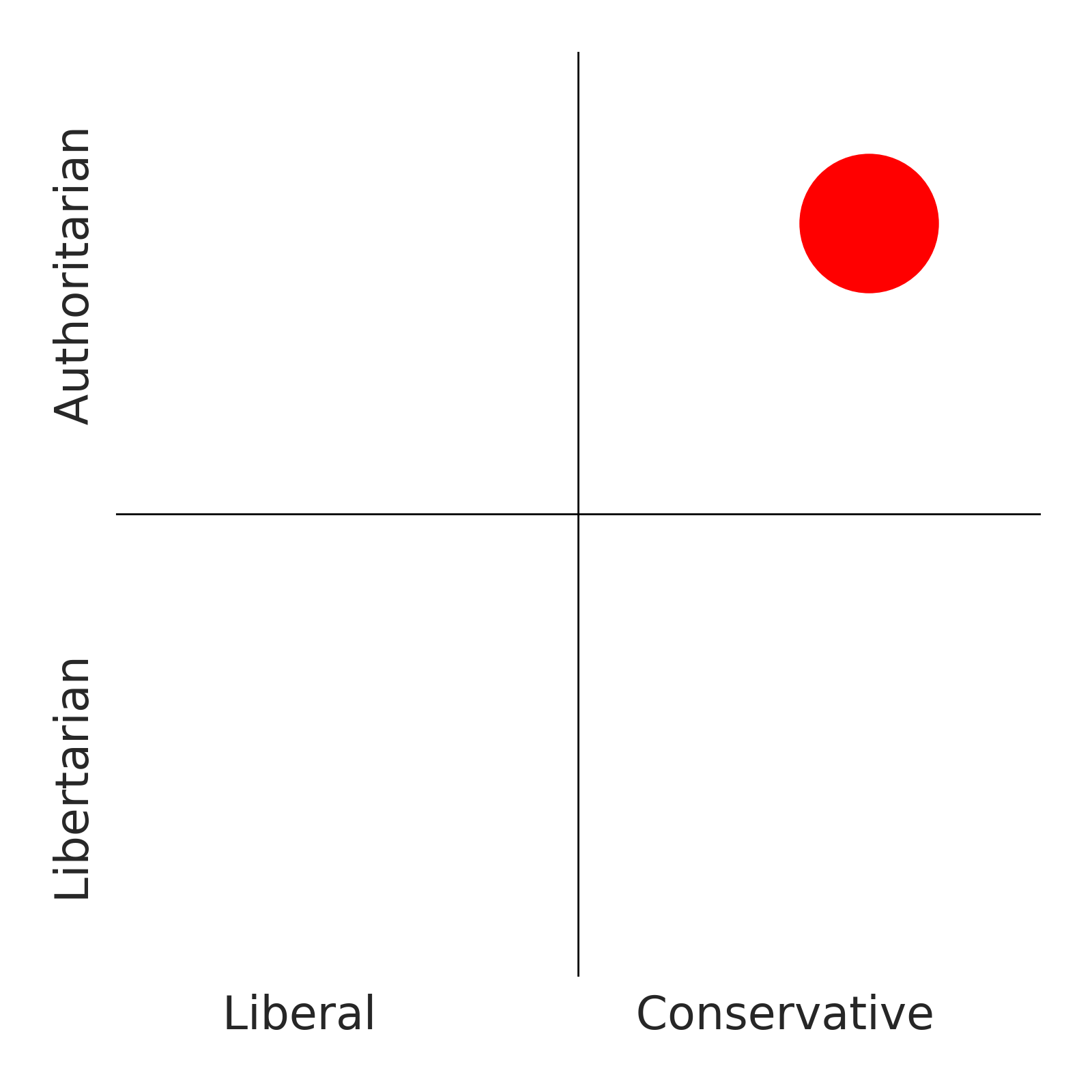
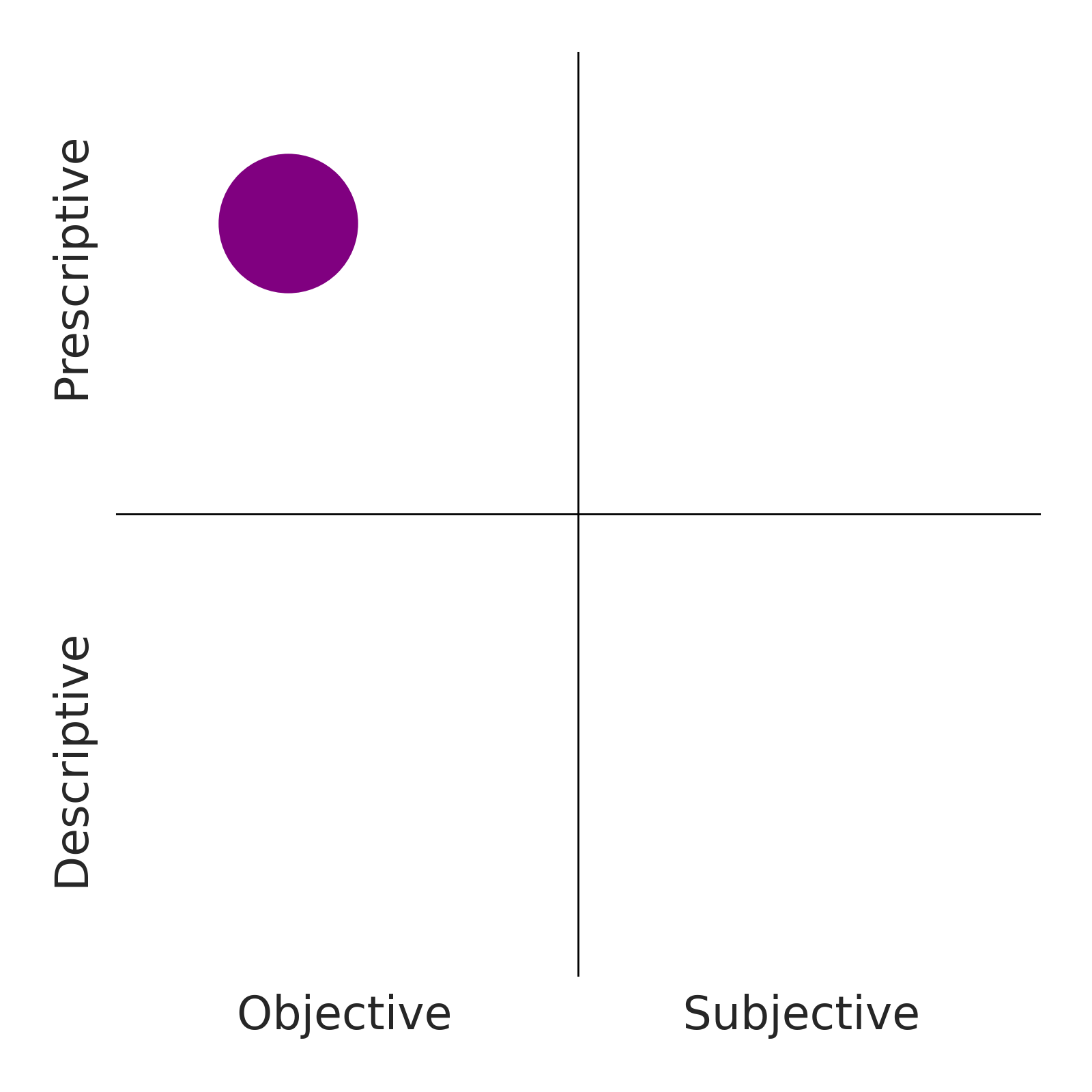
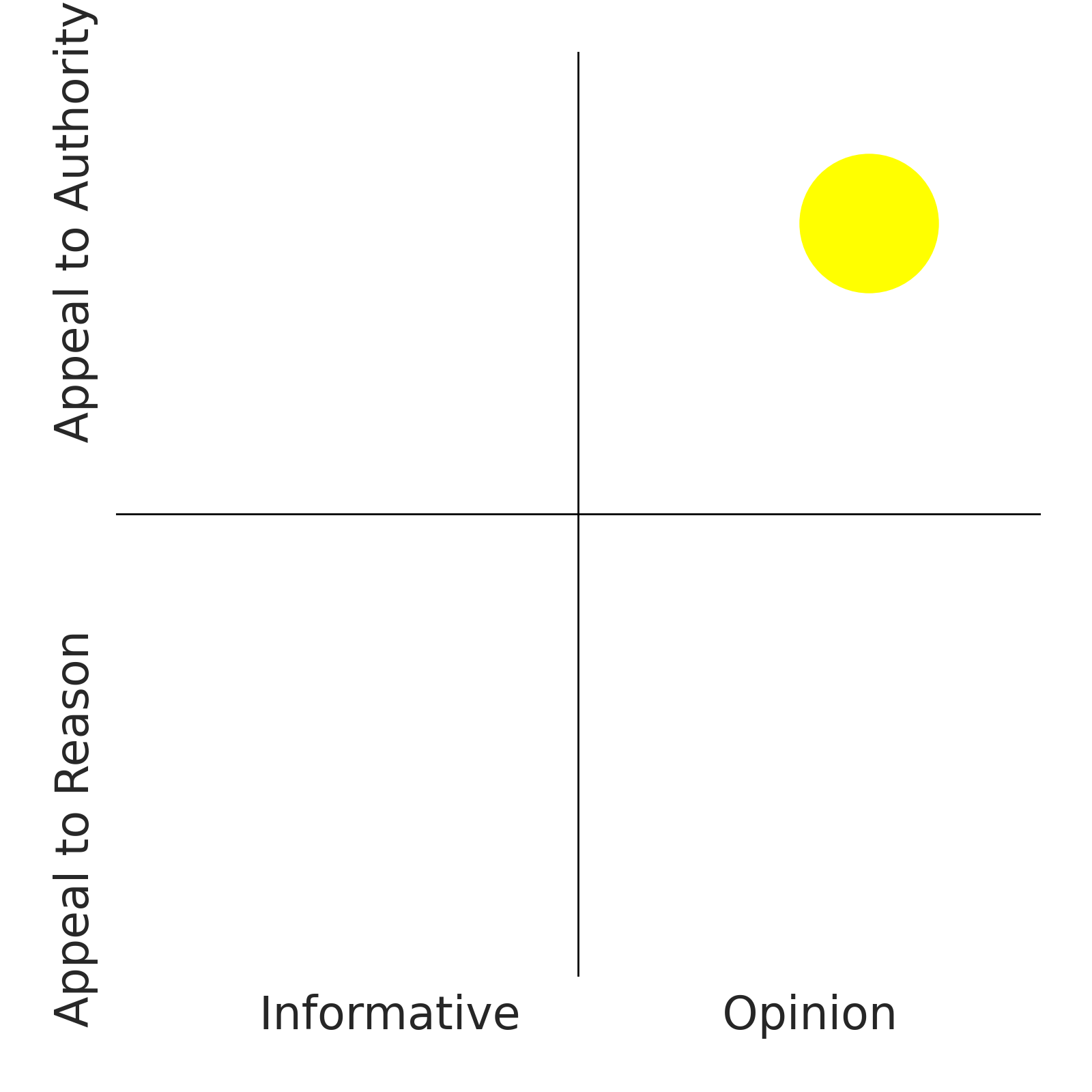
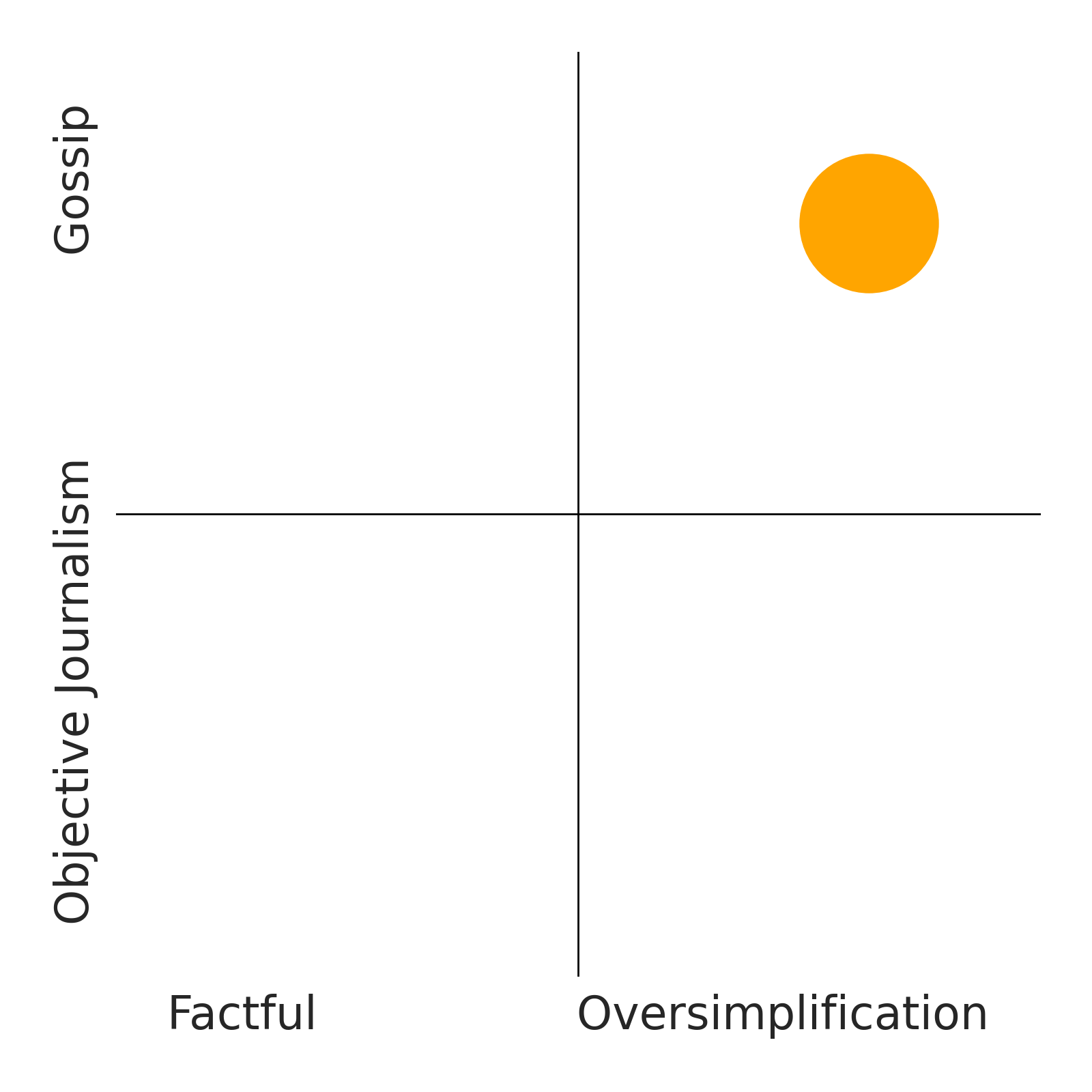
Frames the subject by equating it with 'climate change hysteria' and treats Al Gore and Greta Thunberg as scare-mongering figures who warned of an 'unspeakable fate,' implying the current case is similarly overblown.
The supplied text is a fragment beginning mid-comparison; the antecedent of 'It' and the surrounding argument are not provided.
Automated analysis; not human reviewed. Limitations: Only a single-sentence fragment was supplied; the unseen antecedent of 'It' leaves the target of comparison and broader argument unavailable. · 10 of 55 available dimensions scored; omitted dimensions are not treated as neutral. · Verified supporting quotes for 10 of 10 scored dimensions.
Claim: The excerpt uses a conservative-coded label for climate concern and names prominent figures associated with climate advocacy.
“It is similar to that of climate change hysteria” · exact text match
“when we were told by Al Gore and Greta Thunberg that we faced an unspeakable fate” · exact text match
Why: Calling climate concern 'hysteria' and pairing it with Al Gore and Greta Thunberg signals a conservative framing, though the excerpt is too short to confirm the full position.
Claim: The sentence is an evaluative opinion presented without evidence.
“It is similar to that of climate change hysteria” · exact text match
Why: The comparison is a value judgment expressed through a loaded metaphor rather than neutral description.
Claim: The excerpt heightens drama with 'unspeakable fate' and 'hysteria.'
“we faced an unspeakable fate” · exact text match
“climate change hysteria” · exact text match
Why: These are emotionally charged, attention-grabbing phrasings even in a dismissive context.
Claim: The sentence is a subjective assertion presented as a comparison.
“It is similar to that of climate change hysteria” · exact text match
Why: It contains no verifiable facts and is framed as a personal or rhetorical judgment.
Claim: The excerpt enters a contested political debate over climate policy with a charged label.
“Al Gore and Greta Thunberg” · exact text match
“climate change hysteria” · exact text match
Why: Naming prominent climate advocates and using 'hysteria' places the claim on one side of a political and cultural split.
Claim: The excerpt reduces climate warnings to an 'unspeakable fate' and giving up fossil fuels.
“we faced an unspeakable fate unless we gave up fossil fuels” · exact text match
Why: This condenses a complex policy and scientific debate into a single alarming demand.
Claim: The wording conveys contempt and fear through 'hysteria' and 'unspeakable fate.'
“climate change hysteria” · exact text match
“unspeakable fate” · exact text match
Why: Both terms are emotionally charged and negative in context.
Claim: The excerpt offers no sourcing, data, or uncertainty markers for its assertion.
“It is similar to that of climate change hysteria” · exact text match
Why: As a short opinion fragment, it is not presented as a verifiable news claim, so credibility in an evidentiary sense is low.
Claim: The excerpt dismisses a position with the emotional label 'hysteria' instead of engaging its reasoning.
“It is similar to that of climate change hysteria” · exact text match
Why: Using 'hysteria' as a pejorative label is an emotionally driven dismissal rather than a reasoned evaluation.
Claim: The excerpt uses loaded framing and rhetorical labeling to steer the reader's response.
“climate change hysteria” · exact text match
“we faced an unspeakable fate” · exact text match
Why: The labels frame the target unfavorably before any evidence is offered, a mild manipulative device.
Only a single-sentence fragment was supplied; the unseen antecedent of 'It' leaves the target of comparison and broader argument unavailable.
October 03, 2026 · 0 shares
The episode is framed as a sensational, gossipy confrontation, with the White House's ad hominem retort given lead billing.
Automated analysis; not human reviewed. Limitations: The supplied text gives no publication name, date, or byline, so the event and quote selection cannot be independently checked. · 3 of 55 available dimensions scored; omitted dimensions are not treated as neutral. · Verified supporting quotes for 3 of 3 scored dimensions.
Claim: The article dramatizes an insult exchange with loaded framing such as 'mock' and 'sharp rebuke' instead of neutral description.
“used an acceptance speech at a Los Angeles charity gala to mock President Trump and first lady Melania Trump, drawing a sharp rebuke from the White House.” · exact text match
Why: These words characterize the event as an attack and counterattack, maximizing conflict and spectacle.
Claim: The article's leading details are personal insults and speculation about Melania Trump's appearance and marriage, presented as news.
“a surgically enhanced, cold-hearted Yugoslavian escort who clearly hates her husband” · exact text match
Why: The story is built around Lorre's personal insults to the first lady and the White House's insulting reply, which is gossip framing rather than substantive policy reporting.
Claim: The article's overall affect is negative, emphasizing contempt and crude ridicule from both sides.
“cold-hearted Yugoslavian escort” · exact text match
“has completely rotted his peanut-sized brain.” · exact text match
Why: The selected quoted phrases are hostile and contemptuous, and the article gives no counterbalancing neutral framing.
The supplied text gives no publication name, date, or byline, so the event and quote selection cannot be independently checked.
Publisher framing substitutes a loaded 'apologist for terror' accusation for any visible evidence, pairing a harsh subjective label with a plain announcement of the award.
Automated analysis; not human reviewed. Limitations: The supplied text is only a headline and one opening sentence; the argument and evidence behind the 'apologist for terror' characterization are unavailable, so all scores rest on a fragment. · 14 of 55 available dimensions scored; omitted dimensions are not treated as neutral. · Verified supporting quotes for 14 of 14 scored dimensions.
Claim: The attack on an international human rights figure as a 'terror apologist' reflects a right-of-center framing.
“Navi Pillay: Apologist for terror, not force for peace.” · exact text match
Why: Casting an international human rights lawyer as a terror apologist is characteristic conservative-side commentary, though the fragment leaves the political direction somewhat ambiguous.
Claim: The headline substitutes a subjective characterization for neutral description.
“Navi Pillay: Apologist for terror, not force for peace.” · exact text match
Why: 'Apologist for terror' is an evaluative judgment, not a factual description.
Claim: The headline leads with an alarming accusation rather than the underlying news.
“Navi Pillay: Apologist for terror, not force for peace.” · exact text match
Why: Branding the award recipient with a 'terror' label is sensational framing of a routine award announcement.
Claim: The visible content is a narrow professional-award controversy plus a personal attack.
“In September 2023, I learned that the American Branch of the International Law Association would bestow its highest award on South African international human rights lawyer Navi Pillay.” · exact text match
Why: The fragment offers limited general-interest substance beyond the headline accusation.
Claim: The headline uses an inflammatory accusation likely to provoke outrage.
“Navi Pillay: Apologist for terror, not force for peace.” · exact text match
Why: 'Apologist for terror' is outrage-adjacent labeling.
Claim: The visible framing is evaluative opinion rather than reported fact.
“Navi Pillay: Apologist for terror, not force for peace.” · exact text match
Why: The characterization is a personal judgment, with first-person narration in the opening line.
Claim: The attack uses politically charged 'terror' and 'peace' labels against a human rights figure.
“Navi Pillay: Apologist for terror, not force for peace.” · exact text match
Why: Terror-and-peace framing is a political characterization of an award recipient.
Claim: A human rights career is reduced to a single stigmatizing label.
“Navi Pillay: Apologist for terror, not force for peace.” · exact text match
Why: The headline compresses the subject into one accusatory category.
Claim: The 'terror apologist' characterization is stated as settled fact without visible support.
“Navi Pillay: Apologist for terror, not force for peace.” · exact text match
Why: The label appears unqualified despite no supporting evidence in the supplied text.
Claim: The framing is a charged ideological attack rather than neutral analysis.
“Navi Pillay: Apologist for terror, not force for peace.” · exact text match
Why: The headline's function is to condemn, not to examine.
Claim: The tone toward Pillay is hostile and negative.
“Navi Pillay: Apologist for terror, not force for peace.” · exact text match
Why: The label is an attack expressing strong negative affect.
Claim: The supplied text presents a serious accusation with no visible sourcing, attribution, or hedging.
“Navi Pillay: Apologist for terror, not force for peace.” · exact text match
Why: Visible epistemic practice is limited to first-person assertion; the accusation is unsubstantiated in the text shown.
Claim: The headline deploys loaded labeling ahead of any supporting evidence.
“Navi Pillay: Apologist for terror, not force for peace.” · exact text match
Why: Assigning a stigmatizing label before presenting a case is an observable loaded-framing technique.
Claim: A serious accusation is asserted with no supporting evidence, attribution, or qualification in the supplied text.
“Navi Pillay: Apologist for terror, not force for peace.” · exact text match
Why: Presenting a stigmatizing label as established, without visible substantiation, is a weak fairness signal.
The supplied text is only a headline and one opening sentence; the argument and evidence behind the 'apologist for terror' characterization are unavailable, so all scores rest on a fragment.
September 21, 2026 · 0 shares
Frames Trump as waging an aggressive 'war' on news media that risks damaging coverage of major events.
Automated analysis; not human reviewed. Limitations: Only the headline and lede were available; the three outlets and the White House's stated rationale were not in the supplied excerpt. · 9 of 55 available dimensions scored; omitted dimensions are not treated as neutral. · Verified supporting quotes for 9 of 9 scored dimensions.
Claim: The publisher frames the president's press restrictions as an aggressive attack on a valued institution.
“Trump's war with news media” · exact text match
“full-on battle with the media” · exact text match
Why: War-and-battle metaphors and the word 'eject' cast the White House's action as hostile while presenting the media as the affected victim.
Claim: The publisher uses evaluative and metaphorical language rather than purely factual description.
“full-on battle with the media” · exact text match
“one of the most important weeks of his second term” · exact text match
Why: 'Full-on battle' and 'most important weeks' are judgments, not neutral observations.
Claim: The publisher amplifies drama with war and threat language.
“Trump's war with news media threatens network blackout” · exact text match
Why: Military metaphor and 'threatens' heighten emotional stakes beyond the underlying events.
Claim: The publisher emphasizes potential harm and negative consequences.
“could significantly hamper coverage” · exact text match
“threatens network blackout” · exact text match
Why: The expected effect is described as damage to coverage, a negative outlook.
Claim: The publisher invokes fear of a media coverage blackout.
“threatens network blackout” · exact text match
Why: The word 'threatens' activates alarm about loss of access to important news.
Claim: The publisher inserts interpretive commentary and an unproven importance judgment.
“full-on battle with the media” · exact text match
“one of the most important weeks of his second term” · exact text match
Why: Charged conflict language and a sweeping significance claim are matters of opinion.
Claim: The publisher's wording carries a distinctly negative emotional valence.
“Trump's war with news media” · exact text match
“full-on battle with the media” · exact text match
Why: The imagery of war and battle evokes fear and anger.
Claim: The publisher forecasts possible outcomes rather than reporting completed facts.
“could significantly hamper coverage” · exact text match
“threatens network blackout” · exact text match
Why: The conditional 'could' and predictive 'threatens' signal speculation about the future.
Claim: The publisher uses loaded framing to shape reader perception of the dispute.
“Trump's war with news media” · exact text match
“full-on battle with the media” · exact text match
Why: The conflict was escalated rhetorically by war and battle metaphors without presented evidence for that characterization.
Only the headline and lede were available; the three outlets and the White House's stated rationale were not in the supplied excerpt.
October 05, 2026 · 0 shares
The framing gives prominence to wounded soldiers' accusation that the military medical system failed them, using a visceral shrapnel simile to amplify emotional impact.
Automated analysis; not human reviewed. Limitations: The supplied text is a two-sentence excerpt, so assessment is limited by missing full-article context and any response from the military. · 4 of 55 available dimensions scored; omitted dimensions are not treated as neutral. · Verified supporting quotes for 4 of 4 scored dimensions.
Claim: The publisher uses subjective, literary language rather than neutral reporting.
“The shrapnel hit Army Lt. Col. Arturo Lincon's body like shattered glass.” · exact text match
Why: The simile is a stylistic choice that dramatizes the injury instead of plainly reporting it.
Claim: The article uses dramatic imagery to heighten emotional impact.
“The shrapnel hit Army Lt. Col. Arturo Lincon's body like shattered glass.” · exact text match
Why: The comparison to shattered glass is vivid and sensationalizes the injury.
Claim: The article foregrounds wounded soldiers' grievances, presenting them as victims of the military medical system.
“Wounded soldiers say military's medical system failed them after Iranian drone strikes.” · exact text match
Why: The lead emphasizes the soldiers' complaint of systemic failure without including the military's response or other context.
Claim: The language is emotionally negative, emphasizing harm and failure.
“military's medical system failed them” · exact text match
“like shattered glass” · exact text match
Why: The words 'failed' and the shattered-glass simile frame the events negatively.
The supplied text is a two-sentence excerpt, so assessment is limited by missing full-article context and any response from the military.
October 14, 2026 · 0 shares
Publisher framing is overtly pro-GOP, presenting the Supreme Court ruling as a defeat for Democrats and using loaded language ('slapped down') to cast the Democratic challenge as an attempt to hinder Republicans rather than as a legal dispute.
Automated analysis; not human reviewed. Limitations: The supplied text is only a headline plus one lede sentence; the case name, legal arguments, vote breakdown, and the challenge's stated basis are absent, so the partisan characterizations and the 'benefit GOP' claim cannot be verified against the full record. · 18 of 55 available dimensions scored; omitted dimensions are not treated as neutral. · Verified supporting quotes for 18 of 18 scored dimensions.
Claim: The framing is partisan and favors Republicans, casting the Democratic challenge as obstruction.
“slapped down Democrats' latest attempt to hinder Republicans' election-season ad buying” · exact text match
“Supreme Court allows FCC ad rules that benefit GOP to remain for 2026 election” · exact text match
Why: Combative verb and unattributed motive characterization frame Democrats negatively and the outcome as a GOP win.
Claim: A news lede embeds editorial characterization of the challengers' motives.
“Democrats' latest attempt to hinder Republicans' election-season ad buying” · exact text match
Why: Motive characterization is presented as fact rather than attributed to any source.
Claim: The lede uses vivid combat language for a procedural ruling.
“slapped down” · exact text match
Why: Loaded verb dramatizes a routine procedural decision.
Claim: The ruling is a consequential election-law development for 2026 campaign ad rates.
“allows FCC ad rules that benefit GOP to remain for 2026 election” · exact text match
Why: It affects campaign advertising rules for a federal election cycle.
Claim: The text reports a ruling and its effect without advocating any action.
“ruling Wednesday that the Federal Communications Commission does not need to make an immediate decision on what ad rates apply to coordinated expenditures” · exact text match
Why: Content is reportorial; no policy prescription appears.
Claim: The characterization presupposes the challenge's purpose was partisan hindrance rather than demonstrating it.
“Democrats' latest attempt to hinder Republicans' election-season ad buying” · exact text match
Why: The motive is assumed within the framing rather than evidenced.
Claim: The report's characterization of the challenge reflects the publisher's viewpoint.
“attempt to hinder Republicans' election-season ad buying” · exact text match
Why: Interpretive motive claim is stated as fact within a news report.
Claim: The entire text concerns partisan electoral advantage in the 2026 election.
“Supreme Court allows FCC ad rules that benefit GOP to remain for 2026 election” · exact text match
Why: The subject is explicitly about partisan advantage in campaign advertising rules.
Claim: A procedural FCC rate-rule dispute is reduced to a simple GOP-benefit/Democratic-hindrance narrative.
“Supreme Court allows FCC ad rules that benefit GOP to remain for 2026 election” · exact text match
Why: No legal or procedural detail is provided beyond the partisan frame.
Claim: Republicans are framed as targets of obstruction.
“hinder Republicans' election-season ad buying” · exact text match
Why: The GOP is portrayed as benefiting despite Democratic attempts to hinder it.
Claim: The text asserts the rules' partisan benefit and the challengers' motive as unqualified fact.
“FCC ad rules that benefit GOP” · exact text match
Why: Evaluative claims are stated without support or hedging in the supplied text.
Claim: The framing is consistently partisan across headline and lede.
“slapped down Democrats' latest attempt to hinder Republicans' election-season ad buying” · exact text match
Why: Both the headline and body align with one party's perspective.
Claim: The tone is negative toward Democrats and triumphant about the ruling.
“slapped down Democrats' latest attempt to hinder Republicans' election-season ad buying” · exact text match
Why: Hostile characterization of one party gives the brief a negative emotional valence.
Claim: The text offers specific facts but no named case, sources, or dissent, with one-sided framing.
“The Supreme Court slapped down Democrats' latest attempt” · exact text match
Why: The verifiable-sounding core lacks attribution and the framing is overtly partisan.
Claim: The text coherently reports a specific ruling, agency, subject, and timing.
“ruling Wednesday that the Federal Communications Commission does not need to make an immediate decision on what ad rates apply to coordinated expenditures” · exact text match
Why: The factual core is specific and internally consistent despite the partisan framing.
Claim: Loaded framing and unattributed motive attribution shape reader perception of the dispute.
“slapped down Democrats' latest attempt to hinder Republicans' election-season ad buying” · exact text match
Why: Presents a partisan interpretation as fact while omitting the challenge's stated basis or the ruling's reasoning.
Claim: One-sided motive framing without the challenge's basis or the ruling's reasoning undermines fairness signals.
“The Supreme Court slapped down Democrats' latest attempt” · exact text match
Why: No sources, case details, or opposing position appear in a lede that characterizes a party's motives.
Claim: The text efficiently conveys the ruling's core facts in two sentences but adds no depth.
“ruling Wednesday that the Federal Communications Commission does not need to make an immediate decision on what ad rates apply to coordinated expenditures” · exact text match
Why: A competent brief conveying ruling, agency, subject, and timing, with no analysis or context.
The supplied text is only a headline plus one lede sentence; the case name, legal arguments, vote breakdown, and the challenge's stated basis are absent, so the partisan characterizations and the 'benefit GOP' claim cannot be verified against the full record.
October 08, 2026 · 0 shares
The brief report frames Trump's Texas rally as a defensive effort against "sweeping Democratic victories," using a negative political climate and protester interruption to cast the event as embattled.
Ken Paxton is a Republican running for U.S. Senate in Texas; Texas is described as the nation's most populous red state.
Automated analysis; not human reviewed. Limitations: The supplied text is only two sentences, limiting reliable assessment of publisher framing. · 29 of 55 available dimensions scored; omitted dimensions are not treated as neutral. · Verified supporting quotes for 17 of 29 scored dimensions.
Claim: The report adopts a Democratic-favorable frame by casting Trump's rally as an effort to stave off sweeping Democratic victories.
“fought to rally Texas voters behind Senate candidate Ken Paxton on Wednesday night in a bid to stave off sweeping Democratic victories” · exact text match
Why: Describing Democratic wins as a sweeping prospect frames GOP efforts as defensive against an ascendant opposition.
Claim: The report uses mildly dramatic, horse-race language about a poor political climate and sweeping Democratic victories.
“facing protesters and a poor political climate” · exact text match
Why: The phrasing heightens drama around the rally without detailed evidence.
Claim: The report is bearish on Trump's political prospects in Texas.
“poor political climate” · exact text match
Why: The negative characterization suggests a bearish outlook.
Claim: The report presents a pessimistic outlook for Trump and Republicans, emphasizing a poor climate and defensive posture.
“fought to rally Texas voters” · exact text match
Why: The word 'fought' and the defensive framing suggest an unfavorable political outlook.
Claim: The report is brief and largely conventional political news.
“Trump interrupted by protesters as he fights to rally Texas voters behind Paxton in U.S. Senate race.” · exact text match
Why: The content lacks distinctive detail or analysis.
Claim: The report describes events but also prescribes a defensive narrative about needing to stave off Democratic victories.
“in a bid to stave off sweeping Democratic victories” · exact text match
Why: The framing implies a necessary political response rather than neutral description.
Claim: The report uses mildly alarmist language about sweeping Democratic victories.
“stave off sweeping Democratic victories” · exact text match
Why: The phrase implies a threat from Democratic electoral success.
Claim: The report asserts a poor political climate without attribution or supporting detail.
“facing protesters and a poor political climate” · exact text match
Why: The claim about political climate is an evaluative characterization rather than a verified fact.
Claim: The report is entirely about electoral politics and campaign dynamics.
“President Trump, facing protesters and a poor political climate, fought to rally Texas voters behind Senate candidate Ken Paxton” · exact text match
Why: The content is exclusively focused on a political rally and Senate race.
Claim: The report states a poor political climate as fact without qualification.
“facing protesters and a poor political climate” · exact text match
Why: The unqualified assertion exceeds the supplied evidence.
Claim: The framing treats Democratic electoral success as a significant establishment-aligned victory to be staved off.
“stave off sweeping Democratic victories” · exact text match
Why: The term 'stave off' implicitly aligns with the existing establishment against Democratic gains.
Claim: The report conveys a slightly negative tone toward the rally and Trump's position.
“facing protesters and a poor political climate” · exact text match
Why: The descriptors 'protesters' and 'poor political climate' create a negative emotional cast.
Claim: The report lacks sourcing, quotes, or verifiable detail, limiting credibility.
“Trump interrupted by protesters as he fights to rally Texas voters behind Paxton in U.S. Senate race.” · exact text match
Why: No attribution or evidence is provided for the claims.
Claim: The report forecasts that Democratic victories could be sweeping if Trump fails to rally voters.
“in a bid to stave off sweeping Democratic victories” · exact text match
Why: The phrase is a forward-looking projection about electoral outcomes.
Claim: The report uses loaded framing to imply the rally is defensive and struggling without offering evidence.
“fought to rally” · exact text match
Why: The verb 'fought' subtly portrays the effort as embattled.
Claim: The two-sentence text is too short to reliably detect AI authorship.
“Trump interrupted by protesters as he fights to rally Texas voters behind Paxton in U.S. Senate race.” · exact text match
Why: Insufficient textual length for independent AI indicators.
Claim: The report offers no sourcing, quotes, or attribution for its characterizations.
“Trump interrupted by protesters as he fights to rally Texas voters behind Paxton in U.S. Senate race.” · exact text match
Why: Lack of attribution limits visible integrity signals.
The supplied text is only two sentences, limiting reliable assessment of publisher framing.
October 10, 2026 · 0 shares
The report relies entirely on a single national government's self-defense framing without independent verification or an Eritrean response.
Ethiopia and Eritrea fought a 1998–2000 border war, and a 2018 peace agreement was later followed by renewed tensions.
Automated analysis; not human reviewed. Limitations: The article is a very short, single-source report, so bias and credibility dimensions rest on limited textual evidence. · 55 of 55 available dimensions scored; omitted dimensions are not treated as neutral. · Verified supporting quotes for 26 of 55 scored dimensions.
Claim: The framing centers state and U.N. institutional authority rather than popular or grassroots perspectives.
“Ethiopia told the U.N. Security Council on Friday it is taking measures in self-defense against Eritrea” · exact text match
Why: The sole source and venue are national government and U.N. institutions, with no popular or grassroots framing.
Claim: The report emphasizes state military action, border control, and U.N. organs over individual liberties.
“taking measures in self-defense against Eritrea” · exact text match
Why: Acts of state military self-defense and a U.N. Security Council disclosure with no individual-liberty dimension lean authoritarian in framing.
Claim: The report is confined to attributed factual statements without subjective interpretation.
“Ethiopia told the U.N. Security Council on Friday it is taking measures in self-defense against Eritrea, accusing its neighbor of sending troops across the border and occupying parts of northern Ethiopia.” · exact text match
Why: The text is a plain factual report of a statement and accusation.
Claim: The report presents the claim plainly without sensational language or emotional cues.
“Ethiopia told the U.N. Security Council on Friday it is taking measures in self-defense against Eritrea” · exact text match
Why: No sensational words or framing appear in the report.
Claim: The report carries a mildly negative tone because it describes cross-border troops and occupation.
“sending troops across the border and occupying parts of northern Ethiopia” · exact text match
Why: The reported events are conflictual and negative in tone.
Claim: The report describes a claim and does not prescribe a policy or action.
“Ethiopia told the U.N. Security Council on Friday it is taking measures in self-defense against Eritrea” · exact text match
Why: The article is purely descriptive of a statement, with no recommendations.
Claim: The report describes military self-defense measures without advocating escalation or restraint.
“taking measures in self-defense” · exact text match
Why: References to self-defense and troops mildly lean hawkish, but the text is neutral and only descriptive.
Claim: The report describes cross-border troops and occupation, which are mildly threat-evoking events.
“sending troops across the border and occupying parts of northern Ethiopia” · exact text match
Why: The subject matter is conflictual, but the report uses no fear-baiting rhetoric or urgency cues.
Claim: The report presents Ethiopia's self-defense characterization without weighing whether it is justified.
“it is taking measures in self-defense against Eritrea” · exact text match
Why: The self-defense label is carried through from the source without independent assessment, though it remains attributed.
Claim: The report concerns a national government's diplomatic and military statement to the U.N. Security Council.
“Ethiopia told the U.N. Security Council on Friday it is taking measures in self-defense against Eritrea” · exact text match
Why: The subject is inter-state politics and military conflict reported through a political body.
Claim: The report presents the conflict as a one-sided self-defense claim without historical or regional complexity.
“Ethiopia told the U.N. Security Council on Friday it is taking measures in self-defense against Eritrea, accusing its neighbor of sending troops across the border and occupying parts of northern Ethiopia.” · exact text match
Why: The short report omits background and counter-perspectives, simplifying the conflict.
Claim: The report's authority rests on Ethiopia's statement to the U.N. Security Council rather than independent evidence.
“Ethiopia told the U.N. Security Council on Friday” · exact text match
Why: The sole source is a national government speaking through the U.N., an appeal to institutional authority.
Claim: No response from Eritrea or other parties is included.
“accusing its neighbor of sending troops across the border and occupying parts of northern Ethiopia” · exact text match
Why: The report presents only Ethiopia's account and does not seek the accused party's response.
Claim: The report frames Ethiopia as the victim of Eritrean cross-border action.
“accusing its neighbor of sending troops across the border and occupying parts of northern Ethiopia” · exact text match
Why: The self-defense and occupation framing casts Ethiopia as the party under attack.
Claim: The report states the accusation plainly without signaling that it is unverified by other parties.
“accusing its neighbor of sending troops across the border and occupying parts of northern Ethiopia” · exact text match
Why: The factual phrasing does not qualify the accusation as unconfirmed, though attribution to Ethiopia is present.
Claim: The report has minimal ideological content, focusing on a diplomatic statement.
“Ethiopia told the U.N. Security Council on Friday it is taking measures in self-defense against Eritrea” · exact text match
Why: The subject matter is political but no ideological agenda is advanced.
Claim: The report relies on national government and U.N. Security Council framing as its authoritative source.
“Ethiopia told the U.N. Security Council on Friday it is taking measures in self-defense against Eritrea” · exact text match
Why: The sole quoted actor and institutional context are state and international-establishment bodies.
Claim: The report's tone is mildly negative due to the conflictual content.
“sending troops across the border and occupying parts of northern Ethiopia” · exact text match
Why: The content is about armed conflict and occupation, giving a mildly negative valence.
Claim: The report carries Ethiopia's self-defense framing while giving no equivalent voice or characterization to Eritrea.
“Ethiopia told the U.N. Security Council on Friday it is taking measures in self-defense against Eritrea, accusing its neighbor of sending troops across the border and occupying parts of northern Ethiopia.” · exact text match
Why: Only one side's account is presented, though the report is very short rather than a systematic double standard.
Claim: The report attributes its central claim to a named source but offers no independent confirmation or Eritrean response.
“Ethiopia told the U.N. Security Council on Friday it is taking measures in self-defense against Eritrea” · exact text match
Why: Attribution is present, but single-sourcing and lack of response limit credibility.
Claim: The report is factual and neutral in tone, though it lacks independent verification.
“Ethiopia told the U.N. Security Council on Friday it is taking measures in self-defense against Eritrea, accusing its neighbor of sending troops across the border and occupying parts of northern Ethiopia.” · exact text match
Why: Neutral factual reporting, but single-source, indirectly tempering full rationality.
Claim: The report carries speculation about Eritrea's cross-border actions as relayed by Ethiopia.
“accusing its neighbor of sending troops across the border and occupying parts of northern Ethiopia” · exact text match
Why: The report relays an allegation about events, though it is attributed rather than the publisher's own speculation.
Claim: The report presents only one side and a self-defense label that may pre-shape interpretation.
“Ethiopia told the U.N. Security Council on Friday it is taking measures in self-defense against Eritrea” · exact text match
Why: Asymmetric sourcing and the loaded self-defense frame are mild manipulation signals, but the report is brief and attributed.
Claim: The report attributes its central claim to a named source and states it without asserting it as verified fact.
“Ethiopia told the U.N. Security Council on Friday it is taking measures in self-defense against Eritrea, accusing its neighbor of sending troops across the border and occupying parts of northern Ethiopia.” · exact text match
Why: Attribution and verb choice signal honesty, though the report does not solicit an Eritrean response.
Claim: The report is a brief, clear, factual news item with limited analysis.
“Ethiopia told the U.N. Security Council on Friday it is taking measures in self-defense against Eritrea, accusing its neighbor of sending troops across the border and occupying parts of northern Ethiopia.” · exact text match
Why: Short factual report that is clear but lacks depth.
Claim: The report attributes the conflict entirely to Eritrea's alleged incursion without broader context.
“accusing its neighbor of sending troops across the border and occupying parts of northern Ethiopia” · exact text match
Why: Eritrea is named as the sole aggressor in Ethiopia's account, though this is only one side's allegation.
The article is a very short, single-source report, so bias and credibility dimensions rest on limited textual evidence.
May 13, 2026 · 0 shares
The passage advances a conservative-libertarian interpretation of the Constitution, praising Founders’ intent for minimal government and individual sovereignty, criticizing Hamiltonian centralization and Supreme Court interpretation, and deploying pro-establishment rhetoric through selective historical framing and rhetorical questions.
Concise, factful, accurate, balanced context for the article in one sentence.
I may reflect training data bias toward conservative-leaning content.
May 31, 2026 · 0 shares
Strong conservative, hawkish editorial stance; frames Iran as existential threat and gas-price sacrifice as patriotic duty, using casualty tallies and moral framing to advocate policy while denouncing dissent.
Opinion piece advocating aggressive foreign policy toward Iran and encouraging higher gas costs as a national-security measure; cites historical attacks and moral framing.
Conservative-leaning training data; may overrepresent pro-security narratives.
The text presents a highly partisan framing that attributes rising utility costs to Democratic green-energy policies, uses an us-versus-them tone, and asserts causal links without evidence.
A short opinion-style passage arguing rising utility costs are due to Democratic green-energy policies.
I may overfit to partisan cues due to training data
April 04, 2026 · 0 shares
Conservative-leaning, opinion-driven digest that advocates voter-ID, critiques healthcare denials as a scam, and contrasts U.S. democracy with China’s autocracy through selective data and charged language.
A Washington Times opinion roundup featuring conservative columns on voting ID, China propaganda, and healthcare policy.
I reflect a conservative-leaning data mix; aim for balanced, transparent evaluation.
Training-data influenced; aims neutral analysis; may under/overemphasize political framing.
June 14, 2026 · 0 shares
An op-ed with strong conservative framing denounces New York's renaming bill as anti-family 'lunacy' and a symptom of woke liberalism, using selective data and quotes to depict Democrats and LGBTQ advocates as undermining traditional family values.
Partisan op-ed criticizing New York's renaming bill in family court, presenting legislative vote details and media references to argue ideological overreach.
Objectivity-first; aware of text-based political framing in training data.
August 17, 2026 · 0 shares
The framing insists on the CCP's direct responsibility for the pandemic, using accusatory language and implicit assumptions about Chinese motives, while presenting a one-sided account.
The article is an opinion column by Miles Yu, director of the China Center at the Hudson Institute, appearing in The Washington Times. It discusses the origins of COVID-19 and places blame on the Chinese government.
Automated analysis; not human reviewed. Limitations: The analysis is based solely on the article's text, which is clearly opinionated and one-sided, potentially leading to overestimation of bias indicators. · 30 of 54 available dimensions scored; omitted dimensions are not treated as neutral. · Verified supporting quotes for 0 of 30 scored dimensions.
The analysis is based solely on the article's text, which is clearly opinionated and one-sided, potentially leading to overestimation of bias indicators.
Presents an unequivocal anti-death-penalty stance through a Voltaire aphorism, without counterarguments or developed reasoning.
Voltaire was an 18th-century French Enlightenment writer; the death penalty is a legal punishment debated as a political and moral issue.
Automated analysis; not human reviewed. Limitations: The text is extremely brief—only a headline-style assertion and a Voltaire quote—so most bias dimensions cannot be assessed reliably. · 6 of 55 available dimensions scored; omitted dimensions are not treated as neutral. · Verified supporting quotes for 6 of 6 scored dimensions.
Claim: The text is framed as an explicitly subjective argument rather than objective reporting.
“An argument against the death penalty.” · exact text match
Why: The phrase labels the content as an argument, signaling a subjective normative stance.
Claim: The text is prescriptive, advocating a position on the death penalty.
“An argument against the death penalty.” · exact text match
Why: It takes a normative stance rather than merely describing a state of affairs.
Claim: The text is highly opinionated, offering no factual reporting.
“An argument against the death penalty.” · exact text match
Why: The text is explicitly an argument, which is an opinion.
Claim: The text takes a stance on a contested political/legal policy issue.
“An argument against the death penalty.” · exact text match
Why: The death penalty is a political and legal policy, and the text advocates against it.
Claim: A complex policy debate is reduced to an aphorism without reasoning.
“It is forbidden to kill; therefore, all murderers are punished unless they kill in large numbers and to the sound of trumpets.” · exact text match
Why: The entire argument is presented through a single ironic quote, omitting complications and counterarguments.
Claim: The text relies on Voltaire's quoted authority as the argument.
“-- Voltaire (1694-1778)” · exact text match
Why: The quote is attributed to Voltaire and functions as the sole support for the anti-death-penalty position.
The text is extremely brief—only a headline-style assertion and a Voltaire quote—so most bias dimensions cannot be assessed reliably.
Frames AI development as a zero-sum geopolitical competition requiring aggressive American pursuit while dismissing regulatory and environmental concerns as harmful propaganda.
Automated analysis; not human reviewed. Limitations: The article is a short opinion column from a known conservative outlet; its framing may be more extreme than mainstream coverage, and my analysis depends on the assumption that the text is representative of the publisher's editorial stance. · 7 of 53 available dimensions scored; omitted dimensions are not treated as neutral. · Verified supporting quotes for 5 of 7 scored dimensions.
Claim: The article is entirely opinionated, offering no factual reporting, only commentary and persuasion.
“As you think about all of that, the most important thing to understand is that artificial intelligence will happen with or without American involvement in its development.” · exact text match
“None of that matters. When you think about data centers and artificial intelligence, ignore the propaganda.” · exact text match
Why: The entire piece is a first-person persuasive commentary with no neutral reporting.
Claim: The article is heavily political, targeting specific politicians and political ideologies.
“Team Sanders, motivated, as always, by their generalized dislike of other humans, has encouraged a moratorium on data centers, so the communists in Beijing can catch up to us.” · exact text match
“the last thing collectivists can tolerate is people earning more cash.” · exact text match
Why: Direct attacks on politicians and ideological labels (communists, collectivists) show intense political content.
Claim: The article reduces complex debates about AI regulation and data centers to a simple dichotomy of master or be mastered.
“The only real choice lies between technological mastery and strategic surrender” · exact text match
“All of the nonsense about data centers increasing electricity prices (they don’t), using too much water... and taking up too much land... is irrelevant.” · not found in supplied text
Why: Complex issues are dismissed without nuance, presenting only a binary choice.
Claim: The article expresses certainty about AI's inevitability, its benefits, and the irrelevance of concerns, without supporting evidence.
“The simple reality is that either AI is a generational opportunity that, should we master it, will transform the world for the better” · exact text match
“Of course they will, just like every other ratepayer does.” · exact text match
Why: Absolute statements of fact without hedging or evidence indicate overconfidence beyond what the text supports.
Claim: The article promotes a free-market nationalist ideology, attacking collectivism and advocating American technological dominance.
“Abundance fosters a sense of freedom; I can’t have that.” · exact text match
“Whoever masters AI will hold the economic heights for generations.” · not found in supplied text
Why: The text explicitly links freedom to abundance and attacks collectivism, showing a consistent ideological stance.
Claim: The article uses negative emotional appeals, including fear of China and scorn for opponents.
“those who engage in slavery, those whose economy is built on child labor and repression, those who commit genocide” · exact text match
“generalized dislike of other humans” · exact text match
Why: Highly negative emotional language aimed at provoking fear and anger.
Claim: The article uses loaded language, false dichotomy, and dismisses opposing views as propaganda without engaging with evidence.
“All the bleating from people such as Sen. Bernard Sanders” · exact text match
“the communists in Beijing” · exact text match
“The only real choice lies between technological mastery and strategic surrender” · exact text match
Why: Loaded ad hominem and false choice are observable manipulative techniques.
The article is a short opinion column from a known conservative outlet; its framing may be more extreme than mainstream coverage, and my analysis depends on the assumption that the text is representative of the publisher's editorial stance.
Alarmist, ideologically driven bias links Gen Z to societal collapse, relies on a Barna survey, and blames elites and media for cultural decline.
Conservative, religiously framed column arguing Gen Z's attitudes toward marriage and childbearing threaten future societal viability, citing Barna survey data on attitudes toward socialism, fertility rates, and church attendance.
Cautiously evaluate sources; potential conservative framing.
Presents an unequivocal anti-death-penalty stance through a Voltaire aphorism, without counterarguments or developed reasoning.
Voltaire was an 18th-century French Enlightenment writer; the death penalty is a legal punishment debated as a political and moral issue.
Automated analysis; not human reviewed. Limitations: The text is extremely brief—only a headline-style assertion and a Voltaire quote—so most bias dimensions cannot be assessed reliably. · 6 of 55 available dimensions scored; omitted dimensions are not treated as neutral. · Verified supporting quotes for 6 of 6 scored dimensions.
Claim: The text is framed as an explicitly subjective argument rather than objective reporting.
“An argument against the death penalty.” · exact text match
Why: The phrase labels the content as an argument, signaling a subjective normative stance.
Claim: The text is prescriptive, advocating a position on the death penalty.
“An argument against the death penalty.” · exact text match
Why: It takes a normative stance rather than merely describing a state of affairs.
Claim: The text is highly opinionated, offering no factual reporting.
“An argument against the death penalty.” · exact text match
Why: The text is explicitly an argument, which is an opinion.
Claim: The text takes a stance on a contested political/legal policy issue.
“An argument against the death penalty.” · exact text match
Why: The death penalty is a political and legal policy, and the text advocates against it.
Claim: A complex policy debate is reduced to an aphorism without reasoning.
“It is forbidden to kill; therefore, all murderers are punished unless they kill in large numbers and to the sound of trumpets.” · exact text match
Why: The entire argument is presented through a single ironic quote, omitting complications and counterarguments.
Claim: The text relies on Voltaire's quoted authority as the argument.
“-- Voltaire (1694-1778)” · exact text match
Why: The quote is attributed to Voltaire and functions as the sole support for the anti-death-penalty position.
The text is extremely brief—only a headline-style assertion and a Voltaire quote—so most bias dimensions cannot be assessed reliably.
Aim for neutrality; note conservative/establishment cues in text.
Conservative-leaning, highly subjective op-ed that brands SPLC as fraudulent and left-wing lunacy while elevating the World Congress of Families and traditional-family advocacy through selective quotes, religious framing, and anti-establishment rhetoric, signaling a prescriptive ideological stance rather than neutral analysis.
A conservative opinion piece arguing that SPLC is fraudulent and hypocritical while praising conservative family advocacy groups like the World Congress of Families, using religious framing and selective sourcing.
Balanced by design; aware of source biases; cautious with sensational claims.
Conservative-leaning, highly negative, and emotionally charged framing of Maryland Democrats' transgender bathroom policy, using loaded terms like pandering and a hyperbolic metaphor to discredit the stance while offering little supporting evidence and signaling motive skepticism.
A short, polemical critique alleging 17 Maryland Democrats in the Maryland General Assembly are pandering on transgender bathroom policy, employing provocative framing and loaded language.
I may over-index negative framing toward Democrats; limited sources
April 21, 2026 · 0 shares
An opinion letter accuses Pope Leo XIV of antisemitism and urges him to focus on persecuting Christians, presenting a highly inflammatory, biased narrative that frames religious groups as adversaries and depicts papal leadership as complicit in persecution.
An opinion letter asserting antisemitism in papal leadership and advocating persecution of Christians.
Text-limited; potential religious bias from training data
May 13, 2026 · 0 shares
The passage advances a conservative-libertarian interpretation of the Constitution, praising Founders’ intent for minimal government and individual sovereignty, criticizing Hamiltonian centralization and Supreme Court interpretation, and deploying pro-establishment rhetoric through selective historical framing and rhetorical questions.
Concise, factful, accurate, balanced context for the article in one sentence.
I may reflect training data bias toward conservative-leaning content.
A strongly conservative, sovereignty-first op-ed that denounces the ICC and international law, denigrates global institutions with loaded language, and prescribes aggressive U.S. policy (abolition, travel bans, visa revocations) using emotive rhetoric and selective data.
A partisan op-ed arguing for abolishing the ICC, portraying international law and UN bodies as threats to U.S. sovereignty and advocating aggressive U.S. actions.
Automated analysis; not human reviewed. Limitations: Concise, case-specific limitations and plausible alternative interpretations. · 25 of 52 available dimensions scored; omitted dimensions are not treated as neutral. · Verified supporting quotes for 0 of 25 scored dimensions.
Loaded, one-sided framing; few verifiable sources; possible selective quoting.
A conservative-leaning, data-informed analysis that attributes higher antisemitism to Democratic strongholds, cites the ADL's 2025 data selectively, and portrays left-wing leaders and academia as enabling antisemitism while urging political action by Jewish voters.
A partisan opinion piece arguing antisemitism is concentrated in Democratic strongholds, citing ADL data and incidents while accusing Democratic leadership and academia of enabling antisemitism and urging Jewish voters to respond in elections.
My bias: training data skew toward Western politics; potential conservative tilt.
April 10, 2026 · 0 shares
Promotional, product-focused language highlighting Arrow Video's 4K limited edition Salem's Lot—emphasizing restoration quality, scary scenes, and an extensive extras package—without presenting alternative viewpoints or critical assessment.
Promotional blurb for Arrow Video's 4K limited edition of Salem's Lot targeting home theater fans.
Neutral; no personal/training bias.
May 28, 2026 · 0 shares
Promotional stance endorsing the product through enthusiastic language about packaging, extras, and ILM effects, with limited critical appraisal.
Film-release overview describing Arrow Video's 4K Limited Edition of Innerspace with production details and extras.
0-neutral; no bias
Historically framed as a reverent recount of Stauffenberg and the Valkyrie plot against a brutal Nazi regime, the piece mixes moral praise of resistance with emotive language, selective contextualization, and promotional noise that undermines overall neutrality.
Historical retrospective emphasizing moral courage and anti-Nazi resistance, while noting criticisms and including promotional noise embedded in the text.
Automated analysis; not human reviewed. Limitations: Concise, case-specific limitations and plausible alternative interpretations. · 52 of 52 available dimensions scored; omitted dimensions are not treated as neutral. · Verified supporting quotes for 0 of 52 scored dimensions.
Text blends historical narrative with moral framing; promotional noise compromises neutrality.
Frames Alan Ritchson's profanity defense as biblically inconsistent, using scripture to prescribe controlled Christian speech.
Automated analysis; not human reviewed. · 21 of 52 available dimensions scored; omitted dimensions are not treated as neutral. · Verified supporting quotes for 17 of 21 scored dimensions.
Claim: The article adopts a conservative Christian perspective, critiquing Ritchson's profanity and political anger.
“Christians are called to watch and control how we speak and react, even when we experience justifiable anger.” · exact text match
Why: The article uses biblical authority to prescribe controlled speech, a hallmark of conservative Christian moral teaching.
Claim: The article demands strict self-control of speech, an authoritarian moral standard.
““Do not let any unwholesome talk come out of your mouths,”” · exact text match
““But now you must also rid yourselves of all such things as these: anger, rage, malice, slander and filthy language from your lips.”” · exact text match
Why: The article commands absolute control over language, opposing libertarian permissiveness.
Claim: The article is a subjective opinion piece, not objective reporting.
“This is where Mr. Ritchson made a moral error, though.” · exact text match
“Unfortunately, Mr. Ritchson’s contention that it’s sometimes permissible to unleash untempered anger doesn’t align with Scripture.” · exact text match
Why: The author explicitly judges Ritchson's actions and interprets scripture, clearly presenting personal/religious opinion.
Claim: The article prescribes how Christians should behave rather than describing events.
“Christians are called to watch and control how we speak and react” · exact text match
“we must do so in the context of building up others and in truth — all while cloaked in love and self-control.” · exact text match
Why: The entire piece is a moral exhortation, not a neutral description of Ritchson's statements.
Claim: The article is strongly opinionated, expressing clear moral judgment.
“This is where Mr. Ritchson made a moral error, though.” · exact text match
“Unfortunately, Mr. Ritchson’s contention... doesn’t align with Scripture.” · not found in supplied text
Why: The author repeatedly states personal/religious opinions as definitive.
Claim: The article references political figures (Trump) and issues (Epstein files), linking them to the moral critique.
“His anger was directed at President Trump, who he said “has the keys to the nuclear codes” and should “go to jail,”” · not found in supplied text
Why: The article embeds political content (Trump, Epstein) within its religious argument, making it partly political.
Claim: The article reduces a complex issue of faith and language to a simple biblical rule.
“Unfortunately, Mr. Ritchson’s contention that it’s sometimes permissible to unleash untempered anger doesn’t align with Scripture.” · exact text match
Why: It dismisses nuanced theological debate with a single scriptural interpretation.
Claim: The article relies heavily on biblical citations as ultimate authority.
““In your anger do not sin,” Ephesians 4:26 (NIV) reads.” · exact text match
““Do not let any unwholesome talk come out of your mouths,” Ephesians 4:29 (NIV) reads.” · exact text match
“James 3 is one of the most prevalent chapters on this topic” · exact text match
Why: The central evidence for the critique is scriptural verses, not logical or empirical arguments.
Claim: The article presents its interpretation as unquestionably correct.
“We’re called to be in control of our language and actions, with Scripture warning that any decision to step outside this self-control can violate our faith.” · not found in supplied text
Why: The phrasing 'any decision to step outside' implies absolute certainty in the moral rule.
Claim: The article is driven by a specific religious ideology that shapes its analysis.
“The Judeo-Christian worldview is what matters most” · exact text match
“we must do so in the context of building up others and in truth” · exact text match
Why: The entire argument is rooted in a particular theological framework, not universal principles.
Claim: The article supports established Christian moral norms and traditional authority.
“The Judeo-Christian worldview is what matters most” · exact text match
“we must do so in the context of building up others and in truth” · exact text match
Why: The article upholds traditional Christian ethical standards as normative.
Claim: The article expresses mild negativity toward Ritchson's profanity while endorsing controlled emotion.
“This is where Mr. Ritchson made a moral error, though.” · exact text match
Why: The criticism is measured but clearly disapproving, giving a slightly negative emotional tone.
Claim: The article is a low-credibility opinion piece due to heavy bias and reliance on faith claims.
“This is where Mr. Ritchson made a moral error, though.” · exact text match
“Ephesians 4:26 (NIV) reads” · exact text match
Why: It presents subjective moral judgments as facts and uses religious texts as unquestioned evidence.
Claim: The article relies on supernatural scripture as ultimate evidence rather than empirical reasoning.
“Ephesians 4:26 (NIV) reads. “Do not let the sun go down while you are still angry, and do not give the devil a foothold.”” · exact text match
Why: Treating ancient religious texts as authoritative in a policy debate is epistemically irrational from a secular viewpoint.
Claim: The article includes a brief promotion of the author's books.
“Mr. Hallowell also is the author of four books.” · exact text match
Why: The promotional line appears at the end but is minimal and not the focus.
Claim: The article treats biblical statements as empirically true.
“James 3 is one of the most prevalent chapters on this topic, explaining the true dangers of unleashing one’s tongue.” · exact text match
Why: It presents the Bible not as literature but as authoritative explanation of real-world dangers.
Claim: The article emphasizes community-oriented speech (building others up) over individual expression.
““Do not let any unwholesome talk come out of your mouths,” Ephesians 4:29 (NIV) reads. “But only what is helpful for building others up according to their needs,”” · not found in supplied text
Why: The prescription prioritizes collective benefit and control over individual freedom.
Claim: The article uses authoritative scripture to persuade without addressing counterarguments.
“We’re called to be in control of our language and actions, with Scripture warning that any decision to step outside this self-control can violate our faith and the truth we hold dear.” · exact text match
Why: By framing scriptural commands as direct divine warnings, it discourages dissent.
Claim: The article honestly discloses its religious perspective and uses scripture transparently.
“We’re called to be in control of our language and actions, with Scripture warning that any decision to step outside this self-control can violate our faith and the truth we hold dear.” · exact text match
Why: The article does not hide its moral framework; it openly cites biblical texts as authority.
Claim: The article signals Christian virtue by affirming biblical standards.
“We’re called to be in control of our language and actions, with Scripture warning that any decision to step outside this self-control can violate our faith and the truth we hold dear.” · exact text match
Why: The author positions himself as upholding true Christian values against a prominent Christian actor's behavior.
Claim: The article prioritizes religious revelation over secular reasoning.
“What comes out of one’s mouth has the ability not only to harm others, but to also defile the person spouting various claims.” · exact text match
Why: The article frames speech consequences in theological terms (defilement) rather than purely secular ethics.
May 12, 2026 · 0 shares
A conservative-leaning letter to the editor argues religion is the foundation of liberty and justice, cites Founders and religious virtue to critique Democrats and advocate a proactive Republican stance, including hawkish foreign policy language toward Iran.
Letter to the editor arguing religion underpins liberty and justice, citing Founders and religious quotes to critique Democrats and advocate a conservative, proactive policy stance.
Neutral default; may reflect training data's centrist tilt.
Presents an unequivocal anti-death-penalty stance through a Voltaire aphorism, without counterarguments or developed reasoning.
Voltaire was an 18th-century French Enlightenment writer; the death penalty is a legal punishment debated as a political and moral issue.
Automated analysis; not human reviewed. Limitations: The text is extremely brief—only a headline-style assertion and a Voltaire quote—so most bias dimensions cannot be assessed reliably. · 6 of 55 available dimensions scored; omitted dimensions are not treated as neutral. · Verified supporting quotes for 6 of 6 scored dimensions.
Claim: The text is framed as an explicitly subjective argument rather than objective reporting.
“An argument against the death penalty.” · exact text match
Why: The phrase labels the content as an argument, signaling a subjective normative stance.
Claim: The text is prescriptive, advocating a position on the death penalty.
“An argument against the death penalty.” · exact text match
Why: It takes a normative stance rather than merely describing a state of affairs.
Claim: The text is highly opinionated, offering no factual reporting.
“An argument against the death penalty.” · exact text match
Why: The text is explicitly an argument, which is an opinion.
Claim: The text takes a stance on a contested political/legal policy issue.
“An argument against the death penalty.” · exact text match
Why: The death penalty is a political and legal policy, and the text advocates against it.
Claim: A complex policy debate is reduced to an aphorism without reasoning.
“It is forbidden to kill; therefore, all murderers are punished unless they kill in large numbers and to the sound of trumpets.” · exact text match
Why: The entire argument is presented through a single ironic quote, omitting complications and counterarguments.
Claim: The text relies on Voltaire's quoted authority as the argument.
“-- Voltaire (1694-1778)” · exact text match
Why: The quote is attributed to Voltaire and functions as the sole support for the anti-death-penalty position.
The text is extremely brief—only a headline-style assertion and a Voltaire quote—so most bias dimensions cannot be assessed reliably.
October 10, 2026 · 0 shares
The article is a brief, one-sided amplification of Bill Maher's mockery of Zohran Mamdani, with no response from Mamdani or supporting context.
The Oct. 7, 2023, Hamas attack on Israel is referenced as the event whose anniversary Mamdani's statement marked.
Automated analysis; not human reviewed. Limitations: Extremely short snippet limits context, sourcing, and verification; bias scores rest on very little text. · 53 of 55 available dimensions scored; omitted dimensions are not treated as neutral. · Verified supporting quotes for 10 of 53 scored dimensions.
Claim: The snippet is subjective, framed around Maher's mockery rather than neutral reporting.
“Bill Maher mocks Mamdani's Oct. 7 anniversary statement: 'His rap name was Tone Deaf'.” · exact text match
Why: The headline and lead foreground a comic insult, not a neutral account.
Claim: The article uses a sensational, mocking quote as its central framing.
“'His rap name was Tone Deaf'” · exact text match
Why: The quote and framing emphasize ridicule over exposition.
Claim: The article assumes the tone-deaf characterization without establishing it.
“Bill Maher mocks Mamdani's Oct. 7 anniversary statement” · exact text match
Why: The insult is reported as the framing, not demonstrated.
Claim: The article is gossip-like, centered on a celebrity-host quip rather than substantive policy.
“Bill Maher mocks Mamdani's Oct. 7 anniversary statement” · exact text match
Why: The core content is a personality-driven jab.
Claim: The item is heavily opinionated, built around Maher's critical characterization.
“Bill Maher mocks Mamdani's Oct. 7 anniversary statement” · exact text match
Why: The article presents mockery as the main point.
Claim: The article is political, addressing a mayor's Oct. 7 statement and criticism of it.
“marking the third anniversary of the Oct. 7, 2023, Hamas attack on Israel” · exact text match
Why: The subject is political and international conflict-related.
Claim: The article oversimplies the dispute into a one-line insult with no response or context.
“'His rap name was Tone Deaf.'” · not found in supplied text
Why: No Mamdani response or substantive details are provided.
Claim: The item leans on Maher's celebrity authority for its relevance.
“Bill Maher criticized Zohran Mamdani” · not found in supplied text
Why: The newsworthiness rests on Maher's status as a commentator.
Claim: The article leans immature by centering on a rap-name jab.
“'His rap name was Tone Deaf.'” · not found in supplied text
Why: The framing is based on ridicule rather than measured critique.
Claim: The response is not covered; Mamdani's side is absent.
“Bill Maher criticized Zohran Mamdani” · not found in supplied text
Why: Only Maher's criticism appears, with no reply or rebuttal.
Claim: The piece states Maher's mockery as a straightforward event without qualifying the judgment.
“Bill Maher criticized Zohran Mamdani on Friday” · not found in supplied text
Why: The brief text reports the criticism without evidentiary caveats.
Claim: The framing aligns with a partisan foreign-policy lens without stating it.
“marking the third anniversary of the Oct. 7, 2023, Hamas attack on Israel” · exact text match
Why: The reference to the Hamas attack supplies an implicit political alignment.
Claim: The article skews negative/derisive toward Mamdani via Maher's quote.
“'His rap name was Tone Deaf.'” · not found in supplied text
Why: The emotion conveyed is mockery and criticism.
Claim: The piece applies a mocking standard to Mamdani without equivalent scrutiny of Maher or the underlying dispute.
“Bill Maher mocks Mamdani's Oct. 7 anniversary statement” · exact text match
Why: Only one side is subjected to ridicule in the supplied text.
Claim: Credibility is limited by the absence of sourcing beyond the quote and no additional context.
“Bill Maher criticized Zohran Mamdani on Friday” · not found in supplied text
Why: The item provides attribution but minimal supporting detail.
Claim: The framing uses a loaded, mocking quote to shape reader perception.
“'His rap name was Tone Deaf.'” · not found in supplied text
Why: The quote is selected for ridicule rather than neutral description.
Claim: The prose is formulaic and headline-like, weakly suggesting possible AI generation.
“Bill Maher mocks Mamdani's Oct. 7 anniversary statement” · exact text match
Why: The single-sentence format is too short for strong independent AI indicators.
Claim: Integrity is signaled by directly quoting Maher and attributing the remark.
“"His rap name was Tone Deaf."” · exact text match
Why: The article quotes the source rather than paraphrasing an accusation.
Claim: The article is low in substantive analysis, relying on a single joke.
“'His rap name was Tone Deaf.'” · not found in supplied text
Why: There is little reasoning or informational depth.
Claim: The article lightly traffics in ridicule by highlighting the personal jab.
“'His rap name was Tone Deaf.'” · not found in supplied text
Why: The remark mocks the subject's name and statement.
Extremely short snippet limits context, sourcing, and verification; bias scores rest on very little text.
May 07, 2026 · 0 shares
Conservative-leaning framing emphasizes U.S. security posture and economic costs while portraying Iran as adversarial and emphasizing third-party mediation as progress, with limited representation of Iranian perspectives.
Conflict-era reporting on U.S.-Iran tensions, Pakistani mediation, and the economic/market implications of the ongoing confrontation.
I strive for balance; training data may reflect Western media.
May 14, 2026 · 0 shares
A slightly conservative-leaning entertainment report that presents Musk's criticisms of Lupita Nyong'o's casting alongside Nolan's defense and industry voices, while situating the controversy within established diversity standards and a high-budget production context, without overt editorializing.
Coverage of Elon Musk's criticisms of Lupita Nyong'o's casting in Christopher Nolan's upcoming The Odyssey, including production details, cast, and diverse responses from supporters and critics.
I may reflect Western media framing; limited access to proprietary sources.
Presents an unequivocal anti-death-penalty stance through a Voltaire aphorism, without counterarguments or developed reasoning.
Voltaire was an 18th-century French Enlightenment writer; the death penalty is a legal punishment debated as a political and moral issue.
Automated analysis; not human reviewed. Limitations: The text is extremely brief—only a headline-style assertion and a Voltaire quote—so most bias dimensions cannot be assessed reliably. · 6 of 55 available dimensions scored; omitted dimensions are not treated as neutral. · Verified supporting quotes for 6 of 6 scored dimensions.
Claim: The text is framed as an explicitly subjective argument rather than objective reporting.
“An argument against the death penalty.” · exact text match
Why: The phrase labels the content as an argument, signaling a subjective normative stance.
Claim: The text is prescriptive, advocating a position on the death penalty.
“An argument against the death penalty.” · exact text match
Why: It takes a normative stance rather than merely describing a state of affairs.
Claim: The text is highly opinionated, offering no factual reporting.
“An argument against the death penalty.” · exact text match
Why: The text is explicitly an argument, which is an opinion.
Claim: The text takes a stance on a contested political/legal policy issue.
“An argument against the death penalty.” · exact text match
Why: The death penalty is a political and legal policy, and the text advocates against it.
Claim: A complex policy debate is reduced to an aphorism without reasoning.
“It is forbidden to kill; therefore, all murderers are punished unless they kill in large numbers and to the sound of trumpets.” · exact text match
Why: The entire argument is presented through a single ironic quote, omitting complications and counterarguments.
Claim: The text relies on Voltaire's quoted authority as the argument.
“-- Voltaire (1694-1778)” · exact text match
Why: The quote is attributed to Voltaire and functions as the sole support for the anti-death-penalty position.
The text is extremely brief—only a headline-style assertion and a Voltaire quote—so most bias dimensions cannot be assessed reliably.
Frames Alan Ritchson's profanity defense as biblically inconsistent, using scripture to prescribe controlled Christian speech.
Automated analysis; not human reviewed. · 21 of 52 available dimensions scored; omitted dimensions are not treated as neutral. · Verified supporting quotes for 17 of 21 scored dimensions.
Claim: The article adopts a conservative Christian perspective, critiquing Ritchson's profanity and political anger.
“Christians are called to watch and control how we speak and react, even when we experience justifiable anger.” · exact text match
Why: The article uses biblical authority to prescribe controlled speech, a hallmark of conservative Christian moral teaching.
Claim: The article demands strict self-control of speech, an authoritarian moral standard.
““Do not let any unwholesome talk come out of your mouths,”” · exact text match
““But now you must also rid yourselves of all such things as these: anger, rage, malice, slander and filthy language from your lips.”” · exact text match
Why: The article commands absolute control over language, opposing libertarian permissiveness.
Claim: The article is a subjective opinion piece, not objective reporting.
“This is where Mr. Ritchson made a moral error, though.” · exact text match
“Unfortunately, Mr. Ritchson’s contention that it’s sometimes permissible to unleash untempered anger doesn’t align with Scripture.” · exact text match
Why: The author explicitly judges Ritchson's actions and interprets scripture, clearly presenting personal/religious opinion.
Claim: The article prescribes how Christians should behave rather than describing events.
“Christians are called to watch and control how we speak and react” · exact text match
“we must do so in the context of building up others and in truth — all while cloaked in love and self-control.” · exact text match
Why: The entire piece is a moral exhortation, not a neutral description of Ritchson's statements.
Claim: The article is strongly opinionated, expressing clear moral judgment.
“This is where Mr. Ritchson made a moral error, though.” · exact text match
“Unfortunately, Mr. Ritchson’s contention... doesn’t align with Scripture.” · not found in supplied text
Why: The author repeatedly states personal/religious opinions as definitive.
Claim: The article references political figures (Trump) and issues (Epstein files), linking them to the moral critique.
“His anger was directed at President Trump, who he said “has the keys to the nuclear codes” and should “go to jail,”” · not found in supplied text
Why: The article embeds political content (Trump, Epstein) within its religious argument, making it partly political.
Claim: The article reduces a complex issue of faith and language to a simple biblical rule.
“Unfortunately, Mr. Ritchson’s contention that it’s sometimes permissible to unleash untempered anger doesn’t align with Scripture.” · exact text match
Why: It dismisses nuanced theological debate with a single scriptural interpretation.
Claim: The article relies heavily on biblical citations as ultimate authority.
““In your anger do not sin,” Ephesians 4:26 (NIV) reads.” · exact text match
““Do not let any unwholesome talk come out of your mouths,” Ephesians 4:29 (NIV) reads.” · exact text match
“James 3 is one of the most prevalent chapters on this topic” · exact text match
Why: The central evidence for the critique is scriptural verses, not logical or empirical arguments.
Claim: The article presents its interpretation as unquestionably correct.
“We’re called to be in control of our language and actions, with Scripture warning that any decision to step outside this self-control can violate our faith.” · not found in supplied text
Why: The phrasing 'any decision to step outside' implies absolute certainty in the moral rule.
Claim: The article is driven by a specific religious ideology that shapes its analysis.
“The Judeo-Christian worldview is what matters most” · exact text match
“we must do so in the context of building up others and in truth” · exact text match
Why: The entire argument is rooted in a particular theological framework, not universal principles.
Claim: The article supports established Christian moral norms and traditional authority.
“The Judeo-Christian worldview is what matters most” · exact text match
“we must do so in the context of building up others and in truth” · exact text match
Why: The article upholds traditional Christian ethical standards as normative.
Claim: The article expresses mild negativity toward Ritchson's profanity while endorsing controlled emotion.
“This is where Mr. Ritchson made a moral error, though.” · exact text match
Why: The criticism is measured but clearly disapproving, giving a slightly negative emotional tone.
Claim: The article is a low-credibility opinion piece due to heavy bias and reliance on faith claims.
“This is where Mr. Ritchson made a moral error, though.” · exact text match
“Ephesians 4:26 (NIV) reads” · exact text match
Why: It presents subjective moral judgments as facts and uses religious texts as unquestioned evidence.
Claim: The article relies on supernatural scripture as ultimate evidence rather than empirical reasoning.
“Ephesians 4:26 (NIV) reads. “Do not let the sun go down while you are still angry, and do not give the devil a foothold.”” · exact text match
Why: Treating ancient religious texts as authoritative in a policy debate is epistemically irrational from a secular viewpoint.
Claim: The article includes a brief promotion of the author's books.
“Mr. Hallowell also is the author of four books.” · exact text match
Why: The promotional line appears at the end but is minimal and not the focus.
Claim: The article treats biblical statements as empirically true.
“James 3 is one of the most prevalent chapters on this topic, explaining the true dangers of unleashing one’s tongue.” · exact text match
Why: It presents the Bible not as literature but as authoritative explanation of real-world dangers.
Claim: The article emphasizes community-oriented speech (building others up) over individual expression.
““Do not let any unwholesome talk come out of your mouths,” Ephesians 4:29 (NIV) reads. “But only what is helpful for building others up according to their needs,”” · not found in supplied text
Why: The prescription prioritizes collective benefit and control over individual freedom.
Claim: The article uses authoritative scripture to persuade without addressing counterarguments.
“We’re called to be in control of our language and actions, with Scripture warning that any decision to step outside this self-control can violate our faith and the truth we hold dear.” · exact text match
Why: By framing scriptural commands as direct divine warnings, it discourages dissent.
Claim: The article honestly discloses its religious perspective and uses scripture transparently.
“We’re called to be in control of our language and actions, with Scripture warning that any decision to step outside this self-control can violate our faith and the truth we hold dear.” · exact text match
Why: The article does not hide its moral framework; it openly cites biblical texts as authority.
Claim: The article signals Christian virtue by affirming biblical standards.
“We’re called to be in control of our language and actions, with Scripture warning that any decision to step outside this self-control can violate our faith and the truth we hold dear.” · exact text match
Why: The author positions himself as upholding true Christian values against a prominent Christian actor's behavior.
Claim: The article prioritizes religious revelation over secular reasoning.
“What comes out of one’s mouth has the ability not only to harm others, but to also defile the person spouting various claims.” · exact text match
Why: The article frames speech consequences in theological terms (defilement) rather than purely secular ethics.
Pro-GOP, opinionated letter framing the November 2026 midterms as pivotal, linking security, safety, and personal/religious freedoms to GOP success, signaling conservative advocacy rather than neutral reporting.
Letter advocating GOP success in the Nov 2026 midterms, framing security and freedom values as central to support.
I may overemphasize conservative framing due to training data.
Security-focused, establishment-aligned framing relies on government statements to justify strict repatriation and public-safety emphasis, while including limited empathetic context from a community leader; editorial clutter signals uneven presentation and a tendency to downplay humanitarian trade-offs.
A government-oriented report on ISIS-linked Australian returnees from Syria, detailing numbers, legal status, and public-safety policy discussions, with quotes from officials and a community leader.
Balanced; training data may underrepresent ISIS coverage.
Pro-Christianity-in-government op-ed argues Christianity anchors America's moral order, denounces secular leftism and elite critics, and invokes historical religious authorities to justify public religious influence.
An opinion piece arguing that Christianity should play a central, public role in American governance, citing J.D. Vance and historical authorities to claim the nation’s moral framework rests on Christian faith.
I may overemphasize religious framing; confidence ~0.65.
July 30, 2026 · 0 shares
Framing emphasizes that pharmacy compounding poses safety and regulatory risks, warning that mass peptide compounding within the Big Wellness ecosystem could erode FDA oversight and enable unproven drugs.
Context: FDA advisory PCAC weighing pharmacy compounding; historical crises (Thalidomide, NECC) shaped oversight; rising 'Big Wellness' market and peptide therapies create safety/evidence challenges; mass marketing and telehealth accelerate distribution of compounded substances.
Automated analysis; not human reviewed. Limitations: Ambiguity due to reliance on regulatory rhetoric; the article relies on historical incidents and quotes but lacks independent peptide safety data. · 25 of 52 available dimensions scored; omitted dimensions are not treated as neutral. · Verified supporting quotes for 6 of 25 scored dimensions.
Claim: Framing compounding as a safety/regulatory risk and urging strict oversight
“Compounding must not become a drug-approval shortcut for Big Wellness.” · exact text match
“FDA should not allow pharmacy compounding to become a shortcut around safety and efficacy standards that protect the public.” · exact text match
Why: Direct framing of safety standards vs. shortcut in the opening statements.
Claim: Promotion of authority-led regulation of compounding
“FDA should not allow pharmacy compounding to become a shortcut around safety and efficacy standards that protect the public.” · exact text match
Why: One central authoritative statement signals an authoritarian stance toward regulation.
Claim: Subjective framing of safety/regulatory concerns as moral obligations
“Compounding must not become a drug-approval shortcut for Big Wellness.” · exact text match
“The proper response to a promising experimental treatment is rigorous research — not broad commercial distribution before the necessary trials are complete.” · exact text match
Why: Presence of prescriptive language indicates subjectivity.
Claim: Use of dramatic framing to warn about risk
“The peptide marketplace could have a powerful new distribution channel, leading to a peptide gold rush where commercial demand, not reliable clinical evidence, determines patient access.” · not found in supplied text
Why: Dramatic framing supports risk emphasis.
Claim: Threat framing of public health risk from unregulated compounds
“The gray market is already moving faster than the science.” · exact text match
“If compounding becomes an entry point for every substance that attracts an online following, the agency will lose any meaningful distinction between individualized patient care and mass production of unapproved and untested drugs.” · exact text match
Why: Risk-focused quotes convey fear-based framing.
Claim: Opinionated stance on safety/regulatory direction
“Compounding must not become a drug-approval shortcut for Big Wellness.” · exact text match
“What is at stake is whether pharmacy compounding will be reined back in as the narrow pathway for individual patient care.” · not found in supplied text
Why: Explicit normative judgments.
Claim: Policy stance aligned with safety-first, evidence-based medicine
“Scientific promise is not clinical proof, and popularity is not evidence.” · not found in supplied text
“The proper response to a promising experimental treatment is rigorous research — not broad distribution.” · not found in supplied text
Why: References to evidence-based medicine and caution against hype.
Claim: Favoring established regulatory safeguards and oversight
“FDA warns that compounded products 'can be risky for patients'.” · not found in supplied text
“The Drug Quality and Security Act strengthened federal oversight and drew a clearer line between small-scale compounding and large-scale drug manufacturing.” · not found in supplied text
Why: Multiple passages emphasize established regulatory safeguards.
Claim: Emotional framing around patient risk
“The distinction is what separates safe medicine from guesswork, and patients pay the price when it disappears.” · not found in supplied text
Why: Emotional language linking safety to patient harm.
Claim: Critical view of the 'Big Wellness' corporate ecosystem
“This is part of the rise of 'Big Wellness,' a commercial ecosystem connecting influencers, clinics, telehealth companies, compounders, investors and overseas suppliers.” · not found in supplied text
Why: Direct labeling of 'Big Wellness' as a corporate ecosystem.
Claim: Forecasting a 'peptide gold rush' due to PCAC actions
“With PCAC recommending that the compounding of certain peptides be permitted, the peptide marketplace could have a powerful new distribution channel.” · exact text match
“The result could be a peptide gold rush in which commercial demand, not reliable clinical evidence, determines which experimental treatments reach patients.” · exact text match
Why: Direct predictive language tied to PCAC actions.
Claim: Citing established safety crises to support oversight
“Thalidomide was marketed in Europe in the late 1950s and 1960s before its catastrophic effects on fetal development were understood — a catastrophe the U.S. largely avoided only because FDA withheld approval pending stronger evidence.” · exact text match
“The episode led Congress to require proof of both safety and efficacy before any drug reaches the market.” · exact text match
Why: Historical events cited to support oversight integrity.
Ambiguity due to reliance on regulatory rhetoric; the article relies on historical incidents and quotes but lacks independent peptide safety data.
Bias is strongly anti-surveillance and pro-civil-liberties, portraying state spying as unconstitutional and dangerous; it relies on Founding-era rhetoric, casts NSA/DHS/FBI as overreaching authorities, uses fear appeals to argue for limiting state power, and adopts a normative defense of constitutional protections.
Concise, factful, accurate, balanced context for the article in one sentence.
Training data bias; aim for objectivity; may reflect Western civ-libertarian norms.
Policy-advocacy oriented, it argues to hire Americans first, portray H-1B programs as outsourcing risks, urges aggressive reforms and punitive measures, and relies on selective data and anecdotes to present a highly emotional, prescriptive critique of corporate practices and immigration policy without substantial counter-evidence.
Conservative, pro-native labor policy critique emphasizing immigration reforms and government action against perceived fraud and displacement, with data and anecdotes to support claims.
Conservative tilt; data validation limited; biased by claims.
May 31, 2026 · 0 shares
Strong conservative, hawkish editorial stance; frames Iran as existential threat and gas-price sacrifice as patriotic duty, using casualty tallies and moral framing to advocate policy while denouncing dissent.
Opinion piece advocating aggressive foreign policy toward Iran and encouraging higher gas costs as a national-security measure; cites historical attacks and moral framing.
Conservative-leaning training data; may overrepresent pro-security narratives.
October 03, 2026 · 0 shares
The episode is framed as a sensational, gossipy confrontation, with the White House's ad hominem retort given lead billing.
Automated analysis; not human reviewed. Limitations: The supplied text gives no publication name, date, or byline, so the event and quote selection cannot be independently checked. · 3 of 55 available dimensions scored; omitted dimensions are not treated as neutral. · Verified supporting quotes for 3 of 3 scored dimensions.
Claim: The article dramatizes an insult exchange with loaded framing such as 'mock' and 'sharp rebuke' instead of neutral description.
“used an acceptance speech at a Los Angeles charity gala to mock President Trump and first lady Melania Trump, drawing a sharp rebuke from the White House.” · exact text match
Why: These words characterize the event as an attack and counterattack, maximizing conflict and spectacle.
Claim: The article's leading details are personal insults and speculation about Melania Trump's appearance and marriage, presented as news.
“a surgically enhanced, cold-hearted Yugoslavian escort who clearly hates her husband” · exact text match
Why: The story is built around Lorre's personal insults to the first lady and the White House's insulting reply, which is gossip framing rather than substantive policy reporting.
Claim: The article's overall affect is negative, emphasizing contempt and crude ridicule from both sides.
“cold-hearted Yugoslavian escort” · exact text match
“has completely rotted his peanut-sized brain.” · exact text match
Why: The selected quoted phrases are hostile and contemptuous, and the article gives no counterbalancing neutral framing.
The supplied text gives no publication name, date, or byline, so the event and quote selection cannot be independently checked.
October 15, 2026 · 0 shares
Sensational and speculative framing foregrounds severe criminal penalties and personal scandal for Rep. Ilhan Omar while leaning on unnamed legal experts.
Automated analysis; not human reviewed. Limitations: The supplied text is a very short excerpt; it does not name the legal experts, identify the probe, or provide supporting details. · 13 of 55 available dimensions scored; omitted dimensions are not treated as neutral. · Verified supporting quotes for 13 of 13 scored dimensions.
Claim: The report frames Rep. Ilhan Omar, a prominent progressive lawmaker, through severe criminal and citizenship jeopardy without explicit ideological argument.
“Ilhan Omar's citizenship, marriages and finances give feds plenty of avenues to probe.” · exact text match
Why: Negative, scandal-focused treatment of a progressive Democrat is likely to align with conservative framing, though the excerpt contains no explicit partisan language.
Claim: The central claim is a hypothetical legal outcome, not a verified development.
“could face decades behind bars” · exact text match
Why: The report is framed around a conditional future consequence rather than a concrete, confirmed finding.
Claim: The report foregrounds dramatic legal consequences.
“could face decades behind bars, lose her American citizenship and, along with it, her House seat” · exact text match
Why: Highly severe penalties are presented in vivid, high-stakes language.
Claim: The framing raises alarm by stressing decades in prison and citizenship loss.
“could face decades behind bars, lose her American citizenship” · exact text match
Why: High-stakes consequences are presented in alarm-raising terms.
Claim: Personal marital and citizenship matters are foregrounded as investigative avenues.
“citizenship, marriages and finances” · exact text match
Why: Scandal-adjacent personal details are central to the report's hook.
Claim: The phrase evaluates the extent of legal exposure rather than reporting a verified fact.
“give feds plenty of avenues to probe” · exact text match
Why: The wording is an evaluative characterization of investigative exposure.
Claim: The report centers on a sitting lawmaker's legal and political jeopardy.
“Rep. Ilhan Omar could face decades behind bars, lose her American citizenship and, along with it, her House seat” · exact text match
Why: The focus is a member of Congress and the potential loss of her elected office.
Claim: The report asserts multiple investigative avenues without explaining them.
“plenty of avenues to probe” · exact text match
Why: A broad assertion is made without details on the probe or legal basis.
Claim: Unnamed legal experts are invoked to support the severe-outcome claim.
“legal experts warn” · exact text match
Why: The authority is unspecified, so the support is asserted rather than demonstrated.
Claim: The portrayal is negative toward Omar, emphasizing severe penalties.
“could face decades behind bars” · exact text match
Why: The framing carries a strongly negative emotional valence toward the subject.
Claim: The excerpt relies on unnamed legal experts and supplies no probe details.
“legal experts warn” · exact text match
Why: Sourcing is vague and key context is omitted, reducing verifiability.
Claim: The report is built on a conditional future legal outcome.
“could face decades behind bars” · exact text match
Why: The central claim is speculative and dependent on evidence investigators have not yet described.
Claim: Vague, loaded language heightens perceived jeopardy.
“plenty of avenues to probe” · exact text match
Why: The wording suggests broad exposure without specifics that would allow verification.
The supplied text is a very short excerpt; it does not name the legal experts, identify the probe, or provide supporting details.
July 19, 2026 · 0 shares
Moderate liberal framing evident through left-wing descriptors and Democratic identifiers (Squad, blue wave, Massachusetts Democrat) while maintaining a mostly factual tone about an ongoing homicide investigation, but two inflammatory end-of-text lines introduce sensationalism and editorial tone.
Concise, factful, accurate, balanced context for the article in one sentence.
Automated analysis; not human reviewed. · 52 of 52 available dimensions scored; omitted dimensions are not treated as neutral. · Verified supporting quotes for 2 of 52 scored dimensions.
Claim: Reporting frames the subject with liberal descriptors through left-wing identifiers and party labeling.
“She is a member of the “Squad,” a quartet of left-wing House members that includes New York’s Alexandria Ocasio-Cortez, Michigan’s Rashida Tlaib and Minnesota’s Ilhan Omar.” · exact text match
“Ms. Pressley first took office in 2018 as part of a blue wave during President Trump’s first term.” · exact text match
“The Congresswoman extends her deepest condolences to the impacted family,” a spokesperson for Ms. Pressley, Massachusetts Democrat, said in a statement.” · exact text match
Counterevidence:
“Police didn’t share any information about the victim or the cause of death.” · exact text match
“The homicide unit is leading the investigation.” · exact text match
Why: Explicit liberal descriptors and Democratic alignment appear in the framing.
Claim: Notable real-estate details add contextual interest to the report.
“The house is owned by Ms. Pressley’s husband, Conan Harris.” · not found in supplied text
“The couple does not live at the home, which is a rental property they purchased in 2021.” · exact text match
“The house has been on the market for the past month, and the sellers are looking to get $1.15 million.” · exact text match
Counterevidence:
“The central event remains the body discovery.” · not found in supplied text
Why: Property specifics add interest but are secondary to the incident.
Claim: Two inflammatory lines at the end of the article introduce sensational or gossipy framing.
“Candace Owens keeps driving the Jew-hating bandwagon” · exact text match
“Rejoicing in Lindsey Graham’s death shows society’s depravity” · not found in supplied text
Counterevidence:
“Body found at Boston home owned by Rep. Ayanna Pressley’s husband” · exact text match
“The Congresswoman extends her deepest condolences to the impacted family.” · not found in supplied text
Why: Inclusion of explicit sensational lines adds a gossipy tone.
Claim: Article employs cautious, evidence-based presentation rather than sensationalism.
“Police didn’t share any information about the victim or the cause of death. The homicide unit is leading the investigation.” · exact text match
“Authorities said they arrived at the residence in Mattapan around 1:50 p.m. Saturday after they were called to “investigate a person.”” · exact text match
“The Globe also reported that the two-story, seven-bedroom home was raided two months ago, but it’s unclear if any criminal charges emerged from the incident.” · exact text match
Counterevidence:
“The house has been on the market for the past month, and the sellers are looking to get $1.15 million.” · exact text match
Why: The piece emphasizes verification and uncertainty rather than speculation.
Extraneous lines and unclear victim details reduce reliability; biased quotes flank facts.
Strong anti-Hamas, pro-Israel framing that portrays Hamas as murderous criminals, relies on survivor testimony and an Israeli commission to advocate prosecution and accountability.
An Israeli nonprofit Civil Commission on Oct. 7th Crimes by Hamas Against Women and Children releases a 298-page report detailing Oct. 7 crimes, using survivor testimonies and a 10,000-photo/video archive.
I may reflect Western media framing; strive objective, balanced analysis.
A humanitarian-leaning, Palestine-focused narrative foregrounds displacement, Nakba memory, and civilian suffering while citing Israeli military claims and archival data to present an official perspective, resulting in a nuanced yet pro-Palestinian tilt with careful attention to Israeli actions.
AP report detailing Nakba-related displacement, Gaza destruction, and refugee experiences with official data and archival references.
Western-leaning training; potential emphasis on Palestinian humanitarian narrative.
April 03, 2026 · 0 shares
Exhibits a pro-liberty, anti-establishment tilt with sensational language, centering Christian-right concerns and presenting a single hate-speech conviction as evidence of a broader erosion of free speech and religious liberty in Finland.
The text frames a hate-speech conviction against a parliamentarian as evidence that free speech and religious liberty have been eroded in Finland, adopting an alarmist, rights-centric framing.
slight pro-liberty/religious rights bias; limited data
April 24, 2026 · 0 shares
Coverage uses loaded, pro-Trump framing to defend Trump's WHCD attendance, attack media critics as biased or hypocritical, and invoke First Amendment rhetoric to cast press freedom as aligned with its viewpoint.
Opinionated discussion of the White House Correspondents' Dinner, Trump’s attendance, past incidents, and media reactions, arguing that hostility toward Trump is overstated and that press freedoms should be protected.
May overvalue loaded wording; aim for balanced, data-grounded view.
Bias is strongly conservative-leaning and anti-progressive, portraying SPLC as corrupt and hypocritical, using sensational language and selective sourcing to present progressive activism as problematic while elevating conservative Christian narratives.
A polemical critique alleging SPLC engaged in criminal activity, funded extremist groups, and influenced government and corporate actors, while opposing progressive activism and defending conservative Christian groups.
Overrep bias from training data; may overemphasize left critiques.
A conservative-leaning, data-informed analysis that attributes higher antisemitism to Democratic strongholds, cites the ADL's 2025 data selectively, and portrays left-wing leaders and academia as enabling antisemitism while urging political action by Jewish voters.
A partisan opinion piece arguing antisemitism is concentrated in Democratic strongholds, citing ADL data and incidents while accusing Democratic leadership and academia of enabling antisemitism and urging Jewish voters to respond in elections.
My bias: training data skew toward Western politics; potential conservative tilt.
July 28, 2026 · 0 shares
Anti-socialist alarmism framing that casts socialism as a threat to the economy and individual rights, while presenting capitalism as the only viable path and citing Pew survey data to oppose Democratic socialism.
Automated analysis; not human reviewed. · 22 of 52 available dimensions scored; omitted dimensions are not treated as neutral. · Verified supporting quotes for 9 of 22 scored dimensions.
Claim: Framing socialism as a direct threat to the economy and rights.
“Socialism means the death of the free market.” · not found in supplied text
Why: Direct quote signaling negative framing of socialism and its perceived impact on the economy and rights.
Claim: Rhetorical framing that uses 'the masses' language to critique Democrats as out of touch or manipulable by elites.
“The Democrats have conditioned their masses to believe that government’s proper role is to give them stuff.” · not found in supplied text
Why: Populist framing emphasizing a divide between 'the masses' and political actors.
Claim: Advocates for strong limits on government power and privacy protections.
“the right to privacy and the right to be presumed innocent, so that government cannot behave like China and surveil and track and arrest and imprison at will or whim.” · exact text match
Why: Emphasizes individual rights and distrust of expansive state authority.
Claim: Language is heavily evaluative and opinionated rather than neutral.
“the article describes Democrats as a 'cesspool of broken, destructive, dark ideas'.” · not found in supplied text
Why: Loaded descriptors indicate subjective framing.
Claim: Gives explicit voting guidance to readers.
“Don’t vote Democrat because a vote for a Democrat is a vote for socialism.” · exact text match
Why: Direct instruction on how to vote demonstrates prescriptive bias.
Claim: Uses fear about socialist outcomes to influence readers.
“the worst outcome of November’s elections would be wins by socialists.” · exact text match
Why: Fear-based framing to shape reader perception.
Claim: The piece presents strong opinions about socialism and Democrats.
“The Democrats have conditioned their masses to believe that government’s proper role is to give them stuff.” · not found in supplied text
Why: Non-neutral, opinionated language.
Claim: Overall anti-socialist, anti-Democrat political stance.
“Don’t vote Democrat because a vote for a Democrat is a vote for socialism.” · exact text match
Why: Explicit political position against a party and its ideology.
Claim: Reduces complex policy debates to a simple capitalist-vs-socialist dichotomy.
“The way to boom an economy is to let capitalism and creative ingenuity flow. And those are not actions today’s Democrats will take.” · exact text match
Why: Binary framing of economics without nuance.
Claim: Relies on a circular link between Democrats and socialism to justify voting behavior.
“Don’t vote Democrat because a vote for a Democrat is a vote for socialism.” · exact text match
Why: Premise mirrors conclusion without independent support.
Claim: Makes definitive predictions about electoral outcomes with limited evidence.
“the worst outcome of November’s elections would be wins by socialists.” · exact text match
Why: Strong certainty about future events beyond the presented data.
Claim: Depicts a major political party as an establishment threat and criticizes its ideas.
“It’s more important for Democrats to politically cripple President Trump than it is for them to realize their own party has become a cesspool of broken, destructive, dark ideas that will, if fully realized, result in a dramatic reshaping of America’s foundations leading to the loss of everything that’s great about this nation.” · exact text match
Why: Direct denigration of a political party aligned with establishment critique.
Claim: Relies on fear-based, sensational claims rather than empirical support.
“Fact is, socialists have a long and inglorious history of destroying entire nations’ economies, devastating the means of production — including the human will to produce — and starving the populations to the point of mass death.” · exact text match
Why: Emotional historical claims presented as evidence against socialism.
August 17, 2026 · 0 shares
The framing insists on the CCP's direct responsibility for the pandemic, using accusatory language and implicit assumptions about Chinese motives, while presenting a one-sided account.
The article is an opinion column by Miles Yu, director of the China Center at the Hudson Institute, appearing in The Washington Times. It discusses the origins of COVID-19 and places blame on the Chinese government.
Automated analysis; not human reviewed. Limitations: The analysis is based solely on the article's text, which is clearly opinionated and one-sided, potentially leading to overestimation of bias indicators. · 30 of 54 available dimensions scored; omitted dimensions are not treated as neutral. · Verified supporting quotes for 0 of 30 scored dimensions.
The analysis is based solely on the article's text, which is clearly opinionated and one-sided, potentially leading to overestimation of bias indicators.
August 17, 2026 · 0 shares
The framing insists on the CCP's direct responsibility for the pandemic, using accusatory language and implicit assumptions about Chinese motives, while presenting a one-sided account.
The article is an opinion column by Miles Yu, director of the China Center at the Hudson Institute, appearing in The Washington Times. It discusses the origins of COVID-19 and places blame on the Chinese government.
Automated analysis; not human reviewed. Limitations: The analysis is based solely on the article's text, which is clearly opinionated and one-sided, potentially leading to overestimation of bias indicators. · 30 of 54 available dimensions scored; omitted dimensions are not treated as neutral. · Verified supporting quotes for 0 of 30 scored dimensions.
The analysis is based solely on the article's text, which is clearly opinionated and one-sided, potentially leading to overestimation of bias indicators.
Highly partisan, hawkish, and pro-Trump, with anti-left and anti-mainstream-media framing and alarmist rhetoric about Iran.
A partisan conservative letter to the editor advocating aggressive Iran policy and criticizing liberal politics.
I overfit to conservative sources, underrepresent centrist neutrals.
May 31, 2026 · 0 shares
Strong conservative, hawkish editorial stance; frames Iran as existential threat and gas-price sacrifice as patriotic duty, using casualty tallies and moral framing to advocate policy while denouncing dissent.
Opinion piece advocating aggressive foreign policy toward Iran and encouraging higher gas costs as a national-security measure; cites historical attacks and moral framing.
Conservative-leaning training data; may overrepresent pro-security narratives.
June 10, 2026 · 0 shares
Conservative-leaning, pro-Trump editorial letter advocating revoking NBC reporter Kristen Welker's White House press privileges, alleging bias and a false on-air report, and featuring a controversial line about Qatar indoctrination.
An opinionated letter urging President Trump to revoke NBC reporter Kristen Welker's White House press privileges, alleging bias and misreporting, and including a controversial line about Qatar indoctrination.
Neutral tilt; may reflect training data biases toward cautious analysis.
Religious-conservative framing casts Democrats as existential threats and elevates a Scripture-based political order as the solution.
Automated analysis; not human reviewed. Limitations: The piece is a partisan religious letter; lacks neutral verification; uses loaded language and prescriptive calls to action. · 12 of 52 available dimensions scored; omitted dimensions are not treated as neutral. · Verified supporting quotes for 5 of 12 scored dimensions.
Claim: Conservative framing portrays Democrats as threats to national identity
“Instead of embracing and trying to build on our successes, the Democrats are seeking to dismantle and replace our great republic with a godless, socialist, secular system that has never been successful and has created nothing but poverty, misery and oppression wherever it has been tried.” · exact text match
Why: Direct quotation shows partisan framing.
Claim: Orthodox religious framing presented as political authority
“There are only two real choices: Embrace Scripture and Jesus Christ or embrace the secular culture and spirit of the antichrist.” · not found in supplied text
Why: Prescriptive, orthodoxy-based authority over political choice.
Claim: Subjective, opinionated framing dominates with prescriptive religious language
“Christians across the country should understand their options, and in coming elections, vote for the ideology that most closely aligns with Scripture and the will of the Lord.” · exact text match
Why: Direct prescriptive religious language indicates subjective framing.
Claim: The piece prescribes political action based on religious doctrine
“vote for the ideology that most closely aligns with Scripture and the will of the Lord.” · exact text match
Why: Imperative instruction to vote for a doctrinal alignment.
Claim: Uses perilous times framing to motivate readers
“But is now facing some of the most perilous times since our inception.” · exact text match
Why: Fear-based framing to drive political action.
Claim: The text is heavily opinionated and rhetorical
“There are only two real choices: Embrace Scripture and Jesus Christ or embrace the secular culture and spirit of the antichrist.” · not found in supplied text
Why: Loaded language and dichotomous framing indicate opinionated rhetoric.
Claim: Content frames political actors in a strongly partisan way
“The Democrats are depicted as seeking to dismantle and replace our great republic with a godless, socialist, secular system.” · not found in supplied text
Why: Direct partisan framing.
Claim: Certainty about choices beyond available evidence
“There are only two real choices: Embrace Scripture and Jesus Christ or embrace the secular culture and spirit of the antichrist.” · not found in supplied text
Why: Absolute dichotomy asserts limited choices.
Claim: Relies on emotionally charged religious rhetoric
“godless, socialist, secular system” · exact text match
Why: Relies on loaded religious-laden descriptors.
Claim: Arguments rely on religious dogma or certainty rather than evidence
“There are only two real choices: Embrace Scripture and Jesus Christ or embrace the secular culture and spirit of the antichrist.” · not found in supplied text
Why: Dichotomous rhetorical claim relies on doctrinal certainty.
Claim: Framing may reflect a partisan viewpoint without explicit balancing
“"The Democrats are seeking to dismantle and replace our great republic with a godless, socialist, secular system that has never been successful."” · not found in supplied text
Why: Absence of counterpoints or balanced sourcing in the text.
The piece is a partisan religious letter; lacks neutral verification; uses loaded language and prescriptive calls to action.
April 21, 2026 · 0 shares
An opinion letter accuses Pope Leo XIV of antisemitism and urges him to focus on persecuting Christians, presenting a highly inflammatory, biased narrative that frames religious groups as adversaries and depicts papal leadership as complicit in persecution.
An opinion letter asserting antisemitism in papal leadership and advocating persecution of Christians.
Text-limited; potential religious bias from training data
August 17, 2026 · 0 shares
The framing insists on the CCP's direct responsibility for the pandemic, using accusatory language and implicit assumptions about Chinese motives, while presenting a one-sided account.
The article is an opinion column by Miles Yu, director of the China Center at the Hudson Institute, appearing in The Washington Times. It discusses the origins of COVID-19 and places blame on the Chinese government.
Automated analysis; not human reviewed. Limitations: The analysis is based solely on the article's text, which is clearly opinionated and one-sided, potentially leading to overestimation of bias indicators. · 30 of 54 available dimensions scored; omitted dimensions are not treated as neutral. · Verified supporting quotes for 0 of 30 scored dimensions.
The analysis is based solely on the article's text, which is clearly opinionated and one-sided, potentially leading to overestimation of bias indicators.
July 28, 2026 · 0 shares
Anti-socialist alarmism framing that casts socialism as a threat to the economy and individual rights, while presenting capitalism as the only viable path and citing Pew survey data to oppose Democratic socialism.
Automated analysis; not human reviewed. · 22 of 52 available dimensions scored; omitted dimensions are not treated as neutral. · Verified supporting quotes for 9 of 22 scored dimensions.
Claim: Framing socialism as a direct threat to the economy and rights.
“Socialism means the death of the free market.” · not found in supplied text
Why: Direct quote signaling negative framing of socialism and its perceived impact on the economy and rights.
Claim: Rhetorical framing that uses 'the masses' language to critique Democrats as out of touch or manipulable by elites.
“The Democrats have conditioned their masses to believe that government’s proper role is to give them stuff.” · not found in supplied text
Why: Populist framing emphasizing a divide between 'the masses' and political actors.
Claim: Advocates for strong limits on government power and privacy protections.
“the right to privacy and the right to be presumed innocent, so that government cannot behave like China and surveil and track and arrest and imprison at will or whim.” · exact text match
Why: Emphasizes individual rights and distrust of expansive state authority.
Claim: Language is heavily evaluative and opinionated rather than neutral.
“the article describes Democrats as a 'cesspool of broken, destructive, dark ideas'.” · not found in supplied text
Why: Loaded descriptors indicate subjective framing.
Claim: Gives explicit voting guidance to readers.
“Don’t vote Democrat because a vote for a Democrat is a vote for socialism.” · exact text match
Why: Direct instruction on how to vote demonstrates prescriptive bias.
Claim: Uses fear about socialist outcomes to influence readers.
“the worst outcome of November’s elections would be wins by socialists.” · exact text match
Why: Fear-based framing to shape reader perception.
Claim: The piece presents strong opinions about socialism and Democrats.
“The Democrats have conditioned their masses to believe that government’s proper role is to give them stuff.” · not found in supplied text
Why: Non-neutral, opinionated language.
Claim: Overall anti-socialist, anti-Democrat political stance.
“Don’t vote Democrat because a vote for a Democrat is a vote for socialism.” · exact text match
Why: Explicit political position against a party and its ideology.
Claim: Reduces complex policy debates to a simple capitalist-vs-socialist dichotomy.
“The way to boom an economy is to let capitalism and creative ingenuity flow. And those are not actions today’s Democrats will take.” · exact text match
Why: Binary framing of economics without nuance.
Claim: Relies on a circular link between Democrats and socialism to justify voting behavior.
“Don’t vote Democrat because a vote for a Democrat is a vote for socialism.” · exact text match
Why: Premise mirrors conclusion without independent support.
Claim: Makes definitive predictions about electoral outcomes with limited evidence.
“the worst outcome of November’s elections would be wins by socialists.” · exact text match
Why: Strong certainty about future events beyond the presented data.
Claim: Depicts a major political party as an establishment threat and criticizes its ideas.
“It’s more important for Democrats to politically cripple President Trump than it is for them to realize their own party has become a cesspool of broken, destructive, dark ideas that will, if fully realized, result in a dramatic reshaping of America’s foundations leading to the loss of everything that’s great about this nation.” · exact text match
Why: Direct denigration of a political party aligned with establishment critique.
Claim: Relies on fear-based, sensational claims rather than empirical support.
“Fact is, socialists have a long and inglorious history of destroying entire nations’ economies, devastating the means of production — including the human will to produce — and starving the populations to the point of mass death.” · exact text match
Why: Emotional historical claims presented as evidence against socialism.
October 08, 2026 · 0 shares
The framing is celebratory and curiosity-driven, emphasizing a dramatic flea-market find without substantive verification of authenticity.
Automated analysis; not human reviewed. Limitations: Extremely brief article text with no sourcing, attribution, or verification of the claimed document identity. · 5 of 55 available dimensions scored; omitted dimensions are not treated as neutral. · Verified supporting quotes for 4 of 5 scored dimensions.
Claim: The article uses sensational framing of a treasure-discovery narrative without substantive sourcing.
“The $4 flea-market frame that hid a first printing of the Declaration of Independence.” · exact text match
Why: The headline presents an extraordinary claim as settled fact with no sourcing or verification, favoring dramatic effect over evidential caution.
Claim: The article asserts the paper is a first printing of the Declaration of Independence without citing authentication or expert opinion.
“hid a first printing of the Declaration of Independence” · exact text match
Why: The claim is stated with certainty despite the absence of any cited verification or supporting evidence.
Claim: No sourcing, attribution, or verification is provided for the central extraordinary claim.
“When the buyer removed the canvas, he found a folded sheet of paper tucked between the picture and its backing.” · exact text match
Why: A high-credibility report on such a find would cite authentication or expert assessment; none appears in the text.
Claim: The article presents an unverified identification as established fact.
“held something far more valuable than its damaged country-scene painting” · exact text match
Why: The value assertion depends on an identification that has not been independently confirmed within the supplied text.
Extremely brief article text with no sourcing, attribution, or verification of the claimed document identity.
August 17, 2026 · 0 shares
The framing insists on the CCP's direct responsibility for the pandemic, using accusatory language and implicit assumptions about Chinese motives, while presenting a one-sided account.
The article is an opinion column by Miles Yu, director of the China Center at the Hudson Institute, appearing in The Washington Times. It discusses the origins of COVID-19 and places blame on the Chinese government.
Automated analysis; not human reviewed. Limitations: The analysis is based solely on the article's text, which is clearly opinionated and one-sided, potentially leading to overestimation of bias indicators. · 30 of 54 available dimensions scored; omitted dimensions are not treated as neutral. · Verified supporting quotes for 0 of 30 scored dimensions.
The analysis is based solely on the article's text, which is clearly opinionated and one-sided, potentially leading to overestimation of bias indicators.
Conservative, anti-Democrat commentary that portrays Obama and Democrats as undermining the rule of law, science, and civil order, while casting Republicans as defenders of traditional values, using loaded rhetoric, projection/gaslighting references, and biblical framing to persuade readers.
Conservative opinion column arguing Democrats undermine the rule of law and civil order, using biblical references and charged rhetoric to frame Republicans as defenders of traditional values.
I may reflect conservative-leaning data; strive for objectivity.
July 30, 2026 · 0 shares
Strident anti-Fauci framing depicts him as a deceitful, tyrannical figure responsible for COVID-era policies, using loaded rhetoric and personal attacks.
Context includes Fauci's role during the COVID-19 era and congressional scrutiny of his statements, policy decisions, and public health guidance.
Automated analysis; not human reviewed. Limitations: The piece is an opinion column with inflammatory rhetoric; its content is not neutral and relies on loaded language to frame Fauci negatively. · 1 of 52 available dimensions scored; omitted dimensions are not treated as neutral. · Verified supporting quotes for 1 of 1 scored dimensions.
Claim: The publisher frames Fauci as a tyrant and deceiver using loaded, conservative-leaning rhetoric.
“Foldergate: Fauci’s lasting legacy of dodging truth and deceiving America.” · verified after text normalization
“"Under the advice of counsel, I respectfully decline to answer based on my rights under the Fifth Amendment of the Constitution."” · verified after text normalization
“"Tyrants don’t acknowledge folders on tables in front of them."” · exact text match
Why: Headlines and direct quotes show framing that portrays Fauci as deceitful and tyrannical and align with conservative perspective.
The piece is an opinion column with inflammatory rhetoric; its content is not neutral and relies on loaded language to frame Fauci negatively.
October 15, 2026 · 0 shares
The strongest framing is a hawkish, threat-asserting headline that hardens a security concern attributed to unnamed experts into an established Chinese danger to U.S. bases in Greenland.
Undersea cable landing stations connect Greenland to the transatlantic networks that carry most intercontinental data traffic, making their equipment a strategic security concern. Huawei is a major Chinese telecommunications-equipment maker long restricted in Western networks over alleged links to the Chinese state; Greenland is a self-governing Danish territory whose defense is managed by Copenhagen, and the referenced pact is presumably the U.S.–Denmark agreement permitting expanded American military presence.
Automated analysis; not human reviewed. Limitations: The supplied text is only a headline plus one attributed sentence from an unidentified publisher, and 'a firm linked to China's Huawei' is not further specified, so sourcing depth, the nature of the link, and any counterpoints cannot be assessed. · 13 of 55 available dimensions scored; omitted dimensions are not treated as neutral. · Verified supporting quotes for 13 of 13 scored dimensions.
Claim: The headline asserts a threat to U.S. bases as fact while the body attributes the concern to security experts.
“Security of U.S. bases in Greenland threatened by Chinese undersea cable terminals.” · exact text match
“security experts say” · exact text match
Why: Declarative threat framing in the headline versus attributed concern in the body tilts presentation toward assertion rather than neutral attribution.
Claim: The headline escalates attributed expert concern into an asserted danger.
“Security of U.S. bases in Greenland threatened by Chinese undersea cable terminals.” · exact text match
Counterevidence:
“raising security concerns” · exact text match
Why: 'Threatened' in the headline goes beyond the body's milder 'security concerns' attributed to experts, a mild alarm escalation.
Claim: The story sits at an unusual intersection of Arctic basing, undersea-cable infrastructure, and U.S.–China competition.
“key equipment linking Greenland's undersea cables to North America and Europe was supplied and managed by a firm linked to China's Huawei” · exact text match
Why: Rare combination of critical-infrastructure provenance and great-power military stakes makes the report notably engaging.
Claim: The report describes equipment supply, expert concern, and U.S. expansion without advocating any policy response.
“the U.S. moves to expand its military presence on the island under a new defense pact” · exact text match
Why: Purely descriptive treatment of developments and cited concerns; no prescriptions or recommendations appear.
Claim: The framing centers Chinese-linked infrastructure as a military security threat while treating U.S. force expansion as context.
“Security of U.S. bases in Greenland threatened by Chinese undersea cable terminals.” · exact text match
“the U.S. moves to expand its military presence on the island under a new defense pact” · exact text match
Why: Threat-first framing about Chinese equipment within a U.S. basing-expansion narrative reflects a security-competition, hawk-leaning lens.
Claim: The headline uses direct threat framing about Chinese infrastructure.
“Security of U.S. bases in Greenland threatened by Chinese undersea cable terminals.” · exact text match
Why: 'Threatened by Chinese' frames the equipment as a danger, a mild fear-forward framing that the body's attributed 'security concerns' tempers.
Claim: The content centers U.S.–China strategic competition, military basing, and a defense pact.
“the U.S. moves to expand its military presence on the island under a new defense pact” · exact text match
Why: Geopolitical subject matter (foreign military presence, defense pact, China threat) without partisan framing.
Claim: The security concern's only support is unnamed 'security experts.'
“security experts say” · exact text match
Why: No technical mechanism or independent evidence is supplied; the claim rests on expert say-so, a mild appeal to authority.
Claim: The headline states the threat with more certainty than the attributed expert concern supports.
“Security of U.S. bases in Greenland threatened by Chinese undersea cable terminals.” · exact text match
Counterevidence:
“security experts say” · exact text match
Why: Presenting 'threatened' as fact exceeds the supplied support, which is expert-raised concern about a supply arrangement that ended last summer.
Claim: The framing adopts the U.S. security establishment's vantage point — bases, defense pact, expert concern — without alternative perspectives.
“raising security concerns as the U.S. moves to expand its military presence on the island under a new defense pact, security experts say” · exact text match
Why: Reference points are U.S. military posture and security professionals; no Greenlandic, Danish, or supplier-side voices appear.
Claim: Visible sourcing is limited to one attributed expert category, with an assertive headline and no corroboration.
“security experts say” · exact text match
Counterevidence:
“Security of U.S. bases in Greenland threatened by Chinese undersea cable terminals.” · exact text match
Why: Attribution and a concrete timeframe support credibility, but unnamed experts, single sourcing, and the unattributed threat headline cap it at moderate.
Claim: The core claim is attributed to security experts and given a specific timeframe, indicating attribution discipline.
“Until last summer, key equipment linking Greenland's undersea cables to North America and Europe was supplied and managed by a firm linked to China's Huawei” · exact text match
“security experts say” · exact text match
Counterevidence:
“Security of U.S. bases in Greenland threatened by Chinese undersea cable terminals.” · exact text match
Why: Specific, attributed sourcing with a concrete timeframe supports honesty; the unattributed headline overstatement tempers the score.
Claim: The lede packs supplier, timeframe, infrastructure role, and geopolitical context into one attributed sentence.
“Until last summer, key equipment linking Greenland's undersea cables to North America and Europe was supplied and managed by a firm linked to China's Huawei” · exact text match
Why: High information density and clear attribution indicate competent, above-average reporting for its length.
The supplied text is only a headline plus one attributed sentence from an unidentified publisher, and 'a firm linked to China's Huawei' is not further specified, so sourcing depth, the nature of the link, and any counterpoints cannot be assessed.
October 15, 2026 · 0 shares
A spare, wire-style lead frames the event through faculty anger at the president's handling while carefully attributing the rape claim to a woman's unverified report.
Automated analysis; not human reviewed. Limitations: Only the headline and first sentence are supplied; the president's response, faculty comments, and specifics of the alleged mishandling are absent, so all scoring rests on minimal text. · 6 of 55 available dimensions scored; omitted dimensions are not treated as neutral. · Verified supporting quotes for 6 of 6 scored dimensions.
Claim: The lead reports the confrontation factually without publisher opinion or evaluation.
“Cornell University President Michael Kotlikoff faced off with angry members of the school's faculty Wednesday at a meeting” · exact text match
Counterevidence:
“underscored deep frustration on campus” · exact text match
Why: The sentence states who, what, and when; 'angry' describes the faculty, not the publisher's stance.
Claim: An Ivy League president in open conflict with faculty over a rape-report handling is moderately notable.
“Cornell University President Michael Kotlikoff faced off with angry members of the school's faculty Wednesday at a meeting” · exact text match
Why: A titled leader confronting faculty over a serious allegation is inherently newsworthy, though the snippet lacks depth.
Claim: The snippet recounts an event without any recommendation or policy stance.
“a meeting that underscored deep frustration on campus over his administration's handling of a woman's report that she was gang raped at a fraternity house in 2024” · exact text match
Why: The full text describes who did what and why, with no prescribed remedy or course of action.
Claim: The publisher's tone stays reportorial; emotional language describes participants only.
“faced off with angry members of the school's faculty” · exact text match
Why: 'Angry' characterizes the faculty at the meeting; the narrator uses no emotive or evaluative framing of its own.
Claim: Moderate credibility from a named official, a dated claim, and attribution, with no sources or quotes supplied.
“a woman's report that she was gang raped at a fraternity house in 2024” · exact text match
Counterevidence:
“underscored deep frustration on campus” · exact text match
Why: Attribution and specifics support trust, but no named sources, quotes, or the university's account appear.
Claim: The sexual-assault claim is preserved as an allegation rather than asserted as established fact.
“a woman's report that she was gang raped at a fraternity house in 2024” · exact text match
“fraternity rape allegations” · exact text match
Why: Attributing the claim to a woman's report and using 'allegations' avoids asserting unestablished facts.
Only the headline and first sentence are supplied; the president's response, faculty comments, and specifics of the alleged mishandling are absent, so all scoring rests on minimal text.
Single unnamed security-official sourcing carries the entire framing: a headline asserting an arrest 'reveals' Chinese spy surveillance tradecraft is backed only by one former counterintelligence official's attributed characterization, with 'suspected' hedging but no corroboration or detail.
Automated analysis; not human reviewed. Limitations: The supplied text is only a headline plus a single sentence; the suspect's identity, alleged conduct, charges, and any corroboration are absent, so all classifications rest on fragmentary input. · 12 of 55 available dimensions scored; omitted dimensions are not treated as neutral. · Verified supporting quotes for 12 of 12 scored dimensions.
Claim: No partisan, ideological, or domestic-political framing appears anywhere in the supplied text; treatment is apartisan.
“The arrest of a suspected Chinese agent in southern California highlights how China's Ministry of State Security conducts covert surveillance of political opponents, according to a former counterintelligence official” · exact text match
Why: The full supplied text contains no party, politician, policy, or left-right ideological marker, supporting a neutral classification on the partisan axis.
Claim: The only interpretive characterization is explicitly attributed rather than asserted in the publisher's own voice.
“highlights how China's Ministry of State Security conducts covert surveillance of political opponents, according to a former counterintelligence official” · exact text match
Why: Attribution of the sole evaluative claim and uniformly descriptive wording indicate objective reportage.
Claim: Wording is sober and informational, with only the headline verb 'reveals' mildly dramatizing a single-source claim.
“California arrest reveals Chinese spy surveillance tradecraft” · exact text match
Counterevidence:
“according to a former counterintelligence official” · exact text match
Why: No alarmist, urgent, or emotive language appears; 'reveals' slightly oversells what one attributed official characterizes, and the body's attribution limits the dramatization.
Claim: The subject, an arrest said to expose Chinese state surveillance methods against political opponents, is newsworthy though the snippet is thin.
“California arrest reveals Chinese spy surveillance tradecraft” · exact text match
Why: Espionage tradecraft targeting political opponents is a broadly notable topic, but two sentences offer little substance.
Claim: The text reports an event and an attributed characterization without any recommendation, judgment, or call to action.
“The arrest of a suspected Chinese agent in southern California highlights how China's Ministry of State Security conducts covert surveillance of political opponents” · exact text match
Why: Every clause is reportorial; nothing prescribes policy, blame, or action.
Claim: The central characterization of MSS tradecraft rests entirely on one unnamed expert.
“according to a former counterintelligence official” · exact text match
Why: A single anonymous authority is the sole support for the 'highlights how' claim; appropriate for espionage reporting but a measurable reliance on authority.
Claim: The only cited source is a former counterintelligence official, and the headline adopts the security community's interpretation as the frame.
“according to a former counterintelligence official” · exact text match
“California arrest reveals Chinese spy surveillance tradecraft” · exact text match
Counterevidence:
“The arrest of a suspected Chinese agent” · exact text match
Why: An intelligence-community insider is the exclusive source with no alternative perspective, a mild pro-establishment lean; the 'suspected' hedge keeps the publisher from asserting state guilt outright.
Claim: Tone is flat and unemotional, with no negative or positive emotive vocabulary.
“conducts covert surveillance of political opponents, according to a former counterintelligence official” · exact text match
Why: Procedural, neutral word choice throughout; the surveillance characterization is delivered as attributed fact without emotive framing.
Claim: Visible sourcing practice is careful but thin: hedged status and attribution, yet an anonymous source, no case details, and no corroboration.
“The arrest of a suspected Chinese agent” · exact text match
“according to a former counterintelligence official” · exact text match
Why: Attribution and hedging are good-practice signals, while single anonymous sourcing and absent specifics cap trustworthiness slightly above neutral.
Claim: Claims are hedged and attributed, keeping them within their evidentiary support.
“The arrest of a suspected Chinese agent” · exact text match
“according to a former counterintelligence official” · exact text match
Why: The 'suspected' qualifier and explicit sourcing show measured epistemic practice; no fallacious or unsupported reasoning appears.
Claim: The text honestly represents claim status: the agent designation is hedged as 'suspected' and the tradecraft interpretation is attributed rather than asserted.
“suspected Chinese agent” · exact text match
“according to a former counterintelligence official” · exact text match
Why: These are internally visible honesty signals: unverified status is labeled and interpretation is sourced, with no overclaiming or selective framing observable.
Claim: A concise, correctly hedged and attributed brief with no analysis or detail beyond one sentence, which is average quality.
“highlights how China's Ministry of State Security conducts covert surveillance of political opponents, according to a former counterintelligence official” · exact text match
Why: Standard wire-brief construction: clear and accurate sourcing but minimal explanatory depth.
The supplied text is only a headline plus a single sentence; the suspect's identity, alleged conduct, charges, and any corroboration are absent, so all classifications rest on fragmentary input.
October 14, 2026 · 0 shares
Publisher framing is overtly pro-GOP, presenting the Supreme Court ruling as a defeat for Democrats and using loaded language ('slapped down') to cast the Democratic challenge as an attempt to hinder Republicans rather than as a legal dispute.
Automated analysis; not human reviewed. Limitations: The supplied text is only a headline plus one lede sentence; the case name, legal arguments, vote breakdown, and the challenge's stated basis are absent, so the partisan characterizations and the 'benefit GOP' claim cannot be verified against the full record. · 18 of 55 available dimensions scored; omitted dimensions are not treated as neutral. · Verified supporting quotes for 18 of 18 scored dimensions.
Claim: The framing is partisan and favors Republicans, casting the Democratic challenge as obstruction.
“slapped down Democrats' latest attempt to hinder Republicans' election-season ad buying” · exact text match
“Supreme Court allows FCC ad rules that benefit GOP to remain for 2026 election” · exact text match
Why: Combative verb and unattributed motive characterization frame Democrats negatively and the outcome as a GOP win.
Claim: A news lede embeds editorial characterization of the challengers' motives.
“Democrats' latest attempt to hinder Republicans' election-season ad buying” · exact text match
Why: Motive characterization is presented as fact rather than attributed to any source.
Claim: The lede uses vivid combat language for a procedural ruling.
“slapped down” · exact text match
Why: Loaded verb dramatizes a routine procedural decision.
Claim: The ruling is a consequential election-law development for 2026 campaign ad rates.
“allows FCC ad rules that benefit GOP to remain for 2026 election” · exact text match
Why: It affects campaign advertising rules for a federal election cycle.
Claim: The text reports a ruling and its effect without advocating any action.
“ruling Wednesday that the Federal Communications Commission does not need to make an immediate decision on what ad rates apply to coordinated expenditures” · exact text match
Why: Content is reportorial; no policy prescription appears.
Claim: The characterization presupposes the challenge's purpose was partisan hindrance rather than demonstrating it.
“Democrats' latest attempt to hinder Republicans' election-season ad buying” · exact text match
Why: The motive is assumed within the framing rather than evidenced.
Claim: The report's characterization of the challenge reflects the publisher's viewpoint.
“attempt to hinder Republicans' election-season ad buying” · exact text match
Why: Interpretive motive claim is stated as fact within a news report.
Claim: The entire text concerns partisan electoral advantage in the 2026 election.
“Supreme Court allows FCC ad rules that benefit GOP to remain for 2026 election” · exact text match
Why: The subject is explicitly about partisan advantage in campaign advertising rules.
Claim: A procedural FCC rate-rule dispute is reduced to a simple GOP-benefit/Democratic-hindrance narrative.
“Supreme Court allows FCC ad rules that benefit GOP to remain for 2026 election” · exact text match
Why: No legal or procedural detail is provided beyond the partisan frame.
Claim: Republicans are framed as targets of obstruction.
“hinder Republicans' election-season ad buying” · exact text match
Why: The GOP is portrayed as benefiting despite Democratic attempts to hinder it.
Claim: The text asserts the rules' partisan benefit and the challengers' motive as unqualified fact.
“FCC ad rules that benefit GOP” · exact text match
Why: Evaluative claims are stated without support or hedging in the supplied text.
Claim: The framing is consistently partisan across headline and lede.
“slapped down Democrats' latest attempt to hinder Republicans' election-season ad buying” · exact text match
Why: Both the headline and body align with one party's perspective.
Claim: The tone is negative toward Democrats and triumphant about the ruling.
“slapped down Democrats' latest attempt to hinder Republicans' election-season ad buying” · exact text match
Why: Hostile characterization of one party gives the brief a negative emotional valence.
Claim: The text offers specific facts but no named case, sources, or dissent, with one-sided framing.
“The Supreme Court slapped down Democrats' latest attempt” · exact text match
Why: The verifiable-sounding core lacks attribution and the framing is overtly partisan.
Claim: The text coherently reports a specific ruling, agency, subject, and timing.
“ruling Wednesday that the Federal Communications Commission does not need to make an immediate decision on what ad rates apply to coordinated expenditures” · exact text match
Why: The factual core is specific and internally consistent despite the partisan framing.
Claim: Loaded framing and unattributed motive attribution shape reader perception of the dispute.
“slapped down Democrats' latest attempt to hinder Republicans' election-season ad buying” · exact text match
Why: Presents a partisan interpretation as fact while omitting the challenge's stated basis or the ruling's reasoning.
Claim: One-sided motive framing without the challenge's basis or the ruling's reasoning undermines fairness signals.
“The Supreme Court slapped down Democrats' latest attempt” · exact text match
Why: No sources, case details, or opposing position appear in a lede that characterizes a party's motives.
Claim: The text efficiently conveys the ruling's core facts in two sentences but adds no depth.
“ruling Wednesday that the Federal Communications Commission does not need to make an immediate decision on what ad rates apply to coordinated expenditures” · exact text match
Why: A competent brief conveying ruling, agency, subject, and timing, with no analysis or context.
The supplied text is only a headline plus one lede sentence; the case name, legal arguments, vote breakdown, and the challenge's stated basis are absent, so the partisan characterizations and the 'benefit GOP' claim cannot be verified against the full record.
October 14, 2026 · 0 shares
The strongest observable feature is a neutral, bare-facts report that asserts a record-breaking turnout without sourcing or comparison data.
Automated analysis; not human reviewed. Limitations: Very short article with no source or numerical turnout figures; the record claim cannot be independently verified from the supplied text. · 7 of 55 available dimensions scored; omitted dimensions are not treated as neutral. · Verified supporting quotes for 7 of 7 scored dimensions.
Claim: No liberal or conservative ideological framing appears in the report.
“Georgia breaks midterm turnout record for first day of early voting.” · exact text match
Why: The text reports an election turnout record without partisan labels, policy positions, or ideological cues.
Claim: The report is primarily objective and factual.
“Voters came out in force Tuesday for the first day of early voting in Georgia, breaking the state record for first-day turnout in a midterm election.” · exact text match
Why: The sentence reports an event and a record; 'came out in force' is a mild characterization but not the dominant framing.
Claim: The report is largely non-sensational, though 'came out in force' is mildly vivid.
“Voters came out in force” · exact text match
Why: The article lacks dramatic language, fear appeals, or hyperbole; one idiomatic phrase is mildly vivid.
Claim: The article is descriptive and offers no prescription or advocacy.
“Georgia breaks midterm turnout record for first day of early voting.” · exact text match
Why: It states what happened without recommending actions or policies.
Claim: The report concerns electoral politics but avoids partisan or ideological framing.
“midterm turnout record” · exact text match
Why: The topic is political because it concerns election turnout, but the language remains neutral and non-partisan.
Claim: The record-breaking turnout is asserted without sourcing or comparison figures.
“breaking the state record for first-day turnout in a midterm election” · exact text match
Why: The article states a record as an unqualified fact but provides no numerical turnout totals, prior baseline, or attribution.
Claim: The report is framed as a factual, data-oriented turnout record.
“breaking the state record for first-day turnout in a midterm election” · exact text match
Why: The central assertion is a measurable turnout record, not an emotional or irrational appeal.
Very short article with no source or numerical turnout figures; the record claim cannot be independently verified from the supplied text.
October 14, 2026 · 0 shares
The brief political report is largely descriptive and attribution-light, using mild rally color ('faithful') and dramatic wording ('looms') without explicit ideological framing.
Automated analysis; not human reviewed. Limitations: The supplied text is only a two-sentence news snippet with no byline or named sourcing, limiting assessment of publisher framing. · 2 of 55 available dimensions scored; omitted dimensions are not treated as neutral. · Verified supporting quotes for 2 of 2 scored dimensions.
Claim: The report describes an event and its stated purpose without normative recommendations.
“President Trump rallied supporters in Bullhead City, Arizona, on Wednesday to boost Republicans' chances in the state as early voting continues and Election Day looms in less than three weeks.” · exact text match
Why: The text reports what happened and the intended effect; it offers no prescriptions or calls to action.
Claim: The report is centered on a partisan political rally and election timing.
“Trump rallies faithful in Bullhead City, Arizona, with early voting underway.” · exact text match
Why: The content explicitly concerns a Trump rally, Republicans' electoral chances, early voting, and Election Day.
The supplied text is only a two-sentence news snippet with no byline or named sourcing, limiting assessment of publisher framing.
October 14, 2026 · 0 shares
Framing colors the permitting-deregulation push as a hasty threat and casts the 60-year-old preservation law as an imperiled safeguard, with a hedged but ominous outlook.
Automated analysis; not human reviewed. Limitations: Only a headline and a one-sentence lede are supplied; the statute's name, the specific reform measure, and any sources or attribution are absent, so content and bias judgments rest on minimal evidence. · 11 of 55 available dimensions scored; omitted dimensions are not treated as neutral. · Verified supporting quotes for 11 of 11 scored dimensions.
Claim: Framing mildly favors the preservation law over the deregulatory permitting push
“Rush to cut permitting red tape runs into law to protect America's historic sites” · exact text match
Counterevidence:
“red tape” · exact text match
Why: 'Rush' colors the reform as hasty while the law is cast as a protector under threat; the pejorative 'red tape' is deregulation-coded and partially balances the frame
Claim: Evaluative wording colors the reform effort beyond neutral description
“Rush to cut permitting red tape” · exact text match
Why: 'Rush' imputes imprudent haste not substantiated in the supplied text
Claim: The lede dramatizes stakes with an ominous anniversary hook
“but it may not survive beyond its diamond jubilee” · exact text match
Why: Death-of-the-law framing heightens drama, though hedged with 'may'
Claim: The only forward-looking statement stresses the law's imperilment
“it may not survive beyond its diamond jubilee” · exact text match
Why: Outlook framing emphasizes possible demise with no offsetting hopeful element
Claim: The anniversary-plus-existential-threat hook gives modest engagement value
“it may not survive beyond its diamond jubilee” · exact text match
Why: Stakes framing adds interest to an otherwise niche policy subject
Claim: No policy recommendation or advocacy appears in the supplied text
“Rush to cut permitting red tape runs into law to protect America's historic sites” · exact text match
Why: The text only describes a collision and a forecast without urging any course of action
Claim: A mild editorial stance is embedded in an otherwise factual lede
“Rush to cut permitting red tape” · exact text match
Why: The publisher's skeptical stance toward the reform effort is implied through loaded wording
Claim: The subject matter is federal law and permitting deregulation policy
“Rush to cut permitting red tape runs into law to protect America's historic sites” · exact text match
Why: A governmental policy conflict, though no partisan actors are named in the supplied text
Claim: The forecast is hedged and no red-flag assertions appear, but no sourcing is visible in the supplied text
“but it may not survive beyond its diamond jubilee” · exact text match
Why: The hedge shows appropriate uncertainty; absence of attribution prevents a higher rating
Claim: The lede offers a forward-looking forecast about the law's survival
“it may not survive beyond its diamond jubilee” · exact text match
Why: Speculative outlook, explicitly hedged with 'may'
Claim: Competent, informative headline-lede craft without displayed analytical depth
“The federal law designed to protect the nation's cultural and historical sites turns 60 on Thursday” · exact text match
Why: Clear, well-built hook; only two sentences are supplied, so quality reads as average
Only a headline and a one-sentence lede are supplied; the statute's name, the specific reform measure, and any sources or attribution are absent, so content and bias judgments rest on minimal evidence.
October 14, 2026 · 0 shares
A thinly sourced, neutrally worded report presents a former national security adviser's trend claim about the U.S.-South Korea alliance with only brief historical context and no corroboration.
Automated analysis; not human reviewed. Limitations: The supplied text is only a headline plus one background sentence, so classification rests on very limited content, and Flynn's first name and the publication details are not given. · 7 of 55 available dimensions scored; omitted dimensions are not treated as neutral. · Verified supporting quotes for 7 of 7 scored dimensions.
Claim: The publisher's own voice stays factual, and the only evaluative judgment is attributed to a named former official.
“Flynn says U.S.-Korea alliance increasingly economy-based” · exact text match
Why: The trend characterization is explicitly sourced to Flynn rather than asserted by the publisher, keeping the framing factual.
Claim: Wording is plain and free of alarmist or loaded language.
“begun as a security shield to prevent a second invasion on the Korean peninsula” · exact text match
Why: Even the invasion reference is presented as neutral historical background rather than dramatic framing.
Claim: The snippet flags a potential shift in the basis of a major security alliance, a development of moderate note.
“Flynn says U.S.-Korea alliance increasingly economy-based” · exact text match
Why: A former national security adviser's claim of an alliance rebalancing toward economics is noteworthy, but the thin snippet limits depth.
Claim: The report only describes Flynn's claim and the alliance's history, offering no prescriptions or normative recommendations.
“Flynn says U.S.-Korea alliance increasingly economy-based” · exact text match
“The alignment between the U.S. and South Korea has historically centered on military readiness” · exact text match
Why: The text reports a sourced claim plus background facts without any policy recommendation or directive language.
Claim: The subject is national-security and alliance policy, an inherently political topic, treated without partisan advocacy.
“Ex-national security adviser Flynn says U.S.-Korea alliance increasingly economy-based” · exact text match
Why: Foreign-policy and alliance matters are political subject matter, though the text contains no partisan framing.
Claim: The central claim is attributed to a named former official, but the text supplies no dates, specifics, or corroboration.
“Flynn says U.S.-Korea alliance increasingly economy-based” · exact text match
Why: Attribution is a positive sourcing signal, yet the absence of supporting detail keeps verifiability minimal.
Claim: The central claim is an attributed characterization of an ongoing trend, presented without figures or corroboration in the text.
“Flynn says U.S.-Korea alliance increasingly economy-based” · exact text match
Why: 'Increasingly economy-based' is a soft trend judgment rather than a documented fact, though it is properly attributed.
The supplied text is only a headline plus one background sentence, so classification rests on very limited content, and Flynn's first name and the publication details are not given.
2026 © Helium Trades
Privacy Policy & Disclosure
* Disclaimer: Nothing on this website constitutes investment advice, performance data or any recommendation that any particular security, portfolio of securities, transaction or investment strategy is suitable for any specific person. Helium Trades is not responsible in any way for the accuracy
of any model predictions or price data. Any mention of a particular security and related prediction data is not a recommendation to buy or sell that security. Investments in securities involve the risk of loss. Past performance is no guarantee of future results. Helium Trades is not responsible for any of your investment decisions,
you should consult a financial expert before engaging in any transaction.
Helium Research Assistant

How can I help you today?
Ask any question about Washington Times bias.