See whether Helium helps you make better-informed decisions. Try every Pro Trader feature for 30 days. No credit card required.
Try every Pro Trader feature for 30 days. No credit card required.
Scope and topic selection. The supplied records suggest a news-oriented source with recurring attention to European affairs—especially France and Spain—migration, wildfires, climate attribution, Gaza, Iran, Ukraine, Trump-era US politics, football governance, and cultural heritage.
The keyword summary specifically identifies repeated attention to Marine Le Pen, “Produce Patriot,” the United States–Iran relationship, and a NATO summit in Turkey [61].
This demonstrates selection patterns, not that these subjects dominate the source’s entire output.
The sample is also unusually concentrated in breaking or controversial events published around July 2026.
General framing and worldview. A recurring liberal-institutional and human-rights-sensitive perspective is visible in criticism of Trump administration conduct, detention, press subpoenas, and threats to the rules-based order
July 16, 2026 · 0 shares
Anti-Trump, pro-human-rights framing that portrays the administration as launching an all-out assault on human rights and threatening the rules-based world order, citing Fort Bliss detention as a human rights catastrophe.
HRW executive director Philippe Bolopion is quoted in FRANCE 24 criticizing the Trump administration's human rights record and its effect on international norms.
Automated analysis; not human reviewed. Limitations: Concise, case-specific limitations and plausible alternative interpretations. · 5 of 52 available dimensions scored; omitted dimensions are not treated as neutral. · Verified supporting quotes for 4 of 5 scored dimensions.
Claim: Framing appears liberal-leaning by foregrounding human rights concerns and criticizing the Trump administration.
“Washington is ready to 'upend the rules-based world order'” · exact text match
“launched an all-out assault on human rights” · exact text match
“human rights catastrophe” · exact text match
Why: Loaded rights-focused language signals a liberal framing rather than neutral reporting.
Claim: Civil-liberties emphasis and detention-critic framing indicates libertarian-leaning bias against state power.
“launched an all-out assault on human rights” · exact text match
“human rights catastrophe” · exact text match
Why: Rights-centric language signals preference for civil liberties over state authority.
Claim: Tone is highly subjective, relying on emotive language.
“upend the rules-based world order” · exact text match
“launched an all-out assault on human rights” · exact text match
“human rights catastrophe” · exact text match
Why: Loaded phrases indicate persuasive rather than neutral reporting.
Claim: Language uses fear-inducing terms to frame US policy as dangerous.
“upend the rules-based world order” · exact text match
“human rights catastrophe” · exact text match
Why: Choice of terms generates fear about consequences.
Claim: Depicts U.S. policy as destabilizing to the established order, implying anti-establishment stance.
“Washington is ready to 'upend the rules-based world order'” · exact text match
“the Trump administration has 'launched an all-out assault on human rights'” · not found in supplied text
Why: Framing suggests critique of state power and global order.
Case-specific: relies on HRW as sole source; limited context; no opposing viewpoint provided.
Loaded framing portrays Trump's subpoenas of journalists as an intimidation tactic against the press, presenting reporters as victims and framing the administration's action as a threat to press freedom.
France 24's 'Scoop' examines Trump's subpoenas of journalists over Air Force One reporting, framing it as an intimidation tactic against the press.
Automated analysis; not human reviewed. Limitations: Concise, case-specific limitations and plausible alternative interpretations. · 45 of 52 available dimensions scored; omitted dimensions are not treated as neutral. · Verified supporting quotes for 10 of 45 scored dimensions.
Claim: Frames Trump administration subpoenas as intimidation of the press, signaling a liberal-leaning stance toward press freedoms.
“Fight or Flight: Trump administration subpoenas journalists over Air Force One reporting.” · exact text match
“This week France 24's media show Scoop looks at Donald Trump's latest attempt to intimidate the press.” · not found in supplied text
“It was clearly newsworthy: the US President flying on a plane that was less secure than another that was available to him.” · exact text match
Why: Loaded framing and normative terms indicate a leaning toward liberal stance on press freedom and anti-Trump sentiment.
Claim: Implied preference for defending civil liberties and limiting government power over state action against journalists.
“Fight or Flight: Trump administration subpoenas journalists over Air Force One reporting.” · exact text match
“This week France 24's media show Scoop looks at Donald Trump's latest attempt to intimidate the press.” · not found in supplied text
“The administration responded by issuing subpoenas to the journalists who wrote the article.” · exact text match
Why: Portrayal of subpoenas as intimidation aligns with libertarian concern about civil liberties and government overreach.
Claim: Article uses subjective framing rather than neutral reporting.
“This week France 24's media show Scoop looks at Donald Trump's latest attempt to intimidate the press.” · not found in supplied text
“It was clearly newsworthy: the US President flying on a plane that was less secure than another that was available to him.” · exact text match
Why: Non-neutral adjectives and evaluative language indicate subjectivity.
Claim: Uses sensational language to evoke urgency around the event.
“intimidate the press” · exact text match
“less secure than another” · exact text match
Why: Loaded descriptors contribute to sensational framing.
Claim: Negative sentiment toward Trump actions, signaling bearish view of the administration's behavior.
“intimidate the press” · exact text match
“subpoenas” · exact text match
Why: Negative wording implies a bearish stance toward Trump's action.
Claim: Towards prescriptive judgments about what is appropriate (intimidation) rather than purely descriptive reporting.
“This week France 24's media show Scoop looks at Donald Trump's latest attempt to intimidate the press.” · not found in supplied text
“It was clearly newsworthy” · exact text match
Why: Normative language indicates prescriptive stance.
Claim: Article expresses opinion against Trump’s actions as intimidation.
“latest attempt to intimidate the press” · exact text match
“intimidate the press” · exact text match
Why: Evaluative phrases reveal opinionated framing.
Claim: Frames event with a simple cause (subpoenas) and effect (intimidation) without nuance.
“It was clearly newsworthy: the US President flying on a plane that was less secure than another that was available to him.” · exact text match
Why: Reduction to a single narrative risk of oversimplification.
Claim: Cites credible institutions to bolster claims (NYT).
“The New York Times broke the story that the Qatari-donated Air Force One had security concerns.” · exact text match
Why: Relying on authority to support a claim.
Claim: Describes journalists as targets of government subpoenas, portraying them as victims.
“subpoenas to the journalists who wrote the article” · exact text match
“intimidate the press” · exact text match
Why: Framing journalists as victims supports victimization bias.
Claim: Use of 'clearly' expresses certainty beyond the available evidence.
“It was clearly newsworthy: the US President flying on a plane that was less secure than another that was available to him.” · exact text match
Why: Adjective 'clearly' signals certainty beyond what is established.
Claim: Language aims to evoke emotional response against Trump.
“intimidate the press” · exact text match
“latest attempt to intimidate the press” · exact text match
Why: Emotionally charged terms indicate emotional bias.
Claim: Describes potential security risk and implications without exhaustive evidence.
“the US President flying on a plane that was less secure than another that was available to him.” · exact text match
Why: Framing implies speculation about security choices.
Claim: Loaded framing and selective quotes may manipulate reader interpretation.
“This week France 24's media show Scoop looks at Donald Trump's latest attempt to intimidate the press.” · not found in supplied text
“It was clearly newsworthy” · exact text match
Why: Loaded phrasing and emphasis can steer interpretation.
Claim: Presence of credible sourcing is indicated, but loaded language may undermine perceived integrity.
“The New York Times broke the story that the Qatari-donated Air Force One had security concerns.” · exact text match
Why: Citing a major outlet supports credibility; however, loaded framing detracts.
Ambiguities: framing may reflect source; limited data; no direct Trump quotes.
July 24, 2026 · 0 shares
Europe Rendezvous frames Giorgia Meloni's government as potentially authoritarian by foregrounding pressures on migrants, abortion access, journalists, and the judiciary, and by signaling accusations of influence over the judiciary, media, and electoral system ahead of the 2027 elections.
Italy is depicted as facing democratic pressures under a conservative-to-far-right government ahead of the 2027 elections.
Automated analysis; not human reviewed. Limitations: Case-specific limitations and plausible alternative interpretations. · 4 of 52 available dimensions scored; omitted dimensions are not treated as neutral. · Verified supporting quotes for 0 of 4 scored dimensions.
Claim: The piece frames conservative/far-right governance as a democratic-risk, indicating a liberal-leaning framing.
“"Giorgia Meloni's Italy: An authoritarian drift?"” · not found in supplied text
“"democraticinstitutions have comeunder increasing pressure"” · not found in supplied text
“"accused ofseeking greaterinfluence over thejudiciary, the mediaand the electoralsystem"” · not found in supplied text
Why: Headline and phrasing signal critical framing of right-wing governance.
Claim: The report treats potential moves toward authoritarian influence as negative, signaling anti-authoritarian framing.
“"An authoritarian drift?"” · not found in supplied text
“"as the2027 elections approach, her government hasbeen accused ofseeking greaterinfluence over thejudiciary, the mediaand the electoralsystem"” · not found in supplied text
“"journalists facing growingpoliticalpressure on themedia"” · not found in supplied text
Why: Explicit framing of drift toward authoritarianism signals an anti-authoritarian stance.
Claim: The article relies on evaluative language and framing rather than neutral description.
“"Giorgia Meloni's Italy: An authoritarian drift?"” · not found in supplied text
“"democraticinstitutions have comeunder increasing pressure"” · not found in supplied text
“"journalists facing growingpoliticalpressure on themedia"” · not found in supplied text
Why: Loaded terms and normative framing indicate subjectivity.
Claim: The reporting centers on political actors and governance with evaluative language.
“"as the2027 elections approach"” · not found in supplied text
“"her government hasbeen accused ofseeking greaterinfluence over thejudiciary, the mediaand the electoralsystem"” · not found in supplied text
“"Prime MinisterGiorgia Meloni leadsa coalition ofconservatives and thefar right"” · not found in supplied text
Why: Focus on elections and governance indicates political framing.
July 22, 2026 · 0 shares
Sympathetic framing toward a satirical protest movement and critique of government mismanagement, emphasizing a crackdown on peaceful protests and reliance on FRANCE 24 for origin context.
Describes the rise of a satirical Indian movement protesting government handling of a national medical entrance exam, and notes a violent crackdown on protests in New Delhi, with FRANCE 24 cited for origins.
Automated analysis; not human reviewed. Limitations: Concise, case-specific limitations and plausible alternative interpretations. · 52 of 52 available dimensions scored; omitted dimensions are not treated as neutral. · Verified supporting quotes for 0 of 52 scored dimensions.
Ambiguity on year/date; reliance on single source.
Sustained youth mobilisation is framed as a pressure mechanism to hold a centralised government accountable, with concessions described as procedural rather than structural reforms.
In India, youth-led protests challenge the Modi government's centralised governance. The piece notes the Education Minister's resignation, tougher anti-cheating legislation, and the appointment of a reform task force, and frames these events as concessions cited by Anish Gawande of the NCP as evidence of youth mobilisation influencing governance.
Automated analysis; not human reviewed. · 1 of 52 available dimensions scored; omitted dimensions are not treated as neutral. · Verified supporting quotes for 1 of 1 scored dimensions.
Claim: The article uses emotionally charged language toward the youth movement.
“Exhilarating moment” · exact text match
Why: Direct quotation signals positive affect toward youth activism.
July 14, 2026 · 0 shares
Pro‑European, pro‑Ukraine framing with an establishment‑aligned tone, presenting the Bastille Day display as a positive sign of allied unity and Kyiv support while noting Macron's impending departure.
France's Bastille Day parade highlighted European support for Ukraine and allied security commitments, featuring 11 European countries’ aircraft and about 500 troops, and marked Macron's final parade in office.
0.6 chance my bias read is accurate; Western, pro-Ukraine framing.
Pro-establishment, pro-defense spending tilt with hawkish framing; the report presents Macron's pledge as a duty-bound fulfillment of security priorities for France and Europe, with limited critical distance.
Report of Macron vowing to boost defence spending and rearm, delivered in a traditional armed forces address on Bastille Day.
I strive for neutrality; bias analysis confidence ~0.6.
July 31, 2026 · 0 shares
Neutral reporting on debate triggered by president's absence, noting public desire for change.
Automated analysis; not human reviewed. Limitations: Analysis based on a single lead paragraph; full article content unavailable.
Analysis based on a single lead paragraph; full article content unavailable.
July 31, 2026 · 0 shares
Framing is neutral and factual, reporting deaths and business losses with attributed sources and no editorializing.
Automated analysis; not human reviewed. Limitations: Article is very short; limited context and no direct quotes from authorities beyond the announcement. · 1 of 52 available dimensions scored; omitted dimensions are not treated as neutral. · Verified supporting quotes for 1 of 1 scored dimensions.
Claim: The article demonstrates credible sourcing and transparent attribution.
“according to the Order of Young Doctors” · exact text match
“Authorities have announced” · exact text match
Why: Specific attribution to a named organization and to official authorities; no unsupported assertions.
Article is very short; limited context and no direct quotes from authorities beyond the announcement.
July 31, 2026 · 0 shares
Fact-focused, incident-centered framing with explicit attribution to inspectors for the cause.
Automated analysis; not human reviewed. · 47 of 52 available dimensions scored; omitted dimensions are not treated as neutral. · Verified supporting quotes for 1 of 47 scored dimensions.
Claim: Attribution to an authority source for the cause improves sourcing transparency.
“Inspectors say methane gas caused the powerful blast, which damaged two adjacent mines.” · exact text match
Why: Direct attribution to inspectors supports credibility and reduces speculation.
July 31, 2026 · 0 shares
Straightforward factual reporting of a natural disaster event without emotive or political framing.
Conflict, migration, and climate framing. Gaza coverage usually attributes competing claims and preserves uncertainty—for example, distinguishing Hamas’s announcement, Israel’s conditional position, and Israel’s official silence
Reporting on a peace deal announcement with attributed statements, maintaining a neutral and descriptive tone without editorializing or speculation beyond sourced quotes.
Automated analysis; not human reviewed. Limitations: The article text is extremely short, limiting the basis for assessing framing bias across many dimensions. · 2 of 52 available dimensions scored; omitted dimensions are not treated as neutral. · Verified supporting quotes for 2 of 2 scored dimensions.
Claim: The article maintains an objective tone by attributing all key claims to named sources.
“Israel will not withdraw from the Gaza Strip until Hamas's "genuine disarmament", a political source told AFP” · exact text match
“the group said it had agreed to a deal” · exact text match
“says FRANCE 24's Noga Tarnopolsky” · exact text match
Why: No editorializing language; all substantive claims are attributed to specific sources.
Claim: The article describes reported statements without prescribing actions or outcomes.
“But officially, the country has stayed silent regarding the agreement.” · exact text match
“could represent the 'first step forward' since the ceasefire in Gaza, says FRANCE 24's Noga Tarnopolsky” · exact text match
Why: The article reports statements and attributes opinions rather than advocating for a specific policy or action.
The article text is extremely short, limiting the basis for assessing framing bias across many dimensions.
July 31, 2026 · 0 shares
Neutral attribution of competing claims from Hamas and Israel, with no editorial commentary.
Automated analysis; not human reviewed. · 7 of 52 available dimensions scored; omitted dimensions are not treated as neutral. · Verified supporting quotes for 3 of 7 scored dimensions.
Claim: The article presents both sides without favoring a liberal or conservative perspective.
“Hamas said on Friday it had agreed to hand over its weapons to a Palestinian governing committee as part of a US-backed roadmap that would see a gradual Israeli military withdrawal from Gaza, though Israel said it would not pull back until the militant group is fully disarmed.” · exact text match
Why: The text attributes both Hamas's agreement and Israel's condition, showing balance and no editorial slant.
Claim: The article reports facts with attribution and no subjective opinion.
“Hamas said on Friday it had agreed to hand over its weapons...” · not found in supplied text
Why: The reporting is purely factual, using direct attribution to sources.
Claim: The article is straightforward and not sensationalized.
“though Israel said it would not pull back until the militant group is fully disarmed.” · exact text match
Why: No dramatic language or emotional framing; plain presentation of positions.
Claim: The article describes events and statements without prescribing actions.
“Hamas said on Friday it had agreed...” · not found in supplied text
“Israel said it would not pull back...” · not found in supplied text
Why: It simply reports what each side stated, not what should happen.
Claim: The article is entirely about a political and military conflict.
“Hamas agrees to disarm under Trump ceasefire deal.” · exact text match
Why: The subject matter is inherently political, involving national actors and diplomatic terms.
Claim: The article cites specific statements from identifiable parties.
“Hamas said on Friday...” · not found in supplied text
“Israel said...” · not found in supplied text
Why: Direct attribution to both Hamas and Israel enhances trustworthiness; no unsupported claims.
Claim: The article attributes claims to named sources and avoids distortion.
“Hamas said on Friday...” · not found in supplied text
“Israel said...” · not found in supplied text
Why: Both sides are directly quoted, showing transparency and fairness.
A headline question casts doubt on Hamas's commitment to disarm despite reporting their agreement.
Automated analysis; not human reviewed. Limitations: Very short article text limits bias assessment; only a few sentences available. · 1 of 52 available dimensions scored; omitted dimensions are not treated as neutral. · Verified supporting quotes for 1 of 1 scored dimensions.
Claim: The article uses a speculative question to introduce the report, implying uncertainty about future disarmament despite an agreement.
“Will Hamas really disarm?” · exact text match
Why: The headline question speculates on the outcome of the agreement, introducing doubt.
Very short article text limits bias assessment; only a few sentences available.
July 31, 2026 · 0 shares
The report neutrally frames the migrant arrival as a factual event with official estimates and death toll, without editorializing.
Ceuta is a Spanish autonomous city on the north coast of Africa, bordering Morocco, and is a frequent migration route.
Automated analysis; not human reviewed. Limitations: The article text is extremely short, limiting the depth of bias analysis and confidence in scalar assignments. · 5 of 52 available dimensions scored; omitted dimensions are not treated as neutral. · Verified supporting quotes for 5 of 5 scored dimensions.
Claim: The text is factual and contains no opinion statements.
“Spanish authorities estimate that over 49,000 migrants crossed” · exact text match
“with at least 18 dying” · exact text match
Why: All statements are attributed or factual, lacking subjective evaluation.
Claim: The text does not express political preference or partisan framing.
“over 49,000 migrants crossed in Spain from Morocco” · exact text match
Why: Reports a political event without editorializing or assigning blame.
Claim: The text is emotionally neutral.
“The migrants crossed the border by swimming across, sometimes spending hours in the water.” · exact text match
Why: No emotive adjectives or dramatic language; tone is matter-of-fact.
Claim: The text attributes estimates to Spanish authorities and reports deaths as a minimum.
“Spanish authorities estimate” · exact text match
“at least 18 dying” · exact text match
Why: Attribution to official source and use of cautious language ('estimate', 'at least') increases credibility.
The article text is extremely short, limiting the depth of bias analysis and confidence in scalar assignments.
July 31, 2026 · 0 shares
Neutrally reports Spanish PM's attribution of migrant crisis to trafficking mafia without editorializing.
Automated analysis; not human reviewed. Limitations: The text is too short to assess most bias dimensions, so only a few were included where neutrality is clearly evidenced. · 8 of 52 available dimensions scored; omitted dimensions are not treated as neutral. · Verified supporting quotes for 7 of 8 scored dimensions.
Claim: The article neutrally reports a conservative political figure's statement without endorsing or opposing.
“Spain's Pedro Sanchez criticised a sudden arrival of around 40,000 migrants from Morocco to the north African enclave Ceuta as "an attack, a violation" of Spain's national territory.” · exact text match
Why: The statement is presented as a direct quote, and the article adds no editorial comment.
Claim: The article is strictly factual reporting, presenting attributed statements without subjective evaluation.
“The prime minister blamed the influx of immigrants on criminal networks manipulating a recent court ruling that immediate returns of migrants crossing the border illegally did not apply to those arriving by sea.” · exact text match
Why: The entire text consists of attributed claims and factual description; no subjective language from the publisher.
Claim: The topic is political, but the article frames it as neutral news.
“Spain's PM blames trafficking mafia for ongoing Ceuta migrant crisis.” · exact text match
Why: The article reports a political event without taking a stance or using politically charged language.
Claim: The article does not assert any claim with certainty beyond what is attributed.
“Spain's PM blames trafficking mafia for ongoing Ceuta migrant crisis.” · exact text match
Why: The headline uses 'blames', which attributes the claim to the PM, not an assertion by the publisher.
Claim: The article maintains a neutral emotional tone.
“FRANCE 24's Sarah Morris tells us more” · exact text match
Why: No emotional language from the publisher; the tone is purely informational.
Claim: The text appears to be written by a human journalist.
“FRANCE 24's Sarah Morris tells us more” · exact text match
Why: Attribution to a named reporter and natural prose; no strong AI textual patterns.
The text is too short to assess most bias dimensions, so only a few were included where neutrality is clearly evidenced.
Frames Trump and far-right leaders as opportunistically exploiting Spain's migration crisis while highlighting the voluntary return of migrants, suggesting the crisis narrative is overblown.
Automated analysis; not human reviewed. Limitations: The supplied text is a brief snippet, limiting analysis of framing depth. · 2 of 52 available dimensions scored; omitted dimensions are not treated as neutral. · Verified supporting quotes for 2 of 2 scored dimensions.
Claim: The publisher uses the label 'far-right leaders' to characterize those who seized on the crisis, implying a negative framing.
“far-right leaders” · exact text match
Why: The term 'far-right' is a politically charged label often used by left-leaning outlets; the contrast with voluntary return undermines the crisis narrative.
Claim: The article focuses on political figures and immigration policy, with an implicit critique of Trump and far-right leaders.
“Trump blames Spain for migrant chaos” · exact text match
“far-right leaders on Friday seized on Spain's migration crisis” · exact text match
Why: The article is clearly about political actors and a contentious policy issue, but the snippet length limits assessment of depth.
The supplied text is a brief snippet, limiting analysis of framing depth.
Straightforward factual reporting of a migration incident with attribution to official Spanish statements.
Ceuta is a Spanish exclave on the northern coast of Morocco, often used as a transit point for migration to Europe.
Automated analysis; not human reviewed. · 4 of 52 available dimensions scored; omitted dimensions are not treated as neutral. · Verified supporting quotes for 4 of 4 scored dimensions.
Claim: The article reports facts without subjective opinion.
“Spain said on Friday it had largely reversed a surge of migrants into its North African enclave of Ceuta, with 48,000 of the people who crossed from Morocco by land and sea already returning voluntarily.” · exact text match
Why: The entire report consists of factual statements attributed to Spain, with no evaluative language.
Claim: The article presents information in a straightforward, non-sensational manner.
“More than 48,000 migrants return to Morocco after thousands cross border into Spain.” · exact text match
Why: The headline and body use plain language without sensational terms.
Claim: The article contains no opinionated language.
“Spain said on Friday it had largely reversed a surge of migrants into its North African enclave of Ceuta, with 48,000 of the people who crossed from Morocco by land and sea already returning voluntarily.” · exact text match
Why: The text is purely factual reporting with no subjective claims.
Claim: The article is politically neutral despite covering a migration issue.
“More than 48,000 migrants return to Morocco after thousands cross border into Spain.” · exact text match
Why: The article provides only the reported facts without taking a political stance.
July 31, 2026 · 0 shares
Human-induced climate change is framed as a significant driver of the European wildfires, with the study attributing higher wildfire likelihood to France (twice) and Spain (twenty times).
July 31, 2026 · 0 shares
Framing relies on alarmist language and authority of the UN chief to emphasize climate urgency.
El Niño is a natural climate pattern associated with warming of ocean surface temperatures in the central and eastern tropical Pacific, which can influence global weather and contribute to increased global temperatures.
Automated analysis; not human reviewed. Limitations: The article is extremely short (headline plus one sentence), limiting analysis to a single attributed quote. · 4 of 52 available dimensions scored; omitted dimensions are not treated as neutral. · Verified supporting quotes for 4 of 4 scored dimensions.
Claim: The publisher frames the warning using sensational language.
“adding fuel to a planet already on fire” · exact text match
Why: The chosen headline and explicit quote use vivid and dramatic imagery, amplifying the urgency beyond a neutral report.
Claim: The article evokes fear about the climate situation.
“adding fuel to a planet already on fire” · exact text match
Why: The metaphor 'planet already on fire' and emphasis on record-breaking temperatures are designed to alarm readers.
Claim: The article leverages the authority of the UN Secretary-General to bolster the warning.
“UN Secretary-General António Guterres warned” · exact text match
Why: By citing the highest UN official and his title, the publisher strengthens the perceived credibility and urgency of the message.
Claim: The article conveys a strongly negative emotional tone.
“planet already on fire” · exact text match
Why: The language is vivid and emotionally charged, eliciting a negative affective response (fear, concern).
The article is extremely short (headline plus one sentence), limiting analysis to a single attributed quote.
Alarmist framing relies on sensational descriptors ('unprecedented', 'monster wildfire') and urgent official quotes to portray the wildfire as an ongoing crisis.
Automated analysis; not human reviewed. · 4 of 52 available dimensions scored; omitted dimensions are not treated as neutral. · Verified supporting quotes for 2 of 4 scored dimensions.
Claim: The text uses subjective adjectives to describe the fire.
“'Unprecedented' fire stable but not fully contained” · exact text match
Why: Adjective indicates subjective framing rather than neutral reporting.
Claim: Sensational descriptors 'Unprecedented' and 'monster wildfire' signal alarmist framing.
“'Unprecedented' fire stable but not fully contained” · exact text match
“'monster wildfire' has stopped growing” · not found in supplied text
Why: Two sensational terms are used to frame the event as extreme.
Claim: Language aims to evoke fear about an ongoing wildfire.
“'monster wildfire'” · not found in supplied text
Why: The term 'monster' conveys fear.
Claim: Framing relies on statements from a government official as the primary source.
“says French Interior minister” · exact text match
Why: Quoting an official centers the government's framing.
July 23, 2026 · 0 shares
FRANCE 24 frames the wildfire as an urgent, disaster-laden crisis through a sensational headline, evocative regional labels like 'the Hamptons of France', and on-site reporting to foreground immediacy and danger.
Southwestern France wildfire on a tourist peninsula near dune du Pila and Cap Ferret prompts evacuations.
Automated analysis; not human reviewed. Limitations: Limited excerpt; lacks full article; quotes provide partial view of framing. · 5 of 52 available dimensions scored; omitted dimensions are not treated as neutral. · Verified supporting quotes for 4 of 5 scored dimensions.
Claim: The report uses subjective framing via sensational wording to influence perception of risk.
“'A recipe for disaster'” · exact text match
Why: The sensational phrase signals subjective framing, but the article also presents factual detail.
Claim: The publisher frames the wildfire with sensational language and metaphor to heighten drama.
“'A recipe for disaster'” · exact text match
“'the Hamptons of France'” · exact text match
Why: Headlines and metaphors emphasize drama alongside reportage.
Claim: Framing uses normative language implying disaster beyond neutral description.
“'A recipe for disaster'” · exact text match
Why: Normative language coexists with factual details.
Claim: The text signals danger and urgency through evacuations and rapid spread language.
“A recipe for disaster” · exact text match
“A wildfire is moving extremely fast through a touristy peninsula close to the dune du Pila and Cap Ferret” · exact text match
“Thousands of people have been forced to evacuate as firefighters struggle to contain the blaze” · exact text match
Why: Dramatic language is balanced by explanatory reporting.
Claim: On-site reporting supports credibility.
“'FRANCE 24's Christopher Bockman is in Toulouse'” · not found in supplied text
Why: Named reporter and location enhance credibility.
Short excerpt; lacks full article context; potential framing not verifiable.
Observable rhetoric and propaganda indicators. There is limited evidence of deliberate propaganda in the strong sense, but some recognizable techniques occur: loaded labeling (“far-right leaders,” “radical misogynist”)
Frames Trump and far-right leaders as opportunistically exploiting Spain's migration crisis while highlighting the voluntary return of migrants, suggesting the crisis narrative is overblown.
Automated analysis; not human reviewed. Limitations: The supplied text is a brief snippet, limiting analysis of framing depth. · 2 of 52 available dimensions scored; omitted dimensions are not treated as neutral. · Verified supporting quotes for 2 of 2 scored dimensions.
Claim: The publisher uses the label 'far-right leaders' to characterize those who seized on the crisis, implying a negative framing.
“far-right leaders” · exact text match
Why: The term 'far-right' is a politically charged label often used by left-leaning outlets; the contrast with voluntary return undermines the crisis narrative.
Claim: The article focuses on political figures and immigration policy, with an implicit critique of Trump and far-right leaders.
“Trump blames Spain for migrant chaos” · exact text match
“far-right leaders on Friday seized on Spain's migration crisis” · exact text match
Why: The article is clearly about political actors and a contentious policy issue, but the snippet length limits assessment of depth.
The supplied text is a brief snippet, limiting analysis of framing depth.
July 19, 2026 · 0 shares
Loaded descriptor 'Radical misogynist' accompanies arrest and extradition details, signaling negative framing alongside factual reporting.
Concise report on the arrest of Andrew Tate and his brother in Miami by U.S. Marshals, with British authorities pursuing extradition on 59 UK charges including rape, sex trafficking, assault, tax evasion, and money laundering.
Automated analysis; not human reviewed. Limitations: Concise, case-specific limitations and plausible alternative interpretations. · 1 of 52 available dimensions scored; omitted dimensions are not treated as neutral. · Verified supporting quotes for 0 of 1 scored dimensions.
Claim: The article uses a loaded, value-laden descriptor to frame Tate.
“"Radical misogynist influencer Andrew Tate and brother arrested in Miami."” · not found in supplied text
“"US marshals Saturday arrested Andrew Tate and his brother Tristan in Miami on undisclosed charges."” · not found in supplied text
Counterevidence:
“"59 charges in the UK includingrape, sex trafficking, assault,tax evasion and money laundering."” · not found in supplied text
“"British authorities have been pushing for the extradition of the Tate brothers who face 59 charges in the UK includingrape, sex trafficking, assault,tax evasion and money laundering."” · not found in supplied text
Why: Loaded descriptor paired with arrest reporting suggests framing beyond neutral reporting, though explicit charges and extradition details provide grounding in fact.
Arrest date unclear; US charges undisclosed; framing may bias interpretation.
July 31, 2026 · 0 shares
Framing relies on alarmist language and authority of the UN chief to emphasize climate urgency.
El Niño is a natural climate pattern associated with warming of ocean surface temperatures in the central and eastern tropical Pacific, which can influence global weather and contribute to increased global temperatures.
Automated analysis; not human reviewed. Limitations: The article is extremely short (headline plus one sentence), limiting analysis to a single attributed quote. · 4 of 52 available dimensions scored; omitted dimensions are not treated as neutral. · Verified supporting quotes for 4 of 4 scored dimensions.
Claim: The publisher frames the warning using sensational language.
“adding fuel to a planet already on fire” · exact text match
Why: The chosen headline and explicit quote use vivid and dramatic imagery, amplifying the urgency beyond a neutral report.
Claim: The article evokes fear about the climate situation.
“adding fuel to a planet already on fire” · exact text match
Why: The metaphor 'planet already on fire' and emphasis on record-breaking temperatures are designed to alarm readers.
Claim: The article leverages the authority of the UN Secretary-General to bolster the warning.
“UN Secretary-General António Guterres warned” · exact text match
Why: By citing the highest UN official and his title, the publisher strengthens the perceived credibility and urgency of the message.
Claim: The article conveys a strongly negative emotional tone.
“planet already on fire” · exact text match
Why: The language is vivid and emotionally charged, eliciting a negative affective response (fear, concern).
The article is extremely short (headline plus one sentence), limiting analysis to a single attributed quote.
July 29, 2026 · 0 shares
Framing centers on escalation and widening of the US-led conflict in the Middle East, highlighting joint US-Saudi airstrikes and retaliation threats.
Background: Middle East tensions involving the United States, Saudi Arabia, Israel, and Iran, with Iraq as a battleground for Iran-backed armed groups; Strait of Hormuz as a strategic chokepoint.
Automated analysis; not human reviewed. Limitations: Excerpts are brief and lack full context, including dates, sources, and verification. · 9 of 52 available dimensions scored; omitted dimensions are not treated as neutral. · Verified supporting quotes for 9 of 9 scored dimensions.
Claim: Publisher frames escalation as a hawkish, pro-escalation stance.
“The US-Israel war on Iran is widening once again, with the US and Saudi Arabia launching joint airstrikes on Iran-backed armed groups in Iraq.” · exact text match
“President Donald Trump is now vowing further retaliation, raising fresh concerns that the conflict is entering a dangerous new phase.” · exact text match
Why: The quoted language emphasizes escalation and retaliation, indicative of a pro-escalation framing.
Claim: Subjective orientation; evaluative framing about escalation.
“The US-Israel war on Iran is widening once again, with the US and Saudi Arabia launching joint airstrikes on Iran-backed armed groups in Iraq.” · exact text match
“President Donald Trump is now vowing further retaliation, raising fresh concerns that the conflict is entering a dangerous new phase.” · exact text match
Why: Qualitative terms like 'widening' and 'dangerous new phase' suggest evaluative framing beyond neutral reporting.
Claim: Use of sensational descriptors to convey seriousness.
“The US-Israel war on Iran is widening once again, with the US and Saudi Arabia launching joint airstrikes on Iran-backed armed groups in Iraq.” · exact text match
“President Donald Trump is now vowing further retaliation, raising fresh concerns that the conflict is entering a dangerous new phase.” · exact text match
Why: Phrases like 'widening once again' and 'dangerous new phase' heighten perceived stakes.
Claim: Negative framing about the trajectory of the conflict.
“The US-Israel war on Iran is widening once again, with the US and Saudi Arabia launching joint airstrikes on Iran-backed armed groups in Iraq.” · exact text match
“President Donald Trump is now vowing further retaliation, raising fresh concerns that the conflict is entering a dangerous new phase.” · exact text match
Why: Escalation and retaliation language conveys a pessimistic outlook.
Claim: Hawks the bellicose stance by emphasizing retaliation.
“The US-Israel war on Iran is widening once again, with the US and Saudi Arabia launching joint airstrikes on Iran-backed armed groups in Iraq.” · exact text match
“President Donald Trump is now vowing further retaliation, raising fresh concerns that the conflict is entering a dangerous new phase.” · exact text match
Why: References to retaliation and widening conflict align with hawkish framing.
Claim: Framing conveys fear about escalation in the region.
“raising fresh concerns that the conflict is entering a dangerous new phase.” · exact text match
“dangerous new phase” · exact text match
Why: Terms like 'dangerous' and 'fresh concerns' signal fear-driven framing.
Claim: Framing aligns with mainstream policy emphasis on official actions.
“US and Saudi Arabia launching joint airstrikes” · exact text match
“The US-Israel war on Iran is widening” · exact text match
Why: Focus on official military actions aligns with establishment narratives.
Claim: The language conveys an emotional tone regarding escalation.
“dangerous new phase” · exact text match
Why: The phrase denotes emotional emphasis on risk.
Claim: Language implies a forecast of worsening conditions.
“fresh concerns that the conflict is entering a dangerous new phase.” · exact text match
Why: Forecast-like phrasing suggests projection of outcomes rather than established fact.
Excerpts are brief and lack full context, including dates, sources, and verification.
July 23, 2026 · 0 shares
FRANCE 24 frames the wildfire as an urgent, disaster-laden crisis through a sensational headline, evocative regional labels like 'the Hamptons of France', and on-site reporting to foreground immediacy and danger.
Southwestern France wildfire on a tourist peninsula near dune du Pila and Cap Ferret prompts evacuations.
Automated analysis; not human reviewed. Limitations: Limited excerpt; lacks full article; quotes provide partial view of framing. · 5 of 52 available dimensions scored; omitted dimensions are not treated as neutral. · Verified supporting quotes for 4 of 5 scored dimensions.
Claim: The report uses subjective framing via sensational wording to influence perception of risk.
“'A recipe for disaster'” · exact text match
Why: The sensational phrase signals subjective framing, but the article also presents factual detail.
Claim: The publisher frames the wildfire with sensational language and metaphor to heighten drama.
“'A recipe for disaster'” · exact text match
“'the Hamptons of France'” · exact text match
Why: Headlines and metaphors emphasize drama alongside reportage.
Claim: Framing uses normative language implying disaster beyond neutral description.
“'A recipe for disaster'” · exact text match
Why: Normative language coexists with factual details.
Claim: The text signals danger and urgency through evacuations and rapid spread language.
“A recipe for disaster” · exact text match
“A wildfire is moving extremely fast through a touristy peninsula close to the dune du Pila and Cap Ferret” · exact text match
“Thousands of people have been forced to evacuate as firefighters struggle to contain the blaze” · exact text match
Why: Dramatic language is balanced by explanatory reporting.
Claim: On-site reporting supports credibility.
“'FRANCE 24's Christopher Bockman is in Toulouse'” · not found in supplied text
Why: Named reporter and location enhance credibility.
Short excerpt; lacks full article context; potential framing not verifiable.
Alarmist framing relies on sensational descriptors ('unprecedented', 'monster wildfire') and urgent official quotes to portray the wildfire as an ongoing crisis.
Automated analysis; not human reviewed. · 4 of 52 available dimensions scored; omitted dimensions are not treated as neutral. · Verified supporting quotes for 2 of 4 scored dimensions.
Claim: The text uses subjective adjectives to describe the fire.
“'Unprecedented' fire stable but not fully contained” · exact text match
Why: Adjective indicates subjective framing rather than neutral reporting.
Claim: Sensational descriptors 'Unprecedented' and 'monster wildfire' signal alarmist framing.
“'Unprecedented' fire stable but not fully contained” · exact text match
“'monster wildfire' has stopped growing” · not found in supplied text
Why: Two sensational terms are used to frame the event as extreme.
Claim: Language aims to evoke fear about an ongoing wildfire.
“'monster wildfire'” · not found in supplied text
Why: The term 'monster' conveys fear.
Claim: Framing relies on statements from a government official as the primary source.
“says French Interior minister” · exact text match
Why: Quoting an official centers the government's framing.
Publisher framing foregrounds a dire humanitarian assessment from an NGO spokesperson, presenting Gaza as a structural emergency and highlighting access restrictions as the central obstacle, framed with alarmist language that validates humanitarian actors' perspective.
An NGO communications advisor is quoted arguing Gaza remains structurally emergency nine months into a ceasefire, with access restrictions hindering relief.
Automated analysis; not human reviewed. Limitations: Concise, case-specific limitations and plausible alternative interpretations. · 11 of 52 available dimensions scored; omitted dimensions are not treated as neutral. · Verified supporting quotes for 5 of 11 scored dimensions.
Claim: Subjective framing through alarmist language rather than neutral reporting
“'Incredibly dire'” · exact text match
“conditions 'should have improved by now'” · exact text match
Counterevidence:
“Despite the reduction in large scale hostilities.” · not found in supplied text
Why: Emotive descriptors indicate subjective framing rather than neutral description.
Claim: Sensational framing to heighten perceived urgency
“'Incredibly dire'” · exact text match
“conditions 'should have improved by now'” · exact text match
Counterevidence:
“Despite the reduction in large scale hostilities.” · not found in supplied text
Why: Alarmist adjectives and framing push urgency.
Claim: Framing evokes fear about ongoing conditions
“'Incredibly dire'” · exact text match
Counterevidence:
“Despite the reduction in large scale hostilities.” · not found in supplied text
Why: Fear-inducing language signals fear framing.
Claim: Article conveys viewpoint through NGO official and host dynamics
“Low argues that Gaza remains trapped in a state of structural emergency” · exact text match
“Alison Sargent is pleased to welcome Shaina Low” · exact text match
Why: Voices are presented without counter-voices in excerpt.
Claim: Reliance on NGO as establishment humanitarian authority framing
“Shaina Low is Communications Advisor for the Norwegian Refugee Council's Palestine mission.” · not found in supplied text
Why: Promotes NGO perspective as legitimate authority.
Claim: Presence of emotive descriptors signals emotional framing
“'Incredibly dire'” · exact text match
“conditions 'should have improved by now'” · exact text match
Why: Emotive wording indicates bias toward viewer affect.
Claim: Sourcing appears to rely on a single NGO spokesperson
“Low argues...” · not found in supplied text
“The article quotes a single source within NRC Palestine mission.” · not found in supplied text
Why: Limited triangulation reduces independent verification.
Balance requires more sources; NGO-centric excerpt may reflect framing bias.
Frames Nolan's film as culturally lacking by foregrounding a classicist's scathing review of its omissions.
The Odyssey is an ancient Greek epic poem attributed to Homer; Nolan's film is a modern cinematic adaptation.
Automated analysis; not human reviewed. Limitations: The supplied article text is a short snippet, possibly incomplete; analysis is limited to the text provided. · 3 of 52 available dimensions scored; omitted dimensions are not treated as neutral. · Verified supporting quotes for 2 of 3 scored dimensions.
Claim: The publisher uses a dramatic descriptor to characterize the review.
“scathing review” · exact text match
Why: The word 'scathing' is emotionally loaded and sensational, framing the critique as severe.
Claim: The article emphasizes Wilson's credentials to lend weight to her criticism.
“classicist and translator of Homer’s epic” · not found in supplied text
“Her translation, published in 2017, was widely acclaimed” · exact text match
Why: By highlighting Wilson's expertise and acclaim, the article implicitly validates her opinion.
Claim: The article centers on a response to the film rather than the film itself.
“scathing review published recently” · exact text match
“what is missing compared to the original poem” · exact text match
Why: The headline and lead paragraph focus entirely on Wilson's critique, making the response the primary reported event.
The supplied article text is a short snippet, possibly incomplete; analysis is limited to the text provided.
Frames Donald Trump's cabinet meeting as an attempt to shift public attention away from Iran war ahead of midterms, using the verb 'trying' to imply intentional distraction.
Automated analysis; not human reviewed. Limitations: Limited to headline and short summary; full article content may provide additional context. · 3 of 52 available dimensions scored; omitted dimensions are not treated as neutral. · Verified supporting quotes for 3 of 3 scored dimensions.
Claim: The headline presents a subjective interpretation of Trump's motive rather than a purely factual description.
“Donald Trump trying to 'change the narrative away from the Iran war' ahead of midterms” · exact text match
Why: The verb 'trying' and phrase 'change the narrative' imply an intentional effort to distract, which is a subjective framing.
Claim: The headline expresses an opinion about Trump's intent rather than reporting a neutral fact.
“Donald Trump trying to 'change the narrative away from the Iran war' ahead of midterms” · exact text match
Why: The headline asserts a motive ('trying to change the narrative') that is not directly observed but interpreted, making it opinionated.
Claim: The headline speculates on Trump's unstated strategic intent.
“Donald Trump trying to 'change the narrative away from the Iran war' ahead of midterms” · exact text match
Why: The headline attributes a specific purpose to Trump's actions (shifting narrative away from Iran war) without direct evidence, constituting speculation.
Limited to headline and short summary; full article content may provide additional context.
July 31, 2026 · 0 shares
Neutral, descriptive reporting on archaeological research; no observable framing or epistemic slant.
Automated analysis; not human reviewed. Limitations: Very short article text limits assessment of most bias dimensions. · 1 of 52 available dimensions scored; omitted dimensions are not treated as neutral. · Verified supporting quotes for 1 of 1 scored dimensions.
Claim: The article is purely factual and avoids sensational language.
“In Naples, archaeologists work to learn more about a submerged Roman city.” · exact text match
“It gradually sank below sea level over time due to subsidence caused by the volcanic nature of the region.” · exact text match
Why: The text provides straightforward factual statements without emotional or dramatic phrasing; the only slightly vague phrase 'reveal new secrets' is still within factual reporting.
Very short article text limits assessment of most bias dimensions.
August 01, 2026 · 0 shares
Neutral factual reporting with casualty figures attributed to authorities.
Automated analysis; not human reviewed. Limitations: The analysis is based on a very short article (three sentences), limiting the available evidence for many bias dimensions. · 1 of 52 available dimensions scored; omitted dimensions are not treated as neutral. · Verified supporting quotes for 1 of 1 scored dimensions.
Claim: The publisher presents the event in a purely descriptive manner without prescription or opinion.
“Russian attack on Ukrainian capital kills at least nine people.” · exact text match
Why: The entire article consists of factual reporting and attribution, with no prescriptive language.
The analysis is based on a very short article (three sentences), limiting the available evidence for many bias dimensions.
July 31, 2026 · 0 shares
A fact-check debunks a viral video misattributed to a drone attack in Egypt, correcting the location to a Ukrainian strike on a Russian ship in the Black Sea.
Automated analysis; not human reviewed. Limitations: No significant input limitation; article text is sufficient for analysis. · 11 of 52 available dimensions scored; omitted dimensions are not treated as neutral. · Verified supporting quotes for 5 of 11 scored dimensions.
Claim: The article presents a factual correction without subjective interpretation.
“No, this video does not show a drone attack on ships in Egypt.” · exact text match
“FRANCE 24 found that the footage instead shows a Ukrainian drone striking a Russian ship in the Black Sea.” · exact text match
Why: The article directly states a correction based on investigation, using straightforward factual language.
Claim: The article describes what the video does and does not show, without prescribing action.
“No, this video does not show a drone attack on ships in Egypt.” · exact text match
“the footage instead shows a Ukrainian drone striking a Russian ship in the Black Sea.” · exact text match
Why: Only states factual description, no imperatives or recommendations.
Claim: The article contains no opinion; it states facts.
“No, this video does not show a drone attack on ships in Egypt.” · exact text match
Why: The statement is a factual negation, not an opinion.
Claim: The article does not take a political side; it corrects a location misattribution.
“unrelated to the conflict in the Middle East” · exact text match
“shows a Ukrainian drone striking a Russian ship in the Black Sea” · exact text match
Why: Merely identifies the correct context without endorsing any party.
Claim: The article uses neutral, unemotional language.
“No, this video does not show...” · not found in supplied text
“FRANCE 24 found...” · not found in supplied text
Why: No emotional adjectives, no dramatization.
Claim: The article is credible due to clear attribution and correction of misinformation.
“FRANCE 24 found that the footage instead shows...” · not found in supplied text
Why: Attribution to a news organization's investigation adds credibility; the article is concise and direct.
Claim: The article uses logical reasoning and evidence to debunk a false claim.
“The footage, however, is unrelated to the conflict in the Middle East. FRANCE 24 found that the footage instead shows a Ukrainian drone striking a Russian ship in the Black Sea.” · exact text match
Why: The argument follows a clear logical structure: false claim, identification of actual subject.
Claim: The article applies empirical verification (identification of footage) to correct a false narrative.
“FRANCE 24 found that the footage instead shows...” · not found in supplied text
Why: Relies on fact-finding rather than supernatural or unfounded beliefs.
Claim: The article seeks truth by correcting a false viral claim.
“No, this video does not show a drone attack on ships in Egypt.” · exact text match
“the footage instead shows...” · not found in supplied text
Why: Directly contradicts a falsehood and provides correct information.
No significant input limitation; article text is sufficient for analysis.
AI authorship. The articles’ authorship cannot be established from these summaries.
The catalog itself is formulaic and repetitive—using templates such as “claim-level evidence,” “objective subjective bias,” and near-identical neutrality assessments
July 31, 2026 · 0 shares
Neutrally reports Spanish PM's attribution of migrant crisis to trafficking mafia without editorializing.
Automated analysis; not human reviewed. Limitations: The text is too short to assess most bias dimensions, so only a few were included where neutrality is clearly evidenced. · 8 of 52 available dimensions scored; omitted dimensions are not treated as neutral. · Verified supporting quotes for 7 of 8 scored dimensions.
Claim: The article neutrally reports a conservative political figure's statement without endorsing or opposing.
“Spain's Pedro Sanchez criticised a sudden arrival of around 40,000 migrants from Morocco to the north African enclave Ceuta as "an attack, a violation" of Spain's national territory.” · exact text match
Why: The statement is presented as a direct quote, and the article adds no editorial comment.
Claim: The article is strictly factual reporting, presenting attributed statements without subjective evaluation.
“The prime minister blamed the influx of immigrants on criminal networks manipulating a recent court ruling that immediate returns of migrants crossing the border illegally did not apply to those arriving by sea.” · exact text match
Why: The entire text consists of attributed claims and factual description; no subjective language from the publisher.
Claim: The topic is political, but the article frames it as neutral news.
“Spain's PM blames trafficking mafia for ongoing Ceuta migrant crisis.” · exact text match
Why: The article reports a political event without taking a stance or using politically charged language.
Claim: The article does not assert any claim with certainty beyond what is attributed.
“Spain's PM blames trafficking mafia for ongoing Ceuta migrant crisis.” · exact text match
Why: The headline uses 'blames', which attributes the claim to the PM, not an assertion by the publisher.
Claim: The article maintains a neutral emotional tone.
“FRANCE 24's Sarah Morris tells us more” · exact text match
Why: No emotional language from the publisher; the tone is purely informational.
Claim: The text appears to be written by a human journalist.
“FRANCE 24's Sarah Morris tells us more” · exact text match
Why: Attribution to a named reporter and natural prose; no strong AI textual patterns.
The text is too short to assess most bias dimensions, so only a few were included where neutrality is clearly evidenced.
Neutral reporting of a resignation and opposition without editorial slant.
Automated analysis; not human reviewed. Limitations: Analysis limited by extremely short, repeated article text; no additional context or attribution details available. · 6 of 52 available dimensions scored; omitted dimensions are not treated as neutral. · Verified supporting quotes for 6 of 6 scored dimensions.
Claim: Article shows no political slant.
“FIFA president Gianni Infantino's senior advisor has resigned in protest over his boss's plan to seek private investment for the World Cup football tournament.” · exact text match
Why: The opening sentence reports the resignation neutrally, without partisan or ideological language.
Claim: Article reports facts without personal opinion.
“FIFA is currently offering 40 million dollars to each country that backs its project.” · exact text match
Why: The statement is a factual claim about FIFA's offer, presented without subjective evaluation.
Claim: No sensational language.
“FIFA president Gianni Infantino's senior advisor has resigned in protest over his boss's plan to seek private investment for the World Cup football tournament.” · exact text match
Why: The language is straightforward and unembellished, avoiding dramatic or exaggerated terms.
Claim: Article describes events, does not prescribe action.
“His voice part of a growing opposition - which includes a potential boycott by Europe's football associations - as well as CONCACAF - the governing body for football in North and Central America and the Asian Football confederation.” · exact text match
Why: The sentence describes the composition of opposition without recommending a course of action.
Claim: Article appears credible due to factual tone and direct attribution.
“Carlos Cordeiro said such a move would "mortgage football's future."” · exact text match
Why: The article attributes the resignation and key criticism directly to Cordeiro, and reports other factual details without hyperbole; however, the source of the $40 million offer figure is not attributed.
Claim: Article presents logical cause and effect.
“Carlos Cordeiro said such a move would "mortgage football's future."” · exact text match
Why: The article includes a reasoned argument from a key actor, and does not endorse or refute it irrationally.
Analysis limited by extremely short, repeated article text; no additional context or attribution details available.
July 31, 2026 · 0 shares
The report neutrally frames the migrant arrival as a factual event with official estimates and death toll, without editorializing.
Ceuta is a Spanish autonomous city on the north coast of Africa, bordering Morocco, and is a frequent migration route.
Automated analysis; not human reviewed. Limitations: The article text is extremely short, limiting the depth of bias analysis and confidence in scalar assignments. · 5 of 52 available dimensions scored; omitted dimensions are not treated as neutral. · Verified supporting quotes for 5 of 5 scored dimensions.
Claim: The text is factual and contains no opinion statements.
“Spanish authorities estimate that over 49,000 migrants crossed” · exact text match
“with at least 18 dying” · exact text match
Why: All statements are attributed or factual, lacking subjective evaluation.
Claim: The text does not express political preference or partisan framing.
“over 49,000 migrants crossed in Spain from Morocco” · exact text match
Why: Reports a political event without editorializing or assigning blame.
Claim: The text is emotionally neutral.
“The migrants crossed the border by swimming across, sometimes spending hours in the water.” · exact text match
Why: No emotive adjectives or dramatic language; tone is matter-of-fact.
Claim: The text attributes estimates to Spanish authorities and reports deaths as a minimum.
“Spanish authorities estimate” · exact text match
“at least 18 dying” · exact text match
Why: Attribution to official source and use of cautious language ('estimate', 'at least') increases credibility.
The article text is extremely short, limiting the depth of bias analysis and confidence in scalar assignments.
Automated source summary · Updated August 02, 2026 · Not human reviewed. Check recent article panels for claim-level evidence when available.
Weighted source-level patterns from recent analyzed coverage. Open recent articles below to inspect score-specific evidence and limitations when available.
😩 Pessimistic <—> Optimistic 🌞-12
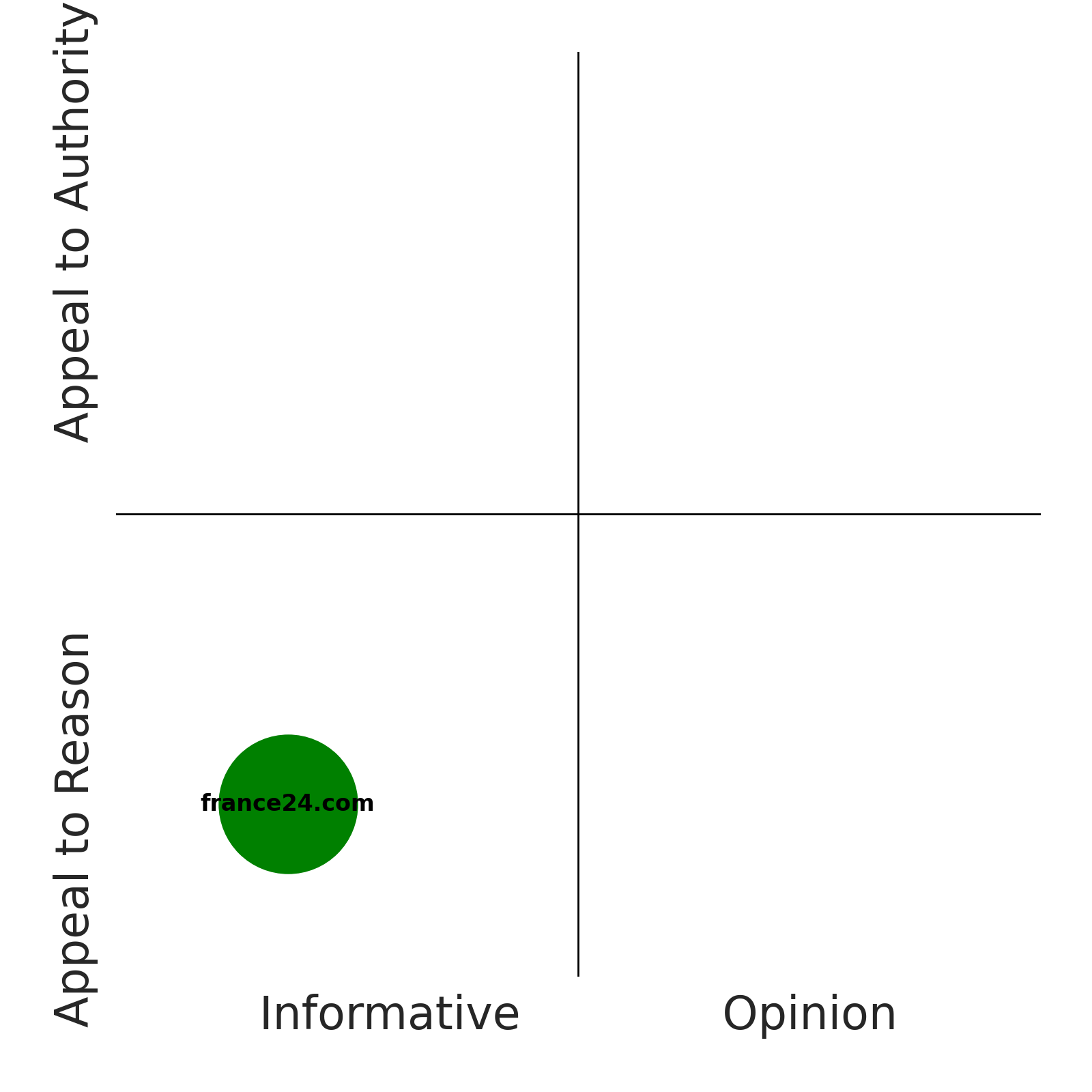
💭 Opinion15
🗳 Political6
❌ Low Credibility <—> High Credibility ✅14
💔 Low Integrity <—> High Integrity ❤️6
🪨 Low Intelligence <—> High Intelligence 🦉8
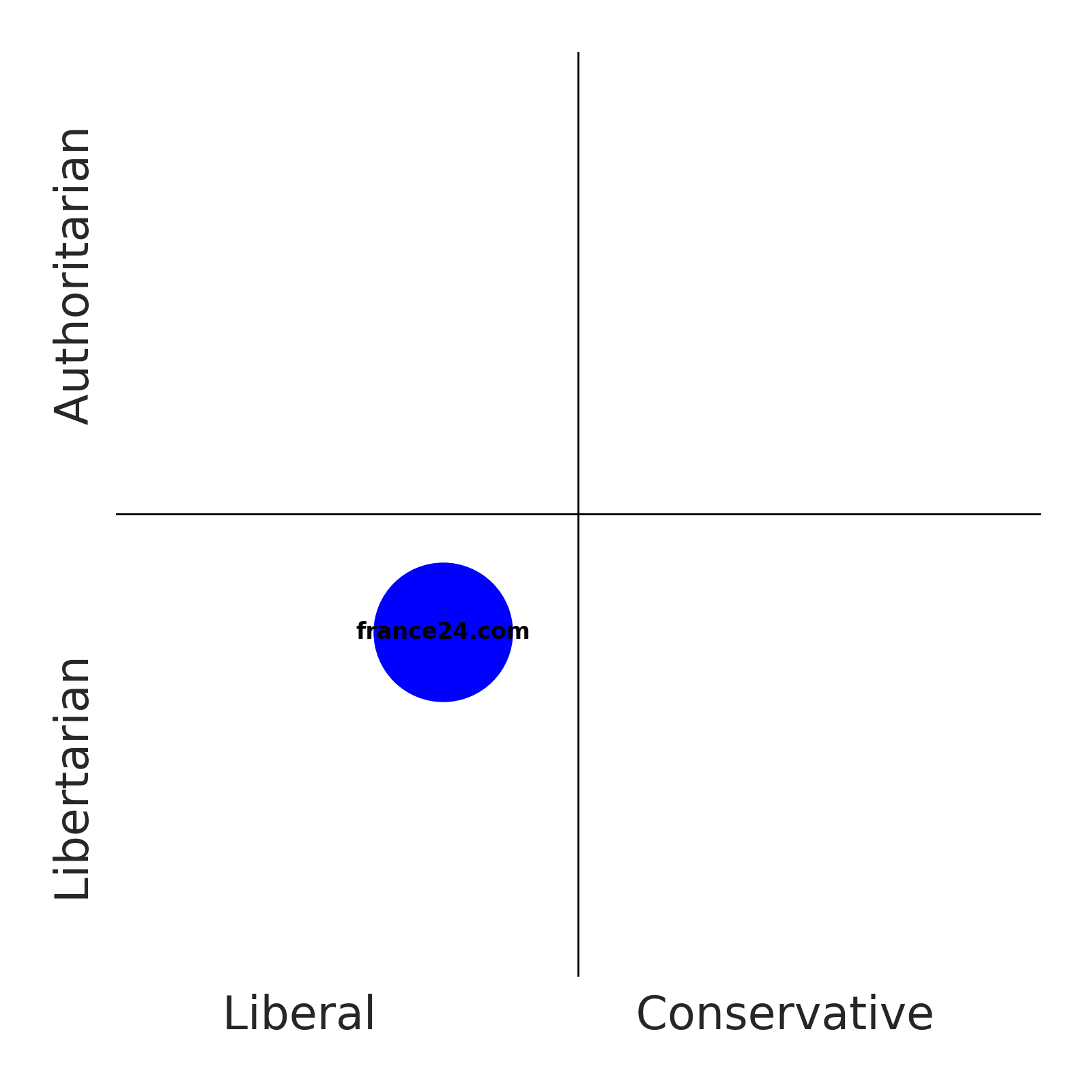
🔵 Liberal <—> Conservative 🔴-1
🗽 Libertarian <—> Authoritarian 🚔0
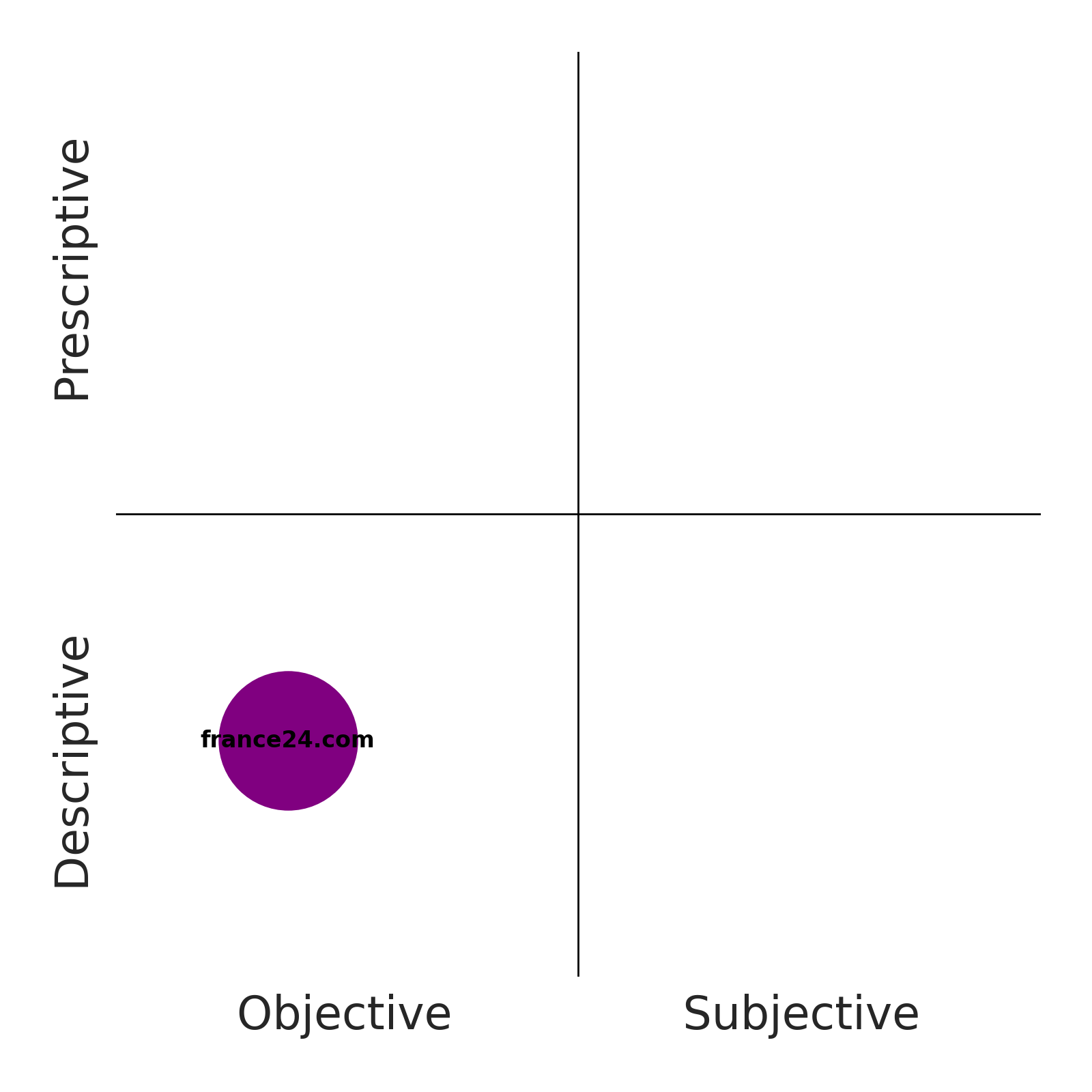
🗞️ Objective <—> Subjective 👁️ -2
💡 Boring <—> Interesting4
📝 Prescriptive0
🕊️ Dovish <—> Hawkish 🦁0
😨 Fearful4
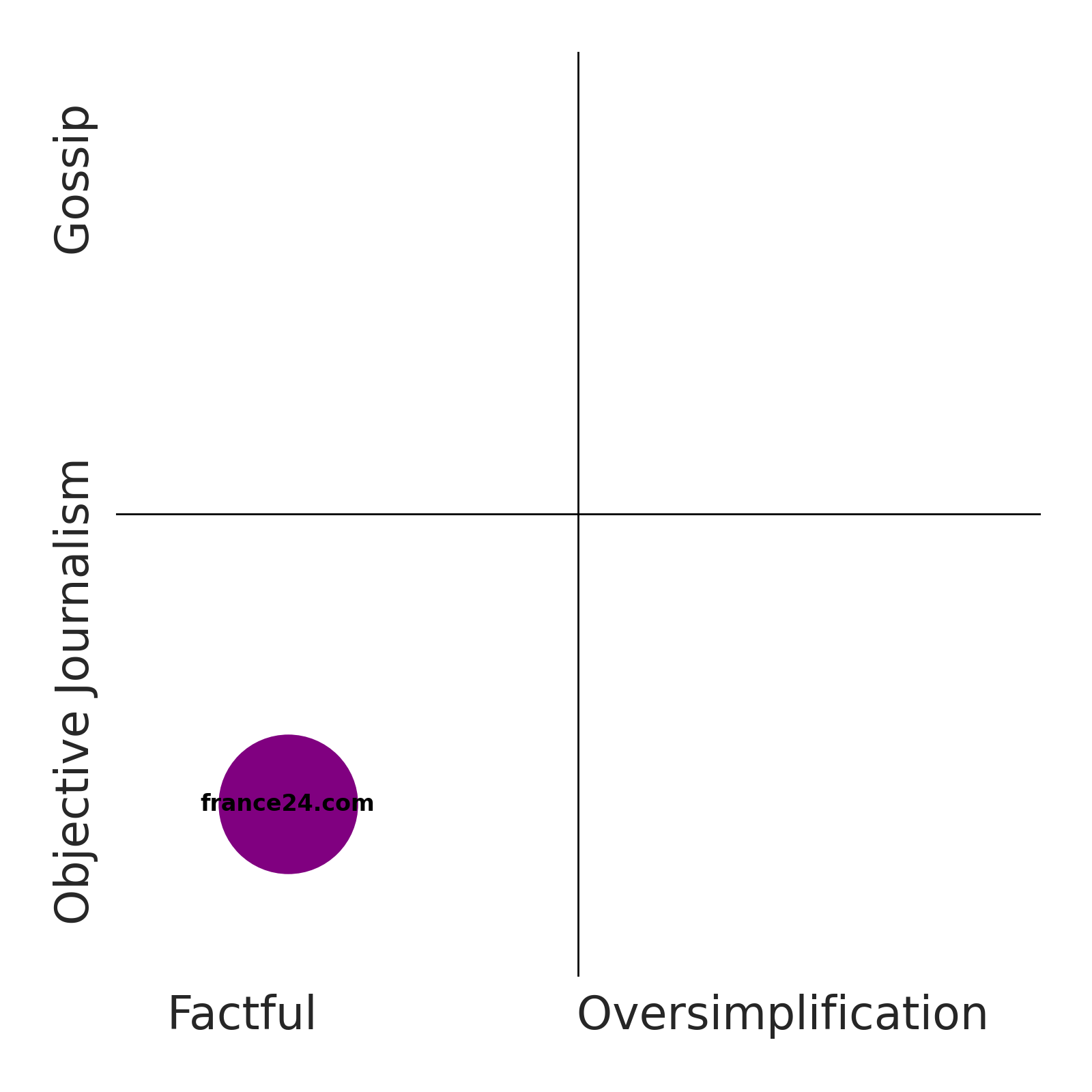
Oversimplification4
🏛️ Appeal to Authority4
👀 Covering Responses3
😢 Victimization2
😤 Overconfidence4
🔒 Ideological4
🏴 Anti-establishment <—> Pro-establishment 📺1
🧠 Rational <—> Irrational 🤪-2
🤑 Advertising1
✊ Woke0
🔪 Cruel0
🎭 Virtue Signaling0
🐐 Scapegoating0
🔬 Scientific <—> Superstitious 🔮0
👤 Individualist <—> Collectivist 👥1
🎲 Speculation5
🐍 Manipulative5
2026 © Helium Trades
Privacy Policy & Disclosure
* Disclaimer: Nothing on this website constitutes investment advice, performance data or any recommendation that any particular security, portfolio of securities, transaction or investment strategy is suitable for any specific person. Helium Trades is not responsible in any way for the accuracy
of any model predictions or price data. Any mention of a particular security and related prediction data is not a recommendation to buy or sell that security. Investments in securities involve the risk of loss. Past performance is no guarantee of future results. Helium Trades is not responsible for any of your investment decisions,
you should consult a financial expert before engaging in any transaction.
Helium Research Assistant

How can I help you today?
Ask any question about france24.com bias.


