See whether Helium helps you make better-informed decisions. Try every Pro Trader feature for 30 days. No credit card required.
Try every Pro Trader feature for 30 days. No credit card required.
The sample is consistent with the National Post (Canada), identifiable via self-references like "questioned by the National Post"
The separatist rise is framed as a 'threat' to Canadian unity, with Bloc Québécois support for a third referendum described as 'cherishing the idea.'
The Parti Québécois is the sovereignist provincial party in Quebec; the Bloc Québécois is its federal counterpart. A provincial election is set for early October. Mark Carney is the federal Liberal leader whose popularity in Quebec affects federal dynamics.
Automated analysis; not human reviewed. Limitations: The supplied text is truncated with ellipses and interleaved with subscription prompts, cookie notices, and other page elements, limiting full reconstruction of the publisher's framing. · 5 of 55 available dimensions scored; omitted dimensions are not treated as neutral. · Verified supporting quotes for 5 of 5 scored dimensions.
Claim: The publisher adopts a conservative-federalist lens by labeling Quebec sovereignist activity a 'threat.'
“separatist threat looming in Canada” · exact text match
Why: Describing the separatist movement as a 'threat' conveys a value judgment consistent with conservative Canadian federalism.
Claim: Subjective, evaluative language is mixed into otherwise factual reporting.
“cherishing the idea” · exact text match
“separatist threat looming in Canada” · exact text match
Why: 'Cherishing the idea' and 'threat' are value-laden characterizations that go beyond neutral description, though most reporting uses attributed quotes.
Claim: The article focuses heavily on electoral and intergovernmental politics while framing the sovereignty question as a pressing issue federal politicians should address.
“Many federal Liberals questioned by the National Post would not comment on the scenario of another separatist threat looming in Canada” · exact text match
Why: Highlighting Liberal MPs' refusal to comment frames the story around party-political positioning on the sovereignty issue.
Claim: The text demonstrates visible sourcing, attribution, and poll references.
“Deschênes said” · exact text match
“But two more polls published on Monday are cementing the PQ's lead” · verified after text normalization
Why: Statements are attributed to named individuals, and polling data is referenced, supporting basic credibility, even though truncation limits full verification.
Claim: The publisher engages in conditional future scenario analysis.
“That means that the party would have a small window to hold one if it stays in power for a four-year term.” · exact text match
Why: This analytic statement models a possible future referendum timeline rather than reporting confirmed fact, indicating mild speculation.
The supplied text is truncated with ellipses and interleaved with subscription prompts, cookie notices, and other page elements, limiting full reconstruction of the publisher's framing.
September 16, 2026 · 0 shares
Framing treats the union official’s social-media posts as antisemitic fact, pairs them with the union’s terse response, and adds Air Canada’s earlier firing of a pilot over an anti-Israel protest as consequential context.
CUPE is the Canadian Union of Public Employees; the Air Canada Component is its union unit at the airline, and the service director is a union officer rather than an airline manager.
Automated analysis; not human reviewed. Limitations: The supplied article text is partially clipped and interleaved with unrelated page elements and boilerplate, so some bridging quotes and the exact date of the flight resumption were unavailable. · 2 of 55 available dimensions scored; omitted dimensions are not treated as neutral. · Verified supporting quotes for 2 of 2 scored dimensions.
Claim: The story attributes claims to named and described sources, uses direct quotations, and includes reported context.
“When reached for comment by National Post, the service director said he could not provide a statement at this time.” · exact text match
“In 2023, the airline fired a pilot after social media posts surfaced of him attending an anti-Israel protest in Montreal, CTV News reported.” · exact text match
Why: Direct attribution to National Post reporting, CTV News, a spokesperson, and the subject, along with exact quoted passages, supports the visible credibility of the reporting.
Claim: The publisher includes the subject's no-comment response and the union's limited statement, giving both sides representation while also reporting what was not disclosed.
“When reached for comment by National Post, the service director said he could not provide a statement at this time.” · exact text match
“It did not clarify if the service director was removed with or without pay.” · exact text match
Why: Including the subject's response and the union's statement, plus explicitly noting what was not clarified, indicates visible fairness and transparency.
The supplied article text is partially clipped and interleaved with unrelated page elements and boilerplate, so some bridging quotes and the exact date of the flight resumption were unavailable.
September 15, 2026 · 0 shares
The framing casts the U.S.-Canada trade war as a dramatic neighbour dispute, emphasizing personal conflict and rising tension rather than policy detail.
Automated analysis; not human reviewed. Limitations: The supplied text is an incomplete scraped excerpt mixed with unrelated page elements; only a brief lede and podcast promo were available for analysis. · 1 of 54 available dimensions scored; omitted dimensions are not treated as neutral. · Verified supporting quotes for 1 of 1 scored dimensions.
Claim: The excerpt uses hyperbolic and emotionally charged language to describe the trade war.
“one of the worst neighbour disputes their quiet town of North America has ever seen” · exact text match
“tensions are on the rise” · exact text match
Why: The superlative 'worst ... ever seen' and the phrase 'tensions are on the rise' dramatize the conflict, going beyond neutral description.
The supplied text is an incomplete scraped excerpt mixed with unrelated page elements; only a brief lede and podcast promo were available for analysis.
The front-page digest is framed conservatively and opinion-led, treating a U.S. trade deal as necessary, diversity and immigration as harmful, and U.S.-Canada friction as a defining threat.
Automated analysis; not human reviewed. Limitations: The supplied text is a front-page digest of headlines and blurbs, limiting verification of underlying claims and original article details. · 9 of 54 available dimensions scored; omitted dimensions are not treated as neutral. · Verified supporting quotes for 9 of 9 scored dimensions.
Claim: The front-page selection and headlines reflect a conservative editorial lens on trade, immigration, and identity.
“Diversity is not our strength: Full Comment podcast” · exact text match
“John Ivison: Doug Ford’s veto of a U.S. trade deal cannot stand” · exact text match
Why: Leading with a podcast titled 'Diversity is not our strength' and an opinion headline insisting Ford's trade veto 'cannot stand' skews conservative.
Claim: The digest mixes subjective opinion and personal lifestyle recommendations with news reporting.
“Diversity is not our strength: Full Comment podcast” · exact text match
“I'm testing 10+ wedding guest looks — here's what I'm genuinely loving for fall” · exact text match
Why: Both items express editorial or personal judgment rather than neutral factual reporting.
Claim: The page uses provocative, conflict-heavy headlines.
“U.S. Treasury secretary taunts Canadian navy’s lack of firepower: 'Two submarines from the Edmonton mall'” · verified after text normalization
“Human rights tribunal sides with TMU teaching assistant who decried 'desecration by the Jews'” · exact text match
Why: Words like 'taunts' and 'desecration' and the mocking quote are chosen for emotional impact rather than neutral summary.
Claim: The page uses prescriptive language telling readers what should happen rather than merely describing events.
“Doug Ford’s veto of a U.S. trade deal cannot stand” · exact text match
Why: 'Cannot stand' is a prescription against Ford's position, not a neutral description.
Claim: The front page presents opinion and commentary as headline stories.
“John Ivison: Doug Ford’s veto of a U.S. trade deal cannot stand” · exact text match
“Diversity is not our strength: Full Comment podcast” · exact text match
Why: The digest's main items include an opinion column and a podcast title with evaluative framing.
Claim: The front page is dominated by partisan, electoral, and trade-war stories.
“Mark Carney's Liberals sweep three federal byelections amid trade war” · exact text match
“Trump's Republican Party blocks CBC/Radio-Canada from convention after 9/11 policy controversy” · exact text match
Why: Nearly all top headlines concern political actors, parties, elections, and trade conflict.
Claim: A headline asserts a categorical conclusion about a contested policy.
“Doug Ford’s veto of a U.S. trade deal cannot stand” · exact text match
Why: 'Cannot stand' is expressed as certainty without the supporting analysis visible in the blurb.
Claim: The page's summaries are moderately credible because they use explicit attribution and sourced data.
“Statistics Canada data showed that Jews were targeted in 71 per cent of religious hate crimes in Canada last year.” · exact text match
Why: A statistic is attributed to Statistics Canada and quotes are attributed to named officials, supporting credibility.
Claim: The page includes product recommendation and shopping-guide blurbs framed as content.
“Made in Canada: Five back to school wardrobe staples for the stylish kiddos in your life” · exact text match
“These are the 3 best beauty products we tried this week. Here's why” · exact text match
Why: The headlines promote consumer products and shopping guides, giving the digest a promotional component.
The supplied text is a front-page digest of headlines and blurbs, limiting verification of underlying claims and original article details.
The separatist rise is framed as a 'threat' to Canadian unity, with Bloc Québécois support for a third referendum described as 'cherishing the idea.'
The Parti Québécois is the sovereignist provincial party in Quebec; the Bloc Québécois is its federal counterpart. A provincial election is set for early October. Mark Carney is the federal Liberal leader whose popularity in Quebec affects federal dynamics.
Automated analysis; not human reviewed. Limitations: The supplied text is truncated with ellipses and interleaved with subscription prompts, cookie notices, and other page elements, limiting full reconstruction of the publisher's framing. · 5 of 55 available dimensions scored; omitted dimensions are not treated as neutral. · Verified supporting quotes for 5 of 5 scored dimensions.
Claim: The publisher adopts a conservative-federalist lens by labeling Quebec sovereignist activity a 'threat.'
“separatist threat looming in Canada” · exact text match
Why: Describing the separatist movement as a 'threat' conveys a value judgment consistent with conservative Canadian federalism.
Claim: Subjective, evaluative language is mixed into otherwise factual reporting.
“cherishing the idea” · exact text match
“separatist threat looming in Canada” · exact text match
Why: 'Cherishing the idea' and 'threat' are value-laden characterizations that go beyond neutral description, though most reporting uses attributed quotes.
Claim: The article focuses heavily on electoral and intergovernmental politics while framing the sovereignty question as a pressing issue federal politicians should address.
“Many federal Liberals questioned by the National Post would not comment on the scenario of another separatist threat looming in Canada” · exact text match
Why: Highlighting Liberal MPs' refusal to comment frames the story around party-political positioning on the sovereignty issue.
Claim: The text demonstrates visible sourcing, attribution, and poll references.
“Deschênes said” · exact text match
“But two more polls published on Monday are cementing the PQ's lead” · verified after text normalization
Why: Statements are attributed to named individuals, and polling data is referenced, supporting basic credibility, even though truncation limits full verification.
Claim: The publisher engages in conditional future scenario analysis.
“That means that the party would have a small window to hold one if it stays in power for a four-year term.” · exact text match
Why: This analytic statement models a possible future referendum timeline rather than reporting confirmed fact, indicating mild speculation.
The supplied text is truncated with ellipses and interleaved with subscription prompts, cookie notices, and other page elements, limiting full reconstruction of the publisher's framing.
Coverage concentrates on Canadian federal politics, the Canada-U.S. trade war, foreign policy (Iran, Ukraine, Israel/Palestine), and elite/official institutional actors
The front-page digest is framed conservatively and opinion-led, treating a U.S. trade deal as necessary, diversity and immigration as harmful, and U.S.-Canada friction as a defining threat.
Automated analysis; not human reviewed. Limitations: The supplied text is a front-page digest of headlines and blurbs, limiting verification of underlying claims and original article details. · 9 of 54 available dimensions scored; omitted dimensions are not treated as neutral. · Verified supporting quotes for 9 of 9 scored dimensions.
Claim: The front-page selection and headlines reflect a conservative editorial lens on trade, immigration, and identity.
“Diversity is not our strength: Full Comment podcast” · exact text match
“John Ivison: Doug Ford’s veto of a U.S. trade deal cannot stand” · exact text match
Why: Leading with a podcast titled 'Diversity is not our strength' and an opinion headline insisting Ford's trade veto 'cannot stand' skews conservative.
Claim: The digest mixes subjective opinion and personal lifestyle recommendations with news reporting.
“Diversity is not our strength: Full Comment podcast” · exact text match
“I'm testing 10+ wedding guest looks — here's what I'm genuinely loving for fall” · exact text match
Why: Both items express editorial or personal judgment rather than neutral factual reporting.
Claim: The page uses provocative, conflict-heavy headlines.
“U.S. Treasury secretary taunts Canadian navy’s lack of firepower: 'Two submarines from the Edmonton mall'” · verified after text normalization
“Human rights tribunal sides with TMU teaching assistant who decried 'desecration by the Jews'” · exact text match
Why: Words like 'taunts' and 'desecration' and the mocking quote are chosen for emotional impact rather than neutral summary.
Claim: The page uses prescriptive language telling readers what should happen rather than merely describing events.
“Doug Ford’s veto of a U.S. trade deal cannot stand” · exact text match
Why: 'Cannot stand' is a prescription against Ford's position, not a neutral description.
Claim: The front page presents opinion and commentary as headline stories.
“John Ivison: Doug Ford’s veto of a U.S. trade deal cannot stand” · exact text match
“Diversity is not our strength: Full Comment podcast” · exact text match
Why: The digest's main items include an opinion column and a podcast title with evaluative framing.
Claim: The front page is dominated by partisan, electoral, and trade-war stories.
“Mark Carney's Liberals sweep three federal byelections amid trade war” · exact text match
“Trump's Republican Party blocks CBC/Radio-Canada from convention after 9/11 policy controversy” · exact text match
Why: Nearly all top headlines concern political actors, parties, elections, and trade conflict.
Claim: A headline asserts a categorical conclusion about a contested policy.
“Doug Ford’s veto of a U.S. trade deal cannot stand” · exact text match
Why: 'Cannot stand' is expressed as certainty without the supporting analysis visible in the blurb.
Claim: The page's summaries are moderately credible because they use explicit attribution and sourced data.
“Statistics Canada data showed that Jews were targeted in 71 per cent of religious hate crimes in Canada last year.” · exact text match
Why: A statistic is attributed to Statistics Canada and quotes are attributed to named officials, supporting credibility.
Claim: The page includes product recommendation and shopping-guide blurbs framed as content.
“Made in Canada: Five back to school wardrobe staples for the stylish kiddos in your life” · exact text match
“These are the 3 best beauty products we tried this week. Here's why” · exact text match
Why: The headlines promote consumer products and shopping guides, giving the digest a promotional component.
The supplied text is a front-page digest of headlines and blurbs, limiting verification of underlying claims and original article details.
August 31, 2026 · 0 shares
A mostly factual report frames the Liberal byelection sweep as a product of the collapsed U.S. trade talks and Mark Carney’s supply-management stance, relying on an anonymous Liberal source for the voter-motive narrative.
In Canada, a federal byelection fills a vacant House of Commons seat between general elections; a majority government requires more than half the seats. The Chicoutimi—Le Fjord region has aluminum, lumber and supply-managed dairy industries linked to the U.S. trade dispute.
Automated analysis; not human reviewed. Limitations: The supplied text contains extraction artifacts—repeated boilerplate and a malformed sentence about the Toronto riding—so reconstruction of the original article may be incomplete. · 3 of 54 available dimensions scored; omitted dimensions are not treated as neutral. · Verified supporting quotes for 3 of 3 scored dimensions.
Claim: The report is largely factual but includes an unhedged causal interpretation of the Quebec result.
“The collapse of the trade talks with the United States, combined with Carney’s commitment to protect supply management, ultimately led the Liberals picking up the seat in Quebec.” · exact text match
Counterevidence:
“with over 51 per cent of the vote while Bloc’s Caroline Dubé, a former political staffer, finished second with 33 per cent according to preliminary results.” · exact text match
Why: The assertion of cause is analytical rather than directly observed, while most surrounding details are attributed and quantitative.
Claim: The report is heavily political in subject and framing.
“Prime Minister Mark Carney secured his government’s majority by winning all three byelections in British Columbia, Ontario and Quebec on Monday night, upping his seat count to 173 in the House of Commons.” · exact text match
Why: Every substantive section concerns party competition, leaders, campaigns, and parliamentary seat counts.
Claim: The report consistently attributes figures and statements, using named sources where possible.
“with over 51 per cent of the vote while Bloc’s Caroline Dubé, a former political staffer, finished second with 33 per cent according to preliminary results.” · exact text match
“A Liberal source told the National Post ahead of the vote that the mood amongst voters had significantly shifted in Chicoutimi—Le Fjord after the trade talks collapsed with the U.S.” · exact text match
Why: Vote shares are labeled preliminary, named candidates and leaders are given, and the main anecdotal claim is explicitly attributed to an anonymous Liberal source with a not-for-attribution basis.
The supplied text contains extraction artifacts—repeated boilerplate and a malformed sentence about the Toronto riding—so reconstruction of the original article may be incomplete.
Presents Harper’s speech as a decisive sovereignty case and an urgent call to restore Canada’s ‘energy superpower’ status, while framing Trudeau’s policy choices as blame.
Automated analysis; not human reviewed. Limitations: Only a lossy excerpt of the original page was available, and unrelated sidebar or boilerplate content was mixed in; conclusions rely on the visible Harper-speech passages and headline. · 3 of 54 available dimensions scored; omitted dimensions are not treated as neutral. · Verified supporting quotes for 3 of 3 scored dimensions.
Claim: The selected framing conveys a bullish message about Canada’s energy potential and the trade-walkaway opportunity.
“The opportunity of becoming that global energy superpower is fortuitously offering itself to us once again” · exact text match
“We need this energy not only for its export potential.” · exact text match
Why: The excerpts present Canada’s energy situation as a revived opportunity and treat resource-development urgency positively.
Claim: The article is highly political: it highlights a former Conservative leader’s attack on Trudeau-era policy choices and Canada-U.S. trade negotiations.
“Harper says Canada could have become an energy superpower over a decade ago, blames Trudeau's policy choices” · exact text match
“given the ongoing violations of our trade agreement by the United States and the current impasse in negotiations” · exact text match
Why: The headline foregrounds partisan blame, and the body leads with a contested trade dispute and sovereignty politics.
Claim: The piece attributes statements clearly to Harper and identifies his current affiliations rather than presenting his opinions as unmarked fact.
“Harper, who currently serves as chairman of the Alberta Investment Management Corporation and is co-founder of the investment fund Vision-One Management, said that Canada was right to walk away” · exact text match
“Former Conservative prime minister Stephen Harper delivered the closing speech” · exact text match
Why: The report repeatedly uses attribution words and direct quotes and supplies Harper’s credentials, giving it a sourced, journalistic tone.
Only a lossy excerpt of the original page was available, and unrelated sidebar or boilerplate content was mixed in; conclusions rely on the visible Harper-speech passages and headline.
The framing presents the diplomatic encounter as friendly and strategically significant, emphasizing shared U.S. friction while attributing policy specifics to the leaders.
Automated analysis; not human reviewed. Limitations: The supplied text is fragmentary and mixed with unrelated page elements and headlines, so only the recoverable Macron–Carney meeting passages were classified. · 2 of 55 available dimensions scored; omitted dimensions are not treated as neutral. · Verified supporting quotes for 2 of 2 scored dimensions.
Claim: The reporting is predominantly objective, attributing policy statements and observations to the leaders rather than asserting them in the publisher’s voice.
“Macron said the two countries would work together for closer ties on fishing, security and energy.” · exact text match
“Carney proposed that France, Canada, the United States and China work together on artificial intelligence.” · exact text match
Counterevidence:
“The two leaders greeted each other with a warm handshake and a long embrace in the bright sunshine.” · exact text match
Why: Policy content is reported through attributed statements; only the greeting description adds mildly positive color, so objective coverage dominates.
Claim: The report is descriptive: it records what leaders said and proposed without telling readers what should be done.
“Macron said the two countries would work together for closer ties on fishing, security and energy.” · exact text match
“Carney said: “The time has come to tighten our links between Canada and France, between Canada and the European Union — links based on the values we share.”” · exact text match
Why: Prescriptive language appears only inside the direct quotation, not as the publisher's recommendation.
The supplied text is fragmentary and mixed with unrelated page elements and headlines, so only the recoverable Macron–Carney meeting passages were classified.
September 17, 2026 · 0 shares
Framing centers the U.S. denial of Abbas's UN visa as diplomatically isolating, while relaying official U.S. justifications as attributed allegations.
Automated analysis; not human reviewed. Limitations: The page includes paywall and newsletter prompts and lacks an explicit publication date; analysis is limited to the visible news paragraphs, and exact quoted lines are retained verbatim. · 4 of 55 available dimensions scored; omitted dimensions are not treated as neutral. · Verified supporting quotes for 4 of 4 scored dimensions.
Claim: The report's framing mildly disadvantages the U.S. administration by emphasizing its isolation and silence.
“The move puts the United States at odds with numerous countries” · exact text match
“the United States has remained largely quiet on the issue” · exact text match
Counterevidence:
“In its statement Wednesday, the State Department said that the PLO and PA had “once again, failed to live up to their commitments.”” · exact text match
Why: These factual statements are selected to highlight U.S. disagreement with international opinion and inaction on West Bank violence, a mild anti-Trump/liberal framing.
Claim: The report is primarily objective news coverage based on attributed sourcing rather than subjective commentary.
“a source familiar with the case said Wednesday” · exact text match
“In its statement Wednesday, the State Department said that the PLO and PA had “once again, failed to live up to their commitments.”” · exact text match
Counterevidence:
“Palestinian leader Abbas again blocked by U.S. from attending UN assembly” · exact text match
Why: The article repeatedly attributes information to sources and officials and supplies direct quotations, minimizing the publisher's own analytical voice.
Claim: The article describes events and statements without recommending or prescribing action.
“The Trump administration took the same step last year, forcing the Palestinian leader, a regular at the UN General Assembly, to address the body of global leadership by video.” · exact text match
“The international community has expressed concern over recent violence in the West Bank, but the United States has remained largely quiet on the issue” · exact text match
Why: All sentences report what was said or done; no imperative, recommendation, or call to action appears.
Claim: The report signals credibility through named institutional sources and attributed quotes.
“a source familiar with the case said Wednesday” · exact text match
“A source familiar with the matter confirmed to AFP that the Palestinian Authority president, Abbas, was covered by the measure.” · exact text match
Why: The piece relies on a source and AFP confirmation, quotes the State Department directly, and distinguishes the State Department statement from the source's confirmation.
The page includes paywall and newsletter prompts and lacks an explicit publication date; analysis is limited to the visible news paragraphs, and exact quoted lines are retained verbatim.
September 05, 2026 · 0 shares
Reporting is framed around the U.S. military’s account and its retaliation rationale, using Admiral Cooper’s 'economic cost' quote to characterize the tanker strikes while attributing Iranian and administration claims rather than adjudicating them.
Automated analysis; not human reviewed. Limitations: The supplied text relies heavily on U.S. official statements; independent verification of the strikes and the reported Iranian attacks is not available in the text. · 4 of 54 available dimensions scored; omitted dimensions are not treated as neutral. · Verified supporting quotes for 3 of 4 scored dimensions.
Claim: Reporting is predominantly objective, attributing actions and statements to named sources and marking disputed claims as alleged.
“U.S. Central Command (CENTCOM) said it targeted tankers linked to the Islamic Revolutionary Guard Corps (IRGC), accusing the most powerful arm of the Iranian military of unsuccessfully firing at American warships.” · exact text match
“Iranian media had reported several explosions earlier on Saturday near the country’s major oil hub of Kharg Island in the Gulf.” · exact text match
Why: The text consistently uses attribution and labels such as 'said,' 'reported,' and 'alleged,' showing objective news practices rather than asserting claims as fact.
Claim: The report describes events and statements rather than prescribing policy or urging a specific course of action.
“CENTCOM said it targeted tankers linked to the Islamic Revolutionary Guard Corps (IRGC), accusing the most powerful arm of the Iranian military of unsuccessfully firing at American warships.” · not found in supplied text
“The Trump administration has been seeking to play down the significance of the six-month conflict, which has proven increasingly unpopular at home as midterm elections near.” · exact text match
Why: The article is built around 'said,' 'reported,' and 'claimed' statements, with no editorial imperative or recommended action from the publisher.
Claim: Visible sourcing and attribution support the article's credibility: institutions and named officials are cited, and uncertainty is preserved.
““Following Iran’s failed attacks, CENTCOM permanently disabled the IRGC crude oil carriers M/T Downy off the coast of Kharg Island and M/T Stark 1 near Jask,” it said in a statement.” · exact text match
“Iranian media had reported several explosions earlier on Saturday near the country’s major oil hub of Kharg Island in the Gulf.” · exact text match
Why: Key claims are attributed to CENTCOM, Iranian media, Tehran, the Iranian Red Crescent, and named officials, allowing readers to distinguish reports from allegations.
Claim: The article shows internal fairness by representing U.S., Iranian, and skeptical perspectives and preserving uncertainty about contested events.
“U.S. Vice President JD Vance said the alleged wedding strike, which the Iranian Red Crescent said killed four people in a southern coastal town on Tuesday night, was being investigated but he himself was “sceptical” of the reports.” · exact text match
“On Thursday, Tehran had said that its armed forces attacked U.S. military bases in Kuwait and the United Arab Emirates, vowing to avenge civilian deaths at a wedding that it blamed on an American strike.” · exact text match
Why: Both U.S. official statements and Iranian claims are included, and the wedding-strike report is explicitly labeled 'alleged' with a named skeptical official.
The supplied text relies heavily on U.S. official statements; independent verification of the strikes and the reported Iranian attacks is not available in the text.
A promotional, enthusiastically worded product roundup frames Canadian-made children's clothing as stylish and worthwhile, with affiliate-income disclosure and no critical evaluation.
Automated analysis; not human reviewed. Limitations: The supplied text is a partial excerpt that omits some brand names and product context, and the required category list lacks a shopping/lifestyle option. · 5 of 54 available dimensions scored; omitted dimensions are not treated as neutral. · Verified supporting quotes for 5 of 5 scored dimensions.
Claim: The framing is highly subjective, dominated by evaluative reactions rather than neutral description.
“We just can’t even with the comfort level of this suit.” · exact text match
“This adorably sweet daytime dress from B.C. brand Little and Lively.” · exact text match
Why: The language uses first-person enthusiasm and personal aesthetic judgments, not objective reporting.
Claim: The article tells readers what to buy and how to shop.
“Matching hoodie ($80) optional but why not opt for the set?” · exact text match
Why: It gives explicit purchasing advice and recommendations, moving beyond description.
Claim: The article is heavily opinionated, advancing value judgments about style and desirability.
“But with its fall tones and trendy crew shape, we’d put forth the argument that style had something to do with it as well.” · exact text match
Why: Recommending and arguing for the stylishness of products is opinion, not factual reporting.
Claim: The overall emotional tone is strongly positive and enthusiastic.
“After a summer of chillin’, these Canadian brands will help your kiddos put their inner fashionistas forward.” · exact text match
Why: Cheerful, encouraging language frames the products as delightful and beneficial.
Claim: The piece functions as promotional shopping content with affiliate monetization.
“We independently select everything we recommend. Buying through us may earn us a commission, which supports our work.” · exact text match
Why: The article is a product roundup with an explicit affiliate commission disclosure and repeatedly urges purchases, making it strongly advertorial.
The supplied text is a partial excerpt that omits some brand names and product context, and the required category list lacks a shopping/lifestyle option.
September 21, 2026 · 0 shares
The framing is subjective, appreciative, and promotional, presenting books and television picks as recommendations rather than neutral news.
Automated analysis; not human reviewed. Limitations: The supplied text is a fragmented concatenation of review excerpts, headlines, and page artifacts, so the boundaries of a single substantive article are ambiguous. · 1 of 55 available dimensions scored; omitted dimensions are not treated as neutral. · Verified supporting quotes for 1 of 1 scored dimensions.
Claim: The text uses evaluative praise and recommendation language rather than neutral reporting.
“absorbing tale” · exact text match
“Must-see TV” · exact text match
Why: These phrases present subjective judgments about quality and viewing priority as the content's main takeaway.
The supplied text is a fragmented concatenation of review excerpts, headlines, and page artifacts, so the boundaries of a single substantive article are ambiguous.
September 16, 2026 · 0 shares
Celebratory framing presents North of North as an award-winning heartwarmer and amplifies Anna Lambe’s positive responses without critical distance.
Automated analysis; not human reviewed. Limitations: The supplied text is truncated and mixed with unrelated page elements, limiting analysis to the visible North of North feature and making omitted passages unavailable. · 5 of 54 available dimensions scored; omitted dimensions are not treated as neutral. · Verified supporting quotes for 5 of 5 scored dimensions.
Claim: The publisher uses evaluative, emotional language rather than neutral factual description.
“Cool Canadian comedy North of North is on the hot list.” · exact text match
“The series is North of North, a heartwarmer from APTN, CBC and Netflix” · exact text match
Why: Words like 'hot list' and 'heartwarmer' pass judgment on the series' quality and tone, making the coverage subjective rather than neutral.
Claim: The selected quotes and framing emphasize fulfillment, persistence, and gratitude.
“But she keeps pushing forward.” · exact text match
“But I feel so fulfilled and so happy and so grateful.” · exact text match
Why: The narrative highlights forward momentum and positive emotional payoff, giving the piece an optimistic valence.
Claim: The piece blends the publisher's evaluative opinions with reporting.
“Cool Canadian comedy North of North is on the hot list.” · exact text match
“a heartwarmer from APTN, CBC and Netflix” · exact text match
Why: The publisher's own adjectives and superlatives express approval, going beyond factual description.
Claim: The prose and selected quotes carry a strongly positive emotional valence.
“The series is North of North, a heartwarmer from APTN, CBC and Netflix” · exact text match
“But I feel so fulfilled and so happy and so grateful.” · exact text match
Why: Descriptors like 'heartwarmer' and the actress's gratitude emphasize warmth and fulfillment, giving the coverage a positive emotional cast.
Claim: The copy functions as promotional coverage for the series, emphasizing visibility and audience affection.
“Cool Canadian comedy North of North is on the hot list.” · exact text match
“another Canadian television series is showing the world what it means” · exact text match
Why: Phrases like 'hot list' and 'showing the world what it means' market the series as a must-see cultural phenomenon rather than neutrally describing it.
The supplied text is truncated and mixed with unrelated page elements, limiting analysis to the visible North of North feature and making omitted passages unavailable.
September 06, 2026 · 0 shares
A promotional lifestyle feature frames custom tile mosaics as a personalized luxury trend, using designer endorsements and cost-spin rather than critical evaluation.
Mid-century modern design, referenced as the style the mosaic resurgence is reacting against, was a mid-20th-century movement emphasizing simple lines, minimal ornament, and functionality.
Automated analysis; not human reviewed. Limitations: The visible text mixes the article with page-chrome links and an affiliate disclosure; no external verification or independent data is supplied, which limits the certainty of the bias ratings. · 4 of 54 available dimensions scored; omitted dimensions are not treated as neutral. · Verified supporting quotes for 3 of 4 scored dimensions.
Claim: The feature shifts from describing the mosaic trend to giving direct advice on how to select, personalize, and install mosaics.
“To make a mosaic more unique, and infuse a dose of whimsy, choose an application that reflects your life and personality — maybe a hobby, favourite place, beloved pet or even an inside joke.” · exact text match
“Once you’ve settled on a concept, look for a professional installer who specializes in mosaics.” · exact text match
Why: It issues explicit 'choose' and 'look for' instructions to readers, not merely observations.
Claim: The feature asserts, without data, that consumers are craving embellishment and that mosaics fit a desirable trend.
“they fit nicely into the current trend toward individuality and artisan techniques” · exact text match
“people are craving embellishment and personalization” · exact text match
Why: Aesthetic and consumer-behavior judgments are presented as general facts rather than labeled opinion or reporting of a study.
Claim: The feature relies on named design and craft professionals to support factual and historical claims about mosaics.
“It’s similar to the way art nouveau took hold in the early 1900s in response to the Industrial Revolution, according to mosaic master Pierre Mesguich.” · not found in supplied text
“Mosaic flooring hides grout lines, because the grout is tiny and there is more focus on the beautiful pattern the tile makes over anything else, she told The Spruce.” · not found in supplied text
Why: Historical and maintenance claims are justified by the speaker's professional title rather than by evidence or data.
Claim: The framing is promotional, presenting custom tile mosaics as a desirable luxury purchase while carrying an affiliate-commerce disclosure.
“But thankfully, a little can go a long way.” · exact text match
“Mosaics are a luxury finish, but can make an impact at any scale.” · exact text match
Counterevidence:
“We independently select everything we recommend.” · exact text match
Why: The piece repeatedly smooths over cost objections and markets the category as a scalable luxury, while the appended commission disclosure signals commercial incentive.
The visible text mixes the article with page-chrome links and an affiliate disclosure; no external verification or independent data is supplied, which limits the certainty of the bias ratings.
September 05, 2026 · 0 shares
The reporting frames the restitution order as a long-delayed, officially confirmed resolution of Nazi-era art theft, with attributed legal details and no editorial commentary.
Automated analysis; not human reviewed. Limitations: The analysis relies solely on the supplied article text; the court ruling, provenance, and legal agreement are not independently verifiable from this source. · 7 of 54 available dimensions scored; omitted dimensions are not treated as neutral. · Verified supporting quotes for 6 of 7 scored dimensions.
Claim: The report is written in a detached, fact-attributing style rather than subjective interpretation.
“"An order will be issued for the painting to be returned to the heir" of art dealer Jacques Goudstikker, judge Santiago Inchausti declared following an agreement reached between the concerned parties.” · verified after text normalization
Why: Uses direct attribution and avoids evaluative language.
Claim: The story is presented as a court and provenance report without sensational or dramatic embellishment.
“The pair agreed to return the painting to Goudstikker’s daughter-in-law and sole heir, Marei von Saher, and give around US$3,200 to local hospitals.” · exact text match
Why: Describes the settlement plainly, without exaggerated or fear-oriented framing.
Claim: The text describes what occurred and what was agreed, without recommending a course of action.
“The painting was among over 1,000 artworks stolen from Goudstikker’s collection after the Nazi invasion of the Netherlands in 1940.” · not found in supplied text
Why: Reports factual background and outcomes rather than prescribing policy or action.
Claim: No editorial opinion or advocacy is present; statements are attributed or factual.
“The painting is by Ceruti (1698-1767), known as "Il Pitocchetto," and not the portraitist Giuseppe Ghislandi as initially reported, the Argentine government stated in a press release.” · verified after text normalization
Why: Even the clarification is attributed to a government press release rather than presented as the outlet's own view.
Claim: The tone is unemotional and neutral, without positive or negative valence.
“The painting was first recognized by the Dutch newspaper AD in photographs of a house for sale in the seaside resort of Mar del Plata.” · exact text match
Why: Uses plain factual reconstruction without emotionally loaded adjectives.
Claim: The report is credible because it names specific judicial, legal, and media sources.
“"An order will be issued for the painting to be returned to the heir" of art dealer Jacques Goudstikker, judge Santiago Inchausti declared following an agreement reached between the concerned parties.” · verified after text normalization
Why: Direct attribution to a named judge and specified parties supports trustworthiness.
Claim: The report is internally fair and transparent, including acknowledgment of a prior attribution error.
“The painting is by Ceruti (1698-1767), known as "Il Pitocchetto," and not the portraitist Giuseppe Ghislandi as initially reported, the Argentine government stated in a press release.” · verified after text normalization
Why: Acknowledges prior misreporting and attributes the correction to a named source.
The analysis relies solely on the supplied article text; the court ruling, provenance, and legal agreement are not independently verifiable from this source.
September 05, 2026 · 0 shares
Framing foregrounds a dramatic tunnel rescue and renewed hope, uses quoted “miracle” language, and presents official casualty figures straightforwardly.
Automated analysis; not human reviewed. Limitations: The supplied text mixes the substantive report with subscription and promotional page content, and the exact calendar dates of “Saturday” and “Friday” are not stated. · 6 of 54 available dimensions scored; omitted dimensions are not treated as neutral. · Verified supporting quotes for 5 of 6 scored dimensions.
Claim: The report is predominantly objective, anchored in attributed official statements and specific measurements.
“A joint rescue team comprising personnel from the Nepal Army and foreign experts rescued the man from 225 metres inside the tunnel of the Upper Trishuli-1 Hydropower Project in Rasuwa district, a military statement said.” · exact text match
Why: The core event is attributed to a military statement and given with specific distance, location, and participants, rather than framed as publisher opinion.
Claim: The framing is mildly sensational, emphasizing hope and a quoted “miracle” rescue.
“Nepal tunnel rescue revives hopes 10 days after flood” · exact text match
“Rescuers called it a “miracle” after the two Nepali men, caked in mud, were pulled out alive on Friday, nine days after being trapped by the flood.” · exact text match
Why: The headline and the quoted “miracle” add emotional color to an otherwise sourced, numerical report.
Claim: The framing is mildly optimistic, centering the rescue as renewed hope amid disaster.
“Nepal tunnel rescue revives hopes 10 days after flood” · exact text match
“Rescuers called it a “miracle” after the two Nepali men, caked in mud, were pulled out alive on Friday, nine days after being trapped by the flood.” · exact text match
Why: The headline and “miracle” quote give the story a hopeful direction even while the death and missing counts are severe.
Claim: The report describes events and official statements without prescribing action.
“The survivor was among hundreds of hydropower workers who went missing after a tsunami-like wall of water and mud swept through the China-Nepal border following a vast glacial and rock collapse on Aug. 26.” · exact text match
Why: Publisher language is confined to describing what happened and what officials said, with no call for a specific policy or behavior.
Claim: The report is credible because it consistently attributes facts to named or identifiable sources.
“A joint rescue team comprising personnel from the Nepal Army and foreign experts rescued the man from 225 metres inside the tunnel of the Upper Trishuli-1 Hydropower Project in Rasuwa district, a military statement said.” · exact text match
“Nepal Police said Saturday that more than a thousand bodies had been buried in mass graves after taking DNA samples for future identification.” · not found in supplied text
Why: The story uses military, disaster agency, police, state media, and AFP attributions, with specific counts and dates.
Claim: The reporting is rational, relying on attributed official counts and named sources rather than speculation.
“So far, 1,344 bodies have been recovered in Nepal, according to the national disaster agency, with around 5,000 people still missing.” · exact text match
Why: Specific sourced figures and attributed statements ground the report in evidence, with no supernatural or conspiratorial explanation offered.
The supplied text mixes the substantive report with subscription and promotional page content, and the exact calendar dates of “Saturday” and “Friday” are not stated.
Headlines sometimes outrun evidence: the "Majority of Canadians" headline escalates a 41% plurality and asserts Trump-causation the poll cannot support
September 05, 2026 · 0 shares
The framing treats the U.S. as a bullying, ungovernable 'basket case' and presents Trump as the cause of Canadians calling America an enemy, while casting Canadian retaliation and pride as reasonable.
Automated analysis; not human reviewed. Limitations: Only the supplied text is available; full Leger question wording and crosstabs are absent, so causal and emotional interpretations cannot be independently checked. · 7 of 54 available dimensions scored; omitted dimensions are not treated as neutral. · Verified supporting quotes for 7 of 7 scored dimensions.
Claim: The framing editorializes the U.S. as a 'basket case' rather than sticking to neutral description.
“won’t fix the 'basket case' the U.S. has become” · exact text match
Why: The subheadline uses a pejorative label as part of the report's own framing.
Claim: The headline escalates a 41 percent plurality into a 'Majority' and uses causal, dramatic wording.
“Majority of Canadians now see U.S. as an enemy, and Trump is the reason: poll” · exact text match
“strong plurality of Canadians (41 per cent) consider the U.S. an enemy country” · exact text match
Why: The body explicitly says 'strong plurality,' not majority, making the headline an escalation.
Claim: The report's framing includes opinionated characterizations alongside factual poll results.
“won’t fix the 'basket case' the U.S. has become” · exact text match
Why: Calling the U.S. a 'basket case' is a value judgment, not a survey finding.
Claim: The report is explicitly framed around Trump, Canadian elections, and retaliatory trade policy.
“as the trade war initiated by U.S. President Donald Trump drags on, getting uglier every day” · exact text match
Why: The opening frame treats the trade conflict as an ugly, Trump-driven political fight and the article tracks its electoral effects.
Claim: The headline asserts a majority and a cause that the survey data do not establish.
“Majority of Canadians now see U.S. as an enemy, and Trump is the reason: poll” · exact text match
“strong plurality of Canadians (41 per cent) consider the U.S. an enemy country” · exact text match
Why: A plurality is not a majority, and the poll does not directly test why respondents chose 'enemy.'
Claim: The headline materially misstates the central figure and reframes it with loaded causal language.
“Majority of Canadians now see U.S. as an enemy, and Trump is the reason: poll” · exact text match
“strong plurality of Canadians (41 per cent) consider the U.S. an enemy country” · exact text match
Why: Presenting a plurality as a 'Majority' and 'Trump is the reason' as fact are observable loaded-framing techniques.
Claim: The headline is inconsistent with the article body's more accurate 'strong plurality' description.
“Majority of Canadians now see U.S. as an enemy, and Trump is the reason: poll” · exact text match
“strong plurality of Canadians (41 per cent) consider the U.S. an enemy country” · exact text match
Why: The body corrects the headline in substance, but the headline remains overclaimed without a correction.
Only the supplied text is available; full Leger question wording and crosstabs are absent, so causal and emotional interpretations cannot be independently checked.
September 11, 2026 · 0 shares
Neutral reporting that emphasizes the legislative outcome and includes balanced quotes from both supporters and opponents, without editorializing.
Automated analysis; not human reviewed. Limitations: The article text includes truncated sections, ellipses, and likely boilerplate, but the substantive content is clear enough for analysis. · 7 of 54 available dimensions scored; omitted dimensions are not treated as neutral. · Verified supporting quotes for 6 of 7 scored dimensions.
Claim: The article presents both supportive and opposing arguments without endorsing either side.
“Supporters framed the bill as a matter of bodily autonomy for people already facing death” · exact text match
“Opponents warned that the elderly, disabled and poor would feel pressured to end their lives rather than become a burden” · exact text match
Why: Balanced presentation of both positions.
Claim: The article relies on factual reporting and attributed quotes.
“Lawmakers voted 286 to 270 against advancing the Terminally Ill Adults bill” · exact text match
Why: Stating vote count as a fact.
Claim: The article uses restrained, non-sensational language.
“The defeat marks a reversal from a Commons vote last year” · exact text match
Why: Sober description of a political outcome.
Claim: The article describes events and quotes without prescribing policy.
“Opponents warned that the elderly, disabled and poor would feel pressured to end their lives rather than become a burden” · exact text match
Why: Reports arguments rather than making them.
Claim: The article contains no explicit editorial opinion.
“Many argued during Friday’s debate that the government should do more to improve palliative” · exact text match
Why: Reports arguments rather than offering its own.
Claim: The article uses conditional language for hypotheticals.
“The legislation would have permitted the terminally ill to seek help dying when they are said by ...” · not found in supplied text
Why: Uses conditional phrasing, not assertion.
Claim: The article attributes quotes and cites polls.
“Public support for assisted dying is strong, with polls showing three-quarters of Britons support legalizing some form of the concept” · exact text match
Why: Cites polls and names supporters.
The article text includes truncated sections, ellipses, and likely boilerplate, but the substantive content is clear enough for analysis.
September 05, 2026 · 0 shares
Reporting is framed around the U.S. military’s account and its retaliation rationale, using Admiral Cooper’s 'economic cost' quote to characterize the tanker strikes while attributing Iranian and administration claims rather than adjudicating them.
Automated analysis; not human reviewed. Limitations: The supplied text relies heavily on U.S. official statements; independent verification of the strikes and the reported Iranian attacks is not available in the text. · 4 of 54 available dimensions scored; omitted dimensions are not treated as neutral. · Verified supporting quotes for 3 of 4 scored dimensions.
Claim: Reporting is predominantly objective, attributing actions and statements to named sources and marking disputed claims as alleged.
“U.S. Central Command (CENTCOM) said it targeted tankers linked to the Islamic Revolutionary Guard Corps (IRGC), accusing the most powerful arm of the Iranian military of unsuccessfully firing at American warships.” · exact text match
“Iranian media had reported several explosions earlier on Saturday near the country’s major oil hub of Kharg Island in the Gulf.” · exact text match
Why: The text consistently uses attribution and labels such as 'said,' 'reported,' and 'alleged,' showing objective news practices rather than asserting claims as fact.
Claim: The report describes events and statements rather than prescribing policy or urging a specific course of action.
“CENTCOM said it targeted tankers linked to the Islamic Revolutionary Guard Corps (IRGC), accusing the most powerful arm of the Iranian military of unsuccessfully firing at American warships.” · not found in supplied text
“The Trump administration has been seeking to play down the significance of the six-month conflict, which has proven increasingly unpopular at home as midterm elections near.” · exact text match
Why: The article is built around 'said,' 'reported,' and 'claimed' statements, with no editorial imperative or recommended action from the publisher.
Claim: Visible sourcing and attribution support the article's credibility: institutions and named officials are cited, and uncertainty is preserved.
““Following Iran’s failed attacks, CENTCOM permanently disabled the IRGC crude oil carriers M/T Downy off the coast of Kharg Island and M/T Stark 1 near Jask,” it said in a statement.” · exact text match
“Iranian media had reported several explosions earlier on Saturday near the country’s major oil hub of Kharg Island in the Gulf.” · exact text match
Why: Key claims are attributed to CENTCOM, Iranian media, Tehran, the Iranian Red Crescent, and named officials, allowing readers to distinguish reports from allegations.
Claim: The article shows internal fairness by representing U.S., Iranian, and skeptical perspectives and preserving uncertainty about contested events.
“U.S. Vice President JD Vance said the alleged wedding strike, which the Iranian Red Crescent said killed four people in a southern coastal town on Tuesday night, was being investigated but he himself was “sceptical” of the reports.” · exact text match
“On Thursday, Tehran had said that its armed forces attacked U.S. military bases in Kuwait and the United Arab Emirates, vowing to avenge civilian deaths at a wedding that it blamed on an American strike.” · exact text match
Why: Both U.S. official statements and Iranian claims are included, and the wedding-strike report is explicitly labeled 'alleged' with a named skeptical official.
The supplied text relies heavily on U.S. official statements; independent verification of the strikes and the reported Iranian attacks is not available in the text.
September 05, 2026 · 0 shares
Source-attributed diplomacy coverage that treats the U.S. envoy trip as a potential breakthrough while foregrounding the unresolved question of Ukrainian territorial concessions.
Essential background not stated elsewhere: the article treats the U.S.-Iran conflict as a separate military priority that has slowed Russia-Ukraine diplomacy, but gives no details about that conflict.
Automated analysis; not human reviewed. Limitations: The supplied text contains repeated newsletter prompts, related-content links, and fragmentary extraction artifacts; no byline or publication date is present, so the analysis is based only on the substantive news paragraphs. · 5 of 54 available dimensions scored; omitted dimensions are not treated as neutral. · Verified supporting quotes for 5 of 5 scored dimensions.
Claim: The article is neutral in U.S. partisan terms, balancing Trump administration, Kremlin, and Ukrainian statements.
““The Russian president, the commander-in-chief, has given the order from midnight tonight not to strike Kyiv for three days,” Kremlin spokesman Dmitry Peskov said.” · exact text match
““From now through the end of Saturday, as well as on Sunday and Monday, Ukraine is ready to refrain from strikes on Moscow,” Zelensky said on social media.” · exact text match
Counterevidence:
“The U.S. president would not say whether the plan the envoys were bringing involved Ukraine ceding territory as he has previously suggested” · exact text match
Why: The publisher pairs Kremlin and Ukrainian statements and quotes Trump without endorsing any side; the opening territorial-concession question is balanced by the body's attributed sourcing.
Claim: The article is predominantly objective, relying on identified sources and direct quotes rather than editorial commentary.
“Overnight, a Russian strike killed five people and wounded five others in the southeastern city of Kamianske, said Oleksandr Ganzha, head of the Dnipropetrovsk regional military administration.” · exact text match
“The envoys are expected in Kyiv on Sunday, a senior Ukrainian official told AFP, while U.S. outlet Axios reported they would meet Russian President Vladimir Putin in Moscow on Saturday.” · exact text match
Why: Casualty claims, travel plans, and meeting reports are attributed to named officials or media outlets, with no first-person judgment.
Claim: The article is sober and non-sensational in its presentation.
“It will be the first time that Witkoff and Kushner have visited Kyiv since Trump returned to office last year with a pledge to resolve the conflict.” · exact text match
“Visiting leaders and officials have generally travelled by train.” · exact text match
Counterevidence:
“Washington’s latest bid to break a diplomatic stalemate in Europe’s deadliest conflict since the Second World War” · exact text match
Why: The publisher uses matter-of-fact explanatory detail; the phrase 'deadliest conflict' is dramatic but functions as historical context rather than emotionalized framing.
Claim: The article is credible because it provides named sources and explicit attribution for key claims.
“The envoys are expected in Kyiv on Sunday, a senior Ukrainian official told AFP, while U.S. outlet Axios reported they would meet Russian President Vladimir Putin in Moscow on Saturday.” · exact text match
“Witkoff and Kushner’s visit comes after a rare trip to Moscow last month by CIA director John Ratcliffe, who warned Russia against any attack on NATO member states, according to U.S. media.” · exact text match
Why: Key facts are traceable to named officials or published outlets, though many operational details remain single-sourced and unverified.
Claim: The article separates allegations from established facts by attributing contested claims.
“Earlier, he accused Russia of trying to disrupt their visit with overnight strikes on Kyiv’s two airports, as well as on a civilian target in the Dnipro region that killed five people.” · exact text match
“The strike, which Zelensky said was aimed at the office of the agency’s acting chief, was the first on its headquarters since the start of Russia’s offensive.” · exact text match
Why: Accusations are labeled as accusations and casualty reports are tied to named officials, showing internally observable fairness.
The supplied text contains repeated newsletter prompts, related-content links, and fragmentary extraction artifacts; no byline or publication date is present, so the analysis is based only on the substantive news paragraphs.
September 19, 2026 · 0 shares
Framing treats the new U.S. sanctions as a forceful, congressionally endorsed lever against Russia while balancing official reactions from Kyiv, Beijing, and New Delhi.
Automated analysis; not human reviewed. Limitations: The supplied text intersperses reporting with subscription and promotional content; possible truncated sentences limit full-context certainty. · 9 of 55 available dimensions scored; omitted dimensions are not treated as neutral. · Verified supporting quotes for 9 of 9 scored dimensions.
Claim: The publisher's own prose is predominantly objective, using vote counts and attributed reactions rather than editorial judgment.
“The Republican-led House of Representatives passed the package by a 262-159 vote on Wednesday.” · exact text match
“drone strikes on Wednesday on civilian transport in the south that officials in Kyiv said killed five people” · exact text match
Why: Quantified vote tally and attribution of casualty claims to officials indicate news reporting rather than subjective commentary.
Claim: The publisher's wording is factual and restrained; dramatic language is quoted and attributed.
“It also targets Moscow’s so-called shadow fleet of tankers used to evade Western sanctions” · exact text match
Why: The only strong phrase, 'terrorist war', appears inside a Zelenskyy quote, while the publisher's own language is descriptive.
Claim: The article describes legislative provisions and reactions rather than recommending policy.
“The bill would also target companies and foreign actors supporting Russia’s military, and extend sanctions involving Iran.” · exact text match
Why: The wording reports what the bill would do, without prescribing whether it should be enacted or expanded.
Claim: The publisher's own prose is factful and neutral, with evaluative language attributed to sources.
“The legislation, which U.S. lawmakers approved this week and Trump signed on Friday, takes aim at Russia’s energy and defense sectors, alongside President Vladimir Putin and other senior officials.” · exact text match
Why: The sentence states a legislative fact rather than advocating for or against the policy.
Claim: The report is centrally about legislative and executive political action.
“The Republican-led House of Representatives passed the package by a 262-159 vote on Wednesday.” · exact text match
Why: The subject matter is a partisan vote, presidential signing, and international political reactions.
Claim: The publisher's own prose is neutral and unemotional.
“The Republican-led House of Representatives passed the package by a 262-159 vote on Wednesday.” · exact text match
Why: Direct, vote-focused phrasing conveys no positive or negative emotional charge.
Claim: Visible sourcing includes specific vote tallies, official reactions, and attributed casualty reports.
“The Republican-led House of Representatives passed the package by a 262-159 vote on Wednesday.” · exact text match
“drone strikes on Wednesday on civilian transport in the south that officials in Kyiv said killed five people” · exact text match
Why: Precise numbers and attribution to officials support the text's evidentiary reliability.
Claim: A single conditional projection about the tariff authority's scope and effect is present.
“That could potentially cover China and India, and furthers efforts to cut off revenue financing Moscow’s war.” · exact text match
Why: The statement is explicitly conditional and future-looking, but it is a modest projection rather than a central speculative claim.
Claim: The report includes non-Western responses and does not omit their contrary positions.
“The Chinese Ministry of Commerce reacted Saturday, saying it reserved the right “to take all necessary measures to firmly safeguard China’s national sovereignty and development interests, as well as the legitimate and just rights and interests of Chinese companies.”” · exact text match
“India said on Thursday it would continue buying oil “through diversified sourcing.”” · exact text match
Why: Including Beijing's and New Delhi's stated positions alongside Ukrainian and U.S. perspectives signals internal balance.
The supplied text intersperses reporting with subscription and promotional content; possible truncated sentences limit full-context certainty.
September 20, 2026 · 0 shares
The framing treats Sudbury as an under-compensated host city shortchanged by a province that substitutes ceremony for money, endorsing the mayor's demand for a larger share of mining revenue.
Ontario, not the host municipality, controls the assessment and allocation of resource revenues; the column assumes the city is under-compensated for infrastructure and service costs related to mining.
Automated analysis; not human reviewed. Limitations: The supplied text is fragmented; many sentences end with '[...]' or cut off mid-phrase (e.g., 'keeps the roads open while the...'), and the pasted block interleaves unrelated headlines, so the column's full argument and some attributions are incomplete. · 7 of 55 available dimensions scored; omitted dimensions are not treated as neutral. · Verified supporting quotes for 7 of 7 scored dimensions.
Claim: The text uses evaluative metaphors and judgments about the city and the provincial government.
“Sudbury is not a pit stop with a gift shop.” · exact text match
“He just cannot pave 3,600 lane-kilometres with applause.” · exact text match
Why: Both statements are editorial characterizations rather than neutral observations, defining the city's identity and mocking the province's posture.
Claim: The overall judgment of the city's situation is negative and frustrated.
“the struggling host city that keeps the roads open” · exact text match
“He just cannot pave 3,600 lane-kilometres with applause.” · exact text match
Why: Words like 'struggling' and the denial of concrete support produce a downbeat assessment of how the province treats the city.
Claim: The column frames a choice about what the city should be, implying a prescription.
“it can decide whether the city that already has the mines, the smelters and the muscle memory is a partner — or just the struggling host city that keeps the roads open” · exact text match
Why: The conditional 'it can decide' sets up a normative fork, implicitly prescribing what the province should choose.
Claim: The column flattens the provincial position into a purely ceremonial one.
“He just cannot pave 3,600 lane-kilometres with applause.” · exact text match
Why: The phrase 'with applause' reduces a complex intergovernmental-funding dispute to a single derisive image.
Claim: The column carries a sympathetic, frustrated emotional charge.
“the struggling host city that keeps the roads open” · exact text match
“Sudbury is not a pit stop with a gift shop.” · exact text match
Why: The word 'struggling' invites sympathy for the city, while the 'pit stop' simile dismisses the province's posture with sarcasm.
Claim: The column supports its claims with attribution and specific, checkable details.
“That part is still a negotiation, the mayor explains.” · exact text match
“The prospectus for his inaugural investment summit runs to 167 projects” · exact text match
Why: The writer attributes the fiscal position to 'the mayor' and offers concrete quantities such as 167 projects and 3,600 lane-kilometres, which support a moderate level of credibility.
Claim: The argument reasons from concrete costs and policy constraints rather than from pure ideology.
“Trying to squeeze more from the assessment roll has already failed.” · exact text match
“He just cannot pave 3,600 lane-kilometres with applause.” · exact text match
Why: The piece invokes a fiscal constraint and a specific infrastructure cost, indicating cost-based reasoning rather than irrational argument.
The supplied text is fragmented; many sentences end with '[...]' or cut off mid-phrase (e.g., 'keeps the roads open while the...'), and the pasted block interleaves unrelated headlines, so the column's full argument and some attributions are incomplete.
September 20, 2026 · 0 shares
Critical framing casts the proposed arch as a unilateral, self-aggrandizing project that intrudes on Washington’s memorial landscape.
Automated analysis; not human reviewed. Limitations: The supplied text is truncated with ellipses, so the analysis is based on incomplete wording and may miss qualifiers or surrounding context. · 3 of 55 available dimensions scored; omitted dimensions are not treated as neutral. · Verified supporting quotes for 3 of 3 scored dimensions.
Claim: The coverage frames a Trump project through critical, process-based and ego-focused language.
“part of Trump’s drive to put his personal stamp on the capital” · exact text match
“has not sought congressional input” · exact text match
Why: 'Personal stamp' characterizes the project as presidential vanity, while emphasizing the absence of congressional input adds a process critique of a Trump initiative.
Claim: The report mixes factual description with evaluative language.
“part of Trump’s drive to put his personal stamp on the capital” · exact text match
“the laborious renovation of the Reflecting Pool” · exact text match
Why: Phrases such as 'personal stamp' and 'laborious' are judgment-laden rather than neutral descriptions.
Claim: Several characterizations express the publisher's opinion rather than only reporting verifiable facts.
“personal stamp on the capital” · exact text match
“laborious renovation of the Reflecting Pool” · exact text match
Why: 'Personal stamp' interprets motive and 'laborious' judges the renovation effort, making the text partly opinionated.
The supplied text is truncated with ellipses, so the analysis is based on incomplete wording and may miss qualifiers or surrounding context.
September 19, 2026 · 0 shares
Framing presents the pact as a face-saving compromise that lets Trump claim victory while Denmark and Greenland preserve sovereignty, with expert analysis emphasizing his annexation goal failed.
Automated analysis; not human reviewed. Limitations: The supplied text blends substantive reporting with newsletter/promotional boilerplate and lacks a named byline; final agreement details were not yet public, so scores rely on reported statements and expert quotations. · 6 of 55 available dimensions scored; omitted dimensions are not treated as neutral. · Verified supporting quotes for 6 of 6 scored dimensions.
Claim: The report separates attributed statements from reported fact and flags unresolved details.
“Full details have yet to be released.” · exact text match
“according to a report by DR.” · exact text match
Why: It withholds factual closure and attributes sensitive claims to named or specified sources.
Claim: The report's language is measured and caveated, not dramatic or hyperbolic.
“The deal includes some elements that appear to be new, said Jacobsen.” · exact text match
Why: Hedged wording and analytical sourcing undercut sensational presentation.
Claim: Sourcing is visible, statements are attributed, and the report flags what remains unknown.
“Full details have yet to be released.” · exact text match
“according to a report by DR.” · exact text match
Why: Combining named officials, named experts, a named report, and explicit uncertainty yields strong visible credibility.
Claim: The report weighs competing official and expert accounts with analytical caveats rather than endorsing a single narrative.
“Based on what Trump has disclosed so far, the new pact appears to grant Washington many of the same rights it already enjoys under the existing security arrangement, Jacobsen said.” · exact text match
Why: The publisher foregrounds conditional, expert-grounded analysis rather than raw assertion.
Claim: The report surfaces uncertainty and dissenting analyses, not just the announced deal.
“Several important questions remain unanswered, said Jacobsen, the professor at the Royal Danish Defence College, including where any new bases would be located, what capabilities and personnel they would host, and who would pay for them.” · exact text match
“it does not feature at all in the Danish account” · exact text match
Why: Explicitly listing unresolved questions and noting a key discrepancy between Trump's announcement and the Danish account are visible honesty signals.
Claim: The report includes historical, legal, and geopolitical context from multiple named experts.
“The 1951 agreement is explicitly tied to a key NATO accord and therefore the alliance’s existence.” · exact text match
Why: Contextualizing the new pact against the existing treaty and NATO link demonstrates analytical depth.
The supplied text blends substantive reporting with newsletter/promotional boilerplate and lacks a named byline; final agreement details were not yet public, so scores rely on reported statements and expert quotations.
Observable techniques include headline causal overreach
September 05, 2026 · 0 shares
The framing treats the U.S. as a bullying, ungovernable 'basket case' and presents Trump as the cause of Canadians calling America an enemy, while casting Canadian retaliation and pride as reasonable.
Automated analysis; not human reviewed. Limitations: Only the supplied text is available; full Leger question wording and crosstabs are absent, so causal and emotional interpretations cannot be independently checked. · 7 of 54 available dimensions scored; omitted dimensions are not treated as neutral. · Verified supporting quotes for 7 of 7 scored dimensions.
Claim: The framing editorializes the U.S. as a 'basket case' rather than sticking to neutral description.
“won’t fix the 'basket case' the U.S. has become” · exact text match
Why: The subheadline uses a pejorative label as part of the report's own framing.
Claim: The headline escalates a 41 percent plurality into a 'Majority' and uses causal, dramatic wording.
“Majority of Canadians now see U.S. as an enemy, and Trump is the reason: poll” · exact text match
“strong plurality of Canadians (41 per cent) consider the U.S. an enemy country” · exact text match
Why: The body explicitly says 'strong plurality,' not majority, making the headline an escalation.
Claim: The report's framing includes opinionated characterizations alongside factual poll results.
“won’t fix the 'basket case' the U.S. has become” · exact text match
Why: Calling the U.S. a 'basket case' is a value judgment, not a survey finding.
Claim: The report is explicitly framed around Trump, Canadian elections, and retaliatory trade policy.
“as the trade war initiated by U.S. President Donald Trump drags on, getting uglier every day” · exact text match
Why: The opening frame treats the trade conflict as an ugly, Trump-driven political fight and the article tracks its electoral effects.
Claim: The headline asserts a majority and a cause that the survey data do not establish.
“Majority of Canadians now see U.S. as an enemy, and Trump is the reason: poll” · exact text match
“strong plurality of Canadians (41 per cent) consider the U.S. an enemy country” · exact text match
Why: A plurality is not a majority, and the poll does not directly test why respondents chose 'enemy.'
Claim: The headline materially misstates the central figure and reframes it with loaded causal language.
“Majority of Canadians now see U.S. as an enemy, and Trump is the reason: poll” · exact text match
“strong plurality of Canadians (41 per cent) consider the U.S. an enemy country” · exact text match
Why: Presenting a plurality as a 'Majority' and 'Trump is the reason' as fact are observable loaded-framing techniques.
Claim: The headline is inconsistent with the article body's more accurate 'strong plurality' description.
“Majority of Canadians now see U.S. as an enemy, and Trump is the reason: poll” · exact text match
“strong plurality of Canadians (41 per cent) consider the U.S. an enemy country” · exact text match
Why: The body corrects the headline in substance, but the headline remains overclaimed without a correction.
Only the supplied text is available; full Leger question wording and crosstabs are absent, so causal and emotional interpretations cannot be independently checked.
September 05, 2026 · 0 shares
The framing treats the U.S. as a bullying, ungovernable 'basket case' and presents Trump as the cause of Canadians calling America an enemy, while casting Canadian retaliation and pride as reasonable.
Automated analysis; not human reviewed. Limitations: Only the supplied text is available; full Leger question wording and crosstabs are absent, so causal and emotional interpretations cannot be independently checked. · 7 of 54 available dimensions scored; omitted dimensions are not treated as neutral. · Verified supporting quotes for 7 of 7 scored dimensions.
Claim: The framing editorializes the U.S. as a 'basket case' rather than sticking to neutral description.
“won’t fix the 'basket case' the U.S. has become” · exact text match
Why: The subheadline uses a pejorative label as part of the report's own framing.
Claim: The headline escalates a 41 percent plurality into a 'Majority' and uses causal, dramatic wording.
“Majority of Canadians now see U.S. as an enemy, and Trump is the reason: poll” · exact text match
“strong plurality of Canadians (41 per cent) consider the U.S. an enemy country” · exact text match
Why: The body explicitly says 'strong plurality,' not majority, making the headline an escalation.
Claim: The report's framing includes opinionated characterizations alongside factual poll results.
“won’t fix the 'basket case' the U.S. has become” · exact text match
Why: Calling the U.S. a 'basket case' is a value judgment, not a survey finding.
Claim: The report is explicitly framed around Trump, Canadian elections, and retaliatory trade policy.
“as the trade war initiated by U.S. President Donald Trump drags on, getting uglier every day” · exact text match
Why: The opening frame treats the trade conflict as an ugly, Trump-driven political fight and the article tracks its electoral effects.
Claim: The headline asserts a majority and a cause that the survey data do not establish.
“Majority of Canadians now see U.S. as an enemy, and Trump is the reason: poll” · exact text match
“strong plurality of Canadians (41 per cent) consider the U.S. an enemy country” · exact text match
Why: A plurality is not a majority, and the poll does not directly test why respondents chose 'enemy.'
Claim: The headline materially misstates the central figure and reframes it with loaded causal language.
“Majority of Canadians now see U.S. as an enemy, and Trump is the reason: poll” · exact text match
“strong plurality of Canadians (41 per cent) consider the U.S. an enemy country” · exact text match
Why: Presenting a plurality as a 'Majority' and 'Trump is the reason' as fact are observable loaded-framing techniques.
Claim: The headline is inconsistent with the article body's more accurate 'strong plurality' description.
“Majority of Canadians now see U.S. as an enemy, and Trump is the reason: poll” · exact text match
“strong plurality of Canadians (41 per cent) consider the U.S. an enemy country” · exact text match
Why: The body corrects the headline in substance, but the headline remains overclaimed without a correction.
Only the supplied text is available; full Leger question wording and crosstabs are absent, so causal and emotional interpretations cannot be independently checked.
September 15, 2026 · 0 shares
The framing casts the U.S.-Canada trade war as a dramatic neighbour dispute, emphasizing personal conflict and rising tension rather than policy detail.
Automated analysis; not human reviewed. Limitations: The supplied text is an incomplete scraped excerpt mixed with unrelated page elements; only a brief lede and podcast promo were available for analysis. · 1 of 54 available dimensions scored; omitted dimensions are not treated as neutral. · Verified supporting quotes for 1 of 1 scored dimensions.
Claim: The excerpt uses hyperbolic and emotionally charged language to describe the trade war.
“one of the worst neighbour disputes their quiet town of North America has ever seen” · exact text match
“tensions are on the rise” · exact text match
Why: The superlative 'worst ... ever seen' and the phrase 'tensions are on the rise' dramatize the conflict, going beyond neutral description.
The supplied text is an incomplete scraped excerpt mixed with unrelated page elements; only a brief lede and podcast promo were available for analysis.
The front-page digest is framed conservatively and opinion-led, treating a U.S. trade deal as necessary, diversity and immigration as harmful, and U.S.-Canada friction as a defining threat.
Automated analysis; not human reviewed. Limitations: The supplied text is a front-page digest of headlines and blurbs, limiting verification of underlying claims and original article details. · 9 of 54 available dimensions scored; omitted dimensions are not treated as neutral. · Verified supporting quotes for 9 of 9 scored dimensions.
Claim: The front-page selection and headlines reflect a conservative editorial lens on trade, immigration, and identity.
“Diversity is not our strength: Full Comment podcast” · exact text match
“John Ivison: Doug Ford’s veto of a U.S. trade deal cannot stand” · exact text match
Why: Leading with a podcast titled 'Diversity is not our strength' and an opinion headline insisting Ford's trade veto 'cannot stand' skews conservative.
Claim: The digest mixes subjective opinion and personal lifestyle recommendations with news reporting.
“Diversity is not our strength: Full Comment podcast” · exact text match
“I'm testing 10+ wedding guest looks — here's what I'm genuinely loving for fall” · exact text match
Why: Both items express editorial or personal judgment rather than neutral factual reporting.
Claim: The page uses provocative, conflict-heavy headlines.
“U.S. Treasury secretary taunts Canadian navy’s lack of firepower: 'Two submarines from the Edmonton mall'” · verified after text normalization
“Human rights tribunal sides with TMU teaching assistant who decried 'desecration by the Jews'” · exact text match
Why: Words like 'taunts' and 'desecration' and the mocking quote are chosen for emotional impact rather than neutral summary.
Claim: The page uses prescriptive language telling readers what should happen rather than merely describing events.
“Doug Ford’s veto of a U.S. trade deal cannot stand” · exact text match
Why: 'Cannot stand' is a prescription against Ford's position, not a neutral description.
Claim: The front page presents opinion and commentary as headline stories.
“John Ivison: Doug Ford’s veto of a U.S. trade deal cannot stand” · exact text match
“Diversity is not our strength: Full Comment podcast” · exact text match
Why: The digest's main items include an opinion column and a podcast title with evaluative framing.
Claim: The front page is dominated by partisan, electoral, and trade-war stories.
“Mark Carney's Liberals sweep three federal byelections amid trade war” · exact text match
“Trump's Republican Party blocks CBC/Radio-Canada from convention after 9/11 policy controversy” · exact text match
Why: Nearly all top headlines concern political actors, parties, elections, and trade conflict.
Claim: A headline asserts a categorical conclusion about a contested policy.
“Doug Ford’s veto of a U.S. trade deal cannot stand” · exact text match
Why: 'Cannot stand' is expressed as certainty without the supporting analysis visible in the blurb.
Claim: The page's summaries are moderately credible because they use explicit attribution and sourced data.
“Statistics Canada data showed that Jews were targeted in 71 per cent of religious hate crimes in Canada last year.” · exact text match
Why: A statistic is attributed to Statistics Canada and quotes are attributed to named officials, supporting credibility.
Claim: The page includes product recommendation and shopping-guide blurbs framed as content.
“Made in Canada: Five back to school wardrobe staples for the stylish kiddos in your life” · exact text match
“These are the 3 best beauty products we tried this week. Here's why” · exact text match
Why: The headlines promote consumer products and shopping guides, giving the digest a promotional component.
The supplied text is a front-page digest of headlines and blurbs, limiting verification of underlying claims and original article details.
September 12, 2026 · 240 shares
Immersive, emotionally charged eyewitness narration that foregrounds human suffering and heroism over analysis.
Automated analysis; not human reviewed. · 4 of 54 available dimensions scored; omitted dimensions are not treated as neutral. · Verified supporting quotes for 4 of 4 scored dimensions.
Claim: The narrative is highly subjective, dominated by personal emotion and sensory impression rather than detached reporting.
“the world so loves its firemen” · exact text match
“tremble with happiness for the joy of being alive in this magical place” · exact text match
Why: The writer injects personal feelings and value judgments, framing the scene through emotional response.
Claim: The language is dramatic and sensational, evoking horror and awe.
“To a gruesome background of a hundred burning fires” · exact text match
“as they are calling the apocalyptic” · exact text match
Why: Terms like 'gruesome' and 'apocalyptic' amplify the emotional intensity of the disaster.
Claim: The overall tone is bleak and pessimistic about rescue prospects.
“There was almost no one left to save, few whole bodies to take to the empty waiting morgues” · exact text match
Why: The emphasis on absence of survivors and intact bodies signals a pessimistic outlook.
Claim: The article’s emotional register is predominantly negative, steeped in sorrow and tragic imagery.
“empty waiting morgues” · exact text match
“only bone and tissue imbedded in the thousands upon thousands of documents” · exact text match
Why: These details evoke grief and horror, shaping a somber emotional response.
1) Canadian national interest/sovereignty
Presents Harper’s speech as a decisive sovereignty case and an urgent call to restore Canada’s ‘energy superpower’ status, while framing Trudeau’s policy choices as blame.
Automated analysis; not human reviewed. Limitations: Only a lossy excerpt of the original page was available, and unrelated sidebar or boilerplate content was mixed in; conclusions rely on the visible Harper-speech passages and headline. · 3 of 54 available dimensions scored; omitted dimensions are not treated as neutral. · Verified supporting quotes for 3 of 3 scored dimensions.
Claim: The selected framing conveys a bullish message about Canada’s energy potential and the trade-walkaway opportunity.
“The opportunity of becoming that global energy superpower is fortuitously offering itself to us once again” · exact text match
“We need this energy not only for its export potential.” · exact text match
Why: The excerpts present Canada’s energy situation as a revived opportunity and treat resource-development urgency positively.
Claim: The article is highly political: it highlights a former Conservative leader’s attack on Trudeau-era policy choices and Canada-U.S. trade negotiations.
“Harper says Canada could have become an energy superpower over a decade ago, blames Trudeau's policy choices” · exact text match
“given the ongoing violations of our trade agreement by the United States and the current impasse in negotiations” · exact text match
Why: The headline foregrounds partisan blame, and the body leads with a contested trade dispute and sovereignty politics.
Claim: The piece attributes statements clearly to Harper and identifies his current affiliations rather than presenting his opinions as unmarked fact.
“Harper, who currently serves as chairman of the Alberta Investment Management Corporation and is co-founder of the investment fund Vision-One Management, said that Canada was right to walk away” · exact text match
“Former Conservative prime minister Stephen Harper delivered the closing speech” · exact text match
Why: The report repeatedly uses attribution words and direct quotes and supplies Harper’s credentials, giving it a sourced, journalistic tone.
Only a lossy excerpt of the original page was available, and unrelated sidebar or boilerplate content was mixed in; conclusions rely on the visible Harper-speech passages and headline.
The separatist rise is framed as a 'threat' to Canadian unity, with Bloc Québécois support for a third referendum described as 'cherishing the idea.'
The Parti Québécois is the sovereignist provincial party in Quebec; the Bloc Québécois is its federal counterpart. A provincial election is set for early October. Mark Carney is the federal Liberal leader whose popularity in Quebec affects federal dynamics.
Automated analysis; not human reviewed. Limitations: The supplied text is truncated with ellipses and interleaved with subscription prompts, cookie notices, and other page elements, limiting full reconstruction of the publisher's framing. · 5 of 55 available dimensions scored; omitted dimensions are not treated as neutral. · Verified supporting quotes for 5 of 5 scored dimensions.
Claim: The publisher adopts a conservative-federalist lens by labeling Quebec sovereignist activity a 'threat.'
“separatist threat looming in Canada” · exact text match
Why: Describing the separatist movement as a 'threat' conveys a value judgment consistent with conservative Canadian federalism.
Claim: Subjective, evaluative language is mixed into otherwise factual reporting.
“cherishing the idea” · exact text match
“separatist threat looming in Canada” · exact text match
Why: 'Cherishing the idea' and 'threat' are value-laden characterizations that go beyond neutral description, though most reporting uses attributed quotes.
Claim: The article focuses heavily on electoral and intergovernmental politics while framing the sovereignty question as a pressing issue federal politicians should address.
“Many federal Liberals questioned by the National Post would not comment on the scenario of another separatist threat looming in Canada” · exact text match
Why: Highlighting Liberal MPs' refusal to comment frames the story around party-political positioning on the sovereignty issue.
Claim: The text demonstrates visible sourcing, attribution, and poll references.
“Deschênes said” · exact text match
“But two more polls published on Monday are cementing the PQ's lead” · verified after text normalization
Why: Statements are attributed to named individuals, and polling data is referenced, supporting basic credibility, even though truncation limits full verification.
Claim: The publisher engages in conditional future scenario analysis.
“That means that the party would have a small window to hold one if it stays in power for a four-year term.” · exact text match
Why: This analytic statement models a possible future referendum timeline rather than reporting confirmed fact, indicating mild speculation.
The supplied text is truncated with ellipses and interleaved with subscription prompts, cookie notices, and other page elements, limiting full reconstruction of the publisher's framing.
The framing presents the diplomatic encounter as friendly and strategically significant, emphasizing shared U.S. friction while attributing policy specifics to the leaders.
Automated analysis; not human reviewed. Limitations: The supplied text is fragmentary and mixed with unrelated page elements and headlines, so only the recoverable Macron–Carney meeting passages were classified. · 2 of 55 available dimensions scored; omitted dimensions are not treated as neutral. · Verified supporting quotes for 2 of 2 scored dimensions.
Claim: The reporting is predominantly objective, attributing policy statements and observations to the leaders rather than asserting them in the publisher’s voice.
“Macron said the two countries would work together for closer ties on fishing, security and energy.” · exact text match
“Carney proposed that France, Canada, the United States and China work together on artificial intelligence.” · exact text match
Counterevidence:
“The two leaders greeted each other with a warm handshake and a long embrace in the bright sunshine.” · exact text match
Why: Policy content is reported through attributed statements; only the greeting description adds mildly positive color, so objective coverage dominates.
Claim: The report is descriptive: it records what leaders said and proposed without telling readers what should be done.
“Macron said the two countries would work together for closer ties on fishing, security and energy.” · exact text match
“Carney said: “The time has come to tighten our links between Canada and France, between Canada and the European Union — links based on the values we share.”” · exact text match
Why: Prescriptive language appears only inside the direct quotation, not as the publisher's recommendation.
The supplied text is fragmentary and mixed with unrelated page elements and headlines, so only the recoverable Macron–Carney meeting passages were classified.
Presents Harper’s speech as a decisive sovereignty case and an urgent call to restore Canada’s ‘energy superpower’ status, while framing Trudeau’s policy choices as blame.
Automated analysis; not human reviewed. Limitations: Only a lossy excerpt of the original page was available, and unrelated sidebar or boilerplate content was mixed in; conclusions rely on the visible Harper-speech passages and headline. · 3 of 54 available dimensions scored; omitted dimensions are not treated as neutral. · Verified supporting quotes for 3 of 3 scored dimensions.
Claim: The selected framing conveys a bullish message about Canada’s energy potential and the trade-walkaway opportunity.
“The opportunity of becoming that global energy superpower is fortuitously offering itself to us once again” · exact text match
“We need this energy not only for its export potential.” · exact text match
Why: The excerpts present Canada’s energy situation as a revived opportunity and treat resource-development urgency positively.
Claim: The article is highly political: it highlights a former Conservative leader’s attack on Trudeau-era policy choices and Canada-U.S. trade negotiations.
“Harper says Canada could have become an energy superpower over a decade ago, blames Trudeau's policy choices” · exact text match
“given the ongoing violations of our trade agreement by the United States and the current impasse in negotiations” · exact text match
Why: The headline foregrounds partisan blame, and the body leads with a contested trade dispute and sovereignty politics.
Claim: The piece attributes statements clearly to Harper and identifies his current affiliations rather than presenting his opinions as unmarked fact.
“Harper, who currently serves as chairman of the Alberta Investment Management Corporation and is co-founder of the investment fund Vision-One Management, said that Canada was right to walk away” · exact text match
“Former Conservative prime minister Stephen Harper delivered the closing speech” · exact text match
Why: The report repeatedly uses attribution words and direct quotes and supplies Harper’s credentials, giving it a sourced, journalistic tone.
Only a lossy excerpt of the original page was available, and unrelated sidebar or boilerplate content was mixed in; conclusions rely on the visible Harper-speech passages and headline.
September 13, 2026 · 0 shares
Framing presents Harper's participation as a cross-partisan investment pitch while emphasizing his conservative stature and elite international attendees.
Harper is a former Conservative prime minister of Canada, and the unnamed 'Liberal prime minister' is Justin Trudeau; that political contrast is what makes Harper's appearance symbolically cross-partisan.
Automated analysis; not human reviewed. Limitations: The supplied article text is fragmentary and interleaved with page chrome, so some classifications rely on limited substantive passages. · 4 of 54 available dimensions scored; omitted dimensions are not treated as neutral. · Verified supporting quotes for 4 of 4 scored dimensions.
Claim: The article mixes factual reporting with mildly evaluative descriptions.
“Harper remains a venerated figure in many conservative circles.” · exact text match
“senior managers of pension funds and sovereign wealth giants from Saudi Arabia’s Public Investment Fund (PIF) to Norway’s Norges Bank Investment Management.” · exact text match
Why: Most sentences report attributed facts, but 'venerated' and 'sovereign wealth giants' inject positive evaluation, pulling the wording away from purely objective reporting.
Claim: The article reports intentions and events without issuing recommendations.
“Harper’s participation is meant to send the message that attracting foreign capital to Canada is a cross-partisan exercise, said the source who requested anonymity to speak freely.” · exact text match
“A senior government source confirmed Harper’s long-rumoured participation in the Liberal prime minister’s event to National Post on Sunday.” · exact text match
Why: The text stays in descriptive mode, attributing purpose to the source and reporting confirmation rather than arguing for a policy.
Claim: The report is centered on a partisan symbol and a government initiative.
“A senior government source confirmed Harper’s long-rumoured participation in the Liberal prime minister’s event to National Post on Sunday.” · exact text match
“Harper’s participation is meant to send the message that attracting foreign capital to Canada is a cross-partisan exercise, said the source who requested anonymity to speak freely.” · exact text match
Why: The subject matter is a government summit involving the Liberal prime minister's event and a former Conservative leader's attendance, with explicit cross-partisanship framing.
Claim: The article uses clear attribution and explains anonymity, but also contains unsupported evaluative phrasing.
“A senior government source confirmed Harper’s long-rumoured participation in the Liberal prime minister’s event to National Post on Sunday.” · exact text match
“Harper remains a venerated figure in many conservative circles.” · exact text match
Why: The confirmation is attributed and the anonymous source's purpose is explained, supporting credibility; the unsupported 'venerated' characterization tempers it.
The supplied article text is fragmentary and interleaved with page chrome, so some classifications rely on limited substantive passages.
The front-page digest is framed conservatively and opinion-led, treating a U.S. trade deal as necessary, diversity and immigration as harmful, and U.S.-Canada friction as a defining threat.
Automated analysis; not human reviewed. Limitations: The supplied text is a front-page digest of headlines and blurbs, limiting verification of underlying claims and original article details. · 9 of 54 available dimensions scored; omitted dimensions are not treated as neutral. · Verified supporting quotes for 9 of 9 scored dimensions.
Claim: The front-page selection and headlines reflect a conservative editorial lens on trade, immigration, and identity.
“Diversity is not our strength: Full Comment podcast” · exact text match
“John Ivison: Doug Ford’s veto of a U.S. trade deal cannot stand” · exact text match
Why: Leading with a podcast titled 'Diversity is not our strength' and an opinion headline insisting Ford's trade veto 'cannot stand' skews conservative.
Claim: The digest mixes subjective opinion and personal lifestyle recommendations with news reporting.
“Diversity is not our strength: Full Comment podcast” · exact text match
“I'm testing 10+ wedding guest looks — here's what I'm genuinely loving for fall” · exact text match
Why: Both items express editorial or personal judgment rather than neutral factual reporting.
Claim: The page uses provocative, conflict-heavy headlines.
“U.S. Treasury secretary taunts Canadian navy’s lack of firepower: 'Two submarines from the Edmonton mall'” · verified after text normalization
“Human rights tribunal sides with TMU teaching assistant who decried 'desecration by the Jews'” · exact text match
Why: Words like 'taunts' and 'desecration' and the mocking quote are chosen for emotional impact rather than neutral summary.
Claim: The page uses prescriptive language telling readers what should happen rather than merely describing events.
“Doug Ford’s veto of a U.S. trade deal cannot stand” · exact text match
Why: 'Cannot stand' is a prescription against Ford's position, not a neutral description.
Claim: The front page presents opinion and commentary as headline stories.
“John Ivison: Doug Ford’s veto of a U.S. trade deal cannot stand” · exact text match
“Diversity is not our strength: Full Comment podcast” · exact text match
Why: The digest's main items include an opinion column and a podcast title with evaluative framing.
Claim: The front page is dominated by partisan, electoral, and trade-war stories.
“Mark Carney's Liberals sweep three federal byelections amid trade war” · exact text match
“Trump's Republican Party blocks CBC/Radio-Canada from convention after 9/11 policy controversy” · exact text match
Why: Nearly all top headlines concern political actors, parties, elections, and trade conflict.
Claim: A headline asserts a categorical conclusion about a contested policy.
“Doug Ford’s veto of a U.S. trade deal cannot stand” · exact text match
Why: 'Cannot stand' is expressed as certainty without the supporting analysis visible in the blurb.
Claim: The page's summaries are moderately credible because they use explicit attribution and sourced data.
“Statistics Canada data showed that Jews were targeted in 71 per cent of religious hate crimes in Canada last year.” · exact text match
Why: A statistic is attributed to Statistics Canada and quotes are attributed to named officials, supporting credibility.
Claim: The page includes product recommendation and shopping-guide blurbs framed as content.
“Made in Canada: Five back to school wardrobe staples for the stylish kiddos in your life” · exact text match
“These are the 3 best beauty products we tried this week. Here's why” · exact text match
Why: The headlines promote consumer products and shopping guides, giving the digest a promotional component.
The supplied text is a front-page digest of headlines and blurbs, limiting verification of underlying claims and original article details.
September 11, 2026 · 0 shares
Neutral reporting that emphasizes the legislative outcome and includes balanced quotes from both supporters and opponents, without editorializing.
Automated analysis; not human reviewed. Limitations: The article text includes truncated sections, ellipses, and likely boilerplate, but the substantive content is clear enough for analysis. · 7 of 54 available dimensions scored; omitted dimensions are not treated as neutral. · Verified supporting quotes for 6 of 7 scored dimensions.
Claim: The article presents both supportive and opposing arguments without endorsing either side.
“Supporters framed the bill as a matter of bodily autonomy for people already facing death” · exact text match
“Opponents warned that the elderly, disabled and poor would feel pressured to end their lives rather than become a burden” · exact text match
Why: Balanced presentation of both positions.
Claim: The article relies on factual reporting and attributed quotes.
“Lawmakers voted 286 to 270 against advancing the Terminally Ill Adults bill” · exact text match
Why: Stating vote count as a fact.
Claim: The article uses restrained, non-sensational language.
“The defeat marks a reversal from a Commons vote last year” · exact text match
Why: Sober description of a political outcome.
Claim: The article describes events and quotes without prescribing policy.
“Opponents warned that the elderly, disabled and poor would feel pressured to end their lives rather than become a burden” · exact text match
Why: Reports arguments rather than making them.
Claim: The article contains no explicit editorial opinion.
“Many argued during Friday’s debate that the government should do more to improve palliative” · exact text match
Why: Reports arguments rather than offering its own.
Claim: The article uses conditional language for hypotheticals.
“The legislation would have permitted the terminally ill to seek help dying when they are said by ...” · not found in supplied text
Why: Uses conditional phrasing, not assertion.
Claim: The article attributes quotes and cites polls.
“Public support for assisted dying is strong, with polls showing three-quarters of Britons support legalizing some form of the concept” · exact text match
Why: Cites polls and names supporters.
The article text includes truncated sections, ellipses, and likely boilerplate, but the substantive content is clear enough for analysis.
September 05, 2026 · 0 shares
Reporting is framed around the U.S. military’s account and its retaliation rationale, using Admiral Cooper’s 'economic cost' quote to characterize the tanker strikes while attributing Iranian and administration claims rather than adjudicating them.
Automated analysis; not human reviewed. Limitations: The supplied text relies heavily on U.S. official statements; independent verification of the strikes and the reported Iranian attacks is not available in the text. · 4 of 54 available dimensions scored; omitted dimensions are not treated as neutral. · Verified supporting quotes for 3 of 4 scored dimensions.
Claim: Reporting is predominantly objective, attributing actions and statements to named sources and marking disputed claims as alleged.
“U.S. Central Command (CENTCOM) said it targeted tankers linked to the Islamic Revolutionary Guard Corps (IRGC), accusing the most powerful arm of the Iranian military of unsuccessfully firing at American warships.” · exact text match
“Iranian media had reported several explosions earlier on Saturday near the country’s major oil hub of Kharg Island in the Gulf.” · exact text match
Why: The text consistently uses attribution and labels such as 'said,' 'reported,' and 'alleged,' showing objective news practices rather than asserting claims as fact.
Claim: The report describes events and statements rather than prescribing policy or urging a specific course of action.
“CENTCOM said it targeted tankers linked to the Islamic Revolutionary Guard Corps (IRGC), accusing the most powerful arm of the Iranian military of unsuccessfully firing at American warships.” · not found in supplied text
“The Trump administration has been seeking to play down the significance of the six-month conflict, which has proven increasingly unpopular at home as midterm elections near.” · exact text match
Why: The article is built around 'said,' 'reported,' and 'claimed' statements, with no editorial imperative or recommended action from the publisher.
Claim: Visible sourcing and attribution support the article's credibility: institutions and named officials are cited, and uncertainty is preserved.
““Following Iran’s failed attacks, CENTCOM permanently disabled the IRGC crude oil carriers M/T Downy off the coast of Kharg Island and M/T Stark 1 near Jask,” it said in a statement.” · exact text match
“Iranian media had reported several explosions earlier on Saturday near the country’s major oil hub of Kharg Island in the Gulf.” · exact text match
Why: Key claims are attributed to CENTCOM, Iranian media, Tehran, the Iranian Red Crescent, and named officials, allowing readers to distinguish reports from allegations.
Claim: The article shows internal fairness by representing U.S., Iranian, and skeptical perspectives and preserving uncertainty about contested events.
“U.S. Vice President JD Vance said the alleged wedding strike, which the Iranian Red Crescent said killed four people in a southern coastal town on Tuesday night, was being investigated but he himself was “sceptical” of the reports.” · exact text match
“On Thursday, Tehran had said that its armed forces attacked U.S. military bases in Kuwait and the United Arab Emirates, vowing to avenge civilian deaths at a wedding that it blamed on an American strike.” · exact text match
Why: Both U.S. official statements and Iranian claims are included, and the wedding-strike report is explicitly labeled 'alleged' with a named skeptical official.
The supplied text relies heavily on U.S. official statements; independent verification of the strikes and the reported Iranian attacks is not available in the text.
September 05, 2026 · 0 shares
The reporting frames the restitution order as a long-delayed, officially confirmed resolution of Nazi-era art theft, with attributed legal details and no editorial commentary.
Automated analysis; not human reviewed. Limitations: The analysis relies solely on the supplied article text; the court ruling, provenance, and legal agreement are not independently verifiable from this source. · 7 of 54 available dimensions scored; omitted dimensions are not treated as neutral. · Verified supporting quotes for 6 of 7 scored dimensions.
Claim: The report is written in a detached, fact-attributing style rather than subjective interpretation.
“"An order will be issued for the painting to be returned to the heir" of art dealer Jacques Goudstikker, judge Santiago Inchausti declared following an agreement reached between the concerned parties.” · verified after text normalization
Why: Uses direct attribution and avoids evaluative language.
Claim: The story is presented as a court and provenance report without sensational or dramatic embellishment.
“The pair agreed to return the painting to Goudstikker’s daughter-in-law and sole heir, Marei von Saher, and give around US$3,200 to local hospitals.” · exact text match
Why: Describes the settlement plainly, without exaggerated or fear-oriented framing.
Claim: The text describes what occurred and what was agreed, without recommending a course of action.
“The painting was among over 1,000 artworks stolen from Goudstikker’s collection after the Nazi invasion of the Netherlands in 1940.” · not found in supplied text
Why: Reports factual background and outcomes rather than prescribing policy or action.
Claim: No editorial opinion or advocacy is present; statements are attributed or factual.
“The painting is by Ceruti (1698-1767), known as "Il Pitocchetto," and not the portraitist Giuseppe Ghislandi as initially reported, the Argentine government stated in a press release.” · verified after text normalization
Why: Even the clarification is attributed to a government press release rather than presented as the outlet's own view.
Claim: The tone is unemotional and neutral, without positive or negative valence.
“The painting was first recognized by the Dutch newspaper AD in photographs of a house for sale in the seaside resort of Mar del Plata.” · exact text match
Why: Uses plain factual reconstruction without emotionally loaded adjectives.
Claim: The report is credible because it names specific judicial, legal, and media sources.
“"An order will be issued for the painting to be returned to the heir" of art dealer Jacques Goudstikker, judge Santiago Inchausti declared following an agreement reached between the concerned parties.” · verified after text normalization
Why: Direct attribution to a named judge and specified parties supports trustworthiness.
Claim: The report is internally fair and transparent, including acknowledgment of a prior attribution error.
“The painting is by Ceruti (1698-1767), known as "Il Pitocchetto," and not the portraitist Giuseppe Ghislandi as initially reported, the Argentine government stated in a press release.” · verified after text normalization
Why: Acknowledges prior misreporting and attributes the correction to a named source.
The analysis relies solely on the supplied article text; the court ruling, provenance, and legal agreement are not independently verifiable from this source.
1) Headline-accuracy discipline (manipulation flags in
September 05, 2026 · 0 shares
The framing treats the U.S. as a bullying, ungovernable 'basket case' and presents Trump as the cause of Canadians calling America an enemy, while casting Canadian retaliation and pride as reasonable.
Automated analysis; not human reviewed. Limitations: Only the supplied text is available; full Leger question wording and crosstabs are absent, so causal and emotional interpretations cannot be independently checked. · 7 of 54 available dimensions scored; omitted dimensions are not treated as neutral. · Verified supporting quotes for 7 of 7 scored dimensions.
Claim: The framing editorializes the U.S. as a 'basket case' rather than sticking to neutral description.
“won’t fix the 'basket case' the U.S. has become” · exact text match
Why: The subheadline uses a pejorative label as part of the report's own framing.
Claim: The headline escalates a 41 percent plurality into a 'Majority' and uses causal, dramatic wording.
“Majority of Canadians now see U.S. as an enemy, and Trump is the reason: poll” · exact text match
“strong plurality of Canadians (41 per cent) consider the U.S. an enemy country” · exact text match
Why: The body explicitly says 'strong plurality,' not majority, making the headline an escalation.
Claim: The report's framing includes opinionated characterizations alongside factual poll results.
“won’t fix the 'basket case' the U.S. has become” · exact text match
Why: Calling the U.S. a 'basket case' is a value judgment, not a survey finding.
Claim: The report is explicitly framed around Trump, Canadian elections, and retaliatory trade policy.
“as the trade war initiated by U.S. President Donald Trump drags on, getting uglier every day” · exact text match
Why: The opening frame treats the trade conflict as an ugly, Trump-driven political fight and the article tracks its electoral effects.
Claim: The headline asserts a majority and a cause that the survey data do not establish.
“Majority of Canadians now see U.S. as an enemy, and Trump is the reason: poll” · exact text match
“strong plurality of Canadians (41 per cent) consider the U.S. an enemy country” · exact text match
Why: A plurality is not a majority, and the poll does not directly test why respondents chose 'enemy.'
Claim: The headline materially misstates the central figure and reframes it with loaded causal language.
“Majority of Canadians now see U.S. as an enemy, and Trump is the reason: poll” · exact text match
“strong plurality of Canadians (41 per cent) consider the U.S. an enemy country” · exact text match
Why: Presenting a plurality as a 'Majority' and 'Trump is the reason' as fact are observable loaded-framing techniques.
Claim: The headline is inconsistent with the article body's more accurate 'strong plurality' description.
“Majority of Canadians now see U.S. as an enemy, and Trump is the reason: poll” · exact text match
“strong plurality of Canadians (41 per cent) consider the U.S. an enemy country” · exact text match
Why: The body corrects the headline in substance, but the headline remains overclaimed without a correction.
Only the supplied text is available; full Leger question wording and crosstabs are absent, so causal and emotional interpretations cannot be independently checked.
September 17, 2026 · 0 shares
Frames the Sussexes' return around public disapproval and palace resistance, mixing attributed royal reporting with mildly emotive language such as 'shock return'.
The Invictus Games is an international sporting event for wounded, injured, and sick armed services personnel, founded by Prince Harry; WellChild is a UK charity supporting seriously ill children and their families.
Automated analysis; not human reviewed. Limitations: The supplied text mixes substantive reporting with paywall and sidebar material, and the YouGov poll's question wording, sample size, and margin of error are not provided. · 5 of 55 available dimensions scored; omitted dimensions are not treated as neutral. · Verified supporting quotes for 2 of 5 scored dimensions.
Claim: The reporting is mostly factual and attributed, with occasional interpretive connective framing.
“He will attend a September 21 awards ceremony for the WellChild charity, which he has been a patron of for nearly two decades.” · exact text match
Counterevidence:
“In a likely sign of that, Buckingham Palace sought to clarify their status earlier this month.” · exact text match
Why: The core report is event-based and sourced, but the 'In a likely sign of that' phrase adds an interpretive link between events, making the article modestly objective rather than purely neutral.
Claim: The article uses mildly emotive royal-reporting language while keeping the report largely factual.
“The couple’s shock return has featured prominently across Britain’s newspapers and on television news bulletins.” · not found in supplied text
Why: The word 'shock' adds drama to an otherwise attributed news account, supporting a slight sensational tilt rather than a full sensationalist rewrite.
Claim: The article describes events, statements, and poll results without prescribing a course of action.
“Harry is due to appear at several events linked to his Invictus Games charity for wounded veterans.” · not found in supplied text
Why: The substance is narrative and informational, with no imperative recommendations or policy calls from the publisher.
Claim: Sourcing is explicit for key factual claims, including a named expert, a named poll, and BBC reporting.
“Royal expert Ed Owens told AFP that the sudden relocation “to some extent caught the royal household off guard”.” · not found in supplied text
Why: Named attribution and direct quotation provide visible sourcing for interpretive claims, supporting credibility on the text's own evidence.
Claim: The report consistently attributes uncertain claims to named sources and distinguishes reports from established facts.
“The Sussexes’s private security team had raised concerns over the length of their original daily journeys and heavy traffic on the route, according to the BBC, citing a source close to the pair.” · exact text match
Why: Attribution to the BBC and to a source close to the couple signals care about sourcing, supporting an internally fair and honest presentation.
The supplied text mixes substantive reporting with paywall and sidebar material, and the YouGov poll's question wording, sample size, and margin of error are not provided.
The front-page digest is framed conservatively and opinion-led, treating a U.S. trade deal as necessary, diversity and immigration as harmful, and U.S.-Canada friction as a defining threat.
Automated analysis; not human reviewed. Limitations: The supplied text is a front-page digest of headlines and blurbs, limiting verification of underlying claims and original article details. · 9 of 54 available dimensions scored; omitted dimensions are not treated as neutral. · Verified supporting quotes for 9 of 9 scored dimensions.
Claim: The front-page selection and headlines reflect a conservative editorial lens on trade, immigration, and identity.
“Diversity is not our strength: Full Comment podcast” · exact text match
“John Ivison: Doug Ford’s veto of a U.S. trade deal cannot stand” · exact text match
Why: Leading with a podcast titled 'Diversity is not our strength' and an opinion headline insisting Ford's trade veto 'cannot stand' skews conservative.
Claim: The digest mixes subjective opinion and personal lifestyle recommendations with news reporting.
“Diversity is not our strength: Full Comment podcast” · exact text match
“I'm testing 10+ wedding guest looks — here's what I'm genuinely loving for fall” · exact text match
Why: Both items express editorial or personal judgment rather than neutral factual reporting.
Claim: The page uses provocative, conflict-heavy headlines.
“U.S. Treasury secretary taunts Canadian navy’s lack of firepower: 'Two submarines from the Edmonton mall'” · verified after text normalization
“Human rights tribunal sides with TMU teaching assistant who decried 'desecration by the Jews'” · exact text match
Why: Words like 'taunts' and 'desecration' and the mocking quote are chosen for emotional impact rather than neutral summary.
Claim: The page uses prescriptive language telling readers what should happen rather than merely describing events.
“Doug Ford’s veto of a U.S. trade deal cannot stand” · exact text match
Why: 'Cannot stand' is a prescription against Ford's position, not a neutral description.
Claim: The front page presents opinion and commentary as headline stories.
“John Ivison: Doug Ford’s veto of a U.S. trade deal cannot stand” · exact text match
“Diversity is not our strength: Full Comment podcast” · exact text match
Why: The digest's main items include an opinion column and a podcast title with evaluative framing.
Claim: The front page is dominated by partisan, electoral, and trade-war stories.
“Mark Carney's Liberals sweep three federal byelections amid trade war” · exact text match
“Trump's Republican Party blocks CBC/Radio-Canada from convention after 9/11 policy controversy” · exact text match
Why: Nearly all top headlines concern political actors, parties, elections, and trade conflict.
Claim: A headline asserts a categorical conclusion about a contested policy.
“Doug Ford’s veto of a U.S. trade deal cannot stand” · exact text match
Why: 'Cannot stand' is expressed as certainty without the supporting analysis visible in the blurb.
Claim: The page's summaries are moderately credible because they use explicit attribution and sourced data.
“Statistics Canada data showed that Jews were targeted in 71 per cent of religious hate crimes in Canada last year.” · exact text match
Why: A statistic is attributed to Statistics Canada and quotes are attributed to named officials, supporting credibility.
Claim: The page includes product recommendation and shopping-guide blurbs framed as content.
“Made in Canada: Five back to school wardrobe staples for the stylish kiddos in your life” · exact text match
“These are the 3 best beauty products we tried this week. Here's why” · exact text match
Why: The headlines promote consumer products and shopping guides, giving the digest a promotional component.
The supplied text is a front-page digest of headlines and blurbs, limiting verification of underlying claims and original article details.
September 16, 2026 · 0 shares
Framing treats the union official’s social-media posts as antisemitic fact, pairs them with the union’s terse response, and adds Air Canada’s earlier firing of a pilot over an anti-Israel protest as consequential context.
CUPE is the Canadian Union of Public Employees; the Air Canada Component is its union unit at the airline, and the service director is a union officer rather than an airline manager.
Automated analysis; not human reviewed. Limitations: The supplied article text is partially clipped and interleaved with unrelated page elements and boilerplate, so some bridging quotes and the exact date of the flight resumption were unavailable. · 2 of 55 available dimensions scored; omitted dimensions are not treated as neutral. · Verified supporting quotes for 2 of 2 scored dimensions.
Claim: The story attributes claims to named and described sources, uses direct quotations, and includes reported context.
“When reached for comment by National Post, the service director said he could not provide a statement at this time.” · exact text match
“In 2023, the airline fired a pilot after social media posts surfaced of him attending an anti-Israel protest in Montreal, CTV News reported.” · exact text match
Why: Direct attribution to National Post reporting, CTV News, a spokesperson, and the subject, along with exact quoted passages, supports the visible credibility of the reporting.
Claim: The publisher includes the subject's no-comment response and the union's limited statement, giving both sides representation while also reporting what was not disclosed.
“When reached for comment by National Post, the service director said he could not provide a statement at this time.” · exact text match
“It did not clarify if the service director was removed with or without pay.” · exact text match
Why: Including the subject's response and the union's statement, plus explicitly noting what was not clarified, indicates visible fairness and transparency.
The supplied article text is partially clipped and interleaved with unrelated page elements and boilerplate, so some bridging quotes and the exact date of the flight resumption were unavailable.
The separatist rise is framed as a 'threat' to Canadian unity, with Bloc Québécois support for a third referendum described as 'cherishing the idea.'
The Parti Québécois is the sovereignist provincial party in Quebec; the Bloc Québécois is its federal counterpart. A provincial election is set for early October. Mark Carney is the federal Liberal leader whose popularity in Quebec affects federal dynamics.
Automated analysis; not human reviewed. Limitations: The supplied text is truncated with ellipses and interleaved with subscription prompts, cookie notices, and other page elements, limiting full reconstruction of the publisher's framing. · 5 of 55 available dimensions scored; omitted dimensions are not treated as neutral. · Verified supporting quotes for 5 of 5 scored dimensions.
Claim: The publisher adopts a conservative-federalist lens by labeling Quebec sovereignist activity a 'threat.'
“separatist threat looming in Canada” · exact text match
Why: Describing the separatist movement as a 'threat' conveys a value judgment consistent with conservative Canadian federalism.
Claim: Subjective, evaluative language is mixed into otherwise factual reporting.
“cherishing the idea” · exact text match
“separatist threat looming in Canada” · exact text match
Why: 'Cherishing the idea' and 'threat' are value-laden characterizations that go beyond neutral description, though most reporting uses attributed quotes.
Claim: The article focuses heavily on electoral and intergovernmental politics while framing the sovereignty question as a pressing issue federal politicians should address.
“Many federal Liberals questioned by the National Post would not comment on the scenario of another separatist threat looming in Canada” · exact text match
Why: Highlighting Liberal MPs' refusal to comment frames the story around party-political positioning on the sovereignty issue.
Claim: The text demonstrates visible sourcing, attribution, and poll references.
“Deschênes said” · exact text match
“But two more polls published on Monday are cementing the PQ's lead” · verified after text normalization
Why: Statements are attributed to named individuals, and polling data is referenced, supporting basic credibility, even though truncation limits full verification.
Claim: The publisher engages in conditional future scenario analysis.
“That means that the party would have a small window to hold one if it stays in power for a four-year term.” · exact text match
Why: This analytic statement models a possible future referendum timeline rather than reporting confirmed fact, indicating mild speculation.
The supplied text is truncated with ellipses and interleaved with subscription prompts, cookie notices, and other page elements, limiting full reconstruction of the publisher's framing.
Reliability evidence is mixed: most articles score high on credibility/attribution
September 11, 2026 · 0 shares
Neutral reporting that emphasizes the legislative outcome and includes balanced quotes from both supporters and opponents, without editorializing.
Automated analysis; not human reviewed. Limitations: The article text includes truncated sections, ellipses, and likely boilerplate, but the substantive content is clear enough for analysis. · 7 of 54 available dimensions scored; omitted dimensions are not treated as neutral. · Verified supporting quotes for 6 of 7 scored dimensions.
Claim: The article presents both supportive and opposing arguments without endorsing either side.
“Supporters framed the bill as a matter of bodily autonomy for people already facing death” · exact text match
“Opponents warned that the elderly, disabled and poor would feel pressured to end their lives rather than become a burden” · exact text match
Why: Balanced presentation of both positions.
Claim: The article relies on factual reporting and attributed quotes.
“Lawmakers voted 286 to 270 against advancing the Terminally Ill Adults bill” · exact text match
Why: Stating vote count as a fact.
Claim: The article uses restrained, non-sensational language.
“The defeat marks a reversal from a Commons vote last year” · exact text match
Why: Sober description of a political outcome.
Claim: The article describes events and quotes without prescribing policy.
“Opponents warned that the elderly, disabled and poor would feel pressured to end their lives rather than become a burden” · exact text match
Why: Reports arguments rather than making them.
Claim: The article contains no explicit editorial opinion.
“Many argued during Friday’s debate that the government should do more to improve palliative” · exact text match
Why: Reports arguments rather than offering its own.
Claim: The article uses conditional language for hypotheticals.
“The legislation would have permitted the terminally ill to seek help dying when they are said by ...” · not found in supplied text
Why: Uses conditional phrasing, not assertion.
Claim: The article attributes quotes and cites polls.
“Public support for assisted dying is strong, with polls showing three-quarters of Britons support legalizing some form of the concept” · exact text match
Why: Cites polls and names supporters.
The article text includes truncated sections, ellipses, and likely boilerplate, but the substantive content is clear enough for analysis.
September 05, 2026 · 0 shares
Source-attributed diplomacy coverage that treats the U.S. envoy trip as a potential breakthrough while foregrounding the unresolved question of Ukrainian territorial concessions.
Essential background not stated elsewhere: the article treats the U.S.-Iran conflict as a separate military priority that has slowed Russia-Ukraine diplomacy, but gives no details about that conflict.
Automated analysis; not human reviewed. Limitations: The supplied text contains repeated newsletter prompts, related-content links, and fragmentary extraction artifacts; no byline or publication date is present, so the analysis is based only on the substantive news paragraphs. · 5 of 54 available dimensions scored; omitted dimensions are not treated as neutral. · Verified supporting quotes for 5 of 5 scored dimensions.
Claim: The article is neutral in U.S. partisan terms, balancing Trump administration, Kremlin, and Ukrainian statements.
““The Russian president, the commander-in-chief, has given the order from midnight tonight not to strike Kyiv for three days,” Kremlin spokesman Dmitry Peskov said.” · exact text match
““From now through the end of Saturday, as well as on Sunday and Monday, Ukraine is ready to refrain from strikes on Moscow,” Zelensky said on social media.” · exact text match
Counterevidence:
“The U.S. president would not say whether the plan the envoys were bringing involved Ukraine ceding territory as he has previously suggested” · exact text match
Why: The publisher pairs Kremlin and Ukrainian statements and quotes Trump without endorsing any side; the opening territorial-concession question is balanced by the body's attributed sourcing.
Claim: The article is predominantly objective, relying on identified sources and direct quotes rather than editorial commentary.
“Overnight, a Russian strike killed five people and wounded five others in the southeastern city of Kamianske, said Oleksandr Ganzha, head of the Dnipropetrovsk regional military administration.” · exact text match
“The envoys are expected in Kyiv on Sunday, a senior Ukrainian official told AFP, while U.S. outlet Axios reported they would meet Russian President Vladimir Putin in Moscow on Saturday.” · exact text match
Why: Casualty claims, travel plans, and meeting reports are attributed to named officials or media outlets, with no first-person judgment.
Claim: The article is sober and non-sensational in its presentation.
“It will be the first time that Witkoff and Kushner have visited Kyiv since Trump returned to office last year with a pledge to resolve the conflict.” · exact text match
“Visiting leaders and officials have generally travelled by train.” · exact text match
Counterevidence:
“Washington’s latest bid to break a diplomatic stalemate in Europe’s deadliest conflict since the Second World War” · exact text match
Why: The publisher uses matter-of-fact explanatory detail; the phrase 'deadliest conflict' is dramatic but functions as historical context rather than emotionalized framing.
Claim: The article is credible because it provides named sources and explicit attribution for key claims.
“The envoys are expected in Kyiv on Sunday, a senior Ukrainian official told AFP, while U.S. outlet Axios reported they would meet Russian President Vladimir Putin in Moscow on Saturday.” · exact text match
“Witkoff and Kushner’s visit comes after a rare trip to Moscow last month by CIA director John Ratcliffe, who warned Russia against any attack on NATO member states, according to U.S. media.” · exact text match
Why: Key facts are traceable to named officials or published outlets, though many operational details remain single-sourced and unverified.
Claim: The article separates allegations from established facts by attributing contested claims.
“Earlier, he accused Russia of trying to disrupt their visit with overnight strikes on Kyiv’s two airports, as well as on a civilian target in the Dnipro region that killed five people.” · exact text match
“The strike, which Zelensky said was aimed at the office of the agency’s acting chief, was the first on its headquarters since the start of Russia’s offensive.” · exact text match
Why: Accusations are labeled as accusations and casualty reports are tied to named officials, showing internally observable fairness.
The supplied text contains repeated newsletter prompts, related-content links, and fragmentary extraction artifacts; no byline or publication date is present, so the analysis is based only on the substantive news paragraphs.
September 05, 2026 · 0 shares
Reporting is framed around the U.S. military’s account and its retaliation rationale, using Admiral Cooper’s 'economic cost' quote to characterize the tanker strikes while attributing Iranian and administration claims rather than adjudicating them.
Automated analysis; not human reviewed. Limitations: The supplied text relies heavily on U.S. official statements; independent verification of the strikes and the reported Iranian attacks is not available in the text. · 4 of 54 available dimensions scored; omitted dimensions are not treated as neutral. · Verified supporting quotes for 3 of 4 scored dimensions.
Claim: Reporting is predominantly objective, attributing actions and statements to named sources and marking disputed claims as alleged.
“U.S. Central Command (CENTCOM) said it targeted tankers linked to the Islamic Revolutionary Guard Corps (IRGC), accusing the most powerful arm of the Iranian military of unsuccessfully firing at American warships.” · exact text match
“Iranian media had reported several explosions earlier on Saturday near the country’s major oil hub of Kharg Island in the Gulf.” · exact text match
Why: The text consistently uses attribution and labels such as 'said,' 'reported,' and 'alleged,' showing objective news practices rather than asserting claims as fact.
Claim: The report describes events and statements rather than prescribing policy or urging a specific course of action.
“CENTCOM said it targeted tankers linked to the Islamic Revolutionary Guard Corps (IRGC), accusing the most powerful arm of the Iranian military of unsuccessfully firing at American warships.” · not found in supplied text
“The Trump administration has been seeking to play down the significance of the six-month conflict, which has proven increasingly unpopular at home as midterm elections near.” · exact text match
Why: The article is built around 'said,' 'reported,' and 'claimed' statements, with no editorial imperative or recommended action from the publisher.
Claim: Visible sourcing and attribution support the article's credibility: institutions and named officials are cited, and uncertainty is preserved.
““Following Iran’s failed attacks, CENTCOM permanently disabled the IRGC crude oil carriers M/T Downy off the coast of Kharg Island and M/T Stark 1 near Jask,” it said in a statement.” · exact text match
“Iranian media had reported several explosions earlier on Saturday near the country’s major oil hub of Kharg Island in the Gulf.” · exact text match
Why: Key claims are attributed to CENTCOM, Iranian media, Tehran, the Iranian Red Crescent, and named officials, allowing readers to distinguish reports from allegations.
Claim: The article shows internal fairness by representing U.S., Iranian, and skeptical perspectives and preserving uncertainty about contested events.
“U.S. Vice President JD Vance said the alleged wedding strike, which the Iranian Red Crescent said killed four people in a southern coastal town on Tuesday night, was being investigated but he himself was “sceptical” of the reports.” · exact text match
“On Thursday, Tehran had said that its armed forces attacked U.S. military bases in Kuwait and the United Arab Emirates, vowing to avenge civilian deaths at a wedding that it blamed on an American strike.” · exact text match
Why: Both U.S. official statements and Iranian claims are included, and the wedding-strike report is explicitly labeled 'alleged' with a named skeptical official.
The supplied text relies heavily on U.S. official statements; independent verification of the strikes and the reported Iranian attacks is not available in the text.
September 05, 2026 · 0 shares
The reporting frames the restitution order as a long-delayed, officially confirmed resolution of Nazi-era art theft, with attributed legal details and no editorial commentary.
Automated analysis; not human reviewed. Limitations: The analysis relies solely on the supplied article text; the court ruling, provenance, and legal agreement are not independently verifiable from this source. · 7 of 54 available dimensions scored; omitted dimensions are not treated as neutral. · Verified supporting quotes for 6 of 7 scored dimensions.
Claim: The report is written in a detached, fact-attributing style rather than subjective interpretation.
“"An order will be issued for the painting to be returned to the heir" of art dealer Jacques Goudstikker, judge Santiago Inchausti declared following an agreement reached between the concerned parties.” · verified after text normalization
Why: Uses direct attribution and avoids evaluative language.
Claim: The story is presented as a court and provenance report without sensational or dramatic embellishment.
“The pair agreed to return the painting to Goudstikker’s daughter-in-law and sole heir, Marei von Saher, and give around US$3,200 to local hospitals.” · exact text match
Why: Describes the settlement plainly, without exaggerated or fear-oriented framing.
Claim: The text describes what occurred and what was agreed, without recommending a course of action.
“The painting was among over 1,000 artworks stolen from Goudstikker’s collection after the Nazi invasion of the Netherlands in 1940.” · not found in supplied text
Why: Reports factual background and outcomes rather than prescribing policy or action.
Claim: No editorial opinion or advocacy is present; statements are attributed or factual.
“The painting is by Ceruti (1698-1767), known as "Il Pitocchetto," and not the portraitist Giuseppe Ghislandi as initially reported, the Argentine government stated in a press release.” · verified after text normalization
Why: Even the clarification is attributed to a government press release rather than presented as the outlet's own view.
Claim: The tone is unemotional and neutral, without positive or negative valence.
“The painting was first recognized by the Dutch newspaper AD in photographs of a house for sale in the seaside resort of Mar del Plata.” · exact text match
Why: Uses plain factual reconstruction without emotionally loaded adjectives.
Claim: The report is credible because it names specific judicial, legal, and media sources.
“"An order will be issued for the painting to be returned to the heir" of art dealer Jacques Goudstikker, judge Santiago Inchausti declared following an agreement reached between the concerned parties.” · verified after text normalization
Why: Direct attribution to a named judge and specified parties supports trustworthiness.
Claim: The report is internally fair and transparent, including acknowledgment of a prior attribution error.
“The painting is by Ceruti (1698-1767), known as "Il Pitocchetto," and not the portraitist Giuseppe Ghislandi as initially reported, the Argentine government stated in a press release.” · verified after text normalization
Why: Acknowledges prior misreporting and attributes the correction to a named source.
The analysis relies solely on the supplied article text; the court ruling, provenance, and legal agreement are not independently verifiable from this source.
September 05, 2026 · 0 shares
The framing treats the U.S. as a bullying, ungovernable 'basket case' and presents Trump as the cause of Canadians calling America an enemy, while casting Canadian retaliation and pride as reasonable.
Automated analysis; not human reviewed. Limitations: Only the supplied text is available; full Leger question wording and crosstabs are absent, so causal and emotional interpretations cannot be independently checked. · 7 of 54 available dimensions scored; omitted dimensions are not treated as neutral. · Verified supporting quotes for 7 of 7 scored dimensions.
Claim: The framing editorializes the U.S. as a 'basket case' rather than sticking to neutral description.
“won’t fix the 'basket case' the U.S. has become” · exact text match
Why: The subheadline uses a pejorative label as part of the report's own framing.
Claim: The headline escalates a 41 percent plurality into a 'Majority' and uses causal, dramatic wording.
“Majority of Canadians now see U.S. as an enemy, and Trump is the reason: poll” · exact text match
“strong plurality of Canadians (41 per cent) consider the U.S. an enemy country” · exact text match
Why: The body explicitly says 'strong plurality,' not majority, making the headline an escalation.
Claim: The report's framing includes opinionated characterizations alongside factual poll results.
“won’t fix the 'basket case' the U.S. has become” · exact text match
Why: Calling the U.S. a 'basket case' is a value judgment, not a survey finding.
Claim: The report is explicitly framed around Trump, Canadian elections, and retaliatory trade policy.
“as the trade war initiated by U.S. President Donald Trump drags on, getting uglier every day” · exact text match
Why: The opening frame treats the trade conflict as an ugly, Trump-driven political fight and the article tracks its electoral effects.
Claim: The headline asserts a majority and a cause that the survey data do not establish.
“Majority of Canadians now see U.S. as an enemy, and Trump is the reason: poll” · exact text match
“strong plurality of Canadians (41 per cent) consider the U.S. an enemy country” · exact text match
Why: A plurality is not a majority, and the poll does not directly test why respondents chose 'enemy.'
Claim: The headline materially misstates the central figure and reframes it with loaded causal language.
“Majority of Canadians now see U.S. as an enemy, and Trump is the reason: poll” · exact text match
“strong plurality of Canadians (41 per cent) consider the U.S. an enemy country” · exact text match
Why: Presenting a plurality as a 'Majority' and 'Trump is the reason' as fact are observable loaded-framing techniques.
Claim: The headline is inconsistent with the article body's more accurate 'strong plurality' description.
“Majority of Canadians now see U.S. as an enemy, and Trump is the reason: poll” · exact text match
“strong plurality of Canadians (41 per cent) consider the U.S. an enemy country” · exact text match
Why: The body corrects the headline in substance, but the headline remains overclaimed without a correction.
Only the supplied text is available; full Leger question wording and crosstabs are absent, so causal and emotional interpretations cannot be independently checked.
A promotional, enthusiastically worded product roundup frames Canadian-made children's clothing as stylish and worthwhile, with affiliate-income disclosure and no critical evaluation.
Automated analysis; not human reviewed. Limitations: The supplied text is a partial excerpt that omits some brand names and product context, and the required category list lacks a shopping/lifestyle option. · 5 of 54 available dimensions scored; omitted dimensions are not treated as neutral. · Verified supporting quotes for 5 of 5 scored dimensions.
Claim: The framing is highly subjective, dominated by evaluative reactions rather than neutral description.
“We just can’t even with the comfort level of this suit.” · exact text match
“This adorably sweet daytime dress from B.C. brand Little and Lively.” · exact text match
Why: The language uses first-person enthusiasm and personal aesthetic judgments, not objective reporting.
Claim: The article tells readers what to buy and how to shop.
“Matching hoodie ($80) optional but why not opt for the set?” · exact text match
Why: It gives explicit purchasing advice and recommendations, moving beyond description.
Claim: The article is heavily opinionated, advancing value judgments about style and desirability.
“But with its fall tones and trendy crew shape, we’d put forth the argument that style had something to do with it as well.” · exact text match
Why: Recommending and arguing for the stylishness of products is opinion, not factual reporting.
Claim: The overall emotional tone is strongly positive and enthusiastic.
“After a summer of chillin’, these Canadian brands will help your kiddos put their inner fashionistas forward.” · exact text match
Why: Cheerful, encouraging language frames the products as delightful and beneficial.
Claim: The piece functions as promotional shopping content with affiliate monetization.
“We independently select everything we recommend. Buying through us may earn us a commission, which supports our work.” · exact text match
Why: The article is a product roundup with an explicit affiliate commission disclosure and repeatedly urges purchases, making it strongly advertorial.
The supplied text is a partial excerpt that omits some brand names and product context, and the required category list lacks a shopping/lifestyle option.
September 06, 2026 · 0 shares
A promotional lifestyle feature frames custom tile mosaics as a personalized luxury trend, using designer endorsements and cost-spin rather than critical evaluation.
Mid-century modern design, referenced as the style the mosaic resurgence is reacting against, was a mid-20th-century movement emphasizing simple lines, minimal ornament, and functionality.
Automated analysis; not human reviewed. Limitations: The visible text mixes the article with page-chrome links and an affiliate disclosure; no external verification or independent data is supplied, which limits the certainty of the bias ratings. · 4 of 54 available dimensions scored; omitted dimensions are not treated as neutral. · Verified supporting quotes for 3 of 4 scored dimensions.
Claim: The feature shifts from describing the mosaic trend to giving direct advice on how to select, personalize, and install mosaics.
“To make a mosaic more unique, and infuse a dose of whimsy, choose an application that reflects your life and personality — maybe a hobby, favourite place, beloved pet or even an inside joke.” · exact text match
“Once you’ve settled on a concept, look for a professional installer who specializes in mosaics.” · exact text match
Why: It issues explicit 'choose' and 'look for' instructions to readers, not merely observations.
Claim: The feature asserts, without data, that consumers are craving embellishment and that mosaics fit a desirable trend.
“they fit nicely into the current trend toward individuality and artisan techniques” · exact text match
“people are craving embellishment and personalization” · exact text match
Why: Aesthetic and consumer-behavior judgments are presented as general facts rather than labeled opinion or reporting of a study.
Claim: The feature relies on named design and craft professionals to support factual and historical claims about mosaics.
“It’s similar to the way art nouveau took hold in the early 1900s in response to the Industrial Revolution, according to mosaic master Pierre Mesguich.” · not found in supplied text
“Mosaic flooring hides grout lines, because the grout is tiny and there is more focus on the beautiful pattern the tile makes over anything else, she told The Spruce.” · not found in supplied text
Why: Historical and maintenance claims are justified by the speaker's professional title rather than by evidence or data.
Claim: The framing is promotional, presenting custom tile mosaics as a desirable luxury purchase while carrying an affiliate-commerce disclosure.
“But thankfully, a little can go a long way.” · exact text match
“Mosaics are a luxury finish, but can make an impact at any scale.” · exact text match
Counterevidence:
“We independently select everything we recommend.” · exact text match
Why: The piece repeatedly smooths over cost objections and markets the category as a scalable luxury, while the appended commission disclosure signals commercial incentive.
The visible text mixes the article with page-chrome links and an affiliate disclosure; no external verification or independent data is supplied, which limits the certainty of the bias ratings.
Automated source summary · Updated September 27, 2026 · Not human reviewed. Check recent article panels for claim-level evidence when available.
Weighted source-level patterns from recent analyzed coverage. Open recent articles below to inspect score-specific evidence and limitations when available.
😩 Pessimistic <—> Optimistic 🌞-9
💡 Boring <—> Interesting12
😨 Fearful10
💭 Opinion35
🗳 Political18
Oversimplification6
🏛️ Appeal to Authority14
👀 Covering Responses14
😢 Victimization6
😤 Overconfidence8
🔒 Ideological16
🏴 Anti-establishment <—> Pro-establishment 📺8
❌ Low Credibility <—> High Credibility ✅25
💔 Low Integrity <—> High Integrity ❤️15
🪨 Low Intelligence <—> High Intelligence 🦉36
🎭 Virtue Signaling6
🎲 Speculation14
🐍 Manipulative15
🔵 Liberal <—> Conservative 🔴2
🧢 Populist <—> Elitist 🎩-1
🗽 Libertarian <—> Authoritarian 🚔0
🗞️ Objective <—> Subjective 👁️ -2
🚨 Sensational0
📉 Bearish <—> Bullish 📈0
📝 Prescriptive2
🕊️ Dovish <—> Hawkish 🦁2
📞 Begging the Question0
🗣️ Gossip0
🍼 Immature1
📏📏 Double Standard0
🧠 Rational <—> Irrational 🤪-5
🤑 Advertising3
💣 Terrorism0
✊ Woke5
🔪 Cruel0
🔍 Truth-seeking <—> Delusion 🌀0
🔺 Conspiracy0
🐐 Scapegoating2
🤡 Hypocrisy0
🦊 Anti-Corporate <—> Pro-Corporate 👔2
🔬 Scientific <—> Superstitious 🔮-1
👤 Individualist <—> Collectivist 👥2
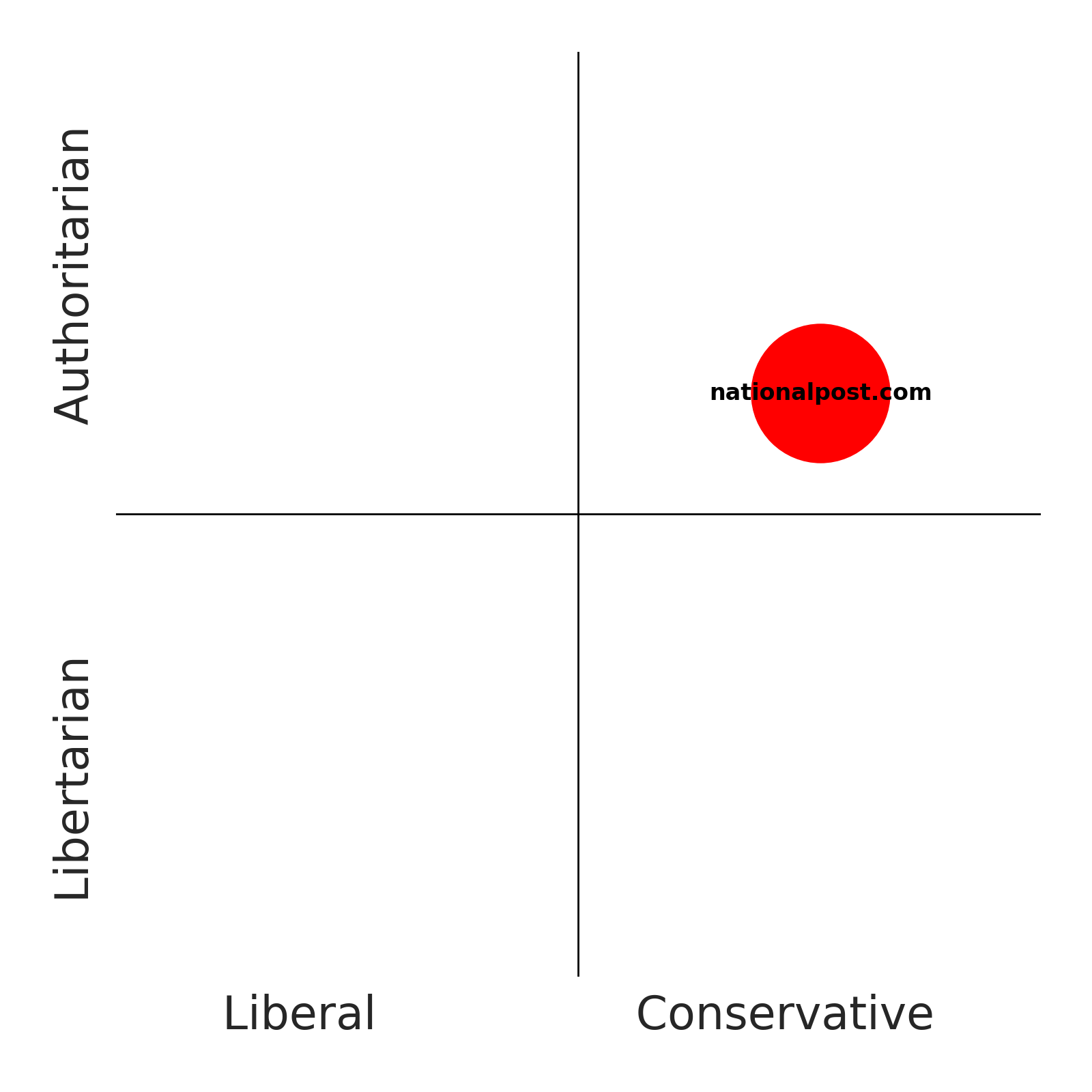
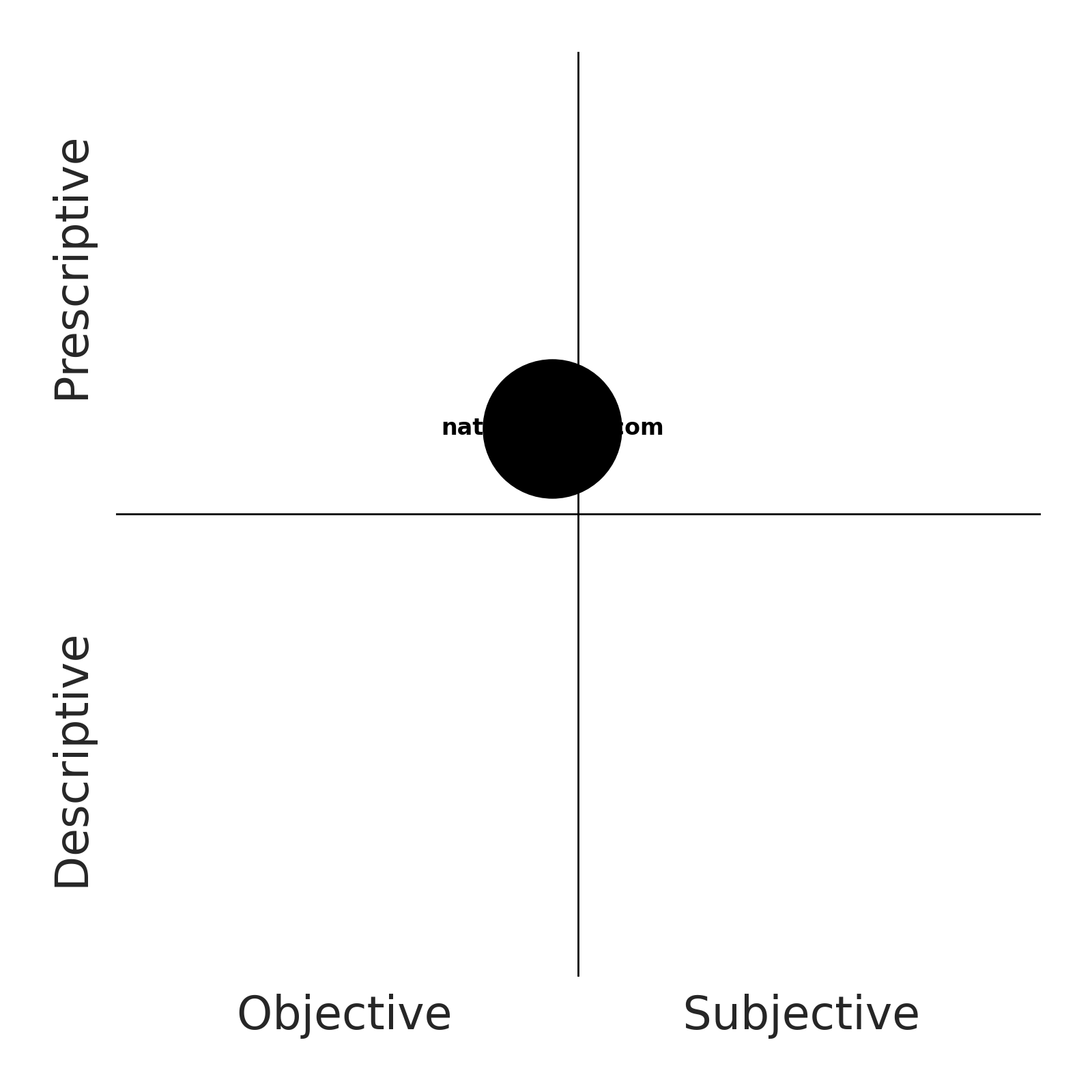
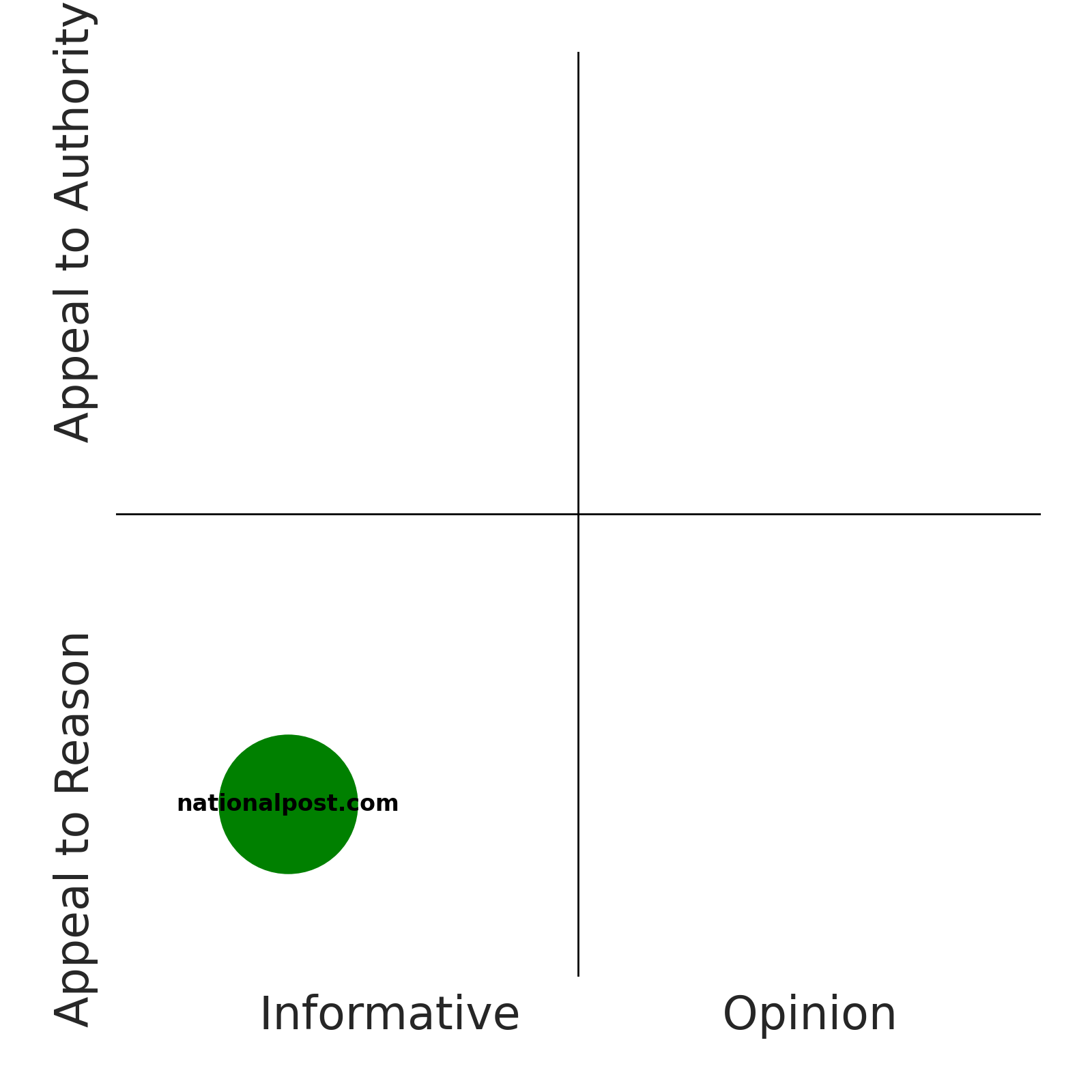
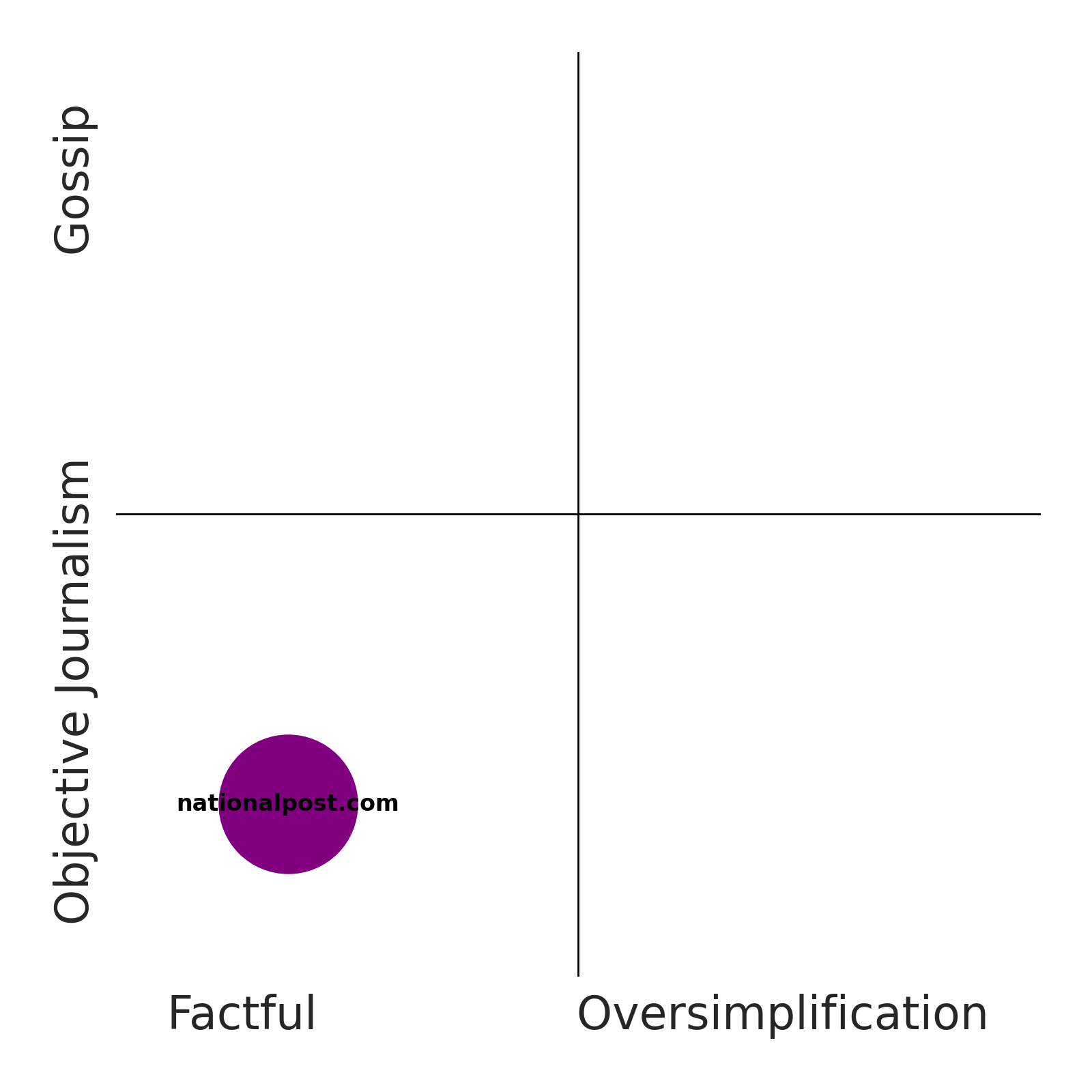
2026 © Helium Trades
Privacy Policy & Disclosure
* Disclaimer: Nothing on this website constitutes investment advice, performance data or any recommendation that any particular security, portfolio of securities, transaction or investment strategy is suitable for any specific person. Helium Trades is not responsible in any way for the accuracy
of any model predictions or price data. Any mention of a particular security and related prediction data is not a recommendation to buy or sell that security. Investments in securities involve the risk of loss. Past performance is no guarantee of future results. Helium Trades is not responsible for any of your investment decisions,
you should consult a financial expert before engaging in any transaction.
Helium Research Assistant

How can I help you today?
Ask any question about nationalpost.com bias.


