psypost.org Media Bias


General framing and worldview

The sample presents a predominantly science-first, technocratic model of knowledge: peer-reviewed studies, statistical methods, expert quotations, and biological or psychological measurements are treated as the primary route to credibility

.

This is a wording/framing pattern, not proof of motive.

The reporting repeatedly distinguishes correlation from causation, notes sample limitations, and avoids definitive clinical claims .

A counterexample is the more policy-oriented treatment of loot boxes, which reports researchers’ proposed regulation rather than only describing results .

The source’s apparent highest three values are:

empirical verification, shown by repeated emphasis on journals, methods, and quantified results ; epistemic caution, especially around cross-sectional, animal, small-sample, and observational evidence ; and practical usefulness, particularly the possible translation of findings into screening, treatment, clinical training, or institutional guidance . The third value sometimes produces cautiously optimistic “promising” framing despite preliminary evidence .

Its lowest three observable values, relative to those emphasized, appear to be:

ideological or partisan pluralism, because political coverage is sparse and mostly operationalized through survey or neuroscience research ; non-Western and globally representative coverage, since several studies rely on U.S., U.K., European, Israeli, or Japanese samples, while explicitly acknowledging gaps in African, Indian, Chinese, and Arctic representation ; and lived-experience or qualitative authority, which is less visible than questionnaires, biomarkers, imaging, and expert consensus.

These are coverage inferences, not claims that such perspectives are categorically excluded.

Coverage patterns and main biases

The source tends to write about mental health, psychiatry, neuroscience, cognition, development, personality, sexuality, social behavior, addiction, health technology, and preclinical therapeutics

.

Topic selection favors novel, measurable, potentially clinically relevant findings: biomarkers, brain connectivity, fMRI, predictive models, psychedelics, sleep, parenting, and behavioral interventions .

This creates a novelty and research-publication bias: unpublished null findings, ordinary clinical practice, replication failures, and non-research perspectives cannot be assessed from this dataset.

There is also a mild establishment/credential bias: journal publication, expert panels, universities, and institutional research settings function as recurring credibility cues

. A corresponding counterexample is the source’s willingness to report findings that complicate attractive narratives, such as Google results not showing a location-based filter bubble , or biomarker matching failing to significantly improve medication outcomes .

Propaganda and AI assessment

No strong evidence of classic propaganda techniques—fabricated evidence, demonization, coercive repetition, or explicit partisan mobilization—appears in the supplied records.

Observable softer techniques include authority transfer through journals and experts

, and occasional issue-salience framing, such as calling climate change a health crisis and foregrounding marginalized vulnerability . The sample also contains countervailing caveats and non-confirmatory results, which weigh against a coordinated propagandistic presentation .

AI authorship is indeterminate. Repetitive article architecture, formulaic caveats, and similar “study–limitation–future research” phrasing could be consistent with templated or AI-assisted production

, but they are also normal science-journalism conventions.

One record specifically reports no strong AI-authorship indicators in its analyzed article ; the supplied material does not establish authorship of the source as a whole.

Limitations: the records are highly selective, concentrated in July–August 2026 and apparently skewed toward unusual research stories or pre-labeled bias judgments.

Social-media shares are zero throughout the listed sample, and absent stories are unobservable; therefore prevalence, editorial intent, factual accuracy, and audience impact cannot be estimated reliably.


Helium Bias: This assessment assumes the supplied records accurately summarize the underlying articles and that their dates and quoted excerpts are representative.

I cannot independently verify the studies, headlines, editorial workflow, readership, or omitted coverage.

“Highest” and “lowest” values are comparative inferences from this sample, not measurements of institutional priorities.

AI involvement and propaganda are especially underdetermined without full texts, metadata, authorship records, and a broader archive.

Automated source summary · Updated August 16, 2026 · Not human reviewed. Check recent article panels for claim-level evidence when available.


Use the Data in AI All Sources

psypost.org Bias Profile

Weighted source-level patterns from recent analyzed coverage. Open recent articles below to inspect score-specific evidence and limitations when available.

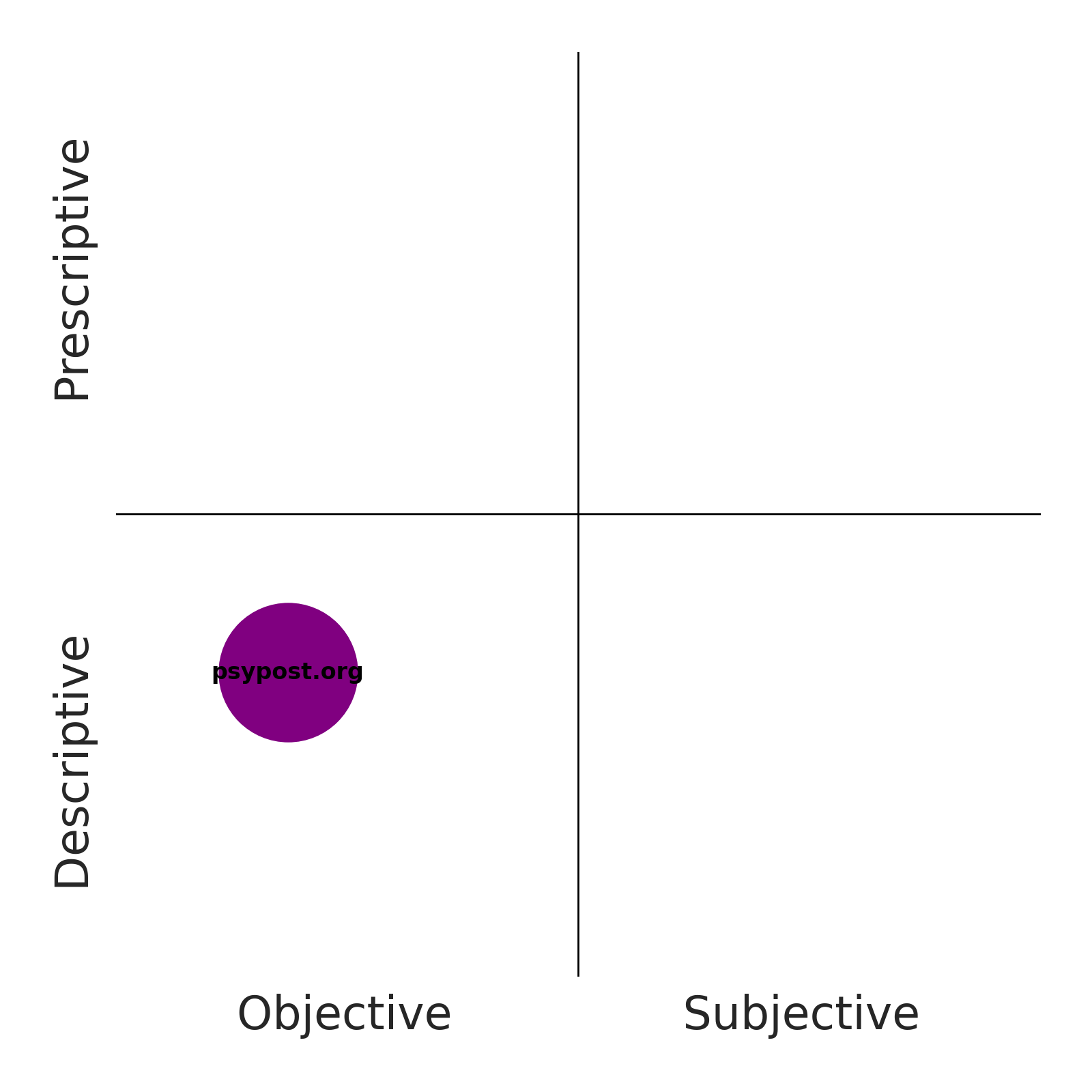
🗞️ Objective <—> Subjective 👁️ -8

💡 Boring <—> Interesting19

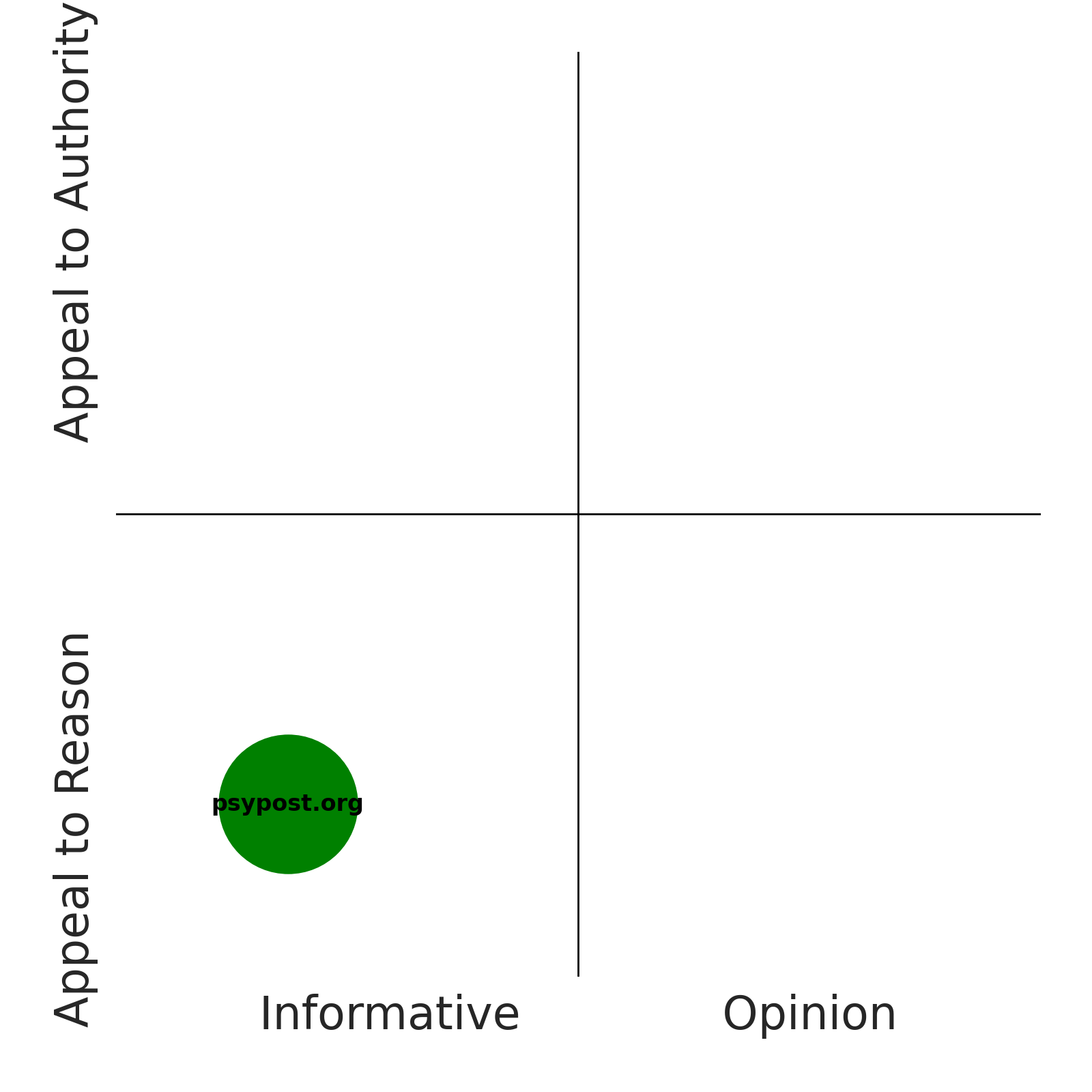
💭 Opinion10

🏛️ Appeal to Authority8

👀 Covering Responses11

❌ Low Credibility <—> High Credibility ✅35

🧠 Rational <—> Irrational 🤪-12

💔 Low Integrity <—> High Integrity ❤️27

🪨 Low Intelligence <—> High Intelligence 🦉60

🎭 Virtue Signaling6

🔍 Truth-seeking <—> Delusion 🌀-8

🔬 Scientific <—> Superstitious 🔮-16

🎲 Speculation17

🐍 Manipulative7

Subtle dimensions

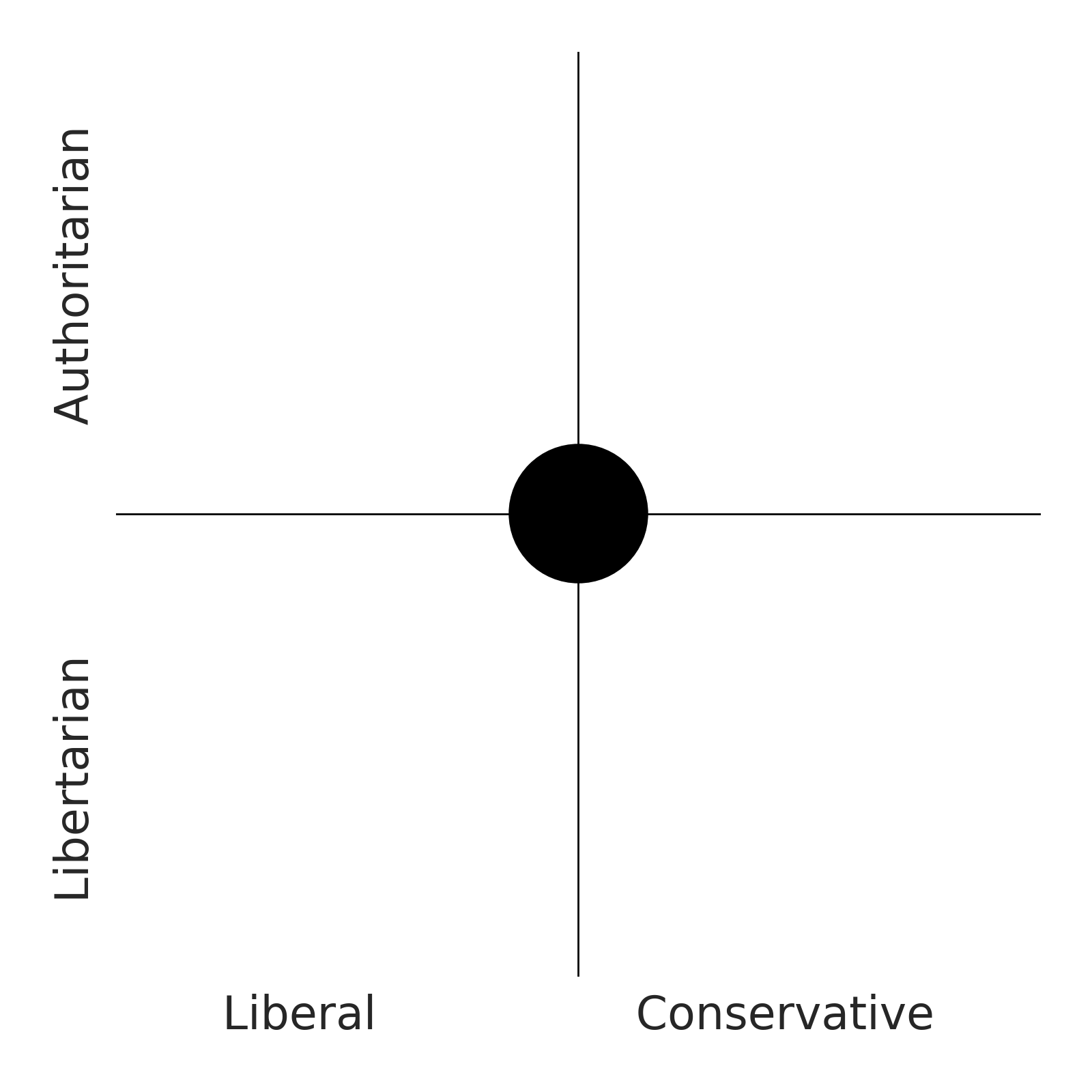
🔵 Liberal <—> Conservative 🔴-1

🚨 Sensational0

📉 Bearish <—> Bullish 📈0

😨 Fearful2

🗳 Political0

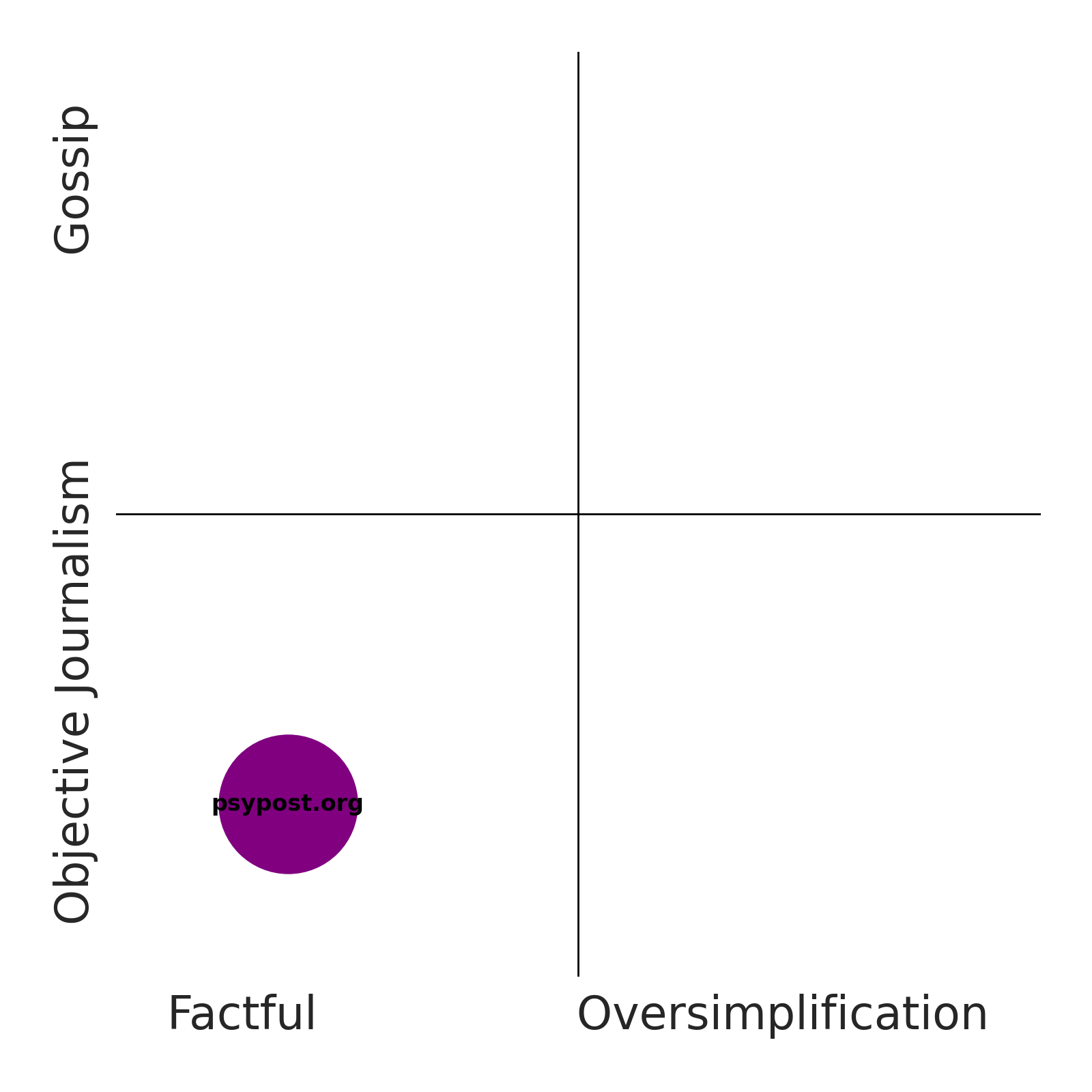
Oversimplification4

😢 Victimization2

😤 Overconfidence4

🔒 Ideological0

🏴 Anti-establishment <—> Pro-establishment 📺2

🤑 Advertising2

✊ Woke5

👤 Individualist <—> Collectivist 👥0

How to interpret source scores →

Average social shares per article 0


psypost.org Political Bias (?)


psypost.org Subjective Bias (?)


psypost.org Opinion Bias (?)


psypost.org Oversimplification Bias (?)


Discuss this source


psypost.org Recent Articles


Sort By:                     


Build a focused, ad-free news feed.

Create Free Feed