See whether Helium helps you make better-informed decisions. Try every Pro Trader feature for 30 days. No credit card required.
Try every Pro Trader feature for 30 days. No credit card required.
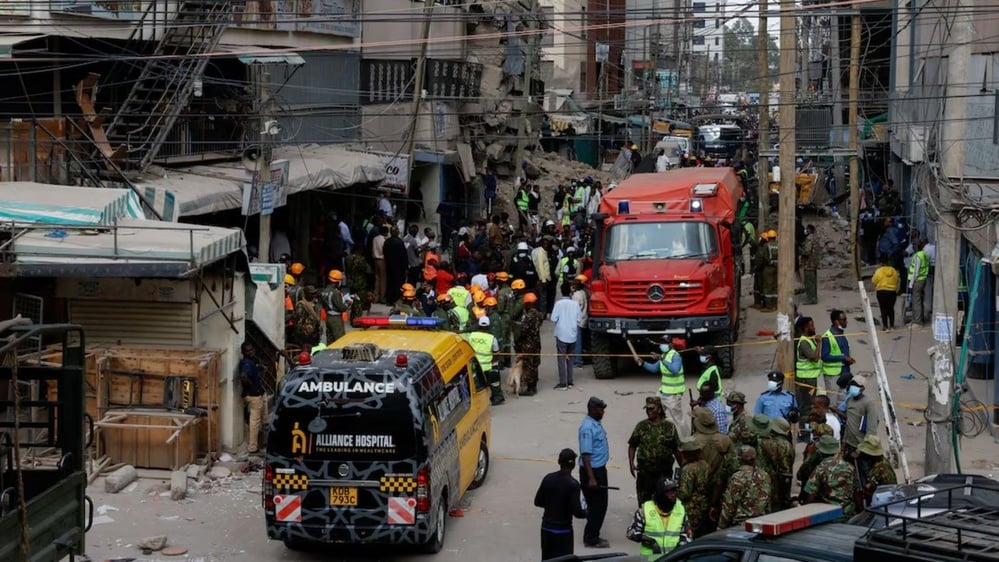
October 23, 2026 · 0 shares
The report uses cautious breaking-news framing, attributing key details to the Kenya Red Cross and media reports while repeatedly flagging unconfirmed casualties and cause.
Automated analysis; not human reviewed.
Limitations: The supplied text includes unrelated sidebar headlines and an ad-blocker notice; only the substantive collapse report was analyzed.
·
6 of 55 available dimensions scored; omitted dimensions are not treated as neutral.
·
Verified supporting quotes for 6 of 6 scored dimensions.
Claim: The report is predominantly objective, relying on attributed information and explicitly marking unconfirmed details.
“The number of people affected had not been officially confirmed by the time of publication” · exact text match
“Media reports said businesses were operating on the building’s lower floors while construction continued on the upper levels when the structure collapsed.” · exact text match
Why: It separates confirmed from unconfirmed information and attributes contested details rather than presenting subjective interpretation.
Claim: The collapse is reported in measured, non-sensational terms rather than with heightened drama or graphic emphasis.
“Police officers were deployed to the scene and used tear gas to disperse crowds that had gathered, allowing emergency teams to access the rubble and carry out rescue operations.” · exact text match
“Authorities had yet to establish the cause of the collapse or confirm the number of casualties as rescue efforts continued.” · exact text match
Why: It describes response actions and unknown facts plainly, without sensational adjectives or graphic imagery.
Claim: The framing is descriptive, focusing on what happened and what responders did, without prescribing policy or conduct.
“Heavy machinery was also deployed to help clear the debris as responders searched for possible survivors.” · exact text match
Why: The sentence describes response actions without recommending policy or evaluating conduct.
Claim: The report shows strong credibility signals through named attribution, explicit uncertainty, and separation of official and media claims.
“according to the Kenya Red Cross, which dispatched an emergency response team to assist with rescue efforts” · exact text match
“The number of people affected had not been officially confirmed by the time of publication” · exact text match
Why: Sourcing and uncertainty are visible, supporting trustworthiness in the supplied text.
Claim: There is limited speculation, mainly a forecast that the collapse will prompt scrutiny of building safety and standards.
“The incident is expected to raise fresh questions about building safety and construction standards in Nairobi, although investigations into the cause of the collapse had not been completed.” · exact text match
Why: The forward-looking 'expected to raise' language is speculative, though qualified by the unresolved investigation.
Claim: The report displays fair, honest handling by attributing media-reported building use and avoiding assertions beyond confirmed facts.
“Media reports said businesses were operating on the building’s lower floors while construction continued on the upper levels when the structure collapsed.” · exact text match
“Authorities had yet to establish the cause of the collapse or confirm the number of casualties as rescue efforts continued.” · exact text match
Why: It labels unverified claims and openly notes unresolved cause and casualties.
The supplied text includes unrelated sidebar headlines and an ad-blocker notice; only the substantive collapse report was analyzed.
October 24, 2026 · 0 shares
Hard-news incident framing is strongly objective, using named-source attribution and restrained procedural language while presenting official accounts without independent verification.
Automated analysis; not human reviewed.
Limitations: The supplied text contains duplicated paragraphs and unrelated sidebar headlines; only the substantive collapse report was analyzed.
·
7 of 55 available dimensions scored; omitted dimensions are not treated as neutral.
·
Verified supporting quotes for 7 of 7 scored dimensions.
Claim: Missing-person and injury figures are attributed to named institutions and officials rather than asserted as unmediated facts.
“Government officials said at least seven people had been reported missing after the building collapsed along 9th Street on Friday afternoon.” · exact text match
“Kenya Red Cross said on Friday night that two injured people had been taken to Kenyatta National Hospital.” · exact text match
Why: Direct attribution to government officials and Kenya Red Cross supports an objective, sourced presentation.
Claim: Wording is procedural and avoids dramatic or emotionally charged adjectives.
“The search for missing people following the collapse of a multi-storey building under construction in Eastleigh, Nairobi, entered its second day on Saturday, with rescue teams continuing to clear debris in an effort to locate those feared trapped beneath the rubble.” · exact text match
Why: The lead uses routine procedural verbs and factual sequence rather than sensational language.
Claim: The report describes rescue actions and official statements rather than prescribing policy or advocating action beyond quoted officials.
“Nairobi regional police commander Issa Mohamud said rescue teams remained at the scene, concentrating on clearing the rubble and reaching the lower floors.” · exact text match
Why: The sentence is a descriptive account of operations, not the publisher's prescription.
Claim: The emotional register remains restrained despite the disaster context.
“His condition was reported to be stable.” · exact text match
Why: Clinical status language and neutral reporting indicate a measured emotional tone.
Claim: Credibility is supported by named institutional sources, direct quotes, and attributed status updates.
“Kenya Red Cross said on Friday night that two injured people had been taken to Kenyatta National Hospital.” · exact text match
“Nairobi regional police commander Issa Mohamud said rescue teams remained at the scene, concentrating on clearing the rubble and reaching the lower floors.” · exact text match
Why: Multiple named sources and direct attribution provide visible sourcing and uncertainty handling.
Claim: The report flags a discrepancy between missing-person reports and the worker accounting rather than flattening it.
“Government officials said at least seven people had been reported missing after the building collapsed along 9th Street on Friday afternoon.” · exact text match
“Interior Cabinet Secretary Kipchumba Murkomen, however, said all 67 construction workers who were at the site when the building collapsed had been accounted for.” · exact text match
Why: The use of 'however' and separate attributions preserves a factual tension for readers.
Claim: The report includes competing official figures and identifies the source of each, showing internal fairness and honesty signals.
“Government officials said at least seven people had been reported missing after the building collapsed along 9th Street on Friday afternoon.” · exact text match
“Interior Cabinet Secretary Kipchumba Murkomen, however, said all 67 construction workers who were at the site when the building collapsed had been accounted for.” · exact text match
Why: It does not suppress the apparent discrepancy between missing persons and accounted-for workers.
The supplied text contains duplicated paragraphs and unrelated sidebar headlines; only the substantive collapse report was analyzed.
October 23, 2026 · 0 shares
Largely neutral and official-source-driven, foregrounding government rescue coordination and accountability assurances while attributing key casualty figures to the Interior Cabinet Secretary.
Automated analysis; not human reviewed.
Limitations: The supplied text contains duplicated headline fragments and a malformed lede, likely scrape or formatting artifacts; no byline is present.
·
7 of 55 available dimensions scored; omitted dimensions are not treated as neutral.
·
Verified supporting quotes for 7 of 7 scored dimensions.
Claim: The report is predominantly factual and attributive rather than commentary.
“According to Murkomen, 11 shops located on the building’s ground floor and basement were occupied when the structure came down.” · exact text match
Why: Details are presented through named attribution and direct official statements, with little subjective language.
Claim: The collapse is reported in measured, non-sensational terms.
“Rescue efforts were continuing as authorities worked to establish the whereabouts of the missing people and determine the cause of the collapse.” · exact text match
Why: The language is procedural and avoids dramatic or graphic phrasing.
Claim: Many key facts and assurances are sourced to the Interior Cabinet Secretary rather than independent verification.
“According to Murkomen, 11 shops located on the building’s ground floor and basement were occupied when the structure came down.” · exact text match
“Murkomen said the government was providing the rescue teams with the necessary support to speed up the operation, while arrangements were being made to provide affected individuals and families with assistance, including psychosocial support.” · exact text match
Why: The report repeatedly relies on the same senior official for casualty, occupancy and response details.
Claim: The article devotes substantial coverage to the official search-and-rescue response.
“A multi-agency team comprising the Kenya Defence Forces, National Police Service, Nairobi City County Government, National Youth Service, Kenya Red Cross and other government agencies was leading the search and rescue operation.” · exact text match
Why: It details the composition of the rescue operation and government coordination beyond the basic casualty report.
Claim: The report gives prominent, largely uncritical space to official government response and assurances.
“Murkomen said the government was providing the rescue teams with the necessary support to speed up the operation, while arrangements were being made to provide affected individuals and families with assistance, including psychosocial support.” · exact text match
Why: Multiple paragraphs relay senior officials' assurances and support measures without independent scrutiny.
Claim: The report provides specific figures, named officials, and agency details with attribution.
“Interior Cabinet Secretary Kipchumba Murkomen said 66 construction workers escaped uninjured, while one sustained injuries and was receiving treatment in hospital, where his condition was reported to be stable.” · exact text match
Why: Named sourcing and precise operational details support credibility in the supplied text.
Claim: Attribution and direct quotation indicate fair internal reporting, though sourcing is largely official.
““Seven people have been reported missing.
The rescue team has made contact with some of them, and efforts are underway to rescue those trapped in the rubble,” he said.”
· exact text match
Why: Directly quoting the official and labeling reported figures shows honesty signals; single-source reliance limits confidence.
The supplied text contains duplicated headline fragments and a malformed lede, likely scrape or formatting artifacts; no byline is present.
October 24, 2026 · 0 shares
Framing is restrained and attribution-heavy, centering named-official updates on rescue efforts and accountability while avoiding overt ideological or sensational language.
Automated analysis; not human reviewed.
Limitations: The supplied text is scrape-like, with duplicated passages and unrelated headlines; analysis is limited to the identifiable Eastleigh collapse report.
·
4 of 55 available dimensions scored; omitted dimensions are not treated as neutral.
·
Verified supporting quotes for 4 of 4 scored dimensions.
Claim: The report frames the collapse through attributed official statements and concrete facts rather than subjective commentary.
“Seven people have been reported missing following the collapse of a multi-storey building under construction in Eastleigh, Nairobi, Interior Cabinet Secretary Kipchumba Murkomen has said.” · exact text match
Why: The sentence attributes the central missing-person count to a named official and uses plain factual language.
Claim: The headline and opening are restrained rather than sensational.
“Seven missing after Eastleigh building collapse.” · exact text match
Why: The headline states the missing count and location without emotive or alarmist wording.
Claim: The report is primarily descriptive, noting safety questions without prescribing a policy response.
“The collapse renewed questions about construction safety and the enforcement of regulations governing building projects in Nairobi, particularly in densely populated neighbourhoods.” · exact text match
Why: The sentence describes a public debate around safety and enforcement rather than advocating a specific course of action.
Claim: Key developments are attributed to named officials and include specific figures.
“In an update issued on Friday evening, Murkomen said 67 construction workers were at the site when the building collapsed.” · exact text match
Why: The report credits the Interior Cabinet Secretary for a specific worker count and timing, supporting transparency and verifiability.
The supplied text is scrape-like, with duplicated passages and unrelated headlines; analysis is limited to the identifiable Eastleigh collapse report.
October 24, 2026 · 0 shares
Hard-news incident framing is strongly objective, using named-source attribution and restrained procedural language while presenting official accounts without independent verification.
Automated analysis; not human reviewed.
Limitations: The supplied text contains duplicated paragraphs and unrelated sidebar headlines; only the substantive collapse report was analyzed.
·
7 of 55 available dimensions scored; omitted dimensions are not treated as neutral.
·
Verified supporting quotes for 7 of 7 scored dimensions.
Claim: Missing-person and injury figures are attributed to named institutions and officials rather than asserted as unmediated facts.
“Government officials said at least seven people had been reported missing after the building collapsed along 9th Street on Friday afternoon.” · exact text match
“Kenya Red Cross said on Friday night that two injured people had been taken to Kenyatta National Hospital.” · exact text match
Why: Direct attribution to government officials and Kenya Red Cross supports an objective, sourced presentation.
Claim: Wording is procedural and avoids dramatic or emotionally charged adjectives.
“The search for missing people following the collapse of a multi-storey building under construction in Eastleigh, Nairobi, entered its second day on Saturday, with rescue teams continuing to clear debris in an effort to locate those feared trapped beneath the rubble.” · exact text match
Why: The lead uses routine procedural verbs and factual sequence rather than sensational language.
Claim: The report describes rescue actions and official statements rather than prescribing policy or advocating action beyond quoted officials.
“Nairobi regional police commander Issa Mohamud said rescue teams remained at the scene, concentrating on clearing the rubble and reaching the lower floors.” · exact text match
Why: The sentence is a descriptive account of operations, not the publisher's prescription.
Claim: The emotional register remains restrained despite the disaster context.
“His condition was reported to be stable.” · exact text match
Why: Clinical status language and neutral reporting indicate a measured emotional tone.
Claim: Credibility is supported by named institutional sources, direct quotes, and attributed status updates.
“Kenya Red Cross said on Friday night that two injured people had been taken to Kenyatta National Hospital.” · exact text match
“Nairobi regional police commander Issa Mohamud said rescue teams remained at the scene, concentrating on clearing the rubble and reaching the lower floors.” · exact text match
Why: Multiple named sources and direct attribution provide visible sourcing and uncertainty handling.
Claim: The report flags a discrepancy between missing-person reports and the worker accounting rather than flattening it.
“Government officials said at least seven people had been reported missing after the building collapsed along 9th Street on Friday afternoon.” · exact text match
“Interior Cabinet Secretary Kipchumba Murkomen, however, said all 67 construction workers who were at the site when the building collapsed had been accounted for.” · exact text match
Why: The use of 'however' and separate attributions preserves a factual tension for readers.
Claim: The report includes competing official figures and identifies the source of each, showing internal fairness and honesty signals.
“Government officials said at least seven people had been reported missing after the building collapsed along 9th Street on Friday afternoon.” · exact text match
“Interior Cabinet Secretary Kipchumba Murkomen, however, said all 67 construction workers who were at the site when the building collapsed had been accounted for.” · exact text match
Why: It does not suppress the apparent discrepancy between missing persons and accounted-for workers.
The supplied text contains duplicated paragraphs and unrelated sidebar headlines; only the substantive collapse report was analyzed.
October 23, 2026 · 0 shares
Largely neutral and official-source-driven, foregrounding government rescue coordination and accountability assurances while attributing key casualty figures to the Interior Cabinet Secretary.
Automated analysis; not human reviewed.
Limitations: The supplied text contains duplicated headline fragments and a malformed lede, likely scrape or formatting artifacts; no byline is present.
·
7 of 55 available dimensions scored; omitted dimensions are not treated as neutral.
·
Verified supporting quotes for 7 of 7 scored dimensions.
Claim: The report is predominantly factual and attributive rather than commentary.
“According to Murkomen, 11 shops located on the building’s ground floor and basement were occupied when the structure came down.” · exact text match
Why: Details are presented through named attribution and direct official statements, with little subjective language.
Claim: The collapse is reported in measured, non-sensational terms.
“Rescue efforts were continuing as authorities worked to establish the whereabouts of the missing people and determine the cause of the collapse.” · exact text match
Why: The language is procedural and avoids dramatic or graphic phrasing.
Claim: Many key facts and assurances are sourced to the Interior Cabinet Secretary rather than independent verification.
“According to Murkomen, 11 shops located on the building’s ground floor and basement were occupied when the structure came down.” · exact text match
“Murkomen said the government was providing the rescue teams with the necessary support to speed up the operation, while arrangements were being made to provide affected individuals and families with assistance, including psychosocial support.” · exact text match
Why: The report repeatedly relies on the same senior official for casualty, occupancy and response details.
Claim: The article devotes substantial coverage to the official search-and-rescue response.
“A multi-agency team comprising the Kenya Defence Forces, National Police Service, Nairobi City County Government, National Youth Service, Kenya Red Cross and other government agencies was leading the search and rescue operation.” · exact text match
Why: It details the composition of the rescue operation and government coordination beyond the basic casualty report.
Claim: The report gives prominent, largely uncritical space to official government response and assurances.
“Murkomen said the government was providing the rescue teams with the necessary support to speed up the operation, while arrangements were being made to provide affected individuals and families with assistance, including psychosocial support.” · exact text match
Why: Multiple paragraphs relay senior officials' assurances and support measures without independent scrutiny.
Claim: The report provides specific figures, named officials, and agency details with attribution.
“Interior Cabinet Secretary Kipchumba Murkomen said 66 construction workers escaped uninjured, while one sustained injuries and was receiving treatment in hospital, where his condition was reported to be stable.” · exact text match
Why: Named sourcing and precise operational details support credibility in the supplied text.
Claim: Attribution and direct quotation indicate fair internal reporting, though sourcing is largely official.
““Seven people have been reported missing.
The rescue team has made contact with some of them, and efforts are underway to rescue those trapped in the rubble,” he said.”
· exact text match
Why: Directly quoting the official and labeling reported figures shows honesty signals; single-source reliance limits confidence.
The supplied text contains duplicated headline fragments and a malformed lede, likely scrape or formatting artifacts; no byline is present.
October 24, 2026 · 0 shares
Hard-news incident framing is strongly objective, using named-source attribution and restrained procedural language while presenting official accounts without independent verification.
Automated analysis; not human reviewed.
Limitations: The supplied text contains duplicated paragraphs and unrelated sidebar headlines; only the substantive collapse report was analyzed.
·
7 of 55 available dimensions scored; omitted dimensions are not treated as neutral.
·
Verified supporting quotes for 7 of 7 scored dimensions.
Claim: Missing-person and injury figures are attributed to named institutions and officials rather than asserted as unmediated facts.
“Government officials said at least seven people had been reported missing after the building collapsed along 9th Street on Friday afternoon.” · exact text match
“Kenya Red Cross said on Friday night that two injured people had been taken to Kenyatta National Hospital.” · exact text match
Why: Direct attribution to government officials and Kenya Red Cross supports an objective, sourced presentation.
Claim: Wording is procedural and avoids dramatic or emotionally charged adjectives.
“The search for missing people following the collapse of a multi-storey building under construction in Eastleigh, Nairobi, entered its second day on Saturday, with rescue teams continuing to clear debris in an effort to locate those feared trapped beneath the rubble.” · exact text match
Why: The lead uses routine procedural verbs and factual sequence rather than sensational language.
Claim: The report describes rescue actions and official statements rather than prescribing policy or advocating action beyond quoted officials.
“Nairobi regional police commander Issa Mohamud said rescue teams remained at the scene, concentrating on clearing the rubble and reaching the lower floors.” · exact text match
Why: The sentence is a descriptive account of operations, not the publisher's prescription.
Claim: The emotional register remains restrained despite the disaster context.
“His condition was reported to be stable.” · exact text match
Why: Clinical status language and neutral reporting indicate a measured emotional tone.
Claim: Credibility is supported by named institutional sources, direct quotes, and attributed status updates.
“Kenya Red Cross said on Friday night that two injured people had been taken to Kenyatta National Hospital.” · exact text match
“Nairobi regional police commander Issa Mohamud said rescue teams remained at the scene, concentrating on clearing the rubble and reaching the lower floors.” · exact text match
Why: Multiple named sources and direct attribution provide visible sourcing and uncertainty handling.
Claim: The report flags a discrepancy between missing-person reports and the worker accounting rather than flattening it.
“Government officials said at least seven people had been reported missing after the building collapsed along 9th Street on Friday afternoon.” · exact text match
“Interior Cabinet Secretary Kipchumba Murkomen, however, said all 67 construction workers who were at the site when the building collapsed had been accounted for.” · exact text match
Why: The use of 'however' and separate attributions preserves a factual tension for readers.
Claim: The report includes competing official figures and identifies the source of each, showing internal fairness and honesty signals.
“Government officials said at least seven people had been reported missing after the building collapsed along 9th Street on Friday afternoon.” · exact text match
“Interior Cabinet Secretary Kipchumba Murkomen, however, said all 67 construction workers who were at the site when the building collapsed had been accounted for.” · exact text match
Why: It does not suppress the apparent discrepancy between missing persons and accounted-for workers.
The supplied text contains duplicated paragraphs and unrelated sidebar headlines; only the substantive collapse report was analyzed.
October 23, 2026 · 0 shares
The report is a straight, attribution-heavy breaking-news account that labels casualty figures as unconfirmed and avoids evaluative or sensational language.
Automated analysis; not human reviewed.
Limitations: No author byline is present; casualty and trapped-person counts were unconfirmed at publication.
·
15 of 55 available dimensions scored; omitted dimensions are not treated as neutral.
·
Verified supporting quotes for 15 of 15 scored dimensions.
Claim: The report separates confirmed information from unconfirmed details and attributes scene accounts.
“The number of people trapped, casualties and injuries had not been confirmed by the time of publication as details of the incident continued to emerge.” · exact text match
Why: Explicit uncertainty and attribution indicate objective rather than subjective framing.
Claim: Neutral factual language is used to describe the collapse and emergency response.
“The crowd that gathered at the scene temporarily hampered emergency responders' access to the site, making it difficult for rescue teams and emergency vehicles to reach the building and coordinate rescue efforts.” · exact text match
Why: The phrasing is descriptive and avoids sensational adjectives.
Claim: The article describes the incident and response without prescribing policy or assigning blame.
“The Nairobi County Government (NCCG), the National Police Service (NPS), the National Disaster Management Unit (NDMU) and the National Construction Authority (NCA) had yet to issue statements on the incident or clarify whether the building had obtained the necessary approvals and complied with construction regulations.” · exact text match
Why: It reports an unresolved regulatory question descriptively rather than advocating action.
Claim: Fear language is limited to standard attributed breaking-news phrasing about possible trapped persons.
“Several people are feared trapped after a 13-floor building under construction collapsed along 9th Street” · exact text match
Why: The report does not use rage-bait or alarmist escalation beyond the event.
Claim: The article avoids evaluative commentary and relies on attributed facts.
“According to eyewitness accounts and reports from the scene, the building was still under construction and had reached its 13th floor before it collapsed.” · exact text match
Why: Attributed reporting rather than opinion.
Claim: The report is non-political; government mention is confined to emergency response and regulatory clarification.
“The Nairobi County Government (NCCG), the National Police Service (NPS), the National Disaster Management Unit (NDMU) and the National Construction Authority (NCA) had yet to issue statements on the incident or clarify whether the building had obtained the necessary approvals and complied with construction regulations.” · exact text match
Why: Institutional references serve disaster reporting rather than partisan framing.
Claim: The report notes unconfirmed details rather than offering a simplified cause.
“The number of people trapped, casualties and injuries had not been confirmed by the time of publication as details of the incident continued to emerge.” · exact text match
Why: It acknowledges unresolved information.
Claim: The article explicitly states that key casualty information is unconfirmed.
“The number of people trapped, casualties and injuries had not been confirmed by the time of publication as details of the incident continued to emerge.” · exact text match
Why: Certainty is limited to fit available evidence.
Claim: The tone remains neutral and avoids emotional intensifiers.
“The Friday afternoon incident brought business to a standstill along the busy street as residents, traders and passersby gathered near the scene.” · exact text match
Why: The language is observational rather than emotional.
Claim: Credible signals include named sources and explicit uncertainty.
“Kenya Red Cross response teams are en route to the scene” · exact text match
“According to eyewitness accounts and reports from the scene, the building was still under construction and had reached its 13th floor before it collapsed.” · exact text match
Why: Attribution and caveats support trustworthiness in the supplied text.
Claim: The account presents a coherent sequence of events and explicitly notes unresolved facts.
“There were fears that workers or other people may have been inside the building when it collapsed, with efforts to establish whether anyone was trapped ongoing.” · exact text match
Why: It distinguishes fears and ongoing verification from established fact.
Claim: Possible trapped persons are reported as fears and ongoing verification, not as confirmed fact.
“There were fears that workers or other people may have been inside the building when it collapsed, with efforts to establish whether anyone was trapped ongoing.” · exact text match
Why: Speculative possibility is clearly labeled.
Claim: The report discloses unconfirmed casualty information and attributes key claims.
“The number of people trapped, casualties and injuries had not been confirmed by the time of publication as details of the incident continued to emerge.” · exact text match
Why: Candor about uncertainty supports high integrity.
Claim: The report provides clear location, sequence, response, and uncertainty details.
“The situation was further complicated by Friday prayers, a key weekly religious observance for the predominantly Muslim Eastleigh community.” · exact text match
Why: Contextual detail and clear structure indicate above-average article intelligence.
No author byline is present; casualty and trapped-person counts were unconfirmed at publication.
The report uses concise, neutral breaking-news wording and presents the collapse, casualty figures, and rescue contact as straightforward facts.
Automated analysis; not human reviewed.
Limitations: The article text is a very brief, unsourced news snippet with no attribution for the casualty figures or rescue-contact claim.
·
2 of 55 available dimensions scored; omitted dimensions are not treated as neutral.
·
Verified supporting quotes for 2 of 2 scored dimensions.
Claim: The report describes the collapse in factual event terms without subjective evaluation.
“An 18-storey building under construction collapses in Eastleigh, Nairobi, #Kenya” · exact text match
Why: Plain event reporting with no evaluative or opinion language supports an objective classification.
Claim: The casualty information is presented in plain terms without sensational adjectives or emotive framing.
“leaving seven people missing and at least one injured.” · exact text match
Why: The text reports missing and injured people directly, with no dramatic or emotionally charged wording.
The article text is a very brief, unsourced news snippet with no attribution for the casualty figures or rescue-contact claim.
October 24, 2026 · 0 shares
Factual news reporting focuses on the immediate emergency response, official casualty updates, and regulatory investigation following the structural collapse.
Automated analysis; not human reviewed.
·
7 of 55 available dimensions scored; omitted dimensions are not treated as neutral.
·
Verified supporting quotes for 0 of 7 scored dimensions.
October 24, 2026 · 0 shares
Hard-news incident framing is strongly objective, using named-source attribution and restrained procedural language while presenting official accounts without independent verification.
Automated analysis; not human reviewed.
Limitations: The supplied text contains duplicated paragraphs and unrelated sidebar headlines; only the substantive collapse report was analyzed.
·
7 of 55 available dimensions scored; omitted dimensions are not treated as neutral.
·
Verified supporting quotes for 7 of 7 scored dimensions.
Claim: Missing-person and injury figures are attributed to named institutions and officials rather than asserted as unmediated facts.
“Government officials said at least seven people had been reported missing after the building collapsed along 9th Street on Friday afternoon.” · exact text match
“Kenya Red Cross said on Friday night that two injured people had been taken to Kenyatta National Hospital.” · exact text match
Why: Direct attribution to government officials and Kenya Red Cross supports an objective, sourced presentation.
Claim: Wording is procedural and avoids dramatic or emotionally charged adjectives.
“The search for missing people following the collapse of a multi-storey building under construction in Eastleigh, Nairobi, entered its second day on Saturday, with rescue teams continuing to clear debris in an effort to locate those feared trapped beneath the rubble.” · exact text match
Why: The lead uses routine procedural verbs and factual sequence rather than sensational language.
Claim: The report describes rescue actions and official statements rather than prescribing policy or advocating action beyond quoted officials.
“Nairobi regional police commander Issa Mohamud said rescue teams remained at the scene, concentrating on clearing the rubble and reaching the lower floors.” · exact text match
Why: The sentence is a descriptive account of operations, not the publisher's prescription.
Claim: The emotional register remains restrained despite the disaster context.
“His condition was reported to be stable.” · exact text match
Why: Clinical status language and neutral reporting indicate a measured emotional tone.
Claim: Credibility is supported by named institutional sources, direct quotes, and attributed status updates.
“Kenya Red Cross said on Friday night that two injured people had been taken to Kenyatta National Hospital.” · exact text match
“Nairobi regional police commander Issa Mohamud said rescue teams remained at the scene, concentrating on clearing the rubble and reaching the lower floors.” · exact text match
Why: Multiple named sources and direct attribution provide visible sourcing and uncertainty handling.
Claim: The report flags a discrepancy between missing-person reports and the worker accounting rather than flattening it.
“Government officials said at least seven people had been reported missing after the building collapsed along 9th Street on Friday afternoon.” · exact text match
“Interior Cabinet Secretary Kipchumba Murkomen, however, said all 67 construction workers who were at the site when the building collapsed had been accounted for.” · exact text match
Why: The use of 'however' and separate attributions preserves a factual tension for readers.
Claim: The report includes competing official figures and identifies the source of each, showing internal fairness and honesty signals.
“Government officials said at least seven people had been reported missing after the building collapsed along 9th Street on Friday afternoon.” · exact text match
“Interior Cabinet Secretary Kipchumba Murkomen, however, said all 67 construction workers who were at the site when the building collapsed had been accounted for.” · exact text match
Why: It does not suppress the apparent discrepancy between missing persons and accounted-for workers.
The supplied text contains duplicated paragraphs and unrelated sidebar headlines; only the substantive collapse report was analyzed.
October 24, 2026 · 0 shares
Framing is restrained and attribution-heavy, centering named-official updates on rescue efforts and accountability while avoiding overt ideological or sensational language.
Automated analysis; not human reviewed.
Limitations: The supplied text is scrape-like, with duplicated passages and unrelated headlines; analysis is limited to the identifiable Eastleigh collapse report.
·
4 of 55 available dimensions scored; omitted dimensions are not treated as neutral.
·
Verified supporting quotes for 4 of 4 scored dimensions.
Claim: The report frames the collapse through attributed official statements and concrete facts rather than subjective commentary.
“Seven people have been reported missing following the collapse of a multi-storey building under construction in Eastleigh, Nairobi, Interior Cabinet Secretary Kipchumba Murkomen has said.” · exact text match
Why: The sentence attributes the central missing-person count to a named official and uses plain factual language.
Claim: The headline and opening are restrained rather than sensational.
“Seven missing after Eastleigh building collapse.” · exact text match
Why: The headline states the missing count and location without emotive or alarmist wording.
Claim: The report is primarily descriptive, noting safety questions without prescribing a policy response.
“The collapse renewed questions about construction safety and the enforcement of regulations governing building projects in Nairobi, particularly in densely populated neighbourhoods.” · exact text match
Why: The sentence describes a public debate around safety and enforcement rather than advocating a specific course of action.
Claim: Key developments are attributed to named officials and include specific figures.
“In an update issued on Friday evening, Murkomen said 67 construction workers were at the site when the building collapsed.” · exact text match
Why: The report credits the Interior Cabinet Secretary for a specific worker count and timing, supporting transparency and verifiability.
The supplied text is scrape-like, with duplicated passages and unrelated headlines; analysis is limited to the identifiable Eastleigh collapse report.
October 24, 2026 · 0 shares
Factual news reporting focuses on the immediate emergency response, official casualty updates, and regulatory investigation following the structural collapse.
Automated analysis; not human reviewed.
·
7 of 55 available dimensions scored; omitted dimensions are not treated as neutral.
·
Verified supporting quotes for 0 of 7 scored dimensions.
October 24, 2026 · 0 shares
Factual, attribution-heavy framing centers named official statements and rescue logistics while avoiding partisan or sensational language.
Automated analysis; not human reviewed.
Limitations: The supplied text includes scraped promotional snippets and an incomplete author email; substantive analysis is limited to the news paragraphs.
·
5 of 55 available dimensions scored; omitted dimensions are not treated as neutral.
·
Verified supporting quotes for 5 of 5 scored dimensions.
Claim: The report uses named attribution and acknowledges uncertainty rather than subjective commentary.
“According to the Interior CS, all the workers have since been accounted for.” · exact text match
“The cause of the collapse remains unknown” · exact text match
Why: Attributed official statements and explicit unknowns indicate objective framing.
Claim: The substantive coverage is measured and does not use sensational language.
“The search and rescue operation was ongoing at the time of the update.” · exact text match
“Authorities have urged families searching for missing relatives to contact the Kenya Red Cross through its emergency response number, 1199.” · exact text match
Why: Operational details and public contact information are presented neutrally.
Claim: The tone remains neutral with only an attributed expression of sympathy.
“Officials have also assured the rescue teams of the support needed to expedite the operation, while expressing sympathy to families whose loved ones remain missing.” · exact text match
Why: The sole affective reference is attributed and does not dominate the report.
Claim: Visible credibility is supported by named official attribution and acknowledgment of unknowns.
“According to the Interior CS, all the workers have since been accounted for.” · exact text match
“The cause of the collapse remains unknown” · exact text match
Why: Named sourcing and explicit uncertainty are positive credibility signals in the supplied text.
Claim: The report avoids speculation and notes an investigation into the unknown cause.
“The cause of the collapse remains unknown, with relevant national and county government agencies expected to investigate the incident in collaboration with professional bodies.” · exact text match
Why: Explicit acknowledgment of unknowns and planned investigation supports rational framing.
The supplied text includes scraped promotional snippets and an incomplete author email; substantive analysis is limited to the news paragraphs.
October 23, 2026 · 0 shares
The report uses cautious breaking-news framing, attributing key details to the Kenya Red Cross and media reports while repeatedly flagging unconfirmed casualties and cause.
Automated analysis; not human reviewed. Limitations: The supplied text includes unrelated sidebar headlines and an ad-blocker notice; only the substantive collapse report was analyzed. · 6 of 55 available dimensions scored; omitted dimensions are not treated as neutral. · Verified supporting quotes for 6 of 6 scored dimensions.
Claim: The report is predominantly objective, relying on attributed information and explicitly marking unconfirmed details.
“The number of people affected had not been officially confirmed by the time of publication” · exact text match
“Media reports said businesses were operating on the building’s lower floors while construction continued on the upper levels when the structure collapsed.” · exact text match
Why: It separates confirmed from unconfirmed information and attributes contested details rather than presenting subjective interpretation.
Claim: The collapse is reported in measured, non-sensational terms rather than with heightened drama or graphic emphasis.
“Police officers were deployed to the scene and used tear gas to disperse crowds that had gathered, allowing emergency teams to access the rubble and carry out rescue operations.” · exact text match
“Authorities had yet to establish the cause of the collapse or confirm the number of casualties as rescue efforts continued.” · exact text match
Why: It describes response actions and unknown facts plainly, without sensational adjectives or graphic imagery.
Claim: The framing is descriptive, focusing on what happened and what responders did, without prescribing policy or conduct.
“Heavy machinery was also deployed to help clear the debris as responders searched for possible survivors.” · exact text match
Why: The sentence describes response actions without recommending policy or evaluating conduct.
Claim: The report shows strong credibility signals through named attribution, explicit uncertainty, and separation of official and media claims.
“according to the Kenya Red Cross, which dispatched an emergency response team to assist with rescue efforts” · exact text match
“The number of people affected had not been officially confirmed by the time of publication” · exact text match
Why: Sourcing and uncertainty are visible, supporting trustworthiness in the supplied text.
Claim: There is limited speculation, mainly a forecast that the collapse will prompt scrutiny of building safety and standards.
“The incident is expected to raise fresh questions about building safety and construction standards in Nairobi, although investigations into the cause of the collapse had not been completed.” · exact text match
Why: The forward-looking 'expected to raise' language is speculative, though qualified by the unresolved investigation.
Claim: The report displays fair, honest handling by attributing media-reported building use and avoiding assertions beyond confirmed facts.
“Media reports said businesses were operating on the building’s lower floors while construction continued on the upper levels when the structure collapsed.” · exact text match
“Authorities had yet to establish the cause of the collapse or confirm the number of casualties as rescue efforts continued.” · exact text match
Why: It labels unverified claims and openly notes unresolved cause and casualties.
The supplied text includes unrelated sidebar headlines and an ad-blocker notice; only the substantive collapse report was analyzed.
October 23, 2026 · 0 shares
The report is a straight, attribution-heavy breaking-news account that labels casualty figures as unconfirmed and avoids evaluative or sensational language.
Automated analysis; not human reviewed. Limitations: No author byline is present; casualty and trapped-person counts were unconfirmed at publication. · 15 of 55 available dimensions scored; omitted dimensions are not treated as neutral. · Verified supporting quotes for 15 of 15 scored dimensions.
Claim: The report separates confirmed information from unconfirmed details and attributes scene accounts.
“The number of people trapped, casualties and injuries had not been confirmed by the time of publication as details of the incident continued to emerge.” · exact text match
Why: Explicit uncertainty and attribution indicate objective rather than subjective framing.
Claim: Neutral factual language is used to describe the collapse and emergency response.
“The crowd that gathered at the scene temporarily hampered emergency responders' access to the site, making it difficult for rescue teams and emergency vehicles to reach the building and coordinate rescue efforts.” · exact text match
Why: The phrasing is descriptive and avoids sensational adjectives.
Claim: The article describes the incident and response without prescribing policy or assigning blame.
“The Nairobi County Government (NCCG), the National Police Service (NPS), the National Disaster Management Unit (NDMU) and the National Construction Authority (NCA) had yet to issue statements on the incident or clarify whether the building had obtained the necessary approvals and complied with construction regulations.” · exact text match
Why: It reports an unresolved regulatory question descriptively rather than advocating action.
Claim: Fear language is limited to standard attributed breaking-news phrasing about possible trapped persons.
“Several people are feared trapped after a 13-floor building under construction collapsed along 9th Street” · exact text match
Why: The report does not use rage-bait or alarmist escalation beyond the event.
Claim: The article avoids evaluative commentary and relies on attributed facts.
“According to eyewitness accounts and reports from the scene, the building was still under construction and had reached its 13th floor before it collapsed.” · exact text match
Why: Attributed reporting rather than opinion.
Claim: The report is non-political; government mention is confined to emergency response and regulatory clarification.
“The Nairobi County Government (NCCG), the National Police Service (NPS), the National Disaster Management Unit (NDMU) and the National Construction Authority (NCA) had yet to issue statements on the incident or clarify whether the building had obtained the necessary approvals and complied with construction regulations.” · exact text match
Why: Institutional references serve disaster reporting rather than partisan framing.
Claim: The report notes unconfirmed details rather than offering a simplified cause.
“The number of people trapped, casualties and injuries had not been confirmed by the time of publication as details of the incident continued to emerge.” · exact text match
Why: It acknowledges unresolved information.
Claim: The article explicitly states that key casualty information is unconfirmed.
“The number of people trapped, casualties and injuries had not been confirmed by the time of publication as details of the incident continued to emerge.” · exact text match
Why: Certainty is limited to fit available evidence.
Claim: The tone remains neutral and avoids emotional intensifiers.
“The Friday afternoon incident brought business to a standstill along the busy street as residents, traders and passersby gathered near the scene.” · exact text match
Why: The language is observational rather than emotional.
Claim: Credible signals include named sources and explicit uncertainty.
“Kenya Red Cross response teams are en route to the scene” · exact text match
“According to eyewitness accounts and reports from the scene, the building was still under construction and had reached its 13th floor before it collapsed.” · exact text match
Why: Attribution and caveats support trustworthiness in the supplied text.
Claim: The account presents a coherent sequence of events and explicitly notes unresolved facts.
“There were fears that workers or other people may have been inside the building when it collapsed, with efforts to establish whether anyone was trapped ongoing.” · exact text match
Why: It distinguishes fears and ongoing verification from established fact.
Claim: Possible trapped persons are reported as fears and ongoing verification, not as confirmed fact.
“There were fears that workers or other people may have been inside the building when it collapsed, with efforts to establish whether anyone was trapped ongoing.” · exact text match
Why: Speculative possibility is clearly labeled.
Claim: The report discloses unconfirmed casualty information and attributes key claims.
“The number of people trapped, casualties and injuries had not been confirmed by the time of publication as details of the incident continued to emerge.” · exact text match
Why: Candor about uncertainty supports high integrity.
Claim: The report provides clear location, sequence, response, and uncertainty details.
“The situation was further complicated by Friday prayers, a key weekly religious observance for the predominantly Muslim Eastleigh community.” · exact text match
Why: Contextual detail and clear structure indicate above-average article intelligence.
No author byline is present; casualty and trapped-person counts were unconfirmed at publication.
October 23, 2026 · 0 shares
The report uses cautious breaking-news framing, attributing key details to the Kenya Red Cross and media reports while repeatedly flagging unconfirmed casualties and cause.
Automated analysis; not human reviewed. Limitations: The supplied text includes unrelated sidebar headlines and an ad-blocker notice; only the substantive collapse report was analyzed. · 6 of 55 available dimensions scored; omitted dimensions are not treated as neutral. · Verified supporting quotes for 6 of 6 scored dimensions.
Claim: The report is predominantly objective, relying on attributed information and explicitly marking unconfirmed details.
“The number of people affected had not been officially confirmed by the time of publication” · exact text match
“Media reports said businesses were operating on the building’s lower floors while construction continued on the upper levels when the structure collapsed.” · exact text match
Why: It separates confirmed from unconfirmed information and attributes contested details rather than presenting subjective interpretation.
Claim: The collapse is reported in measured, non-sensational terms rather than with heightened drama or graphic emphasis.
“Police officers were deployed to the scene and used tear gas to disperse crowds that had gathered, allowing emergency teams to access the rubble and carry out rescue operations.” · exact text match
“Authorities had yet to establish the cause of the collapse or confirm the number of casualties as rescue efforts continued.” · exact text match
Why: It describes response actions and unknown facts plainly, without sensational adjectives or graphic imagery.
Claim: The framing is descriptive, focusing on what happened and what responders did, without prescribing policy or conduct.
“Heavy machinery was also deployed to help clear the debris as responders searched for possible survivors.” · exact text match
Why: The sentence describes response actions without recommending policy or evaluating conduct.
Claim: The report shows strong credibility signals through named attribution, explicit uncertainty, and separation of official and media claims.
“according to the Kenya Red Cross, which dispatched an emergency response team to assist with rescue efforts” · exact text match
“The number of people affected had not been officially confirmed by the time of publication” · exact text match
Why: Sourcing and uncertainty are visible, supporting trustworthiness in the supplied text.
Claim: There is limited speculation, mainly a forecast that the collapse will prompt scrutiny of building safety and standards.
“The incident is expected to raise fresh questions about building safety and construction standards in Nairobi, although investigations into the cause of the collapse had not been completed.” · exact text match
Why: The forward-looking 'expected to raise' language is speculative, though qualified by the unresolved investigation.
Claim: The report displays fair, honest handling by attributing media-reported building use and avoiding assertions beyond confirmed facts.
“Media reports said businesses were operating on the building’s lower floors while construction continued on the upper levels when the structure collapsed.” · exact text match
“Authorities had yet to establish the cause of the collapse or confirm the number of casualties as rescue efforts continued.” · exact text match
Why: It labels unverified claims and openly notes unresolved cause and casualties.
The supplied text includes unrelated sidebar headlines and an ad-blocker notice; only the substantive collapse report was analyzed.
October 23, 2026 · 0 shares
Largely neutral and official-source-driven, foregrounding government rescue coordination and accountability assurances while attributing key casualty figures to the Interior Cabinet Secretary.
Automated analysis; not human reviewed. Limitations: The supplied text contains duplicated headline fragments and a malformed lede, likely scrape or formatting artifacts; no byline is present. · 7 of 55 available dimensions scored; omitted dimensions are not treated as neutral. · Verified supporting quotes for 7 of 7 scored dimensions.
Claim: The report is predominantly factual and attributive rather than commentary.
“According to Murkomen, 11 shops located on the building’s ground floor and basement were occupied when the structure came down.” · exact text match
Why: Details are presented through named attribution and direct official statements, with little subjective language.
Claim: The collapse is reported in measured, non-sensational terms.
“Rescue efforts were continuing as authorities worked to establish the whereabouts of the missing people and determine the cause of the collapse.” · exact text match
Why: The language is procedural and avoids dramatic or graphic phrasing.
Claim: Many key facts and assurances are sourced to the Interior Cabinet Secretary rather than independent verification.
“According to Murkomen, 11 shops located on the building’s ground floor and basement were occupied when the structure came down.” · exact text match
“Murkomen said the government was providing the rescue teams with the necessary support to speed up the operation, while arrangements were being made to provide affected individuals and families with assistance, including psychosocial support.” · exact text match
Why: The report repeatedly relies on the same senior official for casualty, occupancy and response details.
Claim: The article devotes substantial coverage to the official search-and-rescue response.
“A multi-agency team comprising the Kenya Defence Forces, National Police Service, Nairobi City County Government, National Youth Service, Kenya Red Cross and other government agencies was leading the search and rescue operation.” · exact text match
Why: It details the composition of the rescue operation and government coordination beyond the basic casualty report.
Claim: The report gives prominent, largely uncritical space to official government response and assurances.
“Murkomen said the government was providing the rescue teams with the necessary support to speed up the operation, while arrangements were being made to provide affected individuals and families with assistance, including psychosocial support.” · exact text match
Why: Multiple paragraphs relay senior officials' assurances and support measures without independent scrutiny.
Claim: The report provides specific figures, named officials, and agency details with attribution.
“Interior Cabinet Secretary Kipchumba Murkomen said 66 construction workers escaped uninjured, while one sustained injuries and was receiving treatment in hospital, where his condition was reported to be stable.” · exact text match
Why: Named sourcing and precise operational details support credibility in the supplied text.
Claim: Attribution and direct quotation indicate fair internal reporting, though sourcing is largely official.
““Seven people have been reported missing. The rescue team has made contact with some of them, and efforts are underway to rescue those trapped in the rubble,” he said.” · exact text match
Why: Directly quoting the official and labeling reported figures shows honesty signals; single-source reliance limits confidence.
The supplied text contains duplicated headline fragments and a malformed lede, likely scrape or formatting artifacts; no byline is present.
October 24, 2026 · 0 shares
Framing is restrained and attribution-heavy, centering named-official updates on rescue efforts and accountability while avoiding overt ideological or sensational language.
Automated analysis; not human reviewed. Limitations: The supplied text is scrape-like, with duplicated passages and unrelated headlines; analysis is limited to the identifiable Eastleigh collapse report. · 4 of 55 available dimensions scored; omitted dimensions are not treated as neutral. · Verified supporting quotes for 4 of 4 scored dimensions.
Claim: The report frames the collapse through attributed official statements and concrete facts rather than subjective commentary.
“Seven people have been reported missing following the collapse of a multi-storey building under construction in Eastleigh, Nairobi, Interior Cabinet Secretary Kipchumba Murkomen has said.” · exact text match
Why: The sentence attributes the central missing-person count to a named official and uses plain factual language.
Claim: The headline and opening are restrained rather than sensational.
“Seven missing after Eastleigh building collapse.” · exact text match
Why: The headline states the missing count and location without emotive or alarmist wording.
Claim: The report is primarily descriptive, noting safety questions without prescribing a policy response.
“The collapse renewed questions about construction safety and the enforcement of regulations governing building projects in Nairobi, particularly in densely populated neighbourhoods.” · exact text match
Why: The sentence describes a public debate around safety and enforcement rather than advocating a specific course of action.
Claim: Key developments are attributed to named officials and include specific figures.
“In an update issued on Friday evening, Murkomen said 67 construction workers were at the site when the building collapsed.” · exact text match
Why: The report credits the Interior Cabinet Secretary for a specific worker count and timing, supporting transparency and verifiability.
The supplied text is scrape-like, with duplicated passages and unrelated headlines; analysis is limited to the identifiable Eastleigh collapse report.
October 24, 2026 · 0 shares
Hard-news incident framing is strongly objective, using named-source attribution and restrained procedural language while presenting official accounts without independent verification.
Automated analysis; not human reviewed. Limitations: The supplied text contains duplicated paragraphs and unrelated sidebar headlines; only the substantive collapse report was analyzed. · 7 of 55 available dimensions scored; omitted dimensions are not treated as neutral. · Verified supporting quotes for 7 of 7 scored dimensions.
Claim: Missing-person and injury figures are attributed to named institutions and officials rather than asserted as unmediated facts.
“Government officials said at least seven people had been reported missing after the building collapsed along 9th Street on Friday afternoon.” · exact text match
“Kenya Red Cross said on Friday night that two injured people had been taken to Kenyatta National Hospital.” · exact text match
Why: Direct attribution to government officials and Kenya Red Cross supports an objective, sourced presentation.
Claim: Wording is procedural and avoids dramatic or emotionally charged adjectives.
“The search for missing people following the collapse of a multi-storey building under construction in Eastleigh, Nairobi, entered its second day on Saturday, with rescue teams continuing to clear debris in an effort to locate those feared trapped beneath the rubble.” · exact text match
Why: The lead uses routine procedural verbs and factual sequence rather than sensational language.
Claim: The report describes rescue actions and official statements rather than prescribing policy or advocating action beyond quoted officials.
“Nairobi regional police commander Issa Mohamud said rescue teams remained at the scene, concentrating on clearing the rubble and reaching the lower floors.” · exact text match
Why: The sentence is a descriptive account of operations, not the publisher's prescription.
Claim: The emotional register remains restrained despite the disaster context.
“His condition was reported to be stable.” · exact text match
Why: Clinical status language and neutral reporting indicate a measured emotional tone.
Claim: Credibility is supported by named institutional sources, direct quotes, and attributed status updates.
“Kenya Red Cross said on Friday night that two injured people had been taken to Kenyatta National Hospital.” · exact text match
“Nairobi regional police commander Issa Mohamud said rescue teams remained at the scene, concentrating on clearing the rubble and reaching the lower floors.” · exact text match
Why: Multiple named sources and direct attribution provide visible sourcing and uncertainty handling.
Claim: The report flags a discrepancy between missing-person reports and the worker accounting rather than flattening it.
“Government officials said at least seven people had been reported missing after the building collapsed along 9th Street on Friday afternoon.” · exact text match
“Interior Cabinet Secretary Kipchumba Murkomen, however, said all 67 construction workers who were at the site when the building collapsed had been accounted for.” · exact text match
Why: The use of 'however' and separate attributions preserves a factual tension for readers.
Claim: The report includes competing official figures and identifies the source of each, showing internal fairness and honesty signals.
“Government officials said at least seven people had been reported missing after the building collapsed along 9th Street on Friday afternoon.” · exact text match
“Interior Cabinet Secretary Kipchumba Murkomen, however, said all 67 construction workers who were at the site when the building collapsed had been accounted for.” · exact text match
Why: It does not suppress the apparent discrepancy between missing persons and accounted-for workers.
The supplied text contains duplicated paragraphs and unrelated sidebar headlines; only the substantive collapse report was analyzed.
October 24, 2026 · 0 shares
Factual news reporting focuses on the immediate emergency response, official casualty updates, and regulatory investigation following the structural collapse.
Automated analysis; not human reviewed. · 7 of 55 available dimensions scored; omitted dimensions are not treated as neutral. · Verified supporting quotes for 0 of 7 scored dimensions.
October 24, 2026 · 0 shares
Framing is restrained and attribution-heavy, centering named-official updates on rescue efforts and accountability while avoiding overt ideological or sensational language.
Automated analysis; not human reviewed. Limitations: The supplied text is scrape-like, with duplicated passages and unrelated headlines; analysis is limited to the identifiable Eastleigh collapse report. · 4 of 55 available dimensions scored; omitted dimensions are not treated as neutral. · Verified supporting quotes for 4 of 4 scored dimensions.
Claim: The report frames the collapse through attributed official statements and concrete facts rather than subjective commentary.
“Seven people have been reported missing following the collapse of a multi-storey building under construction in Eastleigh, Nairobi, Interior Cabinet Secretary Kipchumba Murkomen has said.” · exact text match
Why: The sentence attributes the central missing-person count to a named official and uses plain factual language.
Claim: The headline and opening are restrained rather than sensational.
“Seven missing after Eastleigh building collapse.” · exact text match
Why: The headline states the missing count and location without emotive or alarmist wording.
Claim: The report is primarily descriptive, noting safety questions without prescribing a policy response.
“The collapse renewed questions about construction safety and the enforcement of regulations governing building projects in Nairobi, particularly in densely populated neighbourhoods.” · exact text match
Why: The sentence describes a public debate around safety and enforcement rather than advocating a specific course of action.
Claim: Key developments are attributed to named officials and include specific figures.
“In an update issued on Friday evening, Murkomen said 67 construction workers were at the site when the building collapsed.” · exact text match
Why: The report credits the Interior Cabinet Secretary for a specific worker count and timing, supporting transparency and verifiability.
The supplied text is scrape-like, with duplicated passages and unrelated headlines; analysis is limited to the identifiable Eastleigh collapse report.
Victims, Families, and Eastleigh Residents
October 24, 2026 · 0 shares
Hard-news incident framing is strongly objective, using named-source attribution and restrained procedural language while presenting official accounts without independent verification.
Automated analysis; not human reviewed. Limitations: The supplied text contains duplicated paragraphs and unrelated sidebar headlines; only the substantive collapse report was analyzed. · 7 of 55 available dimensions scored; omitted dimensions are not treated as neutral. · Verified supporting quotes for 7 of 7 scored dimensions.
Claim: Missing-person and injury figures are attributed to named institutions and officials rather than asserted as unmediated facts.
“Government officials said at least seven people had been reported missing after the building collapsed along 9th Street on Friday afternoon.” · exact text match
“Kenya Red Cross said on Friday night that two injured people had been taken to Kenyatta National Hospital.” · exact text match
Why: Direct attribution to government officials and Kenya Red Cross supports an objective, sourced presentation.
Claim: Wording is procedural and avoids dramatic or emotionally charged adjectives.
“The search for missing people following the collapse of a multi-storey building under construction in Eastleigh, Nairobi, entered its second day on Saturday, with rescue teams continuing to clear debris in an effort to locate those feared trapped beneath the rubble.” · exact text match
Why: The lead uses routine procedural verbs and factual sequence rather than sensational language.
Claim: The report describes rescue actions and official statements rather than prescribing policy or advocating action beyond quoted officials.
“Nairobi regional police commander Issa Mohamud said rescue teams remained at the scene, concentrating on clearing the rubble and reaching the lower floors.” · exact text match
Why: The sentence is a descriptive account of operations, not the publisher's prescription.
Claim: The emotional register remains restrained despite the disaster context.
“His condition was reported to be stable.” · exact text match
Why: Clinical status language and neutral reporting indicate a measured emotional tone.
Claim: Credibility is supported by named institutional sources, direct quotes, and attributed status updates.
“Kenya Red Cross said on Friday night that two injured people had been taken to Kenyatta National Hospital.” · exact text match
“Nairobi regional police commander Issa Mohamud said rescue teams remained at the scene, concentrating on clearing the rubble and reaching the lower floors.” · exact text match
Why: Multiple named sources and direct attribution provide visible sourcing and uncertainty handling.
Claim: The report flags a discrepancy between missing-person reports and the worker accounting rather than flattening it.
“Government officials said at least seven people had been reported missing after the building collapsed along 9th Street on Friday afternoon.” · exact text match
“Interior Cabinet Secretary Kipchumba Murkomen, however, said all 67 construction workers who were at the site when the building collapsed had been accounted for.” · exact text match
Why: The use of 'however' and separate attributions preserves a factual tension for readers.
Claim: The report includes competing official figures and identifies the source of each, showing internal fairness and honesty signals.
“Government officials said at least seven people had been reported missing after the building collapsed along 9th Street on Friday afternoon.” · exact text match
“Interior Cabinet Secretary Kipchumba Murkomen, however, said all 67 construction workers who were at the site when the building collapsed had been accounted for.” · exact text match
Why: It does not suppress the apparent discrepancy between missing persons and accounted-for workers.
The supplied text contains duplicated paragraphs and unrelated sidebar headlines; only the substantive collapse report was analyzed.
October 23, 2026 · 0 shares
Largely neutral and official-source-driven, foregrounding government rescue coordination and accountability assurances while attributing key casualty figures to the Interior Cabinet Secretary.
Automated analysis; not human reviewed. Limitations: The supplied text contains duplicated headline fragments and a malformed lede, likely scrape or formatting artifacts; no byline is present. · 7 of 55 available dimensions scored; omitted dimensions are not treated as neutral. · Verified supporting quotes for 7 of 7 scored dimensions.
Claim: The report is predominantly factual and attributive rather than commentary.
“According to Murkomen, 11 shops located on the building’s ground floor and basement were occupied when the structure came down.” · exact text match
Why: Details are presented through named attribution and direct official statements, with little subjective language.
Claim: The collapse is reported in measured, non-sensational terms.
“Rescue efforts were continuing as authorities worked to establish the whereabouts of the missing people and determine the cause of the collapse.” · exact text match
Why: The language is procedural and avoids dramatic or graphic phrasing.
Claim: Many key facts and assurances are sourced to the Interior Cabinet Secretary rather than independent verification.
“According to Murkomen, 11 shops located on the building’s ground floor and basement were occupied when the structure came down.” · exact text match
“Murkomen said the government was providing the rescue teams with the necessary support to speed up the operation, while arrangements were being made to provide affected individuals and families with assistance, including psychosocial support.” · exact text match
Why: The report repeatedly relies on the same senior official for casualty, occupancy and response details.
Claim: The article devotes substantial coverage to the official search-and-rescue response.
“A multi-agency team comprising the Kenya Defence Forces, National Police Service, Nairobi City County Government, National Youth Service, Kenya Red Cross and other government agencies was leading the search and rescue operation.” · exact text match
Why: It details the composition of the rescue operation and government coordination beyond the basic casualty report.
Claim: The report gives prominent, largely uncritical space to official government response and assurances.
“Murkomen said the government was providing the rescue teams with the necessary support to speed up the operation, while arrangements were being made to provide affected individuals and families with assistance, including psychosocial support.” · exact text match
Why: Multiple paragraphs relay senior officials' assurances and support measures without independent scrutiny.
Claim: The report provides specific figures, named officials, and agency details with attribution.
“Interior Cabinet Secretary Kipchumba Murkomen said 66 construction workers escaped uninjured, while one sustained injuries and was receiving treatment in hospital, where his condition was reported to be stable.” · exact text match
Why: Named sourcing and precise operational details support credibility in the supplied text.
Claim: Attribution and direct quotation indicate fair internal reporting, though sourcing is largely official.
““Seven people have been reported missing. The rescue team has made contact with some of them, and efforts are underway to rescue those trapped in the rubble,” he said.” · exact text match
Why: Directly quoting the official and labeling reported figures shows honesty signals; single-source reliance limits confidence.
The supplied text contains duplicated headline fragments and a malformed lede, likely scrape or formatting artifacts; no byline is present.
October 23, 2026 · 0 shares
The report is a straight, attribution-heavy breaking-news account that labels casualty figures as unconfirmed and avoids evaluative or sensational language.
Automated analysis; not human reviewed. Limitations: No author byline is present; casualty and trapped-person counts were unconfirmed at publication. · 15 of 55 available dimensions scored; omitted dimensions are not treated as neutral. · Verified supporting quotes for 15 of 15 scored dimensions.
Claim: The report separates confirmed information from unconfirmed details and attributes scene accounts.
“The number of people trapped, casualties and injuries had not been confirmed by the time of publication as details of the incident continued to emerge.” · exact text match
Why: Explicit uncertainty and attribution indicate objective rather than subjective framing.
Claim: Neutral factual language is used to describe the collapse and emergency response.
“The crowd that gathered at the scene temporarily hampered emergency responders' access to the site, making it difficult for rescue teams and emergency vehicles to reach the building and coordinate rescue efforts.” · exact text match
Why: The phrasing is descriptive and avoids sensational adjectives.
Claim: The article describes the incident and response without prescribing policy or assigning blame.
“The Nairobi County Government (NCCG), the National Police Service (NPS), the National Disaster Management Unit (NDMU) and the National Construction Authority (NCA) had yet to issue statements on the incident or clarify whether the building had obtained the necessary approvals and complied with construction regulations.” · exact text match
Why: It reports an unresolved regulatory question descriptively rather than advocating action.
Claim: Fear language is limited to standard attributed breaking-news phrasing about possible trapped persons.
“Several people are feared trapped after a 13-floor building under construction collapsed along 9th Street” · exact text match
Why: The report does not use rage-bait or alarmist escalation beyond the event.
Claim: The article avoids evaluative commentary and relies on attributed facts.
“According to eyewitness accounts and reports from the scene, the building was still under construction and had reached its 13th floor before it collapsed.” · exact text match
Why: Attributed reporting rather than opinion.
Claim: The report is non-political; government mention is confined to emergency response and regulatory clarification.
“The Nairobi County Government (NCCG), the National Police Service (NPS), the National Disaster Management Unit (NDMU) and the National Construction Authority (NCA) had yet to issue statements on the incident or clarify whether the building had obtained the necessary approvals and complied with construction regulations.” · exact text match
Why: Institutional references serve disaster reporting rather than partisan framing.
Claim: The report notes unconfirmed details rather than offering a simplified cause.
“The number of people trapped, casualties and injuries had not been confirmed by the time of publication as details of the incident continued to emerge.” · exact text match
Why: It acknowledges unresolved information.
Claim: The article explicitly states that key casualty information is unconfirmed.
“The number of people trapped, casualties and injuries had not been confirmed by the time of publication as details of the incident continued to emerge.” · exact text match
Why: Certainty is limited to fit available evidence.
Claim: The tone remains neutral and avoids emotional intensifiers.
“The Friday afternoon incident brought business to a standstill along the busy street as residents, traders and passersby gathered near the scene.” · exact text match
Why: The language is observational rather than emotional.
Claim: Credible signals include named sources and explicit uncertainty.
“Kenya Red Cross response teams are en route to the scene” · exact text match
“According to eyewitness accounts and reports from the scene, the building was still under construction and had reached its 13th floor before it collapsed.” · exact text match
Why: Attribution and caveats support trustworthiness in the supplied text.
Claim: The account presents a coherent sequence of events and explicitly notes unresolved facts.
“There were fears that workers or other people may have been inside the building when it collapsed, with efforts to establish whether anyone was trapped ongoing.” · exact text match
Why: It distinguishes fears and ongoing verification from established fact.
Claim: Possible trapped persons are reported as fears and ongoing verification, not as confirmed fact.
“There were fears that workers or other people may have been inside the building when it collapsed, with efforts to establish whether anyone was trapped ongoing.” · exact text match
Why: Speculative possibility is clearly labeled.
Claim: The report discloses unconfirmed casualty information and attributes key claims.
“The number of people trapped, casualties and injuries had not been confirmed by the time of publication as details of the incident continued to emerge.” · exact text match
Why: Candor about uncertainty supports high integrity.
Claim: The report provides clear location, sequence, response, and uncertainty details.
“The situation was further complicated by Friday prayers, a key weekly religious observance for the predominantly Muslim Eastleigh community.” · exact text match
Why: Contextual detail and clear structure indicate above-average article intelligence.
No author byline is present; casualty and trapped-person counts were unconfirmed at publication.
October 23, 2026 · 0 shares
The report uses cautious breaking-news framing, attributing key details to the Kenya Red Cross and media reports while repeatedly flagging unconfirmed casualties and cause.
Automated analysis; not human reviewed. Limitations: The supplied text includes unrelated sidebar headlines and an ad-blocker notice; only the substantive collapse report was analyzed. · 6 of 55 available dimensions scored; omitted dimensions are not treated as neutral. · Verified supporting quotes for 6 of 6 scored dimensions.
Claim: The report is predominantly objective, relying on attributed information and explicitly marking unconfirmed details.
“The number of people affected had not been officially confirmed by the time of publication” · exact text match
“Media reports said businesses were operating on the building’s lower floors while construction continued on the upper levels when the structure collapsed.” · exact text match
Why: It separates confirmed from unconfirmed information and attributes contested details rather than presenting subjective interpretation.
Claim: The collapse is reported in measured, non-sensational terms rather than with heightened drama or graphic emphasis.
“Police officers were deployed to the scene and used tear gas to disperse crowds that had gathered, allowing emergency teams to access the rubble and carry out rescue operations.” · exact text match
“Authorities had yet to establish the cause of the collapse or confirm the number of casualties as rescue efforts continued.” · exact text match
Why: It describes response actions and unknown facts plainly, without sensational adjectives or graphic imagery.
Claim: The framing is descriptive, focusing on what happened and what responders did, without prescribing policy or conduct.
“Heavy machinery was also deployed to help clear the debris as responders searched for possible survivors.” · exact text match
Why: The sentence describes response actions without recommending policy or evaluating conduct.
Claim: The report shows strong credibility signals through named attribution, explicit uncertainty, and separation of official and media claims.
“according to the Kenya Red Cross, which dispatched an emergency response team to assist with rescue efforts” · exact text match
“The number of people affected had not been officially confirmed by the time of publication” · exact text match
Why: Sourcing and uncertainty are visible, supporting trustworthiness in the supplied text.
Claim: There is limited speculation, mainly a forecast that the collapse will prompt scrutiny of building safety and standards.
“The incident is expected to raise fresh questions about building safety and construction standards in Nairobi, although investigations into the cause of the collapse had not been completed.” · exact text match
Why: The forward-looking 'expected to raise' language is speculative, though qualified by the unresolved investigation.
Claim: The report displays fair, honest handling by attributing media-reported building use and avoiding assertions beyond confirmed facts.
“Media reports said businesses were operating on the building’s lower floors while construction continued on the upper levels when the structure collapsed.” · exact text match
“Authorities had yet to establish the cause of the collapse or confirm the number of casualties as rescue efforts continued.” · exact text match
Why: It labels unverified claims and openly notes unresolved cause and casualties.
The supplied text includes unrelated sidebar headlines and an ad-blocker notice; only the substantive collapse report was analyzed.
October 20, 2026 · 0 shares
The report maintains a neutral, attributed stance, repeatedly using hedged wording and acknowledging unconfirmed details rather than asserting them.
Automated analysis; not human reviewed. Limitations: The supplied text includes unrelated trailing headline links after the main Eastleigh report; analysis is limited to the main report and treats the rest as page furniture. · 6 of 55 available dimensions scored; omitted dimensions are not treated as neutral. · Verified supporting quotes for 6 of 6 scored dimensions.
Claim: The report attributes contested details to eyewitnesses and explicitly marks them as unconfirmed rather than presenting them as settled facts.
“Eyewitnesses say the bowser struck a pedestrian” · exact text match
“has not been confirmed” · exact text match
Why: Attribution and explicit uncertainty place the framing on the objective side of the objective-subjective dimension.
Claim: The report describes the arson and crowd reaction in restrained incident-reporting language, without dramatic or emotional amplification.
“unknown individuals ignited the water bowser” · exact text match
“Firefighters from Nairobi City County arrived but left without extinguishing the fire” · exact text match
Why: The account provides factual scene details and official response without sensational emphasis.
Claim: The report recounts events and unresolved questions without recommending actions or policies.
“Authorities have not identified who set the bowser alight” · exact text match
“Further details are expected as investigations progress” · exact text match
Why: The framing is descriptive rather than prescriptive.
Claim: The report uses neutral incident description rather than emotionally charged language about the fire or crowd.
“Residents gathered to watch the blaze” · exact text match
“The condition of the pedestrian who was allegedly hit has not been confirmed” · exact text match
Why: No positive or negative emotional valence is evident; the tone is neutral.
Claim: The report relies on unnamed eyewitness attribution and openly notes unconfirmed details, giving it moderate rather than strong credibility.
“Eyewitnesses say the bowser struck a pedestrian” · exact text match
“there is no information on whether the person received medical treatment” · exact text match
Why: Attribution plus explicit uncertainty supports moderate credibility, limited by lack of named or official sources.
Claim: The report candidly flags missing confirmation and unanswered questions instead of overstating what is known.
“The condition of the pedestrian who was allegedly hit has not been confirmed” · exact text match
“it remains unclear whether police investigations or arrests have been made” · exact text match
Why: Explicit acknowledgment of unknowns supports high integrity within the supplied text.
The supplied text includes unrelated trailing headline links after the main Eastleigh report; analysis is limited to the main report and treats the rest as page furniture.
Helium Bias
Story Blindspots
October 23, 2026 · 0 shares
Largely neutral and official-source-driven, foregrounding government rescue coordination and accountability assurances while attributing key casualty figures to the Interior Cabinet Secretary.
Automated analysis; not human reviewed. Limitations: The supplied text contains duplicated headline fragments and a malformed lede, likely scrape or formatting artifacts; no byline is present. · 7 of 55 available dimensions scored; omitted dimensions are not treated as neutral. · Verified supporting quotes for 7 of 7 scored dimensions.
Claim: The report is predominantly factual and attributive rather than commentary.
“According to Murkomen, 11 shops located on the building’s ground floor and basement were occupied when the structure came down.” · exact text match
Why: Details are presented through named attribution and direct official statements, with little subjective language.
Claim: The collapse is reported in measured, non-sensational terms.
“Rescue efforts were continuing as authorities worked to establish the whereabouts of the missing people and determine the cause of the collapse.” · exact text match
Why: The language is procedural and avoids dramatic or graphic phrasing.
Claim: Many key facts and assurances are sourced to the Interior Cabinet Secretary rather than independent verification.
“According to Murkomen, 11 shops located on the building’s ground floor and basement were occupied when the structure came down.” · exact text match
“Murkomen said the government was providing the rescue teams with the necessary support to speed up the operation, while arrangements were being made to provide affected individuals and families with assistance, including psychosocial support.” · exact text match
Why: The report repeatedly relies on the same senior official for casualty, occupancy and response details.
Claim: The article devotes substantial coverage to the official search-and-rescue response.
“A multi-agency team comprising the Kenya Defence Forces, National Police Service, Nairobi City County Government, National Youth Service, Kenya Red Cross and other government agencies was leading the search and rescue operation.” · exact text match
Why: It details the composition of the rescue operation and government coordination beyond the basic casualty report.
Claim: The report gives prominent, largely uncritical space to official government response and assurances.
“Murkomen said the government was providing the rescue teams with the necessary support to speed up the operation, while arrangements were being made to provide affected individuals and families with assistance, including psychosocial support.” · exact text match
Why: Multiple paragraphs relay senior officials' assurances and support measures without independent scrutiny.
Claim: The report provides specific figures, named officials, and agency details with attribution.
“Interior Cabinet Secretary Kipchumba Murkomen said 66 construction workers escaped uninjured, while one sustained injuries and was receiving treatment in hospital, where his condition was reported to be stable.” · exact text match
Why: Named sourcing and precise operational details support credibility in the supplied text.
Claim: Attribution and direct quotation indicate fair internal reporting, though sourcing is largely official.
““Seven people have been reported missing. The rescue team has made contact with some of them, and efforts are underway to rescue those trapped in the rubble,” he said.” · exact text match
Why: Directly quoting the official and labeling reported figures shows honesty signals; single-source reliance limits confidence.
The supplied text contains duplicated headline fragments and a malformed lede, likely scrape or formatting artifacts; no byline is present.
October 24, 2026 · 0 shares
Hard-news incident framing is strongly objective, using named-source attribution and restrained procedural language while presenting official accounts without independent verification.
Automated analysis; not human reviewed. Limitations: The supplied text contains duplicated paragraphs and unrelated sidebar headlines; only the substantive collapse report was analyzed. · 7 of 55 available dimensions scored; omitted dimensions are not treated as neutral. · Verified supporting quotes for 7 of 7 scored dimensions.
Claim: Missing-person and injury figures are attributed to named institutions and officials rather than asserted as unmediated facts.
“Government officials said at least seven people had been reported missing after the building collapsed along 9th Street on Friday afternoon.” · exact text match
“Kenya Red Cross said on Friday night that two injured people had been taken to Kenyatta National Hospital.” · exact text match
Why: Direct attribution to government officials and Kenya Red Cross supports an objective, sourced presentation.
Claim: Wording is procedural and avoids dramatic or emotionally charged adjectives.
“The search for missing people following the collapse of a multi-storey building under construction in Eastleigh, Nairobi, entered its second day on Saturday, with rescue teams continuing to clear debris in an effort to locate those feared trapped beneath the rubble.” · exact text match
Why: The lead uses routine procedural verbs and factual sequence rather than sensational language.
Claim: The report describes rescue actions and official statements rather than prescribing policy or advocating action beyond quoted officials.
“Nairobi regional police commander Issa Mohamud said rescue teams remained at the scene, concentrating on clearing the rubble and reaching the lower floors.” · exact text match
Why: The sentence is a descriptive account of operations, not the publisher's prescription.
Claim: The emotional register remains restrained despite the disaster context.
“His condition was reported to be stable.” · exact text match
Why: Clinical status language and neutral reporting indicate a measured emotional tone.
Claim: Credibility is supported by named institutional sources, direct quotes, and attributed status updates.
“Kenya Red Cross said on Friday night that two injured people had been taken to Kenyatta National Hospital.” · exact text match
“Nairobi regional police commander Issa Mohamud said rescue teams remained at the scene, concentrating on clearing the rubble and reaching the lower floors.” · exact text match
Why: Multiple named sources and direct attribution provide visible sourcing and uncertainty handling.
Claim: The report flags a discrepancy between missing-person reports and the worker accounting rather than flattening it.
“Government officials said at least seven people had been reported missing after the building collapsed along 9th Street on Friday afternoon.” · exact text match
“Interior Cabinet Secretary Kipchumba Murkomen, however, said all 67 construction workers who were at the site when the building collapsed had been accounted for.” · exact text match
Why: The use of 'however' and separate attributions preserves a factual tension for readers.
Claim: The report includes competing official figures and identifies the source of each, showing internal fairness and honesty signals.
“Government officials said at least seven people had been reported missing after the building collapsed along 9th Street on Friday afternoon.” · exact text match
“Interior Cabinet Secretary Kipchumba Murkomen, however, said all 67 construction workers who were at the site when the building collapsed had been accounted for.” · exact text match
Why: It does not suppress the apparent discrepancy between missing persons and accounted-for workers.
The supplied text contains duplicated paragraphs and unrelated sidebar headlines; only the substantive collapse report was analyzed.
October 23, 2026 · 0 shares
Largely neutral and official-source-driven, foregrounding government rescue coordination and accountability assurances while attributing key casualty figures to the Interior Cabinet Secretary.
Automated analysis; not human reviewed. Limitations: The supplied text contains duplicated headline fragments and a malformed lede, likely scrape or formatting artifacts; no byline is present. · 7 of 55 available dimensions scored; omitted dimensions are not treated as neutral. · Verified supporting quotes for 7 of 7 scored dimensions.
Claim: The report is predominantly factual and attributive rather than commentary.
“According to Murkomen, 11 shops located on the building’s ground floor and basement were occupied when the structure came down.” · exact text match
Why: Details are presented through named attribution and direct official statements, with little subjective language.
Claim: The collapse is reported in measured, non-sensational terms.
“Rescue efforts were continuing as authorities worked to establish the whereabouts of the missing people and determine the cause of the collapse.” · exact text match
Why: The language is procedural and avoids dramatic or graphic phrasing.
Claim: Many key facts and assurances are sourced to the Interior Cabinet Secretary rather than independent verification.
“According to Murkomen, 11 shops located on the building’s ground floor and basement were occupied when the structure came down.” · exact text match
“Murkomen said the government was providing the rescue teams with the necessary support to speed up the operation, while arrangements were being made to provide affected individuals and families with assistance, including psychosocial support.” · exact text match
Why: The report repeatedly relies on the same senior official for casualty, occupancy and response details.
Claim: The article devotes substantial coverage to the official search-and-rescue response.
“A multi-agency team comprising the Kenya Defence Forces, National Police Service, Nairobi City County Government, National Youth Service, Kenya Red Cross and other government agencies was leading the search and rescue operation.” · exact text match
Why: It details the composition of the rescue operation and government coordination beyond the basic casualty report.
Claim: The report gives prominent, largely uncritical space to official government response and assurances.
“Murkomen said the government was providing the rescue teams with the necessary support to speed up the operation, while arrangements were being made to provide affected individuals and families with assistance, including psychosocial support.” · exact text match
Why: Multiple paragraphs relay senior officials' assurances and support measures without independent scrutiny.
Claim: The report provides specific figures, named officials, and agency details with attribution.
“Interior Cabinet Secretary Kipchumba Murkomen said 66 construction workers escaped uninjured, while one sustained injuries and was receiving treatment in hospital, where his condition was reported to be stable.” · exact text match
Why: Named sourcing and precise operational details support credibility in the supplied text.
Claim: Attribution and direct quotation indicate fair internal reporting, though sourcing is largely official.
““Seven people have been reported missing. The rescue team has made contact with some of them, and efforts are underway to rescue those trapped in the rubble,” he said.” · exact text match
Why: Directly quoting the official and labeling reported figures shows honesty signals; single-source reliance limits confidence.
The supplied text contains duplicated headline fragments and a malformed lede, likely scrape or formatting artifacts; no byline is present.
October 24, 2026 · 0 shares
Factual news reporting focuses on the immediate emergency response, official casualty updates, and regulatory investigation following the structural collapse.
Automated analysis; not human reviewed. · 7 of 55 available dimensions scored; omitted dimensions are not treated as neutral. · Verified supporting quotes for 0 of 7 scored dimensions.
October 20, 2026 · 0 shares
The report maintains a neutral, attributed stance, repeatedly using hedged wording and acknowledging unconfirmed details rather than asserting them.
Automated analysis; not human reviewed. Limitations: The supplied text includes unrelated trailing headline links after the main Eastleigh report; analysis is limited to the main report and treats the rest as page furniture. · 6 of 55 available dimensions scored; omitted dimensions are not treated as neutral. · Verified supporting quotes for 6 of 6 scored dimensions.
Claim: The report attributes contested details to eyewitnesses and explicitly marks them as unconfirmed rather than presenting them as settled facts.
“Eyewitnesses say the bowser struck a pedestrian” · exact text match
“has not been confirmed” · exact text match
Why: Attribution and explicit uncertainty place the framing on the objective side of the objective-subjective dimension.
Claim: The report describes the arson and crowd reaction in restrained incident-reporting language, without dramatic or emotional amplification.
“unknown individuals ignited the water bowser” · exact text match
“Firefighters from Nairobi City County arrived but left without extinguishing the fire” · exact text match
Why: The account provides factual scene details and official response without sensational emphasis.
Claim: The report recounts events and unresolved questions without recommending actions or policies.
“Authorities have not identified who set the bowser alight” · exact text match
“Further details are expected as investigations progress” · exact text match
Why: The framing is descriptive rather than prescriptive.
Claim: The report uses neutral incident description rather than emotionally charged language about the fire or crowd.
“Residents gathered to watch the blaze” · exact text match
“The condition of the pedestrian who was allegedly hit has not been confirmed” · exact text match
Why: No positive or negative emotional valence is evident; the tone is neutral.
Claim: The report relies on unnamed eyewitness attribution and openly notes unconfirmed details, giving it moderate rather than strong credibility.
“Eyewitnesses say the bowser struck a pedestrian” · exact text match
“there is no information on whether the person received medical treatment” · exact text match
Why: Attribution plus explicit uncertainty supports moderate credibility, limited by lack of named or official sources.
Claim: The report candidly flags missing confirmation and unanswered questions instead of overstating what is known.
“The condition of the pedestrian who was allegedly hit has not been confirmed” · exact text match
“it remains unclear whether police investigations or arrests have been made” · exact text match
Why: Explicit acknowledgment of unknowns supports high integrity within the supplied text.
The supplied text includes unrelated trailing headline links after the main Eastleigh report; analysis is limited to the main report and treats the rest as page furniture.
October 24, 2026 · 0 shares
Framing is restrained and attribution-heavy, centering named-official updates on rescue efforts and accountability while avoiding overt ideological or sensational language.
Automated analysis; not human reviewed. Limitations: The supplied text is scrape-like, with duplicated passages and unrelated headlines; analysis is limited to the identifiable Eastleigh collapse report. · 4 of 55 available dimensions scored; omitted dimensions are not treated as neutral. · Verified supporting quotes for 4 of 4 scored dimensions.
Claim: The report frames the collapse through attributed official statements and concrete facts rather than subjective commentary.
“Seven people have been reported missing following the collapse of a multi-storey building under construction in Eastleigh, Nairobi, Interior Cabinet Secretary Kipchumba Murkomen has said.” · exact text match
Why: The sentence attributes the central missing-person count to a named official and uses plain factual language.
Claim: The headline and opening are restrained rather than sensational.
“Seven missing after Eastleigh building collapse.” · exact text match
Why: The headline states the missing count and location without emotive or alarmist wording.
Claim: The report is primarily descriptive, noting safety questions without prescribing a policy response.
“The collapse renewed questions about construction safety and the enforcement of regulations governing building projects in Nairobi, particularly in densely populated neighbourhoods.” · exact text match
Why: The sentence describes a public debate around safety and enforcement rather than advocating a specific course of action.
Claim: Key developments are attributed to named officials and include specific figures.
“In an update issued on Friday evening, Murkomen said 67 construction workers were at the site when the building collapsed.” · exact text match
Why: The report credits the Interior Cabinet Secretary for a specific worker count and timing, supporting transparency and verifiability.
The supplied text is scrape-like, with duplicated passages and unrelated headlines; analysis is limited to the identifiable Eastleigh collapse report.
October 23, 2026 · 0 shares
Largely neutral and official-source-driven, foregrounding government rescue coordination and accountability assurances while attributing key casualty figures to the Interior Cabinet Secretary.
Automated analysis; not human reviewed. Limitations: The supplied text contains duplicated headline fragments and a malformed lede, likely scrape or formatting artifacts; no byline is present. · 7 of 55 available dimensions scored; omitted dimensions are not treated as neutral. · Verified supporting quotes for 7 of 7 scored dimensions.
Claim: The report is predominantly factual and attributive rather than commentary.
“According to Murkomen, 11 shops located on the building’s ground floor and basement were occupied when the structure came down.” · exact text match
Why: Details are presented through named attribution and direct official statements, with little subjective language.
Claim: The collapse is reported in measured, non-sensational terms.
“Rescue efforts were continuing as authorities worked to establish the whereabouts of the missing people and determine the cause of the collapse.” · exact text match
Why: The language is procedural and avoids dramatic or graphic phrasing.
Claim: Many key facts and assurances are sourced to the Interior Cabinet Secretary rather than independent verification.
“According to Murkomen, 11 shops located on the building’s ground floor and basement were occupied when the structure came down.” · exact text match
“Murkomen said the government was providing the rescue teams with the necessary support to speed up the operation, while arrangements were being made to provide affected individuals and families with assistance, including psychosocial support.” · exact text match
Why: The report repeatedly relies on the same senior official for casualty, occupancy and response details.
Claim: The article devotes substantial coverage to the official search-and-rescue response.
“A multi-agency team comprising the Kenya Defence Forces, National Police Service, Nairobi City County Government, National Youth Service, Kenya Red Cross and other government agencies was leading the search and rescue operation.” · exact text match
Why: It details the composition of the rescue operation and government coordination beyond the basic casualty report.
Claim: The report gives prominent, largely uncritical space to official government response and assurances.
“Murkomen said the government was providing the rescue teams with the necessary support to speed up the operation, while arrangements were being made to provide affected individuals and families with assistance, including psychosocial support.” · exact text match
Why: Multiple paragraphs relay senior officials' assurances and support measures without independent scrutiny.
Claim: The report provides specific figures, named officials, and agency details with attribution.
“Interior Cabinet Secretary Kipchumba Murkomen said 66 construction workers escaped uninjured, while one sustained injuries and was receiving treatment in hospital, where his condition was reported to be stable.” · exact text match
Why: Named sourcing and precise operational details support credibility in the supplied text.
Claim: Attribution and direct quotation indicate fair internal reporting, though sourcing is largely official.
““Seven people have been reported missing. The rescue team has made contact with some of them, and efforts are underway to rescue those trapped in the rubble,” he said.” · exact text match
Why: Directly quoting the official and labeling reported figures shows honesty signals; single-source reliance limits confidence.
The supplied text contains duplicated headline fragments and a malformed lede, likely scrape or formatting artifacts; no byline is present.
October 24, 2026 · 0 shares
Factual news reporting focuses on the immediate emergency response, official casualty updates, and regulatory investigation following the structural collapse.
Automated analysis; not human reviewed. · 7 of 55 available dimensions scored; omitted dimensions are not treated as neutral. · Verified supporting quotes for 0 of 7 scored dimensions.
October 23, 2026 · 0 shares
Largely neutral and official-source-driven, foregrounding government rescue coordination and accountability assurances while attributing key casualty figures to the Interior Cabinet Secretary.
Automated analysis; not human reviewed. Limitations: The supplied text contains duplicated headline fragments and a malformed lede, likely scrape or formatting artifacts; no byline is present. · 7 of 55 available dimensions scored; omitted dimensions are not treated as neutral. · Verified supporting quotes for 7 of 7 scored dimensions.
Claim: The report is predominantly factual and attributive rather than commentary.
“According to Murkomen, 11 shops located on the building’s ground floor and basement were occupied when the structure came down.” · exact text match
Why: Details are presented through named attribution and direct official statements, with little subjective language.
Claim: The collapse is reported in measured, non-sensational terms.
“Rescue efforts were continuing as authorities worked to establish the whereabouts of the missing people and determine the cause of the collapse.” · exact text match
Why: The language is procedural and avoids dramatic or graphic phrasing.
Claim: Many key facts and assurances are sourced to the Interior Cabinet Secretary rather than independent verification.
“According to Murkomen, 11 shops located on the building’s ground floor and basement were occupied when the structure came down.” · exact text match
“Murkomen said the government was providing the rescue teams with the necessary support to speed up the operation, while arrangements were being made to provide affected individuals and families with assistance, including psychosocial support.” · exact text match
Why: The report repeatedly relies on the same senior official for casualty, occupancy and response details.
Claim: The article devotes substantial coverage to the official search-and-rescue response.
“A multi-agency team comprising the Kenya Defence Forces, National Police Service, Nairobi City County Government, National Youth Service, Kenya Red Cross and other government agencies was leading the search and rescue operation.” · exact text match
Why: It details the composition of the rescue operation and government coordination beyond the basic casualty report.
Claim: The report gives prominent, largely uncritical space to official government response and assurances.
“Murkomen said the government was providing the rescue teams with the necessary support to speed up the operation, while arrangements were being made to provide affected individuals and families with assistance, including psychosocial support.” · exact text match
Why: Multiple paragraphs relay senior officials' assurances and support measures without independent scrutiny.
Claim: The report provides specific figures, named officials, and agency details with attribution.
“Interior Cabinet Secretary Kipchumba Murkomen said 66 construction workers escaped uninjured, while one sustained injuries and was receiving treatment in hospital, where his condition was reported to be stable.” · exact text match
Why: Named sourcing and precise operational details support credibility in the supplied text.
Claim: Attribution and direct quotation indicate fair internal reporting, though sourcing is largely official.
““Seven people have been reported missing. The rescue team has made contact with some of them, and efforts are underway to rescue those trapped in the rubble,” he said.” · exact text match
Why: Directly quoting the official and labeling reported figures shows honesty signals; single-source reliance limits confidence.
The supplied text contains duplicated headline fragments and a malformed lede, likely scrape or formatting artifacts; no byline is present.
October 24, 2026 · 0 shares
Hard-news incident framing is strongly objective, using named-source attribution and restrained procedural language while presenting official accounts without independent verification.
Automated analysis; not human reviewed. Limitations: The supplied text contains duplicated paragraphs and unrelated sidebar headlines; only the substantive collapse report was analyzed. · 7 of 55 available dimensions scored; omitted dimensions are not treated as neutral. · Verified supporting quotes for 7 of 7 scored dimensions.
Claim: Missing-person and injury figures are attributed to named institutions and officials rather than asserted as unmediated facts.
“Government officials said at least seven people had been reported missing after the building collapsed along 9th Street on Friday afternoon.” · exact text match
“Kenya Red Cross said on Friday night that two injured people had been taken to Kenyatta National Hospital.” · exact text match
Why: Direct attribution to government officials and Kenya Red Cross supports an objective, sourced presentation.
Claim: Wording is procedural and avoids dramatic or emotionally charged adjectives.
“The search for missing people following the collapse of a multi-storey building under construction in Eastleigh, Nairobi, entered its second day on Saturday, with rescue teams continuing to clear debris in an effort to locate those feared trapped beneath the rubble.” · exact text match
Why: The lead uses routine procedural verbs and factual sequence rather than sensational language.
Claim: The report describes rescue actions and official statements rather than prescribing policy or advocating action beyond quoted officials.
“Nairobi regional police commander Issa Mohamud said rescue teams remained at the scene, concentrating on clearing the rubble and reaching the lower floors.” · exact text match
Why: The sentence is a descriptive account of operations, not the publisher's prescription.
Claim: The emotional register remains restrained despite the disaster context.
“His condition was reported to be stable.” · exact text match
Why: Clinical status language and neutral reporting indicate a measured emotional tone.
Claim: Credibility is supported by named institutional sources, direct quotes, and attributed status updates.
“Kenya Red Cross said on Friday night that two injured people had been taken to Kenyatta National Hospital.” · exact text match
“Nairobi regional police commander Issa Mohamud said rescue teams remained at the scene, concentrating on clearing the rubble and reaching the lower floors.” · exact text match
Why: Multiple named sources and direct attribution provide visible sourcing and uncertainty handling.
Claim: The report flags a discrepancy between missing-person reports and the worker accounting rather than flattening it.
“Government officials said at least seven people had been reported missing after the building collapsed along 9th Street on Friday afternoon.” · exact text match
“Interior Cabinet Secretary Kipchumba Murkomen, however, said all 67 construction workers who were at the site when the building collapsed had been accounted for.” · exact text match
Why: The use of 'however' and separate attributions preserves a factual tension for readers.
Claim: The report includes competing official figures and identifies the source of each, showing internal fairness and honesty signals.
“Government officials said at least seven people had been reported missing after the building collapsed along 9th Street on Friday afternoon.” · exact text match
“Interior Cabinet Secretary Kipchumba Murkomen, however, said all 67 construction workers who were at the site when the building collapsed had been accounted for.” · exact text match
Why: It does not suppress the apparent discrepancy between missing persons and accounted-for workers.
The supplied text contains duplicated paragraphs and unrelated sidebar headlines; only the substantive collapse report was analyzed.
October 24, 2026 · 0 shares
Framing is restrained and attribution-heavy, centering named-official updates on rescue efforts and accountability while avoiding overt ideological or sensational language.
Automated analysis; not human reviewed. Limitations: The supplied text is scrape-like, with duplicated passages and unrelated headlines; analysis is limited to the identifiable Eastleigh collapse report. · 4 of 55 available dimensions scored; omitted dimensions are not treated as neutral. · Verified supporting quotes for 4 of 4 scored dimensions.
Claim: The report frames the collapse through attributed official statements and concrete facts rather than subjective commentary.
“Seven people have been reported missing following the collapse of a multi-storey building under construction in Eastleigh, Nairobi, Interior Cabinet Secretary Kipchumba Murkomen has said.” · exact text match
Why: The sentence attributes the central missing-person count to a named official and uses plain factual language.
Claim: The headline and opening are restrained rather than sensational.
“Seven missing after Eastleigh building collapse.” · exact text match
Why: The headline states the missing count and location without emotive or alarmist wording.
Claim: The report is primarily descriptive, noting safety questions without prescribing a policy response.
“The collapse renewed questions about construction safety and the enforcement of regulations governing building projects in Nairobi, particularly in densely populated neighbourhoods.” · exact text match
Why: The sentence describes a public debate around safety and enforcement rather than advocating a specific course of action.
Claim: Key developments are attributed to named officials and include specific figures.
“In an update issued on Friday evening, Murkomen said 67 construction workers were at the site when the building collapsed.” · exact text match
Why: The report credits the Interior Cabinet Secretary for a specific worker count and timing, supporting transparency and verifiability.
The supplied text is scrape-like, with duplicated passages and unrelated headlines; analysis is limited to the identifiable Eastleigh collapse report.
October 23, 2026 · 0 shares
Largely neutral and official-source-driven, foregrounding government rescue coordination and accountability assurances while attributing key casualty figures to the Interior Cabinet Secretary.
Automated analysis; not human reviewed.
Limitations: The supplied text contains duplicated headline fragments and a malformed lede, likely scrape or formatting artifacts; no byline is present.
·
7 of 55 available dimensions scored; omitted dimensions are not treated as neutral.
·
Verified supporting quotes for 7 of 7 scored dimensions.
Claim: The report is predominantly factual and attributive rather than commentary.
“According to Murkomen, 11 shops located on the building’s ground floor and basement were occupied when the structure came down.” · exact text match
Why: Details are presented through named attribution and direct official statements, with little subjective language.
Claim: The collapse is reported in measured, non-sensational terms.
“Rescue efforts were continuing as authorities worked to establish the whereabouts of the missing people and determine the cause of the collapse.” · exact text match
Why: The language is procedural and avoids dramatic or graphic phrasing.
Claim: Many key facts and assurances are sourced to the Interior Cabinet Secretary rather than independent verification.
“According to Murkomen, 11 shops located on the building’s ground floor and basement were occupied when the structure came down.” · exact text match
“Murkomen said the government was providing the rescue teams with the necessary support to speed up the operation, while arrangements were being made to provide affected individuals and families with assistance, including psychosocial support.” · exact text match
Why: The report repeatedly relies on the same senior official for casualty, occupancy and response details.
Claim: The article devotes substantial coverage to the official search-and-rescue response.
“A multi-agency team comprising the Kenya Defence Forces, National Police Service, Nairobi City County Government, National Youth Service, Kenya Red Cross and other government agencies was leading the search and rescue operation.” · exact text match
Why: It details the composition of the rescue operation and government coordination beyond the basic casualty report.
Claim: The report gives prominent, largely uncritical space to official government response and assurances.
“Murkomen said the government was providing the rescue teams with the necessary support to speed up the operation, while arrangements were being made to provide affected individuals and families with assistance, including psychosocial support.” · exact text match
Why: Multiple paragraphs relay senior officials' assurances and support measures without independent scrutiny.
Claim: The report provides specific figures, named officials, and agency details with attribution.
“Interior Cabinet Secretary Kipchumba Murkomen said 66 construction workers escaped uninjured, while one sustained injuries and was receiving treatment in hospital, where his condition was reported to be stable.” · exact text match
Why: Named sourcing and precise operational details support credibility in the supplied text.
Claim: Attribution and direct quotation indicate fair internal reporting, though sourcing is largely official.
““Seven people have been reported missing.
The rescue team has made contact with some of them, and efforts are underway to rescue those trapped in the rubble,” he said.”
· exact text match
Why: Directly quoting the official and labeling reported figures shows honesty signals; single-source reliance limits confidence.
The supplied text contains duplicated headline fragments and a malformed lede, likely scrape or formatting artifacts; no byline is present.
October 24, 2026 · 0 shares
Framing is restrained and attribution-heavy, centering named-official updates on rescue efforts and accountability while avoiding overt ideological or sensational language.
Automated analysis; not human reviewed.
Limitations: The supplied text is scrape-like, with duplicated passages and unrelated headlines; analysis is limited to the identifiable Eastleigh collapse report.
·
4 of 55 available dimensions scored; omitted dimensions are not treated as neutral.
·
Verified supporting quotes for 4 of 4 scored dimensions.
Claim: The report frames the collapse through attributed official statements and concrete facts rather than subjective commentary.
“Seven people have been reported missing following the collapse of a multi-storey building under construction in Eastleigh, Nairobi, Interior Cabinet Secretary Kipchumba Murkomen has said.” · exact text match
Why: The sentence attributes the central missing-person count to a named official and uses plain factual language.
Claim: The headline and opening are restrained rather than sensational.
“Seven missing after Eastleigh building collapse.” · exact text match
Why: The headline states the missing count and location without emotive or alarmist wording.
Claim: The report is primarily descriptive, noting safety questions without prescribing a policy response.
“The collapse renewed questions about construction safety and the enforcement of regulations governing building projects in Nairobi, particularly in densely populated neighbourhoods.” · exact text match
Why: The sentence describes a public debate around safety and enforcement rather than advocating a specific course of action.
Claim: Key developments are attributed to named officials and include specific figures.
“In an update issued on Friday evening, Murkomen said 67 construction workers were at the site when the building collapsed.” · exact text match
Why: The report credits the Interior Cabinet Secretary for a specific worker count and timing, supporting transparency and verifiability.
The supplied text is scrape-like, with duplicated passages and unrelated headlines; analysis is limited to the identifiable Eastleigh collapse report.
October 24, 2026 · 0 shares
Factual, attribution-heavy framing centers named official statements and rescue logistics while avoiding partisan or sensational language.
Automated analysis; not human reviewed.
Limitations: The supplied text includes scraped promotional snippets and an incomplete author email; substantive analysis is limited to the news paragraphs.
·
5 of 55 available dimensions scored; omitted dimensions are not treated as neutral.
·
Verified supporting quotes for 5 of 5 scored dimensions.
Claim: The report uses named attribution and acknowledges uncertainty rather than subjective commentary.
“According to the Interior CS, all the workers have since been accounted for.” · exact text match
“The cause of the collapse remains unknown” · exact text match
Why: Attributed official statements and explicit unknowns indicate objective framing.
Claim: The substantive coverage is measured and does not use sensational language.
“The search and rescue operation was ongoing at the time of the update.” · exact text match
“Authorities have urged families searching for missing relatives to contact the Kenya Red Cross through its emergency response number, 1199.” · exact text match
Why: Operational details and public contact information are presented neutrally.
Claim: The tone remains neutral with only an attributed expression of sympathy.
“Officials have also assured the rescue teams of the support needed to expedite the operation, while expressing sympathy to families whose loved ones remain missing.” · exact text match
Why: The sole affective reference is attributed and does not dominate the report.
Claim: Visible credibility is supported by named official attribution and acknowledgment of unknowns.
“According to the Interior CS, all the workers have since been accounted for.” · exact text match
“The cause of the collapse remains unknown” · exact text match
Why: Named sourcing and explicit uncertainty are positive credibility signals in the supplied text.
Claim: The report avoids speculation and notes an investigation into the unknown cause.
“The cause of the collapse remains unknown, with relevant national and county government agencies expected to investigate the incident in collaboration with professional bodies.” · exact text match
Why: Explicit acknowledgment of unknowns and planned investigation supports rational framing.
The supplied text includes scraped promotional snippets and an incomplete author email; substantive analysis is limited to the news paragraphs.
October 24, 2026 · 0 shares
Factual news reporting focuses on the immediate emergency response, official casualty updates, and regulatory investigation following the structural collapse.
Automated analysis; not human reviewed.
·
7 of 55 available dimensions scored; omitted dimensions are not treated as neutral.
·
Verified supporting quotes for 0 of 7 scored dimensions.
October 23, 2026 · 0 shares
The report uses cautious breaking-news framing, attributing key details to the Kenya Red Cross and media reports while repeatedly flagging unconfirmed casualties and cause.
Automated analysis; not human reviewed.
Limitations: The supplied text includes unrelated sidebar headlines and an ad-blocker notice; only the substantive collapse report was analyzed.
·
6 of 55 available dimensions scored; omitted dimensions are not treated as neutral.
·
Verified supporting quotes for 6 of 6 scored dimensions.
Claim: The report is predominantly objective, relying on attributed information and explicitly marking unconfirmed details.
“The number of people affected had not been officially confirmed by the time of publication” · exact text match
“Media reports said businesses were operating on the building’s lower floors while construction continued on the upper levels when the structure collapsed.” · exact text match
Why: It separates confirmed from unconfirmed information and attributes contested details rather than presenting subjective interpretation.
Claim: The collapse is reported in measured, non-sensational terms rather than with heightened drama or graphic emphasis.
“Police officers were deployed to the scene and used tear gas to disperse crowds that had gathered, allowing emergency teams to access the rubble and carry out rescue operations.” · exact text match
“Authorities had yet to establish the cause of the collapse or confirm the number of casualties as rescue efforts continued.” · exact text match
Why: It describes response actions and unknown facts plainly, without sensational adjectives or graphic imagery.
Claim: The framing is descriptive, focusing on what happened and what responders did, without prescribing policy or conduct.
“Heavy machinery was also deployed to help clear the debris as responders searched for possible survivors.” · exact text match
Why: The sentence describes response actions without recommending policy or evaluating conduct.
Claim: The report shows strong credibility signals through named attribution, explicit uncertainty, and separation of official and media claims.
“according to the Kenya Red Cross, which dispatched an emergency response team to assist with rescue efforts” · exact text match
“The number of people affected had not been officially confirmed by the time of publication” · exact text match
Why: Sourcing and uncertainty are visible, supporting trustworthiness in the supplied text.
Claim: There is limited speculation, mainly a forecast that the collapse will prompt scrutiny of building safety and standards.
“The incident is expected to raise fresh questions about building safety and construction standards in Nairobi, although investigations into the cause of the collapse had not been completed.” · exact text match
Why: The forward-looking 'expected to raise' language is speculative, though qualified by the unresolved investigation.
Claim: The report displays fair, honest handling by attributing media-reported building use and avoiding assertions beyond confirmed facts.
“Media reports said businesses were operating on the building’s lower floors while construction continued on the upper levels when the structure collapsed.” · exact text match
“Authorities had yet to establish the cause of the collapse or confirm the number of casualties as rescue efforts continued.” · exact text match
Why: It labels unverified claims and openly notes unresolved cause and casualties.
The supplied text includes unrelated sidebar headlines and an ad-blocker notice; only the substantive collapse report was analyzed.
October 23, 2026 · 0 shares
The report is a straight, attribution-heavy breaking-news account that labels casualty figures as unconfirmed and avoids evaluative or sensational language.
Automated analysis; not human reviewed.
Limitations: No author byline is present; casualty and trapped-person counts were unconfirmed at publication.
·
15 of 55 available dimensions scored; omitted dimensions are not treated as neutral.
·
Verified supporting quotes for 15 of 15 scored dimensions.
Claim: The report separates confirmed information from unconfirmed details and attributes scene accounts.
“The number of people trapped, casualties and injuries had not been confirmed by the time of publication as details of the incident continued to emerge.” · exact text match
Why: Explicit uncertainty and attribution indicate objective rather than subjective framing.
Claim: Neutral factual language is used to describe the collapse and emergency response.
“The crowd that gathered at the scene temporarily hampered emergency responders' access to the site, making it difficult for rescue teams and emergency vehicles to reach the building and coordinate rescue efforts.” · exact text match
Why: The phrasing is descriptive and avoids sensational adjectives.
Claim: The article describes the incident and response without prescribing policy or assigning blame.
“The Nairobi County Government (NCCG), the National Police Service (NPS), the National Disaster Management Unit (NDMU) and the National Construction Authority (NCA) had yet to issue statements on the incident or clarify whether the building had obtained the necessary approvals and complied with construction regulations.” · exact text match
Why: It reports an unresolved regulatory question descriptively rather than advocating action.
Claim: Fear language is limited to standard attributed breaking-news phrasing about possible trapped persons.
“Several people are feared trapped after a 13-floor building under construction collapsed along 9th Street” · exact text match
Why: The report does not use rage-bait or alarmist escalation beyond the event.
Claim: The article avoids evaluative commentary and relies on attributed facts.
“According to eyewitness accounts and reports from the scene, the building was still under construction and had reached its 13th floor before it collapsed.” · exact text match
Why: Attributed reporting rather than opinion.
Claim: The report is non-political; government mention is confined to emergency response and regulatory clarification.
“The Nairobi County Government (NCCG), the National Police Service (NPS), the National Disaster Management Unit (NDMU) and the National Construction Authority (NCA) had yet to issue statements on the incident or clarify whether the building had obtained the necessary approvals and complied with construction regulations.” · exact text match
Why: Institutional references serve disaster reporting rather than partisan framing.
Claim: The report notes unconfirmed details rather than offering a simplified cause.
“The number of people trapped, casualties and injuries had not been confirmed by the time of publication as details of the incident continued to emerge.” · exact text match
Why: It acknowledges unresolved information.
Claim: The article explicitly states that key casualty information is unconfirmed.
“The number of people trapped, casualties and injuries had not been confirmed by the time of publication as details of the incident continued to emerge.” · exact text match
Why: Certainty is limited to fit available evidence.
Claim: The tone remains neutral and avoids emotional intensifiers.
“The Friday afternoon incident brought business to a standstill along the busy street as residents, traders and passersby gathered near the scene.” · exact text match
Why: The language is observational rather than emotional.
Claim: Credible signals include named sources and explicit uncertainty.
“Kenya Red Cross response teams are en route to the scene” · exact text match
“According to eyewitness accounts and reports from the scene, the building was still under construction and had reached its 13th floor before it collapsed.” · exact text match
Why: Attribution and caveats support trustworthiness in the supplied text.
Claim: The account presents a coherent sequence of events and explicitly notes unresolved facts.
“There were fears that workers or other people may have been inside the building when it collapsed, with efforts to establish whether anyone was trapped ongoing.” · exact text match
Why: It distinguishes fears and ongoing verification from established fact.
Claim: Possible trapped persons are reported as fears and ongoing verification, not as confirmed fact.
“There were fears that workers or other people may have been inside the building when it collapsed, with efforts to establish whether anyone was trapped ongoing.” · exact text match
Why: Speculative possibility is clearly labeled.
Claim: The report discloses unconfirmed casualty information and attributes key claims.
“The number of people trapped, casualties and injuries had not been confirmed by the time of publication as details of the incident continued to emerge.” · exact text match
Why: Candor about uncertainty supports high integrity.
Claim: The report provides clear location, sequence, response, and uncertainty details.
“The situation was further complicated by Friday prayers, a key weekly religious observance for the predominantly Muslim Eastleigh community.” · exact text match
Why: Contextual detail and clear structure indicate above-average article intelligence.
No author byline is present; casualty and trapped-person counts were unconfirmed at publication.
October 23, 2026 · 0 shares
The report uses cautious breaking-news framing, attributing key details to the Kenya Red Cross and media reports while repeatedly flagging unconfirmed casualties and cause.
Automated analysis; not human reviewed.
Limitations: The supplied text includes unrelated sidebar headlines and an ad-blocker notice; only the substantive collapse report was analyzed.
·
6 of 55 available dimensions scored; omitted dimensions are not treated as neutral.
·
Verified supporting quotes for 6 of 6 scored dimensions.
Claim: The report is predominantly objective, relying on attributed information and explicitly marking unconfirmed details.
“The number of people affected had not been officially confirmed by the time of publication” · exact text match
“Media reports said businesses were operating on the building’s lower floors while construction continued on the upper levels when the structure collapsed.” · exact text match
Why: It separates confirmed from unconfirmed information and attributes contested details rather than presenting subjective interpretation.
Claim: The collapse is reported in measured, non-sensational terms rather than with heightened drama or graphic emphasis.
“Police officers were deployed to the scene and used tear gas to disperse crowds that had gathered, allowing emergency teams to access the rubble and carry out rescue operations.” · exact text match
“Authorities had yet to establish the cause of the collapse or confirm the number of casualties as rescue efforts continued.” · exact text match
Why: It describes response actions and unknown facts plainly, without sensational adjectives or graphic imagery.
Claim: The framing is descriptive, focusing on what happened and what responders did, without prescribing policy or conduct.
“Heavy machinery was also deployed to help clear the debris as responders searched for possible survivors.” · exact text match
Why: The sentence describes response actions without recommending policy or evaluating conduct.
Claim: The report shows strong credibility signals through named attribution, explicit uncertainty, and separation of official and media claims.
“according to the Kenya Red Cross, which dispatched an emergency response team to assist with rescue efforts” · exact text match
“The number of people affected had not been officially confirmed by the time of publication” · exact text match
Why: Sourcing and uncertainty are visible, supporting trustworthiness in the supplied text.
Claim: There is limited speculation, mainly a forecast that the collapse will prompt scrutiny of building safety and standards.
“The incident is expected to raise fresh questions about building safety and construction standards in Nairobi, although investigations into the cause of the collapse had not been completed.” · exact text match
Why: The forward-looking 'expected to raise' language is speculative, though qualified by the unresolved investigation.
Claim: The report displays fair, honest handling by attributing media-reported building use and avoiding assertions beyond confirmed facts.
“Media reports said businesses were operating on the building’s lower floors while construction continued on the upper levels when the structure collapsed.” · exact text match
“Authorities had yet to establish the cause of the collapse or confirm the number of casualties as rescue efforts continued.” · exact text match
Why: It labels unverified claims and openly notes unresolved cause and casualties.
The supplied text includes unrelated sidebar headlines and an ad-blocker notice; only the substantive collapse report was analyzed.
October 24, 2026 · 0 shares
Framing is restrained and attribution-heavy, centering named-official updates on rescue efforts and accountability while avoiding overt ideological or sensational language.
Automated analysis; not human reviewed.
Limitations: The supplied text is scrape-like, with duplicated passages and unrelated headlines; analysis is limited to the identifiable Eastleigh collapse report.
·
4 of 55 available dimensions scored; omitted dimensions are not treated as neutral.
·
Verified supporting quotes for 4 of 4 scored dimensions.
Claim: The report frames the collapse through attributed official statements and concrete facts rather than subjective commentary.
“Seven people have been reported missing following the collapse of a multi-storey building under construction in Eastleigh, Nairobi, Interior Cabinet Secretary Kipchumba Murkomen has said.” · exact text match
Why: The sentence attributes the central missing-person count to a named official and uses plain factual language.
Claim: The headline and opening are restrained rather than sensational.
“Seven missing after Eastleigh building collapse.” · exact text match
Why: The headline states the missing count and location without emotive or alarmist wording.
Claim: The report is primarily descriptive, noting safety questions without prescribing a policy response.
“The collapse renewed questions about construction safety and the enforcement of regulations governing building projects in Nairobi, particularly in densely populated neighbourhoods.” · exact text match
Why: The sentence describes a public debate around safety and enforcement rather than advocating a specific course of action.
Claim: Key developments are attributed to named officials and include specific figures.
“In an update issued on Friday evening, Murkomen said 67 construction workers were at the site when the building collapsed.” · exact text match
Why: The report credits the Interior Cabinet Secretary for a specific worker count and timing, supporting transparency and verifiability.
The supplied text is scrape-like, with duplicated passages and unrelated headlines; analysis is limited to the identifiable Eastleigh collapse report.
October 20, 2026 · 0 shares
The report maintains a neutral, attributed stance, repeatedly using hedged wording and acknowledging unconfirmed details rather than asserting them.
Automated analysis; not human reviewed.
Limitations: The supplied text includes unrelated trailing headline links after the main Eastleigh report; analysis is limited to the main report and treats the rest as page furniture.
·
6 of 55 available dimensions scored; omitted dimensions are not treated as neutral.
·
Verified supporting quotes for 6 of 6 scored dimensions.
Claim: The report attributes contested details to eyewitnesses and explicitly marks them as unconfirmed rather than presenting them as settled facts.
“Eyewitnesses say the bowser struck a pedestrian” · exact text match
“has not been confirmed” · exact text match
Why: Attribution and explicit uncertainty place the framing on the objective side of the objective-subjective dimension.
Claim: The report describes the arson and crowd reaction in restrained incident-reporting language, without dramatic or emotional amplification.
“unknown individuals ignited the water bowser” · exact text match
“Firefighters from Nairobi City County arrived but left without extinguishing the fire” · exact text match
Why: The account provides factual scene details and official response without sensational emphasis.
Claim: The report recounts events and unresolved questions without recommending actions or policies.
“Authorities have not identified who set the bowser alight” · exact text match
“Further details are expected as investigations progress” · exact text match
Why: The framing is descriptive rather than prescriptive.
Claim: The report uses neutral incident description rather than emotionally charged language about the fire or crowd.
“Residents gathered to watch the blaze” · exact text match
“The condition of the pedestrian who was allegedly hit has not been confirmed” · exact text match
Why: No positive or negative emotional valence is evident; the tone is neutral.
Claim: The report relies on unnamed eyewitness attribution and openly notes unconfirmed details, giving it moderate rather than strong credibility.
“Eyewitnesses say the bowser struck a pedestrian” · exact text match
“there is no information on whether the person received medical treatment” · exact text match
Why: Attribution plus explicit uncertainty supports moderate credibility, limited by lack of named or official sources.
Claim: The report candidly flags missing confirmation and unanswered questions instead of overstating what is known.
“The condition of the pedestrian who was allegedly hit has not been confirmed” · exact text match
“it remains unclear whether police investigations or arrests have been made” · exact text match
Why: Explicit acknowledgment of unknowns supports high integrity within the supplied text.
The supplied text includes unrelated trailing headline links after the main Eastleigh report; analysis is limited to the main report and treats the rest as page furniture.
October 24, 2026 · 0 shares
Factual news reporting focuses on the immediate emergency response, official casualty updates, and regulatory investigation following the structural collapse.
Automated analysis; not human reviewed. · 7 of 55 available dimensions scored; omitted dimensions are not treated as neutral. · Verified supporting quotes for 0 of 7 scored dimensions.
October 23, 2026 · 0 shares
The report is a straight, attribution-heavy breaking-news account that labels casualty figures as unconfirmed and avoids evaluative or sensational language.
Automated analysis; not human reviewed. Limitations: No author byline is present; casualty and trapped-person counts were unconfirmed at publication. · 15 of 55 available dimensions scored; omitted dimensions are not treated as neutral. · Verified supporting quotes for 15 of 15 scored dimensions.
Claim: The report separates confirmed information from unconfirmed details and attributes scene accounts.
“The number of people trapped, casualties and injuries had not been confirmed by the time of publication as details of the incident continued to emerge.” · exact text match
Why: Explicit uncertainty and attribution indicate objective rather than subjective framing.
Claim: Neutral factual language is used to describe the collapse and emergency response.
“The crowd that gathered at the scene temporarily hampered emergency responders' access to the site, making it difficult for rescue teams and emergency vehicles to reach the building and coordinate rescue efforts.” · exact text match
Why: The phrasing is descriptive and avoids sensational adjectives.
Claim: The article describes the incident and response without prescribing policy or assigning blame.
“The Nairobi County Government (NCCG), the National Police Service (NPS), the National Disaster Management Unit (NDMU) and the National Construction Authority (NCA) had yet to issue statements on the incident or clarify whether the building had obtained the necessary approvals and complied with construction regulations.” · exact text match
Why: It reports an unresolved regulatory question descriptively rather than advocating action.
Claim: Fear language is limited to standard attributed breaking-news phrasing about possible trapped persons.
“Several people are feared trapped after a 13-floor building under construction collapsed along 9th Street” · exact text match
Why: The report does not use rage-bait or alarmist escalation beyond the event.
Claim: The article avoids evaluative commentary and relies on attributed facts.
“According to eyewitness accounts and reports from the scene, the building was still under construction and had reached its 13th floor before it collapsed.” · exact text match
Why: Attributed reporting rather than opinion.
Claim: The report is non-political; government mention is confined to emergency response and regulatory clarification.
“The Nairobi County Government (NCCG), the National Police Service (NPS), the National Disaster Management Unit (NDMU) and the National Construction Authority (NCA) had yet to issue statements on the incident or clarify whether the building had obtained the necessary approvals and complied with construction regulations.” · exact text match
Why: Institutional references serve disaster reporting rather than partisan framing.
Claim: The report notes unconfirmed details rather than offering a simplified cause.
“The number of people trapped, casualties and injuries had not been confirmed by the time of publication as details of the incident continued to emerge.” · exact text match
Why: It acknowledges unresolved information.
Claim: The article explicitly states that key casualty information is unconfirmed.
“The number of people trapped, casualties and injuries had not been confirmed by the time of publication as details of the incident continued to emerge.” · exact text match
Why: Certainty is limited to fit available evidence.
Claim: The tone remains neutral and avoids emotional intensifiers.
“The Friday afternoon incident brought business to a standstill along the busy street as residents, traders and passersby gathered near the scene.” · exact text match
Why: The language is observational rather than emotional.
Claim: Credible signals include named sources and explicit uncertainty.
“Kenya Red Cross response teams are en route to the scene” · exact text match
“According to eyewitness accounts and reports from the scene, the building was still under construction and had reached its 13th floor before it collapsed.” · exact text match
Why: Attribution and caveats support trustworthiness in the supplied text.
Claim: The account presents a coherent sequence of events and explicitly notes unresolved facts.
“There were fears that workers or other people may have been inside the building when it collapsed, with efforts to establish whether anyone was trapped ongoing.” · exact text match
Why: It distinguishes fears and ongoing verification from established fact.
Claim: Possible trapped persons are reported as fears and ongoing verification, not as confirmed fact.
“There were fears that workers or other people may have been inside the building when it collapsed, with efforts to establish whether anyone was trapped ongoing.” · exact text match
Why: Speculative possibility is clearly labeled.
Claim: The report discloses unconfirmed casualty information and attributes key claims.
“The number of people trapped, casualties and injuries had not been confirmed by the time of publication as details of the incident continued to emerge.” · exact text match
Why: Candor about uncertainty supports high integrity.
Claim: The report provides clear location, sequence, response, and uncertainty details.
“The situation was further complicated by Friday prayers, a key weekly religious observance for the predominantly Muslim Eastleigh community.” · exact text match
Why: Contextual detail and clear structure indicate above-average article intelligence.
No author byline is present; casualty and trapped-person counts were unconfirmed at publication.



2026 © Helium Trades
Privacy Policy & Disclosure
* Disclaimer: Nothing on this website constitutes investment advice, performance data or any recommendation that any particular security, portfolio of securities, transaction or investment strategy is suitable for any specific person. Helium Trades is not responsible in any way for the accuracy
of any model predictions or price data. Any mention of a particular security and related prediction data is not a recommendation to buy or sell that security. Investments in securities involve the risk of loss. Past performance is no guarantee of future results. Helium Trades is not responsible for any of your investment decisions,
you should consult a financial expert before engaging in any transaction.
Helium Research Assistant

How can I help you today?
Ask any question about this page.


