See whether Helium helps you make better-informed decisions. Try every Pro Trader feature for 30 days. No credit card required.
Try every Pro Trader feature for 30 days. No credit card required.
October 05, 2026 · 0 shares
A concise, unadorned court-notice report gives trial logistics and charges without commentary or emotional framing.
Automated analysis; not human reviewed.
Limitations: The supplied text is very brief and contains no byline, sourcing, or publisher context, so bias assessment is limited to observable wording.
·
4 of 55 available dimensions scored; omitted dimensions are not treated as neutral.
·
Verified supporting quotes for 4 of 4 scored dimensions.
Claim: The court report contains no partisan or ideological framing.
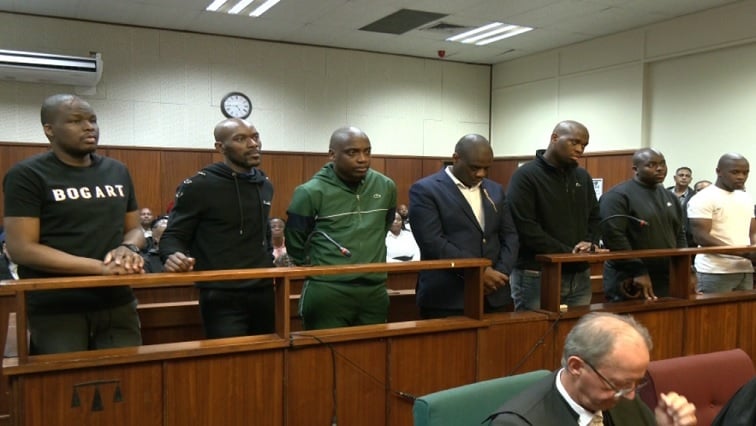
“The trial of seven men accused of the murder of rapper Kiernan ‘AKA’ Forbes and his friend, Tebello ‘Tibz’ Motsoane, is expected to start in the Durban High Court on Monday.” · exact text match
Why: The lead sentence is neutral case reporting without policy, party, or ideological cues.
Claim: The article states dates, locations, charges, and scheduling as plain facts without subjective description.
“AKA and Tibz were shot and killed outside a restaurant on Florida Road on the 10th of February 2023.” · exact text match
Why: The sentence reports the event directly, with no evaluative or emotive language.
Claim: The report is factual and unsensational, avoiding dramatic wording or emphasis.
“A month has been set aside for trial, with further dates expected to be determined on the 6th of next month.” · exact text match
Why: Scheduling details are conveyed plainly, with no sensationalizing of the killings or trial.
Claim: The article describes proceedings and charges without recommending any action or outcome.
“They are facing charges of conspiracy to commit murder, murder, attempted murder and the illegal possession of firearms.” · exact text match
Why: The statement simply lists charges, with no prescription, judgment, or call to action.
The supplied text is very brief and contains no byline, sourcing, or publisher context, so bias assessment is limited to observable wording.
October 05, 2026 · 0 shares
A procedural court report that presents the defence reshuffle and separation-of-trial dispute through attributed statements, with only mild dramatic colour in the opening paragraph.
Automated analysis; not human reviewed.
Limitations: No byline or publication date was supplied; weekday references ('Monday', 'Wednesday') are unanchored.
·
6 of 55 available dimensions scored; omitted dimensions are not treated as neutral.
·
Verified supporting quotes for 6 of 6 scored dimensions.
Claim: The report is attribution-based and separates allegations from established facts.
“All the accused are alleged to have gunned down the friends on Florida Road in February 2023.” · exact text match
Why: The article uses 'alleged' and quotes the accused's arguments, prosecutors, and the judge rather than asserting the publisher's own conclusions.
Claim: The framing is mostly procedural but opens with mildly dramatic language.
“Last week the murder trial was hit by a major defence, with two heavyweight advocates withdrawing from the case and a senior advocate who also serves as an acting judge brought in as replacement counsel.” · exact text match
Why: The phrase 'hit by a major defence' and 'heavyweight advocates' adds colour, but the rest of the report sticks to scheduling, charges, and attributed statements.
Claim: The article describes court events and participant statements without making recommendations.
“Gcaba said these admissions would cover matters including the postmortem reports and causes of death.” · exact text match
Why: No normative language or policy prescription appears; the report is limited to what was said and done in the case.
Claim: The article identifies specific legal actors, courts, and documents as sources.
“KwaZulu-Natal Deputy Director of Public Prosecutions Advocate Lawrence Gcaba, who is prosecuting the accused alongside senior State Advocate Elvis Gcweka, told the court that the State had received papers relating to the application five minutes before Wednesday’s proceedings.” · exact text match
Why: Named officials, exact charges, and a described affidavit give the report concrete, checkable sourcing.
Claim: The article is reasoned and attributes forecasts and opinions to participants rather than endorsing them.
“Mkhwanazi argued that it would cause him financial prejudice and waste his time to sit through the trial while the State presented evidence relating to Myeza’s additional charges.” · exact text match
Why: It frames Mkhwanazi's concerns as argument, not fact, and documents the State's opposition.
Claim: The article is transparent about what is not known and gives both sides' positions.
“The reasons for Howse and Jorgensen's withdrawal were not stated.” · exact text match
Why: It discloses an evidentiary gap, and it reports both the defence's application and the State's opposition without taking sides.
No byline or publication date was supplied; weekday references ('Monday', 'Wednesday') are unanchored.
October 05, 2026 · 0 shares
A concise, unadorned court-notice report gives trial logistics and charges without commentary or emotional framing.
Automated analysis; not human reviewed.
Limitations: The supplied text is very brief and contains no byline, sourcing, or publisher context, so bias assessment is limited to observable wording.
·
4 of 55 available dimensions scored; omitted dimensions are not treated as neutral.
·
Verified supporting quotes for 4 of 4 scored dimensions.
Claim: The court report contains no partisan or ideological framing.
“The trial of seven men accused of the murder of rapper Kiernan ‘AKA’ Forbes and his friend, Tebello ‘Tibz’ Motsoane, is expected to start in the Durban High Court on Monday.” · exact text match
Why: The lead sentence is neutral case reporting without policy, party, or ideological cues.
Claim: The article states dates, locations, charges, and scheduling as plain facts without subjective description.
“AKA and Tibz were shot and killed outside a restaurant on Florida Road on the 10th of February 2023.” · exact text match
Why: The sentence reports the event directly, with no evaluative or emotive language.
Claim: The report is factual and unsensational, avoiding dramatic wording or emphasis.
“A month has been set aside for trial, with further dates expected to be determined on the 6th of next month.” · exact text match
Why: Scheduling details are conveyed plainly, with no sensationalizing of the killings or trial.
Claim: The article describes proceedings and charges without recommending any action or outcome.
“They are facing charges of conspiracy to commit murder, murder, attempted murder and the illegal possession of firearms.” · exact text match
Why: The statement simply lists charges, with no prescription, judgment, or call to action.
The supplied text is very brief and contains no byline, sourcing, or publisher context, so bias assessment is limited to observable wording.
October 05, 2026 · 0 shares
A concise, unadorned court-notice report gives trial logistics and charges without commentary or emotional framing.
Automated analysis; not human reviewed.
Limitations: The supplied text is very brief and contains no byline, sourcing, or publisher context, so bias assessment is limited to observable wording.
·
4 of 55 available dimensions scored; omitted dimensions are not treated as neutral.
·
Verified supporting quotes for 4 of 4 scored dimensions.
Claim: The court report contains no partisan or ideological framing.
“The trial of seven men accused of the murder of rapper Kiernan ‘AKA’ Forbes and his friend, Tebello ‘Tibz’ Motsoane, is expected to start in the Durban High Court on Monday.” · exact text match
Why: The lead sentence is neutral case reporting without policy, party, or ideological cues.
Claim: The article states dates, locations, charges, and scheduling as plain facts without subjective description.
“AKA and Tibz were shot and killed outside a restaurant on Florida Road on the 10th of February 2023.” · exact text match
Why: The sentence reports the event directly, with no evaluative or emotive language.
Claim: The report is factual and unsensational, avoiding dramatic wording or emphasis.
“A month has been set aside for trial, with further dates expected to be determined on the 6th of next month.” · exact text match
Why: Scheduling details are conveyed plainly, with no sensationalizing of the killings or trial.
Claim: The article describes proceedings and charges without recommending any action or outcome.
“They are facing charges of conspiracy to commit murder, murder, attempted murder and the illegal possession of firearms.” · exact text match
Why: The statement simply lists charges, with no prescription, judgment, or call to action.
The supplied text is very brief and contains no byline, sourcing, or publisher context, so bias assessment is limited to observable wording.
October 05, 2026 · 0 shares
A procedural court report that presents the defence reshuffle and separation-of-trial dispute through attributed statements, with only mild dramatic colour in the opening paragraph.
Automated analysis; not human reviewed.
Limitations: No byline or publication date was supplied; weekday references ('Monday', 'Wednesday') are unanchored.
·
6 of 55 available dimensions scored; omitted dimensions are not treated as neutral.
·
Verified supporting quotes for 6 of 6 scored dimensions.
Claim: The report is attribution-based and separates allegations from established facts.
“All the accused are alleged to have gunned down the friends on Florida Road in February 2023.” · exact text match
Why: The article uses 'alleged' and quotes the accused's arguments, prosecutors, and the judge rather than asserting the publisher's own conclusions.
Claim: The framing is mostly procedural but opens with mildly dramatic language.
“Last week the murder trial was hit by a major defence, with two heavyweight advocates withdrawing from the case and a senior advocate who also serves as an acting judge brought in as replacement counsel.” · exact text match
Why: The phrase 'hit by a major defence' and 'heavyweight advocates' adds colour, but the rest of the report sticks to scheduling, charges, and attributed statements.
Claim: The article describes court events and participant statements without making recommendations.
“Gcaba said these admissions would cover matters including the postmortem reports and causes of death.” · exact text match
Why: No normative language or policy prescription appears; the report is limited to what was said and done in the case.
Claim: The article identifies specific legal actors, courts, and documents as sources.
“KwaZulu-Natal Deputy Director of Public Prosecutions Advocate Lawrence Gcaba, who is prosecuting the accused alongside senior State Advocate Elvis Gcweka, told the court that the State had received papers relating to the application five minutes before Wednesday’s proceedings.” · exact text match
Why: Named officials, exact charges, and a described affidavit give the report concrete, checkable sourcing.
Claim: The article is reasoned and attributes forecasts and opinions to participants rather than endorsing them.
“Mkhwanazi argued that it would cause him financial prejudice and waste his time to sit through the trial while the State presented evidence relating to Myeza’s additional charges.” · exact text match
Why: It frames Mkhwanazi's concerns as argument, not fact, and documents the State's opposition.
Claim: The article is transparent about what is not known and gives both sides' positions.
“The reasons for Howse and Jorgensen's withdrawal were not stated.” · exact text match
Why: It discloses an evidentiary gap, and it reports both the defence's application and the State's opposition without taking sides.
No byline or publication date was supplied; weekday references ('Monday', 'Wednesday') are unanchored.
October 05, 2026 · 0 shares
The coverage foregrounds disruption and legal conflict, using dramatic language such as “rocked” and “shake-up” to frame the trial opening as a courtroom spectacle.
Automated analysis; not human reviewed.
Limitations: The supplied text includes multiple embedded headlines and what appears to be a second story, so some dramatic wording may come from page elements rather than the main article.
·
4 of 55 available dimensions scored; omitted dimensions are not treated as neutral.
·
Verified supporting quotes for 4 of 4 scored dimensions.
Claim: The article uses dramatic, conflict-oriented language to present court proceedings as a disruptive spectacle.
“AKA-Tibz murder trial rocked by defence shake-up” · exact text match
“amid a major shake-up of the defence teams” · exact text match
Why: The headline and lede emphasize “rocked” and “shake-up,” framing the trial opening as dramatic rather than neutral.
Claim: The report mixes factual reporting with editorializing descriptors such as “major shake-up.”
“has opened in the Durban High Court amid a major shake-up of the defence teams” · exact text match
Why: The phrase “major shake-up” is an interpretive characterization of defence-counsel changes rather than a purely factual description.
Claim: The article provides specific, attributed details from court proceedings, including names, charges, and procedural directions.
“The seven accused collectively face 11 charges, including conspiracy to commit murder.” · exact text match
“Judge Sipunzi said she did not want issues to emerge unexpectedly once the trial was under way.” · exact text match
Why: The report names the judge, advocates, accused, and charges, and distinguishes statements by source, supporting its credibility.
Claim: The report attributes statements to named legal representatives and includes both prosecution and defence perspectives.
“State advocate Gcaba told the court that the prosecution had received what he described as correspondence from the instructing attorney concerning the separation of the trial.” · exact text match
“Mkhwanazi argued that remaining in court while evidence relating to Myeza’s additional charges was presented would cause him financial prejudice and waste his time.” · exact text match
Why: Direct quotes and attribution to named advocates suggest balanced sourcing rather than one-sided reporting.
The supplied text includes multiple embedded headlines and what appears to be a second story, so some dramatic wording may come from page elements rather than the main article.
October 05, 2026 · 0 shares
A procedural court report that presents the defence reshuffle and separation-of-trial dispute through attributed statements, with only mild dramatic colour in the opening paragraph.
Automated analysis; not human reviewed.
Limitations: No byline or publication date was supplied; weekday references ('Monday', 'Wednesday') are unanchored.
·
6 of 55 available dimensions scored; omitted dimensions are not treated as neutral.
·
Verified supporting quotes for 6 of 6 scored dimensions.
Claim: The report is attribution-based and separates allegations from established facts.
“All the accused are alleged to have gunned down the friends on Florida Road in February 2023.” · exact text match
Why: The article uses 'alleged' and quotes the accused's arguments, prosecutors, and the judge rather than asserting the publisher's own conclusions.
Claim: The framing is mostly procedural but opens with mildly dramatic language.
“Last week the murder trial was hit by a major defence, with two heavyweight advocates withdrawing from the case and a senior advocate who also serves as an acting judge brought in as replacement counsel.” · exact text match
Why: The phrase 'hit by a major defence' and 'heavyweight advocates' adds colour, but the rest of the report sticks to scheduling, charges, and attributed statements.
Claim: The article describes court events and participant statements without making recommendations.
“Gcaba said these admissions would cover matters including the postmortem reports and causes of death.” · exact text match
Why: No normative language or policy prescription appears; the report is limited to what was said and done in the case.
Claim: The article identifies specific legal actors, courts, and documents as sources.
“KwaZulu-Natal Deputy Director of Public Prosecutions Advocate Lawrence Gcaba, who is prosecuting the accused alongside senior State Advocate Elvis Gcweka, told the court that the State had received papers relating to the application five minutes before Wednesday’s proceedings.” · exact text match
Why: Named officials, exact charges, and a described affidavit give the report concrete, checkable sourcing.
Claim: The article is reasoned and attributes forecasts and opinions to participants rather than endorsing them.
“Mkhwanazi argued that it would cause him financial prejudice and waste his time to sit through the trial while the State presented evidence relating to Myeza’s additional charges.” · exact text match
Why: It frames Mkhwanazi's concerns as argument, not fact, and documents the State's opposition.
Claim: The article is transparent about what is not known and gives both sides' positions.
“The reasons for Howse and Jorgensen's withdrawal were not stated.” · exact text match
Why: It discloses an evidentiary gap, and it reports both the defence's application and the State's opposition without taking sides.
No byline or publication date was supplied; weekday references ('Monday', 'Wednesday') are unanchored.
October 05, 2026 · 0 shares
The coverage foregrounds disruption and legal conflict, using dramatic language such as “rocked” and “shake-up” to frame the trial opening as a courtroom spectacle.
Automated analysis; not human reviewed.
Limitations: The supplied text includes multiple embedded headlines and what appears to be a second story, so some dramatic wording may come from page elements rather than the main article.
·
4 of 55 available dimensions scored; omitted dimensions are not treated as neutral.
·
Verified supporting quotes for 4 of 4 scored dimensions.
Claim: The article uses dramatic, conflict-oriented language to present court proceedings as a disruptive spectacle.
“AKA-Tibz murder trial rocked by defence shake-up” · exact text match
“amid a major shake-up of the defence teams” · exact text match
Why: The headline and lede emphasize “rocked” and “shake-up,” framing the trial opening as dramatic rather than neutral.
Claim: The report mixes factual reporting with editorializing descriptors such as “major shake-up.”
“has opened in the Durban High Court amid a major shake-up of the defence teams” · exact text match
Why: The phrase “major shake-up” is an interpretive characterization of defence-counsel changes rather than a purely factual description.
Claim: The article provides specific, attributed details from court proceedings, including names, charges, and procedural directions.
“The seven accused collectively face 11 charges, including conspiracy to commit murder.” · exact text match
“Judge Sipunzi said she did not want issues to emerge unexpectedly once the trial was under way.” · exact text match
Why: The report names the judge, advocates, accused, and charges, and distinguishes statements by source, supporting its credibility.
Claim: The report attributes statements to named legal representatives and includes both prosecution and defence perspectives.
“State advocate Gcaba told the court that the prosecution had received what he described as correspondence from the instructing attorney concerning the separation of the trial.” · exact text match
“Mkhwanazi argued that remaining in court while evidence relating to Myeza’s additional charges was presented would cause him financial prejudice and waste his time.” · exact text match
Why: Direct quotes and attribution to named advocates suggest balanced sourcing rather than one-sided reporting.
The supplied text includes multiple embedded headlines and what appears to be a second story, so some dramatic wording may come from page elements rather than the main article.
October 07, 2026 · 0 shares
The ruling is framed as a neutral procedural development, with the defence's and state's arguments both reported.
Automated analysis; not human reviewed.
Limitations: The supplied text has no byline and repeats the lead sentence, limiting contextual detail and editorial-context assessment.
·
2 of 55 available dimensions scored; omitted dimensions are not treated as neutral.
·
Verified supporting quotes for 2 of 2 scored dimensions.
Claim: The report names the judge and investigating officer and attributes statements to identifiable court participants.
“Investigating officer Kumarasan Pillay told the court that ballistic evidence linked a firearm allegedly used in the Forbes and Motsoane killings to the Mayville matter.” · exact text match
Why: Named sources and explicit courtroom attribution are visible, supporting verifiability; the lack of a byline is a limiting factor.
Claim: The report includes both the applicants' and the state's central positions without showing preference.
“The defence argued that the other six accused should not have to remain part of proceedings involving charges that applied only to Myeza.” · exact text match
“The state opposed the separation, arguing that the two matters were connected through evidence, witnesses and firearms.” · exact text match
Why: Both sides of the dispute are represented, and neither is disparaged or endorsed.
The supplied text has no byline and repeats the lead sentence, limiting contextual detail and editorial-context assessment.
October 07, 2026 · 0 shares
The framing is legal-procedural and restrained, focused on the judge's amended media directive and the accused's formal admissions rather than on the crime.
Automated analysis; not human reviewed.
Limitations: No byline or exact publication date is supplied, so 'Wednesday' cannot be independently anchored to a calendar date.
·
4 of 55 available dimensions scored; omitted dimensions are not treated as neutral.
·
Verified supporting quotes for 4 of 4 scored dimensions.
Claim: The report is predominantly descriptive, relaying the judge's directive and procedural facts without subjective evaluation.
“On Wednesday, Judge Nomfundo Sipunzi amended a previous directive she had issued restricting the coverage of witness testimony in the matter.” · exact text match
Why: The lead is a chronological court-action report, and the rest of the text stays within procedural facts and a verbatim directive quote.
Claim: The story emphasizes court procedure over dramatic crime details, keeping the coverage measured rather than sensationalized.
“In her previous directive, she had ordered that the media could not publish or broadcast the testimony of a witness while they were testifying, adding that their identity and personal information could also not be revealed.” · exact text match
Why: The narrative dwells on the mechanics of the court's coverage rule rather than on the alleged murders or graphic details.
Claim: The report describes what the judge decided and what the accused admitted without recommending any action or policy.
“The initial directive was unclear as to when the testimony could be published and broadcast.
However, on Wednesday, the judge amended this directive.”
· exact text match
Why: No call to action, opinion, or normative judgment about the directive is present.
Claim: The report uses named attribution and direct quotation for the central ruling and names all seven accused.
“reads Sipunzi’s amended directive” · exact text match
“Section 220 of the Criminal Procedure Act allows for the accused to make admissions on parts of the evidence that they will not be disputing in the trial” · exact text match
Why: The judge is named, the directive is quoted, and the statutory basis is explained, giving readers traceable sources for the main claims.
No byline or exact publication date is supplied, so 'Wednesday' cannot be independently anchored to a calendar date.
October 05, 2026 · 0 shares
Frames the trial solely through Tony Forbes's confident and reassuring statement, presenting the delay as an investigator-driven process without outside perspective.
Automated analysis; not human reviewed.
Limitations: The supplied text is only a two-sentence brief with no named author, date, or independent reporting, so bias assessments rely on minimal framing cues.
·
5 of 55 available dimensions scored; omitted dimensions are not treated as neutral.
·
Verified supporting quotes for 5 of 5 scored dimensions.
Claim: The article presents a quoted personal statement without inserting the publisher's own opinion.
“He says the process took time because investigators were building a solid case” · exact text match
Why: The publisher attributes the evaluative claim to Forbes rather than asserting it as fact, but the framing is one-sided.
Claim: The article uses restrained, non-sensational language.
“the long-awaited murder trial of AKA and Tibz gets underway” · exact text match
Why: The only emotional adjective is 'long-awaited', which is mild and not sensationalized.
Claim: The article describes a statement and makes no recommendation or demand.
“he is now focused on supporting the team as proceedings begin” · exact text match
Why: No imperative or evaluative prescription appears; the text stays in descriptive mode.
Claim: The report's tone is neutral; the only emotion is attributed to Forbes, not the publisher.
“Tony Forbes says he is confident” · exact text match
Why: The reporting itself is unemotional, while Forbes's confidence is explicitly attributed.
Claim: The article attributes its claims to a named source and uses attributed speech.
“Tony Forbes says” · exact text match
“He says” · exact text match
Why: Attribution supports credibility, but the piece lacks independent detail, date, and named author.
The supplied text is only a two-sentence brief with no named author, date, or independent reporting, so bias assessments rely on minimal framing cues.
October 07, 2026 · 0 shares
The ruling is framed as a neutral procedural development, with the defence's and state's arguments both reported.
Automated analysis; not human reviewed. Limitations: The supplied text has no byline and repeats the lead sentence, limiting contextual detail and editorial-context assessment. · 2 of 55 available dimensions scored; omitted dimensions are not treated as neutral. · Verified supporting quotes for 2 of 2 scored dimensions.
Claim: The report names the judge and investigating officer and attributes statements to identifiable court participants.
“Investigating officer Kumarasan Pillay told the court that ballistic evidence linked a firearm allegedly used in the Forbes and Motsoane killings to the Mayville matter.” · exact text match
Why: Named sources and explicit courtroom attribution are visible, supporting verifiability; the lack of a byline is a limiting factor.
Claim: The report includes both the applicants' and the state's central positions without showing preference.
“The defence argued that the other six accused should not have to remain part of proceedings involving charges that applied only to Myeza.” · exact text match
“The state opposed the separation, arguing that the two matters were connected through evidence, witnesses and firearms.” · exact text match
Why: Both sides of the dispute are represented, and neither is disparaged or endorsed.
The supplied text has no byline and repeats the lead sentence, limiting contextual detail and editorial-context assessment.
October 07, 2026 · 0 shares
A neutral procedural court-status report relays the continuation of the murder trial and a separate-trial order without commentary or emotional language.
Automated analysis; not human reviewed. Limitations: The supplied text is extremely brief, with no byline, sourcing, or prior case history, limiting assessment of most bias dimensions. · 4 of 55 available dimensions scored; omitted dimensions are not treated as neutral. · Verified supporting quotes for 4 of 4 scored dimensions.
Claim: The report is presented as factual court-procedure news without subjective or evaluative language.
“The murder trial of rapper Kiernan “AKA” Forbes and his friend Tebello “Tibz” Motsoane is continuing at the KwaZulu-Natal High Court in Durban, with one of the seven accused set to be tried separately from his co-accused.” · exact text match
Why: The sentence states a location, proceeding, and procedural outcome; no adjectives or judgments color the account.
Claim: The report avoids sensational or emotionally charged language despite the murder-trial subject.
“The murder trial of rapper Kiernan “AKA” Forbes and his friend Tebello “Tibz” Motsoane is continuing at the KwaZulu-Natal High Court in Durban” · exact text match
Why: A murder case is inherently dramatic, but the report reduces it to legal status and venue with no graphic or emotive detail.
Claim: The brief only describes an ongoing legal process and does not recommend or advocate any position.
“with one of the seven accused set to be tried separately from his co-accused” · exact text match
Why: It reports what the court is doing rather than prescribing what should happen.
Claim: The text is emotionally neutral, carrying no positive or negative emotional loading.
“The murder trial of rapper Kiernan “AKA” Forbes and his friend Tebello “Tibz” Motsoane is continuing at the KwaZulu-Natal High Court in Durban, with one of the seven accused set to be tried separately from his co-accused.” · exact text match
Why: The only content is legal status and venue; there are no words expressing grief, anger, or celebration.
The supplied text is extremely brief, with no byline, sourcing, or prior case history, limiting assessment of most bias dimensions.
October 07, 2026 · 0 shares
The framing is legal-procedural and restrained, focused on the judge's amended media directive and the accused's formal admissions rather than on the crime.
Automated analysis; not human reviewed. Limitations: No byline or exact publication date is supplied, so 'Wednesday' cannot be independently anchored to a calendar date. · 4 of 55 available dimensions scored; omitted dimensions are not treated as neutral. · Verified supporting quotes for 4 of 4 scored dimensions.
Claim: The report is predominantly descriptive, relaying the judge's directive and procedural facts without subjective evaluation.
“On Wednesday, Judge Nomfundo Sipunzi amended a previous directive she had issued restricting the coverage of witness testimony in the matter.” · exact text match
Why: The lead is a chronological court-action report, and the rest of the text stays within procedural facts and a verbatim directive quote.
Claim: The story emphasizes court procedure over dramatic crime details, keeping the coverage measured rather than sensationalized.
“In her previous directive, she had ordered that the media could not publish or broadcast the testimony of a witness while they were testifying, adding that their identity and personal information could also not be revealed.” · exact text match
Why: The narrative dwells on the mechanics of the court's coverage rule rather than on the alleged murders or graphic details.
Claim: The report describes what the judge decided and what the accused admitted without recommending any action or policy.
“The initial directive was unclear as to when the testimony could be published and broadcast. However, on Wednesday, the judge amended this directive.” · exact text match
Why: No call to action, opinion, or normative judgment about the directive is present.
Claim: The report uses named attribution and direct quotation for the central ruling and names all seven accused.
“reads Sipunzi’s amended directive” · exact text match
“Section 220 of the Criminal Procedure Act allows for the accused to make admissions on parts of the evidence that they will not be disputing in the trial” · exact text match
Why: The judge is named, the directive is quoted, and the statutory basis is explained, giving readers traceable sources for the main claims.
No byline or exact publication date is supplied, so 'Wednesday' cannot be independently anchored to a calendar date.
October 05, 2026 · 0 shares
A concise, unadorned court-notice report gives trial logistics and charges without commentary or emotional framing.
Automated analysis; not human reviewed. Limitations: The supplied text is very brief and contains no byline, sourcing, or publisher context, so bias assessment is limited to observable wording. · 4 of 55 available dimensions scored; omitted dimensions are not treated as neutral. · Verified supporting quotes for 4 of 4 scored dimensions.
Claim: The court report contains no partisan or ideological framing.
“The trial of seven men accused of the murder of rapper Kiernan ‘AKA’ Forbes and his friend, Tebello ‘Tibz’ Motsoane, is expected to start in the Durban High Court on Monday.” · exact text match
Why: The lead sentence is neutral case reporting without policy, party, or ideological cues.
Claim: The article states dates, locations, charges, and scheduling as plain facts without subjective description.
“AKA and Tibz were shot and killed outside a restaurant on Florida Road on the 10th of February 2023.” · exact text match
Why: The sentence reports the event directly, with no evaluative or emotive language.
Claim: The report is factual and unsensational, avoiding dramatic wording or emphasis.
“A month has been set aside for trial, with further dates expected to be determined on the 6th of next month.” · exact text match
Why: Scheduling details are conveyed plainly, with no sensationalizing of the killings or trial.
Claim: The article describes proceedings and charges without recommending any action or outcome.
“They are facing charges of conspiracy to commit murder, murder, attempted murder and the illegal possession of firearms.” · exact text match
Why: The statement simply lists charges, with no prescription, judgment, or call to action.
The supplied text is very brief and contains no byline, sourcing, or publisher context, so bias assessment is limited to observable wording.
October 05, 2026 · 0 shares
A concise, unadorned court-notice report gives trial logistics and charges without commentary or emotional framing.
Automated analysis; not human reviewed. Limitations: The supplied text is very brief and contains no byline, sourcing, or publisher context, so bias assessment is limited to observable wording. · 4 of 55 available dimensions scored; omitted dimensions are not treated as neutral. · Verified supporting quotes for 4 of 4 scored dimensions.
Claim: The court report contains no partisan or ideological framing.
“The trial of seven men accused of the murder of rapper Kiernan ‘AKA’ Forbes and his friend, Tebello ‘Tibz’ Motsoane, is expected to start in the Durban High Court on Monday.” · exact text match
Why: The lead sentence is neutral case reporting without policy, party, or ideological cues.
Claim: The article states dates, locations, charges, and scheduling as plain facts without subjective description.
“AKA and Tibz were shot and killed outside a restaurant on Florida Road on the 10th of February 2023.” · exact text match
Why: The sentence reports the event directly, with no evaluative or emotive language.
Claim: The report is factual and unsensational, avoiding dramatic wording or emphasis.
“A month has been set aside for trial, with further dates expected to be determined on the 6th of next month.” · exact text match
Why: Scheduling details are conveyed plainly, with no sensationalizing of the killings or trial.
Claim: The article describes proceedings and charges without recommending any action or outcome.
“They are facing charges of conspiracy to commit murder, murder, attempted murder and the illegal possession of firearms.” · exact text match
Why: The statement simply lists charges, with no prescription, judgment, or call to action.
The supplied text is very brief and contains no byline, sourcing, or publisher context, so bias assessment is limited to observable wording.
October 05, 2026 · 0 shares
A procedural court report that presents the defence reshuffle and separation-of-trial dispute through attributed statements, with only mild dramatic colour in the opening paragraph.
Automated analysis; not human reviewed. Limitations: No byline or publication date was supplied; weekday references ('Monday', 'Wednesday') are unanchored. · 6 of 55 available dimensions scored; omitted dimensions are not treated as neutral. · Verified supporting quotes for 6 of 6 scored dimensions.
Claim: The report is attribution-based and separates allegations from established facts.
“All the accused are alleged to have gunned down the friends on Florida Road in February 2023.” · exact text match
Why: The article uses 'alleged' and quotes the accused's arguments, prosecutors, and the judge rather than asserting the publisher's own conclusions.
Claim: The framing is mostly procedural but opens with mildly dramatic language.
“Last week the murder trial was hit by a major defence, with two heavyweight advocates withdrawing from the case and a senior advocate who also serves as an acting judge brought in as replacement counsel.” · exact text match
Why: The phrase 'hit by a major defence' and 'heavyweight advocates' adds colour, but the rest of the report sticks to scheduling, charges, and attributed statements.
Claim: The article describes court events and participant statements without making recommendations.
“Gcaba said these admissions would cover matters including the postmortem reports and causes of death.” · exact text match
Why: No normative language or policy prescription appears; the report is limited to what was said and done in the case.
Claim: The article identifies specific legal actors, courts, and documents as sources.
“KwaZulu-Natal Deputy Director of Public Prosecutions Advocate Lawrence Gcaba, who is prosecuting the accused alongside senior State Advocate Elvis Gcweka, told the court that the State had received papers relating to the application five minutes before Wednesday’s proceedings.” · exact text match
Why: Named officials, exact charges, and a described affidavit give the report concrete, checkable sourcing.
Claim: The article is reasoned and attributes forecasts and opinions to participants rather than endorsing them.
“Mkhwanazi argued that it would cause him financial prejudice and waste his time to sit through the trial while the State presented evidence relating to Myeza’s additional charges.” · exact text match
Why: It frames Mkhwanazi's concerns as argument, not fact, and documents the State's opposition.
Claim: The article is transparent about what is not known and gives both sides' positions.
“The reasons for Howse and Jorgensen's withdrawal were not stated.” · exact text match
Why: It discloses an evidentiary gap, and it reports both the defence's application and the State's opposition without taking sides.
No byline or publication date was supplied; weekday references ('Monday', 'Wednesday') are unanchored.
October 05, 2026 · 0 shares
A procedural court report that presents the defence reshuffle and separation-of-trial dispute through attributed statements, with only mild dramatic colour in the opening paragraph.
Automated analysis; not human reviewed. Limitations: No byline or publication date was supplied; weekday references ('Monday', 'Wednesday') are unanchored. · 6 of 55 available dimensions scored; omitted dimensions are not treated as neutral. · Verified supporting quotes for 6 of 6 scored dimensions.
Claim: The report is attribution-based and separates allegations from established facts.
“All the accused are alleged to have gunned down the friends on Florida Road in February 2023.” · exact text match
Why: The article uses 'alleged' and quotes the accused's arguments, prosecutors, and the judge rather than asserting the publisher's own conclusions.
Claim: The framing is mostly procedural but opens with mildly dramatic language.
“Last week the murder trial was hit by a major defence, with two heavyweight advocates withdrawing from the case and a senior advocate who also serves as an acting judge brought in as replacement counsel.” · exact text match
Why: The phrase 'hit by a major defence' and 'heavyweight advocates' adds colour, but the rest of the report sticks to scheduling, charges, and attributed statements.
Claim: The article describes court events and participant statements without making recommendations.
“Gcaba said these admissions would cover matters including the postmortem reports and causes of death.” · exact text match
Why: No normative language or policy prescription appears; the report is limited to what was said and done in the case.
Claim: The article identifies specific legal actors, courts, and documents as sources.
“KwaZulu-Natal Deputy Director of Public Prosecutions Advocate Lawrence Gcaba, who is prosecuting the accused alongside senior State Advocate Elvis Gcweka, told the court that the State had received papers relating to the application five minutes before Wednesday’s proceedings.” · exact text match
Why: Named officials, exact charges, and a described affidavit give the report concrete, checkable sourcing.
Claim: The article is reasoned and attributes forecasts and opinions to participants rather than endorsing them.
“Mkhwanazi argued that it would cause him financial prejudice and waste his time to sit through the trial while the State presented evidence relating to Myeza’s additional charges.” · exact text match
Why: It frames Mkhwanazi's concerns as argument, not fact, and documents the State's opposition.
Claim: The article is transparent about what is not known and gives both sides' positions.
“The reasons for Howse and Jorgensen's withdrawal were not stated.” · exact text match
Why: It discloses an evidentiary gap, and it reports both the defence's application and the State's opposition without taking sides.
No byline or publication date was supplied; weekday references ('Monday', 'Wednesday') are unanchored.
October 05, 2026 · 0 shares
The coverage foregrounds disruption and legal conflict, using dramatic language such as “rocked” and “shake-up” to frame the trial opening as a courtroom spectacle.
Automated analysis; not human reviewed. Limitations: The supplied text includes multiple embedded headlines and what appears to be a second story, so some dramatic wording may come from page elements rather than the main article. · 4 of 55 available dimensions scored; omitted dimensions are not treated as neutral. · Verified supporting quotes for 4 of 4 scored dimensions.
Claim: The article uses dramatic, conflict-oriented language to present court proceedings as a disruptive spectacle.
“AKA-Tibz murder trial rocked by defence shake-up” · exact text match
“amid a major shake-up of the defence teams” · exact text match
Why: The headline and lede emphasize “rocked” and “shake-up,” framing the trial opening as dramatic rather than neutral.
Claim: The report mixes factual reporting with editorializing descriptors such as “major shake-up.”
“has opened in the Durban High Court amid a major shake-up of the defence teams” · exact text match
Why: The phrase “major shake-up” is an interpretive characterization of defence-counsel changes rather than a purely factual description.
Claim: The article provides specific, attributed details from court proceedings, including names, charges, and procedural directions.
“The seven accused collectively face 11 charges, including conspiracy to commit murder.” · exact text match
“Judge Sipunzi said she did not want issues to emerge unexpectedly once the trial was under way.” · exact text match
Why: The report names the judge, advocates, accused, and charges, and distinguishes statements by source, supporting its credibility.
Claim: The report attributes statements to named legal representatives and includes both prosecution and defence perspectives.
“State advocate Gcaba told the court that the prosecution had received what he described as correspondence from the instructing attorney concerning the separation of the trial.” · exact text match
“Mkhwanazi argued that remaining in court while evidence relating to Myeza’s additional charges was presented would cause him financial prejudice and waste his time.” · exact text match
Why: Direct quotes and attribution to named advocates suggest balanced sourcing rather than one-sided reporting.
The supplied text includes multiple embedded headlines and what appears to be a second story, so some dramatic wording may come from page elements rather than the main article.
Families of the Victims
October 05, 2026 · 0 shares
Frames the trial solely through Tony Forbes's confident and reassuring statement, presenting the delay as an investigator-driven process without outside perspective.
Automated analysis; not human reviewed. Limitations: The supplied text is only a two-sentence brief with no named author, date, or independent reporting, so bias assessments rely on minimal framing cues. · 5 of 55 available dimensions scored; omitted dimensions are not treated as neutral. · Verified supporting quotes for 5 of 5 scored dimensions.
Claim: The article presents a quoted personal statement without inserting the publisher's own opinion.
“He says the process took time because investigators were building a solid case” · exact text match
Why: The publisher attributes the evaluative claim to Forbes rather than asserting it as fact, but the framing is one-sided.
Claim: The article uses restrained, non-sensational language.
“the long-awaited murder trial of AKA and Tibz gets underway” · exact text match
Why: The only emotional adjective is 'long-awaited', which is mild and not sensationalized.
Claim: The article describes a statement and makes no recommendation or demand.
“he is now focused on supporting the team as proceedings begin” · exact text match
Why: No imperative or evaluative prescription appears; the text stays in descriptive mode.
Claim: The report's tone is neutral; the only emotion is attributed to Forbes, not the publisher.
“Tony Forbes says he is confident” · exact text match
Why: The reporting itself is unemotional, while Forbes's confidence is explicitly attributed.
Claim: The article attributes its claims to a named source and uses attributed speech.
“Tony Forbes says” · exact text match
“He says” · exact text match
Why: Attribution supports credibility, but the piece lacks independent detail, date, and named author.
The supplied text is only a two-sentence brief with no named author, date, or independent reporting, so bias assessments rely on minimal framing cues.
October 05, 2026 · 0 shares
The coverage foregrounds disruption and legal conflict, using dramatic language such as “rocked” and “shake-up” to frame the trial opening as a courtroom spectacle.
Automated analysis; not human reviewed. Limitations: The supplied text includes multiple embedded headlines and what appears to be a second story, so some dramatic wording may come from page elements rather than the main article. · 4 of 55 available dimensions scored; omitted dimensions are not treated as neutral. · Verified supporting quotes for 4 of 4 scored dimensions.
Claim: The article uses dramatic, conflict-oriented language to present court proceedings as a disruptive spectacle.
“AKA-Tibz murder trial rocked by defence shake-up” · exact text match
“amid a major shake-up of the defence teams” · exact text match
Why: The headline and lede emphasize “rocked” and “shake-up,” framing the trial opening as dramatic rather than neutral.
Claim: The report mixes factual reporting with editorializing descriptors such as “major shake-up.”
“has opened in the Durban High Court amid a major shake-up of the defence teams” · exact text match
Why: The phrase “major shake-up” is an interpretive characterization of defence-counsel changes rather than a purely factual description.
Claim: The article provides specific, attributed details from court proceedings, including names, charges, and procedural directions.
“The seven accused collectively face 11 charges, including conspiracy to commit murder.” · exact text match
“Judge Sipunzi said she did not want issues to emerge unexpectedly once the trial was under way.” · exact text match
Why: The report names the judge, advocates, accused, and charges, and distinguishes statements by source, supporting its credibility.
Claim: The report attributes statements to named legal representatives and includes both prosecution and defence perspectives.
“State advocate Gcaba told the court that the prosecution had received what he described as correspondence from the instructing attorney concerning the separation of the trial.” · exact text match
“Mkhwanazi argued that remaining in court while evidence relating to Myeza’s additional charges was presented would cause him financial prejudice and waste his time.” · exact text match
Why: Direct quotes and attribution to named advocates suggest balanced sourcing rather than one-sided reporting.
The supplied text includes multiple embedded headlines and what appears to be a second story, so some dramatic wording may come from page elements rather than the main article.
The Accused and Defence
October 05, 2026 · 0 shares
A procedural court report that presents the defence reshuffle and separation-of-trial dispute through attributed statements, with only mild dramatic colour in the opening paragraph.
Automated analysis; not human reviewed. Limitations: No byline or publication date was supplied; weekday references ('Monday', 'Wednesday') are unanchored. · 6 of 55 available dimensions scored; omitted dimensions are not treated as neutral. · Verified supporting quotes for 6 of 6 scored dimensions.
Claim: The report is attribution-based and separates allegations from established facts.
“All the accused are alleged to have gunned down the friends on Florida Road in February 2023.” · exact text match
Why: The article uses 'alleged' and quotes the accused's arguments, prosecutors, and the judge rather than asserting the publisher's own conclusions.
Claim: The framing is mostly procedural but opens with mildly dramatic language.
“Last week the murder trial was hit by a major defence, with two heavyweight advocates withdrawing from the case and a senior advocate who also serves as an acting judge brought in as replacement counsel.” · exact text match
Why: The phrase 'hit by a major defence' and 'heavyweight advocates' adds colour, but the rest of the report sticks to scheduling, charges, and attributed statements.
Claim: The article describes court events and participant statements without making recommendations.
“Gcaba said these admissions would cover matters including the postmortem reports and causes of death.” · exact text match
Why: No normative language or policy prescription appears; the report is limited to what was said and done in the case.
Claim: The article identifies specific legal actors, courts, and documents as sources.
“KwaZulu-Natal Deputy Director of Public Prosecutions Advocate Lawrence Gcaba, who is prosecuting the accused alongside senior State Advocate Elvis Gcweka, told the court that the State had received papers relating to the application five minutes before Wednesday’s proceedings.” · exact text match
Why: Named officials, exact charges, and a described affidavit give the report concrete, checkable sourcing.
Claim: The article is reasoned and attributes forecasts and opinions to participants rather than endorsing them.
“Mkhwanazi argued that it would cause him financial prejudice and waste his time to sit through the trial while the State presented evidence relating to Myeza’s additional charges.” · exact text match
Why: It frames Mkhwanazi's concerns as argument, not fact, and documents the State's opposition.
Claim: The article is transparent about what is not known and gives both sides' positions.
“The reasons for Howse and Jorgensen's withdrawal were not stated.” · exact text match
Why: It discloses an evidentiary gap, and it reports both the defence's application and the State's opposition without taking sides.
No byline or publication date was supplied; weekday references ('Monday', 'Wednesday') are unanchored.
October 05, 2026 · 0 shares
The coverage foregrounds disruption and legal conflict, using dramatic language such as “rocked” and “shake-up” to frame the trial opening as a courtroom spectacle.
Automated analysis; not human reviewed. Limitations: The supplied text includes multiple embedded headlines and what appears to be a second story, so some dramatic wording may come from page elements rather than the main article. · 4 of 55 available dimensions scored; omitted dimensions are not treated as neutral. · Verified supporting quotes for 4 of 4 scored dimensions.
Claim: The article uses dramatic, conflict-oriented language to present court proceedings as a disruptive spectacle.
“AKA-Tibz murder trial rocked by defence shake-up” · exact text match
“amid a major shake-up of the defence teams” · exact text match
Why: The headline and lede emphasize “rocked” and “shake-up,” framing the trial opening as dramatic rather than neutral.
Claim: The report mixes factual reporting with editorializing descriptors such as “major shake-up.”
“has opened in the Durban High Court amid a major shake-up of the defence teams” · exact text match
Why: The phrase “major shake-up” is an interpretive characterization of defence-counsel changes rather than a purely factual description.
Claim: The article provides specific, attributed details from court proceedings, including names, charges, and procedural directions.
“The seven accused collectively face 11 charges, including conspiracy to commit murder.” · exact text match
“Judge Sipunzi said she did not want issues to emerge unexpectedly once the trial was under way.” · exact text match
Why: The report names the judge, advocates, accused, and charges, and distinguishes statements by source, supporting its credibility.
Claim: The report attributes statements to named legal representatives and includes both prosecution and defence perspectives.
“State advocate Gcaba told the court that the prosecution had received what he described as correspondence from the instructing attorney concerning the separation of the trial.” · exact text match
“Mkhwanazi argued that remaining in court while evidence relating to Myeza’s additional charges was presented would cause him financial prejudice and waste his time.” · exact text match
Why: Direct quotes and attribution to named advocates suggest balanced sourcing rather than one-sided reporting.
The supplied text includes multiple embedded headlines and what appears to be a second story, so some dramatic wording may come from page elements rather than the main article.
October 07, 2026 · 0 shares
The ruling is framed as a neutral procedural development, with the defence's and state's arguments both reported.
Automated analysis; not human reviewed. Limitations: The supplied text has no byline and repeats the lead sentence, limiting contextual detail and editorial-context assessment. · 2 of 55 available dimensions scored; omitted dimensions are not treated as neutral. · Verified supporting quotes for 2 of 2 scored dimensions.
Claim: The report names the judge and investigating officer and attributes statements to identifiable court participants.
“Investigating officer Kumarasan Pillay told the court that ballistic evidence linked a firearm allegedly used in the Forbes and Motsoane killings to the Mayville matter.” · exact text match
Why: Named sources and explicit courtroom attribution are visible, supporting verifiability; the lack of a byline is a limiting factor.
Claim: The report includes both the applicants' and the state's central positions without showing preference.
“The defence argued that the other six accused should not have to remain part of proceedings involving charges that applied only to Myeza.” · exact text match
“The state opposed the separation, arguing that the two matters were connected through evidence, witnesses and firearms.” · exact text match
Why: Both sides of the dispute are represented, and neither is disparaged or endorsed.
The supplied text has no byline and repeats the lead sentence, limiting contextual detail and editorial-context assessment.
October 05, 2026 · 0 shares
A procedural court report that presents the defence reshuffle and separation-of-trial dispute through attributed statements, with only mild dramatic colour in the opening paragraph.
Automated analysis; not human reviewed. Limitations: No byline or publication date was supplied; weekday references ('Monday', 'Wednesday') are unanchored. · 6 of 55 available dimensions scored; omitted dimensions are not treated as neutral. · Verified supporting quotes for 6 of 6 scored dimensions.
Claim: The report is attribution-based and separates allegations from established facts.
“All the accused are alleged to have gunned down the friends on Florida Road in February 2023.” · exact text match
Why: The article uses 'alleged' and quotes the accused's arguments, prosecutors, and the judge rather than asserting the publisher's own conclusions.
Claim: The framing is mostly procedural but opens with mildly dramatic language.
“Last week the murder trial was hit by a major defence, with two heavyweight advocates withdrawing from the case and a senior advocate who also serves as an acting judge brought in as replacement counsel.” · exact text match
Why: The phrase 'hit by a major defence' and 'heavyweight advocates' adds colour, but the rest of the report sticks to scheduling, charges, and attributed statements.
Claim: The article describes court events and participant statements without making recommendations.
“Gcaba said these admissions would cover matters including the postmortem reports and causes of death.” · exact text match
Why: No normative language or policy prescription appears; the report is limited to what was said and done in the case.
Claim: The article identifies specific legal actors, courts, and documents as sources.
“KwaZulu-Natal Deputy Director of Public Prosecutions Advocate Lawrence Gcaba, who is prosecuting the accused alongside senior State Advocate Elvis Gcweka, told the court that the State had received papers relating to the application five minutes before Wednesday’s proceedings.” · exact text match
Why: Named officials, exact charges, and a described affidavit give the report concrete, checkable sourcing.
Claim: The article is reasoned and attributes forecasts and opinions to participants rather than endorsing them.
“Mkhwanazi argued that it would cause him financial prejudice and waste his time to sit through the trial while the State presented evidence relating to Myeza’s additional charges.” · exact text match
Why: It frames Mkhwanazi's concerns as argument, not fact, and documents the State's opposition.
Claim: The article is transparent about what is not known and gives both sides' positions.
“The reasons for Howse and Jorgensen's withdrawal were not stated.” · exact text match
Why: It discloses an evidentiary gap, and it reports both the defence's application and the State's opposition without taking sides.
No byline or publication date was supplied; weekday references ('Monday', 'Wednesday') are unanchored.
The State/Prosecution
October 07, 2026 · 0 shares
The ruling is framed as a neutral procedural development, with the defence's and state's arguments both reported.
Automated analysis; not human reviewed. Limitations: The supplied text has no byline and repeats the lead sentence, limiting contextual detail and editorial-context assessment. · 2 of 55 available dimensions scored; omitted dimensions are not treated as neutral. · Verified supporting quotes for 2 of 2 scored dimensions.
Claim: The report names the judge and investigating officer and attributes statements to identifiable court participants.
“Investigating officer Kumarasan Pillay told the court that ballistic evidence linked a firearm allegedly used in the Forbes and Motsoane killings to the Mayville matter.” · exact text match
Why: Named sources and explicit courtroom attribution are visible, supporting verifiability; the lack of a byline is a limiting factor.
Claim: The report includes both the applicants' and the state's central positions without showing preference.
“The defence argued that the other six accused should not have to remain part of proceedings involving charges that applied only to Myeza.” · exact text match
“The state opposed the separation, arguing that the two matters were connected through evidence, witnesses and firearms.” · exact text match
Why: Both sides of the dispute are represented, and neither is disparaged or endorsed.
The supplied text has no byline and repeats the lead sentence, limiting contextual detail and editorial-context assessment.
October 05, 2026 · 0 shares
A procedural court report that presents the defence reshuffle and separation-of-trial dispute through attributed statements, with only mild dramatic colour in the opening paragraph.
Automated analysis; not human reviewed. Limitations: No byline or publication date was supplied; weekday references ('Monday', 'Wednesday') are unanchored. · 6 of 55 available dimensions scored; omitted dimensions are not treated as neutral. · Verified supporting quotes for 6 of 6 scored dimensions.
Claim: The report is attribution-based and separates allegations from established facts.
“All the accused are alleged to have gunned down the friends on Florida Road in February 2023.” · exact text match
Why: The article uses 'alleged' and quotes the accused's arguments, prosecutors, and the judge rather than asserting the publisher's own conclusions.
Claim: The framing is mostly procedural but opens with mildly dramatic language.
“Last week the murder trial was hit by a major defence, with two heavyweight advocates withdrawing from the case and a senior advocate who also serves as an acting judge brought in as replacement counsel.” · exact text match
Why: The phrase 'hit by a major defence' and 'heavyweight advocates' adds colour, but the rest of the report sticks to scheduling, charges, and attributed statements.
Claim: The article describes court events and participant statements without making recommendations.
“Gcaba said these admissions would cover matters including the postmortem reports and causes of death.” · exact text match
Why: No normative language or policy prescription appears; the report is limited to what was said and done in the case.
Claim: The article identifies specific legal actors, courts, and documents as sources.
“KwaZulu-Natal Deputy Director of Public Prosecutions Advocate Lawrence Gcaba, who is prosecuting the accused alongside senior State Advocate Elvis Gcweka, told the court that the State had received papers relating to the application five minutes before Wednesday’s proceedings.” · exact text match
Why: Named officials, exact charges, and a described affidavit give the report concrete, checkable sourcing.
Claim: The article is reasoned and attributes forecasts and opinions to participants rather than endorsing them.
“Mkhwanazi argued that it would cause him financial prejudice and waste his time to sit through the trial while the State presented evidence relating to Myeza’s additional charges.” · exact text match
Why: It frames Mkhwanazi's concerns as argument, not fact, and documents the State's opposition.
Claim: The article is transparent about what is not known and gives both sides' positions.
“The reasons for Howse and Jorgensen's withdrawal were not stated.” · exact text match
Why: It discloses an evidentiary gap, and it reports both the defence's application and the State's opposition without taking sides.
No byline or publication date was supplied; weekday references ('Monday', 'Wednesday') are unanchored.
South African Public and Media
October 05, 2026 · 0 shares
The coverage foregrounds disruption and legal conflict, using dramatic language such as “rocked” and “shake-up” to frame the trial opening as a courtroom spectacle.
Automated analysis; not human reviewed. Limitations: The supplied text includes multiple embedded headlines and what appears to be a second story, so some dramatic wording may come from page elements rather than the main article. · 4 of 55 available dimensions scored; omitted dimensions are not treated as neutral. · Verified supporting quotes for 4 of 4 scored dimensions.
Claim: The article uses dramatic, conflict-oriented language to present court proceedings as a disruptive spectacle.
“AKA-Tibz murder trial rocked by defence shake-up” · exact text match
“amid a major shake-up of the defence teams” · exact text match
Why: The headline and lede emphasize “rocked” and “shake-up,” framing the trial opening as dramatic rather than neutral.
Claim: The report mixes factual reporting with editorializing descriptors such as “major shake-up.”
“has opened in the Durban High Court amid a major shake-up of the defence teams” · exact text match
Why: The phrase “major shake-up” is an interpretive characterization of defence-counsel changes rather than a purely factual description.
Claim: The article provides specific, attributed details from court proceedings, including names, charges, and procedural directions.
“The seven accused collectively face 11 charges, including conspiracy to commit murder.” · exact text match
“Judge Sipunzi said she did not want issues to emerge unexpectedly once the trial was under way.” · exact text match
Why: The report names the judge, advocates, accused, and charges, and distinguishes statements by source, supporting its credibility.
Claim: The report attributes statements to named legal representatives and includes both prosecution and defence perspectives.
“State advocate Gcaba told the court that the prosecution had received what he described as correspondence from the instructing attorney concerning the separation of the trial.” · exact text match
“Mkhwanazi argued that remaining in court while evidence relating to Myeza’s additional charges was presented would cause him financial prejudice and waste his time.” · exact text match
Why: Direct quotes and attribution to named advocates suggest balanced sourcing rather than one-sided reporting.
The supplied text includes multiple embedded headlines and what appears to be a second story, so some dramatic wording may come from page elements rather than the main article.
October 05, 2026 · 0 shares
A concise, unadorned court-notice report gives trial logistics and charges without commentary or emotional framing.
Automated analysis; not human reviewed. Limitations: The supplied text is very brief and contains no byline, sourcing, or publisher context, so bias assessment is limited to observable wording. · 4 of 55 available dimensions scored; omitted dimensions are not treated as neutral. · Verified supporting quotes for 4 of 4 scored dimensions.
Claim: The court report contains no partisan or ideological framing.
“The trial of seven men accused of the murder of rapper Kiernan ‘AKA’ Forbes and his friend, Tebello ‘Tibz’ Motsoane, is expected to start in the Durban High Court on Monday.” · exact text match
Why: The lead sentence is neutral case reporting without policy, party, or ideological cues.
Claim: The article states dates, locations, charges, and scheduling as plain facts without subjective description.
“AKA and Tibz were shot and killed outside a restaurant on Florida Road on the 10th of February 2023.” · exact text match
Why: The sentence reports the event directly, with no evaluative or emotive language.
Claim: The report is factual and unsensational, avoiding dramatic wording or emphasis.
“A month has been set aside for trial, with further dates expected to be determined on the 6th of next month.” · exact text match
Why: Scheduling details are conveyed plainly, with no sensationalizing of the killings or trial.
Claim: The article describes proceedings and charges without recommending any action or outcome.
“They are facing charges of conspiracy to commit murder, murder, attempted murder and the illegal possession of firearms.” · exact text match
Why: The statement simply lists charges, with no prescription, judgment, or call to action.
The supplied text is very brief and contains no byline, sourcing, or publisher context, so bias assessment is limited to observable wording.
October 05, 2026 · 0 shares
The coverage foregrounds disruption and legal conflict, using dramatic language such as “rocked” and “shake-up” to frame the trial opening as a courtroom spectacle.
Automated analysis; not human reviewed. Limitations: The supplied text includes multiple embedded headlines and what appears to be a second story, so some dramatic wording may come from page elements rather than the main article. · 4 of 55 available dimensions scored; omitted dimensions are not treated as neutral. · Verified supporting quotes for 4 of 4 scored dimensions.
Claim: The article uses dramatic, conflict-oriented language to present court proceedings as a disruptive spectacle.
“AKA-Tibz murder trial rocked by defence shake-up” · exact text match
“amid a major shake-up of the defence teams” · exact text match
Why: The headline and lede emphasize “rocked” and “shake-up,” framing the trial opening as dramatic rather than neutral.
Claim: The report mixes factual reporting with editorializing descriptors such as “major shake-up.”
“has opened in the Durban High Court amid a major shake-up of the defence teams” · exact text match
Why: The phrase “major shake-up” is an interpretive characterization of defence-counsel changes rather than a purely factual description.
Claim: The article provides specific, attributed details from court proceedings, including names, charges, and procedural directions.
“The seven accused collectively face 11 charges, including conspiracy to commit murder.” · exact text match
“Judge Sipunzi said she did not want issues to emerge unexpectedly once the trial was under way.” · exact text match
Why: The report names the judge, advocates, accused, and charges, and distinguishes statements by source, supporting its credibility.
Claim: The report attributes statements to named legal representatives and includes both prosecution and defence perspectives.
“State advocate Gcaba told the court that the prosecution had received what he described as correspondence from the instructing attorney concerning the separation of the trial.” · exact text match
“Mkhwanazi argued that remaining in court while evidence relating to Myeza’s additional charges was presented would cause him financial prejudice and waste his time.” · exact text match
Why: Direct quotes and attribution to named advocates suggest balanced sourcing rather than one-sided reporting.
The supplied text includes multiple embedded headlines and what appears to be a second story, so some dramatic wording may come from page elements rather than the main article.
October 07, 2026 · 0 shares
The ruling is framed as a neutral procedural development, with the defence's and state's arguments both reported.
Automated analysis; not human reviewed. Limitations: The supplied text has no byline and repeats the lead sentence, limiting contextual detail and editorial-context assessment. · 2 of 55 available dimensions scored; omitted dimensions are not treated as neutral. · Verified supporting quotes for 2 of 2 scored dimensions.
Claim: The report names the judge and investigating officer and attributes statements to identifiable court participants.
“Investigating officer Kumarasan Pillay told the court that ballistic evidence linked a firearm allegedly used in the Forbes and Motsoane killings to the Mayville matter.” · exact text match
Why: Named sources and explicit courtroom attribution are visible, supporting verifiability; the lack of a byline is a limiting factor.
Claim: The report includes both the applicants' and the state's central positions without showing preference.
“The defence argued that the other six accused should not have to remain part of proceedings involving charges that applied only to Myeza.” · exact text match
“The state opposed the separation, arguing that the two matters were connected through evidence, witnesses and firearms.” · exact text match
Why: Both sides of the dispute are represented, and neither is disparaged or endorsed.
The supplied text has no byline and repeats the lead sentence, limiting contextual detail and editorial-context assessment.
October 05, 2026 · 0 shares
A procedural court report that presents the defence reshuffle and separation-of-trial dispute through attributed statements, with only mild dramatic colour in the opening paragraph.
Automated analysis; not human reviewed. Limitations: No byline or publication date was supplied; weekday references ('Monday', 'Wednesday') are unanchored. · 6 of 55 available dimensions scored; omitted dimensions are not treated as neutral. · Verified supporting quotes for 6 of 6 scored dimensions.
Claim: The report is attribution-based and separates allegations from established facts.
“All the accused are alleged to have gunned down the friends on Florida Road in February 2023.” · exact text match
Why: The article uses 'alleged' and quotes the accused's arguments, prosecutors, and the judge rather than asserting the publisher's own conclusions.
Claim: The framing is mostly procedural but opens with mildly dramatic language.
“Last week the murder trial was hit by a major defence, with two heavyweight advocates withdrawing from the case and a senior advocate who also serves as an acting judge brought in as replacement counsel.” · exact text match
Why: The phrase 'hit by a major defence' and 'heavyweight advocates' adds colour, but the rest of the report sticks to scheduling, charges, and attributed statements.
Claim: The article describes court events and participant statements without making recommendations.
“Gcaba said these admissions would cover matters including the postmortem reports and causes of death.” · exact text match
Why: No normative language or policy prescription appears; the report is limited to what was said and done in the case.
Claim: The article identifies specific legal actors, courts, and documents as sources.
“KwaZulu-Natal Deputy Director of Public Prosecutions Advocate Lawrence Gcaba, who is prosecuting the accused alongside senior State Advocate Elvis Gcweka, told the court that the State had received papers relating to the application five minutes before Wednesday’s proceedings.” · exact text match
Why: Named officials, exact charges, and a described affidavit give the report concrete, checkable sourcing.
Claim: The article is reasoned and attributes forecasts and opinions to participants rather than endorsing them.
“Mkhwanazi argued that it would cause him financial prejudice and waste his time to sit through the trial while the State presented evidence relating to Myeza’s additional charges.” · exact text match
Why: It frames Mkhwanazi's concerns as argument, not fact, and documents the State's opposition.
Claim: The article is transparent about what is not known and gives both sides' positions.
“The reasons for Howse and Jorgensen's withdrawal were not stated.” · exact text match
Why: It discloses an evidentiary gap, and it reports both the defence's application and the State's opposition without taking sides.
No byline or publication date was supplied; weekday references ('Monday', 'Wednesday') are unanchored.
October 07, 2026 · 0 shares
The framing is legal-procedural and restrained, focused on the judge's amended media directive and the accused's formal admissions rather than on the crime.
Automated analysis; not human reviewed. Limitations: No byline or exact publication date is supplied, so 'Wednesday' cannot be independently anchored to a calendar date. · 4 of 55 available dimensions scored; omitted dimensions are not treated as neutral. · Verified supporting quotes for 4 of 4 scored dimensions.
Claim: The report is predominantly descriptive, relaying the judge's directive and procedural facts without subjective evaluation.
“On Wednesday, Judge Nomfundo Sipunzi amended a previous directive she had issued restricting the coverage of witness testimony in the matter.” · exact text match
Why: The lead is a chronological court-action report, and the rest of the text stays within procedural facts and a verbatim directive quote.
Claim: The story emphasizes court procedure over dramatic crime details, keeping the coverage measured rather than sensationalized.
“In her previous directive, she had ordered that the media could not publish or broadcast the testimony of a witness while they were testifying, adding that their identity and personal information could also not be revealed.” · exact text match
Why: The narrative dwells on the mechanics of the court's coverage rule rather than on the alleged murders or graphic details.
Claim: The report describes what the judge decided and what the accused admitted without recommending any action or policy.
“The initial directive was unclear as to when the testimony could be published and broadcast. However, on Wednesday, the judge amended this directive.” · exact text match
Why: No call to action, opinion, or normative judgment about the directive is present.
Claim: The report uses named attribution and direct quotation for the central ruling and names all seven accused.
“reads Sipunzi’s amended directive” · exact text match
“Section 220 of the Criminal Procedure Act allows for the accused to make admissions on parts of the evidence that they will not be disputing in the trial” · exact text match
Why: The judge is named, the directive is quoted, and the statutory basis is explained, giving readers traceable sources for the main claims.
No byline or exact publication date is supplied, so 'Wednesday' cannot be independently anchored to a calendar date.
Helium Bias
Story Blindspots
October 05, 2026 · 0 shares
A procedural court report that presents the defence reshuffle and separation-of-trial dispute through attributed statements, with only mild dramatic colour in the opening paragraph.
Automated analysis; not human reviewed. Limitations: No byline or publication date was supplied; weekday references ('Monday', 'Wednesday') are unanchored. · 6 of 55 available dimensions scored; omitted dimensions are not treated as neutral. · Verified supporting quotes for 6 of 6 scored dimensions.
Claim: The report is attribution-based and separates allegations from established facts.
“All the accused are alleged to have gunned down the friends on Florida Road in February 2023.” · exact text match
Why: The article uses 'alleged' and quotes the accused's arguments, prosecutors, and the judge rather than asserting the publisher's own conclusions.
Claim: The framing is mostly procedural but opens with mildly dramatic language.
“Last week the murder trial was hit by a major defence, with two heavyweight advocates withdrawing from the case and a senior advocate who also serves as an acting judge brought in as replacement counsel.” · exact text match
Why: The phrase 'hit by a major defence' and 'heavyweight advocates' adds colour, but the rest of the report sticks to scheduling, charges, and attributed statements.
Claim: The article describes court events and participant statements without making recommendations.
“Gcaba said these admissions would cover matters including the postmortem reports and causes of death.” · exact text match
Why: No normative language or policy prescription appears; the report is limited to what was said and done in the case.
Claim: The article identifies specific legal actors, courts, and documents as sources.
“KwaZulu-Natal Deputy Director of Public Prosecutions Advocate Lawrence Gcaba, who is prosecuting the accused alongside senior State Advocate Elvis Gcweka, told the court that the State had received papers relating to the application five minutes before Wednesday’s proceedings.” · exact text match
Why: Named officials, exact charges, and a described affidavit give the report concrete, checkable sourcing.
Claim: The article is reasoned and attributes forecasts and opinions to participants rather than endorsing them.
“Mkhwanazi argued that it would cause him financial prejudice and waste his time to sit through the trial while the State presented evidence relating to Myeza’s additional charges.” · exact text match
Why: It frames Mkhwanazi's concerns as argument, not fact, and documents the State's opposition.
Claim: The article is transparent about what is not known and gives both sides' positions.
“The reasons for Howse and Jorgensen's withdrawal were not stated.” · exact text match
Why: It discloses an evidentiary gap, and it reports both the defence's application and the State's opposition without taking sides.
No byline or publication date was supplied; weekday references ('Monday', 'Wednesday') are unanchored.
October 07, 2026 · 0 shares
The framing is legal-procedural and restrained, focused on the judge's amended media directive and the accused's formal admissions rather than on the crime.
Automated analysis; not human reviewed. Limitations: No byline or exact publication date is supplied, so 'Wednesday' cannot be independently anchored to a calendar date. · 4 of 55 available dimensions scored; omitted dimensions are not treated as neutral. · Verified supporting quotes for 4 of 4 scored dimensions.
Claim: The report is predominantly descriptive, relaying the judge's directive and procedural facts without subjective evaluation.
“On Wednesday, Judge Nomfundo Sipunzi amended a previous directive she had issued restricting the coverage of witness testimony in the matter.” · exact text match
Why: The lead is a chronological court-action report, and the rest of the text stays within procedural facts and a verbatim directive quote.
Claim: The story emphasizes court procedure over dramatic crime details, keeping the coverage measured rather than sensationalized.
“In her previous directive, she had ordered that the media could not publish or broadcast the testimony of a witness while they were testifying, adding that their identity and personal information could also not be revealed.” · exact text match
Why: The narrative dwells on the mechanics of the court's coverage rule rather than on the alleged murders or graphic details.
Claim: The report describes what the judge decided and what the accused admitted without recommending any action or policy.
“The initial directive was unclear as to when the testimony could be published and broadcast. However, on Wednesday, the judge amended this directive.” · exact text match
Why: No call to action, opinion, or normative judgment about the directive is present.
Claim: The report uses named attribution and direct quotation for the central ruling and names all seven accused.
“reads Sipunzi’s amended directive” · exact text match
“Section 220 of the Criminal Procedure Act allows for the accused to make admissions on parts of the evidence that they will not be disputing in the trial” · exact text match
Why: The judge is named, the directive is quoted, and the statutory basis is explained, giving readers traceable sources for the main claims.
No byline or exact publication date is supplied, so 'Wednesday' cannot be independently anchored to a calendar date.
October 05, 2026 · 0 shares
A concise, unadorned court-notice report gives trial logistics and charges without commentary or emotional framing.
Automated analysis; not human reviewed. Limitations: The supplied text is very brief and contains no byline, sourcing, or publisher context, so bias assessment is limited to observable wording. · 4 of 55 available dimensions scored; omitted dimensions are not treated as neutral. · Verified supporting quotes for 4 of 4 scored dimensions.
Claim: The court report contains no partisan or ideological framing.
“The trial of seven men accused of the murder of rapper Kiernan ‘AKA’ Forbes and his friend, Tebello ‘Tibz’ Motsoane, is expected to start in the Durban High Court on Monday.” · exact text match
Why: The lead sentence is neutral case reporting without policy, party, or ideological cues.
Claim: The article states dates, locations, charges, and scheduling as plain facts without subjective description.
“AKA and Tibz were shot and killed outside a restaurant on Florida Road on the 10th of February 2023.” · exact text match
Why: The sentence reports the event directly, with no evaluative or emotive language.
Claim: The report is factual and unsensational, avoiding dramatic wording or emphasis.
“A month has been set aside for trial, with further dates expected to be determined on the 6th of next month.” · exact text match
Why: Scheduling details are conveyed plainly, with no sensationalizing of the killings or trial.
Claim: The article describes proceedings and charges without recommending any action or outcome.
“They are facing charges of conspiracy to commit murder, murder, attempted murder and the illegal possession of firearms.” · exact text match
Why: The statement simply lists charges, with no prescription, judgment, or call to action.
The supplied text is very brief and contains no byline, sourcing, or publisher context, so bias assessment is limited to observable wording.
October 05, 2026 · 0 shares
A procedural court report that presents the defence reshuffle and separation-of-trial dispute through attributed statements, with only mild dramatic colour in the opening paragraph.
Automated analysis; not human reviewed. Limitations: No byline or publication date was supplied; weekday references ('Monday', 'Wednesday') are unanchored. · 6 of 55 available dimensions scored; omitted dimensions are not treated as neutral. · Verified supporting quotes for 6 of 6 scored dimensions.
Claim: The report is attribution-based and separates allegations from established facts.
“All the accused are alleged to have gunned down the friends on Florida Road in February 2023.” · exact text match
Why: The article uses 'alleged' and quotes the accused's arguments, prosecutors, and the judge rather than asserting the publisher's own conclusions.
Claim: The framing is mostly procedural but opens with mildly dramatic language.
“Last week the murder trial was hit by a major defence, with two heavyweight advocates withdrawing from the case and a senior advocate who also serves as an acting judge brought in as replacement counsel.” · exact text match
Why: The phrase 'hit by a major defence' and 'heavyweight advocates' adds colour, but the rest of the report sticks to scheduling, charges, and attributed statements.
Claim: The article describes court events and participant statements without making recommendations.
“Gcaba said these admissions would cover matters including the postmortem reports and causes of death.” · exact text match
Why: No normative language or policy prescription appears; the report is limited to what was said and done in the case.
Claim: The article identifies specific legal actors, courts, and documents as sources.
“KwaZulu-Natal Deputy Director of Public Prosecutions Advocate Lawrence Gcaba, who is prosecuting the accused alongside senior State Advocate Elvis Gcweka, told the court that the State had received papers relating to the application five minutes before Wednesday’s proceedings.” · exact text match
Why: Named officials, exact charges, and a described affidavit give the report concrete, checkable sourcing.
Claim: The article is reasoned and attributes forecasts and opinions to participants rather than endorsing them.
“Mkhwanazi argued that it would cause him financial prejudice and waste his time to sit through the trial while the State presented evidence relating to Myeza’s additional charges.” · exact text match
Why: It frames Mkhwanazi's concerns as argument, not fact, and documents the State's opposition.
Claim: The article is transparent about what is not known and gives both sides' positions.
“The reasons for Howse and Jorgensen's withdrawal were not stated.” · exact text match
Why: It discloses an evidentiary gap, and it reports both the defence's application and the State's opposition without taking sides.
No byline or publication date was supplied; weekday references ('Monday', 'Wednesday') are unanchored.
October 05, 2026 · 0 shares
A procedural court report that presents the defence reshuffle and separation-of-trial dispute through attributed statements, with only mild dramatic colour in the opening paragraph.
Automated analysis; not human reviewed. Limitations: No byline or publication date was supplied; weekday references ('Monday', 'Wednesday') are unanchored. · 6 of 55 available dimensions scored; omitted dimensions are not treated as neutral. · Verified supporting quotes for 6 of 6 scored dimensions.
Claim: The report is attribution-based and separates allegations from established facts.
“All the accused are alleged to have gunned down the friends on Florida Road in February 2023.” · exact text match
Why: The article uses 'alleged' and quotes the accused's arguments, prosecutors, and the judge rather than asserting the publisher's own conclusions.
Claim: The framing is mostly procedural but opens with mildly dramatic language.
“Last week the murder trial was hit by a major defence, with two heavyweight advocates withdrawing from the case and a senior advocate who also serves as an acting judge brought in as replacement counsel.” · exact text match
Why: The phrase 'hit by a major defence' and 'heavyweight advocates' adds colour, but the rest of the report sticks to scheduling, charges, and attributed statements.
Claim: The article describes court events and participant statements without making recommendations.
“Gcaba said these admissions would cover matters including the postmortem reports and causes of death.” · exact text match
Why: No normative language or policy prescription appears; the report is limited to what was said and done in the case.
Claim: The article identifies specific legal actors, courts, and documents as sources.
“KwaZulu-Natal Deputy Director of Public Prosecutions Advocate Lawrence Gcaba, who is prosecuting the accused alongside senior State Advocate Elvis Gcweka, told the court that the State had received papers relating to the application five minutes before Wednesday’s proceedings.” · exact text match
Why: Named officials, exact charges, and a described affidavit give the report concrete, checkable sourcing.
Claim: The article is reasoned and attributes forecasts and opinions to participants rather than endorsing them.
“Mkhwanazi argued that it would cause him financial prejudice and waste his time to sit through the trial while the State presented evidence relating to Myeza’s additional charges.” · exact text match
Why: It frames Mkhwanazi's concerns as argument, not fact, and documents the State's opposition.
Claim: The article is transparent about what is not known and gives both sides' positions.
“The reasons for Howse and Jorgensen's withdrawal were not stated.” · exact text match
Why: It discloses an evidentiary gap, and it reports both the defence's application and the State's opposition without taking sides.
No byline or publication date was supplied; weekday references ('Monday', 'Wednesday') are unanchored.
October 05, 2026 · 0 shares
The coverage foregrounds disruption and legal conflict, using dramatic language such as “rocked” and “shake-up” to frame the trial opening as a courtroom spectacle.
Automated analysis; not human reviewed. Limitations: The supplied text includes multiple embedded headlines and what appears to be a second story, so some dramatic wording may come from page elements rather than the main article. · 4 of 55 available dimensions scored; omitted dimensions are not treated as neutral. · Verified supporting quotes for 4 of 4 scored dimensions.
Claim: The article uses dramatic, conflict-oriented language to present court proceedings as a disruptive spectacle.
“AKA-Tibz murder trial rocked by defence shake-up” · exact text match
“amid a major shake-up of the defence teams” · exact text match
Why: The headline and lede emphasize “rocked” and “shake-up,” framing the trial opening as dramatic rather than neutral.
Claim: The report mixes factual reporting with editorializing descriptors such as “major shake-up.”
“has opened in the Durban High Court amid a major shake-up of the defence teams” · exact text match
Why: The phrase “major shake-up” is an interpretive characterization of defence-counsel changes rather than a purely factual description.
Claim: The article provides specific, attributed details from court proceedings, including names, charges, and procedural directions.
“The seven accused collectively face 11 charges, including conspiracy to commit murder.” · exact text match
“Judge Sipunzi said she did not want issues to emerge unexpectedly once the trial was under way.” · exact text match
Why: The report names the judge, advocates, accused, and charges, and distinguishes statements by source, supporting its credibility.
Claim: The report attributes statements to named legal representatives and includes both prosecution and defence perspectives.
“State advocate Gcaba told the court that the prosecution had received what he described as correspondence from the instructing attorney concerning the separation of the trial.” · exact text match
“Mkhwanazi argued that remaining in court while evidence relating to Myeza’s additional charges was presented would cause him financial prejudice and waste his time.” · exact text match
Why: Direct quotes and attribution to named advocates suggest balanced sourcing rather than one-sided reporting.
The supplied text includes multiple embedded headlines and what appears to be a second story, so some dramatic wording may come from page elements rather than the main article.
October 07, 2026 · 0 shares
The ruling is framed as a neutral procedural development, with the defence's and state's arguments both reported.
Automated analysis; not human reviewed. Limitations: The supplied text has no byline and repeats the lead sentence, limiting contextual detail and editorial-context assessment. · 2 of 55 available dimensions scored; omitted dimensions are not treated as neutral. · Verified supporting quotes for 2 of 2 scored dimensions.
Claim: The report names the judge and investigating officer and attributes statements to identifiable court participants.
“Investigating officer Kumarasan Pillay told the court that ballistic evidence linked a firearm allegedly used in the Forbes and Motsoane killings to the Mayville matter.” · exact text match
Why: Named sources and explicit courtroom attribution are visible, supporting verifiability; the lack of a byline is a limiting factor.
Claim: The report includes both the applicants' and the state's central positions without showing preference.
“The defence argued that the other six accused should not have to remain part of proceedings involving charges that applied only to Myeza.” · exact text match
“The state opposed the separation, arguing that the two matters were connected through evidence, witnesses and firearms.” · exact text match
Why: Both sides of the dispute are represented, and neither is disparaged or endorsed.
The supplied text has no byline and repeats the lead sentence, limiting contextual detail and editorial-context assessment.
October 07, 2026 · 0 shares
A neutral procedural court-status report relays the continuation of the murder trial and a separate-trial order without commentary or emotional language.
Automated analysis; not human reviewed. Limitations: The supplied text is extremely brief, with no byline, sourcing, or prior case history, limiting assessment of most bias dimensions. · 4 of 55 available dimensions scored; omitted dimensions are not treated as neutral. · Verified supporting quotes for 4 of 4 scored dimensions.
Claim: The report is presented as factual court-procedure news without subjective or evaluative language.
“The murder trial of rapper Kiernan “AKA” Forbes and his friend Tebello “Tibz” Motsoane is continuing at the KwaZulu-Natal High Court in Durban, with one of the seven accused set to be tried separately from his co-accused.” · exact text match
Why: The sentence states a location, proceeding, and procedural outcome; no adjectives or judgments color the account.
Claim: The report avoids sensational or emotionally charged language despite the murder-trial subject.
“The murder trial of rapper Kiernan “AKA” Forbes and his friend Tebello “Tibz” Motsoane is continuing at the KwaZulu-Natal High Court in Durban” · exact text match
Why: A murder case is inherently dramatic, but the report reduces it to legal status and venue with no graphic or emotive detail.
Claim: The brief only describes an ongoing legal process and does not recommend or advocate any position.
“with one of the seven accused set to be tried separately from his co-accused” · exact text match
Why: It reports what the court is doing rather than prescribing what should happen.
Claim: The text is emotionally neutral, carrying no positive or negative emotional loading.
“The murder trial of rapper Kiernan “AKA” Forbes and his friend Tebello “Tibz” Motsoane is continuing at the KwaZulu-Natal High Court in Durban, with one of the seven accused set to be tried separately from his co-accused.” · exact text match
Why: The only content is legal status and venue; there are no words expressing grief, anger, or celebration.
The supplied text is extremely brief, with no byline, sourcing, or prior case history, limiting assessment of most bias dimensions.
October 07, 2026 · 0 shares
The framing is legal-procedural and restrained, focused on the judge's amended media directive and the accused's formal admissions rather than on the crime.
Automated analysis; not human reviewed. Limitations: No byline or exact publication date is supplied, so 'Wednesday' cannot be independently anchored to a calendar date. · 4 of 55 available dimensions scored; omitted dimensions are not treated as neutral. · Verified supporting quotes for 4 of 4 scored dimensions.
Claim: The report is predominantly descriptive, relaying the judge's directive and procedural facts without subjective evaluation.
“On Wednesday, Judge Nomfundo Sipunzi amended a previous directive she had issued restricting the coverage of witness testimony in the matter.” · exact text match
Why: The lead is a chronological court-action report, and the rest of the text stays within procedural facts and a verbatim directive quote.
Claim: The story emphasizes court procedure over dramatic crime details, keeping the coverage measured rather than sensationalized.
“In her previous directive, she had ordered that the media could not publish or broadcast the testimony of a witness while they were testifying, adding that their identity and personal information could also not be revealed.” · exact text match
Why: The narrative dwells on the mechanics of the court's coverage rule rather than on the alleged murders or graphic details.
Claim: The report describes what the judge decided and what the accused admitted without recommending any action or policy.
“The initial directive was unclear as to when the testimony could be published and broadcast. However, on Wednesday, the judge amended this directive.” · exact text match
Why: No call to action, opinion, or normative judgment about the directive is present.
Claim: The report uses named attribution and direct quotation for the central ruling and names all seven accused.
“reads Sipunzi’s amended directive” · exact text match
“Section 220 of the Criminal Procedure Act allows for the accused to make admissions on parts of the evidence that they will not be disputing in the trial” · exact text match
Why: The judge is named, the directive is quoted, and the statutory basis is explained, giving readers traceable sources for the main claims.
No byline or exact publication date is supplied, so 'Wednesday' cannot be independently anchored to a calendar date.
October 07, 2026 · 0 shares
The framing is legal-procedural and restrained, focused on the judge's amended media directive and the accused's formal admissions rather than on the crime.
Automated analysis; not human reviewed. Limitations: No byline or exact publication date is supplied, so 'Wednesday' cannot be independently anchored to a calendar date. · 4 of 55 available dimensions scored; omitted dimensions are not treated as neutral. · Verified supporting quotes for 4 of 4 scored dimensions.
Claim: The report is predominantly descriptive, relaying the judge's directive and procedural facts without subjective evaluation.
“On Wednesday, Judge Nomfundo Sipunzi amended a previous directive she had issued restricting the coverage of witness testimony in the matter.” · exact text match
Why: The lead is a chronological court-action report, and the rest of the text stays within procedural facts and a verbatim directive quote.
Claim: The story emphasizes court procedure over dramatic crime details, keeping the coverage measured rather than sensationalized.
“In her previous directive, she had ordered that the media could not publish or broadcast the testimony of a witness while they were testifying, adding that their identity and personal information could also not be revealed.” · exact text match
Why: The narrative dwells on the mechanics of the court's coverage rule rather than on the alleged murders or graphic details.
Claim: The report describes what the judge decided and what the accused admitted without recommending any action or policy.
“The initial directive was unclear as to when the testimony could be published and broadcast. However, on Wednesday, the judge amended this directive.” · exact text match
Why: No call to action, opinion, or normative judgment about the directive is present.
Claim: The report uses named attribution and direct quotation for the central ruling and names all seven accused.
“reads Sipunzi’s amended directive” · exact text match
“Section 220 of the Criminal Procedure Act allows for the accused to make admissions on parts of the evidence that they will not be disputing in the trial” · exact text match
Why: The judge is named, the directive is quoted, and the statutory basis is explained, giving readers traceable sources for the main claims.
No byline or exact publication date is supplied, so 'Wednesday' cannot be independently anchored to a calendar date.
October 07, 2026 · 0 shares
The ruling is framed as a neutral procedural development, with the defence's and state's arguments both reported.
Automated analysis; not human reviewed. Limitations: The supplied text has no byline and repeats the lead sentence, limiting contextual detail and editorial-context assessment. · 2 of 55 available dimensions scored; omitted dimensions are not treated as neutral. · Verified supporting quotes for 2 of 2 scored dimensions.
Claim: The report names the judge and investigating officer and attributes statements to identifiable court participants.
“Investigating officer Kumarasan Pillay told the court that ballistic evidence linked a firearm allegedly used in the Forbes and Motsoane killings to the Mayville matter.” · exact text match
Why: Named sources and explicit courtroom attribution are visible, supporting verifiability; the lack of a byline is a limiting factor.
Claim: The report includes both the applicants' and the state's central positions without showing preference.
“The defence argued that the other six accused should not have to remain part of proceedings involving charges that applied only to Myeza.” · exact text match
“The state opposed the separation, arguing that the two matters were connected through evidence, witnesses and firearms.” · exact text match
Why: Both sides of the dispute are represented, and neither is disparaged or endorsed.
The supplied text has no byline and repeats the lead sentence, limiting contextual detail and editorial-context assessment.
October 05, 2026 · 0 shares
A procedural court report that presents the defence reshuffle and separation-of-trial dispute through attributed statements, with only mild dramatic colour in the opening paragraph.
Automated analysis; not human reviewed. Limitations: No byline or publication date was supplied; weekday references ('Monday', 'Wednesday') are unanchored. · 6 of 55 available dimensions scored; omitted dimensions are not treated as neutral. · Verified supporting quotes for 6 of 6 scored dimensions.
Claim: The report is attribution-based and separates allegations from established facts.
“All the accused are alleged to have gunned down the friends on Florida Road in February 2023.” · exact text match
Why: The article uses 'alleged' and quotes the accused's arguments, prosecutors, and the judge rather than asserting the publisher's own conclusions.
Claim: The framing is mostly procedural but opens with mildly dramatic language.
“Last week the murder trial was hit by a major defence, with two heavyweight advocates withdrawing from the case and a senior advocate who also serves as an acting judge brought in as replacement counsel.” · exact text match
Why: The phrase 'hit by a major defence' and 'heavyweight advocates' adds colour, but the rest of the report sticks to scheduling, charges, and attributed statements.
Claim: The article describes court events and participant statements without making recommendations.
“Gcaba said these admissions would cover matters including the postmortem reports and causes of death.” · exact text match
Why: No normative language or policy prescription appears; the report is limited to what was said and done in the case.
Claim: The article identifies specific legal actors, courts, and documents as sources.
“KwaZulu-Natal Deputy Director of Public Prosecutions Advocate Lawrence Gcaba, who is prosecuting the accused alongside senior State Advocate Elvis Gcweka, told the court that the State had received papers relating to the application five minutes before Wednesday’s proceedings.” · exact text match
Why: Named officials, exact charges, and a described affidavit give the report concrete, checkable sourcing.
Claim: The article is reasoned and attributes forecasts and opinions to participants rather than endorsing them.
“Mkhwanazi argued that it would cause him financial prejudice and waste his time to sit through the trial while the State presented evidence relating to Myeza’s additional charges.” · exact text match
Why: It frames Mkhwanazi's concerns as argument, not fact, and documents the State's opposition.
Claim: The article is transparent about what is not known and gives both sides' positions.
“The reasons for Howse and Jorgensen's withdrawal were not stated.” · exact text match
Why: It discloses an evidentiary gap, and it reports both the defence's application and the State's opposition without taking sides.
No byline or publication date was supplied; weekday references ('Monday', 'Wednesday') are unanchored.
October 05, 2026 · 0 shares
The coverage foregrounds disruption and legal conflict, using dramatic language such as “rocked” and “shake-up” to frame the trial opening as a courtroom spectacle.
Automated analysis; not human reviewed. Limitations: The supplied text includes multiple embedded headlines and what appears to be a second story, so some dramatic wording may come from page elements rather than the main article. · 4 of 55 available dimensions scored; omitted dimensions are not treated as neutral. · Verified supporting quotes for 4 of 4 scored dimensions.
Claim: The article uses dramatic, conflict-oriented language to present court proceedings as a disruptive spectacle.
“AKA-Tibz murder trial rocked by defence shake-up” · exact text match
“amid a major shake-up of the defence teams” · exact text match
Why: The headline and lede emphasize “rocked” and “shake-up,” framing the trial opening as dramatic rather than neutral.
Claim: The report mixes factual reporting with editorializing descriptors such as “major shake-up.”
“has opened in the Durban High Court amid a major shake-up of the defence teams” · exact text match
Why: The phrase “major shake-up” is an interpretive characterization of defence-counsel changes rather than a purely factual description.
Claim: The article provides specific, attributed details from court proceedings, including names, charges, and procedural directions.
“The seven accused collectively face 11 charges, including conspiracy to commit murder.” · exact text match
“Judge Sipunzi said she did not want issues to emerge unexpectedly once the trial was under way.” · exact text match
Why: The report names the judge, advocates, accused, and charges, and distinguishes statements by source, supporting its credibility.
Claim: The report attributes statements to named legal representatives and includes both prosecution and defence perspectives.
“State advocate Gcaba told the court that the prosecution had received what he described as correspondence from the instructing attorney concerning the separation of the trial.” · exact text match
“Mkhwanazi argued that remaining in court while evidence relating to Myeza’s additional charges was presented would cause him financial prejudice and waste his time.” · exact text match
Why: Direct quotes and attribution to named advocates suggest balanced sourcing rather than one-sided reporting.
The supplied text includes multiple embedded headlines and what appears to be a second story, so some dramatic wording may come from page elements rather than the main article.
October 05, 2026 · 0 shares
A concise, unadorned court-notice report gives trial logistics and charges without commentary or emotional framing.
Automated analysis; not human reviewed. Limitations: The supplied text is very brief and contains no byline, sourcing, or publisher context, so bias assessment is limited to observable wording. · 4 of 55 available dimensions scored; omitted dimensions are not treated as neutral. · Verified supporting quotes for 4 of 4 scored dimensions.
Claim: The court report contains no partisan or ideological framing.
“The trial of seven men accused of the murder of rapper Kiernan ‘AKA’ Forbes and his friend, Tebello ‘Tibz’ Motsoane, is expected to start in the Durban High Court on Monday.” · exact text match
Why: The lead sentence is neutral case reporting without policy, party, or ideological cues.
Claim: The article states dates, locations, charges, and scheduling as plain facts without subjective description.
“AKA and Tibz were shot and killed outside a restaurant on Florida Road on the 10th of February 2023.” · exact text match
Why: The sentence reports the event directly, with no evaluative or emotive language.
Claim: The report is factual and unsensational, avoiding dramatic wording or emphasis.
“A month has been set aside for trial, with further dates expected to be determined on the 6th of next month.” · exact text match
Why: Scheduling details are conveyed plainly, with no sensationalizing of the killings or trial.
Claim: The article describes proceedings and charges without recommending any action or outcome.
“They are facing charges of conspiracy to commit murder, murder, attempted murder and the illegal possession of firearms.” · exact text match
Why: The statement simply lists charges, with no prescription, judgment, or call to action.
The supplied text is very brief and contains no byline, sourcing, or publisher context, so bias assessment is limited to observable wording.
October 05, 2026 · 0 shares
A concise, unadorned court-notice report gives trial logistics and charges without commentary or emotional framing.
Automated analysis; not human reviewed.
Limitations: The supplied text is very brief and contains no byline, sourcing, or publisher context, so bias assessment is limited to observable wording.
·
4 of 55 available dimensions scored; omitted dimensions are not treated as neutral.
·
Verified supporting quotes for 4 of 4 scored dimensions.
Claim: The court report contains no partisan or ideological framing.
“The trial of seven men accused of the murder of rapper Kiernan ‘AKA’ Forbes and his friend, Tebello ‘Tibz’ Motsoane, is expected to start in the Durban High Court on Monday.” · exact text match
Why: The lead sentence is neutral case reporting without policy, party, or ideological cues.
Claim: The article states dates, locations, charges, and scheduling as plain facts without subjective description.
“AKA and Tibz were shot and killed outside a restaurant on Florida Road on the 10th of February 2023.” · exact text match
Why: The sentence reports the event directly, with no evaluative or emotive language.
Claim: The report is factual and unsensational, avoiding dramatic wording or emphasis.
“A month has been set aside for trial, with further dates expected to be determined on the 6th of next month.” · exact text match
Why: Scheduling details are conveyed plainly, with no sensationalizing of the killings or trial.
Claim: The article describes proceedings and charges without recommending any action or outcome.
“They are facing charges of conspiracy to commit murder, murder, attempted murder and the illegal possession of firearms.” · exact text match
Why: The statement simply lists charges, with no prescription, judgment, or call to action.
The supplied text is very brief and contains no byline, sourcing, or publisher context, so bias assessment is limited to observable wording.
October 07, 2026 · 0 shares
The framing is legal-procedural and restrained, focused on the judge's amended media directive and the accused's formal admissions rather than on the crime.
Automated analysis; not human reviewed.
Limitations: No byline or exact publication date is supplied, so 'Wednesday' cannot be independently anchored to a calendar date.
·
4 of 55 available dimensions scored; omitted dimensions are not treated as neutral.
·
Verified supporting quotes for 4 of 4 scored dimensions.
Claim: The report is predominantly descriptive, relaying the judge's directive and procedural facts without subjective evaluation.
“On Wednesday, Judge Nomfundo Sipunzi amended a previous directive she had issued restricting the coverage of witness testimony in the matter.” · exact text match
Why: The lead is a chronological court-action report, and the rest of the text stays within procedural facts and a verbatim directive quote.
Claim: The story emphasizes court procedure over dramatic crime details, keeping the coverage measured rather than sensationalized.
“In her previous directive, she had ordered that the media could not publish or broadcast the testimony of a witness while they were testifying, adding that their identity and personal information could also not be revealed.” · exact text match
Why: The narrative dwells on the mechanics of the court's coverage rule rather than on the alleged murders or graphic details.
Claim: The report describes what the judge decided and what the accused admitted without recommending any action or policy.
“The initial directive was unclear as to when the testimony could be published and broadcast.
However, on Wednesday, the judge amended this directive.”
· exact text match
Why: No call to action, opinion, or normative judgment about the directive is present.
Claim: The report uses named attribution and direct quotation for the central ruling and names all seven accused.
“reads Sipunzi’s amended directive” · exact text match
“Section 220 of the Criminal Procedure Act allows for the accused to make admissions on parts of the evidence that they will not be disputing in the trial” · exact text match
Why: The judge is named, the directive is quoted, and the statutory basis is explained, giving readers traceable sources for the main claims.
No byline or exact publication date is supplied, so 'Wednesday' cannot be independently anchored to a calendar date.
October 05, 2026 · 0 shares
The coverage foregrounds disruption and legal conflict, using dramatic language such as “rocked” and “shake-up” to frame the trial opening as a courtroom spectacle.
Automated analysis; not human reviewed.
Limitations: The supplied text includes multiple embedded headlines and what appears to be a second story, so some dramatic wording may come from page elements rather than the main article.
·
4 of 55 available dimensions scored; omitted dimensions are not treated as neutral.
·
Verified supporting quotes for 4 of 4 scored dimensions.
Claim: The article uses dramatic, conflict-oriented language to present court proceedings as a disruptive spectacle.
“AKA-Tibz murder trial rocked by defence shake-up” · exact text match
“amid a major shake-up of the defence teams” · exact text match
Why: The headline and lede emphasize “rocked” and “shake-up,” framing the trial opening as dramatic rather than neutral.
Claim: The report mixes factual reporting with editorializing descriptors such as “major shake-up.”
“has opened in the Durban High Court amid a major shake-up of the defence teams” · exact text match
Why: The phrase “major shake-up” is an interpretive characterization of defence-counsel changes rather than a purely factual description.
Claim: The article provides specific, attributed details from court proceedings, including names, charges, and procedural directions.
“The seven accused collectively face 11 charges, including conspiracy to commit murder.” · exact text match
“Judge Sipunzi said she did not want issues to emerge unexpectedly once the trial was under way.” · exact text match
Why: The report names the judge, advocates, accused, and charges, and distinguishes statements by source, supporting its credibility.
Claim: The report attributes statements to named legal representatives and includes both prosecution and defence perspectives.
“State advocate Gcaba told the court that the prosecution had received what he described as correspondence from the instructing attorney concerning the separation of the trial.” · exact text match
“Mkhwanazi argued that remaining in court while evidence relating to Myeza’s additional charges was presented would cause him financial prejudice and waste his time.” · exact text match
Why: Direct quotes and attribution to named advocates suggest balanced sourcing rather than one-sided reporting.
The supplied text includes multiple embedded headlines and what appears to be a second story, so some dramatic wording may come from page elements rather than the main article.
October 05, 2026 · 0 shares
Frames the trial solely through Tony Forbes's confident and reassuring statement, presenting the delay as an investigator-driven process without outside perspective.
Automated analysis; not human reviewed.
Limitations: The supplied text is only a two-sentence brief with no named author, date, or independent reporting, so bias assessments rely on minimal framing cues.
·
5 of 55 available dimensions scored; omitted dimensions are not treated as neutral.
·
Verified supporting quotes for 5 of 5 scored dimensions.
Claim: The article presents a quoted personal statement without inserting the publisher's own opinion.
“He says the process took time because investigators were building a solid case” · exact text match
Why: The publisher attributes the evaluative claim to Forbes rather than asserting it as fact, but the framing is one-sided.
Claim: The article uses restrained, non-sensational language.
“the long-awaited murder trial of AKA and Tibz gets underway” · exact text match
Why: The only emotional adjective is 'long-awaited', which is mild and not sensationalized.
Claim: The article describes a statement and makes no recommendation or demand.
“he is now focused on supporting the team as proceedings begin” · exact text match
Why: No imperative or evaluative prescription appears; the text stays in descriptive mode.
Claim: The report's tone is neutral; the only emotion is attributed to Forbes, not the publisher.
“Tony Forbes says he is confident” · exact text match
Why: The reporting itself is unemotional, while Forbes's confidence is explicitly attributed.
Claim: The article attributes its claims to a named source and uses attributed speech.
“Tony Forbes says” · exact text match
“He says” · exact text match
Why: Attribution supports credibility, but the piece lacks independent detail, date, and named author.
The supplied text is only a two-sentence brief with no named author, date, or independent reporting, so bias assessments rely on minimal framing cues.
October 05, 2026 · 0 shares
A procedural court report that presents the defence reshuffle and separation-of-trial dispute through attributed statements, with only mild dramatic colour in the opening paragraph.
Automated analysis; not human reviewed.
Limitations: No byline or publication date was supplied; weekday references ('Monday', 'Wednesday') are unanchored.
·
6 of 55 available dimensions scored; omitted dimensions are not treated as neutral.
·
Verified supporting quotes for 6 of 6 scored dimensions.
Claim: The report is attribution-based and separates allegations from established facts.
“All the accused are alleged to have gunned down the friends on Florida Road in February 2023.” · exact text match
Why: The article uses 'alleged' and quotes the accused's arguments, prosecutors, and the judge rather than asserting the publisher's own conclusions.
Claim: The framing is mostly procedural but opens with mildly dramatic language.
“Last week the murder trial was hit by a major defence, with two heavyweight advocates withdrawing from the case and a senior advocate who also serves as an acting judge brought in as replacement counsel.” · exact text match
Why: The phrase 'hit by a major defence' and 'heavyweight advocates' adds colour, but the rest of the report sticks to scheduling, charges, and attributed statements.
Claim: The article describes court events and participant statements without making recommendations.
“Gcaba said these admissions would cover matters including the postmortem reports and causes of death.” · exact text match
Why: No normative language or policy prescription appears; the report is limited to what was said and done in the case.
Claim: The article identifies specific legal actors, courts, and documents as sources.
“KwaZulu-Natal Deputy Director of Public Prosecutions Advocate Lawrence Gcaba, who is prosecuting the accused alongside senior State Advocate Elvis Gcweka, told the court that the State had received papers relating to the application five minutes before Wednesday’s proceedings.” · exact text match
Why: Named officials, exact charges, and a described affidavit give the report concrete, checkable sourcing.
Claim: The article is reasoned and attributes forecasts and opinions to participants rather than endorsing them.
“Mkhwanazi argued that it would cause him financial prejudice and waste his time to sit through the trial while the State presented evidence relating to Myeza’s additional charges.” · exact text match
Why: It frames Mkhwanazi's concerns as argument, not fact, and documents the State's opposition.
Claim: The article is transparent about what is not known and gives both sides' positions.
“The reasons for Howse and Jorgensen's withdrawal were not stated.” · exact text match
Why: It discloses an evidentiary gap, and it reports both the defence's application and the State's opposition without taking sides.
No byline or publication date was supplied; weekday references ('Monday', 'Wednesday') are unanchored.
October 07, 2026 · 0 shares
The ruling is framed as a neutral procedural development, with the defence's and state's arguments both reported.
Automated analysis; not human reviewed.
Limitations: The supplied text has no byline and repeats the lead sentence, limiting contextual detail and editorial-context assessment.
·
2 of 55 available dimensions scored; omitted dimensions are not treated as neutral.
·
Verified supporting quotes for 2 of 2 scored dimensions.
Claim: The report names the judge and investigating officer and attributes statements to identifiable court participants.
“Investigating officer Kumarasan Pillay told the court that ballistic evidence linked a firearm allegedly used in the Forbes and Motsoane killings to the Mayville matter.” · exact text match
Why: Named sources and explicit courtroom attribution are visible, supporting verifiability; the lack of a byline is a limiting factor.
Claim: The report includes both the applicants' and the state's central positions without showing preference.
“The defence argued that the other six accused should not have to remain part of proceedings involving charges that applied only to Myeza.” · exact text match
“The state opposed the separation, arguing that the two matters were connected through evidence, witnesses and firearms.” · exact text match
Why: Both sides of the dispute are represented, and neither is disparaged or endorsed.
The supplied text has no byline and repeats the lead sentence, limiting contextual detail and editorial-context assessment.



2026 © Helium Trades
Privacy Policy & Disclosure
* Disclaimer: Nothing on this website constitutes investment advice, performance data or any recommendation that any particular security, portfolio of securities, transaction or investment strategy is suitable for any specific person. Helium Trades is not responsible in any way for the accuracy
of any model predictions or price data. Any mention of a particular security and related prediction data is not a recommendation to buy or sell that security. Investments in securities involve the risk of loss. Past performance is no guarantee of future results. Helium Trades is not responsible for any of your investment decisions,
you should consult a financial expert before engaging in any transaction.
Helium Research Assistant

How can I help you today?
Ask any question about this page.


