See whether Helium helps you make better-informed decisions. Try every Pro Trader feature for 30 days. No credit card required.
Try every Pro Trader feature for 30 days. No credit card required.
October 04, 2026 · 0 shares
The publisher frames the story as a routine institutional logistics matter, leading with the British Museum's announced remedies and using visitor complaints as attributed context without editorial emphasis.
Automated analysis; not human reviewed.
Limitations: The supplied text is a single undated BBC-style article; no original publication date, author byline, or full details of the private-event closure were available, so the analysis cannot account for those factors.
·
4 of 55 available dimensions scored; omitted dimensions are not treated as neutral.
·
Verified supporting quotes for 4 of 4 scored dimensions.
Claim: The substantive article is non-political and contains no ideological content.
“The museum said it planned to introduce longer opening hours to prevent queues building during the day and allow people with later bookings more time to view the exhibition.” · exact text match
Why: The report concerns museum operations and visitor flow, with no political actors, policies, or ideological terms in the substantive text.
Claim: The article's overall tone is neutral, with emotional reactions confined to attributed quotes.
“One disappointed visitor said the trip had been a "big event" they had looked forward to” · exact text match
Why: The disappointment is explicitly attributed to a visitor and is not adopted in the reporter's own voice.
Claim: The article relies on attributed statements and clearly signals uncertainty where appropriate.
“A museum spokesperson said the public response to the 11th Century embroidery had been "extraordinary", but acknowledged that some visitors had waited longer than they would have wanted.” · exact text match
“Some people reported waits of up to two hours, while hundreds of ticket holders were reportedly turned away due to backlogs when the museum closed early last week due to a private event.” · exact text match
Why: Key claims are attributed to a spokesperson or framed as reports, and details such as the extended hours are explicitly noted as not yet disclosed.
Claim: The reporting shows internal fairness by including both the museum's official response and visitor complaints.
“The museum later apologised to those who had been unable to enter and said they would be issued refunds and priority booking slots for a rearranged time.” · exact text match
Why: The article reports the institution's remedy alongside the earlier complaints, giving a balanced account of the dispute.
The supplied text is a single undated BBC-style article; no original publication date, author byline, or full details of the private-event closure were available, so the analysis cannot account for those factors.
October 04, 2026 · 0 shares
Coverage treats the Bayeux Tapestry queue problem as a visitor-service issue, relaying the museum's positive framing and announced remedies without critical examination.
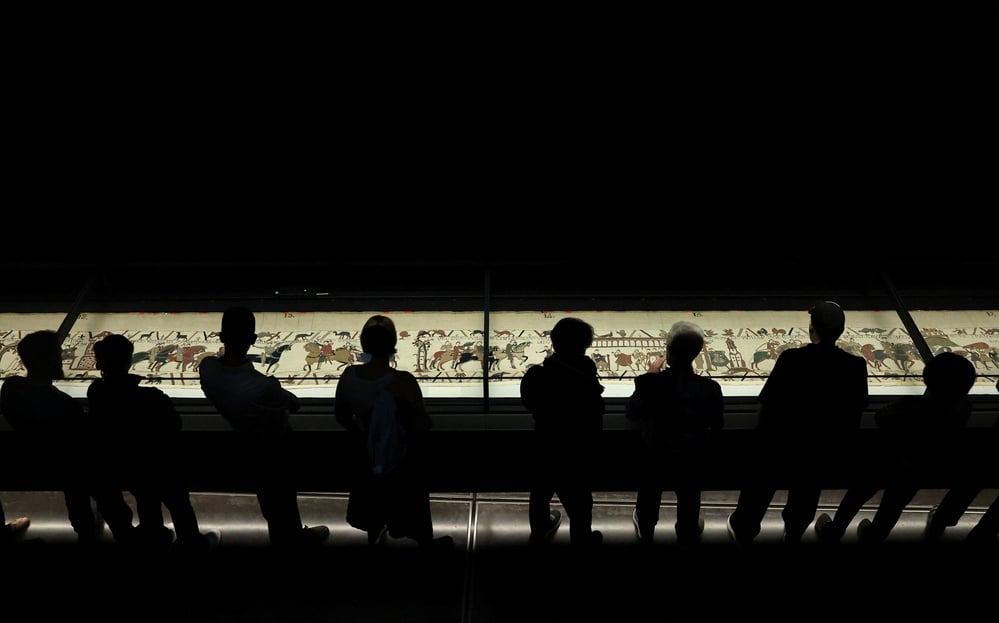
The Bayeux Tapestry is a medieval embroidered cloth, not a woven tapestry, depicting the Norman Conquest; it is normally displayed in Bayeux, Normandy, and is temporarily in London.
Automated analysis; not human reviewed.
Limitations: The supplied text has no byline or publication date, so relative time references such as 'from Monday' and 'two weeks ago' cannot be anchored.
·
1 of 55 available dimensions scored; omitted dimensions are not treated as neutral.
·
Verified supporting quotes for 1 of 1 scored dimensions.
Claim: Sourcing and factual specificity support high credibility.
“A British Museum spokesperson said: “The response to the Bayeux Tapestry has been extraordinary, and we are delighted by the excitement and interest it has generated.” · exact text match
“When general admission tickets went on sale in July, the museum recorded the biggest day of ticket sales in its history, generating more than £2.4 million in the first 24 hours.” · exact text match
Why: The report attributes the main response to a named institutional spokesperson and includes precise financial, pricing, and scheduling details rather than unsupported claims.
The supplied text has no byline or publication date, so relative time references such as 'from Monday' and 'two weeks ago' cannot be anchored.
Frames the British Museum’s early closure for a Samsung-sponsored gala as part of a pattern of ‘playing favoritism’ and ‘missteps,’ while prominently including the museum’s apology and explanation.
Automated analysis; not human reviewed.
Limitations: No byline or publication date is present, and the account relies on other outlets' reporting for the attendance and VIP-visit details.
·
5 of 55 available dimensions scored; omitted dimensions are not treated as neutral.
·
Verified supporting quotes for 5 of 5 scored dimensions.
Claim: The article casts preferential access for elite figures in a negative light.
“It’s not the first time that the British Museum has come under fire for playing favoritism with high-profile figures.” · exact text match
“In August, The Guardian reported that the museum privately hosted billionaire tech entrepreneur Peter Thiel for a VIP viewing of the tapestry.” · exact text match
Why: Emphasizing VIP access to wealthy figures and a sponsor gala frames the museum as elitist, tilting slightly populist.
Claim: The article mixes factual reporting with evaluative characterization of the museum's actions.
“It’s not the first time that the British Museum has come under fire for playing favoritism with high-profile figures.” · exact text match
Why: The phrase 'playing favoritism' is an evaluative characterization rather than a neutral description.
Claim: The article inserts its own evaluative judgment that the museum is trying to fix 'missteps.'
“Now, the museum now trying to rectify those missteps.” · exact text match
Why: 'Missteps' is an opinionated characterization of the closure and related controversies.
Claim: The article relies on named sources and direct quotes, supporting a credible report.
“The dinner was attended by Chancellor John Healey and liberal democrat leader Sir Ed Davey, while the pre-dinner reception was attended by Princess Anne, according to The Telegraph.” · exact text match
“In August, The Guardian reported that the museum privately hosted billionaire tech entrepreneur Peter Thiel for a VIP viewing of the tapestry.” · exact text match
Why: Attribution to named outlets and direct quotes from a museum spokesperson are visible credibility markers.
Claim: The article presents both the criticism and the museum's response, giving a balanced account.
““Unfortunately, delays earlier in the day meant that some visitors were unable to enter at their allotted time.
We have apologized to those affected and giving a refund as well as rescheduling their ticket for free.”
· exact text match
“It’s not the first time that the British Museum has come under fire for playing favoritism with high-profile figures.” · exact text match
Why: It includes the accused institution's full statement rather than only the allegations against it.
No byline or publication date is present, and the account relies on other outlets' reporting for the attendance and VIP-visit details.
October 05, 2026 · 0 shares
Framing emphasizes visitor frustration and the museum's remedial response, using named complaints and an official statement to temper the 'queue chaos' headline.
Automated analysis; not human reviewed.
Limitations: The supplied text repeats and intersperses the main article with related-story blocks; the assessment relies on the core report and ignores boilerplate.
·
1 of 55 available dimensions scored; omitted dimensions are not treated as neutral.
·
Verified supporting quotes for 1 of 1 scored dimensions.
Claim: Visible sourcing is strong enough to support basic credibility.
“Nick Bubnovich, 79, flew in from the US just to see the artwork.” · exact text match
“The museum said: "The response to the Bayeux Tapestry has been extraordinary, and we are delighted by the excitement and interest it has generated."” · exact text match
Why: The text attributes statements to a named visitor via The Times, includes a second named visitor, and quotes the museum directly, while noting that compliance with light limits was not disclosed.
The supplied text repeats and intersperses the main article with related-story blocks; the assessment relies on the core report and ignores boilerplate.
September 30, 2026 · 0 shares
Reporting emphasizes a vision-impaired visitor's disappointment over the lack of live audio-described tours, while balancing that criticism with the museum's light-restriction rationale and its planned dedicated tours.
The Bayeux Tapestry is an 11th-century embroidered cloth chronicling the Norman Conquest; it is on temporary display at the British Museum.
Automated analysis; not human reviewed. Limitations: The supplied text is truncated with ellipses, obscuring the exact nature of the museum's planned dedicated tours and the full wording of the quoted disappointment.
The supplied text is truncated with ellipses, obscuring the exact nature of the museum's planned dedicated tours and the full wording of the quoted disappointment.
October 01, 2026 · 0 shares
The handling of the lawsuit is neutral and event-focused, balancing the plaintiff's Equality Act claim with the British Museum's stated plans for audio-described tours without endorsing either side.
The UK Equality Act 2010 places duties on service providers to make reasonable adjustments for disabled people; the British Museum is a national museum.
Automated analysis; not human reviewed.
Limitations: Only a short excerpt was supplied, with no byline or publication date, so broader editorial context is limited.
·
4 of 55 available dimensions scored; omitted dimensions are not treated as neutral.
·
Verified supporting quotes for 2 of 4 scored dimensions.
Claim: The article is written in an objective, neutral news style.
“Dr. Yusuf Ali Osman, a registered blind man, has filed suit against the British Museum, claiming the London institution failed to comply with the Equality Act by not providing audio-described guides at its exhibition of the famed Bayeux Tapestry.” · exact text match
“According to Reuters, a spokesperson for the British Museum said that it was planning dedicated tours which would feature “an in-person audio-described tour” and that it was exploring “a separate audio-described tour as part of the exhibition’s app-based audio guide.”” · exact text match
Why: The article presents the plaintiff's suit and the museum's response through attributed statements, with no evaluative or first-person commentary from the publisher.
Claim: The article avoids sensational language and presents the lawsuit as a routine legal and accessibility matter.
“Blind Man Sues Over Lack of Audio Tours for Bayeux Tapestry.” · exact text match
“Osman called the museum in advance of his visit to ask whether live audio-described tours would be available for the much-anticipated display of the nearly thousand-year-old embroidery, which depicts the conquest of England by William I in 1066.” · exact text match
Why: The headline and body use legal and logistical terms such as 'filed suit,' 'failed to comply,' and 'planning dedicated tours,' rather than outrage or dramatic framing.
Claim: The publisher's own text is descriptive rather than prescriptive.
“Visitors are allotted forty minutes to view the work from an elevated platform.” · exact text match
“According to Reuters, a spokesperson for the British Museum said that it was planning dedicated tours which would feature “an in-person audio-described tour”...” · not found in supplied text
Why: The article describes events, conditions, and attributed responses without issuing recommendations or policy prescriptions of its own.
Claim: The article is credible within its evidentiary scope: it names the plaintiff, attributes claims, and cites Reuters for the museum's response.
“Dr. Yusuf Ali Osman, a registered blind man, has filed suit against the British Museum...” · not found in supplied text
“According to Reuters, a spokesperson for the British Museum said...” · not found in supplied text
Why: The article clearly attributes statements to Osman, his lawyers, and a Reuters-sourced museum spokesperson, and does not present speculation as fact.
Only a short excerpt was supplied, with no byline or publication date, so broader editorial context is limited.
September 30, 2026 · 0 shares
The dispute is framed through the claimant's legal action, presenting the law firm's Equality Act non-compliance assertion as the sole reported detail without any museum response or independent context.
The Equality Act is UK legislation prohibiting disability discrimination and requiring service providers, including museums, to make reasonable adjustments for disabled users.
Automated analysis; not human reviewed.
Limitations: The supplied article text is only a two-sentence brief, providing minimal evidence for most bias dimensions and limiting confidence in framing classifications.
·
2 of 55 available dimensions scored; omitted dimensions are not treated as neutral.
·
Verified supporting quotes for 2 of 2 scored dimensions.
Claim: The article is written in a purely declarative, detached register with no evaluative or perspective-laden language.
“Blind Man Sues the British Museum Over Lack of Bayeux Tapestry Audio Tours.” · exact text match
“A letter was sent to the museum by the law firm Leigh Day outlining that the British Museum failed to comply with the Equality Act.” · exact text match
Why: Both sentences state events and the letter's content directly; there are no opinion words, hedges, or subjective markers.
Claim: The text avoids emotional, dramatic, or exaggerated language and does not sensationalize the disability claim.
“A letter was sent to the museum by the law firm Leigh Day outlining that the British Museum failed to comply with the Equality Act.” · exact text match
Why: The wording is flat and legalistic, reporting the letter's existence and content without dramatic emphasis.
The supplied article text is only a two-sentence brief, providing minimal evidence for most bias dimensions and limiting confidence in framing classifications.
October 02, 2026 · 0 shares
Coverage is factual but mostly adopts the plaintiff's framing, since the museum's explanation is reported only as 'allegedly told' and no museum response to the lawsuit is quoted.
The Bayeux Tapestry is an 11th-century embroidered cloth depicting the Norman conquest of England and is normally housed in France.
Automated analysis; not human reviewed.
Limitations: The supplied text is an excerpt that includes no museum response or the full BBC report, so balance and completeness could not be fully assessed.
·
3 of 55 available dimensions scored; omitted dimensions are not treated as neutral.
·
Verified supporting quotes for 3 of 3 scored dimensions.
Claim: The article reports the dispute through attributed statements and legal allegations rather than editorial opinion.
“Yusuf Ali Osman, a man from Croydon with no sight, accused the museum of violating the Equality Act 2010 by not offering audio tours of the exhibition, his legal representatives said in a statement shared with Hyperallergic.” · exact text match
Why: The use of 'accused' and 'his legal representatives said' shows source attribution and detachment from the claims.
Claim: The article describes what happened and what the plaintiff is seeking, without recommending policy changes.
“Apart from damages, he seeks a declaration from the museum acknowledging its discrimination against him, and an order requiring policy amendments and disability awareness training for museum staff.” · exact text match
Why: The plaintiff's demands are reported as his own legal requests, not as the publication's recommendations.
Claim: The article names external sources and attributes key statements, increasing visible credibility.
“The British Museum will provide audio tour options for its Bayeux Tapestry exhibition after a blind patron pursued legal action against the London institution last week, according to the BBC.” · exact text match
“his legal representatives said in a statement shared with Hyperallergic” · exact text match
Why: The outcome is attributed to the BBC and the plaintiff's claims are attributed to his legal representatives, though the museum's response is not quoted.
The supplied text is an excerpt that includes no museum response or the full BBC report, so balance and completeness could not be fully assessed.
October 04, 2026 · 0 shares
The publisher frames the story as a routine institutional logistics matter, leading with the British Museum's announced remedies and using visitor complaints as attributed context without editorial emphasis.
Automated analysis; not human reviewed.
Limitations: The supplied text is a single undated BBC-style article; no original publication date, author byline, or full details of the private-event closure were available, so the analysis cannot account for those factors.
·
4 of 55 available dimensions scored; omitted dimensions are not treated as neutral.
·
Verified supporting quotes for 4 of 4 scored dimensions.
Claim: The substantive article is non-political and contains no ideological content.
“The museum said it planned to introduce longer opening hours to prevent queues building during the day and allow people with later bookings more time to view the exhibition.” · exact text match
Why: The report concerns museum operations and visitor flow, with no political actors, policies, or ideological terms in the substantive text.
Claim: The article's overall tone is neutral, with emotional reactions confined to attributed quotes.
“One disappointed visitor said the trip had been a "big event" they had looked forward to” · exact text match
Why: The disappointment is explicitly attributed to a visitor and is not adopted in the reporter's own voice.
Claim: The article relies on attributed statements and clearly signals uncertainty where appropriate.
“A museum spokesperson said the public response to the 11th Century embroidery had been "extraordinary", but acknowledged that some visitors had waited longer than they would have wanted.” · exact text match
“Some people reported waits of up to two hours, while hundreds of ticket holders were reportedly turned away due to backlogs when the museum closed early last week due to a private event.” · exact text match
Why: Key claims are attributed to a spokesperson or framed as reports, and details such as the extended hours are explicitly noted as not yet disclosed.
Claim: The reporting shows internal fairness by including both the museum's official response and visitor complaints.
“The museum later apologised to those who had been unable to enter and said they would be issued refunds and priority booking slots for a rearranged time.” · exact text match
Why: The article reports the institution's remedy alongside the earlier complaints, giving a balanced account of the dispute.
The supplied text is a single undated BBC-style article; no original publication date, author byline, or full details of the private-event closure were available, so the analysis cannot account for those factors.
October 05, 2026 · 0 shares
Reports the museum's remedial measures as the primary hook while pairing its official response with a visitor's corporate-greed accusation.
The Bayeux Tapestry is an 11th-century embroidered cloth depicting the Norman conquest of England; it is normally exhibited in Normandy, France.
Automated analysis; not human reviewed.
Limitations: The supplied text is a jumbled concatenation of the main article and trailing related-link blurbs; extraction relied on the leading substantive paragraphs and ignored the link-like trailing lines.
·
6 of 55 available dimensions scored; omitted dimensions are not treated as neutral.
·
Verified supporting quotes for 3 of 6 scored dimensions.
Claim: The report is predominantly objective, attributing both facts and opinions to named or described sources.
“Some ticket holders have reportedly queued for up to two hours to enter the blockbuster exhibition” · exact text match
Why: The publisher uses 'reportedly' and attributes the critical 'corporate greed' remark to a visitor rather than asserting it.
Claim: The story gains interest from a public-displacement controversy at a major cultural institution.
“Hundreds of ticket holders were also reportedly turned away when the museum last Wednesday due to a private event.” · exact text match
Why: The combination of a blockbuster exhibition, two-hour queues, and a private-event conflict creates human-interest appeal.
Claim: The publisher's own voice is mostly neutral, with the critical perspective confined to an attributed quote.
“One disappointed ticket-holder told The Times: 'If a national institution intends to displace booked visitors in favour of private guests, the least it might do is warn them before they make the journey.'” · not found in supplied text
Why: The sole opinionated statement is explicitly attributed to a visitor, not asserted by the publisher.
Claim: The article maintains visible sourcing through named institutions, attributed quotes, and concrete figures.
“according to the BBC” · exact text match
“A British Museum spokesperson says” · exact text match
“One disappointed ticket-holder told The Times” · exact text match
Why: Multiple attributions and specific prices and dates support a credible reporting practice.
Claim: The article presents a problem-solution structure with attributed statements rather than emotional or conspiratorial reasoning.
“A British Museum spokesperson says the response to the Bayeux Tapestry display, which opened 10 September, has been 'extraordinary'” · not found in supplied text
Why: The museum's quoted response and the visitor's quote are both presented as attributable statements, and no unsupported causal claim is made.
Claim: The report gives voice to both the museum and dissatisfied visitors, meeting basic fairness signals.
“A British Museum spokesperson says the response to the Bayeux Tapestry display, which opened 10 September, has been 'extraordinary', adding that: 'Some visitors have faced longer queues than we would have wanted, so we are introducing a series of measures'” · not found in supplied text
“One disappointed ticket-holder told The Times: 'If a national institution intends to displace booked visitors in favour of private guests, the least it might do is warn them before they make the journey.
At the British Museum, it seems corporate greed has conquered the public.'”
· not found in supplied text
Why: Including both the institutional statement and the critical visitor quote indicates balanced treatment rather than one-sided advocacy.
The supplied text is a jumbled concatenation of the main article and trailing related-link blurbs; extraction relied on the leading substantive paragraphs and ignored the link-like trailing lines.
October 05, 2026 · 0 shares
No substantive article content was available for analysis; only membership prompts and page boilerplate remained.
October 04, 2026 · 0 shares
The publisher frames the story as a routine institutional logistics matter, leading with the British Museum's announced remedies and using visitor complaints as attributed context without editorial emphasis.
Automated analysis; not human reviewed. Limitations: The supplied text is a single undated BBC-style article; no original publication date, author byline, or full details of the private-event closure were available, so the analysis cannot account for those factors. · 4 of 55 available dimensions scored; omitted dimensions are not treated as neutral. · Verified supporting quotes for 4 of 4 scored dimensions.
Claim: The substantive article is non-political and contains no ideological content.
“The museum said it planned to introduce longer opening hours to prevent queues building during the day and allow people with later bookings more time to view the exhibition.” · exact text match
Why: The report concerns museum operations and visitor flow, with no political actors, policies, or ideological terms in the substantive text.
Claim: The article's overall tone is neutral, with emotional reactions confined to attributed quotes.
“One disappointed visitor said the trip had been a "big event" they had looked forward to” · exact text match
Why: The disappointment is explicitly attributed to a visitor and is not adopted in the reporter's own voice.
Claim: The article relies on attributed statements and clearly signals uncertainty where appropriate.
“A museum spokesperson said the public response to the 11th Century embroidery had been "extraordinary", but acknowledged that some visitors had waited longer than they would have wanted.” · exact text match
“Some people reported waits of up to two hours, while hundreds of ticket holders were reportedly turned away due to backlogs when the museum closed early last week due to a private event.” · exact text match
Why: Key claims are attributed to a spokesperson or framed as reports, and details such as the extended hours are explicitly noted as not yet disclosed.
Claim: The reporting shows internal fairness by including both the museum's official response and visitor complaints.
“The museum later apologised to those who had been unable to enter and said they would be issued refunds and priority booking slots for a rearranged time.” · exact text match
Why: The article reports the institution's remedy alongside the earlier complaints, giving a balanced account of the dispute.
The supplied text is a single undated BBC-style article; no original publication date, author byline, or full details of the private-event closure were available, so the analysis cannot account for those factors.
October 04, 2026 · 0 shares
Coverage treats the Bayeux Tapestry queue problem as a visitor-service issue, relaying the museum's positive framing and announced remedies without critical examination.
The Bayeux Tapestry is a medieval embroidered cloth, not a woven tapestry, depicting the Norman Conquest; it is normally displayed in Bayeux, Normandy, and is temporarily in London.
Automated analysis; not human reviewed. Limitations: The supplied text has no byline or publication date, so relative time references such as 'from Monday' and 'two weeks ago' cannot be anchored. · 1 of 55 available dimensions scored; omitted dimensions are not treated as neutral. · Verified supporting quotes for 1 of 1 scored dimensions.
Claim: Sourcing and factual specificity support high credibility.
“A British Museum spokesperson said: “The response to the Bayeux Tapestry has been extraordinary, and we are delighted by the excitement and interest it has generated.” · exact text match
“When general admission tickets went on sale in July, the museum recorded the biggest day of ticket sales in its history, generating more than £2.4 million in the first 24 hours.” · exact text match
Why: The report attributes the main response to a named institutional spokesperson and includes precise financial, pricing, and scheduling details rather than unsupported claims.
The supplied text has no byline or publication date, so relative time references such as 'from Monday' and 'two weeks ago' cannot be anchored.
October 05, 2026 · 0 shares
Reports the museum's remedial measures as the primary hook while pairing its official response with a visitor's corporate-greed accusation.
The Bayeux Tapestry is an 11th-century embroidered cloth depicting the Norman conquest of England; it is normally exhibited in Normandy, France.
Automated analysis; not human reviewed. Limitations: The supplied text is a jumbled concatenation of the main article and trailing related-link blurbs; extraction relied on the leading substantive paragraphs and ignored the link-like trailing lines. · 6 of 55 available dimensions scored; omitted dimensions are not treated as neutral. · Verified supporting quotes for 3 of 6 scored dimensions.
Claim: The report is predominantly objective, attributing both facts and opinions to named or described sources.
“Some ticket holders have reportedly queued for up to two hours to enter the blockbuster exhibition” · exact text match
Why: The publisher uses 'reportedly' and attributes the critical 'corporate greed' remark to a visitor rather than asserting it.
Claim: The story gains interest from a public-displacement controversy at a major cultural institution.
“Hundreds of ticket holders were also reportedly turned away when the museum last Wednesday due to a private event.” · exact text match
Why: The combination of a blockbuster exhibition, two-hour queues, and a private-event conflict creates human-interest appeal.
Claim: The publisher's own voice is mostly neutral, with the critical perspective confined to an attributed quote.
“One disappointed ticket-holder told The Times: 'If a national institution intends to displace booked visitors in favour of private guests, the least it might do is warn them before they make the journey.'” · not found in supplied text
Why: The sole opinionated statement is explicitly attributed to a visitor, not asserted by the publisher.
Claim: The article maintains visible sourcing through named institutions, attributed quotes, and concrete figures.
“according to the BBC” · exact text match
“A British Museum spokesperson says” · exact text match
“One disappointed ticket-holder told The Times” · exact text match
Why: Multiple attributions and specific prices and dates support a credible reporting practice.
Claim: The article presents a problem-solution structure with attributed statements rather than emotional or conspiratorial reasoning.
“A British Museum spokesperson says the response to the Bayeux Tapestry display, which opened 10 September, has been 'extraordinary'” · not found in supplied text
Why: The museum's quoted response and the visitor's quote are both presented as attributable statements, and no unsupported causal claim is made.
Claim: The report gives voice to both the museum and dissatisfied visitors, meeting basic fairness signals.
“A British Museum spokesperson says the response to the Bayeux Tapestry display, which opened 10 September, has been 'extraordinary', adding that: 'Some visitors have faced longer queues than we would have wanted, so we are introducing a series of measures'” · not found in supplied text
“One disappointed ticket-holder told The Times: 'If a national institution intends to displace booked visitors in favour of private guests, the least it might do is warn them before they make the journey. At the British Museum, it seems corporate greed has conquered the public.'” · not found in supplied text
Why: Including both the institutional statement and the critical visitor quote indicates balanced treatment rather than one-sided advocacy.
The supplied text is a jumbled concatenation of the main article and trailing related-link blurbs; extraction relied on the leading substantive paragraphs and ignored the link-like trailing lines.
October 01, 2026 · 0 shares
The handling of the lawsuit is neutral and event-focused, balancing the plaintiff's Equality Act claim with the British Museum's stated plans for audio-described tours without endorsing either side.
The UK Equality Act 2010 places duties on service providers to make reasonable adjustments for disabled people; the British Museum is a national museum.
Automated analysis; not human reviewed. Limitations: Only a short excerpt was supplied, with no byline or publication date, so broader editorial context is limited. · 4 of 55 available dimensions scored; omitted dimensions are not treated as neutral. · Verified supporting quotes for 2 of 4 scored dimensions.
Claim: The article is written in an objective, neutral news style.
“Dr. Yusuf Ali Osman, a registered blind man, has filed suit against the British Museum, claiming the London institution failed to comply with the Equality Act by not providing audio-described guides at its exhibition of the famed Bayeux Tapestry.” · exact text match
“According to Reuters, a spokesperson for the British Museum said that it was planning dedicated tours which would feature “an in-person audio-described tour” and that it was exploring “a separate audio-described tour as part of the exhibition’s app-based audio guide.”” · exact text match
Why: The article presents the plaintiff's suit and the museum's response through attributed statements, with no evaluative or first-person commentary from the publisher.
Claim: The article avoids sensational language and presents the lawsuit as a routine legal and accessibility matter.
“Blind Man Sues Over Lack of Audio Tours for Bayeux Tapestry.” · exact text match
“Osman called the museum in advance of his visit to ask whether live audio-described tours would be available for the much-anticipated display of the nearly thousand-year-old embroidery, which depicts the conquest of England by William I in 1066.” · exact text match
Why: The headline and body use legal and logistical terms such as 'filed suit,' 'failed to comply,' and 'planning dedicated tours,' rather than outrage or dramatic framing.
Claim: The publisher's own text is descriptive rather than prescriptive.
“Visitors are allotted forty minutes to view the work from an elevated platform.” · exact text match
“According to Reuters, a spokesperson for the British Museum said that it was planning dedicated tours which would feature “an in-person audio-described tour”...” · not found in supplied text
Why: The article describes events, conditions, and attributed responses without issuing recommendations or policy prescriptions of its own.
Claim: The article is credible within its evidentiary scope: it names the plaintiff, attributes claims, and cites Reuters for the museum's response.
“Dr. Yusuf Ali Osman, a registered blind man, has filed suit against the British Museum...” · not found in supplied text
“According to Reuters, a spokesperson for the British Museum said...” · not found in supplied text
Why: The article clearly attributes statements to Osman, his lawyers, and a Reuters-sourced museum spokesperson, and does not present speculation as fact.
Only a short excerpt was supplied, with no byline or publication date, so broader editorial context is limited.
September 30, 2026 · 0 shares
Reporting emphasizes a vision-impaired visitor's disappointment over the lack of live audio-described tours, while balancing that criticism with the museum's light-restriction rationale and its planned dedicated tours.
The Bayeux Tapestry is an 11th-century embroidered cloth chronicling the Norman Conquest; it is on temporary display at the British Museum.
Automated analysis; not human reviewed. Limitations: The supplied text is truncated with ellipses, obscuring the exact nature of the museum's planned dedicated tours and the full wording of the quoted disappointment.
The supplied text is truncated with ellipses, obscuring the exact nature of the museum's planned dedicated tours and the full wording of the quoted disappointment.
September 30, 2026 · 0 shares
The dispute is framed through the claimant's legal action, presenting the law firm's Equality Act non-compliance assertion as the sole reported detail without any museum response or independent context.
The Equality Act is UK legislation prohibiting disability discrimination and requiring service providers, including museums, to make reasonable adjustments for disabled users.
Automated analysis; not human reviewed. Limitations: The supplied article text is only a two-sentence brief, providing minimal evidence for most bias dimensions and limiting confidence in framing classifications. · 2 of 55 available dimensions scored; omitted dimensions are not treated as neutral. · Verified supporting quotes for 2 of 2 scored dimensions.
Claim: The article is written in a purely declarative, detached register with no evaluative or perspective-laden language.
“Blind Man Sues the British Museum Over Lack of Bayeux Tapestry Audio Tours.” · exact text match
“A letter was sent to the museum by the law firm Leigh Day outlining that the British Museum failed to comply with the Equality Act.” · exact text match
Why: Both sentences state events and the letter's content directly; there are no opinion words, hedges, or subjective markers.
Claim: The text avoids emotional, dramatic, or exaggerated language and does not sensationalize the disability claim.
“A letter was sent to the museum by the law firm Leigh Day outlining that the British Museum failed to comply with the Equality Act.” · exact text match
Why: The wording is flat and legalistic, reporting the letter's existence and content without dramatic emphasis.
The supplied article text is only a two-sentence brief, providing minimal evidence for most bias dimensions and limiting confidence in framing classifications.
October 02, 2026 · 0 shares
Coverage is factual but mostly adopts the plaintiff's framing, since the museum's explanation is reported only as 'allegedly told' and no museum response to the lawsuit is quoted.
The Bayeux Tapestry is an 11th-century embroidered cloth depicting the Norman conquest of England and is normally housed in France.
Automated analysis; not human reviewed. Limitations: The supplied text is an excerpt that includes no museum response or the full BBC report, so balance and completeness could not be fully assessed. · 3 of 55 available dimensions scored; omitted dimensions are not treated as neutral. · Verified supporting quotes for 3 of 3 scored dimensions.
Claim: The article reports the dispute through attributed statements and legal allegations rather than editorial opinion.
“Yusuf Ali Osman, a man from Croydon with no sight, accused the museum of violating the Equality Act 2010 by not offering audio tours of the exhibition, his legal representatives said in a statement shared with Hyperallergic.” · exact text match
Why: The use of 'accused' and 'his legal representatives said' shows source attribution and detachment from the claims.
Claim: The article describes what happened and what the plaintiff is seeking, without recommending policy changes.
“Apart from damages, he seeks a declaration from the museum acknowledging its discrimination against him, and an order requiring policy amendments and disability awareness training for museum staff.” · exact text match
Why: The plaintiff's demands are reported as his own legal requests, not as the publication's recommendations.
Claim: The article names external sources and attributes key statements, increasing visible credibility.
“The British Museum will provide audio tour options for its Bayeux Tapestry exhibition after a blind patron pursued legal action against the London institution last week, according to the BBC.” · exact text match
“his legal representatives said in a statement shared with Hyperallergic” · exact text match
Why: The outcome is attributed to the BBC and the plaintiff's claims are attributed to his legal representatives, though the museum's response is not quoted.
The supplied text is an excerpt that includes no museum response or the full BBC report, so balance and completeness could not be fully assessed.
October 04, 2026 · 0 shares
The publisher frames the story as a routine institutional logistics matter, leading with the British Museum's announced remedies and using visitor complaints as attributed context without editorial emphasis.
Automated analysis; not human reviewed. Limitations: The supplied text is a single undated BBC-style article; no original publication date, author byline, or full details of the private-event closure were available, so the analysis cannot account for those factors. · 4 of 55 available dimensions scored; omitted dimensions are not treated as neutral. · Verified supporting quotes for 4 of 4 scored dimensions.
Claim: The substantive article is non-political and contains no ideological content.
“The museum said it planned to introduce longer opening hours to prevent queues building during the day and allow people with later bookings more time to view the exhibition.” · exact text match
Why: The report concerns museum operations and visitor flow, with no political actors, policies, or ideological terms in the substantive text.
Claim: The article's overall tone is neutral, with emotional reactions confined to attributed quotes.
“One disappointed visitor said the trip had been a "big event" they had looked forward to” · exact text match
Why: The disappointment is explicitly attributed to a visitor and is not adopted in the reporter's own voice.
Claim: The article relies on attributed statements and clearly signals uncertainty where appropriate.
“A museum spokesperson said the public response to the 11th Century embroidery had been "extraordinary", but acknowledged that some visitors had waited longer than they would have wanted.” · exact text match
“Some people reported waits of up to two hours, while hundreds of ticket holders were reportedly turned away due to backlogs when the museum closed early last week due to a private event.” · exact text match
Why: Key claims are attributed to a spokesperson or framed as reports, and details such as the extended hours are explicitly noted as not yet disclosed.
Claim: The reporting shows internal fairness by including both the museum's official response and visitor complaints.
“The museum later apologised to those who had been unable to enter and said they would be issued refunds and priority booking slots for a rearranged time.” · exact text match
Why: The article reports the institution's remedy alongside the earlier complaints, giving a balanced account of the dispute.
The supplied text is a single undated BBC-style article; no original publication date, author byline, or full details of the private-event closure were available, so the analysis cannot account for those factors.
Frames the British Museum’s early closure for a Samsung-sponsored gala as part of a pattern of ‘playing favoritism’ and ‘missteps,’ while prominently including the museum’s apology and explanation.
Automated analysis; not human reviewed. Limitations: No byline or publication date is present, and the account relies on other outlets' reporting for the attendance and VIP-visit details. · 5 of 55 available dimensions scored; omitted dimensions are not treated as neutral. · Verified supporting quotes for 5 of 5 scored dimensions.
Claim: The article casts preferential access for elite figures in a negative light.
“It’s not the first time that the British Museum has come under fire for playing favoritism with high-profile figures.” · exact text match
“In August, The Guardian reported that the museum privately hosted billionaire tech entrepreneur Peter Thiel for a VIP viewing of the tapestry.” · exact text match
Why: Emphasizing VIP access to wealthy figures and a sponsor gala frames the museum as elitist, tilting slightly populist.
Claim: The article mixes factual reporting with evaluative characterization of the museum's actions.
“It’s not the first time that the British Museum has come under fire for playing favoritism with high-profile figures.” · exact text match
Why: The phrase 'playing favoritism' is an evaluative characterization rather than a neutral description.
Claim: The article inserts its own evaluative judgment that the museum is trying to fix 'missteps.'
“Now, the museum now trying to rectify those missteps.” · exact text match
Why: 'Missteps' is an opinionated characterization of the closure and related controversies.
Claim: The article relies on named sources and direct quotes, supporting a credible report.
“The dinner was attended by Chancellor John Healey and liberal democrat leader Sir Ed Davey, while the pre-dinner reception was attended by Princess Anne, according to The Telegraph.” · exact text match
“In August, The Guardian reported that the museum privately hosted billionaire tech entrepreneur Peter Thiel for a VIP viewing of the tapestry.” · exact text match
Why: Attribution to named outlets and direct quotes from a museum spokesperson are visible credibility markers.
Claim: The article presents both the criticism and the museum's response, giving a balanced account.
““Unfortunately, delays earlier in the day meant that some visitors were unable to enter at their allotted time. We have apologized to those affected and giving a refund as well as rescheduling their ticket for free.” · exact text match
“It’s not the first time that the British Museum has come under fire for playing favoritism with high-profile figures.” · exact text match
Why: It includes the accused institution's full statement rather than only the allegations against it.
No byline or publication date is present, and the account relies on other outlets' reporting for the attendance and VIP-visit details.
October 05, 2026 · 0 shares
Framing emphasizes visitor frustration and the museum's remedial response, using named complaints and an official statement to temper the 'queue chaos' headline.
Automated analysis; not human reviewed. Limitations: The supplied text repeats and intersperses the main article with related-story blocks; the assessment relies on the core report and ignores boilerplate. · 1 of 55 available dimensions scored; omitted dimensions are not treated as neutral. · Verified supporting quotes for 1 of 1 scored dimensions.
Claim: Visible sourcing is strong enough to support basic credibility.
“Nick Bubnovich, 79, flew in from the US just to see the artwork.” · exact text match
“The museum said: "The response to the Bayeux Tapestry has been extraordinary, and we are delighted by the excitement and interest it has generated."” · exact text match
Why: The text attributes statements to a named visitor via The Times, includes a second named visitor, and quotes the museum directly, while noting that compliance with light limits was not disclosed.
The supplied text repeats and intersperses the main article with related-story blocks; the assessment relies on the core report and ignores boilerplate.
October 05, 2026 · 0 shares
Reports the museum's remedial measures as the primary hook while pairing its official response with a visitor's corporate-greed accusation.
The Bayeux Tapestry is an 11th-century embroidered cloth depicting the Norman conquest of England; it is normally exhibited in Normandy, France.
Automated analysis; not human reviewed. Limitations: The supplied text is a jumbled concatenation of the main article and trailing related-link blurbs; extraction relied on the leading substantive paragraphs and ignored the link-like trailing lines. · 6 of 55 available dimensions scored; omitted dimensions are not treated as neutral. · Verified supporting quotes for 3 of 6 scored dimensions.
Claim: The report is predominantly objective, attributing both facts and opinions to named or described sources.
“Some ticket holders have reportedly queued for up to two hours to enter the blockbuster exhibition” · exact text match
Why: The publisher uses 'reportedly' and attributes the critical 'corporate greed' remark to a visitor rather than asserting it.
Claim: The story gains interest from a public-displacement controversy at a major cultural institution.
“Hundreds of ticket holders were also reportedly turned away when the museum last Wednesday due to a private event.” · exact text match
Why: The combination of a blockbuster exhibition, two-hour queues, and a private-event conflict creates human-interest appeal.
Claim: The publisher's own voice is mostly neutral, with the critical perspective confined to an attributed quote.
“One disappointed ticket-holder told The Times: 'If a national institution intends to displace booked visitors in favour of private guests, the least it might do is warn them before they make the journey.'” · not found in supplied text
Why: The sole opinionated statement is explicitly attributed to a visitor, not asserted by the publisher.
Claim: The article maintains visible sourcing through named institutions, attributed quotes, and concrete figures.
“according to the BBC” · exact text match
“A British Museum spokesperson says” · exact text match
“One disappointed ticket-holder told The Times” · exact text match
Why: Multiple attributions and specific prices and dates support a credible reporting practice.
Claim: The article presents a problem-solution structure with attributed statements rather than emotional or conspiratorial reasoning.
“A British Museum spokesperson says the response to the Bayeux Tapestry display, which opened 10 September, has been 'extraordinary'” · not found in supplied text
Why: The museum's quoted response and the visitor's quote are both presented as attributable statements, and no unsupported causal claim is made.
Claim: The report gives voice to both the museum and dissatisfied visitors, meeting basic fairness signals.
“A British Museum spokesperson says the response to the Bayeux Tapestry display, which opened 10 September, has been 'extraordinary', adding that: 'Some visitors have faced longer queues than we would have wanted, so we are introducing a series of measures'” · not found in supplied text
“One disappointed ticket-holder told The Times: 'If a national institution intends to displace booked visitors in favour of private guests, the least it might do is warn them before they make the journey. At the British Museum, it seems corporate greed has conquered the public.'” · not found in supplied text
Why: Including both the institutional statement and the critical visitor quote indicates balanced treatment rather than one-sided advocacy.
The supplied text is a jumbled concatenation of the main article and trailing related-link blurbs; extraction relied on the leading substantive paragraphs and ignored the link-like trailing lines.
Helium Bias
Story Blindspots
October 05, 2026 · 0 shares
Framing emphasizes visitor frustration and the museum's remedial response, using named complaints and an official statement to temper the 'queue chaos' headline.
Automated analysis; not human reviewed. Limitations: The supplied text repeats and intersperses the main article with related-story blocks; the assessment relies on the core report and ignores boilerplate. · 1 of 55 available dimensions scored; omitted dimensions are not treated as neutral. · Verified supporting quotes for 1 of 1 scored dimensions.
Claim: Visible sourcing is strong enough to support basic credibility.
“Nick Bubnovich, 79, flew in from the US just to see the artwork.” · exact text match
“The museum said: "The response to the Bayeux Tapestry has been extraordinary, and we are delighted by the excitement and interest it has generated."” · exact text match
Why: The text attributes statements to a named visitor via The Times, includes a second named visitor, and quotes the museum directly, while noting that compliance with light limits was not disclosed.
The supplied text repeats and intersperses the main article with related-story blocks; the assessment relies on the core report and ignores boilerplate.
October 05, 2026 · 0 shares
Framing emphasizes visitor frustration and the museum's remedial response, using named complaints and an official statement to temper the 'queue chaos' headline.
Automated analysis; not human reviewed. Limitations: The supplied text repeats and intersperses the main article with related-story blocks; the assessment relies on the core report and ignores boilerplate. · 1 of 55 available dimensions scored; omitted dimensions are not treated as neutral. · Verified supporting quotes for 1 of 1 scored dimensions.
Claim: Visible sourcing is strong enough to support basic credibility.
“Nick Bubnovich, 79, flew in from the US just to see the artwork.” · exact text match
“The museum said: "The response to the Bayeux Tapestry has been extraordinary, and we are delighted by the excitement and interest it has generated."” · exact text match
Why: The text attributes statements to a named visitor via The Times, includes a second named visitor, and quotes the museum directly, while noting that compliance with light limits was not disclosed.
The supplied text repeats and intersperses the main article with related-story blocks; the assessment relies on the core report and ignores boilerplate.
September 30, 2026 · 0 shares
The dispute is framed through the claimant's legal action, presenting the law firm's Equality Act non-compliance assertion as the sole reported detail without any museum response or independent context.
The Equality Act is UK legislation prohibiting disability discrimination and requiring service providers, including museums, to make reasonable adjustments for disabled users.
Automated analysis; not human reviewed. Limitations: The supplied article text is only a two-sentence brief, providing minimal evidence for most bias dimensions and limiting confidence in framing classifications. · 2 of 55 available dimensions scored; omitted dimensions are not treated as neutral. · Verified supporting quotes for 2 of 2 scored dimensions.
Claim: The article is written in a purely declarative, detached register with no evaluative or perspective-laden language.
“Blind Man Sues the British Museum Over Lack of Bayeux Tapestry Audio Tours.” · exact text match
“A letter was sent to the museum by the law firm Leigh Day outlining that the British Museum failed to comply with the Equality Act.” · exact text match
Why: Both sentences state events and the letter's content directly; there are no opinion words, hedges, or subjective markers.
Claim: The text avoids emotional, dramatic, or exaggerated language and does not sensationalize the disability claim.
“A letter was sent to the museum by the law firm Leigh Day outlining that the British Museum failed to comply with the Equality Act.” · exact text match
Why: The wording is flat and legalistic, reporting the letter's existence and content without dramatic emphasis.
The supplied article text is only a two-sentence brief, providing minimal evidence for most bias dimensions and limiting confidence in framing classifications.
September 30, 2026 · 0 shares
The dispute is framed through the claimant's legal action, presenting the law firm's Equality Act non-compliance assertion as the sole reported detail without any museum response or independent context.
The Equality Act is UK legislation prohibiting disability discrimination and requiring service providers, including museums, to make reasonable adjustments for disabled users.
Automated analysis; not human reviewed. Limitations: The supplied article text is only a two-sentence brief, providing minimal evidence for most bias dimensions and limiting confidence in framing classifications. · 2 of 55 available dimensions scored; omitted dimensions are not treated as neutral. · Verified supporting quotes for 2 of 2 scored dimensions.
Claim: The article is written in a purely declarative, detached register with no evaluative or perspective-laden language.
“Blind Man Sues the British Museum Over Lack of Bayeux Tapestry Audio Tours.” · exact text match
“A letter was sent to the museum by the law firm Leigh Day outlining that the British Museum failed to comply with the Equality Act.” · exact text match
Why: Both sentences state events and the letter's content directly; there are no opinion words, hedges, or subjective markers.
Claim: The text avoids emotional, dramatic, or exaggerated language and does not sensationalize the disability claim.
“A letter was sent to the museum by the law firm Leigh Day outlining that the British Museum failed to comply with the Equality Act.” · exact text match
Why: The wording is flat and legalistic, reporting the letter's existence and content without dramatic emphasis.
The supplied article text is only a two-sentence brief, providing minimal evidence for most bias dimensions and limiting confidence in framing classifications.
October 02, 2026 · 0 shares
Coverage is factual but mostly adopts the plaintiff's framing, since the museum's explanation is reported only as 'allegedly told' and no museum response to the lawsuit is quoted.
The Bayeux Tapestry is an 11th-century embroidered cloth depicting the Norman conquest of England and is normally housed in France.
Automated analysis; not human reviewed. Limitations: The supplied text is an excerpt that includes no museum response or the full BBC report, so balance and completeness could not be fully assessed. · 3 of 55 available dimensions scored; omitted dimensions are not treated as neutral. · Verified supporting quotes for 3 of 3 scored dimensions.
Claim: The article reports the dispute through attributed statements and legal allegations rather than editorial opinion.
“Yusuf Ali Osman, a man from Croydon with no sight, accused the museum of violating the Equality Act 2010 by not offering audio tours of the exhibition, his legal representatives said in a statement shared with Hyperallergic.” · exact text match
Why: The use of 'accused' and 'his legal representatives said' shows source attribution and detachment from the claims.
Claim: The article describes what happened and what the plaintiff is seeking, without recommending policy changes.
“Apart from damages, he seeks a declaration from the museum acknowledging its discrimination against him, and an order requiring policy amendments and disability awareness training for museum staff.” · exact text match
Why: The plaintiff's demands are reported as his own legal requests, not as the publication's recommendations.
Claim: The article names external sources and attributes key statements, increasing visible credibility.
“The British Museum will provide audio tour options for its Bayeux Tapestry exhibition after a blind patron pursued legal action against the London institution last week, according to the BBC.” · exact text match
“his legal representatives said in a statement shared with Hyperallergic” · exact text match
Why: The outcome is attributed to the BBC and the plaintiff's claims are attributed to his legal representatives, though the museum's response is not quoted.
The supplied text is an excerpt that includes no museum response or the full BBC report, so balance and completeness could not be fully assessed.
September 30, 2026 · 0 shares
Reporting emphasizes a vision-impaired visitor's disappointment over the lack of live audio-described tours, while balancing that criticism with the museum's light-restriction rationale and its planned dedicated tours.
The Bayeux Tapestry is an 11th-century embroidered cloth chronicling the Norman Conquest; it is on temporary display at the British Museum.
Automated analysis; not human reviewed. Limitations: The supplied text is truncated with ellipses, obscuring the exact nature of the museum's planned dedicated tours and the full wording of the quoted disappointment.
The supplied text is truncated with ellipses, obscuring the exact nature of the museum's planned dedicated tours and the full wording of the quoted disappointment.
October 01, 2026 · 0 shares
The handling of the lawsuit is neutral and event-focused, balancing the plaintiff's Equality Act claim with the British Museum's stated plans for audio-described tours without endorsing either side.
The UK Equality Act 2010 places duties on service providers to make reasonable adjustments for disabled people; the British Museum is a national museum.
Automated analysis; not human reviewed. Limitations: Only a short excerpt was supplied, with no byline or publication date, so broader editorial context is limited. · 4 of 55 available dimensions scored; omitted dimensions are not treated as neutral. · Verified supporting quotes for 2 of 4 scored dimensions.
Claim: The article is written in an objective, neutral news style.
“Dr. Yusuf Ali Osman, a registered blind man, has filed suit against the British Museum, claiming the London institution failed to comply with the Equality Act by not providing audio-described guides at its exhibition of the famed Bayeux Tapestry.” · exact text match
“According to Reuters, a spokesperson for the British Museum said that it was planning dedicated tours which would feature “an in-person audio-described tour” and that it was exploring “a separate audio-described tour as part of the exhibition’s app-based audio guide.”” · exact text match
Why: The article presents the plaintiff's suit and the museum's response through attributed statements, with no evaluative or first-person commentary from the publisher.
Claim: The article avoids sensational language and presents the lawsuit as a routine legal and accessibility matter.
“Blind Man Sues Over Lack of Audio Tours for Bayeux Tapestry.” · exact text match
“Osman called the museum in advance of his visit to ask whether live audio-described tours would be available for the much-anticipated display of the nearly thousand-year-old embroidery, which depicts the conquest of England by William I in 1066.” · exact text match
Why: The headline and body use legal and logistical terms such as 'filed suit,' 'failed to comply,' and 'planning dedicated tours,' rather than outrage or dramatic framing.
Claim: The publisher's own text is descriptive rather than prescriptive.
“Visitors are allotted forty minutes to view the work from an elevated platform.” · exact text match
“According to Reuters, a spokesperson for the British Museum said that it was planning dedicated tours which would feature “an in-person audio-described tour”...” · not found in supplied text
Why: The article describes events, conditions, and attributed responses without issuing recommendations or policy prescriptions of its own.
Claim: The article is credible within its evidentiary scope: it names the plaintiff, attributes claims, and cites Reuters for the museum's response.
“Dr. Yusuf Ali Osman, a registered blind man, has filed suit against the British Museum...” · not found in supplied text
“According to Reuters, a spokesperson for the British Museum said...” · not found in supplied text
Why: The article clearly attributes statements to Osman, his lawyers, and a Reuters-sourced museum spokesperson, and does not present speculation as fact.
Only a short excerpt was supplied, with no byline or publication date, so broader editorial context is limited.
October 02, 2026 · 0 shares
Coverage is factual but mostly adopts the plaintiff's framing, since the museum's explanation is reported only as 'allegedly told' and no museum response to the lawsuit is quoted.
The Bayeux Tapestry is an 11th-century embroidered cloth depicting the Norman conquest of England and is normally housed in France.
Automated analysis; not human reviewed. Limitations: The supplied text is an excerpt that includes no museum response or the full BBC report, so balance and completeness could not be fully assessed. · 3 of 55 available dimensions scored; omitted dimensions are not treated as neutral. · Verified supporting quotes for 3 of 3 scored dimensions.
Claim: The article reports the dispute through attributed statements and legal allegations rather than editorial opinion.
“Yusuf Ali Osman, a man from Croydon with no sight, accused the museum of violating the Equality Act 2010 by not offering audio tours of the exhibition, his legal representatives said in a statement shared with Hyperallergic.” · exact text match
Why: The use of 'accused' and 'his legal representatives said' shows source attribution and detachment from the claims.
Claim: The article describes what happened and what the plaintiff is seeking, without recommending policy changes.
“Apart from damages, he seeks a declaration from the museum acknowledging its discrimination against him, and an order requiring policy amendments and disability awareness training for museum staff.” · exact text match
Why: The plaintiff's demands are reported as his own legal requests, not as the publication's recommendations.
Claim: The article names external sources and attributes key statements, increasing visible credibility.
“The British Museum will provide audio tour options for its Bayeux Tapestry exhibition after a blind patron pursued legal action against the London institution last week, according to the BBC.” · exact text match
“his legal representatives said in a statement shared with Hyperallergic” · exact text match
Why: The outcome is attributed to the BBC and the plaintiff's claims are attributed to his legal representatives, though the museum's response is not quoted.
The supplied text is an excerpt that includes no museum response or the full BBC report, so balance and completeness could not be fully assessed.
September 30, 2026 · 0 shares
The dispute is framed through the claimant's legal action, presenting the law firm's Equality Act non-compliance assertion as the sole reported detail without any museum response or independent context.
The Equality Act is UK legislation prohibiting disability discrimination and requiring service providers, including museums, to make reasonable adjustments for disabled users.
Automated analysis; not human reviewed. Limitations: The supplied article text is only a two-sentence brief, providing minimal evidence for most bias dimensions and limiting confidence in framing classifications. · 2 of 55 available dimensions scored; omitted dimensions are not treated as neutral. · Verified supporting quotes for 2 of 2 scored dimensions.
Claim: The article is written in a purely declarative, detached register with no evaluative or perspective-laden language.
“Blind Man Sues the British Museum Over Lack of Bayeux Tapestry Audio Tours.” · exact text match
“A letter was sent to the museum by the law firm Leigh Day outlining that the British Museum failed to comply with the Equality Act.” · exact text match
Why: Both sentences state events and the letter's content directly; there are no opinion words, hedges, or subjective markers.
Claim: The text avoids emotional, dramatic, or exaggerated language and does not sensationalize the disability claim.
“A letter was sent to the museum by the law firm Leigh Day outlining that the British Museum failed to comply with the Equality Act.” · exact text match
Why: The wording is flat and legalistic, reporting the letter's existence and content without dramatic emphasis.
The supplied article text is only a two-sentence brief, providing minimal evidence for most bias dimensions and limiting confidence in framing classifications.
Frames the British Museum’s early closure for a Samsung-sponsored gala as part of a pattern of ‘playing favoritism’ and ‘missteps,’ while prominently including the museum’s apology and explanation.
Automated analysis; not human reviewed. Limitations: No byline or publication date is present, and the account relies on other outlets' reporting for the attendance and VIP-visit details. · 5 of 55 available dimensions scored; omitted dimensions are not treated as neutral. · Verified supporting quotes for 5 of 5 scored dimensions.
Claim: The article casts preferential access for elite figures in a negative light.
“It’s not the first time that the British Museum has come under fire for playing favoritism with high-profile figures.” · exact text match
“In August, The Guardian reported that the museum privately hosted billionaire tech entrepreneur Peter Thiel for a VIP viewing of the tapestry.” · exact text match
Why: Emphasizing VIP access to wealthy figures and a sponsor gala frames the museum as elitist, tilting slightly populist.
Claim: The article mixes factual reporting with evaluative characterization of the museum's actions.
“It’s not the first time that the British Museum has come under fire for playing favoritism with high-profile figures.” · exact text match
Why: The phrase 'playing favoritism' is an evaluative characterization rather than a neutral description.
Claim: The article inserts its own evaluative judgment that the museum is trying to fix 'missteps.'
“Now, the museum now trying to rectify those missteps.” · exact text match
Why: 'Missteps' is an opinionated characterization of the closure and related controversies.
Claim: The article relies on named sources and direct quotes, supporting a credible report.
“The dinner was attended by Chancellor John Healey and liberal democrat leader Sir Ed Davey, while the pre-dinner reception was attended by Princess Anne, according to The Telegraph.” · exact text match
“In August, The Guardian reported that the museum privately hosted billionaire tech entrepreneur Peter Thiel for a VIP viewing of the tapestry.” · exact text match
Why: Attribution to named outlets and direct quotes from a museum spokesperson are visible credibility markers.
Claim: The article presents both the criticism and the museum's response, giving a balanced account.
““Unfortunately, delays earlier in the day meant that some visitors were unable to enter at their allotted time. We have apologized to those affected and giving a refund as well as rescheduling their ticket for free.” · exact text match
“It’s not the first time that the British Museum has come under fire for playing favoritism with high-profile figures.” · exact text match
Why: It includes the accused institution's full statement rather than only the allegations against it.
No byline or publication date is present, and the account relies on other outlets' reporting for the attendance and VIP-visit details.
October 05, 2026 · 0 shares
Framing emphasizes visitor frustration and the museum's remedial response, using named complaints and an official statement to temper the 'queue chaos' headline.
Automated analysis; not human reviewed. Limitations: The supplied text repeats and intersperses the main article with related-story blocks; the assessment relies on the core report and ignores boilerplate. · 1 of 55 available dimensions scored; omitted dimensions are not treated as neutral. · Verified supporting quotes for 1 of 1 scored dimensions.
Claim: Visible sourcing is strong enough to support basic credibility.
“Nick Bubnovich, 79, flew in from the US just to see the artwork.” · exact text match
“The museum said: "The response to the Bayeux Tapestry has been extraordinary, and we are delighted by the excitement and interest it has generated."” · exact text match
Why: The text attributes statements to a named visitor via The Times, includes a second named visitor, and quotes the museum directly, while noting that compliance with light limits was not disclosed.
The supplied text repeats and intersperses the main article with related-story blocks; the assessment relies on the core report and ignores boilerplate.
October 05, 2026 · 0 shares
Reports the museum's remedial measures as the primary hook while pairing its official response with a visitor's corporate-greed accusation.
The Bayeux Tapestry is an 11th-century embroidered cloth depicting the Norman conquest of England; it is normally exhibited in Normandy, France.
Automated analysis; not human reviewed. Limitations: The supplied text is a jumbled concatenation of the main article and trailing related-link blurbs; extraction relied on the leading substantive paragraphs and ignored the link-like trailing lines. · 6 of 55 available dimensions scored; omitted dimensions are not treated as neutral. · Verified supporting quotes for 3 of 6 scored dimensions.
Claim: The report is predominantly objective, attributing both facts and opinions to named or described sources.
“Some ticket holders have reportedly queued for up to two hours to enter the blockbuster exhibition” · exact text match
Why: The publisher uses 'reportedly' and attributes the critical 'corporate greed' remark to a visitor rather than asserting it.
Claim: The story gains interest from a public-displacement controversy at a major cultural institution.
“Hundreds of ticket holders were also reportedly turned away when the museum last Wednesday due to a private event.” · exact text match
Why: The combination of a blockbuster exhibition, two-hour queues, and a private-event conflict creates human-interest appeal.
Claim: The publisher's own voice is mostly neutral, with the critical perspective confined to an attributed quote.
“One disappointed ticket-holder told The Times: 'If a national institution intends to displace booked visitors in favour of private guests, the least it might do is warn them before they make the journey.'” · not found in supplied text
Why: The sole opinionated statement is explicitly attributed to a visitor, not asserted by the publisher.
Claim: The article maintains visible sourcing through named institutions, attributed quotes, and concrete figures.
“according to the BBC” · exact text match
“A British Museum spokesperson says” · exact text match
“One disappointed ticket-holder told The Times” · exact text match
Why: Multiple attributions and specific prices and dates support a credible reporting practice.
Claim: The article presents a problem-solution structure with attributed statements rather than emotional or conspiratorial reasoning.
“A British Museum spokesperson says the response to the Bayeux Tapestry display, which opened 10 September, has been 'extraordinary'” · not found in supplied text
Why: The museum's quoted response and the visitor's quote are both presented as attributable statements, and no unsupported causal claim is made.
Claim: The report gives voice to both the museum and dissatisfied visitors, meeting basic fairness signals.
“A British Museum spokesperson says the response to the Bayeux Tapestry display, which opened 10 September, has been 'extraordinary', adding that: 'Some visitors have faced longer queues than we would have wanted, so we are introducing a series of measures'” · not found in supplied text
“One disappointed ticket-holder told The Times: 'If a national institution intends to displace booked visitors in favour of private guests, the least it might do is warn them before they make the journey. At the British Museum, it seems corporate greed has conquered the public.'” · not found in supplied text
Why: Including both the institutional statement and the critical visitor quote indicates balanced treatment rather than one-sided advocacy.
The supplied text is a jumbled concatenation of the main article and trailing related-link blurbs; extraction relied on the leading substantive paragraphs and ignored the link-like trailing lines.
October 05, 2026 · 0 shares
No substantive article content was available for analysis; only membership prompts and page boilerplate remained.
October 05, 2026 · 0 shares
Framing emphasizes visitor frustration and the museum's remedial response, using named complaints and an official statement to temper the 'queue chaos' headline.
Automated analysis; not human reviewed.
Limitations: The supplied text repeats and intersperses the main article with related-story blocks; the assessment relies on the core report and ignores boilerplate.
·
1 of 55 available dimensions scored; omitted dimensions are not treated as neutral.
·
Verified supporting quotes for 1 of 1 scored dimensions.
Claim: Visible sourcing is strong enough to support basic credibility.
“Nick Bubnovich, 79, flew in from the US just to see the artwork.” · exact text match
“The museum said: "The response to the Bayeux Tapestry has been extraordinary, and we are delighted by the excitement and interest it has generated."” · exact text match
Why: The text attributes statements to a named visitor via The Times, includes a second named visitor, and quotes the museum directly, while noting that compliance with light limits was not disclosed.
The supplied text repeats and intersperses the main article with related-story blocks; the assessment relies on the core report and ignores boilerplate.
October 05, 2026 · 0 shares
Framing emphasizes visitor frustration and the museum's remedial response, using named complaints and an official statement to temper the 'queue chaos' headline.
Automated analysis; not human reviewed.
Limitations: The supplied text repeats and intersperses the main article with related-story blocks; the assessment relies on the core report and ignores boilerplate.
·
1 of 55 available dimensions scored; omitted dimensions are not treated as neutral.
·
Verified supporting quotes for 1 of 1 scored dimensions.
Claim: Visible sourcing is strong enough to support basic credibility.
“Nick Bubnovich, 79, flew in from the US just to see the artwork.” · exact text match
“The museum said: "The response to the Bayeux Tapestry has been extraordinary, and we are delighted by the excitement and interest it has generated."” · exact text match
Why: The text attributes statements to a named visitor via The Times, includes a second named visitor, and quotes the museum directly, while noting that compliance with light limits was not disclosed.
The supplied text repeats and intersperses the main article with related-story blocks; the assessment relies on the core report and ignores boilerplate.
October 05, 2026 · 0 shares
Framing emphasizes visitor frustration and the museum's remedial response, using named complaints and an official statement to temper the 'queue chaos' headline.
Automated analysis; not human reviewed.
Limitations: The supplied text repeats and intersperses the main article with related-story blocks; the assessment relies on the core report and ignores boilerplate.
·
1 of 55 available dimensions scored; omitted dimensions are not treated as neutral.
·
Verified supporting quotes for 1 of 1 scored dimensions.
Claim: Visible sourcing is strong enough to support basic credibility.
“Nick Bubnovich, 79, flew in from the US just to see the artwork.” · exact text match
“The museum said: "The response to the Bayeux Tapestry has been extraordinary, and we are delighted by the excitement and interest it has generated."” · exact text match
Why: The text attributes statements to a named visitor via The Times, includes a second named visitor, and quotes the museum directly, while noting that compliance with light limits was not disclosed.
The supplied text repeats and intersperses the main article with related-story blocks; the assessment relies on the core report and ignores boilerplate.
Frames the British Museum’s early closure for a Samsung-sponsored gala as part of a pattern of ‘playing favoritism’ and ‘missteps,’ while prominently including the museum’s apology and explanation.
Automated analysis; not human reviewed.
Limitations: No byline or publication date is present, and the account relies on other outlets' reporting for the attendance and VIP-visit details.
·
5 of 55 available dimensions scored; omitted dimensions are not treated as neutral.
·
Verified supporting quotes for 5 of 5 scored dimensions.
Claim: The article casts preferential access for elite figures in a negative light.
“It’s not the first time that the British Museum has come under fire for playing favoritism with high-profile figures.” · exact text match
“In August, The Guardian reported that the museum privately hosted billionaire tech entrepreneur Peter Thiel for a VIP viewing of the tapestry.” · exact text match
Why: Emphasizing VIP access to wealthy figures and a sponsor gala frames the museum as elitist, tilting slightly populist.
Claim: The article mixes factual reporting with evaluative characterization of the museum's actions.
“It’s not the first time that the British Museum has come under fire for playing favoritism with high-profile figures.” · exact text match
Why: The phrase 'playing favoritism' is an evaluative characterization rather than a neutral description.
Claim: The article inserts its own evaluative judgment that the museum is trying to fix 'missteps.'
“Now, the museum now trying to rectify those missteps.” · exact text match
Why: 'Missteps' is an opinionated characterization of the closure and related controversies.
Claim: The article relies on named sources and direct quotes, supporting a credible report.
“The dinner was attended by Chancellor John Healey and liberal democrat leader Sir Ed Davey, while the pre-dinner reception was attended by Princess Anne, according to The Telegraph.” · exact text match
“In August, The Guardian reported that the museum privately hosted billionaire tech entrepreneur Peter Thiel for a VIP viewing of the tapestry.” · exact text match
Why: Attribution to named outlets and direct quotes from a museum spokesperson are visible credibility markers.
Claim: The article presents both the criticism and the museum's response, giving a balanced account.
““Unfortunately, delays earlier in the day meant that some visitors were unable to enter at their allotted time.
We have apologized to those affected and giving a refund as well as rescheduling their ticket for free.”
· exact text match
“It’s not the first time that the British Museum has come under fire for playing favoritism with high-profile figures.” · exact text match
Why: It includes the accused institution's full statement rather than only the allegations against it.
No byline or publication date is present, and the account relies on other outlets' reporting for the attendance and VIP-visit details.
September 30, 2026 · 0 shares
The dispute is framed through the claimant's legal action, presenting the law firm's Equality Act non-compliance assertion as the sole reported detail without any museum response or independent context.
The Equality Act is UK legislation prohibiting disability discrimination and requiring service providers, including museums, to make reasonable adjustments for disabled users.
Automated analysis; not human reviewed.
Limitations: The supplied article text is only a two-sentence brief, providing minimal evidence for most bias dimensions and limiting confidence in framing classifications.
·
2 of 55 available dimensions scored; omitted dimensions are not treated as neutral.
·
Verified supporting quotes for 2 of 2 scored dimensions.
Claim: The article is written in a purely declarative, detached register with no evaluative or perspective-laden language.
“Blind Man Sues the British Museum Over Lack of Bayeux Tapestry Audio Tours.” · exact text match
“A letter was sent to the museum by the law firm Leigh Day outlining that the British Museum failed to comply with the Equality Act.” · exact text match
Why: Both sentences state events and the letter's content directly; there are no opinion words, hedges, or subjective markers.
Claim: The text avoids emotional, dramatic, or exaggerated language and does not sensationalize the disability claim.
“A letter was sent to the museum by the law firm Leigh Day outlining that the British Museum failed to comply with the Equality Act.” · exact text match
Why: The wording is flat and legalistic, reporting the letter's existence and content without dramatic emphasis.
The supplied article text is only a two-sentence brief, providing minimal evidence for most bias dimensions and limiting confidence in framing classifications.
October 02, 2026 · 0 shares
Coverage is factual but mostly adopts the plaintiff's framing, since the museum's explanation is reported only as 'allegedly told' and no museum response to the lawsuit is quoted.
The Bayeux Tapestry is an 11th-century embroidered cloth depicting the Norman conquest of England and is normally housed in France.
Automated analysis; not human reviewed.
Limitations: The supplied text is an excerpt that includes no museum response or the full BBC report, so balance and completeness could not be fully assessed.
·
3 of 55 available dimensions scored; omitted dimensions are not treated as neutral.
·
Verified supporting quotes for 3 of 3 scored dimensions.
Claim: The article reports the dispute through attributed statements and legal allegations rather than editorial opinion.
“Yusuf Ali Osman, a man from Croydon with no sight, accused the museum of violating the Equality Act 2010 by not offering audio tours of the exhibition, his legal representatives said in a statement shared with Hyperallergic.” · exact text match
Why: The use of 'accused' and 'his legal representatives said' shows source attribution and detachment from the claims.
Claim: The article describes what happened and what the plaintiff is seeking, without recommending policy changes.
“Apart from damages, he seeks a declaration from the museum acknowledging its discrimination against him, and an order requiring policy amendments and disability awareness training for museum staff.” · exact text match
Why: The plaintiff's demands are reported as his own legal requests, not as the publication's recommendations.
Claim: The article names external sources and attributes key statements, increasing visible credibility.
“The British Museum will provide audio tour options for its Bayeux Tapestry exhibition after a blind patron pursued legal action against the London institution last week, according to the BBC.” · exact text match
“his legal representatives said in a statement shared with Hyperallergic” · exact text match
Why: The outcome is attributed to the BBC and the plaintiff's claims are attributed to his legal representatives, though the museum's response is not quoted.
The supplied text is an excerpt that includes no museum response or the full BBC report, so balance and completeness could not be fully assessed.
October 01, 2026 · 0 shares
The handling of the lawsuit is neutral and event-focused, balancing the plaintiff's Equality Act claim with the British Museum's stated plans for audio-described tours without endorsing either side.
The UK Equality Act 2010 places duties on service providers to make reasonable adjustments for disabled people; the British Museum is a national museum.
Automated analysis; not human reviewed.
Limitations: Only a short excerpt was supplied, with no byline or publication date, so broader editorial context is limited.
·
4 of 55 available dimensions scored; omitted dimensions are not treated as neutral.
·
Verified supporting quotes for 2 of 4 scored dimensions.
Claim: The article is written in an objective, neutral news style.
“Dr. Yusuf Ali Osman, a registered blind man, has filed suit against the British Museum, claiming the London institution failed to comply with the Equality Act by not providing audio-described guides at its exhibition of the famed Bayeux Tapestry.” · exact text match
“According to Reuters, a spokesperson for the British Museum said that it was planning dedicated tours which would feature “an in-person audio-described tour” and that it was exploring “a separate audio-described tour as part of the exhibition’s app-based audio guide.”” · exact text match
Why: The article presents the plaintiff's suit and the museum's response through attributed statements, with no evaluative or first-person commentary from the publisher.
Claim: The article avoids sensational language and presents the lawsuit as a routine legal and accessibility matter.
“Blind Man Sues Over Lack of Audio Tours for Bayeux Tapestry.” · exact text match
“Osman called the museum in advance of his visit to ask whether live audio-described tours would be available for the much-anticipated display of the nearly thousand-year-old embroidery, which depicts the conquest of England by William I in 1066.” · exact text match
Why: The headline and body use legal and logistical terms such as 'filed suit,' 'failed to comply,' and 'planning dedicated tours,' rather than outrage or dramatic framing.
Claim: The publisher's own text is descriptive rather than prescriptive.
“Visitors are allotted forty minutes to view the work from an elevated platform.” · exact text match
“According to Reuters, a spokesperson for the British Museum said that it was planning dedicated tours which would feature “an in-person audio-described tour”...” · not found in supplied text
Why: The article describes events, conditions, and attributed responses without issuing recommendations or policy prescriptions of its own.
Claim: The article is credible within its evidentiary scope: it names the plaintiff, attributes claims, and cites Reuters for the museum's response.
“Dr. Yusuf Ali Osman, a registered blind man, has filed suit against the British Museum...” · not found in supplied text
“According to Reuters, a spokesperson for the British Museum said...” · not found in supplied text
Why: The article clearly attributes statements to Osman, his lawyers, and a Reuters-sourced museum spokesperson, and does not present speculation as fact.
Only a short excerpt was supplied, with no byline or publication date, so broader editorial context is limited.
September 30, 2026 · 0 shares
Reporting emphasizes a vision-impaired visitor's disappointment over the lack of live audio-described tours, while balancing that criticism with the museum's light-restriction rationale and its planned dedicated tours.
The Bayeux Tapestry is an 11th-century embroidered cloth chronicling the Norman Conquest; it is on temporary display at the British Museum.
Automated analysis; not human reviewed. Limitations: The supplied text is truncated with ellipses, obscuring the exact nature of the museum's planned dedicated tours and the full wording of the quoted disappointment.
The supplied text is truncated with ellipses, obscuring the exact nature of the museum's planned dedicated tours and the full wording of the quoted disappointment.
October 04, 2026 · 0 shares
The publisher frames the story as a routine institutional logistics matter, leading with the British Museum's announced remedies and using visitor complaints as attributed context without editorial emphasis.
Automated analysis; not human reviewed.
Limitations: The supplied text is a single undated BBC-style article; no original publication date, author byline, or full details of the private-event closure were available, so the analysis cannot account for those factors.
·
4 of 55 available dimensions scored; omitted dimensions are not treated as neutral.
·
Verified supporting quotes for 4 of 4 scored dimensions.
Claim: The substantive article is non-political and contains no ideological content.
“The museum said it planned to introduce longer opening hours to prevent queues building during the day and allow people with later bookings more time to view the exhibition.” · exact text match
Why: The report concerns museum operations and visitor flow, with no political actors, policies, or ideological terms in the substantive text.
Claim: The article's overall tone is neutral, with emotional reactions confined to attributed quotes.
“One disappointed visitor said the trip had been a "big event" they had looked forward to” · exact text match
Why: The disappointment is explicitly attributed to a visitor and is not adopted in the reporter's own voice.
Claim: The article relies on attributed statements and clearly signals uncertainty where appropriate.
“A museum spokesperson said the public response to the 11th Century embroidery had been "extraordinary", but acknowledged that some visitors had waited longer than they would have wanted.” · exact text match
“Some people reported waits of up to two hours, while hundreds of ticket holders were reportedly turned away due to backlogs when the museum closed early last week due to a private event.” · exact text match
Why: Key claims are attributed to a spokesperson or framed as reports, and details such as the extended hours are explicitly noted as not yet disclosed.
Claim: The reporting shows internal fairness by including both the museum's official response and visitor complaints.
“The museum later apologised to those who had been unable to enter and said they would be issued refunds and priority booking slots for a rearranged time.” · exact text match
Why: The article reports the institution's remedy alongside the earlier complaints, giving a balanced account of the dispute.
The supplied text is a single undated BBC-style article; no original publication date, author byline, or full details of the private-event closure were available, so the analysis cannot account for those factors.
October 05, 2026 · 0 shares
Reports the museum's remedial measures as the primary hook while pairing its official response with a visitor's corporate-greed accusation.
The Bayeux Tapestry is an 11th-century embroidered cloth depicting the Norman conquest of England; it is normally exhibited in Normandy, France.
Automated analysis; not human reviewed.
Limitations: The supplied text is a jumbled concatenation of the main article and trailing related-link blurbs; extraction relied on the leading substantive paragraphs and ignored the link-like trailing lines.
·
6 of 55 available dimensions scored; omitted dimensions are not treated as neutral.
·
Verified supporting quotes for 3 of 6 scored dimensions.
Claim: The report is predominantly objective, attributing both facts and opinions to named or described sources.
“Some ticket holders have reportedly queued for up to two hours to enter the blockbuster exhibition” · exact text match
Why: The publisher uses 'reportedly' and attributes the critical 'corporate greed' remark to a visitor rather than asserting it.
Claim: The story gains interest from a public-displacement controversy at a major cultural institution.
“Hundreds of ticket holders were also reportedly turned away when the museum last Wednesday due to a private event.” · exact text match
Why: The combination of a blockbuster exhibition, two-hour queues, and a private-event conflict creates human-interest appeal.
Claim: The publisher's own voice is mostly neutral, with the critical perspective confined to an attributed quote.
“One disappointed ticket-holder told The Times: 'If a national institution intends to displace booked visitors in favour of private guests, the least it might do is warn them before they make the journey.'” · not found in supplied text
Why: The sole opinionated statement is explicitly attributed to a visitor, not asserted by the publisher.
Claim: The article maintains visible sourcing through named institutions, attributed quotes, and concrete figures.
“according to the BBC” · exact text match
“A British Museum spokesperson says” · exact text match
“One disappointed ticket-holder told The Times” · exact text match
Why: Multiple attributions and specific prices and dates support a credible reporting practice.
Claim: The article presents a problem-solution structure with attributed statements rather than emotional or conspiratorial reasoning.
“A British Museum spokesperson says the response to the Bayeux Tapestry display, which opened 10 September, has been 'extraordinary'” · not found in supplied text
Why: The museum's quoted response and the visitor's quote are both presented as attributable statements, and no unsupported causal claim is made.
Claim: The report gives voice to both the museum and dissatisfied visitors, meeting basic fairness signals.
“A British Museum spokesperson says the response to the Bayeux Tapestry display, which opened 10 September, has been 'extraordinary', adding that: 'Some visitors have faced longer queues than we would have wanted, so we are introducing a series of measures'” · not found in supplied text
“One disappointed ticket-holder told The Times: 'If a national institution intends to displace booked visitors in favour of private guests, the least it might do is warn them before they make the journey.
At the British Museum, it seems corporate greed has conquered the public.'”
· not found in supplied text
Why: Including both the institutional statement and the critical visitor quote indicates balanced treatment rather than one-sided advocacy.
The supplied text is a jumbled concatenation of the main article and trailing related-link blurbs; extraction relied on the leading substantive paragraphs and ignored the link-like trailing lines.
October 04, 2026 · 0 shares
Coverage treats the Bayeux Tapestry queue problem as a visitor-service issue, relaying the museum's positive framing and announced remedies without critical examination.
The Bayeux Tapestry is a medieval embroidered cloth, not a woven tapestry, depicting the Norman Conquest; it is normally displayed in Bayeux, Normandy, and is temporarily in London.
Automated analysis; not human reviewed.
Limitations: The supplied text has no byline or publication date, so relative time references such as 'from Monday' and 'two weeks ago' cannot be anchored.
·
1 of 55 available dimensions scored; omitted dimensions are not treated as neutral.
·
Verified supporting quotes for 1 of 1 scored dimensions.
Claim: Sourcing and factual specificity support high credibility.
“A British Museum spokesperson said: “The response to the Bayeux Tapestry has been extraordinary, and we are delighted by the excitement and interest it has generated.” · exact text match
“When general admission tickets went on sale in July, the museum recorded the biggest day of ticket sales in its history, generating more than £2.4 million in the first 24 hours.” · exact text match
Why: The report attributes the main response to a named institutional spokesperson and includes precise financial, pricing, and scheduling details rather than unsupported claims.
The supplied text has no byline or publication date, so relative time references such as 'from Monday' and 'two weeks ago' cannot be anchored.
October 05, 2026 · 0 shares
Framing emphasizes visitor frustration and the museum's remedial response, using named complaints and an official statement to temper the 'queue chaos' headline.
Automated analysis; not human reviewed.
Limitations: The supplied text repeats and intersperses the main article with related-story blocks; the assessment relies on the core report and ignores boilerplate.
·
1 of 55 available dimensions scored; omitted dimensions are not treated as neutral.
·
Verified supporting quotes for 1 of 1 scored dimensions.
Claim: Visible sourcing is strong enough to support basic credibility.
“Nick Bubnovich, 79, flew in from the US just to see the artwork.” · exact text match
“The museum said: "The response to the Bayeux Tapestry has been extraordinary, and we are delighted by the excitement and interest it has generated."” · exact text match
Why: The text attributes statements to a named visitor via The Times, includes a second named visitor, and quotes the museum directly, while noting that compliance with light limits was not disclosed.
The supplied text repeats and intersperses the main article with related-story blocks; the assessment relies on the core report and ignores boilerplate.
2026 © Helium Trades
Privacy Policy & Disclosure
* Disclaimer: Nothing on this website constitutes investment advice, performance data or any recommendation that any particular security, portfolio of securities, transaction or investment strategy is suitable for any specific person. Helium Trades is not responsible in any way for the accuracy
of any model predictions or price data. Any mention of a particular security and related prediction data is not a recommendation to buy or sell that security. Investments in securities involve the risk of loss. Past performance is no guarantee of future results. Helium Trades is not responsible for any of your investment decisions,
you should consult a financial expert before engaging in any transaction.
Helium Research Assistant

How can I help you today?
Ask any question about this page.