See whether Helium helps you make better-informed decisions. Try every Pro Trader feature for 30 days. No credit card required.
Try every Pro Trader feature for 30 days. No credit card required.
July 16, 2026 · 0 shares
Negative framing of Trump's Iran policy through a poll-based claim, implying political failure without presenting data.
Two identical lines report that a new poll epitomizes Trump's political failure on Iran.
Automated analysis; not human reviewed. Limitations: Case-specific: only two identical headline-like sentences; no corroborating data; cannot determine broader editorial stance or author intent. · 1 of 52 available dimensions scored; omitted dimensions are not treated as neutral. · Verified supporting quotes for 0 of 1 scored dimensions.
July 14, 2026 · 0 shares
Analytic framing labels Trump's Iran-war predictions as the 'worst', signaling negative stance toward Trump in a concise, headline-like form.
An analytical evaluation of the Trump team's predictions about a potential Iran war.
My bias: cautious; accuracy ~0.6.
Frames Trump policies as causing chaos in national parks using vivid, negative imagery.
Automated analysis; not human reviewed. Limitations: Only a headline provided; limited context for bias assessment. · 9 of 52 available dimensions scored; omitted dimensions are not treated as neutral. · Verified supporting quotes for 9 of 9 scored dimensions.
Claim: Headline exhibits liberal bias by criticizing Trump policies.
“How Trump policies are scrambling America's national parks” · exact text match
Why: Headline criticizes Trump policies, aligning with liberal perspective.
Claim: Headline is subjective, presenting a personal interpretation.
“scrambling” · exact text match
Why: Presents a subjective interpretation of events.
Claim: Headline is sensational by using exaggerated, attention-seeking language.
“Fat squirrels, rowdy bears and burned-out rangers” · exact text match
Why: Selects exaggerated, attention-seeking language.
Claim: Headline is engaging due to vivid imagery.
“Fat squirrels, rowdy bears and burned-out rangers” · exact text match
Why: Vivid imagery makes the headline engaging.
Claim: Headline is opinionated through loaded language.
“Fat squirrels, rowdy bears and burned-out rangers: How Trump policies are scrambling America's national parks” · exact text match
Why: Uses emotionally charged descriptors that convey judgment.
Claim: Headline is highly political by referencing a political actor and policy.
“Trump policies” · exact text match
Why: Headline directly references a political figure and policy.
Claim: Headline oversimplifies by attributing multiple phenomena to a single cause.
“How Trump policies are scrambling America's national parks” · exact text match
Why: Attributing multiple distinct phenomena to a single cause.
Claim: Headline overstates certainty by asserting a causal link without evidence.
“How Trump policies are scrambling America's national parks” · exact text match
Why: States causal claim without supporting evidence.
Claim: Headline uses negative emotional language.
“burned-out rangers” · exact text match
Why: Language such as 'burned-out rangers' evokes negative emotion.
Only a headline provided; limited context for bias assessment.
Subjective, opinion‑driven framing portrays Trump and DOJ as cynical actors while praising judges' growing willingness to challenge them, signaling a pro‑judiciary stance and skepticism toward executive power.
A short analysis notes judges are becoming more willing to publicly challenge what is described as cynical tactics by Trump and the DOJ.
I may misread; bias confidence ~0.65
July 14, 2026 · 0 shares
Alarmist framing with negative language portrays Trump's ICE issue as returning and potentially spiraling out of control.
Concise, factful context: a political headline about Trump's ICE issue returning and escalating risk.
Model bias: possible emphasis on alarmism; accuracy ~0.65
Frames a GOP lawmaker as potentially unethical after an ethics report found lavish gifts to female staffers.
Automated analysis; not human reviewed. · 2 of 52 available dimensions scored; omitted dimensions are not treated as neutral. · Verified supporting quotes for 2 of 2 scored dimensions.
Claim: The article uses a sensational descriptor 'lavish' to characterize the gifts.
“lavish gifts” · exact text match
Why: The word 'lavish' implies excess and moral judgment, making the report slightly more sensational than a neutral description.
Claim: The article is political because it identifies the subject as a GOP lawmaker.
“GOP lawmaker” · exact text match
Why: The use of 'GOP' explicitly ties the story to partisan politics.
An obituary-style coverage that treats Lindsey Graham as a long-serving Republican hawk and Trump ally, foregrounding pro-Israel and pro-Ukraine policy and leadership roles while offering limited critical scrutiny.
CNN obituary reporting the death of US Senator Lindsey Graham at 71 after a brief illness, detailing his Senate career, hawkish foreign-policy stance, and tributes from Trump, Netanyahu, and Zelensky.
I aim for objectivity; confidence ~0.60
July 29, 2026 · 0 shares
Framing centers on Iran deliberately restarting hostilities to shape the war, casting it as a strategic escalation that widens the conflict.
Automated analysis; not human reviewed. · 13 of 52 available dimensions scored; omitted dimensions are not treated as neutral. · Verified supporting quotes for 2 of 13 scored dimensions.
Claim: Frames events through a Western security establishment lens
“The central challenge facing Washington and its Gulf partners is that neither Iran nor its regional allies appear willing to retreat from what they now define as core strategic objectives.” · not found in supplied text
Why: Anchors analysis in Western policy discourse.
Claim: Frames a policy-choice as normative guidance for policymakers
“The US and its partners therefore face a choice, he argued: accommodate some Iranian demands, or accept the prospect of a prolonged conflict.” · not found in supplied text
Why: Imparts a normative policy implication rather than merely describing events.
Claim: Contains hawkish rhetoric around confrontation and escalation
“We are going to beat the f**king sh*t out of them,” US President Donald Trump told Fox News Wednesday morning. “We’ll be hitting them hard. They’re going to get a beating.” · exact text match
Why: Direct quote demonstrates hawkish framing.
Claim: Frames developments as escalating and risky for regional stability
“The overnight escalation showed how the war is widening.” · exact text match
Why: Describes escalation as a broad risk to stability.
Claim: Framing centers on Western security actors as principal interpreters of the conflict
“The central challenge facing Washington and its Gulf partners is that neither Iran nor its regional allies appear willing to retreat from what they now define as core strategic objectives.” · not found in supplied text
Why: Foregrounds Washington and Gulf partners as central actors and interpreters of events.
Claim: The report presents multiple perspectives and attributes quotes to different sides
“From Tehran’s perspective, Washington’s pause in attacks on Iran reflects 'strategic weakness rather than restraint'.” · not found in supplied text
Why: Inclusion of viewpoints from Tehran and other sources indicates balanced framing.
Reporting frames Putin's claim as false and depicts Russia's advance as slow and bloody, signaling negative bias toward Russia.
Brief context: A single-sentence claim that Putin's assertion about capturing a Ukrainian town is false and that Russia's advance is slow and bloody.
Automated analysis; not human reviewed. Limitations: Concise, case-specific limitations and plausible alternative interpretations. · 7 of 52 available dimensions scored; omitted dimensions are not treated as neutral. · Verified supporting quotes for 7 of 7 scored dimensions.
Claim: The reporting frames statements with subjective judgment beyond neutral reporting.
“Putin's false claim” · exact text match
“the slow pace of Russia's bloody advance” · exact text match
Why: Loaded evaluation terms ('false', 'bloody') indicate subjective framing beyond purely factual reporting.
Claim: Descriptive description dominates; prescriptive guidance is absent.
“exposes the slow pace of Russia's bloody advance” · exact text match
Why: Primarily descriptive framing without prescriptions.
Claim: Orientation toward Russia/Putin as negative; claims are discredited.
“Putin's false claim” · exact text match
“the slow pace of Russia's bloody advance” · exact text match
Why: Language conveys a critical stance toward Putin and Russia.
Claim: Assertive falsity of the claim without supporting context.
“false claim” · exact text match
Why: Absolute assertion without context suggests overconfidence.
Claim: Use of emotive language indicates emotional framing.
“bloody” · exact text match
Why: Emotional descriptor signals affective bias.
Claim: Loaded framing and labeling to influence reader perception.
“Putin's false claim” · exact text match
“the slow pace of Russia's bloody advance” · exact text match
“exposes the slow pace” · exact text match
Why: Combination of evaluative language and veracity labeling suggests manipulation.
Claim: Attribution of falsity to Putin's claim signals normative fairness.
“Putin's false claim” · exact text match
Why: Explicit judgement about truthfulness rather than neutral reporting.
Limited text; context unknown; sources not provided.
July 31, 2026 · 0 shares
Presents as unqualified fact an allegation that Russia intentionally targets Ukrainian civilians at gas stations, framing the attack as a deliberate war crime without sourcing or contextual corroboration.
Automated analysis; not human reviewed. Limitations: Analysis based solely on a two-sentence headline without body text, limiting available linguistic features and contextual evidence. · 6 of 52 available dimensions scored; omitted dimensions are not treated as neutral. · Verified supporting quotes for 6 of 6 scored dimensions.
Claim: The headline is designed to induce fear by suggesting that civilians are in danger during a routine action.
“Russia's new target: Ukrainian civilians filling up at gas stations.” · exact text match
Why: The framing implies an imminent threat to everyday life, which is a common fear-inducing technique.
Claim: The headline directly addresses a high-stakes geopolitical conflict with a clear accusation against a state actor.
“Russia's new target: Ukrainian civilians filling up at gas stations.” · exact text match
Why: The statement is about Russia's military actions in Ukraine, a highly politicized topic, and frames Russia negatively.
Claim: The headline reduces a complex war situation to a single, unverified targeting event.
“Russia's new target: Ukrainian civilians filling up at gas stations.” · exact text match
Why: A two-sentence assertion cannot capture the complexity of battlefield tactics, civilian presence, or attribution, making it an oversimplification.
Claim: The headline asserts a highly specific and consequential fact without any attribution, hedging, or supporting evidence.
“Russia's new target: Ukrainian civilians filling up at gas stations.” · exact text match
Why: The statement is presented as a direct assertion without qualifiers like 'reportedly', 'allegedly', or a named source, indicating certainty beyond the evidence provided.
Claim: The headline evokes strong negative emotion by describing civilians being targeted in a mundane activity.
“Russia's new target: Ukrainian civilians filling up at gas stations.” · exact text match
Why: Mentioning 'civilians' and 'target' in the context of a daily activity (filling gas) is inherently negative and emotionally charged.
Claim: The headline lacks sourcing, dates, locations, or any verifiable details, undermining its credibility.
“Russia's new target: Ukrainian civilians filling up at gas stations.” · exact text match
Why: No attribution, no evidence, no context is provided; a credible report would include at least a source or a specific location.
Analysis based solely on a two-sentence headline without body text, limiting available linguistic features and contextual evidence.
Framing emphasizes imminent threat and Iranian coordination while attributing defensive posture to Saudi Arabia.
Automated analysis; not human reviewed. Limitations: The article relies on anonymous official statements and intelligence reports, limiting independent verification. · 1 of 53 available dimensions scored; omitted dimensions are not treated as neutral. · Verified supporting quotes for 1 of 1 scored dimensions.
Claim: The article relies on attributed official sources and multiple intelligence reports, supporting moderate credibility.
“a Saudi official told” · exact text match
“The official cited “multiple intelligence reports” from Saudi Arabia, the US and regional countries” · exact text match
Why: Sources are named as Saudi official and coalition statement, but they are anonymous and not independently verified; still, the article attributes claims clearly.
The article relies on anonymous official statements and intelligence reports, limiting independent verification.
August 06, 2026 · 0 shares
The headline reports an event without any evaluative language or framing.
August 06, 2026 · 0 shares
Neutral factual statement
The article is fact-based and neutral, providing stock information and quotes on Manitex International, Inc.
The article is purely informational and does not contain any bias.
July 14, 2026 · 0 shares
Alarmist framing with negative language portrays Trump's ICE issue as returning and potentially spiraling out of control.
Concise, factful context: a political headline about Trump's ICE issue returning and escalating risk.
Model bias: possible emphasis on alarmism; accuracy ~0.65
Subjective, opinion‑driven framing portrays Trump and DOJ as cynical actors while praising judges' growing willingness to challenge them, signaling a pro‑judiciary stance and skepticism toward executive power.
A short analysis notes judges are becoming more willing to publicly challenge what is described as cynical tactics by Trump and the DOJ.
I may misread; bias confidence ~0.65
July 16, 2026 · 0 shares
Negative framing of Trump's Iran policy through a poll-based claim, implying political failure without presenting data.
Two identical lines report that a new poll epitomizes Trump's political failure on Iran.
Automated analysis; not human reviewed. Limitations: Case-specific: only two identical headline-like sentences; no corroborating data; cannot determine broader editorial stance or author intent. · 1 of 52 available dimensions scored; omitted dimensions are not treated as neutral. · Verified supporting quotes for 0 of 1 scored dimensions.
August 07, 2026 · 0 shares
Frames Trump's stance as a vulgar dismissal of GOP midterm anxieties.
Automated analysis; not human reviewed. Limitations: The analysis is based solely on a two-word headline, limiting assessment of substantive content. · 12 of 53 available dimensions scored; omitted dimensions are not treated as neutral. · Verified supporting quotes for 12 of 12 scored dimensions.
Claim: The headline presents an opinion rather than a factual report.
“Trump's middle finger to the GOP's midterm worries. Trump’s middle finger to the GOP’s midterm worries” · exact text match
Why: The headline is phrased as a subjective, metaphorical judgment, not a statement of fact.
Claim: The headline uses vulgar and provocative language to attract attention.
“Trump's middle finger to the GOP's midterm worries. Trump’s middle finger to the GOP’s midterm worries” · exact text match
Why: The word 'middle finger' is deliberately sensational and attention-grabbing.
Claim: The headline is designed to be compelling and attention-grabbing.
“Trump's middle finger to the GOP's midterm worries. Trump’s middle finger to the GOP’s midterm worries” · exact text match
Why: Provocative language naturally makes the headline more interesting to readers.
Claim: The headline prescribes a negative interpretation of Trump's action.
“Trump's middle finger to the GOP's midterm worries. Trump’s middle finger to the GOP’s midterm worries” · exact text match
Why: By labeling the gesture a 'middle finger', it imposes a judgment rather than describing neutrally.
Claim: The headline expresses a strong opinion through loaded metaphor.
“Trump's middle finger to the GOP's midterm worries. Trump’s middle finger to the GOP’s midterm worries” · exact text match
Why: The headline uses a crude metaphor that conveys a clear judgment rather than neutral reporting.
Claim: The headline covers a political conflict.
“Trump's middle finger to the GOP's midterm worries. Trump’s middle finger to the GOP’s midterm worries” · exact text match
Why: References to Trump and GOP midterms make it inherently political.
Claim: The headline reduces a complex political dynamic to a single crude gesture.
“Trump's middle finger to the GOP's midterm worries. Trump’s middle finger to the GOP’s midterm worries” · exact text match
Why: It simplifies the relationship between Trump and GOP midterm strategy into one dismissive action.
Claim: The headline resorts to a vulgar, juvenile gesture.
“Trump's middle finger to the GOP's midterm worries. Trump’s middle finger to the GOP’s midterm worries” · exact text match
Why: The phrase 'middle finger' is a vulgar, immature metaphor.
Claim: The headline evokes a negative emotional response.
“Trump's middle finger to the GOP's midterm worries. Trump’s middle finger to the GOP’s midterm worries” · exact text match
Why: The word 'middle finger' conveys anger and dismissal, creating negative affect.
Claim: The headline does not present verifiable facts.
“Trump's middle finger to the GOP's midterm worries. Trump’s middle finger to the GOP’s midterm worries” · exact text match
Why: No factual assertions are made; the headline is purely metaphorical and opinionated.
Claim: The headline uses a crude, emotional metaphor rather than rational analysis.
“Trump's middle finger to the GOP's midterm worries. Trump’s middle finger to the GOP’s midterm worries” · exact text match
Why: The vulgar and emotional language replaces reasoned discussion.
Claim: The headline uses vulgar language to trigger emotional reaction.
“Trump's middle finger to the GOP's midterm worries. Trump’s middle finger to the GOP’s midterm worries” · exact text match
Why: The loaded metaphor is a clear attempt to manipulate reader emotion.
The analysis is based solely on a two-word headline, limiting assessment of substantive content.
July 31, 2026 · 0 shares
Presents as unqualified fact an allegation that Russia intentionally targets Ukrainian civilians at gas stations, framing the attack as a deliberate war crime without sourcing or contextual corroboration.
Automated analysis; not human reviewed. Limitations: Analysis based solely on a two-sentence headline without body text, limiting available linguistic features and contextual evidence. · 6 of 52 available dimensions scored; omitted dimensions are not treated as neutral. · Verified supporting quotes for 6 of 6 scored dimensions.
Claim: The headline is designed to induce fear by suggesting that civilians are in danger during a routine action.
“Russia's new target: Ukrainian civilians filling up at gas stations.” · exact text match
Why: The framing implies an imminent threat to everyday life, which is a common fear-inducing technique.
Claim: The headline directly addresses a high-stakes geopolitical conflict with a clear accusation against a state actor.
“Russia's new target: Ukrainian civilians filling up at gas stations.” · exact text match
Why: The statement is about Russia's military actions in Ukraine, a highly politicized topic, and frames Russia negatively.
Claim: The headline reduces a complex war situation to a single, unverified targeting event.
“Russia's new target: Ukrainian civilians filling up at gas stations.” · exact text match
Why: A two-sentence assertion cannot capture the complexity of battlefield tactics, civilian presence, or attribution, making it an oversimplification.
Claim: The headline asserts a highly specific and consequential fact without any attribution, hedging, or supporting evidence.
“Russia's new target: Ukrainian civilians filling up at gas stations.” · exact text match
Why: The statement is presented as a direct assertion without qualifiers like 'reportedly', 'allegedly', or a named source, indicating certainty beyond the evidence provided.
Claim: The headline evokes strong negative emotion by describing civilians being targeted in a mundane activity.
“Russia's new target: Ukrainian civilians filling up at gas stations.” · exact text match
Why: Mentioning 'civilians' and 'target' in the context of a daily activity (filling gas) is inherently negative and emotionally charged.
Claim: The headline lacks sourcing, dates, locations, or any verifiable details, undermining its credibility.
“Russia's new target: Ukrainian civilians filling up at gas stations.” · exact text match
Why: No attribution, no evidence, no context is provided; a credible report would include at least a source or a specific location.
Analysis based solely on a two-sentence headline without body text, limiting available linguistic features and contextual evidence.
July 29, 2026 · 0 shares
Framing centers on Iran deliberately restarting hostilities to shape the war, casting it as a strategic escalation that widens the conflict.
Automated analysis; not human reviewed. · 13 of 52 available dimensions scored; omitted dimensions are not treated as neutral. · Verified supporting quotes for 2 of 13 scored dimensions.
Claim: Frames events through a Western security establishment lens
“The central challenge facing Washington and its Gulf partners is that neither Iran nor its regional allies appear willing to retreat from what they now define as core strategic objectives.” · not found in supplied text
Why: Anchors analysis in Western policy discourse.
Claim: Frames a policy-choice as normative guidance for policymakers
“The US and its partners therefore face a choice, he argued: accommodate some Iranian demands, or accept the prospect of a prolonged conflict.” · not found in supplied text
Why: Imparts a normative policy implication rather than merely describing events.
Claim: Contains hawkish rhetoric around confrontation and escalation
“We are going to beat the f**king sh*t out of them,” US President Donald Trump told Fox News Wednesday morning. “We’ll be hitting them hard. They’re going to get a beating.” · exact text match
Why: Direct quote demonstrates hawkish framing.
Claim: Frames developments as escalating and risky for regional stability
“The overnight escalation showed how the war is widening.” · exact text match
Why: Describes escalation as a broad risk to stability.
Claim: Framing centers on Western security actors as principal interpreters of the conflict
“The central challenge facing Washington and its Gulf partners is that neither Iran nor its regional allies appear willing to retreat from what they now define as core strategic objectives.” · not found in supplied text
Why: Foregrounds Washington and Gulf partners as central actors and interpreters of events.
Claim: The report presents multiple perspectives and attributes quotes to different sides
“From Tehran’s perspective, Washington’s pause in attacks on Iran reflects 'strategic weakness rather than restraint'.” · not found in supplied text
Why: Inclusion of viewpoints from Tehran and other sources indicates balanced framing.
Frames Trump policies as causing chaos in national parks using vivid, negative imagery.
Automated analysis; not human reviewed. Limitations: Only a headline provided; limited context for bias assessment. · 9 of 52 available dimensions scored; omitted dimensions are not treated as neutral. · Verified supporting quotes for 9 of 9 scored dimensions.
Claim: Headline exhibits liberal bias by criticizing Trump policies.
“How Trump policies are scrambling America's national parks” · exact text match
Why: Headline criticizes Trump policies, aligning with liberal perspective.
Claim: Headline is subjective, presenting a personal interpretation.
“scrambling” · exact text match
Why: Presents a subjective interpretation of events.
Claim: Headline is sensational by using exaggerated, attention-seeking language.
“Fat squirrels, rowdy bears and burned-out rangers” · exact text match
Why: Selects exaggerated, attention-seeking language.
Claim: Headline is engaging due to vivid imagery.
“Fat squirrels, rowdy bears and burned-out rangers” · exact text match
Why: Vivid imagery makes the headline engaging.
Claim: Headline is opinionated through loaded language.
“Fat squirrels, rowdy bears and burned-out rangers: How Trump policies are scrambling America's national parks” · exact text match
Why: Uses emotionally charged descriptors that convey judgment.
Claim: Headline is highly political by referencing a political actor and policy.
“Trump policies” · exact text match
Why: Headline directly references a political figure and policy.
Claim: Headline oversimplifies by attributing multiple phenomena to a single cause.
“How Trump policies are scrambling America's national parks” · exact text match
Why: Attributing multiple distinct phenomena to a single cause.
Claim: Headline overstates certainty by asserting a causal link without evidence.
“How Trump policies are scrambling America's national parks” · exact text match
Why: States causal claim without supporting evidence.
Claim: Headline uses negative emotional language.
“burned-out rangers” · exact text match
Why: Language such as 'burned-out rangers' evokes negative emotion.
Only a headline provided; limited context for bias assessment.
Pro-Spain, nostalgically celebratory framing with evaluative language and emphasis on tactical DNA and defensive mastery, while acknowledging controversy and injuries, resulting in a strongly subjective, optimistic portrayal of the World Cup victory as a symbolic, well-deserved culmination.
An opinionated sports analysis praising Spain's 2026 World Cup victory, highlighting tactical evolution, defensive discipline, injuries shaping the lineup, and nostalgia for past players.
Automated analysis; not human reviewed. Limitations: Concise, case-specific limitations and plausible alternative interpretations. · 5 of 52 available dimensions scored; omitted dimensions are not treated as neutral. · Verified supporting quotes for 4 of 5 scored dimensions.
Claim: Subjective framing dominates, using aesthetic and normative descriptors of Spain's performance.
“Here was a team that played a beautiful, dominant style of soccer that enthralled the world and stymied opponents on its way to the World Cup final.” · exact text match
“the best homage to the Beautiful Game and its fans everywhere and to one of the best World Cups ever.” · exact text match
“La Roja had been the best team of the World Cup and had done so by remaining faithful to itself and its soccer through technique, ability and skill honed through years and years of doing the same thing better than anyone else.” · exact text match
Counterevidence:
“Despite some controversy in the match” · exact text match
Why: The language emphasizes beauty, best, and homage rather than objective statistics alone.
Claim: Textual framing is bullish toward Spain, presenting them as the evolution and apex of their identity.
“The Manchester City man orchestrated Spain’s possession play and he was justly awarded the 2026 World Cup Golden Ball for player of the tournament – after all, how can the opponent score when it never has the ball?” · exact text match
“Aymeric Laporte, Pau Cubarsí (who won Young Player of the Tournament), Pedro Porro and Marc Cucurella were tremendous throughout and played seamlessly with one another to produce a huge safety net at the back for Unai Simón, who was a rock in goal (though he did have moments that scared every La Roja fan around the world).” · exact text match
“The 2026 world champions are the next evolution of a team that won the 2024 Euros, which was in itself a team that evolved from its 2008-2012 heyday.” · exact text match
Counterevidence:
“Despite some controversy in the match” · exact text match
Why: Positive framing of players, defense, and evolution signals bullish bias toward Spain.
Claim: The article prescribes a normative interpretation of the victory as the 'right ending' and 'best homage'.
“Why Spain's homage to 2010 and 2024 was the right ending for one of the best World Cups ever.” · exact text match
“Yes, the method wasn’t the best show for neutral fans at times, but it was the best homage to the Beautiful Game and its fans everywhere and to one of the best World Cups ever.” · exact text match
“La Roja had been the best team of the World Cup and had done so by remaining faithful to itself and its soccer through technique, ability and skill honed through years and years of doing the same thing better than anyone else.” · exact text match
Counterevidence:
“Yes, the method wasn’t the best show for neutral fans at times” · exact text match
Why: Normative judgments about the 'right ending' and 'best homage' indicate prescriptive bias.
Claim: The piece uses overt evaluative language celebrating Spain's performance, indicating strong opinion bias.
“Here was a team that played a beautiful, dominant style of soccer that enthralled the world and stymied opponents on its way to the World Cup final.” · exact text match
“Yes, the method wasn’t the best show for neutral fans at times, but it was the best homage to the Beautiful Game and its fans everywhere and to one of the best World Cups ever.” · exact text match
“La Roja had been the best team of the World Cup and had done so by remaining faithful to itself and its soccer through technique, ability and skill honed through years and years of doing the same thing better than anyone else.” · exact text match
Counterevidence:
“Despite some controversy in the match, La Roja scored a dramatic extra-time winner to claim the World Cup trophy.” · exact text match
Why: Loaded, evaluative descriptors and normative judgments indicate strong opinion bias.
Claim: The article presents a fair, albeit promotional, account with nominal acknowledgment of controversy.
“Despite some controversy in the match” · exact text match
“the Albiceleste lived up to their reputation of almost preferring to lose a limb over losing a game, fighting until the very end, but it wasn’t to be.” · not found in supplied text
Counterevidence:
“The article uses celebratory language throughout, which could overshadow critical assessment.” · not found in supplied text
Why: Mention of controversy and balanced depiction suggests some integrity despite promotional tone.
Frames Trump policies as causing chaos in national parks using vivid, negative imagery.
Automated analysis; not human reviewed. Limitations: Only a headline provided; limited context for bias assessment. · 9 of 52 available dimensions scored; omitted dimensions are not treated as neutral. · Verified supporting quotes for 9 of 9 scored dimensions.
Claim: Headline exhibits liberal bias by criticizing Trump policies.
“How Trump policies are scrambling America's national parks” · exact text match
Why: Headline criticizes Trump policies, aligning with liberal perspective.
Claim: Headline is subjective, presenting a personal interpretation.
“scrambling” · exact text match
Why: Presents a subjective interpretation of events.
Claim: Headline is sensational by using exaggerated, attention-seeking language.
“Fat squirrels, rowdy bears and burned-out rangers” · exact text match
Why: Selects exaggerated, attention-seeking language.
Claim: Headline is engaging due to vivid imagery.
“Fat squirrels, rowdy bears and burned-out rangers” · exact text match
Why: Vivid imagery makes the headline engaging.
Claim: Headline is opinionated through loaded language.
“Fat squirrels, rowdy bears and burned-out rangers: How Trump policies are scrambling America's national parks” · exact text match
Why: Uses emotionally charged descriptors that convey judgment.
Claim: Headline is highly political by referencing a political actor and policy.
“Trump policies” · exact text match
Why: Headline directly references a political figure and policy.
Claim: Headline oversimplifies by attributing multiple phenomena to a single cause.
“How Trump policies are scrambling America's national parks” · exact text match
Why: Attributing multiple distinct phenomena to a single cause.
Claim: Headline overstates certainty by asserting a causal link without evidence.
“How Trump policies are scrambling America's national parks” · exact text match
Why: States causal claim without supporting evidence.
Claim: Headline uses negative emotional language.
“burned-out rangers” · exact text match
Why: Language such as 'burned-out rangers' evokes negative emotion.
Only a headline provided; limited context for bias assessment.
July 14, 2026 · 0 shares
Alarmist framing with negative language portrays Trump's ICE issue as returning and potentially spiraling out of control.
Concise, factful context: a political headline about Trump's ICE issue returning and escalating risk.
Model bias: possible emphasis on alarmism; accuracy ~0.65
Reporting frames Putin's claim as false and depicts Russia's advance as slow and bloody, signaling negative bias toward Russia.
Brief context: A single-sentence claim that Putin's assertion about capturing a Ukrainian town is false and that Russia's advance is slow and bloody.
Automated analysis; not human reviewed. Limitations: Concise, case-specific limitations and plausible alternative interpretations. · 7 of 52 available dimensions scored; omitted dimensions are not treated as neutral. · Verified supporting quotes for 7 of 7 scored dimensions.
Claim: The reporting frames statements with subjective judgment beyond neutral reporting.
“Putin's false claim” · exact text match
“the slow pace of Russia's bloody advance” · exact text match
Why: Loaded evaluation terms ('false', 'bloody') indicate subjective framing beyond purely factual reporting.
Claim: Descriptive description dominates; prescriptive guidance is absent.
“exposes the slow pace of Russia's bloody advance” · exact text match
Why: Primarily descriptive framing without prescriptions.
Claim: Orientation toward Russia/Putin as negative; claims are discredited.
“Putin's false claim” · exact text match
“the slow pace of Russia's bloody advance” · exact text match
Why: Language conveys a critical stance toward Putin and Russia.
Claim: Assertive falsity of the claim without supporting context.
“false claim” · exact text match
Why: Absolute assertion without context suggests overconfidence.
Claim: Use of emotive language indicates emotional framing.
“bloody” · exact text match
Why: Emotional descriptor signals affective bias.
Claim: Loaded framing and labeling to influence reader perception.
“Putin's false claim” · exact text match
“the slow pace of Russia's bloody advance” · exact text match
“exposes the slow pace” · exact text match
Why: Combination of evaluative language and veracity labeling suggests manipulation.
Claim: Attribution of falsity to Putin's claim signals normative fairness.
“Putin's false claim” · exact text match
Why: Explicit judgement about truthfulness rather than neutral reporting.
Limited text; context unknown; sources not provided.
Subjective, opinion‑driven framing portrays Trump and DOJ as cynical actors while praising judges' growing willingness to challenge them, signaling a pro‑judiciary stance and skepticism toward executive power.
A short analysis notes judges are becoming more willing to publicly challenge what is described as cynical tactics by Trump and the DOJ.
I may misread; bias confidence ~0.65
Frames a GOP lawmaker as potentially unethical after an ethics report found lavish gifts to female staffers.
Automated analysis; not human reviewed. · 2 of 52 available dimensions scored; omitted dimensions are not treated as neutral. · Verified supporting quotes for 2 of 2 scored dimensions.
Claim: The article uses a sensational descriptor 'lavish' to characterize the gifts.
“lavish gifts” · exact text match
Why: The word 'lavish' implies excess and moral judgment, making the report slightly more sensational than a neutral description.
Claim: The article is political because it identifies the subject as a GOP lawmaker.
“GOP lawmaker” · exact text match
Why: The use of 'GOP' explicitly ties the story to partisan politics.
August 07, 2026 · 0 shares
Frames Trump's stance as a vulgar dismissal of GOP midterm anxieties.
Automated analysis; not human reviewed. Limitations: The analysis is based solely on a two-word headline, limiting assessment of substantive content. · 12 of 53 available dimensions scored; omitted dimensions are not treated as neutral. · Verified supporting quotes for 12 of 12 scored dimensions.
Claim: The headline presents an opinion rather than a factual report.
“Trump's middle finger to the GOP's midterm worries. Trump’s middle finger to the GOP’s midterm worries” · exact text match
Why: The headline is phrased as a subjective, metaphorical judgment, not a statement of fact.
Claim: The headline uses vulgar and provocative language to attract attention.
“Trump's middle finger to the GOP's midterm worries. Trump’s middle finger to the GOP’s midterm worries” · exact text match
Why: The word 'middle finger' is deliberately sensational and attention-grabbing.
Claim: The headline is designed to be compelling and attention-grabbing.
“Trump's middle finger to the GOP's midterm worries. Trump’s middle finger to the GOP’s midterm worries” · exact text match
Why: Provocative language naturally makes the headline more interesting to readers.
Claim: The headline prescribes a negative interpretation of Trump's action.
“Trump's middle finger to the GOP's midterm worries. Trump’s middle finger to the GOP’s midterm worries” · exact text match
Why: By labeling the gesture a 'middle finger', it imposes a judgment rather than describing neutrally.
Claim: The headline expresses a strong opinion through loaded metaphor.
“Trump's middle finger to the GOP's midterm worries. Trump’s middle finger to the GOP’s midterm worries” · exact text match
Why: The headline uses a crude metaphor that conveys a clear judgment rather than neutral reporting.
Claim: The headline covers a political conflict.
“Trump's middle finger to the GOP's midterm worries. Trump’s middle finger to the GOP’s midterm worries” · exact text match
Why: References to Trump and GOP midterms make it inherently political.
Claim: The headline reduces a complex political dynamic to a single crude gesture.
“Trump's middle finger to the GOP's midterm worries. Trump’s middle finger to the GOP’s midterm worries” · exact text match
Why: It simplifies the relationship between Trump and GOP midterm strategy into one dismissive action.
Claim: The headline resorts to a vulgar, juvenile gesture.
“Trump's middle finger to the GOP's midterm worries. Trump’s middle finger to the GOP’s midterm worries” · exact text match
Why: The phrase 'middle finger' is a vulgar, immature metaphor.
Claim: The headline evokes a negative emotional response.
“Trump's middle finger to the GOP's midterm worries. Trump’s middle finger to the GOP’s midterm worries” · exact text match
Why: The word 'middle finger' conveys anger and dismissal, creating negative affect.
Claim: The headline does not present verifiable facts.
“Trump's middle finger to the GOP's midterm worries. Trump’s middle finger to the GOP’s midterm worries” · exact text match
Why: No factual assertions are made; the headline is purely metaphorical and opinionated.
Claim: The headline uses a crude, emotional metaphor rather than rational analysis.
“Trump's middle finger to the GOP's midterm worries. Trump’s middle finger to the GOP’s midterm worries” · exact text match
Why: The vulgar and emotional language replaces reasoned discussion.
Claim: The headline uses vulgar language to trigger emotional reaction.
“Trump's middle finger to the GOP's midterm worries. Trump’s middle finger to the GOP’s midterm worries” · exact text match
Why: The loaded metaphor is a clear attempt to manipulate reader emotion.
The analysis is based solely on a two-word headline, limiting assessment of substantive content.
August 08, 2026 · 0 shares
The statement is too brief to assess framing or bias.
Automated analysis; not human reviewed. Limitations: The article text is a single repetitive sentence with no supporting details, limiting analysis.
The article text is a single repetitive sentence with no supporting details, limiting analysis.
August 08, 2026 · 0 shares
No substantive content available to analyze framing.
Automated analysis; not human reviewed. Limitations: Only a headline provided; no substantive article content.
Only a headline provided; no substantive article content.
No substantive content available to assess bias.
Frames Trump policies as causing chaos in national parks using vivid, negative imagery.
Automated analysis; not human reviewed. Limitations: Only a headline provided; limited context for bias assessment. · 9 of 52 available dimensions scored; omitted dimensions are not treated as neutral. · Verified supporting quotes for 9 of 9 scored dimensions.
Claim: Headline exhibits liberal bias by criticizing Trump policies.
“How Trump policies are scrambling America's national parks” · exact text match
Why: Headline criticizes Trump policies, aligning with liberal perspective.
Claim: Headline is subjective, presenting a personal interpretation.
“scrambling” · exact text match
Why: Presents a subjective interpretation of events.
Claim: Headline is sensational by using exaggerated, attention-seeking language.
“Fat squirrels, rowdy bears and burned-out rangers” · exact text match
Why: Selects exaggerated, attention-seeking language.
Claim: Headline is engaging due to vivid imagery.
“Fat squirrels, rowdy bears and burned-out rangers” · exact text match
Why: Vivid imagery makes the headline engaging.
Claim: Headline is opinionated through loaded language.
“Fat squirrels, rowdy bears and burned-out rangers: How Trump policies are scrambling America's national parks” · exact text match
Why: Uses emotionally charged descriptors that convey judgment.
Claim: Headline is highly political by referencing a political actor and policy.
“Trump policies” · exact text match
Why: Headline directly references a political figure and policy.
Claim: Headline oversimplifies by attributing multiple phenomena to a single cause.
“How Trump policies are scrambling America's national parks” · exact text match
Why: Attributing multiple distinct phenomena to a single cause.
Claim: Headline overstates certainty by asserting a causal link without evidence.
“How Trump policies are scrambling America's national parks” · exact text match
Why: States causal claim without supporting evidence.
Claim: Headline uses negative emotional language.
“burned-out rangers” · exact text match
Why: Language such as 'burned-out rangers' evokes negative emotion.
Only a headline provided; limited context for bias assessment.
July 14, 2026 · 0 shares
Alarmist framing with negative language portrays Trump's ICE issue as returning and potentially spiraling out of control.
Concise, factful context: a political headline about Trump's ICE issue returning and escalating risk.
Model bias: possible emphasis on alarmism; accuracy ~0.65
Reporting frames Putin's claim as false and depicts Russia's advance as slow and bloody, signaling negative bias toward Russia.
Brief context: A single-sentence claim that Putin's assertion about capturing a Ukrainian town is false and that Russia's advance is slow and bloody.
Automated analysis; not human reviewed. Limitations: Concise, case-specific limitations and plausible alternative interpretations. · 7 of 52 available dimensions scored; omitted dimensions are not treated as neutral. · Verified supporting quotes for 7 of 7 scored dimensions.
Claim: The reporting frames statements with subjective judgment beyond neutral reporting.
“Putin's false claim” · exact text match
“the slow pace of Russia's bloody advance” · exact text match
Why: Loaded evaluation terms ('false', 'bloody') indicate subjective framing beyond purely factual reporting.
Claim: Descriptive description dominates; prescriptive guidance is absent.
“exposes the slow pace of Russia's bloody advance” · exact text match
Why: Primarily descriptive framing without prescriptions.
Claim: Orientation toward Russia/Putin as negative; claims are discredited.
“Putin's false claim” · exact text match
“the slow pace of Russia's bloody advance” · exact text match
Why: Language conveys a critical stance toward Putin and Russia.
Claim: Assertive falsity of the claim without supporting context.
“false claim” · exact text match
Why: Absolute assertion without context suggests overconfidence.
Claim: Use of emotive language indicates emotional framing.
“bloody” · exact text match
Why: Emotional descriptor signals affective bias.
Claim: Loaded framing and labeling to influence reader perception.
“Putin's false claim” · exact text match
“the slow pace of Russia's bloody advance” · exact text match
“exposes the slow pace” · exact text match
Why: Combination of evaluative language and veracity labeling suggests manipulation.
Claim: Attribution of falsity to Putin's claim signals normative fairness.
“Putin's false claim” · exact text match
Why: Explicit judgement about truthfulness rather than neutral reporting.
Limited text; context unknown; sources not provided.
Frames a GOP lawmaker as potentially unethical after an ethics report found lavish gifts to female staffers.
Automated analysis; not human reviewed. · 2 of 52 available dimensions scored; omitted dimensions are not treated as neutral. · Verified supporting quotes for 2 of 2 scored dimensions.
Claim: The article uses a sensational descriptor 'lavish' to characterize the gifts.
“lavish gifts” · exact text match
Why: The word 'lavish' implies excess and moral judgment, making the report slightly more sensational than a neutral description.
Claim: The article is political because it identifies the subject as a GOP lawmaker.
“GOP lawmaker” · exact text match
Why: The use of 'GOP' explicitly ties the story to partisan politics.
July 31, 2026 · 0 shares
Presents as unqualified fact an allegation that Russia intentionally targets Ukrainian civilians at gas stations, framing the attack as a deliberate war crime without sourcing or contextual corroboration.
Automated analysis; not human reviewed. Limitations: Analysis based solely on a two-sentence headline without body text, limiting available linguistic features and contextual evidence. · 6 of 52 available dimensions scored; omitted dimensions are not treated as neutral. · Verified supporting quotes for 6 of 6 scored dimensions.
Claim: The headline is designed to induce fear by suggesting that civilians are in danger during a routine action.
“Russia's new target: Ukrainian civilians filling up at gas stations.” · exact text match
Why: The framing implies an imminent threat to everyday life, which is a common fear-inducing technique.
Claim: The headline directly addresses a high-stakes geopolitical conflict with a clear accusation against a state actor.
“Russia's new target: Ukrainian civilians filling up at gas stations.” · exact text match
Why: The statement is about Russia's military actions in Ukraine, a highly politicized topic, and frames Russia negatively.
Claim: The headline reduces a complex war situation to a single, unverified targeting event.
“Russia's new target: Ukrainian civilians filling up at gas stations.” · exact text match
Why: A two-sentence assertion cannot capture the complexity of battlefield tactics, civilian presence, or attribution, making it an oversimplification.
Claim: The headline asserts a highly specific and consequential fact without any attribution, hedging, or supporting evidence.
“Russia's new target: Ukrainian civilians filling up at gas stations.” · exact text match
Why: The statement is presented as a direct assertion without qualifiers like 'reportedly', 'allegedly', or a named source, indicating certainty beyond the evidence provided.
Claim: The headline evokes strong negative emotion by describing civilians being targeted in a mundane activity.
“Russia's new target: Ukrainian civilians filling up at gas stations.” · exact text match
Why: Mentioning 'civilians' and 'target' in the context of a daily activity (filling gas) is inherently negative and emotionally charged.
Claim: The headline lacks sourcing, dates, locations, or any verifiable details, undermining its credibility.
“Russia's new target: Ukrainian civilians filling up at gas stations.” · exact text match
Why: No attribution, no evidence, no context is provided; a credible report would include at least a source or a specific location.
Analysis based solely on a two-sentence headline without body text, limiting available linguistic features and contextual evidence.
July 14, 2026 · 0 shares
Alarmist framing with negative language portrays Trump's ICE issue as returning and potentially spiraling out of control.
Concise, factful context: a political headline about Trump's ICE issue returning and escalating risk.
Model bias: possible emphasis on alarmism; accuracy ~0.65
August 07, 2026 · 0 shares
Frames Trump's stance as a vulgar dismissal of GOP midterm anxieties.
Automated analysis; not human reviewed. Limitations: The analysis is based solely on a two-word headline, limiting assessment of substantive content. · 12 of 53 available dimensions scored; omitted dimensions are not treated as neutral. · Verified supporting quotes for 12 of 12 scored dimensions.
Claim: The headline presents an opinion rather than a factual report.
“Trump's middle finger to the GOP's midterm worries. Trump’s middle finger to the GOP’s midterm worries” · exact text match
Why: The headline is phrased as a subjective, metaphorical judgment, not a statement of fact.
Claim: The headline uses vulgar and provocative language to attract attention.
“Trump's middle finger to the GOP's midterm worries. Trump’s middle finger to the GOP’s midterm worries” · exact text match
Why: The word 'middle finger' is deliberately sensational and attention-grabbing.
Claim: The headline is designed to be compelling and attention-grabbing.
“Trump's middle finger to the GOP's midterm worries. Trump’s middle finger to the GOP’s midterm worries” · exact text match
Why: Provocative language naturally makes the headline more interesting to readers.
Claim: The headline prescribes a negative interpretation of Trump's action.
“Trump's middle finger to the GOP's midterm worries. Trump’s middle finger to the GOP’s midterm worries” · exact text match
Why: By labeling the gesture a 'middle finger', it imposes a judgment rather than describing neutrally.
Claim: The headline expresses a strong opinion through loaded metaphor.
“Trump's middle finger to the GOP's midterm worries. Trump’s middle finger to the GOP’s midterm worries” · exact text match
Why: The headline uses a crude metaphor that conveys a clear judgment rather than neutral reporting.
Claim: The headline covers a political conflict.
“Trump's middle finger to the GOP's midterm worries. Trump’s middle finger to the GOP’s midterm worries” · exact text match
Why: References to Trump and GOP midterms make it inherently political.
Claim: The headline reduces a complex political dynamic to a single crude gesture.
“Trump's middle finger to the GOP's midterm worries. Trump’s middle finger to the GOP’s midterm worries” · exact text match
Why: It simplifies the relationship between Trump and GOP midterm strategy into one dismissive action.
Claim: The headline resorts to a vulgar, juvenile gesture.
“Trump's middle finger to the GOP's midterm worries. Trump’s middle finger to the GOP’s midterm worries” · exact text match
Why: The phrase 'middle finger' is a vulgar, immature metaphor.
Claim: The headline evokes a negative emotional response.
“Trump's middle finger to the GOP's midterm worries. Trump’s middle finger to the GOP’s midterm worries” · exact text match
Why: The word 'middle finger' conveys anger and dismissal, creating negative affect.
Claim: The headline does not present verifiable facts.
“Trump's middle finger to the GOP's midterm worries. Trump’s middle finger to the GOP’s midterm worries” · exact text match
Why: No factual assertions are made; the headline is purely metaphorical and opinionated.
Claim: The headline uses a crude, emotional metaphor rather than rational analysis.
“Trump's middle finger to the GOP's midterm worries. Trump’s middle finger to the GOP’s midterm worries” · exact text match
Why: The vulgar and emotional language replaces reasoned discussion.
Claim: The headline uses vulgar language to trigger emotional reaction.
“Trump's middle finger to the GOP's midterm worries. Trump’s middle finger to the GOP’s midterm worries” · exact text match
Why: The loaded metaphor is a clear attempt to manipulate reader emotion.
The analysis is based solely on a two-word headline, limiting assessment of substantive content.
Frames Trump policies as causing chaos in national parks using vivid, negative imagery.
Automated analysis; not human reviewed. Limitations: Only a headline provided; limited context for bias assessment. · 9 of 52 available dimensions scored; omitted dimensions are not treated as neutral. · Verified supporting quotes for 9 of 9 scored dimensions.
Claim: Headline exhibits liberal bias by criticizing Trump policies.
“How Trump policies are scrambling America's national parks” · exact text match
Why: Headline criticizes Trump policies, aligning with liberal perspective.
Claim: Headline is subjective, presenting a personal interpretation.
“scrambling” · exact text match
Why: Presents a subjective interpretation of events.
Claim: Headline is sensational by using exaggerated, attention-seeking language.
“Fat squirrels, rowdy bears and burned-out rangers” · exact text match
Why: Selects exaggerated, attention-seeking language.
Claim: Headline is engaging due to vivid imagery.
“Fat squirrels, rowdy bears and burned-out rangers” · exact text match
Why: Vivid imagery makes the headline engaging.
Claim: Headline is opinionated through loaded language.
“Fat squirrels, rowdy bears and burned-out rangers: How Trump policies are scrambling America's national parks” · exact text match
Why: Uses emotionally charged descriptors that convey judgment.
Claim: Headline is highly political by referencing a political actor and policy.
“Trump policies” · exact text match
Why: Headline directly references a political figure and policy.
Claim: Headline oversimplifies by attributing multiple phenomena to a single cause.
“How Trump policies are scrambling America's national parks” · exact text match
Why: Attributing multiple distinct phenomena to a single cause.
Claim: Headline overstates certainty by asserting a causal link without evidence.
“How Trump policies are scrambling America's national parks” · exact text match
Why: States causal claim without supporting evidence.
Claim: Headline uses negative emotional language.
“burned-out rangers” · exact text match
Why: Language such as 'burned-out rangers' evokes negative emotion.
Only a headline provided; limited context for bias assessment.
Reporting frames Putin's claim as false and depicts Russia's advance as slow and bloody, signaling negative bias toward Russia.
Brief context: A single-sentence claim that Putin's assertion about capturing a Ukrainian town is false and that Russia's advance is slow and bloody.
Automated analysis; not human reviewed. Limitations: Concise, case-specific limitations and plausible alternative interpretations. · 7 of 52 available dimensions scored; omitted dimensions are not treated as neutral. · Verified supporting quotes for 7 of 7 scored dimensions.
Claim: The reporting frames statements with subjective judgment beyond neutral reporting.
“Putin's false claim” · exact text match
“the slow pace of Russia's bloody advance” · exact text match
Why: Loaded evaluation terms ('false', 'bloody') indicate subjective framing beyond purely factual reporting.
Claim: Descriptive description dominates; prescriptive guidance is absent.
“exposes the slow pace of Russia's bloody advance” · exact text match
Why: Primarily descriptive framing without prescriptions.
Claim: Orientation toward Russia/Putin as negative; claims are discredited.
“Putin's false claim” · exact text match
“the slow pace of Russia's bloody advance” · exact text match
Why: Language conveys a critical stance toward Putin and Russia.
Claim: Assertive falsity of the claim without supporting context.
“false claim” · exact text match
Why: Absolute assertion without context suggests overconfidence.
Claim: Use of emotive language indicates emotional framing.
“bloody” · exact text match
Why: Emotional descriptor signals affective bias.
Claim: Loaded framing and labeling to influence reader perception.
“Putin's false claim” · exact text match
“the slow pace of Russia's bloody advance” · exact text match
“exposes the slow pace” · exact text match
Why: Combination of evaluative language and veracity labeling suggests manipulation.
Claim: Attribution of falsity to Putin's claim signals normative fairness.
“Putin's false claim” · exact text match
Why: Explicit judgement about truthfulness rather than neutral reporting.
Limited text; context unknown; sources not provided.
August 08, 2026 · 0 shares
The statement is too brief to assess framing or bias.
Automated analysis; not human reviewed. Limitations: The article text is a single repetitive sentence with no supporting details, limiting analysis.
The article text is a single repetitive sentence with no supporting details, limiting analysis.
August 08, 2026 · 0 shares
No substantive content available to analyze framing.
Automated analysis; not human reviewed. Limitations: Only a headline provided; no substantive article content.
Only a headline provided; no substantive article content.
Automated source summary · Updated August 09, 2026 · Not human reviewed. Check recent article panels for claim-level evidence when available.
Weighted source-level patterns from recent analyzed coverage. Open recent articles below to inspect score-specific evidence and limitations when available.
😩 Pessimistic <—> Optimistic 🌞-9
💡 Boring <—> Interesting7
😨 Fearful8
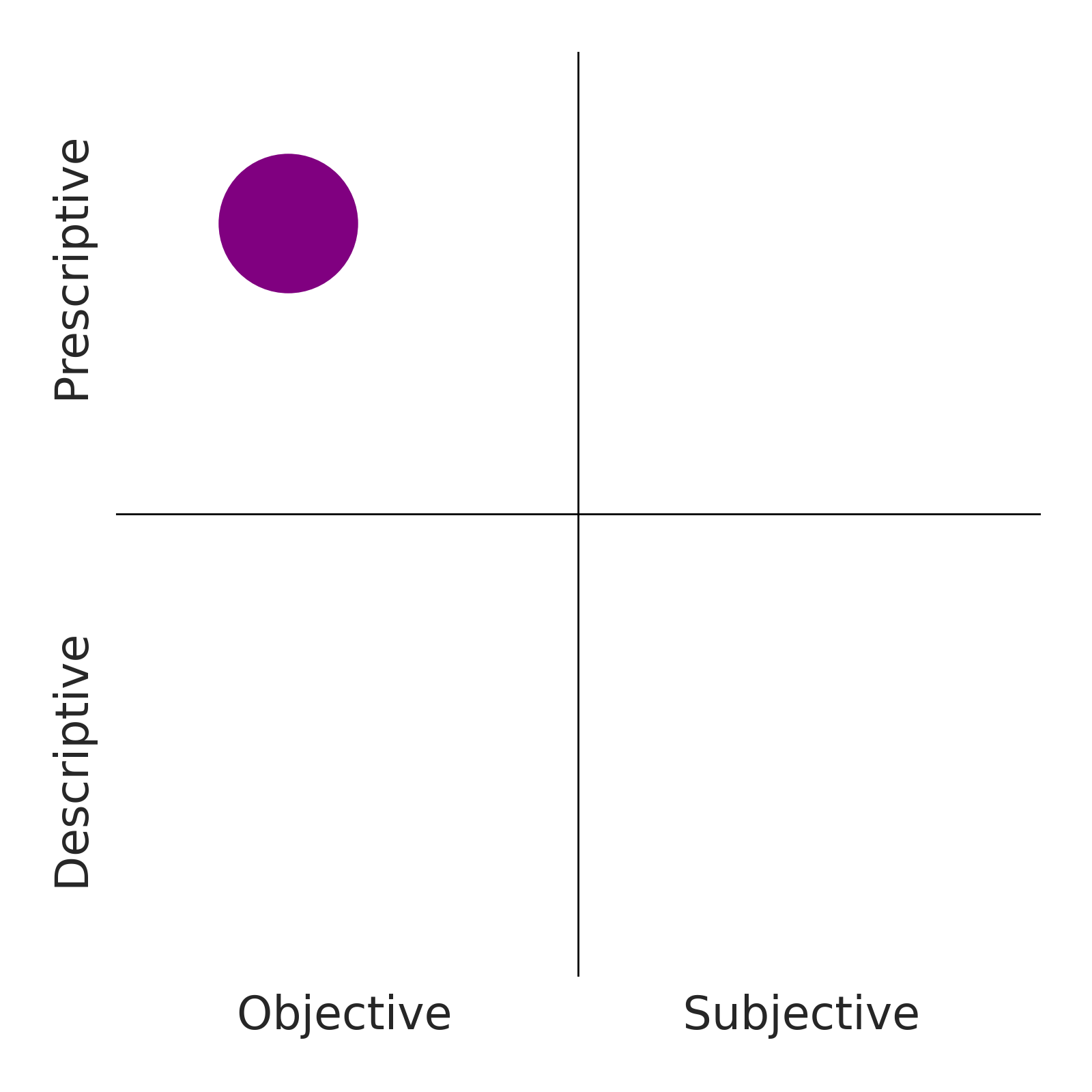
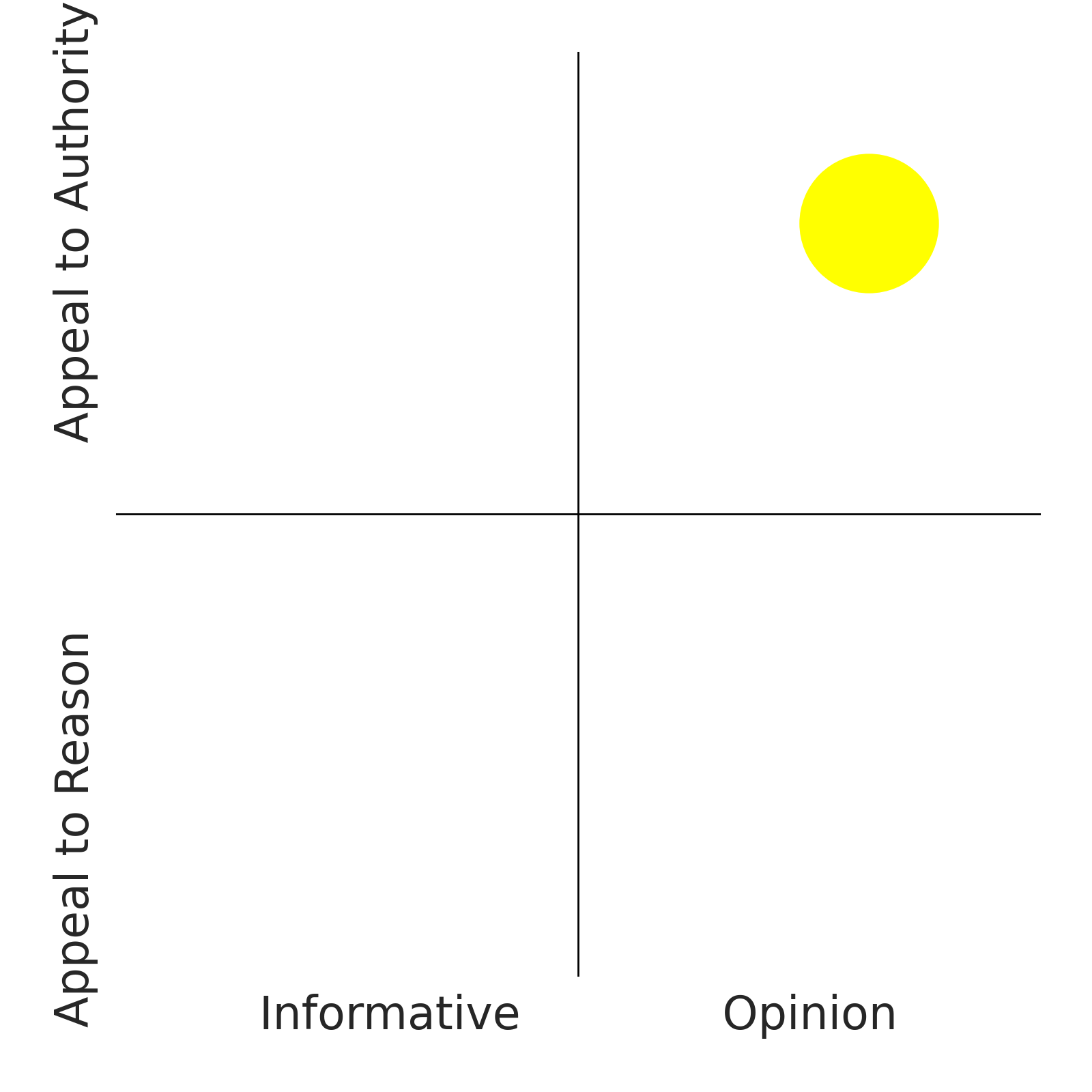
💭 Opinion30
🗳 Political12
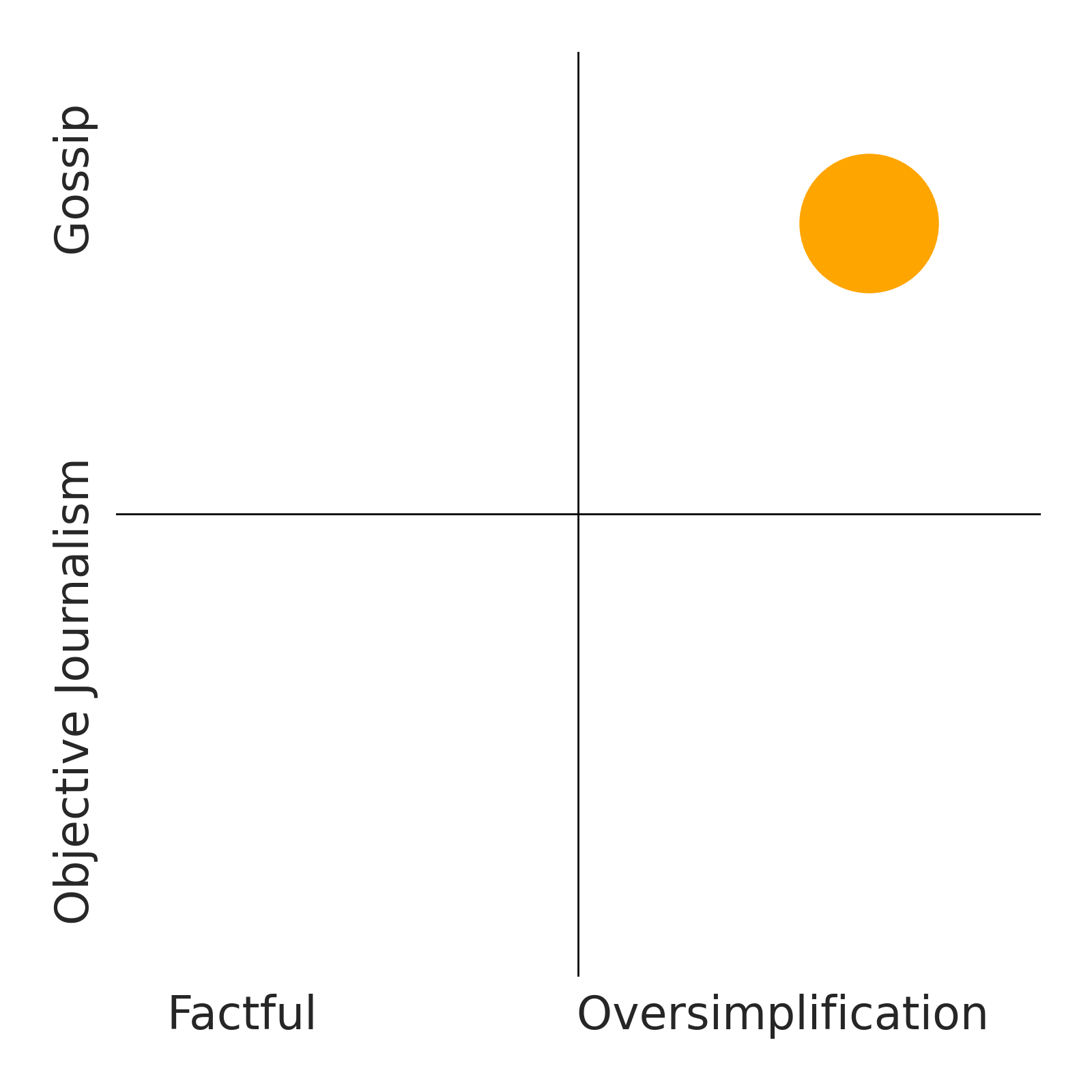
Oversimplification6
🏛️ Appeal to Authority8
👀 Covering Responses9
😤 Overconfidence18
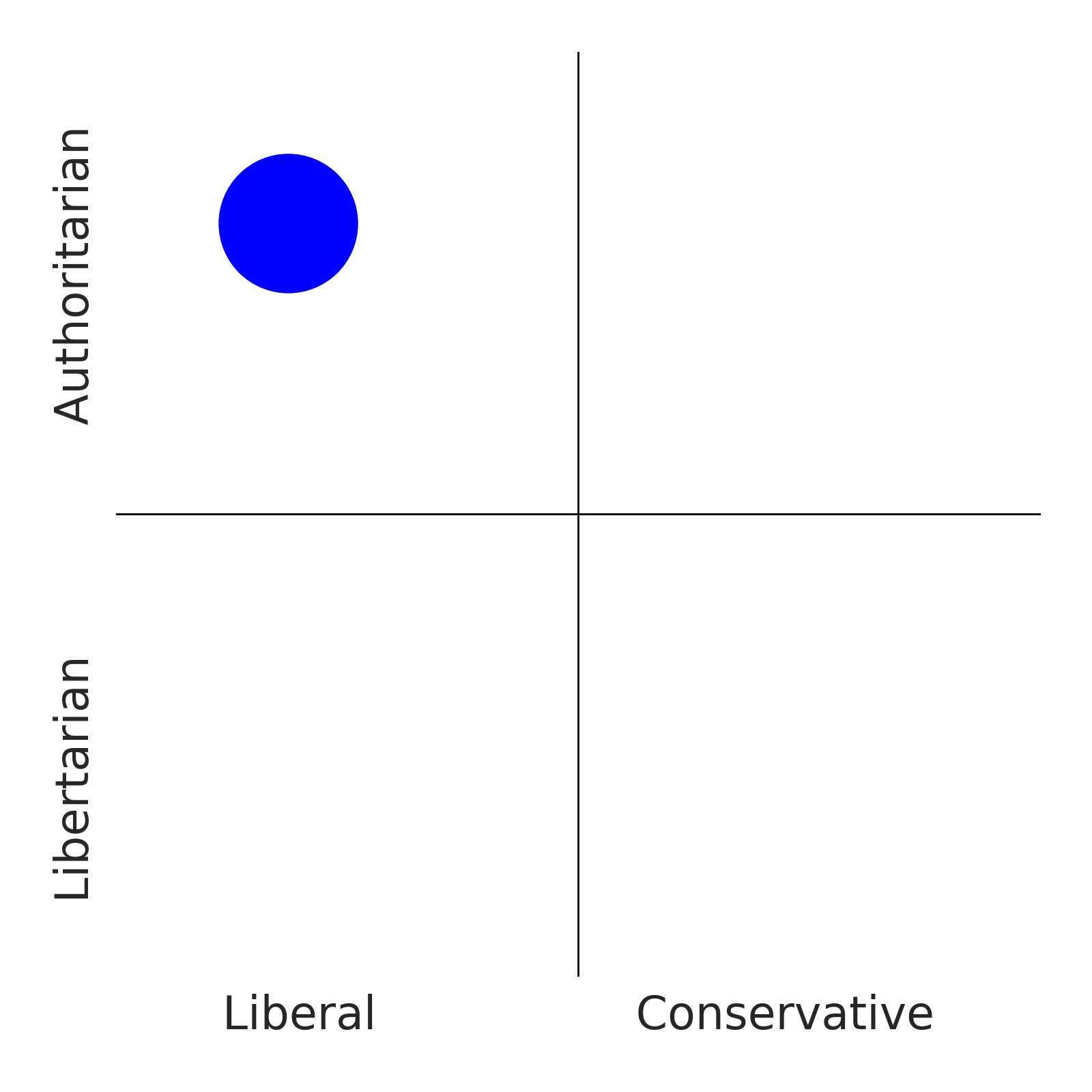
🔒 Ideological8
❌ Low Credibility <—> High Credibility ✅14
💔 Low Integrity <—> High Integrity ❤️9
🪨 Low Intelligence <—> High Intelligence 🦉22
🎭 Virtue Signaling6
🎲 Speculation12
🐍 Manipulative15
🔵 Liberal <—> Conservative 🔴-2
🧢 Populist <—> Elitist 🎩1
🚨 Sensational5
📉 Bearish <—> Bullish 📈-1
📝 Prescriptive0
🕊️ Dovish <—> Hawkish 🦁0
📞 Begging the Question0
🗣️ Gossip0
🍼 Immature1
😢 Victimization2
🏴 Anti-establishment <—> Pro-establishment 📺2
📏📏 Double Standard0
🧠 Rational <—> Irrational 🤪-3
🤑 Advertising2
💣 Terrorism0
✊ Woke0
🔪 Cruel0
🔍 Truth-seeking <—> Delusion 🌀0
🔺 Conspiracy0
🐐 Scapegoating0
🤡 Hypocrisy0
🦊 Anti-Corporate <—> Pro-Corporate 👔0
🔬 Scientific <—> Superstitious 🔮-1
👤 Individualist <—> Collectivist 👥0
2026 © Helium Trades
Privacy Policy & Disclosure
* Disclaimer: Nothing on this website constitutes investment advice, performance data or any recommendation that any particular security, portfolio of securities, transaction or investment strategy is suitable for any specific person. Helium Trades is not responsible in any way for the accuracy
of any model predictions or price data. Any mention of a particular security and related prediction data is not a recommendation to buy or sell that security. Investments in securities involve the risk of loss. Past performance is no guarantee of future results. Helium Trades is not responsible for any of your investment decisions,
you should consult a financial expert before engaging in any transaction.
Helium Research Assistant

How can I help you today?
Ask any question about CNN bias.


