See whether Helium helps you make better-informed decisions. Try every Pro Trader feature for 30 days. No credit card required.
Try every Pro Trader feature for 30 days. No credit card required.
November 13, 2026 · 0 shares
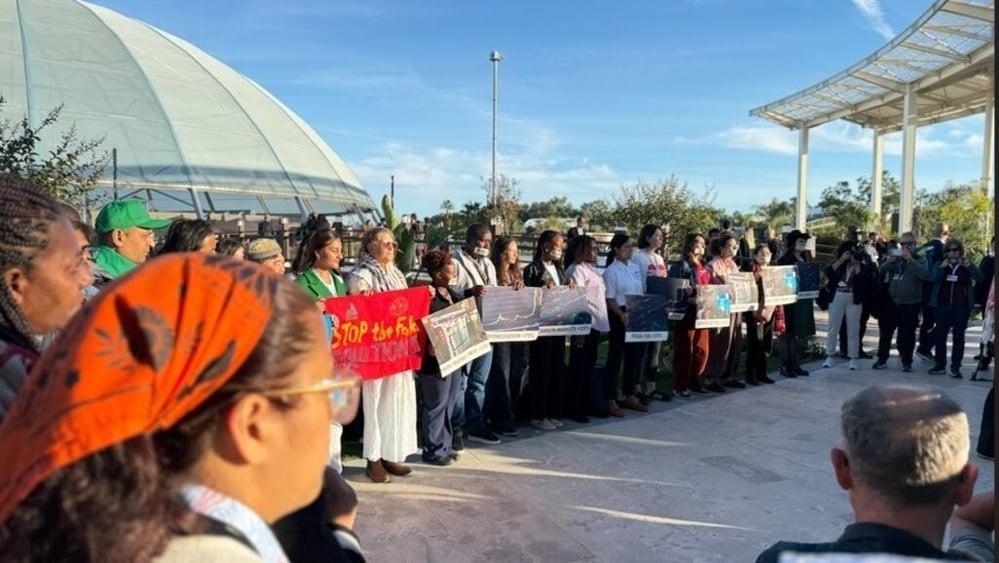
Frames COP31 as a climate-justice test of government follow-through on Indigenous pledges, foregrounding advocates' grievances and relying on named activist and UN voices with limited counter-perspective.
The Loss and Damage Fund is a UN climate-finance mechanism intended to help climate-vulnerable countries; COP31 is the annual UNFCCC summit.
Helium Analysis
Limitations: The supplied text repeats newsletter and donation boilerplate; these were excluded, and claims were not externally verified.
·
23 of 55 available dimensions scored; omitted dimensions are not treated as neutral.
·
Verified supporting quotes for 22 of 23 scored dimensions.
Claim: The publisher frames COP31 as a climate-justice test of government follow-through, emphasizing equity and historical emissions.
“For Indigenous advocates, that makes COP31, which started November 9, a test of whether the promises made last year translate into tangible changes, including greater authority over climate action.” · exact text match
“wealthy countries face renewed scrutiny over climate-finance pledges they have failed to deliver.” · exact text match
Why: Climate-justice and equity framing with criticism of wealthy countries is a liberal-progressive selection and emphasis.
Claim: The publisher foregrounds grassroots Indigenous exclusion from elite international negotiations.
“many Indigenous leaders calling it little more than a continuation of a longstanding pattern of exclusion from international negotiations.” · exact text match
Why: Anti-elite/exclusion framing aligns with a populist direction, though it is not a full populist argument.
Claim: The publisher adopts advocates' evaluative frame that COP31 is a test of promises rather than a neutral procedural preview.
“For Indigenous advocates, that makes COP31, which started November 9, a test of whether the promises made last year translate into tangible changes, including greater authority over climate action.” · exact text match
“Indigenous delegates find that reality particularly frustrating” · exact text match
Why: Framing around advocates' expectations and frustration makes the account evaluative and subjective.
Claim: The text uses alarm-laden disaster language while grounding it in specific tolls.
“threatens to drive famine, heat-related deaths, and other catastrophes across the globe.” · exact text match
“more than 1,500 people” · exact text match
Why: Catastrophe framing adds sensational emphasis, though figures temper it.
Claim: The publisher emphasizes blocked climate goals and threatened rights.
“virtually impossible to limit global warming to 1.5 degrees” · exact text match
“rights and lives remain under constant threat.” · exact text match
Why: Emphasis on failure and threat yields a pessimistic tone.
Claim: The headline and framing push governments from past promises to required action.
“Indigenous leaders at COP31 say it's past time to turn promises into action.” · exact text match
Why: The wording prescribes follow-through rather than only describing the summit.
Claim: The text stresses catastrophic climate threats and constant danger.
“threatens to drive famine, heat-related deaths, and other catastrophes across the globe.” · exact text match
“rights and lives remain under constant threat.” · exact text match
Why: Threat-and-catastrophe emphasis raises fear framing.
Claim: The report advances an evaluative judgment that promises must become action.
“past time to turn promises into action” · exact text match
“little more than a continuation of a longstanding pattern of exclusion” · exact text match
Why: Evaluative language and advocacy framing make it more opinionated than neutral.
Claim: The core story is about government obligations, climate finance, and Indigenous rights in UN negotiations.
“Indigenous advocates are pressing governments to follow through on their commitments” · exact text match
“climate responsibility, historical emissions, equity” · exact text match
Why: The subject and framing are centrally political.
Claim: The account reduces complex climate-finance delivery problems to slow or failed government follow-through.
“funds have been slow to reach affected communities” · exact text match
Why: The single-cause delivery framing simplifies implementation constraints.
Claim: The report leans on UN bodies, reports, and named advocates as authoritative support.
“a recent United Nations report that said it will be virtually impossible” · exact text match
“member of the United Nations Permanent Forum on Indigenous Issues” · exact text match
Why: UN and expert status are used to bolster the account.
Claim: The publisher centers Indigenous peoples as excluded and under threat.
“rights and lives remain under constant threat.” · exact text match
“struggles that Indigenous peoples are facing across the globe” · exact text match
Why: Repeated victim/threat framing emphasizes victimization.
Claim: The narrative is organized by climate-justice ideology linking historical emissions, equity, and Indigenous rights.
“climate responsibility, historical emissions, equity” · exact text match
“rise of the far right and fascism and war” · exact text match
Why: A coherent justice/emissions ideology frames the selection and emphasis.
Claim: The publisher frames international institutions and wealthy governments as failing Indigenous peoples.
“longstanding pattern of exclusion from international negotiations.” · exact text match
“wealthy countries face renewed scrutiny over climate-finance pledges they have failed to deliver.” · exact text match
Why: Criticism of elite institutions and wealthy states supports an anti-establishment direction.
Claim: The report is moderately credible in supplied text, with named sources and figures but limited counter-perspective.
“said Edward Porokwa, who is Maasai and a member of the United Nations Permanent Forum on Indigenous Issues.” · exact text match
“The conference comes in the wake of a recent United Nations report” · exact text match
Why: Attribution and documentary sourcing support credibility; one-sided selection limits it.
Claim: The report is largely evidence-based, using named sources and specific figures rather than unsupported assertion.
“In October, the Fund for Responding to Loss and Damage approved $21.6 million for Nepal” · exact text match
Why: Concrete, attributed figures support a rational rather than irrational presentation.
Claim: The publisher frames major emitters/polluters as targets of accountability.
“hold polluters to account” · exact text match
“wealthy countries face renewed scrutiny over climate-finance pledges they have failed to deliver.” · exact text match
Why: Polluter-accountability framing is anti-corporate in direction.
Claim: The report relies on climate science and UN findings while also validating Indigenous knowledges as sciences.
“a recent United Nations report that said it will be virtually impossible to limit global warming to 1.5 degrees” · exact text match
“Indigenous knowledges and sciences” · exact text match
Why: Scientific/empirical framing dominates, though it blends in Indigenous knowledge claims.
Claim: The publisher emphasizes collective Indigenous land rights and community recovery over individual claims.
“Indigenous land rights on 400 million acres” · exact text match
“rights of affected communities to recover with dignity” · not found in supplied text
Why: Collective rights and community framing support a collectivist direction.
Claim: The report forecasts future harms and treats COP31 as a test whose outcome is unknown.
“threatens to drive famine, heat-related deaths, and other catastrophes across the globe.” · exact text match
“a test of whether the promises made last year translate into tangible changes” · exact text match
Why: Forward-looking threat and test framing adds speculation.
Claim: The report gives named attribution and specific figures for contested claims.
“said Edward Porokwa, who is Maasai and a member of the United Nations Permanent Forum on Indigenous Issues.” · exact text match
“approved $21.6 million for Nepal” · exact text match
Why: Attribution and verifiable quantities indicate reasonable transparency, despite one-sided selection.
Claim: The report provides context, named sources, and specific figures in a structured narrative.
“The annual United Nations Framework Convention on Climate Change gathering drew historic levels of Indigenous attendance in Belém, Brazil last year” · exact text match
Why: Contextual explanation and data indicate above-average article intelligence.
Claim: The publisher uses identity-group power and equity framing to demand greater Indigenous authority in climate action.
“including greater authority over climate action.” · exact text match
“historical emissions, equity, and the right of affected communities to recover with dignity” · exact text match
Why: Identity-based equity and authority claims support a mild woke framing, though much is reported advocacy.
The supplied text repeats newsletter and donation boilerplate; these were excluded, and claims were not externally verified.
November 11, 2026 · 0 shares
Reuters-style framing is largely neutral and attribution-heavy, centering the UN-led COP process while giving only brief critical caveats about Turkey’s electrification proposal.
Helium Analysis
Limitations: The supplied text is a short Reuters excerpt with page/scrape artifacts; the full article and any omitted sections are unavailable.
·
10 of 55 available dimensions scored; omitted dimensions are not treated as neutral.
·
Verified supporting quotes for 10 of 10 scored dimensions.
Claim: The report focuses on heads of state, government leaders, and senior officials rather than ordinary citizens or populist actors.
“Scores of world leaders – including presidents and heads of government – will begin their rapid-fire speeches on Wednesday afternoon and continue through the day on Thursday, according to the COP31 schedule.” · exact text match
Why: The article’s speakers and actors are elite political officials, supporting an elitist orientation in source selection.
Claim: The report attributes political significance to named officials and documents rather than asserting it in its own voice.
“Former French Prime Minister Laurent Fabius, who presided over the 2015 Paris climate conference and leads an advisory council of former COP presidents, said the speeches could give political impetus to the negotiations.” · exact text match
Why: The statement is tied to a named former official and reported speech, indicating descriptive rather than opinion-voice framing.
Claim: The framing is measured and procedural rather than dramatic or sensational.
“The previous COP in Brazil was unable to reach consensus on the need for a global plan to reduce dependency on fossil fuels.” · exact text match
Why: The sentence reports a negotiating outcome in plain, non-sensational language.
Claim: The report is centrally about intergovernmental climate politics and leadership negotiations.
“World leaders will set out their climate priorities in speeches at COP31 in Turkey on Wednesday, as negotiators seek agreement on a plan to increase the share of electricity in global energy use and revive stalled efforts to move away from fossil fuels.” · exact text match
Why: The lead sentence frames the story around political leaders and negotiated climate policy.
Claim: The report treats the UN-led COP process and senior officials as authoritative venues for climate action.
““It is long past time to stop treating the transition away from fossil fuels as taboo or intractable,” United Nations Secretary-General Antonio Guterres told the conference on Tuesday, urging countries to produce clear timelines for the transition.” · exact text match
Why: The article prominently relays a UN secretary-general’s call within the COP framework, slightly favoring establishment institutional framing.
Claim: Attribution is clear and claims are tied to named sources, schedules, and documents.
““It is an opportunity for leaders to make some announcements, and more this time, to explain how they will implement, because the key word in Antalya is implementation,” he told Reuters.” · exact text match
“Scores of world leaders – including presidents and heads of government – will begin their rapid-fire speeches on Wednesday afternoon and continue through the day on Thursday, according to the COP31 schedule.” · exact text match
Why: Direct quotes with attribution and schedule sourcing support visible credibility practices in the supplied text.
Claim: The report explains proposal mechanics and limitations rather than relying on emotive claims.
“The proposal targets a rise in electricity’s share of total global energy consumption to 35% by 2035, up from a little over a fifth now, theoretically reducing greenhouse gas emissions from cars, factories and buildings.” · exact text match
“But the proposal does not include language requiring new power to be generated by clean energy sources, and world governments have yet to clarify a broader plan to transition away from fossil fuels like coal, oil and gas.” · exact text match
Why: Quantified targets and stated limitations support a rational, explanatory presentation.
Claim: Climate claims are grounded in scientific reports and empirical targets rather than superstition.
“A UN report last month found the world on course to break through the 1.5 degrees Celsius (2.7 degrees Fahrenheit) warming limit that countries had agreed to pursue under the Paris Agreement to prevent the worst of climate change.” · exact text match
Why: The report cites a UN scientific finding and a temperature threshold, indicating empirical framing.
Claim: The report frames climate policy through collective global negotiation and government coordination.
“Delegates from nearly 200 countries are meeting in the Mediterranean resort city of Antalya as global greenhouse gas emissions show little sign of falling and wars, inflation and other crises compete for political attention.” · exact text match
“But the proposal does not include language requiring new power to be generated by clean energy sources, and world governments have yet to clarify a broader plan to transition away from fossil fuels like coal, oil and gas.” · exact text match
Why: The emphasis is on multilateral country-level coordination rather than individual or market-based action.
Claim: The report includes quantified targets, institutional context, and caveats about proposal limitations.
“The proposal targets a rise in electricity’s share of total global energy consumption to 35% by 2035, up from a little over a fifth now, theoretically reducing greenhouse gas emissions from cars, factories and buildings.” · exact text match
Why: Specific figures and explanatory context indicate above-average informational density.
The supplied text is a short Reuters excerpt with page/scrape artifacts; the full article and any omitted sections are unavailable.
November 12, 2026 · 0 shares
Restrained, wire-style framing foregrounds an African climate-finance proposal and wealthy-nation resistance while omitting named sourcing and negotiation specifics.
Helium Analysis
Limitations: The supplied text is a very short, two-sentence excerpt with no named sourcing or fuller Cop31 context.
·
5 of 55 available dimensions scored; omitted dimensions are not treated as neutral.
·
Verified supporting quotes for 5 of 5 scored dimensions.
Claim: The report presents its central claims as factual events rather than personal interpretation.
“African countries’ proposal to triple finance for adaptation to the effects of climate change has been left off the agenda” · exact text match
Why: The sentence states an event directly with no evaluative adjectives or explicit opinion.
Claim: The text reports the agenda exclusion in restrained, non-sensational terms.
“left off the agenda at the United Nations climate summit Cop31” · exact text match
Why: No emotive or dramatic language is used to describe the outcome.
Claim: The text describes an agenda outcome and opposition without recommending a course of action.
“has been left off the agenda” · exact text match
Why: The wording is descriptive rather than prescriptive.
Claim: The report centers on a UN climate-summit agenda dispute between African countries and wealthy nations.
“Wealthy nations pushed back against efforts to make it a formal, binding agenda item.” · exact text match
Why: The quoted dispute concerns formal agenda status in a UN political negotiation.
Claim: The report provides no named source or attribution for its central assertions.
“Wealthy nations pushed back against efforts to make it a formal, binding agenda item.” · exact text match
Why: The quoted assertion is presented without named sourcing, attribution, or uncertainty language.
The supplied text is a very short, two-sentence excerpt with no named sourcing or fuller Cop31 context.
November 11, 2026 · 0 shares
Straightforward diplomatic readout with neutral, descriptive wording and no evaluative framing.
Helium Analysis
Limitations: The supplied text is very brief and includes a large block of related-headline links; those were treated as navigation and excluded, so the analysis rests on the short meeting readout.
·
5 of 55 available dimensions scored; omitted dimensions are not treated as neutral.
·
Verified supporting quotes for 5 of 5 scored dimensions.
Claim: The report presents the meeting through attributed, factual statements rather than subjective commentary.
“During the meeting, the two presidents exchanged their views on host of issues, including bilateral ties, the latest regional and international developments and issues of mutual interest.” · exact text match
Why: The sentence reports the subjects of discussion in neutral terms without evaluative adjectives.
Claim: The report uses plain, non-sensational wording.
“Iranian President Masoud Pezeshkian and his Iraqi counterpart Nizar Amedi met and held talks in Turkey's Antalya on Wednesday on the sidelines of 31st UN climate change conference (COP31).” · exact text match
Why: The lead is a straightforward event report with no emotive or dramatic language.
Claim: The article describes the meeting and attributed statements rather than prescribing policy.
“During the meeting, the two presidents exchanged their views on host of issues, including bilateral ties, the latest regional and international developments and issues of mutual interest.” · exact text match
Why: It reports what the presidents discussed, not what the publisher says should be done.
Claim: The content is substantially political and diplomatic.
“Iranian President Masoud Pezeshkian and his Iraqi counterpart Nizar Amedi met and held talks in Turkey's Antalya on Wednesday on the sidelines of 31st UN climate change conference (COP31).” · exact text match
Why: The report centers on presidents and bilateral and regional diplomacy.
Claim: The report has moderate credibility signals through a dateline and attributed official meeting details.
“TEHRAN, Nov. 11 (MNA) – Iranian President Masoud Pezeshkian and his Iraqi counterpart Nizar Amedi met and held talks in Turkey's Antalya on Wednesday on the sidelines of 31st UN climate change conference (COP31).” · exact text match
Why: It gives a dateline and reports an official meeting, but offers no independent corroboration or sourcing beyond the readout.
The supplied text is very brief and includes a large block of related-headline links; those were treated as navigation and excluded, so the analysis rests on the short meeting readout.
November 11, 2026 · 0 shares
Straightforward factual event coverage presents Dbeibah’s COP31 attendance and summit details without evaluative, ideological, or sensational language.
Helium Analysis
Limitations: Analyzed only the main COP31 article; unrelated related-headline snippets included in the supplied text were excluded.
·
6 of 55 available dimensions scored; omitted dimensions are not treated as neutral.
·
Verified supporting quotes for 6 of 6 scored dimensions.
Claim: The report contains no recognizable left-right ideological framing.
“Discussions focus on climate finance, accelerating the energy transition, improving preparedness for environmental risks and strengthening international cooperation on sustainable development.” · exact text match
Why: The listed summit topics are reported in neutral policy language without partisan or ideological characterization.
Claim: The report presents its account through factual, event-based statements rather than subjective commentary.
“Prime Minister Abdul Hamid Dbeibah attended the COP31 World Leaders Summit in Antalya, Turkey, on Wednesday, alongside Turkish President Recep Tayyip Erdogan, UN Secretary-General António Guterres and other world leaders.” · exact text match
Why: The sentence reports named actors, place, and timing in a declarative news style without evaluative adjectives or personal perspective.
Claim: The report uses measured, procedural language rather than sensational or dramatic framing.
“Discussions focus on climate finance, accelerating the energy transition, improving preparedness for environmental risks and strengthening international cooperation on sustainable development.” · exact text match
Why: The summit agenda is listed in neutral policy language, with no alarmist or dramatic wording.
Claim: The article describes meetings and summit topics without recommending or urging policy action.
“On the sidelines of the summit, Dbeibah met several international leaders and officials to discuss strengthening bilateral relations, expanding partnerships and exchanging views on regional and international developments.” · exact text match
Why: It reports what occurred as diplomatic discussion, not what should be done.
Claim: The report is centered on a prime minister's diplomatic summit attendance and meetings with international political leaders.
“Prime Minister Abdul Hamid Dbeibah attended the COP31 World Leaders Summit in Antalya, Turkey, on Wednesday, alongside Turkish President Recep Tayyip Erdogan, UN Secretary-General António Guterres and other world leaders.” · exact text match
Why: The main subject is a head of government participating in an international summit with other political leaders.
Claim: The report supplies a coherent factual context for Dbeibah’s attendance without evident logical fallacies or emotional reasoning.
“His participation comes as Libya seeks to increase its involvement in international discussions on energy, climate change and sustainable development, while exploring opportunities for cooperation with other countries and international organisations.” · exact text match
Why: The sentence explains the attendance through stated national objectives and cooperation aims in a straightforward causal style.
Analyzed only the main COP31 article; unrelated related-headline snippets included in the supplied text were excluded.
November 10, 2026 · 0 shares
The reporting adopts a promotional, official-source frame, presenting Cambodia’s climate targets and financing appeals as evidence of commitment without independent scrutiny.
Helium Analysis
Limitations: The supplied text includes a truncated and duplicated copy and no author byline, limiting verification of originality and sourcing.
·
9 of 55 available dimensions scored; omitted dimensions are not treated as neutral.
·
Verified supporting quotes for 9 of 9 scored dimensions.
Claim: The article reports quantified emissions targets in neutral, non-sensational language.
“Under NDC 3.0, Cambodia aims to reduce greenhouse gas emissions by up to 55% by 2035 and achieve carbon neutrality by 2050” · exact text match
Why: The statement is factual and quantified, with no sensational wording or alarmist imagery.
Claim: The article presents Cambodia's targets as demonstrating positive long-term commitment.
“demonstrating the country’s long-term commitment to transitioning towards a more sustainable and climate-resilient economy” · exact text match
Why: The framing emphasizes commitment and positive direction without discussing feasibility risks.
Claim: An evaluative claim about commitment is stated as a factual takeaway.
“demonstrating the country’s long-term commitment to transitioning towards a more sustainable and climate-resilient economy” · exact text match
Why: The phrase 'demonstrating ... commitment' is an evaluative interpretation presented within factual reporting.
Claim: The report is centered on government climate policy and UN negotiations.
“Cambodia on Monday reaffirmed its commitment to cutting greenhouse gas emissions and achieving carbon neutrality by 2050” · exact text match
Why: The central subject is a national government's policy commitments at an international political conference.
Claim: Official statements from COP and government leaders are used to convey significance and direction.
“COP31 President Murat Kurum called on participating countries to turn climate commitments into practical action” · exact text match
Why: Significance is conveyed through named official authority rather than independent analysis.
Claim: The report frames Cambodia's COP31 participation through official government priorities and delegations.
“Environment Minister Eang Sophalleth led a delegation to showcase Cambodia’s climate priorities and rally international support for its updated Nationally Determined Contribution (NDC 3.0).” · exact text match
Why: The article centers named government officials and official priorities, with no alternative or critical voices.
Claim: The article attributes statements to named officials and scheduled events.
“During the conference, Sophalleth is scheduled to deliver Cambodia’s national statement, outlining the government’s commitment to international climate action” · exact text match
Why: Named attribution and event detail support credibility, though the report relies on official sources without independent verification.
Claim: Policy actions are framed through instrumental public-health and climate-goal benefits.
“The discussion focused on improving air quality and reducing short-lived climate pollutants to protect public health while contributing to global climate goals.” · exact text match
Why: The article links policy measures to stated public-health and environmental objectives in a rational cause-effect frame.
Claim: The language is promotional, presenting Cambodia's climate priorities as something to showcase and rally support for.
“showcase Cambodia’s climate priorities and rally international support” · exact text match
Why: The verbs 'showcase' and 'rally' give the report a promotional, public-relations quality.
The supplied text includes a truncated and duplicated copy and no author byline, limiting verification of originality and sourcing.
November 14, 2026 · 0 shares
Publisher framing is a straight, official-source announcement that relays a senior minister’s praise and regulatory expectations without independent sourcing or critical counterpoint.
Helium Analysis
Limitations: The supplied text is a short scraped excerpt with duplicated passages and unrelated headline links, limiting assessment to the central MoU report.
·
7 of 55 available dimensions scored; omitted dimensions are not treated as neutral.
·
Verified supporting quotes for 7 of 7 scored dimensions.
Claim: The report presents the partnership through attributed ministerial statements and procedural detail rather than the publisher's subjective commentary.
“Masauni said the collaboration would combine NCMC’s expertise in coordinating and overseeing carbon trading activities with CRDB Bank’s financial services and investment capacity.” · exact text match
Why: The claim is explicitly attributed to the minister, and the prose is declarative rather than evaluative.
Claim: The report uses measured, policy-focused language without sensational descriptors.
“He cautioned that access to financing should not be considered authorisation to implement projects without observing legal procedures and obtaining approval from relevant authorities.” · exact text match
Why: The quoted language is procedural and cautionary, with no emotive or alarmist framing.
Claim: The report highlights expected positive economic, social, and environmental outcomes without balancing risks or costs.
“Masauni urged the two institutions to ensure the collaboration delivers tangible economic, social and environmental benefits to Tanzanians, including job creation, improved livelihoods, technology adoption and increased community participation in the green economy.” · exact text match
Why: The selected claims are forward-looking and favorable, with no downside analysis.
Claim: Key benefits and institutional roles are asserted through the minister’s authority without independent evidence.
“He said the partnership would create an enabling environment for financing and implementing viable carbon projects, contributing to the growth of the country’s carbon market.” · exact text match
Why: The article relies on the minister's statements to support the partnership's expected value, with no additional sourcing.
Claim: The report centers a senior government minister’s endorsement of the partnership and presents institutional authorities favorably.
“MINISTER of State in the Vice-President’s Office, Engineer Hamad Masauni, has commended the National Carbon Monitoring Centre (NCMC) and CRDB Bank Plc for entering into a partnership aimed at strengthening Tanzania’s carbon market and attracting green investments.” · exact text match
Counterevidence:
“He cautioned that access to financing should not be considered authorisation to implement projects without observing legal procedures and obtaining approval from relevant authorities.” · exact text match
Why: The lead frames the story around official praise, with no opposition or independent civil-society perspective.
Claim: The report is clearly attributed to a named government official but relies on a single official source and lacks independent verification.
“Masauni said the government would continue strengthening institutional and regulatory frameworks to ensure transparency, accountability and environmental integrity in carbon trading, while ensuring the sector delivers shared benefits to the country and its people.” · exact text match
Why: Attribution to the minister is explicit, supporting basic credibility, but the single-source basis limits verification.
Claim: The report presents CRDB Bank as a constructive partner whose financial capacity will help the carbon market.
“Masauni said the collaboration would combine NCMC’s expertise in coordinating and overseeing carbon trading activities with CRDB Bank’s financial services and investment capacity.” · exact text match
Why: The bank is framed as a positive actor in the partnership, though the article also notes regulatory constraints.
The supplied text is a short scraped excerpt with duplicated passages and unrelated headline links, limiting assessment to the central MoU report.
November 12, 2026 · 0 shares
The item leads with a dramatic Thunberg quote and relays her apocalyptic claims with attribution but almost no independent context.
COP31 is a United Nations climate change conference; the text identifies Thunberg as a Swedish activist.
Helium Analysis
Limitations: The supplied text is only a short CBC video-description/teaser, so scores reflect limited context and attributed quotes rather than a full report.
·
6 of 55 available dimensions scored; omitted dimensions are not treated as neutral.
·
Verified supporting quotes for 6 of 6 scored dimensions.
Claim: The report attributes Thunberg's statements to her rather than presenting them in the narrator's voice.
“says Thunberg” · exact text match
“Swedish activist Greta Thunberg says” · exact text match
Why: The text repeatedly uses attribution verbs, keeping the claims in quoted or reported speech.
Claim: The headline and lede are built around a dramatic, apocalyptic quote.
“The planet is not dying,it is being killed” · exact text match
“genocides and ecocides were coming all along” · exact text match
Counterevidence:
“says Thunberg” · exact text match
Why: The most prominent wording is highly dramatic and catastrophic, even though it is attributed.
Claim: The item describes Thunberg's speech and attendance without recommending actions.
“says Thunberg” · exact text match
“This is the first UN climate change conference Thunberg has attended in five years.” · exact text match
Why: The text reports what was said and attended rather than prescribing policy or behavior.
Claim: The report foregrounds alarming language about planetary death and future genocide/ecocide.
“The planet is not dying,it is being killed” · exact text match
“basic needs might soon become luxuries” · exact text match
Counterevidence:
“says Thunberg” · exact text match
Why: The selected quotes emphasize catastrophe and deprivation, though they are attributed to Thunberg.
Claim: The item's central subject is an activist intervention at a UN climate conference.
“Speaking at COP31 in Antalya, Turkey, on Thursday, Swedish activist Greta Thunberg says genocides and ecocides were coming all along” · exact text match
Why: The content is framed around a political/activist climate conference rather than non-political news.
Claim: Visible sourcing consists mainly of attributing statements to a named speaker at a named event, with little supporting context.
“says Thunberg” · exact text match
“Speaking at COP31 in Antalya, Turkey, on Thursday” · exact text match
Why: Clear attribution supports some credibility, but brevity and lack of broader sourcing for the claims limit it.
The supplied text is only a short CBC video-description/teaser, so scores reflect limited context and attributed quotes rather than a full report.
November 13, 2026 · 0 shares
Frames COP31 as a climate-justice test of government follow-through on Indigenous pledges, foregrounding advocates' grievances and relying on named activist and UN voices with limited counter-perspective.
The Loss and Damage Fund is a UN climate-finance mechanism intended to help climate-vulnerable countries; COP31 is the annual UNFCCC summit.
Helium Analysis
Limitations: The supplied text repeats newsletter and donation boilerplate; these were excluded, and claims were not externally verified.
·
23 of 55 available dimensions scored; omitted dimensions are not treated as neutral.
·
Verified supporting quotes for 22 of 23 scored dimensions.
Claim: The publisher frames COP31 as a climate-justice test of government follow-through, emphasizing equity and historical emissions.
“For Indigenous advocates, that makes COP31, which started November 9, a test of whether the promises made last year translate into tangible changes, including greater authority over climate action.” · exact text match
“wealthy countries face renewed scrutiny over climate-finance pledges they have failed to deliver.” · exact text match
Why: Climate-justice and equity framing with criticism of wealthy countries is a liberal-progressive selection and emphasis.
Claim: The publisher foregrounds grassroots Indigenous exclusion from elite international negotiations.
“many Indigenous leaders calling it little more than a continuation of a longstanding pattern of exclusion from international negotiations.” · exact text match
Why: Anti-elite/exclusion framing aligns with a populist direction, though it is not a full populist argument.
Claim: The publisher adopts advocates' evaluative frame that COP31 is a test of promises rather than a neutral procedural preview.
“For Indigenous advocates, that makes COP31, which started November 9, a test of whether the promises made last year translate into tangible changes, including greater authority over climate action.” · exact text match
“Indigenous delegates find that reality particularly frustrating” · exact text match
Why: Framing around advocates' expectations and frustration makes the account evaluative and subjective.
Claim: The text uses alarm-laden disaster language while grounding it in specific tolls.
“threatens to drive famine, heat-related deaths, and other catastrophes across the globe.” · exact text match
“more than 1,500 people” · exact text match
Why: Catastrophe framing adds sensational emphasis, though figures temper it.
Claim: The publisher emphasizes blocked climate goals and threatened rights.
“virtually impossible to limit global warming to 1.5 degrees” · exact text match
“rights and lives remain under constant threat.” · exact text match
Why: Emphasis on failure and threat yields a pessimistic tone.
Claim: The headline and framing push governments from past promises to required action.
“Indigenous leaders at COP31 say it's past time to turn promises into action.” · exact text match
Why: The wording prescribes follow-through rather than only describing the summit.
Claim: The text stresses catastrophic climate threats and constant danger.
“threatens to drive famine, heat-related deaths, and other catastrophes across the globe.” · exact text match
“rights and lives remain under constant threat.” · exact text match
Why: Threat-and-catastrophe emphasis raises fear framing.
Claim: The report advances an evaluative judgment that promises must become action.
“past time to turn promises into action” · exact text match
“little more than a continuation of a longstanding pattern of exclusion” · exact text match
Why: Evaluative language and advocacy framing make it more opinionated than neutral.
Claim: The core story is about government obligations, climate finance, and Indigenous rights in UN negotiations.
“Indigenous advocates are pressing governments to follow through on their commitments” · exact text match
“climate responsibility, historical emissions, equity” · exact text match
Why: The subject and framing are centrally political.
Claim: The account reduces complex climate-finance delivery problems to slow or failed government follow-through.
“funds have been slow to reach affected communities” · exact text match
Why: The single-cause delivery framing simplifies implementation constraints.
Claim: The report leans on UN bodies, reports, and named advocates as authoritative support.
“a recent United Nations report that said it will be virtually impossible” · exact text match
“member of the United Nations Permanent Forum on Indigenous Issues” · exact text match
Why: UN and expert status are used to bolster the account.
Claim: The publisher centers Indigenous peoples as excluded and under threat.
“rights and lives remain under constant threat.” · exact text match
“struggles that Indigenous peoples are facing across the globe” · exact text match
Why: Repeated victim/threat framing emphasizes victimization.
Claim: The narrative is organized by climate-justice ideology linking historical emissions, equity, and Indigenous rights.
“climate responsibility, historical emissions, equity” · exact text match
“rise of the far right and fascism and war” · exact text match
Why: A coherent justice/emissions ideology frames the selection and emphasis.
Claim: The publisher frames international institutions and wealthy governments as failing Indigenous peoples.
“longstanding pattern of exclusion from international negotiations.” · exact text match
“wealthy countries face renewed scrutiny over climate-finance pledges they have failed to deliver.” · exact text match
Why: Criticism of elite institutions and wealthy states supports an anti-establishment direction.
Claim: The report is moderately credible in supplied text, with named sources and figures but limited counter-perspective.
“said Edward Porokwa, who is Maasai and a member of the United Nations Permanent Forum on Indigenous Issues.” · exact text match
“The conference comes in the wake of a recent United Nations report” · exact text match
Why: Attribution and documentary sourcing support credibility; one-sided selection limits it.
Claim: The report is largely evidence-based, using named sources and specific figures rather than unsupported assertion.
“In October, the Fund for Responding to Loss and Damage approved $21.6 million for Nepal” · exact text match
Why: Concrete, attributed figures support a rational rather than irrational presentation.
Claim: The publisher frames major emitters/polluters as targets of accountability.
“hold polluters to account” · exact text match
“wealthy countries face renewed scrutiny over climate-finance pledges they have failed to deliver.” · exact text match
Why: Polluter-accountability framing is anti-corporate in direction.
Claim: The report relies on climate science and UN findings while also validating Indigenous knowledges as sciences.
“a recent United Nations report that said it will be virtually impossible to limit global warming to 1.5 degrees” · exact text match
“Indigenous knowledges and sciences” · exact text match
Why: Scientific/empirical framing dominates, though it blends in Indigenous knowledge claims.
Claim: The publisher emphasizes collective Indigenous land rights and community recovery over individual claims.
“Indigenous land rights on 400 million acres” · exact text match
“rights of affected communities to recover with dignity” · not found in supplied text
Why: Collective rights and community framing support a collectivist direction.
Claim: The report forecasts future harms and treats COP31 as a test whose outcome is unknown.
“threatens to drive famine, heat-related deaths, and other catastrophes across the globe.” · exact text match
“a test of whether the promises made last year translate into tangible changes” · exact text match
Why: Forward-looking threat and test framing adds speculation.
Claim: The report gives named attribution and specific figures for contested claims.
“said Edward Porokwa, who is Maasai and a member of the United Nations Permanent Forum on Indigenous Issues.” · exact text match
“approved $21.6 million for Nepal” · exact text match
Why: Attribution and verifiable quantities indicate reasonable transparency, despite one-sided selection.
Claim: The report provides context, named sources, and specific figures in a structured narrative.
“The annual United Nations Framework Convention on Climate Change gathering drew historic levels of Indigenous attendance in Belém, Brazil last year” · exact text match
Why: Contextual explanation and data indicate above-average article intelligence.
Claim: The publisher uses identity-group power and equity framing to demand greater Indigenous authority in climate action.
“including greater authority over climate action.” · exact text match
“historical emissions, equity, and the right of affected communities to recover with dignity” · exact text match
Why: Identity-based equity and authority claims support a mild woke framing, though much is reported advocacy.
The supplied text repeats newsletter and donation boilerplate; these were excluded, and claims were not externally verified.
November 11, 2026 · 0 shares
Reuters-style framing is largely neutral and attribution-heavy, centering the UN-led COP process while giving only brief critical caveats about Turkey’s electrification proposal.
Helium Analysis Limitations: The supplied text is a short Reuters excerpt with page/scrape artifacts; the full article and any omitted sections are unavailable. · 10 of 55 available dimensions scored; omitted dimensions are not treated as neutral. · Verified supporting quotes for 10 of 10 scored dimensions.
Claim: The report focuses on heads of state, government leaders, and senior officials rather than ordinary citizens or populist actors.
“Scores of world leaders – including presidents and heads of government – will begin their rapid-fire speeches on Wednesday afternoon and continue through the day on Thursday, according to the COP31 schedule.” · exact text match
Why: The article’s speakers and actors are elite political officials, supporting an elitist orientation in source selection.
Claim: The report attributes political significance to named officials and documents rather than asserting it in its own voice.
“Former French Prime Minister Laurent Fabius, who presided over the 2015 Paris climate conference and leads an advisory council of former COP presidents, said the speeches could give political impetus to the negotiations.” · exact text match
Why: The statement is tied to a named former official and reported speech, indicating descriptive rather than opinion-voice framing.
Claim: The framing is measured and procedural rather than dramatic or sensational.
“The previous COP in Brazil was unable to reach consensus on the need for a global plan to reduce dependency on fossil fuels.” · exact text match
Why: The sentence reports a negotiating outcome in plain, non-sensational language.
Claim: The report is centrally about intergovernmental climate politics and leadership negotiations.
“World leaders will set out their climate priorities in speeches at COP31 in Turkey on Wednesday, as negotiators seek agreement on a plan to increase the share of electricity in global energy use and revive stalled efforts to move away from fossil fuels.” · exact text match
Why: The lead sentence frames the story around political leaders and negotiated climate policy.
Claim: The report treats the UN-led COP process and senior officials as authoritative venues for climate action.
““It is long past time to stop treating the transition away from fossil fuels as taboo or intractable,” United Nations Secretary-General Antonio Guterres told the conference on Tuesday, urging countries to produce clear timelines for the transition.” · exact text match
Why: The article prominently relays a UN secretary-general’s call within the COP framework, slightly favoring establishment institutional framing.
Claim: Attribution is clear and claims are tied to named sources, schedules, and documents.
““It is an opportunity for leaders to make some announcements, and more this time, to explain how they will implement, because the key word in Antalya is implementation,” he told Reuters.” · exact text match
“Scores of world leaders – including presidents and heads of government – will begin their rapid-fire speeches on Wednesday afternoon and continue through the day on Thursday, according to the COP31 schedule.” · exact text match
Why: Direct quotes with attribution and schedule sourcing support visible credibility practices in the supplied text.
Claim: The report explains proposal mechanics and limitations rather than relying on emotive claims.
“The proposal targets a rise in electricity’s share of total global energy consumption to 35% by 2035, up from a little over a fifth now, theoretically reducing greenhouse gas emissions from cars, factories and buildings.” · exact text match
“But the proposal does not include language requiring new power to be generated by clean energy sources, and world governments have yet to clarify a broader plan to transition away from fossil fuels like coal, oil and gas.” · exact text match
Why: Quantified targets and stated limitations support a rational, explanatory presentation.
Claim: Climate claims are grounded in scientific reports and empirical targets rather than superstition.
“A UN report last month found the world on course to break through the 1.5 degrees Celsius (2.7 degrees Fahrenheit) warming limit that countries had agreed to pursue under the Paris Agreement to prevent the worst of climate change.” · exact text match
Why: The report cites a UN scientific finding and a temperature threshold, indicating empirical framing.
Claim: The report frames climate policy through collective global negotiation and government coordination.
“Delegates from nearly 200 countries are meeting in the Mediterranean resort city of Antalya as global greenhouse gas emissions show little sign of falling and wars, inflation and other crises compete for political attention.” · exact text match
“But the proposal does not include language requiring new power to be generated by clean energy sources, and world governments have yet to clarify a broader plan to transition away from fossil fuels like coal, oil and gas.” · exact text match
Why: The emphasis is on multilateral country-level coordination rather than individual or market-based action.
Claim: The report includes quantified targets, institutional context, and caveats about proposal limitations.
“The proposal targets a rise in electricity’s share of total global energy consumption to 35% by 2035, up from a little over a fifth now, theoretically reducing greenhouse gas emissions from cars, factories and buildings.” · exact text match
Why: Specific figures and explanatory context indicate above-average informational density.
The supplied text is a short Reuters excerpt with page/scrape artifacts; the full article and any omitted sections are unavailable.
November 12, 2026 · 0 shares
Restrained, wire-style framing foregrounds an African climate-finance proposal and wealthy-nation resistance while omitting named sourcing and negotiation specifics.
Helium Analysis Limitations: The supplied text is a very short, two-sentence excerpt with no named sourcing or fuller Cop31 context. · 5 of 55 available dimensions scored; omitted dimensions are not treated as neutral. · Verified supporting quotes for 5 of 5 scored dimensions.
Claim: The report presents its central claims as factual events rather than personal interpretation.
“African countries’ proposal to triple finance for adaptation to the effects of climate change has been left off the agenda” · exact text match
Why: The sentence states an event directly with no evaluative adjectives or explicit opinion.
Claim: The text reports the agenda exclusion in restrained, non-sensational terms.
“left off the agenda at the United Nations climate summit Cop31” · exact text match
Why: No emotive or dramatic language is used to describe the outcome.
Claim: The text describes an agenda outcome and opposition without recommending a course of action.
“has been left off the agenda” · exact text match
Why: The wording is descriptive rather than prescriptive.
Claim: The report centers on a UN climate-summit agenda dispute between African countries and wealthy nations.
“Wealthy nations pushed back against efforts to make it a formal, binding agenda item.” · exact text match
Why: The quoted dispute concerns formal agenda status in a UN political negotiation.
Claim: The report provides no named source or attribution for its central assertions.
“Wealthy nations pushed back against efforts to make it a formal, binding agenda item.” · exact text match
Why: The quoted assertion is presented without named sourcing, attribution, or uncertainty language.
The supplied text is a very short, two-sentence excerpt with no named sourcing or fuller Cop31 context.
November 13, 2026 · 0 shares
Frames COP31 as a climate-justice test of government follow-through on Indigenous pledges, foregrounding advocates' grievances and relying on named activist and UN voices with limited counter-perspective.
The Loss and Damage Fund is a UN climate-finance mechanism intended to help climate-vulnerable countries; COP31 is the annual UNFCCC summit.
Helium Analysis Limitations: The supplied text repeats newsletter and donation boilerplate; these were excluded, and claims were not externally verified. · 23 of 55 available dimensions scored; omitted dimensions are not treated as neutral. · Verified supporting quotes for 22 of 23 scored dimensions.
Claim: The publisher frames COP31 as a climate-justice test of government follow-through, emphasizing equity and historical emissions.
“For Indigenous advocates, that makes COP31, which started November 9, a test of whether the promises made last year translate into tangible changes, including greater authority over climate action.” · exact text match
“wealthy countries face renewed scrutiny over climate-finance pledges they have failed to deliver.” · exact text match
Why: Climate-justice and equity framing with criticism of wealthy countries is a liberal-progressive selection and emphasis.
Claim: The publisher foregrounds grassroots Indigenous exclusion from elite international negotiations.
“many Indigenous leaders calling it little more than a continuation of a longstanding pattern of exclusion from international negotiations.” · exact text match
Why: Anti-elite/exclusion framing aligns with a populist direction, though it is not a full populist argument.
Claim: The publisher adopts advocates' evaluative frame that COP31 is a test of promises rather than a neutral procedural preview.
“For Indigenous advocates, that makes COP31, which started November 9, a test of whether the promises made last year translate into tangible changes, including greater authority over climate action.” · exact text match
“Indigenous delegates find that reality particularly frustrating” · exact text match
Why: Framing around advocates' expectations and frustration makes the account evaluative and subjective.
Claim: The text uses alarm-laden disaster language while grounding it in specific tolls.
“threatens to drive famine, heat-related deaths, and other catastrophes across the globe.” · exact text match
“more than 1,500 people” · exact text match
Why: Catastrophe framing adds sensational emphasis, though figures temper it.
Claim: The publisher emphasizes blocked climate goals and threatened rights.
“virtually impossible to limit global warming to 1.5 degrees” · exact text match
“rights and lives remain under constant threat.” · exact text match
Why: Emphasis on failure and threat yields a pessimistic tone.
Claim: The headline and framing push governments from past promises to required action.
“Indigenous leaders at COP31 say it's past time to turn promises into action.” · exact text match
Why: The wording prescribes follow-through rather than only describing the summit.
Claim: The text stresses catastrophic climate threats and constant danger.
“threatens to drive famine, heat-related deaths, and other catastrophes across the globe.” · exact text match
“rights and lives remain under constant threat.” · exact text match
Why: Threat-and-catastrophe emphasis raises fear framing.
Claim: The report advances an evaluative judgment that promises must become action.
“past time to turn promises into action” · exact text match
“little more than a continuation of a longstanding pattern of exclusion” · exact text match
Why: Evaluative language and advocacy framing make it more opinionated than neutral.
Claim: The core story is about government obligations, climate finance, and Indigenous rights in UN negotiations.
“Indigenous advocates are pressing governments to follow through on their commitments” · exact text match
“climate responsibility, historical emissions, equity” · exact text match
Why: The subject and framing are centrally political.
Claim: The account reduces complex climate-finance delivery problems to slow or failed government follow-through.
“funds have been slow to reach affected communities” · exact text match
Why: The single-cause delivery framing simplifies implementation constraints.
Claim: The report leans on UN bodies, reports, and named advocates as authoritative support.
“a recent United Nations report that said it will be virtually impossible” · exact text match
“member of the United Nations Permanent Forum on Indigenous Issues” · exact text match
Why: UN and expert status are used to bolster the account.
Claim: The publisher centers Indigenous peoples as excluded and under threat.
“rights and lives remain under constant threat.” · exact text match
“struggles that Indigenous peoples are facing across the globe” · exact text match
Why: Repeated victim/threat framing emphasizes victimization.
Claim: The narrative is organized by climate-justice ideology linking historical emissions, equity, and Indigenous rights.
“climate responsibility, historical emissions, equity” · exact text match
“rise of the far right and fascism and war” · exact text match
Why: A coherent justice/emissions ideology frames the selection and emphasis.
Claim: The publisher frames international institutions and wealthy governments as failing Indigenous peoples.
“longstanding pattern of exclusion from international negotiations.” · exact text match
“wealthy countries face renewed scrutiny over climate-finance pledges they have failed to deliver.” · exact text match
Why: Criticism of elite institutions and wealthy states supports an anti-establishment direction.
Claim: The report is moderately credible in supplied text, with named sources and figures but limited counter-perspective.
“said Edward Porokwa, who is Maasai and a member of the United Nations Permanent Forum on Indigenous Issues.” · exact text match
“The conference comes in the wake of a recent United Nations report” · exact text match
Why: Attribution and documentary sourcing support credibility; one-sided selection limits it.
Claim: The report is largely evidence-based, using named sources and specific figures rather than unsupported assertion.
“In October, the Fund for Responding to Loss and Damage approved $21.6 million for Nepal” · exact text match
Why: Concrete, attributed figures support a rational rather than irrational presentation.
Claim: The publisher frames major emitters/polluters as targets of accountability.
“hold polluters to account” · exact text match
“wealthy countries face renewed scrutiny over climate-finance pledges they have failed to deliver.” · exact text match
Why: Polluter-accountability framing is anti-corporate in direction.
Claim: The report relies on climate science and UN findings while also validating Indigenous knowledges as sciences.
“a recent United Nations report that said it will be virtually impossible to limit global warming to 1.5 degrees” · exact text match
“Indigenous knowledges and sciences” · exact text match
Why: Scientific/empirical framing dominates, though it blends in Indigenous knowledge claims.
Claim: The publisher emphasizes collective Indigenous land rights and community recovery over individual claims.
“Indigenous land rights on 400 million acres” · exact text match
“rights of affected communities to recover with dignity” · not found in supplied text
Why: Collective rights and community framing support a collectivist direction.
Claim: The report forecasts future harms and treats COP31 as a test whose outcome is unknown.
“threatens to drive famine, heat-related deaths, and other catastrophes across the globe.” · exact text match
“a test of whether the promises made last year translate into tangible changes” · exact text match
Why: Forward-looking threat and test framing adds speculation.
Claim: The report gives named attribution and specific figures for contested claims.
“said Edward Porokwa, who is Maasai and a member of the United Nations Permanent Forum on Indigenous Issues.” · exact text match
“approved $21.6 million for Nepal” · exact text match
Why: Attribution and verifiable quantities indicate reasonable transparency, despite one-sided selection.
Claim: The report provides context, named sources, and specific figures in a structured narrative.
“The annual United Nations Framework Convention on Climate Change gathering drew historic levels of Indigenous attendance in Belém, Brazil last year” · exact text match
Why: Contextual explanation and data indicate above-average article intelligence.
Claim: The publisher uses identity-group power and equity framing to demand greater Indigenous authority in climate action.
“including greater authority over climate action.” · exact text match
“historical emissions, equity, and the right of affected communities to recover with dignity” · exact text match
Why: Identity-based equity and authority claims support a mild woke framing, though much is reported advocacy.
The supplied text repeats newsletter and donation boilerplate; these were excluded, and claims were not externally verified.
November 11, 2026 · 0 shares
Reuters-style framing is largely neutral and attribution-heavy, centering the UN-led COP process while giving only brief critical caveats about Turkey’s electrification proposal.
Helium Analysis Limitations: The supplied text is a short Reuters excerpt with page/scrape artifacts; the full article and any omitted sections are unavailable. · 10 of 55 available dimensions scored; omitted dimensions are not treated as neutral. · Verified supporting quotes for 10 of 10 scored dimensions.
Claim: The report focuses on heads of state, government leaders, and senior officials rather than ordinary citizens or populist actors.
“Scores of world leaders – including presidents and heads of government – will begin their rapid-fire speeches on Wednesday afternoon and continue through the day on Thursday, according to the COP31 schedule.” · exact text match
Why: The article’s speakers and actors are elite political officials, supporting an elitist orientation in source selection.
Claim: The report attributes political significance to named officials and documents rather than asserting it in its own voice.
“Former French Prime Minister Laurent Fabius, who presided over the 2015 Paris climate conference and leads an advisory council of former COP presidents, said the speeches could give political impetus to the negotiations.” · exact text match
Why: The statement is tied to a named former official and reported speech, indicating descriptive rather than opinion-voice framing.
Claim: The framing is measured and procedural rather than dramatic or sensational.
“The previous COP in Brazil was unable to reach consensus on the need for a global plan to reduce dependency on fossil fuels.” · exact text match
Why: The sentence reports a negotiating outcome in plain, non-sensational language.
Claim: The report is centrally about intergovernmental climate politics and leadership negotiations.
“World leaders will set out their climate priorities in speeches at COP31 in Turkey on Wednesday, as negotiators seek agreement on a plan to increase the share of electricity in global energy use and revive stalled efforts to move away from fossil fuels.” · exact text match
Why: The lead sentence frames the story around political leaders and negotiated climate policy.
Claim: The report treats the UN-led COP process and senior officials as authoritative venues for climate action.
““It is long past time to stop treating the transition away from fossil fuels as taboo or intractable,” United Nations Secretary-General Antonio Guterres told the conference on Tuesday, urging countries to produce clear timelines for the transition.” · exact text match
Why: The article prominently relays a UN secretary-general’s call within the COP framework, slightly favoring establishment institutional framing.
Claim: Attribution is clear and claims are tied to named sources, schedules, and documents.
““It is an opportunity for leaders to make some announcements, and more this time, to explain how they will implement, because the key word in Antalya is implementation,” he told Reuters.” · exact text match
“Scores of world leaders – including presidents and heads of government – will begin their rapid-fire speeches on Wednesday afternoon and continue through the day on Thursday, according to the COP31 schedule.” · exact text match
Why: Direct quotes with attribution and schedule sourcing support visible credibility practices in the supplied text.
Claim: The report explains proposal mechanics and limitations rather than relying on emotive claims.
“The proposal targets a rise in electricity’s share of total global energy consumption to 35% by 2035, up from a little over a fifth now, theoretically reducing greenhouse gas emissions from cars, factories and buildings.” · exact text match
“But the proposal does not include language requiring new power to be generated by clean energy sources, and world governments have yet to clarify a broader plan to transition away from fossil fuels like coal, oil and gas.” · exact text match
Why: Quantified targets and stated limitations support a rational, explanatory presentation.
Claim: Climate claims are grounded in scientific reports and empirical targets rather than superstition.
“A UN report last month found the world on course to break through the 1.5 degrees Celsius (2.7 degrees Fahrenheit) warming limit that countries had agreed to pursue under the Paris Agreement to prevent the worst of climate change.” · exact text match
Why: The report cites a UN scientific finding and a temperature threshold, indicating empirical framing.
Claim: The report frames climate policy through collective global negotiation and government coordination.
“Delegates from nearly 200 countries are meeting in the Mediterranean resort city of Antalya as global greenhouse gas emissions show little sign of falling and wars, inflation and other crises compete for political attention.” · exact text match
“But the proposal does not include language requiring new power to be generated by clean energy sources, and world governments have yet to clarify a broader plan to transition away from fossil fuels like coal, oil and gas.” · exact text match
Why: The emphasis is on multilateral country-level coordination rather than individual or market-based action.
Claim: The report includes quantified targets, institutional context, and caveats about proposal limitations.
“The proposal targets a rise in electricity’s share of total global energy consumption to 35% by 2035, up from a little over a fifth now, theoretically reducing greenhouse gas emissions from cars, factories and buildings.” · exact text match
Why: Specific figures and explanatory context indicate above-average informational density.
The supplied text is a short Reuters excerpt with page/scrape artifacts; the full article and any omitted sections are unavailable.
Helium Bias
November 12, 2026 · 0 shares
The item leads with a dramatic Thunberg quote and relays her apocalyptic claims with attribution but almost no independent context.
COP31 is a United Nations climate change conference; the text identifies Thunberg as a Swedish activist.
Helium Analysis Limitations: The supplied text is only a short CBC video-description/teaser, so scores reflect limited context and attributed quotes rather than a full report. · 6 of 55 available dimensions scored; omitted dimensions are not treated as neutral. · Verified supporting quotes for 6 of 6 scored dimensions.
Claim: The report attributes Thunberg's statements to her rather than presenting them in the narrator's voice.
“says Thunberg” · exact text match
“Swedish activist Greta Thunberg says” · exact text match
Why: The text repeatedly uses attribution verbs, keeping the claims in quoted or reported speech.
Claim: The headline and lede are built around a dramatic, apocalyptic quote.
“The planet is not dying,it is being killed” · exact text match
“genocides and ecocides were coming all along” · exact text match
Counterevidence:
“says Thunberg” · exact text match
Why: The most prominent wording is highly dramatic and catastrophic, even though it is attributed.
Claim: The item describes Thunberg's speech and attendance without recommending actions.
“says Thunberg” · exact text match
“This is the first UN climate change conference Thunberg has attended in five years.” · exact text match
Why: The text reports what was said and attended rather than prescribing policy or behavior.
Claim: The report foregrounds alarming language about planetary death and future genocide/ecocide.
“The planet is not dying,it is being killed” · exact text match
“basic needs might soon become luxuries” · exact text match
Counterevidence:
“says Thunberg” · exact text match
Why: The selected quotes emphasize catastrophe and deprivation, though they are attributed to Thunberg.
Claim: The item's central subject is an activist intervention at a UN climate conference.
“Speaking at COP31 in Antalya, Turkey, on Thursday, Swedish activist Greta Thunberg says genocides and ecocides were coming all along” · exact text match
Why: The content is framed around a political/activist climate conference rather than non-political news.
Claim: Visible sourcing consists mainly of attributing statements to a named speaker at a named event, with little supporting context.
“says Thunberg” · exact text match
“Speaking at COP31 in Antalya, Turkey, on Thursday” · exact text match
Why: Clear attribution supports some credibility, but brevity and lack of broader sourcing for the claims limit it.
The supplied text is only a short CBC video-description/teaser, so scores reflect limited context and attributed quotes rather than a full report.
November 12, 2026 · 0 shares
Restrained, wire-style framing foregrounds an African climate-finance proposal and wealthy-nation resistance while omitting named sourcing and negotiation specifics.
Helium Analysis Limitations: The supplied text is a very short, two-sentence excerpt with no named sourcing or fuller Cop31 context. · 5 of 55 available dimensions scored; omitted dimensions are not treated as neutral. · Verified supporting quotes for 5 of 5 scored dimensions.
Claim: The report presents its central claims as factual events rather than personal interpretation.
“African countries’ proposal to triple finance for adaptation to the effects of climate change has been left off the agenda” · exact text match
Why: The sentence states an event directly with no evaluative adjectives or explicit opinion.
Claim: The text reports the agenda exclusion in restrained, non-sensational terms.
“left off the agenda at the United Nations climate summit Cop31” · exact text match
Why: No emotive or dramatic language is used to describe the outcome.
Claim: The text describes an agenda outcome and opposition without recommending a course of action.
“has been left off the agenda” · exact text match
Why: The wording is descriptive rather than prescriptive.
Claim: The report centers on a UN climate-summit agenda dispute between African countries and wealthy nations.
“Wealthy nations pushed back against efforts to make it a formal, binding agenda item.” · exact text match
Why: The quoted dispute concerns formal agenda status in a UN political negotiation.
Claim: The report provides no named source or attribution for its central assertions.
“Wealthy nations pushed back against efforts to make it a formal, binding agenda item.” · exact text match
Why: The quoted assertion is presented without named sourcing, attribution, or uncertainty language.
The supplied text is a very short, two-sentence excerpt with no named sourcing or fuller Cop31 context.
November 13, 2026 · 0 shares
Frames COP31 as a climate-justice test of government follow-through on Indigenous pledges, foregrounding advocates' grievances and relying on named activist and UN voices with limited counter-perspective.
The Loss and Damage Fund is a UN climate-finance mechanism intended to help climate-vulnerable countries; COP31 is the annual UNFCCC summit.
Helium Analysis Limitations: The supplied text repeats newsletter and donation boilerplate; these were excluded, and claims were not externally verified. · 23 of 55 available dimensions scored; omitted dimensions are not treated as neutral. · Verified supporting quotes for 22 of 23 scored dimensions.
Claim: The publisher frames COP31 as a climate-justice test of government follow-through, emphasizing equity and historical emissions.
“For Indigenous advocates, that makes COP31, which started November 9, a test of whether the promises made last year translate into tangible changes, including greater authority over climate action.” · exact text match
“wealthy countries face renewed scrutiny over climate-finance pledges they have failed to deliver.” · exact text match
Why: Climate-justice and equity framing with criticism of wealthy countries is a liberal-progressive selection and emphasis.
Claim: The publisher foregrounds grassroots Indigenous exclusion from elite international negotiations.
“many Indigenous leaders calling it little more than a continuation of a longstanding pattern of exclusion from international negotiations.” · exact text match
Why: Anti-elite/exclusion framing aligns with a populist direction, though it is not a full populist argument.
Claim: The publisher adopts advocates' evaluative frame that COP31 is a test of promises rather than a neutral procedural preview.
“For Indigenous advocates, that makes COP31, which started November 9, a test of whether the promises made last year translate into tangible changes, including greater authority over climate action.” · exact text match
“Indigenous delegates find that reality particularly frustrating” · exact text match
Why: Framing around advocates' expectations and frustration makes the account evaluative and subjective.
Claim: The text uses alarm-laden disaster language while grounding it in specific tolls.
“threatens to drive famine, heat-related deaths, and other catastrophes across the globe.” · exact text match
“more than 1,500 people” · exact text match
Why: Catastrophe framing adds sensational emphasis, though figures temper it.
Claim: The publisher emphasizes blocked climate goals and threatened rights.
“virtually impossible to limit global warming to 1.5 degrees” · exact text match
“rights and lives remain under constant threat.” · exact text match
Why: Emphasis on failure and threat yields a pessimistic tone.
Claim: The headline and framing push governments from past promises to required action.
“Indigenous leaders at COP31 say it's past time to turn promises into action.” · exact text match
Why: The wording prescribes follow-through rather than only describing the summit.
Claim: The text stresses catastrophic climate threats and constant danger.
“threatens to drive famine, heat-related deaths, and other catastrophes across the globe.” · exact text match
“rights and lives remain under constant threat.” · exact text match
Why: Threat-and-catastrophe emphasis raises fear framing.
Claim: The report advances an evaluative judgment that promises must become action.
“past time to turn promises into action” · exact text match
“little more than a continuation of a longstanding pattern of exclusion” · exact text match
Why: Evaluative language and advocacy framing make it more opinionated than neutral.
Claim: The core story is about government obligations, climate finance, and Indigenous rights in UN negotiations.
“Indigenous advocates are pressing governments to follow through on their commitments” · exact text match
“climate responsibility, historical emissions, equity” · exact text match
Why: The subject and framing are centrally political.
Claim: The account reduces complex climate-finance delivery problems to slow or failed government follow-through.
“funds have been slow to reach affected communities” · exact text match
Why: The single-cause delivery framing simplifies implementation constraints.
Claim: The report leans on UN bodies, reports, and named advocates as authoritative support.
“a recent United Nations report that said it will be virtually impossible” · exact text match
“member of the United Nations Permanent Forum on Indigenous Issues” · exact text match
Why: UN and expert status are used to bolster the account.
Claim: The publisher centers Indigenous peoples as excluded and under threat.
“rights and lives remain under constant threat.” · exact text match
“struggles that Indigenous peoples are facing across the globe” · exact text match
Why: Repeated victim/threat framing emphasizes victimization.
Claim: The narrative is organized by climate-justice ideology linking historical emissions, equity, and Indigenous rights.
“climate responsibility, historical emissions, equity” · exact text match
“rise of the far right and fascism and war” · exact text match
Why: A coherent justice/emissions ideology frames the selection and emphasis.
Claim: The publisher frames international institutions and wealthy governments as failing Indigenous peoples.
“longstanding pattern of exclusion from international negotiations.” · exact text match
“wealthy countries face renewed scrutiny over climate-finance pledges they have failed to deliver.” · exact text match
Why: Criticism of elite institutions and wealthy states supports an anti-establishment direction.
Claim: The report is moderately credible in supplied text, with named sources and figures but limited counter-perspective.
“said Edward Porokwa, who is Maasai and a member of the United Nations Permanent Forum on Indigenous Issues.” · exact text match
“The conference comes in the wake of a recent United Nations report” · exact text match
Why: Attribution and documentary sourcing support credibility; one-sided selection limits it.
Claim: The report is largely evidence-based, using named sources and specific figures rather than unsupported assertion.
“In October, the Fund for Responding to Loss and Damage approved $21.6 million for Nepal” · exact text match
Why: Concrete, attributed figures support a rational rather than irrational presentation.
Claim: The publisher frames major emitters/polluters as targets of accountability.
“hold polluters to account” · exact text match
“wealthy countries face renewed scrutiny over climate-finance pledges they have failed to deliver.” · exact text match
Why: Polluter-accountability framing is anti-corporate in direction.
Claim: The report relies on climate science and UN findings while also validating Indigenous knowledges as sciences.
“a recent United Nations report that said it will be virtually impossible to limit global warming to 1.5 degrees” · exact text match
“Indigenous knowledges and sciences” · exact text match
Why: Scientific/empirical framing dominates, though it blends in Indigenous knowledge claims.
Claim: The publisher emphasizes collective Indigenous land rights and community recovery over individual claims.
“Indigenous land rights on 400 million acres” · exact text match
“rights of affected communities to recover with dignity” · not found in supplied text
Why: Collective rights and community framing support a collectivist direction.
Claim: The report forecasts future harms and treats COP31 as a test whose outcome is unknown.
“threatens to drive famine, heat-related deaths, and other catastrophes across the globe.” · exact text match
“a test of whether the promises made last year translate into tangible changes” · exact text match
Why: Forward-looking threat and test framing adds speculation.
Claim: The report gives named attribution and specific figures for contested claims.
“said Edward Porokwa, who is Maasai and a member of the United Nations Permanent Forum on Indigenous Issues.” · exact text match
“approved $21.6 million for Nepal” · exact text match
Why: Attribution and verifiable quantities indicate reasonable transparency, despite one-sided selection.
Claim: The report provides context, named sources, and specific figures in a structured narrative.
“The annual United Nations Framework Convention on Climate Change gathering drew historic levels of Indigenous attendance in Belém, Brazil last year” · exact text match
Why: Contextual explanation and data indicate above-average article intelligence.
Claim: The publisher uses identity-group power and equity framing to demand greater Indigenous authority in climate action.
“including greater authority over climate action.” · exact text match
“historical emissions, equity, and the right of affected communities to recover with dignity” · exact text match
Why: Identity-based equity and authority claims support a mild woke framing, though much is reported advocacy.
The supplied text repeats newsletter and donation boilerplate; these were excluded, and claims were not externally verified.
Only a headline and one truncated sentence are available, so no publisher framing or epistemic tendency can be reliably scored.
COP31 is a United Nations climate change conference; the excerpt indicates the meeting is shifting from leader statements to formal negotiation.
Helium Analysis Limitations: The supplied text is a headline plus a single truncated sentence with no body content, so substantive bias dimensions cannot be assessed and have been omitted.
The supplied text is a headline plus a single truncated sentence with no body content, so substantive bias dimensions cannot be assessed and have been omitted.
Story Blindspots
November 11, 2026 · 0 shares
Straightforward diplomatic readout with neutral, descriptive wording and no evaluative framing.
Helium Analysis Limitations: The supplied text is very brief and includes a large block of related-headline links; those were treated as navigation and excluded, so the analysis rests on the short meeting readout. · 5 of 55 available dimensions scored; omitted dimensions are not treated as neutral. · Verified supporting quotes for 5 of 5 scored dimensions.
Claim: The report presents the meeting through attributed, factual statements rather than subjective commentary.
“During the meeting, the two presidents exchanged their views on host of issues, including bilateral ties, the latest regional and international developments and issues of mutual interest.” · exact text match
Why: The sentence reports the subjects of discussion in neutral terms without evaluative adjectives.
Claim: The report uses plain, non-sensational wording.
“Iranian President Masoud Pezeshkian and his Iraqi counterpart Nizar Amedi met and held talks in Turkey's Antalya on Wednesday on the sidelines of 31st UN climate change conference (COP31).” · exact text match
Why: The lead is a straightforward event report with no emotive or dramatic language.
Claim: The article describes the meeting and attributed statements rather than prescribing policy.
“During the meeting, the two presidents exchanged their views on host of issues, including bilateral ties, the latest regional and international developments and issues of mutual interest.” · exact text match
Why: It reports what the presidents discussed, not what the publisher says should be done.
Claim: The content is substantially political and diplomatic.
“Iranian President Masoud Pezeshkian and his Iraqi counterpart Nizar Amedi met and held talks in Turkey's Antalya on Wednesday on the sidelines of 31st UN climate change conference (COP31).” · exact text match
Why: The report centers on presidents and bilateral and regional diplomacy.
Claim: The report has moderate credibility signals through a dateline and attributed official meeting details.
“TEHRAN, Nov. 11 (MNA) – Iranian President Masoud Pezeshkian and his Iraqi counterpart Nizar Amedi met and held talks in Turkey's Antalya on Wednesday on the sidelines of 31st UN climate change conference (COP31).” · exact text match
Why: It gives a dateline and reports an official meeting, but offers no independent corroboration or sourcing beyond the readout.
The supplied text is very brief and includes a large block of related-headline links; those were treated as navigation and excluded, so the analysis rests on the short meeting readout.
November 14, 2026 · 0 shares
Publisher framing is a straight, official-source announcement that relays a senior minister’s praise and regulatory expectations without independent sourcing or critical counterpoint.
Helium Analysis Limitations: The supplied text is a short scraped excerpt with duplicated passages and unrelated headline links, limiting assessment to the central MoU report. · 7 of 55 available dimensions scored; omitted dimensions are not treated as neutral. · Verified supporting quotes for 7 of 7 scored dimensions.
Claim: The report presents the partnership through attributed ministerial statements and procedural detail rather than the publisher's subjective commentary.
“Masauni said the collaboration would combine NCMC’s expertise in coordinating and overseeing carbon trading activities with CRDB Bank’s financial services and investment capacity.” · exact text match
Why: The claim is explicitly attributed to the minister, and the prose is declarative rather than evaluative.
Claim: The report uses measured, policy-focused language without sensational descriptors.
“He cautioned that access to financing should not be considered authorisation to implement projects without observing legal procedures and obtaining approval from relevant authorities.” · exact text match
Why: The quoted language is procedural and cautionary, with no emotive or alarmist framing.
Claim: The report highlights expected positive economic, social, and environmental outcomes without balancing risks or costs.
“Masauni urged the two institutions to ensure the collaboration delivers tangible economic, social and environmental benefits to Tanzanians, including job creation, improved livelihoods, technology adoption and increased community participation in the green economy.” · exact text match
Why: The selected claims are forward-looking and favorable, with no downside analysis.
Claim: Key benefits and institutional roles are asserted through the minister’s authority without independent evidence.
“He said the partnership would create an enabling environment for financing and implementing viable carbon projects, contributing to the growth of the country’s carbon market.” · exact text match
Why: The article relies on the minister's statements to support the partnership's expected value, with no additional sourcing.
Claim: The report centers a senior government minister’s endorsement of the partnership and presents institutional authorities favorably.
“MINISTER of State in the Vice-President’s Office, Engineer Hamad Masauni, has commended the National Carbon Monitoring Centre (NCMC) and CRDB Bank Plc for entering into a partnership aimed at strengthening Tanzania’s carbon market and attracting green investments.” · exact text match
Counterevidence:
“He cautioned that access to financing should not be considered authorisation to implement projects without observing legal procedures and obtaining approval from relevant authorities.” · exact text match
Why: The lead frames the story around official praise, with no opposition or independent civil-society perspective.
Claim: The report is clearly attributed to a named government official but relies on a single official source and lacks independent verification.
“Masauni said the government would continue strengthening institutional and regulatory frameworks to ensure transparency, accountability and environmental integrity in carbon trading, while ensuring the sector delivers shared benefits to the country and its people.” · exact text match
Why: Attribution to the minister is explicit, supporting basic credibility, but the single-source basis limits verification.
Claim: The report presents CRDB Bank as a constructive partner whose financial capacity will help the carbon market.
“Masauni said the collaboration would combine NCMC’s expertise in coordinating and overseeing carbon trading activities with CRDB Bank’s financial services and investment capacity.” · exact text match
Why: The bank is framed as a positive actor in the partnership, though the article also notes regulatory constraints.
The supplied text is a short scraped excerpt with duplicated passages and unrelated headline links, limiting assessment to the central MoU report.
November 11, 2026 · 0 shares
Straightforward factual event coverage presents Dbeibah’s COP31 attendance and summit details without evaluative, ideological, or sensational language.
Helium Analysis Limitations: Analyzed only the main COP31 article; unrelated related-headline snippets included in the supplied text were excluded. · 6 of 55 available dimensions scored; omitted dimensions are not treated as neutral. · Verified supporting quotes for 6 of 6 scored dimensions.
Claim: The report contains no recognizable left-right ideological framing.
“Discussions focus on climate finance, accelerating the energy transition, improving preparedness for environmental risks and strengthening international cooperation on sustainable development.” · exact text match
Why: The listed summit topics are reported in neutral policy language without partisan or ideological characterization.
Claim: The report presents its account through factual, event-based statements rather than subjective commentary.
“Prime Minister Abdul Hamid Dbeibah attended the COP31 World Leaders Summit in Antalya, Turkey, on Wednesday, alongside Turkish President Recep Tayyip Erdogan, UN Secretary-General António Guterres and other world leaders.” · exact text match
Why: The sentence reports named actors, place, and timing in a declarative news style without evaluative adjectives or personal perspective.
Claim: The report uses measured, procedural language rather than sensational or dramatic framing.
“Discussions focus on climate finance, accelerating the energy transition, improving preparedness for environmental risks and strengthening international cooperation on sustainable development.” · exact text match
Why: The summit agenda is listed in neutral policy language, with no alarmist or dramatic wording.
Claim: The article describes meetings and summit topics without recommending or urging policy action.
“On the sidelines of the summit, Dbeibah met several international leaders and officials to discuss strengthening bilateral relations, expanding partnerships and exchanging views on regional and international developments.” · exact text match
Why: It reports what occurred as diplomatic discussion, not what should be done.
Claim: The report is centered on a prime minister's diplomatic summit attendance and meetings with international political leaders.
“Prime Minister Abdul Hamid Dbeibah attended the COP31 World Leaders Summit in Antalya, Turkey, on Wednesday, alongside Turkish President Recep Tayyip Erdogan, UN Secretary-General António Guterres and other world leaders.” · exact text match
Why: The main subject is a head of government participating in an international summit with other political leaders.
Claim: The report supplies a coherent factual context for Dbeibah’s attendance without evident logical fallacies or emotional reasoning.
“His participation comes as Libya seeks to increase its involvement in international discussions on energy, climate change and sustainable development, while exploring opportunities for cooperation with other countries and international organisations.” · exact text match
Why: The sentence explains the attendance through stated national objectives and cooperation aims in a straightforward causal style.
Analyzed only the main COP31 article; unrelated related-headline snippets included in the supplied text were excluded.
November 10, 2026 · 0 shares
The reporting adopts a promotional, official-source frame, presenting Cambodia’s climate targets and financing appeals as evidence of commitment without independent scrutiny.
Helium Analysis Limitations: The supplied text includes a truncated and duplicated copy and no author byline, limiting verification of originality and sourcing. · 9 of 55 available dimensions scored; omitted dimensions are not treated as neutral. · Verified supporting quotes for 9 of 9 scored dimensions.
Claim: The article reports quantified emissions targets in neutral, non-sensational language.
“Under NDC 3.0, Cambodia aims to reduce greenhouse gas emissions by up to 55% by 2035 and achieve carbon neutrality by 2050” · exact text match
Why: The statement is factual and quantified, with no sensational wording or alarmist imagery.
Claim: The article presents Cambodia's targets as demonstrating positive long-term commitment.
“demonstrating the country’s long-term commitment to transitioning towards a more sustainable and climate-resilient economy” · exact text match
Why: The framing emphasizes commitment and positive direction without discussing feasibility risks.
Claim: An evaluative claim about commitment is stated as a factual takeaway.
“demonstrating the country’s long-term commitment to transitioning towards a more sustainable and climate-resilient economy” · exact text match
Why: The phrase 'demonstrating ... commitment' is an evaluative interpretation presented within factual reporting.
Claim: The report is centered on government climate policy and UN negotiations.
“Cambodia on Monday reaffirmed its commitment to cutting greenhouse gas emissions and achieving carbon neutrality by 2050” · exact text match
Why: The central subject is a national government's policy commitments at an international political conference.
Claim: Official statements from COP and government leaders are used to convey significance and direction.
“COP31 President Murat Kurum called on participating countries to turn climate commitments into practical action” · exact text match
Why: Significance is conveyed through named official authority rather than independent analysis.
Claim: The report frames Cambodia's COP31 participation through official government priorities and delegations.
“Environment Minister Eang Sophalleth led a delegation to showcase Cambodia’s climate priorities and rally international support for its updated Nationally Determined Contribution (NDC 3.0).” · exact text match
Why: The article centers named government officials and official priorities, with no alternative or critical voices.
Claim: The article attributes statements to named officials and scheduled events.
“During the conference, Sophalleth is scheduled to deliver Cambodia’s national statement, outlining the government’s commitment to international climate action” · exact text match
Why: Named attribution and event detail support credibility, though the report relies on official sources without independent verification.
Claim: Policy actions are framed through instrumental public-health and climate-goal benefits.
“The discussion focused on improving air quality and reducing short-lived climate pollutants to protect public health while contributing to global climate goals.” · exact text match
Why: The article links policy measures to stated public-health and environmental objectives in a rational cause-effect frame.
Claim: The language is promotional, presenting Cambodia's climate priorities as something to showcase and rally support for.
“showcase Cambodia’s climate priorities and rally international support” · exact text match
Why: The verbs 'showcase' and 'rally' give the report a promotional, public-relations quality.
The supplied text includes a truncated and duplicated copy and no author byline, limiting verification of originality and sourcing.
November 12, 2026 · 0 shares
Restrained, wire-style framing foregrounds an African climate-finance proposal and wealthy-nation resistance while omitting named sourcing and negotiation specifics.
Helium Analysis Limitations: The supplied text is a very short, two-sentence excerpt with no named sourcing or fuller Cop31 context. · 5 of 55 available dimensions scored; omitted dimensions are not treated as neutral. · Verified supporting quotes for 5 of 5 scored dimensions.
Claim: The report presents its central claims as factual events rather than personal interpretation.
“African countries’ proposal to triple finance for adaptation to the effects of climate change has been left off the agenda” · exact text match
Why: The sentence states an event directly with no evaluative adjectives or explicit opinion.
Claim: The text reports the agenda exclusion in restrained, non-sensational terms.
“left off the agenda at the United Nations climate summit Cop31” · exact text match
Why: No emotive or dramatic language is used to describe the outcome.
Claim: The text describes an agenda outcome and opposition without recommending a course of action.
“has been left off the agenda” · exact text match
Why: The wording is descriptive rather than prescriptive.
Claim: The report centers on a UN climate-summit agenda dispute between African countries and wealthy nations.
“Wealthy nations pushed back against efforts to make it a formal, binding agenda item.” · exact text match
Why: The quoted dispute concerns formal agenda status in a UN political negotiation.
Claim: The report provides no named source or attribution for its central assertions.
“Wealthy nations pushed back against efforts to make it a formal, binding agenda item.” · exact text match
Why: The quoted assertion is presented without named sourcing, attribution, or uncertainty language.
The supplied text is a very short, two-sentence excerpt with no named sourcing or fuller Cop31 context.
November 11, 2026 · 0 shares
Reuters-style framing is largely neutral and attribution-heavy, centering the UN-led COP process while giving only brief critical caveats about Turkey’s electrification proposal.
Helium Analysis Limitations: The supplied text is a short Reuters excerpt with page/scrape artifacts; the full article and any omitted sections are unavailable. · 10 of 55 available dimensions scored; omitted dimensions are not treated as neutral. · Verified supporting quotes for 10 of 10 scored dimensions.
Claim: The report focuses on heads of state, government leaders, and senior officials rather than ordinary citizens or populist actors.
“Scores of world leaders – including presidents and heads of government – will begin their rapid-fire speeches on Wednesday afternoon and continue through the day on Thursday, according to the COP31 schedule.” · exact text match
Why: The article’s speakers and actors are elite political officials, supporting an elitist orientation in source selection.
Claim: The report attributes political significance to named officials and documents rather than asserting it in its own voice.
“Former French Prime Minister Laurent Fabius, who presided over the 2015 Paris climate conference and leads an advisory council of former COP presidents, said the speeches could give political impetus to the negotiations.” · exact text match
Why: The statement is tied to a named former official and reported speech, indicating descriptive rather than opinion-voice framing.
Claim: The framing is measured and procedural rather than dramatic or sensational.
“The previous COP in Brazil was unable to reach consensus on the need for a global plan to reduce dependency on fossil fuels.” · exact text match
Why: The sentence reports a negotiating outcome in plain, non-sensational language.
Claim: The report is centrally about intergovernmental climate politics and leadership negotiations.
“World leaders will set out their climate priorities in speeches at COP31 in Turkey on Wednesday, as negotiators seek agreement on a plan to increase the share of electricity in global energy use and revive stalled efforts to move away from fossil fuels.” · exact text match
Why: The lead sentence frames the story around political leaders and negotiated climate policy.
Claim: The report treats the UN-led COP process and senior officials as authoritative venues for climate action.
““It is long past time to stop treating the transition away from fossil fuels as taboo or intractable,” United Nations Secretary-General Antonio Guterres told the conference on Tuesday, urging countries to produce clear timelines for the transition.” · exact text match
Why: The article prominently relays a UN secretary-general’s call within the COP framework, slightly favoring establishment institutional framing.
Claim: Attribution is clear and claims are tied to named sources, schedules, and documents.
““It is an opportunity for leaders to make some announcements, and more this time, to explain how they will implement, because the key word in Antalya is implementation,” he told Reuters.” · exact text match
“Scores of world leaders – including presidents and heads of government – will begin their rapid-fire speeches on Wednesday afternoon and continue through the day on Thursday, according to the COP31 schedule.” · exact text match
Why: Direct quotes with attribution and schedule sourcing support visible credibility practices in the supplied text.
Claim: The report explains proposal mechanics and limitations rather than relying on emotive claims.
“The proposal targets a rise in electricity’s share of total global energy consumption to 35% by 2035, up from a little over a fifth now, theoretically reducing greenhouse gas emissions from cars, factories and buildings.” · exact text match
“But the proposal does not include language requiring new power to be generated by clean energy sources, and world governments have yet to clarify a broader plan to transition away from fossil fuels like coal, oil and gas.” · exact text match
Why: Quantified targets and stated limitations support a rational, explanatory presentation.
Claim: Climate claims are grounded in scientific reports and empirical targets rather than superstition.
“A UN report last month found the world on course to break through the 1.5 degrees Celsius (2.7 degrees Fahrenheit) warming limit that countries had agreed to pursue under the Paris Agreement to prevent the worst of climate change.” · exact text match
Why: The report cites a UN scientific finding and a temperature threshold, indicating empirical framing.
Claim: The report frames climate policy through collective global negotiation and government coordination.
“Delegates from nearly 200 countries are meeting in the Mediterranean resort city of Antalya as global greenhouse gas emissions show little sign of falling and wars, inflation and other crises compete for political attention.” · exact text match
“But the proposal does not include language requiring new power to be generated by clean energy sources, and world governments have yet to clarify a broader plan to transition away from fossil fuels like coal, oil and gas.” · exact text match
Why: The emphasis is on multilateral country-level coordination rather than individual or market-based action.
Claim: The report includes quantified targets, institutional context, and caveats about proposal limitations.
“The proposal targets a rise in electricity’s share of total global energy consumption to 35% by 2035, up from a little over a fifth now, theoretically reducing greenhouse gas emissions from cars, factories and buildings.” · exact text match
Why: Specific figures and explanatory context indicate above-average informational density.
The supplied text is a short Reuters excerpt with page/scrape artifacts; the full article and any omitted sections are unavailable.
November 12, 2026 · 0 shares
Restrained, wire-style framing foregrounds an African climate-finance proposal and wealthy-nation resistance while omitting named sourcing and negotiation specifics.
Helium Analysis Limitations: The supplied text is a very short, two-sentence excerpt with no named sourcing or fuller Cop31 context. · 5 of 55 available dimensions scored; omitted dimensions are not treated as neutral. · Verified supporting quotes for 5 of 5 scored dimensions.
Claim: The report presents its central claims as factual events rather than personal interpretation.
“African countries’ proposal to triple finance for adaptation to the effects of climate change has been left off the agenda” · exact text match
Why: The sentence states an event directly with no evaluative adjectives or explicit opinion.
Claim: The text reports the agenda exclusion in restrained, non-sensational terms.
“left off the agenda at the United Nations climate summit Cop31” · exact text match
Why: No emotive or dramatic language is used to describe the outcome.
Claim: The text describes an agenda outcome and opposition without recommending a course of action.
“has been left off the agenda” · exact text match
Why: The wording is descriptive rather than prescriptive.
Claim: The report centers on a UN climate-summit agenda dispute between African countries and wealthy nations.
“Wealthy nations pushed back against efforts to make it a formal, binding agenda item.” · exact text match
Why: The quoted dispute concerns formal agenda status in a UN political negotiation.
Claim: The report provides no named source or attribution for its central assertions.
“Wealthy nations pushed back against efforts to make it a formal, binding agenda item.” · exact text match
Why: The quoted assertion is presented without named sourcing, attribution, or uncertainty language.
The supplied text is a very short, two-sentence excerpt with no named sourcing or fuller Cop31 context.
November 11, 2026 · 0 shares
Reuters-style framing is largely neutral and attribution-heavy, centering the UN-led COP process while giving only brief critical caveats about Turkey’s electrification proposal.
Helium Analysis Limitations: The supplied text is a short Reuters excerpt with page/scrape artifacts; the full article and any omitted sections are unavailable. · 10 of 55 available dimensions scored; omitted dimensions are not treated as neutral. · Verified supporting quotes for 10 of 10 scored dimensions.
Claim: The report focuses on heads of state, government leaders, and senior officials rather than ordinary citizens or populist actors.
“Scores of world leaders – including presidents and heads of government – will begin their rapid-fire speeches on Wednesday afternoon and continue through the day on Thursday, according to the COP31 schedule.” · exact text match
Why: The article’s speakers and actors are elite political officials, supporting an elitist orientation in source selection.
Claim: The report attributes political significance to named officials and documents rather than asserting it in its own voice.
“Former French Prime Minister Laurent Fabius, who presided over the 2015 Paris climate conference and leads an advisory council of former COP presidents, said the speeches could give political impetus to the negotiations.” · exact text match
Why: The statement is tied to a named former official and reported speech, indicating descriptive rather than opinion-voice framing.
Claim: The framing is measured and procedural rather than dramatic or sensational.
“The previous COP in Brazil was unable to reach consensus on the need for a global plan to reduce dependency on fossil fuels.” · exact text match
Why: The sentence reports a negotiating outcome in plain, non-sensational language.
Claim: The report is centrally about intergovernmental climate politics and leadership negotiations.
“World leaders will set out their climate priorities in speeches at COP31 in Turkey on Wednesday, as negotiators seek agreement on a plan to increase the share of electricity in global energy use and revive stalled efforts to move away from fossil fuels.” · exact text match
Why: The lead sentence frames the story around political leaders and negotiated climate policy.
Claim: The report treats the UN-led COP process and senior officials as authoritative venues for climate action.
““It is long past time to stop treating the transition away from fossil fuels as taboo or intractable,” United Nations Secretary-General Antonio Guterres told the conference on Tuesday, urging countries to produce clear timelines for the transition.” · exact text match
Why: The article prominently relays a UN secretary-general’s call within the COP framework, slightly favoring establishment institutional framing.
Claim: Attribution is clear and claims are tied to named sources, schedules, and documents.
““It is an opportunity for leaders to make some announcements, and more this time, to explain how they will implement, because the key word in Antalya is implementation,” he told Reuters.” · exact text match
“Scores of world leaders – including presidents and heads of government – will begin their rapid-fire speeches on Wednesday afternoon and continue through the day on Thursday, according to the COP31 schedule.” · exact text match
Why: Direct quotes with attribution and schedule sourcing support visible credibility practices in the supplied text.
Claim: The report explains proposal mechanics and limitations rather than relying on emotive claims.
“The proposal targets a rise in electricity’s share of total global energy consumption to 35% by 2035, up from a little over a fifth now, theoretically reducing greenhouse gas emissions from cars, factories and buildings.” · exact text match
“But the proposal does not include language requiring new power to be generated by clean energy sources, and world governments have yet to clarify a broader plan to transition away from fossil fuels like coal, oil and gas.” · exact text match
Why: Quantified targets and stated limitations support a rational, explanatory presentation.
Claim: Climate claims are grounded in scientific reports and empirical targets rather than superstition.
“A UN report last month found the world on course to break through the 1.5 degrees Celsius (2.7 degrees Fahrenheit) warming limit that countries had agreed to pursue under the Paris Agreement to prevent the worst of climate change.” · exact text match
Why: The report cites a UN scientific finding and a temperature threshold, indicating empirical framing.
Claim: The report frames climate policy through collective global negotiation and government coordination.
“Delegates from nearly 200 countries are meeting in the Mediterranean resort city of Antalya as global greenhouse gas emissions show little sign of falling and wars, inflation and other crises compete for political attention.” · exact text match
“But the proposal does not include language requiring new power to be generated by clean energy sources, and world governments have yet to clarify a broader plan to transition away from fossil fuels like coal, oil and gas.” · exact text match
Why: The emphasis is on multilateral country-level coordination rather than individual or market-based action.
Claim: The report includes quantified targets, institutional context, and caveats about proposal limitations.
“The proposal targets a rise in electricity’s share of total global energy consumption to 35% by 2035, up from a little over a fifth now, theoretically reducing greenhouse gas emissions from cars, factories and buildings.” · exact text match
Why: Specific figures and explanatory context indicate above-average informational density.
The supplied text is a short Reuters excerpt with page/scrape artifacts; the full article and any omitted sections are unavailable.
November 13, 2026 · 0 shares
Frames COP31 as a climate-justice test of government follow-through on Indigenous pledges, foregrounding advocates' grievances and relying on named activist and UN voices with limited counter-perspective.
The Loss and Damage Fund is a UN climate-finance mechanism intended to help climate-vulnerable countries; COP31 is the annual UNFCCC summit.
Helium Analysis Limitations: The supplied text repeats newsletter and donation boilerplate; these were excluded, and claims were not externally verified. · 23 of 55 available dimensions scored; omitted dimensions are not treated as neutral. · Verified supporting quotes for 22 of 23 scored dimensions.
Claim: The publisher frames COP31 as a climate-justice test of government follow-through, emphasizing equity and historical emissions.
“For Indigenous advocates, that makes COP31, which started November 9, a test of whether the promises made last year translate into tangible changes, including greater authority over climate action.” · exact text match
“wealthy countries face renewed scrutiny over climate-finance pledges they have failed to deliver.” · exact text match
Why: Climate-justice and equity framing with criticism of wealthy countries is a liberal-progressive selection and emphasis.
Claim: The publisher foregrounds grassroots Indigenous exclusion from elite international negotiations.
“many Indigenous leaders calling it little more than a continuation of a longstanding pattern of exclusion from international negotiations.” · exact text match
Why: Anti-elite/exclusion framing aligns with a populist direction, though it is not a full populist argument.
Claim: The publisher adopts advocates' evaluative frame that COP31 is a test of promises rather than a neutral procedural preview.
“For Indigenous advocates, that makes COP31, which started November 9, a test of whether the promises made last year translate into tangible changes, including greater authority over climate action.” · exact text match
“Indigenous delegates find that reality particularly frustrating” · exact text match
Why: Framing around advocates' expectations and frustration makes the account evaluative and subjective.
Claim: The text uses alarm-laden disaster language while grounding it in specific tolls.
“threatens to drive famine, heat-related deaths, and other catastrophes across the globe.” · exact text match
“more than 1,500 people” · exact text match
Why: Catastrophe framing adds sensational emphasis, though figures temper it.
Claim: The publisher emphasizes blocked climate goals and threatened rights.
“virtually impossible to limit global warming to 1.5 degrees” · exact text match
“rights and lives remain under constant threat.” · exact text match
Why: Emphasis on failure and threat yields a pessimistic tone.
Claim: The headline and framing push governments from past promises to required action.
“Indigenous leaders at COP31 say it's past time to turn promises into action.” · exact text match
Why: The wording prescribes follow-through rather than only describing the summit.
Claim: The text stresses catastrophic climate threats and constant danger.
“threatens to drive famine, heat-related deaths, and other catastrophes across the globe.” · exact text match
“rights and lives remain under constant threat.” · exact text match
Why: Threat-and-catastrophe emphasis raises fear framing.
Claim: The report advances an evaluative judgment that promises must become action.
“past time to turn promises into action” · exact text match
“little more than a continuation of a longstanding pattern of exclusion” · exact text match
Why: Evaluative language and advocacy framing make it more opinionated than neutral.
Claim: The core story is about government obligations, climate finance, and Indigenous rights in UN negotiations.
“Indigenous advocates are pressing governments to follow through on their commitments” · exact text match
“climate responsibility, historical emissions, equity” · exact text match
Why: The subject and framing are centrally political.
Claim: The account reduces complex climate-finance delivery problems to slow or failed government follow-through.
“funds have been slow to reach affected communities” · exact text match
Why: The single-cause delivery framing simplifies implementation constraints.
Claim: The report leans on UN bodies, reports, and named advocates as authoritative support.
“a recent United Nations report that said it will be virtually impossible” · exact text match
“member of the United Nations Permanent Forum on Indigenous Issues” · exact text match
Why: UN and expert status are used to bolster the account.
Claim: The publisher centers Indigenous peoples as excluded and under threat.
“rights and lives remain under constant threat.” · exact text match
“struggles that Indigenous peoples are facing across the globe” · exact text match
Why: Repeated victim/threat framing emphasizes victimization.
Claim: The narrative is organized by climate-justice ideology linking historical emissions, equity, and Indigenous rights.
“climate responsibility, historical emissions, equity” · exact text match
“rise of the far right and fascism and war” · exact text match
Why: A coherent justice/emissions ideology frames the selection and emphasis.
Claim: The publisher frames international institutions and wealthy governments as failing Indigenous peoples.
“longstanding pattern of exclusion from international negotiations.” · exact text match
“wealthy countries face renewed scrutiny over climate-finance pledges they have failed to deliver.” · exact text match
Why: Criticism of elite institutions and wealthy states supports an anti-establishment direction.
Claim: The report is moderately credible in supplied text, with named sources and figures but limited counter-perspective.
“said Edward Porokwa, who is Maasai and a member of the United Nations Permanent Forum on Indigenous Issues.” · exact text match
“The conference comes in the wake of a recent United Nations report” · exact text match
Why: Attribution and documentary sourcing support credibility; one-sided selection limits it.
Claim: The report is largely evidence-based, using named sources and specific figures rather than unsupported assertion.
“In October, the Fund for Responding to Loss and Damage approved $21.6 million for Nepal” · exact text match
Why: Concrete, attributed figures support a rational rather than irrational presentation.
Claim: The publisher frames major emitters/polluters as targets of accountability.
“hold polluters to account” · exact text match
“wealthy countries face renewed scrutiny over climate-finance pledges they have failed to deliver.” · exact text match
Why: Polluter-accountability framing is anti-corporate in direction.
Claim: The report relies on climate science and UN findings while also validating Indigenous knowledges as sciences.
“a recent United Nations report that said it will be virtually impossible to limit global warming to 1.5 degrees” · exact text match
“Indigenous knowledges and sciences” · exact text match
Why: Scientific/empirical framing dominates, though it blends in Indigenous knowledge claims.
Claim: The publisher emphasizes collective Indigenous land rights and community recovery over individual claims.
“Indigenous land rights on 400 million acres” · exact text match
“rights of affected communities to recover with dignity” · not found in supplied text
Why: Collective rights and community framing support a collectivist direction.
Claim: The report forecasts future harms and treats COP31 as a test whose outcome is unknown.
“threatens to drive famine, heat-related deaths, and other catastrophes across the globe.” · exact text match
“a test of whether the promises made last year translate into tangible changes” · exact text match
Why: Forward-looking threat and test framing adds speculation.
Claim: The report gives named attribution and specific figures for contested claims.
“said Edward Porokwa, who is Maasai and a member of the United Nations Permanent Forum on Indigenous Issues.” · exact text match
“approved $21.6 million for Nepal” · exact text match
Why: Attribution and verifiable quantities indicate reasonable transparency, despite one-sided selection.
Claim: The report provides context, named sources, and specific figures in a structured narrative.
“The annual United Nations Framework Convention on Climate Change gathering drew historic levels of Indigenous attendance in Belém, Brazil last year” · exact text match
Why: Contextual explanation and data indicate above-average article intelligence.
Claim: The publisher uses identity-group power and equity framing to demand greater Indigenous authority in climate action.
“including greater authority over climate action.” · exact text match
“historical emissions, equity, and the right of affected communities to recover with dignity” · exact text match
Why: Identity-based equity and authority claims support a mild woke framing, though much is reported advocacy.
The supplied text repeats newsletter and donation boilerplate; these were excluded, and claims were not externally verified.
November 12, 2026 · 0 shares
Restrained, wire-style framing foregrounds an African climate-finance proposal and wealthy-nation resistance while omitting named sourcing and negotiation specifics.
Helium Analysis Limitations: The supplied text is a very short, two-sentence excerpt with no named sourcing or fuller Cop31 context. · 5 of 55 available dimensions scored; omitted dimensions are not treated as neutral. · Verified supporting quotes for 5 of 5 scored dimensions.
Claim: The report presents its central claims as factual events rather than personal interpretation.
“African countries’ proposal to triple finance for adaptation to the effects of climate change has been left off the agenda” · exact text match
Why: The sentence states an event directly with no evaluative adjectives or explicit opinion.
Claim: The text reports the agenda exclusion in restrained, non-sensational terms.
“left off the agenda at the United Nations climate summit Cop31” · exact text match
Why: No emotive or dramatic language is used to describe the outcome.
Claim: The text describes an agenda outcome and opposition without recommending a course of action.
“has been left off the agenda” · exact text match
Why: The wording is descriptive rather than prescriptive.
Claim: The report centers on a UN climate-summit agenda dispute between African countries and wealthy nations.
“Wealthy nations pushed back against efforts to make it a formal, binding agenda item.” · exact text match
Why: The quoted dispute concerns formal agenda status in a UN political negotiation.
Claim: The report provides no named source or attribution for its central assertions.
“Wealthy nations pushed back against efforts to make it a formal, binding agenda item.” · exact text match
Why: The quoted assertion is presented without named sourcing, attribution, or uncertainty language.
The supplied text is a very short, two-sentence excerpt with no named sourcing or fuller Cop31 context.
November 11, 2026 · 0 shares
Reuters-style framing is largely neutral and attribution-heavy, centering the UN-led COP process while giving only brief critical caveats about Turkey’s electrification proposal.
Helium Analysis
Limitations: The supplied text is a short Reuters excerpt with page/scrape artifacts; the full article and any omitted sections are unavailable.
·
10 of 55 available dimensions scored; omitted dimensions are not treated as neutral.
·
Verified supporting quotes for 10 of 10 scored dimensions.
Claim: The report focuses on heads of state, government leaders, and senior officials rather than ordinary citizens or populist actors.
“Scores of world leaders – including presidents and heads of government – will begin their rapid-fire speeches on Wednesday afternoon and continue through the day on Thursday, according to the COP31 schedule.” · exact text match
Why: The article’s speakers and actors are elite political officials, supporting an elitist orientation in source selection.
Claim: The report attributes political significance to named officials and documents rather than asserting it in its own voice.
“Former French Prime Minister Laurent Fabius, who presided over the 2015 Paris climate conference and leads an advisory council of former COP presidents, said the speeches could give political impetus to the negotiations.” · exact text match
Why: The statement is tied to a named former official and reported speech, indicating descriptive rather than opinion-voice framing.
Claim: The framing is measured and procedural rather than dramatic or sensational.
“The previous COP in Brazil was unable to reach consensus on the need for a global plan to reduce dependency on fossil fuels.” · exact text match
Why: The sentence reports a negotiating outcome in plain, non-sensational language.
Claim: The report is centrally about intergovernmental climate politics and leadership negotiations.
“World leaders will set out their climate priorities in speeches at COP31 in Turkey on Wednesday, as negotiators seek agreement on a plan to increase the share of electricity in global energy use and revive stalled efforts to move away from fossil fuels.” · exact text match
Why: The lead sentence frames the story around political leaders and negotiated climate policy.
Claim: The report treats the UN-led COP process and senior officials as authoritative venues for climate action.
““It is long past time to stop treating the transition away from fossil fuels as taboo or intractable,” United Nations Secretary-General Antonio Guterres told the conference on Tuesday, urging countries to produce clear timelines for the transition.” · exact text match
Why: The article prominently relays a UN secretary-general’s call within the COP framework, slightly favoring establishment institutional framing.
Claim: Attribution is clear and claims are tied to named sources, schedules, and documents.
““It is an opportunity for leaders to make some announcements, and more this time, to explain how they will implement, because the key word in Antalya is implementation,” he told Reuters.” · exact text match
“Scores of world leaders – including presidents and heads of government – will begin their rapid-fire speeches on Wednesday afternoon and continue through the day on Thursday, according to the COP31 schedule.” · exact text match
Why: Direct quotes with attribution and schedule sourcing support visible credibility practices in the supplied text.
Claim: The report explains proposal mechanics and limitations rather than relying on emotive claims.
“The proposal targets a rise in electricity’s share of total global energy consumption to 35% by 2035, up from a little over a fifth now, theoretically reducing greenhouse gas emissions from cars, factories and buildings.” · exact text match
“But the proposal does not include language requiring new power to be generated by clean energy sources, and world governments have yet to clarify a broader plan to transition away from fossil fuels like coal, oil and gas.” · exact text match
Why: Quantified targets and stated limitations support a rational, explanatory presentation.
Claim: Climate claims are grounded in scientific reports and empirical targets rather than superstition.
“A UN report last month found the world on course to break through the 1.5 degrees Celsius (2.7 degrees Fahrenheit) warming limit that countries had agreed to pursue under the Paris Agreement to prevent the worst of climate change.” · exact text match
Why: The report cites a UN scientific finding and a temperature threshold, indicating empirical framing.
Claim: The report frames climate policy through collective global negotiation and government coordination.
“Delegates from nearly 200 countries are meeting in the Mediterranean resort city of Antalya as global greenhouse gas emissions show little sign of falling and wars, inflation and other crises compete for political attention.” · exact text match
“But the proposal does not include language requiring new power to be generated by clean energy sources, and world governments have yet to clarify a broader plan to transition away from fossil fuels like coal, oil and gas.” · exact text match
Why: The emphasis is on multilateral country-level coordination rather than individual or market-based action.
Claim: The report includes quantified targets, institutional context, and caveats about proposal limitations.
“The proposal targets a rise in electricity’s share of total global energy consumption to 35% by 2035, up from a little over a fifth now, theoretically reducing greenhouse gas emissions from cars, factories and buildings.” · exact text match
Why: Specific figures and explanatory context indicate above-average informational density.
The supplied text is a short Reuters excerpt with page/scrape artifacts; the full article and any omitted sections are unavailable.
November 12, 2026 · 0 shares
Restrained, wire-style framing foregrounds an African climate-finance proposal and wealthy-nation resistance while omitting named sourcing and negotiation specifics.
Helium Analysis
Limitations: The supplied text is a very short, two-sentence excerpt with no named sourcing or fuller Cop31 context.
·
5 of 55 available dimensions scored; omitted dimensions are not treated as neutral.
·
Verified supporting quotes for 5 of 5 scored dimensions.
Claim: The report presents its central claims as factual events rather than personal interpretation.
“African countries’ proposal to triple finance for adaptation to the effects of climate change has been left off the agenda” · exact text match
Why: The sentence states an event directly with no evaluative adjectives or explicit opinion.
Claim: The text reports the agenda exclusion in restrained, non-sensational terms.
“left off the agenda at the United Nations climate summit Cop31” · exact text match
Why: No emotive or dramatic language is used to describe the outcome.
Claim: The text describes an agenda outcome and opposition without recommending a course of action.
“has been left off the agenda” · exact text match
Why: The wording is descriptive rather than prescriptive.
Claim: The report centers on a UN climate-summit agenda dispute between African countries and wealthy nations.
“Wealthy nations pushed back against efforts to make it a formal, binding agenda item.” · exact text match
Why: The quoted dispute concerns formal agenda status in a UN political negotiation.
Claim: The report provides no named source or attribution for its central assertions.
“Wealthy nations pushed back against efforts to make it a formal, binding agenda item.” · exact text match
Why: The quoted assertion is presented without named sourcing, attribution, or uncertainty language.
The supplied text is a very short, two-sentence excerpt with no named sourcing or fuller Cop31 context.
November 12, 2026 · 0 shares
Restrained, wire-style framing foregrounds an African climate-finance proposal and wealthy-nation resistance while omitting named sourcing and negotiation specifics.
Helium Analysis
Limitations: The supplied text is a very short, two-sentence excerpt with no named sourcing or fuller Cop31 context.
·
5 of 55 available dimensions scored; omitted dimensions are not treated as neutral.
·
Verified supporting quotes for 5 of 5 scored dimensions.
Claim: The report presents its central claims as factual events rather than personal interpretation.
“African countries’ proposal to triple finance for adaptation to the effects of climate change has been left off the agenda” · exact text match
Why: The sentence states an event directly with no evaluative adjectives or explicit opinion.
Claim: The text reports the agenda exclusion in restrained, non-sensational terms.
“left off the agenda at the United Nations climate summit Cop31” · exact text match
Why: No emotive or dramatic language is used to describe the outcome.
Claim: The text describes an agenda outcome and opposition without recommending a course of action.
“has been left off the agenda” · exact text match
Why: The wording is descriptive rather than prescriptive.
Claim: The report centers on a UN climate-summit agenda dispute between African countries and wealthy nations.
“Wealthy nations pushed back against efforts to make it a formal, binding agenda item.” · exact text match
Why: The quoted dispute concerns formal agenda status in a UN political negotiation.
Claim: The report provides no named source or attribution for its central assertions.
“Wealthy nations pushed back against efforts to make it a formal, binding agenda item.” · exact text match
Why: The quoted assertion is presented without named sourcing, attribution, or uncertainty language.
The supplied text is a very short, two-sentence excerpt with no named sourcing or fuller Cop31 context.
November 11, 2026 · 0 shares
Reuters-style framing is largely neutral and attribution-heavy, centering the UN-led COP process while giving only brief critical caveats about Turkey’s electrification proposal.
Helium Analysis
Limitations: The supplied text is a short Reuters excerpt with page/scrape artifacts; the full article and any omitted sections are unavailable.
·
10 of 55 available dimensions scored; omitted dimensions are not treated as neutral.
·
Verified supporting quotes for 10 of 10 scored dimensions.
Claim: The report focuses on heads of state, government leaders, and senior officials rather than ordinary citizens or populist actors.
“Scores of world leaders – including presidents and heads of government – will begin their rapid-fire speeches on Wednesday afternoon and continue through the day on Thursday, according to the COP31 schedule.” · exact text match
Why: The article’s speakers and actors are elite political officials, supporting an elitist orientation in source selection.
Claim: The report attributes political significance to named officials and documents rather than asserting it in its own voice.
“Former French Prime Minister Laurent Fabius, who presided over the 2015 Paris climate conference and leads an advisory council of former COP presidents, said the speeches could give political impetus to the negotiations.” · exact text match
Why: The statement is tied to a named former official and reported speech, indicating descriptive rather than opinion-voice framing.
Claim: The framing is measured and procedural rather than dramatic or sensational.
“The previous COP in Brazil was unable to reach consensus on the need for a global plan to reduce dependency on fossil fuels.” · exact text match
Why: The sentence reports a negotiating outcome in plain, non-sensational language.
Claim: The report is centrally about intergovernmental climate politics and leadership negotiations.
“World leaders will set out their climate priorities in speeches at COP31 in Turkey on Wednesday, as negotiators seek agreement on a plan to increase the share of electricity in global energy use and revive stalled efforts to move away from fossil fuels.” · exact text match
Why: The lead sentence frames the story around political leaders and negotiated climate policy.
Claim: The report treats the UN-led COP process and senior officials as authoritative venues for climate action.
““It is long past time to stop treating the transition away from fossil fuels as taboo or intractable,” United Nations Secretary-General Antonio Guterres told the conference on Tuesday, urging countries to produce clear timelines for the transition.” · exact text match
Why: The article prominently relays a UN secretary-general’s call within the COP framework, slightly favoring establishment institutional framing.
Claim: Attribution is clear and claims are tied to named sources, schedules, and documents.
““It is an opportunity for leaders to make some announcements, and more this time, to explain how they will implement, because the key word in Antalya is implementation,” he told Reuters.” · exact text match
“Scores of world leaders – including presidents and heads of government – will begin their rapid-fire speeches on Wednesday afternoon and continue through the day on Thursday, according to the COP31 schedule.” · exact text match
Why: Direct quotes with attribution and schedule sourcing support visible credibility practices in the supplied text.
Claim: The report explains proposal mechanics and limitations rather than relying on emotive claims.
“The proposal targets a rise in electricity’s share of total global energy consumption to 35% by 2035, up from a little over a fifth now, theoretically reducing greenhouse gas emissions from cars, factories and buildings.” · exact text match
“But the proposal does not include language requiring new power to be generated by clean energy sources, and world governments have yet to clarify a broader plan to transition away from fossil fuels like coal, oil and gas.” · exact text match
Why: Quantified targets and stated limitations support a rational, explanatory presentation.
Claim: Climate claims are grounded in scientific reports and empirical targets rather than superstition.
“A UN report last month found the world on course to break through the 1.5 degrees Celsius (2.7 degrees Fahrenheit) warming limit that countries had agreed to pursue under the Paris Agreement to prevent the worst of climate change.” · exact text match
Why: The report cites a UN scientific finding and a temperature threshold, indicating empirical framing.
Claim: The report frames climate policy through collective global negotiation and government coordination.
“Delegates from nearly 200 countries are meeting in the Mediterranean resort city of Antalya as global greenhouse gas emissions show little sign of falling and wars, inflation and other crises compete for political attention.” · exact text match
“But the proposal does not include language requiring new power to be generated by clean energy sources, and world governments have yet to clarify a broader plan to transition away from fossil fuels like coal, oil and gas.” · exact text match
Why: The emphasis is on multilateral country-level coordination rather than individual or market-based action.
Claim: The report includes quantified targets, institutional context, and caveats about proposal limitations.
“The proposal targets a rise in electricity’s share of total global energy consumption to 35% by 2035, up from a little over a fifth now, theoretically reducing greenhouse gas emissions from cars, factories and buildings.” · exact text match
Why: Specific figures and explanatory context indicate above-average informational density.
The supplied text is a short Reuters excerpt with page/scrape artifacts; the full article and any omitted sections are unavailable.
November 12, 2026 · 0 shares
Restrained, wire-style framing foregrounds an African climate-finance proposal and wealthy-nation resistance while omitting named sourcing and negotiation specifics.
Helium Analysis
Limitations: The supplied text is a very short, two-sentence excerpt with no named sourcing or fuller Cop31 context.
·
5 of 55 available dimensions scored; omitted dimensions are not treated as neutral.
·
Verified supporting quotes for 5 of 5 scored dimensions.
Claim: The report presents its central claims as factual events rather than personal interpretation.
“African countries’ proposal to triple finance for adaptation to the effects of climate change has been left off the agenda” · exact text match
Why: The sentence states an event directly with no evaluative adjectives or explicit opinion.
Claim: The text reports the agenda exclusion in restrained, non-sensational terms.
“left off the agenda at the United Nations climate summit Cop31” · exact text match
Why: No emotive or dramatic language is used to describe the outcome.
Claim: The text describes an agenda outcome and opposition without recommending a course of action.
“has been left off the agenda” · exact text match
Why: The wording is descriptive rather than prescriptive.
Claim: The report centers on a UN climate-summit agenda dispute between African countries and wealthy nations.
“Wealthy nations pushed back against efforts to make it a formal, binding agenda item.” · exact text match
Why: The quoted dispute concerns formal agenda status in a UN political negotiation.
Claim: The report provides no named source or attribution for its central assertions.
“Wealthy nations pushed back against efforts to make it a formal, binding agenda item.” · exact text match
Why: The quoted assertion is presented without named sourcing, attribution, or uncertainty language.
The supplied text is a very short, two-sentence excerpt with no named sourcing or fuller Cop31 context.
November 11, 2026 · 0 shares
Straightforward diplomatic readout with neutral, descriptive wording and no evaluative framing.
Helium Analysis
Limitations: The supplied text is very brief and includes a large block of related-headline links; those were treated as navigation and excluded, so the analysis rests on the short meeting readout.
·
5 of 55 available dimensions scored; omitted dimensions are not treated as neutral.
·
Verified supporting quotes for 5 of 5 scored dimensions.
Claim: The report presents the meeting through attributed, factual statements rather than subjective commentary.
“During the meeting, the two presidents exchanged their views on host of issues, including bilateral ties, the latest regional and international developments and issues of mutual interest.” · exact text match
Why: The sentence reports the subjects of discussion in neutral terms without evaluative adjectives.
Claim: The report uses plain, non-sensational wording.
“Iranian President Masoud Pezeshkian and his Iraqi counterpart Nizar Amedi met and held talks in Turkey's Antalya on Wednesday on the sidelines of 31st UN climate change conference (COP31).” · exact text match
Why: The lead is a straightforward event report with no emotive or dramatic language.
Claim: The article describes the meeting and attributed statements rather than prescribing policy.
“During the meeting, the two presidents exchanged their views on host of issues, including bilateral ties, the latest regional and international developments and issues of mutual interest.” · exact text match
Why: It reports what the presidents discussed, not what the publisher says should be done.
Claim: The content is substantially political and diplomatic.
“Iranian President Masoud Pezeshkian and his Iraqi counterpart Nizar Amedi met and held talks in Turkey's Antalya on Wednesday on the sidelines of 31st UN climate change conference (COP31).” · exact text match
Why: The report centers on presidents and bilateral and regional diplomacy.
Claim: The report has moderate credibility signals through a dateline and attributed official meeting details.
“TEHRAN, Nov. 11 (MNA) – Iranian President Masoud Pezeshkian and his Iraqi counterpart Nizar Amedi met and held talks in Turkey's Antalya on Wednesday on the sidelines of 31st UN climate change conference (COP31).” · exact text match
Why: It gives a dateline and reports an official meeting, but offers no independent corroboration or sourcing beyond the readout.
The supplied text is very brief and includes a large block of related-headline links; those were treated as navigation and excluded, so the analysis rests on the short meeting readout.
November 10, 2026 · 0 shares
The reporting adopts a promotional, official-source frame, presenting Cambodia’s climate targets and financing appeals as evidence of commitment without independent scrutiny.
Helium Analysis
Limitations: The supplied text includes a truncated and duplicated copy and no author byline, limiting verification of originality and sourcing.
·
9 of 55 available dimensions scored; omitted dimensions are not treated as neutral.
·
Verified supporting quotes for 9 of 9 scored dimensions.
Claim: The article reports quantified emissions targets in neutral, non-sensational language.
“Under NDC 3.0, Cambodia aims to reduce greenhouse gas emissions by up to 55% by 2035 and achieve carbon neutrality by 2050” · exact text match
Why: The statement is factual and quantified, with no sensational wording or alarmist imagery.
Claim: The article presents Cambodia's targets as demonstrating positive long-term commitment.
“demonstrating the country’s long-term commitment to transitioning towards a more sustainable and climate-resilient economy” · exact text match
Why: The framing emphasizes commitment and positive direction without discussing feasibility risks.
Claim: An evaluative claim about commitment is stated as a factual takeaway.
“demonstrating the country’s long-term commitment to transitioning towards a more sustainable and climate-resilient economy” · exact text match
Why: The phrase 'demonstrating ... commitment' is an evaluative interpretation presented within factual reporting.
Claim: The report is centered on government climate policy and UN negotiations.
“Cambodia on Monday reaffirmed its commitment to cutting greenhouse gas emissions and achieving carbon neutrality by 2050” · exact text match
Why: The central subject is a national government's policy commitments at an international political conference.
Claim: Official statements from COP and government leaders are used to convey significance and direction.
“COP31 President Murat Kurum called on participating countries to turn climate commitments into practical action” · exact text match
Why: Significance is conveyed through named official authority rather than independent analysis.
Claim: The report frames Cambodia's COP31 participation through official government priorities and delegations.
“Environment Minister Eang Sophalleth led a delegation to showcase Cambodia’s climate priorities and rally international support for its updated Nationally Determined Contribution (NDC 3.0).” · exact text match
Why: The article centers named government officials and official priorities, with no alternative or critical voices.
Claim: The article attributes statements to named officials and scheduled events.
“During the conference, Sophalleth is scheduled to deliver Cambodia’s national statement, outlining the government’s commitment to international climate action” · exact text match
Why: Named attribution and event detail support credibility, though the report relies on official sources without independent verification.
Claim: Policy actions are framed through instrumental public-health and climate-goal benefits.
“The discussion focused on improving air quality and reducing short-lived climate pollutants to protect public health while contributing to global climate goals.” · exact text match
Why: The article links policy measures to stated public-health and environmental objectives in a rational cause-effect frame.
Claim: The language is promotional, presenting Cambodia's climate priorities as something to showcase and rally support for.
“showcase Cambodia’s climate priorities and rally international support” · exact text match
Why: The verbs 'showcase' and 'rally' give the report a promotional, public-relations quality.
The supplied text includes a truncated and duplicated copy and no author byline, limiting verification of originality and sourcing.
November 11, 2026 · 0 shares
Straightforward factual event coverage presents Dbeibah’s COP31 attendance and summit details without evaluative, ideological, or sensational language.
Helium Analysis
Limitations: Analyzed only the main COP31 article; unrelated related-headline snippets included in the supplied text were excluded.
·
6 of 55 available dimensions scored; omitted dimensions are not treated as neutral.
·
Verified supporting quotes for 6 of 6 scored dimensions.
Claim: The report contains no recognizable left-right ideological framing.
“Discussions focus on climate finance, accelerating the energy transition, improving preparedness for environmental risks and strengthening international cooperation on sustainable development.” · exact text match
Why: The listed summit topics are reported in neutral policy language without partisan or ideological characterization.
Claim: The report presents its account through factual, event-based statements rather than subjective commentary.
“Prime Minister Abdul Hamid Dbeibah attended the COP31 World Leaders Summit in Antalya, Turkey, on Wednesday, alongside Turkish President Recep Tayyip Erdogan, UN Secretary-General António Guterres and other world leaders.” · exact text match
Why: The sentence reports named actors, place, and timing in a declarative news style without evaluative adjectives or personal perspective.
Claim: The report uses measured, procedural language rather than sensational or dramatic framing.
“Discussions focus on climate finance, accelerating the energy transition, improving preparedness for environmental risks and strengthening international cooperation on sustainable development.” · exact text match
Why: The summit agenda is listed in neutral policy language, with no alarmist or dramatic wording.
Claim: The article describes meetings and summit topics without recommending or urging policy action.
“On the sidelines of the summit, Dbeibah met several international leaders and officials to discuss strengthening bilateral relations, expanding partnerships and exchanging views on regional and international developments.” · exact text match
Why: It reports what occurred as diplomatic discussion, not what should be done.
Claim: The report is centered on a prime minister's diplomatic summit attendance and meetings with international political leaders.
“Prime Minister Abdul Hamid Dbeibah attended the COP31 World Leaders Summit in Antalya, Turkey, on Wednesday, alongside Turkish President Recep Tayyip Erdogan, UN Secretary-General António Guterres and other world leaders.” · exact text match
Why: The main subject is a head of government participating in an international summit with other political leaders.
Claim: The report supplies a coherent factual context for Dbeibah’s attendance without evident logical fallacies or emotional reasoning.
“His participation comes as Libya seeks to increase its involvement in international discussions on energy, climate change and sustainable development, while exploring opportunities for cooperation with other countries and international organisations.” · exact text match
Why: The sentence explains the attendance through stated national objectives and cooperation aims in a straightforward causal style.
Analyzed only the main COP31 article; unrelated related-headline snippets included in the supplied text were excluded.
November 14, 2026 · 0 shares
Publisher framing is a straight, official-source announcement that relays a senior minister’s praise and regulatory expectations without independent sourcing or critical counterpoint.
Helium Analysis
Limitations: The supplied text is a short scraped excerpt with duplicated passages and unrelated headline links, limiting assessment to the central MoU report.
·
7 of 55 available dimensions scored; omitted dimensions are not treated as neutral.
·
Verified supporting quotes for 7 of 7 scored dimensions.
Claim: The report presents the partnership through attributed ministerial statements and procedural detail rather than the publisher's subjective commentary.
“Masauni said the collaboration would combine NCMC’s expertise in coordinating and overseeing carbon trading activities with CRDB Bank’s financial services and investment capacity.” · exact text match
Why: The claim is explicitly attributed to the minister, and the prose is declarative rather than evaluative.
Claim: The report uses measured, policy-focused language without sensational descriptors.
“He cautioned that access to financing should not be considered authorisation to implement projects without observing legal procedures and obtaining approval from relevant authorities.” · exact text match
Why: The quoted language is procedural and cautionary, with no emotive or alarmist framing.
Claim: The report highlights expected positive economic, social, and environmental outcomes without balancing risks or costs.
“Masauni urged the two institutions to ensure the collaboration delivers tangible economic, social and environmental benefits to Tanzanians, including job creation, improved livelihoods, technology adoption and increased community participation in the green economy.” · exact text match
Why: The selected claims are forward-looking and favorable, with no downside analysis.
Claim: Key benefits and institutional roles are asserted through the minister’s authority without independent evidence.
“He said the partnership would create an enabling environment for financing and implementing viable carbon projects, contributing to the growth of the country’s carbon market.” · exact text match
Why: The article relies on the minister's statements to support the partnership's expected value, with no additional sourcing.
Claim: The report centers a senior government minister’s endorsement of the partnership and presents institutional authorities favorably.
“MINISTER of State in the Vice-President’s Office, Engineer Hamad Masauni, has commended the National Carbon Monitoring Centre (NCMC) and CRDB Bank Plc for entering into a partnership aimed at strengthening Tanzania’s carbon market and attracting green investments.” · exact text match
Counterevidence:
“He cautioned that access to financing should not be considered authorisation to implement projects without observing legal procedures and obtaining approval from relevant authorities.” · exact text match
Why: The lead frames the story around official praise, with no opposition or independent civil-society perspective.
Claim: The report is clearly attributed to a named government official but relies on a single official source and lacks independent verification.
“Masauni said the government would continue strengthening institutional and regulatory frameworks to ensure transparency, accountability and environmental integrity in carbon trading, while ensuring the sector delivers shared benefits to the country and its people.” · exact text match
Why: Attribution to the minister is explicit, supporting basic credibility, but the single-source basis limits verification.
Claim: The report presents CRDB Bank as a constructive partner whose financial capacity will help the carbon market.
“Masauni said the collaboration would combine NCMC’s expertise in coordinating and overseeing carbon trading activities with CRDB Bank’s financial services and investment capacity.” · exact text match
Why: The bank is framed as a positive actor in the partnership, though the article also notes regulatory constraints.
The supplied text is a short scraped excerpt with duplicated passages and unrelated headline links, limiting assessment to the central MoU report.
November 11, 2026 · 0 shares
Straightforward diplomatic readout with neutral, descriptive wording and no evaluative framing.
Helium Analysis
Limitations: The supplied text is very brief and includes a large block of related-headline links; those were treated as navigation and excluded, so the analysis rests on the short meeting readout.
·
5 of 55 available dimensions scored; omitted dimensions are not treated as neutral.
·
Verified supporting quotes for 5 of 5 scored dimensions.
Claim: The report presents the meeting through attributed, factual statements rather than subjective commentary.
“During the meeting, the two presidents exchanged their views on host of issues, including bilateral ties, the latest regional and international developments and issues of mutual interest.” · exact text match
Why: The sentence reports the subjects of discussion in neutral terms without evaluative adjectives.
Claim: The report uses plain, non-sensational wording.
“Iranian President Masoud Pezeshkian and his Iraqi counterpart Nizar Amedi met and held talks in Turkey's Antalya on Wednesday on the sidelines of 31st UN climate change conference (COP31).” · exact text match
Why: The lead is a straightforward event report with no emotive or dramatic language.
Claim: The article describes the meeting and attributed statements rather than prescribing policy.
“During the meeting, the two presidents exchanged their views on host of issues, including bilateral ties, the latest regional and international developments and issues of mutual interest.” · exact text match
Why: It reports what the presidents discussed, not what the publisher says should be done.
Claim: The content is substantially political and diplomatic.
“Iranian President Masoud Pezeshkian and his Iraqi counterpart Nizar Amedi met and held talks in Turkey's Antalya on Wednesday on the sidelines of 31st UN climate change conference (COP31).” · exact text match
Why: The report centers on presidents and bilateral and regional diplomacy.
Claim: The report has moderate credibility signals through a dateline and attributed official meeting details.
“TEHRAN, Nov. 11 (MNA) – Iranian President Masoud Pezeshkian and his Iraqi counterpart Nizar Amedi met and held talks in Turkey's Antalya on Wednesday on the sidelines of 31st UN climate change conference (COP31).” · exact text match
Why: It gives a dateline and reports an official meeting, but offers no independent corroboration or sourcing beyond the readout.
The supplied text is very brief and includes a large block of related-headline links; those were treated as navigation and excluded, so the analysis rests on the short meeting readout.
November 13, 2026 · 0 shares
Frames COP31 as a climate-justice test of government follow-through on Indigenous pledges, foregrounding advocates' grievances and relying on named activist and UN voices with limited counter-perspective.
The Loss and Damage Fund is a UN climate-finance mechanism intended to help climate-vulnerable countries; COP31 is the annual UNFCCC summit.
Helium Analysis
Limitations: The supplied text repeats newsletter and donation boilerplate; these were excluded, and claims were not externally verified.
·
23 of 55 available dimensions scored; omitted dimensions are not treated as neutral.
·
Verified supporting quotes for 22 of 23 scored dimensions.
Claim: The publisher frames COP31 as a climate-justice test of government follow-through, emphasizing equity and historical emissions.
“For Indigenous advocates, that makes COP31, which started November 9, a test of whether the promises made last year translate into tangible changes, including greater authority over climate action.” · exact text match
“wealthy countries face renewed scrutiny over climate-finance pledges they have failed to deliver.” · exact text match
Why: Climate-justice and equity framing with criticism of wealthy countries is a liberal-progressive selection and emphasis.
Claim: The publisher foregrounds grassroots Indigenous exclusion from elite international negotiations.
“many Indigenous leaders calling it little more than a continuation of a longstanding pattern of exclusion from international negotiations.” · exact text match
Why: Anti-elite/exclusion framing aligns with a populist direction, though it is not a full populist argument.
Claim: The publisher adopts advocates' evaluative frame that COP31 is a test of promises rather than a neutral procedural preview.
“For Indigenous advocates, that makes COP31, which started November 9, a test of whether the promises made last year translate into tangible changes, including greater authority over climate action.” · exact text match
“Indigenous delegates find that reality particularly frustrating” · exact text match
Why: Framing around advocates' expectations and frustration makes the account evaluative and subjective.
Claim: The text uses alarm-laden disaster language while grounding it in specific tolls.
“threatens to drive famine, heat-related deaths, and other catastrophes across the globe.” · exact text match
“more than 1,500 people” · exact text match
Why: Catastrophe framing adds sensational emphasis, though figures temper it.
Claim: The publisher emphasizes blocked climate goals and threatened rights.
“virtually impossible to limit global warming to 1.5 degrees” · exact text match
“rights and lives remain under constant threat.” · exact text match
Why: Emphasis on failure and threat yields a pessimistic tone.
Claim: The headline and framing push governments from past promises to required action.
“Indigenous leaders at COP31 say it's past time to turn promises into action.” · exact text match
Why: The wording prescribes follow-through rather than only describing the summit.
Claim: The text stresses catastrophic climate threats and constant danger.
“threatens to drive famine, heat-related deaths, and other catastrophes across the globe.” · exact text match
“rights and lives remain under constant threat.” · exact text match
Why: Threat-and-catastrophe emphasis raises fear framing.
Claim: The report advances an evaluative judgment that promises must become action.
“past time to turn promises into action” · exact text match
“little more than a continuation of a longstanding pattern of exclusion” · exact text match
Why: Evaluative language and advocacy framing make it more opinionated than neutral.
Claim: The core story is about government obligations, climate finance, and Indigenous rights in UN negotiations.
“Indigenous advocates are pressing governments to follow through on their commitments” · exact text match
“climate responsibility, historical emissions, equity” · exact text match
Why: The subject and framing are centrally political.
Claim: The account reduces complex climate-finance delivery problems to slow or failed government follow-through.
“funds have been slow to reach affected communities” · exact text match
Why: The single-cause delivery framing simplifies implementation constraints.
Claim: The report leans on UN bodies, reports, and named advocates as authoritative support.
“a recent United Nations report that said it will be virtually impossible” · exact text match
“member of the United Nations Permanent Forum on Indigenous Issues” · exact text match
Why: UN and expert status are used to bolster the account.
Claim: The publisher centers Indigenous peoples as excluded and under threat.
“rights and lives remain under constant threat.” · exact text match
“struggles that Indigenous peoples are facing across the globe” · exact text match
Why: Repeated victim/threat framing emphasizes victimization.
Claim: The narrative is organized by climate-justice ideology linking historical emissions, equity, and Indigenous rights.
“climate responsibility, historical emissions, equity” · exact text match
“rise of the far right and fascism and war” · exact text match
Why: A coherent justice/emissions ideology frames the selection and emphasis.
Claim: The publisher frames international institutions and wealthy governments as failing Indigenous peoples.
“longstanding pattern of exclusion from international negotiations.” · exact text match
“wealthy countries face renewed scrutiny over climate-finance pledges they have failed to deliver.” · exact text match
Why: Criticism of elite institutions and wealthy states supports an anti-establishment direction.
Claim: The report is moderately credible in supplied text, with named sources and figures but limited counter-perspective.
“said Edward Porokwa, who is Maasai and a member of the United Nations Permanent Forum on Indigenous Issues.” · exact text match
“The conference comes in the wake of a recent United Nations report” · exact text match
Why: Attribution and documentary sourcing support credibility; one-sided selection limits it.
Claim: The report is largely evidence-based, using named sources and specific figures rather than unsupported assertion.
“In October, the Fund for Responding to Loss and Damage approved $21.6 million for Nepal” · exact text match
Why: Concrete, attributed figures support a rational rather than irrational presentation.
Claim: The publisher frames major emitters/polluters as targets of accountability.
“hold polluters to account” · exact text match
“wealthy countries face renewed scrutiny over climate-finance pledges they have failed to deliver.” · exact text match
Why: Polluter-accountability framing is anti-corporate in direction.
Claim: The report relies on climate science and UN findings while also validating Indigenous knowledges as sciences.
“a recent United Nations report that said it will be virtually impossible to limit global warming to 1.5 degrees” · exact text match
“Indigenous knowledges and sciences” · exact text match
Why: Scientific/empirical framing dominates, though it blends in Indigenous knowledge claims.
Claim: The publisher emphasizes collective Indigenous land rights and community recovery over individual claims.
“Indigenous land rights on 400 million acres” · exact text match
“rights of affected communities to recover with dignity” · not found in supplied text
Why: Collective rights and community framing support a collectivist direction.
Claim: The report forecasts future harms and treats COP31 as a test whose outcome is unknown.
“threatens to drive famine, heat-related deaths, and other catastrophes across the globe.” · exact text match
“a test of whether the promises made last year translate into tangible changes” · exact text match
Why: Forward-looking threat and test framing adds speculation.
Claim: The report gives named attribution and specific figures for contested claims.
“said Edward Porokwa, who is Maasai and a member of the United Nations Permanent Forum on Indigenous Issues.” · exact text match
“approved $21.6 million for Nepal” · exact text match
Why: Attribution and verifiable quantities indicate reasonable transparency, despite one-sided selection.
Claim: The report provides context, named sources, and specific figures in a structured narrative.
“The annual United Nations Framework Convention on Climate Change gathering drew historic levels of Indigenous attendance in Belém, Brazil last year” · exact text match
Why: Contextual explanation and data indicate above-average article intelligence.
Claim: The publisher uses identity-group power and equity framing to demand greater Indigenous authority in climate action.
“including greater authority over climate action.” · exact text match
“historical emissions, equity, and the right of affected communities to recover with dignity” · exact text match
Why: Identity-based equity and authority claims support a mild woke framing, though much is reported advocacy.
The supplied text repeats newsletter and donation boilerplate; these were excluded, and claims were not externally verified.
Frames COP31 through alarmist, advocacy-tinged language ('calamitous global temperature rise') and a coercive verb ('compelling nations'), while supplying almost no substantive reporting.
COP31 is the 31st Conference of the Parties to the U.N. Framework Convention on Climate Change, where nations review and negotiate climate commitments.
Helium Analysis
Limitations: The supplied text is a truncated snippet with a broken list and embedded promotional page chrome, so framing judgments rest on very little substantive content.
·
18 of 55 available dimensions scored; omitted dimensions are not treated as neutral.
·
Verified supporting quotes for 16 of 18 scored dimensions.
Claim: The framing aligns with climate-action advocacy typical of liberal positioning.
“with a goal of compelling nations to follow through on pledges to curb calamitous global temperature rise” · exact text match
Why: Advocacy framing of collective climate obligations leans liberal, though the text is too brief for strong confidence.
Claim: The report centers a U.N. elite multilateral process as the venue for action.
“The 31st U.N.. Climate Change Conference, known as COP31” · verified after text normalization
Why: Framing action around a U.N. conference implies elite-led governance rather than grassroots or populist framing.
Claim: The stated aim is to compel nations to comply with pledges.
“with a goal of compelling nations to follow through on pledges” · exact text match
Why: 'Compelling' nations implies coercive enforcement rather than voluntary action.
Claim: The text mixes neutral event reporting with evaluative language.
“calamitous global temperature rise” · exact text match
Why: 'Calamitous' is an evaluative descriptor rather than a neutral measurement.
Claim: Alarmist adjective heightens the stakes beyond neutral description.
“calamitous global temperature rise” · exact text match
Why: 'Calamitous' is sensational in register relative to plain reporting.
Claim: The text states a prescriptive aim for the conference.
“with a goal of compelling nations to follow through on pledges” · exact text match
Why: Describing an enforcement goal is mildly prescriptive rather than purely descriptive.
Claim: Language emphasizes catastrophic risk.
“calamitous global temperature rise” · exact text match
Why: 'Calamitous' invokes fear of severe consequences.
Claim: Evaluative framing appears alongside factual statements.
“calamitous global temperature rise” · exact text match
Why: The adjective conveys an evaluative judgment rather than pure fact.
Claim: The subject is a multilateral political negotiation.
“The 31st U.N.. Climate Change Conference, known as COP31” · verified after text normalization
Why: U.N. climate negotiations are inherently political.
Claim: A complex negotiation is reduced to a single stated goal.
“Here are the priorities for the event” · exact text match
Why: The priorities list is empty/truncated, leaving only a one-line characterization of a complex summit.
Claim: Legitimacy is drawn from the U.N. framework itself.
“The 31st U.N.. Climate Change Conference” · verified after text normalization
Why: The U.N. designation is presented as the authoritative frame for the event.
Claim: The framing reflects an environmentalist policy agenda.
“compelling nations to follow through on pledges” · exact text match
Why: Emphasis on binding collective climate commitments reflects an ideological policy frame.
Claim: The report adopts the U.N. conference's own framing of its purpose.
“with a goal of compelling nations to follow through on pledges to curb calamitous global temperature rise” · exact text match
Why: The purpose is presented in the institution's own advocacy terms without countervailing voices.
Claim: The text is largely factual and procedural in tone.
“kicked off this week in Antalya, Turkey” · exact text match
Why: Straight reporting of an event's timing and place is rational in form, with mild alarmist coloring.
Claim: The report invokes climate science framing of temperature rise.
“curb calamitous global temperature rise” · exact text match
Why: Reference to temperature rise is empirical/scientific in orientation, though asserted rather than evidenced.
Claim: The remedy is framed as collective action by nations.
“compelling nations to follow through on pledges” · exact text match
Why: Collective national commitments are the proposed mechanism rather than individual action.
The supplied text is a truncated snippet with a broken list and embedded promotional page chrome, so framing judgments rest on very little substantive content.
November 12, 2026 · 0 shares
The item leads with a dramatic Thunberg quote and relays her apocalyptic claims with attribution but almost no independent context.
COP31 is a United Nations climate change conference; the text identifies Thunberg as a Swedish activist.
Helium Analysis
Limitations: The supplied text is only a short CBC video-description/teaser, so scores reflect limited context and attributed quotes rather than a full report.
·
6 of 55 available dimensions scored; omitted dimensions are not treated as neutral.
·
Verified supporting quotes for 6 of 6 scored dimensions.
Claim: The report attributes Thunberg's statements to her rather than presenting them in the narrator's voice.
“says Thunberg” · exact text match
“Swedish activist Greta Thunberg says” · exact text match
Why: The text repeatedly uses attribution verbs, keeping the claims in quoted or reported speech.
Claim: The headline and lede are built around a dramatic, apocalyptic quote.
“The planet is not dying,it is being killed” · exact text match
“genocides and ecocides were coming all along” · exact text match
Counterevidence:
“says Thunberg” · exact text match
Why: The most prominent wording is highly dramatic and catastrophic, even though it is attributed.
Claim: The item describes Thunberg's speech and attendance without recommending actions.
“says Thunberg” · exact text match
“This is the first UN climate change conference Thunberg has attended in five years.” · exact text match
Why: The text reports what was said and attended rather than prescribing policy or behavior.
Claim: The report foregrounds alarming language about planetary death and future genocide/ecocide.
“The planet is not dying,it is being killed” · exact text match
“basic needs might soon become luxuries” · exact text match
Counterevidence:
“says Thunberg” · exact text match
Why: The selected quotes emphasize catastrophe and deprivation, though they are attributed to Thunberg.
Claim: The item's central subject is an activist intervention at a UN climate conference.
“Speaking at COP31 in Antalya, Turkey, on Thursday, Swedish activist Greta Thunberg says genocides and ecocides were coming all along” · exact text match
Why: The content is framed around a political/activist climate conference rather than non-political news.
Claim: Visible sourcing consists mainly of attributing statements to a named speaker at a named event, with little supporting context.
“says Thunberg” · exact text match
“Speaking at COP31 in Antalya, Turkey, on Thursday” · exact text match
Why: Clear attribution supports some credibility, but brevity and lack of broader sourcing for the claims limit it.
The supplied text is only a short CBC video-description/teaser, so scores reflect limited context and attributed quotes rather than a full report.
November 13, 2026 · 0 shares
Frames COP31 as a climate-justice test of government follow-through on Indigenous pledges, foregrounding advocates' grievances and relying on named activist and UN voices with limited counter-perspective.
The Loss and Damage Fund is a UN climate-finance mechanism intended to help climate-vulnerable countries; COP31 is the annual UNFCCC summit.
Helium Analysis
Limitations: The supplied text repeats newsletter and donation boilerplate; these were excluded, and claims were not externally verified.
·
23 of 55 available dimensions scored; omitted dimensions are not treated as neutral.
·
Verified supporting quotes for 22 of 23 scored dimensions.
Claim: The publisher frames COP31 as a climate-justice test of government follow-through, emphasizing equity and historical emissions.
“For Indigenous advocates, that makes COP31, which started November 9, a test of whether the promises made last year translate into tangible changes, including greater authority over climate action.” · exact text match
“wealthy countries face renewed scrutiny over climate-finance pledges they have failed to deliver.” · exact text match
Why: Climate-justice and equity framing with criticism of wealthy countries is a liberal-progressive selection and emphasis.
Claim: The publisher foregrounds grassroots Indigenous exclusion from elite international negotiations.
“many Indigenous leaders calling it little more than a continuation of a longstanding pattern of exclusion from international negotiations.” · exact text match
Why: Anti-elite/exclusion framing aligns with a populist direction, though it is not a full populist argument.
Claim: The publisher adopts advocates' evaluative frame that COP31 is a test of promises rather than a neutral procedural preview.
“For Indigenous advocates, that makes COP31, which started November 9, a test of whether the promises made last year translate into tangible changes, including greater authority over climate action.” · exact text match
“Indigenous delegates find that reality particularly frustrating” · exact text match
Why: Framing around advocates' expectations and frustration makes the account evaluative and subjective.
Claim: The text uses alarm-laden disaster language while grounding it in specific tolls.
“threatens to drive famine, heat-related deaths, and other catastrophes across the globe.” · exact text match
“more than 1,500 people” · exact text match
Why: Catastrophe framing adds sensational emphasis, though figures temper it.
Claim: The publisher emphasizes blocked climate goals and threatened rights.
“virtually impossible to limit global warming to 1.5 degrees” · exact text match
“rights and lives remain under constant threat.” · exact text match
Why: Emphasis on failure and threat yields a pessimistic tone.
Claim: The headline and framing push governments from past promises to required action.
“Indigenous leaders at COP31 say it's past time to turn promises into action.” · exact text match
Why: The wording prescribes follow-through rather than only describing the summit.
Claim: The text stresses catastrophic climate threats and constant danger.
“threatens to drive famine, heat-related deaths, and other catastrophes across the globe.” · exact text match
“rights and lives remain under constant threat.” · exact text match
Why: Threat-and-catastrophe emphasis raises fear framing.
Claim: The report advances an evaluative judgment that promises must become action.
“past time to turn promises into action” · exact text match
“little more than a continuation of a longstanding pattern of exclusion” · exact text match
Why: Evaluative language and advocacy framing make it more opinionated than neutral.
Claim: The core story is about government obligations, climate finance, and Indigenous rights in UN negotiations.
“Indigenous advocates are pressing governments to follow through on their commitments” · exact text match
“climate responsibility, historical emissions, equity” · exact text match
Why: The subject and framing are centrally political.
Claim: The account reduces complex climate-finance delivery problems to slow or failed government follow-through.
“funds have been slow to reach affected communities” · exact text match
Why: The single-cause delivery framing simplifies implementation constraints.
Claim: The report leans on UN bodies, reports, and named advocates as authoritative support.
“a recent United Nations report that said it will be virtually impossible” · exact text match
“member of the United Nations Permanent Forum on Indigenous Issues” · exact text match
Why: UN and expert status are used to bolster the account.
Claim: The publisher centers Indigenous peoples as excluded and under threat.
“rights and lives remain under constant threat.” · exact text match
“struggles that Indigenous peoples are facing across the globe” · exact text match
Why: Repeated victim/threat framing emphasizes victimization.
Claim: The narrative is organized by climate-justice ideology linking historical emissions, equity, and Indigenous rights.
“climate responsibility, historical emissions, equity” · exact text match
“rise of the far right and fascism and war” · exact text match
Why: A coherent justice/emissions ideology frames the selection and emphasis.
Claim: The publisher frames international institutions and wealthy governments as failing Indigenous peoples.
“longstanding pattern of exclusion from international negotiations.” · exact text match
“wealthy countries face renewed scrutiny over climate-finance pledges they have failed to deliver.” · exact text match
Why: Criticism of elite institutions and wealthy states supports an anti-establishment direction.
Claim: The report is moderately credible in supplied text, with named sources and figures but limited counter-perspective.
“said Edward Porokwa, who is Maasai and a member of the United Nations Permanent Forum on Indigenous Issues.” · exact text match
“The conference comes in the wake of a recent United Nations report” · exact text match
Why: Attribution and documentary sourcing support credibility; one-sided selection limits it.
Claim: The report is largely evidence-based, using named sources and specific figures rather than unsupported assertion.
“In October, the Fund for Responding to Loss and Damage approved $21.6 million for Nepal” · exact text match
Why: Concrete, attributed figures support a rational rather than irrational presentation.
Claim: The publisher frames major emitters/polluters as targets of accountability.
“hold polluters to account” · exact text match
“wealthy countries face renewed scrutiny over climate-finance pledges they have failed to deliver.” · exact text match
Why: Polluter-accountability framing is anti-corporate in direction.
Claim: The report relies on climate science and UN findings while also validating Indigenous knowledges as sciences.
“a recent United Nations report that said it will be virtually impossible to limit global warming to 1.5 degrees” · exact text match
“Indigenous knowledges and sciences” · exact text match
Why: Scientific/empirical framing dominates, though it blends in Indigenous knowledge claims.
Claim: The publisher emphasizes collective Indigenous land rights and community recovery over individual claims.
“Indigenous land rights on 400 million acres” · exact text match
“rights of affected communities to recover with dignity” · not found in supplied text
Why: Collective rights and community framing support a collectivist direction.
Claim: The report forecasts future harms and treats COP31 as a test whose outcome is unknown.
“threatens to drive famine, heat-related deaths, and other catastrophes across the globe.” · exact text match
“a test of whether the promises made last year translate into tangible changes” · exact text match
Why: Forward-looking threat and test framing adds speculation.
Claim: The report gives named attribution and specific figures for contested claims.
“said Edward Porokwa, who is Maasai and a member of the United Nations Permanent Forum on Indigenous Issues.” · exact text match
“approved $21.6 million for Nepal” · exact text match
Why: Attribution and verifiable quantities indicate reasonable transparency, despite one-sided selection.
Claim: The report provides context, named sources, and specific figures in a structured narrative.
“The annual United Nations Framework Convention on Climate Change gathering drew historic levels of Indigenous attendance in Belém, Brazil last year” · exact text match
Why: Contextual explanation and data indicate above-average article intelligence.
Claim: The publisher uses identity-group power and equity framing to demand greater Indigenous authority in climate action.
“including greater authority over climate action.” · exact text match
“historical emissions, equity, and the right of affected communities to recover with dignity” · exact text match
Why: Identity-based equity and authority claims support a mild woke framing, though much is reported advocacy.
The supplied text repeats newsletter and donation boilerplate; these were excluded, and claims were not externally verified.
November 11, 2026 · 0 shares
Reuters-style framing is largely neutral and attribution-heavy, centering the UN-led COP process while giving only brief critical caveats about Turkey’s electrification proposal.
Helium Analysis
Limitations: The supplied text is a short Reuters excerpt with page/scrape artifacts; the full article and any omitted sections are unavailable.
·
10 of 55 available dimensions scored; omitted dimensions are not treated as neutral.
·
Verified supporting quotes for 10 of 10 scored dimensions.
Claim: The report focuses on heads of state, government leaders, and senior officials rather than ordinary citizens or populist actors.
“Scores of world leaders – including presidents and heads of government – will begin their rapid-fire speeches on Wednesday afternoon and continue through the day on Thursday, according to the COP31 schedule.” · exact text match
Why: The article’s speakers and actors are elite political officials, supporting an elitist orientation in source selection.
Claim: The report attributes political significance to named officials and documents rather than asserting it in its own voice.
“Former French Prime Minister Laurent Fabius, who presided over the 2015 Paris climate conference and leads an advisory council of former COP presidents, said the speeches could give political impetus to the negotiations.” · exact text match
Why: The statement is tied to a named former official and reported speech, indicating descriptive rather than opinion-voice framing.
Claim: The framing is measured and procedural rather than dramatic or sensational.
“The previous COP in Brazil was unable to reach consensus on the need for a global plan to reduce dependency on fossil fuels.” · exact text match
Why: The sentence reports a negotiating outcome in plain, non-sensational language.
Claim: The report is centrally about intergovernmental climate politics and leadership negotiations.
“World leaders will set out their climate priorities in speeches at COP31 in Turkey on Wednesday, as negotiators seek agreement on a plan to increase the share of electricity in global energy use and revive stalled efforts to move away from fossil fuels.” · exact text match
Why: The lead sentence frames the story around political leaders and negotiated climate policy.
Claim: The report treats the UN-led COP process and senior officials as authoritative venues for climate action.
““It is long past time to stop treating the transition away from fossil fuels as taboo or intractable,” United Nations Secretary-General Antonio Guterres told the conference on Tuesday, urging countries to produce clear timelines for the transition.” · exact text match
Why: The article prominently relays a UN secretary-general’s call within the COP framework, slightly favoring establishment institutional framing.
Claim: Attribution is clear and claims are tied to named sources, schedules, and documents.
““It is an opportunity for leaders to make some announcements, and more this time, to explain how they will implement, because the key word in Antalya is implementation,” he told Reuters.” · exact text match
“Scores of world leaders – including presidents and heads of government – will begin their rapid-fire speeches on Wednesday afternoon and continue through the day on Thursday, according to the COP31 schedule.” · exact text match
Why: Direct quotes with attribution and schedule sourcing support visible credibility practices in the supplied text.
Claim: The report explains proposal mechanics and limitations rather than relying on emotive claims.
“The proposal targets a rise in electricity’s share of total global energy consumption to 35% by 2035, up from a little over a fifth now, theoretically reducing greenhouse gas emissions from cars, factories and buildings.” · exact text match
“But the proposal does not include language requiring new power to be generated by clean energy sources, and world governments have yet to clarify a broader plan to transition away from fossil fuels like coal, oil and gas.” · exact text match
Why: Quantified targets and stated limitations support a rational, explanatory presentation.
Claim: Climate claims are grounded in scientific reports and empirical targets rather than superstition.
“A UN report last month found the world on course to break through the 1.5 degrees Celsius (2.7 degrees Fahrenheit) warming limit that countries had agreed to pursue under the Paris Agreement to prevent the worst of climate change.” · exact text match
Why: The report cites a UN scientific finding and a temperature threshold, indicating empirical framing.
Claim: The report frames climate policy through collective global negotiation and government coordination.
“Delegates from nearly 200 countries are meeting in the Mediterranean resort city of Antalya as global greenhouse gas emissions show little sign of falling and wars, inflation and other crises compete for political attention.” · exact text match
“But the proposal does not include language requiring new power to be generated by clean energy sources, and world governments have yet to clarify a broader plan to transition away from fossil fuels like coal, oil and gas.” · exact text match
Why: The emphasis is on multilateral country-level coordination rather than individual or market-based action.
Claim: The report includes quantified targets, institutional context, and caveats about proposal limitations.
“The proposal targets a rise in electricity’s share of total global energy consumption to 35% by 2035, up from a little over a fifth now, theoretically reducing greenhouse gas emissions from cars, factories and buildings.” · exact text match
Why: Specific figures and explanatory context indicate above-average informational density.
The supplied text is a short Reuters excerpt with page/scrape artifacts; the full article and any omitted sections are unavailable.
Only a headline and one truncated sentence are available, so no publisher framing or epistemic tendency can be reliably scored.
COP31 is a United Nations climate change conference; the excerpt indicates the meeting is shifting from leader statements to formal negotiation.
Helium Analysis Limitations: The supplied text is a headline plus a single truncated sentence with no body content, so substantive bias dimensions cannot be assessed and have been omitted.
The supplied text is a headline plus a single truncated sentence with no body content, so substantive bias dimensions cannot be assessed and have been omitted.
November 11, 2026 · 0 shares
Reuters-style framing is largely neutral and attribution-heavy, centering the UN-led COP process while giving only brief critical caveats about Turkey’s electrification proposal.
Helium Analysis Limitations: The supplied text is a short Reuters excerpt with page/scrape artifacts; the full article and any omitted sections are unavailable. · 10 of 55 available dimensions scored; omitted dimensions are not treated as neutral. · Verified supporting quotes for 10 of 10 scored dimensions.
Claim: The report focuses on heads of state, government leaders, and senior officials rather than ordinary citizens or populist actors.
“Scores of world leaders – including presidents and heads of government – will begin their rapid-fire speeches on Wednesday afternoon and continue through the day on Thursday, according to the COP31 schedule.” · exact text match
Why: The article’s speakers and actors are elite political officials, supporting an elitist orientation in source selection.
Claim: The report attributes political significance to named officials and documents rather than asserting it in its own voice.
“Former French Prime Minister Laurent Fabius, who presided over the 2015 Paris climate conference and leads an advisory council of former COP presidents, said the speeches could give political impetus to the negotiations.” · exact text match
Why: The statement is tied to a named former official and reported speech, indicating descriptive rather than opinion-voice framing.
Claim: The framing is measured and procedural rather than dramatic or sensational.
“The previous COP in Brazil was unable to reach consensus on the need for a global plan to reduce dependency on fossil fuels.” · exact text match
Why: The sentence reports a negotiating outcome in plain, non-sensational language.
Claim: The report is centrally about intergovernmental climate politics and leadership negotiations.
“World leaders will set out their climate priorities in speeches at COP31 in Turkey on Wednesday, as negotiators seek agreement on a plan to increase the share of electricity in global energy use and revive stalled efforts to move away from fossil fuels.” · exact text match
Why: The lead sentence frames the story around political leaders and negotiated climate policy.
Claim: The report treats the UN-led COP process and senior officials as authoritative venues for climate action.
““It is long past time to stop treating the transition away from fossil fuels as taboo or intractable,” United Nations Secretary-General Antonio Guterres told the conference on Tuesday, urging countries to produce clear timelines for the transition.” · exact text match
Why: The article prominently relays a UN secretary-general’s call within the COP framework, slightly favoring establishment institutional framing.
Claim: Attribution is clear and claims are tied to named sources, schedules, and documents.
““It is an opportunity for leaders to make some announcements, and more this time, to explain how they will implement, because the key word in Antalya is implementation,” he told Reuters.” · exact text match
“Scores of world leaders – including presidents and heads of government – will begin their rapid-fire speeches on Wednesday afternoon and continue through the day on Thursday, according to the COP31 schedule.” · exact text match
Why: Direct quotes with attribution and schedule sourcing support visible credibility practices in the supplied text.
Claim: The report explains proposal mechanics and limitations rather than relying on emotive claims.
“The proposal targets a rise in electricity’s share of total global energy consumption to 35% by 2035, up from a little over a fifth now, theoretically reducing greenhouse gas emissions from cars, factories and buildings.” · exact text match
“But the proposal does not include language requiring new power to be generated by clean energy sources, and world governments have yet to clarify a broader plan to transition away from fossil fuels like coal, oil and gas.” · exact text match
Why: Quantified targets and stated limitations support a rational, explanatory presentation.
Claim: Climate claims are grounded in scientific reports and empirical targets rather than superstition.
“A UN report last month found the world on course to break through the 1.5 degrees Celsius (2.7 degrees Fahrenheit) warming limit that countries had agreed to pursue under the Paris Agreement to prevent the worst of climate change.” · exact text match
Why: The report cites a UN scientific finding and a temperature threshold, indicating empirical framing.
Claim: The report frames climate policy through collective global negotiation and government coordination.
“Delegates from nearly 200 countries are meeting in the Mediterranean resort city of Antalya as global greenhouse gas emissions show little sign of falling and wars, inflation and other crises compete for political attention.” · exact text match
“But the proposal does not include language requiring new power to be generated by clean energy sources, and world governments have yet to clarify a broader plan to transition away from fossil fuels like coal, oil and gas.” · exact text match
Why: The emphasis is on multilateral country-level coordination rather than individual or market-based action.
Claim: The report includes quantified targets, institutional context, and caveats about proposal limitations.
“The proposal targets a rise in electricity’s share of total global energy consumption to 35% by 2035, up from a little over a fifth now, theoretically reducing greenhouse gas emissions from cars, factories and buildings.” · exact text match
Why: Specific figures and explanatory context indicate above-average informational density.
The supplied text is a short Reuters excerpt with page/scrape artifacts; the full article and any omitted sections are unavailable.
November 12, 2026 · 0 shares
Restrained, wire-style framing foregrounds an African climate-finance proposal and wealthy-nation resistance while omitting named sourcing and negotiation specifics.
Helium Analysis Limitations: The supplied text is a very short, two-sentence excerpt with no named sourcing or fuller Cop31 context. · 5 of 55 available dimensions scored; omitted dimensions are not treated as neutral. · Verified supporting quotes for 5 of 5 scored dimensions.
Claim: The report presents its central claims as factual events rather than personal interpretation.
“African countries’ proposal to triple finance for adaptation to the effects of climate change has been left off the agenda” · exact text match
Why: The sentence states an event directly with no evaluative adjectives or explicit opinion.
Claim: The text reports the agenda exclusion in restrained, non-sensational terms.
“left off the agenda at the United Nations climate summit Cop31” · exact text match
Why: No emotive or dramatic language is used to describe the outcome.
Claim: The text describes an agenda outcome and opposition without recommending a course of action.
“has been left off the agenda” · exact text match
Why: The wording is descriptive rather than prescriptive.
Claim: The report centers on a UN climate-summit agenda dispute between African countries and wealthy nations.
“Wealthy nations pushed back against efforts to make it a formal, binding agenda item.” · exact text match
Why: The quoted dispute concerns formal agenda status in a UN political negotiation.
Claim: The report provides no named source or attribution for its central assertions.
“Wealthy nations pushed back against efforts to make it a formal, binding agenda item.” · exact text match
Why: The quoted assertion is presented without named sourcing, attribution, or uncertainty language.
The supplied text is a very short, two-sentence excerpt with no named sourcing or fuller Cop31 context.
November 13, 2026 · 0 shares
Frames COP31 as a climate-justice test of government follow-through on Indigenous pledges, foregrounding advocates' grievances and relying on named activist and UN voices with limited counter-perspective.
The Loss and Damage Fund is a UN climate-finance mechanism intended to help climate-vulnerable countries; COP31 is the annual UNFCCC summit.
Helium Analysis Limitations: The supplied text repeats newsletter and donation boilerplate; these were excluded, and claims were not externally verified. · 23 of 55 available dimensions scored; omitted dimensions are not treated as neutral. · Verified supporting quotes for 22 of 23 scored dimensions.
Claim: The publisher frames COP31 as a climate-justice test of government follow-through, emphasizing equity and historical emissions.
“For Indigenous advocates, that makes COP31, which started November 9, a test of whether the promises made last year translate into tangible changes, including greater authority over climate action.” · exact text match
“wealthy countries face renewed scrutiny over climate-finance pledges they have failed to deliver.” · exact text match
Why: Climate-justice and equity framing with criticism of wealthy countries is a liberal-progressive selection and emphasis.
Claim: The publisher foregrounds grassroots Indigenous exclusion from elite international negotiations.
“many Indigenous leaders calling it little more than a continuation of a longstanding pattern of exclusion from international negotiations.” · exact text match
Why: Anti-elite/exclusion framing aligns with a populist direction, though it is not a full populist argument.
Claim: The publisher adopts advocates' evaluative frame that COP31 is a test of promises rather than a neutral procedural preview.
“For Indigenous advocates, that makes COP31, which started November 9, a test of whether the promises made last year translate into tangible changes, including greater authority over climate action.” · exact text match
“Indigenous delegates find that reality particularly frustrating” · exact text match
Why: Framing around advocates' expectations and frustration makes the account evaluative and subjective.
Claim: The text uses alarm-laden disaster language while grounding it in specific tolls.
“threatens to drive famine, heat-related deaths, and other catastrophes across the globe.” · exact text match
“more than 1,500 people” · exact text match
Why: Catastrophe framing adds sensational emphasis, though figures temper it.
Claim: The publisher emphasizes blocked climate goals and threatened rights.
“virtually impossible to limit global warming to 1.5 degrees” · exact text match
“rights and lives remain under constant threat.” · exact text match
Why: Emphasis on failure and threat yields a pessimistic tone.
Claim: The headline and framing push governments from past promises to required action.
“Indigenous leaders at COP31 say it's past time to turn promises into action.” · exact text match
Why: The wording prescribes follow-through rather than only describing the summit.
Claim: The text stresses catastrophic climate threats and constant danger.
“threatens to drive famine, heat-related deaths, and other catastrophes across the globe.” · exact text match
“rights and lives remain under constant threat.” · exact text match
Why: Threat-and-catastrophe emphasis raises fear framing.
Claim: The report advances an evaluative judgment that promises must become action.
“past time to turn promises into action” · exact text match
“little more than a continuation of a longstanding pattern of exclusion” · exact text match
Why: Evaluative language and advocacy framing make it more opinionated than neutral.
Claim: The core story is about government obligations, climate finance, and Indigenous rights in UN negotiations.
“Indigenous advocates are pressing governments to follow through on their commitments” · exact text match
“climate responsibility, historical emissions, equity” · exact text match
Why: The subject and framing are centrally political.
Claim: The account reduces complex climate-finance delivery problems to slow or failed government follow-through.
“funds have been slow to reach affected communities” · exact text match
Why: The single-cause delivery framing simplifies implementation constraints.
Claim: The report leans on UN bodies, reports, and named advocates as authoritative support.
“a recent United Nations report that said it will be virtually impossible” · exact text match
“member of the United Nations Permanent Forum on Indigenous Issues” · exact text match
Why: UN and expert status are used to bolster the account.
Claim: The publisher centers Indigenous peoples as excluded and under threat.
“rights and lives remain under constant threat.” · exact text match
“struggles that Indigenous peoples are facing across the globe” · exact text match
Why: Repeated victim/threat framing emphasizes victimization.
Claim: The narrative is organized by climate-justice ideology linking historical emissions, equity, and Indigenous rights.
“climate responsibility, historical emissions, equity” · exact text match
“rise of the far right and fascism and war” · exact text match
Why: A coherent justice/emissions ideology frames the selection and emphasis.
Claim: The publisher frames international institutions and wealthy governments as failing Indigenous peoples.
“longstanding pattern of exclusion from international negotiations.” · exact text match
“wealthy countries face renewed scrutiny over climate-finance pledges they have failed to deliver.” · exact text match
Why: Criticism of elite institutions and wealthy states supports an anti-establishment direction.
Claim: The report is moderately credible in supplied text, with named sources and figures but limited counter-perspective.
“said Edward Porokwa, who is Maasai and a member of the United Nations Permanent Forum on Indigenous Issues.” · exact text match
“The conference comes in the wake of a recent United Nations report” · exact text match
Why: Attribution and documentary sourcing support credibility; one-sided selection limits it.
Claim: The report is largely evidence-based, using named sources and specific figures rather than unsupported assertion.
“In October, the Fund for Responding to Loss and Damage approved $21.6 million for Nepal” · exact text match
Why: Concrete, attributed figures support a rational rather than irrational presentation.
Claim: The publisher frames major emitters/polluters as targets of accountability.
“hold polluters to account” · exact text match
“wealthy countries face renewed scrutiny over climate-finance pledges they have failed to deliver.” · exact text match
Why: Polluter-accountability framing is anti-corporate in direction.
Claim: The report relies on climate science and UN findings while also validating Indigenous knowledges as sciences.
“a recent United Nations report that said it will be virtually impossible to limit global warming to 1.5 degrees” · exact text match
“Indigenous knowledges and sciences” · exact text match
Why: Scientific/empirical framing dominates, though it blends in Indigenous knowledge claims.
Claim: The publisher emphasizes collective Indigenous land rights and community recovery over individual claims.
“Indigenous land rights on 400 million acres” · exact text match
“rights of affected communities to recover with dignity” · not found in supplied text
Why: Collective rights and community framing support a collectivist direction.
Claim: The report forecasts future harms and treats COP31 as a test whose outcome is unknown.
“threatens to drive famine, heat-related deaths, and other catastrophes across the globe.” · exact text match
“a test of whether the promises made last year translate into tangible changes” · exact text match
Why: Forward-looking threat and test framing adds speculation.
Claim: The report gives named attribution and specific figures for contested claims.
“said Edward Porokwa, who is Maasai and a member of the United Nations Permanent Forum on Indigenous Issues.” · exact text match
“approved $21.6 million for Nepal” · exact text match
Why: Attribution and verifiable quantities indicate reasonable transparency, despite one-sided selection.
Claim: The report provides context, named sources, and specific figures in a structured narrative.
“The annual United Nations Framework Convention on Climate Change gathering drew historic levels of Indigenous attendance in Belém, Brazil last year” · exact text match
Why: Contextual explanation and data indicate above-average article intelligence.
Claim: The publisher uses identity-group power and equity framing to demand greater Indigenous authority in climate action.
“including greater authority over climate action.” · exact text match
“historical emissions, equity, and the right of affected communities to recover with dignity” · exact text match
Why: Identity-based equity and authority claims support a mild woke framing, though much is reported advocacy.
The supplied text repeats newsletter and donation boilerplate; these were excluded, and claims were not externally verified.
November 11, 2026 · 0 shares
Reuters-style framing is largely neutral and attribution-heavy, centering the UN-led COP process while giving only brief critical caveats about Turkey’s electrification proposal.
Helium Analysis Limitations: The supplied text is a short Reuters excerpt with page/scrape artifacts; the full article and any omitted sections are unavailable. · 10 of 55 available dimensions scored; omitted dimensions are not treated as neutral. · Verified supporting quotes for 10 of 10 scored dimensions.
Claim: The report focuses on heads of state, government leaders, and senior officials rather than ordinary citizens or populist actors.
“Scores of world leaders – including presidents and heads of government – will begin their rapid-fire speeches on Wednesday afternoon and continue through the day on Thursday, according to the COP31 schedule.” · exact text match
Why: The article’s speakers and actors are elite political officials, supporting an elitist orientation in source selection.
Claim: The report attributes political significance to named officials and documents rather than asserting it in its own voice.
“Former French Prime Minister Laurent Fabius, who presided over the 2015 Paris climate conference and leads an advisory council of former COP presidents, said the speeches could give political impetus to the negotiations.” · exact text match
Why: The statement is tied to a named former official and reported speech, indicating descriptive rather than opinion-voice framing.
Claim: The framing is measured and procedural rather than dramatic or sensational.
“The previous COP in Brazil was unable to reach consensus on the need for a global plan to reduce dependency on fossil fuels.” · exact text match
Why: The sentence reports a negotiating outcome in plain, non-sensational language.
Claim: The report is centrally about intergovernmental climate politics and leadership negotiations.
“World leaders will set out their climate priorities in speeches at COP31 in Turkey on Wednesday, as negotiators seek agreement on a plan to increase the share of electricity in global energy use and revive stalled efforts to move away from fossil fuels.” · exact text match
Why: The lead sentence frames the story around political leaders and negotiated climate policy.
Claim: The report treats the UN-led COP process and senior officials as authoritative venues for climate action.
““It is long past time to stop treating the transition away from fossil fuels as taboo or intractable,” United Nations Secretary-General Antonio Guterres told the conference on Tuesday, urging countries to produce clear timelines for the transition.” · exact text match
Why: The article prominently relays a UN secretary-general’s call within the COP framework, slightly favoring establishment institutional framing.
Claim: Attribution is clear and claims are tied to named sources, schedules, and documents.
““It is an opportunity for leaders to make some announcements, and more this time, to explain how they will implement, because the key word in Antalya is implementation,” he told Reuters.” · exact text match
“Scores of world leaders – including presidents and heads of government – will begin their rapid-fire speeches on Wednesday afternoon and continue through the day on Thursday, according to the COP31 schedule.” · exact text match
Why: Direct quotes with attribution and schedule sourcing support visible credibility practices in the supplied text.
Claim: The report explains proposal mechanics and limitations rather than relying on emotive claims.
“The proposal targets a rise in electricity’s share of total global energy consumption to 35% by 2035, up from a little over a fifth now, theoretically reducing greenhouse gas emissions from cars, factories and buildings.” · exact text match
“But the proposal does not include language requiring new power to be generated by clean energy sources, and world governments have yet to clarify a broader plan to transition away from fossil fuels like coal, oil and gas.” · exact text match
Why: Quantified targets and stated limitations support a rational, explanatory presentation.
Claim: Climate claims are grounded in scientific reports and empirical targets rather than superstition.
“A UN report last month found the world on course to break through the 1.5 degrees Celsius (2.7 degrees Fahrenheit) warming limit that countries had agreed to pursue under the Paris Agreement to prevent the worst of climate change.” · exact text match
Why: The report cites a UN scientific finding and a temperature threshold, indicating empirical framing.
Claim: The report frames climate policy through collective global negotiation and government coordination.
“Delegates from nearly 200 countries are meeting in the Mediterranean resort city of Antalya as global greenhouse gas emissions show little sign of falling and wars, inflation and other crises compete for political attention.” · exact text match
“But the proposal does not include language requiring new power to be generated by clean energy sources, and world governments have yet to clarify a broader plan to transition away from fossil fuels like coal, oil and gas.” · exact text match
Why: The emphasis is on multilateral country-level coordination rather than individual or market-based action.
Claim: The report includes quantified targets, institutional context, and caveats about proposal limitations.
“The proposal targets a rise in electricity’s share of total global energy consumption to 35% by 2035, up from a little over a fifth now, theoretically reducing greenhouse gas emissions from cars, factories and buildings.” · exact text match
Why: Specific figures and explanatory context indicate above-average informational density.
The supplied text is a short Reuters excerpt with page/scrape artifacts; the full article and any omitted sections are unavailable.

2026 © Helium Trades
Privacy Policy & Disclosure
* Disclaimer: Nothing on this website constitutes investment advice, performance data or any recommendation that any particular security, portfolio of securities, transaction or investment strategy is suitable for any specific person. Helium Trades is not responsible in any way for the accuracy
of any model predictions or price data. Any mention of a particular security and related prediction data is not a recommendation to buy or sell that security. Investments in securities involve the risk of loss. Past performance is no guarantee of future results. Helium Trades is not responsible for any of your investment decisions,
you should consult a financial expert before engaging in any transaction.
Helium Research Assistant

How can I help you today?
Ask any question about this page.


