See whether Helium helps you make better-informed decisions. Try every Pro Trader feature for 30 days. No credit card required.
Try every Pro Trader feature for 30 days. No credit card required.
Primarily neutral sports reporting with detailed match actions and statistics; mild sensational language in the headline and embedded promotional text do not meaningfully alter the factual reporting.
Recap of a World Cup semifinal where Spain defeated France 2-0 to advance to the final, highlighting goal scorers, key plays involving Lamine Yamal, and notable team records.
cautious, 0.65
Overall bias appears minimal and neutral: reports the score and key events with direct quotes and media critique without editorializing or ideological framing.
A concise World Cup semifinals recap focusing on France's 2-0 loss to Spain, Mbappé's status, and coach Deschamps' remarks.
Automated analysis; not human reviewed.
·
51 of 52 available dimensions scored; omitted dimensions are not treated as neutral.
·
Supporting quotes supplied for 0 of 51 scored dimensions; exact matching was not run.
Neutral stance; ~0.65 confidence.
Neutral, event-focused sports coverage emphasizing drama and milestones without evident political or ideological framing, though energetic wording colors the presentation.
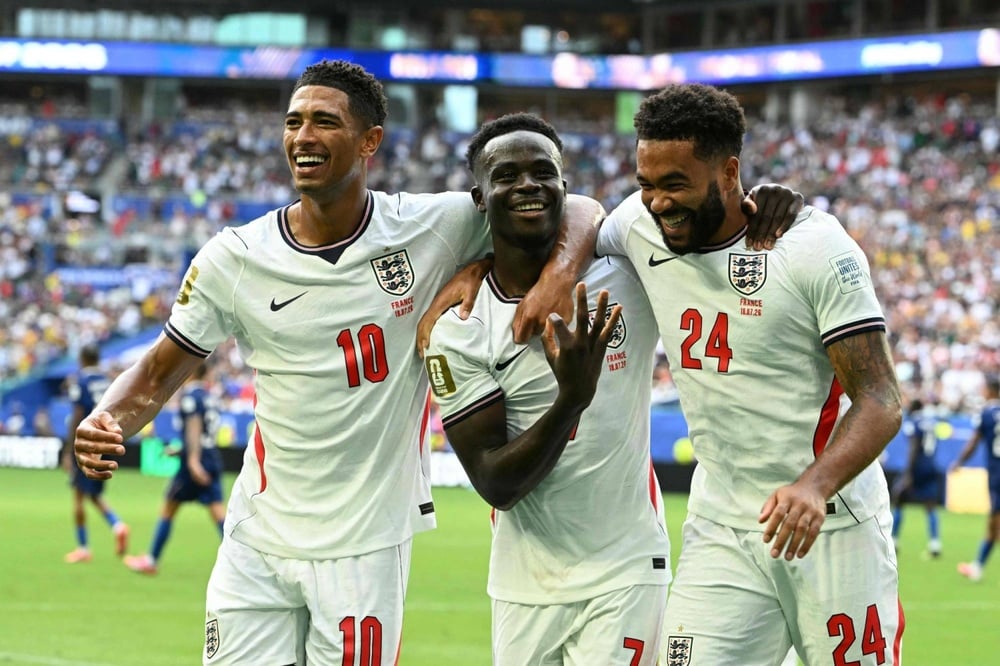
World Cup third-place playoff recap noting an England victory over France, Mbappe's all-time scoring milestone, Saka's hat-trick, Barcola's goal, and Bellingham's late clincher, set against lineup notes and final-minute drama.
Automated analysis; not human reviewed.
Limitations: Concise, case-specific limitations and plausible alternative interpretations.
·
44 of 52 available dimensions scored; omitted dimensions are not treated as neutral.
·
Verified supporting quotes for 0 of 44 scored dimensions.
Ambiguity in exact goal minutes; sponsor content hints; limited context beyond match report.
Neutral, event-focused sports coverage emphasizing drama and milestones without evident political or ideological framing, though energetic wording colors the presentation.
World Cup third-place playoff recap noting an England victory over France, Mbappe's all-time scoring milestone, Saka's hat-trick, Barcola's goal, and Bellingham's late clincher, set against lineup notes and final-minute drama.
Automated analysis; not human reviewed.
Limitations: Concise, case-specific limitations and plausible alternative interpretations.
·
44 of 52 available dimensions scored; omitted dimensions are not treated as neutral.
·
Verified supporting quotes for 0 of 44 scored dimensions.
Ambiguity in exact goal minutes; sponsor content hints; limited context beyond match report.
July 18, 2026 · 0 shares
Primarily factual, data-driven sports reporting on Mbappe's World Cup record and bronze-final results, with occasional evaluative language about Mbappe's status that signals mild subjectivity.
Sports coverage of Mbappe's World Cup record and bronze-final result, with related headlines about tickets and weather.
Automated analysis; not human reviewed. Limitations: Case-specific limitations; article mixes factual sport reporting with headlines; subjectivity is limited to a few phrases; inconsistent/contradictory data within the excerpt.
Numbers conflict across lines; some headlines are extraneous; limited context.
July 18, 2026 · 0 shares
Neutral, data-driven sports recap with minimal ideological framing, foregrounding England's 6-4 win, Saka's hat-trick, Mbappé's tournament-record goals, and coaching decisions, while noting Deschamps' critique and England's best finish since 1966.
Concise, factful recap of the 2026 World Cup Bronze Final noting England's 6-4 victory, Saka's hat-trick, Mbappé's two goals and all-time World Cup scoring record, and coaching decisions including Deschamps' departure and England's best finish since 1966.
Automated analysis; not human reviewed.
Limitations: Concise, case-specific limitations and plausible alternative interpretations.
·
47 of 52 available dimensions scored; omitted dimensions are not treated as neutral.
·
Verified supporting quotes for 1 of 47 scored dimensions.
Claim: No political tilt detected; coverage centers on a sporting event.
“The text focuses on goals, match events, and coach decisions, not political topics.” · not found in supplied text
Why: Lack of political framing indicates neutrality on ideological lines.
Claim: No populist or elite framing; coverage centers on players and coaches.
“Deschamps' remarks; Saka's hat-trick; Mbappé's records.” · not found in supplied text
Why: No tone that advocates for revenue, popularity or elite gating; event-focused reporting.
Claim: Objective reporting with quotes and explicit data; limited personal interpretation.
“Deschamps told French TV channel M6 that the first-half display had been “catastrophic”” · exact text match
Why: Direct quotes and stats anchor objectivity.
Claim: Moderately interesting due to notable moments (Saka hat-trick, Mbappé record).
“Saka hat-trick; Mbappé record; England's best finish since 1966” · not found in supplied text
Why: Notable moments heighten interest but not sensational.
Claim: The reporting appears credible due to match detail and quotes.
“Deschamps quote; Saka penalty; Mbappé record.” · not found in supplied text
Why: Direct quotes and specific game data support credibility.
Claim: Rational, data-driven presentation of results and records.
“final score; goal counts; records” · not found in supplied text
Why: Quantitative data anchors reporting; minimal speculative language.
date missing; extraneous headlines; limited sourcing.
Neutral, event-focused sports coverage emphasizing drama and milestones without evident political or ideological framing, though energetic wording colors the presentation.
World Cup third-place playoff recap noting an England victory over France, Mbappe's all-time scoring milestone, Saka's hat-trick, Barcola's goal, and Bellingham's late clincher, set against lineup notes and final-minute drama.
Automated analysis; not human reviewed.
Limitations: Concise, case-specific limitations and plausible alternative interpretations.
·
44 of 52 available dimensions scored; omitted dimensions are not treated as neutral.
·
Verified supporting quotes for 0 of 44 scored dimensions.
Ambiguity in exact goal minutes; sponsor content hints; limited context beyond match report.
Neutral, event-focused sports coverage emphasizing drama and milestones without evident political or ideological framing, though energetic wording colors the presentation.
World Cup third-place playoff recap noting an England victory over France, Mbappe's all-time scoring milestone, Saka's hat-trick, Barcola's goal, and Bellingham's late clincher, set against lineup notes and final-minute drama.
Automated analysis; not human reviewed.
Limitations: Concise, case-specific limitations and plausible alternative interpretations.
·
44 of 52 available dimensions scored; omitted dimensions are not treated as neutral.
·
Verified supporting quotes for 0 of 44 scored dimensions.
Ambiguity in exact goal minutes; sponsor content hints; limited context beyond match report.
July 18, 2026 · 0 shares
Neutral, data-driven sports recap with minimal ideological framing, foregrounding England's 6-4 win, Saka's hat-trick, Mbappé's tournament-record goals, and coaching decisions, while noting Deschamps' critique and England's best finish since 1966.
Concise, factful recap of the 2026 World Cup Bronze Final noting England's 6-4 victory, Saka's hat-trick, Mbappé's two goals and all-time World Cup scoring record, and coaching decisions including Deschamps' departure and England's best finish since 1966.
Automated analysis; not human reviewed.
Limitations: Concise, case-specific limitations and plausible alternative interpretations.
·
47 of 52 available dimensions scored; omitted dimensions are not treated as neutral.
·
Verified supporting quotes for 1 of 47 scored dimensions.
Claim: No political tilt detected; coverage centers on a sporting event.
“The text focuses on goals, match events, and coach decisions, not political topics.” · not found in supplied text
Why: Lack of political framing indicates neutrality on ideological lines.
Claim: No populist or elite framing; coverage centers on players and coaches.
“Deschamps' remarks; Saka's hat-trick; Mbappé's records.” · not found in supplied text
Why: No tone that advocates for revenue, popularity or elite gating; event-focused reporting.
Claim: Objective reporting with quotes and explicit data; limited personal interpretation.
“Deschamps told French TV channel M6 that the first-half display had been “catastrophic”” · exact text match
Why: Direct quotes and stats anchor objectivity.
Claim: Moderately interesting due to notable moments (Saka hat-trick, Mbappé record).
“Saka hat-trick; Mbappé record; England's best finish since 1966” · not found in supplied text
Why: Notable moments heighten interest but not sensational.
Claim: The reporting appears credible due to match detail and quotes.
“Deschamps quote; Saka penalty; Mbappé record.” · not found in supplied text
Why: Direct quotes and specific game data support credibility.
Claim: Rational, data-driven presentation of results and records.
“final score; goal counts; records” · not found in supplied text
Why: Quantitative data anchors reporting; minimal speculative language.
date missing; extraneous headlines; limited sourcing.
July 18, 2026 · 0 shares
Neutral, data-driven sports reporting with minimal ideological framing; occasional sensational wording (e.g., 'A Golden Boot race for the ages') coexists with precise statistics and no political or policy-oriented bias.
A sports-focused report detailing the World Cup Golden Boot standings and related statistics, including a third-place playoff result.
Automated analysis; not human reviewed.
Limitations: Case-specific limitations and plausible alternative interpretations.
·
2 of 52 available dimensions scored; omitted dimensions are not treated as neutral.
·
Verified supporting quotes for 2 of 2 scored dimensions.
Claim: There is some sensational framing in phrases describing the competition.
“A Golden Boot race for the ages has the perfect finale - it will go down to the final match of the tournament.” · exact text match
“Saka hat-trick as England beat France 6-4 in thriller to finish third” · exact text match
Why: Hyperbolic descriptors accompany factual reporting, indicating light sensational framing rather than overt editorializing.
Claim: The article presents verifiable data and context supporting credible reporting.
“Kylian Mbappe has scored 10 goals at this World Cup” · exact text match
“Mbappe now leads that race on 22 goals with Messi one behind.” · exact text match
“The last player to make it into double figures at a men's World Cup was Gerd Muller for West Germany in 1970.” · exact text match
Why: Concrete statistics and historical references bolster credibility; the balance of data-driven claims supports the assessment.
Limited data; sports-focused, generally neutral framing with occasional sensational phrasing.
July 18, 2026 · 0 shares
Primarily factual, data-driven sports reporting on Mbappe's World Cup record and bronze-final results, with occasional evaluative language about Mbappe's status that signals mild subjectivity.
Sports coverage of Mbappe's World Cup record and bronze-final result, with related headlines about tickets and weather.
Automated analysis; not human reviewed. Limitations: Case-specific limitations; article mixes factual sport reporting with headlines; subjectivity is limited to a few phrases; inconsistent/contradictory data within the excerpt.
Numbers conflict across lines; some headlines are extraneous; limited context.
July 18, 2026 · 0 shares
Primarily factual, data-driven sports reporting on Mbappe's World Cup record and bronze-final results, with occasional evaluative language about Mbappe's status that signals mild subjectivity.
Sports coverage of Mbappe's World Cup record and bronze-final result, with related headlines about tickets and weather.
Automated analysis; not human reviewed. Limitations: Case-specific limitations; article mixes factual sport reporting with headlines; subjectivity is limited to a few phrases; inconsistent/contradictory data within the excerpt.
Numbers conflict across lines; some headlines are extraneous; limited context.
July 18, 2026 · 0 shares
Neutral, data-driven sports recap with minimal ideological framing, foregrounding England's 6-4 win, Saka's hat-trick, Mbappé's tournament-record goals, and coaching decisions, while noting Deschamps' critique and England's best finish since 1966.
Concise, factful recap of the 2026 World Cup Bronze Final noting England's 6-4 victory, Saka's hat-trick, Mbappé's two goals and all-time World Cup scoring record, and coaching decisions including Deschamps' departure and England's best finish since 1966.
Automated analysis; not human reviewed.
Limitations: Concise, case-specific limitations and plausible alternative interpretations.
·
47 of 52 available dimensions scored; omitted dimensions are not treated as neutral.
·
Verified supporting quotes for 1 of 47 scored dimensions.
Claim: No political tilt detected; coverage centers on a sporting event.
“The text focuses on goals, match events, and coach decisions, not political topics.” · not found in supplied text
Why: Lack of political framing indicates neutrality on ideological lines.
Claim: No populist or elite framing; coverage centers on players and coaches.
“Deschamps' remarks; Saka's hat-trick; Mbappé's records.” · not found in supplied text
Why: No tone that advocates for revenue, popularity or elite gating; event-focused reporting.
Claim: Objective reporting with quotes and explicit data; limited personal interpretation.
“Deschamps told French TV channel M6 that the first-half display had been “catastrophic”” · exact text match
Why: Direct quotes and stats anchor objectivity.
Claim: Moderately interesting due to notable moments (Saka hat-trick, Mbappé record).
“Saka hat-trick; Mbappé record; England's best finish since 1966” · not found in supplied text
Why: Notable moments heighten interest but not sensational.
Claim: The reporting appears credible due to match detail and quotes.
“Deschamps quote; Saka penalty; Mbappé record.” · not found in supplied text
Why: Direct quotes and specific game data support credibility.
Claim: Rational, data-driven presentation of results and records.
“final score; goal counts; records” · not found in supplied text
Why: Quantitative data anchors reporting; minimal speculative language.
date missing; extraneous headlines; limited sourcing.
Neutral, event-focused sports coverage emphasizing drama and milestones without evident political or ideological framing, though energetic wording colors the presentation.
World Cup third-place playoff recap noting an England victory over France, Mbappe's all-time scoring milestone, Saka's hat-trick, Barcola's goal, and Bellingham's late clincher, set against lineup notes and final-minute drama.
Automated analysis; not human reviewed. Limitations: Concise, case-specific limitations and plausible alternative interpretations. · 44 of 52 available dimensions scored; omitted dimensions are not treated as neutral. · Verified supporting quotes for 0 of 44 scored dimensions.
Ambiguity in exact goal minutes; sponsor content hints; limited context beyond match report.
Neutral, event-focused sports coverage emphasizing drama and milestones without evident political or ideological framing, though energetic wording colors the presentation.
World Cup third-place playoff recap noting an England victory over France, Mbappe's all-time scoring milestone, Saka's hat-trick, Barcola's goal, and Bellingham's late clincher, set against lineup notes and final-minute drama.
Automated analysis; not human reviewed. Limitations: Concise, case-specific limitations and plausible alternative interpretations. · 44 of 52 available dimensions scored; omitted dimensions are not treated as neutral. · Verified supporting quotes for 0 of 44 scored dimensions.
Ambiguity in exact goal minutes; sponsor content hints; limited context beyond match report.
July 18, 2026 · 0 shares
Primarily factual, data-driven sports reporting on Mbappe's World Cup record and bronze-final results, with occasional evaluative language about Mbappe's status that signals mild subjectivity.
Sports coverage of Mbappe's World Cup record and bronze-final result, with related headlines about tickets and weather.
Automated analysis; not human reviewed. Limitations: Case-specific limitations; article mixes factual sport reporting with headlines; subjectivity is limited to a few phrases; inconsistent/contradictory data within the excerpt.
Numbers conflict across lines; some headlines are extraneous; limited context.
Neutral, event-focused sports coverage emphasizing drama and milestones without evident political or ideological framing, though energetic wording colors the presentation.
World Cup third-place playoff recap noting an England victory over France, Mbappe's all-time scoring milestone, Saka's hat-trick, Barcola's goal, and Bellingham's late clincher, set against lineup notes and final-minute drama.
Automated analysis; not human reviewed. Limitations: Concise, case-specific limitations and plausible alternative interpretations. · 44 of 52 available dimensions scored; omitted dimensions are not treated as neutral. · Verified supporting quotes for 0 of 44 scored dimensions.
Ambiguity in exact goal minutes; sponsor content hints; limited context beyond match report.
July 18, 2026 · 0 shares
Neutral, data-driven sports recap with minimal ideological framing, foregrounding England's 6-4 win, Saka's hat-trick, Mbappé's tournament-record goals, and coaching decisions, while noting Deschamps' critique and England's best finish since 1966.
Concise, factful recap of the 2026 World Cup Bronze Final noting England's 6-4 victory, Saka's hat-trick, Mbappé's two goals and all-time World Cup scoring record, and coaching decisions including Deschamps' departure and England's best finish since 1966.
Automated analysis; not human reviewed. Limitations: Concise, case-specific limitations and plausible alternative interpretations. · 47 of 52 available dimensions scored; omitted dimensions are not treated as neutral. · Verified supporting quotes for 1 of 47 scored dimensions.
Claim: No political tilt detected; coverage centers on a sporting event.
“The text focuses on goals, match events, and coach decisions, not political topics.” · not found in supplied text
Why: Lack of political framing indicates neutrality on ideological lines.
Claim: No populist or elite framing; coverage centers on players and coaches.
“Deschamps' remarks; Saka's hat-trick; Mbappé's records.” · not found in supplied text
Why: No tone that advocates for revenue, popularity or elite gating; event-focused reporting.
Claim: Objective reporting with quotes and explicit data; limited personal interpretation.
“Deschamps told French TV channel M6 that the first-half display had been “catastrophic”” · exact text match
Why: Direct quotes and stats anchor objectivity.
Claim: Moderately interesting due to notable moments (Saka hat-trick, Mbappé record).
“Saka hat-trick; Mbappé record; England's best finish since 1966” · not found in supplied text
Why: Notable moments heighten interest but not sensational.
Claim: The reporting appears credible due to match detail and quotes.
“Deschamps quote; Saka penalty; Mbappé record.” · not found in supplied text
Why: Direct quotes and specific game data support credibility.
Claim: Rational, data-driven presentation of results and records.
“final score; goal counts; records” · not found in supplied text
Why: Quantitative data anchors reporting; minimal speculative language.
date missing; extraneous headlines; limited sourcing.
Neutral, event-focused sports coverage emphasizing drama and milestones without evident political or ideological framing, though energetic wording colors the presentation.
World Cup third-place playoff recap noting an England victory over France, Mbappe's all-time scoring milestone, Saka's hat-trick, Barcola's goal, and Bellingham's late clincher, set against lineup notes and final-minute drama.
Automated analysis; not human reviewed. Limitations: Concise, case-specific limitations and plausible alternative interpretations. · 44 of 52 available dimensions scored; omitted dimensions are not treated as neutral. · Verified supporting quotes for 0 of 44 scored dimensions.
Ambiguity in exact goal minutes; sponsor content hints; limited context beyond match report.
Tournament-statistics framing (records & Golden Boot race)
July 18, 2026 · 0 shares
Primarily factual, data-driven sports reporting on Mbappe's World Cup record and bronze-final results, with occasional evaluative language about Mbappe's status that signals mild subjectivity.
Sports coverage of Mbappe's World Cup record and bronze-final result, with related headlines about tickets and weather.
Automated analysis; not human reviewed. Limitations: Case-specific limitations; article mixes factual sport reporting with headlines; subjectivity is limited to a few phrases; inconsistent/contradictory data within the excerpt.
Numbers conflict across lines; some headlines are extraneous; limited context.
July 18, 2026 · 0 shares
Neutral, data-driven sports reporting with minimal ideological framing; occasional sensational wording (e.g., 'A Golden Boot race for the ages') coexists with precise statistics and no political or policy-oriented bias.
A sports-focused report detailing the World Cup Golden Boot standings and related statistics, including a third-place playoff result.
Automated analysis; not human reviewed. Limitations: Case-specific limitations and plausible alternative interpretations. · 2 of 52 available dimensions scored; omitted dimensions are not treated as neutral. · Verified supporting quotes for 2 of 2 scored dimensions.
Claim: There is some sensational framing in phrases describing the competition.
“A Golden Boot race for the ages has the perfect finale - it will go down to the final match of the tournament.” · exact text match
“Saka hat-trick as England beat France 6-4 in thriller to finish third” · exact text match
Why: Hyperbolic descriptors accompany factual reporting, indicating light sensational framing rather than overt editorializing.
Claim: The article presents verifiable data and context supporting credible reporting.
“Kylian Mbappe has scored 10 goals at this World Cup” · exact text match
“Mbappe now leads that race on 22 goals with Messi one behind.” · exact text match
“The last player to make it into double figures at a men's World Cup was Gerd Muller for West Germany in 1970.” · exact text match
Why: Concrete statistics and historical references bolster credibility; the balance of data-driven claims supports the assessment.
Limited data; sports-focused, generally neutral framing with occasional sensational phrasing.
July 18, 2026 · 0 shares
Promotional fundraising language accompanies a straightforward sports report on Mbappe breaking Messi's World Cup top scorer record, blending factual career/tournament details with newsroom messaging.
Sports reporting on Mbappe breaking Messi's World Cup top goalscorer record, with career totals, tournament history, captaincy, injury status, and future cycle notes, alongside promotional newsroom messaging.
Automated analysis; not human reviewed. Limitations: Concise, case-specific limitations and plausible alternative interpretations. · 52 of 52 available dimensions scored; omitted dimensions are not treated as neutral. · Verified supporting quotes for 1 of 52 scored dimensions.
Claim: Prominent promotional, fundraising language and paywall-free messaging appear in the text.
“At such a critical moment in US history, we need reporters on the ground. Your donation allows us to keep sending journalists to speak to both sides of the story.” · exact text match
“And unlike many other quality news outlets, we choose not to lock Americans out of our reporting and analysis with paywalls. We believe quality journalism should be available to everyone, paid for by those who can afford it.” · exact text match
“Join thought-provoking conversations, follow other Independent readers and see their replies” · exact text match
Counterevidence:
“Kylian Mbappe has broken Lionel Messi’s all-time World Cup top goalscorer record after striking twice against England in the third place play-off of this year’s tournament.” · exact text match
“The France No 10 nudged his total up to 22 goals across his career on football’s biggest stage, with 10 goals this summer.” · not found in supplied text
Why: Promotional statements coexist with straightforward sports reporting, indicating mixed framing rather than pure neutrality.
Case-specific: promotional framing present; objective reporting otherwise.
July 18, 2026 · 0 shares
Neutral, data-driven sports reporting with minimal ideological framing; occasional sensational wording (e.g., 'A Golden Boot race for the ages') coexists with precise statistics and no political or policy-oriented bias.
A sports-focused report detailing the World Cup Golden Boot standings and related statistics, including a third-place playoff result.
Automated analysis; not human reviewed. Limitations: Case-specific limitations and plausible alternative interpretations. · 2 of 52 available dimensions scored; omitted dimensions are not treated as neutral. · Verified supporting quotes for 2 of 2 scored dimensions.
Claim: There is some sensational framing in phrases describing the competition.
“A Golden Boot race for the ages has the perfect finale - it will go down to the final match of the tournament.” · exact text match
“Saka hat-trick as England beat France 6-4 in thriller to finish third” · exact text match
Why: Hyperbolic descriptors accompany factual reporting, indicating light sensational framing rather than overt editorializing.
Claim: The article presents verifiable data and context supporting credible reporting.
“Kylian Mbappe has scored 10 goals at this World Cup” · exact text match
“Mbappe now leads that race on 22 goals with Messi one behind.” · exact text match
“The last player to make it into double figures at a men's World Cup was Gerd Muller for West Germany in 1970.” · exact text match
Why: Concrete statistics and historical references bolster credibility; the balance of data-driven claims supports the assessment.
Limited data; sports-focused, generally neutral framing with occasional sensational phrasing.
July 18, 2026 · 0 shares
Primarily factual, data-driven sports reporting on Mbappe's World Cup record and bronze-final results, with occasional evaluative language about Mbappe's status that signals mild subjectivity.
Sports coverage of Mbappe's World Cup record and bronze-final result, with related headlines about tickets and weather.
Automated analysis; not human reviewed. Limitations: Case-specific limitations; article mixes factual sport reporting with headlines; subjectivity is limited to a few phrases; inconsistent/contradictory data within the excerpt.
Numbers conflict across lines; some headlines are extraneous; limited context.
July 18, 2026 · 0 shares
Primarily factual, data-driven sports reporting on Mbappe's World Cup record and bronze-final results, with occasional evaluative language about Mbappe's status that signals mild subjectivity.
Sports coverage of Mbappe's World Cup record and bronze-final result, with related headlines about tickets and weather.
Automated analysis; not human reviewed. Limitations: Case-specific limitations; article mixes factual sport reporting with headlines; subjectivity is limited to a few phrases; inconsistent/contradictory data within the excerpt.
Numbers conflict across lines; some headlines are extraneous; limited context.
July 18, 2026 · 0 shares
Neutral, data-driven sports reporting with minimal ideological framing; occasional sensational wording (e.g., 'A Golden Boot race for the ages') coexists with precise statistics and no political or policy-oriented bias.
A sports-focused report detailing the World Cup Golden Boot standings and related statistics, including a third-place playoff result.
Automated analysis; not human reviewed. Limitations: Case-specific limitations and plausible alternative interpretations. · 2 of 52 available dimensions scored; omitted dimensions are not treated as neutral. · Verified supporting quotes for 2 of 2 scored dimensions.
Claim: There is some sensational framing in phrases describing the competition.
“A Golden Boot race for the ages has the perfect finale - it will go down to the final match of the tournament.” · exact text match
“Saka hat-trick as England beat France 6-4 in thriller to finish third” · exact text match
Why: Hyperbolic descriptors accompany factual reporting, indicating light sensational framing rather than overt editorializing.
Claim: The article presents verifiable data and context supporting credible reporting.
“Kylian Mbappe has scored 10 goals at this World Cup” · exact text match
“Mbappe now leads that race on 22 goals with Messi one behind.” · exact text match
“The last player to make it into double figures at a men's World Cup was Gerd Muller for West Germany in 1970.” · exact text match
Why: Concrete statistics and historical references bolster credibility; the balance of data-driven claims supports the assessment.
Limited data; sports-focused, generally neutral framing with occasional sensational phrasing.
Match-report emphasis on drama/turning points
Neutral, event-focused sports coverage emphasizing drama and milestones without evident political or ideological framing, though energetic wording colors the presentation.
World Cup third-place playoff recap noting an England victory over France, Mbappe's all-time scoring milestone, Saka's hat-trick, Barcola's goal, and Bellingham's late clincher, set against lineup notes and final-minute drama.
Automated analysis; not human reviewed. Limitations: Concise, case-specific limitations and plausible alternative interpretations. · 44 of 52 available dimensions scored; omitted dimensions are not treated as neutral. · Verified supporting quotes for 0 of 44 scored dimensions.
Ambiguity in exact goal minutes; sponsor content hints; limited context beyond match report.
Neutral, event-focused sports coverage emphasizing drama and milestones without evident political or ideological framing, though energetic wording colors the presentation.
World Cup third-place playoff recap noting an England victory over France, Mbappe's all-time scoring milestone, Saka's hat-trick, Barcola's goal, and Bellingham's late clincher, set against lineup notes and final-minute drama.
Automated analysis; not human reviewed. Limitations: Concise, case-specific limitations and plausible alternative interpretations. · 44 of 52 available dimensions scored; omitted dimensions are not treated as neutral. · Verified supporting quotes for 0 of 44 scored dimensions.
Ambiguity in exact goal minutes; sponsor content hints; limited context beyond match report.
July 18, 2026 · 0 shares
Neutral, data-driven sports recap with minimal ideological framing, foregrounding England's 6-4 win, Saka's hat-trick, Mbappé's tournament-record goals, and coaching decisions, while noting Deschamps' critique and England's best finish since 1966.
Concise, factful recap of the 2026 World Cup Bronze Final noting England's 6-4 victory, Saka's hat-trick, Mbappé's two goals and all-time World Cup scoring record, and coaching decisions including Deschamps' departure and England's best finish since 1966.
Automated analysis; not human reviewed. Limitations: Concise, case-specific limitations and plausible alternative interpretations. · 47 of 52 available dimensions scored; omitted dimensions are not treated as neutral. · Verified supporting quotes for 1 of 47 scored dimensions.
Claim: No political tilt detected; coverage centers on a sporting event.
“The text focuses on goals, match events, and coach decisions, not political topics.” · not found in supplied text
Why: Lack of political framing indicates neutrality on ideological lines.
Claim: No populist or elite framing; coverage centers on players and coaches.
“Deschamps' remarks; Saka's hat-trick; Mbappé's records.” · not found in supplied text
Why: No tone that advocates for revenue, popularity or elite gating; event-focused reporting.
Claim: Objective reporting with quotes and explicit data; limited personal interpretation.
“Deschamps told French TV channel M6 that the first-half display had been “catastrophic”” · exact text match
Why: Direct quotes and stats anchor objectivity.
Claim: Moderately interesting due to notable moments (Saka hat-trick, Mbappé record).
“Saka hat-trick; Mbappé record; England's best finish since 1966” · not found in supplied text
Why: Notable moments heighten interest but not sensational.
Claim: The reporting appears credible due to match detail and quotes.
“Deschamps quote; Saka penalty; Mbappé record.” · not found in supplied text
Why: Direct quotes and specific game data support credibility.
Claim: Rational, data-driven presentation of results and records.
“final score; goal counts; records” · not found in supplied text
Why: Quantitative data anchors reporting; minimal speculative language.
date missing; extraneous headlines; limited sourcing.
Neutral, event-focused sports coverage emphasizing drama and milestones without evident political or ideological framing, though energetic wording colors the presentation.
World Cup third-place playoff recap noting an England victory over France, Mbappe's all-time scoring milestone, Saka's hat-trick, Barcola's goal, and Bellingham's late clincher, set against lineup notes and final-minute drama.
Automated analysis; not human reviewed. Limitations: Concise, case-specific limitations and plausible alternative interpretations. · 44 of 52 available dimensions scored; omitted dimensions are not treated as neutral. · Verified supporting quotes for 0 of 44 scored dimensions.
Ambiguity in exact goal minutes; sponsor content hints; limited context beyond match report.
Neutral, event-focused sports coverage emphasizing drama and milestones without evident political or ideological framing, though energetic wording colors the presentation.
World Cup third-place playoff recap noting an England victory over France, Mbappe's all-time scoring milestone, Saka's hat-trick, Barcola's goal, and Bellingham's late clincher, set against lineup notes and final-minute drama.
Automated analysis; not human reviewed. Limitations: Concise, case-specific limitations and plausible alternative interpretations. · 44 of 52 available dimensions scored; omitted dimensions are not treated as neutral. · Verified supporting quotes for 0 of 44 scored dimensions.
Ambiguity in exact goal minutes; sponsor content hints; limited context beyond match report.
Neutral, event-focused sports coverage emphasizing drama and milestones without evident political or ideological framing, though energetic wording colors the presentation.
World Cup third-place playoff recap noting an England victory over France, Mbappe's all-time scoring milestone, Saka's hat-trick, Barcola's goal, and Bellingham's late clincher, set against lineup notes and final-minute drama.
Automated analysis; not human reviewed. Limitations: Concise, case-specific limitations and plausible alternative interpretations. · 44 of 52 available dimensions scored; omitted dimensions are not treated as neutral. · Verified supporting quotes for 0 of 44 scored dimensions.
Ambiguity in exact goal minutes; sponsor content hints; limited context beyond match report.
Pre-match roster/injury uncertainty lens
Neutral, data-driven sports coverage focusing on lineup, injuries, and Mbappe's scoring chase, with no evident political framing, though page clutter from unrelated headlines and cookies prompts reduces credibility.
A sports-news briefing on the France vs England World Cup bronze final, including lineup predictions, injury updates, and Mbappe's race for the top scorer title.
Automated analysis; not human reviewed. Limitations: Case-specific: relies on a single mixed-content article; quotes may reflect inaccuracies or extraneous content. · 21 of 52 available dimensions scored; omitted dimensions are not treated as neutral. · Verified supporting quotes for 5 of 21 scored dimensions.
Claim: No political leaning detected; reporting is descriptive and sports-focused.
“France XI vs England: Confirmed team news, predicted lineup, injury latest for World Cup bronze final.” · exact text match
Why: Content centers on players, injuries, and predictions, not politics.
Claim: No class-based framing detected.
“Predicted France XI (4-2-3-1): Maignan; Gusto, Upamecano, Lacroix, T.Hernandez; Kante, Kone; Dembele, Olise, Doue; Mbappe” · exact text match
“Time and date: 10pm BST on Saturday, July 18, 2026” · exact text match
Why: Content focuses on players and schedule, not class-based framing.
Claim: No libertarian or authoritarian framing detected.
“France will certainly be without defender William Saliba after he was forced off in the semi-final loss to Spain with a back injury.” · exact text match
“Reports claim the Arsenal star requires surgery and could be out for up to five months.” · exact text match
Why: Injury and squad status are described without governance framing.
Claim: Article leans toward objective, descriptive reporting.
“Predicted France XI (4-2-3-1): Maignan; Gusto, Upamecano, Lacroix, T.Hernandez; Kante, Kone; Dembele, Olise, Doue; Mbappe” · exact text match
“As a result, the Frenchman must register at least two goal involvement in Miami on Saturday - while hoping Harry Kane and Jude Bellingham do not get on the scoresheet - to have any chance of pipping Messi to the top scorer award.” · exact text match
Why: Includes factual content and mild predictive statements without opinionated language.
Claim: Neutral, evidence-based sports reporting.
“Time and date: 10pm BST on Saturday, July 18, 2026” · exact text match
Why: Descriptive, event-focused language.
Ambiguity due to extraneous content; evidence gaps could alter this analysis.
Neutral, data-driven sports coverage focusing on lineup, injuries, and Mbappe's scoring chase, with no evident political framing, though page clutter from unrelated headlines and cookies prompts reduces credibility.
A sports-news briefing on the France vs England World Cup bronze final, including lineup predictions, injury updates, and Mbappe's race for the top scorer title.
Automated analysis; not human reviewed. Limitations: Case-specific: relies on a single mixed-content article; quotes may reflect inaccuracies or extraneous content. · 21 of 52 available dimensions scored; omitted dimensions are not treated as neutral. · Verified supporting quotes for 5 of 21 scored dimensions.
Claim: No political leaning detected; reporting is descriptive and sports-focused.
“France XI vs England: Confirmed team news, predicted lineup, injury latest for World Cup bronze final.” · exact text match
Why: Content centers on players, injuries, and predictions, not politics.
Claim: No class-based framing detected.
“Predicted France XI (4-2-3-1): Maignan; Gusto, Upamecano, Lacroix, T.Hernandez; Kante, Kone; Dembele, Olise, Doue; Mbappe” · exact text match
“Time and date: 10pm BST on Saturday, July 18, 2026” · exact text match
Why: Content focuses on players and schedule, not class-based framing.
Claim: No libertarian or authoritarian framing detected.
“France will certainly be without defender William Saliba after he was forced off in the semi-final loss to Spain with a back injury.” · exact text match
“Reports claim the Arsenal star requires surgery and could be out for up to five months.” · exact text match
Why: Injury and squad status are described without governance framing.
Claim: Article leans toward objective, descriptive reporting.
“Predicted France XI (4-2-3-1): Maignan; Gusto, Upamecano, Lacroix, T.Hernandez; Kante, Kone; Dembele, Olise, Doue; Mbappe” · exact text match
“As a result, the Frenchman must register at least two goal involvement in Miami on Saturday - while hoping Harry Kane and Jude Bellingham do not get on the scoresheet - to have any chance of pipping Messi to the top scorer award.” · exact text match
Why: Includes factual content and mild predictive statements without opinionated language.
Claim: Neutral, evidence-based sports reporting.
“Time and date: 10pm BST on Saturday, July 18, 2026” · exact text match
Why: Descriptive, event-focused language.
Ambiguity due to extraneous content; evidence gaps could alter this analysis.
Semi-final setback/context lens
Primarily neutral sports reporting with detailed match actions and statistics; mild sensational language in the headline and embedded promotional text do not meaningfully alter the factual reporting.
Recap of a World Cup semifinal where Spain defeated France 2-0 to advance to the final, highlighting goal scorers, key plays involving Lamine Yamal, and notable team records.
cautious, 0.65
Overall bias appears minimal and neutral: reports the score and key events with direct quotes and media critique without editorializing or ideological framing.
A concise World Cup semifinals recap focusing on France's 2-0 loss to Spain, Mbappé's status, and coach Deschamps' remarks.
Automated analysis; not human reviewed. · 51 of 52 available dimensions scored; omitted dimensions are not treated as neutral. · Supporting quotes supplied for 0 of 51 scored dimensions; exact matching was not run.
Neutral stance; ~0.65 confidence.
Overall bias appears minimal and neutral: reports the score and key events with direct quotes and media critique without editorializing or ideological framing.
A concise World Cup semifinals recap focusing on France's 2-0 loss to Spain, Mbappé's status, and coach Deschamps' remarks.
Automated analysis; not human reviewed. · 51 of 52 available dimensions scored; omitted dimensions are not treated as neutral. · Supporting quotes supplied for 0 of 51 scored dimensions; exact matching was not run.
Neutral stance; ~0.65 confidence.
Primarily neutral sports reporting with detailed match actions and statistics; mild sensational language in the headline and embedded promotional text do not meaningfully alter the factual reporting.
Recap of a World Cup semifinal where Spain defeated France 2-0 to advance to the final, highlighting goal scorers, key plays involving Lamine Yamal, and notable team records.
cautious, 0.65
Overall bias appears minimal and neutral: reports the score and key events with direct quotes and media critique without editorializing or ideological framing.
A concise World Cup semifinals recap focusing on France's 2-0 loss to Spain, Mbappé's status, and coach Deschamps' remarks.
Automated analysis; not human reviewed. · 51 of 52 available dimensions scored; omitted dimensions are not treated as neutral. · Supporting quotes supplied for 0 of 51 scored dimensions; exact matching was not run.
Neutral stance; ~0.65 confidence.
Helium Bias
July 18, 2026 · 0 shares
Primarily factual, data-driven sports reporting on Mbappe's World Cup record and bronze-final results, with occasional evaluative language about Mbappe's status that signals mild subjectivity.
Sports coverage of Mbappe's World Cup record and bronze-final result, with related headlines about tickets and weather.
Automated analysis; not human reviewed. Limitations: Case-specific limitations; article mixes factual sport reporting with headlines; subjectivity is limited to a few phrases; inconsistent/contradictory data within the excerpt.
Numbers conflict across lines; some headlines are extraneous; limited context.
July 18, 2026 · 0 shares
Neutral, data-driven sports reporting with minimal ideological framing; occasional sensational wording (e.g., 'A Golden Boot race for the ages') coexists with precise statistics and no political or policy-oriented bias.
A sports-focused report detailing the World Cup Golden Boot standings and related statistics, including a third-place playoff result.
Automated analysis; not human reviewed. Limitations: Case-specific limitations and plausible alternative interpretations. · 2 of 52 available dimensions scored; omitted dimensions are not treated as neutral. · Verified supporting quotes for 2 of 2 scored dimensions.
Claim: There is some sensational framing in phrases describing the competition.
“A Golden Boot race for the ages has the perfect finale - it will go down to the final match of the tournament.” · exact text match
“Saka hat-trick as England beat France 6-4 in thriller to finish third” · exact text match
Why: Hyperbolic descriptors accompany factual reporting, indicating light sensational framing rather than overt editorializing.
Claim: The article presents verifiable data and context supporting credible reporting.
“Kylian Mbappe has scored 10 goals at this World Cup” · exact text match
“Mbappe now leads that race on 22 goals with Messi one behind.” · exact text match
“The last player to make it into double figures at a men's World Cup was Gerd Muller for West Germany in 1970.” · exact text match
Why: Concrete statistics and historical references bolster credibility; the balance of data-driven claims supports the assessment.
Limited data; sports-focused, generally neutral framing with occasional sensational phrasing.
Primarily neutral sports reporting with detailed match actions and statistics; mild sensational language in the headline and embedded promotional text do not meaningfully alter the factual reporting.
Recap of a World Cup semifinal where Spain defeated France 2-0 to advance to the final, highlighting goal scorers, key plays involving Lamine Yamal, and notable team records.
cautious, 0.65
Story Blindspots
Sports coverage of World Cup 2026 top scorers presents Mbappe as the leader in the Golden Boot race, reports goals and standings with mild sensational language, and shows no evident political or ideological framing.
Concise, factful, accurate, balanced context for the article in one sentence.
Automated analysis; not human reviewed. Limitations: Concise, case-specific limitations and plausible alternative interpretations. · 47 of 52 available dimensions scored; omitted dimensions are not treated as neutral. · Verified supporting quotes for 0 of 47 scored dimensions.
Claim: No political framing; sports reporting only.
“"World Cup 2026 top scorers: Kylian Mbappe moves ahead of Lionel Messi in Golden Boot race."” · not found in supplied text
“"The World Cup 2026 Golden Boot race is reaching a thrilling conclusion."” · exact text match
Counterevidence:
“"All the top forwards on the planet have shown up over the past five weeks in North America, making this a battle for the ages - perhaps one that will never be topped."” · exact text match
Why: The quoted lines center on sports competition and drama, not political ideology.
Claim: Slight subjectivity in language but mostly factual.
“"The World Cup 2026 Golden Boot race is reaching a thrilling conclusion."” · exact text match
“"pulsating bronze final - AKA the third-place play-off - in Miami on Saturday."” · not found in supplied text
“"perhaps one that will never be topped."” · not found in supplied text
Why: Adjectives and speculative phrasing appear in otherwise data-driven reporting.
Claim: Mild sensational framing with phrases like 'thrilling' and 'pulsating'.
“"The World Cup 2026 Golden Boot race is reaching a thrilling conclusion."” · exact text match
“"pulsating bronze final - AKA the third-place play-off - in Miami on Saturday."” · not found in supplied text
Why: Sensational descriptors accompany numerical data.
Claim: Presence of emotionally charged adjectives indicates mild emotional tilt.
“"thrilling conclusion"” · not found in supplied text
“"pulsating"” · not found in supplied text
Why: Adjectives suggest emotion but do not override factual content.
Claim: Speculative phrasing about ultimate outcomes appears.
“"perhaps one that will never be topped."” · not found in supplied text
Why: Phrase expresses conjecture about the event's significance.
Neutral, event-focused sports coverage emphasizing drama and milestones without evident political or ideological framing, though energetic wording colors the presentation.
World Cup third-place playoff recap noting an England victory over France, Mbappe's all-time scoring milestone, Saka's hat-trick, Barcola's goal, and Bellingham's late clincher, set against lineup notes and final-minute drama.
Automated analysis; not human reviewed. Limitations: Concise, case-specific limitations and plausible alternative interpretations. · 44 of 52 available dimensions scored; omitted dimensions are not treated as neutral. · Verified supporting quotes for 0 of 44 scored dimensions.
Ambiguity in exact goal minutes; sponsor content hints; limited context beyond match report.
July 18, 2026 · 0 shares
Primarily factual, data-driven sports reporting on Mbappe's World Cup record and bronze-final results, with occasional evaluative language about Mbappe's status that signals mild subjectivity.
Sports coverage of Mbappe's World Cup record and bronze-final result, with related headlines about tickets and weather.
Automated analysis; not human reviewed. Limitations: Case-specific limitations; article mixes factual sport reporting with headlines; subjectivity is limited to a few phrases; inconsistent/contradictory data within the excerpt.
Numbers conflict across lines; some headlines are extraneous; limited context.
July 18, 2026 · 0 shares
Neutral, data-driven sports recap with minimal ideological framing, foregrounding England's 6-4 win, Saka's hat-trick, Mbappé's tournament-record goals, and coaching decisions, while noting Deschamps' critique and England's best finish since 1966.
Concise, factful recap of the 2026 World Cup Bronze Final noting England's 6-4 victory, Saka's hat-trick, Mbappé's two goals and all-time World Cup scoring record, and coaching decisions including Deschamps' departure and England's best finish since 1966.
Automated analysis; not human reviewed. Limitations: Concise, case-specific limitations and plausible alternative interpretations. · 47 of 52 available dimensions scored; omitted dimensions are not treated as neutral. · Verified supporting quotes for 1 of 47 scored dimensions.
Claim: No political tilt detected; coverage centers on a sporting event.
“The text focuses on goals, match events, and coach decisions, not political topics.” · not found in supplied text
Why: Lack of political framing indicates neutrality on ideological lines.
Claim: No populist or elite framing; coverage centers on players and coaches.
“Deschamps' remarks; Saka's hat-trick; Mbappé's records.” · not found in supplied text
Why: No tone that advocates for revenue, popularity or elite gating; event-focused reporting.
Claim: Objective reporting with quotes and explicit data; limited personal interpretation.
“Deschamps told French TV channel M6 that the first-half display had been “catastrophic”” · exact text match
Why: Direct quotes and stats anchor objectivity.
Claim: Moderately interesting due to notable moments (Saka hat-trick, Mbappé record).
“Saka hat-trick; Mbappé record; England's best finish since 1966” · not found in supplied text
Why: Notable moments heighten interest but not sensational.
Claim: The reporting appears credible due to match detail and quotes.
“Deschamps quote; Saka penalty; Mbappé record.” · not found in supplied text
Why: Direct quotes and specific game data support credibility.
Claim: Rational, data-driven presentation of results and records.
“final score; goal counts; records” · not found in supplied text
Why: Quantitative data anchors reporting; minimal speculative language.
date missing; extraneous headlines; limited sourcing.
July 18, 2026 · 0 shares
Primarily factual, data-driven sports reporting on Mbappe's World Cup record and bronze-final results, with occasional evaluative language about Mbappe's status that signals mild subjectivity.
Sports coverage of Mbappe's World Cup record and bronze-final result, with related headlines about tickets and weather.
Automated analysis; not human reviewed. Limitations: Case-specific limitations; article mixes factual sport reporting with headlines; subjectivity is limited to a few phrases; inconsistent/contradictory data within the excerpt.
Numbers conflict across lines; some headlines are extraneous; limited context.
Neutral, event-focused sports coverage emphasizing drama and milestones without evident political or ideological framing, though energetic wording colors the presentation.
World Cup third-place playoff recap noting an England victory over France, Mbappe's all-time scoring milestone, Saka's hat-trick, Barcola's goal, and Bellingham's late clincher, set against lineup notes and final-minute drama.
Automated analysis; not human reviewed. Limitations: Concise, case-specific limitations and plausible alternative interpretations. · 44 of 52 available dimensions scored; omitted dimensions are not treated as neutral. · Verified supporting quotes for 0 of 44 scored dimensions.
Ambiguity in exact goal minutes; sponsor content hints; limited context beyond match report.
July 18, 2026 · 0 shares
Primarily factual, data-driven sports reporting on Mbappe's World Cup record and bronze-final results, with occasional evaluative language about Mbappe's status that signals mild subjectivity.
Sports coverage of Mbappe's World Cup record and bronze-final result, with related headlines about tickets and weather.
Automated analysis; not human reviewed. Limitations: Case-specific limitations; article mixes factual sport reporting with headlines; subjectivity is limited to a few phrases; inconsistent/contradictory data within the excerpt.
Numbers conflict across lines; some headlines are extraneous; limited context.
July 18, 2026 · 0 shares
Promotional fundraising language accompanies a straightforward sports report on Mbappe breaking Messi's World Cup top scorer record, blending factual career/tournament details with newsroom messaging.
Sports reporting on Mbappe breaking Messi's World Cup top goalscorer record, with career totals, tournament history, captaincy, injury status, and future cycle notes, alongside promotional newsroom messaging.
Automated analysis; not human reviewed. Limitations: Concise, case-specific limitations and plausible alternative interpretations. · 52 of 52 available dimensions scored; omitted dimensions are not treated as neutral. · Verified supporting quotes for 1 of 52 scored dimensions.
Claim: Prominent promotional, fundraising language and paywall-free messaging appear in the text.
“At such a critical moment in US history, we need reporters on the ground. Your donation allows us to keep sending journalists to speak to both sides of the story.” · exact text match
“And unlike many other quality news outlets, we choose not to lock Americans out of our reporting and analysis with paywalls. We believe quality journalism should be available to everyone, paid for by those who can afford it.” · exact text match
“Join thought-provoking conversations, follow other Independent readers and see their replies” · exact text match
Counterevidence:
“Kylian Mbappe has broken Lionel Messi’s all-time World Cup top goalscorer record after striking twice against England in the third place play-off of this year’s tournament.” · exact text match
“The France No 10 nudged his total up to 22 goals across his career on football’s biggest stage, with 10 goals this summer.” · not found in supplied text
Why: Promotional statements coexist with straightforward sports reporting, indicating mixed framing rather than pure neutrality.
Case-specific: promotional framing present; objective reporting otherwise.
Overall bias appears minimal and neutral: reports the score and key events with direct quotes and media critique without editorializing or ideological framing.
A concise World Cup semifinals recap focusing on France's 2-0 loss to Spain, Mbappé's status, and coach Deschamps' remarks.
Automated analysis; not human reviewed. · 51 of 52 available dimensions scored; omitted dimensions are not treated as neutral. · Supporting quotes supplied for 0 of 51 scored dimensions; exact matching was not run.
Neutral stance; ~0.65 confidence.
July 18, 2026 · 0 shares
Primarily factual, data-driven sports reporting on Mbappe's World Cup record and bronze-final results, with occasional evaluative language about Mbappe's status that signals mild subjectivity.
Sports coverage of Mbappe's World Cup record and bronze-final result, with related headlines about tickets and weather.
Automated analysis; not human reviewed. Limitations: Case-specific limitations; article mixes factual sport reporting with headlines; subjectivity is limited to a few phrases; inconsistent/contradictory data within the excerpt.
Numbers conflict across lines; some headlines are extraneous; limited context.
Overall bias appears minimal and neutral: reports the score and key events with direct quotes and media critique without editorializing or ideological framing.
A concise World Cup semifinals recap focusing on France's 2-0 loss to Spain, Mbappé's status, and coach Deschamps' remarks.
Automated analysis; not human reviewed. · 51 of 52 available dimensions scored; omitted dimensions are not treated as neutral. · Supporting quotes supplied for 0 of 51 scored dimensions; exact matching was not run.
Neutral stance; ~0.65 confidence.
July 18, 2026 · 0 shares
Neutral, data-driven sports recap with minimal ideological framing, foregrounding England's 6-4 win, Saka's hat-trick, Mbappé's tournament-record goals, and coaching decisions, while noting Deschamps' critique and England's best finish since 1966.
Concise, factful recap of the 2026 World Cup Bronze Final noting England's 6-4 victory, Saka's hat-trick, Mbappé's two goals and all-time World Cup scoring record, and coaching decisions including Deschamps' departure and England's best finish since 1966.
Automated analysis; not human reviewed. Limitations: Concise, case-specific limitations and plausible alternative interpretations. · 47 of 52 available dimensions scored; omitted dimensions are not treated as neutral. · Verified supporting quotes for 1 of 47 scored dimensions.
Claim: No political tilt detected; coverage centers on a sporting event.
“The text focuses on goals, match events, and coach decisions, not political topics.” · not found in supplied text
Why: Lack of political framing indicates neutrality on ideological lines.
Claim: No populist or elite framing; coverage centers on players and coaches.
“Deschamps' remarks; Saka's hat-trick; Mbappé's records.” · not found in supplied text
Why: No tone that advocates for revenue, popularity or elite gating; event-focused reporting.
Claim: Objective reporting with quotes and explicit data; limited personal interpretation.
“Deschamps told French TV channel M6 that the first-half display had been “catastrophic”” · exact text match
Why: Direct quotes and stats anchor objectivity.
Claim: Moderately interesting due to notable moments (Saka hat-trick, Mbappé record).
“Saka hat-trick; Mbappé record; England's best finish since 1966” · not found in supplied text
Why: Notable moments heighten interest but not sensational.
Claim: The reporting appears credible due to match detail and quotes.
“Deschamps quote; Saka penalty; Mbappé record.” · not found in supplied text
Why: Direct quotes and specific game data support credibility.
Claim: Rational, data-driven presentation of results and records.
“final score; goal counts; records” · not found in supplied text
Why: Quantitative data anchors reporting; minimal speculative language.
date missing; extraneous headlines; limited sourcing.
Neutral, event-focused sports coverage emphasizing drama and milestones without evident political or ideological framing, though energetic wording colors the presentation.
World Cup third-place playoff recap noting an England victory over France, Mbappe's all-time scoring milestone, Saka's hat-trick, Barcola's goal, and Bellingham's late clincher, set against lineup notes and final-minute drama.
Automated analysis; not human reviewed. Limitations: Concise, case-specific limitations and plausible alternative interpretations. · 44 of 52 available dimensions scored; omitted dimensions are not treated as neutral. · Verified supporting quotes for 0 of 44 scored dimensions.
Ambiguity in exact goal minutes; sponsor content hints; limited context beyond match report.
July 18, 2026 · 0 shares
Primarily factual, data-driven sports reporting on Mbappe's World Cup record and bronze-final results, with occasional evaluative language about Mbappe's status that signals mild subjectivity.
Sports coverage of Mbappe's World Cup record and bronze-final result, with related headlines about tickets and weather.
Automated analysis; not human reviewed. Limitations: Case-specific limitations; article mixes factual sport reporting with headlines; subjectivity is limited to a few phrases; inconsistent/contradictory data within the excerpt.
Numbers conflict across lines; some headlines are extraneous; limited context.
Neutral, event-focused sports coverage emphasizing drama and milestones without evident political or ideological framing, though energetic wording colors the presentation.
World Cup third-place playoff recap noting an England victory over France, Mbappe's all-time scoring milestone, Saka's hat-trick, Barcola's goal, and Bellingham's late clincher, set against lineup notes and final-minute drama.
Automated analysis; not human reviewed. Limitations: Concise, case-specific limitations and plausible alternative interpretations. · 44 of 52 available dimensions scored; omitted dimensions are not treated as neutral. · Verified supporting quotes for 0 of 44 scored dimensions.
Ambiguity in exact goal minutes; sponsor content hints; limited context beyond match report.
July 18, 2026 · 0 shares
Neutral, data-driven sports recap with minimal ideological framing, foregrounding England's 6-4 win, Saka's hat-trick, Mbappé's tournament-record goals, and coaching decisions, while noting Deschamps' critique and England's best finish since 1966.
Concise, factful recap of the 2026 World Cup Bronze Final noting England's 6-4 victory, Saka's hat-trick, Mbappé's two goals and all-time World Cup scoring record, and coaching decisions including Deschamps' departure and England's best finish since 1966.
Automated analysis; not human reviewed. Limitations: Concise, case-specific limitations and plausible alternative interpretations. · 47 of 52 available dimensions scored; omitted dimensions are not treated as neutral. · Verified supporting quotes for 1 of 47 scored dimensions.
Claim: No political tilt detected; coverage centers on a sporting event.
“The text focuses on goals, match events, and coach decisions, not political topics.” · not found in supplied text
Why: Lack of political framing indicates neutrality on ideological lines.
Claim: No populist or elite framing; coverage centers on players and coaches.
“Deschamps' remarks; Saka's hat-trick; Mbappé's records.” · not found in supplied text
Why: No tone that advocates for revenue, popularity or elite gating; event-focused reporting.
Claim: Objective reporting with quotes and explicit data; limited personal interpretation.
“Deschamps told French TV channel M6 that the first-half display had been “catastrophic”” · exact text match
Why: Direct quotes and stats anchor objectivity.
Claim: Moderately interesting due to notable moments (Saka hat-trick, Mbappé record).
“Saka hat-trick; Mbappé record; England's best finish since 1966” · not found in supplied text
Why: Notable moments heighten interest but not sensational.
Claim: The reporting appears credible due to match detail and quotes.
“Deschamps quote; Saka penalty; Mbappé record.” · not found in supplied text
Why: Direct quotes and specific game data support credibility.
Claim: Rational, data-driven presentation of results and records.
“final score; goal counts; records” · not found in supplied text
Why: Quantitative data anchors reporting; minimal speculative language.
date missing; extraneous headlines; limited sourcing.
Neutral, event-focused sports coverage emphasizing drama and milestones without evident political or ideological framing, though energetic wording colors the presentation.
World Cup third-place playoff recap noting an England victory over France, Mbappe's all-time scoring milestone, Saka's hat-trick, Barcola's goal, and Bellingham's late clincher, set against lineup notes and final-minute drama.
Automated analysis; not human reviewed. Limitations: Concise, case-specific limitations and plausible alternative interpretations. · 44 of 52 available dimensions scored; omitted dimensions are not treated as neutral. · Verified supporting quotes for 0 of 44 scored dimensions.
Ambiguity in exact goal minutes; sponsor content hints; limited context beyond match report.
Neutral, event-focused sports coverage emphasizing drama and milestones without evident political or ideological framing, though energetic wording colors the presentation.
World Cup third-place playoff recap noting an England victory over France, Mbappe's all-time scoring milestone, Saka's hat-trick, Barcola's goal, and Bellingham's late clincher, set against lineup notes and final-minute drama.
Automated analysis; not human reviewed. Limitations: Concise, case-specific limitations and plausible alternative interpretations. · 44 of 52 available dimensions scored; omitted dimensions are not treated as neutral. · Verified supporting quotes for 0 of 44 scored dimensions.
Ambiguity in exact goal minutes; sponsor content hints; limited context beyond match report.
July 18, 2026 · 0 shares
Neutral, data-driven sports recap with minimal ideological framing, foregrounding England's 6-4 win, Saka's hat-trick, Mbappé's tournament-record goals, and coaching decisions, while noting Deschamps' critique and England's best finish since 1966.
Concise, factful recap of the 2026 World Cup Bronze Final noting England's 6-4 victory, Saka's hat-trick, Mbappé's two goals and all-time World Cup scoring record, and coaching decisions including Deschamps' departure and England's best finish since 1966.
Automated analysis; not human reviewed. Limitations: Concise, case-specific limitations and plausible alternative interpretations. · 47 of 52 available dimensions scored; omitted dimensions are not treated as neutral. · Verified supporting quotes for 1 of 47 scored dimensions.
Claim: No political tilt detected; coverage centers on a sporting event.
“The text focuses on goals, match events, and coach decisions, not political topics.” · not found in supplied text
Why: Lack of political framing indicates neutrality on ideological lines.
Claim: No populist or elite framing; coverage centers on players and coaches.
“Deschamps' remarks; Saka's hat-trick; Mbappé's records.” · not found in supplied text
Why: No tone that advocates for revenue, popularity or elite gating; event-focused reporting.
Claim: Objective reporting with quotes and explicit data; limited personal interpretation.
“Deschamps told French TV channel M6 that the first-half display had been “catastrophic”” · exact text match
Why: Direct quotes and stats anchor objectivity.
Claim: Moderately interesting due to notable moments (Saka hat-trick, Mbappé record).
“Saka hat-trick; Mbappé record; England's best finish since 1966” · not found in supplied text
Why: Notable moments heighten interest but not sensational.
Claim: The reporting appears credible due to match detail and quotes.
“Deschamps quote; Saka penalty; Mbappé record.” · not found in supplied text
Why: Direct quotes and specific game data support credibility.
Claim: Rational, data-driven presentation of results and records.
“final score; goal counts; records” · not found in supplied text
Why: Quantitative data anchors reporting; minimal speculative language.
date missing; extraneous headlines; limited sourcing.
July 18, 2026 · 0 shares
Primarily factual, data-driven sports reporting on Mbappe's World Cup record and bronze-final results, with occasional evaluative language about Mbappe's status that signals mild subjectivity.
Sports coverage of Mbappe's World Cup record and bronze-final result, with related headlines about tickets and weather.
Automated analysis; not human reviewed. Limitations: Case-specific limitations; article mixes factual sport reporting with headlines; subjectivity is limited to a few phrases; inconsistent/contradictory data within the excerpt.
Numbers conflict across lines; some headlines are extraneous; limited context.
Neutral, event-focused sports coverage emphasizing drama and milestones without evident political or ideological framing, though energetic wording colors the presentation.
World Cup third-place playoff recap noting an England victory over France, Mbappe's all-time scoring milestone, Saka's hat-trick, Barcola's goal, and Bellingham's late clincher, set against lineup notes and final-minute drama.
Automated analysis; not human reviewed.
Limitations: Concise, case-specific limitations and plausible alternative interpretations.
·
44 of 52 available dimensions scored; omitted dimensions are not treated as neutral.
·
Verified supporting quotes for 0 of 44 scored dimensions.
Ambiguity in exact goal minutes; sponsor content hints; limited context beyond match report.
July 18, 2026 · 0 shares
Neutral, data-driven sports reporting with minimal ideological framing; occasional sensational wording (e.g., 'A Golden Boot race for the ages') coexists with precise statistics and no political or policy-oriented bias.
A sports-focused report detailing the World Cup Golden Boot standings and related statistics, including a third-place playoff result.
Automated analysis; not human reviewed.
Limitations: Case-specific limitations and plausible alternative interpretations.
·
2 of 52 available dimensions scored; omitted dimensions are not treated as neutral.
·
Verified supporting quotes for 2 of 2 scored dimensions.
Claim: There is some sensational framing in phrases describing the competition.
“A Golden Boot race for the ages has the perfect finale - it will go down to the final match of the tournament.” · exact text match
“Saka hat-trick as England beat France 6-4 in thriller to finish third” · exact text match
Why: Hyperbolic descriptors accompany factual reporting, indicating light sensational framing rather than overt editorializing.
Claim: The article presents verifiable data and context supporting credible reporting.
“Kylian Mbappe has scored 10 goals at this World Cup” · exact text match
“Mbappe now leads that race on 22 goals with Messi one behind.” · exact text match
“The last player to make it into double figures at a men's World Cup was Gerd Muller for West Germany in 1970.” · exact text match
Why: Concrete statistics and historical references bolster credibility; the balance of data-driven claims supports the assessment.
Limited data; sports-focused, generally neutral framing with occasional sensational phrasing.
Neutral, event-focused sports coverage emphasizing drama and milestones without evident political or ideological framing, though energetic wording colors the presentation.
World Cup third-place playoff recap noting an England victory over France, Mbappe's all-time scoring milestone, Saka's hat-trick, Barcola's goal, and Bellingham's late clincher, set against lineup notes and final-minute drama.
Automated analysis; not human reviewed.
Limitations: Concise, case-specific limitations and plausible alternative interpretations.
·
44 of 52 available dimensions scored; omitted dimensions are not treated as neutral.
·
Verified supporting quotes for 0 of 44 scored dimensions.
Ambiguity in exact goal minutes; sponsor content hints; limited context beyond match report.
July 18, 2026 · 0 shares
Neutral, data-driven sports reporting with minimal ideological framing; occasional sensational wording (e.g., 'A Golden Boot race for the ages') coexists with precise statistics and no political or policy-oriented bias.
A sports-focused report detailing the World Cup Golden Boot standings and related statistics, including a third-place playoff result.
Automated analysis; not human reviewed.
Limitations: Case-specific limitations and plausible alternative interpretations.
·
2 of 52 available dimensions scored; omitted dimensions are not treated as neutral.
·
Verified supporting quotes for 2 of 2 scored dimensions.
Claim: There is some sensational framing in phrases describing the competition.
“A Golden Boot race for the ages has the perfect finale - it will go down to the final match of the tournament.” · exact text match
“Saka hat-trick as England beat France 6-4 in thriller to finish third” · exact text match
Why: Hyperbolic descriptors accompany factual reporting, indicating light sensational framing rather than overt editorializing.
Claim: The article presents verifiable data and context supporting credible reporting.
“Kylian Mbappe has scored 10 goals at this World Cup” · exact text match
“Mbappe now leads that race on 22 goals with Messi one behind.” · exact text match
“The last player to make it into double figures at a men's World Cup was Gerd Muller for West Germany in 1970.” · exact text match
Why: Concrete statistics and historical references bolster credibility; the balance of data-driven claims supports the assessment.
Limited data; sports-focused, generally neutral framing with occasional sensational phrasing.
July 18, 2026 · 0 shares
Primarily factual, data-driven sports reporting on Mbappe's World Cup record and bronze-final results, with occasional evaluative language about Mbappe's status that signals mild subjectivity.
Sports coverage of Mbappe's World Cup record and bronze-final result, with related headlines about tickets and weather.
Automated analysis; not human reviewed. Limitations: Case-specific limitations; article mixes factual sport reporting with headlines; subjectivity is limited to a few phrases; inconsistent/contradictory data within the excerpt.
Numbers conflict across lines; some headlines are extraneous; limited context.
Neutral, event-focused sports coverage emphasizing drama and milestones without evident political or ideological framing, though energetic wording colors the presentation.
World Cup third-place playoff recap noting an England victory over France, Mbappe's all-time scoring milestone, Saka's hat-trick, Barcola's goal, and Bellingham's late clincher, set against lineup notes and final-minute drama.
Automated analysis; not human reviewed.
Limitations: Concise, case-specific limitations and plausible alternative interpretations.
·
44 of 52 available dimensions scored; omitted dimensions are not treated as neutral.
·
Verified supporting quotes for 0 of 44 scored dimensions.
Ambiguity in exact goal minutes; sponsor content hints; limited context beyond match report.
Neutral, event-focused sports coverage emphasizing drama and milestones without evident political or ideological framing, though energetic wording colors the presentation.
World Cup third-place playoff recap noting an England victory over France, Mbappe's all-time scoring milestone, Saka's hat-trick, Barcola's goal, and Bellingham's late clincher, set against lineup notes and final-minute drama.
Automated analysis; not human reviewed.
Limitations: Concise, case-specific limitations and plausible alternative interpretations.
·
44 of 52 available dimensions scored; omitted dimensions are not treated as neutral.
·
Verified supporting quotes for 0 of 44 scored dimensions.
Ambiguity in exact goal minutes; sponsor content hints; limited context beyond match report.
Neutral, data-driven sports coverage focusing on lineup, injuries, and Mbappe's scoring chase, with no evident political framing, though page clutter from unrelated headlines and cookies prompts reduces credibility.
A sports-news briefing on the France vs England World Cup bronze final, including lineup predictions, injury updates, and Mbappe's race for the top scorer title.
Automated analysis; not human reviewed.
Limitations: Case-specific: relies on a single mixed-content article; quotes may reflect inaccuracies or extraneous content.
·
21 of 52 available dimensions scored; omitted dimensions are not treated as neutral.
·
Verified supporting quotes for 5 of 21 scored dimensions.
Claim: No political leaning detected; reporting is descriptive and sports-focused.
“France XI vs England: Confirmed team news, predicted lineup, injury latest for World Cup bronze final.” · exact text match
Why: Content centers on players, injuries, and predictions, not politics.
Claim: No class-based framing detected.
“Predicted France XI (4-2-3-1): Maignan; Gusto, Upamecano, Lacroix, T.Hernandez; Kante, Kone; Dembele, Olise, Doue; Mbappe” · exact text match
“Time and date: 10pm BST on Saturday, July 18, 2026” · exact text match
Why: Content focuses on players and schedule, not class-based framing.
Claim: No libertarian or authoritarian framing detected.
“France will certainly be without defender William Saliba after he was forced off in the semi-final loss to Spain with a back injury.” · exact text match
“Reports claim the Arsenal star requires surgery and could be out for up to five months.” · exact text match
Why: Injury and squad status are described without governance framing.
Claim: Article leans toward objective, descriptive reporting.
“Predicted France XI (4-2-3-1): Maignan; Gusto, Upamecano, Lacroix, T.Hernandez; Kante, Kone; Dembele, Olise, Doue; Mbappe” · exact text match
“As a result, the Frenchman must register at least two goal involvement in Miami on Saturday - while hoping Harry Kane and Jude Bellingham do not get on the scoresheet - to have any chance of pipping Messi to the top scorer award.” · exact text match
Why: Includes factual content and mild predictive statements without opinionated language.
Claim: Neutral, evidence-based sports reporting.
“Time and date: 10pm BST on Saturday, July 18, 2026” · exact text match
Why: Descriptive, event-focused language.
Ambiguity due to extraneous content; evidence gaps could alter this analysis.
Primarily neutral sports reporting with detailed match actions and statistics; mild sensational language in the headline and embedded promotional text do not meaningfully alter the factual reporting.
Recap of a World Cup semifinal where Spain defeated France 2-0 to advance to the final, highlighting goal scorers, key plays involving Lamine Yamal, and notable team records.
cautious, 0.65
Overall bias appears minimal and neutral: reports the score and key events with direct quotes and media critique without editorializing or ideological framing.
A concise World Cup semifinals recap focusing on France's 2-0 loss to Spain, Mbappé's status, and coach Deschamps' remarks.
Automated analysis; not human reviewed.
·
51 of 52 available dimensions scored; omitted dimensions are not treated as neutral.
·
Supporting quotes supplied for 0 of 51 scored dimensions; exact matching was not run.
Neutral stance; ~0.65 confidence.
Neutral, data-driven sports coverage focusing on lineup, injuries, and Mbappe's scoring chase, with no evident political framing, though page clutter from unrelated headlines and cookies prompts reduces credibility.
A sports-news briefing on the France vs England World Cup bronze final, including lineup predictions, injury updates, and Mbappe's race for the top scorer title.
Automated analysis; not human reviewed.
Limitations: Case-specific: relies on a single mixed-content article; quotes may reflect inaccuracies or extraneous content.
·
21 of 52 available dimensions scored; omitted dimensions are not treated as neutral.
·
Verified supporting quotes for 5 of 21 scored dimensions.
Claim: No political leaning detected; reporting is descriptive and sports-focused.
“France XI vs England: Confirmed team news, predicted lineup, injury latest for World Cup bronze final.” · exact text match
Why: Content centers on players, injuries, and predictions, not politics.
Claim: No class-based framing detected.
“Predicted France XI (4-2-3-1): Maignan; Gusto, Upamecano, Lacroix, T.Hernandez; Kante, Kone; Dembele, Olise, Doue; Mbappe” · exact text match
“Time and date: 10pm BST on Saturday, July 18, 2026” · exact text match
Why: Content focuses on players and schedule, not class-based framing.
Claim: No libertarian or authoritarian framing detected.
“France will certainly be without defender William Saliba after he was forced off in the semi-final loss to Spain with a back injury.” · exact text match
“Reports claim the Arsenal star requires surgery and could be out for up to five months.” · exact text match
Why: Injury and squad status are described without governance framing.
Claim: Article leans toward objective, descriptive reporting.
“Predicted France XI (4-2-3-1): Maignan; Gusto, Upamecano, Lacroix, T.Hernandez; Kante, Kone; Dembele, Olise, Doue; Mbappe” · exact text match
“As a result, the Frenchman must register at least two goal involvement in Miami on Saturday - while hoping Harry Kane and Jude Bellingham do not get on the scoresheet - to have any chance of pipping Messi to the top scorer award.” · exact text match
Why: Includes factual content and mild predictive statements without opinionated language.
Claim: Neutral, evidence-based sports reporting.
“Time and date: 10pm BST on Saturday, July 18, 2026” · exact text match
Why: Descriptive, event-focused language.
Ambiguity due to extraneous content; evidence gaps could alter this analysis.
July 18, 2026 · 0 shares
Promotional fundraising language accompanies a straightforward sports report on Mbappe breaking Messi's World Cup top scorer record, blending factual career/tournament details with newsroom messaging.
Sports reporting on Mbappe breaking Messi's World Cup top goalscorer record, with career totals, tournament history, captaincy, injury status, and future cycle notes, alongside promotional newsroom messaging.
Automated analysis; not human reviewed.
Limitations: Concise, case-specific limitations and plausible alternative interpretations.
·
52 of 52 available dimensions scored; omitted dimensions are not treated as neutral.
·
Verified supporting quotes for 1 of 52 scored dimensions.
Claim: Prominent promotional, fundraising language and paywall-free messaging appear in the text.
“At such a critical moment in US history, we need reporters on the ground.
Your donation allows us to keep sending journalists to speak to both sides of the story.”
· exact text match
“And unlike many other quality news outlets, we choose not to lock Americans out of our reporting and analysis with paywalls.
We believe quality journalism should be available to everyone, paid for by those who can afford it.”
· exact text match
“Join thought-provoking conversations, follow other Independent readers and see their replies” · exact text match
Counterevidence:
“Kylian Mbappe has broken Lionel Messi’s all-time World Cup top goalscorer record after striking twice against England in the third place play-off of this year’s tournament.” · exact text match
“The France No 10 nudged his total up to 22 goals across his career on football’s biggest stage, with 10 goals this summer.” · not found in supplied text
Why: Promotional statements coexist with straightforward sports reporting, indicating mixed framing rather than pure neutrality.
Case-specific: promotional framing present; objective reporting otherwise.
July 18, 2026 · 0 shares
Primarily factual, data-driven sports reporting on Mbappe's World Cup record and bronze-final results, with occasional evaluative language about Mbappe's status that signals mild subjectivity.
Sports coverage of Mbappe's World Cup record and bronze-final result, with related headlines about tickets and weather.
Automated analysis; not human reviewed. Limitations: Case-specific limitations; article mixes factual sport reporting with headlines; subjectivity is limited to a few phrases; inconsistent/contradictory data within the excerpt.
Numbers conflict across lines; some headlines are extraneous; limited context.
July 18, 2026 · 0 shares
Neutral, data-driven sports recap with minimal ideological framing, foregrounding England's 6-4 win, Saka's hat-trick, Mbappé's tournament-record goals, and coaching decisions, while noting Deschamps' critique and England's best finish since 1966.
Concise, factful recap of the 2026 World Cup Bronze Final noting England's 6-4 victory, Saka's hat-trick, Mbappé's two goals and all-time World Cup scoring record, and coaching decisions including Deschamps' departure and England's best finish since 1966.
Automated analysis; not human reviewed.
Limitations: Concise, case-specific limitations and plausible alternative interpretations.
·
47 of 52 available dimensions scored; omitted dimensions are not treated as neutral.
·
Verified supporting quotes for 1 of 47 scored dimensions.
Claim: No political tilt detected; coverage centers on a sporting event.
“The text focuses on goals, match events, and coach decisions, not political topics.” · not found in supplied text
Why: Lack of political framing indicates neutrality on ideological lines.
Claim: No populist or elite framing; coverage centers on players and coaches.
“Deschamps' remarks; Saka's hat-trick; Mbappé's records.” · not found in supplied text
Why: No tone that advocates for revenue, popularity or elite gating; event-focused reporting.
Claim: Objective reporting with quotes and explicit data; limited personal interpretation.
“Deschamps told French TV channel M6 that the first-half display had been “catastrophic”” · exact text match
Why: Direct quotes and stats anchor objectivity.
Claim: Moderately interesting due to notable moments (Saka hat-trick, Mbappé record).
“Saka hat-trick; Mbappé record; England's best finish since 1966” · not found in supplied text
Why: Notable moments heighten interest but not sensational.
Claim: The reporting appears credible due to match detail and quotes.
“Deschamps quote; Saka penalty; Mbappé record.” · not found in supplied text
Why: Direct quotes and specific game data support credibility.
Claim: Rational, data-driven presentation of results and records.
“final score; goal counts; records” · not found in supplied text
Why: Quantitative data anchors reporting; minimal speculative language.
date missing; extraneous headlines; limited sourcing.
Overall bias appears minimal and neutral: reports the score and key events with direct quotes and media critique without editorializing or ideological framing.
A concise World Cup semifinals recap focusing on France's 2-0 loss to Spain, Mbappé's status, and coach Deschamps' remarks.
Automated analysis; not human reviewed.
·
51 of 52 available dimensions scored; omitted dimensions are not treated as neutral.
·
Supporting quotes supplied for 0 of 51 scored dimensions; exact matching was not run.
Neutral stance; ~0.65 confidence.
Primarily neutral sports reporting with detailed match actions and statistics; mild sensational language in the headline and embedded promotional text do not meaningfully alter the factual reporting.
Recap of a World Cup semifinal where Spain defeated France 2-0 to advance to the final, highlighting goal scorers, key plays involving Lamine Yamal, and notable team records.
cautious, 0.65
Neutral, event-focused sports coverage emphasizing drama and milestones without evident political or ideological framing, though energetic wording colors the presentation.
World Cup third-place playoff recap noting an England victory over France, Mbappe's all-time scoring milestone, Saka's hat-trick, Barcola's goal, and Bellingham's late clincher, set against lineup notes and final-minute drama.
Automated analysis; not human reviewed. Limitations: Concise, case-specific limitations and plausible alternative interpretations. · 44 of 52 available dimensions scored; omitted dimensions are not treated as neutral. · Verified supporting quotes for 0 of 44 scored dimensions.
Ambiguity in exact goal minutes; sponsor content hints; limited context beyond match report.
July 18, 2026 · 0 shares
Primarily factual, data-driven sports reporting on Mbappe's World Cup record and bronze-final results, with occasional evaluative language about Mbappe's status that signals mild subjectivity.
Sports coverage of Mbappe's World Cup record and bronze-final result, with related headlines about tickets and weather.
Automated analysis; not human reviewed. Limitations: Case-specific limitations; article mixes factual sport reporting with headlines; subjectivity is limited to a few phrases; inconsistent/contradictory data within the excerpt.
Numbers conflict across lines; some headlines are extraneous; limited context.
Neutral, event-focused sports coverage emphasizing drama and milestones without evident political or ideological framing, though energetic wording colors the presentation.
World Cup third-place playoff recap noting an England victory over France, Mbappe's all-time scoring milestone, Saka's hat-trick, Barcola's goal, and Bellingham's late clincher, set against lineup notes and final-minute drama.
Automated analysis; not human reviewed. Limitations: Concise, case-specific limitations and plausible alternative interpretations. · 44 of 52 available dimensions scored; omitted dimensions are not treated as neutral. · Verified supporting quotes for 0 of 44 scored dimensions.
Ambiguity in exact goal minutes; sponsor content hints; limited context beyond match report.
July 18, 2026 · 0 shares
Primarily factual, data-driven sports reporting on Mbappe's World Cup record and bronze-final results, with occasional evaluative language about Mbappe's status that signals mild subjectivity.
Sports coverage of Mbappe's World Cup record and bronze-final result, with related headlines about tickets and weather.
Automated analysis; not human reviewed. Limitations: Case-specific limitations; article mixes factual sport reporting with headlines; subjectivity is limited to a few phrases; inconsistent/contradictory data within the excerpt.
Numbers conflict across lines; some headlines are extraneous; limited context.
July 18, 2026 · 0 shares
Neutral, data-driven sports reporting with minimal ideological framing; occasional sensational wording (e.g., 'A Golden Boot race for the ages') coexists with precise statistics and no political or policy-oriented bias.
A sports-focused report detailing the World Cup Golden Boot standings and related statistics, including a third-place playoff result.
Automated analysis; not human reviewed. Limitations: Case-specific limitations and plausible alternative interpretations. · 2 of 52 available dimensions scored; omitted dimensions are not treated as neutral. · Verified supporting quotes for 2 of 2 scored dimensions.
Claim: There is some sensational framing in phrases describing the competition.
“A Golden Boot race for the ages has the perfect finale - it will go down to the final match of the tournament.” · exact text match
“Saka hat-trick as England beat France 6-4 in thriller to finish third” · exact text match
Why: Hyperbolic descriptors accompany factual reporting, indicating light sensational framing rather than overt editorializing.
Claim: The article presents verifiable data and context supporting credible reporting.
“Kylian Mbappe has scored 10 goals at this World Cup” · exact text match
“Mbappe now leads that race on 22 goals with Messi one behind.” · exact text match
“The last player to make it into double figures at a men's World Cup was Gerd Muller for West Germany in 1970.” · exact text match
Why: Concrete statistics and historical references bolster credibility; the balance of data-driven claims supports the assessment.
Limited data; sports-focused, generally neutral framing with occasional sensational phrasing.

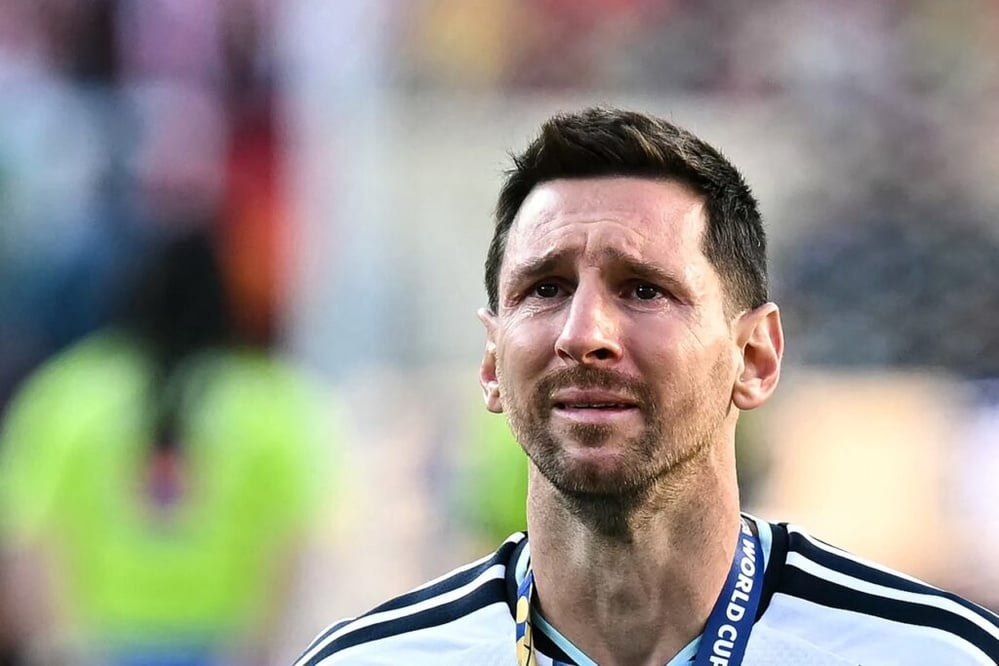
2026 © Helium Trades
Privacy Policy & Disclosure
* Disclaimer: Nothing on this website constitutes investment advice, performance data or any recommendation that any particular security, portfolio of securities, transaction or investment strategy is suitable for any specific person. Helium Trades is not responsible in any way for the accuracy
of any model predictions or price data. Any mention of a particular security and related prediction data is not a recommendation to buy or sell that security. Investments in securities involve the risk of loss. Past performance is no guarantee of future results. Helium Trades is not responsible for any of your investment decisions,
you should consult a financial expert before engaging in any transaction.
Helium Research Assistant

How can I help you today?
Ask any question about this page.