See whether Helium helps you make better-informed decisions. Try every Pro Trader feature for 30 days. No credit card required.
Try every Pro Trader feature for 30 days. No credit card required.
November 19, 2026 · 0 shares
Measured, attribution-heavy conflict reporting that foregrounds Saudi state and coalition accounts while incorporating Houthi claims and UN humanitarian data.
Helium Analysis
Limitations: Supplied text is duplicated and truncated and includes unrelated related-link headlines; only the main report body was analyzed.
·
8 of 56 available dimensions scored; omitted dimensions are not treated as neutral.
·
Verified supporting quotes for 8 of 8 scored dimensions.
Claim: The report attributes the attack and damage claims to Saudi officials rather than presenting them as the publication's own unmediated assertions.
“Saudi Arabia says a Houthi attack has hit a tower in the financial district of its capital, Riyadh, causing “material damage” but no injuries.” · exact text match
Why: The key claim is explicitly attributed to Saudi Arabia, supporting an objective rather than subjective framing.
Claim: The incident is reported in dry, factual terms with casualty and damage details rather than sensational language.
“Saudi Arabia says a Houthi attack has hit a tower in the financial district of its capital, Riyadh, causing “material damage” but no injuries.” · exact text match
Why: The wording is restrained and specifies damage and absence of injuries, indicating low sensationalism.
Claim: The article mainly recounts reported events and official statements rather than advancing a policy prescription.
“Saudi Arabia’s Foreign Ministry condemned Houthi attacks on civilian sites, including the tower.” · exact text match
Why: The quoted condemnation is reported descriptively; the publisher does not itself prescribe action.
Claim: The report is centrally about a geopolitical attack, official condemnations, military responses, and a terrorist designation.
“Saudi Arabia’s Foreign Ministry condemned Houthi attacks on civilian sites, including the tower.” · exact text match
“Yemen’s Presidential Leadership Council issued a decision designating the Houthi group a “terrorist” organisation on Monday.” · exact text match
Why: These are explicitly political and security-related state actions, making the content highly political.
Claim: The report relies heavily on state, coalition, UN, and internationally recognized government sources.
“The Civil Defence agency said on Thursday that the attack by the Houthis damaged the tower and nearby buildings.” · exact text match
“UNICEF, said in a statement that “more than 330,000 people, including an estimated 174,000 children, have been displaced since the beginning of the renewed military escalations”.” · exact text match
Counterevidence:
“the group-run Saba news agency reported, without providing further details.” · exact text match
Why: The sourcing pattern is predominantly official and institutional, supporting a modest pro-establishment classification.
Claim: The report uses named agencies, official statements, and caveats to support its central claims.
“The Civil Defence agency said on Thursday that the attack by the Houthis damaged the tower and nearby buildings.” · exact text match
“the group-run Saba news agency reported, without providing further details.” · exact text match
Why: Visible sourcing and an explicit caveat about missing details support above-average credibility in the supplied text.
Claim: The report presents evidence and attributed claims in a factual, non-fallacious manner.
“Saudi Arabia says a Houthi attack has hit a tower in the financial district of its capital, Riyadh, causing “material damage” but no injuries.” · exact text match
“the group-run Saba news agency reported, without providing further details.” · exact text match
Why: Attribution and explicit caveats indicate rational reporting rather than irrational or fallacious framing.
Claim: The report attributes contested claims and flags when a source provided no further details.
“On November 8, the Houthis said they hit the Aramco building in Riyadh’s financial district, causing visible damage to several floors, though Saudi authorities said the damage followed an interception.” · exact text match
“the group-run Saba news agency reported, without providing further details.” · exact text match
Why: It juxtaposes competing claims and notes missing detail, supporting a high integrity classification.
Supplied text is duplicated and truncated and includes unrelated related-link headlines; only the main report body was analyzed.
November 19, 2026 · 0 shares
Attributed wire-service framing reports coalition and Houthi claims with caveats about unconfirmed damage and details, producing largely neutral but official-source-heavy conflict coverage.
Helium Analysis
Limitations: Article text is truncated and includes duplicated passages plus unrelated sidebar headlines, limiting completeness assessment.
·
56 of 56 available dimensions scored; omitted dimensions are not treated as neutral.
·
Verified supporting quotes for 8 of 56 scored dimensions.
Claim: The report attributes missile and damage claims to the Saudi-led coalition and airstrike claims to a Houthi-run agency rather than presenting them as independently verified.
“A Saudi-led coalition said on Thursday it had dealt with a missile threat launched by Yemen’s Houthis towards Riyadh” · exact text match
“the Houthi-run Saba news agency reported shortly afterwards without providing further details.” · exact text match
Why: Sourcing and caveats make the account predominantly objective.
Claim: Coverage describes the missile threat and damage in measured terms, not with sensational language.
“An initial assessment showed debris had fallen and material damage had been reported, the coalition said” · exact text match
“It later said the danger had passed.” · exact text match
Why: Measured, procedural wording avoids sensationalism.
Claim: The text reports events and attributed statements without recommending policies or actions.
“Saudi aircraft carried out airstrikes on the Houthi-controlled Yemeni capital Sanaa early on Thursday” · exact text match
“The coalition also said it had intercepted and destroyed a cruise missile launched by the Houthis towards Saudi Arabia’s southern region” · exact text match
Why: Descriptive reporting, with no prescriptions.
Claim: The report centers on military and state actors in a geopolitical conflict.
“Crown Prince Mohammed bin Salman had met US central command chief Admiral Brad Cooper” · exact text match
“Fighting between Saudi Arabia and the Houthis has intensified” · exact text match
Why: The content is centrally political and military.
Claim: Official coalition, Saudi state, and U.S. military sources are foregrounded, with “internationally recognised government” used as a legitimizing descriptor.
“Saudi state news agency SPA reported Crown Prince Mohammed bin Salman had met US central command chief Admiral Brad Cooper in Riyadh.” · exact text match
“the Saudi-led coalition, which backs Yemen’s internationally recognised government” · exact text match
Why: Source selection and terminology lean toward established authorities, though Houthi-run reporting is also cited.
Claim: Attribution to named agencies and explicit caveats support high internal credibility.
“A Saudi-led coalition said on Thursday it had dealt with a missile threat launched by Yemen’s Houthis towards Riyadh” · exact text match
“There was no immediate confirmation from Saudi authorities or the Houthis.” · exact text match
Why: Visible sourcing and uncertainty handling support credibility.
Claim: The report presents attributed claims and caveats rather than irrational inference or emotive reasoning.
“A Saudi-led coalition said on Thursday it had dealt with a missile threat launched by Yemen’s Houthis towards Riyadh” · exact text match
“There was no immediate confirmation from Saudi authorities or the Houthis.” · exact text match
Why: Sourcing and uncertainty handling show mostly rational reporting.
Claim: The report transparently attributes claims and notes absent confirmation, supporting internal fairness and honesty.
“the Houthi-run Saba news agency reported shortly afterwards without providing further details.” · exact text match
“There was no immediate confirmation from Saudi authorities or the Houthis.” · exact text match
Why: Explicit attribution and uncertainty signals support integrity.
Article text is truncated and includes duplicated passages plus unrelated sidebar headlines, limiting completeness assessment.
November 21, 2026 · 0 shares
Attribution-heavy conflict reporting foregrounds official coalition interception claims and Houthi threats, with mildly establishment-friendly labeling of Yemen’s 'internationally recognised government' and 'Houthi rebels'.
Helium Analysis
Limitations: The supplied text includes unrelated related-link headlines after the main report and no byline; analysis is limited to the main conflict report.
·
6 of 56 available dimensions scored; omitted dimensions are not treated as neutral.
·
Verified supporting quotes for 6 of 6 scored dimensions.
Claim: The main conflict report relies on attributed statements and avoids evaluative opinion.
“The Saudi-led coalition supporting Yemen’s internationally recognised government said it has intercepted three ballistic missiles fired by Yemen’s Houthi rebels towards Riyadh” · exact text match
Why: Official claims are explicitly attributed rather than asserted as the journalist's own judgment.
Claim: The main report uses factual, restrained language rather than sensational adjectives or alarmist framing.
“It was the third day in a row that Saudi Arabia issued and quickly lifted alerts for Riyadh.” · exact text match
Why: Emergency alerts are reported as events without emotive modifiers or dramatization.
Claim: The report centers on a geopolitical and military conflict involving state actors and a non-state armed movement.
“The Saudi-led coalition supporting Yemen’s internationally recognised government said it has intercepted three ballistic missiles fired by Yemen’s Houthi rebels towards Riyadh” · exact text match
Why: The subject matter is explicitly political-military, involving sovereignty, coalition operations, and armed threats.
Claim: The report uses legitimacy-laden labels that mildly favor the internationally recognised government and coalition side.
“Yemen’s internationally recognised government has defended the coalition strikes on Hodeidah port” · exact text match
“fired by Yemen’s Houthi rebels” · exact text match
Why: Terms like 'internationally recognised government' and 'rebels' reflect established diplomatic framing, though Houthi threats and UN concern are also reported.
Claim: The report shows substantial sourcing and attribution across multiple parties.
“Coalition spokesperson Turki al-Malki said the strikes hit “operational capabilities at Hodeidah port that were used in smuggling operations and the transport of weapons and ballistic missiles”, the AFP news agency reported.” · exact text match
“The United Nations said it was following the escalation “with concern”.” · exact text match
Why: Multiple named or institutional sources are cited, and contested claims are attributed.
Claim: The report presents coalition claims alongside Houthi threats and UN warnings without suppressing contrary viewpoints.
“The Houthis responded by threatening to attack Jeddah and other Saudi Red Sea ports, warning airlines that Saudi Arabia’s airspace was “unsafe”.” · exact text match
“The United Nations said it was following the escalation “with concern”.” · exact text match
Why: Inclusion of Houthi responses and UN concerns indicates fair, attributed representation rather than one-sided omission.
The supplied text includes unrelated related-link headlines after the main report and no byline; analysis is limited to the main conflict report.
November 21, 2026 · 0 shares
The report is largely neutral wire-service attribution with a mild establishment tilt toward the Saudi-led coalition and its US-aligned side, while still relaying Houthi threats and claims.
Helium Analysis
Limitations: The supplied text is a short, partly duplicated wire report with page chrome; bias assessment is limited to the quoted report content.
·
12 of 56 available dimensions scored; omitted dimensions are not treated as neutral.
·
Verified supporting quotes for 12 of 12 scored dimensions.
Claim: No left-right domestic ideological framing is evident; the report stays on geopolitical conflict.
“The Saudi-led coalition fighting Yemen's Iran-aligned Houthis said on Saturday (Nov 21) that it had intercepted and destroyed three ballistic missiles fired towards Riyadh” · exact text match
Why: The quoted framing is military/geopolitical and does not invoke liberal or conservative domestic policy themes.
Claim: Military developments are attributed to named actors rather than asserted as univocal fact.
“The Saudi-led coalition fighting Yemen's Iran-aligned Houthis said on Saturday (Nov 21) that it had intercepted and destroyed three ballistic missiles fired towards Riyadh” · exact text match
“The Houthis threatened to target Saudi Red Sea ports, warned airlines to avoid Saudi airspace, and claimed attacks on a power station and port in southern Saudi Arabia.” · exact text match
Why: Both coalition assertions and Houthi claims are reported with attribution.
Claim: Vivid detail is limited to a restrained eyewitness observation, not sensational escalation.
“A Reuters witness saw a projectile streak across the sky in Riyadh shortly before hearing a loud bang.” · exact text match
Why: The only vivid image is tied to direct observation and is not amplified with emotive language.
Claim: Report describes events and context without advocating a policy response.
“The latest attack followed an escalation in cross-border strikes on Friday, when the Saudi-led coalition said it had struck the Red Sea port of Hodeidah and carried out operations targeting Houthi missile and drone capabilities in the capital Sanaa.” · exact text match
Why: The sentence is descriptive and attributive rather than prescriptive.
Claim: The report is explicitly geopolitical and centered on state/military conflict.
“The Saudi-led coalition fighting Yemen's Iran-aligned Houthis said on Saturday (Nov 21) that it had intercepted and destroyed three ballistic missiles fired towards Riyadh” · exact text match
“The developments signalled a worsening of a conflict that has brought a humanitarian crisis to Yemen and severe disruption to Saudi Arabia, in parallel with the US-led war against Iran.” · exact text match
Why: Cross-border missile strikes, coalition operations, and Iran/US framing make the content highly political.
Claim: Mild establishment framing legitimizes the Saudi/US-aligned side through descriptors.
“Saudi Arabia, a close ally of the United States, has been backing Yemen's internationally recognised government for more than a decade in a war that was fought to a stalemate in 2022 but reignited in July.” · exact text match
Why: The 'close ally' and 'internationally recognised government' descriptors give the coalition side a legitimacy frame, though the report also relays Houthi claims.
Claim: Tone remains measured despite reporting violence and humanitarian harm.
“The developments signalled a worsening of a conflict that has brought a humanitarian crisis to Yemen and severe disruption to Saudi Arabia, in parallel with the US-led war against Iran.” · exact text match
Why: Negative events are described in neutral, attributed language rather than emotionally charged rhetoric.
Claim: Attribution is applied to both coalition assertions and Houthi claims.
“The Saudi-led coalition fighting Yemen's Iran-aligned Houthis said on Saturday (Nov 21) that it had intercepted and destroyed three ballistic missiles fired towards Riyadh” · exact text match
“The Houthis threatened to target Saudi Red Sea ports, warned airlines to avoid Saudi airspace, and claimed attacks on a power station and port in southern Saudi Arabia.” · exact text match
Why: The report uses parallel 'said/claimed' attribution rather than crediting one side's claims as fact and dismissing the other's.
Claim: Credibility is supported by clear attribution, a witness account, and contextual background.
“A Reuters witness saw a projectile streak across the sky in Riyadh shortly before hearing a loud bang.” · exact text match
“The Saudi-led coalition fighting Yemen's Iran-aligned Houthis said on Saturday (Nov 21) that it had intercepted and destroyed three ballistic missiles fired towards Riyadh” · exact text match
Why: The text shows sourcing, eyewitness observation, and uncertainty markers such as 'said' and 'claimed'.
Claim: Report grounds claims in attribution and an eyewitness account rather than emotive speculation.
“A Reuters witness saw a projectile streak across the sky in Riyadh shortly before hearing a loud bang.” · exact text match
Why: Concrete observation and attributed claims support a rational/empirical presentation.
Claim: Report distinguishes claims from observations and includes competing sides.
“The Saudi-led coalition fighting Yemen's Iran-aligned Houthis said on Saturday (Nov 21) that it had intercepted and destroyed three ballistic missiles fired towards Riyadh” · exact text match
“The Houthis threatened to target Saudi Red Sea ports, warned airlines to avoid Saudi airspace, and claimed attacks on a power station and port in southern Saudi Arabia.” · exact text match
Why: Attribution and inclusion of Houthi threats/claims show observable fairness and honesty signals.
Claim: The report supplies concise causal and historical context for the escalation.
“Saudi Arabia, a close ally of the United States, has been backing Yemen's internationally recognised government for more than a decade in a war that was fought to a stalemate in 2022 but reignited in July.” · exact text match
Why: It links current attacks to the longer Yemen conflict and prior stalemate/reignition.
The supplied text is a short, partly duplicated wire report with page chrome; bias assessment is limited to the quoted report content.
November 19, 2026 · 0 shares
Measured, attribution-heavy conflict reporting that foregrounds Saudi state and coalition accounts while incorporating Houthi claims and UN humanitarian data.
Helium Analysis
Limitations: Supplied text is duplicated and truncated and includes unrelated related-link headlines; only the main report body was analyzed.
·
8 of 56 available dimensions scored; omitted dimensions are not treated as neutral.
·
Verified supporting quotes for 8 of 8 scored dimensions.
Claim: The report attributes the attack and damage claims to Saudi officials rather than presenting them as the publication's own unmediated assertions.
“Saudi Arabia says a Houthi attack has hit a tower in the financial district of its capital, Riyadh, causing “material damage” but no injuries.” · exact text match
Why: The key claim is explicitly attributed to Saudi Arabia, supporting an objective rather than subjective framing.
Claim: The incident is reported in dry, factual terms with casualty and damage details rather than sensational language.
“Saudi Arabia says a Houthi attack has hit a tower in the financial district of its capital, Riyadh, causing “material damage” but no injuries.” · exact text match
Why: The wording is restrained and specifies damage and absence of injuries, indicating low sensationalism.
Claim: The article mainly recounts reported events and official statements rather than advancing a policy prescription.
“Saudi Arabia’s Foreign Ministry condemned Houthi attacks on civilian sites, including the tower.” · exact text match
Why: The quoted condemnation is reported descriptively; the publisher does not itself prescribe action.
Claim: The report is centrally about a geopolitical attack, official condemnations, military responses, and a terrorist designation.
“Saudi Arabia’s Foreign Ministry condemned Houthi attacks on civilian sites, including the tower.” · exact text match
“Yemen’s Presidential Leadership Council issued a decision designating the Houthi group a “terrorist” organisation on Monday.” · exact text match
Why: These are explicitly political and security-related state actions, making the content highly political.
Claim: The report relies heavily on state, coalition, UN, and internationally recognized government sources.
“The Civil Defence agency said on Thursday that the attack by the Houthis damaged the tower and nearby buildings.” · exact text match
“UNICEF, said in a statement that “more than 330,000 people, including an estimated 174,000 children, have been displaced since the beginning of the renewed military escalations”.” · exact text match
Counterevidence:
“the group-run Saba news agency reported, without providing further details.” · exact text match
Why: The sourcing pattern is predominantly official and institutional, supporting a modest pro-establishment classification.
Claim: The report uses named agencies, official statements, and caveats to support its central claims.
“The Civil Defence agency said on Thursday that the attack by the Houthis damaged the tower and nearby buildings.” · exact text match
“the group-run Saba news agency reported, without providing further details.” · exact text match
Why: Visible sourcing and an explicit caveat about missing details support above-average credibility in the supplied text.
Claim: The report presents evidence and attributed claims in a factual, non-fallacious manner.
“Saudi Arabia says a Houthi attack has hit a tower in the financial district of its capital, Riyadh, causing “material damage” but no injuries.” · exact text match
“the group-run Saba news agency reported, without providing further details.” · exact text match
Why: Attribution and explicit caveats indicate rational reporting rather than irrational or fallacious framing.
Claim: The report attributes contested claims and flags when a source provided no further details.
“On November 8, the Houthis said they hit the Aramco building in Riyadh’s financial district, causing visible damage to several floors, though Saudi authorities said the damage followed an interception.” · exact text match
“the group-run Saba news agency reported, without providing further details.” · exact text match
Why: It juxtaposes competing claims and notes missing detail, supporting a high integrity classification.
Supplied text is duplicated and truncated and includes unrelated related-link headlines; only the main report body was analyzed.
The report is attribution-heavy and uncertainty-conscious, pairing the 'Iran-backed Houthi' missile account with official caveats and a Houthi-run airstrike report.
Helium Analysis
Limitations: Aggregated Reuters copy with no author byline; analysis is limited to the short supplied text and its sparse sourcing.
·
8 of 56 available dimensions scored; omitted dimensions are not treated as neutral.
·
Verified supporting quotes for 8 of 8 scored dimensions.
Claim: The report attributes the missile-strike account to sources and explicitly notes unresolved official causation.
“Reuters reported, citing three sources familiar with the incident.” · exact text match
“Saudi authorities have not publicly identified the exact cause of the damage to the tower.” · exact text match
Why: Multiple-source attribution and explicit uncertainty indicate objective rather than subjective framing.
Claim: The report describes damage and evacuations with restrained, attributed language rather than dramatic emphasis.
“No casualties were immediately reported.” · exact text match
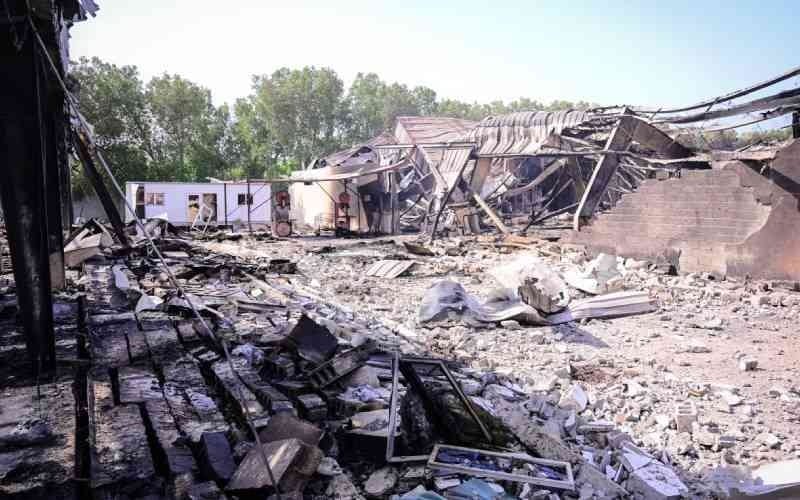
“Entrances to Riyadh's King Abdullah Financial District (KAFD) were closed and people were evacuated following the incident, according to the Reuters report.” · exact text match
Why: Factual, attributed descriptions of damage and evacuation reduce sensational framing.
Claim: The text confines itself to event description and official assessment without policy recommendation.
“An initial assessment indicated that debris had fallen, causing material damage.” · exact text match
“No casualties were immediately reported.” · exact text match
Why: Representative sentences are descriptive and no prescriptive advocacy appears in the report.
Claim: The report foregrounds the Houthis' Iranian alignment and frames the incident within a Saudi-Houthi/Iran conflict.
“Suspected Iran-Backed Houthi Missile Damages PIF Tower in Riyadh, Coalition Says Threat Intercepted.” · exact text match
“The incident marks another escalation in attacks targeting Saudi Arabia amid renewed fighting between the kingdom and the Iran-aligned Houthi group in Yemen.” · exact text match
Why: The headline and closing context explicitly cast the event in geopolitical alignment terms, supporting a political-framing score.
Claim: The report uses restrained factual language without clear positive or negative emotional emphasis.
“No casualties were immediately reported.” · exact text match
“The Houthis did not immediately claim responsibility for the attack.” · exact text match
Why: Neutral casualty and responsibility statements indicate measured emotional neutrality.
Claim: The report provides sourcing, attribution, and a note of Houthi non-claim, supporting visible credibility.
“Reuters reported, citing three sources familiar with the incident.” · exact text match
“The Houthis did not immediately claim responsibility for the attack.” · exact text match
Why: Sourcing, attribution, and explicit uncertainty are visible credibility signals.
Claim: The report separates the coalition's initial assessment from the still-unidentified cause of the tower damage.
“An initial assessment indicated that debris had fallen, causing material damage.” · exact text match
“Saudi authorities have not publicly identified the exact cause of the damage to the tower.” · exact text match
Why: Distinguishing official assessment from unresolved causation supports evidence-bound rational framing.
Claim: The report discloses uncertainty and includes a competing Houthi-run account of Saudi airstrikes.
“Saudi authorities have not publicly identified the exact cause of the damage to the tower.” · exact text match
“Meanwhile, the Houthi-run Saba news agency reported that Saudi aircraft had carried out airstrikes on the group-controlled capital, Sanaa, early Thursday.” · exact text match
Why: Explicit uncertainty and inclusion of the Houthi-run agency's account indicate fair, honest handling.
Aggregated Reuters copy with no author byline; analysis is limited to the short supplied text and its sparse sourcing.
November 21, 2026 · 0 shares
Official Pakistani condemnation and Saudi solidarity lead the framing, with coalition and Reuters claims attributed and only some casualty claims explicitly marked unverified.
Helium Analysis
Limitations: No author byline or publication date is provided; the supplied text includes aggregated related headlines and Reuters-sourced war background, so classification is limited to the substantive report.
·
7 of 56 available dimensions scored; omitted dimensions are not treated as neutral.
·
Verified supporting quotes for 7 of 7 scored dimensions.
Claim: The report distinguishes attributed claims from independently verified facts.
“Reuters could not independently verify those claims.” · exact text match
Why: The explicit verification caveat indicates an objective epistemic stance.
Claim: The report is primarily descriptive of events and attributed statements rather than prescriptive.
“Saudi-led coalition fighting Yemen's Houthis said on Saturday it had intercepted and destroyed three ballistic missiles fired towards Riyadh” · exact text match
Why: The passage recounts a military statement without advocating a policy.
Claim: The report is framed around official political and military responses to the attack.
“Prime Minister Shehbaz Sharif on Saturday strongly condemned the Houthi attack on the King Abdullah Financial District in Riyadh” · exact text match
Why: The central action is a head-of-government condemnation of a military strike, making the content highly political.
Claim: Casualty claims are reported in a measured, attributed manner.
“The Houthis say the attacks have killed civilians, including women and children.
Reuters could not independently verify those claims.”
· exact text match
Why: The tone does not amplify emotion; it adds a verification caveat.
Claim: Credibility is supported by clear attribution to Reuters and explicit uncertainty about unverified claims.
“Reuters could not independently verify those claims.” · exact text match
Why: Attribution and acknowledged uncertainty are visible credibility signals.
Claim: The report includes an opposing party's casualty claim while flagging that it could not be independently verified.
“The Houthis say the attacks have killed civilians, including women and children.
Reuters could not independently verify those claims.”
· exact text match
Why: Including and qualifying a claim from the Houthi side signals fairness and honesty.
Claim: The report supplies historical and diplomatic context for the current attack.
“Yemen’s civil war reignited in July after a UN-brokered truce collapsed, months into a wider Middle East war.” · exact text match
Why: Background on the Yemen war and defense agreements indicates above-average contextual intelligence.
No author byline or publication date is provided; the supplied text includes aggregated related headlines and Reuters-sourced war background, so classification is limited to the substantive report.
November 19, 2026 · 0 shares
Measured, attribution-heavy conflict reporting that foregrounds Saudi state and coalition accounts while incorporating Houthi claims and UN humanitarian data.
Helium Analysis
Limitations: Supplied text is duplicated and truncated and includes unrelated related-link headlines; only the main report body was analyzed.
·
8 of 56 available dimensions scored; omitted dimensions are not treated as neutral.
·
Verified supporting quotes for 8 of 8 scored dimensions.
Claim: The report attributes the attack and damage claims to Saudi officials rather than presenting them as the publication's own unmediated assertions.
“Saudi Arabia says a Houthi attack has hit a tower in the financial district of its capital, Riyadh, causing “material damage” but no injuries.” · exact text match
Why: The key claim is explicitly attributed to Saudi Arabia, supporting an objective rather than subjective framing.
Claim: The incident is reported in dry, factual terms with casualty and damage details rather than sensational language.
“Saudi Arabia says a Houthi attack has hit a tower in the financial district of its capital, Riyadh, causing “material damage” but no injuries.” · exact text match
Why: The wording is restrained and specifies damage and absence of injuries, indicating low sensationalism.
Claim: The article mainly recounts reported events and official statements rather than advancing a policy prescription.
“Saudi Arabia’s Foreign Ministry condemned Houthi attacks on civilian sites, including the tower.” · exact text match
Why: The quoted condemnation is reported descriptively; the publisher does not itself prescribe action.
Claim: The report is centrally about a geopolitical attack, official condemnations, military responses, and a terrorist designation.
“Saudi Arabia’s Foreign Ministry condemned Houthi attacks on civilian sites, including the tower.” · exact text match
“Yemen’s Presidential Leadership Council issued a decision designating the Houthi group a “terrorist” organisation on Monday.” · exact text match
Why: These are explicitly political and security-related state actions, making the content highly political.
Claim: The report relies heavily on state, coalition, UN, and internationally recognized government sources.
“The Civil Defence agency said on Thursday that the attack by the Houthis damaged the tower and nearby buildings.” · exact text match
“UNICEF, said in a statement that “more than 330,000 people, including an estimated 174,000 children, have been displaced since the beginning of the renewed military escalations”.” · exact text match
Counterevidence:
“the group-run Saba news agency reported, without providing further details.” · exact text match
Why: The sourcing pattern is predominantly official and institutional, supporting a modest pro-establishment classification.
Claim: The report uses named agencies, official statements, and caveats to support its central claims.
“The Civil Defence agency said on Thursday that the attack by the Houthis damaged the tower and nearby buildings.” · exact text match
“the group-run Saba news agency reported, without providing further details.” · exact text match
Why: Visible sourcing and an explicit caveat about missing details support above-average credibility in the supplied text.
Claim: The report presents evidence and attributed claims in a factual, non-fallacious manner.
“Saudi Arabia says a Houthi attack has hit a tower in the financial district of its capital, Riyadh, causing “material damage” but no injuries.” · exact text match
“the group-run Saba news agency reported, without providing further details.” · exact text match
Why: Attribution and explicit caveats indicate rational reporting rather than irrational or fallacious framing.
Claim: The report attributes contested claims and flags when a source provided no further details.
“On November 8, the Houthis said they hit the Aramco building in Riyadh’s financial district, causing visible damage to several floors, though Saudi authorities said the damage followed an interception.” · exact text match
“the group-run Saba news agency reported, without providing further details.” · exact text match
Why: It juxtaposes competing claims and notes missing detail, supporting a high integrity classification.
Supplied text is duplicated and truncated and includes unrelated related-link headlines; only the main report body was analyzed.
November 21, 2026 · 0 shares
Attribution-heavy conflict reporting foregrounds official coalition interception claims and Houthi threats, with mildly establishment-friendly labeling of Yemen’s 'internationally recognised government' and 'Houthi rebels'.
Helium Analysis
Limitations: The supplied text includes unrelated related-link headlines after the main report and no byline; analysis is limited to the main conflict report.
·
6 of 56 available dimensions scored; omitted dimensions are not treated as neutral.
·
Verified supporting quotes for 6 of 6 scored dimensions.
Claim: The main conflict report relies on attributed statements and avoids evaluative opinion.
“The Saudi-led coalition supporting Yemen’s internationally recognised government said it has intercepted three ballistic missiles fired by Yemen’s Houthi rebels towards Riyadh” · exact text match
Why: Official claims are explicitly attributed rather than asserted as the journalist's own judgment.
Claim: The main report uses factual, restrained language rather than sensational adjectives or alarmist framing.
“It was the third day in a row that Saudi Arabia issued and quickly lifted alerts for Riyadh.” · exact text match
Why: Emergency alerts are reported as events without emotive modifiers or dramatization.
Claim: The report centers on a geopolitical and military conflict involving state actors and a non-state armed movement.
“The Saudi-led coalition supporting Yemen’s internationally recognised government said it has intercepted three ballistic missiles fired by Yemen’s Houthi rebels towards Riyadh” · exact text match
Why: The subject matter is explicitly political-military, involving sovereignty, coalition operations, and armed threats.
Claim: The report uses legitimacy-laden labels that mildly favor the internationally recognised government and coalition side.
“Yemen’s internationally recognised government has defended the coalition strikes on Hodeidah port” · exact text match
“fired by Yemen’s Houthi rebels” · exact text match
Why: Terms like 'internationally recognised government' and 'rebels' reflect established diplomatic framing, though Houthi threats and UN concern are also reported.
Claim: The report shows substantial sourcing and attribution across multiple parties.
“Coalition spokesperson Turki al-Malki said the strikes hit “operational capabilities at Hodeidah port that were used in smuggling operations and the transport of weapons and ballistic missiles”, the AFP news agency reported.” · exact text match
“The United Nations said it was following the escalation “with concern”.” · exact text match
Why: Multiple named or institutional sources are cited, and contested claims are attributed.
Claim: The report presents coalition claims alongside Houthi threats and UN warnings without suppressing contrary viewpoints.
“The Houthis responded by threatening to attack Jeddah and other Saudi Red Sea ports, warning airlines that Saudi Arabia’s airspace was “unsafe”.” · exact text match
“The United Nations said it was following the escalation “with concern”.” · exact text match
Why: Inclusion of Houthi responses and UN concerns indicates fair, attributed representation rather than one-sided omission.
The supplied text includes unrelated related-link headlines after the main report and no byline; analysis is limited to the main conflict report.
November 21, 2026 · 0 shares
The report is largely neutral and attributive, presenting Saudi-coalition claims as sourced statements while using standard geopolitical legitimacy labels that mildly favor the Saudi/US establishment perspective.
Helium Analysis
Limitations: The supplied text includes related-headline snippets that were excluded as page chrome; scores reflect the main Reuters report.
·
7 of 56 available dimensions scored; omitted dimensions are not treated as neutral.
·
Verified supporting quotes for 7 of 7 scored dimensions.
Claim: Missile-interception claims are attributed to Saudi/coalition sources rather than presented as the reporter's own assertion.
“Saudi Arabia says it intercepted three Houthi missiles targeting Riyadh.” · exact text match
“The Saudi-led coalition fighting Yemen's Iran-aligned Houthis said on Saturday it had intercepted and destroyed three ballistic missiles fired towards Riyadh” · exact text match
Why: Repeated attribution supports an objective, non-subjective framing.
Claim: The report uses restrained eyewitness description rather than hyperbolic or sensational language.
“A Reuters witness saw a projectile streak across the sky in Riyadh shortly before hearing a loud bang.” · exact text match
Why: The vivid but factual witness detail is not sensationalized.
Claim: The report is explicitly framed around geopolitical conflict involving Saudi Arabia, the Houthis, the US, and Iran.
“The Saudi-led coalition fighting Yemen's Iran-aligned Houthis said on Saturday it had intercepted and destroyed three ballistic missiles fired towards Riyadh” · exact text match
“in parallel with the US-led war against Iran” · exact text match
Why: Named state and non-state actors and war framing make the content highly political.
Claim: The report uses standard official-legitimacy labels and notes Saudi Arabia's US alliance, mildly aligning with an establishment perspective.
“Saudi Arabia, a close ally of the United States, has been backing Yemen's internationally recognized government for more than a decade in a war that was fought to a stalemate in 2022 but reignited in July.” · exact text match
“The Saudi-led coalition fighting Yemen's Iran-aligned Houthis said on Saturday it had intercepted and destroyed three ballistic missiles fired towards Riyadh” · exact text match
Why: The legitimacy labels and US-alliance detail are standard establishment framing, though not strongly editorialized.
Claim: The report uses named sourcing, attribution, and an eyewitness account, supporting credible reporting.
“The Saudi-led coalition fighting Yemen's Iran-aligned Houthis said on Saturday it had intercepted and destroyed three ballistic missiles fired towards Riyadh” · exact text match
“A Reuters witness saw a projectile streak across the sky in Riyadh shortly before hearing a loud bang.” · exact text match
Why: Visible attribution and eyewitness corroboration are strong credibility signals, though contested claims remain unverified.
Claim: The report presents events in a measured chronological and causal sequence with attribution.
“The latest attack followed an escalation in cross-border strikes on Friday, when the Saudi-led coalition said it had struck the Red Sea port of Hodeidah and carried out operations targeting Houthi missile and drone capabilities in the capital Sanaa.” · exact text match
Why: Sequential context and attribution support rational rather than irrational framing.
Claim: The report includes Houthi actions and warnings as well as humanitarian impact, supporting a fair rather than one-sided account.
“The Houthis threatened to target Saudi Red Sea ports, warned airlines to avoid Saudi airspace, and claimed attacks on a power station and port in southern Saudi Arabia.” · exact text match
“The developments signaled a worsening of a conflict that has brought a humanitarian crisis to Yemen and severe disruption to Saudi Arabia, in parallel with the US-led war against Iran.” · exact text match
Why: Inclusion of Houthi claims and Yemeni humanitarian costs supports high but not perfect integrity.
The supplied text includes related-headline snippets that were excluded as page chrome; scores reflect the main Reuters report.
November 21, 2026 · 0 shares
The report is largely neutral wire-service attribution with a mild establishment tilt toward the Saudi-led coalition and its US-aligned side, while still relaying Houthi threats and claims.
Helium Analysis
Limitations: The supplied text is a short, partly duplicated wire report with page chrome; bias assessment is limited to the quoted report content.
·
12 of 56 available dimensions scored; omitted dimensions are not treated as neutral.
·
Verified supporting quotes for 12 of 12 scored dimensions.
Claim: No left-right domestic ideological framing is evident; the report stays on geopolitical conflict.
“The Saudi-led coalition fighting Yemen's Iran-aligned Houthis said on Saturday (Nov 21) that it had intercepted and destroyed three ballistic missiles fired towards Riyadh” · exact text match
Why: The quoted framing is military/geopolitical and does not invoke liberal or conservative domestic policy themes.
Claim: Military developments are attributed to named actors rather than asserted as univocal fact.
“The Saudi-led coalition fighting Yemen's Iran-aligned Houthis said on Saturday (Nov 21) that it had intercepted and destroyed three ballistic missiles fired towards Riyadh” · exact text match
“The Houthis threatened to target Saudi Red Sea ports, warned airlines to avoid Saudi airspace, and claimed attacks on a power station and port in southern Saudi Arabia.” · exact text match
Why: Both coalition assertions and Houthi claims are reported with attribution.
Claim: Vivid detail is limited to a restrained eyewitness observation, not sensational escalation.
“A Reuters witness saw a projectile streak across the sky in Riyadh shortly before hearing a loud bang.” · exact text match
Why: The only vivid image is tied to direct observation and is not amplified with emotive language.
Claim: Report describes events and context without advocating a policy response.
“The latest attack followed an escalation in cross-border strikes on Friday, when the Saudi-led coalition said it had struck the Red Sea port of Hodeidah and carried out operations targeting Houthi missile and drone capabilities in the capital Sanaa.” · exact text match
Why: The sentence is descriptive and attributive rather than prescriptive.
Claim: The report is explicitly geopolitical and centered on state/military conflict.
“The Saudi-led coalition fighting Yemen's Iran-aligned Houthis said on Saturday (Nov 21) that it had intercepted and destroyed three ballistic missiles fired towards Riyadh” · exact text match
“The developments signalled a worsening of a conflict that has brought a humanitarian crisis to Yemen and severe disruption to Saudi Arabia, in parallel with the US-led war against Iran.” · exact text match
Why: Cross-border missile strikes, coalition operations, and Iran/US framing make the content highly political.
Claim: Mild establishment framing legitimizes the Saudi/US-aligned side through descriptors.
“Saudi Arabia, a close ally of the United States, has been backing Yemen's internationally recognised government for more than a decade in a war that was fought to a stalemate in 2022 but reignited in July.” · exact text match
Why: The 'close ally' and 'internationally recognised government' descriptors give the coalition side a legitimacy frame, though the report also relays Houthi claims.
Claim: Tone remains measured despite reporting violence and humanitarian harm.
“The developments signalled a worsening of a conflict that has brought a humanitarian crisis to Yemen and severe disruption to Saudi Arabia, in parallel with the US-led war against Iran.” · exact text match
Why: Negative events are described in neutral, attributed language rather than emotionally charged rhetoric.
Claim: Attribution is applied to both coalition assertions and Houthi claims.
“The Saudi-led coalition fighting Yemen's Iran-aligned Houthis said on Saturday (Nov 21) that it had intercepted and destroyed three ballistic missiles fired towards Riyadh” · exact text match
“The Houthis threatened to target Saudi Red Sea ports, warned airlines to avoid Saudi airspace, and claimed attacks on a power station and port in southern Saudi Arabia.” · exact text match
Why: The report uses parallel 'said/claimed' attribution rather than crediting one side's claims as fact and dismissing the other's.
Claim: Credibility is supported by clear attribution, a witness account, and contextual background.
“A Reuters witness saw a projectile streak across the sky in Riyadh shortly before hearing a loud bang.” · exact text match
“The Saudi-led coalition fighting Yemen's Iran-aligned Houthis said on Saturday (Nov 21) that it had intercepted and destroyed three ballistic missiles fired towards Riyadh” · exact text match
Why: The text shows sourcing, eyewitness observation, and uncertainty markers such as 'said' and 'claimed'.
Claim: Report grounds claims in attribution and an eyewitness account rather than emotive speculation.
“A Reuters witness saw a projectile streak across the sky in Riyadh shortly before hearing a loud bang.” · exact text match
Why: Concrete observation and attributed claims support a rational/empirical presentation.
Claim: Report distinguishes claims from observations and includes competing sides.
“The Saudi-led coalition fighting Yemen's Iran-aligned Houthis said on Saturday (Nov 21) that it had intercepted and destroyed three ballistic missiles fired towards Riyadh” · exact text match
“The Houthis threatened to target Saudi Red Sea ports, warned airlines to avoid Saudi airspace, and claimed attacks on a power station and port in southern Saudi Arabia.” · exact text match
Why: Attribution and inclusion of Houthi threats/claims show observable fairness and honesty signals.
Claim: The report supplies concise causal and historical context for the escalation.
“Saudi Arabia, a close ally of the United States, has been backing Yemen's internationally recognised government for more than a decade in a war that was fought to a stalemate in 2022 but reignited in July.” · exact text match
Why: It links current attacks to the longer Yemen conflict and prior stalemate/reignition.
The supplied text is a short, partly duplicated wire report with page chrome; bias assessment is limited to the quoted report content.
November 18, 2026 · 0 shares
The report maintains largely neutral wire-service attribution and uncertainty, but its use of 'Iran-backed Houthis' and 'internationally recognised government' gives the Saudi-led side a legitimizing frame.
Helium Analysis
Limitations: The supplied text includes duplicated paragraphs and subscription boilerplate; scoring is based only on the substantive AFP news report, and some geopolitical labels are standard wire-service usage.
·
8 of 56 available dimensions scored; omitted dimensions are not treated as neutral.
·
Verified supporting quotes for 7 of 8 scored dimensions.
Claim: The report is predominantly objective, relying on attributed observations and official statements.
“AFP journalists and residents said” · exact text match
“The location of the explosion was not immediately clear” · exact text match
Why: Attribution and caveats minimize subjective framing.
Claim: The report is measured, using limited vivid witness language rather than sensational escalation.
“The location of the explosion was not immediately clear” · exact text match
“A powerful explosion rattled homes” · exact text match
Why: The vivid phrase is balanced by explicit uncertainty.
Claim: The report describes events and claims without prescribing policy or action.
“The Saudi-led coalition fighting the Houthis also said they intercepted two cruise missiles” · exact text match
“Residents said Wednesday's explosion came without warning” · not found in supplied text
Why: The prose is event-reporting rather than advocacy.
Claim: The report is substantially political, centering on state and non-state belligerents in the Yemen conflict.
“Yemen's Iran-backed Houthis” · exact text match
“The Saudi-led coalition, which backs neighbouring Yemen's internationally recognised government in its war with the Houthis” · exact text match
Why: The content concerns military-political conflict and governance legitimacy.
Claim: The report uses conventional legitimizing labels for the Saudi-backed Yemeni government and a foreign-backing label for the Houthis.
“Yemen's Iran-backed Houthis” · exact text match
“internationally recognised government” · exact text match
Counterevidence:
“The Houthis' military spokesman Yahya Saree later said on X” · not found in supplied text
Why: These labels frame the Houthis as externally backed and the rival government as internationally legitimate.
Claim: The report shows visible sourcing, attribution, and cautious phrasing.
“AFP journalists and residents said” · exact text match
“according to the United Nations” · exact text match
Why: News-agency observation, UN figures, and caveats support credibility in the supplied text.
Claim: The report's account is calibrated to available evidence and avoids asserting disputed causes as fact.
“The location of the explosion was not immediately clear” · exact text match
“according to the United Nations” · exact text match
Why: It explicitly notes uncertainty and attributes casualty figures to the UN.
Claim: Contested claims are attributed and uncertainty is openly flagged.
“The location of the explosion was not immediately clear” · exact text match
“The Saudi-led coalition fighting the Houthis also said they intercepted two cruise missiles” · exact text match
Why: Attribution and caveats indicate fair, honest reporting in the supplied text.
The supplied text includes duplicated paragraphs and subscription boilerplate; scoring is based only on the substantive AFP news report, and some geopolitical labels are standard wire-service usage.
November 18, 2026 · 0 shares
The brief presents a one-sided coalition account as straight news, relying on an official military spokesperson and repeating the loaded phrase 'legitimate military targets' without independent corroboration.
The Houthis are a Yemeni armed movement; the Coalition to Restore Legitimacy in Yemen is a Saudi-led military coalition intervening in Yemen's civil war, and Riyadh is Saudi Arabia's capital.
Helium Analysis
Limitations: Sparse supplied text with no byline and limited context constrains certainty; several dimensions were omitted for lack of evidence.
·
12 of 56 available dimensions scored; omitted dimensions are not treated as neutral.
·
Verified supporting quotes for 12 of 12 scored dimensions.
Claim: The report is mostly attributed factual reporting, though it adopts coalition terminology.
“A cruise missile launched by the Houthi group toward Riyadh Region was intercepted and destroyed, Official Spokesperson for the Coalition to Restore Legitimacy in Yemen Maj. Gen. Turki Al Malki said Wednesday.” · exact text match
Counterevidence:
“resulting in the destruction of 60 legitimate military targets” · exact text match
Why: Attribution limits subjectivity, but the loaded target description qualifies it.
Claim: The prose is restrained and event-focused rather than sensational.
“was intercepted and destroyed” · exact text match
Why: No emotive or dramatic language.
Claim: The article describes military events without prescribing policy.
“Earlier, the Coalition announced that it had carried out a precision military operation targeting the Houthi group's capabilities” · exact text match
Why: It reports actions rather than advocating a course.
Claim: The brief frames a coalition military operation as a legitimate success.
“resulting in the destruction of 60 legitimate military targets” · exact text match
Why: Military action is presented in legitimate terms with no diplomatic or antiwar framing.
Claim: The report concerns a military coalition's cross-border missile interception and strikes in Yemen.
“Official Spokesperson for the Coalition to Restore Legitimacy in Yemen Maj. Gen. Turki Al Malki said Wednesday.” · exact text match
Why: The subject is an international military and political conflict.
Claim: The brief gives a single-source, decontextualized account of a complex conflict.
“Earlier, the Coalition announced that it had carried out a precision military operation targeting the Houthi group's capabilities” · exact text match
Why: No context, Houthi response, or civilian impact is included.
Claim: The report's factual basis is a single official military spokesperson.
“Official Spokesperson for the Coalition to Restore Legitimacy in Yemen Maj. Gen. Turki Al Malki said Wednesday.” · exact text match
Why: The central claim is authorized solely by official coalition authority.
Claim: Contested military claims are stated as settled facts within the announced result.
“resulting in the destruction of 60 legitimate military targets” · exact text match
Why: The target count and legitimacy are reported without uncertainty in the announced result.
Claim: The report relies on and repeats the coalition's official account and legitimacy framing.
“Official Spokesperson for the Coalition to Restore Legitimacy in Yemen Maj. Gen. Turki Al Malki said Wednesday.” · exact text match
Why: Central sourcing and terminology align with official coalition authority.
Claim: The tone is neutral and unemotional.
“was intercepted and destroyed” · exact text match
Why: No positive or negative emotional language.
Claim: Visible attribution is present but limited to a single official source without independent verification.
“Maj.
Gen.
Turki Al Malki said Wednesday.”
· exact text match
Why: Attribution supports credibility, while single-source reporting limits it.
Claim: The brief uses one-sided coalition framing and the loaded phrase 'legitimate military targets' without countervailing context.
“resulting in the destruction of 60 legitimate military targets” · exact text match
Why: Loaded terminology and material omission shape interpretation, though attribution reduces confidence.
Sparse supplied text with no byline and limited context constrains certainty; several dimensions were omitted for lack of evidence.
November 18, 2026 · 0 shares
No substantive article was supplied; the available text is only a headline list and page metadata, so publisher framing cannot be assessed.
Helium Analysis Limitations: The supplied text contains only a list of headlines, dates, weather, and copyright metadata rather than a substantive article, limiting any framing or bias analysis.
The supplied text contains only a list of headlines, dates, weather, and copyright metadata rather than a substantive article, limiting any framing or bias analysis.
The report relays Saudi-led coalition claims in legitimizing language without independent verification or Houthi response, producing a one-sided pro-coalition framing.
The Saudi-led coalition has intervened in Yemen's civil war since 2015 against the Houthi movement, which controls much of northern Yemen; the conflict has involved cross-border Houthi missile and drone attacks on Saudi Arabia and coalition airstrikes in Yemen.
Helium Analysis
Limitations: The supplied text is a truncated scrape that mixes the brief report with unrelated related-post headlines and comment boilerplate; analysis is limited to the substantive report.
·
12 of 56 available dimensions scored; omitted dimensions are not treated as neutral.
·
Verified supporting quotes for 12 of 12 scored dimensions.
Claim: The report presents the coalition's interception account as attributed fact without independent verification or opposing view.
“The official spokesperson for the Coalition to Restore Legitimacy in Yemen, Major General Turki Al-Maliki, announced today, Saturday, the interception and destruction of three ballistic missiles launched by the Houthi group toward Riyadh.” · exact text match
Why: The report uses attributed factual statements rather than overt opinion, though it relies on a single official source.
Claim: The main report uses neutral, factual wording rather than heightened or emotive language.
“The coalition spokesperson also announced the interception and destruction of a drone launched by the Houthi group toward the Southern Region.” · exact text match
Why: The sentence reports an event in plain terms without sensational adjectives.
Claim: The article is descriptive, reporting military events without advocacy or recommendations.
“The coalition spokesperson also announced the interception and destruction of a drone launched by the Houthi group toward the Southern Region.” · exact text match
Why: No prescriptive or advocacy language appears in the substantive report.
Claim: The report foregrounds military interception and airstrikes rather than diplomatic or civilian-protection frames.
“Over the past few hours, the coalition had launched intensive airstrikes targeting Houthi military sites and barracks in Taiz, Hudaidah, Sana’a, and Saada, including the Port of Hudaidah.” · exact text match
Why: Military action is the central frame, though the report does not advocate escalation.
Claim: The report highlights cross-border missile and drone threats toward Saudi population centers.
“three ballistic missiles launched by the Houthi group toward Riyadh” · exact text match
Why: The threat framing is present but stated in restrained news language.
Claim: The report is centered on a military-political conflict between the Saudi-led coalition and the Houthi group.
“The official spokesperson for the Coalition to Restore Legitimacy in Yemen, Major General Turki Al-Maliki, announced today, Saturday, the interception and destruction of three ballistic missiles launched by the Houthi group toward Riyadh.” · exact text match
Why: The entire substantive report concerns political/military actors and hostilities.
Claim: The report frames coalition airstrikes only as targeting Houthi military sites and barracks, omitting civilian harm or contested targeting.
“targeting Houthi military sites and barracks” · exact text match
Why: The clean military-target framing simplifies a complex conflict without caveats.
Claim: The article states the coalition's airstrikes as accomplished fact without attributing that sentence to a source.
“Over the past few hours, the coalition had launched intensive airstrikes targeting Houthi military sites and barracks in Taiz, Hudaidah, Sana’a, and Saada, including the Port of Hudaidah.” · exact text match
Why: The unqualified assertion exceeds the attributed sourcing used elsewhere.
Claim: The report adopts the coalition's legitimacy framing in describing the conflict.
“Coalition to Restore Legitimacy in Yemen” · exact text match
Why: The official name embeds a pro-coalition legitimacy claim, and the report uses it without distancing.
Claim: The report adopts the Saudi-led coalition's legitimizing self-designation and amplifies its official account.
“The official spokesperson for the Coalition to Restore Legitimacy in Yemen, Major General Turki Al-Maliki, announced today, Saturday, the interception and destruction of three ballistic missiles launched by the Houthi group toward Riyadh.” · exact text match
Why: Using the coalition's official name and sole account favors the established military authority.
Claim: The report provides clear attribution for its central interception claims but lacks independent corroboration or Houthi response.
“The official spokesperson for the Coalition to Restore Legitimacy in Yemen, Major General Turki Al-Maliki, announced today, Saturday, the interception and destruction of three ballistic missiles launched by the Houthi group toward Riyadh.” · exact text match
Why: Attribution is a positive credibility signal, while single-source official reporting limits trust.
Claim: The report transparently attributes the interception claims to the coalition spokesperson.
“The official spokesperson for the Coalition to Restore Legitimacy in Yemen, Major General Turki Al-Maliki, announced today, Saturday, the interception and destruction of three ballistic missiles launched by the Houthi group toward Riyadh.” · exact text match
Why: Clear attribution supports honesty signals, but one-sided sourcing limits the score.
The supplied text is a truncated scrape that mixes the brief report with unrelated related-post headlines and comment boilerplate; analysis is limited to the substantive report.
November 18, 2026 · 0 shares
The report is attribution-heavy and cautious, repeatedly flagging undisclosed military details while presenting Iranian and U.S. claims without editorial judgment.
Helium Analysis
Limitations: The supplied text includes duplicated navigation elements and a truncated early version of the article, though a fuller repeated article body is present; completeness and exact publication context are therefore limited.
·
12 of 56 available dimensions scored; omitted dimensions are not treated as neutral.
·
Verified supporting quotes for 12 of 12 scored dimensions.
Claim: The account is presented as attributed fact and official claims, with little subjective narration.
“The Bahrain Defence Force General Command said Bahrain air defences stopped several Iranian air attacks, Turkey’s Anadolu Agency reported.” · exact text match
Why: Attribution to a named military command and news agency keeps the framing objective.
Claim: The report avoids sensational language despite covering attacks and alerts.
“The command did not say what weapons Iran used or how many.
It gave no details about deaths, injuries or damage.”
· exact text match
Why: It withholds dramatic detail and explicitly notes missing information.
Claim: The report describes military events and official statements without prescribing publisher-preferred policy responses.
“Kuwait also reported a threat from the air on Wednesday.
Its army said it was dealing with hostile drones, and that explosions residents heard came from interceptions, Al Jazeera reported.”
· exact text match
Why: The publisher relays events and claims without recommending action.
Claim: Although the content concerns attacks and alerts, the publisher reports them in a restrained manner without fearmongering.
“Bahrain’s Interior Ministry also issued two alerts, Anadolu said.
They asked citizens to go to safe places.”
· exact text match
Why: The alert is reported as an official measure, not amplified with alarming language.
Claim: The article is overwhelmingly factual and attributed, with almost no opinion language.
“The Bahrain Defence Force General Command said Bahrain air defences stopped several Iranian air attacks, Turkey’s Anadolu Agency reported.” · exact text match
Why: The statement is a reported claim rather than an evaluative opinion.
Claim: The subject is geopolitical and military conflict involving Iran, the U.S., Bahrain, and Kuwait, making the report highly political.
“However, fire between US forces and Iran has increased this week.” · exact text match
Why: The reported events directly concern interstate military and security conflict.
Claim: The article avoids excessive certainty by noting that reports did not link Wednesday’s incidents to earlier events.
“The reports did not link Wednesday’s attacks to earlier events.” · exact text match
Why: Explicit limits on inference indicate low overconfidence.
Claim: The article attributes claims to named agencies and commands and flags missing details, supporting high visible credibility.
“US Central Command said the drones were intercepted, with no damage to US equipment and no injuries to US personnel, according to Gulf News.” · exact text match
“The command did not say what weapons Iran used or how many.
It gave no details about deaths, injuries or damage.”
· exact text match
Why: Named attribution and explicit uncertainty about missing details indicate careful reporting.
Claim: The report frames the events through attributed military statements and acknowledged unknowns rather than emotive or conspiratorial reasoning.
“The command did not say what weapons Iran used or how many.
It gave no details about deaths, injuries or damage.”
· exact text match
Why: Explicit caveats and sourcing show rational, evidence-limited reporting.
Claim: The article largely reports statements and explicitly declines to link incidents without evidence.
“The reports did not link Wednesday’s attacks to earlier events.” · exact text match
Why: It restrains speculation rather than forecasting.
Claim: The report does not use deceptive urgency or loaded framing; it attributes claims and notes omissions.
“The command did not say what weapons Iran used or how many.
It gave no details about deaths, injuries or damage.”
· exact text match
Why: Transparent caveats and attributed statements indicate little observable manipulation.
Claim: The report includes Iranian, Bahraini, Kuwaiti, and U.S. claims while acknowledging what is not known.
“On Tuesday, Iran’s Islamic Revolutionary Guard Corps (IRGC), a branch of its armed forces, said it launched a drone attack on a US military radar at Sheikh Isa Air Base in Bahrain.” · exact text match
“US Central Command said the drones were intercepted, with no damage to US equipment and no injuries to US personnel, according to Gulf News.” · exact text match
Why: Presenting competing official claims and caveats supports a fairness-oriented presentation.
The supplied text includes duplicated navigation elements and a truncated early version of the article, though a fuller repeated article body is present; completeness and exact publication context are therefore limited.
November 22, 2026 · 0 shares
The report is largely neutral and attribution-heavy, presenting Bahraini and Iranian military claims as official statements while noting missing site details and the absence of immediate US comment.
Helium Analysis
Limitations: The supplied text includes unrelated link headlines and a subscription prompt after the substantive report; analysis relied only on the Bahrain–Iran report.
·
9 of 56 available dimensions scored; omitted dimensions are not treated as neutral.
·
Verified supporting quotes for 9 of 9 scored dimensions.
Claim: The report presents official claims and material outcomes rather than the publisher's interpretations.
“Bahrain said on Saturday that an Iranian attack had hit a civilian industrial facility” · exact text match
“US Central Command did not immediately respond to a Reuters request for comment on the Guards’ account.” · exact text match
Why: Both key statements are attributed to named actors, and the publisher does not add its own characterization.
Claim: The account uses restrained damage and casualty reporting rather than dramatic or emotive language.
“causing a fire but no injuries” · exact text match
“caused material damage but no casualties” · exact text match
Why: The wording reports concrete outcomes in measured terms without sensational adjectives.
Claim: The report describes events and official statements without recommending a policy response.
“Bahrain said on Saturday that an Iranian attack had hit a civilian industrial facility” · exact text match
“It gave no details on the location or nature of the site.” · exact text match
Why: There is no prescriptive language or policy advocacy in the supplied substantive text.
Claim: The central subject is state military conflict involving Iran, Bahrain, and US positions.
“Iran’s Revolutionary Guards said they launched a missile-and-drone attack” · exact text match
“intercepted a number of Iranian aerial attacks” · exact text match
Why: The content is framed around state military attacks and defenses, making the dimension clearly political/geopolitical.
Claim: The reporting uses neutral outcome language and does not amplify fear or outrage.
“causing a fire but no injuries” · exact text match
“caused material damage but no casualties” · exact text match
Why: Casualty and damage descriptions are factual and unemotional.
Claim: Claims are attributed, missing details flagged, and a request for US comment noted.
“US Central Command did not immediately respond to a Reuters request for comment on the Guards’ account.” · exact text match
“It gave no details on the location or nature of the site.” · exact text match
Why: These are visible sourcing, uncertainty, and response-seeking practices that support credibility.
Claim: The report distinguishes the two sides' statements and avoids unsupported causal claims.
“Bahrain said on Saturday that an Iranian attack had hit a civilian industrial facility” · exact text match
“Iran’s Revolutionary Guards said they launched a missile-and-drone attack” · exact text match
Why: It attributes each account separately and does not assert motives beyond the quoted retaliation claim.
Claim: The report presents both Bahraini and Iranian official accounts with attribution.
“Bahrain said on Saturday that an Iranian attack had hit a civilian industrial facility” · exact text match
“Iran’s Revolutionary Guards said they launched a missile-and-drone attack” · exact text match
Why: Including the adversary's statement and the US nonresponse is a fairness signal.
Claim: The report includes relevant operational context and source qualifications.
“home to the US Navy’s Fifth Fleet” · exact text match
“It gave no details on the location or nature of the site.” · exact text match
Why: It supplies contextual details and notes information limits rather than overstating what is known.
The supplied text includes unrelated link headlines and a subscription prompt after the substantive report; analysis relied only on the Bahrain–Iran report.
November 18, 2026 · 0 shares
No substantive article was supplied; the available text is only a headline list and page metadata, so publisher framing cannot be assessed.
Helium Analysis Limitations: The supplied text contains only a list of headlines, dates, weather, and copyright metadata rather than a substantive article, limiting any framing or bias analysis.
The supplied text contains only a list of headlines, dates, weather, and copyright metadata rather than a substantive article, limiting any framing or bias analysis.
November 21, 2026 · 0 shares
Official Pakistani condemnation and Saudi solidarity lead the framing, with coalition and Reuters claims attributed and only some casualty claims explicitly marked unverified.
Helium Analysis
Limitations: No author byline or publication date is provided; the supplied text includes aggregated related headlines and Reuters-sourced war background, so classification is limited to the substantive report.
·
7 of 56 available dimensions scored; omitted dimensions are not treated as neutral.
·
Verified supporting quotes for 7 of 7 scored dimensions.
Claim: The report distinguishes attributed claims from independently verified facts.
“Reuters could not independently verify those claims.” · exact text match
Why: The explicit verification caveat indicates an objective epistemic stance.
Claim: The report is primarily descriptive of events and attributed statements rather than prescriptive.
“Saudi-led coalition fighting Yemen's Houthis said on Saturday it had intercepted and destroyed three ballistic missiles fired towards Riyadh” · exact text match
Why: The passage recounts a military statement without advocating a policy.
Claim: The report is framed around official political and military responses to the attack.
“Prime Minister Shehbaz Sharif on Saturday strongly condemned the Houthi attack on the King Abdullah Financial District in Riyadh” · exact text match
Why: The central action is a head-of-government condemnation of a military strike, making the content highly political.
Claim: Casualty claims are reported in a measured, attributed manner.
“The Houthis say the attacks have killed civilians, including women and children.
Reuters could not independently verify those claims.”
· exact text match
Why: The tone does not amplify emotion; it adds a verification caveat.
Claim: Credibility is supported by clear attribution to Reuters and explicit uncertainty about unverified claims.
“Reuters could not independently verify those claims.” · exact text match
Why: Attribution and acknowledged uncertainty are visible credibility signals.
Claim: The report includes an opposing party's casualty claim while flagging that it could not be independently verified.
“The Houthis say the attacks have killed civilians, including women and children.
Reuters could not independently verify those claims.”
· exact text match
Why: Including and qualifying a claim from the Houthi side signals fairness and honesty.
Claim: The report supplies historical and diplomatic context for the current attack.
“Yemen’s civil war reignited in July after a UN-brokered truce collapsed, months into a wider Middle East war.” · exact text match
Why: Background on the Yemen war and defense agreements indicates above-average contextual intelligence.
No author byline or publication date is provided; the supplied text includes aggregated related headlines and Reuters-sourced war background, so classification is limited to the substantive report.
November 21, 2026 · 0 shares
Largely wire-style and attribution-heavy, the report foregrounds Pakistani and Saudi-led coalition official condemnations of Houthi attacks while noting some casualty claims were unverified.
Helium Analysis
Limitations: The supplied text contains duplicated paragraphs and an apparent truncation, so extraction and scoring rely on the non-duplicated substantive content.
·
10 of 56 available dimensions scored; omitted dimensions are not treated as neutral.
·
Verified supporting quotes for 10 of 10 scored dimensions.
Claim: The report presents events through attributed official statements and a Reuters witness rather than the publisher’s subjective commentary.
“A Reuters witness saw a projectile streak across the sky in Riyadh shortly before hearing a loud bang.” · exact text match
Why: Firsthand witness and attributed claims support an objective, reportorial stance.
Claim: The report avoids sensational publisher framing and includes a caveat on unverified casualty figures.
“The casualty figures could not be independently verified.” · exact text match
Why: Caveat and attribution temper dramatic conflict claims.
Claim: The report is primarily descriptive and attributes condemnations and military claims to officials.
“The Yemeni army said on Friday that 193 Houthi leaders and fighters were killed or wounded” · exact text match
Why: Military claims are reported descriptively rather than as the publisher’s prescription.
Claim: The report is explicitly about a geopolitical conflict and official diplomatic positions.
“Houthi attacks on Saudi Arabia put regional stability at stake, says PM.” · exact text match
Why: Headline and content focus on state security and diplomacy, making the piece highly political.
Claim: Authority figures and official military sources carry the central claims.
“Prime Minister Shehbaz Sharif, on Saturday, strongly condemned the Houthi attack on the King Abdullah Financial District in Riyadh” · exact text match
“The Yemeni army said on Friday that 193 Houthi leaders and fighters were killed or wounded” · exact text match
Why: The report relies heavily on official condemnations and military statements rather than independent analysis.
Claim: The report centers Pakistani and Saudi-led coalition official perspectives on the attack.
“Pakistan stands in unwavering solidarity with our brotherly Kingdom of Saudi Arabia and its people.” · exact text match
Why: The story’s headline and sourcing foreground official state positions, with limited Houthi voice beyond threats and claims.
Claim: The report uses named sources, a Reuters witness, and an explicit unverified-claims caveat.
“The casualty figures could not be independently verified.” · exact text match
Why: Visible attribution and caveats support credibility in the supplied text.
Claim: The report is largely rational and attributional rather than emotionally inflammatory.
“The casualty figures could not be independently verified.” · exact text match
Why: Explicitly flags unverified casualty claims and attributes military claims to named sources.
Claim: The report shows fairness and honesty by attributing claims and noting unverified data.
“The casualty figures could not be independently verified.” · exact text match
Why: Acknowledging unverified casualty claims is an integrity signal.
Claim: The report provides contextual background and distinguishes unverified military claims.
“Saudi Arabia, a close ally of the United States, has been backing Yemen’s internationally recognised government for more than a decade in a war that was fought to a stalemate in 2022 but reignited in July.” · exact text match
“The casualty figures could not be independently verified.” · exact text match
Why: Context and caveats indicate above-average informational quality.
The supplied text contains duplicated paragraphs and an apparent truncation, so extraction and scoring rely on the non-duplicated substantive content.
November 21, 2026 · 0 shares
The report’s framing is heavily official-source driven, presenting Saudi-led coalition interception claims and Saudi Civil Defense alerts without independent confirmation or a Houthi response.
Yemen’s Houthi group and the Saudi-led coalition are opposing parties in the Yemen conflict.
Helium Analysis
Limitations: The supplied text is very brief, duplicated, and includes unrelated headline fragments, so the assessment is limited to the main Saudi-Houthi item.
·
7 of 56 available dimensions scored; omitted dimensions are not treated as neutral.
·
Verified supporting quotes for 7 of 7 scored dimensions.
Claim: The main report is framed as an attributed account of official statements rather than subjective commentary.
“The Saudi-led coalition said early Sunday that its air defenses had intercepted and destroyed a ballistic missile launched by Yemen’s Houthi group toward western Saudi Arabia.” · exact text match
Why: Use of attribution and factual sequence markers keeps the style predominantly objective.
Claim: The language describing the missile interception is factual and lacks sensational modifiers.
“The Saudi-led coalition said early Sunday that its air defenses had intercepted and destroyed a ballistic missile launched by Yemen’s Houthi group toward western Saudi Arabia.” · exact text match
Why: No hyperbolic or fear-amplifying prose appears in the main report.
Claim: The text reports events and official statements without advocating a course of action.
“The interception followed attacks Saturday, when the coalition said air defenses intercepted three ballistic missiles headed toward the capital Riyadh and two drones – one bound for the Riyadh region and the other for southern Saudi Arabia.” · exact text match
Why: It is descriptive reporting rather than prescriptive commentary.
Claim: The report centers on a cross-border military attack and interception in the Saudi-Houthi conflict.
“The Saudi-led coalition said early Sunday that its air defenses had intercepted and destroyed a ballistic missile launched by Yemen’s Houthi group toward western Saudi Arabia.” · exact text match
Why: The subject matter is geopolitical and military, making political content central.
Claim: The core events are reported through statements from the Saudi-led coalition and Saudi Civil Defense.
“The Saudi-led coalition said early Sunday that its air defenses had intercepted and destroyed a ballistic missile launched by Yemen’s Houthi group toward western Saudi Arabia.” · exact text match
“Saudi Civil Defense also issued an alert warning of danger in the Mecca region.” · exact text match
Why: The account rests on official military and civil-defense authority claims.
Claim: The report’s factual assertions are sourced to the Saudi-led coalition and Saudi Civil Defense without independent corroboration.
“The Saudi-led coalition said early Sunday that its air defenses had intercepted and destroyed a ballistic missile launched by Yemen’s Houthi group toward western Saudi Arabia.” · exact text match
“Saudi Civil Defense also issued an alert warning of danger in the Mecca region.” · exact text match
Why: Clear official attribution is present, but reliance on one side limits visible credibility.
Claim: The central claims are explicitly attributed to official Saudi sources rather than presented as the reporter’s own findings.
“The Saudi-led coalition said early Sunday that its air defenses had intercepted and destroyed a ballistic missile launched by Yemen’s Houthi group toward western Saudi Arabia.” · exact text match
Why: Visible attribution supports a moderate integrity score, though the report remains one-sided.
The supplied text is very brief, duplicated, and includes unrelated headline fragments, so the assessment is limited to the main Saudi-Houthi item.
November 21, 2026 · 0 shares
The report is largely neutral and attributive, presenting Saudi-coalition claims as sourced statements while using standard geopolitical legitimacy labels that mildly favor the Saudi/US establishment perspective.
Helium Analysis
Limitations: The supplied text includes related-headline snippets that were excluded as page chrome; scores reflect the main Reuters report.
·
7 of 56 available dimensions scored; omitted dimensions are not treated as neutral.
·
Verified supporting quotes for 7 of 7 scored dimensions.
Claim: Missile-interception claims are attributed to Saudi/coalition sources rather than presented as the reporter's own assertion.
“Saudi Arabia says it intercepted three Houthi missiles targeting Riyadh.” · exact text match
“The Saudi-led coalition fighting Yemen's Iran-aligned Houthis said on Saturday it had intercepted and destroyed three ballistic missiles fired towards Riyadh” · exact text match
Why: Repeated attribution supports an objective, non-subjective framing.
Claim: The report uses restrained eyewitness description rather than hyperbolic or sensational language.
“A Reuters witness saw a projectile streak across the sky in Riyadh shortly before hearing a loud bang.” · exact text match
Why: The vivid but factual witness detail is not sensationalized.
Claim: The report is explicitly framed around geopolitical conflict involving Saudi Arabia, the Houthis, the US, and Iran.
“The Saudi-led coalition fighting Yemen's Iran-aligned Houthis said on Saturday it had intercepted and destroyed three ballistic missiles fired towards Riyadh” · exact text match
“in parallel with the US-led war against Iran” · exact text match
Why: Named state and non-state actors and war framing make the content highly political.
Claim: The report uses standard official-legitimacy labels and notes Saudi Arabia's US alliance, mildly aligning with an establishment perspective.
“Saudi Arabia, a close ally of the United States, has been backing Yemen's internationally recognized government for more than a decade in a war that was fought to a stalemate in 2022 but reignited in July.” · exact text match
“The Saudi-led coalition fighting Yemen's Iran-aligned Houthis said on Saturday it had intercepted and destroyed three ballistic missiles fired towards Riyadh” · exact text match
Why: The legitimacy labels and US-alliance detail are standard establishment framing, though not strongly editorialized.
Claim: The report uses named sourcing, attribution, and an eyewitness account, supporting credible reporting.
“The Saudi-led coalition fighting Yemen's Iran-aligned Houthis said on Saturday it had intercepted and destroyed three ballistic missiles fired towards Riyadh” · exact text match
“A Reuters witness saw a projectile streak across the sky in Riyadh shortly before hearing a loud bang.” · exact text match
Why: Visible attribution and eyewitness corroboration are strong credibility signals, though contested claims remain unverified.
Claim: The report presents events in a measured chronological and causal sequence with attribution.
“The latest attack followed an escalation in cross-border strikes on Friday, when the Saudi-led coalition said it had struck the Red Sea port of Hodeidah and carried out operations targeting Houthi missile and drone capabilities in the capital Sanaa.” · exact text match
Why: Sequential context and attribution support rational rather than irrational framing.
Claim: The report includes Houthi actions and warnings as well as humanitarian impact, supporting a fair rather than one-sided account.
“The Houthis threatened to target Saudi Red Sea ports, warned airlines to avoid Saudi airspace, and claimed attacks on a power station and port in southern Saudi Arabia.” · exact text match
“The developments signaled a worsening of a conflict that has brought a humanitarian crisis to Yemen and severe disruption to Saudi Arabia, in parallel with the US-led war against Iran.” · exact text match
Why: Inclusion of Houthi claims and Yemeni humanitarian costs supports high but not perfect integrity.
The supplied text includes related-headline snippets that were excluded as page chrome; scores reflect the main Reuters report.
November 19, 2026 · 0 shares
Measured, attribution-heavy conflict reporting that foregrounds Saudi state and coalition accounts while incorporating Houthi claims and UN humanitarian data.
Helium Analysis Limitations: Supplied text is duplicated and truncated and includes unrelated related-link headlines; only the main report body was analyzed. · 8 of 56 available dimensions scored; omitted dimensions are not treated as neutral. · Verified supporting quotes for 8 of 8 scored dimensions.
Claim: The report attributes the attack and damage claims to Saudi officials rather than presenting them as the publication's own unmediated assertions.
“Saudi Arabia says a Houthi attack has hit a tower in the financial district of its capital, Riyadh, causing “material damage” but no injuries.” · exact text match
Why: The key claim is explicitly attributed to Saudi Arabia, supporting an objective rather than subjective framing.
Claim: The incident is reported in dry, factual terms with casualty and damage details rather than sensational language.
“Saudi Arabia says a Houthi attack has hit a tower in the financial district of its capital, Riyadh, causing “material damage” but no injuries.” · exact text match
Why: The wording is restrained and specifies damage and absence of injuries, indicating low sensationalism.
Claim: The article mainly recounts reported events and official statements rather than advancing a policy prescription.
“Saudi Arabia’s Foreign Ministry condemned Houthi attacks on civilian sites, including the tower.” · exact text match
Why: The quoted condemnation is reported descriptively; the publisher does not itself prescribe action.
Claim: The report is centrally about a geopolitical attack, official condemnations, military responses, and a terrorist designation.
“Saudi Arabia’s Foreign Ministry condemned Houthi attacks on civilian sites, including the tower.” · exact text match
“Yemen’s Presidential Leadership Council issued a decision designating the Houthi group a “terrorist” organisation on Monday.” · exact text match
Why: These are explicitly political and security-related state actions, making the content highly political.
Claim: The report relies heavily on state, coalition, UN, and internationally recognized government sources.
“The Civil Defence agency said on Thursday that the attack by the Houthis damaged the tower and nearby buildings.” · exact text match
“UNICEF, said in a statement that “more than 330,000 people, including an estimated 174,000 children, have been displaced since the beginning of the renewed military escalations”.” · exact text match
Counterevidence:
“the group-run Saba news agency reported, without providing further details.” · exact text match
Why: The sourcing pattern is predominantly official and institutional, supporting a modest pro-establishment classification.
Claim: The report uses named agencies, official statements, and caveats to support its central claims.
“The Civil Defence agency said on Thursday that the attack by the Houthis damaged the tower and nearby buildings.” · exact text match
“the group-run Saba news agency reported, without providing further details.” · exact text match
Why: Visible sourcing and an explicit caveat about missing details support above-average credibility in the supplied text.
Claim: The report presents evidence and attributed claims in a factual, non-fallacious manner.
“Saudi Arabia says a Houthi attack has hit a tower in the financial district of its capital, Riyadh, causing “material damage” but no injuries.” · exact text match
“the group-run Saba news agency reported, without providing further details.” · exact text match
Why: Attribution and explicit caveats indicate rational reporting rather than irrational or fallacious framing.
Claim: The report attributes contested claims and flags when a source provided no further details.
“On November 8, the Houthis said they hit the Aramco building in Riyadh’s financial district, causing visible damage to several floors, though Saudi authorities said the damage followed an interception.” · exact text match
“the group-run Saba news agency reported, without providing further details.” · exact text match
Why: It juxtaposes competing claims and notes missing detail, supporting a high integrity classification.
Supplied text is duplicated and truncated and includes unrelated related-link headlines; only the main report body was analyzed.
November 19, 2026 · 0 shares
Attributed wire-service framing reports coalition and Houthi claims with caveats about unconfirmed damage and details, producing largely neutral but official-source-heavy conflict coverage.
Helium Analysis Limitations: Article text is truncated and includes duplicated passages plus unrelated sidebar headlines, limiting completeness assessment. · 56 of 56 available dimensions scored; omitted dimensions are not treated as neutral. · Verified supporting quotes for 8 of 56 scored dimensions.
Claim: The report attributes missile and damage claims to the Saudi-led coalition and airstrike claims to a Houthi-run agency rather than presenting them as independently verified.
“A Saudi-led coalition said on Thursday it had dealt with a missile threat launched by Yemen’s Houthis towards Riyadh” · exact text match
“the Houthi-run Saba news agency reported shortly afterwards without providing further details.” · exact text match
Why: Sourcing and caveats make the account predominantly objective.
Claim: Coverage describes the missile threat and damage in measured terms, not with sensational language.
“An initial assessment showed debris had fallen and material damage had been reported, the coalition said” · exact text match
“It later said the danger had passed.” · exact text match
Why: Measured, procedural wording avoids sensationalism.
Claim: The text reports events and attributed statements without recommending policies or actions.
“Saudi aircraft carried out airstrikes on the Houthi-controlled Yemeni capital Sanaa early on Thursday” · exact text match
“The coalition also said it had intercepted and destroyed a cruise missile launched by the Houthis towards Saudi Arabia’s southern region” · exact text match
Why: Descriptive reporting, with no prescriptions.
Claim: The report centers on military and state actors in a geopolitical conflict.
“Crown Prince Mohammed bin Salman had met US central command chief Admiral Brad Cooper” · exact text match
“Fighting between Saudi Arabia and the Houthis has intensified” · exact text match
Why: The content is centrally political and military.
Claim: Official coalition, Saudi state, and U.S. military sources are foregrounded, with “internationally recognised government” used as a legitimizing descriptor.
“Saudi state news agency SPA reported Crown Prince Mohammed bin Salman had met US central command chief Admiral Brad Cooper in Riyadh.” · exact text match
“the Saudi-led coalition, which backs Yemen’s internationally recognised government” · exact text match
Why: Source selection and terminology lean toward established authorities, though Houthi-run reporting is also cited.
Claim: Attribution to named agencies and explicit caveats support high internal credibility.
“A Saudi-led coalition said on Thursday it had dealt with a missile threat launched by Yemen’s Houthis towards Riyadh” · exact text match
“There was no immediate confirmation from Saudi authorities or the Houthis.” · exact text match
Why: Visible sourcing and uncertainty handling support credibility.
Claim: The report presents attributed claims and caveats rather than irrational inference or emotive reasoning.
“A Saudi-led coalition said on Thursday it had dealt with a missile threat launched by Yemen’s Houthis towards Riyadh” · exact text match
“There was no immediate confirmation from Saudi authorities or the Houthis.” · exact text match
Why: Sourcing and uncertainty handling show mostly rational reporting.
Claim: The report transparently attributes claims and notes absent confirmation, supporting internal fairness and honesty.
“the Houthi-run Saba news agency reported shortly afterwards without providing further details.” · exact text match
“There was no immediate confirmation from Saudi authorities or the Houthis.” · exact text match
Why: Explicit attribution and uncertainty signals support integrity.
Article text is truncated and includes duplicated passages plus unrelated sidebar headlines, limiting completeness assessment.
November 21, 2026 · 0 shares
Attribution-heavy conflict reporting foregrounds official coalition interception claims and Houthi threats, with mildly establishment-friendly labeling of Yemen’s 'internationally recognised government' and 'Houthi rebels'.
Helium Analysis Limitations: The supplied text includes unrelated related-link headlines after the main report and no byline; analysis is limited to the main conflict report. · 6 of 56 available dimensions scored; omitted dimensions are not treated as neutral. · Verified supporting quotes for 6 of 6 scored dimensions.
Claim: The main conflict report relies on attributed statements and avoids evaluative opinion.
“The Saudi-led coalition supporting Yemen’s internationally recognised government said it has intercepted three ballistic missiles fired by Yemen’s Houthi rebels towards Riyadh” · exact text match
Why: Official claims are explicitly attributed rather than asserted as the journalist's own judgment.
Claim: The main report uses factual, restrained language rather than sensational adjectives or alarmist framing.
“It was the third day in a row that Saudi Arabia issued and quickly lifted alerts for Riyadh.” · exact text match
Why: Emergency alerts are reported as events without emotive modifiers or dramatization.
Claim: The report centers on a geopolitical and military conflict involving state actors and a non-state armed movement.
“The Saudi-led coalition supporting Yemen’s internationally recognised government said it has intercepted three ballistic missiles fired by Yemen’s Houthi rebels towards Riyadh” · exact text match
Why: The subject matter is explicitly political-military, involving sovereignty, coalition operations, and armed threats.
Claim: The report uses legitimacy-laden labels that mildly favor the internationally recognised government and coalition side.
“Yemen’s internationally recognised government has defended the coalition strikes on Hodeidah port” · exact text match
“fired by Yemen’s Houthi rebels” · exact text match
Why: Terms like 'internationally recognised government' and 'rebels' reflect established diplomatic framing, though Houthi threats and UN concern are also reported.
Claim: The report shows substantial sourcing and attribution across multiple parties.
“Coalition spokesperson Turki al-Malki said the strikes hit “operational capabilities at Hodeidah port that were used in smuggling operations and the transport of weapons and ballistic missiles”, the AFP news agency reported.” · exact text match
“The United Nations said it was following the escalation “with concern”.” · exact text match
Why: Multiple named or institutional sources are cited, and contested claims are attributed.
Claim: The report presents coalition claims alongside Houthi threats and UN warnings without suppressing contrary viewpoints.
“The Houthis responded by threatening to attack Jeddah and other Saudi Red Sea ports, warning airlines that Saudi Arabia’s airspace was “unsafe”.” · exact text match
“The United Nations said it was following the escalation “with concern”.” · exact text match
Why: Inclusion of Houthi responses and UN concerns indicates fair, attributed representation rather than one-sided omission.
The supplied text includes unrelated related-link headlines after the main report and no byline; analysis is limited to the main conflict report.
November 21, 2026 · 0 shares
The report is largely neutral and attributive, presenting Saudi-coalition claims as sourced statements while using standard geopolitical legitimacy labels that mildly favor the Saudi/US establishment perspective.
Helium Analysis Limitations: The supplied text includes related-headline snippets that were excluded as page chrome; scores reflect the main Reuters report. · 7 of 56 available dimensions scored; omitted dimensions are not treated as neutral. · Verified supporting quotes for 7 of 7 scored dimensions.
Claim: Missile-interception claims are attributed to Saudi/coalition sources rather than presented as the reporter's own assertion.
“Saudi Arabia says it intercepted three Houthi missiles targeting Riyadh.” · exact text match
“The Saudi-led coalition fighting Yemen's Iran-aligned Houthis said on Saturday it had intercepted and destroyed three ballistic missiles fired towards Riyadh” · exact text match
Why: Repeated attribution supports an objective, non-subjective framing.
Claim: The report uses restrained eyewitness description rather than hyperbolic or sensational language.
“A Reuters witness saw a projectile streak across the sky in Riyadh shortly before hearing a loud bang.” · exact text match
Why: The vivid but factual witness detail is not sensationalized.
Claim: The report is explicitly framed around geopolitical conflict involving Saudi Arabia, the Houthis, the US, and Iran.
“The Saudi-led coalition fighting Yemen's Iran-aligned Houthis said on Saturday it had intercepted and destroyed three ballistic missiles fired towards Riyadh” · exact text match
“in parallel with the US-led war against Iran” · exact text match
Why: Named state and non-state actors and war framing make the content highly political.
Claim: The report uses standard official-legitimacy labels and notes Saudi Arabia's US alliance, mildly aligning with an establishment perspective.
“Saudi Arabia, a close ally of the United States, has been backing Yemen's internationally recognized government for more than a decade in a war that was fought to a stalemate in 2022 but reignited in July.” · exact text match
“The Saudi-led coalition fighting Yemen's Iran-aligned Houthis said on Saturday it had intercepted and destroyed three ballistic missiles fired towards Riyadh” · exact text match
Why: The legitimacy labels and US-alliance detail are standard establishment framing, though not strongly editorialized.
Claim: The report uses named sourcing, attribution, and an eyewitness account, supporting credible reporting.
“The Saudi-led coalition fighting Yemen's Iran-aligned Houthis said on Saturday it had intercepted and destroyed three ballistic missiles fired towards Riyadh” · exact text match
“A Reuters witness saw a projectile streak across the sky in Riyadh shortly before hearing a loud bang.” · exact text match
Why: Visible attribution and eyewitness corroboration are strong credibility signals, though contested claims remain unverified.
Claim: The report presents events in a measured chronological and causal sequence with attribution.
“The latest attack followed an escalation in cross-border strikes on Friday, when the Saudi-led coalition said it had struck the Red Sea port of Hodeidah and carried out operations targeting Houthi missile and drone capabilities in the capital Sanaa.” · exact text match
Why: Sequential context and attribution support rational rather than irrational framing.
Claim: The report includes Houthi actions and warnings as well as humanitarian impact, supporting a fair rather than one-sided account.
“The Houthis threatened to target Saudi Red Sea ports, warned airlines to avoid Saudi airspace, and claimed attacks on a power station and port in southern Saudi Arabia.” · exact text match
“The developments signaled a worsening of a conflict that has brought a humanitarian crisis to Yemen and severe disruption to Saudi Arabia, in parallel with the US-led war against Iran.” · exact text match
Why: Inclusion of Houthi claims and Yemeni humanitarian costs supports high but not perfect integrity.
The supplied text includes related-headline snippets that were excluded as page chrome; scores reflect the main Reuters report.
November 21, 2026 · 0 shares
The report is largely neutral wire-service attribution with a mild establishment tilt toward the Saudi-led coalition and its US-aligned side, while still relaying Houthi threats and claims.
Helium Analysis Limitations: The supplied text is a short, partly duplicated wire report with page chrome; bias assessment is limited to the quoted report content. · 12 of 56 available dimensions scored; omitted dimensions are not treated as neutral. · Verified supporting quotes for 12 of 12 scored dimensions.
Claim: No left-right domestic ideological framing is evident; the report stays on geopolitical conflict.
“The Saudi-led coalition fighting Yemen's Iran-aligned Houthis said on Saturday (Nov 21) that it had intercepted and destroyed three ballistic missiles fired towards Riyadh” · exact text match
Why: The quoted framing is military/geopolitical and does not invoke liberal or conservative domestic policy themes.
Claim: Military developments are attributed to named actors rather than asserted as univocal fact.
“The Saudi-led coalition fighting Yemen's Iran-aligned Houthis said on Saturday (Nov 21) that it had intercepted and destroyed three ballistic missiles fired towards Riyadh” · exact text match
“The Houthis threatened to target Saudi Red Sea ports, warned airlines to avoid Saudi airspace, and claimed attacks on a power station and port in southern Saudi Arabia.” · exact text match
Why: Both coalition assertions and Houthi claims are reported with attribution.
Claim: Vivid detail is limited to a restrained eyewitness observation, not sensational escalation.
“A Reuters witness saw a projectile streak across the sky in Riyadh shortly before hearing a loud bang.” · exact text match
Why: The only vivid image is tied to direct observation and is not amplified with emotive language.
Claim: Report describes events and context without advocating a policy response.
“The latest attack followed an escalation in cross-border strikes on Friday, when the Saudi-led coalition said it had struck the Red Sea port of Hodeidah and carried out operations targeting Houthi missile and drone capabilities in the capital Sanaa.” · exact text match
Why: The sentence is descriptive and attributive rather than prescriptive.
Claim: The report is explicitly geopolitical and centered on state/military conflict.
“The Saudi-led coalition fighting Yemen's Iran-aligned Houthis said on Saturday (Nov 21) that it had intercepted and destroyed three ballistic missiles fired towards Riyadh” · exact text match
“The developments signalled a worsening of a conflict that has brought a humanitarian crisis to Yemen and severe disruption to Saudi Arabia, in parallel with the US-led war against Iran.” · exact text match
Why: Cross-border missile strikes, coalition operations, and Iran/US framing make the content highly political.
Claim: Mild establishment framing legitimizes the Saudi/US-aligned side through descriptors.
“Saudi Arabia, a close ally of the United States, has been backing Yemen's internationally recognised government for more than a decade in a war that was fought to a stalemate in 2022 but reignited in July.” · exact text match
Why: The 'close ally' and 'internationally recognised government' descriptors give the coalition side a legitimacy frame, though the report also relays Houthi claims.
Claim: Tone remains measured despite reporting violence and humanitarian harm.
“The developments signalled a worsening of a conflict that has brought a humanitarian crisis to Yemen and severe disruption to Saudi Arabia, in parallel with the US-led war against Iran.” · exact text match
Why: Negative events are described in neutral, attributed language rather than emotionally charged rhetoric.
Claim: Attribution is applied to both coalition assertions and Houthi claims.
“The Saudi-led coalition fighting Yemen's Iran-aligned Houthis said on Saturday (Nov 21) that it had intercepted and destroyed three ballistic missiles fired towards Riyadh” · exact text match
“The Houthis threatened to target Saudi Red Sea ports, warned airlines to avoid Saudi airspace, and claimed attacks on a power station and port in southern Saudi Arabia.” · exact text match
Why: The report uses parallel 'said/claimed' attribution rather than crediting one side's claims as fact and dismissing the other's.
Claim: Credibility is supported by clear attribution, a witness account, and contextual background.
“A Reuters witness saw a projectile streak across the sky in Riyadh shortly before hearing a loud bang.” · exact text match
“The Saudi-led coalition fighting Yemen's Iran-aligned Houthis said on Saturday (Nov 21) that it had intercepted and destroyed three ballistic missiles fired towards Riyadh” · exact text match
Why: The text shows sourcing, eyewitness observation, and uncertainty markers such as 'said' and 'claimed'.
Claim: Report grounds claims in attribution and an eyewitness account rather than emotive speculation.
“A Reuters witness saw a projectile streak across the sky in Riyadh shortly before hearing a loud bang.” · exact text match
Why: Concrete observation and attributed claims support a rational/empirical presentation.
Claim: Report distinguishes claims from observations and includes competing sides.
“The Saudi-led coalition fighting Yemen's Iran-aligned Houthis said on Saturday (Nov 21) that it had intercepted and destroyed three ballistic missiles fired towards Riyadh” · exact text match
“The Houthis threatened to target Saudi Red Sea ports, warned airlines to avoid Saudi airspace, and claimed attacks on a power station and port in southern Saudi Arabia.” · exact text match
Why: Attribution and inclusion of Houthi threats/claims show observable fairness and honesty signals.
Claim: The report supplies concise causal and historical context for the escalation.
“Saudi Arabia, a close ally of the United States, has been backing Yemen's internationally recognised government for more than a decade in a war that was fought to a stalemate in 2022 but reignited in July.” · exact text match
Why: It links current attacks to the longer Yemen conflict and prior stalemate/reignition.
The supplied text is a short, partly duplicated wire report with page chrome; bias assessment is limited to the quoted report content.
November 21, 2026 · 0 shares
The report’s framing is heavily official-source driven, presenting Saudi-led coalition interception claims and Saudi Civil Defense alerts without independent confirmation or a Houthi response.
Yemen’s Houthi group and the Saudi-led coalition are opposing parties in the Yemen conflict.
Helium Analysis Limitations: The supplied text is very brief, duplicated, and includes unrelated headline fragments, so the assessment is limited to the main Saudi-Houthi item. · 7 of 56 available dimensions scored; omitted dimensions are not treated as neutral. · Verified supporting quotes for 7 of 7 scored dimensions.
Claim: The main report is framed as an attributed account of official statements rather than subjective commentary.
“The Saudi-led coalition said early Sunday that its air defenses had intercepted and destroyed a ballistic missile launched by Yemen’s Houthi group toward western Saudi Arabia.” · exact text match
Why: Use of attribution and factual sequence markers keeps the style predominantly objective.
Claim: The language describing the missile interception is factual and lacks sensational modifiers.
“The Saudi-led coalition said early Sunday that its air defenses had intercepted and destroyed a ballistic missile launched by Yemen’s Houthi group toward western Saudi Arabia.” · exact text match
Why: No hyperbolic or fear-amplifying prose appears in the main report.
Claim: The text reports events and official statements without advocating a course of action.
“The interception followed attacks Saturday, when the coalition said air defenses intercepted three ballistic missiles headed toward the capital Riyadh and two drones – one bound for the Riyadh region and the other for southern Saudi Arabia.” · exact text match
Why: It is descriptive reporting rather than prescriptive commentary.
Claim: The report centers on a cross-border military attack and interception in the Saudi-Houthi conflict.
“The Saudi-led coalition said early Sunday that its air defenses had intercepted and destroyed a ballistic missile launched by Yemen’s Houthi group toward western Saudi Arabia.” · exact text match
Why: The subject matter is geopolitical and military, making political content central.
Claim: The core events are reported through statements from the Saudi-led coalition and Saudi Civil Defense.
“The Saudi-led coalition said early Sunday that its air defenses had intercepted and destroyed a ballistic missile launched by Yemen’s Houthi group toward western Saudi Arabia.” · exact text match
“Saudi Civil Defense also issued an alert warning of danger in the Mecca region.” · exact text match
Why: The account rests on official military and civil-defense authority claims.
Claim: The report’s factual assertions are sourced to the Saudi-led coalition and Saudi Civil Defense without independent corroboration.
“The Saudi-led coalition said early Sunday that its air defenses had intercepted and destroyed a ballistic missile launched by Yemen’s Houthi group toward western Saudi Arabia.” · exact text match
“Saudi Civil Defense also issued an alert warning of danger in the Mecca region.” · exact text match
Why: Clear official attribution is present, but reliance on one side limits visible credibility.
Claim: The central claims are explicitly attributed to official Saudi sources rather than presented as the reporter’s own findings.
“The Saudi-led coalition said early Sunday that its air defenses had intercepted and destroyed a ballistic missile launched by Yemen’s Houthi group toward western Saudi Arabia.” · exact text match
Why: Visible attribution supports a moderate integrity score, though the report remains one-sided.
The supplied text is very brief, duplicated, and includes unrelated headline fragments, so the assessment is limited to the main Saudi-Houthi item.
November 18, 2026 · 0 shares
The report is attribution-heavy and cautious, repeatedly flagging undisclosed military details while presenting Iranian and U.S. claims without editorial judgment.
Helium Analysis Limitations: The supplied text includes duplicated navigation elements and a truncated early version of the article, though a fuller repeated article body is present; completeness and exact publication context are therefore limited. · 12 of 56 available dimensions scored; omitted dimensions are not treated as neutral. · Verified supporting quotes for 12 of 12 scored dimensions.
Claim: The account is presented as attributed fact and official claims, with little subjective narration.
“The Bahrain Defence Force General Command said Bahrain air defences stopped several Iranian air attacks, Turkey’s Anadolu Agency reported.” · exact text match
Why: Attribution to a named military command and news agency keeps the framing objective.
Claim: The report avoids sensational language despite covering attacks and alerts.
“The command did not say what weapons Iran used or how many. It gave no details about deaths, injuries or damage.” · exact text match
Why: It withholds dramatic detail and explicitly notes missing information.
Claim: The report describes military events and official statements without prescribing publisher-preferred policy responses.
“Kuwait also reported a threat from the air on Wednesday. Its army said it was dealing with hostile drones, and that explosions residents heard came from interceptions, Al Jazeera reported.” · exact text match
Why: The publisher relays events and claims without recommending action.
Claim: Although the content concerns attacks and alerts, the publisher reports them in a restrained manner without fearmongering.
“Bahrain’s Interior Ministry also issued two alerts, Anadolu said. They asked citizens to go to safe places.” · exact text match
Why: The alert is reported as an official measure, not amplified with alarming language.
Claim: The article is overwhelmingly factual and attributed, with almost no opinion language.
“The Bahrain Defence Force General Command said Bahrain air defences stopped several Iranian air attacks, Turkey’s Anadolu Agency reported.” · exact text match
Why: The statement is a reported claim rather than an evaluative opinion.
Claim: The subject is geopolitical and military conflict involving Iran, the U.S., Bahrain, and Kuwait, making the report highly political.
“However, fire between US forces and Iran has increased this week.” · exact text match
Why: The reported events directly concern interstate military and security conflict.
Claim: The article avoids excessive certainty by noting that reports did not link Wednesday’s incidents to earlier events.
“The reports did not link Wednesday’s attacks to earlier events.” · exact text match
Why: Explicit limits on inference indicate low overconfidence.
Claim: The article attributes claims to named agencies and commands and flags missing details, supporting high visible credibility.
“US Central Command said the drones were intercepted, with no damage to US equipment and no injuries to US personnel, according to Gulf News.” · exact text match
“The command did not say what weapons Iran used or how many. It gave no details about deaths, injuries or damage.” · exact text match
Why: Named attribution and explicit uncertainty about missing details indicate careful reporting.
Claim: The report frames the events through attributed military statements and acknowledged unknowns rather than emotive or conspiratorial reasoning.
“The command did not say what weapons Iran used or how many. It gave no details about deaths, injuries or damage.” · exact text match
Why: Explicit caveats and sourcing show rational, evidence-limited reporting.
Claim: The article largely reports statements and explicitly declines to link incidents without evidence.
“The reports did not link Wednesday’s attacks to earlier events.” · exact text match
Why: It restrains speculation rather than forecasting.
Claim: The report does not use deceptive urgency or loaded framing; it attributes claims and notes omissions.
“The command did not say what weapons Iran used or how many. It gave no details about deaths, injuries or damage.” · exact text match
Why: Transparent caveats and attributed statements indicate little observable manipulation.
Claim: The report includes Iranian, Bahraini, Kuwaiti, and U.S. claims while acknowledging what is not known.
“On Tuesday, Iran’s Islamic Revolutionary Guard Corps (IRGC), a branch of its armed forces, said it launched a drone attack on a US military radar at Sheikh Isa Air Base in Bahrain.” · exact text match
“US Central Command said the drones were intercepted, with no damage to US equipment and no injuries to US personnel, according to Gulf News.” · exact text match
Why: Presenting competing official claims and caveats supports a fairness-oriented presentation.
The supplied text includes duplicated navigation elements and a truncated early version of the article, though a fuller repeated article body is present; completeness and exact publication context are therefore limited.
November 22, 2026 · 0 shares
The report is largely neutral and attribution-heavy, presenting Bahraini and Iranian military claims as official statements while noting missing site details and the absence of immediate US comment.
Helium Analysis Limitations: The supplied text includes unrelated link headlines and a subscription prompt after the substantive report; analysis relied only on the Bahrain–Iran report. · 9 of 56 available dimensions scored; omitted dimensions are not treated as neutral. · Verified supporting quotes for 9 of 9 scored dimensions.
Claim: The report presents official claims and material outcomes rather than the publisher's interpretations.
“Bahrain said on Saturday that an Iranian attack had hit a civilian industrial facility” · exact text match
“US Central Command did not immediately respond to a Reuters request for comment on the Guards’ account.” · exact text match
Why: Both key statements are attributed to named actors, and the publisher does not add its own characterization.
Claim: The account uses restrained damage and casualty reporting rather than dramatic or emotive language.
“causing a fire but no injuries” · exact text match
“caused material damage but no casualties” · exact text match
Why: The wording reports concrete outcomes in measured terms without sensational adjectives.
Claim: The report describes events and official statements without recommending a policy response.
“Bahrain said on Saturday that an Iranian attack had hit a civilian industrial facility” · exact text match
“It gave no details on the location or nature of the site.” · exact text match
Why: There is no prescriptive language or policy advocacy in the supplied substantive text.
Claim: The central subject is state military conflict involving Iran, Bahrain, and US positions.
“Iran’s Revolutionary Guards said they launched a missile-and-drone attack” · exact text match
“intercepted a number of Iranian aerial attacks” · exact text match
Why: The content is framed around state military attacks and defenses, making the dimension clearly political/geopolitical.
Claim: The reporting uses neutral outcome language and does not amplify fear or outrage.
“causing a fire but no injuries” · exact text match
“caused material damage but no casualties” · exact text match
Why: Casualty and damage descriptions are factual and unemotional.
Claim: Claims are attributed, missing details flagged, and a request for US comment noted.
“US Central Command did not immediately respond to a Reuters request for comment on the Guards’ account.” · exact text match
“It gave no details on the location or nature of the site.” · exact text match
Why: These are visible sourcing, uncertainty, and response-seeking practices that support credibility.
Claim: The report distinguishes the two sides' statements and avoids unsupported causal claims.
“Bahrain said on Saturday that an Iranian attack had hit a civilian industrial facility” · exact text match
“Iran’s Revolutionary Guards said they launched a missile-and-drone attack” · exact text match
Why: It attributes each account separately and does not assert motives beyond the quoted retaliation claim.
Claim: The report presents both Bahraini and Iranian official accounts with attribution.
“Bahrain said on Saturday that an Iranian attack had hit a civilian industrial facility” · exact text match
“Iran’s Revolutionary Guards said they launched a missile-and-drone attack” · exact text match
Why: Including the adversary's statement and the US nonresponse is a fairness signal.
Claim: The report includes relevant operational context and source qualifications.
“home to the US Navy’s Fifth Fleet” · exact text match
“It gave no details on the location or nature of the site.” · exact text match
Why: It supplies contextual details and notes information limits rather than overstating what is known.
The supplied text includes unrelated link headlines and a subscription prompt after the substantive report; analysis relied only on the Bahrain–Iran report.
November 18, 2026 · 0 shares
The report is a largely attributed, wire-style account of military claims from Bahrain, Kuwait, the US, and Iran, with restrained language and little independent verification.
Helium Analysis Limitations: The supplied text includes many unrelated headline teasers after the main report; analysis is limited to the substantive Bahrain/Kuwait/Iran conflict report. · 6 of 56 available dimensions scored; omitted dimensions are not treated as neutral. · Verified supporting quotes for 6 of 6 scored dimensions.
Claim: The report attributes contested military claims to named governments or state media rather than presenting them as the publisher's own assertions.
“Bahrain’s air defences intercepted Iranian aerial attacks on Wednesday, the kingdom’s defence force said” · exact text match
“Iran’s Revolutionary Guards said they had launched drones at a US military radar system at Sheikh Isa Air Base in Bahrain” · exact text match
Counterevidence:
“Kuwait’s air defences were also countering hostile drone attacks early on Wednesday, the Kuwaiti army said in a statement” · exact text match
Why: Repeated attribution to official sources supports a highly objective classification, with some reported characterization such as 'hostile' qualifying it.
Claim: The report uses restrained, procedural language to describe attacks, alerts, and diplomatic context rather than sensational or emotive language.
“Bahrain’s Interior Ministry issued two threat alerts on Wednesday, urging residents to move to the nearest safe location, before announcing an all-clear after each warning.” · exact text match
Why: The threat alerts are reported factually and without graphic or alarmist language.
Claim: The report describes military events and official statements without recommending policy or prescribing a course of action.
“The United States later on Tuesday struck an Iranian missile launch site.” · exact text match
“The strikes came despite talks between Iran and mediators Oman and Qatar.” · exact text match
Why: The text is event-centered and contains no explicit recommendations or advocacy.
Claim: The report’s central subject is interstate military conflict, air-defense actions, and diplomatic talks.
“US-Iran hostilities have escalated.” · exact text match
“The strikes came despite talks between Iran and mediators Oman and Qatar.” · exact text match
Why: Military escalation and diplomacy are inherently political, and the article is centered on them.
Claim: The report grounds contested military claims in named official sources and state-media attribution.
“the kingdom’s defence force said” · exact text match
“the Kuwaiti army said in a statement” · exact text match
“Iranian state media reported on Wednesday” · exact text match
Why: Consistent attribution to identifiable sources supports high visible credibility, though claims are not independently verified.
Claim: The report presents the exchange through attributed claims and chronological events rather than emotional or fallacious reasoning.
“Iran’s Revolutionary Guards said they had launched drones at a US military radar system at Sheikh Isa Air Base in Bahrain” · exact text match
“The United States later on Tuesday struck an Iranian missile launch site.” · exact text match
Why: Attribution and sequential narration support a rational classification.
The supplied text includes many unrelated headline teasers after the main report; analysis is limited to the substantive Bahrain/Kuwait/Iran conflict report.
November 18, 2026 · 0 shares
No substantive article was supplied; the available text is only a headline list and page metadata, so publisher framing cannot be assessed.
Helium Analysis Limitations: The supplied text contains only a list of headlines, dates, weather, and copyright metadata rather than a substantive article, limiting any framing or bias analysis.
The supplied text contains only a list of headlines, dates, weather, and copyright metadata rather than a substantive article, limiting any framing or bias analysis.
The report relays Saudi-led coalition claims in legitimizing language without independent verification or Houthi response, producing a one-sided pro-coalition framing.
The Saudi-led coalition has intervened in Yemen's civil war since 2015 against the Houthi movement, which controls much of northern Yemen; the conflict has involved cross-border Houthi missile and drone attacks on Saudi Arabia and coalition airstrikes in Yemen.
Helium Analysis Limitations: The supplied text is a truncated scrape that mixes the brief report with unrelated related-post headlines and comment boilerplate; analysis is limited to the substantive report. · 12 of 56 available dimensions scored; omitted dimensions are not treated as neutral. · Verified supporting quotes for 12 of 12 scored dimensions.
Claim: The report presents the coalition's interception account as attributed fact without independent verification or opposing view.
“The official spokesperson for the Coalition to Restore Legitimacy in Yemen, Major General Turki Al-Maliki, announced today, Saturday, the interception and destruction of three ballistic missiles launched by the Houthi group toward Riyadh.” · exact text match
Why: The report uses attributed factual statements rather than overt opinion, though it relies on a single official source.
Claim: The main report uses neutral, factual wording rather than heightened or emotive language.
“The coalition spokesperson also announced the interception and destruction of a drone launched by the Houthi group toward the Southern Region.” · exact text match
Why: The sentence reports an event in plain terms without sensational adjectives.
Claim: The article is descriptive, reporting military events without advocacy or recommendations.
“The coalition spokesperson also announced the interception and destruction of a drone launched by the Houthi group toward the Southern Region.” · exact text match
Why: No prescriptive or advocacy language appears in the substantive report.
Claim: The report foregrounds military interception and airstrikes rather than diplomatic or civilian-protection frames.
“Over the past few hours, the coalition had launched intensive airstrikes targeting Houthi military sites and barracks in Taiz, Hudaidah, Sana’a, and Saada, including the Port of Hudaidah.” · exact text match
Why: Military action is the central frame, though the report does not advocate escalation.
Claim: The report highlights cross-border missile and drone threats toward Saudi population centers.
“three ballistic missiles launched by the Houthi group toward Riyadh” · exact text match
Why: The threat framing is present but stated in restrained news language.
Claim: The report is centered on a military-political conflict between the Saudi-led coalition and the Houthi group.
“The official spokesperson for the Coalition to Restore Legitimacy in Yemen, Major General Turki Al-Maliki, announced today, Saturday, the interception and destruction of three ballistic missiles launched by the Houthi group toward Riyadh.” · exact text match
Why: The entire substantive report concerns political/military actors and hostilities.
Claim: The report frames coalition airstrikes only as targeting Houthi military sites and barracks, omitting civilian harm or contested targeting.
“targeting Houthi military sites and barracks” · exact text match
Why: The clean military-target framing simplifies a complex conflict without caveats.
Claim: The article states the coalition's airstrikes as accomplished fact without attributing that sentence to a source.
“Over the past few hours, the coalition had launched intensive airstrikes targeting Houthi military sites and barracks in Taiz, Hudaidah, Sana’a, and Saada, including the Port of Hudaidah.” · exact text match
Why: The unqualified assertion exceeds the attributed sourcing used elsewhere.
Claim: The report adopts the coalition's legitimacy framing in describing the conflict.
“Coalition to Restore Legitimacy in Yemen” · exact text match
Why: The official name embeds a pro-coalition legitimacy claim, and the report uses it without distancing.
Claim: The report adopts the Saudi-led coalition's legitimizing self-designation and amplifies its official account.
“The official spokesperson for the Coalition to Restore Legitimacy in Yemen, Major General Turki Al-Maliki, announced today, Saturday, the interception and destruction of three ballistic missiles launched by the Houthi group toward Riyadh.” · exact text match
Why: Using the coalition's official name and sole account favors the established military authority.
Claim: The report provides clear attribution for its central interception claims but lacks independent corroboration or Houthi response.
“The official spokesperson for the Coalition to Restore Legitimacy in Yemen, Major General Turki Al-Maliki, announced today, Saturday, the interception and destruction of three ballistic missiles launched by the Houthi group toward Riyadh.” · exact text match
Why: Attribution is a positive credibility signal, while single-source official reporting limits trust.
Claim: The report transparently attributes the interception claims to the coalition spokesperson.
“The official spokesperson for the Coalition to Restore Legitimacy in Yemen, Major General Turki Al-Maliki, announced today, Saturday, the interception and destruction of three ballistic missiles launched by the Houthi group toward Riyadh.” · exact text match
Why: Clear attribution supports honesty signals, but one-sided sourcing limits the score.
The supplied text is a truncated scrape that mixes the brief report with unrelated related-post headlines and comment boilerplate; analysis is limited to the substantive report.
November 18, 2026 · 0 shares
No substantive article was supplied; the available text is only a headline list and page metadata, so publisher framing cannot be assessed.
Helium Analysis Limitations: The supplied text contains only a list of headlines, dates, weather, and copyright metadata rather than a substantive article, limiting any framing or bias analysis.
The supplied text contains only a list of headlines, dates, weather, and copyright metadata rather than a substantive article, limiting any framing or bias analysis.
Saudi-led Coalition / Gulf States
November 19, 2026 · 0 shares
Attributed wire-service framing reports coalition and Houthi claims with caveats about unconfirmed damage and details, producing largely neutral but official-source-heavy conflict coverage.
Helium Analysis Limitations: Article text is truncated and includes duplicated passages plus unrelated sidebar headlines, limiting completeness assessment. · 56 of 56 available dimensions scored; omitted dimensions are not treated as neutral. · Verified supporting quotes for 8 of 56 scored dimensions.
Claim: The report attributes missile and damage claims to the Saudi-led coalition and airstrike claims to a Houthi-run agency rather than presenting them as independently verified.
“A Saudi-led coalition said on Thursday it had dealt with a missile threat launched by Yemen’s Houthis towards Riyadh” · exact text match
“the Houthi-run Saba news agency reported shortly afterwards without providing further details.” · exact text match
Why: Sourcing and caveats make the account predominantly objective.
Claim: Coverage describes the missile threat and damage in measured terms, not with sensational language.
“An initial assessment showed debris had fallen and material damage had been reported, the coalition said” · exact text match
“It later said the danger had passed.” · exact text match
Why: Measured, procedural wording avoids sensationalism.
Claim: The text reports events and attributed statements without recommending policies or actions.
“Saudi aircraft carried out airstrikes on the Houthi-controlled Yemeni capital Sanaa early on Thursday” · exact text match
“The coalition also said it had intercepted and destroyed a cruise missile launched by the Houthis towards Saudi Arabia’s southern region” · exact text match
Why: Descriptive reporting, with no prescriptions.
Claim: The report centers on military and state actors in a geopolitical conflict.
“Crown Prince Mohammed bin Salman had met US central command chief Admiral Brad Cooper” · exact text match
“Fighting between Saudi Arabia and the Houthis has intensified” · exact text match
Why: The content is centrally political and military.
Claim: Official coalition, Saudi state, and U.S. military sources are foregrounded, with “internationally recognised government” used as a legitimizing descriptor.
“Saudi state news agency SPA reported Crown Prince Mohammed bin Salman had met US central command chief Admiral Brad Cooper in Riyadh.” · exact text match
“the Saudi-led coalition, which backs Yemen’s internationally recognised government” · exact text match
Why: Source selection and terminology lean toward established authorities, though Houthi-run reporting is also cited.
Claim: Attribution to named agencies and explicit caveats support high internal credibility.
“A Saudi-led coalition said on Thursday it had dealt with a missile threat launched by Yemen’s Houthis towards Riyadh” · exact text match
“There was no immediate confirmation from Saudi authorities or the Houthis.” · exact text match
Why: Visible sourcing and uncertainty handling support credibility.
Claim: The report presents attributed claims and caveats rather than irrational inference or emotive reasoning.
“A Saudi-led coalition said on Thursday it had dealt with a missile threat launched by Yemen’s Houthis towards Riyadh” · exact text match
“There was no immediate confirmation from Saudi authorities or the Houthis.” · exact text match
Why: Sourcing and uncertainty handling show mostly rational reporting.
Claim: The report transparently attributes claims and notes absent confirmation, supporting internal fairness and honesty.
“the Houthi-run Saba news agency reported shortly afterwards without providing further details.” · exact text match
“There was no immediate confirmation from Saudi authorities or the Houthis.” · exact text match
Why: Explicit attribution and uncertainty signals support integrity.
Article text is truncated and includes duplicated passages plus unrelated sidebar headlines, limiting completeness assessment.
November 21, 2026 · 0 shares
The report is a restrained, attribution-heavy wire story that presents coalition and Houthi claims without adopting either side's evaluative language as its own.
Helium Analysis Limitations: The supplied text includes duplicated paragraphs and trailing unrelated link headlines; analysis is confined to the main wire report. · 6 of 56 available dimensions scored; omitted dimensions are not treated as neutral. · Verified supporting quotes for 6 of 6 scored dimensions.
Claim: The report presents the missile interception and Houthi claims through attributed statements rather than the publisher's own evaluative assertions.
“The Saudi-led coalition said early on Saturday morning that it had downed three Houthi missiles headed for Riyadh” · exact text match
“Yemen's Houthis said on X that they were striking targets across Saudi Arabia, including in Riyadh.” · exact text match
Why: Both sides' claims are explicitly attributed, and the prose uses neutral reporting verbs.
Claim: The article uses restrained wording and reports the alert's resolution rather than amplifying danger.
“The Saudi civil defence later lifted the alert and declared, "the danger has passed".” · exact text match
Why: The inclusion of the alert being lifted and the neutral framing undercuts sensationalism.
Claim: The article describes events, official statements, and conflict context without recommending a policy or course of action.
“The incident came after the Saudi-led coalition fighting the Houthis attacked the Red Sea port city of Hodeida and other targets in a "special operation" on Friday.” · exact text match
Why: The sentence supplies factual context and no prescriptive language appears in the substantive report.
Claim: The report is framed around a geopolitical and civil-war conflict involving Saudi Arabia, the Houthis, and Yemen's internationally recognised government.
“Saudi Arabia has been battling a surge in attacks since fighting reignited in neighbouring Yemen's civil war, where Riyadh backs the internationally recognised government against the Houthis.” · exact text match
Why: The substantive content is political-military conflict reporting.
Claim: Credibility is supported by on-record attribution to the coalition, Houthis, civil defence, and an AFP journalist.
“The Saudi-led coalition said early on Saturday morning that it had downed three Houthi missiles headed for Riyadh” · exact text match
“Yemen's Houthis said on X that they were striking targets across Saudi Arabia, including in Riyadh.” · exact text match
Why: Multiple attributed sources and explicit claim status are visible in the supplied text.
Claim: The report attributes key claims to named sides and includes contextual information about the Yemen conflict.
“The Saudi-led coalition said early on Saturday morning that it had downed three Houthi missiles headed for Riyadh” · exact text match
“Saudi Arabia has been battling a surge in attacks since fighting reignited in neighbouring Yemen's civil war, where Riyadh backs the internationally recognised government against the Houthis.” · exact text match
Why: Attribution and context indicate fair, transparent reporting rather than concealment or distortion.
The supplied text includes duplicated paragraphs and trailing unrelated link headlines; analysis is confined to the main wire report.
November 18, 2026 · 0 shares
The report is attribution-heavy and cautious, repeatedly flagging undisclosed military details while presenting Iranian and U.S. claims without editorial judgment.
Helium Analysis Limitations: The supplied text includes duplicated navigation elements and a truncated early version of the article, though a fuller repeated article body is present; completeness and exact publication context are therefore limited. · 12 of 56 available dimensions scored; omitted dimensions are not treated as neutral. · Verified supporting quotes for 12 of 12 scored dimensions.
Claim: The account is presented as attributed fact and official claims, with little subjective narration.
“The Bahrain Defence Force General Command said Bahrain air defences stopped several Iranian air attacks, Turkey’s Anadolu Agency reported.” · exact text match
Why: Attribution to a named military command and news agency keeps the framing objective.
Claim: The report avoids sensational language despite covering attacks and alerts.
“The command did not say what weapons Iran used or how many. It gave no details about deaths, injuries or damage.” · exact text match
Why: It withholds dramatic detail and explicitly notes missing information.
Claim: The report describes military events and official statements without prescribing publisher-preferred policy responses.
“Kuwait also reported a threat from the air on Wednesday. Its army said it was dealing with hostile drones, and that explosions residents heard came from interceptions, Al Jazeera reported.” · exact text match
Why: The publisher relays events and claims without recommending action.
Claim: Although the content concerns attacks and alerts, the publisher reports them in a restrained manner without fearmongering.
“Bahrain’s Interior Ministry also issued two alerts, Anadolu said. They asked citizens to go to safe places.” · exact text match
Why: The alert is reported as an official measure, not amplified with alarming language.
Claim: The article is overwhelmingly factual and attributed, with almost no opinion language.
“The Bahrain Defence Force General Command said Bahrain air defences stopped several Iranian air attacks, Turkey’s Anadolu Agency reported.” · exact text match
Why: The statement is a reported claim rather than an evaluative opinion.
Claim: The subject is geopolitical and military conflict involving Iran, the U.S., Bahrain, and Kuwait, making the report highly political.
“However, fire between US forces and Iran has increased this week.” · exact text match
Why: The reported events directly concern interstate military and security conflict.
Claim: The article avoids excessive certainty by noting that reports did not link Wednesday’s incidents to earlier events.
“The reports did not link Wednesday’s attacks to earlier events.” · exact text match
Why: Explicit limits on inference indicate low overconfidence.
Claim: The article attributes claims to named agencies and commands and flags missing details, supporting high visible credibility.
“US Central Command said the drones were intercepted, with no damage to US equipment and no injuries to US personnel, according to Gulf News.” · exact text match
“The command did not say what weapons Iran used or how many. It gave no details about deaths, injuries or damage.” · exact text match
Why: Named attribution and explicit uncertainty about missing details indicate careful reporting.
Claim: The report frames the events through attributed military statements and acknowledged unknowns rather than emotive or conspiratorial reasoning.
“The command did not say what weapons Iran used or how many. It gave no details about deaths, injuries or damage.” · exact text match
Why: Explicit caveats and sourcing show rational, evidence-limited reporting.
Claim: The article largely reports statements and explicitly declines to link incidents without evidence.
“The reports did not link Wednesday’s attacks to earlier events.” · exact text match
Why: It restrains speculation rather than forecasting.
Claim: The report does not use deceptive urgency or loaded framing; it attributes claims and notes omissions.
“The command did not say what weapons Iran used or how many. It gave no details about deaths, injuries or damage.” · exact text match
Why: Transparent caveats and attributed statements indicate little observable manipulation.
Claim: The report includes Iranian, Bahraini, Kuwaiti, and U.S. claims while acknowledging what is not known.
“On Tuesday, Iran’s Islamic Revolutionary Guard Corps (IRGC), a branch of its armed forces, said it launched a drone attack on a US military radar at Sheikh Isa Air Base in Bahrain.” · exact text match
“US Central Command said the drones were intercepted, with no damage to US equipment and no injuries to US personnel, according to Gulf News.” · exact text match
Why: Presenting competing official claims and caveats supports a fairness-oriented presentation.
The supplied text includes duplicated navigation elements and a truncated early version of the article, though a fuller repeated article body is present; completeness and exact publication context are therefore limited.
November 22, 2026 · 0 shares
The report is largely neutral and attribution-heavy, presenting Bahraini and Iranian military claims as official statements while noting missing site details and the absence of immediate US comment.
Helium Analysis Limitations: The supplied text includes unrelated link headlines and a subscription prompt after the substantive report; analysis relied only on the Bahrain–Iran report. · 9 of 56 available dimensions scored; omitted dimensions are not treated as neutral. · Verified supporting quotes for 9 of 9 scored dimensions.
Claim: The report presents official claims and material outcomes rather than the publisher's interpretations.
“Bahrain said on Saturday that an Iranian attack had hit a civilian industrial facility” · exact text match
“US Central Command did not immediately respond to a Reuters request for comment on the Guards’ account.” · exact text match
Why: Both key statements are attributed to named actors, and the publisher does not add its own characterization.
Claim: The account uses restrained damage and casualty reporting rather than dramatic or emotive language.
“causing a fire but no injuries” · exact text match
“caused material damage but no casualties” · exact text match
Why: The wording reports concrete outcomes in measured terms without sensational adjectives.
Claim: The report describes events and official statements without recommending a policy response.
“Bahrain said on Saturday that an Iranian attack had hit a civilian industrial facility” · exact text match
“It gave no details on the location or nature of the site.” · exact text match
Why: There is no prescriptive language or policy advocacy in the supplied substantive text.
Claim: The central subject is state military conflict involving Iran, Bahrain, and US positions.
“Iran’s Revolutionary Guards said they launched a missile-and-drone attack” · exact text match
“intercepted a number of Iranian aerial attacks” · exact text match
Why: The content is framed around state military attacks and defenses, making the dimension clearly political/geopolitical.
Claim: The reporting uses neutral outcome language and does not amplify fear or outrage.
“causing a fire but no injuries” · exact text match
“caused material damage but no casualties” · exact text match
Why: Casualty and damage descriptions are factual and unemotional.
Claim: Claims are attributed, missing details flagged, and a request for US comment noted.
“US Central Command did not immediately respond to a Reuters request for comment on the Guards’ account.” · exact text match
“It gave no details on the location or nature of the site.” · exact text match
Why: These are visible sourcing, uncertainty, and response-seeking practices that support credibility.
Claim: The report distinguishes the two sides' statements and avoids unsupported causal claims.
“Bahrain said on Saturday that an Iranian attack had hit a civilian industrial facility” · exact text match
“Iran’s Revolutionary Guards said they launched a missile-and-drone attack” · exact text match
Why: It attributes each account separately and does not assert motives beyond the quoted retaliation claim.
Claim: The report presents both Bahraini and Iranian official accounts with attribution.
“Bahrain said on Saturday that an Iranian attack had hit a civilian industrial facility” · exact text match
“Iran’s Revolutionary Guards said they launched a missile-and-drone attack” · exact text match
Why: Including the adversary's statement and the US nonresponse is a fairness signal.
Claim: The report includes relevant operational context and source qualifications.
“home to the US Navy’s Fifth Fleet” · exact text match
“It gave no details on the location or nature of the site.” · exact text match
Why: It supplies contextual details and notes information limits rather than overstating what is known.
The supplied text includes unrelated link headlines and a subscription prompt after the substantive report; analysis relied only on the Bahrain–Iran report.
November 19, 2026 · 0 shares
Measured, attribution-heavy conflict reporting that foregrounds Saudi state and coalition accounts while incorporating Houthi claims and UN humanitarian data.
Helium Analysis Limitations: Supplied text is duplicated and truncated and includes unrelated related-link headlines; only the main report body was analyzed. · 8 of 56 available dimensions scored; omitted dimensions are not treated as neutral. · Verified supporting quotes for 8 of 8 scored dimensions.
Claim: The report attributes the attack and damage claims to Saudi officials rather than presenting them as the publication's own unmediated assertions.
“Saudi Arabia says a Houthi attack has hit a tower in the financial district of its capital, Riyadh, causing “material damage” but no injuries.” · exact text match
Why: The key claim is explicitly attributed to Saudi Arabia, supporting an objective rather than subjective framing.
Claim: The incident is reported in dry, factual terms with casualty and damage details rather than sensational language.
“Saudi Arabia says a Houthi attack has hit a tower in the financial district of its capital, Riyadh, causing “material damage” but no injuries.” · exact text match
Why: The wording is restrained and specifies damage and absence of injuries, indicating low sensationalism.
Claim: The article mainly recounts reported events and official statements rather than advancing a policy prescription.
“Saudi Arabia’s Foreign Ministry condemned Houthi attacks on civilian sites, including the tower.” · exact text match
Why: The quoted condemnation is reported descriptively; the publisher does not itself prescribe action.
Claim: The report is centrally about a geopolitical attack, official condemnations, military responses, and a terrorist designation.
“Saudi Arabia’s Foreign Ministry condemned Houthi attacks on civilian sites, including the tower.” · exact text match
“Yemen’s Presidential Leadership Council issued a decision designating the Houthi group a “terrorist” organisation on Monday.” · exact text match
Why: These are explicitly political and security-related state actions, making the content highly political.
Claim: The report relies heavily on state, coalition, UN, and internationally recognized government sources.
“The Civil Defence agency said on Thursday that the attack by the Houthis damaged the tower and nearby buildings.” · exact text match
“UNICEF, said in a statement that “more than 330,000 people, including an estimated 174,000 children, have been displaced since the beginning of the renewed military escalations”.” · exact text match
Counterevidence:
“the group-run Saba news agency reported, without providing further details.” · exact text match
Why: The sourcing pattern is predominantly official and institutional, supporting a modest pro-establishment classification.
Claim: The report uses named agencies, official statements, and caveats to support its central claims.
“The Civil Defence agency said on Thursday that the attack by the Houthis damaged the tower and nearby buildings.” · exact text match
“the group-run Saba news agency reported, without providing further details.” · exact text match
Why: Visible sourcing and an explicit caveat about missing details support above-average credibility in the supplied text.
Claim: The report presents evidence and attributed claims in a factual, non-fallacious manner.
“Saudi Arabia says a Houthi attack has hit a tower in the financial district of its capital, Riyadh, causing “material damage” but no injuries.” · exact text match
“the group-run Saba news agency reported, without providing further details.” · exact text match
Why: Attribution and explicit caveats indicate rational reporting rather than irrational or fallacious framing.
Claim: The report attributes contested claims and flags when a source provided no further details.
“On November 8, the Houthis said they hit the Aramco building in Riyadh’s financial district, causing visible damage to several floors, though Saudi authorities said the damage followed an interception.” · exact text match
“the group-run Saba news agency reported, without providing further details.” · exact text match
Why: It juxtaposes competing claims and notes missing detail, supporting a high integrity classification.
Supplied text is duplicated and truncated and includes unrelated related-link headlines; only the main report body was analyzed.
The report is attribution-heavy and uncertainty-conscious, pairing the 'Iran-backed Houthi' missile account with official caveats and a Houthi-run airstrike report.
Helium Analysis Limitations: Aggregated Reuters copy with no author byline; analysis is limited to the short supplied text and its sparse sourcing. · 8 of 56 available dimensions scored; omitted dimensions are not treated as neutral. · Verified supporting quotes for 8 of 8 scored dimensions.
Claim: The report attributes the missile-strike account to sources and explicitly notes unresolved official causation.
“Reuters reported, citing three sources familiar with the incident.” · exact text match
“Saudi authorities have not publicly identified the exact cause of the damage to the tower.” · exact text match
Why: Multiple-source attribution and explicit uncertainty indicate objective rather than subjective framing.
Claim: The report describes damage and evacuations with restrained, attributed language rather than dramatic emphasis.
“No casualties were immediately reported.” · exact text match
“Entrances to Riyadh's King Abdullah Financial District (KAFD) were closed and people were evacuated following the incident, according to the Reuters report.” · exact text match
Why: Factual, attributed descriptions of damage and evacuation reduce sensational framing.
Claim: The text confines itself to event description and official assessment without policy recommendation.
“An initial assessment indicated that debris had fallen, causing material damage.” · exact text match
“No casualties were immediately reported.” · exact text match
Why: Representative sentences are descriptive and no prescriptive advocacy appears in the report.
Claim: The report foregrounds the Houthis' Iranian alignment and frames the incident within a Saudi-Houthi/Iran conflict.
“Suspected Iran-Backed Houthi Missile Damages PIF Tower in Riyadh, Coalition Says Threat Intercepted.” · exact text match
“The incident marks another escalation in attacks targeting Saudi Arabia amid renewed fighting between the kingdom and the Iran-aligned Houthi group in Yemen.” · exact text match
Why: The headline and closing context explicitly cast the event in geopolitical alignment terms, supporting a political-framing score.
Claim: The report uses restrained factual language without clear positive or negative emotional emphasis.
“No casualties were immediately reported.” · exact text match
“The Houthis did not immediately claim responsibility for the attack.” · exact text match
Why: Neutral casualty and responsibility statements indicate measured emotional neutrality.
Claim: The report provides sourcing, attribution, and a note of Houthi non-claim, supporting visible credibility.
“Reuters reported, citing three sources familiar with the incident.” · exact text match
“The Houthis did not immediately claim responsibility for the attack.” · exact text match
Why: Sourcing, attribution, and explicit uncertainty are visible credibility signals.
Claim: The report separates the coalition's initial assessment from the still-unidentified cause of the tower damage.
“An initial assessment indicated that debris had fallen, causing material damage.” · exact text match
“Saudi authorities have not publicly identified the exact cause of the damage to the tower.” · exact text match
Why: Distinguishing official assessment from unresolved causation supports evidence-bound rational framing.
Claim: The report discloses uncertainty and includes a competing Houthi-run account of Saudi airstrikes.
“Saudi authorities have not publicly identified the exact cause of the damage to the tower.” · exact text match
“Meanwhile, the Houthi-run Saba news agency reported that Saudi aircraft had carried out airstrikes on the group-controlled capital, Sanaa, early Thursday.” · exact text match
Why: Explicit uncertainty and inclusion of the Houthi-run agency's account indicate fair, honest handling.
Aggregated Reuters copy with no author byline; analysis is limited to the short supplied text and its sparse sourcing.
Houthi / Yemeni Angle
The report relays Saudi-led coalition claims in legitimizing language without independent verification or Houthi response, producing a one-sided pro-coalition framing.
The Saudi-led coalition has intervened in Yemen's civil war since 2015 against the Houthi movement, which controls much of northern Yemen; the conflict has involved cross-border Houthi missile and drone attacks on Saudi Arabia and coalition airstrikes in Yemen.
Helium Analysis Limitations: The supplied text is a truncated scrape that mixes the brief report with unrelated related-post headlines and comment boilerplate; analysis is limited to the substantive report. · 12 of 56 available dimensions scored; omitted dimensions are not treated as neutral. · Verified supporting quotes for 12 of 12 scored dimensions.
Claim: The report presents the coalition's interception account as attributed fact without independent verification or opposing view.
“The official spokesperson for the Coalition to Restore Legitimacy in Yemen, Major General Turki Al-Maliki, announced today, Saturday, the interception and destruction of three ballistic missiles launched by the Houthi group toward Riyadh.” · exact text match
Why: The report uses attributed factual statements rather than overt opinion, though it relies on a single official source.
Claim: The main report uses neutral, factual wording rather than heightened or emotive language.
“The coalition spokesperson also announced the interception and destruction of a drone launched by the Houthi group toward the Southern Region.” · exact text match
Why: The sentence reports an event in plain terms without sensational adjectives.
Claim: The article is descriptive, reporting military events without advocacy or recommendations.
“The coalition spokesperson also announced the interception and destruction of a drone launched by the Houthi group toward the Southern Region.” · exact text match
Why: No prescriptive or advocacy language appears in the substantive report.
Claim: The report foregrounds military interception and airstrikes rather than diplomatic or civilian-protection frames.
“Over the past few hours, the coalition had launched intensive airstrikes targeting Houthi military sites and barracks in Taiz, Hudaidah, Sana’a, and Saada, including the Port of Hudaidah.” · exact text match
Why: Military action is the central frame, though the report does not advocate escalation.
Claim: The report highlights cross-border missile and drone threats toward Saudi population centers.
“three ballistic missiles launched by the Houthi group toward Riyadh” · exact text match
Why: The threat framing is present but stated in restrained news language.
Claim: The report is centered on a military-political conflict between the Saudi-led coalition and the Houthi group.
“The official spokesperson for the Coalition to Restore Legitimacy in Yemen, Major General Turki Al-Maliki, announced today, Saturday, the interception and destruction of three ballistic missiles launched by the Houthi group toward Riyadh.” · exact text match
Why: The entire substantive report concerns political/military actors and hostilities.
Claim: The report frames coalition airstrikes only as targeting Houthi military sites and barracks, omitting civilian harm or contested targeting.
“targeting Houthi military sites and barracks” · exact text match
Why: The clean military-target framing simplifies a complex conflict without caveats.
Claim: The article states the coalition's airstrikes as accomplished fact without attributing that sentence to a source.
“Over the past few hours, the coalition had launched intensive airstrikes targeting Houthi military sites and barracks in Taiz, Hudaidah, Sana’a, and Saada, including the Port of Hudaidah.” · exact text match
Why: The unqualified assertion exceeds the attributed sourcing used elsewhere.
Claim: The report adopts the coalition's legitimacy framing in describing the conflict.
“Coalition to Restore Legitimacy in Yemen” · exact text match
Why: The official name embeds a pro-coalition legitimacy claim, and the report uses it without distancing.
Claim: The report adopts the Saudi-led coalition's legitimizing self-designation and amplifies its official account.
“The official spokesperson for the Coalition to Restore Legitimacy in Yemen, Major General Turki Al-Maliki, announced today, Saturday, the interception and destruction of three ballistic missiles launched by the Houthi group toward Riyadh.” · exact text match
Why: Using the coalition's official name and sole account favors the established military authority.
Claim: The report provides clear attribution for its central interception claims but lacks independent corroboration or Houthi response.
“The official spokesperson for the Coalition to Restore Legitimacy in Yemen, Major General Turki Al-Maliki, announced today, Saturday, the interception and destruction of three ballistic missiles launched by the Houthi group toward Riyadh.” · exact text match
Why: Attribution is a positive credibility signal, while single-source official reporting limits trust.
Claim: The report transparently attributes the interception claims to the coalition spokesperson.
“The official spokesperson for the Coalition to Restore Legitimacy in Yemen, Major General Turki Al-Maliki, announced today, Saturday, the interception and destruction of three ballistic missiles launched by the Houthi group toward Riyadh.” · exact text match
Why: Clear attribution supports honesty signals, but one-sided sourcing limits the score.
The supplied text is a truncated scrape that mixes the brief report with unrelated related-post headlines and comment boilerplate; analysis is limited to the substantive report.
November 21, 2026 · 0 shares
The report’s framing is heavily official-source driven, presenting Saudi-led coalition interception claims and Saudi Civil Defense alerts without independent confirmation or a Houthi response.
Yemen’s Houthi group and the Saudi-led coalition are opposing parties in the Yemen conflict.
Helium Analysis Limitations: The supplied text is very brief, duplicated, and includes unrelated headline fragments, so the assessment is limited to the main Saudi-Houthi item. · 7 of 56 available dimensions scored; omitted dimensions are not treated as neutral. · Verified supporting quotes for 7 of 7 scored dimensions.
Claim: The main report is framed as an attributed account of official statements rather than subjective commentary.
“The Saudi-led coalition said early Sunday that its air defenses had intercepted and destroyed a ballistic missile launched by Yemen’s Houthi group toward western Saudi Arabia.” · exact text match
Why: Use of attribution and factual sequence markers keeps the style predominantly objective.
Claim: The language describing the missile interception is factual and lacks sensational modifiers.
“The Saudi-led coalition said early Sunday that its air defenses had intercepted and destroyed a ballistic missile launched by Yemen’s Houthi group toward western Saudi Arabia.” · exact text match
Why: No hyperbolic or fear-amplifying prose appears in the main report.
Claim: The text reports events and official statements without advocating a course of action.
“The interception followed attacks Saturday, when the coalition said air defenses intercepted three ballistic missiles headed toward the capital Riyadh and two drones – one bound for the Riyadh region and the other for southern Saudi Arabia.” · exact text match
Why: It is descriptive reporting rather than prescriptive commentary.
Claim: The report centers on a cross-border military attack and interception in the Saudi-Houthi conflict.
“The Saudi-led coalition said early Sunday that its air defenses had intercepted and destroyed a ballistic missile launched by Yemen’s Houthi group toward western Saudi Arabia.” · exact text match
Why: The subject matter is geopolitical and military, making political content central.
Claim: The core events are reported through statements from the Saudi-led coalition and Saudi Civil Defense.
“The Saudi-led coalition said early Sunday that its air defenses had intercepted and destroyed a ballistic missile launched by Yemen’s Houthi group toward western Saudi Arabia.” · exact text match
“Saudi Civil Defense also issued an alert warning of danger in the Mecca region.” · exact text match
Why: The account rests on official military and civil-defense authority claims.
Claim: The report’s factual assertions are sourced to the Saudi-led coalition and Saudi Civil Defense without independent corroboration.
“The Saudi-led coalition said early Sunday that its air defenses had intercepted and destroyed a ballistic missile launched by Yemen’s Houthi group toward western Saudi Arabia.” · exact text match
“Saudi Civil Defense also issued an alert warning of danger in the Mecca region.” · exact text match
Why: Clear official attribution is present, but reliance on one side limits visible credibility.
Claim: The central claims are explicitly attributed to official Saudi sources rather than presented as the reporter’s own findings.
“The Saudi-led coalition said early Sunday that its air defenses had intercepted and destroyed a ballistic missile launched by Yemen’s Houthi group toward western Saudi Arabia.” · exact text match
Why: Visible attribution supports a moderate integrity score, though the report remains one-sided.
The supplied text is very brief, duplicated, and includes unrelated headline fragments, so the assessment is limited to the main Saudi-Houthi item.
November 21, 2026 · 0 shares
The report is largely neutral and attributive, presenting Saudi-coalition claims as sourced statements while using standard geopolitical legitimacy labels that mildly favor the Saudi/US establishment perspective.
Helium Analysis Limitations: The supplied text includes related-headline snippets that were excluded as page chrome; scores reflect the main Reuters report. · 7 of 56 available dimensions scored; omitted dimensions are not treated as neutral. · Verified supporting quotes for 7 of 7 scored dimensions.
Claim: Missile-interception claims are attributed to Saudi/coalition sources rather than presented as the reporter's own assertion.
“Saudi Arabia says it intercepted three Houthi missiles targeting Riyadh.” · exact text match
“The Saudi-led coalition fighting Yemen's Iran-aligned Houthis said on Saturday it had intercepted and destroyed three ballistic missiles fired towards Riyadh” · exact text match
Why: Repeated attribution supports an objective, non-subjective framing.
Claim: The report uses restrained eyewitness description rather than hyperbolic or sensational language.
“A Reuters witness saw a projectile streak across the sky in Riyadh shortly before hearing a loud bang.” · exact text match
Why: The vivid but factual witness detail is not sensationalized.
Claim: The report is explicitly framed around geopolitical conflict involving Saudi Arabia, the Houthis, the US, and Iran.
“The Saudi-led coalition fighting Yemen's Iran-aligned Houthis said on Saturday it had intercepted and destroyed three ballistic missiles fired towards Riyadh” · exact text match
“in parallel with the US-led war against Iran” · exact text match
Why: Named state and non-state actors and war framing make the content highly political.
Claim: The report uses standard official-legitimacy labels and notes Saudi Arabia's US alliance, mildly aligning with an establishment perspective.
“Saudi Arabia, a close ally of the United States, has been backing Yemen's internationally recognized government for more than a decade in a war that was fought to a stalemate in 2022 but reignited in July.” · exact text match
“The Saudi-led coalition fighting Yemen's Iran-aligned Houthis said on Saturday it had intercepted and destroyed three ballistic missiles fired towards Riyadh” · exact text match
Why: The legitimacy labels and US-alliance detail are standard establishment framing, though not strongly editorialized.
Claim: The report uses named sourcing, attribution, and an eyewitness account, supporting credible reporting.
“The Saudi-led coalition fighting Yemen's Iran-aligned Houthis said on Saturday it had intercepted and destroyed three ballistic missiles fired towards Riyadh” · exact text match
“A Reuters witness saw a projectile streak across the sky in Riyadh shortly before hearing a loud bang.” · exact text match
Why: Visible attribution and eyewitness corroboration are strong credibility signals, though contested claims remain unverified.
Claim: The report presents events in a measured chronological and causal sequence with attribution.
“The latest attack followed an escalation in cross-border strikes on Friday, when the Saudi-led coalition said it had struck the Red Sea port of Hodeidah and carried out operations targeting Houthi missile and drone capabilities in the capital Sanaa.” · exact text match
Why: Sequential context and attribution support rational rather than irrational framing.
Claim: The report includes Houthi actions and warnings as well as humanitarian impact, supporting a fair rather than one-sided account.
“The Houthis threatened to target Saudi Red Sea ports, warned airlines to avoid Saudi airspace, and claimed attacks on a power station and port in southern Saudi Arabia.” · exact text match
“The developments signaled a worsening of a conflict that has brought a humanitarian crisis to Yemen and severe disruption to Saudi Arabia, in parallel with the US-led war against Iran.” · exact text match
Why: Inclusion of Houthi claims and Yemeni humanitarian costs supports high but not perfect integrity.
The supplied text includes related-headline snippets that were excluded as page chrome; scores reflect the main Reuters report.
Independent/Regional Media
November 21, 2026 · 0 shares
Attribution-heavy conflict reporting foregrounds official coalition interception claims and Houthi threats, with mildly establishment-friendly labeling of Yemen’s 'internationally recognised government' and 'Houthi rebels'.
Helium Analysis Limitations: The supplied text includes unrelated related-link headlines after the main report and no byline; analysis is limited to the main conflict report. · 6 of 56 available dimensions scored; omitted dimensions are not treated as neutral. · Verified supporting quotes for 6 of 6 scored dimensions.
Claim: The main conflict report relies on attributed statements and avoids evaluative opinion.
“The Saudi-led coalition supporting Yemen’s internationally recognised government said it has intercepted three ballistic missiles fired by Yemen’s Houthi rebels towards Riyadh” · exact text match
Why: Official claims are explicitly attributed rather than asserted as the journalist's own judgment.
Claim: The main report uses factual, restrained language rather than sensational adjectives or alarmist framing.
“It was the third day in a row that Saudi Arabia issued and quickly lifted alerts for Riyadh.” · exact text match
Why: Emergency alerts are reported as events without emotive modifiers or dramatization.
Claim: The report centers on a geopolitical and military conflict involving state actors and a non-state armed movement.
“The Saudi-led coalition supporting Yemen’s internationally recognised government said it has intercepted three ballistic missiles fired by Yemen’s Houthi rebels towards Riyadh” · exact text match
Why: The subject matter is explicitly political-military, involving sovereignty, coalition operations, and armed threats.
Claim: The report uses legitimacy-laden labels that mildly favor the internationally recognised government and coalition side.
“Yemen’s internationally recognised government has defended the coalition strikes on Hodeidah port” · exact text match
“fired by Yemen’s Houthi rebels” · exact text match
Why: Terms like 'internationally recognised government' and 'rebels' reflect established diplomatic framing, though Houthi threats and UN concern are also reported.
Claim: The report shows substantial sourcing and attribution across multiple parties.
“Coalition spokesperson Turki al-Malki said the strikes hit “operational capabilities at Hodeidah port that were used in smuggling operations and the transport of weapons and ballistic missiles”, the AFP news agency reported.” · exact text match
“The United Nations said it was following the escalation “with concern”.” · exact text match
Why: Multiple named or institutional sources are cited, and contested claims are attributed.
Claim: The report presents coalition claims alongside Houthi threats and UN warnings without suppressing contrary viewpoints.
“The Houthis responded by threatening to attack Jeddah and other Saudi Red Sea ports, warning airlines that Saudi Arabia’s airspace was “unsafe”.” · exact text match
“The United Nations said it was following the escalation “with concern”.” · exact text match
Why: Inclusion of Houthi responses and UN concerns indicates fair, attributed representation rather than one-sided omission.
The supplied text includes unrelated related-link headlines after the main report and no byline; analysis is limited to the main conflict report.
November 21, 2026 · 0 shares
Attributed, matter-of-fact reporting that presents the coalition's interception claim as the news peg and contextualizes it with strategic energy-infrastructure details.
The missile launch occurs within the broader Yemen conflict involving a Saudi-led coalition and the Iran-aligned Houthi movement.
Helium Analysis Limitations: The supplied text is very brief and repeats the same report; the interception claim rests on a single coalition statement, limiting confidence in broader bias dimensions. · 7 of 56 available dimensions scored; omitted dimensions are not treated as neutral. · Verified supporting quotes for 7 of 7 scored dimensions.
Claim: The report uses attributed official statements and concrete geographic context rather than subjective commentary.
“The Saudi-led coalition said on Saturday it had intercepted and destroyed a ballistic missile launched by Yemen's Houthis towards Saudi Arabia's western region” · exact text match
Why: The central claim is source-attributed and the added context is factual, indicating an objective framing.
Claim: The report's wording is matter-of-fact rather than alarmist or sensational.
“Saudi Arabia's western coast hosts key energy infrastructure, including Yanbu South Terminal, a major crude-export facility linked to the East-West Pipeline, and the Jazan refinery in the country's far southwest.” · exact text match
Why: The language is factual and contextual, with no emotive or dramatic phrasing beyond the event itself.
Claim: The article is descriptive, reporting an event and infrastructure context without recommending a course of action.
“Saudi Arabia's western coast hosts key energy infrastructure, including Yanbu South Terminal, a major crude-export facility linked to the East-West Pipeline, and the Jazan refinery in the country's far southwest.” · exact text match
Why: The text describes the attack claim and strategic sites but offers no policy prescription.
Claim: The report is centered on a geopolitical and military conflict between Saudi Arabia and the Iran-aligned Houthis.
“amid escalating hostilities between the kingdom and theIran-aligned group.” · exact text match
Why: The subject matter is explicitly political/security-related, not domestic policy advocacy.
Claim: The report attributes its main claim and adds relevant infrastructure context.
“The Saudi-led coalition said on Saturday it had intercepted and destroyed a ballistic missile launched by Yemen's Houthis towards Saudi Arabia's western region” · exact text match
“Saudi Arabia's western coast hosts key energy infrastructure, including Yanbu South Terminal, a major crude-export facility linked to the East-West Pipeline, and the Jazan refinery in the country's far southwest.” · exact text match
Why: Attribution and concrete context support credibility, but independent verification is not provided in the supplied text.
Claim: The report relies on attributed reporting and factual context rather than emotional or fallacious reasoning.
“The Saudi-led coalition said on Saturday it had intercepted and destroyed a ballistic missile launched by Yemen's Houthis towards Saudi Arabia's western region” · exact text match
Why: The presentation is factual and source-based, with no evident logical fallacies.
Claim: The central interception claim is explicitly attributed to the Saudi-led coalition.
“The Saudi-led coalition said on Saturday it had intercepted and destroyed a ballistic missile launched by Yemen's Houthis towards Saudi Arabia's western region” · exact text match
Why: Clear source attribution is an observable honesty/fairness signal, though the report is brief and single-sourced.
The supplied text is very brief and repeats the same report; the interception claim rests on a single coalition statement, limiting confidence in broader bias dimensions.
The report relays Saudi-led coalition claims in legitimizing language without independent verification or Houthi response, producing a one-sided pro-coalition framing.
The Saudi-led coalition has intervened in Yemen's civil war since 2015 against the Houthi movement, which controls much of northern Yemen; the conflict has involved cross-border Houthi missile and drone attacks on Saudi Arabia and coalition airstrikes in Yemen.
Helium Analysis Limitations: The supplied text is a truncated scrape that mixes the brief report with unrelated related-post headlines and comment boilerplate; analysis is limited to the substantive report. · 12 of 56 available dimensions scored; omitted dimensions are not treated as neutral. · Verified supporting quotes for 12 of 12 scored dimensions.
Claim: The report presents the coalition's interception account as attributed fact without independent verification or opposing view.
“The official spokesperson for the Coalition to Restore Legitimacy in Yemen, Major General Turki Al-Maliki, announced today, Saturday, the interception and destruction of three ballistic missiles launched by the Houthi group toward Riyadh.” · exact text match
Why: The report uses attributed factual statements rather than overt opinion, though it relies on a single official source.
Claim: The main report uses neutral, factual wording rather than heightened or emotive language.
“The coalition spokesperson also announced the interception and destruction of a drone launched by the Houthi group toward the Southern Region.” · exact text match
Why: The sentence reports an event in plain terms without sensational adjectives.
Claim: The article is descriptive, reporting military events without advocacy or recommendations.
“The coalition spokesperson also announced the interception and destruction of a drone launched by the Houthi group toward the Southern Region.” · exact text match
Why: No prescriptive or advocacy language appears in the substantive report.
Claim: The report foregrounds military interception and airstrikes rather than diplomatic or civilian-protection frames.
“Over the past few hours, the coalition had launched intensive airstrikes targeting Houthi military sites and barracks in Taiz, Hudaidah, Sana’a, and Saada, including the Port of Hudaidah.” · exact text match
Why: Military action is the central frame, though the report does not advocate escalation.
Claim: The report highlights cross-border missile and drone threats toward Saudi population centers.
“three ballistic missiles launched by the Houthi group toward Riyadh” · exact text match
Why: The threat framing is present but stated in restrained news language.
Claim: The report is centered on a military-political conflict between the Saudi-led coalition and the Houthi group.
“The official spokesperson for the Coalition to Restore Legitimacy in Yemen, Major General Turki Al-Maliki, announced today, Saturday, the interception and destruction of three ballistic missiles launched by the Houthi group toward Riyadh.” · exact text match
Why: The entire substantive report concerns political/military actors and hostilities.
Claim: The report frames coalition airstrikes only as targeting Houthi military sites and barracks, omitting civilian harm or contested targeting.
“targeting Houthi military sites and barracks” · exact text match
Why: The clean military-target framing simplifies a complex conflict without caveats.
Claim: The article states the coalition's airstrikes as accomplished fact without attributing that sentence to a source.
“Over the past few hours, the coalition had launched intensive airstrikes targeting Houthi military sites and barracks in Taiz, Hudaidah, Sana’a, and Saada, including the Port of Hudaidah.” · exact text match
Why: The unqualified assertion exceeds the attributed sourcing used elsewhere.
Claim: The report adopts the coalition's legitimacy framing in describing the conflict.
“Coalition to Restore Legitimacy in Yemen” · exact text match
Why: The official name embeds a pro-coalition legitimacy claim, and the report uses it without distancing.
Claim: The report adopts the Saudi-led coalition's legitimizing self-designation and amplifies its official account.
“The official spokesperson for the Coalition to Restore Legitimacy in Yemen, Major General Turki Al-Maliki, announced today, Saturday, the interception and destruction of three ballistic missiles launched by the Houthi group toward Riyadh.” · exact text match
Why: Using the coalition's official name and sole account favors the established military authority.
Claim: The report provides clear attribution for its central interception claims but lacks independent corroboration or Houthi response.
“The official spokesperson for the Coalition to Restore Legitimacy in Yemen, Major General Turki Al-Maliki, announced today, Saturday, the interception and destruction of three ballistic missiles launched by the Houthi group toward Riyadh.” · exact text match
Why: Attribution is a positive credibility signal, while single-source official reporting limits trust.
Claim: The report transparently attributes the interception claims to the coalition spokesperson.
“The official spokesperson for the Coalition to Restore Legitimacy in Yemen, Major General Turki Al-Maliki, announced today, Saturday, the interception and destruction of three ballistic missiles launched by the Houthi group toward Riyadh.” · exact text match
Why: Clear attribution supports honesty signals, but one-sided sourcing limits the score.
The supplied text is a truncated scrape that mixes the brief report with unrelated related-post headlines and comment boilerplate; analysis is limited to the substantive report.
Neutrals/Third Parties
November 21, 2026 · 0 shares
Official Pakistani condemnation and Saudi solidarity lead the framing, with coalition and Reuters claims attributed and only some casualty claims explicitly marked unverified.
Helium Analysis Limitations: No author byline or publication date is provided; the supplied text includes aggregated related headlines and Reuters-sourced war background, so classification is limited to the substantive report. · 7 of 56 available dimensions scored; omitted dimensions are not treated as neutral. · Verified supporting quotes for 7 of 7 scored dimensions.
Claim: The report distinguishes attributed claims from independently verified facts.
“Reuters could not independently verify those claims.” · exact text match
Why: The explicit verification caveat indicates an objective epistemic stance.
Claim: The report is primarily descriptive of events and attributed statements rather than prescriptive.
“Saudi-led coalition fighting Yemen's Houthis said on Saturday it had intercepted and destroyed three ballistic missiles fired towards Riyadh” · exact text match
Why: The passage recounts a military statement without advocating a policy.
Claim: The report is framed around official political and military responses to the attack.
“Prime Minister Shehbaz Sharif on Saturday strongly condemned the Houthi attack on the King Abdullah Financial District in Riyadh” · exact text match
Why: The central action is a head-of-government condemnation of a military strike, making the content highly political.
Claim: Casualty claims are reported in a measured, attributed manner.
“The Houthis say the attacks have killed civilians, including women and children. Reuters could not independently verify those claims.” · exact text match
Why: The tone does not amplify emotion; it adds a verification caveat.
Claim: Credibility is supported by clear attribution to Reuters and explicit uncertainty about unverified claims.
“Reuters could not independently verify those claims.” · exact text match
Why: Attribution and acknowledged uncertainty are visible credibility signals.
Claim: The report includes an opposing party's casualty claim while flagging that it could not be independently verified.
“The Houthis say the attacks have killed civilians, including women and children. Reuters could not independently verify those claims.” · exact text match
Why: Including and qualifying a claim from the Houthi side signals fairness and honesty.
Claim: The report supplies historical and diplomatic context for the current attack.
“Yemen’s civil war reignited in July after a UN-brokered truce collapsed, months into a wider Middle East war.” · exact text match
Why: Background on the Yemen war and defense agreements indicates above-average contextual intelligence.
No author byline or publication date is provided; the supplied text includes aggregated related headlines and Reuters-sourced war background, so classification is limited to the substantive report.
November 21, 2026 · 0 shares
Largely wire-style and attribution-heavy, the report foregrounds Pakistani and Saudi-led coalition official condemnations of Houthi attacks while noting some casualty claims were unverified.
Helium Analysis Limitations: The supplied text contains duplicated paragraphs and an apparent truncation, so extraction and scoring rely on the non-duplicated substantive content. · 10 of 56 available dimensions scored; omitted dimensions are not treated as neutral. · Verified supporting quotes for 10 of 10 scored dimensions.
Claim: The report presents events through attributed official statements and a Reuters witness rather than the publisher’s subjective commentary.
“A Reuters witness saw a projectile streak across the sky in Riyadh shortly before hearing a loud bang.” · exact text match
Why: Firsthand witness and attributed claims support an objective, reportorial stance.
Claim: The report avoids sensational publisher framing and includes a caveat on unverified casualty figures.
“The casualty figures could not be independently verified.” · exact text match
Why: Caveat and attribution temper dramatic conflict claims.
Claim: The report is primarily descriptive and attributes condemnations and military claims to officials.
“The Yemeni army said on Friday that 193 Houthi leaders and fighters were killed or wounded” · exact text match
Why: Military claims are reported descriptively rather than as the publisher’s prescription.
Claim: The report is explicitly about a geopolitical conflict and official diplomatic positions.
“Houthi attacks on Saudi Arabia put regional stability at stake, says PM.” · exact text match
Why: Headline and content focus on state security and diplomacy, making the piece highly political.
Claim: Authority figures and official military sources carry the central claims.
“Prime Minister Shehbaz Sharif, on Saturday, strongly condemned the Houthi attack on the King Abdullah Financial District in Riyadh” · exact text match
“The Yemeni army said on Friday that 193 Houthi leaders and fighters were killed or wounded” · exact text match
Why: The report relies heavily on official condemnations and military statements rather than independent analysis.
Claim: The report centers Pakistani and Saudi-led coalition official perspectives on the attack.
“Pakistan stands in unwavering solidarity with our brotherly Kingdom of Saudi Arabia and its people.” · exact text match
Why: The story’s headline and sourcing foreground official state positions, with limited Houthi voice beyond threats and claims.
Claim: The report uses named sources, a Reuters witness, and an explicit unverified-claims caveat.
“The casualty figures could not be independently verified.” · exact text match
Why: Visible attribution and caveats support credibility in the supplied text.
Claim: The report is largely rational and attributional rather than emotionally inflammatory.
“The casualty figures could not be independently verified.” · exact text match
Why: Explicitly flags unverified casualty claims and attributes military claims to named sources.
Claim: The report shows fairness and honesty by attributing claims and noting unverified data.
“The casualty figures could not be independently verified.” · exact text match
Why: Acknowledging unverified casualty claims is an integrity signal.
Claim: The report provides contextual background and distinguishes unverified military claims.
“Saudi Arabia, a close ally of the United States, has been backing Yemen’s internationally recognised government for more than a decade in a war that was fought to a stalemate in 2022 but reignited in July.” · exact text match
“The casualty figures could not be independently verified.” · exact text match
Why: Context and caveats indicate above-average informational quality.
The supplied text contains duplicated paragraphs and an apparent truncation, so extraction and scoring rely on the non-duplicated substantive content.
November 21, 2026 · 0 shares
Framing is neutral and attribution-based, relying on the Saudi-led coalition’s spokesperson for the interception claim without sensational or ideological language.
Helium Analysis Limitations: Article text is truncated after 'The […]', limiting assessment of completeness and counterbalancing perspectives. · 6 of 56 available dimensions scored; omitted dimensions are not treated as neutral. · Verified supporting quotes for 6 of 6 scored dimensions.
Claim: The report is factual and source-attributed rather than subjective commentary.
“The coalition’s spokesperson made the announcement on social media platform X.” · exact text match
Why: Attribution to a named source class and platform shows an objective reporting approach with no evaluative language.
Claim: Potentially alarming details are reported in a measured, non-sensational tone.
“Explosions were heard in Riyadh early Saturday, as residents received alerts on their mobile phones.” · exact text match
Why: The sentence states the event plainly without dramatic adjectives, urgency cues, or emotional amplification.
Claim: The report describes an event without prescribing policy or action.
“The Saudi-led coalition in Yemen said early Saturday that it had intercepted and destroyed three ballistic missiles” · exact text match
Why: It narrates what was said to have occurred rather than recommending or advocating a response.
Claim: The report concerns a geopolitical armed conflict involving a Saudi-led coalition and the Houthi group.
“Saudi-led coalition intercepts Houthi missiles targeting Riyadh.” · exact text match
Why: A cross-border missile attack and military interception are inherently political-security matters.
Claim: The report attributes the interception claim to the coalition spokesperson and names the social media platform, but the supplied text provides no independent confirmation.
“The coalition’s spokesperson made the announcement on social media platform X.” · exact text match
Why: Clear sourcing supports credibility, while single-source reliance and absent independent verification limit the score.
Claim: The report presents the interception as attributed factual information rather than emotional or speculative argument.
“The Saudi-led coalition in Yemen said early Saturday that it had intercepted and destroyed three ballistic missiles” · exact text match
Why: The sentence attributes the claim to a source and uses straightforward factual narration, supporting a rational classification.
Article text is truncated after 'The […]', limiting assessment of completeness and counterbalancing perspectives.
November 21, 2026 · 0 shares
The report is largely neutral and attributive, presenting Saudi-coalition claims as sourced statements while using standard geopolitical legitimacy labels that mildly favor the Saudi/US establishment perspective.
Helium Analysis Limitations: The supplied text includes related-headline snippets that were excluded as page chrome; scores reflect the main Reuters report. · 7 of 56 available dimensions scored; omitted dimensions are not treated as neutral. · Verified supporting quotes for 7 of 7 scored dimensions.
Claim: Missile-interception claims are attributed to Saudi/coalition sources rather than presented as the reporter's own assertion.
“Saudi Arabia says it intercepted three Houthi missiles targeting Riyadh.” · exact text match
“The Saudi-led coalition fighting Yemen's Iran-aligned Houthis said on Saturday it had intercepted and destroyed three ballistic missiles fired towards Riyadh” · exact text match
Why: Repeated attribution supports an objective, non-subjective framing.
Claim: The report uses restrained eyewitness description rather than hyperbolic or sensational language.
“A Reuters witness saw a projectile streak across the sky in Riyadh shortly before hearing a loud bang.” · exact text match
Why: The vivid but factual witness detail is not sensationalized.
Claim: The report is explicitly framed around geopolitical conflict involving Saudi Arabia, the Houthis, the US, and Iran.
“The Saudi-led coalition fighting Yemen's Iran-aligned Houthis said on Saturday it had intercepted and destroyed three ballistic missiles fired towards Riyadh” · exact text match
“in parallel with the US-led war against Iran” · exact text match
Why: Named state and non-state actors and war framing make the content highly political.
Claim: The report uses standard official-legitimacy labels and notes Saudi Arabia's US alliance, mildly aligning with an establishment perspective.
“Saudi Arabia, a close ally of the United States, has been backing Yemen's internationally recognized government for more than a decade in a war that was fought to a stalemate in 2022 but reignited in July.” · exact text match
“The Saudi-led coalition fighting Yemen's Iran-aligned Houthis said on Saturday it had intercepted and destroyed three ballistic missiles fired towards Riyadh” · exact text match
Why: The legitimacy labels and US-alliance detail are standard establishment framing, though not strongly editorialized.
Claim: The report uses named sourcing, attribution, and an eyewitness account, supporting credible reporting.
“The Saudi-led coalition fighting Yemen's Iran-aligned Houthis said on Saturday it had intercepted and destroyed three ballistic missiles fired towards Riyadh” · exact text match
“A Reuters witness saw a projectile streak across the sky in Riyadh shortly before hearing a loud bang.” · exact text match
Why: Visible attribution and eyewitness corroboration are strong credibility signals, though contested claims remain unverified.
Claim: The report presents events in a measured chronological and causal sequence with attribution.
“The latest attack followed an escalation in cross-border strikes on Friday, when the Saudi-led coalition said it had struck the Red Sea port of Hodeidah and carried out operations targeting Houthi missile and drone capabilities in the capital Sanaa.” · exact text match
Why: Sequential context and attribution support rational rather than irrational framing.
Claim: The report includes Houthi actions and warnings as well as humanitarian impact, supporting a fair rather than one-sided account.
“The Houthis threatened to target Saudi Red Sea ports, warned airlines to avoid Saudi airspace, and claimed attacks on a power station and port in southern Saudi Arabia.” · exact text match
“The developments signaled a worsening of a conflict that has brought a humanitarian crisis to Yemen and severe disruption to Saudi Arabia, in parallel with the US-led war against Iran.” · exact text match
Why: Inclusion of Houthi claims and Yemeni humanitarian costs supports high but not perfect integrity.
The supplied text includes related-headline snippets that were excluded as page chrome; scores reflect the main Reuters report.
November 21, 2026 · 0 shares
The report is largely neutral wire-service attribution with a mild establishment tilt toward the Saudi-led coalition and its US-aligned side, while still relaying Houthi threats and claims.
Helium Analysis Limitations: The supplied text is a short, partly duplicated wire report with page chrome; bias assessment is limited to the quoted report content. · 12 of 56 available dimensions scored; omitted dimensions are not treated as neutral. · Verified supporting quotes for 12 of 12 scored dimensions.
Claim: No left-right domestic ideological framing is evident; the report stays on geopolitical conflict.
“The Saudi-led coalition fighting Yemen's Iran-aligned Houthis said on Saturday (Nov 21) that it had intercepted and destroyed three ballistic missiles fired towards Riyadh” · exact text match
Why: The quoted framing is military/geopolitical and does not invoke liberal or conservative domestic policy themes.
Claim: Military developments are attributed to named actors rather than asserted as univocal fact.
“The Saudi-led coalition fighting Yemen's Iran-aligned Houthis said on Saturday (Nov 21) that it had intercepted and destroyed three ballistic missiles fired towards Riyadh” · exact text match
“The Houthis threatened to target Saudi Red Sea ports, warned airlines to avoid Saudi airspace, and claimed attacks on a power station and port in southern Saudi Arabia.” · exact text match
Why: Both coalition assertions and Houthi claims are reported with attribution.
Claim: Vivid detail is limited to a restrained eyewitness observation, not sensational escalation.
“A Reuters witness saw a projectile streak across the sky in Riyadh shortly before hearing a loud bang.” · exact text match
Why: The only vivid image is tied to direct observation and is not amplified with emotive language.
Claim: Report describes events and context without advocating a policy response.
“The latest attack followed an escalation in cross-border strikes on Friday, when the Saudi-led coalition said it had struck the Red Sea port of Hodeidah and carried out operations targeting Houthi missile and drone capabilities in the capital Sanaa.” · exact text match
Why: The sentence is descriptive and attributive rather than prescriptive.
Claim: The report is explicitly geopolitical and centered on state/military conflict.
“The Saudi-led coalition fighting Yemen's Iran-aligned Houthis said on Saturday (Nov 21) that it had intercepted and destroyed three ballistic missiles fired towards Riyadh” · exact text match
“The developments signalled a worsening of a conflict that has brought a humanitarian crisis to Yemen and severe disruption to Saudi Arabia, in parallel with the US-led war against Iran.” · exact text match
Why: Cross-border missile strikes, coalition operations, and Iran/US framing make the content highly political.
Claim: Mild establishment framing legitimizes the Saudi/US-aligned side through descriptors.
“Saudi Arabia, a close ally of the United States, has been backing Yemen's internationally recognised government for more than a decade in a war that was fought to a stalemate in 2022 but reignited in July.” · exact text match
Why: The 'close ally' and 'internationally recognised government' descriptors give the coalition side a legitimacy frame, though the report also relays Houthi claims.
Claim: Tone remains measured despite reporting violence and humanitarian harm.
“The developments signalled a worsening of a conflict that has brought a humanitarian crisis to Yemen and severe disruption to Saudi Arabia, in parallel with the US-led war against Iran.” · exact text match
Why: Negative events are described in neutral, attributed language rather than emotionally charged rhetoric.
Claim: Attribution is applied to both coalition assertions and Houthi claims.
“The Saudi-led coalition fighting Yemen's Iran-aligned Houthis said on Saturday (Nov 21) that it had intercepted and destroyed three ballistic missiles fired towards Riyadh” · exact text match
“The Houthis threatened to target Saudi Red Sea ports, warned airlines to avoid Saudi airspace, and claimed attacks on a power station and port in southern Saudi Arabia.” · exact text match
Why: The report uses parallel 'said/claimed' attribution rather than crediting one side's claims as fact and dismissing the other's.
Claim: Credibility is supported by clear attribution, a witness account, and contextual background.
“A Reuters witness saw a projectile streak across the sky in Riyadh shortly before hearing a loud bang.” · exact text match
“The Saudi-led coalition fighting Yemen's Iran-aligned Houthis said on Saturday (Nov 21) that it had intercepted and destroyed three ballistic missiles fired towards Riyadh” · exact text match
Why: The text shows sourcing, eyewitness observation, and uncertainty markers such as 'said' and 'claimed'.
Claim: Report grounds claims in attribution and an eyewitness account rather than emotive speculation.
“A Reuters witness saw a projectile streak across the sky in Riyadh shortly before hearing a loud bang.” · exact text match
Why: Concrete observation and attributed claims support a rational/empirical presentation.
Claim: Report distinguishes claims from observations and includes competing sides.
“The Saudi-led coalition fighting Yemen's Iran-aligned Houthis said on Saturday (Nov 21) that it had intercepted and destroyed three ballistic missiles fired towards Riyadh” · exact text match
“The Houthis threatened to target Saudi Red Sea ports, warned airlines to avoid Saudi airspace, and claimed attacks on a power station and port in southern Saudi Arabia.” · exact text match
Why: Attribution and inclusion of Houthi threats/claims show observable fairness and honesty signals.
Claim: The report supplies concise causal and historical context for the escalation.
“Saudi Arabia, a close ally of the United States, has been backing Yemen's internationally recognised government for more than a decade in a war that was fought to a stalemate in 2022 but reignited in July.” · exact text match
Why: It links current attacks to the longer Yemen conflict and prior stalemate/reignition.
The supplied text is a short, partly duplicated wire report with page chrome; bias assessment is limited to the quoted report content.
Helium Bias
November 19, 2026 · 0 shares
Measured, attribution-heavy conflict reporting that foregrounds Saudi state and coalition accounts while incorporating Houthi claims and UN humanitarian data.
Helium Analysis Limitations: Supplied text is duplicated and truncated and includes unrelated related-link headlines; only the main report body was analyzed. · 8 of 56 available dimensions scored; omitted dimensions are not treated as neutral. · Verified supporting quotes for 8 of 8 scored dimensions.
Claim: The report attributes the attack and damage claims to Saudi officials rather than presenting them as the publication's own unmediated assertions.
“Saudi Arabia says a Houthi attack has hit a tower in the financial district of its capital, Riyadh, causing “material damage” but no injuries.” · exact text match
Why: The key claim is explicitly attributed to Saudi Arabia, supporting an objective rather than subjective framing.
Claim: The incident is reported in dry, factual terms with casualty and damage details rather than sensational language.
“Saudi Arabia says a Houthi attack has hit a tower in the financial district of its capital, Riyadh, causing “material damage” but no injuries.” · exact text match
Why: The wording is restrained and specifies damage and absence of injuries, indicating low sensationalism.
Claim: The article mainly recounts reported events and official statements rather than advancing a policy prescription.
“Saudi Arabia’s Foreign Ministry condemned Houthi attacks on civilian sites, including the tower.” · exact text match
Why: The quoted condemnation is reported descriptively; the publisher does not itself prescribe action.
Claim: The report is centrally about a geopolitical attack, official condemnations, military responses, and a terrorist designation.
“Saudi Arabia’s Foreign Ministry condemned Houthi attacks on civilian sites, including the tower.” · exact text match
“Yemen’s Presidential Leadership Council issued a decision designating the Houthi group a “terrorist” organisation on Monday.” · exact text match
Why: These are explicitly political and security-related state actions, making the content highly political.
Claim: The report relies heavily on state, coalition, UN, and internationally recognized government sources.
“The Civil Defence agency said on Thursday that the attack by the Houthis damaged the tower and nearby buildings.” · exact text match
“UNICEF, said in a statement that “more than 330,000 people, including an estimated 174,000 children, have been displaced since the beginning of the renewed military escalations”.” · exact text match
Counterevidence:
“the group-run Saba news agency reported, without providing further details.” · exact text match
Why: The sourcing pattern is predominantly official and institutional, supporting a modest pro-establishment classification.
Claim: The report uses named agencies, official statements, and caveats to support its central claims.
“The Civil Defence agency said on Thursday that the attack by the Houthis damaged the tower and nearby buildings.” · exact text match
“the group-run Saba news agency reported, without providing further details.” · exact text match
Why: Visible sourcing and an explicit caveat about missing details support above-average credibility in the supplied text.
Claim: The report presents evidence and attributed claims in a factual, non-fallacious manner.
“Saudi Arabia says a Houthi attack has hit a tower in the financial district of its capital, Riyadh, causing “material damage” but no injuries.” · exact text match
“the group-run Saba news agency reported, without providing further details.” · exact text match
Why: Attribution and explicit caveats indicate rational reporting rather than irrational or fallacious framing.
Claim: The report attributes contested claims and flags when a source provided no further details.
“On November 8, the Houthis said they hit the Aramco building in Riyadh’s financial district, causing visible damage to several floors, though Saudi authorities said the damage followed an interception.” · exact text match
“the group-run Saba news agency reported, without providing further details.” · exact text match
Why: It juxtaposes competing claims and notes missing detail, supporting a high integrity classification.
Supplied text is duplicated and truncated and includes unrelated related-link headlines; only the main report body was analyzed.
Story Blindspots
November 18, 2026 · 0 shares
The report is attribution-heavy and cautious, repeatedly flagging undisclosed military details while presenting Iranian and U.S. claims without editorial judgment.
Helium Analysis Limitations: The supplied text includes duplicated navigation elements and a truncated early version of the article, though a fuller repeated article body is present; completeness and exact publication context are therefore limited. · 12 of 56 available dimensions scored; omitted dimensions are not treated as neutral. · Verified supporting quotes for 12 of 12 scored dimensions.
Claim: The account is presented as attributed fact and official claims, with little subjective narration.
“The Bahrain Defence Force General Command said Bahrain air defences stopped several Iranian air attacks, Turkey’s Anadolu Agency reported.” · exact text match
Why: Attribution to a named military command and news agency keeps the framing objective.
Claim: The report avoids sensational language despite covering attacks and alerts.
“The command did not say what weapons Iran used or how many. It gave no details about deaths, injuries or damage.” · exact text match
Why: It withholds dramatic detail and explicitly notes missing information.
Claim: The report describes military events and official statements without prescribing publisher-preferred policy responses.
“Kuwait also reported a threat from the air on Wednesday. Its army said it was dealing with hostile drones, and that explosions residents heard came from interceptions, Al Jazeera reported.” · exact text match
Why: The publisher relays events and claims without recommending action.
Claim: Although the content concerns attacks and alerts, the publisher reports them in a restrained manner without fearmongering.
“Bahrain’s Interior Ministry also issued two alerts, Anadolu said. They asked citizens to go to safe places.” · exact text match
Why: The alert is reported as an official measure, not amplified with alarming language.
Claim: The article is overwhelmingly factual and attributed, with almost no opinion language.
“The Bahrain Defence Force General Command said Bahrain air defences stopped several Iranian air attacks, Turkey’s Anadolu Agency reported.” · exact text match
Why: The statement is a reported claim rather than an evaluative opinion.
Claim: The subject is geopolitical and military conflict involving Iran, the U.S., Bahrain, and Kuwait, making the report highly political.
“However, fire between US forces and Iran has increased this week.” · exact text match
Why: The reported events directly concern interstate military and security conflict.
Claim: The article avoids excessive certainty by noting that reports did not link Wednesday’s incidents to earlier events.
“The reports did not link Wednesday’s attacks to earlier events.” · exact text match
Why: Explicit limits on inference indicate low overconfidence.
Claim: The article attributes claims to named agencies and commands and flags missing details, supporting high visible credibility.
“US Central Command said the drones were intercepted, with no damage to US equipment and no injuries to US personnel, according to Gulf News.” · exact text match
“The command did not say what weapons Iran used or how many. It gave no details about deaths, injuries or damage.” · exact text match
Why: Named attribution and explicit uncertainty about missing details indicate careful reporting.
Claim: The report frames the events through attributed military statements and acknowledged unknowns rather than emotive or conspiratorial reasoning.
“The command did not say what weapons Iran used or how many. It gave no details about deaths, injuries or damage.” · exact text match
Why: Explicit caveats and sourcing show rational, evidence-limited reporting.
Claim: The article largely reports statements and explicitly declines to link incidents without evidence.
“The reports did not link Wednesday’s attacks to earlier events.” · exact text match
Why: It restrains speculation rather than forecasting.
Claim: The report does not use deceptive urgency or loaded framing; it attributes claims and notes omissions.
“The command did not say what weapons Iran used or how many. It gave no details about deaths, injuries or damage.” · exact text match
Why: Transparent caveats and attributed statements indicate little observable manipulation.
Claim: The report includes Iranian, Bahraini, Kuwaiti, and U.S. claims while acknowledging what is not known.
“On Tuesday, Iran’s Islamic Revolutionary Guard Corps (IRGC), a branch of its armed forces, said it launched a drone attack on a US military radar at Sheikh Isa Air Base in Bahrain.” · exact text match
“US Central Command said the drones were intercepted, with no damage to US equipment and no injuries to US personnel, according to Gulf News.” · exact text match
Why: Presenting competing official claims and caveats supports a fairness-oriented presentation.
The supplied text includes duplicated navigation elements and a truncated early version of the article, though a fuller repeated article body is present; completeness and exact publication context are therefore limited.
November 22, 2026 · 0 shares
The report is largely neutral and attribution-heavy, presenting Bahraini and Iranian military claims as official statements while noting missing site details and the absence of immediate US comment.
Helium Analysis Limitations: The supplied text includes unrelated link headlines and a subscription prompt after the substantive report; analysis relied only on the Bahrain–Iran report. · 9 of 56 available dimensions scored; omitted dimensions are not treated as neutral. · Verified supporting quotes for 9 of 9 scored dimensions.
Claim: The report presents official claims and material outcomes rather than the publisher's interpretations.
“Bahrain said on Saturday that an Iranian attack had hit a civilian industrial facility” · exact text match
“US Central Command did not immediately respond to a Reuters request for comment on the Guards’ account.” · exact text match
Why: Both key statements are attributed to named actors, and the publisher does not add its own characterization.
Claim: The account uses restrained damage and casualty reporting rather than dramatic or emotive language.
“causing a fire but no injuries” · exact text match
“caused material damage but no casualties” · exact text match
Why: The wording reports concrete outcomes in measured terms without sensational adjectives.
Claim: The report describes events and official statements without recommending a policy response.
“Bahrain said on Saturday that an Iranian attack had hit a civilian industrial facility” · exact text match
“It gave no details on the location or nature of the site.” · exact text match
Why: There is no prescriptive language or policy advocacy in the supplied substantive text.
Claim: The central subject is state military conflict involving Iran, Bahrain, and US positions.
“Iran’s Revolutionary Guards said they launched a missile-and-drone attack” · exact text match
“intercepted a number of Iranian aerial attacks” · exact text match
Why: The content is framed around state military attacks and defenses, making the dimension clearly political/geopolitical.
Claim: The reporting uses neutral outcome language and does not amplify fear or outrage.
“causing a fire but no injuries” · exact text match
“caused material damage but no casualties” · exact text match
Why: Casualty and damage descriptions are factual and unemotional.
Claim: Claims are attributed, missing details flagged, and a request for US comment noted.
“US Central Command did not immediately respond to a Reuters request for comment on the Guards’ account.” · exact text match
“It gave no details on the location or nature of the site.” · exact text match
Why: These are visible sourcing, uncertainty, and response-seeking practices that support credibility.
Claim: The report distinguishes the two sides' statements and avoids unsupported causal claims.
“Bahrain said on Saturday that an Iranian attack had hit a civilian industrial facility” · exact text match
“Iran’s Revolutionary Guards said they launched a missile-and-drone attack” · exact text match
Why: It attributes each account separately and does not assert motives beyond the quoted retaliation claim.
Claim: The report presents both Bahraini and Iranian official accounts with attribution.
“Bahrain said on Saturday that an Iranian attack had hit a civilian industrial facility” · exact text match
“Iran’s Revolutionary Guards said they launched a missile-and-drone attack” · exact text match
Why: Including the adversary's statement and the US nonresponse is a fairness signal.
Claim: The report includes relevant operational context and source qualifications.
“home to the US Navy’s Fifth Fleet” · exact text match
“It gave no details on the location or nature of the site.” · exact text match
Why: It supplies contextual details and notes information limits rather than overstating what is known.
The supplied text includes unrelated link headlines and a subscription prompt after the substantive report; analysis relied only on the Bahrain–Iran report.
November 19, 2026 · 0 shares
Measured, attribution-heavy conflict reporting that foregrounds Saudi state and coalition accounts while incorporating Houthi claims and UN humanitarian data.
Helium Analysis Limitations: Supplied text is duplicated and truncated and includes unrelated related-link headlines; only the main report body was analyzed. · 8 of 56 available dimensions scored; omitted dimensions are not treated as neutral. · Verified supporting quotes for 8 of 8 scored dimensions.
Claim: The report attributes the attack and damage claims to Saudi officials rather than presenting them as the publication's own unmediated assertions.
“Saudi Arabia says a Houthi attack has hit a tower in the financial district of its capital, Riyadh, causing “material damage” but no injuries.” · exact text match
Why: The key claim is explicitly attributed to Saudi Arabia, supporting an objective rather than subjective framing.
Claim: The incident is reported in dry, factual terms with casualty and damage details rather than sensational language.
“Saudi Arabia says a Houthi attack has hit a tower in the financial district of its capital, Riyadh, causing “material damage” but no injuries.” · exact text match
Why: The wording is restrained and specifies damage and absence of injuries, indicating low sensationalism.
Claim: The article mainly recounts reported events and official statements rather than advancing a policy prescription.
“Saudi Arabia’s Foreign Ministry condemned Houthi attacks on civilian sites, including the tower.” · exact text match
Why: The quoted condemnation is reported descriptively; the publisher does not itself prescribe action.
Claim: The report is centrally about a geopolitical attack, official condemnations, military responses, and a terrorist designation.
“Saudi Arabia’s Foreign Ministry condemned Houthi attacks on civilian sites, including the tower.” · exact text match
“Yemen’s Presidential Leadership Council issued a decision designating the Houthi group a “terrorist” organisation on Monday.” · exact text match
Why: These are explicitly political and security-related state actions, making the content highly political.
Claim: The report relies heavily on state, coalition, UN, and internationally recognized government sources.
“The Civil Defence agency said on Thursday that the attack by the Houthis damaged the tower and nearby buildings.” · exact text match
“UNICEF, said in a statement that “more than 330,000 people, including an estimated 174,000 children, have been displaced since the beginning of the renewed military escalations”.” · exact text match
Counterevidence:
“the group-run Saba news agency reported, without providing further details.” · exact text match
Why: The sourcing pattern is predominantly official and institutional, supporting a modest pro-establishment classification.
Claim: The report uses named agencies, official statements, and caveats to support its central claims.
“The Civil Defence agency said on Thursday that the attack by the Houthis damaged the tower and nearby buildings.” · exact text match
“the group-run Saba news agency reported, without providing further details.” · exact text match
Why: Visible sourcing and an explicit caveat about missing details support above-average credibility in the supplied text.
Claim: The report presents evidence and attributed claims in a factual, non-fallacious manner.
“Saudi Arabia says a Houthi attack has hit a tower in the financial district of its capital, Riyadh, causing “material damage” but no injuries.” · exact text match
“the group-run Saba news agency reported, without providing further details.” · exact text match
Why: Attribution and explicit caveats indicate rational reporting rather than irrational or fallacious framing.
Claim: The report attributes contested claims and flags when a source provided no further details.
“On November 8, the Houthis said they hit the Aramco building in Riyadh’s financial district, causing visible damage to several floors, though Saudi authorities said the damage followed an interception.” · exact text match
“the group-run Saba news agency reported, without providing further details.” · exact text match
Why: It juxtaposes competing claims and notes missing detail, supporting a high integrity classification.
Supplied text is duplicated and truncated and includes unrelated related-link headlines; only the main report body was analyzed.
November 18, 2026 · 0 shares
The report is attribution-heavy and cautious, repeatedly flagging undisclosed military details while presenting Iranian and U.S. claims without editorial judgment.
Helium Analysis Limitations: The supplied text includes duplicated navigation elements and a truncated early version of the article, though a fuller repeated article body is present; completeness and exact publication context are therefore limited. · 12 of 56 available dimensions scored; omitted dimensions are not treated as neutral. · Verified supporting quotes for 12 of 12 scored dimensions.
Claim: The account is presented as attributed fact and official claims, with little subjective narration.
“The Bahrain Defence Force General Command said Bahrain air defences stopped several Iranian air attacks, Turkey’s Anadolu Agency reported.” · exact text match
Why: Attribution to a named military command and news agency keeps the framing objective.
Claim: The report avoids sensational language despite covering attacks and alerts.
“The command did not say what weapons Iran used or how many. It gave no details about deaths, injuries or damage.” · exact text match
Why: It withholds dramatic detail and explicitly notes missing information.
Claim: The report describes military events and official statements without prescribing publisher-preferred policy responses.
“Kuwait also reported a threat from the air on Wednesday. Its army said it was dealing with hostile drones, and that explosions residents heard came from interceptions, Al Jazeera reported.” · exact text match
Why: The publisher relays events and claims without recommending action.
Claim: Although the content concerns attacks and alerts, the publisher reports them in a restrained manner without fearmongering.
“Bahrain’s Interior Ministry also issued two alerts, Anadolu said. They asked citizens to go to safe places.” · exact text match
Why: The alert is reported as an official measure, not amplified with alarming language.
Claim: The article is overwhelmingly factual and attributed, with almost no opinion language.
“The Bahrain Defence Force General Command said Bahrain air defences stopped several Iranian air attacks, Turkey’s Anadolu Agency reported.” · exact text match
Why: The statement is a reported claim rather than an evaluative opinion.
Claim: The subject is geopolitical and military conflict involving Iran, the U.S., Bahrain, and Kuwait, making the report highly political.
“However, fire between US forces and Iran has increased this week.” · exact text match
Why: The reported events directly concern interstate military and security conflict.
Claim: The article avoids excessive certainty by noting that reports did not link Wednesday’s incidents to earlier events.
“The reports did not link Wednesday’s attacks to earlier events.” · exact text match
Why: Explicit limits on inference indicate low overconfidence.
Claim: The article attributes claims to named agencies and commands and flags missing details, supporting high visible credibility.
“US Central Command said the drones were intercepted, with no damage to US equipment and no injuries to US personnel, according to Gulf News.” · exact text match
“The command did not say what weapons Iran used or how many. It gave no details about deaths, injuries or damage.” · exact text match
Why: Named attribution and explicit uncertainty about missing details indicate careful reporting.
Claim: The report frames the events through attributed military statements and acknowledged unknowns rather than emotive or conspiratorial reasoning.
“The command did not say what weapons Iran used or how many. It gave no details about deaths, injuries or damage.” · exact text match
Why: Explicit caveats and sourcing show rational, evidence-limited reporting.
Claim: The article largely reports statements and explicitly declines to link incidents without evidence.
“The reports did not link Wednesday’s attacks to earlier events.” · exact text match
Why: It restrains speculation rather than forecasting.
Claim: The report does not use deceptive urgency or loaded framing; it attributes claims and notes omissions.
“The command did not say what weapons Iran used or how many. It gave no details about deaths, injuries or damage.” · exact text match
Why: Transparent caveats and attributed statements indicate little observable manipulation.
Claim: The report includes Iranian, Bahraini, Kuwaiti, and U.S. claims while acknowledging what is not known.
“On Tuesday, Iran’s Islamic Revolutionary Guard Corps (IRGC), a branch of its armed forces, said it launched a drone attack on a US military radar at Sheikh Isa Air Base in Bahrain.” · exact text match
“US Central Command said the drones were intercepted, with no damage to US equipment and no injuries to US personnel, according to Gulf News.” · exact text match
Why: Presenting competing official claims and caveats supports a fairness-oriented presentation.
The supplied text includes duplicated navigation elements and a truncated early version of the article, though a fuller repeated article body is present; completeness and exact publication context are therefore limited.
November 18, 2026 · 0 shares
No substantive article was supplied; the available text is only a headline list and page metadata, so publisher framing cannot be assessed.
Helium Analysis Limitations: The supplied text contains only a list of headlines, dates, weather, and copyright metadata rather than a substantive article, limiting any framing or bias analysis.
The supplied text contains only a list of headlines, dates, weather, and copyright metadata rather than a substantive article, limiting any framing or bias analysis.
The report relays Saudi-led coalition claims in legitimizing language without independent verification or Houthi response, producing a one-sided pro-coalition framing.
The Saudi-led coalition has intervened in Yemen's civil war since 2015 against the Houthi movement, which controls much of northern Yemen; the conflict has involved cross-border Houthi missile and drone attacks on Saudi Arabia and coalition airstrikes in Yemen.
Helium Analysis Limitations: The supplied text is a truncated scrape that mixes the brief report with unrelated related-post headlines and comment boilerplate; analysis is limited to the substantive report. · 12 of 56 available dimensions scored; omitted dimensions are not treated as neutral. · Verified supporting quotes for 12 of 12 scored dimensions.
Claim: The report presents the coalition's interception account as attributed fact without independent verification or opposing view.
“The official spokesperson for the Coalition to Restore Legitimacy in Yemen, Major General Turki Al-Maliki, announced today, Saturday, the interception and destruction of three ballistic missiles launched by the Houthi group toward Riyadh.” · exact text match
Why: The report uses attributed factual statements rather than overt opinion, though it relies on a single official source.
Claim: The main report uses neutral, factual wording rather than heightened or emotive language.
“The coalition spokesperson also announced the interception and destruction of a drone launched by the Houthi group toward the Southern Region.” · exact text match
Why: The sentence reports an event in plain terms without sensational adjectives.
Claim: The article is descriptive, reporting military events without advocacy or recommendations.
“The coalition spokesperson also announced the interception and destruction of a drone launched by the Houthi group toward the Southern Region.” · exact text match
Why: No prescriptive or advocacy language appears in the substantive report.
Claim: The report foregrounds military interception and airstrikes rather than diplomatic or civilian-protection frames.
“Over the past few hours, the coalition had launched intensive airstrikes targeting Houthi military sites and barracks in Taiz, Hudaidah, Sana’a, and Saada, including the Port of Hudaidah.” · exact text match
Why: Military action is the central frame, though the report does not advocate escalation.
Claim: The report highlights cross-border missile and drone threats toward Saudi population centers.
“three ballistic missiles launched by the Houthi group toward Riyadh” · exact text match
Why: The threat framing is present but stated in restrained news language.
Claim: The report is centered on a military-political conflict between the Saudi-led coalition and the Houthi group.
“The official spokesperson for the Coalition to Restore Legitimacy in Yemen, Major General Turki Al-Maliki, announced today, Saturday, the interception and destruction of three ballistic missiles launched by the Houthi group toward Riyadh.” · exact text match
Why: The entire substantive report concerns political/military actors and hostilities.
Claim: The report frames coalition airstrikes only as targeting Houthi military sites and barracks, omitting civilian harm or contested targeting.
“targeting Houthi military sites and barracks” · exact text match
Why: The clean military-target framing simplifies a complex conflict without caveats.
Claim: The article states the coalition's airstrikes as accomplished fact without attributing that sentence to a source.
“Over the past few hours, the coalition had launched intensive airstrikes targeting Houthi military sites and barracks in Taiz, Hudaidah, Sana’a, and Saada, including the Port of Hudaidah.” · exact text match
Why: The unqualified assertion exceeds the attributed sourcing used elsewhere.
Claim: The report adopts the coalition's legitimacy framing in describing the conflict.
“Coalition to Restore Legitimacy in Yemen” · exact text match
Why: The official name embeds a pro-coalition legitimacy claim, and the report uses it without distancing.
Claim: The report adopts the Saudi-led coalition's legitimizing self-designation and amplifies its official account.
“The official spokesperson for the Coalition to Restore Legitimacy in Yemen, Major General Turki Al-Maliki, announced today, Saturday, the interception and destruction of three ballistic missiles launched by the Houthi group toward Riyadh.” · exact text match
Why: Using the coalition's official name and sole account favors the established military authority.
Claim: The report provides clear attribution for its central interception claims but lacks independent corroboration or Houthi response.
“The official spokesperson for the Coalition to Restore Legitimacy in Yemen, Major General Turki Al-Maliki, announced today, Saturday, the interception and destruction of three ballistic missiles launched by the Houthi group toward Riyadh.” · exact text match
Why: Attribution is a positive credibility signal, while single-source official reporting limits trust.
Claim: The report transparently attributes the interception claims to the coalition spokesperson.
“The official spokesperson for the Coalition to Restore Legitimacy in Yemen, Major General Turki Al-Maliki, announced today, Saturday, the interception and destruction of three ballistic missiles launched by the Houthi group toward Riyadh.” · exact text match
Why: Clear attribution supports honesty signals, but one-sided sourcing limits the score.
The supplied text is a truncated scrape that mixes the brief report with unrelated related-post headlines and comment boilerplate; analysis is limited to the substantive report.
November 19, 2026 · 0 shares
Measured, attribution-heavy conflict reporting that foregrounds Saudi state and coalition accounts while incorporating Houthi claims and UN humanitarian data.
Helium Analysis Limitations: Supplied text is duplicated and truncated and includes unrelated related-link headlines; only the main report body was analyzed. · 8 of 56 available dimensions scored; omitted dimensions are not treated as neutral. · Verified supporting quotes for 8 of 8 scored dimensions.
Claim: The report attributes the attack and damage claims to Saudi officials rather than presenting them as the publication's own unmediated assertions.
“Saudi Arabia says a Houthi attack has hit a tower in the financial district of its capital, Riyadh, causing “material damage” but no injuries.” · exact text match
Why: The key claim is explicitly attributed to Saudi Arabia, supporting an objective rather than subjective framing.
Claim: The incident is reported in dry, factual terms with casualty and damage details rather than sensational language.
“Saudi Arabia says a Houthi attack has hit a tower in the financial district of its capital, Riyadh, causing “material damage” but no injuries.” · exact text match
Why: The wording is restrained and specifies damage and absence of injuries, indicating low sensationalism.
Claim: The article mainly recounts reported events and official statements rather than advancing a policy prescription.
“Saudi Arabia’s Foreign Ministry condemned Houthi attacks on civilian sites, including the tower.” · exact text match
Why: The quoted condemnation is reported descriptively; the publisher does not itself prescribe action.
Claim: The report is centrally about a geopolitical attack, official condemnations, military responses, and a terrorist designation.
“Saudi Arabia’s Foreign Ministry condemned Houthi attacks on civilian sites, including the tower.” · exact text match
“Yemen’s Presidential Leadership Council issued a decision designating the Houthi group a “terrorist” organisation on Monday.” · exact text match
Why: These are explicitly political and security-related state actions, making the content highly political.
Claim: The report relies heavily on state, coalition, UN, and internationally recognized government sources.
“The Civil Defence agency said on Thursday that the attack by the Houthis damaged the tower and nearby buildings.” · exact text match
“UNICEF, said in a statement that “more than 330,000 people, including an estimated 174,000 children, have been displaced since the beginning of the renewed military escalations”.” · exact text match
Counterevidence:
“the group-run Saba news agency reported, without providing further details.” · exact text match
Why: The sourcing pattern is predominantly official and institutional, supporting a modest pro-establishment classification.
Claim: The report uses named agencies, official statements, and caveats to support its central claims.
“The Civil Defence agency said on Thursday that the attack by the Houthis damaged the tower and nearby buildings.” · exact text match
“the group-run Saba news agency reported, without providing further details.” · exact text match
Why: Visible sourcing and an explicit caveat about missing details support above-average credibility in the supplied text.
Claim: The report presents evidence and attributed claims in a factual, non-fallacious manner.
“Saudi Arabia says a Houthi attack has hit a tower in the financial district of its capital, Riyadh, causing “material damage” but no injuries.” · exact text match
“the group-run Saba news agency reported, without providing further details.” · exact text match
Why: Attribution and explicit caveats indicate rational reporting rather than irrational or fallacious framing.
Claim: The report attributes contested claims and flags when a source provided no further details.
“On November 8, the Houthis said they hit the Aramco building in Riyadh’s financial district, causing visible damage to several floors, though Saudi authorities said the damage followed an interception.” · exact text match
“the group-run Saba news agency reported, without providing further details.” · exact text match
Why: It juxtaposes competing claims and notes missing detail, supporting a high integrity classification.
Supplied text is duplicated and truncated and includes unrelated related-link headlines; only the main report body was analyzed.
The report is attribution-heavy and uncertainty-conscious, pairing the 'Iran-backed Houthi' missile account with official caveats and a Houthi-run airstrike report.
Helium Analysis Limitations: Aggregated Reuters copy with no author byline; analysis is limited to the short supplied text and its sparse sourcing. · 8 of 56 available dimensions scored; omitted dimensions are not treated as neutral. · Verified supporting quotes for 8 of 8 scored dimensions.
Claim: The report attributes the missile-strike account to sources and explicitly notes unresolved official causation.
“Reuters reported, citing three sources familiar with the incident.” · exact text match
“Saudi authorities have not publicly identified the exact cause of the damage to the tower.” · exact text match
Why: Multiple-source attribution and explicit uncertainty indicate objective rather than subjective framing.
Claim: The report describes damage and evacuations with restrained, attributed language rather than dramatic emphasis.
“No casualties were immediately reported.” · exact text match
“Entrances to Riyadh's King Abdullah Financial District (KAFD) were closed and people were evacuated following the incident, according to the Reuters report.” · exact text match
Why: Factual, attributed descriptions of damage and evacuation reduce sensational framing.
Claim: The text confines itself to event description and official assessment without policy recommendation.
“An initial assessment indicated that debris had fallen, causing material damage.” · exact text match
“No casualties were immediately reported.” · exact text match
Why: Representative sentences are descriptive and no prescriptive advocacy appears in the report.
Claim: The report foregrounds the Houthis' Iranian alignment and frames the incident within a Saudi-Houthi/Iran conflict.
“Suspected Iran-Backed Houthi Missile Damages PIF Tower in Riyadh, Coalition Says Threat Intercepted.” · exact text match
“The incident marks another escalation in attacks targeting Saudi Arabia amid renewed fighting between the kingdom and the Iran-aligned Houthi group in Yemen.” · exact text match
Why: The headline and closing context explicitly cast the event in geopolitical alignment terms, supporting a political-framing score.
Claim: The report uses restrained factual language without clear positive or negative emotional emphasis.
“No casualties were immediately reported.” · exact text match
“The Houthis did not immediately claim responsibility for the attack.” · exact text match
Why: Neutral casualty and responsibility statements indicate measured emotional neutrality.
Claim: The report provides sourcing, attribution, and a note of Houthi non-claim, supporting visible credibility.
“Reuters reported, citing three sources familiar with the incident.” · exact text match
“The Houthis did not immediately claim responsibility for the attack.” · exact text match
Why: Sourcing, attribution, and explicit uncertainty are visible credibility signals.
Claim: The report separates the coalition's initial assessment from the still-unidentified cause of the tower damage.
“An initial assessment indicated that debris had fallen, causing material damage.” · exact text match
“Saudi authorities have not publicly identified the exact cause of the damage to the tower.” · exact text match
Why: Distinguishing official assessment from unresolved causation supports evidence-bound rational framing.
Claim: The report discloses uncertainty and includes a competing Houthi-run account of Saudi airstrikes.
“Saudi authorities have not publicly identified the exact cause of the damage to the tower.” · exact text match
“Meanwhile, the Houthi-run Saba news agency reported that Saudi aircraft had carried out airstrikes on the group-controlled capital, Sanaa, early Thursday.” · exact text match
Why: Explicit uncertainty and inclusion of the Houthi-run agency's account indicate fair, honest handling.
Aggregated Reuters copy with no author byline; analysis is limited to the short supplied text and its sparse sourcing.
November 21, 2026 · 0 shares
Official Pakistani condemnation and Saudi solidarity lead the framing, with coalition and Reuters claims attributed and only some casualty claims explicitly marked unverified.
Helium Analysis Limitations: No author byline or publication date is provided; the supplied text includes aggregated related headlines and Reuters-sourced war background, so classification is limited to the substantive report. · 7 of 56 available dimensions scored; omitted dimensions are not treated as neutral. · Verified supporting quotes for 7 of 7 scored dimensions.
Claim: The report distinguishes attributed claims from independently verified facts.
“Reuters could not independently verify those claims.” · exact text match
Why: The explicit verification caveat indicates an objective epistemic stance.
Claim: The report is primarily descriptive of events and attributed statements rather than prescriptive.
“Saudi-led coalition fighting Yemen's Houthis said on Saturday it had intercepted and destroyed three ballistic missiles fired towards Riyadh” · exact text match
Why: The passage recounts a military statement without advocating a policy.
Claim: The report is framed around official political and military responses to the attack.
“Prime Minister Shehbaz Sharif on Saturday strongly condemned the Houthi attack on the King Abdullah Financial District in Riyadh” · exact text match
Why: The central action is a head-of-government condemnation of a military strike, making the content highly political.
Claim: Casualty claims are reported in a measured, attributed manner.
“The Houthis say the attacks have killed civilians, including women and children. Reuters could not independently verify those claims.” · exact text match
Why: The tone does not amplify emotion; it adds a verification caveat.
Claim: Credibility is supported by clear attribution to Reuters and explicit uncertainty about unverified claims.
“Reuters could not independently verify those claims.” · exact text match
Why: Attribution and acknowledged uncertainty are visible credibility signals.
Claim: The report includes an opposing party's casualty claim while flagging that it could not be independently verified.
“The Houthis say the attacks have killed civilians, including women and children. Reuters could not independently verify those claims.” · exact text match
Why: Including and qualifying a claim from the Houthi side signals fairness and honesty.
Claim: The report supplies historical and diplomatic context for the current attack.
“Yemen’s civil war reignited in July after a UN-brokered truce collapsed, months into a wider Middle East war.” · exact text match
Why: Background on the Yemen war and defense agreements indicates above-average contextual intelligence.
No author byline or publication date is provided; the supplied text includes aggregated related headlines and Reuters-sourced war background, so classification is limited to the substantive report.
November 18, 2026 · 0 shares
The report maintains largely neutral wire-service attribution and uncertainty, but its use of 'Iran-backed Houthis' and 'internationally recognised government' gives the Saudi-led side a legitimizing frame.
Helium Analysis Limitations: The supplied text includes duplicated paragraphs and subscription boilerplate; scoring is based only on the substantive AFP news report, and some geopolitical labels are standard wire-service usage. · 8 of 56 available dimensions scored; omitted dimensions are not treated as neutral. · Verified supporting quotes for 7 of 8 scored dimensions.
Claim: The report is predominantly objective, relying on attributed observations and official statements.
“AFP journalists and residents said” · exact text match
“The location of the explosion was not immediately clear” · exact text match
Why: Attribution and caveats minimize subjective framing.
Claim: The report is measured, using limited vivid witness language rather than sensational escalation.
“The location of the explosion was not immediately clear” · exact text match
“A powerful explosion rattled homes” · exact text match
Why: The vivid phrase is balanced by explicit uncertainty.
Claim: The report describes events and claims without prescribing policy or action.
“The Saudi-led coalition fighting the Houthis also said they intercepted two cruise missiles” · exact text match
“Residents said Wednesday's explosion came without warning” · not found in supplied text
Why: The prose is event-reporting rather than advocacy.
Claim: The report is substantially political, centering on state and non-state belligerents in the Yemen conflict.
“Yemen's Iran-backed Houthis” · exact text match
“The Saudi-led coalition, which backs neighbouring Yemen's internationally recognised government in its war with the Houthis” · exact text match
Why: The content concerns military-political conflict and governance legitimacy.
Claim: The report uses conventional legitimizing labels for the Saudi-backed Yemeni government and a foreign-backing label for the Houthis.
“Yemen's Iran-backed Houthis” · exact text match
“internationally recognised government” · exact text match
Counterevidence:
“The Houthis' military spokesman Yahya Saree later said on X” · not found in supplied text
Why: These labels frame the Houthis as externally backed and the rival government as internationally legitimate.
Claim: The report shows visible sourcing, attribution, and cautious phrasing.
“AFP journalists and residents said” · exact text match
“according to the United Nations” · exact text match
Why: News-agency observation, UN figures, and caveats support credibility in the supplied text.
Claim: The report's account is calibrated to available evidence and avoids asserting disputed causes as fact.
“The location of the explosion was not immediately clear” · exact text match
“according to the United Nations” · exact text match
Why: It explicitly notes uncertainty and attributes casualty figures to the UN.
Claim: Contested claims are attributed and uncertainty is openly flagged.
“The location of the explosion was not immediately clear” · exact text match
“The Saudi-led coalition fighting the Houthis also said they intercepted two cruise missiles” · exact text match
Why: Attribution and caveats indicate fair, honest reporting in the supplied text.
The supplied text includes duplicated paragraphs and subscription boilerplate; scoring is based only on the substantive AFP news report, and some geopolitical labels are standard wire-service usage.
November 18, 2026 · 0 shares
The brief presents a one-sided coalition account as straight news, relying on an official military spokesperson and repeating the loaded phrase 'legitimate military targets' without independent corroboration.
The Houthis are a Yemeni armed movement; the Coalition to Restore Legitimacy in Yemen is a Saudi-led military coalition intervening in Yemen's civil war, and Riyadh is Saudi Arabia's capital.
Helium Analysis Limitations: Sparse supplied text with no byline and limited context constrains certainty; several dimensions were omitted for lack of evidence. · 12 of 56 available dimensions scored; omitted dimensions are not treated as neutral. · Verified supporting quotes for 12 of 12 scored dimensions.
Claim: The report is mostly attributed factual reporting, though it adopts coalition terminology.
“A cruise missile launched by the Houthi group toward Riyadh Region was intercepted and destroyed, Official Spokesperson for the Coalition to Restore Legitimacy in Yemen Maj. Gen. Turki Al Malki said Wednesday.” · exact text match
Counterevidence:
“resulting in the destruction of 60 legitimate military targets” · exact text match
Why: Attribution limits subjectivity, but the loaded target description qualifies it.
Claim: The prose is restrained and event-focused rather than sensational.
“was intercepted and destroyed” · exact text match
Why: No emotive or dramatic language.
Claim: The article describes military events without prescribing policy.
“Earlier, the Coalition announced that it had carried out a precision military operation targeting the Houthi group's capabilities” · exact text match
Why: It reports actions rather than advocating a course.
Claim: The brief frames a coalition military operation as a legitimate success.
“resulting in the destruction of 60 legitimate military targets” · exact text match
Why: Military action is presented in legitimate terms with no diplomatic or antiwar framing.
Claim: The report concerns a military coalition's cross-border missile interception and strikes in Yemen.
“Official Spokesperson for the Coalition to Restore Legitimacy in Yemen Maj. Gen. Turki Al Malki said Wednesday.” · exact text match
Why: The subject is an international military and political conflict.
Claim: The brief gives a single-source, decontextualized account of a complex conflict.
“Earlier, the Coalition announced that it had carried out a precision military operation targeting the Houthi group's capabilities” · exact text match
Why: No context, Houthi response, or civilian impact is included.
Claim: The report's factual basis is a single official military spokesperson.
“Official Spokesperson for the Coalition to Restore Legitimacy in Yemen Maj. Gen. Turki Al Malki said Wednesday.” · exact text match
Why: The central claim is authorized solely by official coalition authority.
Claim: Contested military claims are stated as settled facts within the announced result.
“resulting in the destruction of 60 legitimate military targets” · exact text match
Why: The target count and legitimacy are reported without uncertainty in the announced result.
Claim: The report relies on and repeats the coalition's official account and legitimacy framing.
“Official Spokesperson for the Coalition to Restore Legitimacy in Yemen Maj. Gen. Turki Al Malki said Wednesday.” · exact text match
Why: Central sourcing and terminology align with official coalition authority.
Claim: The tone is neutral and unemotional.
“was intercepted and destroyed” · exact text match
Why: No positive or negative emotional language.
Claim: Visible attribution is present but limited to a single official source without independent verification.
“Maj. Gen. Turki Al Malki said Wednesday.” · exact text match
Why: Attribution supports credibility, while single-source reporting limits it.
Claim: The brief uses one-sided coalition framing and the loaded phrase 'legitimate military targets' without countervailing context.
“resulting in the destruction of 60 legitimate military targets” · exact text match
Why: Loaded terminology and material omission shape interpretation, though attribution reduces confidence.
Sparse supplied text with no byline and limited context constrains certainty; several dimensions were omitted for lack of evidence.
November 19, 2026 · 0 shares
Measured, attribution-heavy conflict reporting that foregrounds Saudi state and coalition accounts while incorporating Houthi claims and UN humanitarian data.
Helium Analysis Limitations: Supplied text is duplicated and truncated and includes unrelated related-link headlines; only the main report body was analyzed. · 8 of 56 available dimensions scored; omitted dimensions are not treated as neutral. · Verified supporting quotes for 8 of 8 scored dimensions.
Claim: The report attributes the attack and damage claims to Saudi officials rather than presenting them as the publication's own unmediated assertions.
“Saudi Arabia says a Houthi attack has hit a tower in the financial district of its capital, Riyadh, causing “material damage” but no injuries.” · exact text match
Why: The key claim is explicitly attributed to Saudi Arabia, supporting an objective rather than subjective framing.
Claim: The incident is reported in dry, factual terms with casualty and damage details rather than sensational language.
“Saudi Arabia says a Houthi attack has hit a tower in the financial district of its capital, Riyadh, causing “material damage” but no injuries.” · exact text match
Why: The wording is restrained and specifies damage and absence of injuries, indicating low sensationalism.
Claim: The article mainly recounts reported events and official statements rather than advancing a policy prescription.
“Saudi Arabia’s Foreign Ministry condemned Houthi attacks on civilian sites, including the tower.” · exact text match
Why: The quoted condemnation is reported descriptively; the publisher does not itself prescribe action.
Claim: The report is centrally about a geopolitical attack, official condemnations, military responses, and a terrorist designation.
“Saudi Arabia’s Foreign Ministry condemned Houthi attacks on civilian sites, including the tower.” · exact text match
“Yemen’s Presidential Leadership Council issued a decision designating the Houthi group a “terrorist” organisation on Monday.” · exact text match
Why: These are explicitly political and security-related state actions, making the content highly political.
Claim: The report relies heavily on state, coalition, UN, and internationally recognized government sources.
“The Civil Defence agency said on Thursday that the attack by the Houthis damaged the tower and nearby buildings.” · exact text match
“UNICEF, said in a statement that “more than 330,000 people, including an estimated 174,000 children, have been displaced since the beginning of the renewed military escalations”.” · exact text match
Counterevidence:
“the group-run Saba news agency reported, without providing further details.” · exact text match
Why: The sourcing pattern is predominantly official and institutional, supporting a modest pro-establishment classification.
Claim: The report uses named agencies, official statements, and caveats to support its central claims.
“The Civil Defence agency said on Thursday that the attack by the Houthis damaged the tower and nearby buildings.” · exact text match
“the group-run Saba news agency reported, without providing further details.” · exact text match
Why: Visible sourcing and an explicit caveat about missing details support above-average credibility in the supplied text.
Claim: The report presents evidence and attributed claims in a factual, non-fallacious manner.
“Saudi Arabia says a Houthi attack has hit a tower in the financial district of its capital, Riyadh, causing “material damage” but no injuries.” · exact text match
“the group-run Saba news agency reported, without providing further details.” · exact text match
Why: Attribution and explicit caveats indicate rational reporting rather than irrational or fallacious framing.
Claim: The report attributes contested claims and flags when a source provided no further details.
“On November 8, the Houthis said they hit the Aramco building in Riyadh’s financial district, causing visible damage to several floors, though Saudi authorities said the damage followed an interception.” · exact text match
“the group-run Saba news agency reported, without providing further details.” · exact text match
Why: It juxtaposes competing claims and notes missing detail, supporting a high integrity classification.
Supplied text is duplicated and truncated and includes unrelated related-link headlines; only the main report body was analyzed.
November 19, 2026 · 0 shares
Attributed, restrained conflict reporting that presents coalition and Houthi claims alongside U.N. humanitarian data without editorializing.
Helium Analysis Limitations: The supplied text includes scraped artifacts and unrelated headlines; analysis is limited to the substantive conflict report. · 7 of 56 available dimensions scored; omitted dimensions are not treated as neutral. · Verified supporting quotes for 4 of 7 scored dimensions.
Claim: Military developments are framed through attributed statements and observable events rather than subjective commentary.
“The Saudi-led coalition fighting Yemen’s Houthis says it has intercepted missiles fired towards Riyadh and Saudi Arabia’s southern region after a loud boom was heard in the capital.” · not found in supplied text
Why: The sentence reports what the coalition says and notes an audible event, not the reporter's opinion.
Claim: The report uses restrained, provisional language for damage rather than sensational imagery.
“An initial assessment showed debris had fallen and that material damage had been reported, he added, saying the extent of the damage was still being determined.” · not found in supplied text
Why: The phrase 'initial assessment' and 'still being determined' are measured and non-sensational.
Claim: The report describes military events and claims rather than prescribing policy or advocating action.
“The attacks on Thursday are the latest in weeks of strikes by the Yemeni armed group targeting Saudi military, civilian and oil infrastructure.” · exact text match
Why: This sentence is descriptive context about strikes, with no prescriptive language.
Claim: The report's dominant subject is Yemen's armed conflict and a formal terrorist designation, making it highly political in content.
“Yemen’s Presidential Leadership Council issued a decision designating the Houthi group a “terrorist” organisation on Thursday.” · exact text match
Why: The quoted event is a formal political/security designation central to the report.
Claim: The report shows visible sourcing and precise figures from named international institutions.
“The World Health Organization said this week that the death toll from the latest escalation that began in August has reached 2,260, with 10,519 wounded.” · exact text match
Why: A named international source and exact figures support credible sourcing, though not independent verification.
Claim: The report qualifies uncertain damage assessments instead of asserting definitive outcomes.
“An initial assessment showed debris had fallen and that material damage had been reported, he added, saying the extent of the damage was still being determined.” · not found in supplied text
Why: The explicit uncertainty about damage extent supports a rational, evidence-bound presentation.
Claim: The report attributes contested claims rather than presenting them as established fact.
“The Houthis claimed responsibility for targeting vital sites in the Saudi capital on Thursday, including the international airport and the financial centre, as well as Khamis Mushait and Abha city in the south, where alerts were sounded.” · exact text match
Why: Using 'claimed responsibility' marks the statement as an attribution, supporting fairness/honesty signals.
The supplied text includes scraped artifacts and unrelated headlines; analysis is limited to the substantive conflict report.
November 21, 2026 · 0 shares
Attribution-heavy conflict reporting foregrounds official coalition interception claims and Houthi threats, with mildly establishment-friendly labeling of Yemen’s 'internationally recognised government' and 'Houthi rebels'.
Helium Analysis Limitations: The supplied text includes unrelated related-link headlines after the main report and no byline; analysis is limited to the main conflict report. · 6 of 56 available dimensions scored; omitted dimensions are not treated as neutral. · Verified supporting quotes for 6 of 6 scored dimensions.
Claim: The main conflict report relies on attributed statements and avoids evaluative opinion.
“The Saudi-led coalition supporting Yemen’s internationally recognised government said it has intercepted three ballistic missiles fired by Yemen’s Houthi rebels towards Riyadh” · exact text match
Why: Official claims are explicitly attributed rather than asserted as the journalist's own judgment.
Claim: The main report uses factual, restrained language rather than sensational adjectives or alarmist framing.
“It was the third day in a row that Saudi Arabia issued and quickly lifted alerts for Riyadh.” · exact text match
Why: Emergency alerts are reported as events without emotive modifiers or dramatization.
Claim: The report centers on a geopolitical and military conflict involving state actors and a non-state armed movement.
“The Saudi-led coalition supporting Yemen’s internationally recognised government said it has intercepted three ballistic missiles fired by Yemen’s Houthi rebels towards Riyadh” · exact text match
Why: The subject matter is explicitly political-military, involving sovereignty, coalition operations, and armed threats.
Claim: The report uses legitimacy-laden labels that mildly favor the internationally recognised government and coalition side.
“Yemen’s internationally recognised government has defended the coalition strikes on Hodeidah port” · exact text match
“fired by Yemen’s Houthi rebels” · exact text match
Why: Terms like 'internationally recognised government' and 'rebels' reflect established diplomatic framing, though Houthi threats and UN concern are also reported.
Claim: The report shows substantial sourcing and attribution across multiple parties.
“Coalition spokesperson Turki al-Malki said the strikes hit “operational capabilities at Hodeidah port that were used in smuggling operations and the transport of weapons and ballistic missiles”, the AFP news agency reported.” · exact text match
“The United Nations said it was following the escalation “with concern”.” · exact text match
Why: Multiple named or institutional sources are cited, and contested claims are attributed.
Claim: The report presents coalition claims alongside Houthi threats and UN warnings without suppressing contrary viewpoints.
“The Houthis responded by threatening to attack Jeddah and other Saudi Red Sea ports, warning airlines that Saudi Arabia’s airspace was “unsafe”.” · exact text match
“The United Nations said it was following the escalation “with concern”.” · exact text match
Why: Inclusion of Houthi responses and UN concerns indicates fair, attributed representation rather than one-sided omission.
The supplied text includes unrelated related-link headlines after the main report and no byline; analysis is limited to the main conflict report.
November 21, 2026 · 0 shares
The report is largely neutral wire-service attribution with a mild establishment tilt toward the Saudi-led coalition and its US-aligned side, while still relaying Houthi threats and claims.
Helium Analysis Limitations: The supplied text is a short, partly duplicated wire report with page chrome; bias assessment is limited to the quoted report content. · 12 of 56 available dimensions scored; omitted dimensions are not treated as neutral. · Verified supporting quotes for 12 of 12 scored dimensions.
Claim: No left-right domestic ideological framing is evident; the report stays on geopolitical conflict.
“The Saudi-led coalition fighting Yemen's Iran-aligned Houthis said on Saturday (Nov 21) that it had intercepted and destroyed three ballistic missiles fired towards Riyadh” · exact text match
Why: The quoted framing is military/geopolitical and does not invoke liberal or conservative domestic policy themes.
Claim: Military developments are attributed to named actors rather than asserted as univocal fact.
“The Saudi-led coalition fighting Yemen's Iran-aligned Houthis said on Saturday (Nov 21) that it had intercepted and destroyed three ballistic missiles fired towards Riyadh” · exact text match
“The Houthis threatened to target Saudi Red Sea ports, warned airlines to avoid Saudi airspace, and claimed attacks on a power station and port in southern Saudi Arabia.” · exact text match
Why: Both coalition assertions and Houthi claims are reported with attribution.
Claim: Vivid detail is limited to a restrained eyewitness observation, not sensational escalation.
“A Reuters witness saw a projectile streak across the sky in Riyadh shortly before hearing a loud bang.” · exact text match
Why: The only vivid image is tied to direct observation and is not amplified with emotive language.
Claim: Report describes events and context without advocating a policy response.
“The latest attack followed an escalation in cross-border strikes on Friday, when the Saudi-led coalition said it had struck the Red Sea port of Hodeidah and carried out operations targeting Houthi missile and drone capabilities in the capital Sanaa.” · exact text match
Why: The sentence is descriptive and attributive rather than prescriptive.
Claim: The report is explicitly geopolitical and centered on state/military conflict.
“The Saudi-led coalition fighting Yemen's Iran-aligned Houthis said on Saturday (Nov 21) that it had intercepted and destroyed three ballistic missiles fired towards Riyadh” · exact text match
“The developments signalled a worsening of a conflict that has brought a humanitarian crisis to Yemen and severe disruption to Saudi Arabia, in parallel with the US-led war against Iran.” · exact text match
Why: Cross-border missile strikes, coalition operations, and Iran/US framing make the content highly political.
Claim: Mild establishment framing legitimizes the Saudi/US-aligned side through descriptors.
“Saudi Arabia, a close ally of the United States, has been backing Yemen's internationally recognised government for more than a decade in a war that was fought to a stalemate in 2022 but reignited in July.” · exact text match
Why: The 'close ally' and 'internationally recognised government' descriptors give the coalition side a legitimacy frame, though the report also relays Houthi claims.
Claim: Tone remains measured despite reporting violence and humanitarian harm.
“The developments signalled a worsening of a conflict that has brought a humanitarian crisis to Yemen and severe disruption to Saudi Arabia, in parallel with the US-led war against Iran.” · exact text match
Why: Negative events are described in neutral, attributed language rather than emotionally charged rhetoric.
Claim: Attribution is applied to both coalition assertions and Houthi claims.
“The Saudi-led coalition fighting Yemen's Iran-aligned Houthis said on Saturday (Nov 21) that it had intercepted and destroyed three ballistic missiles fired towards Riyadh” · exact text match
“The Houthis threatened to target Saudi Red Sea ports, warned airlines to avoid Saudi airspace, and claimed attacks on a power station and port in southern Saudi Arabia.” · exact text match
Why: The report uses parallel 'said/claimed' attribution rather than crediting one side's claims as fact and dismissing the other's.
Claim: Credibility is supported by clear attribution, a witness account, and contextual background.
“A Reuters witness saw a projectile streak across the sky in Riyadh shortly before hearing a loud bang.” · exact text match
“The Saudi-led coalition fighting Yemen's Iran-aligned Houthis said on Saturday (Nov 21) that it had intercepted and destroyed three ballistic missiles fired towards Riyadh” · exact text match
Why: The text shows sourcing, eyewitness observation, and uncertainty markers such as 'said' and 'claimed'.
Claim: Report grounds claims in attribution and an eyewitness account rather than emotive speculation.
“A Reuters witness saw a projectile streak across the sky in Riyadh shortly before hearing a loud bang.” · exact text match
Why: Concrete observation and attributed claims support a rational/empirical presentation.
Claim: Report distinguishes claims from observations and includes competing sides.
“The Saudi-led coalition fighting Yemen's Iran-aligned Houthis said on Saturday (Nov 21) that it had intercepted and destroyed three ballistic missiles fired towards Riyadh” · exact text match
“The Houthis threatened to target Saudi Red Sea ports, warned airlines to avoid Saudi airspace, and claimed attacks on a power station and port in southern Saudi Arabia.” · exact text match
Why: Attribution and inclusion of Houthi threats/claims show observable fairness and honesty signals.
Claim: The report supplies concise causal and historical context for the escalation.
“Saudi Arabia, a close ally of the United States, has been backing Yemen's internationally recognised government for more than a decade in a war that was fought to a stalemate in 2022 but reignited in July.” · exact text match
Why: It links current attacks to the longer Yemen conflict and prior stalemate/reignition.
The supplied text is a short, partly duplicated wire report with page chrome; bias assessment is limited to the quoted report content.
November 21, 2026 · 0 shares
The report is largely neutral and attributive, presenting Saudi-coalition claims as sourced statements while using standard geopolitical legitimacy labels that mildly favor the Saudi/US establishment perspective.
Helium Analysis Limitations: The supplied text includes related-headline snippets that were excluded as page chrome; scores reflect the main Reuters report. · 7 of 56 available dimensions scored; omitted dimensions are not treated as neutral. · Verified supporting quotes for 7 of 7 scored dimensions.
Claim: Missile-interception claims are attributed to Saudi/coalition sources rather than presented as the reporter's own assertion.
“Saudi Arabia says it intercepted three Houthi missiles targeting Riyadh.” · exact text match
“The Saudi-led coalition fighting Yemen's Iran-aligned Houthis said on Saturday it had intercepted and destroyed three ballistic missiles fired towards Riyadh” · exact text match
Why: Repeated attribution supports an objective, non-subjective framing.
Claim: The report uses restrained eyewitness description rather than hyperbolic or sensational language.
“A Reuters witness saw a projectile streak across the sky in Riyadh shortly before hearing a loud bang.” · exact text match
Why: The vivid but factual witness detail is not sensationalized.
Claim: The report is explicitly framed around geopolitical conflict involving Saudi Arabia, the Houthis, the US, and Iran.
“The Saudi-led coalition fighting Yemen's Iran-aligned Houthis said on Saturday it had intercepted and destroyed three ballistic missiles fired towards Riyadh” · exact text match
“in parallel with the US-led war against Iran” · exact text match
Why: Named state and non-state actors and war framing make the content highly political.
Claim: The report uses standard official-legitimacy labels and notes Saudi Arabia's US alliance, mildly aligning with an establishment perspective.
“Saudi Arabia, a close ally of the United States, has been backing Yemen's internationally recognized government for more than a decade in a war that was fought to a stalemate in 2022 but reignited in July.” · exact text match
“The Saudi-led coalition fighting Yemen's Iran-aligned Houthis said on Saturday it had intercepted and destroyed three ballistic missiles fired towards Riyadh” · exact text match
Why: The legitimacy labels and US-alliance detail are standard establishment framing, though not strongly editorialized.
Claim: The report uses named sourcing, attribution, and an eyewitness account, supporting credible reporting.
“The Saudi-led coalition fighting Yemen's Iran-aligned Houthis said on Saturday it had intercepted and destroyed three ballistic missiles fired towards Riyadh” · exact text match
“A Reuters witness saw a projectile streak across the sky in Riyadh shortly before hearing a loud bang.” · exact text match
Why: Visible attribution and eyewitness corroboration are strong credibility signals, though contested claims remain unverified.
Claim: The report presents events in a measured chronological and causal sequence with attribution.
“The latest attack followed an escalation in cross-border strikes on Friday, when the Saudi-led coalition said it had struck the Red Sea port of Hodeidah and carried out operations targeting Houthi missile and drone capabilities in the capital Sanaa.” · exact text match
Why: Sequential context and attribution support rational rather than irrational framing.
Claim: The report includes Houthi actions and warnings as well as humanitarian impact, supporting a fair rather than one-sided account.
“The Houthis threatened to target Saudi Red Sea ports, warned airlines to avoid Saudi airspace, and claimed attacks on a power station and port in southern Saudi Arabia.” · exact text match
“The developments signaled a worsening of a conflict that has brought a humanitarian crisis to Yemen and severe disruption to Saudi Arabia, in parallel with the US-led war against Iran.” · exact text match
Why: Inclusion of Houthi claims and Yemeni humanitarian costs supports high but not perfect integrity.
The supplied text includes related-headline snippets that were excluded as page chrome; scores reflect the main Reuters report.
November 21, 2026 · 0 shares
The report’s framing is heavily official-source driven, presenting Saudi-led coalition interception claims and Saudi Civil Defense alerts without independent confirmation or a Houthi response.
Yemen’s Houthi group and the Saudi-led coalition are opposing parties in the Yemen conflict.
Helium Analysis Limitations: The supplied text is very brief, duplicated, and includes unrelated headline fragments, so the assessment is limited to the main Saudi-Houthi item. · 7 of 56 available dimensions scored; omitted dimensions are not treated as neutral. · Verified supporting quotes for 7 of 7 scored dimensions.
Claim: The main report is framed as an attributed account of official statements rather than subjective commentary.
“The Saudi-led coalition said early Sunday that its air defenses had intercepted and destroyed a ballistic missile launched by Yemen’s Houthi group toward western Saudi Arabia.” · exact text match
Why: Use of attribution and factual sequence markers keeps the style predominantly objective.
Claim: The language describing the missile interception is factual and lacks sensational modifiers.
“The Saudi-led coalition said early Sunday that its air defenses had intercepted and destroyed a ballistic missile launched by Yemen’s Houthi group toward western Saudi Arabia.” · exact text match
Why: No hyperbolic or fear-amplifying prose appears in the main report.
Claim: The text reports events and official statements without advocating a course of action.
“The interception followed attacks Saturday, when the coalition said air defenses intercepted three ballistic missiles headed toward the capital Riyadh and two drones – one bound for the Riyadh region and the other for southern Saudi Arabia.” · exact text match
Why: It is descriptive reporting rather than prescriptive commentary.
Claim: The report centers on a cross-border military attack and interception in the Saudi-Houthi conflict.
“The Saudi-led coalition said early Sunday that its air defenses had intercepted and destroyed a ballistic missile launched by Yemen’s Houthi group toward western Saudi Arabia.” · exact text match
Why: The subject matter is geopolitical and military, making political content central.
Claim: The core events are reported through statements from the Saudi-led coalition and Saudi Civil Defense.
“The Saudi-led coalition said early Sunday that its air defenses had intercepted and destroyed a ballistic missile launched by Yemen’s Houthi group toward western Saudi Arabia.” · exact text match
“Saudi Civil Defense also issued an alert warning of danger in the Mecca region.” · exact text match
Why: The account rests on official military and civil-defense authority claims.
Claim: The report’s factual assertions are sourced to the Saudi-led coalition and Saudi Civil Defense without independent corroboration.
“The Saudi-led coalition said early Sunday that its air defenses had intercepted and destroyed a ballistic missile launched by Yemen’s Houthi group toward western Saudi Arabia.” · exact text match
“Saudi Civil Defense also issued an alert warning of danger in the Mecca region.” · exact text match
Why: Clear official attribution is present, but reliance on one side limits visible credibility.
Claim: The central claims are explicitly attributed to official Saudi sources rather than presented as the reporter’s own findings.
“The Saudi-led coalition said early Sunday that its air defenses had intercepted and destroyed a ballistic missile launched by Yemen’s Houthi group toward western Saudi Arabia.” · exact text match
Why: Visible attribution supports a moderate integrity score, though the report remains one-sided.
The supplied text is very brief, duplicated, and includes unrelated headline fragments, so the assessment is limited to the main Saudi-Houthi item.
November 22, 2026 · 0 shares
Framing centers on a Saudi-led coalition claim, attributed to a named spokesman and contextualized by conflict background, while lacking independent verification or a Houthi response and reproducing the coalition's 'terrorist Houthi militia' label only inside a quote.
Helium Analysis Limitations: The supplied text is very brief and relies on a single coalition statement; it provides no independent confirmation or Houthi response to assess balance. · 6 of 56 available dimensions scored; omitted dimensions are not treated as neutral. · Verified supporting quotes for 6 of 6 scored dimensions.
Claim: The report is predominantly an attributed factual account rather than subjective commentary.
“The Saudi-led coalition fighting Yemen's Houthi group said on Sunday that it intercepted and destroyed a drone launched by the Houthis toward the Riyadh region.” · exact text match
Counterevidence:
“"Air defenses intercepted and destroyed a drone launched by the terrorist Houthi militia toward the Riyadh region," coalition spokesman Turki al-Maliki wrote on US social media company X.” · exact text match
Why: The central incident is explicitly attributed to the coalition and presented in a factual news register.
Claim: The brief uses a plain, non-sensational register in its own voice.
“The Saudi-led coalition fighting Yemen's Houthi group said on Sunday that it intercepted and destroyed a drone launched by the Houthis toward the Riyadh region.” · exact text match
Counterevidence:
“"Air defenses intercepted and destroyed a drone launched by the terrorist Houthi militia toward the Riyadh region," coalition spokesman Turki al-Maliki wrote on US social media company X.” · exact text match
Why: The publisher reports the incident with neutral verbs and attribution; 'terrorist' appears only in the quoted statement.
Claim: The article is descriptive, recounting an incident and background without recommending action.
“The Saudi-led coalition fighting Yemen's Houthi group said on Sunday that it intercepted and destroyed a drone launched by the Houthis toward the Riyadh region.” · exact text match
Why: It reports what happened and supplies context but does not prescribe policy or advocate a response.
Claim: The publisher's own voice is largely free of explicit opinion.
“The Saudi-led coalition fighting Yemen's Houthi group said on Sunday that it intercepted and destroyed a drone launched by the Houthis toward the Riyadh region.” · exact text match
Why: The incident is attributed, and explicit opinion is limited to a quoted official's terminology.
Claim: The report is substantively political because it concerns a military coalition and Yemen conflict.
“Saudi Arabia has led a military coalition supporting Yemen's government against the Houthis since 2015.” · exact text match
Why: The subject is an armed geopolitical conflict involving state and non-state actors.
Claim: The report transparently attributes the interception claim to the coalition and names its spokesman.
“The Saudi-led coalition fighting Yemen's Houthi group said on Sunday that it intercepted and destroyed a drone launched by the Houthis toward the Riyadh region.” · exact text match
“"Air defenses intercepted and destroyed a drone launched by the terrorist Houthi militia toward the Riyadh region," coalition spokesman Turki al-Maliki wrote on US social media company X.” · exact text match
Why: Named attribution and direct quotation support credibility, while the supplied text offers no independent confirmation or Houthi response.
The supplied text is very brief and relies on a single coalition statement; it provides no independent confirmation or Houthi response to assess balance.
November 20, 2026 · 0 shares
Attributed wire-service reporting pairs Saudi-led coalition and Saudi Civil Defense statements with Houthi media claims and contextual military detail, yielding a measured, security-focused frame rather than an ideological one.
Helium Analysis Limitations: The supplied text is brief wire copy with no personal byline; balance and tone judgments rest on a short excerpt. · 10 of 56 available dimensions scored; omitted dimensions are not treated as neutral. · Verified supporting quotes for 10 of 10 scored dimensions.
Claim: The report attributes claims to both the Saudi-led coalition and Houthi-run media without adopting a left-right ideological stance.
“the Saudi-led coalition said on Friday” · exact text match
“Houthi-run Al-Masirah TV reported Saudi airstrikes on the capital Sanaa on Friday.” · exact text match
Why: Balanced attribution to opposing sides supports measured neutrality on a left-right axis.
Claim: The report separates attributed coalition and Houthi media claims from narration.
“the Saudi-led coalition said on Friday” · exact text match
“Houthi-run Al-Masirah TV reported Saudi airstrikes on the capital Sanaa on Friday.” · exact text match
Why: Clear source attribution to opposing sides supports an objective rather than subjective frame.
Claim: The report describes the missile intercept in factual, non-sensational language.
“SAUDI air defenses intercepted and destroyed a ballistic missile launched by Yemen’s Iran-aligned Houthi movement towards the kingdom’s southern region, the Saudi-led coalition said on Friday” · exact text match
Why: The language is plain and attributable, with no emotive or hyperbolic terms.
Claim: The report describes recent attacks and infrastructure targets without recommending actions or policies.
“The latest attacks came less than a day after Riyadh’s tallest skyscraper, the headquarters of the Saudi sovereign wealth fund, was struck in a Houthi attack on Thursday.” · exact text match
Why: Sequential factual description without prescriptions supports a strongly descriptive score.
Claim: The report centers on military intervention, governance legitimacy, and territorial control in Yemen and Saudi Arabia.
“Saudi Arabia intervened militarily in Yemen in 2015 to support the internationally recognized government against the Houthis, who seized the capital Sanaa in 2014 and control much of northern Yemen.” · exact text match
Why: The content is explicitly about state military action and governance, making it highly political.
Claim: The report maintains neutral emotional tone while covering missile and drone attacks.
“There was no immediate comment from Saudi Arabia on the reported strikes.” · exact text match
Why: The sentence is procedural and unemotional, supporting a neutral score.
Claim: The report uses clear sourcing and attribution for claims from both sides.
“the Saudi-led coalition said on Friday” · exact text match
“Houthi-run Al-Masirah TV reported Saudi airstrikes on the capital Sanaa on Friday.” · exact text match
Why: Named sources and attribution support high visible credibility in the supplied text.
Claim: The report presents events through attributed official statements and notes the absence of a Saudi response, rather than emotive or illogical framing.
“There was no immediate comment from Saudi Arabia on the reported strikes.” · exact text match
Why: Explicitly noting lack of comment and relying on attribution indicates rational, non-inflammatory reporting.
Claim: The report notes the absence of immediate Saudi comment on reported Houthi-media claims.
“There was no immediate comment from Saudi Arabia on the reported strikes.” · exact text match
Why: Flagging a missing response is a fairness signal supporting higher integrity.
Claim: The report supplies concise historical and geographic context for the current cross-border attacks.
“Saudi Arabia intervened militarily in Yemen in 2015 to support the internationally recognized government against the Houthis, who seized the capital Sanaa in 2014 and control much of northern Yemen.” · exact text match
Why: Relevant historical context and specific infrastructure details indicate above-average informational intelligence.
The supplied text is brief wire copy with no personal byline; balance and tone judgments rest on a short excerpt.
November 18, 2026 · 0 shares
No substantive article was supplied; the available text is only a headline list and page metadata, so publisher framing cannot be assessed.
Helium Analysis Limitations: The supplied text contains only a list of headlines, dates, weather, and copyright metadata rather than a substantive article, limiting any framing or bias analysis.
The supplied text contains only a list of headlines, dates, weather, and copyright metadata rather than a substantive article, limiting any framing or bias analysis.
The report relays Saudi-led coalition claims in legitimizing language without independent verification or Houthi response, producing a one-sided pro-coalition framing.
The Saudi-led coalition has intervened in Yemen's civil war since 2015 against the Houthi movement, which controls much of northern Yemen; the conflict has involved cross-border Houthi missile and drone attacks on Saudi Arabia and coalition airstrikes in Yemen.
Helium Analysis Limitations: The supplied text is a truncated scrape that mixes the brief report with unrelated related-post headlines and comment boilerplate; analysis is limited to the substantive report. · 12 of 56 available dimensions scored; omitted dimensions are not treated as neutral. · Verified supporting quotes for 12 of 12 scored dimensions.
Claim: The report presents the coalition's interception account as attributed fact without independent verification or opposing view.
“The official spokesperson for the Coalition to Restore Legitimacy in Yemen, Major General Turki Al-Maliki, announced today, Saturday, the interception and destruction of three ballistic missiles launched by the Houthi group toward Riyadh.” · exact text match
Why: The report uses attributed factual statements rather than overt opinion, though it relies on a single official source.
Claim: The main report uses neutral, factual wording rather than heightened or emotive language.
“The coalition spokesperson also announced the interception and destruction of a drone launched by the Houthi group toward the Southern Region.” · exact text match
Why: The sentence reports an event in plain terms without sensational adjectives.
Claim: The article is descriptive, reporting military events without advocacy or recommendations.
“The coalition spokesperson also announced the interception and destruction of a drone launched by the Houthi group toward the Southern Region.” · exact text match
Why: No prescriptive or advocacy language appears in the substantive report.
Claim: The report foregrounds military interception and airstrikes rather than diplomatic or civilian-protection frames.
“Over the past few hours, the coalition had launched intensive airstrikes targeting Houthi military sites and barracks in Taiz, Hudaidah, Sana’a, and Saada, including the Port of Hudaidah.” · exact text match
Why: Military action is the central frame, though the report does not advocate escalation.
Claim: The report highlights cross-border missile and drone threats toward Saudi population centers.
“three ballistic missiles launched by the Houthi group toward Riyadh” · exact text match
Why: The threat framing is present but stated in restrained news language.
Claim: The report is centered on a military-political conflict between the Saudi-led coalition and the Houthi group.
“The official spokesperson for the Coalition to Restore Legitimacy in Yemen, Major General Turki Al-Maliki, announced today, Saturday, the interception and destruction of three ballistic missiles launched by the Houthi group toward Riyadh.” · exact text match
Why: The entire substantive report concerns political/military actors and hostilities.
Claim: The report frames coalition airstrikes only as targeting Houthi military sites and barracks, omitting civilian harm or contested targeting.
“targeting Houthi military sites and barracks” · exact text match
Why: The clean military-target framing simplifies a complex conflict without caveats.
Claim: The article states the coalition's airstrikes as accomplished fact without attributing that sentence to a source.
“Over the past few hours, the coalition had launched intensive airstrikes targeting Houthi military sites and barracks in Taiz, Hudaidah, Sana’a, and Saada, including the Port of Hudaidah.” · exact text match
Why: The unqualified assertion exceeds the attributed sourcing used elsewhere.
Claim: The report adopts the coalition's legitimacy framing in describing the conflict.
“Coalition to Restore Legitimacy in Yemen” · exact text match
Why: The official name embeds a pro-coalition legitimacy claim, and the report uses it without distancing.
Claim: The report adopts the Saudi-led coalition's legitimizing self-designation and amplifies its official account.
“The official spokesperson for the Coalition to Restore Legitimacy in Yemen, Major General Turki Al-Maliki, announced today, Saturday, the interception and destruction of three ballistic missiles launched by the Houthi group toward Riyadh.” · exact text match
Why: Using the coalition's official name and sole account favors the established military authority.
Claim: The report provides clear attribution for its central interception claims but lacks independent corroboration or Houthi response.
“The official spokesperson for the Coalition to Restore Legitimacy in Yemen, Major General Turki Al-Maliki, announced today, Saturday, the interception and destruction of three ballistic missiles launched by the Houthi group toward Riyadh.” · exact text match
Why: Attribution is a positive credibility signal, while single-source official reporting limits trust.
Claim: The report transparently attributes the interception claims to the coalition spokesperson.
“The official spokesperson for the Coalition to Restore Legitimacy in Yemen, Major General Turki Al-Maliki, announced today, Saturday, the interception and destruction of three ballistic missiles launched by the Houthi group toward Riyadh.” · exact text match
Why: Clear attribution supports honesty signals, but one-sided sourcing limits the score.
The supplied text is a truncated scrape that mixes the brief report with unrelated related-post headlines and comment boilerplate; analysis is limited to the substantive report.
November 21, 2026 · 0 shares
The report is a restrained, attribution-heavy wire story that presents coalition and Houthi claims without adopting either side's evaluative language as its own.
Helium Analysis
Limitations: The supplied text includes duplicated paragraphs and trailing unrelated link headlines; analysis is confined to the main wire report.
·
6 of 56 available dimensions scored; omitted dimensions are not treated as neutral.
·
Verified supporting quotes for 6 of 6 scored dimensions.
Claim: The report presents the missile interception and Houthi claims through attributed statements rather than the publisher's own evaluative assertions.
“The Saudi-led coalition said early on Saturday morning that it had downed three Houthi missiles headed for Riyadh” · exact text match
“Yemen's Houthis said on X that they were striking targets across Saudi Arabia, including in Riyadh.” · exact text match
Why: Both sides' claims are explicitly attributed, and the prose uses neutral reporting verbs.
Claim: The article uses restrained wording and reports the alert's resolution rather than amplifying danger.
“The Saudi civil defence later lifted the alert and declared, "the danger has passed".” · exact text match
Why: The inclusion of the alert being lifted and the neutral framing undercuts sensationalism.
Claim: The article describes events, official statements, and conflict context without recommending a policy or course of action.
“The incident came after the Saudi-led coalition fighting the Houthis attacked the Red Sea port city of Hodeida and other targets in a "special operation" on Friday.” · exact text match
Why: The sentence supplies factual context and no prescriptive language appears in the substantive report.
Claim: The report is framed around a geopolitical and civil-war conflict involving Saudi Arabia, the Houthis, and Yemen's internationally recognised government.
“Saudi Arabia has been battling a surge in attacks since fighting reignited in neighbouring Yemen's civil war, where Riyadh backs the internationally recognised government against the Houthis.” · exact text match
Why: The substantive content is political-military conflict reporting.
Claim: Credibility is supported by on-record attribution to the coalition, Houthis, civil defence, and an AFP journalist.
“The Saudi-led coalition said early on Saturday morning that it had downed three Houthi missiles headed for Riyadh” · exact text match
“Yemen's Houthis said on X that they were striking targets across Saudi Arabia, including in Riyadh.” · exact text match
Why: Multiple attributed sources and explicit claim status are visible in the supplied text.
Claim: The report attributes key claims to named sides and includes contextual information about the Yemen conflict.
“The Saudi-led coalition said early on Saturday morning that it had downed three Houthi missiles headed for Riyadh” · exact text match
“Saudi Arabia has been battling a surge in attacks since fighting reignited in neighbouring Yemen's civil war, where Riyadh backs the internationally recognised government against the Houthis.” · exact text match
Why: Attribution and context indicate fair, transparent reporting rather than concealment or distortion.
The supplied text includes duplicated paragraphs and trailing unrelated link headlines; analysis is confined to the main wire report.
November 18, 2026 · 0 shares
No substantive article was supplied; the available text is only a headline list and page metadata, so publisher framing cannot be assessed.
Helium Analysis Limitations: The supplied text contains only a list of headlines, dates, weather, and copyright metadata rather than a substantive article, limiting any framing or bias analysis.
The supplied text contains only a list of headlines, dates, weather, and copyright metadata rather than a substantive article, limiting any framing or bias analysis.
November 18, 2026 · 0 shares
The brief presents a one-sided coalition account as straight news, relying on an official military spokesperson and repeating the loaded phrase 'legitimate military targets' without independent corroboration.
The Houthis are a Yemeni armed movement; the Coalition to Restore Legitimacy in Yemen is a Saudi-led military coalition intervening in Yemen's civil war, and Riyadh is Saudi Arabia's capital.
Helium Analysis
Limitations: Sparse supplied text with no byline and limited context constrains certainty; several dimensions were omitted for lack of evidence.
·
12 of 56 available dimensions scored; omitted dimensions are not treated as neutral.
·
Verified supporting quotes for 12 of 12 scored dimensions.
Claim: The report is mostly attributed factual reporting, though it adopts coalition terminology.
“A cruise missile launched by the Houthi group toward Riyadh Region was intercepted and destroyed, Official Spokesperson for the Coalition to Restore Legitimacy in Yemen Maj. Gen. Turki Al Malki said Wednesday.” · exact text match
Counterevidence:
“resulting in the destruction of 60 legitimate military targets” · exact text match
Why: Attribution limits subjectivity, but the loaded target description qualifies it.
Claim: The prose is restrained and event-focused rather than sensational.
“was intercepted and destroyed” · exact text match
Why: No emotive or dramatic language.
Claim: The article describes military events without prescribing policy.
“Earlier, the Coalition announced that it had carried out a precision military operation targeting the Houthi group's capabilities” · exact text match
Why: It reports actions rather than advocating a course.
Claim: The brief frames a coalition military operation as a legitimate success.
“resulting in the destruction of 60 legitimate military targets” · exact text match
Why: Military action is presented in legitimate terms with no diplomatic or antiwar framing.
Claim: The report concerns a military coalition's cross-border missile interception and strikes in Yemen.
“Official Spokesperson for the Coalition to Restore Legitimacy in Yemen Maj. Gen. Turki Al Malki said Wednesday.” · exact text match
Why: The subject is an international military and political conflict.
Claim: The brief gives a single-source, decontextualized account of a complex conflict.
“Earlier, the Coalition announced that it had carried out a precision military operation targeting the Houthi group's capabilities” · exact text match
Why: No context, Houthi response, or civilian impact is included.
Claim: The report's factual basis is a single official military spokesperson.
“Official Spokesperson for the Coalition to Restore Legitimacy in Yemen Maj. Gen. Turki Al Malki said Wednesday.” · exact text match
Why: The central claim is authorized solely by official coalition authority.
Claim: Contested military claims are stated as settled facts within the announced result.
“resulting in the destruction of 60 legitimate military targets” · exact text match
Why: The target count and legitimacy are reported without uncertainty in the announced result.
Claim: The report relies on and repeats the coalition's official account and legitimacy framing.
“Official Spokesperson for the Coalition to Restore Legitimacy in Yemen Maj. Gen. Turki Al Malki said Wednesday.” · exact text match
Why: Central sourcing and terminology align with official coalition authority.
Claim: The tone is neutral and unemotional.
“was intercepted and destroyed” · exact text match
Why: No positive or negative emotional language.
Claim: Visible attribution is present but limited to a single official source without independent verification.
“Maj.
Gen.
Turki Al Malki said Wednesday.”
· exact text match
Why: Attribution supports credibility, while single-source reporting limits it.
Claim: The brief uses one-sided coalition framing and the loaded phrase 'legitimate military targets' without countervailing context.
“resulting in the destruction of 60 legitimate military targets” · exact text match
Why: Loaded terminology and material omission shape interpretation, though attribution reduces confidence.
Sparse supplied text with no byline and limited context constrains certainty; several dimensions were omitted for lack of evidence.
November 21, 2026 · 0 shares
The report is largely neutral and attributive, presenting Saudi-coalition claims as sourced statements while using standard geopolitical legitimacy labels that mildly favor the Saudi/US establishment perspective.
Helium Analysis
Limitations: The supplied text includes related-headline snippets that were excluded as page chrome; scores reflect the main Reuters report.
·
7 of 56 available dimensions scored; omitted dimensions are not treated as neutral.
·
Verified supporting quotes for 7 of 7 scored dimensions.
Claim: Missile-interception claims are attributed to Saudi/coalition sources rather than presented as the reporter's own assertion.
“Saudi Arabia says it intercepted three Houthi missiles targeting Riyadh.” · exact text match
“The Saudi-led coalition fighting Yemen's Iran-aligned Houthis said on Saturday it had intercepted and destroyed three ballistic missiles fired towards Riyadh” · exact text match
Why: Repeated attribution supports an objective, non-subjective framing.
Claim: The report uses restrained eyewitness description rather than hyperbolic or sensational language.
“A Reuters witness saw a projectile streak across the sky in Riyadh shortly before hearing a loud bang.” · exact text match
Why: The vivid but factual witness detail is not sensationalized.
Claim: The report is explicitly framed around geopolitical conflict involving Saudi Arabia, the Houthis, the US, and Iran.
“The Saudi-led coalition fighting Yemen's Iran-aligned Houthis said on Saturday it had intercepted and destroyed three ballistic missiles fired towards Riyadh” · exact text match
“in parallel with the US-led war against Iran” · exact text match
Why: Named state and non-state actors and war framing make the content highly political.
Claim: The report uses standard official-legitimacy labels and notes Saudi Arabia's US alliance, mildly aligning with an establishment perspective.
“Saudi Arabia, a close ally of the United States, has been backing Yemen's internationally recognized government for more than a decade in a war that was fought to a stalemate in 2022 but reignited in July.” · exact text match
“The Saudi-led coalition fighting Yemen's Iran-aligned Houthis said on Saturday it had intercepted and destroyed three ballistic missiles fired towards Riyadh” · exact text match
Why: The legitimacy labels and US-alliance detail are standard establishment framing, though not strongly editorialized.
Claim: The report uses named sourcing, attribution, and an eyewitness account, supporting credible reporting.
“The Saudi-led coalition fighting Yemen's Iran-aligned Houthis said on Saturday it had intercepted and destroyed three ballistic missiles fired towards Riyadh” · exact text match
“A Reuters witness saw a projectile streak across the sky in Riyadh shortly before hearing a loud bang.” · exact text match
Why: Visible attribution and eyewitness corroboration are strong credibility signals, though contested claims remain unverified.
Claim: The report presents events in a measured chronological and causal sequence with attribution.
“The latest attack followed an escalation in cross-border strikes on Friday, when the Saudi-led coalition said it had struck the Red Sea port of Hodeidah and carried out operations targeting Houthi missile and drone capabilities in the capital Sanaa.” · exact text match
Why: Sequential context and attribution support rational rather than irrational framing.
Claim: The report includes Houthi actions and warnings as well as humanitarian impact, supporting a fair rather than one-sided account.
“The Houthis threatened to target Saudi Red Sea ports, warned airlines to avoid Saudi airspace, and claimed attacks on a power station and port in southern Saudi Arabia.” · exact text match
“The developments signaled a worsening of a conflict that has brought a humanitarian crisis to Yemen and severe disruption to Saudi Arabia, in parallel with the US-led war against Iran.” · exact text match
Why: Inclusion of Houthi claims and Yemeni humanitarian costs supports high but not perfect integrity.
The supplied text includes related-headline snippets that were excluded as page chrome; scores reflect the main Reuters report.
November 21, 2026 · 0 shares
The report is largely neutral wire-service attribution with a mild establishment tilt toward the Saudi-led coalition and its US-aligned side, while still relaying Houthi threats and claims.
Helium Analysis
Limitations: The supplied text is a short, partly duplicated wire report with page chrome; bias assessment is limited to the quoted report content.
·
12 of 56 available dimensions scored; omitted dimensions are not treated as neutral.
·
Verified supporting quotes for 12 of 12 scored dimensions.
Claim: No left-right domestic ideological framing is evident; the report stays on geopolitical conflict.
“The Saudi-led coalition fighting Yemen's Iran-aligned Houthis said on Saturday (Nov 21) that it had intercepted and destroyed three ballistic missiles fired towards Riyadh” · exact text match
Why: The quoted framing is military/geopolitical and does not invoke liberal or conservative domestic policy themes.
Claim: Military developments are attributed to named actors rather than asserted as univocal fact.
“The Saudi-led coalition fighting Yemen's Iran-aligned Houthis said on Saturday (Nov 21) that it had intercepted and destroyed three ballistic missiles fired towards Riyadh” · exact text match
“The Houthis threatened to target Saudi Red Sea ports, warned airlines to avoid Saudi airspace, and claimed attacks on a power station and port in southern Saudi Arabia.” · exact text match
Why: Both coalition assertions and Houthi claims are reported with attribution.
Claim: Vivid detail is limited to a restrained eyewitness observation, not sensational escalation.
“A Reuters witness saw a projectile streak across the sky in Riyadh shortly before hearing a loud bang.” · exact text match
Why: The only vivid image is tied to direct observation and is not amplified with emotive language.
Claim: Report describes events and context without advocating a policy response.
“The latest attack followed an escalation in cross-border strikes on Friday, when the Saudi-led coalition said it had struck the Red Sea port of Hodeidah and carried out operations targeting Houthi missile and drone capabilities in the capital Sanaa.” · exact text match
Why: The sentence is descriptive and attributive rather than prescriptive.
Claim: The report is explicitly geopolitical and centered on state/military conflict.
“The Saudi-led coalition fighting Yemen's Iran-aligned Houthis said on Saturday (Nov 21) that it had intercepted and destroyed three ballistic missiles fired towards Riyadh” · exact text match
“The developments signalled a worsening of a conflict that has brought a humanitarian crisis to Yemen and severe disruption to Saudi Arabia, in parallel with the US-led war against Iran.” · exact text match
Why: Cross-border missile strikes, coalition operations, and Iran/US framing make the content highly political.
Claim: Mild establishment framing legitimizes the Saudi/US-aligned side through descriptors.
“Saudi Arabia, a close ally of the United States, has been backing Yemen's internationally recognised government for more than a decade in a war that was fought to a stalemate in 2022 but reignited in July.” · exact text match
Why: The 'close ally' and 'internationally recognised government' descriptors give the coalition side a legitimacy frame, though the report also relays Houthi claims.
Claim: Tone remains measured despite reporting violence and humanitarian harm.
“The developments signalled a worsening of a conflict that has brought a humanitarian crisis to Yemen and severe disruption to Saudi Arabia, in parallel with the US-led war against Iran.” · exact text match
Why: Negative events are described in neutral, attributed language rather than emotionally charged rhetoric.
Claim: Attribution is applied to both coalition assertions and Houthi claims.
“The Saudi-led coalition fighting Yemen's Iran-aligned Houthis said on Saturday (Nov 21) that it had intercepted and destroyed three ballistic missiles fired towards Riyadh” · exact text match
“The Houthis threatened to target Saudi Red Sea ports, warned airlines to avoid Saudi airspace, and claimed attacks on a power station and port in southern Saudi Arabia.” · exact text match
Why: The report uses parallel 'said/claimed' attribution rather than crediting one side's claims as fact and dismissing the other's.
Claim: Credibility is supported by clear attribution, a witness account, and contextual background.
“A Reuters witness saw a projectile streak across the sky in Riyadh shortly before hearing a loud bang.” · exact text match
“The Saudi-led coalition fighting Yemen's Iran-aligned Houthis said on Saturday (Nov 21) that it had intercepted and destroyed three ballistic missiles fired towards Riyadh” · exact text match
Why: The text shows sourcing, eyewitness observation, and uncertainty markers such as 'said' and 'claimed'.
Claim: Report grounds claims in attribution and an eyewitness account rather than emotive speculation.
“A Reuters witness saw a projectile streak across the sky in Riyadh shortly before hearing a loud bang.” · exact text match
Why: Concrete observation and attributed claims support a rational/empirical presentation.
Claim: Report distinguishes claims from observations and includes competing sides.
“The Saudi-led coalition fighting Yemen's Iran-aligned Houthis said on Saturday (Nov 21) that it had intercepted and destroyed three ballistic missiles fired towards Riyadh” · exact text match
“The Houthis threatened to target Saudi Red Sea ports, warned airlines to avoid Saudi airspace, and claimed attacks on a power station and port in southern Saudi Arabia.” · exact text match
Why: Attribution and inclusion of Houthi threats/claims show observable fairness and honesty signals.
Claim: The report supplies concise causal and historical context for the escalation.
“Saudi Arabia, a close ally of the United States, has been backing Yemen's internationally recognised government for more than a decade in a war that was fought to a stalemate in 2022 but reignited in July.” · exact text match
Why: It links current attacks to the longer Yemen conflict and prior stalemate/reignition.
The supplied text is a short, partly duplicated wire report with page chrome; bias assessment is limited to the quoted report content.
November 21, 2026 · 0 shares
Framing is neutral and attribution-based, relying on the Saudi-led coalition’s spokesperson for the interception claim without sensational or ideological language.
Helium Analysis
Limitations: Article text is truncated after 'The […]', limiting assessment of completeness and counterbalancing perspectives.
·
6 of 56 available dimensions scored; omitted dimensions are not treated as neutral.
·
Verified supporting quotes for 6 of 6 scored dimensions.
Claim: The report is factual and source-attributed rather than subjective commentary.
“The coalition’s spokesperson made the announcement on social media platform X.” · exact text match
Why: Attribution to a named source class and platform shows an objective reporting approach with no evaluative language.
Claim: Potentially alarming details are reported in a measured, non-sensational tone.
“Explosions were heard in Riyadh early Saturday, as residents received alerts on their mobile phones.” · exact text match
Why: The sentence states the event plainly without dramatic adjectives, urgency cues, or emotional amplification.
Claim: The report describes an event without prescribing policy or action.
“The Saudi-led coalition in Yemen said early Saturday that it had intercepted and destroyed three ballistic missiles” · exact text match
Why: It narrates what was said to have occurred rather than recommending or advocating a response.
Claim: The report concerns a geopolitical armed conflict involving a Saudi-led coalition and the Houthi group.
“Saudi-led coalition intercepts Houthi missiles targeting Riyadh.” · exact text match
Why: A cross-border missile attack and military interception are inherently political-security matters.
Claim: The report attributes the interception claim to the coalition spokesperson and names the social media platform, but the supplied text provides no independent confirmation.
“The coalition’s spokesperson made the announcement on social media platform X.” · exact text match
Why: Clear sourcing supports credibility, while single-source reliance and absent independent verification limit the score.
Claim: The report presents the interception as attributed factual information rather than emotional or speculative argument.
“The Saudi-led coalition in Yemen said early Saturday that it had intercepted and destroyed three ballistic missiles” · exact text match
Why: The sentence attributes the claim to a source and uses straightforward factual narration, supporting a rational classification.
Article text is truncated after 'The […]', limiting assessment of completeness and counterbalancing perspectives.
The report relays Saudi-led coalition claims in legitimizing language without independent verification or Houthi response, producing a one-sided pro-coalition framing.
The Saudi-led coalition has intervened in Yemen's civil war since 2015 against the Houthi movement, which controls much of northern Yemen; the conflict has involved cross-border Houthi missile and drone attacks on Saudi Arabia and coalition airstrikes in Yemen.
Helium Analysis
Limitations: The supplied text is a truncated scrape that mixes the brief report with unrelated related-post headlines and comment boilerplate; analysis is limited to the substantive report.
·
12 of 56 available dimensions scored; omitted dimensions are not treated as neutral.
·
Verified supporting quotes for 12 of 12 scored dimensions.
Claim: The report presents the coalition's interception account as attributed fact without independent verification or opposing view.
“The official spokesperson for the Coalition to Restore Legitimacy in Yemen, Major General Turki Al-Maliki, announced today, Saturday, the interception and destruction of three ballistic missiles launched by the Houthi group toward Riyadh.” · exact text match
Why: The report uses attributed factual statements rather than overt opinion, though it relies on a single official source.
Claim: The main report uses neutral, factual wording rather than heightened or emotive language.
“The coalition spokesperson also announced the interception and destruction of a drone launched by the Houthi group toward the Southern Region.” · exact text match
Why: The sentence reports an event in plain terms without sensational adjectives.
Claim: The article is descriptive, reporting military events without advocacy or recommendations.
“The coalition spokesperson also announced the interception and destruction of a drone launched by the Houthi group toward the Southern Region.” · exact text match
Why: No prescriptive or advocacy language appears in the substantive report.
Claim: The report foregrounds military interception and airstrikes rather than diplomatic or civilian-protection frames.
“Over the past few hours, the coalition had launched intensive airstrikes targeting Houthi military sites and barracks in Taiz, Hudaidah, Sana’a, and Saada, including the Port of Hudaidah.” · exact text match
Why: Military action is the central frame, though the report does not advocate escalation.
Claim: The report highlights cross-border missile and drone threats toward Saudi population centers.
“three ballistic missiles launched by the Houthi group toward Riyadh” · exact text match
Why: The threat framing is present but stated in restrained news language.
Claim: The report is centered on a military-political conflict between the Saudi-led coalition and the Houthi group.
“The official spokesperson for the Coalition to Restore Legitimacy in Yemen, Major General Turki Al-Maliki, announced today, Saturday, the interception and destruction of three ballistic missiles launched by the Houthi group toward Riyadh.” · exact text match
Why: The entire substantive report concerns political/military actors and hostilities.
Claim: The report frames coalition airstrikes only as targeting Houthi military sites and barracks, omitting civilian harm or contested targeting.
“targeting Houthi military sites and barracks” · exact text match
Why: The clean military-target framing simplifies a complex conflict without caveats.
Claim: The article states the coalition's airstrikes as accomplished fact without attributing that sentence to a source.
“Over the past few hours, the coalition had launched intensive airstrikes targeting Houthi military sites and barracks in Taiz, Hudaidah, Sana’a, and Saada, including the Port of Hudaidah.” · exact text match
Why: The unqualified assertion exceeds the attributed sourcing used elsewhere.
Claim: The report adopts the coalition's legitimacy framing in describing the conflict.
“Coalition to Restore Legitimacy in Yemen” · exact text match
Why: The official name embeds a pro-coalition legitimacy claim, and the report uses it without distancing.
Claim: The report adopts the Saudi-led coalition's legitimizing self-designation and amplifies its official account.
“The official spokesperson for the Coalition to Restore Legitimacy in Yemen, Major General Turki Al-Maliki, announced today, Saturday, the interception and destruction of three ballistic missiles launched by the Houthi group toward Riyadh.” · exact text match
Why: Using the coalition's official name and sole account favors the established military authority.
Claim: The report provides clear attribution for its central interception claims but lacks independent corroboration or Houthi response.
“The official spokesperson for the Coalition to Restore Legitimacy in Yemen, Major General Turki Al-Maliki, announced today, Saturday, the interception and destruction of three ballistic missiles launched by the Houthi group toward Riyadh.” · exact text match
Why: Attribution is a positive credibility signal, while single-source official reporting limits trust.
Claim: The report transparently attributes the interception claims to the coalition spokesperson.
“The official spokesperson for the Coalition to Restore Legitimacy in Yemen, Major General Turki Al-Maliki, announced today, Saturday, the interception and destruction of three ballistic missiles launched by the Houthi group toward Riyadh.” · exact text match
Why: Clear attribution supports honesty signals, but one-sided sourcing limits the score.
The supplied text is a truncated scrape that mixes the brief report with unrelated related-post headlines and comment boilerplate; analysis is limited to the substantive report.
November 21, 2026 · 0 shares
Attribution-heavy conflict reporting foregrounds official coalition interception claims and Houthi threats, with mildly establishment-friendly labeling of Yemen’s 'internationally recognised government' and 'Houthi rebels'.
Helium Analysis
Limitations: The supplied text includes unrelated related-link headlines after the main report and no byline; analysis is limited to the main conflict report.
·
6 of 56 available dimensions scored; omitted dimensions are not treated as neutral.
·
Verified supporting quotes for 6 of 6 scored dimensions.
Claim: The main conflict report relies on attributed statements and avoids evaluative opinion.
“The Saudi-led coalition supporting Yemen’s internationally recognised government said it has intercepted three ballistic missiles fired by Yemen’s Houthi rebels towards Riyadh” · exact text match
Why: Official claims are explicitly attributed rather than asserted as the journalist's own judgment.
Claim: The main report uses factual, restrained language rather than sensational adjectives or alarmist framing.
“It was the third day in a row that Saudi Arabia issued and quickly lifted alerts for Riyadh.” · exact text match
Why: Emergency alerts are reported as events without emotive modifiers or dramatization.
Claim: The report centers on a geopolitical and military conflict involving state actors and a non-state armed movement.
“The Saudi-led coalition supporting Yemen’s internationally recognised government said it has intercepted three ballistic missiles fired by Yemen’s Houthi rebels towards Riyadh” · exact text match
Why: The subject matter is explicitly political-military, involving sovereignty, coalition operations, and armed threats.
Claim: The report uses legitimacy-laden labels that mildly favor the internationally recognised government and coalition side.
“Yemen’s internationally recognised government has defended the coalition strikes on Hodeidah port” · exact text match
“fired by Yemen’s Houthi rebels” · exact text match
Why: Terms like 'internationally recognised government' and 'rebels' reflect established diplomatic framing, though Houthi threats and UN concern are also reported.
Claim: The report shows substantial sourcing and attribution across multiple parties.
“Coalition spokesperson Turki al-Malki said the strikes hit “operational capabilities at Hodeidah port that were used in smuggling operations and the transport of weapons and ballistic missiles”, the AFP news agency reported.” · exact text match
“The United Nations said it was following the escalation “with concern”.” · exact text match
Why: Multiple named or institutional sources are cited, and contested claims are attributed.
Claim: The report presents coalition claims alongside Houthi threats and UN warnings without suppressing contrary viewpoints.
“The Houthis responded by threatening to attack Jeddah and other Saudi Red Sea ports, warning airlines that Saudi Arabia’s airspace was “unsafe”.” · exact text match
“The United Nations said it was following the escalation “with concern”.” · exact text match
Why: Inclusion of Houthi responses and UN concerns indicates fair, attributed representation rather than one-sided omission.
The supplied text includes unrelated related-link headlines after the main report and no byline; analysis is limited to the main conflict report.
The report relays Saudi-led coalition claims in legitimizing language without independent verification or Houthi response, producing a one-sided pro-coalition framing.
The Saudi-led coalition has intervened in Yemen's civil war since 2015 against the Houthi movement, which controls much of northern Yemen; the conflict has involved cross-border Houthi missile and drone attacks on Saudi Arabia and coalition airstrikes in Yemen.
Helium Analysis
Limitations: The supplied text is a truncated scrape that mixes the brief report with unrelated related-post headlines and comment boilerplate; analysis is limited to the substantive report.
·
12 of 56 available dimensions scored; omitted dimensions are not treated as neutral.
·
Verified supporting quotes for 12 of 12 scored dimensions.
Claim: The report presents the coalition's interception account as attributed fact without independent verification or opposing view.
“The official spokesperson for the Coalition to Restore Legitimacy in Yemen, Major General Turki Al-Maliki, announced today, Saturday, the interception and destruction of three ballistic missiles launched by the Houthi group toward Riyadh.” · exact text match
Why: The report uses attributed factual statements rather than overt opinion, though it relies on a single official source.
Claim: The main report uses neutral, factual wording rather than heightened or emotive language.
“The coalition spokesperson also announced the interception and destruction of a drone launched by the Houthi group toward the Southern Region.” · exact text match
Why: The sentence reports an event in plain terms without sensational adjectives.
Claim: The article is descriptive, reporting military events without advocacy or recommendations.
“The coalition spokesperson also announced the interception and destruction of a drone launched by the Houthi group toward the Southern Region.” · exact text match
Why: No prescriptive or advocacy language appears in the substantive report.
Claim: The report foregrounds military interception and airstrikes rather than diplomatic or civilian-protection frames.
“Over the past few hours, the coalition had launched intensive airstrikes targeting Houthi military sites and barracks in Taiz, Hudaidah, Sana’a, and Saada, including the Port of Hudaidah.” · exact text match
Why: Military action is the central frame, though the report does not advocate escalation.
Claim: The report highlights cross-border missile and drone threats toward Saudi population centers.
“three ballistic missiles launched by the Houthi group toward Riyadh” · exact text match
Why: The threat framing is present but stated in restrained news language.
Claim: The report is centered on a military-political conflict between the Saudi-led coalition and the Houthi group.
“The official spokesperson for the Coalition to Restore Legitimacy in Yemen, Major General Turki Al-Maliki, announced today, Saturday, the interception and destruction of three ballistic missiles launched by the Houthi group toward Riyadh.” · exact text match
Why: The entire substantive report concerns political/military actors and hostilities.
Claim: The report frames coalition airstrikes only as targeting Houthi military sites and barracks, omitting civilian harm or contested targeting.
“targeting Houthi military sites and barracks” · exact text match
Why: The clean military-target framing simplifies a complex conflict without caveats.
Claim: The article states the coalition's airstrikes as accomplished fact without attributing that sentence to a source.
“Over the past few hours, the coalition had launched intensive airstrikes targeting Houthi military sites and barracks in Taiz, Hudaidah, Sana’a, and Saada, including the Port of Hudaidah.” · exact text match
Why: The unqualified assertion exceeds the attributed sourcing used elsewhere.
Claim: The report adopts the coalition's legitimacy framing in describing the conflict.
“Coalition to Restore Legitimacy in Yemen” · exact text match
Why: The official name embeds a pro-coalition legitimacy claim, and the report uses it without distancing.
Claim: The report adopts the Saudi-led coalition's legitimizing self-designation and amplifies its official account.
“The official spokesperson for the Coalition to Restore Legitimacy in Yemen, Major General Turki Al-Maliki, announced today, Saturday, the interception and destruction of three ballistic missiles launched by the Houthi group toward Riyadh.” · exact text match
Why: Using the coalition's official name and sole account favors the established military authority.
Claim: The report provides clear attribution for its central interception claims but lacks independent corroboration or Houthi response.
“The official spokesperson for the Coalition to Restore Legitimacy in Yemen, Major General Turki Al-Maliki, announced today, Saturday, the interception and destruction of three ballistic missiles launched by the Houthi group toward Riyadh.” · exact text match
Why: Attribution is a positive credibility signal, while single-source official reporting limits trust.
Claim: The report transparently attributes the interception claims to the coalition spokesperson.
“The official spokesperson for the Coalition to Restore Legitimacy in Yemen, Major General Turki Al-Maliki, announced today, Saturday, the interception and destruction of three ballistic missiles launched by the Houthi group toward Riyadh.” · exact text match
Why: Clear attribution supports honesty signals, but one-sided sourcing limits the score.
The supplied text is a truncated scrape that mixes the brief report with unrelated related-post headlines and comment boilerplate; analysis is limited to the substantive report.
November 21, 2026 · 0 shares
Attributed, matter-of-fact reporting that presents the coalition's interception claim as the news peg and contextualizes it with strategic energy-infrastructure details.
The missile launch occurs within the broader Yemen conflict involving a Saudi-led coalition and the Iran-aligned Houthi movement.
Helium Analysis
Limitations: The supplied text is very brief and repeats the same report; the interception claim rests on a single coalition statement, limiting confidence in broader bias dimensions.
·
7 of 56 available dimensions scored; omitted dimensions are not treated as neutral.
·
Verified supporting quotes for 7 of 7 scored dimensions.
Claim: The report uses attributed official statements and concrete geographic context rather than subjective commentary.
“The Saudi-led coalition said on Saturday it had intercepted and destroyed a ballistic missile launched by Yemen's Houthis towards Saudi Arabia's western region” · exact text match
Why: The central claim is source-attributed and the added context is factual, indicating an objective framing.
Claim: The report's wording is matter-of-fact rather than alarmist or sensational.
“Saudi Arabia's western coast hosts key energy infrastructure, including Yanbu South Terminal, a major crude-export facility linked to the East-West Pipeline, and the Jazan refinery in the country's far southwest.” · exact text match
Why: The language is factual and contextual, with no emotive or dramatic phrasing beyond the event itself.
Claim: The article is descriptive, reporting an event and infrastructure context without recommending a course of action.
“Saudi Arabia's western coast hosts key energy infrastructure, including Yanbu South Terminal, a major crude-export facility linked to the East-West Pipeline, and the Jazan refinery in the country's far southwest.” · exact text match
Why: The text describes the attack claim and strategic sites but offers no policy prescription.
Claim: The report is centered on a geopolitical and military conflict between Saudi Arabia and the Iran-aligned Houthis.
“amid escalating hostilities between the kingdom and theIran-aligned group.” · exact text match
Why: The subject matter is explicitly political/security-related, not domestic policy advocacy.
Claim: The report attributes its main claim and adds relevant infrastructure context.
“The Saudi-led coalition said on Saturday it had intercepted and destroyed a ballistic missile launched by Yemen's Houthis towards Saudi Arabia's western region” · exact text match
“Saudi Arabia's western coast hosts key energy infrastructure, including Yanbu South Terminal, a major crude-export facility linked to the East-West Pipeline, and the Jazan refinery in the country's far southwest.” · exact text match
Why: Attribution and concrete context support credibility, but independent verification is not provided in the supplied text.
Claim: The report relies on attributed reporting and factual context rather than emotional or fallacious reasoning.
“The Saudi-led coalition said on Saturday it had intercepted and destroyed a ballistic missile launched by Yemen's Houthis towards Saudi Arabia's western region” · exact text match
Why: The presentation is factual and source-based, with no evident logical fallacies.
Claim: The central interception claim is explicitly attributed to the Saudi-led coalition.
“The Saudi-led coalition said on Saturday it had intercepted and destroyed a ballistic missile launched by Yemen's Houthis towards Saudi Arabia's western region” · exact text match
Why: Clear source attribution is an observable honesty/fairness signal, though the report is brief and single-sourced.
The supplied text is very brief and repeats the same report; the interception claim rests on a single coalition statement, limiting confidence in broader bias dimensions.
November 18, 2026 · 0 shares
The report is attribution-heavy and cautious, repeatedly flagging undisclosed military details while presenting Iranian and U.S. claims without editorial judgment.
Helium Analysis
Limitations: The supplied text includes duplicated navigation elements and a truncated early version of the article, though a fuller repeated article body is present; completeness and exact publication context are therefore limited.
·
12 of 56 available dimensions scored; omitted dimensions are not treated as neutral.
·
Verified supporting quotes for 12 of 12 scored dimensions.
Claim: The account is presented as attributed fact and official claims, with little subjective narration.
“The Bahrain Defence Force General Command said Bahrain air defences stopped several Iranian air attacks, Turkey’s Anadolu Agency reported.” · exact text match
Why: Attribution to a named military command and news agency keeps the framing objective.
Claim: The report avoids sensational language despite covering attacks and alerts.
“The command did not say what weapons Iran used or how many.
It gave no details about deaths, injuries or damage.”
· exact text match
Why: It withholds dramatic detail and explicitly notes missing information.
Claim: The report describes military events and official statements without prescribing publisher-preferred policy responses.
“Kuwait also reported a threat from the air on Wednesday.
Its army said it was dealing with hostile drones, and that explosions residents heard came from interceptions, Al Jazeera reported.”
· exact text match
Why: The publisher relays events and claims without recommending action.
Claim: Although the content concerns attacks and alerts, the publisher reports them in a restrained manner without fearmongering.
“Bahrain’s Interior Ministry also issued two alerts, Anadolu said.
They asked citizens to go to safe places.”
· exact text match
Why: The alert is reported as an official measure, not amplified with alarming language.
Claim: The article is overwhelmingly factual and attributed, with almost no opinion language.
“The Bahrain Defence Force General Command said Bahrain air defences stopped several Iranian air attacks, Turkey’s Anadolu Agency reported.” · exact text match
Why: The statement is a reported claim rather than an evaluative opinion.
Claim: The subject is geopolitical and military conflict involving Iran, the U.S., Bahrain, and Kuwait, making the report highly political.
“However, fire between US forces and Iran has increased this week.” · exact text match
Why: The reported events directly concern interstate military and security conflict.
Claim: The article avoids excessive certainty by noting that reports did not link Wednesday’s incidents to earlier events.
“The reports did not link Wednesday’s attacks to earlier events.” · exact text match
Why: Explicit limits on inference indicate low overconfidence.
Claim: The article attributes claims to named agencies and commands and flags missing details, supporting high visible credibility.
“US Central Command said the drones were intercepted, with no damage to US equipment and no injuries to US personnel, according to Gulf News.” · exact text match
“The command did not say what weapons Iran used or how many.
It gave no details about deaths, injuries or damage.”
· exact text match
Why: Named attribution and explicit uncertainty about missing details indicate careful reporting.
Claim: The report frames the events through attributed military statements and acknowledged unknowns rather than emotive or conspiratorial reasoning.
“The command did not say what weapons Iran used or how many.
It gave no details about deaths, injuries or damage.”
· exact text match
Why: Explicit caveats and sourcing show rational, evidence-limited reporting.
Claim: The article largely reports statements and explicitly declines to link incidents without evidence.
“The reports did not link Wednesday’s attacks to earlier events.” · exact text match
Why: It restrains speculation rather than forecasting.
Claim: The report does not use deceptive urgency or loaded framing; it attributes claims and notes omissions.
“The command did not say what weapons Iran used or how many.
It gave no details about deaths, injuries or damage.”
· exact text match
Why: Transparent caveats and attributed statements indicate little observable manipulation.
Claim: The report includes Iranian, Bahraini, Kuwaiti, and U.S. claims while acknowledging what is not known.
“On Tuesday, Iran’s Islamic Revolutionary Guard Corps (IRGC), a branch of its armed forces, said it launched a drone attack on a US military radar at Sheikh Isa Air Base in Bahrain.” · exact text match
“US Central Command said the drones were intercepted, with no damage to US equipment and no injuries to US personnel, according to Gulf News.” · exact text match
Why: Presenting competing official claims and caveats supports a fairness-oriented presentation.
The supplied text includes duplicated navigation elements and a truncated early version of the article, though a fuller repeated article body is present; completeness and exact publication context are therefore limited.
November 22, 2026 · 0 shares
The report is largely neutral and attribution-heavy, presenting Bahraini and Iranian military claims as official statements while noting missing site details and the absence of immediate US comment.
Helium Analysis
Limitations: The supplied text includes unrelated link headlines and a subscription prompt after the substantive report; analysis relied only on the Bahrain–Iran report.
·
9 of 56 available dimensions scored; omitted dimensions are not treated as neutral.
·
Verified supporting quotes for 9 of 9 scored dimensions.
Claim: The report presents official claims and material outcomes rather than the publisher's interpretations.
“Bahrain said on Saturday that an Iranian attack had hit a civilian industrial facility” · exact text match
“US Central Command did not immediately respond to a Reuters request for comment on the Guards’ account.” · exact text match
Why: Both key statements are attributed to named actors, and the publisher does not add its own characterization.
Claim: The account uses restrained damage and casualty reporting rather than dramatic or emotive language.
“causing a fire but no injuries” · exact text match
“caused material damage but no casualties” · exact text match
Why: The wording reports concrete outcomes in measured terms without sensational adjectives.
Claim: The report describes events and official statements without recommending a policy response.
“Bahrain said on Saturday that an Iranian attack had hit a civilian industrial facility” · exact text match
“It gave no details on the location or nature of the site.” · exact text match
Why: There is no prescriptive language or policy advocacy in the supplied substantive text.
Claim: The central subject is state military conflict involving Iran, Bahrain, and US positions.
“Iran’s Revolutionary Guards said they launched a missile-and-drone attack” · exact text match
“intercepted a number of Iranian aerial attacks” · exact text match
Why: The content is framed around state military attacks and defenses, making the dimension clearly political/geopolitical.
Claim: The reporting uses neutral outcome language and does not amplify fear or outrage.
“causing a fire but no injuries” · exact text match
“caused material damage but no casualties” · exact text match
Why: Casualty and damage descriptions are factual and unemotional.
Claim: Claims are attributed, missing details flagged, and a request for US comment noted.
“US Central Command did not immediately respond to a Reuters request for comment on the Guards’ account.” · exact text match
“It gave no details on the location or nature of the site.” · exact text match
Why: These are visible sourcing, uncertainty, and response-seeking practices that support credibility.
Claim: The report distinguishes the two sides' statements and avoids unsupported causal claims.
“Bahrain said on Saturday that an Iranian attack had hit a civilian industrial facility” · exact text match
“Iran’s Revolutionary Guards said they launched a missile-and-drone attack” · exact text match
Why: It attributes each account separately and does not assert motives beyond the quoted retaliation claim.
Claim: The report presents both Bahraini and Iranian official accounts with attribution.
“Bahrain said on Saturday that an Iranian attack had hit a civilian industrial facility” · exact text match
“Iran’s Revolutionary Guards said they launched a missile-and-drone attack” · exact text match
Why: Including the adversary's statement and the US nonresponse is a fairness signal.
Claim: The report includes relevant operational context and source qualifications.
“home to the US Navy’s Fifth Fleet” · exact text match
“It gave no details on the location or nature of the site.” · exact text match
Why: It supplies contextual details and notes information limits rather than overstating what is known.
The supplied text includes unrelated link headlines and a subscription prompt after the substantive report; analysis relied only on the Bahrain–Iran report.
November 18, 2026 · 0 shares
The report is a largely attributed, wire-style account of military claims from Bahrain, Kuwait, the US, and Iran, with restrained language and little independent verification.
Helium Analysis
Limitations: The supplied text includes many unrelated headline teasers after the main report; analysis is limited to the substantive Bahrain/Kuwait/Iran conflict report.
·
6 of 56 available dimensions scored; omitted dimensions are not treated as neutral.
·
Verified supporting quotes for 6 of 6 scored dimensions.
Claim: The report attributes contested military claims to named governments or state media rather than presenting them as the publisher's own assertions.
“Bahrain’s air defences intercepted Iranian aerial attacks on Wednesday, the kingdom’s defence force said” · exact text match
“Iran’s Revolutionary Guards said they had launched drones at a US military radar system at Sheikh Isa Air Base in Bahrain” · exact text match
Counterevidence:
“Kuwait’s air defences were also countering hostile drone attacks early on Wednesday, the Kuwaiti army said in a statement” · exact text match
Why: Repeated attribution to official sources supports a highly objective classification, with some reported characterization such as 'hostile' qualifying it.
Claim: The report uses restrained, procedural language to describe attacks, alerts, and diplomatic context rather than sensational or emotive language.
“Bahrain’s Interior Ministry issued two threat alerts on Wednesday, urging residents to move to the nearest safe location, before announcing an all-clear after each warning.” · exact text match
Why: The threat alerts are reported factually and without graphic or alarmist language.
Claim: The report describes military events and official statements without recommending policy or prescribing a course of action.
“The United States later on Tuesday struck an Iranian missile launch site.” · exact text match
“The strikes came despite talks between Iran and mediators Oman and Qatar.” · exact text match
Why: The text is event-centered and contains no explicit recommendations or advocacy.
Claim: The report’s central subject is interstate military conflict, air-defense actions, and diplomatic talks.
“US-Iran hostilities have escalated.” · exact text match
“The strikes came despite talks between Iran and mediators Oman and Qatar.” · exact text match
Why: Military escalation and diplomacy are inherently political, and the article is centered on them.
Claim: The report grounds contested military claims in named official sources and state-media attribution.
“the kingdom’s defence force said” · exact text match
“the Kuwaiti army said in a statement” · exact text match
“Iranian state media reported on Wednesday” · exact text match
Why: Consistent attribution to identifiable sources supports high visible credibility, though claims are not independently verified.
Claim: The report presents the exchange through attributed claims and chronological events rather than emotional or fallacious reasoning.
“Iran’s Revolutionary Guards said they had launched drones at a US military radar system at Sheikh Isa Air Base in Bahrain” · exact text match
“The United States later on Tuesday struck an Iranian missile launch site.” · exact text match
Why: Attribution and sequential narration support a rational classification.
The supplied text includes many unrelated headline teasers after the main report; analysis is limited to the substantive Bahrain/Kuwait/Iran conflict report.
November 18, 2026 · 0 shares
The report is attribution-heavy and cautious, repeatedly flagging undisclosed military details while presenting Iranian and U.S. claims without editorial judgment.
Helium Analysis
Limitations: The supplied text includes duplicated navigation elements and a truncated early version of the article, though a fuller repeated article body is present; completeness and exact publication context are therefore limited.
·
12 of 56 available dimensions scored; omitted dimensions are not treated as neutral.
·
Verified supporting quotes for 12 of 12 scored dimensions.
Claim: The account is presented as attributed fact and official claims, with little subjective narration.
“The Bahrain Defence Force General Command said Bahrain air defences stopped several Iranian air attacks, Turkey’s Anadolu Agency reported.” · exact text match
Why: Attribution to a named military command and news agency keeps the framing objective.
Claim: The report avoids sensational language despite covering attacks and alerts.
“The command did not say what weapons Iran used or how many.
It gave no details about deaths, injuries or damage.”
· exact text match
Why: It withholds dramatic detail and explicitly notes missing information.
Claim: The report describes military events and official statements without prescribing publisher-preferred policy responses.
“Kuwait also reported a threat from the air on Wednesday.
Its army said it was dealing with hostile drones, and that explosions residents heard came from interceptions, Al Jazeera reported.”
· exact text match
Why: The publisher relays events and claims without recommending action.
Claim: Although the content concerns attacks and alerts, the publisher reports them in a restrained manner without fearmongering.
“Bahrain’s Interior Ministry also issued two alerts, Anadolu said.
They asked citizens to go to safe places.”
· exact text match
Why: The alert is reported as an official measure, not amplified with alarming language.
Claim: The article is overwhelmingly factual and attributed, with almost no opinion language.
“The Bahrain Defence Force General Command said Bahrain air defences stopped several Iranian air attacks, Turkey’s Anadolu Agency reported.” · exact text match
Why: The statement is a reported claim rather than an evaluative opinion.
Claim: The subject is geopolitical and military conflict involving Iran, the U.S., Bahrain, and Kuwait, making the report highly political.
“However, fire between US forces and Iran has increased this week.” · exact text match
Why: The reported events directly concern interstate military and security conflict.
Claim: The article avoids excessive certainty by noting that reports did not link Wednesday’s incidents to earlier events.
“The reports did not link Wednesday’s attacks to earlier events.” · exact text match
Why: Explicit limits on inference indicate low overconfidence.
Claim: The article attributes claims to named agencies and commands and flags missing details, supporting high visible credibility.
“US Central Command said the drones were intercepted, with no damage to US equipment and no injuries to US personnel, according to Gulf News.” · exact text match
“The command did not say what weapons Iran used or how many.
It gave no details about deaths, injuries or damage.”
· exact text match
Why: Named attribution and explicit uncertainty about missing details indicate careful reporting.
Claim: The report frames the events through attributed military statements and acknowledged unknowns rather than emotive or conspiratorial reasoning.
“The command did not say what weapons Iran used or how many.
It gave no details about deaths, injuries or damage.”
· exact text match
Why: Explicit caveats and sourcing show rational, evidence-limited reporting.
Claim: The article largely reports statements and explicitly declines to link incidents without evidence.
“The reports did not link Wednesday’s attacks to earlier events.” · exact text match
Why: It restrains speculation rather than forecasting.
Claim: The report does not use deceptive urgency or loaded framing; it attributes claims and notes omissions.
“The command did not say what weapons Iran used or how many.
It gave no details about deaths, injuries or damage.”
· exact text match
Why: Transparent caveats and attributed statements indicate little observable manipulation.
Claim: The report includes Iranian, Bahraini, Kuwaiti, and U.S. claims while acknowledging what is not known.
“On Tuesday, Iran’s Islamic Revolutionary Guard Corps (IRGC), a branch of its armed forces, said it launched a drone attack on a US military radar at Sheikh Isa Air Base in Bahrain.” · exact text match
“US Central Command said the drones were intercepted, with no damage to US equipment and no injuries to US personnel, according to Gulf News.” · exact text match
Why: Presenting competing official claims and caveats supports a fairness-oriented presentation.
The supplied text includes duplicated navigation elements and a truncated early version of the article, though a fuller repeated article body is present; completeness and exact publication context are therefore limited.
November 21, 2026 · 0 shares
Official Pakistani condemnation and Saudi solidarity lead the framing, with coalition and Reuters claims attributed and only some casualty claims explicitly marked unverified.
Helium Analysis
Limitations: No author byline or publication date is provided; the supplied text includes aggregated related headlines and Reuters-sourced war background, so classification is limited to the substantive report.
·
7 of 56 available dimensions scored; omitted dimensions are not treated as neutral.
·
Verified supporting quotes for 7 of 7 scored dimensions.
Claim: The report distinguishes attributed claims from independently verified facts.
“Reuters could not independently verify those claims.” · exact text match
Why: The explicit verification caveat indicates an objective epistemic stance.
Claim: The report is primarily descriptive of events and attributed statements rather than prescriptive.
“Saudi-led coalition fighting Yemen's Houthis said on Saturday it had intercepted and destroyed three ballistic missiles fired towards Riyadh” · exact text match
Why: The passage recounts a military statement without advocating a policy.
Claim: The report is framed around official political and military responses to the attack.
“Prime Minister Shehbaz Sharif on Saturday strongly condemned the Houthi attack on the King Abdullah Financial District in Riyadh” · exact text match
Why: The central action is a head-of-government condemnation of a military strike, making the content highly political.
Claim: Casualty claims are reported in a measured, attributed manner.
“The Houthis say the attacks have killed civilians, including women and children.
Reuters could not independently verify those claims.”
· exact text match
Why: The tone does not amplify emotion; it adds a verification caveat.
Claim: Credibility is supported by clear attribution to Reuters and explicit uncertainty about unverified claims.
“Reuters could not independently verify those claims.” · exact text match
Why: Attribution and acknowledged uncertainty are visible credibility signals.
Claim: The report includes an opposing party's casualty claim while flagging that it could not be independently verified.
“The Houthis say the attacks have killed civilians, including women and children.
Reuters could not independently verify those claims.”
· exact text match
Why: Including and qualifying a claim from the Houthi side signals fairness and honesty.
Claim: The report supplies historical and diplomatic context for the current attack.
“Yemen’s civil war reignited in July after a UN-brokered truce collapsed, months into a wider Middle East war.” · exact text match
Why: Background on the Yemen war and defense agreements indicates above-average contextual intelligence.
No author byline or publication date is provided; the supplied text includes aggregated related headlines and Reuters-sourced war background, so classification is limited to the substantive report.
November 21, 2026 · 0 shares
Largely wire-style and attribution-heavy, the report foregrounds Pakistani and Saudi-led coalition official condemnations of Houthi attacks while noting some casualty claims were unverified.
Helium Analysis
Limitations: The supplied text contains duplicated paragraphs and an apparent truncation, so extraction and scoring rely on the non-duplicated substantive content.
·
10 of 56 available dimensions scored; omitted dimensions are not treated as neutral.
·
Verified supporting quotes for 10 of 10 scored dimensions.
Claim: The report presents events through attributed official statements and a Reuters witness rather than the publisher’s subjective commentary.
“A Reuters witness saw a projectile streak across the sky in Riyadh shortly before hearing a loud bang.” · exact text match
Why: Firsthand witness and attributed claims support an objective, reportorial stance.
Claim: The report avoids sensational publisher framing and includes a caveat on unverified casualty figures.
“The casualty figures could not be independently verified.” · exact text match
Why: Caveat and attribution temper dramatic conflict claims.
Claim: The report is primarily descriptive and attributes condemnations and military claims to officials.
“The Yemeni army said on Friday that 193 Houthi leaders and fighters were killed or wounded” · exact text match
Why: Military claims are reported descriptively rather than as the publisher’s prescription.
Claim: The report is explicitly about a geopolitical conflict and official diplomatic positions.
“Houthi attacks on Saudi Arabia put regional stability at stake, says PM.” · exact text match
Why: Headline and content focus on state security and diplomacy, making the piece highly political.
Claim: Authority figures and official military sources carry the central claims.
“Prime Minister Shehbaz Sharif, on Saturday, strongly condemned the Houthi attack on the King Abdullah Financial District in Riyadh” · exact text match
“The Yemeni army said on Friday that 193 Houthi leaders and fighters were killed or wounded” · exact text match
Why: The report relies heavily on official condemnations and military statements rather than independent analysis.
Claim: The report centers Pakistani and Saudi-led coalition official perspectives on the attack.
“Pakistan stands in unwavering solidarity with our brotherly Kingdom of Saudi Arabia and its people.” · exact text match
Why: The story’s headline and sourcing foreground official state positions, with limited Houthi voice beyond threats and claims.
Claim: The report uses named sources, a Reuters witness, and an explicit unverified-claims caveat.
“The casualty figures could not be independently verified.” · exact text match
Why: Visible attribution and caveats support credibility in the supplied text.
Claim: The report is largely rational and attributional rather than emotionally inflammatory.
“The casualty figures could not be independently verified.” · exact text match
Why: Explicitly flags unverified casualty claims and attributes military claims to named sources.
Claim: The report shows fairness and honesty by attributing claims and noting unverified data.
“The casualty figures could not be independently verified.” · exact text match
Why: Acknowledging unverified casualty claims is an integrity signal.
Claim: The report provides contextual background and distinguishes unverified military claims.
“Saudi Arabia, a close ally of the United States, has been backing Yemen’s internationally recognised government for more than a decade in a war that was fought to a stalemate in 2022 but reignited in July.” · exact text match
“The casualty figures could not be independently verified.” · exact text match
Why: Context and caveats indicate above-average informational quality.
The supplied text contains duplicated paragraphs and an apparent truncation, so extraction and scoring rely on the non-duplicated substantive content.
November 19, 2026 · 0 shares
Attributed wire-service framing reports coalition and Houthi claims with caveats about unconfirmed damage and details, producing largely neutral but official-source-heavy conflict coverage.
Helium Analysis
Limitations: Article text is truncated and includes duplicated passages plus unrelated sidebar headlines, limiting completeness assessment.
·
56 of 56 available dimensions scored; omitted dimensions are not treated as neutral.
·
Verified supporting quotes for 8 of 56 scored dimensions.
Claim: The report attributes missile and damage claims to the Saudi-led coalition and airstrike claims to a Houthi-run agency rather than presenting them as independently verified.
“A Saudi-led coalition said on Thursday it had dealt with a missile threat launched by Yemen’s Houthis towards Riyadh” · exact text match
“the Houthi-run Saba news agency reported shortly afterwards without providing further details.” · exact text match
Why: Sourcing and caveats make the account predominantly objective.
Claim: Coverage describes the missile threat and damage in measured terms, not with sensational language.
“An initial assessment showed debris had fallen and material damage had been reported, the coalition said” · exact text match
“It later said the danger had passed.” · exact text match
Why: Measured, procedural wording avoids sensationalism.
Claim: The text reports events and attributed statements without recommending policies or actions.
“Saudi aircraft carried out airstrikes on the Houthi-controlled Yemeni capital Sanaa early on Thursday” · exact text match
“The coalition also said it had intercepted and destroyed a cruise missile launched by the Houthis towards Saudi Arabia’s southern region” · exact text match
Why: Descriptive reporting, with no prescriptions.
Claim: The report centers on military and state actors in a geopolitical conflict.
“Crown Prince Mohammed bin Salman had met US central command chief Admiral Brad Cooper” · exact text match
“Fighting between Saudi Arabia and the Houthis has intensified” · exact text match
Why: The content is centrally political and military.
Claim: Official coalition, Saudi state, and U.S. military sources are foregrounded, with “internationally recognised government” used as a legitimizing descriptor.
“Saudi state news agency SPA reported Crown Prince Mohammed bin Salman had met US central command chief Admiral Brad Cooper in Riyadh.” · exact text match
“the Saudi-led coalition, which backs Yemen’s internationally recognised government” · exact text match
Why: Source selection and terminology lean toward established authorities, though Houthi-run reporting is also cited.
Claim: Attribution to named agencies and explicit caveats support high internal credibility.
“A Saudi-led coalition said on Thursday it had dealt with a missile threat launched by Yemen’s Houthis towards Riyadh” · exact text match
“There was no immediate confirmation from Saudi authorities or the Houthis.” · exact text match
Why: Visible sourcing and uncertainty handling support credibility.
Claim: The report presents attributed claims and caveats rather than irrational inference or emotive reasoning.
“A Saudi-led coalition said on Thursday it had dealt with a missile threat launched by Yemen’s Houthis towards Riyadh” · exact text match
“There was no immediate confirmation from Saudi authorities or the Houthis.” · exact text match
Why: Sourcing and uncertainty handling show mostly rational reporting.
Claim: The report transparently attributes claims and notes absent confirmation, supporting internal fairness and honesty.
“the Houthi-run Saba news agency reported shortly afterwards without providing further details.” · exact text match
“There was no immediate confirmation from Saudi authorities or the Houthis.” · exact text match
Why: Explicit attribution and uncertainty signals support integrity.
Article text is truncated and includes duplicated passages plus unrelated sidebar headlines, limiting completeness assessment.
November 21, 2026 · 0 shares
Framing is neutral and attribution-based, relying on the Saudi-led coalition’s spokesperson for the interception claim without sensational or ideological language.
Helium Analysis
Limitations: Article text is truncated after 'The […]', limiting assessment of completeness and counterbalancing perspectives.
·
6 of 56 available dimensions scored; omitted dimensions are not treated as neutral.
·
Verified supporting quotes for 6 of 6 scored dimensions.
Claim: The report is factual and source-attributed rather than subjective commentary.
“The coalition’s spokesperson made the announcement on social media platform X.” · exact text match
Why: Attribution to a named source class and platform shows an objective reporting approach with no evaluative language.
Claim: Potentially alarming details are reported in a measured, non-sensational tone.
“Explosions were heard in Riyadh early Saturday, as residents received alerts on their mobile phones.” · exact text match
Why: The sentence states the event plainly without dramatic adjectives, urgency cues, or emotional amplification.
Claim: The report describes an event without prescribing policy or action.
“The Saudi-led coalition in Yemen said early Saturday that it had intercepted and destroyed three ballistic missiles” · exact text match
Why: It narrates what was said to have occurred rather than recommending or advocating a response.
Claim: The report concerns a geopolitical armed conflict involving a Saudi-led coalition and the Houthi group.
“Saudi-led coalition intercepts Houthi missiles targeting Riyadh.” · exact text match
Why: A cross-border missile attack and military interception are inherently political-security matters.
Claim: The report attributes the interception claim to the coalition spokesperson and names the social media platform, but the supplied text provides no independent confirmation.
“The coalition’s spokesperson made the announcement on social media platform X.” · exact text match
Why: Clear sourcing supports credibility, while single-source reliance and absent independent verification limit the score.
Claim: The report presents the interception as attributed factual information rather than emotional or speculative argument.
“The Saudi-led coalition in Yemen said early Saturday that it had intercepted and destroyed three ballistic missiles” · exact text match
Why: The sentence attributes the claim to a source and uses straightforward factual narration, supporting a rational classification.
Article text is truncated after 'The […]', limiting assessment of completeness and counterbalancing perspectives.
November 19, 2026 · 0 shares
Attributed, restrained conflict reporting that presents coalition and Houthi claims alongside U.N. humanitarian data without editorializing.
Helium Analysis
Limitations: The supplied text includes scraped artifacts and unrelated headlines; analysis is limited to the substantive conflict report.
·
7 of 56 available dimensions scored; omitted dimensions are not treated as neutral.
·
Verified supporting quotes for 4 of 7 scored dimensions.
Claim: Military developments are framed through attributed statements and observable events rather than subjective commentary.
“The Saudi-led coalition fighting Yemen’s Houthis says it has intercepted missiles fired towards Riyadh and Saudi Arabia’s southern region after a loud boom was heard in the capital.” · not found in supplied text
Why: The sentence reports what the coalition says and notes an audible event, not the reporter's opinion.
Claim: The report uses restrained, provisional language for damage rather than sensational imagery.
“An initial assessment showed debris had fallen and that material damage had been reported, he added, saying the extent of the damage was still being determined.” · not found in supplied text
Why: The phrase 'initial assessment' and 'still being determined' are measured and non-sensational.
Claim: The report describes military events and claims rather than prescribing policy or advocating action.
“The attacks on Thursday are the latest in weeks of strikes by the Yemeni armed group targeting Saudi military, civilian and oil infrastructure.” · exact text match
Why: This sentence is descriptive context about strikes, with no prescriptive language.
Claim: The report's dominant subject is Yemen's armed conflict and a formal terrorist designation, making it highly political in content.
“Yemen’s Presidential Leadership Council issued a decision designating the Houthi group a “terrorist” organisation on Thursday.” · exact text match
Why: The quoted event is a formal political/security designation central to the report.
Claim: The report shows visible sourcing and precise figures from named international institutions.
“The World Health Organization said this week that the death toll from the latest escalation that began in August has reached 2,260, with 10,519 wounded.” · exact text match
Why: A named international source and exact figures support credible sourcing, though not independent verification.
Claim: The report qualifies uncertain damage assessments instead of asserting definitive outcomes.
“An initial assessment showed debris had fallen and that material damage had been reported, he added, saying the extent of the damage was still being determined.” · not found in supplied text
Why: The explicit uncertainty about damage extent supports a rational, evidence-bound presentation.
Claim: The report attributes contested claims rather than presenting them as established fact.
“The Houthis claimed responsibility for targeting vital sites in the Saudi capital on Thursday, including the international airport and the financial centre, as well as Khamis Mushait and Abha city in the south, where alerts were sounded.” · exact text match
Why: Using 'claimed responsibility' marks the statement as an attribution, supporting fairness/honesty signals.
The supplied text includes scraped artifacts and unrelated headlines; analysis is limited to the substantive conflict report.
November 21, 2026 · 0 shares
Attribution-heavy conflict reporting foregrounds official coalition interception claims and Houthi threats, with mildly establishment-friendly labeling of Yemen’s 'internationally recognised government' and 'Houthi rebels'.
Helium Analysis
Limitations: The supplied text includes unrelated related-link headlines after the main report and no byline; analysis is limited to the main conflict report.
·
6 of 56 available dimensions scored; omitted dimensions are not treated as neutral.
·
Verified supporting quotes for 6 of 6 scored dimensions.
Claim: The main conflict report relies on attributed statements and avoids evaluative opinion.
“The Saudi-led coalition supporting Yemen’s internationally recognised government said it has intercepted three ballistic missiles fired by Yemen’s Houthi rebels towards Riyadh” · exact text match
Why: Official claims are explicitly attributed rather than asserted as the journalist's own judgment.
Claim: The main report uses factual, restrained language rather than sensational adjectives or alarmist framing.
“It was the third day in a row that Saudi Arabia issued and quickly lifted alerts for Riyadh.” · exact text match
Why: Emergency alerts are reported as events without emotive modifiers or dramatization.
Claim: The report centers on a geopolitical and military conflict involving state actors and a non-state armed movement.
“The Saudi-led coalition supporting Yemen’s internationally recognised government said it has intercepted three ballistic missiles fired by Yemen’s Houthi rebels towards Riyadh” · exact text match
Why: The subject matter is explicitly political-military, involving sovereignty, coalition operations, and armed threats.
Claim: The report uses legitimacy-laden labels that mildly favor the internationally recognised government and coalition side.
“Yemen’s internationally recognised government has defended the coalition strikes on Hodeidah port” · exact text match
“fired by Yemen’s Houthi rebels” · exact text match
Why: Terms like 'internationally recognised government' and 'rebels' reflect established diplomatic framing, though Houthi threats and UN concern are also reported.
Claim: The report shows substantial sourcing and attribution across multiple parties.
“Coalition spokesperson Turki al-Malki said the strikes hit “operational capabilities at Hodeidah port that were used in smuggling operations and the transport of weapons and ballistic missiles”, the AFP news agency reported.” · exact text match
“The United Nations said it was following the escalation “with concern”.” · exact text match
Why: Multiple named or institutional sources are cited, and contested claims are attributed.
Claim: The report presents coalition claims alongside Houthi threats and UN warnings without suppressing contrary viewpoints.
“The Houthis responded by threatening to attack Jeddah and other Saudi Red Sea ports, warning airlines that Saudi Arabia’s airspace was “unsafe”.” · exact text match
“The United Nations said it was following the escalation “with concern”.” · exact text match
Why: Inclusion of Houthi responses and UN concerns indicates fair, attributed representation rather than one-sided omission.
The supplied text includes unrelated related-link headlines after the main report and no byline; analysis is limited to the main conflict report.
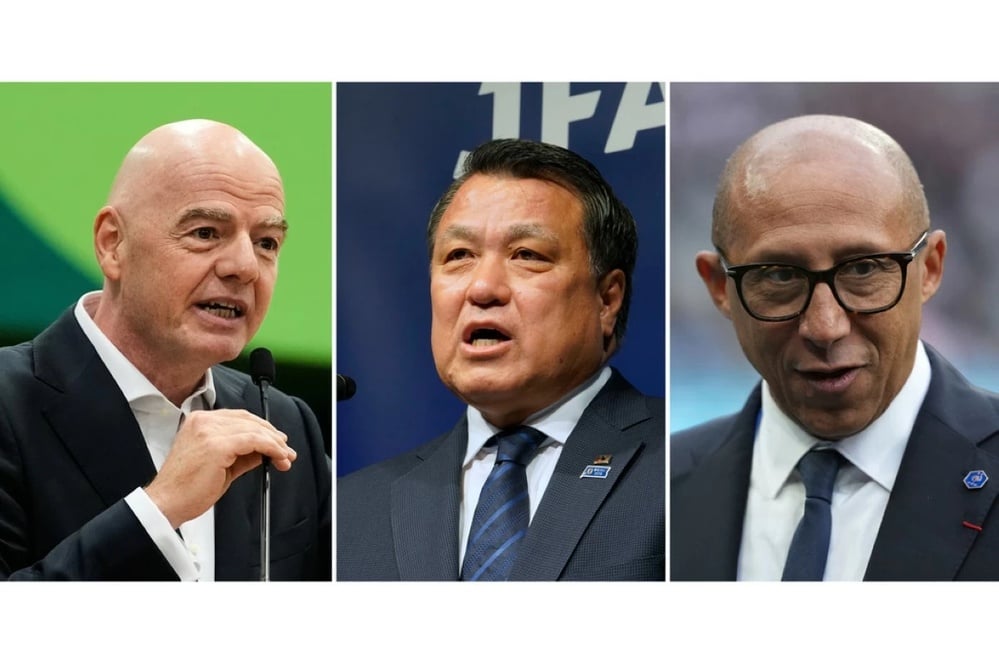
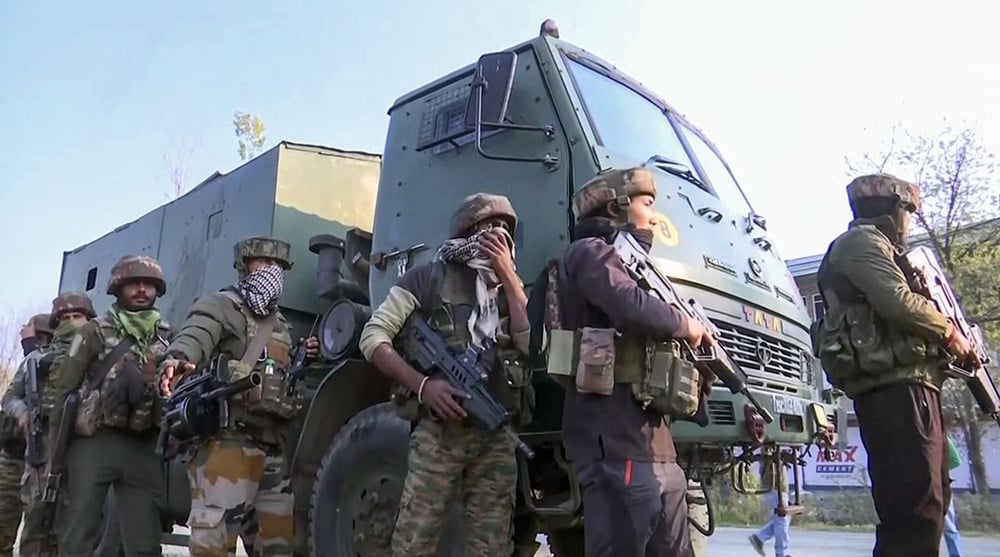
Click points to explore news by date. News sentiment ranges from -10 (very negative) to +10 (very positive) where 0 is neutral.
2026 © Helium Trades
Privacy Policy & Disclosure
* Disclaimer: Nothing on this website constitutes investment advice, performance data or any recommendation that any particular security, portfolio of securities, transaction or investment strategy is suitable for any specific person. Helium Trades is not responsible in any way for the accuracy
of any model predictions or price data. Any mention of a particular security and related prediction data is not a recommendation to buy or sell that security. Investments in securities involve the risk of loss. Past performance is no guarantee of future results. Helium Trades is not responsible for any of your investment decisions,
you should consult a financial expert before engaging in any transaction.
Helium Research Assistant

How can I help you today?
Ask any question about this page.


