See whether Helium helps you make better-informed decisions. Try every Pro Trader feature for 30 days. No credit card required.
Try every Pro Trader feature for 30 days. No credit card required.
November 11, 2026 · 0 shares
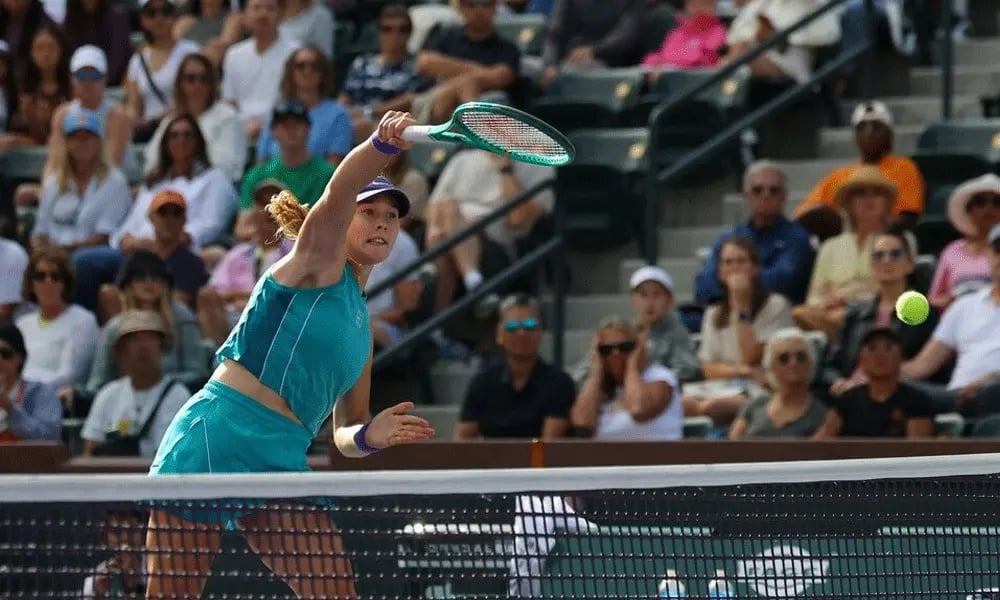
Sports coverage is largely descriptive and attribution-based but uses evaluative match language such as 'thrashed' and 'mature, intelligent performance'.
The WTA Finals is the season-ending women's tennis tournament, with a group-stage format that determines semi-final qualification.
Helium Analysis
Limitations: Article text includes duplicated match excerpts and unrelated sports headlines, but the substantive WTA Finals report is clear.
·
8 of 55 available dimensions scored; omitted dimensions are not treated as neutral.
·
Verified supporting quotes for 8 of 8 scored dimensions.
Claim: Factual match details are mixed with subjective evaluative language.
“produced a mature, intelligent performance” · exact text match
Counterevidence:
“hitting 16 winners to only six unforced errors” · exact text match
Why: Subjective adjectives qualify an otherwise factual match report.
Claim: The report uses mild sports sensationalism in verbs like 'thrashed' but remains mostly factual.
“Mirra Andreeva won 11 games in a row as she thrashed world number two Aryna Sabalenka to reach the last four at the WTA Finals.” · exact text match
Why: Vivid verbs heighten drama slightly without tabloid excess.
Claim: The headline highlights an unusual 11-game winning run, adding moderate reader interest.
“Andreeva wins 11 games in a row to thrash Sabalenka at WTA Finals” · exact text match
Why: Emphasizing the streak and upset makes the coverage more engaging than a routine recap.
Claim: The report confines itself to describing results, statistics, and quotes rather than recommending actions.
“The result means the winner of the final group match on Friday between Sabalenka and Elina Svitolina will advance to the semi-finals, while Andreeva goes through as the group winner.” · exact text match
Why: The passage explains qualification outcomes descriptively without prescription.
Claim: The report cites a named broadcaster for quotes and provides specific match statistics.
“Andreeva told Sky Sports.” · exact text match
“Muchova hit 39 unforced errors throughout the match - the majority of which came from her forehand - as Svitolina ground her down.” · exact text match
Why: Attribution and concrete statistics support visible credibility.
Claim: The match report uses tactical and statistical analysis rather than emotive assertion.
“She used loopy high balls to initially wrong-foot Sabalenka and then showcased her easy power, hitting 16 winners to only six unforced errors and creating brilliant angles from the baseline.” · exact text match
Why: Detailed tactical and statistical explanation supports a rational framing.
Claim: The report balances praise for Andreeva with acknowledgment of Sabalenka's poor play.
“As poor as Sabalenka was, Andreeva produced a mature, intelligent performance to shut her out of the match.” · exact text match
Why: The framing credits the winner while openly noting the opponent's weak performance.
Claim: The report provides tactical and statistical analysis rather than only bare results.
“She used loopy high balls to initially wrong-foot Sabalenka and then showcased her easy power, hitting 16 winners to only six unforced errors and creating brilliant angles from the baseline.” · exact text match
Why: Detailed tactical explanation supports above-average sports analysis.
Article text includes duplicated match excerpts and unrelated sports headlines, but the substantive WTA Finals report is clear.
November 12, 2026 · 0 shares
The report is primarily factual and stats-driven, with mild gossip-adjacent attention to a hot-mic controversy and generally clear attribution.
The WTA Finals is a season-ending women's tennis tournament with a round-robin group stage; group results determine which players advance to the semifinals.
Helium Analysis
Limitations: The supplied text includes extensive CBC newsletter and accessibility boilerplate and no author byline; the analysis excludes those wrappers and treats the remaining sports report as the article.
·
5 of 55 available dimensions scored; omitted dimensions are not treated as neutral.
·
Verified supporting quotes for 3 of 5 scored dimensions.
Claim: The report is predominantly factual, relying on match scores, timing, and attributed statements rather than subjective commentary.
“The No. 3 seed trailed Sabalenka 1-4 in the opening set but won 20 of the next 23 points” · exact text match
“"I feel like I could play another two matches.
I'm so pumped up and full of energy," said Andreeva”
· not found in supplied text
Why: Specific results and attributed quotes dominate; evaluative wording is limited.
Claim: The report avoids sensational language and presents the match through scores, statistics, and attributed reactions.
“defeating Aryna Sabalenka 6-4, 6-0.” · exact text match
“The No. 3 seed trailed Sabalenka 1-4 in the opening set but won 20 of the next 23 points” · exact text match
Why: The primary framing is score- and stat-driven, not dramatized.
Claim: The article is overwhelmingly descriptive, reporting match outcomes and standings without prescribing actions or policies.
“Her 2-0 record leaves Sabalenka and Elina Svitolina to play for the remaining semifinal spot on Friday.” · exact text match
“Mirra Andreeva won her WTA Finals round-robin group in emphatic fashion on Wednesday, defeating Aryna Sabalenka 6-4, 6-0.” · exact text match
Why: It reports results and implications rather than advocating for a course of action.
Claim: The article briefly includes a personal controversy involving Jessica Pegula's hot-mic insult and apology.
“Andreeva was the subject of a pre-tournament hot mic diatribe from fellow competitor Jessica Pegula; the American was heard calling Andreeva a "diva" and made other comments for which she has since apologized.” · exact text match
Why: This controversy detail is gossip-adjacent, though it is reported with an apology and contextualized by Andreeva's subsequent results.
Claim: The article demonstrates strong visible credibility through specific match results, direct quotes with attribution, and contextual player records.
“"I feel like I could play another two matches.
I'm so pumped up and full of energy," said Andreeva”
· not found in supplied text
“Her 2-0 record leaves Sabalenka and Elina Svitolina to play for the remaining semifinal spot on Friday.” · exact text match
Why: The report provides verifiable match details and attributed statements, with little unsupported assertion.
The supplied text includes extensive CBC newsletter and accessibility boilerplate and no author byline; the analysis excludes those wrappers and treats the remaining sports report as the article.
November 12, 2026 · 0 shares
Publisher framing is largely factual and attribution-based, with vivid sports commentary such as 'thrash' and evaluative performance analysis.
Helium Analysis
Limitations: The supplied text contains an apparent internal inconsistency ('at Indian Wells' within a WTA Finals report) and sidebar links, limiting precise factual verification.
·
6 of 55 available dimensions scored; omitted dimensions are not treated as neutral.
·
Verified supporting quotes for 5 of 6 scored dimensions.
Claim: The report mixes factual match reporting with subjective evaluative commentary.
“As poor as Sabalenka was, Andreeva produced a mature, intelligent performance to shut her out of the match.” · exact text match
Why: The sentence evaluates the players' performance rather than only stating the score or raw statistics.
Claim: Vivid sports language mildly heightens the drama of the result.
“Andreeva wins 11 games in a row to thrash Sabalenka at WTA Finals.” · exact text match
Why: The headline uses 'thrash' to characterize the win dramatically.
Claim: The report is overwhelmingly descriptive, recounting results and quotes rather than prescribing actions or policies.
“Mirra Andreeva won 11 games in a row as she thrashed world number two Aryna Sabalenka to reach the last four at the WTA Finals.” · exact text match
Why: The lede states what happened in the match without recommending any course of action.
Claim: Evaluative opinions about player performance are present but secondary to match facts.
“Second seed Sabalenka had taping on her knee but it did not seem to hinder her - this, rather, was a performance similar to some of the collapses she has had this year.” · exact text match
Why: This is the publisher's assessment of Sabalenka's performance, not a direct quote or raw statistic.
Claim: The report is generally credible, with direct quotes, scorelines, and match statistics, though one reference appears inconsistent with the event.
“She used loopy high balls to initially wrong-foot Sabalenka and then showcased her easy power, hitting 16 winners to only six unforced errors and creating brilliant angles from the baseline.” · exact text match
“'I will be honest, I feel like Aryna did not have the best day,' Andreeva told Sky Sports.” · not found in supplied text
Counterevidence:
“The Belarusian hit 23 unforced errors and failed to produce a single ace at Indian Wells, where she won the WTA Tour title earlier this year.” · exact text match
Why: Direct attribution and detailed statistics support credibility, while the 'Indian Wells' reference in a WTA Finals report materially qualifies it.
Claim: The report shows above-average sports analysis through tactical detail and match context.
“She used loopy high balls to initially wrong-foot Sabalenka and then showcased her easy power, hitting 16 winners to only six unforced errors and creating brilliant angles from the baseline.” · exact text match
Why: The tactical description and statistical comparison support an intelligent sports-report classification.
The supplied text contains an apparent internal inconsistency ('at Indian Wells' within a WTA Finals report) and sidebar links, limiting precise factual verification.
November 14, 2026 · 0 shares
Matter-of-fact match recap foregrounds verified scores, break-point statistics, and attributed player quotes over political or evaluative framing.
The WTA Finals is the women’s season-ending tennis championship; round-robin group play determines semifinalists.
Helium Analysis
Limitations: The supplied text contains duplicated headlines and a sponsor line, and no byline; analysis is limited to the substantive match recap.
·
55 of 55 available dimensions scored; omitted dimensions are not treated as neutral.
·
Verified supporting quotes for 6 of 55 scored dimensions.
Claim: The report relies mainly on match scores and break-point statistics rather than subjective evaluation.
“Svitolina broke twice in the third set and converted six of her eight break points overall to win 6-3, 3-6, 6-1.” · exact text match
Counterevidence:
“There was a point on Wednesday when it looked as though Elina Svitolina might play her last match at Indian Wells with nothing left to play for.” · exact text match
Why: Specific scoring data dominates, though some narrative speculation appears.
Claim: The report presents results in measured, factual language without sensational emphasis.
“She won 6-2, 6-1 to finish 3-0 without dropping a set.” · not found in supplied text
Why: The wording is statistical and understated.
Claim: The account describes what happened rather than prescribing actions or outcomes.
“Svitolina gave up just four games over the next two sets, and by the time she walked off court, she knew she’d have a semifinal spot to play for on Friday.” · exact text match
Why: The text reports match events and outcomes without advocacy.
Claim: The report supplies specific, checkable match records and statistics.
“Muchova had been 32-0 on the season after winning the first set.” · exact text match
Why: Concrete records and scores make the account verifiable against tournament data.
Claim: Match developments are explained through score sequences and tactical points rather than irrational assertions.
“She got the break back and, at 3-3, leaned on her second serve to save two break points before taking the next two games to win the set.” · exact text match
Why: The report details observable match mechanics and score progression.
Claim: Direct quotes and detailed match statistics are attributed and presented transparently.
“Quotable: “I was just feeling like that anger was building up inside of me.” · exact text match
Why: Player comments are marked and sourced rather than paraphrased as unattributed claims.
Claim: The report organizes complex match progressions with clear sequencing and statistics.
“Win over Sabalenka: Sabalenka led 4-1 in the opening set, and 62 minutes into the match Andreeva was through to the semifinals.” · exact text match
Why: It uses structured match summaries and precise metrics.
The supplied text contains duplicated headlines and a sponsor line, and no byline; analysis is limited to the substantive match recap.
November 10, 2026 · 0 shares
The report is predominantly factual and descriptive, using exact scores, direct quotes, and conventional dramatic match verbs with minimal evaluative framing.
Helium Analysis
Limitations: Supplied text repeats the article and contains unrelated feed items; an apparent date inconsistency ('2025 finals') limits certainty, so only the substantive sports report was scored.
·
7 of 55 available dimensions scored; omitted dimensions are not treated as neutral.
·
Verified supporting quotes for 7 of 7 scored dimensions.
Claim: The account is mainly factual but includes evaluative sports verbs such as 'battled' and 'motored past'.
“Aryna Sabalenka battled past Karolina Muchova in straight sets to make a winning start at the season-ending WTA Finals in Indian Wells on Monday.” · exact text match
“Former world number one Sabalenka was forced to dig deep before finally prevailing 7-6 (7/2), 7-5 in just under two hours.” · exact text match
Why: Scores and attribution dominate, but dramatic verbs and 'forced to dig deep' add mild subjective color.
Claim: The report stays largely sober despite occasional dramatic match verbs.
“In Monday’s other group game, WTA Finals debutant Mirra Andreeva motored past Ukraine’s Elina Svitolina in straight sets, winning 6-4, 6-0, despite overcoming pre-match tightness.” · exact text match
“She duly held serve to close out the first set, and then demolished Svitolina in the second set, rattling off three service breaks to wrap up victory.” · exact text match
Why: 'Motored past,' 'demolished,' and 'rattling off' add mild sensational color, but exact results and context keep the report from being highly sensational.
Claim: The report describes match results and quotations without prescribing actions or policies.
“Sabalenka downs Muchova to win WTA Finals opener.” · exact text match
“Andreeva will face Sabalenka in her second round robin game on Wednesday.” · exact text match
Why: The selection is event reporting and scheduling, not advocacy or prescription.
Claim: The report is mostly factual with limited evaluative language.
“Sabalenka battled past Karolina Muchova in straight sets” · exact text match
“Andreeva motored past Ukraine’s Elina Svitolina in straight sets” · exact text match
Why: Most content is scores and quotes; only scattered competitive verbs are evaluative.
Claim: The report provides exact scores, seeds, direct quotations, and attributed context.
““I’m just trying to win every match I play, and at the same time trying to stay in the moment and focus on my game on each point and trying to stay calm and in control,” Sabalenka said afterward.” · exact text match
“Third-seed Andreeva, the 19-year-old reigning French Open champion, took control with a break to open up a 4-2 first-set lead and never looked back against her sixth-seeded opponent.” · exact text match
Why: Direct quotations, precise scores, and player-seed details show visible sourcing and attribution.
Claim: The report presents match results coherently and attributes statements, avoiding speculative or fallacious reasoning.
“Former world number one Sabalenka was forced to dig deep before finally prevailing 7-6 (7/2), 7-5 in just under two hours.” · exact text match
““I’m just trying to win every match I play, and at the same time trying to stay in the moment and focus on my game on each point and trying to stay calm and in control,” Sabalenka said afterward.” · exact text match
Why: Exact scoring, chronological match detail, and direct quotation support a rational, fact-based account.
Claim: The article is coherent and organized with specific match detail.
“Sabalenka was forced to dig deep before finally prevailing 7-6 (7/2), 7-5 in just under two hours.” · exact text match
“Andreeva will face Sabalenka in her second round robin game on Wednesday.” · exact text match
Why: Clear chronology and relevant match/context details indicate above-average sports-reporting clarity.
Supplied text repeats the article and contains unrelated feed items; an apparent date inconsistency ('2025 finals') limits certainty, so only the substantive sports report was scored.
November 11, 2026 · 0 shares
Straightforward sports-result framing relies on scorelines and match progression, with little overt evaluative or ideological language.
Helium Analysis
Limitations: The text contains an apparent factual inconsistency—calling the event the WTA Finals while placing it at Indian Wells—and provides no byline or sourcing.
·
55 of 55 available dimensions scored; omitted dimensions are not treated as neutral.
·
Verified supporting quotes for 4 of 55 scored dimensions.
Claim: The report is framed as a factual match account with scorelines and player results rather than subjective commentary.
“The former world number one defeated Karolina Muchova 7-6 (7-2), 7-5 to boost her hopes of going one better than last year’s final loss to Elena Rybakina.” · exact text match
Why: The central framing is a specific match result with scoreline and historical context.
Claim: The article uses plain match-report language and scorelines rather than sensational or emotive framing.
“Sabalenka fought back, and after Muchova had saved two set points, went to a tie-break where the favourite cruised into the lead helped by two big forehand errors from her opponent.” · exact text match
Why: The language describes match events factually, with only mild sports idiom.
Claim: Specific match scores and historical details are provided, but no sourcing or byline is visible.
“The former world number one defeated Karolina Muchova 7-6 (7-2), 7-5” · exact text match
“Sabalenka is making her sixth consecutive appearance in the tournament but has never lifted the trophy” · exact text match
Why: Specific verifiable details support moderate credibility, while the absence of cited sourcing limits it.
Claim: The match narrative is presented through score progression and break points rather than irrational or emotive claims.
“Three straight breaks in the second set left Sabalenka in control and despite failing to serve out for the match first time around, she made no mistake at the second attempt to get her campaign up and running.” · exact text match
Why: The passage explains the result through concrete match events and score progression.
The text contains an apparent factual inconsistency—calling the event the WTA Finals while placing it at Indian Wells—and provides no byline or sourcing.
November 14, 2026 · 0 shares
Matter-of-fact match recap foregrounds verified scores, break-point statistics, and attributed player quotes over political or evaluative framing.
The WTA Finals is the women’s season-ending tennis championship; round-robin group play determines semifinalists.
Helium Analysis
Limitations: The supplied text contains duplicated headlines and a sponsor line, and no byline; analysis is limited to the substantive match recap.
·
55 of 55 available dimensions scored; omitted dimensions are not treated as neutral.
·
Verified supporting quotes for 6 of 55 scored dimensions.
Claim: The report relies mainly on match scores and break-point statistics rather than subjective evaluation.
“Svitolina broke twice in the third set and converted six of her eight break points overall to win 6-3, 3-6, 6-1.” · exact text match
Counterevidence:
“There was a point on Wednesday when it looked as though Elina Svitolina might play her last match at Indian Wells with nothing left to play for.” · exact text match
Why: Specific scoring data dominates, though some narrative speculation appears.
Claim: The report presents results in measured, factual language without sensational emphasis.
“She won 6-2, 6-1 to finish 3-0 without dropping a set.” · not found in supplied text
Why: The wording is statistical and understated.
Claim: The account describes what happened rather than prescribing actions or outcomes.
“Svitolina gave up just four games over the next two sets, and by the time she walked off court, she knew she’d have a semifinal spot to play for on Friday.” · exact text match
Why: The text reports match events and outcomes without advocacy.
Claim: The report supplies specific, checkable match records and statistics.
“Muchova had been 32-0 on the season after winning the first set.” · exact text match
Why: Concrete records and scores make the account verifiable against tournament data.
Claim: Match developments are explained through score sequences and tactical points rather than irrational assertions.
“She got the break back and, at 3-3, leaned on her second serve to save two break points before taking the next two games to win the set.” · exact text match
Why: The report details observable match mechanics and score progression.
Claim: Direct quotes and detailed match statistics are attributed and presented transparently.
“Quotable: “I was just feeling like that anger was building up inside of me.” · exact text match
Why: Player comments are marked and sourced rather than paraphrased as unattributed claims.
Claim: The report organizes complex match progressions with clear sequencing and statistics.
“Win over Sabalenka: Sabalenka led 4-1 in the opening set, and 62 minutes into the match Andreeva was through to the semifinals.” · exact text match
Why: It uses structured match summaries and precise metrics.
The supplied text contains duplicated headlines and a sponsor line, and no byline; analysis is limited to the substantive match recap.
November 14, 2026 · 0 shares
Attribution-driven sports reporting that lets Andreeva's own quotes carry the emotional-recovery narrative, with light contrast framing against her past Indian Wells outburst.
The WTA Finals group stage is a round-robin format in which players can have already clinched a semi-final place before their final group match, and an alternate can be substituted in for an injured or withdrawn player.
Helium Analysis
Limitations: The supplied text includes scraped navigation, unrelated headlines, and a subscription prompt interleaved with the story, so quoted passages and ordering around the mid-article break are partially garbled.
·
55 of 55 available dimensions scored; omitted dimensions are not treated as neutral.
·
Verified supporting quotes for 12 of 55 scored dimensions.
Claim: Claims are consistently attributed to Andreeva or framed as her statements rather than the reporter's own judgments.
“Andreeva described Pegula as one of the calmest players on tour and said coach Conchita Martinez would help prepare a detailed tactical plan.” · exact text match
Why: Heavy attribution of assessments to the subject indicates an objective, reportorial stance.
Claim: Potentially dramatic material (profanity, booing) is reported plainly and largely in the subject's own words rather than amplified.
““Before it was super bad. I was very dramatic,” Andreeva said.” · exact text match
Why: Drama is conveyed through quoted self-description instead of sensational prose, keeping the piece restrained.
Claim: The framing emphasizes progress and positive results following the setback discussion.
“The results have followed.” · exact text match
Why: The narrative arc resolves toward improvement, giving a mildly optimistic tone.
Claim: The piece describes events and statements without recommending actions or values.
“Now, she said, disappointment generally lasts a day at most before the demands of the tour force her attention back to training or the next match.” · exact text match
Why: Content is descriptive reporting of the player's account with no prescriptive recommendations.
Claim: Personal, behind-the-scenes detail about the player's private reactions forms part of the story.
“I wouldn’t talk to anybody.
I would just sit in the room locked up, not wanting to practice.”
· exact text match
Why: Intimate personal detail is included, though it is directly quoted in a sports-profile context.
Claim: The overall tone trends mildly positive, centering recovery and success after adversity.
“Andreeva won her first Grand Slam title at Roland Garces this year and arrived at the WTA Finals for her singles debut after a 50-win season.” · not found in supplied text
Why: Achievement-focused closing material supports a slightly positive affective tone.
Claim: Sourcing rests on direct quotes from the subject at a press setting with specific dates, opponents, and results.
“Andreeva said she has learned to recover more quickly from setbacks after the Russian teenager completed an unbeaten run through the WTA Finals round-robin stage on Friday.” · exact text match
Why: Named subject, attributed quotes, and concrete match details support moderate credibility in the supplied text.
Claim: The account is organized around attributed explanation and cause (practice changes, psychologist sessions) rather than emotive assertion.
“She said continued work on court, along with sessions with psychologists, helped her make progress.” · exact text match
Why: Causal explanations are attributed to the subject, supporting a mild rational/analytical framing.
Claim: The narrative locates progress in the individual player's own effort and self-management.
“Andreeva said the Indian Wells setback came while she was trying to incorporate changes made in practice into her match play, which produced inconsistency and frustration.” · exact text match
Why: Progress is framed as personal adjustment rather than collective or structural factors.
Claim: The report contains little forecasting, remaining tied to stated events and quotes.
“The victory set up a first career meeting with American Jessica Pegula on Saturday.” · exact text match
Why: Forward-looking content is limited to a scheduled match rather than predictions.
Claim: Standard press-conference quote structure and match-detail specificity are more consistent with human sports reporting than generated text.
““Before the tournament started I was afraid that I wouldn’t win a match in the group,” Andreeva told reporters.” · exact text match
Why: Verbatim-style quotes and event-specific detail offer weak evidence against AI authorship.
Claim: The report includes unflattering detail about the subject's prior conduct alongside her current success.
“Frustrated by the defeat, Andreeva launched into a profanity-laced tirade toward spectators and was booed as she left the court.” · exact text match
Why: Including the critical episode supports observable fairness in presentation.
Claim: The piece connects current results with prior incidents and stated mental adjustments in a coherent narrative.
“Andreeva’s poise in the desert marked a contrast with her emotional exit from Indian Wells in March, when she lost her title defence to Katerina Siniakova.” · exact text match
Why: Comparative framing across events shows moderate analytical structure.
The supplied text includes scraped navigation, unrelated headlines, and a subscription prompt interleaved with the story, so quoted passages and ordering around the mid-article break are partially garbled.
November 12, 2026 · 0 shares
The report is primarily factual and stats-driven, with mild gossip-adjacent attention to a hot-mic controversy and generally clear attribution.
The WTA Finals is a season-ending women's tennis tournament with a round-robin group stage; group results determine which players advance to the semifinals.
Helium Analysis
Limitations: The supplied text includes extensive CBC newsletter and accessibility boilerplate and no author byline; the analysis excludes those wrappers and treats the remaining sports report as the article.
·
5 of 55 available dimensions scored; omitted dimensions are not treated as neutral.
·
Verified supporting quotes for 3 of 5 scored dimensions.
Claim: The report is predominantly factual, relying on match scores, timing, and attributed statements rather than subjective commentary.
“The No. 3 seed trailed Sabalenka 1-4 in the opening set but won 20 of the next 23 points” · exact text match
“"I feel like I could play another two matches.
I'm so pumped up and full of energy," said Andreeva”
· not found in supplied text
Why: Specific results and attributed quotes dominate; evaluative wording is limited.
Claim: The report avoids sensational language and presents the match through scores, statistics, and attributed reactions.
“defeating Aryna Sabalenka 6-4, 6-0.” · exact text match
“The No. 3 seed trailed Sabalenka 1-4 in the opening set but won 20 of the next 23 points” · exact text match
Why: The primary framing is score- and stat-driven, not dramatized.
Claim: The article is overwhelmingly descriptive, reporting match outcomes and standings without prescribing actions or policies.
“Her 2-0 record leaves Sabalenka and Elina Svitolina to play for the remaining semifinal spot on Friday.” · exact text match
“Mirra Andreeva won her WTA Finals round-robin group in emphatic fashion on Wednesday, defeating Aryna Sabalenka 6-4, 6-0.” · exact text match
Why: It reports results and implications rather than advocating for a course of action.
Claim: The article briefly includes a personal controversy involving Jessica Pegula's hot-mic insult and apology.
“Andreeva was the subject of a pre-tournament hot mic diatribe from fellow competitor Jessica Pegula; the American was heard calling Andreeva a "diva" and made other comments for which she has since apologized.” · exact text match
Why: This controversy detail is gossip-adjacent, though it is reported with an apology and contextualized by Andreeva's subsequent results.
Claim: The article demonstrates strong visible credibility through specific match results, direct quotes with attribution, and contextual player records.
“"I feel like I could play another two matches.
I'm so pumped up and full of energy," said Andreeva”
· not found in supplied text
“Her 2-0 record leaves Sabalenka and Elina Svitolina to play for the remaining semifinal spot on Friday.” · exact text match
Why: The report provides verifiable match details and attributed statements, with little unsupported assertion.
The supplied text includes extensive CBC newsletter and accessibility boilerplate and no author byline; the analysis excludes those wrappers and treats the remaining sports report as the article.
November 11, 2026 · 0 shares
Sports coverage is largely descriptive and attribution-based but uses evaluative match language such as 'thrashed' and 'mature, intelligent performance'.
The WTA Finals is the season-ending women's tennis tournament, with a group-stage format that determines semi-final qualification.
Helium Analysis Limitations: Article text includes duplicated match excerpts and unrelated sports headlines, but the substantive WTA Finals report is clear. · 8 of 55 available dimensions scored; omitted dimensions are not treated as neutral. · Verified supporting quotes for 8 of 8 scored dimensions.
Claim: Factual match details are mixed with subjective evaluative language.
“produced a mature, intelligent performance” · exact text match
Counterevidence:
“hitting 16 winners to only six unforced errors” · exact text match
Why: Subjective adjectives qualify an otherwise factual match report.
Claim: The report uses mild sports sensationalism in verbs like 'thrashed' but remains mostly factual.
“Mirra Andreeva won 11 games in a row as she thrashed world number two Aryna Sabalenka to reach the last four at the WTA Finals.” · exact text match
Why: Vivid verbs heighten drama slightly without tabloid excess.
Claim: The headline highlights an unusual 11-game winning run, adding moderate reader interest.
“Andreeva wins 11 games in a row to thrash Sabalenka at WTA Finals” · exact text match
Why: Emphasizing the streak and upset makes the coverage more engaging than a routine recap.
Claim: The report confines itself to describing results, statistics, and quotes rather than recommending actions.
“The result means the winner of the final group match on Friday between Sabalenka and Elina Svitolina will advance to the semi-finals, while Andreeva goes through as the group winner.” · exact text match
Why: The passage explains qualification outcomes descriptively without prescription.
Claim: The report cites a named broadcaster for quotes and provides specific match statistics.
“Andreeva told Sky Sports.” · exact text match
“Muchova hit 39 unforced errors throughout the match - the majority of which came from her forehand - as Svitolina ground her down.” · exact text match
Why: Attribution and concrete statistics support visible credibility.
Claim: The match report uses tactical and statistical analysis rather than emotive assertion.
“She used loopy high balls to initially wrong-foot Sabalenka and then showcased her easy power, hitting 16 winners to only six unforced errors and creating brilliant angles from the baseline.” · exact text match
Why: Detailed tactical and statistical explanation supports a rational framing.
Claim: The report balances praise for Andreeva with acknowledgment of Sabalenka's poor play.
“As poor as Sabalenka was, Andreeva produced a mature, intelligent performance to shut her out of the match.” · exact text match
Why: The framing credits the winner while openly noting the opponent's weak performance.
Claim: The report provides tactical and statistical analysis rather than only bare results.
“She used loopy high balls to initially wrong-foot Sabalenka and then showcased her easy power, hitting 16 winners to only six unforced errors and creating brilliant angles from the baseline.” · exact text match
Why: Detailed tactical explanation supports above-average sports analysis.
Article text includes duplicated match excerpts and unrelated sports headlines, but the substantive WTA Finals report is clear.
November 12, 2026 · 0 shares
The report is primarily factual and stats-driven, with mild gossip-adjacent attention to a hot-mic controversy and generally clear attribution.
The WTA Finals is a season-ending women's tennis tournament with a round-robin group stage; group results determine which players advance to the semifinals.
Helium Analysis Limitations: The supplied text includes extensive CBC newsletter and accessibility boilerplate and no author byline; the analysis excludes those wrappers and treats the remaining sports report as the article. · 5 of 55 available dimensions scored; omitted dimensions are not treated as neutral. · Verified supporting quotes for 3 of 5 scored dimensions.
Claim: The report is predominantly factual, relying on match scores, timing, and attributed statements rather than subjective commentary.
“The No. 3 seed trailed Sabalenka 1-4 in the opening set but won 20 of the next 23 points” · exact text match
“"I feel like I could play another two matches. I'm so pumped up and full of energy," said Andreeva” · not found in supplied text
Why: Specific results and attributed quotes dominate; evaluative wording is limited.
Claim: The report avoids sensational language and presents the match through scores, statistics, and attributed reactions.
“defeating Aryna Sabalenka 6-4, 6-0.” · exact text match
“The No. 3 seed trailed Sabalenka 1-4 in the opening set but won 20 of the next 23 points” · exact text match
Why: The primary framing is score- and stat-driven, not dramatized.
Claim: The article is overwhelmingly descriptive, reporting match outcomes and standings without prescribing actions or policies.
“Her 2-0 record leaves Sabalenka and Elina Svitolina to play for the remaining semifinal spot on Friday.” · exact text match
“Mirra Andreeva won her WTA Finals round-robin group in emphatic fashion on Wednesday, defeating Aryna Sabalenka 6-4, 6-0.” · exact text match
Why: It reports results and implications rather than advocating for a course of action.
Claim: The article briefly includes a personal controversy involving Jessica Pegula's hot-mic insult and apology.
“Andreeva was the subject of a pre-tournament hot mic diatribe from fellow competitor Jessica Pegula; the American was heard calling Andreeva a "diva" and made other comments for which she has since apologized.” · exact text match
Why: This controversy detail is gossip-adjacent, though it is reported with an apology and contextualized by Andreeva's subsequent results.
Claim: The article demonstrates strong visible credibility through specific match results, direct quotes with attribution, and contextual player records.
“"I feel like I could play another two matches. I'm so pumped up and full of energy," said Andreeva” · not found in supplied text
“Her 2-0 record leaves Sabalenka and Elina Svitolina to play for the remaining semifinal spot on Friday.” · exact text match
Why: The report provides verifiable match details and attributed statements, with little unsupported assertion.
The supplied text includes extensive CBC newsletter and accessibility boilerplate and no author byline; the analysis excludes those wrappers and treats the remaining sports report as the article.
November 12, 2026 · 0 shares
Publisher framing is largely factual and attribution-based, with vivid sports commentary such as 'thrash' and evaluative performance analysis.
Helium Analysis Limitations: The supplied text contains an apparent internal inconsistency ('at Indian Wells' within a WTA Finals report) and sidebar links, limiting precise factual verification. · 6 of 55 available dimensions scored; omitted dimensions are not treated as neutral. · Verified supporting quotes for 5 of 6 scored dimensions.
Claim: The report mixes factual match reporting with subjective evaluative commentary.
“As poor as Sabalenka was, Andreeva produced a mature, intelligent performance to shut her out of the match.” · exact text match
Why: The sentence evaluates the players' performance rather than only stating the score or raw statistics.
Claim: Vivid sports language mildly heightens the drama of the result.
“Andreeva wins 11 games in a row to thrash Sabalenka at WTA Finals.” · exact text match
Why: The headline uses 'thrash' to characterize the win dramatically.
Claim: The report is overwhelmingly descriptive, recounting results and quotes rather than prescribing actions or policies.
“Mirra Andreeva won 11 games in a row as she thrashed world number two Aryna Sabalenka to reach the last four at the WTA Finals.” · exact text match
Why: The lede states what happened in the match without recommending any course of action.
Claim: Evaluative opinions about player performance are present but secondary to match facts.
“Second seed Sabalenka had taping on her knee but it did not seem to hinder her - this, rather, was a performance similar to some of the collapses she has had this year.” · exact text match
Why: This is the publisher's assessment of Sabalenka's performance, not a direct quote or raw statistic.
Claim: The report is generally credible, with direct quotes, scorelines, and match statistics, though one reference appears inconsistent with the event.
“She used loopy high balls to initially wrong-foot Sabalenka and then showcased her easy power, hitting 16 winners to only six unforced errors and creating brilliant angles from the baseline.” · exact text match
“'I will be honest, I feel like Aryna did not have the best day,' Andreeva told Sky Sports.” · not found in supplied text
Counterevidence:
“The Belarusian hit 23 unforced errors and failed to produce a single ace at Indian Wells, where she won the WTA Tour title earlier this year.” · exact text match
Why: Direct attribution and detailed statistics support credibility, while the 'Indian Wells' reference in a WTA Finals report materially qualifies it.
Claim: The report shows above-average sports analysis through tactical detail and match context.
“She used loopy high balls to initially wrong-foot Sabalenka and then showcased her easy power, hitting 16 winners to only six unforced errors and creating brilliant angles from the baseline.” · exact text match
Why: The tactical description and statistical comparison support an intelligent sports-report classification.
The supplied text contains an apparent internal inconsistency ('at Indian Wells' within a WTA Finals report) and sidebar links, limiting precise factual verification.
November 14, 2026 · 0 shares
Matter-of-fact match recap foregrounds verified scores, break-point statistics, and attributed player quotes over political or evaluative framing.
The WTA Finals is the women’s season-ending tennis championship; round-robin group play determines semifinalists.
Helium Analysis Limitations: The supplied text contains duplicated headlines and a sponsor line, and no byline; analysis is limited to the substantive match recap. · 55 of 55 available dimensions scored; omitted dimensions are not treated as neutral. · Verified supporting quotes for 6 of 55 scored dimensions.
Claim: The report relies mainly on match scores and break-point statistics rather than subjective evaluation.
“Svitolina broke twice in the third set and converted six of her eight break points overall to win 6-3, 3-6, 6-1.” · exact text match
Counterevidence:
“There was a point on Wednesday when it looked as though Elina Svitolina might play her last match at Indian Wells with nothing left to play for.” · exact text match
Why: Specific scoring data dominates, though some narrative speculation appears.
Claim: The report presents results in measured, factual language without sensational emphasis.
“She won 6-2, 6-1 to finish 3-0 without dropping a set.” · not found in supplied text
Why: The wording is statistical and understated.
Claim: The account describes what happened rather than prescribing actions or outcomes.
“Svitolina gave up just four games over the next two sets, and by the time she walked off court, she knew she’d have a semifinal spot to play for on Friday.” · exact text match
Why: The text reports match events and outcomes without advocacy.
Claim: The report supplies specific, checkable match records and statistics.
“Muchova had been 32-0 on the season after winning the first set.” · exact text match
Why: Concrete records and scores make the account verifiable against tournament data.
Claim: Match developments are explained through score sequences and tactical points rather than irrational assertions.
“She got the break back and, at 3-3, leaned on her second serve to save two break points before taking the next two games to win the set.” · exact text match
Why: The report details observable match mechanics and score progression.
Claim: Direct quotes and detailed match statistics are attributed and presented transparently.
“Quotable: “I was just feeling like that anger was building up inside of me.” · exact text match
Why: Player comments are marked and sourced rather than paraphrased as unattributed claims.
Claim: The report organizes complex match progressions with clear sequencing and statistics.
“Win over Sabalenka: Sabalenka led 4-1 in the opening set, and 62 minutes into the match Andreeva was through to the semifinals.” · exact text match
Why: It uses structured match summaries and precise metrics.
The supplied text contains duplicated headlines and a sponsor line, and no byline; analysis is limited to the substantive match recap.
November 14, 2026 · 0 shares
Attribution-driven sports reporting that lets Andreeva's own quotes carry the emotional-recovery narrative, with light contrast framing against her past Indian Wells outburst.
The WTA Finals group stage is a round-robin format in which players can have already clinched a semi-final place before their final group match, and an alternate can be substituted in for an injured or withdrawn player.
Helium Analysis Limitations: The supplied text includes scraped navigation, unrelated headlines, and a subscription prompt interleaved with the story, so quoted passages and ordering around the mid-article break are partially garbled. · 55 of 55 available dimensions scored; omitted dimensions are not treated as neutral. · Verified supporting quotes for 12 of 55 scored dimensions.
Claim: Claims are consistently attributed to Andreeva or framed as her statements rather than the reporter's own judgments.
“Andreeva described Pegula as one of the calmest players on tour and said coach Conchita Martinez would help prepare a detailed tactical plan.” · exact text match
Why: Heavy attribution of assessments to the subject indicates an objective, reportorial stance.
Claim: Potentially dramatic material (profanity, booing) is reported plainly and largely in the subject's own words rather than amplified.
““Before it was super bad. I was very dramatic,” Andreeva said.” · exact text match
Why: Drama is conveyed through quoted self-description instead of sensational prose, keeping the piece restrained.
Claim: The framing emphasizes progress and positive results following the setback discussion.
“The results have followed.” · exact text match
Why: The narrative arc resolves toward improvement, giving a mildly optimistic tone.
Claim: The piece describes events and statements without recommending actions or values.
“Now, she said, disappointment generally lasts a day at most before the demands of the tour force her attention back to training or the next match.” · exact text match
Why: Content is descriptive reporting of the player's account with no prescriptive recommendations.
Claim: Personal, behind-the-scenes detail about the player's private reactions forms part of the story.
“I wouldn’t talk to anybody. I would just sit in the room locked up, not wanting to practice.” · exact text match
Why: Intimate personal detail is included, though it is directly quoted in a sports-profile context.
Claim: The overall tone trends mildly positive, centering recovery and success after adversity.
“Andreeva won her first Grand Slam title at Roland Garces this year and arrived at the WTA Finals for her singles debut after a 50-win season.” · not found in supplied text
Why: Achievement-focused closing material supports a slightly positive affective tone.
Claim: Sourcing rests on direct quotes from the subject at a press setting with specific dates, opponents, and results.
“Andreeva said she has learned to recover more quickly from setbacks after the Russian teenager completed an unbeaten run through the WTA Finals round-robin stage on Friday.” · exact text match
Why: Named subject, attributed quotes, and concrete match details support moderate credibility in the supplied text.
Claim: The account is organized around attributed explanation and cause (practice changes, psychologist sessions) rather than emotive assertion.
“She said continued work on court, along with sessions with psychologists, helped her make progress.” · exact text match
Why: Causal explanations are attributed to the subject, supporting a mild rational/analytical framing.
Claim: The narrative locates progress in the individual player's own effort and self-management.
“Andreeva said the Indian Wells setback came while she was trying to incorporate changes made in practice into her match play, which produced inconsistency and frustration.” · exact text match
Why: Progress is framed as personal adjustment rather than collective or structural factors.
Claim: The report contains little forecasting, remaining tied to stated events and quotes.
“The victory set up a first career meeting with American Jessica Pegula on Saturday.” · exact text match
Why: Forward-looking content is limited to a scheduled match rather than predictions.
Claim: Standard press-conference quote structure and match-detail specificity are more consistent with human sports reporting than generated text.
““Before the tournament started I was afraid that I wouldn’t win a match in the group,” Andreeva told reporters.” · exact text match
Why: Verbatim-style quotes and event-specific detail offer weak evidence against AI authorship.
Claim: The report includes unflattering detail about the subject's prior conduct alongside her current success.
“Frustrated by the defeat, Andreeva launched into a profanity-laced tirade toward spectators and was booed as she left the court.” · exact text match
Why: Including the critical episode supports observable fairness in presentation.
Claim: The piece connects current results with prior incidents and stated mental adjustments in a coherent narrative.
“Andreeva’s poise in the desert marked a contrast with her emotional exit from Indian Wells in March, when she lost her title defence to Katerina Siniakova.” · exact text match
Why: Comparative framing across events shows moderate analytical structure.
The supplied text includes scraped navigation, unrelated headlines, and a subscription prompt interleaved with the story, so quoted passages and ordering around the mid-article break are partially garbled.
November 10, 2026 · 0 shares
The report is predominantly factual and descriptive, using exact scores, direct quotes, and conventional dramatic match verbs with minimal evaluative framing.
Helium Analysis Limitations: Supplied text repeats the article and contains unrelated feed items; an apparent date inconsistency ('2025 finals') limits certainty, so only the substantive sports report was scored. · 7 of 55 available dimensions scored; omitted dimensions are not treated as neutral. · Verified supporting quotes for 7 of 7 scored dimensions.
Claim: The account is mainly factual but includes evaluative sports verbs such as 'battled' and 'motored past'.
“Aryna Sabalenka battled past Karolina Muchova in straight sets to make a winning start at the season-ending WTA Finals in Indian Wells on Monday.” · exact text match
“Former world number one Sabalenka was forced to dig deep before finally prevailing 7-6 (7/2), 7-5 in just under two hours.” · exact text match
Why: Scores and attribution dominate, but dramatic verbs and 'forced to dig deep' add mild subjective color.
Claim: The report stays largely sober despite occasional dramatic match verbs.
“In Monday’s other group game, WTA Finals debutant Mirra Andreeva motored past Ukraine’s Elina Svitolina in straight sets, winning 6-4, 6-0, despite overcoming pre-match tightness.” · exact text match
“She duly held serve to close out the first set, and then demolished Svitolina in the second set, rattling off three service breaks to wrap up victory.” · exact text match
Why: 'Motored past,' 'demolished,' and 'rattling off' add mild sensational color, but exact results and context keep the report from being highly sensational.
Claim: The report describes match results and quotations without prescribing actions or policies.
“Sabalenka downs Muchova to win WTA Finals opener.” · exact text match
“Andreeva will face Sabalenka in her second round robin game on Wednesday.” · exact text match
Why: The selection is event reporting and scheduling, not advocacy or prescription.
Claim: The report is mostly factual with limited evaluative language.
“Sabalenka battled past Karolina Muchova in straight sets” · exact text match
“Andreeva motored past Ukraine’s Elina Svitolina in straight sets” · exact text match
Why: Most content is scores and quotes; only scattered competitive verbs are evaluative.
Claim: The report provides exact scores, seeds, direct quotations, and attributed context.
““I’m just trying to win every match I play, and at the same time trying to stay in the moment and focus on my game on each point and trying to stay calm and in control,” Sabalenka said afterward.” · exact text match
“Third-seed Andreeva, the 19-year-old reigning French Open champion, took control with a break to open up a 4-2 first-set lead and never looked back against her sixth-seeded opponent.” · exact text match
Why: Direct quotations, precise scores, and player-seed details show visible sourcing and attribution.
Claim: The report presents match results coherently and attributes statements, avoiding speculative or fallacious reasoning.
“Former world number one Sabalenka was forced to dig deep before finally prevailing 7-6 (7/2), 7-5 in just under two hours.” · exact text match
““I’m just trying to win every match I play, and at the same time trying to stay in the moment and focus on my game on each point and trying to stay calm and in control,” Sabalenka said afterward.” · exact text match
Why: Exact scoring, chronological match detail, and direct quotation support a rational, fact-based account.
Claim: The article is coherent and organized with specific match detail.
“Sabalenka was forced to dig deep before finally prevailing 7-6 (7/2), 7-5 in just under two hours.” · exact text match
“Andreeva will face Sabalenka in her second round robin game on Wednesday.” · exact text match
Why: Clear chronology and relevant match/context details indicate above-average sports-reporting clarity.
Supplied text repeats the article and contains unrelated feed items; an apparent date inconsistency ('2025 finals') limits certainty, so only the substantive sports report was scored.
November 11, 2026 · 0 shares
Straightforward sports-result framing relies on scorelines and match progression, with little overt evaluative or ideological language.
Helium Analysis Limitations: The text contains an apparent factual inconsistency—calling the event the WTA Finals while placing it at Indian Wells—and provides no byline or sourcing. · 55 of 55 available dimensions scored; omitted dimensions are not treated as neutral. · Verified supporting quotes for 4 of 55 scored dimensions.
Claim: The report is framed as a factual match account with scorelines and player results rather than subjective commentary.
“The former world number one defeated Karolina Muchova 7-6 (7-2), 7-5 to boost her hopes of going one better than last year’s final loss to Elena Rybakina.” · exact text match
Why: The central framing is a specific match result with scoreline and historical context.
Claim: The article uses plain match-report language and scorelines rather than sensational or emotive framing.
“Sabalenka fought back, and after Muchova had saved two set points, went to a tie-break where the favourite cruised into the lead helped by two big forehand errors from her opponent.” · exact text match
Why: The language describes match events factually, with only mild sports idiom.
Claim: Specific match scores and historical details are provided, but no sourcing or byline is visible.
“The former world number one defeated Karolina Muchova 7-6 (7-2), 7-5” · exact text match
“Sabalenka is making her sixth consecutive appearance in the tournament but has never lifted the trophy” · exact text match
Why: Specific verifiable details support moderate credibility, while the absence of cited sourcing limits it.
Claim: The match narrative is presented through score progression and break points rather than irrational or emotive claims.
“Three straight breaks in the second set left Sabalenka in control and despite failing to serve out for the match first time around, she made no mistake at the second attempt to get her campaign up and running.” · exact text match
Why: The passage explains the result through concrete match events and score progression.
The text contains an apparent factual inconsistency—calling the event the WTA Finals while placing it at Indian Wells—and provides no byline or sourcing.
Mainstream sports media (BBC, CBC, wtatennis.com)
November 11, 2026 · 0 shares
Sports coverage is largely descriptive and attribution-based but uses evaluative match language such as 'thrashed' and 'mature, intelligent performance'.
The WTA Finals is the season-ending women's tennis tournament, with a group-stage format that determines semi-final qualification.
Helium Analysis Limitations: Article text includes duplicated match excerpts and unrelated sports headlines, but the substantive WTA Finals report is clear. · 8 of 55 available dimensions scored; omitted dimensions are not treated as neutral. · Verified supporting quotes for 8 of 8 scored dimensions.
Claim: Factual match details are mixed with subjective evaluative language.
“produced a mature, intelligent performance” · exact text match
Counterevidence:
“hitting 16 winners to only six unforced errors” · exact text match
Why: Subjective adjectives qualify an otherwise factual match report.
Claim: The report uses mild sports sensationalism in verbs like 'thrashed' but remains mostly factual.
“Mirra Andreeva won 11 games in a row as she thrashed world number two Aryna Sabalenka to reach the last four at the WTA Finals.” · exact text match
Why: Vivid verbs heighten drama slightly without tabloid excess.
Claim: The headline highlights an unusual 11-game winning run, adding moderate reader interest.
“Andreeva wins 11 games in a row to thrash Sabalenka at WTA Finals” · exact text match
Why: Emphasizing the streak and upset makes the coverage more engaging than a routine recap.
Claim: The report confines itself to describing results, statistics, and quotes rather than recommending actions.
“The result means the winner of the final group match on Friday between Sabalenka and Elina Svitolina will advance to the semi-finals, while Andreeva goes through as the group winner.” · exact text match
Why: The passage explains qualification outcomes descriptively without prescription.
Claim: The report cites a named broadcaster for quotes and provides specific match statistics.
“Andreeva told Sky Sports.” · exact text match
“Muchova hit 39 unforced errors throughout the match - the majority of which came from her forehand - as Svitolina ground her down.” · exact text match
Why: Attribution and concrete statistics support visible credibility.
Claim: The match report uses tactical and statistical analysis rather than emotive assertion.
“She used loopy high balls to initially wrong-foot Sabalenka and then showcased her easy power, hitting 16 winners to only six unforced errors and creating brilliant angles from the baseline.” · exact text match
Why: Detailed tactical and statistical explanation supports a rational framing.
Claim: The report balances praise for Andreeva with acknowledgment of Sabalenka's poor play.
“As poor as Sabalenka was, Andreeva produced a mature, intelligent performance to shut her out of the match.” · exact text match
Why: The framing credits the winner while openly noting the opponent's weak performance.
Claim: The report provides tactical and statistical analysis rather than only bare results.
“She used loopy high balls to initially wrong-foot Sabalenka and then showcased her easy power, hitting 16 winners to only six unforced errors and creating brilliant angles from the baseline.” · exact text match
Why: Detailed tactical explanation supports above-average sports analysis.
Article text includes duplicated match excerpts and unrelated sports headlines, but the substantive WTA Finals report is clear.
November 12, 2026 · 0 shares
Publisher framing is largely factual and attribution-based, with vivid sports commentary such as 'thrash' and evaluative performance analysis.
Helium Analysis Limitations: The supplied text contains an apparent internal inconsistency ('at Indian Wells' within a WTA Finals report) and sidebar links, limiting precise factual verification. · 6 of 55 available dimensions scored; omitted dimensions are not treated as neutral. · Verified supporting quotes for 5 of 6 scored dimensions.
Claim: The report mixes factual match reporting with subjective evaluative commentary.
“As poor as Sabalenka was, Andreeva produced a mature, intelligent performance to shut her out of the match.” · exact text match
Why: The sentence evaluates the players' performance rather than only stating the score or raw statistics.
Claim: Vivid sports language mildly heightens the drama of the result.
“Andreeva wins 11 games in a row to thrash Sabalenka at WTA Finals.” · exact text match
Why: The headline uses 'thrash' to characterize the win dramatically.
Claim: The report is overwhelmingly descriptive, recounting results and quotes rather than prescribing actions or policies.
“Mirra Andreeva won 11 games in a row as she thrashed world number two Aryna Sabalenka to reach the last four at the WTA Finals.” · exact text match
Why: The lede states what happened in the match without recommending any course of action.
Claim: Evaluative opinions about player performance are present but secondary to match facts.
“Second seed Sabalenka had taping on her knee but it did not seem to hinder her - this, rather, was a performance similar to some of the collapses she has had this year.” · exact text match
Why: This is the publisher's assessment of Sabalenka's performance, not a direct quote or raw statistic.
Claim: The report is generally credible, with direct quotes, scorelines, and match statistics, though one reference appears inconsistent with the event.
“She used loopy high balls to initially wrong-foot Sabalenka and then showcased her easy power, hitting 16 winners to only six unforced errors and creating brilliant angles from the baseline.” · exact text match
“'I will be honest, I feel like Aryna did not have the best day,' Andreeva told Sky Sports.” · not found in supplied text
Counterevidence:
“The Belarusian hit 23 unforced errors and failed to produce a single ace at Indian Wells, where she won the WTA Tour title earlier this year.” · exact text match
Why: Direct attribution and detailed statistics support credibility, while the 'Indian Wells' reference in a WTA Finals report materially qualifies it.
Claim: The report shows above-average sports analysis through tactical detail and match context.
“She used loopy high balls to initially wrong-foot Sabalenka and then showcased her easy power, hitting 16 winners to only six unforced errors and creating brilliant angles from the baseline.” · exact text match
Why: The tactical description and statistical comparison support an intelligent sports-report classification.
The supplied text contains an apparent internal inconsistency ('at Indian Wells' within a WTA Finals report) and sidebar links, limiting precise factual verification.
November 12, 2026 · 0 shares
The report is primarily factual and stats-driven, with mild gossip-adjacent attention to a hot-mic controversy and generally clear attribution.
The WTA Finals is a season-ending women's tennis tournament with a round-robin group stage; group results determine which players advance to the semifinals.
Helium Analysis Limitations: The supplied text includes extensive CBC newsletter and accessibility boilerplate and no author byline; the analysis excludes those wrappers and treats the remaining sports report as the article. · 5 of 55 available dimensions scored; omitted dimensions are not treated as neutral. · Verified supporting quotes for 3 of 5 scored dimensions.
Claim: The report is predominantly factual, relying on match scores, timing, and attributed statements rather than subjective commentary.
“The No. 3 seed trailed Sabalenka 1-4 in the opening set but won 20 of the next 23 points” · exact text match
“"I feel like I could play another two matches. I'm so pumped up and full of energy," said Andreeva” · not found in supplied text
Why: Specific results and attributed quotes dominate; evaluative wording is limited.
Claim: The report avoids sensational language and presents the match through scores, statistics, and attributed reactions.
“defeating Aryna Sabalenka 6-4, 6-0.” · exact text match
“The No. 3 seed trailed Sabalenka 1-4 in the opening set but won 20 of the next 23 points” · exact text match
Why: The primary framing is score- and stat-driven, not dramatized.
Claim: The article is overwhelmingly descriptive, reporting match outcomes and standings without prescribing actions or policies.
“Her 2-0 record leaves Sabalenka and Elina Svitolina to play for the remaining semifinal spot on Friday.” · exact text match
“Mirra Andreeva won her WTA Finals round-robin group in emphatic fashion on Wednesday, defeating Aryna Sabalenka 6-4, 6-0.” · exact text match
Why: It reports results and implications rather than advocating for a course of action.
Claim: The article briefly includes a personal controversy involving Jessica Pegula's hot-mic insult and apology.
“Andreeva was the subject of a pre-tournament hot mic diatribe from fellow competitor Jessica Pegula; the American was heard calling Andreeva a "diva" and made other comments for which she has since apologized.” · exact text match
Why: This controversy detail is gossip-adjacent, though it is reported with an apology and contextualized by Andreeva's subsequent results.
Claim: The article demonstrates strong visible credibility through specific match results, direct quotes with attribution, and contextual player records.
“"I feel like I could play another two matches. I'm so pumped up and full of energy," said Andreeva” · not found in supplied text
“Her 2-0 record leaves Sabalenka and Elina Svitolina to play for the remaining semifinal spot on Friday.” · exact text match
Why: The report provides verifiable match details and attributed statements, with little unsupported assertion.
The supplied text includes extensive CBC newsletter and accessibility boilerplate and no author byline; the analysis excludes those wrappers and treats the remaining sports report as the article.
November 12, 2026 · 0 shares
The report is primarily factual and stats-driven, with mild gossip-adjacent attention to a hot-mic controversy and generally clear attribution.
The WTA Finals is a season-ending women's tennis tournament with a round-robin group stage; group results determine which players advance to the semifinals.
Helium Analysis Limitations: The supplied text includes extensive CBC newsletter and accessibility boilerplate and no author byline; the analysis excludes those wrappers and treats the remaining sports report as the article. · 5 of 55 available dimensions scored; omitted dimensions are not treated as neutral. · Verified supporting quotes for 3 of 5 scored dimensions.
Claim: The report is predominantly factual, relying on match scores, timing, and attributed statements rather than subjective commentary.
“The No. 3 seed trailed Sabalenka 1-4 in the opening set but won 20 of the next 23 points” · exact text match
“"I feel like I could play another two matches. I'm so pumped up and full of energy," said Andreeva” · not found in supplied text
Why: Specific results and attributed quotes dominate; evaluative wording is limited.
Claim: The report avoids sensational language and presents the match through scores, statistics, and attributed reactions.
“defeating Aryna Sabalenka 6-4, 6-0.” · exact text match
“The No. 3 seed trailed Sabalenka 1-4 in the opening set but won 20 of the next 23 points” · exact text match
Why: The primary framing is score- and stat-driven, not dramatized.
Claim: The article is overwhelmingly descriptive, reporting match outcomes and standings without prescribing actions or policies.
“Her 2-0 record leaves Sabalenka and Elina Svitolina to play for the remaining semifinal spot on Friday.” · exact text match
“Mirra Andreeva won her WTA Finals round-robin group in emphatic fashion on Wednesday, defeating Aryna Sabalenka 6-4, 6-0.” · exact text match
Why: It reports results and implications rather than advocating for a course of action.
Claim: The article briefly includes a personal controversy involving Jessica Pegula's hot-mic insult and apology.
“Andreeva was the subject of a pre-tournament hot mic diatribe from fellow competitor Jessica Pegula; the American was heard calling Andreeva a "diva" and made other comments for which she has since apologized.” · exact text match
Why: This controversy detail is gossip-adjacent, though it is reported with an apology and contextualized by Andreeva's subsequent results.
Claim: The article demonstrates strong visible credibility through specific match results, direct quotes with attribution, and contextual player records.
“"I feel like I could play another two matches. I'm so pumped up and full of energy," said Andreeva” · not found in supplied text
“Her 2-0 record leaves Sabalenka and Elina Svitolina to play for the remaining semifinal spot on Friday.” · exact text match
Why: The report provides verifiable match details and attributed statements, with little unsupported assertion.
The supplied text includes extensive CBC newsletter and accessibility boilerplate and no author byline; the analysis excludes those wrappers and treats the remaining sports report as the article.
November 11, 2026 · 0 shares
Straightforward sports-result framing relies on scorelines and match progression, with little overt evaluative or ideological language.
Helium Analysis Limitations: The text contains an apparent factual inconsistency—calling the event the WTA Finals while placing it at Indian Wells—and provides no byline or sourcing. · 55 of 55 available dimensions scored; omitted dimensions are not treated as neutral. · Verified supporting quotes for 4 of 55 scored dimensions.
Claim: The report is framed as a factual match account with scorelines and player results rather than subjective commentary.
“The former world number one defeated Karolina Muchova 7-6 (7-2), 7-5 to boost her hopes of going one better than last year’s final loss to Elena Rybakina.” · exact text match
Why: The central framing is a specific match result with scoreline and historical context.
Claim: The article uses plain match-report language and scorelines rather than sensational or emotive framing.
“Sabalenka fought back, and after Muchova had saved two set points, went to a tie-break where the favourite cruised into the lead helped by two big forehand errors from her opponent.” · exact text match
Why: The language describes match events factually, with only mild sports idiom.
Claim: Specific match scores and historical details are provided, but no sourcing or byline is visible.
“The former world number one defeated Karolina Muchova 7-6 (7-2), 7-5” · exact text match
“Sabalenka is making her sixth consecutive appearance in the tournament but has never lifted the trophy” · exact text match
Why: Specific verifiable details support moderate credibility, while the absence of cited sourcing limits it.
Claim: The match narrative is presented through score progression and break points rather than irrational or emotive claims.
“Three straight breaks in the second set left Sabalenka in control and despite failing to serve out for the match first time around, she made no mistake at the second attempt to get her campaign up and running.” · exact text match
Why: The passage explains the result through concrete match events and score progression.
The text contains an apparent factual inconsistency—calling the event the WTA Finals while placing it at Indian Wells—and provides no byline or sourcing.
November 10, 2026 · 0 shares
The report is predominantly factual and descriptive, using exact scores, direct quotes, and conventional dramatic match verbs with minimal evaluative framing.
Helium Analysis Limitations: Supplied text repeats the article and contains unrelated feed items; an apparent date inconsistency ('2025 finals') limits certainty, so only the substantive sports report was scored. · 7 of 55 available dimensions scored; omitted dimensions are not treated as neutral. · Verified supporting quotes for 7 of 7 scored dimensions.
Claim: The account is mainly factual but includes evaluative sports verbs such as 'battled' and 'motored past'.
“Aryna Sabalenka battled past Karolina Muchova in straight sets to make a winning start at the season-ending WTA Finals in Indian Wells on Monday.” · exact text match
“Former world number one Sabalenka was forced to dig deep before finally prevailing 7-6 (7/2), 7-5 in just under two hours.” · exact text match
Why: Scores and attribution dominate, but dramatic verbs and 'forced to dig deep' add mild subjective color.
Claim: The report stays largely sober despite occasional dramatic match verbs.
“In Monday’s other group game, WTA Finals debutant Mirra Andreeva motored past Ukraine’s Elina Svitolina in straight sets, winning 6-4, 6-0, despite overcoming pre-match tightness.” · exact text match
“She duly held serve to close out the first set, and then demolished Svitolina in the second set, rattling off three service breaks to wrap up victory.” · exact text match
Why: 'Motored past,' 'demolished,' and 'rattling off' add mild sensational color, but exact results and context keep the report from being highly sensational.
Claim: The report describes match results and quotations without prescribing actions or policies.
“Sabalenka downs Muchova to win WTA Finals opener.” · exact text match
“Andreeva will face Sabalenka in her second round robin game on Wednesday.” · exact text match
Why: The selection is event reporting and scheduling, not advocacy or prescription.
Claim: The report is mostly factual with limited evaluative language.
“Sabalenka battled past Karolina Muchova in straight sets” · exact text match
“Andreeva motored past Ukraine’s Elina Svitolina in straight sets” · exact text match
Why: Most content is scores and quotes; only scattered competitive verbs are evaluative.
Claim: The report provides exact scores, seeds, direct quotations, and attributed context.
““I’m just trying to win every match I play, and at the same time trying to stay in the moment and focus on my game on each point and trying to stay calm and in control,” Sabalenka said afterward.” · exact text match
“Third-seed Andreeva, the 19-year-old reigning French Open champion, took control with a break to open up a 4-2 first-set lead and never looked back against her sixth-seeded opponent.” · exact text match
Why: Direct quotations, precise scores, and player-seed details show visible sourcing and attribution.
Claim: The report presents match results coherently and attributes statements, avoiding speculative or fallacious reasoning.
“Former world number one Sabalenka was forced to dig deep before finally prevailing 7-6 (7/2), 7-5 in just under two hours.” · exact text match
““I’m just trying to win every match I play, and at the same time trying to stay in the moment and focus on my game on each point and trying to stay calm and in control,” Sabalenka said afterward.” · exact text match
Why: Exact scoring, chronological match detail, and direct quotation support a rational, fact-based account.
Claim: The article is coherent and organized with specific match detail.
“Sabalenka was forced to dig deep before finally prevailing 7-6 (7/2), 7-5 in just under two hours.” · exact text match
“Andreeva will face Sabalenka in her second round robin game on Wednesday.” · exact text match
Why: Clear chronology and relevant match/context details indicate above-average sports-reporting clarity.
Supplied text repeats the article and contains unrelated feed items; an apparent date inconsistency ('2025 finals') limits certainty, so only the substantive sports report was scored.
Sabalenka-sympathetic / resilience framing
November 12, 2026 · 0 shares
Publisher framing is largely factual and attribution-based, with vivid sports commentary such as 'thrash' and evaluative performance analysis.
Helium Analysis Limitations: The supplied text contains an apparent internal inconsistency ('at Indian Wells' within a WTA Finals report) and sidebar links, limiting precise factual verification. · 6 of 55 available dimensions scored; omitted dimensions are not treated as neutral. · Verified supporting quotes for 5 of 6 scored dimensions.
Claim: The report mixes factual match reporting with subjective evaluative commentary.
“As poor as Sabalenka was, Andreeva produced a mature, intelligent performance to shut her out of the match.” · exact text match
Why: The sentence evaluates the players' performance rather than only stating the score or raw statistics.
Claim: Vivid sports language mildly heightens the drama of the result.
“Andreeva wins 11 games in a row to thrash Sabalenka at WTA Finals.” · exact text match
Why: The headline uses 'thrash' to characterize the win dramatically.
Claim: The report is overwhelmingly descriptive, recounting results and quotes rather than prescribing actions or policies.
“Mirra Andreeva won 11 games in a row as she thrashed world number two Aryna Sabalenka to reach the last four at the WTA Finals.” · exact text match
Why: The lede states what happened in the match without recommending any course of action.
Claim: Evaluative opinions about player performance are present but secondary to match facts.
“Second seed Sabalenka had taping on her knee but it did not seem to hinder her - this, rather, was a performance similar to some of the collapses she has had this year.” · exact text match
Why: This is the publisher's assessment of Sabalenka's performance, not a direct quote or raw statistic.
Claim: The report is generally credible, with direct quotes, scorelines, and match statistics, though one reference appears inconsistent with the event.
“She used loopy high balls to initially wrong-foot Sabalenka and then showcased her easy power, hitting 16 winners to only six unforced errors and creating brilliant angles from the baseline.” · exact text match
“'I will be honest, I feel like Aryna did not have the best day,' Andreeva told Sky Sports.” · not found in supplied text
Counterevidence:
“The Belarusian hit 23 unforced errors and failed to produce a single ace at Indian Wells, where she won the WTA Tour title earlier this year.” · exact text match
Why: Direct attribution and detailed statistics support credibility, while the 'Indian Wells' reference in a WTA Finals report materially qualifies it.
Claim: The report shows above-average sports analysis through tactical detail and match context.
“She used loopy high balls to initially wrong-foot Sabalenka and then showcased her easy power, hitting 16 winners to only six unforced errors and creating brilliant angles from the baseline.” · exact text match
Why: The tactical description and statistical comparison support an intelligent sports-report classification.
The supplied text contains an apparent internal inconsistency ('at Indian Wells' within a WTA Finals report) and sidebar links, limiting precise factual verification.
November 11, 2026 · 0 shares
Sports coverage is largely descriptive and attribution-based but uses evaluative match language such as 'thrashed' and 'mature, intelligent performance'.
The WTA Finals is the season-ending women's tennis tournament, with a group-stage format that determines semi-final qualification.
Helium Analysis Limitations: Article text includes duplicated match excerpts and unrelated sports headlines, but the substantive WTA Finals report is clear. · 8 of 55 available dimensions scored; omitted dimensions are not treated as neutral. · Verified supporting quotes for 8 of 8 scored dimensions.
Claim: Factual match details are mixed with subjective evaluative language.
“produced a mature, intelligent performance” · exact text match
Counterevidence:
“hitting 16 winners to only six unforced errors” · exact text match
Why: Subjective adjectives qualify an otherwise factual match report.
Claim: The report uses mild sports sensationalism in verbs like 'thrashed' but remains mostly factual.
“Mirra Andreeva won 11 games in a row as she thrashed world number two Aryna Sabalenka to reach the last four at the WTA Finals.” · exact text match
Why: Vivid verbs heighten drama slightly without tabloid excess.
Claim: The headline highlights an unusual 11-game winning run, adding moderate reader interest.
“Andreeva wins 11 games in a row to thrash Sabalenka at WTA Finals” · exact text match
Why: Emphasizing the streak and upset makes the coverage more engaging than a routine recap.
Claim: The report confines itself to describing results, statistics, and quotes rather than recommending actions.
“The result means the winner of the final group match on Friday between Sabalenka and Elina Svitolina will advance to the semi-finals, while Andreeva goes through as the group winner.” · exact text match
Why: The passage explains qualification outcomes descriptively without prescription.
Claim: The report cites a named broadcaster for quotes and provides specific match statistics.
“Andreeva told Sky Sports.” · exact text match
“Muchova hit 39 unforced errors throughout the match - the majority of which came from her forehand - as Svitolina ground her down.” · exact text match
Why: Attribution and concrete statistics support visible credibility.
Claim: The match report uses tactical and statistical analysis rather than emotive assertion.
“She used loopy high balls to initially wrong-foot Sabalenka and then showcased her easy power, hitting 16 winners to only six unforced errors and creating brilliant angles from the baseline.” · exact text match
Why: Detailed tactical and statistical explanation supports a rational framing.
Claim: The report balances praise for Andreeva with acknowledgment of Sabalenka's poor play.
“As poor as Sabalenka was, Andreeva produced a mature, intelligent performance to shut her out of the match.” · exact text match
Why: The framing credits the winner while openly noting the opponent's weak performance.
Claim: The report provides tactical and statistical analysis rather than only bare results.
“She used loopy high balls to initially wrong-foot Sabalenka and then showcased her easy power, hitting 16 winners to only six unforced errors and creating brilliant angles from the baseline.” · exact text match
Why: Detailed tactical explanation supports above-average sports analysis.
Article text includes duplicated match excerpts and unrelated sports headlines, but the substantive WTA Finals report is clear.
November 12, 2026 · 0 shares
Publisher framing is largely factual and attribution-based, with vivid sports commentary such as 'thrash' and evaluative performance analysis.
Helium Analysis Limitations: The supplied text contains an apparent internal inconsistency ('at Indian Wells' within a WTA Finals report) and sidebar links, limiting precise factual verification. · 6 of 55 available dimensions scored; omitted dimensions are not treated as neutral. · Verified supporting quotes for 5 of 6 scored dimensions.
Claim: The report mixes factual match reporting with subjective evaluative commentary.
“As poor as Sabalenka was, Andreeva produced a mature, intelligent performance to shut her out of the match.” · exact text match
Why: The sentence evaluates the players' performance rather than only stating the score or raw statistics.
Claim: Vivid sports language mildly heightens the drama of the result.
“Andreeva wins 11 games in a row to thrash Sabalenka at WTA Finals.” · exact text match
Why: The headline uses 'thrash' to characterize the win dramatically.
Claim: The report is overwhelmingly descriptive, recounting results and quotes rather than prescribing actions or policies.
“Mirra Andreeva won 11 games in a row as she thrashed world number two Aryna Sabalenka to reach the last four at the WTA Finals.” · exact text match
Why: The lede states what happened in the match without recommending any course of action.
Claim: Evaluative opinions about player performance are present but secondary to match facts.
“Second seed Sabalenka had taping on her knee but it did not seem to hinder her - this, rather, was a performance similar to some of the collapses she has had this year.” · exact text match
Why: This is the publisher's assessment of Sabalenka's performance, not a direct quote or raw statistic.
Claim: The report is generally credible, with direct quotes, scorelines, and match statistics, though one reference appears inconsistent with the event.
“She used loopy high balls to initially wrong-foot Sabalenka and then showcased her easy power, hitting 16 winners to only six unforced errors and creating brilliant angles from the baseline.” · exact text match
“'I will be honest, I feel like Aryna did not have the best day,' Andreeva told Sky Sports.” · not found in supplied text
Counterevidence:
“The Belarusian hit 23 unforced errors and failed to produce a single ace at Indian Wells, where she won the WTA Tour title earlier this year.” · exact text match
Why: Direct attribution and detailed statistics support credibility, while the 'Indian Wells' reference in a WTA Finals report materially qualifies it.
Claim: The report shows above-average sports analysis through tactical detail and match context.
“She used loopy high balls to initially wrong-foot Sabalenka and then showcased her easy power, hitting 16 winners to only six unforced errors and creating brilliant angles from the baseline.” · exact text match
Why: The tactical description and statistical comparison support an intelligent sports-report classification.
The supplied text contains an apparent internal inconsistency ('at Indian Wells' within a WTA Finals report) and sidebar links, limiting precise factual verification.
Player-welfare / labor angle
November 12, 2026 · 0 shares
The report is primarily factual and stats-driven, with mild gossip-adjacent attention to a hot-mic controversy and generally clear attribution.
The WTA Finals is a season-ending women's tennis tournament with a round-robin group stage; group results determine which players advance to the semifinals.
Helium Analysis Limitations: The supplied text includes extensive CBC newsletter and accessibility boilerplate and no author byline; the analysis excludes those wrappers and treats the remaining sports report as the article. · 5 of 55 available dimensions scored; omitted dimensions are not treated as neutral. · Verified supporting quotes for 3 of 5 scored dimensions.
Claim: The report is predominantly factual, relying on match scores, timing, and attributed statements rather than subjective commentary.
“The No. 3 seed trailed Sabalenka 1-4 in the opening set but won 20 of the next 23 points” · exact text match
“"I feel like I could play another two matches. I'm so pumped up and full of energy," said Andreeva” · not found in supplied text
Why: Specific results and attributed quotes dominate; evaluative wording is limited.
Claim: The report avoids sensational language and presents the match through scores, statistics, and attributed reactions.
“defeating Aryna Sabalenka 6-4, 6-0.” · exact text match
“The No. 3 seed trailed Sabalenka 1-4 in the opening set but won 20 of the next 23 points” · exact text match
Why: The primary framing is score- and stat-driven, not dramatized.
Claim: The article is overwhelmingly descriptive, reporting match outcomes and standings without prescribing actions or policies.
“Her 2-0 record leaves Sabalenka and Elina Svitolina to play for the remaining semifinal spot on Friday.” · exact text match
“Mirra Andreeva won her WTA Finals round-robin group in emphatic fashion on Wednesday, defeating Aryna Sabalenka 6-4, 6-0.” · exact text match
Why: It reports results and implications rather than advocating for a course of action.
Claim: The article briefly includes a personal controversy involving Jessica Pegula's hot-mic insult and apology.
“Andreeva was the subject of a pre-tournament hot mic diatribe from fellow competitor Jessica Pegula; the American was heard calling Andreeva a "diva" and made other comments for which she has since apologized.” · exact text match
Why: This controversy detail is gossip-adjacent, though it is reported with an apology and contextualized by Andreeva's subsequent results.
Claim: The article demonstrates strong visible credibility through specific match results, direct quotes with attribution, and contextual player records.
“"I feel like I could play another two matches. I'm so pumped up and full of energy," said Andreeva” · not found in supplied text
“Her 2-0 record leaves Sabalenka and Elina Svitolina to play for the remaining semifinal spot on Friday.” · exact text match
Why: The report provides verifiable match details and attributed statements, with little unsupported assertion.
The supplied text includes extensive CBC newsletter and accessibility boilerplate and no author byline; the analysis excludes those wrappers and treats the remaining sports report as the article.
Helium Bias
Story Blindspots
November 12, 2026 · 0 shares
The report is primarily factual and stats-driven, with mild gossip-adjacent attention to a hot-mic controversy and generally clear attribution.
The WTA Finals is a season-ending women's tennis tournament with a round-robin group stage; group results determine which players advance to the semifinals.
Helium Analysis Limitations: The supplied text includes extensive CBC newsletter and accessibility boilerplate and no author byline; the analysis excludes those wrappers and treats the remaining sports report as the article. · 5 of 55 available dimensions scored; omitted dimensions are not treated as neutral. · Verified supporting quotes for 3 of 5 scored dimensions.
Claim: The report is predominantly factual, relying on match scores, timing, and attributed statements rather than subjective commentary.
“The No. 3 seed trailed Sabalenka 1-4 in the opening set but won 20 of the next 23 points” · exact text match
“"I feel like I could play another two matches. I'm so pumped up and full of energy," said Andreeva” · not found in supplied text
Why: Specific results and attributed quotes dominate; evaluative wording is limited.
Claim: The report avoids sensational language and presents the match through scores, statistics, and attributed reactions.
“defeating Aryna Sabalenka 6-4, 6-0.” · exact text match
“The No. 3 seed trailed Sabalenka 1-4 in the opening set but won 20 of the next 23 points” · exact text match
Why: The primary framing is score- and stat-driven, not dramatized.
Claim: The article is overwhelmingly descriptive, reporting match outcomes and standings without prescribing actions or policies.
“Her 2-0 record leaves Sabalenka and Elina Svitolina to play for the remaining semifinal spot on Friday.” · exact text match
“Mirra Andreeva won her WTA Finals round-robin group in emphatic fashion on Wednesday, defeating Aryna Sabalenka 6-4, 6-0.” · exact text match
Why: It reports results and implications rather than advocating for a course of action.
Claim: The article briefly includes a personal controversy involving Jessica Pegula's hot-mic insult and apology.
“Andreeva was the subject of a pre-tournament hot mic diatribe from fellow competitor Jessica Pegula; the American was heard calling Andreeva a "diva" and made other comments for which she has since apologized.” · exact text match
Why: This controversy detail is gossip-adjacent, though it is reported with an apology and contextualized by Andreeva's subsequent results.
Claim: The article demonstrates strong visible credibility through specific match results, direct quotes with attribution, and contextual player records.
“"I feel like I could play another two matches. I'm so pumped up and full of energy," said Andreeva” · not found in supplied text
“Her 2-0 record leaves Sabalenka and Elina Svitolina to play for the remaining semifinal spot on Friday.” · exact text match
Why: The report provides verifiable match details and attributed statements, with little unsupported assertion.
The supplied text includes extensive CBC newsletter and accessibility boilerplate and no author byline; the analysis excludes those wrappers and treats the remaining sports report as the article.
November 14, 2026 · 0 shares
Attribution-driven sports reporting that lets Andreeva's own quotes carry the emotional-recovery narrative, with light contrast framing against her past Indian Wells outburst.
The WTA Finals group stage is a round-robin format in which players can have already clinched a semi-final place before their final group match, and an alternate can be substituted in for an injured or withdrawn player.
Helium Analysis Limitations: The supplied text includes scraped navigation, unrelated headlines, and a subscription prompt interleaved with the story, so quoted passages and ordering around the mid-article break are partially garbled. · 55 of 55 available dimensions scored; omitted dimensions are not treated as neutral. · Verified supporting quotes for 12 of 55 scored dimensions.
Claim: Claims are consistently attributed to Andreeva or framed as her statements rather than the reporter's own judgments.
“Andreeva described Pegula as one of the calmest players on tour and said coach Conchita Martinez would help prepare a detailed tactical plan.” · exact text match
Why: Heavy attribution of assessments to the subject indicates an objective, reportorial stance.
Claim: Potentially dramatic material (profanity, booing) is reported plainly and largely in the subject's own words rather than amplified.
““Before it was super bad. I was very dramatic,” Andreeva said.” · exact text match
Why: Drama is conveyed through quoted self-description instead of sensational prose, keeping the piece restrained.
Claim: The framing emphasizes progress and positive results following the setback discussion.
“The results have followed.” · exact text match
Why: The narrative arc resolves toward improvement, giving a mildly optimistic tone.
Claim: The piece describes events and statements without recommending actions or values.
“Now, she said, disappointment generally lasts a day at most before the demands of the tour force her attention back to training or the next match.” · exact text match
Why: Content is descriptive reporting of the player's account with no prescriptive recommendations.
Claim: Personal, behind-the-scenes detail about the player's private reactions forms part of the story.
“I wouldn’t talk to anybody. I would just sit in the room locked up, not wanting to practice.” · exact text match
Why: Intimate personal detail is included, though it is directly quoted in a sports-profile context.
Claim: The overall tone trends mildly positive, centering recovery and success after adversity.
“Andreeva won her first Grand Slam title at Roland Garces this year and arrived at the WTA Finals for her singles debut after a 50-win season.” · not found in supplied text
Why: Achievement-focused closing material supports a slightly positive affective tone.
Claim: Sourcing rests on direct quotes from the subject at a press setting with specific dates, opponents, and results.
“Andreeva said she has learned to recover more quickly from setbacks after the Russian teenager completed an unbeaten run through the WTA Finals round-robin stage on Friday.” · exact text match
Why: Named subject, attributed quotes, and concrete match details support moderate credibility in the supplied text.
Claim: The account is organized around attributed explanation and cause (practice changes, psychologist sessions) rather than emotive assertion.
“She said continued work on court, along with sessions with psychologists, helped her make progress.” · exact text match
Why: Causal explanations are attributed to the subject, supporting a mild rational/analytical framing.
Claim: The narrative locates progress in the individual player's own effort and self-management.
“Andreeva said the Indian Wells setback came while she was trying to incorporate changes made in practice into her match play, which produced inconsistency and frustration.” · exact text match
Why: Progress is framed as personal adjustment rather than collective or structural factors.
Claim: The report contains little forecasting, remaining tied to stated events and quotes.
“The victory set up a first career meeting with American Jessica Pegula on Saturday.” · exact text match
Why: Forward-looking content is limited to a scheduled match rather than predictions.
Claim: Standard press-conference quote structure and match-detail specificity are more consistent with human sports reporting than generated text.
““Before the tournament started I was afraid that I wouldn’t win a match in the group,” Andreeva told reporters.” · exact text match
Why: Verbatim-style quotes and event-specific detail offer weak evidence against AI authorship.
Claim: The report includes unflattering detail about the subject's prior conduct alongside her current success.
“Frustrated by the defeat, Andreeva launched into a profanity-laced tirade toward spectators and was booed as she left the court.” · exact text match
Why: Including the critical episode supports observable fairness in presentation.
Claim: The piece connects current results with prior incidents and stated mental adjustments in a coherent narrative.
“Andreeva’s poise in the desert marked a contrast with her emotional exit from Indian Wells in March, when she lost her title defence to Katerina Siniakova.” · exact text match
Why: Comparative framing across events shows moderate analytical structure.
The supplied text includes scraped navigation, unrelated headlines, and a subscription prompt interleaved with the story, so quoted passages and ordering around the mid-article break are partially garbled.
November 14, 2026 · 0 shares
Matter-of-fact match recap foregrounds verified scores, break-point statistics, and attributed player quotes over political or evaluative framing.
The WTA Finals is the women’s season-ending tennis championship; round-robin group play determines semifinalists.
Helium Analysis Limitations: The supplied text contains duplicated headlines and a sponsor line, and no byline; analysis is limited to the substantive match recap. · 55 of 55 available dimensions scored; omitted dimensions are not treated as neutral. · Verified supporting quotes for 6 of 55 scored dimensions.
Claim: The report relies mainly on match scores and break-point statistics rather than subjective evaluation.
“Svitolina broke twice in the third set and converted six of her eight break points overall to win 6-3, 3-6, 6-1.” · exact text match
Counterevidence:
“There was a point on Wednesday when it looked as though Elina Svitolina might play her last match at Indian Wells with nothing left to play for.” · exact text match
Why: Specific scoring data dominates, though some narrative speculation appears.
Claim: The report presents results in measured, factual language without sensational emphasis.
“She won 6-2, 6-1 to finish 3-0 without dropping a set.” · not found in supplied text
Why: The wording is statistical and understated.
Claim: The account describes what happened rather than prescribing actions or outcomes.
“Svitolina gave up just four games over the next two sets, and by the time she walked off court, she knew she’d have a semifinal spot to play for on Friday.” · exact text match
Why: The text reports match events and outcomes without advocacy.
Claim: The report supplies specific, checkable match records and statistics.
“Muchova had been 32-0 on the season after winning the first set.” · exact text match
Why: Concrete records and scores make the account verifiable against tournament data.
Claim: Match developments are explained through score sequences and tactical points rather than irrational assertions.
“She got the break back and, at 3-3, leaned on her second serve to save two break points before taking the next two games to win the set.” · exact text match
Why: The report details observable match mechanics and score progression.
Claim: Direct quotes and detailed match statistics are attributed and presented transparently.
“Quotable: “I was just feeling like that anger was building up inside of me.” · exact text match
Why: Player comments are marked and sourced rather than paraphrased as unattributed claims.
Claim: The report organizes complex match progressions with clear sequencing and statistics.
“Win over Sabalenka: Sabalenka led 4-1 in the opening set, and 62 minutes into the match Andreeva was through to the semifinals.” · exact text match
Why: It uses structured match summaries and precise metrics.
The supplied text contains duplicated headlines and a sponsor line, and no byline; analysis is limited to the substantive match recap.
November 14, 2026 · 0 shares
Attribution-driven sports reporting that lets Andreeva's own quotes carry the emotional-recovery narrative, with light contrast framing against her past Indian Wells outburst.
The WTA Finals group stage is a round-robin format in which players can have already clinched a semi-final place before their final group match, and an alternate can be substituted in for an injured or withdrawn player.
Helium Analysis Limitations: The supplied text includes scraped navigation, unrelated headlines, and a subscription prompt interleaved with the story, so quoted passages and ordering around the mid-article break are partially garbled. · 55 of 55 available dimensions scored; omitted dimensions are not treated as neutral. · Verified supporting quotes for 12 of 55 scored dimensions.
Claim: Claims are consistently attributed to Andreeva or framed as her statements rather than the reporter's own judgments.
“Andreeva described Pegula as one of the calmest players on tour and said coach Conchita Martinez would help prepare a detailed tactical plan.” · exact text match
Why: Heavy attribution of assessments to the subject indicates an objective, reportorial stance.
Claim: Potentially dramatic material (profanity, booing) is reported plainly and largely in the subject's own words rather than amplified.
““Before it was super bad. I was very dramatic,” Andreeva said.” · exact text match
Why: Drama is conveyed through quoted self-description instead of sensational prose, keeping the piece restrained.
Claim: The framing emphasizes progress and positive results following the setback discussion.
“The results have followed.” · exact text match
Why: The narrative arc resolves toward improvement, giving a mildly optimistic tone.
Claim: The piece describes events and statements without recommending actions or values.
“Now, she said, disappointment generally lasts a day at most before the demands of the tour force her attention back to training or the next match.” · exact text match
Why: Content is descriptive reporting of the player's account with no prescriptive recommendations.
Claim: Personal, behind-the-scenes detail about the player's private reactions forms part of the story.
“I wouldn’t talk to anybody. I would just sit in the room locked up, not wanting to practice.” · exact text match
Why: Intimate personal detail is included, though it is directly quoted in a sports-profile context.
Claim: The overall tone trends mildly positive, centering recovery and success after adversity.
“Andreeva won her first Grand Slam title at Roland Garces this year and arrived at the WTA Finals for her singles debut after a 50-win season.” · not found in supplied text
Why: Achievement-focused closing material supports a slightly positive affective tone.
Claim: Sourcing rests on direct quotes from the subject at a press setting with specific dates, opponents, and results.
“Andreeva said she has learned to recover more quickly from setbacks after the Russian teenager completed an unbeaten run through the WTA Finals round-robin stage on Friday.” · exact text match
Why: Named subject, attributed quotes, and concrete match details support moderate credibility in the supplied text.
Claim: The account is organized around attributed explanation and cause (practice changes, psychologist sessions) rather than emotive assertion.
“She said continued work on court, along with sessions with psychologists, helped her make progress.” · exact text match
Why: Causal explanations are attributed to the subject, supporting a mild rational/analytical framing.
Claim: The narrative locates progress in the individual player's own effort and self-management.
“Andreeva said the Indian Wells setback came while she was trying to incorporate changes made in practice into her match play, which produced inconsistency and frustration.” · exact text match
Why: Progress is framed as personal adjustment rather than collective or structural factors.
Claim: The report contains little forecasting, remaining tied to stated events and quotes.
“The victory set up a first career meeting with American Jessica Pegula on Saturday.” · exact text match
Why: Forward-looking content is limited to a scheduled match rather than predictions.
Claim: Standard press-conference quote structure and match-detail specificity are more consistent with human sports reporting than generated text.
““Before the tournament started I was afraid that I wouldn’t win a match in the group,” Andreeva told reporters.” · exact text match
Why: Verbatim-style quotes and event-specific detail offer weak evidence against AI authorship.
Claim: The report includes unflattering detail about the subject's prior conduct alongside her current success.
“Frustrated by the defeat, Andreeva launched into a profanity-laced tirade toward spectators and was booed as she left the court.” · exact text match
Why: Including the critical episode supports observable fairness in presentation.
Claim: The piece connects current results with prior incidents and stated mental adjustments in a coherent narrative.
“Andreeva’s poise in the desert marked a contrast with her emotional exit from Indian Wells in March, when she lost her title defence to Katerina Siniakova.” · exact text match
Why: Comparative framing across events shows moderate analytical structure.
The supplied text includes scraped navigation, unrelated headlines, and a subscription prompt interleaved with the story, so quoted passages and ordering around the mid-article break are partially garbled.
November 12, 2026 · 0 shares
The report is primarily factual and stats-driven, with mild gossip-adjacent attention to a hot-mic controversy and generally clear attribution.
The WTA Finals is a season-ending women's tennis tournament with a round-robin group stage; group results determine which players advance to the semifinals.
Helium Analysis Limitations: The supplied text includes extensive CBC newsletter and accessibility boilerplate and no author byline; the analysis excludes those wrappers and treats the remaining sports report as the article. · 5 of 55 available dimensions scored; omitted dimensions are not treated as neutral. · Verified supporting quotes for 3 of 5 scored dimensions.
Claim: The report is predominantly factual, relying on match scores, timing, and attributed statements rather than subjective commentary.
“The No. 3 seed trailed Sabalenka 1-4 in the opening set but won 20 of the next 23 points” · exact text match
“"I feel like I could play another two matches. I'm so pumped up and full of energy," said Andreeva” · not found in supplied text
Why: Specific results and attributed quotes dominate; evaluative wording is limited.
Claim: The report avoids sensational language and presents the match through scores, statistics, and attributed reactions.
“defeating Aryna Sabalenka 6-4, 6-0.” · exact text match
“The No. 3 seed trailed Sabalenka 1-4 in the opening set but won 20 of the next 23 points” · exact text match
Why: The primary framing is score- and stat-driven, not dramatized.
Claim: The article is overwhelmingly descriptive, reporting match outcomes and standings without prescribing actions or policies.
“Her 2-0 record leaves Sabalenka and Elina Svitolina to play for the remaining semifinal spot on Friday.” · exact text match
“Mirra Andreeva won her WTA Finals round-robin group in emphatic fashion on Wednesday, defeating Aryna Sabalenka 6-4, 6-0.” · exact text match
Why: It reports results and implications rather than advocating for a course of action.
Claim: The article briefly includes a personal controversy involving Jessica Pegula's hot-mic insult and apology.
“Andreeva was the subject of a pre-tournament hot mic diatribe from fellow competitor Jessica Pegula; the American was heard calling Andreeva a "diva" and made other comments for which she has since apologized.” · exact text match
Why: This controversy detail is gossip-adjacent, though it is reported with an apology and contextualized by Andreeva's subsequent results.
Claim: The article demonstrates strong visible credibility through specific match results, direct quotes with attribution, and contextual player records.
“"I feel like I could play another two matches. I'm so pumped up and full of energy," said Andreeva” · not found in supplied text
“Her 2-0 record leaves Sabalenka and Elina Svitolina to play for the remaining semifinal spot on Friday.” · exact text match
Why: The report provides verifiable match details and attributed statements, with little unsupported assertion.
The supplied text includes extensive CBC newsletter and accessibility boilerplate and no author byline; the analysis excludes those wrappers and treats the remaining sports report as the article.
November 12, 2026 · 0 shares
Publisher framing is largely factual and attribution-based, with vivid sports commentary such as 'thrash' and evaluative performance analysis.
Helium Analysis Limitations: The supplied text contains an apparent internal inconsistency ('at Indian Wells' within a WTA Finals report) and sidebar links, limiting precise factual verification. · 6 of 55 available dimensions scored; omitted dimensions are not treated as neutral. · Verified supporting quotes for 5 of 6 scored dimensions.
Claim: The report mixes factual match reporting with subjective evaluative commentary.
“As poor as Sabalenka was, Andreeva produced a mature, intelligent performance to shut her out of the match.” · exact text match
Why: The sentence evaluates the players' performance rather than only stating the score or raw statistics.
Claim: Vivid sports language mildly heightens the drama of the result.
“Andreeva wins 11 games in a row to thrash Sabalenka at WTA Finals.” · exact text match
Why: The headline uses 'thrash' to characterize the win dramatically.
Claim: The report is overwhelmingly descriptive, recounting results and quotes rather than prescribing actions or policies.
“Mirra Andreeva won 11 games in a row as she thrashed world number two Aryna Sabalenka to reach the last four at the WTA Finals.” · exact text match
Why: The lede states what happened in the match without recommending any course of action.
Claim: Evaluative opinions about player performance are present but secondary to match facts.
“Second seed Sabalenka had taping on her knee but it did not seem to hinder her - this, rather, was a performance similar to some of the collapses she has had this year.” · exact text match
Why: This is the publisher's assessment of Sabalenka's performance, not a direct quote or raw statistic.
Claim: The report is generally credible, with direct quotes, scorelines, and match statistics, though one reference appears inconsistent with the event.
“She used loopy high balls to initially wrong-foot Sabalenka and then showcased her easy power, hitting 16 winners to only six unforced errors and creating brilliant angles from the baseline.” · exact text match
“'I will be honest, I feel like Aryna did not have the best day,' Andreeva told Sky Sports.” · not found in supplied text
Counterevidence:
“The Belarusian hit 23 unforced errors and failed to produce a single ace at Indian Wells, where she won the WTA Tour title earlier this year.” · exact text match
Why: Direct attribution and detailed statistics support credibility, while the 'Indian Wells' reference in a WTA Finals report materially qualifies it.
Claim: The report shows above-average sports analysis through tactical detail and match context.
“She used loopy high balls to initially wrong-foot Sabalenka and then showcased her easy power, hitting 16 winners to only six unforced errors and creating brilliant angles from the baseline.” · exact text match
Why: The tactical description and statistical comparison support an intelligent sports-report classification.
The supplied text contains an apparent internal inconsistency ('at Indian Wells' within a WTA Finals report) and sidebar links, limiting precise factual verification.
November 11, 2026 · 0 shares
Sports coverage is largely descriptive and attribution-based but uses evaluative match language such as 'thrashed' and 'mature, intelligent performance'.
The WTA Finals is the season-ending women's tennis tournament, with a group-stage format that determines semi-final qualification.
Helium Analysis Limitations: Article text includes duplicated match excerpts and unrelated sports headlines, but the substantive WTA Finals report is clear. · 8 of 55 available dimensions scored; omitted dimensions are not treated as neutral. · Verified supporting quotes for 8 of 8 scored dimensions.
Claim: Factual match details are mixed with subjective evaluative language.
“produced a mature, intelligent performance” · exact text match
Counterevidence:
“hitting 16 winners to only six unforced errors” · exact text match
Why: Subjective adjectives qualify an otherwise factual match report.
Claim: The report uses mild sports sensationalism in verbs like 'thrashed' but remains mostly factual.
“Mirra Andreeva won 11 games in a row as she thrashed world number two Aryna Sabalenka to reach the last four at the WTA Finals.” · exact text match
Why: Vivid verbs heighten drama slightly without tabloid excess.
Claim: The headline highlights an unusual 11-game winning run, adding moderate reader interest.
“Andreeva wins 11 games in a row to thrash Sabalenka at WTA Finals” · exact text match
Why: Emphasizing the streak and upset makes the coverage more engaging than a routine recap.
Claim: The report confines itself to describing results, statistics, and quotes rather than recommending actions.
“The result means the winner of the final group match on Friday between Sabalenka and Elina Svitolina will advance to the semi-finals, while Andreeva goes through as the group winner.” · exact text match
Why: The passage explains qualification outcomes descriptively without prescription.
Claim: The report cites a named broadcaster for quotes and provides specific match statistics.
“Andreeva told Sky Sports.” · exact text match
“Muchova hit 39 unforced errors throughout the match - the majority of which came from her forehand - as Svitolina ground her down.” · exact text match
Why: Attribution and concrete statistics support visible credibility.
Claim: The match report uses tactical and statistical analysis rather than emotive assertion.
“She used loopy high balls to initially wrong-foot Sabalenka and then showcased her easy power, hitting 16 winners to only six unforced errors and creating brilliant angles from the baseline.” · exact text match
Why: Detailed tactical and statistical explanation supports a rational framing.
Claim: The report balances praise for Andreeva with acknowledgment of Sabalenka's poor play.
“As poor as Sabalenka was, Andreeva produced a mature, intelligent performance to shut her out of the match.” · exact text match
Why: The framing credits the winner while openly noting the opponent's weak performance.
Claim: The report provides tactical and statistical analysis rather than only bare results.
“She used loopy high balls to initially wrong-foot Sabalenka and then showcased her easy power, hitting 16 winners to only six unforced errors and creating brilliant angles from the baseline.” · exact text match
Why: Detailed tactical explanation supports above-average sports analysis.
Article text includes duplicated match excerpts and unrelated sports headlines, but the substantive WTA Finals report is clear.
November 11, 2026 · 0 shares
Sports coverage is largely descriptive and attribution-based but uses evaluative match language such as 'thrashed' and 'mature, intelligent performance'.
The WTA Finals is the season-ending women's tennis tournament, with a group-stage format that determines semi-final qualification.
Helium Analysis
Limitations: Article text includes duplicated match excerpts and unrelated sports headlines, but the substantive WTA Finals report is clear.
·
8 of 55 available dimensions scored; omitted dimensions are not treated as neutral.
·
Verified supporting quotes for 8 of 8 scored dimensions.
Claim: Factual match details are mixed with subjective evaluative language.
“produced a mature, intelligent performance” · exact text match
Counterevidence:
“hitting 16 winners to only six unforced errors” · exact text match
Why: Subjective adjectives qualify an otherwise factual match report.
Claim: The report uses mild sports sensationalism in verbs like 'thrashed' but remains mostly factual.
“Mirra Andreeva won 11 games in a row as she thrashed world number two Aryna Sabalenka to reach the last four at the WTA Finals.” · exact text match
Why: Vivid verbs heighten drama slightly without tabloid excess.
Claim: The headline highlights an unusual 11-game winning run, adding moderate reader interest.
“Andreeva wins 11 games in a row to thrash Sabalenka at WTA Finals” · exact text match
Why: Emphasizing the streak and upset makes the coverage more engaging than a routine recap.
Claim: The report confines itself to describing results, statistics, and quotes rather than recommending actions.
“The result means the winner of the final group match on Friday between Sabalenka and Elina Svitolina will advance to the semi-finals, while Andreeva goes through as the group winner.” · exact text match
Why: The passage explains qualification outcomes descriptively without prescription.
Claim: The report cites a named broadcaster for quotes and provides specific match statistics.
“Andreeva told Sky Sports.” · exact text match
“Muchova hit 39 unforced errors throughout the match - the majority of which came from her forehand - as Svitolina ground her down.” · exact text match
Why: Attribution and concrete statistics support visible credibility.
Claim: The match report uses tactical and statistical analysis rather than emotive assertion.
“She used loopy high balls to initially wrong-foot Sabalenka and then showcased her easy power, hitting 16 winners to only six unforced errors and creating brilliant angles from the baseline.” · exact text match
Why: Detailed tactical and statistical explanation supports a rational framing.
Claim: The report balances praise for Andreeva with acknowledgment of Sabalenka's poor play.
“As poor as Sabalenka was, Andreeva produced a mature, intelligent performance to shut her out of the match.” · exact text match
Why: The framing credits the winner while openly noting the opponent's weak performance.
Claim: The report provides tactical and statistical analysis rather than only bare results.
“She used loopy high balls to initially wrong-foot Sabalenka and then showcased her easy power, hitting 16 winners to only six unforced errors and creating brilliant angles from the baseline.” · exact text match
Why: Detailed tactical explanation supports above-average sports analysis.
Article text includes duplicated match excerpts and unrelated sports headlines, but the substantive WTA Finals report is clear.
November 12, 2026 · 0 shares
The report is primarily factual and stats-driven, with mild gossip-adjacent attention to a hot-mic controversy and generally clear attribution.
The WTA Finals is a season-ending women's tennis tournament with a round-robin group stage; group results determine which players advance to the semifinals.
Helium Analysis
Limitations: The supplied text includes extensive CBC newsletter and accessibility boilerplate and no author byline; the analysis excludes those wrappers and treats the remaining sports report as the article.
·
5 of 55 available dimensions scored; omitted dimensions are not treated as neutral.
·
Verified supporting quotes for 3 of 5 scored dimensions.
Claim: The report is predominantly factual, relying on match scores, timing, and attributed statements rather than subjective commentary.
“The No. 3 seed trailed Sabalenka 1-4 in the opening set but won 20 of the next 23 points” · exact text match
“"I feel like I could play another two matches.
I'm so pumped up and full of energy," said Andreeva”
· not found in supplied text
Why: Specific results and attributed quotes dominate; evaluative wording is limited.
Claim: The report avoids sensational language and presents the match through scores, statistics, and attributed reactions.
“defeating Aryna Sabalenka 6-4, 6-0.” · exact text match
“The No. 3 seed trailed Sabalenka 1-4 in the opening set but won 20 of the next 23 points” · exact text match
Why: The primary framing is score- and stat-driven, not dramatized.
Claim: The article is overwhelmingly descriptive, reporting match outcomes and standings without prescribing actions or policies.
“Her 2-0 record leaves Sabalenka and Elina Svitolina to play for the remaining semifinal spot on Friday.” · exact text match
“Mirra Andreeva won her WTA Finals round-robin group in emphatic fashion on Wednesday, defeating Aryna Sabalenka 6-4, 6-0.” · exact text match
Why: It reports results and implications rather than advocating for a course of action.
Claim: The article briefly includes a personal controversy involving Jessica Pegula's hot-mic insult and apology.
“Andreeva was the subject of a pre-tournament hot mic diatribe from fellow competitor Jessica Pegula; the American was heard calling Andreeva a "diva" and made other comments for which she has since apologized.” · exact text match
Why: This controversy detail is gossip-adjacent, though it is reported with an apology and contextualized by Andreeva's subsequent results.
Claim: The article demonstrates strong visible credibility through specific match results, direct quotes with attribution, and contextual player records.
“"I feel like I could play another two matches.
I'm so pumped up and full of energy," said Andreeva”
· not found in supplied text
“Her 2-0 record leaves Sabalenka and Elina Svitolina to play for the remaining semifinal spot on Friday.” · exact text match
Why: The report provides verifiable match details and attributed statements, with little unsupported assertion.
The supplied text includes extensive CBC newsletter and accessibility boilerplate and no author byline; the analysis excludes those wrappers and treats the remaining sports report as the article.
November 14, 2026 · 0 shares
Matter-of-fact match recap foregrounds verified scores, break-point statistics, and attributed player quotes over political or evaluative framing.
The WTA Finals is the women’s season-ending tennis championship; round-robin group play determines semifinalists.
Helium Analysis
Limitations: The supplied text contains duplicated headlines and a sponsor line, and no byline; analysis is limited to the substantive match recap.
·
55 of 55 available dimensions scored; omitted dimensions are not treated as neutral.
·
Verified supporting quotes for 6 of 55 scored dimensions.
Claim: The report relies mainly on match scores and break-point statistics rather than subjective evaluation.
“Svitolina broke twice in the third set and converted six of her eight break points overall to win 6-3, 3-6, 6-1.” · exact text match
Counterevidence:
“There was a point on Wednesday when it looked as though Elina Svitolina might play her last match at Indian Wells with nothing left to play for.” · exact text match
Why: Specific scoring data dominates, though some narrative speculation appears.
Claim: The report presents results in measured, factual language without sensational emphasis.
“She won 6-2, 6-1 to finish 3-0 without dropping a set.” · not found in supplied text
Why: The wording is statistical and understated.
Claim: The account describes what happened rather than prescribing actions or outcomes.
“Svitolina gave up just four games over the next two sets, and by the time she walked off court, she knew she’d have a semifinal spot to play for on Friday.” · exact text match
Why: The text reports match events and outcomes without advocacy.
Claim: The report supplies specific, checkable match records and statistics.
“Muchova had been 32-0 on the season after winning the first set.” · exact text match
Why: Concrete records and scores make the account verifiable against tournament data.
Claim: Match developments are explained through score sequences and tactical points rather than irrational assertions.
“She got the break back and, at 3-3, leaned on her second serve to save two break points before taking the next two games to win the set.” · exact text match
Why: The report details observable match mechanics and score progression.
Claim: Direct quotes and detailed match statistics are attributed and presented transparently.
“Quotable: “I was just feeling like that anger was building up inside of me.” · exact text match
Why: Player comments are marked and sourced rather than paraphrased as unattributed claims.
Claim: The report organizes complex match progressions with clear sequencing and statistics.
“Win over Sabalenka: Sabalenka led 4-1 in the opening set, and 62 minutes into the match Andreeva was through to the semifinals.” · exact text match
Why: It uses structured match summaries and precise metrics.
The supplied text contains duplicated headlines and a sponsor line, and no byline; analysis is limited to the substantive match recap.
November 10, 2026 · 0 shares
The report is predominantly factual and descriptive, using exact scores, direct quotes, and conventional dramatic match verbs with minimal evaluative framing.
Helium Analysis
Limitations: Supplied text repeats the article and contains unrelated feed items; an apparent date inconsistency ('2025 finals') limits certainty, so only the substantive sports report was scored.
·
7 of 55 available dimensions scored; omitted dimensions are not treated as neutral.
·
Verified supporting quotes for 7 of 7 scored dimensions.
Claim: The account is mainly factual but includes evaluative sports verbs such as 'battled' and 'motored past'.
“Aryna Sabalenka battled past Karolina Muchova in straight sets to make a winning start at the season-ending WTA Finals in Indian Wells on Monday.” · exact text match
“Former world number one Sabalenka was forced to dig deep before finally prevailing 7-6 (7/2), 7-5 in just under two hours.” · exact text match
Why: Scores and attribution dominate, but dramatic verbs and 'forced to dig deep' add mild subjective color.
Claim: The report stays largely sober despite occasional dramatic match verbs.
“In Monday’s other group game, WTA Finals debutant Mirra Andreeva motored past Ukraine’s Elina Svitolina in straight sets, winning 6-4, 6-0, despite overcoming pre-match tightness.” · exact text match
“She duly held serve to close out the first set, and then demolished Svitolina in the second set, rattling off three service breaks to wrap up victory.” · exact text match
Why: 'Motored past,' 'demolished,' and 'rattling off' add mild sensational color, but exact results and context keep the report from being highly sensational.
Claim: The report describes match results and quotations without prescribing actions or policies.
“Sabalenka downs Muchova to win WTA Finals opener.” · exact text match
“Andreeva will face Sabalenka in her second round robin game on Wednesday.” · exact text match
Why: The selection is event reporting and scheduling, not advocacy or prescription.
Claim: The report is mostly factual with limited evaluative language.
“Sabalenka battled past Karolina Muchova in straight sets” · exact text match
“Andreeva motored past Ukraine’s Elina Svitolina in straight sets” · exact text match
Why: Most content is scores and quotes; only scattered competitive verbs are evaluative.
Claim: The report provides exact scores, seeds, direct quotations, and attributed context.
““I’m just trying to win every match I play, and at the same time trying to stay in the moment and focus on my game on each point and trying to stay calm and in control,” Sabalenka said afterward.” · exact text match
“Third-seed Andreeva, the 19-year-old reigning French Open champion, took control with a break to open up a 4-2 first-set lead and never looked back against her sixth-seeded opponent.” · exact text match
Why: Direct quotations, precise scores, and player-seed details show visible sourcing and attribution.
Claim: The report presents match results coherently and attributes statements, avoiding speculative or fallacious reasoning.
“Former world number one Sabalenka was forced to dig deep before finally prevailing 7-6 (7/2), 7-5 in just under two hours.” · exact text match
““I’m just trying to win every match I play, and at the same time trying to stay in the moment and focus on my game on each point and trying to stay calm and in control,” Sabalenka said afterward.” · exact text match
Why: Exact scoring, chronological match detail, and direct quotation support a rational, fact-based account.
Claim: The article is coherent and organized with specific match detail.
“Sabalenka was forced to dig deep before finally prevailing 7-6 (7/2), 7-5 in just under two hours.” · exact text match
“Andreeva will face Sabalenka in her second round robin game on Wednesday.” · exact text match
Why: Clear chronology and relevant match/context details indicate above-average sports-reporting clarity.
Supplied text repeats the article and contains unrelated feed items; an apparent date inconsistency ('2025 finals') limits certainty, so only the substantive sports report was scored.
November 11, 2026 · 0 shares
Straightforward sports-result framing relies on scorelines and match progression, with little overt evaluative or ideological language.
Helium Analysis
Limitations: The text contains an apparent factual inconsistency—calling the event the WTA Finals while placing it at Indian Wells—and provides no byline or sourcing.
·
55 of 55 available dimensions scored; omitted dimensions are not treated as neutral.
·
Verified supporting quotes for 4 of 55 scored dimensions.
Claim: The report is framed as a factual match account with scorelines and player results rather than subjective commentary.
“The former world number one defeated Karolina Muchova 7-6 (7-2), 7-5 to boost her hopes of going one better than last year’s final loss to Elena Rybakina.” · exact text match
Why: The central framing is a specific match result with scoreline and historical context.
Claim: The article uses plain match-report language and scorelines rather than sensational or emotive framing.
“Sabalenka fought back, and after Muchova had saved two set points, went to a tie-break where the favourite cruised into the lead helped by two big forehand errors from her opponent.” · exact text match
Why: The language describes match events factually, with only mild sports idiom.
Claim: Specific match scores and historical details are provided, but no sourcing or byline is visible.
“The former world number one defeated Karolina Muchova 7-6 (7-2), 7-5” · exact text match
“Sabalenka is making her sixth consecutive appearance in the tournament but has never lifted the trophy” · exact text match
Why: Specific verifiable details support moderate credibility, while the absence of cited sourcing limits it.
Claim: The match narrative is presented through score progression and break points rather than irrational or emotive claims.
“Three straight breaks in the second set left Sabalenka in control and despite failing to serve out for the match first time around, she made no mistake at the second attempt to get her campaign up and running.” · exact text match
Why: The passage explains the result through concrete match events and score progression.
The text contains an apparent factual inconsistency—calling the event the WTA Finals while placing it at Indian Wells—and provides no byline or sourcing.
November 14, 2026 · 0 shares
Attribution-driven sports reporting that lets Andreeva's own quotes carry the emotional-recovery narrative, with light contrast framing against her past Indian Wells outburst.
The WTA Finals group stage is a round-robin format in which players can have already clinched a semi-final place before their final group match, and an alternate can be substituted in for an injured or withdrawn player.
Helium Analysis
Limitations: The supplied text includes scraped navigation, unrelated headlines, and a subscription prompt interleaved with the story, so quoted passages and ordering around the mid-article break are partially garbled.
·
55 of 55 available dimensions scored; omitted dimensions are not treated as neutral.
·
Verified supporting quotes for 12 of 55 scored dimensions.
Claim: Claims are consistently attributed to Andreeva or framed as her statements rather than the reporter's own judgments.
“Andreeva described Pegula as one of the calmest players on tour and said coach Conchita Martinez would help prepare a detailed tactical plan.” · exact text match
Why: Heavy attribution of assessments to the subject indicates an objective, reportorial stance.
Claim: Potentially dramatic material (profanity, booing) is reported plainly and largely in the subject's own words rather than amplified.
““Before it was super bad. I was very dramatic,” Andreeva said.” · exact text match
Why: Drama is conveyed through quoted self-description instead of sensational prose, keeping the piece restrained.
Claim: The framing emphasizes progress and positive results following the setback discussion.
“The results have followed.” · exact text match
Why: The narrative arc resolves toward improvement, giving a mildly optimistic tone.
Claim: The piece describes events and statements without recommending actions or values.
“Now, she said, disappointment generally lasts a day at most before the demands of the tour force her attention back to training or the next match.” · exact text match
Why: Content is descriptive reporting of the player's account with no prescriptive recommendations.
Claim: Personal, behind-the-scenes detail about the player's private reactions forms part of the story.
“I wouldn’t talk to anybody.
I would just sit in the room locked up, not wanting to practice.”
· exact text match
Why: Intimate personal detail is included, though it is directly quoted in a sports-profile context.
Claim: The overall tone trends mildly positive, centering recovery and success after adversity.
“Andreeva won her first Grand Slam title at Roland Garces this year and arrived at the WTA Finals for her singles debut after a 50-win season.” · not found in supplied text
Why: Achievement-focused closing material supports a slightly positive affective tone.
Claim: Sourcing rests on direct quotes from the subject at a press setting with specific dates, opponents, and results.
“Andreeva said she has learned to recover more quickly from setbacks after the Russian teenager completed an unbeaten run through the WTA Finals round-robin stage on Friday.” · exact text match
Why: Named subject, attributed quotes, and concrete match details support moderate credibility in the supplied text.
Claim: The account is organized around attributed explanation and cause (practice changes, psychologist sessions) rather than emotive assertion.
“She said continued work on court, along with sessions with psychologists, helped her make progress.” · exact text match
Why: Causal explanations are attributed to the subject, supporting a mild rational/analytical framing.
Claim: The narrative locates progress in the individual player's own effort and self-management.
“Andreeva said the Indian Wells setback came while she was trying to incorporate changes made in practice into her match play, which produced inconsistency and frustration.” · exact text match
Why: Progress is framed as personal adjustment rather than collective or structural factors.
Claim: The report contains little forecasting, remaining tied to stated events and quotes.
“The victory set up a first career meeting with American Jessica Pegula on Saturday.” · exact text match
Why: Forward-looking content is limited to a scheduled match rather than predictions.
Claim: Standard press-conference quote structure and match-detail specificity are more consistent with human sports reporting than generated text.
““Before the tournament started I was afraid that I wouldn’t win a match in the group,” Andreeva told reporters.” · exact text match
Why: Verbatim-style quotes and event-specific detail offer weak evidence against AI authorship.
Claim: The report includes unflattering detail about the subject's prior conduct alongside her current success.
“Frustrated by the defeat, Andreeva launched into a profanity-laced tirade toward spectators and was booed as she left the court.” · exact text match
Why: Including the critical episode supports observable fairness in presentation.
Claim: The piece connects current results with prior incidents and stated mental adjustments in a coherent narrative.
“Andreeva’s poise in the desert marked a contrast with her emotional exit from Indian Wells in March, when she lost her title defence to Katerina Siniakova.” · exact text match
Why: Comparative framing across events shows moderate analytical structure.
The supplied text includes scraped navigation, unrelated headlines, and a subscription prompt interleaved with the story, so quoted passages and ordering around the mid-article break are partially garbled.
November 12, 2026 · 0 shares
The report is primarily factual and stats-driven, with mild gossip-adjacent attention to a hot-mic controversy and generally clear attribution.
The WTA Finals is a season-ending women's tennis tournament with a round-robin group stage; group results determine which players advance to the semifinals.
Helium Analysis
Limitations: The supplied text includes extensive CBC newsletter and accessibility boilerplate and no author byline; the analysis excludes those wrappers and treats the remaining sports report as the article.
·
5 of 55 available dimensions scored; omitted dimensions are not treated as neutral.
·
Verified supporting quotes for 3 of 5 scored dimensions.
Claim: The report is predominantly factual, relying on match scores, timing, and attributed statements rather than subjective commentary.
“The No. 3 seed trailed Sabalenka 1-4 in the opening set but won 20 of the next 23 points” · exact text match
“"I feel like I could play another two matches.
I'm so pumped up and full of energy," said Andreeva”
· not found in supplied text
Why: Specific results and attributed quotes dominate; evaluative wording is limited.
Claim: The report avoids sensational language and presents the match through scores, statistics, and attributed reactions.
“defeating Aryna Sabalenka 6-4, 6-0.” · exact text match
“The No. 3 seed trailed Sabalenka 1-4 in the opening set but won 20 of the next 23 points” · exact text match
Why: The primary framing is score- and stat-driven, not dramatized.
Claim: The article is overwhelmingly descriptive, reporting match outcomes and standings without prescribing actions or policies.
“Her 2-0 record leaves Sabalenka and Elina Svitolina to play for the remaining semifinal spot on Friday.” · exact text match
“Mirra Andreeva won her WTA Finals round-robin group in emphatic fashion on Wednesday, defeating Aryna Sabalenka 6-4, 6-0.” · exact text match
Why: It reports results and implications rather than advocating for a course of action.
Claim: The article briefly includes a personal controversy involving Jessica Pegula's hot-mic insult and apology.
“Andreeva was the subject of a pre-tournament hot mic diatribe from fellow competitor Jessica Pegula; the American was heard calling Andreeva a "diva" and made other comments for which she has since apologized.” · exact text match
Why: This controversy detail is gossip-adjacent, though it is reported with an apology and contextualized by Andreeva's subsequent results.
Claim: The article demonstrates strong visible credibility through specific match results, direct quotes with attribution, and contextual player records.
“"I feel like I could play another two matches.
I'm so pumped up and full of energy," said Andreeva”
· not found in supplied text
“Her 2-0 record leaves Sabalenka and Elina Svitolina to play for the remaining semifinal spot on Friday.” · exact text match
Why: The report provides verifiable match details and attributed statements, with little unsupported assertion.
The supplied text includes extensive CBC newsletter and accessibility boilerplate and no author byline; the analysis excludes those wrappers and treats the remaining sports report as the article.
A terse, purely statistical match-result report that offers no evaluative language, sourcing detail, or context beyond the scoreline and event name.
Helium Analysis
Limitations: The supplied text is a single sentence with no sourcing, dateline, byline, or context, so most bias dimensions lack sufficient evidence for classification; the event characterization ('WTA Finals at Indian Wells') is stated without corroborating detail.
·
2 of 55 available dimensions scored; omitted dimensions are not treated as neutral.
·
Verified supporting quotes for 2 of 2 scored dimensions.
Claim: The report is limited to verifiable factual description of a match outcome with no evaluative or interpretive language.
“Mirra Andreeva hit three consecutive aces before winning 6-4, 6-0 over Aryna Sabalenka during the WTA Finals at Indian Wells.” · exact text match
Why: A single declarative sentence of score and event with no adjectives, opinions, or interpretive framing.
Claim: The framing is plain and non-dramatized, presenting the result without heightened or emotive language.
“before winning 6-4, 6-0 over Aryna Sabalenka” · exact text match
Why: Scoreline is stated flatly; the notable feat of consecutive aces is reported without superlatives or hype.
The supplied text is a single sentence with no sourcing, dateline, byline, or context, so most bias dimensions lack sufficient evidence for classification; the event characterization ('WTA Finals at Indian Wells') is stated without corroborating detail.
November 10, 2026 · 0 shares
The report is predominantly factual and descriptive, using exact scores, direct quotes, and conventional dramatic match verbs with minimal evaluative framing.
Helium Analysis
Limitations: Supplied text repeats the article and contains unrelated feed items; an apparent date inconsistency ('2025 finals') limits certainty, so only the substantive sports report was scored.
·
7 of 55 available dimensions scored; omitted dimensions are not treated as neutral.
·
Verified supporting quotes for 7 of 7 scored dimensions.
Claim: The account is mainly factual but includes evaluative sports verbs such as 'battled' and 'motored past'.
“Aryna Sabalenka battled past Karolina Muchova in straight sets to make a winning start at the season-ending WTA Finals in Indian Wells on Monday.” · exact text match
“Former world number one Sabalenka was forced to dig deep before finally prevailing 7-6 (7/2), 7-5 in just under two hours.” · exact text match
Why: Scores and attribution dominate, but dramatic verbs and 'forced to dig deep' add mild subjective color.
Claim: The report stays largely sober despite occasional dramatic match verbs.
“In Monday’s other group game, WTA Finals debutant Mirra Andreeva motored past Ukraine’s Elina Svitolina in straight sets, winning 6-4, 6-0, despite overcoming pre-match tightness.” · exact text match
“She duly held serve to close out the first set, and then demolished Svitolina in the second set, rattling off three service breaks to wrap up victory.” · exact text match
Why: 'Motored past,' 'demolished,' and 'rattling off' add mild sensational color, but exact results and context keep the report from being highly sensational.
Claim: The report describes match results and quotations without prescribing actions or policies.
“Sabalenka downs Muchova to win WTA Finals opener.” · exact text match
“Andreeva will face Sabalenka in her second round robin game on Wednesday.” · exact text match
Why: The selection is event reporting and scheduling, not advocacy or prescription.
Claim: The report is mostly factual with limited evaluative language.
“Sabalenka battled past Karolina Muchova in straight sets” · exact text match
“Andreeva motored past Ukraine’s Elina Svitolina in straight sets” · exact text match
Why: Most content is scores and quotes; only scattered competitive verbs are evaluative.
Claim: The report provides exact scores, seeds, direct quotations, and attributed context.
““I’m just trying to win every match I play, and at the same time trying to stay in the moment and focus on my game on each point and trying to stay calm and in control,” Sabalenka said afterward.” · exact text match
“Third-seed Andreeva, the 19-year-old reigning French Open champion, took control with a break to open up a 4-2 first-set lead and never looked back against her sixth-seeded opponent.” · exact text match
Why: Direct quotations, precise scores, and player-seed details show visible sourcing and attribution.
Claim: The report presents match results coherently and attributes statements, avoiding speculative or fallacious reasoning.
“Former world number one Sabalenka was forced to dig deep before finally prevailing 7-6 (7/2), 7-5 in just under two hours.” · exact text match
““I’m just trying to win every match I play, and at the same time trying to stay in the moment and focus on my game on each point and trying to stay calm and in control,” Sabalenka said afterward.” · exact text match
Why: Exact scoring, chronological match detail, and direct quotation support a rational, fact-based account.
Claim: The article is coherent and organized with specific match detail.
“Sabalenka was forced to dig deep before finally prevailing 7-6 (7/2), 7-5 in just under two hours.” · exact text match
“Andreeva will face Sabalenka in her second round robin game on Wednesday.” · exact text match
Why: Clear chronology and relevant match/context details indicate above-average sports-reporting clarity.
Supplied text repeats the article and contains unrelated feed items; an apparent date inconsistency ('2025 finals') limits certainty, so only the substantive sports report was scored.
November 11, 2026 · 0 shares
Straightforward sports-result framing relies on scorelines and match progression, with little overt evaluative or ideological language.
Helium Analysis
Limitations: The text contains an apparent factual inconsistency—calling the event the WTA Finals while placing it at Indian Wells—and provides no byline or sourcing.
·
55 of 55 available dimensions scored; omitted dimensions are not treated as neutral.
·
Verified supporting quotes for 4 of 55 scored dimensions.
Claim: The report is framed as a factual match account with scorelines and player results rather than subjective commentary.
“The former world number one defeated Karolina Muchova 7-6 (7-2), 7-5 to boost her hopes of going one better than last year’s final loss to Elena Rybakina.” · exact text match
Why: The central framing is a specific match result with scoreline and historical context.
Claim: The article uses plain match-report language and scorelines rather than sensational or emotive framing.
“Sabalenka fought back, and after Muchova had saved two set points, went to a tie-break where the favourite cruised into the lead helped by two big forehand errors from her opponent.” · exact text match
Why: The language describes match events factually, with only mild sports idiom.
Claim: Specific match scores and historical details are provided, but no sourcing or byline is visible.
“The former world number one defeated Karolina Muchova 7-6 (7-2), 7-5” · exact text match
“Sabalenka is making her sixth consecutive appearance in the tournament but has never lifted the trophy” · exact text match
Why: Specific verifiable details support moderate credibility, while the absence of cited sourcing limits it.
Claim: The match narrative is presented through score progression and break points rather than irrational or emotive claims.
“Three straight breaks in the second set left Sabalenka in control and despite failing to serve out for the match first time around, she made no mistake at the second attempt to get her campaign up and running.” · exact text match
Why: The passage explains the result through concrete match events and score progression.
The text contains an apparent factual inconsistency—calling the event the WTA Finals while placing it at Indian Wells—and provides no byline or sourcing.


Click points to explore news by date. News sentiment ranges from -10 (very negative) to +10 (very positive) where 0 is neutral.
2026 © Helium Trades
Privacy Policy & Disclosure
* Disclaimer: Nothing on this website constitutes investment advice, performance data or any recommendation that any particular security, portfolio of securities, transaction or investment strategy is suitable for any specific person. Helium Trades is not responsible in any way for the accuracy
of any model predictions or price data. Any mention of a particular security and related prediction data is not a recommendation to buy or sell that security. Investments in securities involve the risk of loss. Past performance is no guarantee of future results. Helium Trades is not responsible for any of your investment decisions,
you should consult a financial expert before engaging in any transaction.
Helium Research Assistant

How can I help you today?
Ask any question about this page.


