See whether Helium helps you make better-informed decisions. Try every Pro Trader feature for 30 days. No credit card required.
Try every Pro Trader feature for 30 days. No credit card required.
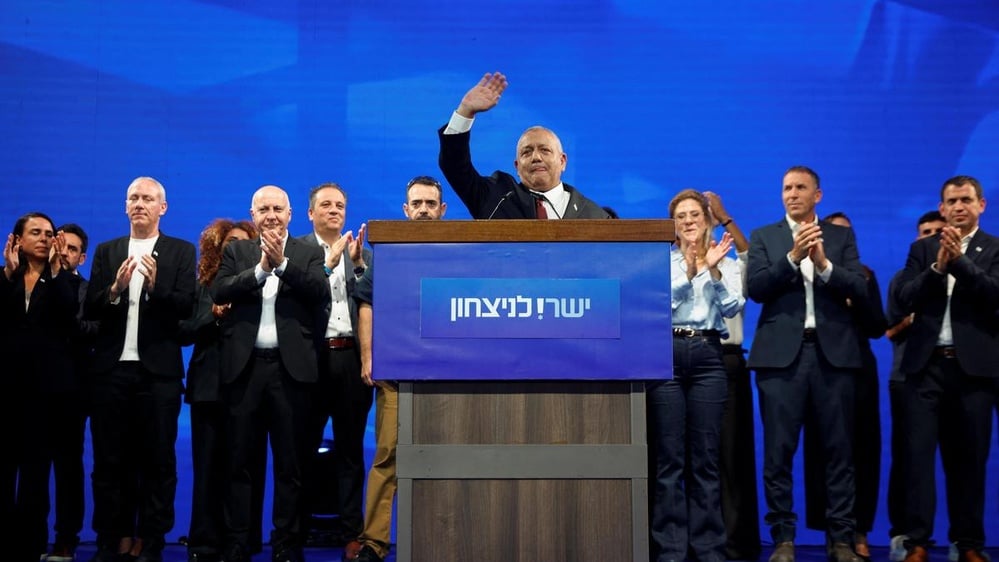
November 08, 2026 · 0 shares
Procedural, attribution-driven coverage presents Israeli coalition negotiations through official statements and vote counts without evaluative language.
Israel’s parliamentary system requires a prime minister-designate to assemble a Knesset majority after consultations led by the president.
Automated analysis; not human reviewed.
Limitations: The supplied text is a fragmented compilation of multiple VOVWORLD snippets with repeated headlines, limiting coherent publisher-framing analysis.
·
8 of 55 available dimensions scored; omitted dimensions are not treated as neutral.
·
Verified supporting quotes for 8 of 8 scored dimensions.
Claim: The report presents the government-formation development as attributed factual reporting rather than subjective commentary.
“The Office of the President of Israel said in a statement that President Herzog informed Eisenkot and Prime Minister Benjamin Netanyahu on Saturday following further consultations with figures from various political factions.” · exact text match
Why: The statement is attributed to an official source and contains no evaluative adjectives.
Claim: The article uses sober procedural language and avoids sensational emphasis.
“Prime Minister-designate Eisenkot has 28 days to form a new government, with a possible 14-day extension.” · exact text match
Why: The excerpt reports a legal/procedural deadline in neutral terms without dramatic language.
Claim: The text describes the government-formation procedure without prescribing a preferred political outcome.
“If he fails to complete the task within the stipulated period, the Knesset will have to be dissolved and a new election held.” · exact text match
Why: The statement describes a legal consequence rather than advocating a course of action.
Claim: The report is focused on Israeli coalition politics, elections, and government formation.
“Israeli President Isaac Herzog has picked Yashar party's leader Gadi Eisenkot to form a government.” · exact text match
Why: The subject matter is explicitly political.
Claim: The report cites official Israeli sources and specific election/consultation figures, supporting its factual credibility.
“The Office of the President of Israel said in a statement that President Herzog informed Eisenkot and Prime Minister Benjamin Netanyahu on Saturday following further consultations with figures from various political factions.” · exact text match
“Israel’s Central Elections Committee reported a voter turnout of 78% (about 5.7 million people) in the 26th parliamentary election on Tuesday, the highest turnout in 25 years.” · exact text match
Why: Named official sources and concrete figures provide visible support for the reported claims.
Claim: The report is grounded in quantified nomination counts and procedural rules rather than emotional or fallacious reasoning.
“Eisenkot received nominations from 67 of the Knesset’s 120 members, significantly more than the 46 nominations secured by Prime Minister Benjamin Netanyahu.” · exact text match
Why: Using specific vote counts and procedural steps supports a rational, evidence-based presentation.
Claim: The report attributes the appointment process to an official statement and includes nomination totals for both Eisenkot and Netanyahu.
“The Office of the President of Israel said in a statement that President Herzog informed Eisenkot and Prime Minister Benjamin Netanyahu on Saturday following further consultations with figures from various political factions.” · exact text match
“Eisenkot received nominations from 67 of the Knesset’s 120 members, significantly more than the 46 nominations secured by Prime Minister Benjamin Netanyahu.” · exact text match
Why: Visible sourcing and inclusion of both figures' nominations indicate fair, internally honest reporting.
Claim: The text supplies procedural context and specific figures that aid understanding of the political process.
“Eisenkot received nominations from 67 of the Knesset’s 120 members, significantly more than the 46 nominations secured by Prime Minister Benjamin Netanyahu.” · exact text match
Why: Quantified nominations and procedural details indicate informative, intelligible reporting.
The supplied text is a fragmented compilation of multiple VOVWORLD snippets with repeated headlines, limiting coherent publisher-framing analysis.
November 06, 2026 · 0 shares
The report is mostly attributed and procedural, but its use of 'seized on' for Netanyahu's fraud concerns and its emphasis on critics and election-committee denials produce a mild anti-Netanyahu, pro-establishment framing.
Automated analysis; not human reviewed.
Limitations: The supplied text includes duplicated article blocks and appended related-link headlines, creating some ambiguity about source boundaries; analysis is limited to the substantive political report.
·
11 of 55 available dimensions scored; omitted dimensions are not treated as neutral.
·
Verified supporting quotes for 7 of 11 scored dimensions.
Claim: The framing is mildly critical of Netanyahu, casting his fraud concerns as opportunistic while foregrounding critics' accusations.
“Netanyahu, at risk of losing power, has seized on an investigation by election officials into possible vote tampering to cast doubt on the results” · exact text match
“Critics accuse Netanyahu and his partners of trying to undermine the results” · exact text match
Counterevidence:
“which he denies” · exact text match
Why: The loaded verb 'seized on' and selection of critical accusations tilt against Netanyahu, while the report still includes his denial.
Claim: The report primarily presents attributable facts and official statements rather than the publisher's subjective interpretation.
“Some 67 lawmakers endorsed Eisenkot, a former military chief, while 46 backed Netanyahu.” · exact text match
“Herzog made the announcement on Thursday after holding marathon talks with parties elected to the 120-seat parliament, known as the Knesset.” · exact text match
Why: Concrete figures and procedural attribution outweigh the mild interpretive phrasing.
Claim: The report uses measured procedural language rather than sensational or alarmist framing.
“Herzog made the announcement on Thursday after holding marathon talks with parties elected to the 120-seat parliament, known as the Knesset.” · exact text match
Why: The language is institutional and specific, not sensational.
Claim: The report describes the coalition-formation timetable rather than prescribing political outcomes.
“Once nominated by Herzog, the candidate will have 28 days to try to forge a government, with a possible 14-day extension.” · exact text match
Why: The passage is procedural description with no prescriptive advocacy.
Claim: Mostly factual, but includes an interpretive characterization of Netanyahu's actions.
“Netanyahu, at risk of losing power, has seized on an investigation by election officials into possible vote tampering to cast doubt on the results” · exact text match
Why: 'Seized on' is an evaluative verb that introduces mild opinion into an otherwise reported account.
Claim: The entire substantive report concerns Israeli electoral and coalition politics.
“Israel’s President Isaac Herzog has said he will name a candidate to form the country’s next government by Sunday” · exact text match
Why: The subject matter and sources are wholly political.
Claim: The framing treats election authorities and orderly transfer of power as legitimate institutional anchors.
“One of the foundations of democracy is the peaceful transfer of power” · exact text match
“Israel’s Central Election Committee said on Wednesday that the election’s integrity had not been compromised.” · not found in supplied text
Why: Elevating the election committee and peaceful transfer language tilts pro-establishment.
Claim: Credibility is supported by named officials, exact vote tallies, and attributed institutional statements.
“Some 67 lawmakers endorsed Eisenkot, a former military chief, while 46 backed Netanyahu.” · exact text match
“Israel’s Central Election Committee said on Wednesday that the election’s integrity had not been compromised.” · not found in supplied text
Why: Multiple specific, attributed facts provide visible sourcing and verifiability.
Claim: The report relies on attributed vote tallies and official statements rather than emotive assertion.
“Some 67 lawmakers endorsed Eisenkot, a former military chief, while 46 backed Netanyahu.” · exact text match
“Israel’s Central Election Committee said on Wednesday that the election’s integrity had not been compromised.” · not found in supplied text
Why: Specific counts and attributed institutional findings support a rational, evidence-based presentation.
Claim: The report includes the election committee's rejection of fraud claims alongside Netanyahu's denial of critics' accusations, showing fairness.
“Israel’s Central Election Committee said on Wednesday that the election’s integrity had not been compromised.” · not found in supplied text
“Critics accuse Netanyahu and his partners of trying to undermine the results, which he denies.” · exact text match
Why: Attribution of both the committee finding and Netanyahu's denial supports a high-integrity presentation.
Claim: The report conveys the coalition deadlock with attention to bloc-level and intra-bloc vetoes.
“Herzog said that although the “results of the consultations may appear clear”, there were “mutual vetoes between the blocs and within the blocs themselves” that make it difficult to say who has the best chance of assembling a governing coalition.” · exact text match
Why: It explains a complex bargaining situation rather than reducing it to simple seat totals.
The supplied text includes duplicated article blocks and appended related-link headlines, creating some ambiguity about source boundaries; analysis is limited to the substantive political report.
Neutral, legalistic procedural reporting explains coalition arithmetic and timelines without evaluative or sensational framing.
Automated analysis; not human reviewed.
Limitations: Unrelated recommended headlines follow the article and were excluded from analysis.
·
11 of 55 available dimensions scored; omitted dimensions are not treated as neutral.
·
Verified supporting quotes for 11 of 11 scored dimensions.
Claim: The report presents both Eisenkot’s and Netanyahu’s recommendation totals without partisan characterization.
“Eisenkot received 67 recommendations during Herzog’s consultations compared with 46 for Netanyahu.” · exact text match
Why: Balanced presentation of competing camps’ counts supports measured neutrality on the liberal-conservative dimension.
Claim: The report explains legal thresholds in procedural terms rather than populist or elitist appeals.
“A government’s initial confidence vote has a different threshold: more lawmakers must vote for it than against it.” · exact text match
Why: Institutional and legal explanation without favoring elites or the populace supports neutrality.
Claim: The report states the election outcome and seat shortfall as factual context.
“The Oct. 27 election left both his opposition camp and caretaker Prime Minister Benjamin Netanyahu’s bloc short of a parliamentary majority.” · exact text match
Why: Attributed, factual outcome language supports an objective classification.
Claim: The report describes minority-government possibility in measured procedural terms.
“A minority government is also possible, provided it can win parliament’s confidence.” · exact text match
Why: Calm, non-sensational wording supports strong objectivity.
Claim: The report lays out legal rules for formation rather than advocating a preferred outcome.
“Under Basic Law: The Government, Eisenkot has 28 days to form a government.” · exact text match
Why: Descriptive legal exposition supports a strongly descriptive classification.
Claim: The report is centered on government formation and coalition politics.
“Israeli President Isaac Herzog formally tasked Yashar party leader Gadi Eisenkot with forming Israel’s next government on Sunday” · exact text match
Why: Government formation is inherently political, supporting a high political-bias score.
Claim: The report uses neutral procedural language with no emotional valence.
“If Eisenkot fails, Herzog has three days to decide whether to nominate another lawmaker or move the process to parliament.” · exact text match
Why: Neutral conditional language supports measured emotional neutrality.
Claim: The report cites precise legal thresholds and seat counts, enabling verification.
“A written request signed by at least 61 lawmakers, with the candidate’s written consent, obliges the president to issue the mandate within two days.” · exact text match
Why: Specific, checkable legal detail and attribution support high credibility.
Claim: The report uses a detailed legal sequence to explain possible government formation rounds.
“These are up to three rounds of government formation; the president can skip the second round and leave lawmakers to make the final nomination.” · exact text match
Why: Systematic procedural explanation supports a rational framing.
Claim: The report clarifies that recommendations do not equal commitments to governing.
“Recommending him for the mandate did not commit those parties to joining his government or supporting the coalition he negotiates.” · exact text match
Why: Explicit clarification of a common inference supports high internal fairness and honesty.
Claim: The report provides a structured legal timeline and historical precedent.
“Under Basic Law: The Government, Eisenkot has 28 days to form a government.
Herzog can grant extensions totaling up to 14 additional days.”
· exact text match
Why: Clear, specific procedural explanation supports above-average article intelligence.
Unrelated recommended headlines follow the article and were excluded from analysis.
November 08, 2026 · 0 shares
The explainer frames Israeli coalition formation through Eisenkot's four conditions in a largely neutral, attributed manner while cautiously forecasting how parties may respond.
Automated analysis; not human reviewed.
Limitations: The supplied text includes duplicated promotional and headline-list fragments outside the substantive explainer; they were excluded from analysis.
·
9 of 55 available dimensions scored; omitted dimensions are not treated as neutral.
·
Verified supporting quotes for 9 of 9 scored dimensions.
Claim: The report attributes coalition plans and party positions to named actors rather than presenting them as the publisher’s own subjective assertions.
“Eisenkot has responded that the “national emergency government” he will form will comprise the “four Zionist parties” of the change bloc” · exact text match
Why: Positions are presented as attributed statements, supporting an objective rather than subjective framing.
Claim: The report uses procedural, non-sensational language to describe government formation and party conditions.
“Israeli President Isaac Herzog tasked Gadi Eisenkot on Sunday with forming Israel’s next government, giving him up to six weeks to assemble a coalition with a total of 61 seats out of 120 in Israel’s parliament, the Knesset.” · exact text match
Why: The core description is procedural and factual, with no alarmist or sensational wording.
Claim: The article describes the coalition conditions and party reactions rather than prescribing a preferred political outcome.
“Throughout his campaign, and particularly since the Oct. 27 election, Eisenkot has emphasized these four principles as the basis for forming the next government.” · exact text match
Why: The passage explains Eisenkot’s stated basis for coalition formation instead of advocating a preferred result.
Claim: The content is centrally political, focused on Knesset coalition formation and party negotiations.
“Israeli President Isaac Herzog tasked Gadi Eisenkot on Sunday with forming Israel’s next government, giving him up to six weeks to assemble a coalition with a total of 61 seats out of 120 in Israel’s parliament, the Knesset.” · exact text match
Why: The article’s subject is government formation and party coalition strategy, making it highly political.
Claim: The report relies on named actors and attributed statements rather than unsourced assertions.
“At the President’s Residence in Jerusalem on Sunday, Eisenkot said he would be sending out formal invitations as soon as possible “to every Knesset faction, calling on all their members, both as parties and as individuals, to take part in forming the government and bringing it to its swearing-in.” · exact text match
Why: Direct attribution to a named political actor supports high visible credibility.
Claim: The report structures the coalition process around four numbered principles and their implications, supporting a rational/analytical framing.
“But what are they exactly? And who, out of the other 11 parties, will be able to accept them and join his coalition?” · exact text match
Why: The explainer poses and answers a structured question about the coalition conditions rather than relying on emotive appeals.
Claim: The article explicitly forecasts possible coalition outcomes and likely alternative leaders.
“If he fails to do so, then the president can give another Knesset member the opportunity; most likely this will be incumbent Prime Minister Benjamin Netanyahu.” · exact text match
“This stipulation could either keep the ultra-Orthodox out of the government, even though Eisenkot’s partners have expressed willingness to allow their participation.
Or it could force them to be more flexible on an issue that until now they have appeared unrelenting.”
· exact text match
Why: The language of likelihood and conditional future effects is speculative forecasting about coalition outcomes.
Claim: The report includes both Eisenkot’s requirements and Arab parties’ objections, indicating fairness in presenting competing positions.
“Leaders of the two Arab parties, the Islamist Ra’am Party and the more nationalist Joint List, have refused to make this statement out loud.” · exact text match
Why: Including the objections to a central coalition condition supports a fair, high-integrity framing.
Claim: The explainer organizes complex coalition dynamics into four conditions and their likely effects on multiple parties.
“But what are they exactly? And who, out of the other 11 parties, will be able to accept them and join his coalition?” · exact text match
Why: The article uses a clear analytic structure to explain the conditions and their political implications.
The supplied text includes duplicated promotional and headline-list fragments outside the substantive explainer; they were excluded from analysis.
November 08, 2026 · 0 shares
Publisher framing is measured wire-style political reporting, using conventional labels such as 'religious-nationalist' and 'far-right' while attributing the racism charge to Arab leaders rather than asserting it.
Automated analysis; not human reviewed.
Limitations: The supplied text lacks a byline and relies on unnamed analysts in places, limiting sourcing assessment.
·
7 of 55 available dimensions scored; omitted dimensions are not treated as neutral.
·
Verified supporting quotes for 6 of 7 scored dimensions.
Claim: The report is built mainly from verifiable seat counts, procedural rules, and attributed statements rather than the publisher's subjective assertions.
“Likud won the most seats of any single party with 27 in the 120-seat Knesset, but Mr. Netanyahu’s wider religious-nationalist coalition garnered only 53 in total, short of a 61-seat majority.” · exact text match
Why: Specific numerical results and institutional facts dominate the framing, supporting an objective classification.
Claim: The report uses measured procedural language rather than dramatic or sensational framing.
“Weeks of protracted negotiations are expected to follow Mr. Eisenkot’s nomination.” · exact text match
Why: The nomination is framed as the start of expected negotiations, not as a crisis or spectacle.
Claim: The report describes possible coalition pathways without recommending a preferred outcome.
“His potential pathways to power include trying to form a minority government with Arab support from the outside; forming a coalition with ultra-Orthodox parties that he and his allies have shunned in the past; or forging a unity government with Mr. Netanyahu.” · exact text match
Why: The passage lays out options descriptively, with no explicit prescription or advocacy.
Claim: There are mild subjective personal descriptors in the profile of Eisenkot.
“Reserved and media-shy, Mr. Eisenkot only entered politics in 2022.” · exact text match
Why: The phrase 'Reserved and media-shy' is a characterization rather than a strictly verifiable fact, though limited in scope.
Claim: The report centers on Israeli coalition formation and the president's choice of a candidate to form a government.
“Israel’s president on Saturday (November 7, 2026) chose Gadi Eisenkot” · exact text match
Why: The central subject is government formation, party strategy, and coalition politics, making the content highly political.
Claim: The report shows visible attribution and numerical detail, though it relies on unnamed analysts in places.
“said the spokesperson of President Isaac Herzog, whose largely ceremonial role involves nominating a candidate to form a coalition after elections.” · exact text match
Why: Attributed official comment and specific figures support credibility, while generic analyst attribution limits it somewhat.
Claim: The report relies on seat arithmetic, deadlines, and procedural rules to explain the political situation.
“If Mr. Eisenkot fails, another candidate can try to form a government and if that candidate fails, parliament can nominate another.” · not found in supplied text
Why: The explanation follows a stepwise institutional logic rather than emotional or irrational appeals.
The supplied text lacks a byline and relies on unnamed analysts in places, limiting sourcing assessment.
November 08, 2026 · 0 shares
Loaded framing appears in the characterization of the Gaza war as 'genocidal' and Finance Minister Bezalel Smotrich as 'far-right' within an otherwise attributed political report.
The Knesset has 120 seats; 61 seats constitute a parliamentary majority.
Automated analysis; not human reviewed.
Limitations: The supplied text contains duplicated passages, a truncated sentence, and unrelated related-link headlines; analysis is limited to the substantive political report.
·
12 of 55 available dimensions scored; omitted dimensions are not treated as neutral.
·
Verified supporting quotes for 12 of 12 scored dimensions.
Claim: The report uses left-coded and loaded labels for Israeli actors and the Gaza war.
“Israel’s genocidal war on Gaza” · exact text match
“far-right Finance Minister Bezalel Smotrich” · exact text match
Why: These terms align with a critical, left-leaning framing of Israel's right and military campaign.
Claim: The report includes subjective characterizations in its own news voice.
“Israel’s genocidal war on Gaza” · exact text match
Why: This is a contested evaluative label rather than neutral description.
Claim: The report uses a sensational moral-legal label in straight narration.
“Israel’s genocidal war on Gaza” · exact text match
Why: The term heightens impact beyond neutral reporting.
Claim: The text is primarily descriptive of coalition statements, election totals, and procedural deadlines.
“Eisenkot has ruled out forming a government with the Arab-led parties” · exact text match
Why: The publisher reports procedures and positions rather than prescribing a preferred outcome.
Claim: The news voice embeds opinionated labels rather than only attributed statements.
“far-right Finance Minister Bezalel Smotrich” · exact text match
Why: Calling a minister 'far-right' in the publisher's own prose is a political characterization.
Claim: The article is overwhelmingly focused on political coalition maneuvering.
“Israel’s president officially tasks the opposition leader with forming a new government.” · exact text match
Why: The central subject is government formation and party politics.
Claim: A contested genocide claim is asserted without hedging.
“Israel’s genocidal war on Gaza” · exact text match
Why: The phrase presents the characterization as established rather than alleged or disputed.
Claim: The report's own wording reflects an ideological vocabulary about Israel and its allies.
“Israel’s genocidal war on Gaza” · exact text match
“far-right Finance Minister Bezalel Smotrich” · exact text match
Why: Loaded terms track an ideological framing rather than neutral description.
Claim: The report's own wording carries strong negative emotional valence toward the Gaza war.
“Israel’s genocidal war on Gaza” · exact text match
Why: The term 'genocidal' is highly negative and emotionally charged.
Claim: Credibility signals are mixed: specific election figures and named attribution coexist with an unqualified loaded characterization.
“Eisenkot’s four-party alliance won 48 seats, while Netanyahu’s right-wing and religious bloc secured 53” · exact text match
“Israel’s genocidal war on Gaza” · exact text match
Why: Precise seat totals provide verifiable detail, while the unqualified 'genocidal' label weakens epistemic restraint.
Claim: The news voice treats a contested genocide characterization as an unqualified fact.
“Israel’s genocidal war on Gaza” · exact text match
Why: No evidence or qualification is given in the supplied text for the genocide label, indicating weak evidentiary restraint.
Claim: The report uses loaded framing in its own narration.
“Israel’s genocidal war on Gaza” · exact text match
Why: Loaded framing is an observable technique that can bias interpretation by presenting a contested characterization as established.
The supplied text contains duplicated passages, a truncated sentence, and unrelated related-link headlines; analysis is limited to the substantive political report.
November 07, 2026 · 0 shares
The lead report frames Israeli coalition politics through an anti-Netanyahu opposition lens, using an unquoted 'far-right' label for his government and presenting opposition maneuvering as a path to oust him while mostly retaining attributed quotes.
Israel’s president selects a party leader to attempt coalition formation after elections, and ultra-Orthodox military-service exemptions are a persistent coalition issue.
Automated analysis; not human reviewed.
Limitations: The supplied text mixes a lead Israeli politics report with duplicated passages and truncated unrelated Taiwan news fragments; bias scores are based on the lead report.
·
55 of 55 available dimensions scored; omitted dimensions are not treated as neutral.
·
Verified supporting quotes for 7 of 55 scored dimensions.
Claim: The report uses an unquoted 'far-right' label for Netanyahu’s government when explaining Israeli-Arab electoral gains, giving a negative characterization of the right.
“anger over Netanyahu’s far-right government” · exact text match
Why: The label is the publisher’s own framing in a news sentence, which mildly favors a liberal interpretive lens against the Netanyahu-led right.
Claim: The lead report is mostly factual and attributed, relying on election results and named speakers rather than first-person opinion.
“Neither Netanyahu nor opposition chief Gadi Eisenkot reached a majority in the Oct. 27 election” · exact text match
“Liberman said he would not back down on refusing to work with Israeli-Arabs” · exact text match
Counterevidence:
“anger over Netanyahu’s far-right government” · exact text match
Why: Concrete election data and attributed quotations support an objective classification, though the 'far-right' label adds mild subjectivity.
Claim: The report is measured in tone, presenting coalition arithmetic and attributed statements rather than dramatic or urgent language.
“Neither Netanyahu nor opposition chief Gadi Eisenkot reached a majority in the Oct. 27 election” · exact text match
Why: The factual procedural detail and restrained wording indicate low sensationalism.
Claim: The text describes coalition possibilities and quoted positions without advocating a policy or electoral outcome.
“Eisenkot could form a government with Israeli-Arabs” · exact text match
Why: The conditional phrasing and reporting of actors’ statements mark the article as descriptive rather than prescriptive.
Claim: The lead story is centrally about Israeli election results, coalition formation, and efforts to remove the prime minister.
“Opposition eases on draft position to oust Netanyahu.” · exact text match
Why: The headline and body are almost entirely political in subject matter and framing.
Claim: The lead report includes named actors, specific election and procedural details, and direct quotations that support verification.
“Israeli President Isaac Herzog plans to announce tomorrow who will have the first chance to form a government” · exact text match
“Liberman said he would not back down on refusing to work with Israeli-Arabs” · exact text match
Why: Attribution and concrete institutional detail are visible, but the supplied text is truncated and mixes unrelated fragments, limiting confidence.
Claim: The report frames government formation through conditional forecasts about which leader could assemble a coalition.
“Eisenkot could form a government with Israeli-Arabs” · exact text match
“most logically Eisenkot, as he has received the most endorsements” · exact text match
Why: The language of possibility and expected presidential nomination is forward-looking analysis, not only completed fact.
The supplied text mixes a lead Israeli politics report with duplicated passages and truncated unrelated Taiwan news fragments; bias scores are based on the lead report.
Straightforward, source-attributed procedural reporting presents Eisenkot’s announced Knesset-post agreement without evident partisan, sensational, or evaluative framing.
The Knesset is Israel’s parliament; its speaker and committee chairs are key procedural positions during government formation.
Automated analysis; not human reviewed.
Limitations: Short single-source report; the headline states the agreement as fact while the body attributes it to Eisenkot’s X post, and the supplied text provides no independent confirmation or response from the named leaders.
·
6 of 55 available dimensions scored; omitted dimensions are not treated as neutral.
·
Verified supporting quotes for 6 of 6 scored dimensions.
Claim: The report contains no clear left-right ideological characterization.
“Israeli opposition leader Gadi Eisenkot on Tuesday said he had reached an agreement with fellow Opposition leaders” · exact text match
Why: The text reports procedural opposition appointments without partisan or ideological framing.
Claim: The report is largely factual and attribution-driven rather than subjective commentary.
“Eisenkot further said the agreement names incoming MK Roy Folkman as chair of the house committee” · exact text match
Why: Facts are relayed through attributed statements and procedural details, with no evaluative commentary.
Claim: The coverage uses neutral procedural language rather than sensational emphasis.
“The composition of the committees will be discussed and finalized in the House Committee’s deliberations during the week and submitted for approval by the Knesset plenum next Wednesday.” · exact text match
Why: Purely procedural wording without alarm, emotion, or dramatic language.
Claim: The report describes proposed appointments and process without prescribing what should be done.
“the agreement names incoming MK Roy Folkman as chair of the house committee, former defense minister and MK Avigdor Lieberman as chair of the foreign affairs and defense committee, and incoming MK Liran Avisar Ben-Horrin as chair of the finance committee.” · exact text match
Why: It recounts who was named to posts rather than advocating a course of action.
Claim: The report is substantively political, focused on Knesset posts and opposition party leaders.
“on candidates for key positions in the Knesset during the government formation period” · exact text match
Why: The content centers on political appointments and legislative organization.
Claim: The report is moderately credible in its internal practice, relying on direct attribution to Eisenkot’s X post without independent corroboration in the supplied text.
“Eisenkot posted on X.” · exact text match
Why: A named primary source is directly quoted, but the report remains single-source within the supplied text.
Short single-source report; the headline states the agreement as fact while the body attributes it to Eisenkot’s X post, and the supplied text provides no independent confirmation or response from the named leaders.
November 06, 2026 · 0 shares
The report is mostly attributed and procedural, but its use of 'seized on' for Netanyahu's fraud concerns and its emphasis on critics and election-committee denials produce a mild anti-Netanyahu, pro-establishment framing.
Automated analysis; not human reviewed.
Limitations: The supplied text includes duplicated article blocks and appended related-link headlines, creating some ambiguity about source boundaries; analysis is limited to the substantive political report.
·
11 of 55 available dimensions scored; omitted dimensions are not treated as neutral.
·
Verified supporting quotes for 7 of 11 scored dimensions.
Claim: The framing is mildly critical of Netanyahu, casting his fraud concerns as opportunistic while foregrounding critics' accusations.
“Netanyahu, at risk of losing power, has seized on an investigation by election officials into possible vote tampering to cast doubt on the results” · exact text match
“Critics accuse Netanyahu and his partners of trying to undermine the results” · exact text match
Counterevidence:
“which he denies” · exact text match
Why: The loaded verb 'seized on' and selection of critical accusations tilt against Netanyahu, while the report still includes his denial.
Claim: The report primarily presents attributable facts and official statements rather than the publisher's subjective interpretation.
“Some 67 lawmakers endorsed Eisenkot, a former military chief, while 46 backed Netanyahu.” · exact text match
“Herzog made the announcement on Thursday after holding marathon talks with parties elected to the 120-seat parliament, known as the Knesset.” · exact text match
Why: Concrete figures and procedural attribution outweigh the mild interpretive phrasing.
Claim: The report uses measured procedural language rather than sensational or alarmist framing.
“Herzog made the announcement on Thursday after holding marathon talks with parties elected to the 120-seat parliament, known as the Knesset.” · exact text match
Why: The language is institutional and specific, not sensational.
Claim: The report describes the coalition-formation timetable rather than prescribing political outcomes.
“Once nominated by Herzog, the candidate will have 28 days to try to forge a government, with a possible 14-day extension.” · exact text match
Why: The passage is procedural description with no prescriptive advocacy.
Claim: Mostly factual, but includes an interpretive characterization of Netanyahu's actions.
“Netanyahu, at risk of losing power, has seized on an investigation by election officials into possible vote tampering to cast doubt on the results” · exact text match
Why: 'Seized on' is an evaluative verb that introduces mild opinion into an otherwise reported account.
Claim: The entire substantive report concerns Israeli electoral and coalition politics.
“Israel’s President Isaac Herzog has said he will name a candidate to form the country’s next government by Sunday” · exact text match
Why: The subject matter and sources are wholly political.
Claim: The framing treats election authorities and orderly transfer of power as legitimate institutional anchors.
“One of the foundations of democracy is the peaceful transfer of power” · exact text match
“Israel’s Central Election Committee said on Wednesday that the election’s integrity had not been compromised.” · not found in supplied text
Why: Elevating the election committee and peaceful transfer language tilts pro-establishment.
Claim: Credibility is supported by named officials, exact vote tallies, and attributed institutional statements.
“Some 67 lawmakers endorsed Eisenkot, a former military chief, while 46 backed Netanyahu.” · exact text match
“Israel’s Central Election Committee said on Wednesday that the election’s integrity had not been compromised.” · not found in supplied text
Why: Multiple specific, attributed facts provide visible sourcing and verifiability.
Claim: The report relies on attributed vote tallies and official statements rather than emotive assertion.
“Some 67 lawmakers endorsed Eisenkot, a former military chief, while 46 backed Netanyahu.” · exact text match
“Israel’s Central Election Committee said on Wednesday that the election’s integrity had not been compromised.” · not found in supplied text
Why: Specific counts and attributed institutional findings support a rational, evidence-based presentation.
Claim: The report includes the election committee's rejection of fraud claims alongside Netanyahu's denial of critics' accusations, showing fairness.
“Israel’s Central Election Committee said on Wednesday that the election’s integrity had not been compromised.” · not found in supplied text
“Critics accuse Netanyahu and his partners of trying to undermine the results, which he denies.” · exact text match
Why: Attribution of both the committee finding and Netanyahu's denial supports a high-integrity presentation.
Claim: The report conveys the coalition deadlock with attention to bloc-level and intra-bloc vetoes.
“Herzog said that although the “results of the consultations may appear clear”, there were “mutual vetoes between the blocs and within the blocs themselves” that make it difficult to say who has the best chance of assembling a governing coalition.” · exact text match
Why: It explains a complex bargaining situation rather than reducing it to simple seat totals.
The supplied text includes duplicated article blocks and appended related-link headlines, creating some ambiguity about source boundaries; analysis is limited to the substantive political report.
November 06, 2026 · 0 shares
The report's framing is largely neutral and procedural, relying on attributed official statements and including rebuttals, with only mild evaluative shorthand in labels such as "anti-Netanyahu" and "far-right".
Automated analysis; not human reviewed.
Limitations: The supplied text appears excerpted and includes truncated or repeated headline metadata, with no author or full publication metadata present.
·
9 of 55 available dimensions scored; omitted dimensions are not treated as neutral.
·
Verified supporting quotes for 8 of 9 scored dimensions.
Claim: The report presents procedural rules and vote counts in neutral, verifiable terms.
“The candidate chosen by Herzog will have 28 days to form a government, with a possible 14-day extension.” · exact text match
“During the consultations, 67 of the Knesset’s 120 lawmakers endorsed Eisenkot, while 46 backed Netanyahu.” · exact text match
Why: These are factual procedural and numerical statements rather than subjective commentary.
Claim: The report avoids sensational language in describing the deadlock.
“Israel’s October 27 election ended without a clear winner, leaving both Netanyahu and former military chief Eisenkot short of a parliamentary majority.” · exact text match
Why: The phrasing is measured and factual rather than emotionally heightened.
Claim: The report recounts vote counts and procedures rather than prescribing political outcomes.
“During the consultations, 67 of the Knesset’s 120 lawmakers endorsed Eisenkot, while 46 backed Netanyahu.” · exact text match
Why: The sentence is descriptive vote counting rather than advocacy.
Claim: The report occasionally uses political shorthand labels such as “anti-Netanyahu” and “far-right.”
“Eisenkot’s anti-Netanyahu coalition, comprising four parties ranging from the centre-left to the right, won 48 seats” · exact text match
“Meanwhile, far-right allies of Netanyahu, including National Security Minister Itamar Ben-Gvir, have called for the immediate arrest and interrogation of Arab party leaders.” · exact text match
Why: These are evaluative or ideological descriptors, but they are brief and embedded in otherwise attributed reporting.
Claim: The entire report concerns electoral politics and government formation.
“Israel’s October 27 election ended without a clear winner, leaving both Netanyahu and former military chief Eisenkot short of a parliamentary majority.” · exact text match
Why: The content is explicitly about an election and coalition formation.
Claim: The report attributes contested claims and includes official caution and denial.
“Herzog cautioned that the numbers did not necessarily indicate who could successfully form a government” · exact text match
“Netanyahu has denied trying to do so.” · exact text match
Why: Visible attribution and inclusion of denials support credibility.
Claim: The report uses attributed caution to qualify electoral arithmetic.
“Herzog cautioned that the numbers did not necessarily indicate who could successfully form a government, citing “mutual vetoes between the blocs and within the blocs themselves”.” · exact text match
Why: The explicit caution shows measured reasoning rather than irrationality.
Claim: The report includes a denial and an official rebuttal when recounting contested allegations.
“Netanyahu has denied trying to do so.” · exact text match
“The Central Election Committee said on Wednesday that the integrity of the election had not been compromised.” · not found in supplied text
Why: Including denials and official responses shows visible fairness in handling a contested claim.
Claim: The report distinguishes formal endorsements from actual coalition viability.
“Herzog cautioned that the numbers did not necessarily indicate who could successfully form a government, citing “mutual vetoes between the blocs and within the blocs themselves”.” · exact text match
Why: The explicit caution shows analytic nuance rather than a simplistic vote-count frame.
The supplied text appears excerpted and includes truncated or repeated headline metadata, with no author or full publication metadata present.
November 08, 2026 · 0 shares
Procedural, attribution-driven coverage presents Israeli coalition negotiations through official statements and vote counts without evaluative language.
Israel’s parliamentary system requires a prime minister-designate to assemble a Knesset majority after consultations led by the president.
Automated analysis; not human reviewed. Limitations: The supplied text is a fragmented compilation of multiple VOVWORLD snippets with repeated headlines, limiting coherent publisher-framing analysis. · 8 of 55 available dimensions scored; omitted dimensions are not treated as neutral. · Verified supporting quotes for 8 of 8 scored dimensions.
Claim: The report presents the government-formation development as attributed factual reporting rather than subjective commentary.
“The Office of the President of Israel said in a statement that President Herzog informed Eisenkot and Prime Minister Benjamin Netanyahu on Saturday following further consultations with figures from various political factions.” · exact text match
Why: The statement is attributed to an official source and contains no evaluative adjectives.
Claim: The article uses sober procedural language and avoids sensational emphasis.
“Prime Minister-designate Eisenkot has 28 days to form a new government, with a possible 14-day extension.” · exact text match
Why: The excerpt reports a legal/procedural deadline in neutral terms without dramatic language.
Claim: The text describes the government-formation procedure without prescribing a preferred political outcome.
“If he fails to complete the task within the stipulated period, the Knesset will have to be dissolved and a new election held.” · exact text match
Why: The statement describes a legal consequence rather than advocating a course of action.
Claim: The report is focused on Israeli coalition politics, elections, and government formation.
“Israeli President Isaac Herzog has picked Yashar party's leader Gadi Eisenkot to form a government.” · exact text match
Why: The subject matter is explicitly political.
Claim: The report cites official Israeli sources and specific election/consultation figures, supporting its factual credibility.
“The Office of the President of Israel said in a statement that President Herzog informed Eisenkot and Prime Minister Benjamin Netanyahu on Saturday following further consultations with figures from various political factions.” · exact text match
“Israel’s Central Elections Committee reported a voter turnout of 78% (about 5.7 million people) in the 26th parliamentary election on Tuesday, the highest turnout in 25 years.” · exact text match
Why: Named official sources and concrete figures provide visible support for the reported claims.
Claim: The report is grounded in quantified nomination counts and procedural rules rather than emotional or fallacious reasoning.
“Eisenkot received nominations from 67 of the Knesset’s 120 members, significantly more than the 46 nominations secured by Prime Minister Benjamin Netanyahu.” · exact text match
Why: Using specific vote counts and procedural steps supports a rational, evidence-based presentation.
Claim: The report attributes the appointment process to an official statement and includes nomination totals for both Eisenkot and Netanyahu.
“The Office of the President of Israel said in a statement that President Herzog informed Eisenkot and Prime Minister Benjamin Netanyahu on Saturday following further consultations with figures from various political factions.” · exact text match
“Eisenkot received nominations from 67 of the Knesset’s 120 members, significantly more than the 46 nominations secured by Prime Minister Benjamin Netanyahu.” · exact text match
Why: Visible sourcing and inclusion of both figures' nominations indicate fair, internally honest reporting.
Claim: The text supplies procedural context and specific figures that aid understanding of the political process.
“Eisenkot received nominations from 67 of the Knesset’s 120 members, significantly more than the 46 nominations secured by Prime Minister Benjamin Netanyahu.” · exact text match
Why: Quantified nominations and procedural details indicate informative, intelligible reporting.
The supplied text is a fragmented compilation of multiple VOVWORLD snippets with repeated headlines, limiting coherent publisher-framing analysis.
November 06, 2026 · 0 shares
The report is mostly attributed and procedural, but its use of 'seized on' for Netanyahu's fraud concerns and its emphasis on critics and election-committee denials produce a mild anti-Netanyahu, pro-establishment framing.
Automated analysis; not human reviewed. Limitations: The supplied text includes duplicated article blocks and appended related-link headlines, creating some ambiguity about source boundaries; analysis is limited to the substantive political report. · 11 of 55 available dimensions scored; omitted dimensions are not treated as neutral. · Verified supporting quotes for 7 of 11 scored dimensions.
Claim: The framing is mildly critical of Netanyahu, casting his fraud concerns as opportunistic while foregrounding critics' accusations.
“Netanyahu, at risk of losing power, has seized on an investigation by election officials into possible vote tampering to cast doubt on the results” · exact text match
“Critics accuse Netanyahu and his partners of trying to undermine the results” · exact text match
Counterevidence:
“which he denies” · exact text match
Why: The loaded verb 'seized on' and selection of critical accusations tilt against Netanyahu, while the report still includes his denial.
Claim: The report primarily presents attributable facts and official statements rather than the publisher's subjective interpretation.
“Some 67 lawmakers endorsed Eisenkot, a former military chief, while 46 backed Netanyahu.” · exact text match
“Herzog made the announcement on Thursday after holding marathon talks with parties elected to the 120-seat parliament, known as the Knesset.” · exact text match
Why: Concrete figures and procedural attribution outweigh the mild interpretive phrasing.
Claim: The report uses measured procedural language rather than sensational or alarmist framing.
“Herzog made the announcement on Thursday after holding marathon talks with parties elected to the 120-seat parliament, known as the Knesset.” · exact text match
Why: The language is institutional and specific, not sensational.
Claim: The report describes the coalition-formation timetable rather than prescribing political outcomes.
“Once nominated by Herzog, the candidate will have 28 days to try to forge a government, with a possible 14-day extension.” · exact text match
Why: The passage is procedural description with no prescriptive advocacy.
Claim: Mostly factual, but includes an interpretive characterization of Netanyahu's actions.
“Netanyahu, at risk of losing power, has seized on an investigation by election officials into possible vote tampering to cast doubt on the results” · exact text match
Why: 'Seized on' is an evaluative verb that introduces mild opinion into an otherwise reported account.
Claim: The entire substantive report concerns Israeli electoral and coalition politics.
“Israel’s President Isaac Herzog has said he will name a candidate to form the country’s next government by Sunday” · exact text match
Why: The subject matter and sources are wholly political.
Claim: The framing treats election authorities and orderly transfer of power as legitimate institutional anchors.
“One of the foundations of democracy is the peaceful transfer of power” · exact text match
“Israel’s Central Election Committee said on Wednesday that the election’s integrity had not been compromised.” · not found in supplied text
Why: Elevating the election committee and peaceful transfer language tilts pro-establishment.
Claim: Credibility is supported by named officials, exact vote tallies, and attributed institutional statements.
“Some 67 lawmakers endorsed Eisenkot, a former military chief, while 46 backed Netanyahu.” · exact text match
“Israel’s Central Election Committee said on Wednesday that the election’s integrity had not been compromised.” · not found in supplied text
Why: Multiple specific, attributed facts provide visible sourcing and verifiability.
Claim: The report relies on attributed vote tallies and official statements rather than emotive assertion.
“Some 67 lawmakers endorsed Eisenkot, a former military chief, while 46 backed Netanyahu.” · exact text match
“Israel’s Central Election Committee said on Wednesday that the election’s integrity had not been compromised.” · not found in supplied text
Why: Specific counts and attributed institutional findings support a rational, evidence-based presentation.
Claim: The report includes the election committee's rejection of fraud claims alongside Netanyahu's denial of critics' accusations, showing fairness.
“Israel’s Central Election Committee said on Wednesday that the election’s integrity had not been compromised.” · not found in supplied text
“Critics accuse Netanyahu and his partners of trying to undermine the results, which he denies.” · exact text match
Why: Attribution of both the committee finding and Netanyahu's denial supports a high-integrity presentation.
Claim: The report conveys the coalition deadlock with attention to bloc-level and intra-bloc vetoes.
“Herzog said that although the “results of the consultations may appear clear”, there were “mutual vetoes between the blocs and within the blocs themselves” that make it difficult to say who has the best chance of assembling a governing coalition.” · exact text match
Why: It explains a complex bargaining situation rather than reducing it to simple seat totals.
The supplied text includes duplicated article blocks and appended related-link headlines, creating some ambiguity about source boundaries; analysis is limited to the substantive political report.
November 08, 2026 · 0 shares
Procedural, attribution-heavy reportage frames the government-formation contest through official statements and vote counts with little editorial color.
Automated analysis; not human reviewed. Limitations: The supplied text includes JTA subscription/related-link material and repeated privacy boilerplate after the report; those wrapper elements were excluded from analysis. · 7 of 55 available dimensions scored; omitted dimensions are not treated as neutral. · Verified supporting quotes for 7 of 7 scored dimensions.
Claim: The report presents the two main candidates' parliamentary support without ideological framing or endorsement.
“Some 67 members of the Knesset recommended Eisenkot, a former IDF chief of staff, for prime minister during those consultations. Meanwhile, 46 members of Knesset recommended incumbent Prime Minister and Likud Leader, Benjamin Netanyahu.” · exact text match
Why: Balanced vote counts and neutral attribution support a measured-neutral score on the liberal-conservative dimension.
Claim: The report recounts presidential and parliamentary procedure neutrally, without populist or elitist framing.
“The consultations, Herzog said, “brought to the surface the disputes, the painful points, and of course, the multitude of voices within Israeli society and politics.”” · exact text match
Why: The procedural and attributed language does not clearly favor populist or elitist perspectives.
Claim: The report is primarily descriptive, using procedural facts and attributed quotes rather than the publisher's subjective characterizations.
“Eisenkot has up to six weeks to assemble a coalition, a step that typically includes at least 61 seats out of 120 in Israel’s parliament, the Knesset.” · exact text match
Why: Factual procedural detail supports an objective classification.
Claim: The report avoids sensational publisher language; dramatic phrases appear only inside direct quotes.
“In his speech on Sunday, Eisenkot said that Israeli democracy was “at one of its most vulnerable moments.”” · exact text match
Why: The vivid language is attributed to Eisenkot rather than used as the publisher's own sensational framing.
Claim: The report describes the government-formation process and official statements without prescribing a political outcome.
“If he fails to do so within that time, then the president can give another Knesset member the opportunity to form a government.” · exact text match
Why: The procedural explanation is descriptive rather than prescriptive.
Claim: The article's subject is explicitly political: presidential tasking, Knesset recommendations, and coalition formation.
“Israeli President Isaac Herzog on Sunday formally tasked Gadi Eisenkot with forming the next government” · exact text match
Why: The report directly concerns political leadership and coalition formation.
Claim: The report is highly attributable, naming officials, quoting them directly, and providing precise vote counts and procedural rules.
“Some 67 members of the Knesset recommended Eisenkot, a former IDF chief of staff, for prime minister during those consultations. Meanwhile, 46 members of Knesset recommended incumbent Prime Minister and Likud Leader, Benjamin Netanyahu. One faction, United Torah Judaism, with seven members of Knesset, refrained from recommending any candidate.” · exact text match
Why: Named sources, direct quotes, and specific counts support high visible credibility.
The supplied text includes JTA subscription/related-link material and repeated privacy boilerplate after the report; those wrapper elements were excluded from analysis.
Neutral, legalistic procedural reporting explains coalition arithmetic and timelines without evaluative or sensational framing.
Automated analysis; not human reviewed. Limitations: Unrelated recommended headlines follow the article and were excluded from analysis. · 11 of 55 available dimensions scored; omitted dimensions are not treated as neutral. · Verified supporting quotes for 11 of 11 scored dimensions.
Claim: The report presents both Eisenkot’s and Netanyahu’s recommendation totals without partisan characterization.
“Eisenkot received 67 recommendations during Herzog’s consultations compared with 46 for Netanyahu.” · exact text match
Why: Balanced presentation of competing camps’ counts supports measured neutrality on the liberal-conservative dimension.
Claim: The report explains legal thresholds in procedural terms rather than populist or elitist appeals.
“A government’s initial confidence vote has a different threshold: more lawmakers must vote for it than against it.” · exact text match
Why: Institutional and legal explanation without favoring elites or the populace supports neutrality.
Claim: The report states the election outcome and seat shortfall as factual context.
“The Oct. 27 election left both his opposition camp and caretaker Prime Minister Benjamin Netanyahu’s bloc short of a parliamentary majority.” · exact text match
Why: Attributed, factual outcome language supports an objective classification.
Claim: The report describes minority-government possibility in measured procedural terms.
“A minority government is also possible, provided it can win parliament’s confidence.” · exact text match
Why: Calm, non-sensational wording supports strong objectivity.
Claim: The report lays out legal rules for formation rather than advocating a preferred outcome.
“Under Basic Law: The Government, Eisenkot has 28 days to form a government.” · exact text match
Why: Descriptive legal exposition supports a strongly descriptive classification.
Claim: The report is centered on government formation and coalition politics.
“Israeli President Isaac Herzog formally tasked Yashar party leader Gadi Eisenkot with forming Israel’s next government on Sunday” · exact text match
Why: Government formation is inherently political, supporting a high political-bias score.
Claim: The report uses neutral procedural language with no emotional valence.
“If Eisenkot fails, Herzog has three days to decide whether to nominate another lawmaker or move the process to parliament.” · exact text match
Why: Neutral conditional language supports measured emotional neutrality.
Claim: The report cites precise legal thresholds and seat counts, enabling verification.
“A written request signed by at least 61 lawmakers, with the candidate’s written consent, obliges the president to issue the mandate within two days.” · exact text match
Why: Specific, checkable legal detail and attribution support high credibility.
Claim: The report uses a detailed legal sequence to explain possible government formation rounds.
“These are up to three rounds of government formation; the president can skip the second round and leave lawmakers to make the final nomination.” · exact text match
Why: Systematic procedural explanation supports a rational framing.
Claim: The report clarifies that recommendations do not equal commitments to governing.
“Recommending him for the mandate did not commit those parties to joining his government or supporting the coalition he negotiates.” · exact text match
Why: Explicit clarification of a common inference supports high internal fairness and honesty.
Claim: The report provides a structured legal timeline and historical precedent.
“Under Basic Law: The Government, Eisenkot has 28 days to form a government. Herzog can grant extensions totaling up to 14 additional days.” · exact text match
Why: Clear, specific procedural explanation supports above-average article intelligence.
Unrelated recommended headlines follow the article and were excluded from analysis.
November 06, 2026 · 0 shares
The report is procedurally neutral and fact-driven, presenting competing coalition constraints through attributed statements and specific seat counts without loaded or sensational language.
Automated analysis; not human reviewed. Limitations: The supplied text lacks author and publication metadata, so framing assessment is limited to the article body. · 55 of 55 available dimensions scored; omitted dimensions are not treated as neutral. · Verified supporting quotes for 8 of 55 scored dimensions.
Claim: The report presents the coalition deadlock through attributed statements and quantified seat counts rather than subjective commentary.
“Yashar’s Gadi Eisenkot secured the backing of 67 of the Knesset’s 120 members, theoretically giving him majority support, but divisions between the parties made the question of coalition building more complex.” · exact text match
Why: Specific vote counts and attributed complexity support an objective classification.
Claim: The framing is procedural and avoids sensational language or dramatization.
“The president confirmed he would decide on Sunday who would be given the first chance to form a government.” · exact text match
Why: Straight procedural reporting supports an objective, non-sensational classification.
Claim: The article primarily describes the political and legal process rather than prescribing outcomes.
“Under Israeli law, the candidate receiving the mandate has 28 days to form a government, with a possible 14-day extension.” · exact text match
Why: Legal procedure is described without recommendation.
Claim: The article is centrally about Israeli coalition politics and government formation.
“Israeli President Isaac Herzog has said it is “unclear” who can form the next government, after he concluded consultations with all parliamentary factions on Thursday.” · exact text match
Why: The entire report concerns political party consultations and coalition formation.
Claim: The article uses direct attribution and concrete procedural details, supporting a high credibility assessment.
““The results of the consultations may appear clear, but the authority vested in me by law is to determine who has the ability to form a government, and that is not entirely clear, given the mutual vetoes between the blocs and within the blocs themselves,” Herzog said.” · exact text match
Why: Direct quotation and named attribution show visible sourcing.
Claim: The report follows a rational, process-based explanation of government formation.
“Under Israeli law, the candidate receiving the mandate has 28 days to form a government, with a possible 14-day extension.” · exact text match
Why: Legal and procedural reasoning supports a rational classification.
Claim: The article includes obstacles to Eisenkot’s path and does not present his majority support as sufficient.
“However, several parties backing Eisenkot have ruled out governing alongside Arab parties, and some oppose even relying on their parliamentary support in a minority government.” · exact text match
Why: Reporting countervailing constraints indicates fairness and honesty signals.
Claim: The report explains coalition arithmetic and competing constraints at a relatively sophisticated level.
“However, with Eisenkot’s bloc on 48 seats, it would need the cooperation of both UTJ and the other major Charedi party, Shas, which backed Netanyahu for prime minister, to achieve a majority.” · exact text match
Why: Seat arithmetic and party constraints support an above-average intelligence assessment.
The supplied text lacks author and publication metadata, so framing assessment is limited to the article body.
November 06, 2026 · 0 shares
The report's framing is largely neutral and procedural, relying on attributed official statements and including rebuttals, with only mild evaluative shorthand in labels such as "anti-Netanyahu" and "far-right".
Automated analysis; not human reviewed. Limitations: The supplied text appears excerpted and includes truncated or repeated headline metadata, with no author or full publication metadata present. · 9 of 55 available dimensions scored; omitted dimensions are not treated as neutral. · Verified supporting quotes for 8 of 9 scored dimensions.
Claim: The report presents procedural rules and vote counts in neutral, verifiable terms.
“The candidate chosen by Herzog will have 28 days to form a government, with a possible 14-day extension.” · exact text match
“During the consultations, 67 of the Knesset’s 120 lawmakers endorsed Eisenkot, while 46 backed Netanyahu.” · exact text match
Why: These are factual procedural and numerical statements rather than subjective commentary.
Claim: The report avoids sensational language in describing the deadlock.
“Israel’s October 27 election ended without a clear winner, leaving both Netanyahu and former military chief Eisenkot short of a parliamentary majority.” · exact text match
Why: The phrasing is measured and factual rather than emotionally heightened.
Claim: The report recounts vote counts and procedures rather than prescribing political outcomes.
“During the consultations, 67 of the Knesset’s 120 lawmakers endorsed Eisenkot, while 46 backed Netanyahu.” · exact text match
Why: The sentence is descriptive vote counting rather than advocacy.
Claim: The report occasionally uses political shorthand labels such as “anti-Netanyahu” and “far-right.”
“Eisenkot’s anti-Netanyahu coalition, comprising four parties ranging from the centre-left to the right, won 48 seats” · exact text match
“Meanwhile, far-right allies of Netanyahu, including National Security Minister Itamar Ben-Gvir, have called for the immediate arrest and interrogation of Arab party leaders.” · exact text match
Why: These are evaluative or ideological descriptors, but they are brief and embedded in otherwise attributed reporting.
Claim: The entire report concerns electoral politics and government formation.
“Israel’s October 27 election ended without a clear winner, leaving both Netanyahu and former military chief Eisenkot short of a parliamentary majority.” · exact text match
Why: The content is explicitly about an election and coalition formation.
Claim: The report attributes contested claims and includes official caution and denial.
“Herzog cautioned that the numbers did not necessarily indicate who could successfully form a government” · exact text match
“Netanyahu has denied trying to do so.” · exact text match
Why: Visible attribution and inclusion of denials support credibility.
Claim: The report uses attributed caution to qualify electoral arithmetic.
“Herzog cautioned that the numbers did not necessarily indicate who could successfully form a government, citing “mutual vetoes between the blocs and within the blocs themselves”.” · exact text match
Why: The explicit caution shows measured reasoning rather than irrationality.
Claim: The report includes a denial and an official rebuttal when recounting contested allegations.
“Netanyahu has denied trying to do so.” · exact text match
“The Central Election Committee said on Wednesday that the integrity of the election had not been compromised.” · not found in supplied text
Why: Including denials and official responses shows visible fairness in handling a contested claim.
Claim: The report distinguishes formal endorsements from actual coalition viability.
“Herzog cautioned that the numbers did not necessarily indicate who could successfully form a government, citing “mutual vetoes between the blocs and within the blocs themselves”.” · exact text match
Why: The explicit caution shows analytic nuance rather than a simplistic vote-count frame.
The supplied text appears excerpted and includes truncated or repeated headline metadata, with no author or full publication metadata present.
November 08, 2026 · 0 shares
Publisher framing is measured wire-style political reporting, using conventional labels such as 'religious-nationalist' and 'far-right' while attributing the racism charge to Arab leaders rather than asserting it.
Automated analysis; not human reviewed. Limitations: The supplied text lacks a byline and relies on unnamed analysts in places, limiting sourcing assessment. · 7 of 55 available dimensions scored; omitted dimensions are not treated as neutral. · Verified supporting quotes for 6 of 7 scored dimensions.
Claim: The report is built mainly from verifiable seat counts, procedural rules, and attributed statements rather than the publisher's subjective assertions.
“Likud won the most seats of any single party with 27 in the 120-seat Knesset, but Mr. Netanyahu’s wider religious-nationalist coalition garnered only 53 in total, short of a 61-seat majority.” · exact text match
Why: Specific numerical results and institutional facts dominate the framing, supporting an objective classification.
Claim: The report uses measured procedural language rather than dramatic or sensational framing.
“Weeks of protracted negotiations are expected to follow Mr. Eisenkot’s nomination.” · exact text match
Why: The nomination is framed as the start of expected negotiations, not as a crisis or spectacle.
Claim: The report describes possible coalition pathways without recommending a preferred outcome.
“His potential pathways to power include trying to form a minority government with Arab support from the outside; forming a coalition with ultra-Orthodox parties that he and his allies have shunned in the past; or forging a unity government with Mr. Netanyahu.” · exact text match
Why: The passage lays out options descriptively, with no explicit prescription or advocacy.
Claim: There are mild subjective personal descriptors in the profile of Eisenkot.
“Reserved and media-shy, Mr. Eisenkot only entered politics in 2022.” · exact text match
Why: The phrase 'Reserved and media-shy' is a characterization rather than a strictly verifiable fact, though limited in scope.
Claim: The report centers on Israeli coalition formation and the president's choice of a candidate to form a government.
“Israel’s president on Saturday (November 7, 2026) chose Gadi Eisenkot” · exact text match
Why: The central subject is government formation, party strategy, and coalition politics, making the content highly political.
Claim: The report shows visible attribution and numerical detail, though it relies on unnamed analysts in places.
“said the spokesperson of President Isaac Herzog, whose largely ceremonial role involves nominating a candidate to form a coalition after elections.” · exact text match
Why: Attributed official comment and specific figures support credibility, while generic analyst attribution limits it somewhat.
Claim: The report relies on seat arithmetic, deadlines, and procedural rules to explain the political situation.
“If Mr. Eisenkot fails, another candidate can try to form a government and if that candidate fails, parliament can nominate another.” · not found in supplied text
Why: The explanation follows a stepwise institutional logic rather than emotional or irrational appeals.
The supplied text lacks a byline and relies on unnamed analysts in places, limiting sourcing assessment.
November 08, 2026 · 0 shares
Loaded framing appears in the characterization of the Gaza war as 'genocidal' and Finance Minister Bezalel Smotrich as 'far-right' within an otherwise attributed political report.
The Knesset has 120 seats; 61 seats constitute a parliamentary majority.
Automated analysis; not human reviewed. Limitations: The supplied text contains duplicated passages, a truncated sentence, and unrelated related-link headlines; analysis is limited to the substantive political report. · 12 of 55 available dimensions scored; omitted dimensions are not treated as neutral. · Verified supporting quotes for 12 of 12 scored dimensions.
Claim: The report uses left-coded and loaded labels for Israeli actors and the Gaza war.
“Israel’s genocidal war on Gaza” · exact text match
“far-right Finance Minister Bezalel Smotrich” · exact text match
Why: These terms align with a critical, left-leaning framing of Israel's right and military campaign.
Claim: The report includes subjective characterizations in its own news voice.
“Israel’s genocidal war on Gaza” · exact text match
Why: This is a contested evaluative label rather than neutral description.
Claim: The report uses a sensational moral-legal label in straight narration.
“Israel’s genocidal war on Gaza” · exact text match
Why: The term heightens impact beyond neutral reporting.
Claim: The text is primarily descriptive of coalition statements, election totals, and procedural deadlines.
“Eisenkot has ruled out forming a government with the Arab-led parties” · exact text match
Why: The publisher reports procedures and positions rather than prescribing a preferred outcome.
Claim: The news voice embeds opinionated labels rather than only attributed statements.
“far-right Finance Minister Bezalel Smotrich” · exact text match
Why: Calling a minister 'far-right' in the publisher's own prose is a political characterization.
Claim: The article is overwhelmingly focused on political coalition maneuvering.
“Israel’s president officially tasks the opposition leader with forming a new government.” · exact text match
Why: The central subject is government formation and party politics.
Claim: A contested genocide claim is asserted without hedging.
“Israel’s genocidal war on Gaza” · exact text match
Why: The phrase presents the characterization as established rather than alleged or disputed.
Claim: The report's own wording reflects an ideological vocabulary about Israel and its allies.
“Israel’s genocidal war on Gaza” · exact text match
“far-right Finance Minister Bezalel Smotrich” · exact text match
Why: Loaded terms track an ideological framing rather than neutral description.
Claim: The report's own wording carries strong negative emotional valence toward the Gaza war.
“Israel’s genocidal war on Gaza” · exact text match
Why: The term 'genocidal' is highly negative and emotionally charged.
Claim: Credibility signals are mixed: specific election figures and named attribution coexist with an unqualified loaded characterization.
“Eisenkot’s four-party alliance won 48 seats, while Netanyahu’s right-wing and religious bloc secured 53” · exact text match
“Israel’s genocidal war on Gaza” · exact text match
Why: Precise seat totals provide verifiable detail, while the unqualified 'genocidal' label weakens epistemic restraint.
Claim: The news voice treats a contested genocide characterization as an unqualified fact.
“Israel’s genocidal war on Gaza” · exact text match
Why: No evidence or qualification is given in the supplied text for the genocide label, indicating weak evidentiary restraint.
Claim: The report uses loaded framing in its own narration.
“Israel’s genocidal war on Gaza” · exact text match
Why: Loaded framing is an observable technique that can bias interpretation by presenting a contested characterization as established.
The supplied text contains duplicated passages, a truncated sentence, and unrelated related-link headlines; analysis is limited to the substantive political report.
November 08, 2026 · 0 shares
The explainer frames Israeli coalition formation through Eisenkot's four conditions in a largely neutral, attributed manner while cautiously forecasting how parties may respond.
Automated analysis; not human reviewed. Limitations: The supplied text includes duplicated promotional and headline-list fragments outside the substantive explainer; they were excluded from analysis. · 9 of 55 available dimensions scored; omitted dimensions are not treated as neutral. · Verified supporting quotes for 9 of 9 scored dimensions.
Claim: The report attributes coalition plans and party positions to named actors rather than presenting them as the publisher’s own subjective assertions.
“Eisenkot has responded that the “national emergency government” he will form will comprise the “four Zionist parties” of the change bloc” · exact text match
Why: Positions are presented as attributed statements, supporting an objective rather than subjective framing.
Claim: The report uses procedural, non-sensational language to describe government formation and party conditions.
“Israeli President Isaac Herzog tasked Gadi Eisenkot on Sunday with forming Israel’s next government, giving him up to six weeks to assemble a coalition with a total of 61 seats out of 120 in Israel’s parliament, the Knesset.” · exact text match
Why: The core description is procedural and factual, with no alarmist or sensational wording.
Claim: The article describes the coalition conditions and party reactions rather than prescribing a preferred political outcome.
“Throughout his campaign, and particularly since the Oct. 27 election, Eisenkot has emphasized these four principles as the basis for forming the next government.” · exact text match
Why: The passage explains Eisenkot’s stated basis for coalition formation instead of advocating a preferred result.
Claim: The content is centrally political, focused on Knesset coalition formation and party negotiations.
“Israeli President Isaac Herzog tasked Gadi Eisenkot on Sunday with forming Israel’s next government, giving him up to six weeks to assemble a coalition with a total of 61 seats out of 120 in Israel’s parliament, the Knesset.” · exact text match
Why: The article’s subject is government formation and party coalition strategy, making it highly political.
Claim: The report relies on named actors and attributed statements rather than unsourced assertions.
“At the President’s Residence in Jerusalem on Sunday, Eisenkot said he would be sending out formal invitations as soon as possible “to every Knesset faction, calling on all their members, both as parties and as individuals, to take part in forming the government and bringing it to its swearing-in.” · exact text match
Why: Direct attribution to a named political actor supports high visible credibility.
Claim: The report structures the coalition process around four numbered principles and their implications, supporting a rational/analytical framing.
“But what are they exactly? And who, out of the other 11 parties, will be able to accept them and join his coalition?” · exact text match
Why: The explainer poses and answers a structured question about the coalition conditions rather than relying on emotive appeals.
Claim: The article explicitly forecasts possible coalition outcomes and likely alternative leaders.
“If he fails to do so, then the president can give another Knesset member the opportunity; most likely this will be incumbent Prime Minister Benjamin Netanyahu.” · exact text match
“This stipulation could either keep the ultra-Orthodox out of the government, even though Eisenkot’s partners have expressed willingness to allow their participation. Or it could force them to be more flexible on an issue that until now they have appeared unrelenting.” · exact text match
Why: The language of likelihood and conditional future effects is speculative forecasting about coalition outcomes.
Claim: The report includes both Eisenkot’s requirements and Arab parties’ objections, indicating fairness in presenting competing positions.
“Leaders of the two Arab parties, the Islamist Ra’am Party and the more nationalist Joint List, have refused to make this statement out loud.” · exact text match
Why: Including the objections to a central coalition condition supports a fair, high-integrity framing.
Claim: The explainer organizes complex coalition dynamics into four conditions and their likely effects on multiple parties.
“But what are they exactly? And who, out of the other 11 parties, will be able to accept them and join his coalition?” · exact text match
Why: The article uses a clear analytic structure to explain the conditions and their political implications.
The supplied text includes duplicated promotional and headline-list fragments outside the substantive explainer; they were excluded from analysis.
November 06, 2026 · 0 shares
Prescriptive, pro-Netanyahu Zionist unity advocacy frames coalition opponents’ resistance as personal grudges and national-security risk.
Israel’s president consults party leaders and assigns a Knesset member to try to form a coalition government.
Automated analysis; not human reviewed. Limitations: No byline is provided, and the supplied text is an opinion/analysis article rather than a straight news report. · 18 of 55 available dimensions scored; omitted dimensions are not treated as neutral. · Verified supporting quotes for 18 of 18 scored dimensions.
Claim: The op-ed favors a Likud-led coalition and labels Golan’s party far-left.
“Bennett is right-of-center and could be a natural partner with Netanyahu’s Likud Party (27 seats).” · exact text match
“the far-left Yair Golan’s Democrats (eight seats)” · exact text match
Why: Preference for right-of-center partners and left-labeling indicate conservative framing.
Claim: The op-ed endorses government legislation requiring yeshiva students to serve in the IDF.
“This would enable the government to legislate a draft law that would require yeshiva students to serve in the IDF” · exact text match
Why: A coercive state mandate on military service leans authoritarian on this dimension.
Claim: The op-ed is built around prescriptive judgments about what Israel needs and must do.
“Israel needs a Zionist unity government.” · exact text match
“Personal grudges against Netanyahu must give way to Israel’s national interests.” · exact text match
Why: Imperative evaluative language dominates.
Claim: The op-ed uses loaded diagnostic language to describe Netanyahu's opponents.
“For the good of the country, this Netanyahu derangement syndrome must be acknowledged and abandoned.” · exact text match
Why: The phrase derangement syndrome is a loaded, sensational characterization.
Claim: The op-ed repeatedly prescribes coalition choices and political behavior.
“Personal grudges against Netanyahu must give way to Israel’s national interests.” · exact text match
“Israel needs a Zionist unity government.” · exact text match
Why: Imperatives and needs statements make the text prescriptive.
Claim: The op-ed frames coalition choice around confronting Iran and eliminating Hamas and PIJ.
“Israel is facing a critical confrontation with the Islamic Republic of Iran, and only a unity government can bring the nation together and provide the framework for making the most effective decisions.” · exact text match
“On issues such as eliminating Hamas and Palestinian Islamic Jihad (PIJ) from Gaza or a war with Iran, Ra’am and the Joint List would withdraw their support from Eisenkot’s government.” · exact text match
Why: Security confrontation and war framing lean hawkish.
Claim: The op-ed invokes regional war and isolation to urge unity.
“Israel is facing a critical confrontation with the Islamic Republic of Iran” · exact text match
Why: Security threats are used as stakes, though not luridly.
Claim: The op-ed attributes coalition resistance to personal grudges and antipathy.
“The existence of boycotts in Israeli politics, based primarily on personal antipathy and even hatred, has become a major factor in creating electoral stalemates.” · exact text match
“Both Bennett and Lapid have experience serving in various positions in previous Netanyahu governments, and both left with a grudge.” · exact text match
Why: Focus on personal grudges and interpersonal motives is gossip-like political framing.
Claim: The op-ed is explicitly argumentative and prescriptive.
“Israel needs a Zionist unity government.” · exact text match
Why: The central statement is an opinion about what Israel needs.
Claim: The entire piece concerns Israeli coalition politics and party strategy.
“Israel needs a Zionist unity government.” · exact text match
Why: Political actors, seats, coalitions, and governance dominate.
Claim: The op-ed reduces coalition deadlock primarily to personal grudges against Netanyahu.
“Personal grudges against Netanyahu must give way to Israel’s national interests.” · exact text match
Why: It presents personal antipathy as the main obstacle, simplifying complex policy conflicts.
Claim: The op-ed asserts that only a unity government can achieve national unity and effective decisions.
“only a unity government can bring the nation together and provide the framework for making the most effective decisions” · exact text match
Why: The only claim is a strong certainty claim beyond the supplied evidence.
Claim: The op-ed advances a Zionist unity framework and labels Arab parties anti-Zionist.
“Israel needs a Zionist unity government.” · exact text match
“Without the Haredi parties and the anti-Zionist Arab parties, a unity government could legislate a fair draft bill, decide on an adequate inquiry commission into the failures of Oct. 7 and diminish extremist policies.” · exact text match
Why: Explicit ideological labels and prescriptions structure the argument.
Claim: The op-ed promotes a unity government of established parties and experienced leaders.
“only a unity government can bring the nation together and provide the framework for making the most effective decisions” · exact text match
Why: It favors elite coalition-building and established leadership over outsider or opposition alternatives.
Claim: The op-ed reasons through coalition arithmetic and strategic options rather than asserting pure emotion.
“In a coalition government comprised of Yashar, Beyahad and Yisrael Beitenu, along with Netanyahu’s Likud, Israel would have a solid government of 80 seats in the Knesset without the Haredi parties.” · exact text match
Why: Seat-count analysis supports a rational frame, though loaded language qualifies it.
Claim: The op-ed subordinates personal grievances to national interests and peoplehood.
“Personal grudges against Netanyahu must give way to Israel’s national interests.” · exact text match
“Israel’s future requires compromise for a strong peoplehood.” · exact text match
Why: Collective national interest is explicitly prioritized.
Claim: The op-ed forecasts coalition formation and political outcomes.
“Eisenkot’s chances of forming a coalition are low.” · exact text match
“More than likely, Israel’s President Isaac Herzog will give Eisenkot the first shot at forming a coalition government.” · exact text match
Why: Predictive claims about coalition prospects are speculative.
Claim: The op-ed uses a dismissive diagnostic label to delegitimize opposition to Netanyahu.
“this Netanyahu derangement syndrome must be acknowledged and abandoned.” · exact text match
Why: Loaded labeling is an observable framing technique, though not necessarily intentional manipulation.
No byline is provided, and the supplied text is an opinion/analysis article rather than a straight news report.
November 08, 2026 · 0 shares
Loaded framing appears in the characterization of the Gaza war as 'genocidal' and Finance Minister Bezalel Smotrich as 'far-right' within an otherwise attributed political report.
The Knesset has 120 seats; 61 seats constitute a parliamentary majority.
Automated analysis; not human reviewed. Limitations: The supplied text contains duplicated passages, a truncated sentence, and unrelated related-link headlines; analysis is limited to the substantive political report. · 12 of 55 available dimensions scored; omitted dimensions are not treated as neutral. · Verified supporting quotes for 12 of 12 scored dimensions.
Claim: The report uses left-coded and loaded labels for Israeli actors and the Gaza war.
“Israel’s genocidal war on Gaza” · exact text match
“far-right Finance Minister Bezalel Smotrich” · exact text match
Why: These terms align with a critical, left-leaning framing of Israel's right and military campaign.
Claim: The report includes subjective characterizations in its own news voice.
“Israel’s genocidal war on Gaza” · exact text match
Why: This is a contested evaluative label rather than neutral description.
Claim: The report uses a sensational moral-legal label in straight narration.
“Israel’s genocidal war on Gaza” · exact text match
Why: The term heightens impact beyond neutral reporting.
Claim: The text is primarily descriptive of coalition statements, election totals, and procedural deadlines.
“Eisenkot has ruled out forming a government with the Arab-led parties” · exact text match
Why: The publisher reports procedures and positions rather than prescribing a preferred outcome.
Claim: The news voice embeds opinionated labels rather than only attributed statements.
“far-right Finance Minister Bezalel Smotrich” · exact text match
Why: Calling a minister 'far-right' in the publisher's own prose is a political characterization.
Claim: The article is overwhelmingly focused on political coalition maneuvering.
“Israel’s president officially tasks the opposition leader with forming a new government.” · exact text match
Why: The central subject is government formation and party politics.
Claim: A contested genocide claim is asserted without hedging.
“Israel’s genocidal war on Gaza” · exact text match
Why: The phrase presents the characterization as established rather than alleged or disputed.
Claim: The report's own wording reflects an ideological vocabulary about Israel and its allies.
“Israel’s genocidal war on Gaza” · exact text match
“far-right Finance Minister Bezalel Smotrich” · exact text match
Why: Loaded terms track an ideological framing rather than neutral description.
Claim: The report's own wording carries strong negative emotional valence toward the Gaza war.
“Israel’s genocidal war on Gaza” · exact text match
Why: The term 'genocidal' is highly negative and emotionally charged.
Claim: Credibility signals are mixed: specific election figures and named attribution coexist with an unqualified loaded characterization.
“Eisenkot’s four-party alliance won 48 seats, while Netanyahu’s right-wing and religious bloc secured 53” · exact text match
“Israel’s genocidal war on Gaza” · exact text match
Why: Precise seat totals provide verifiable detail, while the unqualified 'genocidal' label weakens epistemic restraint.
Claim: The news voice treats a contested genocide characterization as an unqualified fact.
“Israel’s genocidal war on Gaza” · exact text match
Why: No evidence or qualification is given in the supplied text for the genocide label, indicating weak evidentiary restraint.
Claim: The report uses loaded framing in its own narration.
“Israel’s genocidal war on Gaza” · exact text match
Why: Loaded framing is an observable technique that can bias interpretation by presenting a contested characterization as established.
The supplied text contains duplicated passages, a truncated sentence, and unrelated related-link headlines; analysis is limited to the substantive political report.
November 06, 2026 · 0 shares
The report is procedurally neutral and fact-driven, presenting competing coalition constraints through attributed statements and specific seat counts without loaded or sensational language.
Automated analysis; not human reviewed. Limitations: The supplied text lacks author and publication metadata, so framing assessment is limited to the article body. · 55 of 55 available dimensions scored; omitted dimensions are not treated as neutral. · Verified supporting quotes for 8 of 55 scored dimensions.
Claim: The report presents the coalition deadlock through attributed statements and quantified seat counts rather than subjective commentary.
“Yashar’s Gadi Eisenkot secured the backing of 67 of the Knesset’s 120 members, theoretically giving him majority support, but divisions between the parties made the question of coalition building more complex.” · exact text match
Why: Specific vote counts and attributed complexity support an objective classification.
Claim: The framing is procedural and avoids sensational language or dramatization.
“The president confirmed he would decide on Sunday who would be given the first chance to form a government.” · exact text match
Why: Straight procedural reporting supports an objective, non-sensational classification.
Claim: The article primarily describes the political and legal process rather than prescribing outcomes.
“Under Israeli law, the candidate receiving the mandate has 28 days to form a government, with a possible 14-day extension.” · exact text match
Why: Legal procedure is described without recommendation.
Claim: The article is centrally about Israeli coalition politics and government formation.
“Israeli President Isaac Herzog has said it is “unclear” who can form the next government, after he concluded consultations with all parliamentary factions on Thursday.” · exact text match
Why: The entire report concerns political party consultations and coalition formation.
Claim: The article uses direct attribution and concrete procedural details, supporting a high credibility assessment.
““The results of the consultations may appear clear, but the authority vested in me by law is to determine who has the ability to form a government, and that is not entirely clear, given the mutual vetoes between the blocs and within the blocs themselves,” Herzog said.” · exact text match
Why: Direct quotation and named attribution show visible sourcing.
Claim: The report follows a rational, process-based explanation of government formation.
“Under Israeli law, the candidate receiving the mandate has 28 days to form a government, with a possible 14-day extension.” · exact text match
Why: Legal and procedural reasoning supports a rational classification.
Claim: The article includes obstacles to Eisenkot’s path and does not present his majority support as sufficient.
“However, several parties backing Eisenkot have ruled out governing alongside Arab parties, and some oppose even relying on their parliamentary support in a minority government.” · exact text match
Why: Reporting countervailing constraints indicates fairness and honesty signals.
Claim: The report explains coalition arithmetic and competing constraints at a relatively sophisticated level.
“However, with Eisenkot’s bloc on 48 seats, it would need the cooperation of both UTJ and the other major Charedi party, Shas, which backed Netanyahu for prime minister, to achieve a majority.” · exact text match
Why: Seat arithmetic and party constraints support an above-average intelligence assessment.
The supplied text lacks author and publication metadata, so framing assessment is limited to the article body.
November 08, 2026 · 0 shares
Loaded framing appears in the characterization of the Gaza war as 'genocidal' and Finance Minister Bezalel Smotrich as 'far-right' within an otherwise attributed political report.
The Knesset has 120 seats; 61 seats constitute a parliamentary majority.
Automated analysis; not human reviewed. Limitations: The supplied text contains duplicated passages, a truncated sentence, and unrelated related-link headlines; analysis is limited to the substantive political report. · 12 of 55 available dimensions scored; omitted dimensions are not treated as neutral. · Verified supporting quotes for 12 of 12 scored dimensions.
Claim: The report uses left-coded and loaded labels for Israeli actors and the Gaza war.
“Israel’s genocidal war on Gaza” · exact text match
“far-right Finance Minister Bezalel Smotrich” · exact text match
Why: These terms align with a critical, left-leaning framing of Israel's right and military campaign.
Claim: The report includes subjective characterizations in its own news voice.
“Israel’s genocidal war on Gaza” · exact text match
Why: This is a contested evaluative label rather than neutral description.
Claim: The report uses a sensational moral-legal label in straight narration.
“Israel’s genocidal war on Gaza” · exact text match
Why: The term heightens impact beyond neutral reporting.
Claim: The text is primarily descriptive of coalition statements, election totals, and procedural deadlines.
“Eisenkot has ruled out forming a government with the Arab-led parties” · exact text match
Why: The publisher reports procedures and positions rather than prescribing a preferred outcome.
Claim: The news voice embeds opinionated labels rather than only attributed statements.
“far-right Finance Minister Bezalel Smotrich” · exact text match
Why: Calling a minister 'far-right' in the publisher's own prose is a political characterization.
Claim: The article is overwhelmingly focused on political coalition maneuvering.
“Israel’s president officially tasks the opposition leader with forming a new government.” · exact text match
Why: The central subject is government formation and party politics.
Claim: A contested genocide claim is asserted without hedging.
“Israel’s genocidal war on Gaza” · exact text match
Why: The phrase presents the characterization as established rather than alleged or disputed.
Claim: The report's own wording reflects an ideological vocabulary about Israel and its allies.
“Israel’s genocidal war on Gaza” · exact text match
“far-right Finance Minister Bezalel Smotrich” · exact text match
Why: Loaded terms track an ideological framing rather than neutral description.
Claim: The report's own wording carries strong negative emotional valence toward the Gaza war.
“Israel’s genocidal war on Gaza” · exact text match
Why: The term 'genocidal' is highly negative and emotionally charged.
Claim: Credibility signals are mixed: specific election figures and named attribution coexist with an unqualified loaded characterization.
“Eisenkot’s four-party alliance won 48 seats, while Netanyahu’s right-wing and religious bloc secured 53” · exact text match
“Israel’s genocidal war on Gaza” · exact text match
Why: Precise seat totals provide verifiable detail, while the unqualified 'genocidal' label weakens epistemic restraint.
Claim: The news voice treats a contested genocide characterization as an unqualified fact.
“Israel’s genocidal war on Gaza” · exact text match
Why: No evidence or qualification is given in the supplied text for the genocide label, indicating weak evidentiary restraint.
Claim: The report uses loaded framing in its own narration.
“Israel’s genocidal war on Gaza” · exact text match
Why: Loaded framing is an observable technique that can bias interpretation by presenting a contested characterization as established.
The supplied text contains duplicated passages, a truncated sentence, and unrelated related-link headlines; analysis is limited to the substantive political report.
November 08, 2026 · 0 shares
Publisher framing is broadly procedural but mildly left-of-center and anti-Netanyahu, using loaded descriptors such as 'far-right firebrands' and 'extremist West Bank settlers' while attributing key evaluative claims.
Israel's president formally tasks a candidate with forming a coalition government after elections; the nominee must assemble and sustain a Knesset majority, often through multi-party agreements.
Automated analysis; not human reviewed. Limitations: The supplied text is heavily duplicated and truncated, so scores rely on repeated core passages; some later wording is cut off. · 15 of 55 available dimensions scored; omitted dimensions are not treated as neutral. · Verified supporting quotes for 12 of 15 scored dimensions.
Claim: Publisher framing is modestly left-of-center, criticizing Netanyahu-aligned right-wing actors and highlighting Palestinian and Israeli-Arab grievances.
“which includes far-right firebrands who have openly sought to marginalise the community” · exact text match
“rampant violence against Palestinians by extremist West Bank settlers supported by Netanyahu's government” · not found in supplied text
Counterevidence:
“but has also largely backed his war decisions” · exact text match
Why: These are narrative descriptors, not merely quoted claims, that cast Netanyahu's right-wing allies and settlers negatively.
Claim: Coverage centers on party leaders, the president, and an institutional expert rather than ordinary citizens or populist appeals.
“In consultations last week with Herzog, Eisenkot received recommendations from parties accounting for 67 lawmakers, against 46 for Netanyahu.” · exact text match
“Assaf Shapira, a political expert at the Israel Democracy Institute, said” · exact text match
Why: The article's analysis is framed through elite coalition arithmetic and expert commentary.
Claim: The report is mostly objective but includes some subjective evaluative descriptors in its own narrative.
“far-right firebrands who have openly sought to marginalise the community” · exact text match
“rampant violence against Palestinians by extremist West Bank settlers” · exact text match
Why: Loaded terms appear outside direct quotation, adding subjectivity to otherwise factual reporting.
Claim: The article is predominantly objective and non-sensational, focusing on institutional process and attributed statements.
“was due to meet President Isaac Herzog who will formally give him the mandate to form a government with an initial deadline of 28 days” · exact text match
Why: Measured procedural language and specific deadlines indicate low sensationalism.
Claim: The article has moderate interest value through a historical-first leadership bid and coalition uncertainty.
“would be the first Sephardic prime minister -- a descendant of Jews from the Middle East or North Africa -- in a country long dominated by an Ashkenazi elite with ties to Europe” · exact text match
Why: The historical first and coalition instability add narrative interest.
Claim: The article is primarily descriptive, reporting actors' positions and procedural developments rather than prescribing policy.
“He has ruled out a unity government with Netanyahu” · exact text match
“Eisenkot has called for a "national emergency" government” · exact text match
Why: Prescriptive calls are attributed to Eisenkot and other actors, not adopted by the publisher.
Claim: The report is mostly factual but contains limited evaluative/opinionated language.
“far-right firebrands who have openly sought to marginalise the community” · exact text match
“rampant violence against Palestinians by extremist West Bank settlers” · exact text match
Why: These descriptors convey evaluative judgments while the bulk of the text remains reported fact.
Claim: The article is overwhelmingly political in subject matter.
“Eisenkot received recommendations from parties accounting for 67 lawmakers, against 46 for Netanyahu” · exact text match
Why: The entire report concerns Israeli coalition formation, party positions, and leadership contests.
Claim: The article mostly avoids oversimplification, noting coalition fragility and deeper unresolved problems.
“To pass laws, you need strong support from other parties” · exact text match
“The country is facing a massive internal conflict; even if he manages to form a government, it won't solve the underlying issues” · not found in supplied text
Why: It acknowledges complexity and limits of a new government, reducing oversimplification.
Claim: The article carries a modest ideological framing through identity and security-policy descriptors, though most content is reported.
“would be the first Sephardic prime minister -- a descendant of Jews from the Middle East or North Africa -- in a country long dominated by an Ashkenazi elite with ties to Europe” · exact text match
“rampant violence against Palestinians by extremist West Bank settlers supported by Netanyahu's government” · not found in supplied text
Why: Identity and settlement-violence framing introduces an ideological lens beyond bare procedural reporting.
Claim: Visible sourcing, direct quotation, and attribution support moderate-to-good credibility in the supplied text.
“Assaf Shapira, a political expert at the Israel Democracy Institute, said” · exact text match
“a policy critics say amounts to a war crime” · exact text match
Why: Named expert attribution and explicit attribution of contested claims indicate credible reporting practices.
Claim: The report is largely rational and evidence-based, presenting procedural facts and attributed analysis rather than emotive argument.
“In consultations last week with Herzog, Eisenkot received recommendations from parties accounting for 67 lawmakers, against 46 for Netanyahu.” · exact text match
“To pass laws, you need strong support from other parties” · exact text match
Why: Concrete vote counts and quoted expert explanation support a rational rather than irrational framing.
Claim: The article includes some forecasting and interpretive speculation about coalition viability and Eisenkot's strategy.
“Eisenkot appears to be suggesting that he is willing to start off with a minority government” · exact text match
“would face an especially fragile government if it only has 48 lawmakers” · exact text match
Why: Words like 'appears' and conditional assessments introduce forecast/interpretation beyond confirmed events.
Claim: The article shows fair/honest sourcing signals by attributing critical claims and quoting actors directly.
“a policy critics say amounts to a war crime” · exact text match
“Liberman wrote on X” · exact text match
Why: Contested characterizations are attributed to critics and politicians rather than asserted without qualification.
Claim: The article is reasonably intelligent, supplying procedural context, expert analysis, and historical background.
“Assaf Shapira, a political expert at the Israel Democracy Institute, said that Eisenkot would face an especially fragile government if it only has 48 lawmakers” · exact text match
“Commanding the military during the 2006 war with Hezbollah, Eisenkot devised the so-called "Dahiya doctrine"” · exact text match
Why: It explains coalition mathematics, expert assessment, and biographical/security context.
The supplied text is heavily duplicated and truncated, so scores rely on repeated core passages; some later wording is cut off.
Straightforward, source-attributed procedural reporting presents Eisenkot’s announced Knesset-post agreement without evident partisan, sensational, or evaluative framing.
The Knesset is Israel’s parliament; its speaker and committee chairs are key procedural positions during government formation.
Automated analysis; not human reviewed. Limitations: Short single-source report; the headline states the agreement as fact while the body attributes it to Eisenkot’s X post, and the supplied text provides no independent confirmation or response from the named leaders. · 6 of 55 available dimensions scored; omitted dimensions are not treated as neutral. · Verified supporting quotes for 6 of 6 scored dimensions.
Claim: The report contains no clear left-right ideological characterization.
“Israeli opposition leader Gadi Eisenkot on Tuesday said he had reached an agreement with fellow Opposition leaders” · exact text match
Why: The text reports procedural opposition appointments without partisan or ideological framing.
Claim: The report is largely factual and attribution-driven rather than subjective commentary.
“Eisenkot further said the agreement names incoming MK Roy Folkman as chair of the house committee” · exact text match
Why: Facts are relayed through attributed statements and procedural details, with no evaluative commentary.
Claim: The coverage uses neutral procedural language rather than sensational emphasis.
“The composition of the committees will be discussed and finalized in the House Committee’s deliberations during the week and submitted for approval by the Knesset plenum next Wednesday.” · exact text match
Why: Purely procedural wording without alarm, emotion, or dramatic language.
Claim: The report describes proposed appointments and process without prescribing what should be done.
“the agreement names incoming MK Roy Folkman as chair of the house committee, former defense minister and MK Avigdor Lieberman as chair of the foreign affairs and defense committee, and incoming MK Liran Avisar Ben-Horrin as chair of the finance committee.” · exact text match
Why: It recounts who was named to posts rather than advocating a course of action.
Claim: The report is substantively political, focused on Knesset posts and opposition party leaders.
“on candidates for key positions in the Knesset during the government formation period” · exact text match
Why: The content centers on political appointments and legislative organization.
Claim: The report is moderately credible in its internal practice, relying on direct attribution to Eisenkot’s X post without independent corroboration in the supplied text.
“Eisenkot posted on X.” · exact text match
Why: A named primary source is directly quoted, but the report remains single-source within the supplied text.
Short single-source report; the headline states the agreement as fact while the body attributes it to Eisenkot’s X post, and the supplied text provides no independent confirmation or response from the named leaders.
November 07, 2026 · 0 shares
The report is largely descriptive and attribution-bound, presenting the rally, coalition arithmetic, and presidential mandate without overt evaluative language.
Automated analysis; not human reviewed. Limitations: The supplied text includes appended unrelated headlines after the main report, which were excluded as page chrome; no byline is present. · 9 of 55 available dimensions scored; omitted dimensions are not treated as neutral. · Verified supporting quotes for 9 of 9 scored dimensions.
Claim: Publisher-authored prose is largely objective and attributed, with uncertain allegations marked as suspicions rather than asserted facts.
“Israeli media reported that he was arrested Wednesday on suspicion of contact with a foreign agent after traveling to Doha to interview former Knesset member Azmi Bishara.” · exact text match
Why: The use of attributed reporting and 'on suspicion' shows an objective, uncertainty-preserving presentation.
Claim: The report uses measured, specific language rather than sensational or emotive framing.
“About 300 people rallied in the Jezreel Valley in northern Israel to call for Arab parties to be included in the next government, Haaretz reported.” · exact text match
Why: The sentence gives a concrete turnout and location with attribution, not hyperbolic or emotional language.
Claim: The report describes demonstrators' demands and political developments without prescribing a preferred outcome.
“Hundreds of Israelis demonstrated Saturday evening to demand a new government that includes Arab parties and ends outgoing Prime Minister Benjamin Netanyahu’s rule” · exact text match
Why: The framing reports what demonstrators demanded rather than advocating that outcome.
Claim: Publisher-authored text is mostly factual, with evaluative statements confined to quoted demonstrators.
““Without partnership, there is no peace,” demonstrators chanted.” · exact text match
Why: The quoted slogan is clearly attributed to demonstrators rather than presented as the publisher's opinion.
Claim: The report is heavily political in content, centered on coalition formation, party seat counts, and a presidential mandate.
“Parties opposed to Netanyahu won 67 seats in the election, including 19 held by the two Arab Lists, while parties backing him won 53.” · exact text match
Why: The core facts concern Israeli electoral and coalition politics.
Claim: The report includes coalition arithmetic and an obstacle to Arab-party inclusion, avoiding a one-sided simplification.
“Most leaders of the Israeli opposition parties oppose forming a government that relies on Arab parties. Those opposition parties hold 48 seats between them, short of the 61 needed for a majority.” · exact text match
Why: It notes both the rally's demand and the leadership and seat-count constraints on forming such a government.
Claim: The report's credibility is strengthened by repeated attribution to named outlets and by preserving uncertainty in the arrest claim.
“About 300 people rallied in the Jezreel Valley in northern Israel to call for Arab parties to be included in the next government, Haaretz reported.” · exact text match
“Israeli media reported that he was arrested Wednesday on suspicion of contact with a foreign agent after traveling to Doha to interview former Knesset member Azmi Bishara.” · exact text match
Why: Named sourcing and cautious wording support visible credibility, though the text is short and lacks a byline.
Claim: The report shows high observable integrity by attributing key claims to named media outlets and an official source.
“The protests came just before Israeli President Isaac Herzog announced Saturday that he will task Yashar party leader Gadi Eisenkot with forming the next government, Israeli news site Ynet reported.” · exact text match
Why: It explicitly attributes the mandate report to Ynet and names the president and party leader.
Claim: The report coherently connects the rally, party seat totals, and the presidential mandate process.
“Parties opposed to Netanyahu won 67 seats in the election, including 19 held by the two Arab Lists, while parties backing him won 53.” · exact text match
Why: The seat totals provide relevant context for evaluating the rally's political demand.
The supplied text includes appended unrelated headlines after the main report, which were excluded as page chrome; no byline is present.
Change Bloc / Anti-Netanyahu Opposition
November 08, 2026 · 0 shares
Procedural, attribution-heavy reportage frames the government-formation contest through official statements and vote counts with little editorial color.
Automated analysis; not human reviewed. Limitations: The supplied text includes JTA subscription/related-link material and repeated privacy boilerplate after the report; those wrapper elements were excluded from analysis. · 7 of 55 available dimensions scored; omitted dimensions are not treated as neutral. · Verified supporting quotes for 7 of 7 scored dimensions.
Claim: The report presents the two main candidates' parliamentary support without ideological framing or endorsement.
“Some 67 members of the Knesset recommended Eisenkot, a former IDF chief of staff, for prime minister during those consultations. Meanwhile, 46 members of Knesset recommended incumbent Prime Minister and Likud Leader, Benjamin Netanyahu.” · exact text match
Why: Balanced vote counts and neutral attribution support a measured-neutral score on the liberal-conservative dimension.
Claim: The report recounts presidential and parliamentary procedure neutrally, without populist or elitist framing.
“The consultations, Herzog said, “brought to the surface the disputes, the painful points, and of course, the multitude of voices within Israeli society and politics.”” · exact text match
Why: The procedural and attributed language does not clearly favor populist or elitist perspectives.
Claim: The report is primarily descriptive, using procedural facts and attributed quotes rather than the publisher's subjective characterizations.
“Eisenkot has up to six weeks to assemble a coalition, a step that typically includes at least 61 seats out of 120 in Israel’s parliament, the Knesset.” · exact text match
Why: Factual procedural detail supports an objective classification.
Claim: The report avoids sensational publisher language; dramatic phrases appear only inside direct quotes.
“In his speech on Sunday, Eisenkot said that Israeli democracy was “at one of its most vulnerable moments.”” · exact text match
Why: The vivid language is attributed to Eisenkot rather than used as the publisher's own sensational framing.
Claim: The report describes the government-formation process and official statements without prescribing a political outcome.
“If he fails to do so within that time, then the president can give another Knesset member the opportunity to form a government.” · exact text match
Why: The procedural explanation is descriptive rather than prescriptive.
Claim: The article's subject is explicitly political: presidential tasking, Knesset recommendations, and coalition formation.
“Israeli President Isaac Herzog on Sunday formally tasked Gadi Eisenkot with forming the next government” · exact text match
Why: The report directly concerns political leadership and coalition formation.
Claim: The report is highly attributable, naming officials, quoting them directly, and providing precise vote counts and procedural rules.
“Some 67 members of the Knesset recommended Eisenkot, a former IDF chief of staff, for prime minister during those consultations. Meanwhile, 46 members of Knesset recommended incumbent Prime Minister and Likud Leader, Benjamin Netanyahu. One faction, United Torah Judaism, with seven members of Knesset, refrained from recommending any candidate.” · exact text match
Why: Named sources, direct quotes, and specific counts support high visible credibility.
The supplied text includes JTA subscription/related-link material and repeated privacy boilerplate after the report; those wrapper elements were excluded from analysis.
November 08, 2026 · 0 shares
Publisher framing is broadly procedural but mildly left-of-center and anti-Netanyahu, using loaded descriptors such as 'far-right firebrands' and 'extremist West Bank settlers' while attributing key evaluative claims.
Israel's president formally tasks a candidate with forming a coalition government after elections; the nominee must assemble and sustain a Knesset majority, often through multi-party agreements.
Automated analysis; not human reviewed. Limitations: The supplied text is heavily duplicated and truncated, so scores rely on repeated core passages; some later wording is cut off. · 15 of 55 available dimensions scored; omitted dimensions are not treated as neutral. · Verified supporting quotes for 12 of 15 scored dimensions.
Claim: Publisher framing is modestly left-of-center, criticizing Netanyahu-aligned right-wing actors and highlighting Palestinian and Israeli-Arab grievances.
“which includes far-right firebrands who have openly sought to marginalise the community” · exact text match
“rampant violence against Palestinians by extremist West Bank settlers supported by Netanyahu's government” · not found in supplied text
Counterevidence:
“but has also largely backed his war decisions” · exact text match
Why: These are narrative descriptors, not merely quoted claims, that cast Netanyahu's right-wing allies and settlers negatively.
Claim: Coverage centers on party leaders, the president, and an institutional expert rather than ordinary citizens or populist appeals.
“In consultations last week with Herzog, Eisenkot received recommendations from parties accounting for 67 lawmakers, against 46 for Netanyahu.” · exact text match
“Assaf Shapira, a political expert at the Israel Democracy Institute, said” · exact text match
Why: The article's analysis is framed through elite coalition arithmetic and expert commentary.
Claim: The report is mostly objective but includes some subjective evaluative descriptors in its own narrative.
“far-right firebrands who have openly sought to marginalise the community” · exact text match
“rampant violence against Palestinians by extremist West Bank settlers” · exact text match
Why: Loaded terms appear outside direct quotation, adding subjectivity to otherwise factual reporting.
Claim: The article is predominantly objective and non-sensational, focusing on institutional process and attributed statements.
“was due to meet President Isaac Herzog who will formally give him the mandate to form a government with an initial deadline of 28 days” · exact text match
Why: Measured procedural language and specific deadlines indicate low sensationalism.
Claim: The article has moderate interest value through a historical-first leadership bid and coalition uncertainty.
“would be the first Sephardic prime minister -- a descendant of Jews from the Middle East or North Africa -- in a country long dominated by an Ashkenazi elite with ties to Europe” · exact text match
Why: The historical first and coalition instability add narrative interest.
Claim: The article is primarily descriptive, reporting actors' positions and procedural developments rather than prescribing policy.
“He has ruled out a unity government with Netanyahu” · exact text match
“Eisenkot has called for a "national emergency" government” · exact text match
Why: Prescriptive calls are attributed to Eisenkot and other actors, not adopted by the publisher.
Claim: The report is mostly factual but contains limited evaluative/opinionated language.
“far-right firebrands who have openly sought to marginalise the community” · exact text match
“rampant violence against Palestinians by extremist West Bank settlers” · exact text match
Why: These descriptors convey evaluative judgments while the bulk of the text remains reported fact.
Claim: The article is overwhelmingly political in subject matter.
“Eisenkot received recommendations from parties accounting for 67 lawmakers, against 46 for Netanyahu” · exact text match
Why: The entire report concerns Israeli coalition formation, party positions, and leadership contests.
Claim: The article mostly avoids oversimplification, noting coalition fragility and deeper unresolved problems.
“To pass laws, you need strong support from other parties” · exact text match
“The country is facing a massive internal conflict; even if he manages to form a government, it won't solve the underlying issues” · not found in supplied text
Why: It acknowledges complexity and limits of a new government, reducing oversimplification.
Claim: The article carries a modest ideological framing through identity and security-policy descriptors, though most content is reported.
“would be the first Sephardic prime minister -- a descendant of Jews from the Middle East or North Africa -- in a country long dominated by an Ashkenazi elite with ties to Europe” · exact text match
“rampant violence against Palestinians by extremist West Bank settlers supported by Netanyahu's government” · not found in supplied text
Why: Identity and settlement-violence framing introduces an ideological lens beyond bare procedural reporting.
Claim: Visible sourcing, direct quotation, and attribution support moderate-to-good credibility in the supplied text.
“Assaf Shapira, a political expert at the Israel Democracy Institute, said” · exact text match
“a policy critics say amounts to a war crime” · exact text match
Why: Named expert attribution and explicit attribution of contested claims indicate credible reporting practices.
Claim: The report is largely rational and evidence-based, presenting procedural facts and attributed analysis rather than emotive argument.
“In consultations last week with Herzog, Eisenkot received recommendations from parties accounting for 67 lawmakers, against 46 for Netanyahu.” · exact text match
“To pass laws, you need strong support from other parties” · exact text match
Why: Concrete vote counts and quoted expert explanation support a rational rather than irrational framing.
Claim: The article includes some forecasting and interpretive speculation about coalition viability and Eisenkot's strategy.
“Eisenkot appears to be suggesting that he is willing to start off with a minority government” · exact text match
“would face an especially fragile government if it only has 48 lawmakers” · exact text match
Why: Words like 'appears' and conditional assessments introduce forecast/interpretation beyond confirmed events.
Claim: The article shows fair/honest sourcing signals by attributing critical claims and quoting actors directly.
“a policy critics say amounts to a war crime” · exact text match
“Liberman wrote on X” · exact text match
Why: Contested characterizations are attributed to critics and politicians rather than asserted without qualification.
Claim: The article is reasonably intelligent, supplying procedural context, expert analysis, and historical background.
“Assaf Shapira, a political expert at the Israel Democracy Institute, said that Eisenkot would face an especially fragile government if it only has 48 lawmakers” · exact text match
“Commanding the military during the 2006 war with Hezbollah, Eisenkot devised the so-called "Dahiya doctrine"” · exact text match
Why: It explains coalition mathematics, expert assessment, and biographical/security context.
The supplied text is heavily duplicated and truncated, so scores rely on repeated core passages; some later wording is cut off.
Straightforward, source-attributed procedural reporting presents Eisenkot’s announced Knesset-post agreement without evident partisan, sensational, or evaluative framing.
The Knesset is Israel’s parliament; its speaker and committee chairs are key procedural positions during government formation.
Automated analysis; not human reviewed. Limitations: Short single-source report; the headline states the agreement as fact while the body attributes it to Eisenkot’s X post, and the supplied text provides no independent confirmation or response from the named leaders. · 6 of 55 available dimensions scored; omitted dimensions are not treated as neutral. · Verified supporting quotes for 6 of 6 scored dimensions.
Claim: The report contains no clear left-right ideological characterization.
“Israeli opposition leader Gadi Eisenkot on Tuesday said he had reached an agreement with fellow Opposition leaders” · exact text match
Why: The text reports procedural opposition appointments without partisan or ideological framing.
Claim: The report is largely factual and attribution-driven rather than subjective commentary.
“Eisenkot further said the agreement names incoming MK Roy Folkman as chair of the house committee” · exact text match
Why: Facts are relayed through attributed statements and procedural details, with no evaluative commentary.
Claim: The coverage uses neutral procedural language rather than sensational emphasis.
“The composition of the committees will be discussed and finalized in the House Committee’s deliberations during the week and submitted for approval by the Knesset plenum next Wednesday.” · exact text match
Why: Purely procedural wording without alarm, emotion, or dramatic language.
Claim: The report describes proposed appointments and process without prescribing what should be done.
“the agreement names incoming MK Roy Folkman as chair of the house committee, former defense minister and MK Avigdor Lieberman as chair of the foreign affairs and defense committee, and incoming MK Liran Avisar Ben-Horrin as chair of the finance committee.” · exact text match
Why: It recounts who was named to posts rather than advocating a course of action.
Claim: The report is substantively political, focused on Knesset posts and opposition party leaders.
“on candidates for key positions in the Knesset during the government formation period” · exact text match
Why: The content centers on political appointments and legislative organization.
Claim: The report is moderately credible in its internal practice, relying on direct attribution to Eisenkot’s X post without independent corroboration in the supplied text.
“Eisenkot posted on X.” · exact text match
Why: A named primary source is directly quoted, but the report remains single-source within the supplied text.
Short single-source report; the headline states the agreement as fact while the body attributes it to Eisenkot’s X post, and the supplied text provides no independent confirmation or response from the named leaders.
November 10, 2026 · 0 shares
The headline and snippet use neutral, factual language and hedge the opposition's expected power with 'expected,' avoiding evaluative or sensational framing.
Automated analysis; not human reviewed. Limitations: The supplied text is only a headline and one-sentence snippet, limiting assessment of broader framing and sourcing. · 7 of 55 available dimensions scored; omitted dimensions are not treated as neutral. · Verified supporting quotes for 7 of 7 scored dimensions.
Claim: The snippet does not use left-right ideological labels or partisan framing.
“the opposition, led by Gadi Eisenkot, has a majority” · exact text match
Why: It identifies a parliamentary opposition and leader without characterizing their ideology or policy preferences.
Claim: The language is factual and event-focused rather than subjective.
“Israel's New Parliament Gathers With No Government in Sight.” · exact text match
Why: The headline reports a political situation without evaluative adjectives or personal perspective.
Claim: The headline and snippet avoid sensational or emotive wording.
“Israel's New Parliament Gathers With No Government in Sight.” · exact text match
Why: The wording is plain and descriptive rather than dramatic or emotionally charged.
Claim: The snippet describes the political situation without recommending action or policy.
“Dozens of first-time lawmakers are heading to the Knesset” · exact text match
Why: It reports a development rather than urging a course of action.
Claim: The snippet presents reported facts and an expectation rather than an editorial opinion.
“the opposition, led by Gadi Eisenkot, has a majority and is expected to begin pulling some levers of power.” · exact text match
Why: It reports an alignment of power and a hedged expectation without evaluative commentary.
Claim: The report is explicitly about parliamentary politics and government formation.
“Israel's New Parliament Gathers With No Government in Sight.” · exact text match
Why: The headline centers on the Knesset and the absence of a government.
Claim: The report presents a majority and an expectation in a coherent factual sequence without emotive reasoning.
“the opposition, led by Gadi Eisenkot, has a majority and is expected to begin pulling some levers of power.” · exact text match
Why: The sentence states political facts and a hedged expectation in a logical order.
The supplied text is only a headline and one-sentence snippet, limiting assessment of broader framing and sourcing.
November 06, 2026 · 0 shares
The report is procedurally neutral and fact-driven, presenting competing coalition constraints through attributed statements and specific seat counts without loaded or sensational language.
Automated analysis; not human reviewed. Limitations: The supplied text lacks author and publication metadata, so framing assessment is limited to the article body. · 55 of 55 available dimensions scored; omitted dimensions are not treated as neutral. · Verified supporting quotes for 8 of 55 scored dimensions.
Claim: The report presents the coalition deadlock through attributed statements and quantified seat counts rather than subjective commentary.
“Yashar’s Gadi Eisenkot secured the backing of 67 of the Knesset’s 120 members, theoretically giving him majority support, but divisions between the parties made the question of coalition building more complex.” · exact text match
Why: Specific vote counts and attributed complexity support an objective classification.
Claim: The framing is procedural and avoids sensational language or dramatization.
“The president confirmed he would decide on Sunday who would be given the first chance to form a government.” · exact text match
Why: Straight procedural reporting supports an objective, non-sensational classification.
Claim: The article primarily describes the political and legal process rather than prescribing outcomes.
“Under Israeli law, the candidate receiving the mandate has 28 days to form a government, with a possible 14-day extension.” · exact text match
Why: Legal procedure is described without recommendation.
Claim: The article is centrally about Israeli coalition politics and government formation.
“Israeli President Isaac Herzog has said it is “unclear” who can form the next government, after he concluded consultations with all parliamentary factions on Thursday.” · exact text match
Why: The entire report concerns political party consultations and coalition formation.
Claim: The article uses direct attribution and concrete procedural details, supporting a high credibility assessment.
““The results of the consultations may appear clear, but the authority vested in me by law is to determine who has the ability to form a government, and that is not entirely clear, given the mutual vetoes between the blocs and within the blocs themselves,” Herzog said.” · exact text match
Why: Direct quotation and named attribution show visible sourcing.
Claim: The report follows a rational, process-based explanation of government formation.
“Under Israeli law, the candidate receiving the mandate has 28 days to form a government, with a possible 14-day extension.” · exact text match
Why: Legal and procedural reasoning supports a rational classification.
Claim: The article includes obstacles to Eisenkot’s path and does not present his majority support as sufficient.
“However, several parties backing Eisenkot have ruled out governing alongside Arab parties, and some oppose even relying on their parliamentary support in a minority government.” · exact text match
Why: Reporting countervailing constraints indicates fairness and honesty signals.
Claim: The report explains coalition arithmetic and competing constraints at a relatively sophisticated level.
“However, with Eisenkot’s bloc on 48 seats, it would need the cooperation of both UTJ and the other major Charedi party, Shas, which backed Netanyahu for prime minister, to achieve a majority.” · exact text match
Why: Seat arithmetic and party constraints support an above-average intelligence assessment.
The supplied text lacks author and publication metadata, so framing assessment is limited to the article body.
Neutral, legalistic procedural reporting explains coalition arithmetic and timelines without evaluative or sensational framing.
Automated analysis; not human reviewed. Limitations: Unrelated recommended headlines follow the article and were excluded from analysis. · 11 of 55 available dimensions scored; omitted dimensions are not treated as neutral. · Verified supporting quotes for 11 of 11 scored dimensions.
Claim: The report presents both Eisenkot’s and Netanyahu’s recommendation totals without partisan characterization.
“Eisenkot received 67 recommendations during Herzog’s consultations compared with 46 for Netanyahu.” · exact text match
Why: Balanced presentation of competing camps’ counts supports measured neutrality on the liberal-conservative dimension.
Claim: The report explains legal thresholds in procedural terms rather than populist or elitist appeals.
“A government’s initial confidence vote has a different threshold: more lawmakers must vote for it than against it.” · exact text match
Why: Institutional and legal explanation without favoring elites or the populace supports neutrality.
Claim: The report states the election outcome and seat shortfall as factual context.
“The Oct. 27 election left both his opposition camp and caretaker Prime Minister Benjamin Netanyahu’s bloc short of a parliamentary majority.” · exact text match
Why: Attributed, factual outcome language supports an objective classification.
Claim: The report describes minority-government possibility in measured procedural terms.
“A minority government is also possible, provided it can win parliament’s confidence.” · exact text match
Why: Calm, non-sensational wording supports strong objectivity.
Claim: The report lays out legal rules for formation rather than advocating a preferred outcome.
“Under Basic Law: The Government, Eisenkot has 28 days to form a government.” · exact text match
Why: Descriptive legal exposition supports a strongly descriptive classification.
Claim: The report is centered on government formation and coalition politics.
“Israeli President Isaac Herzog formally tasked Yashar party leader Gadi Eisenkot with forming Israel’s next government on Sunday” · exact text match
Why: Government formation is inherently political, supporting a high political-bias score.
Claim: The report uses neutral procedural language with no emotional valence.
“If Eisenkot fails, Herzog has three days to decide whether to nominate another lawmaker or move the process to parliament.” · exact text match
Why: Neutral conditional language supports measured emotional neutrality.
Claim: The report cites precise legal thresholds and seat counts, enabling verification.
“A written request signed by at least 61 lawmakers, with the candidate’s written consent, obliges the president to issue the mandate within two days.” · exact text match
Why: Specific, checkable legal detail and attribution support high credibility.
Claim: The report uses a detailed legal sequence to explain possible government formation rounds.
“These are up to three rounds of government formation; the president can skip the second round and leave lawmakers to make the final nomination.” · exact text match
Why: Systematic procedural explanation supports a rational framing.
Claim: The report clarifies that recommendations do not equal commitments to governing.
“Recommending him for the mandate did not commit those parties to joining his government or supporting the coalition he negotiates.” · exact text match
Why: Explicit clarification of a common inference supports high internal fairness and honesty.
Claim: The report provides a structured legal timeline and historical precedent.
“Under Basic Law: The Government, Eisenkot has 28 days to form a government. Herzog can grant extensions totaling up to 14 additional days.” · exact text match
Why: Clear, specific procedural explanation supports above-average article intelligence.
Unrelated recommended headlines follow the article and were excluded from analysis.
Netanyahu / Likud Right
Neutral, legalistic procedural reporting explains coalition arithmetic and timelines without evaluative or sensational framing.
Automated analysis; not human reviewed. Limitations: Unrelated recommended headlines follow the article and were excluded from analysis. · 11 of 55 available dimensions scored; omitted dimensions are not treated as neutral. · Verified supporting quotes for 11 of 11 scored dimensions.
Claim: The report presents both Eisenkot’s and Netanyahu’s recommendation totals without partisan characterization.
“Eisenkot received 67 recommendations during Herzog’s consultations compared with 46 for Netanyahu.” · exact text match
Why: Balanced presentation of competing camps’ counts supports measured neutrality on the liberal-conservative dimension.
Claim: The report explains legal thresholds in procedural terms rather than populist or elitist appeals.
“A government’s initial confidence vote has a different threshold: more lawmakers must vote for it than against it.” · exact text match
Why: Institutional and legal explanation without favoring elites or the populace supports neutrality.
Claim: The report states the election outcome and seat shortfall as factual context.
“The Oct. 27 election left both his opposition camp and caretaker Prime Minister Benjamin Netanyahu’s bloc short of a parliamentary majority.” · exact text match
Why: Attributed, factual outcome language supports an objective classification.
Claim: The report describes minority-government possibility in measured procedural terms.
“A minority government is also possible, provided it can win parliament’s confidence.” · exact text match
Why: Calm, non-sensational wording supports strong objectivity.
Claim: The report lays out legal rules for formation rather than advocating a preferred outcome.
“Under Basic Law: The Government, Eisenkot has 28 days to form a government.” · exact text match
Why: Descriptive legal exposition supports a strongly descriptive classification.
Claim: The report is centered on government formation and coalition politics.
“Israeli President Isaac Herzog formally tasked Yashar party leader Gadi Eisenkot with forming Israel’s next government on Sunday” · exact text match
Why: Government formation is inherently political, supporting a high political-bias score.
Claim: The report uses neutral procedural language with no emotional valence.
“If Eisenkot fails, Herzog has three days to decide whether to nominate another lawmaker or move the process to parliament.” · exact text match
Why: Neutral conditional language supports measured emotional neutrality.
Claim: The report cites precise legal thresholds and seat counts, enabling verification.
“A written request signed by at least 61 lawmakers, with the candidate’s written consent, obliges the president to issue the mandate within two days.” · exact text match
Why: Specific, checkable legal detail and attribution support high credibility.
Claim: The report uses a detailed legal sequence to explain possible government formation rounds.
“These are up to three rounds of government formation; the president can skip the second round and leave lawmakers to make the final nomination.” · exact text match
Why: Systematic procedural explanation supports a rational framing.
Claim: The report clarifies that recommendations do not equal commitments to governing.
“Recommending him for the mandate did not commit those parties to joining his government or supporting the coalition he negotiates.” · exact text match
Why: Explicit clarification of a common inference supports high internal fairness and honesty.
Claim: The report provides a structured legal timeline and historical precedent.
“Under Basic Law: The Government, Eisenkot has 28 days to form a government. Herzog can grant extensions totaling up to 14 additional days.” · exact text match
Why: Clear, specific procedural explanation supports above-average article intelligence.
Unrelated recommended headlines follow the article and were excluded from analysis.
November 06, 2026 · 0 shares
The report is mostly attributed and procedural, but its use of 'seized on' for Netanyahu's fraud concerns and its emphasis on critics and election-committee denials produce a mild anti-Netanyahu, pro-establishment framing.
Automated analysis; not human reviewed. Limitations: The supplied text includes duplicated article blocks and appended related-link headlines, creating some ambiguity about source boundaries; analysis is limited to the substantive political report. · 11 of 55 available dimensions scored; omitted dimensions are not treated as neutral. · Verified supporting quotes for 7 of 11 scored dimensions.
Claim: The framing is mildly critical of Netanyahu, casting his fraud concerns as opportunistic while foregrounding critics' accusations.
“Netanyahu, at risk of losing power, has seized on an investigation by election officials into possible vote tampering to cast doubt on the results” · exact text match
“Critics accuse Netanyahu and his partners of trying to undermine the results” · exact text match
Counterevidence:
“which he denies” · exact text match
Why: The loaded verb 'seized on' and selection of critical accusations tilt against Netanyahu, while the report still includes his denial.
Claim: The report primarily presents attributable facts and official statements rather than the publisher's subjective interpretation.
“Some 67 lawmakers endorsed Eisenkot, a former military chief, while 46 backed Netanyahu.” · exact text match
“Herzog made the announcement on Thursday after holding marathon talks with parties elected to the 120-seat parliament, known as the Knesset.” · exact text match
Why: Concrete figures and procedural attribution outweigh the mild interpretive phrasing.
Claim: The report uses measured procedural language rather than sensational or alarmist framing.
“Herzog made the announcement on Thursday after holding marathon talks with parties elected to the 120-seat parliament, known as the Knesset.” · exact text match
Why: The language is institutional and specific, not sensational.
Claim: The report describes the coalition-formation timetable rather than prescribing political outcomes.
“Once nominated by Herzog, the candidate will have 28 days to try to forge a government, with a possible 14-day extension.” · exact text match
Why: The passage is procedural description with no prescriptive advocacy.
Claim: Mostly factual, but includes an interpretive characterization of Netanyahu's actions.
“Netanyahu, at risk of losing power, has seized on an investigation by election officials into possible vote tampering to cast doubt on the results” · exact text match
Why: 'Seized on' is an evaluative verb that introduces mild opinion into an otherwise reported account.
Claim: The entire substantive report concerns Israeli electoral and coalition politics.
“Israel’s President Isaac Herzog has said he will name a candidate to form the country’s next government by Sunday” · exact text match
Why: The subject matter and sources are wholly political.
Claim: The framing treats election authorities and orderly transfer of power as legitimate institutional anchors.
“One of the foundations of democracy is the peaceful transfer of power” · exact text match
“Israel’s Central Election Committee said on Wednesday that the election’s integrity had not been compromised.” · not found in supplied text
Why: Elevating the election committee and peaceful transfer language tilts pro-establishment.
Claim: Credibility is supported by named officials, exact vote tallies, and attributed institutional statements.
“Some 67 lawmakers endorsed Eisenkot, a former military chief, while 46 backed Netanyahu.” · exact text match
“Israel’s Central Election Committee said on Wednesday that the election’s integrity had not been compromised.” · not found in supplied text
Why: Multiple specific, attributed facts provide visible sourcing and verifiability.
Claim: The report relies on attributed vote tallies and official statements rather than emotive assertion.
“Some 67 lawmakers endorsed Eisenkot, a former military chief, while 46 backed Netanyahu.” · exact text match
“Israel’s Central Election Committee said on Wednesday that the election’s integrity had not been compromised.” · not found in supplied text
Why: Specific counts and attributed institutional findings support a rational, evidence-based presentation.
Claim: The report includes the election committee's rejection of fraud claims alongside Netanyahu's denial of critics' accusations, showing fairness.
“Israel’s Central Election Committee said on Wednesday that the election’s integrity had not been compromised.” · not found in supplied text
“Critics accuse Netanyahu and his partners of trying to undermine the results, which he denies.” · exact text match
Why: Attribution of both the committee finding and Netanyahu's denial supports a high-integrity presentation.
Claim: The report conveys the coalition deadlock with attention to bloc-level and intra-bloc vetoes.
“Herzog said that although the “results of the consultations may appear clear”, there were “mutual vetoes between the blocs and within the blocs themselves” that make it difficult to say who has the best chance of assembling a governing coalition.” · exact text match
Why: It explains a complex bargaining situation rather than reducing it to simple seat totals.
The supplied text includes duplicated article blocks and appended related-link headlines, creating some ambiguity about source boundaries; analysis is limited to the substantive political report.
November 06, 2026 · 0 shares
The report's framing is largely neutral and procedural, relying on attributed official statements and including rebuttals, with only mild evaluative shorthand in labels such as "anti-Netanyahu" and "far-right".
Automated analysis; not human reviewed. Limitations: The supplied text appears excerpted and includes truncated or repeated headline metadata, with no author or full publication metadata present. · 9 of 55 available dimensions scored; omitted dimensions are not treated as neutral. · Verified supporting quotes for 8 of 9 scored dimensions.
Claim: The report presents procedural rules and vote counts in neutral, verifiable terms.
“The candidate chosen by Herzog will have 28 days to form a government, with a possible 14-day extension.” · exact text match
“During the consultations, 67 of the Knesset’s 120 lawmakers endorsed Eisenkot, while 46 backed Netanyahu.” · exact text match
Why: These are factual procedural and numerical statements rather than subjective commentary.
Claim: The report avoids sensational language in describing the deadlock.
“Israel’s October 27 election ended without a clear winner, leaving both Netanyahu and former military chief Eisenkot short of a parliamentary majority.” · exact text match
Why: The phrasing is measured and factual rather than emotionally heightened.
Claim: The report recounts vote counts and procedures rather than prescribing political outcomes.
“During the consultations, 67 of the Knesset’s 120 lawmakers endorsed Eisenkot, while 46 backed Netanyahu.” · exact text match
Why: The sentence is descriptive vote counting rather than advocacy.
Claim: The report occasionally uses political shorthand labels such as “anti-Netanyahu” and “far-right.”
“Eisenkot’s anti-Netanyahu coalition, comprising four parties ranging from the centre-left to the right, won 48 seats” · exact text match
“Meanwhile, far-right allies of Netanyahu, including National Security Minister Itamar Ben-Gvir, have called for the immediate arrest and interrogation of Arab party leaders.” · exact text match
Why: These are evaluative or ideological descriptors, but they are brief and embedded in otherwise attributed reporting.
Claim: The entire report concerns electoral politics and government formation.
“Israel’s October 27 election ended without a clear winner, leaving both Netanyahu and former military chief Eisenkot short of a parliamentary majority.” · exact text match
Why: The content is explicitly about an election and coalition formation.
Claim: The report attributes contested claims and includes official caution and denial.
“Herzog cautioned that the numbers did not necessarily indicate who could successfully form a government” · exact text match
“Netanyahu has denied trying to do so.” · exact text match
Why: Visible attribution and inclusion of denials support credibility.
Claim: The report uses attributed caution to qualify electoral arithmetic.
“Herzog cautioned that the numbers did not necessarily indicate who could successfully form a government, citing “mutual vetoes between the blocs and within the blocs themselves”.” · exact text match
Why: The explicit caution shows measured reasoning rather than irrationality.
Claim: The report includes a denial and an official rebuttal when recounting contested allegations.
“Netanyahu has denied trying to do so.” · exact text match
“The Central Election Committee said on Wednesday that the integrity of the election had not been compromised.” · not found in supplied text
Why: Including denials and official responses shows visible fairness in handling a contested claim.
Claim: The report distinguishes formal endorsements from actual coalition viability.
“Herzog cautioned that the numbers did not necessarily indicate who could successfully form a government, citing “mutual vetoes between the blocs and within the blocs themselves”.” · exact text match
Why: The explicit caution shows analytic nuance rather than a simplistic vote-count frame.
The supplied text appears excerpted and includes truncated or repeated headline metadata, with no author or full publication metadata present.
November 06, 2026 · 0 shares
The report is procedurally neutral and fact-driven, presenting competing coalition constraints through attributed statements and specific seat counts without loaded or sensational language.
Automated analysis; not human reviewed. Limitations: The supplied text lacks author and publication metadata, so framing assessment is limited to the article body. · 55 of 55 available dimensions scored; omitted dimensions are not treated as neutral. · Verified supporting quotes for 8 of 55 scored dimensions.
Claim: The report presents the coalition deadlock through attributed statements and quantified seat counts rather than subjective commentary.
“Yashar’s Gadi Eisenkot secured the backing of 67 of the Knesset’s 120 members, theoretically giving him majority support, but divisions between the parties made the question of coalition building more complex.” · exact text match
Why: Specific vote counts and attributed complexity support an objective classification.
Claim: The framing is procedural and avoids sensational language or dramatization.
“The president confirmed he would decide on Sunday who would be given the first chance to form a government.” · exact text match
Why: Straight procedural reporting supports an objective, non-sensational classification.
Claim: The article primarily describes the political and legal process rather than prescribing outcomes.
“Under Israeli law, the candidate receiving the mandate has 28 days to form a government, with a possible 14-day extension.” · exact text match
Why: Legal procedure is described without recommendation.
Claim: The article is centrally about Israeli coalition politics and government formation.
“Israeli President Isaac Herzog has said it is “unclear” who can form the next government, after he concluded consultations with all parliamentary factions on Thursday.” · exact text match
Why: The entire report concerns political party consultations and coalition formation.
Claim: The article uses direct attribution and concrete procedural details, supporting a high credibility assessment.
““The results of the consultations may appear clear, but the authority vested in me by law is to determine who has the ability to form a government, and that is not entirely clear, given the mutual vetoes between the blocs and within the blocs themselves,” Herzog said.” · exact text match
Why: Direct quotation and named attribution show visible sourcing.
Claim: The report follows a rational, process-based explanation of government formation.
“Under Israeli law, the candidate receiving the mandate has 28 days to form a government, with a possible 14-day extension.” · exact text match
Why: Legal and procedural reasoning supports a rational classification.
Claim: The article includes obstacles to Eisenkot’s path and does not present his majority support as sufficient.
“However, several parties backing Eisenkot have ruled out governing alongside Arab parties, and some oppose even relying on their parliamentary support in a minority government.” · exact text match
Why: Reporting countervailing constraints indicates fairness and honesty signals.
Claim: The report explains coalition arithmetic and competing constraints at a relatively sophisticated level.
“However, with Eisenkot’s bloc on 48 seats, it would need the cooperation of both UTJ and the other major Charedi party, Shas, which backed Netanyahu for prime minister, to achieve a majority.” · exact text match
Why: Seat arithmetic and party constraints support an above-average intelligence assessment.
The supplied text lacks author and publication metadata, so framing assessment is limited to the article body.
November 08, 2026 · 0 shares
Publisher framing is broadly procedural but mildly left-of-center and anti-Netanyahu, using loaded descriptors such as 'far-right firebrands' and 'extremist West Bank settlers' while attributing key evaluative claims.
Israel's president formally tasks a candidate with forming a coalition government after elections; the nominee must assemble and sustain a Knesset majority, often through multi-party agreements.
Automated analysis; not human reviewed. Limitations: The supplied text is heavily duplicated and truncated, so scores rely on repeated core passages; some later wording is cut off. · 15 of 55 available dimensions scored; omitted dimensions are not treated as neutral. · Verified supporting quotes for 12 of 15 scored dimensions.
Claim: Publisher framing is modestly left-of-center, criticizing Netanyahu-aligned right-wing actors and highlighting Palestinian and Israeli-Arab grievances.
“which includes far-right firebrands who have openly sought to marginalise the community” · exact text match
“rampant violence against Palestinians by extremist West Bank settlers supported by Netanyahu's government” · not found in supplied text
Counterevidence:
“but has also largely backed his war decisions” · exact text match
Why: These are narrative descriptors, not merely quoted claims, that cast Netanyahu's right-wing allies and settlers negatively.
Claim: Coverage centers on party leaders, the president, and an institutional expert rather than ordinary citizens or populist appeals.
“In consultations last week with Herzog, Eisenkot received recommendations from parties accounting for 67 lawmakers, against 46 for Netanyahu.” · exact text match
“Assaf Shapira, a political expert at the Israel Democracy Institute, said” · exact text match
Why: The article's analysis is framed through elite coalition arithmetic and expert commentary.
Claim: The report is mostly objective but includes some subjective evaluative descriptors in its own narrative.
“far-right firebrands who have openly sought to marginalise the community” · exact text match
“rampant violence against Palestinians by extremist West Bank settlers” · exact text match
Why: Loaded terms appear outside direct quotation, adding subjectivity to otherwise factual reporting.
Claim: The article is predominantly objective and non-sensational, focusing on institutional process and attributed statements.
“was due to meet President Isaac Herzog who will formally give him the mandate to form a government with an initial deadline of 28 days” · exact text match
Why: Measured procedural language and specific deadlines indicate low sensationalism.
Claim: The article has moderate interest value through a historical-first leadership bid and coalition uncertainty.
“would be the first Sephardic prime minister -- a descendant of Jews from the Middle East or North Africa -- in a country long dominated by an Ashkenazi elite with ties to Europe” · exact text match
Why: The historical first and coalition instability add narrative interest.
Claim: The article is primarily descriptive, reporting actors' positions and procedural developments rather than prescribing policy.
“He has ruled out a unity government with Netanyahu” · exact text match
“Eisenkot has called for a "national emergency" government” · exact text match
Why: Prescriptive calls are attributed to Eisenkot and other actors, not adopted by the publisher.
Claim: The report is mostly factual but contains limited evaluative/opinionated language.
“far-right firebrands who have openly sought to marginalise the community” · exact text match
“rampant violence against Palestinians by extremist West Bank settlers” · exact text match
Why: These descriptors convey evaluative judgments while the bulk of the text remains reported fact.
Claim: The article is overwhelmingly political in subject matter.
“Eisenkot received recommendations from parties accounting for 67 lawmakers, against 46 for Netanyahu” · exact text match
Why: The entire report concerns Israeli coalition formation, party positions, and leadership contests.
Claim: The article mostly avoids oversimplification, noting coalition fragility and deeper unresolved problems.
“To pass laws, you need strong support from other parties” · exact text match
“The country is facing a massive internal conflict; even if he manages to form a government, it won't solve the underlying issues” · not found in supplied text
Why: It acknowledges complexity and limits of a new government, reducing oversimplification.
Claim: The article carries a modest ideological framing through identity and security-policy descriptors, though most content is reported.
“would be the first Sephardic prime minister -- a descendant of Jews from the Middle East or North Africa -- in a country long dominated by an Ashkenazi elite with ties to Europe” · exact text match
“rampant violence against Palestinians by extremist West Bank settlers supported by Netanyahu's government” · not found in supplied text
Why: Identity and settlement-violence framing introduces an ideological lens beyond bare procedural reporting.
Claim: Visible sourcing, direct quotation, and attribution support moderate-to-good credibility in the supplied text.
“Assaf Shapira, a political expert at the Israel Democracy Institute, said” · exact text match
“a policy critics say amounts to a war crime” · exact text match
Why: Named expert attribution and explicit attribution of contested claims indicate credible reporting practices.
Claim: The report is largely rational and evidence-based, presenting procedural facts and attributed analysis rather than emotive argument.
“In consultations last week with Herzog, Eisenkot received recommendations from parties accounting for 67 lawmakers, against 46 for Netanyahu.” · exact text match
“To pass laws, you need strong support from other parties” · exact text match
Why: Concrete vote counts and quoted expert explanation support a rational rather than irrational framing.
Claim: The article includes some forecasting and interpretive speculation about coalition viability and Eisenkot's strategy.
“Eisenkot appears to be suggesting that he is willing to start off with a minority government” · exact text match
“would face an especially fragile government if it only has 48 lawmakers” · exact text match
Why: Words like 'appears' and conditional assessments introduce forecast/interpretation beyond confirmed events.
Claim: The article shows fair/honest sourcing signals by attributing critical claims and quoting actors directly.
“a policy critics say amounts to a war crime” · exact text match
“Liberman wrote on X” · exact text match
Why: Contested characterizations are attributed to critics and politicians rather than asserted without qualification.
Claim: The article is reasonably intelligent, supplying procedural context, expert analysis, and historical background.
“Assaf Shapira, a political expert at the Israel Democracy Institute, said that Eisenkot would face an especially fragile government if it only has 48 lawmakers” · exact text match
“Commanding the military during the 2006 war with Hezbollah, Eisenkot devised the so-called "Dahiya doctrine"” · exact text match
Why: It explains coalition mathematics, expert assessment, and biographical/security context.
The supplied text is heavily duplicated and truncated, so scores rely on repeated core passages; some later wording is cut off.
Ultra-Orthodox (UTJ/Shas)
November 06, 2026 · 0 shares
The report is mostly attributed and procedural, but its use of 'seized on' for Netanyahu's fraud concerns and its emphasis on critics and election-committee denials produce a mild anti-Netanyahu, pro-establishment framing.
Automated analysis; not human reviewed. Limitations: The supplied text includes duplicated article blocks and appended related-link headlines, creating some ambiguity about source boundaries; analysis is limited to the substantive political report. · 11 of 55 available dimensions scored; omitted dimensions are not treated as neutral. · Verified supporting quotes for 7 of 11 scored dimensions.
Claim: The framing is mildly critical of Netanyahu, casting his fraud concerns as opportunistic while foregrounding critics' accusations.
“Netanyahu, at risk of losing power, has seized on an investigation by election officials into possible vote tampering to cast doubt on the results” · exact text match
“Critics accuse Netanyahu and his partners of trying to undermine the results” · exact text match
Counterevidence:
“which he denies” · exact text match
Why: The loaded verb 'seized on' and selection of critical accusations tilt against Netanyahu, while the report still includes his denial.
Claim: The report primarily presents attributable facts and official statements rather than the publisher's subjective interpretation.
“Some 67 lawmakers endorsed Eisenkot, a former military chief, while 46 backed Netanyahu.” · exact text match
“Herzog made the announcement on Thursday after holding marathon talks with parties elected to the 120-seat parliament, known as the Knesset.” · exact text match
Why: Concrete figures and procedural attribution outweigh the mild interpretive phrasing.
Claim: The report uses measured procedural language rather than sensational or alarmist framing.
“Herzog made the announcement on Thursday after holding marathon talks with parties elected to the 120-seat parliament, known as the Knesset.” · exact text match
Why: The language is institutional and specific, not sensational.
Claim: The report describes the coalition-formation timetable rather than prescribing political outcomes.
“Once nominated by Herzog, the candidate will have 28 days to try to forge a government, with a possible 14-day extension.” · exact text match
Why: The passage is procedural description with no prescriptive advocacy.
Claim: Mostly factual, but includes an interpretive characterization of Netanyahu's actions.
“Netanyahu, at risk of losing power, has seized on an investigation by election officials into possible vote tampering to cast doubt on the results” · exact text match
Why: 'Seized on' is an evaluative verb that introduces mild opinion into an otherwise reported account.
Claim: The entire substantive report concerns Israeli electoral and coalition politics.
“Israel’s President Isaac Herzog has said he will name a candidate to form the country’s next government by Sunday” · exact text match
Why: The subject matter and sources are wholly political.
Claim: The framing treats election authorities and orderly transfer of power as legitimate institutional anchors.
“One of the foundations of democracy is the peaceful transfer of power” · exact text match
“Israel’s Central Election Committee said on Wednesday that the election’s integrity had not been compromised.” · not found in supplied text
Why: Elevating the election committee and peaceful transfer language tilts pro-establishment.
Claim: Credibility is supported by named officials, exact vote tallies, and attributed institutional statements.
“Some 67 lawmakers endorsed Eisenkot, a former military chief, while 46 backed Netanyahu.” · exact text match
“Israel’s Central Election Committee said on Wednesday that the election’s integrity had not been compromised.” · not found in supplied text
Why: Multiple specific, attributed facts provide visible sourcing and verifiability.
Claim: The report relies on attributed vote tallies and official statements rather than emotive assertion.
“Some 67 lawmakers endorsed Eisenkot, a former military chief, while 46 backed Netanyahu.” · exact text match
“Israel’s Central Election Committee said on Wednesday that the election’s integrity had not been compromised.” · not found in supplied text
Why: Specific counts and attributed institutional findings support a rational, evidence-based presentation.
Claim: The report includes the election committee's rejection of fraud claims alongside Netanyahu's denial of critics' accusations, showing fairness.
“Israel’s Central Election Committee said on Wednesday that the election’s integrity had not been compromised.” · not found in supplied text
“Critics accuse Netanyahu and his partners of trying to undermine the results, which he denies.” · exact text match
Why: Attribution of both the committee finding and Netanyahu's denial supports a high-integrity presentation.
Claim: The report conveys the coalition deadlock with attention to bloc-level and intra-bloc vetoes.
“Herzog said that although the “results of the consultations may appear clear”, there were “mutual vetoes between the blocs and within the blocs themselves” that make it difficult to say who has the best chance of assembling a governing coalition.” · exact text match
Why: It explains a complex bargaining situation rather than reducing it to simple seat totals.
The supplied text includes duplicated article blocks and appended related-link headlines, creating some ambiguity about source boundaries; analysis is limited to the substantive political report.
November 08, 2026 · 0 shares
The explainer frames Israeli coalition formation through Eisenkot's four conditions in a largely neutral, attributed manner while cautiously forecasting how parties may respond.
Automated analysis; not human reviewed. Limitations: The supplied text includes duplicated promotional and headline-list fragments outside the substantive explainer; they were excluded from analysis. · 9 of 55 available dimensions scored; omitted dimensions are not treated as neutral. · Verified supporting quotes for 9 of 9 scored dimensions.
Claim: The report attributes coalition plans and party positions to named actors rather than presenting them as the publisher’s own subjective assertions.
“Eisenkot has responded that the “national emergency government” he will form will comprise the “four Zionist parties” of the change bloc” · exact text match
Why: Positions are presented as attributed statements, supporting an objective rather than subjective framing.
Claim: The report uses procedural, non-sensational language to describe government formation and party conditions.
“Israeli President Isaac Herzog tasked Gadi Eisenkot on Sunday with forming Israel’s next government, giving him up to six weeks to assemble a coalition with a total of 61 seats out of 120 in Israel’s parliament, the Knesset.” · exact text match
Why: The core description is procedural and factual, with no alarmist or sensational wording.
Claim: The article describes the coalition conditions and party reactions rather than prescribing a preferred political outcome.
“Throughout his campaign, and particularly since the Oct. 27 election, Eisenkot has emphasized these four principles as the basis for forming the next government.” · exact text match
Why: The passage explains Eisenkot’s stated basis for coalition formation instead of advocating a preferred result.
Claim: The content is centrally political, focused on Knesset coalition formation and party negotiations.
“Israeli President Isaac Herzog tasked Gadi Eisenkot on Sunday with forming Israel’s next government, giving him up to six weeks to assemble a coalition with a total of 61 seats out of 120 in Israel’s parliament, the Knesset.” · exact text match
Why: The article’s subject is government formation and party coalition strategy, making it highly political.
Claim: The report relies on named actors and attributed statements rather than unsourced assertions.
“At the President’s Residence in Jerusalem on Sunday, Eisenkot said he would be sending out formal invitations as soon as possible “to every Knesset faction, calling on all their members, both as parties and as individuals, to take part in forming the government and bringing it to its swearing-in.” · exact text match
Why: Direct attribution to a named political actor supports high visible credibility.
Claim: The report structures the coalition process around four numbered principles and their implications, supporting a rational/analytical framing.
“But what are they exactly? And who, out of the other 11 parties, will be able to accept them and join his coalition?” · exact text match
Why: The explainer poses and answers a structured question about the coalition conditions rather than relying on emotive appeals.
Claim: The article explicitly forecasts possible coalition outcomes and likely alternative leaders.
“If he fails to do so, then the president can give another Knesset member the opportunity; most likely this will be incumbent Prime Minister Benjamin Netanyahu.” · exact text match
“This stipulation could either keep the ultra-Orthodox out of the government, even though Eisenkot’s partners have expressed willingness to allow their participation. Or it could force them to be more flexible on an issue that until now they have appeared unrelenting.” · exact text match
Why: The language of likelihood and conditional future effects is speculative forecasting about coalition outcomes.
Claim: The report includes both Eisenkot’s requirements and Arab parties’ objections, indicating fairness in presenting competing positions.
“Leaders of the two Arab parties, the Islamist Ra’am Party and the more nationalist Joint List, have refused to make this statement out loud.” · exact text match
Why: Including the objections to a central coalition condition supports a fair, high-integrity framing.
Claim: The explainer organizes complex coalition dynamics into four conditions and their likely effects on multiple parties.
“But what are they exactly? And who, out of the other 11 parties, will be able to accept them and join his coalition?” · exact text match
Why: The article uses a clear analytic structure to explain the conditions and their political implications.
The supplied text includes duplicated promotional and headline-list fragments outside the substantive explainer; they were excluded from analysis.
November 07, 2026 · 0 shares
The lead report frames Israeli coalition politics through an anti-Netanyahu opposition lens, using an unquoted 'far-right' label for his government and presenting opposition maneuvering as a path to oust him while mostly retaining attributed quotes.
Israel’s president selects a party leader to attempt coalition formation after elections, and ultra-Orthodox military-service exemptions are a persistent coalition issue.
Automated analysis; not human reviewed. Limitations: The supplied text mixes a lead Israeli politics report with duplicated passages and truncated unrelated Taiwan news fragments; bias scores are based on the lead report. · 55 of 55 available dimensions scored; omitted dimensions are not treated as neutral. · Verified supporting quotes for 7 of 55 scored dimensions.
Claim: The report uses an unquoted 'far-right' label for Netanyahu’s government when explaining Israeli-Arab electoral gains, giving a negative characterization of the right.
“anger over Netanyahu’s far-right government” · exact text match
Why: The label is the publisher’s own framing in a news sentence, which mildly favors a liberal interpretive lens against the Netanyahu-led right.
Claim: The lead report is mostly factual and attributed, relying on election results and named speakers rather than first-person opinion.
“Neither Netanyahu nor opposition chief Gadi Eisenkot reached a majority in the Oct. 27 election” · exact text match
“Liberman said he would not back down on refusing to work with Israeli-Arabs” · exact text match
Counterevidence:
“anger over Netanyahu’s far-right government” · exact text match
Why: Concrete election data and attributed quotations support an objective classification, though the 'far-right' label adds mild subjectivity.
Claim: The report is measured in tone, presenting coalition arithmetic and attributed statements rather than dramatic or urgent language.
“Neither Netanyahu nor opposition chief Gadi Eisenkot reached a majority in the Oct. 27 election” · exact text match
Why: The factual procedural detail and restrained wording indicate low sensationalism.
Claim: The text describes coalition possibilities and quoted positions without advocating a policy or electoral outcome.
“Eisenkot could form a government with Israeli-Arabs” · exact text match
Why: The conditional phrasing and reporting of actors’ statements mark the article as descriptive rather than prescriptive.
Claim: The lead story is centrally about Israeli election results, coalition formation, and efforts to remove the prime minister.
“Opposition eases on draft position to oust Netanyahu.” · exact text match
Why: The headline and body are almost entirely political in subject matter and framing.
Claim: The lead report includes named actors, specific election and procedural details, and direct quotations that support verification.
“Israeli President Isaac Herzog plans to announce tomorrow who will have the first chance to form a government” · exact text match
“Liberman said he would not back down on refusing to work with Israeli-Arabs” · exact text match
Why: Attribution and concrete institutional detail are visible, but the supplied text is truncated and mixes unrelated fragments, limiting confidence.
Claim: The report frames government formation through conditional forecasts about which leader could assemble a coalition.
“Eisenkot could form a government with Israeli-Arabs” · exact text match
“most logically Eisenkot, as he has received the most endorsements” · exact text match
Why: The language of possibility and expected presidential nomination is forward-looking analysis, not only completed fact.
The supplied text mixes a lead Israeli politics report with duplicated passages and truncated unrelated Taiwan news fragments; bias scores are based on the lead report.
November 06, 2026 · 0 shares
Prescriptive, pro-Netanyahu Zionist unity advocacy frames coalition opponents’ resistance as personal grudges and national-security risk.
Israel’s president consults party leaders and assigns a Knesset member to try to form a coalition government.
Automated analysis; not human reviewed. Limitations: No byline is provided, and the supplied text is an opinion/analysis article rather than a straight news report. · 18 of 55 available dimensions scored; omitted dimensions are not treated as neutral. · Verified supporting quotes for 18 of 18 scored dimensions.
Claim: The op-ed favors a Likud-led coalition and labels Golan’s party far-left.
“Bennett is right-of-center and could be a natural partner with Netanyahu’s Likud Party (27 seats).” · exact text match
“the far-left Yair Golan’s Democrats (eight seats)” · exact text match
Why: Preference for right-of-center partners and left-labeling indicate conservative framing.
Claim: The op-ed endorses government legislation requiring yeshiva students to serve in the IDF.
“This would enable the government to legislate a draft law that would require yeshiva students to serve in the IDF” · exact text match
Why: A coercive state mandate on military service leans authoritarian on this dimension.
Claim: The op-ed is built around prescriptive judgments about what Israel needs and must do.
“Israel needs a Zionist unity government.” · exact text match
“Personal grudges against Netanyahu must give way to Israel’s national interests.” · exact text match
Why: Imperative evaluative language dominates.
Claim: The op-ed uses loaded diagnostic language to describe Netanyahu's opponents.
“For the good of the country, this Netanyahu derangement syndrome must be acknowledged and abandoned.” · exact text match
Why: The phrase derangement syndrome is a loaded, sensational characterization.
Claim: The op-ed repeatedly prescribes coalition choices and political behavior.
“Personal grudges against Netanyahu must give way to Israel’s national interests.” · exact text match
“Israel needs a Zionist unity government.” · exact text match
Why: Imperatives and needs statements make the text prescriptive.
Claim: The op-ed frames coalition choice around confronting Iran and eliminating Hamas and PIJ.
“Israel is facing a critical confrontation with the Islamic Republic of Iran, and only a unity government can bring the nation together and provide the framework for making the most effective decisions.” · exact text match
“On issues such as eliminating Hamas and Palestinian Islamic Jihad (PIJ) from Gaza or a war with Iran, Ra’am and the Joint List would withdraw their support from Eisenkot’s government.” · exact text match
Why: Security confrontation and war framing lean hawkish.
Claim: The op-ed invokes regional war and isolation to urge unity.
“Israel is facing a critical confrontation with the Islamic Republic of Iran” · exact text match
Why: Security threats are used as stakes, though not luridly.
Claim: The op-ed attributes coalition resistance to personal grudges and antipathy.
“The existence of boycotts in Israeli politics, based primarily on personal antipathy and even hatred, has become a major factor in creating electoral stalemates.” · exact text match
“Both Bennett and Lapid have experience serving in various positions in previous Netanyahu governments, and both left with a grudge.” · exact text match
Why: Focus on personal grudges and interpersonal motives is gossip-like political framing.
Claim: The op-ed is explicitly argumentative and prescriptive.
“Israel needs a Zionist unity government.” · exact text match
Why: The central statement is an opinion about what Israel needs.
Claim: The entire piece concerns Israeli coalition politics and party strategy.
“Israel needs a Zionist unity government.” · exact text match
Why: Political actors, seats, coalitions, and governance dominate.
Claim: The op-ed reduces coalition deadlock primarily to personal grudges against Netanyahu.
“Personal grudges against Netanyahu must give way to Israel’s national interests.” · exact text match
Why: It presents personal antipathy as the main obstacle, simplifying complex policy conflicts.
Claim: The op-ed asserts that only a unity government can achieve national unity and effective decisions.
“only a unity government can bring the nation together and provide the framework for making the most effective decisions” · exact text match
Why: The only claim is a strong certainty claim beyond the supplied evidence.
Claim: The op-ed advances a Zionist unity framework and labels Arab parties anti-Zionist.
“Israel needs a Zionist unity government.” · exact text match
“Without the Haredi parties and the anti-Zionist Arab parties, a unity government could legislate a fair draft bill, decide on an adequate inquiry commission into the failures of Oct. 7 and diminish extremist policies.” · exact text match
Why: Explicit ideological labels and prescriptions structure the argument.
Claim: The op-ed promotes a unity government of established parties and experienced leaders.
“only a unity government can bring the nation together and provide the framework for making the most effective decisions” · exact text match
Why: It favors elite coalition-building and established leadership over outsider or opposition alternatives.
Claim: The op-ed reasons through coalition arithmetic and strategic options rather than asserting pure emotion.
“In a coalition government comprised of Yashar, Beyahad and Yisrael Beitenu, along with Netanyahu’s Likud, Israel would have a solid government of 80 seats in the Knesset without the Haredi parties.” · exact text match
Why: Seat-count analysis supports a rational frame, though loaded language qualifies it.
Claim: The op-ed subordinates personal grievances to national interests and peoplehood.
“Personal grudges against Netanyahu must give way to Israel’s national interests.” · exact text match
“Israel’s future requires compromise for a strong peoplehood.” · exact text match
Why: Collective national interest is explicitly prioritized.
Claim: The op-ed forecasts coalition formation and political outcomes.
“Eisenkot’s chances of forming a coalition are low.” · exact text match
“More than likely, Israel’s President Isaac Herzog will give Eisenkot the first shot at forming a coalition government.” · exact text match
Why: Predictive claims about coalition prospects are speculative.
Claim: The op-ed uses a dismissive diagnostic label to delegitimize opposition to Netanyahu.
“this Netanyahu derangement syndrome must be acknowledged and abandoned.” · exact text match
Why: Loaded labeling is an observable framing technique, though not necessarily intentional manipulation.
No byline is provided, and the supplied text is an opinion/analysis article rather than a straight news report.
November 08, 2026 · 0 shares
Loaded framing appears in the characterization of the Gaza war as 'genocidal' and Finance Minister Bezalel Smotrich as 'far-right' within an otherwise attributed political report.
The Knesset has 120 seats; 61 seats constitute a parliamentary majority.
Automated analysis; not human reviewed. Limitations: The supplied text contains duplicated passages, a truncated sentence, and unrelated related-link headlines; analysis is limited to the substantive political report. · 12 of 55 available dimensions scored; omitted dimensions are not treated as neutral. · Verified supporting quotes for 12 of 12 scored dimensions.
Claim: The report uses left-coded and loaded labels for Israeli actors and the Gaza war.
“Israel’s genocidal war on Gaza” · exact text match
“far-right Finance Minister Bezalel Smotrich” · exact text match
Why: These terms align with a critical, left-leaning framing of Israel's right and military campaign.
Claim: The report includes subjective characterizations in its own news voice.
“Israel’s genocidal war on Gaza” · exact text match
Why: This is a contested evaluative label rather than neutral description.
Claim: The report uses a sensational moral-legal label in straight narration.
“Israel’s genocidal war on Gaza” · exact text match
Why: The term heightens impact beyond neutral reporting.
Claim: The text is primarily descriptive of coalition statements, election totals, and procedural deadlines.
“Eisenkot has ruled out forming a government with the Arab-led parties” · exact text match
Why: The publisher reports procedures and positions rather than prescribing a preferred outcome.
Claim: The news voice embeds opinionated labels rather than only attributed statements.
“far-right Finance Minister Bezalel Smotrich” · exact text match
Why: Calling a minister 'far-right' in the publisher's own prose is a political characterization.
Claim: The article is overwhelmingly focused on political coalition maneuvering.
“Israel’s president officially tasks the opposition leader with forming a new government.” · exact text match
Why: The central subject is government formation and party politics.
Claim: A contested genocide claim is asserted without hedging.
“Israel’s genocidal war on Gaza” · exact text match
Why: The phrase presents the characterization as established rather than alleged or disputed.
Claim: The report's own wording reflects an ideological vocabulary about Israel and its allies.
“Israel’s genocidal war on Gaza” · exact text match
“far-right Finance Minister Bezalel Smotrich” · exact text match
Why: Loaded terms track an ideological framing rather than neutral description.
Claim: The report's own wording carries strong negative emotional valence toward the Gaza war.
“Israel’s genocidal war on Gaza” · exact text match
Why: The term 'genocidal' is highly negative and emotionally charged.
Claim: Credibility signals are mixed: specific election figures and named attribution coexist with an unqualified loaded characterization.
“Eisenkot’s four-party alliance won 48 seats, while Netanyahu’s right-wing and religious bloc secured 53” · exact text match
“Israel’s genocidal war on Gaza” · exact text match
Why: Precise seat totals provide verifiable detail, while the unqualified 'genocidal' label weakens epistemic restraint.
Claim: The news voice treats a contested genocide characterization as an unqualified fact.
“Israel’s genocidal war on Gaza” · exact text match
Why: No evidence or qualification is given in the supplied text for the genocide label, indicating weak evidentiary restraint.
Claim: The report uses loaded framing in its own narration.
“Israel’s genocidal war on Gaza” · exact text match
Why: Loaded framing is an observable technique that can bias interpretation by presenting a contested characterization as established.
The supplied text contains duplicated passages, a truncated sentence, and unrelated related-link headlines; analysis is limited to the substantive political report.
Palestinian-Arab Citizens of Israel
November 10, 2026 · 0 shares
A single Palestinian-Arab opposition voice frames the election as a vote against a 'far-right government' and widespread racism, with no balancing Israeli government perspective.
Automated analysis; not human reviewed. Limitations: Short interview excerpt with one named partisan source and no opposing perspective; scores reflect limited text. · 55 of 55 available dimensions scored; omitted dimensions are not treated as neutral. · Verified supporting quotes for 7 of 55 scored dimensions.
Claim: The report selects a Palestinian-Arab opposition leader's framing that describes Netanyahu's would-be coalition as far-right and Israeli politics as racist toward Palestinians.
“another far-right government” · exact text match
“racism against Palestinians is still prevalent across the Israeli political board” · exact text match
Why: The selected characterizations lean left/pro-Palestinian, though they are attributed to the interviewee.
Claim: The article is structured around one partisan interviewee's evaluative account rather than a balanced report.
“On this One on One, Balad party leader Sami Abou Shehadeh tells Middle East Eye” · exact text match
“we do not have good options. We are choosing between bad and worse” · exact text match
Why: The format and central quotes are subjective political opinion from one side.
Claim: The central content consists of evaluative claims about Israeli politics and the Palestinian minority.
“racism against Palestinians is still prevalent across the Israeli political board” · exact text match
“we do not have good options. We are choosing between bad and worse” · exact text match
Why: These are opinion-laden assessments presented as the interviewee's central message.
Claim: The article's subject is Israeli elections, government formation, and political strategy.
“opposition leader Gadi Eisenkot has been tasked with forming a government” · exact text match
Why: The entire report concerns electoral politics.
Claim: The article attributes historic Palestinian-Arab turnout to a single motive: ousting Netanyahu.
“who headed to the ballot for one reason: to oust Benjamin Netanyahu” · exact text match
Why: This reduces a diverse electorate's motivations to one reason.
Claim: The report foregrounds Palestinian grievance and powerlessness through selected quotes about racism and having only bad options.
“racism against Palestinians is still prevalent across the Israeli political board” · exact text match
“we do not have good options. We are choosing between bad and worse” · exact text match
Why: The selection emphasizes victimization of the Palestinian minority.
Claim: The report names its source and uses direct attribution, but relies on a single partisan interviewee without independent corroboration.
“Balad party leader Sami Abou Shehadeh tells Middle East Eye” · exact text match
“he tells MEE” · exact text match
Why: Attribution supports some credibility, while the single-source format limits verification.
Short interview excerpt with one named partisan source and no opposing perspective; scores reflect limited text.
November 07, 2026 · 0 shares
The report is largely descriptive and attribution-bound, presenting the rally, coalition arithmetic, and presidential mandate without overt evaluative language.
Automated analysis; not human reviewed. Limitations: The supplied text includes appended unrelated headlines after the main report, which were excluded as page chrome; no byline is present. · 9 of 55 available dimensions scored; omitted dimensions are not treated as neutral. · Verified supporting quotes for 9 of 9 scored dimensions.
Claim: Publisher-authored prose is largely objective and attributed, with uncertain allegations marked as suspicions rather than asserted facts.
“Israeli media reported that he was arrested Wednesday on suspicion of contact with a foreign agent after traveling to Doha to interview former Knesset member Azmi Bishara.” · exact text match
Why: The use of attributed reporting and 'on suspicion' shows an objective, uncertainty-preserving presentation.
Claim: The report uses measured, specific language rather than sensational or emotive framing.
“About 300 people rallied in the Jezreel Valley in northern Israel to call for Arab parties to be included in the next government, Haaretz reported.” · exact text match
Why: The sentence gives a concrete turnout and location with attribution, not hyperbolic or emotional language.
Claim: The report describes demonstrators' demands and political developments without prescribing a preferred outcome.
“Hundreds of Israelis demonstrated Saturday evening to demand a new government that includes Arab parties and ends outgoing Prime Minister Benjamin Netanyahu’s rule” · exact text match
Why: The framing reports what demonstrators demanded rather than advocating that outcome.
Claim: Publisher-authored text is mostly factual, with evaluative statements confined to quoted demonstrators.
““Without partnership, there is no peace,” demonstrators chanted.” · exact text match
Why: The quoted slogan is clearly attributed to demonstrators rather than presented as the publisher's opinion.
Claim: The report is heavily political in content, centered on coalition formation, party seat counts, and a presidential mandate.
“Parties opposed to Netanyahu won 67 seats in the election, including 19 held by the two Arab Lists, while parties backing him won 53.” · exact text match
Why: The core facts concern Israeli electoral and coalition politics.
Claim: The report includes coalition arithmetic and an obstacle to Arab-party inclusion, avoiding a one-sided simplification.
“Most leaders of the Israeli opposition parties oppose forming a government that relies on Arab parties. Those opposition parties hold 48 seats between them, short of the 61 needed for a majority.” · exact text match
Why: It notes both the rally's demand and the leadership and seat-count constraints on forming such a government.
Claim: The report's credibility is strengthened by repeated attribution to named outlets and by preserving uncertainty in the arrest claim.
“About 300 people rallied in the Jezreel Valley in northern Israel to call for Arab parties to be included in the next government, Haaretz reported.” · exact text match
“Israeli media reported that he was arrested Wednesday on suspicion of contact with a foreign agent after traveling to Doha to interview former Knesset member Azmi Bishara.” · exact text match
Why: Named sourcing and cautious wording support visible credibility, though the text is short and lacks a byline.
Claim: The report shows high observable integrity by attributing key claims to named media outlets and an official source.
“The protests came just before Israeli President Isaac Herzog announced Saturday that he will task Yashar party leader Gadi Eisenkot with forming the next government, Israeli news site Ynet reported.” · exact text match
Why: It explicitly attributes the mandate report to Ynet and names the president and party leader.
Claim: The report coherently connects the rally, party seat totals, and the presidential mandate process.
“Parties opposed to Netanyahu won 67 seats in the election, including 19 held by the two Arab Lists, while parties backing him won 53.” · exact text match
Why: The seat totals provide relevant context for evaluating the rally's political demand.
The supplied text includes appended unrelated headlines after the main report, which were excluded as page chrome; no byline is present.
November 08, 2026 · 0 shares
The explainer frames Israeli coalition formation through Eisenkot's four conditions in a largely neutral, attributed manner while cautiously forecasting how parties may respond.
Automated analysis; not human reviewed. Limitations: The supplied text includes duplicated promotional and headline-list fragments outside the substantive explainer; they were excluded from analysis. · 9 of 55 available dimensions scored; omitted dimensions are not treated as neutral. · Verified supporting quotes for 9 of 9 scored dimensions.
Claim: The report attributes coalition plans and party positions to named actors rather than presenting them as the publisher’s own subjective assertions.
“Eisenkot has responded that the “national emergency government” he will form will comprise the “four Zionist parties” of the change bloc” · exact text match
Why: Positions are presented as attributed statements, supporting an objective rather than subjective framing.
Claim: The report uses procedural, non-sensational language to describe government formation and party conditions.
“Israeli President Isaac Herzog tasked Gadi Eisenkot on Sunday with forming Israel’s next government, giving him up to six weeks to assemble a coalition with a total of 61 seats out of 120 in Israel’s parliament, the Knesset.” · exact text match
Why: The core description is procedural and factual, with no alarmist or sensational wording.
Claim: The article describes the coalition conditions and party reactions rather than prescribing a preferred political outcome.
“Throughout his campaign, and particularly since the Oct. 27 election, Eisenkot has emphasized these four principles as the basis for forming the next government.” · exact text match
Why: The passage explains Eisenkot’s stated basis for coalition formation instead of advocating a preferred result.
Claim: The content is centrally political, focused on Knesset coalition formation and party negotiations.
“Israeli President Isaac Herzog tasked Gadi Eisenkot on Sunday with forming Israel’s next government, giving him up to six weeks to assemble a coalition with a total of 61 seats out of 120 in Israel’s parliament, the Knesset.” · exact text match
Why: The article’s subject is government formation and party coalition strategy, making it highly political.
Claim: The report relies on named actors and attributed statements rather than unsourced assertions.
“At the President’s Residence in Jerusalem on Sunday, Eisenkot said he would be sending out formal invitations as soon as possible “to every Knesset faction, calling on all their members, both as parties and as individuals, to take part in forming the government and bringing it to its swearing-in.” · exact text match
Why: Direct attribution to a named political actor supports high visible credibility.
Claim: The report structures the coalition process around four numbered principles and their implications, supporting a rational/analytical framing.
“But what are they exactly? And who, out of the other 11 parties, will be able to accept them and join his coalition?” · exact text match
Why: The explainer poses and answers a structured question about the coalition conditions rather than relying on emotive appeals.
Claim: The article explicitly forecasts possible coalition outcomes and likely alternative leaders.
“If he fails to do so, then the president can give another Knesset member the opportunity; most likely this will be incumbent Prime Minister Benjamin Netanyahu.” · exact text match
“This stipulation could either keep the ultra-Orthodox out of the government, even though Eisenkot’s partners have expressed willingness to allow their participation. Or it could force them to be more flexible on an issue that until now they have appeared unrelenting.” · exact text match
Why: The language of likelihood and conditional future effects is speculative forecasting about coalition outcomes.
Claim: The report includes both Eisenkot’s requirements and Arab parties’ objections, indicating fairness in presenting competing positions.
“Leaders of the two Arab parties, the Islamist Ra’am Party and the more nationalist Joint List, have refused to make this statement out loud.” · exact text match
Why: Including the objections to a central coalition condition supports a fair, high-integrity framing.
Claim: The explainer organizes complex coalition dynamics into four conditions and their likely effects on multiple parties.
“But what are they exactly? And who, out of the other 11 parties, will be able to accept them and join his coalition?” · exact text match
Why: The article uses a clear analytic structure to explain the conditions and their political implications.
The supplied text includes duplicated promotional and headline-list fragments outside the substantive explainer; they were excluded from analysis.
The report is largely descriptive and balanced, foregrounding procedural uncertainty and attributing contested claims to named political actors.
Automated analysis; not human reviewed. Limitations: The supplied text contains duplicated passages and apparent temporal inconsistencies, including Donald Trump as U.S. president and references to midterm elections, which limit confidence in some contextual details. · 55 of 55 available dimensions scored; omitted dimensions are not treated as neutral. · Verified supporting quotes for 54 of 55 scored dimensions.
Claim: The report presents both Eisenkot’s and Netanyahu’s blocs without endorsing either.
“the Oct. 27 election gave neither his bloc nor Netanyahu’s a clear majority in parliament” · exact text match
Why: Balanced mention of both blocs supports measured neutrality on left-right framing.
Claim: The report focuses on party leaders and Knesset procedures rather than populist versus elite framing.
“Herzog said that in consultations with the parties, a majority of members of parliament, known as the Knesset, supported giving Eisenkot this task.” · exact text match
Why: Institutional procedure is described without populist or elitist advocacy.
Claim: The report describes coalition conditions and military-service disputes without advocating state coercion.
“Eisenkot has laid out four conditions for parties that want to join him.” · exact text match
Why: Conditions are reported as political facts, not endorsed as libertarian or authoritarian policy.
Claim: The report attributes claims to named actors and avoids first-person evaluation.
“Herzog said that in consultations with the parties, a majority of members of parliament, known as the Knesset, supported giving Eisenkot this task.” · exact text match
Why: Attribution to Herzog supports objective reporting.
Claim: Framing is procedural and measured rather than dramatic.
“Complex coalition negotiations still lie ahead, but it marked a significant step in the former military chief’s effort to oust Israel’s longest-serving prime minister, Benjamin Netanyahu, after elections held in a deeply divided country.” · exact text match
Why: The language is explanatory and avoids sensational emphasis.
Claim: The report does not frame the political development in market bullish or bearish terms.
“Complex coalition negotiations still lie ahead” · exact text match
Why: No market-direction framing is present.
Claim: The report balances a significant step with warnings about difficult negotiations.
“But each likely scenario appears to entail compromises or broken promises.” · exact text match
Why: Cautious caveats support neither strong optimism nor pessimism.
Claim: The report describes procedural rules and deadlines rather than prescribing a preferred outcome.
“Eisenkot has 28 days to form a coalition, with a possible two-week extension from the president.” · exact text match
Why: Procedural description supports a descriptive stance.
Claim: The report mentions wars and militant groups without advocating a dovish or hawkish policy.
“Despite tenuous ceasefires, Israel’s military remains engaged in fighting Hamas militants in Gaza and Iran-backed Hezbollah militants in Lebanon” · exact text match
Why: Conflict is reported as context, not endorsed.
Claim: The report notes war scars and security challenges but does not use fear-baiting language.
“Israel remains scarred by the Hamas-led attacks of Oct. 7, 2023, and the multifront wars they triggered.” · exact text match
Why: Contextual mention of conflict is not sensational fear framing.
Claim: The report does not assume its conclusion; it states coalition uncertainty.
“The announcement doesn’t guarantee that Eisenkot will become the next prime minister.” · exact text match
Why: Explicit uncertainty avoids circular certainty.
Claim: The report focuses on coalition politics rather than personal gossip.
“Complex coalition negotiations still lie ahead” · exact text match
Why: Institutional negotiations dominate over personal intrigue.
Claim: The report is mostly factual and attributed, with limited evaluative language.
“Herzog said that in consultations with the parties, a majority of members of parliament, known as the Knesset, supported giving Eisenkot this task.” · exact text match
Why: Attribution supports low opinion content.
Claim: The report is centrally about government formation and political strategy.
“Israeli President Isaac Herzog formally gave opposition politician Gadi Eisenkot the first chance to form the next government Sunday evening.” · exact text match
Why: The subject is explicitly political.
Claim: The report acknowledges complex coalition tradeoffs rather than simplifying them.
“But each likely scenario appears to entail compromises or broken promises.” · exact text match
Why: Recognition of tradeoffs supports low oversimplification.
Claim: The report quotes authorities but also notes uncertainty and competing claims.
“It remains unclear whether his would-be Arab partners are ready to accept these conditions.” · exact text match
Why: Authority quotes are balanced by stated uncertainty.
Claim: The report uses measured political language rather than rage-baiting.
“Complex coalition negotiations still lie ahead” · exact text match
Why: Tone is procedural and mature.
Claim: The report does not rely on circular argument; it cites procedures and actor statements.
“Herzog said that in consultations with the parties, a majority of members of parliament, known as the Knesset, supported giving Eisenkot this task.” · exact text match
Why: Attributed procedural claim is not circular.
Claim: The report includes responses from multiple political actors and official bodies.
“the country’s Central Elections Committee – and Herzog – say the vote was valid” · exact text match
Why: Inclusion of official responses supports balanced coverage.
Claim: The report mentions national trauma as context without building a victimization narrative.
“Israel remains scarred by the Hamas-led attacks of Oct. 7, 2023, and the multifront wars they triggered.” · exact text match
Why: Contextual harm mention is not victimization advocacy.
Claim: The report repeatedly qualifies outcomes as uncertain.
“The announcement doesn’t guarantee that Eisenkot will become the next prime minister.” · exact text match
Why: Explicit caveat supports low overconfidence.
Claim: The report is substantive political news, not promotional spam.
“Israeli President Isaac Herzog formally gave opposition politician Gadi Eisenkot the first chance to form the next government Sunday evening.” · exact text match
Why: Substantive reporting supports low spam.
Claim: The report is largely procedural rather than ideologically driven.
“Complex coalition negotiations still lie ahead” · exact text match
Why: Procedural focus supports low ideological framing.
Claim: The report centers official institutions and party leaders without anti- or pro-establishment advocacy.
“Israeli President Isaac Herzog formally gave opposition politician Gadi Eisenkot the first chance to form the next government Sunday evening.” · exact text match
Why: Institutional process is reported neutrally.
Claim: The report maintains a neutral emotional register despite quoting Herzog’s emotional language.
“Complex coalition negotiations still lie ahead” · exact text match
Why: Neutral narration supports measured emotional tone.
Claim: The report describes both blocs and multiple parties without evident double standards.
“the Oct. 27 election gave neither his bloc nor Netanyahu’s a clear majority in parliament” · exact text match
Why: Symmetric treatment supports fairness.
Claim: The report cites official bodies and attributes contested claims, supporting credibility.
“the country’s Central Elections Committee – and Herzog – say the vote was valid and even if wrongdoing is found, it did not have a significant impact on the electoral results.” · exact text match
Why: Official sourcing and caveats support high credibility.
Claim: The report uses conditional and procedural reasoning rather than emotional or irrational framing.
“The announcement doesn’t guarantee that Eisenkot will become the next prime minister.” · exact text match
Why: Explicit uncertainty supports a rational, measured presentation.
Claim: The report is not advertorial or promotional.
“Complex coalition negotiations still lie ahead” · exact text match
Why: No marketing or promotional framing appears.
Claim: The report includes conditional forecasts about coalition outcomes.
“If he is unable to form a government, Netanyahu could then be given a chance to put together a coalition.” · exact text match
Why: Conditional future scenarios support some speculation.
Claim: The report states uncertainty and avoids deceptive urgency.
“It remains unclear whether his would-be Arab partners are ready to accept these conditions.” · exact text match
Why: Explicit uncertainty supports low manipulation.
Claim: The text contains duplicated passages and some temporal inconsistencies, but not enough independent AI indicators for a strong judgment.
“Israeli president Herzog pledges to pick candidate to form government on Sunday” · exact text match
Why: Duplication is weak evidence of AI authorship.
Claim: The report labels a contested claim as unsubstantiated and includes official election-body assessment.
“Netanyahu has repeatedly asserted unsubstantiated claims that the election was “stolen” by Arab parties.” · exact text match
Why: Explicitly marking an unsubstantiated claim supports observable fairness.
Claim: The report explains coalition arithmetic and competing constraints with nuance.
“For Eisenkot and other opposition parties, it would mean aligning with parties that not only criticize Israel’s policies but reject its identity as a Jewish state.” · exact text match
Why: Nuanced explanation supports above-average article intelligence.
Claim: The report labels Hamas a militant group and does not endorse political violence.
“declare the Hamas militant group a terrorist group” · exact text match
Why: Militant/terrorist labeling is reported as a condition, not endorsement.
Claim: The report treats election-fraud claims as unsubstantiated rather than normalizing fraud.
“Netanyahu has repeatedly asserted unsubstantiated claims that the election was “stolen” by Arab parties.” · exact text match
Why: Labeling fraud claims unsubstantiated opposes fraud normalization.
Claim: The report contains no class-conflict or anti-capital framing.
“Complex coalition negotiations still lie ahead” · exact text match
Why: No Marxist framing is present.
Claim: The report discusses Arab-led parties and Hamas without advocating Islamist governance.
“the Joint List, has offered to support Eisenkot from outside the coalition to end Netanyahu’s grip on power” · exact text match
Why: Political support is reported, not Islamist advocacy.
Claim: The report discusses Israel as a Jewish state without anti-Jewish generalization.
“recognize Israel as a Jewish and democratic state” · exact text match
Why: Reference to Jewish state identity is not anti-Semitic framing.
Claim: The report contains no anti-LGBT content.
“Complex coalition negotiations still lie ahead” · exact text match
Why: No LGBT-related negative framing appears.
Claim: The report discusses Arab parties without negative group generalization.
“They made historic gains in the election thanks to high voter turnout among Israel’s Arab citizens.” · exact text match
Why: Arab citizens are described politically, not racially denigrated.
Claim: The report mentions Arab citizens and equality but does not use identity-power framing or prescribe institutional remedies.
“They made historic gains in the election thanks to high voter turnout among Israel’s Arab citizens.” · exact text match
Why: Identity mention is descriptive, not woke advocacy.
Claim: The report does not endorse cruel treatment of any group.
“Herzog called on Eisenkot to use his military leadership skills” · exact text match
Why: No cruel framing is present.
Claim: The report does not use moralized virtue-signaling language.
“Complex coalition negotiations still lie ahead” · exact text match
Why: Procedural tone lacks virtue signaling.
Claim: The report labels election-theft claims as unsubstantiated rather than endorsing conspiracy.
“Netanyahu has repeatedly asserted unsubstantiated claims that the election was “stolen” by Arab parties.” · exact text match
Why: Explicit unsubstantiated label counters conspiratorial framing.
Claim: The report does not advocate compassion-driven policy that ignores severe self-harm.
“Eisenkot has laid out four conditions for parties that want to join him.” · exact text match
Why: No such compassion framing appears.
Claim: The report does not single out a group as a scapegoat for political failure.
“Netanyahu has repeatedly asserted unsubstantiated claims that the election was “stolen” by Arab parties.” · exact text match
Why: The scapegoating claim is attributed and labeled unsubstantiated.
Claim: The report does not apply incompatible standards to comparable actors.
“the Oct. 27 election gave neither his bloc nor Netanyahu’s a clear majority in parliament” · exact text match
Why: Both blocs are described symmetrically.
Claim: The report relies on electoral procedures and official assessments rather than rejecting reason or pluralism.
“the country’s Central Elections Committee – and Herzog – say the vote was valid” · exact text match
Why: Institutional verification supports enlightenment-style procedural reasoning.
The supplied text contains duplicated passages and apparent temporal inconsistencies, including Donald Trump as U.S. president and references to midterm elections, which limit confidence in some contextual details.
November 10, 2026 · 0 shares
A single Palestinian-Arab opposition voice frames the election as a vote against a 'far-right government' and widespread racism, with no balancing Israeli government perspective.
Automated analysis; not human reviewed. Limitations: Short interview excerpt with one named partisan source and no opposing perspective; scores reflect limited text. · 55 of 55 available dimensions scored; omitted dimensions are not treated as neutral. · Verified supporting quotes for 7 of 55 scored dimensions.
Claim: The report selects a Palestinian-Arab opposition leader's framing that describes Netanyahu's would-be coalition as far-right and Israeli politics as racist toward Palestinians.
“another far-right government” · exact text match
“racism against Palestinians is still prevalent across the Israeli political board” · exact text match
Why: The selected characterizations lean left/pro-Palestinian, though they are attributed to the interviewee.
Claim: The article is structured around one partisan interviewee's evaluative account rather than a balanced report.
“On this One on One, Balad party leader Sami Abou Shehadeh tells Middle East Eye” · exact text match
“we do not have good options. We are choosing between bad and worse” · exact text match
Why: The format and central quotes are subjective political opinion from one side.
Claim: The central content consists of evaluative claims about Israeli politics and the Palestinian minority.
“racism against Palestinians is still prevalent across the Israeli political board” · exact text match
“we do not have good options. We are choosing between bad and worse” · exact text match
Why: These are opinion-laden assessments presented as the interviewee's central message.
Claim: The article's subject is Israeli elections, government formation, and political strategy.
“opposition leader Gadi Eisenkot has been tasked with forming a government” · exact text match
Why: The entire report concerns electoral politics.
Claim: The article attributes historic Palestinian-Arab turnout to a single motive: ousting Netanyahu.
“who headed to the ballot for one reason: to oust Benjamin Netanyahu” · exact text match
Why: This reduces a diverse electorate's motivations to one reason.
Claim: The report foregrounds Palestinian grievance and powerlessness through selected quotes about racism and having only bad options.
“racism against Palestinians is still prevalent across the Israeli political board” · exact text match
“we do not have good options. We are choosing between bad and worse” · exact text match
Why: The selection emphasizes victimization of the Palestinian minority.
Claim: The report names its source and uses direct attribution, but relies on a single partisan interviewee without independent corroboration.
“Balad party leader Sami Abou Shehadeh tells Middle East Eye” · exact text match
“he tells MEE” · exact text match
Why: Attribution supports some credibility, while the single-source format limits verification.
Short interview excerpt with one named partisan source and no opposing perspective; scores reflect limited text.
November 07, 2026 · 0 shares
The report is largely descriptive and attribution-bound, presenting the rally, coalition arithmetic, and presidential mandate without overt evaluative language.
Automated analysis; not human reviewed. Limitations: The supplied text includes appended unrelated headlines after the main report, which were excluded as page chrome; no byline is present. · 9 of 55 available dimensions scored; omitted dimensions are not treated as neutral. · Verified supporting quotes for 9 of 9 scored dimensions.
Claim: Publisher-authored prose is largely objective and attributed, with uncertain allegations marked as suspicions rather than asserted facts.
“Israeli media reported that he was arrested Wednesday on suspicion of contact with a foreign agent after traveling to Doha to interview former Knesset member Azmi Bishara.” · exact text match
Why: The use of attributed reporting and 'on suspicion' shows an objective, uncertainty-preserving presentation.
Claim: The report uses measured, specific language rather than sensational or emotive framing.
“About 300 people rallied in the Jezreel Valley in northern Israel to call for Arab parties to be included in the next government, Haaretz reported.” · exact text match
Why: The sentence gives a concrete turnout and location with attribution, not hyperbolic or emotional language.
Claim: The report describes demonstrators' demands and political developments without prescribing a preferred outcome.
“Hundreds of Israelis demonstrated Saturday evening to demand a new government that includes Arab parties and ends outgoing Prime Minister Benjamin Netanyahu’s rule” · exact text match
Why: The framing reports what demonstrators demanded rather than advocating that outcome.
Claim: Publisher-authored text is mostly factual, with evaluative statements confined to quoted demonstrators.
““Without partnership, there is no peace,” demonstrators chanted.” · exact text match
Why: The quoted slogan is clearly attributed to demonstrators rather than presented as the publisher's opinion.
Claim: The report is heavily political in content, centered on coalition formation, party seat counts, and a presidential mandate.
“Parties opposed to Netanyahu won 67 seats in the election, including 19 held by the two Arab Lists, while parties backing him won 53.” · exact text match
Why: The core facts concern Israeli electoral and coalition politics.
Claim: The report includes coalition arithmetic and an obstacle to Arab-party inclusion, avoiding a one-sided simplification.
“Most leaders of the Israeli opposition parties oppose forming a government that relies on Arab parties. Those opposition parties hold 48 seats between them, short of the 61 needed for a majority.” · exact text match
Why: It notes both the rally's demand and the leadership and seat-count constraints on forming such a government.
Claim: The report's credibility is strengthened by repeated attribution to named outlets and by preserving uncertainty in the arrest claim.
“About 300 people rallied in the Jezreel Valley in northern Israel to call for Arab parties to be included in the next government, Haaretz reported.” · exact text match
“Israeli media reported that he was arrested Wednesday on suspicion of contact with a foreign agent after traveling to Doha to interview former Knesset member Azmi Bishara.” · exact text match
Why: Named sourcing and cautious wording support visible credibility, though the text is short and lacks a byline.
Claim: The report shows high observable integrity by attributing key claims to named media outlets and an official source.
“The protests came just before Israeli President Isaac Herzog announced Saturday that he will task Yashar party leader Gadi Eisenkot with forming the next government, Israeli news site Ynet reported.” · exact text match
Why: It explicitly attributes the mandate report to Ynet and names the president and party leader.
Claim: The report coherently connects the rally, party seat totals, and the presidential mandate process.
“Parties opposed to Netanyahu won 67 seats in the election, including 19 held by the two Arab Lists, while parties backing him won 53.” · exact text match
Why: The seat totals provide relevant context for evaluating the rally's political demand.
The supplied text includes appended unrelated headlines after the main report, which were excluded as page chrome; no byline is present.
Zionist Unity Government Advocates
November 06, 2026 · 0 shares
Prescriptive, pro-Netanyahu Zionist unity advocacy frames coalition opponents’ resistance as personal grudges and national-security risk.
Israel’s president consults party leaders and assigns a Knesset member to try to form a coalition government.
Automated analysis; not human reviewed. Limitations: No byline is provided, and the supplied text is an opinion/analysis article rather than a straight news report. · 18 of 55 available dimensions scored; omitted dimensions are not treated as neutral. · Verified supporting quotes for 18 of 18 scored dimensions.
Claim: The op-ed favors a Likud-led coalition and labels Golan’s party far-left.
“Bennett is right-of-center and could be a natural partner with Netanyahu’s Likud Party (27 seats).” · exact text match
“the far-left Yair Golan’s Democrats (eight seats)” · exact text match
Why: Preference for right-of-center partners and left-labeling indicate conservative framing.
Claim: The op-ed endorses government legislation requiring yeshiva students to serve in the IDF.
“This would enable the government to legislate a draft law that would require yeshiva students to serve in the IDF” · exact text match
Why: A coercive state mandate on military service leans authoritarian on this dimension.
Claim: The op-ed is built around prescriptive judgments about what Israel needs and must do.
“Israel needs a Zionist unity government.” · exact text match
“Personal grudges against Netanyahu must give way to Israel’s national interests.” · exact text match
Why: Imperative evaluative language dominates.
Claim: The op-ed uses loaded diagnostic language to describe Netanyahu's opponents.
“For the good of the country, this Netanyahu derangement syndrome must be acknowledged and abandoned.” · exact text match
Why: The phrase derangement syndrome is a loaded, sensational characterization.
Claim: The op-ed repeatedly prescribes coalition choices and political behavior.
“Personal grudges against Netanyahu must give way to Israel’s national interests.” · exact text match
“Israel needs a Zionist unity government.” · exact text match
Why: Imperatives and needs statements make the text prescriptive.
Claim: The op-ed frames coalition choice around confronting Iran and eliminating Hamas and PIJ.
“Israel is facing a critical confrontation with the Islamic Republic of Iran, and only a unity government can bring the nation together and provide the framework for making the most effective decisions.” · exact text match
“On issues such as eliminating Hamas and Palestinian Islamic Jihad (PIJ) from Gaza or a war with Iran, Ra’am and the Joint List would withdraw their support from Eisenkot’s government.” · exact text match
Why: Security confrontation and war framing lean hawkish.
Claim: The op-ed invokes regional war and isolation to urge unity.
“Israel is facing a critical confrontation with the Islamic Republic of Iran” · exact text match
Why: Security threats are used as stakes, though not luridly.
Claim: The op-ed attributes coalition resistance to personal grudges and antipathy.
“The existence of boycotts in Israeli politics, based primarily on personal antipathy and even hatred, has become a major factor in creating electoral stalemates.” · exact text match
“Both Bennett and Lapid have experience serving in various positions in previous Netanyahu governments, and both left with a grudge.” · exact text match
Why: Focus on personal grudges and interpersonal motives is gossip-like political framing.
Claim: The op-ed is explicitly argumentative and prescriptive.
“Israel needs a Zionist unity government.” · exact text match
Why: The central statement is an opinion about what Israel needs.
Claim: The entire piece concerns Israeli coalition politics and party strategy.
“Israel needs a Zionist unity government.” · exact text match
Why: Political actors, seats, coalitions, and governance dominate.
Claim: The op-ed reduces coalition deadlock primarily to personal grudges against Netanyahu.
“Personal grudges against Netanyahu must give way to Israel’s national interests.” · exact text match
Why: It presents personal antipathy as the main obstacle, simplifying complex policy conflicts.
Claim: The op-ed asserts that only a unity government can achieve national unity and effective decisions.
“only a unity government can bring the nation together and provide the framework for making the most effective decisions” · exact text match
Why: The only claim is a strong certainty claim beyond the supplied evidence.
Claim: The op-ed advances a Zionist unity framework and labels Arab parties anti-Zionist.
“Israel needs a Zionist unity government.” · exact text match
“Without the Haredi parties and the anti-Zionist Arab parties, a unity government could legislate a fair draft bill, decide on an adequate inquiry commission into the failures of Oct. 7 and diminish extremist policies.” · exact text match
Why: Explicit ideological labels and prescriptions structure the argument.
Claim: The op-ed promotes a unity government of established parties and experienced leaders.
“only a unity government can bring the nation together and provide the framework for making the most effective decisions” · exact text match
Why: It favors elite coalition-building and established leadership over outsider or opposition alternatives.
Claim: The op-ed reasons through coalition arithmetic and strategic options rather than asserting pure emotion.
“In a coalition government comprised of Yashar, Beyahad and Yisrael Beitenu, along with Netanyahu’s Likud, Israel would have a solid government of 80 seats in the Knesset without the Haredi parties.” · exact text match
Why: Seat-count analysis supports a rational frame, though loaded language qualifies it.
Claim: The op-ed subordinates personal grievances to national interests and peoplehood.
“Personal grudges against Netanyahu must give way to Israel’s national interests.” · exact text match
“Israel’s future requires compromise for a strong peoplehood.” · exact text match
Why: Collective national interest is explicitly prioritized.
Claim: The op-ed forecasts coalition formation and political outcomes.
“Eisenkot’s chances of forming a coalition are low.” · exact text match
“More than likely, Israel’s President Isaac Herzog will give Eisenkot the first shot at forming a coalition government.” · exact text match
Why: Predictive claims about coalition prospects are speculative.
Claim: The op-ed uses a dismissive diagnostic label to delegitimize opposition to Netanyahu.
“this Netanyahu derangement syndrome must be acknowledged and abandoned.” · exact text match
Why: Loaded labeling is an observable framing technique, though not necessarily intentional manipulation.
No byline is provided, and the supplied text is an opinion/analysis article rather than a straight news report.
November 08, 2026 · 0 shares
Loaded framing appears in the characterization of the Gaza war as 'genocidal' and Finance Minister Bezalel Smotrich as 'far-right' within an otherwise attributed political report.
The Knesset has 120 seats; 61 seats constitute a parliamentary majority.
Automated analysis; not human reviewed. Limitations: The supplied text contains duplicated passages, a truncated sentence, and unrelated related-link headlines; analysis is limited to the substantive political report. · 12 of 55 available dimensions scored; omitted dimensions are not treated as neutral. · Verified supporting quotes for 12 of 12 scored dimensions.
Claim: The report uses left-coded and loaded labels for Israeli actors and the Gaza war.
“Israel’s genocidal war on Gaza” · exact text match
“far-right Finance Minister Bezalel Smotrich” · exact text match
Why: These terms align with a critical, left-leaning framing of Israel's right and military campaign.
Claim: The report includes subjective characterizations in its own news voice.
“Israel’s genocidal war on Gaza” · exact text match
Why: This is a contested evaluative label rather than neutral description.
Claim: The report uses a sensational moral-legal label in straight narration.
“Israel’s genocidal war on Gaza” · exact text match
Why: The term heightens impact beyond neutral reporting.
Claim: The text is primarily descriptive of coalition statements, election totals, and procedural deadlines.
“Eisenkot has ruled out forming a government with the Arab-led parties” · exact text match
Why: The publisher reports procedures and positions rather than prescribing a preferred outcome.
Claim: The news voice embeds opinionated labels rather than only attributed statements.
“far-right Finance Minister Bezalel Smotrich” · exact text match
Why: Calling a minister 'far-right' in the publisher's own prose is a political characterization.
Claim: The article is overwhelmingly focused on political coalition maneuvering.
“Israel’s president officially tasks the opposition leader with forming a new government.” · exact text match
Why: The central subject is government formation and party politics.
Claim: A contested genocide claim is asserted without hedging.
“Israel’s genocidal war on Gaza” · exact text match
Why: The phrase presents the characterization as established rather than alleged or disputed.
Claim: The report's own wording reflects an ideological vocabulary about Israel and its allies.
“Israel’s genocidal war on Gaza” · exact text match
“far-right Finance Minister Bezalel Smotrich” · exact text match
Why: Loaded terms track an ideological framing rather than neutral description.
Claim: The report's own wording carries strong negative emotional valence toward the Gaza war.
“Israel’s genocidal war on Gaza” · exact text match
Why: The term 'genocidal' is highly negative and emotionally charged.
Claim: Credibility signals are mixed: specific election figures and named attribution coexist with an unqualified loaded characterization.
“Eisenkot’s four-party alliance won 48 seats, while Netanyahu’s right-wing and religious bloc secured 53” · exact text match
“Israel’s genocidal war on Gaza” · exact text match
Why: Precise seat totals provide verifiable detail, while the unqualified 'genocidal' label weakens epistemic restraint.
Claim: The news voice treats a contested genocide characterization as an unqualified fact.
“Israel’s genocidal war on Gaza” · exact text match
Why: No evidence or qualification is given in the supplied text for the genocide label, indicating weak evidentiary restraint.
Claim: The report uses loaded framing in its own narration.
“Israel’s genocidal war on Gaza” · exact text match
Why: Loaded framing is an observable technique that can bias interpretation by presenting a contested characterization as established.
The supplied text contains duplicated passages, a truncated sentence, and unrelated related-link headlines; analysis is limited to the substantive political report.
November 08, 2026 · 0 shares
Publisher framing is broadly procedural but mildly left-of-center and anti-Netanyahu, using loaded descriptors such as 'far-right firebrands' and 'extremist West Bank settlers' while attributing key evaluative claims.
Israel's president formally tasks a candidate with forming a coalition government after elections; the nominee must assemble and sustain a Knesset majority, often through multi-party agreements.
Automated analysis; not human reviewed. Limitations: The supplied text is heavily duplicated and truncated, so scores rely on repeated core passages; some later wording is cut off. · 15 of 55 available dimensions scored; omitted dimensions are not treated as neutral. · Verified supporting quotes for 12 of 15 scored dimensions.
Claim: Publisher framing is modestly left-of-center, criticizing Netanyahu-aligned right-wing actors and highlighting Palestinian and Israeli-Arab grievances.
“which includes far-right firebrands who have openly sought to marginalise the community” · exact text match
“rampant violence against Palestinians by extremist West Bank settlers supported by Netanyahu's government” · not found in supplied text
Counterevidence:
“but has also largely backed his war decisions” · exact text match
Why: These are narrative descriptors, not merely quoted claims, that cast Netanyahu's right-wing allies and settlers negatively.
Claim: Coverage centers on party leaders, the president, and an institutional expert rather than ordinary citizens or populist appeals.
“In consultations last week with Herzog, Eisenkot received recommendations from parties accounting for 67 lawmakers, against 46 for Netanyahu.” · exact text match
“Assaf Shapira, a political expert at the Israel Democracy Institute, said” · exact text match
Why: The article's analysis is framed through elite coalition arithmetic and expert commentary.
Claim: The report is mostly objective but includes some subjective evaluative descriptors in its own narrative.
“far-right firebrands who have openly sought to marginalise the community” · exact text match
“rampant violence against Palestinians by extremist West Bank settlers” · exact text match
Why: Loaded terms appear outside direct quotation, adding subjectivity to otherwise factual reporting.
Claim: The article is predominantly objective and non-sensational, focusing on institutional process and attributed statements.
“was due to meet President Isaac Herzog who will formally give him the mandate to form a government with an initial deadline of 28 days” · exact text match
Why: Measured procedural language and specific deadlines indicate low sensationalism.
Claim: The article has moderate interest value through a historical-first leadership bid and coalition uncertainty.
“would be the first Sephardic prime minister -- a descendant of Jews from the Middle East or North Africa -- in a country long dominated by an Ashkenazi elite with ties to Europe” · exact text match
Why: The historical first and coalition instability add narrative interest.
Claim: The article is primarily descriptive, reporting actors' positions and procedural developments rather than prescribing policy.
“He has ruled out a unity government with Netanyahu” · exact text match
“Eisenkot has called for a "national emergency" government” · exact text match
Why: Prescriptive calls are attributed to Eisenkot and other actors, not adopted by the publisher.
Claim: The report is mostly factual but contains limited evaluative/opinionated language.
“far-right firebrands who have openly sought to marginalise the community” · exact text match
“rampant violence against Palestinians by extremist West Bank settlers” · exact text match
Why: These descriptors convey evaluative judgments while the bulk of the text remains reported fact.
Claim: The article is overwhelmingly political in subject matter.
“Eisenkot received recommendations from parties accounting for 67 lawmakers, against 46 for Netanyahu” · exact text match
Why: The entire report concerns Israeli coalition formation, party positions, and leadership contests.
Claim: The article mostly avoids oversimplification, noting coalition fragility and deeper unresolved problems.
“To pass laws, you need strong support from other parties” · exact text match
“The country is facing a massive internal conflict; even if he manages to form a government, it won't solve the underlying issues” · not found in supplied text
Why: It acknowledges complexity and limits of a new government, reducing oversimplification.
Claim: The article carries a modest ideological framing through identity and security-policy descriptors, though most content is reported.
“would be the first Sephardic prime minister -- a descendant of Jews from the Middle East or North Africa -- in a country long dominated by an Ashkenazi elite with ties to Europe” · exact text match
“rampant violence against Palestinians by extremist West Bank settlers supported by Netanyahu's government” · not found in supplied text
Why: Identity and settlement-violence framing introduces an ideological lens beyond bare procedural reporting.
Claim: Visible sourcing, direct quotation, and attribution support moderate-to-good credibility in the supplied text.
“Assaf Shapira, a political expert at the Israel Democracy Institute, said” · exact text match
“a policy critics say amounts to a war crime” · exact text match
Why: Named expert attribution and explicit attribution of contested claims indicate credible reporting practices.
Claim: The report is largely rational and evidence-based, presenting procedural facts and attributed analysis rather than emotive argument.
“In consultations last week with Herzog, Eisenkot received recommendations from parties accounting for 67 lawmakers, against 46 for Netanyahu.” · exact text match
“To pass laws, you need strong support from other parties” · exact text match
Why: Concrete vote counts and quoted expert explanation support a rational rather than irrational framing.
Claim: The article includes some forecasting and interpretive speculation about coalition viability and Eisenkot's strategy.
“Eisenkot appears to be suggesting that he is willing to start off with a minority government” · exact text match
“would face an especially fragile government if it only has 48 lawmakers” · exact text match
Why: Words like 'appears' and conditional assessments introduce forecast/interpretation beyond confirmed events.
Claim: The article shows fair/honest sourcing signals by attributing critical claims and quoting actors directly.
“a policy critics say amounts to a war crime” · exact text match
“Liberman wrote on X” · exact text match
Why: Contested characterizations are attributed to critics and politicians rather than asserted without qualification.
Claim: The article is reasonably intelligent, supplying procedural context, expert analysis, and historical background.
“Assaf Shapira, a political expert at the Israel Democracy Institute, said that Eisenkot would face an especially fragile government if it only has 48 lawmakers” · exact text match
“Commanding the military during the 2006 war with Hezbollah, Eisenkot devised the so-called "Dahiya doctrine"” · exact text match
Why: It explains coalition mathematics, expert assessment, and biographical/security context.
The supplied text is heavily duplicated and truncated, so scores rely on repeated core passages; some later wording is cut off.
Helium Bias
November 08, 2026 · 0 shares
Loaded framing appears in the characterization of the Gaza war as 'genocidal' and Finance Minister Bezalel Smotrich as 'far-right' within an otherwise attributed political report.
The Knesset has 120 seats; 61 seats constitute a parliamentary majority.
Automated analysis; not human reviewed. Limitations: The supplied text contains duplicated passages, a truncated sentence, and unrelated related-link headlines; analysis is limited to the substantive political report. · 12 of 55 available dimensions scored; omitted dimensions are not treated as neutral. · Verified supporting quotes for 12 of 12 scored dimensions.
Claim: The report uses left-coded and loaded labels for Israeli actors and the Gaza war.
“Israel’s genocidal war on Gaza” · exact text match
“far-right Finance Minister Bezalel Smotrich” · exact text match
Why: These terms align with a critical, left-leaning framing of Israel's right and military campaign.
Claim: The report includes subjective characterizations in its own news voice.
“Israel’s genocidal war on Gaza” · exact text match
Why: This is a contested evaluative label rather than neutral description.
Claim: The report uses a sensational moral-legal label in straight narration.
“Israel’s genocidal war on Gaza” · exact text match
Why: The term heightens impact beyond neutral reporting.
Claim: The text is primarily descriptive of coalition statements, election totals, and procedural deadlines.
“Eisenkot has ruled out forming a government with the Arab-led parties” · exact text match
Why: The publisher reports procedures and positions rather than prescribing a preferred outcome.
Claim: The news voice embeds opinionated labels rather than only attributed statements.
“far-right Finance Minister Bezalel Smotrich” · exact text match
Why: Calling a minister 'far-right' in the publisher's own prose is a political characterization.
Claim: The article is overwhelmingly focused on political coalition maneuvering.
“Israel’s president officially tasks the opposition leader with forming a new government.” · exact text match
Why: The central subject is government formation and party politics.
Claim: A contested genocide claim is asserted without hedging.
“Israel’s genocidal war on Gaza” · exact text match
Why: The phrase presents the characterization as established rather than alleged or disputed.
Claim: The report's own wording reflects an ideological vocabulary about Israel and its allies.
“Israel’s genocidal war on Gaza” · exact text match
“far-right Finance Minister Bezalel Smotrich” · exact text match
Why: Loaded terms track an ideological framing rather than neutral description.
Claim: The report's own wording carries strong negative emotional valence toward the Gaza war.
“Israel’s genocidal war on Gaza” · exact text match
Why: The term 'genocidal' is highly negative and emotionally charged.
Claim: Credibility signals are mixed: specific election figures and named attribution coexist with an unqualified loaded characterization.
“Eisenkot’s four-party alliance won 48 seats, while Netanyahu’s right-wing and religious bloc secured 53” · exact text match
“Israel’s genocidal war on Gaza” · exact text match
Why: Precise seat totals provide verifiable detail, while the unqualified 'genocidal' label weakens epistemic restraint.
Claim: The news voice treats a contested genocide characterization as an unqualified fact.
“Israel’s genocidal war on Gaza” · exact text match
Why: No evidence or qualification is given in the supplied text for the genocide label, indicating weak evidentiary restraint.
Claim: The report uses loaded framing in its own narration.
“Israel’s genocidal war on Gaza” · exact text match
Why: Loaded framing is an observable technique that can bias interpretation by presenting a contested characterization as established.
The supplied text contains duplicated passages, a truncated sentence, and unrelated related-link headlines; analysis is limited to the substantive political report.
November 08, 2026 · 0 shares
Publisher framing is broadly procedural but mildly left-of-center and anti-Netanyahu, using loaded descriptors such as 'far-right firebrands' and 'extremist West Bank settlers' while attributing key evaluative claims.
Israel's president formally tasks a candidate with forming a coalition government after elections; the nominee must assemble and sustain a Knesset majority, often through multi-party agreements.
Automated analysis; not human reviewed. Limitations: The supplied text is heavily duplicated and truncated, so scores rely on repeated core passages; some later wording is cut off. · 15 of 55 available dimensions scored; omitted dimensions are not treated as neutral. · Verified supporting quotes for 12 of 15 scored dimensions.
Claim: Publisher framing is modestly left-of-center, criticizing Netanyahu-aligned right-wing actors and highlighting Palestinian and Israeli-Arab grievances.
“which includes far-right firebrands who have openly sought to marginalise the community” · exact text match
“rampant violence against Palestinians by extremist West Bank settlers supported by Netanyahu's government” · not found in supplied text
Counterevidence:
“but has also largely backed his war decisions” · exact text match
Why: These are narrative descriptors, not merely quoted claims, that cast Netanyahu's right-wing allies and settlers negatively.
Claim: Coverage centers on party leaders, the president, and an institutional expert rather than ordinary citizens or populist appeals.
“In consultations last week with Herzog, Eisenkot received recommendations from parties accounting for 67 lawmakers, against 46 for Netanyahu.” · exact text match
“Assaf Shapira, a political expert at the Israel Democracy Institute, said” · exact text match
Why: The article's analysis is framed through elite coalition arithmetic and expert commentary.
Claim: The report is mostly objective but includes some subjective evaluative descriptors in its own narrative.
“far-right firebrands who have openly sought to marginalise the community” · exact text match
“rampant violence against Palestinians by extremist West Bank settlers” · exact text match
Why: Loaded terms appear outside direct quotation, adding subjectivity to otherwise factual reporting.
Claim: The article is predominantly objective and non-sensational, focusing on institutional process and attributed statements.
“was due to meet President Isaac Herzog who will formally give him the mandate to form a government with an initial deadline of 28 days” · exact text match
Why: Measured procedural language and specific deadlines indicate low sensationalism.
Claim: The article has moderate interest value through a historical-first leadership bid and coalition uncertainty.
“would be the first Sephardic prime minister -- a descendant of Jews from the Middle East or North Africa -- in a country long dominated by an Ashkenazi elite with ties to Europe” · exact text match
Why: The historical first and coalition instability add narrative interest.
Claim: The article is primarily descriptive, reporting actors' positions and procedural developments rather than prescribing policy.
“He has ruled out a unity government with Netanyahu” · exact text match
“Eisenkot has called for a "national emergency" government” · exact text match
Why: Prescriptive calls are attributed to Eisenkot and other actors, not adopted by the publisher.
Claim: The report is mostly factual but contains limited evaluative/opinionated language.
“far-right firebrands who have openly sought to marginalise the community” · exact text match
“rampant violence against Palestinians by extremist West Bank settlers” · exact text match
Why: These descriptors convey evaluative judgments while the bulk of the text remains reported fact.
Claim: The article is overwhelmingly political in subject matter.
“Eisenkot received recommendations from parties accounting for 67 lawmakers, against 46 for Netanyahu” · exact text match
Why: The entire report concerns Israeli coalition formation, party positions, and leadership contests.
Claim: The article mostly avoids oversimplification, noting coalition fragility and deeper unresolved problems.
“To pass laws, you need strong support from other parties” · exact text match
“The country is facing a massive internal conflict; even if he manages to form a government, it won't solve the underlying issues” · not found in supplied text
Why: It acknowledges complexity and limits of a new government, reducing oversimplification.
Claim: The article carries a modest ideological framing through identity and security-policy descriptors, though most content is reported.
“would be the first Sephardic prime minister -- a descendant of Jews from the Middle East or North Africa -- in a country long dominated by an Ashkenazi elite with ties to Europe” · exact text match
“rampant violence against Palestinians by extremist West Bank settlers supported by Netanyahu's government” · not found in supplied text
Why: Identity and settlement-violence framing introduces an ideological lens beyond bare procedural reporting.
Claim: Visible sourcing, direct quotation, and attribution support moderate-to-good credibility in the supplied text.
“Assaf Shapira, a political expert at the Israel Democracy Institute, said” · exact text match
“a policy critics say amounts to a war crime” · exact text match
Why: Named expert attribution and explicit attribution of contested claims indicate credible reporting practices.
Claim: The report is largely rational and evidence-based, presenting procedural facts and attributed analysis rather than emotive argument.
“In consultations last week with Herzog, Eisenkot received recommendations from parties accounting for 67 lawmakers, against 46 for Netanyahu.” · exact text match
“To pass laws, you need strong support from other parties” · exact text match
Why: Concrete vote counts and quoted expert explanation support a rational rather than irrational framing.
Claim: The article includes some forecasting and interpretive speculation about coalition viability and Eisenkot's strategy.
“Eisenkot appears to be suggesting that he is willing to start off with a minority government” · exact text match
“would face an especially fragile government if it only has 48 lawmakers” · exact text match
Why: Words like 'appears' and conditional assessments introduce forecast/interpretation beyond confirmed events.
Claim: The article shows fair/honest sourcing signals by attributing critical claims and quoting actors directly.
“a policy critics say amounts to a war crime” · exact text match
“Liberman wrote on X” · exact text match
Why: Contested characterizations are attributed to critics and politicians rather than asserted without qualification.
Claim: The article is reasonably intelligent, supplying procedural context, expert analysis, and historical background.
“Assaf Shapira, a political expert at the Israel Democracy Institute, said that Eisenkot would face an especially fragile government if it only has 48 lawmakers” · exact text match
“Commanding the military during the 2006 war with Hezbollah, Eisenkot devised the so-called "Dahiya doctrine"” · exact text match
Why: It explains coalition mathematics, expert assessment, and biographical/security context.
The supplied text is heavily duplicated and truncated, so scores rely on repeated core passages; some later wording is cut off.
Story Blindspots
November 08, 2026 · 0 shares
Loaded framing appears in the characterization of the Gaza war as 'genocidal' and Finance Minister Bezalel Smotrich as 'far-right' within an otherwise attributed political report.
The Knesset has 120 seats; 61 seats constitute a parliamentary majority.
Automated analysis; not human reviewed. Limitations: The supplied text contains duplicated passages, a truncated sentence, and unrelated related-link headlines; analysis is limited to the substantive political report. · 12 of 55 available dimensions scored; omitted dimensions are not treated as neutral. · Verified supporting quotes for 12 of 12 scored dimensions.
Claim: The report uses left-coded and loaded labels for Israeli actors and the Gaza war.
“Israel’s genocidal war on Gaza” · exact text match
“far-right Finance Minister Bezalel Smotrich” · exact text match
Why: These terms align with a critical, left-leaning framing of Israel's right and military campaign.
Claim: The report includes subjective characterizations in its own news voice.
“Israel’s genocidal war on Gaza” · exact text match
Why: This is a contested evaluative label rather than neutral description.
Claim: The report uses a sensational moral-legal label in straight narration.
“Israel’s genocidal war on Gaza” · exact text match
Why: The term heightens impact beyond neutral reporting.
Claim: The text is primarily descriptive of coalition statements, election totals, and procedural deadlines.
“Eisenkot has ruled out forming a government with the Arab-led parties” · exact text match
Why: The publisher reports procedures and positions rather than prescribing a preferred outcome.
Claim: The news voice embeds opinionated labels rather than only attributed statements.
“far-right Finance Minister Bezalel Smotrich” · exact text match
Why: Calling a minister 'far-right' in the publisher's own prose is a political characterization.
Claim: The article is overwhelmingly focused on political coalition maneuvering.
“Israel’s president officially tasks the opposition leader with forming a new government.” · exact text match
Why: The central subject is government formation and party politics.
Claim: A contested genocide claim is asserted without hedging.
“Israel’s genocidal war on Gaza” · exact text match
Why: The phrase presents the characterization as established rather than alleged or disputed.
Claim: The report's own wording reflects an ideological vocabulary about Israel and its allies.
“Israel’s genocidal war on Gaza” · exact text match
“far-right Finance Minister Bezalel Smotrich” · exact text match
Why: Loaded terms track an ideological framing rather than neutral description.
Claim: The report's own wording carries strong negative emotional valence toward the Gaza war.
“Israel’s genocidal war on Gaza” · exact text match
Why: The term 'genocidal' is highly negative and emotionally charged.
Claim: Credibility signals are mixed: specific election figures and named attribution coexist with an unqualified loaded characterization.
“Eisenkot’s four-party alliance won 48 seats, while Netanyahu’s right-wing and religious bloc secured 53” · exact text match
“Israel’s genocidal war on Gaza” · exact text match
Why: Precise seat totals provide verifiable detail, while the unqualified 'genocidal' label weakens epistemic restraint.
Claim: The news voice treats a contested genocide characterization as an unqualified fact.
“Israel’s genocidal war on Gaza” · exact text match
Why: No evidence or qualification is given in the supplied text for the genocide label, indicating weak evidentiary restraint.
Claim: The report uses loaded framing in its own narration.
“Israel’s genocidal war on Gaza” · exact text match
Why: Loaded framing is an observable technique that can bias interpretation by presenting a contested characterization as established.
The supplied text contains duplicated passages, a truncated sentence, and unrelated related-link headlines; analysis is limited to the substantive political report.
November 06, 2026 · 0 shares
Prescriptive, pro-Netanyahu Zionist unity advocacy frames coalition opponents’ resistance as personal grudges and national-security risk.
Israel’s president consults party leaders and assigns a Knesset member to try to form a coalition government.
Automated analysis; not human reviewed. Limitations: No byline is provided, and the supplied text is an opinion/analysis article rather than a straight news report. · 18 of 55 available dimensions scored; omitted dimensions are not treated as neutral. · Verified supporting quotes for 18 of 18 scored dimensions.
Claim: The op-ed favors a Likud-led coalition and labels Golan’s party far-left.
“Bennett is right-of-center and could be a natural partner with Netanyahu’s Likud Party (27 seats).” · exact text match
“the far-left Yair Golan’s Democrats (eight seats)” · exact text match
Why: Preference for right-of-center partners and left-labeling indicate conservative framing.
Claim: The op-ed endorses government legislation requiring yeshiva students to serve in the IDF.
“This would enable the government to legislate a draft law that would require yeshiva students to serve in the IDF” · exact text match
Why: A coercive state mandate on military service leans authoritarian on this dimension.
Claim: The op-ed is built around prescriptive judgments about what Israel needs and must do.
“Israel needs a Zionist unity government.” · exact text match
“Personal grudges against Netanyahu must give way to Israel’s national interests.” · exact text match
Why: Imperative evaluative language dominates.
Claim: The op-ed uses loaded diagnostic language to describe Netanyahu's opponents.
“For the good of the country, this Netanyahu derangement syndrome must be acknowledged and abandoned.” · exact text match
Why: The phrase derangement syndrome is a loaded, sensational characterization.
Claim: The op-ed repeatedly prescribes coalition choices and political behavior.
“Personal grudges against Netanyahu must give way to Israel’s national interests.” · exact text match
“Israel needs a Zionist unity government.” · exact text match
Why: Imperatives and needs statements make the text prescriptive.
Claim: The op-ed frames coalition choice around confronting Iran and eliminating Hamas and PIJ.
“Israel is facing a critical confrontation with the Islamic Republic of Iran, and only a unity government can bring the nation together and provide the framework for making the most effective decisions.” · exact text match
“On issues such as eliminating Hamas and Palestinian Islamic Jihad (PIJ) from Gaza or a war with Iran, Ra’am and the Joint List would withdraw their support from Eisenkot’s government.” · exact text match
Why: Security confrontation and war framing lean hawkish.
Claim: The op-ed invokes regional war and isolation to urge unity.
“Israel is facing a critical confrontation with the Islamic Republic of Iran” · exact text match
Why: Security threats are used as stakes, though not luridly.
Claim: The op-ed attributes coalition resistance to personal grudges and antipathy.
“The existence of boycotts in Israeli politics, based primarily on personal antipathy and even hatred, has become a major factor in creating electoral stalemates.” · exact text match
“Both Bennett and Lapid have experience serving in various positions in previous Netanyahu governments, and both left with a grudge.” · exact text match
Why: Focus on personal grudges and interpersonal motives is gossip-like political framing.
Claim: The op-ed is explicitly argumentative and prescriptive.
“Israel needs a Zionist unity government.” · exact text match
Why: The central statement is an opinion about what Israel needs.
Claim: The entire piece concerns Israeli coalition politics and party strategy.
“Israel needs a Zionist unity government.” · exact text match
Why: Political actors, seats, coalitions, and governance dominate.
Claim: The op-ed reduces coalition deadlock primarily to personal grudges against Netanyahu.
“Personal grudges against Netanyahu must give way to Israel’s national interests.” · exact text match
Why: It presents personal antipathy as the main obstacle, simplifying complex policy conflicts.
Claim: The op-ed asserts that only a unity government can achieve national unity and effective decisions.
“only a unity government can bring the nation together and provide the framework for making the most effective decisions” · exact text match
Why: The only claim is a strong certainty claim beyond the supplied evidence.
Claim: The op-ed advances a Zionist unity framework and labels Arab parties anti-Zionist.
“Israel needs a Zionist unity government.” · exact text match
“Without the Haredi parties and the anti-Zionist Arab parties, a unity government could legislate a fair draft bill, decide on an adequate inquiry commission into the failures of Oct. 7 and diminish extremist policies.” · exact text match
Why: Explicit ideological labels and prescriptions structure the argument.
Claim: The op-ed promotes a unity government of established parties and experienced leaders.
“only a unity government can bring the nation together and provide the framework for making the most effective decisions” · exact text match
Why: It favors elite coalition-building and established leadership over outsider or opposition alternatives.
Claim: The op-ed reasons through coalition arithmetic and strategic options rather than asserting pure emotion.
“In a coalition government comprised of Yashar, Beyahad and Yisrael Beitenu, along with Netanyahu’s Likud, Israel would have a solid government of 80 seats in the Knesset without the Haredi parties.” · exact text match
Why: Seat-count analysis supports a rational frame, though loaded language qualifies it.
Claim: The op-ed subordinates personal grievances to national interests and peoplehood.
“Personal grudges against Netanyahu must give way to Israel’s national interests.” · exact text match
“Israel’s future requires compromise for a strong peoplehood.” · exact text match
Why: Collective national interest is explicitly prioritized.
Claim: The op-ed forecasts coalition formation and political outcomes.
“Eisenkot’s chances of forming a coalition are low.” · exact text match
“More than likely, Israel’s President Isaac Herzog will give Eisenkot the first shot at forming a coalition government.” · exact text match
Why: Predictive claims about coalition prospects are speculative.
Claim: The op-ed uses a dismissive diagnostic label to delegitimize opposition to Netanyahu.
“this Netanyahu derangement syndrome must be acknowledged and abandoned.” · exact text match
Why: Loaded labeling is an observable framing technique, though not necessarily intentional manipulation.
No byline is provided, and the supplied text is an opinion/analysis article rather than a straight news report.
November 06, 2026 · 0 shares
The report is mostly attributed and procedural, but its use of 'seized on' for Netanyahu's fraud concerns and its emphasis on critics and election-committee denials produce a mild anti-Netanyahu, pro-establishment framing.
Automated analysis; not human reviewed. Limitations: The supplied text includes duplicated article blocks and appended related-link headlines, creating some ambiguity about source boundaries; analysis is limited to the substantive political report. · 11 of 55 available dimensions scored; omitted dimensions are not treated as neutral. · Verified supporting quotes for 7 of 11 scored dimensions.
Claim: The framing is mildly critical of Netanyahu, casting his fraud concerns as opportunistic while foregrounding critics' accusations.
“Netanyahu, at risk of losing power, has seized on an investigation by election officials into possible vote tampering to cast doubt on the results” · exact text match
“Critics accuse Netanyahu and his partners of trying to undermine the results” · exact text match
Counterevidence:
“which he denies” · exact text match
Why: The loaded verb 'seized on' and selection of critical accusations tilt against Netanyahu, while the report still includes his denial.
Claim: The report primarily presents attributable facts and official statements rather than the publisher's subjective interpretation.
“Some 67 lawmakers endorsed Eisenkot, a former military chief, while 46 backed Netanyahu.” · exact text match
“Herzog made the announcement on Thursday after holding marathon talks with parties elected to the 120-seat parliament, known as the Knesset.” · exact text match
Why: Concrete figures and procedural attribution outweigh the mild interpretive phrasing.
Claim: The report uses measured procedural language rather than sensational or alarmist framing.
“Herzog made the announcement on Thursday after holding marathon talks with parties elected to the 120-seat parliament, known as the Knesset.” · exact text match
Why: The language is institutional and specific, not sensational.
Claim: The report describes the coalition-formation timetable rather than prescribing political outcomes.
“Once nominated by Herzog, the candidate will have 28 days to try to forge a government, with a possible 14-day extension.” · exact text match
Why: The passage is procedural description with no prescriptive advocacy.
Claim: Mostly factual, but includes an interpretive characterization of Netanyahu's actions.
“Netanyahu, at risk of losing power, has seized on an investigation by election officials into possible vote tampering to cast doubt on the results” · exact text match
Why: 'Seized on' is an evaluative verb that introduces mild opinion into an otherwise reported account.
Claim: The entire substantive report concerns Israeli electoral and coalition politics.
“Israel’s President Isaac Herzog has said he will name a candidate to form the country’s next government by Sunday” · exact text match
Why: The subject matter and sources are wholly political.
Claim: The framing treats election authorities and orderly transfer of power as legitimate institutional anchors.
“One of the foundations of democracy is the peaceful transfer of power” · exact text match
“Israel’s Central Election Committee said on Wednesday that the election’s integrity had not been compromised.” · not found in supplied text
Why: Elevating the election committee and peaceful transfer language tilts pro-establishment.
Claim: Credibility is supported by named officials, exact vote tallies, and attributed institutional statements.
“Some 67 lawmakers endorsed Eisenkot, a former military chief, while 46 backed Netanyahu.” · exact text match
“Israel’s Central Election Committee said on Wednesday that the election’s integrity had not been compromised.” · not found in supplied text
Why: Multiple specific, attributed facts provide visible sourcing and verifiability.
Claim: The report relies on attributed vote tallies and official statements rather than emotive assertion.
“Some 67 lawmakers endorsed Eisenkot, a former military chief, while 46 backed Netanyahu.” · exact text match
“Israel’s Central Election Committee said on Wednesday that the election’s integrity had not been compromised.” · not found in supplied text
Why: Specific counts and attributed institutional findings support a rational, evidence-based presentation.
Claim: The report includes the election committee's rejection of fraud claims alongside Netanyahu's denial of critics' accusations, showing fairness.
“Israel’s Central Election Committee said on Wednesday that the election’s integrity had not been compromised.” · not found in supplied text
“Critics accuse Netanyahu and his partners of trying to undermine the results, which he denies.” · exact text match
Why: Attribution of both the committee finding and Netanyahu's denial supports a high-integrity presentation.
Claim: The report conveys the coalition deadlock with attention to bloc-level and intra-bloc vetoes.
“Herzog said that although the “results of the consultations may appear clear”, there were “mutual vetoes between the blocs and within the blocs themselves” that make it difficult to say who has the best chance of assembling a governing coalition.” · exact text match
Why: It explains a complex bargaining situation rather than reducing it to simple seat totals.
The supplied text includes duplicated article blocks and appended related-link headlines, creating some ambiguity about source boundaries; analysis is limited to the substantive political report.
November 10, 2026 · 0 shares
A single Palestinian-Arab opposition voice frames the election as a vote against a 'far-right government' and widespread racism, with no balancing Israeli government perspective.
Automated analysis; not human reviewed. Limitations: Short interview excerpt with one named partisan source and no opposing perspective; scores reflect limited text. · 55 of 55 available dimensions scored; omitted dimensions are not treated as neutral. · Verified supporting quotes for 7 of 55 scored dimensions.
Claim: The report selects a Palestinian-Arab opposition leader's framing that describes Netanyahu's would-be coalition as far-right and Israeli politics as racist toward Palestinians.
“another far-right government” · exact text match
“racism against Palestinians is still prevalent across the Israeli political board” · exact text match
Why: The selected characterizations lean left/pro-Palestinian, though they are attributed to the interviewee.
Claim: The article is structured around one partisan interviewee's evaluative account rather than a balanced report.
“On this One on One, Balad party leader Sami Abou Shehadeh tells Middle East Eye” · exact text match
“we do not have good options. We are choosing between bad and worse” · exact text match
Why: The format and central quotes are subjective political opinion from one side.
Claim: The central content consists of evaluative claims about Israeli politics and the Palestinian minority.
“racism against Palestinians is still prevalent across the Israeli political board” · exact text match
“we do not have good options. We are choosing between bad and worse” · exact text match
Why: These are opinion-laden assessments presented as the interviewee's central message.
Claim: The article's subject is Israeli elections, government formation, and political strategy.
“opposition leader Gadi Eisenkot has been tasked with forming a government” · exact text match
Why: The entire report concerns electoral politics.
Claim: The article attributes historic Palestinian-Arab turnout to a single motive: ousting Netanyahu.
“who headed to the ballot for one reason: to oust Benjamin Netanyahu” · exact text match
Why: This reduces a diverse electorate's motivations to one reason.
Claim: The report foregrounds Palestinian grievance and powerlessness through selected quotes about racism and having only bad options.
“racism against Palestinians is still prevalent across the Israeli political board” · exact text match
“we do not have good options. We are choosing between bad and worse” · exact text match
Why: The selection emphasizes victimization of the Palestinian minority.
Claim: The report names its source and uses direct attribution, but relies on a single partisan interviewee without independent corroboration.
“Balad party leader Sami Abou Shehadeh tells Middle East Eye” · exact text match
“he tells MEE” · exact text match
Why: Attribution supports some credibility, while the single-source format limits verification.
Short interview excerpt with one named partisan source and no opposing perspective; scores reflect limited text.
November 08, 2026 · 0 shares
The explainer frames Israeli coalition formation through Eisenkot's four conditions in a largely neutral, attributed manner while cautiously forecasting how parties may respond.
Automated analysis; not human reviewed. Limitations: The supplied text includes duplicated promotional and headline-list fragments outside the substantive explainer; they were excluded from analysis. · 9 of 55 available dimensions scored; omitted dimensions are not treated as neutral. · Verified supporting quotes for 9 of 9 scored dimensions.
Claim: The report attributes coalition plans and party positions to named actors rather than presenting them as the publisher’s own subjective assertions.
“Eisenkot has responded that the “national emergency government” he will form will comprise the “four Zionist parties” of the change bloc” · exact text match
Why: Positions are presented as attributed statements, supporting an objective rather than subjective framing.
Claim: The report uses procedural, non-sensational language to describe government formation and party conditions.
“Israeli President Isaac Herzog tasked Gadi Eisenkot on Sunday with forming Israel’s next government, giving him up to six weeks to assemble a coalition with a total of 61 seats out of 120 in Israel’s parliament, the Knesset.” · exact text match
Why: The core description is procedural and factual, with no alarmist or sensational wording.
Claim: The article describes the coalition conditions and party reactions rather than prescribing a preferred political outcome.
“Throughout his campaign, and particularly since the Oct. 27 election, Eisenkot has emphasized these four principles as the basis for forming the next government.” · exact text match
Why: The passage explains Eisenkot’s stated basis for coalition formation instead of advocating a preferred result.
Claim: The content is centrally political, focused on Knesset coalition formation and party negotiations.
“Israeli President Isaac Herzog tasked Gadi Eisenkot on Sunday with forming Israel’s next government, giving him up to six weeks to assemble a coalition with a total of 61 seats out of 120 in Israel’s parliament, the Knesset.” · exact text match
Why: The article’s subject is government formation and party coalition strategy, making it highly political.
Claim: The report relies on named actors and attributed statements rather than unsourced assertions.
“At the President’s Residence in Jerusalem on Sunday, Eisenkot said he would be sending out formal invitations as soon as possible “to every Knesset faction, calling on all their members, both as parties and as individuals, to take part in forming the government and bringing it to its swearing-in.” · exact text match
Why: Direct attribution to a named political actor supports high visible credibility.
Claim: The report structures the coalition process around four numbered principles and their implications, supporting a rational/analytical framing.
“But what are they exactly? And who, out of the other 11 parties, will be able to accept them and join his coalition?” · exact text match
Why: The explainer poses and answers a structured question about the coalition conditions rather than relying on emotive appeals.
Claim: The article explicitly forecasts possible coalition outcomes and likely alternative leaders.
“If he fails to do so, then the president can give another Knesset member the opportunity; most likely this will be incumbent Prime Minister Benjamin Netanyahu.” · exact text match
“This stipulation could either keep the ultra-Orthodox out of the government, even though Eisenkot’s partners have expressed willingness to allow their participation. Or it could force them to be more flexible on an issue that until now they have appeared unrelenting.” · exact text match
Why: The language of likelihood and conditional future effects is speculative forecasting about coalition outcomes.
Claim: The report includes both Eisenkot’s requirements and Arab parties’ objections, indicating fairness in presenting competing positions.
“Leaders of the two Arab parties, the Islamist Ra’am Party and the more nationalist Joint List, have refused to make this statement out loud.” · exact text match
Why: Including the objections to a central coalition condition supports a fair, high-integrity framing.
Claim: The explainer organizes complex coalition dynamics into four conditions and their likely effects on multiple parties.
“But what are they exactly? And who, out of the other 11 parties, will be able to accept them and join his coalition?” · exact text match
Why: The article uses a clear analytic structure to explain the conditions and their political implications.
The supplied text includes duplicated promotional and headline-list fragments outside the substantive explainer; they were excluded from analysis.
November 07, 2026 · 0 shares
The lead report frames Israeli coalition politics through an anti-Netanyahu opposition lens, using an unquoted 'far-right' label for his government and presenting opposition maneuvering as a path to oust him while mostly retaining attributed quotes.
Israel’s president selects a party leader to attempt coalition formation after elections, and ultra-Orthodox military-service exemptions are a persistent coalition issue.
Automated analysis; not human reviewed. Limitations: The supplied text mixes a lead Israeli politics report with duplicated passages and truncated unrelated Taiwan news fragments; bias scores are based on the lead report. · 55 of 55 available dimensions scored; omitted dimensions are not treated as neutral. · Verified supporting quotes for 7 of 55 scored dimensions.
Claim: The report uses an unquoted 'far-right' label for Netanyahu’s government when explaining Israeli-Arab electoral gains, giving a negative characterization of the right.
“anger over Netanyahu’s far-right government” · exact text match
Why: The label is the publisher’s own framing in a news sentence, which mildly favors a liberal interpretive lens against the Netanyahu-led right.
Claim: The lead report is mostly factual and attributed, relying on election results and named speakers rather than first-person opinion.
“Neither Netanyahu nor opposition chief Gadi Eisenkot reached a majority in the Oct. 27 election” · exact text match
“Liberman said he would not back down on refusing to work with Israeli-Arabs” · exact text match
Counterevidence:
“anger over Netanyahu’s far-right government” · exact text match
Why: Concrete election data and attributed quotations support an objective classification, though the 'far-right' label adds mild subjectivity.
Claim: The report is measured in tone, presenting coalition arithmetic and attributed statements rather than dramatic or urgent language.
“Neither Netanyahu nor opposition chief Gadi Eisenkot reached a majority in the Oct. 27 election” · exact text match
Why: The factual procedural detail and restrained wording indicate low sensationalism.
Claim: The text describes coalition possibilities and quoted positions without advocating a policy or electoral outcome.
“Eisenkot could form a government with Israeli-Arabs” · exact text match
Why: The conditional phrasing and reporting of actors’ statements mark the article as descriptive rather than prescriptive.
Claim: The lead story is centrally about Israeli election results, coalition formation, and efforts to remove the prime minister.
“Opposition eases on draft position to oust Netanyahu.” · exact text match
Why: The headline and body are almost entirely political in subject matter and framing.
Claim: The lead report includes named actors, specific election and procedural details, and direct quotations that support verification.
“Israeli President Isaac Herzog plans to announce tomorrow who will have the first chance to form a government” · exact text match
“Liberman said he would not back down on refusing to work with Israeli-Arabs” · exact text match
Why: Attribution and concrete institutional detail are visible, but the supplied text is truncated and mixes unrelated fragments, limiting confidence.
Claim: The report frames government formation through conditional forecasts about which leader could assemble a coalition.
“Eisenkot could form a government with Israeli-Arabs” · exact text match
“most logically Eisenkot, as he has received the most endorsements” · exact text match
Why: The language of possibility and expected presidential nomination is forward-looking analysis, not only completed fact.
The supplied text mixes a lead Israeli politics report with duplicated passages and truncated unrelated Taiwan news fragments; bias scores are based on the lead report.
November 06, 2026 · 0 shares
The report is mostly attributed and procedural, but its use of 'seized on' for Netanyahu's fraud concerns and its emphasis on critics and election-committee denials produce a mild anti-Netanyahu, pro-establishment framing.
Automated analysis; not human reviewed. Limitations: The supplied text includes duplicated article blocks and appended related-link headlines, creating some ambiguity about source boundaries; analysis is limited to the substantive political report. · 11 of 55 available dimensions scored; omitted dimensions are not treated as neutral. · Verified supporting quotes for 7 of 11 scored dimensions.
Claim: The framing is mildly critical of Netanyahu, casting his fraud concerns as opportunistic while foregrounding critics' accusations.
“Netanyahu, at risk of losing power, has seized on an investigation by election officials into possible vote tampering to cast doubt on the results” · exact text match
“Critics accuse Netanyahu and his partners of trying to undermine the results” · exact text match
Counterevidence:
“which he denies” · exact text match
Why: The loaded verb 'seized on' and selection of critical accusations tilt against Netanyahu, while the report still includes his denial.
Claim: The report primarily presents attributable facts and official statements rather than the publisher's subjective interpretation.
“Some 67 lawmakers endorsed Eisenkot, a former military chief, while 46 backed Netanyahu.” · exact text match
“Herzog made the announcement on Thursday after holding marathon talks with parties elected to the 120-seat parliament, known as the Knesset.” · exact text match
Why: Concrete figures and procedural attribution outweigh the mild interpretive phrasing.
Claim: The report uses measured procedural language rather than sensational or alarmist framing.
“Herzog made the announcement on Thursday after holding marathon talks with parties elected to the 120-seat parliament, known as the Knesset.” · exact text match
Why: The language is institutional and specific, not sensational.
Claim: The report describes the coalition-formation timetable rather than prescribing political outcomes.
“Once nominated by Herzog, the candidate will have 28 days to try to forge a government, with a possible 14-day extension.” · exact text match
Why: The passage is procedural description with no prescriptive advocacy.
Claim: Mostly factual, but includes an interpretive characterization of Netanyahu's actions.
“Netanyahu, at risk of losing power, has seized on an investigation by election officials into possible vote tampering to cast doubt on the results” · exact text match
Why: 'Seized on' is an evaluative verb that introduces mild opinion into an otherwise reported account.
Claim: The entire substantive report concerns Israeli electoral and coalition politics.
“Israel’s President Isaac Herzog has said he will name a candidate to form the country’s next government by Sunday” · exact text match
Why: The subject matter and sources are wholly political.
Claim: The framing treats election authorities and orderly transfer of power as legitimate institutional anchors.
“One of the foundations of democracy is the peaceful transfer of power” · exact text match
“Israel’s Central Election Committee said on Wednesday that the election’s integrity had not been compromised.” · not found in supplied text
Why: Elevating the election committee and peaceful transfer language tilts pro-establishment.
Claim: Credibility is supported by named officials, exact vote tallies, and attributed institutional statements.
“Some 67 lawmakers endorsed Eisenkot, a former military chief, while 46 backed Netanyahu.” · exact text match
“Israel’s Central Election Committee said on Wednesday that the election’s integrity had not been compromised.” · not found in supplied text
Why: Multiple specific, attributed facts provide visible sourcing and verifiability.
Claim: The report relies on attributed vote tallies and official statements rather than emotive assertion.
“Some 67 lawmakers endorsed Eisenkot, a former military chief, while 46 backed Netanyahu.” · exact text match
“Israel’s Central Election Committee said on Wednesday that the election’s integrity had not been compromised.” · not found in supplied text
Why: Specific counts and attributed institutional findings support a rational, evidence-based presentation.
Claim: The report includes the election committee's rejection of fraud claims alongside Netanyahu's denial of critics' accusations, showing fairness.
“Israel’s Central Election Committee said on Wednesday that the election’s integrity had not been compromised.” · not found in supplied text
“Critics accuse Netanyahu and his partners of trying to undermine the results, which he denies.” · exact text match
Why: Attribution of both the committee finding and Netanyahu's denial supports a high-integrity presentation.
Claim: The report conveys the coalition deadlock with attention to bloc-level and intra-bloc vetoes.
“Herzog said that although the “results of the consultations may appear clear”, there were “mutual vetoes between the blocs and within the blocs themselves” that make it difficult to say who has the best chance of assembling a governing coalition.” · exact text match
Why: It explains a complex bargaining situation rather than reducing it to simple seat totals.
The supplied text includes duplicated article blocks and appended related-link headlines, creating some ambiguity about source boundaries; analysis is limited to the substantive political report.
November 06, 2026 · 0 shares
The report's framing is largely neutral and procedural, relying on attributed official statements and including rebuttals, with only mild evaluative shorthand in labels such as "anti-Netanyahu" and "far-right".
Automated analysis; not human reviewed. Limitations: The supplied text appears excerpted and includes truncated or repeated headline metadata, with no author or full publication metadata present. · 9 of 55 available dimensions scored; omitted dimensions are not treated as neutral. · Verified supporting quotes for 8 of 9 scored dimensions.
Claim: The report presents procedural rules and vote counts in neutral, verifiable terms.
“The candidate chosen by Herzog will have 28 days to form a government, with a possible 14-day extension.” · exact text match
“During the consultations, 67 of the Knesset’s 120 lawmakers endorsed Eisenkot, while 46 backed Netanyahu.” · exact text match
Why: These are factual procedural and numerical statements rather than subjective commentary.
Claim: The report avoids sensational language in describing the deadlock.
“Israel’s October 27 election ended without a clear winner, leaving both Netanyahu and former military chief Eisenkot short of a parliamentary majority.” · exact text match
Why: The phrasing is measured and factual rather than emotionally heightened.
Claim: The report recounts vote counts and procedures rather than prescribing political outcomes.
“During the consultations, 67 of the Knesset’s 120 lawmakers endorsed Eisenkot, while 46 backed Netanyahu.” · exact text match
Why: The sentence is descriptive vote counting rather than advocacy.
Claim: The report occasionally uses political shorthand labels such as “anti-Netanyahu” and “far-right.”
“Eisenkot’s anti-Netanyahu coalition, comprising four parties ranging from the centre-left to the right, won 48 seats” · exact text match
“Meanwhile, far-right allies of Netanyahu, including National Security Minister Itamar Ben-Gvir, have called for the immediate arrest and interrogation of Arab party leaders.” · exact text match
Why: These are evaluative or ideological descriptors, but they are brief and embedded in otherwise attributed reporting.
Claim: The entire report concerns electoral politics and government formation.
“Israel’s October 27 election ended without a clear winner, leaving both Netanyahu and former military chief Eisenkot short of a parliamentary majority.” · exact text match
Why: The content is explicitly about an election and coalition formation.
Claim: The report attributes contested claims and includes official caution and denial.
“Herzog cautioned that the numbers did not necessarily indicate who could successfully form a government” · exact text match
“Netanyahu has denied trying to do so.” · exact text match
Why: Visible attribution and inclusion of denials support credibility.
Claim: The report uses attributed caution to qualify electoral arithmetic.
“Herzog cautioned that the numbers did not necessarily indicate who could successfully form a government, citing “mutual vetoes between the blocs and within the blocs themselves”.” · exact text match
Why: The explicit caution shows measured reasoning rather than irrationality.
Claim: The report includes a denial and an official rebuttal when recounting contested allegations.
“Netanyahu has denied trying to do so.” · exact text match
“The Central Election Committee said on Wednesday that the integrity of the election had not been compromised.” · not found in supplied text
Why: Including denials and official responses shows visible fairness in handling a contested claim.
Claim: The report distinguishes formal endorsements from actual coalition viability.
“Herzog cautioned that the numbers did not necessarily indicate who could successfully form a government, citing “mutual vetoes between the blocs and within the blocs themselves”.” · exact text match
Why: The explicit caution shows analytic nuance rather than a simplistic vote-count frame.
The supplied text appears excerpted and includes truncated or repeated headline metadata, with no author or full publication metadata present.
November 10, 2026 · 0 shares
A single Palestinian-Arab opposition voice frames the election as a vote against a 'far-right government' and widespread racism, with no balancing Israeli government perspective.
Automated analysis; not human reviewed. Limitations: Short interview excerpt with one named partisan source and no opposing perspective; scores reflect limited text. · 55 of 55 available dimensions scored; omitted dimensions are not treated as neutral. · Verified supporting quotes for 7 of 55 scored dimensions.
Claim: The report selects a Palestinian-Arab opposition leader's framing that describes Netanyahu's would-be coalition as far-right and Israeli politics as racist toward Palestinians.
“another far-right government” · exact text match
“racism against Palestinians is still prevalent across the Israeli political board” · exact text match
Why: The selected characterizations lean left/pro-Palestinian, though they are attributed to the interviewee.
Claim: The article is structured around one partisan interviewee's evaluative account rather than a balanced report.
“On this One on One, Balad party leader Sami Abou Shehadeh tells Middle East Eye” · exact text match
“we do not have good options. We are choosing between bad and worse” · exact text match
Why: The format and central quotes are subjective political opinion from one side.
Claim: The central content consists of evaluative claims about Israeli politics and the Palestinian minority.
“racism against Palestinians is still prevalent across the Israeli political board” · exact text match
“we do not have good options. We are choosing between bad and worse” · exact text match
Why: These are opinion-laden assessments presented as the interviewee's central message.
Claim: The article's subject is Israeli elections, government formation, and political strategy.
“opposition leader Gadi Eisenkot has been tasked with forming a government” · exact text match
Why: The entire report concerns electoral politics.
Claim: The article attributes historic Palestinian-Arab turnout to a single motive: ousting Netanyahu.
“who headed to the ballot for one reason: to oust Benjamin Netanyahu” · exact text match
Why: This reduces a diverse electorate's motivations to one reason.
Claim: The report foregrounds Palestinian grievance and powerlessness through selected quotes about racism and having only bad options.
“racism against Palestinians is still prevalent across the Israeli political board” · exact text match
“we do not have good options. We are choosing between bad and worse” · exact text match
Why: The selection emphasizes victimization of the Palestinian minority.
Claim: The report names its source and uses direct attribution, but relies on a single partisan interviewee without independent corroboration.
“Balad party leader Sami Abou Shehadeh tells Middle East Eye” · exact text match
“he tells MEE” · exact text match
Why: Attribution supports some credibility, while the single-source format limits verification.
Short interview excerpt with one named partisan source and no opposing perspective; scores reflect limited text.
Neutral, legalistic procedural reporting explains coalition arithmetic and timelines without evaluative or sensational framing.
Automated analysis; not human reviewed. Limitations: Unrelated recommended headlines follow the article and were excluded from analysis. · 11 of 55 available dimensions scored; omitted dimensions are not treated as neutral. · Verified supporting quotes for 11 of 11 scored dimensions.
Claim: The report presents both Eisenkot’s and Netanyahu’s recommendation totals without partisan characterization.
“Eisenkot received 67 recommendations during Herzog’s consultations compared with 46 for Netanyahu.” · exact text match
Why: Balanced presentation of competing camps’ counts supports measured neutrality on the liberal-conservative dimension.
Claim: The report explains legal thresholds in procedural terms rather than populist or elitist appeals.
“A government’s initial confidence vote has a different threshold: more lawmakers must vote for it than against it.” · exact text match
Why: Institutional and legal explanation without favoring elites or the populace supports neutrality.
Claim: The report states the election outcome and seat shortfall as factual context.
“The Oct. 27 election left both his opposition camp and caretaker Prime Minister Benjamin Netanyahu’s bloc short of a parliamentary majority.” · exact text match
Why: Attributed, factual outcome language supports an objective classification.
Claim: The report describes minority-government possibility in measured procedural terms.
“A minority government is also possible, provided it can win parliament’s confidence.” · exact text match
Why: Calm, non-sensational wording supports strong objectivity.
Claim: The report lays out legal rules for formation rather than advocating a preferred outcome.
“Under Basic Law: The Government, Eisenkot has 28 days to form a government.” · exact text match
Why: Descriptive legal exposition supports a strongly descriptive classification.
Claim: The report is centered on government formation and coalition politics.
“Israeli President Isaac Herzog formally tasked Yashar party leader Gadi Eisenkot with forming Israel’s next government on Sunday” · exact text match
Why: Government formation is inherently political, supporting a high political-bias score.
Claim: The report uses neutral procedural language with no emotional valence.
“If Eisenkot fails, Herzog has three days to decide whether to nominate another lawmaker or move the process to parliament.” · exact text match
Why: Neutral conditional language supports measured emotional neutrality.
Claim: The report cites precise legal thresholds and seat counts, enabling verification.
“A written request signed by at least 61 lawmakers, with the candidate’s written consent, obliges the president to issue the mandate within two days.” · exact text match
Why: Specific, checkable legal detail and attribution support high credibility.
Claim: The report uses a detailed legal sequence to explain possible government formation rounds.
“These are up to three rounds of government formation; the president can skip the second round and leave lawmakers to make the final nomination.” · exact text match
Why: Systematic procedural explanation supports a rational framing.
Claim: The report clarifies that recommendations do not equal commitments to governing.
“Recommending him for the mandate did not commit those parties to joining his government or supporting the coalition he negotiates.” · exact text match
Why: Explicit clarification of a common inference supports high internal fairness and honesty.
Claim: The report provides a structured legal timeline and historical precedent.
“Under Basic Law: The Government, Eisenkot has 28 days to form a government. Herzog can grant extensions totaling up to 14 additional days.” · exact text match
Why: Clear, specific procedural explanation supports above-average article intelligence.
Unrelated recommended headlines follow the article and were excluded from analysis.
The report is largely descriptive and balanced, foregrounding procedural uncertainty and attributing contested claims to named political actors.
Automated analysis; not human reviewed. Limitations: The supplied text contains duplicated passages and apparent temporal inconsistencies, including Donald Trump as U.S. president and references to midterm elections, which limit confidence in some contextual details. · 55 of 55 available dimensions scored; omitted dimensions are not treated as neutral. · Verified supporting quotes for 54 of 55 scored dimensions.
Claim: The report presents both Eisenkot’s and Netanyahu’s blocs without endorsing either.
“the Oct. 27 election gave neither his bloc nor Netanyahu’s a clear majority in parliament” · exact text match
Why: Balanced mention of both blocs supports measured neutrality on left-right framing.
Claim: The report focuses on party leaders and Knesset procedures rather than populist versus elite framing.
“Herzog said that in consultations with the parties, a majority of members of parliament, known as the Knesset, supported giving Eisenkot this task.” · exact text match
Why: Institutional procedure is described without populist or elitist advocacy.
Claim: The report describes coalition conditions and military-service disputes without advocating state coercion.
“Eisenkot has laid out four conditions for parties that want to join him.” · exact text match
Why: Conditions are reported as political facts, not endorsed as libertarian or authoritarian policy.
Claim: The report attributes claims to named actors and avoids first-person evaluation.
“Herzog said that in consultations with the parties, a majority of members of parliament, known as the Knesset, supported giving Eisenkot this task.” · exact text match
Why: Attribution to Herzog supports objective reporting.
Claim: Framing is procedural and measured rather than dramatic.
“Complex coalition negotiations still lie ahead, but it marked a significant step in the former military chief’s effort to oust Israel’s longest-serving prime minister, Benjamin Netanyahu, after elections held in a deeply divided country.” · exact text match
Why: The language is explanatory and avoids sensational emphasis.
Claim: The report does not frame the political development in market bullish or bearish terms.
“Complex coalition negotiations still lie ahead” · exact text match
Why: No market-direction framing is present.
Claim: The report balances a significant step with warnings about difficult negotiations.
“But each likely scenario appears to entail compromises or broken promises.” · exact text match
Why: Cautious caveats support neither strong optimism nor pessimism.
Claim: The report describes procedural rules and deadlines rather than prescribing a preferred outcome.
“Eisenkot has 28 days to form a coalition, with a possible two-week extension from the president.” · exact text match
Why: Procedural description supports a descriptive stance.
Claim: The report mentions wars and militant groups without advocating a dovish or hawkish policy.
“Despite tenuous ceasefires, Israel’s military remains engaged in fighting Hamas militants in Gaza and Iran-backed Hezbollah militants in Lebanon” · exact text match
Why: Conflict is reported as context, not endorsed.
Claim: The report notes war scars and security challenges but does not use fear-baiting language.
“Israel remains scarred by the Hamas-led attacks of Oct. 7, 2023, and the multifront wars they triggered.” · exact text match
Why: Contextual mention of conflict is not sensational fear framing.
Claim: The report does not assume its conclusion; it states coalition uncertainty.
“The announcement doesn’t guarantee that Eisenkot will become the next prime minister.” · exact text match
Why: Explicit uncertainty avoids circular certainty.
Claim: The report focuses on coalition politics rather than personal gossip.
“Complex coalition negotiations still lie ahead” · exact text match
Why: Institutional negotiations dominate over personal intrigue.
Claim: The report is mostly factual and attributed, with limited evaluative language.
“Herzog said that in consultations with the parties, a majority of members of parliament, known as the Knesset, supported giving Eisenkot this task.” · exact text match
Why: Attribution supports low opinion content.
Claim: The report is centrally about government formation and political strategy.
“Israeli President Isaac Herzog formally gave opposition politician Gadi Eisenkot the first chance to form the next government Sunday evening.” · exact text match
Why: The subject is explicitly political.
Claim: The report acknowledges complex coalition tradeoffs rather than simplifying them.
“But each likely scenario appears to entail compromises or broken promises.” · exact text match
Why: Recognition of tradeoffs supports low oversimplification.
Claim: The report quotes authorities but also notes uncertainty and competing claims.
“It remains unclear whether his would-be Arab partners are ready to accept these conditions.” · exact text match
Why: Authority quotes are balanced by stated uncertainty.
Claim: The report uses measured political language rather than rage-baiting.
“Complex coalition negotiations still lie ahead” · exact text match
Why: Tone is procedural and mature.
Claim: The report does not rely on circular argument; it cites procedures and actor statements.
“Herzog said that in consultations with the parties, a majority of members of parliament, known as the Knesset, supported giving Eisenkot this task.” · exact text match
Why: Attributed procedural claim is not circular.
Claim: The report includes responses from multiple political actors and official bodies.
“the country’s Central Elections Committee – and Herzog – say the vote was valid” · exact text match
Why: Inclusion of official responses supports balanced coverage.
Claim: The report mentions national trauma as context without building a victimization narrative.
“Israel remains scarred by the Hamas-led attacks of Oct. 7, 2023, and the multifront wars they triggered.” · exact text match
Why: Contextual harm mention is not victimization advocacy.
Claim: The report repeatedly qualifies outcomes as uncertain.
“The announcement doesn’t guarantee that Eisenkot will become the next prime minister.” · exact text match
Why: Explicit caveat supports low overconfidence.
Claim: The report is substantive political news, not promotional spam.
“Israeli President Isaac Herzog formally gave opposition politician Gadi Eisenkot the first chance to form the next government Sunday evening.” · exact text match
Why: Substantive reporting supports low spam.
Claim: The report is largely procedural rather than ideologically driven.
“Complex coalition negotiations still lie ahead” · exact text match
Why: Procedural focus supports low ideological framing.
Claim: The report centers official institutions and party leaders without anti- or pro-establishment advocacy.
“Israeli President Isaac Herzog formally gave opposition politician Gadi Eisenkot the first chance to form the next government Sunday evening.” · exact text match
Why: Institutional process is reported neutrally.
Claim: The report maintains a neutral emotional register despite quoting Herzog’s emotional language.
“Complex coalition negotiations still lie ahead” · exact text match
Why: Neutral narration supports measured emotional tone.
Claim: The report describes both blocs and multiple parties without evident double standards.
“the Oct. 27 election gave neither his bloc nor Netanyahu’s a clear majority in parliament” · exact text match
Why: Symmetric treatment supports fairness.
Claim: The report cites official bodies and attributes contested claims, supporting credibility.
“the country’s Central Elections Committee – and Herzog – say the vote was valid and even if wrongdoing is found, it did not have a significant impact on the electoral results.” · exact text match
Why: Official sourcing and caveats support high credibility.
Claim: The report uses conditional and procedural reasoning rather than emotional or irrational framing.
“The announcement doesn’t guarantee that Eisenkot will become the next prime minister.” · exact text match
Why: Explicit uncertainty supports a rational, measured presentation.
Claim: The report is not advertorial or promotional.
“Complex coalition negotiations still lie ahead” · exact text match
Why: No marketing or promotional framing appears.
Claim: The report includes conditional forecasts about coalition outcomes.
“If he is unable to form a government, Netanyahu could then be given a chance to put together a coalition.” · exact text match
Why: Conditional future scenarios support some speculation.
Claim: The report states uncertainty and avoids deceptive urgency.
“It remains unclear whether his would-be Arab partners are ready to accept these conditions.” · exact text match
Why: Explicit uncertainty supports low manipulation.
Claim: The text contains duplicated passages and some temporal inconsistencies, but not enough independent AI indicators for a strong judgment.
“Israeli president Herzog pledges to pick candidate to form government on Sunday” · exact text match
Why: Duplication is weak evidence of AI authorship.
Claim: The report labels a contested claim as unsubstantiated and includes official election-body assessment.
“Netanyahu has repeatedly asserted unsubstantiated claims that the election was “stolen” by Arab parties.” · exact text match
Why: Explicitly marking an unsubstantiated claim supports observable fairness.
Claim: The report explains coalition arithmetic and competing constraints with nuance.
“For Eisenkot and other opposition parties, it would mean aligning with parties that not only criticize Israel’s policies but reject its identity as a Jewish state.” · exact text match
Why: Nuanced explanation supports above-average article intelligence.
Claim: The report labels Hamas a militant group and does not endorse political violence.
“declare the Hamas militant group a terrorist group” · exact text match
Why: Militant/terrorist labeling is reported as a condition, not endorsement.
Claim: The report treats election-fraud claims as unsubstantiated rather than normalizing fraud.
“Netanyahu has repeatedly asserted unsubstantiated claims that the election was “stolen” by Arab parties.” · exact text match
Why: Labeling fraud claims unsubstantiated opposes fraud normalization.
Claim: The report contains no class-conflict or anti-capital framing.
“Complex coalition negotiations still lie ahead” · exact text match
Why: No Marxist framing is present.
Claim: The report discusses Arab-led parties and Hamas without advocating Islamist governance.
“the Joint List, has offered to support Eisenkot from outside the coalition to end Netanyahu’s grip on power” · exact text match
Why: Political support is reported, not Islamist advocacy.
Claim: The report discusses Israel as a Jewish state without anti-Jewish generalization.
“recognize Israel as a Jewish and democratic state” · exact text match
Why: Reference to Jewish state identity is not anti-Semitic framing.
Claim: The report contains no anti-LGBT content.
“Complex coalition negotiations still lie ahead” · exact text match
Why: No LGBT-related negative framing appears.
Claim: The report discusses Arab parties without negative group generalization.
“They made historic gains in the election thanks to high voter turnout among Israel’s Arab citizens.” · exact text match
Why: Arab citizens are described politically, not racially denigrated.
Claim: The report mentions Arab citizens and equality but does not use identity-power framing or prescribe institutional remedies.
“They made historic gains in the election thanks to high voter turnout among Israel’s Arab citizens.” · exact text match
Why: Identity mention is descriptive, not woke advocacy.
Claim: The report does not endorse cruel treatment of any group.
“Herzog called on Eisenkot to use his military leadership skills” · exact text match
Why: No cruel framing is present.
Claim: The report does not use moralized virtue-signaling language.
“Complex coalition negotiations still lie ahead” · exact text match
Why: Procedural tone lacks virtue signaling.
Claim: The report labels election-theft claims as unsubstantiated rather than endorsing conspiracy.
“Netanyahu has repeatedly asserted unsubstantiated claims that the election was “stolen” by Arab parties.” · exact text match
Why: Explicit unsubstantiated label counters conspiratorial framing.
Claim: The report does not advocate compassion-driven policy that ignores severe self-harm.
“Eisenkot has laid out four conditions for parties that want to join him.” · exact text match
Why: No such compassion framing appears.
Claim: The report does not single out a group as a scapegoat for political failure.
“Netanyahu has repeatedly asserted unsubstantiated claims that the election was “stolen” by Arab parties.” · exact text match
Why: The scapegoating claim is attributed and labeled unsubstantiated.
Claim: The report does not apply incompatible standards to comparable actors.
“the Oct. 27 election gave neither his bloc nor Netanyahu’s a clear majority in parliament” · exact text match
Why: Both blocs are described symmetrically.
Claim: The report relies on electoral procedures and official assessments rather than rejecting reason or pluralism.
“the country’s Central Elections Committee – and Herzog – say the vote was valid” · exact text match
Why: Institutional verification supports enlightenment-style procedural reasoning.
The supplied text contains duplicated passages and apparent temporal inconsistencies, including Donald Trump as U.S. president and references to midterm elections, which limit confidence in some contextual details.
November 06, 2026 · 0 shares
The report is procedurally neutral and fact-driven, presenting competing coalition constraints through attributed statements and specific seat counts without loaded or sensational language.
Automated analysis; not human reviewed.
Limitations: The supplied text lacks author and publication metadata, so framing assessment is limited to the article body.
·
55 of 55 available dimensions scored; omitted dimensions are not treated as neutral.
·
Verified supporting quotes for 8 of 55 scored dimensions.
Claim: The report presents the coalition deadlock through attributed statements and quantified seat counts rather than subjective commentary.
“Yashar’s Gadi Eisenkot secured the backing of 67 of the Knesset’s 120 members, theoretically giving him majority support, but divisions between the parties made the question of coalition building more complex.” · exact text match
Why: Specific vote counts and attributed complexity support an objective classification.
Claim: The framing is procedural and avoids sensational language or dramatization.
“The president confirmed he would decide on Sunday who would be given the first chance to form a government.” · exact text match
Why: Straight procedural reporting supports an objective, non-sensational classification.
Claim: The article primarily describes the political and legal process rather than prescribing outcomes.
“Under Israeli law, the candidate receiving the mandate has 28 days to form a government, with a possible 14-day extension.” · exact text match
Why: Legal procedure is described without recommendation.
Claim: The article is centrally about Israeli coalition politics and government formation.
“Israeli President Isaac Herzog has said it is “unclear” who can form the next government, after he concluded consultations with all parliamentary factions on Thursday.” · exact text match
Why: The entire report concerns political party consultations and coalition formation.
Claim: The article uses direct attribution and concrete procedural details, supporting a high credibility assessment.
““The results of the consultations may appear clear, but the authority vested in me by law is to determine who has the ability to form a government, and that is not entirely clear, given the mutual vetoes between the blocs and within the blocs themselves,” Herzog said.” · exact text match
Why: Direct quotation and named attribution show visible sourcing.
Claim: The report follows a rational, process-based explanation of government formation.
“Under Israeli law, the candidate receiving the mandate has 28 days to form a government, with a possible 14-day extension.” · exact text match
Why: Legal and procedural reasoning supports a rational classification.
Claim: The article includes obstacles to Eisenkot’s path and does not present his majority support as sufficient.
“However, several parties backing Eisenkot have ruled out governing alongside Arab parties, and some oppose even relying on their parliamentary support in a minority government.” · exact text match
Why: Reporting countervailing constraints indicates fairness and honesty signals.
Claim: The report explains coalition arithmetic and competing constraints at a relatively sophisticated level.
“However, with Eisenkot’s bloc on 48 seats, it would need the cooperation of both UTJ and the other major Charedi party, Shas, which backed Netanyahu for prime minister, to achieve a majority.” · exact text match
Why: Seat arithmetic and party constraints support an above-average intelligence assessment.
The supplied text lacks author and publication metadata, so framing assessment is limited to the article body.
Neutral, legalistic procedural reporting explains coalition arithmetic and timelines without evaluative or sensational framing.
Automated analysis; not human reviewed.
Limitations: Unrelated recommended headlines follow the article and were excluded from analysis.
·
11 of 55 available dimensions scored; omitted dimensions are not treated as neutral.
·
Verified supporting quotes for 11 of 11 scored dimensions.
Claim: The report presents both Eisenkot’s and Netanyahu’s recommendation totals without partisan characterization.
“Eisenkot received 67 recommendations during Herzog’s consultations compared with 46 for Netanyahu.” · exact text match
Why: Balanced presentation of competing camps’ counts supports measured neutrality on the liberal-conservative dimension.
Claim: The report explains legal thresholds in procedural terms rather than populist or elitist appeals.
“A government’s initial confidence vote has a different threshold: more lawmakers must vote for it than against it.” · exact text match
Why: Institutional and legal explanation without favoring elites or the populace supports neutrality.
Claim: The report states the election outcome and seat shortfall as factual context.
“The Oct. 27 election left both his opposition camp and caretaker Prime Minister Benjamin Netanyahu’s bloc short of a parliamentary majority.” · exact text match
Why: Attributed, factual outcome language supports an objective classification.
Claim: The report describes minority-government possibility in measured procedural terms.
“A minority government is also possible, provided it can win parliament’s confidence.” · exact text match
Why: Calm, non-sensational wording supports strong objectivity.
Claim: The report lays out legal rules for formation rather than advocating a preferred outcome.
“Under Basic Law: The Government, Eisenkot has 28 days to form a government.” · exact text match
Why: Descriptive legal exposition supports a strongly descriptive classification.
Claim: The report is centered on government formation and coalition politics.
“Israeli President Isaac Herzog formally tasked Yashar party leader Gadi Eisenkot with forming Israel’s next government on Sunday” · exact text match
Why: Government formation is inherently political, supporting a high political-bias score.
Claim: The report uses neutral procedural language with no emotional valence.
“If Eisenkot fails, Herzog has three days to decide whether to nominate another lawmaker or move the process to parliament.” · exact text match
Why: Neutral conditional language supports measured emotional neutrality.
Claim: The report cites precise legal thresholds and seat counts, enabling verification.
“A written request signed by at least 61 lawmakers, with the candidate’s written consent, obliges the president to issue the mandate within two days.” · exact text match
Why: Specific, checkable legal detail and attribution support high credibility.
Claim: The report uses a detailed legal sequence to explain possible government formation rounds.
“These are up to three rounds of government formation; the president can skip the second round and leave lawmakers to make the final nomination.” · exact text match
Why: Systematic procedural explanation supports a rational framing.
Claim: The report clarifies that recommendations do not equal commitments to governing.
“Recommending him for the mandate did not commit those parties to joining his government or supporting the coalition he negotiates.” · exact text match
Why: Explicit clarification of a common inference supports high internal fairness and honesty.
Claim: The report provides a structured legal timeline and historical precedent.
“Under Basic Law: The Government, Eisenkot has 28 days to form a government.
Herzog can grant extensions totaling up to 14 additional days.”
· exact text match
Why: Clear, specific procedural explanation supports above-average article intelligence.
Unrelated recommended headlines follow the article and were excluded from analysis.
November 08, 2026 · 0 shares
Procedural, attribution-heavy reportage frames the government-formation contest through official statements and vote counts with little editorial color.
Automated analysis; not human reviewed.
Limitations: The supplied text includes JTA subscription/related-link material and repeated privacy boilerplate after the report; those wrapper elements were excluded from analysis.
·
7 of 55 available dimensions scored; omitted dimensions are not treated as neutral.
·
Verified supporting quotes for 7 of 7 scored dimensions.
Claim: The report presents the two main candidates' parliamentary support without ideological framing or endorsement.
“Some 67 members of the Knesset recommended Eisenkot, a former IDF chief of staff, for prime minister during those consultations.
Meanwhile, 46 members of Knesset recommended incumbent Prime Minister and Likud Leader, Benjamin Netanyahu.”
· exact text match
Why: Balanced vote counts and neutral attribution support a measured-neutral score on the liberal-conservative dimension.
Claim: The report recounts presidential and parliamentary procedure neutrally, without populist or elitist framing.
“The consultations, Herzog said, “brought to the surface the disputes, the painful points, and of course, the multitude of voices within Israeli society and politics.”” · exact text match
Why: The procedural and attributed language does not clearly favor populist or elitist perspectives.
Claim: The report is primarily descriptive, using procedural facts and attributed quotes rather than the publisher's subjective characterizations.
“Eisenkot has up to six weeks to assemble a coalition, a step that typically includes at least 61 seats out of 120 in Israel’s parliament, the Knesset.” · exact text match
Why: Factual procedural detail supports an objective classification.
Claim: The report avoids sensational publisher language; dramatic phrases appear only inside direct quotes.
“In his speech on Sunday, Eisenkot said that Israeli democracy was “at one of its most vulnerable moments.”” · exact text match
Why: The vivid language is attributed to Eisenkot rather than used as the publisher's own sensational framing.
Claim: The report describes the government-formation process and official statements without prescribing a political outcome.
“If he fails to do so within that time, then the president can give another Knesset member the opportunity to form a government.” · exact text match
Why: The procedural explanation is descriptive rather than prescriptive.
Claim: The article's subject is explicitly political: presidential tasking, Knesset recommendations, and coalition formation.
“Israeli President Isaac Herzog on Sunday formally tasked Gadi Eisenkot with forming the next government” · exact text match
Why: The report directly concerns political leadership and coalition formation.
Claim: The report is highly attributable, naming officials, quoting them directly, and providing precise vote counts and procedural rules.
“Some 67 members of the Knesset recommended Eisenkot, a former IDF chief of staff, for prime minister during those consultations.
Meanwhile, 46 members of Knesset recommended incumbent Prime Minister and Likud Leader, Benjamin Netanyahu.
One faction, United Torah Judaism, with seven members of Knesset, refrained from recommending any candidate.”
· exact text match
Why: Named sources, direct quotes, and specific counts support high visible credibility.
The supplied text includes JTA subscription/related-link material and repeated privacy boilerplate after the report; those wrapper elements were excluded from analysis.
November 07, 2026 · 0 shares
Largely neutral wire-style reporting attributes contested characterizations to actors and analysts, though it uses labels such as 'far-right' and frames the result as a setback for Netanyahu.
Automated analysis; not human reviewed.
Limitations: The supplied text includes duplicated headline fragments and CBC accessibility boilerplate; substantive article content is present, but some political labels are attributed or conventional, limiting confidence on ideological direction.
·
11 of 55 available dimensions scored; omitted dimensions are not treated as neutral.
·
Verified supporting quotes for 7 of 11 scored dimensions.
Claim: The report uses a loaded 'far-right' label for Netanyahu's allies and includes Arab leaders' 'racist policies' characterization.
“what they view as the racist policies of Netanyahu and his far-right allies” · not found in supplied text
Why: The contested 'racist' term is attributed, but the publisher's own 'far-right' label and selection mildly tilt framing against Netanyahu's allies.
Claim: The report largely attributes contested characterizations and analysis rather than asserting them in its own voice.
“what they view as the racist policies” · exact text match
“Analysts say that all three options are unlikely to take shape.” · not found in supplied text
Why: Phrases like 'what they view as' and 'Analysts say' place contested claims at a distance, supporting an objective classification.
Claim: Procedural coalition details dominate instead of sensational language or imagery.
“He has 28 days to try to forge a government, with a possible 14-day extension.” · exact text match
Why: The quote is dry and procedural, supporting a strongly objective rather than sensational framing.
Claim: The report describes possible coalition pathways without prescribing a preferred outcome.
“His potential pathways to power include trying to form a minority government with Arab support from the outside; forming a coalition with ultra-Orthodox parties that he and his allies have shunned in the past; or forging a unity government with Netanyahu.” · exact text match
Why: The passage lists options neutrally, supporting a descriptive rather than prescriptive classification.
Claim: There is mild interpretive framing in calling the nomination another setback for Netanyahu.
“in another setback for Prime Minister Benjamin Netanyahu” · exact text match
Why: Setback is an evaluative characterization, though it is tied to reported election and endorsement facts, supporting a low opinion score.
Claim: The report is centrally about Israeli government formation and coalition politics.
“Israel's president has tapped opposition candidate Gadi Eisenkot to form a new government, in another setback for Prime Minister Benjamin Netanyahu.” · exact text match
Why: The lead and subject matter are explicitly political, supporting a high political-content score.
Claim: The report attributes key claims to named offices and analysts and provides specific seat and timeline figures.
“said the spokesperson of Israel President Isaac Herzog” · exact text match
“Analysts say that all three options are unlikely to take shape.” · not found in supplied text
Why: Named attribution and precise figures support high visible credibility.
Claim: The report reasons from seat totals and coalition arithmetic rather than emotional or illogical claims.
“Likud won the most seats of any single party with 27 in the 120-seat Knesset, but Netanyahu's wider religious-nationalist coalition garnered only 53 in total, short of a 61-seat majority.” · exact text match
Why: Specific numerical thresholds and seat counts support a rational classification.
Claim: The report includes forward-looking coalition scenarios and analyst expectations about their likelihood.
“His potential pathways to power include” · exact text match
“Analysts say that all three options are unlikely to take shape.” · not found in supplied text
Why: Possible pathways and likelihood judgments are speculative, but they are limited and attributed.
Claim: The report qualifies a contested characterization as the view of Arab leaders rather than asserting it as fact.
“what they view as the racist policies” · exact text match
Why: Attribution of a contested term supports fairness and honesty signals.
Claim: The report explains coalition arithmetic and multiple formation pathways.
“His potential pathways to power include trying to form a minority government with Arab support from the outside; forming a coalition with ultra-Orthodox parties that he and his allies have shunned in the past; or forging a unity government with Netanyahu.” · exact text match
Why: The passage demonstrates contextual political analysis, supporting above-average intelligence.
The supplied text includes duplicated headline fragments and CBC accessibility boilerplate; substantive article content is present, but some political labels are attributed or conventional, limiting confidence on ideological direction.
November 08, 2026 · 0 shares
Publisher framing is measured wire-style political reporting, using conventional labels such as 'religious-nationalist' and 'far-right' while attributing the racism charge to Arab leaders rather than asserting it.
Automated analysis; not human reviewed.
Limitations: The supplied text lacks a byline and relies on unnamed analysts in places, limiting sourcing assessment.
·
7 of 55 available dimensions scored; omitted dimensions are not treated as neutral.
·
Verified supporting quotes for 6 of 7 scored dimensions.
Claim: The report is built mainly from verifiable seat counts, procedural rules, and attributed statements rather than the publisher's subjective assertions.
“Likud won the most seats of any single party with 27 in the 120-seat Knesset, but Mr. Netanyahu’s wider religious-nationalist coalition garnered only 53 in total, short of a 61-seat majority.” · exact text match
Why: Specific numerical results and institutional facts dominate the framing, supporting an objective classification.
Claim: The report uses measured procedural language rather than dramatic or sensational framing.
“Weeks of protracted negotiations are expected to follow Mr. Eisenkot’s nomination.” · exact text match
Why: The nomination is framed as the start of expected negotiations, not as a crisis or spectacle.
Claim: The report describes possible coalition pathways without recommending a preferred outcome.
“His potential pathways to power include trying to form a minority government with Arab support from the outside; forming a coalition with ultra-Orthodox parties that he and his allies have shunned in the past; or forging a unity government with Mr. Netanyahu.” · exact text match
Why: The passage lays out options descriptively, with no explicit prescription or advocacy.
Claim: There are mild subjective personal descriptors in the profile of Eisenkot.
“Reserved and media-shy, Mr. Eisenkot only entered politics in 2022.” · exact text match
Why: The phrase 'Reserved and media-shy' is a characterization rather than a strictly verifiable fact, though limited in scope.
Claim: The report centers on Israeli coalition formation and the president's choice of a candidate to form a government.
“Israel’s president on Saturday (November 7, 2026) chose Gadi Eisenkot” · exact text match
Why: The central subject is government formation, party strategy, and coalition politics, making the content highly political.
Claim: The report shows visible attribution and numerical detail, though it relies on unnamed analysts in places.
“said the spokesperson of President Isaac Herzog, whose largely ceremonial role involves nominating a candidate to form a coalition after elections.” · exact text match
Why: Attributed official comment and specific figures support credibility, while generic analyst attribution limits it somewhat.
Claim: The report relies on seat arithmetic, deadlines, and procedural rules to explain the political situation.
“If Mr. Eisenkot fails, another candidate can try to form a government and if that candidate fails, parliament can nominate another.” · not found in supplied text
Why: The explanation follows a stepwise institutional logic rather than emotional or irrational appeals.
The supplied text lacks a byline and relies on unnamed analysts in places, limiting sourcing assessment.
November 08, 2026 · 0 shares
Loaded framing appears in the characterization of the Gaza war as 'genocidal' and Finance Minister Bezalel Smotrich as 'far-right' within an otherwise attributed political report.
The Knesset has 120 seats; 61 seats constitute a parliamentary majority.
Automated analysis; not human reviewed.
Limitations: The supplied text contains duplicated passages, a truncated sentence, and unrelated related-link headlines; analysis is limited to the substantive political report.
·
12 of 55 available dimensions scored; omitted dimensions are not treated as neutral.
·
Verified supporting quotes for 12 of 12 scored dimensions.
Claim: The report uses left-coded and loaded labels for Israeli actors and the Gaza war.
“Israel’s genocidal war on Gaza” · exact text match
“far-right Finance Minister Bezalel Smotrich” · exact text match
Why: These terms align with a critical, left-leaning framing of Israel's right and military campaign.
Claim: The report includes subjective characterizations in its own news voice.
“Israel’s genocidal war on Gaza” · exact text match
Why: This is a contested evaluative label rather than neutral description.
Claim: The report uses a sensational moral-legal label in straight narration.
“Israel’s genocidal war on Gaza” · exact text match
Why: The term heightens impact beyond neutral reporting.
Claim: The text is primarily descriptive of coalition statements, election totals, and procedural deadlines.
“Eisenkot has ruled out forming a government with the Arab-led parties” · exact text match
Why: The publisher reports procedures and positions rather than prescribing a preferred outcome.
Claim: The news voice embeds opinionated labels rather than only attributed statements.
“far-right Finance Minister Bezalel Smotrich” · exact text match
Why: Calling a minister 'far-right' in the publisher's own prose is a political characterization.
Claim: The article is overwhelmingly focused on political coalition maneuvering.
“Israel’s president officially tasks the opposition leader with forming a new government.” · exact text match
Why: The central subject is government formation and party politics.
Claim: A contested genocide claim is asserted without hedging.
“Israel’s genocidal war on Gaza” · exact text match
Why: The phrase presents the characterization as established rather than alleged or disputed.
Claim: The report's own wording reflects an ideological vocabulary about Israel and its allies.
“Israel’s genocidal war on Gaza” · exact text match
“far-right Finance Minister Bezalel Smotrich” · exact text match
Why: Loaded terms track an ideological framing rather than neutral description.
Claim: The report's own wording carries strong negative emotional valence toward the Gaza war.
“Israel’s genocidal war on Gaza” · exact text match
Why: The term 'genocidal' is highly negative and emotionally charged.
Claim: Credibility signals are mixed: specific election figures and named attribution coexist with an unqualified loaded characterization.
“Eisenkot’s four-party alliance won 48 seats, while Netanyahu’s right-wing and religious bloc secured 53” · exact text match
“Israel’s genocidal war on Gaza” · exact text match
Why: Precise seat totals provide verifiable detail, while the unqualified 'genocidal' label weakens epistemic restraint.
Claim: The news voice treats a contested genocide characterization as an unqualified fact.
“Israel’s genocidal war on Gaza” · exact text match
Why: No evidence or qualification is given in the supplied text for the genocide label, indicating weak evidentiary restraint.
Claim: The report uses loaded framing in its own narration.
“Israel’s genocidal war on Gaza” · exact text match
Why: Loaded framing is an observable technique that can bias interpretation by presenting a contested characterization as established.
The supplied text contains duplicated passages, a truncated sentence, and unrelated related-link headlines; analysis is limited to the substantive political report.
November 08, 2026 · 0 shares
Publisher framing is broadly procedural but mildly left-of-center and anti-Netanyahu, using loaded descriptors such as 'far-right firebrands' and 'extremist West Bank settlers' while attributing key evaluative claims.
Israel's president formally tasks a candidate with forming a coalition government after elections; the nominee must assemble and sustain a Knesset majority, often through multi-party agreements.
Automated analysis; not human reviewed.
Limitations: The supplied text is heavily duplicated and truncated, so scores rely on repeated core passages; some later wording is cut off.
·
15 of 55 available dimensions scored; omitted dimensions are not treated as neutral.
·
Verified supporting quotes for 12 of 15 scored dimensions.
Claim: Publisher framing is modestly left-of-center, criticizing Netanyahu-aligned right-wing actors and highlighting Palestinian and Israeli-Arab grievances.
“which includes far-right firebrands who have openly sought to marginalise the community” · exact text match
“rampant violence against Palestinians by extremist West Bank settlers supported by Netanyahu's government” · not found in supplied text
Counterevidence:
“but has also largely backed his war decisions” · exact text match
Why: These are narrative descriptors, not merely quoted claims, that cast Netanyahu's right-wing allies and settlers negatively.
Claim: Coverage centers on party leaders, the president, and an institutional expert rather than ordinary citizens or populist appeals.
“In consultations last week with Herzog, Eisenkot received recommendations from parties accounting for 67 lawmakers, against 46 for Netanyahu.” · exact text match
“Assaf Shapira, a political expert at the Israel Democracy Institute, said” · exact text match
Why: The article's analysis is framed through elite coalition arithmetic and expert commentary.
Claim: The report is mostly objective but includes some subjective evaluative descriptors in its own narrative.
“far-right firebrands who have openly sought to marginalise the community” · exact text match
“rampant violence against Palestinians by extremist West Bank settlers” · exact text match
Why: Loaded terms appear outside direct quotation, adding subjectivity to otherwise factual reporting.
Claim: The article is predominantly objective and non-sensational, focusing on institutional process and attributed statements.
“was due to meet President Isaac Herzog who will formally give him the mandate to form a government with an initial deadline of 28 days” · exact text match
Why: Measured procedural language and specific deadlines indicate low sensationalism.
Claim: The article has moderate interest value through a historical-first leadership bid and coalition uncertainty.
“would be the first Sephardic prime minister -- a descendant of Jews from the Middle East or North Africa -- in a country long dominated by an Ashkenazi elite with ties to Europe” · exact text match
Why: The historical first and coalition instability add narrative interest.
Claim: The article is primarily descriptive, reporting actors' positions and procedural developments rather than prescribing policy.
“He has ruled out a unity government with Netanyahu” · exact text match
“Eisenkot has called for a "national emergency" government” · exact text match
Why: Prescriptive calls are attributed to Eisenkot and other actors, not adopted by the publisher.
Claim: The report is mostly factual but contains limited evaluative/opinionated language.
“far-right firebrands who have openly sought to marginalise the community” · exact text match
“rampant violence against Palestinians by extremist West Bank settlers” · exact text match
Why: These descriptors convey evaluative judgments while the bulk of the text remains reported fact.
Claim: The article is overwhelmingly political in subject matter.
“Eisenkot received recommendations from parties accounting for 67 lawmakers, against 46 for Netanyahu” · exact text match
Why: The entire report concerns Israeli coalition formation, party positions, and leadership contests.
Claim: The article mostly avoids oversimplification, noting coalition fragility and deeper unresolved problems.
“To pass laws, you need strong support from other parties” · exact text match
“The country is facing a massive internal conflict; even if he manages to form a government, it won't solve the underlying issues” · not found in supplied text
Why: It acknowledges complexity and limits of a new government, reducing oversimplification.
Claim: The article carries a modest ideological framing through identity and security-policy descriptors, though most content is reported.
“would be the first Sephardic prime minister -- a descendant of Jews from the Middle East or North Africa -- in a country long dominated by an Ashkenazi elite with ties to Europe” · exact text match
“rampant violence against Palestinians by extremist West Bank settlers supported by Netanyahu's government” · not found in supplied text
Why: Identity and settlement-violence framing introduces an ideological lens beyond bare procedural reporting.
Claim: Visible sourcing, direct quotation, and attribution support moderate-to-good credibility in the supplied text.
“Assaf Shapira, a political expert at the Israel Democracy Institute, said” · exact text match
“a policy critics say amounts to a war crime” · exact text match
Why: Named expert attribution and explicit attribution of contested claims indicate credible reporting practices.
Claim: The report is largely rational and evidence-based, presenting procedural facts and attributed analysis rather than emotive argument.
“In consultations last week with Herzog, Eisenkot received recommendations from parties accounting for 67 lawmakers, against 46 for Netanyahu.” · exact text match
“To pass laws, you need strong support from other parties” · exact text match
Why: Concrete vote counts and quoted expert explanation support a rational rather than irrational framing.
Claim: The article includes some forecasting and interpretive speculation about coalition viability and Eisenkot's strategy.
“Eisenkot appears to be suggesting that he is willing to start off with a minority government” · exact text match
“would face an especially fragile government if it only has 48 lawmakers” · exact text match
Why: Words like 'appears' and conditional assessments introduce forecast/interpretation beyond confirmed events.
Claim: The article shows fair/honest sourcing signals by attributing critical claims and quoting actors directly.
“a policy critics say amounts to a war crime” · exact text match
“Liberman wrote on X” · exact text match
Why: Contested characterizations are attributed to critics and politicians rather than asserted without qualification.
Claim: The article is reasonably intelligent, supplying procedural context, expert analysis, and historical background.
“Assaf Shapira, a political expert at the Israel Democracy Institute, said that Eisenkot would face an especially fragile government if it only has 48 lawmakers” · exact text match
“Commanding the military during the 2006 war with Hezbollah, Eisenkot devised the so-called "Dahiya doctrine"” · exact text match
Why: It explains coalition mathematics, expert assessment, and biographical/security context.
The supplied text is heavily duplicated and truncated, so scores rely on repeated core passages; some later wording is cut off.
November 10, 2026 · 0 shares
A single Palestinian-Arab opposition voice frames the election as a vote against a 'far-right government' and widespread racism, with no balancing Israeli government perspective.
Automated analysis; not human reviewed.
Limitations: Short interview excerpt with one named partisan source and no opposing perspective; scores reflect limited text.
·
55 of 55 available dimensions scored; omitted dimensions are not treated as neutral.
·
Verified supporting quotes for 7 of 55 scored dimensions.
Claim: The report selects a Palestinian-Arab opposition leader's framing that describes Netanyahu's would-be coalition as far-right and Israeli politics as racist toward Palestinians.
“another far-right government” · exact text match
“racism against Palestinians is still prevalent across the Israeli political board” · exact text match
Why: The selected characterizations lean left/pro-Palestinian, though they are attributed to the interviewee.
Claim: The article is structured around one partisan interviewee's evaluative account rather than a balanced report.
“On this One on One, Balad party leader Sami Abou Shehadeh tells Middle East Eye” · exact text match
“we do not have good options.
We are choosing between bad and worse”
· exact text match
Why: The format and central quotes are subjective political opinion from one side.
Claim: The central content consists of evaluative claims about Israeli politics and the Palestinian minority.
“racism against Palestinians is still prevalent across the Israeli political board” · exact text match
“we do not have good options.
We are choosing between bad and worse”
· exact text match
Why: These are opinion-laden assessments presented as the interviewee's central message.
Claim: The article's subject is Israeli elections, government formation, and political strategy.
“opposition leader Gadi Eisenkot has been tasked with forming a government” · exact text match
Why: The entire report concerns electoral politics.
Claim: The article attributes historic Palestinian-Arab turnout to a single motive: ousting Netanyahu.
“who headed to the ballot for one reason: to oust Benjamin Netanyahu” · exact text match
Why: This reduces a diverse electorate's motivations to one reason.
Claim: The report foregrounds Palestinian grievance and powerlessness through selected quotes about racism and having only bad options.
“racism against Palestinians is still prevalent across the Israeli political board” · exact text match
“we do not have good options.
We are choosing between bad and worse”
· exact text match
Why: The selection emphasizes victimization of the Palestinian minority.
Claim: The report names its source and uses direct attribution, but relies on a single partisan interviewee without independent corroboration.
“Balad party leader Sami Abou Shehadeh tells Middle East Eye” · exact text match
“he tells MEE” · exact text match
Why: Attribution supports some credibility, while the single-source format limits verification.
Short interview excerpt with one named partisan source and no opposing perspective; scores reflect limited text.
November 06, 2026 · 0 shares
The report is mostly attributed and procedural, but its use of 'seized on' for Netanyahu's fraud concerns and its emphasis on critics and election-committee denials produce a mild anti-Netanyahu, pro-establishment framing.
Automated analysis; not human reviewed.
Limitations: The supplied text includes duplicated article blocks and appended related-link headlines, creating some ambiguity about source boundaries; analysis is limited to the substantive political report.
·
11 of 55 available dimensions scored; omitted dimensions are not treated as neutral.
·
Verified supporting quotes for 7 of 11 scored dimensions.
Claim: The framing is mildly critical of Netanyahu, casting his fraud concerns as opportunistic while foregrounding critics' accusations.
“Netanyahu, at risk of losing power, has seized on an investigation by election officials into possible vote tampering to cast doubt on the results” · exact text match
“Critics accuse Netanyahu and his partners of trying to undermine the results” · exact text match
Counterevidence:
“which he denies” · exact text match
Why: The loaded verb 'seized on' and selection of critical accusations tilt against Netanyahu, while the report still includes his denial.
Claim: The report primarily presents attributable facts and official statements rather than the publisher's subjective interpretation.
“Some 67 lawmakers endorsed Eisenkot, a former military chief, while 46 backed Netanyahu.” · exact text match
“Herzog made the announcement on Thursday after holding marathon talks with parties elected to the 120-seat parliament, known as the Knesset.” · exact text match
Why: Concrete figures and procedural attribution outweigh the mild interpretive phrasing.
Claim: The report uses measured procedural language rather than sensational or alarmist framing.
“Herzog made the announcement on Thursday after holding marathon talks with parties elected to the 120-seat parliament, known as the Knesset.” · exact text match
Why: The language is institutional and specific, not sensational.
Claim: The report describes the coalition-formation timetable rather than prescribing political outcomes.
“Once nominated by Herzog, the candidate will have 28 days to try to forge a government, with a possible 14-day extension.” · exact text match
Why: The passage is procedural description with no prescriptive advocacy.
Claim: Mostly factual, but includes an interpretive characterization of Netanyahu's actions.
“Netanyahu, at risk of losing power, has seized on an investigation by election officials into possible vote tampering to cast doubt on the results” · exact text match
Why: 'Seized on' is an evaluative verb that introduces mild opinion into an otherwise reported account.
Claim: The entire substantive report concerns Israeli electoral and coalition politics.
“Israel’s President Isaac Herzog has said he will name a candidate to form the country’s next government by Sunday” · exact text match
Why: The subject matter and sources are wholly political.
Claim: The framing treats election authorities and orderly transfer of power as legitimate institutional anchors.
“One of the foundations of democracy is the peaceful transfer of power” · exact text match
“Israel’s Central Election Committee said on Wednesday that the election’s integrity had not been compromised.” · not found in supplied text
Why: Elevating the election committee and peaceful transfer language tilts pro-establishment.
Claim: Credibility is supported by named officials, exact vote tallies, and attributed institutional statements.
“Some 67 lawmakers endorsed Eisenkot, a former military chief, while 46 backed Netanyahu.” · exact text match
“Israel’s Central Election Committee said on Wednesday that the election’s integrity had not been compromised.” · not found in supplied text
Why: Multiple specific, attributed facts provide visible sourcing and verifiability.
Claim: The report relies on attributed vote tallies and official statements rather than emotive assertion.
“Some 67 lawmakers endorsed Eisenkot, a former military chief, while 46 backed Netanyahu.” · exact text match
“Israel’s Central Election Committee said on Wednesday that the election’s integrity had not been compromised.” · not found in supplied text
Why: Specific counts and attributed institutional findings support a rational, evidence-based presentation.
Claim: The report includes the election committee's rejection of fraud claims alongside Netanyahu's denial of critics' accusations, showing fairness.
“Israel’s Central Election Committee said on Wednesday that the election’s integrity had not been compromised.” · not found in supplied text
“Critics accuse Netanyahu and his partners of trying to undermine the results, which he denies.” · exact text match
Why: Attribution of both the committee finding and Netanyahu's denial supports a high-integrity presentation.
Claim: The report conveys the coalition deadlock with attention to bloc-level and intra-bloc vetoes.
“Herzog said that although the “results of the consultations may appear clear”, there were “mutual vetoes between the blocs and within the blocs themselves” that make it difficult to say who has the best chance of assembling a governing coalition.” · exact text match
Why: It explains a complex bargaining situation rather than reducing it to simple seat totals.
The supplied text includes duplicated article blocks and appended related-link headlines, creating some ambiguity about source boundaries; analysis is limited to the substantive political report.
November 06, 2026 · 0 shares
Prescriptive, pro-Netanyahu Zionist unity advocacy frames coalition opponents’ resistance as personal grudges and national-security risk.
Israel’s president consults party leaders and assigns a Knesset member to try to form a coalition government.
Automated analysis; not human reviewed.
Limitations: No byline is provided, and the supplied text is an opinion/analysis article rather than a straight news report.
·
18 of 55 available dimensions scored; omitted dimensions are not treated as neutral.
·
Verified supporting quotes for 18 of 18 scored dimensions.
Claim: The op-ed favors a Likud-led coalition and labels Golan’s party far-left.
“Bennett is right-of-center and could be a natural partner with Netanyahu’s Likud Party (27 seats).” · exact text match
“the far-left Yair Golan’s Democrats (eight seats)” · exact text match
Why: Preference for right-of-center partners and left-labeling indicate conservative framing.
Claim: The op-ed endorses government legislation requiring yeshiva students to serve in the IDF.
“This would enable the government to legislate a draft law that would require yeshiva students to serve in the IDF” · exact text match
Why: A coercive state mandate on military service leans authoritarian on this dimension.
Claim: The op-ed is built around prescriptive judgments about what Israel needs and must do.
“Israel needs a Zionist unity government.” · exact text match
“Personal grudges against Netanyahu must give way to Israel’s national interests.” · exact text match
Why: Imperative evaluative language dominates.
Claim: The op-ed uses loaded diagnostic language to describe Netanyahu's opponents.
“For the good of the country, this Netanyahu derangement syndrome must be acknowledged and abandoned.” · exact text match
Why: The phrase derangement syndrome is a loaded, sensational characterization.
Claim: The op-ed repeatedly prescribes coalition choices and political behavior.
“Personal grudges against Netanyahu must give way to Israel’s national interests.” · exact text match
“Israel needs a Zionist unity government.” · exact text match
Why: Imperatives and needs statements make the text prescriptive.
Claim: The op-ed frames coalition choice around confronting Iran and eliminating Hamas and PIJ.
“Israel is facing a critical confrontation with the Islamic Republic of Iran, and only a unity government can bring the nation together and provide the framework for making the most effective decisions.” · exact text match
“On issues such as eliminating Hamas and Palestinian Islamic Jihad (PIJ) from Gaza or a war with Iran, Ra’am and the Joint List would withdraw their support from Eisenkot’s government.” · exact text match
Why: Security confrontation and war framing lean hawkish.
Claim: The op-ed invokes regional war and isolation to urge unity.
“Israel is facing a critical confrontation with the Islamic Republic of Iran” · exact text match
Why: Security threats are used as stakes, though not luridly.
Claim: The op-ed attributes coalition resistance to personal grudges and antipathy.
“The existence of boycotts in Israeli politics, based primarily on personal antipathy and even hatred, has become a major factor in creating electoral stalemates.” · exact text match
“Both Bennett and Lapid have experience serving in various positions in previous Netanyahu governments, and both left with a grudge.” · exact text match
Why: Focus on personal grudges and interpersonal motives is gossip-like political framing.
Claim: The op-ed is explicitly argumentative and prescriptive.
“Israel needs a Zionist unity government.” · exact text match
Why: The central statement is an opinion about what Israel needs.
Claim: The entire piece concerns Israeli coalition politics and party strategy.
“Israel needs a Zionist unity government.” · exact text match
Why: Political actors, seats, coalitions, and governance dominate.
Claim: The op-ed reduces coalition deadlock primarily to personal grudges against Netanyahu.
“Personal grudges against Netanyahu must give way to Israel’s national interests.” · exact text match
Why: It presents personal antipathy as the main obstacle, simplifying complex policy conflicts.
Claim: The op-ed asserts that only a unity government can achieve national unity and effective decisions.
“only a unity government can bring the nation together and provide the framework for making the most effective decisions” · exact text match
Why: The only claim is a strong certainty claim beyond the supplied evidence.
Claim: The op-ed advances a Zionist unity framework and labels Arab parties anti-Zionist.
“Israel needs a Zionist unity government.” · exact text match
“Without the Haredi parties and the anti-Zionist Arab parties, a unity government could legislate a fair draft bill, decide on an adequate inquiry commission into the failures of Oct. 7 and diminish extremist policies.” · exact text match
Why: Explicit ideological labels and prescriptions structure the argument.
Claim: The op-ed promotes a unity government of established parties and experienced leaders.
“only a unity government can bring the nation together and provide the framework for making the most effective decisions” · exact text match
Why: It favors elite coalition-building and established leadership over outsider or opposition alternatives.
Claim: The op-ed reasons through coalition arithmetic and strategic options rather than asserting pure emotion.
“In a coalition government comprised of Yashar, Beyahad and Yisrael Beitenu, along with Netanyahu’s Likud, Israel would have a solid government of 80 seats in the Knesset without the Haredi parties.” · exact text match
Why: Seat-count analysis supports a rational frame, though loaded language qualifies it.
Claim: The op-ed subordinates personal grievances to national interests and peoplehood.
“Personal grudges against Netanyahu must give way to Israel’s national interests.” · exact text match
“Israel’s future requires compromise for a strong peoplehood.” · exact text match
Why: Collective national interest is explicitly prioritized.
Claim: The op-ed forecasts coalition formation and political outcomes.
“Eisenkot’s chances of forming a coalition are low.” · exact text match
“More than likely, Israel’s President Isaac Herzog will give Eisenkot the first shot at forming a coalition government.” · exact text match
Why: Predictive claims about coalition prospects are speculative.
Claim: The op-ed uses a dismissive diagnostic label to delegitimize opposition to Netanyahu.
“this Netanyahu derangement syndrome must be acknowledged and abandoned.” · exact text match
Why: Loaded labeling is an observable framing technique, though not necessarily intentional manipulation.
No byline is provided, and the supplied text is an opinion/analysis article rather than a straight news report.
November 06, 2026 · 0 shares
Attributed, non-evaluative political brief with no evident ideological or sensational framing.
Automated analysis; not human reviewed.
Limitations: Very short excerpt limits assessment of broader publisher framing.
·
5 of 55 available dimensions scored; omitted dimensions are not treated as neutral.
·
Verified supporting quotes for 5 of 5 scored dimensions.
Claim: The report attributes the political claim to Eisenkot and does not add evaluative or subjective language.
“Yashar chairman Gadi Eisenkot says coalition talks are progressing” · exact text match
Why: Attribution and factual reporting style indicate objective rather than subjective framing.
Claim: The brief uses neutral, non-sensational wording without alarmist or dramatic language.
“says coalition talks are progressing and hopes to receive the mandate” · exact text match
Why: The language is plain and procedural; no sensational terms appear.
Claim: The text describes Eisenkot's stated position and hope rather than prescribing action.
“Yashar chairman Gadi Eisenkot says coalition talks are progressing” · exact text match
Why: It reports what Eisenkot says; it does not advocate or recommend a course of action.
Claim: The brief reports an attributed political statement without publisher opinion language.
“Yashar chairman Gadi Eisenkot says coalition talks are progressing” · exact text match
Why: The statement is explicitly attributed to Eisenkot, and no editorial opinion is visible.
Claim: The report is centered on Israeli coalition formation and a bid for a mandate to form an emergency government.
“coalition talks are progressing” · exact text match
“hopes to receive the mandate to form a national emergency government early next week” · exact text match
Why: The entire substantive content concerns political negotiations and government formation, making the political dimension central.
Very short excerpt limits assessment of broader publisher framing.
November 07, 2026 · 0 shares
The report is largely descriptive and attribution-bound, presenting the rally, coalition arithmetic, and presidential mandate without overt evaluative language.
Automated analysis; not human reviewed.
Limitations: The supplied text includes appended unrelated headlines after the main report, which were excluded as page chrome; no byline is present.
·
9 of 55 available dimensions scored; omitted dimensions are not treated as neutral.
·
Verified supporting quotes for 9 of 9 scored dimensions.
Claim: Publisher-authored prose is largely objective and attributed, with uncertain allegations marked as suspicions rather than asserted facts.
“Israeli media reported that he was arrested Wednesday on suspicion of contact with a foreign agent after traveling to Doha to interview former Knesset member Azmi Bishara.” · exact text match
Why: The use of attributed reporting and 'on suspicion' shows an objective, uncertainty-preserving presentation.
Claim: The report uses measured, specific language rather than sensational or emotive framing.
“About 300 people rallied in the Jezreel Valley in northern Israel to call for Arab parties to be included in the next government, Haaretz reported.” · exact text match
Why: The sentence gives a concrete turnout and location with attribution, not hyperbolic or emotional language.
Claim: The report describes demonstrators' demands and political developments without prescribing a preferred outcome.
“Hundreds of Israelis demonstrated Saturday evening to demand a new government that includes Arab parties and ends outgoing Prime Minister Benjamin Netanyahu’s rule” · exact text match
Why: The framing reports what demonstrators demanded rather than advocating that outcome.
Claim: Publisher-authored text is mostly factual, with evaluative statements confined to quoted demonstrators.
““Without partnership, there is no peace,” demonstrators chanted.” · exact text match
Why: The quoted slogan is clearly attributed to demonstrators rather than presented as the publisher's opinion.
Claim: The report is heavily political in content, centered on coalition formation, party seat counts, and a presidential mandate.
“Parties opposed to Netanyahu won 67 seats in the election, including 19 held by the two Arab Lists, while parties backing him won 53.” · exact text match
Why: The core facts concern Israeli electoral and coalition politics.
Claim: The report includes coalition arithmetic and an obstacle to Arab-party inclusion, avoiding a one-sided simplification.
“Most leaders of the Israeli opposition parties oppose forming a government that relies on Arab parties.
Those opposition parties hold 48 seats between them, short of the 61 needed for a majority.”
· exact text match
Why: It notes both the rally's demand and the leadership and seat-count constraints on forming such a government.
Claim: The report's credibility is strengthened by repeated attribution to named outlets and by preserving uncertainty in the arrest claim.
“About 300 people rallied in the Jezreel Valley in northern Israel to call for Arab parties to be included in the next government, Haaretz reported.” · exact text match
“Israeli media reported that he was arrested Wednesday on suspicion of contact with a foreign agent after traveling to Doha to interview former Knesset member Azmi Bishara.” · exact text match
Why: Named sourcing and cautious wording support visible credibility, though the text is short and lacks a byline.
Claim: The report shows high observable integrity by attributing key claims to named media outlets and an official source.
“The protests came just before Israeli President Isaac Herzog announced Saturday that he will task Yashar party leader Gadi Eisenkot with forming the next government, Israeli news site Ynet reported.” · exact text match
Why: It explicitly attributes the mandate report to Ynet and names the president and party leader.
Claim: The report coherently connects the rally, party seat totals, and the presidential mandate process.
“Parties opposed to Netanyahu won 67 seats in the election, including 19 held by the two Arab Lists, while parties backing him won 53.” · exact text match
Why: The seat totals provide relevant context for evaluating the rally's political demand.
The supplied text includes appended unrelated headlines after the main report, which were excluded as page chrome; no byline is present.
November 07, 2026 · 0 shares
The lead report frames Israeli coalition politics through an anti-Netanyahu opposition lens, using an unquoted 'far-right' label for his government and presenting opposition maneuvering as a path to oust him while mostly retaining attributed quotes.
Israel’s president selects a party leader to attempt coalition formation after elections, and ultra-Orthodox military-service exemptions are a persistent coalition issue.
Automated analysis; not human reviewed.
Limitations: The supplied text mixes a lead Israeli politics report with duplicated passages and truncated unrelated Taiwan news fragments; bias scores are based on the lead report.
·
55 of 55 available dimensions scored; omitted dimensions are not treated as neutral.
·
Verified supporting quotes for 7 of 55 scored dimensions.
Claim: The report uses an unquoted 'far-right' label for Netanyahu’s government when explaining Israeli-Arab electoral gains, giving a negative characterization of the right.
“anger over Netanyahu’s far-right government” · exact text match
Why: The label is the publisher’s own framing in a news sentence, which mildly favors a liberal interpretive lens against the Netanyahu-led right.
Claim: The lead report is mostly factual and attributed, relying on election results and named speakers rather than first-person opinion.
“Neither Netanyahu nor opposition chief Gadi Eisenkot reached a majority in the Oct. 27 election” · exact text match
“Liberman said he would not back down on refusing to work with Israeli-Arabs” · exact text match
Counterevidence:
“anger over Netanyahu’s far-right government” · exact text match
Why: Concrete election data and attributed quotations support an objective classification, though the 'far-right' label adds mild subjectivity.
Claim: The report is measured in tone, presenting coalition arithmetic and attributed statements rather than dramatic or urgent language.
“Neither Netanyahu nor opposition chief Gadi Eisenkot reached a majority in the Oct. 27 election” · exact text match
Why: The factual procedural detail and restrained wording indicate low sensationalism.
Claim: The text describes coalition possibilities and quoted positions without advocating a policy or electoral outcome.
“Eisenkot could form a government with Israeli-Arabs” · exact text match
Why: The conditional phrasing and reporting of actors’ statements mark the article as descriptive rather than prescriptive.
Claim: The lead story is centrally about Israeli election results, coalition formation, and efforts to remove the prime minister.
“Opposition eases on draft position to oust Netanyahu.” · exact text match
Why: The headline and body are almost entirely political in subject matter and framing.
Claim: The lead report includes named actors, specific election and procedural details, and direct quotations that support verification.
“Israeli President Isaac Herzog plans to announce tomorrow who will have the first chance to form a government” · exact text match
“Liberman said he would not back down on refusing to work with Israeli-Arabs” · exact text match
Why: Attribution and concrete institutional detail are visible, but the supplied text is truncated and mixes unrelated fragments, limiting confidence.
Claim: The report frames government formation through conditional forecasts about which leader could assemble a coalition.
“Eisenkot could form a government with Israeli-Arabs” · exact text match
“most logically Eisenkot, as he has received the most endorsements” · exact text match
Why: The language of possibility and expected presidential nomination is forward-looking analysis, not only completed fact.
The supplied text mixes a lead Israeli politics report with duplicated passages and truncated unrelated Taiwan news fragments; bias scores are based on the lead report.
November 06, 2026 · 0 shares
The report's framing is largely neutral and procedural, relying on attributed official statements and including rebuttals, with only mild evaluative shorthand in labels such as "anti-Netanyahu" and "far-right".
Automated analysis; not human reviewed.
Limitations: The supplied text appears excerpted and includes truncated or repeated headline metadata, with no author or full publication metadata present.
·
9 of 55 available dimensions scored; omitted dimensions are not treated as neutral.
·
Verified supporting quotes for 8 of 9 scored dimensions.
Claim: The report presents procedural rules and vote counts in neutral, verifiable terms.
“The candidate chosen by Herzog will have 28 days to form a government, with a possible 14-day extension.” · exact text match
“During the consultations, 67 of the Knesset’s 120 lawmakers endorsed Eisenkot, while 46 backed Netanyahu.” · exact text match
Why: These are factual procedural and numerical statements rather than subjective commentary.
Claim: The report avoids sensational language in describing the deadlock.
“Israel’s October 27 election ended without a clear winner, leaving both Netanyahu and former military chief Eisenkot short of a parliamentary majority.” · exact text match
Why: The phrasing is measured and factual rather than emotionally heightened.
Claim: The report recounts vote counts and procedures rather than prescribing political outcomes.
“During the consultations, 67 of the Knesset’s 120 lawmakers endorsed Eisenkot, while 46 backed Netanyahu.” · exact text match
Why: The sentence is descriptive vote counting rather than advocacy.
Claim: The report occasionally uses political shorthand labels such as “anti-Netanyahu” and “far-right.”
“Eisenkot’s anti-Netanyahu coalition, comprising four parties ranging from the centre-left to the right, won 48 seats” · exact text match
“Meanwhile, far-right allies of Netanyahu, including National Security Minister Itamar Ben-Gvir, have called for the immediate arrest and interrogation of Arab party leaders.” · exact text match
Why: These are evaluative or ideological descriptors, but they are brief and embedded in otherwise attributed reporting.
Claim: The entire report concerns electoral politics and government formation.
“Israel’s October 27 election ended without a clear winner, leaving both Netanyahu and former military chief Eisenkot short of a parliamentary majority.” · exact text match
Why: The content is explicitly about an election and coalition formation.
Claim: The report attributes contested claims and includes official caution and denial.
“Herzog cautioned that the numbers did not necessarily indicate who could successfully form a government” · exact text match
“Netanyahu has denied trying to do so.” · exact text match
Why: Visible attribution and inclusion of denials support credibility.
Claim: The report uses attributed caution to qualify electoral arithmetic.
“Herzog cautioned that the numbers did not necessarily indicate who could successfully form a government, citing “mutual vetoes between the blocs and within the blocs themselves”.” · exact text match
Why: The explicit caution shows measured reasoning rather than irrationality.
Claim: The report includes a denial and an official rebuttal when recounting contested allegations.
“Netanyahu has denied trying to do so.” · exact text match
“The Central Election Committee said on Wednesday that the integrity of the election had not been compromised.” · not found in supplied text
Why: Including denials and official responses shows visible fairness in handling a contested claim.
Claim: The report distinguishes formal endorsements from actual coalition viability.
“Herzog cautioned that the numbers did not necessarily indicate who could successfully form a government, citing “mutual vetoes between the blocs and within the blocs themselves”.” · exact text match
Why: The explicit caution shows analytic nuance rather than a simplistic vote-count frame.
The supplied text appears excerpted and includes truncated or repeated headline metadata, with no author or full publication metadata present.
November 07, 2026 · 0 shares
The report is largely descriptive and attribution-bound, presenting the rally, coalition arithmetic, and presidential mandate without overt evaluative language.
Automated analysis; not human reviewed.
Limitations: The supplied text includes appended unrelated headlines after the main report, which were excluded as page chrome; no byline is present.
·
9 of 55 available dimensions scored; omitted dimensions are not treated as neutral.
·
Verified supporting quotes for 9 of 9 scored dimensions.
Claim: Publisher-authored prose is largely objective and attributed, with uncertain allegations marked as suspicions rather than asserted facts.
“Israeli media reported that he was arrested Wednesday on suspicion of contact with a foreign agent after traveling to Doha to interview former Knesset member Azmi Bishara.” · exact text match
Why: The use of attributed reporting and 'on suspicion' shows an objective, uncertainty-preserving presentation.
Claim: The report uses measured, specific language rather than sensational or emotive framing.
“About 300 people rallied in the Jezreel Valley in northern Israel to call for Arab parties to be included in the next government, Haaretz reported.” · exact text match
Why: The sentence gives a concrete turnout and location with attribution, not hyperbolic or emotional language.
Claim: The report describes demonstrators' demands and political developments without prescribing a preferred outcome.
“Hundreds of Israelis demonstrated Saturday evening to demand a new government that includes Arab parties and ends outgoing Prime Minister Benjamin Netanyahu’s rule” · exact text match
Why: The framing reports what demonstrators demanded rather than advocating that outcome.
Claim: Publisher-authored text is mostly factual, with evaluative statements confined to quoted demonstrators.
““Without partnership, there is no peace,” demonstrators chanted.” · exact text match
Why: The quoted slogan is clearly attributed to demonstrators rather than presented as the publisher's opinion.
Claim: The report is heavily political in content, centered on coalition formation, party seat counts, and a presidential mandate.
“Parties opposed to Netanyahu won 67 seats in the election, including 19 held by the two Arab Lists, while parties backing him won 53.” · exact text match
Why: The core facts concern Israeli electoral and coalition politics.
Claim: The report includes coalition arithmetic and an obstacle to Arab-party inclusion, avoiding a one-sided simplification.
“Most leaders of the Israeli opposition parties oppose forming a government that relies on Arab parties.
Those opposition parties hold 48 seats between them, short of the 61 needed for a majority.”
· exact text match
Why: It notes both the rally's demand and the leadership and seat-count constraints on forming such a government.
Claim: The report's credibility is strengthened by repeated attribution to named outlets and by preserving uncertainty in the arrest claim.
“About 300 people rallied in the Jezreel Valley in northern Israel to call for Arab parties to be included in the next government, Haaretz reported.” · exact text match
“Israeli media reported that he was arrested Wednesday on suspicion of contact with a foreign agent after traveling to Doha to interview former Knesset member Azmi Bishara.” · exact text match
Why: Named sourcing and cautious wording support visible credibility, though the text is short and lacks a byline.
Claim: The report shows high observable integrity by attributing key claims to named media outlets and an official source.
“The protests came just before Israeli President Isaac Herzog announced Saturday that he will task Yashar party leader Gadi Eisenkot with forming the next government, Israeli news site Ynet reported.” · exact text match
Why: It explicitly attributes the mandate report to Ynet and names the president and party leader.
Claim: The report coherently connects the rally, party seat totals, and the presidential mandate process.
“Parties opposed to Netanyahu won 67 seats in the election, including 19 held by the two Arab Lists, while parties backing him won 53.” · exact text match
Why: The seat totals provide relevant context for evaluating the rally's political demand.
The supplied text includes appended unrelated headlines after the main report, which were excluded as page chrome; no byline is present.
November 06, 2026 · 0 shares
The report is procedurally neutral and fact-driven, presenting competing coalition constraints through attributed statements and specific seat counts without loaded or sensational language.
Automated analysis; not human reviewed. Limitations: The supplied text lacks author and publication metadata, so framing assessment is limited to the article body. · 55 of 55 available dimensions scored; omitted dimensions are not treated as neutral. · Verified supporting quotes for 8 of 55 scored dimensions.
Claim: The report presents the coalition deadlock through attributed statements and quantified seat counts rather than subjective commentary.
“Yashar’s Gadi Eisenkot secured the backing of 67 of the Knesset’s 120 members, theoretically giving him majority support, but divisions between the parties made the question of coalition building more complex.” · exact text match
Why: Specific vote counts and attributed complexity support an objective classification.
Claim: The framing is procedural and avoids sensational language or dramatization.
“The president confirmed he would decide on Sunday who would be given the first chance to form a government.” · exact text match
Why: Straight procedural reporting supports an objective, non-sensational classification.
Claim: The article primarily describes the political and legal process rather than prescribing outcomes.
“Under Israeli law, the candidate receiving the mandate has 28 days to form a government, with a possible 14-day extension.” · exact text match
Why: Legal procedure is described without recommendation.
Claim: The article is centrally about Israeli coalition politics and government formation.
“Israeli President Isaac Herzog has said it is “unclear” who can form the next government, after he concluded consultations with all parliamentary factions on Thursday.” · exact text match
Why: The entire report concerns political party consultations and coalition formation.
Claim: The article uses direct attribution and concrete procedural details, supporting a high credibility assessment.
““The results of the consultations may appear clear, but the authority vested in me by law is to determine who has the ability to form a government, and that is not entirely clear, given the mutual vetoes between the blocs and within the blocs themselves,” Herzog said.” · exact text match
Why: Direct quotation and named attribution show visible sourcing.
Claim: The report follows a rational, process-based explanation of government formation.
“Under Israeli law, the candidate receiving the mandate has 28 days to form a government, with a possible 14-day extension.” · exact text match
Why: Legal and procedural reasoning supports a rational classification.
Claim: The article includes obstacles to Eisenkot’s path and does not present his majority support as sufficient.
“However, several parties backing Eisenkot have ruled out governing alongside Arab parties, and some oppose even relying on their parliamentary support in a minority government.” · exact text match
Why: Reporting countervailing constraints indicates fairness and honesty signals.
Claim: The report explains coalition arithmetic and competing constraints at a relatively sophisticated level.
“However, with Eisenkot’s bloc on 48 seats, it would need the cooperation of both UTJ and the other major Charedi party, Shas, which backed Netanyahu for prime minister, to achieve a majority.” · exact text match
Why: Seat arithmetic and party constraints support an above-average intelligence assessment.
The supplied text lacks author and publication metadata, so framing assessment is limited to the article body.
Neutral, legalistic procedural reporting explains coalition arithmetic and timelines without evaluative or sensational framing.
Automated analysis; not human reviewed. Limitations: Unrelated recommended headlines follow the article and were excluded from analysis. · 11 of 55 available dimensions scored; omitted dimensions are not treated as neutral. · Verified supporting quotes for 11 of 11 scored dimensions.
Claim: The report presents both Eisenkot’s and Netanyahu’s recommendation totals without partisan characterization.
“Eisenkot received 67 recommendations during Herzog’s consultations compared with 46 for Netanyahu.” · exact text match
Why: Balanced presentation of competing camps’ counts supports measured neutrality on the liberal-conservative dimension.
Claim: The report explains legal thresholds in procedural terms rather than populist or elitist appeals.
“A government’s initial confidence vote has a different threshold: more lawmakers must vote for it than against it.” · exact text match
Why: Institutional and legal explanation without favoring elites or the populace supports neutrality.
Claim: The report states the election outcome and seat shortfall as factual context.
“The Oct. 27 election left both his opposition camp and caretaker Prime Minister Benjamin Netanyahu’s bloc short of a parliamentary majority.” · exact text match
Why: Attributed, factual outcome language supports an objective classification.
Claim: The report describes minority-government possibility in measured procedural terms.
“A minority government is also possible, provided it can win parliament’s confidence.” · exact text match
Why: Calm, non-sensational wording supports strong objectivity.
Claim: The report lays out legal rules for formation rather than advocating a preferred outcome.
“Under Basic Law: The Government, Eisenkot has 28 days to form a government.” · exact text match
Why: Descriptive legal exposition supports a strongly descriptive classification.
Claim: The report is centered on government formation and coalition politics.
“Israeli President Isaac Herzog formally tasked Yashar party leader Gadi Eisenkot with forming Israel’s next government on Sunday” · exact text match
Why: Government formation is inherently political, supporting a high political-bias score.
Claim: The report uses neutral procedural language with no emotional valence.
“If Eisenkot fails, Herzog has three days to decide whether to nominate another lawmaker or move the process to parliament.” · exact text match
Why: Neutral conditional language supports measured emotional neutrality.
Claim: The report cites precise legal thresholds and seat counts, enabling verification.
“A written request signed by at least 61 lawmakers, with the candidate’s written consent, obliges the president to issue the mandate within two days.” · exact text match
Why: Specific, checkable legal detail and attribution support high credibility.
Claim: The report uses a detailed legal sequence to explain possible government formation rounds.
“These are up to three rounds of government formation; the president can skip the second round and leave lawmakers to make the final nomination.” · exact text match
Why: Systematic procedural explanation supports a rational framing.
Claim: The report clarifies that recommendations do not equal commitments to governing.
“Recommending him for the mandate did not commit those parties to joining his government or supporting the coalition he negotiates.” · exact text match
Why: Explicit clarification of a common inference supports high internal fairness and honesty.
Claim: The report provides a structured legal timeline and historical precedent.
“Under Basic Law: The Government, Eisenkot has 28 days to form a government. Herzog can grant extensions totaling up to 14 additional days.” · exact text match
Why: Clear, specific procedural explanation supports above-average article intelligence.
Unrelated recommended headlines follow the article and were excluded from analysis.
November 10, 2026 · 0 shares
A single Palestinian-Arab opposition voice frames the election as a vote against a 'far-right government' and widespread racism, with no balancing Israeli government perspective.
Automated analysis; not human reviewed. Limitations: Short interview excerpt with one named partisan source and no opposing perspective; scores reflect limited text. · 55 of 55 available dimensions scored; omitted dimensions are not treated as neutral. · Verified supporting quotes for 7 of 55 scored dimensions.
Claim: The report selects a Palestinian-Arab opposition leader's framing that describes Netanyahu's would-be coalition as far-right and Israeli politics as racist toward Palestinians.
“another far-right government” · exact text match
“racism against Palestinians is still prevalent across the Israeli political board” · exact text match
Why: The selected characterizations lean left/pro-Palestinian, though they are attributed to the interviewee.
Claim: The article is structured around one partisan interviewee's evaluative account rather than a balanced report.
“On this One on One, Balad party leader Sami Abou Shehadeh tells Middle East Eye” · exact text match
“we do not have good options. We are choosing between bad and worse” · exact text match
Why: The format and central quotes are subjective political opinion from one side.
Claim: The central content consists of evaluative claims about Israeli politics and the Palestinian minority.
“racism against Palestinians is still prevalent across the Israeli political board” · exact text match
“we do not have good options. We are choosing between bad and worse” · exact text match
Why: These are opinion-laden assessments presented as the interviewee's central message.
Claim: The article's subject is Israeli elections, government formation, and political strategy.
“opposition leader Gadi Eisenkot has been tasked with forming a government” · exact text match
Why: The entire report concerns electoral politics.
Claim: The article attributes historic Palestinian-Arab turnout to a single motive: ousting Netanyahu.
“who headed to the ballot for one reason: to oust Benjamin Netanyahu” · exact text match
Why: This reduces a diverse electorate's motivations to one reason.
Claim: The report foregrounds Palestinian grievance and powerlessness through selected quotes about racism and having only bad options.
“racism against Palestinians is still prevalent across the Israeli political board” · exact text match
“we do not have good options. We are choosing between bad and worse” · exact text match
Why: The selection emphasizes victimization of the Palestinian minority.
Claim: The report names its source and uses direct attribution, but relies on a single partisan interviewee without independent corroboration.
“Balad party leader Sami Abou Shehadeh tells Middle East Eye” · exact text match
“he tells MEE” · exact text match
Why: Attribution supports some credibility, while the single-source format limits verification.
Short interview excerpt with one named partisan source and no opposing perspective; scores reflect limited text.

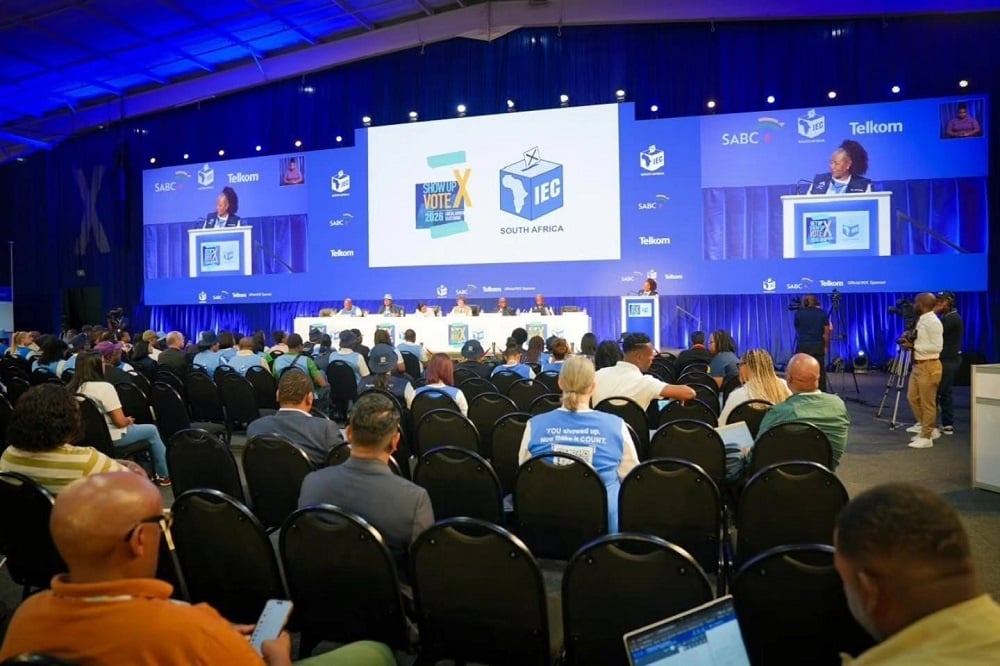
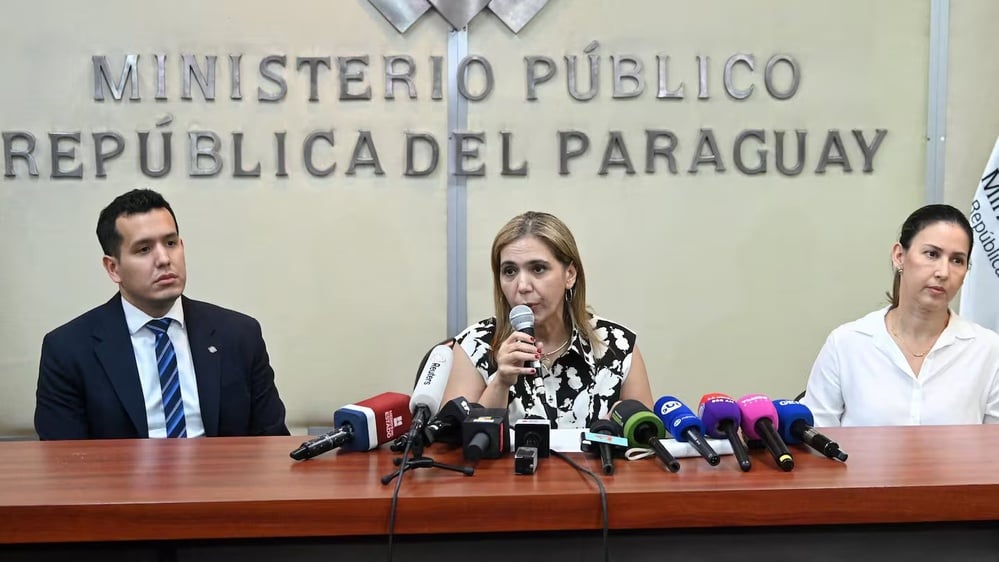
2026 © Helium Trades
Privacy Policy & Disclosure
* Disclaimer: Nothing on this website constitutes investment advice, performance data or any recommendation that any particular security, portfolio of securities, transaction or investment strategy is suitable for any specific person. Helium Trades is not responsible in any way for the accuracy
of any model predictions or price data. Any mention of a particular security and related prediction data is not a recommendation to buy or sell that security. Investments in securities involve the risk of loss. Past performance is no guarantee of future results. Helium Trades is not responsible for any of your investment decisions,
you should consult a financial expert before engaging in any transaction.
Helium Research Assistant

How can I help you today?
Ask any question about this page.


