See whether Helium helps you make better-informed decisions. Try every Pro Trader feature for 30 days. No credit card required.
Try every Pro Trader feature for 30 days. No credit card required.
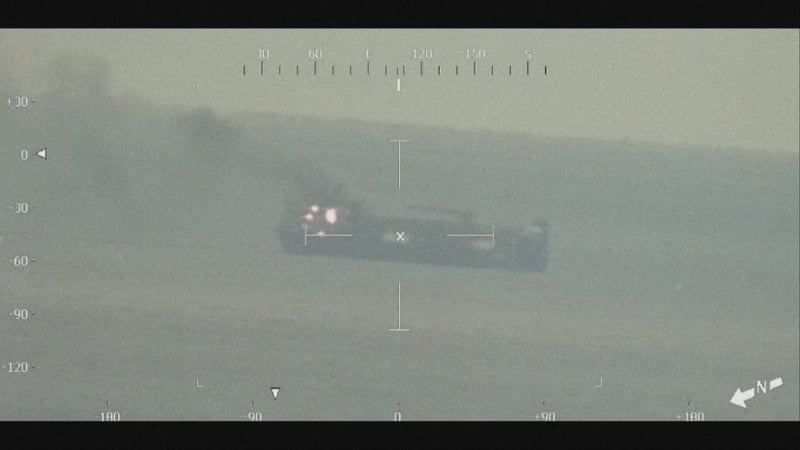
November 23, 2026 · 0 shares
The report is largely factual and attribution-heavy, but frames the drone strike through a Finnish security and legal lens that emphasizes sanctions, suspected weapons transport, and Ukraine's asserted right to strike while relying on official and expert sources.
Helium Analysis
Limitations: The supplied text includes unrelated Yle page headlines after the main report and no author byline; analysis is limited to the cargo-ship article.
·
8 of 56 available dimensions scored; omitted dimensions are not treated as neutral.
·
Verified supporting quotes for 8 of 8 scored dimensions.
Claim: The report qualifies contested attribution and avoids presenting suspicion as established fact.
“Ukraine is believed to be behind Saturday morning's drone attack, but Kyiv has not as yet claimed responsibility.” · exact text match
Why: The wording 'believed' and the note that Kyiv has not claimed responsibility signal objective, attributed reporting.
Claim: The report deflates potential environmental alarm with official confirmation rather than sensationalizing the burning-ship incident.
“no oil spill had been observed as a result of the drone strike.” · exact text match
Why: It reports the absence of an oil spill, reducing rather than amplifying alarm.
Claim: The report describes legal authority and risk rather than advocating a policy response.
“Under maritime law, Finnish authorities had the right to board the vessel and tow it to shore, but doing so would have been highly risky for maritime and environmental safety, a spokesperson for the Finnish Border Guard told a press conference on Sunday.” · exact text match
Why: The passage explains legal options and official risk assessment without recommending action.
Claim: The article is framed around war, sovereignty, and government security responses.
“Ukraine has the right to fight back against the aggressor” · exact text match
Why: A named prime minister's war/security statement and the incident's interstate context make the report highly political.
Claim: Named official and expert sources and calibrated attribution support high credibility.
“Maritime law professor Henrik Ringbom told Yle that because Russia is waging a war of aggression in Ukraine, Ukraine has the right to strike Russian vessels in international waters.” · exact text match
Why: The article identifies a named legal expert and attributes the legal interpretation to him.
Claim: The report reasons through the incident using expert legal rules and reported facts rather than emotive assertion.
“Maritime law professor Henrik Ringbom told Yle that because Russia is waging a war of aggression in Ukraine, Ukraine has the right to strike Russian vessels in international waters.” · exact text match
Why: The legal claim is explicitly attributed to a named expert and tied to stated rules of naval warfare.
Claim: The report distinguishes confirmed facts, sanctions suspicions, and unclaimed responsibility.
“Ukraine is believed to be behind Saturday morning's drone attack, but Kyiv has not as yet claimed responsibility.” · exact text match
“suspected of previously being used to transport weapons.” · exact text match
Why: It uses calibrated language for both attacker attribution and the ship's suspected prior use.
Claim: The report supplies ownership, sanctions, legal, and safety context to interpret the incident.
“According to Yle's information, the Sparta II is owned by a limited company called Oboronlogistika, which is itself run by Russia's Ministry of Defence.” · exact text match
Why: It connects ownership and defense-ministry control to the sanctioned vessel's security significance.
The supplied text includes unrelated Yle page headlines after the main report and no author byline; analysis is limited to the cargo-ship article.
November 22, 2026 · 0 shares
The report uses a largely factual, attribution-heavy frame, presenting Finnish, Russian, NATO, and Ukrainian-response elements with explicit sourcing and little partisan language.
Helium Analysis
Limitations: The supplied text is duplicated and includes unrelated trailing headline links, and no byline is present; analysis is limited to the substantive incident report.
·
5 of 56 available dimensions scored; omitted dimensions are not treated as neutral.
·
Verified supporting quotes for 5 of 5 scored dimensions.
Claim: Key facts are attributed to named agencies and officials, and the report notes nonresponses from both Ukrainian and Russian sides.
“Finland’s Defence Forces said, corroborating an earlier account by Russian officials.” · exact text match
“Ukraine’s foreign ministry did not immediately respond to a request for comment.” · exact text match
Why: Attribution to official agencies and inclusion of nonresponses reduce subjective framing and support a strongly objective classification.
Claim: The headline and lede report the fire and evacuation in factual terms rather than using emotive or hyperbolic language.
“Russian cargo ship ablaze in Baltic Sea after drone strike, crew evacuates.” · exact text match
“The 16-member crew of the Sparta II evacuated onto lifeboats, then to a nearby Russian ship, and is on its way back to Russia, Finnish Border Guard commander Ilja Iljin told public broadcaster Yle late on Saturday.” · exact text match
Why: The vivid word 'ablaze' is used, but the overall presentation remains event-focused and factual, supporting an objective rather than sensational classification.
Claim: The incident is framed through NATO-Russia security tensions and national leaders' political responses.
“Finland and Sweden are Nato’s newest member states, joining the military alliance in 2023 and 2024, respectively, in response to Russia’s full-scale invasion of Ukraine in 2022.” · exact text match
“Swedish combat aircraft, operating under Finnish command, took part in safeguarding Finland’s and Nato’s territorial integrity after the incident, Sweden’s defence minister Pal Jonson said.” · exact text match
Why: The report centers on geopolitical alliance responses and state leaders' statements, making the content highly political.
Claim: Claims are tied to named agencies, official records, and corroboration rather than left unattributed.
“Finland’s Defence Forces said, corroborating an earlier account by Russian officials.” · exact text match
“The vessel is subject to US sanctions and is linked to Russian shipping company Oboronlogistika, according to the US treasury department.” · exact text match
Why: Named sources, official records, and explicit corroboration support a high credibility score.
Claim: The report seeks and notes comment from both Ukrainian and Russian officials, indicating fairness in presenting a disputed international incident.
“Ukraine’s foreign ministry did not immediately respond to a request for comment.” · exact text match
“Russia’s embassy in Helsinki did not immediately respond to requests for comment.” · exact text match
Why: Noting nonresponses from both sides is an observable fairness signal and supports a high-integrity classification.
The supplied text is duplicated and includes unrelated trailing headline links, and no byline is present; analysis is limited to the substantive incident report.
November 22, 2026 · 0 shares
Coverage is largely factual and attribution-driven, presenting the drone strike through official Finnish, Estonian, Russian, and U.S. sources while lightly framing it around NATO security and Ukrainian self-defense.
Helium Analysis
Limitations: The supplied text contains duplicated article passages and unrelated trailing headlines; the analysis treats only the core news report as substantive.
·
9 of 56 available dimensions scored; omitted dimensions are not treated as neutral.
·
Verified supporting quotes for 9 of 9 scored dimensions.
Claim: The report grounds factual claims in named official and documentary sources rather than subjective commentary.
“according to data from the London Stock Exchange” · exact text match
“according to the US Department of the Treasury” · exact text match
Why: Multiple attributed sourcing supports an objective presentation.
Claim: The report describes the fire and response in factual, non-sensational language.
“the Finnish coastguard said” · exact text match
“Finland’s military said” · exact text match
Why: Attribution to official agencies and neutral verbs indicate restrained framing.
Claim: The report primarily describes events and official statements rather than prescribing policy.
“The ship, bound for the Russian exclave of Kaliningrad, was damaged in international waters” · exact text match
“The 16 crew members were evacuated onto a nearby Russian ship” · exact text match
Why: Event and outcome reporting dominate, with prescription limited to quoted officials.
Claim: The report includes low-level security-fear framing through official warnings rather than sensational language.
“leading to fears that the war was spilling onto NATO territory” · exact text match
“The risk of further attacks in the Gulf of Finland, a narrow arm of the Baltic Sea, cannot be ruled out” · exact text match
Why: Fear is present but attributed to officials and stated cautiously, supporting a low score.
Claim: The report is explicitly political in its focus on war spillover, NATO territory, and Ukrainian self-defense.
“leading to fears that the war was spilling onto NATO territory” · exact text match
“Ukraine has the right to fight back against the aggressor” · exact text match
Why: These passages center the incident in geopolitical and war-policy terms.
Claim: The report provides attributed, verifiable details and uses appropriate uncertainty.
“Finland’s military said the strike on the Sparta II on Saturday was likely carried out by Ukraine” · exact text match
“according to the US Department of the Treasury” · exact text match
Why: Named sources and a stated probability qualifier support credibility.
Claim: The report uses qualified attribution and corroboration instead of emotive or irrational claims.
“was likely carried out by Ukraine” · exact text match
“corroborating an account by Russian officials” · exact text match
Why: The 'likely' qualifier and corroboration reflect rational, evidence-bound reporting.
Claim: The report contains limited official speculation about responsibility and future risk.
“was likely carried out by Ukraine” · exact text match
“suggested the incident was related to Russia’s war on Ukraine” · exact text match
Why: These are attributed, qualified assessments rather than publisher assertions, so speculation is low.
Claim: The report includes sourcing that cuts across sides and discloses relevant ship ownership and sanctions facts.
“corroborating an account by Russian officials” · exact text match
“according to the company’s website” · exact text match
Why: Including Russian corroboration and primary-document attribution signals fair, transparent reporting.
The supplied text contains duplicated article passages and unrelated trailing headlines; the analysis treats only the core news report as substantive.
November 22, 2026 · 0 shares
The report uses a largely factual, attribution-heavy frame, presenting Finnish, Russian, NATO, and Ukrainian-response elements with explicit sourcing and little partisan language.
Helium Analysis
Limitations: The supplied text is duplicated and includes unrelated trailing headline links, and no byline is present; analysis is limited to the substantive incident report.
·
5 of 56 available dimensions scored; omitted dimensions are not treated as neutral.
·
Verified supporting quotes for 5 of 5 scored dimensions.
Claim: Key facts are attributed to named agencies and officials, and the report notes nonresponses from both Ukrainian and Russian sides.
“Finland’s Defence Forces said, corroborating an earlier account by Russian officials.” · exact text match
“Ukraine’s foreign ministry did not immediately respond to a request for comment.” · exact text match
Why: Attribution to official agencies and inclusion of nonresponses reduce subjective framing and support a strongly objective classification.
Claim: The headline and lede report the fire and evacuation in factual terms rather than using emotive or hyperbolic language.
“Russian cargo ship ablaze in Baltic Sea after drone strike, crew evacuates.” · exact text match
“The 16-member crew of the Sparta II evacuated onto lifeboats, then to a nearby Russian ship, and is on its way back to Russia, Finnish Border Guard commander Ilja Iljin told public broadcaster Yle late on Saturday.” · exact text match
Why: The vivid word 'ablaze' is used, but the overall presentation remains event-focused and factual, supporting an objective rather than sensational classification.
Claim: The incident is framed through NATO-Russia security tensions and national leaders' political responses.
“Finland and Sweden are Nato’s newest member states, joining the military alliance in 2023 and 2024, respectively, in response to Russia’s full-scale invasion of Ukraine in 2022.” · exact text match
“Swedish combat aircraft, operating under Finnish command, took part in safeguarding Finland’s and Nato’s territorial integrity after the incident, Sweden’s defence minister Pal Jonson said.” · exact text match
Why: The report centers on geopolitical alliance responses and state leaders' statements, making the content highly political.
Claim: Claims are tied to named agencies, official records, and corroboration rather than left unattributed.
“Finland’s Defence Forces said, corroborating an earlier account by Russian officials.” · exact text match
“The vessel is subject to US sanctions and is linked to Russian shipping company Oboronlogistika, according to the US treasury department.” · exact text match
Why: Named sources, official records, and explicit corroboration support a high credibility score.
Claim: The report seeks and notes comment from both Ukrainian and Russian officials, indicating fairness in presenting a disputed international incident.
“Ukraine’s foreign ministry did not immediately respond to a request for comment.” · exact text match
“Russia’s embassy in Helsinki did not immediately respond to requests for comment.” · exact text match
Why: Noting nonresponses from both sides is an observable fairness signal and supports a high-integrity classification.
The supplied text is duplicated and includes unrelated trailing headline links, and no byline is present; analysis is limited to the substantive incident report.
November 21, 2026 · 0 shares
The headline asserts a 'Ukrainian strike' as fact while the body attributes only a likely Ukrainian attack to Finnish officials, and official Finnish, Swedish, and NATO perspectives dominate the sourcing.
Helium Analysis
Limitations: Headline-body attribution mismatch: the headline calls it a 'Ukrainian strike' while the body attributes only a likely Ukrainian attack to Finnish officials.
·
56 of 56 available dimensions scored; omitted dimensions are not treated as neutral.
·
Verified supporting quotes for 12 of 56 scored dimensions.
Claim: The central incident is reported through named official sources and attributed assessments rather than the publisher's subjective interpretation.
“Finnish armed forces spokesperson Aki-Mauri Huhtinen told a press conference” · exact text match
“Finland's Defence Forces said, corroborating an earlier account by Russian officials.” · exact text match
Why: Named officials and cross-attribution support an objective framing.
Claim: The body uses measured, attribution-heavy language rather than sensational embellishment.
“in what Finland said was likely an attack by Ukraine” · exact text match
“Both sides denied deliberately targeting civilian infrastructure.” · exact text match
Why: The language is factual and caveated, though the headline is more assertive.
Claim: The report describes events and official statements without prescriptive advocacy.
“Finland's Defence Forces said, corroborating an earlier account by Russian officials.” · exact text match
“Ukraine's Foreign Ministry did not immediately respond to a request for comment.” · exact text match
Why: The text reports claims and reactions rather than recommending action.
Claim: The report includes spillover and NATO-territory fear framing around the incident.
“The war is spilling over into our neighbouring areas.” · exact text match
“leading to fears that the war was affecting NATO territory.” · exact text match
Why: Fear language is present, but mostly in quotes or context rather than tabloid escalation.
Claim: The report is highly political, centering NATO membership, war, sanctions, and official state responses.
“Finland and Sweden are NATO's newest member states, joining the military alliance in 2023 and 2024, respectively, in response to Russia's full-scale invasion of Ukraine in 2022.” · exact text match
“Ukraine has the right to fight against the aggressor,” · exact text match
Why: The subject matter and sourcing are explicitly geopolitical and political.
Claim: The report repeatedly relies on official authorities for key factual assessments.
“Finnish armed forces spokesperson Aki-Mauri Huhtinen told a press conference” · exact text match
“according to the US Treasury Department” · exact text match
Why: Official sources carry the central claims, though this is normal for a security news report.
Claim: The headline presents a Ukrainian strike as established fact while the body only reports a likely Ukrainian attack per Finnish officials.
“Russian ship on fire in Baltic Sea after Ukrainian strike.” · exact text match
“It is likely that Ukraine ... is behind (the attack)” · exact text match
Why: The stronger certainty in the headline exceeds the attributed, hedged assessment in the body.
Claim: The framing and sourcing center NATO and Finnish/Swedish official perspectives.
“safeguarding Finland's and NATO's territorial integrity” · exact text match
“Finland and Sweden are NATO's newest member states, joining the military alliance in 2023 and 2024, respectively, in response to Russia's full-scale invasion of Ukraine in 2022.” · exact text match
Why: NATO and allied officials are prominent and their security framing organizes the incident.
Claim: The report provides named sources, institutional attribution, and no-comment notes for key parties.
“Finnish Border Guard Commander Ilja Iljin told public broadcaster Yle.” · exact text match
“Ukraine's Foreign Ministry did not immediately respond to a request for comment.” · exact text match
Why: Visible sourcing and acknowledgment of nonresponses support credibility, despite headline overstatement.
Claim: The report largely uses attributed assessments and notes nonresponses rather than asserting unverified causation.
“in what Finland said was likely an attack by Ukraine” · exact text match
“Ukraine's Foreign Ministry did not immediately respond to a request for comment.” · exact text match
Why: Attribution and explicit uncertainty indicate rational epistemic practice, despite the headline overstatement.
Claim: The report generally discloses sourcing and nonresponses but the headline overstates the attribution.
“Finland said was likely an attack by Ukraine” · exact text match
“Ukraine's Foreign Ministry did not immediately respond to a request for comment.” · exact text match
Counterevidence:
“Russian ship on fire in Baltic Sea after Ukrainian strike.” · exact text match
Why: Sourcing and no-comment notes indicate fair practice, while the headline lowers the integrity signal.
Claim: The report is substantively detailed, cross-checks accounts, and includes relevant background and sourcing.
“Finland's Defence Forces said, corroborating an earlier account by Russian officials.” · exact text match
“Mr Drozdenko also said 80 drones had been shot down over the Leningrad region overnight.” · exact text match
Why: Corroboration, technical details, and institutional sourcing indicate above-average article intelligence.
Headline-body attribution mismatch: the headline calls it a 'Ukrainian strike' while the body attributes only a likely Ukrainian attack to Finnish officials.
November 22, 2026 · 0 shares
The report is largely objective and attribution-heavy, qualifying the drone-attack claim as 'likely' while incorporating Finnish, Russian, and NATO official accounts and context about the war.
Helium Analysis
Limitations: No author byline was present; unrelated related-link headlines after the main report were excluded from analysis.
·
10 of 56 available dimensions scored; omitted dimensions are not treated as neutral.
·
Verified supporting quotes for 8 of 10 scored dimensions.
Claim: Key claims are attributed to named authorities and presented with qualified language rather than subjective interpretation.
“Finnish defence forces said Ukraine was likely behind the attack.
Kyiv has yet to comment.”
· exact text match
Why: Attribution and hedging indicate low subjectivity.
Claim: The recovery and fire are described in measured terms that explicitly note the absence of danger.
“Finland's Border Guard said on Sunday that work was ongoing to make sure the cargo ship did not sink but it was not aware of any danger to surrounding maritime traffic.” · exact text match
Why: Calm, factual description of ongoing work and safety status supports an objective, non-sensational classification.
Claim: The main passage describes the ship's movement and attack without advocating a policy response.
“The ship - the Sparta II - was bound for Russia's Baltic exclave Kaliningrad when it was hit on Saturday morning, before drifting into Finnish waters.” · exact text match
Why: The sentence is descriptive and contains no prescription.
Claim: The incident is explicitly framed within the Russia-Ukraine war and NATO security context.
“The Baltic Sea has become a flashpoint in the Russia-Ukraine war, triggered when Russia launched a full-scale invasion of Ukraine in 2022.” · exact text match
Why: Direct geopolitical framing makes the report highly political in subject matter.
Claim: The key factual claims about responsibility and safety rely on official military and border-authority statements.
“Finnish defence forces said Ukraine was likely behind the attack.” · exact text match
“Finland's Border Guard said on Sunday that work was ongoing to make sure the cargo ship did not sink but it was not aware of any danger to surrounding maritime traffic.” · exact text match
Why: The report's central claims are sourced to authorities, though attribution is transparent and some uncertainty is noted.
Claim: The report attributes key claims to named authorities, uses qualified language, and notes missing comment from Kyiv.
“Finnish defence forces said Ukraine was likely behind the attack.
Kyiv has yet to comment.”
· exact text match
Why: Transparent sourcing and explicit uncertainty support high credibility in the supplied text.
Claim: The report uses qualified attribution and notes the absence of a Ukrainian comment rather than asserting responsibility outright.
“Finnish defence forces said Ukraine was likely behind the attack.
Kyiv has yet to comment.”
· exact text match
Why: The use of 'likely' and acknowledgment of no comment supports a rational, evidence-cautious classification.
Claim: The report includes qualified speculation about responsibility and the purpose of the suspected helicopter incursion.
“Finnish defence forces said Ukraine was likely behind the attack.” · exact text match
“a Russian helicopter was suspected of violating the country's airspace, potentially linked to "rescue or tracking operations".” · not found in supplied text
Why: The article contains several hedged speculative claims, though they are attributed and appropriately qualified.
Claim: The report includes both Russian and Finnish accounts of the crew's evacuation status.
“A Russian rescue vessel approached the ship and was told by the crew that they did not need to be evacuated, Kaliningrad's governor wrote on Telegram” · not found in supplied text
“The Finnish Border Guard later said the crew had been evacuated to another Russian vessel that was now already en route to Russia.” · exact text match
Why: Presenting conflicting official accounts without suppressing one indicates high fairness and honesty in the supplied text.
Claim: The report supplies relevant sanctions and corporate-military context for the vessel.
“The Sparta II was sanctioned by the US in 2022 and Ukraine earlier this year, and is run by a Russian company, according to the Ukrainian and US governments.” · exact text match
“The company says on its website that it was established within the structure of Russia's defence ministry in 2011 and since 2015 has been operating within the military construction complex.” · exact text match
Why: Including sanctions and defense-ministry links adds substantive context and analytical clarity.
No author byline was present; unrelated related-link headlines after the main report were excluded from analysis.
November 22, 2026 · 0 shares
Coverage is largely factual and attribution-driven, presenting the drone strike through official Finnish, Estonian, Russian, and U.S. sources while lightly framing it around NATO security and Ukrainian self-defense.
Helium Analysis
Limitations: The supplied text contains duplicated article passages and unrelated trailing headlines; the analysis treats only the core news report as substantive.
·
9 of 56 available dimensions scored; omitted dimensions are not treated as neutral.
·
Verified supporting quotes for 9 of 9 scored dimensions.
Claim: The report grounds factual claims in named official and documentary sources rather than subjective commentary.
“according to data from the London Stock Exchange” · exact text match
“according to the US Department of the Treasury” · exact text match
Why: Multiple attributed sourcing supports an objective presentation.
Claim: The report describes the fire and response in factual, non-sensational language.
“the Finnish coastguard said” · exact text match
“Finland’s military said” · exact text match
Why: Attribution to official agencies and neutral verbs indicate restrained framing.
Claim: The report primarily describes events and official statements rather than prescribing policy.
“The ship, bound for the Russian exclave of Kaliningrad, was damaged in international waters” · exact text match
“The 16 crew members were evacuated onto a nearby Russian ship” · exact text match
Why: Event and outcome reporting dominate, with prescription limited to quoted officials.
Claim: The report includes low-level security-fear framing through official warnings rather than sensational language.
“leading to fears that the war was spilling onto NATO territory” · exact text match
“The risk of further attacks in the Gulf of Finland, a narrow arm of the Baltic Sea, cannot be ruled out” · exact text match
Why: Fear is present but attributed to officials and stated cautiously, supporting a low score.
Claim: The report is explicitly political in its focus on war spillover, NATO territory, and Ukrainian self-defense.
“leading to fears that the war was spilling onto NATO territory” · exact text match
“Ukraine has the right to fight back against the aggressor” · exact text match
Why: These passages center the incident in geopolitical and war-policy terms.
Claim: The report provides attributed, verifiable details and uses appropriate uncertainty.
“Finland’s military said the strike on the Sparta II on Saturday was likely carried out by Ukraine” · exact text match
“according to the US Department of the Treasury” · exact text match
Why: Named sources and a stated probability qualifier support credibility.
Claim: The report uses qualified attribution and corroboration instead of emotive or irrational claims.
“was likely carried out by Ukraine” · exact text match
“corroborating an account by Russian officials” · exact text match
Why: The 'likely' qualifier and corroboration reflect rational, evidence-bound reporting.
Claim: The report contains limited official speculation about responsibility and future risk.
“was likely carried out by Ukraine” · exact text match
“suggested the incident was related to Russia’s war on Ukraine” · exact text match
Why: These are attributed, qualified assessments rather than publisher assertions, so speculation is low.
Claim: The report includes sourcing that cuts across sides and discloses relevant ship ownership and sanctions facts.
“corroborating an account by Russian officials” · exact text match
“according to the company’s website” · exact text match
Why: Including Russian corroboration and primary-document attribution signals fair, transparent reporting.
The supplied text contains duplicated article passages and unrelated trailing headlines; the analysis treats only the core news report as substantive.
November 22, 2026 · 0 shares
The report uses a largely factual, attribution-heavy frame, presenting Finnish, Russian, NATO, and Ukrainian-response elements with explicit sourcing and little partisan language.
Helium Analysis
Limitations: The supplied text is duplicated and includes unrelated trailing headline links, and no byline is present; analysis is limited to the substantive incident report.
·
5 of 56 available dimensions scored; omitted dimensions are not treated as neutral.
·
Verified supporting quotes for 5 of 5 scored dimensions.
Claim: Key facts are attributed to named agencies and officials, and the report notes nonresponses from both Ukrainian and Russian sides.
“Finland’s Defence Forces said, corroborating an earlier account by Russian officials.” · exact text match
“Ukraine’s foreign ministry did not immediately respond to a request for comment.” · exact text match
Why: Attribution to official agencies and inclusion of nonresponses reduce subjective framing and support a strongly objective classification.
Claim: The headline and lede report the fire and evacuation in factual terms rather than using emotive or hyperbolic language.
“Russian cargo ship ablaze in Baltic Sea after drone strike, crew evacuates.” · exact text match
“The 16-member crew of the Sparta II evacuated onto lifeboats, then to a nearby Russian ship, and is on its way back to Russia, Finnish Border Guard commander Ilja Iljin told public broadcaster Yle late on Saturday.” · exact text match
Why: The vivid word 'ablaze' is used, but the overall presentation remains event-focused and factual, supporting an objective rather than sensational classification.
Claim: The incident is framed through NATO-Russia security tensions and national leaders' political responses.
“Finland and Sweden are Nato’s newest member states, joining the military alliance in 2023 and 2024, respectively, in response to Russia’s full-scale invasion of Ukraine in 2022.” · exact text match
“Swedish combat aircraft, operating under Finnish command, took part in safeguarding Finland’s and Nato’s territorial integrity after the incident, Sweden’s defence minister Pal Jonson said.” · exact text match
Why: The report centers on geopolitical alliance responses and state leaders' statements, making the content highly political.
Claim: Claims are tied to named agencies, official records, and corroboration rather than left unattributed.
“Finland’s Defence Forces said, corroborating an earlier account by Russian officials.” · exact text match
“The vessel is subject to US sanctions and is linked to Russian shipping company Oboronlogistika, according to the US treasury department.” · exact text match
Why: Named sources, official records, and explicit corroboration support a high credibility score.
Claim: The report seeks and notes comment from both Ukrainian and Russian officials, indicating fairness in presenting a disputed international incident.
“Ukraine’s foreign ministry did not immediately respond to a request for comment.” · exact text match
“Russia’s embassy in Helsinki did not immediately respond to requests for comment.” · exact text match
Why: Noting nonresponses from both sides is an observable fairness signal and supports a high-integrity classification.
The supplied text is duplicated and includes unrelated trailing headline links, and no byline is present; analysis is limited to the substantive incident report.
November 21, 2026 · 0 shares
The headline asserts a 'Ukrainian strike' as fact while the body attributes only a likely Ukrainian attack to Finnish officials, and official Finnish, Swedish, and NATO perspectives dominate the sourcing.
Helium Analysis
Limitations: Headline-body attribution mismatch: the headline calls it a 'Ukrainian strike' while the body attributes only a likely Ukrainian attack to Finnish officials.
·
56 of 56 available dimensions scored; omitted dimensions are not treated as neutral.
·
Verified supporting quotes for 12 of 56 scored dimensions.
Claim: The central incident is reported through named official sources and attributed assessments rather than the publisher's subjective interpretation.
“Finnish armed forces spokesperson Aki-Mauri Huhtinen told a press conference” · exact text match
“Finland's Defence Forces said, corroborating an earlier account by Russian officials.” · exact text match
Why: Named officials and cross-attribution support an objective framing.
Claim: The body uses measured, attribution-heavy language rather than sensational embellishment.
“in what Finland said was likely an attack by Ukraine” · exact text match
“Both sides denied deliberately targeting civilian infrastructure.” · exact text match
Why: The language is factual and caveated, though the headline is more assertive.
Claim: The report describes events and official statements without prescriptive advocacy.
“Finland's Defence Forces said, corroborating an earlier account by Russian officials.” · exact text match
“Ukraine's Foreign Ministry did not immediately respond to a request for comment.” · exact text match
Why: The text reports claims and reactions rather than recommending action.
Claim: The report includes spillover and NATO-territory fear framing around the incident.
“The war is spilling over into our neighbouring areas.” · exact text match
“leading to fears that the war was affecting NATO territory.” · exact text match
Why: Fear language is present, but mostly in quotes or context rather than tabloid escalation.
Claim: The report is highly political, centering NATO membership, war, sanctions, and official state responses.
“Finland and Sweden are NATO's newest member states, joining the military alliance in 2023 and 2024, respectively, in response to Russia's full-scale invasion of Ukraine in 2022.” · exact text match
“Ukraine has the right to fight against the aggressor,” · exact text match
Why: The subject matter and sourcing are explicitly geopolitical and political.
Claim: The report repeatedly relies on official authorities for key factual assessments.
“Finnish armed forces spokesperson Aki-Mauri Huhtinen told a press conference” · exact text match
“according to the US Treasury Department” · exact text match
Why: Official sources carry the central claims, though this is normal for a security news report.
Claim: The headline presents a Ukrainian strike as established fact while the body only reports a likely Ukrainian attack per Finnish officials.
“Russian ship on fire in Baltic Sea after Ukrainian strike.” · exact text match
“It is likely that Ukraine ... is behind (the attack)” · exact text match
Why: The stronger certainty in the headline exceeds the attributed, hedged assessment in the body.
Claim: The framing and sourcing center NATO and Finnish/Swedish official perspectives.
“safeguarding Finland's and NATO's territorial integrity” · exact text match
“Finland and Sweden are NATO's newest member states, joining the military alliance in 2023 and 2024, respectively, in response to Russia's full-scale invasion of Ukraine in 2022.” · exact text match
Why: NATO and allied officials are prominent and their security framing organizes the incident.
Claim: The report provides named sources, institutional attribution, and no-comment notes for key parties.
“Finnish Border Guard Commander Ilja Iljin told public broadcaster Yle.” · exact text match
“Ukraine's Foreign Ministry did not immediately respond to a request for comment.” · exact text match
Why: Visible sourcing and acknowledgment of nonresponses support credibility, despite headline overstatement.
Claim: The report largely uses attributed assessments and notes nonresponses rather than asserting unverified causation.
“in what Finland said was likely an attack by Ukraine” · exact text match
“Ukraine's Foreign Ministry did not immediately respond to a request for comment.” · exact text match
Why: Attribution and explicit uncertainty indicate rational epistemic practice, despite the headline overstatement.
Claim: The report generally discloses sourcing and nonresponses but the headline overstates the attribution.
“Finland said was likely an attack by Ukraine” · exact text match
“Ukraine's Foreign Ministry did not immediately respond to a request for comment.” · exact text match
Counterevidence:
“Russian ship on fire in Baltic Sea after Ukrainian strike.” · exact text match
Why: Sourcing and no-comment notes indicate fair practice, while the headline lowers the integrity signal.
Claim: The report is substantively detailed, cross-checks accounts, and includes relevant background and sourcing.
“Finland's Defence Forces said, corroborating an earlier account by Russian officials.” · exact text match
“Mr Drozdenko also said 80 drones had been shot down over the Leningrad region overnight.” · exact text match
Why: Corroboration, technical details, and institutional sourcing indicate above-average article intelligence.
Headline-body attribution mismatch: the headline calls it a 'Ukrainian strike' while the body attributes only a likely Ukrainian attack to Finnish officials.
November 23, 2026 · 0 shares
The report is largely factual and attribution-heavy, but frames the drone strike through a Finnish security and legal lens that emphasizes sanctions, suspected weapons transport, and Ukraine's asserted right to strike while relying on official and expert sources.
Helium Analysis
Limitations: The supplied text includes unrelated Yle page headlines after the main report and no author byline; analysis is limited to the cargo-ship article.
·
8 of 56 available dimensions scored; omitted dimensions are not treated as neutral.
·
Verified supporting quotes for 8 of 8 scored dimensions.
Claim: The report qualifies contested attribution and avoids presenting suspicion as established fact.
“Ukraine is believed to be behind Saturday morning's drone attack, but Kyiv has not as yet claimed responsibility.” · exact text match
Why: The wording 'believed' and the note that Kyiv has not claimed responsibility signal objective, attributed reporting.
Claim: The report deflates potential environmental alarm with official confirmation rather than sensationalizing the burning-ship incident.
“no oil spill had been observed as a result of the drone strike.” · exact text match
Why: It reports the absence of an oil spill, reducing rather than amplifying alarm.
Claim: The report describes legal authority and risk rather than advocating a policy response.
“Under maritime law, Finnish authorities had the right to board the vessel and tow it to shore, but doing so would have been highly risky for maritime and environmental safety, a spokesperson for the Finnish Border Guard told a press conference on Sunday.” · exact text match
Why: The passage explains legal options and official risk assessment without recommending action.
Claim: The article is framed around war, sovereignty, and government security responses.
“Ukraine has the right to fight back against the aggressor” · exact text match
Why: A named prime minister's war/security statement and the incident's interstate context make the report highly political.
Claim: Named official and expert sources and calibrated attribution support high credibility.
“Maritime law professor Henrik Ringbom told Yle that because Russia is waging a war of aggression in Ukraine, Ukraine has the right to strike Russian vessels in international waters.” · exact text match
Why: The article identifies a named legal expert and attributes the legal interpretation to him.
Claim: The report reasons through the incident using expert legal rules and reported facts rather than emotive assertion.
“Maritime law professor Henrik Ringbom told Yle that because Russia is waging a war of aggression in Ukraine, Ukraine has the right to strike Russian vessels in international waters.” · exact text match
Why: The legal claim is explicitly attributed to a named expert and tied to stated rules of naval warfare.
Claim: The report distinguishes confirmed facts, sanctions suspicions, and unclaimed responsibility.
“Ukraine is believed to be behind Saturday morning's drone attack, but Kyiv has not as yet claimed responsibility.” · exact text match
“suspected of previously being used to transport weapons.” · exact text match
Why: It uses calibrated language for both attacker attribution and the ship's suspected prior use.
Claim: The report supplies ownership, sanctions, legal, and safety context to interpret the incident.
“According to Yle's information, the Sparta II is owned by a limited company called Oboronlogistika, which is itself run by Russia's Ministry of Defence.” · exact text match
Why: It connects ownership and defense-ministry control to the sanctioned vessel's security significance.
The supplied text includes unrelated Yle page headlines after the main report and no author byline; analysis is limited to the cargo-ship article.
November 22, 2026 · 0 shares
The report is largely objective and attribution-heavy, qualifying the drone-attack claim as 'likely' while incorporating Finnish, Russian, and NATO official accounts and context about the war.
Helium Analysis
Limitations: No author byline was present; unrelated related-link headlines after the main report were excluded from analysis.
·
10 of 56 available dimensions scored; omitted dimensions are not treated as neutral.
·
Verified supporting quotes for 8 of 10 scored dimensions.
Claim: Key claims are attributed to named authorities and presented with qualified language rather than subjective interpretation.
“Finnish defence forces said Ukraine was likely behind the attack.
Kyiv has yet to comment.”
· exact text match
Why: Attribution and hedging indicate low subjectivity.
Claim: The recovery and fire are described in measured terms that explicitly note the absence of danger.
“Finland's Border Guard said on Sunday that work was ongoing to make sure the cargo ship did not sink but it was not aware of any danger to surrounding maritime traffic.” · exact text match
Why: Calm, factual description of ongoing work and safety status supports an objective, non-sensational classification.
Claim: The main passage describes the ship's movement and attack without advocating a policy response.
“The ship - the Sparta II - was bound for Russia's Baltic exclave Kaliningrad when it was hit on Saturday morning, before drifting into Finnish waters.” · exact text match
Why: The sentence is descriptive and contains no prescription.
Claim: The incident is explicitly framed within the Russia-Ukraine war and NATO security context.
“The Baltic Sea has become a flashpoint in the Russia-Ukraine war, triggered when Russia launched a full-scale invasion of Ukraine in 2022.” · exact text match
Why: Direct geopolitical framing makes the report highly political in subject matter.
Claim: The key factual claims about responsibility and safety rely on official military and border-authority statements.
“Finnish defence forces said Ukraine was likely behind the attack.” · exact text match
“Finland's Border Guard said on Sunday that work was ongoing to make sure the cargo ship did not sink but it was not aware of any danger to surrounding maritime traffic.” · exact text match
Why: The report's central claims are sourced to authorities, though attribution is transparent and some uncertainty is noted.
Claim: The report attributes key claims to named authorities, uses qualified language, and notes missing comment from Kyiv.
“Finnish defence forces said Ukraine was likely behind the attack.
Kyiv has yet to comment.”
· exact text match
Why: Transparent sourcing and explicit uncertainty support high credibility in the supplied text.
Claim: The report uses qualified attribution and notes the absence of a Ukrainian comment rather than asserting responsibility outright.
“Finnish defence forces said Ukraine was likely behind the attack.
Kyiv has yet to comment.”
· exact text match
Why: The use of 'likely' and acknowledgment of no comment supports a rational, evidence-cautious classification.
Claim: The report includes qualified speculation about responsibility and the purpose of the suspected helicopter incursion.
“Finnish defence forces said Ukraine was likely behind the attack.” · exact text match
“a Russian helicopter was suspected of violating the country's airspace, potentially linked to "rescue or tracking operations".” · not found in supplied text
Why: The article contains several hedged speculative claims, though they are attributed and appropriately qualified.
Claim: The report includes both Russian and Finnish accounts of the crew's evacuation status.
“A Russian rescue vessel approached the ship and was told by the crew that they did not need to be evacuated, Kaliningrad's governor wrote on Telegram” · not found in supplied text
“The Finnish Border Guard later said the crew had been evacuated to another Russian vessel that was now already en route to Russia.” · exact text match
Why: Presenting conflicting official accounts without suppressing one indicates high fairness and honesty in the supplied text.
Claim: The report supplies relevant sanctions and corporate-military context for the vessel.
“The Sparta II was sanctioned by the US in 2022 and Ukraine earlier this year, and is run by a Russian company, according to the Ukrainian and US governments.” · exact text match
“The company says on its website that it was established within the structure of Russia's defence ministry in 2011 and since 2015 has been operating within the military construction complex.” · exact text match
Why: Including sanctions and defense-ministry links adds substantive context and analytical clarity.
No author byline was present; unrelated related-link headlines after the main report were excluded from analysis.
November 22, 2026 · 0 shares
The brief is largely neutral and attribution-driven, foregrounding official Finnish and Russian statements while a Finnish prime minister quote casts Ukraine's action as legitimate self-defense.
Kaliningrad is a Russian exclave on the Baltic Sea, separated from mainland Russia; the Gulf of Finland is a Baltic Sea inlet bordering Finland, Estonia, and Russia.
Helium Analysis
Limitations: The supplied text is a brief, partly scraped news summary reliant on BBC and official statements; independent verification and fuller sourcing are absent.
·
8 of 56 available dimensions scored; omitted dimensions are not treated as neutral.
·
Verified supporting quotes for 8 of 8 scored dimensions.
Claim: The report presents the strike and responses through attributed statements and factual descriptors rather than evaluative commentary.
“Russian and Finnish authorities say, BBC reported.” · exact text match
“Finnish defence forces said Ukraine was likely behind the attack.” · exact text match
Counterevidence:
“"War is spilling over into our immediate vicinity," Finnish Prime Minister Petteri Orpo said.” · exact text match
Why: The publisher's own prose stays factual and attribution-based, though a dramatic attributed quote adds interpretive color.
Claim: The headline and body describe the incident in factual, non-sensational terms rather than emotive or hyperbolic language.
“Russia-bound ship attacked in Gulf of Finland.” · exact text match
“The ship - the Sparta II - caught on fire after the strike on Saturday morning, before drifting into Finnish waters.” · exact text match
Why: The wording is direct and event-focused; no sensational adjectives or alarmist framing appear in the publisher's prose.
Claim: The item is almost entirely descriptive, reporting what happened and what officials said rather than prescribing a policy response.
“A Russian cargo vessel bound for the country's Baltic exclave Kaliningrad has been hit by a drone attack in the eastern Gulf of Finland” · exact text match
Why: The publisher's own framing states events and attributed reactions without advocacy.
Claim: The report centers on a geopolitical security incident involving Russia, Ukraine, Finland, and official state responses.
“Finnish defence forces said Ukraine was likely behind the attack.” · exact text match
“"War is spilling over into our immediate vicinity," Finnish Prime Minister Petteri Orpo said.” · exact text match
Why: The subject matter and sourcing are explicitly political and security-related.
Claim: Key claims rely on official authorities and state officials as sources.
“Russian and Finnish authorities say, BBC reported.” · exact text match
“Finnish defence forces said Ukraine was likely behind the attack.” · exact text match
“Kaliningrad Governor Alexei Besprozvannykh said two drones had been used” · exact text match
Why: Official attribution is pervasive, though it functions as standard sourcing rather than an argumentative fallacy.
Claim: The brief uses named institutional or official attribution and signals uncertainty and missing comment.
“Finnish defence forces said Ukraine was likely behind the attack.” · exact text match
“Kyiv has yet to comment.” · exact text match
“based on preliminary information” · exact text match
Why: Visible sourcing, hedging ('likely'), and acknowledgment of no comment support moderate-to-high credibility.
Claim: The report frames the event through factual sequence and calibrated attribution rather than emotive or irrational claims.
“The ship - the Sparta II - caught on fire after the strike on Saturday morning, before drifting into Finnish waters.” · exact text match
“Finnish defence forces said Ukraine was likely behind the attack.” · exact text match
Why: Chronological factual reporting and explicit uncertainty ('likely') indicate rational framing.
Claim: The report attributes key claims to named authorities, notes lack of comment from Kyiv, and includes a Russian official's response.
“Russian and Finnish authorities say, BBC reported.” · exact text match
“Kyiv has yet to comment.” · exact text match
“Kaliningrad Governor Alexei Besprozvannykh said two drones had been used, based on preliminary information” · exact text match
Why: Attribution to multiple sides and acknowledgment of missing comment are visible fairness and honesty signals.
The supplied text is a brief, partly scraped news summary reliant on BBC and official statements; independent verification and fuller sourcing are absent.
November 23, 2026 · 0 shares
The report is largely factual and attribution-heavy, but frames the drone strike through a Finnish security and legal lens that emphasizes sanctions, suspected weapons transport, and Ukraine's asserted right to strike while relying on official and expert sources.
Helium Analysis
Limitations: The supplied text includes unrelated Yle page headlines after the main report and no author byline; analysis is limited to the cargo-ship article.
·
8 of 56 available dimensions scored; omitted dimensions are not treated as neutral.
·
Verified supporting quotes for 8 of 8 scored dimensions.
Claim: The report qualifies contested attribution and avoids presenting suspicion as established fact.
“Ukraine is believed to be behind Saturday morning's drone attack, but Kyiv has not as yet claimed responsibility.” · exact text match
Why: The wording 'believed' and the note that Kyiv has not claimed responsibility signal objective, attributed reporting.
Claim: The report deflates potential environmental alarm with official confirmation rather than sensationalizing the burning-ship incident.
“no oil spill had been observed as a result of the drone strike.” · exact text match
Why: It reports the absence of an oil spill, reducing rather than amplifying alarm.
Claim: The report describes legal authority and risk rather than advocating a policy response.
“Under maritime law, Finnish authorities had the right to board the vessel and tow it to shore, but doing so would have been highly risky for maritime and environmental safety, a spokesperson for the Finnish Border Guard told a press conference on Sunday.” · exact text match
Why: The passage explains legal options and official risk assessment without recommending action.
Claim: The article is framed around war, sovereignty, and government security responses.
“Ukraine has the right to fight back against the aggressor” · exact text match
Why: A named prime minister's war/security statement and the incident's interstate context make the report highly political.
Claim: Named official and expert sources and calibrated attribution support high credibility.
“Maritime law professor Henrik Ringbom told Yle that because Russia is waging a war of aggression in Ukraine, Ukraine has the right to strike Russian vessels in international waters.” · exact text match
Why: The article identifies a named legal expert and attributes the legal interpretation to him.
Claim: The report reasons through the incident using expert legal rules and reported facts rather than emotive assertion.
“Maritime law professor Henrik Ringbom told Yle that because Russia is waging a war of aggression in Ukraine, Ukraine has the right to strike Russian vessels in international waters.” · exact text match
Why: The legal claim is explicitly attributed to a named expert and tied to stated rules of naval warfare.
Claim: The report distinguishes confirmed facts, sanctions suspicions, and unclaimed responsibility.
“Ukraine is believed to be behind Saturday morning's drone attack, but Kyiv has not as yet claimed responsibility.” · exact text match
“suspected of previously being used to transport weapons.” · exact text match
Why: It uses calibrated language for both attacker attribution and the ship's suspected prior use.
Claim: The report supplies ownership, sanctions, legal, and safety context to interpret the incident.
“According to Yle's information, the Sparta II is owned by a limited company called Oboronlogistika, which is itself run by Russia's Ministry of Defence.” · exact text match
Why: It connects ownership and defense-ministry control to the sanctioned vessel's security significance.
The supplied text includes unrelated Yle page headlines after the main report and no author byline; analysis is limited to the cargo-ship article.
November 22, 2026 · 0 shares
Coverage is largely factual and attribution-driven, presenting the drone strike through official Finnish, Estonian, Russian, and U.S. sources while lightly framing it around NATO security and Ukrainian self-defense.
Helium Analysis Limitations: The supplied text contains duplicated article passages and unrelated trailing headlines; the analysis treats only the core news report as substantive. · 9 of 56 available dimensions scored; omitted dimensions are not treated as neutral. · Verified supporting quotes for 9 of 9 scored dimensions.
Claim: The report grounds factual claims in named official and documentary sources rather than subjective commentary.
“according to data from the London Stock Exchange” · exact text match
“according to the US Department of the Treasury” · exact text match
Why: Multiple attributed sourcing supports an objective presentation.
Claim: The report describes the fire and response in factual, non-sensational language.
“the Finnish coastguard said” · exact text match
“Finland’s military said” · exact text match
Why: Attribution to official agencies and neutral verbs indicate restrained framing.
Claim: The report primarily describes events and official statements rather than prescribing policy.
“The ship, bound for the Russian exclave of Kaliningrad, was damaged in international waters” · exact text match
“The 16 crew members were evacuated onto a nearby Russian ship” · exact text match
Why: Event and outcome reporting dominate, with prescription limited to quoted officials.
Claim: The report includes low-level security-fear framing through official warnings rather than sensational language.
“leading to fears that the war was spilling onto NATO territory” · exact text match
“The risk of further attacks in the Gulf of Finland, a narrow arm of the Baltic Sea, cannot be ruled out” · exact text match
Why: Fear is present but attributed to officials and stated cautiously, supporting a low score.
Claim: The report is explicitly political in its focus on war spillover, NATO territory, and Ukrainian self-defense.
“leading to fears that the war was spilling onto NATO territory” · exact text match
“Ukraine has the right to fight back against the aggressor” · exact text match
Why: These passages center the incident in geopolitical and war-policy terms.
Claim: The report provides attributed, verifiable details and uses appropriate uncertainty.
“Finland’s military said the strike on the Sparta II on Saturday was likely carried out by Ukraine” · exact text match
“according to the US Department of the Treasury” · exact text match
Why: Named sources and a stated probability qualifier support credibility.
Claim: The report uses qualified attribution and corroboration instead of emotive or irrational claims.
“was likely carried out by Ukraine” · exact text match
“corroborating an account by Russian officials” · exact text match
Why: The 'likely' qualifier and corroboration reflect rational, evidence-bound reporting.
Claim: The report contains limited official speculation about responsibility and future risk.
“was likely carried out by Ukraine” · exact text match
“suggested the incident was related to Russia’s war on Ukraine” · exact text match
Why: These are attributed, qualified assessments rather than publisher assertions, so speculation is low.
Claim: The report includes sourcing that cuts across sides and discloses relevant ship ownership and sanctions facts.
“corroborating an account by Russian officials” · exact text match
“according to the company’s website” · exact text match
Why: Including Russian corroboration and primary-document attribution signals fair, transparent reporting.
The supplied text contains duplicated article passages and unrelated trailing headlines; the analysis treats only the core news report as substantive.
November 22, 2026 · 0 shares
The report uses a largely factual, attribution-heavy frame, presenting Finnish, Russian, NATO, and Ukrainian-response elements with explicit sourcing and little partisan language.
Helium Analysis Limitations: The supplied text is duplicated and includes unrelated trailing headline links, and no byline is present; analysis is limited to the substantive incident report. · 5 of 56 available dimensions scored; omitted dimensions are not treated as neutral. · Verified supporting quotes for 5 of 5 scored dimensions.
Claim: Key facts are attributed to named agencies and officials, and the report notes nonresponses from both Ukrainian and Russian sides.
“Finland’s Defence Forces said, corroborating an earlier account by Russian officials.” · exact text match
“Ukraine’s foreign ministry did not immediately respond to a request for comment.” · exact text match
Why: Attribution to official agencies and inclusion of nonresponses reduce subjective framing and support a strongly objective classification.
Claim: The headline and lede report the fire and evacuation in factual terms rather than using emotive or hyperbolic language.
“Russian cargo ship ablaze in Baltic Sea after drone strike, crew evacuates.” · exact text match
“The 16-member crew of the Sparta II evacuated onto lifeboats, then to a nearby Russian ship, and is on its way back to Russia, Finnish Border Guard commander Ilja Iljin told public broadcaster Yle late on Saturday.” · exact text match
Why: The vivid word 'ablaze' is used, but the overall presentation remains event-focused and factual, supporting an objective rather than sensational classification.
Claim: The incident is framed through NATO-Russia security tensions and national leaders' political responses.
“Finland and Sweden are Nato’s newest member states, joining the military alliance in 2023 and 2024, respectively, in response to Russia’s full-scale invasion of Ukraine in 2022.” · exact text match
“Swedish combat aircraft, operating under Finnish command, took part in safeguarding Finland’s and Nato’s territorial integrity after the incident, Sweden’s defence minister Pal Jonson said.” · exact text match
Why: The report centers on geopolitical alliance responses and state leaders' statements, making the content highly political.
Claim: Claims are tied to named agencies, official records, and corroboration rather than left unattributed.
“Finland’s Defence Forces said, corroborating an earlier account by Russian officials.” · exact text match
“The vessel is subject to US sanctions and is linked to Russian shipping company Oboronlogistika, according to the US treasury department.” · exact text match
Why: Named sources, official records, and explicit corroboration support a high credibility score.
Claim: The report seeks and notes comment from both Ukrainian and Russian officials, indicating fairness in presenting a disputed international incident.
“Ukraine’s foreign ministry did not immediately respond to a request for comment.” · exact text match
“Russia’s embassy in Helsinki did not immediately respond to requests for comment.” · exact text match
Why: Noting nonresponses from both sides is an observable fairness signal and supports a high-integrity classification.
The supplied text is duplicated and includes unrelated trailing headline links, and no byline is present; analysis is limited to the substantive incident report.
November 21, 2026 · 0 shares
The headline asserts a 'Ukrainian strike' as fact while the body attributes only a likely Ukrainian attack to Finnish officials, and official Finnish, Swedish, and NATO perspectives dominate the sourcing.
Helium Analysis Limitations: Headline-body attribution mismatch: the headline calls it a 'Ukrainian strike' while the body attributes only a likely Ukrainian attack to Finnish officials. · 56 of 56 available dimensions scored; omitted dimensions are not treated as neutral. · Verified supporting quotes for 12 of 56 scored dimensions.
Claim: The central incident is reported through named official sources and attributed assessments rather than the publisher's subjective interpretation.
“Finnish armed forces spokesperson Aki-Mauri Huhtinen told a press conference” · exact text match
“Finland's Defence Forces said, corroborating an earlier account by Russian officials.” · exact text match
Why: Named officials and cross-attribution support an objective framing.
Claim: The body uses measured, attribution-heavy language rather than sensational embellishment.
“in what Finland said was likely an attack by Ukraine” · exact text match
“Both sides denied deliberately targeting civilian infrastructure.” · exact text match
Why: The language is factual and caveated, though the headline is more assertive.
Claim: The report describes events and official statements without prescriptive advocacy.
“Finland's Defence Forces said, corroborating an earlier account by Russian officials.” · exact text match
“Ukraine's Foreign Ministry did not immediately respond to a request for comment.” · exact text match
Why: The text reports claims and reactions rather than recommending action.
Claim: The report includes spillover and NATO-territory fear framing around the incident.
“The war is spilling over into our neighbouring areas.” · exact text match
“leading to fears that the war was affecting NATO territory.” · exact text match
Why: Fear language is present, but mostly in quotes or context rather than tabloid escalation.
Claim: The report is highly political, centering NATO membership, war, sanctions, and official state responses.
“Finland and Sweden are NATO's newest member states, joining the military alliance in 2023 and 2024, respectively, in response to Russia's full-scale invasion of Ukraine in 2022.” · exact text match
“Ukraine has the right to fight against the aggressor,” · exact text match
Why: The subject matter and sourcing are explicitly geopolitical and political.
Claim: The report repeatedly relies on official authorities for key factual assessments.
“Finnish armed forces spokesperson Aki-Mauri Huhtinen told a press conference” · exact text match
“according to the US Treasury Department” · exact text match
Why: Official sources carry the central claims, though this is normal for a security news report.
Claim: The headline presents a Ukrainian strike as established fact while the body only reports a likely Ukrainian attack per Finnish officials.
“Russian ship on fire in Baltic Sea after Ukrainian strike.” · exact text match
“It is likely that Ukraine ... is behind (the attack)” · exact text match
Why: The stronger certainty in the headline exceeds the attributed, hedged assessment in the body.
Claim: The framing and sourcing center NATO and Finnish/Swedish official perspectives.
“safeguarding Finland's and NATO's territorial integrity” · exact text match
“Finland and Sweden are NATO's newest member states, joining the military alliance in 2023 and 2024, respectively, in response to Russia's full-scale invasion of Ukraine in 2022.” · exact text match
Why: NATO and allied officials are prominent and their security framing organizes the incident.
Claim: The report provides named sources, institutional attribution, and no-comment notes for key parties.
“Finnish Border Guard Commander Ilja Iljin told public broadcaster Yle.” · exact text match
“Ukraine's Foreign Ministry did not immediately respond to a request for comment.” · exact text match
Why: Visible sourcing and acknowledgment of nonresponses support credibility, despite headline overstatement.
Claim: The report largely uses attributed assessments and notes nonresponses rather than asserting unverified causation.
“in what Finland said was likely an attack by Ukraine” · exact text match
“Ukraine's Foreign Ministry did not immediately respond to a request for comment.” · exact text match
Why: Attribution and explicit uncertainty indicate rational epistemic practice, despite the headline overstatement.
Claim: The report generally discloses sourcing and nonresponses but the headline overstates the attribution.
“Finland said was likely an attack by Ukraine” · exact text match
“Ukraine's Foreign Ministry did not immediately respond to a request for comment.” · exact text match
Counterevidence:
“Russian ship on fire in Baltic Sea after Ukrainian strike.” · exact text match
Why: Sourcing and no-comment notes indicate fair practice, while the headline lowers the integrity signal.
Claim: The report is substantively detailed, cross-checks accounts, and includes relevant background and sourcing.
“Finland's Defence Forces said, corroborating an earlier account by Russian officials.” · exact text match
“Mr Drozdenko also said 80 drones had been shot down over the Leningrad region overnight.” · exact text match
Why: Corroboration, technical details, and institutional sourcing indicate above-average article intelligence.
Headline-body attribution mismatch: the headline calls it a 'Ukrainian strike' while the body attributes only a likely Ukrainian attack to Finnish officials.
November 23, 2026 · 0 shares
The report is largely factual and attribution-heavy, but frames the drone strike through a Finnish security and legal lens that emphasizes sanctions, suspected weapons transport, and Ukraine's asserted right to strike while relying on official and expert sources.
Helium Analysis Limitations: The supplied text includes unrelated Yle page headlines after the main report and no author byline; analysis is limited to the cargo-ship article. · 8 of 56 available dimensions scored; omitted dimensions are not treated as neutral. · Verified supporting quotes for 8 of 8 scored dimensions.
Claim: The report qualifies contested attribution and avoids presenting suspicion as established fact.
“Ukraine is believed to be behind Saturday morning's drone attack, but Kyiv has not as yet claimed responsibility.” · exact text match
Why: The wording 'believed' and the note that Kyiv has not claimed responsibility signal objective, attributed reporting.
Claim: The report deflates potential environmental alarm with official confirmation rather than sensationalizing the burning-ship incident.
“no oil spill had been observed as a result of the drone strike.” · exact text match
Why: It reports the absence of an oil spill, reducing rather than amplifying alarm.
Claim: The report describes legal authority and risk rather than advocating a policy response.
“Under maritime law, Finnish authorities had the right to board the vessel and tow it to shore, but doing so would have been highly risky for maritime and environmental safety, a spokesperson for the Finnish Border Guard told a press conference on Sunday.” · exact text match
Why: The passage explains legal options and official risk assessment without recommending action.
Claim: The article is framed around war, sovereignty, and government security responses.
“Ukraine has the right to fight back against the aggressor” · exact text match
Why: A named prime minister's war/security statement and the incident's interstate context make the report highly political.
Claim: Named official and expert sources and calibrated attribution support high credibility.
“Maritime law professor Henrik Ringbom told Yle that because Russia is waging a war of aggression in Ukraine, Ukraine has the right to strike Russian vessels in international waters.” · exact text match
Why: The article identifies a named legal expert and attributes the legal interpretation to him.
Claim: The report reasons through the incident using expert legal rules and reported facts rather than emotive assertion.
“Maritime law professor Henrik Ringbom told Yle that because Russia is waging a war of aggression in Ukraine, Ukraine has the right to strike Russian vessels in international waters.” · exact text match
Why: The legal claim is explicitly attributed to a named expert and tied to stated rules of naval warfare.
Claim: The report distinguishes confirmed facts, sanctions suspicions, and unclaimed responsibility.
“Ukraine is believed to be behind Saturday morning's drone attack, but Kyiv has not as yet claimed responsibility.” · exact text match
“suspected of previously being used to transport weapons.” · exact text match
Why: It uses calibrated language for both attacker attribution and the ship's suspected prior use.
Claim: The report supplies ownership, sanctions, legal, and safety context to interpret the incident.
“According to Yle's information, the Sparta II is owned by a limited company called Oboronlogistika, which is itself run by Russia's Ministry of Defence.” · exact text match
Why: It connects ownership and defense-ministry control to the sanctioned vessel's security significance.
The supplied text includes unrelated Yle page headlines after the main report and no author byline; analysis is limited to the cargo-ship article.
November 22, 2026 · 0 shares
The report is largely objective and attribution-heavy, qualifying the drone-attack claim as 'likely' while incorporating Finnish, Russian, and NATO official accounts and context about the war.
Helium Analysis Limitations: No author byline was present; unrelated related-link headlines after the main report were excluded from analysis. · 10 of 56 available dimensions scored; omitted dimensions are not treated as neutral. · Verified supporting quotes for 8 of 10 scored dimensions.
Claim: Key claims are attributed to named authorities and presented with qualified language rather than subjective interpretation.
“Finnish defence forces said Ukraine was likely behind the attack. Kyiv has yet to comment.” · exact text match
Why: Attribution and hedging indicate low subjectivity.
Claim: The recovery and fire are described in measured terms that explicitly note the absence of danger.
“Finland's Border Guard said on Sunday that work was ongoing to make sure the cargo ship did not sink but it was not aware of any danger to surrounding maritime traffic.” · exact text match
Why: Calm, factual description of ongoing work and safety status supports an objective, non-sensational classification.
Claim: The main passage describes the ship's movement and attack without advocating a policy response.
“The ship - the Sparta II - was bound for Russia's Baltic exclave Kaliningrad when it was hit on Saturday morning, before drifting into Finnish waters.” · exact text match
Why: The sentence is descriptive and contains no prescription.
Claim: The incident is explicitly framed within the Russia-Ukraine war and NATO security context.
“The Baltic Sea has become a flashpoint in the Russia-Ukraine war, triggered when Russia launched a full-scale invasion of Ukraine in 2022.” · exact text match
Why: Direct geopolitical framing makes the report highly political in subject matter.
Claim: The key factual claims about responsibility and safety rely on official military and border-authority statements.
“Finnish defence forces said Ukraine was likely behind the attack.” · exact text match
“Finland's Border Guard said on Sunday that work was ongoing to make sure the cargo ship did not sink but it was not aware of any danger to surrounding maritime traffic.” · exact text match
Why: The report's central claims are sourced to authorities, though attribution is transparent and some uncertainty is noted.
Claim: The report attributes key claims to named authorities, uses qualified language, and notes missing comment from Kyiv.
“Finnish defence forces said Ukraine was likely behind the attack. Kyiv has yet to comment.” · exact text match
Why: Transparent sourcing and explicit uncertainty support high credibility in the supplied text.
Claim: The report uses qualified attribution and notes the absence of a Ukrainian comment rather than asserting responsibility outright.
“Finnish defence forces said Ukraine was likely behind the attack. Kyiv has yet to comment.” · exact text match
Why: The use of 'likely' and acknowledgment of no comment supports a rational, evidence-cautious classification.
Claim: The report includes qualified speculation about responsibility and the purpose of the suspected helicopter incursion.
“Finnish defence forces said Ukraine was likely behind the attack.” · exact text match
“a Russian helicopter was suspected of violating the country's airspace, potentially linked to "rescue or tracking operations".” · not found in supplied text
Why: The article contains several hedged speculative claims, though they are attributed and appropriately qualified.
Claim: The report includes both Russian and Finnish accounts of the crew's evacuation status.
“A Russian rescue vessel approached the ship and was told by the crew that they did not need to be evacuated, Kaliningrad's governor wrote on Telegram” · not found in supplied text
“The Finnish Border Guard later said the crew had been evacuated to another Russian vessel that was now already en route to Russia.” · exact text match
Why: Presenting conflicting official accounts without suppressing one indicates high fairness and honesty in the supplied text.
Claim: The report supplies relevant sanctions and corporate-military context for the vessel.
“The Sparta II was sanctioned by the US in 2022 and Ukraine earlier this year, and is run by a Russian company, according to the Ukrainian and US governments.” · exact text match
“The company says on its website that it was established within the structure of Russia's defence ministry in 2011 and since 2015 has been operating within the military construction complex.” · exact text match
Why: Including sanctions and defense-ministry links adds substantive context and analytical clarity.
No author byline was present; unrelated related-link headlines after the main report were excluded from analysis.
November 22, 2026 · 0 shares
Coverage is largely factual and attribution-driven, presenting the drone strike through official Finnish, Estonian, Russian, and U.S. sources while lightly framing it around NATO security and Ukrainian self-defense.
Helium Analysis Limitations: The supplied text contains duplicated article passages and unrelated trailing headlines; the analysis treats only the core news report as substantive. · 9 of 56 available dimensions scored; omitted dimensions are not treated as neutral. · Verified supporting quotes for 9 of 9 scored dimensions.
Claim: The report grounds factual claims in named official and documentary sources rather than subjective commentary.
“according to data from the London Stock Exchange” · exact text match
“according to the US Department of the Treasury” · exact text match
Why: Multiple attributed sourcing supports an objective presentation.
Claim: The report describes the fire and response in factual, non-sensational language.
“the Finnish coastguard said” · exact text match
“Finland’s military said” · exact text match
Why: Attribution to official agencies and neutral verbs indicate restrained framing.
Claim: The report primarily describes events and official statements rather than prescribing policy.
“The ship, bound for the Russian exclave of Kaliningrad, was damaged in international waters” · exact text match
“The 16 crew members were evacuated onto a nearby Russian ship” · exact text match
Why: Event and outcome reporting dominate, with prescription limited to quoted officials.
Claim: The report includes low-level security-fear framing through official warnings rather than sensational language.
“leading to fears that the war was spilling onto NATO territory” · exact text match
“The risk of further attacks in the Gulf of Finland, a narrow arm of the Baltic Sea, cannot be ruled out” · exact text match
Why: Fear is present but attributed to officials and stated cautiously, supporting a low score.
Claim: The report is explicitly political in its focus on war spillover, NATO territory, and Ukrainian self-defense.
“leading to fears that the war was spilling onto NATO territory” · exact text match
“Ukraine has the right to fight back against the aggressor” · exact text match
Why: These passages center the incident in geopolitical and war-policy terms.
Claim: The report provides attributed, verifiable details and uses appropriate uncertainty.
“Finland’s military said the strike on the Sparta II on Saturday was likely carried out by Ukraine” · exact text match
“according to the US Department of the Treasury” · exact text match
Why: Named sources and a stated probability qualifier support credibility.
Claim: The report uses qualified attribution and corroboration instead of emotive or irrational claims.
“was likely carried out by Ukraine” · exact text match
“corroborating an account by Russian officials” · exact text match
Why: The 'likely' qualifier and corroboration reflect rational, evidence-bound reporting.
Claim: The report contains limited official speculation about responsibility and future risk.
“was likely carried out by Ukraine” · exact text match
“suggested the incident was related to Russia’s war on Ukraine” · exact text match
Why: These are attributed, qualified assessments rather than publisher assertions, so speculation is low.
Claim: The report includes sourcing that cuts across sides and discloses relevant ship ownership and sanctions facts.
“corroborating an account by Russian officials” · exact text match
“according to the company’s website” · exact text match
Why: Including Russian corroboration and primary-document attribution signals fair, transparent reporting.
The supplied text contains duplicated article passages and unrelated trailing headlines; the analysis treats only the core news report as substantive.
November 22, 2026 · 0 shares
The report uses a largely factual, attribution-heavy frame, presenting Finnish, Russian, NATO, and Ukrainian-response elements with explicit sourcing and little partisan language.
Helium Analysis Limitations: The supplied text is duplicated and includes unrelated trailing headline links, and no byline is present; analysis is limited to the substantive incident report. · 5 of 56 available dimensions scored; omitted dimensions are not treated as neutral. · Verified supporting quotes for 5 of 5 scored dimensions.
Claim: Key facts are attributed to named agencies and officials, and the report notes nonresponses from both Ukrainian and Russian sides.
“Finland’s Defence Forces said, corroborating an earlier account by Russian officials.” · exact text match
“Ukraine’s foreign ministry did not immediately respond to a request for comment.” · exact text match
Why: Attribution to official agencies and inclusion of nonresponses reduce subjective framing and support a strongly objective classification.
Claim: The headline and lede report the fire and evacuation in factual terms rather than using emotive or hyperbolic language.
“Russian cargo ship ablaze in Baltic Sea after drone strike, crew evacuates.” · exact text match
“The 16-member crew of the Sparta II evacuated onto lifeboats, then to a nearby Russian ship, and is on its way back to Russia, Finnish Border Guard commander Ilja Iljin told public broadcaster Yle late on Saturday.” · exact text match
Why: The vivid word 'ablaze' is used, but the overall presentation remains event-focused and factual, supporting an objective rather than sensational classification.
Claim: The incident is framed through NATO-Russia security tensions and national leaders' political responses.
“Finland and Sweden are Nato’s newest member states, joining the military alliance in 2023 and 2024, respectively, in response to Russia’s full-scale invasion of Ukraine in 2022.” · exact text match
“Swedish combat aircraft, operating under Finnish command, took part in safeguarding Finland’s and Nato’s territorial integrity after the incident, Sweden’s defence minister Pal Jonson said.” · exact text match
Why: The report centers on geopolitical alliance responses and state leaders' statements, making the content highly political.
Claim: Claims are tied to named agencies, official records, and corroboration rather than left unattributed.
“Finland’s Defence Forces said, corroborating an earlier account by Russian officials.” · exact text match
“The vessel is subject to US sanctions and is linked to Russian shipping company Oboronlogistika, according to the US treasury department.” · exact text match
Why: Named sources, official records, and explicit corroboration support a high credibility score.
Claim: The report seeks and notes comment from both Ukrainian and Russian officials, indicating fairness in presenting a disputed international incident.
“Ukraine’s foreign ministry did not immediately respond to a request for comment.” · exact text match
“Russia’s embassy in Helsinki did not immediately respond to requests for comment.” · exact text match
Why: Noting nonresponses from both sides is an observable fairness signal and supports a high-integrity classification.
The supplied text is duplicated and includes unrelated trailing headline links, and no byline is present; analysis is limited to the substantive incident report.
November 21, 2026 · 0 shares
The headline asserts a 'Ukrainian strike' as fact while the body attributes only a likely Ukrainian attack to Finnish officials, and official Finnish, Swedish, and NATO perspectives dominate the sourcing.
Helium Analysis Limitations: Headline-body attribution mismatch: the headline calls it a 'Ukrainian strike' while the body attributes only a likely Ukrainian attack to Finnish officials. · 56 of 56 available dimensions scored; omitted dimensions are not treated as neutral. · Verified supporting quotes for 12 of 56 scored dimensions.
Claim: The central incident is reported through named official sources and attributed assessments rather than the publisher's subjective interpretation.
“Finnish armed forces spokesperson Aki-Mauri Huhtinen told a press conference” · exact text match
“Finland's Defence Forces said, corroborating an earlier account by Russian officials.” · exact text match
Why: Named officials and cross-attribution support an objective framing.
Claim: The body uses measured, attribution-heavy language rather than sensational embellishment.
“in what Finland said was likely an attack by Ukraine” · exact text match
“Both sides denied deliberately targeting civilian infrastructure.” · exact text match
Why: The language is factual and caveated, though the headline is more assertive.
Claim: The report describes events and official statements without prescriptive advocacy.
“Finland's Defence Forces said, corroborating an earlier account by Russian officials.” · exact text match
“Ukraine's Foreign Ministry did not immediately respond to a request for comment.” · exact text match
Why: The text reports claims and reactions rather than recommending action.
Claim: The report includes spillover and NATO-territory fear framing around the incident.
“The war is spilling over into our neighbouring areas.” · exact text match
“leading to fears that the war was affecting NATO territory.” · exact text match
Why: Fear language is present, but mostly in quotes or context rather than tabloid escalation.
Claim: The report is highly political, centering NATO membership, war, sanctions, and official state responses.
“Finland and Sweden are NATO's newest member states, joining the military alliance in 2023 and 2024, respectively, in response to Russia's full-scale invasion of Ukraine in 2022.” · exact text match
“Ukraine has the right to fight against the aggressor,” · exact text match
Why: The subject matter and sourcing are explicitly geopolitical and political.
Claim: The report repeatedly relies on official authorities for key factual assessments.
“Finnish armed forces spokesperson Aki-Mauri Huhtinen told a press conference” · exact text match
“according to the US Treasury Department” · exact text match
Why: Official sources carry the central claims, though this is normal for a security news report.
Claim: The headline presents a Ukrainian strike as established fact while the body only reports a likely Ukrainian attack per Finnish officials.
“Russian ship on fire in Baltic Sea after Ukrainian strike.” · exact text match
“It is likely that Ukraine ... is behind (the attack)” · exact text match
Why: The stronger certainty in the headline exceeds the attributed, hedged assessment in the body.
Claim: The framing and sourcing center NATO and Finnish/Swedish official perspectives.
“safeguarding Finland's and NATO's territorial integrity” · exact text match
“Finland and Sweden are NATO's newest member states, joining the military alliance in 2023 and 2024, respectively, in response to Russia's full-scale invasion of Ukraine in 2022.” · exact text match
Why: NATO and allied officials are prominent and their security framing organizes the incident.
Claim: The report provides named sources, institutional attribution, and no-comment notes for key parties.
“Finnish Border Guard Commander Ilja Iljin told public broadcaster Yle.” · exact text match
“Ukraine's Foreign Ministry did not immediately respond to a request for comment.” · exact text match
Why: Visible sourcing and acknowledgment of nonresponses support credibility, despite headline overstatement.
Claim: The report largely uses attributed assessments and notes nonresponses rather than asserting unverified causation.
“in what Finland said was likely an attack by Ukraine” · exact text match
“Ukraine's Foreign Ministry did not immediately respond to a request for comment.” · exact text match
Why: Attribution and explicit uncertainty indicate rational epistemic practice, despite the headline overstatement.
Claim: The report generally discloses sourcing and nonresponses but the headline overstates the attribution.
“Finland said was likely an attack by Ukraine” · exact text match
“Ukraine's Foreign Ministry did not immediately respond to a request for comment.” · exact text match
Counterevidence:
“Russian ship on fire in Baltic Sea after Ukrainian strike.” · exact text match
Why: Sourcing and no-comment notes indicate fair practice, while the headline lowers the integrity signal.
Claim: The report is substantively detailed, cross-checks accounts, and includes relevant background and sourcing.
“Finland's Defence Forces said, corroborating an earlier account by Russian officials.” · exact text match
“Mr Drozdenko also said 80 drones had been shot down over the Leningrad region overnight.” · exact text match
Why: Corroboration, technical details, and institutional sourcing indicate above-average article intelligence.
Headline-body attribution mismatch: the headline calls it a 'Ukrainian strike' while the body attributes only a likely Ukrainian attack to Finnish officials.
November 23, 2026 · 0 shares
The report is largely factual and attribution-heavy, but frames the drone strike through a Finnish security and legal lens that emphasizes sanctions, suspected weapons transport, and Ukraine's asserted right to strike while relying on official and expert sources.
Helium Analysis Limitations: The supplied text includes unrelated Yle page headlines after the main report and no author byline; analysis is limited to the cargo-ship article. · 8 of 56 available dimensions scored; omitted dimensions are not treated as neutral. · Verified supporting quotes for 8 of 8 scored dimensions.
Claim: The report qualifies contested attribution and avoids presenting suspicion as established fact.
“Ukraine is believed to be behind Saturday morning's drone attack, but Kyiv has not as yet claimed responsibility.” · exact text match
Why: The wording 'believed' and the note that Kyiv has not claimed responsibility signal objective, attributed reporting.
Claim: The report deflates potential environmental alarm with official confirmation rather than sensationalizing the burning-ship incident.
“no oil spill had been observed as a result of the drone strike.” · exact text match
Why: It reports the absence of an oil spill, reducing rather than amplifying alarm.
Claim: The report describes legal authority and risk rather than advocating a policy response.
“Under maritime law, Finnish authorities had the right to board the vessel and tow it to shore, but doing so would have been highly risky for maritime and environmental safety, a spokesperson for the Finnish Border Guard told a press conference on Sunday.” · exact text match
Why: The passage explains legal options and official risk assessment without recommending action.
Claim: The article is framed around war, sovereignty, and government security responses.
“Ukraine has the right to fight back against the aggressor” · exact text match
Why: A named prime minister's war/security statement and the incident's interstate context make the report highly political.
Claim: Named official and expert sources and calibrated attribution support high credibility.
“Maritime law professor Henrik Ringbom told Yle that because Russia is waging a war of aggression in Ukraine, Ukraine has the right to strike Russian vessels in international waters.” · exact text match
Why: The article identifies a named legal expert and attributes the legal interpretation to him.
Claim: The report reasons through the incident using expert legal rules and reported facts rather than emotive assertion.
“Maritime law professor Henrik Ringbom told Yle that because Russia is waging a war of aggression in Ukraine, Ukraine has the right to strike Russian vessels in international waters.” · exact text match
Why: The legal claim is explicitly attributed to a named expert and tied to stated rules of naval warfare.
Claim: The report distinguishes confirmed facts, sanctions suspicions, and unclaimed responsibility.
“Ukraine is believed to be behind Saturday morning's drone attack, but Kyiv has not as yet claimed responsibility.” · exact text match
“suspected of previously being used to transport weapons.” · exact text match
Why: It uses calibrated language for both attacker attribution and the ship's suspected prior use.
Claim: The report supplies ownership, sanctions, legal, and safety context to interpret the incident.
“According to Yle's information, the Sparta II is owned by a limited company called Oboronlogistika, which is itself run by Russia's Ministry of Defence.” · exact text match
Why: It connects ownership and defense-ministry control to the sanctioned vessel's security significance.
The supplied text includes unrelated Yle page headlines after the main report and no author byline; analysis is limited to the cargo-ship article.
Helium Bias
Story Blindspots
November 22, 2026 · 0 shares
Coverage is largely factual and attribution-driven, presenting the drone strike through official Finnish, Estonian, Russian, and U.S. sources while lightly framing it around NATO security and Ukrainian self-defense.
Helium Analysis Limitations: The supplied text contains duplicated article passages and unrelated trailing headlines; the analysis treats only the core news report as substantive. · 9 of 56 available dimensions scored; omitted dimensions are not treated as neutral. · Verified supporting quotes for 9 of 9 scored dimensions.
Claim: The report grounds factual claims in named official and documentary sources rather than subjective commentary.
“according to data from the London Stock Exchange” · exact text match
“according to the US Department of the Treasury” · exact text match
Why: Multiple attributed sourcing supports an objective presentation.
Claim: The report describes the fire and response in factual, non-sensational language.
“the Finnish coastguard said” · exact text match
“Finland’s military said” · exact text match
Why: Attribution to official agencies and neutral verbs indicate restrained framing.
Claim: The report primarily describes events and official statements rather than prescribing policy.
“The ship, bound for the Russian exclave of Kaliningrad, was damaged in international waters” · exact text match
“The 16 crew members were evacuated onto a nearby Russian ship” · exact text match
Why: Event and outcome reporting dominate, with prescription limited to quoted officials.
Claim: The report includes low-level security-fear framing through official warnings rather than sensational language.
“leading to fears that the war was spilling onto NATO territory” · exact text match
“The risk of further attacks in the Gulf of Finland, a narrow arm of the Baltic Sea, cannot be ruled out” · exact text match
Why: Fear is present but attributed to officials and stated cautiously, supporting a low score.
Claim: The report is explicitly political in its focus on war spillover, NATO territory, and Ukrainian self-defense.
“leading to fears that the war was spilling onto NATO territory” · exact text match
“Ukraine has the right to fight back against the aggressor” · exact text match
Why: These passages center the incident in geopolitical and war-policy terms.
Claim: The report provides attributed, verifiable details and uses appropriate uncertainty.
“Finland’s military said the strike on the Sparta II on Saturday was likely carried out by Ukraine” · exact text match
“according to the US Department of the Treasury” · exact text match
Why: Named sources and a stated probability qualifier support credibility.
Claim: The report uses qualified attribution and corroboration instead of emotive or irrational claims.
“was likely carried out by Ukraine” · exact text match
“corroborating an account by Russian officials” · exact text match
Why: The 'likely' qualifier and corroboration reflect rational, evidence-bound reporting.
Claim: The report contains limited official speculation about responsibility and future risk.
“was likely carried out by Ukraine” · exact text match
“suggested the incident was related to Russia’s war on Ukraine” · exact text match
Why: These are attributed, qualified assessments rather than publisher assertions, so speculation is low.
Claim: The report includes sourcing that cuts across sides and discloses relevant ship ownership and sanctions facts.
“corroborating an account by Russian officials” · exact text match
“according to the company’s website” · exact text match
Why: Including Russian corroboration and primary-document attribution signals fair, transparent reporting.
The supplied text contains duplicated article passages and unrelated trailing headlines; the analysis treats only the core news report as substantive.
November 22, 2026 · 0 shares
The report uses a largely factual, attribution-heavy frame, presenting Finnish, Russian, NATO, and Ukrainian-response elements with explicit sourcing and little partisan language.
Helium Analysis Limitations: The supplied text is duplicated and includes unrelated trailing headline links, and no byline is present; analysis is limited to the substantive incident report. · 5 of 56 available dimensions scored; omitted dimensions are not treated as neutral. · Verified supporting quotes for 5 of 5 scored dimensions.
Claim: Key facts are attributed to named agencies and officials, and the report notes nonresponses from both Ukrainian and Russian sides.
“Finland’s Defence Forces said, corroborating an earlier account by Russian officials.” · exact text match
“Ukraine’s foreign ministry did not immediately respond to a request for comment.” · exact text match
Why: Attribution to official agencies and inclusion of nonresponses reduce subjective framing and support a strongly objective classification.
Claim: The headline and lede report the fire and evacuation in factual terms rather than using emotive or hyperbolic language.
“Russian cargo ship ablaze in Baltic Sea after drone strike, crew evacuates.” · exact text match
“The 16-member crew of the Sparta II evacuated onto lifeboats, then to a nearby Russian ship, and is on its way back to Russia, Finnish Border Guard commander Ilja Iljin told public broadcaster Yle late on Saturday.” · exact text match
Why: The vivid word 'ablaze' is used, but the overall presentation remains event-focused and factual, supporting an objective rather than sensational classification.
Claim: The incident is framed through NATO-Russia security tensions and national leaders' political responses.
“Finland and Sweden are Nato’s newest member states, joining the military alliance in 2023 and 2024, respectively, in response to Russia’s full-scale invasion of Ukraine in 2022.” · exact text match
“Swedish combat aircraft, operating under Finnish command, took part in safeguarding Finland’s and Nato’s territorial integrity after the incident, Sweden’s defence minister Pal Jonson said.” · exact text match
Why: The report centers on geopolitical alliance responses and state leaders' statements, making the content highly political.
Claim: Claims are tied to named agencies, official records, and corroboration rather than left unattributed.
“Finland’s Defence Forces said, corroborating an earlier account by Russian officials.” · exact text match
“The vessel is subject to US sanctions and is linked to Russian shipping company Oboronlogistika, according to the US treasury department.” · exact text match
Why: Named sources, official records, and explicit corroboration support a high credibility score.
Claim: The report seeks and notes comment from both Ukrainian and Russian officials, indicating fairness in presenting a disputed international incident.
“Ukraine’s foreign ministry did not immediately respond to a request for comment.” · exact text match
“Russia’s embassy in Helsinki did not immediately respond to requests for comment.” · exact text match
Why: Noting nonresponses from both sides is an observable fairness signal and supports a high-integrity classification.
The supplied text is duplicated and includes unrelated trailing headline links, and no byline is present; analysis is limited to the substantive incident report.
November 22, 2026 · 0 shares
The report is largely objective and attribution-heavy, qualifying the drone-attack claim as 'likely' while incorporating Finnish, Russian, and NATO official accounts and context about the war.
Helium Analysis Limitations: No author byline was present; unrelated related-link headlines after the main report were excluded from analysis. · 10 of 56 available dimensions scored; omitted dimensions are not treated as neutral. · Verified supporting quotes for 8 of 10 scored dimensions.
Claim: Key claims are attributed to named authorities and presented with qualified language rather than subjective interpretation.
“Finnish defence forces said Ukraine was likely behind the attack. Kyiv has yet to comment.” · exact text match
Why: Attribution and hedging indicate low subjectivity.
Claim: The recovery and fire are described in measured terms that explicitly note the absence of danger.
“Finland's Border Guard said on Sunday that work was ongoing to make sure the cargo ship did not sink but it was not aware of any danger to surrounding maritime traffic.” · exact text match
Why: Calm, factual description of ongoing work and safety status supports an objective, non-sensational classification.
Claim: The main passage describes the ship's movement and attack without advocating a policy response.
“The ship - the Sparta II - was bound for Russia's Baltic exclave Kaliningrad when it was hit on Saturday morning, before drifting into Finnish waters.” · exact text match
Why: The sentence is descriptive and contains no prescription.
Claim: The incident is explicitly framed within the Russia-Ukraine war and NATO security context.
“The Baltic Sea has become a flashpoint in the Russia-Ukraine war, triggered when Russia launched a full-scale invasion of Ukraine in 2022.” · exact text match
Why: Direct geopolitical framing makes the report highly political in subject matter.
Claim: The key factual claims about responsibility and safety rely on official military and border-authority statements.
“Finnish defence forces said Ukraine was likely behind the attack.” · exact text match
“Finland's Border Guard said on Sunday that work was ongoing to make sure the cargo ship did not sink but it was not aware of any danger to surrounding maritime traffic.” · exact text match
Why: The report's central claims are sourced to authorities, though attribution is transparent and some uncertainty is noted.
Claim: The report attributes key claims to named authorities, uses qualified language, and notes missing comment from Kyiv.
“Finnish defence forces said Ukraine was likely behind the attack. Kyiv has yet to comment.” · exact text match
Why: Transparent sourcing and explicit uncertainty support high credibility in the supplied text.
Claim: The report uses qualified attribution and notes the absence of a Ukrainian comment rather than asserting responsibility outright.
“Finnish defence forces said Ukraine was likely behind the attack. Kyiv has yet to comment.” · exact text match
Why: The use of 'likely' and acknowledgment of no comment supports a rational, evidence-cautious classification.
Claim: The report includes qualified speculation about responsibility and the purpose of the suspected helicopter incursion.
“Finnish defence forces said Ukraine was likely behind the attack.” · exact text match
“a Russian helicopter was suspected of violating the country's airspace, potentially linked to "rescue or tracking operations".” · not found in supplied text
Why: The article contains several hedged speculative claims, though they are attributed and appropriately qualified.
Claim: The report includes both Russian and Finnish accounts of the crew's evacuation status.
“A Russian rescue vessel approached the ship and was told by the crew that they did not need to be evacuated, Kaliningrad's governor wrote on Telegram” · not found in supplied text
“The Finnish Border Guard later said the crew had been evacuated to another Russian vessel that was now already en route to Russia.” · exact text match
Why: Presenting conflicting official accounts without suppressing one indicates high fairness and honesty in the supplied text.
Claim: The report supplies relevant sanctions and corporate-military context for the vessel.
“The Sparta II was sanctioned by the US in 2022 and Ukraine earlier this year, and is run by a Russian company, according to the Ukrainian and US governments.” · exact text match
“The company says on its website that it was established within the structure of Russia's defence ministry in 2011 and since 2015 has been operating within the military construction complex.” · exact text match
Why: Including sanctions and defense-ministry links adds substantive context and analytical clarity.
No author byline was present; unrelated related-link headlines after the main report were excluded from analysis.
November 23, 2026 · 0 shares
The report is largely factual and attribution-heavy, but frames the drone strike through a Finnish security and legal lens that emphasizes sanctions, suspected weapons transport, and Ukraine's asserted right to strike while relying on official and expert sources.
Helium Analysis Limitations: The supplied text includes unrelated Yle page headlines after the main report and no author byline; analysis is limited to the cargo-ship article. · 8 of 56 available dimensions scored; omitted dimensions are not treated as neutral. · Verified supporting quotes for 8 of 8 scored dimensions.
Claim: The report qualifies contested attribution and avoids presenting suspicion as established fact.
“Ukraine is believed to be behind Saturday morning's drone attack, but Kyiv has not as yet claimed responsibility.” · exact text match
Why: The wording 'believed' and the note that Kyiv has not claimed responsibility signal objective, attributed reporting.
Claim: The report deflates potential environmental alarm with official confirmation rather than sensationalizing the burning-ship incident.
“no oil spill had been observed as a result of the drone strike.” · exact text match
Why: It reports the absence of an oil spill, reducing rather than amplifying alarm.
Claim: The report describes legal authority and risk rather than advocating a policy response.
“Under maritime law, Finnish authorities had the right to board the vessel and tow it to shore, but doing so would have been highly risky for maritime and environmental safety, a spokesperson for the Finnish Border Guard told a press conference on Sunday.” · exact text match
Why: The passage explains legal options and official risk assessment without recommending action.
Claim: The article is framed around war, sovereignty, and government security responses.
“Ukraine has the right to fight back against the aggressor” · exact text match
Why: A named prime minister's war/security statement and the incident's interstate context make the report highly political.
Claim: Named official and expert sources and calibrated attribution support high credibility.
“Maritime law professor Henrik Ringbom told Yle that because Russia is waging a war of aggression in Ukraine, Ukraine has the right to strike Russian vessels in international waters.” · exact text match
Why: The article identifies a named legal expert and attributes the legal interpretation to him.
Claim: The report reasons through the incident using expert legal rules and reported facts rather than emotive assertion.
“Maritime law professor Henrik Ringbom told Yle that because Russia is waging a war of aggression in Ukraine, Ukraine has the right to strike Russian vessels in international waters.” · exact text match
Why: The legal claim is explicitly attributed to a named expert and tied to stated rules of naval warfare.
Claim: The report distinguishes confirmed facts, sanctions suspicions, and unclaimed responsibility.
“Ukraine is believed to be behind Saturday morning's drone attack, but Kyiv has not as yet claimed responsibility.” · exact text match
“suspected of previously being used to transport weapons.” · exact text match
Why: It uses calibrated language for both attacker attribution and the ship's suspected prior use.
Claim: The report supplies ownership, sanctions, legal, and safety context to interpret the incident.
“According to Yle's information, the Sparta II is owned by a limited company called Oboronlogistika, which is itself run by Russia's Ministry of Defence.” · exact text match
Why: It connects ownership and defense-ministry control to the sanctioned vessel's security significance.
The supplied text includes unrelated Yle page headlines after the main report and no author byline; analysis is limited to the cargo-ship article.
November 22, 2026 · 0 shares
The report is largely objective and attribution-heavy, qualifying the drone-attack claim as 'likely' while incorporating Finnish, Russian, and NATO official accounts and context about the war.
Helium Analysis Limitations: No author byline was present; unrelated related-link headlines after the main report were excluded from analysis. · 10 of 56 available dimensions scored; omitted dimensions are not treated as neutral. · Verified supporting quotes for 8 of 10 scored dimensions.
Claim: Key claims are attributed to named authorities and presented with qualified language rather than subjective interpretation.
“Finnish defence forces said Ukraine was likely behind the attack. Kyiv has yet to comment.” · exact text match
Why: Attribution and hedging indicate low subjectivity.
Claim: The recovery and fire are described in measured terms that explicitly note the absence of danger.
“Finland's Border Guard said on Sunday that work was ongoing to make sure the cargo ship did not sink but it was not aware of any danger to surrounding maritime traffic.” · exact text match
Why: Calm, factual description of ongoing work and safety status supports an objective, non-sensational classification.
Claim: The main passage describes the ship's movement and attack without advocating a policy response.
“The ship - the Sparta II - was bound for Russia's Baltic exclave Kaliningrad when it was hit on Saturday morning, before drifting into Finnish waters.” · exact text match
Why: The sentence is descriptive and contains no prescription.
Claim: The incident is explicitly framed within the Russia-Ukraine war and NATO security context.
“The Baltic Sea has become a flashpoint in the Russia-Ukraine war, triggered when Russia launched a full-scale invasion of Ukraine in 2022.” · exact text match
Why: Direct geopolitical framing makes the report highly political in subject matter.
Claim: The key factual claims about responsibility and safety rely on official military and border-authority statements.
“Finnish defence forces said Ukraine was likely behind the attack.” · exact text match
“Finland's Border Guard said on Sunday that work was ongoing to make sure the cargo ship did not sink but it was not aware of any danger to surrounding maritime traffic.” · exact text match
Why: The report's central claims are sourced to authorities, though attribution is transparent and some uncertainty is noted.
Claim: The report attributes key claims to named authorities, uses qualified language, and notes missing comment from Kyiv.
“Finnish defence forces said Ukraine was likely behind the attack. Kyiv has yet to comment.” · exact text match
Why: Transparent sourcing and explicit uncertainty support high credibility in the supplied text.
Claim: The report uses qualified attribution and notes the absence of a Ukrainian comment rather than asserting responsibility outright.
“Finnish defence forces said Ukraine was likely behind the attack. Kyiv has yet to comment.” · exact text match
Why: The use of 'likely' and acknowledgment of no comment supports a rational, evidence-cautious classification.
Claim: The report includes qualified speculation about responsibility and the purpose of the suspected helicopter incursion.
“Finnish defence forces said Ukraine was likely behind the attack.” · exact text match
“a Russian helicopter was suspected of violating the country's airspace, potentially linked to "rescue or tracking operations".” · not found in supplied text
Why: The article contains several hedged speculative claims, though they are attributed and appropriately qualified.
Claim: The report includes both Russian and Finnish accounts of the crew's evacuation status.
“A Russian rescue vessel approached the ship and was told by the crew that they did not need to be evacuated, Kaliningrad's governor wrote on Telegram” · not found in supplied text
“The Finnish Border Guard later said the crew had been evacuated to another Russian vessel that was now already en route to Russia.” · exact text match
Why: Presenting conflicting official accounts without suppressing one indicates high fairness and honesty in the supplied text.
Claim: The report supplies relevant sanctions and corporate-military context for the vessel.
“The Sparta II was sanctioned by the US in 2022 and Ukraine earlier this year, and is run by a Russian company, according to the Ukrainian and US governments.” · exact text match
“The company says on its website that it was established within the structure of Russia's defence ministry in 2011 and since 2015 has been operating within the military construction complex.” · exact text match
Why: Including sanctions and defense-ministry links adds substantive context and analytical clarity.
No author byline was present; unrelated related-link headlines after the main report were excluded from analysis.
November 22, 2026 · 0 shares
Coverage is largely factual and attribution-driven, presenting the drone strike through official Finnish, Estonian, Russian, and U.S. sources while lightly framing it around NATO security and Ukrainian self-defense.
Helium Analysis Limitations: The supplied text contains duplicated article passages and unrelated trailing headlines; the analysis treats only the core news report as substantive. · 9 of 56 available dimensions scored; omitted dimensions are not treated as neutral. · Verified supporting quotes for 9 of 9 scored dimensions.
Claim: The report grounds factual claims in named official and documentary sources rather than subjective commentary.
“according to data from the London Stock Exchange” · exact text match
“according to the US Department of the Treasury” · exact text match
Why: Multiple attributed sourcing supports an objective presentation.
Claim: The report describes the fire and response in factual, non-sensational language.
“the Finnish coastguard said” · exact text match
“Finland’s military said” · exact text match
Why: Attribution to official agencies and neutral verbs indicate restrained framing.
Claim: The report primarily describes events and official statements rather than prescribing policy.
“The ship, bound for the Russian exclave of Kaliningrad, was damaged in international waters” · exact text match
“The 16 crew members were evacuated onto a nearby Russian ship” · exact text match
Why: Event and outcome reporting dominate, with prescription limited to quoted officials.
Claim: The report includes low-level security-fear framing through official warnings rather than sensational language.
“leading to fears that the war was spilling onto NATO territory” · exact text match
“The risk of further attacks in the Gulf of Finland, a narrow arm of the Baltic Sea, cannot be ruled out” · exact text match
Why: Fear is present but attributed to officials and stated cautiously, supporting a low score.
Claim: The report is explicitly political in its focus on war spillover, NATO territory, and Ukrainian self-defense.
“leading to fears that the war was spilling onto NATO territory” · exact text match
“Ukraine has the right to fight back against the aggressor” · exact text match
Why: These passages center the incident in geopolitical and war-policy terms.
Claim: The report provides attributed, verifiable details and uses appropriate uncertainty.
“Finland’s military said the strike on the Sparta II on Saturday was likely carried out by Ukraine” · exact text match
“according to the US Department of the Treasury” · exact text match
Why: Named sources and a stated probability qualifier support credibility.
Claim: The report uses qualified attribution and corroboration instead of emotive or irrational claims.
“was likely carried out by Ukraine” · exact text match
“corroborating an account by Russian officials” · exact text match
Why: The 'likely' qualifier and corroboration reflect rational, evidence-bound reporting.
Claim: The report contains limited official speculation about responsibility and future risk.
“was likely carried out by Ukraine” · exact text match
“suggested the incident was related to Russia’s war on Ukraine” · exact text match
Why: These are attributed, qualified assessments rather than publisher assertions, so speculation is low.
Claim: The report includes sourcing that cuts across sides and discloses relevant ship ownership and sanctions facts.
“corroborating an account by Russian officials” · exact text match
“according to the company’s website” · exact text match
Why: Including Russian corroboration and primary-document attribution signals fair, transparent reporting.
The supplied text contains duplicated article passages and unrelated trailing headlines; the analysis treats only the core news report as substantive.
November 23, 2026 · 0 shares
The report is largely factual and attribution-heavy, but frames the drone strike through a Finnish security and legal lens that emphasizes sanctions, suspected weapons transport, and Ukraine's asserted right to strike while relying on official and expert sources.
Helium Analysis Limitations: The supplied text includes unrelated Yle page headlines after the main report and no author byline; analysis is limited to the cargo-ship article. · 8 of 56 available dimensions scored; omitted dimensions are not treated as neutral. · Verified supporting quotes for 8 of 8 scored dimensions.
Claim: The report qualifies contested attribution and avoids presenting suspicion as established fact.
“Ukraine is believed to be behind Saturday morning's drone attack, but Kyiv has not as yet claimed responsibility.” · exact text match
Why: The wording 'believed' and the note that Kyiv has not claimed responsibility signal objective, attributed reporting.
Claim: The report deflates potential environmental alarm with official confirmation rather than sensationalizing the burning-ship incident.
“no oil spill had been observed as a result of the drone strike.” · exact text match
Why: It reports the absence of an oil spill, reducing rather than amplifying alarm.
Claim: The report describes legal authority and risk rather than advocating a policy response.
“Under maritime law, Finnish authorities had the right to board the vessel and tow it to shore, but doing so would have been highly risky for maritime and environmental safety, a spokesperson for the Finnish Border Guard told a press conference on Sunday.” · exact text match
Why: The passage explains legal options and official risk assessment without recommending action.
Claim: The article is framed around war, sovereignty, and government security responses.
“Ukraine has the right to fight back against the aggressor” · exact text match
Why: A named prime minister's war/security statement and the incident's interstate context make the report highly political.
Claim: Named official and expert sources and calibrated attribution support high credibility.
“Maritime law professor Henrik Ringbom told Yle that because Russia is waging a war of aggression in Ukraine, Ukraine has the right to strike Russian vessels in international waters.” · exact text match
Why: The article identifies a named legal expert and attributes the legal interpretation to him.
Claim: The report reasons through the incident using expert legal rules and reported facts rather than emotive assertion.
“Maritime law professor Henrik Ringbom told Yle that because Russia is waging a war of aggression in Ukraine, Ukraine has the right to strike Russian vessels in international waters.” · exact text match
Why: The legal claim is explicitly attributed to a named expert and tied to stated rules of naval warfare.
Claim: The report distinguishes confirmed facts, sanctions suspicions, and unclaimed responsibility.
“Ukraine is believed to be behind Saturday morning's drone attack, but Kyiv has not as yet claimed responsibility.” · exact text match
“suspected of previously being used to transport weapons.” · exact text match
Why: It uses calibrated language for both attacker attribution and the ship's suspected prior use.
Claim: The report supplies ownership, sanctions, legal, and safety context to interpret the incident.
“According to Yle's information, the Sparta II is owned by a limited company called Oboronlogistika, which is itself run by Russia's Ministry of Defence.” · exact text match
Why: It connects ownership and defense-ministry control to the sanctioned vessel's security significance.
The supplied text includes unrelated Yle page headlines after the main report and no author byline; analysis is limited to the cargo-ship article.
November 22, 2026 · 0 shares
The report is largely objective and attribution-heavy, qualifying the drone-attack claim as 'likely' while incorporating Finnish, Russian, and NATO official accounts and context about the war.
Helium Analysis Limitations: No author byline was present; unrelated related-link headlines after the main report were excluded from analysis. · 10 of 56 available dimensions scored; omitted dimensions are not treated as neutral. · Verified supporting quotes for 8 of 10 scored dimensions.
Claim: Key claims are attributed to named authorities and presented with qualified language rather than subjective interpretation.
“Finnish defence forces said Ukraine was likely behind the attack. Kyiv has yet to comment.” · exact text match
Why: Attribution and hedging indicate low subjectivity.
Claim: The recovery and fire are described in measured terms that explicitly note the absence of danger.
“Finland's Border Guard said on Sunday that work was ongoing to make sure the cargo ship did not sink but it was not aware of any danger to surrounding maritime traffic.” · exact text match
Why: Calm, factual description of ongoing work and safety status supports an objective, non-sensational classification.
Claim: The main passage describes the ship's movement and attack without advocating a policy response.
“The ship - the Sparta II - was bound for Russia's Baltic exclave Kaliningrad when it was hit on Saturday morning, before drifting into Finnish waters.” · exact text match
Why: The sentence is descriptive and contains no prescription.
Claim: The incident is explicitly framed within the Russia-Ukraine war and NATO security context.
“The Baltic Sea has become a flashpoint in the Russia-Ukraine war, triggered when Russia launched a full-scale invasion of Ukraine in 2022.” · exact text match
Why: Direct geopolitical framing makes the report highly political in subject matter.
Claim: The key factual claims about responsibility and safety rely on official military and border-authority statements.
“Finnish defence forces said Ukraine was likely behind the attack.” · exact text match
“Finland's Border Guard said on Sunday that work was ongoing to make sure the cargo ship did not sink but it was not aware of any danger to surrounding maritime traffic.” · exact text match
Why: The report's central claims are sourced to authorities, though attribution is transparent and some uncertainty is noted.
Claim: The report attributes key claims to named authorities, uses qualified language, and notes missing comment from Kyiv.
“Finnish defence forces said Ukraine was likely behind the attack. Kyiv has yet to comment.” · exact text match
Why: Transparent sourcing and explicit uncertainty support high credibility in the supplied text.
Claim: The report uses qualified attribution and notes the absence of a Ukrainian comment rather than asserting responsibility outright.
“Finnish defence forces said Ukraine was likely behind the attack. Kyiv has yet to comment.” · exact text match
Why: The use of 'likely' and acknowledgment of no comment supports a rational, evidence-cautious classification.
Claim: The report includes qualified speculation about responsibility and the purpose of the suspected helicopter incursion.
“Finnish defence forces said Ukraine was likely behind the attack.” · exact text match
“a Russian helicopter was suspected of violating the country's airspace, potentially linked to "rescue or tracking operations".” · not found in supplied text
Why: The article contains several hedged speculative claims, though they are attributed and appropriately qualified.
Claim: The report includes both Russian and Finnish accounts of the crew's evacuation status.
“A Russian rescue vessel approached the ship and was told by the crew that they did not need to be evacuated, Kaliningrad's governor wrote on Telegram” · not found in supplied text
“The Finnish Border Guard later said the crew had been evacuated to another Russian vessel that was now already en route to Russia.” · exact text match
Why: Presenting conflicting official accounts without suppressing one indicates high fairness and honesty in the supplied text.
Claim: The report supplies relevant sanctions and corporate-military context for the vessel.
“The Sparta II was sanctioned by the US in 2022 and Ukraine earlier this year, and is run by a Russian company, according to the Ukrainian and US governments.” · exact text match
“The company says on its website that it was established within the structure of Russia's defence ministry in 2011 and since 2015 has been operating within the military construction complex.” · exact text match
Why: Including sanctions and defense-ministry links adds substantive context and analytical clarity.
No author byline was present; unrelated related-link headlines after the main report were excluded from analysis.
November 21, 2026 · 0 shares
The headline asserts a 'Ukrainian strike' as fact while the body attributes only a likely Ukrainian attack to Finnish officials, and official Finnish, Swedish, and NATO perspectives dominate the sourcing.
Helium Analysis Limitations: Headline-body attribution mismatch: the headline calls it a 'Ukrainian strike' while the body attributes only a likely Ukrainian attack to Finnish officials. · 56 of 56 available dimensions scored; omitted dimensions are not treated as neutral. · Verified supporting quotes for 12 of 56 scored dimensions.
Claim: The central incident is reported through named official sources and attributed assessments rather than the publisher's subjective interpretation.
“Finnish armed forces spokesperson Aki-Mauri Huhtinen told a press conference” · exact text match
“Finland's Defence Forces said, corroborating an earlier account by Russian officials.” · exact text match
Why: Named officials and cross-attribution support an objective framing.
Claim: The body uses measured, attribution-heavy language rather than sensational embellishment.
“in what Finland said was likely an attack by Ukraine” · exact text match
“Both sides denied deliberately targeting civilian infrastructure.” · exact text match
Why: The language is factual and caveated, though the headline is more assertive.
Claim: The report describes events and official statements without prescriptive advocacy.
“Finland's Defence Forces said, corroborating an earlier account by Russian officials.” · exact text match
“Ukraine's Foreign Ministry did not immediately respond to a request for comment.” · exact text match
Why: The text reports claims and reactions rather than recommending action.
Claim: The report includes spillover and NATO-territory fear framing around the incident.
“The war is spilling over into our neighbouring areas.” · exact text match
“leading to fears that the war was affecting NATO territory.” · exact text match
Why: Fear language is present, but mostly in quotes or context rather than tabloid escalation.
Claim: The report is highly political, centering NATO membership, war, sanctions, and official state responses.
“Finland and Sweden are NATO's newest member states, joining the military alliance in 2023 and 2024, respectively, in response to Russia's full-scale invasion of Ukraine in 2022.” · exact text match
“Ukraine has the right to fight against the aggressor,” · exact text match
Why: The subject matter and sourcing are explicitly geopolitical and political.
Claim: The report repeatedly relies on official authorities for key factual assessments.
“Finnish armed forces spokesperson Aki-Mauri Huhtinen told a press conference” · exact text match
“according to the US Treasury Department” · exact text match
Why: Official sources carry the central claims, though this is normal for a security news report.
Claim: The headline presents a Ukrainian strike as established fact while the body only reports a likely Ukrainian attack per Finnish officials.
“Russian ship on fire in Baltic Sea after Ukrainian strike.” · exact text match
“It is likely that Ukraine ... is behind (the attack)” · exact text match
Why: The stronger certainty in the headline exceeds the attributed, hedged assessment in the body.
Claim: The framing and sourcing center NATO and Finnish/Swedish official perspectives.
“safeguarding Finland's and NATO's territorial integrity” · exact text match
“Finland and Sweden are NATO's newest member states, joining the military alliance in 2023 and 2024, respectively, in response to Russia's full-scale invasion of Ukraine in 2022.” · exact text match
Why: NATO and allied officials are prominent and their security framing organizes the incident.
Claim: The report provides named sources, institutional attribution, and no-comment notes for key parties.
“Finnish Border Guard Commander Ilja Iljin told public broadcaster Yle.” · exact text match
“Ukraine's Foreign Ministry did not immediately respond to a request for comment.” · exact text match
Why: Visible sourcing and acknowledgment of nonresponses support credibility, despite headline overstatement.
Claim: The report largely uses attributed assessments and notes nonresponses rather than asserting unverified causation.
“in what Finland said was likely an attack by Ukraine” · exact text match
“Ukraine's Foreign Ministry did not immediately respond to a request for comment.” · exact text match
Why: Attribution and explicit uncertainty indicate rational epistemic practice, despite the headline overstatement.
Claim: The report generally discloses sourcing and nonresponses but the headline overstates the attribution.
“Finland said was likely an attack by Ukraine” · exact text match
“Ukraine's Foreign Ministry did not immediately respond to a request for comment.” · exact text match
Counterevidence:
“Russian ship on fire in Baltic Sea after Ukrainian strike.” · exact text match
Why: Sourcing and no-comment notes indicate fair practice, while the headline lowers the integrity signal.
Claim: The report is substantively detailed, cross-checks accounts, and includes relevant background and sourcing.
“Finland's Defence Forces said, corroborating an earlier account by Russian officials.” · exact text match
“Mr Drozdenko also said 80 drones had been shot down over the Leningrad region overnight.” · exact text match
Why: Corroboration, technical details, and institutional sourcing indicate above-average article intelligence.
Headline-body attribution mismatch: the headline calls it a 'Ukrainian strike' while the body attributes only a likely Ukrainian attack to Finnish officials.
November 22, 2026 · 0 shares
The report uses a largely factual, attribution-heavy frame, presenting Finnish, Russian, NATO, and Ukrainian-response elements with explicit sourcing and little partisan language.
Helium Analysis Limitations: The supplied text is duplicated and includes unrelated trailing headline links, and no byline is present; analysis is limited to the substantive incident report. · 5 of 56 available dimensions scored; omitted dimensions are not treated as neutral. · Verified supporting quotes for 5 of 5 scored dimensions.
Claim: Key facts are attributed to named agencies and officials, and the report notes nonresponses from both Ukrainian and Russian sides.
“Finland’s Defence Forces said, corroborating an earlier account by Russian officials.” · exact text match
“Ukraine’s foreign ministry did not immediately respond to a request for comment.” · exact text match
Why: Attribution to official agencies and inclusion of nonresponses reduce subjective framing and support a strongly objective classification.
Claim: The headline and lede report the fire and evacuation in factual terms rather than using emotive or hyperbolic language.
“Russian cargo ship ablaze in Baltic Sea after drone strike, crew evacuates.” · exact text match
“The 16-member crew of the Sparta II evacuated onto lifeboats, then to a nearby Russian ship, and is on its way back to Russia, Finnish Border Guard commander Ilja Iljin told public broadcaster Yle late on Saturday.” · exact text match
Why: The vivid word 'ablaze' is used, but the overall presentation remains event-focused and factual, supporting an objective rather than sensational classification.
Claim: The incident is framed through NATO-Russia security tensions and national leaders' political responses.
“Finland and Sweden are Nato’s newest member states, joining the military alliance in 2023 and 2024, respectively, in response to Russia’s full-scale invasion of Ukraine in 2022.” · exact text match
“Swedish combat aircraft, operating under Finnish command, took part in safeguarding Finland’s and Nato’s territorial integrity after the incident, Sweden’s defence minister Pal Jonson said.” · exact text match
Why: The report centers on geopolitical alliance responses and state leaders' statements, making the content highly political.
Claim: Claims are tied to named agencies, official records, and corroboration rather than left unattributed.
“Finland’s Defence Forces said, corroborating an earlier account by Russian officials.” · exact text match
“The vessel is subject to US sanctions and is linked to Russian shipping company Oboronlogistika, according to the US treasury department.” · exact text match
Why: Named sources, official records, and explicit corroboration support a high credibility score.
Claim: The report seeks and notes comment from both Ukrainian and Russian officials, indicating fairness in presenting a disputed international incident.
“Ukraine’s foreign ministry did not immediately respond to a request for comment.” · exact text match
“Russia’s embassy in Helsinki did not immediately respond to requests for comment.” · exact text match
Why: Noting nonresponses from both sides is an observable fairness signal and supports a high-integrity classification.
The supplied text is duplicated and includes unrelated trailing headline links, and no byline is present; analysis is limited to the substantive incident report.
November 21, 2026 · 0 shares
The headline asserts a 'Ukrainian strike' as fact while the body attributes only a likely Ukrainian attack to Finnish officials, and official Finnish, Swedish, and NATO perspectives dominate the sourcing.
Helium Analysis Limitations: Headline-body attribution mismatch: the headline calls it a 'Ukrainian strike' while the body attributes only a likely Ukrainian attack to Finnish officials. · 56 of 56 available dimensions scored; omitted dimensions are not treated as neutral. · Verified supporting quotes for 12 of 56 scored dimensions.
Claim: The central incident is reported through named official sources and attributed assessments rather than the publisher's subjective interpretation.
“Finnish armed forces spokesperson Aki-Mauri Huhtinen told a press conference” · exact text match
“Finland's Defence Forces said, corroborating an earlier account by Russian officials.” · exact text match
Why: Named officials and cross-attribution support an objective framing.
Claim: The body uses measured, attribution-heavy language rather than sensational embellishment.
“in what Finland said was likely an attack by Ukraine” · exact text match
“Both sides denied deliberately targeting civilian infrastructure.” · exact text match
Why: The language is factual and caveated, though the headline is more assertive.
Claim: The report describes events and official statements without prescriptive advocacy.
“Finland's Defence Forces said, corroborating an earlier account by Russian officials.” · exact text match
“Ukraine's Foreign Ministry did not immediately respond to a request for comment.” · exact text match
Why: The text reports claims and reactions rather than recommending action.
Claim: The report includes spillover and NATO-territory fear framing around the incident.
“The war is spilling over into our neighbouring areas.” · exact text match
“leading to fears that the war was affecting NATO territory.” · exact text match
Why: Fear language is present, but mostly in quotes or context rather than tabloid escalation.
Claim: The report is highly political, centering NATO membership, war, sanctions, and official state responses.
“Finland and Sweden are NATO's newest member states, joining the military alliance in 2023 and 2024, respectively, in response to Russia's full-scale invasion of Ukraine in 2022.” · exact text match
“Ukraine has the right to fight against the aggressor,” · exact text match
Why: The subject matter and sourcing are explicitly geopolitical and political.
Claim: The report repeatedly relies on official authorities for key factual assessments.
“Finnish armed forces spokesperson Aki-Mauri Huhtinen told a press conference” · exact text match
“according to the US Treasury Department” · exact text match
Why: Official sources carry the central claims, though this is normal for a security news report.
Claim: The headline presents a Ukrainian strike as established fact while the body only reports a likely Ukrainian attack per Finnish officials.
“Russian ship on fire in Baltic Sea after Ukrainian strike.” · exact text match
“It is likely that Ukraine ... is behind (the attack)” · exact text match
Why: The stronger certainty in the headline exceeds the attributed, hedged assessment in the body.
Claim: The framing and sourcing center NATO and Finnish/Swedish official perspectives.
“safeguarding Finland's and NATO's territorial integrity” · exact text match
“Finland and Sweden are NATO's newest member states, joining the military alliance in 2023 and 2024, respectively, in response to Russia's full-scale invasion of Ukraine in 2022.” · exact text match
Why: NATO and allied officials are prominent and their security framing organizes the incident.
Claim: The report provides named sources, institutional attribution, and no-comment notes for key parties.
“Finnish Border Guard Commander Ilja Iljin told public broadcaster Yle.” · exact text match
“Ukraine's Foreign Ministry did not immediately respond to a request for comment.” · exact text match
Why: Visible sourcing and acknowledgment of nonresponses support credibility, despite headline overstatement.
Claim: The report largely uses attributed assessments and notes nonresponses rather than asserting unverified causation.
“in what Finland said was likely an attack by Ukraine” · exact text match
“Ukraine's Foreign Ministry did not immediately respond to a request for comment.” · exact text match
Why: Attribution and explicit uncertainty indicate rational epistemic practice, despite the headline overstatement.
Claim: The report generally discloses sourcing and nonresponses but the headline overstates the attribution.
“Finland said was likely an attack by Ukraine” · exact text match
“Ukraine's Foreign Ministry did not immediately respond to a request for comment.” · exact text match
Counterevidence:
“Russian ship on fire in Baltic Sea after Ukrainian strike.” · exact text match
Why: Sourcing and no-comment notes indicate fair practice, while the headline lowers the integrity signal.
Claim: The report is substantively detailed, cross-checks accounts, and includes relevant background and sourcing.
“Finland's Defence Forces said, corroborating an earlier account by Russian officials.” · exact text match
“Mr Drozdenko also said 80 drones had been shot down over the Leningrad region overnight.” · exact text match
Why: Corroboration, technical details, and institutional sourcing indicate above-average article intelligence.
Headline-body attribution mismatch: the headline calls it a 'Ukrainian strike' while the body attributes only a likely Ukrainian attack to Finnish officials.
November 22, 2026 · 0 shares
The report is largely objective and attribution-heavy, qualifying the drone-attack claim as 'likely' while incorporating Finnish, Russian, and NATO official accounts and context about the war.
Helium Analysis
Limitations: No author byline was present; unrelated related-link headlines after the main report were excluded from analysis.
·
10 of 56 available dimensions scored; omitted dimensions are not treated as neutral.
·
Verified supporting quotes for 8 of 10 scored dimensions.
Claim: Key claims are attributed to named authorities and presented with qualified language rather than subjective interpretation.
“Finnish defence forces said Ukraine was likely behind the attack.
Kyiv has yet to comment.”
· exact text match
Why: Attribution and hedging indicate low subjectivity.
Claim: The recovery and fire are described in measured terms that explicitly note the absence of danger.
“Finland's Border Guard said on Sunday that work was ongoing to make sure the cargo ship did not sink but it was not aware of any danger to surrounding maritime traffic.” · exact text match
Why: Calm, factual description of ongoing work and safety status supports an objective, non-sensational classification.
Claim: The main passage describes the ship's movement and attack without advocating a policy response.
“The ship - the Sparta II - was bound for Russia's Baltic exclave Kaliningrad when it was hit on Saturday morning, before drifting into Finnish waters.” · exact text match
Why: The sentence is descriptive and contains no prescription.
Claim: The incident is explicitly framed within the Russia-Ukraine war and NATO security context.
“The Baltic Sea has become a flashpoint in the Russia-Ukraine war, triggered when Russia launched a full-scale invasion of Ukraine in 2022.” · exact text match
Why: Direct geopolitical framing makes the report highly political in subject matter.
Claim: The key factual claims about responsibility and safety rely on official military and border-authority statements.
“Finnish defence forces said Ukraine was likely behind the attack.” · exact text match
“Finland's Border Guard said on Sunday that work was ongoing to make sure the cargo ship did not sink but it was not aware of any danger to surrounding maritime traffic.” · exact text match
Why: The report's central claims are sourced to authorities, though attribution is transparent and some uncertainty is noted.
Claim: The report attributes key claims to named authorities, uses qualified language, and notes missing comment from Kyiv.
“Finnish defence forces said Ukraine was likely behind the attack.
Kyiv has yet to comment.”
· exact text match
Why: Transparent sourcing and explicit uncertainty support high credibility in the supplied text.
Claim: The report uses qualified attribution and notes the absence of a Ukrainian comment rather than asserting responsibility outright.
“Finnish defence forces said Ukraine was likely behind the attack.
Kyiv has yet to comment.”
· exact text match
Why: The use of 'likely' and acknowledgment of no comment supports a rational, evidence-cautious classification.
Claim: The report includes qualified speculation about responsibility and the purpose of the suspected helicopter incursion.
“Finnish defence forces said Ukraine was likely behind the attack.” · exact text match
“a Russian helicopter was suspected of violating the country's airspace, potentially linked to "rescue or tracking operations".” · not found in supplied text
Why: The article contains several hedged speculative claims, though they are attributed and appropriately qualified.
Claim: The report includes both Russian and Finnish accounts of the crew's evacuation status.
“A Russian rescue vessel approached the ship and was told by the crew that they did not need to be evacuated, Kaliningrad's governor wrote on Telegram” · not found in supplied text
“The Finnish Border Guard later said the crew had been evacuated to another Russian vessel that was now already en route to Russia.” · exact text match
Why: Presenting conflicting official accounts without suppressing one indicates high fairness and honesty in the supplied text.
Claim: The report supplies relevant sanctions and corporate-military context for the vessel.
“The Sparta II was sanctioned by the US in 2022 and Ukraine earlier this year, and is run by a Russian company, according to the Ukrainian and US governments.” · exact text match
“The company says on its website that it was established within the structure of Russia's defence ministry in 2011 and since 2015 has been operating within the military construction complex.” · exact text match
Why: Including sanctions and defense-ministry links adds substantive context and analytical clarity.
No author byline was present; unrelated related-link headlines after the main report were excluded from analysis.
November 22, 2026 · 0 shares
The report uses a largely factual, attribution-heavy frame, presenting Finnish, Russian, NATO, and Ukrainian-response elements with explicit sourcing and little partisan language.
Helium Analysis
Limitations: The supplied text is duplicated and includes unrelated trailing headline links, and no byline is present; analysis is limited to the substantive incident report.
·
5 of 56 available dimensions scored; omitted dimensions are not treated as neutral.
·
Verified supporting quotes for 5 of 5 scored dimensions.
Claim: Key facts are attributed to named agencies and officials, and the report notes nonresponses from both Ukrainian and Russian sides.
“Finland’s Defence Forces said, corroborating an earlier account by Russian officials.” · exact text match
“Ukraine’s foreign ministry did not immediately respond to a request for comment.” · exact text match
Why: Attribution to official agencies and inclusion of nonresponses reduce subjective framing and support a strongly objective classification.
Claim: The headline and lede report the fire and evacuation in factual terms rather than using emotive or hyperbolic language.
“Russian cargo ship ablaze in Baltic Sea after drone strike, crew evacuates.” · exact text match
“The 16-member crew of the Sparta II evacuated onto lifeboats, then to a nearby Russian ship, and is on its way back to Russia, Finnish Border Guard commander Ilja Iljin told public broadcaster Yle late on Saturday.” · exact text match
Why: The vivid word 'ablaze' is used, but the overall presentation remains event-focused and factual, supporting an objective rather than sensational classification.
Claim: The incident is framed through NATO-Russia security tensions and national leaders' political responses.
“Finland and Sweden are Nato’s newest member states, joining the military alliance in 2023 and 2024, respectively, in response to Russia’s full-scale invasion of Ukraine in 2022.” · exact text match
“Swedish combat aircraft, operating under Finnish command, took part in safeguarding Finland’s and Nato’s territorial integrity after the incident, Sweden’s defence minister Pal Jonson said.” · exact text match
Why: The report centers on geopolitical alliance responses and state leaders' statements, making the content highly political.
Claim: Claims are tied to named agencies, official records, and corroboration rather than left unattributed.
“Finland’s Defence Forces said, corroborating an earlier account by Russian officials.” · exact text match
“The vessel is subject to US sanctions and is linked to Russian shipping company Oboronlogistika, according to the US treasury department.” · exact text match
Why: Named sources, official records, and explicit corroboration support a high credibility score.
Claim: The report seeks and notes comment from both Ukrainian and Russian officials, indicating fairness in presenting a disputed international incident.
“Ukraine’s foreign ministry did not immediately respond to a request for comment.” · exact text match
“Russia’s embassy in Helsinki did not immediately respond to requests for comment.” · exact text match
Why: Noting nonresponses from both sides is an observable fairness signal and supports a high-integrity classification.
The supplied text is duplicated and includes unrelated trailing headline links, and no byline is present; analysis is limited to the substantive incident report.
November 21, 2026 · 0 shares
The headline asserts a 'Ukrainian strike' as fact while the body attributes only a likely Ukrainian attack to Finnish officials, and official Finnish, Swedish, and NATO perspectives dominate the sourcing.
Helium Analysis
Limitations: Headline-body attribution mismatch: the headline calls it a 'Ukrainian strike' while the body attributes only a likely Ukrainian attack to Finnish officials.
·
56 of 56 available dimensions scored; omitted dimensions are not treated as neutral.
·
Verified supporting quotes for 12 of 56 scored dimensions.
Claim: The central incident is reported through named official sources and attributed assessments rather than the publisher's subjective interpretation.
“Finnish armed forces spokesperson Aki-Mauri Huhtinen told a press conference” · exact text match
“Finland's Defence Forces said, corroborating an earlier account by Russian officials.” · exact text match
Why: Named officials and cross-attribution support an objective framing.
Claim: The body uses measured, attribution-heavy language rather than sensational embellishment.
“in what Finland said was likely an attack by Ukraine” · exact text match
“Both sides denied deliberately targeting civilian infrastructure.” · exact text match
Why: The language is factual and caveated, though the headline is more assertive.
Claim: The report describes events and official statements without prescriptive advocacy.
“Finland's Defence Forces said, corroborating an earlier account by Russian officials.” · exact text match
“Ukraine's Foreign Ministry did not immediately respond to a request for comment.” · exact text match
Why: The text reports claims and reactions rather than recommending action.
Claim: The report includes spillover and NATO-territory fear framing around the incident.
“The war is spilling over into our neighbouring areas.” · exact text match
“leading to fears that the war was affecting NATO territory.” · exact text match
Why: Fear language is present, but mostly in quotes or context rather than tabloid escalation.
Claim: The report is highly political, centering NATO membership, war, sanctions, and official state responses.
“Finland and Sweden are NATO's newest member states, joining the military alliance in 2023 and 2024, respectively, in response to Russia's full-scale invasion of Ukraine in 2022.” · exact text match
“Ukraine has the right to fight against the aggressor,” · exact text match
Why: The subject matter and sourcing are explicitly geopolitical and political.
Claim: The report repeatedly relies on official authorities for key factual assessments.
“Finnish armed forces spokesperson Aki-Mauri Huhtinen told a press conference” · exact text match
“according to the US Treasury Department” · exact text match
Why: Official sources carry the central claims, though this is normal for a security news report.
Claim: The headline presents a Ukrainian strike as established fact while the body only reports a likely Ukrainian attack per Finnish officials.
“Russian ship on fire in Baltic Sea after Ukrainian strike.” · exact text match
“It is likely that Ukraine ... is behind (the attack)” · exact text match
Why: The stronger certainty in the headline exceeds the attributed, hedged assessment in the body.
Claim: The framing and sourcing center NATO and Finnish/Swedish official perspectives.
“safeguarding Finland's and NATO's territorial integrity” · exact text match
“Finland and Sweden are NATO's newest member states, joining the military alliance in 2023 and 2024, respectively, in response to Russia's full-scale invasion of Ukraine in 2022.” · exact text match
Why: NATO and allied officials are prominent and their security framing organizes the incident.
Claim: The report provides named sources, institutional attribution, and no-comment notes for key parties.
“Finnish Border Guard Commander Ilja Iljin told public broadcaster Yle.” · exact text match
“Ukraine's Foreign Ministry did not immediately respond to a request for comment.” · exact text match
Why: Visible sourcing and acknowledgment of nonresponses support credibility, despite headline overstatement.
Claim: The report largely uses attributed assessments and notes nonresponses rather than asserting unverified causation.
“in what Finland said was likely an attack by Ukraine” · exact text match
“Ukraine's Foreign Ministry did not immediately respond to a request for comment.” · exact text match
Why: Attribution and explicit uncertainty indicate rational epistemic practice, despite the headline overstatement.
Claim: The report generally discloses sourcing and nonresponses but the headline overstates the attribution.
“Finland said was likely an attack by Ukraine” · exact text match
“Ukraine's Foreign Ministry did not immediately respond to a request for comment.” · exact text match
Counterevidence:
“Russian ship on fire in Baltic Sea after Ukrainian strike.” · exact text match
Why: Sourcing and no-comment notes indicate fair practice, while the headline lowers the integrity signal.
Claim: The report is substantively detailed, cross-checks accounts, and includes relevant background and sourcing.
“Finland's Defence Forces said, corroborating an earlier account by Russian officials.” · exact text match
“Mr Drozdenko also said 80 drones had been shot down over the Leningrad region overnight.” · exact text match
Why: Corroboration, technical details, and institutional sourcing indicate above-average article intelligence.
Headline-body attribution mismatch: the headline calls it a 'Ukrainian strike' while the body attributes only a likely Ukrainian attack to Finnish officials.
November 22, 2026 · 0 shares
Coverage is largely factual and attribution-driven, presenting the drone strike through official Finnish, Estonian, Russian, and U.S. sources while lightly framing it around NATO security and Ukrainian self-defense.
Helium Analysis
Limitations: The supplied text contains duplicated article passages and unrelated trailing headlines; the analysis treats only the core news report as substantive.
·
9 of 56 available dimensions scored; omitted dimensions are not treated as neutral.
·
Verified supporting quotes for 9 of 9 scored dimensions.
Claim: The report grounds factual claims in named official and documentary sources rather than subjective commentary.
“according to data from the London Stock Exchange” · exact text match
“according to the US Department of the Treasury” · exact text match
Why: Multiple attributed sourcing supports an objective presentation.
Claim: The report describes the fire and response in factual, non-sensational language.
“the Finnish coastguard said” · exact text match
“Finland’s military said” · exact text match
Why: Attribution to official agencies and neutral verbs indicate restrained framing.
Claim: The report primarily describes events and official statements rather than prescribing policy.
“The ship, bound for the Russian exclave of Kaliningrad, was damaged in international waters” · exact text match
“The 16 crew members were evacuated onto a nearby Russian ship” · exact text match
Why: Event and outcome reporting dominate, with prescription limited to quoted officials.
Claim: The report includes low-level security-fear framing through official warnings rather than sensational language.
“leading to fears that the war was spilling onto NATO territory” · exact text match
“The risk of further attacks in the Gulf of Finland, a narrow arm of the Baltic Sea, cannot be ruled out” · exact text match
Why: Fear is present but attributed to officials and stated cautiously, supporting a low score.
Claim: The report is explicitly political in its focus on war spillover, NATO territory, and Ukrainian self-defense.
“leading to fears that the war was spilling onto NATO territory” · exact text match
“Ukraine has the right to fight back against the aggressor” · exact text match
Why: These passages center the incident in geopolitical and war-policy terms.
Claim: The report provides attributed, verifiable details and uses appropriate uncertainty.
“Finland’s military said the strike on the Sparta II on Saturday was likely carried out by Ukraine” · exact text match
“according to the US Department of the Treasury” · exact text match
Why: Named sources and a stated probability qualifier support credibility.
Claim: The report uses qualified attribution and corroboration instead of emotive or irrational claims.
“was likely carried out by Ukraine” · exact text match
“corroborating an account by Russian officials” · exact text match
Why: The 'likely' qualifier and corroboration reflect rational, evidence-bound reporting.
Claim: The report contains limited official speculation about responsibility and future risk.
“was likely carried out by Ukraine” · exact text match
“suggested the incident was related to Russia’s war on Ukraine” · exact text match
Why: These are attributed, qualified assessments rather than publisher assertions, so speculation is low.
Claim: The report includes sourcing that cuts across sides and discloses relevant ship ownership and sanctions facts.
“corroborating an account by Russian officials” · exact text match
“according to the company’s website” · exact text match
Why: Including Russian corroboration and primary-document attribution signals fair, transparent reporting.
The supplied text contains duplicated article passages and unrelated trailing headlines; the analysis treats only the core news report as substantive.
November 22, 2026 · 0 shares
Attributed headline framing presents the vessel fire factually while giving the prime minister’s ‘war is spilling over’ warning as the main interpretive frame.
Helium Analysis
Limitations: Limited to a headline and one-sentence attributed summary; subscription boilerplate was excluded, so most dimensions lack enough text for confident scoring.
·
4 of 56 available dimensions scored; omitted dimensions are not treated as neutral.
·
Verified supporting quotes for 4 of 4 scored dimensions.
Claim: The report separates the event from the attribution by presenting the Ukraine link as Finland’s prime minister’s statement.
“Finland’s prime minister attributes attack on cargo ship to Ukraine” · exact text match
Why: Attribution to an official source rather than an unqualified assertion supports an objective framing score.
Claim: The text reports an incident and official statement without prescribing a policy response.
“Sanctioned Russian vessel ablaze in Finnish waters after drone attack.” · exact text match
Why: The headline is descriptive and contains no recommendation, making the snippet strongly descriptive.
Claim: The report is centered on a geopolitical attack and an official government response.
“Finland’s prime minister attributes attack on cargo ship to Ukraine and says ‘war is spilling over into our immediate vicinity’” · exact text match
Why: The subject is an international security incident involving state attribution and war spillover, making it highly political.
Claim: The visible excerpt attributes the central claim to the Finnish prime minister rather than asserting it anonymously.
“Finland’s prime minister attributes attack on cargo ship to Ukraine” · exact text match
Why: Named attribution in the snippet supports moderate credibility, though the excerpt is too limited for a strong assessment.
Limited to a headline and one-sentence attributed summary; subscription boilerplate was excluded, so most dimensions lack enough text for confident scoring.
November 23, 2026 · 0 shares
The report is largely factual and attribution-heavy, but frames the drone strike through a Finnish security and legal lens that emphasizes sanctions, suspected weapons transport, and Ukraine's asserted right to strike while relying on official and expert sources.
Helium Analysis
Limitations: The supplied text includes unrelated Yle page headlines after the main report and no author byline; analysis is limited to the cargo-ship article.
·
8 of 56 available dimensions scored; omitted dimensions are not treated as neutral.
·
Verified supporting quotes for 8 of 8 scored dimensions.
Claim: The report qualifies contested attribution and avoids presenting suspicion as established fact.
“Ukraine is believed to be behind Saturday morning's drone attack, but Kyiv has not as yet claimed responsibility.” · exact text match
Why: The wording 'believed' and the note that Kyiv has not claimed responsibility signal objective, attributed reporting.
Claim: The report deflates potential environmental alarm with official confirmation rather than sensationalizing the burning-ship incident.
“no oil spill had been observed as a result of the drone strike.” · exact text match
Why: It reports the absence of an oil spill, reducing rather than amplifying alarm.
Claim: The report describes legal authority and risk rather than advocating a policy response.
“Under maritime law, Finnish authorities had the right to board the vessel and tow it to shore, but doing so would have been highly risky for maritime and environmental safety, a spokesperson for the Finnish Border Guard told a press conference on Sunday.” · exact text match
Why: The passage explains legal options and official risk assessment without recommending action.
Claim: The article is framed around war, sovereignty, and government security responses.
“Ukraine has the right to fight back against the aggressor” · exact text match
Why: A named prime minister's war/security statement and the incident's interstate context make the report highly political.
Claim: Named official and expert sources and calibrated attribution support high credibility.
“Maritime law professor Henrik Ringbom told Yle that because Russia is waging a war of aggression in Ukraine, Ukraine has the right to strike Russian vessels in international waters.” · exact text match
Why: The article identifies a named legal expert and attributes the legal interpretation to him.
Claim: The report reasons through the incident using expert legal rules and reported facts rather than emotive assertion.
“Maritime law professor Henrik Ringbom told Yle that because Russia is waging a war of aggression in Ukraine, Ukraine has the right to strike Russian vessels in international waters.” · exact text match
Why: The legal claim is explicitly attributed to a named expert and tied to stated rules of naval warfare.
Claim: The report distinguishes confirmed facts, sanctions suspicions, and unclaimed responsibility.
“Ukraine is believed to be behind Saturday morning's drone attack, but Kyiv has not as yet claimed responsibility.” · exact text match
“suspected of previously being used to transport weapons.” · exact text match
Why: It uses calibrated language for both attacker attribution and the ship's suspected prior use.
Claim: The report supplies ownership, sanctions, legal, and safety context to interpret the incident.
“According to Yle's information, the Sparta II is owned by a limited company called Oboronlogistika, which is itself run by Russia's Ministry of Defence.” · exact text match
Why: It connects ownership and defense-ministry control to the sanctioned vessel's security significance.
The supplied text includes unrelated Yle page headlines after the main report and no author byline; analysis is limited to the cargo-ship article.
November 21, 2026 · 0 shares
The headline asserts a 'Ukrainian strike' as fact while the body attributes only a likely Ukrainian attack to Finnish officials, and official Finnish, Swedish, and NATO perspectives dominate the sourcing.
Helium Analysis
Limitations: Headline-body attribution mismatch: the headline calls it a 'Ukrainian strike' while the body attributes only a likely Ukrainian attack to Finnish officials.
·
56 of 56 available dimensions scored; omitted dimensions are not treated as neutral.
·
Verified supporting quotes for 12 of 56 scored dimensions.
Claim: The central incident is reported through named official sources and attributed assessments rather than the publisher's subjective interpretation.
“Finnish armed forces spokesperson Aki-Mauri Huhtinen told a press conference” · exact text match
“Finland's Defence Forces said, corroborating an earlier account by Russian officials.” · exact text match
Why: Named officials and cross-attribution support an objective framing.
Claim: The body uses measured, attribution-heavy language rather than sensational embellishment.
“in what Finland said was likely an attack by Ukraine” · exact text match
“Both sides denied deliberately targeting civilian infrastructure.” · exact text match
Why: The language is factual and caveated, though the headline is more assertive.
Claim: The report describes events and official statements without prescriptive advocacy.
“Finland's Defence Forces said, corroborating an earlier account by Russian officials.” · exact text match
“Ukraine's Foreign Ministry did not immediately respond to a request for comment.” · exact text match
Why: The text reports claims and reactions rather than recommending action.
Claim: The report includes spillover and NATO-territory fear framing around the incident.
“The war is spilling over into our neighbouring areas.” · exact text match
“leading to fears that the war was affecting NATO territory.” · exact text match
Why: Fear language is present, but mostly in quotes or context rather than tabloid escalation.
Claim: The report is highly political, centering NATO membership, war, sanctions, and official state responses.
“Finland and Sweden are NATO's newest member states, joining the military alliance in 2023 and 2024, respectively, in response to Russia's full-scale invasion of Ukraine in 2022.” · exact text match
“Ukraine has the right to fight against the aggressor,” · exact text match
Why: The subject matter and sourcing are explicitly geopolitical and political.
Claim: The report repeatedly relies on official authorities for key factual assessments.
“Finnish armed forces spokesperson Aki-Mauri Huhtinen told a press conference” · exact text match
“according to the US Treasury Department” · exact text match
Why: Official sources carry the central claims, though this is normal for a security news report.
Claim: The headline presents a Ukrainian strike as established fact while the body only reports a likely Ukrainian attack per Finnish officials.
“Russian ship on fire in Baltic Sea after Ukrainian strike.” · exact text match
“It is likely that Ukraine ... is behind (the attack)” · exact text match
Why: The stronger certainty in the headline exceeds the attributed, hedged assessment in the body.
Claim: The framing and sourcing center NATO and Finnish/Swedish official perspectives.
“safeguarding Finland's and NATO's territorial integrity” · exact text match
“Finland and Sweden are NATO's newest member states, joining the military alliance in 2023 and 2024, respectively, in response to Russia's full-scale invasion of Ukraine in 2022.” · exact text match
Why: NATO and allied officials are prominent and their security framing organizes the incident.
Claim: The report provides named sources, institutional attribution, and no-comment notes for key parties.
“Finnish Border Guard Commander Ilja Iljin told public broadcaster Yle.” · exact text match
“Ukraine's Foreign Ministry did not immediately respond to a request for comment.” · exact text match
Why: Visible sourcing and acknowledgment of nonresponses support credibility, despite headline overstatement.
Claim: The report largely uses attributed assessments and notes nonresponses rather than asserting unverified causation.
“in what Finland said was likely an attack by Ukraine” · exact text match
“Ukraine's Foreign Ministry did not immediately respond to a request for comment.” · exact text match
Why: Attribution and explicit uncertainty indicate rational epistemic practice, despite the headline overstatement.
Claim: The report generally discloses sourcing and nonresponses but the headline overstates the attribution.
“Finland said was likely an attack by Ukraine” · exact text match
“Ukraine's Foreign Ministry did not immediately respond to a request for comment.” · exact text match
Counterevidence:
“Russian ship on fire in Baltic Sea after Ukrainian strike.” · exact text match
Why: Sourcing and no-comment notes indicate fair practice, while the headline lowers the integrity signal.
Claim: The report is substantively detailed, cross-checks accounts, and includes relevant background and sourcing.
“Finland's Defence Forces said, corroborating an earlier account by Russian officials.” · exact text match
“Mr Drozdenko also said 80 drones had been shot down over the Leningrad region overnight.” · exact text match
Why: Corroboration, technical details, and institutional sourcing indicate above-average article intelligence.
Headline-body attribution mismatch: the headline calls it a 'Ukrainian strike' while the body attributes only a likely Ukrainian attack to Finnish officials.
November 22, 2026 · 0 shares
Attributed headline framing presents the vessel fire factually while giving the prime minister’s ‘war is spilling over’ warning as the main interpretive frame.
Helium Analysis
Limitations: Limited to a headline and one-sentence attributed summary; subscription boilerplate was excluded, so most dimensions lack enough text for confident scoring.
·
4 of 56 available dimensions scored; omitted dimensions are not treated as neutral.
·
Verified supporting quotes for 4 of 4 scored dimensions.
Claim: The report separates the event from the attribution by presenting the Ukraine link as Finland’s prime minister’s statement.
“Finland’s prime minister attributes attack on cargo ship to Ukraine” · exact text match
Why: Attribution to an official source rather than an unqualified assertion supports an objective framing score.
Claim: The text reports an incident and official statement without prescribing a policy response.
“Sanctioned Russian vessel ablaze in Finnish waters after drone attack.” · exact text match
Why: The headline is descriptive and contains no recommendation, making the snippet strongly descriptive.
Claim: The report is centered on a geopolitical attack and an official government response.
“Finland’s prime minister attributes attack on cargo ship to Ukraine and says ‘war is spilling over into our immediate vicinity’” · exact text match
Why: The subject is an international security incident involving state attribution and war spillover, making it highly political.
Claim: The visible excerpt attributes the central claim to the Finnish prime minister rather than asserting it anonymously.
“Finland’s prime minister attributes attack on cargo ship to Ukraine” · exact text match
Why: Named attribution in the snippet supports moderate credibility, though the excerpt is too limited for a strong assessment.
Limited to a headline and one-sentence attributed summary; subscription boilerplate was excluded, so most dimensions lack enough text for confident scoring.
November 22, 2026 · 0 shares
The report uses a largely factual, attribution-heavy frame, presenting Finnish, Russian, NATO, and Ukrainian-response elements with explicit sourcing and little partisan language.
Helium Analysis
Limitations: The supplied text is duplicated and includes unrelated trailing headline links, and no byline is present; analysis is limited to the substantive incident report.
·
5 of 56 available dimensions scored; omitted dimensions are not treated as neutral.
·
Verified supporting quotes for 5 of 5 scored dimensions.
Claim: Key facts are attributed to named agencies and officials, and the report notes nonresponses from both Ukrainian and Russian sides.
“Finland’s Defence Forces said, corroborating an earlier account by Russian officials.” · exact text match
“Ukraine’s foreign ministry did not immediately respond to a request for comment.” · exact text match
Why: Attribution to official agencies and inclusion of nonresponses reduce subjective framing and support a strongly objective classification.
Claim: The headline and lede report the fire and evacuation in factual terms rather than using emotive or hyperbolic language.
“Russian cargo ship ablaze in Baltic Sea after drone strike, crew evacuates.” · exact text match
“The 16-member crew of the Sparta II evacuated onto lifeboats, then to a nearby Russian ship, and is on its way back to Russia, Finnish Border Guard commander Ilja Iljin told public broadcaster Yle late on Saturday.” · exact text match
Why: The vivid word 'ablaze' is used, but the overall presentation remains event-focused and factual, supporting an objective rather than sensational classification.
Claim: The incident is framed through NATO-Russia security tensions and national leaders' political responses.
“Finland and Sweden are Nato’s newest member states, joining the military alliance in 2023 and 2024, respectively, in response to Russia’s full-scale invasion of Ukraine in 2022.” · exact text match
“Swedish combat aircraft, operating under Finnish command, took part in safeguarding Finland’s and Nato’s territorial integrity after the incident, Sweden’s defence minister Pal Jonson said.” · exact text match
Why: The report centers on geopolitical alliance responses and state leaders' statements, making the content highly political.
Claim: Claims are tied to named agencies, official records, and corroboration rather than left unattributed.
“Finland’s Defence Forces said, corroborating an earlier account by Russian officials.” · exact text match
“The vessel is subject to US sanctions and is linked to Russian shipping company Oboronlogistika, according to the US treasury department.” · exact text match
Why: Named sources, official records, and explicit corroboration support a high credibility score.
Claim: The report seeks and notes comment from both Ukrainian and Russian officials, indicating fairness in presenting a disputed international incident.
“Ukraine’s foreign ministry did not immediately respond to a request for comment.” · exact text match
“Russia’s embassy in Helsinki did not immediately respond to requests for comment.” · exact text match
Why: Noting nonresponses from both sides is an observable fairness signal and supports a high-integrity classification.
The supplied text is duplicated and includes unrelated trailing headline links, and no byline is present; analysis is limited to the substantive incident report.
November 22, 2026 · 0 shares
The report is largely objective and attribution-heavy, qualifying the drone-attack claim as 'likely' while incorporating Finnish, Russian, and NATO official accounts and context about the war.
Helium Analysis
Limitations: No author byline was present; unrelated related-link headlines after the main report were excluded from analysis.
·
10 of 56 available dimensions scored; omitted dimensions are not treated as neutral.
·
Verified supporting quotes for 8 of 10 scored dimensions.
Claim: Key claims are attributed to named authorities and presented with qualified language rather than subjective interpretation.
“Finnish defence forces said Ukraine was likely behind the attack.
Kyiv has yet to comment.”
· exact text match
Why: Attribution and hedging indicate low subjectivity.
Claim: The recovery and fire are described in measured terms that explicitly note the absence of danger.
“Finland's Border Guard said on Sunday that work was ongoing to make sure the cargo ship did not sink but it was not aware of any danger to surrounding maritime traffic.” · exact text match
Why: Calm, factual description of ongoing work and safety status supports an objective, non-sensational classification.
Claim: The main passage describes the ship's movement and attack without advocating a policy response.
“The ship - the Sparta II - was bound for Russia's Baltic exclave Kaliningrad when it was hit on Saturday morning, before drifting into Finnish waters.” · exact text match
Why: The sentence is descriptive and contains no prescription.
Claim: The incident is explicitly framed within the Russia-Ukraine war and NATO security context.
“The Baltic Sea has become a flashpoint in the Russia-Ukraine war, triggered when Russia launched a full-scale invasion of Ukraine in 2022.” · exact text match
Why: Direct geopolitical framing makes the report highly political in subject matter.
Claim: The key factual claims about responsibility and safety rely on official military and border-authority statements.
“Finnish defence forces said Ukraine was likely behind the attack.” · exact text match
“Finland's Border Guard said on Sunday that work was ongoing to make sure the cargo ship did not sink but it was not aware of any danger to surrounding maritime traffic.” · exact text match
Why: The report's central claims are sourced to authorities, though attribution is transparent and some uncertainty is noted.
Claim: The report attributes key claims to named authorities, uses qualified language, and notes missing comment from Kyiv.
“Finnish defence forces said Ukraine was likely behind the attack.
Kyiv has yet to comment.”
· exact text match
Why: Transparent sourcing and explicit uncertainty support high credibility in the supplied text.
Claim: The report uses qualified attribution and notes the absence of a Ukrainian comment rather than asserting responsibility outright.
“Finnish defence forces said Ukraine was likely behind the attack.
Kyiv has yet to comment.”
· exact text match
Why: The use of 'likely' and acknowledgment of no comment supports a rational, evidence-cautious classification.
Claim: The report includes qualified speculation about responsibility and the purpose of the suspected helicopter incursion.
“Finnish defence forces said Ukraine was likely behind the attack.” · exact text match
“a Russian helicopter was suspected of violating the country's airspace, potentially linked to "rescue or tracking operations".” · not found in supplied text
Why: The article contains several hedged speculative claims, though they are attributed and appropriately qualified.
Claim: The report includes both Russian and Finnish accounts of the crew's evacuation status.
“A Russian rescue vessel approached the ship and was told by the crew that they did not need to be evacuated, Kaliningrad's governor wrote on Telegram” · not found in supplied text
“The Finnish Border Guard later said the crew had been evacuated to another Russian vessel that was now already en route to Russia.” · exact text match
Why: Presenting conflicting official accounts without suppressing one indicates high fairness and honesty in the supplied text.
Claim: The report supplies relevant sanctions and corporate-military context for the vessel.
“The Sparta II was sanctioned by the US in 2022 and Ukraine earlier this year, and is run by a Russian company, according to the Ukrainian and US governments.” · exact text match
“The company says on its website that it was established within the structure of Russia's defence ministry in 2011 and since 2015 has been operating within the military construction complex.” · exact text match
Why: Including sanctions and defense-ministry links adds substantive context and analytical clarity.
No author byline was present; unrelated related-link headlines after the main report were excluded from analysis.
November 22, 2026 · 0 shares
The brief is largely neutral and attribution-driven, foregrounding official Finnish and Russian statements while a Finnish prime minister quote casts Ukraine's action as legitimate self-defense.
Kaliningrad is a Russian exclave on the Baltic Sea, separated from mainland Russia; the Gulf of Finland is a Baltic Sea inlet bordering Finland, Estonia, and Russia.
Helium Analysis
Limitations: The supplied text is a brief, partly scraped news summary reliant on BBC and official statements; independent verification and fuller sourcing are absent.
·
8 of 56 available dimensions scored; omitted dimensions are not treated as neutral.
·
Verified supporting quotes for 8 of 8 scored dimensions.
Claim: The report presents the strike and responses through attributed statements and factual descriptors rather than evaluative commentary.
“Russian and Finnish authorities say, BBC reported.” · exact text match
“Finnish defence forces said Ukraine was likely behind the attack.” · exact text match
Counterevidence:
“"War is spilling over into our immediate vicinity," Finnish Prime Minister Petteri Orpo said.” · exact text match
Why: The publisher's own prose stays factual and attribution-based, though a dramatic attributed quote adds interpretive color.
Claim: The headline and body describe the incident in factual, non-sensational terms rather than emotive or hyperbolic language.
“Russia-bound ship attacked in Gulf of Finland.” · exact text match
“The ship - the Sparta II - caught on fire after the strike on Saturday morning, before drifting into Finnish waters.” · exact text match
Why: The wording is direct and event-focused; no sensational adjectives or alarmist framing appear in the publisher's prose.
Claim: The item is almost entirely descriptive, reporting what happened and what officials said rather than prescribing a policy response.
“A Russian cargo vessel bound for the country's Baltic exclave Kaliningrad has been hit by a drone attack in the eastern Gulf of Finland” · exact text match
Why: The publisher's own framing states events and attributed reactions without advocacy.
Claim: The report centers on a geopolitical security incident involving Russia, Ukraine, Finland, and official state responses.
“Finnish defence forces said Ukraine was likely behind the attack.” · exact text match
“"War is spilling over into our immediate vicinity," Finnish Prime Minister Petteri Orpo said.” · exact text match
Why: The subject matter and sourcing are explicitly political and security-related.
Claim: Key claims rely on official authorities and state officials as sources.
“Russian and Finnish authorities say, BBC reported.” · exact text match
“Finnish defence forces said Ukraine was likely behind the attack.” · exact text match
“Kaliningrad Governor Alexei Besprozvannykh said two drones had been used” · exact text match
Why: Official attribution is pervasive, though it functions as standard sourcing rather than an argumentative fallacy.
Claim: The brief uses named institutional or official attribution and signals uncertainty and missing comment.
“Finnish defence forces said Ukraine was likely behind the attack.” · exact text match
“Kyiv has yet to comment.” · exact text match
“based on preliminary information” · exact text match
Why: Visible sourcing, hedging ('likely'), and acknowledgment of no comment support moderate-to-high credibility.
Claim: The report frames the event through factual sequence and calibrated attribution rather than emotive or irrational claims.
“The ship - the Sparta II - caught on fire after the strike on Saturday morning, before drifting into Finnish waters.” · exact text match
“Finnish defence forces said Ukraine was likely behind the attack.” · exact text match
Why: Chronological factual reporting and explicit uncertainty ('likely') indicate rational framing.
Claim: The report attributes key claims to named authorities, notes lack of comment from Kyiv, and includes a Russian official's response.
“Russian and Finnish authorities say, BBC reported.” · exact text match
“Kyiv has yet to comment.” · exact text match
“Kaliningrad Governor Alexei Besprozvannykh said two drones had been used, based on preliminary information” · exact text match
Why: Attribution to multiple sides and acknowledgment of missing comment are visible fairness and honesty signals.
The supplied text is a brief, partly scraped news summary reliant on BBC and official statements; independent verification and fuller sourcing are absent.
November 22, 2026 · 0 shares
The report is largely objective and attribution-heavy, qualifying the drone-attack claim as 'likely' while incorporating Finnish, Russian, and NATO official accounts and context about the war.
Helium Analysis
Limitations: No author byline was present; unrelated related-link headlines after the main report were excluded from analysis.
·
10 of 56 available dimensions scored; omitted dimensions are not treated as neutral.
·
Verified supporting quotes for 8 of 10 scored dimensions.
Claim: Key claims are attributed to named authorities and presented with qualified language rather than subjective interpretation.
“Finnish defence forces said Ukraine was likely behind the attack.
Kyiv has yet to comment.”
· exact text match
Why: Attribution and hedging indicate low subjectivity.
Claim: The recovery and fire are described in measured terms that explicitly note the absence of danger.
“Finland's Border Guard said on Sunday that work was ongoing to make sure the cargo ship did not sink but it was not aware of any danger to surrounding maritime traffic.” · exact text match
Why: Calm, factual description of ongoing work and safety status supports an objective, non-sensational classification.
Claim: The main passage describes the ship's movement and attack without advocating a policy response.
“The ship - the Sparta II - was bound for Russia's Baltic exclave Kaliningrad when it was hit on Saturday morning, before drifting into Finnish waters.” · exact text match
Why: The sentence is descriptive and contains no prescription.
Claim: The incident is explicitly framed within the Russia-Ukraine war and NATO security context.
“The Baltic Sea has become a flashpoint in the Russia-Ukraine war, triggered when Russia launched a full-scale invasion of Ukraine in 2022.” · exact text match
Why: Direct geopolitical framing makes the report highly political in subject matter.
Claim: The key factual claims about responsibility and safety rely on official military and border-authority statements.
“Finnish defence forces said Ukraine was likely behind the attack.” · exact text match
“Finland's Border Guard said on Sunday that work was ongoing to make sure the cargo ship did not sink but it was not aware of any danger to surrounding maritime traffic.” · exact text match
Why: The report's central claims are sourced to authorities, though attribution is transparent and some uncertainty is noted.
Claim: The report attributes key claims to named authorities, uses qualified language, and notes missing comment from Kyiv.
“Finnish defence forces said Ukraine was likely behind the attack.
Kyiv has yet to comment.”
· exact text match
Why: Transparent sourcing and explicit uncertainty support high credibility in the supplied text.
Claim: The report uses qualified attribution and notes the absence of a Ukrainian comment rather than asserting responsibility outright.
“Finnish defence forces said Ukraine was likely behind the attack.
Kyiv has yet to comment.”
· exact text match
Why: The use of 'likely' and acknowledgment of no comment supports a rational, evidence-cautious classification.
Claim: The report includes qualified speculation about responsibility and the purpose of the suspected helicopter incursion.
“Finnish defence forces said Ukraine was likely behind the attack.” · exact text match
“a Russian helicopter was suspected of violating the country's airspace, potentially linked to "rescue or tracking operations".” · not found in supplied text
Why: The article contains several hedged speculative claims, though they are attributed and appropriately qualified.
Claim: The report includes both Russian and Finnish accounts of the crew's evacuation status.
“A Russian rescue vessel approached the ship and was told by the crew that they did not need to be evacuated, Kaliningrad's governor wrote on Telegram” · not found in supplied text
“The Finnish Border Guard later said the crew had been evacuated to another Russian vessel that was now already en route to Russia.” · exact text match
Why: Presenting conflicting official accounts without suppressing one indicates high fairness and honesty in the supplied text.
Claim: The report supplies relevant sanctions and corporate-military context for the vessel.
“The Sparta II was sanctioned by the US in 2022 and Ukraine earlier this year, and is run by a Russian company, according to the Ukrainian and US governments.” · exact text match
“The company says on its website that it was established within the structure of Russia's defence ministry in 2011 and since 2015 has been operating within the military construction complex.” · exact text match
Why: Including sanctions and defense-ministry links adds substantive context and analytical clarity.
No author byline was present; unrelated related-link headlines after the main report were excluded from analysis.
November 23, 2026 · 0 shares
The report is largely factual and attribution-heavy, but frames the drone strike through a Finnish security and legal lens that emphasizes sanctions, suspected weapons transport, and Ukraine's asserted right to strike while relying on official and expert sources.
Helium Analysis
Limitations: The supplied text includes unrelated Yle page headlines after the main report and no author byline; analysis is limited to the cargo-ship article.
·
8 of 56 available dimensions scored; omitted dimensions are not treated as neutral.
·
Verified supporting quotes for 8 of 8 scored dimensions.
Claim: The report qualifies contested attribution and avoids presenting suspicion as established fact.
“Ukraine is believed to be behind Saturday morning's drone attack, but Kyiv has not as yet claimed responsibility.” · exact text match
Why: The wording 'believed' and the note that Kyiv has not claimed responsibility signal objective, attributed reporting.
Claim: The report deflates potential environmental alarm with official confirmation rather than sensationalizing the burning-ship incident.
“no oil spill had been observed as a result of the drone strike.” · exact text match
Why: It reports the absence of an oil spill, reducing rather than amplifying alarm.
Claim: The report describes legal authority and risk rather than advocating a policy response.
“Under maritime law, Finnish authorities had the right to board the vessel and tow it to shore, but doing so would have been highly risky for maritime and environmental safety, a spokesperson for the Finnish Border Guard told a press conference on Sunday.” · exact text match
Why: The passage explains legal options and official risk assessment without recommending action.
Claim: The article is framed around war, sovereignty, and government security responses.
“Ukraine has the right to fight back against the aggressor” · exact text match
Why: A named prime minister's war/security statement and the incident's interstate context make the report highly political.
Claim: Named official and expert sources and calibrated attribution support high credibility.
“Maritime law professor Henrik Ringbom told Yle that because Russia is waging a war of aggression in Ukraine, Ukraine has the right to strike Russian vessels in international waters.” · exact text match
Why: The article identifies a named legal expert and attributes the legal interpretation to him.
Claim: The report reasons through the incident using expert legal rules and reported facts rather than emotive assertion.
“Maritime law professor Henrik Ringbom told Yle that because Russia is waging a war of aggression in Ukraine, Ukraine has the right to strike Russian vessels in international waters.” · exact text match
Why: The legal claim is explicitly attributed to a named expert and tied to stated rules of naval warfare.
Claim: The report distinguishes confirmed facts, sanctions suspicions, and unclaimed responsibility.
“Ukraine is believed to be behind Saturday morning's drone attack, but Kyiv has not as yet claimed responsibility.” · exact text match
“suspected of previously being used to transport weapons.” · exact text match
Why: It uses calibrated language for both attacker attribution and the ship's suspected prior use.
Claim: The report supplies ownership, sanctions, legal, and safety context to interpret the incident.
“According to Yle's information, the Sparta II is owned by a limited company called Oboronlogistika, which is itself run by Russia's Ministry of Defence.” · exact text match
Why: It connects ownership and defense-ministry control to the sanctioned vessel's security significance.
The supplied text includes unrelated Yle page headlines after the main report and no author byline; analysis is limited to the cargo-ship article.
November 22, 2026 · 0 shares
The headline presents the drone attack more definitively than the body, which uses 'suspected' attribution and otherwise keeps a terse, factual tone.
Helium Analysis
Limitations: The supplied text is a very brief news snippet without named sources, limiting assessment of sourcing and full framing.
·
7 of 56 available dimensions scored; omitted dimensions are not treated as neutral.
·
Verified supporting quotes for 7 of 7 scored dimensions.
Claim: The report presents the event in neutral, factual terms without evaluative opinion.
“A Russian cargo ship caught fire after a suspected Ukrainian drone attack in the Baltic Sea.” · exact text match
Why: Straight-news wording and factual detail support an objective framing.
Claim: The language is restrained and avoids sensational adjectives or dramatic emphasis.
“The vessel was heading to Kaliningrad, but instead drifted into Finnish waters” · exact text match
Why: Procedural description of the ship's movement indicates low sensationalism.
Claim: The item describes the incident and official response without prescribing action or policy.
“Finland authorities imposed temporary air and maritime restrictions as the crew evacuated.” · exact text match
Why: Reporting of authorities' actions is descriptive, not advocacy.
Claim: The headline asserts a drone attack more definitively than the body, which labels it suspected.
“Russian ship attacked by drone in Baltic Sea off Finland” · exact text match
“after a suspected Ukrainian drone attack” · exact text match
Why: Headline certainty slightly exceeds the body's explicit uncertainty.
Claim: The tone remains emotionally neutral despite reporting a fire and evacuation.
“caught fire after a suspected Ukrainian drone attack” · exact text match
Why: Factual wording carries no emotive adjectives or emphasis.
Claim: The report includes specific details and explicit uncertainty about the attack, but names no sources.
“after a suspected Ukrainian drone attack” · exact text match
“where Finland authorities imposed temporary air and maritime restrictions as the crew evacuated.” · exact text match
Why: Use of 'suspected' and concrete details support credibility; lack of named sourcing and brevity limit it.
Claim: The body uses cautious attribution for the drone attack and reports official restrictions without embellishment.
“after a suspected Ukrainian drone attack” · exact text match
Counterevidence:
“Russian ship attacked by drone in Baltic Sea off Finland” · exact text match
Why: Explicit uncertainty about responsibility supports fairness and honesty.
The supplied text is a very brief news snippet without named sources, limiting assessment of sourcing and full framing.
November 22, 2026 · 0 shares
The report uses a largely factual, attribution-heavy frame, presenting Finnish, Russian, NATO, and Ukrainian-response elements with explicit sourcing and little partisan language.
Helium Analysis
Limitations: The supplied text is duplicated and includes unrelated trailing headline links, and no byline is present; analysis is limited to the substantive incident report.
·
5 of 56 available dimensions scored; omitted dimensions are not treated as neutral.
·
Verified supporting quotes for 5 of 5 scored dimensions.
Claim: Key facts are attributed to named agencies and officials, and the report notes nonresponses from both Ukrainian and Russian sides.
“Finland’s Defence Forces said, corroborating an earlier account by Russian officials.” · exact text match
“Ukraine’s foreign ministry did not immediately respond to a request for comment.” · exact text match
Why: Attribution to official agencies and inclusion of nonresponses reduce subjective framing and support a strongly objective classification.
Claim: The headline and lede report the fire and evacuation in factual terms rather than using emotive or hyperbolic language.
“Russian cargo ship ablaze in Baltic Sea after drone strike, crew evacuates.” · exact text match
“The 16-member crew of the Sparta II evacuated onto lifeboats, then to a nearby Russian ship, and is on its way back to Russia, Finnish Border Guard commander Ilja Iljin told public broadcaster Yle late on Saturday.” · exact text match
Why: The vivid word 'ablaze' is used, but the overall presentation remains event-focused and factual, supporting an objective rather than sensational classification.
Claim: The incident is framed through NATO-Russia security tensions and national leaders' political responses.
“Finland and Sweden are Nato’s newest member states, joining the military alliance in 2023 and 2024, respectively, in response to Russia’s full-scale invasion of Ukraine in 2022.” · exact text match
“Swedish combat aircraft, operating under Finnish command, took part in safeguarding Finland’s and Nato’s territorial integrity after the incident, Sweden’s defence minister Pal Jonson said.” · exact text match
Why: The report centers on geopolitical alliance responses and state leaders' statements, making the content highly political.
Claim: Claims are tied to named agencies, official records, and corroboration rather than left unattributed.
“Finland’s Defence Forces said, corroborating an earlier account by Russian officials.” · exact text match
“The vessel is subject to US sanctions and is linked to Russian shipping company Oboronlogistika, according to the US treasury department.” · exact text match
Why: Named sources, official records, and explicit corroboration support a high credibility score.
Claim: The report seeks and notes comment from both Ukrainian and Russian officials, indicating fairness in presenting a disputed international incident.
“Ukraine’s foreign ministry did not immediately respond to a request for comment.” · exact text match
“Russia’s embassy in Helsinki did not immediately respond to requests for comment.” · exact text match
Why: Noting nonresponses from both sides is an observable fairness signal and supports a high-integrity classification.
The supplied text is duplicated and includes unrelated trailing headline links, and no byline is present; analysis is limited to the substantive incident report.

Click points to explore news by date. News sentiment ranges from -10 (very negative) to +10 (very positive) where 0 is neutral.
2026 © Helium Trades
Privacy Policy & Disclosure
* Disclaimer: Nothing on this website constitutes investment advice, performance data or any recommendation that any particular security, portfolio of securities, transaction or investment strategy is suitable for any specific person. Helium Trades is not responsible in any way for the accuracy
of any model predictions or price data. Any mention of a particular security and related prediction data is not a recommendation to buy or sell that security. Investments in securities involve the risk of loss. Past performance is no guarantee of future results. Helium Trades is not responsible for any of your investment decisions,
you should consult a financial expert before engaging in any transaction.
Helium Research Assistant

How can I help you today?
Ask any question about this page.


