See whether Helium helps you make better-informed decisions. Try every Pro Trader feature for 30 days. No credit card required.
Try every Pro Trader feature for 30 days. No credit card required.
November 10, 2026 · 0 shares
Neutral, technically detailed mission-preview framing that flags regulatory, weather, and conditionality caveats while using mild evaluative language for a successful catch.
Helium Analysis
Limitations: Short mission-preview text with no byline; bias scores reflect limited scope and rely on SpaceX's stated plans.
·
10 of 55 available dimensions scored; omitted dimensions are not treated as neutral.
·
Verified supporting quotes for 4 of 10 scored dimensions.
Claim: The report is predominantly objective, presenting mission plans and conditions rather than personal commentary.
“SpaceX will only attempt to capture it if it's able to deorbit at any of several pre-determined areas and if conditions are optimal.” · not found in supplied text
Why: This is a specific, attributed technical condition rather than subjective evaluation.
Claim: The framing is restrained and technical rather than sensational.
“the super heavy-lift vehicle's 75-minute launch window will open at 5:45PM Eastern time that day.” · exact text match
Why: Precise logistical timing supports a low-sensational presentation.
Claim: There is a mild evaluative judgment that a successful catch would be a major advance.
“it would be a huge step forward into achieving full reusability” · exact text match
Why: The phrase is evaluative, though conditional and limited.
Claim: The report supplies specific mission history, payload counts, timing and conditions, with attribution to SpaceX's plans.
“SpaceX had returned and caught Starship's Super Heavy booster thrice in the past.” · not found in supplied text
“The stage will also deploy 26 Starlink V3 satellites as part of its primary objectives.” · exact text match
Why: Concrete, checkable details and attributed mission history support visible credibility.
Claim: The report is grounded in technical spaceflight planning rather than superstition.
“SpaceX will only attempt to capture it if it's able to deorbit at any of several pre-determined areas and if conditions are optimal.” · not found in supplied text
Why: The stated criteria are empirical and operational, not supernatural or superstitious.
Claim: The article previews future mission outcomes and clearly labels them as contingent.
“That means we may or may not see the company catch Ship for the first time in a few days.” · exact text match
“If it does succeed in catching both stages, it would be a huge step forward into achieving full reusability” · exact text match
Why: Both quotes concern uncompleted future events and use conditional or uncertain language.
Claim: The report explains technical constraints clearly.
“It has never attempted to catch Ship, though, because it travels much higher and faster than the booster, making it more difficult to catch.” · exact text match
Why: The explanation links speed and altitude to difficulty of recovery, showing clear technical reasoning.
Short mission-preview text with no byline; bias scores reflect limited scope and rely on SpaceX's stated plans.
November 14, 2026 · 0 shares
The strongest observable framing is measured, wire-style technical reporting that attributes plans and uncertainty while giving the booster failure proportionate factual treatment.
Helium Analysis
Limitations: The supplied text includes newsletter and comment boilerplate plus future-dated mission details; scoring is limited to the substantive SpaceX report.
·
11 of 55 available dimensions scored; omitted dimensions are not treated as neutral.
·
Verified supporting quotes for 10 of 11 scored dimensions.
Claim: The report is predominantly factual and attributes future plans, though it uses some mildly evaluative adjectives.
“SpaceX launched the 15th flight of its Starship spacecraft from Texas on Friday (November 13, 2026) on a mission the company hopes will be the first round-trip rocket voyage to orbit and back to the very spot where it left Earth” · not found in supplied text
Counterevidence:
“the giant mechanical arms of a pioneering catch-landing mechanism” · exact text match
Why: The main framing reports the event and attributes the hope to SpaceX, while 'pioneering' adds mild positive color.
Claim: The booster failure is described with specific technical detail rather than dramatic language.
“momentarily hovered in the air before exploding” · exact text match
Why: The failure is stated as a factual sequence of events without sensational emphasis.
Claim: The article describes mission plans and events without recommending policy or action.
“return to its launch tower on Saturday (November 14, 2026) for an engine-controlled touchdown” · exact text match
Why: It reports planned technical steps descriptively rather than prescribing action.
Claim: The report is mostly factual, with only occasional mildly evaluative wording.
“the giant mechanical arms of a pioneering catch-landing mechanism” · exact text match
Why: 'Pioneering' is a mild positive descriptor but does not dominate the report.
Claim: The article treats NASA funding as programmatic context rather than partisan political conflict.
“NASA has helped fund Starship’s development with roughly $3.2 billion since selecting the rocket ship in 2021” · exact text match
Why: The funding detail is reported without partisan framing or political advocacy.
Claim: Claims are attributed to SpaceX or direct observation, and uncertainty about the booster anomaly is acknowledged.
“The vehicle reached orbit about 27 minutes after launch, SpaceX said.” · exact text match
“It was not immediately clear why Friday’s attempt failed.” · exact text match
Why: Attribution and acknowledged uncertainty support credibility.
Claim: The report avoids asserting an unverified cause for the booster failure.
“It was not immediately clear why Friday’s attempt failed.” · exact text match
Why: Explicitly noting the unresolved cause reflects restrained, rational reporting.
Claim: The report is grounded in empirical mission events and technical program details.
“The vehicle reached orbit about 27 minutes after launch, SpaceX said.” · exact text match
Why: It describes concrete spaceflight outcomes rather than supernatural or non-empirical claims.
Claim: Future mission outcomes and timelines are discussed as expectations rather than established facts.
“Starship was expected to descend from space after completing 14 orbits around Earth” · exact text match
Why: The next stage of the mission is framed as an expectation, not a confirmed outcome.
Claim: The article includes the booster failure, notes unresolved causes, and presents doubts about the NASA moon timeline.
“It was not immediately clear why Friday’s attempt failed.” · exact text match
“though several major testing objectives remain that analysts and industry engineers believe will push that timeline back” · exact text match
Why: Including failure and expert skepticism signals fair, non-promotional reporting.
Claim: The article situates the launch in test-flight history and operational context.
“The flight marked Starship’s 15th test flight since 2023 and the second to carry a batch of operational Starlink satellites to orbit.” · exact text match
Why: It provides relevant technical and programmatic context beyond the immediate event.
The supplied text includes newsletter and comment boilerplate plus future-dated mission details; scoring is limited to the substantive SpaceX report.
November 14, 2026 · 0 shares
Publisher framing is largely neutral and attributed, with mild dramatic language around the booster failure and clear separation of confirmed outcomes from planned contingencies.
Helium Analysis
Limitations: The supplied text contains a bracketed duplicate quote block and some aggregated wording; bias scoring is based on the substantive article content, which is otherwise clear.
·
55 of 55 available dimensions scored; omitted dimensions are not treated as neutral.
·
Verified supporting quotes for 11 of 55 scored dimensions.
Claim: Publisher voice is mostly detached and attributes assessments to named sources.
“Clayton Swope, an aerospace expert at the Center for Strategic and International Studies, called the mission a “mixed bag so far” after the failure to catch the Super Heavy” · exact text match
Counterevidence:
“the landmark nature of the mission went awry” · exact text match
Why: The main assessment is attributed to an expert, while a mild evaluative phrase appears in the publisher voice.
Claim: Dramatic imagery is used sparingly around the booster failure.
“A fireball erupted as the booster fell into the Gulf of Mexico near the launch site” · exact text match
Why: The vivid description is limited and does not dominate the report.
Claim: The report describes events and plans without prescribing policy or action.
“SpaceX plans to return Starship to Earth after more than 22 hours of flight and recover it at around 3:20 pm (2120 GMT) on Saturday at the launch site.” · exact text match
Why: The sentence is descriptive of a planned operational step rather than advocacy.
Claim: Evaluative language is mild and partly attributed.
“But the Starship project has been plagued by years-long delays as SpaceX grapples with novel engineering challenges” · exact text match
“called the mission a “mixed bag so far”” · exact text match
Why: Some evaluative wording appears, but it is limited and partly sourced to an expert.
Claim: Specific dates, figures, named sources, and attributed uncertainty are present.
““We’ll only go for it if the ship passes all of these system checks and decision gates along the way, and there are lots of them,” SpaceX’s Kate Tice said.” · exact text match
“SpaceX plans to return Starship to Earth after more than 22 hours of flight and recover it at around 3:20 pm (2120 GMT) on Saturday at the launch site.” · exact text match
Why: The article supplies direct quotes, precise timing, and conditional language.
Claim: Technical complexity and contingency planning are explained rather than asserted mystically.
“The “catch” is extraordinarily complex because the spaceship will be falling much faster and from a much higher altitude than the booster, with the vessel forced to withstand the extreme heat of re-entering Earth’s atmosphere.” · exact text match
Why: The passage supplies causal technical detail for why the catch is difficult.
Claim: The framing includes mildly favorable corporate achievement language alongside reported setbacks.
“Musk, the world’s richest person, has already revolutionised the space sector with the partially reusable Falcon rockets” · exact text match
“But the Starship project has been plagued by years-long delays” · exact text match
Why: A positive achievement claim is balanced by reported delays, indicating only mild favorable framing.
Claim: The report is technical and empirical rather than superstitious.
“The “catch” is extraordinarily complex because the spaceship will be falling much faster and from a much higher altitude than the booster, with the vessel forced to withstand the extreme heat of re-entering Earth’s atmosphere.” · exact text match
Why: The explanation relies on physical and engineering factors.
Claim: Forward-looking plans and expected outcomes are clearly attributed but remain speculative.
“where it was expected to circle the globe 14 times before returning on Saturday” · exact text match
“SpaceX plans to return Starship to Earth after more than 22 hours of flight and recover it at around 3:20 pm (2120 GMT) on Saturday at the launch site.” · exact text match
Why: The future steps are explicitly framed as expectations or plans.
Claim: Named sources, exact figures, and acknowledged uncertainty are present.
““Not sure right now why we weren’t able to bring it back,” SpaceX’s Dan Huot said.” · exact text match
“SpaceX plans to return Starship to Earth after more than 22 hours of flight and recover it at around 3:20 pm (2120 GMT) on Saturday at the launch site.” · exact text match
Why: The report includes direct sourcing, precise timing, and explicit uncertainty.
Claim: The article provides technical context, expert assessment, and programmatic stakes.
“Successful recoveries of both Starship and its booster would have marked a milestone in the space industry’s decades-long pursuit of fully reusable rocket systems that can drastically reduce mission costs and make frequent launches possible.” · exact text match
Why: The passage connects the test flight to broader technical and economic implications.
The supplied text contains a bracketed duplicate quote block and some aggregated wording; bias scoring is based on the substantive article content, which is otherwise clear.
November 14, 2026 · 0 shares
Neutral, attribution-heavy technical reporting that treats the failed booster catch as a setback while situating it in SpaceX's reusability and NASA Artemis context.
Helium Analysis
Limitations: The supplied text includes unrelated related-link fragments and an internal inconsistency about NASA's lunar timeline (2028 versus summer 2027), limiting certainty on program details.
·
11 of 55 available dimensions scored; omitted dimensions are not treated as neutral.
·
Verified supporting quotes for 11 of 11 scored dimensions.
Claim: The report is primarily third-person and event-centered, with opinions confined to quoted experts.
“If any problems are detected, there are various points during the flight when the rocket stage can be brought down in the ocean.” · exact text match
“Full reusability has the potential to fundamentally change the economics of accessing space," he said.” · exact text match
Why: Factual narration and attributed opinion support objective framing.
Claim: Mostly factual wording is accented by mildly dramatic failure imagery.
“instead it was diverted to the ocean, bursting into flames as it came down.” · exact text match
Why: The flames wording adds mild drama but not pervasive sensationalism.
Claim: The text describes test outcomes and schedules without recommending policy or action.
“It is the aerospace firm's first attempt to fully recover its rocket, paving the way for making Starship fully reusable so it can fly repeatedly and reduce costs.” · exact text match
Why: No prescriptions are directed at readers or officials.
Claim: Political relevance is limited to NASA program pressure and a US-China lunar race, not domestic partisan framing.
“Its administrator Jared Isaacman has said the US was in a race with China to get to the Moon.” · exact text match
Why: The article is largely non-partisan but includes a geopolitical policy frame.
Claim: The report attributes statements, gives specific timings and dimensions, and notes uncertainty and competitive program setbacks.
“During a livestream of the launch, a SpaceX spokesperson said:” · exact text match
“says Prof Malcolm Macdonald, president of Royal Aeronautical Society.” · exact text match
Why: Specific sourcing and caveats support high visible credibility.
Claim: The report is logically structured and acknowledges uncertainty rather than asserting outcomes.
“If any problems are detected, there are various points during the flight when the rocket stage can be brought down in the ocean.” · exact text match
“One successful flight will not prove that model, but it could mark an important transition: from demonstrating that Starship can fly, to demonstrating how Starship could operate.” · exact text match
Why: Conditional, cause-effect reporting supports a rational framing.
Claim: Coverage is anchored in engineering tests, orbital mechanics, and reusable-rocket economics rather than superstition.
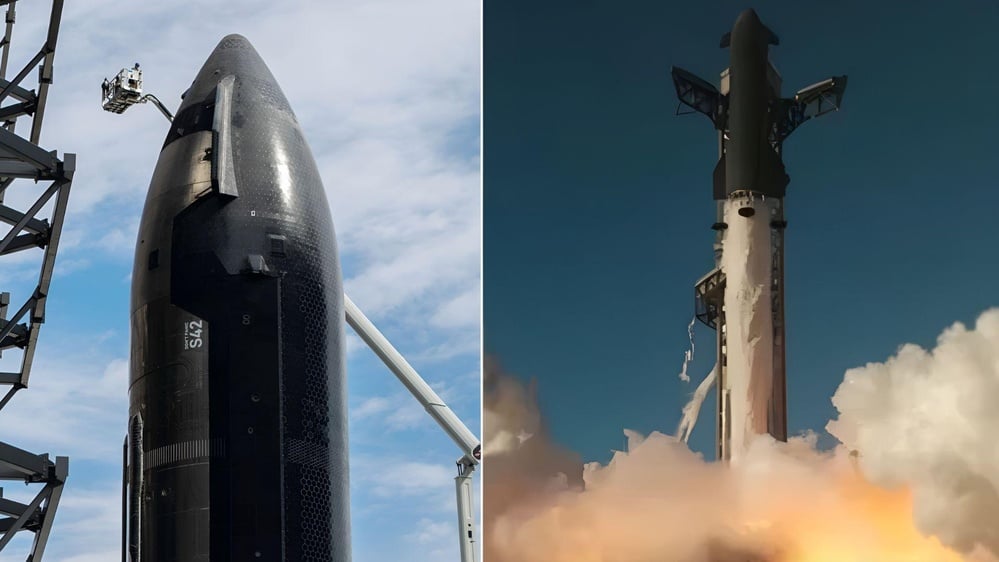
“The 124m-tall (407ft) rocket successfully blasted off from the Starbase launchpad in Boca Chica, Texas at 16:45 local time on Friday.” · exact text match
Why: The article's claims are empirical and technical.
Claim: The report includes conditional future plans and timelines but attributes them and notes uncertainty.
“SpaceX will decide whether it will try to catch this rocket stage at about 15:15 local time (21:15 GMT) on Saturday.” · exact text match
“One successful flight will not prove that model, but it could mark an important transition” · exact text match
Why: Future outcomes are framed conditionally and with expert caveats, indicating low-to-moderate speculation.
Claim: The report openly records the failed catch and program delays while attributing claims to named or institutional sources.
“SpaceX has aborted its attempt to catch the bottom part of its huge Starship rocket during its latest test flight.” · exact text match
“the pace of the rocket's development has been far slower than SpaceX had intended.” · exact text match
Why: Inclusion of failure and delay signals fair, non-promotional reporting.
Claim: The article supplies technical scale, timing, prior attempts, and NASA/Blue Origin context.
“The 124m-tall (407ft) rocket successfully blasted off from the Starbase launchpad in Boca Chica, Texas at 16:45 local time on Friday.” · exact text match
“SpaceX has managed to catch the Super Heavy Booster on three earlier test flights.” · exact text match
Why: Concrete technical and program details support a high intelligence assessment.
The supplied text includes unrelated related-link fragments and an internal inconsistency about NASA's lunar timeline (2028 versus summer 2027), limiting certainty on program details.
November 14, 2026 · 0 shares
Headline foregrounds the booster loss as a 'fiery crash,' while the body balances that with mission milestones and notes the failure was unexplained.
Helium Analysis
Limitations: Limited to a short RT.com excerpt with no byline and little independent sourcing; some details rely on SpaceX mission plans and expected outcomes.
·
55 of 55 available dimensions scored; omitted dimensions are not treated as neutral.
·
Verified supporting quotes for 7 of 55 scored dimensions.
Claim: The report states what happened and what was not yet explained rather than asserting motives or subjective interpretation.
“SpaceX did not immediately explain the failure, although safety systems diverted the booster offshore.” · exact text match
“If successful, it would mark the first recovery of a Starship spacecraft from orbit.” · exact text match
Why: Conditional and uncertainty-marked wording supports an objective presentation.
Claim: The headline and body use mildly dramatic wording about the booster crash.
“loses booster in fiery crash” · exact text match
“instead making a fiery landing in the Gulf of Mexico” · exact text match
Why: 'Fiery crash' and 'fiery landing' add dramatic emphasis to an otherwise factual account.
Claim: The text attributes outcomes and future plans while preserving some uncertainty.
“SpaceX did not immediately explain the failure, although safety systems diverted the booster offshore.” · exact text match
“If successful, it would mark the first recovery of a Starship spacecraft from orbit.” · exact text match
Why: Conditional phrasing and an explicit unresolved explanation support moderate credibility.
Claim: The account avoids speculating about the cause of the booster failure.
“SpaceX did not immediately explain the failure, although safety systems diverted the booster offshore.” · exact text match
Why: Acknowledging the absence of an explanation is consistent with rational reporting.
Claim: The article reports technical launch details and spaceflight milestones rather than supernatural or non-empirical claims.
“The 124-meter (407-foot) Starship blasted off from the company’s Starbase facility in southern Texas on Friday, carrying 26 next-generation Starlink satellites into orbit.” · exact text match
Why: Specific technical and mission details support a scientific/empirical orientation.
Claim: The article includes expected future mission steps.
“It is expected to circle Earth 15 times before attempting to return to Texas on Saturday, where the company plans to catch it using the tower’s giant mechanical arms.” · exact text match
Why: Future expectations and plans are reported, but they are labeled as expected rather than presented as accomplished facts.
Claim: The report includes both mission successes and the booster failure.
“The Starship upper stage continued into orbit and successfully deployed its satellite payload.” · exact text match
“However, the Super Heavy booster failed to return to the tower as planned, instead making a fiery landing in the Gulf of Mexico.” · exact text match
Why: Balancing success and failure is a visible fairness signal.
Limited to a short RT.com excerpt with no byline and little independent sourcing; some details rely on SpaceX mission plans and expected outcomes.
Coverage is largely factual and technical, with mild evaluative framing of SpaceX's engineering ambitions and commercial potential.
Helium Analysis
Limitations: The supplied text includes duplicated scraped headline, bullet, and subscription fragments, which complicate assessment of the original article flow; analysis relies on the coherent body paragraphs.
·
11 of 55 available dimensions scored; omitted dimensions are not treated as neutral.
·
Verified supporting quotes for 9 of 11 scored dimensions.
Claim: The report attributes operational details to a named source and states the missed recovery objective plainly.
“SpaceX’s Dan Huot confirmed that 32 booster engines remained operational during the flight.” · exact text match
Why: Attributed factual detail supports an objective framing.
Claim: The report describes the booster diversion in neutral terms rather than dramatic language.
“The company ultimately directed the booster toward a controlled splashdown.” · not found in supplied text
Why: Neutral wording supports low sensationalism.
Claim: The report balances the missed booster recovery against conditional future potential.
“The booster recovery objective remains unfulfilled” · exact text match
“A successful landing would mark a significant step toward SpaceX’s fully reusable rocket ambitions.” · exact text match
Why: Negative and positive framing are both present, supporting measured neutrality.
Claim: The report primarily describes mission status rather than recommending action.
“Starship’s upper stage now carries the mission’s most significant recovery objective.” · exact text match
Why: Descriptive statement of mission status supports a descriptive framing.
Claim: Mild evaluative language appears in descriptions of mission objectives.
“The mission has already missed one of its most ambitious recovery objectives.” · not found in supplied text
Why: The phrase 'most ambitious' is evaluative but limited.
Claim: Concrete technical details are paired with named attribution.
“SpaceX’s Dan Huot confirmed that 32 booster engines remained operational during the flight.” · exact text match
Why: Named sourcing and specific data support credibility.
Claim: The report explains flight events causally and technically.
“The vehicle subsequently passed through Max Q, the point of maximum aerodynamic pressure during ascent.” · exact text match
Why: Technical explanation of a flight milestone supports a rational framing.
Claim: The report relies on engineering and physics-based explanation.
“The vehicle subsequently passed through Max Q, the point of maximum aerodynamic pressure during ascent.” · exact text match
Why: Empirical technical explanation supports a scientific framing.
Claim: The report includes attributed future plans and conditional outcomes.
“SpaceX plans to bring the spacecraft back to its Texas launch facility.” · exact text match
Why: Future plans and forecasts are present but attributed and limited.
Claim: The report acknowledges an unfavorable development rather than omitting it.
“The decision to forgo the tower catch means the mission will not demonstrate another successful first-stage recovery.” · exact text match
Why: Acknowledging the missed objective is an observable fairness signal.
Claim: The report explains technical milestones in accessible terms.
“Starship ignited its own engines during a maneuver known as hot staging.” · exact text match
Why: Technical explanation supports above-average article intelligence.
The supplied text includes duplicated scraped headline, bullet, and subscription fragments, which complicate assessment of the original article flow; analysis relies on the coherent body paragraphs.
November 14, 2026 · 0 shares
The strongest observable framing is measured, wire-style technical reporting that attributes plans and uncertainty while giving the booster failure proportionate factual treatment.
Helium Analysis
Limitations: The supplied text includes newsletter and comment boilerplate plus future-dated mission details; scoring is limited to the substantive SpaceX report.
·
11 of 55 available dimensions scored; omitted dimensions are not treated as neutral.
·
Verified supporting quotes for 10 of 11 scored dimensions.
Claim: The report is predominantly factual and attributes future plans, though it uses some mildly evaluative adjectives.
“SpaceX launched the 15th flight of its Starship spacecraft from Texas on Friday (November 13, 2026) on a mission the company hopes will be the first round-trip rocket voyage to orbit and back to the very spot where it left Earth” · not found in supplied text
Counterevidence:
“the giant mechanical arms of a pioneering catch-landing mechanism” · exact text match
Why: The main framing reports the event and attributes the hope to SpaceX, while 'pioneering' adds mild positive color.
Claim: The booster failure is described with specific technical detail rather than dramatic language.
“momentarily hovered in the air before exploding” · exact text match
Why: The failure is stated as a factual sequence of events without sensational emphasis.
Claim: The article describes mission plans and events without recommending policy or action.
“return to its launch tower on Saturday (November 14, 2026) for an engine-controlled touchdown” · exact text match
Why: It reports planned technical steps descriptively rather than prescribing action.
Claim: The report is mostly factual, with only occasional mildly evaluative wording.
“the giant mechanical arms of a pioneering catch-landing mechanism” · exact text match
Why: 'Pioneering' is a mild positive descriptor but does not dominate the report.
Claim: The article treats NASA funding as programmatic context rather than partisan political conflict.
“NASA has helped fund Starship’s development with roughly $3.2 billion since selecting the rocket ship in 2021” · exact text match
Why: The funding detail is reported without partisan framing or political advocacy.
Claim: Claims are attributed to SpaceX or direct observation, and uncertainty about the booster anomaly is acknowledged.
“The vehicle reached orbit about 27 minutes after launch, SpaceX said.” · exact text match
“It was not immediately clear why Friday’s attempt failed.” · exact text match
Why: Attribution and acknowledged uncertainty support credibility.
Claim: The report avoids asserting an unverified cause for the booster failure.
“It was not immediately clear why Friday’s attempt failed.” · exact text match
Why: Explicitly noting the unresolved cause reflects restrained, rational reporting.
Claim: The report is grounded in empirical mission events and technical program details.
“The vehicle reached orbit about 27 minutes after launch, SpaceX said.” · exact text match
Why: It describes concrete spaceflight outcomes rather than supernatural or non-empirical claims.
Claim: Future mission outcomes and timelines are discussed as expectations rather than established facts.
“Starship was expected to descend from space after completing 14 orbits around Earth” · exact text match
Why: The next stage of the mission is framed as an expectation, not a confirmed outcome.
Claim: The article includes the booster failure, notes unresolved causes, and presents doubts about the NASA moon timeline.
“It was not immediately clear why Friday’s attempt failed.” · exact text match
“though several major testing objectives remain that analysts and industry engineers believe will push that timeline back” · exact text match
Why: Including failure and expert skepticism signals fair, non-promotional reporting.
Claim: The article situates the launch in test-flight history and operational context.
“The flight marked Starship’s 15th test flight since 2023 and the second to carry a batch of operational Starlink satellites to orbit.” · exact text match
Why: It provides relevant technical and programmatic context beyond the immediate event.
The supplied text includes newsletter and comment boilerplate plus future-dated mission details; scoring is limited to the substantive SpaceX report.
November 14, 2026 · 0 shares
Publisher framing is largely neutral and attributed, with mild dramatic language around the booster failure and clear separation of confirmed outcomes from planned contingencies.
Helium Analysis
Limitations: The supplied text contains a bracketed duplicate quote block and some aggregated wording; bias scoring is based on the substantive article content, which is otherwise clear.
·
55 of 55 available dimensions scored; omitted dimensions are not treated as neutral.
·
Verified supporting quotes for 11 of 55 scored dimensions.
Claim: Publisher voice is mostly detached and attributes assessments to named sources.
“Clayton Swope, an aerospace expert at the Center for Strategic and International Studies, called the mission a “mixed bag so far” after the failure to catch the Super Heavy” · exact text match
Counterevidence:
“the landmark nature of the mission went awry” · exact text match
Why: The main assessment is attributed to an expert, while a mild evaluative phrase appears in the publisher voice.
Claim: Dramatic imagery is used sparingly around the booster failure.
“A fireball erupted as the booster fell into the Gulf of Mexico near the launch site” · exact text match
Why: The vivid description is limited and does not dominate the report.
Claim: The report describes events and plans without prescribing policy or action.
“SpaceX plans to return Starship to Earth after more than 22 hours of flight and recover it at around 3:20 pm (2120 GMT) on Saturday at the launch site.” · exact text match
Why: The sentence is descriptive of a planned operational step rather than advocacy.
Claim: Evaluative language is mild and partly attributed.
“But the Starship project has been plagued by years-long delays as SpaceX grapples with novel engineering challenges” · exact text match
“called the mission a “mixed bag so far”” · exact text match
Why: Some evaluative wording appears, but it is limited and partly sourced to an expert.
Claim: Specific dates, figures, named sources, and attributed uncertainty are present.
““We’ll only go for it if the ship passes all of these system checks and decision gates along the way, and there are lots of them,” SpaceX’s Kate Tice said.” · exact text match
“SpaceX plans to return Starship to Earth after more than 22 hours of flight and recover it at around 3:20 pm (2120 GMT) on Saturday at the launch site.” · exact text match
Why: The article supplies direct quotes, precise timing, and conditional language.
Claim: Technical complexity and contingency planning are explained rather than asserted mystically.
“The “catch” is extraordinarily complex because the spaceship will be falling much faster and from a much higher altitude than the booster, with the vessel forced to withstand the extreme heat of re-entering Earth’s atmosphere.” · exact text match
Why: The passage supplies causal technical detail for why the catch is difficult.
Claim: The framing includes mildly favorable corporate achievement language alongside reported setbacks.
“Musk, the world’s richest person, has already revolutionised the space sector with the partially reusable Falcon rockets” · exact text match
“But the Starship project has been plagued by years-long delays” · exact text match
Why: A positive achievement claim is balanced by reported delays, indicating only mild favorable framing.
Claim: The report is technical and empirical rather than superstitious.
“The “catch” is extraordinarily complex because the spaceship will be falling much faster and from a much higher altitude than the booster, with the vessel forced to withstand the extreme heat of re-entering Earth’s atmosphere.” · exact text match
Why: The explanation relies on physical and engineering factors.
Claim: Forward-looking plans and expected outcomes are clearly attributed but remain speculative.
“where it was expected to circle the globe 14 times before returning on Saturday” · exact text match
“SpaceX plans to return Starship to Earth after more than 22 hours of flight and recover it at around 3:20 pm (2120 GMT) on Saturday at the launch site.” · exact text match
Why: The future steps are explicitly framed as expectations or plans.
Claim: Named sources, exact figures, and acknowledged uncertainty are present.
““Not sure right now why we weren’t able to bring it back,” SpaceX’s Dan Huot said.” · exact text match
“SpaceX plans to return Starship to Earth after more than 22 hours of flight and recover it at around 3:20 pm (2120 GMT) on Saturday at the launch site.” · exact text match
Why: The report includes direct sourcing, precise timing, and explicit uncertainty.
Claim: The article provides technical context, expert assessment, and programmatic stakes.
“Successful recoveries of both Starship and its booster would have marked a milestone in the space industry’s decades-long pursuit of fully reusable rocket systems that can drastically reduce mission costs and make frequent launches possible.” · exact text match
Why: The passage connects the test flight to broader technical and economic implications.
The supplied text contains a bracketed duplicate quote block and some aggregated wording; bias scoring is based on the substantive article content, which is otherwise clear.
November 15, 2026 · 0 shares
The framing is mildly promotional and achievement-oriented, using exclamatory and evaluative language such as 'BIG RETURN' and 'major engineering milestone' while still noting the booster failure.
Helium Analysis
Limitations: The supplied text is a brief, promotional-style report with limited sourcing, constraining framing and credibility judgments.
·
3 of 55 available dimensions scored; omitted dimensions are not treated as neutral.
·
Verified supporting quotes for 3 of 3 scored dimensions.
Claim: The report uses evaluative descriptors that subtly frame the event as a milestone.
“marking a major engineering milestone” · exact text match
“ambitious rocket programme” · exact text match
Why: These are subjective assessments rather than purely neutral technical descriptions.
Claim: The headline uses exclamatory and dramatic language to frame the mission as a big success.
“SPACEX STARSHIP'S BIG RETURN!” · exact text match
Counterevidence:
“the mission did not achieve a complete recovery of both rocket stages.” · exact text match
Why: The all-caps exclamation and 'BIG RETURN' language heighten drama beyond neutral reporting.
Claim: The report emphasizes progress toward reusability despite the booster failure.
“represents an important step in the development of the fully reusable rocket system” · exact text match
Counterevidence:
“the mission did not achieve a complete recovery of both rocket stages.” · exact text match
Why: The wording leans positive by casting the upper-stage return as an important advance.
The supplied text is a brief, promotional-style report with limited sourcing, constraining framing and credibility judgments.
November 10, 2026 · 0 shares
Neutral, technically detailed mission-preview framing that flags regulatory, weather, and conditionality caveats while using mild evaluative language for a successful catch.
Helium Analysis
Limitations: Short mission-preview text with no byline; bias scores reflect limited scope and rely on SpaceX's stated plans.
·
10 of 55 available dimensions scored; omitted dimensions are not treated as neutral.
·
Verified supporting quotes for 4 of 10 scored dimensions.
Claim: The report is predominantly objective, presenting mission plans and conditions rather than personal commentary.
“SpaceX will only attempt to capture it if it's able to deorbit at any of several pre-determined areas and if conditions are optimal.” · not found in supplied text
Why: This is a specific, attributed technical condition rather than subjective evaluation.
Claim: The framing is restrained and technical rather than sensational.
“the super heavy-lift vehicle's 75-minute launch window will open at 5:45PM Eastern time that day.” · exact text match
Why: Precise logistical timing supports a low-sensational presentation.
Claim: There is a mild evaluative judgment that a successful catch would be a major advance.
“it would be a huge step forward into achieving full reusability” · exact text match
Why: The phrase is evaluative, though conditional and limited.
Claim: The report supplies specific mission history, payload counts, timing and conditions, with attribution to SpaceX's plans.
“SpaceX had returned and caught Starship's Super Heavy booster thrice in the past.” · not found in supplied text
“The stage will also deploy 26 Starlink V3 satellites as part of its primary objectives.” · exact text match
Why: Concrete, checkable details and attributed mission history support visible credibility.
Claim: The report is grounded in technical spaceflight planning rather than superstition.
“SpaceX will only attempt to capture it if it's able to deorbit at any of several pre-determined areas and if conditions are optimal.” · not found in supplied text
Why: The stated criteria are empirical and operational, not supernatural or superstitious.
Claim: The article previews future mission outcomes and clearly labels them as contingent.
“That means we may or may not see the company catch Ship for the first time in a few days.” · exact text match
“If it does succeed in catching both stages, it would be a huge step forward into achieving full reusability” · exact text match
Why: Both quotes concern uncompleted future events and use conditional or uncertain language.
Claim: The report explains technical constraints clearly.
“It has never attempted to catch Ship, though, because it travels much higher and faster than the booster, making it more difficult to catch.” · exact text match
Why: The explanation links speed and altitude to difficulty of recovery, showing clear technical reasoning.
Short mission-preview text with no byline; bias scores reflect limited scope and rely on SpaceX's stated plans.
November 15, 2026 · 0 shares
The framing is mildly promotional and achievement-oriented, using exclamatory and evaluative language such as 'BIG RETURN' and 'major engineering milestone' while still noting the booster failure.
Helium Analysis
Limitations: The supplied text is a brief, promotional-style report with limited sourcing, constraining framing and credibility judgments.
·
3 of 55 available dimensions scored; omitted dimensions are not treated as neutral.
·
Verified supporting quotes for 3 of 3 scored dimensions.
Claim: The report uses evaluative descriptors that subtly frame the event as a milestone.
“marking a major engineering milestone” · exact text match
“ambitious rocket programme” · exact text match
Why: These are subjective assessments rather than purely neutral technical descriptions.
Claim: The headline uses exclamatory and dramatic language to frame the mission as a big success.
“SPACEX STARSHIP'S BIG RETURN!” · exact text match
Counterevidence:
“the mission did not achieve a complete recovery of both rocket stages.” · exact text match
Why: The all-caps exclamation and 'BIG RETURN' language heighten drama beyond neutral reporting.
Claim: The report emphasizes progress toward reusability despite the booster failure.
“represents an important step in the development of the fully reusable rocket system” · exact text match
Counterevidence:
“the mission did not achieve a complete recovery of both rocket stages.” · exact text match
Why: The wording leans positive by casting the upper-stage return as an important advance.
The supplied text is a brief, promotional-style report with limited sourcing, constraining framing and credibility judgments.
November 14, 2026 · 0 shares
The strongest observable framing is measured, wire-style technical reporting that attributes plans and uncertainty while giving the booster failure proportionate factual treatment.
Helium Analysis
Limitations: The supplied text includes newsletter and comment boilerplate plus future-dated mission details; scoring is limited to the substantive SpaceX report.
·
11 of 55 available dimensions scored; omitted dimensions are not treated as neutral.
·
Verified supporting quotes for 10 of 11 scored dimensions.
Claim: The report is predominantly factual and attributes future plans, though it uses some mildly evaluative adjectives.
“SpaceX launched the 15th flight of its Starship spacecraft from Texas on Friday (November 13, 2026) on a mission the company hopes will be the first round-trip rocket voyage to orbit and back to the very spot where it left Earth” · not found in supplied text
Counterevidence:
“the giant mechanical arms of a pioneering catch-landing mechanism” · exact text match
Why: The main framing reports the event and attributes the hope to SpaceX, while 'pioneering' adds mild positive color.
Claim: The booster failure is described with specific technical detail rather than dramatic language.
“momentarily hovered in the air before exploding” · exact text match
Why: The failure is stated as a factual sequence of events without sensational emphasis.
Claim: The article describes mission plans and events without recommending policy or action.
“return to its launch tower on Saturday (November 14, 2026) for an engine-controlled touchdown” · exact text match
Why: It reports planned technical steps descriptively rather than prescribing action.
Claim: The report is mostly factual, with only occasional mildly evaluative wording.
“the giant mechanical arms of a pioneering catch-landing mechanism” · exact text match
Why: 'Pioneering' is a mild positive descriptor but does not dominate the report.
Claim: The article treats NASA funding as programmatic context rather than partisan political conflict.
“NASA has helped fund Starship’s development with roughly $3.2 billion since selecting the rocket ship in 2021” · exact text match
Why: The funding detail is reported without partisan framing or political advocacy.
Claim: Claims are attributed to SpaceX or direct observation, and uncertainty about the booster anomaly is acknowledged.
“The vehicle reached orbit about 27 minutes after launch, SpaceX said.” · exact text match
“It was not immediately clear why Friday’s attempt failed.” · exact text match
Why: Attribution and acknowledged uncertainty support credibility.
Claim: The report avoids asserting an unverified cause for the booster failure.
“It was not immediately clear why Friday’s attempt failed.” · exact text match
Why: Explicitly noting the unresolved cause reflects restrained, rational reporting.
Claim: The report is grounded in empirical mission events and technical program details.
“The vehicle reached orbit about 27 minutes after launch, SpaceX said.” · exact text match
Why: It describes concrete spaceflight outcomes rather than supernatural or non-empirical claims.
Claim: Future mission outcomes and timelines are discussed as expectations rather than established facts.
“Starship was expected to descend from space after completing 14 orbits around Earth” · exact text match
Why: The next stage of the mission is framed as an expectation, not a confirmed outcome.
Claim: The article includes the booster failure, notes unresolved causes, and presents doubts about the NASA moon timeline.
“It was not immediately clear why Friday’s attempt failed.” · exact text match
“though several major testing objectives remain that analysts and industry engineers believe will push that timeline back” · exact text match
Why: Including failure and expert skepticism signals fair, non-promotional reporting.
Claim: The article situates the launch in test-flight history and operational context.
“The flight marked Starship’s 15th test flight since 2023 and the second to carry a batch of operational Starlink satellites to orbit.” · exact text match
Why: It provides relevant technical and programmatic context beyond the immediate event.
The supplied text includes newsletter and comment boilerplate plus future-dated mission details; scoring is limited to the substantive SpaceX report.
November 14, 2026 · 0 shares
Neutral, attribution-heavy technical reporting that treats the failed booster catch as a setback while situating it in SpaceX's reusability and NASA Artemis context.
Helium Analysis
Limitations: The supplied text includes unrelated related-link fragments and an internal inconsistency about NASA's lunar timeline (2028 versus summer 2027), limiting certainty on program details.
·
11 of 55 available dimensions scored; omitted dimensions are not treated as neutral.
·
Verified supporting quotes for 11 of 11 scored dimensions.
Claim: The report is primarily third-person and event-centered, with opinions confined to quoted experts.
“If any problems are detected, there are various points during the flight when the rocket stage can be brought down in the ocean.” · exact text match
“Full reusability has the potential to fundamentally change the economics of accessing space," he said.” · exact text match
Why: Factual narration and attributed opinion support objective framing.
Claim: Mostly factual wording is accented by mildly dramatic failure imagery.
“instead it was diverted to the ocean, bursting into flames as it came down.” · exact text match
Why: The flames wording adds mild drama but not pervasive sensationalism.
Claim: The text describes test outcomes and schedules without recommending policy or action.
“It is the aerospace firm's first attempt to fully recover its rocket, paving the way for making Starship fully reusable so it can fly repeatedly and reduce costs.” · exact text match
Why: No prescriptions are directed at readers or officials.
Claim: Political relevance is limited to NASA program pressure and a US-China lunar race, not domestic partisan framing.
“Its administrator Jared Isaacman has said the US was in a race with China to get to the Moon.” · exact text match
Why: The article is largely non-partisan but includes a geopolitical policy frame.
Claim: The report attributes statements, gives specific timings and dimensions, and notes uncertainty and competitive program setbacks.
“During a livestream of the launch, a SpaceX spokesperson said:” · exact text match
“says Prof Malcolm Macdonald, president of Royal Aeronautical Society.” · exact text match
Why: Specific sourcing and caveats support high visible credibility.
Claim: The report is logically structured and acknowledges uncertainty rather than asserting outcomes.
“If any problems are detected, there are various points during the flight when the rocket stage can be brought down in the ocean.” · exact text match
“One successful flight will not prove that model, but it could mark an important transition: from demonstrating that Starship can fly, to demonstrating how Starship could operate.” · exact text match
Why: Conditional, cause-effect reporting supports a rational framing.
Claim: Coverage is anchored in engineering tests, orbital mechanics, and reusable-rocket economics rather than superstition.
“The 124m-tall (407ft) rocket successfully blasted off from the Starbase launchpad in Boca Chica, Texas at 16:45 local time on Friday.” · exact text match
Why: The article's claims are empirical and technical.
Claim: The report includes conditional future plans and timelines but attributes them and notes uncertainty.
“SpaceX will decide whether it will try to catch this rocket stage at about 15:15 local time (21:15 GMT) on Saturday.” · exact text match
“One successful flight will not prove that model, but it could mark an important transition” · exact text match
Why: Future outcomes are framed conditionally and with expert caveats, indicating low-to-moderate speculation.
Claim: The report openly records the failed catch and program delays while attributing claims to named or institutional sources.
“SpaceX has aborted its attempt to catch the bottom part of its huge Starship rocket during its latest test flight.” · exact text match
“the pace of the rocket's development has been far slower than SpaceX had intended.” · exact text match
Why: Inclusion of failure and delay signals fair, non-promotional reporting.
Claim: The article supplies technical scale, timing, prior attempts, and NASA/Blue Origin context.
“The 124m-tall (407ft) rocket successfully blasted off from the Starbase launchpad in Boca Chica, Texas at 16:45 local time on Friday.” · exact text match
“SpaceX has managed to catch the Super Heavy Booster on three earlier test flights.” · exact text match
Why: Concrete technical and program details support a high intelligence assessment.
The supplied text includes unrelated related-link fragments and an internal inconsistency about NASA's lunar timeline (2028 versus summer 2027), limiting certainty on program details.
November 10, 2026 · 0 shares
Neutral, technically detailed mission-preview framing that flags regulatory, weather, and conditionality caveats while using mild evaluative language for a successful catch.
Helium Analysis Limitations: Short mission-preview text with no byline; bias scores reflect limited scope and rely on SpaceX's stated plans. · 10 of 55 available dimensions scored; omitted dimensions are not treated as neutral. · Verified supporting quotes for 4 of 10 scored dimensions.
Claim: The report is predominantly objective, presenting mission plans and conditions rather than personal commentary.
“SpaceX will only attempt to capture it if it's able to deorbit at any of several pre-determined areas and if conditions are optimal.” · not found in supplied text
Why: This is a specific, attributed technical condition rather than subjective evaluation.
Claim: The framing is restrained and technical rather than sensational.
“the super heavy-lift vehicle's 75-minute launch window will open at 5:45PM Eastern time that day.” · exact text match
Why: Precise logistical timing supports a low-sensational presentation.
Claim: There is a mild evaluative judgment that a successful catch would be a major advance.
“it would be a huge step forward into achieving full reusability” · exact text match
Why: The phrase is evaluative, though conditional and limited.
Claim: The report supplies specific mission history, payload counts, timing and conditions, with attribution to SpaceX's plans.
“SpaceX had returned and caught Starship's Super Heavy booster thrice in the past.” · not found in supplied text
“The stage will also deploy 26 Starlink V3 satellites as part of its primary objectives.” · exact text match
Why: Concrete, checkable details and attributed mission history support visible credibility.
Claim: The report is grounded in technical spaceflight planning rather than superstition.
“SpaceX will only attempt to capture it if it's able to deorbit at any of several pre-determined areas and if conditions are optimal.” · not found in supplied text
Why: The stated criteria are empirical and operational, not supernatural or superstitious.
Claim: The article previews future mission outcomes and clearly labels them as contingent.
“That means we may or may not see the company catch Ship for the first time in a few days.” · exact text match
“If it does succeed in catching both stages, it would be a huge step forward into achieving full reusability” · exact text match
Why: Both quotes concern uncompleted future events and use conditional or uncertain language.
Claim: The report explains technical constraints clearly.
“It has never attempted to catch Ship, though, because it travels much higher and faster than the booster, making it more difficult to catch.” · exact text match
Why: The explanation links speed and altitude to difficulty of recovery, showing clear technical reasoning.
Short mission-preview text with no byline; bias scores reflect limited scope and rely on SpaceX's stated plans.
November 14, 2026 · 0 shares
The strongest observable framing is measured, wire-style technical reporting that attributes plans and uncertainty while giving the booster failure proportionate factual treatment.
Helium Analysis Limitations: The supplied text includes newsletter and comment boilerplate plus future-dated mission details; scoring is limited to the substantive SpaceX report. · 11 of 55 available dimensions scored; omitted dimensions are not treated as neutral. · Verified supporting quotes for 10 of 11 scored dimensions.
Claim: The report is predominantly factual and attributes future plans, though it uses some mildly evaluative adjectives.
“SpaceX launched the 15th flight of its Starship spacecraft from Texas on Friday (November 13, 2026) on a mission the company hopes will be the first round-trip rocket voyage to orbit and back to the very spot where it left Earth” · not found in supplied text
Counterevidence:
“the giant mechanical arms of a pioneering catch-landing mechanism” · exact text match
Why: The main framing reports the event and attributes the hope to SpaceX, while 'pioneering' adds mild positive color.
Claim: The booster failure is described with specific technical detail rather than dramatic language.
“momentarily hovered in the air before exploding” · exact text match
Why: The failure is stated as a factual sequence of events without sensational emphasis.
Claim: The article describes mission plans and events without recommending policy or action.
“return to its launch tower on Saturday (November 14, 2026) for an engine-controlled touchdown” · exact text match
Why: It reports planned technical steps descriptively rather than prescribing action.
Claim: The report is mostly factual, with only occasional mildly evaluative wording.
“the giant mechanical arms of a pioneering catch-landing mechanism” · exact text match
Why: 'Pioneering' is a mild positive descriptor but does not dominate the report.
Claim: The article treats NASA funding as programmatic context rather than partisan political conflict.
“NASA has helped fund Starship’s development with roughly $3.2 billion since selecting the rocket ship in 2021” · exact text match
Why: The funding detail is reported without partisan framing or political advocacy.
Claim: Claims are attributed to SpaceX or direct observation, and uncertainty about the booster anomaly is acknowledged.
“The vehicle reached orbit about 27 minutes after launch, SpaceX said.” · exact text match
“It was not immediately clear why Friday’s attempt failed.” · exact text match
Why: Attribution and acknowledged uncertainty support credibility.
Claim: The report avoids asserting an unverified cause for the booster failure.
“It was not immediately clear why Friday’s attempt failed.” · exact text match
Why: Explicitly noting the unresolved cause reflects restrained, rational reporting.
Claim: The report is grounded in empirical mission events and technical program details.
“The vehicle reached orbit about 27 minutes after launch, SpaceX said.” · exact text match
Why: It describes concrete spaceflight outcomes rather than supernatural or non-empirical claims.
Claim: Future mission outcomes and timelines are discussed as expectations rather than established facts.
“Starship was expected to descend from space after completing 14 orbits around Earth” · exact text match
Why: The next stage of the mission is framed as an expectation, not a confirmed outcome.
Claim: The article includes the booster failure, notes unresolved causes, and presents doubts about the NASA moon timeline.
“It was not immediately clear why Friday’s attempt failed.” · exact text match
“though several major testing objectives remain that analysts and industry engineers believe will push that timeline back” · exact text match
Why: Including failure and expert skepticism signals fair, non-promotional reporting.
Claim: The article situates the launch in test-flight history and operational context.
“The flight marked Starship’s 15th test flight since 2023 and the second to carry a batch of operational Starlink satellites to orbit.” · exact text match
Why: It provides relevant technical and programmatic context beyond the immediate event.
The supplied text includes newsletter and comment boilerplate plus future-dated mission details; scoring is limited to the substantive SpaceX report.
November 14, 2026 · 0 shares
Neutral, attribution-heavy technical reporting that treats the failed booster catch as a setback while situating it in SpaceX's reusability and NASA Artemis context.
Helium Analysis Limitations: The supplied text includes unrelated related-link fragments and an internal inconsistency about NASA's lunar timeline (2028 versus summer 2027), limiting certainty on program details. · 11 of 55 available dimensions scored; omitted dimensions are not treated as neutral. · Verified supporting quotes for 11 of 11 scored dimensions.
Claim: The report is primarily third-person and event-centered, with opinions confined to quoted experts.
“If any problems are detected, there are various points during the flight when the rocket stage can be brought down in the ocean.” · exact text match
“Full reusability has the potential to fundamentally change the economics of accessing space," he said.” · exact text match
Why: Factual narration and attributed opinion support objective framing.
Claim: Mostly factual wording is accented by mildly dramatic failure imagery.
“instead it was diverted to the ocean, bursting into flames as it came down.” · exact text match
Why: The flames wording adds mild drama but not pervasive sensationalism.
Claim: The text describes test outcomes and schedules without recommending policy or action.
“It is the aerospace firm's first attempt to fully recover its rocket, paving the way for making Starship fully reusable so it can fly repeatedly and reduce costs.” · exact text match
Why: No prescriptions are directed at readers or officials.
Claim: Political relevance is limited to NASA program pressure and a US-China lunar race, not domestic partisan framing.
“Its administrator Jared Isaacman has said the US was in a race with China to get to the Moon.” · exact text match
Why: The article is largely non-partisan but includes a geopolitical policy frame.
Claim: The report attributes statements, gives specific timings and dimensions, and notes uncertainty and competitive program setbacks.
“During a livestream of the launch, a SpaceX spokesperson said:” · exact text match
“says Prof Malcolm Macdonald, president of Royal Aeronautical Society.” · exact text match
Why: Specific sourcing and caveats support high visible credibility.
Claim: The report is logically structured and acknowledges uncertainty rather than asserting outcomes.
“If any problems are detected, there are various points during the flight when the rocket stage can be brought down in the ocean.” · exact text match
“One successful flight will not prove that model, but it could mark an important transition: from demonstrating that Starship can fly, to demonstrating how Starship could operate.” · exact text match
Why: Conditional, cause-effect reporting supports a rational framing.
Claim: Coverage is anchored in engineering tests, orbital mechanics, and reusable-rocket economics rather than superstition.
“The 124m-tall (407ft) rocket successfully blasted off from the Starbase launchpad in Boca Chica, Texas at 16:45 local time on Friday.” · exact text match
Why: The article's claims are empirical and technical.
Claim: The report includes conditional future plans and timelines but attributes them and notes uncertainty.
“SpaceX will decide whether it will try to catch this rocket stage at about 15:15 local time (21:15 GMT) on Saturday.” · exact text match
“One successful flight will not prove that model, but it could mark an important transition” · exact text match
Why: Future outcomes are framed conditionally and with expert caveats, indicating low-to-moderate speculation.
Claim: The report openly records the failed catch and program delays while attributing claims to named or institutional sources.
“SpaceX has aborted its attempt to catch the bottom part of its huge Starship rocket during its latest test flight.” · exact text match
“the pace of the rocket's development has been far slower than SpaceX had intended.” · exact text match
Why: Inclusion of failure and delay signals fair, non-promotional reporting.
Claim: The article supplies technical scale, timing, prior attempts, and NASA/Blue Origin context.
“The 124m-tall (407ft) rocket successfully blasted off from the Starbase launchpad in Boca Chica, Texas at 16:45 local time on Friday.” · exact text match
“SpaceX has managed to catch the Super Heavy Booster on three earlier test flights.” · exact text match
Why: Concrete technical and program details support a high intelligence assessment.
The supplied text includes unrelated related-link fragments and an internal inconsistency about NASA's lunar timeline (2028 versus summer 2027), limiting certainty on program details.
November 14, 2026 · 0 shares
Publisher framing is largely neutral and attributed, with mild dramatic language around the booster failure and clear separation of confirmed outcomes from planned contingencies.
Helium Analysis Limitations: The supplied text contains a bracketed duplicate quote block and some aggregated wording; bias scoring is based on the substantive article content, which is otherwise clear. · 55 of 55 available dimensions scored; omitted dimensions are not treated as neutral. · Verified supporting quotes for 11 of 55 scored dimensions.
Claim: Publisher voice is mostly detached and attributes assessments to named sources.
“Clayton Swope, an aerospace expert at the Center for Strategic and International Studies, called the mission a “mixed bag so far” after the failure to catch the Super Heavy” · exact text match
Counterevidence:
“the landmark nature of the mission went awry” · exact text match
Why: The main assessment is attributed to an expert, while a mild evaluative phrase appears in the publisher voice.
Claim: Dramatic imagery is used sparingly around the booster failure.
“A fireball erupted as the booster fell into the Gulf of Mexico near the launch site” · exact text match
Why: The vivid description is limited and does not dominate the report.
Claim: The report describes events and plans without prescribing policy or action.
“SpaceX plans to return Starship to Earth after more than 22 hours of flight and recover it at around 3:20 pm (2120 GMT) on Saturday at the launch site.” · exact text match
Why: The sentence is descriptive of a planned operational step rather than advocacy.
Claim: Evaluative language is mild and partly attributed.
“But the Starship project has been plagued by years-long delays as SpaceX grapples with novel engineering challenges” · exact text match
“called the mission a “mixed bag so far”” · exact text match
Why: Some evaluative wording appears, but it is limited and partly sourced to an expert.
Claim: Specific dates, figures, named sources, and attributed uncertainty are present.
““We’ll only go for it if the ship passes all of these system checks and decision gates along the way, and there are lots of them,” SpaceX’s Kate Tice said.” · exact text match
“SpaceX plans to return Starship to Earth after more than 22 hours of flight and recover it at around 3:20 pm (2120 GMT) on Saturday at the launch site.” · exact text match
Why: The article supplies direct quotes, precise timing, and conditional language.
Claim: Technical complexity and contingency planning are explained rather than asserted mystically.
“The “catch” is extraordinarily complex because the spaceship will be falling much faster and from a much higher altitude than the booster, with the vessel forced to withstand the extreme heat of re-entering Earth’s atmosphere.” · exact text match
Why: The passage supplies causal technical detail for why the catch is difficult.
Claim: The framing includes mildly favorable corporate achievement language alongside reported setbacks.
“Musk, the world’s richest person, has already revolutionised the space sector with the partially reusable Falcon rockets” · exact text match
“But the Starship project has been plagued by years-long delays” · exact text match
Why: A positive achievement claim is balanced by reported delays, indicating only mild favorable framing.
Claim: The report is technical and empirical rather than superstitious.
“The “catch” is extraordinarily complex because the spaceship will be falling much faster and from a much higher altitude than the booster, with the vessel forced to withstand the extreme heat of re-entering Earth’s atmosphere.” · exact text match
Why: The explanation relies on physical and engineering factors.
Claim: Forward-looking plans and expected outcomes are clearly attributed but remain speculative.
“where it was expected to circle the globe 14 times before returning on Saturday” · exact text match
“SpaceX plans to return Starship to Earth after more than 22 hours of flight and recover it at around 3:20 pm (2120 GMT) on Saturday at the launch site.” · exact text match
Why: The future steps are explicitly framed as expectations or plans.
Claim: Named sources, exact figures, and acknowledged uncertainty are present.
““Not sure right now why we weren’t able to bring it back,” SpaceX’s Dan Huot said.” · exact text match
“SpaceX plans to return Starship to Earth after more than 22 hours of flight and recover it at around 3:20 pm (2120 GMT) on Saturday at the launch site.” · exact text match
Why: The report includes direct sourcing, precise timing, and explicit uncertainty.
Claim: The article provides technical context, expert assessment, and programmatic stakes.
“Successful recoveries of both Starship and its booster would have marked a milestone in the space industry’s decades-long pursuit of fully reusable rocket systems that can drastically reduce mission costs and make frequent launches possible.” · exact text match
Why: The passage connects the test flight to broader technical and economic implications.
The supplied text contains a bracketed duplicate quote block and some aggregated wording; bias scoring is based on the substantive article content, which is otherwise clear.
November 14, 2026 · 0 shares
Headline foregrounds the booster loss as a 'fiery crash,' while the body balances that with mission milestones and notes the failure was unexplained.
Helium Analysis Limitations: Limited to a short RT.com excerpt with no byline and little independent sourcing; some details rely on SpaceX mission plans and expected outcomes. · 55 of 55 available dimensions scored; omitted dimensions are not treated as neutral. · Verified supporting quotes for 7 of 55 scored dimensions.
Claim: The report states what happened and what was not yet explained rather than asserting motives or subjective interpretation.
“SpaceX did not immediately explain the failure, although safety systems diverted the booster offshore.” · exact text match
“If successful, it would mark the first recovery of a Starship spacecraft from orbit.” · exact text match
Why: Conditional and uncertainty-marked wording supports an objective presentation.
Claim: The headline and body use mildly dramatic wording about the booster crash.
“loses booster in fiery crash” · exact text match
“instead making a fiery landing in the Gulf of Mexico” · exact text match
Why: 'Fiery crash' and 'fiery landing' add dramatic emphasis to an otherwise factual account.
Claim: The text attributes outcomes and future plans while preserving some uncertainty.
“SpaceX did not immediately explain the failure, although safety systems diverted the booster offshore.” · exact text match
“If successful, it would mark the first recovery of a Starship spacecraft from orbit.” · exact text match
Why: Conditional phrasing and an explicit unresolved explanation support moderate credibility.
Claim: The account avoids speculating about the cause of the booster failure.
“SpaceX did not immediately explain the failure, although safety systems diverted the booster offshore.” · exact text match
Why: Acknowledging the absence of an explanation is consistent with rational reporting.
Claim: The article reports technical launch details and spaceflight milestones rather than supernatural or non-empirical claims.
“The 124-meter (407-foot) Starship blasted off from the company’s Starbase facility in southern Texas on Friday, carrying 26 next-generation Starlink satellites into orbit.” · exact text match
Why: Specific technical and mission details support a scientific/empirical orientation.
Claim: The article includes expected future mission steps.
“It is expected to circle Earth 15 times before attempting to return to Texas on Saturday, where the company plans to catch it using the tower’s giant mechanical arms.” · exact text match
Why: Future expectations and plans are reported, but they are labeled as expected rather than presented as accomplished facts.
Claim: The report includes both mission successes and the booster failure.
“The Starship upper stage continued into orbit and successfully deployed its satellite payload.” · exact text match
“However, the Super Heavy booster failed to return to the tower as planned, instead making a fiery landing in the Gulf of Mexico.” · exact text match
Why: Balancing success and failure is a visible fairness signal.
Limited to a short RT.com excerpt with no byline and little independent sourcing; some details rely on SpaceX mission plans and expected outcomes.
November 14, 2026 · 0 shares
The strongest observable framing is measured, wire-style technical reporting that attributes plans and uncertainty while giving the booster failure proportionate factual treatment.
Helium Analysis Limitations: The supplied text includes newsletter and comment boilerplate plus future-dated mission details; scoring is limited to the substantive SpaceX report. · 11 of 55 available dimensions scored; omitted dimensions are not treated as neutral. · Verified supporting quotes for 10 of 11 scored dimensions.
Claim: The report is predominantly factual and attributes future plans, though it uses some mildly evaluative adjectives.
“SpaceX launched the 15th flight of its Starship spacecraft from Texas on Friday (November 13, 2026) on a mission the company hopes will be the first round-trip rocket voyage to orbit and back to the very spot where it left Earth” · not found in supplied text
Counterevidence:
“the giant mechanical arms of a pioneering catch-landing mechanism” · exact text match
Why: The main framing reports the event and attributes the hope to SpaceX, while 'pioneering' adds mild positive color.
Claim: The booster failure is described with specific technical detail rather than dramatic language.
“momentarily hovered in the air before exploding” · exact text match
Why: The failure is stated as a factual sequence of events without sensational emphasis.
Claim: The article describes mission plans and events without recommending policy or action.
“return to its launch tower on Saturday (November 14, 2026) for an engine-controlled touchdown” · exact text match
Why: It reports planned technical steps descriptively rather than prescribing action.
Claim: The report is mostly factual, with only occasional mildly evaluative wording.
“the giant mechanical arms of a pioneering catch-landing mechanism” · exact text match
Why: 'Pioneering' is a mild positive descriptor but does not dominate the report.
Claim: The article treats NASA funding as programmatic context rather than partisan political conflict.
“NASA has helped fund Starship’s development with roughly $3.2 billion since selecting the rocket ship in 2021” · exact text match
Why: The funding detail is reported without partisan framing or political advocacy.
Claim: Claims are attributed to SpaceX or direct observation, and uncertainty about the booster anomaly is acknowledged.
“The vehicle reached orbit about 27 minutes after launch, SpaceX said.” · exact text match
“It was not immediately clear why Friday’s attempt failed.” · exact text match
Why: Attribution and acknowledged uncertainty support credibility.
Claim: The report avoids asserting an unverified cause for the booster failure.
“It was not immediately clear why Friday’s attempt failed.” · exact text match
Why: Explicitly noting the unresolved cause reflects restrained, rational reporting.
Claim: The report is grounded in empirical mission events and technical program details.
“The vehicle reached orbit about 27 minutes after launch, SpaceX said.” · exact text match
Why: It describes concrete spaceflight outcomes rather than supernatural or non-empirical claims.
Claim: Future mission outcomes and timelines are discussed as expectations rather than established facts.
“Starship was expected to descend from space after completing 14 orbits around Earth” · exact text match
Why: The next stage of the mission is framed as an expectation, not a confirmed outcome.
Claim: The article includes the booster failure, notes unresolved causes, and presents doubts about the NASA moon timeline.
“It was not immediately clear why Friday’s attempt failed.” · exact text match
“though several major testing objectives remain that analysts and industry engineers believe will push that timeline back” · exact text match
Why: Including failure and expert skepticism signals fair, non-promotional reporting.
Claim: The article situates the launch in test-flight history and operational context.
“The flight marked Starship’s 15th test flight since 2023 and the second to carry a batch of operational Starlink satellites to orbit.” · exact text match
Why: It provides relevant technical and programmatic context beyond the immediate event.
The supplied text includes newsletter and comment boilerplate plus future-dated mission details; scoring is limited to the substantive SpaceX report.
November 14, 2026 · 0 shares
Publisher framing is largely neutral and attributed, with mild dramatic language around the booster failure and clear separation of confirmed outcomes from planned contingencies.
Helium Analysis Limitations: The supplied text contains a bracketed duplicate quote block and some aggregated wording; bias scoring is based on the substantive article content, which is otherwise clear. · 55 of 55 available dimensions scored; omitted dimensions are not treated as neutral. · Verified supporting quotes for 11 of 55 scored dimensions.
Claim: Publisher voice is mostly detached and attributes assessments to named sources.
“Clayton Swope, an aerospace expert at the Center for Strategic and International Studies, called the mission a “mixed bag so far” after the failure to catch the Super Heavy” · exact text match
Counterevidence:
“the landmark nature of the mission went awry” · exact text match
Why: The main assessment is attributed to an expert, while a mild evaluative phrase appears in the publisher voice.
Claim: Dramatic imagery is used sparingly around the booster failure.
“A fireball erupted as the booster fell into the Gulf of Mexico near the launch site” · exact text match
Why: The vivid description is limited and does not dominate the report.
Claim: The report describes events and plans without prescribing policy or action.
“SpaceX plans to return Starship to Earth after more than 22 hours of flight and recover it at around 3:20 pm (2120 GMT) on Saturday at the launch site.” · exact text match
Why: The sentence is descriptive of a planned operational step rather than advocacy.
Claim: Evaluative language is mild and partly attributed.
“But the Starship project has been plagued by years-long delays as SpaceX grapples with novel engineering challenges” · exact text match
“called the mission a “mixed bag so far”” · exact text match
Why: Some evaluative wording appears, but it is limited and partly sourced to an expert.
Claim: Specific dates, figures, named sources, and attributed uncertainty are present.
““We’ll only go for it if the ship passes all of these system checks and decision gates along the way, and there are lots of them,” SpaceX’s Kate Tice said.” · exact text match
“SpaceX plans to return Starship to Earth after more than 22 hours of flight and recover it at around 3:20 pm (2120 GMT) on Saturday at the launch site.” · exact text match
Why: The article supplies direct quotes, precise timing, and conditional language.
Claim: Technical complexity and contingency planning are explained rather than asserted mystically.
“The “catch” is extraordinarily complex because the spaceship will be falling much faster and from a much higher altitude than the booster, with the vessel forced to withstand the extreme heat of re-entering Earth’s atmosphere.” · exact text match
Why: The passage supplies causal technical detail for why the catch is difficult.
Claim: The framing includes mildly favorable corporate achievement language alongside reported setbacks.
“Musk, the world’s richest person, has already revolutionised the space sector with the partially reusable Falcon rockets” · exact text match
“But the Starship project has been plagued by years-long delays” · exact text match
Why: A positive achievement claim is balanced by reported delays, indicating only mild favorable framing.
Claim: The report is technical and empirical rather than superstitious.
“The “catch” is extraordinarily complex because the spaceship will be falling much faster and from a much higher altitude than the booster, with the vessel forced to withstand the extreme heat of re-entering Earth’s atmosphere.” · exact text match
Why: The explanation relies on physical and engineering factors.
Claim: Forward-looking plans and expected outcomes are clearly attributed but remain speculative.
“where it was expected to circle the globe 14 times before returning on Saturday” · exact text match
“SpaceX plans to return Starship to Earth after more than 22 hours of flight and recover it at around 3:20 pm (2120 GMT) on Saturday at the launch site.” · exact text match
Why: The future steps are explicitly framed as expectations or plans.
Claim: Named sources, exact figures, and acknowledged uncertainty are present.
““Not sure right now why we weren’t able to bring it back,” SpaceX’s Dan Huot said.” · exact text match
“SpaceX plans to return Starship to Earth after more than 22 hours of flight and recover it at around 3:20 pm (2120 GMT) on Saturday at the launch site.” · exact text match
Why: The report includes direct sourcing, precise timing, and explicit uncertainty.
Claim: The article provides technical context, expert assessment, and programmatic stakes.
“Successful recoveries of both Starship and its booster would have marked a milestone in the space industry’s decades-long pursuit of fully reusable rocket systems that can drastically reduce mission costs and make frequent launches possible.” · exact text match
Why: The passage connects the test flight to broader technical and economic implications.
The supplied text contains a bracketed duplicate quote block and some aggregated wording; bias scoring is based on the substantive article content, which is otherwise clear.
November 10, 2026 · 0 shares
Neutral, technically detailed mission-preview framing that flags regulatory, weather, and conditionality caveats while using mild evaluative language for a successful catch.
Helium Analysis Limitations: Short mission-preview text with no byline; bias scores reflect limited scope and rely on SpaceX's stated plans. · 10 of 55 available dimensions scored; omitted dimensions are not treated as neutral. · Verified supporting quotes for 4 of 10 scored dimensions.
Claim: The report is predominantly objective, presenting mission plans and conditions rather than personal commentary.
“SpaceX will only attempt to capture it if it's able to deorbit at any of several pre-determined areas and if conditions are optimal.” · not found in supplied text
Why: This is a specific, attributed technical condition rather than subjective evaluation.
Claim: The framing is restrained and technical rather than sensational.
“the super heavy-lift vehicle's 75-minute launch window will open at 5:45PM Eastern time that day.” · exact text match
Why: Precise logistical timing supports a low-sensational presentation.
Claim: There is a mild evaluative judgment that a successful catch would be a major advance.
“it would be a huge step forward into achieving full reusability” · exact text match
Why: The phrase is evaluative, though conditional and limited.
Claim: The report supplies specific mission history, payload counts, timing and conditions, with attribution to SpaceX's plans.
“SpaceX had returned and caught Starship's Super Heavy booster thrice in the past.” · not found in supplied text
“The stage will also deploy 26 Starlink V3 satellites as part of its primary objectives.” · exact text match
Why: Concrete, checkable details and attributed mission history support visible credibility.
Claim: The report is grounded in technical spaceflight planning rather than superstition.
“SpaceX will only attempt to capture it if it's able to deorbit at any of several pre-determined areas and if conditions are optimal.” · not found in supplied text
Why: The stated criteria are empirical and operational, not supernatural or superstitious.
Claim: The article previews future mission outcomes and clearly labels them as contingent.
“That means we may or may not see the company catch Ship for the first time in a few days.” · exact text match
“If it does succeed in catching both stages, it would be a huge step forward into achieving full reusability” · exact text match
Why: Both quotes concern uncompleted future events and use conditional or uncertain language.
Claim: The report explains technical constraints clearly.
“It has never attempted to catch Ship, though, because it travels much higher and faster than the booster, making it more difficult to catch.” · exact text match
Why: The explanation links speed and altitude to difficulty of recovery, showing clear technical reasoning.
Short mission-preview text with no byline; bias scores reflect limited scope and rely on SpaceX's stated plans.
November 15, 2026 · 0 shares
The framing is mildly promotional and achievement-oriented, using exclamatory and evaluative language such as 'BIG RETURN' and 'major engineering milestone' while still noting the booster failure.
Helium Analysis Limitations: The supplied text is a brief, promotional-style report with limited sourcing, constraining framing and credibility judgments. · 3 of 55 available dimensions scored; omitted dimensions are not treated as neutral. · Verified supporting quotes for 3 of 3 scored dimensions.
Claim: The report uses evaluative descriptors that subtly frame the event as a milestone.
“marking a major engineering milestone” · exact text match
“ambitious rocket programme” · exact text match
Why: These are subjective assessments rather than purely neutral technical descriptions.
Claim: The headline uses exclamatory and dramatic language to frame the mission as a big success.
“SPACEX STARSHIP'S BIG RETURN!” · exact text match
Counterevidence:
“the mission did not achieve a complete recovery of both rocket stages.” · exact text match
Why: The all-caps exclamation and 'BIG RETURN' language heighten drama beyond neutral reporting.
Claim: The report emphasizes progress toward reusability despite the booster failure.
“represents an important step in the development of the fully reusable rocket system” · exact text match
Counterevidence:
“the mission did not achieve a complete recovery of both rocket stages.” · exact text match
Why: The wording leans positive by casting the upper-stage return as an important advance.
The supplied text is a brief, promotional-style report with limited sourcing, constraining framing and credibility judgments.
November 14, 2026 · 0 shares
The strongest observable framing is measured, wire-style technical reporting that attributes plans and uncertainty while giving the booster failure proportionate factual treatment.
Helium Analysis Limitations: The supplied text includes newsletter and comment boilerplate plus future-dated mission details; scoring is limited to the substantive SpaceX report. · 11 of 55 available dimensions scored; omitted dimensions are not treated as neutral. · Verified supporting quotes for 10 of 11 scored dimensions.
Claim: The report is predominantly factual and attributes future plans, though it uses some mildly evaluative adjectives.
“SpaceX launched the 15th flight of its Starship spacecraft from Texas on Friday (November 13, 2026) on a mission the company hopes will be the first round-trip rocket voyage to orbit and back to the very spot where it left Earth” · not found in supplied text
Counterevidence:
“the giant mechanical arms of a pioneering catch-landing mechanism” · exact text match
Why: The main framing reports the event and attributes the hope to SpaceX, while 'pioneering' adds mild positive color.
Claim: The booster failure is described with specific technical detail rather than dramatic language.
“momentarily hovered in the air before exploding” · exact text match
Why: The failure is stated as a factual sequence of events without sensational emphasis.
Claim: The article describes mission plans and events without recommending policy or action.
“return to its launch tower on Saturday (November 14, 2026) for an engine-controlled touchdown” · exact text match
Why: It reports planned technical steps descriptively rather than prescribing action.
Claim: The report is mostly factual, with only occasional mildly evaluative wording.
“the giant mechanical arms of a pioneering catch-landing mechanism” · exact text match
Why: 'Pioneering' is a mild positive descriptor but does not dominate the report.
Claim: The article treats NASA funding as programmatic context rather than partisan political conflict.
“NASA has helped fund Starship’s development with roughly $3.2 billion since selecting the rocket ship in 2021” · exact text match
Why: The funding detail is reported without partisan framing or political advocacy.
Claim: Claims are attributed to SpaceX or direct observation, and uncertainty about the booster anomaly is acknowledged.
“The vehicle reached orbit about 27 minutes after launch, SpaceX said.” · exact text match
“It was not immediately clear why Friday’s attempt failed.” · exact text match
Why: Attribution and acknowledged uncertainty support credibility.
Claim: The report avoids asserting an unverified cause for the booster failure.
“It was not immediately clear why Friday’s attempt failed.” · exact text match
Why: Explicitly noting the unresolved cause reflects restrained, rational reporting.
Claim: The report is grounded in empirical mission events and technical program details.
“The vehicle reached orbit about 27 minutes after launch, SpaceX said.” · exact text match
Why: It describes concrete spaceflight outcomes rather than supernatural or non-empirical claims.
Claim: Future mission outcomes and timelines are discussed as expectations rather than established facts.
“Starship was expected to descend from space after completing 14 orbits around Earth” · exact text match
Why: The next stage of the mission is framed as an expectation, not a confirmed outcome.
Claim: The article includes the booster failure, notes unresolved causes, and presents doubts about the NASA moon timeline.
“It was not immediately clear why Friday’s attempt failed.” · exact text match
“though several major testing objectives remain that analysts and industry engineers believe will push that timeline back” · exact text match
Why: Including failure and expert skepticism signals fair, non-promotional reporting.
Claim: The article situates the launch in test-flight history and operational context.
“The flight marked Starship’s 15th test flight since 2023 and the second to carry a batch of operational Starlink satellites to orbit.” · exact text match
Why: It provides relevant technical and programmatic context beyond the immediate event.
The supplied text includes newsletter and comment boilerplate plus future-dated mission details; scoring is limited to the substantive SpaceX report.
November 14, 2026 · 0 shares
Neutral, attribution-heavy technical reporting that treats the failed booster catch as a setback while situating it in SpaceX's reusability and NASA Artemis context.
Helium Analysis Limitations: The supplied text includes unrelated related-link fragments and an internal inconsistency about NASA's lunar timeline (2028 versus summer 2027), limiting certainty on program details. · 11 of 55 available dimensions scored; omitted dimensions are not treated as neutral. · Verified supporting quotes for 11 of 11 scored dimensions.
Claim: The report is primarily third-person and event-centered, with opinions confined to quoted experts.
“If any problems are detected, there are various points during the flight when the rocket stage can be brought down in the ocean.” · exact text match
“Full reusability has the potential to fundamentally change the economics of accessing space," he said.” · exact text match
Why: Factual narration and attributed opinion support objective framing.
Claim: Mostly factual wording is accented by mildly dramatic failure imagery.
“instead it was diverted to the ocean, bursting into flames as it came down.” · exact text match
Why: The flames wording adds mild drama but not pervasive sensationalism.
Claim: The text describes test outcomes and schedules without recommending policy or action.
“It is the aerospace firm's first attempt to fully recover its rocket, paving the way for making Starship fully reusable so it can fly repeatedly and reduce costs.” · exact text match
Why: No prescriptions are directed at readers or officials.
Claim: Political relevance is limited to NASA program pressure and a US-China lunar race, not domestic partisan framing.
“Its administrator Jared Isaacman has said the US was in a race with China to get to the Moon.” · exact text match
Why: The article is largely non-partisan but includes a geopolitical policy frame.
Claim: The report attributes statements, gives specific timings and dimensions, and notes uncertainty and competitive program setbacks.
“During a livestream of the launch, a SpaceX spokesperson said:” · exact text match
“says Prof Malcolm Macdonald, president of Royal Aeronautical Society.” · exact text match
Why: Specific sourcing and caveats support high visible credibility.
Claim: The report is logically structured and acknowledges uncertainty rather than asserting outcomes.
“If any problems are detected, there are various points during the flight when the rocket stage can be brought down in the ocean.” · exact text match
“One successful flight will not prove that model, but it could mark an important transition: from demonstrating that Starship can fly, to demonstrating how Starship could operate.” · exact text match
Why: Conditional, cause-effect reporting supports a rational framing.
Claim: Coverage is anchored in engineering tests, orbital mechanics, and reusable-rocket economics rather than superstition.
“The 124m-tall (407ft) rocket successfully blasted off from the Starbase launchpad in Boca Chica, Texas at 16:45 local time on Friday.” · exact text match
Why: The article's claims are empirical and technical.
Claim: The report includes conditional future plans and timelines but attributes them and notes uncertainty.
“SpaceX will decide whether it will try to catch this rocket stage at about 15:15 local time (21:15 GMT) on Saturday.” · exact text match
“One successful flight will not prove that model, but it could mark an important transition” · exact text match
Why: Future outcomes are framed conditionally and with expert caveats, indicating low-to-moderate speculation.
Claim: The report openly records the failed catch and program delays while attributing claims to named or institutional sources.
“SpaceX has aborted its attempt to catch the bottom part of its huge Starship rocket during its latest test flight.” · exact text match
“the pace of the rocket's development has been far slower than SpaceX had intended.” · exact text match
Why: Inclusion of failure and delay signals fair, non-promotional reporting.
Claim: The article supplies technical scale, timing, prior attempts, and NASA/Blue Origin context.
“The 124m-tall (407ft) rocket successfully blasted off from the Starbase launchpad in Boca Chica, Texas at 16:45 local time on Friday.” · exact text match
“SpaceX has managed to catch the Super Heavy Booster on three earlier test flights.” · exact text match
Why: Concrete technical and program details support a high intelligence assessment.
The supplied text includes unrelated related-link fragments and an internal inconsistency about NASA's lunar timeline (2028 versus summer 2027), limiting certainty on program details.
November 10, 2026 · 0 shares
Neutral, technically detailed mission-preview framing that flags regulatory, weather, and conditionality caveats while using mild evaluative language for a successful catch.
Helium Analysis Limitations: Short mission-preview text with no byline; bias scores reflect limited scope and rely on SpaceX's stated plans. · 10 of 55 available dimensions scored; omitted dimensions are not treated as neutral. · Verified supporting quotes for 4 of 10 scored dimensions.
Claim: The report is predominantly objective, presenting mission plans and conditions rather than personal commentary.
“SpaceX will only attempt to capture it if it's able to deorbit at any of several pre-determined areas and if conditions are optimal.” · not found in supplied text
Why: This is a specific, attributed technical condition rather than subjective evaluation.
Claim: The framing is restrained and technical rather than sensational.
“the super heavy-lift vehicle's 75-minute launch window will open at 5:45PM Eastern time that day.” · exact text match
Why: Precise logistical timing supports a low-sensational presentation.
Claim: There is a mild evaluative judgment that a successful catch would be a major advance.
“it would be a huge step forward into achieving full reusability” · exact text match
Why: The phrase is evaluative, though conditional and limited.
Claim: The report supplies specific mission history, payload counts, timing and conditions, with attribution to SpaceX's plans.
“SpaceX had returned and caught Starship's Super Heavy booster thrice in the past.” · not found in supplied text
“The stage will also deploy 26 Starlink V3 satellites as part of its primary objectives.” · exact text match
Why: Concrete, checkable details and attributed mission history support visible credibility.
Claim: The report is grounded in technical spaceflight planning rather than superstition.
“SpaceX will only attempt to capture it if it's able to deorbit at any of several pre-determined areas and if conditions are optimal.” · not found in supplied text
Why: The stated criteria are empirical and operational, not supernatural or superstitious.
Claim: The article previews future mission outcomes and clearly labels them as contingent.
“That means we may or may not see the company catch Ship for the first time in a few days.” · exact text match
“If it does succeed in catching both stages, it would be a huge step forward into achieving full reusability” · exact text match
Why: Both quotes concern uncompleted future events and use conditional or uncertain language.
Claim: The report explains technical constraints clearly.
“It has never attempted to catch Ship, though, because it travels much higher and faster than the booster, making it more difficult to catch.” · exact text match
Why: The explanation links speed and altitude to difficulty of recovery, showing clear technical reasoning.
Short mission-preview text with no byline; bias scores reflect limited scope and rely on SpaceX's stated plans.
Helium Bias
Story Blindspots
November 10, 2026 · 0 shares
Neutral, technically detailed mission-preview framing that flags regulatory, weather, and conditionality caveats while using mild evaluative language for a successful catch.
Helium Analysis Limitations: Short mission-preview text with no byline; bias scores reflect limited scope and rely on SpaceX's stated plans. · 10 of 55 available dimensions scored; omitted dimensions are not treated as neutral. · Verified supporting quotes for 4 of 10 scored dimensions.
Claim: The report is predominantly objective, presenting mission plans and conditions rather than personal commentary.
“SpaceX will only attempt to capture it if it's able to deorbit at any of several pre-determined areas and if conditions are optimal.” · not found in supplied text
Why: This is a specific, attributed technical condition rather than subjective evaluation.
Claim: The framing is restrained and technical rather than sensational.
“the super heavy-lift vehicle's 75-minute launch window will open at 5:45PM Eastern time that day.” · exact text match
Why: Precise logistical timing supports a low-sensational presentation.
Claim: There is a mild evaluative judgment that a successful catch would be a major advance.
“it would be a huge step forward into achieving full reusability” · exact text match
Why: The phrase is evaluative, though conditional and limited.
Claim: The report supplies specific mission history, payload counts, timing and conditions, with attribution to SpaceX's plans.
“SpaceX had returned and caught Starship's Super Heavy booster thrice in the past.” · not found in supplied text
“The stage will also deploy 26 Starlink V3 satellites as part of its primary objectives.” · exact text match
Why: Concrete, checkable details and attributed mission history support visible credibility.
Claim: The report is grounded in technical spaceflight planning rather than superstition.
“SpaceX will only attempt to capture it if it's able to deorbit at any of several pre-determined areas and if conditions are optimal.” · not found in supplied text
Why: The stated criteria are empirical and operational, not supernatural or superstitious.
Claim: The article previews future mission outcomes and clearly labels them as contingent.
“That means we may or may not see the company catch Ship for the first time in a few days.” · exact text match
“If it does succeed in catching both stages, it would be a huge step forward into achieving full reusability” · exact text match
Why: Both quotes concern uncompleted future events and use conditional or uncertain language.
Claim: The report explains technical constraints clearly.
“It has never attempted to catch Ship, though, because it travels much higher and faster than the booster, making it more difficult to catch.” · exact text match
Why: The explanation links speed and altitude to difficulty of recovery, showing clear technical reasoning.
Short mission-preview text with no byline; bias scores reflect limited scope and rely on SpaceX's stated plans.
November 15, 2026 · 0 shares
The framing is mildly promotional and achievement-oriented, using exclamatory and evaluative language such as 'BIG RETURN' and 'major engineering milestone' while still noting the booster failure.
Helium Analysis Limitations: The supplied text is a brief, promotional-style report with limited sourcing, constraining framing and credibility judgments. · 3 of 55 available dimensions scored; omitted dimensions are not treated as neutral. · Verified supporting quotes for 3 of 3 scored dimensions.
Claim: The report uses evaluative descriptors that subtly frame the event as a milestone.
“marking a major engineering milestone” · exact text match
“ambitious rocket programme” · exact text match
Why: These are subjective assessments rather than purely neutral technical descriptions.
Claim: The headline uses exclamatory and dramatic language to frame the mission as a big success.
“SPACEX STARSHIP'S BIG RETURN!” · exact text match
Counterevidence:
“the mission did not achieve a complete recovery of both rocket stages.” · exact text match
Why: The all-caps exclamation and 'BIG RETURN' language heighten drama beyond neutral reporting.
Claim: The report emphasizes progress toward reusability despite the booster failure.
“represents an important step in the development of the fully reusable rocket system” · exact text match
Counterevidence:
“the mission did not achieve a complete recovery of both rocket stages.” · exact text match
Why: The wording leans positive by casting the upper-stage return as an important advance.
The supplied text is a brief, promotional-style report with limited sourcing, constraining framing and credibility judgments.
Coverage is largely factual and technical, with mild evaluative framing of SpaceX's engineering ambitions and commercial potential.
Helium Analysis Limitations: The supplied text includes duplicated scraped headline, bullet, and subscription fragments, which complicate assessment of the original article flow; analysis relies on the coherent body paragraphs. · 11 of 55 available dimensions scored; omitted dimensions are not treated as neutral. · Verified supporting quotes for 9 of 11 scored dimensions.
Claim: The report attributes operational details to a named source and states the missed recovery objective plainly.
“SpaceX’s Dan Huot confirmed that 32 booster engines remained operational during the flight.” · exact text match
Why: Attributed factual detail supports an objective framing.
Claim: The report describes the booster diversion in neutral terms rather than dramatic language.
“The company ultimately directed the booster toward a controlled splashdown.” · not found in supplied text
Why: Neutral wording supports low sensationalism.
Claim: The report balances the missed booster recovery against conditional future potential.
“The booster recovery objective remains unfulfilled” · exact text match
“A successful landing would mark a significant step toward SpaceX’s fully reusable rocket ambitions.” · exact text match
Why: Negative and positive framing are both present, supporting measured neutrality.
Claim: The report primarily describes mission status rather than recommending action.
“Starship’s upper stage now carries the mission’s most significant recovery objective.” · exact text match
Why: Descriptive statement of mission status supports a descriptive framing.
Claim: Mild evaluative language appears in descriptions of mission objectives.
“The mission has already missed one of its most ambitious recovery objectives.” · not found in supplied text
Why: The phrase 'most ambitious' is evaluative but limited.
Claim: Concrete technical details are paired with named attribution.
“SpaceX’s Dan Huot confirmed that 32 booster engines remained operational during the flight.” · exact text match
Why: Named sourcing and specific data support credibility.
Claim: The report explains flight events causally and technically.
“The vehicle subsequently passed through Max Q, the point of maximum aerodynamic pressure during ascent.” · exact text match
Why: Technical explanation of a flight milestone supports a rational framing.
Claim: The report relies on engineering and physics-based explanation.
“The vehicle subsequently passed through Max Q, the point of maximum aerodynamic pressure during ascent.” · exact text match
Why: Empirical technical explanation supports a scientific framing.
Claim: The report includes attributed future plans and conditional outcomes.
“SpaceX plans to bring the spacecraft back to its Texas launch facility.” · exact text match
Why: Future plans and forecasts are present but attributed and limited.
Claim: The report acknowledges an unfavorable development rather than omitting it.
“The decision to forgo the tower catch means the mission will not demonstrate another successful first-stage recovery.” · exact text match
Why: Acknowledging the missed objective is an observable fairness signal.
Claim: The report explains technical milestones in accessible terms.
“Starship ignited its own engines during a maneuver known as hot staging.” · exact text match
Why: Technical explanation supports above-average article intelligence.
The supplied text includes duplicated scraped headline, bullet, and subscription fragments, which complicate assessment of the original article flow; analysis relies on the coherent body paragraphs.
November 14, 2026 · 0 shares
Headline foregrounds the booster loss as a 'fiery crash,' while the body balances that with mission milestones and notes the failure was unexplained.
Helium Analysis Limitations: Limited to a short RT.com excerpt with no byline and little independent sourcing; some details rely on SpaceX mission plans and expected outcomes. · 55 of 55 available dimensions scored; omitted dimensions are not treated as neutral. · Verified supporting quotes for 7 of 55 scored dimensions.
Claim: The report states what happened and what was not yet explained rather than asserting motives or subjective interpretation.
“SpaceX did not immediately explain the failure, although safety systems diverted the booster offshore.” · exact text match
“If successful, it would mark the first recovery of a Starship spacecraft from orbit.” · exact text match
Why: Conditional and uncertainty-marked wording supports an objective presentation.
Claim: The headline and body use mildly dramatic wording about the booster crash.
“loses booster in fiery crash” · exact text match
“instead making a fiery landing in the Gulf of Mexico” · exact text match
Why: 'Fiery crash' and 'fiery landing' add dramatic emphasis to an otherwise factual account.
Claim: The text attributes outcomes and future plans while preserving some uncertainty.
“SpaceX did not immediately explain the failure, although safety systems diverted the booster offshore.” · exact text match
“If successful, it would mark the first recovery of a Starship spacecraft from orbit.” · exact text match
Why: Conditional phrasing and an explicit unresolved explanation support moderate credibility.
Claim: The account avoids speculating about the cause of the booster failure.
“SpaceX did not immediately explain the failure, although safety systems diverted the booster offshore.” · exact text match
Why: Acknowledging the absence of an explanation is consistent with rational reporting.
Claim: The article reports technical launch details and spaceflight milestones rather than supernatural or non-empirical claims.
“The 124-meter (407-foot) Starship blasted off from the company’s Starbase facility in southern Texas on Friday, carrying 26 next-generation Starlink satellites into orbit.” · exact text match
Why: Specific technical and mission details support a scientific/empirical orientation.
Claim: The article includes expected future mission steps.
“It is expected to circle Earth 15 times before attempting to return to Texas on Saturday, where the company plans to catch it using the tower’s giant mechanical arms.” · exact text match
Why: Future expectations and plans are reported, but they are labeled as expected rather than presented as accomplished facts.
Claim: The report includes both mission successes and the booster failure.
“The Starship upper stage continued into orbit and successfully deployed its satellite payload.” · exact text match
“However, the Super Heavy booster failed to return to the tower as planned, instead making a fiery landing in the Gulf of Mexico.” · exact text match
Why: Balancing success and failure is a visible fairness signal.
Limited to a short RT.com excerpt with no byline and little independent sourcing; some details rely on SpaceX mission plans and expected outcomes.
November 15, 2026 · 0 shares
The framing is mildly promotional and achievement-oriented, using exclamatory and evaluative language such as 'BIG RETURN' and 'major engineering milestone' while still noting the booster failure.
Helium Analysis Limitations: The supplied text is a brief, promotional-style report with limited sourcing, constraining framing and credibility judgments. · 3 of 55 available dimensions scored; omitted dimensions are not treated as neutral. · Verified supporting quotes for 3 of 3 scored dimensions.
Claim: The report uses evaluative descriptors that subtly frame the event as a milestone.
“marking a major engineering milestone” · exact text match
“ambitious rocket programme” · exact text match
Why: These are subjective assessments rather than purely neutral technical descriptions.
Claim: The headline uses exclamatory and dramatic language to frame the mission as a big success.
“SPACEX STARSHIP'S BIG RETURN!” · exact text match
Counterevidence:
“the mission did not achieve a complete recovery of both rocket stages.” · exact text match
Why: The all-caps exclamation and 'BIG RETURN' language heighten drama beyond neutral reporting.
Claim: The report emphasizes progress toward reusability despite the booster failure.
“represents an important step in the development of the fully reusable rocket system” · exact text match
Counterevidence:
“the mission did not achieve a complete recovery of both rocket stages.” · exact text match
Why: The wording leans positive by casting the upper-stage return as an important advance.
The supplied text is a brief, promotional-style report with limited sourcing, constraining framing and credibility judgments.
November 14, 2026 · 0 shares
The strongest observable framing is measured, wire-style technical reporting that attributes plans and uncertainty while giving the booster failure proportionate factual treatment.
Helium Analysis Limitations: The supplied text includes newsletter and comment boilerplate plus future-dated mission details; scoring is limited to the substantive SpaceX report. · 11 of 55 available dimensions scored; omitted dimensions are not treated as neutral. · Verified supporting quotes for 10 of 11 scored dimensions.
Claim: The report is predominantly factual and attributes future plans, though it uses some mildly evaluative adjectives.
“SpaceX launched the 15th flight of its Starship spacecraft from Texas on Friday (November 13, 2026) on a mission the company hopes will be the first round-trip rocket voyage to orbit and back to the very spot where it left Earth” · not found in supplied text
Counterevidence:
“the giant mechanical arms of a pioneering catch-landing mechanism” · exact text match
Why: The main framing reports the event and attributes the hope to SpaceX, while 'pioneering' adds mild positive color.
Claim: The booster failure is described with specific technical detail rather than dramatic language.
“momentarily hovered in the air before exploding” · exact text match
Why: The failure is stated as a factual sequence of events without sensational emphasis.
Claim: The article describes mission plans and events without recommending policy or action.
“return to its launch tower on Saturday (November 14, 2026) for an engine-controlled touchdown” · exact text match
Why: It reports planned technical steps descriptively rather than prescribing action.
Claim: The report is mostly factual, with only occasional mildly evaluative wording.
“the giant mechanical arms of a pioneering catch-landing mechanism” · exact text match
Why: 'Pioneering' is a mild positive descriptor but does not dominate the report.
Claim: The article treats NASA funding as programmatic context rather than partisan political conflict.
“NASA has helped fund Starship’s development with roughly $3.2 billion since selecting the rocket ship in 2021” · exact text match
Why: The funding detail is reported without partisan framing or political advocacy.
Claim: Claims are attributed to SpaceX or direct observation, and uncertainty about the booster anomaly is acknowledged.
“The vehicle reached orbit about 27 minutes after launch, SpaceX said.” · exact text match
“It was not immediately clear why Friday’s attempt failed.” · exact text match
Why: Attribution and acknowledged uncertainty support credibility.
Claim: The report avoids asserting an unverified cause for the booster failure.
“It was not immediately clear why Friday’s attempt failed.” · exact text match
Why: Explicitly noting the unresolved cause reflects restrained, rational reporting.
Claim: The report is grounded in empirical mission events and technical program details.
“The vehicle reached orbit about 27 minutes after launch, SpaceX said.” · exact text match
Why: It describes concrete spaceflight outcomes rather than supernatural or non-empirical claims.
Claim: Future mission outcomes and timelines are discussed as expectations rather than established facts.
“Starship was expected to descend from space after completing 14 orbits around Earth” · exact text match
Why: The next stage of the mission is framed as an expectation, not a confirmed outcome.
Claim: The article includes the booster failure, notes unresolved causes, and presents doubts about the NASA moon timeline.
“It was not immediately clear why Friday’s attempt failed.” · exact text match
“though several major testing objectives remain that analysts and industry engineers believe will push that timeline back” · exact text match
Why: Including failure and expert skepticism signals fair, non-promotional reporting.
Claim: The article situates the launch in test-flight history and operational context.
“The flight marked Starship’s 15th test flight since 2023 and the second to carry a batch of operational Starlink satellites to orbit.” · exact text match
Why: It provides relevant technical and programmatic context beyond the immediate event.
The supplied text includes newsletter and comment boilerplate plus future-dated mission details; scoring is limited to the substantive SpaceX report.
November 14, 2026 · 0 shares
Publisher framing is largely neutral and attributed, with mild dramatic language around the booster failure and clear separation of confirmed outcomes from planned contingencies.
Helium Analysis Limitations: The supplied text contains a bracketed duplicate quote block and some aggregated wording; bias scoring is based on the substantive article content, which is otherwise clear. · 55 of 55 available dimensions scored; omitted dimensions are not treated as neutral. · Verified supporting quotes for 11 of 55 scored dimensions.
Claim: Publisher voice is mostly detached and attributes assessments to named sources.
“Clayton Swope, an aerospace expert at the Center for Strategic and International Studies, called the mission a “mixed bag so far” after the failure to catch the Super Heavy” · exact text match
Counterevidence:
“the landmark nature of the mission went awry” · exact text match
Why: The main assessment is attributed to an expert, while a mild evaluative phrase appears in the publisher voice.
Claim: Dramatic imagery is used sparingly around the booster failure.
“A fireball erupted as the booster fell into the Gulf of Mexico near the launch site” · exact text match
Why: The vivid description is limited and does not dominate the report.
Claim: The report describes events and plans without prescribing policy or action.
“SpaceX plans to return Starship to Earth after more than 22 hours of flight and recover it at around 3:20 pm (2120 GMT) on Saturday at the launch site.” · exact text match
Why: The sentence is descriptive of a planned operational step rather than advocacy.
Claim: Evaluative language is mild and partly attributed.
“But the Starship project has been plagued by years-long delays as SpaceX grapples with novel engineering challenges” · exact text match
“called the mission a “mixed bag so far”” · exact text match
Why: Some evaluative wording appears, but it is limited and partly sourced to an expert.
Claim: Specific dates, figures, named sources, and attributed uncertainty are present.
““We’ll only go for it if the ship passes all of these system checks and decision gates along the way, and there are lots of them,” SpaceX’s Kate Tice said.” · exact text match
“SpaceX plans to return Starship to Earth after more than 22 hours of flight and recover it at around 3:20 pm (2120 GMT) on Saturday at the launch site.” · exact text match
Why: The article supplies direct quotes, precise timing, and conditional language.
Claim: Technical complexity and contingency planning are explained rather than asserted mystically.
“The “catch” is extraordinarily complex because the spaceship will be falling much faster and from a much higher altitude than the booster, with the vessel forced to withstand the extreme heat of re-entering Earth’s atmosphere.” · exact text match
Why: The passage supplies causal technical detail for why the catch is difficult.
Claim: The framing includes mildly favorable corporate achievement language alongside reported setbacks.
“Musk, the world’s richest person, has already revolutionised the space sector with the partially reusable Falcon rockets” · exact text match
“But the Starship project has been plagued by years-long delays” · exact text match
Why: A positive achievement claim is balanced by reported delays, indicating only mild favorable framing.
Claim: The report is technical and empirical rather than superstitious.
“The “catch” is extraordinarily complex because the spaceship will be falling much faster and from a much higher altitude than the booster, with the vessel forced to withstand the extreme heat of re-entering Earth’s atmosphere.” · exact text match
Why: The explanation relies on physical and engineering factors.
Claim: Forward-looking plans and expected outcomes are clearly attributed but remain speculative.
“where it was expected to circle the globe 14 times before returning on Saturday” · exact text match
“SpaceX plans to return Starship to Earth after more than 22 hours of flight and recover it at around 3:20 pm (2120 GMT) on Saturday at the launch site.” · exact text match
Why: The future steps are explicitly framed as expectations or plans.
Claim: Named sources, exact figures, and acknowledged uncertainty are present.
““Not sure right now why we weren’t able to bring it back,” SpaceX’s Dan Huot said.” · exact text match
“SpaceX plans to return Starship to Earth after more than 22 hours of flight and recover it at around 3:20 pm (2120 GMT) on Saturday at the launch site.” · exact text match
Why: The report includes direct sourcing, precise timing, and explicit uncertainty.
Claim: The article provides technical context, expert assessment, and programmatic stakes.
“Successful recoveries of both Starship and its booster would have marked a milestone in the space industry’s decades-long pursuit of fully reusable rocket systems that can drastically reduce mission costs and make frequent launches possible.” · exact text match
Why: The passage connects the test flight to broader technical and economic implications.
The supplied text contains a bracketed duplicate quote block and some aggregated wording; bias scoring is based on the substantive article content, which is otherwise clear.
November 14, 2026 · 0 shares
Neutral, attribution-heavy technical reporting that treats the failed booster catch as a setback while situating it in SpaceX's reusability and NASA Artemis context.
Helium Analysis Limitations: The supplied text includes unrelated related-link fragments and an internal inconsistency about NASA's lunar timeline (2028 versus summer 2027), limiting certainty on program details. · 11 of 55 available dimensions scored; omitted dimensions are not treated as neutral. · Verified supporting quotes for 11 of 11 scored dimensions.
Claim: The report is primarily third-person and event-centered, with opinions confined to quoted experts.
“If any problems are detected, there are various points during the flight when the rocket stage can be brought down in the ocean.” · exact text match
“Full reusability has the potential to fundamentally change the economics of accessing space," he said.” · exact text match
Why: Factual narration and attributed opinion support objective framing.
Claim: Mostly factual wording is accented by mildly dramatic failure imagery.
“instead it was diverted to the ocean, bursting into flames as it came down.” · exact text match
Why: The flames wording adds mild drama but not pervasive sensationalism.
Claim: The text describes test outcomes and schedules without recommending policy or action.
“It is the aerospace firm's first attempt to fully recover its rocket, paving the way for making Starship fully reusable so it can fly repeatedly and reduce costs.” · exact text match
Why: No prescriptions are directed at readers or officials.
Claim: Political relevance is limited to NASA program pressure and a US-China lunar race, not domestic partisan framing.
“Its administrator Jared Isaacman has said the US was in a race with China to get to the Moon.” · exact text match
Why: The article is largely non-partisan but includes a geopolitical policy frame.
Claim: The report attributes statements, gives specific timings and dimensions, and notes uncertainty and competitive program setbacks.
“During a livestream of the launch, a SpaceX spokesperson said:” · exact text match
“says Prof Malcolm Macdonald, president of Royal Aeronautical Society.” · exact text match
Why: Specific sourcing and caveats support high visible credibility.
Claim: The report is logically structured and acknowledges uncertainty rather than asserting outcomes.
“If any problems are detected, there are various points during the flight when the rocket stage can be brought down in the ocean.” · exact text match
“One successful flight will not prove that model, but it could mark an important transition: from demonstrating that Starship can fly, to demonstrating how Starship could operate.” · exact text match
Why: Conditional, cause-effect reporting supports a rational framing.
Claim: Coverage is anchored in engineering tests, orbital mechanics, and reusable-rocket economics rather than superstition.
“The 124m-tall (407ft) rocket successfully blasted off from the Starbase launchpad in Boca Chica, Texas at 16:45 local time on Friday.” · exact text match
Why: The article's claims are empirical and technical.
Claim: The report includes conditional future plans and timelines but attributes them and notes uncertainty.
“SpaceX will decide whether it will try to catch this rocket stage at about 15:15 local time (21:15 GMT) on Saturday.” · exact text match
“One successful flight will not prove that model, but it could mark an important transition” · exact text match
Why: Future outcomes are framed conditionally and with expert caveats, indicating low-to-moderate speculation.
Claim: The report openly records the failed catch and program delays while attributing claims to named or institutional sources.
“SpaceX has aborted its attempt to catch the bottom part of its huge Starship rocket during its latest test flight.” · exact text match
“the pace of the rocket's development has been far slower than SpaceX had intended.” · exact text match
Why: Inclusion of failure and delay signals fair, non-promotional reporting.
Claim: The article supplies technical scale, timing, prior attempts, and NASA/Blue Origin context.
“The 124m-tall (407ft) rocket successfully blasted off from the Starbase launchpad in Boca Chica, Texas at 16:45 local time on Friday.” · exact text match
“SpaceX has managed to catch the Super Heavy Booster on three earlier test flights.” · exact text match
Why: Concrete technical and program details support a high intelligence assessment.
The supplied text includes unrelated related-link fragments and an internal inconsistency about NASA's lunar timeline (2028 versus summer 2027), limiting certainty on program details.
November 14, 2026 · 0 shares
Publisher framing is largely neutral and attributed, with mild dramatic language around the booster failure and clear separation of confirmed outcomes from planned contingencies.
Helium Analysis Limitations: The supplied text contains a bracketed duplicate quote block and some aggregated wording; bias scoring is based on the substantive article content, which is otherwise clear. · 55 of 55 available dimensions scored; omitted dimensions are not treated as neutral. · Verified supporting quotes for 11 of 55 scored dimensions.
Claim: Publisher voice is mostly detached and attributes assessments to named sources.
“Clayton Swope, an aerospace expert at the Center for Strategic and International Studies, called the mission a “mixed bag so far” after the failure to catch the Super Heavy” · exact text match
Counterevidence:
“the landmark nature of the mission went awry” · exact text match
Why: The main assessment is attributed to an expert, while a mild evaluative phrase appears in the publisher voice.
Claim: Dramatic imagery is used sparingly around the booster failure.
“A fireball erupted as the booster fell into the Gulf of Mexico near the launch site” · exact text match
Why: The vivid description is limited and does not dominate the report.
Claim: The report describes events and plans without prescribing policy or action.
“SpaceX plans to return Starship to Earth after more than 22 hours of flight and recover it at around 3:20 pm (2120 GMT) on Saturday at the launch site.” · exact text match
Why: The sentence is descriptive of a planned operational step rather than advocacy.
Claim: Evaluative language is mild and partly attributed.
“But the Starship project has been plagued by years-long delays as SpaceX grapples with novel engineering challenges” · exact text match
“called the mission a “mixed bag so far”” · exact text match
Why: Some evaluative wording appears, but it is limited and partly sourced to an expert.
Claim: Specific dates, figures, named sources, and attributed uncertainty are present.
““We’ll only go for it if the ship passes all of these system checks and decision gates along the way, and there are lots of them,” SpaceX’s Kate Tice said.” · exact text match
“SpaceX plans to return Starship to Earth after more than 22 hours of flight and recover it at around 3:20 pm (2120 GMT) on Saturday at the launch site.” · exact text match
Why: The article supplies direct quotes, precise timing, and conditional language.
Claim: Technical complexity and contingency planning are explained rather than asserted mystically.
“The “catch” is extraordinarily complex because the spaceship will be falling much faster and from a much higher altitude than the booster, with the vessel forced to withstand the extreme heat of re-entering Earth’s atmosphere.” · exact text match
Why: The passage supplies causal technical detail for why the catch is difficult.
Claim: The framing includes mildly favorable corporate achievement language alongside reported setbacks.
“Musk, the world’s richest person, has already revolutionised the space sector with the partially reusable Falcon rockets” · exact text match
“But the Starship project has been plagued by years-long delays” · exact text match
Why: A positive achievement claim is balanced by reported delays, indicating only mild favorable framing.
Claim: The report is technical and empirical rather than superstitious.
“The “catch” is extraordinarily complex because the spaceship will be falling much faster and from a much higher altitude than the booster, with the vessel forced to withstand the extreme heat of re-entering Earth’s atmosphere.” · exact text match
Why: The explanation relies on physical and engineering factors.
Claim: Forward-looking plans and expected outcomes are clearly attributed but remain speculative.
“where it was expected to circle the globe 14 times before returning on Saturday” · exact text match
“SpaceX plans to return Starship to Earth after more than 22 hours of flight and recover it at around 3:20 pm (2120 GMT) on Saturday at the launch site.” · exact text match
Why: The future steps are explicitly framed as expectations or plans.
Claim: Named sources, exact figures, and acknowledged uncertainty are present.
““Not sure right now why we weren’t able to bring it back,” SpaceX’s Dan Huot said.” · exact text match
“SpaceX plans to return Starship to Earth after more than 22 hours of flight and recover it at around 3:20 pm (2120 GMT) on Saturday at the launch site.” · exact text match
Why: The report includes direct sourcing, precise timing, and explicit uncertainty.
Claim: The article provides technical context, expert assessment, and programmatic stakes.
“Successful recoveries of both Starship and its booster would have marked a milestone in the space industry’s decades-long pursuit of fully reusable rocket systems that can drastically reduce mission costs and make frequent launches possible.” · exact text match
Why: The passage connects the test flight to broader technical and economic implications.
The supplied text contains a bracketed duplicate quote block and some aggregated wording; bias scoring is based on the substantive article content, which is otherwise clear.
November 10, 2026 · 0 shares
Neutral, technically detailed mission-preview framing that flags regulatory, weather, and conditionality caveats while using mild evaluative language for a successful catch.
Helium Analysis Limitations: Short mission-preview text with no byline; bias scores reflect limited scope and rely on SpaceX's stated plans. · 10 of 55 available dimensions scored; omitted dimensions are not treated as neutral. · Verified supporting quotes for 4 of 10 scored dimensions.
Claim: The report is predominantly objective, presenting mission plans and conditions rather than personal commentary.
“SpaceX will only attempt to capture it if it's able to deorbit at any of several pre-determined areas and if conditions are optimal.” · not found in supplied text
Why: This is a specific, attributed technical condition rather than subjective evaluation.
Claim: The framing is restrained and technical rather than sensational.
“the super heavy-lift vehicle's 75-minute launch window will open at 5:45PM Eastern time that day.” · exact text match
Why: Precise logistical timing supports a low-sensational presentation.
Claim: There is a mild evaluative judgment that a successful catch would be a major advance.
“it would be a huge step forward into achieving full reusability” · exact text match
Why: The phrase is evaluative, though conditional and limited.
Claim: The report supplies specific mission history, payload counts, timing and conditions, with attribution to SpaceX's plans.
“SpaceX had returned and caught Starship's Super Heavy booster thrice in the past.” · not found in supplied text
“The stage will also deploy 26 Starlink V3 satellites as part of its primary objectives.” · exact text match
Why: Concrete, checkable details and attributed mission history support visible credibility.
Claim: The report is grounded in technical spaceflight planning rather than superstition.
“SpaceX will only attempt to capture it if it's able to deorbit at any of several pre-determined areas and if conditions are optimal.” · not found in supplied text
Why: The stated criteria are empirical and operational, not supernatural or superstitious.
Claim: The article previews future mission outcomes and clearly labels them as contingent.
“That means we may or may not see the company catch Ship for the first time in a few days.” · exact text match
“If it does succeed in catching both stages, it would be a huge step forward into achieving full reusability” · exact text match
Why: Both quotes concern uncompleted future events and use conditional or uncertain language.
Claim: The report explains technical constraints clearly.
“It has never attempted to catch Ship, though, because it travels much higher and faster than the booster, making it more difficult to catch.” · exact text match
Why: The explanation links speed and altitude to difficulty of recovery, showing clear technical reasoning.
Short mission-preview text with no byline; bias scores reflect limited scope and rely on SpaceX's stated plans.
November 14, 2026 · 0 shares
The strongest observable framing is measured, wire-style technical reporting that attributes plans and uncertainty while giving the booster failure proportionate factual treatment.
Helium Analysis Limitations: The supplied text includes newsletter and comment boilerplate plus future-dated mission details; scoring is limited to the substantive SpaceX report. · 11 of 55 available dimensions scored; omitted dimensions are not treated as neutral. · Verified supporting quotes for 10 of 11 scored dimensions.
Claim: The report is predominantly factual and attributes future plans, though it uses some mildly evaluative adjectives.
“SpaceX launched the 15th flight of its Starship spacecraft from Texas on Friday (November 13, 2026) on a mission the company hopes will be the first round-trip rocket voyage to orbit and back to the very spot where it left Earth” · not found in supplied text
Counterevidence:
“the giant mechanical arms of a pioneering catch-landing mechanism” · exact text match
Why: The main framing reports the event and attributes the hope to SpaceX, while 'pioneering' adds mild positive color.
Claim: The booster failure is described with specific technical detail rather than dramatic language.
“momentarily hovered in the air before exploding” · exact text match
Why: The failure is stated as a factual sequence of events without sensational emphasis.
Claim: The article describes mission plans and events without recommending policy or action.
“return to its launch tower on Saturday (November 14, 2026) for an engine-controlled touchdown” · exact text match
Why: It reports planned technical steps descriptively rather than prescribing action.
Claim: The report is mostly factual, with only occasional mildly evaluative wording.
“the giant mechanical arms of a pioneering catch-landing mechanism” · exact text match
Why: 'Pioneering' is a mild positive descriptor but does not dominate the report.
Claim: The article treats NASA funding as programmatic context rather than partisan political conflict.
“NASA has helped fund Starship’s development with roughly $3.2 billion since selecting the rocket ship in 2021” · exact text match
Why: The funding detail is reported without partisan framing or political advocacy.
Claim: Claims are attributed to SpaceX or direct observation, and uncertainty about the booster anomaly is acknowledged.
“The vehicle reached orbit about 27 minutes after launch, SpaceX said.” · exact text match
“It was not immediately clear why Friday’s attempt failed.” · exact text match
Why: Attribution and acknowledged uncertainty support credibility.
Claim: The report avoids asserting an unverified cause for the booster failure.
“It was not immediately clear why Friday’s attempt failed.” · exact text match
Why: Explicitly noting the unresolved cause reflects restrained, rational reporting.
Claim: The report is grounded in empirical mission events and technical program details.
“The vehicle reached orbit about 27 minutes after launch, SpaceX said.” · exact text match
Why: It describes concrete spaceflight outcomes rather than supernatural or non-empirical claims.
Claim: Future mission outcomes and timelines are discussed as expectations rather than established facts.
“Starship was expected to descend from space after completing 14 orbits around Earth” · exact text match
Why: The next stage of the mission is framed as an expectation, not a confirmed outcome.
Claim: The article includes the booster failure, notes unresolved causes, and presents doubts about the NASA moon timeline.
“It was not immediately clear why Friday’s attempt failed.” · exact text match
“though several major testing objectives remain that analysts and industry engineers believe will push that timeline back” · exact text match
Why: Including failure and expert skepticism signals fair, non-promotional reporting.
Claim: The article situates the launch in test-flight history and operational context.
“The flight marked Starship’s 15th test flight since 2023 and the second to carry a batch of operational Starlink satellites to orbit.” · exact text match
Why: It provides relevant technical and programmatic context beyond the immediate event.
The supplied text includes newsletter and comment boilerplate plus future-dated mission details; scoring is limited to the substantive SpaceX report.
November 14, 2026 · 0 shares
Neutral, attribution-heavy technical reporting that treats the failed booster catch as a setback while situating it in SpaceX's reusability and NASA Artemis context.
Helium Analysis Limitations: The supplied text includes unrelated related-link fragments and an internal inconsistency about NASA's lunar timeline (2028 versus summer 2027), limiting certainty on program details. · 11 of 55 available dimensions scored; omitted dimensions are not treated as neutral. · Verified supporting quotes for 11 of 11 scored dimensions.
Claim: The report is primarily third-person and event-centered, with opinions confined to quoted experts.
“If any problems are detected, there are various points during the flight when the rocket stage can be brought down in the ocean.” · exact text match
“Full reusability has the potential to fundamentally change the economics of accessing space," he said.” · exact text match
Why: Factual narration and attributed opinion support objective framing.
Claim: Mostly factual wording is accented by mildly dramatic failure imagery.
“instead it was diverted to the ocean, bursting into flames as it came down.” · exact text match
Why: The flames wording adds mild drama but not pervasive sensationalism.
Claim: The text describes test outcomes and schedules without recommending policy or action.
“It is the aerospace firm's first attempt to fully recover its rocket, paving the way for making Starship fully reusable so it can fly repeatedly and reduce costs.” · exact text match
Why: No prescriptions are directed at readers or officials.
Claim: Political relevance is limited to NASA program pressure and a US-China lunar race, not domestic partisan framing.
“Its administrator Jared Isaacman has said the US was in a race with China to get to the Moon.” · exact text match
Why: The article is largely non-partisan but includes a geopolitical policy frame.
Claim: The report attributes statements, gives specific timings and dimensions, and notes uncertainty and competitive program setbacks.
“During a livestream of the launch, a SpaceX spokesperson said:” · exact text match
“says Prof Malcolm Macdonald, president of Royal Aeronautical Society.” · exact text match
Why: Specific sourcing and caveats support high visible credibility.
Claim: The report is logically structured and acknowledges uncertainty rather than asserting outcomes.
“If any problems are detected, there are various points during the flight when the rocket stage can be brought down in the ocean.” · exact text match
“One successful flight will not prove that model, but it could mark an important transition: from demonstrating that Starship can fly, to demonstrating how Starship could operate.” · exact text match
Why: Conditional, cause-effect reporting supports a rational framing.
Claim: Coverage is anchored in engineering tests, orbital mechanics, and reusable-rocket economics rather than superstition.
“The 124m-tall (407ft) rocket successfully blasted off from the Starbase launchpad in Boca Chica, Texas at 16:45 local time on Friday.” · exact text match
Why: The article's claims are empirical and technical.
Claim: The report includes conditional future plans and timelines but attributes them and notes uncertainty.
“SpaceX will decide whether it will try to catch this rocket stage at about 15:15 local time (21:15 GMT) on Saturday.” · exact text match
“One successful flight will not prove that model, but it could mark an important transition” · exact text match
Why: Future outcomes are framed conditionally and with expert caveats, indicating low-to-moderate speculation.
Claim: The report openly records the failed catch and program delays while attributing claims to named or institutional sources.
“SpaceX has aborted its attempt to catch the bottom part of its huge Starship rocket during its latest test flight.” · exact text match
“the pace of the rocket's development has been far slower than SpaceX had intended.” · exact text match
Why: Inclusion of failure and delay signals fair, non-promotional reporting.
Claim: The article supplies technical scale, timing, prior attempts, and NASA/Blue Origin context.
“The 124m-tall (407ft) rocket successfully blasted off from the Starbase launchpad in Boca Chica, Texas at 16:45 local time on Friday.” · exact text match
“SpaceX has managed to catch the Super Heavy Booster on three earlier test flights.” · exact text match
Why: Concrete technical and program details support a high intelligence assessment.
The supplied text includes unrelated related-link fragments and an internal inconsistency about NASA's lunar timeline (2028 versus summer 2027), limiting certainty on program details.
November 15, 2026 · 0 shares
The framing is mildly promotional and achievement-oriented, using exclamatory and evaluative language such as 'BIG RETURN' and 'major engineering milestone' while still noting the booster failure.
Helium Analysis Limitations: The supplied text is a brief, promotional-style report with limited sourcing, constraining framing and credibility judgments. · 3 of 55 available dimensions scored; omitted dimensions are not treated as neutral. · Verified supporting quotes for 3 of 3 scored dimensions.
Claim: The report uses evaluative descriptors that subtly frame the event as a milestone.
“marking a major engineering milestone” · exact text match
“ambitious rocket programme” · exact text match
Why: These are subjective assessments rather than purely neutral technical descriptions.
Claim: The headline uses exclamatory and dramatic language to frame the mission as a big success.
“SPACEX STARSHIP'S BIG RETURN!” · exact text match
Counterevidence:
“the mission did not achieve a complete recovery of both rocket stages.” · exact text match
Why: The all-caps exclamation and 'BIG RETURN' language heighten drama beyond neutral reporting.
Claim: The report emphasizes progress toward reusability despite the booster failure.
“represents an important step in the development of the fully reusable rocket system” · exact text match
Counterevidence:
“the mission did not achieve a complete recovery of both rocket stages.” · exact text match
Why: The wording leans positive by casting the upper-stage return as an important advance.
The supplied text is a brief, promotional-style report with limited sourcing, constraining framing and credibility judgments.
November 14, 2026 · 0 shares
The strongest observable framing is measured, wire-style technical reporting that attributes plans and uncertainty while giving the booster failure proportionate factual treatment.
Helium Analysis Limitations: The supplied text includes newsletter and comment boilerplate plus future-dated mission details; scoring is limited to the substantive SpaceX report. · 11 of 55 available dimensions scored; omitted dimensions are not treated as neutral. · Verified supporting quotes for 10 of 11 scored dimensions.
Claim: The report is predominantly factual and attributes future plans, though it uses some mildly evaluative adjectives.
“SpaceX launched the 15th flight of its Starship spacecraft from Texas on Friday (November 13, 2026) on a mission the company hopes will be the first round-trip rocket voyage to orbit and back to the very spot where it left Earth” · not found in supplied text
Counterevidence:
“the giant mechanical arms of a pioneering catch-landing mechanism” · exact text match
Why: The main framing reports the event and attributes the hope to SpaceX, while 'pioneering' adds mild positive color.
Claim: The booster failure is described with specific technical detail rather than dramatic language.
“momentarily hovered in the air before exploding” · exact text match
Why: The failure is stated as a factual sequence of events without sensational emphasis.
Claim: The article describes mission plans and events without recommending policy or action.
“return to its launch tower on Saturday (November 14, 2026) for an engine-controlled touchdown” · exact text match
Why: It reports planned technical steps descriptively rather than prescribing action.
Claim: The report is mostly factual, with only occasional mildly evaluative wording.
“the giant mechanical arms of a pioneering catch-landing mechanism” · exact text match
Why: 'Pioneering' is a mild positive descriptor but does not dominate the report.
Claim: The article treats NASA funding as programmatic context rather than partisan political conflict.
“NASA has helped fund Starship’s development with roughly $3.2 billion since selecting the rocket ship in 2021” · exact text match
Why: The funding detail is reported without partisan framing or political advocacy.
Claim: Claims are attributed to SpaceX or direct observation, and uncertainty about the booster anomaly is acknowledged.
“The vehicle reached orbit about 27 minutes after launch, SpaceX said.” · exact text match
“It was not immediately clear why Friday’s attempt failed.” · exact text match
Why: Attribution and acknowledged uncertainty support credibility.
Claim: The report avoids asserting an unverified cause for the booster failure.
“It was not immediately clear why Friday’s attempt failed.” · exact text match
Why: Explicitly noting the unresolved cause reflects restrained, rational reporting.
Claim: The report is grounded in empirical mission events and technical program details.
“The vehicle reached orbit about 27 minutes after launch, SpaceX said.” · exact text match
Why: It describes concrete spaceflight outcomes rather than supernatural or non-empirical claims.
Claim: Future mission outcomes and timelines are discussed as expectations rather than established facts.
“Starship was expected to descend from space after completing 14 orbits around Earth” · exact text match
Why: The next stage of the mission is framed as an expectation, not a confirmed outcome.
Claim: The article includes the booster failure, notes unresolved causes, and presents doubts about the NASA moon timeline.
“It was not immediately clear why Friday’s attempt failed.” · exact text match
“though several major testing objectives remain that analysts and industry engineers believe will push that timeline back” · exact text match
Why: Including failure and expert skepticism signals fair, non-promotional reporting.
Claim: The article situates the launch in test-flight history and operational context.
“The flight marked Starship’s 15th test flight since 2023 and the second to carry a batch of operational Starlink satellites to orbit.” · exact text match
Why: It provides relevant technical and programmatic context beyond the immediate event.
The supplied text includes newsletter and comment boilerplate plus future-dated mission details; scoring is limited to the substantive SpaceX report.
November 14, 2026 · 0 shares
Headline foregrounds the booster loss as a 'fiery crash,' while the body balances that with mission milestones and notes the failure was unexplained.
Helium Analysis Limitations: Limited to a short RT.com excerpt with no byline and little independent sourcing; some details rely on SpaceX mission plans and expected outcomes. · 55 of 55 available dimensions scored; omitted dimensions are not treated as neutral. · Verified supporting quotes for 7 of 55 scored dimensions.
Claim: The report states what happened and what was not yet explained rather than asserting motives or subjective interpretation.
“SpaceX did not immediately explain the failure, although safety systems diverted the booster offshore.” · exact text match
“If successful, it would mark the first recovery of a Starship spacecraft from orbit.” · exact text match
Why: Conditional and uncertainty-marked wording supports an objective presentation.
Claim: The headline and body use mildly dramatic wording about the booster crash.
“loses booster in fiery crash” · exact text match
“instead making a fiery landing in the Gulf of Mexico” · exact text match
Why: 'Fiery crash' and 'fiery landing' add dramatic emphasis to an otherwise factual account.
Claim: The text attributes outcomes and future plans while preserving some uncertainty.
“SpaceX did not immediately explain the failure, although safety systems diverted the booster offshore.” · exact text match
“If successful, it would mark the first recovery of a Starship spacecraft from orbit.” · exact text match
Why: Conditional phrasing and an explicit unresolved explanation support moderate credibility.
Claim: The account avoids speculating about the cause of the booster failure.
“SpaceX did not immediately explain the failure, although safety systems diverted the booster offshore.” · exact text match
Why: Acknowledging the absence of an explanation is consistent with rational reporting.
Claim: The article reports technical launch details and spaceflight milestones rather than supernatural or non-empirical claims.
“The 124-meter (407-foot) Starship blasted off from the company’s Starbase facility in southern Texas on Friday, carrying 26 next-generation Starlink satellites into orbit.” · exact text match
Why: Specific technical and mission details support a scientific/empirical orientation.
Claim: The article includes expected future mission steps.
“It is expected to circle Earth 15 times before attempting to return to Texas on Saturday, where the company plans to catch it using the tower’s giant mechanical arms.” · exact text match
Why: Future expectations and plans are reported, but they are labeled as expected rather than presented as accomplished facts.
Claim: The report includes both mission successes and the booster failure.
“The Starship upper stage continued into orbit and successfully deployed its satellite payload.” · exact text match
“However, the Super Heavy booster failed to return to the tower as planned, instead making a fiery landing in the Gulf of Mexico.” · exact text match
Why: Balancing success and failure is a visible fairness signal.
Limited to a short RT.com excerpt with no byline and little independent sourcing; some details rely on SpaceX mission plans and expected outcomes.
Coverage is largely factual and technical, with mild evaluative framing of SpaceX's engineering ambitions and commercial potential.
Helium Analysis Limitations: The supplied text includes duplicated scraped headline, bullet, and subscription fragments, which complicate assessment of the original article flow; analysis relies on the coherent body paragraphs. · 11 of 55 available dimensions scored; omitted dimensions are not treated as neutral. · Verified supporting quotes for 9 of 11 scored dimensions.
Claim: The report attributes operational details to a named source and states the missed recovery objective plainly.
“SpaceX’s Dan Huot confirmed that 32 booster engines remained operational during the flight.” · exact text match
Why: Attributed factual detail supports an objective framing.
Claim: The report describes the booster diversion in neutral terms rather than dramatic language.
“The company ultimately directed the booster toward a controlled splashdown.” · not found in supplied text
Why: Neutral wording supports low sensationalism.
Claim: The report balances the missed booster recovery against conditional future potential.
“The booster recovery objective remains unfulfilled” · exact text match
“A successful landing would mark a significant step toward SpaceX’s fully reusable rocket ambitions.” · exact text match
Why: Negative and positive framing are both present, supporting measured neutrality.
Claim: The report primarily describes mission status rather than recommending action.
“Starship’s upper stage now carries the mission’s most significant recovery objective.” · exact text match
Why: Descriptive statement of mission status supports a descriptive framing.
Claim: Mild evaluative language appears in descriptions of mission objectives.
“The mission has already missed one of its most ambitious recovery objectives.” · not found in supplied text
Why: The phrase 'most ambitious' is evaluative but limited.
Claim: Concrete technical details are paired with named attribution.
“SpaceX’s Dan Huot confirmed that 32 booster engines remained operational during the flight.” · exact text match
Why: Named sourcing and specific data support credibility.
Claim: The report explains flight events causally and technically.
“The vehicle subsequently passed through Max Q, the point of maximum aerodynamic pressure during ascent.” · exact text match
Why: Technical explanation of a flight milestone supports a rational framing.
Claim: The report relies on engineering and physics-based explanation.
“The vehicle subsequently passed through Max Q, the point of maximum aerodynamic pressure during ascent.” · exact text match
Why: Empirical technical explanation supports a scientific framing.
Claim: The report includes attributed future plans and conditional outcomes.
“SpaceX plans to bring the spacecraft back to its Texas launch facility.” · exact text match
Why: Future plans and forecasts are present but attributed and limited.
Claim: The report acknowledges an unfavorable development rather than omitting it.
“The decision to forgo the tower catch means the mission will not demonstrate another successful first-stage recovery.” · exact text match
Why: Acknowledging the missed objective is an observable fairness signal.
Claim: The report explains technical milestones in accessible terms.
“Starship ignited its own engines during a maneuver known as hot staging.” · exact text match
Why: Technical explanation supports above-average article intelligence.
The supplied text includes duplicated scraped headline, bullet, and subscription fragments, which complicate assessment of the original article flow; analysis relies on the coherent body paragraphs.
November 14, 2026 · 0 shares
The strongest observable framing is measured, wire-style technical reporting that attributes plans and uncertainty while giving the booster failure proportionate factual treatment.
Helium Analysis Limitations: The supplied text includes newsletter and comment boilerplate plus future-dated mission details; scoring is limited to the substantive SpaceX report. · 11 of 55 available dimensions scored; omitted dimensions are not treated as neutral. · Verified supporting quotes for 10 of 11 scored dimensions.
Claim: The report is predominantly factual and attributes future plans, though it uses some mildly evaluative adjectives.
“SpaceX launched the 15th flight of its Starship spacecraft from Texas on Friday (November 13, 2026) on a mission the company hopes will be the first round-trip rocket voyage to orbit and back to the very spot where it left Earth” · not found in supplied text
Counterevidence:
“the giant mechanical arms of a pioneering catch-landing mechanism” · exact text match
Why: The main framing reports the event and attributes the hope to SpaceX, while 'pioneering' adds mild positive color.
Claim: The booster failure is described with specific technical detail rather than dramatic language.
“momentarily hovered in the air before exploding” · exact text match
Why: The failure is stated as a factual sequence of events without sensational emphasis.
Claim: The article describes mission plans and events without recommending policy or action.
“return to its launch tower on Saturday (November 14, 2026) for an engine-controlled touchdown” · exact text match
Why: It reports planned technical steps descriptively rather than prescribing action.
Claim: The report is mostly factual, with only occasional mildly evaluative wording.
“the giant mechanical arms of a pioneering catch-landing mechanism” · exact text match
Why: 'Pioneering' is a mild positive descriptor but does not dominate the report.
Claim: The article treats NASA funding as programmatic context rather than partisan political conflict.
“NASA has helped fund Starship’s development with roughly $3.2 billion since selecting the rocket ship in 2021” · exact text match
Why: The funding detail is reported without partisan framing or political advocacy.
Claim: Claims are attributed to SpaceX or direct observation, and uncertainty about the booster anomaly is acknowledged.
“The vehicle reached orbit about 27 minutes after launch, SpaceX said.” · exact text match
“It was not immediately clear why Friday’s attempt failed.” · exact text match
Why: Attribution and acknowledged uncertainty support credibility.
Claim: The report avoids asserting an unverified cause for the booster failure.
“It was not immediately clear why Friday’s attempt failed.” · exact text match
Why: Explicitly noting the unresolved cause reflects restrained, rational reporting.
Claim: The report is grounded in empirical mission events and technical program details.
“The vehicle reached orbit about 27 minutes after launch, SpaceX said.” · exact text match
Why: It describes concrete spaceflight outcomes rather than supernatural or non-empirical claims.
Claim: Future mission outcomes and timelines are discussed as expectations rather than established facts.
“Starship was expected to descend from space after completing 14 orbits around Earth” · exact text match
Why: The next stage of the mission is framed as an expectation, not a confirmed outcome.
Claim: The article includes the booster failure, notes unresolved causes, and presents doubts about the NASA moon timeline.
“It was not immediately clear why Friday’s attempt failed.” · exact text match
“though several major testing objectives remain that analysts and industry engineers believe will push that timeline back” · exact text match
Why: Including failure and expert skepticism signals fair, non-promotional reporting.
Claim: The article situates the launch in test-flight history and operational context.
“The flight marked Starship’s 15th test flight since 2023 and the second to carry a batch of operational Starlink satellites to orbit.” · exact text match
Why: It provides relevant technical and programmatic context beyond the immediate event.
The supplied text includes newsletter and comment boilerplate plus future-dated mission details; scoring is limited to the substantive SpaceX report.
November 14, 2026 · 0 shares
Neutral, attribution-heavy technical reporting that treats the failed booster catch as a setback while situating it in SpaceX's reusability and NASA Artemis context.
Helium Analysis Limitations: The supplied text includes unrelated related-link fragments and an internal inconsistency about NASA's lunar timeline (2028 versus summer 2027), limiting certainty on program details. · 11 of 55 available dimensions scored; omitted dimensions are not treated as neutral. · Verified supporting quotes for 11 of 11 scored dimensions.
Claim: The report is primarily third-person and event-centered, with opinions confined to quoted experts.
“If any problems are detected, there are various points during the flight when the rocket stage can be brought down in the ocean.” · exact text match
“Full reusability has the potential to fundamentally change the economics of accessing space," he said.” · exact text match
Why: Factual narration and attributed opinion support objective framing.
Claim: Mostly factual wording is accented by mildly dramatic failure imagery.
“instead it was diverted to the ocean, bursting into flames as it came down.” · exact text match
Why: The flames wording adds mild drama but not pervasive sensationalism.
Claim: The text describes test outcomes and schedules without recommending policy or action.
“It is the aerospace firm's first attempt to fully recover its rocket, paving the way for making Starship fully reusable so it can fly repeatedly and reduce costs.” · exact text match
Why: No prescriptions are directed at readers or officials.
Claim: Political relevance is limited to NASA program pressure and a US-China lunar race, not domestic partisan framing.
“Its administrator Jared Isaacman has said the US was in a race with China to get to the Moon.” · exact text match
Why: The article is largely non-partisan but includes a geopolitical policy frame.
Claim: The report attributes statements, gives specific timings and dimensions, and notes uncertainty and competitive program setbacks.
“During a livestream of the launch, a SpaceX spokesperson said:” · exact text match
“says Prof Malcolm Macdonald, president of Royal Aeronautical Society.” · exact text match
Why: Specific sourcing and caveats support high visible credibility.
Claim: The report is logically structured and acknowledges uncertainty rather than asserting outcomes.
“If any problems are detected, there are various points during the flight when the rocket stage can be brought down in the ocean.” · exact text match
“One successful flight will not prove that model, but it could mark an important transition: from demonstrating that Starship can fly, to demonstrating how Starship could operate.” · exact text match
Why: Conditional, cause-effect reporting supports a rational framing.
Claim: Coverage is anchored in engineering tests, orbital mechanics, and reusable-rocket economics rather than superstition.
“The 124m-tall (407ft) rocket successfully blasted off from the Starbase launchpad in Boca Chica, Texas at 16:45 local time on Friday.” · exact text match
Why: The article's claims are empirical and technical.
Claim: The report includes conditional future plans and timelines but attributes them and notes uncertainty.
“SpaceX will decide whether it will try to catch this rocket stage at about 15:15 local time (21:15 GMT) on Saturday.” · exact text match
“One successful flight will not prove that model, but it could mark an important transition” · exact text match
Why: Future outcomes are framed conditionally and with expert caveats, indicating low-to-moderate speculation.
Claim: The report openly records the failed catch and program delays while attributing claims to named or institutional sources.
“SpaceX has aborted its attempt to catch the bottom part of its huge Starship rocket during its latest test flight.” · exact text match
“the pace of the rocket's development has been far slower than SpaceX had intended.” · exact text match
Why: Inclusion of failure and delay signals fair, non-promotional reporting.
Claim: The article supplies technical scale, timing, prior attempts, and NASA/Blue Origin context.
“The 124m-tall (407ft) rocket successfully blasted off from the Starbase launchpad in Boca Chica, Texas at 16:45 local time on Friday.” · exact text match
“SpaceX has managed to catch the Super Heavy Booster on three earlier test flights.” · exact text match
Why: Concrete technical and program details support a high intelligence assessment.
The supplied text includes unrelated related-link fragments and an internal inconsistency about NASA's lunar timeline (2028 versus summer 2027), limiting certainty on program details.
November 15, 2026 · 0 shares
The framing is mildly promotional and achievement-oriented, using exclamatory and evaluative language such as 'BIG RETURN' and 'major engineering milestone' while still noting the booster failure.
Helium Analysis
Limitations: The supplied text is a brief, promotional-style report with limited sourcing, constraining framing and credibility judgments.
·
3 of 55 available dimensions scored; omitted dimensions are not treated as neutral.
·
Verified supporting quotes for 3 of 3 scored dimensions.
Claim: The report uses evaluative descriptors that subtly frame the event as a milestone.
“marking a major engineering milestone” · exact text match
“ambitious rocket programme” · exact text match
Why: These are subjective assessments rather than purely neutral technical descriptions.
Claim: The headline uses exclamatory and dramatic language to frame the mission as a big success.
“SPACEX STARSHIP'S BIG RETURN!” · exact text match
Counterevidence:
“the mission did not achieve a complete recovery of both rocket stages.” · exact text match
Why: The all-caps exclamation and 'BIG RETURN' language heighten drama beyond neutral reporting.
Claim: The report emphasizes progress toward reusability despite the booster failure.
“represents an important step in the development of the fully reusable rocket system” · exact text match
Counterevidence:
“the mission did not achieve a complete recovery of both rocket stages.” · exact text match
Why: The wording leans positive by casting the upper-stage return as an important advance.
The supplied text is a brief, promotional-style report with limited sourcing, constraining framing and credibility judgments.
November 14, 2026 · 0 shares
Superlative and dramatic language ('boldest', 'dramatic turn of events', 'historic') gives the account a mildly sensational, optimistic, and pro-SpaceX framing even while reporting the booster crash.
Starship is SpaceX's reusable super-heavy launch system; its test flights are intended to demonstrate booster recovery and orbital satellite deployment.
Helium Analysis
Limitations: Short video-description format with duplicated text, no byline, and no named sourcing; scalar scores are limited to framing visible in the supplied text.
·
9 of 55 available dimensions scored; omitted dimensions are not treated as neutral.
·
Verified supporting quotes for 9 of 9 scored dimensions.
Claim: Uses evaluative adjectives and dramatic characterization rather than purely neutral description.
“boldest Starship test flight yet” · exact text match
“dramatic turn of events” · exact text match
Why: The phrasing frames the event through subjective superlatives and dramatic language.
Claim: Dramatic failure imagery and superlatives heighten the account.
“crashed into the sea in flames roughly seven minutes after liftoff” · exact text match
“dramatic turn of events” · exact text match
Why: Combining fiery crash imagery with 'dramatic' language gives the report a sensational edge.
Claim: The account emphasizes continued mission success and future promise after the booster failure.
“However, the mission is far from over.” · exact text match
“is now set for a historic return to Earth tonight” · exact text match
Counterevidence:
“crashed into the sea in flames” · exact text match
Why: The framing quickly pivots from the crash to remaining success and a planned historic return.
Claim: Superlative labels frame the mission evaluatively.
“boldest Starship test flight yet” · exact text match
“historic return” · exact text match
Why: Terms like 'boldest' and 'historic' are evaluative characterizations rather than neutral descriptors.
Claim: The tone is overall positive and dramatic despite the booster failure.
“However, the mission is far from over.” · exact text match
“historic return to Earth tonight” · exact text match
Counterevidence:
“crashed into the sea in flames” · exact text match
Why: The article foregrounds resilience and historic achievement in an upbeat framing.
Claim: Reports specific mission outcomes but without named sourcing.
“aborted its launch pad return and crashed into the sea in flames roughly seven minutes after liftoff” · exact text match
“deployed 26 Starlink satellites” · exact text match
Why: Specific, checkable details and inclusion of the failure support moderate credibility, though sourcing is absent.
Claim: Frames SpaceX's mission with admiring superlatives.
“boldest Starship test flight yet” · exact text match
“historic return to Earth tonight” · exact text match
Why: Admiring language casts the company's test flight favorably.
Claim: Framed in empirical spaceflight and satellite-deployment terms.
“successfully reached orbit, deployed 26 Starlink satellites” · exact text match
Why: Orbital and satellite-deployment language is technical and empirical rather than superstitious.
Claim: Includes a forward-looking characterization of an event expected later that night.
“is now set for a historic return to Earth tonight” · exact text match
Why: The 'historic' label is applied to a planned future return before it occurs.
Short video-description format with duplicated text, no byline, and no named sourcing; scalar scores are limited to framing visible in the supplied text.
November 14, 2026 · 0 shares
Neutral, attribution-heavy technical reporting that treats the failed booster catch as a setback while situating it in SpaceX's reusability and NASA Artemis context.
Helium Analysis
Limitations: The supplied text includes unrelated related-link fragments and an internal inconsistency about NASA's lunar timeline (2028 versus summer 2027), limiting certainty on program details.
·
11 of 55 available dimensions scored; omitted dimensions are not treated as neutral.
·
Verified supporting quotes for 11 of 11 scored dimensions.
Claim: The report is primarily third-person and event-centered, with opinions confined to quoted experts.
“If any problems are detected, there are various points during the flight when the rocket stage can be brought down in the ocean.” · exact text match
“Full reusability has the potential to fundamentally change the economics of accessing space," he said.” · exact text match
Why: Factual narration and attributed opinion support objective framing.
Claim: Mostly factual wording is accented by mildly dramatic failure imagery.
“instead it was diverted to the ocean, bursting into flames as it came down.” · exact text match
Why: The flames wording adds mild drama but not pervasive sensationalism.
Claim: The text describes test outcomes and schedules without recommending policy or action.
“It is the aerospace firm's first attempt to fully recover its rocket, paving the way for making Starship fully reusable so it can fly repeatedly and reduce costs.” · exact text match
Why: No prescriptions are directed at readers or officials.
Claim: Political relevance is limited to NASA program pressure and a US-China lunar race, not domestic partisan framing.
“Its administrator Jared Isaacman has said the US was in a race with China to get to the Moon.” · exact text match
Why: The article is largely non-partisan but includes a geopolitical policy frame.
Claim: The report attributes statements, gives specific timings and dimensions, and notes uncertainty and competitive program setbacks.
“During a livestream of the launch, a SpaceX spokesperson said:” · exact text match
“says Prof Malcolm Macdonald, president of Royal Aeronautical Society.” · exact text match
Why: Specific sourcing and caveats support high visible credibility.
Claim: The report is logically structured and acknowledges uncertainty rather than asserting outcomes.
“If any problems are detected, there are various points during the flight when the rocket stage can be brought down in the ocean.” · exact text match
“One successful flight will not prove that model, but it could mark an important transition: from demonstrating that Starship can fly, to demonstrating how Starship could operate.” · exact text match
Why: Conditional, cause-effect reporting supports a rational framing.
Claim: Coverage is anchored in engineering tests, orbital mechanics, and reusable-rocket economics rather than superstition.
“The 124m-tall (407ft) rocket successfully blasted off from the Starbase launchpad in Boca Chica, Texas at 16:45 local time on Friday.” · exact text match
Why: The article's claims are empirical and technical.
Claim: The report includes conditional future plans and timelines but attributes them and notes uncertainty.
“SpaceX will decide whether it will try to catch this rocket stage at about 15:15 local time (21:15 GMT) on Saturday.” · exact text match
“One successful flight will not prove that model, but it could mark an important transition” · exact text match
Why: Future outcomes are framed conditionally and with expert caveats, indicating low-to-moderate speculation.
Claim: The report openly records the failed catch and program delays while attributing claims to named or institutional sources.
“SpaceX has aborted its attempt to catch the bottom part of its huge Starship rocket during its latest test flight.” · exact text match
“the pace of the rocket's development has been far slower than SpaceX had intended.” · exact text match
Why: Inclusion of failure and delay signals fair, non-promotional reporting.
Claim: The article supplies technical scale, timing, prior attempts, and NASA/Blue Origin context.
“The 124m-tall (407ft) rocket successfully blasted off from the Starbase launchpad in Boca Chica, Texas at 16:45 local time on Friday.” · exact text match
“SpaceX has managed to catch the Super Heavy Booster on three earlier test flights.” · exact text match
Why: Concrete technical and program details support a high intelligence assessment.
The supplied text includes unrelated related-link fragments and an internal inconsistency about NASA's lunar timeline (2028 versus summer 2027), limiting certainty on program details.
November 14, 2026 · 0 shares
The strongest observable framing is measured, wire-style technical reporting that attributes plans and uncertainty while giving the booster failure proportionate factual treatment.
Helium Analysis
Limitations: The supplied text includes newsletter and comment boilerplate plus future-dated mission details; scoring is limited to the substantive SpaceX report.
·
11 of 55 available dimensions scored; omitted dimensions are not treated as neutral.
·
Verified supporting quotes for 10 of 11 scored dimensions.
Claim: The report is predominantly factual and attributes future plans, though it uses some mildly evaluative adjectives.
“SpaceX launched the 15th flight of its Starship spacecraft from Texas on Friday (November 13, 2026) on a mission the company hopes will be the first round-trip rocket voyage to orbit and back to the very spot where it left Earth” · not found in supplied text
Counterevidence:
“the giant mechanical arms of a pioneering catch-landing mechanism” · exact text match
Why: The main framing reports the event and attributes the hope to SpaceX, while 'pioneering' adds mild positive color.
Claim: The booster failure is described with specific technical detail rather than dramatic language.
“momentarily hovered in the air before exploding” · exact text match
Why: The failure is stated as a factual sequence of events without sensational emphasis.
Claim: The article describes mission plans and events without recommending policy or action.
“return to its launch tower on Saturday (November 14, 2026) for an engine-controlled touchdown” · exact text match
Why: It reports planned technical steps descriptively rather than prescribing action.
Claim: The report is mostly factual, with only occasional mildly evaluative wording.
“the giant mechanical arms of a pioneering catch-landing mechanism” · exact text match
Why: 'Pioneering' is a mild positive descriptor but does not dominate the report.
Claim: The article treats NASA funding as programmatic context rather than partisan political conflict.
“NASA has helped fund Starship’s development with roughly $3.2 billion since selecting the rocket ship in 2021” · exact text match
Why: The funding detail is reported without partisan framing or political advocacy.
Claim: Claims are attributed to SpaceX or direct observation, and uncertainty about the booster anomaly is acknowledged.
“The vehicle reached orbit about 27 minutes after launch, SpaceX said.” · exact text match
“It was not immediately clear why Friday’s attempt failed.” · exact text match
Why: Attribution and acknowledged uncertainty support credibility.
Claim: The report avoids asserting an unverified cause for the booster failure.
“It was not immediately clear why Friday’s attempt failed.” · exact text match
Why: Explicitly noting the unresolved cause reflects restrained, rational reporting.
Claim: The report is grounded in empirical mission events and technical program details.
“The vehicle reached orbit about 27 minutes after launch, SpaceX said.” · exact text match
Why: It describes concrete spaceflight outcomes rather than supernatural or non-empirical claims.
Claim: Future mission outcomes and timelines are discussed as expectations rather than established facts.
“Starship was expected to descend from space after completing 14 orbits around Earth” · exact text match
Why: The next stage of the mission is framed as an expectation, not a confirmed outcome.
Claim: The article includes the booster failure, notes unresolved causes, and presents doubts about the NASA moon timeline.
“It was not immediately clear why Friday’s attempt failed.” · exact text match
“though several major testing objectives remain that analysts and industry engineers believe will push that timeline back” · exact text match
Why: Including failure and expert skepticism signals fair, non-promotional reporting.
Claim: The article situates the launch in test-flight history and operational context.
“The flight marked Starship’s 15th test flight since 2023 and the second to carry a batch of operational Starlink satellites to orbit.” · exact text match
Why: It provides relevant technical and programmatic context beyond the immediate event.
The supplied text includes newsletter and comment boilerplate plus future-dated mission details; scoring is limited to the substantive SpaceX report.
November 14, 2026 · 0 shares
Publisher framing is largely neutral and attributed, with mild dramatic language around the booster failure and clear separation of confirmed outcomes from planned contingencies.
Helium Analysis
Limitations: The supplied text contains a bracketed duplicate quote block and some aggregated wording; bias scoring is based on the substantive article content, which is otherwise clear.
·
55 of 55 available dimensions scored; omitted dimensions are not treated as neutral.
·
Verified supporting quotes for 11 of 55 scored dimensions.
Claim: Publisher voice is mostly detached and attributes assessments to named sources.
“Clayton Swope, an aerospace expert at the Center for Strategic and International Studies, called the mission a “mixed bag so far” after the failure to catch the Super Heavy” · exact text match
Counterevidence:
“the landmark nature of the mission went awry” · exact text match
Why: The main assessment is attributed to an expert, while a mild evaluative phrase appears in the publisher voice.
Claim: Dramatic imagery is used sparingly around the booster failure.
“A fireball erupted as the booster fell into the Gulf of Mexico near the launch site” · exact text match
Why: The vivid description is limited and does not dominate the report.
Claim: The report describes events and plans without prescribing policy or action.
“SpaceX plans to return Starship to Earth after more than 22 hours of flight and recover it at around 3:20 pm (2120 GMT) on Saturday at the launch site.” · exact text match
Why: The sentence is descriptive of a planned operational step rather than advocacy.
Claim: Evaluative language is mild and partly attributed.
“But the Starship project has been plagued by years-long delays as SpaceX grapples with novel engineering challenges” · exact text match
“called the mission a “mixed bag so far”” · exact text match
Why: Some evaluative wording appears, but it is limited and partly sourced to an expert.
Claim: Specific dates, figures, named sources, and attributed uncertainty are present.
““We’ll only go for it if the ship passes all of these system checks and decision gates along the way, and there are lots of them,” SpaceX’s Kate Tice said.” · exact text match
“SpaceX plans to return Starship to Earth after more than 22 hours of flight and recover it at around 3:20 pm (2120 GMT) on Saturday at the launch site.” · exact text match
Why: The article supplies direct quotes, precise timing, and conditional language.
Claim: Technical complexity and contingency planning are explained rather than asserted mystically.
“The “catch” is extraordinarily complex because the spaceship will be falling much faster and from a much higher altitude than the booster, with the vessel forced to withstand the extreme heat of re-entering Earth’s atmosphere.” · exact text match
Why: The passage supplies causal technical detail for why the catch is difficult.
Claim: The framing includes mildly favorable corporate achievement language alongside reported setbacks.
“Musk, the world’s richest person, has already revolutionised the space sector with the partially reusable Falcon rockets” · exact text match
“But the Starship project has been plagued by years-long delays” · exact text match
Why: A positive achievement claim is balanced by reported delays, indicating only mild favorable framing.
Claim: The report is technical and empirical rather than superstitious.
“The “catch” is extraordinarily complex because the spaceship will be falling much faster and from a much higher altitude than the booster, with the vessel forced to withstand the extreme heat of re-entering Earth’s atmosphere.” · exact text match
Why: The explanation relies on physical and engineering factors.
Claim: Forward-looking plans and expected outcomes are clearly attributed but remain speculative.
“where it was expected to circle the globe 14 times before returning on Saturday” · exact text match
“SpaceX plans to return Starship to Earth after more than 22 hours of flight and recover it at around 3:20 pm (2120 GMT) on Saturday at the launch site.” · exact text match
Why: The future steps are explicitly framed as expectations or plans.
Claim: Named sources, exact figures, and acknowledged uncertainty are present.
““Not sure right now why we weren’t able to bring it back,” SpaceX’s Dan Huot said.” · exact text match
“SpaceX plans to return Starship to Earth after more than 22 hours of flight and recover it at around 3:20 pm (2120 GMT) on Saturday at the launch site.” · exact text match
Why: The report includes direct sourcing, precise timing, and explicit uncertainty.
Claim: The article provides technical context, expert assessment, and programmatic stakes.
“Successful recoveries of both Starship and its booster would have marked a milestone in the space industry’s decades-long pursuit of fully reusable rocket systems that can drastically reduce mission costs and make frequent launches possible.” · exact text match
Why: The passage connects the test flight to broader technical and economic implications.
The supplied text contains a bracketed duplicate quote block and some aggregated wording; bias scoring is based on the substantive article content, which is otherwise clear.
November 14, 2026 · 0 shares
Headline foregrounds the booster loss as a 'fiery crash,' while the body balances that with mission milestones and notes the failure was unexplained.
Helium Analysis
Limitations: Limited to a short RT.com excerpt with no byline and little independent sourcing; some details rely on SpaceX mission plans and expected outcomes.
·
55 of 55 available dimensions scored; omitted dimensions are not treated as neutral.
·
Verified supporting quotes for 7 of 55 scored dimensions.
Claim: The report states what happened and what was not yet explained rather than asserting motives or subjective interpretation.
“SpaceX did not immediately explain the failure, although safety systems diverted the booster offshore.” · exact text match
“If successful, it would mark the first recovery of a Starship spacecraft from orbit.” · exact text match
Why: Conditional and uncertainty-marked wording supports an objective presentation.
Claim: The headline and body use mildly dramatic wording about the booster crash.
“loses booster in fiery crash” · exact text match
“instead making a fiery landing in the Gulf of Mexico” · exact text match
Why: 'Fiery crash' and 'fiery landing' add dramatic emphasis to an otherwise factual account.
Claim: The text attributes outcomes and future plans while preserving some uncertainty.
“SpaceX did not immediately explain the failure, although safety systems diverted the booster offshore.” · exact text match
“If successful, it would mark the first recovery of a Starship spacecraft from orbit.” · exact text match
Why: Conditional phrasing and an explicit unresolved explanation support moderate credibility.
Claim: The account avoids speculating about the cause of the booster failure.
“SpaceX did not immediately explain the failure, although safety systems diverted the booster offshore.” · exact text match
Why: Acknowledging the absence of an explanation is consistent with rational reporting.
Claim: The article reports technical launch details and spaceflight milestones rather than supernatural or non-empirical claims.
“The 124-meter (407-foot) Starship blasted off from the company’s Starbase facility in southern Texas on Friday, carrying 26 next-generation Starlink satellites into orbit.” · exact text match
Why: Specific technical and mission details support a scientific/empirical orientation.
Claim: The article includes expected future mission steps.
“It is expected to circle Earth 15 times before attempting to return to Texas on Saturday, where the company plans to catch it using the tower’s giant mechanical arms.” · exact text match
Why: Future expectations and plans are reported, but they are labeled as expected rather than presented as accomplished facts.
Claim: The report includes both mission successes and the booster failure.
“The Starship upper stage continued into orbit and successfully deployed its satellite payload.” · exact text match
“However, the Super Heavy booster failed to return to the tower as planned, instead making a fiery landing in the Gulf of Mexico.” · exact text match
Why: Balancing success and failure is a visible fairness signal.
Limited to a short RT.com excerpt with no byline and little independent sourcing; some details rely on SpaceX mission plans and expected outcomes.
Coverage is largely factual and technical, with mild evaluative framing of SpaceX's engineering ambitions and commercial potential.
Helium Analysis
Limitations: The supplied text includes duplicated scraped headline, bullet, and subscription fragments, which complicate assessment of the original article flow; analysis relies on the coherent body paragraphs.
·
11 of 55 available dimensions scored; omitted dimensions are not treated as neutral.
·
Verified supporting quotes for 9 of 11 scored dimensions.
Claim: The report attributes operational details to a named source and states the missed recovery objective plainly.
“SpaceX’s Dan Huot confirmed that 32 booster engines remained operational during the flight.” · exact text match
Why: Attributed factual detail supports an objective framing.
Claim: The report describes the booster diversion in neutral terms rather than dramatic language.
“The company ultimately directed the booster toward a controlled splashdown.” · not found in supplied text
Why: Neutral wording supports low sensationalism.
Claim: The report balances the missed booster recovery against conditional future potential.
“The booster recovery objective remains unfulfilled” · exact text match
“A successful landing would mark a significant step toward SpaceX’s fully reusable rocket ambitions.” · exact text match
Why: Negative and positive framing are both present, supporting measured neutrality.
Claim: The report primarily describes mission status rather than recommending action.
“Starship’s upper stage now carries the mission’s most significant recovery objective.” · exact text match
Why: Descriptive statement of mission status supports a descriptive framing.
Claim: Mild evaluative language appears in descriptions of mission objectives.
“The mission has already missed one of its most ambitious recovery objectives.” · not found in supplied text
Why: The phrase 'most ambitious' is evaluative but limited.
Claim: Concrete technical details are paired with named attribution.
“SpaceX’s Dan Huot confirmed that 32 booster engines remained operational during the flight.” · exact text match
Why: Named sourcing and specific data support credibility.
Claim: The report explains flight events causally and technically.
“The vehicle subsequently passed through Max Q, the point of maximum aerodynamic pressure during ascent.” · exact text match
Why: Technical explanation of a flight milestone supports a rational framing.
Claim: The report relies on engineering and physics-based explanation.
“The vehicle subsequently passed through Max Q, the point of maximum aerodynamic pressure during ascent.” · exact text match
Why: Empirical technical explanation supports a scientific framing.
Claim: The report includes attributed future plans and conditional outcomes.
“SpaceX plans to bring the spacecraft back to its Texas launch facility.” · exact text match
Why: Future plans and forecasts are present but attributed and limited.
Claim: The report acknowledges an unfavorable development rather than omitting it.
“The decision to forgo the tower catch means the mission will not demonstrate another successful first-stage recovery.” · exact text match
Why: Acknowledging the missed objective is an observable fairness signal.
Claim: The report explains technical milestones in accessible terms.
“Starship ignited its own engines during a maneuver known as hot staging.” · exact text match
Why: Technical explanation supports above-average article intelligence.
The supplied text includes duplicated scraped headline, bullet, and subscription fragments, which complicate assessment of the original article flow; analysis relies on the coherent body paragraphs.
November 14, 2026 · 0 shares
Publisher framing is largely neutral and attributed, with mild dramatic language around the booster failure and clear separation of confirmed outcomes from planned contingencies.
Helium Analysis
Limitations: The supplied text contains a bracketed duplicate quote block and some aggregated wording; bias scoring is based on the substantive article content, which is otherwise clear.
·
55 of 55 available dimensions scored; omitted dimensions are not treated as neutral.
·
Verified supporting quotes for 11 of 55 scored dimensions.
Claim: Publisher voice is mostly detached and attributes assessments to named sources.
“Clayton Swope, an aerospace expert at the Center for Strategic and International Studies, called the mission a “mixed bag so far” after the failure to catch the Super Heavy” · exact text match
Counterevidence:
“the landmark nature of the mission went awry” · exact text match
Why: The main assessment is attributed to an expert, while a mild evaluative phrase appears in the publisher voice.
Claim: Dramatic imagery is used sparingly around the booster failure.
“A fireball erupted as the booster fell into the Gulf of Mexico near the launch site” · exact text match
Why: The vivid description is limited and does not dominate the report.
Claim: The report describes events and plans without prescribing policy or action.
“SpaceX plans to return Starship to Earth after more than 22 hours of flight and recover it at around 3:20 pm (2120 GMT) on Saturday at the launch site.” · exact text match
Why: The sentence is descriptive of a planned operational step rather than advocacy.
Claim: Evaluative language is mild and partly attributed.
“But the Starship project has been plagued by years-long delays as SpaceX grapples with novel engineering challenges” · exact text match
“called the mission a “mixed bag so far”” · exact text match
Why: Some evaluative wording appears, but it is limited and partly sourced to an expert.
Claim: Specific dates, figures, named sources, and attributed uncertainty are present.
““We’ll only go for it if the ship passes all of these system checks and decision gates along the way, and there are lots of them,” SpaceX’s Kate Tice said.” · exact text match
“SpaceX plans to return Starship to Earth after more than 22 hours of flight and recover it at around 3:20 pm (2120 GMT) on Saturday at the launch site.” · exact text match
Why: The article supplies direct quotes, precise timing, and conditional language.
Claim: Technical complexity and contingency planning are explained rather than asserted mystically.
“The “catch” is extraordinarily complex because the spaceship will be falling much faster and from a much higher altitude than the booster, with the vessel forced to withstand the extreme heat of re-entering Earth’s atmosphere.” · exact text match
Why: The passage supplies causal technical detail for why the catch is difficult.
Claim: The framing includes mildly favorable corporate achievement language alongside reported setbacks.
“Musk, the world’s richest person, has already revolutionised the space sector with the partially reusable Falcon rockets” · exact text match
“But the Starship project has been plagued by years-long delays” · exact text match
Why: A positive achievement claim is balanced by reported delays, indicating only mild favorable framing.
Claim: The report is technical and empirical rather than superstitious.
“The “catch” is extraordinarily complex because the spaceship will be falling much faster and from a much higher altitude than the booster, with the vessel forced to withstand the extreme heat of re-entering Earth’s atmosphere.” · exact text match
Why: The explanation relies on physical and engineering factors.
Claim: Forward-looking plans and expected outcomes are clearly attributed but remain speculative.
“where it was expected to circle the globe 14 times before returning on Saturday” · exact text match
“SpaceX plans to return Starship to Earth after more than 22 hours of flight and recover it at around 3:20 pm (2120 GMT) on Saturday at the launch site.” · exact text match
Why: The future steps are explicitly framed as expectations or plans.
Claim: Named sources, exact figures, and acknowledged uncertainty are present.
““Not sure right now why we weren’t able to bring it back,” SpaceX’s Dan Huot said.” · exact text match
“SpaceX plans to return Starship to Earth after more than 22 hours of flight and recover it at around 3:20 pm (2120 GMT) on Saturday at the launch site.” · exact text match
Why: The report includes direct sourcing, precise timing, and explicit uncertainty.
Claim: The article provides technical context, expert assessment, and programmatic stakes.
“Successful recoveries of both Starship and its booster would have marked a milestone in the space industry’s decades-long pursuit of fully reusable rocket systems that can drastically reduce mission costs and make frequent launches possible.” · exact text match
Why: The passage connects the test flight to broader technical and economic implications.
The supplied text contains a bracketed duplicate quote block and some aggregated wording; bias scoring is based on the substantive article content, which is otherwise clear.
November 14, 2026 · 0 shares
Neutral, attribution-heavy technical reporting that treats the failed booster catch as a setback while situating it in SpaceX's reusability and NASA Artemis context.
Helium Analysis
Limitations: The supplied text includes unrelated related-link fragments and an internal inconsistency about NASA's lunar timeline (2028 versus summer 2027), limiting certainty on program details.
·
11 of 55 available dimensions scored; omitted dimensions are not treated as neutral.
·
Verified supporting quotes for 11 of 11 scored dimensions.
Claim: The report is primarily third-person and event-centered, with opinions confined to quoted experts.
“If any problems are detected, there are various points during the flight when the rocket stage can be brought down in the ocean.” · exact text match
“Full reusability has the potential to fundamentally change the economics of accessing space," he said.” · exact text match
Why: Factual narration and attributed opinion support objective framing.
Claim: Mostly factual wording is accented by mildly dramatic failure imagery.
“instead it was diverted to the ocean, bursting into flames as it came down.” · exact text match
Why: The flames wording adds mild drama but not pervasive sensationalism.
Claim: The text describes test outcomes and schedules without recommending policy or action.
“It is the aerospace firm's first attempt to fully recover its rocket, paving the way for making Starship fully reusable so it can fly repeatedly and reduce costs.” · exact text match
Why: No prescriptions are directed at readers or officials.
Claim: Political relevance is limited to NASA program pressure and a US-China lunar race, not domestic partisan framing.
“Its administrator Jared Isaacman has said the US was in a race with China to get to the Moon.” · exact text match
Why: The article is largely non-partisan but includes a geopolitical policy frame.
Claim: The report attributes statements, gives specific timings and dimensions, and notes uncertainty and competitive program setbacks.
“During a livestream of the launch, a SpaceX spokesperson said:” · exact text match
“says Prof Malcolm Macdonald, president of Royal Aeronautical Society.” · exact text match
Why: Specific sourcing and caveats support high visible credibility.
Claim: The report is logically structured and acknowledges uncertainty rather than asserting outcomes.
“If any problems are detected, there are various points during the flight when the rocket stage can be brought down in the ocean.” · exact text match
“One successful flight will not prove that model, but it could mark an important transition: from demonstrating that Starship can fly, to demonstrating how Starship could operate.” · exact text match
Why: Conditional, cause-effect reporting supports a rational framing.
Claim: Coverage is anchored in engineering tests, orbital mechanics, and reusable-rocket economics rather than superstition.
“The 124m-tall (407ft) rocket successfully blasted off from the Starbase launchpad in Boca Chica, Texas at 16:45 local time on Friday.” · exact text match
Why: The article's claims are empirical and technical.
Claim: The report includes conditional future plans and timelines but attributes them and notes uncertainty.
“SpaceX will decide whether it will try to catch this rocket stage at about 15:15 local time (21:15 GMT) on Saturday.” · exact text match
“One successful flight will not prove that model, but it could mark an important transition” · exact text match
Why: Future outcomes are framed conditionally and with expert caveats, indicating low-to-moderate speculation.
Claim: The report openly records the failed catch and program delays while attributing claims to named or institutional sources.
“SpaceX has aborted its attempt to catch the bottom part of its huge Starship rocket during its latest test flight.” · exact text match
“the pace of the rocket's development has been far slower than SpaceX had intended.” · exact text match
Why: Inclusion of failure and delay signals fair, non-promotional reporting.
Claim: The article supplies technical scale, timing, prior attempts, and NASA/Blue Origin context.
“The 124m-tall (407ft) rocket successfully blasted off from the Starbase launchpad in Boca Chica, Texas at 16:45 local time on Friday.” · exact text match
“SpaceX has managed to catch the Super Heavy Booster on three earlier test flights.” · exact text match
Why: Concrete technical and program details support a high intelligence assessment.
The supplied text includes unrelated related-link fragments and an internal inconsistency about NASA's lunar timeline (2028 versus summer 2027), limiting certainty on program details.
November 15, 2026 · 0 shares
The framing is mildly promotional and achievement-oriented, using exclamatory and evaluative language such as 'BIG RETURN' and 'major engineering milestone' while still noting the booster failure.
Helium Analysis
Limitations: The supplied text is a brief, promotional-style report with limited sourcing, constraining framing and credibility judgments.
·
3 of 55 available dimensions scored; omitted dimensions are not treated as neutral.
·
Verified supporting quotes for 3 of 3 scored dimensions.
Claim: The report uses evaluative descriptors that subtly frame the event as a milestone.
“marking a major engineering milestone” · exact text match
“ambitious rocket programme” · exact text match
Why: These are subjective assessments rather than purely neutral technical descriptions.
Claim: The headline uses exclamatory and dramatic language to frame the mission as a big success.
“SPACEX STARSHIP'S BIG RETURN!” · exact text match
Counterevidence:
“the mission did not achieve a complete recovery of both rocket stages.” · exact text match
Why: The all-caps exclamation and 'BIG RETURN' language heighten drama beyond neutral reporting.
Claim: The report emphasizes progress toward reusability despite the booster failure.
“represents an important step in the development of the fully reusable rocket system” · exact text match
Counterevidence:
“the mission did not achieve a complete recovery of both rocket stages.” · exact text match
Why: The wording leans positive by casting the upper-stage return as an important advance.
The supplied text is a brief, promotional-style report with limited sourcing, constraining framing and credibility judgments.
The supplied text is a truncated, headline-level report whose wording is neutral and largely descriptive, offering too little substantive material for broader ideological or evaluative bias.
Starship is SpaceX's next-generation launch system; a tower catch refers to using the launch tower to recover the Super Heavy booster, while a splashdown is a water landing.
Helium Analysis
Limitations: The supplied article is a truncated headline/snippet with duplicated text and no full body, limiting any bias assessment.
·
2 of 55 available dimensions scored; omitted dimensions are not treated as neutral.
·
Verified supporting quotes for 2 of 2 scored dimensions.
Claim: The supplied text uses neutral, factual event description rather than evaluative or subjective language.
“SpaceX has launched its 15th Starship test flight” · exact text match
Why: Reports the launch as an event without adjectives, personal judgment, or evaluative framing.
Claim: The report describes the booster outcome in plain event terms rather than dramatic or sensational language.
“heads for Gulf splashdown” · exact text match
Why: Uses straightforward outcome wording without dramatic embellishment.
The supplied article is a truncated headline/snippet with duplicated text and no full body, limiting any bias assessment.
November 14, 2026 · 0 shares
Neutral, attribution-heavy technical reporting that treats the failed booster catch as a setback while situating it in SpaceX's reusability and NASA Artemis context.
Helium Analysis Limitations: The supplied text includes unrelated related-link fragments and an internal inconsistency about NASA's lunar timeline (2028 versus summer 2027), limiting certainty on program details. · 11 of 55 available dimensions scored; omitted dimensions are not treated as neutral. · Verified supporting quotes for 11 of 11 scored dimensions.
Claim: The report is primarily third-person and event-centered, with opinions confined to quoted experts.
“If any problems are detected, there are various points during the flight when the rocket stage can be brought down in the ocean.” · exact text match
“Full reusability has the potential to fundamentally change the economics of accessing space," he said.” · exact text match
Why: Factual narration and attributed opinion support objective framing.
Claim: Mostly factual wording is accented by mildly dramatic failure imagery.
“instead it was diverted to the ocean, bursting into flames as it came down.” · exact text match
Why: The flames wording adds mild drama but not pervasive sensationalism.
Claim: The text describes test outcomes and schedules without recommending policy or action.
“It is the aerospace firm's first attempt to fully recover its rocket, paving the way for making Starship fully reusable so it can fly repeatedly and reduce costs.” · exact text match
Why: No prescriptions are directed at readers or officials.
Claim: Political relevance is limited to NASA program pressure and a US-China lunar race, not domestic partisan framing.
“Its administrator Jared Isaacman has said the US was in a race with China to get to the Moon.” · exact text match
Why: The article is largely non-partisan but includes a geopolitical policy frame.
Claim: The report attributes statements, gives specific timings and dimensions, and notes uncertainty and competitive program setbacks.
“During a livestream of the launch, a SpaceX spokesperson said:” · exact text match
“says Prof Malcolm Macdonald, president of Royal Aeronautical Society.” · exact text match
Why: Specific sourcing and caveats support high visible credibility.
Claim: The report is logically structured and acknowledges uncertainty rather than asserting outcomes.
“If any problems are detected, there are various points during the flight when the rocket stage can be brought down in the ocean.” · exact text match
“One successful flight will not prove that model, but it could mark an important transition: from demonstrating that Starship can fly, to demonstrating how Starship could operate.” · exact text match
Why: Conditional, cause-effect reporting supports a rational framing.
Claim: Coverage is anchored in engineering tests, orbital mechanics, and reusable-rocket economics rather than superstition.
“The 124m-tall (407ft) rocket successfully blasted off from the Starbase launchpad in Boca Chica, Texas at 16:45 local time on Friday.” · exact text match
Why: The article's claims are empirical and technical.
Claim: The report includes conditional future plans and timelines but attributes them and notes uncertainty.
“SpaceX will decide whether it will try to catch this rocket stage at about 15:15 local time (21:15 GMT) on Saturday.” · exact text match
“One successful flight will not prove that model, but it could mark an important transition” · exact text match
Why: Future outcomes are framed conditionally and with expert caveats, indicating low-to-moderate speculation.
Claim: The report openly records the failed catch and program delays while attributing claims to named or institutional sources.
“SpaceX has aborted its attempt to catch the bottom part of its huge Starship rocket during its latest test flight.” · exact text match
“the pace of the rocket's development has been far slower than SpaceX had intended.” · exact text match
Why: Inclusion of failure and delay signals fair, non-promotional reporting.
Claim: The article supplies technical scale, timing, prior attempts, and NASA/Blue Origin context.
“The 124m-tall (407ft) rocket successfully blasted off from the Starbase launchpad in Boca Chica, Texas at 16:45 local time on Friday.” · exact text match
“SpaceX has managed to catch the Super Heavy Booster on three earlier test flights.” · exact text match
Why: Concrete technical and program details support a high intelligence assessment.
The supplied text includes unrelated related-link fragments and an internal inconsistency about NASA's lunar timeline (2028 versus summer 2027), limiting certainty on program details.
November 15, 2026 · 0 shares
The framing is mildly promotional and achievement-oriented, using exclamatory and evaluative language such as 'BIG RETURN' and 'major engineering milestone' while still noting the booster failure.
Helium Analysis Limitations: The supplied text is a brief, promotional-style report with limited sourcing, constraining framing and credibility judgments. · 3 of 55 available dimensions scored; omitted dimensions are not treated as neutral. · Verified supporting quotes for 3 of 3 scored dimensions.
Claim: The report uses evaluative descriptors that subtly frame the event as a milestone.
“marking a major engineering milestone” · exact text match
“ambitious rocket programme” · exact text match
Why: These are subjective assessments rather than purely neutral technical descriptions.
Claim: The headline uses exclamatory and dramatic language to frame the mission as a big success.
“SPACEX STARSHIP'S BIG RETURN!” · exact text match
Counterevidence:
“the mission did not achieve a complete recovery of both rocket stages.” · exact text match
Why: The all-caps exclamation and 'BIG RETURN' language heighten drama beyond neutral reporting.
Claim: The report emphasizes progress toward reusability despite the booster failure.
“represents an important step in the development of the fully reusable rocket system” · exact text match
Counterevidence:
“the mission did not achieve a complete recovery of both rocket stages.” · exact text match
Why: The wording leans positive by casting the upper-stage return as an important advance.
The supplied text is a brief, promotional-style report with limited sourcing, constraining framing and credibility judgments.


2026 © Helium Trades
Privacy Policy & Disclosure
* Disclaimer: Nothing on this website constitutes investment advice, performance data or any recommendation that any particular security, portfolio of securities, transaction or investment strategy is suitable for any specific person. Helium Trades is not responsible in any way for the accuracy
of any model predictions or price data. Any mention of a particular security and related prediction data is not a recommendation to buy or sell that security. Investments in securities involve the risk of loss. Past performance is no guarantee of future results. Helium Trades is not responsible for any of your investment decisions,
you should consult a financial expert before engaging in any transaction.
Helium Research Assistant

How can I help you today?
Ask any question about this page.