See whether Helium helps you make better-informed decisions. Try every Pro Trader feature for 30 days. No credit card required.
Try every Pro Trader feature for 30 days. No credit card required.
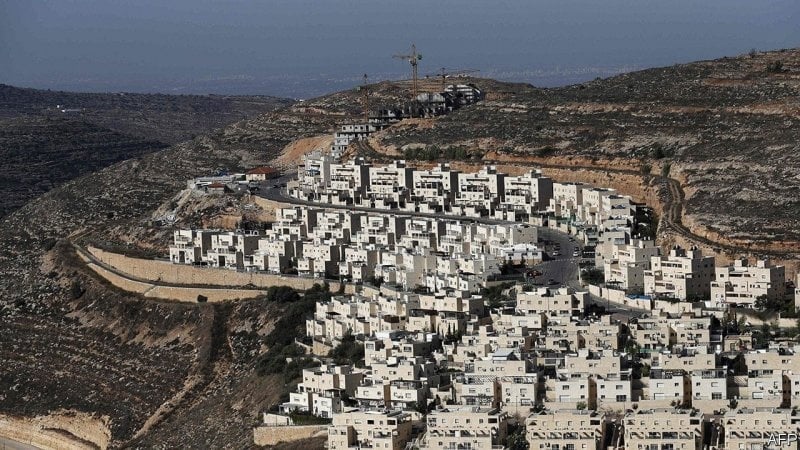
Factual, attribution-heavy coverage centers Palestinian property damage and settler violence while including Israeli official condemnation and Israeli casualty figures.
Helium Analysis
Limitations: The supplied text includes unrelated scraped headlines and duplicated fragments, so the analysis is confined to the substantive West Bank report; no byline is present.
·
8 of 56 available dimensions scored; omitted dimensions are not treated as neutral.
·
Verified supporting quotes for 8 of 8 scored dimensions.
Claim: The report maintains measured political neutrality by including Israeli official condemnation and Israeli casualty figures alongside Palestinian accounts.
“the army said, adding that it “strongly condemns” these acts” · exact text match
“Over the same period, at least 51 Israelis, including soldiers, have been killed in Palestinian attacks or during clashes in the West Bank, according to official Israeli figures.” · exact text match
Counterevidence:
““They set fire to around eight vehicles and wrote racist slogans on the walls of houses.”” · exact text match
Why: The article includes Israeli institutional condemnation and Israeli deaths, offsetting the focus on settler violence, though the activist quote adds a Palestinian perspective.
Claim: The report is predominantly objective, relying on attributed statements and data rather than first-person commentary.
“Israeli police said an investigation had been opened.” · exact text match
“Since October 2023, at least 1,119 Palestinians there have been killed by Israeli soldiers or settlers, according to an AFP tally based on data from the Palestinian health ministry.” · exact text match
Why: The text consistently attributes claims to named institutions, an activist, and data sources.
Claim: The report describes violence in measured, factual terms rather than using sensational or emotive language.
“Israeli soldiers and police were deployed to Deir as-Sudan, Deir Abu Mashaal, Kafr Malik and Al-Tuwani following reports and images showing vehicles set on fire and graffitied in the area, the army said” · exact text match
“The latest attacks come a few days after the announcement by the United Kingdom, followed by Australia, of sanctions on eight Israeli companies involved in settlement activity in the West Bank.” · exact text match
Why: The language is restrained and procedural, with no exclamatory or emotive framing.
Claim: The report is descriptive, focusing on events and official responses rather than prescribing policy or moral action.
“Israeli authorities said today they opened an investigation after Palestinian vehicles and properties were vandalised and set on fire in four occupied West Bank villages” · exact text match
“Israeli police said an investigation had been opened.” · exact text match
Why: It reports actions and statements without recommending remedies.
Claim: The subject matter is highly political, tying the attacks to the Israeli-Palestinian conflict, government formation, and international sanctions.
“Gadi Eisenkot, the rival of outgoing Prime Minister Benjamin Netanyahu who is involved in negotiations to form a government, condemned these acts on X” · exact text match
“The latest attacks come a few days after the announcement by the United Kingdom, followed by Australia, of sanctions on eight Israeli companies involved in settlement activity in the West Bank.” · exact text match
Why: The report centers on politically contested violence, governance negotiations, and state sanctions.
Claim: Credibility is high because the report clearly attributes claims to official sources, an activist, and casualty tallies from both sides.
“the army said, adding that it “strongly condemns” these acts” · exact text match
“according to an AFP tally based on data from the Palestinian health ministry” · exact text match
Why: Visible sourcing, precise attribution, and inclusion of opposing casualty figures support trustworthiness.
Claim: The report demonstrates high integrity by attributing casualty figures to both Palestinian and Israeli sources and including official Israeli condemnation.
“according to an AFP tally based on data from the Palestinian health ministry” · exact text match
“according to official Israeli figures” · exact text match
Why: Dual sourcing and clear attribution show fair, honest reporting signals.
Claim: The report provides concise historical and statistical context, indicating above-average analytical intelligence.
“Violence in the West Bank, occupied by Israel since 1967, has surged since Hamas’s October 7, 2023 attack on Israel, which triggered the Gaza war.” · exact text match
“More than 500,000 Israelis live in West Bank settlements, which are illegal under international law, alongside around three million Palestinians.” · exact text match
Why: It supplies relevant historical, demographic, and legal context without excessive detail.
The supplied text includes unrelated scraped headlines and duplicated fragments, so the analysis is confined to the substantive West Bank report; no byline is present.
November 22, 2026 · 0 shares
A largely factual, attribution-heavy account centers Palestinian victimization and settlement illegality while including Israeli official responses and casualty figures, yielding a slight liberal/pro-Palestinian framing tilt.
Helium Analysis
Limitations: The report's attack attribution depends on local activists and AFP, and the stated date '22 November 2026' is anomalous relative to the supplied timeframe; casualty figures are attributed rather than independently verified.
·
9 of 56 available dimensions scored; omitted dimensions are not treated as neutral.
·
Verified supporting quotes for 9 of 9 scored dimensions.
Claim: The report's headline and legal context frame the incident around suspected settler aggression and settlement illegality, giving a slight liberal/pro-Palestinian tilt despite including Israeli casualty data.
“Four Palestinian villages targeted in suspected settler attacks” · exact text match
“where settlements are considered illegal under international law.” · exact text match
Why: The headline names suspected settler attacks as the cause and the body states settlements are illegal under international law, a framing aligned with international-law critiques; balanced Israeli figures limit the score.
Claim: Contested attack attribution is presented through named activist and official sources rather than as the publisher's unqualified assertion.
“following overnight attacks blamed by local activists on Israeli settlers” · exact text match
“Israeli police confirmed that an investigation had been launched” · exact text match
Why: The article distinguishes activist blame from police confirmation and uses attributed language, indicating objective reporting.
Claim: Vivid details such as burned vehicles are reported factually without hyperbolic or fear-mongering language.
“Burnt-out cars, damaged trucks and anti-Arab graffiti were discovered” · exact text match
“Israeli police confirmed that an investigation had been launched” · exact text match
Why: The article uses concrete but restrained descriptions and includes official response, supporting an objective rather than sensational presentation.
Claim: The article reports events and official responses without advocating a policy remedy.
“Israeli police confirmed that an investigation had been launched” · exact text match
“The latest incidents follow new British and Australian sanctions targeting eight Israeli companies linked to settlement activity.” · exact text match
Why: The text describes investigation, condemnation, and sanctions context but does not prescribe action, making it strongly descriptive.
Claim: The report concerns a political conflict and international legal/sanctions context.
“where settlements are considered illegal under international law.” · exact text match
“The latest incidents follow new British and Australian sanctions targeting eight Israeli companies linked to settlement activity.” · exact text match
Why: The subject is the Israeli-Palestinian conflict, occupation, settlements, and sanctions, making the article highly political.
Claim: The headline and casualty paragraph foreground Palestinian villages as targets and Palestinian deaths, though the report also notes Israeli deaths.
“Four Palestinian villages targeted in suspected settler attacks” · exact text match
“at least 1,119 Palestinians have been killed by Israeli forces or settlers in the West Bank since then.” · exact text match
Why: The framing centers Palestinian victimization, but inclusion of Israeli casualties and official response limits the intensity.
Claim: The report names sources, distinguishes activist blame from police confirmation, and provides casualty figures from both Palestinian and Israeli official sources.
“Local activist Jihad al-Qaq told AFP that settlers had entered the outskirts of Kafr Malik at around 2 am, setting fire to approximately eight vehicles and leaving racist messages on houses.” · exact text match
“Israeli police confirmed that an investigation had been launched” · exact text match
“Official Israeli figures indicate that at least 51 Israelis, including soldiers, have been killed in Palestinian attacks or clashes over the same period.” · exact text match
Why: Multiple named and institutional attributions plus balanced casualty sourcing support high internal credibility, though the report remains dependent on supplied figures.
Claim: The report relies on attributed tallies and official statements rather than emotional assertion or speculation.
“According to an AFP tally based on Palestinian health ministry figures” · exact text match
“Official Israeli figures indicate that at least 51 Israelis, including soldiers, have been killed in Palestinian attacks or clashes over the same period.” · exact text match
Why: Both casualty claims are explicitly sourced, supporting a rational/evidence-bound classification.
Claim: The report includes official Israeli responses and casualty figures alongside Palestinian claims, showing internal fairness signals.
“Israeli police confirmed that an investigation had been launched, while the military said soldiers and officers had been deployed to four affected villages and condemned the attacks.” · exact text match
“Official Israeli figures indicate that at least 51 Israelis, including soldiers, have been killed in Palestinian attacks or clashes over the same period.” · exact text match
Why: Inclusion of Israeli official statements and Israeli casualties qualifies the Palestinian-focused framing and supports a positive integrity score.
The report's attack attribution depends on local activists and AFP, and the stated date '22 November 2026' is anomalous relative to the supplied timeframe; casualty figures are attributed rather than independently verified.
November 22, 2026 · 0 shares
The report adopts a strongly critical, pro-Palestinian framing of Israeli settler violence, using loaded terms such as 'genocidal war' while relying heavily on Palestinian sources and including limited Israeli official responses.
The West Bank has been under Israeli military occupation since 1967, and Israeli settlement expansion there is a longstanding point of conflict between Israelis and Palestinians.
Helium Analysis
Limitations: The supplied text is partially duplicated and truncated and includes unrelated headlines, limiting confidence in the full article's framing.
·
56 of 56 available dimensions scored; omitted dimensions are not treated as neutral.
·
Verified supporting quotes for 7 of 56 scored dimensions.
Claim: The report uses the loaded term 'genocidal war' in its own voice to characterize Israel's Gaza war, a strongly critical/pro-Palestinian framing.
“Israeli settler violence has surged across the occupied West Bank since Israel launched its genocidal war against Palestinians in Gaza.” · exact text match
Why: The phrase 'genocidal war' is an evaluative, left-coded characterization that goes beyond neutral reporting and aligns with a strongly critical view of Israeli policy.
Claim: The report incorporates a subjective characterization ('genocidal') into otherwise attributed news reporting.
“Israeli settler violence has surged across the occupied West Bank since Israel launched its genocidal war against Palestinians in Gaza.” · exact text match
Why: The publisher's own use of 'genocidal' is evaluative rather than a neutral description, increasing subjectivity.
Claim: The report uses inflammatory language ('genocidal war') that heightens the sensational tone of the coverage.
“Israeli settler violence has surged across the occupied West Bank since Israel launched its genocidal war against Palestinians in Gaza.” · exact text match
Why: 'Genocidal' is a highly charged term that amplifies the seriousness and emotional impact of the report.
Claim: The report is framed around a political conflict and includes Israeli coalition politics and official responses.
“Gadi Eisenkot, leader of the Yashar Party, who has been tasked with forming a new government after Israel’s general election last month, criticised the latest attacks on Sunday.” · exact text match
Why: The article centers on West Bank violence and incorporates Israeli party politics, government formation, and official statements.
Claim: The report integrates an ideological characterization of the Gaza war as 'genocidal' into its factual account.
“Israeli settler violence has surged across the occupied West Bank since Israel launched its genocidal war against Palestinians in Gaza.” · exact text match
Why: The term 'genocidal' is a contested ideological framing rather than a neutral factual description.
Claim: The report includes attributed statistics and official responses but also uses an unsupported 'genocidal' characterization and relies on Palestinian sources for attack counts.
“The Palestinian Wall and Settlement Resistance Commission said there was a significant increase in the number of attacks throughout the Palestinian territory last month.” · exact text match
“Israeli settler violence has surged across the occupied West Bank since Israel launched its genocidal war against Palestinians in Gaza.” · exact text match
Why: Named sourcing and inclusion of Israeli responses support credibility, while the loaded and unattributed 'genocidal' term reduces it.
Claim: The report uses loaded framing ('genocidal war') that may manipulate reader perception by presenting a contested characterization as fact.
“Israeli settler violence has surged across the occupied West Bank since Israel launched its genocidal war against Palestinians in Gaza.” · exact text match
Why: Using a highly charged term without attribution or qualification is an observable loaded-framing technique.
The supplied text is partially duplicated and truncated and includes unrelated headlines, limiting confidence in the full article's framing.
November 22, 2026 · 0 shares
Coverage frames the events through a critical, victim-focused lens that highlights Palestinian casualties and settler aggression while relying on Palestinian sources and an Israeli opposition condemnation.
The West Bank has been under Israeli military occupation since 1967, and Israeli settlement expansion there is a long-running source of conflict with Palestinians.
Helium Analysis
Limitations: Short report; casualty and attack figures are attributed to Palestinian sources and no Israeli government or military response is included, limiting balance and verification assessment.
·
12 of 56 available dimensions scored; omitted dimensions are not treated as neutral.
·
Verified supporting quotes for 12 of 12 scored dimensions.
Claim: The report frames Israeli settler violence critically, highlighting Palestinian casualties and blaming far-right ministers.
“The attacks come amid a sharp escalation in Israeli settler violence across the occupied West Bank.” · exact text match
“Israeli opposition leader Gadi Eisenkot condemned the latest attacks as "Jewish terrorism", blaming far-right ministers Itamar Ben-Gvir and Bezalel Smotrich for encouraging the violence.” · exact text match
Why: Critical focus on settlers/far-right and Palestinian victims aligns with left-leaning framing, though attribution and factual reporting limit certainty.
Claim: The report is predominantly descriptive and attributed, though it uses evaluative terms.
“The Palestinian Authority's Wall and Settlement Resistance Commission recorded 1,369 attacks by settlers in October, more than double the 647 recorded in September.” · exact text match
“At least 1,222 Palestinians, including 255 children, have been killed in the occupied West Bank since October 2023, according to Palestinian figures.” · exact text match
Counterevidence:
“The attacks come amid a sharp escalation in Israeli settler violence across the occupied West Bank.” · exact text match
Why: Attribution and factual detail dominate, but 'sharp escalation' and 'racist slogans' add subjectivity.
Claim: The report is mostly measured but includes emotive casualty and terrorism language.
“At least 1,222 Palestinians, including 255 children, have been killed in the occupied West Bank since October 2023, according to Palestinian figures.” · exact text match
“Israeli opposition leader Gadi Eisenkot condemned the latest attacks as "Jewish terrorism", blaming far-right ministers Itamar Ben-Gvir and Bezalel Smotrich for encouraging the violence.” · exact text match
Why: Child casualty detail and the 'Jewish terrorism' quotation add a sensational edge, though data and attribution temper it.
Claim: The report emphasizes Palestinian casualties and condemnation of settler violence, leaning dovish.
“At least 1,222 Palestinians, including 255 children, have been killed in the occupied West Bank since October 2023, according to Palestinian figures.” · exact text match
“Israeli opposition leader Gadi Eisenkot condemned the latest attacks as "Jewish terrorism", blaming far-right ministers Itamar Ben-Gvir and Bezalel Smotrich for encouraging the violence.” · exact text match
Why: Focus on victims and condemnation of violence leans dovish, but no direct policy debate is included.
Claim: The report includes evaluative framing and a quoted political condemnation beyond neutral event description.
“Israeli opposition leader Gadi Eisenkot condemned the latest attacks as "Jewish terrorism", blaming far-right ministers Itamar Ben-Gvir and Bezalel Smotrich for encouraging the violence.” · exact text match
Why: The quoted blame and 'terrorism' label introduce opinion, though attributed.
Claim: The report centers a political conflict and includes explicit partisan blame.
“Israeli opposition leader Gadi Eisenkot condemned the latest attacks as "Jewish terrorism", blaming far-right ministers Itamar Ben-Gvir and Bezalel Smotrich for encouraging the violence.” · exact text match
Why: The subject and sourcing are explicitly political.
Claim: The only casualty toll provided is Palestinian, with emphasis on children, centering victimhood.
“At least 1,222 Palestinians, including 255 children, have been killed in the occupied West Bank since October 2023, according to Palestinian figures.” · exact text match
Why: The selective casualty detail produces a victim-focused frame, though it is attributed data.
Claim: The report advances a critical view of Israeli settler violence and far-right ministers.
“The attacks come amid a sharp escalation in Israeli settler violence across the occupied West Bank.” · exact text match
“Israeli opposition leader Gadi Eisenkot condemned the latest attacks as "Jewish terrorism", blaming far-right ministers Itamar Ben-Gvir and Bezalel Smotrich for encouraging the violence.” · exact text match
Why: Selection and wording emphasize settler aggression and political blame, indicating an ideological slant.
Claim: The report's tone is negative and grievance-focused due to casualty and terrorism language.
“At least 1,222 Palestinians, including 255 children, have been killed in the occupied West Bank since October 2023, according to Palestinian figures.” · exact text match
“Israeli opposition leader Gadi Eisenkot condemned the latest attacks as "Jewish terrorism", blaming far-right ministers Itamar Ben-Gvir and Bezalel Smotrich for encouraging the violence.” · exact text match
Why: Negative valence is notable but attached to factual reporting.
Claim: The report attributes contested figures and quotes a named Israeli political source.
“The Palestinian Authority's Wall and Settlement Resistance Commission recorded 1,369 attacks by settlers in October, more than double the 647 recorded in September.” · exact text match
“Israeli opposition leader Gadi Eisenkot condemned the latest attacks as "Jewish terrorism", blaming far-right ministers Itamar Ben-Gvir and Bezalel Smotrich for encouraging the violence.” · exact text match
Why: Attribution and direct quotation support credibility, though only one side's figures and no Israeli government response are included.
Claim: The report relies on attributed numerical data and direct quotation rather than speculative reasoning.
“The Palestinian Authority's Wall and Settlement Resistance Commission recorded 1,369 attacks by settlers in October, more than double the 647 recorded in September.” · exact text match
“At least 1,222 Palestinians, including 255 children, have been killed in the occupied West Bank since October 2023, according to Palestinian figures.” · exact text match
Why: Attribution and numerical detail support a rational/empirical presentation, though limited sourcing prevents a stronger score.
Claim: Loaded wording and selective sourcing frame the events without an Israeli official response.
“The attacks come amid a sharp escalation in Israeli settler violence across the occupied West Bank.” · exact text match
“Israeli opposition leader Gadi Eisenkot condemned the latest attacks as "Jewish terrorism", blaming far-right ministers Itamar Ben-Gvir and Bezalel Smotrich for encouraging the violence.” · exact text match
Why: Loaded terms and one-sided selection are observable, but not deceptive urgency or false dichotomy.
Short report; casualty and attack figures are attributed to Palestinian sources and no Israeli government or military response is included, limiting balance and verification assessment.
Factual, attribution-heavy coverage centers Palestinian property damage and settler violence while including Israeli official condemnation and Israeli casualty figures.
Helium Analysis
Limitations: The supplied text includes unrelated scraped headlines and duplicated fragments, so the analysis is confined to the substantive West Bank report; no byline is present.
·
8 of 56 available dimensions scored; omitted dimensions are not treated as neutral.
·
Verified supporting quotes for 8 of 8 scored dimensions.
Claim: The report maintains measured political neutrality by including Israeli official condemnation and Israeli casualty figures alongside Palestinian accounts.
“the army said, adding that it “strongly condemns” these acts” · exact text match
“Over the same period, at least 51 Israelis, including soldiers, have been killed in Palestinian attacks or during clashes in the West Bank, according to official Israeli figures.” · exact text match
Counterevidence:
““They set fire to around eight vehicles and wrote racist slogans on the walls of houses.”” · exact text match
Why: The article includes Israeli institutional condemnation and Israeli deaths, offsetting the focus on settler violence, though the activist quote adds a Palestinian perspective.
Claim: The report is predominantly objective, relying on attributed statements and data rather than first-person commentary.
“Israeli police said an investigation had been opened.” · exact text match
“Since October 2023, at least 1,119 Palestinians there have been killed by Israeli soldiers or settlers, according to an AFP tally based on data from the Palestinian health ministry.” · exact text match
Why: The text consistently attributes claims to named institutions, an activist, and data sources.
Claim: The report describes violence in measured, factual terms rather than using sensational or emotive language.
“Israeli soldiers and police were deployed to Deir as-Sudan, Deir Abu Mashaal, Kafr Malik and Al-Tuwani following reports and images showing vehicles set on fire and graffitied in the area, the army said” · exact text match
“The latest attacks come a few days after the announcement by the United Kingdom, followed by Australia, of sanctions on eight Israeli companies involved in settlement activity in the West Bank.” · exact text match
Why: The language is restrained and procedural, with no exclamatory or emotive framing.
Claim: The report is descriptive, focusing on events and official responses rather than prescribing policy or moral action.
“Israeli authorities said today they opened an investigation after Palestinian vehicles and properties were vandalised and set on fire in four occupied West Bank villages” · exact text match
“Israeli police said an investigation had been opened.” · exact text match
Why: It reports actions and statements without recommending remedies.
Claim: The subject matter is highly political, tying the attacks to the Israeli-Palestinian conflict, government formation, and international sanctions.
“Gadi Eisenkot, the rival of outgoing Prime Minister Benjamin Netanyahu who is involved in negotiations to form a government, condemned these acts on X” · exact text match
“The latest attacks come a few days after the announcement by the United Kingdom, followed by Australia, of sanctions on eight Israeli companies involved in settlement activity in the West Bank.” · exact text match
Why: The report centers on politically contested violence, governance negotiations, and state sanctions.
Claim: Credibility is high because the report clearly attributes claims to official sources, an activist, and casualty tallies from both sides.
“the army said, adding that it “strongly condemns” these acts” · exact text match
“according to an AFP tally based on data from the Palestinian health ministry” · exact text match
Why: Visible sourcing, precise attribution, and inclusion of opposing casualty figures support trustworthiness.
Claim: The report demonstrates high integrity by attributing casualty figures to both Palestinian and Israeli sources and including official Israeli condemnation.
“according to an AFP tally based on data from the Palestinian health ministry” · exact text match
“according to official Israeli figures” · exact text match
Why: Dual sourcing and clear attribution show fair, honest reporting signals.
Claim: The report provides concise historical and statistical context, indicating above-average analytical intelligence.
“Violence in the West Bank, occupied by Israel since 1967, has surged since Hamas’s October 7, 2023 attack on Israel, which triggered the Gaza war.” · exact text match
“More than 500,000 Israelis live in West Bank settlements, which are illegal under international law, alongside around three million Palestinians.” · exact text match
Why: It supplies relevant historical, demographic, and legal context without excessive detail.
The supplied text includes unrelated scraped headlines and duplicated fragments, so the analysis is confined to the substantive West Bank report; no byline is present.
November 22, 2026 · 0 shares
A largely factual, attribution-heavy account centers Palestinian victimization and settlement illegality while including Israeli official responses and casualty figures, yielding a slight liberal/pro-Palestinian framing tilt.
Helium Analysis
Limitations: The report's attack attribution depends on local activists and AFP, and the stated date '22 November 2026' is anomalous relative to the supplied timeframe; casualty figures are attributed rather than independently verified.
·
9 of 56 available dimensions scored; omitted dimensions are not treated as neutral.
·
Verified supporting quotes for 9 of 9 scored dimensions.
Claim: The report's headline and legal context frame the incident around suspected settler aggression and settlement illegality, giving a slight liberal/pro-Palestinian tilt despite including Israeli casualty data.
“Four Palestinian villages targeted in suspected settler attacks” · exact text match
“where settlements are considered illegal under international law.” · exact text match
Why: The headline names suspected settler attacks as the cause and the body states settlements are illegal under international law, a framing aligned with international-law critiques; balanced Israeli figures limit the score.
Claim: Contested attack attribution is presented through named activist and official sources rather than as the publisher's unqualified assertion.
“following overnight attacks blamed by local activists on Israeli settlers” · exact text match
“Israeli police confirmed that an investigation had been launched” · exact text match
Why: The article distinguishes activist blame from police confirmation and uses attributed language, indicating objective reporting.
Claim: Vivid details such as burned vehicles are reported factually without hyperbolic or fear-mongering language.
“Burnt-out cars, damaged trucks and anti-Arab graffiti were discovered” · exact text match
“Israeli police confirmed that an investigation had been launched” · exact text match
Why: The article uses concrete but restrained descriptions and includes official response, supporting an objective rather than sensational presentation.
Claim: The article reports events and official responses without advocating a policy remedy.
“Israeli police confirmed that an investigation had been launched” · exact text match
“The latest incidents follow new British and Australian sanctions targeting eight Israeli companies linked to settlement activity.” · exact text match
Why: The text describes investigation, condemnation, and sanctions context but does not prescribe action, making it strongly descriptive.
Claim: The report concerns a political conflict and international legal/sanctions context.
“where settlements are considered illegal under international law.” · exact text match
“The latest incidents follow new British and Australian sanctions targeting eight Israeli companies linked to settlement activity.” · exact text match
Why: The subject is the Israeli-Palestinian conflict, occupation, settlements, and sanctions, making the article highly political.
Claim: The headline and casualty paragraph foreground Palestinian villages as targets and Palestinian deaths, though the report also notes Israeli deaths.
“Four Palestinian villages targeted in suspected settler attacks” · exact text match
“at least 1,119 Palestinians have been killed by Israeli forces or settlers in the West Bank since then.” · exact text match
Why: The framing centers Palestinian victimization, but inclusion of Israeli casualties and official response limits the intensity.
Claim: The report names sources, distinguishes activist blame from police confirmation, and provides casualty figures from both Palestinian and Israeli official sources.
“Local activist Jihad al-Qaq told AFP that settlers had entered the outskirts of Kafr Malik at around 2 am, setting fire to approximately eight vehicles and leaving racist messages on houses.” · exact text match
“Israeli police confirmed that an investigation had been launched” · exact text match
“Official Israeli figures indicate that at least 51 Israelis, including soldiers, have been killed in Palestinian attacks or clashes over the same period.” · exact text match
Why: Multiple named and institutional attributions plus balanced casualty sourcing support high internal credibility, though the report remains dependent on supplied figures.
Claim: The report relies on attributed tallies and official statements rather than emotional assertion or speculation.
“According to an AFP tally based on Palestinian health ministry figures” · exact text match
“Official Israeli figures indicate that at least 51 Israelis, including soldiers, have been killed in Palestinian attacks or clashes over the same period.” · exact text match
Why: Both casualty claims are explicitly sourced, supporting a rational/evidence-bound classification.
Claim: The report includes official Israeli responses and casualty figures alongside Palestinian claims, showing internal fairness signals.
“Israeli police confirmed that an investigation had been launched, while the military said soldiers and officers had been deployed to four affected villages and condemned the attacks.” · exact text match
“Official Israeli figures indicate that at least 51 Israelis, including soldiers, have been killed in Palestinian attacks or clashes over the same period.” · exact text match
Why: Inclusion of Israeli official statements and Israeli casualties qualifies the Palestinian-focused framing and supports a positive integrity score.
The report's attack attribution depends on local activists and AFP, and the stated date '22 November 2026' is anomalous relative to the supplied timeframe; casualty figures are attributed rather than independently verified.
Factual, attribution-heavy coverage centers Palestinian property damage and settler violence while including Israeli official condemnation and Israeli casualty figures.
Helium Analysis
Limitations: The supplied text includes unrelated scraped headlines and duplicated fragments, so the analysis is confined to the substantive West Bank report; no byline is present.
·
8 of 56 available dimensions scored; omitted dimensions are not treated as neutral.
·
Verified supporting quotes for 8 of 8 scored dimensions.
Claim: The report maintains measured political neutrality by including Israeli official condemnation and Israeli casualty figures alongside Palestinian accounts.
“the army said, adding that it “strongly condemns” these acts” · exact text match
“Over the same period, at least 51 Israelis, including soldiers, have been killed in Palestinian attacks or during clashes in the West Bank, according to official Israeli figures.” · exact text match
Counterevidence:
““They set fire to around eight vehicles and wrote racist slogans on the walls of houses.”” · exact text match
Why: The article includes Israeli institutional condemnation and Israeli deaths, offsetting the focus on settler violence, though the activist quote adds a Palestinian perspective.
Claim: The report is predominantly objective, relying on attributed statements and data rather than first-person commentary.
“Israeli police said an investigation had been opened.” · exact text match
“Since October 2023, at least 1,119 Palestinians there have been killed by Israeli soldiers or settlers, according to an AFP tally based on data from the Palestinian health ministry.” · exact text match
Why: The text consistently attributes claims to named institutions, an activist, and data sources.
Claim: The report describes violence in measured, factual terms rather than using sensational or emotive language.
“Israeli soldiers and police were deployed to Deir as-Sudan, Deir Abu Mashaal, Kafr Malik and Al-Tuwani following reports and images showing vehicles set on fire and graffitied in the area, the army said” · exact text match
“The latest attacks come a few days after the announcement by the United Kingdom, followed by Australia, of sanctions on eight Israeli companies involved in settlement activity in the West Bank.” · exact text match
Why: The language is restrained and procedural, with no exclamatory or emotive framing.
Claim: The report is descriptive, focusing on events and official responses rather than prescribing policy or moral action.
“Israeli authorities said today they opened an investigation after Palestinian vehicles and properties were vandalised and set on fire in four occupied West Bank villages” · exact text match
“Israeli police said an investigation had been opened.” · exact text match
Why: It reports actions and statements without recommending remedies.
Claim: The subject matter is highly political, tying the attacks to the Israeli-Palestinian conflict, government formation, and international sanctions.
“Gadi Eisenkot, the rival of outgoing Prime Minister Benjamin Netanyahu who is involved in negotiations to form a government, condemned these acts on X” · exact text match
“The latest attacks come a few days after the announcement by the United Kingdom, followed by Australia, of sanctions on eight Israeli companies involved in settlement activity in the West Bank.” · exact text match
Why: The report centers on politically contested violence, governance negotiations, and state sanctions.
Claim: Credibility is high because the report clearly attributes claims to official sources, an activist, and casualty tallies from both sides.
“the army said, adding that it “strongly condemns” these acts” · exact text match
“according to an AFP tally based on data from the Palestinian health ministry” · exact text match
Why: Visible sourcing, precise attribution, and inclusion of opposing casualty figures support trustworthiness.
Claim: The report demonstrates high integrity by attributing casualty figures to both Palestinian and Israeli sources and including official Israeli condemnation.
“according to an AFP tally based on data from the Palestinian health ministry” · exact text match
“according to official Israeli figures” · exact text match
Why: Dual sourcing and clear attribution show fair, honest reporting signals.
Claim: The report provides concise historical and statistical context, indicating above-average analytical intelligence.
“Violence in the West Bank, occupied by Israel since 1967, has surged since Hamas’s October 7, 2023 attack on Israel, which triggered the Gaza war.” · exact text match
“More than 500,000 Israelis live in West Bank settlements, which are illegal under international law, alongside around three million Palestinians.” · exact text match
Why: It supplies relevant historical, demographic, and legal context without excessive detail.
The supplied text includes unrelated scraped headlines and duplicated fragments, so the analysis is confined to the substantive West Bank report; no byline is present.
November 23, 2026 · 0 shares
Attributed wire reporting frames the settler arson as a security and governance crisis through official Israeli condemnations, police/military responses, and Palestinian residents' accounts, while retaining some charged descriptors such as “militant settlers” and the quoted “Jewish terrorism”.
Helium Analysis
Limitations: The supplied text lacks an exact publication date and gives the attack date only as 'Sunday', limiting temporal verification.
·
8 of 56 available dimensions scored; omitted dimensions are not treated as neutral.
·
Verified supporting quotes for 8 of 8 scored dimensions.
Claim: The report is primarily descriptive and attributes statements to named actors instead of presenting unauthored subjective judgments.
“residents said” · exact text match
“Mr. Eisenkot called the attacks “Jewish terrorism”” · exact text match
Why: Use of attribution and quoted characterization supports an objective framing.
Claim: The report avoids sensational escalation by noting no injuries and no immediate claim of responsibility while attributing strong language to officials.
“No one immediately claimed responsibility and no injuries were reported.” · exact text match
“Mr. Eisenkot called the attacks “Jewish terrorism”” · exact text match
Why: The inclusion of caveats and attributed language supports an objective rather than sensational presentation.
Claim: The report describes actors, statements, and official actions without prescribing policy outcomes.
“Israeli police said they opened an investigation into the attacks” · exact text match
“Mr. Netanyahu has not yet commented” · exact text match
Why: The text reports actions and statements rather than advocating a course of action.
Claim: The report is substantially political, centered on government formation, elections, and partisan responses to the attacks.
“Opposition leader Gadi Eisenkot has been asked to form a government” · exact text match
“after the election on October 27 stripped Mr. Netanyahu of his majority” · exact text match
Why: The content is dominated by electoral and governmental politics.
Claim: The report demonstrates credibility through named attribution, on-record official statements, and explicit uncertainty about responsibility.
“No one immediately claimed responsibility and no injuries were reported.” · exact text match
“Israeli police said they opened an investigation into the attacks” · exact text match
Why: Sourcing, attribution, and caveats support a high credibility assessment.
Claim: The report attributes contested claims and records the absence of responsibility or injury, reflecting rational evidentiary caution rather than irrationality.
“No one immediately claimed responsibility and no injuries were reported.” · exact text match
“Israeli police said they opened an investigation into the attacks” · exact text match
Why: Explicit attribution and uncertainty markers support a rational classification.
Claim: The report shows high internal fairness by attributing claims, noting no responsibility claim, and including both Israeli and Palestinian political responses.
“No one immediately claimed responsibility and no injuries were reported.” · exact text match
“Yousef Jabareen, head of the Joint List, the largest Arab party in Israel’s parliament, said the attacks were “the direct result of the deepening occupation” · exact text match
Why: Multiple named and attributed perspectives plus explicit uncertainty support high integrity.
Claim: The report supplies electoral context, legal dispute, and multiple actor responses, reflecting high informational intelligence.
“Opposition leader Gadi Eisenkot has been asked to form a government, though his prospects seem little better.” · exact text match
“UN bodies and most countries of the world deny the legality of the settlements, which make the prospect of an independent Palestinian state ever more remote, a position Israel disputes.” · exact text match
Why: Layered context and multiple perspectives support an intelligent classification.
The supplied text lacks an exact publication date and gives the attack date only as 'Sunday', limiting temporal verification.
November 22, 2026 · 0 shares
A largely factual, attribution-heavy account centers Palestinian victimization and settlement illegality while including Israeli official responses and casualty figures, yielding a slight liberal/pro-Palestinian framing tilt.
Helium Analysis
Limitations: The report's attack attribution depends on local activists and AFP, and the stated date '22 November 2026' is anomalous relative to the supplied timeframe; casualty figures are attributed rather than independently verified.
·
9 of 56 available dimensions scored; omitted dimensions are not treated as neutral.
·
Verified supporting quotes for 9 of 9 scored dimensions.
Claim: The report's headline and legal context frame the incident around suspected settler aggression and settlement illegality, giving a slight liberal/pro-Palestinian tilt despite including Israeli casualty data.
“Four Palestinian villages targeted in suspected settler attacks” · exact text match
“where settlements are considered illegal under international law.” · exact text match
Why: The headline names suspected settler attacks as the cause and the body states settlements are illegal under international law, a framing aligned with international-law critiques; balanced Israeli figures limit the score.
Claim: Contested attack attribution is presented through named activist and official sources rather than as the publisher's unqualified assertion.
“following overnight attacks blamed by local activists on Israeli settlers” · exact text match
“Israeli police confirmed that an investigation had been launched” · exact text match
Why: The article distinguishes activist blame from police confirmation and uses attributed language, indicating objective reporting.
Claim: Vivid details such as burned vehicles are reported factually without hyperbolic or fear-mongering language.
“Burnt-out cars, damaged trucks and anti-Arab graffiti were discovered” · exact text match
“Israeli police confirmed that an investigation had been launched” · exact text match
Why: The article uses concrete but restrained descriptions and includes official response, supporting an objective rather than sensational presentation.
Claim: The article reports events and official responses without advocating a policy remedy.
“Israeli police confirmed that an investigation had been launched” · exact text match
“The latest incidents follow new British and Australian sanctions targeting eight Israeli companies linked to settlement activity.” · exact text match
Why: The text describes investigation, condemnation, and sanctions context but does not prescribe action, making it strongly descriptive.
Claim: The report concerns a political conflict and international legal/sanctions context.
“where settlements are considered illegal under international law.” · exact text match
“The latest incidents follow new British and Australian sanctions targeting eight Israeli companies linked to settlement activity.” · exact text match
Why: The subject is the Israeli-Palestinian conflict, occupation, settlements, and sanctions, making the article highly political.
Claim: The headline and casualty paragraph foreground Palestinian villages as targets and Palestinian deaths, though the report also notes Israeli deaths.
“Four Palestinian villages targeted in suspected settler attacks” · exact text match
“at least 1,119 Palestinians have been killed by Israeli forces or settlers in the West Bank since then.” · exact text match
Why: The framing centers Palestinian victimization, but inclusion of Israeli casualties and official response limits the intensity.
Claim: The report names sources, distinguishes activist blame from police confirmation, and provides casualty figures from both Palestinian and Israeli official sources.
“Local activist Jihad al-Qaq told AFP that settlers had entered the outskirts of Kafr Malik at around 2 am, setting fire to approximately eight vehicles and leaving racist messages on houses.” · exact text match
“Israeli police confirmed that an investigation had been launched” · exact text match
“Official Israeli figures indicate that at least 51 Israelis, including soldiers, have been killed in Palestinian attacks or clashes over the same period.” · exact text match
Why: Multiple named and institutional attributions plus balanced casualty sourcing support high internal credibility, though the report remains dependent on supplied figures.
Claim: The report relies on attributed tallies and official statements rather than emotional assertion or speculation.
“According to an AFP tally based on Palestinian health ministry figures” · exact text match
“Official Israeli figures indicate that at least 51 Israelis, including soldiers, have been killed in Palestinian attacks or clashes over the same period.” · exact text match
Why: Both casualty claims are explicitly sourced, supporting a rational/evidence-bound classification.
Claim: The report includes official Israeli responses and casualty figures alongside Palestinian claims, showing internal fairness signals.
“Israeli police confirmed that an investigation had been launched, while the military said soldiers and officers had been deployed to four affected villages and condemned the attacks.” · exact text match
“Official Israeli figures indicate that at least 51 Israelis, including soldiers, have been killed in Palestinian attacks or clashes over the same period.” · exact text match
Why: Inclusion of Israeli official statements and Israeli casualties qualifies the Palestinian-focused framing and supports a positive integrity score.
The report's attack attribution depends on local activists and AFP, and the stated date '22 November 2026' is anomalous relative to the supplied timeframe; casualty figures are attributed rather than independently verified.
November 23, 2026 · 0 shares
Attributed wire reporting frames the settler arson as a security and governance crisis through official Israeli condemnations, police/military responses, and Palestinian residents' accounts, while retaining some charged descriptors such as “militant settlers” and the quoted “Jewish terrorism”.
Helium Analysis
Limitations: The supplied text lacks an exact publication date and gives the attack date only as 'Sunday', limiting temporal verification.
·
8 of 56 available dimensions scored; omitted dimensions are not treated as neutral.
·
Verified supporting quotes for 8 of 8 scored dimensions.
Claim: The report is primarily descriptive and attributes statements to named actors instead of presenting unauthored subjective judgments.
“residents said” · exact text match
“Mr. Eisenkot called the attacks “Jewish terrorism”” · exact text match
Why: Use of attribution and quoted characterization supports an objective framing.
Claim: The report avoids sensational escalation by noting no injuries and no immediate claim of responsibility while attributing strong language to officials.
“No one immediately claimed responsibility and no injuries were reported.” · exact text match
“Mr. Eisenkot called the attacks “Jewish terrorism”” · exact text match
Why: The inclusion of caveats and attributed language supports an objective rather than sensational presentation.
Claim: The report describes actors, statements, and official actions without prescribing policy outcomes.
“Israeli police said they opened an investigation into the attacks” · exact text match
“Mr. Netanyahu has not yet commented” · exact text match
Why: The text reports actions and statements rather than advocating a course of action.
Claim: The report is substantially political, centered on government formation, elections, and partisan responses to the attacks.
“Opposition leader Gadi Eisenkot has been asked to form a government” · exact text match
“after the election on October 27 stripped Mr. Netanyahu of his majority” · exact text match
Why: The content is dominated by electoral and governmental politics.
Claim: The report demonstrates credibility through named attribution, on-record official statements, and explicit uncertainty about responsibility.
“No one immediately claimed responsibility and no injuries were reported.” · exact text match
“Israeli police said they opened an investigation into the attacks” · exact text match
Why: Sourcing, attribution, and caveats support a high credibility assessment.
Claim: The report attributes contested claims and records the absence of responsibility or injury, reflecting rational evidentiary caution rather than irrationality.
“No one immediately claimed responsibility and no injuries were reported.” · exact text match
“Israeli police said they opened an investigation into the attacks” · exact text match
Why: Explicit attribution and uncertainty markers support a rational classification.
Claim: The report shows high internal fairness by attributing claims, noting no responsibility claim, and including both Israeli and Palestinian political responses.
“No one immediately claimed responsibility and no injuries were reported.” · exact text match
“Yousef Jabareen, head of the Joint List, the largest Arab party in Israel’s parliament, said the attacks were “the direct result of the deepening occupation” · exact text match
Why: Multiple named and attributed perspectives plus explicit uncertainty support high integrity.
Claim: The report supplies electoral context, legal dispute, and multiple actor responses, reflecting high informational intelligence.
“Opposition leader Gadi Eisenkot has been asked to form a government, though his prospects seem little better.” · exact text match
“UN bodies and most countries of the world deny the legality of the settlements, which make the prospect of an independent Palestinian state ever more remote, a position Israel disputes.” · exact text match
Why: Layered context and multiple perspectives support an intelligent classification.
The supplied text lacks an exact publication date and gives the attack date only as 'Sunday', limiting temporal verification.
November 22, 2026 · 0 shares
The report adopts a strongly critical, pro-Palestinian framing of Israeli settler violence, using loaded terms such as 'genocidal war' while relying heavily on Palestinian sources and including limited Israeli official responses.
The West Bank has been under Israeli military occupation since 1967, and Israeli settlement expansion there is a longstanding point of conflict between Israelis and Palestinians.
Helium Analysis
Limitations: The supplied text is partially duplicated and truncated and includes unrelated headlines, limiting confidence in the full article's framing.
·
56 of 56 available dimensions scored; omitted dimensions are not treated as neutral.
·
Verified supporting quotes for 7 of 56 scored dimensions.
Claim: The report uses the loaded term 'genocidal war' in its own voice to characterize Israel's Gaza war, a strongly critical/pro-Palestinian framing.
“Israeli settler violence has surged across the occupied West Bank since Israel launched its genocidal war against Palestinians in Gaza.” · exact text match
Why: The phrase 'genocidal war' is an evaluative, left-coded characterization that goes beyond neutral reporting and aligns with a strongly critical view of Israeli policy.
Claim: The report incorporates a subjective characterization ('genocidal') into otherwise attributed news reporting.
“Israeli settler violence has surged across the occupied West Bank since Israel launched its genocidal war against Palestinians in Gaza.” · exact text match
Why: The publisher's own use of 'genocidal' is evaluative rather than a neutral description, increasing subjectivity.
Claim: The report uses inflammatory language ('genocidal war') that heightens the sensational tone of the coverage.
“Israeli settler violence has surged across the occupied West Bank since Israel launched its genocidal war against Palestinians in Gaza.” · exact text match
Why: 'Genocidal' is a highly charged term that amplifies the seriousness and emotional impact of the report.
Claim: The report is framed around a political conflict and includes Israeli coalition politics and official responses.
“Gadi Eisenkot, leader of the Yashar Party, who has been tasked with forming a new government after Israel’s general election last month, criticised the latest attacks on Sunday.” · exact text match
Why: The article centers on West Bank violence and incorporates Israeli party politics, government formation, and official statements.
Claim: The report integrates an ideological characterization of the Gaza war as 'genocidal' into its factual account.
“Israeli settler violence has surged across the occupied West Bank since Israel launched its genocidal war against Palestinians in Gaza.” · exact text match
Why: The term 'genocidal' is a contested ideological framing rather than a neutral factual description.
Claim: The report includes attributed statistics and official responses but also uses an unsupported 'genocidal' characterization and relies on Palestinian sources for attack counts.
“The Palestinian Wall and Settlement Resistance Commission said there was a significant increase in the number of attacks throughout the Palestinian territory last month.” · exact text match
“Israeli settler violence has surged across the occupied West Bank since Israel launched its genocidal war against Palestinians in Gaza.” · exact text match
Why: Named sourcing and inclusion of Israeli responses support credibility, while the loaded and unattributed 'genocidal' term reduces it.
Claim: The report uses loaded framing ('genocidal war') that may manipulate reader perception by presenting a contested characterization as fact.
“Israeli settler violence has surged across the occupied West Bank since Israel launched its genocidal war against Palestinians in Gaza.” · exact text match
Why: Using a highly charged term without attribution or qualification is an observable loaded-framing technique.
The supplied text is partially duplicated and truncated and includes unrelated headlines, limiting confidence in the full article's framing.
November 22, 2026 · 0 shares
Palestinian residents’ fear and damaged vehicles are foregrounded, an Israeli opposition leader’s “Jewish terrorism” condemnation is used to characterize the violence, and far-right ministers are named as blameworthy while no Israeli government or settler response appears.
The West Bank is territory occupied by Israel since 1967; Israeli settlements there are considered illegal under international law by most countries, a position Israel contests.
Helium Analysis
Limitations: No publisher name, byline, or publication date is supplied, and the text lacks an official Israeli response or independent confirmation beyond resident accounts and cited footage.
·
13 of 56 available dimensions scored; omitted dimensions are not treated as neutral.
·
Verified supporting quotes for 13 of 13 scored dimensions.
Claim: The report foregrounds Palestinian residents’ experience and labels the graffiti racist, a framing that leans left/pro-Palestinian in the Israeli-Palestinian context.
“Palestinian residents in the occupied West Bank have described how Israeli settlers set fire to vehicles and sprayed racist graffiti on homes during overnight attacks on several villages.” · exact text match
Why: Foregrounding Palestinian victimization and using 'occupied'/'racist' framing is consistent with a mild left-leaning/pro-Palestinian editorial lens.
Claim: The report is predominantly objective, grounding claims in footage and attributed testimony while retaining some subjective resident fear language.
“Footage from Deir Abu Mash’al and Kafr Malik on Sunday shows burnt-out cars and graffiti reading “Death to Arabs” and “Revenge” painted on walls.” · exact text match
Why: The use of cited footage and named testimony indicates an objective reporting style, though fear descriptions add subjectivity.
Claim: The report presents the violence in factual, restrained terms rather than sensationalized prose.
“Footage from Deir Abu Mash’al and Kafr Malik on Sunday shows burnt-out cars and graffiti reading “Death to Arabs” and “Revenge” painted on walls.” · exact text match
Why: The language describes physical evidence and quotation without hyperbolic or dramatic excess.
Claim: The report is descriptive, recounting events and attributed reactions without prescribing policy or action.
“Residents said settlers attacked their villages while families were asleep, leaving multiple vehicles destroyed.” · exact text match
Why: The text reports events and quotations rather than advocating a response.
Claim: Fear and vulnerability are foregrounded through the headline and resident account, but the report does not amplify beyond reported events.
“Palestinians describe fear after Israeli settlers attack West Bank villages.” · exact text match
“Another resident, Montaser Almalki, said the attackers came from a nearby settler outpost and warned that his family could have been caught in a fire had they not woken up.” · exact text match
Why: Fear is central to the framing but tied to reported violence and testimony rather than exaggerated alarm.
Claim: The report frames the violence politically by naming Israeli ministers and including an opposition leader’s blame attribution.
“They were condemned by Israeli opposition leader Gadi Eisenkot, who described them as “Jewish terrorism” and blamed far-right ministers Itamar Ben-Gvir and Bezalel Smotrich for encouraging the violence.” · exact text match
Why: The explicit naming of politicians and blame attribution gives the report a strong political dimension.
Claim: The account centers Palestinian residents as vulnerable victims of overnight violence, emphasizing sleeping families and destroyed vehicles.
“Residents said settlers attacked their villages while families were asleep, leaving multiple vehicles destroyed.” · exact text match
““We were sleeping and not expecting that herds of settlers will attack our homes while people are sleeping, we never expected this.” said Muneer Alkhatib, a resident of Deir Abu Mash’al.” · exact text match
Why: The selection of testimony emphasizes fear and civilian vulnerability, supporting a moderate victimization framing.
Claim: The headline states that Israeli settlers attacked West Bank villages as fact while the body attributes the attack account to residents and footage without citing an official confirmation.
“Palestinians describe fear after Israeli settlers attack West Bank villages.” · exact text match
“Residents said settlers attacked their villages while families were asleep, leaving multiple vehicles destroyed.” · exact text match
Why: The headline’s declarative certainty slightly exceeds the attributed and video-based evidence in the body.
Claim: The report carries a negative emotional valence through fear, burnt vehicles, and family vulnerability, though it remains restrained.
“Palestinians describe fear after Israeli settlers attack West Bank villages.” · exact text match
“Another resident, Montaser Almalki, said the attackers came from a nearby settler outpost and warned that his family could have been caught in a fire had they not woken up.” · exact text match
Why: Fear and near-miss harm create a negative emotional tone, but the report stays close to factual testimony.
Claim: The report provides named sources, direct quotations, and video evidence, but lacks an official Israeli response or independent confirmation of settler responsibility.
“Footage from Deir Abu Mash’al and Kafr Malik on Sunday shows burnt-out cars and graffiti reading “Death to Arabs” and “Revenge” painted on walls.” · exact text match
““We were sleeping and not expecting that herds of settlers will attack our homes while people are sleeping, we never expected this.” said Muneer Alkhatib, a resident of Deir Abu Mash’al.” · exact text match
Why: Attribution and named sources support credibility, while limited official confirmation restrains the score.
Claim: The report relies on observable footage, named residents, and attributed quotations rather than speculative assertions.
“Footage from Deir Abu Mash’al and Kafr Malik on Sunday shows burnt-out cars and graffiti reading “Death to Arabs” and “Revenge” painted on walls.” · exact text match
Why: Concrete visual evidence and attributed testimony support a rational/evidence-bound presentation.
Claim: The report uses named residents, direct quotations, and footage while preserving attribution for contested characterizations.
““We were sleeping and not expecting that herds of settlers will attack our homes while people are sleeping, we never expected this.” said Muneer Alkhatib, a resident of Deir Abu Mash’al.” · exact text match
“They were condemned by Israeli opposition leader Gadi Eisenkot, who described them as “Jewish terrorism” and blamed far-right ministers Itamar Ben-Gvir and Bezalel Smotrich for encouraging the violence.” · exact text match
Why: Named sources, direct quotations, and attributed blame signals internal fairness, though sourcing is limited.
Claim: The report is coherent and focused, with clear location, testimonies, and attributed political reaction.
“The attacks took place across several locations in the occupied West Bank.
They were condemned by Israeli opposition leader Gadi Eisenkot, who described them as “Jewish terrorism” and blamed far-right ministers Itamar Ben-Gvir and Bezalel Smotrich for encouraging the violence.”
· exact text match
Why: The article organizes facts and quotations clearly, supporting a moderately high intelligence assessment.
No publisher name, byline, or publication date is supplied, and the text lacks an official Israeli response or independent confirmation beyond resident accounts and cited footage.
November 23, 2026 · 0 shares
Attributed wire reporting frames the settler arson as a security and governance crisis through official Israeli condemnations, police/military responses, and Palestinian residents' accounts, while retaining some charged descriptors such as “militant settlers” and the quoted “Jewish terrorism”.
Helium Analysis
Limitations: The supplied text lacks an exact publication date and gives the attack date only as 'Sunday', limiting temporal verification.
·
8 of 56 available dimensions scored; omitted dimensions are not treated as neutral.
·
Verified supporting quotes for 8 of 8 scored dimensions.
Claim: The report is primarily descriptive and attributes statements to named actors instead of presenting unauthored subjective judgments.
“residents said” · exact text match
“Mr. Eisenkot called the attacks “Jewish terrorism”” · exact text match
Why: Use of attribution and quoted characterization supports an objective framing.
Claim: The report avoids sensational escalation by noting no injuries and no immediate claim of responsibility while attributing strong language to officials.
“No one immediately claimed responsibility and no injuries were reported.” · exact text match
“Mr. Eisenkot called the attacks “Jewish terrorism”” · exact text match
Why: The inclusion of caveats and attributed language supports an objective rather than sensational presentation.
Claim: The report describes actors, statements, and official actions without prescribing policy outcomes.
“Israeli police said they opened an investigation into the attacks” · exact text match
“Mr. Netanyahu has not yet commented” · exact text match
Why: The text reports actions and statements rather than advocating a course of action.
Claim: The report is substantially political, centered on government formation, elections, and partisan responses to the attacks.
“Opposition leader Gadi Eisenkot has been asked to form a government” · exact text match
“after the election on October 27 stripped Mr. Netanyahu of his majority” · exact text match
Why: The content is dominated by electoral and governmental politics.
Claim: The report demonstrates credibility through named attribution, on-record official statements, and explicit uncertainty about responsibility.
“No one immediately claimed responsibility and no injuries were reported.” · exact text match
“Israeli police said they opened an investigation into the attacks” · exact text match
Why: Sourcing, attribution, and caveats support a high credibility assessment.
Claim: The report attributes contested claims and records the absence of responsibility or injury, reflecting rational evidentiary caution rather than irrationality.
“No one immediately claimed responsibility and no injuries were reported.” · exact text match
“Israeli police said they opened an investigation into the attacks” · exact text match
Why: Explicit attribution and uncertainty markers support a rational classification.
Claim: The report shows high internal fairness by attributing claims, noting no responsibility claim, and including both Israeli and Palestinian political responses.
“No one immediately claimed responsibility and no injuries were reported.” · exact text match
“Yousef Jabareen, head of the Joint List, the largest Arab party in Israel’s parliament, said the attacks were “the direct result of the deepening occupation” · exact text match
Why: Multiple named and attributed perspectives plus explicit uncertainty support high integrity.
Claim: The report supplies electoral context, legal dispute, and multiple actor responses, reflecting high informational intelligence.
“Opposition leader Gadi Eisenkot has been asked to form a government, though his prospects seem little better.” · exact text match
“UN bodies and most countries of the world deny the legality of the settlements, which make the prospect of an independent Palestinian state ever more remote, a position Israel disputes.” · exact text match
Why: Layered context and multiple perspectives support an intelligent classification.
The supplied text lacks an exact publication date and gives the attack date only as 'Sunday', limiting temporal verification.
November 19, 2026 · 0 shares
Official-source-driven reporting presents Australian sanctions as responding to illegal West Bank settlement expansion and settler violence, with key claims attributed to Foreign Minister Penny Wong and Reuters.
Helium Analysis
Limitations: The supplied text includes unrelated recommended-story headlines and footer material; analysis is limited to the main sanctions report.
The report quotes Australian officials and Reuters but includes no direct Israeli government response.
·
9 of 56 available dimensions scored; omitted dimensions are not treated as neutral.
·
Verified supporting quotes for 9 of 9 scored dimensions.
Claim: The lede adopts international-law-critical language on Israeli settlements and notes Australia's centre-left government's conditional recognition of Palestinian statehood, leaning slightly liberal on the Israel-Palestine framing while remaining mostly reportorial.
“over illegal settlement expansion and settler violence in the occupied West Bank” · exact text match
“conditionally recognize Palestinian statehood” · exact text match
Why: The publisher's own lede uses 'illegal settlement expansion' and 'settler violence' without attributing those descriptors, a framing more common in liberal internationalist coverage; the small score reflects that the article otherwise relies on attributed official statements.
Claim: The report is predominantly objective, attributing key claims and wire information rather than offering the publisher's evaluative commentary.
“Australian Foreign Minister Penny Wong said in a statement.” · exact text match
“Reuters reports.” · exact text match
Why: Both key evaluative statements and the UK action are explicitly attributed, indicating low subjectivity.
Claim: The main report uses measured, factual language rather than sensational or dramatic framing.
“Australia imposed sanctions on three Israeli individuals and four organizations on Wednesday over illegal settlement expansion and settler violence in the occupied West Bank, saying these activities were undermining the prospects for a two-state solution.” · exact text match
Why: The lede states the action and rationale in a straightforward news style.
Claim: The article is overwhelmingly descriptive, recounting sanctions and their stated rationale without prescribing a policy course.
“The sanctions prohibit Australian citizens and businesses from conducting trade with or providing support to the targeted individuals and organizations.” · exact text match
Why: This sentence describes the legal effect rather than advocating action.
Claim: The content is highly political, centered on state sanctions, foreign policy and Israeli-Palestinian statehood.
“Australia imposed sanctions on three Israeli individuals and four organizations on Wednesday over illegal settlement expansion and settler violence in the occupied West Bank, saying these activities were undermining the prospects for a two-state solution.” · exact text match
Why: The content is explicitly about state sanctions and diplomatic policy.
Claim: The central allegations against the sanctioned individuals and organizations are grounded in a named official's statement rather than independent evidence in the text.
“Australian Foreign Minister Penny Wong said in a statement.” · exact text match
Why: Wong's statement supplies the specifics about settlement planning, funding, recruitment and support to violent settlers.
Claim: The report's supplied text shows credible sourcing through named official attribution and Reuters, with specific counts, but lacks a direct Israeli government response.
“Reuters reports.” · exact text match
“Australian Foreign Minister Penny Wong said in a statement.” · exact text match
Why: Attribution and specificity support trust; the absent counter-response limits completeness.
Claim: The report presents concrete policy actions and attributed official claims in a coherent, non-emotive manner.
“Australian Foreign Minister Penny Wong said in a statement.” · exact text match
“Reuters reports.” · exact text match
Why: Claims about the targets and the UK action are attributed to named official or wire sources, supporting a rational/analytical presentation.
Claim: The report attributes contested claims to named officials and a wire service and provides specific details rather than anonymous assertion.
“Australian Foreign Minister Penny Wong said in a statement.” · exact text match
“The move came a day after the United Kingdom announced sanctions against eight Israeli construction companies involved in building settlements in the occupied West Bank, Reuters reports.” · exact text match
Why: Named sourcing and specific counts support fair, honest reporting signals.
The supplied text includes unrelated recommended-story headlines and footer material; analysis is limited to the main sanctions report.
The report quotes Australian officials and Reuters but includes no direct Israeli government response.
Factual, attribution-heavy coverage centers Palestinian property damage and settler violence while including Israeli official condemnation and Israeli casualty figures.
Helium Analysis
Limitations: The supplied text includes unrelated scraped headlines and duplicated fragments, so the analysis is confined to the substantive West Bank report; no byline is present.
·
8 of 56 available dimensions scored; omitted dimensions are not treated as neutral.
·
Verified supporting quotes for 8 of 8 scored dimensions.
Claim: The report maintains measured political neutrality by including Israeli official condemnation and Israeli casualty figures alongside Palestinian accounts.
“the army said, adding that it “strongly condemns” these acts” · exact text match
“Over the same period, at least 51 Israelis, including soldiers, have been killed in Palestinian attacks or during clashes in the West Bank, according to official Israeli figures.” · exact text match
Counterevidence:
““They set fire to around eight vehicles and wrote racist slogans on the walls of houses.”” · exact text match
Why: The article includes Israeli institutional condemnation and Israeli deaths, offsetting the focus on settler violence, though the activist quote adds a Palestinian perspective.
Claim: The report is predominantly objective, relying on attributed statements and data rather than first-person commentary.
“Israeli police said an investigation had been opened.” · exact text match
“Since October 2023, at least 1,119 Palestinians there have been killed by Israeli soldiers or settlers, according to an AFP tally based on data from the Palestinian health ministry.” · exact text match
Why: The text consistently attributes claims to named institutions, an activist, and data sources.
Claim: The report describes violence in measured, factual terms rather than using sensational or emotive language.
“Israeli soldiers and police were deployed to Deir as-Sudan, Deir Abu Mashaal, Kafr Malik and Al-Tuwani following reports and images showing vehicles set on fire and graffitied in the area, the army said” · exact text match
“The latest attacks come a few days after the announcement by the United Kingdom, followed by Australia, of sanctions on eight Israeli companies involved in settlement activity in the West Bank.” · exact text match
Why: The language is restrained and procedural, with no exclamatory or emotive framing.
Claim: The report is descriptive, focusing on events and official responses rather than prescribing policy or moral action.
“Israeli authorities said today they opened an investigation after Palestinian vehicles and properties were vandalised and set on fire in four occupied West Bank villages” · exact text match
“Israeli police said an investigation had been opened.” · exact text match
Why: It reports actions and statements without recommending remedies.
Claim: The subject matter is highly political, tying the attacks to the Israeli-Palestinian conflict, government formation, and international sanctions.
“Gadi Eisenkot, the rival of outgoing Prime Minister Benjamin Netanyahu who is involved in negotiations to form a government, condemned these acts on X” · exact text match
“The latest attacks come a few days after the announcement by the United Kingdom, followed by Australia, of sanctions on eight Israeli companies involved in settlement activity in the West Bank.” · exact text match
Why: The report centers on politically contested violence, governance negotiations, and state sanctions.
Claim: Credibility is high because the report clearly attributes claims to official sources, an activist, and casualty tallies from both sides.
“the army said, adding that it “strongly condemns” these acts” · exact text match
“according to an AFP tally based on data from the Palestinian health ministry” · exact text match
Why: Visible sourcing, precise attribution, and inclusion of opposing casualty figures support trustworthiness.
Claim: The report demonstrates high integrity by attributing casualty figures to both Palestinian and Israeli sources and including official Israeli condemnation.
“according to an AFP tally based on data from the Palestinian health ministry” · exact text match
“according to official Israeli figures” · exact text match
Why: Dual sourcing and clear attribution show fair, honest reporting signals.
Claim: The report provides concise historical and statistical context, indicating above-average analytical intelligence.
“Violence in the West Bank, occupied by Israel since 1967, has surged since Hamas’s October 7, 2023 attack on Israel, which triggered the Gaza war.” · exact text match
“More than 500,000 Israelis live in West Bank settlements, which are illegal under international law, alongside around three million Palestinians.” · exact text match
Why: It supplies relevant historical, demographic, and legal context without excessive detail.
The supplied text includes unrelated scraped headlines and duplicated fragments, so the analysis is confined to the substantive West Bank report; no byline is present.
November 21, 2026 · 0 shares
CBC frames the harvest violence through Palestinian testimony and critical analysts, presenting Israeli settlers and Netanyahu’s far-right government as emboldened aggressors while giving limited space to Israeli official denials.
Helium Analysis
Limitations: Assessment is limited to the supplied CBC text; claims from UN, NGOs, and eyewitnesses cannot be externally verified, and photo captions are treated as part of the article.
·
9 of 56 available dimensions scored; omitted dimensions are not treated as neutral.
·
Verified supporting quotes for 9 of 9 scored dimensions.
Claim: The report foregrounds criticism that Netanyahu's far-right government enables settler violence.
“Critics say Netanyahu’s far-right government is letting it happen” · exact text match
Why: The publisher's own subhead adopts a critical frame toward the Israeli right and toward Palestinian victims, supporting a liberal direction.
Claim: The correspondent uses subjective, emotionally evaluative language to describe settlers.
“masked and terrifying” · exact text match
Why: This is the reporter's own characterization rather than a quoted source, supporting a subjective framing.
Claim: The report uses vivid, alarming language in scene descriptions.
“masked and terrifying” · exact text match
Why: The phrase is sensational in tone, though embedded in witnessed reporting.
Claim: The report highlights intimidation and fear among Palestinians.
“he was too afraid to come out” · exact text match
Why: Fear is a recurring framing element, though grounded in reported events.
Claim: The correspondent offers an evaluative characterization of settler assertiveness.
“It's especially striking how emboldened the settlers are compared to even a year ago” · exact text match
Why: This is a reporter's evaluative claim, supporting moderate opinion bias.
Claim: The report is centrally framed around Israeli-Palestinian political conflict, government policy, and annexation.
“de facto annexation of the West Bank” · exact text match
Why: The article's central subject is a political conflict and policy, supporting high political bias.
Claim: The article foregrounds distressing Palestinian testimony and negative emotional tone.
“this time, this season, it’s the most difficult and the hardest” · exact text match
Why: The selected testimony conveys a strongly negative emotional tone, though it is attributed.
Claim: The report attributes key claims to named institutions and includes official responses.
“According to the United Nations” · exact text match
“The IDF has said its security forces operate to "prevent friction and violence, enabling residents to harvest safely."” · exact text match
Why: Attribution and inclusion of official denials support moderate credibility, while one-sided selection limits it.
Claim: The report includes attribution and official Israeli responses alongside Palestinian accounts.
“prevent friction and violence, enabling residents to harvest safely” · exact text match
“Prime Minister Netanyahu has dismissed the settler attacks as the work of a "small minority."” · exact text match
Why: Including official responses and named sourcing indicates moderate internal fairness, though selection remains one-sided.
Assessment is limited to the supplied CBC text; claims from UN, NGOs, and eyewitnesses cannot be externally verified, and photo captions are treated as part of the article.
November 22, 2026 · 0 shares
The report adopts a strongly critical, pro-Palestinian framing of Israeli settler violence, using loaded terms such as 'genocidal war' while relying heavily on Palestinian sources and including limited Israeli official responses.
The West Bank has been under Israeli military occupation since 1967, and Israeli settlement expansion there is a longstanding point of conflict between Israelis and Palestinians.
Helium Analysis
Limitations: The supplied text is partially duplicated and truncated and includes unrelated headlines, limiting confidence in the full article's framing.
·
56 of 56 available dimensions scored; omitted dimensions are not treated as neutral.
·
Verified supporting quotes for 7 of 56 scored dimensions.
Claim: The report uses the loaded term 'genocidal war' in its own voice to characterize Israel's Gaza war, a strongly critical/pro-Palestinian framing.
“Israeli settler violence has surged across the occupied West Bank since Israel launched its genocidal war against Palestinians in Gaza.” · exact text match
Why: The phrase 'genocidal war' is an evaluative, left-coded characterization that goes beyond neutral reporting and aligns with a strongly critical view of Israeli policy.
Claim: The report incorporates a subjective characterization ('genocidal') into otherwise attributed news reporting.
“Israeli settler violence has surged across the occupied West Bank since Israel launched its genocidal war against Palestinians in Gaza.” · exact text match
Why: The publisher's own use of 'genocidal' is evaluative rather than a neutral description, increasing subjectivity.
Claim: The report uses inflammatory language ('genocidal war') that heightens the sensational tone of the coverage.
“Israeli settler violence has surged across the occupied West Bank since Israel launched its genocidal war against Palestinians in Gaza.” · exact text match
Why: 'Genocidal' is a highly charged term that amplifies the seriousness and emotional impact of the report.
Claim: The report is framed around a political conflict and includes Israeli coalition politics and official responses.
“Gadi Eisenkot, leader of the Yashar Party, who has been tasked with forming a new government after Israel’s general election last month, criticised the latest attacks on Sunday.” · exact text match
Why: The article centers on West Bank violence and incorporates Israeli party politics, government formation, and official statements.
Claim: The report integrates an ideological characterization of the Gaza war as 'genocidal' into its factual account.
“Israeli settler violence has surged across the occupied West Bank since Israel launched its genocidal war against Palestinians in Gaza.” · exact text match
Why: The term 'genocidal' is a contested ideological framing rather than a neutral factual description.
Claim: The report includes attributed statistics and official responses but also uses an unsupported 'genocidal' characterization and relies on Palestinian sources for attack counts.
“The Palestinian Wall and Settlement Resistance Commission said there was a significant increase in the number of attacks throughout the Palestinian territory last month.” · exact text match
“Israeli settler violence has surged across the occupied West Bank since Israel launched its genocidal war against Palestinians in Gaza.” · exact text match
Why: Named sourcing and inclusion of Israeli responses support credibility, while the loaded and unattributed 'genocidal' term reduces it.
Claim: The report uses loaded framing ('genocidal war') that may manipulate reader perception by presenting a contested characterization as fact.
“Israeli settler violence has surged across the occupied West Bank since Israel launched its genocidal war against Palestinians in Gaza.” · exact text match
Why: Using a highly charged term without attribution or qualification is an observable loaded-framing technique.
The supplied text is partially duplicated and truncated and includes unrelated headlines, limiting confidence in the full article's framing.
November 22, 2026 · 0 shares
Coverage frames the events through a critical, victim-focused lens that highlights Palestinian casualties and settler aggression while relying on Palestinian sources and an Israeli opposition condemnation.
The West Bank has been under Israeli military occupation since 1967, and Israeli settlement expansion there is a long-running source of conflict with Palestinians.
Helium Analysis
Limitations: Short report; casualty and attack figures are attributed to Palestinian sources and no Israeli government or military response is included, limiting balance and verification assessment.
·
12 of 56 available dimensions scored; omitted dimensions are not treated as neutral.
·
Verified supporting quotes for 12 of 12 scored dimensions.
Claim: The report frames Israeli settler violence critically, highlighting Palestinian casualties and blaming far-right ministers.
“The attacks come amid a sharp escalation in Israeli settler violence across the occupied West Bank.” · exact text match
“Israeli opposition leader Gadi Eisenkot condemned the latest attacks as "Jewish terrorism", blaming far-right ministers Itamar Ben-Gvir and Bezalel Smotrich for encouraging the violence.” · exact text match
Why: Critical focus on settlers/far-right and Palestinian victims aligns with left-leaning framing, though attribution and factual reporting limit certainty.
Claim: The report is predominantly descriptive and attributed, though it uses evaluative terms.
“The Palestinian Authority's Wall and Settlement Resistance Commission recorded 1,369 attacks by settlers in October, more than double the 647 recorded in September.” · exact text match
“At least 1,222 Palestinians, including 255 children, have been killed in the occupied West Bank since October 2023, according to Palestinian figures.” · exact text match
Counterevidence:
“The attacks come amid a sharp escalation in Israeli settler violence across the occupied West Bank.” · exact text match
Why: Attribution and factual detail dominate, but 'sharp escalation' and 'racist slogans' add subjectivity.
Claim: The report is mostly measured but includes emotive casualty and terrorism language.
“At least 1,222 Palestinians, including 255 children, have been killed in the occupied West Bank since October 2023, according to Palestinian figures.” · exact text match
“Israeli opposition leader Gadi Eisenkot condemned the latest attacks as "Jewish terrorism", blaming far-right ministers Itamar Ben-Gvir and Bezalel Smotrich for encouraging the violence.” · exact text match
Why: Child casualty detail and the 'Jewish terrorism' quotation add a sensational edge, though data and attribution temper it.
Claim: The report emphasizes Palestinian casualties and condemnation of settler violence, leaning dovish.
“At least 1,222 Palestinians, including 255 children, have been killed in the occupied West Bank since October 2023, according to Palestinian figures.” · exact text match
“Israeli opposition leader Gadi Eisenkot condemned the latest attacks as "Jewish terrorism", blaming far-right ministers Itamar Ben-Gvir and Bezalel Smotrich for encouraging the violence.” · exact text match
Why: Focus on victims and condemnation of violence leans dovish, but no direct policy debate is included.
Claim: The report includes evaluative framing and a quoted political condemnation beyond neutral event description.
“Israeli opposition leader Gadi Eisenkot condemned the latest attacks as "Jewish terrorism", blaming far-right ministers Itamar Ben-Gvir and Bezalel Smotrich for encouraging the violence.” · exact text match
Why: The quoted blame and 'terrorism' label introduce opinion, though attributed.
Claim: The report centers a political conflict and includes explicit partisan blame.
“Israeli opposition leader Gadi Eisenkot condemned the latest attacks as "Jewish terrorism", blaming far-right ministers Itamar Ben-Gvir and Bezalel Smotrich for encouraging the violence.” · exact text match
Why: The subject and sourcing are explicitly political.
Claim: The only casualty toll provided is Palestinian, with emphasis on children, centering victimhood.
“At least 1,222 Palestinians, including 255 children, have been killed in the occupied West Bank since October 2023, according to Palestinian figures.” · exact text match
Why: The selective casualty detail produces a victim-focused frame, though it is attributed data.
Claim: The report advances a critical view of Israeli settler violence and far-right ministers.
“The attacks come amid a sharp escalation in Israeli settler violence across the occupied West Bank.” · exact text match
“Israeli opposition leader Gadi Eisenkot condemned the latest attacks as "Jewish terrorism", blaming far-right ministers Itamar Ben-Gvir and Bezalel Smotrich for encouraging the violence.” · exact text match
Why: Selection and wording emphasize settler aggression and political blame, indicating an ideological slant.
Claim: The report's tone is negative and grievance-focused due to casualty and terrorism language.
“At least 1,222 Palestinians, including 255 children, have been killed in the occupied West Bank since October 2023, according to Palestinian figures.” · exact text match
“Israeli opposition leader Gadi Eisenkot condemned the latest attacks as "Jewish terrorism", blaming far-right ministers Itamar Ben-Gvir and Bezalel Smotrich for encouraging the violence.” · exact text match
Why: Negative valence is notable but attached to factual reporting.
Claim: The report attributes contested figures and quotes a named Israeli political source.
“The Palestinian Authority's Wall and Settlement Resistance Commission recorded 1,369 attacks by settlers in October, more than double the 647 recorded in September.” · exact text match
“Israeli opposition leader Gadi Eisenkot condemned the latest attacks as "Jewish terrorism", blaming far-right ministers Itamar Ben-Gvir and Bezalel Smotrich for encouraging the violence.” · exact text match
Why: Attribution and direct quotation support credibility, though only one side's figures and no Israeli government response are included.
Claim: The report relies on attributed numerical data and direct quotation rather than speculative reasoning.
“The Palestinian Authority's Wall and Settlement Resistance Commission recorded 1,369 attacks by settlers in October, more than double the 647 recorded in September.” · exact text match
“At least 1,222 Palestinians, including 255 children, have been killed in the occupied West Bank since October 2023, according to Palestinian figures.” · exact text match
Why: Attribution and numerical detail support a rational/empirical presentation, though limited sourcing prevents a stronger score.
Claim: Loaded wording and selective sourcing frame the events without an Israeli official response.
“The attacks come amid a sharp escalation in Israeli settler violence across the occupied West Bank.” · exact text match
“Israeli opposition leader Gadi Eisenkot condemned the latest attacks as "Jewish terrorism", blaming far-right ministers Itamar Ben-Gvir and Bezalel Smotrich for encouraging the violence.” · exact text match
Why: Loaded terms and one-sided selection are observable, but not deceptive urgency or false dichotomy.
Short report; casualty and attack figures are attributed to Palestinian sources and no Israeli government or military response is included, limiting balance and verification assessment.
Factual, attribution-heavy coverage centers Palestinian property damage and settler violence while including Israeli official condemnation and Israeli casualty figures.
Helium Analysis Limitations: The supplied text includes unrelated scraped headlines and duplicated fragments, so the analysis is confined to the substantive West Bank report; no byline is present. · 8 of 56 available dimensions scored; omitted dimensions are not treated as neutral. · Verified supporting quotes for 8 of 8 scored dimensions.
Claim: The report maintains measured political neutrality by including Israeli official condemnation and Israeli casualty figures alongside Palestinian accounts.
“the army said, adding that it “strongly condemns” these acts” · exact text match
“Over the same period, at least 51 Israelis, including soldiers, have been killed in Palestinian attacks or during clashes in the West Bank, according to official Israeli figures.” · exact text match
Counterevidence:
““They set fire to around eight vehicles and wrote racist slogans on the walls of houses.”” · exact text match
Why: The article includes Israeli institutional condemnation and Israeli deaths, offsetting the focus on settler violence, though the activist quote adds a Palestinian perspective.
Claim: The report is predominantly objective, relying on attributed statements and data rather than first-person commentary.
“Israeli police said an investigation had been opened.” · exact text match
“Since October 2023, at least 1,119 Palestinians there have been killed by Israeli soldiers or settlers, according to an AFP tally based on data from the Palestinian health ministry.” · exact text match
Why: The text consistently attributes claims to named institutions, an activist, and data sources.
Claim: The report describes violence in measured, factual terms rather than using sensational or emotive language.
“Israeli soldiers and police were deployed to Deir as-Sudan, Deir Abu Mashaal, Kafr Malik and Al-Tuwani following reports and images showing vehicles set on fire and graffitied in the area, the army said” · exact text match
“The latest attacks come a few days after the announcement by the United Kingdom, followed by Australia, of sanctions on eight Israeli companies involved in settlement activity in the West Bank.” · exact text match
Why: The language is restrained and procedural, with no exclamatory or emotive framing.
Claim: The report is descriptive, focusing on events and official responses rather than prescribing policy or moral action.
“Israeli authorities said today they opened an investigation after Palestinian vehicles and properties were vandalised and set on fire in four occupied West Bank villages” · exact text match
“Israeli police said an investigation had been opened.” · exact text match
Why: It reports actions and statements without recommending remedies.
Claim: The subject matter is highly political, tying the attacks to the Israeli-Palestinian conflict, government formation, and international sanctions.
“Gadi Eisenkot, the rival of outgoing Prime Minister Benjamin Netanyahu who is involved in negotiations to form a government, condemned these acts on X” · exact text match
“The latest attacks come a few days after the announcement by the United Kingdom, followed by Australia, of sanctions on eight Israeli companies involved in settlement activity in the West Bank.” · exact text match
Why: The report centers on politically contested violence, governance negotiations, and state sanctions.
Claim: Credibility is high because the report clearly attributes claims to official sources, an activist, and casualty tallies from both sides.
“the army said, adding that it “strongly condemns” these acts” · exact text match
“according to an AFP tally based on data from the Palestinian health ministry” · exact text match
Why: Visible sourcing, precise attribution, and inclusion of opposing casualty figures support trustworthiness.
Claim: The report demonstrates high integrity by attributing casualty figures to both Palestinian and Israeli sources and including official Israeli condemnation.
“according to an AFP tally based on data from the Palestinian health ministry” · exact text match
“according to official Israeli figures” · exact text match
Why: Dual sourcing and clear attribution show fair, honest reporting signals.
Claim: The report provides concise historical and statistical context, indicating above-average analytical intelligence.
“Violence in the West Bank, occupied by Israel since 1967, has surged since Hamas’s October 7, 2023 attack on Israel, which triggered the Gaza war.” · exact text match
“More than 500,000 Israelis live in West Bank settlements, which are illegal under international law, alongside around three million Palestinians.” · exact text match
Why: It supplies relevant historical, demographic, and legal context without excessive detail.
The supplied text includes unrelated scraped headlines and duplicated fragments, so the analysis is confined to the substantive West Bank report; no byline is present.
November 22, 2026 · 0 shares
A largely factual, attribution-heavy account centers Palestinian victimization and settlement illegality while including Israeli official responses and casualty figures, yielding a slight liberal/pro-Palestinian framing tilt.
Helium Analysis Limitations: The report's attack attribution depends on local activists and AFP, and the stated date '22 November 2026' is anomalous relative to the supplied timeframe; casualty figures are attributed rather than independently verified. · 9 of 56 available dimensions scored; omitted dimensions are not treated as neutral. · Verified supporting quotes for 9 of 9 scored dimensions.
Claim: The report's headline and legal context frame the incident around suspected settler aggression and settlement illegality, giving a slight liberal/pro-Palestinian tilt despite including Israeli casualty data.
“Four Palestinian villages targeted in suspected settler attacks” · exact text match
“where settlements are considered illegal under international law.” · exact text match
Why: The headline names suspected settler attacks as the cause and the body states settlements are illegal under international law, a framing aligned with international-law critiques; balanced Israeli figures limit the score.
Claim: Contested attack attribution is presented through named activist and official sources rather than as the publisher's unqualified assertion.
“following overnight attacks blamed by local activists on Israeli settlers” · exact text match
“Israeli police confirmed that an investigation had been launched” · exact text match
Why: The article distinguishes activist blame from police confirmation and uses attributed language, indicating objective reporting.
Claim: Vivid details such as burned vehicles are reported factually without hyperbolic or fear-mongering language.
“Burnt-out cars, damaged trucks and anti-Arab graffiti were discovered” · exact text match
“Israeli police confirmed that an investigation had been launched” · exact text match
Why: The article uses concrete but restrained descriptions and includes official response, supporting an objective rather than sensational presentation.
Claim: The article reports events and official responses without advocating a policy remedy.
“Israeli police confirmed that an investigation had been launched” · exact text match
“The latest incidents follow new British and Australian sanctions targeting eight Israeli companies linked to settlement activity.” · exact text match
Why: The text describes investigation, condemnation, and sanctions context but does not prescribe action, making it strongly descriptive.
Claim: The report concerns a political conflict and international legal/sanctions context.
“where settlements are considered illegal under international law.” · exact text match
“The latest incidents follow new British and Australian sanctions targeting eight Israeli companies linked to settlement activity.” · exact text match
Why: The subject is the Israeli-Palestinian conflict, occupation, settlements, and sanctions, making the article highly political.
Claim: The headline and casualty paragraph foreground Palestinian villages as targets and Palestinian deaths, though the report also notes Israeli deaths.
“Four Palestinian villages targeted in suspected settler attacks” · exact text match
“at least 1,119 Palestinians have been killed by Israeli forces or settlers in the West Bank since then.” · exact text match
Why: The framing centers Palestinian victimization, but inclusion of Israeli casualties and official response limits the intensity.
Claim: The report names sources, distinguishes activist blame from police confirmation, and provides casualty figures from both Palestinian and Israeli official sources.
“Local activist Jihad al-Qaq told AFP that settlers had entered the outskirts of Kafr Malik at around 2 am, setting fire to approximately eight vehicles and leaving racist messages on houses.” · exact text match
“Israeli police confirmed that an investigation had been launched” · exact text match
“Official Israeli figures indicate that at least 51 Israelis, including soldiers, have been killed in Palestinian attacks or clashes over the same period.” · exact text match
Why: Multiple named and institutional attributions plus balanced casualty sourcing support high internal credibility, though the report remains dependent on supplied figures.
Claim: The report relies on attributed tallies and official statements rather than emotional assertion or speculation.
“According to an AFP tally based on Palestinian health ministry figures” · exact text match
“Official Israeli figures indicate that at least 51 Israelis, including soldiers, have been killed in Palestinian attacks or clashes over the same period.” · exact text match
Why: Both casualty claims are explicitly sourced, supporting a rational/evidence-bound classification.
Claim: The report includes official Israeli responses and casualty figures alongside Palestinian claims, showing internal fairness signals.
“Israeli police confirmed that an investigation had been launched, while the military said soldiers and officers had been deployed to four affected villages and condemned the attacks.” · exact text match
“Official Israeli figures indicate that at least 51 Israelis, including soldiers, have been killed in Palestinian attacks or clashes over the same period.” · exact text match
Why: Inclusion of Israeli official statements and Israeli casualties qualifies the Palestinian-focused framing and supports a positive integrity score.
The report's attack attribution depends on local activists and AFP, and the stated date '22 November 2026' is anomalous relative to the supplied timeframe; casualty figures are attributed rather than independently verified.
November 23, 2026 · 0 shares
Attributed wire reporting frames the settler arson as a security and governance crisis through official Israeli condemnations, police/military responses, and Palestinian residents' accounts, while retaining some charged descriptors such as “militant settlers” and the quoted “Jewish terrorism”.
Helium Analysis Limitations: The supplied text lacks an exact publication date and gives the attack date only as 'Sunday', limiting temporal verification. · 8 of 56 available dimensions scored; omitted dimensions are not treated as neutral. · Verified supporting quotes for 8 of 8 scored dimensions.
Claim: The report is primarily descriptive and attributes statements to named actors instead of presenting unauthored subjective judgments.
“residents said” · exact text match
“Mr. Eisenkot called the attacks “Jewish terrorism”” · exact text match
Why: Use of attribution and quoted characterization supports an objective framing.
Claim: The report avoids sensational escalation by noting no injuries and no immediate claim of responsibility while attributing strong language to officials.
“No one immediately claimed responsibility and no injuries were reported.” · exact text match
“Mr. Eisenkot called the attacks “Jewish terrorism”” · exact text match
Why: The inclusion of caveats and attributed language supports an objective rather than sensational presentation.
Claim: The report describes actors, statements, and official actions without prescribing policy outcomes.
“Israeli police said they opened an investigation into the attacks” · exact text match
“Mr. Netanyahu has not yet commented” · exact text match
Why: The text reports actions and statements rather than advocating a course of action.
Claim: The report is substantially political, centered on government formation, elections, and partisan responses to the attacks.
“Opposition leader Gadi Eisenkot has been asked to form a government” · exact text match
“after the election on October 27 stripped Mr. Netanyahu of his majority” · exact text match
Why: The content is dominated by electoral and governmental politics.
Claim: The report demonstrates credibility through named attribution, on-record official statements, and explicit uncertainty about responsibility.
“No one immediately claimed responsibility and no injuries were reported.” · exact text match
“Israeli police said they opened an investigation into the attacks” · exact text match
Why: Sourcing, attribution, and caveats support a high credibility assessment.
Claim: The report attributes contested claims and records the absence of responsibility or injury, reflecting rational evidentiary caution rather than irrationality.
“No one immediately claimed responsibility and no injuries were reported.” · exact text match
“Israeli police said they opened an investigation into the attacks” · exact text match
Why: Explicit attribution and uncertainty markers support a rational classification.
Claim: The report shows high internal fairness by attributing claims, noting no responsibility claim, and including both Israeli and Palestinian political responses.
“No one immediately claimed responsibility and no injuries were reported.” · exact text match
“Yousef Jabareen, head of the Joint List, the largest Arab party in Israel’s parliament, said the attacks were “the direct result of the deepening occupation” · exact text match
Why: Multiple named and attributed perspectives plus explicit uncertainty support high integrity.
Claim: The report supplies electoral context, legal dispute, and multiple actor responses, reflecting high informational intelligence.
“Opposition leader Gadi Eisenkot has been asked to form a government, though his prospects seem little better.” · exact text match
“UN bodies and most countries of the world deny the legality of the settlements, which make the prospect of an independent Palestinian state ever more remote, a position Israel disputes.” · exact text match
Why: Layered context and multiple perspectives support an intelligent classification.
The supplied text lacks an exact publication date and gives the attack date only as 'Sunday', limiting temporal verification.
November 22, 2026 · 0 shares
The report adopts a strongly critical, pro-Palestinian framing of Israeli settler violence, using loaded terms such as 'genocidal war' while relying heavily on Palestinian sources and including limited Israeli official responses.
The West Bank has been under Israeli military occupation since 1967, and Israeli settlement expansion there is a longstanding point of conflict between Israelis and Palestinians.
Helium Analysis Limitations: The supplied text is partially duplicated and truncated and includes unrelated headlines, limiting confidence in the full article's framing. · 56 of 56 available dimensions scored; omitted dimensions are not treated as neutral. · Verified supporting quotes for 7 of 56 scored dimensions.
Claim: The report uses the loaded term 'genocidal war' in its own voice to characterize Israel's Gaza war, a strongly critical/pro-Palestinian framing.
“Israeli settler violence has surged across the occupied West Bank since Israel launched its genocidal war against Palestinians in Gaza.” · exact text match
Why: The phrase 'genocidal war' is an evaluative, left-coded characterization that goes beyond neutral reporting and aligns with a strongly critical view of Israeli policy.
Claim: The report incorporates a subjective characterization ('genocidal') into otherwise attributed news reporting.
“Israeli settler violence has surged across the occupied West Bank since Israel launched its genocidal war against Palestinians in Gaza.” · exact text match
Why: The publisher's own use of 'genocidal' is evaluative rather than a neutral description, increasing subjectivity.
Claim: The report uses inflammatory language ('genocidal war') that heightens the sensational tone of the coverage.
“Israeli settler violence has surged across the occupied West Bank since Israel launched its genocidal war against Palestinians in Gaza.” · exact text match
Why: 'Genocidal' is a highly charged term that amplifies the seriousness and emotional impact of the report.
Claim: The report is framed around a political conflict and includes Israeli coalition politics and official responses.
“Gadi Eisenkot, leader of the Yashar Party, who has been tasked with forming a new government after Israel’s general election last month, criticised the latest attacks on Sunday.” · exact text match
Why: The article centers on West Bank violence and incorporates Israeli party politics, government formation, and official statements.
Claim: The report integrates an ideological characterization of the Gaza war as 'genocidal' into its factual account.
“Israeli settler violence has surged across the occupied West Bank since Israel launched its genocidal war against Palestinians in Gaza.” · exact text match
Why: The term 'genocidal' is a contested ideological framing rather than a neutral factual description.
Claim: The report includes attributed statistics and official responses but also uses an unsupported 'genocidal' characterization and relies on Palestinian sources for attack counts.
“The Palestinian Wall and Settlement Resistance Commission said there was a significant increase in the number of attacks throughout the Palestinian territory last month.” · exact text match
“Israeli settler violence has surged across the occupied West Bank since Israel launched its genocidal war against Palestinians in Gaza.” · exact text match
Why: Named sourcing and inclusion of Israeli responses support credibility, while the loaded and unattributed 'genocidal' term reduces it.
Claim: The report uses loaded framing ('genocidal war') that may manipulate reader perception by presenting a contested characterization as fact.
“Israeli settler violence has surged across the occupied West Bank since Israel launched its genocidal war against Palestinians in Gaza.” · exact text match
Why: Using a highly charged term without attribution or qualification is an observable loaded-framing technique.
The supplied text is partially duplicated and truncated and includes unrelated headlines, limiting confidence in the full article's framing.
November 22, 2026 · 0 shares
Coverage frames the events through a critical, victim-focused lens that highlights Palestinian casualties and settler aggression while relying on Palestinian sources and an Israeli opposition condemnation.
The West Bank has been under Israeli military occupation since 1967, and Israeli settlement expansion there is a long-running source of conflict with Palestinians.
Helium Analysis Limitations: Short report; casualty and attack figures are attributed to Palestinian sources and no Israeli government or military response is included, limiting balance and verification assessment. · 12 of 56 available dimensions scored; omitted dimensions are not treated as neutral. · Verified supporting quotes for 12 of 12 scored dimensions.
Claim: The report frames Israeli settler violence critically, highlighting Palestinian casualties and blaming far-right ministers.
“The attacks come amid a sharp escalation in Israeli settler violence across the occupied West Bank.” · exact text match
“Israeli opposition leader Gadi Eisenkot condemned the latest attacks as "Jewish terrorism", blaming far-right ministers Itamar Ben-Gvir and Bezalel Smotrich for encouraging the violence.” · exact text match
Why: Critical focus on settlers/far-right and Palestinian victims aligns with left-leaning framing, though attribution and factual reporting limit certainty.
Claim: The report is predominantly descriptive and attributed, though it uses evaluative terms.
“The Palestinian Authority's Wall and Settlement Resistance Commission recorded 1,369 attacks by settlers in October, more than double the 647 recorded in September.” · exact text match
“At least 1,222 Palestinians, including 255 children, have been killed in the occupied West Bank since October 2023, according to Palestinian figures.” · exact text match
Counterevidence:
“The attacks come amid a sharp escalation in Israeli settler violence across the occupied West Bank.” · exact text match
Why: Attribution and factual detail dominate, but 'sharp escalation' and 'racist slogans' add subjectivity.
Claim: The report is mostly measured but includes emotive casualty and terrorism language.
“At least 1,222 Palestinians, including 255 children, have been killed in the occupied West Bank since October 2023, according to Palestinian figures.” · exact text match
“Israeli opposition leader Gadi Eisenkot condemned the latest attacks as "Jewish terrorism", blaming far-right ministers Itamar Ben-Gvir and Bezalel Smotrich for encouraging the violence.” · exact text match
Why: Child casualty detail and the 'Jewish terrorism' quotation add a sensational edge, though data and attribution temper it.
Claim: The report emphasizes Palestinian casualties and condemnation of settler violence, leaning dovish.
“At least 1,222 Palestinians, including 255 children, have been killed in the occupied West Bank since October 2023, according to Palestinian figures.” · exact text match
“Israeli opposition leader Gadi Eisenkot condemned the latest attacks as "Jewish terrorism", blaming far-right ministers Itamar Ben-Gvir and Bezalel Smotrich for encouraging the violence.” · exact text match
Why: Focus on victims and condemnation of violence leans dovish, but no direct policy debate is included.
Claim: The report includes evaluative framing and a quoted political condemnation beyond neutral event description.
“Israeli opposition leader Gadi Eisenkot condemned the latest attacks as "Jewish terrorism", blaming far-right ministers Itamar Ben-Gvir and Bezalel Smotrich for encouraging the violence.” · exact text match
Why: The quoted blame and 'terrorism' label introduce opinion, though attributed.
Claim: The report centers a political conflict and includes explicit partisan blame.
“Israeli opposition leader Gadi Eisenkot condemned the latest attacks as "Jewish terrorism", blaming far-right ministers Itamar Ben-Gvir and Bezalel Smotrich for encouraging the violence.” · exact text match
Why: The subject and sourcing are explicitly political.
Claim: The only casualty toll provided is Palestinian, with emphasis on children, centering victimhood.
“At least 1,222 Palestinians, including 255 children, have been killed in the occupied West Bank since October 2023, according to Palestinian figures.” · exact text match
Why: The selective casualty detail produces a victim-focused frame, though it is attributed data.
Claim: The report advances a critical view of Israeli settler violence and far-right ministers.
“The attacks come amid a sharp escalation in Israeli settler violence across the occupied West Bank.” · exact text match
“Israeli opposition leader Gadi Eisenkot condemned the latest attacks as "Jewish terrorism", blaming far-right ministers Itamar Ben-Gvir and Bezalel Smotrich for encouraging the violence.” · exact text match
Why: Selection and wording emphasize settler aggression and political blame, indicating an ideological slant.
Claim: The report's tone is negative and grievance-focused due to casualty and terrorism language.
“At least 1,222 Palestinians, including 255 children, have been killed in the occupied West Bank since October 2023, according to Palestinian figures.” · exact text match
“Israeli opposition leader Gadi Eisenkot condemned the latest attacks as "Jewish terrorism", blaming far-right ministers Itamar Ben-Gvir and Bezalel Smotrich for encouraging the violence.” · exact text match
Why: Negative valence is notable but attached to factual reporting.
Claim: The report attributes contested figures and quotes a named Israeli political source.
“The Palestinian Authority's Wall and Settlement Resistance Commission recorded 1,369 attacks by settlers in October, more than double the 647 recorded in September.” · exact text match
“Israeli opposition leader Gadi Eisenkot condemned the latest attacks as "Jewish terrorism", blaming far-right ministers Itamar Ben-Gvir and Bezalel Smotrich for encouraging the violence.” · exact text match
Why: Attribution and direct quotation support credibility, though only one side's figures and no Israeli government response are included.
Claim: The report relies on attributed numerical data and direct quotation rather than speculative reasoning.
“The Palestinian Authority's Wall and Settlement Resistance Commission recorded 1,369 attacks by settlers in October, more than double the 647 recorded in September.” · exact text match
“At least 1,222 Palestinians, including 255 children, have been killed in the occupied West Bank since October 2023, according to Palestinian figures.” · exact text match
Why: Attribution and numerical detail support a rational/empirical presentation, though limited sourcing prevents a stronger score.
Claim: Loaded wording and selective sourcing frame the events without an Israeli official response.
“The attacks come amid a sharp escalation in Israeli settler violence across the occupied West Bank.” · exact text match
“Israeli opposition leader Gadi Eisenkot condemned the latest attacks as "Jewish terrorism", blaming far-right ministers Itamar Ben-Gvir and Bezalel Smotrich for encouraging the violence.” · exact text match
Why: Loaded terms and one-sided selection are observable, but not deceptive urgency or false dichotomy.
Short report; casualty and attack figures are attributed to Palestinian sources and no Israeli government or military response is included, limiting balance and verification assessment.
November 21, 2026 · 0 shares
CBC frames the harvest violence through Palestinian testimony and critical analysts, presenting Israeli settlers and Netanyahu’s far-right government as emboldened aggressors while giving limited space to Israeli official denials.
Helium Analysis Limitations: Assessment is limited to the supplied CBC text; claims from UN, NGOs, and eyewitnesses cannot be externally verified, and photo captions are treated as part of the article. · 9 of 56 available dimensions scored; omitted dimensions are not treated as neutral. · Verified supporting quotes for 9 of 9 scored dimensions.
Claim: The report foregrounds criticism that Netanyahu's far-right government enables settler violence.
“Critics say Netanyahu’s far-right government is letting it happen” · exact text match
Why: The publisher's own subhead adopts a critical frame toward the Israeli right and toward Palestinian victims, supporting a liberal direction.
Claim: The correspondent uses subjective, emotionally evaluative language to describe settlers.
“masked and terrifying” · exact text match
Why: This is the reporter's own characterization rather than a quoted source, supporting a subjective framing.
Claim: The report uses vivid, alarming language in scene descriptions.
“masked and terrifying” · exact text match
Why: The phrase is sensational in tone, though embedded in witnessed reporting.
Claim: The report highlights intimidation and fear among Palestinians.
“he was too afraid to come out” · exact text match
Why: Fear is a recurring framing element, though grounded in reported events.
Claim: The correspondent offers an evaluative characterization of settler assertiveness.
“It's especially striking how emboldened the settlers are compared to even a year ago” · exact text match
Why: This is a reporter's evaluative claim, supporting moderate opinion bias.
Claim: The report is centrally framed around Israeli-Palestinian political conflict, government policy, and annexation.
“de facto annexation of the West Bank” · exact text match
Why: The article's central subject is a political conflict and policy, supporting high political bias.
Claim: The article foregrounds distressing Palestinian testimony and negative emotional tone.
“this time, this season, it’s the most difficult and the hardest” · exact text match
Why: The selected testimony conveys a strongly negative emotional tone, though it is attributed.
Claim: The report attributes key claims to named institutions and includes official responses.
“According to the United Nations” · exact text match
“The IDF has said its security forces operate to "prevent friction and violence, enabling residents to harvest safely."” · exact text match
Why: Attribution and inclusion of official denials support moderate credibility, while one-sided selection limits it.
Claim: The report includes attribution and official Israeli responses alongside Palestinian accounts.
“prevent friction and violence, enabling residents to harvest safely” · exact text match
“Prime Minister Netanyahu has dismissed the settler attacks as the work of a "small minority."” · exact text match
Why: Including official responses and named sourcing indicates moderate internal fairness, though selection remains one-sided.
Assessment is limited to the supplied CBC text; claims from UN, NGOs, and eyewitnesses cannot be externally verified, and photo captions are treated as part of the article.
Helium Bias
Story Blindspots
Factual, attribution-heavy coverage centers Palestinian property damage and settler violence while including Israeli official condemnation and Israeli casualty figures.
Helium Analysis Limitations: The supplied text includes unrelated scraped headlines and duplicated fragments, so the analysis is confined to the substantive West Bank report; no byline is present. · 8 of 56 available dimensions scored; omitted dimensions are not treated as neutral. · Verified supporting quotes for 8 of 8 scored dimensions.
Claim: The report maintains measured political neutrality by including Israeli official condemnation and Israeli casualty figures alongside Palestinian accounts.
“the army said, adding that it “strongly condemns” these acts” · exact text match
“Over the same period, at least 51 Israelis, including soldiers, have been killed in Palestinian attacks or during clashes in the West Bank, according to official Israeli figures.” · exact text match
Counterevidence:
““They set fire to around eight vehicles and wrote racist slogans on the walls of houses.”” · exact text match
Why: The article includes Israeli institutional condemnation and Israeli deaths, offsetting the focus on settler violence, though the activist quote adds a Palestinian perspective.
Claim: The report is predominantly objective, relying on attributed statements and data rather than first-person commentary.
“Israeli police said an investigation had been opened.” · exact text match
“Since October 2023, at least 1,119 Palestinians there have been killed by Israeli soldiers or settlers, according to an AFP tally based on data from the Palestinian health ministry.” · exact text match
Why: The text consistently attributes claims to named institutions, an activist, and data sources.
Claim: The report describes violence in measured, factual terms rather than using sensational or emotive language.
“Israeli soldiers and police were deployed to Deir as-Sudan, Deir Abu Mashaal, Kafr Malik and Al-Tuwani following reports and images showing vehicles set on fire and graffitied in the area, the army said” · exact text match
“The latest attacks come a few days after the announcement by the United Kingdom, followed by Australia, of sanctions on eight Israeli companies involved in settlement activity in the West Bank.” · exact text match
Why: The language is restrained and procedural, with no exclamatory or emotive framing.
Claim: The report is descriptive, focusing on events and official responses rather than prescribing policy or moral action.
“Israeli authorities said today they opened an investigation after Palestinian vehicles and properties were vandalised and set on fire in four occupied West Bank villages” · exact text match
“Israeli police said an investigation had been opened.” · exact text match
Why: It reports actions and statements without recommending remedies.
Claim: The subject matter is highly political, tying the attacks to the Israeli-Palestinian conflict, government formation, and international sanctions.
“Gadi Eisenkot, the rival of outgoing Prime Minister Benjamin Netanyahu who is involved in negotiations to form a government, condemned these acts on X” · exact text match
“The latest attacks come a few days after the announcement by the United Kingdom, followed by Australia, of sanctions on eight Israeli companies involved in settlement activity in the West Bank.” · exact text match
Why: The report centers on politically contested violence, governance negotiations, and state sanctions.
Claim: Credibility is high because the report clearly attributes claims to official sources, an activist, and casualty tallies from both sides.
“the army said, adding that it “strongly condemns” these acts” · exact text match
“according to an AFP tally based on data from the Palestinian health ministry” · exact text match
Why: Visible sourcing, precise attribution, and inclusion of opposing casualty figures support trustworthiness.
Claim: The report demonstrates high integrity by attributing casualty figures to both Palestinian and Israeli sources and including official Israeli condemnation.
“according to an AFP tally based on data from the Palestinian health ministry” · exact text match
“according to official Israeli figures” · exact text match
Why: Dual sourcing and clear attribution show fair, honest reporting signals.
Claim: The report provides concise historical and statistical context, indicating above-average analytical intelligence.
“Violence in the West Bank, occupied by Israel since 1967, has surged since Hamas’s October 7, 2023 attack on Israel, which triggered the Gaza war.” · exact text match
“More than 500,000 Israelis live in West Bank settlements, which are illegal under international law, alongside around three million Palestinians.” · exact text match
Why: It supplies relevant historical, demographic, and legal context without excessive detail.
The supplied text includes unrelated scraped headlines and duplicated fragments, so the analysis is confined to the substantive West Bank report; no byline is present.
November 23, 2026 · 0 shares
Attributed wire reporting frames the settler arson as a security and governance crisis through official Israeli condemnations, police/military responses, and Palestinian residents' accounts, while retaining some charged descriptors such as “militant settlers” and the quoted “Jewish terrorism”.
Helium Analysis Limitations: The supplied text lacks an exact publication date and gives the attack date only as 'Sunday', limiting temporal verification. · 8 of 56 available dimensions scored; omitted dimensions are not treated as neutral. · Verified supporting quotes for 8 of 8 scored dimensions.
Claim: The report is primarily descriptive and attributes statements to named actors instead of presenting unauthored subjective judgments.
“residents said” · exact text match
“Mr. Eisenkot called the attacks “Jewish terrorism”” · exact text match
Why: Use of attribution and quoted characterization supports an objective framing.
Claim: The report avoids sensational escalation by noting no injuries and no immediate claim of responsibility while attributing strong language to officials.
“No one immediately claimed responsibility and no injuries were reported.” · exact text match
“Mr. Eisenkot called the attacks “Jewish terrorism”” · exact text match
Why: The inclusion of caveats and attributed language supports an objective rather than sensational presentation.
Claim: The report describes actors, statements, and official actions without prescribing policy outcomes.
“Israeli police said they opened an investigation into the attacks” · exact text match
“Mr. Netanyahu has not yet commented” · exact text match
Why: The text reports actions and statements rather than advocating a course of action.
Claim: The report is substantially political, centered on government formation, elections, and partisan responses to the attacks.
“Opposition leader Gadi Eisenkot has been asked to form a government” · exact text match
“after the election on October 27 stripped Mr. Netanyahu of his majority” · exact text match
Why: The content is dominated by electoral and governmental politics.
Claim: The report demonstrates credibility through named attribution, on-record official statements, and explicit uncertainty about responsibility.
“No one immediately claimed responsibility and no injuries were reported.” · exact text match
“Israeli police said they opened an investigation into the attacks” · exact text match
Why: Sourcing, attribution, and caveats support a high credibility assessment.
Claim: The report attributes contested claims and records the absence of responsibility or injury, reflecting rational evidentiary caution rather than irrationality.
“No one immediately claimed responsibility and no injuries were reported.” · exact text match
“Israeli police said they opened an investigation into the attacks” · exact text match
Why: Explicit attribution and uncertainty markers support a rational classification.
Claim: The report shows high internal fairness by attributing claims, noting no responsibility claim, and including both Israeli and Palestinian political responses.
“No one immediately claimed responsibility and no injuries were reported.” · exact text match
“Yousef Jabareen, head of the Joint List, the largest Arab party in Israel’s parliament, said the attacks were “the direct result of the deepening occupation” · exact text match
Why: Multiple named and attributed perspectives plus explicit uncertainty support high integrity.
Claim: The report supplies electoral context, legal dispute, and multiple actor responses, reflecting high informational intelligence.
“Opposition leader Gadi Eisenkot has been asked to form a government, though his prospects seem little better.” · exact text match
“UN bodies and most countries of the world deny the legality of the settlements, which make the prospect of an independent Palestinian state ever more remote, a position Israel disputes.” · exact text match
Why: Layered context and multiple perspectives support an intelligent classification.
The supplied text lacks an exact publication date and gives the attack date only as 'Sunday', limiting temporal verification.
Factual, attribution-heavy coverage centers Palestinian property damage and settler violence while including Israeli official condemnation and Israeli casualty figures.
Helium Analysis Limitations: The supplied text includes unrelated scraped headlines and duplicated fragments, so the analysis is confined to the substantive West Bank report; no byline is present. · 8 of 56 available dimensions scored; omitted dimensions are not treated as neutral. · Verified supporting quotes for 8 of 8 scored dimensions.
Claim: The report maintains measured political neutrality by including Israeli official condemnation and Israeli casualty figures alongside Palestinian accounts.
“the army said, adding that it “strongly condemns” these acts” · exact text match
“Over the same period, at least 51 Israelis, including soldiers, have been killed in Palestinian attacks or during clashes in the West Bank, according to official Israeli figures.” · exact text match
Counterevidence:
““They set fire to around eight vehicles and wrote racist slogans on the walls of houses.”” · exact text match
Why: The article includes Israeli institutional condemnation and Israeli deaths, offsetting the focus on settler violence, though the activist quote adds a Palestinian perspective.
Claim: The report is predominantly objective, relying on attributed statements and data rather than first-person commentary.
“Israeli police said an investigation had been opened.” · exact text match
“Since October 2023, at least 1,119 Palestinians there have been killed by Israeli soldiers or settlers, according to an AFP tally based on data from the Palestinian health ministry.” · exact text match
Why: The text consistently attributes claims to named institutions, an activist, and data sources.
Claim: The report describes violence in measured, factual terms rather than using sensational or emotive language.
“Israeli soldiers and police were deployed to Deir as-Sudan, Deir Abu Mashaal, Kafr Malik and Al-Tuwani following reports and images showing vehicles set on fire and graffitied in the area, the army said” · exact text match
“The latest attacks come a few days after the announcement by the United Kingdom, followed by Australia, of sanctions on eight Israeli companies involved in settlement activity in the West Bank.” · exact text match
Why: The language is restrained and procedural, with no exclamatory or emotive framing.
Claim: The report is descriptive, focusing on events and official responses rather than prescribing policy or moral action.
“Israeli authorities said today they opened an investigation after Palestinian vehicles and properties were vandalised and set on fire in four occupied West Bank villages” · exact text match
“Israeli police said an investigation had been opened.” · exact text match
Why: It reports actions and statements without recommending remedies.
Claim: The subject matter is highly political, tying the attacks to the Israeli-Palestinian conflict, government formation, and international sanctions.
“Gadi Eisenkot, the rival of outgoing Prime Minister Benjamin Netanyahu who is involved in negotiations to form a government, condemned these acts on X” · exact text match
“The latest attacks come a few days after the announcement by the United Kingdom, followed by Australia, of sanctions on eight Israeli companies involved in settlement activity in the West Bank.” · exact text match
Why: The report centers on politically contested violence, governance negotiations, and state sanctions.
Claim: Credibility is high because the report clearly attributes claims to official sources, an activist, and casualty tallies from both sides.
“the army said, adding that it “strongly condemns” these acts” · exact text match
“according to an AFP tally based on data from the Palestinian health ministry” · exact text match
Why: Visible sourcing, precise attribution, and inclusion of opposing casualty figures support trustworthiness.
Claim: The report demonstrates high integrity by attributing casualty figures to both Palestinian and Israeli sources and including official Israeli condemnation.
“according to an AFP tally based on data from the Palestinian health ministry” · exact text match
“according to official Israeli figures” · exact text match
Why: Dual sourcing and clear attribution show fair, honest reporting signals.
Claim: The report provides concise historical and statistical context, indicating above-average analytical intelligence.
“Violence in the West Bank, occupied by Israel since 1967, has surged since Hamas’s October 7, 2023 attack on Israel, which triggered the Gaza war.” · exact text match
“More than 500,000 Israelis live in West Bank settlements, which are illegal under international law, alongside around three million Palestinians.” · exact text match
Why: It supplies relevant historical, demographic, and legal context without excessive detail.
The supplied text includes unrelated scraped headlines and duplicated fragments, so the analysis is confined to the substantive West Bank report; no byline is present.
November 22, 2026 · 0 shares
A largely factual, attribution-heavy account centers Palestinian victimization and settlement illegality while including Israeli official responses and casualty figures, yielding a slight liberal/pro-Palestinian framing tilt.
Helium Analysis Limitations: The report's attack attribution depends on local activists and AFP, and the stated date '22 November 2026' is anomalous relative to the supplied timeframe; casualty figures are attributed rather than independently verified. · 9 of 56 available dimensions scored; omitted dimensions are not treated as neutral. · Verified supporting quotes for 9 of 9 scored dimensions.
Claim: The report's headline and legal context frame the incident around suspected settler aggression and settlement illegality, giving a slight liberal/pro-Palestinian tilt despite including Israeli casualty data.
“Four Palestinian villages targeted in suspected settler attacks” · exact text match
“where settlements are considered illegal under international law.” · exact text match
Why: The headline names suspected settler attacks as the cause and the body states settlements are illegal under international law, a framing aligned with international-law critiques; balanced Israeli figures limit the score.
Claim: Contested attack attribution is presented through named activist and official sources rather than as the publisher's unqualified assertion.
“following overnight attacks blamed by local activists on Israeli settlers” · exact text match
“Israeli police confirmed that an investigation had been launched” · exact text match
Why: The article distinguishes activist blame from police confirmation and uses attributed language, indicating objective reporting.
Claim: Vivid details such as burned vehicles are reported factually without hyperbolic or fear-mongering language.
“Burnt-out cars, damaged trucks and anti-Arab graffiti were discovered” · exact text match
“Israeli police confirmed that an investigation had been launched” · exact text match
Why: The article uses concrete but restrained descriptions and includes official response, supporting an objective rather than sensational presentation.
Claim: The article reports events and official responses without advocating a policy remedy.
“Israeli police confirmed that an investigation had been launched” · exact text match
“The latest incidents follow new British and Australian sanctions targeting eight Israeli companies linked to settlement activity.” · exact text match
Why: The text describes investigation, condemnation, and sanctions context but does not prescribe action, making it strongly descriptive.
Claim: The report concerns a political conflict and international legal/sanctions context.
“where settlements are considered illegal under international law.” · exact text match
“The latest incidents follow new British and Australian sanctions targeting eight Israeli companies linked to settlement activity.” · exact text match
Why: The subject is the Israeli-Palestinian conflict, occupation, settlements, and sanctions, making the article highly political.
Claim: The headline and casualty paragraph foreground Palestinian villages as targets and Palestinian deaths, though the report also notes Israeli deaths.
“Four Palestinian villages targeted in suspected settler attacks” · exact text match
“at least 1,119 Palestinians have been killed by Israeli forces or settlers in the West Bank since then.” · exact text match
Why: The framing centers Palestinian victimization, but inclusion of Israeli casualties and official response limits the intensity.
Claim: The report names sources, distinguishes activist blame from police confirmation, and provides casualty figures from both Palestinian and Israeli official sources.
“Local activist Jihad al-Qaq told AFP that settlers had entered the outskirts of Kafr Malik at around 2 am, setting fire to approximately eight vehicles and leaving racist messages on houses.” · exact text match
“Israeli police confirmed that an investigation had been launched” · exact text match
“Official Israeli figures indicate that at least 51 Israelis, including soldiers, have been killed in Palestinian attacks or clashes over the same period.” · exact text match
Why: Multiple named and institutional attributions plus balanced casualty sourcing support high internal credibility, though the report remains dependent on supplied figures.
Claim: The report relies on attributed tallies and official statements rather than emotional assertion or speculation.
“According to an AFP tally based on Palestinian health ministry figures” · exact text match
“Official Israeli figures indicate that at least 51 Israelis, including soldiers, have been killed in Palestinian attacks or clashes over the same period.” · exact text match
Why: Both casualty claims are explicitly sourced, supporting a rational/evidence-bound classification.
Claim: The report includes official Israeli responses and casualty figures alongside Palestinian claims, showing internal fairness signals.
“Israeli police confirmed that an investigation had been launched, while the military said soldiers and officers had been deployed to four affected villages and condemned the attacks.” · exact text match
“Official Israeli figures indicate that at least 51 Israelis, including soldiers, have been killed in Palestinian attacks or clashes over the same period.” · exact text match
Why: Inclusion of Israeli official statements and Israeli casualties qualifies the Palestinian-focused framing and supports a positive integrity score.
The report's attack attribution depends on local activists and AFP, and the stated date '22 November 2026' is anomalous relative to the supplied timeframe; casualty figures are attributed rather than independently verified.
November 22, 2026 · 0 shares
The report adopts a strongly critical, pro-Palestinian framing of Israeli settler violence, using loaded terms such as 'genocidal war' while relying heavily on Palestinian sources and including limited Israeli official responses.
The West Bank has been under Israeli military occupation since 1967, and Israeli settlement expansion there is a longstanding point of conflict between Israelis and Palestinians.
Helium Analysis Limitations: The supplied text is partially duplicated and truncated and includes unrelated headlines, limiting confidence in the full article's framing. · 56 of 56 available dimensions scored; omitted dimensions are not treated as neutral. · Verified supporting quotes for 7 of 56 scored dimensions.
Claim: The report uses the loaded term 'genocidal war' in its own voice to characterize Israel's Gaza war, a strongly critical/pro-Palestinian framing.
“Israeli settler violence has surged across the occupied West Bank since Israel launched its genocidal war against Palestinians in Gaza.” · exact text match
Why: The phrase 'genocidal war' is an evaluative, left-coded characterization that goes beyond neutral reporting and aligns with a strongly critical view of Israeli policy.
Claim: The report incorporates a subjective characterization ('genocidal') into otherwise attributed news reporting.
“Israeli settler violence has surged across the occupied West Bank since Israel launched its genocidal war against Palestinians in Gaza.” · exact text match
Why: The publisher's own use of 'genocidal' is evaluative rather than a neutral description, increasing subjectivity.
Claim: The report uses inflammatory language ('genocidal war') that heightens the sensational tone of the coverage.
“Israeli settler violence has surged across the occupied West Bank since Israel launched its genocidal war against Palestinians in Gaza.” · exact text match
Why: 'Genocidal' is a highly charged term that amplifies the seriousness and emotional impact of the report.
Claim: The report is framed around a political conflict and includes Israeli coalition politics and official responses.
“Gadi Eisenkot, leader of the Yashar Party, who has been tasked with forming a new government after Israel’s general election last month, criticised the latest attacks on Sunday.” · exact text match
Why: The article centers on West Bank violence and incorporates Israeli party politics, government formation, and official statements.
Claim: The report integrates an ideological characterization of the Gaza war as 'genocidal' into its factual account.
“Israeli settler violence has surged across the occupied West Bank since Israel launched its genocidal war against Palestinians in Gaza.” · exact text match
Why: The term 'genocidal' is a contested ideological framing rather than a neutral factual description.
Claim: The report includes attributed statistics and official responses but also uses an unsupported 'genocidal' characterization and relies on Palestinian sources for attack counts.
“The Palestinian Wall and Settlement Resistance Commission said there was a significant increase in the number of attacks throughout the Palestinian territory last month.” · exact text match
“Israeli settler violence has surged across the occupied West Bank since Israel launched its genocidal war against Palestinians in Gaza.” · exact text match
Why: Named sourcing and inclusion of Israeli responses support credibility, while the loaded and unattributed 'genocidal' term reduces it.
Claim: The report uses loaded framing ('genocidal war') that may manipulate reader perception by presenting a contested characterization as fact.
“Israeli settler violence has surged across the occupied West Bank since Israel launched its genocidal war against Palestinians in Gaza.” · exact text match
Why: Using a highly charged term without attribution or qualification is an observable loaded-framing technique.
The supplied text is partially duplicated and truncated and includes unrelated headlines, limiting confidence in the full article's framing.
November 23, 2026 · 0 shares
Attributed wire reporting frames the settler arson as a security and governance crisis through official Israeli condemnations, police/military responses, and Palestinian residents' accounts, while retaining some charged descriptors such as “militant settlers” and the quoted “Jewish terrorism”.
Helium Analysis Limitations: The supplied text lacks an exact publication date and gives the attack date only as 'Sunday', limiting temporal verification. · 8 of 56 available dimensions scored; omitted dimensions are not treated as neutral. · Verified supporting quotes for 8 of 8 scored dimensions.
Claim: The report is primarily descriptive and attributes statements to named actors instead of presenting unauthored subjective judgments.
“residents said” · exact text match
“Mr. Eisenkot called the attacks “Jewish terrorism”” · exact text match
Why: Use of attribution and quoted characterization supports an objective framing.
Claim: The report avoids sensational escalation by noting no injuries and no immediate claim of responsibility while attributing strong language to officials.
“No one immediately claimed responsibility and no injuries were reported.” · exact text match
“Mr. Eisenkot called the attacks “Jewish terrorism”” · exact text match
Why: The inclusion of caveats and attributed language supports an objective rather than sensational presentation.
Claim: The report describes actors, statements, and official actions without prescribing policy outcomes.
“Israeli police said they opened an investigation into the attacks” · exact text match
“Mr. Netanyahu has not yet commented” · exact text match
Why: The text reports actions and statements rather than advocating a course of action.
Claim: The report is substantially political, centered on government formation, elections, and partisan responses to the attacks.
“Opposition leader Gadi Eisenkot has been asked to form a government” · exact text match
“after the election on October 27 stripped Mr. Netanyahu of his majority” · exact text match
Why: The content is dominated by electoral and governmental politics.
Claim: The report demonstrates credibility through named attribution, on-record official statements, and explicit uncertainty about responsibility.
“No one immediately claimed responsibility and no injuries were reported.” · exact text match
“Israeli police said they opened an investigation into the attacks” · exact text match
Why: Sourcing, attribution, and caveats support a high credibility assessment.
Claim: The report attributes contested claims and records the absence of responsibility or injury, reflecting rational evidentiary caution rather than irrationality.
“No one immediately claimed responsibility and no injuries were reported.” · exact text match
“Israeli police said they opened an investigation into the attacks” · exact text match
Why: Explicit attribution and uncertainty markers support a rational classification.
Claim: The report shows high internal fairness by attributing claims, noting no responsibility claim, and including both Israeli and Palestinian political responses.
“No one immediately claimed responsibility and no injuries were reported.” · exact text match
“Yousef Jabareen, head of the Joint List, the largest Arab party in Israel’s parliament, said the attacks were “the direct result of the deepening occupation” · exact text match
Why: Multiple named and attributed perspectives plus explicit uncertainty support high integrity.
Claim: The report supplies electoral context, legal dispute, and multiple actor responses, reflecting high informational intelligence.
“Opposition leader Gadi Eisenkot has been asked to form a government, though his prospects seem little better.” · exact text match
“UN bodies and most countries of the world deny the legality of the settlements, which make the prospect of an independent Palestinian state ever more remote, a position Israel disputes.” · exact text match
Why: Layered context and multiple perspectives support an intelligent classification.
The supplied text lacks an exact publication date and gives the attack date only as 'Sunday', limiting temporal verification.
November 21, 2026 · 0 shares
Politically loaded labeling—'colonists'—and one-sided local-source attribution frame the incident as Palestinian victimization by Israeli settlers without an Israeli response.
Helium Analysis Limitations: The supplied text is short and includes truncated/sidebar items; the main report is single-sourced and lacks an Israeli response. · 10 of 56 available dimensions scored; omitted dimensions are not treated as neutral. · Verified supporting quotes for 10 of 10 scored dimensions.
Claim: The report is largely factual but uses the politically loaded label 'colonists' and relies on local-source attribution.
“Israeli colonists attacked Palestinian vehicles” · exact text match
“Local sources told WAFA” · exact text match
Why: The account is attributed and specific, but 'colonists' is a loaded descriptor that slightly shifts the framing.
Claim: The headline and damage detail use mildly dramatic verbs without lurid language.
“Colonists attack Palestinian vehicles” · exact text match
“smashing the windows of a truck and a car” · exact text match
Why: Attack and smashing are direct but somewhat dramatic; no sensational adjectives or graphic details appear.
Claim: The article reports what happened without recommending action or policy.
“Local sources told WAFA that a group of colonists pelted vehicles with stones near the village, smashing the windows of a truck and a car.” · exact text match
Why: The content is limited to description of an incident and casualty outcome, with no prescriptions.
Claim: The report is mostly factual and attributed, with only slight framing through the term 'colonists'.
“Local sources told WAFA that a group of colonists pelted vehicles with stones” · exact text match
“No injuries were reported.” · exact text match
Why: It presents attributed claims and a concrete outcome rather than explicit editorial opinion; the loaded label gives it a small opinionated tilt.
Claim: The report concerns a political-security incident in the Israeli-Palestinian conflict.
“Israeli colonists attacked Palestinian vehicles” · exact text match
“near the village of al-Mughayyir, northeast of Ramallah” · exact text match
Why: The event involves Israeli colonists and Palestinian vehicles in the West Bank, making it inherently political.
Claim: The framing centers Palestinian vehicles as victims of an Israeli colonist attack.
“Israeli colonists attacked Palestinian vehicles” · exact text match
“smashing the windows of a truck and a car” · exact text match
Why: The headline and details emphasize harm to Palestinian property by Israeli actors, with no broader context or response.
Claim: The use of 'colonists' imports an ideological characterization of Israeli settlers into the report.
“Israeli colonists” · exact text match
“Israeli colonists attacked Palestinian vehicles” · exact text match
Why: The term colonist is a politicized label rather than a neutral description like settler, indicating ideological framing.
Claim: The report carries a mild negative tone because it describes an attack and property damage.
“attacked” · exact text match
“smashing the windows” · exact text match
Why: The verbs are negative, but the brief lacks emotive adjectives and notes no injuries, limiting emotional intensity.
Claim: The report is moderately credible as an attributed local-source account but is single-sourced and lacks an Israeli response.
“Local sources told WAFA” · exact text match
“No injuries were reported.” · exact text match
Why: Specific attribution and a casualty detail support baseline credibility, while one-sided sourcing and no corroboration limit it.
Claim: The report uses a loaded label and one-sided sourcing, mild observable framing techniques.
“Israeli colonists attacked” · exact text match
“Local sources told WAFA” · exact text match
Why: The politically charged term and reliance on one side's local sources provide mild framing pressure, though the report is short and factual.
The supplied text is short and includes truncated/sidebar items; the main report is single-sourced and lacks an Israeli response.
November 22, 2026 · 0 shares
The report adopts a strongly critical, pro-Palestinian framing of Israeli settler violence, using loaded terms such as 'genocidal war' while relying heavily on Palestinian sources and including limited Israeli official responses.
The West Bank has been under Israeli military occupation since 1967, and Israeli settlement expansion there is a longstanding point of conflict between Israelis and Palestinians.
Helium Analysis Limitations: The supplied text is partially duplicated and truncated and includes unrelated headlines, limiting confidence in the full article's framing. · 56 of 56 available dimensions scored; omitted dimensions are not treated as neutral. · Verified supporting quotes for 7 of 56 scored dimensions.
Claim: The report uses the loaded term 'genocidal war' in its own voice to characterize Israel's Gaza war, a strongly critical/pro-Palestinian framing.
“Israeli settler violence has surged across the occupied West Bank since Israel launched its genocidal war against Palestinians in Gaza.” · exact text match
Why: The phrase 'genocidal war' is an evaluative, left-coded characterization that goes beyond neutral reporting and aligns with a strongly critical view of Israeli policy.
Claim: The report incorporates a subjective characterization ('genocidal') into otherwise attributed news reporting.
“Israeli settler violence has surged across the occupied West Bank since Israel launched its genocidal war against Palestinians in Gaza.” · exact text match
Why: The publisher's own use of 'genocidal' is evaluative rather than a neutral description, increasing subjectivity.
Claim: The report uses inflammatory language ('genocidal war') that heightens the sensational tone of the coverage.
“Israeli settler violence has surged across the occupied West Bank since Israel launched its genocidal war against Palestinians in Gaza.” · exact text match
Why: 'Genocidal' is a highly charged term that amplifies the seriousness and emotional impact of the report.
Claim: The report is framed around a political conflict and includes Israeli coalition politics and official responses.
“Gadi Eisenkot, leader of the Yashar Party, who has been tasked with forming a new government after Israel’s general election last month, criticised the latest attacks on Sunday.” · exact text match
Why: The article centers on West Bank violence and incorporates Israeli party politics, government formation, and official statements.
Claim: The report integrates an ideological characterization of the Gaza war as 'genocidal' into its factual account.
“Israeli settler violence has surged across the occupied West Bank since Israel launched its genocidal war against Palestinians in Gaza.” · exact text match
Why: The term 'genocidal' is a contested ideological framing rather than a neutral factual description.
Claim: The report includes attributed statistics and official responses but also uses an unsupported 'genocidal' characterization and relies on Palestinian sources for attack counts.
“The Palestinian Wall and Settlement Resistance Commission said there was a significant increase in the number of attacks throughout the Palestinian territory last month.” · exact text match
“Israeli settler violence has surged across the occupied West Bank since Israel launched its genocidal war against Palestinians in Gaza.” · exact text match
Why: Named sourcing and inclusion of Israeli responses support credibility, while the loaded and unattributed 'genocidal' term reduces it.
Claim: The report uses loaded framing ('genocidal war') that may manipulate reader perception by presenting a contested characterization as fact.
“Israeli settler violence has surged across the occupied West Bank since Israel launched its genocidal war against Palestinians in Gaza.” · exact text match
Why: Using a highly charged term without attribution or qualification is an observable loaded-framing technique.
The supplied text is partially duplicated and truncated and includes unrelated headlines, limiting confidence in the full article's framing.
November 23, 2026 · 0 shares
Attributed wire reporting frames the settler arson as a security and governance crisis through official Israeli condemnations, police/military responses, and Palestinian residents' accounts, while retaining some charged descriptors such as “militant settlers” and the quoted “Jewish terrorism”.
Helium Analysis Limitations: The supplied text lacks an exact publication date and gives the attack date only as 'Sunday', limiting temporal verification. · 8 of 56 available dimensions scored; omitted dimensions are not treated as neutral. · Verified supporting quotes for 8 of 8 scored dimensions.
Claim: The report is primarily descriptive and attributes statements to named actors instead of presenting unauthored subjective judgments.
“residents said” · exact text match
“Mr. Eisenkot called the attacks “Jewish terrorism”” · exact text match
Why: Use of attribution and quoted characterization supports an objective framing.
Claim: The report avoids sensational escalation by noting no injuries and no immediate claim of responsibility while attributing strong language to officials.
“No one immediately claimed responsibility and no injuries were reported.” · exact text match
“Mr. Eisenkot called the attacks “Jewish terrorism”” · exact text match
Why: The inclusion of caveats and attributed language supports an objective rather than sensational presentation.
Claim: The report describes actors, statements, and official actions without prescribing policy outcomes.
“Israeli police said they opened an investigation into the attacks” · exact text match
“Mr. Netanyahu has not yet commented” · exact text match
Why: The text reports actions and statements rather than advocating a course of action.
Claim: The report is substantially political, centered on government formation, elections, and partisan responses to the attacks.
“Opposition leader Gadi Eisenkot has been asked to form a government” · exact text match
“after the election on October 27 stripped Mr. Netanyahu of his majority” · exact text match
Why: The content is dominated by electoral and governmental politics.
Claim: The report demonstrates credibility through named attribution, on-record official statements, and explicit uncertainty about responsibility.
“No one immediately claimed responsibility and no injuries were reported.” · exact text match
“Israeli police said they opened an investigation into the attacks” · exact text match
Why: Sourcing, attribution, and caveats support a high credibility assessment.
Claim: The report attributes contested claims and records the absence of responsibility or injury, reflecting rational evidentiary caution rather than irrationality.
“No one immediately claimed responsibility and no injuries were reported.” · exact text match
“Israeli police said they opened an investigation into the attacks” · exact text match
Why: Explicit attribution and uncertainty markers support a rational classification.
Claim: The report shows high internal fairness by attributing claims, noting no responsibility claim, and including both Israeli and Palestinian political responses.
“No one immediately claimed responsibility and no injuries were reported.” · exact text match
“Yousef Jabareen, head of the Joint List, the largest Arab party in Israel’s parliament, said the attacks were “the direct result of the deepening occupation” · exact text match
Why: Multiple named and attributed perspectives plus explicit uncertainty support high integrity.
Claim: The report supplies electoral context, legal dispute, and multiple actor responses, reflecting high informational intelligence.
“Opposition leader Gadi Eisenkot has been asked to form a government, though his prospects seem little better.” · exact text match
“UN bodies and most countries of the world deny the legality of the settlements, which make the prospect of an independent Palestinian state ever more remote, a position Israel disputes.” · exact text match
Why: Layered context and multiple perspectives support an intelligent classification.
The supplied text lacks an exact publication date and gives the attack date only as 'Sunday', limiting temporal verification.
Factual, attribution-heavy coverage centers Palestinian property damage and settler violence while including Israeli official condemnation and Israeli casualty figures.
Helium Analysis Limitations: The supplied text includes unrelated scraped headlines and duplicated fragments, so the analysis is confined to the substantive West Bank report; no byline is present. · 8 of 56 available dimensions scored; omitted dimensions are not treated as neutral. · Verified supporting quotes for 8 of 8 scored dimensions.
Claim: The report maintains measured political neutrality by including Israeli official condemnation and Israeli casualty figures alongside Palestinian accounts.
“the army said, adding that it “strongly condemns” these acts” · exact text match
“Over the same period, at least 51 Israelis, including soldiers, have been killed in Palestinian attacks or during clashes in the West Bank, according to official Israeli figures.” · exact text match
Counterevidence:
““They set fire to around eight vehicles and wrote racist slogans on the walls of houses.”” · exact text match
Why: The article includes Israeli institutional condemnation and Israeli deaths, offsetting the focus on settler violence, though the activist quote adds a Palestinian perspective.
Claim: The report is predominantly objective, relying on attributed statements and data rather than first-person commentary.
“Israeli police said an investigation had been opened.” · exact text match
“Since October 2023, at least 1,119 Palestinians there have been killed by Israeli soldiers or settlers, according to an AFP tally based on data from the Palestinian health ministry.” · exact text match
Why: The text consistently attributes claims to named institutions, an activist, and data sources.
Claim: The report describes violence in measured, factual terms rather than using sensational or emotive language.
“Israeli soldiers and police were deployed to Deir as-Sudan, Deir Abu Mashaal, Kafr Malik and Al-Tuwani following reports and images showing vehicles set on fire and graffitied in the area, the army said” · exact text match
“The latest attacks come a few days after the announcement by the United Kingdom, followed by Australia, of sanctions on eight Israeli companies involved in settlement activity in the West Bank.” · exact text match
Why: The language is restrained and procedural, with no exclamatory or emotive framing.
Claim: The report is descriptive, focusing on events and official responses rather than prescribing policy or moral action.
“Israeli authorities said today they opened an investigation after Palestinian vehicles and properties were vandalised and set on fire in four occupied West Bank villages” · exact text match
“Israeli police said an investigation had been opened.” · exact text match
Why: It reports actions and statements without recommending remedies.
Claim: The subject matter is highly political, tying the attacks to the Israeli-Palestinian conflict, government formation, and international sanctions.
“Gadi Eisenkot, the rival of outgoing Prime Minister Benjamin Netanyahu who is involved in negotiations to form a government, condemned these acts on X” · exact text match
“The latest attacks come a few days after the announcement by the United Kingdom, followed by Australia, of sanctions on eight Israeli companies involved in settlement activity in the West Bank.” · exact text match
Why: The report centers on politically contested violence, governance negotiations, and state sanctions.
Claim: Credibility is high because the report clearly attributes claims to official sources, an activist, and casualty tallies from both sides.
“the army said, adding that it “strongly condemns” these acts” · exact text match
“according to an AFP tally based on data from the Palestinian health ministry” · exact text match
Why: Visible sourcing, precise attribution, and inclusion of opposing casualty figures support trustworthiness.
Claim: The report demonstrates high integrity by attributing casualty figures to both Palestinian and Israeli sources and including official Israeli condemnation.
“according to an AFP tally based on data from the Palestinian health ministry” · exact text match
“according to official Israeli figures” · exact text match
Why: Dual sourcing and clear attribution show fair, honest reporting signals.
Claim: The report provides concise historical and statistical context, indicating above-average analytical intelligence.
“Violence in the West Bank, occupied by Israel since 1967, has surged since Hamas’s October 7, 2023 attack on Israel, which triggered the Gaza war.” · exact text match
“More than 500,000 Israelis live in West Bank settlements, which are illegal under international law, alongside around three million Palestinians.” · exact text match
Why: It supplies relevant historical, demographic, and legal context without excessive detail.
The supplied text includes unrelated scraped headlines and duplicated fragments, so the analysis is confined to the substantive West Bank report; no byline is present.
November 22, 2026 · 0 shares
A largely factual, attribution-heavy account centers Palestinian victimization and settlement illegality while including Israeli official responses and casualty figures, yielding a slight liberal/pro-Palestinian framing tilt.
Helium Analysis Limitations: The report's attack attribution depends on local activists and AFP, and the stated date '22 November 2026' is anomalous relative to the supplied timeframe; casualty figures are attributed rather than independently verified. · 9 of 56 available dimensions scored; omitted dimensions are not treated as neutral. · Verified supporting quotes for 9 of 9 scored dimensions.
Claim: The report's headline and legal context frame the incident around suspected settler aggression and settlement illegality, giving a slight liberal/pro-Palestinian tilt despite including Israeli casualty data.
“Four Palestinian villages targeted in suspected settler attacks” · exact text match
“where settlements are considered illegal under international law.” · exact text match
Why: The headline names suspected settler attacks as the cause and the body states settlements are illegal under international law, a framing aligned with international-law critiques; balanced Israeli figures limit the score.
Claim: Contested attack attribution is presented through named activist and official sources rather than as the publisher's unqualified assertion.
“following overnight attacks blamed by local activists on Israeli settlers” · exact text match
“Israeli police confirmed that an investigation had been launched” · exact text match
Why: The article distinguishes activist blame from police confirmation and uses attributed language, indicating objective reporting.
Claim: Vivid details such as burned vehicles are reported factually without hyperbolic or fear-mongering language.
“Burnt-out cars, damaged trucks and anti-Arab graffiti were discovered” · exact text match
“Israeli police confirmed that an investigation had been launched” · exact text match
Why: The article uses concrete but restrained descriptions and includes official response, supporting an objective rather than sensational presentation.
Claim: The article reports events and official responses without advocating a policy remedy.
“Israeli police confirmed that an investigation had been launched” · exact text match
“The latest incidents follow new British and Australian sanctions targeting eight Israeli companies linked to settlement activity.” · exact text match
Why: The text describes investigation, condemnation, and sanctions context but does not prescribe action, making it strongly descriptive.
Claim: The report concerns a political conflict and international legal/sanctions context.
“where settlements are considered illegal under international law.” · exact text match
“The latest incidents follow new British and Australian sanctions targeting eight Israeli companies linked to settlement activity.” · exact text match
Why: The subject is the Israeli-Palestinian conflict, occupation, settlements, and sanctions, making the article highly political.
Claim: The headline and casualty paragraph foreground Palestinian villages as targets and Palestinian deaths, though the report also notes Israeli deaths.
“Four Palestinian villages targeted in suspected settler attacks” · exact text match
“at least 1,119 Palestinians have been killed by Israeli forces or settlers in the West Bank since then.” · exact text match
Why: The framing centers Palestinian victimization, but inclusion of Israeli casualties and official response limits the intensity.
Claim: The report names sources, distinguishes activist blame from police confirmation, and provides casualty figures from both Palestinian and Israeli official sources.
“Local activist Jihad al-Qaq told AFP that settlers had entered the outskirts of Kafr Malik at around 2 am, setting fire to approximately eight vehicles and leaving racist messages on houses.” · exact text match
“Israeli police confirmed that an investigation had been launched” · exact text match
“Official Israeli figures indicate that at least 51 Israelis, including soldiers, have been killed in Palestinian attacks or clashes over the same period.” · exact text match
Why: Multiple named and institutional attributions plus balanced casualty sourcing support high internal credibility, though the report remains dependent on supplied figures.
Claim: The report relies on attributed tallies and official statements rather than emotional assertion or speculation.
“According to an AFP tally based on Palestinian health ministry figures” · exact text match
“Official Israeli figures indicate that at least 51 Israelis, including soldiers, have been killed in Palestinian attacks or clashes over the same period.” · exact text match
Why: Both casualty claims are explicitly sourced, supporting a rational/evidence-bound classification.
Claim: The report includes official Israeli responses and casualty figures alongside Palestinian claims, showing internal fairness signals.
“Israeli police confirmed that an investigation had been launched, while the military said soldiers and officers had been deployed to four affected villages and condemned the attacks.” · exact text match
“Official Israeli figures indicate that at least 51 Israelis, including soldiers, have been killed in Palestinian attacks or clashes over the same period.” · exact text match
Why: Inclusion of Israeli official statements and Israeli casualties qualifies the Palestinian-focused framing and supports a positive integrity score.
The report's attack attribution depends on local activists and AFP, and the stated date '22 November 2026' is anomalous relative to the supplied timeframe; casualty figures are attributed rather than independently verified.
November 22, 2026 · 0 shares
Palestinian residents’ fear and damaged vehicles are foregrounded, an Israeli opposition leader’s “Jewish terrorism” condemnation is used to characterize the violence, and far-right ministers are named as blameworthy while no Israeli government or settler response appears.
The West Bank is territory occupied by Israel since 1967; Israeli settlements there are considered illegal under international law by most countries, a position Israel contests.
Helium Analysis Limitations: No publisher name, byline, or publication date is supplied, and the text lacks an official Israeli response or independent confirmation beyond resident accounts and cited footage. · 13 of 56 available dimensions scored; omitted dimensions are not treated as neutral. · Verified supporting quotes for 13 of 13 scored dimensions.
Claim: The report foregrounds Palestinian residents’ experience and labels the graffiti racist, a framing that leans left/pro-Palestinian in the Israeli-Palestinian context.
“Palestinian residents in the occupied West Bank have described how Israeli settlers set fire to vehicles and sprayed racist graffiti on homes during overnight attacks on several villages.” · exact text match
Why: Foregrounding Palestinian victimization and using 'occupied'/'racist' framing is consistent with a mild left-leaning/pro-Palestinian editorial lens.
Claim: The report is predominantly objective, grounding claims in footage and attributed testimony while retaining some subjective resident fear language.
“Footage from Deir Abu Mash’al and Kafr Malik on Sunday shows burnt-out cars and graffiti reading “Death to Arabs” and “Revenge” painted on walls.” · exact text match
Why: The use of cited footage and named testimony indicates an objective reporting style, though fear descriptions add subjectivity.
Claim: The report presents the violence in factual, restrained terms rather than sensationalized prose.
“Footage from Deir Abu Mash’al and Kafr Malik on Sunday shows burnt-out cars and graffiti reading “Death to Arabs” and “Revenge” painted on walls.” · exact text match
Why: The language describes physical evidence and quotation without hyperbolic or dramatic excess.
Claim: The report is descriptive, recounting events and attributed reactions without prescribing policy or action.
“Residents said settlers attacked their villages while families were asleep, leaving multiple vehicles destroyed.” · exact text match
Why: The text reports events and quotations rather than advocating a response.
Claim: Fear and vulnerability are foregrounded through the headline and resident account, but the report does not amplify beyond reported events.
“Palestinians describe fear after Israeli settlers attack West Bank villages.” · exact text match
“Another resident, Montaser Almalki, said the attackers came from a nearby settler outpost and warned that his family could have been caught in a fire had they not woken up.” · exact text match
Why: Fear is central to the framing but tied to reported violence and testimony rather than exaggerated alarm.
Claim: The report frames the violence politically by naming Israeli ministers and including an opposition leader’s blame attribution.
“They were condemned by Israeli opposition leader Gadi Eisenkot, who described them as “Jewish terrorism” and blamed far-right ministers Itamar Ben-Gvir and Bezalel Smotrich for encouraging the violence.” · exact text match
Why: The explicit naming of politicians and blame attribution gives the report a strong political dimension.
Claim: The account centers Palestinian residents as vulnerable victims of overnight violence, emphasizing sleeping families and destroyed vehicles.
“Residents said settlers attacked their villages while families were asleep, leaving multiple vehicles destroyed.” · exact text match
““We were sleeping and not expecting that herds of settlers will attack our homes while people are sleeping, we never expected this.” said Muneer Alkhatib, a resident of Deir Abu Mash’al.” · exact text match
Why: The selection of testimony emphasizes fear and civilian vulnerability, supporting a moderate victimization framing.
Claim: The headline states that Israeli settlers attacked West Bank villages as fact while the body attributes the attack account to residents and footage without citing an official confirmation.
“Palestinians describe fear after Israeli settlers attack West Bank villages.” · exact text match
“Residents said settlers attacked their villages while families were asleep, leaving multiple vehicles destroyed.” · exact text match
Why: The headline’s declarative certainty slightly exceeds the attributed and video-based evidence in the body.
Claim: The report carries a negative emotional valence through fear, burnt vehicles, and family vulnerability, though it remains restrained.
“Palestinians describe fear after Israeli settlers attack West Bank villages.” · exact text match
“Another resident, Montaser Almalki, said the attackers came from a nearby settler outpost and warned that his family could have been caught in a fire had they not woken up.” · exact text match
Why: Fear and near-miss harm create a negative emotional tone, but the report stays close to factual testimony.
Claim: The report provides named sources, direct quotations, and video evidence, but lacks an official Israeli response or independent confirmation of settler responsibility.
“Footage from Deir Abu Mash’al and Kafr Malik on Sunday shows burnt-out cars and graffiti reading “Death to Arabs” and “Revenge” painted on walls.” · exact text match
““We were sleeping and not expecting that herds of settlers will attack our homes while people are sleeping, we never expected this.” said Muneer Alkhatib, a resident of Deir Abu Mash’al.” · exact text match
Why: Attribution and named sources support credibility, while limited official confirmation restrains the score.
Claim: The report relies on observable footage, named residents, and attributed quotations rather than speculative assertions.
“Footage from Deir Abu Mash’al and Kafr Malik on Sunday shows burnt-out cars and graffiti reading “Death to Arabs” and “Revenge” painted on walls.” · exact text match
Why: Concrete visual evidence and attributed testimony support a rational/evidence-bound presentation.
Claim: The report uses named residents, direct quotations, and footage while preserving attribution for contested characterizations.
““We were sleeping and not expecting that herds of settlers will attack our homes while people are sleeping, we never expected this.” said Muneer Alkhatib, a resident of Deir Abu Mash’al.” · exact text match
“They were condemned by Israeli opposition leader Gadi Eisenkot, who described them as “Jewish terrorism” and blamed far-right ministers Itamar Ben-Gvir and Bezalel Smotrich for encouraging the violence.” · exact text match
Why: Named sources, direct quotations, and attributed blame signals internal fairness, though sourcing is limited.
Claim: The report is coherent and focused, with clear location, testimonies, and attributed political reaction.
“The attacks took place across several locations in the occupied West Bank. They were condemned by Israeli opposition leader Gadi Eisenkot, who described them as “Jewish terrorism” and blamed far-right ministers Itamar Ben-Gvir and Bezalel Smotrich for encouraging the violence.” · exact text match
Why: The article organizes facts and quotations clearly, supporting a moderately high intelligence assessment.
No publisher name, byline, or publication date is supplied, and the text lacks an official Israeli response or independent confirmation beyond resident accounts and cited footage.
November 22, 2026 · 0 shares
The report adopts a strongly critical, pro-Palestinian framing of Israeli settler violence, using loaded terms such as 'genocidal war' while relying heavily on Palestinian sources and including limited Israeli official responses.
The West Bank has been under Israeli military occupation since 1967, and Israeli settlement expansion there is a longstanding point of conflict between Israelis and Palestinians.
Helium Analysis Limitations: The supplied text is partially duplicated and truncated and includes unrelated headlines, limiting confidence in the full article's framing. · 56 of 56 available dimensions scored; omitted dimensions are not treated as neutral. · Verified supporting quotes for 7 of 56 scored dimensions.
Claim: The report uses the loaded term 'genocidal war' in its own voice to characterize Israel's Gaza war, a strongly critical/pro-Palestinian framing.
“Israeli settler violence has surged across the occupied West Bank since Israel launched its genocidal war against Palestinians in Gaza.” · exact text match
Why: The phrase 'genocidal war' is an evaluative, left-coded characterization that goes beyond neutral reporting and aligns with a strongly critical view of Israeli policy.
Claim: The report incorporates a subjective characterization ('genocidal') into otherwise attributed news reporting.
“Israeli settler violence has surged across the occupied West Bank since Israel launched its genocidal war against Palestinians in Gaza.” · exact text match
Why: The publisher's own use of 'genocidal' is evaluative rather than a neutral description, increasing subjectivity.
Claim: The report uses inflammatory language ('genocidal war') that heightens the sensational tone of the coverage.
“Israeli settler violence has surged across the occupied West Bank since Israel launched its genocidal war against Palestinians in Gaza.” · exact text match
Why: 'Genocidal' is a highly charged term that amplifies the seriousness and emotional impact of the report.
Claim: The report is framed around a political conflict and includes Israeli coalition politics and official responses.
“Gadi Eisenkot, leader of the Yashar Party, who has been tasked with forming a new government after Israel’s general election last month, criticised the latest attacks on Sunday.” · exact text match
Why: The article centers on West Bank violence and incorporates Israeli party politics, government formation, and official statements.
Claim: The report integrates an ideological characterization of the Gaza war as 'genocidal' into its factual account.
“Israeli settler violence has surged across the occupied West Bank since Israel launched its genocidal war against Palestinians in Gaza.” · exact text match
Why: The term 'genocidal' is a contested ideological framing rather than a neutral factual description.
Claim: The report includes attributed statistics and official responses but also uses an unsupported 'genocidal' characterization and relies on Palestinian sources for attack counts.
“The Palestinian Wall and Settlement Resistance Commission said there was a significant increase in the number of attacks throughout the Palestinian territory last month.” · exact text match
“Israeli settler violence has surged across the occupied West Bank since Israel launched its genocidal war against Palestinians in Gaza.” · exact text match
Why: Named sourcing and inclusion of Israeli responses support credibility, while the loaded and unattributed 'genocidal' term reduces it.
Claim: The report uses loaded framing ('genocidal war') that may manipulate reader perception by presenting a contested characterization as fact.
“Israeli settler violence has surged across the occupied West Bank since Israel launched its genocidal war against Palestinians in Gaza.” · exact text match
Why: Using a highly charged term without attribution or qualification is an observable loaded-framing technique.
The supplied text is partially duplicated and truncated and includes unrelated headlines, limiting confidence in the full article's framing.
November 22, 2026 · 0 shares
Coverage frames the events through a critical, victim-focused lens that highlights Palestinian casualties and settler aggression while relying on Palestinian sources and an Israeli opposition condemnation.
The West Bank has been under Israeli military occupation since 1967, and Israeli settlement expansion there is a long-running source of conflict with Palestinians.
Helium Analysis Limitations: Short report; casualty and attack figures are attributed to Palestinian sources and no Israeli government or military response is included, limiting balance and verification assessment. · 12 of 56 available dimensions scored; omitted dimensions are not treated as neutral. · Verified supporting quotes for 12 of 12 scored dimensions.
Claim: The report frames Israeli settler violence critically, highlighting Palestinian casualties and blaming far-right ministers.
“The attacks come amid a sharp escalation in Israeli settler violence across the occupied West Bank.” · exact text match
“Israeli opposition leader Gadi Eisenkot condemned the latest attacks as "Jewish terrorism", blaming far-right ministers Itamar Ben-Gvir and Bezalel Smotrich for encouraging the violence.” · exact text match
Why: Critical focus on settlers/far-right and Palestinian victims aligns with left-leaning framing, though attribution and factual reporting limit certainty.
Claim: The report is predominantly descriptive and attributed, though it uses evaluative terms.
“The Palestinian Authority's Wall and Settlement Resistance Commission recorded 1,369 attacks by settlers in October, more than double the 647 recorded in September.” · exact text match
“At least 1,222 Palestinians, including 255 children, have been killed in the occupied West Bank since October 2023, according to Palestinian figures.” · exact text match
Counterevidence:
“The attacks come amid a sharp escalation in Israeli settler violence across the occupied West Bank.” · exact text match
Why: Attribution and factual detail dominate, but 'sharp escalation' and 'racist slogans' add subjectivity.
Claim: The report is mostly measured but includes emotive casualty and terrorism language.
“At least 1,222 Palestinians, including 255 children, have been killed in the occupied West Bank since October 2023, according to Palestinian figures.” · exact text match
“Israeli opposition leader Gadi Eisenkot condemned the latest attacks as "Jewish terrorism", blaming far-right ministers Itamar Ben-Gvir and Bezalel Smotrich for encouraging the violence.” · exact text match
Why: Child casualty detail and the 'Jewish terrorism' quotation add a sensational edge, though data and attribution temper it.
Claim: The report emphasizes Palestinian casualties and condemnation of settler violence, leaning dovish.
“At least 1,222 Palestinians, including 255 children, have been killed in the occupied West Bank since October 2023, according to Palestinian figures.” · exact text match
“Israeli opposition leader Gadi Eisenkot condemned the latest attacks as "Jewish terrorism", blaming far-right ministers Itamar Ben-Gvir and Bezalel Smotrich for encouraging the violence.” · exact text match
Why: Focus on victims and condemnation of violence leans dovish, but no direct policy debate is included.
Claim: The report includes evaluative framing and a quoted political condemnation beyond neutral event description.
“Israeli opposition leader Gadi Eisenkot condemned the latest attacks as "Jewish terrorism", blaming far-right ministers Itamar Ben-Gvir and Bezalel Smotrich for encouraging the violence.” · exact text match
Why: The quoted blame and 'terrorism' label introduce opinion, though attributed.
Claim: The report centers a political conflict and includes explicit partisan blame.
“Israeli opposition leader Gadi Eisenkot condemned the latest attacks as "Jewish terrorism", blaming far-right ministers Itamar Ben-Gvir and Bezalel Smotrich for encouraging the violence.” · exact text match
Why: The subject and sourcing are explicitly political.
Claim: The only casualty toll provided is Palestinian, with emphasis on children, centering victimhood.
“At least 1,222 Palestinians, including 255 children, have been killed in the occupied West Bank since October 2023, according to Palestinian figures.” · exact text match
Why: The selective casualty detail produces a victim-focused frame, though it is attributed data.
Claim: The report advances a critical view of Israeli settler violence and far-right ministers.
“The attacks come amid a sharp escalation in Israeli settler violence across the occupied West Bank.” · exact text match
“Israeli opposition leader Gadi Eisenkot condemned the latest attacks as "Jewish terrorism", blaming far-right ministers Itamar Ben-Gvir and Bezalel Smotrich for encouraging the violence.” · exact text match
Why: Selection and wording emphasize settler aggression and political blame, indicating an ideological slant.
Claim: The report's tone is negative and grievance-focused due to casualty and terrorism language.
“At least 1,222 Palestinians, including 255 children, have been killed in the occupied West Bank since October 2023, according to Palestinian figures.” · exact text match
“Israeli opposition leader Gadi Eisenkot condemned the latest attacks as "Jewish terrorism", blaming far-right ministers Itamar Ben-Gvir and Bezalel Smotrich for encouraging the violence.” · exact text match
Why: Negative valence is notable but attached to factual reporting.
Claim: The report attributes contested figures and quotes a named Israeli political source.
“The Palestinian Authority's Wall and Settlement Resistance Commission recorded 1,369 attacks by settlers in October, more than double the 647 recorded in September.” · exact text match
“Israeli opposition leader Gadi Eisenkot condemned the latest attacks as "Jewish terrorism", blaming far-right ministers Itamar Ben-Gvir and Bezalel Smotrich for encouraging the violence.” · exact text match
Why: Attribution and direct quotation support credibility, though only one side's figures and no Israeli government response are included.
Claim: The report relies on attributed numerical data and direct quotation rather than speculative reasoning.
“The Palestinian Authority's Wall and Settlement Resistance Commission recorded 1,369 attacks by settlers in October, more than double the 647 recorded in September.” · exact text match
“At least 1,222 Palestinians, including 255 children, have been killed in the occupied West Bank since October 2023, according to Palestinian figures.” · exact text match
Why: Attribution and numerical detail support a rational/empirical presentation, though limited sourcing prevents a stronger score.
Claim: Loaded wording and selective sourcing frame the events without an Israeli official response.
“The attacks come amid a sharp escalation in Israeli settler violence across the occupied West Bank.” · exact text match
“Israeli opposition leader Gadi Eisenkot condemned the latest attacks as "Jewish terrorism", blaming far-right ministers Itamar Ben-Gvir and Bezalel Smotrich for encouraging the violence.” · exact text match
Why: Loaded terms and one-sided selection are observable, but not deceptive urgency or false dichotomy.
Short report; casualty and attack figures are attributed to Palestinian sources and no Israeli government or military response is included, limiting balance and verification assessment.
November 23, 2026 · 0 shares
Attributed wire reporting frames the settler arson as a security and governance crisis through official Israeli condemnations, police/military responses, and Palestinian residents' accounts, while retaining some charged descriptors such as “militant settlers” and the quoted “Jewish terrorism”.
Helium Analysis Limitations: The supplied text lacks an exact publication date and gives the attack date only as 'Sunday', limiting temporal verification. · 8 of 56 available dimensions scored; omitted dimensions are not treated as neutral. · Verified supporting quotes for 8 of 8 scored dimensions.
Claim: The report is primarily descriptive and attributes statements to named actors instead of presenting unauthored subjective judgments.
“residents said” · exact text match
“Mr. Eisenkot called the attacks “Jewish terrorism”” · exact text match
Why: Use of attribution and quoted characterization supports an objective framing.
Claim: The report avoids sensational escalation by noting no injuries and no immediate claim of responsibility while attributing strong language to officials.
“No one immediately claimed responsibility and no injuries were reported.” · exact text match
“Mr. Eisenkot called the attacks “Jewish terrorism”” · exact text match
Why: The inclusion of caveats and attributed language supports an objective rather than sensational presentation.
Claim: The report describes actors, statements, and official actions without prescribing policy outcomes.
“Israeli police said they opened an investigation into the attacks” · exact text match
“Mr. Netanyahu has not yet commented” · exact text match
Why: The text reports actions and statements rather than advocating a course of action.
Claim: The report is substantially political, centered on government formation, elections, and partisan responses to the attacks.
“Opposition leader Gadi Eisenkot has been asked to form a government” · exact text match
“after the election on October 27 stripped Mr. Netanyahu of his majority” · exact text match
Why: The content is dominated by electoral and governmental politics.
Claim: The report demonstrates credibility through named attribution, on-record official statements, and explicit uncertainty about responsibility.
“No one immediately claimed responsibility and no injuries were reported.” · exact text match
“Israeli police said they opened an investigation into the attacks” · exact text match
Why: Sourcing, attribution, and caveats support a high credibility assessment.
Claim: The report attributes contested claims and records the absence of responsibility or injury, reflecting rational evidentiary caution rather than irrationality.
“No one immediately claimed responsibility and no injuries were reported.” · exact text match
“Israeli police said they opened an investigation into the attacks” · exact text match
Why: Explicit attribution and uncertainty markers support a rational classification.
Claim: The report shows high internal fairness by attributing claims, noting no responsibility claim, and including both Israeli and Palestinian political responses.
“No one immediately claimed responsibility and no injuries were reported.” · exact text match
“Yousef Jabareen, head of the Joint List, the largest Arab party in Israel’s parliament, said the attacks were “the direct result of the deepening occupation” · exact text match
Why: Multiple named and attributed perspectives plus explicit uncertainty support high integrity.
Claim: The report supplies electoral context, legal dispute, and multiple actor responses, reflecting high informational intelligence.
“Opposition leader Gadi Eisenkot has been asked to form a government, though his prospects seem little better.” · exact text match
“UN bodies and most countries of the world deny the legality of the settlements, which make the prospect of an independent Palestinian state ever more remote, a position Israel disputes.” · exact text match
Why: Layered context and multiple perspectives support an intelligent classification.
The supplied text lacks an exact publication date and gives the attack date only as 'Sunday', limiting temporal verification.
Factual, attribution-heavy coverage centers Palestinian property damage and settler violence while including Israeli official condemnation and Israeli casualty figures.
Helium Analysis Limitations: The supplied text includes unrelated scraped headlines and duplicated fragments, so the analysis is confined to the substantive West Bank report; no byline is present. · 8 of 56 available dimensions scored; omitted dimensions are not treated as neutral. · Verified supporting quotes for 8 of 8 scored dimensions.
Claim: The report maintains measured political neutrality by including Israeli official condemnation and Israeli casualty figures alongside Palestinian accounts.
“the army said, adding that it “strongly condemns” these acts” · exact text match
“Over the same period, at least 51 Israelis, including soldiers, have been killed in Palestinian attacks or during clashes in the West Bank, according to official Israeli figures.” · exact text match
Counterevidence:
““They set fire to around eight vehicles and wrote racist slogans on the walls of houses.”” · exact text match
Why: The article includes Israeli institutional condemnation and Israeli deaths, offsetting the focus on settler violence, though the activist quote adds a Palestinian perspective.
Claim: The report is predominantly objective, relying on attributed statements and data rather than first-person commentary.
“Israeli police said an investigation had been opened.” · exact text match
“Since October 2023, at least 1,119 Palestinians there have been killed by Israeli soldiers or settlers, according to an AFP tally based on data from the Palestinian health ministry.” · exact text match
Why: The text consistently attributes claims to named institutions, an activist, and data sources.
Claim: The report describes violence in measured, factual terms rather than using sensational or emotive language.
“Israeli soldiers and police were deployed to Deir as-Sudan, Deir Abu Mashaal, Kafr Malik and Al-Tuwani following reports and images showing vehicles set on fire and graffitied in the area, the army said” · exact text match
“The latest attacks come a few days after the announcement by the United Kingdom, followed by Australia, of sanctions on eight Israeli companies involved in settlement activity in the West Bank.” · exact text match
Why: The language is restrained and procedural, with no exclamatory or emotive framing.
Claim: The report is descriptive, focusing on events and official responses rather than prescribing policy or moral action.
“Israeli authorities said today they opened an investigation after Palestinian vehicles and properties were vandalised and set on fire in four occupied West Bank villages” · exact text match
“Israeli police said an investigation had been opened.” · exact text match
Why: It reports actions and statements without recommending remedies.
Claim: The subject matter is highly political, tying the attacks to the Israeli-Palestinian conflict, government formation, and international sanctions.
“Gadi Eisenkot, the rival of outgoing Prime Minister Benjamin Netanyahu who is involved in negotiations to form a government, condemned these acts on X” · exact text match
“The latest attacks come a few days after the announcement by the United Kingdom, followed by Australia, of sanctions on eight Israeli companies involved in settlement activity in the West Bank.” · exact text match
Why: The report centers on politically contested violence, governance negotiations, and state sanctions.
Claim: Credibility is high because the report clearly attributes claims to official sources, an activist, and casualty tallies from both sides.
“the army said, adding that it “strongly condemns” these acts” · exact text match
“according to an AFP tally based on data from the Palestinian health ministry” · exact text match
Why: Visible sourcing, precise attribution, and inclusion of opposing casualty figures support trustworthiness.
Claim: The report demonstrates high integrity by attributing casualty figures to both Palestinian and Israeli sources and including official Israeli condemnation.
“according to an AFP tally based on data from the Palestinian health ministry” · exact text match
“according to official Israeli figures” · exact text match
Why: Dual sourcing and clear attribution show fair, honest reporting signals.
Claim: The report provides concise historical and statistical context, indicating above-average analytical intelligence.
“Violence in the West Bank, occupied by Israel since 1967, has surged since Hamas’s October 7, 2023 attack on Israel, which triggered the Gaza war.” · exact text match
“More than 500,000 Israelis live in West Bank settlements, which are illegal under international law, alongside around three million Palestinians.” · exact text match
Why: It supplies relevant historical, demographic, and legal context without excessive detail.
The supplied text includes unrelated scraped headlines and duplicated fragments, so the analysis is confined to the substantive West Bank report; no byline is present.
Factual, attribution-heavy coverage centers Palestinian property damage and settler violence while including Israeli official condemnation and Israeli casualty figures.
Helium Analysis
Limitations: The supplied text includes unrelated scraped headlines and duplicated fragments, so the analysis is confined to the substantive West Bank report; no byline is present.
·
8 of 56 available dimensions scored; omitted dimensions are not treated as neutral.
·
Verified supporting quotes for 8 of 8 scored dimensions.
Claim: The report maintains measured political neutrality by including Israeli official condemnation and Israeli casualty figures alongside Palestinian accounts.
“the army said, adding that it “strongly condemns” these acts” · exact text match
“Over the same period, at least 51 Israelis, including soldiers, have been killed in Palestinian attacks or during clashes in the West Bank, according to official Israeli figures.” · exact text match
Counterevidence:
““They set fire to around eight vehicles and wrote racist slogans on the walls of houses.”” · exact text match
Why: The article includes Israeli institutional condemnation and Israeli deaths, offsetting the focus on settler violence, though the activist quote adds a Palestinian perspective.
Claim: The report is predominantly objective, relying on attributed statements and data rather than first-person commentary.
“Israeli police said an investigation had been opened.” · exact text match
“Since October 2023, at least 1,119 Palestinians there have been killed by Israeli soldiers or settlers, according to an AFP tally based on data from the Palestinian health ministry.” · exact text match
Why: The text consistently attributes claims to named institutions, an activist, and data sources.
Claim: The report describes violence in measured, factual terms rather than using sensational or emotive language.
“Israeli soldiers and police were deployed to Deir as-Sudan, Deir Abu Mashaal, Kafr Malik and Al-Tuwani following reports and images showing vehicles set on fire and graffitied in the area, the army said” · exact text match
“The latest attacks come a few days after the announcement by the United Kingdom, followed by Australia, of sanctions on eight Israeli companies involved in settlement activity in the West Bank.” · exact text match
Why: The language is restrained and procedural, with no exclamatory or emotive framing.
Claim: The report is descriptive, focusing on events and official responses rather than prescribing policy or moral action.
“Israeli authorities said today they opened an investigation after Palestinian vehicles and properties were vandalised and set on fire in four occupied West Bank villages” · exact text match
“Israeli police said an investigation had been opened.” · exact text match
Why: It reports actions and statements without recommending remedies.
Claim: The subject matter is highly political, tying the attacks to the Israeli-Palestinian conflict, government formation, and international sanctions.
“Gadi Eisenkot, the rival of outgoing Prime Minister Benjamin Netanyahu who is involved in negotiations to form a government, condemned these acts on X” · exact text match
“The latest attacks come a few days after the announcement by the United Kingdom, followed by Australia, of sanctions on eight Israeli companies involved in settlement activity in the West Bank.” · exact text match
Why: The report centers on politically contested violence, governance negotiations, and state sanctions.
Claim: Credibility is high because the report clearly attributes claims to official sources, an activist, and casualty tallies from both sides.
“the army said, adding that it “strongly condemns” these acts” · exact text match
“according to an AFP tally based on data from the Palestinian health ministry” · exact text match
Why: Visible sourcing, precise attribution, and inclusion of opposing casualty figures support trustworthiness.
Claim: The report demonstrates high integrity by attributing casualty figures to both Palestinian and Israeli sources and including official Israeli condemnation.
“according to an AFP tally based on data from the Palestinian health ministry” · exact text match
“according to official Israeli figures” · exact text match
Why: Dual sourcing and clear attribution show fair, honest reporting signals.
Claim: The report provides concise historical and statistical context, indicating above-average analytical intelligence.
“Violence in the West Bank, occupied by Israel since 1967, has surged since Hamas’s October 7, 2023 attack on Israel, which triggered the Gaza war.” · exact text match
“More than 500,000 Israelis live in West Bank settlements, which are illegal under international law, alongside around three million Palestinians.” · exact text match
Why: It supplies relevant historical, demographic, and legal context without excessive detail.
The supplied text includes unrelated scraped headlines and duplicated fragments, so the analysis is confined to the substantive West Bank report; no byline is present.
November 22, 2026 · 0 shares
A largely factual, attribution-heavy account centers Palestinian victimization and settlement illegality while including Israeli official responses and casualty figures, yielding a slight liberal/pro-Palestinian framing tilt.
Helium Analysis
Limitations: The report's attack attribution depends on local activists and AFP, and the stated date '22 November 2026' is anomalous relative to the supplied timeframe; casualty figures are attributed rather than independently verified.
·
9 of 56 available dimensions scored; omitted dimensions are not treated as neutral.
·
Verified supporting quotes for 9 of 9 scored dimensions.
Claim: The report's headline and legal context frame the incident around suspected settler aggression and settlement illegality, giving a slight liberal/pro-Palestinian tilt despite including Israeli casualty data.
“Four Palestinian villages targeted in suspected settler attacks” · exact text match
“where settlements are considered illegal under international law.” · exact text match
Why: The headline names suspected settler attacks as the cause and the body states settlements are illegal under international law, a framing aligned with international-law critiques; balanced Israeli figures limit the score.
Claim: Contested attack attribution is presented through named activist and official sources rather than as the publisher's unqualified assertion.
“following overnight attacks blamed by local activists on Israeli settlers” · exact text match
“Israeli police confirmed that an investigation had been launched” · exact text match
Why: The article distinguishes activist blame from police confirmation and uses attributed language, indicating objective reporting.
Claim: Vivid details such as burned vehicles are reported factually without hyperbolic or fear-mongering language.
“Burnt-out cars, damaged trucks and anti-Arab graffiti were discovered” · exact text match
“Israeli police confirmed that an investigation had been launched” · exact text match
Why: The article uses concrete but restrained descriptions and includes official response, supporting an objective rather than sensational presentation.
Claim: The article reports events and official responses without advocating a policy remedy.
“Israeli police confirmed that an investigation had been launched” · exact text match
“The latest incidents follow new British and Australian sanctions targeting eight Israeli companies linked to settlement activity.” · exact text match
Why: The text describes investigation, condemnation, and sanctions context but does not prescribe action, making it strongly descriptive.
Claim: The report concerns a political conflict and international legal/sanctions context.
“where settlements are considered illegal under international law.” · exact text match
“The latest incidents follow new British and Australian sanctions targeting eight Israeli companies linked to settlement activity.” · exact text match
Why: The subject is the Israeli-Palestinian conflict, occupation, settlements, and sanctions, making the article highly political.
Claim: The headline and casualty paragraph foreground Palestinian villages as targets and Palestinian deaths, though the report also notes Israeli deaths.
“Four Palestinian villages targeted in suspected settler attacks” · exact text match
“at least 1,119 Palestinians have been killed by Israeli forces or settlers in the West Bank since then.” · exact text match
Why: The framing centers Palestinian victimization, but inclusion of Israeli casualties and official response limits the intensity.
Claim: The report names sources, distinguishes activist blame from police confirmation, and provides casualty figures from both Palestinian and Israeli official sources.
“Local activist Jihad al-Qaq told AFP that settlers had entered the outskirts of Kafr Malik at around 2 am, setting fire to approximately eight vehicles and leaving racist messages on houses.” · exact text match
“Israeli police confirmed that an investigation had been launched” · exact text match
“Official Israeli figures indicate that at least 51 Israelis, including soldiers, have been killed in Palestinian attacks or clashes over the same period.” · exact text match
Why: Multiple named and institutional attributions plus balanced casualty sourcing support high internal credibility, though the report remains dependent on supplied figures.
Claim: The report relies on attributed tallies and official statements rather than emotional assertion or speculation.
“According to an AFP tally based on Palestinian health ministry figures” · exact text match
“Official Israeli figures indicate that at least 51 Israelis, including soldiers, have been killed in Palestinian attacks or clashes over the same period.” · exact text match
Why: Both casualty claims are explicitly sourced, supporting a rational/evidence-bound classification.
Claim: The report includes official Israeli responses and casualty figures alongside Palestinian claims, showing internal fairness signals.
“Israeli police confirmed that an investigation had been launched, while the military said soldiers and officers had been deployed to four affected villages and condemned the attacks.” · exact text match
“Official Israeli figures indicate that at least 51 Israelis, including soldiers, have been killed in Palestinian attacks or clashes over the same period.” · exact text match
Why: Inclusion of Israeli official statements and Israeli casualties qualifies the Palestinian-focused framing and supports a positive integrity score.
The report's attack attribution depends on local activists and AFP, and the stated date '22 November 2026' is anomalous relative to the supplied timeframe; casualty figures are attributed rather than independently verified.
November 21, 2026 · 0 shares
Politically loaded labeling—'colonists'—and one-sided local-source attribution frame the incident as Palestinian victimization by Israeli settlers without an Israeli response.
Helium Analysis
Limitations: The supplied text is short and includes truncated/sidebar items; the main report is single-sourced and lacks an Israeli response.
·
10 of 56 available dimensions scored; omitted dimensions are not treated as neutral.
·
Verified supporting quotes for 10 of 10 scored dimensions.
Claim: The report is largely factual but uses the politically loaded label 'colonists' and relies on local-source attribution.
“Israeli colonists attacked Palestinian vehicles” · exact text match
“Local sources told WAFA” · exact text match
Why: The account is attributed and specific, but 'colonists' is a loaded descriptor that slightly shifts the framing.
Claim: The headline and damage detail use mildly dramatic verbs without lurid language.
“Colonists attack Palestinian vehicles” · exact text match
“smashing the windows of a truck and a car” · exact text match
Why: Attack and smashing are direct but somewhat dramatic; no sensational adjectives or graphic details appear.
Claim: The article reports what happened without recommending action or policy.
“Local sources told WAFA that a group of colonists pelted vehicles with stones near the village, smashing the windows of a truck and a car.” · exact text match
Why: The content is limited to description of an incident and casualty outcome, with no prescriptions.
Claim: The report is mostly factual and attributed, with only slight framing through the term 'colonists'.
“Local sources told WAFA that a group of colonists pelted vehicles with stones” · exact text match
“No injuries were reported.” · exact text match
Why: It presents attributed claims and a concrete outcome rather than explicit editorial opinion; the loaded label gives it a small opinionated tilt.
Claim: The report concerns a political-security incident in the Israeli-Palestinian conflict.
“Israeli colonists attacked Palestinian vehicles” · exact text match
“near the village of al-Mughayyir, northeast of Ramallah” · exact text match
Why: The event involves Israeli colonists and Palestinian vehicles in the West Bank, making it inherently political.
Claim: The framing centers Palestinian vehicles as victims of an Israeli colonist attack.
“Israeli colonists attacked Palestinian vehicles” · exact text match
“smashing the windows of a truck and a car” · exact text match
Why: The headline and details emphasize harm to Palestinian property by Israeli actors, with no broader context or response.
Claim: The use of 'colonists' imports an ideological characterization of Israeli settlers into the report.
“Israeli colonists” · exact text match
“Israeli colonists attacked Palestinian vehicles” · exact text match
Why: The term colonist is a politicized label rather than a neutral description like settler, indicating ideological framing.
Claim: The report carries a mild negative tone because it describes an attack and property damage.
“attacked” · exact text match
“smashing the windows” · exact text match
Why: The verbs are negative, but the brief lacks emotive adjectives and notes no injuries, limiting emotional intensity.
Claim: The report is moderately credible as an attributed local-source account but is single-sourced and lacks an Israeli response.
“Local sources told WAFA” · exact text match
“No injuries were reported.” · exact text match
Why: Specific attribution and a casualty detail support baseline credibility, while one-sided sourcing and no corroboration limit it.
Claim: The report uses a loaded label and one-sided sourcing, mild observable framing techniques.
“Israeli colonists attacked” · exact text match
“Local sources told WAFA” · exact text match
Why: The politically charged term and reliance on one side's local sources provide mild framing pressure, though the report is short and factual.
The supplied text is short and includes truncated/sidebar items; the main report is single-sourced and lacks an Israeli response.
November 22, 2026 · 0 shares
The report adopts a strongly critical, pro-Palestinian framing of Israeli settler violence, using loaded terms such as 'genocidal war' while relying heavily on Palestinian sources and including limited Israeli official responses.
The West Bank has been under Israeli military occupation since 1967, and Israeli settlement expansion there is a longstanding point of conflict between Israelis and Palestinians.
Helium Analysis
Limitations: The supplied text is partially duplicated and truncated and includes unrelated headlines, limiting confidence in the full article's framing.
·
56 of 56 available dimensions scored; omitted dimensions are not treated as neutral.
·
Verified supporting quotes for 7 of 56 scored dimensions.
Claim: The report uses the loaded term 'genocidal war' in its own voice to characterize Israel's Gaza war, a strongly critical/pro-Palestinian framing.
“Israeli settler violence has surged across the occupied West Bank since Israel launched its genocidal war against Palestinians in Gaza.” · exact text match
Why: The phrase 'genocidal war' is an evaluative, left-coded characterization that goes beyond neutral reporting and aligns with a strongly critical view of Israeli policy.
Claim: The report incorporates a subjective characterization ('genocidal') into otherwise attributed news reporting.
“Israeli settler violence has surged across the occupied West Bank since Israel launched its genocidal war against Palestinians in Gaza.” · exact text match
Why: The publisher's own use of 'genocidal' is evaluative rather than a neutral description, increasing subjectivity.
Claim: The report uses inflammatory language ('genocidal war') that heightens the sensational tone of the coverage.
“Israeli settler violence has surged across the occupied West Bank since Israel launched its genocidal war against Palestinians in Gaza.” · exact text match
Why: 'Genocidal' is a highly charged term that amplifies the seriousness and emotional impact of the report.
Claim: The report is framed around a political conflict and includes Israeli coalition politics and official responses.
“Gadi Eisenkot, leader of the Yashar Party, who has been tasked with forming a new government after Israel’s general election last month, criticised the latest attacks on Sunday.” · exact text match
Why: The article centers on West Bank violence and incorporates Israeli party politics, government formation, and official statements.
Claim: The report integrates an ideological characterization of the Gaza war as 'genocidal' into its factual account.
“Israeli settler violence has surged across the occupied West Bank since Israel launched its genocidal war against Palestinians in Gaza.” · exact text match
Why: The term 'genocidal' is a contested ideological framing rather than a neutral factual description.
Claim: The report includes attributed statistics and official responses but also uses an unsupported 'genocidal' characterization and relies on Palestinian sources for attack counts.
“The Palestinian Wall and Settlement Resistance Commission said there was a significant increase in the number of attacks throughout the Palestinian territory last month.” · exact text match
“Israeli settler violence has surged across the occupied West Bank since Israel launched its genocidal war against Palestinians in Gaza.” · exact text match
Why: Named sourcing and inclusion of Israeli responses support credibility, while the loaded and unattributed 'genocidal' term reduces it.
Claim: The report uses loaded framing ('genocidal war') that may manipulate reader perception by presenting a contested characterization as fact.
“Israeli settler violence has surged across the occupied West Bank since Israel launched its genocidal war against Palestinians in Gaza.” · exact text match
Why: Using a highly charged term without attribution or qualification is an observable loaded-framing technique.
The supplied text is partially duplicated and truncated and includes unrelated headlines, limiting confidence in the full article's framing.
November 22, 2026 · 0 shares
The report relies exclusively on Palestinian news sources and an anti-settler activist, presenting Israeli settler and military actions in declarative terms without Israeli official response.
Helium Analysis
Limitations: The article is very short and relies on only Wafa and Al Jazeera, with no Israeli official response or independent verification.
·
7 of 56 available dimensions scored; omitted dimensions are not treated as neutral.
·
Verified supporting quotes for 7 of 7 scored dimensions.
Claim: Most incident details are attributed to named outlets, though the headline states the settler attack directly.
“Wafa reported” · exact text match
“Al Jazeera, meanwhile, reported” · exact text match
Counterevidence:
“Israeli settlers attacked two Palestinian homes in the town of Yatta, south of Hebron, on Saturday evening” · exact text match
Why: Body attribution supports objectivity; the declarative headline slightly reduces it.
Claim: The language is largely factual and avoids sensational adjectives.
“damaging property and attempting to break into one of the houses” · exact text match
“pelting it with stones and damaging its contents” · exact text match
Why: Concrete, restrained descriptions rather than emotive or hyperbolic language.
Claim: The report describes incidents without advocating policy or action.
“Israeli settlers attacked two Palestinian homes in the town of Yatta, south of Hebron, on Saturday evening” · exact text match
“It said Israeli settlers set fire to vehicles and homes in the town northwest of Ramallah.” · exact text match
Why: It is descriptive reporting with no prescriptions.
Claim: The report is centrally framed around Israeli-Palestinian political violence and occupation.
“Israeli settlers attacked two Palestinian homes in the town of Yatta, south of Hebron” · exact text match
“Israeli forces fired tear gas at Palestinians during a raid on the occupied West Bank town of Deir al-Sudan in the Ramallah area” · exact text match
Why: The entire article concerns a political conflict and state/settler actions in occupied territory.
Claim: The report centers Palestinian property damage and exposure to tear gas without Israeli casualty or response context.
“damaging property and attempting to break into one of the houses” · exact text match
“Israeli forces fired tear gas at Palestinians during a raid” · exact text match
Why: It foregrounds Palestinian victimhood, though the events are reported as facts.
Claim: Accounts of Israeli actions rely on Palestinian outlets and an anti-settler activist, with no Israeli official response included.
“Wafa reported” · exact text match
“Al Jazeera, meanwhile, reported” · exact text match
Why: One-sided sourcing creates an asymmetric account of a conflict.
Claim: The report names sources but offers only one-sided attributions and no independent verification or Israeli response.
“Wafa reported” · exact text match
“Al Jazeera, meanwhile, reported” · exact text match
Why: Named sourcing supports some credibility, but lack of balance and verification limits it.
The article is very short and relies on only Wafa and Al Jazeera, with no Israeli official response or independent verification.
November 21, 2026 · 0 shares
CBC frames the harvest violence through Palestinian testimony and critical analysts, presenting Israeli settlers and Netanyahu’s far-right government as emboldened aggressors while giving limited space to Israeli official denials.
Helium Analysis
Limitations: Assessment is limited to the supplied CBC text; claims from UN, NGOs, and eyewitnesses cannot be externally verified, and photo captions are treated as part of the article.
·
9 of 56 available dimensions scored; omitted dimensions are not treated as neutral.
·
Verified supporting quotes for 9 of 9 scored dimensions.
Claim: The report foregrounds criticism that Netanyahu's far-right government enables settler violence.
“Critics say Netanyahu’s far-right government is letting it happen” · exact text match
Why: The publisher's own subhead adopts a critical frame toward the Israeli right and toward Palestinian victims, supporting a liberal direction.
Claim: The correspondent uses subjective, emotionally evaluative language to describe settlers.
“masked and terrifying” · exact text match
Why: This is the reporter's own characterization rather than a quoted source, supporting a subjective framing.
Claim: The report uses vivid, alarming language in scene descriptions.
“masked and terrifying” · exact text match
Why: The phrase is sensational in tone, though embedded in witnessed reporting.
Claim: The report highlights intimidation and fear among Palestinians.
“he was too afraid to come out” · exact text match
Why: Fear is a recurring framing element, though grounded in reported events.
Claim: The correspondent offers an evaluative characterization of settler assertiveness.
“It's especially striking how emboldened the settlers are compared to even a year ago” · exact text match
Why: This is a reporter's evaluative claim, supporting moderate opinion bias.
Claim: The report is centrally framed around Israeli-Palestinian political conflict, government policy, and annexation.
“de facto annexation of the West Bank” · exact text match
Why: The article's central subject is a political conflict and policy, supporting high political bias.
Claim: The article foregrounds distressing Palestinian testimony and negative emotional tone.
“this time, this season, it’s the most difficult and the hardest” · exact text match
Why: The selected testimony conveys a strongly negative emotional tone, though it is attributed.
Claim: The report attributes key claims to named institutions and includes official responses.
“According to the United Nations” · exact text match
“The IDF has said its security forces operate to "prevent friction and violence, enabling residents to harvest safely."” · exact text match
Why: Attribution and inclusion of official denials support moderate credibility, while one-sided selection limits it.
Claim: The report includes attribution and official Israeli responses alongside Palestinian accounts.
“prevent friction and violence, enabling residents to harvest safely” · exact text match
“Prime Minister Netanyahu has dismissed the settler attacks as the work of a "small minority."” · exact text match
Why: Including official responses and named sourcing indicates moderate internal fairness, though selection remains one-sided.
Assessment is limited to the supplied CBC text; claims from UN, NGOs, and eyewitnesses cannot be externally verified, and photo captions are treated as part of the article.
November 22, 2026 · 0 shares
Headline-style aggregation is largely neutral and attribution-heavy, but terse selection and voice-driven details produce mild framing variation across unrelated items.
Helium Analysis
Limitations: The supplied text is a multi-item news roundup rather than a single coherent article, limiting any holistic framing judgment.
·
5 of 56 available dimensions scored; omitted dimensions are not treated as neutral.
·
Verified supporting quotes for 5 of 5 scored dimensions.
Claim: The publisher relays contested detention claims through named official attribution rather than asserting them as its own conclusions.
“DHS said that ICE officers carried out a targeted operation to arrest Ricardo Larrondo Mendoza, a Mexican national who DHS said had overstayed his visa.” · exact text match
Why: The sentence attributes the operation and visa status to DHS, indicating an objective, attribution-based presentation.
Claim: The publisher reports outcomes without issuing recommendations.
“FAA says automation issues affecting departing flights caused nationwide delays for Delta.
The airline says the issue has been resolved.”
· exact text match
Why: The item describes a problem and resolution without prescriptive language.
Claim: Several items center on government actors and policy disputes.
“Minnesota Sen.-elect Peggy Flanagan calls an ICE detention at Seattle-Tacoma International Airport “trauma filled and chaotic,” comparing it to immigration enforcement operations in Minnesota and pledging to push for reforms and accountability in the Senate.” · exact text match
Why: The quoted item is explicitly about a senator, immigration enforcement, and proposed reforms, supporting a political-content score.
Claim: The text uses named attribution and competing accounts but leaves many claims unverified.
“He was arrested, along with Sofia Hernandez Mejia, who said in the video she has a work permit, but was determined to have also overstayed her visa, according to ICE.” · exact text match
Why: Attribution to ICE and inclusion of the detainee's contrary claim support moderate credibility, though the account is not independently verified.
Claim: The publisher includes the government's account alongside a political critic's characterization.
“The Department of Homeland Security says the detention was a targeted operation to arrest a Mexican national who overstayed his visa.” · exact text match
Why: Including DHS's response to Flanagan's criticism shows internal fairness in presenting competing accounts.
The supplied text is a multi-item news roundup rather than a single coherent article, limiting any holistic framing judgment.
November 19, 2026 · 0 shares
Official-source-driven reporting presents Australian sanctions as responding to illegal West Bank settlement expansion and settler violence, with key claims attributed to Foreign Minister Penny Wong and Reuters.
Helium Analysis
Limitations: The supplied text includes unrelated recommended-story headlines and footer material; analysis is limited to the main sanctions report.
The report quotes Australian officials and Reuters but includes no direct Israeli government response.
·
9 of 56 available dimensions scored; omitted dimensions are not treated as neutral.
·
Verified supporting quotes for 9 of 9 scored dimensions.
Claim: The lede adopts international-law-critical language on Israeli settlements and notes Australia's centre-left government's conditional recognition of Palestinian statehood, leaning slightly liberal on the Israel-Palestine framing while remaining mostly reportorial.
“over illegal settlement expansion and settler violence in the occupied West Bank” · exact text match
“conditionally recognize Palestinian statehood” · exact text match
Why: The publisher's own lede uses 'illegal settlement expansion' and 'settler violence' without attributing those descriptors, a framing more common in liberal internationalist coverage; the small score reflects that the article otherwise relies on attributed official statements.
Claim: The report is predominantly objective, attributing key claims and wire information rather than offering the publisher's evaluative commentary.
“Australian Foreign Minister Penny Wong said in a statement.” · exact text match
“Reuters reports.” · exact text match
Why: Both key evaluative statements and the UK action are explicitly attributed, indicating low subjectivity.
Claim: The main report uses measured, factual language rather than sensational or dramatic framing.
“Australia imposed sanctions on three Israeli individuals and four organizations on Wednesday over illegal settlement expansion and settler violence in the occupied West Bank, saying these activities were undermining the prospects for a two-state solution.” · exact text match
Why: The lede states the action and rationale in a straightforward news style.
Claim: The article is overwhelmingly descriptive, recounting sanctions and their stated rationale without prescribing a policy course.
“The sanctions prohibit Australian citizens and businesses from conducting trade with or providing support to the targeted individuals and organizations.” · exact text match
Why: This sentence describes the legal effect rather than advocating action.
Claim: The content is highly political, centered on state sanctions, foreign policy and Israeli-Palestinian statehood.
“Australia imposed sanctions on three Israeli individuals and four organizations on Wednesday over illegal settlement expansion and settler violence in the occupied West Bank, saying these activities were undermining the prospects for a two-state solution.” · exact text match
Why: The content is explicitly about state sanctions and diplomatic policy.
Claim: The central allegations against the sanctioned individuals and organizations are grounded in a named official's statement rather than independent evidence in the text.
“Australian Foreign Minister Penny Wong said in a statement.” · exact text match
Why: Wong's statement supplies the specifics about settlement planning, funding, recruitment and support to violent settlers.
Claim: The report's supplied text shows credible sourcing through named official attribution and Reuters, with specific counts, but lacks a direct Israeli government response.
“Reuters reports.” · exact text match
“Australian Foreign Minister Penny Wong said in a statement.” · exact text match
Why: Attribution and specificity support trust; the absent counter-response limits completeness.
Claim: The report presents concrete policy actions and attributed official claims in a coherent, non-emotive manner.
“Australian Foreign Minister Penny Wong said in a statement.” · exact text match
“Reuters reports.” · exact text match
Why: Claims about the targets and the UK action are attributed to named official or wire sources, supporting a rational/analytical presentation.
Claim: The report attributes contested claims to named officials and a wire service and provides specific details rather than anonymous assertion.
“Australian Foreign Minister Penny Wong said in a statement.” · exact text match
“The move came a day after the United Kingdom announced sanctions against eight Israeli construction companies involved in building settlements in the occupied West Bank, Reuters reports.” · exact text match
Why: Named sourcing and specific counts support fair, honest reporting signals.
The supplied text includes unrelated recommended-story headlines and footer material; analysis is limited to the main sanctions report.
The report quotes Australian officials and Reuters but includes no direct Israeli government response.
Factual, attribution-heavy coverage centers Palestinian property damage and settler violence while including Israeli official condemnation and Israeli casualty figures.
Helium Analysis
Limitations: The supplied text includes unrelated scraped headlines and duplicated fragments, so the analysis is confined to the substantive West Bank report; no byline is present.
·
8 of 56 available dimensions scored; omitted dimensions are not treated as neutral.
·
Verified supporting quotes for 8 of 8 scored dimensions.
Claim: The report maintains measured political neutrality by including Israeli official condemnation and Israeli casualty figures alongside Palestinian accounts.
“the army said, adding that it “strongly condemns” these acts” · exact text match
“Over the same period, at least 51 Israelis, including soldiers, have been killed in Palestinian attacks or during clashes in the West Bank, according to official Israeli figures.” · exact text match
Counterevidence:
““They set fire to around eight vehicles and wrote racist slogans on the walls of houses.”” · exact text match
Why: The article includes Israeli institutional condemnation and Israeli deaths, offsetting the focus on settler violence, though the activist quote adds a Palestinian perspective.
Claim: The report is predominantly objective, relying on attributed statements and data rather than first-person commentary.
“Israeli police said an investigation had been opened.” · exact text match
“Since October 2023, at least 1,119 Palestinians there have been killed by Israeli soldiers or settlers, according to an AFP tally based on data from the Palestinian health ministry.” · exact text match
Why: The text consistently attributes claims to named institutions, an activist, and data sources.
Claim: The report describes violence in measured, factual terms rather than using sensational or emotive language.
“Israeli soldiers and police were deployed to Deir as-Sudan, Deir Abu Mashaal, Kafr Malik and Al-Tuwani following reports and images showing vehicles set on fire and graffitied in the area, the army said” · exact text match
“The latest attacks come a few days after the announcement by the United Kingdom, followed by Australia, of sanctions on eight Israeli companies involved in settlement activity in the West Bank.” · exact text match
Why: The language is restrained and procedural, with no exclamatory or emotive framing.
Claim: The report is descriptive, focusing on events and official responses rather than prescribing policy or moral action.
“Israeli authorities said today they opened an investigation after Palestinian vehicles and properties were vandalised and set on fire in four occupied West Bank villages” · exact text match
“Israeli police said an investigation had been opened.” · exact text match
Why: It reports actions and statements without recommending remedies.
Claim: The subject matter is highly political, tying the attacks to the Israeli-Palestinian conflict, government formation, and international sanctions.
“Gadi Eisenkot, the rival of outgoing Prime Minister Benjamin Netanyahu who is involved in negotiations to form a government, condemned these acts on X” · exact text match
“The latest attacks come a few days after the announcement by the United Kingdom, followed by Australia, of sanctions on eight Israeli companies involved in settlement activity in the West Bank.” · exact text match
Why: The report centers on politically contested violence, governance negotiations, and state sanctions.
Claim: Credibility is high because the report clearly attributes claims to official sources, an activist, and casualty tallies from both sides.
“the army said, adding that it “strongly condemns” these acts” · exact text match
“according to an AFP tally based on data from the Palestinian health ministry” · exact text match
Why: Visible sourcing, precise attribution, and inclusion of opposing casualty figures support trustworthiness.
Claim: The report demonstrates high integrity by attributing casualty figures to both Palestinian and Israeli sources and including official Israeli condemnation.
“according to an AFP tally based on data from the Palestinian health ministry” · exact text match
“according to official Israeli figures” · exact text match
Why: Dual sourcing and clear attribution show fair, honest reporting signals.
Claim: The report provides concise historical and statistical context, indicating above-average analytical intelligence.
“Violence in the West Bank, occupied by Israel since 1967, has surged since Hamas’s October 7, 2023 attack on Israel, which triggered the Gaza war.” · exact text match
“More than 500,000 Israelis live in West Bank settlements, which are illegal under international law, alongside around three million Palestinians.” · exact text match
Why: It supplies relevant historical, demographic, and legal context without excessive detail.
The supplied text includes unrelated scraped headlines and duplicated fragments, so the analysis is confined to the substantive West Bank report; no byline is present.
November 23, 2026 · 0 shares
Attributed wire reporting frames the settler arson as a security and governance crisis through official Israeli condemnations, police/military responses, and Palestinian residents' accounts, while retaining some charged descriptors such as “militant settlers” and the quoted “Jewish terrorism”.
Helium Analysis
Limitations: The supplied text lacks an exact publication date and gives the attack date only as 'Sunday', limiting temporal verification.
·
8 of 56 available dimensions scored; omitted dimensions are not treated as neutral.
·
Verified supporting quotes for 8 of 8 scored dimensions.
Claim: The report is primarily descriptive and attributes statements to named actors instead of presenting unauthored subjective judgments.
“residents said” · exact text match
“Mr. Eisenkot called the attacks “Jewish terrorism”” · exact text match
Why: Use of attribution and quoted characterization supports an objective framing.
Claim: The report avoids sensational escalation by noting no injuries and no immediate claim of responsibility while attributing strong language to officials.
“No one immediately claimed responsibility and no injuries were reported.” · exact text match
“Mr. Eisenkot called the attacks “Jewish terrorism”” · exact text match
Why: The inclusion of caveats and attributed language supports an objective rather than sensational presentation.
Claim: The report describes actors, statements, and official actions without prescribing policy outcomes.
“Israeli police said they opened an investigation into the attacks” · exact text match
“Mr. Netanyahu has not yet commented” · exact text match
Why: The text reports actions and statements rather than advocating a course of action.
Claim: The report is substantially political, centered on government formation, elections, and partisan responses to the attacks.
“Opposition leader Gadi Eisenkot has been asked to form a government” · exact text match
“after the election on October 27 stripped Mr. Netanyahu of his majority” · exact text match
Why: The content is dominated by electoral and governmental politics.
Claim: The report demonstrates credibility through named attribution, on-record official statements, and explicit uncertainty about responsibility.
“No one immediately claimed responsibility and no injuries were reported.” · exact text match
“Israeli police said they opened an investigation into the attacks” · exact text match
Why: Sourcing, attribution, and caveats support a high credibility assessment.
Claim: The report attributes contested claims and records the absence of responsibility or injury, reflecting rational evidentiary caution rather than irrationality.
“No one immediately claimed responsibility and no injuries were reported.” · exact text match
“Israeli police said they opened an investigation into the attacks” · exact text match
Why: Explicit attribution and uncertainty markers support a rational classification.
Claim: The report shows high internal fairness by attributing claims, noting no responsibility claim, and including both Israeli and Palestinian political responses.
“No one immediately claimed responsibility and no injuries were reported.” · exact text match
“Yousef Jabareen, head of the Joint List, the largest Arab party in Israel’s parliament, said the attacks were “the direct result of the deepening occupation” · exact text match
Why: Multiple named and attributed perspectives plus explicit uncertainty support high integrity.
Claim: The report supplies electoral context, legal dispute, and multiple actor responses, reflecting high informational intelligence.
“Opposition leader Gadi Eisenkot has been asked to form a government, though his prospects seem little better.” · exact text match
“UN bodies and most countries of the world deny the legality of the settlements, which make the prospect of an independent Palestinian state ever more remote, a position Israel disputes.” · exact text match
Why: Layered context and multiple perspectives support an intelligent classification.
The supplied text lacks an exact publication date and gives the attack date only as 'Sunday', limiting temporal verification.
November 22, 2026 · 0 shares
A largely factual, attribution-heavy account centers Palestinian victimization and settlement illegality while including Israeli official responses and casualty figures, yielding a slight liberal/pro-Palestinian framing tilt.
Helium Analysis
Limitations: The report's attack attribution depends on local activists and AFP, and the stated date '22 November 2026' is anomalous relative to the supplied timeframe; casualty figures are attributed rather than independently verified.
·
9 of 56 available dimensions scored; omitted dimensions are not treated as neutral.
·
Verified supporting quotes for 9 of 9 scored dimensions.
Claim: The report's headline and legal context frame the incident around suspected settler aggression and settlement illegality, giving a slight liberal/pro-Palestinian tilt despite including Israeli casualty data.
“Four Palestinian villages targeted in suspected settler attacks” · exact text match
“where settlements are considered illegal under international law.” · exact text match
Why: The headline names suspected settler attacks as the cause and the body states settlements are illegal under international law, a framing aligned with international-law critiques; balanced Israeli figures limit the score.
Claim: Contested attack attribution is presented through named activist and official sources rather than as the publisher's unqualified assertion.
“following overnight attacks blamed by local activists on Israeli settlers” · exact text match
“Israeli police confirmed that an investigation had been launched” · exact text match
Why: The article distinguishes activist blame from police confirmation and uses attributed language, indicating objective reporting.
Claim: Vivid details such as burned vehicles are reported factually without hyperbolic or fear-mongering language.
“Burnt-out cars, damaged trucks and anti-Arab graffiti were discovered” · exact text match
“Israeli police confirmed that an investigation had been launched” · exact text match
Why: The article uses concrete but restrained descriptions and includes official response, supporting an objective rather than sensational presentation.
Claim: The article reports events and official responses without advocating a policy remedy.
“Israeli police confirmed that an investigation had been launched” · exact text match
“The latest incidents follow new British and Australian sanctions targeting eight Israeli companies linked to settlement activity.” · exact text match
Why: The text describes investigation, condemnation, and sanctions context but does not prescribe action, making it strongly descriptive.
Claim: The report concerns a political conflict and international legal/sanctions context.
“where settlements are considered illegal under international law.” · exact text match
“The latest incidents follow new British and Australian sanctions targeting eight Israeli companies linked to settlement activity.” · exact text match
Why: The subject is the Israeli-Palestinian conflict, occupation, settlements, and sanctions, making the article highly political.
Claim: The headline and casualty paragraph foreground Palestinian villages as targets and Palestinian deaths, though the report also notes Israeli deaths.
“Four Palestinian villages targeted in suspected settler attacks” · exact text match
“at least 1,119 Palestinians have been killed by Israeli forces or settlers in the West Bank since then.” · exact text match
Why: The framing centers Palestinian victimization, but inclusion of Israeli casualties and official response limits the intensity.
Claim: The report names sources, distinguishes activist blame from police confirmation, and provides casualty figures from both Palestinian and Israeli official sources.
“Local activist Jihad al-Qaq told AFP that settlers had entered the outskirts of Kafr Malik at around 2 am, setting fire to approximately eight vehicles and leaving racist messages on houses.” · exact text match
“Israeli police confirmed that an investigation had been launched” · exact text match
“Official Israeli figures indicate that at least 51 Israelis, including soldiers, have been killed in Palestinian attacks or clashes over the same period.” · exact text match
Why: Multiple named and institutional attributions plus balanced casualty sourcing support high internal credibility, though the report remains dependent on supplied figures.
Claim: The report relies on attributed tallies and official statements rather than emotional assertion or speculation.
“According to an AFP tally based on Palestinian health ministry figures” · exact text match
“Official Israeli figures indicate that at least 51 Israelis, including soldiers, have been killed in Palestinian attacks or clashes over the same period.” · exact text match
Why: Both casualty claims are explicitly sourced, supporting a rational/evidence-bound classification.
Claim: The report includes official Israeli responses and casualty figures alongside Palestinian claims, showing internal fairness signals.
“Israeli police confirmed that an investigation had been launched, while the military said soldiers and officers had been deployed to four affected villages and condemned the attacks.” · exact text match
“Official Israeli figures indicate that at least 51 Israelis, including soldiers, have been killed in Palestinian attacks or clashes over the same period.” · exact text match
Why: Inclusion of Israeli official statements and Israeli casualties qualifies the Palestinian-focused framing and supports a positive integrity score.
The report's attack attribution depends on local activists and AFP, and the stated date '22 November 2026' is anomalous relative to the supplied timeframe; casualty figures are attributed rather than independently verified.
November 22, 2026 · 0 shares
The report adopts a strongly critical, pro-Palestinian framing of Israeli settler violence, using loaded terms such as 'genocidal war' while relying heavily on Palestinian sources and including limited Israeli official responses.
The West Bank has been under Israeli military occupation since 1967, and Israeli settlement expansion there is a longstanding point of conflict between Israelis and Palestinians.
Helium Analysis
Limitations: The supplied text is partially duplicated and truncated and includes unrelated headlines, limiting confidence in the full article's framing.
·
56 of 56 available dimensions scored; omitted dimensions are not treated as neutral.
·
Verified supporting quotes for 7 of 56 scored dimensions.
Claim: The report uses the loaded term 'genocidal war' in its own voice to characterize Israel's Gaza war, a strongly critical/pro-Palestinian framing.
“Israeli settler violence has surged across the occupied West Bank since Israel launched its genocidal war against Palestinians in Gaza.” · exact text match
Why: The phrase 'genocidal war' is an evaluative, left-coded characterization that goes beyond neutral reporting and aligns with a strongly critical view of Israeli policy.
Claim: The report incorporates a subjective characterization ('genocidal') into otherwise attributed news reporting.
“Israeli settler violence has surged across the occupied West Bank since Israel launched its genocidal war against Palestinians in Gaza.” · exact text match
Why: The publisher's own use of 'genocidal' is evaluative rather than a neutral description, increasing subjectivity.
Claim: The report uses inflammatory language ('genocidal war') that heightens the sensational tone of the coverage.
“Israeli settler violence has surged across the occupied West Bank since Israel launched its genocidal war against Palestinians in Gaza.” · exact text match
Why: 'Genocidal' is a highly charged term that amplifies the seriousness and emotional impact of the report.
Claim: The report is framed around a political conflict and includes Israeli coalition politics and official responses.
“Gadi Eisenkot, leader of the Yashar Party, who has been tasked with forming a new government after Israel’s general election last month, criticised the latest attacks on Sunday.” · exact text match
Why: The article centers on West Bank violence and incorporates Israeli party politics, government formation, and official statements.
Claim: The report integrates an ideological characterization of the Gaza war as 'genocidal' into its factual account.
“Israeli settler violence has surged across the occupied West Bank since Israel launched its genocidal war against Palestinians in Gaza.” · exact text match
Why: The term 'genocidal' is a contested ideological framing rather than a neutral factual description.
Claim: The report includes attributed statistics and official responses but also uses an unsupported 'genocidal' characterization and relies on Palestinian sources for attack counts.
“The Palestinian Wall and Settlement Resistance Commission said there was a significant increase in the number of attacks throughout the Palestinian territory last month.” · exact text match
“Israeli settler violence has surged across the occupied West Bank since Israel launched its genocidal war against Palestinians in Gaza.” · exact text match
Why: Named sourcing and inclusion of Israeli responses support credibility, while the loaded and unattributed 'genocidal' term reduces it.
Claim: The report uses loaded framing ('genocidal war') that may manipulate reader perception by presenting a contested characterization as fact.
“Israeli settler violence has surged across the occupied West Bank since Israel launched its genocidal war against Palestinians in Gaza.” · exact text match
Why: Using a highly charged term without attribution or qualification is an observable loaded-framing technique.
The supplied text is partially duplicated and truncated and includes unrelated headlines, limiting confidence in the full article's framing.
November 22, 2026 · 0 shares
Coverage frames the events through a critical, victim-focused lens that highlights Palestinian casualties and settler aggression while relying on Palestinian sources and an Israeli opposition condemnation.
The West Bank has been under Israeli military occupation since 1967, and Israeli settlement expansion there is a long-running source of conflict with Palestinians.
Helium Analysis
Limitations: Short report; casualty and attack figures are attributed to Palestinian sources and no Israeli government or military response is included, limiting balance and verification assessment.
·
12 of 56 available dimensions scored; omitted dimensions are not treated as neutral.
·
Verified supporting quotes for 12 of 12 scored dimensions.
Claim: The report frames Israeli settler violence critically, highlighting Palestinian casualties and blaming far-right ministers.
“The attacks come amid a sharp escalation in Israeli settler violence across the occupied West Bank.” · exact text match
“Israeli opposition leader Gadi Eisenkot condemned the latest attacks as "Jewish terrorism", blaming far-right ministers Itamar Ben-Gvir and Bezalel Smotrich for encouraging the violence.” · exact text match
Why: Critical focus on settlers/far-right and Palestinian victims aligns with left-leaning framing, though attribution and factual reporting limit certainty.
Claim: The report is predominantly descriptive and attributed, though it uses evaluative terms.
“The Palestinian Authority's Wall and Settlement Resistance Commission recorded 1,369 attacks by settlers in October, more than double the 647 recorded in September.” · exact text match
“At least 1,222 Palestinians, including 255 children, have been killed in the occupied West Bank since October 2023, according to Palestinian figures.” · exact text match
Counterevidence:
“The attacks come amid a sharp escalation in Israeli settler violence across the occupied West Bank.” · exact text match
Why: Attribution and factual detail dominate, but 'sharp escalation' and 'racist slogans' add subjectivity.
Claim: The report is mostly measured but includes emotive casualty and terrorism language.
“At least 1,222 Palestinians, including 255 children, have been killed in the occupied West Bank since October 2023, according to Palestinian figures.” · exact text match
“Israeli opposition leader Gadi Eisenkot condemned the latest attacks as "Jewish terrorism", blaming far-right ministers Itamar Ben-Gvir and Bezalel Smotrich for encouraging the violence.” · exact text match
Why: Child casualty detail and the 'Jewish terrorism' quotation add a sensational edge, though data and attribution temper it.
Claim: The report emphasizes Palestinian casualties and condemnation of settler violence, leaning dovish.
“At least 1,222 Palestinians, including 255 children, have been killed in the occupied West Bank since October 2023, according to Palestinian figures.” · exact text match
“Israeli opposition leader Gadi Eisenkot condemned the latest attacks as "Jewish terrorism", blaming far-right ministers Itamar Ben-Gvir and Bezalel Smotrich for encouraging the violence.” · exact text match
Why: Focus on victims and condemnation of violence leans dovish, but no direct policy debate is included.
Claim: The report includes evaluative framing and a quoted political condemnation beyond neutral event description.
“Israeli opposition leader Gadi Eisenkot condemned the latest attacks as "Jewish terrorism", blaming far-right ministers Itamar Ben-Gvir and Bezalel Smotrich for encouraging the violence.” · exact text match
Why: The quoted blame and 'terrorism' label introduce opinion, though attributed.
Claim: The report centers a political conflict and includes explicit partisan blame.
“Israeli opposition leader Gadi Eisenkot condemned the latest attacks as "Jewish terrorism", blaming far-right ministers Itamar Ben-Gvir and Bezalel Smotrich for encouraging the violence.” · exact text match
Why: The subject and sourcing are explicitly political.
Claim: The only casualty toll provided is Palestinian, with emphasis on children, centering victimhood.
“At least 1,222 Palestinians, including 255 children, have been killed in the occupied West Bank since October 2023, according to Palestinian figures.” · exact text match
Why: The selective casualty detail produces a victim-focused frame, though it is attributed data.
Claim: The report advances a critical view of Israeli settler violence and far-right ministers.
“The attacks come amid a sharp escalation in Israeli settler violence across the occupied West Bank.” · exact text match
“Israeli opposition leader Gadi Eisenkot condemned the latest attacks as "Jewish terrorism", blaming far-right ministers Itamar Ben-Gvir and Bezalel Smotrich for encouraging the violence.” · exact text match
Why: Selection and wording emphasize settler aggression and political blame, indicating an ideological slant.
Claim: The report's tone is negative and grievance-focused due to casualty and terrorism language.
“At least 1,222 Palestinians, including 255 children, have been killed in the occupied West Bank since October 2023, according to Palestinian figures.” · exact text match
“Israeli opposition leader Gadi Eisenkot condemned the latest attacks as "Jewish terrorism", blaming far-right ministers Itamar Ben-Gvir and Bezalel Smotrich for encouraging the violence.” · exact text match
Why: Negative valence is notable but attached to factual reporting.
Claim: The report attributes contested figures and quotes a named Israeli political source.
“The Palestinian Authority's Wall and Settlement Resistance Commission recorded 1,369 attacks by settlers in October, more than double the 647 recorded in September.” · exact text match
“Israeli opposition leader Gadi Eisenkot condemned the latest attacks as "Jewish terrorism", blaming far-right ministers Itamar Ben-Gvir and Bezalel Smotrich for encouraging the violence.” · exact text match
Why: Attribution and direct quotation support credibility, though only one side's figures and no Israeli government response are included.
Claim: The report relies on attributed numerical data and direct quotation rather than speculative reasoning.
“The Palestinian Authority's Wall and Settlement Resistance Commission recorded 1,369 attacks by settlers in October, more than double the 647 recorded in September.” · exact text match
“At least 1,222 Palestinians, including 255 children, have been killed in the occupied West Bank since October 2023, according to Palestinian figures.” · exact text match
Why: Attribution and numerical detail support a rational/empirical presentation, though limited sourcing prevents a stronger score.
Claim: Loaded wording and selective sourcing frame the events without an Israeli official response.
“The attacks come amid a sharp escalation in Israeli settler violence across the occupied West Bank.” · exact text match
“Israeli opposition leader Gadi Eisenkot condemned the latest attacks as "Jewish terrorism", blaming far-right ministers Itamar Ben-Gvir and Bezalel Smotrich for encouraging the violence.” · exact text match
Why: Loaded terms and one-sided selection are observable, but not deceptive urgency or false dichotomy.
Short report; casualty and attack figures are attributed to Palestinian sources and no Israeli government or military response is included, limiting balance and verification assessment.
Factual, attribution-heavy coverage centers Palestinian property damage and settler violence while including Israeli official condemnation and Israeli casualty figures.
Helium Analysis
Limitations: The supplied text includes unrelated scraped headlines and duplicated fragments, so the analysis is confined to the substantive West Bank report; no byline is present.
·
8 of 56 available dimensions scored; omitted dimensions are not treated as neutral.
·
Verified supporting quotes for 8 of 8 scored dimensions.
Claim: The report maintains measured political neutrality by including Israeli official condemnation and Israeli casualty figures alongside Palestinian accounts.
“the army said, adding that it “strongly condemns” these acts” · exact text match
“Over the same period, at least 51 Israelis, including soldiers, have been killed in Palestinian attacks or during clashes in the West Bank, according to official Israeli figures.” · exact text match
Counterevidence:
““They set fire to around eight vehicles and wrote racist slogans on the walls of houses.”” · exact text match
Why: The article includes Israeli institutional condemnation and Israeli deaths, offsetting the focus on settler violence, though the activist quote adds a Palestinian perspective.
Claim: The report is predominantly objective, relying on attributed statements and data rather than first-person commentary.
“Israeli police said an investigation had been opened.” · exact text match
“Since October 2023, at least 1,119 Palestinians there have been killed by Israeli soldiers or settlers, according to an AFP tally based on data from the Palestinian health ministry.” · exact text match
Why: The text consistently attributes claims to named institutions, an activist, and data sources.
Claim: The report describes violence in measured, factual terms rather than using sensational or emotive language.
“Israeli soldiers and police were deployed to Deir as-Sudan, Deir Abu Mashaal, Kafr Malik and Al-Tuwani following reports and images showing vehicles set on fire and graffitied in the area, the army said” · exact text match
“The latest attacks come a few days after the announcement by the United Kingdom, followed by Australia, of sanctions on eight Israeli companies involved in settlement activity in the West Bank.” · exact text match
Why: The language is restrained and procedural, with no exclamatory or emotive framing.
Claim: The report is descriptive, focusing on events and official responses rather than prescribing policy or moral action.
“Israeli authorities said today they opened an investigation after Palestinian vehicles and properties were vandalised and set on fire in four occupied West Bank villages” · exact text match
“Israeli police said an investigation had been opened.” · exact text match
Why: It reports actions and statements without recommending remedies.
Claim: The subject matter is highly political, tying the attacks to the Israeli-Palestinian conflict, government formation, and international sanctions.
“Gadi Eisenkot, the rival of outgoing Prime Minister Benjamin Netanyahu who is involved in negotiations to form a government, condemned these acts on X” · exact text match
“The latest attacks come a few days after the announcement by the United Kingdom, followed by Australia, of sanctions on eight Israeli companies involved in settlement activity in the West Bank.” · exact text match
Why: The report centers on politically contested violence, governance negotiations, and state sanctions.
Claim: Credibility is high because the report clearly attributes claims to official sources, an activist, and casualty tallies from both sides.
“the army said, adding that it “strongly condemns” these acts” · exact text match
“according to an AFP tally based on data from the Palestinian health ministry” · exact text match
Why: Visible sourcing, precise attribution, and inclusion of opposing casualty figures support trustworthiness.
Claim: The report demonstrates high integrity by attributing casualty figures to both Palestinian and Israeli sources and including official Israeli condemnation.
“according to an AFP tally based on data from the Palestinian health ministry” · exact text match
“according to official Israeli figures” · exact text match
Why: Dual sourcing and clear attribution show fair, honest reporting signals.
Claim: The report provides concise historical and statistical context, indicating above-average analytical intelligence.
“Violence in the West Bank, occupied by Israel since 1967, has surged since Hamas’s October 7, 2023 attack on Israel, which triggered the Gaza war.” · exact text match
“More than 500,000 Israelis live in West Bank settlements, which are illegal under international law, alongside around three million Palestinians.” · exact text match
Why: It supplies relevant historical, demographic, and legal context without excessive detail.
The supplied text includes unrelated scraped headlines and duplicated fragments, so the analysis is confined to the substantive West Bank report; no byline is present.
Click points to explore news by date. News sentiment ranges from -10 (very negative) to +10 (very positive) where 0 is neutral.
2026 © Helium Trades
Privacy Policy & Disclosure
* Disclaimer: Nothing on this website constitutes investment advice, performance data or any recommendation that any particular security, portfolio of securities, transaction or investment strategy is suitable for any specific person. Helium Trades is not responsible in any way for the accuracy
of any model predictions or price data. Any mention of a particular security and related prediction data is not a recommendation to buy or sell that security. Investments in securities involve the risk of loss. Past performance is no guarantee of future results. Helium Trades is not responsible for any of your investment decisions,
you should consult a financial expert before engaging in any transaction.
Helium Research Assistant

How can I help you today?
Ask any question about this page.


