See whether Helium helps you make better-informed decisions. Try every Pro Trader feature for 30 days. No credit card required.
Try every Pro Trader feature for 30 days. No credit card required.
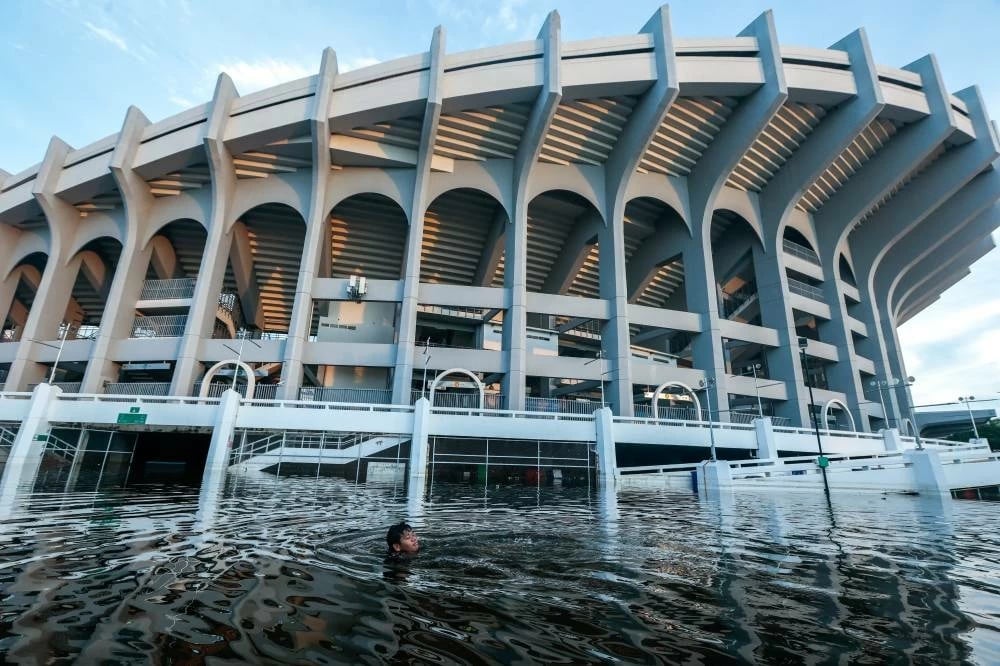
September 29, 2026 · 0 shares
A factual wire dispatch frames the floods chiefly through official casualty counts, quantified airport disruption, and government aid figures, with no apparent editorial slant.
Automated analysis; not human reviewed.
·
5 of 55 available dimensions scored; omitted dimensions are not treated as neutral.
·
Verified supporting quotes for 5 of 5 scored dimensions.
Claim: The report relies on attributed official and executive statements and quantitative detail rather than opinion or emotive editorializing.
“authorities said on Tuesday” · exact text match
“according to the Interior Ministry” · exact text match
Why: Figures and statements are repeatedly attributed to named ministries, officials, and the airline, and the report itself does not offer value judgments.
Claim: The article's own framing describes statements, figures, and plans rather than prescribing what should be done.
“The city’s governor, Chadchart Sittipunt, said that he expected floodwater to drain away from Bangkok’s major roads within two days” · exact text match
“The flag carrier said it plans to cut about 30 flights” · exact text match
Why: Government and airline positions are reported as attributed statements; even the minister's criticism is quoted rather than adopted by the reporter.
Claim: The report is sourced, specific, and careful with uncertainty markers.
“at least 23 people have died” · exact text match
“an estimated $367 million in damage” · exact text match
“according to the Interior Ministry” · exact text match
Why: It uses 'at least' and 'estimated,' names officials and ministries, and supplies exact figures and attribution throughout.
Claim: The article explains events through quantified, causal reporting and does not use irrational or supernatural framing.
“Bangkok was swamped by around 320 mm (12.6 inches) of rain within three days last week” · exact text match
“operational capacity could not be sustained” · exact text match
Why: It presents measurable rainfall, casualty totals, and an operational explanation for delays, with no non-empirical claims.
Claim: The article includes attribution, direct quotes, and an attempt to seek comment from the criticized airline.
“Thai Airways did not immediately respond to an email seeking comment” · exact text match
“Surasak Phancharoenworakul told reporters” · exact text match
Why: It reports the tourism minister's criticism and then notes that Thai Airways had not replied, showing observable fairness and response-seeking practice.
September 29, 2026 · 0 shares
A straight wire-news account anchored by official figures and named sources, with only a mildly loaded word ('chaos') used to describe airport disruption.
Thailand's rainy-season monsoon frequently brings heavy rainfall, and Bangkok is a low-lying city prone to urban flooding; tourism is a major economic sector.
Automated analysis; not human reviewed.
Limitations: Single-text input; no external verification of Thai official data, airline figures, or quotes was possible.
·
55 of 55 available dimensions scored; omitted dimensions are not treated as neutral.
·
Verified supporting quotes for 6 of 55 scored dimensions.
Claim: The text reports facts and attributed statements without injecting the publisher's subjective judgments.
“authorities said on Tuesday” · exact text match
“according to the Interior Ministry” · exact text match
Why: Key claims are attributed to named institutions and officials, with no un-attributed editorial evaluation.
Claim: The text is mostly neutral, with only mildly loaded wording ('chaos') used to describe airport conditions.
“At least 23 dead in Thailand floods, Bangkok airport in chaos” · exact text match
“where its main airport operated in chaos” · exact text match
Why: The article is largely numeric and factual, but the repeated use of 'chaos' adds mild sensational coloring.
Claim: The text describes events and officials' statements rather than telling readers what should be done.
“Bangkok was among 42 provinces hit, with the floods causing an estimated $367 million in damage across two dozen provinces” · exact text match
“The project will take eight years to complete, he said, adding that it is aimed at enhancing flood protection across the central region, Bangkok and its surrounding areas.” · exact text match
Why: The publisher's own prose is confined to reporting what happened and what officials said, not advocating a course of action.
Claim: The publisher's own prose is factual; opinions appear only in attributed quotations.
“The flag carrier said it plans to cut about 30 flights - about 30% of its planned departures from Bangkok - on Tuesday” · not found in supplied text
“Thai Airways did not immediately respond to an email seeking comment on Surasak's remarks.” · exact text match
Why: The narrative is built around attributed facts and figures; critical or prescriptive language appears only inside direct quotes.
Claim: The text attributes key claims to named officials and institutions, and notes when a party did not respond.
“according to the Interior Ministry” · exact text match
“said Thai Airways Chief Executive Chai Eamsiri” · exact text match
“Thai Airways did not immediately respond to an email seeking comment on Surasak's remarks.” · exact text match
Why: Visible sourcing and explicit acknowledgement of non-response support a high but not perfect credibility assessment.
Claim: The text grounds its account in quantified, empirical indicators and named sources rather than emotional rhetoric.
“with the floods causing an estimated $367 million in damage across two dozen provinces” · exact text match
“foreign arrivals dropping 3.12% year-on-year in the January to September period to 21.28 million visitors” · exact text match
Why: The report consistently uses specific numbers, timeframes, and attributed official statements.
Claim: The text reports both official criticism and the airline's lack of response, signaling fair handling of disputed events.
“Surasak Phancharoenworakul told reporters, singling out the airline for rebuke” · exact text match
“Thai Airways did not immediately respond to an email seeking comment on Surasak's remarks.” · exact text match
Why: The article includes a critical official viewpoint and notes the airline's nonresponse, avoiding one-sided presentation.
Claim: The article conveys complex information with specificity, numeric context, and named officials.
“Bangkok was among 42 provinces hit, with the floods causing an estimated $367 million in damage across two dozen provinces and threatening to weigh on the tourism-dependent economy.” · exact text match
“In a meeting on Tuesday, Thailand's cabinet approved over 4 billion baht ($119 million) to address the impact of the floods, Prime Minister Anutin Charnvirakul said.” · not found in supplied text
Why: The report integrates casualty data, financial damage estimates, operational airline figures, and government decisions without oversimplifying.
Single-text input; no external verification of Thai official data, airline figures, or quotes was possible.
September 29, 2026 · 0 shares
A straight wire-news account anchored by official figures and named sources, with only a mildly loaded word ('chaos') used to describe airport disruption.
Thailand's rainy-season monsoon frequently brings heavy rainfall, and Bangkok is a low-lying city prone to urban flooding; tourism is a major economic sector.
Automated analysis; not human reviewed.
Limitations: Single-text input; no external verification of Thai official data, airline figures, or quotes was possible.
·
55 of 55 available dimensions scored; omitted dimensions are not treated as neutral.
·
Verified supporting quotes for 6 of 55 scored dimensions.
Claim: The text reports facts and attributed statements without injecting the publisher's subjective judgments.
“authorities said on Tuesday” · exact text match
“according to the Interior Ministry” · exact text match
Why: Key claims are attributed to named institutions and officials, with no un-attributed editorial evaluation.
Claim: The text is mostly neutral, with only mildly loaded wording ('chaos') used to describe airport conditions.
“At least 23 dead in Thailand floods, Bangkok airport in chaos” · exact text match
“where its main airport operated in chaos” · exact text match
Why: The article is largely numeric and factual, but the repeated use of 'chaos' adds mild sensational coloring.
Claim: The text describes events and officials' statements rather than telling readers what should be done.
“Bangkok was among 42 provinces hit, with the floods causing an estimated $367 million in damage across two dozen provinces” · exact text match
“The project will take eight years to complete, he said, adding that it is aimed at enhancing flood protection across the central region, Bangkok and its surrounding areas.” · exact text match
Why: The publisher's own prose is confined to reporting what happened and what officials said, not advocating a course of action.
Claim: The publisher's own prose is factual; opinions appear only in attributed quotations.
“The flag carrier said it plans to cut about 30 flights - about 30% of its planned departures from Bangkok - on Tuesday” · not found in supplied text
“Thai Airways did not immediately respond to an email seeking comment on Surasak's remarks.” · exact text match
Why: The narrative is built around attributed facts and figures; critical or prescriptive language appears only inside direct quotes.
Claim: The text attributes key claims to named officials and institutions, and notes when a party did not respond.
“according to the Interior Ministry” · exact text match
“said Thai Airways Chief Executive Chai Eamsiri” · exact text match
“Thai Airways did not immediately respond to an email seeking comment on Surasak's remarks.” · exact text match
Why: Visible sourcing and explicit acknowledgement of non-response support a high but not perfect credibility assessment.
Claim: The text grounds its account in quantified, empirical indicators and named sources rather than emotional rhetoric.
“with the floods causing an estimated $367 million in damage across two dozen provinces” · exact text match
“foreign arrivals dropping 3.12% year-on-year in the January to September period to 21.28 million visitors” · exact text match
Why: The report consistently uses specific numbers, timeframes, and attributed official statements.
Claim: The text reports both official criticism and the airline's lack of response, signaling fair handling of disputed events.
“Surasak Phancharoenworakul told reporters, singling out the airline for rebuke” · exact text match
“Thai Airways did not immediately respond to an email seeking comment on Surasak's remarks.” · exact text match
Why: The article includes a critical official viewpoint and notes the airline's nonresponse, avoiding one-sided presentation.
Claim: The article conveys complex information with specificity, numeric context, and named officials.
“Bangkok was among 42 provinces hit, with the floods causing an estimated $367 million in damage across two dozen provinces and threatening to weigh on the tourism-dependent economy.” · exact text match
“In a meeting on Tuesday, Thailand's cabinet approved over 4 billion baht ($119 million) to address the impact of the floods, Prime Minister Anutin Charnvirakul said.” · not found in supplied text
Why: The report integrates casualty data, financial damage estimates, operational airline figures, and government decisions without oversimplifying.
Single-text input; no external verification of Thai official data, airline figures, or quotes was possible.
September 29, 2026 · 0 shares
An event-driven, source-attributed news brief that maintains a neutral tone and avoids editorializing beyond quoted official statements.
Automated analysis; not human reviewed.
Limitations: The assessment is based only on this aggregated news excerpt and cannot independently verify the cited Bangkok Post, The Nation Thailand, or Reuters reports.
·
4 of 55 available dimensions scored; omitted dimensions are not treated as neutral.
·
Verified supporting quotes for 2 of 4 scored dimensions.
Claim: The report is factual and source-attributed rather than opinionated.
“"Bangkok Post reported."” · not found in supplied text
“"In a statement issued early Sept.
29, Thai Airways confirmed the cancellation of several domestic and international round-trip services, including flights to Hanoi and Singapore."”
· exact text match
Why: The text consistently names sources and attributes statements, showing an objective rather than subjective stance.
Claim: The report is calm and factual rather than sensational.
“"Floodwater receded on Sunday as rainfall eased, but some residents remained stranded in their homes."” · exact text match
“"The airline said it had deployed additional personnel and resources to speed up baggage sorting, handling and home delivery."” · exact text match
Why: Dramatic language and fear appeals are absent; events are described with figures, official statements, and matter-of-fact sequencing.
Claim: The report describes events and actions while attributing any recommendation to a passenger, not to the publisher.
“"The passenger argued that airlines in the region typically suspend flights during extreme conditions rather than risk prolonged disruptions, and called on Thai Airways to halt operations when staffing levels are insufficient."” · exact text match
Why: The only prescriptive demand is explicitly attributed to a passenger, while the rest of the report is descriptive.
Claim: The report is credible based on visible sourcing, attribution, and specific data.
“"Bangkok Post reported."” · not found in supplied text
“"The Nation Thailand reported."” · not found in supplied text
“"Reuters reported."” · not found in supplied text
Why: The text names multiple news sources, quotes an airline statement and CEO apology, and includes dated figures, though it does not provide independent verification.
The assessment is based only on this aggregated news excerpt and cannot independently verify the cited Bangkok Post, The Nation Thailand, or Reuters reports.
September 29, 2026 · 0 shares
A factual wire dispatch frames the floods chiefly through official casualty counts, quantified airport disruption, and government aid figures, with no apparent editorial slant.
Automated analysis; not human reviewed.
·
5 of 55 available dimensions scored; omitted dimensions are not treated as neutral.
·
Verified supporting quotes for 5 of 5 scored dimensions.
Claim: The report relies on attributed official and executive statements and quantitative detail rather than opinion or emotive editorializing.
“authorities said on Tuesday” · exact text match
“according to the Interior Ministry” · exact text match
Why: Figures and statements are repeatedly attributed to named ministries, officials, and the airline, and the report itself does not offer value judgments.
Claim: The article's own framing describes statements, figures, and plans rather than prescribing what should be done.
“The city’s governor, Chadchart Sittipunt, said that he expected floodwater to drain away from Bangkok’s major roads within two days” · exact text match
“The flag carrier said it plans to cut about 30 flights” · exact text match
Why: Government and airline positions are reported as attributed statements; even the minister's criticism is quoted rather than adopted by the reporter.
Claim: The report is sourced, specific, and careful with uncertainty markers.
“at least 23 people have died” · exact text match
“an estimated $367 million in damage” · exact text match
“according to the Interior Ministry” · exact text match
Why: It uses 'at least' and 'estimated,' names officials and ministries, and supplies exact figures and attribution throughout.
Claim: The article explains events through quantified, causal reporting and does not use irrational or supernatural framing.
“Bangkok was swamped by around 320 mm (12.6 inches) of rain within three days last week” · exact text match
“operational capacity could not be sustained” · exact text match
Why: It presents measurable rainfall, casualty totals, and an operational explanation for delays, with no non-empirical claims.
Claim: The article includes attribution, direct quotes, and an attempt to seek comment from the criticized airline.
“Thai Airways did not immediately respond to an email seeking comment” · exact text match
“Surasak Phancharoenworakul told reporters” · exact text match
Why: It reports the tourism minister's criticism and then notes that Thai Airways had not replied, showing observable fairness and response-seeking practice.
Framing turns a weather-related staffing shortage into a management-accountability crisis through crisis vocabulary, official rebukes, and passenger hardship stories.
Automated analysis; not human reviewed.
Limitations: No independent verification of the events or quotes was possible from the supplied text; the text also mixes repeated headlines with body copy.
·
6 of 55 available dimensions scored; omitted dimensions are not treated as neutral.
·
Verified supporting quotes for 6 of 6 scored dimensions.
Claim: The report is primarily a factual account, using quantified operational data and direct observation, with one passenger anecdote adding an experiential layer.
“Normal baggage areas became emergency sorting and storage zones.” · exact text match
Counterevidence:
“One tour company representative landed at Suvarnabhumi at approximately 6.15 pm on September 28.” · exact text match
Why: Concrete operational description dominates, but the inclusion of a passenger's first-person experience adds a subjective dimension.
Claim: The presentation uses dramatic crisis vocabulary beyond plain factual description.
“Chaos spreads from Suvarnabhumi baggage belts to the Thai Airways flight schedule as 5,600 bags pile up.” · exact text match
Why: The word 'Chaos' and the phrase 'pile up' headline the event as dramatic, although the underlying figures are factual.
Claim: The publisher's own prose is descriptive and refrains from prescribing actions; prescriptions are quoted from officials.
“Thai Airways faced a deepening crisis Tuesday as 5,600 stranded bags overwhelmed its operation at Suvarnabhumi Airport.” · exact text match
Why: A typical passage simply narrates events; the only calls for resignations are attributed to the minister.
Claim: The report is credible as a sourced, specific account with named officials and concrete figures.
“Thai Airways normally requires about 45 licensed loadmasters each day. During the disruption, only around 20 were available.” · exact text match
Why: Named officials, precise staffing figures, and clearly attributed statements support the account's evidentiary base.
Claim: The article offers rational causal explanations for the airline's greater vulnerability and avoids non-rational reasoning.
“Mr Chai said Bangkok was the airline’s principal production base.
Its exposure at Suvarnabhumi was therefore much greater than that of foreign carriers.”
· exact text match
Why: The explanation links the airline's home-base concentration to its operational vulnerability in a reasoned, causal way.
Claim: The report signals fairness by marking contested claims as allegations and including the airline's responses.
“According to Mr Surasak, this may have been done to avoid contractual penalties.” · exact text match
Why: The publisher attributes a contested accusation to the minister and elsewhere records the CEO's apology and rejection of industrial-action claims.
No independent verification of the events or quotes was possible from the supplied text; the text also mixes repeated headlines with body copy.
Framing turns a weather-related staffing shortage into a management-accountability crisis through crisis vocabulary, official rebukes, and passenger hardship stories.
Automated analysis; not human reviewed.
Limitations: No independent verification of the events or quotes was possible from the supplied text; the text also mixes repeated headlines with body copy.
·
6 of 55 available dimensions scored; omitted dimensions are not treated as neutral.
·
Verified supporting quotes for 6 of 6 scored dimensions.
Claim: The report is primarily a factual account, using quantified operational data and direct observation, with one passenger anecdote adding an experiential layer.
“Normal baggage areas became emergency sorting and storage zones.” · exact text match
Counterevidence:
“One tour company representative landed at Suvarnabhumi at approximately 6.15 pm on September 28.” · exact text match
Why: Concrete operational description dominates, but the inclusion of a passenger's first-person experience adds a subjective dimension.
Claim: The presentation uses dramatic crisis vocabulary beyond plain factual description.
“Chaos spreads from Suvarnabhumi baggage belts to the Thai Airways flight schedule as 5,600 bags pile up.” · exact text match
Why: The word 'Chaos' and the phrase 'pile up' headline the event as dramatic, although the underlying figures are factual.
Claim: The publisher's own prose is descriptive and refrains from prescribing actions; prescriptions are quoted from officials.
“Thai Airways faced a deepening crisis Tuesday as 5,600 stranded bags overwhelmed its operation at Suvarnabhumi Airport.” · exact text match
Why: A typical passage simply narrates events; the only calls for resignations are attributed to the minister.
Claim: The report is credible as a sourced, specific account with named officials and concrete figures.
“Thai Airways normally requires about 45 licensed loadmasters each day. During the disruption, only around 20 were available.” · exact text match
Why: Named officials, precise staffing figures, and clearly attributed statements support the account's evidentiary base.
Claim: The article offers rational causal explanations for the airline's greater vulnerability and avoids non-rational reasoning.
“Mr Chai said Bangkok was the airline’s principal production base.
Its exposure at Suvarnabhumi was therefore much greater than that of foreign carriers.”
· exact text match
Why: The explanation links the airline's home-base concentration to its operational vulnerability in a reasoned, causal way.
Claim: The report signals fairness by marking contested claims as allegations and including the airline's responses.
“According to Mr Surasak, this may have been done to avoid contractual penalties.” · exact text match
Why: The publisher attributes a contested accusation to the minister and elsewhere records the CEO's apology and rejection of industrial-action claims.
No independent verification of the events or quotes was possible from the supplied text; the text also mixes repeated headlines with body copy.
The crisis is framed as a flood-induced logistics emergency, emphasizing military deployment and gradual recovery while avoiding blame.
Automated analysis; not human reviewed.
Limitations: The supplied article text is an excerpt containing multiple headlines and truncated paragraphs, so contextual and ordering ambiguity remains.
·
4 of 55 available dimensions scored; omitted dimensions are not treated as neutral.
·
Verified supporting quotes for 4 of 4 scored dimensions.
Claim: The reporting is predominantly factual and cautious, explicitly flagging unconfirmed details.
“Yet no confirmed figure was available for the remaining backlog late Monday.” · exact text match
“There was also no confirmation that normal baggage handling had been completely restored.” · exact text match
Why: The text repeatedly withholds certainty about unresolved facts, supporting a strongly objective presentation.
Claim: The article uses measured operational language and avoids alarmism even while reporting disruption.
“Despite the serious disruption, Suvarnabhumi’s core aviation infrastructure continued functioning.” · exact text match
Why: It acknowledges severity but immediately emphasizes continuity, undercutting sensational framing.
Claim: The article presents both recovery progress and persistent disruption, avoiding a directional emotional tilt.
“Accordingly, the recovery had advanced, but normal baggage operations had not been restored.” · exact text match
Why: The sentence explicitly pairs progress and continued failure, supporting a neutral assessment.
Claim: The article mostly reports facts but includes occasional editorial emphasis.
“Crucially, flooding had not shut the airport itself.” · exact text match
“The distinction was critical.” · exact text match
Why: Words like 'Crucially' and 'critical' signal analytical judgment rather than pure factual statement.
The supplied article text is an excerpt containing multiple headlines and truncated paragraphs, so contextual and ordering ambiguity remains.
September 29, 2026 · 0 shares
Factual, minimally contextualized operational reporting that presents the baggage backlog as the unchallenged cause of the cancelled flights without commentary or advocacy.
Suvarnabhumi is Bangkok's main international airport and Thai Airways International's primary hub.
Automated analysis; not human reviewed.
Limitations: The supplied text is a two-sentence wire brief with no named sources, calendar dates beyond weekdays, or airline statement, limiting verification and contextual interpretation.
·
8 of 55 available dimensions scored; omitted dimensions are not treated as neutral.
·
Verified supporting quotes for 8 of 8 scored dimensions.
Claim: The reporting is strictly factual, stating cancellation count, scope, schedule, and cause without subjective evaluation.
“Thai Airways International has cancelled 37 more domestic and international flights scheduled for Tuesday, Wednesday and Thursday” · exact text match
Why: The sentence is confined to verifiable operational specifics; no opinion, praise, or criticism appears.
Claim: No sensational or alarmist framing is used for negative operational news.
“Thai Airways cancels 37 more flights.” · exact text match
Why: The headline is a plain declarative statement; the body adds specifics without dramatic or fear-based language.
Claim: The item is a routine operational notice with minimal context or narrative development.
“Thai Airways International has cancelled 37 more domestic and international flights scheduled for Tuesday, Wednesday and Thursday” · exact text match
Why: The report gives only a count, schedule, and cause, with no passenger impact, figures, or background to build interest.
Claim: The report describes an airline action and its stated reason without recommending or prescribing any response.
“has cancelled 37 more domestic and international flights scheduled for Tuesday, Wednesday and Thursday as it tries to dig itself out from under a massive baggage backlog at Suvarnabhumi airport.” · exact text match
Why: The text states what happened and why, with no imperative, advice, or policy position.
Claim: The wording is emotionally neutral, neither negative nor positive in tone.
“as it tries to dig itself out from under a massive baggage backlog at Suvarnabhumi airport” · exact text match
Why: The idiom describes an operational struggle matter-of-factly, without outrage, fear, or celebration.
Claim: The report is concrete and internally coherent but shows no named source, quote, or explicit uncertainty.
“cancelled 37 more domestic and international flights scheduled for Tuesday, Wednesday and Thursday” · exact text match
Why: The claim is specific and in principle checkable, but the visible evidential base is thin: no airline statement or authority is cited.
Claim: The report offers a coherent cause-and-effect operational explanation without emotional or magical reasoning.
“as it tries to dig itself out from under a massive baggage backlog at Suvarnabhumi airport” · exact text match
Why: The cancellations are tied plainly to a concrete operational problem, with no conspiratorial or emotive explanation.
Claim: The report conveys its facts clearly but adds no analysis, context, or synthesis beyond the basic announcement.
“Thai Airways International has cancelled 37 more domestic and international flights scheduled for Tuesday, Wednesday and Thursday” · exact text match
Why: The sentence is clear and grammatical but shallow, typical of a routine wire brief.
The supplied text is a two-sentence wire brief with no named sources, calendar dates beyond weekdays, or airline statement, limiting verification and contextual interpretation.
Framing turns a weather-related staffing shortage into a management-accountability crisis through crisis vocabulary, official rebukes, and passenger hardship stories.
Automated analysis; not human reviewed.
Limitations: No independent verification of the events or quotes was possible from the supplied text; the text also mixes repeated headlines with body copy.
·
6 of 55 available dimensions scored; omitted dimensions are not treated as neutral.
·
Verified supporting quotes for 6 of 6 scored dimensions.
Claim: The report is primarily a factual account, using quantified operational data and direct observation, with one passenger anecdote adding an experiential layer.
“Normal baggage areas became emergency sorting and storage zones.” · exact text match
Counterevidence:
“One tour company representative landed at Suvarnabhumi at approximately 6.15 pm on September 28.” · exact text match
Why: Concrete operational description dominates, but the inclusion of a passenger's first-person experience adds a subjective dimension.
Claim: The presentation uses dramatic crisis vocabulary beyond plain factual description.
“Chaos spreads from Suvarnabhumi baggage belts to the Thai Airways flight schedule as 5,600 bags pile up.” · exact text match
Why: The word 'Chaos' and the phrase 'pile up' headline the event as dramatic, although the underlying figures are factual.
Claim: The publisher's own prose is descriptive and refrains from prescribing actions; prescriptions are quoted from officials.
“Thai Airways faced a deepening crisis Tuesday as 5,600 stranded bags overwhelmed its operation at Suvarnabhumi Airport.” · exact text match
Why: A typical passage simply narrates events; the only calls for resignations are attributed to the minister.
Claim: The report is credible as a sourced, specific account with named officials and concrete figures.
“Thai Airways normally requires about 45 licensed loadmasters each day. During the disruption, only around 20 were available.” · exact text match
Why: Named officials, precise staffing figures, and clearly attributed statements support the account's evidentiary base.
Claim: The article offers rational causal explanations for the airline's greater vulnerability and avoids non-rational reasoning.
“Mr Chai said Bangkok was the airline’s principal production base.
Its exposure at Suvarnabhumi was therefore much greater than that of foreign carriers.”
· exact text match
Why: The explanation links the airline's home-base concentration to its operational vulnerability in a reasoned, causal way.
Claim: The report signals fairness by marking contested claims as allegations and including the airline's responses.
“According to Mr Surasak, this may have been done to avoid contractual penalties.” · exact text match
Why: The publisher attributes a contested accusation to the minister and elsewhere records the CEO's apology and rejection of industrial-action claims.
No independent verification of the events or quotes was possible from the supplied text; the text also mixes repeated headlines with body copy.
September 29, 2026 · 0 shares
An event-driven, source-attributed news brief that maintains a neutral tone and avoids editorializing beyond quoted official statements.
Automated analysis; not human reviewed.
Limitations: The assessment is based only on this aggregated news excerpt and cannot independently verify the cited Bangkok Post, The Nation Thailand, or Reuters reports.
·
4 of 55 available dimensions scored; omitted dimensions are not treated as neutral.
·
Verified supporting quotes for 2 of 4 scored dimensions.
Claim: The report is factual and source-attributed rather than opinionated.
“"Bangkok Post reported."” · not found in supplied text
“"In a statement issued early Sept.
29, Thai Airways confirmed the cancellation of several domestic and international round-trip services, including flights to Hanoi and Singapore."”
· exact text match
Why: The text consistently names sources and attributes statements, showing an objective rather than subjective stance.
Claim: The report is calm and factual rather than sensational.
“"Floodwater receded on Sunday as rainfall eased, but some residents remained stranded in their homes."” · exact text match
“"The airline said it had deployed additional personnel and resources to speed up baggage sorting, handling and home delivery."” · exact text match
Why: Dramatic language and fear appeals are absent; events are described with figures, official statements, and matter-of-fact sequencing.
Claim: The report describes events and actions while attributing any recommendation to a passenger, not to the publisher.
“"The passenger argued that airlines in the region typically suspend flights during extreme conditions rather than risk prolonged disruptions, and called on Thai Airways to halt operations when staffing levels are insufficient."” · exact text match
Why: The only prescriptive demand is explicitly attributed to a passenger, while the rest of the report is descriptive.
Claim: The report is credible based on visible sourcing, attribution, and specific data.
“"Bangkok Post reported."” · not found in supplied text
“"The Nation Thailand reported."” · not found in supplied text
“"Reuters reported."” · not found in supplied text
Why: The text names multiple news sources, quotes an airline statement and CEO apology, and includes dated figures, though it does not provide independent verification.
The assessment is based only on this aggregated news excerpt and cannot independently verify the cited Bangkok Post, The Nation Thailand, or Reuters reports.
Framing turns a weather-related staffing shortage into a management-accountability crisis through crisis vocabulary, official rebukes, and passenger hardship stories.
Automated analysis; not human reviewed.
Limitations: No independent verification of the events or quotes was possible from the supplied text; the text also mixes repeated headlines with body copy.
·
6 of 55 available dimensions scored; omitted dimensions are not treated as neutral.
·
Verified supporting quotes for 6 of 6 scored dimensions.
Claim: The report is primarily a factual account, using quantified operational data and direct observation, with one passenger anecdote adding an experiential layer.
“Normal baggage areas became emergency sorting and storage zones.” · exact text match
Counterevidence:
“One tour company representative landed at Suvarnabhumi at approximately 6.15 pm on September 28.” · exact text match
Why: Concrete operational description dominates, but the inclusion of a passenger's first-person experience adds a subjective dimension.
Claim: The presentation uses dramatic crisis vocabulary beyond plain factual description.
“Chaos spreads from Suvarnabhumi baggage belts to the Thai Airways flight schedule as 5,600 bags pile up.” · exact text match
Why: The word 'Chaos' and the phrase 'pile up' headline the event as dramatic, although the underlying figures are factual.
Claim: The publisher's own prose is descriptive and refrains from prescribing actions; prescriptions are quoted from officials.
“Thai Airways faced a deepening crisis Tuesday as 5,600 stranded bags overwhelmed its operation at Suvarnabhumi Airport.” · exact text match
Why: A typical passage simply narrates events; the only calls for resignations are attributed to the minister.
Claim: The report is credible as a sourced, specific account with named officials and concrete figures.
“Thai Airways normally requires about 45 licensed loadmasters each day. During the disruption, only around 20 were available.” · exact text match
Why: Named officials, precise staffing figures, and clearly attributed statements support the account's evidentiary base.
Claim: The article offers rational causal explanations for the airline's greater vulnerability and avoids non-rational reasoning.
“Mr Chai said Bangkok was the airline’s principal production base.
Its exposure at Suvarnabhumi was therefore much greater than that of foreign carriers.”
· exact text match
Why: The explanation links the airline's home-base concentration to its operational vulnerability in a reasoned, causal way.
Claim: The report signals fairness by marking contested claims as allegations and including the airline's responses.
“According to Mr Surasak, this may have been done to avoid contractual penalties.” · exact text match
Why: The publisher attributes a contested accusation to the minister and elsewhere records the CEO's apology and rejection of industrial-action claims.
No independent verification of the events or quotes was possible from the supplied text; the text also mixes repeated headlines with body copy.
September 29, 2026 · 0 shares
A factual wire dispatch frames the floods chiefly through official casualty counts, quantified airport disruption, and government aid figures, with no apparent editorial slant.
Automated analysis; not human reviewed.
·
5 of 55 available dimensions scored; omitted dimensions are not treated as neutral.
·
Verified supporting quotes for 5 of 5 scored dimensions.
Claim: The report relies on attributed official and executive statements and quantitative detail rather than opinion or emotive editorializing.
“authorities said on Tuesday” · exact text match
“according to the Interior Ministry” · exact text match
Why: Figures and statements are repeatedly attributed to named ministries, officials, and the airline, and the report itself does not offer value judgments.
Claim: The article's own framing describes statements, figures, and plans rather than prescribing what should be done.
“The city’s governor, Chadchart Sittipunt, said that he expected floodwater to drain away from Bangkok’s major roads within two days” · exact text match
“The flag carrier said it plans to cut about 30 flights” · exact text match
Why: Government and airline positions are reported as attributed statements; even the minister's criticism is quoted rather than adopted by the reporter.
Claim: The report is sourced, specific, and careful with uncertainty markers.
“at least 23 people have died” · exact text match
“an estimated $367 million in damage” · exact text match
“according to the Interior Ministry” · exact text match
Why: It uses 'at least' and 'estimated,' names officials and ministries, and supplies exact figures and attribution throughout.
Claim: The article explains events through quantified, causal reporting and does not use irrational or supernatural framing.
“Bangkok was swamped by around 320 mm (12.6 inches) of rain within three days last week” · exact text match
“operational capacity could not be sustained” · exact text match
Why: It presents measurable rainfall, casualty totals, and an operational explanation for delays, with no non-empirical claims.
Claim: The article includes attribution, direct quotes, and an attempt to seek comment from the criticized airline.
“Thai Airways did not immediately respond to an email seeking comment” · exact text match
“Surasak Phancharoenworakul told reporters” · exact text match
Why: It reports the tourism minister's criticism and then notes that Thai Airways had not replied, showing observable fairness and response-seeking practice.
September 29, 2026 · 0 shares
A factual wire dispatch frames the floods chiefly through official casualty counts, quantified airport disruption, and government aid figures, with no apparent editorial slant.
Automated analysis; not human reviewed.
·
5 of 55 available dimensions scored; omitted dimensions are not treated as neutral.
·
Verified supporting quotes for 5 of 5 scored dimensions.
Claim: The report relies on attributed official and executive statements and quantitative detail rather than opinion or emotive editorializing.
“authorities said on Tuesday” · exact text match
“according to the Interior Ministry” · exact text match
Why: Figures and statements are repeatedly attributed to named ministries, officials, and the airline, and the report itself does not offer value judgments.
Claim: The article's own framing describes statements, figures, and plans rather than prescribing what should be done.
“The city’s governor, Chadchart Sittipunt, said that he expected floodwater to drain away from Bangkok’s major roads within two days” · exact text match
“The flag carrier said it plans to cut about 30 flights” · exact text match
Why: Government and airline positions are reported as attributed statements; even the minister's criticism is quoted rather than adopted by the reporter.
Claim: The report is sourced, specific, and careful with uncertainty markers.
“at least 23 people have died” · exact text match
“an estimated $367 million in damage” · exact text match
“according to the Interior Ministry” · exact text match
Why: It uses 'at least' and 'estimated,' names officials and ministries, and supplies exact figures and attribution throughout.
Claim: The article explains events through quantified, causal reporting and does not use irrational or supernatural framing.
“Bangkok was swamped by around 320 mm (12.6 inches) of rain within three days last week” · exact text match
“operational capacity could not be sustained” · exact text match
Why: It presents measurable rainfall, casualty totals, and an operational explanation for delays, with no non-empirical claims.
Claim: The article includes attribution, direct quotes, and an attempt to seek comment from the criticized airline.
“Thai Airways did not immediately respond to an email seeking comment” · exact text match
“Surasak Phancharoenworakul told reporters” · exact text match
Why: It reports the tourism minister's criticism and then notes that Thai Airways had not replied, showing observable fairness and response-seeking practice.
September 29, 2026 · 0 shares
An event-driven, source-attributed news brief that maintains a neutral tone and avoids editorializing beyond quoted official statements.
Automated analysis; not human reviewed.
Limitations: The assessment is based only on this aggregated news excerpt and cannot independently verify the cited Bangkok Post, The Nation Thailand, or Reuters reports.
·
4 of 55 available dimensions scored; omitted dimensions are not treated as neutral.
·
Verified supporting quotes for 2 of 4 scored dimensions.
Claim: The report is factual and source-attributed rather than opinionated.
“"Bangkok Post reported."” · not found in supplied text
“"In a statement issued early Sept.
29, Thai Airways confirmed the cancellation of several domestic and international round-trip services, including flights to Hanoi and Singapore."”
· exact text match
Why: The text consistently names sources and attributes statements, showing an objective rather than subjective stance.
Claim: The report is calm and factual rather than sensational.
“"Floodwater receded on Sunday as rainfall eased, but some residents remained stranded in their homes."” · exact text match
“"The airline said it had deployed additional personnel and resources to speed up baggage sorting, handling and home delivery."” · exact text match
Why: Dramatic language and fear appeals are absent; events are described with figures, official statements, and matter-of-fact sequencing.
Claim: The report describes events and actions while attributing any recommendation to a passenger, not to the publisher.
“"The passenger argued that airlines in the region typically suspend flights during extreme conditions rather than risk prolonged disruptions, and called on Thai Airways to halt operations when staffing levels are insufficient."” · exact text match
Why: The only prescriptive demand is explicitly attributed to a passenger, while the rest of the report is descriptive.
Claim: The report is credible based on visible sourcing, attribution, and specific data.
“"Bangkok Post reported."” · not found in supplied text
“"The Nation Thailand reported."” · not found in supplied text
“"Reuters reported."” · not found in supplied text
Why: The text names multiple news sources, quotes an airline statement and CEO apology, and includes dated figures, though it does not provide independent verification.
The assessment is based only on this aggregated news excerpt and cannot independently verify the cited Bangkok Post, The Nation Thailand, or Reuters reports.
September 29, 2026 · 0 shares
A factual wire dispatch frames the floods chiefly through official casualty counts, quantified airport disruption, and government aid figures, with no apparent editorial slant.
Automated analysis; not human reviewed. · 5 of 55 available dimensions scored; omitted dimensions are not treated as neutral. · Verified supporting quotes for 5 of 5 scored dimensions.
Claim: The report relies on attributed official and executive statements and quantitative detail rather than opinion or emotive editorializing.
“authorities said on Tuesday” · exact text match
“according to the Interior Ministry” · exact text match
Why: Figures and statements are repeatedly attributed to named ministries, officials, and the airline, and the report itself does not offer value judgments.
Claim: The article's own framing describes statements, figures, and plans rather than prescribing what should be done.
“The city’s governor, Chadchart Sittipunt, said that he expected floodwater to drain away from Bangkok’s major roads within two days” · exact text match
“The flag carrier said it plans to cut about 30 flights” · exact text match
Why: Government and airline positions are reported as attributed statements; even the minister's criticism is quoted rather than adopted by the reporter.
Claim: The report is sourced, specific, and careful with uncertainty markers.
“at least 23 people have died” · exact text match
“an estimated $367 million in damage” · exact text match
“according to the Interior Ministry” · exact text match
Why: It uses 'at least' and 'estimated,' names officials and ministries, and supplies exact figures and attribution throughout.
Claim: The article explains events through quantified, causal reporting and does not use irrational or supernatural framing.
“Bangkok was swamped by around 320 mm (12.6 inches) of rain within three days last week” · exact text match
“operational capacity could not be sustained” · exact text match
Why: It presents measurable rainfall, casualty totals, and an operational explanation for delays, with no non-empirical claims.
Claim: The article includes attribution, direct quotes, and an attempt to seek comment from the criticized airline.
“Thai Airways did not immediately respond to an email seeking comment” · exact text match
“Surasak Phancharoenworakul told reporters” · exact text match
Why: It reports the tourism minister's criticism and then notes that Thai Airways had not replied, showing observable fairness and response-seeking practice.
September 29, 2026 · 0 shares
A straight wire-news account anchored by official figures and named sources, with only a mildly loaded word ('chaos') used to describe airport disruption.
Thailand's rainy-season monsoon frequently brings heavy rainfall, and Bangkok is a low-lying city prone to urban flooding; tourism is a major economic sector.
Automated analysis; not human reviewed. Limitations: Single-text input; no external verification of Thai official data, airline figures, or quotes was possible. · 55 of 55 available dimensions scored; omitted dimensions are not treated as neutral. · Verified supporting quotes for 6 of 55 scored dimensions.
Claim: The text reports facts and attributed statements without injecting the publisher's subjective judgments.
“authorities said on Tuesday” · exact text match
“according to the Interior Ministry” · exact text match
Why: Key claims are attributed to named institutions and officials, with no un-attributed editorial evaluation.
Claim: The text is mostly neutral, with only mildly loaded wording ('chaos') used to describe airport conditions.
“At least 23 dead in Thailand floods, Bangkok airport in chaos” · exact text match
“where its main airport operated in chaos” · exact text match
Why: The article is largely numeric and factual, but the repeated use of 'chaos' adds mild sensational coloring.
Claim: The text describes events and officials' statements rather than telling readers what should be done.
“Bangkok was among 42 provinces hit, with the floods causing an estimated $367 million in damage across two dozen provinces” · exact text match
“The project will take eight years to complete, he said, adding that it is aimed at enhancing flood protection across the central region, Bangkok and its surrounding areas.” · exact text match
Why: The publisher's own prose is confined to reporting what happened and what officials said, not advocating a course of action.
Claim: The publisher's own prose is factual; opinions appear only in attributed quotations.
“The flag carrier said it plans to cut about 30 flights - about 30% of its planned departures from Bangkok - on Tuesday” · not found in supplied text
“Thai Airways did not immediately respond to an email seeking comment on Surasak's remarks.” · exact text match
Why: The narrative is built around attributed facts and figures; critical or prescriptive language appears only inside direct quotes.
Claim: The text attributes key claims to named officials and institutions, and notes when a party did not respond.
“according to the Interior Ministry” · exact text match
“said Thai Airways Chief Executive Chai Eamsiri” · exact text match
“Thai Airways did not immediately respond to an email seeking comment on Surasak's remarks.” · exact text match
Why: Visible sourcing and explicit acknowledgement of non-response support a high but not perfect credibility assessment.
Claim: The text grounds its account in quantified, empirical indicators and named sources rather than emotional rhetoric.
“with the floods causing an estimated $367 million in damage across two dozen provinces” · exact text match
“foreign arrivals dropping 3.12% year-on-year in the January to September period to 21.28 million visitors” · exact text match
Why: The report consistently uses specific numbers, timeframes, and attributed official statements.
Claim: The text reports both official criticism and the airline's lack of response, signaling fair handling of disputed events.
“Surasak Phancharoenworakul told reporters, singling out the airline for rebuke” · exact text match
“Thai Airways did not immediately respond to an email seeking comment on Surasak's remarks.” · exact text match
Why: The article includes a critical official viewpoint and notes the airline's nonresponse, avoiding one-sided presentation.
Claim: The article conveys complex information with specificity, numeric context, and named officials.
“Bangkok was among 42 provinces hit, with the floods causing an estimated $367 million in damage across two dozen provinces and threatening to weigh on the tourism-dependent economy.” · exact text match
“In a meeting on Tuesday, Thailand's cabinet approved over 4 billion baht ($119 million) to address the impact of the floods, Prime Minister Anutin Charnvirakul said.” · not found in supplied text
Why: The report integrates casualty data, financial damage estimates, operational airline figures, and government decisions without oversimplifying.
Single-text input; no external verification of Thai official data, airline figures, or quotes was possible.
September 29, 2026 · 0 shares
A straight wire-news account anchored by official figures and named sources, with only a mildly loaded word ('chaos') used to describe airport disruption.
Thailand's rainy-season monsoon frequently brings heavy rainfall, and Bangkok is a low-lying city prone to urban flooding; tourism is a major economic sector.
Automated analysis; not human reviewed. Limitations: Single-text input; no external verification of Thai official data, airline figures, or quotes was possible. · 55 of 55 available dimensions scored; omitted dimensions are not treated as neutral. · Verified supporting quotes for 6 of 55 scored dimensions.
Claim: The text reports facts and attributed statements without injecting the publisher's subjective judgments.
“authorities said on Tuesday” · exact text match
“according to the Interior Ministry” · exact text match
Why: Key claims are attributed to named institutions and officials, with no un-attributed editorial evaluation.
Claim: The text is mostly neutral, with only mildly loaded wording ('chaos') used to describe airport conditions.
“At least 23 dead in Thailand floods, Bangkok airport in chaos” · exact text match
“where its main airport operated in chaos” · exact text match
Why: The article is largely numeric and factual, but the repeated use of 'chaos' adds mild sensational coloring.
Claim: The text describes events and officials' statements rather than telling readers what should be done.
“Bangkok was among 42 provinces hit, with the floods causing an estimated $367 million in damage across two dozen provinces” · exact text match
“The project will take eight years to complete, he said, adding that it is aimed at enhancing flood protection across the central region, Bangkok and its surrounding areas.” · exact text match
Why: The publisher's own prose is confined to reporting what happened and what officials said, not advocating a course of action.
Claim: The publisher's own prose is factual; opinions appear only in attributed quotations.
“The flag carrier said it plans to cut about 30 flights - about 30% of its planned departures from Bangkok - on Tuesday” · not found in supplied text
“Thai Airways did not immediately respond to an email seeking comment on Surasak's remarks.” · exact text match
Why: The narrative is built around attributed facts and figures; critical or prescriptive language appears only inside direct quotes.
Claim: The text attributes key claims to named officials and institutions, and notes when a party did not respond.
“according to the Interior Ministry” · exact text match
“said Thai Airways Chief Executive Chai Eamsiri” · exact text match
“Thai Airways did not immediately respond to an email seeking comment on Surasak's remarks.” · exact text match
Why: Visible sourcing and explicit acknowledgement of non-response support a high but not perfect credibility assessment.
Claim: The text grounds its account in quantified, empirical indicators and named sources rather than emotional rhetoric.
“with the floods causing an estimated $367 million in damage across two dozen provinces” · exact text match
“foreign arrivals dropping 3.12% year-on-year in the January to September period to 21.28 million visitors” · exact text match
Why: The report consistently uses specific numbers, timeframes, and attributed official statements.
Claim: The text reports both official criticism and the airline's lack of response, signaling fair handling of disputed events.
“Surasak Phancharoenworakul told reporters, singling out the airline for rebuke” · exact text match
“Thai Airways did not immediately respond to an email seeking comment on Surasak's remarks.” · exact text match
Why: The article includes a critical official viewpoint and notes the airline's nonresponse, avoiding one-sided presentation.
Claim: The article conveys complex information with specificity, numeric context, and named officials.
“Bangkok was among 42 provinces hit, with the floods causing an estimated $367 million in damage across two dozen provinces and threatening to weigh on the tourism-dependent economy.” · exact text match
“In a meeting on Tuesday, Thailand's cabinet approved over 4 billion baht ($119 million) to address the impact of the floods, Prime Minister Anutin Charnvirakul said.” · not found in supplied text
Why: The report integrates casualty data, financial damage estimates, operational airline figures, and government decisions without oversimplifying.
Single-text input; no external verification of Thai official data, airline figures, or quotes was possible.
September 29, 2026 · 0 shares
Factual, minimally contextualized operational reporting that presents the baggage backlog as the unchallenged cause of the cancelled flights without commentary or advocacy.
Suvarnabhumi is Bangkok's main international airport and Thai Airways International's primary hub.
Automated analysis; not human reviewed. Limitations: The supplied text is a two-sentence wire brief with no named sources, calendar dates beyond weekdays, or airline statement, limiting verification and contextual interpretation. · 8 of 55 available dimensions scored; omitted dimensions are not treated as neutral. · Verified supporting quotes for 8 of 8 scored dimensions.
Claim: The reporting is strictly factual, stating cancellation count, scope, schedule, and cause without subjective evaluation.
“Thai Airways International has cancelled 37 more domestic and international flights scheduled for Tuesday, Wednesday and Thursday” · exact text match
Why: The sentence is confined to verifiable operational specifics; no opinion, praise, or criticism appears.
Claim: No sensational or alarmist framing is used for negative operational news.
“Thai Airways cancels 37 more flights.” · exact text match
Why: The headline is a plain declarative statement; the body adds specifics without dramatic or fear-based language.
Claim: The item is a routine operational notice with minimal context or narrative development.
“Thai Airways International has cancelled 37 more domestic and international flights scheduled for Tuesday, Wednesday and Thursday” · exact text match
Why: The report gives only a count, schedule, and cause, with no passenger impact, figures, or background to build interest.
Claim: The report describes an airline action and its stated reason without recommending or prescribing any response.
“has cancelled 37 more domestic and international flights scheduled for Tuesday, Wednesday and Thursday as it tries to dig itself out from under a massive baggage backlog at Suvarnabhumi airport.” · exact text match
Why: The text states what happened and why, with no imperative, advice, or policy position.
Claim: The wording is emotionally neutral, neither negative nor positive in tone.
“as it tries to dig itself out from under a massive baggage backlog at Suvarnabhumi airport” · exact text match
Why: The idiom describes an operational struggle matter-of-factly, without outrage, fear, or celebration.
Claim: The report is concrete and internally coherent but shows no named source, quote, or explicit uncertainty.
“cancelled 37 more domestic and international flights scheduled for Tuesday, Wednesday and Thursday” · exact text match
Why: The claim is specific and in principle checkable, but the visible evidential base is thin: no airline statement or authority is cited.
Claim: The report offers a coherent cause-and-effect operational explanation without emotional or magical reasoning.
“as it tries to dig itself out from under a massive baggage backlog at Suvarnabhumi airport” · exact text match
Why: The cancellations are tied plainly to a concrete operational problem, with no conspiratorial or emotive explanation.
Claim: The report conveys its facts clearly but adds no analysis, context, or synthesis beyond the basic announcement.
“Thai Airways International has cancelled 37 more domestic and international flights scheduled for Tuesday, Wednesday and Thursday” · exact text match
Why: The sentence is clear and grammatical but shallow, typical of a routine wire brief.
The supplied text is a two-sentence wire brief with no named sources, calendar dates beyond weekdays, or airline statement, limiting verification and contextual interpretation.
September 29, 2026 · 0 shares
An event-driven, source-attributed news brief that maintains a neutral tone and avoids editorializing beyond quoted official statements.
Automated analysis; not human reviewed. Limitations: The assessment is based only on this aggregated news excerpt and cannot independently verify the cited Bangkok Post, The Nation Thailand, or Reuters reports. · 4 of 55 available dimensions scored; omitted dimensions are not treated as neutral. · Verified supporting quotes for 2 of 4 scored dimensions.
Claim: The report is factual and source-attributed rather than opinionated.
“"Bangkok Post reported."” · not found in supplied text
“"In a statement issued early Sept. 29, Thai Airways confirmed the cancellation of several domestic and international round-trip services, including flights to Hanoi and Singapore."” · exact text match
Why: The text consistently names sources and attributes statements, showing an objective rather than subjective stance.
Claim: The report is calm and factual rather than sensational.
“"Floodwater receded on Sunday as rainfall eased, but some residents remained stranded in their homes."” · exact text match
“"The airline said it had deployed additional personnel and resources to speed up baggage sorting, handling and home delivery."” · exact text match
Why: Dramatic language and fear appeals are absent; events are described with figures, official statements, and matter-of-fact sequencing.
Claim: The report describes events and actions while attributing any recommendation to a passenger, not to the publisher.
“"The passenger argued that airlines in the region typically suspend flights during extreme conditions rather than risk prolonged disruptions, and called on Thai Airways to halt operations when staffing levels are insufficient."” · exact text match
Why: The only prescriptive demand is explicitly attributed to a passenger, while the rest of the report is descriptive.
Claim: The report is credible based on visible sourcing, attribution, and specific data.
“"Bangkok Post reported."” · not found in supplied text
“"The Nation Thailand reported."” · not found in supplied text
“"Reuters reported."” · not found in supplied text
Why: The text names multiple news sources, quotes an airline statement and CEO apology, and includes dated figures, though it does not provide independent verification.
The assessment is based only on this aggregated news excerpt and cannot independently verify the cited Bangkok Post, The Nation Thailand, or Reuters reports.
September 29, 2026 · 0 shares
A factual wire dispatch frames the floods chiefly through official casualty counts, quantified airport disruption, and government aid figures, with no apparent editorial slant.
Automated analysis; not human reviewed. · 5 of 55 available dimensions scored; omitted dimensions are not treated as neutral. · Verified supporting quotes for 5 of 5 scored dimensions.
Claim: The report relies on attributed official and executive statements and quantitative detail rather than opinion or emotive editorializing.
“authorities said on Tuesday” · exact text match
“according to the Interior Ministry” · exact text match
Why: Figures and statements are repeatedly attributed to named ministries, officials, and the airline, and the report itself does not offer value judgments.
Claim: The article's own framing describes statements, figures, and plans rather than prescribing what should be done.
“The city’s governor, Chadchart Sittipunt, said that he expected floodwater to drain away from Bangkok’s major roads within two days” · exact text match
“The flag carrier said it plans to cut about 30 flights” · exact text match
Why: Government and airline positions are reported as attributed statements; even the minister's criticism is quoted rather than adopted by the reporter.
Claim: The report is sourced, specific, and careful with uncertainty markers.
“at least 23 people have died” · exact text match
“an estimated $367 million in damage” · exact text match
“according to the Interior Ministry” · exact text match
Why: It uses 'at least' and 'estimated,' names officials and ministries, and supplies exact figures and attribution throughout.
Claim: The article explains events through quantified, causal reporting and does not use irrational or supernatural framing.
“Bangkok was swamped by around 320 mm (12.6 inches) of rain within three days last week” · exact text match
“operational capacity could not be sustained” · exact text match
Why: It presents measurable rainfall, casualty totals, and an operational explanation for delays, with no non-empirical claims.
Claim: The article includes attribution, direct quotes, and an attempt to seek comment from the criticized airline.
“Thai Airways did not immediately respond to an email seeking comment” · exact text match
“Surasak Phancharoenworakul told reporters” · exact text match
Why: It reports the tourism minister's criticism and then notes that Thai Airways had not replied, showing observable fairness and response-seeking practice.
The crisis is framed as a flood-induced logistics emergency, emphasizing military deployment and gradual recovery while avoiding blame.
Automated analysis; not human reviewed. Limitations: The supplied article text is an excerpt containing multiple headlines and truncated paragraphs, so contextual and ordering ambiguity remains. · 4 of 55 available dimensions scored; omitted dimensions are not treated as neutral. · Verified supporting quotes for 4 of 4 scored dimensions.
Claim: The reporting is predominantly factual and cautious, explicitly flagging unconfirmed details.
“Yet no confirmed figure was available for the remaining backlog late Monday.” · exact text match
“There was also no confirmation that normal baggage handling had been completely restored.” · exact text match
Why: The text repeatedly withholds certainty about unresolved facts, supporting a strongly objective presentation.
Claim: The article uses measured operational language and avoids alarmism even while reporting disruption.
“Despite the serious disruption, Suvarnabhumi’s core aviation infrastructure continued functioning.” · exact text match
Why: It acknowledges severity but immediately emphasizes continuity, undercutting sensational framing.
Claim: The article presents both recovery progress and persistent disruption, avoiding a directional emotional tilt.
“Accordingly, the recovery had advanced, but normal baggage operations had not been restored.” · exact text match
Why: The sentence explicitly pairs progress and continued failure, supporting a neutral assessment.
Claim: The article mostly reports facts but includes occasional editorial emphasis.
“Crucially, flooding had not shut the airport itself.” · exact text match
“The distinction was critical.” · exact text match
Why: Words like 'Crucially' and 'critical' signal analytical judgment rather than pure factual statement.
The supplied article text is an excerpt containing multiple headlines and truncated paragraphs, so contextual and ordering ambiguity remains.
Framing turns a weather-related staffing shortage into a management-accountability crisis through crisis vocabulary, official rebukes, and passenger hardship stories.
Automated analysis; not human reviewed. Limitations: No independent verification of the events or quotes was possible from the supplied text; the text also mixes repeated headlines with body copy. · 6 of 55 available dimensions scored; omitted dimensions are not treated as neutral. · Verified supporting quotes for 6 of 6 scored dimensions.
Claim: The report is primarily a factual account, using quantified operational data and direct observation, with one passenger anecdote adding an experiential layer.
“Normal baggage areas became emergency sorting and storage zones.” · exact text match
Counterevidence:
“One tour company representative landed at Suvarnabhumi at approximately 6.15 pm on September 28.” · exact text match
Why: Concrete operational description dominates, but the inclusion of a passenger's first-person experience adds a subjective dimension.
Claim: The presentation uses dramatic crisis vocabulary beyond plain factual description.
“Chaos spreads from Suvarnabhumi baggage belts to the Thai Airways flight schedule as 5,600 bags pile up.” · exact text match
Why: The word 'Chaos' and the phrase 'pile up' headline the event as dramatic, although the underlying figures are factual.
Claim: The publisher's own prose is descriptive and refrains from prescribing actions; prescriptions are quoted from officials.
“Thai Airways faced a deepening crisis Tuesday as 5,600 stranded bags overwhelmed its operation at Suvarnabhumi Airport.” · exact text match
Why: A typical passage simply narrates events; the only calls for resignations are attributed to the minister.
Claim: The report is credible as a sourced, specific account with named officials and concrete figures.
“Thai Airways normally requires about 45 licensed loadmasters each day. During the disruption, only around 20 were available.” · exact text match
Why: Named officials, precise staffing figures, and clearly attributed statements support the account's evidentiary base.
Claim: The article offers rational causal explanations for the airline's greater vulnerability and avoids non-rational reasoning.
“Mr Chai said Bangkok was the airline’s principal production base. Its exposure at Suvarnabhumi was therefore much greater than that of foreign carriers.” · exact text match
Why: The explanation links the airline's home-base concentration to its operational vulnerability in a reasoned, causal way.
Claim: The report signals fairness by marking contested claims as allegations and including the airline's responses.
“According to Mr Surasak, this may have been done to avoid contractual penalties.” · exact text match
Why: The publisher attributes a contested accusation to the minister and elsewhere records the CEO's apology and rejection of industrial-action claims.
No independent verification of the events or quotes was possible from the supplied text; the text also mixes repeated headlines with body copy.
Helium Bias
Story Blindspots
September 29, 2026 · 0 shares
An event-driven, source-attributed news brief that maintains a neutral tone and avoids editorializing beyond quoted official statements.
Automated analysis; not human reviewed. Limitations: The assessment is based only on this aggregated news excerpt and cannot independently verify the cited Bangkok Post, The Nation Thailand, or Reuters reports. · 4 of 55 available dimensions scored; omitted dimensions are not treated as neutral. · Verified supporting quotes for 2 of 4 scored dimensions.
Claim: The report is factual and source-attributed rather than opinionated.
“"Bangkok Post reported."” · not found in supplied text
“"In a statement issued early Sept. 29, Thai Airways confirmed the cancellation of several domestic and international round-trip services, including flights to Hanoi and Singapore."” · exact text match
Why: The text consistently names sources and attributes statements, showing an objective rather than subjective stance.
Claim: The report is calm and factual rather than sensational.
“"Floodwater receded on Sunday as rainfall eased, but some residents remained stranded in their homes."” · exact text match
“"The airline said it had deployed additional personnel and resources to speed up baggage sorting, handling and home delivery."” · exact text match
Why: Dramatic language and fear appeals are absent; events are described with figures, official statements, and matter-of-fact sequencing.
Claim: The report describes events and actions while attributing any recommendation to a passenger, not to the publisher.
“"The passenger argued that airlines in the region typically suspend flights during extreme conditions rather than risk prolonged disruptions, and called on Thai Airways to halt operations when staffing levels are insufficient."” · exact text match
Why: The only prescriptive demand is explicitly attributed to a passenger, while the rest of the report is descriptive.
Claim: The report is credible based on visible sourcing, attribution, and specific data.
“"Bangkok Post reported."” · not found in supplied text
“"The Nation Thailand reported."” · not found in supplied text
“"Reuters reported."” · not found in supplied text
Why: The text names multiple news sources, quotes an airline statement and CEO apology, and includes dated figures, though it does not provide independent verification.
The assessment is based only on this aggregated news excerpt and cannot independently verify the cited Bangkok Post, The Nation Thailand, or Reuters reports.
September 29, 2026 · 0 shares
A factual wire dispatch frames the floods chiefly through official casualty counts, quantified airport disruption, and government aid figures, with no apparent editorial slant.
Automated analysis; not human reviewed. · 5 of 55 available dimensions scored; omitted dimensions are not treated as neutral. · Verified supporting quotes for 5 of 5 scored dimensions.
Claim: The report relies on attributed official and executive statements and quantitative detail rather than opinion or emotive editorializing.
“authorities said on Tuesday” · exact text match
“according to the Interior Ministry” · exact text match
Why: Figures and statements are repeatedly attributed to named ministries, officials, and the airline, and the report itself does not offer value judgments.
Claim: The article's own framing describes statements, figures, and plans rather than prescribing what should be done.
“The city’s governor, Chadchart Sittipunt, said that he expected floodwater to drain away from Bangkok’s major roads within two days” · exact text match
“The flag carrier said it plans to cut about 30 flights” · exact text match
Why: Government and airline positions are reported as attributed statements; even the minister's criticism is quoted rather than adopted by the reporter.
Claim: The report is sourced, specific, and careful with uncertainty markers.
“at least 23 people have died” · exact text match
“an estimated $367 million in damage” · exact text match
“according to the Interior Ministry” · exact text match
Why: It uses 'at least' and 'estimated,' names officials and ministries, and supplies exact figures and attribution throughout.
Claim: The article explains events through quantified, causal reporting and does not use irrational or supernatural framing.
“Bangkok was swamped by around 320 mm (12.6 inches) of rain within three days last week” · exact text match
“operational capacity could not be sustained” · exact text match
Why: It presents measurable rainfall, casualty totals, and an operational explanation for delays, with no non-empirical claims.
Claim: The article includes attribution, direct quotes, and an attempt to seek comment from the criticized airline.
“Thai Airways did not immediately respond to an email seeking comment” · exact text match
“Surasak Phancharoenworakul told reporters” · exact text match
Why: It reports the tourism minister's criticism and then notes that Thai Airways had not replied, showing observable fairness and response-seeking practice.
The crisis is framed as a flood-induced logistics emergency, emphasizing military deployment and gradual recovery while avoiding blame.
Automated analysis; not human reviewed. Limitations: The supplied article text is an excerpt containing multiple headlines and truncated paragraphs, so contextual and ordering ambiguity remains. · 4 of 55 available dimensions scored; omitted dimensions are not treated as neutral. · Verified supporting quotes for 4 of 4 scored dimensions.
Claim: The reporting is predominantly factual and cautious, explicitly flagging unconfirmed details.
“Yet no confirmed figure was available for the remaining backlog late Monday.” · exact text match
“There was also no confirmation that normal baggage handling had been completely restored.” · exact text match
Why: The text repeatedly withholds certainty about unresolved facts, supporting a strongly objective presentation.
Claim: The article uses measured operational language and avoids alarmism even while reporting disruption.
“Despite the serious disruption, Suvarnabhumi’s core aviation infrastructure continued functioning.” · exact text match
Why: It acknowledges severity but immediately emphasizes continuity, undercutting sensational framing.
Claim: The article presents both recovery progress and persistent disruption, avoiding a directional emotional tilt.
“Accordingly, the recovery had advanced, but normal baggage operations had not been restored.” · exact text match
Why: The sentence explicitly pairs progress and continued failure, supporting a neutral assessment.
Claim: The article mostly reports facts but includes occasional editorial emphasis.
“Crucially, flooding had not shut the airport itself.” · exact text match
“The distinction was critical.” · exact text match
Why: Words like 'Crucially' and 'critical' signal analytical judgment rather than pure factual statement.
The supplied article text is an excerpt containing multiple headlines and truncated paragraphs, so contextual and ordering ambiguity remains.
September 29, 2026 · 0 shares
A factual wire dispatch frames the floods chiefly through official casualty counts, quantified airport disruption, and government aid figures, with no apparent editorial slant.
Automated analysis; not human reviewed. · 5 of 55 available dimensions scored; omitted dimensions are not treated as neutral. · Verified supporting quotes for 5 of 5 scored dimensions.
Claim: The report relies on attributed official and executive statements and quantitative detail rather than opinion or emotive editorializing.
“authorities said on Tuesday” · exact text match
“according to the Interior Ministry” · exact text match
Why: Figures and statements are repeatedly attributed to named ministries, officials, and the airline, and the report itself does not offer value judgments.
Claim: The article's own framing describes statements, figures, and plans rather than prescribing what should be done.
“The city’s governor, Chadchart Sittipunt, said that he expected floodwater to drain away from Bangkok’s major roads within two days” · exact text match
“The flag carrier said it plans to cut about 30 flights” · exact text match
Why: Government and airline positions are reported as attributed statements; even the minister's criticism is quoted rather than adopted by the reporter.
Claim: The report is sourced, specific, and careful with uncertainty markers.
“at least 23 people have died” · exact text match
“an estimated $367 million in damage” · exact text match
“according to the Interior Ministry” · exact text match
Why: It uses 'at least' and 'estimated,' names officials and ministries, and supplies exact figures and attribution throughout.
Claim: The article explains events through quantified, causal reporting and does not use irrational or supernatural framing.
“Bangkok was swamped by around 320 mm (12.6 inches) of rain within three days last week” · exact text match
“operational capacity could not be sustained” · exact text match
Why: It presents measurable rainfall, casualty totals, and an operational explanation for delays, with no non-empirical claims.
Claim: The article includes attribution, direct quotes, and an attempt to seek comment from the criticized airline.
“Thai Airways did not immediately respond to an email seeking comment” · exact text match
“Surasak Phancharoenworakul told reporters” · exact text match
Why: It reports the tourism minister's criticism and then notes that Thai Airways had not replied, showing observable fairness and response-seeking practice.
September 29, 2026 · 0 shares
A factual wire dispatch frames the floods chiefly through official casualty counts, quantified airport disruption, and government aid figures, with no apparent editorial slant.
Automated analysis; not human reviewed. · 5 of 55 available dimensions scored; omitted dimensions are not treated as neutral. · Verified supporting quotes for 5 of 5 scored dimensions.
Claim: The report relies on attributed official and executive statements and quantitative detail rather than opinion or emotive editorializing.
“authorities said on Tuesday” · exact text match
“according to the Interior Ministry” · exact text match
Why: Figures and statements are repeatedly attributed to named ministries, officials, and the airline, and the report itself does not offer value judgments.
Claim: The article's own framing describes statements, figures, and plans rather than prescribing what should be done.
“The city’s governor, Chadchart Sittipunt, said that he expected floodwater to drain away from Bangkok’s major roads within two days” · exact text match
“The flag carrier said it plans to cut about 30 flights” · exact text match
Why: Government and airline positions are reported as attributed statements; even the minister's criticism is quoted rather than adopted by the reporter.
Claim: The report is sourced, specific, and careful with uncertainty markers.
“at least 23 people have died” · exact text match
“an estimated $367 million in damage” · exact text match
“according to the Interior Ministry” · exact text match
Why: It uses 'at least' and 'estimated,' names officials and ministries, and supplies exact figures and attribution throughout.
Claim: The article explains events through quantified, causal reporting and does not use irrational or supernatural framing.
“Bangkok was swamped by around 320 mm (12.6 inches) of rain within three days last week” · exact text match
“operational capacity could not be sustained” · exact text match
Why: It presents measurable rainfall, casualty totals, and an operational explanation for delays, with no non-empirical claims.
Claim: The article includes attribution, direct quotes, and an attempt to seek comment from the criticized airline.
“Thai Airways did not immediately respond to an email seeking comment” · exact text match
“Surasak Phancharoenworakul told reporters” · exact text match
Why: It reports the tourism minister's criticism and then notes that Thai Airways had not replied, showing observable fairness and response-seeking practice.
Framing turns a weather-related staffing shortage into a management-accountability crisis through crisis vocabulary, official rebukes, and passenger hardship stories.
Automated analysis; not human reviewed. Limitations: No independent verification of the events or quotes was possible from the supplied text; the text also mixes repeated headlines with body copy. · 6 of 55 available dimensions scored; omitted dimensions are not treated as neutral. · Verified supporting quotes for 6 of 6 scored dimensions.
Claim: The report is primarily a factual account, using quantified operational data and direct observation, with one passenger anecdote adding an experiential layer.
“Normal baggage areas became emergency sorting and storage zones.” · exact text match
Counterevidence:
“One tour company representative landed at Suvarnabhumi at approximately 6.15 pm on September 28.” · exact text match
Why: Concrete operational description dominates, but the inclusion of a passenger's first-person experience adds a subjective dimension.
Claim: The presentation uses dramatic crisis vocabulary beyond plain factual description.
“Chaos spreads from Suvarnabhumi baggage belts to the Thai Airways flight schedule as 5,600 bags pile up.” · exact text match
Why: The word 'Chaos' and the phrase 'pile up' headline the event as dramatic, although the underlying figures are factual.
Claim: The publisher's own prose is descriptive and refrains from prescribing actions; prescriptions are quoted from officials.
“Thai Airways faced a deepening crisis Tuesday as 5,600 stranded bags overwhelmed its operation at Suvarnabhumi Airport.” · exact text match
Why: A typical passage simply narrates events; the only calls for resignations are attributed to the minister.
Claim: The report is credible as a sourced, specific account with named officials and concrete figures.
“Thai Airways normally requires about 45 licensed loadmasters each day. During the disruption, only around 20 were available.” · exact text match
Why: Named officials, precise staffing figures, and clearly attributed statements support the account's evidentiary base.
Claim: The article offers rational causal explanations for the airline's greater vulnerability and avoids non-rational reasoning.
“Mr Chai said Bangkok was the airline’s principal production base. Its exposure at Suvarnabhumi was therefore much greater than that of foreign carriers.” · exact text match
Why: The explanation links the airline's home-base concentration to its operational vulnerability in a reasoned, causal way.
Claim: The report signals fairness by marking contested claims as allegations and including the airline's responses.
“According to Mr Surasak, this may have been done to avoid contractual penalties.” · exact text match
Why: The publisher attributes a contested accusation to the minister and elsewhere records the CEO's apology and rejection of industrial-action claims.
No independent verification of the events or quotes was possible from the supplied text; the text also mixes repeated headlines with body copy.
Framing turns a weather-related staffing shortage into a management-accountability crisis through crisis vocabulary, official rebukes, and passenger hardship stories.
Automated analysis; not human reviewed. Limitations: No independent verification of the events or quotes was possible from the supplied text; the text also mixes repeated headlines with body copy. · 6 of 55 available dimensions scored; omitted dimensions are not treated as neutral. · Verified supporting quotes for 6 of 6 scored dimensions.
Claim: The report is primarily a factual account, using quantified operational data and direct observation, with one passenger anecdote adding an experiential layer.
“Normal baggage areas became emergency sorting and storage zones.” · exact text match
Counterevidence:
“One tour company representative landed at Suvarnabhumi at approximately 6.15 pm on September 28.” · exact text match
Why: Concrete operational description dominates, but the inclusion of a passenger's first-person experience adds a subjective dimension.
Claim: The presentation uses dramatic crisis vocabulary beyond plain factual description.
“Chaos spreads from Suvarnabhumi baggage belts to the Thai Airways flight schedule as 5,600 bags pile up.” · exact text match
Why: The word 'Chaos' and the phrase 'pile up' headline the event as dramatic, although the underlying figures are factual.
Claim: The publisher's own prose is descriptive and refrains from prescribing actions; prescriptions are quoted from officials.
“Thai Airways faced a deepening crisis Tuesday as 5,600 stranded bags overwhelmed its operation at Suvarnabhumi Airport.” · exact text match
Why: A typical passage simply narrates events; the only calls for resignations are attributed to the minister.
Claim: The report is credible as a sourced, specific account with named officials and concrete figures.
“Thai Airways normally requires about 45 licensed loadmasters each day. During the disruption, only around 20 were available.” · exact text match
Why: Named officials, precise staffing figures, and clearly attributed statements support the account's evidentiary base.
Claim: The article offers rational causal explanations for the airline's greater vulnerability and avoids non-rational reasoning.
“Mr Chai said Bangkok was the airline’s principal production base. Its exposure at Suvarnabhumi was therefore much greater than that of foreign carriers.” · exact text match
Why: The explanation links the airline's home-base concentration to its operational vulnerability in a reasoned, causal way.
Claim: The report signals fairness by marking contested claims as allegations and including the airline's responses.
“According to Mr Surasak, this may have been done to avoid contractual penalties.” · exact text match
Why: The publisher attributes a contested accusation to the minister and elsewhere records the CEO's apology and rejection of industrial-action claims.
No independent verification of the events or quotes was possible from the supplied text; the text also mixes repeated headlines with body copy.
September 29, 2026 · 0 shares
A factual wire dispatch frames the floods chiefly through official casualty counts, quantified airport disruption, and government aid figures, with no apparent editorial slant.
Automated analysis; not human reviewed. · 5 of 55 available dimensions scored; omitted dimensions are not treated as neutral. · Verified supporting quotes for 5 of 5 scored dimensions.
Claim: The report relies on attributed official and executive statements and quantitative detail rather than opinion or emotive editorializing.
“authorities said on Tuesday” · exact text match
“according to the Interior Ministry” · exact text match
Why: Figures and statements are repeatedly attributed to named ministries, officials, and the airline, and the report itself does not offer value judgments.
Claim: The article's own framing describes statements, figures, and plans rather than prescribing what should be done.
“The city’s governor, Chadchart Sittipunt, said that he expected floodwater to drain away from Bangkok’s major roads within two days” · exact text match
“The flag carrier said it plans to cut about 30 flights” · exact text match
Why: Government and airline positions are reported as attributed statements; even the minister's criticism is quoted rather than adopted by the reporter.
Claim: The report is sourced, specific, and careful with uncertainty markers.
“at least 23 people have died” · exact text match
“an estimated $367 million in damage” · exact text match
“according to the Interior Ministry” · exact text match
Why: It uses 'at least' and 'estimated,' names officials and ministries, and supplies exact figures and attribution throughout.
Claim: The article explains events through quantified, causal reporting and does not use irrational or supernatural framing.
“Bangkok was swamped by around 320 mm (12.6 inches) of rain within three days last week” · exact text match
“operational capacity could not be sustained” · exact text match
Why: It presents measurable rainfall, casualty totals, and an operational explanation for delays, with no non-empirical claims.
Claim: The article includes attribution, direct quotes, and an attempt to seek comment from the criticized airline.
“Thai Airways did not immediately respond to an email seeking comment” · exact text match
“Surasak Phancharoenworakul told reporters” · exact text match
Why: It reports the tourism minister's criticism and then notes that Thai Airways had not replied, showing observable fairness and response-seeking practice.
September 29, 2026 · 0 shares
A straight wire-news account anchored by official figures and named sources, with only a mildly loaded word ('chaos') used to describe airport disruption.
Thailand's rainy-season monsoon frequently brings heavy rainfall, and Bangkok is a low-lying city prone to urban flooding; tourism is a major economic sector.
Automated analysis; not human reviewed. Limitations: Single-text input; no external verification of Thai official data, airline figures, or quotes was possible. · 55 of 55 available dimensions scored; omitted dimensions are not treated as neutral. · Verified supporting quotes for 6 of 55 scored dimensions.
Claim: The text reports facts and attributed statements without injecting the publisher's subjective judgments.
“authorities said on Tuesday” · exact text match
“according to the Interior Ministry” · exact text match
Why: Key claims are attributed to named institutions and officials, with no un-attributed editorial evaluation.
Claim: The text is mostly neutral, with only mildly loaded wording ('chaos') used to describe airport conditions.
“At least 23 dead in Thailand floods, Bangkok airport in chaos” · exact text match
“where its main airport operated in chaos” · exact text match
Why: The article is largely numeric and factual, but the repeated use of 'chaos' adds mild sensational coloring.
Claim: The text describes events and officials' statements rather than telling readers what should be done.
“Bangkok was among 42 provinces hit, with the floods causing an estimated $367 million in damage across two dozen provinces” · exact text match
“The project will take eight years to complete, he said, adding that it is aimed at enhancing flood protection across the central region, Bangkok and its surrounding areas.” · exact text match
Why: The publisher's own prose is confined to reporting what happened and what officials said, not advocating a course of action.
Claim: The publisher's own prose is factual; opinions appear only in attributed quotations.
“The flag carrier said it plans to cut about 30 flights - about 30% of its planned departures from Bangkok - on Tuesday” · not found in supplied text
“Thai Airways did not immediately respond to an email seeking comment on Surasak's remarks.” · exact text match
Why: The narrative is built around attributed facts and figures; critical or prescriptive language appears only inside direct quotes.
Claim: The text attributes key claims to named officials and institutions, and notes when a party did not respond.
“according to the Interior Ministry” · exact text match
“said Thai Airways Chief Executive Chai Eamsiri” · exact text match
“Thai Airways did not immediately respond to an email seeking comment on Surasak's remarks.” · exact text match
Why: Visible sourcing and explicit acknowledgement of non-response support a high but not perfect credibility assessment.
Claim: The text grounds its account in quantified, empirical indicators and named sources rather than emotional rhetoric.
“with the floods causing an estimated $367 million in damage across two dozen provinces” · exact text match
“foreign arrivals dropping 3.12% year-on-year in the January to September period to 21.28 million visitors” · exact text match
Why: The report consistently uses specific numbers, timeframes, and attributed official statements.
Claim: The text reports both official criticism and the airline's lack of response, signaling fair handling of disputed events.
“Surasak Phancharoenworakul told reporters, singling out the airline for rebuke” · exact text match
“Thai Airways did not immediately respond to an email seeking comment on Surasak's remarks.” · exact text match
Why: The article includes a critical official viewpoint and notes the airline's nonresponse, avoiding one-sided presentation.
Claim: The article conveys complex information with specificity, numeric context, and named officials.
“Bangkok was among 42 provinces hit, with the floods causing an estimated $367 million in damage across two dozen provinces and threatening to weigh on the tourism-dependent economy.” · exact text match
“In a meeting on Tuesday, Thailand's cabinet approved over 4 billion baht ($119 million) to address the impact of the floods, Prime Minister Anutin Charnvirakul said.” · not found in supplied text
Why: The report integrates casualty data, financial damage estimates, operational airline figures, and government decisions without oversimplifying.
Single-text input; no external verification of Thai official data, airline figures, or quotes was possible.
September 29, 2026 · 0 shares
A factual wire dispatch frames the floods chiefly through official casualty counts, quantified airport disruption, and government aid figures, with no apparent editorial slant.
Automated analysis; not human reviewed. · 5 of 55 available dimensions scored; omitted dimensions are not treated as neutral. · Verified supporting quotes for 5 of 5 scored dimensions.
Claim: The report relies on attributed official and executive statements and quantitative detail rather than opinion or emotive editorializing.
“authorities said on Tuesday” · exact text match
“according to the Interior Ministry” · exact text match
Why: Figures and statements are repeatedly attributed to named ministries, officials, and the airline, and the report itself does not offer value judgments.
Claim: The article's own framing describes statements, figures, and plans rather than prescribing what should be done.
“The city’s governor, Chadchart Sittipunt, said that he expected floodwater to drain away from Bangkok’s major roads within two days” · exact text match
“The flag carrier said it plans to cut about 30 flights” · exact text match
Why: Government and airline positions are reported as attributed statements; even the minister's criticism is quoted rather than adopted by the reporter.
Claim: The report is sourced, specific, and careful with uncertainty markers.
“at least 23 people have died” · exact text match
“an estimated $367 million in damage” · exact text match
“according to the Interior Ministry” · exact text match
Why: It uses 'at least' and 'estimated,' names officials and ministries, and supplies exact figures and attribution throughout.
Claim: The article explains events through quantified, causal reporting and does not use irrational or supernatural framing.
“Bangkok was swamped by around 320 mm (12.6 inches) of rain within three days last week” · exact text match
“operational capacity could not be sustained” · exact text match
Why: It presents measurable rainfall, casualty totals, and an operational explanation for delays, with no non-empirical claims.
Claim: The article includes attribution, direct quotes, and an attempt to seek comment from the criticized airline.
“Thai Airways did not immediately respond to an email seeking comment” · exact text match
“Surasak Phancharoenworakul told reporters” · exact text match
Why: It reports the tourism minister's criticism and then notes that Thai Airways had not replied, showing observable fairness and response-seeking practice.
September 29, 2026 · 0 shares
A factual wire dispatch frames the floods chiefly through official casualty counts, quantified airport disruption, and government aid figures, with no apparent editorial slant.
Automated analysis; not human reviewed. · 5 of 55 available dimensions scored; omitted dimensions are not treated as neutral. · Verified supporting quotes for 5 of 5 scored dimensions.
Claim: The report relies on attributed official and executive statements and quantitative detail rather than opinion or emotive editorializing.
“authorities said on Tuesday” · exact text match
“according to the Interior Ministry” · exact text match
Why: Figures and statements are repeatedly attributed to named ministries, officials, and the airline, and the report itself does not offer value judgments.
Claim: The article's own framing describes statements, figures, and plans rather than prescribing what should be done.
“The city’s governor, Chadchart Sittipunt, said that he expected floodwater to drain away from Bangkok’s major roads within two days” · exact text match
“The flag carrier said it plans to cut about 30 flights” · exact text match
Why: Government and airline positions are reported as attributed statements; even the minister's criticism is quoted rather than adopted by the reporter.
Claim: The report is sourced, specific, and careful with uncertainty markers.
“at least 23 people have died” · exact text match
“an estimated $367 million in damage” · exact text match
“according to the Interior Ministry” · exact text match
Why: It uses 'at least' and 'estimated,' names officials and ministries, and supplies exact figures and attribution throughout.
Claim: The article explains events through quantified, causal reporting and does not use irrational or supernatural framing.
“Bangkok was swamped by around 320 mm (12.6 inches) of rain within three days last week” · exact text match
“operational capacity could not be sustained” · exact text match
Why: It presents measurable rainfall, casualty totals, and an operational explanation for delays, with no non-empirical claims.
Claim: The article includes attribution, direct quotes, and an attempt to seek comment from the criticized airline.
“Thai Airways did not immediately respond to an email seeking comment” · exact text match
“Surasak Phancharoenworakul told reporters” · exact text match
Why: It reports the tourism minister's criticism and then notes that Thai Airways had not replied, showing observable fairness and response-seeking practice.
September 29, 2026 · 0 shares
A factual wire dispatch frames the floods chiefly through official casualty counts, quantified airport disruption, and government aid figures, with no apparent editorial slant.
Automated analysis; not human reviewed.
·
5 of 55 available dimensions scored; omitted dimensions are not treated as neutral.
·
Verified supporting quotes for 5 of 5 scored dimensions.
Claim: The report relies on attributed official and executive statements and quantitative detail rather than opinion or emotive editorializing.
“authorities said on Tuesday” · exact text match
“according to the Interior Ministry” · exact text match
Why: Figures and statements are repeatedly attributed to named ministries, officials, and the airline, and the report itself does not offer value judgments.
Claim: The article's own framing describes statements, figures, and plans rather than prescribing what should be done.
“The city’s governor, Chadchart Sittipunt, said that he expected floodwater to drain away from Bangkok’s major roads within two days” · exact text match
“The flag carrier said it plans to cut about 30 flights” · exact text match
Why: Government and airline positions are reported as attributed statements; even the minister's criticism is quoted rather than adopted by the reporter.
Claim: The report is sourced, specific, and careful with uncertainty markers.
“at least 23 people have died” · exact text match
“an estimated $367 million in damage” · exact text match
“according to the Interior Ministry” · exact text match
Why: It uses 'at least' and 'estimated,' names officials and ministries, and supplies exact figures and attribution throughout.
Claim: The article explains events through quantified, causal reporting and does not use irrational or supernatural framing.
“Bangkok was swamped by around 320 mm (12.6 inches) of rain within three days last week” · exact text match
“operational capacity could not be sustained” · exact text match
Why: It presents measurable rainfall, casualty totals, and an operational explanation for delays, with no non-empirical claims.
Claim: The article includes attribution, direct quotes, and an attempt to seek comment from the criticized airline.
“Thai Airways did not immediately respond to an email seeking comment” · exact text match
“Surasak Phancharoenworakul told reporters” · exact text match
Why: It reports the tourism minister's criticism and then notes that Thai Airways had not replied, showing observable fairness and response-seeking practice.
September 29, 2026 · 0 shares
A straight wire-news account anchored by official figures and named sources, with only a mildly loaded word ('chaos') used to describe airport disruption.
Thailand's rainy-season monsoon frequently brings heavy rainfall, and Bangkok is a low-lying city prone to urban flooding; tourism is a major economic sector.
Automated analysis; not human reviewed.
Limitations: Single-text input; no external verification of Thai official data, airline figures, or quotes was possible.
·
55 of 55 available dimensions scored; omitted dimensions are not treated as neutral.
·
Verified supporting quotes for 6 of 55 scored dimensions.
Claim: The text reports facts and attributed statements without injecting the publisher's subjective judgments.
“authorities said on Tuesday” · exact text match
“according to the Interior Ministry” · exact text match
Why: Key claims are attributed to named institutions and officials, with no un-attributed editorial evaluation.
Claim: The text is mostly neutral, with only mildly loaded wording ('chaos') used to describe airport conditions.
“At least 23 dead in Thailand floods, Bangkok airport in chaos” · exact text match
“where its main airport operated in chaos” · exact text match
Why: The article is largely numeric and factual, but the repeated use of 'chaos' adds mild sensational coloring.
Claim: The text describes events and officials' statements rather than telling readers what should be done.
“Bangkok was among 42 provinces hit, with the floods causing an estimated $367 million in damage across two dozen provinces” · exact text match
“The project will take eight years to complete, he said, adding that it is aimed at enhancing flood protection across the central region, Bangkok and its surrounding areas.” · exact text match
Why: The publisher's own prose is confined to reporting what happened and what officials said, not advocating a course of action.
Claim: The publisher's own prose is factual; opinions appear only in attributed quotations.
“The flag carrier said it plans to cut about 30 flights - about 30% of its planned departures from Bangkok - on Tuesday” · not found in supplied text
“Thai Airways did not immediately respond to an email seeking comment on Surasak's remarks.” · exact text match
Why: The narrative is built around attributed facts and figures; critical or prescriptive language appears only inside direct quotes.
Claim: The text attributes key claims to named officials and institutions, and notes when a party did not respond.
“according to the Interior Ministry” · exact text match
“said Thai Airways Chief Executive Chai Eamsiri” · exact text match
“Thai Airways did not immediately respond to an email seeking comment on Surasak's remarks.” · exact text match
Why: Visible sourcing and explicit acknowledgement of non-response support a high but not perfect credibility assessment.
Claim: The text grounds its account in quantified, empirical indicators and named sources rather than emotional rhetoric.
“with the floods causing an estimated $367 million in damage across two dozen provinces” · exact text match
“foreign arrivals dropping 3.12% year-on-year in the January to September period to 21.28 million visitors” · exact text match
Why: The report consistently uses specific numbers, timeframes, and attributed official statements.
Claim: The text reports both official criticism and the airline's lack of response, signaling fair handling of disputed events.
“Surasak Phancharoenworakul told reporters, singling out the airline for rebuke” · exact text match
“Thai Airways did not immediately respond to an email seeking comment on Surasak's remarks.” · exact text match
Why: The article includes a critical official viewpoint and notes the airline's nonresponse, avoiding one-sided presentation.
Claim: The article conveys complex information with specificity, numeric context, and named officials.
“Bangkok was among 42 provinces hit, with the floods causing an estimated $367 million in damage across two dozen provinces and threatening to weigh on the tourism-dependent economy.” · exact text match
“In a meeting on Tuesday, Thailand's cabinet approved over 4 billion baht ($119 million) to address the impact of the floods, Prime Minister Anutin Charnvirakul said.” · not found in supplied text
Why: The report integrates casualty data, financial damage estimates, operational airline figures, and government decisions without oversimplifying.
Single-text input; no external verification of Thai official data, airline figures, or quotes was possible.
September 29, 2026 · 0 shares
A straight wire-news account anchored by official figures and named sources, with only a mildly loaded word ('chaos') used to describe airport disruption.
Thailand's rainy-season monsoon frequently brings heavy rainfall, and Bangkok is a low-lying city prone to urban flooding; tourism is a major economic sector.
Automated analysis; not human reviewed.
Limitations: Single-text input; no external verification of Thai official data, airline figures, or quotes was possible.
·
55 of 55 available dimensions scored; omitted dimensions are not treated as neutral.
·
Verified supporting quotes for 6 of 55 scored dimensions.
Claim: The text reports facts and attributed statements without injecting the publisher's subjective judgments.
“authorities said on Tuesday” · exact text match
“according to the Interior Ministry” · exact text match
Why: Key claims are attributed to named institutions and officials, with no un-attributed editorial evaluation.
Claim: The text is mostly neutral, with only mildly loaded wording ('chaos') used to describe airport conditions.
“At least 23 dead in Thailand floods, Bangkok airport in chaos” · exact text match
“where its main airport operated in chaos” · exact text match
Why: The article is largely numeric and factual, but the repeated use of 'chaos' adds mild sensational coloring.
Claim: The text describes events and officials' statements rather than telling readers what should be done.
“Bangkok was among 42 provinces hit, with the floods causing an estimated $367 million in damage across two dozen provinces” · exact text match
“The project will take eight years to complete, he said, adding that it is aimed at enhancing flood protection across the central region, Bangkok and its surrounding areas.” · exact text match
Why: The publisher's own prose is confined to reporting what happened and what officials said, not advocating a course of action.
Claim: The publisher's own prose is factual; opinions appear only in attributed quotations.
“The flag carrier said it plans to cut about 30 flights - about 30% of its planned departures from Bangkok - on Tuesday” · not found in supplied text
“Thai Airways did not immediately respond to an email seeking comment on Surasak's remarks.” · exact text match
Why: The narrative is built around attributed facts and figures; critical or prescriptive language appears only inside direct quotes.
Claim: The text attributes key claims to named officials and institutions, and notes when a party did not respond.
“according to the Interior Ministry” · exact text match
“said Thai Airways Chief Executive Chai Eamsiri” · exact text match
“Thai Airways did not immediately respond to an email seeking comment on Surasak's remarks.” · exact text match
Why: Visible sourcing and explicit acknowledgement of non-response support a high but not perfect credibility assessment.
Claim: The text grounds its account in quantified, empirical indicators and named sources rather than emotional rhetoric.
“with the floods causing an estimated $367 million in damage across two dozen provinces” · exact text match
“foreign arrivals dropping 3.12% year-on-year in the January to September period to 21.28 million visitors” · exact text match
Why: The report consistently uses specific numbers, timeframes, and attributed official statements.
Claim: The text reports both official criticism and the airline's lack of response, signaling fair handling of disputed events.
“Surasak Phancharoenworakul told reporters, singling out the airline for rebuke” · exact text match
“Thai Airways did not immediately respond to an email seeking comment on Surasak's remarks.” · exact text match
Why: The article includes a critical official viewpoint and notes the airline's nonresponse, avoiding one-sided presentation.
Claim: The article conveys complex information with specificity, numeric context, and named officials.
“Bangkok was among 42 provinces hit, with the floods causing an estimated $367 million in damage across two dozen provinces and threatening to weigh on the tourism-dependent economy.” · exact text match
“In a meeting on Tuesday, Thailand's cabinet approved over 4 billion baht ($119 million) to address the impact of the floods, Prime Minister Anutin Charnvirakul said.” · not found in supplied text
Why: The report integrates casualty data, financial damage estimates, operational airline figures, and government decisions without oversimplifying.
Single-text input; no external verification of Thai official data, airline figures, or quotes was possible.
September 29, 2026 · 0 shares
An event-driven, source-attributed news brief that maintains a neutral tone and avoids editorializing beyond quoted official statements.
Automated analysis; not human reviewed.
Limitations: The assessment is based only on this aggregated news excerpt and cannot independently verify the cited Bangkok Post, The Nation Thailand, or Reuters reports.
·
4 of 55 available dimensions scored; omitted dimensions are not treated as neutral.
·
Verified supporting quotes for 2 of 4 scored dimensions.
Claim: The report is factual and source-attributed rather than opinionated.
“"Bangkok Post reported."” · not found in supplied text
“"In a statement issued early Sept.
29, Thai Airways confirmed the cancellation of several domestic and international round-trip services, including flights to Hanoi and Singapore."”
· exact text match
Why: The text consistently names sources and attributes statements, showing an objective rather than subjective stance.
Claim: The report is calm and factual rather than sensational.
“"Floodwater receded on Sunday as rainfall eased, but some residents remained stranded in their homes."” · exact text match
“"The airline said it had deployed additional personnel and resources to speed up baggage sorting, handling and home delivery."” · exact text match
Why: Dramatic language and fear appeals are absent; events are described with figures, official statements, and matter-of-fact sequencing.
Claim: The report describes events and actions while attributing any recommendation to a passenger, not to the publisher.
“"The passenger argued that airlines in the region typically suspend flights during extreme conditions rather than risk prolonged disruptions, and called on Thai Airways to halt operations when staffing levels are insufficient."” · exact text match
Why: The only prescriptive demand is explicitly attributed to a passenger, while the rest of the report is descriptive.
Claim: The report is credible based on visible sourcing, attribution, and specific data.
“"Bangkok Post reported."” · not found in supplied text
“"The Nation Thailand reported."” · not found in supplied text
“"Reuters reported."” · not found in supplied text
Why: The text names multiple news sources, quotes an airline statement and CEO apology, and includes dated figures, though it does not provide independent verification.
The assessment is based only on this aggregated news excerpt and cannot independently verify the cited Bangkok Post, The Nation Thailand, or Reuters reports.
September 29, 2026 · 0 shares
A factual wire dispatch frames the floods chiefly through official casualty counts, quantified airport disruption, and government aid figures, with no apparent editorial slant.
Automated analysis; not human reviewed.
·
5 of 55 available dimensions scored; omitted dimensions are not treated as neutral.
·
Verified supporting quotes for 5 of 5 scored dimensions.
Claim: The report relies on attributed official and executive statements and quantitative detail rather than opinion or emotive editorializing.
“authorities said on Tuesday” · exact text match
“according to the Interior Ministry” · exact text match
Why: Figures and statements are repeatedly attributed to named ministries, officials, and the airline, and the report itself does not offer value judgments.
Claim: The article's own framing describes statements, figures, and plans rather than prescribing what should be done.
“The city’s governor, Chadchart Sittipunt, said that he expected floodwater to drain away from Bangkok’s major roads within two days” · exact text match
“The flag carrier said it plans to cut about 30 flights” · exact text match
Why: Government and airline positions are reported as attributed statements; even the minister's criticism is quoted rather than adopted by the reporter.
Claim: The report is sourced, specific, and careful with uncertainty markers.
“at least 23 people have died” · exact text match
“an estimated $367 million in damage” · exact text match
“according to the Interior Ministry” · exact text match
Why: It uses 'at least' and 'estimated,' names officials and ministries, and supplies exact figures and attribution throughout.
Claim: The article explains events through quantified, causal reporting and does not use irrational or supernatural framing.
“Bangkok was swamped by around 320 mm (12.6 inches) of rain within three days last week” · exact text match
“operational capacity could not be sustained” · exact text match
Why: It presents measurable rainfall, casualty totals, and an operational explanation for delays, with no non-empirical claims.
Claim: The article includes attribution, direct quotes, and an attempt to seek comment from the criticized airline.
“Thai Airways did not immediately respond to an email seeking comment” · exact text match
“Surasak Phancharoenworakul told reporters” · exact text match
Why: It reports the tourism minister's criticism and then notes that Thai Airways had not replied, showing observable fairness and response-seeking practice.
Framing turns a weather-related staffing shortage into a management-accountability crisis through crisis vocabulary, official rebukes, and passenger hardship stories.
Automated analysis; not human reviewed.
Limitations: No independent verification of the events or quotes was possible from the supplied text; the text also mixes repeated headlines with body copy.
·
6 of 55 available dimensions scored; omitted dimensions are not treated as neutral.
·
Verified supporting quotes for 6 of 6 scored dimensions.
Claim: The report is primarily a factual account, using quantified operational data and direct observation, with one passenger anecdote adding an experiential layer.
“Normal baggage areas became emergency sorting and storage zones.” · exact text match
Counterevidence:
“One tour company representative landed at Suvarnabhumi at approximately 6.15 pm on September 28.” · exact text match
Why: Concrete operational description dominates, but the inclusion of a passenger's first-person experience adds a subjective dimension.
Claim: The presentation uses dramatic crisis vocabulary beyond plain factual description.
“Chaos spreads from Suvarnabhumi baggage belts to the Thai Airways flight schedule as 5,600 bags pile up.” · exact text match
Why: The word 'Chaos' and the phrase 'pile up' headline the event as dramatic, although the underlying figures are factual.
Claim: The publisher's own prose is descriptive and refrains from prescribing actions; prescriptions are quoted from officials.
“Thai Airways faced a deepening crisis Tuesday as 5,600 stranded bags overwhelmed its operation at Suvarnabhumi Airport.” · exact text match
Why: A typical passage simply narrates events; the only calls for resignations are attributed to the minister.
Claim: The report is credible as a sourced, specific account with named officials and concrete figures.
“Thai Airways normally requires about 45 licensed loadmasters each day. During the disruption, only around 20 were available.” · exact text match
Why: Named officials, precise staffing figures, and clearly attributed statements support the account's evidentiary base.
Claim: The article offers rational causal explanations for the airline's greater vulnerability and avoids non-rational reasoning.
“Mr Chai said Bangkok was the airline’s principal production base.
Its exposure at Suvarnabhumi was therefore much greater than that of foreign carriers.”
· exact text match
Why: The explanation links the airline's home-base concentration to its operational vulnerability in a reasoned, causal way.
Claim: The report signals fairness by marking contested claims as allegations and including the airline's responses.
“According to Mr Surasak, this may have been done to avoid contractual penalties.” · exact text match
Why: The publisher attributes a contested accusation to the minister and elsewhere records the CEO's apology and rejection of industrial-action claims.
No independent verification of the events or quotes was possible from the supplied text; the text also mixes repeated headlines with body copy.
The crisis is framed as a flood-induced logistics emergency, emphasizing military deployment and gradual recovery while avoiding blame.
Automated analysis; not human reviewed.
Limitations: The supplied article text is an excerpt containing multiple headlines and truncated paragraphs, so contextual and ordering ambiguity remains.
·
4 of 55 available dimensions scored; omitted dimensions are not treated as neutral.
·
Verified supporting quotes for 4 of 4 scored dimensions.
Claim: The reporting is predominantly factual and cautious, explicitly flagging unconfirmed details.
“Yet no confirmed figure was available for the remaining backlog late Monday.” · exact text match
“There was also no confirmation that normal baggage handling had been completely restored.” · exact text match
Why: The text repeatedly withholds certainty about unresolved facts, supporting a strongly objective presentation.
Claim: The article uses measured operational language and avoids alarmism even while reporting disruption.
“Despite the serious disruption, Suvarnabhumi’s core aviation infrastructure continued functioning.” · exact text match
Why: It acknowledges severity but immediately emphasizes continuity, undercutting sensational framing.
Claim: The article presents both recovery progress and persistent disruption, avoiding a directional emotional tilt.
“Accordingly, the recovery had advanced, but normal baggage operations had not been restored.” · exact text match
Why: The sentence explicitly pairs progress and continued failure, supporting a neutral assessment.
Claim: The article mostly reports facts but includes occasional editorial emphasis.
“Crucially, flooding had not shut the airport itself.” · exact text match
“The distinction was critical.” · exact text match
Why: Words like 'Crucially' and 'critical' signal analytical judgment rather than pure factual statement.
The supplied article text is an excerpt containing multiple headlines and truncated paragraphs, so contextual and ordering ambiguity remains.
September 27, 2026 · 0 shares
The framing characterizes the disruption at Suvarnabhumi as 'luggage chaos' and presents Thai Airways’ ground-operation problems as the unqualified cause of five-to-six-hour baggage waits and numerous flight delays.
Automated analysis; not human reviewed.
Limitations: The supplied input is an undated, unattributed two-sentence excerpt, so independent verification and full-report context are unavailable.
·
4 of 55 available dimensions scored; omitted dimensions are not treated as neutral.
·
Verified supporting quotes for 4 of 4 scored dimensions.
Claim: The brief is mostly factual with specific details, despite a loaded headline word.
“Passengers arriving at Suvarnabhumi airport have been forced to wait five or six hours for their baggage and numerous flights have been delayed since Saturday because off problems with Thai Airways’ ground operations.” · exact text match
Counterevidence:
“Luggage chaos, flight delays at Suvarnabhumi airport.” · exact text match
Why: Specific quantities and a stated cause dominate, but the loaded headline and the word 'forced' shift toward an evaluative frame.
Claim: The headline's 'chaos' and the word 'forced' add a mildly sensational tone to otherwise factual reporting.
“Luggage chaos, flight delays at Suvarnabhumi airport.” · exact text match
“Passengers arriving at Suvarnabhumi airport have been forced to wait five or six hours for their baggage” · exact text match
Why: The exact figures keep the presentation restrained, but 'chaos' and 'forced' frame the disruption as dramatic and personally imposed.
Claim: The brief is descriptive in substance and offers no recommendation, demand, or policy prescription.
“Passengers arriving at Suvarnabhumi airport have been forced to wait five or six hours for their baggage and numerous flights have been delayed since Saturday because off problems with Thai Airways’ ground operations.” · exact text match
Why: Every clause describes an event or cause; no imperative or normative 'should' statement appears.
Claim: The brief is mostly factual but contains a mild editorial characterization in the headline.
“Luggage chaos, flight delays at Suvarnabhumi airport.” · exact text match
Counterevidence:
“Passengers arriving at Suvarnabhumi airport have been forced to wait five or six hours for their baggage and numerous flights have been delayed since Saturday because off problems with Thai Airways’ ground operations.” · exact text match
Why: Only the headline's 'chaos' is an explicit evaluative judgment; the body otherwise reports facts without commentary.
The supplied input is an undated, unattributed two-sentence excerpt, so independent verification and full-report context are unavailable.
September 29, 2026 · 0 shares
A factual wire dispatch frames the floods chiefly through official casualty counts, quantified airport disruption, and government aid figures, with no apparent editorial slant.
Automated analysis; not human reviewed.
·
5 of 55 available dimensions scored; omitted dimensions are not treated as neutral.
·
Verified supporting quotes for 5 of 5 scored dimensions.
Claim: The report relies on attributed official and executive statements and quantitative detail rather than opinion or emotive editorializing.
“authorities said on Tuesday” · exact text match
“according to the Interior Ministry” · exact text match
Why: Figures and statements are repeatedly attributed to named ministries, officials, and the airline, and the report itself does not offer value judgments.
Claim: The article's own framing describes statements, figures, and plans rather than prescribing what should be done.
“The city’s governor, Chadchart Sittipunt, said that he expected floodwater to drain away from Bangkok’s major roads within two days” · exact text match
“The flag carrier said it plans to cut about 30 flights” · exact text match
Why: Government and airline positions are reported as attributed statements; even the minister's criticism is quoted rather than adopted by the reporter.
Claim: The report is sourced, specific, and careful with uncertainty markers.
“at least 23 people have died” · exact text match
“an estimated $367 million in damage” · exact text match
“according to the Interior Ministry” · exact text match
Why: It uses 'at least' and 'estimated,' names officials and ministries, and supplies exact figures and attribution throughout.
Claim: The article explains events through quantified, causal reporting and does not use irrational or supernatural framing.
“Bangkok was swamped by around 320 mm (12.6 inches) of rain within three days last week” · exact text match
“operational capacity could not be sustained” · exact text match
Why: It presents measurable rainfall, casualty totals, and an operational explanation for delays, with no non-empirical claims.
Claim: The article includes attribution, direct quotes, and an attempt to seek comment from the criticized airline.
“Thai Airways did not immediately respond to an email seeking comment” · exact text match
“Surasak Phancharoenworakul told reporters” · exact text match
Why: It reports the tourism minister's criticism and then notes that Thai Airways had not replied, showing observable fairness and response-seeking practice.
September 29, 2026 · 0 shares
An event-driven, source-attributed news brief that maintains a neutral tone and avoids editorializing beyond quoted official statements.
Automated analysis; not human reviewed.
Limitations: The assessment is based only on this aggregated news excerpt and cannot independently verify the cited Bangkok Post, The Nation Thailand, or Reuters reports.
·
4 of 55 available dimensions scored; omitted dimensions are not treated as neutral.
·
Verified supporting quotes for 2 of 4 scored dimensions.
Claim: The report is factual and source-attributed rather than opinionated.
“"Bangkok Post reported."” · not found in supplied text
“"In a statement issued early Sept.
29, Thai Airways confirmed the cancellation of several domestic and international round-trip services, including flights to Hanoi and Singapore."”
· exact text match
Why: The text consistently names sources and attributes statements, showing an objective rather than subjective stance.
Claim: The report is calm and factual rather than sensational.
“"Floodwater receded on Sunday as rainfall eased, but some residents remained stranded in their homes."” · exact text match
“"The airline said it had deployed additional personnel and resources to speed up baggage sorting, handling and home delivery."” · exact text match
Why: Dramatic language and fear appeals are absent; events are described with figures, official statements, and matter-of-fact sequencing.
Claim: The report describes events and actions while attributing any recommendation to a passenger, not to the publisher.
“"The passenger argued that airlines in the region typically suspend flights during extreme conditions rather than risk prolonged disruptions, and called on Thai Airways to halt operations when staffing levels are insufficient."” · exact text match
Why: The only prescriptive demand is explicitly attributed to a passenger, while the rest of the report is descriptive.
Claim: The report is credible based on visible sourcing, attribution, and specific data.
“"Bangkok Post reported."” · not found in supplied text
“"The Nation Thailand reported."” · not found in supplied text
“"Reuters reported."” · not found in supplied text
Why: The text names multiple news sources, quotes an airline statement and CEO apology, and includes dated figures, though it does not provide independent verification.
The assessment is based only on this aggregated news excerpt and cannot independently verify the cited Bangkok Post, The Nation Thailand, or Reuters reports.
Framing turns a weather-related staffing shortage into a management-accountability crisis through crisis vocabulary, official rebukes, and passenger hardship stories.
Automated analysis; not human reviewed.
Limitations: No independent verification of the events or quotes was possible from the supplied text; the text also mixes repeated headlines with body copy.
·
6 of 55 available dimensions scored; omitted dimensions are not treated as neutral.
·
Verified supporting quotes for 6 of 6 scored dimensions.
Claim: The report is primarily a factual account, using quantified operational data and direct observation, with one passenger anecdote adding an experiential layer.
“Normal baggage areas became emergency sorting and storage zones.” · exact text match
Counterevidence:
“One tour company representative landed at Suvarnabhumi at approximately 6.15 pm on September 28.” · exact text match
Why: Concrete operational description dominates, but the inclusion of a passenger's first-person experience adds a subjective dimension.
Claim: The presentation uses dramatic crisis vocabulary beyond plain factual description.
“Chaos spreads from Suvarnabhumi baggage belts to the Thai Airways flight schedule as 5,600 bags pile up.” · exact text match
Why: The word 'Chaos' and the phrase 'pile up' headline the event as dramatic, although the underlying figures are factual.
Claim: The publisher's own prose is descriptive and refrains from prescribing actions; prescriptions are quoted from officials.
“Thai Airways faced a deepening crisis Tuesday as 5,600 stranded bags overwhelmed its operation at Suvarnabhumi Airport.” · exact text match
Why: A typical passage simply narrates events; the only calls for resignations are attributed to the minister.
Claim: The report is credible as a sourced, specific account with named officials and concrete figures.
“Thai Airways normally requires about 45 licensed loadmasters each day. During the disruption, only around 20 were available.” · exact text match
Why: Named officials, precise staffing figures, and clearly attributed statements support the account's evidentiary base.
Claim: The article offers rational causal explanations for the airline's greater vulnerability and avoids non-rational reasoning.
“Mr Chai said Bangkok was the airline’s principal production base.
Its exposure at Suvarnabhumi was therefore much greater than that of foreign carriers.”
· exact text match
Why: The explanation links the airline's home-base concentration to its operational vulnerability in a reasoned, causal way.
Claim: The report signals fairness by marking contested claims as allegations and including the airline's responses.
“According to Mr Surasak, this may have been done to avoid contractual penalties.” · exact text match
Why: The publisher attributes a contested accusation to the minister and elsewhere records the CEO's apology and rejection of industrial-action claims.
No independent verification of the events or quotes was possible from the supplied text; the text also mixes repeated headlines with body copy.
The crisis is framed as a flood-induced logistics emergency, emphasizing military deployment and gradual recovery while avoiding blame.
Automated analysis; not human reviewed. Limitations: The supplied article text is an excerpt containing multiple headlines and truncated paragraphs, so contextual and ordering ambiguity remains. · 4 of 55 available dimensions scored; omitted dimensions are not treated as neutral. · Verified supporting quotes for 4 of 4 scored dimensions.
Claim: The reporting is predominantly factual and cautious, explicitly flagging unconfirmed details.
“Yet no confirmed figure was available for the remaining backlog late Monday.” · exact text match
“There was also no confirmation that normal baggage handling had been completely restored.” · exact text match
Why: The text repeatedly withholds certainty about unresolved facts, supporting a strongly objective presentation.
Claim: The article uses measured operational language and avoids alarmism even while reporting disruption.
“Despite the serious disruption, Suvarnabhumi’s core aviation infrastructure continued functioning.” · exact text match
Why: It acknowledges severity but immediately emphasizes continuity, undercutting sensational framing.
Claim: The article presents both recovery progress and persistent disruption, avoiding a directional emotional tilt.
“Accordingly, the recovery had advanced, but normal baggage operations had not been restored.” · exact text match
Why: The sentence explicitly pairs progress and continued failure, supporting a neutral assessment.
Claim: The article mostly reports facts but includes occasional editorial emphasis.
“Crucially, flooding had not shut the airport itself.” · exact text match
“The distinction was critical.” · exact text match
Why: Words like 'Crucially' and 'critical' signal analytical judgment rather than pure factual statement.
The supplied article text is an excerpt containing multiple headlines and truncated paragraphs, so contextual and ordering ambiguity remains.
Framing turns a weather-related staffing shortage into a management-accountability crisis through crisis vocabulary, official rebukes, and passenger hardship stories.
Automated analysis; not human reviewed. Limitations: No independent verification of the events or quotes was possible from the supplied text; the text also mixes repeated headlines with body copy. · 6 of 55 available dimensions scored; omitted dimensions are not treated as neutral. · Verified supporting quotes for 6 of 6 scored dimensions.
Claim: The report is primarily a factual account, using quantified operational data and direct observation, with one passenger anecdote adding an experiential layer.
“Normal baggage areas became emergency sorting and storage zones.” · exact text match
Counterevidence:
“One tour company representative landed at Suvarnabhumi at approximately 6.15 pm on September 28.” · exact text match
Why: Concrete operational description dominates, but the inclusion of a passenger's first-person experience adds a subjective dimension.
Claim: The presentation uses dramatic crisis vocabulary beyond plain factual description.
“Chaos spreads from Suvarnabhumi baggage belts to the Thai Airways flight schedule as 5,600 bags pile up.” · exact text match
Why: The word 'Chaos' and the phrase 'pile up' headline the event as dramatic, although the underlying figures are factual.
Claim: The publisher's own prose is descriptive and refrains from prescribing actions; prescriptions are quoted from officials.
“Thai Airways faced a deepening crisis Tuesday as 5,600 stranded bags overwhelmed its operation at Suvarnabhumi Airport.” · exact text match
Why: A typical passage simply narrates events; the only calls for resignations are attributed to the minister.
Claim: The report is credible as a sourced, specific account with named officials and concrete figures.
“Thai Airways normally requires about 45 licensed loadmasters each day. During the disruption, only around 20 were available.” · exact text match
Why: Named officials, precise staffing figures, and clearly attributed statements support the account's evidentiary base.
Claim: The article offers rational causal explanations for the airline's greater vulnerability and avoids non-rational reasoning.
“Mr Chai said Bangkok was the airline’s principal production base. Its exposure at Suvarnabhumi was therefore much greater than that of foreign carriers.” · exact text match
Why: The explanation links the airline's home-base concentration to its operational vulnerability in a reasoned, causal way.
Claim: The report signals fairness by marking contested claims as allegations and including the airline's responses.
“According to Mr Surasak, this may have been done to avoid contractual penalties.” · exact text match
Why: The publisher attributes a contested accusation to the minister and elsewhere records the CEO's apology and rejection of industrial-action claims.
No independent verification of the events or quotes was possible from the supplied text; the text also mixes repeated headlines with body copy.
September 29, 2026 · 0 shares
A factual wire dispatch frames the floods chiefly through official casualty counts, quantified airport disruption, and government aid figures, with no apparent editorial slant.
Automated analysis; not human reviewed. · 5 of 55 available dimensions scored; omitted dimensions are not treated as neutral. · Verified supporting quotes for 5 of 5 scored dimensions.
Claim: The report relies on attributed official and executive statements and quantitative detail rather than opinion or emotive editorializing.
“authorities said on Tuesday” · exact text match
“according to the Interior Ministry” · exact text match
Why: Figures and statements are repeatedly attributed to named ministries, officials, and the airline, and the report itself does not offer value judgments.
Claim: The article's own framing describes statements, figures, and plans rather than prescribing what should be done.
“The city’s governor, Chadchart Sittipunt, said that he expected floodwater to drain away from Bangkok’s major roads within two days” · exact text match
“The flag carrier said it plans to cut about 30 flights” · exact text match
Why: Government and airline positions are reported as attributed statements; even the minister's criticism is quoted rather than adopted by the reporter.
Claim: The report is sourced, specific, and careful with uncertainty markers.
“at least 23 people have died” · exact text match
“an estimated $367 million in damage” · exact text match
“according to the Interior Ministry” · exact text match
Why: It uses 'at least' and 'estimated,' names officials and ministries, and supplies exact figures and attribution throughout.
Claim: The article explains events through quantified, causal reporting and does not use irrational or supernatural framing.
“Bangkok was swamped by around 320 mm (12.6 inches) of rain within three days last week” · exact text match
“operational capacity could not be sustained” · exact text match
Why: It presents measurable rainfall, casualty totals, and an operational explanation for delays, with no non-empirical claims.
Claim: The article includes attribution, direct quotes, and an attempt to seek comment from the criticized airline.
“Thai Airways did not immediately respond to an email seeking comment” · exact text match
“Surasak Phancharoenworakul told reporters” · exact text match
Why: It reports the tourism minister's criticism and then notes that Thai Airways had not replied, showing observable fairness and response-seeking practice.



2026 © Helium Trades
Privacy Policy & Disclosure
* Disclaimer: Nothing on this website constitutes investment advice, performance data or any recommendation that any particular security, portfolio of securities, transaction or investment strategy is suitable for any specific person. Helium Trades is not responsible in any way for the accuracy
of any model predictions or price data. Any mention of a particular security and related prediction data is not a recommendation to buy or sell that security. Investments in securities involve the risk of loss. Past performance is no guarantee of future results. Helium Trades is not responsible for any of your investment decisions,
you should consult a financial expert before engaging in any transaction.
Helium Research Assistant

How can I help you today?
Ask any question about this page.