See whether Helium helps you make better-informed decisions. Try every Pro Trader feature for 30 days. No credit card required.
Try every Pro Trader feature for 30 days. No credit card required.
August 23, 2026 · 0 shares
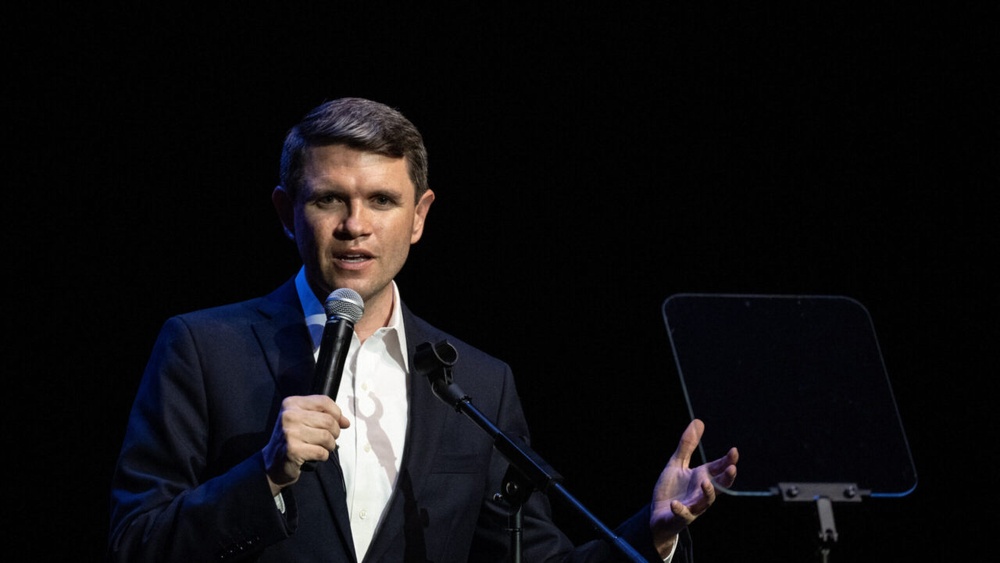
A conservative outlet platforms Democratic operatives' self-criticism to frame Talarico's candidacy as Black-vote deficient, relying on a one-sided chorus of attributed quotes and process-focused strategic critique rather than policy substance.
Texas is a traditionally Republican state where the Democratic nominee needs strong urban and Black turnout to compete; the primary results show Talarico won white precincts while Crockett dominated Black-precinct voting.
Automated analysis; not human reviewed. Limitations: The story is set in 2026, past my knowledge cutoff, so I cannot independently verify primary results, polling, or the quoted 34% Black-male-Trump statistic; analysis rests solely on the supplied text, which itself embeds a clearly promotional partisan sidebar that was excluded from the news-frame evaluation. · 24 of 54 available dimensions scored; omitted dimensions are not treated as neutral. · Verified supporting quotes for 14 of 24 scored dimensions.
Claim: The article uses selected Democratic sources and strategic framing to cast doubt on the Democratic nominee's viability with Black voters.
“Democrats are warning that their party's nominee to be the next senator for Texas, James Talarico, apparently lacks the amount of support from black voters he needs to flip the traditionally Republican state.” · verified after text normalization
Why: The framing choices (quoting Democratic critics, highlighting internal division, emphasizing a 34% Black-male-Trump figure attributed to a Democrat) cohere with conservative political incentives; however, the article maintains neutral, attributed, and process-focused language throughout.
Claim: The reporting is largely descriptive and relies on attributed statements rather than authorial opinion.
“Ashley Etienne, formerly the communications director for Democratic Vice President Kamala Harris, told “Meet the Press” host Kristen Welker on Sunday.” · exact text match
Why: The article consistently attributes opinions and data to named sources and includes verifiable figures (primary percentages, poll status), with no overt argumentation; the minimal authorial interpretation comes in the form of connective exposition of the sources' strategic criticism.
Claim: Slight sensationalism is present in the headline framing of 'worry' and the urgent 'playing to lose' quote.
““The investments aren’t there yet. And then you couple that with the fact that Elon Musk said he’s going to spend nearly $200 million on these races, and Texas is a huge target for that. And you’ve got a problem with black voters in Texas: you’ve got 34% of black men voting for Donald Trump. So if you’re going to wait until Labor Day to start campaigning with black voters, you’re playing to lose.”” · exact text match
Why: While quotes like 'playing to lose' come directly from a named source and are not the publisher's words, the editorial decision to lead the piece with 'worry' and 'apparently lacks' introduces a mildly alarmist, emotionally loaded tone despite the otherwise factual reporting.
Claim: The article is moderately interesting due to the revelatory internal-party criticism and specific data points.
“Crockett won 86% of the vote in heavily black precincts in Houston-centered Harris County, while Talarico carried predominantly white precincts by a roughly three-to-one ratio.” · exact text match
Why: The story of a party in disagreement plus concrete numbers on racial voting patterns in a toss-up Senate race provides a compelling, non-trivial narrative likely to interest political readers.
Claim: The article is largely descriptive but carries a prescriptive subtext about what the campaign should do to win Black support.
“Democrats’ concerns center on turnout as Talarico attempts to build the coalition necessary to win statewide in Texas.” · exact text match
Why: Reporting on strategic concerns is descriptive, but the implicit 'to win, he must do X' logic—drawn from the quoted Democratic operatives—carries a prescriptive weight, suggesting what the campaign should be doing (spending money, campaigning with Black voters).
Claim: The article does not trade in personal or salacious gossip but reports on political strategy and strategy.
“The Democrats’ concerns center on turnout as Talarico attempts to build the coalition necessary to win statewide in Texas.” · exact text match
Why: The article avoids personal attacks, unnamed 'sources close to,' or salacious commentary, instead attributing all concerns to real, named operatives and focusing on campaign mechanics.
Claim: The article is primarily factual with minimal opinion content.
“Talarico, for his part, announced a $25 million get-out-the-vote effort targeting black voters in July as he sought to win over Crockett’s supporters.” · exact text match
Why: While the framing is strategic, the language is predominantly neutral and informational; the 'for his part' phrasing introduces a slight subjective tone but does not constitute a full opinion column. The content is driven by quotes from named individuals with a stated stake in the outcome.
Claim: This is an inherently political story covering campaign strategy, candidates, and electoral politics.
“The article's subject is the upcoming U.S. Senate race in Texas between James Talarico and Ken Paxton.” · not found in supplied text
Why: The entire text is about a political campaign, its candidates, and its demographic strategies, and is published on a newspaper's political desk.
Claim: There is a mild tendency to simplify a complex state as 'traditionally Republican' with Black voters as a key swing bloc.
“the only way you win the state of Texas as a Democrat is if you overperform with Black voters” · exact text match
Why: The framing, even while attributed to a source and repeated in the summary, reduces a complex electoral map to a single demographic key, omitting other coalitions like Latino, rural, or suburban voters, but this is a quote from a source, not the writer's analysis.
Claim: The article relies on statements from political insiders and former officials to bolster its claims.
“Ashley Etienne, formerly the communications director for Democratic Vice President Kamala Harris, told “Meet the Press” host Kristen Welker on Sunday.” · exact text match
Why: Credibility for strategic claims rests on named Democratic operatives who are engaged in campaigning, thus their positions give weight to their assertions about the race's dynamics.
Claim: The article is clearly reported and mature in tone.
“The article's tone relies on quotes from adults in professional contexts and does not rely on name-calling or ad hominem attacks.” · not found in supplied text
Why: The language is formal and journalistic, using direct quotes and attributions, and avoids gossip, insults, tabloid-style hooks, or incivility, focusing on political substance.
Claim: The article does not rely on circular reasoning, but rather reports on the functionality of campaign strategy.
“Democrats’ concerns center on turnout” · exact text match
“Those concerns are presented as both a sign of weakness and a consequence of weak primary performance, though these are distinct.” · not found in supplied text
Why: The text follows a logical progression from primary result to strategic concern, without using a claim as its own proof or engaging in tautological reasoning.
Claim: There is no evident victimization narrative in the article.
“Concerns are framed as strategic problems to be solved rather than injustices to be endured; the Democrats express worry but do not claim aggrievement.” · not found in supplied text
Why: The framing focuses on campaign mechanics and soothing political commodity rather than positioning the candidate or the group as subjugated or persecuted, so the victim-identity dimension is absent.
Claim: The article does not exhibit overconfidence; it is carefully hedged with attributions and uncertainty.
“Recent polling place both candidates within the margin of error; Decision Desk HQ has rated the contest a toss-up.” · exact text match
Why: The text includes hedged language such as 'apparently' and explicitly notes the race is a 'toss-up' within the margin of error, demonstrating appropriate uncertainty rather than overclaiming.
Claim: The article exhibits no spam or ad-heavy characteristics.
“The article's body is a traditional news article with a clear narrative, and while the page may contain banner ads or a promotional book excerpt, these are visually separate and not part of the article content.” · not found in supplied text
Why: The main text is original journalism with factual claims and attributions rather than generic filler or clickbait, and promotes no product or service.
Claim: The article is emotionally neutral to pragmatic.
““I personally don’t feel like the excitement necessarily exists within the black community right now, like I don’t feel like they’re excited, right?”” · exact text match
Why: The emotional tone of the quotes, such as words like 'concern' or 'worry,' is naturally reported, but the surrounding narrative remains level-headed and effortful in maintaining a neutral, strategic analysis.
Claim: The article is credible based on its clear sourcing, use of verifiable data, and transparent presentation of conflicting views.
“The article reports and explains the source of its most striking statistic ('Etienne, ... told “Meet the Press” host Kristen Welker on Sunday' or 'said in June she did not plan to campaign for him').” · not found in supplied text
Why: The text correctly attributes claims and statistics to named individuals with specific credentials (e.g., former communications director, representative, podcast), uses exact primary-race numbers for context, and clearly labels uncertain factors as a 'toss-up,' demonstrating measurable integrity, despite the publisher's known conservative lean.
Claim: The article is not advertorial or promotional.
“This is a news story about a campaign; it does not identify that the paper is selling any product or service.” · not found in supplied text
Why: Like the spam dimension, the column promotes no product, doesn't use ad copy for a client, and exists as an independent news report.
Claim: The article engages in limited, clearly attributed speculation about the future election.
“Recent polling place both candidates within the margin of error; Decision Desk HQ has rated the contest a toss-up.” · exact text match
Why: The forward-looking claims about campaign success or the impact of spending are drawn from the quoted Democrats rather than developed by the author, and the one piece of forecasted data (toss-up rating) is explicitly credited.
Claim: The candor of the analysis is qualified by its selective selection of authorities and quotes.
“Ashley Etienne ... told “Meet the Press” host Kristen Welker on Sunday. “But the challenge is: the only way you win the state of Texas as a Democrat is if you overperform with Black voters.”” · not found in supplied text
Why: While these are direct quotes from a source presented faithfully, the article’s framing—highlighting spats, internal criticism, and a potentially misleading 34% stat—and selection bias in source choice could lead a reader to a more cynical conclusion about the candidate's viability than a more fully explored policy feature would offer; this is subtle and perhaps characteristic of the news genre rather than intentional manipulation.
Claim: The article is likely human-written.
“The syntax and reporting are standard due to repeated named sources and specific data points, such as '52.4% to 46.2%.'” · not found in supplied text
Why: The text flows naturally around direct quotes and uses domain-specific knowledge of campaigns, political fundraising, and Texas demographics. It contains no obvious AI-typical constructions such as repetitive phrasing, hedging language like 'it is important to note,' or superfluous conclusions.
Claim: The reporting is honest and fair in its sourcing and attribution.
“Etienne’s warning follows that of Democratic Texas Rep. Jasmine Crockett, who fell short in the March 3, 2026, Senate primary to Talarico, 52.4% to 46.2%.” · exact text match
Why: The piece clearly attributes opinions, provides precise numbers to verify claims, and does not misrepresent that some viewpoints belong to specific political actors; it also includes context that Crockett endorsed Talarico, showing a balance of information.
Claim: The article demonstrates above-average intelligence in its analytical reporting and use of precise, data-driven stories.
“Crockett won 86% of the vote in heavily black precincts in Houston-centered Harris County, while Talarico carried predominantly white precincts by a roughly three-to-one ratio.” · exact text match
Why: The text integrates substantive data (precinct-level vote shares, poll margins) to support a 'toss-up' assessment, reflecting a nuanced understanding rather than superficial partisan punditry.
The story is set in 2026, past my knowledge cutoff, so I cannot independently verify primary results, polling, or the quoted 34% Black-male-Trump statistic; analysis rests solely on the supplied text, which itself embeds a clearly promotional partisan sidebar that was excluded from the news-frame evaluation.
2026 © Helium Trades
Privacy Policy & Disclosure
* Disclaimer: Nothing on this website constitutes investment advice, performance data or any recommendation that any particular security, portfolio of securities, transaction or investment strategy is suitable for any specific person. Helium Trades is not responsible in any way for the accuracy
of any model predictions or price data. Any mention of a particular security and related prediction data is not a recommendation to buy or sell that security. Investments in securities involve the risk of loss. Past performance is no guarantee of future results. Helium Trades is not responsible for any of your investment decisions,
you should consult a financial expert before engaging in any transaction.