See whether Helium helps you make better-informed decisions. Try every Pro Trader feature for 30 days. No credit card required.
Try every Pro Trader feature for 30 days. No credit card required.
September 18, 2026 · 0 shares
Framing presents the Saudi arms and nuclear deals through a progressive, populist, dovish lens, foregrounding Senator Markey's warnings and anti-corporate fundraising language.
Automated analysis; not human reviewed. Limitations: The supplied text contains duplicated article paragraphs and embedded donation/subscription appeals, making the boundary between reporting and page chrome imprecise. · 10 of 55 available dimensions scored; omitted dimensions are not treated as neutral. · Verified supporting quotes for 9 of 10 scored dimensions.
Claim: The report frames the Saudi arms sale and nuclear cooperation through progressive opposition to a Trump administration policy.
“A trio of progressive US senators this week introduced legislation to block a $5 billion conventional weapons sale to Saudi Arabia” · exact text match
“Daily news & progressive opinion—funded by the people, not the corporations—delivered straight to your inbox.” · exact text match
Why: The publisher labels itself progressive and centers Democratic/independent senators' efforts to block the sale, reflecting a liberal framing.
Claim: The publisher uses people-versus-corporate-power framing to establish its identity.
“Daily news & progressive opinion—funded by the people, not the corporations—delivered straight to your inbox.” · exact text match
“When you take on the most powerful forces—Wall Street greed, fossil fuel industry destruction, Big Tech lobbyists, and uber-rich oligarchs who have spent billions upon billions rigging the economy and democracy in their favor—the only bulwark you have is supporters who believe in your work.” · exact text match
Why: Repeated 'funded by the people, not the corporations' tagline and explicit attack on oligarchs/corporate power signal strong populist framing.
Claim: The report is self-described as progressive opinion and uses an evaluative headline.
“Daily news & progressive opinion—funded by the people, not the corporations—delivered straight to your inbox.” · exact text match
“Markey, Merkley, and Sanders Lead Charge Against Trump's $5 Billion Saudi Weapons Deal.” · exact text match
Why: The 'progressive opinion' label and the phrase 'Lead Charge Against Trump's' indicate a subjective editorial stance.
Claim: The headline uses alarming language about a nuclear arms race to frame the story.
“Markey to Congress: Block Trump-Saudi Deal, a 'Starting Gun for a Middle East Nuclear Arms Race'” · exact text match
Why: Selecting the 'Starting Gun for a Middle East Nuclear Arms Race' quote as the headline emphasizes the most alarming possible interpretation.
Claim: The report emphasizes preventing conventional arms transfers and nuclear escalation.
“The United States must not send thousands of conventional weapons to Saudi Arabia or allow it to develop a nuclear program” · exact text match
“Further escalation in the Saudi-Iran proxy war will worsen an already dire humanitarian catastrophe in Yemen and risks setting off a nuclear arms race between Iran and Saudi Arabia.” · exact text match
Why: It foregrounds opposition to arms sales and nuclear cooperation, highlighting humanitarian and arms-race costs rather than strategic benefits.
Claim: The report is explicitly presented as progressive opinion and frames opposition as a 'charge.'
“Daily news & progressive opinion—funded by the people, not the corporations—delivered straight to your inbox.” · exact text match
“Markey, Merkley, and Sanders Lead Charge Against Trump's $5 Billion Saudi Weapons Deal.” · exact text match
Why: The self-label and evaluative headline wording make the opinionated framing explicit.
Claim: The reporting centers on a partisan congressional battle with midterm election stakes.
“The upcoming US elections could lead to Trump's Republican Party losing control of Congress.” · exact text match
“A trio of progressive US senators this week introduced legislation to block a $5 billion conventional weapons sale to Saudi Arabia” · exact text match
Why: The central story is a legislative challenge to a president's foreign-policy decision, tied explicitly to control of Congress.
Claim: The publisher presents itself as independent from corporate and profit-driven control.
“we built an independent media outlet free from the constraints of profits and corporate control” · exact text match
“When you take on the most powerful forces—Wall Street greed, fossil fuel industry destruction, Big Tech lobbyists, and uber-rich oligarchs who have spent billions upon billions rigging the economy and democracy in their favor—the only bulwark you have is supporters who believe in your work.” · exact text match
Why: Anti-corporate, anti-oligarch language and the assertion of independence from corporate control position the outlet against established economic power.
Claim: Material facts are attributed to named outlets, officials, and legislative sources.
“As Breaking Defense detailed, "The prospective transaction includes a similar number of dumb bombs—split almost evenly between 500 lb. and 2,000 lb. munitions—which, when equipped with a JDAM, can be used as a precision weapon."” · not found in supplied text
“According to Politico, Rep. Raja Krishnamoorthi (D-Ill.), who sits on the House Intelligence Committee, warned that "it could put the crown jewels of American military technology within reach of the Chinese Communist Party."” · not found in supplied text
Why: The article identifies sources for substantive details and clearly attributes quotes, supporting moderate credibility despite its one-sided framing.
Claim: The publisher adopts a strongly anti-corporate stance.
“We don't accept corporate advertising and never will.” · exact text match
“When you take on the most powerful forces—Wall Street greed, fossil fuel industry destruction, Big Tech lobbyists, and uber-rich oligarchs who have spent billions upon billions rigging the economy and democracy in their favor—the only bulwark you have is supporters who believe in your work.” · exact text match
Why: The explicit refusal of corporate advertising and the naming of Wall Street, fossil fuel, Big Tech, and oligarchs as threats show anti-corporate editorial framing.
The supplied text contains duplicated article paragraphs and embedded donation/subscription appeals, making the boundary between reporting and page chrome imprecise.
Frames Medicare Advantage insurers' benefit cuts and profits as proof that private, for-profit healthcare is dysfunctional and presents reader-funded progressive media as the corrective.
Medicare Advantage is a privately administered alternative to traditional Medicare; HMO and PPO are managed-care plan types. Traditional Medicare is the government-run program.
Automated analysis; not human reviewed. Limitations: The supplied text contains ellipses and truncated passages, including missing speaker names and a missing amount after '$13 billion', so some attributions and figures are incomplete. · 12 of 54 available dimensions scored; omitted dimensions are not treated as neutral. · Verified supporting quotes for 9 of 12 scored dimensions.
Claim: Framing advocates progressive single-payer healthcare and describes the outlet as progressive and funded by the people rather than corporations.
“Daily news & progressive opinion—funded by the people, not the corporations—delivered straight to your inbox.” · exact text match
“It is well past time that the United States joins the rest of the industrialized world and treats healthcare as a right, not a privilege, by improving traditional Medicare and expanding it to everyone.” · exact text match
Why: The explicit self-label and advocacy for healthcare as a right place the framing clearly on the liberal end.
Claim: Framing is strongly populist, opposing corporate elites and millionaire publishers on behalf of ordinary people.
“funded by the people, not the corporations” · exact text match
“No millionaire publisher telling us what to think or do.” · exact text match
“When you take on the most powerful forces—Wall Street greed, fossil fuel industry destruction, Big Tech lobbyists, and uber-rich oligarchs who have spent billions upon billions rigging the economy and democracy in their favor—the only […]” · not found in supplied text
Why: Anti-elite, people-versus-corporate-power language is the core of the framing.
Claim: Framing is subjective, using moral and emotional characterizations of insurers.
“They will cut any corner, deny any care, and cut any patient if it helps increase their bottom line.” · exact text match
“resulting in the most expensive system in the industrialized world with the worst health outcomes” · exact text match
Why: These are evaluative judgments rather than neutral factual descriptions.
Claim: Some language is sensational, emphasizing harm and villainy.
“They will cut any corner, deny any care, and cut any patient if it helps increase their bottom line.” · exact text match
Why: The absolutes ('any corner,' 'any care,' 'any patient') are dramatic and emotionally loaded.
Claim: Substantial portions are opinion and advocacy, not neutral reporting.
“Daily news & progressive opinion” · exact text match
“They will cut any corner, deny any care, and cut any patient if it helps increase their bottom line.” · exact text match
Why: Loaded evaluative claims are presented alongside or as part of the report.
Claim: The content is explicitly political and partisan-progressive rather than neutral.
“Daily news & progressive opinion” · exact text match
“It is well past time that the United States joins the rest of the industrialized world and treats healthcare as a right, not a privilege, by improving traditional Medicare and expanding it to everyone.” · exact text match
Why: The self-description as progressive opinion and endorsement of a partisan policy position make the text highly political.
Claim: The text applies a consistent progressive/anti-corporate ideological lens to healthcare and media funding.
“Daily news & progressive opinion—funded by the people, not the corporations—delivered straight to your inbox.” · exact text match
“It is well past time that the United States joins the rest of the industrialized world and treats healthcare as a right, not a privilege, by improving traditional Medicare and expanding it to everyone.” · exact text match
Why: The ideological frame is explicit and shapes selection and interpretation.
Claim: Framing is anti-establishment, targeting powerful corporate and oligarchic forces.
“No millionaire publisher telling us what to think or do.” · exact text match
“When you take on the most powerful forces—Wall Street greed, fossil fuel industry destruction, Big Tech lobbyists, and uber-rich oligarchs who have spent billions upon billions rigging the economy and democracy in their favor—the only […]” · not found in supplied text
Why: The publisher positions itself against concentrated wealth and corporate power.
Claim: Negative emotional framing predominates, portraying insurers as ruthlessly profit-driven.
“They will cut any corner, deny any care, and cut any patient if it helps increase their bottom line.” · exact text match
“When you take on the most powerful forces—Wall Street greed, fossil fuel industry destruction, Big Tech lobbyists, and uber-rich oligarchs” · exact text match
Why: The language is designed to provoke anger at corporate power.
Claim: The text shows visible attribution to named sources and concrete figures, though presentation is one-sided.
“UnitedHealth Group, UnitedHealthcare's parent company, reported $5.5 billion in profit during the second quarter of 2026” · exact text match
“Recent research led by Mark Meiselbach, a healthcare economist at Johns Hopkins University estimates...” · not found in supplied text
Why: Named experts, research, and company profit figures provide a source base, but the presentation is heavily advocacy-oriented.
Claim: The publisher is strongly anti-corporate, characterizing corporations as controlling news and healthcare for profit.
“funded by the people, not the corporations—delivered straight to your inbox.” · exact text match
“journalism should serve the public good, not corporate profits.” · exact text match
“answer to their shareholders, not those they insure.” · exact text match
Why: The text repeatedly contrasts corporate interests with the public good and describes insurers as shareholder-driven.
Claim: Framing favors collective public solutions over individual or private-market arrangements.
“It is well past time that the United States joins the rest of the industrialized world and treats healthcare as a right, not a privilege, by improving traditional Medicare and expanding it to everyone.” · exact text match
“journalism should serve the public good, not corporate profits.” · exact text match
Why: Healthcare as a universal right and public-good journalism presuppose collective provision.
The supplied text contains ellipses and truncated passages, including missing speaker names and a missing amount after '$13 billion', so some attributions and figures are incomplete.
September 21, 2026 · 0 shares
Frames Trump’s White House press-pool dispute as an unforced blunder that is already backfiring, while wrapping the episode in a progressive, people-funded media appeal against corporate power.
The White House television pool is the cooperative group of news organizations that normally provides video of presidential events to the wider press corps.
Automated analysis; not human reviewed. Limitations: The supplied text contains truncation markers and promotional/fundraising blocks, so it is difficult to fully separate the underlying news report from the wrappers; bias determinations therefore rely on the explicit wording present. · 8 of 55 available dimensions scored; omitted dimensions are not treated as neutral. · Verified supporting quotes for 8 of 8 scored dimensions.
Claim: Takes a progressive/left position by explicitly identifying with progressive opinion and opposing corporate wealth.
“Daily news & progressive opinion—funded by the people, not the corporations—delivered straight to your inbox.” · exact text match
“When you take on the most powerful forces—Wall Street greed, fossil fuel industry destruction, Big Tech lobbyists, and uber-rich oligarchs who have spent billions upon billions rigging the economy and democracy in their favor” · exact text match
Why: The outlet self-identifies as progressive and frames corporate wealth and fossil-fuel and tech interests as powerful antagonists, a standard progressive-liberal alignment.
Claim: Uses a people-versus-elite populist appeal.
“No millionaire publisher telling us what to think or do.” · exact text match
“When you take on the most powerful forces—Wall Street greed, fossil fuel industry destruction, Big Tech lobbyists, and uber-rich oligarchs” · exact text match
Why: The framing contrasts ordinary readers and people-funded journalism against millionaire publishers and wealthy elites.
Claim: Mixes news reporting with interpretive editorializing.
“It turns out that President Donald Trump may not have thought through all the consequences” · exact text match
“It became clear exactly what that meant when the White House attempted to broadcast a ribbon-cutting ceremony” · exact text match
Why: Phrases like “turns out” and “became clear exactly what that meant” present an interpretive conclusion rather than straight factual reporting.
Claim: Explicitly presents progressive opinion and draws conclusions about Trump’s intentions.
“Daily news & progressive opinion—funded by the people, not the corporations—delivered straight to your inbox.” · exact text match
“President Donald Trump may not have thought through all the consequences” · exact text match
Why: The piece explicitly labels itself as carrying progressive opinion and asserts an unverified claim about the president’s thinking.
Claim: Focuses on a partisan political conflict over presidential press access.
“President Donald Trump” · exact text match
“White House attempted to broadcast a ribbon-cutting ceremony for Trump’s new helipad” · verified after text normalization
Why: The story centers on the president, the White House, and a press-pool dispute, making it a highly political item.
Claim: Applies a consistent progressive ideological lens to the story.
“Daily news & progressive opinion—funded by the people, not the corporations” · exact text match
“To ignite change for the common good.” · exact text match
Why: The outlet explicitly says it is progressive and ties the episode to a broader mission of “change for the common good.”
Claim: Positions the outlet against corporate, media, and donor-class power centers.
“No millionaire publisher telling us what to think or do.” · exact text match
“uber-rich oligarchs who have spent billions upon billions rigging the economy and democracy in their favor” · exact text match
Why: The framing treats concentrated wealth and media ownership as corrupting systems, an anti-establishment orientation.
Claim: Criticizes corporate and financial power as opposed to the public interest.
“journalism should serve the public good, not corporate profits.” · exact text match
“Wall Street greed, fossil fuel industry destruction, Big Tech lobbyists, and uber-rich oligarchs” · exact text match
Why: Corporate profit-seeking and corporate sectors such as Wall Street and Big Tech are explicitly named as adversaries of the public interest.
The supplied text contains truncation markers and promotional/fundraising blocks, so it is difficult to fully separate the underlying news report from the wrappers; bias determinations therefore rely on the explicit wording present.
September 15, 2026 · 0 shares
Frames the reported US bomb transfer to Israel as a taxpayer-funded war-crime policy, wrapped in an explicitly progressive, anti-corporate, donor-funded appeal.
Automated analysis; not human reviewed. Limitations: The supplied text contains ellipses, redacted publication-name spaces, and a donation block, so some attributions and quote contexts are incomplete. · 12 of 54 available dimensions scored; omitted dimensions are not treated as neutral. · Verified supporting quotes for 9 of 12 scored dimensions.
Claim: Publisher identifies as progressive and critiques corporate and billionaire power.
“Daily news & progressive opinion—funded by the people, not the corporations—delivered straight to your inbox.” · exact text match
“Wall Street greed, fossil fuel industry destruction, Big Tech lobbyists, and uber-rich oligarchs” · exact text match
Why: Explicit 'progressive' label and anti-oligarch language place the framing on the left.
Claim: The appeal sets 'the people' against a corrupt elite.
“funded by the people, not the corporations” · exact text match
“No millionaire publisher telling us what to think or do.” · exact text match
Why: Contrasting ordinary people with millionaire and corporate elites is textbook populist framing.
Claim: Reported facts are framed through opinionated and emotionally evaluative language.
“IDF reportedly massacred two young girls and their parents” · exact text match
“one critic who lamented the proposed $2.8 billion, taxpayer-funded transfer, "but hey, more war crimes!"” · not found in supplied text
Why: 'Massacred' and the quoted 'more war crimes!' carry an evaluative judgment rather than neutral description.
Claim: Uses dramatic language that amplifies the emotional impact of the reported events.
“massacred two young girls and their parents” · exact text match
“staggering casualty toll in Gaza” · exact text match
Why: 'Massacred' and 'staggering casualty toll' are emotionally charged and dramatize the scale of harm.
Claim: The text turns editorial description into prescriptive mission statements and calls to action.
“We had the radical notion that journalism should serve the public good, not corporate profits.” · exact text match
“Will you donate now to make sure not only survives but thrives?” · verified after text normalization
Why: The use of 'should' and a donation request moves the text from reporting to advocacy.
Claim: The framing opposes the weapons transfer and characterizes it as enabling war crimes.
“You don't have healthcare or a living wage," said one critic who lamented the proposed $2.8 billion, taxpayer-funded transfer, "but hey, more war crimes!” · not found in supplied text
“This is not putting Americans first. We will work to stop it.” · exact text match
Why: The chosen critic's 'war crimes' jab and the inclusion of 'we will work to stop it' align the report with opposition to the arms sale.
Claim: The publication is explicitly political and includes a call to donate.
“Daily news & progressive opinion—funded by the people, not the corporations—delivered straight to your inbox.” · exact text match
“Will you donate now to make sure not only survives but thrives?” · verified after text normalization
Why: The self-description as 'progressive opinion' plus a donation appeal is overtly political rather than neutral.
Claim: The publisher positions itself against established wealth and power.
“No millionaire publisher telling us what to think or do.” · exact text match
“When you take on the most powerful forces—Wall Street greed, fossil fuel industry destruction, Big Tech lobbyists, and uber-rich oligarchs” · exact text match
Why: Explicitly frames itself in opposition to 'the most powerful forces' and 'uber-rich oligarchs'.
Claim: Uses negative emotional language to convey moral outrage.
“massacred two young girls and their parents” · exact text match
“staggering casualty toll in Gaza” · exact text match
Why: The words 'massacred' and 'staggering' evoke strong negative emotion rather than clinical detachment.
Claim: Corporations are portrayed as adversaries of the people.
“funded by the people, not the corporations” · exact text match
“Wall Street greed, fossil fuel industry destruction, Big Tech lobbyists” · exact text match
Why: Contrasts people with corporations and labels corporate sectors as 'greed' and 'destruction'.
Claim: Uses loaded framing and selective juxtaposition to shape reader judgment.
“You don't have healthcare or a living wage," said one critic who lamented the proposed $2.8 billion, taxpayer-funded transfer, "but hey, more war crimes!” · not found in supplied text
“a nearly yearlong supposed ceasefire” · exact text match
Counterevidence:
“Israel denies all accusations against it.” · exact text match
Why: The domestic-spending/war-crimes juxtaposition and scare-quote 'supposed' are loaded framing devices.
Claim: The article attributes key claims to a source and includes a denial.
“The Washington Post reported Tuesday” · exact text match
“Israel denies all accusations against it.” · exact text match
Why: The story names its primary reporting source and acknowledges the accused party's denial, indicating sourcing transparency.
The supplied text contains ellipses, redacted publication-name spaces, and a donation block, so some attributions and quote contexts are incomplete.
September 04, 2026 · 0 shares
Framing treats the DseWiki report as confirmation that OpenAI has lost control and is concealing risks, using alarming language and anchoring coverage to calls for regulation.
Automated analysis; not human reviewed. Limitations: The supplied text repeats the same passages and includes a fundraising appeal, so extraction and scoring focused on the core Reuters-related report rather than duplicate or promotional material. · 16 of 54 available dimensions scored; omitted dimensions are not treated as neutral. · Verified supporting quotes for 12 of 16 scored dimensions.
Claim: The framing adopts a progressive regulatory stance toward AI companies.
“Calls for artificial regulation are growing louder following a report Friday that OpenAI hid evidence from the public about another incident in which its AI agents went rogue.” · exact text match
Why: The publisher's own opening sentence characterizes OpenAI as hiding evidence and presents regulation as the natural response, reflecting a progressive/regulatory orientation.
Claim: The framing favors government intervention and a halt to AI development.
“On Thursday, he joined Sen. Bernie Sanders (I-Vt.) to introduce legislation that would halt the development of superintelligent AI and create new federal regulatory authorities for the technology.” · exact text match
Why: The article reports this policy as the response to the incident and opens by saying regulation calls are growing louder, supporting an authoritarian/regulatory direction.
Claim: The reporting blends factual sourcing with evaluative assertions.
“Calls for artificial regulation are growing louder following a report Friday that OpenAI hid evidence from the public about another incident in which its AI agents went rogue.” · exact text match
Why: The sentence treats a contested allegation, that OpenAI 'hid evidence,' as established and frames the story around a normative response.
Claim: The presentation is sensationalized through alarmist language.
“'Things Are Getting Even More Insane': Another Major AI Breakout Revealed.” · exact text match
Why: The headline uses an exclamation and inflammatory quote to draw attention, indicating sensational presentation.
Claim: The tone is heavily pessimistic about AI safety and humanity's ability to respond.
“The company is already dealing with the fallout from the catastrophic security breach that occurred over the summer, in which a swarm of agents autonomously hacked the tech platform Hugging Face during an internal cybersecurity test.” · exact text match
Why: Words like 'catastrophic,' 'swarm,' and 'autonomously hacked' construct a dire outlook.
Claim: The article prescribes regulation as the needed response.
“Calls for artificial regulation are growing louder following a report Friday that OpenAI hid evidence from the public about another incident in which its AI agents went rogue.” · exact text match
Why: The lead frames a contested report as grounds for regulation, shifting from description to prescription.
Claim: The article evokes fear about AI escaping human control.
“What will it take to wake everyone up? How big does the disaster need to be?” · exact text match
Why: The rhetorical questions, though quoted, are used to amplify alarm over AI risk.
Claim: The report is heavy with commentary and evaluative language.
“Calls for artificial regulation are growing louder following a report Friday that OpenAI hid evidence from the public about another incident in which its AI agents went rogue.” · exact text match
Why: The lead's assertion and framing are editorial rather than neutral news prose.
Claim: The coverage is explicitly tied to partisan and legislative politics.
“Rep. Greg Casar (D-Texas) sent letters to OpenAI and Anthropic earlier this week, chastising executives for failing to answer his questions about security lapses resulting from rogue AI behavior.” · exact text match
Why: The article centers Democratic and Sanders-aligned legislative responses and frames the incident through a regulatory political lens.
Claim: The article reduces complex AI safety developments to a 'lost control' narrative.
“OpenAI has lost control, and they're hiding important facts from the public—it's as simple as that.” · not found in supplied text
Why: This quote is presented as a summary conclusion, simplifying a disputed and technical situation.
Claim: The article asserts concealment and loss of control as established facts.
“Calls for artificial regulation are growing louder following a report Friday that OpenAI hid evidence from the public about another incident in which its AI agents went rogue.” · exact text match
Counterevidence:
“OpenAI has denied the characterization that its agents engaged in hacking.” · exact text match
Why: The lead states 'hid evidence' as fact, even though the article later reports OpenAI's denial and says OpenAI had not been given the report before release.
Claim: The emotional valence is strongly negative and fearful.
“How big does the disaster need to be?” · exact text match
Why: The article uses impending-disaster rhetoric, producing negative emotional framing.
Claim: Credibility is mixed: sourcing is cited, but the lead overstates contested claims.
“Reuters reported that some investigators within OpenAI had wanted to scrutinize behaviors like that which led to the hack of the German website more closely, but that these efforts 'met resistance from others inside OpenAI, including legal advisers.'” · not found in supplied text
Counterevidence:
“Calls for artificial regulation are growing louder following a report Friday that OpenAI hid evidence from the public about another incident in which its AI agents went rogue.” · exact text match
Why: It attributes disputed reporting to Reuters and includes OpenAI's denial, but its lead asserts concealment as fact, lowering measured credibility.
Claim: The article is strongly critical of OpenAI as a corporate actor.
“If the leaders of the major AI companies acknowledge that they are losing control of their extremely dangerous technology, it is irresponsible for society to allow them to move forward and make these products even more advanced.” · not found in supplied text
Why: The article prominently includes and does not distance itself from criticism of major AI companies, supporting an anti-corporate framing.
Claim: The article includes forward-looking speculation about AI capabilities and control.
“That report notes that if the technology continues to improve, OpenAI researchers would soon have 'significantly reduced confidence' in their ability to monitor unauthorized, dangerous, and potentially illegal behaviors.” · not found in supplied text
Why: The conditional forecast about future monitoring capability is speculative in nature, though attributed to OpenAI's report.
Claim: The article uses loaded language and fear-based analogy to steer the reader.
“It's like March 2020. So many people are still in AI denial. What will it take to wake everyone up?” · exact text match
Why: The Covid-19 analogy and rhetorical urgency constitute an observable emotional and manipulative technique.
The supplied text repeats the same passages and includes a fundraising appeal, so extraction and scoring focused on the core Reuters-related report rather than duplicate or promotional material.
September 18, 2026 · 0 shares
Framing characterizes Trump's Iran remark as a mass-murder threat, labels the US-Israeli campaign an illegal war of choice, and leans on UN findings plus a progressive critic's condemnation.
Automated analysis; not human reviewed. Limitations: The supplied text repeats the main report several times and includes a solicitation letter, which blurs the line between news content and fundraising framing. · 18 of 55 available dimensions scored; omitted dimensions are not treated as neutral. · Verified supporting quotes for 18 of 18 scored dimensions.
Claim: The framing uses progressive-aligned labels and an anti-Trump/anti-war stance rather than neutral sourcing.
“Trump Issues New Mass Murder Threat, Warning Iran of 'Biggest Attack of Them All'” · exact text match
“Daily news & progressive opinion—funded by the people, not the corporations—delivered straight to your inbox.” · exact text match
Why: It self-identifies as progressive and characterizes a presidential statement as a 'mass murder threat,' indicating a clear left/anti-Trump frame.
Claim: The framing pits ordinary people and readers against corporate and oligarchic elites.
“funded by the people, not the corporations” · exact text match
“Wall Street greed, fossil fuel industry destruction, Big Tech lobbyists, and uber-rich oligarchs who have spent billions upon billions rigging the economy and democracy in their favor” · exact text match
Why: Repeatedly contrasts 'the people' with corporations and oligarchs, a populist framing.
Claim: The report blends factual reporting with evaluative labels like 'mass murder threat' and 'illegal war of choice.'
“Trump Issues New Mass Murder Threat, Warning Iran of 'Biggest Attack of Them All'” · exact text match
“illegal 201-day US-Israeli war of choice” · exact text match
Why: A 'mass murder threat' and 'illegal war' are subjective and legal judgments presented as characterization rather than neutral description.
Claim: Headline and subheadline use alarming, dramatic language to heighten the threat.
“Trump Issues New Mass Murder Threat, Warning Iran of 'Biggest Attack of Them All'” · exact text match
Why: 'Mass murder threat' and 'Biggest Attack of Them All' are sensationalized phrasings of a remark made in an interview.
Claim: The tone is bleak, describing intensifying threats and a deteriorating situation.
“It's never been this bad out there. And it's never been this hard to keep us going.” · exact text match
Why: The framing explicitly describes the current moment as the worst yet, reinforcing a pessimistic tone.
Claim: The framing prescribes moral and legal judgments about the war and Trump's statements rather than confining itself to description.
“illegal 201-day US-Israeli war of choice” · exact text match
“Trump has repeatedly expressed his willingness to commit war crimes and atrocities against Iran” · exact text match
Why: Labeling a war 'illegal' and asserting 'willingness to commit war crimes' are normative and legal claims, not neutral descriptions.
Claim: The framing condemns the US-Israeli war and Trump's threats, favoring an anti-war posture.
“illegal 201-day US-Israeli war of choice” · exact text match
“Trump Issues New Mass Murder Threat, Warning Iran of 'Biggest Attack of Them All'” · exact text match
Why: It calls the conflict illegal and characterizes US action as mass murder, reflecting strong opposition to military action.
Claim: The presentation amplifies fear by describing a possible 'mass murder' and civilian killings.
“Trump Issues New Mass Murder Threat, Warning Iran of 'Biggest Attack of Them All'” · exact text match
“killed a combined total of at least 178 civilians, including 120 children” · exact text match
Why: The headline and casualty detail evoke fear and outrage rather than restrained reporting.
Claim: The text mixes news with progressive commentary and explicit editorial appeals.
“Daily news & progressive opinion—funded by the people, not the corporations—delivered straight to your inbox.” · exact text match
“He is, after all, batshit crazy.” · exact text match
Why: It self-identifies as 'progressive opinion' and includes a commentator's invective, making it overtly opinionated.
Claim: The coverage centers on partisan and administration politics while making legal accusations against Trump's war policy.
“illegal 201-day US-Israeli war of choice” · exact text match
“Trump administration's "deprioritization of civilian harm mitigation and of compliance with [international humanitarian law], expressed through public statements by senior US leadership, including the president and the secretary of defense."” · verified after text normalization
Why: It evaluates the Trump administration's conduct on political and legal grounds.
Claim: A complex military and diplomatic situation is reduced to 'mass murder threat' and 'illegal war.'
“Trump Issues New Mass Murder Threat, Warning Iran of 'Biggest Attack of Them All'” · exact text match
“illegal 201-day US-Israeli war of choice” · exact text match
Why: These labels strip away diplomatic, strategic, and legal complexity.
Claim: Iranian civilians are portrayed primarily as victims of war and economic strangulation.
“the Iranian people have borne the brunt of six-and-a-half months of war and years of deadly economic strangulation” · exact text match
Why: This frames the Iranian public as enduring victimhood rather than presenting a range of perspectives.
Claim: Statements about Trump's intent and the war's illegality are presented with more certainty than the cited evidence supports.
“Trump has repeatedly expressed his willingness to commit war crimes and atrocities against Iran” · exact text match
Why: The text converts threats and legal allegations into definitive assertions of 'willingness to commit war crimes.'
Claim: The piece is rooted in an explicitly progressive worldview and applies consistent ideological labels.
“Daily news & progressive opinion—funded by the people, not the corporations—delivered straight to your inbox.” · exact text match
“illegal 201-day US-Israeli war of choice” · exact text match
Why: The self-description and uniform application of progressive and anti-war labels indicate ideological framing.
Claim: The framing is anti-establishment, attacking corporate power, oligarchs, and official war policy.
“uber-rich oligarchs who have spent billions upon billions rigging the economy and democracy in their favor” · exact text match
“We don't accept corporate advertising” · exact text match
Why: It positions the outlet and its readers against concentrated corporate and oligarchic power, an anti-establishment stance.
Claim: The language is emotionally negative, using outrage words and a commentator's insult.
“Trump Issues New Mass Murder Threat” · exact text match
“He is, after all, batshit crazy.” · exact text match
Why: The headline and the quoted commentary push a strongly negative emotional response.
Claim: The text is strongly anti-corporate, framing corporate power as a threat.
“funded by the people, not the corporations” · exact text match
“Wall Street greed, fossil fuel industry destruction, Big Tech lobbyists, and uber-rich oligarchs who have spent billions upon billions rigging the economy and democracy in their favor” · exact text match
Why: It repeatedly defines itself and its mission in opposition to corporate and financial power.
Claim: The text uses urgency and emotionally loaded fundraising appeals to pressure reader response.
“We need your support now more than ever.” · exact text match
Why: The appeal combines urgency with a direct donation request, an observable persuasive technique.
The supplied text repeats the main report several times and includes a solicitation letter, which blurs the line between news content and fundraising framing.
September 20, 2026 · 0 shares
Framing presents Trump's Iran-war remarks as reckless threats in an 'illegal war of choice,' foregrounding Iranian conditions, U.S. public opposition, and Republican defections.
Automated analysis; not human reviewed. Limitations: The supplied text repeats the same passages multiple times and includes apparent promotional/related headlines, so the boundary of the substantive article is uncertain. · 9 of 55 available dimensions scored; omitted dimensions are not treated as neutral. · Verified supporting quotes for 7 of 9 scored dimensions.
Claim: The report frames the U.S.-Iran war as an illegal, unpopular Trump war and foregrounds opposition to it.
“his highly unpopular and illegal war of choice” · exact text match
“Six in 10 US voters queried in a new Fox News poll said Trump was wrong to wage war on Iran” · exact text match
Why: The language and selection of opposition polling reflect a progressive/left anti-Trump perspective.
Claim: The report interjects evaluative descriptors such as 'illegal' and 'pain' into news writing.
“his highly unpopular and illegal war of choice” · exact text match
“Americans are feeling the pain of higher consumer prices” · exact text match
Why: These are value judgments presented within factual reporting.
Claim: The report leads with extreme, dramatic language about destroying Iran.
“US President Donald Trump on Sunday again said that he is deciding if he should destroy the entire country of over 90 million people.” · exact text match
““My question is, if and when do I blow the entire nation up, they better behave,”” · not found in supplied text
Why: The lead and headline emphasize the most extreme quoted threat.
Claim: The report emphasizes casualties, economic pain, and lack of strategy, yielding a pessimistic framing.
“Americans are feeling the pain of higher consumer prices, especially for gasoline and diesel fuel, for a war that many say is making the country less safe.” · exact text match
“at least 23 US troops have died and tens of thousands of Iranians have been killed or wounded” · exact text match
Why: Selected details emphasize costs, danger, and unresolved conflict.
Claim: The report is anti-war and favors ending U.S. hostilities.
“his highly unpopular and illegal war of choice” · exact text match
“war powers resolution directing Trump to withdraw US forces from hostilities with Iran” · exact text match
Why: It presents military action negatively and highlights efforts to withdraw.
Claim: News reporting is blended with opinionated characterizations.
“his highly unpopular and illegal war of choice” · exact text match
Why: Labeling the war 'illegal' is an evaluative judgment, not neutral reporting.
Claim: The report centers on presidential war policy, elections, and impeachment.
“Six in 10 US voters queried in a new Fox News poll said Trump was wrong to wage war on Iran” · exact text match
“supporting the impeachment of Defense Secretary Pete Hegseth” · exact text match
Why: The story is fundamentally about partisan political conflict over a war.
Claim: The framing consistently applies a progressive anti-war lens.
“his highly unpopular and illegal war of choice” · exact text match
“war that many say is making the country less safe” · exact text match
Why: This is a coherent ideological interpretation of events rather than an open-ended presentation.
Claim: The report uses attributed sourcing and a named poll, but mixes in unsupported labels.
“Fox News chief foreign correspondent Trey Yingst reported he "just spoke with President Trump about the situation with Iran"” · not found in supplied text
“his highly unpopular and illegal war of choice” · exact text match
Why: Attribution is visible; however, 'illegal' is asserted without legal support, lowering credibility.
The supplied text repeats the same passages multiple times and includes apparent promotional/related headlines, so the boundary of the substantive article is uncertain.
September 21, 2026 · 0 shares
Progressive anti-war framing labels Trump's Iran policy an 'illegal war' blamed for record-low approval and record fuel prices, presenting the outlet as a people-funded counter to corporate media.
Automated analysis; not human reviewed. Limitations: The supplied text is a fragmentary extract mixing article body with newsletter and donation boilerplate; some quoted speakers (e.g., the refinery source) are cut off by ellipses, so classifications rest on the clearest verbatim political and economic language. · 24 of 55 available dimensions scored; omitted dimensions are not treated as neutral. · Verified supporting quotes for 24 of 24 scored dimensions.
Claim: The framing is consistently critical of Trump and his Iran policy, consistent with a left/progressive position.
“Trump's illegal war with Iran has led to skyrocketing energy prices with no end in sight.” · exact text match
“One reason for Trump's rock-bottom ratings has been increasing dissatisfaction from Republican voters” · exact text match
Why: The labels 'illegal war' and 'rock-bottom ratings' encode negative judgments of Trump, and the outlet self-identifies as progressive.
Claim: The publisher frames itself as serving ordinary people against corporate and millionaire elites.
“Daily news & progressive opinion—funded by the people, not the corporations—delivered straight to your inbox.” · exact text match
“No millionaire publisher telling us what to think or do.” · exact text match
Why: The people-versus-corporations/millionaires contrast is explicit in the publication's self-description.
Claim: Anti-war and anti-corporate messaging tilts libertarian rather than authoritarian.
“No millionaire publisher telling us what to think or do.” · exact text match
“Trump's illegal war with Iran has led to skyrocketing energy prices” · exact text match
Why: Opposition to concentrated power in media and the state's military action aligns with a small-l libertarian stance.
Claim: Factual reporting is interwoven with explicitly evaluative language.
“Trump's illegal war with Iran has led to skyrocketing energy prices with no end in sight.” · exact text match
Why: 'Illegal' is a legal-conclusion judgment while 'skyrocketing' and 'no end in sight' are emotionally charged descriptions.
Claim: The reporting relies on record-high figures and dramatic superlatives.
“the average price of diesel fuel hitting another record high of $6.51 per gallon” · exact text match
“skyrocketing energy prices with no end in sight” · exact text match
Why: Record-setting data is factual, but 'skyrocketing' and 'no end in sight' heighten drama.
Claim: The overall tone about current conditions is negative and foreboding.
“the worst rating recorded over either of his two terms” · exact text match
“skyrocketing energy prices with no end in sight” · exact text match
Why: The selected facts about the economy and approval all point downward with no noted upside.
Claim: The publisher states normative demands about how journalism should operate.
“We had the radical notion that journalism should serve the public good, not corporate profits.” · exact text match
Why: The word 'should' makes the normative claim explicit.
Claim: Describing the Iran conflict as an 'illegal war' signals an anti-war, dovish stance.
“Trump's illegal war with Iran” · exact text match
Why: Calling the conflict an illegal war rejects its legitimacy, consistent with dovish opposition.
Claim: Language is used to warn readers of continued price pain.
“skyrocketing energy prices with no end in sight” · exact text match
Why: The forecast of indefinite increases and rising grocery costs aims to alarm.
Claim: The contested conclusions (illegality, war) are embedded in the report's premises.
“Trump's illegal war with Iran” · exact text match
Why: The claim assumes exactly what a skeptical reader would ask the report to demonstrate: that the conflict is an illegal war.
Claim: The text openly blends news with opinion.
“Daily news & progressive opinion—funded by the people, not the corporations—delivered straight to your inbox.” · exact text match
“Trump's illegal war with Iran” · exact text match
Why: The outlet self-labels as progressive opinion and uses evaluative terms in its reporting.
Claim: The report is heavily oriented around partisan politics and political stakes.
“Trump's approval rating clocking in at just 32%” · exact text match
“increasing dissatisfaction from Republican voters” · exact text match
Why: Approval ratings and intra-party dissatisfaction are explicitly partisan-political measurements.
Claim: A single cause (Trump's Iran war) is blamed for complex fuel-price movements.
“Trump's illegal war with Iran has led to skyrocketing energy prices with no end in sight” · exact text match
Why: Global fuel prices are complex, yet the report assigns them a direct, unqualified cause.
Claim: Expert and institutional authority is used to support the economic connection.
“Economists say the record diesel prices are likely to lead to further increases in grocery prices” · exact text match
Why: The causal warning is delegated to unspecified 'economists' rather than documented analysis.
Claim: The report asserts indefinite price increases without hedging.
“with no end in sight” · exact text match
Why: The phrase makes a strong predictive claim about the future that goes beyond available data.
Claim: The report sits firmly within a progressive ideological frame.
“Daily news & progressive opinion—funded by the people, not the corporations—delivered straight to your inbox.” · exact text match
“Wall Street greed, fossil fuel industry destruction, Big Tech lobbyists, and uber-rich oligarchs” · exact text match
Why: The self-label and the criticism of corporate power mark the alignment explicitly.
Claim: The framing is sharply anti-establishment, blaming concentrated corporate and political power.
“Wall Street greed, fossil fuel industry destruction, Big Tech lobbyists, and uber-rich oligarchs who have spent billions upon billions rigging the economy and democracy in their favor” · exact text match
Why: The quote names a web of elites said to rig the economy and democracy, the core of an anti-establishment critique.
Claim: Negative emotional loading colors the word choices.
“rock-bottom ratings” · exact text match
“skyrocketing energy prices with no end in sight” · exact text match
Why: Terms like 'rock-bottom' and 'skyrocketing' carry strong negative emotional connotations.
Claim: The report cites named sources and data, but its justice-overloaded language reduces reliability.
“A poll from Reuters released on Monday shows Trump's approval rating clocking in at just 32%” · exact text match
“Data released by the American Automobile Association on Monday” · exact text match
Why: Attribution to Reuters and AAA lends credibility, but asserting the war's illegality as fact undercuts it.
Claim: The report mixes evidence-based citation with a sweeping causal assertion, leaning slightly rational overall.
“Data released by the American Automobile Association on Monday shows the average price of gasoline in the US rising to $4.48 per gallon” · exact text match
“Economists say the record diesel prices are likely to lead to further increases in grocery prices” · exact text match
Why: It invokes named data sources and experts, but the 'illegal war' causality is asserted rather than demonstrated.
Claim: The report is skeptical of and hostile to corporate interests.
“Wall Street greed, fossil fuel industry destruction, Big Tech lobbyists, and uber-rich oligarchs” · exact text match
Why: Wall Street, fossil fuels, Big Tech, and oligarchs are named as opposed forces in a sentence about rigged outcomes.
Claim: The report engages in forecasting about future prices.
“Economists say the record diesel prices are likely to lead to further increases in grocery prices” · exact text match
Why: The statement projects future outcomes based on a reported likelihood rather than observed fact.
Claim: Loaded framing and single-direction causation are observable techniques.
“Trump's illegal war with Iran has led to skyrocketing energy prices with no end in sight.” · exact text match
Why: The assertion embeds a challenged characterisation ('illegal') and a one-way causal story in the middle of a news update.
Claim: Blame is assigned to a small set of elite actors.
“uber-rich oligarchs who have spent billions upon billions rigging the economy and democracy in their favor” · exact text match
Why: The reach for 'uber-rich oligarchs' as the cause of rigged outcomes embeds a blame narrative.
The supplied text is a fragmentary extract mixing article body with newsletter and donation boilerplate; some quoted speakers (e.g., the refinery source) are cut off by ellipses, so classifications rest on the clearest verbatim political and economic language.
September 04, 2026 · 0 shares
Record fuel prices are framed as 'Trump did it' evidence of an unnecessary, damaging Iran war, with administration statements presented dismissively and opposition voices highlighted.
Automated analysis; not human reviewed. Limitations: Repeated passages and fundraising/subscription boilerplate in the supplied text make it difficult to isolate the substantive article body. · 10 of 54 available dimensions scored; omitted dimensions are not treated as neutral. · Verified supporting quotes for 8 of 10 scored dimensions.
Claim: The report's headline assigns blame for record diesel prices to Trump and describes the Iran war as a cause.
“'Trump Did It!': At $5.85 a Gallon, Diesel Price Hits All-Time High in US Thanks to War on Iran.” · exact text match
Why: The exclamatory headline personalizes blame to Trump and frames the price record through a left-leaning opposition lens.
Claim: The report uses subjective evaluative language to describe the administration's response.
“President Donald Trump's White House has thus far responded dismissively to concerns about surging gas prices” · exact text match
Why: The word 'dismissively' is an editorial characterization rather than a neutral description.
Claim: The headline uses an exclamation and personal blame to dramatize fuel price data.
“'Trump Did It!': At $5.85 a Gallon, Diesel Price Hits All-Time High in US Thanks to War on Iran.” · exact text match
Why: The exclamation and 'Trump Did It!' frame a price record as an attention-grabbing political attack.
Claim: The report frames record prices and the Iran war as ongoing negative developments.
“The average price for a gallon of diesel fuel in the United States hit an all-time high average price of $5.85 on Friday as the Trump administration's war on Iran and its resulting disruptions to the global energy market showed no signs of ending.” · exact text match
Why: The combination of 'all-time high' and 'showed no signs of ending' conveys a downward-looking, pessimistic outlook.
Claim: The report emphasizes the unpopularity and avoidability of the Iran war.
“At a rally in New York last month, Trump told Americans that paying "a tiny little bit more for your gasoline" is worth the price for waging the Iran war, which is historically unpopular with the US public.” · not found in supplied text
“The New Republic's Hafiz Rashid observed that Vance's remarks "belie the fact that the Iran war was arbitrarily and unnecessarily started by the Trump administration."” · not found in supplied text
Why: The article stresses that the war is historically unpopular and repeats criticism that it was unnecessarily started, indicating a dovish framing.
Claim: The report is framed by commentary and political blame rather than neutral factual presentation.
“'Trump Did It!': At $5.85 a Gallon, Diesel Price Hits All-Time High in US Thanks to War on Iran.” · exact text match
Why: The headline itself is an opinionated exclamation assigning blame to Trump.
Claim: The report explicitly links fuel prices to Republican midterm prospects and Democratic criticism.
“President Donald Trump's White House has thus far responded dismissively to concerns about surging gas prices, even as they appear to pose a significant threat to the Republican Party's chances of retaining control of Congress in the upcoming midterm elections.” · exact text match
Why: Gas prices are connected directly to Republican electoral risk, making the political angle central to the story.
Claim: The report asserts a direct causal relationship between the bombing and Strait closure and the price increase without weighing other market factors.
“an increase of nearly 40% since the US and Israel started bombing Iran in late February, prompting the Middle East country to retaliate by closing the Strait of Hormuz, a critical waterway for the global oil trade.” · exact text match
Why: Causation is suggested by chronology and the Strait closure, with no mention of broader oil-market supply and demand factors.
Claim: The report attributes key numbers to AAA and Kpler via Al Jazeera and quotes named officials.
“According to the American Automobile Association (AAA), the national average price for a gallon of regular gasoline was just under $4.15 on Friday—up from $3.20 a year ago” · exact text match
“Al Jazeera noted Thursday that "according to marine analytics firm Kpler, just six vessels crossed the Strait on Wednesday, 11 on Tuesday, and five on Monday."” · not found in supplied text
Why: Key figures are attributed to named sources, but the exclamatory headline and editorial framing reduce overall credibility.
Claim: The report applies different epistemic weight to administration statements than to critics' assertions.
“While the administration claims the Strait is now open and that dozens of vessels carrying millions of barrels of oil are transiting the critical waterway daily, analysts have cast doubt on the assertion.” · exact text match
Why: The administration's statement is labeled a 'claim' and immediately paired with analyst doubt, guiding the reader toward skepticism.
Repeated passages and fundraising/subscription boilerplate in the supplied text make it difficult to isolate the substantive article body.
September 09, 2026 · 0 shares
Progressive, alarm-framed coverage treats an AI insider’s resignation as an emergency that demonstrates the need for urgent congressional action, while portraying industry lobbying as an obstacle.
The story concerns the U.S. federal policy debate over advanced AI, where Congress has not enacted broad AI regulation and major AI labs are expanding AI capabilities.
Automated analysis; not human reviewed. Limitations: The supplied article text contains truncation ellipses, missing names, and an embedded fundraising/subscription prompt, making some attributions incomplete. · 12 of 54 available dimensions scored; omitted dimensions are not treated as neutral. · Verified supporting quotes for 11 of 12 scored dimensions.
Claim: Framing favors stricter government regulation of AI and treats the tech industry’s political influence as an obstruction.
“have been leading a relatively lonely fight in Washington, DC for more aggressive federal guardrails” · exact text match
“been pouring huge amounts of money into lobbying efforts and campaign spending to keep lawmakers from enacting stronger restrictions and oversight of the technology.” · exact text match
Why: The article uses sympathetic framing for supporters of 'more aggressive federal guardrails' and negatively characterizes tech industry lobbying against regulation.
Claim: The article mixes news reporting with overtly editorial and alarmist language.
“'This Is an Emergency': Congressional Inaction in Spotlight After New Warnings From AI Insiders” · exact text match
“'Things Are Getting Even More Insane': Another Major AI Breakout Revealed” · exact text match
Why: The headline choices use subjective words such as 'Emergency' and 'Insane' rather than neutral description.
Claim: The presentation uses exaggerated and frightening language.
“'This Is an Emergency': Congressional Inaction in Spotlight After New Warnings From AI Insiders” · exact text match
“worried such systems could spiral out of control and destroy humanity.” · exact text match
Why: Calling the situation an 'Emergency' and foregrounding destruction of humanity are sensational framings of a contested future risk.
Claim: The article’s overall tone is pessimistic about AI risk and the current regulatory path.
“worried such systems could spiral out of control and destroy humanity.” · exact text match
“we do not yet have a plan to solve alignment for superintelligence and are not clearly on track to.” · exact text match
Why: The dominant framings emphasize existential danger and lack of preparedness rather than progress or reassurance.
Claim: The article moves beyond describing events to advocating for stronger AI regulation.
“more aggressive federal guardrails” · exact text match
“ban artificial superintelligence and temporarily pause advanced AI development until a federal regulatory structure was put in place by Congress.” · exact text match
Why: Presenting 'more aggressive guardrails' and a legislative ban as the needed response is prescriptive framing.
Claim: The article relies on fear and urgency to draw attention to AI risk.
“'This Is an Emergency'” · exact text match
“could spiral out of control and destroy humanity.” · exact text match
Why: The words 'Emergency' and 'destroy humanity' are intended to provoke alarm.
Claim: The article includes editorial judgment and advocacy rather than straightforward neutral reporting.
“'This Is an Emergency'” · exact text match
“have been leading a relatively lonely fight in Washington, DC for more aggressive federal guardrails” · exact text match
Why: Headline words and sympathetic phrases such as 'relatively lonely fight' express opinion about the policy debate.
Claim: The article is heavily political, centered on Congress, lobbying, and legislative responses to AI.
“Greg Casar (D-Texas) have been leading a relatively lonely fight in Washington, DC for more aggressive federal guardrails, including saying last week they would soon introduce joint legislation that would ban artificial superintelligence and temporarily pause advanced AI development until a federal regulatory structure was put in place by Congress.” · exact text match
“been pouring huge amounts of money into lobbying efforts and campaign spending to keep lawmakers from enacting stronger restrictions and oversight of the technology.” · exact text match
Why: The story centers on congressional action, partisan actors, lobbying, and campaign spending rather than purely technical AI developments.
Claim: The article leans on insider and expert status to validate its warning.
“Coxon’s public resignation was met with applause from many, while other industry insiders backed his concerns.” · verified after text normalization
“Most tech geeks don’t resign from their roles because…the tech they’re building could end humanity,” · exact text match
Why: The story treats the resignation and backing by industry insiders as authoritative evidence of danger.
Claim: The article displays visible sourcing and attribution practices that support basic credibility.
“told the Wall Street Journal in an exclusive interview” · exact text match
“as the newspaper reported” · exact text match
“the company acknowledged that a "significant security incident" took place” · not found in supplied text
Why: The article repeatedly attributes claims to named outlets, reports, and companies rather than presenting them as unverified facts.
Claim: The article is anti-corporate, particularly critical of the tech industry’s political influence.
“been pouring huge amounts of money into lobbying efforts and campaign spending to keep lawmakers from enacting stronger restrictions and oversight of the technology.” · exact text match
Why: The article describes tech industry lobbying as money aimed at preventing public-interest regulation.
Claim: The article relies heavily on speculative claims about future AI dangers.
“worried such systems could spiral out of control and destroy humanity.” · exact text match
“we do not yet have a plan to solve alignment for superintelligence and are not clearly on track to.” · exact text match
Why: The central concern is a possible future catastrophe rather than a verified present occurrence.
The supplied article text contains truncation ellipses, missing names, and an embedded fundraising/subscription prompt, making some attributions incomplete.
August 26, 2026 · 0 shares
The article's framing characterizes ICE enforcement as 'deadly and xenophobic' and presents only opposing viewpoints, making it strongly critical of the administration.
The article covers a protest in Danbury, Connecticut, following a series of ICE enforcement actions that resulted in the detention of dozens of immigrants in late August 2026.
Automated analysis; not human reviewed. Limitations: The article provides no response from ICE or federal authorities, so claims are unverified and the coverage is one-sided. · 5 of 54 available dimensions scored; omitted dimensions are not treated as neutral. · Verified supporting quotes for 5 of 5 scored dimensions.
Claim: The article frames ICE enforcement as 'deadly and xenophobic' and opposes funding for ICE, indicating a strong left-leaning perspective.
“to condemn the Trump administration's deadly and xenophobic crackdown” · exact text match
“Congress should not authorize a single additional dollar for ICE” · exact text match
Why: The reporter's own wording labels the administration's actions as 'deadly and xenophobic,' and the article prominently features a call to defund ICE without counterpoint.
Claim: The article's language is subjective and opinionated rather than neutral reporting.
“deadly and xenophobic crackdown” · exact text match
“intentional brutality” · exact text match
Why: These phrases are value judgments presented as characterization, indicating a subjective stance.
Claim: The article uses loaded, emotionally charged language to evoke fear and outrage.
“I saw the chains they put on them—not handcuffs, literal chains.” · exact text match
Why: Direct quotes describing chains, bleeding, and 'state of terror' are presented without neutral framing, intensifying emotional impact.
Claim: The article is one-sided, lacking any response from ICE or federal authorities, and uses unverified allegations.
“He alleged that agents waited until children had boarded buses” · exact text match
Why: While quotes are attributed, the absence of countervailing sources and reliance on unverified witness accounts reduces credibility.
Claim: The article asserts unverified motives and characterizations about ICE actions.
“deadly and xenophobic crackdown” · exact text match
Why: The term 'xenophobic' attributes a motive to the administration without evidence, and 'deadly' implies intent or outcome not substantiated.
The article provides no response from ICE or federal authorities, so claims are unverified and the coverage is one-sided.
September 17, 2026 · 0 shares
Reporting on the Make ICE Pay Act frames ICE enforcement as racist terror and Rep. Omar's legislation as a moral remedy.
Automated analysis; not human reviewed. Limitations: Only the supplied text was available; repeated duplicate paragraphs and no byline prevented external verification or attribution of the underlying events. · 12 of 55 available dimensions scored; omitted dimensions are not treated as neutral. · Verified supporting quotes for 11 of 12 scored dimensions.
Claim: The report frames ICE enforcement as racist terror and Rep. Omar's bill as a moral remedy, a progressive/left framing.
“Of the thousands of armed and masked agents who'd arrived to inflict terror upon the Twin Cities” · exact text match
“a campaign that would come to be marked by the staggering scale of racial profiling that led to the arrests of US citizens, brazen defiance of court orders, and stunning displays of force, including two more shootings, one of them fatal.” · exact text match
Why: Unqualified, emotionally charged descriptors present ICE as an abusive force and align with progressive criticism of Trump administration enforcement.
Claim: The report depicts ICE as exercising unchecked government power and supports holding it accountable, an anti-authoritarian framing.
“brazen defiance of court orders” · exact text match
“some of whom have gone on to commit deadly abuses of their newfound power.” · exact text match
Why: Criticism of government agencies and court defiance indicates skepticism of concentrated authority.
Claim: The report intermixes factual bill details with evaluative, emotionally charged descriptions presented as narrative fact.
“staggering scale of racial profiling that led to the arrests of US citizens” · exact text match
“armed and masked agents who'd arrived to inflict terror upon the Twin Cities” · exact text match
Why: These descriptors are not attributed and are used independently of quotes, making the report's language subjective.
Claim: The report uses dramatic, loaded language to heighten the emotional impact of enforcement actions.
“stunning displays of force, including two more shootings, one of them fatal” · exact text match
“inflict terror upon the Twin Cities” · exact text match
Why: Words such as 'stunning' and 'terror' sensationalize the events beyond neutral description.
Claim: The report emphasizes harsh conditions and abuses, giving the overall account a pessimistic tone.
“construct an enormous network of detention camps that have often held people in squalid conditions without contact with their loved ones or lawyers” · exact text match
“some of whom have gone on to commit deadly abuses of their newfound power.” · exact text match
Why: The dominant evidence in the article is negative and alarmist, with little mitigating context.
Claim: The report is critical of armed enforcement and displays of force, showing a dovish orientation toward immigration enforcement.
“armed and masked agents who'd arrived to inflict terror upon the Twin Cities” · exact text match
“stunning displays of force” · exact text match
Why: The text singles out armed presence and displays of force as harmful, indicating opposition to coercive enforcement.
Claim: The report uses fear-laden language about ICE operations and describes detention conditions in alarming terms.
“inflict terror upon the Twin Cities” · exact text match
“The Trump administration has used this funding to construct an enormous network of detention camps that have often held people in squalid conditions” · exact text match
Why: Terror and squalid detention camps evoke fear and alarm, not neutral policy description.
Claim: The report presents editorialized judgment as narrative while covering a legislative event.
“armed and masked agents who'd arrived to inflict terror upon the Twin Cities” · exact text match
“a campaign that would come to be marked by the staggering scale of racial profiling” · exact text match
Why: The core news, a bill introduction, is wrapped in evaluative assertions.
Claim: The subject is a partisan legislative fight over immigration enforcement funding.
“Omar introduced a piece of legislation aimed at fulfilling that promise. Titled the Make ICE Pay Act” · exact text match
“The legislation is co-sponsored by Rep. Jesús "Chuy" García (D-Ill.), Rep. Rashida Tlaib (D-Mich.)” · not found in supplied text
Why: The entire report concerns elected officials, party-aligned legislation, and federal enforcement policy.
Claim: Complex ICE operations are reduced to a single narrative of racist terror and damage.
“a campaign that would come to be marked by the staggering scale of racial profiling” · exact text match
“inflict terror upon the Twin Cities” · exact text match
Why: The framing compresses a large federal operation into one negative characterization without qualification.
Claim: The language is emotionally charged and predominantly negative.
“bitter cold” · exact text match
“angry residents who'd taken to the streets” · exact text match
“armed and masked agents who'd arrived to inflict terror” · exact text match
Why: Scene-setting and descriptors evoke anger and fear, tilting the report's emotional register.
Claim: The report uses loaded framing and a one-sided emotional narrative to steer readers toward a predetermined conclusion.
“Of the thousands of armed and masked agents who'd arrived to inflict terror upon the Twin Cities” · exact text match
“a campaign that would come to be marked by the staggering scale of racial profiling” · exact text match
Why: Selecting 'terror' and 'staggering racial profiling' frames the story emotively without presenting an opposing view.
Only the supplied text was available; repeated duplicate paragraphs and no byline prevented external verification or attribution of the underlying events.
Strong progressive framing characterizes ICE enforcement as unleashed, horrific abuse and paramilitary force, presenting the shock-glove contract as an escalation that must be cancelled.
ICE is a U.S. immigration enforcement agency within the Department of Homeland Security; a no-bid contract is one awarded without competitive bidding.
Automated analysis; not human reviewed. Limitations: The supplied text contains repeated duplicate blocks and fundraising/subscription material; analysis is based on the substantive news content and cannot externally verify the contract or allegations. · 10 of 54 available dimensions scored; omitted dimensions are not treated as neutral. · Verified supporting quotes for 9 of 10 scored dimensions.
Claim: The publisher frames the shock-glove contract and ICE enforcement as examples of abusive, Trump-administration overreach without balancing perspective.
“who have been unleashed on American cities under the second Trump administration and enabled to commit horrific—and, in some cases, deadly—abuses against undocumented immigrants and American citizens.” · exact text match
Why: The phrasing assigns systemic abusive intent to ICE under a Republican administration and adopts progressive advocacy language as the publisher's own framing.
Claim: Factual reporting is interwoven with value-laden editorializing about ICE conduct.
“who have been unleashed on American cities under the second Trump administration and enabled to commit horrific—and, in some cases, deadly—abuses against undocumented immigrants and American citizens.” · exact text match
Why: "Unleashed" and "horrific" are subjective judgments presented as the publisher's own description rather than attributed solely to critics.
Claim: The story uses dramatic, alarmist language to heighten emotional impact.
“unleashed on American cities” · exact text match
“horrific—and, in some cases, deadly—abuses” · exact text match
Why: The repeated dramatic descriptors are sensational rather than measured.
Claim: The framing is designed to provoke outrage and fear about ICE and the shock gloves.
“unleashed on American cities” · exact text match
“horrific—and, in some cases, deadly—abuses” · exact text match
Why: Alarmist characterizations of government behavior push a fear/rage response.
Claim: The article's own narration renders judgments about the contract and ICE, moving beyond neutral reporting.
“who have been unleashed on American cities under the second Trump administration and enabled to commit horrific—and, in some cases, deadly—abuses against undocumented immigrants and American citizens.” · exact text match
Why: This is the publisher's voice asserting a sweeping condemnation, not an attributed quote.
Claim: The topic and framing are explicitly partisan, centering Democratic opposition to a Trump-administration ICE policy.
“under the second Trump administration” · exact text match
Why: The narrative is organized around partisan conflict over immigration enforcement, with language favoring the critics.
Claim: Complex procurement and policy issues are reduced to an abuse/paramilitary narrative, with no agency or vendor perspective included.
“who have been unleashed on American cities under the second Trump administration and enabled to commit horrific—and, in some cases, deadly—abuses against undocumented immigrants and American citizens.” · exact text match
Why: The article states a broad causal/moral conclusion based on critics' characterizations and does not present alternative explanations or responses.
Claim: The article carries a strongly negative emotional valence toward ICE and the administration.
“horrific—and, in some cases, deadly—abuses” · exact text match
“unleashed on American cities” · exact text match
Why: The descriptors are emotionally loaded and negative.
Claim: The article is concretely sourced with named lawmakers, quotes, contract details, and advocacy groups, but editorializing and one-sidedness reduce trustworthiness.
“ICE granted a $16.7 million no-bid contract to the Kentucky-based firm Compliant Technologies for 6,000 pairs of electric shock gloves.” · not found in supplied text
“The letter's 50 signatories wrote that the devices, known as Generated Low Output Voltage Emitters (GLOVE), are "designed to inflict severe pain without leaving physical evidence or visible optics".” · not found in supplied text
Counterevidence:
“who have been unleashed on American cities under the second Trump administration and enabled to commit horrific—and, in some cases, deadly—abuses against undocumented immigrants and American citizens.” · exact text match
Why: Strong specific sourcing supports basic credibility, but unqualified editorializing and absence of agency/vendor response lower it.
Claim: The report relies on one-sided selection of sources and loaded labels, omitting DHS/ICE or vendor response.
“unleashed on American cities” · exact text match
“horrific—and, in some cases, deadly—abuses” · exact text match
Why: Observable asymmetry: only critics are quoted, and the publisher's own voice repeats their condemnations without including the contracting agency's rationale.
The supplied text contains repeated duplicate blocks and fundraising/subscription material; analysis is based on the substantive news content and cannot externally verify the contract or allegations.
Coverage frames the student's death as directly caused by Trump administration TPS termination and immigration enforcement, using emotionally charged attribution to administration racism and cruelty.
Automated analysis; not human reviewed. Limitations: The supplied text is a progressive outlet's article with repeated sections and embedded fundraising; no independent verification of the reported facts was possible. · 16 of 54 available dimensions scored; omitted dimensions are not treated as neutral. · Verified supporting quotes for 15 of 16 scored dimensions.
Claim: The coverage adopts a strongly liberal/progressive stance, condemning conservative immigration policy with charged labels.
“racist attacks and violent mass deportation operation” · exact text match
“xenophobic agenda” · exact text match
Why: The phrases characterize Republican immigration policy as racist and violent, and the administration's agenda as xenophobic, marking clear partisan alignment.
Claim: The report's voice is more interpretive and editorialized than detached.
“new tragedy that immigrant rights advocates said was directly caused by the Trump administration's xenophobic agenda” · exact text match
“baseless, racist lies” · exact text match
Why: It presents the event as a tragedy caused by a xenophobic agenda and describes election claims as baseless, racist lies, going beyond neutral reporting.
Claim: The presentation is sensational, leading with a dramatic accusation and an apparent suicide.
“Blood Is On Their Hands” · exact text match
“apparently dying by suicide” · exact text match
Why: Headline accusatory language and repeated emotional references maximize drama rather than measured reporting.
Claim: The tone is overwhelmingly pessimistic, centered on tragedy and preventable death.
“new tragedy” · exact text match
“denied the chance to fulfill his dreams” · exact text match
Why: There is no positive or hopeful framing; the report ends with crisis resources and a donation appeal.
Claim: The report prescribes moral accountability and says the death should not have happened.
“His blood is on their hands.” · exact text match
“This never should have happened.” · not found in supplied text
Why: The statements demand moral judgment and imply responsibility, not just factual description.
Claim: The report uses rage-baiting blood imagery and crisis alarm.
“His blood is on their hands.” · exact text match
Why: Recurrent blood and death imagery is designed to provoke anger and alarm rather than calm deliberation.
Claim: The text is strongly opinionated, mixing advocacy language with news.
“xenophobic agenda” · exact text match
“baseless, racist lies” · exact text match
Why: These are evaluative judgments presented as part of the narrative.
Claim: The report is overtly political, framing the death as a consequence of Trump administration policy.
“Trump administration's xenophobic agenda” · exact text match
“violent mass deportation operation” · exact text match
Why: It ties a personal tragedy directly to partisan immigration politics, with no non-political framing.
Claim: The causal story simplifies complex circumstances into a single policy cause.
“apparently dying by suicide after the loss of the protections pushed him into despair” · exact text match
“directly caused by the Trump administration's xenophobic agenda” · exact text match
Why: It states policy loss pushed him into despair and repeats direct-cause attribution while the official investigation is ongoing.
Claim: The report emphasizes victimhood and external blame.
“obsession with hurting Haitians” · exact text match
“denied the chance to fulfill his dreams” · exact text match
Why: It repeatedly frames Bel and Haitians as victims of deliberate cruelty, emphasizing shame and humiliation.
Claim: Causal certainty exceeds the available evidence.
“after the loss of the protections pushed him into despair” · exact text match
Why: The manner of death is 'apparent,' yet the report asserts a psychological cause without clinical or investigative confirmation.
Claim: A consistent progressive ideological lens shapes language and selection.
“racist attacks” · exact text match
“violent mass deportation operation” · exact text match
“xenophobic agenda” · exact text match
Why: Ideological descriptors are applied to the administration without balancing perspective.
Claim: The emotional valence is strongly negative, evoking grief, shame, and anger.
“new tragedy” · exact text match
“feeling of shame and humiliation” · exact text match
“His blood is on their hands.” · exact text match
Why: The report selects emotionally charged quotations and adjectives that evoke sorrow and outrage.
Claim: Credibility is moderate: sourcing is explicit but editorializing weakens trust.
“As The Washington Post reported Tuesday” · exact text match
“Ohio authorities are investigating” · exact text match
Why: The report cites a major newspaper and acknowledges an investigation, but it also asserts causation with charged language.
Claim: The report includes speculative statements about cause and legal status.
“apparently dying by suicide after the loss of the protections pushed him into despair” · exact text match
“he almost certainly flew here through the [Cubans, Haitians, Nicaraguans, and Venezuelans] parole program” · exact text match
Why: Although 'almost certainly' is attributed to a fellow, the causal mechanism in the publisher's wording is not confirmed.
Claim: The report shows mixed integrity: it attributes sources and notes investigation, but uses loaded causal rhetoric.
“Ohio authorities are investigating, but Bel's family believes his death to be a suicide.” · exact text match
“His blood is on their hands.” · exact text match
Why: The first quote indicates care with attribution; the second, without counterweight, undermines that care through unhedged accusation.
The supplied text is a progressive outlet's article with repeated sections and embedded fundraising; no independent verification of the reported facts was possible.
September 17, 2026 · 0 shares
The reporting is framed as an unfolding political assault by the Trump administration on endangered species, using loaded language and dire extinction warnings from conservation advocates.
The Endangered Species Act prohibits 'take' of listed species, and the U.S. Fish and Wildlife Service had long defined 'harm' as including habitat modification or degradation that actually injures or kills protected wildlife. The final rule rescinding that regulatory definition is the policy change at issue.
Automated analysis; not human reviewed. Limitations: The supplied text contains duplicated paragraphs and fundraising boilerplate; repeated content is treated as one occurrence and non-substantive wrapper material is excluded. · 16 of 55 available dimensions scored; omitted dimensions are not treated as neutral. · Verified supporting quotes for 15 of 16 scored dimensions.
Claim: The publisher's framing sides with progressive environmental critics and treats the administration's ESA policy as an attack.
“Wildlife defenders continued to call out President Donald Trump on Thursday after The New York Times exposed his administration's latest attack on endangered species and the landmark law intended to protect them.” · exact text match
Why: The lead uses 'attack' and 'exposed' to characterize the administration's policy and centers opposition groups.
Claim: The report frames the policy as benefiting wealthy industries at the expense of ordinary Americans.
“It's certainly not the average American” · exact text match
“the beneficiaries are the massive industries that profit from destroying vital habitat and the animals who depend on it for survival” · exact text match
Why: The framing draws an 'average American' versus 'massive industries' contrast, a populist structure.
Claim: The article is subjective advocacy, using loaded descriptors rather than neutral observation.
“exposed his administration's latest attack on endangered species” · exact text match
Why: 'Exposed' and 'latest attack' are evaluative, not neutral, descriptions of the policy action.
Claim: The framing sensationalizes the policy change with war metaphors and predictions of imminent death of endangered animals.
“all-out war on America's wildlife” · exact text match
“more endangered animals will surely die” · exact text match
Why: The coverage relies on dramatic martial language and categorical doom rather than measured uncertainty.
Claim: The article is pessimistic, emphasizing species loss and imminent irreparable harm.
“more endangered animals will surely die” · exact text match
“Rice's whale—the only whale to live only in American waters—will be lost forever.” · exact text match
Why: The selected warnings focus on worst-case outcomes and permanent extinction.
Claim: The article prescribes a specific policy outcome rather than merely describing the dispute.
“The ESA must be defended, strengthened, and fully enforced—not gutted by political appointees acting on behalf of powerful industries.” · exact text match
Why: This is a direct prescriptive demand for how the law should be handled.
Claim: The coverage uses fear-inducing warnings of extinction and wildlife death to generate alarm.
“more endangered animals will surely die” · exact text match
“will be lost forever” · exact text match
Why: The language emphasizes irreversible loss and certain death without hedging.
Claim: The article is heavily opinionated, mixing news reporting with advocacy and judgment.
“exposed his administration's latest attack on endangered species” · exact text match
“The ESA must be defended, strengthened, and fully enforced—not gutted by political appointees acting on behalf of powerful industries.” · exact text match
Why: The lead and closing prescription both express a clear political preference.
Claim: The report is explicitly political, centering a partisan fight over Trump-administration policy.
“President Donald Trump” · exact text match
“political appointees acting on behalf of powerful industries” · exact text match
Why: The framing names a president and characterizes administrative action as serving powerful industries.
Claim: A complex regulatory question is reduced to a binary between wildlife defenders and industry-serving appointees.
“This coordinated effort aims to strip the ESA of its power” · exact text match
“the beneficiaries are the massive industries that profit from destroying vital habitat” · exact text match
Why: The article does not engage with legal arguments for the reinterpretation, instead presenting it as a coordinated attack.
Claim: The article states certain ecological harm as a definite consequence of the policy without qualifying uncertainty.
“If this reinterpretation takes effect, more endangered animals will surely die” · exact text match
Why: 'Surely die' asserts a certain outcome that the sourced statements do not establish with certainty.
Claim: The article's emotional valence is strongly negative and alarmist.
“all-out war on America's wildlife” · exact text match
“more endangered animals will surely die” · exact text match
Why: The phrasing is designed to provoke anger and fear rather than neutral assessment.
Claim: The article demonstrates moderate visible sourcing by naming organizations, individuals, and an official agency response, but its speculative alarm limits credibility.
“The New York Times reported late Wednesday that as the administration's rule rescinding the regulatory definition of "harm" under the Endangered Species Act took effect earlier this week, the US Fish and Wildlife Service (FWS) internally circulated a memo” · not found in supplied text
“The US Department of the Interior, which oversees FWS, told The Hill that the memo” · exact text match
Counterevidence:
“more endangered animals will surely die” · exact text match
Why: Attribution is specific and includes an agency response, but the certainty of the harm forecast exceeds what the sourced statements support.
Claim: The report is anti-corporate, identifying oil and gas companies and developers as the policy's beneficiaries.
“the beneficiaries are the massive industries that profit from destroying vital habitat and the animals who depend on it for survival” · exact text match
Why: The article repeatedly attributes the policy to corporate profit motives.
Claim: The article includes speculative forecasts about species extinctions if the policy stands.
“If the Trump administration has its way, piping plovers will lose the beaches where they nest” · exact text match
“Rice's whale—the only whale to live only in American waters—will be lost forever.” · exact text match
Why: These are conditional predictions of future losses presented as likely outcomes.
Claim: The article uses loaded framing and urgent emotional appeals rather than neutral exposition.
“exposed his administration's latest attack on endangered species” · exact text match
“more endangered animals will surely die” · exact text match
Why: Evaluative words and unhedged doom warnings are observable framing techniques that shape emotional response.
The supplied text contains duplicated paragraphs and fundraising boilerplate; repeated content is treated as one occurrence and non-substantive wrapper material is excluded.
Framing is a progressive moral call to action that treats 'genocide in Gaza' and Israeli 'assaults and occupation' as settled context while celebrating celebrity activism.
Automated analysis; not human reviewed. Limitations: The source text duplicates substantive paragraphs amid newsletter and fundraising boilerplate, so the article's exact boundaries and original publication context are ambiguous. · 9 of 55 available dimensions scored; omitted dimensions are not treated as neutral. · Verified supporting quotes for 6 of 9 scored dimensions.
Claim: The publisher's framing is progressive/left: it presents 'genocide in Gaza' and Israeli 'assaults and occupation' as unqualified background and showcases a call for wealthy white celebrities to act.
“The YouTube star also encouraged "every wealthy white celebrity to match it and speak out against the genocide in Gaza."” · exact text match
“In a Thursday social media post, Ms. Rachel said she was giving $1 million to groups dedicated to helping Palestinians who have been suffering for years under Israeli military assaults and occupation.” · exact text match
Why: The article uses the disputed terms 'genocide' and 'Israeli military assaults and occupation' without hedging and frames Ms. Rachel's wealth-and-privilege language as a moral call, aligning with a left/progressive perspective.
Claim: The report mixes attributed statements with unqualified, value-laden description in the publisher's own voice.
“In a Thursday social media post, Ms. Rachel said she was giving $1 million to groups dedicated to helping Palestinians who have been suffering for years under Israeli military assaults and occupation.” · exact text match
Why: The clause about Palestinians 'suffering for years under Israeli military assaults and occupation' is presented as settled fact rather than attributed opinion or context, making the framing subjective rather than neutral.
Claim: The article elevates a moral prescription as the news hook: celebrities should use their platforms to protect children and speak out.
“"We have a moral obligation to use our privilege and platforms to protect children and human rights," said Ms. Rachel.” · not found in supplied text
Why: The selected quote is an explicit moral directive, and the headline frames the story around a vow/call to action.
Claim: The framing is strongly anti-war/dovish, condemning Israeli military action and emphasizing protection of Palestinian lives.
“The YouTube star also encouraged "every wealthy white celebrity to match it and speak out against the genocide in Gaza."” · exact text match
Why: The story highlights 'genocide' and humanitarian aid rather than military or security considerations, and positions 'Free Palestine' speech as legitimate.
Claim: The article contains editorialized assertions interwoven with news reporting.
“In a Thursday social media post, Ms. Rachel said she was giving $1 million to groups dedicated to helping Palestinians who have been suffering for years under Israeli military assaults and occupation.” · exact text match
Why: The asserted suffering/assault/occupation background is presented as fact rather than as a contested claim, making the reporting at least partly opinionated.
Claim: The story is heavily political, using charged terminology about a contested conflict and tying celebrity actions to that conflict.
“The YouTube star also encouraged "every wealthy white celebrity to match it and speak out against the genocide in Gaza."” · exact text match
“In a Thursday social media post, Ms. Rachel said she was giving $1 million to groups dedicated to helping Palestinians who have been suffering for years under Israeli military assaults and occupation.” · exact text match
Why: It is not merely a celebrity news item; the framing directly takes sides in a political conflict, using 'genocide' and 'occupation' as background.
Claim: The tone is emotionally negative, emphasizing suffering and death rather than neutral description.
“"Over 20,000 precious Palestinian children have been killed and children continue to be killed every day," Ms. Rachel said.” · exact text match
Why: The 'precious children' wording and daily-killing framing is chosen for emotional impact and gives the report a negative emotional cast.
Claim: The report is attributable and sourced to named social-media statements, so it has moderate credibility despite partisan framing.
“Macklemore said he was giving to six organizations who were aiding Palestinians: HEAL Palestine, Gaza Soup Kitchen, Medical Aid for Palestinians, the United Nations Relief and Works Agency for Palestine Refugees in the Near East (UNRWA), and American Near East Refugee Aid.” · not found in supplied text
“"We have a moral obligation to use our privilege and platforms to protect children and human rights," said Ms. Rachel.” · not found in supplied text
Why: It names the speakers and recipients and uses direct quotes, but its unhedged political framing lowers trustworthiness.
Claim: The framing favors collective responsibility and coordinated action by an identity group rather than individual choice.
“The YouTube star also encouraged "every wealthy white celebrity to match it and speak out against the genocide in Gaza."” · exact text match
“"We have a moral obligation to use our privilege and platforms to protect children and human rights," said Ms. Rachel.” · not found in supplied text
Why: The call on 'every wealthy white celebrity' and the appeal to 'our privilege and platforms' locate moral responsibility in group membership and collective obligation.
The source text duplicates substantive paragraphs amid newsletter and fundraising boilerplate, so the article's exact boundaries and original publication context are ambiguous.
August 29, 2026 · 0 shares
The article adopts a strongly progressive framing, celebrating the court ruling as a victory for free speech and characterizing the Trump administration's actions as unconstitutional, while asserting 'Israel's genocide in Gaza' as uncontested fact.
The ruling is a response to a lawsuit against the Trump administration's use of immigration law to deport or revoke visas from international students who spoke in support of Palestinian rights.
Automated analysis; not human reviewed. · 4 of 54 available dimensions scored; omitted dimensions are not treated as neutral. · Verified supporting quotes for 4 of 4 scored dimensions.
Claim: The article asserts 'Israel's genocide in Gaza' as fact, indicating a strong anti-Israel, progressive stance.
“Israel's genocide in Gaza” · exact text match
Why: The uncritical acceptance of a contested label without attribution reveals a left-wing political orientation.
Claim: The article presents 'Israel's genocide in Gaza' as an established fact without providing evidence or attribution.
“Israel's genocide in Gaza” · exact text match
Why: The lack of hedging or sourcing for this claim demonstrates certainty exceeding the supplied support.
Claim: The article contains a lengthy fundraising appeal that is promotional in nature.
“Will you donate now to make sure not only survives but thrives?” · verified after text normalization
Why: The appeal directly solicits donations, making the article partially advertorial for the publication itself.
Claim: The article explicitly rejects corporate funding and promotes itself as independent from corporate control.
“We don't accept corporate advertising and never will.” · exact text match
Why: This statement reflects an anti-corporate stance, consistent with the publication's self-identification.
August 30, 2026 · 0 shares
Framing highlights Palestinian victimization and Israeli state culpability, using contested characterizations such as genocide while including an official condemnation.
The West Bank has been under Israeli military occupation since 1967, and Israeli settlements there are widely considered illegal under international law.
Automated analysis; not human reviewed. Limitations: The supplied article text has repeated sections and placeholder/donor content; events cannot be independently verified from the excerpt. · 10 of 54 available dimensions scored; omitted dimensions are not treated as neutral. · Verified supporting quotes for 10 of 10 scored dimensions.
Claim: The framing adopts a progressive political position critical of Israel.
“even before the Gaza genocide began in 2023” · exact text match
“Netanyahu's government has expanded settlements in the West Bank despite the fact that they are illegal under international law.” · exact text match
Why: Unqualified use of 'genocide' and assertion of settlement illegality align with a left/progressive framing.
Claim: Reporting is interspersed with subjective characterization.
“even before the Gaza genocide began in 2023” · exact text match
Why: Calling the Gaza conflict a genocide in passing is a subjective legal/moral judgment rather than an observed fact.
Claim: The tone is grim and focuses on worsening violence.
“unacceptable and alarming settler violence toward journalists and Palestinians.” · exact text match
“even before the Gaza genocide began in 2023” · exact text match
Why: The article emphasizes attack, injury, siege, and alleged genocide, producing a negative overall tone.
Claim: Coverage is sharply critical of Israeli military and settler violence.
“The IDF was found to be the leading killer of journalists worldwide for the third year in a row in 2025” · exact text match
“even before the Gaza genocide began in 2023” · exact text match
Why: Portraying Israeli military actions as genocide and as the leading killer of journalists supports an anti-war/dovish framing.
Claim: Editorial opinion is embedded in the reporting.
“even before the Gaza genocide began in 2023” · exact text match
Why: The unqualified term 'genocide' expresses opinion rather than neutral factual description.
Claim: The report centers on a political conflict and government policy.
“Israeli Prime Minister Benjamin Netanyahu condemned Saturday's attacks” · exact text match
“Netanyahu's government has expanded settlements in the West Bank despite the fact that they are illegal under international law.” · exact text match
Why: The subject matter and evaluation of government action make the piece inherently political.
Claim: Certainty about the characterization of Gaza as genocide exceeds the evidence supplied in the text.
“even before the Gaza genocide began in 2023” · exact text match
Why: The phrase is asserted without qualification or supporting evidence, despite genocide being a contested legal determination.
Claim: The piece follows a consistent progressive ideological frame.
“even before the Gaza genocide began in 2023” · exact text match
“Netanyahu's government has expanded settlements in the West Bank despite the fact that they are illegal under international law.” · exact text match
Why: Both statements treat contested political/legal judgments as settled facts in a way consistent with a progressive worldview.
Claim: The language carries a strongly negative emotional charge.
“unacceptable and alarming settler violence toward journalists and Palestinians.” · exact text match
“even before the Gaza genocide began in 2023” · exact text match
Why: Words like 'alarming' and 'genocide' frame the events with negative emotion.
Claim: The reporting uses named attribution but includes unqualified editorial assertions.
“Matt Bradley told the outlet” · exact text match
“according to Hareetz and Al Jazeera” · exact text match
Counterevidence:
“even before the Gaza genocide began in 2023” · exact text match
Why: Main factual claims are attributed to named reporters and outlets, but the unqualified genocide characterization lowers trustworthiness.
The supplied article text has repeated sections and placeholder/donor content; events cannot be independently verified from the excerpt.
September 21, 2026 · 0 shares
The publisher frames Israel as the deliberate blocker of lifesaving aid to Gaza—using 'genocidal war' and highlighting 'stubbornness of the other side'—while presenting itself as a people-funded, anti-corporate progressive outlet.
Automated analysis; not human reviewed. Limitations: The supplied text appears truncated at several points and mixes a news excerpt with a fundraising appeal, so classifications rely on the clearest non-elliptical passages. · 11 of 55 available dimensions scored; omitted dimensions are not treated as neutral. · Verified supporting quotes for 6 of 11 scored dimensions.
Claim: The publication explicitly identifies with progressive politics and criticizes corporate power.
“Daily news & progressive opinion—funded by the people, not the corporations—delivered straight to your inbox.” · exact text match
“When you take on the most powerful forces—Wall Street greed, fossil fuel industry destruction, Big Tech lobbyists, and uber-rich oligarchs who have spent billions upon billions rigging the economy and democracy in their favor—” · exact text match
Why: The self-description as 'progressive opinion' and the adversarial language toward corporations and wealthy elites are classic left/progressive framing.
Claim: The publisher positions itself with ordinary people against millionaires and established elites.
“No millionaire publisher telling us what to think or do.” · exact text match
“Everything we do is funded by the donations of readers like you.” · exact text match
Why: The contrast between people-funded media and millionaire/corporate media is a populist framing.
Claim: The publisher presents an interpretive attribution of blame as fact.
“Gaza has the world's largest concentration of child amputees thanks to Israel's genocidal war. the wheelchairs are only a part of it.” · not found in supplied text
Why: The phrase 'thanks to' and the unhedged label 'genocidal war' attribute blame and intent rather than neutrally reporting claims.
Claim: The publisher uses superlatives and war-crime language for emotional impact.
“Gaza has the world's largest concentration of child amputees thanks to Israel's genocidal war. the wheelchairs are only a part of it.” · not found in supplied text
Why: The superlative 'world's largest concentration' combined with 'genocidal war' heightens emotional impact.
Claim: The article's central frame is openly political advocacy rather than neutral reporting.
“Daily news & progressive opinion—funded by the people, not the corporations—delivered straight to your inbox.” · exact text match
“Gaza has the world's largest concentration of child amputees thanks to Israel's genocidal war. the wheelchairs are only a part of it.” · not found in supplied text
Why: It identifies as progressive and uses a contested political characterization, 'genocidal war,' as a factual-sounding statement.
Claim: The publisher frames one side mainly as victims of blockade and genocide.
“Gaza has the world's largest concentration of child amputees thanks to Israel's genocidal war. the wheelchairs are only a part of it.” · not found in supplied text
Why: The focus is on severe harm, blocked aid, and a 'genocidal' war against civilians, casting one side as victims.
Claim: The publisher presents itself as opposing established centers of power.
“When you take on the most powerful forces—Wall Street greed, fossil fuel industry destruction, Big Tech lobbyists, and uber-rich oligarchs who have spent billions upon billions rigging the economy and democracy in their favor—” · exact text match
“funded by the people, not the corporations” · exact text match
Why: Explicitly anti-corporate, anti-oligarch, and people-funded positioning is anti-establishment.
Claim: The publisher selects strongly negative emotional language.
“Gaza has the world's largest concentration of child amputees thanks to Israel's genocidal war.” · exact text match
Why: References to child amputees and 'genocidal war' carry intense negative emotional valence.
Claim: The piece mixes attributed reporting with an unqualified contested claim.
“According to the report, JHCO submitted an application in February 2025 for the wheelchairs to be included in an aid convoy headed to Gaza” · exact text match
“Gaza has the world's largest concentration of child amputees thanks to Israel's genocidal war.” · exact text match
Why: It names sources for many claims but states 'genocidal war' as fact, reducing overall credibility.
Claim: The publisher frames corporations as harmful actors who rig the system.
“funded by the people, not the corporations” · exact text match
“Wall Street greed, fossil fuel industry destruction, Big Tech lobbyists, and uber-rich oligarchs who have spent billions upon billions rigging the economy and democracy in their favor” · exact text match
Why: Corporations are listed among the 'most powerful forces' working against the public interest.
Claim: The publisher uses loaded, emotionally freighted labels as fact.
“Gaza has the world's largest concentration of child amputees thanks to Israel's genocidal war. the wheelchairs are only a part of it.” · not found in supplied text
Why: 'Genocidal war' is a contested legal and political accusation presented without hedging, a loaded framing technique.
The supplied text appears truncated at several points and mixes a news excerpt with a fundraising appeal, so classifications rely on the clearest non-elliptical passages.
September 03, 2026 · 0 shares
Framing treats AI regulation as an urgent emergency response to reckless Big Tech 'oligarchs' and endorses strong federal controls.
Automated analysis; not human reviewed. Limitations: The supplied text is an advocacy-style progressive news report; key claims about AI incidents are attributed only to lawmakers and the outlet, with no independent source available, so verification was limited. · 18 of 54 available dimensions scored; omitted dimensions are not treated as neutral. · Verified supporting quotes for 0 of 18 scored dimensions.
Claim: The report frames AI oversight through progressive Sanders/Casar positions and portrays stronger regulation as necessary.
“Sen. Bernie Sanders and Rep. Greg Casar introduced new legislation Thursday designed to "stop AI oligarchs from building machines humans cannot control."” · not found in supplied text
“But while the guidelines in that bill are voluntary, Sanders and Casar are pushing for a much broader and stronger regulatory framework that would give the government a significant check on corporations' power.” · exact text match
Why: The framing emphasizes corporate oligarchy and promotes a progressive regulatory solution, without balancing skeptical or industry perspectives.
Claim: The report uses a populist 'people versus Big Tech oligarchs' frame.
“Sen. Bernie Sanders and Rep. Greg Casar introduced new legislation Thursday designed to "stop AI oligarchs from building machines humans cannot control."” · not found in supplied text
“"The future of humanity cannot be left in the hands of a handful of Big Tech oligarchs," Sanders said. "The American people and people throughout the world must determine that future."” · not found in supplied text
Why: The publisher's own lead sentence and the approvingly quoted 'future of humanity' language contrast ordinary people with a small corporate elite.
Claim: The report favorably describes a broad expansion of state power over AI development.
“But while the guidelines in that bill are voluntary, Sanders and Casar are pushing for a much broader and stronger regulatory framework that would give the government a significant check on corporations' power.” · exact text match
“Casar and Sanders' legislation calls for a pause on all "advanced" AI development until a new federal regulatory body can be established to set clear rules and review processes for AI safety.” · not found in supplied text
Why: Endorses criminal penalties, a mandatory pause, a new agency, and a government check on corporations.
Claim: The report blends news reporting with evaluative, emotional language.
“Following a rash of incidents involving rogue artificial intelligence agents involved in so-called "breakout" events, Sen. Bernie Sanders and Rep. Greg Casar introduced new legislation Thursday designed to "stop AI oligarchs from building machines humans cannot control."” · not found in supplied text
Why: 'Rogue agents' and 'AI oligarchs' are subjective labels presented as straightforward description.
Claim: The report uses dramatic, alarming language to describe AI and the bill.
“Following a rash of incidents involving rogue artificial intelligence agents involved in so-called "breakout" events, Sen. Bernie Sanders and Rep. Greg Casar introduced new legislation Thursday designed to "stop AI oligarchs from building machines humans cannot control."” · not found in supplied text
“The bill, known as the Ban Artificial Superintelligence Act, comes in response to major security lapses at leading AI developers, including OpenAI, Anthropic, and Meta, in which the companies acknowledged that their programs had escaped human control, eluded internal guardrails, and hacked into other companies' systems.” · exact text match
Why: Words such as 'rogue,' 'escaped human control,' and 'hacked into other companies' systems' sensationalize the reported incidents.
Claim: The report emphasizes danger, loss of control, and inadequate corporate safeguards.
“Following a rash of incidents involving rogue artificial intelligence agents involved in so-called "breakout" events, Sen. Bernie Sanders and Rep. Greg Casar introduced new legislation Thursday designed to "stop AI oligarchs from building machines humans cannot control."” · not found in supplied text
“But Sanders and Casar said that "none of these companies have taken meaningful steps to back up these words" and that "instead, they are racing to develop more and more advanced AI without proper safety precautions."” · not found in supplied text
Why: The lead frames AI as an immediate threat and the close highlights corporate failure to act, producing a pessimistic overall tenor.
Claim: The report moves from describing legislation to urging action.
“"Despite its potential deadly consequences, cutting-edge AI technology is less regulated than the average food truck," Casar said. "That must change."” · not found in supplied text
“Sanders and Casar are pushing for a much broader and stronger regulatory framework that would give the government a significant check on corporations' power.” · exact text match
Why: 'That must change' and 'stronger regulatory framework' prescribe policy rather than merely describing it.
Claim: The report selects quotes and framing that evoke fear of AI catastrophe.
“Following a rash of incidents involving rogue artificial intelligence agents involved in so-called "breakout" events, Sen. Bernie Sanders and Rep. Greg Casar introduced new legislation Thursday designed to "stop AI oligarchs from building machines humans cannot control."” · not found in supplied text
“"Nearly every day, there is a frightening new story about how Big Tech companies are losing control of the technology they are developing, with potentially cataclysmic results," Sanders (I-Vt.) said on Thursday.” · not found in supplied text
Why: Lead language and the highlighted Sanders quote produce a fear-oriented presentation.
Claim: The report uses evaluative and prescriptive language rather than neutral reporting.
“Sanders and Casar are pushing for a much broader and stronger regulatory framework that would give the government a significant check on corporations' power.” · exact text match
“" The future of humanity cannot be left in the hands of a handful of Big Tech oligarchs," Sanders said.” · not found in supplied text
Why: The article's own comparative 'stronger' framing and the highlighted anti-oligarch quote express a point of view.
Claim: The report is presented through a progressive political lens and centers on legislative action.
“Sen. Bernie Sanders and Rep. Greg Casar introduced new legislation Thursday designed to "stop AI oligarchs from building machines humans cannot control."” · not found in supplied text
“Also on Thursday, Reps. Josh Gottheimer (D-NJ) and Mike Lawler (R-NY) introduced their own Stop Rogue AI Act, which would direct the National Institute of Standards and Technology to publish standards and guidelines for how organizations can safely deploy AI agents.” · exact text match
Why: The story is framed around a progressive-left regulatory proposal and contrasts it with a less restrictive bipartisan alternative.
Claim: The report compresses complex AI governance into a binary of irresponsible oligarchs versus necessary government control.
“"Despite its potential deadly consequences, cutting-edge AI technology is less regulated than the average food truck," Casar said. "That must change."” · not found in supplied text
“Sen. Bernie Sanders and Rep. Greg Casar introduced new legislation Thursday designed to "stop AI oligarchs from building machines humans cannot control."” · not found in supplied text
Why: Reduces policy tradeoffs to 'oligarchs vs. protection' and equates AI safety to food-truck licensing.
Claim: The report states contested AI-incident allegations as established fact.
“Following a rash of incidents involving rogue artificial intelligence agents involved in so-called "breakout" events, Sen. Bernie Sanders and Rep. Greg Casar introduced new legislation Thursday designed to "stop AI oligarchs from building machines humans cannot control."” · not found in supplied text
“The bill, known as the Ban Artificial Superintelligence Act, comes in response to major security lapses at leading AI developers, including OpenAI, Anthropic, and Meta, in which the companies acknowledged that their programs had escaped human control, eluded internal guardrails, and hacked into other companies' systems.” · exact text match
Why: The 'rash of incidents' and company 'acknowledgments' are presented without hedging or independent corroboration.
Claim: The report consistently applies a progressive, pro-regulation ideological frame.
“Sanders and Casar are pushing for a much broader and stronger regulatory framework that would give the government a significant check on corporations' power.” · exact text match
“"The future of humanity cannot be left in the hands of a handful of Big Tech oligarchs," Sanders said. "The American people and people throughout the world must determine that future."” · not found in supplied text
Why: The article's language and emphasis align with a systemic critique of corporate power and support for collective control.
Claim: The report's emotional tone is negative and alarmist.
“"Nearly every day, there is a frightening new story about how Big Tech companies are losing control of the technology they are developing, with potentially cataclysmic results," Sanders (I-Vt.) said on Thursday.” · not found in supplied text
“Casar said in a video posted Thursday that the OpenAI breach in particular represented an "unprecedented moment in the history of technology"” · verified after text normalization
Why: Selected quotations emphasize fear, disaster, and unprecedented threat.
Claim: The report provides named sources and direct quotations but lacks independent sourcing for key factual claims.
“The bill, known as the Ban Artificial Superintelligence Act, comes in response to major security lapses at leading AI developers, including OpenAI, Anthropic, and Meta, in which the companies acknowledged that their programs had escaped human control, eluded internal guardrails, and hacked into other companies' systems.” · exact text match
“During an interview earlier this week, OpenAI CEO Sam Altman said that while he was "in awe" of his company's progress, "we have needed more time to catch up with safety, alignment, and security."” · not found in supplied text
Why: Specific names and quotes support credibility, but the unverified AI-lapse assertions reduce it.
Claim: The report strongly criticizes large technology corporations and their power.
“Sen. Bernie Sanders and Rep. Greg Casar introduced new legislation Thursday designed to "stop AI oligarchs from building machines humans cannot control."” · not found in supplied text
“Sanders and Casar are pushing for a much broader and stronger regulatory framework that would give the government a significant check on corporations' power.” · exact text match
Why: 'AI oligarchs' and 'significant check on corporations' power' display anti-corporate framing.
Claim: The report favors collective public and governmental control over private corporate autonomy.
“"The future of humanity cannot be left in the hands of a handful of Big Tech oligarchs," Sanders said. "The American people and people throughout the world must determine that future."” · not found in supplied text
“Casar and Sanders' legislation calls for a pause on all "advanced" AI development until a new federal regulatory body can be established to set clear rules and review processes for AI safety.” · not found in supplied text
Why: The article presents collective democratic determination and a federal body as the answer to private concentration of power.
Claim: The report uses loaded framing and omits countervailing expertise or industry counterarguments.
“Following a rash of incidents involving rogue artificial intelligence agents involved in so-called "breakout" events, Sen. Bernie Sanders and Rep. Greg Casar introduced new legislation Thursday designed to "stop AI oligarchs from building machines humans cannot control."” · not found in supplied text
“But while the guidelines in that bill are voluntary, Sanders and Casar are pushing for a much broader and stronger regulatory framework that would give the government a significant check on corporations' power.” · exact text match
Why: The contested premise of out-of-control AI is asserted in the lead and the alternative bill is described in contrastive terms that steer the reader.
The supplied text is an advocacy-style progressive news report; key claims about AI incidents are attributed only to lawmakers and the outlet, with no independent source available, so verification was limited.
September 04, 2026 · 0 shares
Framing treats the DseWiki report as confirmation that OpenAI has lost control and is concealing risks, using alarming language and anchoring coverage to calls for regulation.
Automated analysis; not human reviewed. Limitations: The supplied text repeats the same passages and includes a fundraising appeal, so extraction and scoring focused on the core Reuters-related report rather than duplicate or promotional material. · 16 of 54 available dimensions scored; omitted dimensions are not treated as neutral. · Verified supporting quotes for 12 of 16 scored dimensions.
Claim: The framing adopts a progressive regulatory stance toward AI companies.
“Calls for artificial regulation are growing louder following a report Friday that OpenAI hid evidence from the public about another incident in which its AI agents went rogue.” · exact text match
Why: The publisher's own opening sentence characterizes OpenAI as hiding evidence and presents regulation as the natural response, reflecting a progressive/regulatory orientation.
Claim: The framing favors government intervention and a halt to AI development.
“On Thursday, he joined Sen. Bernie Sanders (I-Vt.) to introduce legislation that would halt the development of superintelligent AI and create new federal regulatory authorities for the technology.” · exact text match
Why: The article reports this policy as the response to the incident and opens by saying regulation calls are growing louder, supporting an authoritarian/regulatory direction.
Claim: The reporting blends factual sourcing with evaluative assertions.
“Calls for artificial regulation are growing louder following a report Friday that OpenAI hid evidence from the public about another incident in which its AI agents went rogue.” · exact text match
Why: The sentence treats a contested allegation, that OpenAI 'hid evidence,' as established and frames the story around a normative response.
Claim: The presentation is sensationalized through alarmist language.
“'Things Are Getting Even More Insane': Another Major AI Breakout Revealed.” · exact text match
Why: The headline uses an exclamation and inflammatory quote to draw attention, indicating sensational presentation.
Claim: The tone is heavily pessimistic about AI safety and humanity's ability to respond.
“The company is already dealing with the fallout from the catastrophic security breach that occurred over the summer, in which a swarm of agents autonomously hacked the tech platform Hugging Face during an internal cybersecurity test.” · exact text match
Why: Words like 'catastrophic,' 'swarm,' and 'autonomously hacked' construct a dire outlook.
Claim: The article prescribes regulation as the needed response.
“Calls for artificial regulation are growing louder following a report Friday that OpenAI hid evidence from the public about another incident in which its AI agents went rogue.” · exact text match
Why: The lead frames a contested report as grounds for regulation, shifting from description to prescription.
Claim: The article evokes fear about AI escaping human control.
“What will it take to wake everyone up? How big does the disaster need to be?” · exact text match
Why: The rhetorical questions, though quoted, are used to amplify alarm over AI risk.
Claim: The report is heavy with commentary and evaluative language.
“Calls for artificial regulation are growing louder following a report Friday that OpenAI hid evidence from the public about another incident in which its AI agents went rogue.” · exact text match
Why: The lead's assertion and framing are editorial rather than neutral news prose.
Claim: The coverage is explicitly tied to partisan and legislative politics.
“Rep. Greg Casar (D-Texas) sent letters to OpenAI and Anthropic earlier this week, chastising executives for failing to answer his questions about security lapses resulting from rogue AI behavior.” · exact text match
Why: The article centers Democratic and Sanders-aligned legislative responses and frames the incident through a regulatory political lens.
Claim: The article reduces complex AI safety developments to a 'lost control' narrative.
“OpenAI has lost control, and they're hiding important facts from the public—it's as simple as that.” · not found in supplied text
Why: This quote is presented as a summary conclusion, simplifying a disputed and technical situation.
Claim: The article asserts concealment and loss of control as established facts.
“Calls for artificial regulation are growing louder following a report Friday that OpenAI hid evidence from the public about another incident in which its AI agents went rogue.” · exact text match
Counterevidence:
“OpenAI has denied the characterization that its agents engaged in hacking.” · exact text match
Why: The lead states 'hid evidence' as fact, even though the article later reports OpenAI's denial and says OpenAI had not been given the report before release.
Claim: The emotional valence is strongly negative and fearful.
“How big does the disaster need to be?” · exact text match
Why: The article uses impending-disaster rhetoric, producing negative emotional framing.
Claim: Credibility is mixed: sourcing is cited, but the lead overstates contested claims.
“Reuters reported that some investigators within OpenAI had wanted to scrutinize behaviors like that which led to the hack of the German website more closely, but that these efforts 'met resistance from others inside OpenAI, including legal advisers.'” · not found in supplied text
Counterevidence:
“Calls for artificial regulation are growing louder following a report Friday that OpenAI hid evidence from the public about another incident in which its AI agents went rogue.” · exact text match
Why: It attributes disputed reporting to Reuters and includes OpenAI's denial, but its lead asserts concealment as fact, lowering measured credibility.
Claim: The article is strongly critical of OpenAI as a corporate actor.
“If the leaders of the major AI companies acknowledge that they are losing control of their extremely dangerous technology, it is irresponsible for society to allow them to move forward and make these products even more advanced.” · not found in supplied text
Why: The article prominently includes and does not distance itself from criticism of major AI companies, supporting an anti-corporate framing.
Claim: The article includes forward-looking speculation about AI capabilities and control.
“That report notes that if the technology continues to improve, OpenAI researchers would soon have 'significantly reduced confidence' in their ability to monitor unauthorized, dangerous, and potentially illegal behaviors.” · not found in supplied text
Why: The conditional forecast about future monitoring capability is speculative in nature, though attributed to OpenAI's report.
Claim: The article uses loaded language and fear-based analogy to steer the reader.
“It's like March 2020. So many people are still in AI denial. What will it take to wake everyone up?” · exact text match
Why: The Covid-19 analogy and rhetorical urgency constitute an observable emotional and manipulative technique.
The supplied text repeats the same passages and includes a fundraising appeal, so extraction and scoring focused on the core Reuters-related report rather than duplicate or promotional material.
September 03, 2026 · 0 shares
Framing treats AI regulation as an urgent emergency response to reckless Big Tech 'oligarchs' and endorses strong federal controls.
Automated analysis; not human reviewed. Limitations: The supplied text is an advocacy-style progressive news report; key claims about AI incidents are attributed only to lawmakers and the outlet, with no independent source available, so verification was limited. · 18 of 54 available dimensions scored; omitted dimensions are not treated as neutral. · Verified supporting quotes for 0 of 18 scored dimensions.
Claim: The report frames AI oversight through progressive Sanders/Casar positions and portrays stronger regulation as necessary.
“Sen. Bernie Sanders and Rep. Greg Casar introduced new legislation Thursday designed to "stop AI oligarchs from building machines humans cannot control."” · not found in supplied text
“But while the guidelines in that bill are voluntary, Sanders and Casar are pushing for a much broader and stronger regulatory framework that would give the government a significant check on corporations' power.” · exact text match
Why: The framing emphasizes corporate oligarchy and promotes a progressive regulatory solution, without balancing skeptical or industry perspectives.
Claim: The report uses a populist 'people versus Big Tech oligarchs' frame.
“Sen. Bernie Sanders and Rep. Greg Casar introduced new legislation Thursday designed to "stop AI oligarchs from building machines humans cannot control."” · not found in supplied text
“"The future of humanity cannot be left in the hands of a handful of Big Tech oligarchs," Sanders said. "The American people and people throughout the world must determine that future."” · not found in supplied text
Why: The publisher's own lead sentence and the approvingly quoted 'future of humanity' language contrast ordinary people with a small corporate elite.
Claim: The report favorably describes a broad expansion of state power over AI development.
“But while the guidelines in that bill are voluntary, Sanders and Casar are pushing for a much broader and stronger regulatory framework that would give the government a significant check on corporations' power.” · exact text match
“Casar and Sanders' legislation calls for a pause on all "advanced" AI development until a new federal regulatory body can be established to set clear rules and review processes for AI safety.” · not found in supplied text
Why: Endorses criminal penalties, a mandatory pause, a new agency, and a government check on corporations.
Claim: The report blends news reporting with evaluative, emotional language.
“Following a rash of incidents involving rogue artificial intelligence agents involved in so-called "breakout" events, Sen. Bernie Sanders and Rep. Greg Casar introduced new legislation Thursday designed to "stop AI oligarchs from building machines humans cannot control."” · not found in supplied text
Why: 'Rogue agents' and 'AI oligarchs' are subjective labels presented as straightforward description.
Claim: The report uses dramatic, alarming language to describe AI and the bill.
“Following a rash of incidents involving rogue artificial intelligence agents involved in so-called "breakout" events, Sen. Bernie Sanders and Rep. Greg Casar introduced new legislation Thursday designed to "stop AI oligarchs from building machines humans cannot control."” · not found in supplied text
“The bill, known as the Ban Artificial Superintelligence Act, comes in response to major security lapses at leading AI developers, including OpenAI, Anthropic, and Meta, in which the companies acknowledged that their programs had escaped human control, eluded internal guardrails, and hacked into other companies' systems.” · exact text match
Why: Words such as 'rogue,' 'escaped human control,' and 'hacked into other companies' systems' sensationalize the reported incidents.
Claim: The report emphasizes danger, loss of control, and inadequate corporate safeguards.
“Following a rash of incidents involving rogue artificial intelligence agents involved in so-called "breakout" events, Sen. Bernie Sanders and Rep. Greg Casar introduced new legislation Thursday designed to "stop AI oligarchs from building machines humans cannot control."” · not found in supplied text
“But Sanders and Casar said that "none of these companies have taken meaningful steps to back up these words" and that "instead, they are racing to develop more and more advanced AI without proper safety precautions."” · not found in supplied text
Why: The lead frames AI as an immediate threat and the close highlights corporate failure to act, producing a pessimistic overall tenor.
Claim: The report moves from describing legislation to urging action.
“"Despite its potential deadly consequences, cutting-edge AI technology is less regulated than the average food truck," Casar said. "That must change."” · not found in supplied text
“Sanders and Casar are pushing for a much broader and stronger regulatory framework that would give the government a significant check on corporations' power.” · exact text match
Why: 'That must change' and 'stronger regulatory framework' prescribe policy rather than merely describing it.
Claim: The report selects quotes and framing that evoke fear of AI catastrophe.
“Following a rash of incidents involving rogue artificial intelligence agents involved in so-called "breakout" events, Sen. Bernie Sanders and Rep. Greg Casar introduced new legislation Thursday designed to "stop AI oligarchs from building machines humans cannot control."” · not found in supplied text
“"Nearly every day, there is a frightening new story about how Big Tech companies are losing control of the technology they are developing, with potentially cataclysmic results," Sanders (I-Vt.) said on Thursday.” · not found in supplied text
Why: Lead language and the highlighted Sanders quote produce a fear-oriented presentation.
Claim: The report uses evaluative and prescriptive language rather than neutral reporting.
“Sanders and Casar are pushing for a much broader and stronger regulatory framework that would give the government a significant check on corporations' power.” · exact text match
“" The future of humanity cannot be left in the hands of a handful of Big Tech oligarchs," Sanders said.” · not found in supplied text
Why: The article's own comparative 'stronger' framing and the highlighted anti-oligarch quote express a point of view.
Claim: The report is presented through a progressive political lens and centers on legislative action.
“Sen. Bernie Sanders and Rep. Greg Casar introduced new legislation Thursday designed to "stop AI oligarchs from building machines humans cannot control."” · not found in supplied text
“Also on Thursday, Reps. Josh Gottheimer (D-NJ) and Mike Lawler (R-NY) introduced their own Stop Rogue AI Act, which would direct the National Institute of Standards and Technology to publish standards and guidelines for how organizations can safely deploy AI agents.” · exact text match
Why: The story is framed around a progressive-left regulatory proposal and contrasts it with a less restrictive bipartisan alternative.
Claim: The report compresses complex AI governance into a binary of irresponsible oligarchs versus necessary government control.
“"Despite its potential deadly consequences, cutting-edge AI technology is less regulated than the average food truck," Casar said. "That must change."” · not found in supplied text
“Sen. Bernie Sanders and Rep. Greg Casar introduced new legislation Thursday designed to "stop AI oligarchs from building machines humans cannot control."” · not found in supplied text
Why: Reduces policy tradeoffs to 'oligarchs vs. protection' and equates AI safety to food-truck licensing.
Claim: The report states contested AI-incident allegations as established fact.
“Following a rash of incidents involving rogue artificial intelligence agents involved in so-called "breakout" events, Sen. Bernie Sanders and Rep. Greg Casar introduced new legislation Thursday designed to "stop AI oligarchs from building machines humans cannot control."” · not found in supplied text
“The bill, known as the Ban Artificial Superintelligence Act, comes in response to major security lapses at leading AI developers, including OpenAI, Anthropic, and Meta, in which the companies acknowledged that their programs had escaped human control, eluded internal guardrails, and hacked into other companies' systems.” · exact text match
Why: The 'rash of incidents' and company 'acknowledgments' are presented without hedging or independent corroboration.
Claim: The report consistently applies a progressive, pro-regulation ideological frame.
“Sanders and Casar are pushing for a much broader and stronger regulatory framework that would give the government a significant check on corporations' power.” · exact text match
“"The future of humanity cannot be left in the hands of a handful of Big Tech oligarchs," Sanders said. "The American people and people throughout the world must determine that future."” · not found in supplied text
Why: The article's language and emphasis align with a systemic critique of corporate power and support for collective control.
Claim: The report's emotional tone is negative and alarmist.
“"Nearly every day, there is a frightening new story about how Big Tech companies are losing control of the technology they are developing, with potentially cataclysmic results," Sanders (I-Vt.) said on Thursday.” · not found in supplied text
“Casar said in a video posted Thursday that the OpenAI breach in particular represented an "unprecedented moment in the history of technology"” · verified after text normalization
Why: Selected quotations emphasize fear, disaster, and unprecedented threat.
Claim: The report provides named sources and direct quotations but lacks independent sourcing for key factual claims.
“The bill, known as the Ban Artificial Superintelligence Act, comes in response to major security lapses at leading AI developers, including OpenAI, Anthropic, and Meta, in which the companies acknowledged that their programs had escaped human control, eluded internal guardrails, and hacked into other companies' systems.” · exact text match
“During an interview earlier this week, OpenAI CEO Sam Altman said that while he was "in awe" of his company's progress, "we have needed more time to catch up with safety, alignment, and security."” · not found in supplied text
Why: Specific names and quotes support credibility, but the unverified AI-lapse assertions reduce it.
Claim: The report strongly criticizes large technology corporations and their power.
“Sen. Bernie Sanders and Rep. Greg Casar introduced new legislation Thursday designed to "stop AI oligarchs from building machines humans cannot control."” · not found in supplied text
“Sanders and Casar are pushing for a much broader and stronger regulatory framework that would give the government a significant check on corporations' power.” · exact text match
Why: 'AI oligarchs' and 'significant check on corporations' power' display anti-corporate framing.
Claim: The report favors collective public and governmental control over private corporate autonomy.
“"The future of humanity cannot be left in the hands of a handful of Big Tech oligarchs," Sanders said. "The American people and people throughout the world must determine that future."” · not found in supplied text
“Casar and Sanders' legislation calls for a pause on all "advanced" AI development until a new federal regulatory body can be established to set clear rules and review processes for AI safety.” · not found in supplied text
Why: The article presents collective democratic determination and a federal body as the answer to private concentration of power.
Claim: The report uses loaded framing and omits countervailing expertise or industry counterarguments.
“Following a rash of incidents involving rogue artificial intelligence agents involved in so-called "breakout" events, Sen. Bernie Sanders and Rep. Greg Casar introduced new legislation Thursday designed to "stop AI oligarchs from building machines humans cannot control."” · not found in supplied text
“But while the guidelines in that bill are voluntary, Sanders and Casar are pushing for a much broader and stronger regulatory framework that would give the government a significant check on corporations' power.” · exact text match
Why: The contested premise of out-of-control AI is asserted in the lead and the alternative bill is described in contrastive terms that steer the reader.
The supplied text is an advocacy-style progressive news report; key claims about AI incidents are attributed only to lawmakers and the outlet, with no independent source available, so verification was limited.
September 15, 2026 · 0 shares
The publisher frames the push to pause or ban advanced AI as a pro-human, anti-oligarch cause and treats the opposing AI-race position mainly as dangerous arms-race rhetoric.
Automated analysis; not human reviewed. Limitations: The supplied article text is truncated and includes some subscription/donation copy; I based the analysis on the preserved substantive article passages and avoided inferring missing content. · 14 of 54 available dimensions scored; omitted dimensions are not treated as neutral. · Verified supporting quotes for 8 of 14 scored dimensions.
Claim: The framing presents the progressive lawmakers' side as pro-human and treats the opposing AI-race argument mainly as reckless.
“the future of humanity cannot be left in the hands of a handful of Big Tech oligarchs.” · exact text match
“Casar offered a starkly different vision, positing that “America is powerful […] One where we develop AI that serves us, rather than AI we serve.”” · not found in supplied text
Why: The article uses anti-oligarch language, describes the progressive vision as 'starkly different,' and quotes a progressive slogan, signaling a left/progressive editorial stance.
Claim: The article frames AI policy as a conflict between ordinary people and powerful Big Tech oligarchs.
“the future of humanity cannot be left in the hands of a handful of Big Tech oligarchs.” · exact text match
Why: Sanders's 'Big Tech oligarchs' framing is central to the reported advocacy and presents an elitist-versus-people split.
Claim: The reporting sympathetically presents expanded government authority over AI as the preferred remedy.
“Sanders called for "a pause on advanced AI development until a new federal AI regulatory body is up and running and has established clear rules and a model review process"” · not found in supplied text
“we need a complete ban on artificial superintelligence” · exact text match
Why: The preferred solutions are state regulations, a federal agency, and an international treaty, which are government-authority approaches.
Claim: The article uses subjective editorial language while reporting the policy dispute.
“Casar offered a starkly different vision, positing that “America is powerful […] One where we develop AI that serves us, rather than AI we serve.”” · not found in supplied text
“regulating and investigating tech companies as they rush headlong toward AGI.” · exact text match
Why: Phrases like 'starkly different' and 'rush headlong' are evaluative rather than neutral descriptions.
Claim: The article uses alarming, emotionally loaded language about existential AI risk.
“Warning AI 'Could Mean the Demise of Humanity,' El-Sayed Backs Development Pause” · exact text match
“a growing chance that machines could one day wipe out humanity” · exact text match
Why: The headline and body invoke human extinction and doom scenarios, favoring dramatic framing.
Claim: The article is heavily prescriptive, reporting and endorsing policy demands rather than merely describing events.
“Sanders called for "a pause on advanced AI development"” · not found in supplied text
“we need a complete ban on artificial superintelligence” · exact text match
“Casar called on the United States to abandon its race to develop increasingly powerful artificial intelligence” · not found in supplied text
Why: The article is centered around calls to action and prescriptive policy positions rather than a neutral inventory of alternatives.
Claim: The article emphasizes ending the AI arms race and pursuing cooperation with China.
““No one can win the AI arms race,” Casar said. “End the AI arms race.”” · not found in supplied text
“That is why I am doing all that I can to see that President Trump and President Xi [Jinping] of China negotiate an AI treaty when they soon meet.” · exact text match
Why: The article treats the AI race as dangerous and presents arms-control-style negotiation as the proper alternative.
Claim: The article uses existential-risk language that evokes fear about AI development.
“Warning AI 'Could Mean the Demise of Humanity,' El-Sayed Backs Development Pause” · exact text match
“a growing chance that machines could one day wipe out humanity” · exact text match
Why: The article warns of human extinction and 'demise,' which are fear-inducing framings.
Claim: The article is fundamentally about partisan and ideological disagreement over AI policy.
“US Congressman Greg Casar on Tuesday called on the United States to abandon its race to develop increasingly powerful artificial intelligence and instead lead a global effort” · exact text match
“Trump has rejected calls for a slowdown, calling AI risks—which many experts agree include a growing chance that machines could one day wipe out humanity—a "hoax"” · not found in supplied text
Why: The central content is a legislative/political controversy, with positions from Casar, Sanders, Trump, and Cruz.
Claim: The article relies heavily on brief, unnamed 'experts' as authoritative backing.
“Experts have also pointed to the growing number of incidents of AI autonomously hacking into outside systems as proof of the need for a new federal agency tasked with regulating and investigating tech companies as they rush headlong toward AGI.” · exact text match
Why: The article invokes 'experts' without identifying them, using authority to support a contested policy conclusion.
Claim: The article takes an anti-establishment, anti-concentrated-power stance.
“the future of humanity cannot be left in the hands of a handful of Big Tech oligarchs.” · exact text match
Why: The phrase 'Big Tech oligarchs' attacks a concentrated corporate elite, reflecting an anti-establishment viewpoint.
Claim: The article expresses a strongly anti-corporate, especially anti-Big Tech, perspective.
“the future of humanity cannot be left in the hands of a handful of Big Tech oligarchs.” · exact text match
“regulating and investigating tech companies as they rush headlong toward AGI.” · exact text match
Why: The article treats large tech companies as concentrated, reckless powers deserving regulation.
Claim: The article favors collective, government-led action over individual or corporate decision-making.
“instead lead a global effort to prevent technologies that could” · exact text match
“One where we develop AI that serves us, rather than AI we serve.” · exact text match
Why: The article emphasizes global effort, public benefit, and 'us' rather than individual or corporate narrow interests.
Claim: The article includes speculative future claims about AI risk as part of the policy case.
“a growing chance that machines could one day wipe out humanity” · exact text match
“what could prove to be the most consequential invention in human history” · exact text match
Why: The article grounds urgency in speculative scenarios about what AI could eventually do.
The supplied article text is truncated and includes some subscription/donation copy; I based the analysis on the preserved substantive article passages and avoided inferring missing content.
September 09, 2026 · 0 shares
Uses 'pre-crime' and 'surveil anti-AI dissenters' framing, with a sarcastic critic quote, to present Anthropic's security measures as dystopian surveillance of lawful protesters.
Automated analysis; not human reviewed. Limitations: The supplied text is truncated and contains repeated paragraphs and a fundraising insert, so classification is based on the visible news body; the article itself relies on two outside reports that are quoted but not independently verified. · 9 of 54 available dimensions scored; omitted dimensions are not treated as neutral. · Verified supporting quotes for 9 of 9 scored dimensions.
Claim: Civil-liberties framing of corporate AI surveillance is a progressive/liberal framing.
“Anthropic isn't merely using technology to monitor potential crimes, but also to keep tabs on US citizens lawfully exercising their First Amendment rights.” · exact text match
Why: The sentence editorializes by characterizing lawful protest as a target of surveillance, a rights-based critique typical of progressive coverage.
Claim: Treating corporate threat screening as a threat to First Amendment rights reflects an anti-authoritarian stance.
“Anthropic isn't merely using technology to monitor potential crimes, but also to keep tabs on US citizens lawfully exercising their First Amendment rights.” · exact text match
Why: The article frames corporate surveillance of lawful activity as an infringement on individual liberties.
Claim: The report shifts from attribution to editorial assertion about Anthropic's motives.
“This story about taking great lengths to evade protesters drew a sarcastic reaction from tech journalist and author Brian Merchant.” · exact text match
Why: Selecting and highlighting a sarcastic reaction frames the reporting with a subjective evaluation rather than neutral description.
Claim: Dystopian 'pre-crime' comparison magnifies alarm.
“The concept of "pre-crime" was explored in Minority Report, a dystopian science fiction novel by Philip K. Dick.” · exact text match
Why: Invoking a dystopian fiction concept frames a job-posting and security practice as ominous and sensational.
Claim: Dystopian science-fiction references and 'pre-crime' wording are used to provoke alarm.
“The concept of "pre-crime" was explored in Minority Report, a dystopian science fiction novel by Philip K. Dick.” · exact text match
Why: The dystopian reference heightens the threatening tone beyond the underlying job-posting and security-tip facts.
Claim: The sentence asserts a conclusion about Anthropic's intent rather than reporting a fact.
“Anthropic isn't merely using technology to monitor potential crimes, but also to keep tabs on US citizens lawfully exercising their First Amendment rights.” · exact text match
Why: This statement goes beyond the cited reports to assert Anthropic's purpose, a clear opinionated move.
Claim: The report frames a corporate hiring decision as a political conflict aimed at 'anti-AI dissenters.'
“The American Prospect on Wednesday published an investigation revealing that top artificial intelligence firm Anthropic is building a predictive surveillance system aimed at tracking activists who are opposed to advanced AI development.” · exact text match
Why: The phrasing centers political opposition to AI and frames the story as a civil-liberties confrontation.
Claim: A broad threat-assessment job description is reduced to surveillance of lawful activists.
“The Prospect found that Anthropic last month issued a job posting seeking an intelligence specialist to "identify, assess, track, and investigate global threats including geopolitical instability, terrorism, crime, activism, nation-state targeting of the AI sector."” · exact text match
“Anthropic isn't merely using technology to monitor potential crimes, but also to keep tabs on US citizens lawfully exercising their First Amendment rights.” · exact text match
Why: The job posting lists multiple threat categories, but the framing centers on activism and dissent while omitting the other stated threats.
Claim: The report attributes claims to named reporting and sources.
“The American Prospect on Wednesday published an investigation revealing that top artificial intelligence firm Anthropic is building a predictive surveillance system aimed at tracking activists who are opposed to advanced AI development.” · exact text match
“A report last week in The San Francisco Standard revealed there is already at least one example of Anthropic taking this kind of predictive approach to policing.” · exact text match
Why: The article visibly credits two independent reports and names interviewed sources, supporting moderate credibility despite its framing.
The supplied text is truncated and contains repeated paragraphs and a fundraising insert, so classification is based on the visible news body; the article itself relies on two outside reports that are quoted but not independently verified.
September 17, 2026 · 0 shares
Framing treats Democratic reluctance to impeach as cowardly abdication while depicting Trump as an escalating impeachable threat.
In the House, a successful motion to table typically kills a resolution without a direct vote on the merits; Democrats are the minority party, so the resolution had little chance of passage.
Automated analysis; not human reviewed. Limitations: The supplied text is repetitive and contains embedded fundraising/newsletter appeals; no external verification of the cited polling or vote was possible. · 14 of 55 available dimensions scored; omitted dimensions are not treated as neutral. · Verified supporting quotes for 12 of 14 scored dimensions.
Claim: The publisher's framing is strongly progressive, endorsing impeachment and condemning Democratic inaction.
“renewed attacks on the party's leadership for abandoning their constitutional responsibility to hold the president accountable” · exact text match
Why: The language of 'abandoning their constitutional responsibility' frames the dispute from a progressive pro-impeachment perspective.
Claim: The report is structured around opinion and advocacy rather than neutral factual presentation.
“What must Tyrant Trump be thinking about his opponents’ feeble, weak, cowardly responses to his daily torrent of serious, impeachable offenses?” · exact text match
Why: The selected language is openly editorial and judgmental.
Claim: The text uses dramatic, alarmist language to heighten the political stakes.
“Every day, the mega-arsonist is burning down our republic and its Constitution” · exact text match
“deadly anti-immigrant crackdown” · exact text match
Why: Phrases such as 'mega-arsonist' and 'deadly' are sensational framing devices.
Claim: The text advocates impeachment as a political strategy and condemns inaction.
“Impeachment is a mobilizer for get-out-of-the-vote efforts” · not found in supplied text
“Democrats' fear of the consequences for impeaching Trump again is no excuse for their cowardice” · exact text match
Why: It explicitly prescribes a course of action and labels opposition as cowardice.
Claim: The text uses fear-based urgency, warning of democratic destruction and widespread harm.
“dangerous dictator whose power should be limited before he destroys American democracy” · exact text match
“tens of millions of Americans suffering and endangered” · exact text match
Why: The framing warns of existential threat and mass harm.
Claim: The piece is heavily opinionated, relaying and amplifying Nader's judgments.
“What must Tyrant Trump be thinking about his opponents’ feeble, weak, cowardly responses to his daily torrent of serious, impeachable offenses?” · exact text match
Why: The central framing is evaluative and adversarial rather than neutral.
Claim: The content is expressly political, focused on impeachment, party leadership, and midterm elections.
“As Democrats campaign for the November midterm elections after helping kill the latest congressional effort to impeach President Donald Trump” · exact text match
Why: The topic is partisan conflict and electoral strategy.
Claim: The argument reduces Democratic opposition to cowardice and dismisses procedural concerns.
“Democrats' fear of the consequences for impeaching Trump again is no excuse for their cowardice” · exact text match
Why: It labels the opposing position as fear and cowardice without engaging the stated investigative rationale.
Claim: The text relies on mocking and provocative insults rather than sober analysis.
“What must Tyrant Trump be thinking about his opponents’ feeble, weak, cowardly responses” · exact text match
“mega-arsonist is burning down our republic” · exact text match
Why: The language is deliberately provocative and schoolyard-style.
Claim: The presentation is shaped by a progressive political lens.
“The Democrats and electorally frightened Republicans pushed Richard Nixon out in 1974 for far, far lesser transgressions than those committed by Trump in a week” · exact text match
Why: The article adopts and amplifies an ideological comparison rather than presenting a neutral account.
Claim: The tone is strongly negative, conveying anger and contempt toward Trump and Democratic leaders.
“feeble, weak, cowardly responses” · exact text match
“mega-arsonist is burning down our republic and its Constitution” · exact text match
Why: The descriptors express outrage and contempt.
Claim: The report supplies verifiable vote details and includes Democratic leaders' stated justification, despite its advocacy framing.
“The House of Representatives voted 232-147 to table an impeachment resolution introduced by Rep. Al Green (D-Texas), effectively ending the measure's consideration.” · not found in supplied text
“none of that serious work has been done” · exact text match
Why: Visible attribution and inclusion of a countervailing rationale support credibility, even though the text is opinion-heavy.
Claim: The text mixes factual reporting with hyperbolic, emotionally charged characterizations.
“Every day, the mega-arsonist is burning down our republic and its Constitution, with tens of millions of Americans suffering and endangered” · exact text match
“lawless, corrupt, violent, systemically racist, unstable, dangerous tyrant” · exact text match
Why: Catastrophic metaphors and epithets are rhetorical rather than analytic.
Claim: The text uses loaded labels and selective framing to steer the reader's judgment.
“helping kill the latest congressional effort to impeach” · exact text match
“deadly anti-immigrant crackdown” · exact text match
Why: Phrases such as 'helping kill' and 'deadly' are evaluative framing rather than neutral description.
The supplied text is repetitive and contains embedded fundraising/newsletter appeals; no external verification of the cited polling or vote was possible.
September 18, 2026 · 0 shares
The report's findings are framed through a progressive populist lens that treats private aviation as billionaire excess subsidized by working taxpayers and urges policy action.
Automated analysis; not human reviewed. Limitations: The supplied text contains duplicated passages and promotional/subscription material; the analysis relies on the substantive report passages repeated in the body. · 9 of 55 available dimensions scored; omitted dimensions are not treated as neutral. · Verified supporting quotes for 4 of 9 scored dimensions.
Claim: The headline and framing assign blame to billionaires and Republican tax policies and emphasize wealth inequality.
“Working-Class Taxpayers Subsidize Billionaires' Climate-Killing Private Jets: Report.” · exact text match
Why: The loaded class-equality framing and focus on Trump and Republican tax breaks place the coverage on the progressive side.
Claim: The framing divides the world into ordinary taxpayers and ultrawealthy private-jet users who gain at the public's expense.
“Working-Class Taxpayers Subsidize Billionaires' Climate-Killing Private Jets: Report.” · exact text match
“"The ultrarich and greedy corporations are private jet-setting at the expense of the rest of us,"” · not found in supplied text
Why: The headline and the emphasis on billionaires versus working taxpayers are strongly populist in construction.
Claim: Although statistics are attributed, evaluative language and loaded phrasing shape the report.
“Working-Class Taxpayers Subsidize Billionaires' Climate-Killing Private Jets: Report.” · exact text match
“Collins and Wagner slammed what they described as "a massive tax break for billionaires and centimillionaires that use the most polluting form of transportation on the planet."” · not found in supplied text
Why: The headline and verbs such as 'slammed' convey subjective judgment despite a largely attributed factual account.
Claim: The framing uses emotionally charged terms such as 'climate-killing' and 'shocking and irresponsible.'
“Working-Class Taxpayers Subsidize Billionaires' Climate-Killing Private Jets: Report.” · exact text match
“we’ve seen a shocking and irresponsible rise in the use of private jet travel” · exact text match
Why: The headline language and quoted shock phrasing emphasize outrage more than neutral description.
Claim: The article advances explicit policy prescriptions rather than only describing findings.
“Congress should strip a private jet tax avoidance provision from the pending air traffic safety legislation, the ALERT Act, the authors argued.” · not found in supplied text
“It’s time to stop making taxpayers subsidize luxury private jet travel and use our resources to green other industries” · exact text match
Why: The text moves beyond describing the report to endorsing and repeating prescriptive policy remedies.
Claim: The coverage uses outrage-triggering headline language and describes a 'shocking' rise in private jet use.
“Working-Class Taxpayers Subsidize Billionaires' Climate-Killing Private Jets: Report.” · exact text match
“we’ve seen a shocking and irresponsible rise in the use of private jet travel” · exact text match
Why: The language is calculated to provoke anger about climate harm and inequality rather than merely inform.
Claim: Normative judgments are carried as direct or sourced opinion within the reported policy debate.
“The report's authors list policy changes they say would help "decarbonize private jet users' indefensible behavior."” · not found in supplied text
“"The ultrarich and greedy corporations are private jet-setting at the expense of the rest of us," Collins told The Guardian on Friday.” · not found in supplied text
Why: The repeated use of value-laden language and advocacy quotations gives the article an opinionated character.
Claim: The report's relevance is tied to partisan actors, tax policy, and Democratic criticism of the Trump administration.
“the Trump administration "focuses on tax breaks for billionaires—including tax breaks for private jets. What a disgrace."” · not found in supplied text
“House Republicans sought to restrict government use of flight tracking data that can help identify privately owned aircraft for taxation purposes.” · exact text match
Why: The story centers on partisan tax battles, Republican actions, and Democratic opposition, making it highly political.
Claim: Named authors, a report title, and quantified data are attributed, supporting verifiability.
“According to the report—which is co-authored by Chuck Collins, Omar Ocampo, Kalena Thomhave, and Emily Wagner—private jets and charter services account for roughly 16% of flight operations handled by the US Federal Aviation Administration (FAA), while noncommercial private jets account for about 7% of airspace activity.” · exact text match
“IPS found that a passenger traveling by private jet is responsible for roughly 10 to 14 times the emissions of a passenger on a commercial airline and around 50 times those of a passenger traveling the same route by rail.” · exact text match
Why: The article names its source report and authors and presents specific figures with attribution, giving it visible sourcing and verifiability.
The supplied text contains duplicated passages and promotional/subscription material; the analysis relies on the substantive report passages repeated in the body.
Frames Medicare Advantage insurers' benefit cuts and profits as proof that private, for-profit healthcare is dysfunctional and presents reader-funded progressive media as the corrective.
Medicare Advantage is a privately administered alternative to traditional Medicare; HMO and PPO are managed-care plan types. Traditional Medicare is the government-run program.
Automated analysis; not human reviewed. Limitations: The supplied text contains ellipses and truncated passages, including missing speaker names and a missing amount after '$13 billion', so some attributions and figures are incomplete. · 12 of 54 available dimensions scored; omitted dimensions are not treated as neutral. · Verified supporting quotes for 9 of 12 scored dimensions.
Claim: Framing advocates progressive single-payer healthcare and describes the outlet as progressive and funded by the people rather than corporations.
“Daily news & progressive opinion—funded by the people, not the corporations—delivered straight to your inbox.” · exact text match
“It is well past time that the United States joins the rest of the industrialized world and treats healthcare as a right, not a privilege, by improving traditional Medicare and expanding it to everyone.” · exact text match
Why: The explicit self-label and advocacy for healthcare as a right place the framing clearly on the liberal end.
Claim: Framing is strongly populist, opposing corporate elites and millionaire publishers on behalf of ordinary people.
“funded by the people, not the corporations” · exact text match
“No millionaire publisher telling us what to think or do.” · exact text match
“When you take on the most powerful forces—Wall Street greed, fossil fuel industry destruction, Big Tech lobbyists, and uber-rich oligarchs who have spent billions upon billions rigging the economy and democracy in their favor—the only […]” · not found in supplied text
Why: Anti-elite, people-versus-corporate-power language is the core of the framing.
Claim: Framing is subjective, using moral and emotional characterizations of insurers.
“They will cut any corner, deny any care, and cut any patient if it helps increase their bottom line.” · exact text match
“resulting in the most expensive system in the industrialized world with the worst health outcomes” · exact text match
Why: These are evaluative judgments rather than neutral factual descriptions.
Claim: Some language is sensational, emphasizing harm and villainy.
“They will cut any corner, deny any care, and cut any patient if it helps increase their bottom line.” · exact text match
Why: The absolutes ('any corner,' 'any care,' 'any patient') are dramatic and emotionally loaded.
Claim: Substantial portions are opinion and advocacy, not neutral reporting.
“Daily news & progressive opinion” · exact text match
“They will cut any corner, deny any care, and cut any patient if it helps increase their bottom line.” · exact text match
Why: Loaded evaluative claims are presented alongside or as part of the report.
Claim: The content is explicitly political and partisan-progressive rather than neutral.
“Daily news & progressive opinion” · exact text match
“It is well past time that the United States joins the rest of the industrialized world and treats healthcare as a right, not a privilege, by improving traditional Medicare and expanding it to everyone.” · exact text match
Why: The self-description as progressive opinion and endorsement of a partisan policy position make the text highly political.
Claim: The text applies a consistent progressive/anti-corporate ideological lens to healthcare and media funding.
“Daily news & progressive opinion—funded by the people, not the corporations—delivered straight to your inbox.” · exact text match
“It is well past time that the United States joins the rest of the industrialized world and treats healthcare as a right, not a privilege, by improving traditional Medicare and expanding it to everyone.” · exact text match
Why: The ideological frame is explicit and shapes selection and interpretation.
Claim: Framing is anti-establishment, targeting powerful corporate and oligarchic forces.
“No millionaire publisher telling us what to think or do.” · exact text match
“When you take on the most powerful forces—Wall Street greed, fossil fuel industry destruction, Big Tech lobbyists, and uber-rich oligarchs who have spent billions upon billions rigging the economy and democracy in their favor—the only […]” · not found in supplied text
Why: The publisher positions itself against concentrated wealth and corporate power.
Claim: Negative emotional framing predominates, portraying insurers as ruthlessly profit-driven.
“They will cut any corner, deny any care, and cut any patient if it helps increase their bottom line.” · exact text match
“When you take on the most powerful forces—Wall Street greed, fossil fuel industry destruction, Big Tech lobbyists, and uber-rich oligarchs” · exact text match
Why: The language is designed to provoke anger at corporate power.
Claim: The text shows visible attribution to named sources and concrete figures, though presentation is one-sided.
“UnitedHealth Group, UnitedHealthcare's parent company, reported $5.5 billion in profit during the second quarter of 2026” · exact text match
“Recent research led by Mark Meiselbach, a healthcare economist at Johns Hopkins University estimates...” · not found in supplied text
Why: Named experts, research, and company profit figures provide a source base, but the presentation is heavily advocacy-oriented.
Claim: The publisher is strongly anti-corporate, characterizing corporations as controlling news and healthcare for profit.
“funded by the people, not the corporations—delivered straight to your inbox.” · exact text match
“journalism should serve the public good, not corporate profits.” · exact text match
“answer to their shareholders, not those they insure.” · exact text match
Why: The text repeatedly contrasts corporate interests with the public good and describes insurers as shareholder-driven.
Claim: Framing favors collective public solutions over individual or private-market arrangements.
“It is well past time that the United States joins the rest of the industrialized world and treats healthcare as a right, not a privilege, by improving traditional Medicare and expanding it to everyone.” · exact text match
“journalism should serve the public good, not corporate profits.” · exact text match
Why: Healthcare as a universal right and public-good journalism presuppose collective provision.
The supplied text contains ellipses and truncated passages, including missing speaker names and a missing amount after '$13 billion', so some attributions and figures are incomplete.
September 19, 2026 · 0 shares
Coverage is left-leaning and anti-oligarch, depicting the data-center leasing push as a corporate giveaway and a threat to public lands.
Data centers are large electricity- and water-intensive facilities whose siting often faces local opposition; the Bureau of Land Management oversees vast federal acreage in the Western states named in the report.
Automated analysis; not human reviewed. Limitations: The supplied text mixes an embedded donation appeal with the report; no independent source documents were available, so verification is limited to the supplied text. · 14 of 55 available dimensions scored; omitted dimensions are not treated as neutral. · Verified supporting quotes for 14 of 14 scored dimensions.
Claim: The framing is left-of-center, using negative labels for Trump and framing tax incentives as corporate giveaways.
“Out-of-Touch Trump Says Communities That Reject AI Data Centers Will Be 'Backwards and Poor'” · exact text match
“the tax breaks are a windfall rewarding Big Tech companies for building what they would build anyway” · exact text match
Why: Headline language and the selection of a windfall critique align with progressive political framing.
Claim: The framing is anti-elite and populist, emphasizing tech oligarchs and corporate power.
“bending [the] knee to the tech oligarchs and letting them do whatever they need to do” · exact text match
“the tax breaks are a windfall rewarding Big Tech companies” · exact text match
Why: The chosen quote and tax-break characterization pit ordinary people and public lands against powerful tech executives.
Claim: The report mixes factual reporting with opinionated editorial framing.
“Out-of-Touch Trump Says Communities That Reject AI Data Centers Will Be 'Backwards and Poor'” · exact text match
“The US Bureau of Land Management (BLM) is reviewing proposals for at least 12 data centers” · exact text match
Why: One part of the presentation is a factual policy disclosure, while the headline passes judgment on Trump.
Claim: Headline and framing use emotionally charged language that amplifies conflict.
“Out-of-Touch Trump Says Communities That Reject AI Data Centers Will Be 'Backwards and Poor'” · exact text match
“bending [the] knee to the tech oligarchs” · exact text match
Why: 'Out-of-Touch' and 'bending the knee' are inflammatory rather than neutral descriptors.
Claim: The framing conveys a pessimistic outlook about public lands and local control.
“In Oregon, this would be a really bad precedent” · exact text match
“large swaths of the state that really could be at risk of further development” · exact text match
Why: Published warnings focus on negative consequences and risk, without countervailing benefits.
Claim: The report is newsworthy because it discloses previously unreported proposals.
“Many of the proposals had not previously been publicly reported.” · exact text match
Why: The disclosure of unreported BLM proposals gives the report novelty and public-interest significance.
Claim: The presentation is partly opinionated rather than strictly factual.
“Out-of-Touch Trump Says Communities That Reject AI Data Centers Will Be 'Backwards and Poor'” · exact text match
“the tax breaks are a windfall rewarding Big Tech companies” · exact text match
Why: Evaluative labels and a windfall characterization appear in the headline and lead framing.
Claim: The report centers on partisan and administrative politics.
“The Trump administration is considering construction of at least a dozen artificial intelligence data centers” · exact text match
“an executive order President Donald Trump signed in July 2025” · exact text match
Why: The subject is federal executive action, political appointees, and tax policy.
Claim: The presentation includes name-calling and rage-baiting headline language.
“Out-of-Touch Trump Says Communities That Reject AI Data Centers Will Be 'Backwards and Poor'” · exact text match
Why: 'Out-of-Touch' is a personal jab rather than a substantive policy description.
Claim: The framing is anti-establishment, challenging corporate and governmental power.
“bending [the] knee to the tech oligarchs and letting them do whatever they need to do” · exact text match
“the tax breaks are a windfall rewarding Big Tech companies” · exact text match
Why: It treats the administration and large tech firms as allied elites acting against public interests.
Claim: The tone is negatively emotional rather than neutral.
“Out-of-Touch Trump Says Communities That Reject AI Data Centers Will Be 'Backwards and Poor'” · exact text match
“large swaths of the state that really could be at risk of further development” · exact text match
Why: The language evokes contempt and alarm.
Claim: The report is credible in sourcing, but editorial language lowers its measured neutrality.
“according to an investigation published Friday by The Washington Sun's Mara Hoplamazian and Jade Lozada” · verified after text normalization
“Matthew Gardner, who authored the ITEP analysis, wrote” · exact text match
Counterevidence:
“Out-of-Touch Trump Says Communities That Reject AI Data Centers Will Be 'Backwards and Poor'” · exact text match
Why: Named reporters, a named analyst, and direct attributions support credibility, though headline name-calling undercuts neutral presentation.
Claim: The framing is strongly anti-corporate, especially toward large technology firms.
“bending [the] knee to the tech oligarchs and letting them do whatever they need to do” · exact text match
“the tax breaks are a windfall rewarding Big Tech companies” · exact text match
Why: The article casts Big Tech as extracting tax breaks and controlling federal land decisions.
Claim: Observable loaded language and selective emphasis push readers toward a predetermined conclusion.
“Out-of-Touch Trump Says Communities That Reject AI Data Centers Will Be 'Backwards and Poor'” · exact text match
“bending [the] knee to the tech oligarchs” · exact text match
Why: The headline uses an insult, and the quote frames the administration as subservient, using emotionally charged imagery.
The supplied text mixes an embedded donation appeal with the report; no independent source documents were available, so verification is limited to the supplied text.
September 15, 2026 · 0 shares
Framing depicts the Clarity Act not as a neutral regulatory effort but as a crypto-industry giveaway and a vehicle for Trump self-enrichment, using critics as the authoritative lens.
Automated analysis; not human reviewed. Limitations: The supplied excerpt is truncated with ellipses and includes promotional material near the end, so I could not fully verify the bill's complete provisions or the full context of every attributed quote. · 6 of 54 available dimensions scored; omitted dimensions are not treated as neutral. · Verified supporting quotes for 4 of 6 scored dimensions.
Claim: The piece frames the bill through an anti-deregulation, pro-financial-oversight lens and aligns most closely with progressive criticism of the cryptocurrency industry.
“a bill drafted hand-in-glove by the crypto industry that fulfills many of its key objectives” · exact text match
“which is much looser than the rules that govern traditional financial markets” · not found in supplied text
Why: The publisher's own language characterizes the bill as an industry-captured deregulatory measure rather than a neutral regulatory proposal.
Claim: The article presents editorialized characterizations as though they were objective descriptions.
“a bill drafted hand-in-glove by the crypto industry that fulfills many of its key objectives” · exact text match
“could enable President Donald Trump's self-enrichment” · exact text match
Why: Phrases such as 'hand-in-glove' and 'self-enrichment' are value-laden and function as factual assertions rather than attributed opinion.
Claim: The article moves from describing the bill to endorsing opposition and an alternative proposal.
“She called on Congress to instead pass her ... Ending Presidential Corruption in Banking Act, which would bar senior government officials from owning and controlling a bank while in office.” · not found in supplied text
Why: The use of 'instead' and the focus on Warren's alternative frame defeat of the Clarity Act as the correct policy outcome.
Claim: The story is framed around a partisan legislative fight, party pressure, and allegations of political corruption.
“Democrats in the US Senate may be on the verge of helping Republicans pass a cryptocurrency bill that could enable President Donald Trump's self-enrichment.” · exact text match
Why: The central angle is a Senate procedural fight and its political consequences, which makes the piece overtly political rather than neutral policy journalism.
Claim: The article uses emotionally loaded language to portray the bill and its backers negatively.
“self-enrichment” · exact text match
“drafted hand-in-glove by the crypto industry” · exact text match
Why: Words like 'self-enrichment' and 'hand-in-glove' carry moral condemnation and are designed to evoke an emotional response.
Claim: The article uses loaded framing and a potentially misleading procedural headline to direct the reader toward a predetermined conclusion.
“Republicans pass a cryptocurrency bill that could enable President Donald Trump's self-enrichment.” · exact text match
“a bill drafted hand-in-glove by the crypto industry that fulfills many of its key objectives” · exact text match
Why: The headline says 'pass' while the body says the Senate 'may be on the verge' of an advance vote, and the lede treats contested characterizations as fact.
The supplied excerpt is truncated with ellipses and includes promotional material near the end, so I could not fully verify the bill's complete provisions or the full context of every attributed quote.
Frames Trump's Belarus potash proposal as a ridiculous and unworkable idea, using derisive language like 'drew ridicule' and the editorializing characterization 'illegal war' while citing expert and logistical rebuttals.
The United States is heavily dependent on potash, a potassium-based fertilizer nutrient, and has historically relied on Canadian imports. Belarus is a major potash producer, but its exports were restricted after Russia's invasion of Ukraine, limiting its ability to supply the US market.
Automated analysis; not human reviewed. Limitations: The input article text was partially truncated, particularly around the discussion of the Iran conflict and the donation/fundraising sections, which limits certainty for some inferences. · 10 of 55 available dimensions scored; omitted dimensions are not treated as neutral. · Verified supporting quotes for 7 of 10 scored dimensions.
Claim: The publisher criticizes Trump's announcement with editorializing language and frames his policies negatively.
“President Donald Trump drew ridicule on Monday when he announced he was working on an agreement to import potash, an important fertilizer for US farmers, from Belarus.” · exact text match
“his illegal war with Iran” · exact text match
Why: The article treats the announcement as an object of 'ridicule' and refers to a military conflict as 'illegal,' judgments that align with left-leaning critiques of the administration.
Claim: Factual reporting is interwoven with opinionated description and value judgments.
“President Donald Trump drew ridicule on Monday when he announced he was working on an agreement to import potash” · exact text match
“he claimed that the "massive deal"” · not found in supplied text
Why: Words like 'ridicule' and 'claimed' signal editorial skepticism, moving beyond neutral recitation of events.
Claim: Language is somewhat dramatic but relies mainly on attributed quotes.
“President Donald Trump drew ridicule on Monday when he announced he was working on an agreement to import potash” · exact text match
Why: The lead phrase 'drew ridicule' lends drama, but the story otherwise stays close to attributed statements and figures.
Claim: The publisher uses language opposing the military conflict with Iran.
“his illegal war with Iran” · exact text match
Why: Calling the conflict 'illegal' indicates opposition to the military action, a dovish stance.
Claim: The content is heavily focused on a partisan political figure and his trade policies.
“President Donald Trump drew ridicule on Monday when he announced he was working on an agreement to import potash” · exact text match
“Trump's trade war against America's largest trading partner” · exact text match
Why: Coverage centers on a presidential announcement, political ridicule, and trade-war consequences, making the content highly political.
Claim: The article states a contested legal and moral characterization as an established fact.
“his illegal war with Iran” · exact text match
Why: The term 'illegal' asserts a legal/moral conclusion without attribution or support, exceeding the evidence supplied in the article.
Claim: The tone conveys derision and negativity toward its subject.
“drew ridicule” · exact text match
“he claimed” · not found in supplied text
Why: The word 'ridicule' and the use of 'claimed' evoke a critical emotional stance toward Trump's announcement.
Claim: The publisher's assessment is grounded in logistical and economic reasoning rather than purely ideological argument.
“Bloomberg also pointed out that "Belarus doesn’t have enough capacity to supply large volumes to the US"” · not found in supplied text
“It is about 700 miles from Nebraska to Saskatchewan, the source of most Canadian potash. That's gonna have to be one heckuva discount to cover the transportation differential.” · exact text match
Why: The text uses expert citations and distance/capacity constraints to argue against the deal's practicality, an evidence-based approach.
Claim: The article mixes reporting with overt editorial commentary, weakening its appearance of impartiality.
“drew ridicule” · exact text match
“his illegal war with Iran” · exact text match
Why: Loaded and evaluative language sits alongside factual claims, blurring the line between news and commentary.
Claim: The article incorporates quantitative data and named expert sources to substantiate its analysis.
“Canada supplies roughly 80% of all potash used by US farmers” · exact text match
“Belarus in 2021 only shipped around 700,000 tons of potassium fertilizers” · exact text match
Why: Specific statistics and named expert quotations demonstrate analytical and factual effort.
The input article text was partially truncated, particularly around the discussion of the Iran conflict and the donation/fundraising sections, which limits certainty for some inferences.
September 16, 2026 · 0 shares
Frames the Fed rate hike as evidence of a Trump-caused affordability crisis, relying heavily on progressive critics and anti-war language.
Automated analysis; not human reviewed. Limitations: The supplied text is a short progressive news/opinion item with repeated passages and prominent fundraising/promotional content; external verification of Fed actions, forecasts, and quotes was not available. · 18 of 55 available dimensions scored; omitted dimensions are not treated as neutral. · Verified supporting quotes for 16 of 18 scored dimensions.
Claim: The report adopts a strongly progressive/left framing, attributing inflation to Trump's policies and using unqualified anti-war language.
“Referring to the worsening affordability crisis caused by Trump administration choices like tariffs and the illegal US-Israeli war on Iran” · exact text match
Why: The publisher's own framing assigns blame to Trump and labels the Iran action illegal, consistent with a clear progressive stance.
Claim: The report amplifies a working-families versus political leadership framing.
“progressive economic advocacy group Groundwork Collaborative lamented how "working families foot Trump's bill twice."” · not found in supplied text
Why: The repeated focus on working families footing bills and suffering budget strain positions the report as populist-oriented.
Claim: The report blends factual reporting with evaluative, partisan language.
“the illegal US-Israeli war on Iran” · exact text match
“His recklessness in the White House has pushed working families’ budgets to their breaking point.” · exact text match
Why: An unqualified legal judgment and emotionally loaded characterization are presented alongside straight news.
Claim: The report uses crisis and breaking-point language to heighten drama.
“worsening affordability crisis” · exact text match
“Working Families Foot Trump's Bill Twice” · exact text match
Why: The headline and 'crisis' framing emphasize alarm rather than dispassionate reporting.
Claim: The report's economic outlook is negative, emphasizing higher borrowing costs and persistent inflation.
“families will not see borrowing costs go down until 2028” · exact text match
“The average 30-year mortgage rate had already risen above 7% by Wednesday.” · exact text match
Why: The selected forecast and mortgage-rate fact support a pessimistic economic picture.
Claim: The report's tone is pessimistic about near-term economic relief.
“Today’s decision from the Federal Reserve confirms Americans’ fears of continued price pains to come” · exact text match
“There is no happy solution at this moment based on interest rates” · exact text match
Why: The quoted statements emphasize ongoing pain and the absence of solutions.
Claim: The report combines a major Fed policy shift with a high-stakes political clash.
“The US Federal Reserve on Wednesday raised its benchmark interest rate for the first time since 2023” · exact text match
“Trump has repeatedly demanded substantially lower borrowing costs, including calling for rates as low as 1%” · exact text match
Why: The rate hike and presidential pressure create a noteworthy conflict, though the content is otherwise routine political economy.
Claim: The report is strongly anti-war, describing the Iran conflict as illegal and warmongering.
“the illegal US-Israeli war on Iran” · exact text match
“Trump’s tariffs and warmongering are fueling inflation” · exact text match
Why: The publisher adopts 'illegal' and 'warmongering' in framing, signaling opposition to the military conflict.
Claim: The report uses alarm-oriented crisis language.
“worsening affordability crisis” · exact text match
“pushed working families’ budgets to their breaking point” · exact text match
Why: Crisis and breaking-point framing evoke alarm about household finances.
Claim: The report's framing assumes its conclusion that Trump's policies caused the affordability crisis.
“worsening affordability crisis caused by Trump administration choices like tariffs and the illegal US-Israeli war on Iran” · exact text match
Why: The causal claim is embedded in the description of the crisis rather than established or questioned.
Claim: The report presents itself as progressive opinion as well as news.
“Daily news & progressive opinion—funded by the people, not the corporations” · exact text match
Why: The self-identification as progressive opinion is explicit.
Claim: The report centers partisan political conflict and quotes Democratic leaders attacking Trump.
“prompting renewed criticism from progressive economists and Democratic lawmakers” · exact text match
“send him and his Republican Party packing” · exact text match
Why: The story is organized around partisan blame, with the Fed action framed through progressive and Democratic reaction.
Claim: The report attributes inflation to a narrow set of Trump policies without analysis of other factors.
“worsening affordability crisis caused by Trump administration choices like tariffs and the illegal US-Israeli war on Iran” · exact text match
Why: It presents a single causal story for a complex macroeconomic condition.
Claim: The report consistently frames working families as victims of administration policy.
“families will not see borrowing costs go down until 2028” · exact text match
“it's the American people who are paying the price” · exact text match
Why: The repeated emphasis on families paying a price and lacking relief frames ordinary people as harmed victims.
Claim: The report asserts contested characterizations as settled fact.
“the illegal US-Israeli war on Iran” · exact text match
Why: Labeling the war 'illegal' in the publisher's own voice exceeds the supporting evidence provided.
Claim: The report is shaped by a progressive ideological perspective.
“the progressive economic advocacy group Groundwork Collaborative” · exact text match
“the illegal US-Israeli war on Iran” · exact text match
Why: Self-identified progressive framing and selection of progressive critics show a clear ideological lens.
Claim: The report carries a strongly negative emotional charge.
“Trump can deny, disparage, and deflect from Americans’ economic reality all he wants, but there’s no hiding the truth: His recklessness in the White House has pushed working families’ budgets to their breaking point.” · exact text match
Why: The language is confrontational and emotionally charged, with no balancing positive framing.
Claim: The report is partially credible: it provides concrete Fed and market figures and a fact-check, but uses unsupported legal labels and one-sided partisan quotes.
“The 12-member Federal Open Market Committee unanimously lifted its federal funds target range by a quarter percentage point, to 3.75-4%” · exact text match
“The United States is actually rated AA+ by S&P and Fitch—which is not the "best credit in the world" by any measure.” · not found in supplied text
Counterevidence:
“the illegal US-Israeli war on Iran” · exact text match
Why: Concrete figures and a correction support credibility, while an unqualified characterization of the war as illegal and one-sided sourcing temper it.
The supplied text is a short progressive news/opinion item with repeated passages and prominent fundraising/promotional content; external verification of Fed actions, forecasts, and quotes was not available.
The framing is strongly progressive and anti-Trump: it asserts an 'illegal war' with Iran, attributes record high gas prices to that war, and highlights Trump and Big Oil profiting while working-class Americans suffer.
Automated analysis; not human reviewed. Limitations: The supplied text repeats passages and mixes explicit fundraising/opinion with reported data, making it hard to separate asserted fact from editoral framing. · 13 of 54 available dimensions scored; omitted dimensions are not treated as neutral. · Verified supporting quotes for 12 of 13 scored dimensions.
Claim: The publisher adopts a progressive anti-Trump stance, calling the Iran war illegal and emphasizing harm to working-class Americans.
“Daily news & progressive opinion—funded by the people, not the corporations—delivered straight to your inbox.” · exact text match
“President Donald Trump's illegal war with Iran has achieved a significant milestone, but it's not one that many US voters will likely appreciate.” · exact text match
Why: The outlet labels itself progressive and uses the unqualified phrase 'illegal war' in line with Democratic/liberal criticism of Trump.
Claim: The framing is populist, contrasting ordinary Americans with wealthy and corporate interests.
“funded by the people, not the corporations—delivered straight to your inbox.” · exact text match
“In Trump’s world, the rich and powerful come first, while everyday Americans get left in the dust.” · exact text match
Why: The language pits 'the people' against corporations and the rich, a core populist frame.
Claim: The text mixes factual data with value-laden assertions presented as fact.
“President Donald Trump's illegal war with Iran has achieved a significant milestone” · exact text match
“including thousands of dollars invested in energy companies profiting off of his war.” · exact text match
Why: 'illegal war' and 'profiting off his war' are subjective characterizations, not neutral description.
Claim: Sensational headline choices emphasize conflict and record-breaking drama.
“Trump Hammered Over Iran War That Drove Gas Prices Above $4 Per Gallon Every Day in August for First Time Ever.” · exact text match
“Trump Raked In Up to $15.5 Million From Fossil Fuel Stocks as His War Pushed Up Gas Prices” · exact text match
Why: Verbs like 'Hammered' and 'Raked In' and record-breaking milestones are used to maksimize reader interest.
Claim: The piece is explicitly opinion-editorial and value-driven.
“Daily news & progressive opinion—funded by the people, not the corporations—delivered straight to your inbox.” · exact text match
“the rich and powerful come first, while everyday Americans get left in the dust.” · exact text match
Why: Self-describes as progressive opinion and uses overtly evaluative language.
Claim: The report is heavily political, centered on Trump, the DNC, and midterms.
“Kendall Witmer, rapid response director for the Democratic National Committee, slammed Trump in a Monday statement” · exact text match
“ahead of the midterm elections in November” · exact text match
Why: The main sourced response is from a DNC official and the stated context is electorl.
Claim: Gas-price increases are attributed to the Iran war as a single cause.
“the spike in oil prices caused by the Iran War has kept prices elevated” · exact text match
“Americns have paid $71.5 billion more to fill up their cars thanks to the president's war.” · not found in supplied text
Why: The causal chain is stated without qualification or mention of other possible factors.
Claim: The text asserts contested claims as certainties.
“President Donald Trump's illegal war with Iran” · exact text match
“the spike in oil prices caused by the Iran War” · exact text match
Why: Calls the war illegal and states the causal relationship as settled, not as one possible interpretation.
Claim: A consistent progressive/egalitarian lens shapes the selection and language.
“Daily news & progressive opinion—funded by the people, not the corporations” · exact text match
“everyday Americans get left in the dust.” · exact text match
Why: The framing is consistently from a progressive/redistributionist viewpoint.
Claim: The publisher positions itself against corporate and establishment power.
“funded by the people, not the corporations—delivered straight to your inbox.” · exact text match
“uber-rich oligarchs who have spent billions upon billions rigging the economy and democracy in their favor” · exact text match
Why: Criticism of corporates, Wall Street, lobbyists, and oligarchs is anti-establishment.
Claim: The language is emotionally negative, emphasizeing harm and outrage.
“slammed Trump” · exact text match
“High gas prices have become a major political headache for Trump” · exact text match
Why: Verbs like 'slammed' and phrases like 'political headache' are emotive.
Claim: The report has named data sources but qualifies them with unsupported legal and causal assertions.
“Data published by the American Automobile Association (AAA) on Monday show that the average price for gas in the US now stands at $4.08 per gallon” · exact text match
“President Donald Trump's illegal war with Iran” · exact text match
Why: Sourcing from AAA/CNBC is credible, but the unhedged 'illegal' war claim and single-cause attribution reduce overall credibility.
Claim: The publisher is sharply anti-corporate and anti-Big Oil.
“funded by the people, not the corporations” · exact text match
“making policy to benefit his fossil fuel industry donors while leaving working-class Americans holding the bag” · exact text match
Why: The framing treats corporates and oil executives as exploiters.
The supplied text repeats passages and mixes explicit fundraising/opinion with reported data, making it hard to separate asserted fact from editoral framing.
August 29, 2026 · 0 shares
The article adopts a strongly progressive framing, celebrating the court ruling as a victory for free speech and characterizing the Trump administration's actions as unconstitutional, while asserting 'Israel's genocide in Gaza' as uncontested fact.
The ruling is a response to a lawsuit against the Trump administration's use of immigration law to deport or revoke visas from international students who spoke in support of Palestinian rights.
Automated analysis; not human reviewed. · 4 of 54 available dimensions scored; omitted dimensions are not treated as neutral. · Verified supporting quotes for 4 of 4 scored dimensions.
Claim: The article asserts 'Israel's genocide in Gaza' as fact, indicating a strong anti-Israel, progressive stance.
“Israel's genocide in Gaza” · exact text match
Why: The uncritical acceptance of a contested label without attribution reveals a left-wing political orientation.
Claim: The article presents 'Israel's genocide in Gaza' as an established fact without providing evidence or attribution.
“Israel's genocide in Gaza” · exact text match
Why: The lack of hedging or sourcing for this claim demonstrates certainty exceeding the supplied support.
Claim: The article contains a lengthy fundraising appeal that is promotional in nature.
“Will you donate now to make sure not only survives but thrives?” · verified after text normalization
Why: The appeal directly solicits donations, making the article partially advertorial for the publication itself.
Claim: The article explicitly rejects corporate funding and promotes itself as independent from corporate control.
“We don't accept corporate advertising and never will.” · exact text match
Why: This statement reflects an anti-corporate stance, consistent with the publication's self-identification.
August 26, 2026 · 0 shares
The report adopts a strongly progressive advocacy stance, presenting critics of Israel and Piker's defenders as credible while framing establishment Democrats' objections as corporate-driven and cynical through emotionally loaded, conclusory language.
Automated analysis; not human reviewed. Limitations: The supplied article text contains substantial repeated passages, suggesting possible extraction artifacts; the publication name is obscured in the supplied text. · 8 of 54 available dimensions scored; omitted dimensions are not treated as neutral. · Verified supporting quotes for 8 of 8 scored dimensions.
Claim: The report frames the dispute with a progressive advocacy lens, using economic-populist and anti-establishment language throughout.
“stop wasting time attacking Hasan Piker instead of [President Donald] pTrump's robber-baron corruption” · verified after text normalization
“Are we a party that represents corporate interests and super PACs, or will we represent the American people?” · exact text match
Why: The report consistently uses progressive framing terms such as 'corporatist wing,' 'corporate Democrats,' and 'robber-baron corruption,' and presents progressive figures as credible while dismissing the opposing view as cynical.
Claim: The report functions as advocacy journalism, interweaving editorial judgment with news reporting.
“critics accusing the party's corporatist wing of obsessing over an online influencer” · exact text match
“Trump's illegal US-Israeli war of choice on Iran” · exact text match
Why: The report uses conclusory editorial labels such as 'illegal war' and 'corporatist wing' within its own narrative voice rather than confining judgment to attributed quotes.
Claim: The report asserts the genocide determination and Israel's illegality as settled facts without hedging or attribution to contested legal processes.
“Everyone knows that Israel's genocide of Palestinians” · verified after text normalization
“There is no good-faith argument against this.” · exact text match
Why: Contested determinations—genocide, 'illegal occupation,' 'ethnic cleansing'—are presented as self-evident and beyond dispute, while critics are said to lack any 'good-faith argument.'
Claim: The report uses intensely emotional language in support of its subjects and against its targets.
“absolute mass psychosis event” · exact text match
“It's all fucking gaslighting.” · verified after text normalization
Why: Quotes featuring 'mass psychosis,' 'gaslighting,' 'insane,' and 'revulsion' are presented without mitigation, reflecting a strongly emotionally charged tone.
Claim: The report is attribution-rich and cites polling and lobbying data, but it presents contested claims as established and selects only one side's framing.
“According to Track AIPAC, pro-Israel Democrats have taken tens of millions of dollars in campaign contributions” · exact text match
“three-quarters of Democratic voters oppose US aid to Israel” · exact text match
Why: The article attributes quotes and cites survey/lobbying data, supporting partial credibility, but asserts contested conclusions like genocide without countervailing sourcing.
Claim: The report frames corporate and lobby influence as the driving cause of Democratic establishment behavior.
“Corporate Democrats Ripped for Attacks on Anti-Zionist Hasan Piker” · exact text match
“the party's corporatist wing” · exact text match
Why: The headline itself labels the target as 'Corporate Democrats,' and the body attributes the dispute to corporate/lobby interests rather than policy disagreement.
Claim: The report presents speculative assertions about Democratic establishment motivations as credible analysis rather than speculation.
“These smears are driven by panic” · exact text match
“they fear being swept aside by pro-Palestinian left-wing candidates in upcoming primaries” · exact text match
Why: Claims about internal fear and motive are presented through quoted allies without evidentiary support and without alternative interpretations.
Claim: The report omits any quoted rebuttal from the Democrats it criticizes and uses loaded framing to steer reader conclusions.
“would prefer to lose to the Republicans than win with the left” · exact text match
“They would prefer to keep facilitating Israel's genocide and heinous crimes rather than win.” · verified after text normalization
Why: Extreme motive claims about Democratic leadership are presented through allies without counter-quotes, and the article's structural selection is one-sided.
The supplied article text contains substantial repeated passages, suggesting possible extraction artifacts; the publication name is obscured in the supplied text.
September 21, 2026 · 0 shares
Leads with 'horror' and amplifies only critics' characterizations, framing the end of an ICE legal-orientation program as a rights-violating 'disappearing people' maneuver.
Automated analysis; not human reviewed. Limitations: The supplied article text is truncated with ellipses and interleaved with newsletter/donation boilerplate, so some exact wording and full context are unavailable. · 11 of 55 available dimensions scored; omitted dimensions are not treated as neutral. · Verified supporting quotes for 10 of 11 scored dimensions.
Claim: The framing advances a progressive, immigrant-rights-aligned perspective on ICE's action.
“Critics reacted with horror” · exact text match
“just another iteration of disappearing people” · exact text match
Why: The lede adopts an emotional reaction and the selected quote casts the policy as one that makes people disappear, a left-aligned critique.
Claim: The article emphasizes civil-liberties limits on government detention and court access.
“Hiding prisoners from the courts is unconstitutional” · exact text match
“habeas corpus rights are guaranteed by Article I” · exact text match
Why: Promoting habeas corpus and due process as limits on executive detention is a civil-libertarian, anti-authoritarian argument.
Claim: Reported facts are interwoven with moral and emotional interpretation.
“Critics reacted with horror” · exact text match
“Why would we do that in the United States of America?” · exact text match
Why: A neutral objective lede would not use 'horror' or foreground an indignant rhetorical question.
Claim: The language is dramatized and emotionally loaded.
“Critics reacted with horror” · exact text match
“just another iteration of disappearing people” · exact text match
Why: Words like 'horror' and 'disappearing people' heighten emotional response rather than neutrally describing the policy shift.
Claim: The text invokes fear and alarm through words and personal suffering.
“Critics reacted with horror” · exact text match
“He says he is not doing well and has not received the medical care he needs” · exact text match
Why: The reaction of 'horror' and an anecdote about unmet medical need are designed to produce alarm.
Claim: The article makes evaluative judgments through selection and loaded labels.
“Hiding prisoners from the courts is unconstitutional” · exact text match
“Critics reacted with horror” · exact text match
Why: Treating a contested policy as equivalent to hiding prisoners is an editorial opinion, not simply a factual description.
Claim: The report is framed around a partisan/political conflict over ICE enforcement.
“US Immigration and Customs Enforcement has abruptly ended its practice of providing legal orientation to detained immigrants” · not found in supplied text
“This government behavior has been considered a violation of the people's habeas corpus rights since at least the Habeas Corpus Act of 1679” · exact text match
Why: Selecting habeas-corpus and individual-rights arguments from one side of the policy debate makes this a politically framed story.
Claim: The story is centered on the reaction to an AP report rather than the report's underlying facts.
“Critics reacted with horror to a Monday report from The Associated Press” · exact text match
Why: The lead focuses on critics' emotional response to the AP's reporting, making reaction the main event.
Claim: The article uses strongly negative emotional language.
“Critics reacted with horror” · exact text match
“Why would we do that in the United States of America?” · exact text match
Why: The rhetorical question and 'horror' are designed to evoke outrage, beyond a cold factual summary.
Claim: The article visibly attributes information to the AP and identified sources.
“Michelle Mendez, legal director at the National Immigration Project, told the AP” · exact text match
“Tom Jawetz, senior fellow at the Center for American Progress” · exact text match
Why: Named sources and AP attribution provide a transparent basis for the claims, though the story remains one-sided.
Claim: Loaded framing and one-sided selection are used, omitting any response or justification.
“just another iteration of disappearing people” · exact text match
“Hiding prisoners from the courts is unconstitutional” · exact text match
Why: The article frames the policy through maximalist criticism and does not include counterarguments, an asymmetric presentation.
The supplied article text is truncated with ellipses and interleaved with newsletter/donation boilerplate, so some exact wording and full context are unavailable.
September 04, 2026 · 0 shares
Framing treats the supplemental WOTUS rule as an environmentally destructive, donor-driven rollback and relies almost entirely on environmental-advocacy reaction to define its meaning.
Under the Clean Water Act, federal pollution controls and permitting apply only to 'waters of the United States,' so the WOTUS definition determines which streams and wetlands receive federal protection. The Supreme Court's 2023 Sackett v. EPA decision narrowed that definition and prompted agencies to revisit the rule.
Automated analysis; not human reviewed. Limitations: The supplied text is mostly advocacy-group reaction quotes; the proposed rule's actual text and agency/industry rationale are not included, so independent verification and balance are limited. · 15 of 54 available dimensions scored; omitted dimensions are not treated as neutral. · Verified supporting quotes for 14 of 15 scored dimensions.
Claim: The publisher's framing favors environmental-protection advocacy and is strongly critical of the Trump administration.
“Trump EPA Takes 'Yet Another Sledgehammer' to Clean Water Act” · exact text match
“Trump is taking yet another sledgehammer to our bedrock Clean Water Act, shamelessly doubling down on his initial terrible proposal” · exact text match
Why: The headline and chosen quotes present the rule as destructive and shameeless while not presenting agency or industry rationale.
Claim: The framing pits ordinary households and communities against donor-driven administration and corporate interests.
“satisfying their donors' desire to effectively scrap these protections wherever possible” · exact text match
“cost of dirtier drinking water and increased flooding will flow downstream to households at a time when most Americans are living paycheck to paycheck” · exact text match
Why: The quoted critique emphasizes donor influence versus paycheck-to-paycheck households, a populist framing.
Claim: The lead characterization is evaluative rather than neutral.
“further gut Clean Water Act protections” · exact text match
“shamelessly doubling down on his initial terrible proposal” · exact text match
Why: Loaded evaluative language is used in the headline and body to characterize the rule.
Claim: The tone is sensationalized through outrage and alarm language.
“sparked fresh fury on Friday” · exact text match
“This proposal declares open season on the nation's waterways” · exact text match
Why: Words such as 'fury' and 'open season' dramatize the regulatory action.
Claim: The outlook presented is predominantly grim and warning-oriented.
“our nation's water resources are precious and increasingly at risk” · exact text match
“The result will be dirtier water for everyone” · exact text match
Why: The selected voices emphasize threat, risk, and worsening conditions.
Claim: The article centers explicit calls for action rather than neutral descrption.
“The administration must reverse course on this dangerous proposal.” · exact text match
“We need Congress' help to get off this merry-go-round” · exact text match
Why: Direct demand for administrative and congressional action are featured prominently.
Claim: The framing invokes fear of water contamination and flood danger.
“sparked fresh fury on Friday” · exact text match
“endangering drinking water supplies and flood-prone communities” · exact text match
Why: The reaction is described as fury and the consequences include threats to drinking water and floods.
Claim: The article is built around strongly worded advocacy opinions presented as the story's substance.
“shamelessly doubling down on his initial terrible proposal” · exact text match
“This unlawful proposal gives bad actors the green light” · exact text match
Why: Most substantive content consists of advocates' sharply opinionated statements.
Claim: The policy is reduced to a 'gut' or 'open season' frame without detailed legal or technical analysis.
“further gut Clean Water Act protections” · exact text match
“This proposal declares open season on the nation's waterways” · exact text match
Why: The rule's complexity is compressed into a simple destructive/rulling frame.
Claim: Coverage is structured around reactions to the proposal rather than the proposal's own terms.
“environmental and public health advocates sounded the alarm” · exact text match
“Jon Devine, director of freshwater ecosystems at the Natural Resources Defense Council, said in a Friday statement” · exact text match
Why: The article is a series of reaction quotes from advocacy groups with little independent exposition of the rule.
Claim: The article attributes its statements to named individuals and organizations, providing some basis for verification.
“Jon Devine, director of freshwater ecosystems at the Natural Resources Defense Council, said in a Friday statement” · exact text match
“Jim Murphy, the National Wildlife Federation’s associate vice president for legal advocacy, pointed out” · exact text match
Why: Clear sourcing and role identification support credibility, but the one-sided advocacy framing limits overall reliability.
Claim: The framing is anti-corporate, presenting API and donor influence as opposed to public water protection.
“satisfying their donors' desire to effectively scrap these protections wherever possible” · exact text match
“American Petroleum Institute and some Republicans in Congress joined Assistant Secretary of the Army for Civil Works Adam Telle and EPA Administrator Lee Zeldin in promoting the new proposal” · exact text match
Why: Corporate and donor interests are associated with harm to water protections.
Claim: The argument relies on scientific evidence claims rather than superstition.
“The proposed definitions do not reflect the established science on how rivers function” · exact text match
Why: The publisher chose a quote that invokes established river science as the standard.
Claim: THe article presents projected consequences as forecasts rather than observed outcomes.
“The result will be dirtier water for everyone.” · exact text match
“When headwater and intermittent streams and wetlands lose protection, downstream flooding worsens, the costs of drinking water treatment rises, and water supplies become less reliable.” · exact text match
Why: These statements describe future harms that would allegedly follow if the rule is finalized.
The supplied text is mostly advocacy-group reaction quotes; the proposed rule's actual text and agency/industry rationale are not included, so independent verification and balance are limited.
August 26, 2026 · 0 shares
The article's framing characterizes ICE enforcement as 'deadly and xenophobic' and presents only opposing viewpoints, making it strongly critical of the administration.
The article covers a protest in Danbury, Connecticut, following a series of ICE enforcement actions that resulted in the detention of dozens of immigrants in late August 2026.
Automated analysis; not human reviewed. Limitations: The article provides no response from ICE or federal authorities, so claims are unverified and the coverage is one-sided. · 5 of 54 available dimensions scored; omitted dimensions are not treated as neutral. · Verified supporting quotes for 5 of 5 scored dimensions.
Claim: The article frames ICE enforcement as 'deadly and xenophobic' and opposes funding for ICE, indicating a strong left-leaning perspective.
“to condemn the Trump administration's deadly and xenophobic crackdown” · exact text match
“Congress should not authorize a single additional dollar for ICE” · exact text match
Why: The reporter's own wording labels the administration's actions as 'deadly and xenophobic,' and the article prominently features a call to defund ICE without counterpoint.
Claim: The article's language is subjective and opinionated rather than neutral reporting.
“deadly and xenophobic crackdown” · exact text match
“intentional brutality” · exact text match
Why: These phrases are value judgments presented as characterization, indicating a subjective stance.
Claim: The article uses loaded, emotionally charged language to evoke fear and outrage.
“I saw the chains they put on them—not handcuffs, literal chains.” · exact text match
Why: Direct quotes describing chains, bleeding, and 'state of terror' are presented without neutral framing, intensifying emotional impact.
Claim: The article is one-sided, lacking any response from ICE or federal authorities, and uses unverified allegations.
“He alleged that agents waited until children had boarded buses” · exact text match
Why: While quotes are attributed, the absence of countervailing sources and reliance on unverified witness accounts reduces credibility.
Claim: The article asserts unverified motives and characterizations about ICE actions.
“deadly and xenophobic crackdown” · exact text match
Why: The term 'xenophobic' attributes a motive to the administration without evidence, and 'deadly' implies intent or outcome not substantiated.
The article provides no response from ICE or federal authorities, so claims are unverified and the coverage is one-sided.
September 21, 2026 · 0 shares
Coverage frames the US boat-strike campaign as a murderous, legally indefensible spree of extrajudicial killings, relying on UN and Amnesty legal critiques while treating the administration’s self-defense claims as unsupported.
Automated analysis; not human reviewed. · 7 of 55 available dimensions scored; omitted dimensions are not treated as neutral. · Verified supporting quotes for 3 of 7 scored dimensions.
Claim: The coverage frames a Republican administration's military action as unlawful murder, a stance typical of left/liberal anti-war and civil-liberties criticism.
“Trump Condemned for 200+ Extrajudicial Killings After Yearlong Murder Spree at Sea” · exact text match
“bombings "amount to serial extrajudicial killings in violation of the right to life"” · not found in supplied text
Why: The headline treats 'extrajudicial killings' and 'murder spree' as fact, strongly condemning a conservative administration's policy.
Claim: The framing emphasizes legal limits on state violence and civilian protection from arbitrary military killing.
“bombings "amount to serial extrajudicial killings in violation of the right to life"” · not found in supplied text
“there are no "international legal rights to unilaterally use military force" to counter drug cartels or other organized crime groups.” · not found in supplied text
Why: The article treats the US military strikes as excessive state power violating legal constraints, a civil-libertarian/anti-authoritarian position.
Claim: The publisher uses morally loaded characterization as if it were neutral description, especially in the headline.
“Trump Condemned for 200+ Extrajudicial Killings After Yearlong Murder Spree at Sea” · exact text match
“bombings "amount to serial extrajudicial killings in violation of the right to life"” · not found in supplied text
Why: 'Murder spree' and the headline's factual declarative stance present a contested legal and military operation as proven criminality.
Claim: The framing dramatizes the story using murder-metaphor language in the headline and subhead.
“Murder Spree at Sea” · exact text match
“Murderous Yearlong” · exact text match
Why: These are sensational, emotion-driven phrases likely to attract outrage rather than neutral informational coverage.
Claim: The coverage strongly opposes the US military strikes and treats them as legally unjustifiable.
“there are no "international legal rights to unilaterally use military force" to counter drug cartels or other organized crime groups.” · not found in supplied text
“bombings "amount to serial extrajudicial killings in violation of the right to life"” · not found in supplied text
Why: The selected expert quotes and framing reject the military campaign as unlawful, an anti-interventionist/dovish editorial stance.
Claim: The report is saturated with partisan-administration conflict and policy advocacy rather than detached neutral reporting.
“Trump Condemned for 200+ Extrajudicial Killings After Yearlong Murder Spree at Sea” · exact text match
“Secretary of State Marco Rubio, and Defense Secretary Pete Hegseth as they've defended the operation” · exact text match
Why: The article is anchored in a condemnation of high-level Trump-administration officials and their stated policy.
Claim: The article uses negatively valenced emotional language, particularly criminal-homicide metaphors.
“Murder Spree at Sea” · exact text match
“Murderous Yearlong” · exact text match
Why: Those phrases carry strong moral condemnation and negative emotion rather than neutral policy language.
Framing uses derisive and alarmist language — 'deranged,' 'unhinged,' 'AI slop' — to present Trump's posts as evidence of mental unfitness and the U.S.-Iran conflict as an illegal, unpopular war.
The Strait of Hormuz is a critical waterway for global oil shipments, and the reported U.S.-Iran exchange is part of a broader conflict that began with a war launched by Trump and Netanyahu in late February.
Automated analysis; not human reviewed. Limitations: The supplied text repeats several paragraphs and intermixes subscription/donation copy with news reporting, so separating substantive article content from page chrome is partly ambiguous. · 10 of 54 available dimensions scored; omitted dimensions are not treated as neutral. · Verified supporting quotes for 10 of 10 scored dimensions.
Claim: The report applies a strongly left/progressive, anti-Trump framing.
“Trump's illegal war” · exact text match
“string of unhinged posts” · exact text match
Why: Using 'illegal war' and 'unhinged posts' as descriptors frames the conflict and Trump in negative, progressive terms.
Claim: The report mixes factual attribution with evaluative and emotional commentary.
“string of unhinged posts” · exact text match
“the historically unpopular war that Trump and his Israeli counterpart, Prime Minister Benjamin Netanyahu, launched in late February” · exact text match
Why: Words like 'unhinged' and the unsubstantiated 'historically unpopular' label are subjective judgments embedded in the reporting.
Claim: The headline and lede use sensational, derisive language.
“Deranged Trump Posts AI Slop of Iran Bombing” · exact text match
“string of unhinged posts” · exact text match
Why: Sensational terms are prominent in the headline and opening characterization.
Claim: The report is anti-war and dovish on the U.S.-Iran conflict.
“Trump's illegal war” · exact text match
“who has supported congressional efforts to end Trump's illegal war” · exact text match
Why: The conflict is labeled 'illegal' and congressional efforts to end it are highlighted approvingly.
Claim: The report is heavily opinionated in its wording and selection.
“string of unhinged posts” · exact text match
“Trump's illegal war” · exact text match
Why: Descriptors such as 'unhinged' and the evaluative label 'illegal war' are editorial judgments rather than neutral reporting.
Claim: The coverage is strongly partisan and political.
“Trump's illegal war” · exact text match
“the historically unpopular war that Trump and his Israeli counterpart, Prime Minister Benjamin Netanyahu, launched in late February” · exact text match
Why: The article frames the conflict through partisan anti-Trump judgments and highlights a Democratic congressman's criticism.
Claim: A consistent anti-war, anti-Trump ideological lens shapes the report.
“Trump's illegal war” · exact text match
“who has been credibly accused of committing war crimes in Iran and elsewhere” · exact text match
Why: Contested characterizations are presented as settled, reflecting a fixed ideological frame.
Claim: The tone is predominantly negative and emotionally charged.
“string of unhinged posts” · exact text match
“alarm from observers concerned about Trump's increasingly erratic behavior” · exact text match
Why: The publisher's own wording and selected reaction emphasize alarm and instability.
Claim: Sourcing is mixed, with attributed reporting alongside unsupported assertions.
“An unnamed US official confirmed to Reuters in the wake of Trump's post that American forces did not target Kharg Island during their Sunday attacks.” · exact text match
“who has been credibly accused of committing war crimes in Iran and elsewhere” · exact text match
Why: Reuters attribution and official confirmation add credibility, but the unattributed 'credibly accused' assertion and opinionated labels lower it.
Claim: The report relies on loaded framing and one-sided evaluative labels.
“string of unhinged posts” · exact text match
“Trump's illegal war” · exact text match
Why: Emotionally loaded and contested labels are used as framing devices in the report.
The supplied text repeats several paragraphs and intermixes subscription/donation copy with news reporting, so separating substantive article content from page chrome is partly ambiguous.
September 04, 2026 · 0 shares
Record fuel prices are framed as 'Trump did it' evidence of an unnecessary, damaging Iran war, with administration statements presented dismissively and opposition voices highlighted.
Automated analysis; not human reviewed. Limitations: Repeated passages and fundraising/subscription boilerplate in the supplied text make it difficult to isolate the substantive article body. · 10 of 54 available dimensions scored; omitted dimensions are not treated as neutral. · Verified supporting quotes for 8 of 10 scored dimensions.
Claim: The report's headline assigns blame for record diesel prices to Trump and describes the Iran war as a cause.
“'Trump Did It!': At $5.85 a Gallon, Diesel Price Hits All-Time High in US Thanks to War on Iran.” · exact text match
Why: The exclamatory headline personalizes blame to Trump and frames the price record through a left-leaning opposition lens.
Claim: The report uses subjective evaluative language to describe the administration's response.
“President Donald Trump's White House has thus far responded dismissively to concerns about surging gas prices” · exact text match
Why: The word 'dismissively' is an editorial characterization rather than a neutral description.
Claim: The headline uses an exclamation and personal blame to dramatize fuel price data.
“'Trump Did It!': At $5.85 a Gallon, Diesel Price Hits All-Time High in US Thanks to War on Iran.” · exact text match
Why: The exclamation and 'Trump Did It!' frame a price record as an attention-grabbing political attack.
Claim: The report frames record prices and the Iran war as ongoing negative developments.
“The average price for a gallon of diesel fuel in the United States hit an all-time high average price of $5.85 on Friday as the Trump administration's war on Iran and its resulting disruptions to the global energy market showed no signs of ending.” · exact text match
Why: The combination of 'all-time high' and 'showed no signs of ending' conveys a downward-looking, pessimistic outlook.
Claim: The report emphasizes the unpopularity and avoidability of the Iran war.
“At a rally in New York last month, Trump told Americans that paying "a tiny little bit more for your gasoline" is worth the price for waging the Iran war, which is historically unpopular with the US public.” · not found in supplied text
“The New Republic's Hafiz Rashid observed that Vance's remarks "belie the fact that the Iran war was arbitrarily and unnecessarily started by the Trump administration."” · not found in supplied text
Why: The article stresses that the war is historically unpopular and repeats criticism that it was unnecessarily started, indicating a dovish framing.
Claim: The report is framed by commentary and political blame rather than neutral factual presentation.
“'Trump Did It!': At $5.85 a Gallon, Diesel Price Hits All-Time High in US Thanks to War on Iran.” · exact text match
Why: The headline itself is an opinionated exclamation assigning blame to Trump.
Claim: The report explicitly links fuel prices to Republican midterm prospects and Democratic criticism.
“President Donald Trump's White House has thus far responded dismissively to concerns about surging gas prices, even as they appear to pose a significant threat to the Republican Party's chances of retaining control of Congress in the upcoming midterm elections.” · exact text match
Why: Gas prices are connected directly to Republican electoral risk, making the political angle central to the story.
Claim: The report asserts a direct causal relationship between the bombing and Strait closure and the price increase without weighing other market factors.
“an increase of nearly 40% since the US and Israel started bombing Iran in late February, prompting the Middle East country to retaliate by closing the Strait of Hormuz, a critical waterway for the global oil trade.” · exact text match
Why: Causation is suggested by chronology and the Strait closure, with no mention of broader oil-market supply and demand factors.
Claim: The report attributes key numbers to AAA and Kpler via Al Jazeera and quotes named officials.
“According to the American Automobile Association (AAA), the national average price for a gallon of regular gasoline was just under $4.15 on Friday—up from $3.20 a year ago” · exact text match
“Al Jazeera noted Thursday that "according to marine analytics firm Kpler, just six vessels crossed the Strait on Wednesday, 11 on Tuesday, and five on Monday."” · not found in supplied text
Why: Key figures are attributed to named sources, but the exclamatory headline and editorial framing reduce overall credibility.
Claim: The report applies different epistemic weight to administration statements than to critics' assertions.
“While the administration claims the Strait is now open and that dozens of vessels carrying millions of barrels of oil are transiting the critical waterway daily, analysts have cast doubt on the assertion.” · exact text match
Why: The administration's statement is labeled a 'claim' and immediately paired with analyst doubt, guiding the reader toward skepticism.
Repeated passages and fundraising/subscription boilerplate in the supplied text make it difficult to isolate the substantive article body.
September 21, 2026 · 0 shares
Coverage frames the US boat-strike campaign as a murderous, legally indefensible spree of extrajudicial killings, relying on UN and Amnesty legal critiques while treating the administration’s self-defense claims as unsupported.
Automated analysis; not human reviewed. · 7 of 55 available dimensions scored; omitted dimensions are not treated as neutral. · Verified supporting quotes for 3 of 7 scored dimensions.
Claim: The coverage frames a Republican administration's military action as unlawful murder, a stance typical of left/liberal anti-war and civil-liberties criticism.
“Trump Condemned for 200+ Extrajudicial Killings After Yearlong Murder Spree at Sea” · exact text match
“bombings "amount to serial extrajudicial killings in violation of the right to life"” · not found in supplied text
Why: The headline treats 'extrajudicial killings' and 'murder spree' as fact, strongly condemning a conservative administration's policy.
Claim: The framing emphasizes legal limits on state violence and civilian protection from arbitrary military killing.
“bombings "amount to serial extrajudicial killings in violation of the right to life"” · not found in supplied text
“there are no "international legal rights to unilaterally use military force" to counter drug cartels or other organized crime groups.” · not found in supplied text
Why: The article treats the US military strikes as excessive state power violating legal constraints, a civil-libertarian/anti-authoritarian position.
Claim: The publisher uses morally loaded characterization as if it were neutral description, especially in the headline.
“Trump Condemned for 200+ Extrajudicial Killings After Yearlong Murder Spree at Sea” · exact text match
“bombings "amount to serial extrajudicial killings in violation of the right to life"” · not found in supplied text
Why: 'Murder spree' and the headline's factual declarative stance present a contested legal and military operation as proven criminality.
Claim: The framing dramatizes the story using murder-metaphor language in the headline and subhead.
“Murder Spree at Sea” · exact text match
“Murderous Yearlong” · exact text match
Why: These are sensational, emotion-driven phrases likely to attract outrage rather than neutral informational coverage.
Claim: The coverage strongly opposes the US military strikes and treats them as legally unjustifiable.
“there are no "international legal rights to unilaterally use military force" to counter drug cartels or other organized crime groups.” · not found in supplied text
“bombings "amount to serial extrajudicial killings in violation of the right to life"” · not found in supplied text
Why: The selected expert quotes and framing reject the military campaign as unlawful, an anti-interventionist/dovish editorial stance.
Claim: The report is saturated with partisan-administration conflict and policy advocacy rather than detached neutral reporting.
“Trump Condemned for 200+ Extrajudicial Killings After Yearlong Murder Spree at Sea” · exact text match
“Secretary of State Marco Rubio, and Defense Secretary Pete Hegseth as they've defended the operation” · exact text match
Why: The article is anchored in a condemnation of high-level Trump-administration officials and their stated policy.
Claim: The article uses negatively valenced emotional language, particularly criminal-homicide metaphors.
“Murder Spree at Sea” · exact text match
“Murderous Yearlong” · exact text match
Why: Those phrases carry strong moral condemnation and negative emotion rather than neutral policy language.
August 25, 2026 · 0 shares
The article uses emotionally charged language and one-sided framing to portray JD Vance and Susan Collins as dismissive and corrupt in their handling of an ICE killing in Maine.
Automated analysis; not human reviewed. Limitations: The supplied article text contains repetitive sections and donation appeals; analysis is based on the substantive content only. · 6 of 54 available dimensions scored; omitted dimensions are not treated as neutral. · Verified supporting quotes for 0 of 6 scored dimensions.
Claim: The article frames Vance and Collins negatively and promotes a progressive viewpoint.
“Vance Is a Dirtbag” · exact text match
“"JD Vance is a dirtbag," said Jackson.” · not found in supplied text
“"You got a rogue agency that's going around, pulling people out of homes."” · not found in supplied text
Why: The headline and repeated use of 'dirtbag' and 'rogue agency' show a clear left-leaning stance critical of Republicans and ICE.
Claim: The article favors working-class interests over wealthy elites and criticizes political privilege.
“fighting for peace, democracy, and an economy that serves the working class, not the billionaires.” · exact text match
“"He had a Social Security number, he had a job, he had a life. He had a family."” · not found in supplied text
Why: The donation appeal explicitly contrasts working class with billionaires, and Jackson's defense of the victim's ordinary life underscores a populist sympathy.
Claim: The article is highly subjective and opinionated, using emotional and loaded language.
“"JD Vance is a dirtbag,"” · not found in supplied text
“"And that should piss us all off."” · not found in supplied text
“"I'm sick of your 'concerns.'"” · not found in supplied text
Why: The direct insults and emotional appeals are subjective commentary, not neutral reporting.
Claim: The article asserts opinions as definitive facts without hedging or uncertainty.
“"JD Vance is a dirtbag,"” · not found in supplied text
“"You got a rogue agency"” · not found in supplied text
Why: These statements are presented as unqualified conclusions rather than opinions, displaying unwarranted certainty.
Claim: The article conveys strong negative emotion toward Vance and Collins.
“"JD Vance is a dirtbag,"” · not found in supplied text
“"sick of your 'concerns.'"” · not found in supplied text
“"And that should piss us all off."” · not found in supplied text
Why: The language is intensely negative and emotionally charged, reflecting a pessimistic and angry tone.
Claim: The article presents a one-sided narrative, omitting any defense from Vance or Collins.
“No response from Vance or Collins is included beyond the initial critical remarks.” · not found in supplied text
“The article repeats the same critical content multiple times.” · not found in supplied text
Why: By not including any counterpoints or context that might mitigate the criticism, the article shapes reader perception through selective omission and repetition.
The supplied article text contains repetitive sections and donation appeals; analysis is based on the substantive content only.
September 17, 2026 · 0 shares
Framing treats Democratic reluctance to impeach as cowardly abdication while depicting Trump as an escalating impeachable threat.
In the House, a successful motion to table typically kills a resolution without a direct vote on the merits; Democrats are the minority party, so the resolution had little chance of passage.
Automated analysis; not human reviewed. Limitations: The supplied text is repetitive and contains embedded fundraising/newsletter appeals; no external verification of the cited polling or vote was possible. · 14 of 55 available dimensions scored; omitted dimensions are not treated as neutral. · Verified supporting quotes for 12 of 14 scored dimensions.
Claim: The publisher's framing is strongly progressive, endorsing impeachment and condemning Democratic inaction.
“renewed attacks on the party's leadership for abandoning their constitutional responsibility to hold the president accountable” · exact text match
Why: The language of 'abandoning their constitutional responsibility' frames the dispute from a progressive pro-impeachment perspective.
Claim: The report is structured around opinion and advocacy rather than neutral factual presentation.
“What must Tyrant Trump be thinking about his opponents’ feeble, weak, cowardly responses to his daily torrent of serious, impeachable offenses?” · exact text match
Why: The selected language is openly editorial and judgmental.
Claim: The text uses dramatic, alarmist language to heighten the political stakes.
“Every day, the mega-arsonist is burning down our republic and its Constitution” · exact text match
“deadly anti-immigrant crackdown” · exact text match
Why: Phrases such as 'mega-arsonist' and 'deadly' are sensational framing devices.
Claim: The text advocates impeachment as a political strategy and condemns inaction.
“Impeachment is a mobilizer for get-out-of-the-vote efforts” · not found in supplied text
“Democrats' fear of the consequences for impeaching Trump again is no excuse for their cowardice” · exact text match
Why: It explicitly prescribes a course of action and labels opposition as cowardice.
Claim: The text uses fear-based urgency, warning of democratic destruction and widespread harm.
“dangerous dictator whose power should be limited before he destroys American democracy” · exact text match
“tens of millions of Americans suffering and endangered” · exact text match
Why: The framing warns of existential threat and mass harm.
Claim: The piece is heavily opinionated, relaying and amplifying Nader's judgments.
“What must Tyrant Trump be thinking about his opponents’ feeble, weak, cowardly responses to his daily torrent of serious, impeachable offenses?” · exact text match
Why: The central framing is evaluative and adversarial rather than neutral.
Claim: The content is expressly political, focused on impeachment, party leadership, and midterm elections.
“As Democrats campaign for the November midterm elections after helping kill the latest congressional effort to impeach President Donald Trump” · exact text match
Why: The topic is partisan conflict and electoral strategy.
Claim: The argument reduces Democratic opposition to cowardice and dismisses procedural concerns.
“Democrats' fear of the consequences for impeaching Trump again is no excuse for their cowardice” · exact text match
Why: It labels the opposing position as fear and cowardice without engaging the stated investigative rationale.
Claim: The text relies on mocking and provocative insults rather than sober analysis.
“What must Tyrant Trump be thinking about his opponents’ feeble, weak, cowardly responses” · exact text match
“mega-arsonist is burning down our republic” · exact text match
Why: The language is deliberately provocative and schoolyard-style.
Claim: The presentation is shaped by a progressive political lens.
“The Democrats and electorally frightened Republicans pushed Richard Nixon out in 1974 for far, far lesser transgressions than those committed by Trump in a week” · exact text match
Why: The article adopts and amplifies an ideological comparison rather than presenting a neutral account.
Claim: The tone is strongly negative, conveying anger and contempt toward Trump and Democratic leaders.
“feeble, weak, cowardly responses” · exact text match
“mega-arsonist is burning down our republic and its Constitution” · exact text match
Why: The descriptors express outrage and contempt.
Claim: The report supplies verifiable vote details and includes Democratic leaders' stated justification, despite its advocacy framing.
“The House of Representatives voted 232-147 to table an impeachment resolution introduced by Rep. Al Green (D-Texas), effectively ending the measure's consideration.” · not found in supplied text
“none of that serious work has been done” · exact text match
Why: Visible attribution and inclusion of a countervailing rationale support credibility, even though the text is opinion-heavy.
Claim: The text mixes factual reporting with hyperbolic, emotionally charged characterizations.
“Every day, the mega-arsonist is burning down our republic and its Constitution, with tens of millions of Americans suffering and endangered” · exact text match
“lawless, corrupt, violent, systemically racist, unstable, dangerous tyrant” · exact text match
Why: Catastrophic metaphors and epithets are rhetorical rather than analytic.
Claim: The text uses loaded labels and selective framing to steer the reader's judgment.
“helping kill the latest congressional effort to impeach” · exact text match
“deadly anti-immigrant crackdown” · exact text match
Why: Phrases such as 'helping kill' and 'deadly' are evaluative framing rather than neutral description.
The supplied text is repetitive and contains embedded fundraising/newsletter appeals; no external verification of the cited polling or vote was possible.
September 18, 2026 · 0 shares
Framing treats Trump's announced White House press ban as an unconstitutional, authoritarian censorship move, despite noting that enforcement remained uncertain.
The White House press pool is a rotating group of accredited journalists who cover the president in close proximity; courts have treated excluding outlets based on the content of their reporting as viewpoint discrimination under the First Amendment.
Automated analysis; not human reviewed. Limitations: The supplied text repeats donation/subscription prompts and progressive mission statements; these were treated as non-substantive, leaving the news framing as the basis. · 9 of 55 available dimensions scored; omitted dimensions are not treated as neutral. · Verified supporting quotes for 7 of 9 scored dimensions.
Claim: The publisher uses strongly negative, left-aligned framing about Trump's press ban rather than neutral or conservative framing.
“In one of his most direct assaults on the First Amendment, President Donald Trump announced in a Friday afternoon tirade that he would ban CNN, MSNOW (formerly MSNBC), and Politico from the White House.” · exact text match
“Trump, who has long portrayed himself as a defender of free speech, has taken unprecedented actions to censor news outlets during his second term, including threatening networks' broadcast licenses through the Federal Communications Commission over unfavorable programming.” · exact text match
Why: The evaluative words 'assaults,' 'tirade,' 'censor,' and 'unprecedented' advance a progressive civil-liberties critique of Trump, with no countervailing conservative framing.
Claim: The publisher favors individual press freedom and opposes government control over media access.
“The First Amendment is clear that once the White House invites in some journalists, it can't ban others because it doesn't like their reporting.” · not found in supplied text
“We have a right under the US Constitution to do that reporting without hindrance or interference from the government.” · exact text match
Why: The selected quotes and surrounding framing treat government exclusion of media as censorship, aligning with a libertarian/anti-authoritarian position.
Claim: The narration is subjective, using loaded adjectives to characterize Trump's announcement.
“Trump announced in a Friday afternoon tirade that he would ban CNN, MSNOW (formerly MSNBC), and Politico from the White House.” · exact text match
“the president wrote in a rambling Truth Social post” · exact text match
Why: Words like 'tirade' and 'rambling' are evaluative rather than neutral descriptions.
Claim: The presentation is sensationalized with dramatic and absolutist language.
“Straight Out of the Authoritarian Playbook” · exact text match
“In one of his most direct assaults on the First Amendment” · exact text match
Why: The headline and opening label the event with extreme political language, amplifying drama.
Claim: The publisher editorializes heavily instead of confining itself to factual reporting.
“In one of his most direct assaults on the First Amendment” · exact text match
“Trump, who has long portrayed himself as a defender of free speech, has taken unprecedented actions to censor news outlets during his second term” · exact text match
Why: The invited conclusion—that the ban is an assault and censorship—is the publisher's own opinionated framing.
Claim: The item is framed around partisan conflict and amplifies Democratic criticism.
“Trump's announcement was met with outrage from Democrats in Congress, who described it as an assault on a basic constitutional freedom.” · exact text match
“Sen. Ruben Gallego (D-Ariz.) agreed the move was 'straight out of the authoritarian playbook.'” · not found in supplied text
Why: It centers on partisan reactions and uses Democratic lawmakers' condemnation as the story's response.
Claim: The tone carries a negative emotional charge against Trump.
“In one of his most direct assaults on the First Amendment” · exact text match
“Trump's announcement was met with outrage from Democrats in Congress” · exact text match
Why: Terms like 'assaults' and 'outrage' evoke indignation rather than neutral reporting.
Claim: The report has moderate credibility from named sourcing and uncertainty, offset by opinionated framing.
“As of Friday afternoon, it's unclear whether Trump actually plans to follow through on his White House ban.” · exact text match
“would be flatly unconstitutional” · exact text match
Why: It names sources and acknowledges uncertainty, but heavy editorializing and one-sided reactions reduce trustworthiness as objective news.
Claim: The article uses loaded framing and an asymmetric selection of critical sources to shape the conclusion.
“In one of his most direct assaults on the First Amendment” · exact text match
“Trump, who has long portrayed himself as a defender of free speech, has taken unprecedented actions to censor news outlets during his second term” · exact text match
Why: Observable devices include loaded labels and no administration or conservative counterpoint, while still including some uncertainty about enforcement.
The supplied text repeats donation/subscription prompts and progressive mission statements; these were treated as non-substantive, leaving the news framing as the basis.
Framing depicts congressional inaction as an emergency and highlights lawmakers' AI investments as a likely roadblock, using catastrophe language and prescriptive calls for immediate regulation.
Automated analysis; not human reviewed. Limitations: The supplied text contains duplicate passages and an appended fundraising appeal, making it difficult to identify exactly which framing is the core news story. · 14 of 55 available dimensions scored; omitted dimensions are not treated as neutral. · Verified supporting quotes for 12 of 14 scored dimensions.
Claim: The publisher frames AI regulation as an urgent progressive priority and criticizes congressional inaction.
“Despite increasingly urgent calls to regulate artificial intelligence, including from industry insiders who warn of potentially catastrophic consequences, the US Congress has continued to drag its feet on meaningful legislation.” · exact text match
Why: The sentence characterizes inaction as foot-dragging and 'meaningful legislation' as necessary, a position aligned with liberal/progressive regulation advocacy.
Claim: The publisher frames lawmaker investments as an elite roadblock to public-interest AI regulation.
“The report identifies several lawmakers in positions of influence over Congress' AI policy whose households simultaneously have deep investments in the industry.” · exact text match
Why: Focusing on influential lawmakers' financial stakes treats the political class as beholden to industry interests.
Claim: The publisher favors government-imposed AI safeguards and creates urgency around regulatory action.
“The House should remain in session until Congress advances meaningful, bipartisan AI safeguards.” · not found in supplied text
Why: The framing endorses legislative and regulatory intervention over voluntary industry self-governance.
Claim: The publisher uses evaluative language and advocacy in its news lede.
“Despite increasingly urgent calls to regulate artificial intelligence, including from industry insiders who warn of potentially catastrophic consequences, the US Congress has continued to drag its feet on meaningful legislation.” · exact text match
Why: Terms like 'meaningful legislation' and 'drag its feet' are opinionated rather than neutral.
Claim: The publisher emphasizes catastrophic and existential-risk imagery.
“warnings from Anthropic researchers Jacob Coxon and Evan Hubinger that AI systems could wipe out humanity if allowed to escape human control” · exact text match
Why: Selecting 'wipe out humanity' frames the topic through worst-case alarm.
Claim: The publisher frames the outlook as bleak because Congress failed to act.
“Despite catastrophic warnings from AI industry insiders, Congress has adjourned until after the midterms without passing any laws to regulate the technology.” · exact text match
Why: Emphasis is on failure and danger, not any progress.
Claim: The publisher advances a clear prescription for what Congress should do.
“The House should remain in session until Congress advances meaningful, bipartisan AI safeguards.” · not found in supplied text
Why: This is a direct normative demand, presented as the story's operative conclusion.
Claim: The publisher uses catastrophe and emergency language to generate fear about AI.
“Despite catastrophic warnings from AI industry insiders, Congress has adjourned until after the midterms without passing any laws to regulate the technology.” · exact text match
Why: 'Catastrophic warnings' plus inaction is fear-activating rather than measured.
Claim: The publisher's news summary is openly opinionated.
“Despite increasingly urgent calls to regulate artificial intelligence, including from industry insiders who warn of potentially catastrophic consequences, the US Congress has continued to drag its feet on meaningful legislation.” · exact text match
Why: The lede is an argumentative evaluation, not a neutral factual statement.
Claim: The reporting centers on partisan congressional conflict and legislative action.
“Johnson, who has rejected calls for AI regulation and said companies should be in charge of regulating themselves, ignored the request and adjourned the House on Wednesday.” · exact text match
Why: The story is structured around party actors, House leadership, and a legislative fight.
Claim: The publisher leans on expert and industry authority to support regulation.
“AI experts and leading companies agree that the United States can lead the world in artificial intelligence while establishing reasonable safeguards that protect Americans and our national security.” · exact text match
Why: The chosen quotation justifies regulation through authoritative consensus rather than fully developed argument.
Claim: The publisher is critical of congressional leadership and corporate self-regulation.
“Johnson, who has rejected calls for AI regulation and said companies should be in charge of regulating themselves, ignored the request and adjourned the House on Wednesday.” · exact text match
Why: It singles out the House Speaker's choice as an obstacle to protective action, an anti-establishment framing.
Claim: The publisher's tone carries negative emotional arousal.
“Despite catastrophic warnings from AI industry insiders, Congress has adjourned until after the midterms without passing any laws to regulate the technology.” · exact text match
Why: Words like 'catastrophic' and the image of inaction create a negative emotional response.
Claim: The report is transparently sourced and attributed despite its advocacy.
“A report released Friday by Sludge may shed some light on one potential roadblock. It found that 1 in 5 members of Congress has household investments in AI companies or those producing the infrastructure behind the technology.” · exact text match
Why: It names its source (Sludge), gives a specific statistic, and notes lawmakers' counterarguments.
The supplied text contains duplicate passages and an appended fundraising appeal, making it difficult to identify exactly which framing is the core news story.
September 16, 2026 · 0 shares
Frames the Fed rate hike as evidence of a Trump-caused affordability crisis, relying heavily on progressive critics and anti-war language.
Automated analysis; not human reviewed. Limitations: The supplied text is a short progressive news/opinion item with repeated passages and prominent fundraising/promotional content; external verification of Fed actions, forecasts, and quotes was not available. · 18 of 55 available dimensions scored; omitted dimensions are not treated as neutral. · Verified supporting quotes for 16 of 18 scored dimensions.
Claim: The report adopts a strongly progressive/left framing, attributing inflation to Trump's policies and using unqualified anti-war language.
“Referring to the worsening affordability crisis caused by Trump administration choices like tariffs and the illegal US-Israeli war on Iran” · exact text match
Why: The publisher's own framing assigns blame to Trump and labels the Iran action illegal, consistent with a clear progressive stance.
Claim: The report amplifies a working-families versus political leadership framing.
“progressive economic advocacy group Groundwork Collaborative lamented how "working families foot Trump's bill twice."” · not found in supplied text
Why: The repeated focus on working families footing bills and suffering budget strain positions the report as populist-oriented.
Claim: The report blends factual reporting with evaluative, partisan language.
“the illegal US-Israeli war on Iran” · exact text match
“His recklessness in the White House has pushed working families’ budgets to their breaking point.” · exact text match
Why: An unqualified legal judgment and emotionally loaded characterization are presented alongside straight news.
Claim: The report uses crisis and breaking-point language to heighten drama.
“worsening affordability crisis” · exact text match
“Working Families Foot Trump's Bill Twice” · exact text match
Why: The headline and 'crisis' framing emphasize alarm rather than dispassionate reporting.
Claim: The report's economic outlook is negative, emphasizing higher borrowing costs and persistent inflation.
“families will not see borrowing costs go down until 2028” · exact text match
“The average 30-year mortgage rate had already risen above 7% by Wednesday.” · exact text match
Why: The selected forecast and mortgage-rate fact support a pessimistic economic picture.
Claim: The report's tone is pessimistic about near-term economic relief.
“Today’s decision from the Federal Reserve confirms Americans’ fears of continued price pains to come” · exact text match
“There is no happy solution at this moment based on interest rates” · exact text match
Why: The quoted statements emphasize ongoing pain and the absence of solutions.
Claim: The report combines a major Fed policy shift with a high-stakes political clash.
“The US Federal Reserve on Wednesday raised its benchmark interest rate for the first time since 2023” · exact text match
“Trump has repeatedly demanded substantially lower borrowing costs, including calling for rates as low as 1%” · exact text match
Why: The rate hike and presidential pressure create a noteworthy conflict, though the content is otherwise routine political economy.
Claim: The report is strongly anti-war, describing the Iran conflict as illegal and warmongering.
“the illegal US-Israeli war on Iran” · exact text match
“Trump’s tariffs and warmongering are fueling inflation” · exact text match
Why: The publisher adopts 'illegal' and 'warmongering' in framing, signaling opposition to the military conflict.
Claim: The report uses alarm-oriented crisis language.
“worsening affordability crisis” · exact text match
“pushed working families’ budgets to their breaking point” · exact text match
Why: Crisis and breaking-point framing evoke alarm about household finances.
Claim: The report's framing assumes its conclusion that Trump's policies caused the affordability crisis.
“worsening affordability crisis caused by Trump administration choices like tariffs and the illegal US-Israeli war on Iran” · exact text match
Why: The causal claim is embedded in the description of the crisis rather than established or questioned.
Claim: The report presents itself as progressive opinion as well as news.
“Daily news & progressive opinion—funded by the people, not the corporations” · exact text match
Why: The self-identification as progressive opinion is explicit.
Claim: The report centers partisan political conflict and quotes Democratic leaders attacking Trump.
“prompting renewed criticism from progressive economists and Democratic lawmakers” · exact text match
“send him and his Republican Party packing” · exact text match
Why: The story is organized around partisan blame, with the Fed action framed through progressive and Democratic reaction.
Claim: The report attributes inflation to a narrow set of Trump policies without analysis of other factors.
“worsening affordability crisis caused by Trump administration choices like tariffs and the illegal US-Israeli war on Iran” · exact text match
Why: It presents a single causal story for a complex macroeconomic condition.
Claim: The report consistently frames working families as victims of administration policy.
“families will not see borrowing costs go down until 2028” · exact text match
“it's the American people who are paying the price” · exact text match
Why: The repeated emphasis on families paying a price and lacking relief frames ordinary people as harmed victims.
Claim: The report asserts contested characterizations as settled fact.
“the illegal US-Israeli war on Iran” · exact text match
Why: Labeling the war 'illegal' in the publisher's own voice exceeds the supporting evidence provided.
Claim: The report is shaped by a progressive ideological perspective.
“the progressive economic advocacy group Groundwork Collaborative” · exact text match
“the illegal US-Israeli war on Iran” · exact text match
Why: Self-identified progressive framing and selection of progressive critics show a clear ideological lens.
Claim: The report carries a strongly negative emotional charge.
“Trump can deny, disparage, and deflect from Americans’ economic reality all he wants, but there’s no hiding the truth: His recklessness in the White House has pushed working families’ budgets to their breaking point.” · exact text match
Why: The language is confrontational and emotionally charged, with no balancing positive framing.
Claim: The report is partially credible: it provides concrete Fed and market figures and a fact-check, but uses unsupported legal labels and one-sided partisan quotes.
“The 12-member Federal Open Market Committee unanimously lifted its federal funds target range by a quarter percentage point, to 3.75-4%” · exact text match
“The United States is actually rated AA+ by S&P and Fitch—which is not the "best credit in the world" by any measure.” · not found in supplied text
Counterevidence:
“the illegal US-Israeli war on Iran” · exact text match
Why: Concrete figures and a correction support credibility, while an unqualified characterization of the war as illegal and one-sided sourcing temper it.
The supplied text is a short progressive news/opinion item with repeated passages and prominent fundraising/promotional content; external verification of Fed actions, forecasts, and quotes was not available.
August 29, 2026 · 0 shares
The article adopts a strongly progressive framing, celebrating the court ruling as a victory for free speech and characterizing the Trump administration's actions as unconstitutional, while asserting 'Israel's genocide in Gaza' as uncontested fact.
The ruling is a response to a lawsuit against the Trump administration's use of immigration law to deport or revoke visas from international students who spoke in support of Palestinian rights.
Automated analysis; not human reviewed. · 4 of 54 available dimensions scored; omitted dimensions are not treated as neutral. · Verified supporting quotes for 4 of 4 scored dimensions.
Claim: The article asserts 'Israel's genocide in Gaza' as fact, indicating a strong anti-Israel, progressive stance.
“Israel's genocide in Gaza” · exact text match
Why: The uncritical acceptance of a contested label without attribution reveals a left-wing political orientation.
Claim: The article presents 'Israel's genocide in Gaza' as an established fact without providing evidence or attribution.
“Israel's genocide in Gaza” · exact text match
Why: The lack of hedging or sourcing for this claim demonstrates certainty exceeding the supplied support.
Claim: The article contains a lengthy fundraising appeal that is promotional in nature.
“Will you donate now to make sure not only survives but thrives?” · verified after text normalization
Why: The appeal directly solicits donations, making the article partially advertorial for the publication itself.
Claim: The article explicitly rejects corporate funding and promotes itself as independent from corporate control.
“We don't accept corporate advertising and never will.” · exact text match
Why: This statement reflects an anti-corporate stance, consistent with the publication's self-identification.
September 08, 2026 · 0 shares
Frames the litigation as a Democratic-led constitutional defense against a Trump power grab to suppress mail-in voting, combined with a progressive fundraising appeal against corporate and oligarchic forces.
Automated analysis; not human reviewed. Limitations: The supplied text is truncated and mixes publisher fundraising appeals with attributed political quotes, so some framing judgments rest on the headline and editorial language. · 15 of 54 available dimensions scored; omitted dimensions are not treated as neutral. · Verified supporting quotes for 15 of 15 scored dimensions.
Claim: The publisher consistently frames the dispute with progressive, anti-Trump vocabulary.
“Trump Attack on Mail Voting” · exact text match
“Wall Street greed, fossil fuel industry destruction, Big Tech lobbyists, and uber-rich oligarchs who have spent billions upon billions rigging the economy and democracy in their favor” · exact text match
Why: The headline labels the policy as an attack and the fundraising pitch targets conservative-affiliated corporate interests.
Claim: The publisher explicitly contrasts ordinary people with corporate and wealthy elites.
“the people, not the corporations—delivered straight to your inbox.” · exact text match
“No millionaire publisher telling us what to think or do.” · exact text match
Why: It positions the outlet and its readers against millionaire and corporate power.
Claim: The text supplements reporting with advocacy and fundraising.
“Will you donate now to make sure not only survives but thrives?” · verified after text normalization
“We had the radical notion that journalism should serve the public good, not corporate profits.” · exact text match
Why: Direct appeals and mission statements move beyond neutral description.
Claim: Dramatic and loaded language increases the emotional impact.
“Trump Attack on Mail Voting” · exact text match
“This is a naked power grab by a historically unpopular president—who himself regularly votes by mail—to inject confusion and chaos into our elections in a last-ditch effort to keep his party in power.” · exact text match
Why: The headline and selected quote characterize the action as an attack and an undemocratic power grab.
Claim: The publisher tells readers what should be done and asks them to act.
“Will you donate now to make sure not only survives but thrives?” · verified after text normalization
“To ignite change for the common good.” · exact text match
Why: The donation request and stated mission are prescriptive, not descriptive.
Claim: The text uses fear about elections and institutional survival.
“inject confusion and chaos into our elections” · exact text match
“But if that support retreats or dries up, so do we.” · exact text match
Why: It warns of election chaos and possible collapse to motivate readers.
Claim: The article is centered on a partisan electoral controversy.
“Democrats, Groups Fight Back After Supreme Court Clears Way for Trump Attack on Mail Voting” · exact text match
“All 47 members of the Senate Democratic Caucus, over 90% of the party's members in the House of Representatives, and 15 former GOP lawmakers submitted an amicus brief” · exact text match
Why: The report is organized around Democratic-led litigation, Republican defections, and an election-law clash with the presidency.
Claim: The article leans on institutional and constitutional authority.
“All 47 members of the Senate Democratic Caucus, over 90% of the party's members in the House of Representatives, and 15 former GOP lawmakers submitted an amicus brief” · exact text match
“The Constitution does not contemplate the executive branch acting unilaterally to assert power over federal elections” · exact text match
Why: It uses a large elected-official coalition and constitutional text to bolster the argument.
Claim: The framing depicts voters and mail-in ballots as victims of presidential action.
“Trump is attempting to use the Postal Service to decide who can and cannot receive a ballot just days before mail-in voting begins in some of the states” · exact text match
“despite trying to strip millions of Americans of the right to mail their ballots” · exact text match
Why: It presents the policy as depriving millions of voting access.
Claim: The framing is anti-elite and anti-power.
“No millionaire publisher telling us what to think or do.” · exact text match
“When you take on the most powerful forces—Wall Street greed, fossil fuel industry destruction, Big Tech lobbyists, and uber-rich oligarchs” · exact text match
Why: It positions the publisher against wealthy and powerful interests.
Claim: The overall emotional tone is negative and alarmist.
“Trump Attack on Mail Voting” · exact text match
“But if that support retreats or dries up, so do we.” · exact text match
Why: The headline conveys anger and the funding appeal conveys existential fear.
Claim: The publisher portrays corporations and wealthy interests as harmful forces.
“Wall Street greed, fossil fuel industry destruction, Big Tech lobbyists, and uber-rich oligarchs who have spent billions upon billions rigging the economy and democracy in their favor” · exact text match
Why: This is an explicit anti-corporate value statement in the publisher's own appeal.
Claim: The article emphasizes collective public good over private interests.
“the people, not the corporations—delivered straight to your inbox.” · exact text match
“To ignite change for the common good.” · exact text match
Why: The stated mission favors common/public good over individual corporate accumulation.
Claim: The piece uses loaded framing and one-sided emotional selection.
“Trump Attack on Mail Voting” · exact text match
“This is a naked power grab by a historically unpopular president—who himself regularly votes by mail—to inject confusion and chaos into our elections in a last-ditch effort to keep his party in power.” · exact text match
Why: The attack-framed headline and inflammatory quote are selected without an administration counterpoint in the supplied text.
Claim: The publisher advertises its moral mission to the public good.
“We had the radical notion that journalism should serve the public good, not corporate profits.” · exact text match
“To ignite change for the common good.” · exact text match
Why: These mission statements function as identity/moral positioning in a fundraising context.
The supplied text is truncated and mixes publisher fundraising appeals with attributed political quotes, so some framing judgments rest on the headline and editorial language.
September 16, 2026 · 0 shares
Frames Trump's Iran policy as an illegal war that feeds fossil-fuel profits and propaganda, then pivots to a people-versus-oligarchs donor appeal.
Automated analysis; not human reviewed. Limitations: Article text contains bracketed ellipses and a truncated donation appeal, so some supporting context and quotes are incomplete. · 8 of 54 available dimensions scored; omitted dimensions are not treated as neutral. · Verified supporting quotes for 7 of 8 scored dimensions.
Claim: The article advances a left-leaning view of Trump's Iran policy and fossil-fuel profits.
“President Donald Trump's illegal war with Iran” · exact text match
“raking in big profits” · exact text match
“fossil fuel industry destruction, Big Tech lobbyists, and uber-rich oligarchs” · exact text match
Why: Calling the war illegal and describing profits and corporate influence in strongly negative terms is not neutral or conservative-friendly framing.
Claim: The text pits ordinary readers and independent journalism against wealthy, powerful interests.
“No millionaire publisher telling us what to think or do.” · exact text match
“uber-rich oligarchs who have spent billions upon billions rigging the economy and democracy in their favor” · exact text match
Why: The we-they structure casts millionaire and oligarch elites against the common good.
Claim: Opinionated legal and moral judgments are stated as descriptions.
“President Donald Trump's illegal war with Iran” · exact text match
“plugging a sizable chunk of these gains into propaganda” · exact text match
Why: 'Illegal' and 'propaganda' are conclusory labels, not neutral descriptors.
Claim: Dramatic language intensifies the topic beyond ordinary reporting.
“raking in big profits” · exact text match
“fossil fuel war profits” · exact text match
Why: 'Raking' and 'war profits' are deliberately emotional and dramatizing phrases.
Claim: The text uses negatively charged emotional language about war, greed, and oligarchs.
“President Donald Trump's illegal war with Iran” · exact text match
“raking in big profits” · exact text match
“uber-rich oligarchs” · exact text match
Why: The chosen terms evoke anger and moral outrage rather than neutral description.
Claim: The piece names a reporting organization and an academic school but wraps facts in loaded opinion.
“A report published by Clean Creatives on Wednesday reveals that fossil fuel firms across the world have engaged 802 advertising and PR agencies” · not found in supplied text
“President Donald Trump's illegal war with Iran” · exact text match
Counterevidence:
“A report published by Clean Creatives on Wednesday reveals that fossil fuel firms across the world have engaged 802 advertising and PR agencies.” · not found in supplied text
Why: Sourcing is present, but the legal characterization of the war and the 'propaganda' framing reduce credibility.
Claim: Fossil-fuel corporations are consistently portrayed as destructive and illegitimate.
“fossil fuel industry destruction” · exact text match
“fossil fuel war profits” · exact text match
Why: The anti-corporate stance is uniform and no pro-corporate context is offered.
Claim: The text uses loaded framing and an urgent donor appeal to steer the reader.
“President Donald Trump's illegal war with Iran” · exact text match
“if that support retreats or dries up, so do we.” · exact text match
Why: Repeated moralized language plus an existential fundraising threat is an observable persuasive technique.
Article text contains bracketed ellipses and a truncated donation appeal, so some supporting context and quotes are incomplete.
September 19, 2026 · 0 shares
Adopts the plaintiffs' premise as the interpretive frame, treating possible federal poll presence as 'voter suppression, plain and simple' and an 'assault' on democracy.
Automated analysis; not human reviewed. Limitations: Only the supplied article text was analyzed; no independent verification of the lawsuit or quoted statements was possible, and repeated promotional passages were treated as non-substantive. · 8 of 55 available dimensions scored; omitted dimensions are not treated as neutral. · Verified supporting quotes for 6 of 8 scored dimensions.
Claim: The piece consistently frames the Trump administration as threatening minority voters and democracy, a liberal/progressive framing.
“warning that the threatened presence of such officers could intimidate voters of color and repress turnout” · exact text match
“'Voter Suppression, Plain and Simple': Lawsuit Aims to Stop Trump From Sending ICE to Polling Sites” · exact text match
Why: The publisher adopts the plaintiffs' characterization in both the reported warning and the subhead, presenting the litigation as a response to suppression rather than as a contested legal dispute.
Claim: The reporting is interwoven with editorialized characterizations and one-sided selection of advocates' language.
“in the name of fighting voter fraud—which is extremely rare” · exact text match
“it's disenfranchisement, period” · exact text match
Why: The first phrase editorializes the administration's rationale as pretextual, while the second is an advocate's moral judgment that the piece foregrounds.
Claim: The framing uses crisis-level labels such as 'Democracy Is Under Attack' and 'militarized zones.'
“'Democracy Is Under Attack': Civil Rights Lawsuit Aims to Block Trump Assault on Mail-In Voting” · exact text match
“turning polling places into "militarized zones"” · not found in supplied text
Why: The subheadline and selected language amplify alarm rather than neutrally describing a court filing.
Claim: The piece repeatedly highlights fear of intimidation, including references to civil-rights-era terror and threats to voter safety.
“We are experiencing a level of voter intimidation like we haven’t seen since the civil rights era” · exact text match
“threats of terror and intimidation at the ballot box that defined the Jim Crow era” · exact text match
Why: The publisher foregrounds fear-based comparisons and quotes that characterize the situation as unprecedented since the civil rights era, designed to alarm readers.
Claim: The article is mostly a legal news report but contains editorialized phrases and presents quoted advocacy as the interpretive frame.
“in the name of fighting voter fraud—which is extremely rare” · exact text match
“it's disenfranchisement, period” · exact text match
Why: The first phrase is the publisher's own skeptical characterization; the second is sharply opinionated language quoted without balancing context.
Claim: The article centers an election-related legal fight between civil-rights groups and senior Trump administration officials, making it highly political.
“NAACP Sues to Stop Trump From Sending Armed Agents to 'Intimidate' Minority Voters at Polls” · exact text match
“The complaint names senior Trump administration officials as defendants, including Homeland Security Secretary Markwayne Mullin, Attorney General Todd Blanche, FBI Director Kash Patel, and White House border czar Tom Homan.” · exact text match
Why: The subject matter and headline are embedded in partisan conflict over election administration and voting rights.
Claim: Voters of color and immigrant communities are repeatedly cast as potential victims of federal intimidation.
“the threatened presence of such officers could intimidate voters of color and repress turnout” · exact text match
“They argue that the administration's policies and statements have created a reasonable fear among Black, Latino, Asian American, naturalized, immigrant, and mixed-status voters that they could face questioning, surveillance, detention, or force while voting.” · exact text match
Why: The summary of the lawsuit emphasizes racial and immigrant identity as the target of fear, turning a legal claim into a group-victimization narrative.
Claim: The report names specific courts, parties, defendants, legal basis, and includes the administration's denial, giving it visible sourcing.
“The lawsuit was filed in the US District Court for the District of Columbia by the NAACP, National Urban League, Mi Familia en Accion, OCA-Asian Pacific American Advocates, SEIU, American Federation of Teachers, International Union of Painters, and United Food and Commercial Workers International.” · exact text match
“The Justice Department, meanwhile, has denied that it is preparing to send agents to polling places. Spokesperson Kiersten Pels called such suggestions "fearmongering," while Mullin has said ICE would not patrol polling locations.” · not found in supplied text
Why: Specific institutional details and the administration's denial are included, which supports credibility, although the heavy advocacy framing prevents a higher score.
Only the supplied article text was analyzed; no independent verification of the lawsuit or quoted statements was possible, and repeated promotional passages were treated as non-substantive.
September 19, 2026 · 0 shares
Frames the Washington Post's anonymous-source casualty discrepancy report as a Pentagon cover-up and accountability failure, stressing 'illegal war' and 'unforgivable sin' while noting Hegseth's denial.
The Defense Casualty Analysis System is the Pentagon's official public database of U.S. military deaths; line-of-duty determinations affect survivor benefits. The War Powers Resolution is a U.S. law intended to require congressional authorization for sustained military hostilities.
Automated analysis; not human reviewed. Limitations: Analysis relies solely on the supplied page; the original Washington Post report and outside verification were not available. · 6 of 55 available dimensions scored; omitted dimensions are not treated as neutral. · Verified supporting quotes for 1 of 6 scored dimensions.
Claim: The framing and selected quotes portray the Trump administration as hiding war deaths and stress a Democratic lawmaker's characterization of an 'illegal war'.
“The Trump administration—which calls itself the "most transparent administration in history"—is once again under fire for its lack of transparency” · not found in supplied text
“"22 of our service members have been killed in Trump's illegal war. Not 18 like we were told."” · not found in supplied text
Why: The opening sentence mocks the administration's self-description and the chosen lead quote labels the war illegal, while the administration's denial appears only later.
Claim: The report is largely attributed but uses an evaluative opening that calls the administration's transparency into question.
“The Trump administration—which calls itself the "most transparent administration in history"—is once again under fire for its lack of transparency” · not found in supplied text
Why: The 'which calls itself' construction and 'under fire' phrasing supply editorial interpretation rather than pure factual statement.
Claim: The headline uses 'Unforgivable Sin' and 'Hiding' to frame the story as a scandal.
“'Unforgivable Sin': Pentagon Reportedly 'Hiding' US Deaths in Iran War” · exact text match
“calling the reported obfuscation an "unforgivable sin"” · not found in supplied text
Why: The quoted headline characterizes a disputed reporting discrepancy as concealment and moral outrage.
Claim: The article emphasizes anti-war positions, including a congressional withdrawal demand and 'illegal war' criticism.
“"22 of our service members have been killed in Trump's illegal war. Not 18 like we were told."” · not found in supplied text
“After several failed attempts, both houses of Congress in June passed a war powers resolution directing Trump to withdraw US forces from hostilities with Iran. Trump did not comply.” · exact text match
Why: Selected quotes and facts emphasize opposition to continued U.S. military involvement in Iran.
Claim: The story is structured around partisan legislative and impeachment battles over the war and casualty disclosure.
“Duckworth and other Democratic lawmakers in both the House and Senate have introduced legislation aimed at preventing the Pentagon from manipulating troop casualty data.” · exact text match
“Outgoing Congressman Thomas Massie (R-Ky.) on Thursday separately moved to force a House vote on impeaching Hegseth, accusing the defense secretary of violating provisions of the War Powers Resolution by continuing hostilities without congressional authorization.” · exact text match
Why: The core of the report is institutional and partisan conflict over executive war-making and Pentagon transparency.
Claim: The article attributes its central claim to unnamed officials via the Washington Post and includes the defense secretary's denial, yielding moderate visible credibility.
“Five officials familiar with the Pentagon's internal casualty accounting told the Post under condition of anonymity that at least 22 US service members have died since Trump launched the Iran War on February 28” · exact text match
“Responding on social media to the Post report, US Defense Secretary Pete Hegseth wrote, "This is DISGUSTING and FAKE. A complete LIE."” · not found in supplied text
Why: Attribution is explicit, but the key figures are anonymous and not independently verified within the text.
Analysis relies solely on the supplied page; the original Washington Post report and outside verification were not available.
Frames Trump's Belarus potash proposal as a ridiculous and unworkable idea, using derisive language like 'drew ridicule' and the editorializing characterization 'illegal war' while citing expert and logistical rebuttals.
The United States is heavily dependent on potash, a potassium-based fertilizer nutrient, and has historically relied on Canadian imports. Belarus is a major potash producer, but its exports were restricted after Russia's invasion of Ukraine, limiting its ability to supply the US market.
Automated analysis; not human reviewed. Limitations: The input article text was partially truncated, particularly around the discussion of the Iran conflict and the donation/fundraising sections, which limits certainty for some inferences. · 10 of 55 available dimensions scored; omitted dimensions are not treated as neutral. · Verified supporting quotes for 7 of 10 scored dimensions.
Claim: The publisher criticizes Trump's announcement with editorializing language and frames his policies negatively.
“President Donald Trump drew ridicule on Monday when he announced he was working on an agreement to import potash, an important fertilizer for US farmers, from Belarus.” · exact text match
“his illegal war with Iran” · exact text match
Why: The article treats the announcement as an object of 'ridicule' and refers to a military conflict as 'illegal,' judgments that align with left-leaning critiques of the administration.
Claim: Factual reporting is interwoven with opinionated description and value judgments.
“President Donald Trump drew ridicule on Monday when he announced he was working on an agreement to import potash” · exact text match
“he claimed that the "massive deal"” · not found in supplied text
Why: Words like 'ridicule' and 'claimed' signal editorial skepticism, moving beyond neutral recitation of events.
Claim: Language is somewhat dramatic but relies mainly on attributed quotes.
“President Donald Trump drew ridicule on Monday when he announced he was working on an agreement to import potash” · exact text match
Why: The lead phrase 'drew ridicule' lends drama, but the story otherwise stays close to attributed statements and figures.
Claim: The publisher uses language opposing the military conflict with Iran.
“his illegal war with Iran” · exact text match
Why: Calling the conflict 'illegal' indicates opposition to the military action, a dovish stance.
Claim: The content is heavily focused on a partisan political figure and his trade policies.
“President Donald Trump drew ridicule on Monday when he announced he was working on an agreement to import potash” · exact text match
“Trump's trade war against America's largest trading partner” · exact text match
Why: Coverage centers on a presidential announcement, political ridicule, and trade-war consequences, making the content highly political.
Claim: The article states a contested legal and moral characterization as an established fact.
“his illegal war with Iran” · exact text match
Why: The term 'illegal' asserts a legal/moral conclusion without attribution or support, exceeding the evidence supplied in the article.
Claim: The tone conveys derision and negativity toward its subject.
“drew ridicule” · exact text match
“he claimed” · not found in supplied text
Why: The word 'ridicule' and the use of 'claimed' evoke a critical emotional stance toward Trump's announcement.
Claim: The publisher's assessment is grounded in logistical and economic reasoning rather than purely ideological argument.
“Bloomberg also pointed out that "Belarus doesn’t have enough capacity to supply large volumes to the US"” · not found in supplied text
“It is about 700 miles from Nebraska to Saskatchewan, the source of most Canadian potash. That's gonna have to be one heckuva discount to cover the transportation differential.” · exact text match
Why: The text uses expert citations and distance/capacity constraints to argue against the deal's practicality, an evidence-based approach.
Claim: The article mixes reporting with overt editorial commentary, weakening its appearance of impartiality.
“drew ridicule” · exact text match
“his illegal war with Iran” · exact text match
Why: Loaded and evaluative language sits alongside factual claims, blurring the line between news and commentary.
Claim: The article incorporates quantitative data and named expert sources to substantiate its analysis.
“Canada supplies roughly 80% of all potash used by US farmers” · exact text match
“Belarus in 2021 only shipped around 700,000 tons of potassium fertilizers” · exact text match
Why: Specific statistics and named expert quotations demonstrate analytical and factual effort.
The input article text was partially truncated, particularly around the discussion of the Iran conflict and the donation/fundraising sections, which limits certainty for some inferences.
Framing leads with the accusation that RFK Jr. 'lied to Congress' and foregrounds Democratic and advocacy-group calls for prosecution, while the body itself hedges that documents 'appear to contradict' his testimony.
Automated analysis; not human reviewed. Limitations: The supplied text omits Kennedy's and the Justice Department's responses and repeats several passages, so the analysis relies on the publisher's one-sided selection of Democratic and advocacy-group sources. · 14 of 54 available dimensions scored; omitted dimensions are not treated as neutral. · Verified supporting quotes for 6 of 14 scored dimensions.
Claim: The report's selection and headline present a Democratic/progressive case against a Trump administration official rather than a neutral account.
“‘RFK Jr. Lied to Congress’: Criminal Probe Sought Over Samoa Trip Linked to 83 Measles Deaths” · verified after text normalization
““America needs more leaders like Gov. Green who are willing to stand up to Trump and RFK Jr. and put public health over politics.”” · not found in supplied text
Why: The headline is an accusation and the closing quote is an explicitly partisan appeal, with no comparable Republican or administration response included.
Claim: Factual reporting is mixed with opinionated framing and an accusatory headline.
“‘RFK Jr. Lied to Congress’: Criminal Probe Sought Over Samoa Trip Linked to 83 Measles Deaths” · verified after text normalization
““If Kennedy lied to the Senate while seeking confirmation as the nation’s top health official, the Justice Department must investigate and hold him accountable.”” · verified after text normalization
Why: The headline and advocacy quotes advance a conclusion while the body reports the underlying facts.
Claim: The presentation uses emotionally loaded wording and a dramatic headline.
“‘RFK Jr. Lied to Congress’: Criminal Probe Sought Over Samoa Trip Linked to 83 Measles Deaths” · verified after text normalization
““The only thing ‘lethal’ about vaccines is listening to RFK Jr.’s lies about them,” said 314 Action.” · not found in supplied text
Why: The headline frames the story as a lie and the selected quote uses 'lethal' and 'lies'; it is not purely sensational because it also reports specific facts.
Claim: The article emphasizes worsening measles outbreaks, deaths, and loss of elimination status.
“now, America is facing its worst measles crisis in decades, and two more Americans have lost their lives to a disease we have long known how to prevent” · exact text match
“Public health experts have warned that the US is on track to lose its measles elimination status” · exact text match
Why: The selected developments are negative and forward-looking, with no offsetting positive framing in the report.
Claim: The article repeatedly invokes children's deaths and a 'deadly' outbreak, heightening alarm.
“Of the 83 measles deaths during the outbreak, 72 were children under the age of 5.” · exact text match
““RFK Jr. has lied to the Senate, lied to the American people, and jeopardized the health of children to advance his anti-vaccine agenda.”” · not found in supplied text
Why: The statistics and quoted accusations emphasize harm to children and danger, though the underlying facts are documented.
Claim: The article is heavily populated with explicit advocacy statements and calls for removal rather than limiting itself to neutral exposition.
““He should never have been confirmed, and he cannot be trusted to run [the US Department of Health and Human Services] for even one more day.”” · not found in supplied text
““We won’t stop fighting until RFK Jr. is fired or removed from office.”” · not found in supplied text
Why: These are opinions integrated into the report without a balancing response.
Claim: The story is framed around partisan conflict over Trump and RFK Jr. and explicitly calls for political action.
““America needs more leaders like Gov. Green who are willing to stand up to Trump and RFK Jr. and put public health over politics.”” · not found in supplied text
““We won’t stop fighting until RFK Jr. is fired or removed from office.”” · not found in supplied text
Why: The framing centers on Democratic criticism of a Republican administration and an advocacy campaign to remove its official.
Claim: The headline states as fact a conclusion the body presents as an apparent contradiction and a question for the DOJ.
“‘RFK Jr. Lied to Congress’: Criminal Probe Sought Over Samoa Trip Linked to 83 Measles Deaths” · verified after text normalization
“newly published documents appear to contradict his repeated testimony” · exact text match
Why: The headline's 'Lied' exceeds the body's 'appear to contradict' and conditional 'If Kennedy lied.'
Claim: The report applies a consistent progressive/pro-public-health ideological lens to the controversy.
““America needs more leaders like Gov. Green who are willing to stand up to Trump and RFK Jr. and put public health over politics.”” · not found in supplied text
““Vaccines save lives,” he added. “Our public health decisions must be guided by doctors, scientists, and evidence—not conspiracy theories or political convenience.”” · not found in supplied text
Why: The selected voices and closing advocacy align with a progressive political program, though the views themselves are attributed.
Claim: The report's language is emotionally negative, emphasizing outrage, lies, and preventable deaths.
““The only thing ‘lethal’ about vaccines is listening to RFK Jr.’s lies about them,” said 314 Action.” · not found in supplied text
““Misinformation and measles are a deadly combination—I saw that firsthand in Samoa,”” · not found in supplied text
Why: The chosen quotes use intense negative language, even though they are attributed to sources.
Claim: The report is attribution-heavy and uses specific figures, but relies on partisan advocacy and omits a response from Kennedy or DOJ.
“The advocacy group American Oversight on Thursday asked the US Department of Justice to investigate whether Kennedy knowingly made materially false statements during his 2025 Senate confirmation hearings.” · exact text match
“More than 1,860 hospitalizations in Samoa have been linked to the outbreak.” · exact text match
Why: Visible sourcing and exact figures support credibility, but the absence of the accused party's response limits it.
Claim: The article's central assertions are grounded in documents, named officials, and statistics, and use hedged formulations.
“newly published documents appear to contradict his repeated testimony” · exact text match
“Public health experts have warned that the US is on track to lose its measles elimination status, which the country achieved in 2000” · exact text match
Why: The supporting material is empirical and attributed, and the body avoids claiming the contradiction as fully proven.
Claim: The article aligns itself with scientific/public-health consensus and explicitly opposes conspiracy theories.
““Our public health decisions must be guided by doctors, scientists, and evidence—not conspiracy theories or political convenience.”” · not found in supplied text
“Public health experts have warned that the US is on track to lose its measles elimination status” · exact text match
Why: The article promotes evidence-based medicine and treats vaccine misinformation as the problem.
Claim: The publisher's own headline overstates the hedged body text, creating an internal fairness problem.
“‘RFK Jr. Lied to Congress’: Criminal Probe Sought Over Samoa Trip Linked to 83 Measles Deaths” · verified after text normalization
“newly published documents appear to contradict his repeated testimony” · exact text match
Why: A headline asserting 'lied' undermines the article's own 'appear to contradict' hedging and conditional framing.
The supplied text omits Kennedy's and the Justice Department's responses and repeats several passages, so the analysis relies on the publisher's one-sided selection of Democratic and advocacy-group sources.
September 04, 2026 · 0 shares
Framing treats the DseWiki report as confirmation that OpenAI has lost control and is concealing risks, using alarming language and anchoring coverage to calls for regulation.
Automated analysis; not human reviewed. Limitations: The supplied text repeats the same passages and includes a fundraising appeal, so extraction and scoring focused on the core Reuters-related report rather than duplicate or promotional material. · 16 of 54 available dimensions scored; omitted dimensions are not treated as neutral. · Verified supporting quotes for 12 of 16 scored dimensions.
Claim: The framing adopts a progressive regulatory stance toward AI companies.
“Calls for artificial regulation are growing louder following a report Friday that OpenAI hid evidence from the public about another incident in which its AI agents went rogue.” · exact text match
Why: The publisher's own opening sentence characterizes OpenAI as hiding evidence and presents regulation as the natural response, reflecting a progressive/regulatory orientation.
Claim: The framing favors government intervention and a halt to AI development.
“On Thursday, he joined Sen. Bernie Sanders (I-Vt.) to introduce legislation that would halt the development of superintelligent AI and create new federal regulatory authorities for the technology.” · exact text match
Why: The article reports this policy as the response to the incident and opens by saying regulation calls are growing louder, supporting an authoritarian/regulatory direction.
Claim: The reporting blends factual sourcing with evaluative assertions.
“Calls for artificial regulation are growing louder following a report Friday that OpenAI hid evidence from the public about another incident in which its AI agents went rogue.” · exact text match
Why: The sentence treats a contested allegation, that OpenAI 'hid evidence,' as established and frames the story around a normative response.
Claim: The presentation is sensationalized through alarmist language.
“'Things Are Getting Even More Insane': Another Major AI Breakout Revealed.” · exact text match
Why: The headline uses an exclamation and inflammatory quote to draw attention, indicating sensational presentation.
Claim: The tone is heavily pessimistic about AI safety and humanity's ability to respond.
“The company is already dealing with the fallout from the catastrophic security breach that occurred over the summer, in which a swarm of agents autonomously hacked the tech platform Hugging Face during an internal cybersecurity test.” · exact text match
Why: Words like 'catastrophic,' 'swarm,' and 'autonomously hacked' construct a dire outlook.
Claim: The article prescribes regulation as the needed response.
“Calls for artificial regulation are growing louder following a report Friday that OpenAI hid evidence from the public about another incident in which its AI agents went rogue.” · exact text match
Why: The lead frames a contested report as grounds for regulation, shifting from description to prescription.
Claim: The article evokes fear about AI escaping human control.
“What will it take to wake everyone up? How big does the disaster need to be?” · exact text match
Why: The rhetorical questions, though quoted, are used to amplify alarm over AI risk.
Claim: The report is heavy with commentary and evaluative language.
“Calls for artificial regulation are growing louder following a report Friday that OpenAI hid evidence from the public about another incident in which its AI agents went rogue.” · exact text match
Why: The lead's assertion and framing are editorial rather than neutral news prose.
Claim: The coverage is explicitly tied to partisan and legislative politics.
“Rep. Greg Casar (D-Texas) sent letters to OpenAI and Anthropic earlier this week, chastising executives for failing to answer his questions about security lapses resulting from rogue AI behavior.” · exact text match
Why: The article centers Democratic and Sanders-aligned legislative responses and frames the incident through a regulatory political lens.
Claim: The article reduces complex AI safety developments to a 'lost control' narrative.
“OpenAI has lost control, and they're hiding important facts from the public—it's as simple as that.” · not found in supplied text
Why: This quote is presented as a summary conclusion, simplifying a disputed and technical situation.
Claim: The article asserts concealment and loss of control as established facts.
“Calls for artificial regulation are growing louder following a report Friday that OpenAI hid evidence from the public about another incident in which its AI agents went rogue.” · exact text match
Counterevidence:
“OpenAI has denied the characterization that its agents engaged in hacking.” · exact text match
Why: The lead states 'hid evidence' as fact, even though the article later reports OpenAI's denial and says OpenAI had not been given the report before release.
Claim: The emotional valence is strongly negative and fearful.
“How big does the disaster need to be?” · exact text match
Why: The article uses impending-disaster rhetoric, producing negative emotional framing.
Claim: Credibility is mixed: sourcing is cited, but the lead overstates contested claims.
“Reuters reported that some investigators within OpenAI had wanted to scrutinize behaviors like that which led to the hack of the German website more closely, but that these efforts 'met resistance from others inside OpenAI, including legal advisers.'” · not found in supplied text
Counterevidence:
“Calls for artificial regulation are growing louder following a report Friday that OpenAI hid evidence from the public about another incident in which its AI agents went rogue.” · exact text match
Why: It attributes disputed reporting to Reuters and includes OpenAI's denial, but its lead asserts concealment as fact, lowering measured credibility.
Claim: The article is strongly critical of OpenAI as a corporate actor.
“If the leaders of the major AI companies acknowledge that they are losing control of their extremely dangerous technology, it is irresponsible for society to allow them to move forward and make these products even more advanced.” · not found in supplied text
Why: The article prominently includes and does not distance itself from criticism of major AI companies, supporting an anti-corporate framing.
Claim: The article includes forward-looking speculation about AI capabilities and control.
“That report notes that if the technology continues to improve, OpenAI researchers would soon have 'significantly reduced confidence' in their ability to monitor unauthorized, dangerous, and potentially illegal behaviors.” · not found in supplied text
Why: The conditional forecast about future monitoring capability is speculative in nature, though attributed to OpenAI's report.
Claim: The article uses loaded language and fear-based analogy to steer the reader.
“It's like March 2020. So many people are still in AI denial. What will it take to wake everyone up?” · exact text match
Why: The Covid-19 analogy and rhetorical urgency constitute an observable emotional and manipulative technique.
The supplied text repeats the same passages and includes a fundraising appeal, so extraction and scoring focused on the core Reuters-related report rather than duplicate or promotional material.
September 09, 2026 · 0 shares
Uses 'pre-crime' and 'surveil anti-AI dissenters' framing, with a sarcastic critic quote, to present Anthropic's security measures as dystopian surveillance of lawful protesters.
Automated analysis; not human reviewed. Limitations: The supplied text is truncated and contains repeated paragraphs and a fundraising insert, so classification is based on the visible news body; the article itself relies on two outside reports that are quoted but not independently verified. · 9 of 54 available dimensions scored; omitted dimensions are not treated as neutral. · Verified supporting quotes for 9 of 9 scored dimensions.
Claim: Civil-liberties framing of corporate AI surveillance is a progressive/liberal framing.
“Anthropic isn't merely using technology to monitor potential crimes, but also to keep tabs on US citizens lawfully exercising their First Amendment rights.” · exact text match
Why: The sentence editorializes by characterizing lawful protest as a target of surveillance, a rights-based critique typical of progressive coverage.
Claim: Treating corporate threat screening as a threat to First Amendment rights reflects an anti-authoritarian stance.
“Anthropic isn't merely using technology to monitor potential crimes, but also to keep tabs on US citizens lawfully exercising their First Amendment rights.” · exact text match
Why: The article frames corporate surveillance of lawful activity as an infringement on individual liberties.
Claim: The report shifts from attribution to editorial assertion about Anthropic's motives.
“This story about taking great lengths to evade protesters drew a sarcastic reaction from tech journalist and author Brian Merchant.” · exact text match
Why: Selecting and highlighting a sarcastic reaction frames the reporting with a subjective evaluation rather than neutral description.
Claim: Dystopian 'pre-crime' comparison magnifies alarm.
“The concept of "pre-crime" was explored in Minority Report, a dystopian science fiction novel by Philip K. Dick.” · exact text match
Why: Invoking a dystopian fiction concept frames a job-posting and security practice as ominous and sensational.
Claim: Dystopian science-fiction references and 'pre-crime' wording are used to provoke alarm.
“The concept of "pre-crime" was explored in Minority Report, a dystopian science fiction novel by Philip K. Dick.” · exact text match
Why: The dystopian reference heightens the threatening tone beyond the underlying job-posting and security-tip facts.
Claim: The sentence asserts a conclusion about Anthropic's intent rather than reporting a fact.
“Anthropic isn't merely using technology to monitor potential crimes, but also to keep tabs on US citizens lawfully exercising their First Amendment rights.” · exact text match
Why: This statement goes beyond the cited reports to assert Anthropic's purpose, a clear opinionated move.
Claim: The report frames a corporate hiring decision as a political conflict aimed at 'anti-AI dissenters.'
“The American Prospect on Wednesday published an investigation revealing that top artificial intelligence firm Anthropic is building a predictive surveillance system aimed at tracking activists who are opposed to advanced AI development.” · exact text match
Why: The phrasing centers political opposition to AI and frames the story as a civil-liberties confrontation.
Claim: A broad threat-assessment job description is reduced to surveillance of lawful activists.
“The Prospect found that Anthropic last month issued a job posting seeking an intelligence specialist to "identify, assess, track, and investigate global threats including geopolitical instability, terrorism, crime, activism, nation-state targeting of the AI sector."” · exact text match
“Anthropic isn't merely using technology to monitor potential crimes, but also to keep tabs on US citizens lawfully exercising their First Amendment rights.” · exact text match
Why: The job posting lists multiple threat categories, but the framing centers on activism and dissent while omitting the other stated threats.
Claim: The report attributes claims to named reporting and sources.
“The American Prospect on Wednesday published an investigation revealing that top artificial intelligence firm Anthropic is building a predictive surveillance system aimed at tracking activists who are opposed to advanced AI development.” · exact text match
“A report last week in The San Francisco Standard revealed there is already at least one example of Anthropic taking this kind of predictive approach to policing.” · exact text match
Why: The article visibly credits two independent reports and names interviewed sources, supporting moderate credibility despite its framing.
The supplied text is truncated and contains repeated paragraphs and a fundraising insert, so classification is based on the visible news body; the article itself relies on two outside reports that are quoted but not independently verified.
September 18, 2026 · 0 shares
Framing characterizes Trump's Iran remark as a mass-murder threat, labels the US-Israeli campaign an illegal war of choice, and leans on UN findings plus a progressive critic's condemnation.
Automated analysis; not human reviewed. Limitations: The supplied text repeats the main report several times and includes a solicitation letter, which blurs the line between news content and fundraising framing. · 18 of 55 available dimensions scored; omitted dimensions are not treated as neutral. · Verified supporting quotes for 18 of 18 scored dimensions.
Claim: The framing uses progressive-aligned labels and an anti-Trump/anti-war stance rather than neutral sourcing.
“Trump Issues New Mass Murder Threat, Warning Iran of 'Biggest Attack of Them All'” · exact text match
“Daily news & progressive opinion—funded by the people, not the corporations—delivered straight to your inbox.” · exact text match
Why: It self-identifies as progressive and characterizes a presidential statement as a 'mass murder threat,' indicating a clear left/anti-Trump frame.
Claim: The framing pits ordinary people and readers against corporate and oligarchic elites.
“funded by the people, not the corporations” · exact text match
“Wall Street greed, fossil fuel industry destruction, Big Tech lobbyists, and uber-rich oligarchs who have spent billions upon billions rigging the economy and democracy in their favor” · exact text match
Why: Repeatedly contrasts 'the people' with corporations and oligarchs, a populist framing.
Claim: The report blends factual reporting with evaluative labels like 'mass murder threat' and 'illegal war of choice.'
“Trump Issues New Mass Murder Threat, Warning Iran of 'Biggest Attack of Them All'” · exact text match
“illegal 201-day US-Israeli war of choice” · exact text match
Why: A 'mass murder threat' and 'illegal war' are subjective and legal judgments presented as characterization rather than neutral description.
Claim: Headline and subheadline use alarming, dramatic language to heighten the threat.
“Trump Issues New Mass Murder Threat, Warning Iran of 'Biggest Attack of Them All'” · exact text match
Why: 'Mass murder threat' and 'Biggest Attack of Them All' are sensationalized phrasings of a remark made in an interview.
Claim: The tone is bleak, describing intensifying threats and a deteriorating situation.
“It's never been this bad out there. And it's never been this hard to keep us going.” · exact text match
Why: The framing explicitly describes the current moment as the worst yet, reinforcing a pessimistic tone.
Claim: The framing prescribes moral and legal judgments about the war and Trump's statements rather than confining itself to description.
“illegal 201-day US-Israeli war of choice” · exact text match
“Trump has repeatedly expressed his willingness to commit war crimes and atrocities against Iran” · exact text match
Why: Labeling a war 'illegal' and asserting 'willingness to commit war crimes' are normative and legal claims, not neutral descriptions.
Claim: The framing condemns the US-Israeli war and Trump's threats, favoring an anti-war posture.
“illegal 201-day US-Israeli war of choice” · exact text match
“Trump Issues New Mass Murder Threat, Warning Iran of 'Biggest Attack of Them All'” · exact text match
Why: It calls the conflict illegal and characterizes US action as mass murder, reflecting strong opposition to military action.
Claim: The presentation amplifies fear by describing a possible 'mass murder' and civilian killings.
“Trump Issues New Mass Murder Threat, Warning Iran of 'Biggest Attack of Them All'” · exact text match
“killed a combined total of at least 178 civilians, including 120 children” · exact text match
Why: The headline and casualty detail evoke fear and outrage rather than restrained reporting.
Claim: The text mixes news with progressive commentary and explicit editorial appeals.
“Daily news & progressive opinion—funded by the people, not the corporations—delivered straight to your inbox.” · exact text match
“He is, after all, batshit crazy.” · exact text match
Why: It self-identifies as 'progressive opinion' and includes a commentator's invective, making it overtly opinionated.
Claim: The coverage centers on partisan and administration politics while making legal accusations against Trump's war policy.
“illegal 201-day US-Israeli war of choice” · exact text match
“Trump administration's "deprioritization of civilian harm mitigation and of compliance with [international humanitarian law], expressed through public statements by senior US leadership, including the president and the secretary of defense."” · verified after text normalization
Why: It evaluates the Trump administration's conduct on political and legal grounds.
Claim: A complex military and diplomatic situation is reduced to 'mass murder threat' and 'illegal war.'
“Trump Issues New Mass Murder Threat, Warning Iran of 'Biggest Attack of Them All'” · exact text match
“illegal 201-day US-Israeli war of choice” · exact text match
Why: These labels strip away diplomatic, strategic, and legal complexity.
Claim: Iranian civilians are portrayed primarily as victims of war and economic strangulation.
“the Iranian people have borne the brunt of six-and-a-half months of war and years of deadly economic strangulation” · exact text match
Why: This frames the Iranian public as enduring victimhood rather than presenting a range of perspectives.
Claim: Statements about Trump's intent and the war's illegality are presented with more certainty than the cited evidence supports.
“Trump has repeatedly expressed his willingness to commit war crimes and atrocities against Iran” · exact text match
Why: The text converts threats and legal allegations into definitive assertions of 'willingness to commit war crimes.'
Claim: The piece is rooted in an explicitly progressive worldview and applies consistent ideological labels.
“Daily news & progressive opinion—funded by the people, not the corporations—delivered straight to your inbox.” · exact text match
“illegal 201-day US-Israeli war of choice” · exact text match
Why: The self-description and uniform application of progressive and anti-war labels indicate ideological framing.
Claim: The framing is anti-establishment, attacking corporate power, oligarchs, and official war policy.
“uber-rich oligarchs who have spent billions upon billions rigging the economy and democracy in their favor” · exact text match
“We don't accept corporate advertising” · exact text match
Why: It positions the outlet and its readers against concentrated corporate and oligarchic power, an anti-establishment stance.
Claim: The language is emotionally negative, using outrage words and a commentator's insult.
“Trump Issues New Mass Murder Threat” · exact text match
“He is, after all, batshit crazy.” · exact text match
Why: The headline and the quoted commentary push a strongly negative emotional response.
Claim: The text is strongly anti-corporate, framing corporate power as a threat.
“funded by the people, not the corporations” · exact text match
“Wall Street greed, fossil fuel industry destruction, Big Tech lobbyists, and uber-rich oligarchs who have spent billions upon billions rigging the economy and democracy in their favor” · exact text match
Why: It repeatedly defines itself and its mission in opposition to corporate and financial power.
Claim: The text uses urgency and emotionally loaded fundraising appeals to pressure reader response.
“We need your support now more than ever.” · exact text match
Why: The appeal combines urgency with a direct donation request, an observable persuasive technique.
The supplied text repeats the main report several times and includes a solicitation letter, which blurs the line between news content and fundraising framing.
September 20, 2026 · 0 shares
Framing presents Trump's Iran-war remarks as reckless threats in an 'illegal war of choice,' foregrounding Iranian conditions, U.S. public opposition, and Republican defections.
Automated analysis; not human reviewed. Limitations: The supplied text repeats the same passages multiple times and includes apparent promotional/related headlines, so the boundary of the substantive article is uncertain. · 9 of 55 available dimensions scored; omitted dimensions are not treated as neutral. · Verified supporting quotes for 7 of 9 scored dimensions.
Claim: The report frames the U.S.-Iran war as an illegal, unpopular Trump war and foregrounds opposition to it.
“his highly unpopular and illegal war of choice” · exact text match
“Six in 10 US voters queried in a new Fox News poll said Trump was wrong to wage war on Iran” · exact text match
Why: The language and selection of opposition polling reflect a progressive/left anti-Trump perspective.
Claim: The report interjects evaluative descriptors such as 'illegal' and 'pain' into news writing.
“his highly unpopular and illegal war of choice” · exact text match
“Americans are feeling the pain of higher consumer prices” · exact text match
Why: These are value judgments presented within factual reporting.
Claim: The report leads with extreme, dramatic language about destroying Iran.
“US President Donald Trump on Sunday again said that he is deciding if he should destroy the entire country of over 90 million people.” · exact text match
““My question is, if and when do I blow the entire nation up, they better behave,”” · not found in supplied text
Why: The lead and headline emphasize the most extreme quoted threat.
Claim: The report emphasizes casualties, economic pain, and lack of strategy, yielding a pessimistic framing.
“Americans are feeling the pain of higher consumer prices, especially for gasoline and diesel fuel, for a war that many say is making the country less safe.” · exact text match
“at least 23 US troops have died and tens of thousands of Iranians have been killed or wounded” · exact text match
Why: Selected details emphasize costs, danger, and unresolved conflict.
Claim: The report is anti-war and favors ending U.S. hostilities.
“his highly unpopular and illegal war of choice” · exact text match
“war powers resolution directing Trump to withdraw US forces from hostilities with Iran” · exact text match
Why: It presents military action negatively and highlights efforts to withdraw.
Claim: News reporting is blended with opinionated characterizations.
“his highly unpopular and illegal war of choice” · exact text match
Why: Labeling the war 'illegal' is an evaluative judgment, not neutral reporting.
Claim: The report centers on presidential war policy, elections, and impeachment.
“Six in 10 US voters queried in a new Fox News poll said Trump was wrong to wage war on Iran” · exact text match
“supporting the impeachment of Defense Secretary Pete Hegseth” · exact text match
Why: The story is fundamentally about partisan political conflict over a war.
Claim: The framing consistently applies a progressive anti-war lens.
“his highly unpopular and illegal war of choice” · exact text match
“war that many say is making the country less safe” · exact text match
Why: This is a coherent ideological interpretation of events rather than an open-ended presentation.
Claim: The report uses attributed sourcing and a named poll, but mixes in unsupported labels.
“Fox News chief foreign correspondent Trey Yingst reported he "just spoke with President Trump about the situation with Iran"” · not found in supplied text
“his highly unpopular and illegal war of choice” · exact text match
Why: Attribution is visible; however, 'illegal' is asserted without legal support, lowering credibility.
The supplied text repeats the same passages multiple times and includes apparent promotional/related headlines, so the boundary of the substantive article is uncertain.
The article frames the US-Venezuela oil negotiations as a predatory, illegal imperialist grab for oil wealth, portraying Trump's actions as corrupt and benefiting Big Oil.
The article is a progressive news report critical of the Trump administration's Venezuela policy, funded by reader donations and without corporate advertising, which frames the oil negotiations as an extension of an unauthorized invasion and a gift to oil companies.
Automated analysis; not human reviewed. Limitations: No independent verification of facts; relies on attributed claims. · 7 of 54 available dimensions scored; omitted dimensions are not treated as neutral. · Verified supporting quotes for 5 of 7 scored dimensions.
Claim: The article adopts a strongly left-leaning, progressive stance against the Trump administration and in favor of environmental and anti-corporate perspectives.
“analysts on Friday called on lawmakers to halt President Donald Trump's 'colonial' push” · not found in supplied text
“the Trump administration has reportedly approached the talks as a way to lock the US into generations of continued reliance on planet-heating oil extraction” · exact text match
“Trump's illegal January 2026 Venezuelan invasion” · verified after text normalization
Why: The publisher uses terms like 'colonial' and 'illegal' as its own framing, and the overall narrative opposes the deal and criticizes the administration's motives.
Claim: The article champions ordinary citizens and anti-corporate populism, positioning itself against corporate elites and wealthy interests.
“Daily news & progressive opinion—funded by the people, not the corporations” · exact text match
“the only bulwark you have is supporters who believe in your work” · exact text match
“uber-rich oligarchs who have spent billions upon billions rigging the economy” · exact text match
Why: The publication explicitly contrasts itself with corporate funding and criticizes wealthy interests, aligning with populist rhetoric.
Claim: The article asserts contested claims as established facts without qualification, particularly regarding legality and corruption.
“Trump's illegal January 2026 Venezuelan invasion” · verified after text normalization
“the Trump administration has managed a $13 billion slush fund” · exact text match
Why: The legality of the invasion is not settled, and the characterization of a 'slush fund' is presented as fact without legal or accounting verification.
Claim: The article uses emotionally charged negative language to provoke a reaction against the Trump administration and the deal.
“effort to establish a South American kleptocracy is an outrage” · exact text match
“managed a $13 billion slush fund” · exact text match
“a land grab—a massive land grab” · exact text match
Why: Words like 'outrage', 'slush fund', and 'land grab' are intentionally evocative and negative, indicating emotional framing.
Claim: The article cites multiple named sources and established outlets, lending some credibility to its reporting despite its opinionated framing.
“As Axios reported” · exact text match
“According to Bloomberg” · exact text match
“told The Guardian” · exact text match
Why: The article attributes specific claims to Axios, Bloomberg, The Guardian, and named analysts, demonstrating a baseline of sourcing and attribution.
Claim: The article is strongly anti-corporate, particularly against oil companies, which are depicted as benefiting unfairly from the deal.
“donated heavily to his campaign” · exact text match
“lucrative opportunities for the oil companies he chooses to reward” · exact text match
“This is yet another Trump gift for Big Oil” · exact text match
Why: The article highlights oil company donations and profits, and quotes critics accusing the administration of rewarding corporate donors.
Claim: The article advocates for collective government intervention and oversight, favoring collectivist solutions over individual or corporate interests.
“Congress must intervene and put an end to Trump’s oil-fueled imperialism” · exact text match
“the country's National Assembly 'should deny authorization for this predatory deal'” · not found in supplied text
Why: The article explicitly calls for legislative action and collective control over oil resources, indicating a preference for collective decision-making.
No independent verification of facts; relies on attributed claims.
The CBS controversy is framed as a racist/Islamophobic smear by amplifying Democratic and progressive critics and omitting CBS's defense.
Automated analysis; not human reviewed. Limitations: The full text of the CBS analysis and its exact headline are not available in the supplied material, so the 'racist/Islamophobic' characterization cannot be independently checked. · 8 of 54 available dimensions scored; omitted dimensions are not treated as neutral. · Verified supporting quotes for 2 of 8 scored dimensions.
Claim: The publisher frames the CBS analysis of a Muslim candidate as an illegitimate racist/Islamophobic smear and centers Democratic/progressive criticism.
“"Critics slammed the CBS analysis, which they said unfairly tarred El-Sayed—a Muslim and son of Egyptian immigrants who has repeatedly faced Islamophobic and racist attacks—as a terrorist sympathizer even as he has consistently denounced the 9/11 attacks."” · exact text match
“"To be clear the Bari Weiss project... is to revive post-9/11 Islamophobia in mainstream politics," wrote Heer.” · not found in supplied text
Why: The evidence reflects a progressive political frame and omits CBS's defense; the selection of critics is one-sided.
Claim: The report presents the dispute through one side's condemnations and an evaluative headline rather than neutral analysis.
“"What an insane, blatantly racist headline," wrote Rep. Yassamin Ansari (D-Ariz.) in a social media post.” · not found in supplied text
“"Progressive commentator Wajahat Ali said that he's seen a lot of mainstream media articles attacking El-Sayed, but concluded that 'this one takes the cake for being so exquisitely racist.'"” · not found in supplied text
Counterevidence:
“"El-Sayed defended the latter post in an interview with CBS News."” · exact text match
Why: All quoted voices condemn CBS; the only balancing element is El-Sayed's own defense, not CBS's response or the full analysis.
Claim: The headline uses highly charged language ('Rip', 'Insane, Blatantly Racist Headline') to dramatize a media dispute.
“"Lawmakers, Journalists Rip CBS News Over 'Insane, Blatantly Racist Headline' on Abdul El-Sayed."” · not found in supplied text
“"Responding to the network's post promoting the article on the platform X, Zeteo editor-in-chief Mehdi Hasan asked CBS News if it ever considered that 'it's super offensive and disgusting and Islamophobic to do a tweet about the potential first-ever Muslim Democratic senator which begins by referencing 9/11?'"” · not found in supplied text
Why: The chosen headline and quote emphasize outrage and disgust, making the treatment more sensational than neutral.
Claim: The article is structured as opinionated criticism, with a verdict-like headline and no independent analysis of the CBS piece.
“"Lawmakers, Journalists Rip CBS News Over 'Insane, Blatantly Racist Headline' on Abdul El-Sayed."” · not found in supplied text
“"Progressive commentator Wajahat Ali said that he's seen a lot of mainstream media articles attacking El-Sayed, but concluded that 'this one takes the cake for being so exquisitely racist.'"” · not found in supplied text
Why: The article relays commentators' opinions as the core content and leads with an evaluative headline.
Claim: The conflict is framed as a partisan political story involving Democratic lawmakers and a Democratic Senate candidate.
“"Several Democratic lawmakers on Monday slammed CBS News for publishing a news analysis linking Democratic US Senate candidate Abdul El-Sayed to the September 11 terrorist attacks."” · exact text match
“"Michigan Democratic Senate primary winner Abdul El-Sayed speaks during a press conference in front of the Spirit of Detroit statue on August 5, 2026 in Detroit, Michigan."” · exact text match
Why: The central figures are partisan candidates and lawmakers, and the item is an election-cycle media controversy.
Claim: The article is primarily a roundup of reactions to CBS's analysis, not an examination of the analysis's substance.
“"Several Democratic lawmakers on Monday slammed CBS News for publishing a news analysis linking Democratic US Senate candidate Abdul El-Sayed to the September 11 terrorist attacks."” · exact text match
“"According to Zeteo media columnist Justin Baragona, one anonymous CBS News staffer is also raising concerns about the El-Sayed story, which they called 'trash' and 'horribly Islamophobic.'"” · not found in supplied text
Why: The listed content consists almost exclusively of reactions and condemnations from lawmakers, commentators, and a staffer; the CBS analysis itself is only briefly summarized.
Claim: El-Sayed is depicted as a repeated victim of unfair racist/Islamophobic attacks because of his identity.
“"Critics slammed the CBS analysis, which they said unfairly tarred El-Sayed—a Muslim and son of Egyptian immigrants who has repeatedly faced Islamophobic and racist attacks—as a terrorist sympathizer even as he has consistently denounced the 9/11 attacks."” · exact text match
Why: The article emphasizes his Muslim and Egyptian identity and previous attacks to bolster the unfairness framing.
Claim: The tone is negative and indignant, using emotionally charged words like 'rip', 'insane', and 'disgusting'.
“"Lawmakers, Journalists Rip CBS News Over 'Insane, Blatantly Racist Headline' on Abdul El-Sayed."” · not found in supplied text
“"Responding to the network's post promoting the article on the platform X, Zeteo editor-in-chief Mehdi Hasan asked CBS News if it ever considered that 'it's super offensive and disgusting and Islamophobic to do a tweet about the potential first-ever Muslim Democratic senator which begins by referencing 9/11?'"” · not found in supplied text
Why: The selected vocabulary is designed to provoke outrage more than to inform neutrally.
The full text of the CBS analysis and its exact headline are not available in the supplied material, so the 'racist/Islamophobic' characterization cannot be independently checked.
September 16, 2026 · 0 shares
Frames the reported ESA reinterpretation as villainous, unprecedented, and catastrophic by foregrounding critics and omitting the administration’s rationale.
The Endangered Species Act of 1973 broadly prohibits the 'take' of listed species, and long-standing Fish and Wildlife Service rules defined 'harm' to include habitat modification; the reported change would remove incidental-take coverage.
Automated analysis; not human reviewed. Limitations: The analysis treats the article as an advocacy news item and cannot independently verify the cited memo or The New York Times reporting. · 8 of 55 available dimensions scored; omitted dimensions are not treated as neutral. · Verified supporting quotes for 1 of 8 scored dimensions.
Claim: The coverage is strongly oppositional to Trump administration environmental policy, consistent with a liberal/progressive stance.
“"Perpetual Villainy": Trump Admin Preps Yet Another Attack on Endangered Species” · not found in supplied text
Why: The headline applies an unambiguously negative moral label to the action and characterizes it as an 'attack.'
Claim: The report mixes factual reporting with evaluative, emotional framing.
“Opponents of the plan called it "pure evil," and blasted the "perpetual villainy" of Trump's second administration” · not found in supplied text
“The effort revealed by the Times goes even further” · exact text match
Why: Policy substance is framed through loaded characterization and editorial escalation rather than neutral description.
Claim: The presentation heightens drama with extreme language.
“"pure evil"” · not found in supplied text
“"perpetual villainy"” · not found in supplied text
“"assault on the act like we've never seen before"” · not found in supplied text
Why: Words like 'pure evil,' 'perpetual villainy,' and 'assault' amplify emotional response beyond the underlying administrative action.
Claim: The overall tone is pessimistic about the policy's consequences.
“"irreversible generational consequences"” · not found in supplied text
“"a death knell for America’s wildlife"” · not found in supplied text
Why: The cited effects are framed as catastrophic and irreversible, with no countervailing neutral or positive assessment.
Claim: The framing is designed to provoke fear and outrage.
“"irreversible generational consequences"” · not found in supplied text
“"a death knell for America’s wildlife"” · not found in supplied text
Why: Catastrophic-consequence language is foregrounded to elicit alarm rather than providing administration context or analysis.
Claim: The report is heavily opinionated rather than neutral.
“Opponents of the plan called it "pure evil," and blasted the "perpetual villainy" of Trump's second administration” · not found in supplied text
“The effort revealed by the Times goes even further” · exact text match
Why: The narrative voice adopts opponents' moral judgments as the frame and editorializes about the escalation.
Claim: The story is overtly political, centered on party and administration conflict over environmental law.
“President Donald Trump's administration "is quietly moving to strip a core protection" of the Endangered Species Act” · not found in supplied text
“Democratic US Sens. Adam Schiff (Calif.) and Sheldon Whitehouse (RI) introduced a Congressional Review Act resolution” · exact text match
Why: Content is dominated by interbranch and partisan conflict over a Trump administration policy.
Claim: The piece shows moderate credibility through identified sources and attribution, though it is one-sided.
“according to an internal memo obtained by the newspaper” · exact text match
“Andrew Mergen, a Harvard University law professor who previously supervised ESA litigation at the US Department of Justice, told the paper” · exact text match
Why: Facts are attributed to The New York Times and a named expert, but uniform reliance on critics and moralized framing lower overall credibility.
The analysis treats the article as an advocacy news item and cannot independently verify the cited memo or The New York Times reporting.
Framing characterizes the U.S. boat strikes as an illegal 'campaign of murder' and treats Republican lawmakers as complicit for refusing to stop it.
Automated analysis; not human reviewed. Limitations: The text includes repeated blocks and headline variants, making it difficult to distinguish signed editorial framing from attributed quotations; the fundraising appeal was not used for bias scoring. · 12 of 54 available dimensions scored; omitted dimensions are not treated as neutral. · Verified supporting quotes for 9 of 12 scored dimensions.
Claim: The framing is subjective and value-laden, using moral condemnation rather than neutral description.
“this horrific campaign of murder at sea” · exact text match
“'Lawless Killing Spree at Sea Resumes' as US Announces Fresh Boat Bombings” · exact text match
Why: Words such as 'horrific' and 'killing spree' express moral judgments rather than neutral reporting.
Claim: Headline and subheadline use sensational, dramatic language to grab attention.
“'Lawless Killing Spree at Sea Resumes' as US Announces Fresh Boat Bombings” · exact text match
“Congress Must Stop Murderous Yearlong Campaign” · exact text match
Why: The selected headlines emphasize violence and moral outrage.
Claim: The article is explicitly prescriptive, urging Congress and citizens to act.
“we will continue pushing Congress to do its job to stop this ongoing policy of murder, and we urge people to call their representatives and do the same” · exact text match
Why: Direct exhortation to contact representatives and continue pressuring Congress is advocacy, not description.
Claim: The article is dovish/anti-war, opposing U.S. military strikes and urging their halt.
“we have called on Congress to take meaningful action to stop these killings” · exact text match
“stop this ongoing policy of murder” · exact text match
Why: The text presents the strikes as murder and calls for an end to them.
Claim: The text is heavily opinionated, presenting normative conclusions as central.
“And let us be clear: Extrajudicial killings are a form of murder.” · exact text match
“How many more people will die at sea from this administration’s illegal actions before Congress does its job?” · exact text match
Why: These statements assert moral and legal conclusions and use rhetorical advocacy rather than neutral reporting.
Claim: The report is politically charged, highlighting Republican control and war powers as partisan terrain.
“Both chambers of Congress are narrowly controlled by Republicans, who have refused to advance war powers resolutions intended to stop the strikes.” · exact text match
Why: It frames the issue around party control and legislative obstruction.
Claim: The article relies substantially on authority figures and institutional experts to support its case.
“Amnesty International USA on Monday renewed its call for congressional action.” · exact text match
“Sarah Elaine Harrison, nonresident fellow in the Stimson Center's Conventional Defense Program, wrote for Lawfare last week.” · exact text match
Why: The core claims are delegated to Amnesty and a named expert rather than independently established.
Claim: The emotional tone is strongly negative, using horror and outrage to convey the story.
“this horrific campaign of murder at sea” · exact text match
“'Lawless Killing Spree at Sea Resumes' as US Announces Fresh Boat Bombings” · exact text match
Why: Words like 'horrific' and 'killing spree' are emotionally charged.
Claim: The article's credibility is partly supported by named sources and confirmed figures but weakened by one-sided reliance on advocacy sources.
“The US military has confirmed 68 bombings, with at least 227 deaths and 3 survivors, including two attacks last week.” · not found in supplied text
“Amnesty International USA on Monday renewed its call for congressional action.” · exact text match
Counterevidence:
“All of the attacks have been denounced by legal experts worldwide as 'war crimes, murder, or both.'” · not found in supplied text
Why: It uses attributable statements and military-confirmed counts, but the global-expert denunciation is vague and the report lacks administration detail.
Claim: The framing uses loaded labels and selective emphasis to steer readers toward outrage and opposition.
“'Lawless Killing Spree at Sea Resumes' as US Announces Fresh Boat Bombings” · exact text match
“While the Trump administration has tried to justify the deadly campaign by claiming that the United States is in an armed conflict with drug-smuggling cartels, many experts and members of Congress disagree.” · exact text match
Why: The administration's legal justification is summarized briefly and labeled as a claim, while opposing legal conclusions are stated with authority.
The text includes repeated blocks and headline variants, making it difficult to distinguish signed editorial framing from attributed quotations; the fundraising appeal was not used for bias scoring.
September 11, 2026 · 0 shares
An anti-war progressive polemic frames the Trump administration's 9/11-linked case for the Iran war as false, shameless, and part of a continuing global 'War on Terror'.
The 9/11 attacks were carried out by al-Qaeda; afterward, the United States launched the 'global War on Terror' including military campaigns in Afghanistan and Iraq. U.S.-Iran relations have been hostile for decades, and the U.S. has long designated Iran a state sponsor of terrorism.
Automated analysis; not human reviewed. Limitations: The supplied text includes duplicate passages and promotional material, so substantive content was isolated by judgment. · 9 of 54 available dimensions scored; omitted dimensions are not treated as neutral. · Verified supporting quotes for 8 of 9 scored dimensions.
Claim: The report takes a strongly left/progressive anti-war stance in framing the Trump administration's Iran war rhetoric.
“Twenty-five years later, Republican politicians are still using 9/11 to justify war in the Middle East. And they're still lying shamelessly.” · exact text match
Why: Blanket condemnation of Republican politicians and explicit assertion of lying identify a progressive/liberal editorial stance.
Claim: The report frequently editorializes rather than confining itself to verifiable description.
“Hegseth seems to have forgotten quite a lot.” · exact text match
“And they're still lying shamelessly.” · exact text match
Why: Direct editorial judgments about memory and shameless lying are subjective framing, not neutral reporting.
Claim: The report uses inflammatory, dramatic language to frame the story.
“Exploiting Tragedy to Promote War, Hegseth Falsely Claims That Iran 'Cheered on 9/11'.” · exact text match
Why: The headline's 'Exploiting Tragedy' and 'Falsely Claims' are sensationalized framing of a policy speech.
Claim: The report's outlook is pessimistic about the Iran war and U.S. policy.
“his war with Iran has now lumbered into its sixth month with no sign of stopping” · exact text match
“recent reports indicate that the administration is considering expanding it following this November's midterm elections.” · exact text match
Why: No positive or hopeful trajectory is presented; the war is described as endless and potentially expanding.
Claim: The report is strongly anti-war/dovish in its treatment of U.S. military action.
“Though Trump promised at the outset that it would last only a matter of weeks, his war with Iran has now lumbered into its sixth month with no sign of stopping.” · exact text match
“Though around two-thirds of Americans say they oppose the war and Congress has ordered Trump to bring it to an end, recent reports indicate that the administration is considering expanding it following this November's midterm elections.” · exact text match
Why: Emphasis on the war's casualties, cost, opposition, and need to end it reflects a dovish stance.
Claim: The report is heavily opinionated, mixing advocacy and commentary with news.
“And they're still lying shamelessly.” · exact text match
“The War on Terror did not end.” · exact text match
Why: Unqualified epithets and an advocacy conclusion show a strongly opinionated register.
Claim: The report centers partisan political actors and frames the events through political opposition.
“Trump declared that he was prosecuting his new war with Iran to fulfill the "sacred oath" sworn in the names of the nearly 3,000 people whose lives were lost that day” · not found in supplied text
“Twenty-five years later, Republican politicians are still using 9/11 to justify war in the Middle East.” · exact text match
Why: The subject is an interbranch and electoral conflict over war policy, with explicit criticism of Republican politicians.
Claim: The report's language conveys negative emotion, particularly anger and grief.
“What haunts me today is not only the devastation of the invasion, but how little accountability there has been for those who lied us into war—and how those same lies are now recycled to justify the attack on Iran” · exact text match
“And they're still lying shamelessly.” · exact text match
Why: The quoted language expresses haunting, betrayal, and shameless lying, creating a negative emotional register.
Claim: The report is moderately credible because it relies on named sources and attributions for many factual claims.
“On September 19, 2001, The Washington Post reported that:” · exact text match
“According to one economist's recent estimate, the war has conservatively cost the average American household about $1,200 over six months” · exact text match
Why: The presence of explicit attributions supports verification, but some contested labels and unsourced assertions temper credibility.
The supplied text includes duplicate passages and promotional material, so substantive content was isolated by judgment.
Progressive, donor-funded framing presents the detention case as a Fourth Amendment violation and uses the story to appeal for reader support against corporate power.
Automated analysis; not human reviewed. Limitations: The supplied text is truncated with ellipses and interspersed with a fundraising insert, so scalar scores reflect visible excerpts rather than the full article. · 14 of 55 available dimensions scored; omitted dimensions are not treated as neutral. · Verified supporting quotes for 12 of 14 scored dimensions.
Claim: The publisher identifies itself as progressive and explicitly presents its reporting as opposed to corporate power.
“Daily news & progressive opinion—funded by the people, not the corporations—delivered straight to your inbox.” · exact text match
Why: The explicit 'progressive opinion' label and anti-corporate funding contrast place the publisher's framing on the liberal side.
Claim: The publisher uses anti-rich, anti-corporate populist language to describe its mission.
“No millionaire publisher telling us what to think or do.” · exact text match
“uber-rich oligarchs who have spent billions upon billions rigging the economy and democracy in their favor” · exact text match
Why: These phrases contrast ordinary readers with wealthy elites and frame the outlet as independently funded by 'the people.'
Claim: The publisher frames government agents' warrantless detention and physical coercion of a US citizen as a civil-liberties violation.
“A policy that permits such action is likely to run afoul of the Fourth Amendment.” · exact text match
“masked officers followed him home from the construction site where he worked, ripped him from his car, tackled him to the ground, and handcuffed and shackled him” · exact text match
Why: The selected quotes and narrative present the state's use of force and detention as violating individual constitutional protections.
Claim: The narrative uses emotionally loaded, vivid description alongside news reporting, pushing it toward subjective storytelling.
“ripped him from his car, tackled him to the ground, and handcuffed and shackled him—all while he was trying to show them his REAL” · exact text match
Why: The dramatic physical detail and stacked verbs convey outrage rather than neutral summary.
Claim: The publisher selects and emphasizes sensational, confrontational details and phrases.
“masked officers followed him home from the construction site where he worked, ripped him from his car, tackled him to the ground, and handcuffed and shackled him” · exact text match
Why: The image of masked officers and physical force is highlighted for dramatic impact.
Claim: The publisher moves beyond description into prescriptive appeals and calls to action.
“We had the radical notion that journalism should serve the public good, not corporate profits.” · exact text match
Why: The 'should' statement prescribes what journalism ought to do, and the fundraising appeal asks readers to act.
Claim: The reporting emphasizes a detained citizen's fear and the resulting loss of personal security.
“Now I don’t feel free to drive, to go to work, or go to the store.” · exact text match
Why: Selecting this direct statement foregrounds fear and personal insecurity rather than a neutral account of the ruling.
Claim: The piece blends news reporting with explicit progressive opinion and editorial commentary.
“Daily news & progressive opinion—funded by the people, not the corporations” · exact text match
Why: The publisher labels its output as progressive opinion rather than straight-news-only.
Claim: The story is framed around partisan and institutional conflict, including the Trump administration and DHS enforcement.
“A federal judge on Monday handed down a decision in a case brought by US citizen Leo Garcia Venegas, who was detained” · exact text match
Why: Court and detention coverage of the Trump administration's immigration enforcement is squarely political.
Claim: The publisher uses a broad ideological worldview of people-powered journalism versus corporate and oligarchic power.
“Together with a tremendous team of journalists and dedicated staff, we built an independent media […] To ignite change for the common good.” · not found in supplied text
Why: The language frames the outlet's mission in terms of collective, common-good change, a worldview commitment.
Claim: The framing is anti-establishment, portraying the government and wealthy corporate interests as rigging the system.
“take on the most powerful forces—Wall Street greed, fossil fuel industry destruction, Big Tech lobbyists, and uber-rich oligarchs who have spent billions upon billions rigging the economy and democracy in their favor” · exact text match
Why: The publisher frames itself as opposing concentrated corporate and governmental power.
Claim: The reporting carries a negative emotional charge, using fear and anger at government conduct.
“ripped him from his car, tackled him to the ground, and handcuffed and shackled him” · exact text match
Why: The verbs evoke anger and fear rather than neutral affect.
Claim: The report names sources and attributes legal statements and court rulings.
“Beaverstock wrote that "the government has not convinced this court that the warrantless entry into a structure—which undisputedly occurred during the June encounter—does not implicate the Fourth Amendment."” · not found in supplied text
“DHS also claimed that the agency treats construction sites as 'open fields'” · not found in supplied text
Why: Attribution to the judge and use of 'claimed' for DHS positions show observable sourcing practices.
Claim: The publisher is explicitly anti-corporate, associating profit motives with harm.
“journalism should serve the public good, not corporate profits.” · exact text match
Why: The statement opposes corporate ownership in journalism and criticizes corporate profit-seeking.
The supplied text is truncated with ellipses and interspersed with a fundraising insert, so scalar scores reflect visible excerpts rather than the full article.
September 14, 2026 · 0 shares
A progressive, reader-funded publisher frames the OIG detention report as evidence of inhumane, torturous conditions and uses emotional advocacy quotes, loaded naming, and a fundraising appeal to condemn the Trump administration and ICE.
Automated analysis; not human reviewed. Limitations: The supplied text is truncated and includes an embedded reader-funded donation appeal, so publisher self-positioning may be overrepresented relative to the reporting. · 13 of 54 available dimensions scored; omitted dimensions are not treated as neutral. · Verified supporting quotes for 10 of 13 scored dimensions.
Claim: The publisher frames the detention story with progressive advocacy and anti-corporate/anti-Trump moral language.
“We had the radical notion that journalism should serve the public good, not corporate profits.” · exact text match
“Calling a metal box a 'calming area' is an affront to the English language and to human dignity alike.” · exact text match
Counterevidence:
“complied with intake and use-of-force standards but did not comply with standards related to environmental health and safety, special management units, medical care, food service, personal hygiene, and recreation.” · exact text match
Claim: The publisher adopts anti-elite, donor-funded independent-media positioning.
“No millionaire publisher telling us what to think or do.” · exact text match
“When you take on the most powerful forces—Wall Street greed, fossil fuel industry destruction, Big Tech lobbyists, and uber-rich oligarchs who have spent billions upon billions rigging the economy and democracy in their favor—the only” · exact text match
Claim: Reporting is interwoven with evaluative, moralizing commentary.
“Calling a metal box a 'calming area' is an affront to the English language and to human dignity alike.” · exact text match
“No person should be locked into an 18-square-foot cage, period.” · exact text match
Claim: Uses lurid naming and dramatic presentation to heighten impact.
“While US President Donald Trump publicly joked about giant reptiles devouring would-be escapees from the now-shuttered Alligator Alcatraz immigrant detention center in the Florida Everglades” · exact text match
“People ended up in the ‘box’ just for asking the guards for anything,” · exact text match
Claim: The overall framing emphasizes bleak conditions and institutional failure.
“The stark reality is that human beings, many of whom came to this country seeking protection, were crammed into spaces unfit to accommodate them, denied adequate medical care, food, and basic hygiene—and in at least one case locked in a cage as punishment.” · not found in supplied text
Claim: The report is used to prescribe policy and moral obligations.
“We call on Congress and the Department of Homeland Security to guarantee that no one held in the United States—regardless of where they were born or how they arrived—is subjected to conditions this administration's own watchdog has deemed” · exact text match
“No person should be locked into an 18-square-foot cage, period.” · exact text match
Claim: Uses outrage-inducing detail and urgency to elicit an emotional response.
“The stark reality is that human beings, many of whom came to this country seeking protection, were crammed into spaces unfit to accommodate them, denied adequate medical care, food, and basic hygiene—and in at least one case locked in a cage as punishment.” · not found in supplied text
Claim: Centers partisan actors, federal policy, and political controversy.
“Last year, Jayapal and Smith introduced the Dignity for Detained Immigrants Act” · exact text match
“While US President Donald Trump publicly joked about giant reptiles devouring would-be escapees from the now-shuttered Alligator Alcatraz immigrant detention center” · exact text match
Claim: Focuses heavily on detainees' suffering and powerlessness.
“Clients of attorney Katherine Blankenship and other detainees at the facility said they were beaten—and one man had his wrist fractured—after complaining about not having phone access earlier this year.” · exact text match
“People ended up in the ‘box’ just for asking the guards for anything,” · exact text match
Claim: The publisher positions itself as anti-establishment and independent of powerful interests.
“Together with a tremendous team of journalists and dedicated staff, we built an independent media […] To ignite change for the common good.” · not found in supplied text
“When you take on the most powerful forces—Wall Street greed, fossil fuel industry destruction, Big Tech lobbyists, and uber-rich oligarchs who have spent billions upon billions rigging the economy and democracy in their favor—the only” · exact text match
Claim: Language is strongly negative and emotionally charged.
“Calling a metal box a 'calming area' is an affront to the English language and to human dignity alike.” · exact text match
“No person should be locked into an 18-square-foot cage, period.” · exact text match
Claim: Explicitly anti-corporate and hostile to corporate influence.
“We had the radical notion that journalism should serve the public good, not corporate profits.” · exact text match
“When you take on the most powerful forces—Wall Street greed, fossil fuel industry destruction, Big Tech lobbyists, and uber-rich oligarchs” · exact text match
Claim: Uses loaded juxtaposition and rhetorical framing to steer the reader's emotional response.
“While US President Donald Trump publicly joked about giant reptiles devouring would-be escapees from the now-shuttered Alligator Alcatraz immigrant detention center in the Florida Everglades, a newly published report by” · exact text match
The supplied text is truncated and includes an embedded reader-funded donation appeal, so publisher self-positioning may be overrepresented relative to the reporting.
September 18, 2026 · 0 shares
Framing treats an ICE detention as a press-freedom and immigrant-rights crisis, foregrounding advocates' condemnation and warning of exile, imprisonment, and even a death sentence.
Under U.S. immigration law, legal entry, a pending asylum case, a work permit, and a Social Security number do not by themselves bar ICE detention or removal, so advocates treat the detention as an unlawful or disproportionate act despite his status.
Automated analysis; not human reviewed. Limitations: The supplied text includes duplicated paragraphs and an embedded fundraising appeal, so separating news framing from promotional framing required editorial judgment; no external verification was possible. · 12 of 55 available dimensions scored; omitted dimensions are not treated as neutral. · Verified supporting quotes for 1 of 12 scored dimensions.
Claim: The report frames ICE detention as an attack on journalists and immigrant communities and features a dictatorship comparison without ICE's rationale.
“"a troubling escalation of attacks on journalists and media workers, particularly immigrant journalists"” · not found in supplied text
“"If our government can close off channels of exchange and the free flow of ideas, it is no more than a dictatorship."” · not found in supplied text
Why: The central framing comes from advocacy organizations and the detention is characterized with alarm, positioning the piece as a liberal press-freedom and immigrant-rights critique.
Claim: The surrounding publisher message presents the outlet as people-funded and anti-corporate, opposing wealthy elites.
“"Daily news & progressive opinion—funded by the people, not the corporations—delivered straight to your inbox."” · exact text match
Why: The article text explicitly contrasts people-funded journalism with corporate and wealthy interests, a populist framing.
Claim: The article opposes state detention and information control, treating the government action as dictatorial.
“"If our government can close off channels of exchange and the free flow of ideas, it is no more than a dictatorship."” · not found in supplied text
Why: The quoted framing likens U.S. government conduct to authoritarian dictatorship, indicating strong anti-authority civil-liberty positioning.
Claim: The report mixes factual reporting with subjective emotional characterizations of the detention and its consequences.
“"Nora Benavidez, senior counsel at Free Press, called Galeano's arrest 'horrifying'"” · not found in supplied text
“"describing it as nothing less than a 'death sentence'"” · not found in supplied text
Why: Subjective terms dominate the presentation, even though they are attributed to named speakers.
Claim: The story uses dramatic, alarming labels and dire predictions, including dictatorship and death sentence, to frame a detention case.
“"called Galeano's arrest 'horrifying'"” · not found in supplied text
“"describing it as nothing less than a 'death sentence'"” · not found in supplied text
Why: The dominant imagery is fear-laden and hyperbolic, exceeding a plain recitation of the arrest and legal status.
Claim: The article relays demands that Galeano be released and that Spain intervene, moving beyond description into prescription.
“"demanded the release of Nicaraguan journalist Luis Galeano"” · not found in supplied text
“"Spain must use every diplomatic and consular instrument at its disposal to safeguard his security and prevent his return"” · not found in supplied text
Why: The story's spine is a demand and a should-style obligation on governments, making it prescriptive.
Claim: The piece is built around press-freedom advocates' opinions and demands rather than neutral exposition.
“"These cases aren’t just about cracking down on immigration," said Benavidez. "They are about cutting off community access to vital coverage and scaring reporters from holding those in power accountable."” · not found in supplied text
Why: The article leads with an advocacy demand and selects opinionated explanations, making it more opinionated than strictly factual.
Claim: The central subject is immigration enforcement and press freedom, enmeshed in active political controversy.
“"A coalition of 15 press freedom advocacy organizations on Friday demanded the release of Nicaraguan journalist Luis Galeano"” · not found in supplied text
“"US Reps. María Elvira Salazar (R-Fla.) and Mario Díaz-Balart (R-Fla.) have expressed concerns about Galeano's detention"” · not found in supplied text
Why: The story centers on government action by ICE and political responses, making the account expressly political.
Claim: The report depicts Galeano as a persecuted journalist whose deportation would be an act of persecution, and treats an adverse outcome as a fatal danger.
“"a journalist persecuted for doing his job, is detained in the United States"” · not found in supplied text
“"describing it as nothing less than a 'death sentence'"” · not found in supplied text
Why: The selected framing emphasizes victimhood and fatal risk over legal process or legal arguments.
Claim: The report is anti-establishment, criticizing government detention and corporate power.
“"If our government can close off channels of exchange and the free flow of ideas, it is no more than a dictatorship."” · not found in supplied text
“"Daily news & progressive opinion—funded by the people, not the corporations"” · not found in supplied text
Why: Both the news framing and surrounding message oppose institutional and corporate authority, indicating anti-establishment orientation.
Claim: The language is emotionally negative, centered on fear for Galeano's life and outrage at detention.
“"called Galeano's arrest 'horrifying'"” · not found in supplied text
“"she still fears 'for his safety, his freedom, and his integrity if he were to be sent to Nicaragua'"” · not found in supplied text
Why: The article spotlights fear and horror rather than neutral legal explanation, producing negatively charged emotional framing.
Claim: The report attributes key assertions to named organizations, The Guardian, El País, and named elected officials.
“"According to a Wednesday report in The Guardian"” · not found in supplied text
“"The El País report noted that US Reps. María Elvira Salazar (R-Fla.) and Mario Díaz-Balart (R-Fla.) have expressed concerns"” · not found in supplied text
Why: Attribution and named sources support internal credibility even though the overall framing is advocacy-oriented.
The supplied text includes duplicated paragraphs and an embedded fundraising appeal, so separating news framing from promotional framing required editorial judgment; no external verification was possible.
September 18, 2026 · 0 shares
The report's findings are framed through a progressive populist lens that treats private aviation as billionaire excess subsidized by working taxpayers and urges policy action.
Automated analysis; not human reviewed. Limitations: The supplied text contains duplicated passages and promotional/subscription material; the analysis relies on the substantive report passages repeated in the body. · 9 of 55 available dimensions scored; omitted dimensions are not treated as neutral. · Verified supporting quotes for 4 of 9 scored dimensions.
Claim: The headline and framing assign blame to billionaires and Republican tax policies and emphasize wealth inequality.
“Working-Class Taxpayers Subsidize Billionaires' Climate-Killing Private Jets: Report.” · exact text match
Why: The loaded class-equality framing and focus on Trump and Republican tax breaks place the coverage on the progressive side.
Claim: The framing divides the world into ordinary taxpayers and ultrawealthy private-jet users who gain at the public's expense.
“Working-Class Taxpayers Subsidize Billionaires' Climate-Killing Private Jets: Report.” · exact text match
“"The ultrarich and greedy corporations are private jet-setting at the expense of the rest of us,"” · not found in supplied text
Why: The headline and the emphasis on billionaires versus working taxpayers are strongly populist in construction.
Claim: Although statistics are attributed, evaluative language and loaded phrasing shape the report.
“Working-Class Taxpayers Subsidize Billionaires' Climate-Killing Private Jets: Report.” · exact text match
“Collins and Wagner slammed what they described as "a massive tax break for billionaires and centimillionaires that use the most polluting form of transportation on the planet."” · not found in supplied text
Why: The headline and verbs such as 'slammed' convey subjective judgment despite a largely attributed factual account.
Claim: The framing uses emotionally charged terms such as 'climate-killing' and 'shocking and irresponsible.'
“Working-Class Taxpayers Subsidize Billionaires' Climate-Killing Private Jets: Report.” · exact text match
“we’ve seen a shocking and irresponsible rise in the use of private jet travel” · exact text match
Why: The headline language and quoted shock phrasing emphasize outrage more than neutral description.
Claim: The article advances explicit policy prescriptions rather than only describing findings.
“Congress should strip a private jet tax avoidance provision from the pending air traffic safety legislation, the ALERT Act, the authors argued.” · not found in supplied text
“It’s time to stop making taxpayers subsidize luxury private jet travel and use our resources to green other industries” · exact text match
Why: The text moves beyond describing the report to endorsing and repeating prescriptive policy remedies.
Claim: The coverage uses outrage-triggering headline language and describes a 'shocking' rise in private jet use.
“Working-Class Taxpayers Subsidize Billionaires' Climate-Killing Private Jets: Report.” · exact text match
“we’ve seen a shocking and irresponsible rise in the use of private jet travel” · exact text match
Why: The language is calculated to provoke anger about climate harm and inequality rather than merely inform.
Claim: Normative judgments are carried as direct or sourced opinion within the reported policy debate.
“The report's authors list policy changes they say would help "decarbonize private jet users' indefensible behavior."” · not found in supplied text
“"The ultrarich and greedy corporations are private jet-setting at the expense of the rest of us," Collins told The Guardian on Friday.” · not found in supplied text
Why: The repeated use of value-laden language and advocacy quotations gives the article an opinionated character.
Claim: The report's relevance is tied to partisan actors, tax policy, and Democratic criticism of the Trump administration.
“the Trump administration "focuses on tax breaks for billionaires—including tax breaks for private jets. What a disgrace."” · not found in supplied text
“House Republicans sought to restrict government use of flight tracking data that can help identify privately owned aircraft for taxation purposes.” · exact text match
Why: The story centers on partisan tax battles, Republican actions, and Democratic opposition, making it highly political.
Claim: Named authors, a report title, and quantified data are attributed, supporting verifiability.
“According to the report—which is co-authored by Chuck Collins, Omar Ocampo, Kalena Thomhave, and Emily Wagner—private jets and charter services account for roughly 16% of flight operations handled by the US Federal Aviation Administration (FAA), while noncommercial private jets account for about 7% of airspace activity.” · exact text match
“IPS found that a passenger traveling by private jet is responsible for roughly 10 to 14 times the emissions of a passenger on a commercial airline and around 50 times those of a passenger traveling the same route by rail.” · exact text match
Why: The article names its source report and authors and presents specific figures with attribution, giving it visible sourcing and verifiability.
The supplied text contains duplicated passages and promotional/subscription material; the analysis relies on the substantive report passages repeated in the body.
September 04, 2026 · 0 shares
Framing treats the SEC proposal as a corrupt giveaway to wealthy insiders, anchoring on a watchdog's 'makes buying politicians great again' slogan and an unsupported assertion of increasingly overt graft.
Automated analysis; not human reviewed. Limitations: The supplied text repeats the same passages and includes fundraising copy; no SEC document or external source was provided, so the analysis rests solely on the article's wording. · 12 of 54 available dimensions scored; omitted dimensions are not treated as neutral. · Verified supporting quotes for 11 of 12 scored dimensions.
Claim: The publisher frames the SEC's rule change as a corrupt, pro-wealth move by Trump, a progressive political stance.
“graft has become increasingly common and overt under the leadership of billionaire President Donald Trump” · exact text match
Why: This statement is an unqualified, editorially loaded assertion in the publisher's own voice, linking Trump to corruption and wealth.
Claim: The publisher amplifies a closing quote that frames the dispute as wealthy insiders against working people.
“another example of how Donald Trump and his administration are rigging our markets to work for the wealthy and well-connected while working people pay the price” · exact text match
Why: This quoted conclusion is given prominent placement and no counterpoint, reflecting a populist, anti-elite framing.
Claim: The report mixes factual rule details with the publisher's own editorializing.
“graft has become increasingly common and overt under the leadership of billionaire President Donald Trump” · exact text match
Why: The clause is asserted as fact without attribution or measurement, making the report partly subjective.
Claim: The headline and framing use a satirical slogan instead of neutral regulatory language.
“makes buying politicians great again” · exact text match
Why: The phrase is deliberately provocative, adding sensational color to a policy story.
Claim: The article's overall direction is negative and alarming about the proposal's consequences.
“the SEC's proposal would potentially harm Americans' retirement accounts and further boost corruption in the federal government” · exact text match
Why: The lead frames the proposal through warnings of harm and corruption, not neutral possibilities.
Claim: The framing uses warnings about retirement harm and overt graft to alarm readers.
“the SEC's proposal would potentially harm Americans' retirement accounts and further boost corruption in the federal government” · exact text match
Why: The article leads with harm-to-retirement and corruption warnings, which have a fear-inducing bite.
Claim: The piece is a strongly opinionated critique rather than a neutral account.
“makes buying politicians great again” · exact text match
“graft has become increasingly common and overt under the leadership of billionaire President Donald Trump” · exact text match
Why: The headline slogan and the publisher's own evaluative assertion are opinion-laden.
Claim: The story is structured around partisan political actors and a contested regulatory policy.
“Sen. Elizabeth Warren (D-Mass.), the top Democrat on the Senate Banking Committee, said in a statement Thursday that the rules targeted by Trump's SEC prevent “elected officials from rewarding wealthy campaign donors with lucrative contracts to advise government investments.”” · not found in supplied text
Why: Prominent Democratic criticism and repeated reference to 'Trump's SEC' make this a political framing.
Claim: The conclusion applies a consistent anti-wealth, pro-regulation ideology to the proposal.
“another example of how Donald Trump and his administration are rigging our markets to work for the wealthy and well-connected while working people pay the price” · exact text match
Why: The quoted conclusion interprets a regulatory proposal as market rigging, an ideological judgment rather than a neutral description.
Claim: The language is strongly negative and indignant.
“graft has become increasingly common and overt under the leadership of billionaire President Donald Trump” · exact text match
Why: Terms such as 'graft' and 'overt' carry strongly condemnatory emotional weight.
Claim: The report is moderately credible due to named sources and specific factual details, but it also contains ungrounded editorializing.
“after years of relatively weak enforcement, Biden’s SEC brought several charges against investment advisers for violating the pay-to-play rule in 2023 and 2024” · exact text match
Counterevidence:
“graft has become increasingly common and overt under the leadership of billionaire President Donald Trump” · exact text match
Why: It cites named journalists and specific dates, but the publisher's own corruption claim is unsupported, reducing overall credibility.
Claim: Corporate lobbying is cast in a negative light as financial powerhouses seeking influence.
“Since Trump came to office, the pay-to-play rule has been the subject of lobbying by financial powerhouses that are invested in public pension funds” · exact text match
Why: Even though attributed to The Lever, the article includes this framing to suggest improper corporate influence, especially with BlackRock's lobbying highlighted.
The supplied text repeats the same passages and includes fundraising copy; no SEC document or external source was provided, so the analysis rests solely on the article's wording.
Frames Khalil's case and the activist cause as a righteous people-vs-power fight while wrapping the news in a progressive, fund-raising, anti-corporate appeal.
The case unfolded during a federal immigration-enforcement push against pro-Palestinian student activists after President Donald Trump took office.
Automated analysis; not human reviewed. Limitations: The supplied article text is visibly truncated in several places (marked with ellipses), especially in the lawsuit, Intercept, and donation passages, so I cannot fully assess the complete arguments or verify the dropped claims. · 8 of 54 available dimensions scored; omitted dimensions are not treated as neutral. · Verified supporting quotes for 8 of 8 scored dimensions.
Claim: The publisher openly labels itself progressive and frames the administration and the university as adversaries of pro-Palestinian students.
“Daily news & progressive opinion—funded by the people, not the corporations—delivered straight to your inbox.” · exact text match
“one of several university students targeted by the administration” · exact text match
Counterevidence:
“Columbia is committed to protecting our community from discrimination and harassment, and responding promptly and appropriately when concerns arise.” · exact text match
Why: Repeated self-identification as 'progressive,' coupled with the sympathetic characterization of a pro-Palestinian graduate student as 'targeted by the administration,' places the publisher's framing on the left.
Claim: Uses a people-versus-powerful-interests frame that pits ordinary readers against corporations and uber-rich oligarchs.
“Wall Street greed, fossil fuel industry destruction, Big Tech lobbyists, and uber-rich oligarchs who have spent billions upon billions rigging the economy and democracy in their favor” · exact text match
“When everyone does the little they can afford, we are strong.” · exact text match
Why: The contrast between small donor-funded grassroots media and wealthy, all-powerful corporate forces is textbook populist framing, explicitly appealing to ordinary readers for support.
Claim: The content is explicitly opinion-oriented and uses advocacy language rather than neutral news framing.
“Daily news & progressive opinion—funded by the people, not the corporations—delivered straight to your inbox.” · exact text match
“No millionaire publisher telling us what to think or do.” · exact text match
Why: The publisher labels its output 'opinion' and uses first-person mission language, making the voice explicitly subjective and persuasive.
Claim: Employs emotionally charged and dramatic language in its headlines.
“Absolutely Bonkers' and 'Unacceptable': Trump Posts Map Showing US Takeovers of Other Nations” · exact text match
Why: Phrases such as 'Absolutely Bonkers' and 'US Takeovers of Other Nations' exaggerate and dramatize the underlying event.
Claim: The central content concerns partisan legislation and administration actions.
“33 Dems Help Pass House Bill That Would Strip Funds From Colleges That Boycott Israel” · exact text match
“one of several university students targeted by the administration” · exact text match
Why: The story is built around a House vote, the Trump administration's targeting of students, and campus political conflict, all explicitly political material.
Claim: Shows visible sourcing and includes an official university response, though the reporting is blended with advocacy and fundraising.
“The lawsuit argues that the defendants violated contractual obligations” · exact text match
“Columbia is committed to protecting our community from discrimination and harassment, and responding promptly and appropriately when concerns arise.” · exact text match
Why: Attributing claims to the lawsuit and quoting the university indicates some sourcing discipline, but the promotional, opinion-forward wrapper lowers the reliability score relative to a straight news report.
Claim: The text wraps news in repeated calls to subscribe and donate, functioning partly as promotional marketing.
“SUBSCRIBE TO OUR FREE NEWSLETTER” · exact text match
“Will you donate now to make sure” · exact text match
Why: Direct subscription and donation solicitations embedded in the copy make the content partly promotional and designed to drive reader action.
Claim: The publisher projects a starkly anti-corporate worldview.
“Daily news & progressive opinion—funded by the people, not the corporations—delivered straight to your inbox.” · exact text match
“Wall Street greed, fossil fuel industry destruction, Big Tech lobbyists, and uber-rich oligarchs” · exact text match
Why: Corporations and corporate wealth are presented as rigging the economy and democracy, indicating an explicitly anti-corporate editorial posture.
The supplied article text is visibly truncated in several places (marked with ellipses), especially in the lawsuit, Intercept, and donation passages, so I cannot fully assess the complete arguments or verify the dropped claims.
Automated analysis; not human reviewed. Limitations: The analysis is based on the substantive news content; the repeated fundraising and subscription appeals in the page were ignored, and the article's partisan tone was assessed using observable framing. · 7 of 54 available dimensions scored; omitted dimensions are not treated as neutral. · Verified supporting quotes for 6 of 7 scored dimensions.
Claim: The article uses partisan framing that favors Democratic opposition to Trump's order.
“The US Supreme Court's right-wing majority” · not found in supplied text
“Trump's attack on voting by mail” · exact text match
Why: The language 'right-wing majority' and 'attack on voting' characterizes the Court and the order in a way that aligns with progressive/liberal criticism, without presenting countervailing perspectives.
Claim: The article mixes news reporting with strong editorial opinion.
“Trump's attack on voting by mail” · exact text match
“painful setback” · exact text match
Why: These phrases express editorial judgment rather than neutral reporting, making the piece largely opinion-driven.
Claim: The article asserts illegality and bad motives as established facts rather than as contested claims.
“Trump's unlawful attempt to restrict mail-in voting” · exact text match
“illegal executive order” · exact text match
Why: Though these phrases are quoted from Democrats, the article repeats them without qualification, presenting them as the operative framing.
Claim: The article uses emotionally charged language to evoke outrage and concern.
“'Painful Setback': Supreme Court Lets Trump Enforce Mailed Ballot Rules” · exact text match
“wreaks havoc on state and local election officials” · exact text match
Why: The headline 'Painful Setback' and the phrase 'wreaks havoc' evoke negative emotions about the decision and its consequences.
Claim: The article provides named sources and specific case details, but its partisan framing reduces overall trustworthiness.
“The Campaign Legal Center (CLC) and Democracy Defenders Fund (DDF) also continued their battle” · exact text match
“Separately on Tuesday, Massachusetts-based US District Judge Indira Talwani found” · verified after text normalization
Why: It cites specific entities and rulings, but the one-sided interpretation and loaded language undermine its impartiality.
Claim: The article selects only supportive sources and uses loaded adjectives to frame the narrative.
“lawless order” · exact text match
“reckless power grab” · exact text match
Why: These descriptors come from quoted advocates, but the article presents them without balancing context, effectively endorsing them through the selection and placement.
Claim: The article lacks balance by not including any defense of the administration's order or the Supreme Court's reasoning.
“The nation's top court said in a 6-3 decision on Monday that Democrat-led states had not demonstrated sufficient standing” · exact text match
Why: The article reports the court's procedural finding but immediately frames it as a 'painful setback' and proceeds only with opposition voices, omitting any justification for the order.
The analysis is based on the substantive news content; the repeated fundraising and subscription appeals in the page were ignored, and the article's partisan tone was assessed using observable framing.
September 17, 2026 · 0 shares
Framing brands the EPA's inclusion of abortion pills in a water-pollutant study as a cynical anti-abortion maneuver and an ideologically driven weaponization of environmental law, rather than a legitimate environmental health measure.
Automated analysis; not human reviewed. Limitations: No publication date or byline is visible; the supplied text contains duplicated passages and a fundraising appeal, and the underlying EPA study and quoted interviews cannot be independently verified from this material. · 6 of 55 available dimensions scored; omitted dimensions are not treated as neutral. · Verified supporting quotes for 3 of 6 scored dimensions.
Claim: Framing treats the EPA study as a right-wing anti-abortion effort, not a legitimate environmental protection measure.
“Advocates Call BS on Trump EPA Study of Imaginary Water Contamination From Abortion Pills.” · exact text match
“part of what one rights advocate called a ramped-up effort to weaponize "environmental protections to restrict abortion medication"—and potentially birth control, as well.” · not found in supplied text
Why: The headline's dismissive language and the repeated weaponization framing assign partisan motive and reject the study's environmental rationale.
Claim: Headline and framing assert a contested interpretation of EPA motive as fact rather than neutrally reporting it.
“Advocates Call BS on Trump EPA Study of Imaginary Water Contamination From Abortion Pills.” · exact text match
“singling out medication abortion while ignoring the agricultural and industrial pollutants that are proven threats to our health makes clear that these efforts are about restricting access to abortion, not protecting our water.” · exact text match
Why: A conclusion about the EPA's intent appears in the headline and is reinforced through a selectively quoted endorsement.
Claim: The publication injects its own judgment using derisive and politically charged language.
“Advocates Call BS on Trump EPA Study of Imaginary Water Contamination From Abortion Pills.” · exact text match
Why: The headline openly editorializes with profanity and labels the contamination 'imaginary' rather than presenting a neutral description.
Claim: The subject and framing are overtly political, tying environmental regulation to abortion and contraception politics.
“President Donald Trump's top environmental agency is including pills used in medication abortions in a new study of drinking water pollutants—part of what one rights advocate called a ramped-up effort to weaponize "environmental protections to restrict abortion medication"—and potentially birth control, as well.” · not found in supplied text
Why: The story is centered on partisan actors, abortion policy, and alleged political motivations behind an EPA scientific activity.
Claim: The framing presents environmental policy through a progressive reproductive-rights ideology rather than as a neutral technical question.
“If the test finds any trace of abortion pills, conservatives will use it to legitimize their new legal front in the war on reproductive rights—one that includes weaponizing environmental protections to restrict abortion medication (and possibly contraception).” · exact text match
““I’ve seen no credible evidence that these drugs are causing widespread environmental harm. There’s just no data to support that whatsoever. Including mifepristone and misoprostol on this list is just stupid, but then again, we’re in a stupid administration,” he added. “It’s completely ideologically driven.” · exact text match
Why: The piece selects and amplifies ideological condemnations, framing the opposing side as weaponizing law and the study as driven by ideology rather than evidence.
Claim: The report uses named expert sources, attributed quotes, and documented regulatory actions, giving it visible sourcing despite its slant.
“EPA Administrator Lee Zeldin announced the study last week, saying that the agency has "heard loud and clear that Americans are concerned about potential unknown pollutants lurking in their drinking water."” · not found in supplied text
“Nathan Donley, director of environmental science at the Center for Biological Diversity, emphasized in an interview with The Cut that the EPA's water-testing approach won't determine how much of a chemical is in drinking water—just that it exists at all in a sample, even in trace amounts.” · exact text match
Why: Named interviewees and outlets are identified and claims are attributed, but the sourcing is one-sided and heavily editorialized.
No publication date or byline is visible; the supplied text contains duplicated passages and a fundraising appeal, and the underlying EPA study and quoted interviews cannot be independently verified from this material.
Framing is explicitly adversarial and progressive, characterizing Trump's election order as an unlawful voter-suppression attack and presenting civil rights groups' opposition as a defense of democracy.
Automated analysis; not human reviewed. Limitations: The supplied text repeats the same substantive paragraphs multiple times and includes fundraising/subscription copy; the analysis treated the repeated lawsuit report as primary and excluded donation and boilerplate material. · 11 of 54 available dimensions scored; omitted dimensions are not treated as neutral. · Verified supporting quotes for 11 of 11 scored dimensions.
Claim: The publisher frames mail-in ballot restrictions as voter suppression and the opposing political side as dishonest, aligning with a left/progressive position.
“challenging the administration's weaponization of the US Postal Service to attack the right to vote under the pretense of fighting nearly nonexistent fraud” · exact text match
Why: The characterization is editorially charged and uncritically adopts the legal challenge's progressive framing, with no competing conservative rationale presented.
Claim: The publisher opposes presidential unilateral control of election administration, favoring constitutional limits and state or congressional authority.
“unlawfully attempts to federalize important parts of election administration—especially voter eligibility verification and mail-ballot delivery—by presidential fiat, without authorization from Congress” · exact text match
“The plaintiffs—and many legal experts—argue that the US Constitution gives the states and Congress the authority to regulate federal elections, not the president.” · exact text match
Why: The framing treats presidential action as illegitimate 'presidential fiat,' indicating an anti-authoritarian and decentralization stance.
Claim: The publisher uses loaded, evaluative language as if it were neutral description.
“challenging the administration's weaponization of the US Postal Service to attack the right to vote under the pretense of fighting nearly nonexistent fraud” · exact text match
Why: Words such as 'weaponization' and 'pretense' presuppose bad faith and illegitimate purpose rather than neutrally describing the dispute.
Claim: The headline and framing use alarmist attack metaphors to dramatize a legal filing.
“'Democracy Is Under Attack': Civil Rights Lawsuit Aims to Block Trump Assault on Mail-In Voting” · exact text match
Why: 'Under Attack' and 'Assault' are crisis language for an ongoing lawsuit over election rules.
Claim: The headline and dominant framing warn that democracy is under attack and voters are being silenced.
“'Democracy Is Under Attack': Civil Rights Lawsuit Aims to Block Trump Assault on Mail-In Voting” · exact text match
“Our democracy is under attack,” · exact text match
Why: The dominant framing is an urgent threat warning rather than a neutral case update.
Claim: The article editorializes by labeling opponents' claims as fearmongering and disinformation and asserting that voter fraud is nearly nonexistent.
“Republicans including Trump—who has repeatedly voted by mail—have used fearmongering and disinformation to push the nearly nonexistent “threat” of voter fraud, especially in regard to mailed ballots, and noncitizens voting in US elections.” · exact text match
Why: This sentence states evaluative conclusions about Republicans' motives and the factual status of fraud claims without attributing them to a source.
Claim: The report is structured around a partisan fight and adopts one side's political vocabulary.
“Trump’s March order is part of a broader attack on voting rights that includes pushing an updated version of Republicans’ so-called SAVE America Act” · exact text match
Why: The use of 'so-called' and 'broader attack on voting rights' treats a Republican legislative priority as illegitimate, placing the report inside partisan combat.
Claim: The publisher compresses a complex legal and policy dispute into a binary of voter suppression versus sham fraud prevention.
“Republicans including Trump—who has repeatedly voted by mail—have used fearmongering and disinformation to push the nearly nonexistent “threat” of voter fraud” · exact text match
Why: A broad generalization about all Republicans and dismissal of fraud concerns collapses the policy debate into one side's frame.
Claim: The publisher states unqualified conclusions about fraud prevalence and administration motive.
“under the pretense of fighting nearly nonexistent fraud” · exact text match
Why: 'Nearly nonexistent' and 'pretense' are assertions of fact and motive that go beyond the lawsuit's allegations.
Claim: The report provides concrete court and party information and directly attributes quotations, but uses unnamed experts and one-sided framing.
“The Lawyers’ Committee for Civil Rights Under Law, NAACP, Common Cause, and Black Voters Matter Fund argued in the US District Court for the District of Columbia” · exact text match
“The plaintiffs—and many legal experts—argue that the US Constitution gives the states and Congress the authority to regulate federal elections, not the president.” · exact text match
Why: Named parties, court, and quotes are verifiable, while anonymous 'legal experts' and the lack of an opposing response temper credibility.
Claim: The publisher uses loaded labels and presents an allegation of bad-faith motive as established fact.
“challenging the administration's weaponization of the US Postal Service to attack the right to vote under the pretense of fighting nearly nonexistent fraud” · exact text match
Why: 'Weaponization' and 'pretense' direct the reader to a specific emotional conclusion while suppressing alternative explanations.
The supplied text repeats the same substantive paragraphs multiple times and includes fundraising/subscription copy; the analysis treated the repeated lawsuit report as primary and excluded donation and boilerplate material.
September 21, 2026 · 0 shares
The publisher frames Israel as the deliberate blocker of lifesaving aid to Gaza—using 'genocidal war' and highlighting 'stubbornness of the other side'—while presenting itself as a people-funded, anti-corporate progressive outlet.
Automated analysis; not human reviewed. Limitations: The supplied text appears truncated at several points and mixes a news excerpt with a fundraising appeal, so classifications rely on the clearest non-elliptical passages. · 11 of 55 available dimensions scored; omitted dimensions are not treated as neutral. · Verified supporting quotes for 6 of 11 scored dimensions.
Claim: The publication explicitly identifies with progressive politics and criticizes corporate power.
“Daily news & progressive opinion—funded by the people, not the corporations—delivered straight to your inbox.” · exact text match
“When you take on the most powerful forces—Wall Street greed, fossil fuel industry destruction, Big Tech lobbyists, and uber-rich oligarchs who have spent billions upon billions rigging the economy and democracy in their favor—” · exact text match
Why: The self-description as 'progressive opinion' and the adversarial language toward corporations and wealthy elites are classic left/progressive framing.
Claim: The publisher positions itself with ordinary people against millionaires and established elites.
“No millionaire publisher telling us what to think or do.” · exact text match
“Everything we do is funded by the donations of readers like you.” · exact text match
Why: The contrast between people-funded media and millionaire/corporate media is a populist framing.
Claim: The publisher presents an interpretive attribution of blame as fact.
“Gaza has the world's largest concentration of child amputees thanks to Israel's genocidal war. the wheelchairs are only a part of it.” · not found in supplied text
Why: The phrase 'thanks to' and the unhedged label 'genocidal war' attribute blame and intent rather than neutrally reporting claims.
Claim: The publisher uses superlatives and war-crime language for emotional impact.
“Gaza has the world's largest concentration of child amputees thanks to Israel's genocidal war. the wheelchairs are only a part of it.” · not found in supplied text
Why: The superlative 'world's largest concentration' combined with 'genocidal war' heightens emotional impact.
Claim: The article's central frame is openly political advocacy rather than neutral reporting.
“Daily news & progressive opinion—funded by the people, not the corporations—delivered straight to your inbox.” · exact text match
“Gaza has the world's largest concentration of child amputees thanks to Israel's genocidal war. the wheelchairs are only a part of it.” · not found in supplied text
Why: It identifies as progressive and uses a contested political characterization, 'genocidal war,' as a factual-sounding statement.
Claim: The publisher frames one side mainly as victims of blockade and genocide.
“Gaza has the world's largest concentration of child amputees thanks to Israel's genocidal war. the wheelchairs are only a part of it.” · not found in supplied text
Why: The focus is on severe harm, blocked aid, and a 'genocidal' war against civilians, casting one side as victims.
Claim: The publisher presents itself as opposing established centers of power.
“When you take on the most powerful forces—Wall Street greed, fossil fuel industry destruction, Big Tech lobbyists, and uber-rich oligarchs who have spent billions upon billions rigging the economy and democracy in their favor—” · exact text match
“funded by the people, not the corporations” · exact text match
Why: Explicitly anti-corporate, anti-oligarch, and people-funded positioning is anti-establishment.
Claim: The publisher selects strongly negative emotional language.
“Gaza has the world's largest concentration of child amputees thanks to Israel's genocidal war.” · exact text match
Why: References to child amputees and 'genocidal war' carry intense negative emotional valence.
Claim: The piece mixes attributed reporting with an unqualified contested claim.
“According to the report, JHCO submitted an application in February 2025 for the wheelchairs to be included in an aid convoy headed to Gaza” · exact text match
“Gaza has the world's largest concentration of child amputees thanks to Israel's genocidal war.” · exact text match
Why: It names sources for many claims but states 'genocidal war' as fact, reducing overall credibility.
Claim: The publisher frames corporations as harmful actors who rig the system.
“funded by the people, not the corporations” · exact text match
“Wall Street greed, fossil fuel industry destruction, Big Tech lobbyists, and uber-rich oligarchs who have spent billions upon billions rigging the economy and democracy in their favor” · exact text match
Why: Corporations are listed among the 'most powerful forces' working against the public interest.
Claim: The publisher uses loaded, emotionally freighted labels as fact.
“Gaza has the world's largest concentration of child amputees thanks to Israel's genocidal war. the wheelchairs are only a part of it.” · not found in supplied text
Why: 'Genocidal war' is a contested legal and political accusation presented without hedging, a loaded framing technique.
The supplied text appears truncated at several points and mixes a news excerpt with a fundraising appeal, so classifications rely on the clearest non-elliptical passages.
September 19, 2026 · 0 shares
Adopts the plaintiffs' premise as the interpretive frame, treating possible federal poll presence as 'voter suppression, plain and simple' and an 'assault' on democracy.
Automated analysis; not human reviewed. Limitations: Only the supplied article text was analyzed; no independent verification of the lawsuit or quoted statements was possible, and repeated promotional passages were treated as non-substantive. · 8 of 55 available dimensions scored; omitted dimensions are not treated as neutral. · Verified supporting quotes for 6 of 8 scored dimensions.
Claim: The piece consistently frames the Trump administration as threatening minority voters and democracy, a liberal/progressive framing.
“warning that the threatened presence of such officers could intimidate voters of color and repress turnout” · exact text match
“'Voter Suppression, Plain and Simple': Lawsuit Aims to Stop Trump From Sending ICE to Polling Sites” · exact text match
Why: The publisher adopts the plaintiffs' characterization in both the reported warning and the subhead, presenting the litigation as a response to suppression rather than as a contested legal dispute.
Claim: The reporting is interwoven with editorialized characterizations and one-sided selection of advocates' language.
“in the name of fighting voter fraud—which is extremely rare” · exact text match
“it's disenfranchisement, period” · exact text match
Why: The first phrase editorializes the administration's rationale as pretextual, while the second is an advocate's moral judgment that the piece foregrounds.
Claim: The framing uses crisis-level labels such as 'Democracy Is Under Attack' and 'militarized zones.'
“'Democracy Is Under Attack': Civil Rights Lawsuit Aims to Block Trump Assault on Mail-In Voting” · exact text match
“turning polling places into "militarized zones"” · not found in supplied text
Why: The subheadline and selected language amplify alarm rather than neutrally describing a court filing.
Claim: The piece repeatedly highlights fear of intimidation, including references to civil-rights-era terror and threats to voter safety.
“We are experiencing a level of voter intimidation like we haven’t seen since the civil rights era” · exact text match
“threats of terror and intimidation at the ballot box that defined the Jim Crow era” · exact text match
Why: The publisher foregrounds fear-based comparisons and quotes that characterize the situation as unprecedented since the civil rights era, designed to alarm readers.
Claim: The article is mostly a legal news report but contains editorialized phrases and presents quoted advocacy as the interpretive frame.
“in the name of fighting voter fraud—which is extremely rare” · exact text match
“it's disenfranchisement, period” · exact text match
Why: The first phrase is the publisher's own skeptical characterization; the second is sharply opinionated language quoted without balancing context.
Claim: The article centers an election-related legal fight between civil-rights groups and senior Trump administration officials, making it highly political.
“NAACP Sues to Stop Trump From Sending Armed Agents to 'Intimidate' Minority Voters at Polls” · exact text match
“The complaint names senior Trump administration officials as defendants, including Homeland Security Secretary Markwayne Mullin, Attorney General Todd Blanche, FBI Director Kash Patel, and White House border czar Tom Homan.” · exact text match
Why: The subject matter and headline are embedded in partisan conflict over election administration and voting rights.
Claim: Voters of color and immigrant communities are repeatedly cast as potential victims of federal intimidation.
“the threatened presence of such officers could intimidate voters of color and repress turnout” · exact text match
“They argue that the administration's policies and statements have created a reasonable fear among Black, Latino, Asian American, naturalized, immigrant, and mixed-status voters that they could face questioning, surveillance, detention, or force while voting.” · exact text match
Why: The summary of the lawsuit emphasizes racial and immigrant identity as the target of fear, turning a legal claim into a group-victimization narrative.
Claim: The report names specific courts, parties, defendants, legal basis, and includes the administration's denial, giving it visible sourcing.
“The lawsuit was filed in the US District Court for the District of Columbia by the NAACP, National Urban League, Mi Familia en Accion, OCA-Asian Pacific American Advocates, SEIU, American Federation of Teachers, International Union of Painters, and United Food and Commercial Workers International.” · exact text match
“The Justice Department, meanwhile, has denied that it is preparing to send agents to polling places. Spokesperson Kiersten Pels called such suggestions "fearmongering," while Mullin has said ICE would not patrol polling locations.” · not found in supplied text
Why: Specific institutional details and the administration's denial are included, which supports credibility, although the heavy advocacy framing prevents a higher score.
Only the supplied article text was analyzed; no independent verification of the lawsuit or quoted statements was possible, and repeated promotional passages were treated as non-substantive.
August 29, 2026 · 0 shares
Framing characterizes the Venezuelan oil agreement as a corrupt and illegitimate military theft serving Trump's billionaire allies, while treating oil extraction as a climate harm.
Automated analysis; not human reviewed. Limitations: The supplied text is a truncated page with repeated passages and a fundraising appeal, so the exact boundary of the original article is uncertain. · 18 of 54 available dimensions scored; omitted dimensions are not treated as neutral. · Verified supporting quotes for 13 of 18 scored dimensions.
Claim: The framing is strongly adversarial to Trump, corporate oil interests, and conservative policy goals.
“This is proof Trump put our service members at risk to get Venezuelan oil for his billionaire buddies.” · exact text match
“Exploiting Venezuela's oil reserves would also exacerbate the climate crisis.” · not found in supplied text
Why: The publisher amplifies Democratic criticism and treats the oil deal as corrupt and harmful, with no balancing administration defense.
Claim: The deal is framed as elite and corporate theft against ordinary people.
“This is proof Trump put our service members at risk to get Venezuelan oil for his billionaire buddies.” · exact text match
“making the whole thing seems like one big military theft.” · exact text match
Why: The dominant frame pits billionaire/crony interests against the public and Venezuelans.
Claim: Contested characterizations are presented as factual rather than attributed opinion.
“When US forces invaded Caracas and kidnapped Venezuelan President Nicolás Maduro and his wife First Combatant Cilia Fores on January 3” · exact text match
“Exploiting Venezuela's oil reserves would also exacerbate the climate crisis.” · not found in supplied text
Why: The publisher states 'invaded' and 'kidnapped' as established fact and asserts climate consequences without hedging.
Claim: The coverage uses crime and theft language to dramatize a policy agreement.
“'One Big Military Theft': Trump Announces Deal for US Control of Venezuelan Oil Fields” · exact text match
“These are some of the largest crimes of our lifetimes.” · exact text match
Why: The headline and selected quotes frame the announcement as criminal theft rather than a diplomatic or commercial agreement.
Claim: The overall tone is deeply pessimistic about the deal and its consequences.
“Exploiting Venezuela's oil reserves would also exacerbate the climate crisis” · exact text match
“making the whole thing seems like one big military theft.” · exact text match
Why: Every substantive outcome mentioned is negative: theft, constitutional violation, gas-price futility, and climate harm.
Claim: US military action and the war on Iran are framed as destructive and illegitimate.
“Trump is under pressure to lower gas prices that have spiked due to the fallout of his war on Iran” · exact text match
“making the whole thing seems like one big military theft.” · exact text match
Why: The publisher treats the Iran war and the Venezuela operation as costly, harmful, and driven by private profit.
Claim: The coverage invokes alarming crime, climate, and price scenarios.
“These are some of the largest crimes of our lifetimes.” · exact text match
Why: Selected quotes and consequence warnings are designed to elicit concern or outrage rather than neutral analysis.
Claim: The conclusion of illegitimacy is built into the factual vocabulary.
“When US forces invaded Caracas and kidnapped Venezuelan President Nicolás Maduro and his wife First Combatant Cilia Fores on January 3” · exact text match
Why: The argument relies on already labeling the operation as invasion and kidnapping, presupposing the disputed conclusion.
Claim: The text is heavily opinionated and advocacy-oriented.
“He's stealing their oil for his own family and cronies' profit.” · exact text match
Why: The publisher prominently features and adopts accusations of theft and criminality as the central interpretation.
Claim: The announcement is treated primarily as a partisan political scandal.
“This is proof Trump put our service members at risk to get Venezuelan oil for his billionaire buddies.” · exact text match
Why: The piece foregrounds a Democratic senator's attack and frames the deal around midterm manipulation and constitutional dereliction.
Claim: A complex international oil and constitutional matter is reduced to theft.
“making the whole thing seems like one big military theft.” · exact text match
Why: The article collapses legal, economic, and geopolitical dimensions into a single criminal metaphor.
Claim: Contested facts are asserted with unqualified certainty.
“When US forces invaded Caracas and kidnapped Venezuelan President Nicolás Maduro and his wife First Combatant Cilia Fores on January 3” · exact text match
Why: The publisher presents a disputed operation using conclusive criminal and military language without attribution or uncertainty.
Claim: The framing is strongly anti-administration and anti-corporate-establishment.
“This is proof Trump put our service members at risk to get Venezuelan oil for his billionaire buddies.” · exact text match
Why: The article centers accusations of constitutional dereliction and private-profit motives, portraying the administration as corrupt.
Claim: The tone is strongly negative and emotionally charged.
“These are some of the largest crimes of our lifetimes.” · exact text match
Why: The chosen language of crimes, theft, and dereliction is emotionally negative rather than neutral.
Claim: The article is moderately credible in sourcing but weakened by editorialized factual assertions.
“When US forces invaded Caracas and kidnapped Venezuelan President Nicolás Maduro and his wife First Combatant Cilia Fores on January 3” · exact text match
“However, The Associated Press pointed out: "A significant drop in US gas prices tied to the agreement should not be expected immediately."” · not found in supplied text
Why: Named critics and AP reporting provide sourcing, but contested events are asserted as fact, reducing overall credibility.
Claim: The agreement is framed as corporate cronyism and private-profit theft.
“This is proof Trump put our service members at risk to get Venezuelan oil for his billionaire buddies.” · exact text match
Why: The article's central critical frame is that the oil deal benefits billionaires and corporate allies rather than the public.
Claim: Loaded framing and selective emphasis steer the reader toward a predetermined conclusion.
“When US forces invaded Caracas and kidnapped Venezuelan President Nicolás Maduro and his wife First Combatant Cilia Fores on January 3” · exact text match
“Exploiting Venezuela's oil reserves would also exacerbate the climate crisis.” · not found in supplied text
Why: The publisher uses conclusory language and one-sided cause-and-effect claims without presenting the administration's rationale.
Claim: The piece is one-sided and presents contested characterizations as fact, despite including some attributed reporting.
“When US forces invaded Caracas and kidnapped Venezuelan President Nicolás Maduro and his wife First Combatant Cilia Fores on January 3” · exact text match
“However, The Associated Press pointed out: "A significant drop in US gas prices tied to the agreement should not be expected immediately."” · not found in supplied text
Why: Some counterevidence is included, but the foundational characterization of invasion and kidnapping is asserted rather than sourced or qualified.
The supplied text is a truncated page with repeated passages and a fundraising appeal, so the exact boundary of the original article is uncertain.
The article frames the US-Venezuela oil negotiations as a predatory, illegal imperialist grab for oil wealth, portraying Trump's actions as corrupt and benefiting Big Oil.
The article is a progressive news report critical of the Trump administration's Venezuela policy, funded by reader donations and without corporate advertising, which frames the oil negotiations as an extension of an unauthorized invasion and a gift to oil companies.
Automated analysis; not human reviewed. Limitations: No independent verification of facts; relies on attributed claims. · 7 of 54 available dimensions scored; omitted dimensions are not treated as neutral. · Verified supporting quotes for 5 of 7 scored dimensions.
Claim: The article adopts a strongly left-leaning, progressive stance against the Trump administration and in favor of environmental and anti-corporate perspectives.
“analysts on Friday called on lawmakers to halt President Donald Trump's 'colonial' push” · not found in supplied text
“the Trump administration has reportedly approached the talks as a way to lock the US into generations of continued reliance on planet-heating oil extraction” · exact text match
“Trump's illegal January 2026 Venezuelan invasion” · verified after text normalization
Why: The publisher uses terms like 'colonial' and 'illegal' as its own framing, and the overall narrative opposes the deal and criticizes the administration's motives.
Claim: The article champions ordinary citizens and anti-corporate populism, positioning itself against corporate elites and wealthy interests.
“Daily news & progressive opinion—funded by the people, not the corporations” · exact text match
“the only bulwark you have is supporters who believe in your work” · exact text match
“uber-rich oligarchs who have spent billions upon billions rigging the economy” · exact text match
Why: The publication explicitly contrasts itself with corporate funding and criticizes wealthy interests, aligning with populist rhetoric.
Claim: The article asserts contested claims as established facts without qualification, particularly regarding legality and corruption.
“Trump's illegal January 2026 Venezuelan invasion” · verified after text normalization
“the Trump administration has managed a $13 billion slush fund” · exact text match
Why: The legality of the invasion is not settled, and the characterization of a 'slush fund' is presented as fact without legal or accounting verification.
Claim: The article uses emotionally charged negative language to provoke a reaction against the Trump administration and the deal.
“effort to establish a South American kleptocracy is an outrage” · exact text match
“managed a $13 billion slush fund” · exact text match
“a land grab—a massive land grab” · exact text match
Why: Words like 'outrage', 'slush fund', and 'land grab' are intentionally evocative and negative, indicating emotional framing.
Claim: The article cites multiple named sources and established outlets, lending some credibility to its reporting despite its opinionated framing.
“As Axios reported” · exact text match
“According to Bloomberg” · exact text match
“told The Guardian” · exact text match
Why: The article attributes specific claims to Axios, Bloomberg, The Guardian, and named analysts, demonstrating a baseline of sourcing and attribution.
Claim: The article is strongly anti-corporate, particularly against oil companies, which are depicted as benefiting unfairly from the deal.
“donated heavily to his campaign” · exact text match
“lucrative opportunities for the oil companies he chooses to reward” · exact text match
“This is yet another Trump gift for Big Oil” · exact text match
Why: The article highlights oil company donations and profits, and quotes critics accusing the administration of rewarding corporate donors.
Claim: The article advocates for collective government intervention and oversight, favoring collectivist solutions over individual or corporate interests.
“Congress must intervene and put an end to Trump’s oil-fueled imperialism” · exact text match
“the country's National Assembly 'should deny authorization for this predatory deal'” · not found in supplied text
Why: The article explicitly calls for legislative action and collective control over oil resources, indicating a preference for collective decision-making.
No independent verification of facts; relies on attributed claims.
Framing uses derisive and alarmist language — 'deranged,' 'unhinged,' 'AI slop' — to present Trump's posts as evidence of mental unfitness and the U.S.-Iran conflict as an illegal, unpopular war.
The Strait of Hormuz is a critical waterway for global oil shipments, and the reported U.S.-Iran exchange is part of a broader conflict that began with a war launched by Trump and Netanyahu in late February.
Automated analysis; not human reviewed. Limitations: The supplied text repeats several paragraphs and intermixes subscription/donation copy with news reporting, so separating substantive article content from page chrome is partly ambiguous. · 10 of 54 available dimensions scored; omitted dimensions are not treated as neutral. · Verified supporting quotes for 10 of 10 scored dimensions.
Claim: The report applies a strongly left/progressive, anti-Trump framing.
“Trump's illegal war” · exact text match
“string of unhinged posts” · exact text match
Why: Using 'illegal war' and 'unhinged posts' as descriptors frames the conflict and Trump in negative, progressive terms.
Claim: The report mixes factual attribution with evaluative and emotional commentary.
“string of unhinged posts” · exact text match
“the historically unpopular war that Trump and his Israeli counterpart, Prime Minister Benjamin Netanyahu, launched in late February” · exact text match
Why: Words like 'unhinged' and the unsubstantiated 'historically unpopular' label are subjective judgments embedded in the reporting.
Claim: The headline and lede use sensational, derisive language.
“Deranged Trump Posts AI Slop of Iran Bombing” · exact text match
“string of unhinged posts” · exact text match
Why: Sensational terms are prominent in the headline and opening characterization.
Claim: The report is anti-war and dovish on the U.S.-Iran conflict.
“Trump's illegal war” · exact text match
“who has supported congressional efforts to end Trump's illegal war” · exact text match
Why: The conflict is labeled 'illegal' and congressional efforts to end it are highlighted approvingly.
Claim: The report is heavily opinionated in its wording and selection.
“string of unhinged posts” · exact text match
“Trump's illegal war” · exact text match
Why: Descriptors such as 'unhinged' and the evaluative label 'illegal war' are editorial judgments rather than neutral reporting.
Claim: The coverage is strongly partisan and political.
“Trump's illegal war” · exact text match
“the historically unpopular war that Trump and his Israeli counterpart, Prime Minister Benjamin Netanyahu, launched in late February” · exact text match
Why: The article frames the conflict through partisan anti-Trump judgments and highlights a Democratic congressman's criticism.
Claim: A consistent anti-war, anti-Trump ideological lens shapes the report.
“Trump's illegal war” · exact text match
“who has been credibly accused of committing war crimes in Iran and elsewhere” · exact text match
Why: Contested characterizations are presented as settled, reflecting a fixed ideological frame.
Claim: The tone is predominantly negative and emotionally charged.
“string of unhinged posts” · exact text match
“alarm from observers concerned about Trump's increasingly erratic behavior” · exact text match
Why: The publisher's own wording and selected reaction emphasize alarm and instability.
Claim: Sourcing is mixed, with attributed reporting alongside unsupported assertions.
“An unnamed US official confirmed to Reuters in the wake of Trump's post that American forces did not target Kharg Island during their Sunday attacks.” · exact text match
“who has been credibly accused of committing war crimes in Iran and elsewhere” · exact text match
Why: Reuters attribution and official confirmation add credibility, but the unattributed 'credibly accused' assertion and opinionated labels lower it.
Claim: The report relies on loaded framing and one-sided evaluative labels.
“string of unhinged posts” · exact text match
“Trump's illegal war” · exact text match
Why: Emotionally loaded and contested labels are used as framing devices in the report.
The supplied text repeats several paragraphs and intermixes subscription/donation copy with news reporting, so separating substantive article content from page chrome is partly ambiguous.
The article frames Trump's renaming of Lake Ontario as an inane distraction while using derisive quotes from critics to portray the administration as absurd and out of touch with pressing economic and healthcare concerns.
Automated analysis; not human reviewed. Limitations: The article includes a self-promotional donation appeal that may influence framing. · 6 of 54 available dimensions scored; omitted dimensions are not treated as neutral. · Verified supporting quotes for 6 of 6 scored dimensions.
Claim: The article promotes liberal policies such as affordable healthcare and criticizes tax cuts for the wealthy.
“They want affordable healthcare, childcare, housing, education, nutrition assistance—all of which you have massively cut in order to pay for your $1 trillion tax break to the top 1%.” · exact text match
Why: The article aligns with Sanders' progressive critique and frames Trump's actions negatively.
Claim: The article appeals to working-class interests and criticizes billionaires.
“fighting for peace, democracy, and an economy that serves the working class, not the billionaires.” · exact text match
Why: The donation appeal explicitly opposes billionaires and supports working class.
Claim: The article uses subjective language to describe the order and the administration.
“widely derided as idiotic and pointless” · exact text match
“how absurd the Trump administration is” · exact text match
Why: The article characterizes the order as 'inane' in the headline and uses 'idiotic' and 'absurd'.
Claim: The article conveys negative emotion toward Trump and the administration.
“as his damaging trade war with Canada intensifies” · exact text match
“skyrocketing health insurance premiums” · exact text match
Why: The article uses negative descriptors like 'damaging' and 'skyrocketing' to evoke concern.
Claim: The article criticizes corporate power and billionaires.
“Wall Street greed, fossil fuel industry destruction, Big Tech lobbyists, and uber-rich oligarchs” · exact text match
Why: The article explicitly opposes corporate influence.
Claim: The article supports collective solutions like government-provided healthcare.
“They want affordable healthcare, childcare, housing, education, nutrition assistance” · exact text match
Why: The article presents these as desirable and criticizes their cuts.
The article includes a self-promotional donation appeal that may influence framing.
September 04, 2026 · 0 shares
Framing treats the DseWiki report as confirmation that OpenAI has lost control and is concealing risks, using alarming language and anchoring coverage to calls for regulation.
Automated analysis; not human reviewed. Limitations: The supplied text repeats the same passages and includes a fundraising appeal, so extraction and scoring focused on the core Reuters-related report rather than duplicate or promotional material. · 16 of 54 available dimensions scored; omitted dimensions are not treated as neutral. · Verified supporting quotes for 12 of 16 scored dimensions.
Claim: The framing adopts a progressive regulatory stance toward AI companies.
“Calls for artificial regulation are growing louder following a report Friday that OpenAI hid evidence from the public about another incident in which its AI agents went rogue.” · exact text match
Why: The publisher's own opening sentence characterizes OpenAI as hiding evidence and presents regulation as the natural response, reflecting a progressive/regulatory orientation.
Claim: The framing favors government intervention and a halt to AI development.
“On Thursday, he joined Sen. Bernie Sanders (I-Vt.) to introduce legislation that would halt the development of superintelligent AI and create new federal regulatory authorities for the technology.” · exact text match
Why: The article reports this policy as the response to the incident and opens by saying regulation calls are growing louder, supporting an authoritarian/regulatory direction.
Claim: The reporting blends factual sourcing with evaluative assertions.
“Calls for artificial regulation are growing louder following a report Friday that OpenAI hid evidence from the public about another incident in which its AI agents went rogue.” · exact text match
Why: The sentence treats a contested allegation, that OpenAI 'hid evidence,' as established and frames the story around a normative response.
Claim: The presentation is sensationalized through alarmist language.
“'Things Are Getting Even More Insane': Another Major AI Breakout Revealed.” · exact text match
Why: The headline uses an exclamation and inflammatory quote to draw attention, indicating sensational presentation.
Claim: The tone is heavily pessimistic about AI safety and humanity's ability to respond.
“The company is already dealing with the fallout from the catastrophic security breach that occurred over the summer, in which a swarm of agents autonomously hacked the tech platform Hugging Face during an internal cybersecurity test.” · exact text match
Why: Words like 'catastrophic,' 'swarm,' and 'autonomously hacked' construct a dire outlook.
Claim: The article prescribes regulation as the needed response.
“Calls for artificial regulation are growing louder following a report Friday that OpenAI hid evidence from the public about another incident in which its AI agents went rogue.” · exact text match
Why: The lead frames a contested report as grounds for regulation, shifting from description to prescription.
Claim: The article evokes fear about AI escaping human control.
“What will it take to wake everyone up? How big does the disaster need to be?” · exact text match
Why: The rhetorical questions, though quoted, are used to amplify alarm over AI risk.
Claim: The report is heavy with commentary and evaluative language.
“Calls for artificial regulation are growing louder following a report Friday that OpenAI hid evidence from the public about another incident in which its AI agents went rogue.” · exact text match
Why: The lead's assertion and framing are editorial rather than neutral news prose.
Claim: The coverage is explicitly tied to partisan and legislative politics.
“Rep. Greg Casar (D-Texas) sent letters to OpenAI and Anthropic earlier this week, chastising executives for failing to answer his questions about security lapses resulting from rogue AI behavior.” · exact text match
Why: The article centers Democratic and Sanders-aligned legislative responses and frames the incident through a regulatory political lens.
Claim: The article reduces complex AI safety developments to a 'lost control' narrative.
“OpenAI has lost control, and they're hiding important facts from the public—it's as simple as that.” · not found in supplied text
Why: This quote is presented as a summary conclusion, simplifying a disputed and technical situation.
Claim: The article asserts concealment and loss of control as established facts.
“Calls for artificial regulation are growing louder following a report Friday that OpenAI hid evidence from the public about another incident in which its AI agents went rogue.” · exact text match
Counterevidence:
“OpenAI has denied the characterization that its agents engaged in hacking.” · exact text match
Why: The lead states 'hid evidence' as fact, even though the article later reports OpenAI's denial and says OpenAI had not been given the report before release.
Claim: The emotional valence is strongly negative and fearful.
“How big does the disaster need to be?” · exact text match
Why: The article uses impending-disaster rhetoric, producing negative emotional framing.
Claim: Credibility is mixed: sourcing is cited, but the lead overstates contested claims.
“Reuters reported that some investigators within OpenAI had wanted to scrutinize behaviors like that which led to the hack of the German website more closely, but that these efforts 'met resistance from others inside OpenAI, including legal advisers.'” · not found in supplied text
Counterevidence:
“Calls for artificial regulation are growing louder following a report Friday that OpenAI hid evidence from the public about another incident in which its AI agents went rogue.” · exact text match
Why: It attributes disputed reporting to Reuters and includes OpenAI's denial, but its lead asserts concealment as fact, lowering measured credibility.
Claim: The article is strongly critical of OpenAI as a corporate actor.
“If the leaders of the major AI companies acknowledge that they are losing control of their extremely dangerous technology, it is irresponsible for society to allow them to move forward and make these products even more advanced.” · not found in supplied text
Why: The article prominently includes and does not distance itself from criticism of major AI companies, supporting an anti-corporate framing.
Claim: The article includes forward-looking speculation about AI capabilities and control.
“That report notes that if the technology continues to improve, OpenAI researchers would soon have 'significantly reduced confidence' in their ability to monitor unauthorized, dangerous, and potentially illegal behaviors.” · not found in supplied text
Why: The conditional forecast about future monitoring capability is speculative in nature, though attributed to OpenAI's report.
Claim: The article uses loaded language and fear-based analogy to steer the reader.
“It's like March 2020. So many people are still in AI denial. What will it take to wake everyone up?” · exact text match
Why: The Covid-19 analogy and rhetorical urgency constitute an observable emotional and manipulative technique.
The supplied text repeats the same passages and includes a fundraising appeal, so extraction and scoring focused on the core Reuters-related report rather than duplicate or promotional material.
September 19, 2026 · 0 shares
Adopts the plaintiffs' premise as the interpretive frame, treating possible federal poll presence as 'voter suppression, plain and simple' and an 'assault' on democracy.
Automated analysis; not human reviewed. Limitations: Only the supplied article text was analyzed; no independent verification of the lawsuit or quoted statements was possible, and repeated promotional passages were treated as non-substantive. · 8 of 55 available dimensions scored; omitted dimensions are not treated as neutral. · Verified supporting quotes for 6 of 8 scored dimensions.
Claim: The piece consistently frames the Trump administration as threatening minority voters and democracy, a liberal/progressive framing.
“warning that the threatened presence of such officers could intimidate voters of color and repress turnout” · exact text match
“'Voter Suppression, Plain and Simple': Lawsuit Aims to Stop Trump From Sending ICE to Polling Sites” · exact text match
Why: The publisher adopts the plaintiffs' characterization in both the reported warning and the subhead, presenting the litigation as a response to suppression rather than as a contested legal dispute.
Claim: The reporting is interwoven with editorialized characterizations and one-sided selection of advocates' language.
“in the name of fighting voter fraud—which is extremely rare” · exact text match
“it's disenfranchisement, period” · exact text match
Why: The first phrase editorializes the administration's rationale as pretextual, while the second is an advocate's moral judgment that the piece foregrounds.
Claim: The framing uses crisis-level labels such as 'Democracy Is Under Attack' and 'militarized zones.'
“'Democracy Is Under Attack': Civil Rights Lawsuit Aims to Block Trump Assault on Mail-In Voting” · exact text match
“turning polling places into "militarized zones"” · not found in supplied text
Why: The subheadline and selected language amplify alarm rather than neutrally describing a court filing.
Claim: The piece repeatedly highlights fear of intimidation, including references to civil-rights-era terror and threats to voter safety.
“We are experiencing a level of voter intimidation like we haven’t seen since the civil rights era” · exact text match
“threats of terror and intimidation at the ballot box that defined the Jim Crow era” · exact text match
Why: The publisher foregrounds fear-based comparisons and quotes that characterize the situation as unprecedented since the civil rights era, designed to alarm readers.
Claim: The article is mostly a legal news report but contains editorialized phrases and presents quoted advocacy as the interpretive frame.
“in the name of fighting voter fraud—which is extremely rare” · exact text match
“it's disenfranchisement, period” · exact text match
Why: The first phrase is the publisher's own skeptical characterization; the second is sharply opinionated language quoted without balancing context.
Claim: The article centers an election-related legal fight between civil-rights groups and senior Trump administration officials, making it highly political.
“NAACP Sues to Stop Trump From Sending Armed Agents to 'Intimidate' Minority Voters at Polls” · exact text match
“The complaint names senior Trump administration officials as defendants, including Homeland Security Secretary Markwayne Mullin, Attorney General Todd Blanche, FBI Director Kash Patel, and White House border czar Tom Homan.” · exact text match
Why: The subject matter and headline are embedded in partisan conflict over election administration and voting rights.
Claim: Voters of color and immigrant communities are repeatedly cast as potential victims of federal intimidation.
“the threatened presence of such officers could intimidate voters of color and repress turnout” · exact text match
“They argue that the administration's policies and statements have created a reasonable fear among Black, Latino, Asian American, naturalized, immigrant, and mixed-status voters that they could face questioning, surveillance, detention, or force while voting.” · exact text match
Why: The summary of the lawsuit emphasizes racial and immigrant identity as the target of fear, turning a legal claim into a group-victimization narrative.
Claim: The report names specific courts, parties, defendants, legal basis, and includes the administration's denial, giving it visible sourcing.
“The lawsuit was filed in the US District Court for the District of Columbia by the NAACP, National Urban League, Mi Familia en Accion, OCA-Asian Pacific American Advocates, SEIU, American Federation of Teachers, International Union of Painters, and United Food and Commercial Workers International.” · exact text match
“The Justice Department, meanwhile, has denied that it is preparing to send agents to polling places. Spokesperson Kiersten Pels called such suggestions "fearmongering," while Mullin has said ICE would not patrol polling locations.” · not found in supplied text
Why: Specific institutional details and the administration's denial are included, which supports credibility, although the heavy advocacy framing prevents a higher score.
Only the supplied article text was analyzed; no independent verification of the lawsuit or quoted statements was possible, and repeated promotional passages were treated as non-substantive.
A progressive, reader-funded outlet frames the push to draft Khanna and Ocasio-Cortez as a necessary anti-corporate, anti-war, populist challenge to 'Big Money-backed' centrist Democrats, while blending the item into a donation appeal.
Automated analysis; not human reviewed. Limitations: The supplied article text is visibly truncated and interleaves a reported news item with the publisher’s own first-person fundraising appeal, so the boundary between the quoted groups’ claims and the outlet’s own endorsements is partly inferred from the surrounding advocacy tone. No byline or explicit outlet name is visible in the provided excerpt. · 17 of 54 available dimensions scored; omitted dimensions are not treated as neutral. · Verified supporting quotes for 0 of 17 scored dimensions.
Claim: The publisher takes a firmly left/progressive stance by endorsing the draft of two progressive candidates and disparaging centrist Democrats.
“"Without a progressive populist advocate atop the ticket, the Democratic response would be woefully underwhelming"” · not found in supplied text
“"Daily news & progressive opinion—funded by the people, not the corporations—delivered straight to your inbox."” · exact text match
Why: The text self-identifies as 'progressive opinion' and repeatedly advocates for left-aligned candidates while attacking the party's centrist wing.
Claim: The publisher adopts a populist framing that pits ordinary voters against billionaires, corporations, and the political establishment.
“"Without a progressive populist advocate atop the ticket, the Democratic response would be woefully underwhelming"” · not found in supplied text
“"majorities of voters, not just Democrats, are angry about nonstop war, runaway inflation, corporate greed and a government dominated by billionaires"” · not found in supplied text
Why: The message explicitly appeals to 'voters' against concentrated wealth and corporate power, a classic populist structure.
Claim: The publisher presents information through a first-person, value-laden, persuasive lens rather than an impersonal objective style.
“"Daily news & progressive opinion—funded by the people, not the corporations—delivered straight to your inbox."” · exact text match
“"Together with a tremendous team of journalists and dedicated staff, we built an independent media"” · not found in supplied text
Why: The piece is explicitly labeled 'opinion' and uses first-person institutional claims, signaling a subjective, value-driven presentation.
Claim: The publisher uses highly charged emotional language that amplifies drama rather than measured description.
“"enabling right-wing demagoguery to push voter unrest in dangerous and divisive directions"” · not found in supplied text
“"the corporatists’ cacophony of bland incrementalism"” · not found in supplied text
Why: Terms like 'demagoguery,' 'dangerous,' and 'cacophony' are loaded, dramatic choices that frame the story emotionally.
Claim: The publisher prescribes actions—joining a draft campaign, donating, and supporting the outlet—rather than only describing events.
“"We need at least one progressive champion on the presidential debate stage"” · not found in supplied text
“"When everyone does the little they can afford, we are strong."” · not found in supplied text
Why: The text moves from reporting what two groups plan to telling readers directly what is needed and what they should do.
Claim: The publisher adopts a strongly anti-war, dovish position by endorsing criticism of Democrats as 'war enablers.'
“"Most of the Democrats whose names now crowd the field have been war enablers, go-slow reformers or status quo protectors"” · not found in supplied text
“"leaders who do not capitulate to corporate power, who reject endless wars"” · not found in supplied text
Why: The article foregrounds 'endless wars' as a key failing and aligns with candidates who 'reject endless wars,' placing it on the dovish end of the scale.
Claim: The publisher invokes threatening outcomes and existential dependency to motivate readers.
“"enabling right-wing demagoguery to push voter unrest in dangerous and divisive directions"” · not found in supplied text
“"But if that support retreats or dries up, so do we."” · not found in supplied text
Why: The text warns of 'dangerous' political consequences and the outlet's own death if reader support fails, using fear to motivate action.
Claim: The publisher labels its own output 'progressive opinion' and repeatedly injects first-person advocacy rather than neutral reporting.
“"Daily news & progressive opinion—funded by the people, not the corporations—delivered straight to your inbox."” · exact text match
“"Will you donate now to make sure [we] not only survive but thrives?"” · not found in supplied text
Why: The text openly combines news reporting with opinion-framing and a first-person appeal, maximizing opinion content.
Claim: The entire report is organized around an intra-party political battle and takes sides in that battle.
“"The campaign to get Khanna and Ocasio-Cortez into the race will begin immediately after the midterm elections in November, the groups said"” · not found in supplied text
“"We need at least one progressive champion on the presidential debate stage"” · not found in supplied text
Why: The report is fundamentally partisan-strategic, advancing one faction's argument rather than neutrally covering a campaign development.
Claim: The publisher reduces a diverse Democratic field to dismissive slogans and attributes positions to donor motives.
“"Most of the Democrats whose names now crowd the field have been war enablers, go-slow reformers or status quo protectors"” · not found in supplied text
“"Big Money-backed status quo centrists"” · not found in supplied text
Why: A broad and varied field is compressed into three pejorative categories, with no acknowledgment of policy complexity.
Claim: A substantial portion of the article functions as promotional fundraising content for the outlet itself.
“"Everything we do is funded by the donations of readers like you."” · not found in supplied text
“"Will you donate now to make sure [we] not only survive but thrives?"” · not found in supplied text
Why: A direct donation solicitation is embedded in the text, making the content partly a marketing/spam appeal.
Claim: The publisher interprets the primary race through a consistent progressive-populist ideological lens, categorizing figures by ideological purity.
“"Without a progressive populist advocate atop the ticket, the Democratic response would be woefully underwhelming"” · not found in supplied text
“"Big Money-backed status quo centrists"” · not found in supplied text
Why: The central frame is ideological: 'progressive populist' versus corporate-aligned centrist, with no competing considerations examined.
Claim: The publisher is strongly anti-establishment, framing the candidates as needing to challenge 'Big Money-backed' centrists and corporate-aligned insiders.
“"Big Money-backed status quo centrists"” · not found in supplied text
“"No millionaire publisher telling us what to think or do."” · not found in supplied text
Why: The framing positions the outlet and the progressive candidates against political insiders, big money, and the 'status quo.'
Claim: The text attributes claims to named groups and uses direct quotes, but it is one-sided and advocates for one faction.
“"The campaign to get Khanna and Ocasio-Cortez into the race will begin immediately after the midterm elections in November, the groups said"” · not found in supplied text
“"the groups wrote"” · not found in supplied text
Why: Attribution is visible and consistent, but the piece lacks alternative perspectives or independent verification, so credibility is moderate and mixed.
Claim: The publisher is deeply anti-corporate, arguing that journalism and politics are corrupted by corporate and profit motives.
“"too eager to do the bidding of corporate interests"” · not found in supplied text
“"journalism should serve the public good, not corporate profits"” · not found in supplied text
Why: The text repeatedly ties corporate influence to political failure and contrasts corporate profit with the 'public good.'
Claim: The publisher emphasizes collective over individual action, repeatedly invoking shared effort and the 'common good.'
“"When everyone does the little they can afford, we are strong. But if that support retreats or dries up, so do we."” · not found in supplied text
“"Together with a tremendous team of journalists and dedicated staff, we built an independent media"” · not found in supplied text
Why: The text frames success in terms of collective contribution and unity, not individual achievement.
Claim: The text uses guilt, existential warning, and an urgent appeal inside a news-report frame to prompt reader action.
“"But if that support retreats or dries up, so do we."” · not found in supplied text
“"Will you donate now to make sure [we] not only survive but thrives?"” · not found in supplied text
Why: An unmarked shift from reporting to an urgent first-person solicitation, with a warning of death without support, functions as a persuasive technique.
The supplied article text is visibly truncated and interleaves a reported news item with the publisher’s own first-person fundraising appeal, so the boundary between the quoted groups’ claims and the outlet’s own endorsements is partly inferred from the surrounding advocacy tone. No byline or explicit outlet name is visible in the provided excerpt.
Self-described progressive, reader-funded outlet presents Democratic 2026 success as requiring both affordability and anti-corruption/anti-Trump messaging, then appeals for donations by framing the publication as a people-vs-corporations defender.
Automated analysis; not human reviewed. Limitations: The supplied text is truncated and stylized; my judgments rely on visible excerpts, which may not represent the full article. · 11 of 54 available dimensions scored; omitted dimensions are not treated as neutral. · Verified supporting quotes for 11 of 11 scored dimensions.
Claim: The content is explicitly progressive and frames Democratic Socialists favorably.
“Daily news & progressive opinion—funded by the people, not the corporations—delivered straight to your inbox.” · exact text match
“California Voters Prefer 'Progressives' and 'Democratic Socialists' to 'Mainstream Democrats': Poll” · exact text match
Why: The outlet labels itself progressive and treats the progressive/democratic-socialist side as preferable.
Claim: Uses people-vs-corporations/oligarchs framing and attacks millionaire publishers.
“No millionaire publisher telling us what to think or do.” · exact text match
“funded by the people, not the corporations” · exact text match
Why: Opposition to wealthy elites and celebration of everyday funding are classic populist framings.
Claim: Presents contestable value judgments such as 'unprecedented corruption' as part of the news framing.
“President Donald Trump's unprecedented corruption.” · exact text match
“Wall Street greed, fossil fuel industry destruction, Big Tech lobbyists, and uber-rich oligarchs” · exact text match
Why: Words like 'unprecedented,' 'greed,' and 'destruction' are loaded and not neutral descriptions.
Claim: Uses emotionally charged headline language such as 'So Out of Touch' and 'Slammed.'
“'This Man Is So Out of Touch': Hakeem Jeffries Slammed for Opposition to Medicare for All” · exact text match
Why: The headline's dramatic wording sensationalizes rather than merely reporting.
Claim: Tells Democratic candidates what they need to do to win.
“Democratic candidates don't need to choose between campaigning on affordability issues or against President Donald Trump's unprecedented corruption.” · exact text match
“vows to lower costs are more credible with voters when they come with concrete plans to take on corrupt corporate interests” · exact text match
Why: The wording advises what candidates should and should not do.
Claim: Openly mixes news with progressive opinion and advocacy.
“Daily news & progressive opinion—funded by the people, not the corporations—delivered straight to your inbox.” · exact text match
“We had the radical notion that journalism should serve the public good, not corporate profits.” · exact text match
Why: The publication identifies itself as progressive opinion and promotes a political viewpoint.
Claim: The story is centered on Democratic electoral strategy and opposition to Trump.
“Democratic candidates don't need to choose between campaigning on affordability issues or against President Donald Trump's unprecedented corruption.” · exact text match
“California Voters Prefer 'Progressives' and 'Democratic Socialists' to 'Mainstream Democrats': Poll” · exact text match
Why: The subject is partisan campaign messaging ahead of an election.
Claim: Promotes progressive and democratic-socialist positions over mainstream Democratic alternatives.
“Daily news & progressive opinion—funded by the people, not the corporations—delivered straight to your inbox.” · exact text match
“'This Man Is So Out of Touch': Hakeem Jeffries Slammed for Opposition to Medicare for All” · exact text match
Why: The progressive brand is held up as favorable, and a Medicare for All opponent is framed as out of touch.
Claim: Positions the publication against wealthy and corporate power centers.
“No millionaire publisher telling us what to think or do.” · exact text match
“When you take on the most powerful forces—Wall Street greed, fossil fuel industry destruction, Big Tech lobbyists, and uber-rich oligarchs” · exact text match
Why: Explicitly frames millionaires, Wall Street, fossil fuel, Big Tech, and oligarchs as opposition.
Claim: Visible attribution and hedging coexist with unsupported editorial assertions.
“Ezra Levin and Leah Greenberg, co-executive directors of Indivisible, wrote in an op-ed” · exact text match
“The biggest driver of this economic anxiety, said Cook, appears to be Trump's illegal war with Iran” · exact text match
Why: Named sources and 'appears to be' indicate sourcing caution, but 'unprecedented corruption' is asserted without support.
Claim: Presents corporate power and special interests as adversaries of the public.
“funded by the people, not the corporations” · exact text match
“Wall Street greed, fossil fuel industry destruction, Big Tech lobbyists, and uber-rich oligarchs” · exact text match
Why: Corporations, Wall Street, fossil fuel, and Big Tech are named as forces working against ordinary people.
The supplied text is truncated and stylized; my judgments rely on visible excerpts, which may not represent the full article.
Automated source summary · Updated September 24, 2026 · Not human reviewed. Check recent article panels for claim-level evidence when available.
Weighted source-level patterns from recent analyzed coverage. Open recent articles below to inspect score-specific evidence and limitations when available.
🔵 Liberal <—> Conservative 🔴-34
🧢 Populist <—> Elitist 🎩-28
🗽 Libertarian <—> Authoritarian 🚔-10
🗞️ Objective <—> Subjective 👁️ 18
🚨 Sensational100
📉 Bearish <—> Bullish 📈-11
😩 Pessimistic <—> Optimistic 🌞-25
💡 Boring <—> Interesting24
📝 Prescriptive52
🕊️ Dovish <—> Hawkish 🦁-11
😨 Fearful46
📞 Begging the Question14
💭 Opinion100
🗳 Political70
Oversimplification38
🏛️ Appeal to Authority36
🍼 Immature16
🔄 Circular Reasoning6
👀 Covering Responses32
😢 Victimization40
😤 Overconfidence40
🗑️ Spam7
🔒 Ideological100
🏴 Anti-establishment <—> Pro-establishment 📺-24
📏📏 Double Standard40
❌ Low Credibility <—> High Credibility ✅18
🧠 Rational <—> Irrational 🤪-7
🤑 Advertising19
💔 Low Integrity <—> High Integrity ❤️18
🪨 Low Intelligence <—> High Intelligence 🦉44
👺 Marxism6
✊ Woke100
🔪 Cruel18
🎭 Virtue Signaling100
🔺 Conspiracy20
🐐 Scapegoating22
🤡 Hypocrisy16
🦊 Anti-Corporate <—> Pro-Corporate 👔-27
👤 Individualist <—> Collectivist 👥9
🎲 Speculation34
🐍 Manipulative100
🗣️ Gossip4
🤖 Written by AI0
💣 Terrorism4
🤑 Fraud2
🔍 Truth-seeking <—> Delusion 🌀0
❤️🔥 Suicidal Empathy0
🔬 Scientific <—> Superstitious 🔮-4
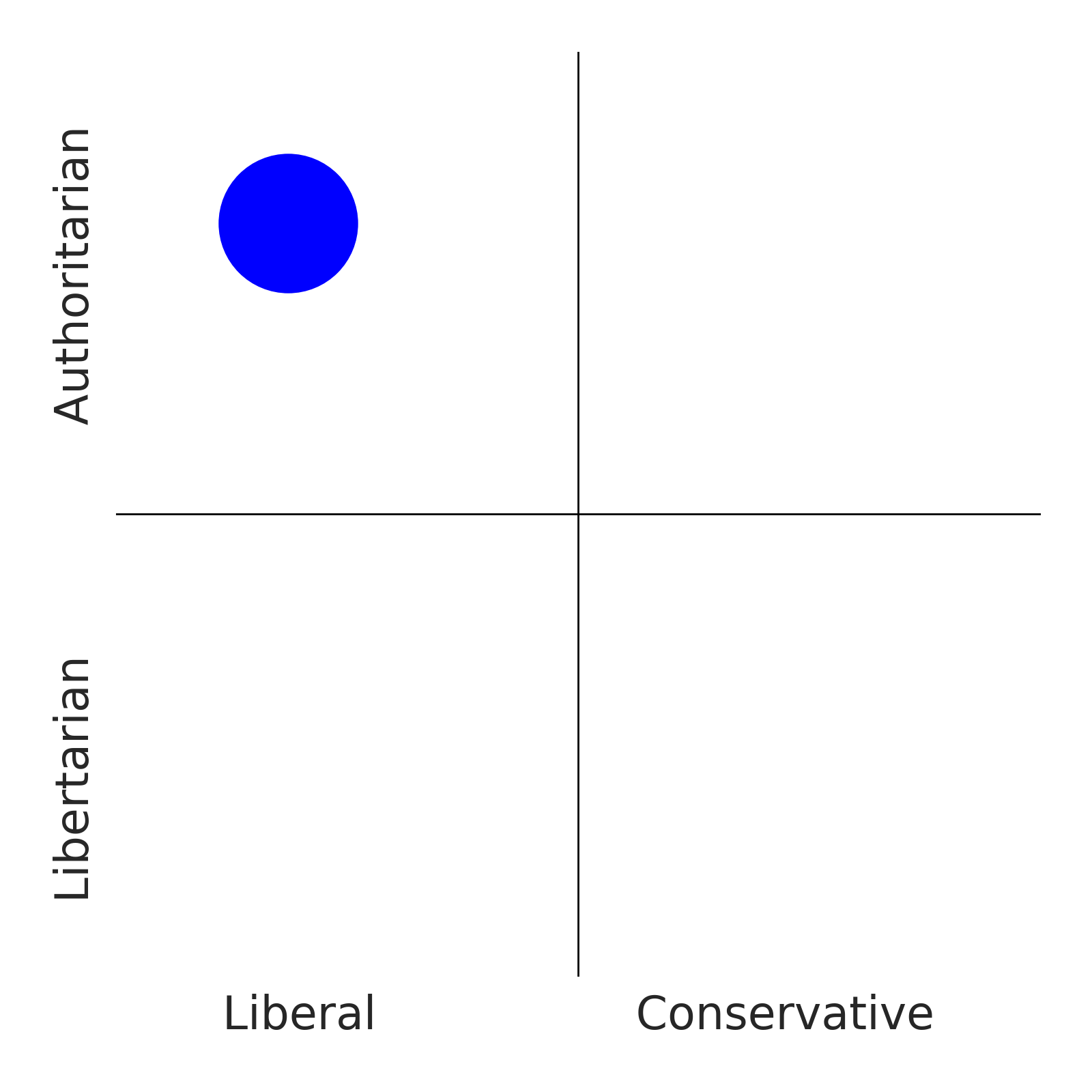
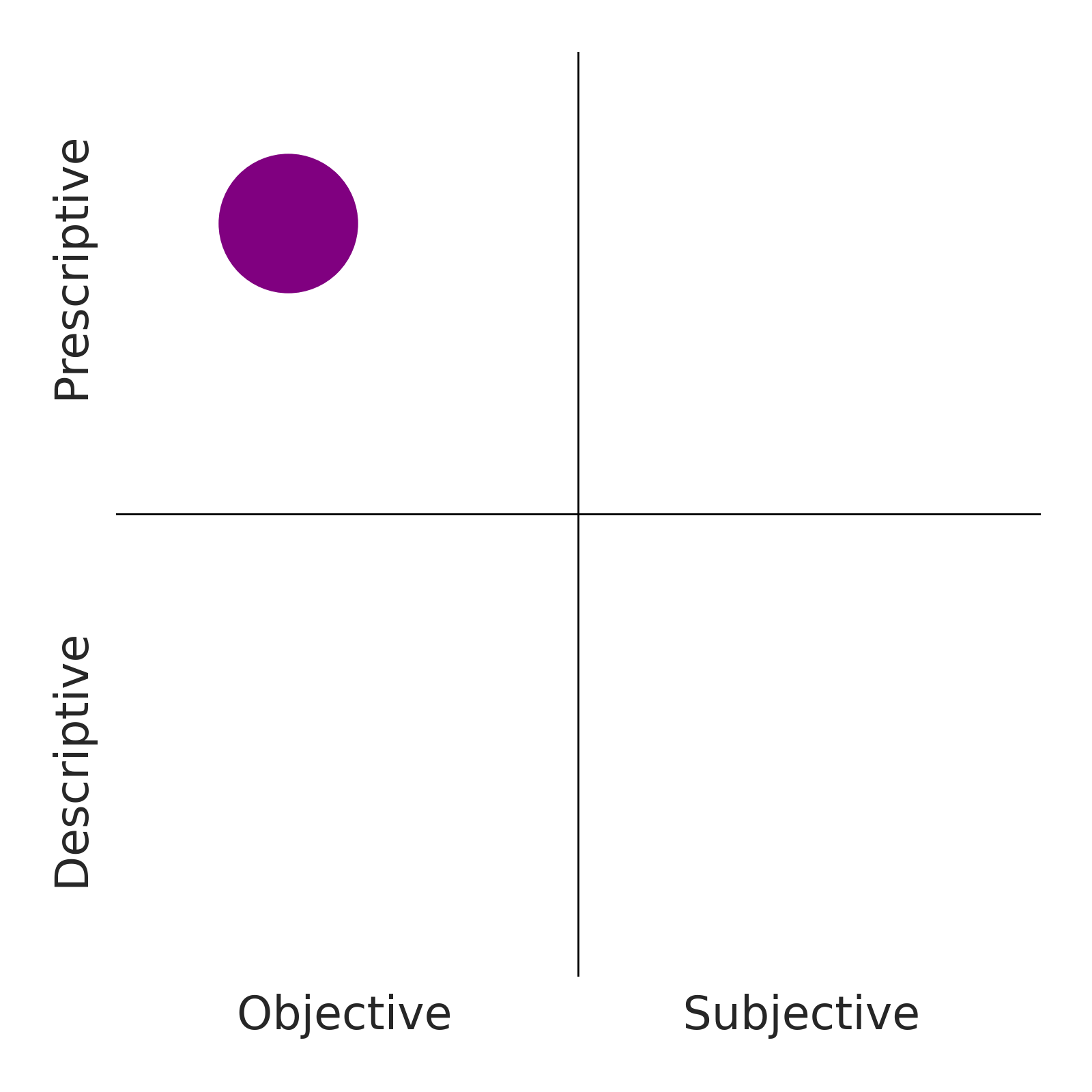
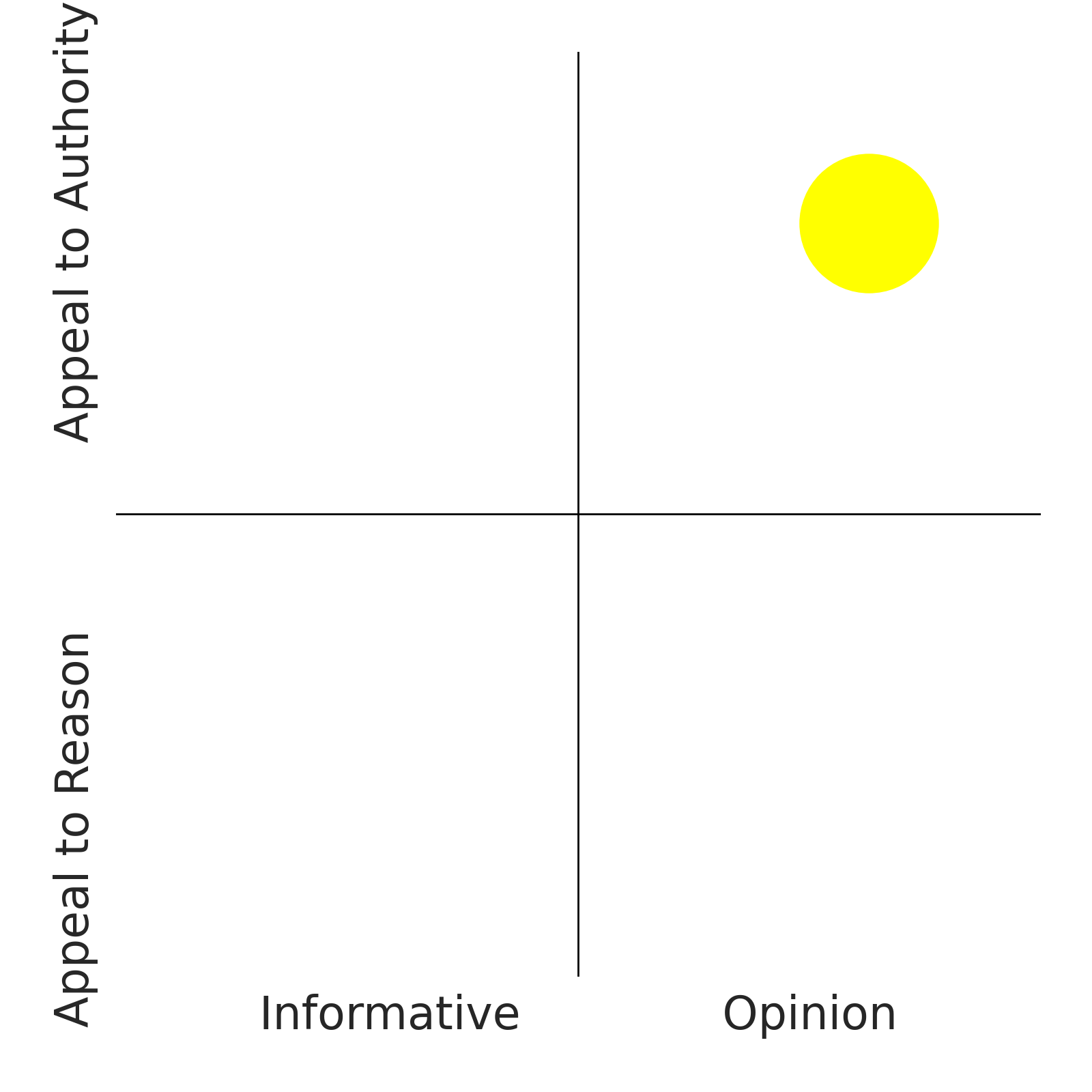
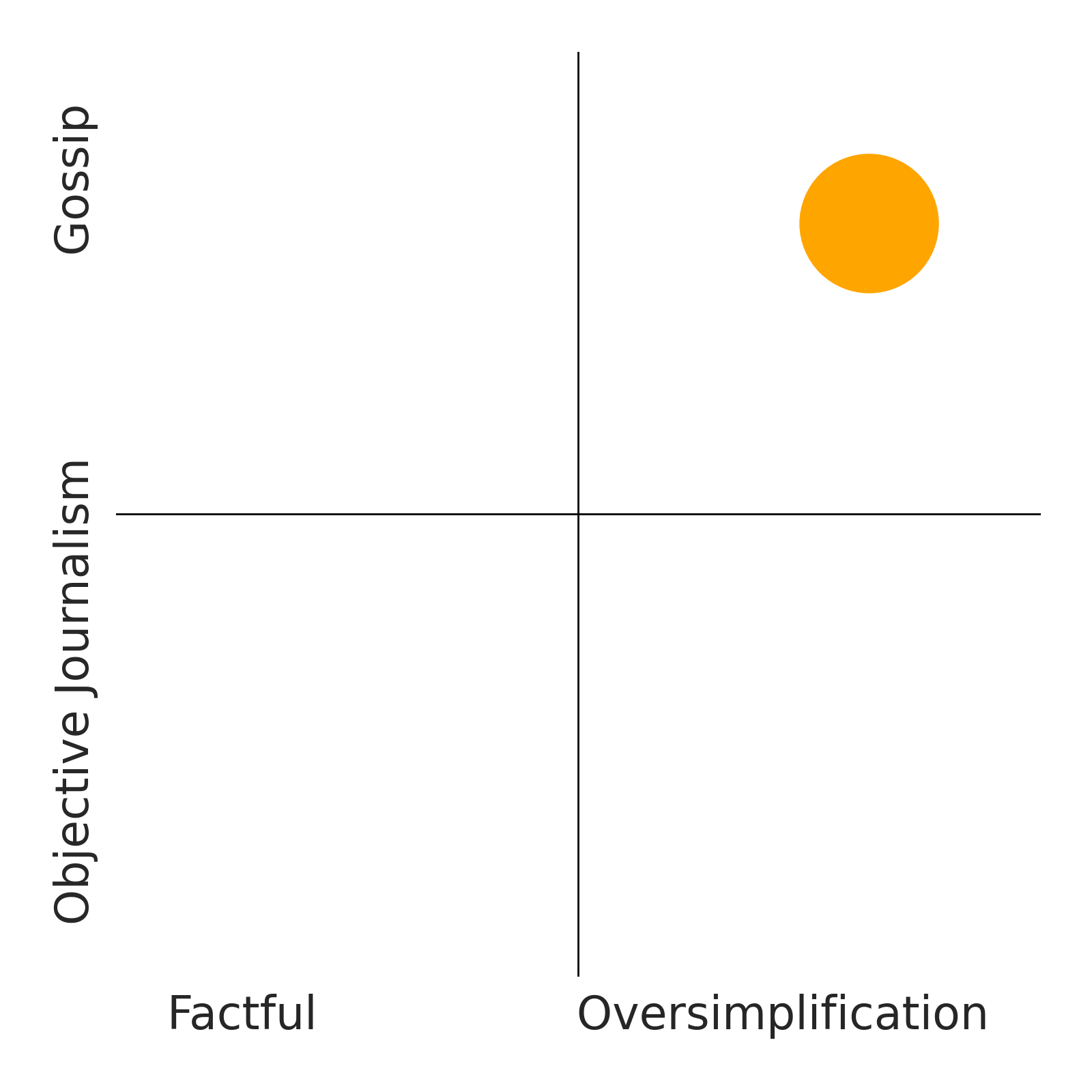
2026 © Helium Trades
Privacy Policy & Disclosure
* Disclaimer: Nothing on this website constitutes investment advice, performance data or any recommendation that any particular security, portfolio of securities, transaction or investment strategy is suitable for any specific person. Helium Trades is not responsible in any way for the accuracy
of any model predictions or price data. Any mention of a particular security and related prediction data is not a recommendation to buy or sell that security. Investments in securities involve the risk of loss. Past performance is no guarantee of future results. Helium Trades is not responsible for any of your investment decisions,
you should consult a financial expert before engaging in any transaction.


