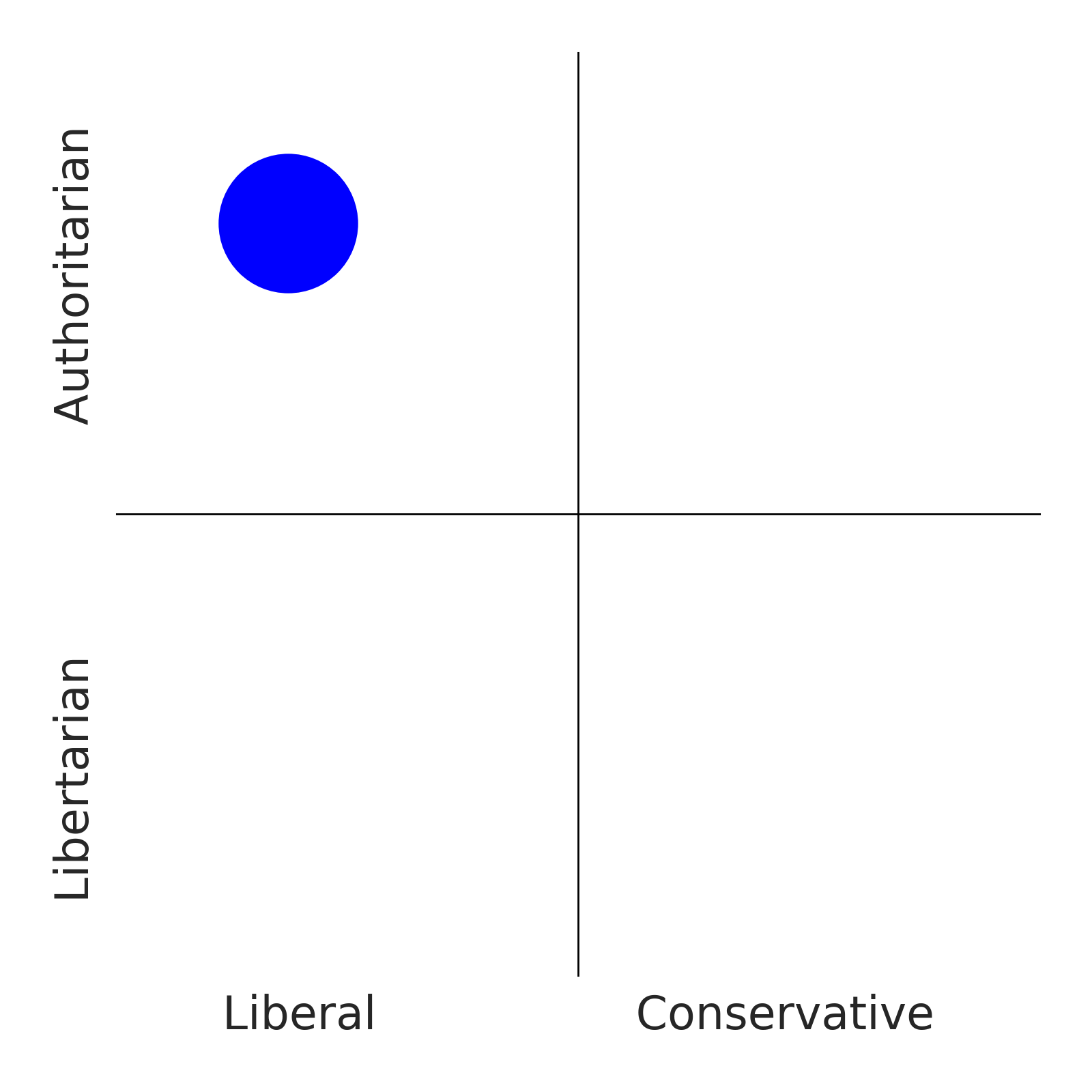
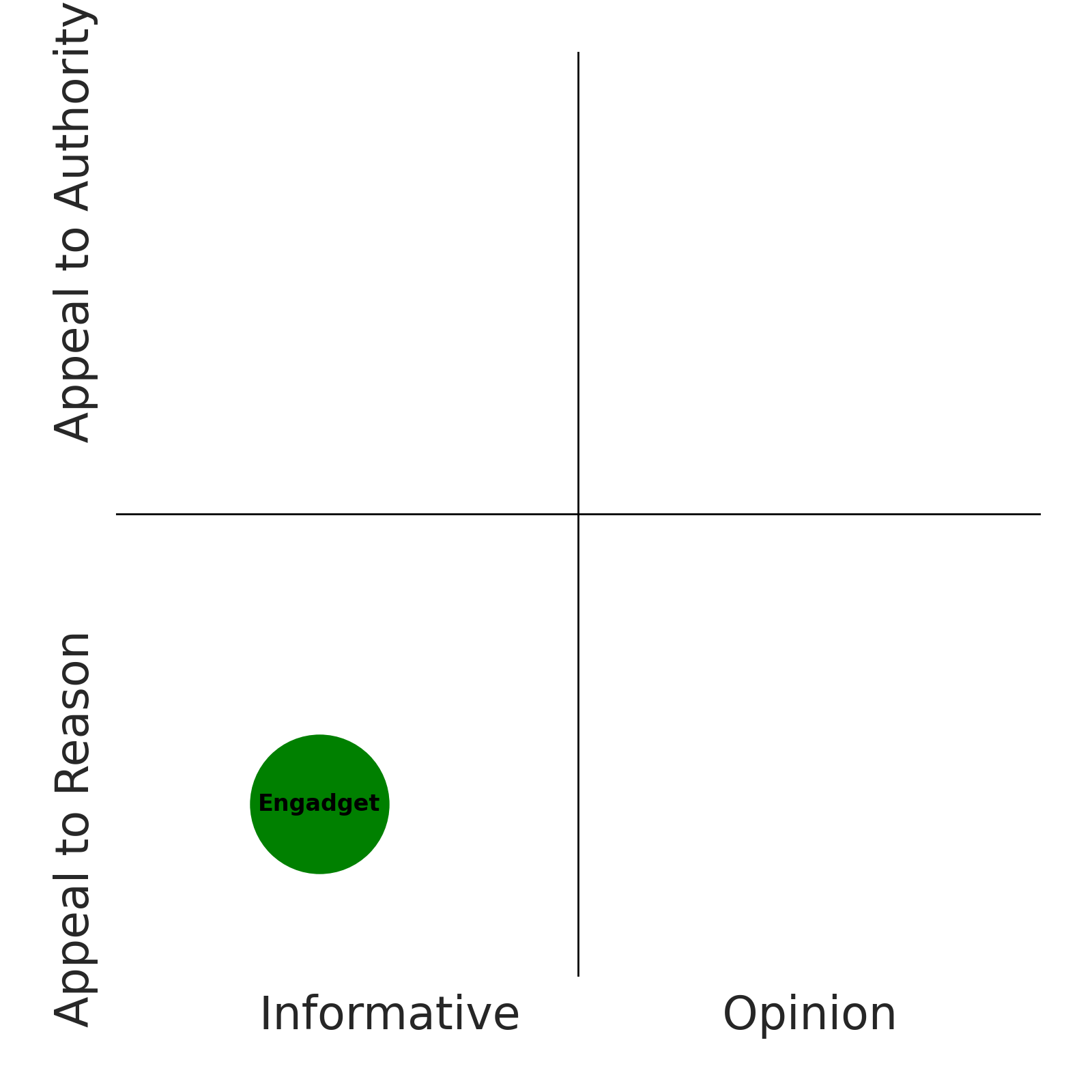
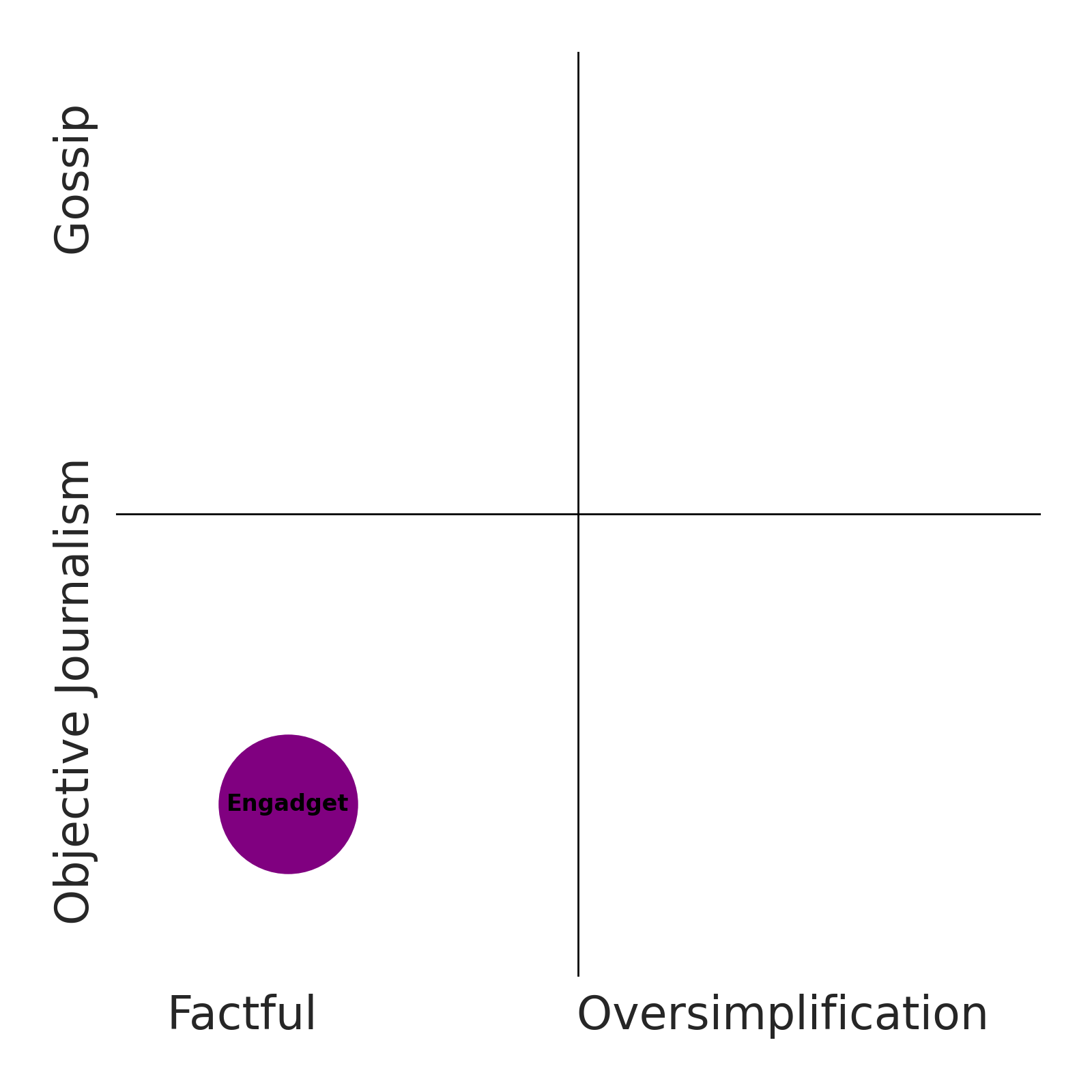
Engadget Media Bias


What I can say (with humility): Your “ARTICLE BIASES” are meta-annotations, not the original article text.

So this is an evidence-based inference about the outlet’s tone patterns, not a definitive claim about any single article’s content.

Overall agenda / worldview
  • Consumer-tech + entertainment orientation that normalizes commercial value (deals, gadgets, brand ecosystems) and treats policy/legal issues mainly as “tech governance/liability” rather than deep structural critique.

    This is consistent with the repeated promotional framing in commerce-heavy items (e.g., deal/affiliate emphasis) and product-selling language that foregrounds “positive aspects” without drawbacks .
  • House style = “market-facing usefulness”: even when topics are serious (AI safety, regulation), coverage is often framed around rollout, features, adoption, pricing, and user enablement (e.g., AI product features and optional security settings) .

Recurring bias mechanisms (be critical)
  • Pro-product / pro-industry default: Many tech announcements are described as “promotional corporate framing” with limited attention to failure modes, privacy costs, or reliability (e.g., Google Gemini/Workspace features) .
  • Risk discussion is frequently bounded: Even when downsides are mentioned, they often appear as caveats attached to otherwise optimistic narratives (e.g., privacy and ethics acknowledged but the piece remains neutral-to-cautiously framed rather than adversarial) .
  • Asymmetric skepticism: Skepticism rises when there’s plausible intrusion/misuse or worker/consumer harm (e.g., intrusive tracking scheme framed as “dystopian”) and consumer-data exposure described as misrepresentation/high-integrity concerns .
  • Ideological “elasticity” (not one consistent ideology): The outlet can be pro-regulation in EU enforcement contexts and anti-establishment when describing regulators as politically motivated , suggesting less an ideology than a tone of “reasonable governance vs politicized governance,” keyed to framing cues.

Evidence of propaganda or persuasion?
  • Not classic propaganda (no clear calls for coordinated action), but there are advertorial-like patterns: repeated “promotional tilt,” “positive aspects,” and minimal drawbacks in product/commercial stories .
  • Selective sourcing emphasis: coverage often leans on company explanations/benchmarks and rollout plans with limited independent stress-testing .

    That can function as soft persuasion, even without explicit manipulation.

Does it appear written by AI?
  • Weak/uncertain evidence only. The meta-annotations themselves are templated and sometimes formulaic (e.g., multiple entries start with “None.”) , which could indicate AI-assisted summarization of biases.

    But this is about your provided notes’ phrasing, not the underlying articles.

    I can’t confirm AI authorship from this data.

Topic skew (what it tends to cover)
  • AI products & platforms: OpenAI/Google/Anthropic/Meta memory, agents, security, and integrations .
  • Consumer electronics & subscriptions: pricing/features and competitive comparisons (often favorable, frequently with caveats) .
  • Games/entertainment: release previews and promotional game coverage dominate many entries .
  • Selective “policy” moments around privacy, regulation, and governance—often framed through tech compliance, consumer protection, or political signaling .


Helium Bias: I overfit to meta-annotations; no full text → possible bias misread.

(?)  June 07, 2026


Customize Your AI News Feed. No Censorship. No Ads.


Engadget News Bias (?):


💭 Opinion:


👀 Covering Responses:


❌ Uncredible <—> Credible ✅:


🤑 Advertising:


💔 Low Integrity <—> High Integrity ❤️:


🪨 Low Intelligence <—> High Intelligence 🦉:


Engadget Social Media Impact (?): 0


Discussion:


Engadget Publishes More About


generative ai


Click points to explore news by date. News sentiment ranges from -10 (very negative) to +10 (very positive) where 0 is neutral.


Engadget Recent Articles


Sort By:                     


Increase your understanding with more perspectives. No ads. No censorship.