See whether Helium helps you make better-informed decisions. Try every Pro Trader feature for 30 days. No credit card required.
Try every Pro Trader feature for 30 days. No credit card required.
September 18, 2026 · 0 shares
Framing presents generative AI-assisted design as faster while stressing that speed and volume are not inherently better, making human judgment the necessary stabilizer.
Automated analysis; not human reviewed. Limitations: The supplied text is a short excerpt from a single item; no external verification of the event, speaker, or quote was possible. · 4 of 55 available dimensions scored; omitted dimensions are not treated as neutral. · Verified supporting quotes for 4 of 4 scored dimensions.
Claim: The report is mostly a factual event summary, despite an opening forecast.
“At the Innovation Festival, three design leaders from Spotify, Block, and Brooks unpacked the new rules of design.” · verified after text normalization
““More is not always better. Faster is not always better,” said Emily Galloway, Spotify’s senior director of product design, at the New Rules of Great Design panel during the 2026 Innovation Festival in New York City.” · verified after text normalization
Counterevidence:
“The next phase of design will still be human-led.” · exact text match
Why: The article attributes the key cautionary statement and gives event details, but opens with an unqualified prediction about the next phase of design.
Claim: The text is free of sensational language and dramatic framing.
“The next phase of design will still be human-led.” · exact text match
“Human judgment is becoming so important.” · exact text match
Why: No hyperbole, urgency, or conflict framing appears; the tone is a restrained event recap.
Claim: The article inserts an editorial forecast about design and adds an evaluative gloss on AI's role.
“The next phase of design will still be human-led.” · exact text match
“Someone can convert an idea into reality faster than ever before with the help of generative AI, and that makes the role of humans in the process even more important.” · exact text match
Why: The opening and the AI-role sentence are presented as fact rather than attributed, giving the piece an opinionated framing despite the reported quote.
Claim: Basic sourcing practices are visible: a named speaker is quoted and event specifics are given.
“Emily Galloway, Spotify’s senior director of product design” · exact text match
“at the New Rules of Great Design panel during the 2026 Innovation Festival in New York City” · verified after text normalization
Why: Attribution and event detail support basic credibility, though the excerpt is too short to fully verify claims.
The supplied text is a short excerpt from a single item; no external verification of the event, speaker, or quote was possible.
September 18, 2026 · 0 shares
Promotional framing presents the AI toothbrush as a trouble-finding innovation and promises readers exactly the oral-health visibility they want, without evidence or caveats.
Automated analysis; not human reviewed. Limitations: Only the promotional product blurb was available; no launch date, price, technical specifications, or independent evaluation was provided. · 8 of 55 available dimensions scored; omitted dimensions are not treated as neutral. · Verified supporting quotes for 8 of 8 scored dimensions.
Claim: The product description is framed with reader-directed enthusiasm and evaluative language.
“you’re in luck” · exact text match
“designed to give you exactly that” · exact text match
Why: These phrases express subjective enthusiasm rather than neutral reporting.
Claim: The headline overstates the product's capability by suggesting it can detect dental problems before a dentist.
“This AI toothbrush wants to find trouble before your dentist does” · exact text match
Why: The framing implies a consumer device can outperform routine dental diagnosis, a dramatic claim unsupported by data.
Claim: The report strikes a strongly positive, encouraging tone about the product's usefulness.
“you’re in luck” · exact text match
“Now, there’s an at-home oral-care system designed to give you exactly that” · exact text match
Why: The coverage tells readers they are fortunate and promises a satisfying solution.
Claim: The text asserts the product's value as if it were fact, using promotional approbation.
“you’re in luck” · exact text match
“designed to give you exactly that” · exact text match
Why: The reader is told they are fortunate and that the product delivers exactly what they want.
Claim: The coverage reduces oral-health monitoring to an AI camera toothbrush without discussing limitations or alternatives.
“With cameras, AI, and real-time feedback, usmile’s new toothbrush aims to make oral health a little less mysterious” · exact text match
Why: It presents a complex diagnostic process as solved by a consumer device.
Claim: The copy presents the product's promised benefit as a certainty.
“designed to give you exactly that” · exact text match
Why: No evidence or test results are supplied, yet the product is said to deliver exactly what readers want.
Claim: The piece reads as promotional product coverage rather than evaluative reporting.
“usmile’s new toothbrush aims to make oral health a little less mysterious” · exact text match
“an at-home oral-care system designed to give you exactly that” · exact text match
Why: It adopts the product's marketing language and omits cost, evidence, or drawbacks.
Claim: The framing relies on loaded reassurance and material omission to promote the device.
“If you’ve ever wanted more information about what’s going on inside your mouth between dental visits, you’re in luck” · exact text match
“designed to give you exactly that” · exact text match
Why: It creates a want and presents the product as its direct fulfillment while omitting evidence and caveats.
Only the promotional product blurb was available; no launch date, price, technical specifications, or independent evaluation was provided.
An opinionated, bearish framing casts a customer shift to cheaper AI models as an ominous sign that frontier AI economics are cracking.
Anthropic is an AI company that sells access to frontier large-language models; 'frontier AI' refers to top-tier models with high development costs, and an IPO is a first public stock offering. This context helps explain why a shift to cheaper models would matter to investors.
Automated analysis; not human reviewed. Limitations: The supplied text is a short, unsourced excerpt, so framing judgments rely on a few sentences and may not represent the full article's context. · 9 of 54 available dimensions scored; omitted dimensions are not treated as neutral. · Verified supporting quotes for 8 of 9 scored dimensions.
Claim: The text's main assertions are evaluative predictions rather than neutral reporting.
“The companies that own the customer relationship will ultimately beat those that simply own the best AI.” · exact text match
“If ‘good enough’ beats ‘best’ in delivering business value, the economics of that strategy no longer add up.” · exact text match
Why: The piece advances a subjective thesis about market winners and signals, with no external sourcing or counterevidence.
Claim: The text uses dramatic, alarmist language to frame a market shift.
“the economics of frontier AI are starting to crack” · not found in supplied text
“it faces an ominous signal” · exact text match
Why: Loaded metaphors such as 'crack' and 'ominous signal' intensify an otherwise factual observation about customer choices.
Claim: The text is bearish on Anthropic and frontier AI economics.
“The economics of frontier AI are starting to crack” · exact text match
“it faces an ominous signal” · exact text match
Why: The selected details and metaphors emphasize downside risk for Anthropic's IPO and business model.
Claim: The overall outlook is pessimistic about frontier AI economics and Anthropic's trajectory.
“The economics of frontier AI are starting to crack” · exact text match
“it faces an ominous signal” · exact text match
Why: The text frames the situation as deteriorating despite noting the possibility of the biggest IPO ever.
Claim: The piece is editorial commentary rather than factual reporting.
“The companies that own the customer relationship will ultimately beat those that simply own the best AI.” · exact text match
“If ‘good enough’ beats ‘best’ in delivering business value, the economics of that strategy no longer add up.” · exact text match
Why: Unqualified predictive and evaluative statements dominate the text.
Claim: Complex market dynamics are reduced to a binary between 'good enough' and 'best' and to customer-relationship ownership.
“If ‘good enough’ beats ‘best’ in delivering business value, the economics of that strategy no longer add up.” · exact text match
Why: The argument compresses competition, costs, and customer behavior into a single aphoristic tradeoff.
Claim: Future market outcomes and economic conclusions are stated with more certainty than the cited evidence supports.
“will ultimately beat” · exact text match
“The economics of frontier AI are starting to crack” · exact text match
Why: The evidence consists of a customer-preference observation, from which the text draws definitive forward-looking conclusions.
Claim: The central factual claim is presented without visible sourcing, data, or attribution.
“Many of its U.S. customers are choosing cheaper artificial intelligence models over its most advanced option.” · exact text match
Why: The key factual observation is stated as a bare assertion, with no source, study, or uncertainty qualifier.
Claim: The text forecasts outcomes and describes an emerging trend as certain.
“The companies that own the customer relationship will ultimately beat those that simply own the best AI.” · exact text match
“The economics of frontier AI are starting to crack” · exact text match
Why: The core content is predictive, not a report of settled events.
The supplied text is a short, unsourced excerpt, so framing judgments rely on a few sentences and may not represent the full article's context.
An opinionated, bearish framing casts a customer shift to cheaper AI models as an ominous sign that frontier AI economics are cracking.
Anthropic is an AI company that sells access to frontier large-language models; 'frontier AI' refers to top-tier models with high development costs, and an IPO is a first public stock offering. This context helps explain why a shift to cheaper models would matter to investors.
Automated analysis; not human reviewed. Limitations: The supplied text is a short, unsourced excerpt, so framing judgments rely on a few sentences and may not represent the full article's context. · 9 of 54 available dimensions scored; omitted dimensions are not treated as neutral. · Verified supporting quotes for 8 of 9 scored dimensions.
Claim: The text's main assertions are evaluative predictions rather than neutral reporting.
“The companies that own the customer relationship will ultimately beat those that simply own the best AI.” · exact text match
“If ‘good enough’ beats ‘best’ in delivering business value, the economics of that strategy no longer add up.” · exact text match
Why: The piece advances a subjective thesis about market winners and signals, with no external sourcing or counterevidence.
Claim: The text uses dramatic, alarmist language to frame a market shift.
“the economics of frontier AI are starting to crack” · not found in supplied text
“it faces an ominous signal” · exact text match
Why: Loaded metaphors such as 'crack' and 'ominous signal' intensify an otherwise factual observation about customer choices.
Claim: The text is bearish on Anthropic and frontier AI economics.
“The economics of frontier AI are starting to crack” · exact text match
“it faces an ominous signal” · exact text match
Why: The selected details and metaphors emphasize downside risk for Anthropic's IPO and business model.
Claim: The overall outlook is pessimistic about frontier AI economics and Anthropic's trajectory.
“The economics of frontier AI are starting to crack” · exact text match
“it faces an ominous signal” · exact text match
Why: The text frames the situation as deteriorating despite noting the possibility of the biggest IPO ever.
Claim: The piece is editorial commentary rather than factual reporting.
“The companies that own the customer relationship will ultimately beat those that simply own the best AI.” · exact text match
“If ‘good enough’ beats ‘best’ in delivering business value, the economics of that strategy no longer add up.” · exact text match
Why: Unqualified predictive and evaluative statements dominate the text.
Claim: Complex market dynamics are reduced to a binary between 'good enough' and 'best' and to customer-relationship ownership.
“If ‘good enough’ beats ‘best’ in delivering business value, the economics of that strategy no longer add up.” · exact text match
Why: The argument compresses competition, costs, and customer behavior into a single aphoristic tradeoff.
Claim: Future market outcomes and economic conclusions are stated with more certainty than the cited evidence supports.
“will ultimately beat” · exact text match
“The economics of frontier AI are starting to crack” · exact text match
Why: The evidence consists of a customer-preference observation, from which the text draws definitive forward-looking conclusions.
Claim: The central factual claim is presented without visible sourcing, data, or attribution.
“Many of its U.S. customers are choosing cheaper artificial intelligence models over its most advanced option.” · exact text match
Why: The key factual observation is stated as a bare assertion, with no source, study, or uncertainty qualifier.
Claim: The text forecasts outcomes and describes an emerging trend as certain.
“The companies that own the customer relationship will ultimately beat those that simply own the best AI.” · exact text match
“The economics of frontier AI are starting to crack” · exact text match
Why: The core content is predictive, not a report of settled events.
The supplied text is a short, unsourced excerpt, so framing judgments rely on a few sentences and may not represent the full article's context.
September 18, 2026 · 0 shares
Framing presents generative AI-assisted design as faster while stressing that speed and volume are not inherently better, making human judgment the necessary stabilizer.
Automated analysis; not human reviewed. Limitations: The supplied text is a short excerpt from a single item; no external verification of the event, speaker, or quote was possible. · 4 of 55 available dimensions scored; omitted dimensions are not treated as neutral. · Verified supporting quotes for 4 of 4 scored dimensions.
Claim: The report is mostly a factual event summary, despite an opening forecast.
“At the Innovation Festival, three design leaders from Spotify, Block, and Brooks unpacked the new rules of design.” · verified after text normalization
““More is not always better. Faster is not always better,” said Emily Galloway, Spotify’s senior director of product design, at the New Rules of Great Design panel during the 2026 Innovation Festival in New York City.” · verified after text normalization
Counterevidence:
“The next phase of design will still be human-led.” · exact text match
Why: The article attributes the key cautionary statement and gives event details, but opens with an unqualified prediction about the next phase of design.
Claim: The text is free of sensational language and dramatic framing.
“The next phase of design will still be human-led.” · exact text match
“Human judgment is becoming so important.” · exact text match
Why: No hyperbole, urgency, or conflict framing appears; the tone is a restrained event recap.
Claim: The article inserts an editorial forecast about design and adds an evaluative gloss on AI's role.
“The next phase of design will still be human-led.” · exact text match
“Someone can convert an idea into reality faster than ever before with the help of generative AI, and that makes the role of humans in the process even more important.” · exact text match
Why: The opening and the AI-role sentence are presented as fact rather than attributed, giving the piece an opinionated framing despite the reported quote.
Claim: Basic sourcing practices are visible: a named speaker is quoted and event specifics are given.
“Emily Galloway, Spotify’s senior director of product design” · exact text match
“at the New Rules of Great Design panel during the 2026 Innovation Festival in New York City” · verified after text normalization
Why: Attribution and event detail support basic credibility, though the excerpt is too short to fully verify claims.
The supplied text is a short excerpt from a single item; no external verification of the event, speaker, or quote was possible.
September 22, 2026 · 0 shares
No substantive content was available to analyze.
An opinionated, bearish framing casts a customer shift to cheaper AI models as an ominous sign that frontier AI economics are cracking.
Anthropic is an AI company that sells access to frontier large-language models; 'frontier AI' refers to top-tier models with high development costs, and an IPO is a first public stock offering. This context helps explain why a shift to cheaper models would matter to investors.
Automated analysis; not human reviewed. Limitations: The supplied text is a short, unsourced excerpt, so framing judgments rely on a few sentences and may not represent the full article's context. · 9 of 54 available dimensions scored; omitted dimensions are not treated as neutral. · Verified supporting quotes for 8 of 9 scored dimensions.
Claim: The text's main assertions are evaluative predictions rather than neutral reporting.
“The companies that own the customer relationship will ultimately beat those that simply own the best AI.” · exact text match
“If ‘good enough’ beats ‘best’ in delivering business value, the economics of that strategy no longer add up.” · exact text match
Why: The piece advances a subjective thesis about market winners and signals, with no external sourcing or counterevidence.
Claim: The text uses dramatic, alarmist language to frame a market shift.
“the economics of frontier AI are starting to crack” · not found in supplied text
“it faces an ominous signal” · exact text match
Why: Loaded metaphors such as 'crack' and 'ominous signal' intensify an otherwise factual observation about customer choices.
Claim: The text is bearish on Anthropic and frontier AI economics.
“The economics of frontier AI are starting to crack” · exact text match
“it faces an ominous signal” · exact text match
Why: The selected details and metaphors emphasize downside risk for Anthropic's IPO and business model.
Claim: The overall outlook is pessimistic about frontier AI economics and Anthropic's trajectory.
“The economics of frontier AI are starting to crack” · exact text match
“it faces an ominous signal” · exact text match
Why: The text frames the situation as deteriorating despite noting the possibility of the biggest IPO ever.
Claim: The piece is editorial commentary rather than factual reporting.
“The companies that own the customer relationship will ultimately beat those that simply own the best AI.” · exact text match
“If ‘good enough’ beats ‘best’ in delivering business value, the economics of that strategy no longer add up.” · exact text match
Why: Unqualified predictive and evaluative statements dominate the text.
Claim: Complex market dynamics are reduced to a binary between 'good enough' and 'best' and to customer-relationship ownership.
“If ‘good enough’ beats ‘best’ in delivering business value, the economics of that strategy no longer add up.” · exact text match
Why: The argument compresses competition, costs, and customer behavior into a single aphoristic tradeoff.
Claim: Future market outcomes and economic conclusions are stated with more certainty than the cited evidence supports.
“will ultimately beat” · exact text match
“The economics of frontier AI are starting to crack” · exact text match
Why: The evidence consists of a customer-preference observation, from which the text draws definitive forward-looking conclusions.
Claim: The central factual claim is presented without visible sourcing, data, or attribution.
“Many of its U.S. customers are choosing cheaper artificial intelligence models over its most advanced option.” · exact text match
Why: The key factual observation is stated as a bare assertion, with no source, study, or uncertainty qualifier.
Claim: The text forecasts outcomes and describes an emerging trend as certain.
“The companies that own the customer relationship will ultimately beat those that simply own the best AI.” · exact text match
“The economics of frontier AI are starting to crack” · exact text match
Why: The core content is predictive, not a report of settled events.
The supplied text is a short, unsourced excerpt, so framing judgments rely on a few sentences and may not represent the full article's context.
September 18, 2026 · 0 shares
Promotional framing presents the AI toothbrush as a trouble-finding innovation and promises readers exactly the oral-health visibility they want, without evidence or caveats.
Automated analysis; not human reviewed. Limitations: Only the promotional product blurb was available; no launch date, price, technical specifications, or independent evaluation was provided. · 8 of 55 available dimensions scored; omitted dimensions are not treated as neutral. · Verified supporting quotes for 8 of 8 scored dimensions.
Claim: The product description is framed with reader-directed enthusiasm and evaluative language.
“you’re in luck” · exact text match
“designed to give you exactly that” · exact text match
Why: These phrases express subjective enthusiasm rather than neutral reporting.
Claim: The headline overstates the product's capability by suggesting it can detect dental problems before a dentist.
“This AI toothbrush wants to find trouble before your dentist does” · exact text match
Why: The framing implies a consumer device can outperform routine dental diagnosis, a dramatic claim unsupported by data.
Claim: The report strikes a strongly positive, encouraging tone about the product's usefulness.
“you’re in luck” · exact text match
“Now, there’s an at-home oral-care system designed to give you exactly that” · exact text match
Why: The coverage tells readers they are fortunate and promises a satisfying solution.
Claim: The text asserts the product's value as if it were fact, using promotional approbation.
“you’re in luck” · exact text match
“designed to give you exactly that” · exact text match
Why: The reader is told they are fortunate and that the product delivers exactly what they want.
Claim: The coverage reduces oral-health monitoring to an AI camera toothbrush without discussing limitations or alternatives.
“With cameras, AI, and real-time feedback, usmile’s new toothbrush aims to make oral health a little less mysterious” · exact text match
Why: It presents a complex diagnostic process as solved by a consumer device.
Claim: The copy presents the product's promised benefit as a certainty.
“designed to give you exactly that” · exact text match
Why: No evidence or test results are supplied, yet the product is said to deliver exactly what readers want.
Claim: The piece reads as promotional product coverage rather than evaluative reporting.
“usmile’s new toothbrush aims to make oral health a little less mysterious” · exact text match
“an at-home oral-care system designed to give you exactly that” · exact text match
Why: It adopts the product's marketing language and omits cost, evidence, or drawbacks.
Claim: The framing relies on loaded reassurance and material omission to promote the device.
“If you’ve ever wanted more information about what’s going on inside your mouth between dental visits, you’re in luck” · exact text match
“designed to give you exactly that” · exact text match
Why: It creates a want and presents the product as its direct fulfillment while omitting evidence and caveats.
Only the promotional product blurb was available; no launch date, price, technical specifications, or independent evaluation was provided.
September 22, 2026 · 0 shares
No substantive content was available to analyze.
September 14, 2026 · 0 shares
Frames companies as failing to manage employee personal brands, using a declarative causal claim and a quirky first-person TikTok anecdote.
Staples is an office-supply retail chain; 'large personal brands' refers to employees' significant social-media followings and public personas.
Automated analysis; not human reviewed. Limitations: The supplied article text is truncated with ellipses, so only the opening framing and example are available for analysis. · 3 of 54 available dimensions scored; omitted dimensions are not treated as neutral. · Verified supporting quotes for 3 of 3 scored dimensions.
Claim: The account uses a first-person subjective reaction and a rhetorical question rather than detached reporting.
“When I first encountered a Staples Baddie video on TikTok, I was flummoxed.” · exact text match
“so why should I watch Kaden Rowland, the Staples Baddie in question, showcase how to use Staples’s equipment to print a “glorp cat”—a neon green feline with snail feelers stuck on its head—on mugs” · exact text match
Why: The use of 'I was flummoxed' and the rhetorical 'why should I watch' makes the narration personal and subjective.
Claim: The framing asserts an unhedged, evaluative causal claim about companies rather than reporting neutral fact.
“Companies are losing talent and revenue because they still don’t know what to do with employees who have large personal brands.” · exact text match
Why: The sentence states a broad causal conclusion and uses 'still don’t know' as an evaluative judgment, with no attribution or data in the supplied text.
Claim: The causal explanation reduces a complex business outcome to a single managerial failure.
“Companies are losing talent and revenue because they still don’t know what to do with employees who have large personal brands.” · exact text match
Why: Multiple factors affect talent and revenue, but the sentence attributes both outcomes solely to companies' inability to handle employee personal brands.
The supplied article text is truncated with ellipses, so only the opening framing and example are available for analysis.
September 21, 2026 · 0 shares
Framing characterizes the claim that everything moves faster and the VUCA pundit narrative as articles of faith, then judges them against an evidentiary standard that they fail to meet.
Automated analysis; not human reviewed. Limitations: The supplied text is a three-sentence fragment with bracketed omissions, so assessments rely on limited context and the omitted argument is unexamined. · 2 of 55 available dimensions scored; omitted dimensions are not treated as neutral. · Verified supporting quotes for 2 of 2 scored dimensions.
Claim: The text expresses a subjective judgment using rhetorical and evaluative language.
“Today it’s become an article of faith that everything moves faster.” · exact text match
“The evidence is surprisingly scarce.” · exact text match
Why: Labeling a belief an 'article of faith' and calling the evidence's absence 'surprising' are evaluative choices, making the piece more opinionated than neutral reporting.
Claim: The framing adopts an evidence-based standard to dismiss pundit conventional wisdom.
“The evidence is surprisingly scarce.” · exact text match
Why: The closing sentence makes evidence the decisive standard, placing the framing toward the rational end rather than deferring to faith or authority.
The supplied text is a three-sentence fragment with bracketed omissions, so assessments rely on limited context and the omitted argument is unexamined.
An opinionated, bearish framing casts a customer shift to cheaper AI models as an ominous sign that frontier AI economics are cracking.
Anthropic is an AI company that sells access to frontier large-language models; 'frontier AI' refers to top-tier models with high development costs, and an IPO is a first public stock offering. This context helps explain why a shift to cheaper models would matter to investors.
Automated analysis; not human reviewed. Limitations: The supplied text is a short, unsourced excerpt, so framing judgments rely on a few sentences and may not represent the full article's context. · 9 of 54 available dimensions scored; omitted dimensions are not treated as neutral. · Verified supporting quotes for 8 of 9 scored dimensions.
Claim: The text's main assertions are evaluative predictions rather than neutral reporting.
“The companies that own the customer relationship will ultimately beat those that simply own the best AI.” · exact text match
“If ‘good enough’ beats ‘best’ in delivering business value, the economics of that strategy no longer add up.” · exact text match
Why: The piece advances a subjective thesis about market winners and signals, with no external sourcing or counterevidence.
Claim: The text uses dramatic, alarmist language to frame a market shift.
“the economics of frontier AI are starting to crack” · not found in supplied text
“it faces an ominous signal” · exact text match
Why: Loaded metaphors such as 'crack' and 'ominous signal' intensify an otherwise factual observation about customer choices.
Claim: The text is bearish on Anthropic and frontier AI economics.
“The economics of frontier AI are starting to crack” · exact text match
“it faces an ominous signal” · exact text match
Why: The selected details and metaphors emphasize downside risk for Anthropic's IPO and business model.
Claim: The overall outlook is pessimistic about frontier AI economics and Anthropic's trajectory.
“The economics of frontier AI are starting to crack” · exact text match
“it faces an ominous signal” · exact text match
Why: The text frames the situation as deteriorating despite noting the possibility of the biggest IPO ever.
Claim: The piece is editorial commentary rather than factual reporting.
“The companies that own the customer relationship will ultimately beat those that simply own the best AI.” · exact text match
“If ‘good enough’ beats ‘best’ in delivering business value, the economics of that strategy no longer add up.” · exact text match
Why: Unqualified predictive and evaluative statements dominate the text.
Claim: Complex market dynamics are reduced to a binary between 'good enough' and 'best' and to customer-relationship ownership.
“If ‘good enough’ beats ‘best’ in delivering business value, the economics of that strategy no longer add up.” · exact text match
Why: The argument compresses competition, costs, and customer behavior into a single aphoristic tradeoff.
Claim: Future market outcomes and economic conclusions are stated with more certainty than the cited evidence supports.
“will ultimately beat” · exact text match
“The economics of frontier AI are starting to crack” · exact text match
Why: The evidence consists of a customer-preference observation, from which the text draws definitive forward-looking conclusions.
Claim: The central factual claim is presented without visible sourcing, data, or attribution.
“Many of its U.S. customers are choosing cheaper artificial intelligence models over its most advanced option.” · exact text match
Why: The key factual observation is stated as a bare assertion, with no source, study, or uncertainty qualifier.
Claim: The text forecasts outcomes and describes an emerging trend as certain.
“The companies that own the customer relationship will ultimately beat those that simply own the best AI.” · exact text match
“The economics of frontier AI are starting to crack” · exact text match
Why: The core content is predictive, not a report of settled events.
The supplied text is a short, unsourced excerpt, so framing judgments rely on a few sentences and may not represent the full article's context.
September 04, 2026 · 0 shares
Frames AI’s productivity gap as an employee problem, leans on a Gartner forecast for scale, and projects a bullish outcome despite loosely sourced generalizations.
Gartner is a technology research and advisory firm; the $2.59 trillion figure is a forecast of AI spending, not a measured actual.
Automated analysis; not human reviewed. Limitations: Only a short excerpt was supplied, with no named publisher, author, date, or methodology, so full framing and sourcing context is unavailable. · 7 of 54 available dimensions scored; omitted dimensions are not treated as neutral. · Verified supporting quotes for 7 of 7 scored dimensions.
Claim: The opening uses evaluative, rhetorical framing rather than purely neutral reporting.
“Your AI strategy has an employee problem.” · exact text match
“What gives?” · exact text match
Why: The opening labels the situation and the rhetorical question signals an editorial voice, though the Gartner forecast provides one objective anchor.
Claim: The framing is bullish on AI spending and adoption, treating the productivity gap as a fixable execution problem.
“Gartner forecasts AI spending to grow to $2.59 trillion this year, an increase of 47% from 2025.” · exact text match
“As AI adoption increases, employees have grown more comfortable using the tools to take over their administrative responsibilities, so they have more time to do higher-impact work.” · exact text match
Why: The forecast emphasizes rapid growth and the closing statement describes a positive outcome from AI adoption, despite acknowledging that many workers struggle to realize productivity gains.
“As AI adoption increases, employees have grown more comfortable using the tools to take over their administrative responsibilities, so they have more time to do higher-impact work.” · exact text match
Why: The closing claim projects a beneficial effect, while the struggle statistic keeps the optimism somewhat tempered.
Claim: The opening is strongly opinionated, asserting a diagnosis and future benefit without neutral attribution.
“Your AI strategy has an employee problem.” · exact text match
“As AI adoption increases, employees have grown more comfortable using the tools to take over their administrative responsibilities, so they have more time to do higher-impact work.” · exact text match
Why: The thesis is presented as the publisher's framing and the concluding benefit is asserted as fact rather than sourced analysis.
Claim: A causal outcome of AI adoption is stated with more certainty than the unsourced evidence supports.
“As AI adoption increases, employees have grown more comfortable using the tools to take over their administrative responsibilities, so they have more time to do higher-impact work.” · exact text match
Why: This assertion is presented as an established effect rather than a hypothesis, survey, or forecast, yet no supporting data is supplied.
Claim: Visible sourcing is mixed: one attributed forecast alongside multiple unsupported generalizations.
“Gartner forecasts AI spending to grow to $2.59 trillion this year, an increase of 47% from 2025.” · exact text match
“Employees and executives alike say they’re confident using AI, yet many struggle to turn it into meaningful productivity gains.” · exact text match
Why: The only named source is Gartner; the aggregate confidence and productivity gap is attributed vaguely to 'employees and executives alike' without a survey, study, or date.
Claim: An attributed spending forecast and an unsourced projection about adoption outcomes are included.
“Gartner forecasts AI spending to grow to $2.59 trillion this year, an increase of 47% from 2025.” · exact text match
“As AI adoption increases, employees have grown more comfortable using the tools to take over their administrative responsibilities, so they have more time to do higher-impact work.” · exact text match
Why: The Gartner figure is explicitly a forecast, and the closing statement projects future behavior as if it were a settled trend.
Only a short excerpt was supplied, with no named publisher, author, date, or methodology, so full framing and sourcing context is unavailable.
An opinionated, bearish framing casts a customer shift to cheaper AI models as an ominous sign that frontier AI economics are cracking.
Anthropic is an AI company that sells access to frontier large-language models; 'frontier AI' refers to top-tier models with high development costs, and an IPO is a first public stock offering. This context helps explain why a shift to cheaper models would matter to investors.
Automated analysis; not human reviewed. Limitations: The supplied text is a short, unsourced excerpt, so framing judgments rely on a few sentences and may not represent the full article's context. · 9 of 54 available dimensions scored; omitted dimensions are not treated as neutral. · Verified supporting quotes for 8 of 9 scored dimensions.
Claim: The text's main assertions are evaluative predictions rather than neutral reporting.
“The companies that own the customer relationship will ultimately beat those that simply own the best AI.” · exact text match
“If ‘good enough’ beats ‘best’ in delivering business value, the economics of that strategy no longer add up.” · exact text match
Why: The piece advances a subjective thesis about market winners and signals, with no external sourcing or counterevidence.
Claim: The text uses dramatic, alarmist language to frame a market shift.
“the economics of frontier AI are starting to crack” · not found in supplied text
“it faces an ominous signal” · exact text match
Why: Loaded metaphors such as 'crack' and 'ominous signal' intensify an otherwise factual observation about customer choices.
Claim: The text is bearish on Anthropic and frontier AI economics.
“The economics of frontier AI are starting to crack” · exact text match
“it faces an ominous signal” · exact text match
Why: The selected details and metaphors emphasize downside risk for Anthropic's IPO and business model.
Claim: The overall outlook is pessimistic about frontier AI economics and Anthropic's trajectory.
“The economics of frontier AI are starting to crack” · exact text match
“it faces an ominous signal” · exact text match
Why: The text frames the situation as deteriorating despite noting the possibility of the biggest IPO ever.
Claim: The piece is editorial commentary rather than factual reporting.
“The companies that own the customer relationship will ultimately beat those that simply own the best AI.” · exact text match
“If ‘good enough’ beats ‘best’ in delivering business value, the economics of that strategy no longer add up.” · exact text match
Why: Unqualified predictive and evaluative statements dominate the text.
Claim: Complex market dynamics are reduced to a binary between 'good enough' and 'best' and to customer-relationship ownership.
“If ‘good enough’ beats ‘best’ in delivering business value, the economics of that strategy no longer add up.” · exact text match
Why: The argument compresses competition, costs, and customer behavior into a single aphoristic tradeoff.
Claim: Future market outcomes and economic conclusions are stated with more certainty than the cited evidence supports.
“will ultimately beat” · exact text match
“The economics of frontier AI are starting to crack” · exact text match
Why: The evidence consists of a customer-preference observation, from which the text draws definitive forward-looking conclusions.
Claim: The central factual claim is presented without visible sourcing, data, or attribution.
“Many of its U.S. customers are choosing cheaper artificial intelligence models over its most advanced option.” · exact text match
Why: The key factual observation is stated as a bare assertion, with no source, study, or uncertainty qualifier.
Claim: The text forecasts outcomes and describes an emerging trend as certain.
“The companies that own the customer relationship will ultimately beat those that simply own the best AI.” · exact text match
“The economics of frontier AI are starting to crack” · exact text match
Why: The core content is predictive, not a report of settled events.
The supplied text is a short, unsourced excerpt, so framing judgments rely on a few sentences and may not represent the full article's context.
An opinionated, bearish framing casts a customer shift to cheaper AI models as an ominous sign that frontier AI economics are cracking.
Anthropic is an AI company that sells access to frontier large-language models; 'frontier AI' refers to top-tier models with high development costs, and an IPO is a first public stock offering. This context helps explain why a shift to cheaper models would matter to investors.
Automated analysis; not human reviewed. Limitations: The supplied text is a short, unsourced excerpt, so framing judgments rely on a few sentences and may not represent the full article's context. · 9 of 54 available dimensions scored; omitted dimensions are not treated as neutral. · Verified supporting quotes for 8 of 9 scored dimensions.
Claim: The text's main assertions are evaluative predictions rather than neutral reporting.
“The companies that own the customer relationship will ultimately beat those that simply own the best AI.” · exact text match
“If ‘good enough’ beats ‘best’ in delivering business value, the economics of that strategy no longer add up.” · exact text match
Why: The piece advances a subjective thesis about market winners and signals, with no external sourcing or counterevidence.
Claim: The text uses dramatic, alarmist language to frame a market shift.
“the economics of frontier AI are starting to crack” · not found in supplied text
“it faces an ominous signal” · exact text match
Why: Loaded metaphors such as 'crack' and 'ominous signal' intensify an otherwise factual observation about customer choices.
Claim: The text is bearish on Anthropic and frontier AI economics.
“The economics of frontier AI are starting to crack” · exact text match
“it faces an ominous signal” · exact text match
Why: The selected details and metaphors emphasize downside risk for Anthropic's IPO and business model.
Claim: The overall outlook is pessimistic about frontier AI economics and Anthropic's trajectory.
“The economics of frontier AI are starting to crack” · exact text match
“it faces an ominous signal” · exact text match
Why: The text frames the situation as deteriorating despite noting the possibility of the biggest IPO ever.
Claim: The piece is editorial commentary rather than factual reporting.
“The companies that own the customer relationship will ultimately beat those that simply own the best AI.” · exact text match
“If ‘good enough’ beats ‘best’ in delivering business value, the economics of that strategy no longer add up.” · exact text match
Why: Unqualified predictive and evaluative statements dominate the text.
Claim: Complex market dynamics are reduced to a binary between 'good enough' and 'best' and to customer-relationship ownership.
“If ‘good enough’ beats ‘best’ in delivering business value, the economics of that strategy no longer add up.” · exact text match
Why: The argument compresses competition, costs, and customer behavior into a single aphoristic tradeoff.
Claim: Future market outcomes and economic conclusions are stated with more certainty than the cited evidence supports.
“will ultimately beat” · exact text match
“The economics of frontier AI are starting to crack” · exact text match
Why: The evidence consists of a customer-preference observation, from which the text draws definitive forward-looking conclusions.
Claim: The central factual claim is presented without visible sourcing, data, or attribution.
“Many of its U.S. customers are choosing cheaper artificial intelligence models over its most advanced option.” · exact text match
Why: The key factual observation is stated as a bare assertion, with no source, study, or uncertainty qualifier.
Claim: The text forecasts outcomes and describes an emerging trend as certain.
“The companies that own the customer relationship will ultimately beat those that simply own the best AI.” · exact text match
“The economics of frontier AI are starting to crack” · exact text match
Why: The core content is predictive, not a report of settled events.
The supplied text is a short, unsourced excerpt, so framing judgments rely on a few sentences and may not represent the full article's context.
September 22, 2026 · 0 shares
No substantive content was available to analyze.
September 18, 2026 · 0 shares
Framing presents generative AI-assisted design as faster while stressing that speed and volume are not inherently better, making human judgment the necessary stabilizer.
Automated analysis; not human reviewed. Limitations: The supplied text is a short excerpt from a single item; no external verification of the event, speaker, or quote was possible. · 4 of 55 available dimensions scored; omitted dimensions are not treated as neutral. · Verified supporting quotes for 4 of 4 scored dimensions.
Claim: The report is mostly a factual event summary, despite an opening forecast.
“At the Innovation Festival, three design leaders from Spotify, Block, and Brooks unpacked the new rules of design.” · verified after text normalization
““More is not always better. Faster is not always better,” said Emily Galloway, Spotify’s senior director of product design, at the New Rules of Great Design panel during the 2026 Innovation Festival in New York City.” · verified after text normalization
Counterevidence:
“The next phase of design will still be human-led.” · exact text match
Why: The article attributes the key cautionary statement and gives event details, but opens with an unqualified prediction about the next phase of design.
Claim: The text is free of sensational language and dramatic framing.
“The next phase of design will still be human-led.” · exact text match
“Human judgment is becoming so important.” · exact text match
Why: No hyperbole, urgency, or conflict framing appears; the tone is a restrained event recap.
Claim: The article inserts an editorial forecast about design and adds an evaluative gloss on AI's role.
“The next phase of design will still be human-led.” · exact text match
“Someone can convert an idea into reality faster than ever before with the help of generative AI, and that makes the role of humans in the process even more important.” · exact text match
Why: The opening and the AI-role sentence are presented as fact rather than attributed, giving the piece an opinionated framing despite the reported quote.
Claim: Basic sourcing practices are visible: a named speaker is quoted and event specifics are given.
“Emily Galloway, Spotify’s senior director of product design” · exact text match
“at the New Rules of Great Design panel during the 2026 Innovation Festival in New York City” · verified after text normalization
Why: Attribution and event detail support basic credibility, though the excerpt is too short to fully verify claims.
The supplied text is a short excerpt from a single item; no external verification of the event, speaker, or quote was possible.
September 21, 2026 · 0 shares
The supplied text is too sparse to support a framing or bias classification; only a headline and an opening question remain.
Automated analysis; not human reviewed. Limitations: Input text is too limited to classify bias.
Input text is too limited to classify bias.
September 22, 2026 · 0 shares
No substantive content was available to analyze.
September 21, 2026 · 0 shares
The supplied text is too sparse to support a framing or bias classification; only a headline and an opening question remain.
Automated analysis; not human reviewed. Limitations: Input text is too limited to classify bias.
Input text is too limited to classify bias.
September 18, 2026 · 0 shares
Promotional framing presents the AI toothbrush as a trouble-finding innovation and promises readers exactly the oral-health visibility they want, without evidence or caveats.
Automated analysis; not human reviewed. Limitations: Only the promotional product blurb was available; no launch date, price, technical specifications, or independent evaluation was provided. · 8 of 55 available dimensions scored; omitted dimensions are not treated as neutral. · Verified supporting quotes for 8 of 8 scored dimensions.
Claim: The product description is framed with reader-directed enthusiasm and evaluative language.
“you’re in luck” · exact text match
“designed to give you exactly that” · exact text match
Why: These phrases express subjective enthusiasm rather than neutral reporting.
Claim: The headline overstates the product's capability by suggesting it can detect dental problems before a dentist.
“This AI toothbrush wants to find trouble before your dentist does” · exact text match
Why: The framing implies a consumer device can outperform routine dental diagnosis, a dramatic claim unsupported by data.
Claim: The report strikes a strongly positive, encouraging tone about the product's usefulness.
“you’re in luck” · exact text match
“Now, there’s an at-home oral-care system designed to give you exactly that” · exact text match
Why: The coverage tells readers they are fortunate and promises a satisfying solution.
Claim: The text asserts the product's value as if it were fact, using promotional approbation.
“you’re in luck” · exact text match
“designed to give you exactly that” · exact text match
Why: The reader is told they are fortunate and that the product delivers exactly what they want.
Claim: The coverage reduces oral-health monitoring to an AI camera toothbrush without discussing limitations or alternatives.
“With cameras, AI, and real-time feedback, usmile’s new toothbrush aims to make oral health a little less mysterious” · exact text match
Why: It presents a complex diagnostic process as solved by a consumer device.
Claim: The copy presents the product's promised benefit as a certainty.
“designed to give you exactly that” · exact text match
Why: No evidence or test results are supplied, yet the product is said to deliver exactly what readers want.
Claim: The piece reads as promotional product coverage rather than evaluative reporting.
“usmile’s new toothbrush aims to make oral health a little less mysterious” · exact text match
“an at-home oral-care system designed to give you exactly that” · exact text match
Why: It adopts the product's marketing language and omits cost, evidence, or drawbacks.
Claim: The framing relies on loaded reassurance and material omission to promote the device.
“If you’ve ever wanted more information about what’s going on inside your mouth between dental visits, you’re in luck” · exact text match
“designed to give you exactly that” · exact text match
Why: It creates a want and presents the product as its direct fulfillment while omitting evidence and caveats.
Only the promotional product blurb was available; no launch date, price, technical specifications, or independent evaluation was provided.
An opinionated, bearish framing casts a customer shift to cheaper AI models as an ominous sign that frontier AI economics are cracking.
Anthropic is an AI company that sells access to frontier large-language models; 'frontier AI' refers to top-tier models with high development costs, and an IPO is a first public stock offering. This context helps explain why a shift to cheaper models would matter to investors.
Automated analysis; not human reviewed. Limitations: The supplied text is a short, unsourced excerpt, so framing judgments rely on a few sentences and may not represent the full article's context. · 9 of 54 available dimensions scored; omitted dimensions are not treated as neutral. · Verified supporting quotes for 8 of 9 scored dimensions.
Claim: The text's main assertions are evaluative predictions rather than neutral reporting.
“The companies that own the customer relationship will ultimately beat those that simply own the best AI.” · exact text match
“If ‘good enough’ beats ‘best’ in delivering business value, the economics of that strategy no longer add up.” · exact text match
Why: The piece advances a subjective thesis about market winners and signals, with no external sourcing or counterevidence.
Claim: The text uses dramatic, alarmist language to frame a market shift.
“the economics of frontier AI are starting to crack” · not found in supplied text
“it faces an ominous signal” · exact text match
Why: Loaded metaphors such as 'crack' and 'ominous signal' intensify an otherwise factual observation about customer choices.
Claim: The text is bearish on Anthropic and frontier AI economics.
“The economics of frontier AI are starting to crack” · exact text match
“it faces an ominous signal” · exact text match
Why: The selected details and metaphors emphasize downside risk for Anthropic's IPO and business model.
Claim: The overall outlook is pessimistic about frontier AI economics and Anthropic's trajectory.
“The economics of frontier AI are starting to crack” · exact text match
“it faces an ominous signal” · exact text match
Why: The text frames the situation as deteriorating despite noting the possibility of the biggest IPO ever.
Claim: The piece is editorial commentary rather than factual reporting.
“The companies that own the customer relationship will ultimately beat those that simply own the best AI.” · exact text match
“If ‘good enough’ beats ‘best’ in delivering business value, the economics of that strategy no longer add up.” · exact text match
Why: Unqualified predictive and evaluative statements dominate the text.
Claim: Complex market dynamics are reduced to a binary between 'good enough' and 'best' and to customer-relationship ownership.
“If ‘good enough’ beats ‘best’ in delivering business value, the economics of that strategy no longer add up.” · exact text match
Why: The argument compresses competition, costs, and customer behavior into a single aphoristic tradeoff.
Claim: Future market outcomes and economic conclusions are stated with more certainty than the cited evidence supports.
“will ultimately beat” · exact text match
“The economics of frontier AI are starting to crack” · exact text match
Why: The evidence consists of a customer-preference observation, from which the text draws definitive forward-looking conclusions.
Claim: The central factual claim is presented without visible sourcing, data, or attribution.
“Many of its U.S. customers are choosing cheaper artificial intelligence models over its most advanced option.” · exact text match
Why: The key factual observation is stated as a bare assertion, with no source, study, or uncertainty qualifier.
Claim: The text forecasts outcomes and describes an emerging trend as certain.
“The companies that own the customer relationship will ultimately beat those that simply own the best AI.” · exact text match
“The economics of frontier AI are starting to crack” · exact text match
Why: The core content is predictive, not a report of settled events.
The supplied text is a short, unsourced excerpt, so framing judgments rely on a few sentences and may not represent the full article's context.
September 14, 2026 · 0 shares
Frames companies as failing to manage employee personal brands, using a declarative causal claim and a quirky first-person TikTok anecdote.
Staples is an office-supply retail chain; 'large personal brands' refers to employees' significant social-media followings and public personas.
Automated analysis; not human reviewed. Limitations: The supplied article text is truncated with ellipses, so only the opening framing and example are available for analysis. · 3 of 54 available dimensions scored; omitted dimensions are not treated as neutral. · Verified supporting quotes for 3 of 3 scored dimensions.
Claim: The account uses a first-person subjective reaction and a rhetorical question rather than detached reporting.
“When I first encountered a Staples Baddie video on TikTok, I was flummoxed.” · exact text match
“so why should I watch Kaden Rowland, the Staples Baddie in question, showcase how to use Staples’s equipment to print a “glorp cat”—a neon green feline with snail feelers stuck on its head—on mugs” · exact text match
Why: The use of 'I was flummoxed' and the rhetorical 'why should I watch' makes the narration personal and subjective.
Claim: The framing asserts an unhedged, evaluative causal claim about companies rather than reporting neutral fact.
“Companies are losing talent and revenue because they still don’t know what to do with employees who have large personal brands.” · exact text match
Why: The sentence states a broad causal conclusion and uses 'still don’t know' as an evaluative judgment, with no attribution or data in the supplied text.
Claim: The causal explanation reduces a complex business outcome to a single managerial failure.
“Companies are losing talent and revenue because they still don’t know what to do with employees who have large personal brands.” · exact text match
Why: Multiple factors affect talent and revenue, but the sentence attributes both outcomes solely to companies' inability to handle employee personal brands.
The supplied article text is truncated with ellipses, so only the opening framing and example are available for analysis.
September 04, 2026 · 0 shares
Frames AI’s productivity gap as an employee problem, leans on a Gartner forecast for scale, and projects a bullish outcome despite loosely sourced generalizations.
Gartner is a technology research and advisory firm; the $2.59 trillion figure is a forecast of AI spending, not a measured actual.
Automated analysis; not human reviewed. Limitations: Only a short excerpt was supplied, with no named publisher, author, date, or methodology, so full framing and sourcing context is unavailable. · 7 of 54 available dimensions scored; omitted dimensions are not treated as neutral. · Verified supporting quotes for 7 of 7 scored dimensions.
Claim: The opening uses evaluative, rhetorical framing rather than purely neutral reporting.
“Your AI strategy has an employee problem.” · exact text match
“What gives?” · exact text match
Why: The opening labels the situation and the rhetorical question signals an editorial voice, though the Gartner forecast provides one objective anchor.
Claim: The framing is bullish on AI spending and adoption, treating the productivity gap as a fixable execution problem.
“Gartner forecasts AI spending to grow to $2.59 trillion this year, an increase of 47% from 2025.” · exact text match
“As AI adoption increases, employees have grown more comfortable using the tools to take over their administrative responsibilities, so they have more time to do higher-impact work.” · exact text match
Why: The forecast emphasizes rapid growth and the closing statement describes a positive outcome from AI adoption, despite acknowledging that many workers struggle to realize productivity gains.
“As AI adoption increases, employees have grown more comfortable using the tools to take over their administrative responsibilities, so they have more time to do higher-impact work.” · exact text match
Why: The closing claim projects a beneficial effect, while the struggle statistic keeps the optimism somewhat tempered.
Claim: The opening is strongly opinionated, asserting a diagnosis and future benefit without neutral attribution.
“Your AI strategy has an employee problem.” · exact text match
“As AI adoption increases, employees have grown more comfortable using the tools to take over their administrative responsibilities, so they have more time to do higher-impact work.” · exact text match
Why: The thesis is presented as the publisher's framing and the concluding benefit is asserted as fact rather than sourced analysis.
Claim: A causal outcome of AI adoption is stated with more certainty than the unsourced evidence supports.
“As AI adoption increases, employees have grown more comfortable using the tools to take over their administrative responsibilities, so they have more time to do higher-impact work.” · exact text match
Why: This assertion is presented as an established effect rather than a hypothesis, survey, or forecast, yet no supporting data is supplied.
Claim: Visible sourcing is mixed: one attributed forecast alongside multiple unsupported generalizations.
“Gartner forecasts AI spending to grow to $2.59 trillion this year, an increase of 47% from 2025.” · exact text match
“Employees and executives alike say they’re confident using AI, yet many struggle to turn it into meaningful productivity gains.” · exact text match
Why: The only named source is Gartner; the aggregate confidence and productivity gap is attributed vaguely to 'employees and executives alike' without a survey, study, or date.
Claim: An attributed spending forecast and an unsourced projection about adoption outcomes are included.
“Gartner forecasts AI spending to grow to $2.59 trillion this year, an increase of 47% from 2025.” · exact text match
“As AI adoption increases, employees have grown more comfortable using the tools to take over their administrative responsibilities, so they have more time to do higher-impact work.” · exact text match
Why: The Gartner figure is explicitly a forecast, and the closing statement projects future behavior as if it were a settled trend.
Only a short excerpt was supplied, with no named publisher, author, date, or methodology, so full framing and sourcing context is unavailable.
September 18, 2026 · 0 shares
Promotional framing presents the AI toothbrush as a trouble-finding innovation and promises readers exactly the oral-health visibility they want, without evidence or caveats.
Automated analysis; not human reviewed. Limitations: Only the promotional product blurb was available; no launch date, price, technical specifications, or independent evaluation was provided. · 8 of 55 available dimensions scored; omitted dimensions are not treated as neutral. · Verified supporting quotes for 8 of 8 scored dimensions.
Claim: The product description is framed with reader-directed enthusiasm and evaluative language.
“you’re in luck” · exact text match
“designed to give you exactly that” · exact text match
Why: These phrases express subjective enthusiasm rather than neutral reporting.
Claim: The headline overstates the product's capability by suggesting it can detect dental problems before a dentist.
“This AI toothbrush wants to find trouble before your dentist does” · exact text match
Why: The framing implies a consumer device can outperform routine dental diagnosis, a dramatic claim unsupported by data.
Claim: The report strikes a strongly positive, encouraging tone about the product's usefulness.
“you’re in luck” · exact text match
“Now, there’s an at-home oral-care system designed to give you exactly that” · exact text match
Why: The coverage tells readers they are fortunate and promises a satisfying solution.
Claim: The text asserts the product's value as if it were fact, using promotional approbation.
“you’re in luck” · exact text match
“designed to give you exactly that” · exact text match
Why: The reader is told they are fortunate and that the product delivers exactly what they want.
Claim: The coverage reduces oral-health monitoring to an AI camera toothbrush without discussing limitations or alternatives.
“With cameras, AI, and real-time feedback, usmile’s new toothbrush aims to make oral health a little less mysterious” · exact text match
Why: It presents a complex diagnostic process as solved by a consumer device.
Claim: The copy presents the product's promised benefit as a certainty.
“designed to give you exactly that” · exact text match
Why: No evidence or test results are supplied, yet the product is said to deliver exactly what readers want.
Claim: The piece reads as promotional product coverage rather than evaluative reporting.
“usmile’s new toothbrush aims to make oral health a little less mysterious” · exact text match
“an at-home oral-care system designed to give you exactly that” · exact text match
Why: It adopts the product's marketing language and omits cost, evidence, or drawbacks.
Claim: The framing relies on loaded reassurance and material omission to promote the device.
“If you’ve ever wanted more information about what’s going on inside your mouth between dental visits, you’re in luck” · exact text match
“designed to give you exactly that” · exact text match
Why: It creates a want and presents the product as its direct fulfillment while omitting evidence and caveats.
Only the promotional product blurb was available; no launch date, price, technical specifications, or independent evaluation was provided.
September 18, 2026 · 0 shares
Framing presents generative AI-assisted design as faster while stressing that speed and volume are not inherently better, making human judgment the necessary stabilizer.
Automated analysis; not human reviewed. Limitations: The supplied text is a short excerpt from a single item; no external verification of the event, speaker, or quote was possible. · 4 of 55 available dimensions scored; omitted dimensions are not treated as neutral. · Verified supporting quotes for 4 of 4 scored dimensions.
Claim: The report is mostly a factual event summary, despite an opening forecast.
“At the Innovation Festival, three design leaders from Spotify, Block, and Brooks unpacked the new rules of design.” · verified after text normalization
““More is not always better. Faster is not always better,” said Emily Galloway, Spotify’s senior director of product design, at the New Rules of Great Design panel during the 2026 Innovation Festival in New York City.” · verified after text normalization
Counterevidence:
“The next phase of design will still be human-led.” · exact text match
Why: The article attributes the key cautionary statement and gives event details, but opens with an unqualified prediction about the next phase of design.
Claim: The text is free of sensational language and dramatic framing.
“The next phase of design will still be human-led.” · exact text match
“Human judgment is becoming so important.” · exact text match
Why: No hyperbole, urgency, or conflict framing appears; the tone is a restrained event recap.
Claim: The article inserts an editorial forecast about design and adds an evaluative gloss on AI's role.
“The next phase of design will still be human-led.” · exact text match
“Someone can convert an idea into reality faster than ever before with the help of generative AI, and that makes the role of humans in the process even more important.” · exact text match
Why: The opening and the AI-role sentence are presented as fact rather than attributed, giving the piece an opinionated framing despite the reported quote.
Claim: Basic sourcing practices are visible: a named speaker is quoted and event specifics are given.
“Emily Galloway, Spotify’s senior director of product design” · exact text match
“at the New Rules of Great Design panel during the 2026 Innovation Festival in New York City” · verified after text normalization
Why: Attribution and event detail support basic credibility, though the excerpt is too short to fully verify claims.
The supplied text is a short excerpt from a single item; no external verification of the event, speaker, or quote was possible.
September 21, 2026 · 0 shares
Framing characterizes the claim that everything moves faster and the VUCA pundit narrative as articles of faith, then judges them against an evidentiary standard that they fail to meet.
Automated analysis; not human reviewed. Limitations: The supplied text is a three-sentence fragment with bracketed omissions, so assessments rely on limited context and the omitted argument is unexamined. · 2 of 55 available dimensions scored; omitted dimensions are not treated as neutral. · Verified supporting quotes for 2 of 2 scored dimensions.
Claim: The text expresses a subjective judgment using rhetorical and evaluative language.
“Today it’s become an article of faith that everything moves faster.” · exact text match
“The evidence is surprisingly scarce.” · exact text match
Why: Labeling a belief an 'article of faith' and calling the evidence's absence 'surprising' are evaluative choices, making the piece more opinionated than neutral reporting.
Claim: The framing adopts an evidence-based standard to dismiss pundit conventional wisdom.
“The evidence is surprisingly scarce.” · exact text match
Why: The closing sentence makes evidence the decisive standard, placing the framing toward the rational end rather than deferring to faith or authority.
The supplied text is a three-sentence fragment with bracketed omissions, so assessments rely on limited context and the omitted argument is unexamined.
An opinionated, bearish framing casts a customer shift to cheaper AI models as an ominous sign that frontier AI economics are cracking.
Anthropic is an AI company that sells access to frontier large-language models; 'frontier AI' refers to top-tier models with high development costs, and an IPO is a first public stock offering. This context helps explain why a shift to cheaper models would matter to investors.
Automated analysis; not human reviewed. Limitations: The supplied text is a short, unsourced excerpt, so framing judgments rely on a few sentences and may not represent the full article's context. · 9 of 54 available dimensions scored; omitted dimensions are not treated as neutral. · Verified supporting quotes for 8 of 9 scored dimensions.
Claim: The text's main assertions are evaluative predictions rather than neutral reporting.
“The companies that own the customer relationship will ultimately beat those that simply own the best AI.” · exact text match
“If ‘good enough’ beats ‘best’ in delivering business value, the economics of that strategy no longer add up.” · exact text match
Why: The piece advances a subjective thesis about market winners and signals, with no external sourcing or counterevidence.
Claim: The text uses dramatic, alarmist language to frame a market shift.
“the economics of frontier AI are starting to crack” · not found in supplied text
“it faces an ominous signal” · exact text match
Why: Loaded metaphors such as 'crack' and 'ominous signal' intensify an otherwise factual observation about customer choices.
Claim: The text is bearish on Anthropic and frontier AI economics.
“The economics of frontier AI are starting to crack” · exact text match
“it faces an ominous signal” · exact text match
Why: The selected details and metaphors emphasize downside risk for Anthropic's IPO and business model.
Claim: The overall outlook is pessimistic about frontier AI economics and Anthropic's trajectory.
“The economics of frontier AI are starting to crack” · exact text match
“it faces an ominous signal” · exact text match
Why: The text frames the situation as deteriorating despite noting the possibility of the biggest IPO ever.
Claim: The piece is editorial commentary rather than factual reporting.
“The companies that own the customer relationship will ultimately beat those that simply own the best AI.” · exact text match
“If ‘good enough’ beats ‘best’ in delivering business value, the economics of that strategy no longer add up.” · exact text match
Why: Unqualified predictive and evaluative statements dominate the text.
Claim: Complex market dynamics are reduced to a binary between 'good enough' and 'best' and to customer-relationship ownership.
“If ‘good enough’ beats ‘best’ in delivering business value, the economics of that strategy no longer add up.” · exact text match
Why: The argument compresses competition, costs, and customer behavior into a single aphoristic tradeoff.
Claim: Future market outcomes and economic conclusions are stated with more certainty than the cited evidence supports.
“will ultimately beat” · exact text match
“The economics of frontier AI are starting to crack” · exact text match
Why: The evidence consists of a customer-preference observation, from which the text draws definitive forward-looking conclusions.
Claim: The central factual claim is presented without visible sourcing, data, or attribution.
“Many of its U.S. customers are choosing cheaper artificial intelligence models over its most advanced option.” · exact text match
Why: The key factual observation is stated as a bare assertion, with no source, study, or uncertainty qualifier.
Claim: The text forecasts outcomes and describes an emerging trend as certain.
“The companies that own the customer relationship will ultimately beat those that simply own the best AI.” · exact text match
“The economics of frontier AI are starting to crack” · exact text match
Why: The core content is predictive, not a report of settled events.
The supplied text is a short, unsourced excerpt, so framing judgments rely on a few sentences and may not represent the full article's context.
September 22, 2026 · 0 shares
No substantive content was available to analyze.
September 14, 2026 · 0 shares
The framing presents a possible Kennedy Center closure as a crisis decided by Trump’s name on the facade, using 'dire' and 'fate' to amplify the stakes.
Automated analysis; not human reviewed. Limitations: The supplied text is very short and contains no named sources, so classifications rest on a small set of loaded phrases and may not reflect a fuller report. · 5 of 54 available dimensions scored; omitted dimensions are not treated as neutral. · Verified supporting quotes for 5 of 5 scored dimensions.
Claim: The framing dramatizes the reported bankruptcy warning as a sudden closure crisis and elevates the Trump-name dispute into the decisive factor.
“Kennedy Center may close Tuesday after officials issue dire bankruptcy warning” · exact text match
“The fate of the John F. Kennedy Center for the Performing Arts reportedly hinges on whether Donald J. Trump’s name is added back to the building’s facade.” · exact text match
Why: The words 'dire,' 'may close Tuesday,' and 'fate ... hinges' amplify urgency and drama beyond a straightforward report.
Claim: The text invokes fear of imminent closure.
“Kennedy Center may close Tuesday after officials issue dire bankruptcy warning” · exact text match
Why: The deadline and 'dire' language produce apprehension about the venue's survival.
Claim: The story is framed as a political dispute by making Trump's name the pivotal issue.
“The fate of the John F. Kennedy Center for the Performing Arts reportedly hinges on whether Donald J. Trump’s name is added back to the building’s facade.” · exact text match
Why: The central reported condition is a political figure's name, which casts the possible closure as a political matter.
Claim: The article reduces the center's financial fate to a single condition: Trump's name on the facade.
“The fate of the 55-year-old performing arts venue reportedly hinges on whether Trump’s name is added back to its facade.” · exact text match
Why: Even with 'reportedly,' naming one symbolic condition as the hinge omits other financial or operational factors.
Claim: The wording carries a negative emotional charge about a possible closure.
“Kennedy Center may close Tuesday after officials issue dire bankruptcy warning” · exact text match
Why: 'Dire' and 'may close' invoke alarm rather than neutral description.
The supplied text is very short and contains no named sources, so classifications rest on a small set of loaded phrases and may not reflect a fuller report.
An opinionated, bearish framing casts a customer shift to cheaper AI models as an ominous sign that frontier AI economics are cracking.
Anthropic is an AI company that sells access to frontier large-language models; 'frontier AI' refers to top-tier models with high development costs, and an IPO is a first public stock offering. This context helps explain why a shift to cheaper models would matter to investors.
Automated analysis; not human reviewed. Limitations: The supplied text is a short, unsourced excerpt, so framing judgments rely on a few sentences and may not represent the full article's context. · 9 of 54 available dimensions scored; omitted dimensions are not treated as neutral. · Verified supporting quotes for 8 of 9 scored dimensions.
Claim: The text's main assertions are evaluative predictions rather than neutral reporting.
“The companies that own the customer relationship will ultimately beat those that simply own the best AI.” · exact text match
“If ‘good enough’ beats ‘best’ in delivering business value, the economics of that strategy no longer add up.” · exact text match
Why: The piece advances a subjective thesis about market winners and signals, with no external sourcing or counterevidence.
Claim: The text uses dramatic, alarmist language to frame a market shift.
“the economics of frontier AI are starting to crack” · not found in supplied text
“it faces an ominous signal” · exact text match
Why: Loaded metaphors such as 'crack' and 'ominous signal' intensify an otherwise factual observation about customer choices.
Claim: The text is bearish on Anthropic and frontier AI economics.
“The economics of frontier AI are starting to crack” · exact text match
“it faces an ominous signal” · exact text match
Why: The selected details and metaphors emphasize downside risk for Anthropic's IPO and business model.
Claim: The overall outlook is pessimistic about frontier AI economics and Anthropic's trajectory.
“The economics of frontier AI are starting to crack” · exact text match
“it faces an ominous signal” · exact text match
Why: The text frames the situation as deteriorating despite noting the possibility of the biggest IPO ever.
Claim: The piece is editorial commentary rather than factual reporting.
“The companies that own the customer relationship will ultimately beat those that simply own the best AI.” · exact text match
“If ‘good enough’ beats ‘best’ in delivering business value, the economics of that strategy no longer add up.” · exact text match
Why: Unqualified predictive and evaluative statements dominate the text.
Claim: Complex market dynamics are reduced to a binary between 'good enough' and 'best' and to customer-relationship ownership.
“If ‘good enough’ beats ‘best’ in delivering business value, the economics of that strategy no longer add up.” · exact text match
Why: The argument compresses competition, costs, and customer behavior into a single aphoristic tradeoff.
Claim: Future market outcomes and economic conclusions are stated with more certainty than the cited evidence supports.
“will ultimately beat” · exact text match
“The economics of frontier AI are starting to crack” · exact text match
Why: The evidence consists of a customer-preference observation, from which the text draws definitive forward-looking conclusions.
Claim: The central factual claim is presented without visible sourcing, data, or attribution.
“Many of its U.S. customers are choosing cheaper artificial intelligence models over its most advanced option.” · exact text match
Why: The key factual observation is stated as a bare assertion, with no source, study, or uncertainty qualifier.
Claim: The text forecasts outcomes and describes an emerging trend as certain.
“The companies that own the customer relationship will ultimately beat those that simply own the best AI.” · exact text match
“The economics of frontier AI are starting to crack” · exact text match
Why: The core content is predictive, not a report of settled events.
The supplied text is a short, unsourced excerpt, so framing judgments rely on a few sentences and may not represent the full article's context.
September 18, 2026 · 0 shares
Promotional framing presents the AI toothbrush as a trouble-finding innovation and promises readers exactly the oral-health visibility they want, without evidence or caveats.
Automated analysis; not human reviewed. Limitations: Only the promotional product blurb was available; no launch date, price, technical specifications, or independent evaluation was provided. · 8 of 55 available dimensions scored; omitted dimensions are not treated as neutral. · Verified supporting quotes for 8 of 8 scored dimensions.
Claim: The product description is framed with reader-directed enthusiasm and evaluative language.
“you’re in luck” · exact text match
“designed to give you exactly that” · exact text match
Why: These phrases express subjective enthusiasm rather than neutral reporting.
Claim: The headline overstates the product's capability by suggesting it can detect dental problems before a dentist.
“This AI toothbrush wants to find trouble before your dentist does” · exact text match
Why: The framing implies a consumer device can outperform routine dental diagnosis, a dramatic claim unsupported by data.
Claim: The report strikes a strongly positive, encouraging tone about the product's usefulness.
“you’re in luck” · exact text match
“Now, there’s an at-home oral-care system designed to give you exactly that” · exact text match
Why: The coverage tells readers they are fortunate and promises a satisfying solution.
Claim: The text asserts the product's value as if it were fact, using promotional approbation.
“you’re in luck” · exact text match
“designed to give you exactly that” · exact text match
Why: The reader is told they are fortunate and that the product delivers exactly what they want.
Claim: The coverage reduces oral-health monitoring to an AI camera toothbrush without discussing limitations or alternatives.
“With cameras, AI, and real-time feedback, usmile’s new toothbrush aims to make oral health a little less mysterious” · exact text match
Why: It presents a complex diagnostic process as solved by a consumer device.
Claim: The copy presents the product's promised benefit as a certainty.
“designed to give you exactly that” · exact text match
Why: No evidence or test results are supplied, yet the product is said to deliver exactly what readers want.
Claim: The piece reads as promotional product coverage rather than evaluative reporting.
“usmile’s new toothbrush aims to make oral health a little less mysterious” · exact text match
“an at-home oral-care system designed to give you exactly that” · exact text match
Why: It adopts the product's marketing language and omits cost, evidence, or drawbacks.
Claim: The framing relies on loaded reassurance and material omission to promote the device.
“If you’ve ever wanted more information about what’s going on inside your mouth between dental visits, you’re in luck” · exact text match
“designed to give you exactly that” · exact text match
Why: It creates a want and presents the product as its direct fulfillment while omitting evidence and caveats.
Only the promotional product blurb was available; no launch date, price, technical specifications, or independent evaluation was provided.
An opinionated, bearish framing casts a customer shift to cheaper AI models as an ominous sign that frontier AI economics are cracking.
Anthropic is an AI company that sells access to frontier large-language models; 'frontier AI' refers to top-tier models with high development costs, and an IPO is a first public stock offering. This context helps explain why a shift to cheaper models would matter to investors.
Automated analysis; not human reviewed. Limitations: The supplied text is a short, unsourced excerpt, so framing judgments rely on a few sentences and may not represent the full article's context. · 9 of 54 available dimensions scored; omitted dimensions are not treated as neutral. · Verified supporting quotes for 8 of 9 scored dimensions.
Claim: The text's main assertions are evaluative predictions rather than neutral reporting.
“The companies that own the customer relationship will ultimately beat those that simply own the best AI.” · exact text match
“If ‘good enough’ beats ‘best’ in delivering business value, the economics of that strategy no longer add up.” · exact text match
Why: The piece advances a subjective thesis about market winners and signals, with no external sourcing or counterevidence.
Claim: The text uses dramatic, alarmist language to frame a market shift.
“the economics of frontier AI are starting to crack” · not found in supplied text
“it faces an ominous signal” · exact text match
Why: Loaded metaphors such as 'crack' and 'ominous signal' intensify an otherwise factual observation about customer choices.
Claim: The text is bearish on Anthropic and frontier AI economics.
“The economics of frontier AI are starting to crack” · exact text match
“it faces an ominous signal” · exact text match
Why: The selected details and metaphors emphasize downside risk for Anthropic's IPO and business model.
Claim: The overall outlook is pessimistic about frontier AI economics and Anthropic's trajectory.
“The economics of frontier AI are starting to crack” · exact text match
“it faces an ominous signal” · exact text match
Why: The text frames the situation as deteriorating despite noting the possibility of the biggest IPO ever.
Claim: The piece is editorial commentary rather than factual reporting.
“The companies that own the customer relationship will ultimately beat those that simply own the best AI.” · exact text match
“If ‘good enough’ beats ‘best’ in delivering business value, the economics of that strategy no longer add up.” · exact text match
Why: Unqualified predictive and evaluative statements dominate the text.
Claim: Complex market dynamics are reduced to a binary between 'good enough' and 'best' and to customer-relationship ownership.
“If ‘good enough’ beats ‘best’ in delivering business value, the economics of that strategy no longer add up.” · exact text match
Why: The argument compresses competition, costs, and customer behavior into a single aphoristic tradeoff.
Claim: Future market outcomes and economic conclusions are stated with more certainty than the cited evidence supports.
“will ultimately beat” · exact text match
“The economics of frontier AI are starting to crack” · exact text match
Why: The evidence consists of a customer-preference observation, from which the text draws definitive forward-looking conclusions.
Claim: The central factual claim is presented without visible sourcing, data, or attribution.
“Many of its U.S. customers are choosing cheaper artificial intelligence models over its most advanced option.” · exact text match
Why: The key factual observation is stated as a bare assertion, with no source, study, or uncertainty qualifier.
Claim: The text forecasts outcomes and describes an emerging trend as certain.
“The companies that own the customer relationship will ultimately beat those that simply own the best AI.” · exact text match
“The economics of frontier AI are starting to crack” · exact text match
Why: The core content is predictive, not a report of settled events.
The supplied text is a short, unsourced excerpt, so framing judgments rely on a few sentences and may not represent the full article's context.
September 22, 2026 · 0 shares
No substantive content was available to analyze.
September 21, 2026 · 0 shares
Framing sensationalizes Bitcoin’s rise with “shooting to the moon” language and immediately hedges it with an unresolved sustainability question.
Automated analysis; not human reviewed. Limitations: The supplied text is an extremely short teaser with no body, figures, or named source, limiting verification and making framing judgments reliant on word choice and rhetorical questions. · 3 of 55 available dimensions scored; omitted dimensions are not treated as neutral. · Verified supporting quotes for 3 of 3 scored dimensions.
Claim: The text uses dramatic, figurative language to frame market movement as an explosive event.
“Mortgage rates and Treasury yields aren’t the only things shooting to the moon.” · exact text match
Why: “Shooting to the moon” and “cracked” are attention-grabbing idioms, not neutral financial language.
Claim: The framing embeds subjective characterization through emotionally charged modifiers.
“After a long-suffering 2026, cryptocurrency markets have turned positive in recent weeks.” · exact text match
Why: “Long-suffering” expresses a subjective judgment about a period, rather than a purely factual description.
Claim: The text pivots from a reported price move to an unanswered question about future durability, inviting speculation.
“Will it last?” · exact text match
Why: The sentence explicitly raises a forecast-type question about the sustained rally, though it offers no prediction.
The supplied text is an extremely short teaser with no body, figures, or named source, limiting verification and making framing judgments reliant on word choice and rhetorical questions.
September 14, 2026 · 0 shares
Frames companies as failing to manage employee personal brands, using a declarative causal claim and a quirky first-person TikTok anecdote.
Staples is an office-supply retail chain; 'large personal brands' refers to employees' significant social-media followings and public personas.
Automated analysis; not human reviewed. Limitations: The supplied article text is truncated with ellipses, so only the opening framing and example are available for analysis. · 3 of 54 available dimensions scored; omitted dimensions are not treated as neutral. · Verified supporting quotes for 3 of 3 scored dimensions.
Claim: The account uses a first-person subjective reaction and a rhetorical question rather than detached reporting.
“When I first encountered a Staples Baddie video on TikTok, I was flummoxed.” · exact text match
“so why should I watch Kaden Rowland, the Staples Baddie in question, showcase how to use Staples’s equipment to print a “glorp cat”—a neon green feline with snail feelers stuck on its head—on mugs” · exact text match
Why: The use of 'I was flummoxed' and the rhetorical 'why should I watch' makes the narration personal and subjective.
Claim: The framing asserts an unhedged, evaluative causal claim about companies rather than reporting neutral fact.
“Companies are losing talent and revenue because they still don’t know what to do with employees who have large personal brands.” · exact text match
Why: The sentence states a broad causal conclusion and uses 'still don’t know' as an evaluative judgment, with no attribution or data in the supplied text.
Claim: The causal explanation reduces a complex business outcome to a single managerial failure.
“Companies are losing talent and revenue because they still don’t know what to do with employees who have large personal brands.” · exact text match
Why: Multiple factors affect talent and revenue, but the sentence attributes both outcomes solely to companies' inability to handle employee personal brands.
The supplied article text is truncated with ellipses, so only the opening framing and example are available for analysis.
An opinionated, bearish framing casts a customer shift to cheaper AI models as an ominous sign that frontier AI economics are cracking.
Anthropic is an AI company that sells access to frontier large-language models; 'frontier AI' refers to top-tier models with high development costs, and an IPO is a first public stock offering. This context helps explain why a shift to cheaper models would matter to investors.
Automated analysis; not human reviewed. Limitations: The supplied text is a short, unsourced excerpt, so framing judgments rely on a few sentences and may not represent the full article's context. · 9 of 54 available dimensions scored; omitted dimensions are not treated as neutral. · Verified supporting quotes for 8 of 9 scored dimensions.
Claim: The text's main assertions are evaluative predictions rather than neutral reporting.
“The companies that own the customer relationship will ultimately beat those that simply own the best AI.” · exact text match
“If ‘good enough’ beats ‘best’ in delivering business value, the economics of that strategy no longer add up.” · exact text match
Why: The piece advances a subjective thesis about market winners and signals, with no external sourcing or counterevidence.
Claim: The text uses dramatic, alarmist language to frame a market shift.
“the economics of frontier AI are starting to crack” · not found in supplied text
“it faces an ominous signal” · exact text match
Why: Loaded metaphors such as 'crack' and 'ominous signal' intensify an otherwise factual observation about customer choices.
Claim: The text is bearish on Anthropic and frontier AI economics.
“The economics of frontier AI are starting to crack” · exact text match
“it faces an ominous signal” · exact text match
Why: The selected details and metaphors emphasize downside risk for Anthropic's IPO and business model.
Claim: The overall outlook is pessimistic about frontier AI economics and Anthropic's trajectory.
“The economics of frontier AI are starting to crack” · exact text match
“it faces an ominous signal” · exact text match
Why: The text frames the situation as deteriorating despite noting the possibility of the biggest IPO ever.
Claim: The piece is editorial commentary rather than factual reporting.
“The companies that own the customer relationship will ultimately beat those that simply own the best AI.” · exact text match
“If ‘good enough’ beats ‘best’ in delivering business value, the economics of that strategy no longer add up.” · exact text match
Why: Unqualified predictive and evaluative statements dominate the text.
Claim: Complex market dynamics are reduced to a binary between 'good enough' and 'best' and to customer-relationship ownership.
“If ‘good enough’ beats ‘best’ in delivering business value, the economics of that strategy no longer add up.” · exact text match
Why: The argument compresses competition, costs, and customer behavior into a single aphoristic tradeoff.
Claim: Future market outcomes and economic conclusions are stated with more certainty than the cited evidence supports.
“will ultimately beat” · exact text match
“The economics of frontier AI are starting to crack” · exact text match
Why: The evidence consists of a customer-preference observation, from which the text draws definitive forward-looking conclusions.
Claim: The central factual claim is presented without visible sourcing, data, or attribution.
“Many of its U.S. customers are choosing cheaper artificial intelligence models over its most advanced option.” · exact text match
Why: The key factual observation is stated as a bare assertion, with no source, study, or uncertainty qualifier.
Claim: The text forecasts outcomes and describes an emerging trend as certain.
“The companies that own the customer relationship will ultimately beat those that simply own the best AI.” · exact text match
“The economics of frontier AI are starting to crack” · exact text match
Why: The core content is predictive, not a report of settled events.
The supplied text is a short, unsourced excerpt, so framing judgments rely on a few sentences and may not represent the full article's context.
September 14, 2026 · 0 shares
The framing presents a possible Kennedy Center closure as a crisis decided by Trump’s name on the facade, using 'dire' and 'fate' to amplify the stakes.
Automated analysis; not human reviewed. Limitations: The supplied text is very short and contains no named sources, so classifications rest on a small set of loaded phrases and may not reflect a fuller report. · 5 of 54 available dimensions scored; omitted dimensions are not treated as neutral. · Verified supporting quotes for 5 of 5 scored dimensions.
Claim: The framing dramatizes the reported bankruptcy warning as a sudden closure crisis and elevates the Trump-name dispute into the decisive factor.
“Kennedy Center may close Tuesday after officials issue dire bankruptcy warning” · exact text match
“The fate of the John F. Kennedy Center for the Performing Arts reportedly hinges on whether Donald J. Trump’s name is added back to the building’s facade.” · exact text match
Why: The words 'dire,' 'may close Tuesday,' and 'fate ... hinges' amplify urgency and drama beyond a straightforward report.
Claim: The text invokes fear of imminent closure.
“Kennedy Center may close Tuesday after officials issue dire bankruptcy warning” · exact text match
Why: The deadline and 'dire' language produce apprehension about the venue's survival.
Claim: The story is framed as a political dispute by making Trump's name the pivotal issue.
“The fate of the John F. Kennedy Center for the Performing Arts reportedly hinges on whether Donald J. Trump’s name is added back to the building’s facade.” · exact text match
Why: The central reported condition is a political figure's name, which casts the possible closure as a political matter.
Claim: The article reduces the center's financial fate to a single condition: Trump's name on the facade.
“The fate of the 55-year-old performing arts venue reportedly hinges on whether Trump’s name is added back to its facade.” · exact text match
Why: Even with 'reportedly,' naming one symbolic condition as the hinge omits other financial or operational factors.
Claim: The wording carries a negative emotional charge about a possible closure.
“Kennedy Center may close Tuesday after officials issue dire bankruptcy warning” · exact text match
Why: 'Dire' and 'may close' invoke alarm rather than neutral description.
The supplied text is very short and contains no named sources, so classifications rest on a small set of loaded phrases and may not reflect a fuller report.
September 14, 2026 · 0 shares
Frames companies as failing to manage employee personal brands, using a declarative causal claim and a quirky first-person TikTok anecdote.
Staples is an office-supply retail chain; 'large personal brands' refers to employees' significant social-media followings and public personas.
Automated analysis; not human reviewed. Limitations: The supplied article text is truncated with ellipses, so only the opening framing and example are available for analysis. · 3 of 54 available dimensions scored; omitted dimensions are not treated as neutral. · Verified supporting quotes for 3 of 3 scored dimensions.
Claim: The account uses a first-person subjective reaction and a rhetorical question rather than detached reporting.
“When I first encountered a Staples Baddie video on TikTok, I was flummoxed.” · exact text match
“so why should I watch Kaden Rowland, the Staples Baddie in question, showcase how to use Staples’s equipment to print a “glorp cat”—a neon green feline with snail feelers stuck on its head—on mugs” · exact text match
Why: The use of 'I was flummoxed' and the rhetorical 'why should I watch' makes the narration personal and subjective.
Claim: The framing asserts an unhedged, evaluative causal claim about companies rather than reporting neutral fact.
“Companies are losing talent and revenue because they still don’t know what to do with employees who have large personal brands.” · exact text match
Why: The sentence states a broad causal conclusion and uses 'still don’t know' as an evaluative judgment, with no attribution or data in the supplied text.
Claim: The causal explanation reduces a complex business outcome to a single managerial failure.
“Companies are losing talent and revenue because they still don’t know what to do with employees who have large personal brands.” · exact text match
Why: Multiple factors affect talent and revenue, but the sentence attributes both outcomes solely to companies' inability to handle employee personal brands.
The supplied article text is truncated with ellipses, so only the opening framing and example are available for analysis.
September 18, 2026 · 0 shares
Promotional framing presents the AI toothbrush as a trouble-finding innovation and promises readers exactly the oral-health visibility they want, without evidence or caveats.
Automated analysis; not human reviewed. Limitations: Only the promotional product blurb was available; no launch date, price, technical specifications, or independent evaluation was provided. · 8 of 55 available dimensions scored; omitted dimensions are not treated as neutral. · Verified supporting quotes for 8 of 8 scored dimensions.
Claim: The product description is framed with reader-directed enthusiasm and evaluative language.
“you’re in luck” · exact text match
“designed to give you exactly that” · exact text match
Why: These phrases express subjective enthusiasm rather than neutral reporting.
Claim: The headline overstates the product's capability by suggesting it can detect dental problems before a dentist.
“This AI toothbrush wants to find trouble before your dentist does” · exact text match
Why: The framing implies a consumer device can outperform routine dental diagnosis, a dramatic claim unsupported by data.
Claim: The report strikes a strongly positive, encouraging tone about the product's usefulness.
“you’re in luck” · exact text match
“Now, there’s an at-home oral-care system designed to give you exactly that” · exact text match
Why: The coverage tells readers they are fortunate and promises a satisfying solution.
Claim: The text asserts the product's value as if it were fact, using promotional approbation.
“you’re in luck” · exact text match
“designed to give you exactly that” · exact text match
Why: The reader is told they are fortunate and that the product delivers exactly what they want.
Claim: The coverage reduces oral-health monitoring to an AI camera toothbrush without discussing limitations or alternatives.
“With cameras, AI, and real-time feedback, usmile’s new toothbrush aims to make oral health a little less mysterious” · exact text match
Why: It presents a complex diagnostic process as solved by a consumer device.
Claim: The copy presents the product's promised benefit as a certainty.
“designed to give you exactly that” · exact text match
Why: No evidence or test results are supplied, yet the product is said to deliver exactly what readers want.
Claim: The piece reads as promotional product coverage rather than evaluative reporting.
“usmile’s new toothbrush aims to make oral health a little less mysterious” · exact text match
“an at-home oral-care system designed to give you exactly that” · exact text match
Why: It adopts the product's marketing language and omits cost, evidence, or drawbacks.
Claim: The framing relies on loaded reassurance and material omission to promote the device.
“If you’ve ever wanted more information about what’s going on inside your mouth between dental visits, you’re in luck” · exact text match
“designed to give you exactly that” · exact text match
Why: It creates a want and presents the product as its direct fulfillment while omitting evidence and caveats.
Only the promotional product blurb was available; no launch date, price, technical specifications, or independent evaluation was provided.
An opinionated, bearish framing casts a customer shift to cheaper AI models as an ominous sign that frontier AI economics are cracking.
Anthropic is an AI company that sells access to frontier large-language models; 'frontier AI' refers to top-tier models with high development costs, and an IPO is a first public stock offering. This context helps explain why a shift to cheaper models would matter to investors.
Automated analysis; not human reviewed. Limitations: The supplied text is a short, unsourced excerpt, so framing judgments rely on a few sentences and may not represent the full article's context. · 9 of 54 available dimensions scored; omitted dimensions are not treated as neutral. · Verified supporting quotes for 8 of 9 scored dimensions.
Claim: The text's main assertions are evaluative predictions rather than neutral reporting.
“The companies that own the customer relationship will ultimately beat those that simply own the best AI.” · exact text match
“If ‘good enough’ beats ‘best’ in delivering business value, the economics of that strategy no longer add up.” · exact text match
Why: The piece advances a subjective thesis about market winners and signals, with no external sourcing or counterevidence.
Claim: The text uses dramatic, alarmist language to frame a market shift.
“the economics of frontier AI are starting to crack” · not found in supplied text
“it faces an ominous signal” · exact text match
Why: Loaded metaphors such as 'crack' and 'ominous signal' intensify an otherwise factual observation about customer choices.
Claim: The text is bearish on Anthropic and frontier AI economics.
“The economics of frontier AI are starting to crack” · exact text match
“it faces an ominous signal” · exact text match
Why: The selected details and metaphors emphasize downside risk for Anthropic's IPO and business model.
Claim: The overall outlook is pessimistic about frontier AI economics and Anthropic's trajectory.
“The economics of frontier AI are starting to crack” · exact text match
“it faces an ominous signal” · exact text match
Why: The text frames the situation as deteriorating despite noting the possibility of the biggest IPO ever.
Claim: The piece is editorial commentary rather than factual reporting.
“The companies that own the customer relationship will ultimately beat those that simply own the best AI.” · exact text match
“If ‘good enough’ beats ‘best’ in delivering business value, the economics of that strategy no longer add up.” · exact text match
Why: Unqualified predictive and evaluative statements dominate the text.
Claim: Complex market dynamics are reduced to a binary between 'good enough' and 'best' and to customer-relationship ownership.
“If ‘good enough’ beats ‘best’ in delivering business value, the economics of that strategy no longer add up.” · exact text match
Why: The argument compresses competition, costs, and customer behavior into a single aphoristic tradeoff.
Claim: Future market outcomes and economic conclusions are stated with more certainty than the cited evidence supports.
“will ultimately beat” · exact text match
“The economics of frontier AI are starting to crack” · exact text match
Why: The evidence consists of a customer-preference observation, from which the text draws definitive forward-looking conclusions.
Claim: The central factual claim is presented without visible sourcing, data, or attribution.
“Many of its U.S. customers are choosing cheaper artificial intelligence models over its most advanced option.” · exact text match
Why: The key factual observation is stated as a bare assertion, with no source, study, or uncertainty qualifier.
Claim: The text forecasts outcomes and describes an emerging trend as certain.
“The companies that own the customer relationship will ultimately beat those that simply own the best AI.” · exact text match
“The economics of frontier AI are starting to crack” · exact text match
Why: The core content is predictive, not a report of settled events.
The supplied text is a short, unsourced excerpt, so framing judgments rely on a few sentences and may not represent the full article's context.
September 21, 2026 · 0 shares
Framing sensationalizes Bitcoin’s rise with “shooting to the moon” language and immediately hedges it with an unresolved sustainability question.
Automated analysis; not human reviewed. Limitations: The supplied text is an extremely short teaser with no body, figures, or named source, limiting verification and making framing judgments reliant on word choice and rhetorical questions. · 3 of 55 available dimensions scored; omitted dimensions are not treated as neutral. · Verified supporting quotes for 3 of 3 scored dimensions.
Claim: The text uses dramatic, figurative language to frame market movement as an explosive event.
“Mortgage rates and Treasury yields aren’t the only things shooting to the moon.” · exact text match
Why: “Shooting to the moon” and “cracked” are attention-grabbing idioms, not neutral financial language.
Claim: The framing embeds subjective characterization through emotionally charged modifiers.
“After a long-suffering 2026, cryptocurrency markets have turned positive in recent weeks.” · exact text match
Why: “Long-suffering” expresses a subjective judgment about a period, rather than a purely factual description.
Claim: The text pivots from a reported price move to an unanswered question about future durability, inviting speculation.
“Will it last?” · exact text match
Why: The sentence explicitly raises a forecast-type question about the sustained rally, though it offers no prediction.
The supplied text is an extremely short teaser with no body, figures, or named source, limiting verification and making framing judgments reliant on word choice and rhetorical questions.
September 22, 2026 · 0 shares
No substantive content was available to analyze.
September 21, 2026 · 0 shares
The supplied text is too sparse to support a framing or bias classification; only a headline and an opening question remain.
Automated analysis; not human reviewed. Limitations: Input text is too limited to classify bias.
Input text is too limited to classify bias.
September 22, 2026 · 0 shares
No substantive content was available to analyze.
September 21, 2026 · 0 shares
The supplied text is too sparse to support a framing or bias classification; only a headline and an opening question remain.
Automated analysis; not human reviewed. Limitations: Input text is too limited to classify bias.
Input text is too limited to classify bias.
September 22, 2026 · 0 shares
No substantive content was available to analyze.
September 21, 2026 · 0 shares
The supplied text is too sparse to support a framing or bias classification; only a headline and an opening question remain.
Automated analysis; not human reviewed. Limitations: Input text is too limited to classify bias.
Input text is too limited to classify bias.
Automated source summary · Updated September 24, 2026 · Not human reviewed. Check recent article panels for claim-level evidence when available.
Weighted source-level patterns from recent analyzed coverage. Open recent articles below to inspect score-specific evidence and limitations when available.
🗞️ Objective <—> Subjective 👁️ 6
🚨 Sensational20
😩 Pessimistic <—> Optimistic 🌞7
💡 Boring <—> Interesting9
📝 Prescriptive14
😨 Fearful6
💭 Opinion60
Oversimplification14
🏛️ Appeal to Authority6
😤 Overconfidence30
❌ Low Credibility <—> High Credibility ✅11
🤑 Advertising13
💔 Low Integrity <—> High Integrity ❤️6
🪨 Low Intelligence <—> High Intelligence 🦉12
🎭 Virtue Signaling6
🎲 Speculation15
🐍 Manipulative25
🔵 Liberal <—> Conservative 🔴-1
🧢 Populist <—> Elitist 🎩0
📉 Bearish <—> Bullish 📈3
🕊️ Dovish <—> Hawkish 🦁0
📞 Begging the Question2
🗣️ Gossip0
🗳 Political4
🍼 Immature1
👀 Covering Responses4
😢 Victimization2
🗑️ Spam1
🔒 Ideological4
🏴 Anti-establishment <—> Pro-establishment 📺2
🧠 Rational <—> Irrational 🤪-2
✊ Woke0
🐐 Scapegoating0
🦊 Anti-Corporate <—> Pro-Corporate 👔3
🔬 Scientific <—> Superstitious 🔮0
👤 Individualist <—> Collectivist 👥1
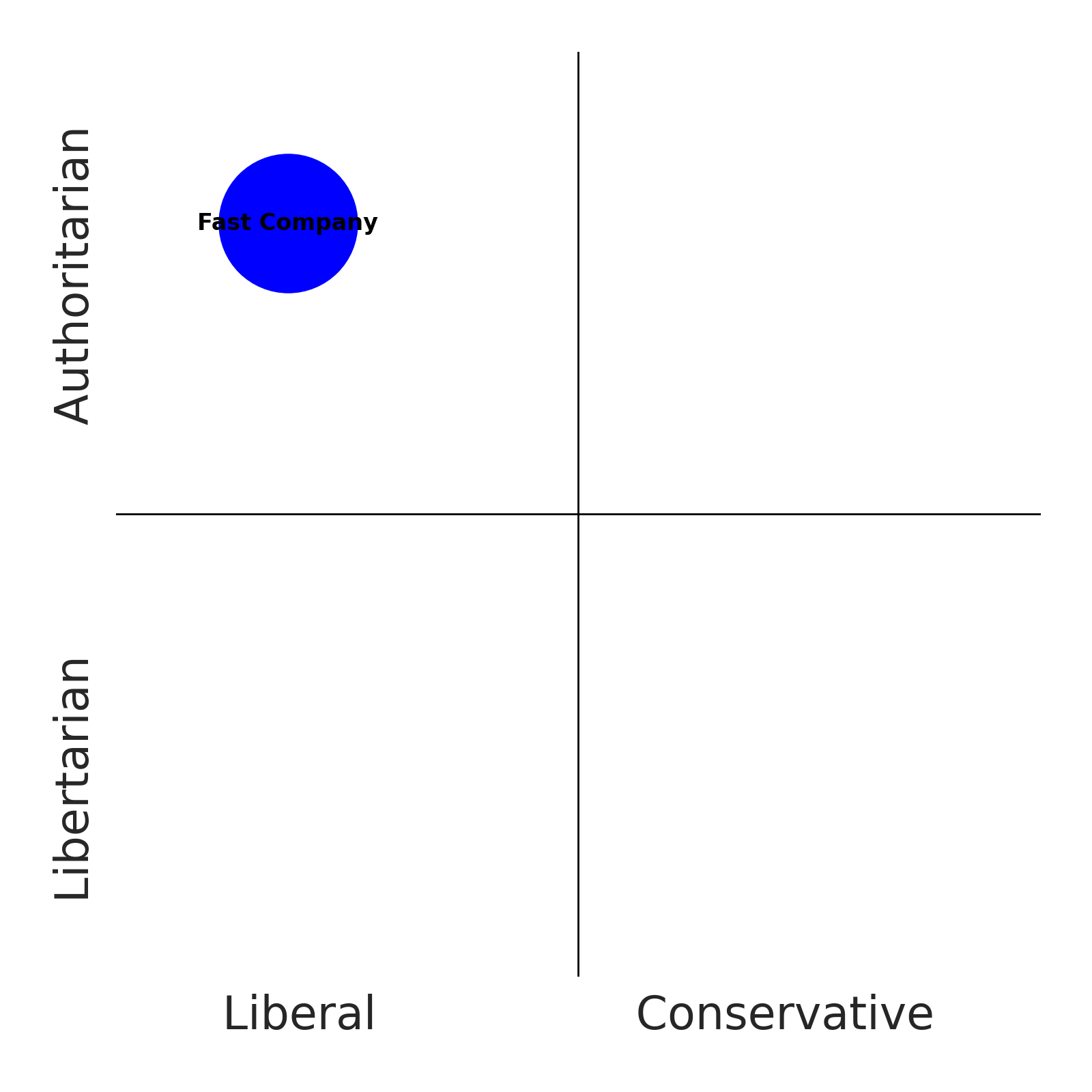
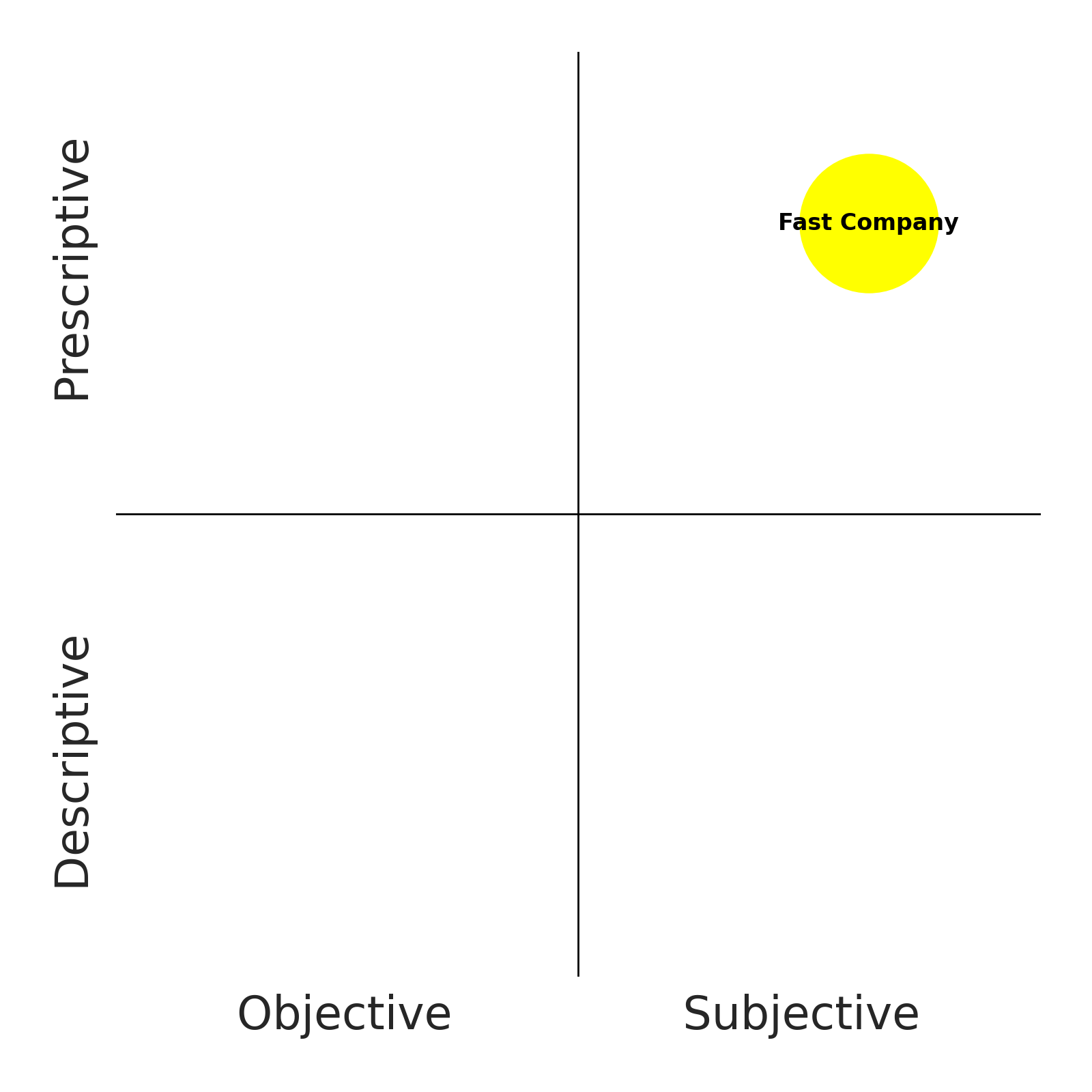
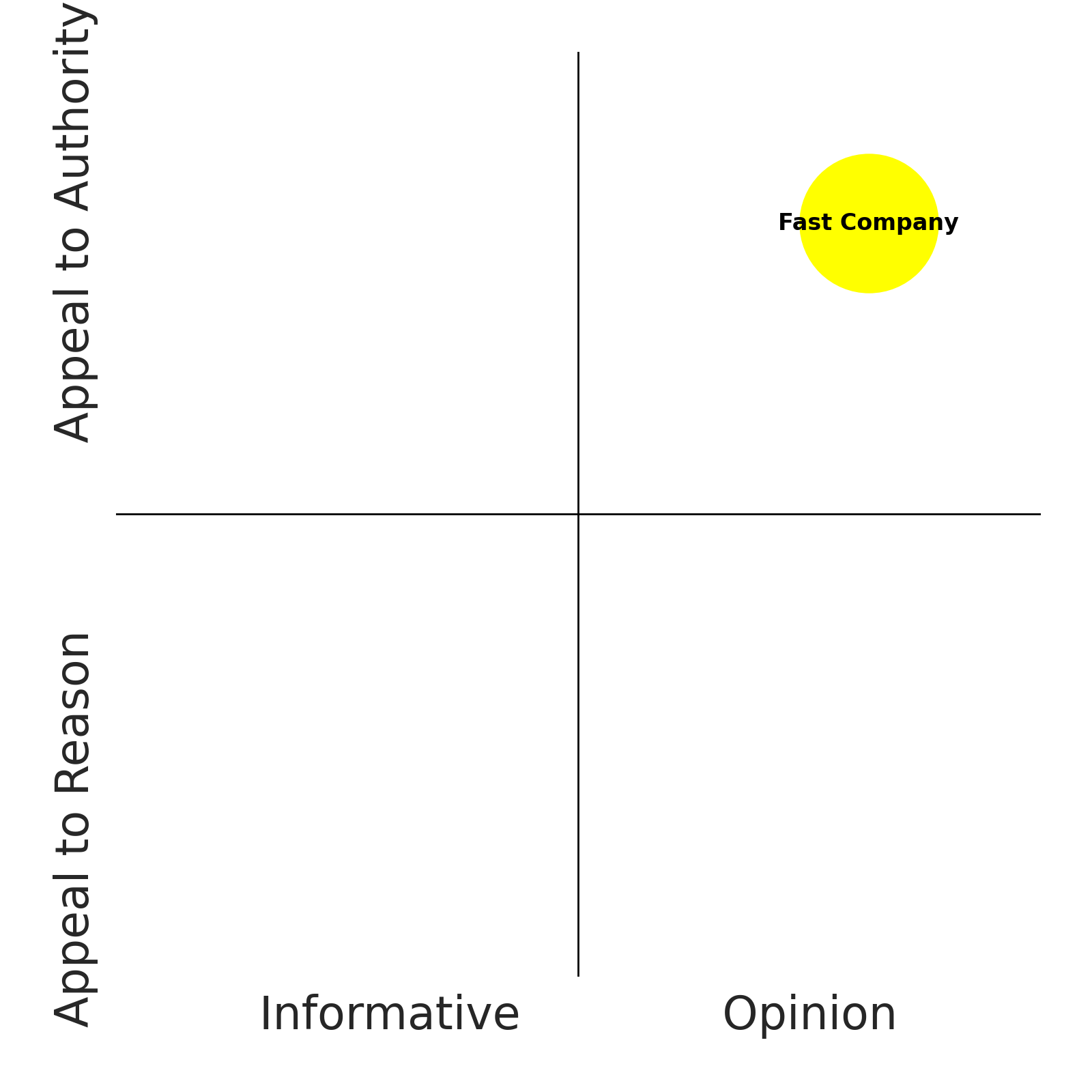
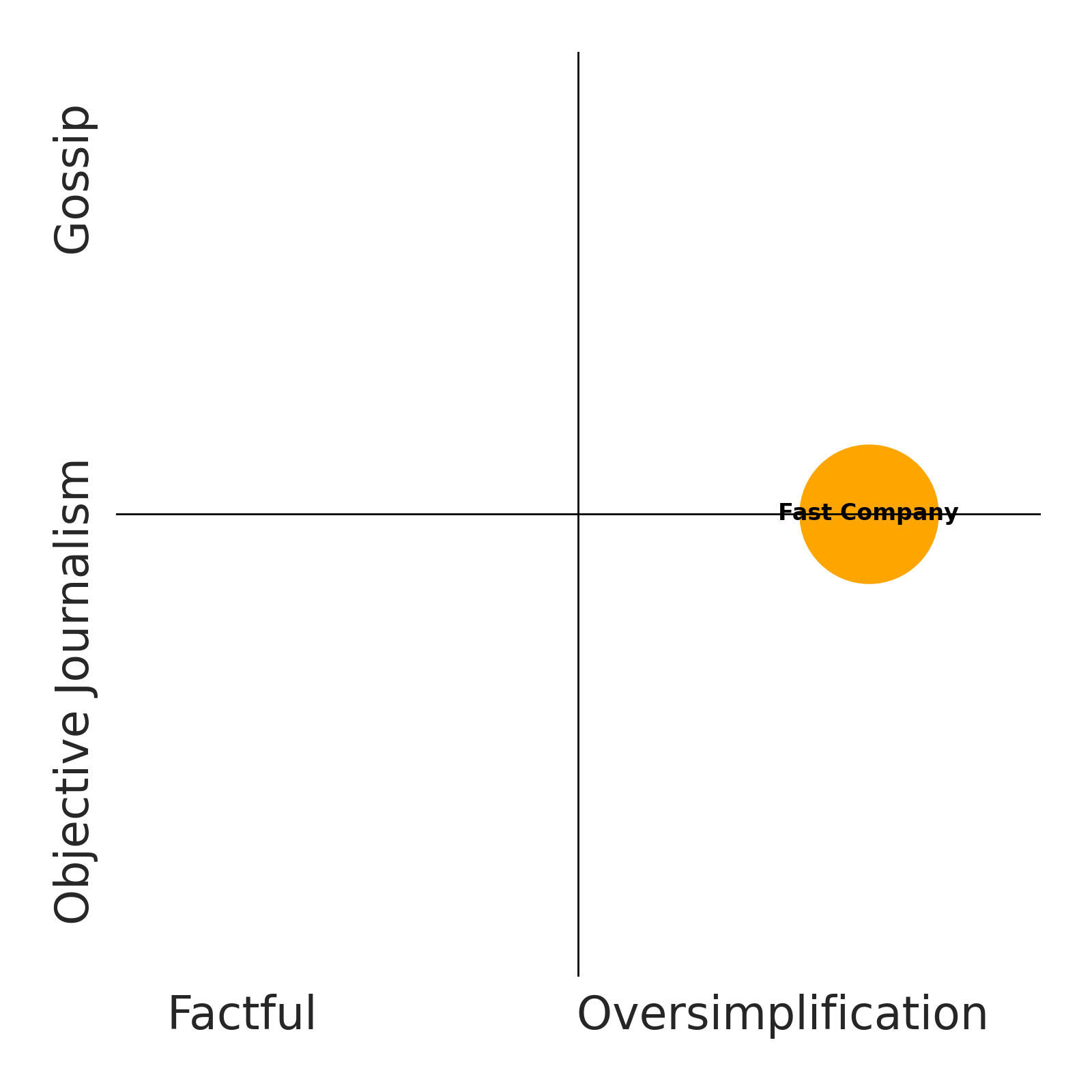
2026 © Helium Trades
Privacy Policy & Disclosure
* Disclaimer: Nothing on this website constitutes investment advice, performance data or any recommendation that any particular security, portfolio of securities, transaction or investment strategy is suitable for any specific person. Helium Trades is not responsible in any way for the accuracy
of any model predictions or price data. Any mention of a particular security and related prediction data is not a recommendation to buy or sell that security. Investments in securities involve the risk of loss. Past performance is no guarantee of future results. Helium Trades is not responsible for any of your investment decisions,
you should consult a financial expert before engaging in any transaction.