See whether Helium helps you make better-informed decisions. Try every Pro Trader feature for 30 days. No credit card required.
Try every Pro Trader feature for 30 days. No credit card required.
July 17, 2026 · 0 shares
Humanitarian-rights framing dominates, foregrounding civilian suffering, accountability, and renewed international engagement, anchored by UN and NGO voices and highlighting the crisis’s invisibility.
Geneva-based report on three years of war in Sudan detailing widespread violence, displacement (14 million displaced), and calls for accountability and sustained international engagement, citing UN officials and NGOs.
Automated analysis; not human reviewed. Limitations: Concise, case-specific limitations and plausible alternative interpretations. · 52 of 52 available dimensions scored; omitted dimensions are not treated as neutral. · Verified supporting quotes for 1 of 52 scored dimensions.
Claim: No clear liberal or conservative tilt detected; framing centers on humanitarian rights and accountability.
“What we need is not to compromise human rights for any political agenda.” · not found in supplied text
“We do not want resources to go to fuel the war or to mask human rights violations.” · exact text match
Counterevidence:
“Calls for 'sustained international engagement' align with internationalist policy concerns often associated with liberal perspectives.” · not found in supplied text
Why: Normative human rights framing suggests internationalist concerns rather than a domestic political spectrum.
Claim: Article presents credible quotes from UN officials and NGOs and references recognized institutions, suggesting trustworthiness.
“UN High Commissioner for Human Rights, Volker Türk, recalled in a statement during his recent visit to Sudan, that he was shocked by accounts of extreme brutality, including atrocity crimes.” · verified after text normalization
““I heard harrowing stories from survivors who witnessed the killing of their loved ones, and from women who had been subjected to gang rape and other forms of torture,” he said.” · exact text match
““What makes Sudan’s crisis even more alarming is its invisibility. The world is not watching closely enough, but we are here, despite insecurity and access restrictions,” said Li Fung, UN Human Rights’ Representative in Sudan, on the staggering human cost of the Sudan conflict.” · exact text match
Counterevidence:
“The article relies on a specific set of sources (UN officials and an NGO) without independent data corroboration.” · not found in supplied text
Why: Authoritative quotes support credibility but rely on a narrow source set, limiting independent verification.
Relies on UN/NGO voices; no independent data; possible elite framing.
Humanitarian framing dominates, relying on UN authorities and victim-focused language to stress urgency and aid needs while avoiding challenge to the UN narrative.
UN News report (Jul 13, 2026) summarizing UN findings on Sudan's humanitarian crisis with data from UNICEF, WHO, and OHCHR.
I rely on UN sources; confidence ~0.65.
July 20, 2026 · 0 shares
The piece presents a strongly pro-establishment, governance-centered framing of AI policy, privileging UN-led global solutions, accountability for developers, and human-rights-centered development while downplaying market-based approaches or counterarguments.
UN and global experts advocate urgent, governance-focused AI policy to bridge the digital divide and center human rights in AI deployment.
Automated analysis; not human reviewed. Limitations: Concise, case-specific limitations and plausible alternative interpretations. · 26 of 52 available dimensions scored; omitted dimensions are not treated as neutral. · Verified supporting quotes for 8 of 26 scored dimensions.
Claim: The reporting emphasizes governance and rights-based international oversight over market-driven or decentralized approaches.
“Throughout July 2026, various United Nations (UN) bodies and global experts have underscored the need for increased comprehensive artificial intelligence (AI) governance.” · exact text match
“If AI is to be powerful, it must be governed. If AI is to be trusted, those who build it must be accountable.” · exact text match
Counterevidence:
“AI holds immense potential to accelerate medical advancements, revolutionize educational systems, strengthen food production, and revitalize local economies.” · not found in supplied text
Why: Regulatory framing and emphasis on rights-based governance align with liberal-leaning policy preferences relative to market-first approaches.
Claim: Coverage centers on UN bodies and global experts, signaling elite-driven governance framing.
“From July 6 to 7, the UN convened the first session of the Global Dialogue on AI Governance, featuring a presentation of the inaugural report of the Independent International Scientific Panel on AI.” · exact text match
“On July 17, Guterres spoke at the World AI Conference (WAIC) in Shanghai, urging governments and stakeholders to invest in international cooperation and monitoring efforts to ensure equitable access to AI’s benefits.” · verified after text normalization
Counterevidence:
“Despite this, widening gaps in development have been recorded across communities in lower-income countries, particularly in the Global South.” · exact text match
Why: UN-led and expert-heavy framing implies elite-driven policy; counterpoints note persistent inequalities.
Claim: Emphasis on guardrails, accountability, and governance indicates preference for centralized control over AI development.
“If AI is to be powerful, it must be governed. If AI is to be trusted, those who build it must be accountable.” · exact text match
“three main priorities... making AI more environmentally sustainable, establishing critical safety guardrails, and expanding capacity across developing countries.” · not found in supplied text
Counterevidence:
“Other phrasing suggests voluntary corporate responsibility (e.g., calling for environmental footprints disclosure) rather than coercive policy.” · not found in supplied text
Why: Guardrails and accountability imply a regulatory, centralized approach to governance.
Claim: The piece frames AI governance as normative policy rather than neutral reporting.
“Global AI Governance Cannot Wait As the Digital Divide Widens.” · exact text match
“these are real wins, but they are wins within a system the Pacific did not design.” · not found in supplied text
Counterevidence:
“The article includes many direct quotes from UN officials and experts, which could be considered as sourced facts.” · not found in supplied text
Why: Prescriptive language and value-laden terms indicate subjective framing.
Claim: The article prescribes governance actions and policy priorities for AI development.
“To advance global AI governance: 'making AI more environmentally sustainable, establishing critical safety guardrails, and expanding capacity across developing countries'” · not found in supplied text
“"human rights must remain the cornerstone of all AI decision-making processes"” · not found in supplied text
Counterevidence:
“The piece also describes existing actions (e.g., dialogues, networks) but primarily prescribes future steps.” · not found in supplied text
Why: Shifts from description to explicit recommendations for policy action.
Claim: The article frames risks of AI and widening divides as a justification for governance.
“Artificial intelligence is advancing at runaway speed. A technology that can reshape economies, transform the world of work, sway elections and tilt the balance of security is being deployed faster than anyone— including the people building it— can keep up,” said UN Secretary-General Antonio Guterres” · exact text match
“AI risks pushing the world towards even greater inequalities … greater divides between North and South.” · not found in supplied text
Counterevidence:
“There is optimism about potential for SDGs and development benefits.” · not found in supplied text
Why: Risk framing is used to motivate governance actions; some benefits are acknowledged.
Claim: Language conveys normative judgments about governance and fairness.
“If AI is to be powerful, it must be governed. If AI is to be trusted, those who build it must be accountable.” · exact text match
“AI has the potential to accelerate the transition from fossil fuels to renewable energy by optimizing power efficiency and significantly reducing waste.” · exact text match
Counterevidence:
“The article includes quotes from authorities and cites data in a factual manner.” · not found in supplied text
Why: Prescriptive language and asserted benefits signal opinionated framing.
Claim: The piece frames AI governance as a political priority at the international level.
“Global Dialogue on AI Governance” · exact text match
“UN-supported Global Network for Exchange and Cooperation on AI Capacity Building” · exact text match
“human rights must remain the cornerstone of all AI decision-making processes” · exact text match
Counterevidence:
“It mentions technology policy aspects but does not align with any specific political ideology.” · not found in supplied text
Why: Policy-oriented, international coordination framing reflects a political stance.
Claim: Some statements imply straightforward solutions to complex issues (e.g., universal governance sufficiency).
“To advance global AI governance: 'making AI more environmentally sustainable, establishing critical safety guardrails, and expanding capacity across developing countries'” · not found in supplied text
Counterevidence:
“The article acknowledges complexities (global North-South divides, capacity building, legal bases), but does not detail how to achieve them.” · not found in supplied text
Why: Presents clear policy steps without detailing implementation challenges.
Claim: Heavy reliance on authorities (UN officials, WAIC) to support claims.
“UN Secretary-General Antonio Guterres…” · not found in supplied text
“On July 17, Guterres spoke at the World AI Conference (WAIC)…” · not found in supplied text
Counterevidence:
“Some data points (offline population, private investment) could be independently verified.” · not found in supplied text
Why: Claims are buttressed by statements from high-profile authorities.
Claim: None; writing is professional, with normative language but mildly cautious.
“"These are real wins, but they are wins within a system the Pacific did not design."” · not found in supplied text
Why: No immature rhetoric detected; usage is measured but policy-driven.
Claim: No clear circular reasoning detected.
“"If AI is to be powerful, it must be governed. If AI is to be global, it must be fair."” · not found in supplied text
Why: The quote presents a normative condition, not a circular justification.
Claim: References to affected populations and risk framing imply victimization.
“an alarming “one-third of humanity” remains offline” · exact text match
“widening gaps in development have been recorded across communities in lower-income countries” · exact text match
Counterevidence:
“The article also highlights efforts to address these issues.” · not found in supplied text
Why: Highlights vulnerable groups to underscore governance needs.
Claim: Stated certainty about governance fixes and outcomes.
“If AI is to be powerful, it must be governed.” · exact text match
“the time for the Pacific to shape the outcome is now” · not found in supplied text
Counterevidence:
“The text acknowledges guardrails and international cooperation as necessary, but these are nontrivial challenges.” · not found in supplied text
Why: Definitive tone about outcomes without exploring uncertainties.
Claim: Conveys a worldview prioritizing regulation, rights, and international coordination.
“"human rights must remain the cornerstone"” · not found in supplied text
“"establishing critical safety guardrails"” · not found in supplied text
Counterevidence:
“The article also notes potential benefits of AI and private investment.” · not found in supplied text
Why: Regulatory, rights-centered framing reflects a particular ideology.
Claim: Reporting strongly favors established international institutions as the principal agents of AI governance.
“Throughout July 2026, various United Nations (UN) bodies and global experts have underscored the need for increased comprehensive artificial intelligence (AI) governance.” · exact text match
“On July 17, Guterres spoke at the World AI Conference (WAIC) in Shanghai, urging governments and stakeholders to invest in international cooperation and monitoring efforts to ensure equitable access to AI’s benefits.” · verified after text normalization
Counterevidence:
“The Pacific region examples show regional agency and local governance experiments (Kingdom of Tonga, Samoa, etc.).” · not found in supplied text
Why: Prime emphasis on UN bodies and international fora signals pro-establishment framing.
Claim: Uses risk and inequality framing to motivate policy action.
“risks falling behind” · not found in supplied text
“greater divides between North and South” · not found in supplied text
Counterevidence:
“Statistical references to SDGs and development potential provide balanced context.” · not found in supplied text
Why: Emotional framing accompanies policy proposals.
Claim: Discourse leans on reasoned, evidence-based governance with explicit references to human rights and law.
“human rights must remain the cornerstone of all AI decision-making processes” · exact text match
“risk management to be firmly based in the principles of international law” · exact text match
Counterevidence:
“The language also contains prescriptive imperatives like 'AI must be governed' that extend beyond purely evidentiary claims.” · not found in supplied text
Why: Normative governance language coexists with factual claims, indicating a mild rational bias with normative tilt.
Claim: Forecasts about governance outcomes and regional shaping of outcomes.
“"the time for the Pacific to shape the outcome is now"” · not found in supplied text
“"the rules of AI are still being written"” · not found in supplied text
Counterevidence:
“The article grounds forecasts in current events and stated plans.” · not found in supplied text
Why: Future-oriented claims are tied to present actions but remain speculative.
Claim: Strategic framing to mobilize policy action.
“guardrails, transparency measures, and accountability to avoid leaving communities behind” · not found in supplied text
Counterevidence:
“The article provides context and data that support its framing.” · not found in supplied text
Why: Framing choices are designed to encourage governance actions.
Claim: Moderate intelligence in coverage; describes events, quotes, and context with clarity.
“From July 6 to 7, the UN convened the first session of the Global Dialogue on AI Governance, featuring a presentation of the inaugural report of the Independent International Scientific Panel on AI.” · exact text match
Why: Structured reporting with credible sources and clear context.
UN framing; limited data; lacks counterpoints; reliance on official sources
Balance and neutrality dominate: the piece presents data and quotes from UN, IMO, WTO sources, frames renewed Strait of Hormuz hostilities as a global economic and humanitarian risk without endorsing any single state policy, and highlights both security concerns and rights-based transit rules.
UN-style briefing describing renewed Strait of Hormuz hostilities' potential to disrupt global energy and commodity markets, supported by WTO/IMO/World Bank data.
Automated analysis; not human reviewed. Limitations: Concise, case-specific limitations and plausible alternative interpretations. · 25 of 52 available dimensions scored; omitted dimensions are not treated as neutral. · Verified supporting quotes for 1 of 25 scored dimensions.
Claim: No clear liberal or conservative tilt; reporting includes positions from U.S., Iran, UN/IMO and WTO and frames rights transit as an international law matter.
“U.S. President Donald Trump had proposed a 20 percent charge on cargo transiting the Strait, a plan he abandoned on July 14th after pressure from Gulf allies.” · exact text match
“Iran, meanwhile, has framed its control over the Strait as a national security issue and has threatened that it will remain closed “until the end of America’s evils.”” · exact text match
“At the same time, the IMO Council reaffirmed that the right of transit through straits used for international navigation “should not be threatened, impeded, denied, hampered, impaired or suspended,” reiterating that traffic through the Strait must “remain free of any tolls and charges,” in accordance with international law, including the IMO Convention.” · not found in supplied text
Why: Balanced representation of actors and policy debates; no single ideological tilt evident.
Claim: Text relies on international institutions and official bodies rather than populist voices; aligns with establishment framing.
“"UNITED NATIONS, Jul 17 2026"” · not found in supplied text
“World Trade Organization (WTO) Strait of Hormuz Trade Tracker” · not found in supplied text
“International Maritime Organization (IMO)” · exact text match
Why: Institutional voices predominate; populist framing is not evident.
Claim: Right of transit and toll-free transit imply libertarian lean; mention of naval blockade suggests authoritarian policy options.
“the right of transit through straits used for international navigation “should not be threatened, impeded, denied, hampered, impaired or suspended,” reiterating that traffic through the Strait must “remain free of any tolls and charges,”” · not found in supplied text
“the United States has announced that it will resume a naval blockade targeting vessels transiting to and from Iranian ports” · exact text match
“Iran, meanwhile, has framed its control over the Strait as a national security issue and has threatened that it will remain closed “until the end of America’s evils.”” · exact text match
Why: Freedoms of transit are championed; blockade mention introduces coercive policy dimensions.
Claim: Tone appears to be analytical, data-driven, with humanitarian framing rather than overt advocacy.
“With roughly a quarter of global seaborne oil trade transiting through the Strait, alongside significant flows of LNG and fertilizers, further constraints on commercial traffic could send new cost pressures cascading through supply chains that have yet to absorb the full effects of the earlier conflict.” · not found in supplied text
“These restrictions could be particularly damaging for energy- and food-importing economies, notably developing countries that spend significant shares of national income on essential imports of energy and food.” · exact text match
“The disruptions have carried a significant human cost.” · not found in supplied text
Why: Descriptive reporting with humanitarian framing; no overt advocacy.
Claim: Some alarmist framing exists but is anchored in data and quotes.
“"Renewed Hostilities in the Strait of Hormuz Threaten to Compound Global Supply Chain Costs"” · not found in supplied text
“"could choke the global energy, shipping and commodity markets"” · not found in supplied text
“"alarming for their impact on human rights far beyond the region"” · not found in supplied text
Why: Dramatic phrasing tied to documented concerns and sources.
Claim: Emphasis on rising costs and disruption implies a bearish tilt toward markets and costs.
“pushing additional expenses through global supply chains and eventually onto consumers.” · exact text match
“these restrictions could be particularly damaging for energy- and food-importing economies” · not found in supplied text
“renewed hostilities threaten to compound these pressures” · not found in supplied text
Why: Negative economic implications are foregrounded rather than positive outlooks.
Claim: Prescriptive elements accompany descriptive data (transit rights, no tolls).
“"the right of transit through straits ... should not be threatened, impeded, denied, hampered, impaired or suspended"” · not found in supplied text
“"traffic through the Strait must ‘remain free of any tolls and charges’"” · not found in supplied text
Why: Policy prescriptions accompany analysis and data-driven descriptions.
Claim: Heightened risk framing emphasizes danger to seafarers and rights.
“"avoid exposing seafarers to unnecessary danger by transiting the Strait"” · not found in supplied text
“The dangers are also being borne directly by seafarers trapped in the Persian Gulf.” · exact text match
“"alarming for their impact on human rights"” · not found in supplied text
Why: Direct warnings and risk emphasis drive fear-based framing.
Claim: Some normative statements accompany data (e.g., damaging effects, rights of transit).
“"these restrictions could be particularly damaging for energy- and food-importing economies"” · not found in supplied text
“"the right of transit ... should not be threatened"” · not found in supplied text
Why: Presence of normative language alongside data suggests limited opinionated framing.
Claim: Political actors are described (U.S., Iran) but the piece remains descriptive rather than advocacy-oriented.
“"U.S. President Donald Trump had proposed ..."” · not found in supplied text
“"Iran ... framed its control as a national security issue"” · not found in supplied text
“UN/IMO/WTO quotes” · not found in supplied text
Why: Contextual political actors without explicit advocacy.
Claim: Foregrounding seafarers' risk reflects victim-centered framing.
“"The dangers are also being borne directly by seafarers trapped in the Persian Gulf."” · not found in supplied text
“"around 11,000 have been evacuated"” · not found in supplied text
Why: Human-cost framing emphasizes affected individuals.
Claim: Establishment framing through reliance on intergovernmental organizations.
“"UNITED NATIONS, Jul 17 2026"” · not found in supplied text
“IMO statements” · not found in supplied text
“WTO data” · not found in supplied text
Why: Institutional sources are foregrounded.
Claim: Text uses quantitative data and credible sources, indicating rational analysis.
“War risk premiums, the additional fees charged to insure vessels operating within conflict zones, have skyrocketed from a 0.15 percent pre-conflict rate to 5 percent, a more than 33-fold increase.” · exact text match
“Very large crude carriers (VLCCs) can be valued from USD 130 million to more than USD 170 million” · exact text match
“Using a volume index in which 100 represents average volume levels, the WTO recorded a volume index of 25.69 for LNG on July 5th” · exact text match
Why: Data-driven presentation supports a rational interpretation.
Claim: High integrity due to cross-institutional data and careful sourcing.
“"World Bank: global energy prices rose by 24 percent following the conflict’s onset, with fertilizer prices projected to rise by more than 30 percent in 2026."” · not found in supplied text
“"UN High Commissioner for Human Rights Volker Türk warned that ... alarming for their impact on human rights"” · not found in supplied text
Why: Multiple credible institutions cited; transparency about impacts.
Claim: The article demonstrates high informational complexity and data integration.
“five transits in a day; 450 vessels waiting; DWT data; volume indices; vessel valuations” · not found in supplied text
Why: Diverse quantitative data points indicate strong informational content.
Ambiguity from reliance on official sources; limited non-official voices.
UNCTAD's framing emphasizes economic vulnerability from Strait of Hormuz disruptions, foregrounding transit and price data and prescribing resilience-building and international support for vulnerable economies.
UNCTAD analyzes Strait of Hormuz disruptions and their effects on energy and grain prices and the vulnerability of developing economies to higher import bills.
Automated analysis; not human reviewed. Limitations: Concise, case-specific limitations and plausible alternative interpretations.
July 16, 2026 · 0 shares
Data-driven, cautious framing relies on UNCTAD as the primary authority to describe multi-channel economic risks from Strait of Hormuz disruption, avoiding ideological language or sensationalism while signaling uncertainty about timing and impact.
UNCTAD outlines potential broad macroeconomic costs from Hormuz disruptions, including energy, transport, and fertilizer supply-chain impacts, with timing and magnitude uncertain and not fully visible until late 2026.
Automated analysis; not human reviewed. Limitations: Case-specific; relies on UNCTAD as primary source; may reflect one organization’s framing and data; broader perspectives not presented. · 1 of 52 available dimensions scored; omitted dimensions are not treated as neutral. · Verified supporting quotes for 1 of 1 scored dimensions.
Claim: The article presents a neutral, evidence-based framing using UNCTAD data and cautious language.
“The full economic impact of the disruptions in the Strait of Hormuz may not become clear until the second half of 2026, warns the United Nations Conference on Trade and Development (UNCTAD).” · exact text match
“While much of the global economy appears to be absorbing the shock rather decently, UNCTAD warned that the broader consequences of the Strait of Hormuz disruption have yet to fully materialize.” · exact text match
“Freight rates for oil tankers and war risk insurance premiums are surging, while marine fuel costs are also rising, increasing shipping costs across supply chains.” · exact text match
Counterevidence:
“While much of the global economy appears to be absorbing the shock rather decently, UNCTAD warned that the broader consequences of the Strait of Hormuz disruption have yet to fully materialize.” · exact text match
“Oil prices in recent months have reached an amount higher than USD 100 per barrel, up from roughly USD 60 per barrel last June.” · exact text match
Why: Multiple data-driven statements and quotes indicate cautious, evidence-based framing rather than advocacy or rhetoric.
UNCTAD-centric framing; limited independent corroboration.
July 22, 2026 · 0 shares
Balanced coverage of global vaccination challenges that leans toward pro-immunization framing and trust in established institutions (UNICEF/WHO) while acknowledging access barriers in conflict-affected and hard-to-reach regions.
Official reporting on global immunization coverage and challenges in FCV and hard-to-reach settings, featuring two UNICEF Global Youth Health Advisory Group members from Somalia and Ecuador.
Automated analysis; not human reviewed. Limitations: Concise, case-specific limitations and plausible alternative interpretations. · 1 of 52 available dimensions scored; omitted dimensions are not treated as neutral. · Verified supporting quotes for 0 of 1 scored dimensions.
Claim: Reporting frames vaccination and immunization as a collaboration with established institutions (UNICEF, WHO) and policy frameworks, indicating pro-establishment framing.
“The Immunization Agenda 2030 (IA2030) Mid-Term Review, identified FCVs as 'one of the greatest challenges to achieving global immunization goals.'” · not found in supplied text
“WHO and UNICEF have identified the urgent need to counter the spread of misleading information and erosion of trust, which has led to a surge in vaccine hesitancy and anti-science sentiment.” · exact text match
“UNICEF Executive Director Catherine Russell emphasized that while vaccination rates have bounced back since dropping during the COVID-19 pandemic, millions of children are still left vulnerable due to displacement, poverty and war.” · exact text match
Counterevidence:
“In FCV and hard-to-reach settings, mistrust surrounding vaccines is driven by multiple complex and multifaceted aspects, including misinformation campaigns, conspiracy theories, religious opposition, low health literacy, sociodemographic factors, and the politicization of vaccines that undermines science.” · exact text match
“these ‘barriers affecting their trust in and ability to access health services.’” · not found in supplied text
Why: Quotes and framing rely on established institutions to frame vaccination challenges, but acknowledge broader trust barriers that complicate a purely pro-establishment reading.
Limited sample voices; relies on UN sources; lacks independent data.
July 21, 2026 · 0 shares
Establishment-aligned, development-focused coverage that foregrounds Mandela's legacy and official voices while emphasizing action over remembrance and anti-militarism.
UN coverage of Mandela Day emphasizes poverty, inequality and calls for action, anchored by Harlem's Refettorio Harlem meal service and remarks from UN and city officials.
Automated analysis; not human reviewed. Limitations: Concise, case-specific limitations and plausible alternative interpretations. · 47 of 52 available dimensions scored; omitted dimensions are not treated as neutral. · Verified supporting quotes for 10 of 47 scored dimensions.
Claim: Reporting emphasizes poverty/inequality and critiques militarism, aligning with liberal development priorities.
“That focus fell squarely on poverty and inequality – and on whether the world is living up to the example Mandela set.” · not found in supplied text
“Right now, he warned, the world is doing the opposite: pouring resources into militaries while poverty and development needs go underfunded.” · exact text match
“There is something deeply wrong when we spend more on the instruments of destruction and death than on the tools of development and peace,” · exact text match
Counterevidence:
“Diplomats stood alongside city officials and neighbourhood volunteers, dishing out plates rather than platitudes, in a small but pointed answer to a question the UN spent Monday asking in more formal terms: what does Mandela’s legacy actually demand of us now?” · exact text match
“It was a modest event by UN standards – no cameras in the General Assembly Hall, no resolutions attached.” · exact text match
Why: Development-focused quotes and negative framing of militarism indicate liberal-leaning framing, tempered by grassroots participation.
Claim: No strong populist vs. elitist tilt; event mixes diplomats with volunteers.
“Diplomats stood alongside city officials and neighbourhood volunteers, dishing out plates rather than platitudes.” · not found in supplied text
Counterevidence:
“It was a modest event by UN standards – no cameras in the General Assembly Hall, no resolutions attached.” · exact text match
Why: Cross-section of elites and locals suggests balanced framing.
Claim: No clear stance on liberty vs. state authority beyond UN reform references; neutrality.
“reform the UN Security Council – including the case for a permanent African seat” · not found in supplied text
Counterevidence:
“Baerbock's call for action is normative but not coercive.” · not found in supplied text
Why: Limited content on governance style; no clear libertarian/authoritarian tilt.
Claim: Predominantly objective reporting with quotes from multiple speakers; balanced sourcing.
“The sharpest words of the morning came from Redi Tlhabi, the observance’s keynote speaker, who pushed back against the softened, reconciliatory image of Mandela that has settled into global memory.” · not found in supplied text
Counterevidence:
“Not only through remembrance but through action.” · not found in supplied text
Why: Multiple voices and descriptive narration support objectivity.
Claim: Not sensational; standard UN press release style.
“Credit: UN Photo/Loey Felipe” · exact text match
“That is where Harlem comes back in.” · exact text match
Counterevidence:
“The phrase 'Inconvenient Mandela' is quoted but not sensationalized.” · not found in supplied text
Why: Tone remains factual with limited dramatic framing.
Claim: Not applicable to financial markets; topic is policy and ceremony.
Why: No market-related framing.
Claim: Moderately interesting due to the blend of global leadership and local action.
“Sixty-seven minutes at a time” · exact text match
“Harlem Refettorio meal service as a concrete form of Mandela's legacy” · not found in supplied text
Counterevidence:
“Event described in standard UN press-release style.” · not found in supplied text
Why: Combination of global leadership and community service adds nuance.
Claim: The report contains prescriptive calls via quotes urging action and justice.
“'not only through remembrance but through action'” · not found in supplied text
“'What are you prepared to risk for justice?'” · not found in supplied text
Counterevidence:
“Descriptive event narration without explicit policy prescriptions from the publication itself.” · not found in supplied text
Why: Presence of normative statements indicates mild prescriptive orientation.
Claim: The piece leans away from militarism, highlighting funding for development over weapons.
“pouring resources into militaries while poverty and development needs go underfunded” · exact text match
“There is something deeply wrong when we spend more on the instruments of destruction and death than on the tools of development and peace” · exact text match
Counterevidence:
“There is no explicit call to increase defense spending.” · not found in supplied text
Why: Critical stance toward militarism suggests a dovish tilt.
Claim: No fear-based framing detected.
Why: Content centers on ethics and action, not fear.
Claim: No evident fallacies; quotes from varied speakers are used to pose questions rather than assume conclusions.
“"What does Mandela’s legacy actually demand of us now?"” · not found in supplied text
Why: Questions are used as prompts, not as unexamined conclusions.
Claim: No gossipy framing; formal reporting.
“Credit: UN Photo/Loey Felipe” · exact text match
“Volunteers from the United Nations and the diplomatic community preparing and serving meals” · exact text match
Why: Professional, event-focused coverage rather than gossip.
Claim: Mildly opinionated through action-oriented quotes; overall balanced presentation.
“'not only through remembrance but through action'” · not found in supplied text
“'What are you prepared to risk for justice?'” · not found in supplied text
Counterevidence:
“Quotations come from diverse speakers; the publication itself refrains from editorializing beyond reporting.” · not found in supplied text
Why: Quotations convey normative views but are attributed to speakers rather than authorial stance.
Claim: Some political content (Mandela Day, poverty, UN reform), but presented as event reporting rather than advocacy.
“reform the UN Security Council – including the case for a permanent African seat” · not found in supplied text
Counterevidence:
“No explicit endorsement of a particular policy platform.” · not found in supplied text
Why: Policy-relevant content is contextualized as part of event reporting rather than advocacy.
Claim: No clear simplification of complex issues; mentions multiple angles (poverty, inequality, UN reform).
“focus on poverty and inequality – and on whether the world is living up to the example Mandela set” · not found in supplied text
“reform the UN Security Council – including the case for a permanent African seat” · not found in supplied text
Why: Multiple facets are acknowledged; reduces risk of oversimplification.
Claim: Uses statements from high-level authorities to frame the discourse.
“Secretary-General António Guterres, speaking through his Chef de Cabinet, Courtenay Rattray...” · not found in supplied text
“Annalena Baerbock, President of the General Assembly...” · not found in supplied text
Counterevidence:
“Independent voices, such as Redi Tlhabi, are also included.” · not found in supplied text
Why: Authority voices are used to shape the framing, with countervoices present.
Claim: No immature framing detected; formal discourse throughout.
“addresses the General Assembly” · exact text match
“quotations from established figures” · not found in supplied text
Why: High-level discourse indicates maturity.
Claim: No circular reasoning detected.
Why: Arguments rely on external quotes and reported events rather than self-referential logic.
Claim: Attempts to cover a range of reactions (UN officials, journalist, city official).
“Courtenay Rattray (UN official)” · not found in supplied text
“Redi Tlhabi (journalist)” · not found in supplied text
“Baerbock (General Assembly President)” · not found in supplied text
Why: Multiple perspectives presented; reduces single-response bias.
Claim: No victimization framing; focus on structural issues like poverty.
“poverty and inequality” · exact text match
“development needs” · exact text match
Why: Describes systemic issues, not targeted victim narratives.
Claim: No excessive certainty beyond quotes and reported facts.
“"There is something deeply wrong..."” · not found in supplied text
“"What are you prepared to risk for justice?"” · verified after text normalization
Why: Quotations convey normative positions without overclaiming certainty.
Claim: No spam-like content; standard news framing.
Why: No promotional or repetitive content.
Claim: No overt ideological stance; reporting on Mandela/Nelson Mandela Day and UN development focus.
“poverty and inequality” · exact text match
“development and peace” · exact text match
Why: Topic scope is policy-relevant but not ideological.
Claim: UN leadership and official voices dominate framing; pro-establishment signaling.
“Secretary-General António Guterres” · exact text match
“General Assembly President Annalena Baerbock” · exact text match
Counterevidence:
“Volunteers and local partners are highlighted; grassroots dimension is foregrounded.” · not found in supplied text
Why: Presence of high-ranking officials and institutional framing indicates establishment orientation.
Claim: Emotional resonance present in quotes but not sensationalized; overall measured.
“There is something deeply wrong when we spend more on the instruments of destruction and death than on the tools of development and peace.” · not found in supplied text
Counterevidence:
“Neutral narrative sections and credits.” · not found in supplied text
Why: Emotional language exists in quotes but is balanced by reporting.
Claim: No evidence of inconsistent standards in reporting.
Why: Consistent sourcing and framing.
Claim: High credibility due to named officials, direct quotes, and credited images.
“Credit: UN Photo/Loey Felipe” · exact text match
“Secretary-General António Guterres...” · not found in supplied text
Why: Multiple verifiable sources and credits support credibility.
Claim: Reporting adheres to factual description and quotes; no irrational framing.
“Sixty-seven minutes.” · exact text match
“Poverty and inequality; development funding; anti-militarism” · not found in supplied text
Counterevidence:
“Quotes from officials introduce normative claims; does not rely on irrational assertions.” · not found in supplied text
Why: Use of direct quotes and verifiable details supports rational framing.
Claim: Not advertorial; UN press release style.
Why: Content appears informational rather than promotional.
Claim: Collective action and community involvement highlighted; tilt toward collectivism.
“neighbourhood volunteers” · exact text match
“volunteers from the United Nations and the diplomatic community preparing and serving meals” · not found in supplied text
Counterevidence:
“Modest event by UN standards, implying a balance of collective and institutional emphasis.” · not found in supplied text
Why: Explicit mention of volunteers and communal action suggests collectivist framing but tempered by UN leadership.
Claim: No indication of AI authorship; style resembles a human press release.
Why: No computational cues available to assert AI authorship.
Claim: High integrity signaled by multiple named sources and direct quotes; credible credits.
“Courtenay Rattray, Chef de Cabinet of the Secretary-General, addresses the General Assembly on the observance of the annual Nelson Mandela International Day.” · exact text match
“Baerbock’s point 'not only through remembrance but through action'.” · not found in supplied text
Counterevidence:
“The article does not present opposing voices or critical perspectives of UN actions.” · not found in supplied text
Why: Diverse sources and direct quotes bolster credibility; lack of dissent is a minor limitation.
Claim: Shows engagement with international governance, poverty, and symbolic action at local level.
“Mandela Day commemoration” · not found in supplied text
“UN reform discussions” · not found in supplied text
“Harlem Refettorio meal service” · not found in supplied text
Why: Diverse topics reflect sophisticated, policy-relevant reporting.
Claim: No pro-terrorism content; anti-militarism framing is implicit rather than advocacy for violence.
“destruction and death” · exact text match
“development and peace” · exact text match
Why: Content centers on peace, not terrorism.
Claim: No explicit Marxist analysis; focuses on Mandela, poverty, and UN reform.
“poverty and inequality” · exact text match
“reform the UN Security Council” · not found in supplied text
Why: No explicit class-struggle analysis.
Claim: No Islamist content or advocacy detected.
Why: No Islamist themes present.
Claim: No antisemitic content detected.
Why: No antisemitic framing.
Claim: No anti-LGBT content detected.
Why: No LGBT-related content.
Claim: No dehumanization or racial blame; focus on poverty and injustice.
“Mandela's fight against poverty and exclusion” · verified after text normalization
“permanent African seat” · exact text match
Why: No racial blame or denigration.
Claim: No explicit identity-politics framing; focus is on universal issues of poverty and justice.
Why: No clear woke framing.
Claim: No cruelty framing detected.
Why: Descriptive reporting without cruelty language.
Claim: No rejection of reason; quotes emphasize reasoned action.
“not only through remembrance but through action” · exact text match
Why: Content supports Enlightenment ideals of reason and universal rights.
UN source; limited dissent context; framing risk.
July 17, 2026 · 0 shares
Humanitarian-rights framing dominates, foregrounding civilian suffering, accountability, and renewed international engagement, anchored by UN and NGO voices and highlighting the crisis’s invisibility.
Geneva-based report on three years of war in Sudan detailing widespread violence, displacement (14 million displaced), and calls for accountability and sustained international engagement, citing UN officials and NGOs.
Automated analysis; not human reviewed. Limitations: Concise, case-specific limitations and plausible alternative interpretations. · 52 of 52 available dimensions scored; omitted dimensions are not treated as neutral. · Verified supporting quotes for 1 of 52 scored dimensions.
Claim: No clear liberal or conservative tilt detected; framing centers on humanitarian rights and accountability.
“What we need is not to compromise human rights for any political agenda.” · not found in supplied text
“We do not want resources to go to fuel the war or to mask human rights violations.” · exact text match
Counterevidence:
“Calls for 'sustained international engagement' align with internationalist policy concerns often associated with liberal perspectives.” · not found in supplied text
Why: Normative human rights framing suggests internationalist concerns rather than a domestic political spectrum.
Claim: Article presents credible quotes from UN officials and NGOs and references recognized institutions, suggesting trustworthiness.
“UN High Commissioner for Human Rights, Volker Türk, recalled in a statement during his recent visit to Sudan, that he was shocked by accounts of extreme brutality, including atrocity crimes.” · verified after text normalization
““I heard harrowing stories from survivors who witnessed the killing of their loved ones, and from women who had been subjected to gang rape and other forms of torture,” he said.” · exact text match
““What makes Sudan’s crisis even more alarming is its invisibility. The world is not watching closely enough, but we are here, despite insecurity and access restrictions,” said Li Fung, UN Human Rights’ Representative in Sudan, on the staggering human cost of the Sudan conflict.” · exact text match
Counterevidence:
“The article relies on a specific set of sources (UN officials and an NGO) without independent data corroboration.” · not found in supplied text
Why: Authoritative quotes support credibility but rely on a narrow source set, limiting independent verification.
Relies on UN/NGO voices; no independent data; possible elite framing.
Humanitarian framing dominates, relying on UN authorities and victim-focused language to stress urgency and aid needs while avoiding challenge to the UN narrative.
UN News report (Jul 13, 2026) summarizing UN findings on Sudan's humanitarian crisis with data from UNICEF, WHO, and OHCHR.
I rely on UN sources; confidence ~0.65.
July 22, 2026 · 0 shares
Balanced coverage of global vaccination challenges that leans toward pro-immunization framing and trust in established institutions (UNICEF/WHO) while acknowledging access barriers in conflict-affected and hard-to-reach regions.
Official reporting on global immunization coverage and challenges in FCV and hard-to-reach settings, featuring two UNICEF Global Youth Health Advisory Group members from Somalia and Ecuador.
Automated analysis; not human reviewed. Limitations: Concise, case-specific limitations and plausible alternative interpretations. · 1 of 52 available dimensions scored; omitted dimensions are not treated as neutral. · Verified supporting quotes for 0 of 1 scored dimensions.
Claim: Reporting frames vaccination and immunization as a collaboration with established institutions (UNICEF, WHO) and policy frameworks, indicating pro-establishment framing.
“The Immunization Agenda 2030 (IA2030) Mid-Term Review, identified FCVs as 'one of the greatest challenges to achieving global immunization goals.'” · not found in supplied text
“WHO and UNICEF have identified the urgent need to counter the spread of misleading information and erosion of trust, which has led to a surge in vaccine hesitancy and anti-science sentiment.” · exact text match
“UNICEF Executive Director Catherine Russell emphasized that while vaccination rates have bounced back since dropping during the COVID-19 pandemic, millions of children are still left vulnerable due to displacement, poverty and war.” · exact text match
Counterevidence:
“In FCV and hard-to-reach settings, mistrust surrounding vaccines is driven by multiple complex and multifaceted aspects, including misinformation campaigns, conspiracy theories, religious opposition, low health literacy, sociodemographic factors, and the politicization of vaccines that undermines science.” · exact text match
“these ‘barriers affecting their trust in and ability to access health services.’” · not found in supplied text
Why: Quotes and framing rely on established institutions to frame vaccination challenges, but acknowledge broader trust barriers that complicate a purely pro-establishment reading.
Limited sample voices; relies on UN sources; lacks independent data.
July 22, 2026 · 0 shares
A cautious, policy-prescriptive framing highlights progress in Africa's health security while foregrounding funding gaps and urging increased, domestically funded investment and capacity-building.
Brown University Pandemic Center-led Africa Health Security Index assesses Africa-wide pandemic preparedness, noting progress and persistent funding gaps with calls for domestic investment and regional cooperation.
Automated analysis; not human reviewed. · 39 of 52 available dimensions scored; omitted dimensions are not treated as neutral. · Verified supporting quotes for 3 of 39 scored dimensions.
Claim: Quantitative data and comparisons yield notable, testable indicators of progress and gaps.
“"An overwhelming majority of countries – 52 out of 54 – and five of six categories have shown improvement since the last assessment in 2021."” · not found in supplied text
“"Progress has been made, and we have risen to 41.5 out of 100, but we are still not prepared."” · not found in supplied text
Counterevidence:
“"The data show real, broad-based progress across this continent, but they also show, unambiguously, that no country is yet adequately prepared for the kind of emerging threat landscape that it faces."” · not found in supplied text
Why: Numerical progress with ongoing gaps supports a nuanced, data-driven perspective.
Claim: The report blends data with prescriptive policy recommendations, signaling a normative framing that policy action is needed.
“The measurable increase in capacity is the result of dedication, hard work, and investment in the health security of Africa over recent years, but much more is needed. Substantial gaps remain that can mean the difference between a small outbreak and an international pandemic. Investments made today will determine Africa’s capacity to address the health threats of tomorrow,” · exact text match
“Recent declines in overseas development assistance underline the need for governments to prioritise resources and strengthen the systems that address health emergencies.” · exact text match
“Domestic and international resourcing of pandemic preparedness is an area that countries and global partners need to continue to track—we have recommended the creation of a global pandemic spending tracker to do just this work.” · exact text match
Counterevidence:
“The data show real, broad-based progress across this continent, but they also show, unambiguously, that no country is yet adequately prepared for the kind of emerging threat landscape that it faces.” · not found in supplied text
“An overwhelming majority of countries – 52 out of 54 – and five of six categories have shown improvement since the last assessment in 2021.” · exact text match
Why: Prescriptive statements co-occur with clear indicators of progress, suggesting a normative frame supported by data.
Claim: The framing uses fear-inducing language about outbreaks to justify more funding and policy action.
“In June, the Africa CDC warned that the ongoing Ebola outbreak could be the largest ever, underscoring the urgent need for continued investment in health security preparedness.” · exact text match
“The WHO’s Regional Emergency Director for Africa rates the current response as only a “three or four” out of ten in terms of sufficiency.” · exact text match
“An outbreak of the Bundibugyo strain of Ebola, declared a Public Health Emergency of International Concern in May 2026, is currently ravaging the Democratic Republic of Congo and spreading to Uganda, with cases confirmed in Kampala.” · exact text match
Counterevidence:
“An overwhelming majority of countries – 52 out of 54 – and five of six categories have shown improvement since the last assessment in 2021.” · exact text match
“The data show real, broad-based progress across this continent.” · not found in supplied text
Why: Threat emphasis aligns with calls for more funding, though parallel progress data temper it.
Claim: The report includes normative, moral framing and ownership rhetoric guiding policy choices.
“"Capacity without safety and security training is a liability, not an asset," James emphasised. "It is a moral responsibility we have to use all the resources, all the technology, all the expertise, and all the systems to make it possible to stop outbreaks from turning into pandemics."” · verified after text normalization
“"This strategy is not about aid — it’s about ownership. We are building a future where Africa invests in its people, drives its own health agenda, and responds to crises with speed, strength, and self-reliance."” · verified after text normalization
Counterevidence:
“52 of 54 countries improved since 2021, showing progress even as calls for action remain.” · not found in supplied text
“The data show real, broad-based progress across this continent, but they also show, unambiguously, that no country is yet adequately prepared.” · not found in supplied text
Why: Quotations present moral framing and policy prescriptions beyond neutral reporting.
Claim: The report relies on prominent institutions and experts to support its framing.
“Dr Wilmot James, senior adviser to the Brown University Pandemic Center; Judy Omumbo of the Science for Africa Foundation; Hayley Severance of the Nuclear Threat Initiative; Jean Kaseya of the Africa CDC.” · not found in supplied text
Counterevidence:
“The article also cites concrete data and direct measurements from the AHS Index, not only authorities.” · not found in supplied text
Why: Framing leans on authority figures to bolster claims, paired with data.
Ambiguities: relies on few sources; may overstate progress; limited local data.
July 16, 2026 · 0 shares
Data-driven, cautious framing relies on UNCTAD as the primary authority to describe multi-channel economic risks from Strait of Hormuz disruption, avoiding ideological language or sensationalism while signaling uncertainty about timing and impact.
UNCTAD outlines potential broad macroeconomic costs from Hormuz disruptions, including energy, transport, and fertilizer supply-chain impacts, with timing and magnitude uncertain and not fully visible until late 2026.
Automated analysis; not human reviewed. Limitations: Case-specific; relies on UNCTAD as primary source; may reflect one organization’s framing and data; broader perspectives not presented. · 1 of 52 available dimensions scored; omitted dimensions are not treated as neutral. · Verified supporting quotes for 1 of 1 scored dimensions.
Claim: The article presents a neutral, evidence-based framing using UNCTAD data and cautious language.
“The full economic impact of the disruptions in the Strait of Hormuz may not become clear until the second half of 2026, warns the United Nations Conference on Trade and Development (UNCTAD).” · exact text match
“While much of the global economy appears to be absorbing the shock rather decently, UNCTAD warned that the broader consequences of the Strait of Hormuz disruption have yet to fully materialize.” · exact text match
“Freight rates for oil tankers and war risk insurance premiums are surging, while marine fuel costs are also rising, increasing shipping costs across supply chains.” · exact text match
Counterevidence:
“While much of the global economy appears to be absorbing the shock rather decently, UNCTAD warned that the broader consequences of the Strait of Hormuz disruption have yet to fully materialize.” · exact text match
“Oil prices in recent months have reached an amount higher than USD 100 per barrel, up from roughly USD 60 per barrel last June.” · exact text match
Why: Multiple data-driven statements and quotes indicate cautious, evidence-based framing rather than advocacy or rhetoric.
UNCTAD-centric framing; limited independent corroboration.
July 17, 2026 · 0 shares
Data-driven, balanced framing with cautious language and reliance on industry estimates rather than advocacy.
Oil-market disruption analysis covers price behavior, supply shortfalls, regional maneuvers, and recovery timelines in response to war in the Middle East.
Automated analysis; not human reviewed. Limitations: Concise, case-specific limitations and plausible alternative interpretations. · 2 of 52 available dimensions scored; omitted dimensions are not treated as neutral. · Verified supporting quotes for 2 of 2 scored dimensions.
Claim: Article presents data-driven, credible analysis using industry estimates and hedges uncertainty.
“Industry estimates suggest it will take two to three months before a significant share of oil flows can resume following a full reopening of the waterway.” · exact text match
“Still, much remains uncertain—including when freedom of navigation through the world’s most critical oil chokepoint will be effectively restored, and how quickly shipping, insurance, and operator confidence will follow.” · exact text match
“Energy markets’ flexibility and prompt policy actions bought the global economy time.” · exact text match
Counterevidence:
“Even so, these workarounds offset only a fraction of lost Hormuz volumes.” · exact text match
“By the end of May, more than 1.1 billion barrels of crude—equivalent to about 10 days of typical global consumption—had not reached the market.” · exact text match
Why: Quantified estimates and hedged language support credibility; explicit uncertainties temper certainty.
Claim: Article discusses future supply restoration with limited detail and forward-looking statements.
“In the March-May period, three factors helped close the gap:” · exact text match
“Before the most recent escalation of tensions, the US-Iran framework agreement to reopen the strait sent prices sharply lower, in large part because stranded oil on tankers in the Gulf could rapidly return to the market.” · exact text match
“Industry estimates suggest it will take two to three months before a significant share of oil flows can resume following a full reopening of the waterway.” · exact text match
Counterevidence:
“Still, much remains uncertain—including when freedom of navigation through the world’s most critical oil chokepoint will be effectively restored, and how quickly shipping, insurance, and operator confidence will follow.” · exact text match
“A longer-term concern is that prolonged production halts could cause permanent output losses, especially where financing to restart wells is scarce.” · exact text match
Why: Forecasts are couched in industry estimates and conditional language, signaling speculative framing rather than exact predictions.
Ambiguity due to missing details on 'three factors' and future restoration timelines.
July 21, 2026 · 0 shares
Data-driven, neutral framing relies on OECD/UN sources to show GVC trade remains historically high with sectoral variation and inflation-adjustment caveats, portraying globalization as an ongoing reconfiguration rather than retreat, without prescribing policy.
UN/OECD-based analysis of GVC trade in 2024-2023 across 80 economies, highlighting interdependence and ongoing supply-chain reconfiguration.
Automated analysis; not human reviewed. Limitations: Concise, case-specific limitations and plausible alternative interpretations. · 1 of 52 available dimensions scored; omitted dimensions are not treated as neutral. · Verified supporting quotes for 1 of 1 scored dimensions.
Claim: The article relies on OECD/UN data and presents precise statistics, suggesting credible reporting.
“UNITED NATIONS, Jul 21 2026 () – Despite rising geopolitical tensions, trade restrictions and calls to bring production back to domestic shores, the global economy remains more interconnected than it may appear.” · exact text match
“Trade through global value chains (GVCs) reached historic levels in 2024, according to a new report from the Organisation for Economic Co-operation and Development (OECD).” · exact text match
“GVCs, the cross-border production networks through which countries exchange materials, services and intermediate inputs used to produce goods and services, accounted for roughly 17 percent of global GDP in real terms between 2022 and 2024. This is up from approximately 16 percent before the 2008 Global Financial Crisis.” · exact text match
Why: Explicit OECD/UN data with multiple numeric figures supports credibility; minor formatting irregularities may introduce some uncertainty.
Formatting gaps; heavy reliance on OECD/UN; limited alternative datasets.
July 20, 2026 · 0 shares
The piece presents a strongly pro-establishment, governance-centered framing of AI policy, privileging UN-led global solutions, accountability for developers, and human-rights-centered development while downplaying market-based approaches or counterarguments.
UN and global experts advocate urgent, governance-focused AI policy to bridge the digital divide and center human rights in AI deployment.
Automated analysis; not human reviewed. Limitations: Concise, case-specific limitations and plausible alternative interpretations. · 26 of 52 available dimensions scored; omitted dimensions are not treated as neutral. · Verified supporting quotes for 8 of 26 scored dimensions.
Claim: The reporting emphasizes governance and rights-based international oversight over market-driven or decentralized approaches.
“Throughout July 2026, various United Nations (UN) bodies and global experts have underscored the need for increased comprehensive artificial intelligence (AI) governance.” · exact text match
“If AI is to be powerful, it must be governed. If AI is to be trusted, those who build it must be accountable.” · exact text match
Counterevidence:
“AI holds immense potential to accelerate medical advancements, revolutionize educational systems, strengthen food production, and revitalize local economies.” · not found in supplied text
Why: Regulatory framing and emphasis on rights-based governance align with liberal-leaning policy preferences relative to market-first approaches.
Claim: Coverage centers on UN bodies and global experts, signaling elite-driven governance framing.
“From July 6 to 7, the UN convened the first session of the Global Dialogue on AI Governance, featuring a presentation of the inaugural report of the Independent International Scientific Panel on AI.” · exact text match
“On July 17, Guterres spoke at the World AI Conference (WAIC) in Shanghai, urging governments and stakeholders to invest in international cooperation and monitoring efforts to ensure equitable access to AI’s benefits.” · verified after text normalization
Counterevidence:
“Despite this, widening gaps in development have been recorded across communities in lower-income countries, particularly in the Global South.” · exact text match
Why: UN-led and expert-heavy framing implies elite-driven policy; counterpoints note persistent inequalities.
Claim: Emphasis on guardrails, accountability, and governance indicates preference for centralized control over AI development.
“If AI is to be powerful, it must be governed. If AI is to be trusted, those who build it must be accountable.” · exact text match
“three main priorities... making AI more environmentally sustainable, establishing critical safety guardrails, and expanding capacity across developing countries.” · not found in supplied text
Counterevidence:
“Other phrasing suggests voluntary corporate responsibility (e.g., calling for environmental footprints disclosure) rather than coercive policy.” · not found in supplied text
Why: Guardrails and accountability imply a regulatory, centralized approach to governance.
Claim: The piece frames AI governance as normative policy rather than neutral reporting.
“Global AI Governance Cannot Wait As the Digital Divide Widens.” · exact text match
“these are real wins, but they are wins within a system the Pacific did not design.” · not found in supplied text
Counterevidence:
“The article includes many direct quotes from UN officials and experts, which could be considered as sourced facts.” · not found in supplied text
Why: Prescriptive language and value-laden terms indicate subjective framing.
Claim: The article prescribes governance actions and policy priorities for AI development.
“To advance global AI governance: 'making AI more environmentally sustainable, establishing critical safety guardrails, and expanding capacity across developing countries'” · not found in supplied text
“"human rights must remain the cornerstone of all AI decision-making processes"” · not found in supplied text
Counterevidence:
“The piece also describes existing actions (e.g., dialogues, networks) but primarily prescribes future steps.” · not found in supplied text
Why: Shifts from description to explicit recommendations for policy action.
Claim: The article frames risks of AI and widening divides as a justification for governance.
“Artificial intelligence is advancing at runaway speed. A technology that can reshape economies, transform the world of work, sway elections and tilt the balance of security is being deployed faster than anyone— including the people building it— can keep up,” said UN Secretary-General Antonio Guterres” · exact text match
“AI risks pushing the world towards even greater inequalities … greater divides between North and South.” · not found in supplied text
Counterevidence:
“There is optimism about potential for SDGs and development benefits.” · not found in supplied text
Why: Risk framing is used to motivate governance actions; some benefits are acknowledged.
Claim: Language conveys normative judgments about governance and fairness.
“If AI is to be powerful, it must be governed. If AI is to be trusted, those who build it must be accountable.” · exact text match
“AI has the potential to accelerate the transition from fossil fuels to renewable energy by optimizing power efficiency and significantly reducing waste.” · exact text match
Counterevidence:
“The article includes quotes from authorities and cites data in a factual manner.” · not found in supplied text
Why: Prescriptive language and asserted benefits signal opinionated framing.
Claim: The piece frames AI governance as a political priority at the international level.
“Global Dialogue on AI Governance” · exact text match
“UN-supported Global Network for Exchange and Cooperation on AI Capacity Building” · exact text match
“human rights must remain the cornerstone of all AI decision-making processes” · exact text match
Counterevidence:
“It mentions technology policy aspects but does not align with any specific political ideology.” · not found in supplied text
Why: Policy-oriented, international coordination framing reflects a political stance.
Claim: Some statements imply straightforward solutions to complex issues (e.g., universal governance sufficiency).
“To advance global AI governance: 'making AI more environmentally sustainable, establishing critical safety guardrails, and expanding capacity across developing countries'” · not found in supplied text
Counterevidence:
“The article acknowledges complexities (global North-South divides, capacity building, legal bases), but does not detail how to achieve them.” · not found in supplied text
Why: Presents clear policy steps without detailing implementation challenges.
Claim: Heavy reliance on authorities (UN officials, WAIC) to support claims.
“UN Secretary-General Antonio Guterres…” · not found in supplied text
“On July 17, Guterres spoke at the World AI Conference (WAIC)…” · not found in supplied text
Counterevidence:
“Some data points (offline population, private investment) could be independently verified.” · not found in supplied text
Why: Claims are buttressed by statements from high-profile authorities.
Claim: None; writing is professional, with normative language but mildly cautious.
“"These are real wins, but they are wins within a system the Pacific did not design."” · not found in supplied text
Why: No immature rhetoric detected; usage is measured but policy-driven.
Claim: No clear circular reasoning detected.
“"If AI is to be powerful, it must be governed. If AI is to be global, it must be fair."” · not found in supplied text
Why: The quote presents a normative condition, not a circular justification.
Claim: References to affected populations and risk framing imply victimization.
“an alarming “one-third of humanity” remains offline” · exact text match
“widening gaps in development have been recorded across communities in lower-income countries” · exact text match
Counterevidence:
“The article also highlights efforts to address these issues.” · not found in supplied text
Why: Highlights vulnerable groups to underscore governance needs.
Claim: Stated certainty about governance fixes and outcomes.
“If AI is to be powerful, it must be governed.” · exact text match
“the time for the Pacific to shape the outcome is now” · not found in supplied text
Counterevidence:
“The text acknowledges guardrails and international cooperation as necessary, but these are nontrivial challenges.” · not found in supplied text
Why: Definitive tone about outcomes without exploring uncertainties.
Claim: Conveys a worldview prioritizing regulation, rights, and international coordination.
“"human rights must remain the cornerstone"” · not found in supplied text
“"establishing critical safety guardrails"” · not found in supplied text
Counterevidence:
“The article also notes potential benefits of AI and private investment.” · not found in supplied text
Why: Regulatory, rights-centered framing reflects a particular ideology.
Claim: Reporting strongly favors established international institutions as the principal agents of AI governance.
“Throughout July 2026, various United Nations (UN) bodies and global experts have underscored the need for increased comprehensive artificial intelligence (AI) governance.” · exact text match
“On July 17, Guterres spoke at the World AI Conference (WAIC) in Shanghai, urging governments and stakeholders to invest in international cooperation and monitoring efforts to ensure equitable access to AI’s benefits.” · verified after text normalization
Counterevidence:
“The Pacific region examples show regional agency and local governance experiments (Kingdom of Tonga, Samoa, etc.).” · not found in supplied text
Why: Prime emphasis on UN bodies and international fora signals pro-establishment framing.
Claim: Uses risk and inequality framing to motivate policy action.
“risks falling behind” · not found in supplied text
“greater divides between North and South” · not found in supplied text
Counterevidence:
“Statistical references to SDGs and development potential provide balanced context.” · not found in supplied text
Why: Emotional framing accompanies policy proposals.
Claim: Discourse leans on reasoned, evidence-based governance with explicit references to human rights and law.
“human rights must remain the cornerstone of all AI decision-making processes” · exact text match
“risk management to be firmly based in the principles of international law” · exact text match
Counterevidence:
“The language also contains prescriptive imperatives like 'AI must be governed' that extend beyond purely evidentiary claims.” · not found in supplied text
Why: Normative governance language coexists with factual claims, indicating a mild rational bias with normative tilt.
Claim: Forecasts about governance outcomes and regional shaping of outcomes.
“"the time for the Pacific to shape the outcome is now"” · not found in supplied text
“"the rules of AI are still being written"” · not found in supplied text
Counterevidence:
“The article grounds forecasts in current events and stated plans.” · not found in supplied text
Why: Future-oriented claims are tied to present actions but remain speculative.
Claim: Strategic framing to mobilize policy action.
“guardrails, transparency measures, and accountability to avoid leaving communities behind” · not found in supplied text
Counterevidence:
“The article provides context and data that support its framing.” · not found in supplied text
Why: Framing choices are designed to encourage governance actions.
Claim: Moderate intelligence in coverage; describes events, quotes, and context with clarity.
“From July 6 to 7, the UN convened the first session of the Global Dialogue on AI Governance, featuring a presentation of the inaugural report of the Independent International Scientific Panel on AI.” · exact text match
Why: Structured reporting with credible sources and clear context.
UN framing; limited data; lacks counterpoints; reliance on official sources
July 20, 2026 · 0 shares
Establishment-friendly, policy-forward framing: the piece foregrounds government–industry–finance coordination and public policy initiatives as central to accelerating energy efficiency, while offering limited critical scrutiny.
Montreal-based IPS News coverage of an IEA conference arguing that energy efficiency should underpin energy security, climate action, and economic competitiveness through coordinated policy and investment.
Automated analysis; not human reviewed. Limitations: This assessment relies on a single article; interpretations may vary with broader coverage; lacks evaluation of external sources or full context. · 2 of 52 available dimensions scored; omitted dimensions are not treated as neutral. · Verified supporting quotes for 1 of 2 scored dimensions.
Claim: Policy coordination and public programs are foregrounded as central to energy efficiency progress
“Montreal Collaboration Framework, an initiative designed to strengthen coordination between policymakers, financial institutions and businesses.” · exact text match
“Canada used the conference to announce an expansion of its Canada Greener Homes Affordability Program, which will provide energy efficiency retrofits to approximately 35,000 low- and middle-income households without upfront costs.” · exact text match
“With the launch of the Montreal Collaboration Framework and renewed commitments from governments, industry and financial institutions, the conference sought to transform efficiency from an often overlooked policy objective into the central pillar of global energy security, economic competitiveness and climate action,” · exact text match
Counterevidence:
“What has often been missing is coordinated implementation, sufficient investment and political determination.” · exact text match
“Executives participating in CEO roundtables acknowledged that many companies continue to pursue isolated efficiency upgrades that deliver only modest savings.” · exact text match
Why: Explicit emphasis on policy frameworks and government-led initiatives signals establishment-aligned framing, supported by concrete program announcements.
Ambiguity: policy-forward framing with limited critique.
July 22, 2026 · 0 shares
A cautious, policy-prescriptive framing highlights progress in Africa's health security while foregrounding funding gaps and urging increased, domestically funded investment and capacity-building.
Brown University Pandemic Center-led Africa Health Security Index assesses Africa-wide pandemic preparedness, noting progress and persistent funding gaps with calls for domestic investment and regional cooperation.
Automated analysis; not human reviewed. · 39 of 52 available dimensions scored; omitted dimensions are not treated as neutral. · Verified supporting quotes for 3 of 39 scored dimensions.
Claim: Quantitative data and comparisons yield notable, testable indicators of progress and gaps.
“"An overwhelming majority of countries – 52 out of 54 – and five of six categories have shown improvement since the last assessment in 2021."” · not found in supplied text
“"Progress has been made, and we have risen to 41.5 out of 100, but we are still not prepared."” · not found in supplied text
Counterevidence:
“"The data show real, broad-based progress across this continent, but they also show, unambiguously, that no country is yet adequately prepared for the kind of emerging threat landscape that it faces."” · not found in supplied text
Why: Numerical progress with ongoing gaps supports a nuanced, data-driven perspective.
Claim: The report blends data with prescriptive policy recommendations, signaling a normative framing that policy action is needed.
“The measurable increase in capacity is the result of dedication, hard work, and investment in the health security of Africa over recent years, but much more is needed. Substantial gaps remain that can mean the difference between a small outbreak and an international pandemic. Investments made today will determine Africa’s capacity to address the health threats of tomorrow,” · exact text match
“Recent declines in overseas development assistance underline the need for governments to prioritise resources and strengthen the systems that address health emergencies.” · exact text match
“Domestic and international resourcing of pandemic preparedness is an area that countries and global partners need to continue to track—we have recommended the creation of a global pandemic spending tracker to do just this work.” · exact text match
Counterevidence:
“The data show real, broad-based progress across this continent, but they also show, unambiguously, that no country is yet adequately prepared for the kind of emerging threat landscape that it faces.” · not found in supplied text
“An overwhelming majority of countries – 52 out of 54 – and five of six categories have shown improvement since the last assessment in 2021.” · exact text match
Why: Prescriptive statements co-occur with clear indicators of progress, suggesting a normative frame supported by data.
Claim: The framing uses fear-inducing language about outbreaks to justify more funding and policy action.
“In June, the Africa CDC warned that the ongoing Ebola outbreak could be the largest ever, underscoring the urgent need for continued investment in health security preparedness.” · exact text match
“The WHO’s Regional Emergency Director for Africa rates the current response as only a “three or four” out of ten in terms of sufficiency.” · exact text match
“An outbreak of the Bundibugyo strain of Ebola, declared a Public Health Emergency of International Concern in May 2026, is currently ravaging the Democratic Republic of Congo and spreading to Uganda, with cases confirmed in Kampala.” · exact text match
Counterevidence:
“An overwhelming majority of countries – 52 out of 54 – and five of six categories have shown improvement since the last assessment in 2021.” · exact text match
“The data show real, broad-based progress across this continent.” · not found in supplied text
Why: Threat emphasis aligns with calls for more funding, though parallel progress data temper it.
Claim: The report includes normative, moral framing and ownership rhetoric guiding policy choices.
“"Capacity without safety and security training is a liability, not an asset," James emphasised. "It is a moral responsibility we have to use all the resources, all the technology, all the expertise, and all the systems to make it possible to stop outbreaks from turning into pandemics."” · verified after text normalization
“"This strategy is not about aid — it’s about ownership. We are building a future where Africa invests in its people, drives its own health agenda, and responds to crises with speed, strength, and self-reliance."” · verified after text normalization
Counterevidence:
“52 of 54 countries improved since 2021, showing progress even as calls for action remain.” · not found in supplied text
“The data show real, broad-based progress across this continent, but they also show, unambiguously, that no country is yet adequately prepared.” · not found in supplied text
Why: Quotations present moral framing and policy prescriptions beyond neutral reporting.
Claim: The report relies on prominent institutions and experts to support its framing.
“Dr Wilmot James, senior adviser to the Brown University Pandemic Center; Judy Omumbo of the Science for Africa Foundation; Hayley Severance of the Nuclear Threat Initiative; Jean Kaseya of the Africa CDC.” · not found in supplied text
Counterevidence:
“The article also cites concrete data and direct measurements from the AHS Index, not only authorities.” · not found in supplied text
Why: Framing leans on authority figures to bolster claims, paired with data.
Ambiguities: relies on few sources; may overstate progress; limited local data.
A four-signatory, humanitarian-led statement after a Middle East visit offers a strongly pro-Palestinian, rights-based critique of Israeli policy, advocates international accountability and a two-state solution, and employs moral framing to argue for sanctions and diplomatic action.
A joint statement by four prominent figures after a visit to the West Bank, Israel, Jordan and Lebanon, calling for Palestinian self-determination and international accountability while condemning Israeli policies.
Automated analysis; not human reviewed. Limitations: Concise, case-specific limitations and plausible alternative interpretations.
July 23, 2026 · 0 shares
Framing portrays the DHS visa proposal as an authoritarian gambit to muzzle foreign press, labeling it a flagrant attack on press freedom that would chill reporting and damage U.S. credibility.
The DHS proposed rule would cap I-visa durations for foreign media; press groups warn this would chill reporting, threaten press freedom, and damage US standing.
Automated analysis; not human reviewed. Limitations: Concise, case-specific limitations and plausible alternative interpretations. · 19 of 52 available dimensions scored; omitted dimensions are not treated as neutral. · Verified supporting quotes for 0 of 19 scored dimensions.
Claim: The framing uses terms like 'authoritarian' and 'flagrant attack on press freedom' to oppose the policy, aligning with liberal defense of civil liberties.
“"flagrant attack on press freedom"” · verified after text normalization
“"two tiered press landscape"” · not found in supplied text
“"creeping authoritarianism in America that fears scrutiny above all else"” · not found in supplied text
Counterevidence:
“"Formally, the First Amendment binds Congress, not consular officers or immigration regulators."” · not found in supplied text
“"This proposal is not inevitable. It is a regulatory measure that can be challenged, delayed, and ultimately defeated through a combination of legal action, congressional oversight, diplomatic pressure, and public mobilization."” · not found in supplied text
Why: Loaded framing and selective quotes indicate liberal-leaning narrative against the policy.
Claim: The report emphasizes the danger of government power and weaponization of visas; leans anti-authoritarian.
“"By conditioning a journalist’s ability to live and work in the United States on repeated, discretionary renewals, the administration is creating precisely the climate of self censorship that the First Amendment was meant to prevent."” · not found in supplied text
“"The singling out of Chinese journalists for especially harsh 90 day limits is an explicit signal that Washington is prepared to wield visa policy as a geopolitical stick, not a neutral administrative tool."” · not found in supplied text
“"The proposal also creates a ready made instrument for selective punishment of journalists from countries with which the Trump administration has tense or adversarial relations."” · not found in supplied text
Counterevidence:
“"Formally, the First Amendment binds Congress, not consular officers or immigration regulators."” · not found in supplied text
“"This proposal is not inevitable. It is a regulatory measure that can be challenged, delayed, and ultimately defeated through a combination..."” · not found in supplied text
Why: Quotes emphasize power and potential coercion by the state.
Claim: The piece is clearly normative and opinionated, not a neutral presentation of facts.
“"flagrant attack on press freedom"” · verified after text normalization
“"creeping authoritarianism in America"” · not found in supplied text
“"must be stopped"” · not found in supplied text
Counterevidence:
“"This proposal is not inevitable"” · not found in supplied text
“"may be challenged"” · not found in supplied text
Why: Loaded language signals subjectivity.
Claim: The article uses sensational phrases to emphasize urgency and danger.
“"Authoritarian Gambit"” · not found in supplied text
“"flagrant attack on press freedom"” · verified after text normalization
“"creeping authoritarianism"” · not found in supplied text
Counterevidence:
“"not inevitable"” · not found in supplied text
“"can be challenged"” · not found in supplied text
Why: Sensational terms convey urgency.
Claim: Portrait of policy as harmful to U.S. economic and global standing; negative consequences emphasized.
“"critical artery for sectors that depend on global visibility"” · not found in supplied text
“"fewer nuanced stories"” · not found in supplied text
Counterevidence:
“"should block implementation"” · not found in supplied text
Why: Emphasizes costs and negative outcomes.
Claim: The topic is timely and controversial; engages with civil liberties and international norms.
“"Trump’s Authoritarian Gambit to Muzzle the Foreign Press"” · exact text match
“"two tiered press landscape"” · not found in supplied text
Why: Subject matter is of notable public interest.
Claim: The text both describes a policy and prescribes actions to block it.
“"should submit formal complaints, petition Congress to block implementation, and prepare litigation"” · not found in supplied text
“"This proposal is not inevitable"” · not found in supplied text
Counterevidence:
“none present” · not found in supplied text
Why: The article explicitly prescribes actions.
Claim: No explicit hawkish orientation; remedies focus on legal actions rather than punitive policies.
“"legal action, congressional oversight, diplomatic pressure, and public mobilization"” · not found in supplied text
“"prepare litigation"” · not found in supplied text
Counterevidence:
“none” · not found in supplied text
Why: Remedies-focused, non-military; neutral to mild.
Claim: The language suggests fear of censorship and loss of free press, using alarmist framing.
“"climate of self censorship"” · not found in supplied text
“"creeping authoritarianism"” · not found in supplied text
Counterevidence:
“"not inevitable"” · not found in supplied text
Why: Language of fear and threat.
Claim: Front-loaded claims about harm to press freedom presuppose negative impact to the policy.
“"the climate of self censorship the First Amendment was meant to prevent"” · not found in supplied text
“"opening the door to ideological filtering"” · not found in supplied text
Counterevidence:
“"This proposal is not inevitable"” · not found in supplied text
Why: Assumes harm from the policy as given.
Claim: No gossipy material detected; the piece relies on formal policy analysis and quotes.
Why: No gossipy content detected.
Claim: The article expresses normative stance against the policy.
“"flagrant attack on press freedom"” · verified after text normalization
“"creeping authoritarianism in America"” · not found in supplied text
“"It must be stopped"” · not found in supplied text
Counterevidence:
“"This proposal is not inevitable"” · not found in supplied text
“"may be challenged"” · not found in supplied text
Why: Subjective language signaling opinion.
Claim: The report frames the Trump administration's policy as harmful to press freedom and constitutional protections.
“"Trump's Authoritarian Gambit"” · not found in supplied text
“"openly hostile to independent media"” · not found in supplied text
Counterevidence:
“"This proposal is not inevitable"” · not found in supplied text
Why: Political framing against Trump; partisan lens.
Claim: The piece aggregates complex immigration policy into a simple risk of censorship and authoritarianism, omitting details of policy mechanics.
“"two tiered press landscape"” · not found in supplied text
“"content scrutiny"” · not found in supplied text
Counterevidence:
“"This proposal is not inevitable"” · not found in supplied text
“"can be challenged"” · not found in supplied text
Why: Reductive framing of policy complexities.
Claim: References to credible organizations are used to justify positions rather than presenting independent evidence.
“"The Foreign Press Association"” · not found in supplied text
“"Association of Foreign Press Correspondents in the United States"” · not found in supplied text
Counterevidence:
“"First Amendment" is a constitutional argument” · not found in supplied text
Why: Authority-based framing rather than independent data.
Claim: The article asserts definitive negative consequences and a hard path to suppression.
“"will chill coverage"” · not found in supplied text
“"two tiered press landscape"” · not found in supplied text
Counterevidence:
“"This proposal is not inevitable"” · not found in supplied text
“"may be challenged"” · not found in supplied text
Why: Statements assert causality with limited evidence.
Claim: The piece frames the U.S. government as overreaching and undermining established norms; supportive of international norms and press freedom.
“"UN Headquarters Agreement"” · not found in supplied text
“"global norm"” · not found in supplied text
“"open media access"” · not found in supplied text
Counterevidence:
“"this rule can be challenged"” · not found in supplied text
Why: Emphasizes international norms over U.S. policy.
Claim: There is a mix of normative language and contextual facts; the framing blends emotion with argument.
“"flagrant attack on press freedom"” · verified after text normalization
“"creeping authoritarianism in America that fears scrutiny above all else"” · not found in supplied text
“"open to ideological filtering"” · not found in supplied text
Counterevidence:
“"Formally, the First Amendment binds Congress, not consular officers or immigration regulators."” · not found in supplied text
“"This proposal is not inevitable. It is a regulatory measure that can be challenged..."” · not found in supplied text
Why: The text uses loaded terms signaling subjectivity.
Claim: The piece presents the policy critically with external quotes and calls for action; sources cited.
“"The Foreign Press Association and the Association of Foreign Press Correspondents in the United States rightly calls this a ‘flagrant attack on press freedom’"” · not found in supplied text
“"the rule is arbitrary, discriminatory, and incompatible with the constitutional protection of a free press."” · not found in supplied text
Counterevidence:
“no explicit recantation from DHS included; article cites allies” · not found in supplied text
Why: Relies on statements from credible groups and outlines actions.
Ambiguity: framing piece; lacks DHS response; one-sided framing; more evidence needed.
July 22, 2026 · 0 shares
Pro-press freedom framing dominates, portraying US visa-restriction proposals as reflexive xenophobia that would undermine press access and international coverage, while elevating international institutions like the UN and professional press associations as champions of openness.
A policy proposal to restrict foreign journalists' US visas is reported with extensive quotes from the Foreign Press Association and critics, arguing it threatens press freedom and international reporting while referencing UN obligations.
Automated analysis; not human reviewed. Limitations: Relies on quoted critics with limited official US-government perspective; may underrepresent counterarguments. · 20 of 52 available dimensions scored; omitted dimensions are not treated as neutral. · Verified supporting quotes for 2 of 20 scored dimensions.
Claim: Left-leaning framing that emphasizes civil liberties and press freedom over restrictive immigration policies.
“The benefits of free press coverage stand in their own right.” · exact text match
“The flurry of reflexive xenophobia represented by these proposals reverses all those decades in a way that clearly does not take account of the needs of the press, nor indeed of the USA.” · exact text match
Counterevidence:
“According to the US State Department, media (I) visas are for representatives of the foreign media, including members of the press, radio, film, and print industries.” · exact text match
“Activities in the United States must be informational in nature and generally associated with the newsgathering process and reporting on current events.” · exact text match
Why: Strong advocacy for press freedom and civil liberties signals liberal framing; official visa definitions provide a neutral counterpoint.
Claim: Anti-authoritarian stance, opposing government restrictions on immigration and press access.
“fly in the face of the First Amendment in the US and challenge international media standards.” · exact text match
“The rule expressly allows the government to scrutinize the “content” a journalist is covering...” · not found in supplied text
Counterevidence:
“The State Department's definitions constrain activities to informational purposes, offering a government-prescribed framework.” · not found in supplied text
Why: Explicit critique of government policy and emphasis on First Amendment rights indicate anti-authoritarian lean; however, official definitions introduce state framing.
Claim: Subjective framing dominates with normative judgments about policy.
“It’s worse than a crime; it’s a screw-up (mistake).” · not found in supplied text
“climate of self-censorship that the First Amendment was meant to prevent.” · exact text match
Counterevidence:
“The article paraphrases official definitions of visa categories.” · not found in supplied text
Why: Frequent evaluative phrases and emotive language point to subjective framing.
Claim: Some sensational language but not uniformly extreme.
“It’s worse than a crime; it’s a screw-up (mistake).” · not found in supplied text
Counterevidence:
“Specific policy details and formal definitions are also presented.” · not found in supplied text
Why: Occasional strong rhetoric, but supported by policy details; not consistently sensational.
Claim: Strong prescriptive stance advocating against visa restrictions.
“The benefits of free press coverage stand in their own right.” · exact text match
“American citizens, who ultimately bear the cost of an information-starved public sphere, must insist that their government not abuse immigration law as a backdoor censorship tool.” · exact text match
Counterevidence:
“State Department visa definitions describe allowable activities.” · not found in supplied text
Why: Clear normative calls to action alongside descriptive policy descriptions.
Claim: Critique of government policy with supportive stance toward international bodies and press associations.
“The Headquarters Treaty with the United Nations and other international bodies commits the host country, the US, to facilitate entry to press from member countries to cover the work.” · not found in supplied text
“foreign governments and international bodies, including the UN, should make it clear...” · not found in supplied text
Counterevidence:
“The article centers on press freedom rather than on pro-establishment arguments.” · not found in supplied text
Why: Positive framing of UN obligations and international norms; critical of US policy, suggesting anti-establishment tilt.
Claim: Mix of evidence-based arguments and emotion-laden rhetoric; not purely rational.
“The flurry of reflexive xenophobia represented by these proposals...” · not found in supplied text
“knee-jerk prejudice, a reflex that operates without the intervention of the intellect.” · exact text match
Counterevidence:
“The article also cites concrete visa durations (240 days, 90 days) and specific regulatory language from the State Department.” · not found in supplied text
Why: Presence of both quantified policy details and charged language indicates mixed rationality.
Claim: Fairness analyzed through inclusion of opposing voices but heavy emphasis on critics.
“The FPA says it is dismayed by the US administration’s proposals for restricting international press visas.” · exact text match
“Ian Williams... described as reflexive xenophobia.” · not found in supplied text
Counterevidence:
“Official visa definitions are cited to ground policy.” · not found in supplied text
Why: Some balance via quotes from both critics and official definitions, but overall leaning opinionated.
Text relies on quotes; potential gaps include lack of official US policy rationale and broader counterarguments.
July 16, 2026 · 0 shares
Data-driven, cautious framing relies on UNCTAD as the primary authority to describe multi-channel economic risks from Strait of Hormuz disruption, avoiding ideological language or sensationalism while signaling uncertainty about timing and impact.
UNCTAD outlines potential broad macroeconomic costs from Hormuz disruptions, including energy, transport, and fertilizer supply-chain impacts, with timing and magnitude uncertain and not fully visible until late 2026.
Automated analysis; not human reviewed. Limitations: Case-specific; relies on UNCTAD as primary source; may reflect one organization’s framing and data; broader perspectives not presented. · 1 of 52 available dimensions scored; omitted dimensions are not treated as neutral. · Verified supporting quotes for 1 of 1 scored dimensions.
Claim: The article presents a neutral, evidence-based framing using UNCTAD data and cautious language.
“The full economic impact of the disruptions in the Strait of Hormuz may not become clear until the second half of 2026, warns the United Nations Conference on Trade and Development (UNCTAD).” · exact text match
“While much of the global economy appears to be absorbing the shock rather decently, UNCTAD warned that the broader consequences of the Strait of Hormuz disruption have yet to fully materialize.” · exact text match
“Freight rates for oil tankers and war risk insurance premiums are surging, while marine fuel costs are also rising, increasing shipping costs across supply chains.” · exact text match
Counterevidence:
“While much of the global economy appears to be absorbing the shock rather decently, UNCTAD warned that the broader consequences of the Strait of Hormuz disruption have yet to fully materialize.” · exact text match
“Oil prices in recent months have reached an amount higher than USD 100 per barrel, up from roughly USD 60 per barrel last June.” · exact text match
Why: Multiple data-driven statements and quotes indicate cautious, evidence-based framing rather than advocacy or rhetoric.
UNCTAD-centric framing; limited independent corroboration.
July 22, 2026 · 0 shares
A cautious, policy-prescriptive framing highlights progress in Africa's health security while foregrounding funding gaps and urging increased, domestically funded investment and capacity-building.
Brown University Pandemic Center-led Africa Health Security Index assesses Africa-wide pandemic preparedness, noting progress and persistent funding gaps with calls for domestic investment and regional cooperation.
Automated analysis; not human reviewed. · 39 of 52 available dimensions scored; omitted dimensions are not treated as neutral. · Verified supporting quotes for 3 of 39 scored dimensions.
Claim: Quantitative data and comparisons yield notable, testable indicators of progress and gaps.
“"An overwhelming majority of countries – 52 out of 54 – and five of six categories have shown improvement since the last assessment in 2021."” · not found in supplied text
“"Progress has been made, and we have risen to 41.5 out of 100, but we are still not prepared."” · not found in supplied text
Counterevidence:
“"The data show real, broad-based progress across this continent, but they also show, unambiguously, that no country is yet adequately prepared for the kind of emerging threat landscape that it faces."” · not found in supplied text
Why: Numerical progress with ongoing gaps supports a nuanced, data-driven perspective.
Claim: The report blends data with prescriptive policy recommendations, signaling a normative framing that policy action is needed.
“The measurable increase in capacity is the result of dedication, hard work, and investment in the health security of Africa over recent years, but much more is needed. Substantial gaps remain that can mean the difference between a small outbreak and an international pandemic. Investments made today will determine Africa’s capacity to address the health threats of tomorrow,” · exact text match
“Recent declines in overseas development assistance underline the need for governments to prioritise resources and strengthen the systems that address health emergencies.” · exact text match
“Domestic and international resourcing of pandemic preparedness is an area that countries and global partners need to continue to track—we have recommended the creation of a global pandemic spending tracker to do just this work.” · exact text match
Counterevidence:
“The data show real, broad-based progress across this continent, but they also show, unambiguously, that no country is yet adequately prepared for the kind of emerging threat landscape that it faces.” · not found in supplied text
“An overwhelming majority of countries – 52 out of 54 – and five of six categories have shown improvement since the last assessment in 2021.” · exact text match
Why: Prescriptive statements co-occur with clear indicators of progress, suggesting a normative frame supported by data.
Claim: The framing uses fear-inducing language about outbreaks to justify more funding and policy action.
“In June, the Africa CDC warned that the ongoing Ebola outbreak could be the largest ever, underscoring the urgent need for continued investment in health security preparedness.” · exact text match
“The WHO’s Regional Emergency Director for Africa rates the current response as only a “three or four” out of ten in terms of sufficiency.” · exact text match
“An outbreak of the Bundibugyo strain of Ebola, declared a Public Health Emergency of International Concern in May 2026, is currently ravaging the Democratic Republic of Congo and spreading to Uganda, with cases confirmed in Kampala.” · exact text match
Counterevidence:
“An overwhelming majority of countries – 52 out of 54 – and five of six categories have shown improvement since the last assessment in 2021.” · exact text match
“The data show real, broad-based progress across this continent.” · not found in supplied text
Why: Threat emphasis aligns with calls for more funding, though parallel progress data temper it.
Claim: The report includes normative, moral framing and ownership rhetoric guiding policy choices.
“"Capacity without safety and security training is a liability, not an asset," James emphasised. "It is a moral responsibility we have to use all the resources, all the technology, all the expertise, and all the systems to make it possible to stop outbreaks from turning into pandemics."” · verified after text normalization
“"This strategy is not about aid — it’s about ownership. We are building a future where Africa invests in its people, drives its own health agenda, and responds to crises with speed, strength, and self-reliance."” · verified after text normalization
Counterevidence:
“52 of 54 countries improved since 2021, showing progress even as calls for action remain.” · not found in supplied text
“The data show real, broad-based progress across this continent, but they also show, unambiguously, that no country is yet adequately prepared.” · not found in supplied text
Why: Quotations present moral framing and policy prescriptions beyond neutral reporting.
Claim: The report relies on prominent institutions and experts to support its framing.
“Dr Wilmot James, senior adviser to the Brown University Pandemic Center; Judy Omumbo of the Science for Africa Foundation; Hayley Severance of the Nuclear Threat Initiative; Jean Kaseya of the Africa CDC.” · not found in supplied text
Counterevidence:
“The article also cites concrete data and direct measurements from the AHS Index, not only authorities.” · not found in supplied text
Why: Framing leans on authority figures to bolster claims, paired with data.
Ambiguities: relies on few sources; may overstate progress; limited local data.
July 20, 2026 · 0 shares
The piece presents a strongly pro-establishment, governance-centered framing of AI policy, privileging UN-led global solutions, accountability for developers, and human-rights-centered development while downplaying market-based approaches or counterarguments.
UN and global experts advocate urgent, governance-focused AI policy to bridge the digital divide and center human rights in AI deployment.
Automated analysis; not human reviewed. Limitations: Concise, case-specific limitations and plausible alternative interpretations. · 26 of 52 available dimensions scored; omitted dimensions are not treated as neutral. · Verified supporting quotes for 8 of 26 scored dimensions.
Claim: The reporting emphasizes governance and rights-based international oversight over market-driven or decentralized approaches.
“Throughout July 2026, various United Nations (UN) bodies and global experts have underscored the need for increased comprehensive artificial intelligence (AI) governance.” · exact text match
“If AI is to be powerful, it must be governed. If AI is to be trusted, those who build it must be accountable.” · exact text match
Counterevidence:
“AI holds immense potential to accelerate medical advancements, revolutionize educational systems, strengthen food production, and revitalize local economies.” · not found in supplied text
Why: Regulatory framing and emphasis on rights-based governance align with liberal-leaning policy preferences relative to market-first approaches.
Claim: Coverage centers on UN bodies and global experts, signaling elite-driven governance framing.
“From July 6 to 7, the UN convened the first session of the Global Dialogue on AI Governance, featuring a presentation of the inaugural report of the Independent International Scientific Panel on AI.” · exact text match
“On July 17, Guterres spoke at the World AI Conference (WAIC) in Shanghai, urging governments and stakeholders to invest in international cooperation and monitoring efforts to ensure equitable access to AI’s benefits.” · verified after text normalization
Counterevidence:
“Despite this, widening gaps in development have been recorded across communities in lower-income countries, particularly in the Global South.” · exact text match
Why: UN-led and expert-heavy framing implies elite-driven policy; counterpoints note persistent inequalities.
Claim: Emphasis on guardrails, accountability, and governance indicates preference for centralized control over AI development.
“If AI is to be powerful, it must be governed. If AI is to be trusted, those who build it must be accountable.” · exact text match
“three main priorities... making AI more environmentally sustainable, establishing critical safety guardrails, and expanding capacity across developing countries.” · not found in supplied text
Counterevidence:
“Other phrasing suggests voluntary corporate responsibility (e.g., calling for environmental footprints disclosure) rather than coercive policy.” · not found in supplied text
Why: Guardrails and accountability imply a regulatory, centralized approach to governance.
Claim: The piece frames AI governance as normative policy rather than neutral reporting.
“Global AI Governance Cannot Wait As the Digital Divide Widens.” · exact text match
“these are real wins, but they are wins within a system the Pacific did not design.” · not found in supplied text
Counterevidence:
“The article includes many direct quotes from UN officials and experts, which could be considered as sourced facts.” · not found in supplied text
Why: Prescriptive language and value-laden terms indicate subjective framing.
Claim: The article prescribes governance actions and policy priorities for AI development.
“To advance global AI governance: 'making AI more environmentally sustainable, establishing critical safety guardrails, and expanding capacity across developing countries'” · not found in supplied text
“"human rights must remain the cornerstone of all AI decision-making processes"” · not found in supplied text
Counterevidence:
“The piece also describes existing actions (e.g., dialogues, networks) but primarily prescribes future steps.” · not found in supplied text
Why: Shifts from description to explicit recommendations for policy action.
Claim: The article frames risks of AI and widening divides as a justification for governance.
“Artificial intelligence is advancing at runaway speed. A technology that can reshape economies, transform the world of work, sway elections and tilt the balance of security is being deployed faster than anyone— including the people building it— can keep up,” said UN Secretary-General Antonio Guterres” · exact text match
“AI risks pushing the world towards even greater inequalities … greater divides between North and South.” · not found in supplied text
Counterevidence:
“There is optimism about potential for SDGs and development benefits.” · not found in supplied text
Why: Risk framing is used to motivate governance actions; some benefits are acknowledged.
Claim: Language conveys normative judgments about governance and fairness.
“If AI is to be powerful, it must be governed. If AI is to be trusted, those who build it must be accountable.” · exact text match
“AI has the potential to accelerate the transition from fossil fuels to renewable energy by optimizing power efficiency and significantly reducing waste.” · exact text match
Counterevidence:
“The article includes quotes from authorities and cites data in a factual manner.” · not found in supplied text
Why: Prescriptive language and asserted benefits signal opinionated framing.
Claim: The piece frames AI governance as a political priority at the international level.
“Global Dialogue on AI Governance” · exact text match
“UN-supported Global Network for Exchange and Cooperation on AI Capacity Building” · exact text match
“human rights must remain the cornerstone of all AI decision-making processes” · exact text match
Counterevidence:
“It mentions technology policy aspects but does not align with any specific political ideology.” · not found in supplied text
Why: Policy-oriented, international coordination framing reflects a political stance.
Claim: Some statements imply straightforward solutions to complex issues (e.g., universal governance sufficiency).
“To advance global AI governance: 'making AI more environmentally sustainable, establishing critical safety guardrails, and expanding capacity across developing countries'” · not found in supplied text
Counterevidence:
“The article acknowledges complexities (global North-South divides, capacity building, legal bases), but does not detail how to achieve them.” · not found in supplied text
Why: Presents clear policy steps without detailing implementation challenges.
Claim: Heavy reliance on authorities (UN officials, WAIC) to support claims.
“UN Secretary-General Antonio Guterres…” · not found in supplied text
“On July 17, Guterres spoke at the World AI Conference (WAIC)…” · not found in supplied text
Counterevidence:
“Some data points (offline population, private investment) could be independently verified.” · not found in supplied text
Why: Claims are buttressed by statements from high-profile authorities.
Claim: None; writing is professional, with normative language but mildly cautious.
“"These are real wins, but they are wins within a system the Pacific did not design."” · not found in supplied text
Why: No immature rhetoric detected; usage is measured but policy-driven.
Claim: No clear circular reasoning detected.
“"If AI is to be powerful, it must be governed. If AI is to be global, it must be fair."” · not found in supplied text
Why: The quote presents a normative condition, not a circular justification.
Claim: References to affected populations and risk framing imply victimization.
“an alarming “one-third of humanity” remains offline” · exact text match
“widening gaps in development have been recorded across communities in lower-income countries” · exact text match
Counterevidence:
“The article also highlights efforts to address these issues.” · not found in supplied text
Why: Highlights vulnerable groups to underscore governance needs.
Claim: Stated certainty about governance fixes and outcomes.
“If AI is to be powerful, it must be governed.” · exact text match
“the time for the Pacific to shape the outcome is now” · not found in supplied text
Counterevidence:
“The text acknowledges guardrails and international cooperation as necessary, but these are nontrivial challenges.” · not found in supplied text
Why: Definitive tone about outcomes without exploring uncertainties.
Claim: Conveys a worldview prioritizing regulation, rights, and international coordination.
“"human rights must remain the cornerstone"” · not found in supplied text
“"establishing critical safety guardrails"” · not found in supplied text
Counterevidence:
“The article also notes potential benefits of AI and private investment.” · not found in supplied text
Why: Regulatory, rights-centered framing reflects a particular ideology.
Claim: Reporting strongly favors established international institutions as the principal agents of AI governance.
“Throughout July 2026, various United Nations (UN) bodies and global experts have underscored the need for increased comprehensive artificial intelligence (AI) governance.” · exact text match
“On July 17, Guterres spoke at the World AI Conference (WAIC) in Shanghai, urging governments and stakeholders to invest in international cooperation and monitoring efforts to ensure equitable access to AI’s benefits.” · verified after text normalization
Counterevidence:
“The Pacific region examples show regional agency and local governance experiments (Kingdom of Tonga, Samoa, etc.).” · not found in supplied text
Why: Prime emphasis on UN bodies and international fora signals pro-establishment framing.
Claim: Uses risk and inequality framing to motivate policy action.
“risks falling behind” · not found in supplied text
“greater divides between North and South” · not found in supplied text
Counterevidence:
“Statistical references to SDGs and development potential provide balanced context.” · not found in supplied text
Why: Emotional framing accompanies policy proposals.
Claim: Discourse leans on reasoned, evidence-based governance with explicit references to human rights and law.
“human rights must remain the cornerstone of all AI decision-making processes” · exact text match
“risk management to be firmly based in the principles of international law” · exact text match
Counterevidence:
“The language also contains prescriptive imperatives like 'AI must be governed' that extend beyond purely evidentiary claims.” · not found in supplied text
Why: Normative governance language coexists with factual claims, indicating a mild rational bias with normative tilt.
Claim: Forecasts about governance outcomes and regional shaping of outcomes.
“"the time for the Pacific to shape the outcome is now"” · not found in supplied text
“"the rules of AI are still being written"” · not found in supplied text
Counterevidence:
“The article grounds forecasts in current events and stated plans.” · not found in supplied text
Why: Future-oriented claims are tied to present actions but remain speculative.
Claim: Strategic framing to mobilize policy action.
“guardrails, transparency measures, and accountability to avoid leaving communities behind” · not found in supplied text
Counterevidence:
“The article provides context and data that support its framing.” · not found in supplied text
Why: Framing choices are designed to encourage governance actions.
Claim: Moderate intelligence in coverage; describes events, quotes, and context with clarity.
“From July 6 to 7, the UN convened the first session of the Global Dialogue on AI Governance, featuring a presentation of the inaugural report of the Independent International Scientific Panel on AI.” · exact text match
Why: Structured reporting with credible sources and clear context.
UN framing; limited data; lacks counterpoints; reliance on official sources
July 16, 2026 · 0 shares
Data-driven, cautious framing relies on UNCTAD as the primary authority to describe multi-channel economic risks from Strait of Hormuz disruption, avoiding ideological language or sensationalism while signaling uncertainty about timing and impact.
UNCTAD outlines potential broad macroeconomic costs from Hormuz disruptions, including energy, transport, and fertilizer supply-chain impacts, with timing and magnitude uncertain and not fully visible until late 2026.
Automated analysis; not human reviewed. Limitations: Case-specific; relies on UNCTAD as primary source; may reflect one organization’s framing and data; broader perspectives not presented. · 1 of 52 available dimensions scored; omitted dimensions are not treated as neutral. · Verified supporting quotes for 1 of 1 scored dimensions.
Claim: The article presents a neutral, evidence-based framing using UNCTAD data and cautious language.
“The full economic impact of the disruptions in the Strait of Hormuz may not become clear until the second half of 2026, warns the United Nations Conference on Trade and Development (UNCTAD).” · exact text match
“While much of the global economy appears to be absorbing the shock rather decently, UNCTAD warned that the broader consequences of the Strait of Hormuz disruption have yet to fully materialize.” · exact text match
“Freight rates for oil tankers and war risk insurance premiums are surging, while marine fuel costs are also rising, increasing shipping costs across supply chains.” · exact text match
Counterevidence:
“While much of the global economy appears to be absorbing the shock rather decently, UNCTAD warned that the broader consequences of the Strait of Hormuz disruption have yet to fully materialize.” · exact text match
“Oil prices in recent months have reached an amount higher than USD 100 per barrel, up from roughly USD 60 per barrel last June.” · exact text match
Why: Multiple data-driven statements and quotes indicate cautious, evidence-based framing rather than advocacy or rhetoric.
UNCTAD-centric framing; limited independent corroboration.
July 17, 2026 · 0 shares
Data-driven, balanced framing with cautious language and reliance on industry estimates rather than advocacy.
Oil-market disruption analysis covers price behavior, supply shortfalls, regional maneuvers, and recovery timelines in response to war in the Middle East.
Automated analysis; not human reviewed. Limitations: Concise, case-specific limitations and plausible alternative interpretations. · 2 of 52 available dimensions scored; omitted dimensions are not treated as neutral. · Verified supporting quotes for 2 of 2 scored dimensions.
Claim: Article presents data-driven, credible analysis using industry estimates and hedges uncertainty.
“Industry estimates suggest it will take two to three months before a significant share of oil flows can resume following a full reopening of the waterway.” · exact text match
“Still, much remains uncertain—including when freedom of navigation through the world’s most critical oil chokepoint will be effectively restored, and how quickly shipping, insurance, and operator confidence will follow.” · exact text match
“Energy markets’ flexibility and prompt policy actions bought the global economy time.” · exact text match
Counterevidence:
“Even so, these workarounds offset only a fraction of lost Hormuz volumes.” · exact text match
“By the end of May, more than 1.1 billion barrels of crude—equivalent to about 10 days of typical global consumption—had not reached the market.” · exact text match
Why: Quantified estimates and hedged language support credibility; explicit uncertainties temper certainty.
Claim: Article discusses future supply restoration with limited detail and forward-looking statements.
“In the March-May period, three factors helped close the gap:” · exact text match
“Before the most recent escalation of tensions, the US-Iran framework agreement to reopen the strait sent prices sharply lower, in large part because stranded oil on tankers in the Gulf could rapidly return to the market.” · exact text match
“Industry estimates suggest it will take two to three months before a significant share of oil flows can resume following a full reopening of the waterway.” · exact text match
Counterevidence:
“Still, much remains uncertain—including when freedom of navigation through the world’s most critical oil chokepoint will be effectively restored, and how quickly shipping, insurance, and operator confidence will follow.” · exact text match
“A longer-term concern is that prolonged production halts could cause permanent output losses, especially where financing to restart wells is scarce.” · exact text match
Why: Forecasts are couched in industry estimates and conditional language, signaling speculative framing rather than exact predictions.
Ambiguity due to missing details on 'three factors' and future restoration timelines.
July 21, 2026 · 0 shares
Data-driven, neutral framing relies on OECD/UN sources to show GVC trade remains historically high with sectoral variation and inflation-adjustment caveats, portraying globalization as an ongoing reconfiguration rather than retreat, without prescribing policy.
UN/OECD-based analysis of GVC trade in 2024-2023 across 80 economies, highlighting interdependence and ongoing supply-chain reconfiguration.
Automated analysis; not human reviewed. Limitations: Concise, case-specific limitations and plausible alternative interpretations. · 1 of 52 available dimensions scored; omitted dimensions are not treated as neutral. · Verified supporting quotes for 1 of 1 scored dimensions.
Claim: The article relies on OECD/UN data and presents precise statistics, suggesting credible reporting.
“UNITED NATIONS, Jul 21 2026 () – Despite rising geopolitical tensions, trade restrictions and calls to bring production back to domestic shores, the global economy remains more interconnected than it may appear.” · exact text match
“Trade through global value chains (GVCs) reached historic levels in 2024, according to a new report from the Organisation for Economic Co-operation and Development (OECD).” · exact text match
“GVCs, the cross-border production networks through which countries exchange materials, services and intermediate inputs used to produce goods and services, accounted for roughly 17 percent of global GDP in real terms between 2022 and 2024. This is up from approximately 16 percent before the 2008 Global Financial Crisis.” · exact text match
Why: Explicit OECD/UN data with multiple numeric figures supports credibility; minor formatting irregularities may introduce some uncertainty.
Formatting gaps; heavy reliance on OECD/UN; limited alternative datasets.
July 22, 2026 · 0 shares
Balanced coverage of global vaccination challenges that leans toward pro-immunization framing and trust in established institutions (UNICEF/WHO) while acknowledging access barriers in conflict-affected and hard-to-reach regions.
Official reporting on global immunization coverage and challenges in FCV and hard-to-reach settings, featuring two UNICEF Global Youth Health Advisory Group members from Somalia and Ecuador.
Automated analysis; not human reviewed. Limitations: Concise, case-specific limitations and plausible alternative interpretations. · 1 of 52 available dimensions scored; omitted dimensions are not treated as neutral. · Verified supporting quotes for 0 of 1 scored dimensions.
Claim: Reporting frames vaccination and immunization as a collaboration with established institutions (UNICEF, WHO) and policy frameworks, indicating pro-establishment framing.
“The Immunization Agenda 2030 (IA2030) Mid-Term Review, identified FCVs as 'one of the greatest challenges to achieving global immunization goals.'” · not found in supplied text
“WHO and UNICEF have identified the urgent need to counter the spread of misleading information and erosion of trust, which has led to a surge in vaccine hesitancy and anti-science sentiment.” · exact text match
“UNICEF Executive Director Catherine Russell emphasized that while vaccination rates have bounced back since dropping during the COVID-19 pandemic, millions of children are still left vulnerable due to displacement, poverty and war.” · exact text match
Counterevidence:
“In FCV and hard-to-reach settings, mistrust surrounding vaccines is driven by multiple complex and multifaceted aspects, including misinformation campaigns, conspiracy theories, religious opposition, low health literacy, sociodemographic factors, and the politicization of vaccines that undermines science.” · exact text match
“these ‘barriers affecting their trust in and ability to access health services.’” · not found in supplied text
Why: Quotes and framing rely on established institutions to frame vaccination challenges, but acknowledge broader trust barriers that complicate a purely pro-establishment reading.
Limited sample voices; relies on UN sources; lacks independent data.
July 16, 2026 · 0 shares
The piece frames autonomous weapons as a grave humanitarian risk and advocates for international bans and governance, while acknowledging some defense-tech dynamics and potential applications.
Overview of international concern about AI-enabled weapons, citing UN officials, NGO voices, and media reporting, with data on drones, budgets, and treaty prospects.
Automated analysis; not human reviewed. Limitations: Concise, case-specific limitations and plausible alternative interpretations. · 18 of 52 available dimensions scored; omitted dimensions are not treated as neutral. · Verified supporting quotes for 0 of 18 scored dimensions.
Claim: The article frames autonomous weapons primarily as humanitarian threats and advocates for a global ban, indicating a liberal-leaning framing.
“"Killer robots are a horror that belongs in science fiction. There is nothing more sinister than outsourcing killing and warfighting to emotionless, faceless machines that will select which humans get to live or die."” · not found in supplied text
“"Lethal autonomous weapons systems are ethically indefensible and should be illegal. We need a global ban before it is too late."” · not found in supplied text
“"We need a global ban before it is too late."” · not found in supplied text
Counterevidence:
“"AI has the potential to improve the lives of billions of people on this planet."” · not found in supplied text
“"the current trend is clear: defense technology is becoming cheaper and nimbler, with breakthroughs developed by privately funded companies rather than governments."” · not found in supplied text
Why: Normative anti-weaponization language dominates, though some data points acknowledge potential benefits.
Claim: The piece leans toward top-down governance and international-law approaches to ban autonomous weapons.
“"We need a global ban before it is too late."” · not found in supplied text
“"Guterres has also reiterated his call to have them banned by international law, adding that some decisions must remain forever human..."” · not found in supplied text
“"This banning of a particular type of weapon would ignore… the Treaty on the Nonproliferation of Nuclear Weapons"” · not found in supplied text
Counterevidence:
“"The initial signers and ratifiers would be the small and medium nations with the most willingness to defy the will of the U.S. government."” · not found in supplied text
Why: Emphasizes international-law bans; occasionally references defying the U.S., signaling mixed views on unilateral vs multilateral action.
Claim: The piece interleaves subjective judgments about danger and ethics with factual details.
“"Killer robots are a horror..."” · not found in supplied text
“"ethically indefensible and should be illegal"” · not found in supplied text
“"the drone tsunami"” · not found in supplied text
Counterevidence:
“"AI has the potential to improve the lives of billions of people on this planet."” · not found in supplied text
Why: Mixes moral judgments with data-driven content.
Claim: The article describes events and then prescribes policy actions (ban and treaty).
“"We need a global ban before it is too late."” · not found in supplied text
“"A treaty banning weapons on drones is the only way to stop the drone tsunami"” · not found in supplied text
“"the world faced more than 120 conflicts in 2025"” · not found in supplied text
Counterevidence:
“"AI has the potential to improve the lives of billions"” · not found in supplied text
Why: Combination of description and explicit policy prescriptions.
Claim: The framing favors disarmament and governance, i.e., a dovish posture toward arms control.
“"Killer robots are a horror... should be illegal"” · not found in supplied text
“"We need a global ban before it is too late."” · not found in supplied text
“"Guterres has reiterated his call to have them banned by international law"” · not found in supplied text
Counterevidence:
“"defense technology is becoming cheaper and nimbler... by privately funded companies"” · not found in supplied text
Why: Disarmament emphasis dominates, with some acknowledgement of market dynamics.
Claim: The language evokes fear about future weaponry and harm.
“"heightening the danger"” · not found in supplied text
“"kill civilians"” · not found in supplied text
“"drone tsunami"” · not found in supplied text
Counterevidence:
“"AI has the potential to improve the lives of billions"” · not found in supplied text
Why: Fear-based framing accompanies calls for governance and bans.
Claim: Strong normative statements drive the piece (ban, legality, ethics).
“"Killer robots are ethically indefensible and should be illegal."” · not found in supplied text
“"We need a global ban before it is too late."” · not found in supplied text
“"Killer robots... belong in science fiction."” · not found in supplied text
Counterevidence:
“"AI has the potential to improve the lives of billions of people"” · not found in supplied text
Why: Substantial policy and ethical judgments permeate the text.
Claim: The content frames autonomous weapons as a political policy issue (ban, treaties) rather than a neutral technology debate.
“"global ban"” · not found in supplied text
“"international law"” · not found in supplied text
“"TPNW"” · not found in supplied text
Counterevidence:
“"defense tech cheaper and nimbler"” · not found in supplied text
Why: Policy-oriented framing and governance emphasis.
Claim: Some statements imply a single solution (ban) to complex security tradeoffs.
“"A treaty banning weapons on drones is the only way to stop the drone tsunami"” · not found in supplied text
“"Killer robots are a horror"” · not found in supplied text
Counterevidence:
“"the Times said defense technology is cheaper and nimbler"” · not found in supplied text
Why: Prominent prescriptions may underrepresent nuances and tradeoffs.
Claim: The piece leans on high-profile authorities (UN officials, NGO figures) to support its stance.
“"UN Secretary General Antonio Guterres said..."” · not found in supplied text
“"Simon Adams, Professor of Human Rights..."” · not found in supplied text
“"David Swanson, campaign coordinator for RootsAction"” · not found in supplied text
Counterevidence:
“"Vivienne Walt" from The New York Times is cited to discuss trends” · not found in supplied text
Why: Authorities are used to bolster normative claims.
Claim: Certainty about banning as the sole solution appears in strong language.
“"the only way to stop the drone tsunami"” · not found in supplied text
“"We need a global ban before it is too late"” · not found in supplied text
Counterevidence:
“"AI has the potential to improve the lives of billions"” · not found in supplied text
Why: Strong prescriptive claims despite acknowledging other perspectives.
Claim: The piece leans on intergovernmental institutions and treaties as the solution framework.
“"UNITED NATIONS, Jul 16 2026"” · not found in supplied text
“"UN Secretary General..."” · not found in supplied text
“" Treaty on the Prohibition of Nuclear Weapons (TPNW)"” · not found in supplied text
Why: Heavy reliance on international governance signals alignment with establishment norms.
Claim: The piece appears to rely on multiple credible voices and data points.
“"UN Secretary General Antonio Guterres said..."” · not found in supplied text
“"Simon Adams, Professor of Human Rights..."” · not found in supplied text
“"David Swanson, campaign coordinator for RootsAction"” · not found in supplied text
Counterevidence:
“"We need a global ban...""” · not found in supplied text
Why: Diverse sourcing supports fairness, though advocacy bias is present.
tends toward anti-autonomous weapons framing; limited opposing views
July 16, 2026 · 0 shares
Data-driven, cautious framing relies on UNCTAD as the primary authority to describe multi-channel economic risks from Strait of Hormuz disruption, avoiding ideological language or sensationalism while signaling uncertainty about timing and impact.
UNCTAD outlines potential broad macroeconomic costs from Hormuz disruptions, including energy, transport, and fertilizer supply-chain impacts, with timing and magnitude uncertain and not fully visible until late 2026.
Automated analysis; not human reviewed. Limitations: Case-specific; relies on UNCTAD as primary source; may reflect one organization’s framing and data; broader perspectives not presented. · 1 of 52 available dimensions scored; omitted dimensions are not treated as neutral. · Verified supporting quotes for 1 of 1 scored dimensions.
Claim: The article presents a neutral, evidence-based framing using UNCTAD data and cautious language.
“The full economic impact of the disruptions in the Strait of Hormuz may not become clear until the second half of 2026, warns the United Nations Conference on Trade and Development (UNCTAD).” · exact text match
“While much of the global economy appears to be absorbing the shock rather decently, UNCTAD warned that the broader consequences of the Strait of Hormuz disruption have yet to fully materialize.” · exact text match
“Freight rates for oil tankers and war risk insurance premiums are surging, while marine fuel costs are also rising, increasing shipping costs across supply chains.” · exact text match
Counterevidence:
“While much of the global economy appears to be absorbing the shock rather decently, UNCTAD warned that the broader consequences of the Strait of Hormuz disruption have yet to fully materialize.” · exact text match
“Oil prices in recent months have reached an amount higher than USD 100 per barrel, up from roughly USD 60 per barrel last June.” · exact text match
Why: Multiple data-driven statements and quotes indicate cautious, evidence-based framing rather than advocacy or rhetoric.
UNCTAD-centric framing; limited independent corroboration.
July 17, 2026 · 0 shares
Data-driven, balanced framing with cautious language and reliance on industry estimates rather than advocacy.
Oil-market disruption analysis covers price behavior, supply shortfalls, regional maneuvers, and recovery timelines in response to war in the Middle East.
Automated analysis; not human reviewed. Limitations: Concise, case-specific limitations and plausible alternative interpretations. · 2 of 52 available dimensions scored; omitted dimensions are not treated as neutral. · Verified supporting quotes for 2 of 2 scored dimensions.
Claim: Article presents data-driven, credible analysis using industry estimates and hedges uncertainty.
“Industry estimates suggest it will take two to three months before a significant share of oil flows can resume following a full reopening of the waterway.” · exact text match
“Still, much remains uncertain—including when freedom of navigation through the world’s most critical oil chokepoint will be effectively restored, and how quickly shipping, insurance, and operator confidence will follow.” · exact text match
“Energy markets’ flexibility and prompt policy actions bought the global economy time.” · exact text match
Counterevidence:
“Even so, these workarounds offset only a fraction of lost Hormuz volumes.” · exact text match
“By the end of May, more than 1.1 billion barrels of crude—equivalent to about 10 days of typical global consumption—had not reached the market.” · exact text match
Why: Quantified estimates and hedged language support credibility; explicit uncertainties temper certainty.
Claim: Article discusses future supply restoration with limited detail and forward-looking statements.
“In the March-May period, three factors helped close the gap:” · exact text match
“Before the most recent escalation of tensions, the US-Iran framework agreement to reopen the strait sent prices sharply lower, in large part because stranded oil on tankers in the Gulf could rapidly return to the market.” · exact text match
“Industry estimates suggest it will take two to three months before a significant share of oil flows can resume following a full reopening of the waterway.” · exact text match
Counterevidence:
“Still, much remains uncertain—including when freedom of navigation through the world’s most critical oil chokepoint will be effectively restored, and how quickly shipping, insurance, and operator confidence will follow.” · exact text match
“A longer-term concern is that prolonged production halts could cause permanent output losses, especially where financing to restart wells is scarce.” · exact text match
Why: Forecasts are couched in industry estimates and conditional language, signaling speculative framing rather than exact predictions.
Ambiguity due to missing details on 'three factors' and future restoration timelines.
July 17, 2026 · 0 shares
Humanitarian-rights framing dominates, foregrounding civilian suffering, accountability, and renewed international engagement, anchored by UN and NGO voices and highlighting the crisis’s invisibility.
Geneva-based report on three years of war in Sudan detailing widespread violence, displacement (14 million displaced), and calls for accountability and sustained international engagement, citing UN officials and NGOs.
Automated analysis; not human reviewed. Limitations: Concise, case-specific limitations and plausible alternative interpretations. · 52 of 52 available dimensions scored; omitted dimensions are not treated as neutral. · Verified supporting quotes for 1 of 52 scored dimensions.
Claim: No clear liberal or conservative tilt detected; framing centers on humanitarian rights and accountability.
“What we need is not to compromise human rights for any political agenda.” · not found in supplied text
“We do not want resources to go to fuel the war or to mask human rights violations.” · exact text match
Counterevidence:
“Calls for 'sustained international engagement' align with internationalist policy concerns often associated with liberal perspectives.” · not found in supplied text
Why: Normative human rights framing suggests internationalist concerns rather than a domestic political spectrum.
Claim: Article presents credible quotes from UN officials and NGOs and references recognized institutions, suggesting trustworthiness.
“UN High Commissioner for Human Rights, Volker Türk, recalled in a statement during his recent visit to Sudan, that he was shocked by accounts of extreme brutality, including atrocity crimes.” · verified after text normalization
““I heard harrowing stories from survivors who witnessed the killing of their loved ones, and from women who had been subjected to gang rape and other forms of torture,” he said.” · exact text match
““What makes Sudan’s crisis even more alarming is its invisibility. The world is not watching closely enough, but we are here, despite insecurity and access restrictions,” said Li Fung, UN Human Rights’ Representative in Sudan, on the staggering human cost of the Sudan conflict.” · exact text match
Counterevidence:
“The article relies on a specific set of sources (UN officials and an NGO) without independent data corroboration.” · not found in supplied text
Why: Authoritative quotes support credibility but rely on a narrow source set, limiting independent verification.
Relies on UN/NGO voices; no independent data; possible elite framing.
Humanitarian framing dominates, relying on UN authorities and victim-focused language to stress urgency and aid needs while avoiding challenge to the UN narrative.
UN News report (Jul 13, 2026) summarizing UN findings on Sudan's humanitarian crisis with data from UNICEF, WHO, and OHCHR.
I rely on UN sources; confidence ~0.65.
July 22, 2026 · 0 shares
A cautious, policy-prescriptive framing highlights progress in Africa's health security while foregrounding funding gaps and urging increased, domestically funded investment and capacity-building.
Brown University Pandemic Center-led Africa Health Security Index assesses Africa-wide pandemic preparedness, noting progress and persistent funding gaps with calls for domestic investment and regional cooperation.
Automated analysis; not human reviewed. · 39 of 52 available dimensions scored; omitted dimensions are not treated as neutral. · Verified supporting quotes for 3 of 39 scored dimensions.
Claim: Quantitative data and comparisons yield notable, testable indicators of progress and gaps.
“"An overwhelming majority of countries – 52 out of 54 – and five of six categories have shown improvement since the last assessment in 2021."” · not found in supplied text
“"Progress has been made, and we have risen to 41.5 out of 100, but we are still not prepared."” · not found in supplied text
Counterevidence:
“"The data show real, broad-based progress across this continent, but they also show, unambiguously, that no country is yet adequately prepared for the kind of emerging threat landscape that it faces."” · not found in supplied text
Why: Numerical progress with ongoing gaps supports a nuanced, data-driven perspective.
Claim: The report blends data with prescriptive policy recommendations, signaling a normative framing that policy action is needed.
“The measurable increase in capacity is the result of dedication, hard work, and investment in the health security of Africa over recent years, but much more is needed. Substantial gaps remain that can mean the difference between a small outbreak and an international pandemic. Investments made today will determine Africa’s capacity to address the health threats of tomorrow,” · exact text match
“Recent declines in overseas development assistance underline the need for governments to prioritise resources and strengthen the systems that address health emergencies.” · exact text match
“Domestic and international resourcing of pandemic preparedness is an area that countries and global partners need to continue to track—we have recommended the creation of a global pandemic spending tracker to do just this work.” · exact text match
Counterevidence:
“The data show real, broad-based progress across this continent, but they also show, unambiguously, that no country is yet adequately prepared for the kind of emerging threat landscape that it faces.” · not found in supplied text
“An overwhelming majority of countries – 52 out of 54 – and five of six categories have shown improvement since the last assessment in 2021.” · exact text match
Why: Prescriptive statements co-occur with clear indicators of progress, suggesting a normative frame supported by data.
Claim: The framing uses fear-inducing language about outbreaks to justify more funding and policy action.
“In June, the Africa CDC warned that the ongoing Ebola outbreak could be the largest ever, underscoring the urgent need for continued investment in health security preparedness.” · exact text match
“The WHO’s Regional Emergency Director for Africa rates the current response as only a “three or four” out of ten in terms of sufficiency.” · exact text match
“An outbreak of the Bundibugyo strain of Ebola, declared a Public Health Emergency of International Concern in May 2026, is currently ravaging the Democratic Republic of Congo and spreading to Uganda, with cases confirmed in Kampala.” · exact text match
Counterevidence:
“An overwhelming majority of countries – 52 out of 54 – and five of six categories have shown improvement since the last assessment in 2021.” · exact text match
“The data show real, broad-based progress across this continent.” · not found in supplied text
Why: Threat emphasis aligns with calls for more funding, though parallel progress data temper it.
Claim: The report includes normative, moral framing and ownership rhetoric guiding policy choices.
“"Capacity without safety and security training is a liability, not an asset," James emphasised. "It is a moral responsibility we have to use all the resources, all the technology, all the expertise, and all the systems to make it possible to stop outbreaks from turning into pandemics."” · verified after text normalization
“"This strategy is not about aid — it’s about ownership. We are building a future where Africa invests in its people, drives its own health agenda, and responds to crises with speed, strength, and self-reliance."” · verified after text normalization
Counterevidence:
“52 of 54 countries improved since 2021, showing progress even as calls for action remain.” · not found in supplied text
“The data show real, broad-based progress across this continent, but they also show, unambiguously, that no country is yet adequately prepared.” · not found in supplied text
Why: Quotations present moral framing and policy prescriptions beyond neutral reporting.
Claim: The report relies on prominent institutions and experts to support its framing.
“Dr Wilmot James, senior adviser to the Brown University Pandemic Center; Judy Omumbo of the Science for Africa Foundation; Hayley Severance of the Nuclear Threat Initiative; Jean Kaseya of the Africa CDC.” · not found in supplied text
Counterevidence:
“The article also cites concrete data and direct measurements from the AHS Index, not only authorities.” · not found in supplied text
Why: Framing leans on authority figures to bolster claims, paired with data.
Ambiguities: relies on few sources; may overstate progress; limited local data.
July 20, 2026 · 0 shares
The piece presents a strongly pro-establishment, governance-centered framing of AI policy, privileging UN-led global solutions, accountability for developers, and human-rights-centered development while downplaying market-based approaches or counterarguments.
UN and global experts advocate urgent, governance-focused AI policy to bridge the digital divide and center human rights in AI deployment.
Automated analysis; not human reviewed. Limitations: Concise, case-specific limitations and plausible alternative interpretations. · 26 of 52 available dimensions scored; omitted dimensions are not treated as neutral. · Verified supporting quotes for 8 of 26 scored dimensions.
Claim: The reporting emphasizes governance and rights-based international oversight over market-driven or decentralized approaches.
“Throughout July 2026, various United Nations (UN) bodies and global experts have underscored the need for increased comprehensive artificial intelligence (AI) governance.” · exact text match
“If AI is to be powerful, it must be governed. If AI is to be trusted, those who build it must be accountable.” · exact text match
Counterevidence:
“AI holds immense potential to accelerate medical advancements, revolutionize educational systems, strengthen food production, and revitalize local economies.” · not found in supplied text
Why: Regulatory framing and emphasis on rights-based governance align with liberal-leaning policy preferences relative to market-first approaches.
Claim: Coverage centers on UN bodies and global experts, signaling elite-driven governance framing.
“From July 6 to 7, the UN convened the first session of the Global Dialogue on AI Governance, featuring a presentation of the inaugural report of the Independent International Scientific Panel on AI.” · exact text match
“On July 17, Guterres spoke at the World AI Conference (WAIC) in Shanghai, urging governments and stakeholders to invest in international cooperation and monitoring efforts to ensure equitable access to AI’s benefits.” · verified after text normalization
Counterevidence:
“Despite this, widening gaps in development have been recorded across communities in lower-income countries, particularly in the Global South.” · exact text match
Why: UN-led and expert-heavy framing implies elite-driven policy; counterpoints note persistent inequalities.
Claim: Emphasis on guardrails, accountability, and governance indicates preference for centralized control over AI development.
“If AI is to be powerful, it must be governed. If AI is to be trusted, those who build it must be accountable.” · exact text match
“three main priorities... making AI more environmentally sustainable, establishing critical safety guardrails, and expanding capacity across developing countries.” · not found in supplied text
Counterevidence:
“Other phrasing suggests voluntary corporate responsibility (e.g., calling for environmental footprints disclosure) rather than coercive policy.” · not found in supplied text
Why: Guardrails and accountability imply a regulatory, centralized approach to governance.
Claim: The piece frames AI governance as normative policy rather than neutral reporting.
“Global AI Governance Cannot Wait As the Digital Divide Widens.” · exact text match
“these are real wins, but they are wins within a system the Pacific did not design.” · not found in supplied text
Counterevidence:
“The article includes many direct quotes from UN officials and experts, which could be considered as sourced facts.” · not found in supplied text
Why: Prescriptive language and value-laden terms indicate subjective framing.
Claim: The article prescribes governance actions and policy priorities for AI development.
“To advance global AI governance: 'making AI more environmentally sustainable, establishing critical safety guardrails, and expanding capacity across developing countries'” · not found in supplied text
“"human rights must remain the cornerstone of all AI decision-making processes"” · not found in supplied text
Counterevidence:
“The piece also describes existing actions (e.g., dialogues, networks) but primarily prescribes future steps.” · not found in supplied text
Why: Shifts from description to explicit recommendations for policy action.
Claim: The article frames risks of AI and widening divides as a justification for governance.
“Artificial intelligence is advancing at runaway speed. A technology that can reshape economies, transform the world of work, sway elections and tilt the balance of security is being deployed faster than anyone— including the people building it— can keep up,” said UN Secretary-General Antonio Guterres” · exact text match
“AI risks pushing the world towards even greater inequalities … greater divides between North and South.” · not found in supplied text
Counterevidence:
“There is optimism about potential for SDGs and development benefits.” · not found in supplied text
Why: Risk framing is used to motivate governance actions; some benefits are acknowledged.
Claim: Language conveys normative judgments about governance and fairness.
“If AI is to be powerful, it must be governed. If AI is to be trusted, those who build it must be accountable.” · exact text match
“AI has the potential to accelerate the transition from fossil fuels to renewable energy by optimizing power efficiency and significantly reducing waste.” · exact text match
Counterevidence:
“The article includes quotes from authorities and cites data in a factual manner.” · not found in supplied text
Why: Prescriptive language and asserted benefits signal opinionated framing.
Claim: The piece frames AI governance as a political priority at the international level.
“Global Dialogue on AI Governance” · exact text match
“UN-supported Global Network for Exchange and Cooperation on AI Capacity Building” · exact text match
“human rights must remain the cornerstone of all AI decision-making processes” · exact text match
Counterevidence:
“It mentions technology policy aspects but does not align with any specific political ideology.” · not found in supplied text
Why: Policy-oriented, international coordination framing reflects a political stance.
Claim: Some statements imply straightforward solutions to complex issues (e.g., universal governance sufficiency).
“To advance global AI governance: 'making AI more environmentally sustainable, establishing critical safety guardrails, and expanding capacity across developing countries'” · not found in supplied text
Counterevidence:
“The article acknowledges complexities (global North-South divides, capacity building, legal bases), but does not detail how to achieve them.” · not found in supplied text
Why: Presents clear policy steps without detailing implementation challenges.
Claim: Heavy reliance on authorities (UN officials, WAIC) to support claims.
“UN Secretary-General Antonio Guterres…” · not found in supplied text
“On July 17, Guterres spoke at the World AI Conference (WAIC)…” · not found in supplied text
Counterevidence:
“Some data points (offline population, private investment) could be independently verified.” · not found in supplied text
Why: Claims are buttressed by statements from high-profile authorities.
Claim: None; writing is professional, with normative language but mildly cautious.
“"These are real wins, but they are wins within a system the Pacific did not design."” · not found in supplied text
Why: No immature rhetoric detected; usage is measured but policy-driven.
Claim: No clear circular reasoning detected.
“"If AI is to be powerful, it must be governed. If AI is to be global, it must be fair."” · not found in supplied text
Why: The quote presents a normative condition, not a circular justification.
Claim: References to affected populations and risk framing imply victimization.
“an alarming “one-third of humanity” remains offline” · exact text match
“widening gaps in development have been recorded across communities in lower-income countries” · exact text match
Counterevidence:
“The article also highlights efforts to address these issues.” · not found in supplied text
Why: Highlights vulnerable groups to underscore governance needs.
Claim: Stated certainty about governance fixes and outcomes.
“If AI is to be powerful, it must be governed.” · exact text match
“the time for the Pacific to shape the outcome is now” · not found in supplied text
Counterevidence:
“The text acknowledges guardrails and international cooperation as necessary, but these are nontrivial challenges.” · not found in supplied text
Why: Definitive tone about outcomes without exploring uncertainties.
Claim: Conveys a worldview prioritizing regulation, rights, and international coordination.
“"human rights must remain the cornerstone"” · not found in supplied text
“"establishing critical safety guardrails"” · not found in supplied text
Counterevidence:
“The article also notes potential benefits of AI and private investment.” · not found in supplied text
Why: Regulatory, rights-centered framing reflects a particular ideology.
Claim: Reporting strongly favors established international institutions as the principal agents of AI governance.
“Throughout July 2026, various United Nations (UN) bodies and global experts have underscored the need for increased comprehensive artificial intelligence (AI) governance.” · exact text match
“On July 17, Guterres spoke at the World AI Conference (WAIC) in Shanghai, urging governments and stakeholders to invest in international cooperation and monitoring efforts to ensure equitable access to AI’s benefits.” · verified after text normalization
Counterevidence:
“The Pacific region examples show regional agency and local governance experiments (Kingdom of Tonga, Samoa, etc.).” · not found in supplied text
Why: Prime emphasis on UN bodies and international fora signals pro-establishment framing.
Claim: Uses risk and inequality framing to motivate policy action.
“risks falling behind” · not found in supplied text
“greater divides between North and South” · not found in supplied text
Counterevidence:
“Statistical references to SDGs and development potential provide balanced context.” · not found in supplied text
Why: Emotional framing accompanies policy proposals.
Claim: Discourse leans on reasoned, evidence-based governance with explicit references to human rights and law.
“human rights must remain the cornerstone of all AI decision-making processes” · exact text match
“risk management to be firmly based in the principles of international law” · exact text match
Counterevidence:
“The language also contains prescriptive imperatives like 'AI must be governed' that extend beyond purely evidentiary claims.” · not found in supplied text
Why: Normative governance language coexists with factual claims, indicating a mild rational bias with normative tilt.
Claim: Forecasts about governance outcomes and regional shaping of outcomes.
“"the time for the Pacific to shape the outcome is now"” · not found in supplied text
“"the rules of AI are still being written"” · not found in supplied text
Counterevidence:
“The article grounds forecasts in current events and stated plans.” · not found in supplied text
Why: Future-oriented claims are tied to present actions but remain speculative.
Claim: Strategic framing to mobilize policy action.
“guardrails, transparency measures, and accountability to avoid leaving communities behind” · not found in supplied text
Counterevidence:
“The article provides context and data that support its framing.” · not found in supplied text
Why: Framing choices are designed to encourage governance actions.
Claim: Moderate intelligence in coverage; describes events, quotes, and context with clarity.
“From July 6 to 7, the UN convened the first session of the Global Dialogue on AI Governance, featuring a presentation of the inaugural report of the Independent International Scientific Panel on AI.” · exact text match
Why: Structured reporting with credible sources and clear context.
UN framing; limited data; lacks counterpoints; reliance on official sources
July 23, 2026 · 0 shares
Framing portrays the DHS visa proposal as an authoritarian gambit to muzzle foreign press, labeling it a flagrant attack on press freedom that would chill reporting and damage U.S. credibility.
The DHS proposed rule would cap I-visa durations for foreign media; press groups warn this would chill reporting, threaten press freedom, and damage US standing.
Automated analysis; not human reviewed. Limitations: Concise, case-specific limitations and plausible alternative interpretations. · 19 of 52 available dimensions scored; omitted dimensions are not treated as neutral. · Verified supporting quotes for 0 of 19 scored dimensions.
Claim: The framing uses terms like 'authoritarian' and 'flagrant attack on press freedom' to oppose the policy, aligning with liberal defense of civil liberties.
“"flagrant attack on press freedom"” · verified after text normalization
“"two tiered press landscape"” · not found in supplied text
“"creeping authoritarianism in America that fears scrutiny above all else"” · not found in supplied text
Counterevidence:
“"Formally, the First Amendment binds Congress, not consular officers or immigration regulators."” · not found in supplied text
“"This proposal is not inevitable. It is a regulatory measure that can be challenged, delayed, and ultimately defeated through a combination of legal action, congressional oversight, diplomatic pressure, and public mobilization."” · not found in supplied text
Why: Loaded framing and selective quotes indicate liberal-leaning narrative against the policy.
Claim: The report emphasizes the danger of government power and weaponization of visas; leans anti-authoritarian.
“"By conditioning a journalist’s ability to live and work in the United States on repeated, discretionary renewals, the administration is creating precisely the climate of self censorship that the First Amendment was meant to prevent."” · not found in supplied text
“"The singling out of Chinese journalists for especially harsh 90 day limits is an explicit signal that Washington is prepared to wield visa policy as a geopolitical stick, not a neutral administrative tool."” · not found in supplied text
“"The proposal also creates a ready made instrument for selective punishment of journalists from countries with which the Trump administration has tense or adversarial relations."” · not found in supplied text
Counterevidence:
“"Formally, the First Amendment binds Congress, not consular officers or immigration regulators."” · not found in supplied text
“"This proposal is not inevitable. It is a regulatory measure that can be challenged, delayed, and ultimately defeated through a combination..."” · not found in supplied text
Why: Quotes emphasize power and potential coercion by the state.
Claim: The piece is clearly normative and opinionated, not a neutral presentation of facts.
“"flagrant attack on press freedom"” · verified after text normalization
“"creeping authoritarianism in America"” · not found in supplied text
“"must be stopped"” · not found in supplied text
Counterevidence:
“"This proposal is not inevitable"” · not found in supplied text
“"may be challenged"” · not found in supplied text
Why: Loaded language signals subjectivity.
Claim: The article uses sensational phrases to emphasize urgency and danger.
“"Authoritarian Gambit"” · not found in supplied text
“"flagrant attack on press freedom"” · verified after text normalization
“"creeping authoritarianism"” · not found in supplied text
Counterevidence:
“"not inevitable"” · not found in supplied text
“"can be challenged"” · not found in supplied text
Why: Sensational terms convey urgency.
Claim: Portrait of policy as harmful to U.S. economic and global standing; negative consequences emphasized.
“"critical artery for sectors that depend on global visibility"” · not found in supplied text
“"fewer nuanced stories"” · not found in supplied text
Counterevidence:
“"should block implementation"” · not found in supplied text
Why: Emphasizes costs and negative outcomes.
Claim: The topic is timely and controversial; engages with civil liberties and international norms.
“"Trump’s Authoritarian Gambit to Muzzle the Foreign Press"” · exact text match
“"two tiered press landscape"” · not found in supplied text
Why: Subject matter is of notable public interest.
Claim: The text both describes a policy and prescribes actions to block it.
“"should submit formal complaints, petition Congress to block implementation, and prepare litigation"” · not found in supplied text
“"This proposal is not inevitable"” · not found in supplied text
Counterevidence:
“none present” · not found in supplied text
Why: The article explicitly prescribes actions.
Claim: No explicit hawkish orientation; remedies focus on legal actions rather than punitive policies.
“"legal action, congressional oversight, diplomatic pressure, and public mobilization"” · not found in supplied text
“"prepare litigation"” · not found in supplied text
Counterevidence:
“none” · not found in supplied text
Why: Remedies-focused, non-military; neutral to mild.
Claim: The language suggests fear of censorship and loss of free press, using alarmist framing.
“"climate of self censorship"” · not found in supplied text
“"creeping authoritarianism"” · not found in supplied text
Counterevidence:
“"not inevitable"” · not found in supplied text
Why: Language of fear and threat.
Claim: Front-loaded claims about harm to press freedom presuppose negative impact to the policy.
“"the climate of self censorship the First Amendment was meant to prevent"” · not found in supplied text
“"opening the door to ideological filtering"” · not found in supplied text
Counterevidence:
“"This proposal is not inevitable"” · not found in supplied text
Why: Assumes harm from the policy as given.
Claim: No gossipy material detected; the piece relies on formal policy analysis and quotes.
Why: No gossipy content detected.
Claim: The article expresses normative stance against the policy.
“"flagrant attack on press freedom"” · verified after text normalization
“"creeping authoritarianism in America"” · not found in supplied text
“"It must be stopped"” · not found in supplied text
Counterevidence:
“"This proposal is not inevitable"” · not found in supplied text
“"may be challenged"” · not found in supplied text
Why: Subjective language signaling opinion.
Claim: The report frames the Trump administration's policy as harmful to press freedom and constitutional protections.
“"Trump's Authoritarian Gambit"” · not found in supplied text
“"openly hostile to independent media"” · not found in supplied text
Counterevidence:
“"This proposal is not inevitable"” · not found in supplied text
Why: Political framing against Trump; partisan lens.
Claim: The piece aggregates complex immigration policy into a simple risk of censorship and authoritarianism, omitting details of policy mechanics.
“"two tiered press landscape"” · not found in supplied text
“"content scrutiny"” · not found in supplied text
Counterevidence:
“"This proposal is not inevitable"” · not found in supplied text
“"can be challenged"” · not found in supplied text
Why: Reductive framing of policy complexities.
Claim: References to credible organizations are used to justify positions rather than presenting independent evidence.
“"The Foreign Press Association"” · not found in supplied text
“"Association of Foreign Press Correspondents in the United States"” · not found in supplied text
Counterevidence:
“"First Amendment" is a constitutional argument” · not found in supplied text
Why: Authority-based framing rather than independent data.
Claim: The article asserts definitive negative consequences and a hard path to suppression.
“"will chill coverage"” · not found in supplied text
“"two tiered press landscape"” · not found in supplied text
Counterevidence:
“"This proposal is not inevitable"” · not found in supplied text
“"may be challenged"” · not found in supplied text
Why: Statements assert causality with limited evidence.
Claim: The piece frames the U.S. government as overreaching and undermining established norms; supportive of international norms and press freedom.
“"UN Headquarters Agreement"” · not found in supplied text
“"global norm"” · not found in supplied text
“"open media access"” · not found in supplied text
Counterevidence:
“"this rule can be challenged"” · not found in supplied text
Why: Emphasizes international norms over U.S. policy.
Claim: There is a mix of normative language and contextual facts; the framing blends emotion with argument.
“"flagrant attack on press freedom"” · verified after text normalization
“"creeping authoritarianism in America that fears scrutiny above all else"” · not found in supplied text
“"open to ideological filtering"” · not found in supplied text
Counterevidence:
“"Formally, the First Amendment binds Congress, not consular officers or immigration regulators."” · not found in supplied text
“"This proposal is not inevitable. It is a regulatory measure that can be challenged..."” · not found in supplied text
Why: The text uses loaded terms signaling subjectivity.
Claim: The piece presents the policy critically with external quotes and calls for action; sources cited.
“"The Foreign Press Association and the Association of Foreign Press Correspondents in the United States rightly calls this a ‘flagrant attack on press freedom’"” · not found in supplied text
“"the rule is arbitrary, discriminatory, and incompatible with the constitutional protection of a free press."” · not found in supplied text
Counterevidence:
“no explicit recantation from DHS included; article cites allies” · not found in supplied text
Why: Relies on statements from credible groups and outlines actions.
Ambiguity: framing piece; lacks DHS response; one-sided framing; more evidence needed.
A four-signatory, humanitarian-led statement after a Middle East visit offers a strongly pro-Palestinian, rights-based critique of Israeli policy, advocates international accountability and a two-state solution, and employs moral framing to argue for sanctions and diplomatic action.
A joint statement by four prominent figures after a visit to the West Bank, Israel, Jordan and Lebanon, calling for Palestinian self-determination and international accountability while condemning Israeli policies.
Automated analysis; not human reviewed. Limitations: Concise, case-specific limitations and plausible alternative interpretations.
July 20, 2026 · 0 shares
The piece presents a strongly pro-establishment, governance-centered framing of AI policy, privileging UN-led global solutions, accountability for developers, and human-rights-centered development while downplaying market-based approaches or counterarguments.
UN and global experts advocate urgent, governance-focused AI policy to bridge the digital divide and center human rights in AI deployment.
Automated analysis; not human reviewed. Limitations: Concise, case-specific limitations and plausible alternative interpretations. · 26 of 52 available dimensions scored; omitted dimensions are not treated as neutral. · Verified supporting quotes for 8 of 26 scored dimensions.
Claim: The reporting emphasizes governance and rights-based international oversight over market-driven or decentralized approaches.
“Throughout July 2026, various United Nations (UN) bodies and global experts have underscored the need for increased comprehensive artificial intelligence (AI) governance.” · exact text match
“If AI is to be powerful, it must be governed. If AI is to be trusted, those who build it must be accountable.” · exact text match
Counterevidence:
“AI holds immense potential to accelerate medical advancements, revolutionize educational systems, strengthen food production, and revitalize local economies.” · not found in supplied text
Why: Regulatory framing and emphasis on rights-based governance align with liberal-leaning policy preferences relative to market-first approaches.
Claim: Coverage centers on UN bodies and global experts, signaling elite-driven governance framing.
“From July 6 to 7, the UN convened the first session of the Global Dialogue on AI Governance, featuring a presentation of the inaugural report of the Independent International Scientific Panel on AI.” · exact text match
“On July 17, Guterres spoke at the World AI Conference (WAIC) in Shanghai, urging governments and stakeholders to invest in international cooperation and monitoring efforts to ensure equitable access to AI’s benefits.” · verified after text normalization
Counterevidence:
“Despite this, widening gaps in development have been recorded across communities in lower-income countries, particularly in the Global South.” · exact text match
Why: UN-led and expert-heavy framing implies elite-driven policy; counterpoints note persistent inequalities.
Claim: Emphasis on guardrails, accountability, and governance indicates preference for centralized control over AI development.
“If AI is to be powerful, it must be governed. If AI is to be trusted, those who build it must be accountable.” · exact text match
“three main priorities... making AI more environmentally sustainable, establishing critical safety guardrails, and expanding capacity across developing countries.” · not found in supplied text
Counterevidence:
“Other phrasing suggests voluntary corporate responsibility (e.g., calling for environmental footprints disclosure) rather than coercive policy.” · not found in supplied text
Why: Guardrails and accountability imply a regulatory, centralized approach to governance.
Claim: The piece frames AI governance as normative policy rather than neutral reporting.
“Global AI Governance Cannot Wait As the Digital Divide Widens.” · exact text match
“these are real wins, but they are wins within a system the Pacific did not design.” · not found in supplied text
Counterevidence:
“The article includes many direct quotes from UN officials and experts, which could be considered as sourced facts.” · not found in supplied text
Why: Prescriptive language and value-laden terms indicate subjective framing.
Claim: The article prescribes governance actions and policy priorities for AI development.
“To advance global AI governance: 'making AI more environmentally sustainable, establishing critical safety guardrails, and expanding capacity across developing countries'” · not found in supplied text
“"human rights must remain the cornerstone of all AI decision-making processes"” · not found in supplied text
Counterevidence:
“The piece also describes existing actions (e.g., dialogues, networks) but primarily prescribes future steps.” · not found in supplied text
Why: Shifts from description to explicit recommendations for policy action.
Claim: The article frames risks of AI and widening divides as a justification for governance.
“Artificial intelligence is advancing at runaway speed. A technology that can reshape economies, transform the world of work, sway elections and tilt the balance of security is being deployed faster than anyone— including the people building it— can keep up,” said UN Secretary-General Antonio Guterres” · exact text match
“AI risks pushing the world towards even greater inequalities … greater divides between North and South.” · not found in supplied text
Counterevidence:
“There is optimism about potential for SDGs and development benefits.” · not found in supplied text
Why: Risk framing is used to motivate governance actions; some benefits are acknowledged.
Claim: Language conveys normative judgments about governance and fairness.
“If AI is to be powerful, it must be governed. If AI is to be trusted, those who build it must be accountable.” · exact text match
“AI has the potential to accelerate the transition from fossil fuels to renewable energy by optimizing power efficiency and significantly reducing waste.” · exact text match
Counterevidence:
“The article includes quotes from authorities and cites data in a factual manner.” · not found in supplied text
Why: Prescriptive language and asserted benefits signal opinionated framing.
Claim: The piece frames AI governance as a political priority at the international level.
“Global Dialogue on AI Governance” · exact text match
“UN-supported Global Network for Exchange and Cooperation on AI Capacity Building” · exact text match
“human rights must remain the cornerstone of all AI decision-making processes” · exact text match
Counterevidence:
“It mentions technology policy aspects but does not align with any specific political ideology.” · not found in supplied text
Why: Policy-oriented, international coordination framing reflects a political stance.
Claim: Some statements imply straightforward solutions to complex issues (e.g., universal governance sufficiency).
“To advance global AI governance: 'making AI more environmentally sustainable, establishing critical safety guardrails, and expanding capacity across developing countries'” · not found in supplied text
Counterevidence:
“The article acknowledges complexities (global North-South divides, capacity building, legal bases), but does not detail how to achieve them.” · not found in supplied text
Why: Presents clear policy steps without detailing implementation challenges.
Claim: Heavy reliance on authorities (UN officials, WAIC) to support claims.
“UN Secretary-General Antonio Guterres…” · not found in supplied text
“On July 17, Guterres spoke at the World AI Conference (WAIC)…” · not found in supplied text
Counterevidence:
“Some data points (offline population, private investment) could be independently verified.” · not found in supplied text
Why: Claims are buttressed by statements from high-profile authorities.
Claim: None; writing is professional, with normative language but mildly cautious.
“"These are real wins, but they are wins within a system the Pacific did not design."” · not found in supplied text
Why: No immature rhetoric detected; usage is measured but policy-driven.
Claim: No clear circular reasoning detected.
“"If AI is to be powerful, it must be governed. If AI is to be global, it must be fair."” · not found in supplied text
Why: The quote presents a normative condition, not a circular justification.
Claim: References to affected populations and risk framing imply victimization.
“an alarming “one-third of humanity” remains offline” · exact text match
“widening gaps in development have been recorded across communities in lower-income countries” · exact text match
Counterevidence:
“The article also highlights efforts to address these issues.” · not found in supplied text
Why: Highlights vulnerable groups to underscore governance needs.
Claim: Stated certainty about governance fixes and outcomes.
“If AI is to be powerful, it must be governed.” · exact text match
“the time for the Pacific to shape the outcome is now” · not found in supplied text
Counterevidence:
“The text acknowledges guardrails and international cooperation as necessary, but these are nontrivial challenges.” · not found in supplied text
Why: Definitive tone about outcomes without exploring uncertainties.
Claim: Conveys a worldview prioritizing regulation, rights, and international coordination.
“"human rights must remain the cornerstone"” · not found in supplied text
“"establishing critical safety guardrails"” · not found in supplied text
Counterevidence:
“The article also notes potential benefits of AI and private investment.” · not found in supplied text
Why: Regulatory, rights-centered framing reflects a particular ideology.
Claim: Reporting strongly favors established international institutions as the principal agents of AI governance.
“Throughout July 2026, various United Nations (UN) bodies and global experts have underscored the need for increased comprehensive artificial intelligence (AI) governance.” · exact text match
“On July 17, Guterres spoke at the World AI Conference (WAIC) in Shanghai, urging governments and stakeholders to invest in international cooperation and monitoring efforts to ensure equitable access to AI’s benefits.” · verified after text normalization
Counterevidence:
“The Pacific region examples show regional agency and local governance experiments (Kingdom of Tonga, Samoa, etc.).” · not found in supplied text
Why: Prime emphasis on UN bodies and international fora signals pro-establishment framing.
Claim: Uses risk and inequality framing to motivate policy action.
“risks falling behind” · not found in supplied text
“greater divides between North and South” · not found in supplied text
Counterevidence:
“Statistical references to SDGs and development potential provide balanced context.” · not found in supplied text
Why: Emotional framing accompanies policy proposals.
Claim: Discourse leans on reasoned, evidence-based governance with explicit references to human rights and law.
“human rights must remain the cornerstone of all AI decision-making processes” · exact text match
“risk management to be firmly based in the principles of international law” · exact text match
Counterevidence:
“The language also contains prescriptive imperatives like 'AI must be governed' that extend beyond purely evidentiary claims.” · not found in supplied text
Why: Normative governance language coexists with factual claims, indicating a mild rational bias with normative tilt.
Claim: Forecasts about governance outcomes and regional shaping of outcomes.
“"the time for the Pacific to shape the outcome is now"” · not found in supplied text
“"the rules of AI are still being written"” · not found in supplied text
Counterevidence:
“The article grounds forecasts in current events and stated plans.” · not found in supplied text
Why: Future-oriented claims are tied to present actions but remain speculative.
Claim: Strategic framing to mobilize policy action.
“guardrails, transparency measures, and accountability to avoid leaving communities behind” · not found in supplied text
Counterevidence:
“The article provides context and data that support its framing.” · not found in supplied text
Why: Framing choices are designed to encourage governance actions.
Claim: Moderate intelligence in coverage; describes events, quotes, and context with clarity.
“From July 6 to 7, the UN convened the first session of the Global Dialogue on AI Governance, featuring a presentation of the inaugural report of the Independent International Scientific Panel on AI.” · exact text match
Why: Structured reporting with credible sources and clear context.
UN framing; limited data; lacks counterpoints; reliance on official sources
July 22, 2026 · 0 shares
Balanced coverage of global vaccination challenges that leans toward pro-immunization framing and trust in established institutions (UNICEF/WHO) while acknowledging access barriers in conflict-affected and hard-to-reach regions.
Official reporting on global immunization coverage and challenges in FCV and hard-to-reach settings, featuring two UNICEF Global Youth Health Advisory Group members from Somalia and Ecuador.
Automated analysis; not human reviewed. Limitations: Concise, case-specific limitations and plausible alternative interpretations. · 1 of 52 available dimensions scored; omitted dimensions are not treated as neutral. · Verified supporting quotes for 0 of 1 scored dimensions.
Claim: Reporting frames vaccination and immunization as a collaboration with established institutions (UNICEF, WHO) and policy frameworks, indicating pro-establishment framing.
“The Immunization Agenda 2030 (IA2030) Mid-Term Review, identified FCVs as 'one of the greatest challenges to achieving global immunization goals.'” · not found in supplied text
“WHO and UNICEF have identified the urgent need to counter the spread of misleading information and erosion of trust, which has led to a surge in vaccine hesitancy and anti-science sentiment.” · exact text match
“UNICEF Executive Director Catherine Russell emphasized that while vaccination rates have bounced back since dropping during the COVID-19 pandemic, millions of children are still left vulnerable due to displacement, poverty and war.” · exact text match
Counterevidence:
“In FCV and hard-to-reach settings, mistrust surrounding vaccines is driven by multiple complex and multifaceted aspects, including misinformation campaigns, conspiracy theories, religious opposition, low health literacy, sociodemographic factors, and the politicization of vaccines that undermines science.” · exact text match
“these ‘barriers affecting their trust in and ability to access health services.’” · not found in supplied text
Why: Quotes and framing rely on established institutions to frame vaccination challenges, but acknowledge broader trust barriers that complicate a purely pro-establishment reading.
Limited sample voices; relies on UN sources; lacks independent data.
No definitive evidence.
The summaries show plausible journalistic strategies—specific named authorities, quantitative detail in technical pieces
July 16, 2026 · 0 shares
Data-driven, cautious framing relies on UNCTAD as the primary authority to describe multi-channel economic risks from Strait of Hormuz disruption, avoiding ideological language or sensationalism while signaling uncertainty about timing and impact.
UNCTAD outlines potential broad macroeconomic costs from Hormuz disruptions, including energy, transport, and fertilizer supply-chain impacts, with timing and magnitude uncertain and not fully visible until late 2026.
Automated analysis; not human reviewed. Limitations: Case-specific; relies on UNCTAD as primary source; may reflect one organization’s framing and data; broader perspectives not presented. · 1 of 52 available dimensions scored; omitted dimensions are not treated as neutral. · Verified supporting quotes for 1 of 1 scored dimensions.
Claim: The article presents a neutral, evidence-based framing using UNCTAD data and cautious language.
“The full economic impact of the disruptions in the Strait of Hormuz may not become clear until the second half of 2026, warns the United Nations Conference on Trade and Development (UNCTAD).” · exact text match
“While much of the global economy appears to be absorbing the shock rather decently, UNCTAD warned that the broader consequences of the Strait of Hormuz disruption have yet to fully materialize.” · exact text match
“Freight rates for oil tankers and war risk insurance premiums are surging, while marine fuel costs are also rising, increasing shipping costs across supply chains.” · exact text match
Counterevidence:
“While much of the global economy appears to be absorbing the shock rather decently, UNCTAD warned that the broader consequences of the Strait of Hormuz disruption have yet to fully materialize.” · exact text match
“Oil prices in recent months have reached an amount higher than USD 100 per barrel, up from roughly USD 60 per barrel last June.” · exact text match
Why: Multiple data-driven statements and quotes indicate cautious, evidence-based framing rather than advocacy or rhetoric.
UNCTAD-centric framing; limited independent corroboration.
July 17, 2026 · 0 shares
Data-driven, balanced framing with cautious language and reliance on industry estimates rather than advocacy.
Oil-market disruption analysis covers price behavior, supply shortfalls, regional maneuvers, and recovery timelines in response to war in the Middle East.
Automated analysis; not human reviewed. Limitations: Concise, case-specific limitations and plausible alternative interpretations. · 2 of 52 available dimensions scored; omitted dimensions are not treated as neutral. · Verified supporting quotes for 2 of 2 scored dimensions.
Claim: Article presents data-driven, credible analysis using industry estimates and hedges uncertainty.
“Industry estimates suggest it will take two to three months before a significant share of oil flows can resume following a full reopening of the waterway.” · exact text match
“Still, much remains uncertain—including when freedom of navigation through the world’s most critical oil chokepoint will be effectively restored, and how quickly shipping, insurance, and operator confidence will follow.” · exact text match
“Energy markets’ flexibility and prompt policy actions bought the global economy time.” · exact text match
Counterevidence:
“Even so, these workarounds offset only a fraction of lost Hormuz volumes.” · exact text match
“By the end of May, more than 1.1 billion barrels of crude—equivalent to about 10 days of typical global consumption—had not reached the market.” · exact text match
Why: Quantified estimates and hedged language support credibility; explicit uncertainties temper certainty.
Claim: Article discusses future supply restoration with limited detail and forward-looking statements.
“In the March-May period, three factors helped close the gap:” · exact text match
“Before the most recent escalation of tensions, the US-Iran framework agreement to reopen the strait sent prices sharply lower, in large part because stranded oil on tankers in the Gulf could rapidly return to the market.” · exact text match
“Industry estimates suggest it will take two to three months before a significant share of oil flows can resume following a full reopening of the waterway.” · exact text match
Counterevidence:
“Still, much remains uncertain—including when freedom of navigation through the world’s most critical oil chokepoint will be effectively restored, and how quickly shipping, insurance, and operator confidence will follow.” · exact text match
“A longer-term concern is that prolonged production halts could cause permanent output losses, especially where financing to restart wells is scarce.” · exact text match
Why: Forecasts are couched in industry estimates and conditional language, signaling speculative framing rather than exact predictions.
Ambiguity due to missing details on 'three factors' and future restoration timelines.
July 16, 2026 · 0 shares
Data-driven, cautious framing relies on UNCTAD as the primary authority to describe multi-channel economic risks from Strait of Hormuz disruption, avoiding ideological language or sensationalism while signaling uncertainty about timing and impact.
UNCTAD outlines potential broad macroeconomic costs from Hormuz disruptions, including energy, transport, and fertilizer supply-chain impacts, with timing and magnitude uncertain and not fully visible until late 2026.
Automated analysis; not human reviewed. Limitations: Case-specific; relies on UNCTAD as primary source; may reflect one organization’s framing and data; broader perspectives not presented. · 1 of 52 available dimensions scored; omitted dimensions are not treated as neutral. · Verified supporting quotes for 1 of 1 scored dimensions.
Claim: The article presents a neutral, evidence-based framing using UNCTAD data and cautious language.
“The full economic impact of the disruptions in the Strait of Hormuz may not become clear until the second half of 2026, warns the United Nations Conference on Trade and Development (UNCTAD).” · exact text match
“While much of the global economy appears to be absorbing the shock rather decently, UNCTAD warned that the broader consequences of the Strait of Hormuz disruption have yet to fully materialize.” · exact text match
“Freight rates for oil tankers and war risk insurance premiums are surging, while marine fuel costs are also rising, increasing shipping costs across supply chains.” · exact text match
Counterevidence:
“While much of the global economy appears to be absorbing the shock rather decently, UNCTAD warned that the broader consequences of the Strait of Hormuz disruption have yet to fully materialize.” · exact text match
“Oil prices in recent months have reached an amount higher than USD 100 per barrel, up from roughly USD 60 per barrel last June.” · exact text match
Why: Multiple data-driven statements and quotes indicate cautious, evidence-based framing rather than advocacy or rhetoric.
UNCTAD-centric framing; limited independent corroboration.
Humanitarian framing dominates, relying on UN authorities and victim-focused language to stress urgency and aid needs while avoiding challenge to the UN narrative.
UN News report (Jul 13, 2026) summarizing UN findings on Sudan's humanitarian crisis with data from UNICEF, WHO, and OHCHR.
I rely on UN sources; confidence ~0.65.
July 20, 2026 · 0 shares
The piece presents a strongly pro-establishment, governance-centered framing of AI policy, privileging UN-led global solutions, accountability for developers, and human-rights-centered development while downplaying market-based approaches or counterarguments.
UN and global experts advocate urgent, governance-focused AI policy to bridge the digital divide and center human rights in AI deployment.
Automated analysis; not human reviewed. Limitations: Concise, case-specific limitations and plausible alternative interpretations. · 26 of 52 available dimensions scored; omitted dimensions are not treated as neutral. · Verified supporting quotes for 8 of 26 scored dimensions.
Claim: The reporting emphasizes governance and rights-based international oversight over market-driven or decentralized approaches.
“Throughout July 2026, various United Nations (UN) bodies and global experts have underscored the need for increased comprehensive artificial intelligence (AI) governance.” · exact text match
“If AI is to be powerful, it must be governed. If AI is to be trusted, those who build it must be accountable.” · exact text match
Counterevidence:
“AI holds immense potential to accelerate medical advancements, revolutionize educational systems, strengthen food production, and revitalize local economies.” · not found in supplied text
Why: Regulatory framing and emphasis on rights-based governance align with liberal-leaning policy preferences relative to market-first approaches.
Claim: Coverage centers on UN bodies and global experts, signaling elite-driven governance framing.
“From July 6 to 7, the UN convened the first session of the Global Dialogue on AI Governance, featuring a presentation of the inaugural report of the Independent International Scientific Panel on AI.” · exact text match
“On July 17, Guterres spoke at the World AI Conference (WAIC) in Shanghai, urging governments and stakeholders to invest in international cooperation and monitoring efforts to ensure equitable access to AI’s benefits.” · verified after text normalization
Counterevidence:
“Despite this, widening gaps in development have been recorded across communities in lower-income countries, particularly in the Global South.” · exact text match
Why: UN-led and expert-heavy framing implies elite-driven policy; counterpoints note persistent inequalities.
Claim: Emphasis on guardrails, accountability, and governance indicates preference for centralized control over AI development.
“If AI is to be powerful, it must be governed. If AI is to be trusted, those who build it must be accountable.” · exact text match
“three main priorities... making AI more environmentally sustainable, establishing critical safety guardrails, and expanding capacity across developing countries.” · not found in supplied text
Counterevidence:
“Other phrasing suggests voluntary corporate responsibility (e.g., calling for environmental footprints disclosure) rather than coercive policy.” · not found in supplied text
Why: Guardrails and accountability imply a regulatory, centralized approach to governance.
Claim: The piece frames AI governance as normative policy rather than neutral reporting.
“Global AI Governance Cannot Wait As the Digital Divide Widens.” · exact text match
“these are real wins, but they are wins within a system the Pacific did not design.” · not found in supplied text
Counterevidence:
“The article includes many direct quotes from UN officials and experts, which could be considered as sourced facts.” · not found in supplied text
Why: Prescriptive language and value-laden terms indicate subjective framing.
Claim: The article prescribes governance actions and policy priorities for AI development.
“To advance global AI governance: 'making AI more environmentally sustainable, establishing critical safety guardrails, and expanding capacity across developing countries'” · not found in supplied text
“"human rights must remain the cornerstone of all AI decision-making processes"” · not found in supplied text
Counterevidence:
“The piece also describes existing actions (e.g., dialogues, networks) but primarily prescribes future steps.” · not found in supplied text
Why: Shifts from description to explicit recommendations for policy action.
Claim: The article frames risks of AI and widening divides as a justification for governance.
“Artificial intelligence is advancing at runaway speed. A technology that can reshape economies, transform the world of work, sway elections and tilt the balance of security is being deployed faster than anyone— including the people building it— can keep up,” said UN Secretary-General Antonio Guterres” · exact text match
“AI risks pushing the world towards even greater inequalities … greater divides between North and South.” · not found in supplied text
Counterevidence:
“There is optimism about potential for SDGs and development benefits.” · not found in supplied text
Why: Risk framing is used to motivate governance actions; some benefits are acknowledged.
Claim: Language conveys normative judgments about governance and fairness.
“If AI is to be powerful, it must be governed. If AI is to be trusted, those who build it must be accountable.” · exact text match
“AI has the potential to accelerate the transition from fossil fuels to renewable energy by optimizing power efficiency and significantly reducing waste.” · exact text match
Counterevidence:
“The article includes quotes from authorities and cites data in a factual manner.” · not found in supplied text
Why: Prescriptive language and asserted benefits signal opinionated framing.
Claim: The piece frames AI governance as a political priority at the international level.
“Global Dialogue on AI Governance” · exact text match
“UN-supported Global Network for Exchange and Cooperation on AI Capacity Building” · exact text match
“human rights must remain the cornerstone of all AI decision-making processes” · exact text match
Counterevidence:
“It mentions technology policy aspects but does not align with any specific political ideology.” · not found in supplied text
Why: Policy-oriented, international coordination framing reflects a political stance.
Claim: Some statements imply straightforward solutions to complex issues (e.g., universal governance sufficiency).
“To advance global AI governance: 'making AI more environmentally sustainable, establishing critical safety guardrails, and expanding capacity across developing countries'” · not found in supplied text
Counterevidence:
“The article acknowledges complexities (global North-South divides, capacity building, legal bases), but does not detail how to achieve them.” · not found in supplied text
Why: Presents clear policy steps without detailing implementation challenges.
Claim: Heavy reliance on authorities (UN officials, WAIC) to support claims.
“UN Secretary-General Antonio Guterres…” · not found in supplied text
“On July 17, Guterres spoke at the World AI Conference (WAIC)…” · not found in supplied text
Counterevidence:
“Some data points (offline population, private investment) could be independently verified.” · not found in supplied text
Why: Claims are buttressed by statements from high-profile authorities.
Claim: None; writing is professional, with normative language but mildly cautious.
“"These are real wins, but they are wins within a system the Pacific did not design."” · not found in supplied text
Why: No immature rhetoric detected; usage is measured but policy-driven.
Claim: No clear circular reasoning detected.
“"If AI is to be powerful, it must be governed. If AI is to be global, it must be fair."” · not found in supplied text
Why: The quote presents a normative condition, not a circular justification.
Claim: References to affected populations and risk framing imply victimization.
“an alarming “one-third of humanity” remains offline” · exact text match
“widening gaps in development have been recorded across communities in lower-income countries” · exact text match
Counterevidence:
“The article also highlights efforts to address these issues.” · not found in supplied text
Why: Highlights vulnerable groups to underscore governance needs.
Claim: Stated certainty about governance fixes and outcomes.
“If AI is to be powerful, it must be governed.” · exact text match
“the time for the Pacific to shape the outcome is now” · not found in supplied text
Counterevidence:
“The text acknowledges guardrails and international cooperation as necessary, but these are nontrivial challenges.” · not found in supplied text
Why: Definitive tone about outcomes without exploring uncertainties.
Claim: Conveys a worldview prioritizing regulation, rights, and international coordination.
“"human rights must remain the cornerstone"” · not found in supplied text
“"establishing critical safety guardrails"” · not found in supplied text
Counterevidence:
“The article also notes potential benefits of AI and private investment.” · not found in supplied text
Why: Regulatory, rights-centered framing reflects a particular ideology.
Claim: Reporting strongly favors established international institutions as the principal agents of AI governance.
“Throughout July 2026, various United Nations (UN) bodies and global experts have underscored the need for increased comprehensive artificial intelligence (AI) governance.” · exact text match
“On July 17, Guterres spoke at the World AI Conference (WAIC) in Shanghai, urging governments and stakeholders to invest in international cooperation and monitoring efforts to ensure equitable access to AI’s benefits.” · verified after text normalization
Counterevidence:
“The Pacific region examples show regional agency and local governance experiments (Kingdom of Tonga, Samoa, etc.).” · not found in supplied text
Why: Prime emphasis on UN bodies and international fora signals pro-establishment framing.
Claim: Uses risk and inequality framing to motivate policy action.
“risks falling behind” · not found in supplied text
“greater divides between North and South” · not found in supplied text
Counterevidence:
“Statistical references to SDGs and development potential provide balanced context.” · not found in supplied text
Why: Emotional framing accompanies policy proposals.
Claim: Discourse leans on reasoned, evidence-based governance with explicit references to human rights and law.
“human rights must remain the cornerstone of all AI decision-making processes” · exact text match
“risk management to be firmly based in the principles of international law” · exact text match
Counterevidence:
“The language also contains prescriptive imperatives like 'AI must be governed' that extend beyond purely evidentiary claims.” · not found in supplied text
Why: Normative governance language coexists with factual claims, indicating a mild rational bias with normative tilt.
Claim: Forecasts about governance outcomes and regional shaping of outcomes.
“"the time for the Pacific to shape the outcome is now"” · not found in supplied text
“"the rules of AI are still being written"” · not found in supplied text
Counterevidence:
“The article grounds forecasts in current events and stated plans.” · not found in supplied text
Why: Future-oriented claims are tied to present actions but remain speculative.
Claim: Strategic framing to mobilize policy action.
“guardrails, transparency measures, and accountability to avoid leaving communities behind” · not found in supplied text
Counterevidence:
“The article provides context and data that support its framing.” · not found in supplied text
Why: Framing choices are designed to encourage governance actions.
Claim: Moderate intelligence in coverage; describes events, quotes, and context with clarity.
“From July 6 to 7, the UN convened the first session of the Global Dialogue on AI Governance, featuring a presentation of the inaugural report of the Independent International Scientific Panel on AI.” · exact text match
Why: Structured reporting with credible sources and clear context.
UN framing; limited data; lacks counterpoints; reliance on official sources
July 22, 2026 · 0 shares
Balanced coverage of global vaccination challenges that leans toward pro-immunization framing and trust in established institutions (UNICEF/WHO) while acknowledging access barriers in conflict-affected and hard-to-reach regions.
Official reporting on global immunization coverage and challenges in FCV and hard-to-reach settings, featuring two UNICEF Global Youth Health Advisory Group members from Somalia and Ecuador.
Automated analysis; not human reviewed. Limitations: Concise, case-specific limitations and plausible alternative interpretations. · 1 of 52 available dimensions scored; omitted dimensions are not treated as neutral. · Verified supporting quotes for 0 of 1 scored dimensions.
Claim: Reporting frames vaccination and immunization as a collaboration with established institutions (UNICEF, WHO) and policy frameworks, indicating pro-establishment framing.
“The Immunization Agenda 2030 (IA2030) Mid-Term Review, identified FCVs as 'one of the greatest challenges to achieving global immunization goals.'” · not found in supplied text
“WHO and UNICEF have identified the urgent need to counter the spread of misleading information and erosion of trust, which has led to a surge in vaccine hesitancy and anti-science sentiment.” · exact text match
“UNICEF Executive Director Catherine Russell emphasized that while vaccination rates have bounced back since dropping during the COVID-19 pandemic, millions of children are still left vulnerable due to displacement, poverty and war.” · exact text match
Counterevidence:
“In FCV and hard-to-reach settings, mistrust surrounding vaccines is driven by multiple complex and multifaceted aspects, including misinformation campaigns, conspiracy theories, religious opposition, low health literacy, sociodemographic factors, and the politicization of vaccines that undermines science.” · exact text match
“these ‘barriers affecting their trust in and ability to access health services.’” · not found in supplied text
Why: Quotes and framing rely on established institutions to frame vaccination challenges, but acknowledge broader trust barriers that complicate a purely pro-establishment reading.
Limited sample voices; relies on UN sources; lacks independent data.
July 13, 2026 · 0 shares
Favors women’s inclusion in peace processes, critiques top-down international peacebuilding, and advocates for funding and practical participation, anchored by UN Women data and Luqman’s Yemen experience.
A feature highlighting women's central but underrepresented role in peacebuilding, supported by UN Women data and personal testimony from Muna Luqman about Yemen.
Possible pro-inclusion tilt; confidence 0.60
UNCTAD's framing emphasizes economic vulnerability from Strait of Hormuz disruptions, foregrounding transit and price data and prescribing resilience-building and international support for vulnerable economies.
UNCTAD analyzes Strait of Hormuz disruptions and their effects on energy and grain prices and the vulnerability of developing economies to higher import bills.
Automated analysis; not human reviewed. Limitations: Concise, case-specific limitations and plausible alternative interpretations.
July 16, 2026 · 0 shares
Data-driven, cautious framing relies on UNCTAD as the primary authority to describe multi-channel economic risks from Strait of Hormuz disruption, avoiding ideological language or sensationalism while signaling uncertainty about timing and impact.
UNCTAD outlines potential broad macroeconomic costs from Hormuz disruptions, including energy, transport, and fertilizer supply-chain impacts, with timing and magnitude uncertain and not fully visible until late 2026.
Automated analysis; not human reviewed. Limitations: Case-specific; relies on UNCTAD as primary source; may reflect one organization’s framing and data; broader perspectives not presented. · 1 of 52 available dimensions scored; omitted dimensions are not treated as neutral. · Verified supporting quotes for 1 of 1 scored dimensions.
Claim: The article presents a neutral, evidence-based framing using UNCTAD data and cautious language.
“The full economic impact of the disruptions in the Strait of Hormuz may not become clear until the second half of 2026, warns the United Nations Conference on Trade and Development (UNCTAD).” · exact text match
“While much of the global economy appears to be absorbing the shock rather decently, UNCTAD warned that the broader consequences of the Strait of Hormuz disruption have yet to fully materialize.” · exact text match
“Freight rates for oil tankers and war risk insurance premiums are surging, while marine fuel costs are also rising, increasing shipping costs across supply chains.” · exact text match
Counterevidence:
“While much of the global economy appears to be absorbing the shock rather decently, UNCTAD warned that the broader consequences of the Strait of Hormuz disruption have yet to fully materialize.” · exact text match
“Oil prices in recent months have reached an amount higher than USD 100 per barrel, up from roughly USD 60 per barrel last June.” · exact text match
Why: Multiple data-driven statements and quotes indicate cautious, evidence-based framing rather than advocacy or rhetoric.
UNCTAD-centric framing; limited independent corroboration.
Balance and neutrality dominate: the piece presents data and quotes from UN, IMO, WTO sources, frames renewed Strait of Hormuz hostilities as a global economic and humanitarian risk without endorsing any single state policy, and highlights both security concerns and rights-based transit rules.
UN-style briefing describing renewed Strait of Hormuz hostilities' potential to disrupt global energy and commodity markets, supported by WTO/IMO/World Bank data.
Automated analysis; not human reviewed. Limitations: Concise, case-specific limitations and plausible alternative interpretations. · 25 of 52 available dimensions scored; omitted dimensions are not treated as neutral. · Verified supporting quotes for 1 of 25 scored dimensions.
Claim: No clear liberal or conservative tilt; reporting includes positions from U.S., Iran, UN/IMO and WTO and frames rights transit as an international law matter.
“U.S. President Donald Trump had proposed a 20 percent charge on cargo transiting the Strait, a plan he abandoned on July 14th after pressure from Gulf allies.” · exact text match
“Iran, meanwhile, has framed its control over the Strait as a national security issue and has threatened that it will remain closed “until the end of America’s evils.”” · exact text match
“At the same time, the IMO Council reaffirmed that the right of transit through straits used for international navigation “should not be threatened, impeded, denied, hampered, impaired or suspended,” reiterating that traffic through the Strait must “remain free of any tolls and charges,” in accordance with international law, including the IMO Convention.” · not found in supplied text
Why: Balanced representation of actors and policy debates; no single ideological tilt evident.
Claim: Text relies on international institutions and official bodies rather than populist voices; aligns with establishment framing.
“"UNITED NATIONS, Jul 17 2026"” · not found in supplied text
“World Trade Organization (WTO) Strait of Hormuz Trade Tracker” · not found in supplied text
“International Maritime Organization (IMO)” · exact text match
Why: Institutional voices predominate; populist framing is not evident.
Claim: Right of transit and toll-free transit imply libertarian lean; mention of naval blockade suggests authoritarian policy options.
“the right of transit through straits used for international navigation “should not be threatened, impeded, denied, hampered, impaired or suspended,” reiterating that traffic through the Strait must “remain free of any tolls and charges,”” · not found in supplied text
“the United States has announced that it will resume a naval blockade targeting vessels transiting to and from Iranian ports” · exact text match
“Iran, meanwhile, has framed its control over the Strait as a national security issue and has threatened that it will remain closed “until the end of America’s evils.”” · exact text match
Why: Freedoms of transit are championed; blockade mention introduces coercive policy dimensions.
Claim: Tone appears to be analytical, data-driven, with humanitarian framing rather than overt advocacy.
“With roughly a quarter of global seaborne oil trade transiting through the Strait, alongside significant flows of LNG and fertilizers, further constraints on commercial traffic could send new cost pressures cascading through supply chains that have yet to absorb the full effects of the earlier conflict.” · not found in supplied text
“These restrictions could be particularly damaging for energy- and food-importing economies, notably developing countries that spend significant shares of national income on essential imports of energy and food.” · exact text match
“The disruptions have carried a significant human cost.” · not found in supplied text
Why: Descriptive reporting with humanitarian framing; no overt advocacy.
Claim: Some alarmist framing exists but is anchored in data and quotes.
“"Renewed Hostilities in the Strait of Hormuz Threaten to Compound Global Supply Chain Costs"” · not found in supplied text
“"could choke the global energy, shipping and commodity markets"” · not found in supplied text
“"alarming for their impact on human rights far beyond the region"” · not found in supplied text
Why: Dramatic phrasing tied to documented concerns and sources.
Claim: Emphasis on rising costs and disruption implies a bearish tilt toward markets and costs.
“pushing additional expenses through global supply chains and eventually onto consumers.” · exact text match
“these restrictions could be particularly damaging for energy- and food-importing economies” · not found in supplied text
“renewed hostilities threaten to compound these pressures” · not found in supplied text
Why: Negative economic implications are foregrounded rather than positive outlooks.
Claim: Prescriptive elements accompany descriptive data (transit rights, no tolls).
“"the right of transit through straits ... should not be threatened, impeded, denied, hampered, impaired or suspended"” · not found in supplied text
“"traffic through the Strait must ‘remain free of any tolls and charges’"” · not found in supplied text
Why: Policy prescriptions accompany analysis and data-driven descriptions.
Claim: Heightened risk framing emphasizes danger to seafarers and rights.
“"avoid exposing seafarers to unnecessary danger by transiting the Strait"” · not found in supplied text
“The dangers are also being borne directly by seafarers trapped in the Persian Gulf.” · exact text match
“"alarming for their impact on human rights"” · not found in supplied text
Why: Direct warnings and risk emphasis drive fear-based framing.
Claim: Some normative statements accompany data (e.g., damaging effects, rights of transit).
“"these restrictions could be particularly damaging for energy- and food-importing economies"” · not found in supplied text
“"the right of transit ... should not be threatened"” · not found in supplied text
Why: Presence of normative language alongside data suggests limited opinionated framing.
Claim: Political actors are described (U.S., Iran) but the piece remains descriptive rather than advocacy-oriented.
“"U.S. President Donald Trump had proposed ..."” · not found in supplied text
“"Iran ... framed its control as a national security issue"” · not found in supplied text
“UN/IMO/WTO quotes” · not found in supplied text
Why: Contextual political actors without explicit advocacy.
Claim: Foregrounding seafarers' risk reflects victim-centered framing.
“"The dangers are also being borne directly by seafarers trapped in the Persian Gulf."” · not found in supplied text
“"around 11,000 have been evacuated"” · not found in supplied text
Why: Human-cost framing emphasizes affected individuals.
Claim: Establishment framing through reliance on intergovernmental organizations.
“"UNITED NATIONS, Jul 17 2026"” · not found in supplied text
“IMO statements” · not found in supplied text
“WTO data” · not found in supplied text
Why: Institutional sources are foregrounded.
Claim: Text uses quantitative data and credible sources, indicating rational analysis.
“War risk premiums, the additional fees charged to insure vessels operating within conflict zones, have skyrocketed from a 0.15 percent pre-conflict rate to 5 percent, a more than 33-fold increase.” · exact text match
“Very large crude carriers (VLCCs) can be valued from USD 130 million to more than USD 170 million” · exact text match
“Using a volume index in which 100 represents average volume levels, the WTO recorded a volume index of 25.69 for LNG on July 5th” · exact text match
Why: Data-driven presentation supports a rational interpretation.
Claim: High integrity due to cross-institutional data and careful sourcing.
“"World Bank: global energy prices rose by 24 percent following the conflict’s onset, with fertilizer prices projected to rise by more than 30 percent in 2026."” · not found in supplied text
“"UN High Commissioner for Human Rights Volker Türk warned that ... alarming for their impact on human rights"” · not found in supplied text
Why: Multiple credible institutions cited; transparency about impacts.
Claim: The article demonstrates high informational complexity and data integration.
“five transits in a day; 450 vessels waiting; DWT data; volume indices; vessel valuations” · not found in supplied text
Why: Diverse quantitative data points indicate strong informational content.
Ambiguity from reliance on official sources; limited non-official voices.
July 17, 2026 · 0 shares
Humanitarian-rights framing dominates, foregrounding civilian suffering, accountability, and renewed international engagement, anchored by UN and NGO voices and highlighting the crisis’s invisibility.
Geneva-based report on three years of war in Sudan detailing widespread violence, displacement (14 million displaced), and calls for accountability and sustained international engagement, citing UN officials and NGOs.
Automated analysis; not human reviewed. Limitations: Concise, case-specific limitations and plausible alternative interpretations. · 52 of 52 available dimensions scored; omitted dimensions are not treated as neutral. · Verified supporting quotes for 1 of 52 scored dimensions.
Claim: No clear liberal or conservative tilt detected; framing centers on humanitarian rights and accountability.
“What we need is not to compromise human rights for any political agenda.” · not found in supplied text
“We do not want resources to go to fuel the war or to mask human rights violations.” · exact text match
Counterevidence:
“Calls for 'sustained international engagement' align with internationalist policy concerns often associated with liberal perspectives.” · not found in supplied text
Why: Normative human rights framing suggests internationalist concerns rather than a domestic political spectrum.
Claim: Article presents credible quotes from UN officials and NGOs and references recognized institutions, suggesting trustworthiness.
“UN High Commissioner for Human Rights, Volker Türk, recalled in a statement during his recent visit to Sudan, that he was shocked by accounts of extreme brutality, including atrocity crimes.” · verified after text normalization
““I heard harrowing stories from survivors who witnessed the killing of their loved ones, and from women who had been subjected to gang rape and other forms of torture,” he said.” · exact text match
““What makes Sudan’s crisis even more alarming is its invisibility. The world is not watching closely enough, but we are here, despite insecurity and access restrictions,” said Li Fung, UN Human Rights’ Representative in Sudan, on the staggering human cost of the Sudan conflict.” · exact text match
Counterevidence:
“The article relies on a specific set of sources (UN officials and an NGO) without independent data corroboration.” · not found in supplied text
Why: Authoritative quotes support credibility but rely on a narrow source set, limiting independent verification.
Relies on UN/NGO voices; no independent data; possible elite framing.
Humanitarian framing dominates, relying on UN authorities and victim-focused language to stress urgency and aid needs while avoiding challenge to the UN narrative.
UN News report (Jul 13, 2026) summarizing UN findings on Sudan's humanitarian crisis with data from UNICEF, WHO, and OHCHR.
I rely on UN sources; confidence ~0.65.
July 22, 2026 · 0 shares
A cautious, policy-prescriptive framing highlights progress in Africa's health security while foregrounding funding gaps and urging increased, domestically funded investment and capacity-building.
Brown University Pandemic Center-led Africa Health Security Index assesses Africa-wide pandemic preparedness, noting progress and persistent funding gaps with calls for domestic investment and regional cooperation.
Automated analysis; not human reviewed. · 39 of 52 available dimensions scored; omitted dimensions are not treated as neutral. · Verified supporting quotes for 3 of 39 scored dimensions.
Claim: Quantitative data and comparisons yield notable, testable indicators of progress and gaps.
“"An overwhelming majority of countries – 52 out of 54 – and five of six categories have shown improvement since the last assessment in 2021."” · not found in supplied text
“"Progress has been made, and we have risen to 41.5 out of 100, but we are still not prepared."” · not found in supplied text
Counterevidence:
“"The data show real, broad-based progress across this continent, but they also show, unambiguously, that no country is yet adequately prepared for the kind of emerging threat landscape that it faces."” · not found in supplied text
Why: Numerical progress with ongoing gaps supports a nuanced, data-driven perspective.
Claim: The report blends data with prescriptive policy recommendations, signaling a normative framing that policy action is needed.
“The measurable increase in capacity is the result of dedication, hard work, and investment in the health security of Africa over recent years, but much more is needed. Substantial gaps remain that can mean the difference between a small outbreak and an international pandemic. Investments made today will determine Africa’s capacity to address the health threats of tomorrow,” · exact text match
“Recent declines in overseas development assistance underline the need for governments to prioritise resources and strengthen the systems that address health emergencies.” · exact text match
“Domestic and international resourcing of pandemic preparedness is an area that countries and global partners need to continue to track—we have recommended the creation of a global pandemic spending tracker to do just this work.” · exact text match
Counterevidence:
“The data show real, broad-based progress across this continent, but they also show, unambiguously, that no country is yet adequately prepared for the kind of emerging threat landscape that it faces.” · not found in supplied text
“An overwhelming majority of countries – 52 out of 54 – and five of six categories have shown improvement since the last assessment in 2021.” · exact text match
Why: Prescriptive statements co-occur with clear indicators of progress, suggesting a normative frame supported by data.
Claim: The framing uses fear-inducing language about outbreaks to justify more funding and policy action.
“In June, the Africa CDC warned that the ongoing Ebola outbreak could be the largest ever, underscoring the urgent need for continued investment in health security preparedness.” · exact text match
“The WHO’s Regional Emergency Director for Africa rates the current response as only a “three or four” out of ten in terms of sufficiency.” · exact text match
“An outbreak of the Bundibugyo strain of Ebola, declared a Public Health Emergency of International Concern in May 2026, is currently ravaging the Democratic Republic of Congo and spreading to Uganda, with cases confirmed in Kampala.” · exact text match
Counterevidence:
“An overwhelming majority of countries – 52 out of 54 – and five of six categories have shown improvement since the last assessment in 2021.” · exact text match
“The data show real, broad-based progress across this continent.” · not found in supplied text
Why: Threat emphasis aligns with calls for more funding, though parallel progress data temper it.
Claim: The report includes normative, moral framing and ownership rhetoric guiding policy choices.
“"Capacity without safety and security training is a liability, not an asset," James emphasised. "It is a moral responsibility we have to use all the resources, all the technology, all the expertise, and all the systems to make it possible to stop outbreaks from turning into pandemics."” · verified after text normalization
“"This strategy is not about aid — it’s about ownership. We are building a future where Africa invests in its people, drives its own health agenda, and responds to crises with speed, strength, and self-reliance."” · verified after text normalization
Counterevidence:
“52 of 54 countries improved since 2021, showing progress even as calls for action remain.” · not found in supplied text
“The data show real, broad-based progress across this continent, but they also show, unambiguously, that no country is yet adequately prepared.” · not found in supplied text
Why: Quotations present moral framing and policy prescriptions beyond neutral reporting.
Claim: The report relies on prominent institutions and experts to support its framing.
“Dr Wilmot James, senior adviser to the Brown University Pandemic Center; Judy Omumbo of the Science for Africa Foundation; Hayley Severance of the Nuclear Threat Initiative; Jean Kaseya of the Africa CDC.” · not found in supplied text
Counterevidence:
“The article also cites concrete data and direct measurements from the AHS Index, not only authorities.” · not found in supplied text
Why: Framing leans on authority figures to bolster claims, paired with data.
Ambiguities: relies on few sources; may overstate progress; limited local data.
July 22, 2026 · 0 shares
Balanced coverage of global vaccination challenges that leans toward pro-immunization framing and trust in established institutions (UNICEF/WHO) while acknowledging access barriers in conflict-affected and hard-to-reach regions.
Official reporting on global immunization coverage and challenges in FCV and hard-to-reach settings, featuring two UNICEF Global Youth Health Advisory Group members from Somalia and Ecuador.
Automated analysis; not human reviewed. Limitations: Concise, case-specific limitations and plausible alternative interpretations. · 1 of 52 available dimensions scored; omitted dimensions are not treated as neutral. · Verified supporting quotes for 0 of 1 scored dimensions.
Claim: Reporting frames vaccination and immunization as a collaboration with established institutions (UNICEF, WHO) and policy frameworks, indicating pro-establishment framing.
“The Immunization Agenda 2030 (IA2030) Mid-Term Review, identified FCVs as 'one of the greatest challenges to achieving global immunization goals.'” · not found in supplied text
“WHO and UNICEF have identified the urgent need to counter the spread of misleading information and erosion of trust, which has led to a surge in vaccine hesitancy and anti-science sentiment.” · exact text match
“UNICEF Executive Director Catherine Russell emphasized that while vaccination rates have bounced back since dropping during the COVID-19 pandemic, millions of children are still left vulnerable due to displacement, poverty and war.” · exact text match
Counterevidence:
“In FCV and hard-to-reach settings, mistrust surrounding vaccines is driven by multiple complex and multifaceted aspects, including misinformation campaigns, conspiracy theories, religious opposition, low health literacy, sociodemographic factors, and the politicization of vaccines that undermines science.” · exact text match
“these ‘barriers affecting their trust in and ability to access health services.’” · not found in supplied text
Why: Quotes and framing rely on established institutions to frame vaccination challenges, but acknowledge broader trust barriers that complicate a purely pro-establishment reading.
Limited sample voices; relies on UN sources; lacks independent data.
July 20, 2026 · 0 shares
The piece presents a strongly pro-establishment, governance-centered framing of AI policy, privileging UN-led global solutions, accountability for developers, and human-rights-centered development while downplaying market-based approaches or counterarguments.
UN and global experts advocate urgent, governance-focused AI policy to bridge the digital divide and center human rights in AI deployment.
Automated analysis; not human reviewed. Limitations: Concise, case-specific limitations and plausible alternative interpretations. · 26 of 52 available dimensions scored; omitted dimensions are not treated as neutral. · Verified supporting quotes for 8 of 26 scored dimensions.
Claim: The reporting emphasizes governance and rights-based international oversight over market-driven or decentralized approaches.
“Throughout July 2026, various United Nations (UN) bodies and global experts have underscored the need for increased comprehensive artificial intelligence (AI) governance.” · exact text match
“If AI is to be powerful, it must be governed. If AI is to be trusted, those who build it must be accountable.” · exact text match
Counterevidence:
“AI holds immense potential to accelerate medical advancements, revolutionize educational systems, strengthen food production, and revitalize local economies.” · not found in supplied text
Why: Regulatory framing and emphasis on rights-based governance align with liberal-leaning policy preferences relative to market-first approaches.
Claim: Coverage centers on UN bodies and global experts, signaling elite-driven governance framing.
“From July 6 to 7, the UN convened the first session of the Global Dialogue on AI Governance, featuring a presentation of the inaugural report of the Independent International Scientific Panel on AI.” · exact text match
“On July 17, Guterres spoke at the World AI Conference (WAIC) in Shanghai, urging governments and stakeholders to invest in international cooperation and monitoring efforts to ensure equitable access to AI’s benefits.” · verified after text normalization
Counterevidence:
“Despite this, widening gaps in development have been recorded across communities in lower-income countries, particularly in the Global South.” · exact text match
Why: UN-led and expert-heavy framing implies elite-driven policy; counterpoints note persistent inequalities.
Claim: Emphasis on guardrails, accountability, and governance indicates preference for centralized control over AI development.
“If AI is to be powerful, it must be governed. If AI is to be trusted, those who build it must be accountable.” · exact text match
“three main priorities... making AI more environmentally sustainable, establishing critical safety guardrails, and expanding capacity across developing countries.” · not found in supplied text
Counterevidence:
“Other phrasing suggests voluntary corporate responsibility (e.g., calling for environmental footprints disclosure) rather than coercive policy.” · not found in supplied text
Why: Guardrails and accountability imply a regulatory, centralized approach to governance.
Claim: The piece frames AI governance as normative policy rather than neutral reporting.
“Global AI Governance Cannot Wait As the Digital Divide Widens.” · exact text match
“these are real wins, but they are wins within a system the Pacific did not design.” · not found in supplied text
Counterevidence:
“The article includes many direct quotes from UN officials and experts, which could be considered as sourced facts.” · not found in supplied text
Why: Prescriptive language and value-laden terms indicate subjective framing.
Claim: The article prescribes governance actions and policy priorities for AI development.
“To advance global AI governance: 'making AI more environmentally sustainable, establishing critical safety guardrails, and expanding capacity across developing countries'” · not found in supplied text
“"human rights must remain the cornerstone of all AI decision-making processes"” · not found in supplied text
Counterevidence:
“The piece also describes existing actions (e.g., dialogues, networks) but primarily prescribes future steps.” · not found in supplied text
Why: Shifts from description to explicit recommendations for policy action.
Claim: The article frames risks of AI and widening divides as a justification for governance.
“Artificial intelligence is advancing at runaway speed. A technology that can reshape economies, transform the world of work, sway elections and tilt the balance of security is being deployed faster than anyone— including the people building it— can keep up,” said UN Secretary-General Antonio Guterres” · exact text match
“AI risks pushing the world towards even greater inequalities … greater divides between North and South.” · not found in supplied text
Counterevidence:
“There is optimism about potential for SDGs and development benefits.” · not found in supplied text
Why: Risk framing is used to motivate governance actions; some benefits are acknowledged.
Claim: Language conveys normative judgments about governance and fairness.
“If AI is to be powerful, it must be governed. If AI is to be trusted, those who build it must be accountable.” · exact text match
“AI has the potential to accelerate the transition from fossil fuels to renewable energy by optimizing power efficiency and significantly reducing waste.” · exact text match
Counterevidence:
“The article includes quotes from authorities and cites data in a factual manner.” · not found in supplied text
Why: Prescriptive language and asserted benefits signal opinionated framing.
Claim: The piece frames AI governance as a political priority at the international level.
“Global Dialogue on AI Governance” · exact text match
“UN-supported Global Network for Exchange and Cooperation on AI Capacity Building” · exact text match
“human rights must remain the cornerstone of all AI decision-making processes” · exact text match
Counterevidence:
“It mentions technology policy aspects but does not align with any specific political ideology.” · not found in supplied text
Why: Policy-oriented, international coordination framing reflects a political stance.
Claim: Some statements imply straightforward solutions to complex issues (e.g., universal governance sufficiency).
“To advance global AI governance: 'making AI more environmentally sustainable, establishing critical safety guardrails, and expanding capacity across developing countries'” · not found in supplied text
Counterevidence:
“The article acknowledges complexities (global North-South divides, capacity building, legal bases), but does not detail how to achieve them.” · not found in supplied text
Why: Presents clear policy steps without detailing implementation challenges.
Claim: Heavy reliance on authorities (UN officials, WAIC) to support claims.
“UN Secretary-General Antonio Guterres…” · not found in supplied text
“On July 17, Guterres spoke at the World AI Conference (WAIC)…” · not found in supplied text
Counterevidence:
“Some data points (offline population, private investment) could be independently verified.” · not found in supplied text
Why: Claims are buttressed by statements from high-profile authorities.
Claim: None; writing is professional, with normative language but mildly cautious.
“"These are real wins, but they are wins within a system the Pacific did not design."” · not found in supplied text
Why: No immature rhetoric detected; usage is measured but policy-driven.
Claim: No clear circular reasoning detected.
“"If AI is to be powerful, it must be governed. If AI is to be global, it must be fair."” · not found in supplied text
Why: The quote presents a normative condition, not a circular justification.
Claim: References to affected populations and risk framing imply victimization.
“an alarming “one-third of humanity” remains offline” · exact text match
“widening gaps in development have been recorded across communities in lower-income countries” · exact text match
Counterevidence:
“The article also highlights efforts to address these issues.” · not found in supplied text
Why: Highlights vulnerable groups to underscore governance needs.
Claim: Stated certainty about governance fixes and outcomes.
“If AI is to be powerful, it must be governed.” · exact text match
“the time for the Pacific to shape the outcome is now” · not found in supplied text
Counterevidence:
“The text acknowledges guardrails and international cooperation as necessary, but these are nontrivial challenges.” · not found in supplied text
Why: Definitive tone about outcomes without exploring uncertainties.
Claim: Conveys a worldview prioritizing regulation, rights, and international coordination.
“"human rights must remain the cornerstone"” · not found in supplied text
“"establishing critical safety guardrails"” · not found in supplied text
Counterevidence:
“The article also notes potential benefits of AI and private investment.” · not found in supplied text
Why: Regulatory, rights-centered framing reflects a particular ideology.
Claim: Reporting strongly favors established international institutions as the principal agents of AI governance.
“Throughout July 2026, various United Nations (UN) bodies and global experts have underscored the need for increased comprehensive artificial intelligence (AI) governance.” · exact text match
“On July 17, Guterres spoke at the World AI Conference (WAIC) in Shanghai, urging governments and stakeholders to invest in international cooperation and monitoring efforts to ensure equitable access to AI’s benefits.” · verified after text normalization
Counterevidence:
“The Pacific region examples show regional agency and local governance experiments (Kingdom of Tonga, Samoa, etc.).” · not found in supplied text
Why: Prime emphasis on UN bodies and international fora signals pro-establishment framing.
Claim: Uses risk and inequality framing to motivate policy action.
“risks falling behind” · not found in supplied text
“greater divides between North and South” · not found in supplied text
Counterevidence:
“Statistical references to SDGs and development potential provide balanced context.” · not found in supplied text
Why: Emotional framing accompanies policy proposals.
Claim: Discourse leans on reasoned, evidence-based governance with explicit references to human rights and law.
“human rights must remain the cornerstone of all AI decision-making processes” · exact text match
“risk management to be firmly based in the principles of international law” · exact text match
Counterevidence:
“The language also contains prescriptive imperatives like 'AI must be governed' that extend beyond purely evidentiary claims.” · not found in supplied text
Why: Normative governance language coexists with factual claims, indicating a mild rational bias with normative tilt.
Claim: Forecasts about governance outcomes and regional shaping of outcomes.
“"the time for the Pacific to shape the outcome is now"” · not found in supplied text
“"the rules of AI are still being written"” · not found in supplied text
Counterevidence:
“The article grounds forecasts in current events and stated plans.” · not found in supplied text
Why: Future-oriented claims are tied to present actions but remain speculative.
Claim: Strategic framing to mobilize policy action.
“guardrails, transparency measures, and accountability to avoid leaving communities behind” · not found in supplied text
Counterevidence:
“The article provides context and data that support its framing.” · not found in supplied text
Why: Framing choices are designed to encourage governance actions.
Claim: Moderate intelligence in coverage; describes events, quotes, and context with clarity.
“From July 6 to 7, the UN convened the first session of the Global Dialogue on AI Governance, featuring a presentation of the inaugural report of the Independent International Scientific Panel on AI.” · exact text match
Why: Structured reporting with credible sources and clear context.
UN framing; limited data; lacks counterpoints; reliance on official sources
July 16, 2026 · 0 shares
The piece frames autonomous weapons as a grave humanitarian risk and advocates for international bans and governance, while acknowledging some defense-tech dynamics and potential applications.
Overview of international concern about AI-enabled weapons, citing UN officials, NGO voices, and media reporting, with data on drones, budgets, and treaty prospects.
Automated analysis; not human reviewed. Limitations: Concise, case-specific limitations and plausible alternative interpretations. · 18 of 52 available dimensions scored; omitted dimensions are not treated as neutral. · Verified supporting quotes for 0 of 18 scored dimensions.
Claim: The article frames autonomous weapons primarily as humanitarian threats and advocates for a global ban, indicating a liberal-leaning framing.
“"Killer robots are a horror that belongs in science fiction. There is nothing more sinister than outsourcing killing and warfighting to emotionless, faceless machines that will select which humans get to live or die."” · not found in supplied text
“"Lethal autonomous weapons systems are ethically indefensible and should be illegal. We need a global ban before it is too late."” · not found in supplied text
“"We need a global ban before it is too late."” · not found in supplied text
Counterevidence:
“"AI has the potential to improve the lives of billions of people on this planet."” · not found in supplied text
“"the current trend is clear: defense technology is becoming cheaper and nimbler, with breakthroughs developed by privately funded companies rather than governments."” · not found in supplied text
Why: Normative anti-weaponization language dominates, though some data points acknowledge potential benefits.
Claim: The piece leans toward top-down governance and international-law approaches to ban autonomous weapons.
“"We need a global ban before it is too late."” · not found in supplied text
“"Guterres has also reiterated his call to have them banned by international law, adding that some decisions must remain forever human..."” · not found in supplied text
“"This banning of a particular type of weapon would ignore… the Treaty on the Nonproliferation of Nuclear Weapons"” · not found in supplied text
Counterevidence:
“"The initial signers and ratifiers would be the small and medium nations with the most willingness to defy the will of the U.S. government."” · not found in supplied text
Why: Emphasizes international-law bans; occasionally references defying the U.S., signaling mixed views on unilateral vs multilateral action.
Claim: The piece interleaves subjective judgments about danger and ethics with factual details.
“"Killer robots are a horror..."” · not found in supplied text
“"ethically indefensible and should be illegal"” · not found in supplied text
“"the drone tsunami"” · not found in supplied text
Counterevidence:
“"AI has the potential to improve the lives of billions of people on this planet."” · not found in supplied text
Why: Mixes moral judgments with data-driven content.
Claim: The article describes events and then prescribes policy actions (ban and treaty).
“"We need a global ban before it is too late."” · not found in supplied text
“"A treaty banning weapons on drones is the only way to stop the drone tsunami"” · not found in supplied text
“"the world faced more than 120 conflicts in 2025"” · not found in supplied text
Counterevidence:
“"AI has the potential to improve the lives of billions"” · not found in supplied text
Why: Combination of description and explicit policy prescriptions.
Claim: The framing favors disarmament and governance, i.e., a dovish posture toward arms control.
“"Killer robots are a horror... should be illegal"” · not found in supplied text
“"We need a global ban before it is too late."” · not found in supplied text
“"Guterres has reiterated his call to have them banned by international law"” · not found in supplied text
Counterevidence:
“"defense technology is becoming cheaper and nimbler... by privately funded companies"” · not found in supplied text
Why: Disarmament emphasis dominates, with some acknowledgement of market dynamics.
Claim: The language evokes fear about future weaponry and harm.
“"heightening the danger"” · not found in supplied text
“"kill civilians"” · not found in supplied text
“"drone tsunami"” · not found in supplied text
Counterevidence:
“"AI has the potential to improve the lives of billions"” · not found in supplied text
Why: Fear-based framing accompanies calls for governance and bans.
Claim: Strong normative statements drive the piece (ban, legality, ethics).
“"Killer robots are ethically indefensible and should be illegal."” · not found in supplied text
“"We need a global ban before it is too late."” · not found in supplied text
“"Killer robots... belong in science fiction."” · not found in supplied text
Counterevidence:
“"AI has the potential to improve the lives of billions of people"” · not found in supplied text
Why: Substantial policy and ethical judgments permeate the text.
Claim: The content frames autonomous weapons as a political policy issue (ban, treaties) rather than a neutral technology debate.
“"global ban"” · not found in supplied text
“"international law"” · not found in supplied text
“"TPNW"” · not found in supplied text
Counterevidence:
“"defense tech cheaper and nimbler"” · not found in supplied text
Why: Policy-oriented framing and governance emphasis.
Claim: Some statements imply a single solution (ban) to complex security tradeoffs.
“"A treaty banning weapons on drones is the only way to stop the drone tsunami"” · not found in supplied text
“"Killer robots are a horror"” · not found in supplied text
Counterevidence:
“"the Times said defense technology is cheaper and nimbler"” · not found in supplied text
Why: Prominent prescriptions may underrepresent nuances and tradeoffs.
Claim: The piece leans on high-profile authorities (UN officials, NGO figures) to support its stance.
“"UN Secretary General Antonio Guterres said..."” · not found in supplied text
“"Simon Adams, Professor of Human Rights..."” · not found in supplied text
“"David Swanson, campaign coordinator for RootsAction"” · not found in supplied text
Counterevidence:
“"Vivienne Walt" from The New York Times is cited to discuss trends” · not found in supplied text
Why: Authorities are used to bolster normative claims.
Claim: Certainty about banning as the sole solution appears in strong language.
“"the only way to stop the drone tsunami"” · not found in supplied text
“"We need a global ban before it is too late"” · not found in supplied text
Counterevidence:
“"AI has the potential to improve the lives of billions"” · not found in supplied text
Why: Strong prescriptive claims despite acknowledging other perspectives.
Claim: The piece leans on intergovernmental institutions and treaties as the solution framework.
“"UNITED NATIONS, Jul 16 2026"” · not found in supplied text
“"UN Secretary General..."” · not found in supplied text
“" Treaty on the Prohibition of Nuclear Weapons (TPNW)"” · not found in supplied text
Why: Heavy reliance on international governance signals alignment with establishment norms.
Claim: The piece appears to rely on multiple credible voices and data points.
“"UN Secretary General Antonio Guterres said..."” · not found in supplied text
“"Simon Adams, Professor of Human Rights..."” · not found in supplied text
“"David Swanson, campaign coordinator for RootsAction"” · not found in supplied text
Counterevidence:
“"We need a global ban...""” · not found in supplied text
Why: Diverse sourcing supports fairness, though advocacy bias is present.
tends toward anti-autonomous weapons framing; limited opposing views
Publisher frames World Cup coverage as a conspiracy-laden indictment of FIFA, Argentina’s Milei government, and allied elites through sensational language and insinuations of foreign influence.
The piece interweaves World Cup controversy with political and economic policy claims, tying sports governance to Milei's land privatization agenda and international alliances.
Automated analysis; not human reviewed. Limitations: Concise, case-specific limitations and plausible alternative interpretations.
Case-specific: cautious about sensational framing and unverified claims.
July 16, 2026 · 0 shares
Data-driven, cautious framing relies on UNCTAD as the primary authority to describe multi-channel economic risks from Strait of Hormuz disruption, avoiding ideological language or sensationalism while signaling uncertainty about timing and impact.
UNCTAD outlines potential broad macroeconomic costs from Hormuz disruptions, including energy, transport, and fertilizer supply-chain impacts, with timing and magnitude uncertain and not fully visible until late 2026.
Automated analysis; not human reviewed. Limitations: Case-specific; relies on UNCTAD as primary source; may reflect one organization’s framing and data; broader perspectives not presented. · 1 of 52 available dimensions scored; omitted dimensions are not treated as neutral. · Verified supporting quotes for 1 of 1 scored dimensions.
Claim: The article presents a neutral, evidence-based framing using UNCTAD data and cautious language.
“The full economic impact of the disruptions in the Strait of Hormuz may not become clear until the second half of 2026, warns the United Nations Conference on Trade and Development (UNCTAD).” · exact text match
“While much of the global economy appears to be absorbing the shock rather decently, UNCTAD warned that the broader consequences of the Strait of Hormuz disruption have yet to fully materialize.” · exact text match
“Freight rates for oil tankers and war risk insurance premiums are surging, while marine fuel costs are also rising, increasing shipping costs across supply chains.” · exact text match
Counterevidence:
“While much of the global economy appears to be absorbing the shock rather decently, UNCTAD warned that the broader consequences of the Strait of Hormuz disruption have yet to fully materialize.” · exact text match
“Oil prices in recent months have reached an amount higher than USD 100 per barrel, up from roughly USD 60 per barrel last June.” · exact text match
Why: Multiple data-driven statements and quotes indicate cautious, evidence-based framing rather than advocacy or rhetoric.
UNCTAD-centric framing; limited independent corroboration.
July 17, 2026 · 0 shares
Data-driven, balanced framing with cautious language and reliance on industry estimates rather than advocacy.
Oil-market disruption analysis covers price behavior, supply shortfalls, regional maneuvers, and recovery timelines in response to war in the Middle East.
Automated analysis; not human reviewed. Limitations: Concise, case-specific limitations and plausible alternative interpretations. · 2 of 52 available dimensions scored; omitted dimensions are not treated as neutral. · Verified supporting quotes for 2 of 2 scored dimensions.
Claim: Article presents data-driven, credible analysis using industry estimates and hedges uncertainty.
“Industry estimates suggest it will take two to three months before a significant share of oil flows can resume following a full reopening of the waterway.” · exact text match
“Still, much remains uncertain—including when freedom of navigation through the world’s most critical oil chokepoint will be effectively restored, and how quickly shipping, insurance, and operator confidence will follow.” · exact text match
“Energy markets’ flexibility and prompt policy actions bought the global economy time.” · exact text match
Counterevidence:
“Even so, these workarounds offset only a fraction of lost Hormuz volumes.” · exact text match
“By the end of May, more than 1.1 billion barrels of crude—equivalent to about 10 days of typical global consumption—had not reached the market.” · exact text match
Why: Quantified estimates and hedged language support credibility; explicit uncertainties temper certainty.
Claim: Article discusses future supply restoration with limited detail and forward-looking statements.
“In the March-May period, three factors helped close the gap:” · exact text match
“Before the most recent escalation of tensions, the US-Iran framework agreement to reopen the strait sent prices sharply lower, in large part because stranded oil on tankers in the Gulf could rapidly return to the market.” · exact text match
“Industry estimates suggest it will take two to three months before a significant share of oil flows can resume following a full reopening of the waterway.” · exact text match
Counterevidence:
“Still, much remains uncertain—including when freedom of navigation through the world’s most critical oil chokepoint will be effectively restored, and how quickly shipping, insurance, and operator confidence will follow.” · exact text match
“A longer-term concern is that prolonged production halts could cause permanent output losses, especially where financing to restart wells is scarce.” · exact text match
Why: Forecasts are couched in industry estimates and conditional language, signaling speculative framing rather than exact predictions.
Ambiguity due to missing details on 'three factors' and future restoration timelines.
Automated source summary · Updated July 26, 2026 · Not human reviewed. Check recent article panels for claim-level evidence when available.
Weighted source-level patterns from recent analyzed coverage. Open recent articles below to inspect score-specific evidence and limitations when available.
🔵 Liberal <—> Conservative 🔴-15
🚨 Sensational15
💡 Boring <—> Interesting21
📝 Prescriptive46
😨 Fearful30
💭 Opinion100
🗳 Political32
Oversimplification18
🏛️ Appeal to Authority34
👀 Covering Responses27
😢 Victimization28
😤 Overconfidence14
🔒 Ideological48
🏴 Anti-establishment <—> Pro-establishment 📺12
📏📏 Double Standard12
❌ Low Credibility <—> High Credibility ✅32
🧠 Rational <—> Irrational 🤪-13
💔 Low Integrity <—> High Integrity ❤️29
🪨 Low Intelligence <—> High Intelligence 🦉62
✊ Woke40
🔪 Cruel10
🎭 Virtue Signaling66
🐐 Scapegoating6
🤡 Hypocrisy8
🔬 Scientific <—> Superstitious 🔮-7
👤 Individualist <—> Collectivist 👥12
🎲 Speculation26
🐍 Manipulative42
🧢 Populist <—> Elitist 🎩0
🗽 Libertarian <—> Authoritarian 🚔-1
🗞️ Objective <—> Subjective 👁️ 4
📉 Bearish <—> Bullish 📈0
🕊️ Dovish <—> Hawkish 🦁0
📞 Begging the Question4
🗣️ Gossip0
🍼 Immature4
🔄 Circular Reasoning2
🤑 Advertising3
💣 Terrorism2
👺 Marxism0
⚠️🌍 Racism0
🔍 Truth-seeking <—> Delusion 🌀-4
🔺 Conspiracy5
❤️🔥 Suicidal Empathy0
⛓️ Anti-enlightenment0
🦊 Anti-Corporate <—> Pro-Corporate 👔-1
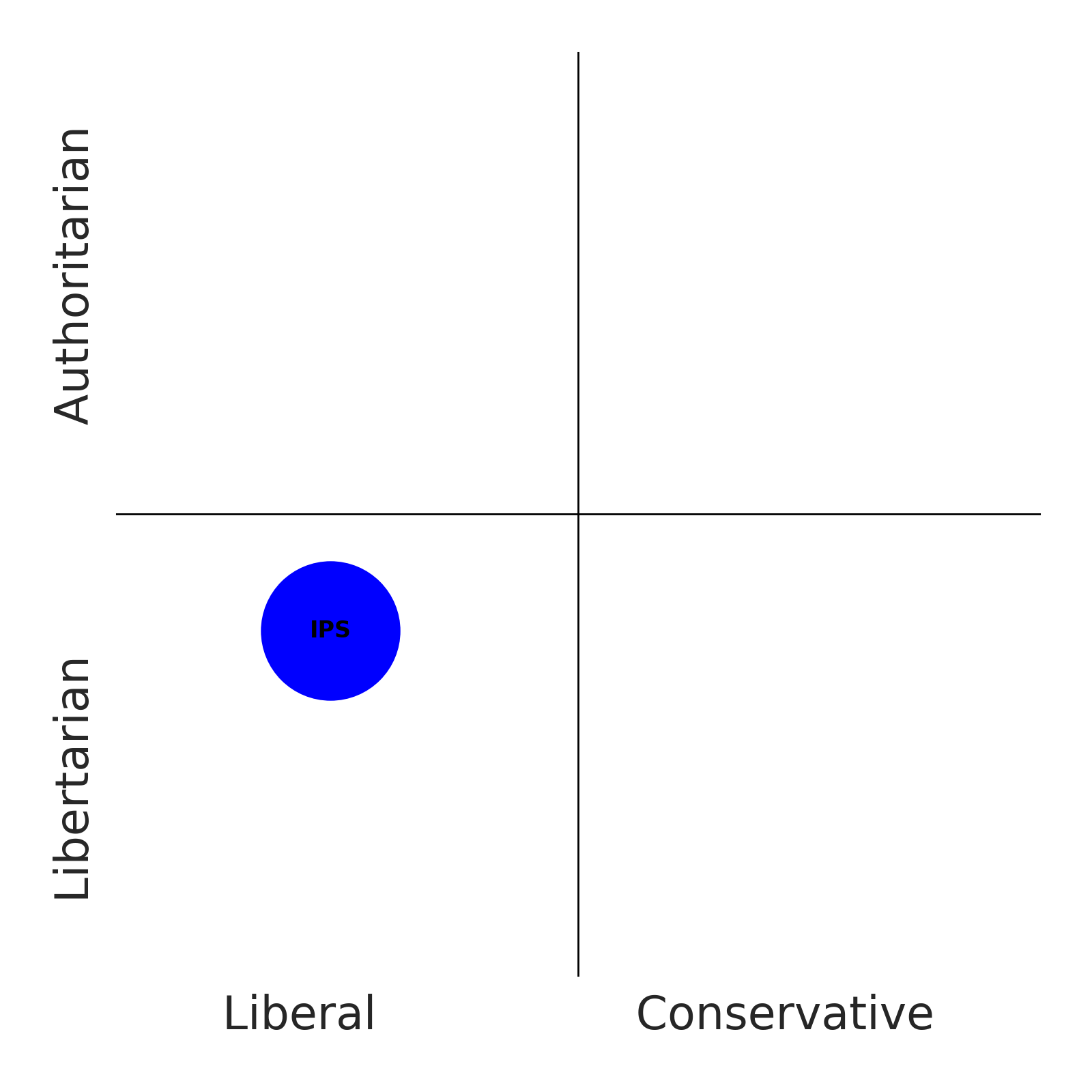
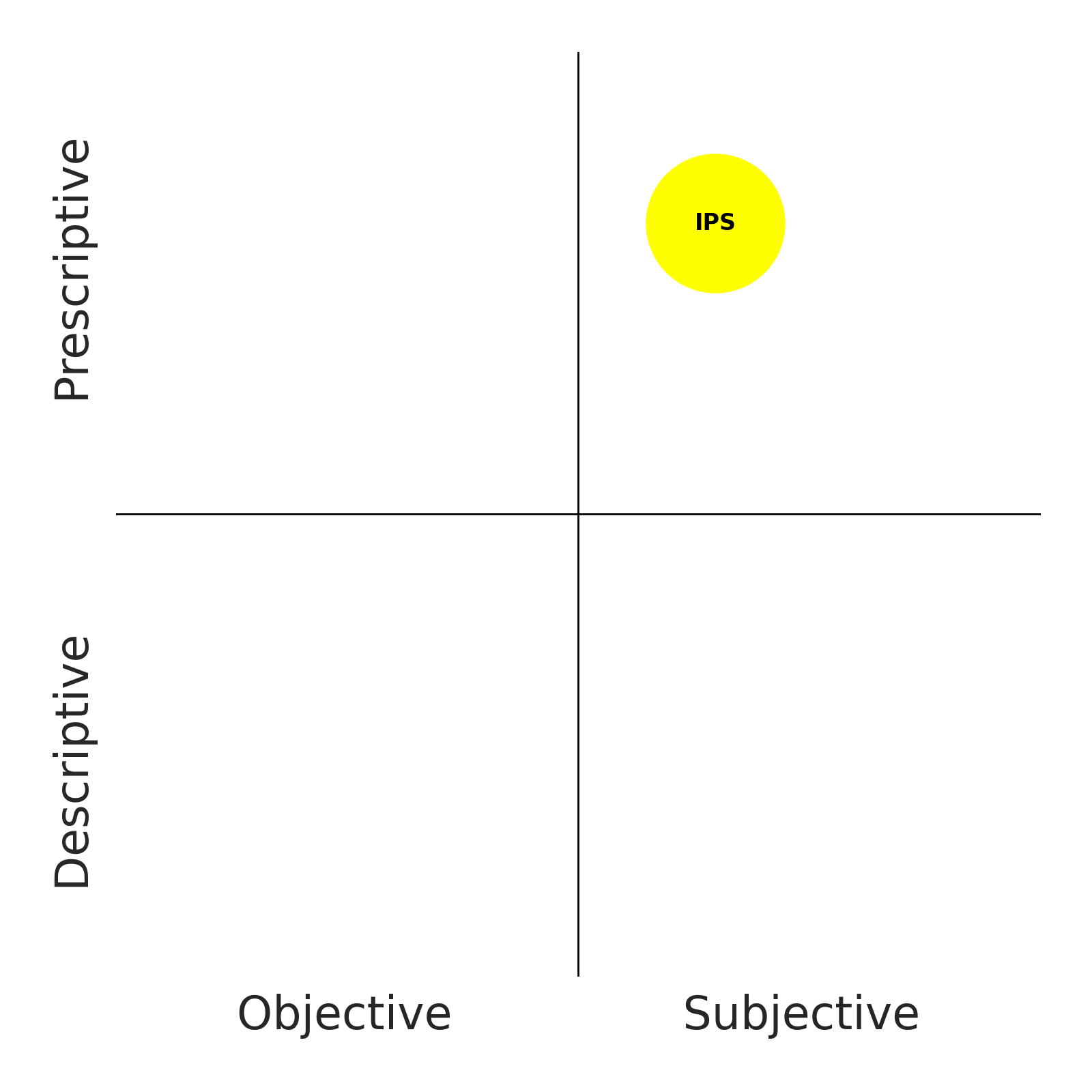
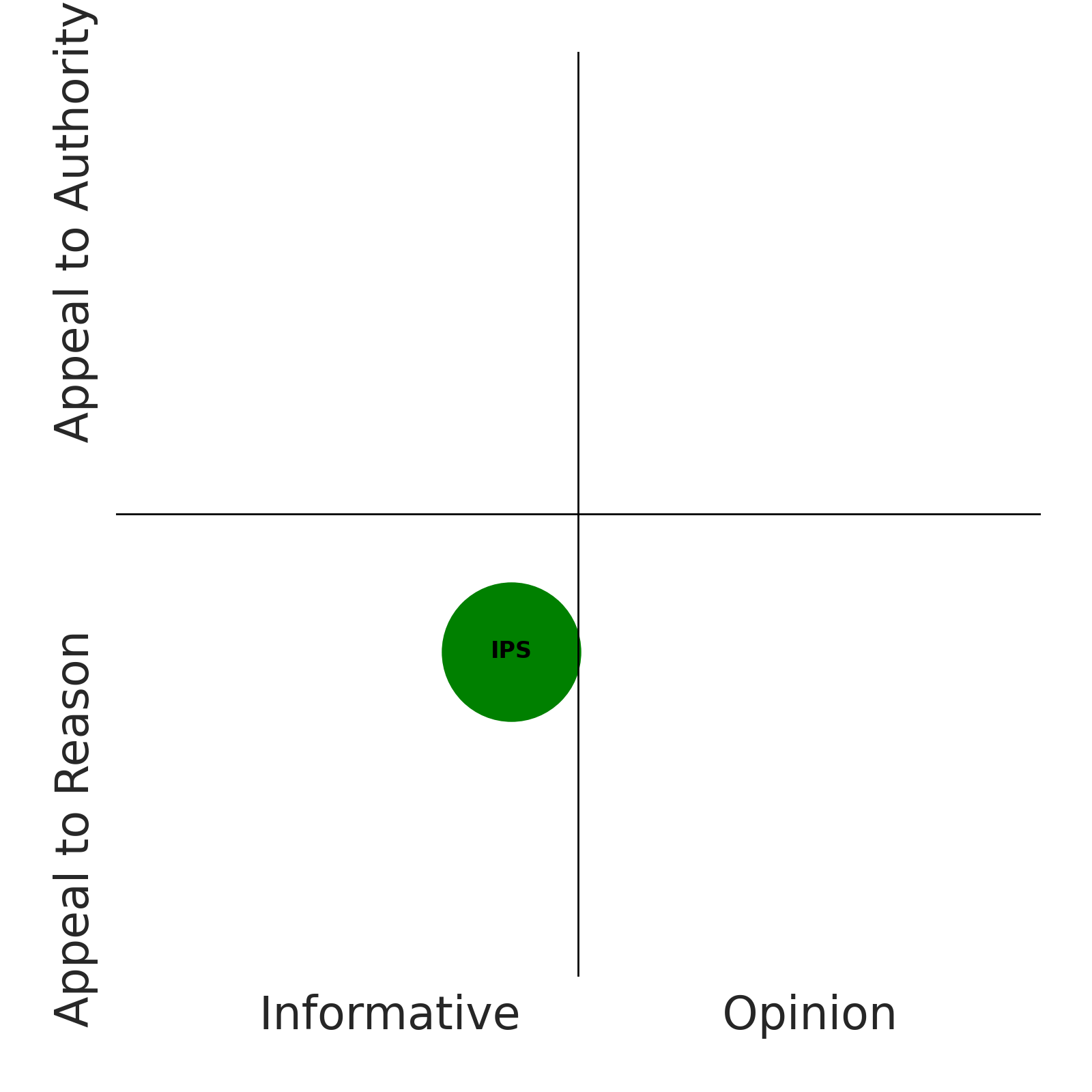
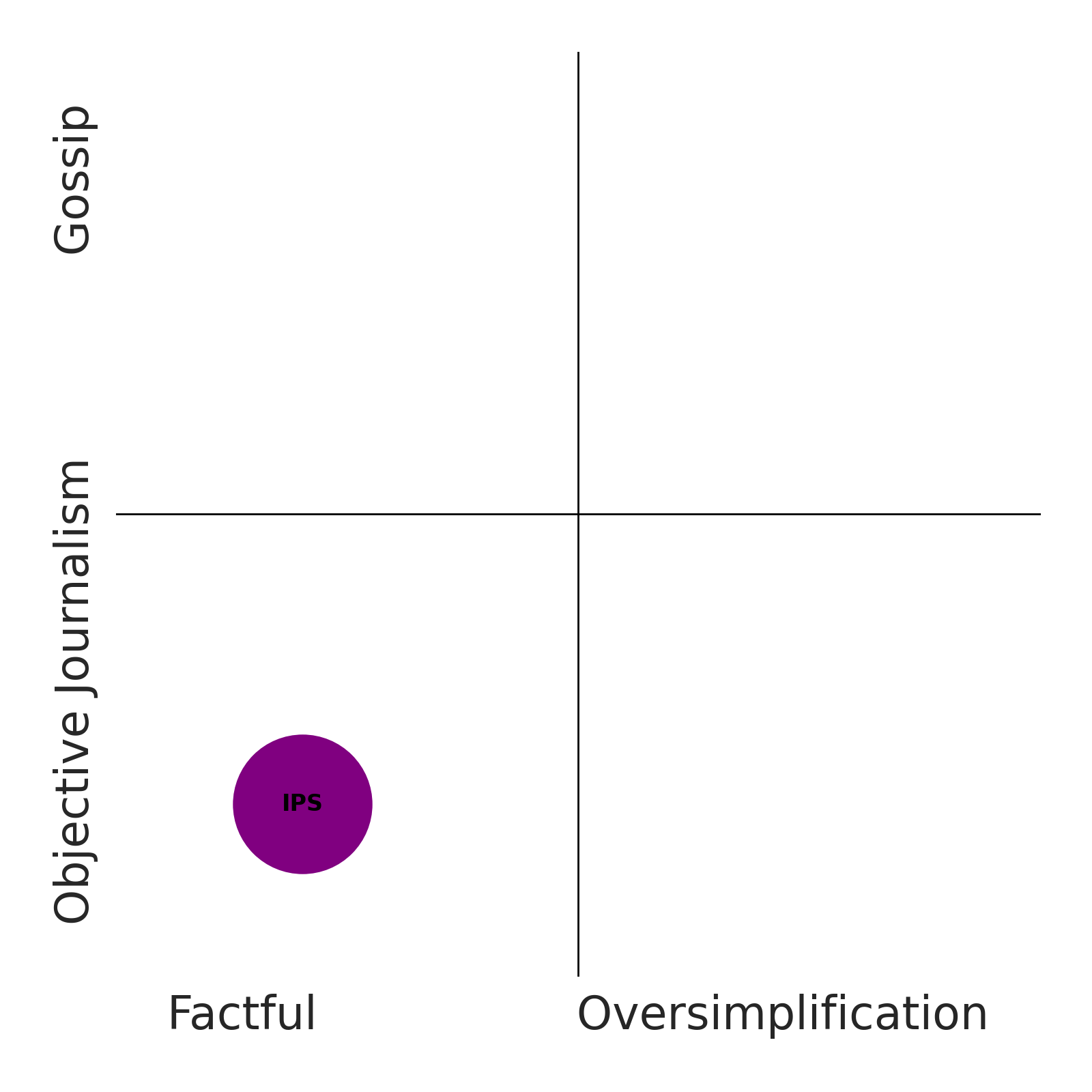
2026 © Helium Trades
Privacy Policy & Disclosure
* Disclaimer: Nothing on this website constitutes investment advice, performance data or any recommendation that any particular security, portfolio of securities, transaction or investment strategy is suitable for any specific person. Helium Trades is not responsible in any way for the accuracy
of any model predictions or price data. Any mention of a particular security and related prediction data is not a recommendation to buy or sell that security. Investments in securities involve the risk of loss. Past performance is no guarantee of future results. Helium Trades is not responsible for any of your investment decisions,
you should consult a financial expert before engaging in any transaction.
Helium Research Assistant

How can I help you today?
Ask any question about IPS bias.


