See whether Helium helps you make better-informed decisions. Try every Pro Trader feature for 30 days. No credit card required.
Try every Pro Trader feature for 30 days. No credit card required.
Source identification: The records explicitly reference "a statement to The Times"
Framing emphasizes Democratic and voting-rights objections, treating the court's action as procedural and characterizing potential administration election actions as threatening to subvert the vote.
The election at issue is the November 2026 midterm. The dispute is about whether the president can direct federal agencies to impose voting procedures on states, an area generally governed by state and congressional authority under the Constitution.
Automated analysis; not human reviewed. Limitations: The main ambiguity is separating the substantive report from appended related-link and promotional content; analysis relies on the substantive portion only. · 5 of 54 available dimensions scored; omitted dimensions are not treated as neutral. · Verified supporting quotes for 5 of 5 scored dimensions.
Claim: The framing treats the administration's election actions as a potential threat to the vote and highlights Democratic opposition.
“Across California and the nation, Democratic leaders and voting rights advocates are ramping up coordination and gaming out responses to a raft of potential actions by the Trump administration to subvert the November vote or deny its outcome.” · exact text match
Counterevidence:
“Lauren Bis, a White House spokeswoman, called the ruling a “major win for the security of American elections” in a statement to The Times.” · exact text match
Why: The decisive sentence is an unattributed characterization by the report, not a quote; including the White House response tempers but does not cancel the liberal-leaning framing.
Claim: Mostly objective legal reporting, but one unattributed framing sentence injects a subjective characterization of administration actions.
“potential actions by the Trump administration to subvert the November vote or deny its outcome” · exact text match
Counterevidence:
“The high court’s ruling allows those agencies to move forward with their work to comply with Trump’s order, but reaches no conclusions as to the legality of those pending rules.” · exact text match
Why: The report is mostly attributed and procedural; the unattributed use of 'subvert' makes it mildly subjective.
Claim: The article reports what the court did and quotes participants rather than urging a policy outcome.
“The high court’s ruling allows those agencies to move forward with their work to comply with Trump’s order, but reaches no conclusions as to the legality of those pending rules.” · exact text match
Why: It stays in descriptive mode, explaining the court's procedural action and the litigants' next steps, with no direct prescription to readers.
Claim: The report is centered on partisan conflict over election administration and litigation.
“California and 22 other Democratic-led states sued a few days later and said Trump sought to use the Postal Service to impose new restrictions on voting by mail.” · exact text match
“The case on appeal was Trump vs. California because Bonta was a leader of the Democratic state attorneys who sued.” · exact text match
Why: The story is organized around a partisan legal fight, names Democratic and Republican coalitions, and spotlights dueling political responses.
Claim: The report is heavily sourced, names parties and procedural posture, and quotes the court and litigants.
“California Atty. Gen. Rob Bonta, who helped lead the coalition of states challenging Trump’s order, called the ruling “somewhat disappointing” but “purely procedural” and far from the final word on the issue.” · exact text match
“The unsigned order spoke for the six Republican appointees.” · exact text match
Counterevidence:
“potential actions by the Trump administration to subvert the November vote or deny its outcome” · exact text match
Why: Extensive named sourcing, direct quotations, and procedural detail support credibility; the one unattributed 'subvert' sentence is a visible flaw.
The main ambiguity is separating the substantive report from appended related-link and promotional content; analysis relies on the substantive portion only.
August 09, 2026 · 0 shares
Framing emphasizes human suffering and Israeli responsibility, portraying the expanding military zone as a systematic erasure of Palestinian lives.
Automated analysis; not human reviewed. Limitations: The article is a feature story with strong narrative framing; I cannot independently verify the reported statistics or quotes. · 12 of 53 available dimensions scored; omitted dimensions are not treated as neutral. · Verified supporting quotes for 6 of 12 scored dimensions.
Claim: The article frames Israeli expansion negatively, emphasizing civilian harm and criticizing Israeli policy, which aligns with a liberal perspective.
“The Yellow Line is a quiet thief. It stole my land, my work and everything I spent my life building.” · exact text match
“Israel has shifted the Yellow Line gradually westward, displacing thousands of Gazans and cramming them … into an ever-shrinking space, all living in dystopian conditions.” · not found in supplied text
Why: The article uses emotional language and selects quotes that highlight Palestinian suffering, with no equivalent focus on Israeli security concerns.
Claim: The article centers on ordinary Palestinians' experiences, contrasting them with elite political decisions, indicating a populist framing.
“Every day for the last three months, he had looked at it. And for every day of the last three months he had ignored it, even as it moved ever closer.” · exact text match
“He had worked for more than four decades in Saudi Arabia, saving every rial he could so as to invest in the land…” · not found in supplied text
Why: Focus is on individual stories of farmers and displaced families, not on political or military leaders' perspectives.
Claim: The article is subjective, using narrative and emotional appeals rather than neutral reporting.
“The Yellow Line is a quiet thief. It stole my land, my work and everything I spent my life building.” · exact text match
“It was time to leave.” · exact text match
Why: The language is evocative and designed to elicit sympathy, not to present a detached account.
Claim: The article uses sensational language and dramatic imagery to heighten the impact.
“all living in dystopian conditions” · exact text match
“The Yellow Line is a quiet thief.” · exact text match
Why: Terms like 'dystopian' and 'quiet thief' are emotionally charged and go beyond factual description.
Claim: The article evokes fear and urgency regarding the Yellow Line's expansion.
“Straying near the Yellow Line is a deadly prospect.” · exact text match
““It could happen tonight. It could happen in a few days,” he said, his eyes once more on the yellow blocks that now defined the limit of his world.” · exact text match
Why: Repeated emphasis on danger, imminent displacement, and deadly consequences.
Claim: The article includes opinionated language and value judgments beyond reporting facts.
“The Yellow Line is a quiet thief.” · exact text match
“all living in dystopian conditions” · exact text match
Why: These are not neutral statements but subjective evaluations.
Claim: The article is highly political, focusing on a contentious territorial dispute and criticizing Israeli policy.
“Israel has shifted the Yellow Line gradually westward, displacing thousands of Gazans” · exact text match
“Israel, meanwhile, has moved toward evolving the Yellow Line from disconnected concrete blocks into a barrier.” · exact text match
Why: The entire piece centers on the political-military conflict and portrays Israel's actions in a negative light.
Claim: The article portrays Palestinians as victims of Israeli military expansion.
““The Yellow Line is a quiet thief. It stole my land, my work and everything I spent my life building.”” · verified after text normalization
“families raced to pack whatever they could, before the shooting began” · not found in supplied text
Why: The narrative consistently highlights loss, suffering, and helplessness of Gazans.
Claim: The article reflects a clear ideological stance critical of Israeli occupation.
“How Israel's moving border is erasing Gazans' lives” · exact text match
“Israel has shifted the Yellow Line gradually westward, displacing thousands of Gazans and cramming them … into an ever-shrinking space” · not found in supplied text
Why: The headline and framing assume a moral judgment against the border movement.
Claim: The article is somewhat anti-establishment, criticizing Israeli government policy and the Trump administration's ceasefire.
“Israel has shifted the Yellow Line gradually westward, displacing thousands of Gazans” · exact text match
“the ceasefire stalled with no surge of aid into the enclave, no Israeli withdrawal and no Hamas disarmament” · exact text match
Why: It portrays the Israeli government and the ceasefire as failing to protect civilians.
Claim: The article has a negative emotional tone, emphasizing sadness, fear, and loss.
““We’re exhausted. We’ve already been displaced seven times,”” · exact text match
““Everything I owned was supposed to support my sons and grandchildren. Now it’s beyond the line; it’s gone forever.”” · not found in supplied text
Why: Quotes and descriptions convey despair and hopelessness.
Claim: The article is moderately credible, using named sources, attributed quotes, and U.N. data, but with a clear narrative slant.
“Last month, the U.N.’s Office for the Coordinator of Human Affairs said 196 Palestinians … were killed” · not found in supplied text
“Satellite imagery shows large-scale earthworks, berms and barriers stretching more than 25 miles in length.” · exact text match
Why: It cites specific data and sources, but the selection and framing are biased.
The article is a feature story with strong narrative framing; I cannot independently verify the reported statistics or quotes.
The sample is heavily California-centric: state legislation (SB 577
August 31, 2026 · 0 shares
Reporting frames the bill as a legislative response to financial and fraud-related fallout from the expanded childhood sexual abuse statute, while acknowledging victims-rights opposition.
Automated analysis; not human reviewed. Limitations: The supplied text is a webpage excerpt with no exact vote date or tally, so procedural details are less complete than a full legislative record. · 6 of 54 available dimensions scored; omitted dimensions are not treated as neutral. · Verified supporting quotes for 6 of 6 scored dimensions.
Claim: The report gives roughly balanced weight to interests affected by the bill.
“Consumer attorneys, counties and victims rights groups jostled over the elements of the proposed bill over the last few months.” · exact text match
“Some of the groups blasted the bill, arguing it would shield rapists and deny justice to survivors.” · exact text match
Why: It includes fiscal and fraud concerns as well as victims'-rights objections without endorsing either side.
Claim: The report uses attributed, factual descriptions rather than subjective evaluation.
“Since the law was enacted, L.A. County has agreed to pay nearly $5 billion to settle more than 11,000 claims stemming from alleged sexual abuse committed by government employees in foster homes and juvenile halls.” · verified after text normalization
Why: The key provisions and figures are stated as legislative or settlement facts, with abuse allegations marked as alleged.
Claim: The tone is understated and avoids sensational language.
“It also states that attorneys who file fraudulent sex abuse lawsuits can be fined $25,000 per violation.” · exact text match
Why: The sentence reports a penalty in measured terms rather than with dramatic or emotional framing.
Claim: The report describes what the bill does and who supports or opposes it, without recommending a course of action.
“Lawmakers stopped short of capping payouts in the bill, a change sought by some local governments and school districts.” · exact text match
Why: It states legislative outcomes and group positions rather than urging a policy result.
Claim: The story centers on legislative action and interest-group conflict.
“The California state Legislature voted Sunday to amend a 2019 law that extended the statute of limitations for childhood sexual abuse claims but was blamed for draining the coffers of municipalities and school districts.” · exact text match
“The bill now goes to Gov. Gavin Newsom for his consideration.” · exact text match
Why: The main subject is a statehouse vote and gubernatorial review, with political actors and advocacy groups central.
Claim: The report is specific and attributes information to identifiable sources and to the publisher's prior reporting.
“Senate Bill 577 by John Laird (D-Santa Cruz) follows years of heated debate over the state law, which resulted in scores of lawsuits against cities, counties and schools.” · verified after text normalization
“The Times reported last year on nine plaintiffs who said they were paid to sue the county over sex abuse, some of whom said they were told to fabricate their claims.” · exact text match
Why: It names the bill, sponsor, settlement amounts, case counts, and prior reporting, while marking allegations as alleged.
The supplied text is a webpage excerpt with no exact vote date or tally, so procedural details are less complete than a full legislative record.
September 01, 2026 · 0 shares
Framing casts the postproduction tax credit as a hopeful, overdue response to California's industry decline, emphasizing supportive voices and an un-attributed 'help is on the way' opener rather than cost-benefit or skeptical analysis.
Automated analysis; not human reviewed. Limitations: The supplied content lacks independent fiscal analysis or opposing views, so judgments about framing are based only on the article's internal emphasis. · 6 of 54 available dimensions scored; omitted dimensions are not treated as neutral. · Verified supporting quotes for 3 of 6 scored dimensions.
Claim: The publisher injects un-attributed evaluative framing into an otherwise factual report.
“Help is on the way for California’s film and TV postproduction workers.” · exact text match
“The story of how L.A. steadily lost much of its homegrown industry to other locales is a tale of hubris, escalating costs, political inaction and fierce competition from states and countries hungry for a piece of the Hollywood pie.” · exact text match
Why: The opener and the causal 'tale of hubris' sentence are evaluative, while most legislative details are reported neutrally.
Claim: The report frames the tax credit as a positive step for California's postproduction industry.
“Help is on the way for California’s film and TV postproduction workers.” · exact text match
““That $10 million signifies the potential for a true comeback,” Abaunza said.” · exact text match
Counterevidence:
“That number is far below what backers had sought, but industry advocates welcomed the measure.” · exact text match
Why: The un-attributed opener and the selected 'true comeback' quote set a bullish tone despite the funding being far below the requested amount.
Claim: The tone is optimistic about the bill's effect on the postproduction sector.
““It’s this very encouraging wave of reemergence and the belief and understanding that legislators have when it comes to the entertainment industry.”” · not found in supplied text
““That $10 million signifies the potential for a true comeback,” Abaunza said.” · exact text match
Counterevidence:
““It’s just been devastating for people. … A lot of people have retired early, or many people have actually moved out of California because it’s financially easier to live [elsewhere] at the moment.”” · exact text match
Why: Selected quotes emphasize hope and reemergence; the article's own opener reinforces that optimistic framing.
Claim: The report uses un-attributed opinionated language in addition to facts.
“The story of how L.A. steadily lost much of its homegrown industry to other locales is a tale of hubris, escalating costs, political inaction and fierce competition from states and countries hungry for a piece of the Hollywood pie.” · exact text match
Why: Characterizing the decline as a 'tale of hubris' is an editorial judgment, though the rest of the piece is largely factual.
Claim: The report is credible within the supplied text because it gives specific vote counts and attributes claims to named sources.
“The bill — which cleared the Assembly by a vote of 72 to 2 and the Senate by 33 to 5 — now awaits Gov. Gavin Newsom’s signature.” · verified after text normalization
“California’s share of U.S. postproduction employment has dropped from 53% to 42% between 2005 and 2025, according to CVL Economics, whose founder helped start the trade group sponsoring the bill.” · not found in supplied text
Why: Precise vote counts, named sources, and disclosure of a potential conflict support trustworthiness.
Claim: The report signals fairness by including a funding shortfall and disclosing a source relationship.
“That number is far below what backers had sought, but industry advocates welcomed the measure.” · exact text match
“California’s share of U.S. postproduction employment has dropped from 53% to 42% between 2005 and 2025, according to CVL Economics, whose founder helped start the trade group sponsoring the bill.” · not found in supplied text
Why: Including the shortfall and noting the data source's connection to the bill's sponsor are transparency signals.
The supplied content lacks independent fiscal analysis or opposing views, so judgments about framing are based only on the article's internal emphasis.
September 02, 2026 · 0 shares
A legislative report frames the forest bill as a win for tribal co-management and environmental priorities while preserving named opposition and funding concerns.
California’s demonstration forests are part of the state land managed by Cal Fire; the headline’s “exile” reference alludes to the historical displacement of California Native Americans from ancestral lands, a background not detailed in the body.
Automated analysis; not human reviewed. Limitations: The supplied text mixes the main AB 2494 report with related headlines, newsletter prompts, and legal boilerplate; the analysis was limited to the substantive report. · 6 of 54 available dimensions scored; omitted dimensions are not treated as neutral. · Verified supporting quotes for 1 of 6 scored dimensions.
Claim: The report’s own framing does not net favor liberal or conservative positions; both backers and opponents are covered with named quotes and specific context.
““Some backers say the bill offers a new economic path forward for communities behind the so-called redwood curtain.”” · not found in supplied text
““But the push to reshape forest management is fiercely opposed by loggers and mill owners, who say their work is sustainable and provides blue-collar jobs in a region where they’ve dwindled.”” · not found in supplied text
Why: Named supporters and opponents each get specific quotes and factual details, so the net partisan framing is close to neutral despite an initial “win” characterization.
Claim: The report is predominantly factual and uses sourced statements rather than opinion prose.
““Managed by the California Department of Forestry and Fire Protection, or Cal Fire, the state’s 14 demonstration forests are required to produce and sell timber to show — or “demonstrate” — sustainable practices, while considering factors like recreation and wildlife.”” · verified after text normalization
““Newsom has until Sept. 30 to sign or veto the bill.”” · verified after text normalization
Why: Policy details and deadlines are stated in declarative, sourced form; the main opinion content is confined to quoted sources.
Claim: The reporting avoids sensational or fear-based language and sticks to legislative and administrative detail.
““Assembly Bill 2494 eliminates what’s often cast as a logging mandate, instead prioritizing values such as carbon storage, wildfire resilience and biodiversity conservation.”” · not found in supplied text
““Newsom has until Sept. 30 to sign or veto the bill.”” · verified after text normalization
Why: The prose is measured and legislative; emotive framing appears only in attributed quotes or subheadings.
Claim: The article describes what the bill does and what stakeholders say, without prescribing action.
““Managed by the California Department of Forestry and Fire Protection, or Cal Fire, the state’s 14 demonstration forests are required to produce and sell timber to show — or “demonstrate” — sustainable practices.”” · not found in supplied text
““Some backers say the bill offers a new economic path forward for communities behind the so-called redwood curtain.”” · not found in supplied text
Why: The publisher frames the bill in descriptive terms and attributes proposals and predictions to sources, rather than issuing recommendations.
Claim: The report relies on named officials, specific bill provisions, and concrete figures, and attributes uncertain projections.
““Money from logging — roughly $8.5 million a year — pays for management of the demonstration forests.”” · not found in supplied text
““Cal Fire’s Kevin Conway believes that if the bill becomes law, it will, in practice, limit funding.”” · not found in supplied text
Why: Specific figures, named sources, and attributed forecasts enhance verifiability.
Claim: The report is internally fair, giving named voice to supporters, opponents, and state agency staff, and noting Cal Fire has not taken a position.
““Cal Fire has not taken a position on the legislation.”” · not found in supplied text
““Staci Heaton, senior policy advocate for the organization, said they’re concerned that the new management goals are so vague that they would expose forest projects — including wildfire research — to costly lawsuits.”” · verified after text normalization
Why: Balanced attribution and inclusion of contrary funding and lawsuit concerns signal fairness.
The supplied text mixes the main AB 2494 report with related headlines, newsletter prompts, and legal boilerplate; the analysis was limited to the substantive report.
September 01, 2026 · 0 shares
Framing treats state regulation as the necessary response to technology's threats, with supportive official voices prominent and industry objections presented as secondary.
California bills that pass the legislature are sent to the governor for signature or veto; the regular legislative session is nearing its end at the time of reporting.
Automated analysis; not human reviewed. Limitations: The article supplies relative time references and bill summaries but allows no independent verification of final legislative status or Newsom's decisions beyond the text. · 6 of 54 available dimensions scored; omitted dimensions are not treated as neutral. · Verified supporting quotes for 5 of 6 scored dimensions.
Claim: The framing favors government regulation of tech companies as protection against industry-caused harms.
“California is taking more action to shield its children, communities and workers from the threats posed by the very industry” · exact text match
“Efforts to rein in the power of Big Tech” · exact text match
Counterevidence:
“The durable path is to enforce the targeted laws California already has and to strengthen parental tools rather than an overlapping framework whose scope can be redrawn by regulation” · exact text match
Why: The lede and repeated “Big Tech” phrasing present regulation as necessary protection; the main opposing quote is included but does not control the frame.
Claim: The report frames state mandates, fines, and moratoriums as legitimate safeguards.
“State lawmakers on Monday passed new safeguards around social media and artificial intelligence” · exact text match
“bar certain online platforms from providing an “addictive feature” to users under 16 years old and add ways to verify users’ ages” · exact text match
Counterevidence:
“The durable path is to enforce the targeted laws California already has and to strengthen parental tools rather than an overlapping framework whose scope can be redrawn by regulation” · exact text match
Why: The content centers on government-imposed restrictions and calls them safeguards; an alternative industry view is quoted but is not the organizing frame.
Claim: The content is centered on legislative and gubernatorial politics rather than a purely market or cultural development.
“State lawmakers on Monday passed new safeguards around social media and artificial intelligence” · exact text match
“Gov. Gavin Newsom, who has previously vetoed some bills aimed at adding restrictions on Silicon Valley businesses” · exact text match
Why: The actors and stakes are elected officials, bills, vetoes, and legislative sessions.
Claim: The wording imparts a negative emotional charge centered on anxiety and harm.
“California is taking more action to shield its children, communities and workers from the threats posed by the very industry” · exact text match
“Parents, politicians and child advocacy groups are worried that social media is contributing to depression, anxiety, eating disorders and other issues” · exact text match
Why: Threat, shield, and worried are emotionally valenced choices; the article leads with danger rather than opportunity or open outcomes.
Claim: The reporting attributes claims, names sources, includes an opposing view, and flags unresolved outcomes.
“Whether Newsom will embrace the legislature’s efforts to corral big Tech in California — in part of in whole — remains unclear” · exact text match
“Tech industry and business group opposing the bill say it is too blunt, according to the bill’s analysis” · not found in supplied text
Why: It names bill authors, quotes both supporters and an industry opponent, and explicitly marks the outcome as uncertain.
Claim: The publisher frames large technology companies as a concentrated power needing restraint.
“Efforts to rein in the power of Big Tech” · exact text match
Counterevidence:
“Tech industry and business group opposing the bill say it is too blunt” · exact text match
Why: The phrase “power of Big Tech” and the lede’s threat framing imply a skeptical posture toward large technology corporations, though industry objections are included.
The article supplies relative time references and bill summaries but allows no independent verification of final legislative status or Newsom's decisions beyond the text.
September 01, 2026 · 0 shares
Framing foregrounds utility influence and shareholder gains while treating the bill's defeat as a loss for wildfire victims, though utility and official rationales are also included.
Automated analysis; not human reviewed. Limitations: No publication date is provided, so 'Tuesday' and 'this fall' cannot be independently anchored to a calendar. · 6 of 54 available dimensions scored; omitted dimensions are not treated as neutral. · Verified supporting quotes for 6 of 6 scored dimensions.
Claim: Framing treats utility opposition and investor returns as the obstacle to victim compensation, a stance aligned with liberal/progressive corporate-accountability politics.
“The bill’s failure was a win for the state’s three biggest for-profit utilities.” · exact text match
“With the help of those protections, even though investigators found Edison’s equipment sparked last year’s deadly Eaton fire, the company’s profit in 2025 soared by more than 200% — from $1.3 billion in 2024 to $4.5 billion” · exact text match
Why: The report foregrounds utility influence and profit against the backdrop of a deadly fire while giving some space to utility rationales; this tilts framing left but not stridently.
Claim: The framing sides with victims and consumer groups against Wall Street and utility interests.
“If Wall Street does not trust Edison and PG&E to stop causing catastrophic fires, California should not solve that problem with another bailout” · exact text match
Why: The prominent placement of the consumer-group quote and 'utilities’ influence in Sacramento' framing gives the report a mildly populist cast, though official and utility statements are also included.
Claim: The report is predominantly descriptive, attributing evaluations to named officials and advocates while keeping its own analysis minimal.
““It is unfortunate that SB 492 was not given a vote,” said Senate President Pro Tempore Monique Limon (D-Santa Barbara).” · exact text match
“Assembly Speaker Robert Rivas (D-Hollister) told reporters Tuesday that the final proposal had “some half measures” and “Californians expect a lot more than half measures.”” · exact text match
Why: Most value judgments are placed in quotation marks or attributed; however, the selection of critical voices and the 'win for utilities' line add a subjective frame.
Claim: The report demonstrates high credibility through attribution, named officials, and specific figures.
“More than 11,000 households have filed suit against the utility, claiming it acted negligently, which the company denies.” · exact text match
“The three utilities have caused at least seven of California’s 20 most destructive fires, according to the California Department of Forestry and Fire Protection.” · exact text match
Why: Precise numbers and named sources are given, though some causal claims about legislative influence are not independently documented.
Claim: The report reasons from attributed statements, financial data, and investigative findings rather than emotional or anti-evidence appeals.
“The three utilities have caused at least seven of California’s 20 most destructive fires, according to the California Department of Forestry and Fire Protection.” · exact text match
“Government fire investigators said the fire, which killed 19 people and destroyed thousands of homes in Altadena, was caused by electrical arcing on Edison’s out-of-service transmission line in Eaton Canyon.” · exact text match
Why: Sourcing and data anchor the account; no supernatural, conspiratorial, or anti-evidence claims appear.
Claim: The framing is somewhat anti-corporate, emphasizing utility profits and industry influence on legislation.
“The three utilities had been lobbying Newsom and lawmakers to further shield them and their shareholders from wildfire liabilities ever since last year’s Eaton fire.” · exact text match
“With the help of those protections, even though investigators found Edison’s equipment sparked last year’s deadly Eaton fire, the company’s profit in 2025 soared by more than 200% — from $1.3 billion in 2024 to $4.5 billion” · exact text match
Why: Reporting includes utility defenses, but the narrative emphasizes corporate gain and casts opposition as influence-driven.
No publication date is provided, so 'Tuesday' and 'this fall' cannot be independently anchored to a calendar.
August 11, 2026 · 0 shares
Opposes the Trump administration's coastal oversight review, portraying it as a thinly veiled attempt to open California's coast to oil drilling and harmful projects, while celebrating grassroots and official resistance.
The Coastal Zone Management Act (CZMA) grants coastal states the right to review and object to federal projects that clash with state policy. The Trump administration initiated a review that could decertify California's authority under the CZMA, potentially allowing offshore oil drilling, rocket launches, and other projects without state approval.
Automated analysis; not human reviewed. Limitations: Analysis based on a single article with strong editorial framing; no counterpoints presented in the text. · 27 of 53 available dimensions scored; omitted dimensions are not treated as neutral. · Verified supporting quotes for 23 of 27 scored dimensions.
Claim: The article adopts a liberal stance by criticizing the Trump administration and supporting state environmental regulation.
“Experts see the investigation — framed as a performance review of the state’s coastal management practices — as a thinly veiled attempt by Trump officials to open California’s coast to more offshore oil drilling, more rocket launches and possibly even floating nuclear reactors.” · exact text match
Why: The publisher uses the phrase 'thinly veiled attempt' which is a strong editorial judgment against the Trump administration's stated purpose.
Claim: The article leans populist by emphasizing grassroots protest and common citizens' voices against federal elites.
“hundreds of fired-up Californians rallied in Santa Monica to speak out against the Trump administration’s attempt to wrest local control” · exact text match
“Nobody in attendance spoke in favor of the federal review.” · exact text match
“It showed more than anything that being able to go to the beach is such a unifying shared joy in California.” · exact text match
Why: The narrative focuses on everyday people and community groups, contrasting with federal authority, though it also quotes state officials.
Claim: The article mixes factual reporting with subjective editorial framing.
“thinly veiled attempt by Trump officials to open California’s coast to more offshore oil drilling, more rocket launches and possibly even floating nuclear reactors.” · exact text match
Why: The phrase 'thinly veiled attempt' is a subjective interpretation rather than an objective fact.
Claim: The article uses dramatic and sensational language to heighten interest.
“striking demonstration of support” · exact text match
“fired-up Californians” · exact text match
“The consequences may be dire” · exact text match
Why: Words like 'striking', 'fired-up', and 'dire' are sensational and emotional.
Claim: The article is highly interesting due to the dramatic conflict and public engagement.
“hundreds of fired-up Californians rallied” · exact text match
“More than 15,000 people have written comments” · exact text match
Why: The high level of public participation and emotional stakes make the story compelling.
Claim: The article is partially prescriptive, advocating for protecting the coast against federal takeover.
“California’s coast is not for sale” · exact text match
“a hostile takeover of our coast by the federal government... won’t be tolerated” · exact text match
Why: The quoted rallying cry and official statements are prescriptive, calling for action and opposition.
Claim: The article evokes fear of environmental disaster and loss of local control.
“I’m scared, not because we haven’t built something worth protecting — we have. I’m scared because this meeting is performance theater.” · exact text match
“The consequences may be dire” · exact text match
Why: Direct expressions of fear and warnings of dire consequences.
Claim: The article assumes the investigation is a pretense without proving it.
“Experts see the investigation — framed as a performance review of the state’s coastal management practices — as a thinly veiled attempt by Trump officials to open California’s coast to more offshore oil drilling” · exact text match
Why: The framing accepts the assumption that the review's true purpose is hidden, which is the point in question.
Claim: The article contains significant opinion content beyond straight news reporting.
“thinly veiled attempt” · exact text match
“hostile takeover” · exact text match
Why: These are editorial judgments, not neutral descriptions.
Claim: The article is highly political, focusing on partisan conflict between state and federal government.
“Trump is attacking California’s ability to protect its coastline.” · exact text match
“Citing California’s “environmental extremism,” Trump officials are attempting to decertify the state’s authority” · exact text match
Why: The explicit partisan language and conflict framing.
Claim: The article simplifies a complex regulatory review into a good vs. evil narrative.
“Citing California’s “environmental extremism,” Trump officials are attempting to decertify the state’s authority under the federal Coastal Zone Management Act” · exact text match
Why: Reduces the review to a binary opposition without exploring valid policy disagreements.
Claim: The article relies on quotes from officials and experts to support its framing.
“Kate Huckelbridge, executive director of the Coastal Commission” · exact text match
“Jack Ainsworth, who had worked at the coastal commission for 34 years and led it for seven of those years” · exact text match
Why: Multiple authoritative figures are cited to bolster the article's position.
Claim: The article focuses heavily on the public response and protest rather than the underlying policy details.
“More than 15,000 people have written comments so far, and for more than four hours Monday, surfers, fishers, marine scientists, community activists, business owners, real estate brokers ... lined up to speak” · not found in supplied text
Why: The majority of the article describes the rally, speakers, and emotions, not an analysis of the CZMA review process.
Claim: The article frames Californians and state institutions as victims of a federal attack.
“I’m scared because this meeting is performance theater. In some ways, the decision seems already made.” · not found in supplied text
“a hostile takeover of our coast by the federal government” · exact text match
Why: Language of victimhood and powerlessness is used.
Claim: The article presents the administration's motivation with certainty.
“thinly veiled attempt by Trump officials to open California’s coast to more offshore oil drilling” · exact text match
Why: The phrase 'thinly veiled attempt' asserts a hidden motive with confidence, without definitive proof.
Claim: The article is driven by a strong environmentalist and anti-Trump ideology.
“California’s coast is not for sale” · exact text match
“thinly veiled attempt” · exact text match
Why: Consistent ideological alignment with environmental protection and opposition to federal deregulation.
Claim: The article supports the state establishment (California government and agencies) against the federal establishment.
“It has been clear from Gov. Newsom to Atty. Gen. Bonta to our legislators to our congressional delegation: California’s coast is not for sale, and a hostile takeover of our coast by the federal government... won’t be tolerated” · exact text match
Why: Quotes and framing align with state government officials and agencies, defending their authority.
Claim: The article has a negative emotional tone, focusing on fear and anger.
“I’m scared” · exact text match
“fired-up” · exact text match
Why: Emotionally charged words.
Claim: The article has moderate credibility due to sourcing but is one-sided.
“Kate Huckelbridge ... said 'California has received very little information about why this new federal review is being undertaken.'” · not found in supplied text
Why: Sources are identified and provide data, but lack of counterpoints reduces credibility.
Claim: The article uses emotional language that detracts from purely rational analysis.
“I’m scared, not because we haven’t built something worth protecting — we have. I’m scared because this meeting is performance theater.” · exact text match
Why: The inclusion of emotional quotes and framing like 'thinly veiled attempt' introduces irrational elements.
Claim: The article promotes collectivist values by emphasizing community action and state regulation.
“hundreds of fired-up Californians rallied” · exact text match
“unifying shared joy” · exact text match
Why: Focus on collective action and shared interests.
Claim: The article speculates about future consequences of the review.
“what happens after this week’s hearings will be uncharted territory” · not found in supplied text
“could set the stage for similar actions in other coastal states” · exact text match
Why: Speculative statements about uncharted territory and potential ripple effects.
Claim: The article uses loaded language and selective framing to influence reader opinion.
“thinly veiled attempt” · exact text match
“hostile takeover” · exact text match
Why: These are manipulative framing devices that imply negative motives.
Claim: The article lacks balance by presenting only opposition viewpoints and no supporting voices for the review.
“Nobody in attendance spoke in favor of the federal review.” · exact text match
Why: While noting that no one spoke in favor, the article's selection of quotes and narrative is uniformly critical, reducing perceived integrity.
Claim: The article signals environmental and civic virtue through quotes and descriptions of unity.
“It showed more than anything that being able to go to the beach is such a unifying shared joy in California.” · exact text match
Why: The quote emphasizes shared values and joy, signaling moral goodness.
Claim: The article suggests a coordinated plan by Trump officials to open the coast to oil and other industry.
“thinly veiled attempt by Trump officials to open California’s coast to more offshore oil drilling, more rocket launches and possibly even floating nuclear reactors.” · exact text match
Why: Implies a hidden agenda.
Claim: The article blames the Trump administration for threatening the coast.
“Trump is attacking California’s ability to protect its coastline.” · exact text match
Why: Singles out Trump administration as responsible for the threat.
Analysis based on a single article with strong editorial framing; no counterpoints presented in the text.
August 11, 2026 · 0 shares
Strongly frames the Trump administration's decertification attempt as an unprecedented, politicized assault on a landmark environmental law, using alarmist language and one-sided sourcing to generate opposition.
The Coastal Zone Management Act of 1972 gives coastal states the authority to review and object to federal projects that affect their shorelines, a framework established after a major oil spill. The California Coastal Commission has been the primary state agency implementing this law for nearly 50 years.
Automated analysis; not human reviewed. Limitations: The article is a single-source, one-sided advocacy piece from a reporter known for environmental coverage, with heavy reliance on emotional framing and selective expert quotes. · 16 of 53 available dimensions scored; omitted dimensions are not treated as neutral. · Verified supporting quotes for 0 of 16 scored dimensions.
The article is a single-source, one-sided advocacy piece from a reporter known for environmental coverage, with heavy reliance on emotional framing and selective expert quotes.
September 01, 2026 · 0 shares
Coverage is largely neutral but draws only from supporters of federal film tax incentives, presenting the proposal as a bipartisan solution without skeptical or opposing voices.
Automated analysis; not human reviewed. · 8 of 54 available dimensions scored; omitted dimensions are not treated as neutral. · Verified supporting quotes for 5 of 8 scored dimensions.
Claim: The report takes no partisan stance on Trump's federal tax-incentive proposal.
“President Trump on Monday urged Congress to approve federal tax incentives aimed at reviving American film and television productions” · exact text match
“He, too, has made the case for a federal tax credit” · exact text match
Why: Both a Republican president and a Democratic senator are quoted supporting the idea, and the report offers no partisan judgment.
Claim: The report is predominantly objective, relying on attributed quotes and statistics rather than editorial argument.
“Last year, 45% of all U.S. films and scripted television shows were shot internationlly, up from about 33% in 2022” · not found in supplied text
“Charles Rivkin, chairman and chief executive of the Motion Picture Assn., applauded Trump's announcement” · verified after text normalization
Counterevidence:
“The story of how L.A. steadily lost much of its homegrown industry to other locales is a tale of hubris, escalating costs, political inaction and fierce competition from states and countries hungry for a piece of the Hollywood pie.” · exact text match
Why: Factual data and attributed reactions anchor the story; the narrative transition about hubris is a minor counterweight, so the report is still toward the objective end.
Claim: The report avoids sensational language and presents the proposal and reactions plainly.
“There are few details about what these incentives would look like at this time” · exact text match
“Trump has previously floated more aggressive measures, including a threat to impose tariffs on foreign-made films, but that idea did not gain traction” · exact text match
Why: No alarmist framing, hyperbole, or dramatic imagery is used to describe the policy news.
Claim: The report describes the proposal and reactions rather than recommending what Congress should do.
“In a social media post, Trump said he met with actor Jon Voight” · exact text match
“There are few details about what these incentives would look like at this time” · exact text match
Why: The piece stays in descriptive mode, with calls to action appearing only inside attributed quotes.
Claim: The report is centered on a presidential legislative proposal and bipartisan reactions.
“President Trump on Monday urged Congress to approve federal tax incentives aimed at reviving American film and television productions” · exact text match
“Trump said meetings are already being set up to talk to lawmakers from both parties” · exact text match
Why: The subject is governmental policy and party politics, though the tone remains institutional rather than partisan.
Claim: The report is credible because it attributes claims to named people and cites a specific statistic.
“Charles Rivkin, chairman and chief executive of the Motion Picture Assn., applauded Trump's announcement” · verified after text normalization
“Last year, 45% of all U.S. films and scripted television shows were shot internationlly, up from about 33% in 2022” · not found in supplied text
Why: Transparent sourcing and a quantitative claim support trustworthiness; no anonymous assertions are used.
Claim: The publisher separates attributed claims from reporting and does not present quotes as its own assertions.
“Trump said wrote on Truth Social” · exact text match
“Schiff said at an event in March” · exact text match
Why: Direct quotes are consistently attributed to named officials, reducing risk of misrepresentation.
Claim: The article integrates a presidential announcement, industry reaction, a senator's position, and a production statistic.
“Last year, 45% of all U.S. films and scripted television shows were shot internationlly, up from about 33% in 2022” · not found in supplied text
“Trump's push comes as production has continued to shift overseas” · verified after text normalization
Why: It provides contextual data and multiple sourced perspectives within a concise report.
September 03, 2026 · 0 shares
Coverage frames the proposed federal film tax credit as a hopeful, bipartisan rescue for Hollywood, emphasizing industry excitement and California’s competitive needs while giving little attention to fiscal costs or opposition.
The U.S. does not have a broad national film-production tax credit of the kind proposed; states such as Califormia use capped annual incentives, while Canada’s stackable federal-provincial credit is the model referenced by supporters.
Automated analysis; not human reviewed. Limitations: The analysis rests on a single supplied text with no external verification; related-story teasers and site boilerplate in the input were identified and excluded. · 3 of 54 available dimensions scored; omitted dimensions are not treated as neutral. · Verified supporting quotes for 2 of 3 scored dimensions.
Claim: The article's dominant framing is moderately optimistic, presenting the tax credit as a promising lifeline for Hollywood.
“After President Trump threw his support behind an effort for a national film tax credit, Hollywood is hopeful that a lifeline could finally be on its way.” · exact text match
“There is an excitement and an energy and a hopefulness right now from the production community.” · not found in supplied text
Counterevidence:
“Can it completely turn the tide? I don’t know, but I hope so for our industry and our state.” · exact text match
Why: The lede and quoted sources use hopeful and excited language, although the article includes caveats and a source says she does not know if the credit can completely turn the tide.
Claim: The report shows high visible credibility through named sources, attributed quotations, and explicit uncertainty about unsettled details.
“An earlier proposal from U.S. Sen. Adam Schiff (D-Calif.) had called for a baseline labor-based tax credit of 15% to 20%, in addition to bonus add-ons for independent productions among others, a Schiff spokesperson said.” · exact text match
“Friedman declined to name the person, saying she was waiting for Republicans to make their internal decision about that lead lawmaker.” · exact text match
Why: Sources are identified by name and title, claims are attributed, and the article states when details remain under negotiation or are not yet public.
Claim: The article is substantially forward-looking, speculating about the proposal's chances and its likely effect on production.
“If passed, a federal incentive is expected to help draw some productions back to the Golden State, industry experts and advocates said.” · exact text match
“If something isn’t done by the end of the year or in sight, there will be a further solidification of offshoring.” · exact text match
Why: Forecasts about future legislation, production returns, and offshoring are central to the story, though they are attributed and hedged.
The analysis rests on a single supplied text with no external verification; related-story teasers and site boilerplate in the input were identified and excluded.
September 01, 2026 · 0 shares
Framing casts the postproduction tax credit as a hopeful, overdue response to California's industry decline, emphasizing supportive voices and an un-attributed 'help is on the way' opener rather than cost-benefit or skeptical analysis.
Automated analysis; not human reviewed. Limitations: The supplied content lacks independent fiscal analysis or opposing views, so judgments about framing are based only on the article's internal emphasis. · 6 of 54 available dimensions scored; omitted dimensions are not treated as neutral. · Verified supporting quotes for 3 of 6 scored dimensions.
Claim: The publisher injects un-attributed evaluative framing into an otherwise factual report.
“Help is on the way for California’s film and TV postproduction workers.” · exact text match
“The story of how L.A. steadily lost much of its homegrown industry to other locales is a tale of hubris, escalating costs, political inaction and fierce competition from states and countries hungry for a piece of the Hollywood pie.” · exact text match
Why: The opener and the causal 'tale of hubris' sentence are evaluative, while most legislative details are reported neutrally.
Claim: The report frames the tax credit as a positive step for California's postproduction industry.
“Help is on the way for California’s film and TV postproduction workers.” · exact text match
““That $10 million signifies the potential for a true comeback,” Abaunza said.” · exact text match
Counterevidence:
“That number is far below what backers had sought, but industry advocates welcomed the measure.” · exact text match
Why: The un-attributed opener and the selected 'true comeback' quote set a bullish tone despite the funding being far below the requested amount.
Claim: The tone is optimistic about the bill's effect on the postproduction sector.
““It’s this very encouraging wave of reemergence and the belief and understanding that legislators have when it comes to the entertainment industry.”” · not found in supplied text
““That $10 million signifies the potential for a true comeback,” Abaunza said.” · exact text match
Counterevidence:
““It’s just been devastating for people. … A lot of people have retired early, or many people have actually moved out of California because it’s financially easier to live [elsewhere] at the moment.”” · exact text match
Why: Selected quotes emphasize hope and reemergence; the article's own opener reinforces that optimistic framing.
Claim: The report uses un-attributed opinionated language in addition to facts.
“The story of how L.A. steadily lost much of its homegrown industry to other locales is a tale of hubris, escalating costs, political inaction and fierce competition from states and countries hungry for a piece of the Hollywood pie.” · exact text match
Why: Characterizing the decline as a 'tale of hubris' is an editorial judgment, though the rest of the piece is largely factual.
Claim: The report is credible within the supplied text because it gives specific vote counts and attributes claims to named sources.
“The bill — which cleared the Assembly by a vote of 72 to 2 and the Senate by 33 to 5 — now awaits Gov. Gavin Newsom’s signature.” · verified after text normalization
“California’s share of U.S. postproduction employment has dropped from 53% to 42% between 2005 and 2025, according to CVL Economics, whose founder helped start the trade group sponsoring the bill.” · not found in supplied text
Why: Precise vote counts, named sources, and disclosure of a potential conflict support trustworthiness.
Claim: The report signals fairness by including a funding shortfall and disclosing a source relationship.
“That number is far below what backers had sought, but industry advocates welcomed the measure.” · exact text match
“California’s share of U.S. postproduction employment has dropped from 53% to 42% between 2005 and 2025, according to CVL Economics, whose founder helped start the trade group sponsoring the bill.” · not found in supplied text
Why: Including the shortfall and noting the data source's connection to the bill's sponsor are transparency signals.
The supplied content lacks independent fiscal analysis or opposing views, so judgments about framing are based only on the article's internal emphasis.
September 01, 2026 · 0 shares
Framing foregrounds utility influence and shareholder gains while treating the bill's defeat as a loss for wildfire victims, though utility and official rationales are also included.
Automated analysis; not human reviewed. Limitations: No publication date is provided, so 'Tuesday' and 'this fall' cannot be independently anchored to a calendar. · 6 of 54 available dimensions scored; omitted dimensions are not treated as neutral. · Verified supporting quotes for 6 of 6 scored dimensions.
Claim: Framing treats utility opposition and investor returns as the obstacle to victim compensation, a stance aligned with liberal/progressive corporate-accountability politics.
“The bill’s failure was a win for the state’s three biggest for-profit utilities.” · exact text match
“With the help of those protections, even though investigators found Edison’s equipment sparked last year’s deadly Eaton fire, the company’s profit in 2025 soared by more than 200% — from $1.3 billion in 2024 to $4.5 billion” · exact text match
Why: The report foregrounds utility influence and profit against the backdrop of a deadly fire while giving some space to utility rationales; this tilts framing left but not stridently.
Claim: The framing sides with victims and consumer groups against Wall Street and utility interests.
“If Wall Street does not trust Edison and PG&E to stop causing catastrophic fires, California should not solve that problem with another bailout” · exact text match
Why: The prominent placement of the consumer-group quote and 'utilities’ influence in Sacramento' framing gives the report a mildly populist cast, though official and utility statements are also included.
Claim: The report is predominantly descriptive, attributing evaluations to named officials and advocates while keeping its own analysis minimal.
““It is unfortunate that SB 492 was not given a vote,” said Senate President Pro Tempore Monique Limon (D-Santa Barbara).” · exact text match
“Assembly Speaker Robert Rivas (D-Hollister) told reporters Tuesday that the final proposal had “some half measures” and “Californians expect a lot more than half measures.”” · exact text match
Why: Most value judgments are placed in quotation marks or attributed; however, the selection of critical voices and the 'win for utilities' line add a subjective frame.
Claim: The report demonstrates high credibility through attribution, named officials, and specific figures.
“More than 11,000 households have filed suit against the utility, claiming it acted negligently, which the company denies.” · exact text match
“The three utilities have caused at least seven of California’s 20 most destructive fires, according to the California Department of Forestry and Fire Protection.” · exact text match
Why: Precise numbers and named sources are given, though some causal claims about legislative influence are not independently documented.
Claim: The report reasons from attributed statements, financial data, and investigative findings rather than emotional or anti-evidence appeals.
“The three utilities have caused at least seven of California’s 20 most destructive fires, according to the California Department of Forestry and Fire Protection.” · exact text match
“Government fire investigators said the fire, which killed 19 people and destroyed thousands of homes in Altadena, was caused by electrical arcing on Edison’s out-of-service transmission line in Eaton Canyon.” · exact text match
Why: Sourcing and data anchor the account; no supernatural, conspiratorial, or anti-evidence claims appear.
Claim: The framing is somewhat anti-corporate, emphasizing utility profits and industry influence on legislation.
“The three utilities had been lobbying Newsom and lawmakers to further shield them and their shareholders from wildfire liabilities ever since last year’s Eaton fire.” · exact text match
“With the help of those protections, even though investigators found Edison’s equipment sparked last year’s deadly Eaton fire, the company’s profit in 2025 soared by more than 200% — from $1.3 billion in 2024 to $4.5 billion” · exact text match
Why: Reporting includes utility defenses, but the narrative emphasizes corporate gain and casts opposition as influence-driven.
No publication date is provided, so 'Tuesday' and 'this fall' cannot be independently anchored to a calendar.
August 31, 2026 · 0 shares
The coverage emphasizes the Trump administration's targeting of California and immigrant truck drivers while giving prominent space to critics and data that complicate the official safety rationale.
Commercial driver's licenses are state-issued credentials required to operate large trucks; states may use third-party testers for CDL skills exams, and the federal government can seek emergency closures and withhold highway funding to enforce compliance.
Automated analysis; not human reviewed. Limitations: The supplied text includes malformed JSON-like fragments and adjacent link headlines, so the boundary between the main report and other content is partly uncertain. · 6 of 54 available dimensions scored; omitted dimensions are not treated as neutral. · Verified supporting quotes for 6 of 6 scored dimensions.
Claim: The report frames the administration's crackdown as a politically motivated campaign against immigrant truckers rather than neutral enforcement.
“The announcements follow a longstanding effort by the Trump administration to target immigrant commercial truck drivers — especially those from California.” · exact text match
“Immigrant rights groups say the new rules exacerbate a truck driver shortage and inflame anti-immigrant bias by perpetuating the myth that all such drivers are unqualified.” · exact text match
Counterevidence:
“The emergency school closures were part of a federal partnership to crack down on fraud and illegal practices in the commercial trucking industry.” · exact text match
Why: The use of 'target' and the prominent inclusion of critics' characterizations tilt the framing leftward, though the official rationale and attributed statistics are also reported.
Claim: The report combines factual reporting with an interpretive characterization of the administration's intent.
“The announcements follow a longstanding effort by the Trump administration to target immigrant commercial truck drivers — especially those from California.” · exact text match
Why: This sentence asserts a group-directed motive rather than reporting an action, making the article partly interpretive despite otherwise attributed coverage.
Claim: The article interjects editorial framing into an otherwise fact-led news report.
“The announcements follow a longstanding effort by the Trump administration to target immigrant commercial truck drivers — especially those from California.” · exact text match
Why: This sentence is presented as the report's own characterization, not an attributed quote, giving the article a discernible editorial layer.
Claim: The article is deeply embedded in partisan and federal-state political conflict over immigration and trucking policy.
“Trump administration officials announced that they had invoked executive authority to shut down 110 commercial driving schools that they said are connected to more than 5,000 truck drivers who failed English language proficiency tests.” · exact text match
“The announcements follow a longstanding effort by the Trump administration to target immigrant commercial truck drivers — especially those from California.” · exact text match
Why: The central subject is a contested federal enforcement action targeting a state and an immigrant workforce, with named partisan officials and advocacy groups.
Claim: The report is credible because it names officials, identifies sources, attributes data, and specifies limitations.
“In 2024, about 5,200 large trucks were involved in fatal crashes, a 3% decrease from 2023 but a 30% increase in the last 10 years, according to the National Safety Council.” · exact text match
“The Asian Law Caucus and Sikh Coalition sued California's DMV on behalf of drivers who faced cancellation of their licenses.” · verified after text normalization
Why: Named agencies, individuals, lawsuits, and sourced statistics support trustworthiness; the single interpretive framing sentence is outweighed by the article's extensive attribution.
Claim: The report shows internal fairness by including critics' objections and disclosing that a relevant agency request went unanswered.
“Critics of the rule say the Trump administration hasn't provided data to back up its claims that foreign commercial drivers pose a particular safety threat.” · verified after text normalization
“The Transportation Department didn't respond to a request from The Times asking how many of the 110 trucker schools were in California.” · verified after text normalization
Why: The inclusion of opposing claims and the explicit note of a non-response are observable honesty and fairness signals.
The supplied text includes malformed JSON-like fragments and adjacent link headlines, so the boundary between the main report and other content is partly uncertain.
September 04, 2026 · 0 shares
Framing emphasizes alleged Trump-driven retaliation, describes the FCC chairman as stoking a culture war, and characterizes the president as bullying outlets he dislikes.
Automated analysis; not human reviewed. Limitations: The supplied text blends the core report with embedded section headers, related story links, and subscription/promotion text, so the precise boundary of the substantive article is ambiguous. · 4 of 54 available dimensions scored; omitted dimensions are not treated as neutral. · Verified supporting quotes for 4 of 4 scored dimensions.
Claim: The framing treats the FCC enforcement action as a politically motivated retaliation and describes the president's media pressure as bullying.
“that have pushed back against the president’s efforts to bully outlets he dislikes.” · exact text match
“How Trump’s FCC chairman is stoking the culture war” · exact text match
Why: The value-laden terms 'efforts to bully' and 'stoking the culture war' appear in publisher voice and align with a liberal critique of the Trump administration, though the report also includes the FCC's defense.
Claim: The report mixes factual reporting with evaluative labels about motives and a 'culture war' frame.
“that have pushed back against the president’s efforts to bully outlets he dislikes.” · exact text match
“How Trump’s FCC chairman is stoking the culture war” · exact text match
Why: These are subjective characterizations in publisher voice, even though the article largely attributes legal positions to the parties.
Claim: The report centers on an executive-branch dispute over broadcast licenses and media criticism, making partisan conflict a dominant frame.
“ABC is the first major broadcaster to challenge the FCC’s enforcement actions since Trump returned to power” · exact text match
“Trump on Sunday called for the FCC to “rebuke or punish” NBC’s “Meet the Press” anchor Kristen Welker after she pointed out that the president has had mixed success in endorsing political candidates in this election season.” · verified after text normalization
Why: The central subject is a Trump-era political and regulatory fight, and the article includes additional Trump versus media political examples.
Claim: The report visibly sources its claims to court documents, a named judge, and an FCC spokesperson, and distinguishes argued positions from assertions.
“The commission, in court documents, maintains ABC’s lawsuit was premature because regulators simply were in the process of reviewing whether ABC has served the public interest in operating its eight television stations.” · exact text match
““Disney filed a meritless lawsuit in an effort to stop the FCC’s ongoing investigation into allegations that Disney violated the law,” an FCC spokesperson said in a statement.” · exact text match
Why: The report consistently attributes legal positions and statements to the parties and provides specific details such as the 46-page motion and Oct. 6 hearing date.
The supplied text blends the core report with embedded section headers, related story links, and subscription/promotion text, so the precise boundary of the substantive article is ambiguous.
August 12, 2026 · 0 shares
Positively frames Bob Iger's acquisition of the Lakers as a return to glory, using Disney metaphors and contrasting with Mark Walter's unsuccessful ownership.
The Los Angeles Lakers were previously owned by the Buss family for 46 years before being sold to Mark Walter, owner of the Dodgers, less than a year ago. Bob Iger is a well-known former Disney CEO with experience in sports media and ownership of Angel City FC.
Automated analysis; not human reviewed. Limitations: Analysis of a sports opinion column; the article is predominantly subjective, so bias scores reflect column's tone rather than hard news framing. · 12 of 53 available dimensions scored; omitted dimensions are not treated as neutral. · Verified supporting quotes for 10 of 12 scored dimensions.
Claim: The column is moderately interesting for Lakers fans but not exceptional.
“Bob Iger could be the Imagineer to lead the Lakers back to glory.” · exact text match
Why: Niche sports column.
Claim: The column contains some gossipy details about billionaire dealings.
“watching billionaires play catch with our ballclubs.” · exact text match
“But this high-stakes game of hot potato” · exact text match
Why: Personalizes transactions.
Claim: The column is heavily opinionated, with little neutral fact-reporting.
“Yes, it’s weird and distressing, watching billionaires play catch with our ballclubs.” · exact text match
“We thought the new Lakers’ regime would get to work without a second to spare.” · exact text match
Why: Uses first-person plural, value judgments, and speculative predictions.
Claim: The column oversimplifies the relationship between Iger's Disney success and Lakers success.
“Iger knows as much as anyone about successfully stewarding an iconic brand.” · exact text match
Why: Assumes identical skills without acknowledging differences between media and sports team management.
Claim: The column appeals to authority of Magic Johnson and Iger's Disney record.
“Lakers great Magic Johnson said he’s known Iger since the Showtime era, and gushed...” · not found in supplied text
“Iger knows as much as anyone about successfully stewarding an iconic brand.” · exact text match
Why: Uses endorsements and reputation as evidence.
Claim: The column expresses high certainty about Iger's ability to lead the Lakers.
“For the Lakers, it really could end happily ever after.” · exact text match
Why: Uses definitive language about future outcomes.
Claim: The column favors established corporate and elite figures.
“Iger knows as much as anyone about successfully stewarding an iconic brand.” · exact text match
“We recognize Iger; he’s the Disney guy.” · exact text match
Why: Praises Iger's corporate background and establishment credentials.
Claim: The column relies on opinion and speculative interpretation, reducing factual credibility.
“This isn’t a fly-by-night proposition for Iger” · exact text match
“Iger and Kushner can do better.” · exact text match
Why: Mainly opinion, limited sourcing of factual claims.
Claim: The column contains mild promotional elements for Iger's brand.
“Iger knows as much as anyone about successfully stewarding an iconic brand.” · exact text match
Why: Favorable portrayal but not overt advertising.
Claim: The column is favorable to corporate leadership and big business.
“We know him for his successful tenures as chief executive of that beloved company” · exact text match
“Iger knows as much as anyone about successfully stewarding an iconic brand.” · exact text match
Why: Praises corporate stewardship.
Claim: The column speculates about the future success of the Lakers under Iger.
“For the Lakers, it really could end happily ever after.” · exact text match
“Now he could be the Imagineer to bring the 17-time champion Lakers back to the happiest place on earth” · exact text match
Why: Future predictions with no supporting evidence.
Claim: The column uses slightly manipulative framing to shape reader opinion.
“Instead of the Dodgerfication of the Lakers, we’re getting the Disneyfication of the Lakers.” · not found in supplied text
“And if all it took, really, to get Walter to relinquish his ownership...” · not found in supplied text
Why: Uses contrast between Walter and Iger to bias judgment.
Analysis of a sports opinion column; the article is predominantly subjective, so bias scores reflect column's tone rather than hard news framing.
August 26, 2026 · 0 shares
Presents Dolly Parton as a beloved, honest, and influential artist, celebrating her songwriting and progressive activism.
Automated analysis; not human reviewed. · 4 of 54 available dimensions scored; omitted dimensions are not treated as neutral. · Verified supporting quotes for 3 of 4 scored dimensions.
Claim: The article includes firsthand memories and personal reactions, making it subjective.
“I remember a gig Parton played around that time at the Hollywood Bowl where she appeared to lip-sync large portions of the show; I also remember that she was such a hoot onstage that not a soul in the place seemed to mind.” · exact text match
Why: The inclusion of personal recollection shifts the piece toward subjectivity.
Claim: The article presents personal judgments and value assessments rather than purely factual reporting.
“It’s inconceivable to sum up her catalog in just an LP’s worth of tunes” · exact text match
“Her influence on the generations that followed her is almost incalculable” · not found in supplied text
Why: These statements express the critic's subjective evaluation, indicating opinionated content.
Claim: The article portrays Parton in an overwhelmingly positive light, using laudatory language.
“Dolly Parton, a national treasure whose country music career married grit and wit, faith and sex appeal, virtuosity and plastic surgery, has died.” · exact text match
“one of the finest singer-songwriters this country ever produced” · exact text match
Why: The repeated use of superlatives and affectionate descriptions demonstrates a positive emotional tone.
Claim: The article cites specific factual details and is from a reputable source, lending credibility.
“she logged 25 chart-topping country singles” · exact text match
“Whitney Houston’s grand pop reimagining went to No. 1 on the Hot 100 in 1992 and stayed there for 14 weeks” · exact text match
Why: These verifiable facts, along with the established newspaper, support high credibility.
August 19, 2026 · 0 shares
A left-leaning cultural commentary dismisses the WNBA transgender-athlete debate as a manufactured right-wing distraction and credits it with boosting the league's ratings.
Title IX is a U.S. federal law prohibiting sex-based discrimination in federally funded education programs and is commonly invoked in debates over eligibility for women's sports.
Automated analysis; not human reviewed. Limitations: The supplied text is an opinion column, so editorial characterization is intermixed with reported facts; no independent verification of roster status, CBA language, or viewership data was available. · 8 of 54 available dimensions scored; omitted dimensions are not treated as neutral. · Verified supporting quotes for 7 of 8 scored dimensions.
Claim: The publisher frames conservative opposition to transgender athletes as a fictional, fear-driven political stunt.
“A right-wing uproar over an imagined threat. Where have we seen this before?” · exact text match
“Capitalizing on the fear of transgender athletes participating in women’s sports and stoking outrage among conservatives about what The Left may do should they return to power has been a winning move for the Trump administration.” · exact text match
Why: The framing treats conservative and right-wing opposition as fabricated and politically motivated rather than as a substantive policy disagreement.
Claim: The piece explicitly presents itself as opinion and uses evaluative labels rather than neutral reporting.
“File under “stupid publicity stunt that I shouldn’t even be writing about, but here I am, writing about it.”” · exact text match
“Designed to mock the trans community and troll the organization and its inclusion and self-identification policies” · exact text match
Why: First-person commentary, sarcasm, and accusation-style interpretation place the author's viewpoint at the center.
Claim: The headline and descriptions use dramatic, conflict-oriented language.
“A culture war over trans athletes invades the WNBA, and ratings soar” · exact text match
“dumb stunts by former NBA players” · exact text match
Why: Words such as 'invades' and 'ratings soar' dramatize the story, while 'dumb stunts' is inflammatory.
Claim: The article is heavily opinionated, repeatedly using pejorative and categorical judgments.
“They’re among the legions of attention seekers, influencers, news media and activists taking sides in a culture war” · exact text match
“dumb stunts by former NBA players” · exact text match
Why: Phrases such as 'legions of attention seekers' and 'dumb stunts' are overt editorial judgments rather than neutral description.
Claim: The story is framed as a partisan conflict involving MAGA, Trump administration politics, and left-right culture war.
“Cunningham has become a conduit for MAGA grievances” · exact text match
“Capitalizing on the fear... has been a winning move for the Trump administration.” · not found in supplied text
Why: The commentary links a sports eligibility debate directly to MAGA and Trump political strategy, making the coverage highly political.
Claim: A contested policy question is reduced to a nonexistent or fabricated controversy.
“A right-wing uproar over an imagined threat.” · exact text match
“something that’s not even close to happening: the WNBA’s inclusion of transgender athletes.” · exact text match
Why: The article summarizes a legal and policy dispute as purely imagined rather than engaging with the eligibility question.
Claim: The article asserts with certainty that transgender inclusion in the WNBA is not close to happening.
“something that’s not even close to happening: the WNBA’s inclusion of transgender athletes.” · exact text match
Why: This phrasing exceeds the supplied support: no transgender players are currently slated, but the 2027 draft demands and the CBA's undefined term 'woman' concern future eligibility.
Claim: The article uses loaded labels and attributed intent to discredit opponents rather than simply reporting.
“contrived outrage over a fictional trans athlete draft” · exact text match
“Designed to mock the trans community and troll the organization” · exact text match
Why: Calling the draft demand 'fictional' and asserting the former players' design to mock and troll frames them without engaging their stated argument.
The supplied text is an opinion column, so editorial characterization is intermixed with reported facts; no independent verification of roster status, CBA language, or viewership data was available.
September 04, 2026 · 0 shares
An expert-led, prescriptive framing treats a routine farmers-market trip as a potential panic-inducing situation that requires a survival strategy.
Automated analysis; not human reviewed. Limitations: Only the headline and short description were supplied, not the full guide or video transcript, so framing analysis is limited to the snippet. · 2 of 54 available dimensions scored; omitted dimensions are not treated as neutral. · Verified supporting quotes for 2 of 2 scored dimensions.
Claim: The framing is prescriptive rather than descriptive, instructing readers on how to get through an experience.
“How to survive the farmers market.” · exact text match
Why: The headline uses direct instructional language, and the description says the source 'explains how to make it through' a market, making the piece an advice/how-to framing.
Claim: The tip is introduced through the source's professional credentials as the main stated basis for the advice.
“Sasha Piligian, baker and owner of Ena Bakery, explains how to make it through a Wednesday market without having a panic attack.” · exact text match
Why: The supplied text credits the guidance to a named bakery owner and gives no reasoning, data, or method in the snippet, so the framing leans on expert authority.
Only the headline and short description were supplied, not the full guide or video transcript, so framing analysis is limited to the snippet.
Political coverage leans center-left and anti-Trump: unattributed framing calls FCC actions "efforts to bully outlets he dislikes"
September 04, 2026 · 0 shares
Framing emphasizes alleged Trump-driven retaliation, describes the FCC chairman as stoking a culture war, and characterizes the president as bullying outlets he dislikes.
Automated analysis; not human reviewed. Limitations: The supplied text blends the core report with embedded section headers, related story links, and subscription/promotion text, so the precise boundary of the substantive article is ambiguous. · 4 of 54 available dimensions scored; omitted dimensions are not treated as neutral. · Verified supporting quotes for 4 of 4 scored dimensions.
Claim: The framing treats the FCC enforcement action as a politically motivated retaliation and describes the president's media pressure as bullying.
“that have pushed back against the president’s efforts to bully outlets he dislikes.” · exact text match
“How Trump’s FCC chairman is stoking the culture war” · exact text match
Why: The value-laden terms 'efforts to bully' and 'stoking the culture war' appear in publisher voice and align with a liberal critique of the Trump administration, though the report also includes the FCC's defense.
Claim: The report mixes factual reporting with evaluative labels about motives and a 'culture war' frame.
“that have pushed back against the president’s efforts to bully outlets he dislikes.” · exact text match
“How Trump’s FCC chairman is stoking the culture war” · exact text match
Why: These are subjective characterizations in publisher voice, even though the article largely attributes legal positions to the parties.
Claim: The report centers on an executive-branch dispute over broadcast licenses and media criticism, making partisan conflict a dominant frame.
“ABC is the first major broadcaster to challenge the FCC’s enforcement actions since Trump returned to power” · exact text match
“Trump on Sunday called for the FCC to “rebuke or punish” NBC’s “Meet the Press” anchor Kristen Welker after she pointed out that the president has had mixed success in endorsing political candidates in this election season.” · verified after text normalization
Why: The central subject is a Trump-era political and regulatory fight, and the article includes additional Trump versus media political examples.
Claim: The report visibly sources its claims to court documents, a named judge, and an FCC spokesperson, and distinguishes argued positions from assertions.
“The commission, in court documents, maintains ABC’s lawsuit was premature because regulators simply were in the process of reviewing whether ABC has served the public interest in operating its eight television stations.” · exact text match
““Disney filed a meritless lawsuit in an effort to stop the FCC’s ongoing investigation into allegations that Disney violated the law,” an FCC spokesperson said in a statement.” · exact text match
Why: The report consistently attributes legal positions and statements to the parties and provides specific details such as the 46-page motion and Oct. 6 hearing date.
The supplied text blends the core report with embedded section headers, related story links, and subscription/promotion text, so the precise boundary of the substantive article is ambiguous.
Framing treats the judge's ruling as a decisive win for transgender inclusion while depicting the DOJ lawsuit as part of an 'effort to erase trans-inclusive policies.'
Automated analysis; not human reviewed. Limitations: The supplied text interleaves the main report with related-link blurbs; only the main report was scored, and no external verification was performed. · 7 of 54 available dimensions scored; omitted dimensions are not treated as neutral. · Verified supporting quotes for 5 of 7 scored dimensions.
Claim: The publisher uses unattrributed framing that presents trans athletes as targeted and the administration as carrying out an 'effort to erase trans-inclusive policies.'
“Trans athletes face intense efforts to sideline them.” · exact text match
“It was part of a much broader and ongoing effort by the Trump administration to erase trans-inclusive policies nationwide — around youth sports but also public bathrooms, medical care and official government documents.” · exact text match
Why: The first phrase is an emotionally valenced headline, and the second is an unattrributed characterization of the administration's agenda; the piece also includes direct DOJ and court quotes, so the slant is moderate.
Claim: The report is mostly grounded in attributed legal rulings but includes subjective, unattrributed interpretive language.
“Trans athletes face intense efforts to sideline them.” · exact text match
“It was part of a much broader and ongoing effort by the Trump administration to erase trans-inclusive policies nationwide — around youth sports but also public bathrooms, medical care and official government documents.” · exact text match
Why: Court findings and official spokespeople are quoted extensively, but the selected subheadline and contextual sentence are evaluative rather than neutral.
Claim: The article mixes news reporting with opinionated wording in its transitions and framing.
“Trans athletes face intense efforts to sideline them.” · exact text match
“It was part of a much broader and ongoing effort by the Trump administration to erase trans-inclusive policies nationwide — around youth sports but also public bathrooms, medical care and official government documents.” · exact text match
Why: Most content is sourced from court filings, the judge, and spokespeople, but these two unattrributed phrases insert editorial evaluation.
Claim: The article frames a court case as part of a broad national political agenda.
“It was part of a much broader and ongoing effort by the Trump administration to erase trans-inclusive policies nationwide — around youth sports but also public bathrooms, medical care and official government documents.” · exact text match
Why: The unattrributed context explicitly connects the lawsuit to a national political campaign, going beyond the immediate legal dispute.
Claim: The article uses victimization language to characterize trans athletes as targets of outside efforts.
“Trans athletes face intense efforts to sideline them.” · exact text match
Why: The unattrributed subheadline frames a legal policy dispute as an effort to sideline athletes, positioning them as victims of external pressure.
Claim: The piece supports its account with named judicial officials, direct quotations, and an opposing government response.
“Valenzuela wrote that the Supreme Court 'declined to decide whether Title IX permits transgender girls to participate on girls’ and women’s teams'” · not found in supplied text
“A Justice Department spokesperson said the agency is 'evaluating our options for appeal.'” · not found in supplied text
Why: The article attributes legal conclusions to the judge and includes the DOJ's response, giving readers identifiable sourcing and an opposing view.
Claim: The article makes a nuanced legal distinction between the Supreme Court's holding and the separate Title IX question.
“Valenzuela wrote that the Supreme Court 'declined to decide whether Title IX permits transgender girls to participate on girls’ and women’s teams'” · not found in supplied text
Why: Rather than presenting the case as a simple win or loss, it explains the precise unresolved legal question and the funding consequences.
The supplied text interleaves the main report with related-link blurbs; only the main report was scored, and no external verification was performed.
August 11, 2026 · 0 shares
Opposes the Trump administration's coastal oversight review, portraying it as a thinly veiled attempt to open California's coast to oil drilling and harmful projects, while celebrating grassroots and official resistance.
The Coastal Zone Management Act (CZMA) grants coastal states the right to review and object to federal projects that clash with state policy. The Trump administration initiated a review that could decertify California's authority under the CZMA, potentially allowing offshore oil drilling, rocket launches, and other projects without state approval.
Automated analysis; not human reviewed. Limitations: Analysis based on a single article with strong editorial framing; no counterpoints presented in the text. · 27 of 53 available dimensions scored; omitted dimensions are not treated as neutral. · Verified supporting quotes for 23 of 27 scored dimensions.
Claim: The article adopts a liberal stance by criticizing the Trump administration and supporting state environmental regulation.
“Experts see the investigation — framed as a performance review of the state’s coastal management practices — as a thinly veiled attempt by Trump officials to open California’s coast to more offshore oil drilling, more rocket launches and possibly even floating nuclear reactors.” · exact text match
Why: The publisher uses the phrase 'thinly veiled attempt' which is a strong editorial judgment against the Trump administration's stated purpose.
Claim: The article leans populist by emphasizing grassroots protest and common citizens' voices against federal elites.
“hundreds of fired-up Californians rallied in Santa Monica to speak out against the Trump administration’s attempt to wrest local control” · exact text match
“Nobody in attendance spoke in favor of the federal review.” · exact text match
“It showed more than anything that being able to go to the beach is such a unifying shared joy in California.” · exact text match
Why: The narrative focuses on everyday people and community groups, contrasting with federal authority, though it also quotes state officials.
Claim: The article mixes factual reporting with subjective editorial framing.
“thinly veiled attempt by Trump officials to open California’s coast to more offshore oil drilling, more rocket launches and possibly even floating nuclear reactors.” · exact text match
Why: The phrase 'thinly veiled attempt' is a subjective interpretation rather than an objective fact.
Claim: The article uses dramatic and sensational language to heighten interest.
“striking demonstration of support” · exact text match
“fired-up Californians” · exact text match
“The consequences may be dire” · exact text match
Why: Words like 'striking', 'fired-up', and 'dire' are sensational and emotional.
Claim: The article is highly interesting due to the dramatic conflict and public engagement.
“hundreds of fired-up Californians rallied” · exact text match
“More than 15,000 people have written comments” · exact text match
Why: The high level of public participation and emotional stakes make the story compelling.
Claim: The article is partially prescriptive, advocating for protecting the coast against federal takeover.
“California’s coast is not for sale” · exact text match
“a hostile takeover of our coast by the federal government... won’t be tolerated” · exact text match
Why: The quoted rallying cry and official statements are prescriptive, calling for action and opposition.
Claim: The article evokes fear of environmental disaster and loss of local control.
“I’m scared, not because we haven’t built something worth protecting — we have. I’m scared because this meeting is performance theater.” · exact text match
“The consequences may be dire” · exact text match
Why: Direct expressions of fear and warnings of dire consequences.
Claim: The article assumes the investigation is a pretense without proving it.
“Experts see the investigation — framed as a performance review of the state’s coastal management practices — as a thinly veiled attempt by Trump officials to open California’s coast to more offshore oil drilling” · exact text match
Why: The framing accepts the assumption that the review's true purpose is hidden, which is the point in question.
Claim: The article contains significant opinion content beyond straight news reporting.
“thinly veiled attempt” · exact text match
“hostile takeover” · exact text match
Why: These are editorial judgments, not neutral descriptions.
Claim: The article is highly political, focusing on partisan conflict between state and federal government.
“Trump is attacking California’s ability to protect its coastline.” · exact text match
“Citing California’s “environmental extremism,” Trump officials are attempting to decertify the state’s authority” · exact text match
Why: The explicit partisan language and conflict framing.
Claim: The article simplifies a complex regulatory review into a good vs. evil narrative.
“Citing California’s “environmental extremism,” Trump officials are attempting to decertify the state’s authority under the federal Coastal Zone Management Act” · exact text match
Why: Reduces the review to a binary opposition without exploring valid policy disagreements.
Claim: The article relies on quotes from officials and experts to support its framing.
“Kate Huckelbridge, executive director of the Coastal Commission” · exact text match
“Jack Ainsworth, who had worked at the coastal commission for 34 years and led it for seven of those years” · exact text match
Why: Multiple authoritative figures are cited to bolster the article's position.
Claim: The article focuses heavily on the public response and protest rather than the underlying policy details.
“More than 15,000 people have written comments so far, and for more than four hours Monday, surfers, fishers, marine scientists, community activists, business owners, real estate brokers ... lined up to speak” · not found in supplied text
Why: The majority of the article describes the rally, speakers, and emotions, not an analysis of the CZMA review process.
Claim: The article frames Californians and state institutions as victims of a federal attack.
“I’m scared because this meeting is performance theater. In some ways, the decision seems already made.” · not found in supplied text
“a hostile takeover of our coast by the federal government” · exact text match
Why: Language of victimhood and powerlessness is used.
Claim: The article presents the administration's motivation with certainty.
“thinly veiled attempt by Trump officials to open California’s coast to more offshore oil drilling” · exact text match
Why: The phrase 'thinly veiled attempt' asserts a hidden motive with confidence, without definitive proof.
Claim: The article is driven by a strong environmentalist and anti-Trump ideology.
“California’s coast is not for sale” · exact text match
“thinly veiled attempt” · exact text match
Why: Consistent ideological alignment with environmental protection and opposition to federal deregulation.
Claim: The article supports the state establishment (California government and agencies) against the federal establishment.
“It has been clear from Gov. Newsom to Atty. Gen. Bonta to our legislators to our congressional delegation: California’s coast is not for sale, and a hostile takeover of our coast by the federal government... won’t be tolerated” · exact text match
Why: Quotes and framing align with state government officials and agencies, defending their authority.
Claim: The article has a negative emotional tone, focusing on fear and anger.
“I’m scared” · exact text match
“fired-up” · exact text match
Why: Emotionally charged words.
Claim: The article has moderate credibility due to sourcing but is one-sided.
“Kate Huckelbridge ... said 'California has received very little information about why this new federal review is being undertaken.'” · not found in supplied text
Why: Sources are identified and provide data, but lack of counterpoints reduces credibility.
Claim: The article uses emotional language that detracts from purely rational analysis.
“I’m scared, not because we haven’t built something worth protecting — we have. I’m scared because this meeting is performance theater.” · exact text match
Why: The inclusion of emotional quotes and framing like 'thinly veiled attempt' introduces irrational elements.
Claim: The article promotes collectivist values by emphasizing community action and state regulation.
“hundreds of fired-up Californians rallied” · exact text match
“unifying shared joy” · exact text match
Why: Focus on collective action and shared interests.
Claim: The article speculates about future consequences of the review.
“what happens after this week’s hearings will be uncharted territory” · not found in supplied text
“could set the stage for similar actions in other coastal states” · exact text match
Why: Speculative statements about uncharted territory and potential ripple effects.
Claim: The article uses loaded language and selective framing to influence reader opinion.
“thinly veiled attempt” · exact text match
“hostile takeover” · exact text match
Why: These are manipulative framing devices that imply negative motives.
Claim: The article lacks balance by presenting only opposition viewpoints and no supporting voices for the review.
“Nobody in attendance spoke in favor of the federal review.” · exact text match
Why: While noting that no one spoke in favor, the article's selection of quotes and narrative is uniformly critical, reducing perceived integrity.
Claim: The article signals environmental and civic virtue through quotes and descriptions of unity.
“It showed more than anything that being able to go to the beach is such a unifying shared joy in California.” · exact text match
Why: The quote emphasizes shared values and joy, signaling moral goodness.
Claim: The article suggests a coordinated plan by Trump officials to open the coast to oil and other industry.
“thinly veiled attempt by Trump officials to open California’s coast to more offshore oil drilling, more rocket launches and possibly even floating nuclear reactors.” · exact text match
Why: Implies a hidden agenda.
Claim: The article blames the Trump administration for threatening the coast.
“Trump is attacking California’s ability to protect its coastline.” · exact text match
Why: Singles out Trump administration as responsible for the threat.
Analysis based on a single article with strong editorial framing; no counterpoints presented in the text.
August 11, 2026 · 0 shares
Strongly frames the Trump administration's decertification attempt as an unprecedented, politicized assault on a landmark environmental law, using alarmist language and one-sided sourcing to generate opposition.
The Coastal Zone Management Act of 1972 gives coastal states the authority to review and object to federal projects that affect their shorelines, a framework established after a major oil spill. The California Coastal Commission has been the primary state agency implementing this law for nearly 50 years.
Automated analysis; not human reviewed. Limitations: The article is a single-source, one-sided advocacy piece from a reporter known for environmental coverage, with heavy reliance on emotional framing and selective expert quotes. · 16 of 53 available dimensions scored; omitted dimensions are not treated as neutral. · Verified supporting quotes for 0 of 16 scored dimensions.
The article is a single-source, one-sided advocacy piece from a reporter known for environmental coverage, with heavy reliance on emotional framing and selective expert quotes.
September 04, 2026 · 0 shares
The reporting casts the Postal Service ballot rules as an unlawful, rushed voter-suppression effort while presenting the administration's Supreme Court appeal as secondary and defensive.
Automated analysis; not human reviewed. · 5 of 54 available dimensions scored; omitted dimensions are not treated as neutral. · Verified supporting quotes for 5 of 5 scored dimensions.
Claim: Coverage is tilted against the Trump administration's mail-ballot rules.
“It also reflects the Trump administration’s desperate race to get the lower court orders lifted and the new rules implemented in time for that election” · exact text match
Why: The phrase 'desperate race' is an editorial characterization that casts the administration's litigation negatively; the article does include the administration's arguments and USPS statement, but the overall framing emphasizes voter suppression and disenfranchisement.
Claim: The report combines factual court reporting with evaluative language.
“It also reflects the Trump administration’s desperate race to get the lower court orders lifted and the new rules implemented in time for that election” · exact text match
Why: 'Desperate race' is subjective interpretation, though most surrounding statements are attributed to court filings, named officials, and experts.
Claim: The report includes direct editorializing inside a news article.
“It also reflects the Trump administration’s desperate race to get the lower court orders lifted and the new rules implemented in time for that election — the rushed nature of which was a prime focus of the whistleblower.” · exact text match
Why: This sentence is the publisher's own characterization, not an attributed quote, and it goes beyond neutral reporting.
Claim: The report is almost entirely about partisan and institutional conflict over election rules.
“Leading Democrats and elections officials in California and other states say the new rules constitute an unlawful federal overreach into state-run elections and a thinly veiled effort by the Trump administration to suppress the vote in a midterm election the GOP is expected to lose.” · exact text match
Why: The headline and lede focus on a federal judge blocking a presidential directive, and the body extensively covers Democratic and Republican litigation positions.
Claim: The article demonstrates generally strong sourcing and attribution.
“U.S. District Judge Indira Talwani noted that election officials from across the country told the court that it is “likely impossible” to comply with the rules” · exact text match
““We’ve now secured longer-term relief that will keep the USPS changes blocked while our case moves forward,” Bonta said in a statement to The Times.” · exact text match
Why: It names the judge, identifies officials, quotes court filings and statements, and attributes the whistleblower allegation, though it also uses some editorial phrasing.
Framing emphasizes Democratic and voting-rights objections, treating the court's action as procedural and characterizing potential administration election actions as threatening to subvert the vote.
The election at issue is the November 2026 midterm. The dispute is about whether the president can direct federal agencies to impose voting procedures on states, an area generally governed by state and congressional authority under the Constitution.
Automated analysis; not human reviewed. Limitations: The main ambiguity is separating the substantive report from appended related-link and promotional content; analysis relies on the substantive portion only. · 5 of 54 available dimensions scored; omitted dimensions are not treated as neutral. · Verified supporting quotes for 5 of 5 scored dimensions.
Claim: The framing treats the administration's election actions as a potential threat to the vote and highlights Democratic opposition.
“Across California and the nation, Democratic leaders and voting rights advocates are ramping up coordination and gaming out responses to a raft of potential actions by the Trump administration to subvert the November vote or deny its outcome.” · exact text match
Counterevidence:
“Lauren Bis, a White House spokeswoman, called the ruling a “major win for the security of American elections” in a statement to The Times.” · exact text match
Why: The decisive sentence is an unattributed characterization by the report, not a quote; including the White House response tempers but does not cancel the liberal-leaning framing.
Claim: Mostly objective legal reporting, but one unattributed framing sentence injects a subjective characterization of administration actions.
“potential actions by the Trump administration to subvert the November vote or deny its outcome” · exact text match
Counterevidence:
“The high court’s ruling allows those agencies to move forward with their work to comply with Trump’s order, but reaches no conclusions as to the legality of those pending rules.” · exact text match
Why: The report is mostly attributed and procedural; the unattributed use of 'subvert' makes it mildly subjective.
Claim: The article reports what the court did and quotes participants rather than urging a policy outcome.
“The high court’s ruling allows those agencies to move forward with their work to comply with Trump’s order, but reaches no conclusions as to the legality of those pending rules.” · exact text match
Why: It stays in descriptive mode, explaining the court's procedural action and the litigants' next steps, with no direct prescription to readers.
Claim: The report is centered on partisan conflict over election administration and litigation.
“California and 22 other Democratic-led states sued a few days later and said Trump sought to use the Postal Service to impose new restrictions on voting by mail.” · exact text match
“The case on appeal was Trump vs. California because Bonta was a leader of the Democratic state attorneys who sued.” · exact text match
Why: The story is organized around a partisan legal fight, names Democratic and Republican coalitions, and spotlights dueling political responses.
Claim: The report is heavily sourced, names parties and procedural posture, and quotes the court and litigants.
“California Atty. Gen. Rob Bonta, who helped lead the coalition of states challenging Trump’s order, called the ruling “somewhat disappointing” but “purely procedural” and far from the final word on the issue.” · exact text match
“The unsigned order spoke for the six Republican appointees.” · exact text match
Counterevidence:
“potential actions by the Trump administration to subvert the November vote or deny its outcome” · exact text match
Why: Extensive named sourcing, direct quotations, and procedural detail support credibility; the one unattributed 'subvert' sentence is a visible flaw.
The main ambiguity is separating the substantive report from appended related-link and promotional content; analysis relies on the substantive portion only.
September 01, 2026 · 0 shares
The article uses charged labels like 'convicted MAGA election denier' and emphasizes criminal wrongdoing, framing the job offer as a threat while including some opposing voices.
Automated analysis; not human reviewed. · 3 of 54 available dimensions scored; omitted dimensions are not treated as neutral. · Verified supporting quotes for 3 of 3 scored dimensions.
Claim: The article frames the subject as a 'MAGA' election denier and emphasizes her criminal record, aligning with a left-leaning perspective.
“Convicted MAGA election denier declines job in California” · exact text match
“Tina Peters, who served prison time for tampering with voting machines on behalf of the MAGA movement, has declined a job offer” · exact text match
Why: The headline and opening sentence use politically charged labels and characterize her actions as 'on behalf of the MAGA movement,' which is a partisan framing with negative connotations.
Claim: The article uses emotionally charged words like 'alarm bells' and 'tampering' to evoke a negative response toward Peters.
“Last month, Curtis set off alarm bells across California” · exact text match
“Tina Peters, who served prison time for tampering with voting machines on behalf of the MAGA movement” · exact text match
Why: Descriptions such as 'alarm bells' and 'tampering' carry emotive weight beyond neutral reporting, though the article also includes direct quotes and factual details.
Claim: The article attributes statements to named sources and provides specific legal and procedural details, enhancing its credibility.
“Clint Curtis, the Shasta County registrar of voters, said in an interview Tuesday.” · exact text match
“She was found guilty of helping an associate of MAGA conspiracy theorist and MyPillow founder Mike Lindell gain unauthorized access to Mesa County’s Dominion election equipment in 2021” · exact text match
Why: Direct quotations, named officials, and specific dates and legal outcomes are provided, showing standard sourcing practices.
August 19, 2026 · 0 shares
The column forcefully condemns Trump and urges Catholics to vote against him, framing his politics as morally incompatible with Catholic teaching.
Automated analysis; not human reviewed. Limitations: The analysis is based on an opinion column that explicitly argues for a political outcome; this context inherently limits objectivity but does not alter the observed bias signals. · 5 of 54 available dimensions scored; omitted dimensions are not treated as neutral. · Verified supporting quotes for 5 of 5 scored dimensions.
Claim: The article takes a strongly liberal political stance, criticizing Trump and conservative Catholic support.
“Trump is a walking manifestation of the seven deadly sins” · exact text match
“We helped usher in Trump. We must now lead in exorcising him from American society once and for all.” · exact text match
Why: The language explicitly condemns Trump and calls for political action against him, aligning with left-leaning perspectives.
Claim: The piece is a subjective opinion column, not an objective news report.
“Though I don’t regularly attend Mass, I fondly remember the two years in high school when I prepared for the sacrament of Confirmation.” · exact text match
“What reason is there left for good Catholics to support Trump? If ever a group needed to break away from him, it’s us.” · exact text match
Why: The author uses personal experience and rhetorical questions, clearly presenting a personal viewpoint.
Claim: The article prescribes specific political action, urging Catholics to vote against Trump.
“Catholics are supposed to confess our sins privately. But we must repent of Trump publicly and loudly at the ballot box this November and urge others to follow.” · exact text match
“We must now lead in exorcising him from American society once and for all.” · exact text match
Why: Direct imperatives to vote and act indicate strong prescriptive framing.
Claim: The article opposes military conflict and criticizes Trump's Iran policy.
“spoken out against the quagmire in Iran” · exact text match
“the Iran War” · exact text match
Why: References to 'quagmire' and criticism of the Iran War indicate a dovish stance.
Claim: The article cites specific polling data, lending credibility to its factual assertions.
“per the Pew Research Center” · exact text match
“The Public Religion Research Institute found their support for him increased by 17 percentage points” · exact text match
Why: Sourcing from recognized pollsters supports factual integrity, though opinion remains subjective.
The analysis is based on an opinion column that explicitly argues for a political outcome; this context inherently limits objectivity but does not alter the observed bias signals.
August 25, 2026 · 0 shares
This piece strongly criticizes Sheriff Chad Bianco as a MAGA election denier, favoring the attorney general's authority.
Automated analysis; not human reviewed. Limitations: The article is an opinion column, so the reporting is filtered through the author's viewpoint; however, the factual details about the court hearing are verifiable. · 4 of 54 available dimensions scored; omitted dimensions are not treated as neutral. · Verified supporting quotes for 4 of 4 scored dimensions.
Claim: The article adopts a strongly critical, left-leaning stance toward a conservative sheriff and favors state authority over local law enforcement.
“MAGA devotee” · exact text match
“election deniers” · exact text match
“conspiracy-minded” · exact text match
Why: The repeated use of negatively charged political labels and the framing of the sheriff as a threat to democracy indicate a strong liberal bias.
Claim: The article is emotionally charged, expressing strong negative feelings toward the sheriff and his actions.
“Undaunted by reality, and likely law” · exact text match
“It’s terrible to have ballots seized” · exact text match
“would create such paranoia and uncertainty” · exact text match
Why: The language conveys anger and alarm, indicating a strongly negative emotional tone.
Claim: The article provides specific sourcing with direct quotes and named participants, enhancing its credibility for factual reporting.
““That seems bizarre,” Justice Goodwin H. Liu said” · exact text match
“Chad Dunn, who argued the case for the Voting Rights Project” · exact text match
Why: The inclusion of verbatim quotes and named officials indicates careful reporting despite the opinionated nature.
Claim: The article speculates about potential future actions by other sheriffs and the impact on the midterms.
“what would stop another conspiracy-minded, badge-wearing maverick from doing something similar this November” · exact text match
“The specter of Bianco setting a precedent for like-minded conspiracists to follow” · exact text match
Why: These statements project uncertain future events, constituting speculation.
The article is an opinion column, so the reporting is filtered through the author's viewpoint; however, the factual details about the court hearing are verifiable.
August 31, 2026 · 0 shares
A neutral, attribution-heavy report frames the guilty verdict as a turning point in a decades-old murder mystery while explicitly including the defense’s challenges.
The 1996 killing of Tupac Shakur in Las Vegas was a famous unsolved murder; a federal task-force investigation into the 1997 killing of Christopher Wallace (Bigie Smalls) produced statements by Davis that became central to the case.
Automated analysis; not human reviewed. Limitations: The supplied text had unrelated headlines and subscription boilerplate mixed into the article; analysis was limited to the main trial report. · 5 of 54 available dimensions scored; omitted dimensions are not treated as neutral. · Verified supporting quotes for 3 of 5 scored dimensions.
Claim: The publisher keeps its own voice neutral, attributing prosecution and defense positions rather than endorsing either.
“But Michael Sanft, Davis’ defense lawyer, argued that the prosecution had no forensics, no eyewitness and not a single shred of physical evidence placing Davis in the Cadillac with the shooter.” · exact text match
Why: The defense case is presented in detail and with the same attribution standard as the prosecution’s, indicating predominantly objective reporting.
Claim: The report states violent events plainly and avoids gory or emotional elaboration.
“Shakur and Knight were both struck in the shooting. Knight survived, but Shakur died from his wounds in a Las Vegas hospital days later.” · exact text match
Why: The outcome is reported in a matter-of-fact sentence without lurid description or heightened urgency.
Claim: The article describes actions and legal arguments rather than telling readers what should happen.
“Prosecutors opted not to pursue a gang enhancement. Davis is set to be sentenced.” · not found in supplied text
Why: It recounts prosecutor decisions and the next scheduling step instead of offering recommendations.
Claim: The account is well sourced and transparent about who said what.
““Duane Davis, in the culture of gangs,” could not let the beating of his nephew stand, Clark County Chief Deputy Dist. Atty. Binu Palal told jurors.” · exact text match
“But Michael Sanft, Davis’ defense lawyer, argued that the prosecution had no forensics, no eyewitness and not a single shred of physical evidence placing Davis in the Cadillac with the shooter.” · exact text match
Why: The piece names the court actors, quotes the lawyers, and clearly attributes contested testimony, giving the reader a verifiable record.
Claim: The reporting is internally fair, balancing the conviction and the defense’s specific objections.
“But Michael Sanft, Davis’ defense lawyer, argued that the prosecution had no forensics, no eyewitness and not a single shred of physical evidence placing Davis in the Cadillac with the shooter.” · exact text match
“Sanft claimed his client fabricated his story in a 2008 interview with Los Angeles police and federal authorities as part of their investigation into the 1997 slaying of rapper Christopher Wallace, a.k.a. Bigie Smalls, to avoid a life sentence for drug dealing.” · not found in supplied text
Why: The defense theory is laid out with named counsel and specific claims, so the account does not hide contrary evidence.
The supplied text had unrelated headlines and subscription boilerplate mixed into the article; analysis was limited to the main trial report.
The article maintains a neutral and factual tone, reporting arrest details and family statements without editorializing.
Automated analysis; not human reviewed. Limitations: The article relies on family statements and police reports; the suspect's motivations are not independently verified. · 3 of 54 available dimensions scored; omitted dimensions are not treated as neutral. · Verified supporting quotes for 2 of 3 scored dimensions.
Claim: The article reports the suspect's dislike for both political parties and leaders without favoring one side.
“He isn’t a fan of either major political party and dislikes both California Gov. Gavin Newsom and President Trump” · exact text match
Why: The article presents the suspect's views without endorsement, maintaining political neutrality.
Claim: The article relies on attributed statements and reports facts without subjective commentary.
“U.S. Capitol Police on Tuesday said officers had arrested a 35-year-old San Diego County man on suspicion of carrying a dangerous weapon — the guillotine.” · exact text match
“Reached by phone Tuesday evening, Le’s older brother said that the guillotine was probably intended as a 'symbol of disapproval.'” · not found in supplied text
Why: The article attributes claims to police and family members, avoiding authorial opinion.
Claim: The article uses multiple attributed sources and qualifying language such as 'allegedly' and 'authorities said.'
“U.S. Capitol Police on Tuesday said officers had arrested a 35-year-old San Diego County man on suspicion of carrying a dangerous weapon” · exact text match
“The suspect’s motivations were unclear” · exact text match
Why: The reporting includes official statements and family comments, with appropriate uncertainty about motives.
The article relies on family statements and police reports; the suspect's motivations are not independently verified.
September 02, 2026 · 0 shares
Reporting on the NBA's penalties as established findings while giving prominent, attributed space to the Clippers' and Leonard's denials, framing the sanctions as the headline outcome.
Automated analysis; not human reviewed. Limitations: The supplied text mixes the main report with related headlines, column excerpts, and promotional blocks; I based bias and fact extraction on the main reported story. · 4 of 54 available dimensions scored; omitted dimensions are not treated as neutral. · Verified supporting quotes for 3 of 4 scored dimensions.
Claim: Reporting is largely factual and attributed, with only mild evaluative language.
“The findings announced Wednesday, the result of a nearly yearlong investigation conducted by Wachtell Lipton Rosen & Katz, a high-powered New York law firm, determined the Clippers broke NBA rules by initiating off-court income opportunities” · verified after text normalization
Why: The report centers on named findings, specific sanctions, and direct quotes rather than commentary; terms like 'sweeping' and 'high-powered' add mild tone.
Claim: The reporting describes sanctions and responses without prescribing a course of action.
“As a result, the NBA issued the following sanctions:” · exact text match
“The Clippers are forfeiting five first-round draft picks, in the 2029, 2030, 2031, 2032 and 2033 NBA drafts, and are fined $30 million.” · verified after text normalization
Why: The text largely narrates what happened and what the parties said rather than arguing for a policy or outcome.
Claim: The report is transparent about its sources, distinguishing findings from attributed statements.
“The findings announced Wednesday, the result of a nearly yearlong investigation conducted by Wachtell Lipton Rosen & Katz” · exact text match
“A league source not authorized to discuss the sanctions publicly said there is not an arbitration or appeal process.” · exact text match
Why: Named investigators, precise amounts, direct quotes, and an attributed anonymous source give the report internal credibility indicators.
Claim: The report gives attributed voice to both the NBA's findings and the accused parties' rebuttals.
“The Clippers said in a statement that they 'vehemently reject the NBA's findings' and vowed to challenge them.” · not found in supplied text
“Leonard issued a statement denying knowledge of the salary cap violations without contesting the firm's findings.” · verified after text normalization
Why: Both the league's account and the denials are quoted with explicit attribution, showing internal fairness.
The supplied text mixes the main report with related headlines, column excerpts, and promotional blocks; I based bias and fact extraction on the main reported story.
September 01, 2026 · 0 shares
The reporting is cautiously objective, leaning on attributed expert forecasts and explicit uncertainty to frame a possible tropical storm primarily as a coastal hazard rather than an impending hurricane.
El Niño is a cyclical climate pattern of warmer-than-average tropical Pacific sea-surface temperatures that can shift storm tracks and increase eastern Pacific hurricane activity; seasonal El Niño outlooks are probabilistic, not specific storm forecasts.
Automated analysis; not human reviewed. Limitations: The supplied text is followed by subscription prompts, embedded promos, and unrelated headlines; I treated the weather-report section ending before 'This L.A. mall...' as the substantive article. · 5 of 54 available dimensions scored; omitted dimensions are not treated as neutral. · Verified supporting quotes for 5 of 5 scored dimensions.
Claim: The reporting relies on attributed experts, explicit uncertainty, and conditional scenarios rather than the publisher's own interpretive claims.
“There’s high uncertainty over the path the storm will take, the National Weather Service office in San Diego said.” · exact text match
“The most realistic worst-case scenario is not an actual hurricane landing in Southern California, Swain said.” · exact text match
Why: Named agencies and scientists are the source of the key claims, and the report repeatedly marks what is unknown.
Claim: The report repeatedly deflates worst-case storm imagery, steering the framing away from alarm.
“There is essentially no scenario where the winds from this event would be stronger than what you get in a strong winter storm.” · exact text match
“The most realistic worst-case scenario is not an actual hurricane landing in Southern California, Swain said.” · exact text match
Why: Even though the headline raises a hurricane-flooding possibility, the body emphasizes limited wind risk and non-hurricane scenarios.
Claim: The report consistently attributes claims to named agencies, experts, and studies and discloses uncertainty.
“Marie is expected to turn into a hurricane by Wednesday, the National Hurricane Center said.” · exact text match
“A report published in the journal Nature Climate Change in June warned that the kind of punishing rains brought by Hurricane Hilary might not be so exceedingly rare in a world affected by human-caused climate change.” · exact text match
Why: Sourcing is specific, uncertainty is explicit, and key factual claims are attributed rather than presented as the publisher's own assertions.
Claim: The report is scenario-based and confidence-aware rather than conclusory.
“There’s high uncertainty over the path the storm will take, the National Weather Service office in San Diego said.” · exact text match
“The National Weather Service office in Oxnard said there’s a low chance of widespread moderate-to-heavy rain with flooding.” · exact text match
Why: Probabilities, confidence levels, and multiple possible outcomes are presented instead of a single dramatic forecast.
Claim: The report explains storm risk through climate research, historical records, and physical ocean thresholds.
“A report published in the journal Nature Climate Change in June warned that the kind of punishing rains brought by Hurricane Hilary might not be so exceedingly rare in a world affected by human-caused climate change.” · exact text match
“Researchers suspect that a hurricane last directly impacted California on Oct. 2, 1858.” · exact text match
Why: No supernatural, conspiratorial, or non-empirical explanation is offered; evidence is grounded in peer-reviewed and historical research.
The supplied text is followed by subscription prompts, embedded promos, and unrelated headlines; I treated the weather-report section ending before 'This L.A. mall...' as the substantive article.
August 31, 2026 · 0 shares
The coverage emphasizes the Trump administration's targeting of California and immigrant truck drivers while giving prominent space to critics and data that complicate the official safety rationale.
Commercial driver's licenses are state-issued credentials required to operate large trucks; states may use third-party testers for CDL skills exams, and the federal government can seek emergency closures and withhold highway funding to enforce compliance.
Automated analysis; not human reviewed. Limitations: The supplied text includes malformed JSON-like fragments and adjacent link headlines, so the boundary between the main report and other content is partly uncertain. · 6 of 54 available dimensions scored; omitted dimensions are not treated as neutral. · Verified supporting quotes for 6 of 6 scored dimensions.
Claim: The report frames the administration's crackdown as a politically motivated campaign against immigrant truckers rather than neutral enforcement.
“The announcements follow a longstanding effort by the Trump administration to target immigrant commercial truck drivers — especially those from California.” · exact text match
“Immigrant rights groups say the new rules exacerbate a truck driver shortage and inflame anti-immigrant bias by perpetuating the myth that all such drivers are unqualified.” · exact text match
Counterevidence:
“The emergency school closures were part of a federal partnership to crack down on fraud and illegal practices in the commercial trucking industry.” · exact text match
Why: The use of 'target' and the prominent inclusion of critics' characterizations tilt the framing leftward, though the official rationale and attributed statistics are also reported.
Claim: The report combines factual reporting with an interpretive characterization of the administration's intent.
“The announcements follow a longstanding effort by the Trump administration to target immigrant commercial truck drivers — especially those from California.” · exact text match
Why: This sentence asserts a group-directed motive rather than reporting an action, making the article partly interpretive despite otherwise attributed coverage.
Claim: The article interjects editorial framing into an otherwise fact-led news report.
“The announcements follow a longstanding effort by the Trump administration to target immigrant commercial truck drivers — especially those from California.” · exact text match
Why: This sentence is presented as the report's own characterization, not an attributed quote, giving the article a discernible editorial layer.
Claim: The article is deeply embedded in partisan and federal-state political conflict over immigration and trucking policy.
“Trump administration officials announced that they had invoked executive authority to shut down 110 commercial driving schools that they said are connected to more than 5,000 truck drivers who failed English language proficiency tests.” · exact text match
“The announcements follow a longstanding effort by the Trump administration to target immigrant commercial truck drivers — especially those from California.” · exact text match
Why: The central subject is a contested federal enforcement action targeting a state and an immigrant workforce, with named partisan officials and advocacy groups.
Claim: The report is credible because it names officials, identifies sources, attributes data, and specifies limitations.
“In 2024, about 5,200 large trucks were involved in fatal crashes, a 3% decrease from 2023 but a 30% increase in the last 10 years, according to the National Safety Council.” · exact text match
“The Asian Law Caucus and Sikh Coalition sued California's DMV on behalf of drivers who faced cancellation of their licenses.” · verified after text normalization
Why: Named agencies, individuals, lawsuits, and sourced statistics support trustworthiness; the single interpretive framing sentence is outweighed by the article's extensive attribution.
Claim: The report shows internal fairness by including critics' objections and disclosing that a relevant agency request went unanswered.
“Critics of the rule say the Trump administration hasn't provided data to back up its claims that foreign commercial drivers pose a particular safety threat.” · verified after text normalization
“The Transportation Department didn't respond to a request from The Times asking how many of the 110 trucker schools were in California.” · verified after text normalization
Why: The inclusion of opposing claims and the explicit note of a non-response are observable honesty and fairness signals.
The supplied text includes malformed JSON-like fragments and adjacent link headlines, so the boundary between the main report and other content is partly uncertain.
August 31, 2026 · 0 shares
A 5-4 Supreme Court ruling is framed as green-lighting a legally dubious, vanity-driven, privately funded White House project, with the standing decision treated as enabling Trump to bypass Congress.
The Supreme Court's emergency docket allows the justices to act before full briefing; such emergency rulings are often preliminary and do not settle the merits of the underlying legal dispute.
Automated analysis; not human reviewed. Limitations: The text contains date references (Aug. 14, summer 2028, November midterms) but no original publication date, so the timeline and real-world status cannot be independently verified. · 4 of 54 available dimensions scored; omitted dimensions are not treated as neutral. · Verified supporting quotes for 4 of 4 scored dimensions.
Claim: The article frames Trump's project and legal conduct in consistently negative, critical terms and emphasizes Democratic political attacks.
“The massive new structure, set to dwarf the historic White House mansion, is the president’s singular vision — one of a string of aesthetic projects Trump has pursued in a feverish effort to cement his legacy by putting his personal stamp on the nation’s capital.” · exact text match
“Trump chose to ignore the law and did not seek approval from Congress, which is led by Republicans.” · exact text match
Why: The characterization of Trump's motives and legal conduct is consistently negative and aligns with Democratic criticism, while the conservative majority is portrayed as enabling his go-it-alone approach.
Claim: The report mixes factual court reporting with evaluative language about Trump's motives and methods.
“The massive new structure, set to dwarf the historic White House mansion, is the president’s singular vision — one of a string of aesthetic projects Trump has pursued in a feverish effort to cement his legacy by putting his personal stamp on the nation’s capital.” · exact text match
“Trump has responded to growing legal and political obstacles to his ballroom, arch and other projects by attempting to force approvals through faster than opponents can challenge them.” · exact text match
Why: Phrases such as 'feverish effort' and 'force approvals through' are evaluative rather than strictly descriptive, though the article also preserves court opinions and procedural caveats.
Claim: The story explicitly treats the court case and ballroom project as a partisan political conflict with electoral stakes.
“political lightning rod in Washington, where Republicans have refused to fund it with public money” · exact text match
“Democrats have seized on the president’s fixation on the ballroom as a symbol of vanity and detachment from the concerns of everyday Americans heading into November’s midterm elections.” · exact text match
Why: The article repeatedly connects the legal dispute to Republican refusal to fund it, Democratic political messaging, and the upcoming midterm elections.
Claim: The article shows strong internal sourcing, attribution, and procedural caution.
“The decision is not a final ruling, but it gives a green light to Trump’s go-it-alone approach” · exact text match
“By a 5-4 vote, the justices granted an emergency appeal from Trump and his lawyers on Monday, setting aside a judge’s order that would stop the construction.” · exact text match
Why: The piece names the justices, quotes the dissenting chief justice and a lower-court judge, attributes administration claims, and discloses that the ruling is not final.
The text contains date references (Aug. 14, summer 2028, November midterms) but no original publication date, so the timeline and real-world status cannot be independently verified.
September 03, 2026 · 0 shares
Framing presents the proposed IRS rule as a White House escalation against minority-serving programs and gives critics' illegality claims prominence, while still acknowledging supporters.
Nonprofit private schools generally hold federal tax-exempt status, which exempts their income from taxation and makes donations tax-deductible; the proposed rule would condition that status on not providing race-based student aid.
Automated analysis; not human reviewed. Limitations: The supplied text combines a co-bylined LA Times/AP report with related-story promotions and boilerplate; only the substantive article text was used, and no independent verification of legal claims was possible. · 3 of 54 available dimensions scored; omitted dimensions are not treated as neutral. · Verified supporting quotes for 3 of 3 scored dimensions.
Claim: Framing treats the proposed rule as a White House escalation against minority-serving programs and foregrounds critics' illegality claims.
“The Trump administration is proposing a new rule that would strip private colleges and private grade schools of their tax-exempt status if they provide targeted help to students based on their race, a significant escalation in the White House’s campaign to eradicate diversity programs directed at Black, Latino and other minority students.” · exact text match
Counterevidence:
“But the proposed rules were hailed by the group Defending Education, which has filed legal challenges against DEI-related programs.” · exact text match
Why: The lead uses 'escalation' and 'campaign to eradicate' to characterize the rule, and the article gives substantial space to critics who call it illegal, though it also quotes supporters and describes the administration's legal rationale.
Claim: Publisher framing uses evaluative descriptors rather than wholly neutral factual wording.
“The Trump administration is proposing a new rule that would strip private colleges and private grade schools of their tax-exempt status if they provide targeted help to students based on their race, a significant escalation in the White House’s campaign to eradicate diversity programs directed at Black, Latino and other minority students.” · exact text match
Why: The phrase 'escalation ... campaign to eradicate' is an interpretive characterization, even though most direct judgments are attributed to named critics and supporters.
Claim: The report is organized around a politically contested federal regulation, legal challenges, and institutional political responses.
“It’s the latest attempt by the Trump administration to pressure schools and colleges to end diversity, equity and inclusion policies that President Trump vowed to eliminate.” · exact text match
Why: The central event is a federal rule change in a polarized policy area, and the framing repeatedly refers to the White House campaign, conservative legal challenges, investigations, and California institutional resistance.
The supplied text combines a co-bylined LA Times/AP report with related-story promotions and boilerplate; only the substantive article text was used, and no independent verification of legal claims was possible.
Observable techniques are mild, mostly in news framing: loaded descriptors ("bully," "thinly veiled," "desperate")
September 04, 2026 · 0 shares
Framing emphasizes alleged Trump-driven retaliation, describes the FCC chairman as stoking a culture war, and characterizes the president as bullying outlets he dislikes.
Automated analysis; not human reviewed. Limitations: The supplied text blends the core report with embedded section headers, related story links, and subscription/promotion text, so the precise boundary of the substantive article is ambiguous. · 4 of 54 available dimensions scored; omitted dimensions are not treated as neutral. · Verified supporting quotes for 4 of 4 scored dimensions.
Claim: The framing treats the FCC enforcement action as a politically motivated retaliation and describes the president's media pressure as bullying.
“that have pushed back against the president’s efforts to bully outlets he dislikes.” · exact text match
“How Trump’s FCC chairman is stoking the culture war” · exact text match
Why: The value-laden terms 'efforts to bully' and 'stoking the culture war' appear in publisher voice and align with a liberal critique of the Trump administration, though the report also includes the FCC's defense.
Claim: The report mixes factual reporting with evaluative labels about motives and a 'culture war' frame.
“that have pushed back against the president’s efforts to bully outlets he dislikes.” · exact text match
“How Trump’s FCC chairman is stoking the culture war” · exact text match
Why: These are subjective characterizations in publisher voice, even though the article largely attributes legal positions to the parties.
Claim: The report centers on an executive-branch dispute over broadcast licenses and media criticism, making partisan conflict a dominant frame.
“ABC is the first major broadcaster to challenge the FCC’s enforcement actions since Trump returned to power” · exact text match
“Trump on Sunday called for the FCC to “rebuke or punish” NBC’s “Meet the Press” anchor Kristen Welker after she pointed out that the president has had mixed success in endorsing political candidates in this election season.” · verified after text normalization
Why: The central subject is a Trump-era political and regulatory fight, and the article includes additional Trump versus media political examples.
Claim: The report visibly sources its claims to court documents, a named judge, and an FCC spokesperson, and distinguishes argued positions from assertions.
“The commission, in court documents, maintains ABC’s lawsuit was premature because regulators simply were in the process of reviewing whether ABC has served the public interest in operating its eight television stations.” · exact text match
““Disney filed a meritless lawsuit in an effort to stop the FCC’s ongoing investigation into allegations that Disney violated the law,” an FCC spokesperson said in a statement.” · exact text match
Why: The report consistently attributes legal positions and statements to the parties and provides specific details such as the 46-page motion and Oct. 6 hearing date.
The supplied text blends the core report with embedded section headers, related story links, and subscription/promotion text, so the precise boundary of the substantive article is ambiguous.
August 11, 2026 · 0 shares
Opposes the Trump administration's coastal oversight review, portraying it as a thinly veiled attempt to open California's coast to oil drilling and harmful projects, while celebrating grassroots and official resistance.
The Coastal Zone Management Act (CZMA) grants coastal states the right to review and object to federal projects that clash with state policy. The Trump administration initiated a review that could decertify California's authority under the CZMA, potentially allowing offshore oil drilling, rocket launches, and other projects without state approval.
Automated analysis; not human reviewed. Limitations: Analysis based on a single article with strong editorial framing; no counterpoints presented in the text. · 27 of 53 available dimensions scored; omitted dimensions are not treated as neutral. · Verified supporting quotes for 23 of 27 scored dimensions.
Claim: The article adopts a liberal stance by criticizing the Trump administration and supporting state environmental regulation.
“Experts see the investigation — framed as a performance review of the state’s coastal management practices — as a thinly veiled attempt by Trump officials to open California’s coast to more offshore oil drilling, more rocket launches and possibly even floating nuclear reactors.” · exact text match
Why: The publisher uses the phrase 'thinly veiled attempt' which is a strong editorial judgment against the Trump administration's stated purpose.
Claim: The article leans populist by emphasizing grassroots protest and common citizens' voices against federal elites.
“hundreds of fired-up Californians rallied in Santa Monica to speak out against the Trump administration’s attempt to wrest local control” · exact text match
“Nobody in attendance spoke in favor of the federal review.” · exact text match
“It showed more than anything that being able to go to the beach is such a unifying shared joy in California.” · exact text match
Why: The narrative focuses on everyday people and community groups, contrasting with federal authority, though it also quotes state officials.
Claim: The article mixes factual reporting with subjective editorial framing.
“thinly veiled attempt by Trump officials to open California’s coast to more offshore oil drilling, more rocket launches and possibly even floating nuclear reactors.” · exact text match
Why: The phrase 'thinly veiled attempt' is a subjective interpretation rather than an objective fact.
Claim: The article uses dramatic and sensational language to heighten interest.
“striking demonstration of support” · exact text match
“fired-up Californians” · exact text match
“The consequences may be dire” · exact text match
Why: Words like 'striking', 'fired-up', and 'dire' are sensational and emotional.
Claim: The article is highly interesting due to the dramatic conflict and public engagement.
“hundreds of fired-up Californians rallied” · exact text match
“More than 15,000 people have written comments” · exact text match
Why: The high level of public participation and emotional stakes make the story compelling.
Claim: The article is partially prescriptive, advocating for protecting the coast against federal takeover.
“California’s coast is not for sale” · exact text match
“a hostile takeover of our coast by the federal government... won’t be tolerated” · exact text match
Why: The quoted rallying cry and official statements are prescriptive, calling for action and opposition.
Claim: The article evokes fear of environmental disaster and loss of local control.
“I’m scared, not because we haven’t built something worth protecting — we have. I’m scared because this meeting is performance theater.” · exact text match
“The consequences may be dire” · exact text match
Why: Direct expressions of fear and warnings of dire consequences.
Claim: The article assumes the investigation is a pretense without proving it.
“Experts see the investigation — framed as a performance review of the state’s coastal management practices — as a thinly veiled attempt by Trump officials to open California’s coast to more offshore oil drilling” · exact text match
Why: The framing accepts the assumption that the review's true purpose is hidden, which is the point in question.
Claim: The article contains significant opinion content beyond straight news reporting.
“thinly veiled attempt” · exact text match
“hostile takeover” · exact text match
Why: These are editorial judgments, not neutral descriptions.
Claim: The article is highly political, focusing on partisan conflict between state and federal government.
“Trump is attacking California’s ability to protect its coastline.” · exact text match
“Citing California’s “environmental extremism,” Trump officials are attempting to decertify the state’s authority” · exact text match
Why: The explicit partisan language and conflict framing.
Claim: The article simplifies a complex regulatory review into a good vs. evil narrative.
“Citing California’s “environmental extremism,” Trump officials are attempting to decertify the state’s authority under the federal Coastal Zone Management Act” · exact text match
Why: Reduces the review to a binary opposition without exploring valid policy disagreements.
Claim: The article relies on quotes from officials and experts to support its framing.
“Kate Huckelbridge, executive director of the Coastal Commission” · exact text match
“Jack Ainsworth, who had worked at the coastal commission for 34 years and led it for seven of those years” · exact text match
Why: Multiple authoritative figures are cited to bolster the article's position.
Claim: The article focuses heavily on the public response and protest rather than the underlying policy details.
“More than 15,000 people have written comments so far, and for more than four hours Monday, surfers, fishers, marine scientists, community activists, business owners, real estate brokers ... lined up to speak” · not found in supplied text
Why: The majority of the article describes the rally, speakers, and emotions, not an analysis of the CZMA review process.
Claim: The article frames Californians and state institutions as victims of a federal attack.
“I’m scared because this meeting is performance theater. In some ways, the decision seems already made.” · not found in supplied text
“a hostile takeover of our coast by the federal government” · exact text match
Why: Language of victimhood and powerlessness is used.
Claim: The article presents the administration's motivation with certainty.
“thinly veiled attempt by Trump officials to open California’s coast to more offshore oil drilling” · exact text match
Why: The phrase 'thinly veiled attempt' asserts a hidden motive with confidence, without definitive proof.
Claim: The article is driven by a strong environmentalist and anti-Trump ideology.
“California’s coast is not for sale” · exact text match
“thinly veiled attempt” · exact text match
Why: Consistent ideological alignment with environmental protection and opposition to federal deregulation.
Claim: The article supports the state establishment (California government and agencies) against the federal establishment.
“It has been clear from Gov. Newsom to Atty. Gen. Bonta to our legislators to our congressional delegation: California’s coast is not for sale, and a hostile takeover of our coast by the federal government... won’t be tolerated” · exact text match
Why: Quotes and framing align with state government officials and agencies, defending their authority.
Claim: The article has a negative emotional tone, focusing on fear and anger.
“I’m scared” · exact text match
“fired-up” · exact text match
Why: Emotionally charged words.
Claim: The article has moderate credibility due to sourcing but is one-sided.
“Kate Huckelbridge ... said 'California has received very little information about why this new federal review is being undertaken.'” · not found in supplied text
Why: Sources are identified and provide data, but lack of counterpoints reduces credibility.
Claim: The article uses emotional language that detracts from purely rational analysis.
“I’m scared, not because we haven’t built something worth protecting — we have. I’m scared because this meeting is performance theater.” · exact text match
Why: The inclusion of emotional quotes and framing like 'thinly veiled attempt' introduces irrational elements.
Claim: The article promotes collectivist values by emphasizing community action and state regulation.
“hundreds of fired-up Californians rallied” · exact text match
“unifying shared joy” · exact text match
Why: Focus on collective action and shared interests.
Claim: The article speculates about future consequences of the review.
“what happens after this week’s hearings will be uncharted territory” · not found in supplied text
“could set the stage for similar actions in other coastal states” · exact text match
Why: Speculative statements about uncharted territory and potential ripple effects.
Claim: The article uses loaded language and selective framing to influence reader opinion.
“thinly veiled attempt” · exact text match
“hostile takeover” · exact text match
Why: These are manipulative framing devices that imply negative motives.
Claim: The article lacks balance by presenting only opposition viewpoints and no supporting voices for the review.
“Nobody in attendance spoke in favor of the federal review.” · exact text match
Why: While noting that no one spoke in favor, the article's selection of quotes and narrative is uniformly critical, reducing perceived integrity.
Claim: The article signals environmental and civic virtue through quotes and descriptions of unity.
“It showed more than anything that being able to go to the beach is such a unifying shared joy in California.” · exact text match
Why: The quote emphasizes shared values and joy, signaling moral goodness.
Claim: The article suggests a coordinated plan by Trump officials to open the coast to oil and other industry.
“thinly veiled attempt by Trump officials to open California’s coast to more offshore oil drilling, more rocket launches and possibly even floating nuclear reactors.” · exact text match
Why: Implies a hidden agenda.
Claim: The article blames the Trump administration for threatening the coast.
“Trump is attacking California’s ability to protect its coastline.” · exact text match
Why: Singles out Trump administration as responsible for the threat.
Analysis based on a single article with strong editorial framing; no counterpoints presented in the text.
September 04, 2026 · 0 shares
The reporting casts the Postal Service ballot rules as an unlawful, rushed voter-suppression effort while presenting the administration's Supreme Court appeal as secondary and defensive.
Automated analysis; not human reviewed. · 5 of 54 available dimensions scored; omitted dimensions are not treated as neutral. · Verified supporting quotes for 5 of 5 scored dimensions.
Claim: Coverage is tilted against the Trump administration's mail-ballot rules.
“It also reflects the Trump administration’s desperate race to get the lower court orders lifted and the new rules implemented in time for that election” · exact text match
Why: The phrase 'desperate race' is an editorial characterization that casts the administration's litigation negatively; the article does include the administration's arguments and USPS statement, but the overall framing emphasizes voter suppression and disenfranchisement.
Claim: The report combines factual court reporting with evaluative language.
“It also reflects the Trump administration’s desperate race to get the lower court orders lifted and the new rules implemented in time for that election” · exact text match
Why: 'Desperate race' is subjective interpretation, though most surrounding statements are attributed to court filings, named officials, and experts.
Claim: The report includes direct editorializing inside a news article.
“It also reflects the Trump administration’s desperate race to get the lower court orders lifted and the new rules implemented in time for that election — the rushed nature of which was a prime focus of the whistleblower.” · exact text match
Why: This sentence is the publisher's own characterization, not an attributed quote, and it goes beyond neutral reporting.
Claim: The report is almost entirely about partisan and institutional conflict over election rules.
“Leading Democrats and elections officials in California and other states say the new rules constitute an unlawful federal overreach into state-run elections and a thinly veiled effort by the Trump administration to suppress the vote in a midterm election the GOP is expected to lose.” · exact text match
Why: The headline and lede focus on a federal judge blocking a presidential directive, and the body extensively covers Democratic and Republican litigation positions.
Claim: The article demonstrates generally strong sourcing and attribution.
“U.S. District Judge Indira Talwani noted that election officials from across the country told the court that it is “likely impossible” to comply with the rules” · exact text match
““We’ve now secured longer-term relief that will keep the USPS changes blocked while our case moves forward,” Bonta said in a statement to The Times.” · exact text match
Why: It names the judge, identifies officials, quotes court filings and statements, and attributes the whistleblower allegation, though it also uses some editorial phrasing.
Framing treats the judge's ruling as a decisive win for transgender inclusion while depicting the DOJ lawsuit as part of an 'effort to erase trans-inclusive policies.'
Automated analysis; not human reviewed. Limitations: The supplied text interleaves the main report with related-link blurbs; only the main report was scored, and no external verification was performed. · 7 of 54 available dimensions scored; omitted dimensions are not treated as neutral. · Verified supporting quotes for 5 of 7 scored dimensions.
Claim: The publisher uses unattrributed framing that presents trans athletes as targeted and the administration as carrying out an 'effort to erase trans-inclusive policies.'
“Trans athletes face intense efforts to sideline them.” · exact text match
“It was part of a much broader and ongoing effort by the Trump administration to erase trans-inclusive policies nationwide — around youth sports but also public bathrooms, medical care and official government documents.” · exact text match
Why: The first phrase is an emotionally valenced headline, and the second is an unattrributed characterization of the administration's agenda; the piece also includes direct DOJ and court quotes, so the slant is moderate.
Claim: The report is mostly grounded in attributed legal rulings but includes subjective, unattrributed interpretive language.
“Trans athletes face intense efforts to sideline them.” · exact text match
“It was part of a much broader and ongoing effort by the Trump administration to erase trans-inclusive policies nationwide — around youth sports but also public bathrooms, medical care and official government documents.” · exact text match
Why: Court findings and official spokespeople are quoted extensively, but the selected subheadline and contextual sentence are evaluative rather than neutral.
Claim: The article mixes news reporting with opinionated wording in its transitions and framing.
“Trans athletes face intense efforts to sideline them.” · exact text match
“It was part of a much broader and ongoing effort by the Trump administration to erase trans-inclusive policies nationwide — around youth sports but also public bathrooms, medical care and official government documents.” · exact text match
Why: Most content is sourced from court filings, the judge, and spokespeople, but these two unattrributed phrases insert editorial evaluation.
Claim: The article frames a court case as part of a broad national political agenda.
“It was part of a much broader and ongoing effort by the Trump administration to erase trans-inclusive policies nationwide — around youth sports but also public bathrooms, medical care and official government documents.” · exact text match
Why: The unattrributed context explicitly connects the lawsuit to a national political campaign, going beyond the immediate legal dispute.
Claim: The article uses victimization language to characterize trans athletes as targets of outside efforts.
“Trans athletes face intense efforts to sideline them.” · exact text match
Why: The unattrributed subheadline frames a legal policy dispute as an effort to sideline athletes, positioning them as victims of external pressure.
Claim: The piece supports its account with named judicial officials, direct quotations, and an opposing government response.
“Valenzuela wrote that the Supreme Court 'declined to decide whether Title IX permits transgender girls to participate on girls’ and women’s teams'” · not found in supplied text
“A Justice Department spokesperson said the agency is 'evaluating our options for appeal.'” · not found in supplied text
Why: The article attributes legal conclusions to the judge and includes the DOJ's response, giving readers identifiable sourcing and an opposing view.
Claim: The article makes a nuanced legal distinction between the Supreme Court's holding and the separate Title IX question.
“Valenzuela wrote that the Supreme Court 'declined to decide whether Title IX permits transgender girls to participate on girls’ and women’s teams'” · not found in supplied text
Why: Rather than presenting the case as a simple win or loss, it explains the precise unresolved legal question and the funding consequences.
The supplied text interleaves the main report with related-link blurbs; only the main report was scored, and no external verification was performed.
August 09, 2026 · 0 shares
Framing emphasizes human suffering and Israeli responsibility, portraying the expanding military zone as a systematic erasure of Palestinian lives.
Automated analysis; not human reviewed. Limitations: The article is a feature story with strong narrative framing; I cannot independently verify the reported statistics or quotes. · 12 of 53 available dimensions scored; omitted dimensions are not treated as neutral. · Verified supporting quotes for 6 of 12 scored dimensions.
Claim: The article frames Israeli expansion negatively, emphasizing civilian harm and criticizing Israeli policy, which aligns with a liberal perspective.
“The Yellow Line is a quiet thief. It stole my land, my work and everything I spent my life building.” · exact text match
“Israel has shifted the Yellow Line gradually westward, displacing thousands of Gazans and cramming them … into an ever-shrinking space, all living in dystopian conditions.” · not found in supplied text
Why: The article uses emotional language and selects quotes that highlight Palestinian suffering, with no equivalent focus on Israeli security concerns.
Claim: The article centers on ordinary Palestinians' experiences, contrasting them with elite political decisions, indicating a populist framing.
“Every day for the last three months, he had looked at it. And for every day of the last three months he had ignored it, even as it moved ever closer.” · exact text match
“He had worked for more than four decades in Saudi Arabia, saving every rial he could so as to invest in the land…” · not found in supplied text
Why: Focus is on individual stories of farmers and displaced families, not on political or military leaders' perspectives.
Claim: The article is subjective, using narrative and emotional appeals rather than neutral reporting.
“The Yellow Line is a quiet thief. It stole my land, my work and everything I spent my life building.” · exact text match
“It was time to leave.” · exact text match
Why: The language is evocative and designed to elicit sympathy, not to present a detached account.
Claim: The article uses sensational language and dramatic imagery to heighten the impact.
“all living in dystopian conditions” · exact text match
“The Yellow Line is a quiet thief.” · exact text match
Why: Terms like 'dystopian' and 'quiet thief' are emotionally charged and go beyond factual description.
Claim: The article evokes fear and urgency regarding the Yellow Line's expansion.
“Straying near the Yellow Line is a deadly prospect.” · exact text match
““It could happen tonight. It could happen in a few days,” he said, his eyes once more on the yellow blocks that now defined the limit of his world.” · exact text match
Why: Repeated emphasis on danger, imminent displacement, and deadly consequences.
Claim: The article includes opinionated language and value judgments beyond reporting facts.
“The Yellow Line is a quiet thief.” · exact text match
“all living in dystopian conditions” · exact text match
Why: These are not neutral statements but subjective evaluations.
Claim: The article is highly political, focusing on a contentious territorial dispute and criticizing Israeli policy.
“Israel has shifted the Yellow Line gradually westward, displacing thousands of Gazans” · exact text match
“Israel, meanwhile, has moved toward evolving the Yellow Line from disconnected concrete blocks into a barrier.” · exact text match
Why: The entire piece centers on the political-military conflict and portrays Israel's actions in a negative light.
Claim: The article portrays Palestinians as victims of Israeli military expansion.
““The Yellow Line is a quiet thief. It stole my land, my work and everything I spent my life building.”” · verified after text normalization
“families raced to pack whatever they could, before the shooting began” · not found in supplied text
Why: The narrative consistently highlights loss, suffering, and helplessness of Gazans.
Claim: The article reflects a clear ideological stance critical of Israeli occupation.
“How Israel's moving border is erasing Gazans' lives” · exact text match
“Israel has shifted the Yellow Line gradually westward, displacing thousands of Gazans and cramming them … into an ever-shrinking space” · not found in supplied text
Why: The headline and framing assume a moral judgment against the border movement.
Claim: The article is somewhat anti-establishment, criticizing Israeli government policy and the Trump administration's ceasefire.
“Israel has shifted the Yellow Line gradually westward, displacing thousands of Gazans” · exact text match
“the ceasefire stalled with no surge of aid into the enclave, no Israeli withdrawal and no Hamas disarmament” · exact text match
Why: It portrays the Israeli government and the ceasefire as failing to protect civilians.
Claim: The article has a negative emotional tone, emphasizing sadness, fear, and loss.
““We’re exhausted. We’ve already been displaced seven times,”” · exact text match
““Everything I owned was supposed to support my sons and grandchildren. Now it’s beyond the line; it’s gone forever.”” · not found in supplied text
Why: Quotes and descriptions convey despair and hopelessness.
Claim: The article is moderately credible, using named sources, attributed quotes, and U.N. data, but with a clear narrative slant.
“Last month, the U.N.’s Office for the Coordinator of Human Affairs said 196 Palestinians … were killed” · not found in supplied text
“Satellite imagery shows large-scale earthworks, berms and barriers stretching more than 25 miles in length.” · exact text match
Why: It cites specific data and sources, but the selection and framing are biased.
The article is a feature story with strong narrative framing; I cannot independently verify the reported statistics or quotes.
September 01, 2026 · 0 shares
Framing foregrounds utility influence and shareholder gains while treating the bill's defeat as a loss for wildfire victims, though utility and official rationales are also included.
Automated analysis; not human reviewed. Limitations: No publication date is provided, so 'Tuesday' and 'this fall' cannot be independently anchored to a calendar. · 6 of 54 available dimensions scored; omitted dimensions are not treated as neutral. · Verified supporting quotes for 6 of 6 scored dimensions.
Claim: Framing treats utility opposition and investor returns as the obstacle to victim compensation, a stance aligned with liberal/progressive corporate-accountability politics.
“The bill’s failure was a win for the state’s three biggest for-profit utilities.” · exact text match
“With the help of those protections, even though investigators found Edison’s equipment sparked last year’s deadly Eaton fire, the company’s profit in 2025 soared by more than 200% — from $1.3 billion in 2024 to $4.5 billion” · exact text match
Why: The report foregrounds utility influence and profit against the backdrop of a deadly fire while giving some space to utility rationales; this tilts framing left but not stridently.
Claim: The framing sides with victims and consumer groups against Wall Street and utility interests.
“If Wall Street does not trust Edison and PG&E to stop causing catastrophic fires, California should not solve that problem with another bailout” · exact text match
Why: The prominent placement of the consumer-group quote and 'utilities’ influence in Sacramento' framing gives the report a mildly populist cast, though official and utility statements are also included.
Claim: The report is predominantly descriptive, attributing evaluations to named officials and advocates while keeping its own analysis minimal.
““It is unfortunate that SB 492 was not given a vote,” said Senate President Pro Tempore Monique Limon (D-Santa Barbara).” · exact text match
“Assembly Speaker Robert Rivas (D-Hollister) told reporters Tuesday that the final proposal had “some half measures” and “Californians expect a lot more than half measures.”” · exact text match
Why: Most value judgments are placed in quotation marks or attributed; however, the selection of critical voices and the 'win for utilities' line add a subjective frame.
Claim: The report demonstrates high credibility through attribution, named officials, and specific figures.
“More than 11,000 households have filed suit against the utility, claiming it acted negligently, which the company denies.” · exact text match
“The three utilities have caused at least seven of California’s 20 most destructive fires, according to the California Department of Forestry and Fire Protection.” · exact text match
Why: Precise numbers and named sources are given, though some causal claims about legislative influence are not independently documented.
Claim: The report reasons from attributed statements, financial data, and investigative findings rather than emotional or anti-evidence appeals.
“The three utilities have caused at least seven of California’s 20 most destructive fires, according to the California Department of Forestry and Fire Protection.” · exact text match
“Government fire investigators said the fire, which killed 19 people and destroyed thousands of homes in Altadena, was caused by electrical arcing on Edison’s out-of-service transmission line in Eaton Canyon.” · exact text match
Why: Sourcing and data anchor the account; no supernatural, conspiratorial, or anti-evidence claims appear.
Claim: The framing is somewhat anti-corporate, emphasizing utility profits and industry influence on legislation.
“The three utilities had been lobbying Newsom and lawmakers to further shield them and their shareholders from wildfire liabilities ever since last year’s Eaton fire.” · exact text match
“With the help of those protections, even though investigators found Edison’s equipment sparked last year’s deadly Eaton fire, the company’s profit in 2025 soared by more than 200% — from $1.3 billion in 2024 to $4.5 billion” · exact text match
Why: Reporting includes utility defenses, but the narrative emphasizes corporate gain and casts opposition as influence-driven.
No publication date is provided, so 'Tuesday' and 'this fall' cannot be independently anchored to a calendar.
September 03, 2026 · 0 shares
Framing presents the proposed IRS rule as a White House escalation against minority-serving programs and gives critics' illegality claims prominence, while still acknowledging supporters.
Nonprofit private schools generally hold federal tax-exempt status, which exempts their income from taxation and makes donations tax-deductible; the proposed rule would condition that status on not providing race-based student aid.
Automated analysis; not human reviewed. Limitations: The supplied text combines a co-bylined LA Times/AP report with related-story promotions and boilerplate; only the substantive article text was used, and no independent verification of legal claims was possible. · 3 of 54 available dimensions scored; omitted dimensions are not treated as neutral. · Verified supporting quotes for 3 of 3 scored dimensions.
Claim: Framing treats the proposed rule as a White House escalation against minority-serving programs and foregrounds critics' illegality claims.
“The Trump administration is proposing a new rule that would strip private colleges and private grade schools of their tax-exempt status if they provide targeted help to students based on their race, a significant escalation in the White House’s campaign to eradicate diversity programs directed at Black, Latino and other minority students.” · exact text match
Counterevidence:
“But the proposed rules were hailed by the group Defending Education, which has filed legal challenges against DEI-related programs.” · exact text match
Why: The lead uses 'escalation' and 'campaign to eradicate' to characterize the rule, and the article gives substantial space to critics who call it illegal, though it also quotes supporters and describes the administration's legal rationale.
Claim: Publisher framing uses evaluative descriptors rather than wholly neutral factual wording.
“The Trump administration is proposing a new rule that would strip private colleges and private grade schools of their tax-exempt status if they provide targeted help to students based on their race, a significant escalation in the White House’s campaign to eradicate diversity programs directed at Black, Latino and other minority students.” · exact text match
Why: The phrase 'escalation ... campaign to eradicate' is an interpretive characterization, even though most direct judgments are attributed to named critics and supporters.
Claim: The report is organized around a politically contested federal regulation, legal challenges, and institutional political responses.
“It’s the latest attempt by the Trump administration to pressure schools and colleges to end diversity, equity and inclusion policies that President Trump vowed to eliminate.” · exact text match
Why: The central event is a federal rule change in a polarized policy area, and the framing repeatedly refers to the White House campaign, conservative legal challenges, investigations, and California institutional resistance.
The supplied text combines a co-bylined LA Times/AP report with related-story promotions and boilerplate; only the substantive article text was used, and no independent verification of legal claims was possible.
September 01, 2026 · 0 shares
Framing treats state regulation as the necessary response to technology's threats, with supportive official voices prominent and industry objections presented as secondary.
California bills that pass the legislature are sent to the governor for signature or veto; the regular legislative session is nearing its end at the time of reporting.
Automated analysis; not human reviewed. Limitations: The article supplies relative time references and bill summaries but allows no independent verification of final legislative status or Newsom's decisions beyond the text. · 6 of 54 available dimensions scored; omitted dimensions are not treated as neutral. · Verified supporting quotes for 5 of 6 scored dimensions.
Claim: The framing favors government regulation of tech companies as protection against industry-caused harms.
“California is taking more action to shield its children, communities and workers from the threats posed by the very industry” · exact text match
“Efforts to rein in the power of Big Tech” · exact text match
Counterevidence:
“The durable path is to enforce the targeted laws California already has and to strengthen parental tools rather than an overlapping framework whose scope can be redrawn by regulation” · exact text match
Why: The lede and repeated “Big Tech” phrasing present regulation as necessary protection; the main opposing quote is included but does not control the frame.
Claim: The report frames state mandates, fines, and moratoriums as legitimate safeguards.
“State lawmakers on Monday passed new safeguards around social media and artificial intelligence” · exact text match
“bar certain online platforms from providing an “addictive feature” to users under 16 years old and add ways to verify users’ ages” · exact text match
Counterevidence:
“The durable path is to enforce the targeted laws California already has and to strengthen parental tools rather than an overlapping framework whose scope can be redrawn by regulation” · exact text match
Why: The content centers on government-imposed restrictions and calls them safeguards; an alternative industry view is quoted but is not the organizing frame.
Claim: The content is centered on legislative and gubernatorial politics rather than a purely market or cultural development.
“State lawmakers on Monday passed new safeguards around social media and artificial intelligence” · exact text match
“Gov. Gavin Newsom, who has previously vetoed some bills aimed at adding restrictions on Silicon Valley businesses” · exact text match
Why: The actors and stakes are elected officials, bills, vetoes, and legislative sessions.
Claim: The wording imparts a negative emotional charge centered on anxiety and harm.
“California is taking more action to shield its children, communities and workers from the threats posed by the very industry” · exact text match
“Parents, politicians and child advocacy groups are worried that social media is contributing to depression, anxiety, eating disorders and other issues” · exact text match
Why: Threat, shield, and worried are emotionally valenced choices; the article leads with danger rather than opportunity or open outcomes.
Claim: The reporting attributes claims, names sources, includes an opposing view, and flags unresolved outcomes.
“Whether Newsom will embrace the legislature’s efforts to corral big Tech in California — in part of in whole — remains unclear” · exact text match
“Tech industry and business group opposing the bill say it is too blunt, according to the bill’s analysis” · not found in supplied text
Why: It names bill authors, quotes both supporters and an industry opponent, and explicitly marks the outcome as uncertain.
Claim: The publisher frames large technology companies as a concentrated power needing restraint.
“Efforts to rein in the power of Big Tech” · exact text match
Counterevidence:
“Tech industry and business group opposing the bill say it is too blunt” · exact text match
Why: The phrase “power of Big Tech” and the lede’s threat framing imply a skeptical posture toward large technology corporations, though industry objections are included.
The article supplies relative time references and bill summaries but allows no independent verification of final legislative status or Newsom's decisions beyond the text.
August 31, 2026 · 0 shares
Factual correction and institutional rebuttals frame Trump's FCC complaint as legally baseless pressure on the press.
Automated analysis; not human reviewed. Limitations: The most consequential limitation is that the supplied text mixes the article body with unrelated headlines and boilerplate; I excluded non-substantive material, but the boundary creates some ambiguity. · 5 of 54 available dimensions scored; omitted dimensions are not treated as neutral. · Verified supporting quotes for 5 of 5 scored dimensions.
Claim: The report frames FCC action against a broadcast journalist for unfavorable commentary as a First Amendment violation rather than a legitimate enforcement matter.
“The agency is prohibited by law from engaging in censorship or infringing on First Amendment rights of the press.” · exact text match
Why: The article selects the FCC's legal limit and Gomez's 'threats to press freedom' rebuttal to characterize Trump's referral as an authoritarian pressure move.
Claim: The report is predominantly objective, correcting a factual error and relying on attributed statements and documents.
“Trump actually endorsed Mazzei in the Oklahoma governor’s race, not a congressional seat.” · exact text match
Counterevidence:
“Going after Welker for an anodyne analysis that did not match the president’s perception of his endorsement results would be a stretch, according to the FCC’s own guidelines.” · verified after text normalization
Why: The article checks a specific factual error in Trump's post and anchors its legal conclusion in FCC language rather than bare opinion.
Claim: The report includes interpretive judgments about the validity of Trump's complaint and his sensitivity.
“Going after Welker for an anodyne analysis that did not match the president’s perception of his endorsement results would be a stretch, according to the FCC’s own guidelines.” · verified after text normalization
“Trump is clearly sensitive about critiques of his endorsement powers.” · exact text match
Why: The first sentence is an evaluative application of FCC guidance, and the second is a psychological inference, making the report mildly opinionated.
Claim: The article's visible sourcing, attribution, and correction support high credibility.
“Trump actually endorsed Mazzei in the Oklahoma governor’s race, not a congressional seat.” · exact text match
Why: It explicitly corrects a false claim and elsewhere cites the FCC website and named officials, demonstrating careful sourcing.
Claim: The report signals fairness and honesty by correcting a factual error and including the broadcaster's on-record response.
“Trump actually endorsed Mazzei in the Oklahoma governor’s race, not a congressional seat.” · exact text match
Why: Correcting a false element in the president's message and quoting NBC's defense are observable integrity signals.
The most consequential limitation is that the supplied text mixes the article body with unrelated headlines and boilerplate; I excluded non-substantive material, but the boundary creates some ambiguity.
Highest:
August 11, 2026 · 0 shares
Strongly critical of the district attorney's prosecution of a police whistleblower, arguing it will chill misconduct reporting and protect a culture of bigotry.
Automated analysis; not human reviewed. Limitations: The article is an opinion column; bias analysis may overemphasize subjective framing. · 15 of 53 available dimensions scored; omitted dimensions are not treated as neutral. · Verified supporting quotes for 13 of 15 scored dimensions.
Claim: The article adopts a liberal perspective by criticizing a conservative DA and defending exposure of racism and homophobia.
“Hochman, you may recall, replaced George Gascón, a prosecutor who was accused of forcing his own values on the city. Now, Hochman seems to be doing the same with his heavy-handed approach to Flores.” · not found in supplied text
Why: Criticism of a DA who replaced a progressive, and support for whistleblower exposing bigotry, aligns with liberal views.
Claim: The article takes a populist stance against institutional overreach and supports the individual whistleblower.
“The message to everyone in the police department is keep your mouth shut” · exact text match
Why: Championing the whistleblower against the DA and police culture reflects populist anti-establishment framing.
Claim: The article opposes authoritarian prosecution and supports individual action to expose wrongdoing.
“Hammering on Flores does not reflect the values of the majority of the Los Angeles community that wants a police force in which integrity and respect are fundamental, impunity is the outcast, and whistleblowers aren’t attacked” · exact text match
Why: Advocating against heavy-handed prosecution and for protecting whistleblowers indicates a libertarian-leaning preference for individual autonomy over institutional authority.
Claim: The article is highly subjective, framed as an opinion column with strong personal judgments.
“Personally, I don’t care what Flores’ intent was in making the recordings.” · exact text match
Why: First-person opinion statements and evaluative language demonstrate subjective framing.
Claim: The article uses sensational language to heighten the emotional impact.
“the result is one that will haunt this city for years to come” · exact text match
Why: Phrases like 'haunt this city' are sensational and evoke strong emotional response.
Claim: The article is clearly an opinion column, not news reporting.
“This is read by an automated voice. Please report any issues or inconsistencies here.” · exact text match
Why: The piece is labeled as 'Chabria:' indicating a columnist's opinion, and uses first-person and evaluative language throughout.
Claim: The article simplifies the legal and ethical complexities of the case.
“I care about the result: a city in which misogyny and racism are just locker room talk, but breaking the blue wall of silence is a serious crime.” · exact text match
Why: The statement suggests a binary choice between punishing bigotry or punishing whistleblowing, ignoring legal nuances.
Claim: The article relies on expert quotations to support its argument.
“said David A. Harris, a law professor at University of Pittsburgh and an expert on police misconduct.” · exact text match
Why: Explicit appeal to academic authority to bolster critique of prosecution.
Claim: The article frames Flores as a victim of prosecution.
“Flores may have broken the law... but... the result is one that will haunt this city” · not found in supplied text
Why: Portraying Flores as someone being unfairly punished despite possible lawbreaking fits victimization framing.
Claim: The article presents a clear ideological position against prosecuting whistleblowers.
“He could have used that discretion to cut Flores a break, charge him at a lower misdemeanor level or not at all, and put the focus where it belongs — on the officers who disgraced their badge” · exact text match
Why: The article consistently argues for leniency for the whistleblower and harshness for the recorded officers, reflecting an ideological stance on whistleblower protection.
Claim: The article is critical of the district attorney and police department leadership, reflecting anti-establishment bias.
“But that Hochman is trying to frame this as a fair and reasonable prosecution, while protecting the officers who made the comments by giving us their weak-sauce excuses about having no ill intent, does not provide this city the justice it expects and deserves.” · exact text match
Why: Direct criticism of the DA and police culture indicates anti-establishment stance.
Claim: The article conveys negative emotional tone toward the prosecution.
“Hochman has it wrong — dangerously wrong” · exact text match
Why: Use of 'dangerously wrong' shows strong negative emotion.
Claim: The article implies a double standard in treating whistleblower versus the officers who made comments.
“But that Hochman is trying to frame this as a fair and reasonable prosecution, while protecting the officers who made the comments by giving us their weak-sauce excuses” · exact text match
Why: Allegation that the DA is protecting the commenting officers while aggressively prosecuting Flores indicates perceived double standard.
Claim: As an opinion piece, credibility is lower because it prioritizes argument over balanced reporting.
“Personally, I don’t care what Flores’ intent was in making the recordings.” · exact text match
Why: The article openly admits disregarding certain facts, reducing trustworthiness as an objective source.
Claim: The article emphasizes identity-based prejudice (racism, homophobia, misogyny) and criticizes their normalization.
“These comments are deplorable. They’re despicable. They’re racist. They’re homophobic. They’re sexist” · exact text match
Why: While condemning bigotry, the article does not advocate for identity-politics remedies, only accountability.
The article is an opinion column; bias analysis may overemphasize subjective framing.
Framing emphasizes Democratic and voting-rights objections, treating the court's action as procedural and characterizing potential administration election actions as threatening to subvert the vote.
The election at issue is the November 2026 midterm. The dispute is about whether the president can direct federal agencies to impose voting procedures on states, an area generally governed by state and congressional authority under the Constitution.
Automated analysis; not human reviewed. Limitations: The main ambiguity is separating the substantive report from appended related-link and promotional content; analysis relies on the substantive portion only. · 5 of 54 available dimensions scored; omitted dimensions are not treated as neutral. · Verified supporting quotes for 5 of 5 scored dimensions.
Claim: The framing treats the administration's election actions as a potential threat to the vote and highlights Democratic opposition.
“Across California and the nation, Democratic leaders and voting rights advocates are ramping up coordination and gaming out responses to a raft of potential actions by the Trump administration to subvert the November vote or deny its outcome.” · exact text match
Counterevidence:
“Lauren Bis, a White House spokeswoman, called the ruling a “major win for the security of American elections” in a statement to The Times.” · exact text match
Why: The decisive sentence is an unattributed characterization by the report, not a quote; including the White House response tempers but does not cancel the liberal-leaning framing.
Claim: Mostly objective legal reporting, but one unattributed framing sentence injects a subjective characterization of administration actions.
“potential actions by the Trump administration to subvert the November vote or deny its outcome” · exact text match
Counterevidence:
“The high court’s ruling allows those agencies to move forward with their work to comply with Trump’s order, but reaches no conclusions as to the legality of those pending rules.” · exact text match
Why: The report is mostly attributed and procedural; the unattributed use of 'subvert' makes it mildly subjective.
Claim: The article reports what the court did and quotes participants rather than urging a policy outcome.
“The high court’s ruling allows those agencies to move forward with their work to comply with Trump’s order, but reaches no conclusions as to the legality of those pending rules.” · exact text match
Why: It stays in descriptive mode, explaining the court's procedural action and the litigants' next steps, with no direct prescription to readers.
Claim: The report is centered on partisan conflict over election administration and litigation.
“California and 22 other Democratic-led states sued a few days later and said Trump sought to use the Postal Service to impose new restrictions on voting by mail.” · exact text match
“The case on appeal was Trump vs. California because Bonta was a leader of the Democratic state attorneys who sued.” · exact text match
Why: The story is organized around a partisan legal fight, names Democratic and Republican coalitions, and spotlights dueling political responses.
Claim: The report is heavily sourced, names parties and procedural posture, and quotes the court and litigants.
“California Atty. Gen. Rob Bonta, who helped lead the coalition of states challenging Trump’s order, called the ruling “somewhat disappointing” but “purely procedural” and far from the final word on the issue.” · exact text match
“The unsigned order spoke for the six Republican appointees.” · exact text match
Counterevidence:
“potential actions by the Trump administration to subvert the November vote or deny its outcome” · exact text match
Why: Extensive named sourcing, direct quotations, and procedural detail support credibility; the one unattributed 'subvert' sentence is a visible flaw.
The main ambiguity is separating the substantive report from appended related-link and promotional content; analysis relies on the substantive portion only.
September 04, 2026 · 0 shares
The reporting casts the Postal Service ballot rules as an unlawful, rushed voter-suppression effort while presenting the administration's Supreme Court appeal as secondary and defensive.
Automated analysis; not human reviewed. · 5 of 54 available dimensions scored; omitted dimensions are not treated as neutral. · Verified supporting quotes for 5 of 5 scored dimensions.
Claim: Coverage is tilted against the Trump administration's mail-ballot rules.
“It also reflects the Trump administration’s desperate race to get the lower court orders lifted and the new rules implemented in time for that election” · exact text match
Why: The phrase 'desperate race' is an editorial characterization that casts the administration's litigation negatively; the article does include the administration's arguments and USPS statement, but the overall framing emphasizes voter suppression and disenfranchisement.
Claim: The report combines factual court reporting with evaluative language.
“It also reflects the Trump administration’s desperate race to get the lower court orders lifted and the new rules implemented in time for that election” · exact text match
Why: 'Desperate race' is subjective interpretation, though most surrounding statements are attributed to court filings, named officials, and experts.
Claim: The report includes direct editorializing inside a news article.
“It also reflects the Trump administration’s desperate race to get the lower court orders lifted and the new rules implemented in time for that election — the rushed nature of which was a prime focus of the whistleblower.” · exact text match
Why: This sentence is the publisher's own characterization, not an attributed quote, and it goes beyond neutral reporting.
Claim: The report is almost entirely about partisan and institutional conflict over election rules.
“Leading Democrats and elections officials in California and other states say the new rules constitute an unlawful federal overreach into state-run elections and a thinly veiled effort by the Trump administration to suppress the vote in a midterm election the GOP is expected to lose.” · exact text match
Why: The headline and lede focus on a federal judge blocking a presidential directive, and the body extensively covers Democratic and Republican litigation positions.
Claim: The article demonstrates generally strong sourcing and attribution.
“U.S. District Judge Indira Talwani noted that election officials from across the country told the court that it is “likely impossible” to comply with the rules” · exact text match
““We’ve now secured longer-term relief that will keep the USPS changes blocked while our case moves forward,” Bonta said in a statement to The Times.” · exact text match
Why: It names the judge, identifies officials, quotes court filings and statements, and attributes the whistleblower allegation, though it also uses some editorial phrasing.
August 17, 2026 · 0 shares
The article frames California's top-two primary and independent redistricting reforms as under severe threat in a polarized era, drawing on expert and partisan commentary that predominantly questions or opposes the rollback, while giving limited voice to repeal supporters.
California's 2010 reforms included Proposition 11 (independent redistricting commission) and Proposition 14 (top-two open primary), both championed by then-Gov. Arnold Schwarzenegger and funded by GOP donor Charles Munger Jr., over opposition from both major parties and labor unions. These reforms aimed to reduce gridlock and hyperpartisanship.
Automated analysis; not human reviewed. Limitations: No specific limitation; analysis based solely on article text. · 54 of 54 available dimensions scored; omitted dimensions are not treated as neutral. · Verified supporting quotes for 19 of 54 scored dimensions.
Claim: Criticism of partisan manipulation and support for good-government reforms align with a slightly liberal framing.
“The move, aimed at giving Democrats an edge in the November midterm election, was in response to President Trump urging GOP state leaders, notably in Texas, to alter their districts to boost Republican numbers in the closely divided U.S. House of Representatives after the 2026 election.” · exact text match
Why: Article highlights Democratic redistricting maneuvering as response to GOP, but majority of sources oppose both rollback and top-two, no clear preferred solution.
Claim: Framing favors expert/commission-based reform over partisan legislature control, but also quotes critics of reforms.
“Lauded by civic groups, the good-government reforms were championed by then-Gov. Arnold Schwarzenegger and funded by major GOP donor Charles Munger Jr.” · exact text match
Why: Articles sympathetically present elites' support for reforms but also provides opposing views.
Claim: Slight framing against government/party control of elections and toward citizen-led reform.
“Supporters of the top-two primary repudiated these arguments and vowed to challenge the title of the proposed 2028 ballot measure about the state’s primary, arguing it would disenfranchise 5.4 million Californians who are not registered with either major political party.” · verified after text normalization
Why: Uses opposition to party insiders, but article balanced.
Claim: Article includes analytical commentary and expert opinions alongside facts, but stays mostly factual.
““There’s no world in which you can look at California or any other state in 2026 and say it looks like 2010,” Levinson said.” · exact text match
Why: Quotes many opinions but reports them as opinions; overall descriptive.
Claim: Article is serious political reporting; no sensationalism.
“In an era of even more bitter divisions in the state and nation, those reforms face severe threats.” · not found in supplied text
Why: Language is measured and context-driven.
Claim: Article emphasizes decline and threats more than optimism.
“Now, in an era of even more bitter divisions in the state and nation, those reforms face severe threats.” · exact text match
Why: Multiple quotes lament fading optimism, despite some voices supporting reforms.
Claim: Article covers complex political developments with historical context and current stakes.
“Both of the state’s major political parties as well as prominent politicians and several labor unions opposed the efforts when they were placed on the 2010 ballot.” · exact text match
Why: Rich detail and multiple perspectives increase interest.
Claim: Mostly descriptive reporting with a slight prescriptive tone toward defending reforms.
““They will always choose to move the goal posts instead of performing better.”” · exact text match
Why: Quotes Schwarzenegger's prescriptive statement as opinion, but article doesn't editorialize.
Claim: Slight negative framing implying threats to democracy and reform.
“The efforts to claw back the 2010 reforms occurs at a time of declining trust in institutions and during a fragile moment in the nation’s democracy.” · exact text match
Why: Wording 'severe threats', 'fragile moment' evokes concern but not fear-mongering.
Claim: Article implicitly assumes reforms are good-government and thus should be defended, but also quotes critics challenging that.
“But the sense of optimism when voters approved these reforms has faded, she said, because of the divisiveness cultivated by Trump but also because of polarization that predates him.” · exact text match
Why: Critics like Hasen question effectiveness, so not purely begging question.
Claim: Includes many quotations and expert commentary, but news-driven.
““It’s gotten worse, not better,” he said. “I find it’s hard to make that argument if you look at what’s coming out of the Legislature the last 10 years.”” · exact text match
Why: Relies on opinions but attributes them.
Claim: Substantial political content focused on partisan conflicts.
“In November, Californians voted to temporarily scrap the congressional districts that were crafted by a voter-approved independent commission and instead replace them by ones approved by Democratic lawmakers in Sacramento.” · exact text match
Why: Topic inherently political.
Claim: Some characterizations simplify complex political changes, but article includes nuance.
“In an era of even more bitter divisions in the state and nation, political and governmental reforms face severe threats.” · exact text match
Why: Broad statement but supported by specifics.
Claim: Heavily relies on expert and political figures' quotes.
““It’s not clear that any of these reforms helped elect more moderates or limit polarization,” said Rick Hasen, a professor of law and political science at UCLA.” · exact text match
Why: Experts extensively quoted to support claims.
Claim: Slight lean toward established reform figures and institutions, but includes critics.
“Lauded by civic groups, the good-government reforms were championed by then-Gov. Arnold Schwarzenegger and funded by major GOP donor Charles Munger Jr.” · exact text match
Why: Presents reform as 'good-government' and defends against rollback.
Claim: High credibility due to named sources, clear attribution, and balanced reporting.
“On July 14, Secretary of State Shirley Weber announced that the proposal by veteran Democratic strategist Steve Maviglio — also backed by Republicans such as former state GOP Chair Ron Nehring — has 180 days to gather the signatures of nearly 875,000 registered voters to qualify the effort for the November 2028 ballot.” · exact text match
Why: Specific facts and attributed quotes.
Claim: Article maintains reasoned analysis, presenting expert views and evidence.
““It’s not clear that any of these reforms helped elect more moderates or limit polarization,” said Rick Hasen, a professor of law and political science at UCLA.” · exact text match
Why: Uses experts and nuanced quotes, no evidence of irrationality.
Claim: Some speculation about future outcomes.
“Maldonado, who lauded the work of California’s independent redistricting commission, said he believes California Democrats will make the temporary pause of independent drawing of district boundaries permanent.” · exact text match
Why: Predictions by sources but attributed.
Claim: Article fairly quotes multiple sides, clearly attributes opinions.
““Speaking as a Republican, I just don’t feel that it has served us well at all,” she said.” · exact text match
Why: Gives both proponents and opponents of reforms.
Claim: Article provides nuanced, well-sourced analysis.
“The efforts to claw back the 2010 reforms occurs at a time of declining trust in institutions and during a fragile moment in the nation’s democracy.” · exact text match
Why: Integrates historical context and multiple viewpoints.
No specific limitation; analysis based solely on article text.
August 11, 2026 · 0 shares
Strongly frames the Trump administration's decertification attempt as an unprecedented, politicized assault on a landmark environmental law, using alarmist language and one-sided sourcing to generate opposition.
The Coastal Zone Management Act of 1972 gives coastal states the authority to review and object to federal projects that affect their shorelines, a framework established after a major oil spill. The California Coastal Commission has been the primary state agency implementing this law for nearly 50 years.
Automated analysis; not human reviewed. Limitations: The article is a single-source, one-sided advocacy piece from a reporter known for environmental coverage, with heavy reliance on emotional framing and selective expert quotes. · 16 of 53 available dimensions scored; omitted dimensions are not treated as neutral. · Verified supporting quotes for 0 of 16 scored dimensions.
The article is a single-source, one-sided advocacy piece from a reporter known for environmental coverage, with heavy reliance on emotional framing and selective expert quotes.
California's public health leadership defensively champions the established childhood vaccine schedule as safe and effective against federal efforts to weaken it, with reporting that emphasizes scientific consensus and criticizes the Trump administration's vaccine policies as unsupported and dangerous.
The article discusses ongoing debates about childhood vaccination schedules in the U.S., including President Trump's executive order and California's strict vaccine requirements enacted after a 2015 Disneyland measles outbreak. It relies on scientific consensus and public health data regarding vaccine safety and measles outbreaks.
Automated analysis; not human reviewed. Limitations: The article text includes no explicit statement of publisher affiliation but consistently supports public health vaccination policies. · 52 of 54 available dimensions scored; omitted dimensions are not treated as neutral. · Verified supporting quotes for 5 of 52 scored dimensions.
Claim: The article frames vaccination protections as public health measures and criticizes Trump administration actions as unscientific and dangerous.
“President Trump's executive order recommending... the MMR vaccine should be separated into three” · not found in supplied text
“The American Academy of Pediatrics blasted the order as 'unscientific and dangerous.'” · not found in supplied text
Why: The framing adopts the perspective of public health officials and medical organizations against an administration action, which is commonly associated with a liberal stance on this policy.
Claim: The article emphasizes the views of a state health official and medical establishment, but also notes the impact on parents and communities.
“California's top health official said...” · not found in supplied text
“No company even makes separate immunizations for measles, mumps and rubella, Pan said.” · not found in supplied text
Why: Slight elitist framing due to reliance on official and expert opinion, but not strongly elitist.
Claim: The article supports California's strict vaccine requirements and criticizes efforts to weaken them, including expanding opt-outs.
“California in 2015 enacted a law that strengthened vaccine requirements for schoolchildren.” · exact text match
“Trump administration is moving to expand parents' right to opt out.” · verified after text normalization
Why: Support for mandatory vaccination and opposition to parental opt-out indicates a preference for government authority over individual choice.
Claim: The article reports facts, statistics, and official statements, but includes editorializing adjectives and framing of the debate.
“California's robust vaccine requirements... kept a lid on huge outbreaks” · not found in supplied text
“Trump's vaccine plan would require millions of individual shots last used decades ago” · verified after text normalization
Why: Mostly objective reporting but with some subjective language and framing.
Claim: The article uses alarming statistics about measles resurgences but does not exaggerate events beyond the quoted data.
“Measles has resurged in the U.S. in the past two years, resulting in the first child deaths from the disease in 22 years.” · not found in supplied text
“There have been 2,566 cases of measles nationwide, which is already more than the 2,289 reported in all of 2025.” · not found in supplied text
Why: The tone is serious but factual, with limited sensationalism.
Claim: No financial or market implications are discussed in the article.
Why: No evidence of commercial or economic bias.
Claim: The article acknowledges past success in eliminating measles but expresses concern about the current resurgence and predicted going backward.
“We did such a great job — we eliminated measles by the year 2000, and now we’re going backward.” · exact text match
Why: Includes cautiousness and concern about the future, slightly pessimistic.
Claim: The article covers a controversial public health topic with current statistics and political implications.
“President Trump issued an executive order recommending...” · not found in supplied text
“Measles surges dramatically in California among children and young adults.” · not found in supplied text
Why: The topic is timely and involves conflict, making it interesting.
Claim: The article describes the situation and includes some prescriptive statements recommending vaccination.
“The longstanding childhood vaccine schedule is safe... continues to be recommended by the American Academy of Pediatrics.” · not found in supplied text
Why: Mostly descriptive, with minor prescriptive elements.
Claim: No international conflict or military matters are discussed.
Why: Not relevant to this dimension.
Claim: The article highlights the risk of measles resurgence and outbreaks, but primarily presents factual data.
“Measles has resurged in the U.S. in the past two years, resulting in the first child deaths from the disease in 22 years.” · not found in supplied text
“There have been 2,566 cases of measles nationwide.” · not found in supplied text
Why: Slight alarm but within factual reporting.
Claim: The article assumes the safety and efficacy of vaccines as established, which is the consensus but not universally accepted.
“The longstanding childhood vaccine schedule is safe...” · not found in supplied text
“Dozens of studies involving millions of people show there is no link between vaccines and autism.” · not found in supplied text
Why: It presupposes the scientific consensus on vaccines without addressing counterarguments in detail.
Claim: The article does not engage in gossip or personal speculation.
Why: No personal or trivial content.
Claim: The article includes factual reporting but also some evaluative statements about the Trump administration's actions.
“Trump’s vaccine plan would require millions of individual shots last used decades ago” · exact text match
“The American Academy of Pediatrics blasted the order as 'unscientific and dangerous.'” · not found in supplied text
Why: Some opinionated framing but largely factual.
Claim: The article directly addresses a political controversy involving President Trump and state policy.
“President Trump issued an executive order” · exact text match
“California in 2015 enacted a law that strengthened vaccine requirements.” · not found in supplied text
Why: The subject is inherently political with clear partisan implications.
Claim: The article presents a clear-cut narrative of vaccination safety versus unsupported claims, but does include nuanced data.
“There is no evidence to back up those assertions, medical organizations and mainstream experts say.” · exact text match
“The most recent figure was 96.1% for the 2024-25 school year.” · exact text match
Why: Mostly detailed and data-rich, minimal oversimplification.
Claim: The article frequently cites authorities such as the American Academy of Pediatrics, CDC, and state health officials.
“The American Academy of Pediatrics blasted the order as 'unscientific and dangerous.'” · not found in supplied text
“Dr. Erica Pan... said of vaccines.” · not found in supplied text
Why: Reliance on expert and institutional authority to support claims.
Claim: The article is serious and mature in tone.
Why: No immaturity observed.
Claim: No circular reasoning detected.
Why: Arguments are supported by external evidence.
Claim: The article does not deliberately cover up responses.
Why: No indication of such bias.
Claim: The article does not present any group as victims.
Why: No such framing.
Claim: The article states that vaccines are safe and MMR does not cause autism with certainty, but this is consistent with the scientific consensus.
“The MMR vaccine does not cause autism” · exact text match
“There is no evidence to back up those assertions.” · not found in supplied text
Why: The certainty aligns with strong scientific evidence, so not overconfident.
Claim: The article is substantive content.
Why: Not spam.
Claim: The article adheres to a public health ideology but does not present extreme ideological positions.
“The longstanding childhood vaccine schedule is safe... recommended by the American Academy of Pediatrics.” · not found in supplied text
Why: It reflects a public health perspective but not dogmatic ideology.
Claim: The article aligns with mainstream medical and public health establishments, advocating for existing vaccine schedules and opposing the Trump administration's changes.
“The longstanding childhood vaccine schedule is safe... recommended by the American Academy of Pediatrics” · not found in supplied text
“There is no evidence to back up those assertions, medical organizations and mainstream experts say.” · exact text match
Why: The article subscribes to the positions of established medical and public health institutions.
Claim: The article has a slightly negative emotional tone due to concern over measles resurgence and criticism of federal action.
“We’re going backward.” · not found in supplied text
Why: Mild negative emotional undertone.
Claim: No double standards applied.
Why: Not applicable.
Claim: The article uses named sources, official data, and quotes, supporting credibility.
“according to data from the U.S. Centers for Disease Control and Prevention.” · exact text match
“Dr. Erica Pan, director of the California Department of Public Health, said” · not found in supplied text
Why: Strong sourcing and attribution.
Claim: The article emphasizes scientific evidence and discredits disproven claims about vaccine-autism links.
“There is no evidence to back up those assertions, medical organizations and mainstream experts say.” · exact text match
“The MMR vaccine does not cause autism.” · not found in supplied text
Why: The article strongly relies on scientific consensus and rational argumentation, contrasting with unsupported claims.
Claim: The article is not advertising.
Why: No promotional content.
Claim: The article is scientific and evidence-based, opposing superstitious claims about vaccines.
“Dozens of studies involving millions of people show there is no link between vaccines and autism.” · not found in supplied text
“The MMR vaccine does not cause autism” · exact text match
Why: Strongly favors science over superstition.
Claim: The article supports collective public health measures like mandatory vaccination, slightly favoring collectivist approach.
“California’s robust vaccine requirements as a condition of enrollment” · exact text match
Why: Emphasizes collective benefits of vaccination over individual choice.
Claim: The article presents a one-sided view but includes direct quotes and data, not overtly manipulative.
Why: Minor selection of sources favorable to vaccination, but not deceptive.
Claim: The writing is typical of professional journalism; no strong AI indicators.
Why: No unusual patterns detected.
Claim: The article attributes statements to named officials and organizations, providing evidence for claims made.
“Dr. Erica Pan, director of the California Department of Public Health, said” · not found in supplied text
“According to the American Academy of Pediatrics.” · not found in supplied text
Why: Clear attribution and use of expert sources suggests integrity.
Claim: The article presents coherent information with statistical data and references to studies.
“There have been 2,566 cases of measles nationwide... higher than any calendar year since 1991.” · not found in supplied text
“California’s 1988-1990 measles epidemic led to 75 deaths.” · not found in supplied text
Why: Includes important data and context, demonstrating intelligence.
Claim: The article is truth-seeking and fact-based.
“There is no evidence to back up those assertions, medical organizations and mainstream experts say.” · exact text match
Why: Relies on facts and evidence.
Claim: Not relevant.
Why: No terrorism content.
Claim: No Marxist ideology present.
Why: No class conflict or similar themes.
Claim: Not relevant.
Why: No Islamic content.
Claim: No anti-Semitic content.
Why: None present.
Claim: No anti-LGBT content.
Why: None present.
Claim: No racist content.
Why: None present.
Claim: No identity politics content.
Why: None present.
Claim: No cruel or immoral content.
Why: Not applicable.
Claim: No virtue signaling.
Why: None observed.
Claim: No sympathy with self-harm.
Why: Not applicable.
Claim: No scapegoating.
Why: None present.
Claim: No hypocrisy detected.
Why: No inconsistent standards.
The article text includes no explicit statement of publisher affiliation but consistently supports public health vaccination policies.
September 01, 2026 · 0 shares
The reporting is cautiously objective, leaning on attributed expert forecasts and explicit uncertainty to frame a possible tropical storm primarily as a coastal hazard rather than an impending hurricane.
El Niño is a cyclical climate pattern of warmer-than-average tropical Pacific sea-surface temperatures that can shift storm tracks and increase eastern Pacific hurricane activity; seasonal El Niño outlooks are probabilistic, not specific storm forecasts.
Automated analysis; not human reviewed. Limitations: The supplied text is followed by subscription prompts, embedded promos, and unrelated headlines; I treated the weather-report section ending before 'This L.A. mall...' as the substantive article. · 5 of 54 available dimensions scored; omitted dimensions are not treated as neutral. · Verified supporting quotes for 5 of 5 scored dimensions.
Claim: The reporting relies on attributed experts, explicit uncertainty, and conditional scenarios rather than the publisher's own interpretive claims.
“There’s high uncertainty over the path the storm will take, the National Weather Service office in San Diego said.” · exact text match
“The most realistic worst-case scenario is not an actual hurricane landing in Southern California, Swain said.” · exact text match
Why: Named agencies and scientists are the source of the key claims, and the report repeatedly marks what is unknown.
Claim: The report repeatedly deflates worst-case storm imagery, steering the framing away from alarm.
“There is essentially no scenario where the winds from this event would be stronger than what you get in a strong winter storm.” · exact text match
“The most realistic worst-case scenario is not an actual hurricane landing in Southern California, Swain said.” · exact text match
Why: Even though the headline raises a hurricane-flooding possibility, the body emphasizes limited wind risk and non-hurricane scenarios.
Claim: The report consistently attributes claims to named agencies, experts, and studies and discloses uncertainty.
“Marie is expected to turn into a hurricane by Wednesday, the National Hurricane Center said.” · exact text match
“A report published in the journal Nature Climate Change in June warned that the kind of punishing rains brought by Hurricane Hilary might not be so exceedingly rare in a world affected by human-caused climate change.” · exact text match
Why: Sourcing is specific, uncertainty is explicit, and key factual claims are attributed rather than presented as the publisher's own assertions.
Claim: The report is scenario-based and confidence-aware rather than conclusory.
“There’s high uncertainty over the path the storm will take, the National Weather Service office in San Diego said.” · exact text match
“The National Weather Service office in Oxnard said there’s a low chance of widespread moderate-to-heavy rain with flooding.” · exact text match
Why: Probabilities, confidence levels, and multiple possible outcomes are presented instead of a single dramatic forecast.
Claim: The report explains storm risk through climate research, historical records, and physical ocean thresholds.
“A report published in the journal Nature Climate Change in June warned that the kind of punishing rains brought by Hurricane Hilary might not be so exceedingly rare in a world affected by human-caused climate change.” · exact text match
“Researchers suspect that a hurricane last directly impacted California on Oct. 2, 1858.” · exact text match
Why: No supernatural, conspiratorial, or non-empirical explanation is offered; evidence is grounded in peer-reviewed and historical research.
The supplied text is followed by subscription prompts, embedded promos, and unrelated headlines; I treated the weather-report section ending before 'This L.A. mall...' as the substantive article.
August 30, 2026 · 0 shares
A political columnist frames the Senate midterms as newly competitive and likely to break for Democrats, emphasizing Republican liabilities and Trump's unpopularity while acknowledging a toss-up map.
The Nov. 3 contest is the 2026 U.S. midterm cycle, following the 2024 elections referenced in the text; the Republican-held Senate is the majority Democrats are trying to flip.
Automated analysis; not human reviewed. Limitations: The supplied text is an opinion column mixed with related-story headlines and promotional material; I treated the column body as the substantive content. The column also says Democrats need to flip three seats in one passage and four elsewhere, so I used the dominant four-seat framing. · 6 of 54 available dimensions scored; omitted dimensions are not treated as neutral. · Verified supporting quotes for 6 of 6 scored dimensions.
Claim: The column's framing is favorable to Democrats and treats Republican vulnerabilities as a reason Democrats may win the Senate.
“But our best guide — historical trends — suggest Democrats are exceedingly likely to seize control on Nov. 3.” · exact text match
“the deadweight of a deeply unpopular president threatens to drag down a number of Republicans in competitive and some otherwise-not-so-competitive races” · exact text match
Counterevidence:
“Not so fast. A toss-up means it’s just as likely Republicans will retain their Senate majority.” · exact text match
Why: The columnist makes a Democratic-takeover prediction and emphasizes Trump as a drag on Republicans, though he also notes the race is officially a toss-up and highlights Democratic problems in Maine and Michigan.
Claim: The piece is written as first-person commentary rather than neutral news reporting.
“Your friendly political columnist makes no predictions.” · exact text match
“Which is why we stick to columnizing.” · exact text match
Why: The author repeatedly identifies the work as columnizing and uses a personal, jokey voice, making the subjectivity explicit.
Claim: The column expresses an upbeat outlook about Democratic chances in the midterms.
“Right now, the biggest question seems to be whether November brings a blue wave, a big blue wave or merely a ripple.” · exact text match
Why: The framing of possible outcomes is centered on the size of a Democratic wave rather than whether Democrats can win, reflecting optimism about their prospects.
Claim: The article is highly opinionated, using evaluative language and personal commentary throughout.
“But what’s made the race highly competitive is the singularly defective GOP nominee, Ken Paxton, whose splotchy resume includes indictment, impeachment and alleged adultery.” · exact text match
“Which is why we stick to columnizing.” · exact text match
Why: It is an opinion column with loaded characterizations of candidates and explicit first-person framing.
Claim: The column is wholly centered on partisan control of the Senate and campaign strategy.
“At the start of this election cycle, it looked like winning control was all but out of Democratic reach.” · exact text match
“Democrats need to flip four Senate seats and until fairly recently that inhospitable political map made it seem like an all-but insurmountable challenge.” · exact text match
Why: Its central subject is the battle for Senate control, with assessments of Democratic and Republican chances across multiple states.
Claim: The column engages in speculative election forecasting about future outcomes.
“But our best guide — historical trends — suggest Democrats are exceedingly likely to seize control on Nov. 3.” · exact text match
“Right now, the biggest question seems to be whether November brings a blue wave, a big blue wave or merely a ripple.” · exact text match
Why: The piece is primarily a forecast of Senate control, explicitly discussing probability and possible wave sizes.
The supplied text is an opinion column mixed with related-story headlines and promotional material; I treated the column body as the substantive content. The column also says Democrats need to flip three seats in one passage and four elsewhere, so I used the dominant four-seat framing.
September 01, 2026 · 0 shares
Framing foregrounds utility influence and shareholder gains while treating the bill's defeat as a loss for wildfire victims, though utility and official rationales are also included.
Automated analysis; not human reviewed. Limitations: No publication date is provided, so 'Tuesday' and 'this fall' cannot be independently anchored to a calendar. · 6 of 54 available dimensions scored; omitted dimensions are not treated as neutral. · Verified supporting quotes for 6 of 6 scored dimensions.
Claim: Framing treats utility opposition and investor returns as the obstacle to victim compensation, a stance aligned with liberal/progressive corporate-accountability politics.
“The bill’s failure was a win for the state’s three biggest for-profit utilities.” · exact text match
“With the help of those protections, even though investigators found Edison’s equipment sparked last year’s deadly Eaton fire, the company’s profit in 2025 soared by more than 200% — from $1.3 billion in 2024 to $4.5 billion” · exact text match
Why: The report foregrounds utility influence and profit against the backdrop of a deadly fire while giving some space to utility rationales; this tilts framing left but not stridently.
Claim: The framing sides with victims and consumer groups against Wall Street and utility interests.
“If Wall Street does not trust Edison and PG&E to stop causing catastrophic fires, California should not solve that problem with another bailout” · exact text match
Why: The prominent placement of the consumer-group quote and 'utilities’ influence in Sacramento' framing gives the report a mildly populist cast, though official and utility statements are also included.
Claim: The report is predominantly descriptive, attributing evaluations to named officials and advocates while keeping its own analysis minimal.
““It is unfortunate that SB 492 was not given a vote,” said Senate President Pro Tempore Monique Limon (D-Santa Barbara).” · exact text match
“Assembly Speaker Robert Rivas (D-Hollister) told reporters Tuesday that the final proposal had “some half measures” and “Californians expect a lot more than half measures.”” · exact text match
Why: Most value judgments are placed in quotation marks or attributed; however, the selection of critical voices and the 'win for utilities' line add a subjective frame.
Claim: The report demonstrates high credibility through attribution, named officials, and specific figures.
“More than 11,000 households have filed suit against the utility, claiming it acted negligently, which the company denies.” · exact text match
“The three utilities have caused at least seven of California’s 20 most destructive fires, according to the California Department of Forestry and Fire Protection.” · exact text match
Why: Precise numbers and named sources are given, though some causal claims about legislative influence are not independently documented.
Claim: The report reasons from attributed statements, financial data, and investigative findings rather than emotional or anti-evidence appeals.
“The three utilities have caused at least seven of California’s 20 most destructive fires, according to the California Department of Forestry and Fire Protection.” · exact text match
“Government fire investigators said the fire, which killed 19 people and destroyed thousands of homes in Altadena, was caused by electrical arcing on Edison’s out-of-service transmission line in Eaton Canyon.” · exact text match
Why: Sourcing and data anchor the account; no supernatural, conspiratorial, or anti-evidence claims appear.
Claim: The framing is somewhat anti-corporate, emphasizing utility profits and industry influence on legislation.
“The three utilities had been lobbying Newsom and lawmakers to further shield them and their shareholders from wildfire liabilities ever since last year’s Eaton fire.” · exact text match
“With the help of those protections, even though investigators found Edison’s equipment sparked last year’s deadly Eaton fire, the company’s profit in 2025 soared by more than 200% — from $1.3 billion in 2024 to $4.5 billion” · exact text match
Why: Reporting includes utility defenses, but the narrative emphasizes corporate gain and casts opposition as influence-driven.
No publication date is provided, so 'Tuesday' and 'this fall' cannot be independently anchored to a calendar.
September 04, 2026 · 0 shares
Reporting on the Mother's Market dispute foregrounds worker and union allegations of retaliation and wage theft with sympathetic detail, while noting only the employer's non-response.
Automated analysis; not human reviewed. Limitations: The supplied text mixes the main story with related-story headlines and newsletter or link boilerplate, so separating substantive article content from page elements required judgment; the company's side is limited to a no-comment. · 5 of 54 available dimensions scored; omitted dimensions are not treated as neutral. · Verified supporting quotes for 5 of 5 scored dimensions.
Claim: The story's selection and wording favor the unionized workers' perspective in a labor dispute.
“Last month, the local grocery chain suspended 15 workers who participated in the union drive at its Costa Mesa flagship store and later fired them by way of FedEx letters.” · exact text match
“On Friday morning, they picketed outside of the local chain’s corporate headquarters in Newport Beach over the controversial firings and wage theft complaints.” · exact text match
Why: The detail of impersonal firings and the evaluative 'controversial' label favor the workers' side while the employer is reduced to a no-comment.
Claim: The article uses evaluative language, such as calling the firings 'controversial,' that goes beyond strictly factual description.
“On Friday morning, they picketed outside of the local chain’s corporate headquarters in Newport Beach over the controversial firings and wage theft complaints.” · exact text match
Why: 'Controversial' is an opinion marker embedded in an otherwise factual news report.
Claim: The subject matter is a union organizing campaign and alleged retaliation, which is inherently political and labor-policy news.
“United Food and Commercial Workers Local 324, which the pro-union employees hope to join, filed an unfair labor practice charge against Mother’s Market alleging the company retaliated against the workers for union organizing and other protected activities.” · exact text match
Why: Unionization, unfair labor practice charges, and protected organizing activity are political and labor-policy topics.
Claim: The report names sources, cites legal filings, and gives specific dollar figures, supporting credibility.
“Elizalde’s complaint alleges the company owes him $4,300 for missed breaks.” · exact text match
“Mother’s Market wage theft filings filed by current and former employees total $45,000.” · exact text match
Why: Specific, attributable figures from legal complaints provide visible sourcing, although the underlying claims are allegations.
Claim: The article consistently attributes contested statements and discloses that the employer declined to comment.
“A Mother’s Market spokesperson did not respond to a request for comment.” · exact text match
“UFCW Local 324 claims that Mother’s Market workers missed mandatory rest breaks due to being too busy with work, fearing disciplinary action or a supervisor telling them not to.” · exact text match
Why: Attribution to the union and inclusion of the employer's non-response are observable fairness and honesty signals.
The supplied text mixes the main story with related-story headlines and newsletter or link boilerplate, so separating substantive article content from page elements required judgment; the company's side is limited to a no-comment.
August 11, 2026 · 0 shares
Opposes the Trump administration's coastal oversight review, portraying it as a thinly veiled attempt to open California's coast to oil drilling and harmful projects, while celebrating grassroots and official resistance.
The Coastal Zone Management Act (CZMA) grants coastal states the right to review and object to federal projects that clash with state policy. The Trump administration initiated a review that could decertify California's authority under the CZMA, potentially allowing offshore oil drilling, rocket launches, and other projects without state approval.
Automated analysis; not human reviewed. Limitations: Analysis based on a single article with strong editorial framing; no counterpoints presented in the text. · 27 of 53 available dimensions scored; omitted dimensions are not treated as neutral. · Verified supporting quotes for 23 of 27 scored dimensions.
Claim: The article adopts a liberal stance by criticizing the Trump administration and supporting state environmental regulation.
“Experts see the investigation — framed as a performance review of the state’s coastal management practices — as a thinly veiled attempt by Trump officials to open California’s coast to more offshore oil drilling, more rocket launches and possibly even floating nuclear reactors.” · exact text match
Why: The publisher uses the phrase 'thinly veiled attempt' which is a strong editorial judgment against the Trump administration's stated purpose.
Claim: The article leans populist by emphasizing grassroots protest and common citizens' voices against federal elites.
“hundreds of fired-up Californians rallied in Santa Monica to speak out against the Trump administration’s attempt to wrest local control” · exact text match
“Nobody in attendance spoke in favor of the federal review.” · exact text match
“It showed more than anything that being able to go to the beach is such a unifying shared joy in California.” · exact text match
Why: The narrative focuses on everyday people and community groups, contrasting with federal authority, though it also quotes state officials.
Claim: The article mixes factual reporting with subjective editorial framing.
“thinly veiled attempt by Trump officials to open California’s coast to more offshore oil drilling, more rocket launches and possibly even floating nuclear reactors.” · exact text match
Why: The phrase 'thinly veiled attempt' is a subjective interpretation rather than an objective fact.
Claim: The article uses dramatic and sensational language to heighten interest.
“striking demonstration of support” · exact text match
“fired-up Californians” · exact text match
“The consequences may be dire” · exact text match
Why: Words like 'striking', 'fired-up', and 'dire' are sensational and emotional.
Claim: The article is highly interesting due to the dramatic conflict and public engagement.
“hundreds of fired-up Californians rallied” · exact text match
“More than 15,000 people have written comments” · exact text match
Why: The high level of public participation and emotional stakes make the story compelling.
Claim: The article is partially prescriptive, advocating for protecting the coast against federal takeover.
“California’s coast is not for sale” · exact text match
“a hostile takeover of our coast by the federal government... won’t be tolerated” · exact text match
Why: The quoted rallying cry and official statements are prescriptive, calling for action and opposition.
Claim: The article evokes fear of environmental disaster and loss of local control.
“I’m scared, not because we haven’t built something worth protecting — we have. I’m scared because this meeting is performance theater.” · exact text match
“The consequences may be dire” · exact text match
Why: Direct expressions of fear and warnings of dire consequences.
Claim: The article assumes the investigation is a pretense without proving it.
“Experts see the investigation — framed as a performance review of the state’s coastal management practices — as a thinly veiled attempt by Trump officials to open California’s coast to more offshore oil drilling” · exact text match
Why: The framing accepts the assumption that the review's true purpose is hidden, which is the point in question.
Claim: The article contains significant opinion content beyond straight news reporting.
“thinly veiled attempt” · exact text match
“hostile takeover” · exact text match
Why: These are editorial judgments, not neutral descriptions.
Claim: The article is highly political, focusing on partisan conflict between state and federal government.
“Trump is attacking California’s ability to protect its coastline.” · exact text match
“Citing California’s “environmental extremism,” Trump officials are attempting to decertify the state’s authority” · exact text match
Why: The explicit partisan language and conflict framing.
Claim: The article simplifies a complex regulatory review into a good vs. evil narrative.
“Citing California’s “environmental extremism,” Trump officials are attempting to decertify the state’s authority under the federal Coastal Zone Management Act” · exact text match
Why: Reduces the review to a binary opposition without exploring valid policy disagreements.
Claim: The article relies on quotes from officials and experts to support its framing.
“Kate Huckelbridge, executive director of the Coastal Commission” · exact text match
“Jack Ainsworth, who had worked at the coastal commission for 34 years and led it for seven of those years” · exact text match
Why: Multiple authoritative figures are cited to bolster the article's position.
Claim: The article focuses heavily on the public response and protest rather than the underlying policy details.
“More than 15,000 people have written comments so far, and for more than four hours Monday, surfers, fishers, marine scientists, community activists, business owners, real estate brokers ... lined up to speak” · not found in supplied text
Why: The majority of the article describes the rally, speakers, and emotions, not an analysis of the CZMA review process.
Claim: The article frames Californians and state institutions as victims of a federal attack.
“I’m scared because this meeting is performance theater. In some ways, the decision seems already made.” · not found in supplied text
“a hostile takeover of our coast by the federal government” · exact text match
Why: Language of victimhood and powerlessness is used.
Claim: The article presents the administration's motivation with certainty.
“thinly veiled attempt by Trump officials to open California’s coast to more offshore oil drilling” · exact text match
Why: The phrase 'thinly veiled attempt' asserts a hidden motive with confidence, without definitive proof.
Claim: The article is driven by a strong environmentalist and anti-Trump ideology.
“California’s coast is not for sale” · exact text match
“thinly veiled attempt” · exact text match
Why: Consistent ideological alignment with environmental protection and opposition to federal deregulation.
Claim: The article supports the state establishment (California government and agencies) against the federal establishment.
“It has been clear from Gov. Newsom to Atty. Gen. Bonta to our legislators to our congressional delegation: California’s coast is not for sale, and a hostile takeover of our coast by the federal government... won’t be tolerated” · exact text match
Why: Quotes and framing align with state government officials and agencies, defending their authority.
Claim: The article has a negative emotional tone, focusing on fear and anger.
“I’m scared” · exact text match
“fired-up” · exact text match
Why: Emotionally charged words.
Claim: The article has moderate credibility due to sourcing but is one-sided.
“Kate Huckelbridge ... said 'California has received very little information about why this new federal review is being undertaken.'” · not found in supplied text
Why: Sources are identified and provide data, but lack of counterpoints reduces credibility.
Claim: The article uses emotional language that detracts from purely rational analysis.
“I’m scared, not because we haven’t built something worth protecting — we have. I’m scared because this meeting is performance theater.” · exact text match
Why: The inclusion of emotional quotes and framing like 'thinly veiled attempt' introduces irrational elements.
Claim: The article promotes collectivist values by emphasizing community action and state regulation.
“hundreds of fired-up Californians rallied” · exact text match
“unifying shared joy” · exact text match
Why: Focus on collective action and shared interests.
Claim: The article speculates about future consequences of the review.
“what happens after this week’s hearings will be uncharted territory” · not found in supplied text
“could set the stage for similar actions in other coastal states” · exact text match
Why: Speculative statements about uncharted territory and potential ripple effects.
Claim: The article uses loaded language and selective framing to influence reader opinion.
“thinly veiled attempt” · exact text match
“hostile takeover” · exact text match
Why: These are manipulative framing devices that imply negative motives.
Claim: The article lacks balance by presenting only opposition viewpoints and no supporting voices for the review.
“Nobody in attendance spoke in favor of the federal review.” · exact text match
Why: While noting that no one spoke in favor, the article's selection of quotes and narrative is uniformly critical, reducing perceived integrity.
Claim: The article signals environmental and civic virtue through quotes and descriptions of unity.
“It showed more than anything that being able to go to the beach is such a unifying shared joy in California.” · exact text match
Why: The quote emphasizes shared values and joy, signaling moral goodness.
Claim: The article suggests a coordinated plan by Trump officials to open the coast to oil and other industry.
“thinly veiled attempt by Trump officials to open California’s coast to more offshore oil drilling, more rocket launches and possibly even floating nuclear reactors.” · exact text match
Why: Implies a hidden agenda.
Claim: The article blames the Trump administration for threatening the coast.
“Trump is attacking California’s ability to protect its coastline.” · exact text match
Why: Singles out Trump administration as responsible for the threat.
Analysis based on a single article with strong editorial framing; no counterpoints presented in the text.
August 11, 2026 · 0 shares
Strongly critical of the district attorney's prosecution of a police whistleblower, arguing it will chill misconduct reporting and protect a culture of bigotry.
Automated analysis; not human reviewed. Limitations: The article is an opinion column; bias analysis may overemphasize subjective framing. · 15 of 53 available dimensions scored; omitted dimensions are not treated as neutral. · Verified supporting quotes for 13 of 15 scored dimensions.
Claim: The article adopts a liberal perspective by criticizing a conservative DA and defending exposure of racism and homophobia.
“Hochman, you may recall, replaced George Gascón, a prosecutor who was accused of forcing his own values on the city. Now, Hochman seems to be doing the same with his heavy-handed approach to Flores.” · not found in supplied text
Why: Criticism of a DA who replaced a progressive, and support for whistleblower exposing bigotry, aligns with liberal views.
Claim: The article takes a populist stance against institutional overreach and supports the individual whistleblower.
“The message to everyone in the police department is keep your mouth shut” · exact text match
Why: Championing the whistleblower against the DA and police culture reflects populist anti-establishment framing.
Claim: The article opposes authoritarian prosecution and supports individual action to expose wrongdoing.
“Hammering on Flores does not reflect the values of the majority of the Los Angeles community that wants a police force in which integrity and respect are fundamental, impunity is the outcast, and whistleblowers aren’t attacked” · exact text match
Why: Advocating against heavy-handed prosecution and for protecting whistleblowers indicates a libertarian-leaning preference for individual autonomy over institutional authority.
Claim: The article is highly subjective, framed as an opinion column with strong personal judgments.
“Personally, I don’t care what Flores’ intent was in making the recordings.” · exact text match
Why: First-person opinion statements and evaluative language demonstrate subjective framing.
Claim: The article uses sensational language to heighten the emotional impact.
“the result is one that will haunt this city for years to come” · exact text match
Why: Phrases like 'haunt this city' are sensational and evoke strong emotional response.
Claim: The article is clearly an opinion column, not news reporting.
“This is read by an automated voice. Please report any issues or inconsistencies here.” · exact text match
Why: The piece is labeled as 'Chabria:' indicating a columnist's opinion, and uses first-person and evaluative language throughout.
Claim: The article simplifies the legal and ethical complexities of the case.
“I care about the result: a city in which misogyny and racism are just locker room talk, but breaking the blue wall of silence is a serious crime.” · exact text match
Why: The statement suggests a binary choice between punishing bigotry or punishing whistleblowing, ignoring legal nuances.
Claim: The article relies on expert quotations to support its argument.
“said David A. Harris, a law professor at University of Pittsburgh and an expert on police misconduct.” · exact text match
Why: Explicit appeal to academic authority to bolster critique of prosecution.
Claim: The article frames Flores as a victim of prosecution.
“Flores may have broken the law... but... the result is one that will haunt this city” · not found in supplied text
Why: Portraying Flores as someone being unfairly punished despite possible lawbreaking fits victimization framing.
Claim: The article presents a clear ideological position against prosecuting whistleblowers.
“He could have used that discretion to cut Flores a break, charge him at a lower misdemeanor level or not at all, and put the focus where it belongs — on the officers who disgraced their badge” · exact text match
Why: The article consistently argues for leniency for the whistleblower and harshness for the recorded officers, reflecting an ideological stance on whistleblower protection.
Claim: The article is critical of the district attorney and police department leadership, reflecting anti-establishment bias.
“But that Hochman is trying to frame this as a fair and reasonable prosecution, while protecting the officers who made the comments by giving us their weak-sauce excuses about having no ill intent, does not provide this city the justice it expects and deserves.” · exact text match
Why: Direct criticism of the DA and police culture indicates anti-establishment stance.
Claim: The article conveys negative emotional tone toward the prosecution.
“Hochman has it wrong — dangerously wrong” · exact text match
Why: Use of 'dangerously wrong' shows strong negative emotion.
Claim: The article implies a double standard in treating whistleblower versus the officers who made comments.
“But that Hochman is trying to frame this as a fair and reasonable prosecution, while protecting the officers who made the comments by giving us their weak-sauce excuses” · exact text match
Why: Allegation that the DA is protecting the commenting officers while aggressively prosecuting Flores indicates perceived double standard.
Claim: As an opinion piece, credibility is lower because it prioritizes argument over balanced reporting.
“Personally, I don’t care what Flores’ intent was in making the recordings.” · exact text match
Why: The article openly admits disregarding certain facts, reducing trustworthiness as an objective source.
Claim: The article emphasizes identity-based prejudice (racism, homophobia, misogyny) and criticizes their normalization.
“These comments are deplorable. They’re despicable. They’re racist. They’re homophobic. They’re sexist” · exact text match
Why: While condemning bigotry, the article does not advocate for identity-politics remedies, only accountability.
The article is an opinion column; bias analysis may overemphasize subjective framing.
September 04, 2026 · 0 shares
Framing emphasizes alleged Trump-driven retaliation, describes the FCC chairman as stoking a culture war, and characterizes the president as bullying outlets he dislikes.
Automated analysis; not human reviewed. Limitations: The supplied text blends the core report with embedded section headers, related story links, and subscription/promotion text, so the precise boundary of the substantive article is ambiguous. · 4 of 54 available dimensions scored; omitted dimensions are not treated as neutral. · Verified supporting quotes for 4 of 4 scored dimensions.
Claim: The framing treats the FCC enforcement action as a politically motivated retaliation and describes the president's media pressure as bullying.
“that have pushed back against the president’s efforts to bully outlets he dislikes.” · exact text match
“How Trump’s FCC chairman is stoking the culture war” · exact text match
Why: The value-laden terms 'efforts to bully' and 'stoking the culture war' appear in publisher voice and align with a liberal critique of the Trump administration, though the report also includes the FCC's defense.
Claim: The report mixes factual reporting with evaluative labels about motives and a 'culture war' frame.
“that have pushed back against the president’s efforts to bully outlets he dislikes.” · exact text match
“How Trump’s FCC chairman is stoking the culture war” · exact text match
Why: These are subjective characterizations in publisher voice, even though the article largely attributes legal positions to the parties.
Claim: The report centers on an executive-branch dispute over broadcast licenses and media criticism, making partisan conflict a dominant frame.
“ABC is the first major broadcaster to challenge the FCC’s enforcement actions since Trump returned to power” · exact text match
“Trump on Sunday called for the FCC to “rebuke or punish” NBC’s “Meet the Press” anchor Kristen Welker after she pointed out that the president has had mixed success in endorsing political candidates in this election season.” · verified after text normalization
Why: The central subject is a Trump-era political and regulatory fight, and the article includes additional Trump versus media political examples.
Claim: The report visibly sources its claims to court documents, a named judge, and an FCC spokesperson, and distinguishes argued positions from assertions.
“The commission, in court documents, maintains ABC’s lawsuit was premature because regulators simply were in the process of reviewing whether ABC has served the public interest in operating its eight television stations.” · exact text match
““Disney filed a meritless lawsuit in an effort to stop the FCC’s ongoing investigation into allegations that Disney violated the law,” an FCC spokesperson said in a statement.” · exact text match
Why: The report consistently attributes legal positions and statements to the parties and provides specific details such as the 46-page motion and Oct. 6 hearing date.
The supplied text blends the core report with embedded section headers, related story links, and subscription/promotion text, so the precise boundary of the substantive article is ambiguous.
August 31, 2026 · 0 shares
A 5-4 Supreme Court ruling is framed as green-lighting a legally dubious, vanity-driven, privately funded White House project, with the standing decision treated as enabling Trump to bypass Congress.
The Supreme Court's emergency docket allows the justices to act before full briefing; such emergency rulings are often preliminary and do not settle the merits of the underlying legal dispute.
Automated analysis; not human reviewed. Limitations: The text contains date references (Aug. 14, summer 2028, November midterms) but no original publication date, so the timeline and real-world status cannot be independently verified. · 4 of 54 available dimensions scored; omitted dimensions are not treated as neutral. · Verified supporting quotes for 4 of 4 scored dimensions.
Claim: The article frames Trump's project and legal conduct in consistently negative, critical terms and emphasizes Democratic political attacks.
“The massive new structure, set to dwarf the historic White House mansion, is the president’s singular vision — one of a string of aesthetic projects Trump has pursued in a feverish effort to cement his legacy by putting his personal stamp on the nation’s capital.” · exact text match
“Trump chose to ignore the law and did not seek approval from Congress, which is led by Republicans.” · exact text match
Why: The characterization of Trump's motives and legal conduct is consistently negative and aligns with Democratic criticism, while the conservative majority is portrayed as enabling his go-it-alone approach.
Claim: The report mixes factual court reporting with evaluative language about Trump's motives and methods.
“The massive new structure, set to dwarf the historic White House mansion, is the president’s singular vision — one of a string of aesthetic projects Trump has pursued in a feverish effort to cement his legacy by putting his personal stamp on the nation’s capital.” · exact text match
“Trump has responded to growing legal and political obstacles to his ballroom, arch and other projects by attempting to force approvals through faster than opponents can challenge them.” · exact text match
Why: Phrases such as 'feverish effort' and 'force approvals through' are evaluative rather than strictly descriptive, though the article also preserves court opinions and procedural caveats.
Claim: The story explicitly treats the court case and ballroom project as a partisan political conflict with electoral stakes.
“political lightning rod in Washington, where Republicans have refused to fund it with public money” · exact text match
“Democrats have seized on the president’s fixation on the ballroom as a symbol of vanity and detachment from the concerns of everyday Americans heading into November’s midterm elections.” · exact text match
Why: The article repeatedly connects the legal dispute to Republican refusal to fund it, Democratic political messaging, and the upcoming midterm elections.
Claim: The article shows strong internal sourcing, attribution, and procedural caution.
“The decision is not a final ruling, but it gives a green light to Trump’s go-it-alone approach” · exact text match
“By a 5-4 vote, the justices granted an emergency appeal from Trump and his lawyers on Monday, setting aside a judge’s order that would stop the construction.” · exact text match
Why: The piece names the justices, quotes the dissenting chief justice and a lower-court judge, attributes administration claims, and discloses that the ruling is not final.
The text contains date references (Aug. 14, summer 2028, November midterms) but no original publication date, so the timeline and real-world status cannot be independently verified.
September 03, 2026 · 0 shares
Framing presents the proposed IRS rule as a White House escalation against minority-serving programs and gives critics' illegality claims prominence, while still acknowledging supporters.
Nonprofit private schools generally hold federal tax-exempt status, which exempts their income from taxation and makes donations tax-deductible; the proposed rule would condition that status on not providing race-based student aid.
Automated analysis; not human reviewed. Limitations: The supplied text combines a co-bylined LA Times/AP report with related-story promotions and boilerplate; only the substantive article text was used, and no independent verification of legal claims was possible. · 3 of 54 available dimensions scored; omitted dimensions are not treated as neutral. · Verified supporting quotes for 3 of 3 scored dimensions.
Claim: Framing treats the proposed rule as a White House escalation against minority-serving programs and foregrounds critics' illegality claims.
“The Trump administration is proposing a new rule that would strip private colleges and private grade schools of their tax-exempt status if they provide targeted help to students based on their race, a significant escalation in the White House’s campaign to eradicate diversity programs directed at Black, Latino and other minority students.” · exact text match
Counterevidence:
“But the proposed rules were hailed by the group Defending Education, which has filed legal challenges against DEI-related programs.” · exact text match
Why: The lead uses 'escalation' and 'campaign to eradicate' to characterize the rule, and the article gives substantial space to critics who call it illegal, though it also quotes supporters and describes the administration's legal rationale.
Claim: Publisher framing uses evaluative descriptors rather than wholly neutral factual wording.
“The Trump administration is proposing a new rule that would strip private colleges and private grade schools of their tax-exempt status if they provide targeted help to students based on their race, a significant escalation in the White House’s campaign to eradicate diversity programs directed at Black, Latino and other minority students.” · exact text match
Why: The phrase 'escalation ... campaign to eradicate' is an interpretive characterization, even though most direct judgments are attributed to named critics and supporters.
Claim: The report is organized around a politically contested federal regulation, legal challenges, and institutional political responses.
“It’s the latest attempt by the Trump administration to pressure schools and colleges to end diversity, equity and inclusion policies that President Trump vowed to eliminate.” · exact text match
Why: The central event is a federal rule change in a polarized policy area, and the framing repeatedly refers to the White House campaign, conservative legal challenges, investigations, and California institutional resistance.
The supplied text combines a co-bylined LA Times/AP report with related-story promotions and boilerplate; only the substantive article text was used, and no independent verification of legal claims was possible.
August 11, 2026 · 0 shares
Strongly frames the Trump administration's decertification attempt as an unprecedented, politicized assault on a landmark environmental law, using alarmist language and one-sided sourcing to generate opposition.
The Coastal Zone Management Act of 1972 gives coastal states the authority to review and object to federal projects that affect their shorelines, a framework established after a major oil spill. The California Coastal Commission has been the primary state agency implementing this law for nearly 50 years.
Automated analysis; not human reviewed. Limitations: The article is a single-source, one-sided advocacy piece from a reporter known for environmental coverage, with heavy reliance on emotional framing and selective expert quotes. · 16 of 53 available dimensions scored; omitted dimensions are not treated as neutral. · Verified supporting quotes for 0 of 16 scored dimensions.
The article is a single-source, one-sided advocacy piece from a reporter known for environmental coverage, with heavy reliance on emotional framing and selective expert quotes.
September 01, 2026 · 0 shares
Framing foregrounds utility influence and shareholder gains while treating the bill's defeat as a loss for wildfire victims, though utility and official rationales are also included.
Automated analysis; not human reviewed. Limitations: No publication date is provided, so 'Tuesday' and 'this fall' cannot be independently anchored to a calendar. · 6 of 54 available dimensions scored; omitted dimensions are not treated as neutral. · Verified supporting quotes for 6 of 6 scored dimensions.
Claim: Framing treats utility opposition and investor returns as the obstacle to victim compensation, a stance aligned with liberal/progressive corporate-accountability politics.
“The bill’s failure was a win for the state’s three biggest for-profit utilities.” · exact text match
“With the help of those protections, even though investigators found Edison’s equipment sparked last year’s deadly Eaton fire, the company’s profit in 2025 soared by more than 200% — from $1.3 billion in 2024 to $4.5 billion” · exact text match
Why: The report foregrounds utility influence and profit against the backdrop of a deadly fire while giving some space to utility rationales; this tilts framing left but not stridently.
Claim: The framing sides with victims and consumer groups against Wall Street and utility interests.
“If Wall Street does not trust Edison and PG&E to stop causing catastrophic fires, California should not solve that problem with another bailout” · exact text match
Why: The prominent placement of the consumer-group quote and 'utilities’ influence in Sacramento' framing gives the report a mildly populist cast, though official and utility statements are also included.
Claim: The report is predominantly descriptive, attributing evaluations to named officials and advocates while keeping its own analysis minimal.
““It is unfortunate that SB 492 was not given a vote,” said Senate President Pro Tempore Monique Limon (D-Santa Barbara).” · exact text match
“Assembly Speaker Robert Rivas (D-Hollister) told reporters Tuesday that the final proposal had “some half measures” and “Californians expect a lot more than half measures.”” · exact text match
Why: Most value judgments are placed in quotation marks or attributed; however, the selection of critical voices and the 'win for utilities' line add a subjective frame.
Claim: The report demonstrates high credibility through attribution, named officials, and specific figures.
“More than 11,000 households have filed suit against the utility, claiming it acted negligently, which the company denies.” · exact text match
“The three utilities have caused at least seven of California’s 20 most destructive fires, according to the California Department of Forestry and Fire Protection.” · exact text match
Why: Precise numbers and named sources are given, though some causal claims about legislative influence are not independently documented.
Claim: The report reasons from attributed statements, financial data, and investigative findings rather than emotional or anti-evidence appeals.
“The three utilities have caused at least seven of California’s 20 most destructive fires, according to the California Department of Forestry and Fire Protection.” · exact text match
“Government fire investigators said the fire, which killed 19 people and destroyed thousands of homes in Altadena, was caused by electrical arcing on Edison’s out-of-service transmission line in Eaton Canyon.” · exact text match
Why: Sourcing and data anchor the account; no supernatural, conspiratorial, or anti-evidence claims appear.
Claim: The framing is somewhat anti-corporate, emphasizing utility profits and industry influence on legislation.
“The three utilities had been lobbying Newsom and lawmakers to further shield them and their shareholders from wildfire liabilities ever since last year’s Eaton fire.” · exact text match
“With the help of those protections, even though investigators found Edison’s equipment sparked last year’s deadly Eaton fire, the company’s profit in 2025 soared by more than 200% — from $1.3 billion in 2024 to $4.5 billion” · exact text match
Why: Reporting includes utility defenses, but the narrative emphasizes corporate gain and casts opposition as influence-driven.
No publication date is provided, so 'Tuesday' and 'this fall' cannot be independently anchored to a calendar.
September 01, 2026 · 0 shares
Framing treats state regulation as the necessary response to technology's threats, with supportive official voices prominent and industry objections presented as secondary.
California bills that pass the legislature are sent to the governor for signature or veto; the regular legislative session is nearing its end at the time of reporting.
Automated analysis; not human reviewed. Limitations: The article supplies relative time references and bill summaries but allows no independent verification of final legislative status or Newsom's decisions beyond the text. · 6 of 54 available dimensions scored; omitted dimensions are not treated as neutral. · Verified supporting quotes for 5 of 6 scored dimensions.
Claim: The framing favors government regulation of tech companies as protection against industry-caused harms.
“California is taking more action to shield its children, communities and workers from the threats posed by the very industry” · exact text match
“Efforts to rein in the power of Big Tech” · exact text match
Counterevidence:
“The durable path is to enforce the targeted laws California already has and to strengthen parental tools rather than an overlapping framework whose scope can be redrawn by regulation” · exact text match
Why: The lede and repeated “Big Tech” phrasing present regulation as necessary protection; the main opposing quote is included but does not control the frame.
Claim: The report frames state mandates, fines, and moratoriums as legitimate safeguards.
“State lawmakers on Monday passed new safeguards around social media and artificial intelligence” · exact text match
“bar certain online platforms from providing an “addictive feature” to users under 16 years old and add ways to verify users’ ages” · exact text match
Counterevidence:
“The durable path is to enforce the targeted laws California already has and to strengthen parental tools rather than an overlapping framework whose scope can be redrawn by regulation” · exact text match
Why: The content centers on government-imposed restrictions and calls them safeguards; an alternative industry view is quoted but is not the organizing frame.
Claim: The content is centered on legislative and gubernatorial politics rather than a purely market or cultural development.
“State lawmakers on Monday passed new safeguards around social media and artificial intelligence” · exact text match
“Gov. Gavin Newsom, who has previously vetoed some bills aimed at adding restrictions on Silicon Valley businesses” · exact text match
Why: The actors and stakes are elected officials, bills, vetoes, and legislative sessions.
Claim: The wording imparts a negative emotional charge centered on anxiety and harm.
“California is taking more action to shield its children, communities and workers from the threats posed by the very industry” · exact text match
“Parents, politicians and child advocacy groups are worried that social media is contributing to depression, anxiety, eating disorders and other issues” · exact text match
Why: Threat, shield, and worried are emotionally valenced choices; the article leads with danger rather than opportunity or open outcomes.
Claim: The reporting attributes claims, names sources, includes an opposing view, and flags unresolved outcomes.
“Whether Newsom will embrace the legislature’s efforts to corral big Tech in California — in part of in whole — remains unclear” · exact text match
“Tech industry and business group opposing the bill say it is too blunt, according to the bill’s analysis” · not found in supplied text
Why: It names bill authors, quotes both supporters and an industry opponent, and explicitly marks the outcome as uncertain.
Claim: The publisher frames large technology companies as a concentrated power needing restraint.
“Efforts to rein in the power of Big Tech” · exact text match
Counterevidence:
“Tech industry and business group opposing the bill say it is too blunt” · exact text match
Why: The phrase “power of Big Tech” and the lede’s threat framing imply a skeptical posture toward large technology corporations, though industry objections are included.
The article supplies relative time references and bill summaries but allows no independent verification of final legislative status or Newsom's decisions beyond the text.
August 30, 2026 · 0 shares
A political columnist frames the Senate midterms as newly competitive and likely to break for Democrats, emphasizing Republican liabilities and Trump's unpopularity while acknowledging a toss-up map.
The Nov. 3 contest is the 2026 U.S. midterm cycle, following the 2024 elections referenced in the text; the Republican-held Senate is the majority Democrats are trying to flip.
Automated analysis; not human reviewed. Limitations: The supplied text is an opinion column mixed with related-story headlines and promotional material; I treated the column body as the substantive content. The column also says Democrats need to flip three seats in one passage and four elsewhere, so I used the dominant four-seat framing. · 6 of 54 available dimensions scored; omitted dimensions are not treated as neutral. · Verified supporting quotes for 6 of 6 scored dimensions.
Claim: The column's framing is favorable to Democrats and treats Republican vulnerabilities as a reason Democrats may win the Senate.
“But our best guide — historical trends — suggest Democrats are exceedingly likely to seize control on Nov. 3.” · exact text match
“the deadweight of a deeply unpopular president threatens to drag down a number of Republicans in competitive and some otherwise-not-so-competitive races” · exact text match
Counterevidence:
“Not so fast. A toss-up means it’s just as likely Republicans will retain their Senate majority.” · exact text match
Why: The columnist makes a Democratic-takeover prediction and emphasizes Trump as a drag on Republicans, though he also notes the race is officially a toss-up and highlights Democratic problems in Maine and Michigan.
Claim: The piece is written as first-person commentary rather than neutral news reporting.
“Your friendly political columnist makes no predictions.” · exact text match
“Which is why we stick to columnizing.” · exact text match
Why: The author repeatedly identifies the work as columnizing and uses a personal, jokey voice, making the subjectivity explicit.
Claim: The column expresses an upbeat outlook about Democratic chances in the midterms.
“Right now, the biggest question seems to be whether November brings a blue wave, a big blue wave or merely a ripple.” · exact text match
Why: The framing of possible outcomes is centered on the size of a Democratic wave rather than whether Democrats can win, reflecting optimism about their prospects.
Claim: The article is highly opinionated, using evaluative language and personal commentary throughout.
“But what’s made the race highly competitive is the singularly defective GOP nominee, Ken Paxton, whose splotchy resume includes indictment, impeachment and alleged adultery.” · exact text match
“Which is why we stick to columnizing.” · exact text match
Why: It is an opinion column with loaded characterizations of candidates and explicit first-person framing.
Claim: The column is wholly centered on partisan control of the Senate and campaign strategy.
“At the start of this election cycle, it looked like winning control was all but out of Democratic reach.” · exact text match
“Democrats need to flip four Senate seats and until fairly recently that inhospitable political map made it seem like an all-but insurmountable challenge.” · exact text match
Why: Its central subject is the battle for Senate control, with assessments of Democratic and Republican chances across multiple states.
Claim: The column engages in speculative election forecasting about future outcomes.
“But our best guide — historical trends — suggest Democrats are exceedingly likely to seize control on Nov. 3.” · exact text match
“Right now, the biggest question seems to be whether November brings a blue wave, a big blue wave or merely a ripple.” · exact text match
Why: The piece is primarily a forecast of Senate control, explicitly discussing probability and possible wave sizes.
The supplied text is an opinion column mixed with related-story headlines and promotional material; I treated the column body as the substantive content. The column also says Democrats need to flip three seats in one passage and four elsewhere, so I used the dominant four-seat framing.
August 19, 2026 · 0 shares
A left-leaning cultural commentary dismisses the WNBA transgender-athlete debate as a manufactured right-wing distraction and credits it with boosting the league's ratings.
Title IX is a U.S. federal law prohibiting sex-based discrimination in federally funded education programs and is commonly invoked in debates over eligibility for women's sports.
Automated analysis; not human reviewed. Limitations: The supplied text is an opinion column, so editorial characterization is intermixed with reported facts; no independent verification of roster status, CBA language, or viewership data was available. · 8 of 54 available dimensions scored; omitted dimensions are not treated as neutral. · Verified supporting quotes for 7 of 8 scored dimensions.
Claim: The publisher frames conservative opposition to transgender athletes as a fictional, fear-driven political stunt.
“A right-wing uproar over an imagined threat. Where have we seen this before?” · exact text match
“Capitalizing on the fear of transgender athletes participating in women’s sports and stoking outrage among conservatives about what The Left may do should they return to power has been a winning move for the Trump administration.” · exact text match
Why: The framing treats conservative and right-wing opposition as fabricated and politically motivated rather than as a substantive policy disagreement.
Claim: The piece explicitly presents itself as opinion and uses evaluative labels rather than neutral reporting.
“File under “stupid publicity stunt that I shouldn’t even be writing about, but here I am, writing about it.”” · exact text match
“Designed to mock the trans community and troll the organization and its inclusion and self-identification policies” · exact text match
Why: First-person commentary, sarcasm, and accusation-style interpretation place the author's viewpoint at the center.
Claim: The headline and descriptions use dramatic, conflict-oriented language.
“A culture war over trans athletes invades the WNBA, and ratings soar” · exact text match
“dumb stunts by former NBA players” · exact text match
Why: Words such as 'invades' and 'ratings soar' dramatize the story, while 'dumb stunts' is inflammatory.
Claim: The article is heavily opinionated, repeatedly using pejorative and categorical judgments.
“They’re among the legions of attention seekers, influencers, news media and activists taking sides in a culture war” · exact text match
“dumb stunts by former NBA players” · exact text match
Why: Phrases such as 'legions of attention seekers' and 'dumb stunts' are overt editorial judgments rather than neutral description.
Claim: The story is framed as a partisan conflict involving MAGA, Trump administration politics, and left-right culture war.
“Cunningham has become a conduit for MAGA grievances” · exact text match
“Capitalizing on the fear... has been a winning move for the Trump administration.” · not found in supplied text
Why: The commentary links a sports eligibility debate directly to MAGA and Trump political strategy, making the coverage highly political.
Claim: A contested policy question is reduced to a nonexistent or fabricated controversy.
“A right-wing uproar over an imagined threat.” · exact text match
“something that’s not even close to happening: the WNBA’s inclusion of transgender athletes.” · exact text match
Why: The article summarizes a legal and policy dispute as purely imagined rather than engaging with the eligibility question.
Claim: The article asserts with certainty that transgender inclusion in the WNBA is not close to happening.
“something that’s not even close to happening: the WNBA’s inclusion of transgender athletes.” · exact text match
Why: This phrasing exceeds the supplied support: no transgender players are currently slated, but the 2027 draft demands and the CBA's undefined term 'woman' concern future eligibility.
Claim: The article uses loaded labels and attributed intent to discredit opponents rather than simply reporting.
“contrived outrage over a fictional trans athlete draft” · exact text match
“Designed to mock the trans community and troll the organization” · exact text match
Why: Calling the draft demand 'fictional' and asserting the former players' design to mock and troll frames them without engaging their stated argument.
The supplied text is an opinion column, so editorial characterization is intermixed with reported facts; no independent verification of roster status, CBA language, or viewership data was available.
Framing treats the judge's ruling as a decisive win for transgender inclusion while depicting the DOJ lawsuit as part of an 'effort to erase trans-inclusive policies.'
Automated analysis; not human reviewed. Limitations: The supplied text interleaves the main report with related-link blurbs; only the main report was scored, and no external verification was performed. · 7 of 54 available dimensions scored; omitted dimensions are not treated as neutral. · Verified supporting quotes for 5 of 7 scored dimensions.
Claim: The publisher uses unattrributed framing that presents trans athletes as targeted and the administration as carrying out an 'effort to erase trans-inclusive policies.'
“Trans athletes face intense efforts to sideline them.” · exact text match
“It was part of a much broader and ongoing effort by the Trump administration to erase trans-inclusive policies nationwide — around youth sports but also public bathrooms, medical care and official government documents.” · exact text match
Why: The first phrase is an emotionally valenced headline, and the second is an unattrributed characterization of the administration's agenda; the piece also includes direct DOJ and court quotes, so the slant is moderate.
Claim: The report is mostly grounded in attributed legal rulings but includes subjective, unattrributed interpretive language.
“Trans athletes face intense efforts to sideline them.” · exact text match
“It was part of a much broader and ongoing effort by the Trump administration to erase trans-inclusive policies nationwide — around youth sports but also public bathrooms, medical care and official government documents.” · exact text match
Why: Court findings and official spokespeople are quoted extensively, but the selected subheadline and contextual sentence are evaluative rather than neutral.
Claim: The article mixes news reporting with opinionated wording in its transitions and framing.
“Trans athletes face intense efforts to sideline them.” · exact text match
“It was part of a much broader and ongoing effort by the Trump administration to erase trans-inclusive policies nationwide — around youth sports but also public bathrooms, medical care and official government documents.” · exact text match
Why: Most content is sourced from court filings, the judge, and spokespeople, but these two unattrributed phrases insert editorial evaluation.
Claim: The article frames a court case as part of a broad national political agenda.
“It was part of a much broader and ongoing effort by the Trump administration to erase trans-inclusive policies nationwide — around youth sports but also public bathrooms, medical care and official government documents.” · exact text match
Why: The unattrributed context explicitly connects the lawsuit to a national political campaign, going beyond the immediate legal dispute.
Claim: The article uses victimization language to characterize trans athletes as targets of outside efforts.
“Trans athletes face intense efforts to sideline them.” · exact text match
Why: The unattrributed subheadline frames a legal policy dispute as an effort to sideline athletes, positioning them as victims of external pressure.
Claim: The piece supports its account with named judicial officials, direct quotations, and an opposing government response.
“Valenzuela wrote that the Supreme Court 'declined to decide whether Title IX permits transgender girls to participate on girls’ and women’s teams'” · not found in supplied text
“A Justice Department spokesperson said the agency is 'evaluating our options for appeal.'” · not found in supplied text
Why: The article attributes legal conclusions to the judge and includes the DOJ's response, giving readers identifiable sourcing and an opposing view.
Claim: The article makes a nuanced legal distinction between the Supreme Court's holding and the separate Title IX question.
“Valenzuela wrote that the Supreme Court 'declined to decide whether Title IX permits transgender girls to participate on girls’ and women’s teams'” · not found in supplied text
Why: Rather than presenting the case as a simple win or loss, it explains the precise unresolved legal question and the funding consequences.
The supplied text interleaves the main report with related-link blurbs; only the main report was scored, and no external verification was performed.
September 01, 2026 · 0 shares
The article uses charged labels like 'convicted MAGA election denier' and emphasizes criminal wrongdoing, framing the job offer as a threat while including some opposing voices.
Automated analysis; not human reviewed. · 3 of 54 available dimensions scored; omitted dimensions are not treated as neutral. · Verified supporting quotes for 3 of 3 scored dimensions.
Claim: The article frames the subject as a 'MAGA' election denier and emphasizes her criminal record, aligning with a left-leaning perspective.
“Convicted MAGA election denier declines job in California” · exact text match
“Tina Peters, who served prison time for tampering with voting machines on behalf of the MAGA movement, has declined a job offer” · exact text match
Why: The headline and opening sentence use politically charged labels and characterize her actions as 'on behalf of the MAGA movement,' which is a partisan framing with negative connotations.
Claim: The article uses emotionally charged words like 'alarm bells' and 'tampering' to evoke a negative response toward Peters.
“Last month, Curtis set off alarm bells across California” · exact text match
“Tina Peters, who served prison time for tampering with voting machines on behalf of the MAGA movement” · exact text match
Why: Descriptions such as 'alarm bells' and 'tampering' carry emotive weight beyond neutral reporting, though the article also includes direct quotes and factual details.
Claim: The article attributes statements to named sources and provides specific legal and procedural details, enhancing its credibility.
“Clint Curtis, the Shasta County registrar of voters, said in an interview Tuesday.” · exact text match
“She was found guilty of helping an associate of MAGA conspiracy theorist and MyPillow founder Mike Lindell gain unauthorized access to Mesa County’s Dominion election equipment in 2021” · exact text match
Why: Direct quotations, named officials, and specific dates and legal outcomes are provided, showing standard sourcing practices.
Dated 2026 with zero social shares, one record contains "This is read by an automated voice"
August 11, 2026 · 0 shares
Strongly critical of the district attorney's prosecution of a police whistleblower, arguing it will chill misconduct reporting and protect a culture of bigotry.
Automated analysis; not human reviewed. Limitations: The article is an opinion column; bias analysis may overemphasize subjective framing. · 15 of 53 available dimensions scored; omitted dimensions are not treated as neutral. · Verified supporting quotes for 13 of 15 scored dimensions.
Claim: The article adopts a liberal perspective by criticizing a conservative DA and defending exposure of racism and homophobia.
“Hochman, you may recall, replaced George Gascón, a prosecutor who was accused of forcing his own values on the city. Now, Hochman seems to be doing the same with his heavy-handed approach to Flores.” · not found in supplied text
Why: Criticism of a DA who replaced a progressive, and support for whistleblower exposing bigotry, aligns with liberal views.
Claim: The article takes a populist stance against institutional overreach and supports the individual whistleblower.
“The message to everyone in the police department is keep your mouth shut” · exact text match
Why: Championing the whistleblower against the DA and police culture reflects populist anti-establishment framing.
Claim: The article opposes authoritarian prosecution and supports individual action to expose wrongdoing.
“Hammering on Flores does not reflect the values of the majority of the Los Angeles community that wants a police force in which integrity and respect are fundamental, impunity is the outcast, and whistleblowers aren’t attacked” · exact text match
Why: Advocating against heavy-handed prosecution and for protecting whistleblowers indicates a libertarian-leaning preference for individual autonomy over institutional authority.
Claim: The article is highly subjective, framed as an opinion column with strong personal judgments.
“Personally, I don’t care what Flores’ intent was in making the recordings.” · exact text match
Why: First-person opinion statements and evaluative language demonstrate subjective framing.
Claim: The article uses sensational language to heighten the emotional impact.
“the result is one that will haunt this city for years to come” · exact text match
Why: Phrases like 'haunt this city' are sensational and evoke strong emotional response.
Claim: The article is clearly an opinion column, not news reporting.
“This is read by an automated voice. Please report any issues or inconsistencies here.” · exact text match
Why: The piece is labeled as 'Chabria:' indicating a columnist's opinion, and uses first-person and evaluative language throughout.
Claim: The article simplifies the legal and ethical complexities of the case.
“I care about the result: a city in which misogyny and racism are just locker room talk, but breaking the blue wall of silence is a serious crime.” · exact text match
Why: The statement suggests a binary choice between punishing bigotry or punishing whistleblowing, ignoring legal nuances.
Claim: The article relies on expert quotations to support its argument.
“said David A. Harris, a law professor at University of Pittsburgh and an expert on police misconduct.” · exact text match
Why: Explicit appeal to academic authority to bolster critique of prosecution.
Claim: The article frames Flores as a victim of prosecution.
“Flores may have broken the law... but... the result is one that will haunt this city” · not found in supplied text
Why: Portraying Flores as someone being unfairly punished despite possible lawbreaking fits victimization framing.
Claim: The article presents a clear ideological position against prosecuting whistleblowers.
“He could have used that discretion to cut Flores a break, charge him at a lower misdemeanor level or not at all, and put the focus where it belongs — on the officers who disgraced their badge” · exact text match
Why: The article consistently argues for leniency for the whistleblower and harshness for the recorded officers, reflecting an ideological stance on whistleblower protection.
Claim: The article is critical of the district attorney and police department leadership, reflecting anti-establishment bias.
“But that Hochman is trying to frame this as a fair and reasonable prosecution, while protecting the officers who made the comments by giving us their weak-sauce excuses about having no ill intent, does not provide this city the justice it expects and deserves.” · exact text match
Why: Direct criticism of the DA and police culture indicates anti-establishment stance.
Claim: The article conveys negative emotional tone toward the prosecution.
“Hochman has it wrong — dangerously wrong” · exact text match
Why: Use of 'dangerously wrong' shows strong negative emotion.
Claim: The article implies a double standard in treating whistleblower versus the officers who made comments.
“But that Hochman is trying to frame this as a fair and reasonable prosecution, while protecting the officers who made the comments by giving us their weak-sauce excuses” · exact text match
Why: Allegation that the DA is protecting the commenting officers while aggressively prosecuting Flores indicates perceived double standard.
Claim: As an opinion piece, credibility is lower because it prioritizes argument over balanced reporting.
“Personally, I don’t care what Flores’ intent was in making the recordings.” · exact text match
Why: The article openly admits disregarding certain facts, reducing trustworthiness as an objective source.
Claim: The article emphasizes identity-based prejudice (racism, homophobia, misogyny) and criticizes their normalization.
“These comments are deplorable. They’re despicable. They’re racist. They’re homophobic. They’re sexist” · exact text match
Why: While condemning bigotry, the article does not advocate for identity-politics remedies, only accountability.
The article is an opinion column; bias analysis may overemphasize subjective framing.
August 11, 2026 · 0 shares
Strongly critical of the district attorney's prosecution of a police whistleblower, arguing it will chill misconduct reporting and protect a culture of bigotry.
Automated analysis; not human reviewed. Limitations: The article is an opinion column; bias analysis may overemphasize subjective framing. · 15 of 53 available dimensions scored; omitted dimensions are not treated as neutral. · Verified supporting quotes for 13 of 15 scored dimensions.
Claim: The article adopts a liberal perspective by criticizing a conservative DA and defending exposure of racism and homophobia.
“Hochman, you may recall, replaced George Gascón, a prosecutor who was accused of forcing his own values on the city. Now, Hochman seems to be doing the same with his heavy-handed approach to Flores.” · not found in supplied text
Why: Criticism of a DA who replaced a progressive, and support for whistleblower exposing bigotry, aligns with liberal views.
Claim: The article takes a populist stance against institutional overreach and supports the individual whistleblower.
“The message to everyone in the police department is keep your mouth shut” · exact text match
Why: Championing the whistleblower against the DA and police culture reflects populist anti-establishment framing.
Claim: The article opposes authoritarian prosecution and supports individual action to expose wrongdoing.
“Hammering on Flores does not reflect the values of the majority of the Los Angeles community that wants a police force in which integrity and respect are fundamental, impunity is the outcast, and whistleblowers aren’t attacked” · exact text match
Why: Advocating against heavy-handed prosecution and for protecting whistleblowers indicates a libertarian-leaning preference for individual autonomy over institutional authority.
Claim: The article is highly subjective, framed as an opinion column with strong personal judgments.
“Personally, I don’t care what Flores’ intent was in making the recordings.” · exact text match
Why: First-person opinion statements and evaluative language demonstrate subjective framing.
Claim: The article uses sensational language to heighten the emotional impact.
“the result is one that will haunt this city for years to come” · exact text match
Why: Phrases like 'haunt this city' are sensational and evoke strong emotional response.
Claim: The article is clearly an opinion column, not news reporting.
“This is read by an automated voice. Please report any issues or inconsistencies here.” · exact text match
Why: The piece is labeled as 'Chabria:' indicating a columnist's opinion, and uses first-person and evaluative language throughout.
Claim: The article simplifies the legal and ethical complexities of the case.
“I care about the result: a city in which misogyny and racism are just locker room talk, but breaking the blue wall of silence is a serious crime.” · exact text match
Why: The statement suggests a binary choice between punishing bigotry or punishing whistleblowing, ignoring legal nuances.
Claim: The article relies on expert quotations to support its argument.
“said David A. Harris, a law professor at University of Pittsburgh and an expert on police misconduct.” · exact text match
Why: Explicit appeal to academic authority to bolster critique of prosecution.
Claim: The article frames Flores as a victim of prosecution.
“Flores may have broken the law... but... the result is one that will haunt this city” · not found in supplied text
Why: Portraying Flores as someone being unfairly punished despite possible lawbreaking fits victimization framing.
Claim: The article presents a clear ideological position against prosecuting whistleblowers.
“He could have used that discretion to cut Flores a break, charge him at a lower misdemeanor level or not at all, and put the focus where it belongs — on the officers who disgraced their badge” · exact text match
Why: The article consistently argues for leniency for the whistleblower and harshness for the recorded officers, reflecting an ideological stance on whistleblower protection.
Claim: The article is critical of the district attorney and police department leadership, reflecting anti-establishment bias.
“But that Hochman is trying to frame this as a fair and reasonable prosecution, while protecting the officers who made the comments by giving us their weak-sauce excuses about having no ill intent, does not provide this city the justice it expects and deserves.” · exact text match
Why: Direct criticism of the DA and police culture indicates anti-establishment stance.
Claim: The article conveys negative emotional tone toward the prosecution.
“Hochman has it wrong — dangerously wrong” · exact text match
Why: Use of 'dangerously wrong' shows strong negative emotion.
Claim: The article implies a double standard in treating whistleblower versus the officers who made comments.
“But that Hochman is trying to frame this as a fair and reasonable prosecution, while protecting the officers who made the comments by giving us their weak-sauce excuses” · exact text match
Why: Allegation that the DA is protecting the commenting officers while aggressively prosecuting Flores indicates perceived double standard.
Claim: As an opinion piece, credibility is lower because it prioritizes argument over balanced reporting.
“Personally, I don’t care what Flores’ intent was in making the recordings.” · exact text match
Why: The article openly admits disregarding certain facts, reducing trustworthiness as an objective source.
Claim: The article emphasizes identity-based prejudice (racism, homophobia, misogyny) and criticizes their normalization.
“These comments are deplorable. They’re despicable. They’re racist. They’re homophobic. They’re sexist” · exact text match
Why: While condemning bigotry, the article does not advocate for identity-politics remedies, only accountability.
The article is an opinion column; bias analysis may overemphasize subjective framing.
Automated source summary · Updated September 06, 2026 · Not human reviewed. Check recent article panels for claim-level evidence when available.
Weighted source-level patterns from recent analyzed coverage. Open recent articles below to inspect score-specific evidence and limitations when available.
🔵 Liberal <—> Conservative 🔴-7
😩 Pessimistic <—> Optimistic 🌞-6
💡 Boring <—> Interesting16
😨 Fearful12
💭 Opinion45
🗳 Political18
Oversimplification8
🏛️ Appeal to Authority14
👀 Covering Responses20
😢 Victimization10
😤 Overconfidence14
🔒 Ideological8
🏴 Anti-establishment <—> Pro-establishment 📺6
❌ Low Credibility <—> High Credibility ✅32
🧠 Rational <—> Irrational 🤪-7
💔 Low Integrity <—> High Integrity ❤️23
🪨 Low Intelligence <—> High Intelligence 🦉54
✊ Woke15
🎭 Virtue Signaling18
🎲 Speculation18
🐍 Manipulative20
🧢 Populist <—> Elitist 🎩-2
🗽 Libertarian <—> Authoritarian 🚔-1
🗞️ Objective <—> Subjective 👁️ -2
🚨 Sensational0
📉 Bearish <—> Bullish 📈0
📝 Prescriptive0
🕊️ Dovish <—> Hawkish 🦁0
📞 Begging the Question0
🗣️ Gossip2
🍼 Immature2
📏📏 Double Standard4
🤑 Advertising1
🤖 Written by AI0
💣 Terrorism0
🔪 Cruel2
🔍 Truth-seeking <—> Delusion 🌀0
🔺 Conspiracy0
🐐 Scapegoating2
🤡 Hypocrisy2
🦊 Anti-Corporate <—> Pro-Corporate 👔0
🔬 Scientific <—> Superstitious 🔮-1
👤 Individualist <—> Collectivist 👥2
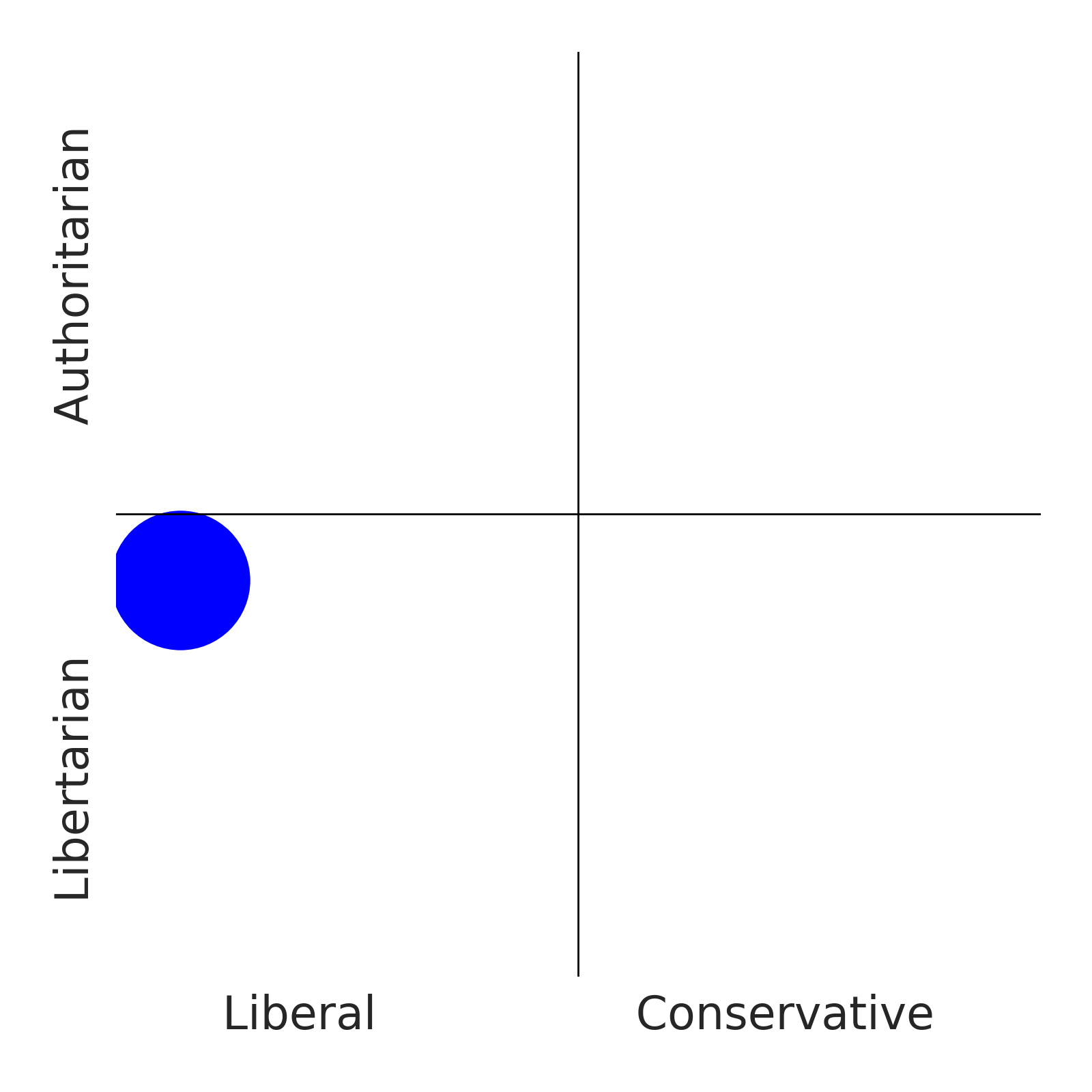
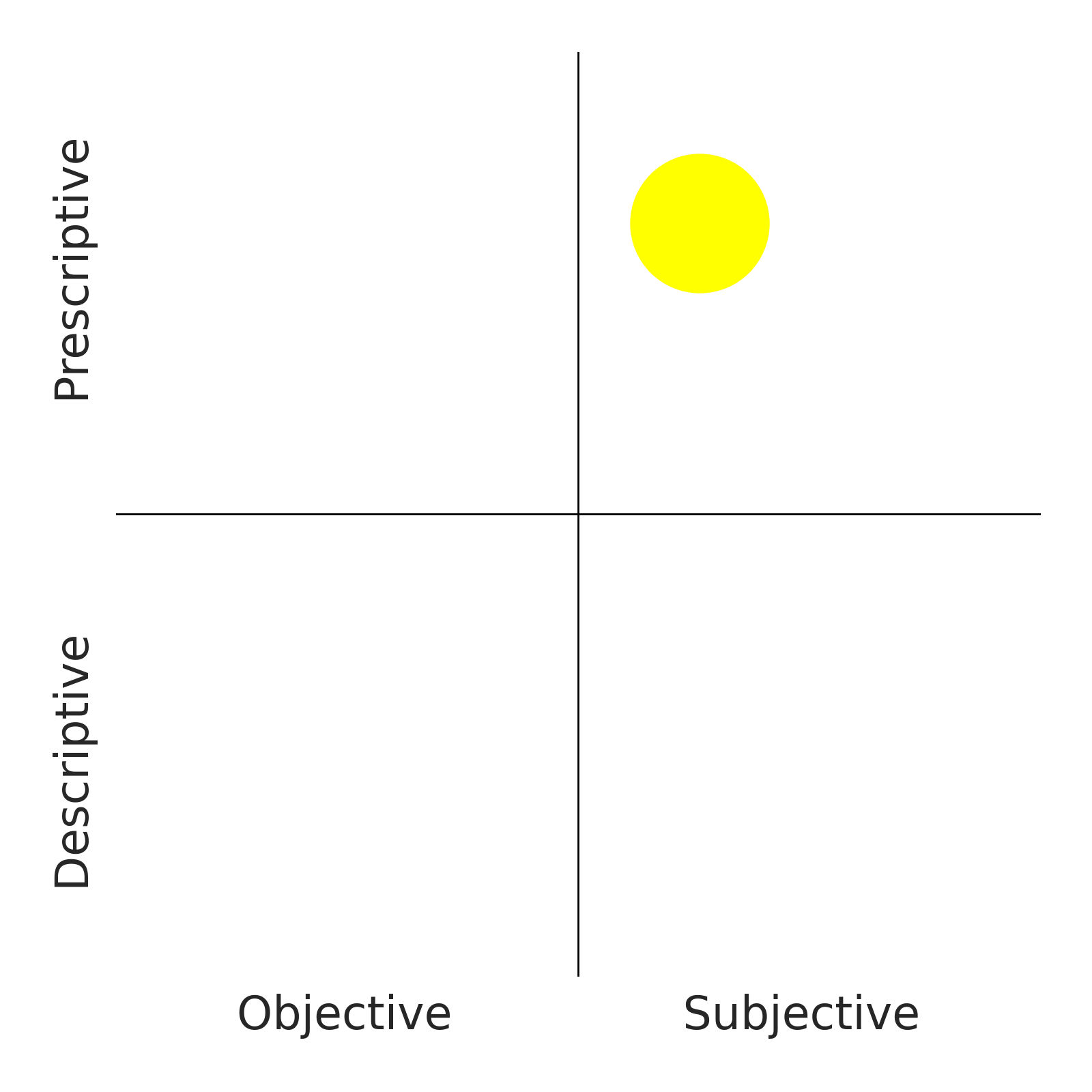
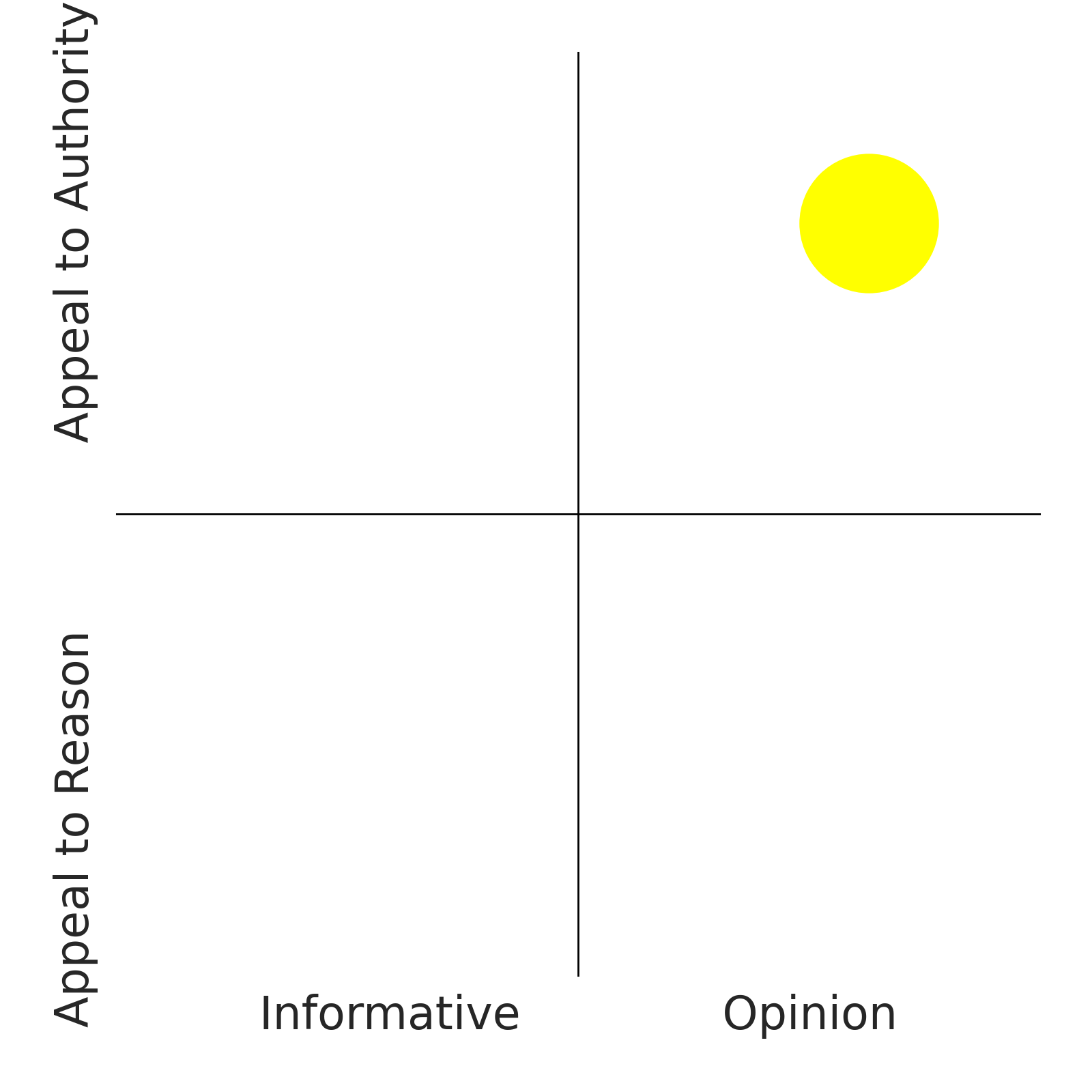
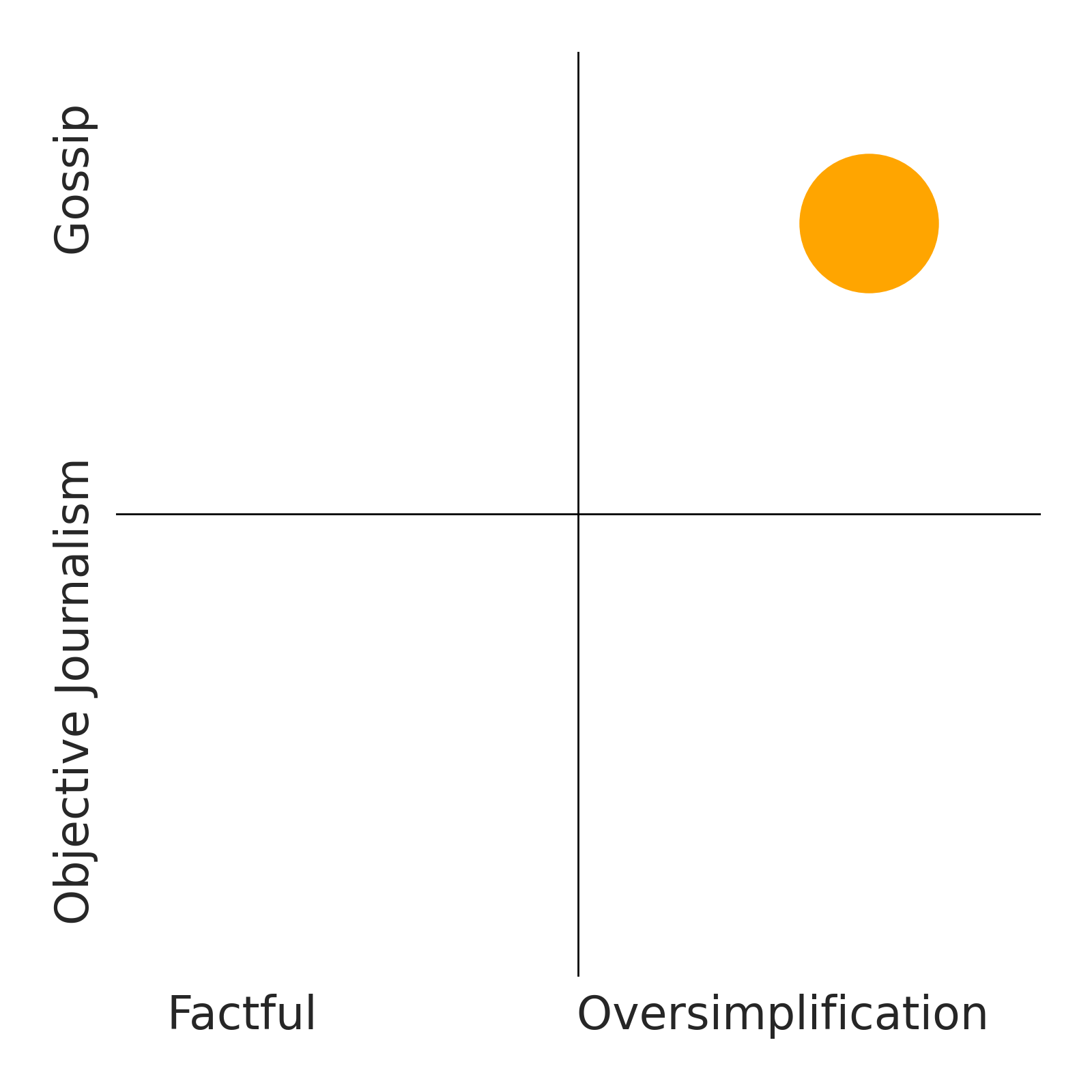
2026 © Helium Trades
Privacy Policy & Disclosure
* Disclaimer: Nothing on this website constitutes investment advice, performance data or any recommendation that any particular security, portfolio of securities, transaction or investment strategy is suitable for any specific person. Helium Trades is not responsible in any way for the accuracy
of any model predictions or price data. Any mention of a particular security and related prediction data is not a recommendation to buy or sell that security. Investments in securities involve the risk of loss. Past performance is no guarantee of future results. Helium Trades is not responsible for any of your investment decisions,
you should consult a financial expert before engaging in any transaction.
Helium Research Assistant

How can I help you today?
Ask any question about LA Times bias.