See whether Helium helps you make better-informed decisions. Try every Pro Trader feature for 30 days. No credit card required.
Try every Pro Trader feature for 30 days. No credit card required.
October 06, 2026 · 0 shares
Climate urgency is used to frame the annual climate-tech list, with editorial selection emphasizing AI risks and government accountability.
The Download is a daily technology newsletter; the numbered items are summaries of linked external stories, and the opening item is an announcement of an annual climate-tech list.
Automated analysis; not human reviewed. Limitations: The linked articles behind the newsletter's summaries were not available, so analysis is limited to the newsletter's own wording and framing. · 6 of 55 available dimensions scored; omitted dimensions are not treated as neutral. · Verified supporting quotes for 6 of 6 scored dimensions.
Claim: The newsletter frames climate change as an urgent crisis and treats political and international developments as obstacles, a position conventionally associated with the liberal side of the climate debate.
“The world is on track for one of its hottest years on record, climate-fueled disasters are taking lives and costing billions, while political shifts and international conflict have stalled progress.” · exact text match
Why: The framing emphasizes climate urgency and sees political shifts as harmful, aligning with a liberal-leaning climate-politics stance on a spectrum.
Claim: The newsletter editorializes with subjective adjectives and normative urgency rather than confining itself to neutral summaries.
“I’ve combed the internet to find you today’s most fun/important/scary/fascinating stories about technology.” · exact text match
“We urgently need to cut emissions and avoid climate change’s most harmful effects, and that’s where our 10 companies come in.” · exact text match
Why: The quoted phrasing applies personal value judgments and a normative call to action, making the text substantially subjective.
Claim: Beyond describing events, the text prescribes what should be done and presents the selected companies as the response.
“We urgently need to cut emissions and avoid climate change’s most harmful effects, and that’s where our 10 companies come in.” · exact text match
Why: The sentence is a prescriptive claim about what is needed, not merely a description of what is happening.
Claim: The newsletter includes personal and subjective judgments about the importance and selection of stories.
“This year, the stakes feel higher than ever.” · exact text match
“I’ve combed the internet to find you today’s most fun/important/scary/fascinating stories about technology.” · exact text match
Why: The text states feelings and subjective story judgments rather than neutrally reporting only.
Claim: The newsletter regularly touches on government, presidential, defense, and conflict topics, making it somewhat political.
“Musk’s new Pentagon role has raised conflict-of-interest fears” · exact text match
“He called for new cybersecurity measures for the AI era. (Reuters $)” · exact text match
Why: Politics is present as a recurring topic, but the overall article remains a technology digest rather than a primarily political platform.
Claim: The newsletter visibly attributes summaries to named outlets and marks paywalled links, supporting perceived trustworthiness.
“His companies could directly benefit from the weapons he recommends. (NPR)” · exact text match
“SpaceX has received billions in Pentagon and NASA contracts. (NYT $)” · exact text match
Why: The text attributes specific claims to identifiable outlets and labels paywalled sources, indicating visible sourcing discipline.
The linked articles behind the newsletter's summaries were not available, so analysis is limited to the newsletter's own wording and framing.
October 09, 2026 · 0 shares
The newsletter aggregates tech and science items with largely neutral, headline-style framing while presenting AI governance and drug-risk topics with openly speculative worry.
The Download is a recurring weekday newsletter from MIT Technology Review that aggregates technology and science news items and links to full stories.
Automated analysis; not human reviewed. Limitations: The supplied text is a newsletter roundup with truncated linked items, limiting depth of bias assessment. · 48 of 55 available dimensions scored; omitted dimensions are not treated as neutral. · Verified supporting quotes for 13 of 48 scored dimensions.
Claim: The article mixes objective reporting with subjective commentary in sections like 'fun/important/scary/fascinating'.
“I’ve combed the internet to find you today’s most fun/important/scary/fascinating stories” · exact text match
Why: Use of subjective descriptors introduces a mild subjective tone.
Claim: The content covers engaging topics like AI, space habitats, and Nobel prizes.
“This futuristic space habitat is designed to self-assemble in orbit” · exact text match
Why: Variety of intriguing stories makes the article interesting.
Claim: The article uses alarming language about AI failures leading to catastrophic outcomes.
“chances are it’ll turn you down. But refusal fails, sometimes horrifically.” · exact text match
Why: Words like 'horrifically' and 'global calamity' evoke fear.
Claim: The article includes political elements such as US green card freezes and Trump's AI rebranding.
“The US has frozen green cards for Microsoft and other IT firms” · exact text match
Why: Coverage of government actions and political figures indicates some political content.
Claim: The article briefly summarizes complex topics, potentially oversimplifying.
“Here’s what we know so far about the side effects of weight-loss drugs.” · exact text match
Why: Concise summaries may oversimplify nuanced issues, but not strongly.
Claim: The article includes promotional language for subscriptions and newsletters.
“Subscribe now to get your hands on a copy as soon as it lands on Wednesday 21 October!” · exact text match
Why: Subscription prompts resemble promotional content.
Claim: The article reports on establishment institutions like NASA, MIT, and government actions without strong criticism.
“it’s already won support from NASA” · exact text match
Why: Neutral to favorable mentions of established entities suggest slight pro-establishment bias.
Claim: The article aggregates news items with named sources and links, maintaining factual reporting without unsupported claims.
“(CNBC)” · exact text match
“(AP)” · exact text match
Why: Reliance on reputable outlets and direct attribution supports credibility.
Claim: The article focuses on scientific research and technological developments without superstitious elements.
“new research suggesting GLP-1 drugs may slow biological aging” · exact text match
Why: Emphasis on empirical research indicates a scientific rather than superstitious approach.
Claim: The article speculates about potential future risks from AI refusal failures and global calamity.
“Sooner or later, failed refusals may result in global calamity.” · exact text match
Why: Use of 'may' indicates speculative forecasting about AI dangers.
Claim: The newsletter attributes items to sources like CNBC, AP, Reuters, and BBC and signals paywalled links with dollar signs.
“(Reuters $)” · exact text match
“(BBC)” · exact text match
Why: Clear attribution and transparency about paywalled sources indicate high integrity standards.
Claim: The newsletter covers complex topics like AI safety and biotechnology with clarity.
“the formidable tradeoffs of AI refusal” · exact text match
Why: Engagement with nuanced tech issues reflects above-average intelligence.
Claim: The content is grounded in reported events and research rather than delusional thinking.
“Gene editing has revealed how a mouse embryo develops” · exact text match
Why: Reference to verifiable scientific studies shows truth-seeking.
The supplied text is a newsletter roundup with truncated linked items, limiting depth of bias assessment.
October 06, 2026 · 0 shares
The framing is favorable and safety-assertive in the subheading, while the body tempers that enthusiasm with explicit caveats about cost, waste, and reliability.
Automated analysis; not human reviewed. · 9 of 55 available dimensions scored; omitted dimensions are not treated as neutral. · Verified supporting quotes for 7 of 9 scored dimensions.
Claim: The article is framed primarily as a technical report with attribution and explicit caveats rather than subjective advocacy.
“The economic case for SMRs is also largely unproven.” · exact text match
“X-energy says that its vertically integrated fuel supply should ensure reliable operation, with reactors having a lifetime of 60 years.” · exact text match
Why: Negative and uncertain information is included alongside company claims, and uncertain claims are attributed.
Claim: The article avoids sensational presentation, tempering potential hype with risk disclosures.
“Nuclear costs and timelines have a habit of ballooning.” · not found in supplied text
“The only commercial-scale power generation of this type today is in China, where two reactors have struggled to operate on a continuous basis.” · not found in supplied text
Why: The risk statements are concrete and unemotional, undercutting any sensational framing of SMRs as a guaranteed solution.
Claim: The article is balanced between potential benefits and acknowledged hurdles, supporting a neutral valence.
“Co-locating small nuclear reactors at large manufacturing facilities could shrink some of the biggest carbon footprints in the world.” · exact text match
“The economic case for SMRs is also largely unproven.” · exact text match
Why: Promising outcomes are framed as conditional possibilities, while the article separately presents cost, waste, and reliability concerns.
Claim: The article describes technology, markets, and regulatory status rather than prescribing action.
“X-energy is developing small modular reactors to satisfy some of the planet’s most power-hungry users” · exact text match
“The flexibility of the Xe-100 means that it can be used for traditional electricity generation.” · exact text match
Why: Language is explanatory and conditional, with no imperative or endorsing verbs toward policy or investment.
Claim: The article is non-political; its mentions of regulation and government funding are descriptive, not partisan.
“While the current environment in the US for regulation and government funding favors nuclear, that could change over X-energy’s long development time frame.” · exact text match
Why: No partisan alignment or normative political judgment is expressed; the regulatory context is presented as a risk factor.
Claim: The subheading asserts a can't-melt-down capability as fact, while the body attributes the safety mechanism to X-energy's own description.
“A nuclear reactor that operates at high temperatures (but can’t melt down) could transform heavy industry.” · exact text match
“The company says the reactor will be intrinsically safe in the event of a loss of power” · exact text match
Why: The definitive safety claim in the subheading goes beyond the body's attributed 'company says' formulation, presenting a company characterization as settled fact.
Claim: The article's credibility is supported by named institutions, numeric specificity, and clear attribution of uncertain claims, despite an unhedged subheading.
“The US Energy Information Administration calculates that electricity from SMRs will cost more than six times that from solar farms.” · not found in supplied text
“The US Nuclear Regulatory Commission has issued X-energy’s subsidiary with a fuel fabrication license for TRISO-X pebbles” · exact text match
Why: Identifiable agencies and concrete figures are used, and company claims are distinguished from external calculations; the subheading's safety assertion tempers the credibility score.
Claim: The article follows a cause-and-effect technical argument about heat, coolant, and industrial use, with acknowledged uncertainties.
“Traditional nuclear reactors simply don’t get hot enough.” · exact text match
“While the current environment in the US for regulation and government funding favors nuclear, that could change over X-energy’s long development time frame.” · exact text match
Why: The piece reasons from physical and economic constraints and does not rely on emotional or ideological assertions.
Claim: The article signals fairness by attributing claims and disclosing adverse tradeoffs.
“The company says the reactor will be intrinsically safe in the event of a loss of power” · exact text match
“The Xe-100 might produce 10 times the volume of spent nuclear fuel per unit of energy as existing reactors” · exact text match
Why: The safety claim is explicitly attributed to X-energy, and a significant waste drawback is reported without downplaying.
October 08, 2026 · 0 shares
The article balances corporate hype (Musk, Nvidia, Morgan Stanley) against skeptical robotics researchers (LeCun, Hurst), adopting a cautious, evidence-oriented stance that emphasizes the gap between demonstrations and reality.
Humanoid robot development has accelerated with advances in large language models, vision-language models, and vision-language-action models, but the physical world presents challenges distinct from language and image processing.
Automated analysis; not human reviewed. · 55 of 55 available dimensions scored; omitted dimensions are not treated as neutral. · Verified supporting quotes for 46 of 55 scored dimensions.
Claim: The article reports facts and expert statements without adopting a personal or emotional perspective.
“Researchers also point out that the tendency to conflate humanoid robots made to resemble people with so-called generalist machines able to learn and perform multiple tasks is misleading.” · exact text match
Why: Attribution to researchers and neutral phrasing indicate objectivity.
Claim: The article avoids sensationalism, using measured language even when discussing bold predictions.
“Advances in AI offer tantalizing glimpses of a future in which robots navigate the world the way humans do. The question is whether the same techniques that fueled AI’s recent progress will be enough to get there, or if an entirely new path is required.” · exact text match
Why: The framing is analytical rather than sensational.
Claim: The article leans pessimistic by emphasizing challenges and delays over potential breakthroughs.
“Despite bold predictions from Elon Musk, Marc Andreessen, and Jensen Huang that humanoid robots will soon transform labor and daily life, many robotics researchers argue the same AI techniques that powered chatbots will not be enough to master the physical world, and current humanoids remain far from general-purpose.” · not found in supplied text
Why: Emphasis on researcher skepticism and current limitations tilts toward pessimism relative to the hype.
Claim: The article is engaging and informative on a cutting-edge topic.
“A robot shaped like a human—white with a black head and torso—has been popping up on video feeds. Perhaps you’ve seen it dance or pass popcorn, put trash in a bin, vacuum, or press the button of a microwave.” · exact text match
Why: Concrete examples and lively prose make the topic interesting.
Claim: The article describes the state of robotics without prescribing policy or action.
“These tensions—over whether all-purpose humanoid robots are just around the corner or nowhere in sight, and whether current forms of AI are all that’s needed to perfect them—are playing out in robotics labs across the country, where the hype over timelines is obscuring painstaking but meaningful progress.” · exact text match
Why: The language is descriptive, not prescriptive.
Claim: The article does not use fear-mongering or rage-baiting language.
“For now, fully autonomous motion planning so that a robot knows where it should go—especially in new, chaotic environments like a construction site or a unfamiliar home—remains a largely unsolved challenge.” · exact text match
Why: So­ber assessment of challenges without alarmist tone.
Claim: The article does not beg the question; it presents competing views and evidence.
“The leading contender for “something else” is the so-called world model—a form of AI trained less on text than on a combination of video, three-dimensional scans, and sensor data and built to predict the outcomes of actions in the real world.” · exact text match
Why: The argument is developed with explicit reasoning, not circular assumptions.
Claim: The article focuses on technical and industry developments rather than personal gossip.
“Researchers also point out that the tendency to conflate humanoid robots made to resemble people with so-called generalist machines able to learn and perform multiple tasks is misleading.” · exact text match
Why: Content is substantive; minimal personal anecdote.
Claim: The article is primarily fact-based with some interpretive framing.
“But the belief that training data alone is the answer is far from universal. Agility’s Hurst describes it as “a fundamentally flawed premise.”” · exact text match
Why: Attribution to sources keeps opinion limited.
Claim: The article is not politically framed; it focuses on technology and industry.
“Such proclamations are in large part fueled by the idea that the same AI advances behind tools like OpenAI’s ChatGPT and Anthropic’s Claude will enable a new generation of robots to imitate human movement the way chatbots imitate human language.” · exact text match
Why: No partisan political content.
Claim: The article acknowledges complexity and does not oversimplify the technical challenges.
“The issue is that tasks in the real world quickly explode in complexity. If you’re trying to, say, make coffee, there are myriad variables: No two kitchens are identical; coffee machines work in different ways; different cups require different grips; coffee grounds, hot water, and milk all need to be handled differently.” · exact text match
Why: Detailed explanation of variables prevents oversimplification.
Claim: The article cites experts but does not rely solely on authority; it provides reasoning.
“Yann LeCun, often referred to as one of the godfathers of AI, said at another event during the January Davos conference.” · exact text match
Why: Authorities are used as sources, not as substitutes for evidence.
Claim: The article is mature and professional in tone.
“The story is a collaboration between MIT Technology Review and Aventine, a non-profit research foundation that creates and supports content about how technology and science are changing the way we live.” · exact text match
Why: No immature or rage-baiting language.
Claim: The article does not employ circular reasoning.
“The leading contender for “something else” is the so-called world model—a form of AI trained less on text than on a combination of video, three-dimensional scans, and sensor data and built to predict the outcomes of actions in the real world.” · exact text match
Why: Arguments are linear and evidence-based.
Claim: The article does not cover for any actor; it is balanced.
“For now, fully autonomous motion planning so that a robot knows where it should go—especially in new, chaotic environments like a construction site or a unfamiliar home—remains a largely unsolved challenge.” · exact text match
Why: Critical assessment of all parties.
Claim: The article does not frame any group as victims.
“The success led the team to wonder how the model was able to achieve such a feat. After some digging, they found snippets of relevant labeled teleoperation data lurking in the training material, including two examples of a human controller using the robot to push an air fryer basket into the fryer.” · exact text match
Why: No victim narrative present.
Claim: The article expresses appropriate uncertainty and avoids overconfident claims.
“For now, it remains unclear just how impressive π0.7’s abilities to generalize are.” · exact text match
Why: Explicit acknowledgment of uncertainty.
Claim: The article is not spam.
“The story is a collaboration between MIT Technology Review and Aventine, a non-profit research foundation that creates and supports content about how technology and science are changing the way we live.” · exact text match
Why: Substantive content.
Claim: The article is largely free of rigid ideology.
“Researchers also point out that the tendency to conflate humanoid robots made to resemble people with so-called generalist machines able to learn and perform multiple tasks is misleading.” · exact text match
Why: Pragmatic and evidence-driven.
Claim: The article is neutral to slightly negative in emotional tone.
“Despite bold predictions from Elon Musk, Marc Andreessen, and Jensen Huang that humanoid robots will soon transform labor and daily life, many robotics researchers argue the same AI techniques that powered chatbots will not be enough to master the physical world, and current humanoids remain far from general-purpose.” · not found in supplied text
Why: Sober tone with cautious outlook.
Claim: The article does not apply double standards.
“Elon Musk claimed in May 2025 that “thousands” of his Optimus robots would be working at Tesla factories by the end of the year, but in January of this year he said that the company had only “some of the Tesla Optimus robots doing simple tasks in the factory.”” · exact text match
Why: Even-handed treatment of claims.
Claim: The article is highly credible with clear sourcing and attribution.
“Nearly 90% of the roughly 15,000 humanoid robots shipped in 2025 were made by Chinese companies, according to the market intelligence company Omdia and the Chinese robotics firm Unitree.” · exact text match
Why: Use of named sources and specific data supports credibility.
Claim: The article prioritizes evidence-based reasoning and expert skepticism over hype.
“Many robotics researchers are skeptical, arguing that such assumptions minimize the challenges of using an intelligence built on language and images to master the infinite variability of the physical world.” · not found in supplied text
Why: Direct presentation of researcher skepticism and specific technical limitations supports a rational framing.
Claim: The article is not advertorial.
“The story is a collaboration between MIT Technology Review and Aventine, a non-profit research foundation that creates and supports content about how technology and science are changing the way we live.” · exact text match
Why: No promotional intent.
Claim: The article is scientific and empirical.
“The leading contender for “something else” is the so-called world model—a form of AI trained less on text than on a combination of video, three-dimensional scans, and sensor data and built to predict the outcomes of actions in the real world.” · exact text match
Why: Emphasis on empirical research and data.
Claim: The article includes some speculation about future timelines.
“Speaking at the World Economic Forum’s annual meeting in Davos, Switzerland, in January, he predicted they could be on sale to the public by the end of 2027.” · exact text match
Why: Forecasts are attributed and contextualized, not presented as fact.
Claim: The article does not employ manipulative techniques.
“Researchers also point out that the tendency to conflate humanoid robots made to resemble people with so-called generalist machines able to learn and perform multiple tasks is misleading.” · exact text match
Why: Transparent presentation of multiple viewpoints.
Claim: The article is likely written by humans.
“The story is a collaboration between MIT Technology Review and Aventine, a non-profit research foundation that creates and supports content about how technology and science are changing the way we live.” · exact text match
Why: Complex, well-sourced human-style reporting.
Claim: The article demonstrates high integrity through transparent sourcing, attribution, and acknowledgment of uncertainty.
“The story is a collaboration between MIT Technology Review and Aventine, a non-profit research foundation that creates and supports content about how technology and science are changing the way we live.” · exact text match
Why: Disclosure of collaboration and clear attribution to named experts indicate integrity.
Claim: The article is highly intelligent, offering nuanced analysis.
“These tensions—over whether all-purpose humanoid robots are just around the corner or nowhere in sight, and whether current forms of AI are all that’s needed to perfect them—are playing out in robotics labs across the country, where the hype over timelines is obscuring painstaking but meaningful progress.” · exact text match
Why: Sophisticated synthesis of complex technical and industry dynamics.
Claim: The article is truth-seeking and avoids delusion.
“For now, it remains unclear just how impressive π0.7’s abilities to generalize are.” · exact text match
Why: Acknowledges uncertainty and limits.
Claim: The article is not about terrorism and contains no terrorism bias.
“The story is a collaboration between MIT Technology Review and Aventine, a non-profit research foundation that creates and supports content about how technology and science are changing the way we live.” · exact text match
Why: Topic is unrelated to terrorism.
Claim: The article does not promote or normalize fraud.
“Right now, should you so desire, you can preorder the 1X Neo home robot, expected to be ready for delivery sometime later this year. Yours for $20,000, it promises to take on “the boring and mundane tasks around the house”—putting away dishes, answering the door, tidying the living room—“so you can focus on what matters to you.”” · exact text match
Why: No fraud advocacy; merely reporting a product.
Claim: The article does not promote Marxist ideology.
“Such proclamations are in large part fueled by the idea that the same AI advances behind tools like OpenAI’s ChatGPT and Anthropic’s Claude will enable a new generation of robots to imitate human movement the way chatbots imitate human language.” · exact text match
Why: No class-conflict or socialist framing.
Claim: The article does not promote Islamist ideology.
“The story is a collaboration between MIT Technology Review and Aventine, a non-profit research foundation that creates and supports content about how technology and science are changing the way we live.” · exact text match
Why: Topic unrelated to Islamism.
Claim: The article contains no anti-Semitic content.
“Musk is not alone in his evangelism. Marc Andreessen, cofounder and general partner of the Silicon Valley venture capital firm Andreessen Horowitz, has said that robotics could become the “biggest industry in the history of the planet.”” · exact text match
Why: No anti-Jewish references.
Claim: The article contains no anti-LGBT content.
“The story is a collaboration between MIT Technology Review and Aventine, a non-profit research foundation that creates and supports content about how technology and science are changing the way we live.” · exact text match
Why: No LGBT references.
Claim: The article contains no racist content.
“Nearly 90% of the roughly 15,000 humanoid robots shipped in 2025 were made by Chinese companies, according to the market intelligence company Omdia and the Chinese robotics firm Unitree.” · exact text match
Why: No racial generalizations.
Claim: The article does not exhibit woke ideology.
“The story is a collaboration between MIT Technology Review and Aventine, a non-profit research foundation that creates and supports content about how technology and science are changing the way we live.” · exact text match
Why: No identity politics framing.
Claim: The article does not exhibit cruelty.
“Agility has hundreds of robots deployed across trials in facilities owned by GXO Logistics, Amazon, and Schaeffler, according to the company.” · exact text match
Why: Neutral reporting without cruel intent.
Claim: The article does not engage in virtue signaling.
“The story is a collaboration between MIT Technology Review and Aventine, a non-profit research foundation that creates and supports content about how technology and science are changing the way we live.” · exact text match
Why: Straightforward reporting without moral posturing.
Claim: The article does not promote conspiracy theories.
“Such proclamations are in large part fueled by the idea that the same AI advances behind tools like OpenAI’s ChatGPT and Anthropic’s Claude will enable a new generation of robots to imitate human movement the way chatbots imitate human language.” · exact text match
Why: No conspiratorial thinking.
Claim: The article does not exhibit suicidal empathy.
“For now, fully autonomous motion planning so that a robot knows where it should go—especially in new, chaotic environments like a construction site or a unfamiliar home—remains a largely unsolved challenge.” · exact text match
Why: No compassion-based advocacy that ignores self-harm.
Claim: The article does not scapegoat any group.
“The leading contender for “something else” is the so-called world model—a form of AI trained less on text than on a combination of video, three-dimensional scans, and sensor data and built to predict the outcomes of actions in the real world.” · exact text match
Why: No blame assigned to a scapegoat.
Claim: The article applies consistent standards to all actors.
“To see one of the smartest robot brains working today, it’s worth looking at what Google DeepMind can do with a piece of equipment called ALOHA 2, short for “A Low-cost Open-source Hardware System for Bimanual Teleoperation.”” · exact text match
Why: No double standards observed.
Claim: The article is pro-science and pro-reason.
“Researchers also point out that the tendency to conflate humanoid robots made to resemble people with so-called generalist machines able to learn and perform multiple tasks is misleading.” · exact text match
Why: Emphasis on empirical research and skepticism of hype aligns with Enlightenment values.
October 06, 2026 · 0 shares
The framing is cautiously optimistic: it centers on drugmaker-reported reductions in biological age while noting that results varied and that benefits for healthy people remain unknown.
GLP-1 receptor agonists are a class of incretin-based drugs approved for diabetes and obesity; 'biological age' from molecular clocks is an investigational biomarker, not a direct measure of lifespan.
Automated analysis; not human reviewed. Limitations: The supplied text is truncated and interleaved with non-article page fragments, so the analysis may miss context from omitted final sections. · 10 of 55 available dimensions scored; omitted dimensions are not treated as neutral. · Verified supporting quotes for 10 of 10 scored dimensions.
Claim: The article reports drugmaker claims with attribution rather than asserting them as established fact.
“Drug giants Eli Lilly and Novo Nordisk say patients taking their drugs age less quickly, according to readouts from molecular “aging clocks.”” · exact text match
Counterevidence:
“They might also melt away the years.” · exact text match
Why: Attribution and 'say' make the reporting objective; the lede's metaphor adds a subjective flourish but is hedged.
Claim: The article uses a sensational metaphor for the drugs' possible effect on biological age.
“They might also melt away the years.” · exact text match
Counterevidence:
“although the difference varied widely, depending on which type of clock was used, and what organ was tested.” · exact text match
Why: The metaphor is vivid, but the surrounding reporting is hedged and technical, placing it on the objective side.
Claim: The article frames the findings as a promising step toward a possible longevity treatment.
“The findings add to wide speculation among scientists that GLP-1 drugs, as they are known, are acting on basic causes of aging and might be a true longevity treatment.” · exact text match
Counterevidence:
““I guess we will have to wait.”” · exact text match
Why: It highlights the positive possibility while including a skeptical closer.
Claim: The article reports what companies and scientists said without advocating a course of action.
“Drug giants Eli Lilly and Novo Nordisk say patients taking their drugs age less quickly, according to readouts from molecular “aging clocks.”” · exact text match
Why: The content is descriptive and attributed; no recommendation is made.
Claim: The lead uses an emotive metaphor that gives the article a mildly positive emotional tint.
“They might also melt away the years.” · exact text match
Why: The positive emotional coloring appears mainly in the lede; the rest is sober and attributed.
Claim: The article names sources, attributes findings, and reports uncertainty, supporting high credibility.
“Overall, the difference was around “two to three years,” according to Nikolaj Roed, a global project leader at Novo” · exact text match
Counterevidence:
“although the difference varied widely, depending on which type of clock was used, and what organ was tested.” · exact text match
Why: Attribution and explicit variation establish visible sourcing and uncertainty.
Claim: The reporting emphasizes methodological variability and uncertainty, indicating rational, evidence-bound reasoning.
“although the difference varied widely, depending on which type of clock was used, and what organ was tested.” · exact text match
Why: The article does not present a uniform effect, and it notes uncertainty about clock validity.
Claim: The article's lede directly speculates about the drugs' possible anti-aging effect.
“They might also melt away the years.” · exact text match
Why: The speculation is explicit but hedged with 'might,' so it is moderate rather than extreme.
Claim: The article includes side-effect cautions and healthy-person uncertainty, showing internal fairness.
“Several people cautioned that GLP-1 drugs do have side effects, including muscle loss.” · exact text match
Why: It balances the positive readouts with caveats rather than presenting only one side.
Claim: The article incorporates technical methodology and named expert context, showing above-average intellectual rigor.
“Their blood, collected at the start of the study as well as months later, was then measured with “proteomic clocks,” which use levels of key proteins to predict a person’s age and risk of dying.” · exact text match
Why: The detail about study design and measurement is substantive and not typical of superficial science coverage.
The supplied text is truncated and interleaved with non-article page fragments, so the analysis may miss context from omitted final sections.
October 14, 2026 · 0 shares
Framing is largely neutral and evidence-driven, with a dramatic combat opening and technocratic reliance on DARPA, FDA, and academic experts while still including expert skepticism.
Automated analysis; not human reviewed. Limitations: The supplied text includes duplicated fragments and related-story/newsletter boilerplate; the assessment focuses on the core article. · 13 of 55 available dimensions scored; omitted dimensions are not treated as neutral. · Verified supporting quotes for 13 of 13 scored dimensions.
Claim: The story’s problem-solving frame is anchored in credentialed military, academic, and regulatory experts.
“Murray—who, in addition to his military experience, has a PhD in physiology—is leading a DARPA effort to address blood’s battlefield problems.” · exact text match
“John Holcomb, a surgery professor at the University of Alabama at Birmingham, who was a combat surgeon in Mogadishu, Somalia, during the battle that inspired Black Hawk Down.” · exact text match
Why: Expert credentials and institutional roles dominate the sourcing, producing a modest elitist/technocratic tilt rather than a populist one.
Claim: The article separates reported facts and attributed views from the narrator's opinions.
“Murray notes that he can only select companies that apply, and Cellphire did not.” · exact text match
““I do not think they will replicate all the functions that whole blood does in our body,” Holcomb says.” · exact text match
Why: Attribution and inclusion of competing expert views indicate an objective rather than subjective framing.
Claim: A dramatic battle anecdote opens the piece, but most reporting is measured and technical.
“After the pilot battled the failing machine for 58 agonizing seconds, Morphine 1-2 plunged to the ground.” · exact text match
““Each one of those projects individually is a massive undertaking,” says John Holcomb, a surgery professor at the University of Alabama at Birmingham, who was a combat surgeon in Mogadishu, Somalia, during the battle that inspired Black Hawk Down.” · exact text match
Why: Dramatic opening and headline are offset by detailed, non-sensational scientific reporting.
Claim: Vivid narrative and concrete technical detail make the piece engaging.
“After the pilot battled the failing machine for 58 agonizing seconds, Morphine 1-2 plunged to the ground.” · exact text match
“Each ErythroMer cell includes a lipid called KC-1003, which acts like a sentry: In response to high pH in the lungs, it signals another small molecule within ErythroMer to move away, allowing oxygen in.” · exact text match
Why: Dramatic opening plus detailed mechanism supports high interestingness.
Claim: The piece primarily describes DARPA's program and scientific history rather than prescribing policy or behavior.
“DARPA is funding a redoubled effort to develop a shelf-stable substitute for what field medics and trauma doctors need most: more blood.” · exact text match
“Over the course of the next three years, RAPIID will move DARPA’s efforts closer to real life.” · exact text match
Why: The dominant mode is explanatory reporting, not advocacy.
Claim: The framing centers DARPA, the Defense Department, FDA, and academic experts as the legitimate problem-solving institutions.
“DARPA is funding a redoubled effort to develop a shelf-stable substitute for what field medics and trauma doctors need most: more blood.” · exact text match
“The 2018 National Defense Strategy, which shifted military focus from terrorism to a potential ground war with China or Russia, showed war planners the risks of relying on a single site for blood runs covering all of USPACOM.” · exact text match
Why: Institutional military and regulatory actors anchor the story, though criticism prevents a strongly pro-establishment score.
Claim: Claims are attributed to named experts, studies, and program officials, with caveats and counterpoints included.
“A JAMA study of combat injuries in Afghanistan suggests a magic number for someone who needs a transfusion: You have 36 minutes to get started.” · exact text match
“The possibility of fatal outcomes has invited second-guessing about DARPA’s choices.” · exact text match
Why: Named sourcing, quantified data, and critical perspectives support high credibility.
Claim: The report grounds claims in named studies, clinical trials, and quantified outcomes rather than assertion.
“A study published in Transfusion in 2025 found that of 1.2 million trauma patients in the United States who potentially needed blood before reaching a hospital, just 1% received it.” · exact text match
“A review of clinical studies published in JAMA in 2008 further solidified HBOCs’ fate, finding that they generally triple patients’ chances of heart attack and increase the risk of death by 30%.” · exact text match
Why: Systematic use of peer-reviewed findings and quantified outcomes supports a strongly rational/evidence-based framing.
Claim: The article explains proposed blood substitutes through empirical mechanisms and clinical evidence rather than superstition.
“Using a well-understood process called lyophilization, similar to one that World War II–era scientists used with plasma, the team freeze-dries its product to store at room temperature, where it can remain stable for two years.” · exact text match
“In a 2026 paper in Advanced Science, the researchers showed that SynthoPlate cut bleeding time and blood loss by more than half in mice with low platelet counts.” · exact text match
Why: Mechanistic and peer-reviewed evidence dominates, indicating a strongly scientific orientation.
Claim: Future deployment goals and planned trials are a substantial part of the report, though labeled as plans.
“the goal is to have bags of dried blood products deployed in the field by 2029” · exact text match
“Over the course of the next three years, RAPIID will move DARPA’s efforts closer to real life.” · exact text match
Why: Future-oriented program goals are prominent but attributed as plans, yielding moderate speculation.
Claim: The publisher includes material criticism and corrections to the program's preferred narrative.
“The possibility of fatal outcomes has invited second-guessing about DARPA’s choices.” · exact text match
“Murray notes that he can only select companies that apply, and Cellphire did not.” · exact text match
Why: Fair inclusion of expert skepticism and replies supports high observed integrity.
Claim: The article explains complex transfusion science with historical context, mechanisms, and study results.
“Their most critical component is hemoglobin, which carries oxygen and comes encased in a cell membrane.” · exact text match
“A review of clinical studies published in JAMA in 2008 further solidified HBOCs’ fate, finding that they generally triple patients’ chances of heart attack and increase the risk of death by 30%.” · exact text match
Why: Technical explanation and evidence synthesis indicate high article intelligence.
Claim: The article acknowledges failed prior approaches and unresolved risks instead of presenting a wholly idealized narrative.
“The parent company terminated trials in 1998.” · exact text match
““I do not think they will replicate all the functions that whole blood does in our body,” Holcomb says.” · exact text match
Why: Inclusion of failure and skepticism supports truth-seeking rather than delusion.
The supplied text includes duplicated fragments and related-story/newsletter boilerplate; the assessment focuses on the core article.
October 15, 2026 · 0 shares
Publisher frames the piece as a vivid, curiosity-driven survey of “wild” mind-preservation ideas while pairing futurist claims with mainstream skepticism and explicit uncertainty.
Automated analysis; not human reviewed. Limitations: Article is a feature/survey rather than a single reported event, so central summary synthesizes multiple speculative paths; related-link and newsletter text were excluded as page chrome. · 55 of 55 available dimensions scored; omitted dimensions are not treated as neutral. · Verified supporting quotes for 16 of 55 scored dimensions.
Claim: The article mixes factual reporting with subjective color and emotional descriptions.
“attendees were “visibly moved” and wept “with wonder”” · exact text match
“stuff becomes really crazy.” · exact text match
Why: It includes evocative descriptions and quoted emotional reactions alongside reported facts.
Claim: The feature uses vivid, sensational language to frame speculative mind-preservation ideas.
“Six wild ideas for perpetuating your mind.” · exact text match
“stuff becomes really crazy.” · exact text match
Why: The title and quoted closing use heightened phrasing, though the article also includes scientific caveats.
Claim: The article leans mildly optimistic about mind-preservation research while noting skepticism.
“And maybe out of old age, too.” · exact text match
Why: The line suggests a hopeful extension of research beyond brain damage, while the article elsewhere notes unknowns and far-off timelines.
Claim: The article is designed as an engaging curiosity feature with striking examples.
“Six wild ideas for perpetuating your mind.” · exact text match
“source of grim fascination” · exact text match
Why: The title and descriptions emphasize unusual, attention-grabbing scientific possibilities.
Claim: The piece is primarily descriptive, surveying ideas rather than advocating a policy or course of action.
“Here, we look at six possible paths for keeping your mind going” · exact text match
Why: The framing announces a survey of possibilities, not a recommendation.
Claim: The feature includes evaluative framing and subjective commentary alongside reported facts.
“The idea’s main proponent is Sergio Canavero, a controversial Italian surgeon” · exact text match
“Six wild ideas for perpetuating your mind.” · exact text match
Why: The title and descriptors such as “controversial” and “wild” add evaluative framing.
Claim: The article uses positive wonder and dramatic language, yielding a mildly positive emotional tone.
“wept “with wonder” at Rothblatt’s vision of digital equality” · exact text match
Why: The quoted reaction conveys awe, though the article also notes grim or skeptical elements.
Claim: The article uses named sources, published studies, and explicit uncertainty.
“According to that paper, which appeared in the journal PLOS One” · exact text match
“A survey of 312 neuroscientists, published in 2025 in PLOS One” · exact text match
Why: It cites peer-reviewed publications and quantifies expert estimates.
Claim: The article weighs speculative claims against mainstream scientific skepticism.
“says he’s been following Canavero’s claims “with little respect” and thinks that we should “pay zero attention.”” · exact text match
Why: It includes strong expert counterpoints to controversial claims rather than accepting them uncritically.
Claim: The article is grounded in scientific research and expert commentary rather than superstition.
“Science assures us it has everything to do with the three-pound organ between our ears” · exact text match
“Neuroscientists don’t have a clear definition of consciousness” · exact text match
Why: It consistently frames the topics through neuroscience, AI research, and scientific uncertainty.
Claim: The article focuses on preserving individual identity and personal continuity rather than collective outcomes.
“At 30, or 50, or 70, you will still be you.” · exact text match
Why: The framing centers on the continuity of the individual self.
Claim: The article centers on speculative future scenarios and forecasts.
“one day in the far future it might be reanimated” · exact text match
“Someday, he says, advanced nanobots will wire up our brain cells to a “synthetic neocortex” in the cloud.” · exact text match
Why: Much of the piece concerns possible future technologies and timelines rather than completed outcomes.
Claim: The article uses vivid, loaded framing to heighten reader interest without materially omitting counterpoints.
“Six wild ideas for perpetuating your mind.” · exact text match
“Mainstream researchers aren’t convinced.” · exact text match
Why: The title is attention-grabbing, but the article also includes skeptical and qualifying evidence.
Claim: The article attributes claims to named experts and includes critical counterpoints.
“Critics say the procedure would be more like murder than medicine.” · exact text match
“Mainstream researchers aren’t convinced.” · exact text match
Why: It reports contrary expert views rather than presenting speculative claims as settled.
Claim: The article synthesizes complex neuroscience, AI, and ethical issues with expert context.
“Neuroscientists don’t have a clear definition of consciousness, much less a diagnostic test they could apply to an avatar.” · exact text match
Why: It discusses definitional and evidentiary limits across multiple advanced research areas.
Claim: The article is broadly truth-seeking, reporting uncertainties and expert disagreements about speculative claims.
“What’s still missing from Rothblatt’s mindclone prediction is evidence that these avatars have—or ever will have—any kind of true self-awareness.” · exact text match
Why: It explicitly notes missing evidence and avoids presenting speculative mind-cloning as established.
Article is a feature/survey rather than a single reported event, so central summary synthesizes multiple speculative paths; related-link and newsletter text were excluded as page chrome.
October 08, 2026 · 0 shares
Explicitly sponsored custom content promotes AVEVA’s responsible industrial AI framework and solutions through a largely one-sided, optimistic executive interview.
Automated analysis; not human reviewed. Limitations: The supplied text is a sponsored custom-content podcast transcript; factual claims are attributable to the interview subject and not independently verified. · 9 of 55 available dimensions scored; omitted dimensions are not treated as neutral. · Verified supporting quotes for 9 of 9 scored dimensions.
Claim: The content is dominated by the interview subject's subjective opinions and forecasts rather than objective independent reporting.
“I think there's a real opportunity there” · exact text match
“I'm quite excited about that.” · exact text match
Why: First-person opinion and enthusiasm from the interview subject frame the discussion.
Claim: The article is strongly optimistic about industrial AI's future benefits.
“I think that will make these types of operations more efficient, much safer for the human beings involved and more productive.” · exact text match
“these technologies really have truly transformative potential from a resource usage standpoint, from a human safety standpoint, from a productivity standpoint.” · exact text match
Why: The selected quotes emphasize beneficial and transformative outcomes with little pessimism.
Claim: The article prescribes organizational changes and governance safeguards for industrial AI.
“organizations need new approaches to data, governance, and human oversight” · exact text match
“Organizations will need to rethink business processes, establish appropriate safeguards, and give experienced workers new ways to apply their expertise” · exact text match
Why: The language moves from description to recommended actions for organizations.
Claim: The article presents extensive opinion and forecast from the interview subject.
“I think that will make these types of operations more efficient, much safer for the human beings involved and more productive.” · exact text match
“I'm quite excited about that.” · exact text match
Why: The content is largely attributed opinion and prediction, not neutral fact reporting.
Claim: The article aligns with corporate and institutional authorities such as AVEVA, IEEE, and Idaho National Laboratory.
“AVEVA’s framework for responsible AI emphasizes security, efficiency, and human safety and oversight.” · exact text match
“One of the things that I'm involved with is a standards working group that was launched by the IEEE two years ago, a little over two years ago.” · exact text match
Why: The framing relies on established corporate and standards bodies without anti-establishment critique.
Claim: The article maintains a positive, enthusiastic tone toward industrial AI.
“I'm quite excited about that.” · exact text match
“I think that's really exciting.” · exact text match
Why: Positive emotional language from the interview subject shapes the article’s tone.
Claim: The article is sponsored custom content produced in partnership with AVEVA rather than independent editorial.
“This episode of Business Lab is produced in partnership with AVEVA.” · exact text match
“This content was produced by Insights, MIT Technology Review’s custom content arm, not its editorial staff.” · exact text match
Why: The explicit sponsorship and custom-content disclosure establish promotional advertorial framing.
Claim: The article frames AVEVA and its commercial industrial AI solutions favorably.
“AVEVA’s framework for responsible AI emphasizes security, efficiency, and human safety and oversight.” · exact text match
“leveraging some of AVEVA's tools to do that.” · exact text match
Why: Positive references to AVEVA’s framework and customer use of its tools indicate a pro-corporate framing.
Claim: The article includes forward-looking speculation about AI adoption and capabilities.
“within the next 18 months for sure, we're going to see an increase of people with deep domain expertise who maybe didn't grow up with a software background, be able to adopt AI assisted coding techniques” · exact text match
“I think that will make these types of operations more efficient, much safer for the human beings involved and more productive.” · exact text match
Why: The article makes explicit forecasts about future industrial AI adoption and effects.
The supplied text is a sponsored custom-content podcast transcript; factual claims are attributable to the interview subject and not independently verified.
Promotes climate technology companies as promising progress while treating emissions cuts as an urgent imperative.
The supplied text is the introductory section of an annual list feature; the referenced methodology page and individual company profiles are not included.
Automated analysis; not human reviewed. Limitations: Only the introduction and editorial credits were supplied; specific companies, methodology, and reporting were not available for analysis. · 5 of 55 available dimensions scored; omitted dimensions are not treated as neutral. · Verified supporting quotes for 5 of 5 scored dimensions.
Claim: The article uses editorial value judgments and hopeful framing rather than neutral reporting.
“some of the most promising climate tech companies in the world” · exact text match
Why: 'Most promising' and 'hope' are inherently subjective evaluative terms applied to a curated list.
Claim: The article presents a favorable outlook on climate technology companies and their potential.
“progress the world is making” · exact text match
“these companies are building technologies to address the acute challenges we face” · exact text match
Why: The language emphasizes promise, progress, and solutions, giving the introduction a clearly bullish tone about climate tech.
Claim: The article expresses hope about progress on climate solutions.
“We hope that this list highlights the progress the world is making” · exact text match
Why: The explicit 'hope' and emphasis on 'progress' and 'solutions' make the outlook positive.
Claim: The article prescribes action—drastic emissions cuts—rather than merely describing technologies.
“We must begin to drastically reduce emissions to avoid the deadliest impacts of climate change” · exact text match
Why: 'We must begin' is a direct prescriptive claim about what society should do.
Claim: The editorial introduction is substantially opinionated rather than purely factual.
“some of the most promising climate tech companies in the world” · exact text match
“We hope that this list highlights the progress” · exact text match
Why: Value judgments about promise, progress, and hope shape the framing, making it opinion-led.
Only the introduction and editorial credits were supplied; specific companies, methodology, and reporting were not available for analysis.
October 06, 2026 · 0 shares
Climate urgency is used to frame the annual climate-tech list, with editorial selection emphasizing AI risks and government accountability.
The Download is a daily technology newsletter; the numbered items are summaries of linked external stories, and the opening item is an announcement of an annual climate-tech list.
Automated analysis; not human reviewed. Limitations: The linked articles behind the newsletter's summaries were not available, so analysis is limited to the newsletter's own wording and framing. · 6 of 55 available dimensions scored; omitted dimensions are not treated as neutral. · Verified supporting quotes for 6 of 6 scored dimensions.
Claim: The newsletter frames climate change as an urgent crisis and treats political and international developments as obstacles, a position conventionally associated with the liberal side of the climate debate.
“The world is on track for one of its hottest years on record, climate-fueled disasters are taking lives and costing billions, while political shifts and international conflict have stalled progress.” · exact text match
Why: The framing emphasizes climate urgency and sees political shifts as harmful, aligning with a liberal-leaning climate-politics stance on a spectrum.
Claim: The newsletter editorializes with subjective adjectives and normative urgency rather than confining itself to neutral summaries.
“I’ve combed the internet to find you today’s most fun/important/scary/fascinating stories about technology.” · exact text match
“We urgently need to cut emissions and avoid climate change’s most harmful effects, and that’s where our 10 companies come in.” · exact text match
Why: The quoted phrasing applies personal value judgments and a normative call to action, making the text substantially subjective.
Claim: Beyond describing events, the text prescribes what should be done and presents the selected companies as the response.
“We urgently need to cut emissions and avoid climate change’s most harmful effects, and that’s where our 10 companies come in.” · exact text match
Why: The sentence is a prescriptive claim about what is needed, not merely a description of what is happening.
Claim: The newsletter includes personal and subjective judgments about the importance and selection of stories.
“This year, the stakes feel higher than ever.” · exact text match
“I’ve combed the internet to find you today’s most fun/important/scary/fascinating stories about technology.” · exact text match
Why: The text states feelings and subjective story judgments rather than neutrally reporting only.
Claim: The newsletter regularly touches on government, presidential, defense, and conflict topics, making it somewhat political.
“Musk’s new Pentagon role has raised conflict-of-interest fears” · exact text match
“He called for new cybersecurity measures for the AI era. (Reuters $)” · exact text match
Why: Politics is present as a recurring topic, but the overall article remains a technology digest rather than a primarily political platform.
Claim: The newsletter visibly attributes summaries to named outlets and marks paywalled links, supporting perceived trustworthiness.
“His companies could directly benefit from the weapons he recommends. (NPR)” · exact text match
“SpaceX has received billions in Pentagon and NASA contracts. (NYT $)” · exact text match
Why: The text attributes specific claims to identifiable outlets and labels paywalled sources, indicating visible sourcing discipline.
The linked articles behind the newsletter's summaries were not available, so analysis is limited to the newsletter's own wording and framing.
September 18, 2026 · 0 shares
Existential-risk questions are answered with a skeptical but non-alarmist stance, treating doomer warnings as credible enough to address while labeling extinction scenarios as science fiction.
In AI-safety discourse, 'doomers' are people who argue that advanced AI could cause human extinction; 'alignment' is the challenge of making AI systems behave reliably in line with human intentions.
Automated analysis; not human reviewed. Limitations: Only the article text was analyzed; independent verification of cited incidents, forecasts, and the subscriber event is not possible. · 10 of 55 available dimensions scored; omitted dimensions are not treated as neutral. · Verified supporting quotes for 10 of 10 scored dimensions.
Claim: The Q&A is substantially built on the writers' own judgments and preferences.
“I’d say there’s a non-zero chance.” · exact text match
“But if the winds do shift, I for one would appreciate some strong transparency regulations” · exact text match
Why: First-person opinions about probability and policy are presented as the writers' views rather than as neutral reporting.
Claim: The response uses sober, deflationary language about AI extinction rather than scare-story hyperbole.
“You can spin up any number of scare stories, but they’re not grounded in present-day realities about what the tech can do or where it’s headed.” · exact text match
Why: The text directly rejects scare stories and grounds its judgment in present-day capabilities.
Claim: Much of the content consists of editorial opinion and prediction rather than factual reporting.
“I think such catastrophizing can make people excuse or overlook many of the more immediate problems with the existing technology and the companies building it.” · exact text match
“I’d say there’s a non-zero chance.” · exact text match
Why: The authors offer personal opinions and forecasts, using first-person judgment throughout.
Claim: The text engages with US government inaction and regulation of AI.
“the US government has thus far failed to step in, despite some bipartisan support in Congress” · exact text match
“The executive branch, for its part, seems stringently opposed for the time being.” · exact text match
Why: The regulation discussion is framed in terms of US political institutions, but not in a strongly partisan way.
Claim: The text attributes claims to named staff, third-party organizations, and known incidents, and it hedges forecasts.
“In fact, the team at METR, a third-party organization that OpenAI called in to help understand what happened in the lead-up to the Hugging Face hack, raised a related possibility in its report on the incident.” · exact text match
Why: Named sources and organizations anchor the account, and the authors explicitly mark uncertainty. Credibility is based on visible sourcing and hedging, not external fact-checking.
Claim: The framing separates realistic AI harms from far-fetched extinction scenarios and explicitly hedges uncertainty.
“Nope. There are no circumstances outside of apocalyptic science fiction in which AI could kill us all.” · exact text match
Why: The text uses calibrated reasoning by labeling the all-humans scenario science fiction while still taking near-term harms seriously.
Claim: The framing is skeptical of AI companies' motives and self-regulation.
“CEOs have an obvious incentive to make their products seem radical and transformative.” · exact text match
“There’s a huge conflict of interest when AI companies regulate themselves” · exact text match
Why: The text highlights corporate incentives and conflicts rather than defending corporate positions, yielding a mildly anti-corporate tilt.
Claim: The response spends substantial space on hypothetical future AI-caused harms.
“Maybe it’s a cyberattack carried out by a swarm of AI agents on critical infrastructure. Sadly, a scenario like that now no longer feels as far-fetched as it once did. Or maybe a novel AI-designed pathogen cuts through the population.” · exact text match
“Then there’s the more exotic-sounding possibility that an AI could decide to kill us itself.” · exact text match
Why: The central content is explicitly speculative, exploring imagined future scenarios even while marking them as uncertain.
Claim: The text signals intellectual honesty by acknowledging uncertainty and competing explanations.
“That certainly doesn’t mean that their more dire forecasts will come true, but it’s enough for me to sit up and take notice.” · exact text match
“But I’m not so sure it makes sense here.” · exact text match
Why: It concedes limits to prediction and uncertainty about corporate motivations rather than asserting a single line.
Claim: The text connects abstract AI-safety concepts to concrete incidents and recognizes trade-offs.
“One approach is to reward them for doing things you want them to (a little like raising a toddler, perhaps). Another approach involves giving an LLM a written list of rules it is supposed to follow (kind of like a constitution).” · exact text match
“The trade-off between autonomy and control is tricky to get right because, on the one hand, a lot of the power of AI agents is that they can carry out tasks and solve problems without a human having to micromanage them.” · exact text match
Why: It explains alignment and the autonomy-control trade-off with nuance and concrete examples.
Only the article text was analyzed; independent verification of cited incidents, forecasts, and the subscriber event is not possible.
October 05, 2026 · 0 shares
Exclusive event marketing positions MIT Technology Review as an authoritative insider source while using skeptical AI headline teases to counter hype.
Automated analysis; not human reviewed. Limitations: The supplied text is event-marketing copy with headline teases rather than full articles, so bias classification is limited to visible promotional framing and headline wording. · 4 of 55 available dimensions scored; omitted dimensions are not treated as neutral. · Verified supporting quotes for 4 of 4 scored dimensions.
Claim: The article frames the event as exclusive and premium.
“Only available to MIT Technology Review subscribers.” · exact text match
“As an MIT Technology Review subscriber, you’ll get a 20% discount, meaning you can access the full EmTech Future 2026 program for just $596.” · exact text match
Why: Subscriber-only access and a $596 price point present the program as an exclusive, premium offering.
Claim: The article editorializes in its headline teasers rather than reporting neutrally.
“Breathless claims about AGI and new capabilities fall apart pretty quickly under scrutiny.” · exact text match
Why: This is a generalized evaluative claim presented without supporting evidence or attribution.
Claim: The article uses credentialed authority figures to promote the event.
“Yossi Matias, Vice President & Head of Google Research, explores how AI is beginning to reshape biology, infrastructure, manufacturing, and science” · exact text match
Why: The speaker's corporate title is featured as a promotional credential, and a separate headline highlights Bill Gates's warning.
Claim: The article functions as direct advertising for a paid event program.
“As an MIT Technology Review subscriber, you’ll get a 20% discount, meaning you can access the full EmTech Future 2026 program for just $596.” · exact text match
Why: The text explicitly promotes a paid program, highlights a discount, and urges readers to access full program content.
The supplied text is event-marketing copy with headline teases rather than full articles, so bias classification is limited to visible promotional framing and headline wording.
October 06, 2026 · 0 shares
Positive, solution-focused framing presents long-duration storage as a growing grid need and Energy Dome as a cost-competitive option, while still including technical caveats.
Automated analysis; not human reviewed. Limitations: No byline or publication date appears in the supplied excerpt; most forward-looking and cost claims are company estimates, so scoring reflects only internal attribution and framing. · 7 of 55 available dimensions scored; omitted dimensions are not treated as neutral. · Verified supporting quotes for 7 of 7 scored dimensions.
Claim: The article uses quantified, attributed reporting rather than subjective color.
“The technology also isn’t quite as efficient as lithium-ion. Overall, Energy Dome’s process can return about 70% of the electricity it stores to the grid (a measure known as roundtrip efficiency).” · exact text match
“Energy Dome estimates that its technology is roughly 10% to 15% cheaper than lithium-ion batteries for an eight-hour system, and that the economics are even better for longer-duration systems of up to 24 hours.” · exact text match
Why: Quantified comparisons and explicit attribution to company estimates show an objective, evidence-oriented approach.
Claim: The article emphasizes Energy Dome's cost advantage and scaling potential.
“Energy Dome estimates that its technology is roughly 10% to 15% cheaper than lithium-ion batteries for an eight-hour system, and that the economics are even better for longer-duration systems of up to 24 hours.” · exact text match
Why: Economic optimism about the technology's market competitiveness is explicit.
Claim: The article frames Energy Dome's technology as cheap, needed, and capable of helping renewables.
“Energy Dome is using the gas to deliver cheap long-duration energy storage for the grid.” · exact text match
“Cheaper energy storage could help wind and solar meet more of the world’s electricity demand.” · exact text match
Why: Positive evaluative language and a stated beneficial outcome create an optimistic tone, despite later caveats.
Claim: Reporting attributes estimates and forecasts to the company and includes caveats.
“Energy Dome estimates that its technology is roughly 10% to 15% cheaper than lithium-ion batteries for an eight-hour system, and that the economics are even better for longer-duration systems of up to 24 hours.” · exact text match
“Energy Dome has a pipeline of about 30 gigawatt-hours’ worth of plants in the works around the world, and many of these projects could come online by the end of the decade.” · exact text match
Why: Attribution, hedging, and inclusion of limitations support visible credibility.
Claim: The article reasons from technical and economic comparisons, including caveats, rather than rhetorical assertion.
“Today, lithium-ion batteries dominate new installations for short-duration applications of up to four hours. But the economics aren’t competitive for longer durations: A lithium-ion system that provides eight hours of storage at the same power output requires doubling the number of cells.” · exact text match
Why: The cost/performance reasoning is logical and quantified.
Claim: The article treats the technology in empirical terms, using efficiency and physical process details.
“Overall, Energy Dome’s process can return about 70% of the electricity it stores to the grid (a measure known as roundtrip efficiency). Lithium-ion batteries average roughly 90%.” · exact text match
Why: The framing relies on measured energy metrics rather than mystical or ideological claims.
Claim: The article includes limitations and negative caveats alongside positive claims.
“The technology also isn’t quite as efficient as lithium-ion.” · exact text match
“Energy Dome’s plants may not all be benign from a planet-warming perspective.” · exact text match
“Energy Dome only has one commercial project that’s operational.” · exact text match
Why: It explicitly notes inefficiency, possible emissions, and limited operational track record, which are internal signs of fairness.
No byline or publication date appears in the supplied excerpt; most forward-looking and cost claims are company estimates, so scoring reflects only internal attribution and framing.
October 06, 2026 · 0 shares
The framing is favorable and safety-assertive in the subheading, while the body tempers that enthusiasm with explicit caveats about cost, waste, and reliability.
Automated analysis; not human reviewed. · 9 of 55 available dimensions scored; omitted dimensions are not treated as neutral. · Verified supporting quotes for 7 of 9 scored dimensions.
Claim: The article is framed primarily as a technical report with attribution and explicit caveats rather than subjective advocacy.
“The economic case for SMRs is also largely unproven.” · exact text match
“X-energy says that its vertically integrated fuel supply should ensure reliable operation, with reactors having a lifetime of 60 years.” · exact text match
Why: Negative and uncertain information is included alongside company claims, and uncertain claims are attributed.
Claim: The article avoids sensational presentation, tempering potential hype with risk disclosures.
“Nuclear costs and timelines have a habit of ballooning.” · not found in supplied text
“The only commercial-scale power generation of this type today is in China, where two reactors have struggled to operate on a continuous basis.” · not found in supplied text
Why: The risk statements are concrete and unemotional, undercutting any sensational framing of SMRs as a guaranteed solution.
Claim: The article is balanced between potential benefits and acknowledged hurdles, supporting a neutral valence.
“Co-locating small nuclear reactors at large manufacturing facilities could shrink some of the biggest carbon footprints in the world.” · exact text match
“The economic case for SMRs is also largely unproven.” · exact text match
Why: Promising outcomes are framed as conditional possibilities, while the article separately presents cost, waste, and reliability concerns.
Claim: The article describes technology, markets, and regulatory status rather than prescribing action.
“X-energy is developing small modular reactors to satisfy some of the planet’s most power-hungry users” · exact text match
“The flexibility of the Xe-100 means that it can be used for traditional electricity generation.” · exact text match
Why: Language is explanatory and conditional, with no imperative or endorsing verbs toward policy or investment.
Claim: The article is non-political; its mentions of regulation and government funding are descriptive, not partisan.
“While the current environment in the US for regulation and government funding favors nuclear, that could change over X-energy’s long development time frame.” · exact text match
Why: No partisan alignment or normative political judgment is expressed; the regulatory context is presented as a risk factor.
Claim: The subheading asserts a can't-melt-down capability as fact, while the body attributes the safety mechanism to X-energy's own description.
“A nuclear reactor that operates at high temperatures (but can’t melt down) could transform heavy industry.” · exact text match
“The company says the reactor will be intrinsically safe in the event of a loss of power” · exact text match
Why: The definitive safety claim in the subheading goes beyond the body's attributed 'company says' formulation, presenting a company characterization as settled fact.
Claim: The article's credibility is supported by named institutions, numeric specificity, and clear attribution of uncertain claims, despite an unhedged subheading.
“The US Energy Information Administration calculates that electricity from SMRs will cost more than six times that from solar farms.” · not found in supplied text
“The US Nuclear Regulatory Commission has issued X-energy’s subsidiary with a fuel fabrication license for TRISO-X pebbles” · exact text match
Why: Identifiable agencies and concrete figures are used, and company claims are distinguished from external calculations; the subheading's safety assertion tempers the credibility score.
Claim: The article follows a cause-and-effect technical argument about heat, coolant, and industrial use, with acknowledged uncertainties.
“Traditional nuclear reactors simply don’t get hot enough.” · exact text match
“While the current environment in the US for regulation and government funding favors nuclear, that could change over X-energy’s long development time frame.” · exact text match
Why: The piece reasons from physical and economic constraints and does not rely on emotional or ideological assertions.
Claim: The article signals fairness by attributing claims and disclosing adverse tradeoffs.
“The company says the reactor will be intrinsically safe in the event of a loss of power” · exact text match
“The Xe-100 might produce 10 times the volume of spent nuclear fuel per unit of energy as existing reactors” · exact text match
Why: The safety claim is explicitly attributed to X-energy, and a significant waste drawback is reported without downplaying.
October 15, 2026 · 0 shares
A technocratic, cautiously pro-nuclear framing presents uprates as a relatively easy clean-power option while explicitly noting cost and capacity limits.
Automated analysis; not human reviewed. Limitations: Author not identified; article text includes scraped duplicate fragments and unrelated promotional links. · 15 of 55 available dimensions scored; omitted dimensions are not treated as neutral. · Verified supporting quotes for 15 of 15 scored dimensions.
Claim: The article centers institutional and corporate expert voices rather than populist or grassroots perspectives.
“As Joe Dominguez, Constellation’s CEO, told the New York Times: “These are capital intensive, labor intensive projects that require a different price point than the market trades at, frankly.”” · exact text match
“PJM, the grid operator that covers much of the East Coast, expects about 30 gigawatts of additional peak demand because of AI by 2030.” · exact text match
Why: The framing relies on CEOs, DOE, NRC, and grid operators as authoritative sources, indicating a technocratic/elitist orientation.
Claim: The article is predominantly objective, presenting verifiable data and attributed statements.
“Today, the US nuclear fleet has roughly 98 gigawatts of total power capacity.” · exact text match
“As Joe Dominguez, Constellation’s CEO, told the New York Times: “These are capital intensive, labor intensive projects that require a different price point than the market trades at, frankly.”” · exact text match
Why: Facts are sourced and quantified, with limited personal subjectivity.
Claim: The article avoids sensational language and uses calm, explanatory prose.
“Some uprates are minor, involving changes to instrument setpoints or calculations at the plant.” · exact text match
“A note about cost: On a per-kilowatt basis, that Constellation project is less expensive than building a new reactor, but it’s still more expensive than building a new utility-scale solar farm with energy storage or a combined-cycle natural-gas plant.” · exact text match
Why: The tone is measured and technical, without hype or alarm.
Claim: The article presents a timely, informative topic with notable technical and market developments.
“Behind it all? Big Tech money.” · exact text match
“Google agreed to buy electricity from these plants, and the 20-year agreement was a major factor in making the uprates happen.” · exact text match
Why: The intersection of AI demand and nuclear uprates is inherently engaging.
Claim: The article is mostly descriptive but ends with a mild prescriptive conclusion about building new reactors.
“Making the most of existing nuclear reactors is a relatively easy win at a time when we need all the zero-emissions power we can get.” · exact text match
“if we want more nuclear power to meet it, eventually that will require actually building new reactors.” · exact text match
Why: Mostly explains developments, with evaluative and prescriptive closing statements.
Claim: The article includes some evaluative commentary alongside reported facts.
“Making the most of existing nuclear reactors is a relatively easy win at a time when we need all the zero-emissions power we can get.” · exact text match
“if we want more nuclear power to meet it, eventually that will require actually building new reactors.” · exact text match
Why: Contains normative/evaluative statements, though they are limited.
Claim: The article touches on energy policy and government financing but does not engage partisan politics.
“on October 5, the Department of Energy awarded a $4.2 billion loan to Vistra for previously announced upgrades at three plants.” · exact text match
“the US Department of Energy shared that it will commit over $4 billion to help finance upgrades and modernization for Vistra nuclear power plants across Pennsylvania and Ohio.” · exact text match
Why: Government policy is present, but the framing is not partisan or ideological.
Claim: The article leans on named authorities and official agencies for evidence.
“As Joe Dominguez, Constellation’s CEO, told the New York Times: “These are capital intensive, labor intensive projects that require a different price point than the market trades at, frankly.”” · exact text match
“PJM, the grid operator that covers much of the East Coast, expects about 30 gigawatts of additional peak demand because of AI by 2030.” · exact text match
Why: Uses CEO, DOE, NRC, and PJM as authoritative sources.
Claim: The article treats government and industry institutions as authoritative actors without challenging their framing.
“on October 5, the Department of Energy awarded a $4.2 billion loan to Vistra for previously announced upgrades at three plants.” · exact text match
“the NRC already expects applications to add 2.4 gigawatts of power to reactors through 2032.” · exact text match
Why: Relies on DOE, NRC, and PJM as sources, indicating a slight pro-establishment orientation.
Claim: The article has strong credibility signals: attributed figures, named sources, and explicit uncertainty.
“Depending on who you ask, there’s somewhere between three and eight additional gigawatts on the table from uprates.” · exact text match
“As Joe Dominguez, Constellation’s CEO, told the New York Times: “These are capital intensive, labor intensive projects that require a different price point than the market trades at, frankly.”” · exact text match
Why: Clear sourcing and caveats support high credibility.
Claim: The report uses quantitative, technical, and measured analysis rather than emotional or irrational reasoning.
“Between 2001 and 2010, the US Nuclear Regulatory Commission approved over 80 uprates. Between 2011 and 2020, the number was 33.” · exact text match
“Depending on who you ask, there’s somewhere between three and eight additional gigawatts on the table from uprates.” · exact text match
Why: Detailed figures, technical explanations, and explicit uncertainty support a strongly rational classification.
Claim: The article relies on empirical, engineering, and scientific reasoning rather than superstition.
“Generally, uprates involve using fuel that’s more highly enriched, or a higher volume of fresh fuel, in the nuclear reactor. That helps produce more steam, which is used to turn a turbine and generate electricity.” · exact text match
“Today, the US nuclear fleet has roughly 98 gigawatts of total power capacity.” · exact text match
Why: Technical causal explanations and quantitative data support a strongly scientific classification.
Claim: The article includes forecasts and projections about future demand and uprate potential.
“PJM, the grid operator that covers much of the East Coast, expects about 30 gigawatts of additional peak demand because of AI by 2030.” · exact text match
“Things could pick up soon, though.” · exact text match
Why: Forecasts are attributed but speculative, supporting a moderate speculation classification.
Claim: The article demonstrates high integrity through clear attribution and inclusion of caveats.
“As Joe Dominguez, Constellation’s CEO, told the New York Times: “These are capital intensive, labor intensive projects that require a different price point than the market trades at, frankly.”” · exact text match
“Depending on who you ask, there’s somewhere between three and eight additional gigawatts on the table from uprates.” · exact text match
Why: Quotes named sources and acknowledges uncertainty, supporting a high-integrity classification.
Claim: The article is technically literate and synthesizes data, policy, and market context.
“Generally, uprates involve using fuel that’s more highly enriched, or a higher volume of fresh fuel, in the nuclear reactor. That helps produce more steam, which is used to turn a turbine and generate electricity.” · exact text match
“All the possible nationwide nuclear uprates would cover just a fraction of that.” · exact text match
Why: Explains technical process and capacity comparisons with clear synthesis.
Author not identified; article text includes scraped duplicate fragments and unrelated promotional links.
October 02, 2026 · 0 shares
Promotional custom content frames enterprise AI adoption as an urgent 'agentic shift' requiring vendor-style prescriptions, while making an unsourced $2.5 trillion investment forecast.
Automated analysis; not human reviewed. Limitations: The supplied text is an excerpt of sponsored custom content with no byline or sponsor named; it is mixed with site teasers, so the full article and its intended sponsor are not verifiable. · 10 of 55 available dimensions scored; omitted dimensions are not treated as neutral. · Verified supporting quotes for 10 of 10 scored dimensions.
Claim: The article expresses advocacy and prescription as though they were settled facts rather than reporting objective findings.
“The shift from AI as a tool to AI as an operating model—what we call the “agentic shift” in this report—demands something more fundamental than better models or faster infrastructure.” · exact text match
“Data readiness, not data abundance, is what makes AI compoundable.” · exact text match
Why: Core statements are unsupported recommendations and judgments, not neutral descriptions, so the article leans strongly subjective.
Claim: The article is strongly bullish on enterprise AI investment and adoption.
“Enterprise AI is no longer a future ambition. It is in full operational flight.” · exact text match
“Globally, AI investment is set to reach $2.5 trillion in 2026, up 44% from the previous year.” · exact text match
Why: It opens with triumphant claims about AI's current state and presents a rising investment forecast as a positive trend.
Claim: The article carries an optimistic outlook on the benefits of enterprise AI transformation.
“Enterprise AI is no longer a future ambition. It is in full operational flight.” · exact text match
Counterevidence:
“Yet the majority of enterprises are still not growing revenue through AI or fundamentally rethinking how they operate.” · exact text match
Why: It emphasizes opportunity and success for disciplined companies, though it acknowledges current underperformance.
Claim: The article is heavily prescriptive, telling enterprises what they must do.
“This means rethinking both architecture and operating models simultaneously.” · exact text match
“It requires connecting people, processes, and data in real time, along with the governance and control to act on that intelligence reliably.” · exact text match
Why: The article repeatedly uses imperative language to advocate a specific approach to enterprise AI.
Claim: The article is almost entirely opinionated and promotional rather than factual reporting.
“Data readiness, not data abundance, is what makes AI compoundable.” · exact text match
“A sovereign, composable foundation—one that queries and prepares data where it resides, without migration or centralization—can convert raw data estates into intelligence that AI agents can act upon.” · exact text match
Why: It asserts a preferred doctrine without presenting counterarguments or external evidence.
Claim: The article reduces complex enterprise AI adoption to a few clean maxims.
“Data readiness, not data abundance, is what makes AI compoundable.” · exact text match
“Process-first companies are pulling ahead.” · exact text match
Why: It states broad causal relationships as simple aphorisms without qualification or data.
Claim: The article states forecasts and general claims with certainty that exceeds the evidence provided.
“Globally, AI investment is set to reach $2.5 trillion in 2026, up 44% from the previous year.” · exact text match
“Enterprise AI’s scaling problem is structural.” · exact text match
Why: It presents a specific future figure and sweeping diagnoses as settled facts with no source, method, or uncertainty.
Claim: The article has low internal credibility due to unsourced statistical claims and promotional framing.
“Globally, AI investment is set to reach $2.5 trillion in 2026, up 44% from the previous year.” · exact text match
Counterevidence:
“This content was produced by Insights, MIT Technology Review’s custom content arm, not its editorial staff.” · exact text match
Why: Key forecasts carry no attribution or methodology, while the content's own disclosure reveals it is non-editorial custom content.
Claim: The article is advertorial custom content promoting an enterprise-AI agenda.
“This content was produced by Insights, MIT Technology Review’s custom content arm, not its editorial staff.” · exact text match
“Composable infrastructure, sovereign data, and cross-functional coordination can enable intelligence to flow and AI to grow smarter.” · exact text match
Why: It is explicitly custom content and consistently promotes a set of concepts with positive framing.
Claim: The article makes an explicit future investment forecast.
“Globally, AI investment is set to reach $2.5 trillion in 2026, up 44% from the previous year.” · exact text match
Why: It states a specific future market figure, which is inherently speculative unless sourced; no source is given.
The supplied text is an excerpt of sponsored custom content with no byline or sponsor named; it is mixed with site teasers, so the full article and its intended sponsor are not verifiable.
October 08, 2026 · 0 shares
The article balances corporate hype (Musk, Nvidia, Morgan Stanley) against skeptical robotics researchers (LeCun, Hurst), adopting a cautious, evidence-oriented stance that emphasizes the gap between demonstrations and reality.
Humanoid robot development has accelerated with advances in large language models, vision-language models, and vision-language-action models, but the physical world presents challenges distinct from language and image processing.
Automated analysis; not human reviewed. · 55 of 55 available dimensions scored; omitted dimensions are not treated as neutral. · Verified supporting quotes for 46 of 55 scored dimensions.
Claim: The article reports facts and expert statements without adopting a personal or emotional perspective.
“Researchers also point out that the tendency to conflate humanoid robots made to resemble people with so-called generalist machines able to learn and perform multiple tasks is misleading.” · exact text match
Why: Attribution to researchers and neutral phrasing indicate objectivity.
Claim: The article avoids sensationalism, using measured language even when discussing bold predictions.
“Advances in AI offer tantalizing glimpses of a future in which robots navigate the world the way humans do. The question is whether the same techniques that fueled AI’s recent progress will be enough to get there, or if an entirely new path is required.” · exact text match
Why: The framing is analytical rather than sensational.
Claim: The article leans pessimistic by emphasizing challenges and delays over potential breakthroughs.
“Despite bold predictions from Elon Musk, Marc Andreessen, and Jensen Huang that humanoid robots will soon transform labor and daily life, many robotics researchers argue the same AI techniques that powered chatbots will not be enough to master the physical world, and current humanoids remain far from general-purpose.” · not found in supplied text
Why: Emphasis on researcher skepticism and current limitations tilts toward pessimism relative to the hype.
Claim: The article is engaging and informative on a cutting-edge topic.
“A robot shaped like a human—white with a black head and torso—has been popping up on video feeds. Perhaps you’ve seen it dance or pass popcorn, put trash in a bin, vacuum, or press the button of a microwave.” · exact text match
Why: Concrete examples and lively prose make the topic interesting.
Claim: The article describes the state of robotics without prescribing policy or action.
“These tensions—over whether all-purpose humanoid robots are just around the corner or nowhere in sight, and whether current forms of AI are all that’s needed to perfect them—are playing out in robotics labs across the country, where the hype over timelines is obscuring painstaking but meaningful progress.” · exact text match
Why: The language is descriptive, not prescriptive.
Claim: The article does not use fear-mongering or rage-baiting language.
“For now, fully autonomous motion planning so that a robot knows where it should go—especially in new, chaotic environments like a construction site or a unfamiliar home—remains a largely unsolved challenge.” · exact text match
Why: So­ber assessment of challenges without alarmist tone.
Claim: The article does not beg the question; it presents competing views and evidence.
“The leading contender for “something else” is the so-called world model—a form of AI trained less on text than on a combination of video, three-dimensional scans, and sensor data and built to predict the outcomes of actions in the real world.” · exact text match
Why: The argument is developed with explicit reasoning, not circular assumptions.
Claim: The article focuses on technical and industry developments rather than personal gossip.
“Researchers also point out that the tendency to conflate humanoid robots made to resemble people with so-called generalist machines able to learn and perform multiple tasks is misleading.” · exact text match
Why: Content is substantive; minimal personal anecdote.
Claim: The article is primarily fact-based with some interpretive framing.
“But the belief that training data alone is the answer is far from universal. Agility’s Hurst describes it as “a fundamentally flawed premise.”” · exact text match
Why: Attribution to sources keeps opinion limited.
Claim: The article is not politically framed; it focuses on technology and industry.
“Such proclamations are in large part fueled by the idea that the same AI advances behind tools like OpenAI’s ChatGPT and Anthropic’s Claude will enable a new generation of robots to imitate human movement the way chatbots imitate human language.” · exact text match
Why: No partisan political content.
Claim: The article acknowledges complexity and does not oversimplify the technical challenges.
“The issue is that tasks in the real world quickly explode in complexity. If you’re trying to, say, make coffee, there are myriad variables: No two kitchens are identical; coffee machines work in different ways; different cups require different grips; coffee grounds, hot water, and milk all need to be handled differently.” · exact text match
Why: Detailed explanation of variables prevents oversimplification.
Claim: The article cites experts but does not rely solely on authority; it provides reasoning.
“Yann LeCun, often referred to as one of the godfathers of AI, said at another event during the January Davos conference.” · exact text match
Why: Authorities are used as sources, not as substitutes for evidence.
Claim: The article is mature and professional in tone.
“The story is a collaboration between MIT Technology Review and Aventine, a non-profit research foundation that creates and supports content about how technology and science are changing the way we live.” · exact text match
Why: No immature or rage-baiting language.
Claim: The article does not employ circular reasoning.
“The leading contender for “something else” is the so-called world model—a form of AI trained less on text than on a combination of video, three-dimensional scans, and sensor data and built to predict the outcomes of actions in the real world.” · exact text match
Why: Arguments are linear and evidence-based.
Claim: The article does not cover for any actor; it is balanced.
“For now, fully autonomous motion planning so that a robot knows where it should go—especially in new, chaotic environments like a construction site or a unfamiliar home—remains a largely unsolved challenge.” · exact text match
Why: Critical assessment of all parties.
Claim: The article does not frame any group as victims.
“The success led the team to wonder how the model was able to achieve such a feat. After some digging, they found snippets of relevant labeled teleoperation data lurking in the training material, including two examples of a human controller using the robot to push an air fryer basket into the fryer.” · exact text match
Why: No victim narrative present.
Claim: The article expresses appropriate uncertainty and avoids overconfident claims.
“For now, it remains unclear just how impressive π0.7’s abilities to generalize are.” · exact text match
Why: Explicit acknowledgment of uncertainty.
Claim: The article is not spam.
“The story is a collaboration between MIT Technology Review and Aventine, a non-profit research foundation that creates and supports content about how technology and science are changing the way we live.” · exact text match
Why: Substantive content.
Claim: The article is largely free of rigid ideology.
“Researchers also point out that the tendency to conflate humanoid robots made to resemble people with so-called generalist machines able to learn and perform multiple tasks is misleading.” · exact text match
Why: Pragmatic and evidence-driven.
Claim: The article is neutral to slightly negative in emotional tone.
“Despite bold predictions from Elon Musk, Marc Andreessen, and Jensen Huang that humanoid robots will soon transform labor and daily life, many robotics researchers argue the same AI techniques that powered chatbots will not be enough to master the physical world, and current humanoids remain far from general-purpose.” · not found in supplied text
Why: Sober tone with cautious outlook.
Claim: The article does not apply double standards.
“Elon Musk claimed in May 2025 that “thousands” of his Optimus robots would be working at Tesla factories by the end of the year, but in January of this year he said that the company had only “some of the Tesla Optimus robots doing simple tasks in the factory.”” · exact text match
Why: Even-handed treatment of claims.
Claim: The article is highly credible with clear sourcing and attribution.
“Nearly 90% of the roughly 15,000 humanoid robots shipped in 2025 were made by Chinese companies, according to the market intelligence company Omdia and the Chinese robotics firm Unitree.” · exact text match
Why: Use of named sources and specific data supports credibility.
Claim: The article prioritizes evidence-based reasoning and expert skepticism over hype.
“Many robotics researchers are skeptical, arguing that such assumptions minimize the challenges of using an intelligence built on language and images to master the infinite variability of the physical world.” · not found in supplied text
Why: Direct presentation of researcher skepticism and specific technical limitations supports a rational framing.
Claim: The article is not advertorial.
“The story is a collaboration between MIT Technology Review and Aventine, a non-profit research foundation that creates and supports content about how technology and science are changing the way we live.” · exact text match
Why: No promotional intent.
Claim: The article is scientific and empirical.
“The leading contender for “something else” is the so-called world model—a form of AI trained less on text than on a combination of video, three-dimensional scans, and sensor data and built to predict the outcomes of actions in the real world.” · exact text match
Why: Emphasis on empirical research and data.
Claim: The article includes some speculation about future timelines.
“Speaking at the World Economic Forum’s annual meeting in Davos, Switzerland, in January, he predicted they could be on sale to the public by the end of 2027.” · exact text match
Why: Forecasts are attributed and contextualized, not presented as fact.
Claim: The article does not employ manipulative techniques.
“Researchers also point out that the tendency to conflate humanoid robots made to resemble people with so-called generalist machines able to learn and perform multiple tasks is misleading.” · exact text match
Why: Transparent presentation of multiple viewpoints.
Claim: The article is likely written by humans.
“The story is a collaboration between MIT Technology Review and Aventine, a non-profit research foundation that creates and supports content about how technology and science are changing the way we live.” · exact text match
Why: Complex, well-sourced human-style reporting.
Claim: The article demonstrates high integrity through transparent sourcing, attribution, and acknowledgment of uncertainty.
“The story is a collaboration between MIT Technology Review and Aventine, a non-profit research foundation that creates and supports content about how technology and science are changing the way we live.” · exact text match
Why: Disclosure of collaboration and clear attribution to named experts indicate integrity.
Claim: The article is highly intelligent, offering nuanced analysis.
“These tensions—over whether all-purpose humanoid robots are just around the corner or nowhere in sight, and whether current forms of AI are all that’s needed to perfect them—are playing out in robotics labs across the country, where the hype over timelines is obscuring painstaking but meaningful progress.” · exact text match
Why: Sophisticated synthesis of complex technical and industry dynamics.
Claim: The article is truth-seeking and avoids delusion.
“For now, it remains unclear just how impressive π0.7’s abilities to generalize are.” · exact text match
Why: Acknowledges uncertainty and limits.
Claim: The article is not about terrorism and contains no terrorism bias.
“The story is a collaboration between MIT Technology Review and Aventine, a non-profit research foundation that creates and supports content about how technology and science are changing the way we live.” · exact text match
Why: Topic is unrelated to terrorism.
Claim: The article does not promote or normalize fraud.
“Right now, should you so desire, you can preorder the 1X Neo home robot, expected to be ready for delivery sometime later this year. Yours for $20,000, it promises to take on “the boring and mundane tasks around the house”—putting away dishes, answering the door, tidying the living room—“so you can focus on what matters to you.”” · exact text match
Why: No fraud advocacy; merely reporting a product.
Claim: The article does not promote Marxist ideology.
“Such proclamations are in large part fueled by the idea that the same AI advances behind tools like OpenAI’s ChatGPT and Anthropic’s Claude will enable a new generation of robots to imitate human movement the way chatbots imitate human language.” · exact text match
Why: No class-conflict or socialist framing.
Claim: The article does not promote Islamist ideology.
“The story is a collaboration between MIT Technology Review and Aventine, a non-profit research foundation that creates and supports content about how technology and science are changing the way we live.” · exact text match
Why: Topic unrelated to Islamism.
Claim: The article contains no anti-Semitic content.
“Musk is not alone in his evangelism. Marc Andreessen, cofounder and general partner of the Silicon Valley venture capital firm Andreessen Horowitz, has said that robotics could become the “biggest industry in the history of the planet.”” · exact text match
Why: No anti-Jewish references.
Claim: The article contains no anti-LGBT content.
“The story is a collaboration between MIT Technology Review and Aventine, a non-profit research foundation that creates and supports content about how technology and science are changing the way we live.” · exact text match
Why: No LGBT references.
Claim: The article contains no racist content.
“Nearly 90% of the roughly 15,000 humanoid robots shipped in 2025 were made by Chinese companies, according to the market intelligence company Omdia and the Chinese robotics firm Unitree.” · exact text match
Why: No racial generalizations.
Claim: The article does not exhibit woke ideology.
“The story is a collaboration between MIT Technology Review and Aventine, a non-profit research foundation that creates and supports content about how technology and science are changing the way we live.” · exact text match
Why: No identity politics framing.
Claim: The article does not exhibit cruelty.
“Agility has hundreds of robots deployed across trials in facilities owned by GXO Logistics, Amazon, and Schaeffler, according to the company.” · exact text match
Why: Neutral reporting without cruel intent.
Claim: The article does not engage in virtue signaling.
“The story is a collaboration between MIT Technology Review and Aventine, a non-profit research foundation that creates and supports content about how technology and science are changing the way we live.” · exact text match
Why: Straightforward reporting without moral posturing.
Claim: The article does not promote conspiracy theories.
“Such proclamations are in large part fueled by the idea that the same AI advances behind tools like OpenAI’s ChatGPT and Anthropic’s Claude will enable a new generation of robots to imitate human movement the way chatbots imitate human language.” · exact text match
Why: No conspiratorial thinking.
Claim: The article does not exhibit suicidal empathy.
“For now, fully autonomous motion planning so that a robot knows where it should go—especially in new, chaotic environments like a construction site or a unfamiliar home—remains a largely unsolved challenge.” · exact text match
Why: No compassion-based advocacy that ignores self-harm.
Claim: The article does not scapegoat any group.
“The leading contender for “something else” is the so-called world model—a form of AI trained less on text than on a combination of video, three-dimensional scans, and sensor data and built to predict the outcomes of actions in the real world.” · exact text match
Why: No blame assigned to a scapegoat.
Claim: The article applies consistent standards to all actors.
“To see one of the smartest robot brains working today, it’s worth looking at what Google DeepMind can do with a piece of equipment called ALOHA 2, short for “A Low-cost Open-source Hardware System for Bimanual Teleoperation.”” · exact text match
Why: No double standards observed.
Claim: The article is pro-science and pro-reason.
“Researchers also point out that the tendency to conflate humanoid robots made to resemble people with so-called generalist machines able to learn and perform multiple tasks is misleading.” · exact text match
Why: Emphasis on empirical research and skepticism of hype aligns with Enlightenment values.
September 18, 2026 · 0 shares
Existential-risk questions are answered with a skeptical but non-alarmist stance, treating doomer warnings as credible enough to address while labeling extinction scenarios as science fiction.
In AI-safety discourse, 'doomers' are people who argue that advanced AI could cause human extinction; 'alignment' is the challenge of making AI systems behave reliably in line with human intentions.
Automated analysis; not human reviewed. Limitations: Only the article text was analyzed; independent verification of cited incidents, forecasts, and the subscriber event is not possible. · 10 of 55 available dimensions scored; omitted dimensions are not treated as neutral. · Verified supporting quotes for 10 of 10 scored dimensions.
Claim: The Q&A is substantially built on the writers' own judgments and preferences.
“I’d say there’s a non-zero chance.” · exact text match
“But if the winds do shift, I for one would appreciate some strong transparency regulations” · exact text match
Why: First-person opinions about probability and policy are presented as the writers' views rather than as neutral reporting.
Claim: The response uses sober, deflationary language about AI extinction rather than scare-story hyperbole.
“You can spin up any number of scare stories, but they’re not grounded in present-day realities about what the tech can do or where it’s headed.” · exact text match
Why: The text directly rejects scare stories and grounds its judgment in present-day capabilities.
Claim: Much of the content consists of editorial opinion and prediction rather than factual reporting.
“I think such catastrophizing can make people excuse or overlook many of the more immediate problems with the existing technology and the companies building it.” · exact text match
“I’d say there’s a non-zero chance.” · exact text match
Why: The authors offer personal opinions and forecasts, using first-person judgment throughout.
Claim: The text engages with US government inaction and regulation of AI.
“the US government has thus far failed to step in, despite some bipartisan support in Congress” · exact text match
“The executive branch, for its part, seems stringently opposed for the time being.” · exact text match
Why: The regulation discussion is framed in terms of US political institutions, but not in a strongly partisan way.
Claim: The text attributes claims to named staff, third-party organizations, and known incidents, and it hedges forecasts.
“In fact, the team at METR, a third-party organization that OpenAI called in to help understand what happened in the lead-up to the Hugging Face hack, raised a related possibility in its report on the incident.” · exact text match
Why: Named sources and organizations anchor the account, and the authors explicitly mark uncertainty. Credibility is based on visible sourcing and hedging, not external fact-checking.
Claim: The framing separates realistic AI harms from far-fetched extinction scenarios and explicitly hedges uncertainty.
“Nope. There are no circumstances outside of apocalyptic science fiction in which AI could kill us all.” · exact text match
Why: The text uses calibrated reasoning by labeling the all-humans scenario science fiction while still taking near-term harms seriously.
Claim: The framing is skeptical of AI companies' motives and self-regulation.
“CEOs have an obvious incentive to make their products seem radical and transformative.” · exact text match
“There’s a huge conflict of interest when AI companies regulate themselves” · exact text match
Why: The text highlights corporate incentives and conflicts rather than defending corporate positions, yielding a mildly anti-corporate tilt.
Claim: The response spends substantial space on hypothetical future AI-caused harms.
“Maybe it’s a cyberattack carried out by a swarm of AI agents on critical infrastructure. Sadly, a scenario like that now no longer feels as far-fetched as it once did. Or maybe a novel AI-designed pathogen cuts through the population.” · exact text match
“Then there’s the more exotic-sounding possibility that an AI could decide to kill us itself.” · exact text match
Why: The central content is explicitly speculative, exploring imagined future scenarios even while marking them as uncertain.
Claim: The text signals intellectual honesty by acknowledging uncertainty and competing explanations.
“That certainly doesn’t mean that their more dire forecasts will come true, but it’s enough for me to sit up and take notice.” · exact text match
“But I’m not so sure it makes sense here.” · exact text match
Why: It concedes limits to prediction and uncertainty about corporate motivations rather than asserting a single line.
Claim: The text connects abstract AI-safety concepts to concrete incidents and recognizes trade-offs.
“One approach is to reward them for doing things you want them to (a little like raising a toddler, perhaps). Another approach involves giving an LLM a written list of rules it is supposed to follow (kind of like a constitution).” · exact text match
“The trade-off between autonomy and control is tricky to get right because, on the one hand, a lot of the power of AI agents is that they can carry out tasks and solve problems without a human having to micromanage them.” · exact text match
Why: It explains alignment and the autonomy-control trade-off with nuance and concrete examples.
Only the article text was analyzed; independent verification of cited incidents, forecasts, and the subscriber event is not possible.
October 06, 2026 · 0 shares
Expert-led, institutionally optimistic framing presents climate tech innovation as a partial answer to a worsening crisis and treats deregulation and weakened US political support as setbacks while spotlighting foreign, especially Chinese, companies.
Automated analysis; not human reviewed. Limitations: The source is the publisher's own methodology explainer, so external verification of company and policy claims is unavailable; related-story blurbs and boilerplate were excluded. · 10 of 55 available dimensions scored; omitted dimensions are not treated as neutral. · Verified supporting quotes for 9 of 10 scored dimensions.
Claim: The article frames US policy changes as a cause of lost climate-tech leadership and treats federal regulation and innovation subsidies as supports for progress.
“The dismembering of US federal regulations and cuts to financial government incentives for innovation means that the country is no longer a leader in climate tech.” · exact text match
Why: The word 'dismembering' and the causal claim about cuts in incentives are politically charged, aligning with a liberal/pro-regulatory climate-policy outlook.
Claim: The article's selection process is explicitly expert-driven, relying on academic, researcher, investor, and analyst input.
“We ask experts for suggestions and reach out to academics, researchers, investors, and analysts.” · exact text match
Why: It presents credentialed experts and professional investors, rather than public input or market-wide signals, as the legitimate source of nominees.
Claim: The article blends descriptive methodology with explicit editorial belief about climate change and innovation.
“But we believe innovations can help us make real changes and improve lives around the world as we try to address one of the most pressing challenges of our time.” · exact text match
Why: 'We believe' and 'most pressing challenges' are subjective, value-laden framing rather than neutral reporting.
Claim: The article gives a favorable assessment of the selected companies' ability to make progress on climate change.
“We believe we’ve put together a list filled with businesses that are rising to the challenge of this moment.” · exact text match
Why: It describes the chosen companies as rising to the challenge, a positive/bullish characterization, but not a market forecast.
Claim: The article's overall stance is cautiously optimistic about the selected companies despite acknowledging daunting conditions.
“These companies point to a better way forward.” · not found in supplied text
Counterevidence:
“the challenge felt more daunting than any year since we started compiling the list in 2023” · exact text match
Why: It acknowledges worsening conditions but ends by pointing to a better way forward, netting toward optimism.
Claim: The article includes a prescriptive demand for global emissions cuts alongside its descriptive explainer.
“The world must begin to reduce greenhouse-gas emissions to address the climate crisis, which is already affecting communities around the globe.” · exact text match
Why: 'Must begin' is a prescriptive call to action, moving beyond describing how the list was chosen.
Claim: The article contains explicit editorial opinions and beliefs rather than purely factual reporting.
“But we believe innovations can help us make real changes and improve lives around the world as we try to address one of the most pressing challenges of our time.” · exact text match
Why: The repeated 'we believe' and value judgments reflect an opinionated editorial voice.
Claim: The article treats political shifts and policy will as central determinants of climate-tech progress.
“At the same time, political shifts and international conflict have stalled progress, particularly in the US.” · exact text match
“Political will has weakened even as the damages wrought by climate change continue to mount.” · exact text match
Why: It explicitly evaluates political developments and political will as drivers of progress, making the piece political.
Claim: The article presents a measured, evidence-constrained argument rather than an irrational or speculative one.
“Technology alone can’t solve climate change.” · exact text match
“Once we have a pool of nominees, we then consider each one, digging through literature, reports, and patents to vet both the technology and the business.” · exact text match
Why: It explicitly limits technology's role and describes a structured vetting process, signaling rational epistemic practice.
Claim: The article is transparent about its selection method and the limits of technological solutions.
“Technology alone can’t solve climate change.” · exact text match
“We judge each company not only on its own merits, but also on how it might fit into our list overall.” · exact text match
Why: It openly states a limitation and explains that company selection involves balancing overall-list fit rather than pure merit.
The source is the publisher's own methodology explainer, so external verification of company and policy claims is unavailable; related-story blurbs and boilerplate were excluded.
Promotes climate technology companies as promising progress while treating emissions cuts as an urgent imperative.
The supplied text is the introductory section of an annual list feature; the referenced methodology page and individual company profiles are not included.
Automated analysis; not human reviewed. Limitations: Only the introduction and editorial credits were supplied; specific companies, methodology, and reporting were not available for analysis. · 5 of 55 available dimensions scored; omitted dimensions are not treated as neutral. · Verified supporting quotes for 5 of 5 scored dimensions.
Claim: The article uses editorial value judgments and hopeful framing rather than neutral reporting.
“some of the most promising climate tech companies in the world” · exact text match
Why: 'Most promising' and 'hope' are inherently subjective evaluative terms applied to a curated list.
Claim: The article presents a favorable outlook on climate technology companies and their potential.
“progress the world is making” · exact text match
“these companies are building technologies to address the acute challenges we face” · exact text match
Why: The language emphasizes promise, progress, and solutions, giving the introduction a clearly bullish tone about climate tech.
Claim: The article expresses hope about progress on climate solutions.
“We hope that this list highlights the progress the world is making” · exact text match
Why: The explicit 'hope' and emphasis on 'progress' and 'solutions' make the outlook positive.
Claim: The article prescribes action—drastic emissions cuts—rather than merely describing technologies.
“We must begin to drastically reduce emissions to avoid the deadliest impacts of climate change” · exact text match
Why: 'We must begin' is a direct prescriptive claim about what society should do.
Claim: The editorial introduction is substantially opinionated rather than purely factual.
“some of the most promising climate tech companies in the world” · exact text match
“We hope that this list highlights the progress” · exact text match
Why: Value judgments about promise, progress, and hope shape the framing, making it opinion-led.
Only the introduction and editorial credits were supplied; specific companies, methodology, and reporting were not available for analysis.
October 05, 2026 · 0 shares
Exclusive event marketing positions MIT Technology Review as an authoritative insider source while using skeptical AI headline teases to counter hype.
Automated analysis; not human reviewed. Limitations: The supplied text is event-marketing copy with headline teases rather than full articles, so bias classification is limited to visible promotional framing and headline wording. · 4 of 55 available dimensions scored; omitted dimensions are not treated as neutral. · Verified supporting quotes for 4 of 4 scored dimensions.
Claim: The article frames the event as exclusive and premium.
“Only available to MIT Technology Review subscribers.” · exact text match
“As an MIT Technology Review subscriber, you’ll get a 20% discount, meaning you can access the full EmTech Future 2026 program for just $596.” · exact text match
Why: Subscriber-only access and a $596 price point present the program as an exclusive, premium offering.
Claim: The article editorializes in its headline teasers rather than reporting neutrally.
“Breathless claims about AGI and new capabilities fall apart pretty quickly under scrutiny.” · exact text match
Why: This is a generalized evaluative claim presented without supporting evidence or attribution.
Claim: The article uses credentialed authority figures to promote the event.
“Yossi Matias, Vice President & Head of Google Research, explores how AI is beginning to reshape biology, infrastructure, manufacturing, and science” · exact text match
Why: The speaker's corporate title is featured as a promotional credential, and a separate headline highlights Bill Gates's warning.
Claim: The article functions as direct advertising for a paid event program.
“As an MIT Technology Review subscriber, you’ll get a 20% discount, meaning you can access the full EmTech Future 2026 program for just $596.” · exact text match
Why: The text explicitly promotes a paid program, highlights a discount, and urges readers to access full program content.
The supplied text is event-marketing copy with headline teases rather than full articles, so bias classification is limited to visible promotional framing and headline wording.
October 09, 2026 · 0 shares
The item is a promotional subscriber event listing whose framing emphasizes provocative possibility ('Can AI design new life forms?') while supplying little verifiable reporting.
AlphaGo's 2016 match against Go champion Lee Sedol is referenced as a benchmark ten years later for whether AI is tapping the machinery that made that win possible.
Automated analysis; not human reviewed. Limitations: The supplied text is largely a promotional event description with fragmented related-headline snippets, so framing assessments rest on limited substantive content. · 55 of 55 available dimensions scored; omitted dimensions are not treated as neutral. · Verified supporting quotes for 23 of 55 scored dimensions.
Claim: Access to the conversation is restricted to paying subscribers, framing expertise as elite-gated.
“Available only for MIT Technology Review subscribers.” · exact text match
Why: Paywalled subscriber-only access to an expert interview reflects an elitist rather than populist posture.
Claim: Provocative possibility is used as the hook rather than neutral description.
“Can AI design new life forms?” · exact text match
Why: A rhetorical question about creating life is sensational framing.
Claim: The AI-designed virus premise is framed as novel and provocative.
“Can AI design new life forms?” · exact text match
Why: The hook emphasizes novelty and stakes.
Claim: The text primarily describes an upcoming event rather than prescribing action.
“Join senior AI reporter James O'Donnell as he interviews King about his work” · exact text match
Why: The dominant mode is descriptive promotion of an event.
Claim: Mild unease is evoked by AI designing viruses, though not fear-baiting.
“Can AI design new life forms?” · exact text match
Why: The framing hints at risk but stays measured.
Claim: The premise that King's work points toward AI-generated life is assumed rather than argued.
“It isn’t yet an example of AI-generated life, but that could be next.” · exact text match
Why: The next-step claim is asserted with little supporting reasoning.
Claim: Personal recognition as an Innovator Under 35 is included as a draw.
“being named one of MIT Technology Review's Innovators Under 35” · exact text match
Why: Personality/profile framing adds light gossip-adjacent appeal.
Claim: Mostly promotional description with limited overt opinion.
“It isn’t yet an example of AI-generated life, but that could be next.” · exact text match
Why: Speculative assertion is the main opinion-like element.
Claim: Complex AI-biology research is compressed into a simple hook.
“Can AI design new life forms?” · exact text match
Why: The question reduces nuanced science to a binary hook.
Claim: Institutional and expert credentials carry the framing.
“Speakers: James O'Donnell, AI Reporter, and Samuel King, Bioengineering PhD Candidate, Stanford University/Arc Institute” · exact text match
Why: Authority credentials are used to lend weight.
Claim: The item vaguely alludes to skeptical coverage of AGI claims alongside promotion.
“Breathless claims about AGI and new capabilities fall apart pretty quickly under scrutiny.” · exact text match
Why: A counterpoint snippet is present but not developed.
Claim: The text is largely promotional copy for a subscriber event.
“Discover special offers, top stories, upcoming events, and more.” · verified after text normalization
Why: Event promotion and newsletter boilerplate dominate.
Claim: The item aligns with established institutions—MIT Technology Review, Stanford, Arc Institute.
“Samuel King, Bioengineering PhD Candidate, Stanford University/Arc Institute” · exact text match
Why: Institutional credentials are foregrounded as authoritative.
Claim: Curiosity and intrigue are mildly positive.
“Can AI design new life forms?” · exact text match
Why: Curiosity framing leans positive but restrained.
Claim: Limited substantive verification is provided for the central research claim.
“he used a generative AI model to propose genetic blueprints for microscopic viruses” · exact text match
Why: A specific claim is stated but unsourced in the text.
Claim: The framing presents an extraordinary AI-biology claim without substantive methodological detail.
“It isn’t yet an example of AI-generated life, but that could be next.” · exact text match
Why: Skeptical qualification is present, but the speculative leap is foregrounded over reasoning.
Claim: The content functions as advertorial promotion for a paid event.
“Join a subscriber-only conversation with one of MIT Technology Review's Innovators Under 35.” · exact text match
Why: Direct solicitation to join is promotional.
Claim: Mildly favorable to institutional/academic enterprise framing.
“Stanford University/Arc Institute” · exact text match
Why: Institutional backing is presented positively.
Claim: The item is science-oriented, referencing bioengineering and AI research.
“Stanford University PhD student Samuel King came up with a preliminary answer when he used a generative AI model to propose genetic blueprints for microscopic viruses.” · exact text match
Why: Empirical/scientific framing predominates.
Claim: Speculative forward-looking language is central.
“but that could be next” · exact text match
Why: Explicit speculation about future AI-generated life.
Claim: The hook and subscriber framing could be seen as promotional persuasion.
“Available only for MIT Technology Review subscribers.” · exact text match
Why: Scarcity framing is mild promotional technique.
Claim: The item discloses access terms and speaker identities but offers little verification of the research claim.
“Available only for MIT Technology Review subscribers.” · exact text match
Why: Transparency about paywall and speakers is a fairness signal, though limited sourcing tempers it.
Claim: Alignment with innovation and prestigious recognition is subtly signaled.
“one of MIT Technology Review's Innovators Under 35” · exact text match
Why: Prestige framing edges toward signaling.
The supplied text is largely a promotional event description with fragmented related-headline snippets, so framing assessments rest on limited substantive content.
September 23, 2026 · 0 shares
Coverage frames dismantling DHS and ending the border-tower program as a data-backed, community-supported reform while presenting opposition only through a dismissive quote.
CBP and ICE are components of the Department of Homeland Security, which also houses CISA, FEMA, and TSA; border surveillance towers are part of DHS border-enforcement technology.
Automated analysis; not human reviewed. Limitations: The supplied article text is partially malformed/truncated and includes unrelated promotional teasers; I analyzed only the substantive news portion. · 13 of 55 available dimensions scored; omitted dimensions are not treated as neutral. · Verified supporting quotes for 12 of 13 scored dimensions.
Claim: The report's selection and framing are sympathetic to progressive proposals to abolish ICE and dismantle DHS.
“There’s no question that DHS has to be dismantled. We need to provide them a road map in how we do it” · exact text match
“There has been growing public support for abolishing ICE in the wake of the second Trump administration’s highly visible enforcement operations across American cities, the buildout of its detention apparatus, and shootings by ICE and CBP agents” · exact text match
Why: A supportive Democratic proposal is amplified with contextual detail on enforcement shootings, while the only dissenting voice is a dismissive quote.
Claim: The framing favors reducing state surveillance and dismantling the central security apparatus.
“We're limiting state surveillance, we're reigning unlawful abuses of data and curbing the militarized enforcement” · exact text match
“replace the Department of Homeland Security with a new Department of Community Safety” · exact text match
Why: The quoted goals and proposed institutional replacement align with anti-authoritarian positions on state power.
Claim: The text uses evaluative language and first-person investigation to frame a political proposal sympathetically.
“growing public support for abolishing ICE in the wake of the second Trump administration’s highly visible enforcement operations across American cities” · exact text match
“The proposed bill comes days after our investigation revealed that over 1,050 people have died within the advertised range of surveillance towers.” · exact text match
Why: 'Highly visible' is an evaluative descriptor, and 'our investigation revealed' signals an involved, non-neutral stance.
Claim: The piece is dovish on border enforcement, supporting demilitarization and termination of a surveillance tower program.
“terminate the surveillance tower program along the US southern border” · exact text match
“curbing the militarized enforcement” · exact text match
Why: Ending surveillance towers and curbing militarized enforcement indicate a dovish orientation toward border security.
Claim: The report mixes news reporting with evaluative and advocacy-oriented claims.
“There has been growing public support for abolishing ICE in the wake of the second Trump administration’s highly visible enforcement operations across American cities” · exact text match
“The towers that we have paid a billion dollars to just don’t work” · exact text match
Why: It asserts unmeasured public support and pairs it with a quoted judgment that the towers do not work.
Claim: The report is heavily focused on a partisan fight over homeland security and immigration enforcement.
“even some Democrats favor reforming rather than outright dismantling the organization” · exact text match
“Radical leftists are calling to defund the police and abolish DHS. It’s NEVER going to happen.” · exact text match
Why: The story is structured around a legislative battle with explicit partisan positioning and administration pushback.
Claim: The piece emphasizes migrant deaths and an enforcement shooting to build a case against the tower program and DHS.
“nearly 1,100 people have died within range of a billion-dollar surveillance tower system between 2015 and 2026” · not found in supplied text
“Wilber Rafael Garcés Pérez, a delivery driver, was shot in the back by an ICE agent just last weekend in Austin, Texas” · exact text match
Why: The deaths and a specific shooting are used as emotional and moral support for abolishing surveillance and enforcement programs.
Claim: The story is organized around a coherent progressive ideological program of abolishing ICE/DHS and limiting state surveillance.
“There’s no question that DHS has to be dismantled. We need to provide them a road map in how we do it” · exact text match
“We're limiting state surveillance, we're reigning unlawful abuses of data and curbing the militarized enforcement” · exact text match
Why: The proposal and quotes advance a specific ideological view of federal security agencies rather than merely reporting options.
Claim: The article is anti-establishment, treating a major federal department as an object for abolition.
“There’s no question that DHS has to be dismantled. We need to provide them a road map in how we do it” · exact text match
“growing public support for abolishing ICE” · exact text match
Why: It centers a proposal to abolish a federal department and depicts public support for abolishing its enforcement component.
Claim: The article is credible on its face due to named sources, quantified findings, and disclosure of the response process.
“MIT Technology Review found that nearly one in four deaths we analyzed between 2015 and early 2026 occurred within their advertised range” · exact text match
“This story has been updated to include a response from the Secretary of Homeland Security.” · exact text match
Why: It provides concrete statistics, names officials and organizations, and acknowledges updates to the report.
Claim: The reporting relies on quantified data and identifies a measurement gap rather than relying on anecdote alone.
“MIT Technology Review found that nearly one in four deaths we analyzed between 2015 and early 2026 occurred within their advertised range” · exact text match
“We also showed that the Department of Homeland Security does not keep track of these deaths or other metrics on the towers’ success or failure” · exact text match
Why: The argument is structured around a systematic analysis and a documented absence of program metrics.
Claim: The report includes visible fairness signals: it sought comment and updated with the administration's response.
“This story has been updated to include a response from the Secretary of Homeland Security.” · exact text match
“CBP did not offer an immediate response for comment.” · exact text match
Why: Disclosing the update and noting a lack of comment indicates internally observable honesty and balance.
Claim: The piece connects an investigative data finding to legislative strategy and committee context.
“Ramirez, however, sits on both the House committee that oversees the department, and is the ranking member on the Homeland Security Committee’s cybersecurity subcommittee.” · exact text match
“We also showed that the Department of Homeland Security does not keep track of these deaths or other metrics on the towers’ success or failure.” · exact text match
Why: It adds institutional detail and identifies a data gap, showing analytical synthesis beyond a simple announcement.
The supplied article text is partially malformed/truncated and includes unrelated promotional teasers; I analyzed only the substantive news portion.
October 08, 2026 · 0 shares
Explicitly sponsored custom content promotes AVEVA’s responsible industrial AI framework and solutions through a largely one-sided, optimistic executive interview.
Automated analysis; not human reviewed. Limitations: The supplied text is a sponsored custom-content podcast transcript; factual claims are attributable to the interview subject and not independently verified. · 9 of 55 available dimensions scored; omitted dimensions are not treated as neutral. · Verified supporting quotes for 9 of 9 scored dimensions.
Claim: The content is dominated by the interview subject's subjective opinions and forecasts rather than objective independent reporting.
“I think there's a real opportunity there” · exact text match
“I'm quite excited about that.” · exact text match
Why: First-person opinion and enthusiasm from the interview subject frame the discussion.
Claim: The article is strongly optimistic about industrial AI's future benefits.
“I think that will make these types of operations more efficient, much safer for the human beings involved and more productive.” · exact text match
“these technologies really have truly transformative potential from a resource usage standpoint, from a human safety standpoint, from a productivity standpoint.” · exact text match
Why: The selected quotes emphasize beneficial and transformative outcomes with little pessimism.
Claim: The article prescribes organizational changes and governance safeguards for industrial AI.
“organizations need new approaches to data, governance, and human oversight” · exact text match
“Organizations will need to rethink business processes, establish appropriate safeguards, and give experienced workers new ways to apply their expertise” · exact text match
Why: The language moves from description to recommended actions for organizations.
Claim: The article presents extensive opinion and forecast from the interview subject.
“I think that will make these types of operations more efficient, much safer for the human beings involved and more productive.” · exact text match
“I'm quite excited about that.” · exact text match
Why: The content is largely attributed opinion and prediction, not neutral fact reporting.
Claim: The article aligns with corporate and institutional authorities such as AVEVA, IEEE, and Idaho National Laboratory.
“AVEVA’s framework for responsible AI emphasizes security, efficiency, and human safety and oversight.” · exact text match
“One of the things that I'm involved with is a standards working group that was launched by the IEEE two years ago, a little over two years ago.” · exact text match
Why: The framing relies on established corporate and standards bodies without anti-establishment critique.
Claim: The article maintains a positive, enthusiastic tone toward industrial AI.
“I'm quite excited about that.” · exact text match
“I think that's really exciting.” · exact text match
Why: Positive emotional language from the interview subject shapes the article’s tone.
Claim: The article is sponsored custom content produced in partnership with AVEVA rather than independent editorial.
“This episode of Business Lab is produced in partnership with AVEVA.” · exact text match
“This content was produced by Insights, MIT Technology Review’s custom content arm, not its editorial staff.” · exact text match
Why: The explicit sponsorship and custom-content disclosure establish promotional advertorial framing.
Claim: The article frames AVEVA and its commercial industrial AI solutions favorably.
“AVEVA’s framework for responsible AI emphasizes security, efficiency, and human safety and oversight.” · exact text match
“leveraging some of AVEVA's tools to do that.” · exact text match
Why: Positive references to AVEVA’s framework and customer use of its tools indicate a pro-corporate framing.
Claim: The article includes forward-looking speculation about AI adoption and capabilities.
“within the next 18 months for sure, we're going to see an increase of people with deep domain expertise who maybe didn't grow up with a software background, be able to adopt AI assisted coding techniques” · exact text match
“I think that will make these types of operations more efficient, much safer for the human beings involved and more productive.” · exact text match
Why: The article makes explicit forecasts about future industrial AI adoption and effects.
The supplied text is a sponsored custom-content podcast transcript; factual claims are attributable to the interview subject and not independently verified.
October 02, 2026 · 0 shares
Promotional custom content frames enterprise AI adoption as an urgent 'agentic shift' requiring vendor-style prescriptions, while making an unsourced $2.5 trillion investment forecast.
Automated analysis; not human reviewed. Limitations: The supplied text is an excerpt of sponsored custom content with no byline or sponsor named; it is mixed with site teasers, so the full article and its intended sponsor are not verifiable. · 10 of 55 available dimensions scored; omitted dimensions are not treated as neutral. · Verified supporting quotes for 10 of 10 scored dimensions.
Claim: The article expresses advocacy and prescription as though they were settled facts rather than reporting objective findings.
“The shift from AI as a tool to AI as an operating model—what we call the “agentic shift” in this report—demands something more fundamental than better models or faster infrastructure.” · exact text match
“Data readiness, not data abundance, is what makes AI compoundable.” · exact text match
Why: Core statements are unsupported recommendations and judgments, not neutral descriptions, so the article leans strongly subjective.
Claim: The article is strongly bullish on enterprise AI investment and adoption.
“Enterprise AI is no longer a future ambition. It is in full operational flight.” · exact text match
“Globally, AI investment is set to reach $2.5 trillion in 2026, up 44% from the previous year.” · exact text match
Why: It opens with triumphant claims about AI's current state and presents a rising investment forecast as a positive trend.
Claim: The article carries an optimistic outlook on the benefits of enterprise AI transformation.
“Enterprise AI is no longer a future ambition. It is in full operational flight.” · exact text match
Counterevidence:
“Yet the majority of enterprises are still not growing revenue through AI or fundamentally rethinking how they operate.” · exact text match
Why: It emphasizes opportunity and success for disciplined companies, though it acknowledges current underperformance.
Claim: The article is heavily prescriptive, telling enterprises what they must do.
“This means rethinking both architecture and operating models simultaneously.” · exact text match
“It requires connecting people, processes, and data in real time, along with the governance and control to act on that intelligence reliably.” · exact text match
Why: The article repeatedly uses imperative language to advocate a specific approach to enterprise AI.
Claim: The article is almost entirely opinionated and promotional rather than factual reporting.
“Data readiness, not data abundance, is what makes AI compoundable.” · exact text match
“A sovereign, composable foundation—one that queries and prepares data where it resides, without migration or centralization—can convert raw data estates into intelligence that AI agents can act upon.” · exact text match
Why: It asserts a preferred doctrine without presenting counterarguments or external evidence.
Claim: The article reduces complex enterprise AI adoption to a few clean maxims.
“Data readiness, not data abundance, is what makes AI compoundable.” · exact text match
“Process-first companies are pulling ahead.” · exact text match
Why: It states broad causal relationships as simple aphorisms without qualification or data.
Claim: The article states forecasts and general claims with certainty that exceeds the evidence provided.
“Globally, AI investment is set to reach $2.5 trillion in 2026, up 44% from the previous year.” · exact text match
“Enterprise AI’s scaling problem is structural.” · exact text match
Why: It presents a specific future figure and sweeping diagnoses as settled facts with no source, method, or uncertainty.
Claim: The article has low internal credibility due to unsourced statistical claims and promotional framing.
“Globally, AI investment is set to reach $2.5 trillion in 2026, up 44% from the previous year.” · exact text match
Counterevidence:
“This content was produced by Insights, MIT Technology Review’s custom content arm, not its editorial staff.” · exact text match
Why: Key forecasts carry no attribution or methodology, while the content's own disclosure reveals it is non-editorial custom content.
Claim: The article is advertorial custom content promoting an enterprise-AI agenda.
“This content was produced by Insights, MIT Technology Review’s custom content arm, not its editorial staff.” · exact text match
“Composable infrastructure, sovereign data, and cross-functional coordination can enable intelligence to flow and AI to grow smarter.” · exact text match
Why: It is explicitly custom content and consistently promotes a set of concepts with positive framing.
Claim: The article makes an explicit future investment forecast.
“Globally, AI investment is set to reach $2.5 trillion in 2026, up 44% from the previous year.” · exact text match
Why: It states a specific future market figure, which is inherently speculative unless sourced; no source is given.
The supplied text is an excerpt of sponsored custom content with no byline or sponsor named; it is mixed with site teasers, so the full article and its intended sponsor are not verifiable.
October 05, 2026 · 0 shares
Exclusive event marketing positions MIT Technology Review as an authoritative insider source while using skeptical AI headline teases to counter hype.
Automated analysis; not human reviewed. Limitations: The supplied text is event-marketing copy with headline teases rather than full articles, so bias classification is limited to visible promotional framing and headline wording. · 4 of 55 available dimensions scored; omitted dimensions are not treated as neutral. · Verified supporting quotes for 4 of 4 scored dimensions.
Claim: The article frames the event as exclusive and premium.
“Only available to MIT Technology Review subscribers.” · exact text match
“As an MIT Technology Review subscriber, you’ll get a 20% discount, meaning you can access the full EmTech Future 2026 program for just $596.” · exact text match
Why: Subscriber-only access and a $596 price point present the program as an exclusive, premium offering.
Claim: The article editorializes in its headline teasers rather than reporting neutrally.
“Breathless claims about AGI and new capabilities fall apart pretty quickly under scrutiny.” · exact text match
Why: This is a generalized evaluative claim presented without supporting evidence or attribution.
Claim: The article uses credentialed authority figures to promote the event.
“Yossi Matias, Vice President & Head of Google Research, explores how AI is beginning to reshape biology, infrastructure, manufacturing, and science” · exact text match
Why: The speaker's corporate title is featured as a promotional credential, and a separate headline highlights Bill Gates's warning.
Claim: The article functions as direct advertising for a paid event program.
“As an MIT Technology Review subscriber, you’ll get a 20% discount, meaning you can access the full EmTech Future 2026 program for just $596.” · exact text match
Why: The text explicitly promotes a paid program, highlights a discount, and urges readers to access full program content.
The supplied text is event-marketing copy with headline teases rather than full articles, so bias classification is limited to visible promotional framing and headline wording.
October 09, 2026 · 0 shares
The item is a promotional subscriber event listing whose framing emphasizes provocative possibility ('Can AI design new life forms?') while supplying little verifiable reporting.
AlphaGo's 2016 match against Go champion Lee Sedol is referenced as a benchmark ten years later for whether AI is tapping the machinery that made that win possible.
Automated analysis; not human reviewed. Limitations: The supplied text is largely a promotional event description with fragmented related-headline snippets, so framing assessments rest on limited substantive content. · 55 of 55 available dimensions scored; omitted dimensions are not treated as neutral. · Verified supporting quotes for 23 of 55 scored dimensions.
Claim: Access to the conversation is restricted to paying subscribers, framing expertise as elite-gated.
“Available only for MIT Technology Review subscribers.” · exact text match
Why: Paywalled subscriber-only access to an expert interview reflects an elitist rather than populist posture.
Claim: Provocative possibility is used as the hook rather than neutral description.
“Can AI design new life forms?” · exact text match
Why: A rhetorical question about creating life is sensational framing.
Claim: The AI-designed virus premise is framed as novel and provocative.
“Can AI design new life forms?” · exact text match
Why: The hook emphasizes novelty and stakes.
Claim: The text primarily describes an upcoming event rather than prescribing action.
“Join senior AI reporter James O'Donnell as he interviews King about his work” · exact text match
Why: The dominant mode is descriptive promotion of an event.
Claim: Mild unease is evoked by AI designing viruses, though not fear-baiting.
“Can AI design new life forms?” · exact text match
Why: The framing hints at risk but stays measured.
Claim: The premise that King's work points toward AI-generated life is assumed rather than argued.
“It isn’t yet an example of AI-generated life, but that could be next.” · exact text match
Why: The next-step claim is asserted with little supporting reasoning.
Claim: Personal recognition as an Innovator Under 35 is included as a draw.
“being named one of MIT Technology Review's Innovators Under 35” · exact text match
Why: Personality/profile framing adds light gossip-adjacent appeal.
Claim: Mostly promotional description with limited overt opinion.
“It isn’t yet an example of AI-generated life, but that could be next.” · exact text match
Why: Speculative assertion is the main opinion-like element.
Claim: Complex AI-biology research is compressed into a simple hook.
“Can AI design new life forms?” · exact text match
Why: The question reduces nuanced science to a binary hook.
Claim: Institutional and expert credentials carry the framing.
“Speakers: James O'Donnell, AI Reporter, and Samuel King, Bioengineering PhD Candidate, Stanford University/Arc Institute” · exact text match
Why: Authority credentials are used to lend weight.
Claim: The item vaguely alludes to skeptical coverage of AGI claims alongside promotion.
“Breathless claims about AGI and new capabilities fall apart pretty quickly under scrutiny.” · exact text match
Why: A counterpoint snippet is present but not developed.
Claim: The text is largely promotional copy for a subscriber event.
“Discover special offers, top stories, upcoming events, and more.” · verified after text normalization
Why: Event promotion and newsletter boilerplate dominate.
Claim: The item aligns with established institutions—MIT Technology Review, Stanford, Arc Institute.
“Samuel King, Bioengineering PhD Candidate, Stanford University/Arc Institute” · exact text match
Why: Institutional credentials are foregrounded as authoritative.
Claim: Curiosity and intrigue are mildly positive.
“Can AI design new life forms?” · exact text match
Why: Curiosity framing leans positive but restrained.
Claim: Limited substantive verification is provided for the central research claim.
“he used a generative AI model to propose genetic blueprints for microscopic viruses” · exact text match
Why: A specific claim is stated but unsourced in the text.
Claim: The framing presents an extraordinary AI-biology claim without substantive methodological detail.
“It isn’t yet an example of AI-generated life, but that could be next.” · exact text match
Why: Skeptical qualification is present, but the speculative leap is foregrounded over reasoning.
Claim: The content functions as advertorial promotion for a paid event.
“Join a subscriber-only conversation with one of MIT Technology Review's Innovators Under 35.” · exact text match
Why: Direct solicitation to join is promotional.
Claim: Mildly favorable to institutional/academic enterprise framing.
“Stanford University/Arc Institute” · exact text match
Why: Institutional backing is presented positively.
Claim: The item is science-oriented, referencing bioengineering and AI research.
“Stanford University PhD student Samuel King came up with a preliminary answer when he used a generative AI model to propose genetic blueprints for microscopic viruses.” · exact text match
Why: Empirical/scientific framing predominates.
Claim: Speculative forward-looking language is central.
“but that could be next” · exact text match
Why: Explicit speculation about future AI-generated life.
Claim: The hook and subscriber framing could be seen as promotional persuasion.
“Available only for MIT Technology Review subscribers.” · exact text match
Why: Scarcity framing is mild promotional technique.
Claim: The item discloses access terms and speaker identities but offers little verification of the research claim.
“Available only for MIT Technology Review subscribers.” · exact text match
Why: Transparency about paywall and speakers is a fairness signal, though limited sourcing tempers it.
Claim: Alignment with innovation and prestigious recognition is subtly signaled.
“one of MIT Technology Review's Innovators Under 35” · exact text match
Why: Prestige framing edges toward signaling.
The supplied text is largely a promotional event description with fragmented related-headline snippets, so framing assessments rest on limited substantive content.
September 23, 2026 · 0 shares
Coverage frames dismantling DHS and ending the border-tower program as a data-backed, community-supported reform while presenting opposition only through a dismissive quote.
CBP and ICE are components of the Department of Homeland Security, which also houses CISA, FEMA, and TSA; border surveillance towers are part of DHS border-enforcement technology.
Automated analysis; not human reviewed. Limitations: The supplied article text is partially malformed/truncated and includes unrelated promotional teasers; I analyzed only the substantive news portion. · 13 of 55 available dimensions scored; omitted dimensions are not treated as neutral. · Verified supporting quotes for 12 of 13 scored dimensions.
Claim: The report's selection and framing are sympathetic to progressive proposals to abolish ICE and dismantle DHS.
“There’s no question that DHS has to be dismantled. We need to provide them a road map in how we do it” · exact text match
“There has been growing public support for abolishing ICE in the wake of the second Trump administration’s highly visible enforcement operations across American cities, the buildout of its detention apparatus, and shootings by ICE and CBP agents” · exact text match
Why: A supportive Democratic proposal is amplified with contextual detail on enforcement shootings, while the only dissenting voice is a dismissive quote.
Claim: The framing favors reducing state surveillance and dismantling the central security apparatus.
“We're limiting state surveillance, we're reigning unlawful abuses of data and curbing the militarized enforcement” · exact text match
“replace the Department of Homeland Security with a new Department of Community Safety” · exact text match
Why: The quoted goals and proposed institutional replacement align with anti-authoritarian positions on state power.
Claim: The text uses evaluative language and first-person investigation to frame a political proposal sympathetically.
“growing public support for abolishing ICE in the wake of the second Trump administration’s highly visible enforcement operations across American cities” · exact text match
“The proposed bill comes days after our investigation revealed that over 1,050 people have died within the advertised range of surveillance towers.” · exact text match
Why: 'Highly visible' is an evaluative descriptor, and 'our investigation revealed' signals an involved, non-neutral stance.
Claim: The piece is dovish on border enforcement, supporting demilitarization and termination of a surveillance tower program.
“terminate the surveillance tower program along the US southern border” · exact text match
“curbing the militarized enforcement” · exact text match
Why: Ending surveillance towers and curbing militarized enforcement indicate a dovish orientation toward border security.
Claim: The report mixes news reporting with evaluative and advocacy-oriented claims.
“There has been growing public support for abolishing ICE in the wake of the second Trump administration’s highly visible enforcement operations across American cities” · exact text match
“The towers that we have paid a billion dollars to just don’t work” · exact text match
Why: It asserts unmeasured public support and pairs it with a quoted judgment that the towers do not work.
Claim: The report is heavily focused on a partisan fight over homeland security and immigration enforcement.
“even some Democrats favor reforming rather than outright dismantling the organization” · exact text match
“Radical leftists are calling to defund the police and abolish DHS. It’s NEVER going to happen.” · exact text match
Why: The story is structured around a legislative battle with explicit partisan positioning and administration pushback.
Claim: The piece emphasizes migrant deaths and an enforcement shooting to build a case against the tower program and DHS.
“nearly 1,100 people have died within range of a billion-dollar surveillance tower system between 2015 and 2026” · not found in supplied text
“Wilber Rafael Garcés Pérez, a delivery driver, was shot in the back by an ICE agent just last weekend in Austin, Texas” · exact text match
Why: The deaths and a specific shooting are used as emotional and moral support for abolishing surveillance and enforcement programs.
Claim: The story is organized around a coherent progressive ideological program of abolishing ICE/DHS and limiting state surveillance.
“There’s no question that DHS has to be dismantled. We need to provide them a road map in how we do it” · exact text match
“We're limiting state surveillance, we're reigning unlawful abuses of data and curbing the militarized enforcement” · exact text match
Why: The proposal and quotes advance a specific ideological view of federal security agencies rather than merely reporting options.
Claim: The article is anti-establishment, treating a major federal department as an object for abolition.
“There’s no question that DHS has to be dismantled. We need to provide them a road map in how we do it” · exact text match
“growing public support for abolishing ICE” · exact text match
Why: It centers a proposal to abolish a federal department and depicts public support for abolishing its enforcement component.
Claim: The article is credible on its face due to named sources, quantified findings, and disclosure of the response process.
“MIT Technology Review found that nearly one in four deaths we analyzed between 2015 and early 2026 occurred within their advertised range” · exact text match
“This story has been updated to include a response from the Secretary of Homeland Security.” · exact text match
Why: It provides concrete statistics, names officials and organizations, and acknowledges updates to the report.
Claim: The reporting relies on quantified data and identifies a measurement gap rather than relying on anecdote alone.
“MIT Technology Review found that nearly one in four deaths we analyzed between 2015 and early 2026 occurred within their advertised range” · exact text match
“We also showed that the Department of Homeland Security does not keep track of these deaths or other metrics on the towers’ success or failure” · exact text match
Why: The argument is structured around a systematic analysis and a documented absence of program metrics.
Claim: The report includes visible fairness signals: it sought comment and updated with the administration's response.
“This story has been updated to include a response from the Secretary of Homeland Security.” · exact text match
“CBP did not offer an immediate response for comment.” · exact text match
Why: Disclosing the update and noting a lack of comment indicates internally observable honesty and balance.
Claim: The piece connects an investigative data finding to legislative strategy and committee context.
“Ramirez, however, sits on both the House committee that oversees the department, and is the ranking member on the Homeland Security Committee’s cybersecurity subcommittee.” · exact text match
“We also showed that the Department of Homeland Security does not keep track of these deaths or other metrics on the towers’ success or failure.” · exact text match
Why: It adds institutional detail and identifies a data gap, showing analytical synthesis beyond a simple announcement.
The supplied article text is partially malformed/truncated and includes unrelated promotional teasers; I analyzed only the substantive news portion.
October 09, 2026 · 0 shares
The article frames AI refusal as an inherently unstable safety mechanism that risks enabling censorship and repression, with notably speculative and fear-laden warnings about catastrophic failure and loss of human control.
AI models are trained using fine-tuning and classifiers to refuse harmful prompts, with methods including reinforcement learning from human feedback and the 'Swiss cheese model' of layered defenses. Governments are beginning to influence what AI models refuse, raising concerns about censorship and free speech.
Automated analysis; not human reviewed. · 55 of 55 available dimensions scored; omitted dimensions are not treated as neutral. · Verified supporting quotes for 11 of 55 scored dimensions.
Claim: The article leans slightly liberal by emphasizing government censorship risks and relying on civil liberties organizations.
“Mchangama, director of the nonpartisan think tank The Future of Free Speech” · exact text match
Why: Focus on free speech and government repression aligns with liberal concerns.
Claim: The article strongly opposes government control over AI refusal and expresses distrust of centralized power.
“there may not be much to stop oppressive governments from blocking the technology’s capacity to generate legitimate speech” · exact text match
Why: Emphasizes threats to individual freedom and fears of authoritarian censorship.
Claim: The article is pessimistic about AI refusal's safety and its potential to prevent harm.
“When refusal falls short, the effects could be catastrophic” · exact text match
Why: Persistent focus on failure modes and negative outcomes.
Claim: The article uses catastrophic language and warnings about global calamity and repression.
“failed refusals might result in global calamity” · exact text match
Why: Explicitly raises existential risks and worst-case scenarios.
Claim: The article frequently addresses political implications of AI refusal, including government censorship.
“governments will also soon get to draw their own lines” · exact text match
Why: Central theme of political power over AI speech.
Claim: The article presents strong certainty about AI dangers despite acknowledging uncertainties.
“Sooner or later, failed refusals might result in global calamity” · exact text match
Why: Uses definitive language about probable catastrophic outcomes.
Claim: The article is mildly anti-establishment, questioning corporate and government control.
“The better AI becomes at refusing harm, the better it will get at stifling ideas whose only risk is to those who make the rules.” · exact text match
Why: Critiques power structures in AI governance.
Claim: The article cites multiple named experts and specific studies, supporting credibility.
“Steven Adler, who worked on safety at OpenAI from 2020 to 2024” · exact text match
Why: Attribution to credible sources enhances trustworthiness.
Claim: The article is critical of AI companies' control over refusal decisions.
“AI companies get to draw that line. They do so jealously and with utmost secrecy.” · exact text match
Why: Negative portrayal of corporate secrecy and power.
Claim: The article heavily speculates about future AI behavior and consequences without concrete evidence.
“Or perhaps, one day, the machines will start drawing the line on their own. Surely, that would be the worst outcome of them all.” · exact text match
Why: Speculative forecasting about AI autonomy and future risks.
Claim: The article appears human-written due to complex sentence structures and idiosyncratic metaphors.
“Something like a supreme act of emergent misalignment” · not found in supplied text
Why: Stylistic flourishes and narrative depth suggest human authorship.
Claim: The article includes counterpoints and acknowledges complexities, showing high integrity.
“But we should still be frank about its perils.” · exact text match
Why: Balanced acknowledgment of risks and trade-offs.
October 06, 2026 · 0 shares
Expert-led, institutionally optimistic framing presents climate tech innovation as a partial answer to a worsening crisis and treats deregulation and weakened US political support as setbacks while spotlighting foreign, especially Chinese, companies.
Automated analysis; not human reviewed. Limitations: The source is the publisher's own methodology explainer, so external verification of company and policy claims is unavailable; related-story blurbs and boilerplate were excluded. · 10 of 55 available dimensions scored; omitted dimensions are not treated as neutral. · Verified supporting quotes for 9 of 10 scored dimensions.
Claim: The article frames US policy changes as a cause of lost climate-tech leadership and treats federal regulation and innovation subsidies as supports for progress.
“The dismembering of US federal regulations and cuts to financial government incentives for innovation means that the country is no longer a leader in climate tech.” · exact text match
Why: The word 'dismembering' and the causal claim about cuts in incentives are politically charged, aligning with a liberal/pro-regulatory climate-policy outlook.
Claim: The article's selection process is explicitly expert-driven, relying on academic, researcher, investor, and analyst input.
“We ask experts for suggestions and reach out to academics, researchers, investors, and analysts.” · exact text match
Why: It presents credentialed experts and professional investors, rather than public input or market-wide signals, as the legitimate source of nominees.
Claim: The article blends descriptive methodology with explicit editorial belief about climate change and innovation.
“But we believe innovations can help us make real changes and improve lives around the world as we try to address one of the most pressing challenges of our time.” · exact text match
Why: 'We believe' and 'most pressing challenges' are subjective, value-laden framing rather than neutral reporting.
Claim: The article gives a favorable assessment of the selected companies' ability to make progress on climate change.
“We believe we’ve put together a list filled with businesses that are rising to the challenge of this moment.” · exact text match
Why: It describes the chosen companies as rising to the challenge, a positive/bullish characterization, but not a market forecast.
Claim: The article's overall stance is cautiously optimistic about the selected companies despite acknowledging daunting conditions.
“These companies point to a better way forward.” · not found in supplied text
Counterevidence:
“the challenge felt more daunting than any year since we started compiling the list in 2023” · exact text match
Why: It acknowledges worsening conditions but ends by pointing to a better way forward, netting toward optimism.
Claim: The article includes a prescriptive demand for global emissions cuts alongside its descriptive explainer.
“The world must begin to reduce greenhouse-gas emissions to address the climate crisis, which is already affecting communities around the globe.” · exact text match
Why: 'Must begin' is a prescriptive call to action, moving beyond describing how the list was chosen.
Claim: The article contains explicit editorial opinions and beliefs rather than purely factual reporting.
“But we believe innovations can help us make real changes and improve lives around the world as we try to address one of the most pressing challenges of our time.” · exact text match
Why: The repeated 'we believe' and value judgments reflect an opinionated editorial voice.
Claim: The article treats political shifts and policy will as central determinants of climate-tech progress.
“At the same time, political shifts and international conflict have stalled progress, particularly in the US.” · exact text match
“Political will has weakened even as the damages wrought by climate change continue to mount.” · exact text match
Why: It explicitly evaluates political developments and political will as drivers of progress, making the piece political.
Claim: The article presents a measured, evidence-constrained argument rather than an irrational or speculative one.
“Technology alone can’t solve climate change.” · exact text match
“Once we have a pool of nominees, we then consider each one, digging through literature, reports, and patents to vet both the technology and the business.” · exact text match
Why: It explicitly limits technology's role and describes a structured vetting process, signaling rational epistemic practice.
Claim: The article is transparent about its selection method and the limits of technological solutions.
“Technology alone can’t solve climate change.” · exact text match
“We judge each company not only on its own merits, but also on how it might fit into our list overall.” · exact text match
Why: It openly states a limitation and explains that company selection involves balancing overall-list fit rather than pure merit.
The source is the publisher's own methodology explainer, so external verification of company and policy claims is unavailable; related-story blurbs and boilerplate were excluded.
October 06, 2026 · 0 shares
The framing is cautiously optimistic: it centers on drugmaker-reported reductions in biological age while noting that results varied and that benefits for healthy people remain unknown.
GLP-1 receptor agonists are a class of incretin-based drugs approved for diabetes and obesity; 'biological age' from molecular clocks is an investigational biomarker, not a direct measure of lifespan.
Automated analysis; not human reviewed. Limitations: The supplied text is truncated and interleaved with non-article page fragments, so the analysis may miss context from omitted final sections. · 10 of 55 available dimensions scored; omitted dimensions are not treated as neutral. · Verified supporting quotes for 10 of 10 scored dimensions.
Claim: The article reports drugmaker claims with attribution rather than asserting them as established fact.
“Drug giants Eli Lilly and Novo Nordisk say patients taking their drugs age less quickly, according to readouts from molecular “aging clocks.”” · exact text match
Counterevidence:
“They might also melt away the years.” · exact text match
Why: Attribution and 'say' make the reporting objective; the lede's metaphor adds a subjective flourish but is hedged.
Claim: The article uses a sensational metaphor for the drugs' possible effect on biological age.
“They might also melt away the years.” · exact text match
Counterevidence:
“although the difference varied widely, depending on which type of clock was used, and what organ was tested.” · exact text match
Why: The metaphor is vivid, but the surrounding reporting is hedged and technical, placing it on the objective side.
Claim: The article frames the findings as a promising step toward a possible longevity treatment.
“The findings add to wide speculation among scientists that GLP-1 drugs, as they are known, are acting on basic causes of aging and might be a true longevity treatment.” · exact text match
Counterevidence:
““I guess we will have to wait.”” · exact text match
Why: It highlights the positive possibility while including a skeptical closer.
Claim: The article reports what companies and scientists said without advocating a course of action.
“Drug giants Eli Lilly and Novo Nordisk say patients taking their drugs age less quickly, according to readouts from molecular “aging clocks.”” · exact text match
Why: The content is descriptive and attributed; no recommendation is made.
Claim: The lead uses an emotive metaphor that gives the article a mildly positive emotional tint.
“They might also melt away the years.” · exact text match
Why: The positive emotional coloring appears mainly in the lede; the rest is sober and attributed.
Claim: The article names sources, attributes findings, and reports uncertainty, supporting high credibility.
“Overall, the difference was around “two to three years,” according to Nikolaj Roed, a global project leader at Novo” · exact text match
Counterevidence:
“although the difference varied widely, depending on which type of clock was used, and what organ was tested.” · exact text match
Why: Attribution and explicit variation establish visible sourcing and uncertainty.
Claim: The reporting emphasizes methodological variability and uncertainty, indicating rational, evidence-bound reasoning.
“although the difference varied widely, depending on which type of clock was used, and what organ was tested.” · exact text match
Why: The article does not present a uniform effect, and it notes uncertainty about clock validity.
Claim: The article's lede directly speculates about the drugs' possible anti-aging effect.
“They might also melt away the years.” · exact text match
Why: The speculation is explicit but hedged with 'might,' so it is moderate rather than extreme.
Claim: The article includes side-effect cautions and healthy-person uncertainty, showing internal fairness.
“Several people cautioned that GLP-1 drugs do have side effects, including muscle loss.” · exact text match
Why: It balances the positive readouts with caveats rather than presenting only one side.
Claim: The article incorporates technical methodology and named expert context, showing above-average intellectual rigor.
“Their blood, collected at the start of the study as well as months later, was then measured with “proteomic clocks,” which use levels of key proteins to predict a person’s age and risk of dying.” · exact text match
Why: The detail about study design and measurement is substantive and not typical of superficial science coverage.
The supplied text is truncated and interleaved with non-article page fragments, so the analysis may miss context from omitted final sections.
October 09, 2026 · 0 shares
Framing is cautiously balanced and evidence-bound, attributing contested benefits and side effects to their sponsors while flagging mixed or absent data.
GLP-1 agonist drugs repress hunger and have been approved for diabetes, chronic kidney disease, and obesity; the article reports on an evolving evidence base regarding their benefits and side effects.
Automated analysis; not human reviewed. Limitations: The supplied text is a partial newsletter excerpt with repeated and truncated content, and the author byline is absent, limiting certainty about the full original context. · 55 of 55 available dimensions scored; omitted dimensions are not treated as neutral. · Verified supporting quotes for 16 of 55 scored dimensions.
Claim: The article presents attributable findings, study details, and disputes rather than personal impressions.
“according to findings from Eli Lilly and Novo Nordisk” · exact text match
Why: Clear attribution to named sources and study specifics supports an objective framing.
Claim: The tone avoids alarmism and sensationalism despite discussing serious side effects and lawsuits.
“It’s still not thought to be common, however.” · exact text match
“The authors don’t claim that the drugs are causing nails to fall out (as I’m sure 11% of the American population will be relieved to hear).” · exact text match
Why: Qualifying language and mild humor reduce sensationalism.
Claim: The article covers a salient topic with novel findings and notable statistics.
“11% of Americans are taking a GLP-1 drug for weight loss, up from 3% in 2024.” · exact text match
“a 310-fold increase in GLP-1 prescriptions for eight- to 11-year-old children with obesity in the US” · exact text match
Why: Concrete, policy-relevant numbers increase reader interest.
Claim: The article mostly describes findings and avoids telling readers what to do.
“Still, pediatric side effects will be something to watch given that, between 2019 and 2026, there was a 310-fold increase in GLP-1 prescriptions for eight- to 11-year-old children with obesity in the US.” · exact text match
Why: The piece is largely descriptive with only a mild forward-looking note.
Claim: Serious side effects are reported, but the article does not use fear-baiting or alarmist language.
“The side effects might look different in children, but there’s not much data on those at the moment.” · exact text match
Why: Mentioning risks without amplified fear appeals suggests low fearful bias.
Claim: The author injects occasional light opinion, but most content is sourced reporting.
“And we’re still figuring out exactly what those might be, and how widespread they are.” · exact text match
Why: Minimal authorial voice appears alongside attribution to studies and companies.
Claim: The article includes caveats and competing evidence rather than oversimplifying.
“Research into the link is mixed.” · exact text match
“Nail conditions were also fairly common among people who didn’t take the drugs, though.” · exact text match
Why: Noting mixed research and comparison groups guards against oversimplification.
Claim: The article cites institutions, companies, and polls as sources, but also notes disputes and mixed evidence.
“According to a recent Gallup poll, 11% of Americans are taking a GLP-1 drug for weight loss” · exact text match
Why: Use of authorities is balanced by caveats, yielding modest appeal-to-authority bias.
Claim: The article includes the drugmakers' dispute of claims and notes mixed research.
“Both companies dispute the claims.” · exact text match
Why: Including the response makes the coverage reasonably balanced.
Claim: Certainty stays within the limits of the presented evidence, though some claims are stated firmly.
“according to findings from Eli Lilly and Novo Nordisk” · exact text match
Why: Attribution to findings and mixed evidence qualifies certainty.
Claim: The article attributes claims to specific studies, polls, companies, and an international body, while flagging uncertainty.
“Research into the link is mixed.” · exact text match
“there’s not much data on those at the moment.” · exact text match
Why: Transparent sourcing and uncertainty markers support credibility.
Claim: The article frames drug benefits and side effects as uncertain and evidence-dependent rather than accepting them at face value.
“Research into the link is mixed.” · exact text match
“we’re still figuring out exactly what those might be, and how widespread they are.” · exact text match
Why: Explicit acknowledgment of mixed evidence and unresolved side-effect questions indicates rational, evidence-bound framing.
Claim: The article relies on clinical research, polling, and medical guidelines rather than superstition.
“when Savanna Vidal at the George Washington University School of Medicine and Health Sciences in Washington, DC, and colleagues assessed electronic health data from 67 US health-care organizations” · not found in supplied text
Why: Evidence-based medical reporting indicates a scientific orientation.
Claim: The article briefly speculates about future pediatric effects but mostly reports existing findings.
“Still, pediatric side effects will be something to watch given that, between 2019 and 2026, there was a 310-fold increase in GLP-1 prescriptions for eight- to 11-year-old children with obesity in the US.” · exact text match
Why: A forward-looking note introduces mild speculation.
Claim: The text shows some formulaic transitions and repeated newsletter boilerplate, but overall reads like human-written newsletter prose.
“This article first appeared in The Checkup, MIT Technology Review’s weekly biotech newsletter.” · exact text match
Why: Limited independent AI indicators; smooth prose alone is weak evidence.
Claim: The article transparently notes sponsorship, disputes, and data limits.
“Both companies dispute the claims.” · exact text match
“there’s not much data on those at the moment.” · exact text match
Why: Disclosing disputes and data limitations signals honest, fair reporting.
Claim: The article synthesizes studies, polls, legal claims, and WHO guidance with relevant caveats.
“The World Health Organization released its first guidelines on managing obesity in children and adolescents.” · not found in supplied text
Why: Layered sourcing and qualifications indicate high intelligence.
Claim: The article avoids wishful or conspiracy-driven framing and stays with reported evidence.
“Research into the link is mixed.” · exact text match
Why: Acknowledging mixed evidence supports truth-seeking rather than delusion.
The supplied text is a partial newsletter excerpt with repeated and truncated content, and the author byline is absent, limiting certainty about the full original context.
Frames WaveSave's SlamDam as a proven, low-tech climate adaptation solution, presenting cost and adoption issues as surmountable rather than fundamental.
Automated analysis; not human reviewed. Limitations: The supplied text is a truncated web scrape missing the byline and some context, which limits full-article interpretation. · 5 of 55 available dimensions scored; omitted dimensions are not treated as neutral. · Verified supporting quotes for 5 of 5 scored dimensions.
Claim: The article blends product-benefit promotion with factual reporting, giving it a somewhat subjective, favorable tone.
“WaveSave’s easy-to-erect portable dam offers a quick-response tool” · exact text match
“This low-tech solution has another important benefit” · exact text match
Why: Evaluative phrases characterize the dam's value rather than neutrally describing it, though the piece also reports adoption challenges and costs.
Claim: The article presents WaveSave's portable dam and its expansion as an encouraging climate-adaptation story.
“Communities in Europe, Africa, and Southeast Asia have deployed it successfully.” · exact text match
“help vulnerable places become more resilient” · exact text match
Counterevidence:
“Another ongoing challenge is the up-front cost.” · exact text match
Why: Success claims and resilience language create a positive outlook; included challenges are framed as addressable rather than disqualifying.
Claim: The article's key claims are sourced and attributed, supporting a generally credible presentation.
“farmers with access to the water inside produced more crops that year and doubled their incomes, according to a UN report.” · exact text match
“The company recently won contracts for four new projects totaling about $5.3 million in Burundi, Djibouti, and Guinea, with a “substantial pipeline” developing in Southeast Asia and Latin America, according to Saleh.” · exact text match
Why: Direct attribution to named sources and a specific report allows readers to verify claims, though some statistics are tied to vague 'one estimate' sourcing.
Claim: The piece reads partly as a promotional company profile for WaveSave.
“WaveSave distinguishes itself in part by focusing on rapid emergency deployment in developing countries, and by emphasizing SlamDam’s ability to store water for later use.” · exact text match
“Now, the company is expanding into other water-related services to help vulnerable places become more resilient.” · exact text match
Counterevidence:
“But one research team that analyzed SlamDam’s use in Kenya found a series of challenges to getting communities there to adopt the technology.” · exact text match
Why: Product-differentiation and company-expansion language is promotional, though the article also reports independent challenges, reducing the advertorial character.
Claim: The article shows internal fairness by including independent research findings, cost barriers, and attributed claims alongside company material.
“But one research team that analyzed SlamDam’s use in Kenya found a series of challenges to getting communities there to adopt the technology.” · exact text match
“Another ongoing challenge is the up-front cost.” · exact text match
Why: These inclusions signal that the piece does not rely solely on the company's favorable account.
The supplied text is a truncated web scrape missing the byline and some context, which limits full-article interpretation.
October 08, 2026 · 0 shares
The article balances corporate hype (Musk, Nvidia, Morgan Stanley) against skeptical robotics researchers (LeCun, Hurst), adopting a cautious, evidence-oriented stance that emphasizes the gap between demonstrations and reality.
Humanoid robot development has accelerated with advances in large language models, vision-language models, and vision-language-action models, but the physical world presents challenges distinct from language and image processing.
Automated analysis; not human reviewed. · 55 of 55 available dimensions scored; omitted dimensions are not treated as neutral. · Verified supporting quotes for 46 of 55 scored dimensions.
Claim: The article reports facts and expert statements without adopting a personal or emotional perspective.
“Researchers also point out that the tendency to conflate humanoid robots made to resemble people with so-called generalist machines able to learn and perform multiple tasks is misleading.” · exact text match
Why: Attribution to researchers and neutral phrasing indicate objectivity.
Claim: The article avoids sensationalism, using measured language even when discussing bold predictions.
“Advances in AI offer tantalizing glimpses of a future in which robots navigate the world the way humans do. The question is whether the same techniques that fueled AI’s recent progress will be enough to get there, or if an entirely new path is required.” · exact text match
Why: The framing is analytical rather than sensational.
Claim: The article leans pessimistic by emphasizing challenges and delays over potential breakthroughs.
“Despite bold predictions from Elon Musk, Marc Andreessen, and Jensen Huang that humanoid robots will soon transform labor and daily life, many robotics researchers argue the same AI techniques that powered chatbots will not be enough to master the physical world, and current humanoids remain far from general-purpose.” · not found in supplied text
Why: Emphasis on researcher skepticism and current limitations tilts toward pessimism relative to the hype.
Claim: The article is engaging and informative on a cutting-edge topic.
“A robot shaped like a human—white with a black head and torso—has been popping up on video feeds. Perhaps you’ve seen it dance or pass popcorn, put trash in a bin, vacuum, or press the button of a microwave.” · exact text match
Why: Concrete examples and lively prose make the topic interesting.
Claim: The article describes the state of robotics without prescribing policy or action.
“These tensions—over whether all-purpose humanoid robots are just around the corner or nowhere in sight, and whether current forms of AI are all that’s needed to perfect them—are playing out in robotics labs across the country, where the hype over timelines is obscuring painstaking but meaningful progress.” · exact text match
Why: The language is descriptive, not prescriptive.
Claim: The article does not use fear-mongering or rage-baiting language.
“For now, fully autonomous motion planning so that a robot knows where it should go—especially in new, chaotic environments like a construction site or a unfamiliar home—remains a largely unsolved challenge.” · exact text match
Why: So­ber assessment of challenges without alarmist tone.
Claim: The article does not beg the question; it presents competing views and evidence.
“The leading contender for “something else” is the so-called world model—a form of AI trained less on text than on a combination of video, three-dimensional scans, and sensor data and built to predict the outcomes of actions in the real world.” · exact text match
Why: The argument is developed with explicit reasoning, not circular assumptions.
Claim: The article focuses on technical and industry developments rather than personal gossip.
“Researchers also point out that the tendency to conflate humanoid robots made to resemble people with so-called generalist machines able to learn and perform multiple tasks is misleading.” · exact text match
Why: Content is substantive; minimal personal anecdote.
Claim: The article is primarily fact-based with some interpretive framing.
“But the belief that training data alone is the answer is far from universal. Agility’s Hurst describes it as “a fundamentally flawed premise.”” · exact text match
Why: Attribution to sources keeps opinion limited.
Claim: The article is not politically framed; it focuses on technology and industry.
“Such proclamations are in large part fueled by the idea that the same AI advances behind tools like OpenAI’s ChatGPT and Anthropic’s Claude will enable a new generation of robots to imitate human movement the way chatbots imitate human language.” · exact text match
Why: No partisan political content.
Claim: The article acknowledges complexity and does not oversimplify the technical challenges.
“The issue is that tasks in the real world quickly explode in complexity. If you’re trying to, say, make coffee, there are myriad variables: No two kitchens are identical; coffee machines work in different ways; different cups require different grips; coffee grounds, hot water, and milk all need to be handled differently.” · exact text match
Why: Detailed explanation of variables prevents oversimplification.
Claim: The article cites experts but does not rely solely on authority; it provides reasoning.
“Yann LeCun, often referred to as one of the godfathers of AI, said at another event during the January Davos conference.” · exact text match
Why: Authorities are used as sources, not as substitutes for evidence.
Claim: The article is mature and professional in tone.
“The story is a collaboration between MIT Technology Review and Aventine, a non-profit research foundation that creates and supports content about how technology and science are changing the way we live.” · exact text match
Why: No immature or rage-baiting language.
Claim: The article does not employ circular reasoning.
“The leading contender for “something else” is the so-called world model—a form of AI trained less on text than on a combination of video, three-dimensional scans, and sensor data and built to predict the outcomes of actions in the real world.” · exact text match
Why: Arguments are linear and evidence-based.
Claim: The article does not cover for any actor; it is balanced.
“For now, fully autonomous motion planning so that a robot knows where it should go—especially in new, chaotic environments like a construction site or a unfamiliar home—remains a largely unsolved challenge.” · exact text match
Why: Critical assessment of all parties.
Claim: The article does not frame any group as victims.
“The success led the team to wonder how the model was able to achieve such a feat. After some digging, they found snippets of relevant labeled teleoperation data lurking in the training material, including two examples of a human controller using the robot to push an air fryer basket into the fryer.” · exact text match
Why: No victim narrative present.
Claim: The article expresses appropriate uncertainty and avoids overconfident claims.
“For now, it remains unclear just how impressive π0.7’s abilities to generalize are.” · exact text match
Why: Explicit acknowledgment of uncertainty.
Claim: The article is not spam.
“The story is a collaboration between MIT Technology Review and Aventine, a non-profit research foundation that creates and supports content about how technology and science are changing the way we live.” · exact text match
Why: Substantive content.
Claim: The article is largely free of rigid ideology.
“Researchers also point out that the tendency to conflate humanoid robots made to resemble people with so-called generalist machines able to learn and perform multiple tasks is misleading.” · exact text match
Why: Pragmatic and evidence-driven.
Claim: The article is neutral to slightly negative in emotional tone.
“Despite bold predictions from Elon Musk, Marc Andreessen, and Jensen Huang that humanoid robots will soon transform labor and daily life, many robotics researchers argue the same AI techniques that powered chatbots will not be enough to master the physical world, and current humanoids remain far from general-purpose.” · not found in supplied text
Why: Sober tone with cautious outlook.
Claim: The article does not apply double standards.
“Elon Musk claimed in May 2025 that “thousands” of his Optimus robots would be working at Tesla factories by the end of the year, but in January of this year he said that the company had only “some of the Tesla Optimus robots doing simple tasks in the factory.”” · exact text match
Why: Even-handed treatment of claims.
Claim: The article is highly credible with clear sourcing and attribution.
“Nearly 90% of the roughly 15,000 humanoid robots shipped in 2025 were made by Chinese companies, according to the market intelligence company Omdia and the Chinese robotics firm Unitree.” · exact text match
Why: Use of named sources and specific data supports credibility.
Claim: The article prioritizes evidence-based reasoning and expert skepticism over hype.
“Many robotics researchers are skeptical, arguing that such assumptions minimize the challenges of using an intelligence built on language and images to master the infinite variability of the physical world.” · not found in supplied text
Why: Direct presentation of researcher skepticism and specific technical limitations supports a rational framing.
Claim: The article is not advertorial.
“The story is a collaboration between MIT Technology Review and Aventine, a non-profit research foundation that creates and supports content about how technology and science are changing the way we live.” · exact text match
Why: No promotional intent.
Claim: The article is scientific and empirical.
“The leading contender for “something else” is the so-called world model—a form of AI trained less on text than on a combination of video, three-dimensional scans, and sensor data and built to predict the outcomes of actions in the real world.” · exact text match
Why: Emphasis on empirical research and data.
Claim: The article includes some speculation about future timelines.
“Speaking at the World Economic Forum’s annual meeting in Davos, Switzerland, in January, he predicted they could be on sale to the public by the end of 2027.” · exact text match
Why: Forecasts are attributed and contextualized, not presented as fact.
Claim: The article does not employ manipulative techniques.
“Researchers also point out that the tendency to conflate humanoid robots made to resemble people with so-called generalist machines able to learn and perform multiple tasks is misleading.” · exact text match
Why: Transparent presentation of multiple viewpoints.
Claim: The article is likely written by humans.
“The story is a collaboration between MIT Technology Review and Aventine, a non-profit research foundation that creates and supports content about how technology and science are changing the way we live.” · exact text match
Why: Complex, well-sourced human-style reporting.
Claim: The article demonstrates high integrity through transparent sourcing, attribution, and acknowledgment of uncertainty.
“The story is a collaboration between MIT Technology Review and Aventine, a non-profit research foundation that creates and supports content about how technology and science are changing the way we live.” · exact text match
Why: Disclosure of collaboration and clear attribution to named experts indicate integrity.
Claim: The article is highly intelligent, offering nuanced analysis.
“These tensions—over whether all-purpose humanoid robots are just around the corner or nowhere in sight, and whether current forms of AI are all that’s needed to perfect them—are playing out in robotics labs across the country, where the hype over timelines is obscuring painstaking but meaningful progress.” · exact text match
Why: Sophisticated synthesis of complex technical and industry dynamics.
Claim: The article is truth-seeking and avoids delusion.
“For now, it remains unclear just how impressive π0.7’s abilities to generalize are.” · exact text match
Why: Acknowledges uncertainty and limits.
Claim: The article is not about terrorism and contains no terrorism bias.
“The story is a collaboration between MIT Technology Review and Aventine, a non-profit research foundation that creates and supports content about how technology and science are changing the way we live.” · exact text match
Why: Topic is unrelated to terrorism.
Claim: The article does not promote or normalize fraud.
“Right now, should you so desire, you can preorder the 1X Neo home robot, expected to be ready for delivery sometime later this year. Yours for $20,000, it promises to take on “the boring and mundane tasks around the house”—putting away dishes, answering the door, tidying the living room—“so you can focus on what matters to you.”” · exact text match
Why: No fraud advocacy; merely reporting a product.
Claim: The article does not promote Marxist ideology.
“Such proclamations are in large part fueled by the idea that the same AI advances behind tools like OpenAI’s ChatGPT and Anthropic’s Claude will enable a new generation of robots to imitate human movement the way chatbots imitate human language.” · exact text match
Why: No class-conflict or socialist framing.
Claim: The article does not promote Islamist ideology.
“The story is a collaboration between MIT Technology Review and Aventine, a non-profit research foundation that creates and supports content about how technology and science are changing the way we live.” · exact text match
Why: Topic unrelated to Islamism.
Claim: The article contains no anti-Semitic content.
“Musk is not alone in his evangelism. Marc Andreessen, cofounder and general partner of the Silicon Valley venture capital firm Andreessen Horowitz, has said that robotics could become the “biggest industry in the history of the planet.”” · exact text match
Why: No anti-Jewish references.
Claim: The article contains no anti-LGBT content.
“The story is a collaboration between MIT Technology Review and Aventine, a non-profit research foundation that creates and supports content about how technology and science are changing the way we live.” · exact text match
Why: No LGBT references.
Claim: The article contains no racist content.
“Nearly 90% of the roughly 15,000 humanoid robots shipped in 2025 were made by Chinese companies, according to the market intelligence company Omdia and the Chinese robotics firm Unitree.” · exact text match
Why: No racial generalizations.
Claim: The article does not exhibit woke ideology.
“The story is a collaboration between MIT Technology Review and Aventine, a non-profit research foundation that creates and supports content about how technology and science are changing the way we live.” · exact text match
Why: No identity politics framing.
Claim: The article does not exhibit cruelty.
“Agility has hundreds of robots deployed across trials in facilities owned by GXO Logistics, Amazon, and Schaeffler, according to the company.” · exact text match
Why: Neutral reporting without cruel intent.
Claim: The article does not engage in virtue signaling.
“The story is a collaboration between MIT Technology Review and Aventine, a non-profit research foundation that creates and supports content about how technology and science are changing the way we live.” · exact text match
Why: Straightforward reporting without moral posturing.
Claim: The article does not promote conspiracy theories.
“Such proclamations are in large part fueled by the idea that the same AI advances behind tools like OpenAI’s ChatGPT and Anthropic’s Claude will enable a new generation of robots to imitate human movement the way chatbots imitate human language.” · exact text match
Why: No conspiratorial thinking.
Claim: The article does not exhibit suicidal empathy.
“For now, fully autonomous motion planning so that a robot knows where it should go—especially in new, chaotic environments like a construction site or a unfamiliar home—remains a largely unsolved challenge.” · exact text match
Why: No compassion-based advocacy that ignores self-harm.
Claim: The article does not scapegoat any group.
“The leading contender for “something else” is the so-called world model—a form of AI trained less on text than on a combination of video, three-dimensional scans, and sensor data and built to predict the outcomes of actions in the real world.” · exact text match
Why: No blame assigned to a scapegoat.
Claim: The article applies consistent standards to all actors.
“To see one of the smartest robot brains working today, it’s worth looking at what Google DeepMind can do with a piece of equipment called ALOHA 2, short for “A Low-cost Open-source Hardware System for Bimanual Teleoperation.”” · exact text match
Why: No double standards observed.
Claim: The article is pro-science and pro-reason.
“Researchers also point out that the tendency to conflate humanoid robots made to resemble people with so-called generalist machines able to learn and perform multiple tasks is misleading.” · exact text match
Why: Emphasis on empirical research and skepticism of hype aligns with Enlightenment values.
September 18, 2026 · 0 shares
Existential-risk questions are answered with a skeptical but non-alarmist stance, treating doomer warnings as credible enough to address while labeling extinction scenarios as science fiction.
In AI-safety discourse, 'doomers' are people who argue that advanced AI could cause human extinction; 'alignment' is the challenge of making AI systems behave reliably in line with human intentions.
Automated analysis; not human reviewed. Limitations: Only the article text was analyzed; independent verification of cited incidents, forecasts, and the subscriber event is not possible. · 10 of 55 available dimensions scored; omitted dimensions are not treated as neutral. · Verified supporting quotes for 10 of 10 scored dimensions.
Claim: The Q&A is substantially built on the writers' own judgments and preferences.
“I’d say there’s a non-zero chance.” · exact text match
“But if the winds do shift, I for one would appreciate some strong transparency regulations” · exact text match
Why: First-person opinions about probability and policy are presented as the writers' views rather than as neutral reporting.
Claim: The response uses sober, deflationary language about AI extinction rather than scare-story hyperbole.
“You can spin up any number of scare stories, but they’re not grounded in present-day realities about what the tech can do or where it’s headed.” · exact text match
Why: The text directly rejects scare stories and grounds its judgment in present-day capabilities.
Claim: Much of the content consists of editorial opinion and prediction rather than factual reporting.
“I think such catastrophizing can make people excuse or overlook many of the more immediate problems with the existing technology and the companies building it.” · exact text match
“I’d say there’s a non-zero chance.” · exact text match
Why: The authors offer personal opinions and forecasts, using first-person judgment throughout.
Claim: The text engages with US government inaction and regulation of AI.
“the US government has thus far failed to step in, despite some bipartisan support in Congress” · exact text match
“The executive branch, for its part, seems stringently opposed for the time being.” · exact text match
Why: The regulation discussion is framed in terms of US political institutions, but not in a strongly partisan way.
Claim: The text attributes claims to named staff, third-party organizations, and known incidents, and it hedges forecasts.
“In fact, the team at METR, a third-party organization that OpenAI called in to help understand what happened in the lead-up to the Hugging Face hack, raised a related possibility in its report on the incident.” · exact text match
Why: Named sources and organizations anchor the account, and the authors explicitly mark uncertainty. Credibility is based on visible sourcing and hedging, not external fact-checking.
Claim: The framing separates realistic AI harms from far-fetched extinction scenarios and explicitly hedges uncertainty.
“Nope. There are no circumstances outside of apocalyptic science fiction in which AI could kill us all.” · exact text match
Why: The text uses calibrated reasoning by labeling the all-humans scenario science fiction while still taking near-term harms seriously.
Claim: The framing is skeptical of AI companies' motives and self-regulation.
“CEOs have an obvious incentive to make their products seem radical and transformative.” · exact text match
“There’s a huge conflict of interest when AI companies regulate themselves” · exact text match
Why: The text highlights corporate incentives and conflicts rather than defending corporate positions, yielding a mildly anti-corporate tilt.
Claim: The response spends substantial space on hypothetical future AI-caused harms.
“Maybe it’s a cyberattack carried out by a swarm of AI agents on critical infrastructure. Sadly, a scenario like that now no longer feels as far-fetched as it once did. Or maybe a novel AI-designed pathogen cuts through the population.” · exact text match
“Then there’s the more exotic-sounding possibility that an AI could decide to kill us itself.” · exact text match
Why: The central content is explicitly speculative, exploring imagined future scenarios even while marking them as uncertain.
Claim: The text signals intellectual honesty by acknowledging uncertainty and competing explanations.
“That certainly doesn’t mean that their more dire forecasts will come true, but it’s enough for me to sit up and take notice.” · exact text match
“But I’m not so sure it makes sense here.” · exact text match
Why: It concedes limits to prediction and uncertainty about corporate motivations rather than asserting a single line.
Claim: The text connects abstract AI-safety concepts to concrete incidents and recognizes trade-offs.
“One approach is to reward them for doing things you want them to (a little like raising a toddler, perhaps). Another approach involves giving an LLM a written list of rules it is supposed to follow (kind of like a constitution).” · exact text match
“The trade-off between autonomy and control is tricky to get right because, on the one hand, a lot of the power of AI agents is that they can carry out tasks and solve problems without a human having to micromanage them.” · exact text match
Why: It explains alignment and the autonomy-control trade-off with nuance and concrete examples.
Only the article text was analyzed; independent verification of cited incidents, forecasts, and the subscriber event is not possible.
October 06, 2026 · 0 shares
Expert-led, institutionally optimistic framing presents climate tech innovation as a partial answer to a worsening crisis and treats deregulation and weakened US political support as setbacks while spotlighting foreign, especially Chinese, companies.
Automated analysis; not human reviewed. Limitations: The source is the publisher's own methodology explainer, so external verification of company and policy claims is unavailable; related-story blurbs and boilerplate were excluded. · 10 of 55 available dimensions scored; omitted dimensions are not treated as neutral. · Verified supporting quotes for 9 of 10 scored dimensions.
Claim: The article frames US policy changes as a cause of lost climate-tech leadership and treats federal regulation and innovation subsidies as supports for progress.
“The dismembering of US federal regulations and cuts to financial government incentives for innovation means that the country is no longer a leader in climate tech.” · exact text match
Why: The word 'dismembering' and the causal claim about cuts in incentives are politically charged, aligning with a liberal/pro-regulatory climate-policy outlook.
Claim: The article's selection process is explicitly expert-driven, relying on academic, researcher, investor, and analyst input.
“We ask experts for suggestions and reach out to academics, researchers, investors, and analysts.” · exact text match
Why: It presents credentialed experts and professional investors, rather than public input or market-wide signals, as the legitimate source of nominees.
Claim: The article blends descriptive methodology with explicit editorial belief about climate change and innovation.
“But we believe innovations can help us make real changes and improve lives around the world as we try to address one of the most pressing challenges of our time.” · exact text match
Why: 'We believe' and 'most pressing challenges' are subjective, value-laden framing rather than neutral reporting.
Claim: The article gives a favorable assessment of the selected companies' ability to make progress on climate change.
“We believe we’ve put together a list filled with businesses that are rising to the challenge of this moment.” · exact text match
Why: It describes the chosen companies as rising to the challenge, a positive/bullish characterization, but not a market forecast.
Claim: The article's overall stance is cautiously optimistic about the selected companies despite acknowledging daunting conditions.
“These companies point to a better way forward.” · not found in supplied text
Counterevidence:
“the challenge felt more daunting than any year since we started compiling the list in 2023” · exact text match
Why: It acknowledges worsening conditions but ends by pointing to a better way forward, netting toward optimism.
Claim: The article includes a prescriptive demand for global emissions cuts alongside its descriptive explainer.
“The world must begin to reduce greenhouse-gas emissions to address the climate crisis, which is already affecting communities around the globe.” · exact text match
Why: 'Must begin' is a prescriptive call to action, moving beyond describing how the list was chosen.
Claim: The article contains explicit editorial opinions and beliefs rather than purely factual reporting.
“But we believe innovations can help us make real changes and improve lives around the world as we try to address one of the most pressing challenges of our time.” · exact text match
Why: The repeated 'we believe' and value judgments reflect an opinionated editorial voice.
Claim: The article treats political shifts and policy will as central determinants of climate-tech progress.
“At the same time, political shifts and international conflict have stalled progress, particularly in the US.” · exact text match
“Political will has weakened even as the damages wrought by climate change continue to mount.” · exact text match
Why: It explicitly evaluates political developments and political will as drivers of progress, making the piece political.
Claim: The article presents a measured, evidence-constrained argument rather than an irrational or speculative one.
“Technology alone can’t solve climate change.” · exact text match
“Once we have a pool of nominees, we then consider each one, digging through literature, reports, and patents to vet both the technology and the business.” · exact text match
Why: It explicitly limits technology's role and describes a structured vetting process, signaling rational epistemic practice.
Claim: The article is transparent about its selection method and the limits of technological solutions.
“Technology alone can’t solve climate change.” · exact text match
“We judge each company not only on its own merits, but also on how it might fit into our list overall.” · exact text match
Why: It openly states a limitation and explains that company selection involves balancing overall-list fit rather than pure merit.
The source is the publisher's own methodology explainer, so external verification of company and policy claims is unavailable; related-story blurbs and boilerplate were excluded.
October 08, 2026 · 0 shares
Hopeful, technology-forward framing that presents curated climate-tech companies as promising signs of progress, with subjective first-person enthusiasm and limited critical scrutiny.
Automated analysis; not human reviewed. Limitations: The supplied text is a newsletter excerpt with duplicated passages and trailing promotional/related-content material; analysis is limited to the substantive climate-tech discussion. · 10 of 55 available dimensions scored; omitted dimensions are not treated as neutral. · Verified supporting quotes for 10 of 10 scored dimensions.
Claim: Publisher framing is strongly subjective, using first-person enthusiasm and evaluative language.
“The list is always a little ray of hope for me” · exact text match
“I’m hopeful that some of the companies on this list, and the technologies they build, will keep nudging us in the right direction.” · exact text match
Why: The quotes are personal evaluations and hopes, not neutral third-person reporting.
Claim: The article adopts a hopeful, optimistic tone about climate technology.
“The list is always a little ray of hope for me” · exact text match
“I’m hopeful that some of the companies on this list, and the technologies they build, will keep nudging us in the right direction.” · exact text match
Why: Explicit hope and positive-direction language indicate an optimistic framing.
Claim: The article is heavily marked by the author's personal opinions and evaluations.
“I’ve been fascinated by the potential for next-generation batteries coming out of its companies” · exact text match
“For what it’s worth, I’m interested in what this technology could do for industrial facilities” · exact text match
Why: First-person interest and fascination are evaluative opinions rather than neutral description.
Claim: The article provides specific, attributed facts and acknowledges uncertainty.
“The company went public in May, raising $2.2 billion in its IPO” · exact text match
“Lab results in battery research are notoriously difficult to scale” · exact text match
Why: Concrete figures and a caveat support credibility, though sourcing is limited to the author's own reporting.
Claim: The article is rational and evidence-oriented, citing specific figures and acknowledging scalability limits.
“Lab results in battery research are notoriously difficult to scale” · exact text match
“achieving 824 watt-hours per kilogram—more than three times the energy density of a standard lithium-ion battery today” · exact text match
Why: The article provides quantitative details and caveats rather than emotional assertions.
Claim: The article promotes the list and selected companies as worth attention.
“Our goal is to highlight some of the promising, interesting advances and firms we think are worth paying attention to in the world of climate and energy technology.” · exact text match
Why: Promotional language frames the companies as notable and worth attention.
Claim: The article favorably highlights corporate actors and Big Tech partnerships.
“We included just three companies from the US on the list, and two of them have received a major boost from Big Tech as companies look to power data centers.” · exact text match
“the company is currently working on a 320-megawatt cluster of them in collaboration with Amazon in Richland, Washington” · exact text match
Why: Corporate partnerships and company progress are presented as positive developments.
Claim: The article is scientific/empirical in orientation, describing technical mechanisms and performance metrics.
“achieving 824 watt-hours per kilogram—more than three times the energy density of a standard lithium-ion battery today” · exact text match
“Energy Dome is using compressed carbon dioxide to store energy on the grid.” · exact text match
Why: Technical metrics and mechanisms indicate an empirical, scientific frame.
Claim: The article frames technologies and company plans as future possibilities.
“The technologies that could transform energy and transportation” · exact text match
“plans to have a gigawatt’s worth of plants operational by the end of 2030” · exact text match
Why: Uses 'could' and future plans, which are speculative/forecasting.
Claim: The article is technically informed and detailed.
“The reactors’ small size lends flexibility, and the company is currently working on a 320-megawatt cluster of them in collaboration with Amazon in Richland, Washington.” · exact text match
Why: Specific technical and project details indicate above-average domain knowledge.
The supplied text is a newsletter excerpt with duplicated passages and trailing promotional/related-content material; analysis is limited to the substantive climate-tech discussion.
October 09, 2026 · 0 shares
The article frames AI refusal as an inherently unstable safety mechanism that risks enabling censorship and repression, with notably speculative and fear-laden warnings about catastrophic failure and loss of human control.
AI models are trained using fine-tuning and classifiers to refuse harmful prompts, with methods including reinforcement learning from human feedback and the 'Swiss cheese model' of layered defenses. Governments are beginning to influence what AI models refuse, raising concerns about censorship and free speech.
Automated analysis; not human reviewed. · 55 of 55 available dimensions scored; omitted dimensions are not treated as neutral. · Verified supporting quotes for 11 of 55 scored dimensions.
Claim: The article leans slightly liberal by emphasizing government censorship risks and relying on civil liberties organizations.
“Mchangama, director of the nonpartisan think tank The Future of Free Speech” · exact text match
Why: Focus on free speech and government repression aligns with liberal concerns.
Claim: The article strongly opposes government control over AI refusal and expresses distrust of centralized power.
“there may not be much to stop oppressive governments from blocking the technology’s capacity to generate legitimate speech” · exact text match
Why: Emphasizes threats to individual freedom and fears of authoritarian censorship.
Claim: The article is pessimistic about AI refusal's safety and its potential to prevent harm.
“When refusal falls short, the effects could be catastrophic” · exact text match
Why: Persistent focus on failure modes and negative outcomes.
Claim: The article uses catastrophic language and warnings about global calamity and repression.
“failed refusals might result in global calamity” · exact text match
Why: Explicitly raises existential risks and worst-case scenarios.
Claim: The article frequently addresses political implications of AI refusal, including government censorship.
“governments will also soon get to draw their own lines” · exact text match
Why: Central theme of political power over AI speech.
Claim: The article presents strong certainty about AI dangers despite acknowledging uncertainties.
“Sooner or later, failed refusals might result in global calamity” · exact text match
Why: Uses definitive language about probable catastrophic outcomes.
Claim: The article is mildly anti-establishment, questioning corporate and government control.
“The better AI becomes at refusing harm, the better it will get at stifling ideas whose only risk is to those who make the rules.” · exact text match
Why: Critiques power structures in AI governance.
Claim: The article cites multiple named experts and specific studies, supporting credibility.
“Steven Adler, who worked on safety at OpenAI from 2020 to 2024” · exact text match
Why: Attribution to credible sources enhances trustworthiness.
Claim: The article is critical of AI companies' control over refusal decisions.
“AI companies get to draw that line. They do so jealously and with utmost secrecy.” · exact text match
Why: Negative portrayal of corporate secrecy and power.
Claim: The article heavily speculates about future AI behavior and consequences without concrete evidence.
“Or perhaps, one day, the machines will start drawing the line on their own. Surely, that would be the worst outcome of them all.” · exact text match
Why: Speculative forecasting about AI autonomy and future risks.
Claim: The article appears human-written due to complex sentence structures and idiosyncratic metaphors.
“Something like a supreme act of emergent misalignment” · not found in supplied text
Why: Stylistic flourishes and narrative depth suggest human authorship.
Claim: The article includes counterpoints and acknowledges complexities, showing high integrity.
“But we should still be frank about its perils.” · exact text match
Why: Balanced acknowledgment of risks and trade-offs.
September 23, 2026 · 0 shares
Coverage frames dismantling DHS and ending the border-tower program as a data-backed, community-supported reform while presenting opposition only through a dismissive quote.
CBP and ICE are components of the Department of Homeland Security, which also houses CISA, FEMA, and TSA; border surveillance towers are part of DHS border-enforcement technology.
Automated analysis; not human reviewed. Limitations: The supplied article text is partially malformed/truncated and includes unrelated promotional teasers; I analyzed only the substantive news portion. · 13 of 55 available dimensions scored; omitted dimensions are not treated as neutral. · Verified supporting quotes for 12 of 13 scored dimensions.
Claim: The report's selection and framing are sympathetic to progressive proposals to abolish ICE and dismantle DHS.
“There’s no question that DHS has to be dismantled. We need to provide them a road map in how we do it” · exact text match
“There has been growing public support for abolishing ICE in the wake of the second Trump administration’s highly visible enforcement operations across American cities, the buildout of its detention apparatus, and shootings by ICE and CBP agents” · exact text match
Why: A supportive Democratic proposal is amplified with contextual detail on enforcement shootings, while the only dissenting voice is a dismissive quote.
Claim: The framing favors reducing state surveillance and dismantling the central security apparatus.
“We're limiting state surveillance, we're reigning unlawful abuses of data and curbing the militarized enforcement” · exact text match
“replace the Department of Homeland Security with a new Department of Community Safety” · exact text match
Why: The quoted goals and proposed institutional replacement align with anti-authoritarian positions on state power.
Claim: The text uses evaluative language and first-person investigation to frame a political proposal sympathetically.
“growing public support for abolishing ICE in the wake of the second Trump administration’s highly visible enforcement operations across American cities” · exact text match
“The proposed bill comes days after our investigation revealed that over 1,050 people have died within the advertised range of surveillance towers.” · exact text match
Why: 'Highly visible' is an evaluative descriptor, and 'our investigation revealed' signals an involved, non-neutral stance.
Claim: The piece is dovish on border enforcement, supporting demilitarization and termination of a surveillance tower program.
“terminate the surveillance tower program along the US southern border” · exact text match
“curbing the militarized enforcement” · exact text match
Why: Ending surveillance towers and curbing militarized enforcement indicate a dovish orientation toward border security.
Claim: The report mixes news reporting with evaluative and advocacy-oriented claims.
“There has been growing public support for abolishing ICE in the wake of the second Trump administration’s highly visible enforcement operations across American cities” · exact text match
“The towers that we have paid a billion dollars to just don’t work” · exact text match
Why: It asserts unmeasured public support and pairs it with a quoted judgment that the towers do not work.
Claim: The report is heavily focused on a partisan fight over homeland security and immigration enforcement.
“even some Democrats favor reforming rather than outright dismantling the organization” · exact text match
“Radical leftists are calling to defund the police and abolish DHS. It’s NEVER going to happen.” · exact text match
Why: The story is structured around a legislative battle with explicit partisan positioning and administration pushback.
Claim: The piece emphasizes migrant deaths and an enforcement shooting to build a case against the tower program and DHS.
“nearly 1,100 people have died within range of a billion-dollar surveillance tower system between 2015 and 2026” · not found in supplied text
“Wilber Rafael Garcés Pérez, a delivery driver, was shot in the back by an ICE agent just last weekend in Austin, Texas” · exact text match
Why: The deaths and a specific shooting are used as emotional and moral support for abolishing surveillance and enforcement programs.
Claim: The story is organized around a coherent progressive ideological program of abolishing ICE/DHS and limiting state surveillance.
“There’s no question that DHS has to be dismantled. We need to provide them a road map in how we do it” · exact text match
“We're limiting state surveillance, we're reigning unlawful abuses of data and curbing the militarized enforcement” · exact text match
Why: The proposal and quotes advance a specific ideological view of federal security agencies rather than merely reporting options.
Claim: The article is anti-establishment, treating a major federal department as an object for abolition.
“There’s no question that DHS has to be dismantled. We need to provide them a road map in how we do it” · exact text match
“growing public support for abolishing ICE” · exact text match
Why: It centers a proposal to abolish a federal department and depicts public support for abolishing its enforcement component.
Claim: The article is credible on its face due to named sources, quantified findings, and disclosure of the response process.
“MIT Technology Review found that nearly one in four deaths we analyzed between 2015 and early 2026 occurred within their advertised range” · exact text match
“This story has been updated to include a response from the Secretary of Homeland Security.” · exact text match
Why: It provides concrete statistics, names officials and organizations, and acknowledges updates to the report.
Claim: The reporting relies on quantified data and identifies a measurement gap rather than relying on anecdote alone.
“MIT Technology Review found that nearly one in four deaths we analyzed between 2015 and early 2026 occurred within their advertised range” · exact text match
“We also showed that the Department of Homeland Security does not keep track of these deaths or other metrics on the towers’ success or failure” · exact text match
Why: The argument is structured around a systematic analysis and a documented absence of program metrics.
Claim: The report includes visible fairness signals: it sought comment and updated with the administration's response.
“This story has been updated to include a response from the Secretary of Homeland Security.” · exact text match
“CBP did not offer an immediate response for comment.” · exact text match
Why: Disclosing the update and noting a lack of comment indicates internally observable honesty and balance.
Claim: The piece connects an investigative data finding to legislative strategy and committee context.
“Ramirez, however, sits on both the House committee that oversees the department, and is the ranking member on the Homeland Security Committee’s cybersecurity subcommittee.” · exact text match
“We also showed that the Department of Homeland Security does not keep track of these deaths or other metrics on the towers’ success or failure.” · exact text match
Why: It adds institutional detail and identifies a data gap, showing analytical synthesis beyond a simple announcement.
The supplied article text is partially malformed/truncated and includes unrelated promotional teasers; I analyzed only the substantive news portion.
October 08, 2026 · 0 shares
Explicitly sponsored custom content promotes AVEVA’s responsible industrial AI framework and solutions through a largely one-sided, optimistic executive interview.
Automated analysis; not human reviewed. Limitations: The supplied text is a sponsored custom-content podcast transcript; factual claims are attributable to the interview subject and not independently verified. · 9 of 55 available dimensions scored; omitted dimensions are not treated as neutral. · Verified supporting quotes for 9 of 9 scored dimensions.
Claim: The content is dominated by the interview subject's subjective opinions and forecasts rather than objective independent reporting.
“I think there's a real opportunity there” · exact text match
“I'm quite excited about that.” · exact text match
Why: First-person opinion and enthusiasm from the interview subject frame the discussion.
Claim: The article is strongly optimistic about industrial AI's future benefits.
“I think that will make these types of operations more efficient, much safer for the human beings involved and more productive.” · exact text match
“these technologies really have truly transformative potential from a resource usage standpoint, from a human safety standpoint, from a productivity standpoint.” · exact text match
Why: The selected quotes emphasize beneficial and transformative outcomes with little pessimism.
Claim: The article prescribes organizational changes and governance safeguards for industrial AI.
“organizations need new approaches to data, governance, and human oversight” · exact text match
“Organizations will need to rethink business processes, establish appropriate safeguards, and give experienced workers new ways to apply their expertise” · exact text match
Why: The language moves from description to recommended actions for organizations.
Claim: The article presents extensive opinion and forecast from the interview subject.
“I think that will make these types of operations more efficient, much safer for the human beings involved and more productive.” · exact text match
“I'm quite excited about that.” · exact text match
Why: The content is largely attributed opinion and prediction, not neutral fact reporting.
Claim: The article aligns with corporate and institutional authorities such as AVEVA, IEEE, and Idaho National Laboratory.
“AVEVA’s framework for responsible AI emphasizes security, efficiency, and human safety and oversight.” · exact text match
“One of the things that I'm involved with is a standards working group that was launched by the IEEE two years ago, a little over two years ago.” · exact text match
Why: The framing relies on established corporate and standards bodies without anti-establishment critique.
Claim: The article maintains a positive, enthusiastic tone toward industrial AI.
“I'm quite excited about that.” · exact text match
“I think that's really exciting.” · exact text match
Why: Positive emotional language from the interview subject shapes the article’s tone.
Claim: The article is sponsored custom content produced in partnership with AVEVA rather than independent editorial.
“This episode of Business Lab is produced in partnership with AVEVA.” · exact text match
“This content was produced by Insights, MIT Technology Review’s custom content arm, not its editorial staff.” · exact text match
Why: The explicit sponsorship and custom-content disclosure establish promotional advertorial framing.
Claim: The article frames AVEVA and its commercial industrial AI solutions favorably.
“AVEVA’s framework for responsible AI emphasizes security, efficiency, and human safety and oversight.” · exact text match
“leveraging some of AVEVA's tools to do that.” · exact text match
Why: Positive references to AVEVA’s framework and customer use of its tools indicate a pro-corporate framing.
Claim: The article includes forward-looking speculation about AI adoption and capabilities.
“within the next 18 months for sure, we're going to see an increase of people with deep domain expertise who maybe didn't grow up with a software background, be able to adopt AI assisted coding techniques” · exact text match
“I think that will make these types of operations more efficient, much safer for the human beings involved and more productive.” · exact text match
Why: The article makes explicit forecasts about future industrial AI adoption and effects.
The supplied text is a sponsored custom-content podcast transcript; factual claims are attributable to the interview subject and not independently verified.
October 02, 2026 · 0 shares
Promotional custom content frames enterprise AI adoption as an urgent 'agentic shift' requiring vendor-style prescriptions, while making an unsourced $2.5 trillion investment forecast.
Automated analysis; not human reviewed. Limitations: The supplied text is an excerpt of sponsored custom content with no byline or sponsor named; it is mixed with site teasers, so the full article and its intended sponsor are not verifiable. · 10 of 55 available dimensions scored; omitted dimensions are not treated as neutral. · Verified supporting quotes for 10 of 10 scored dimensions.
Claim: The article expresses advocacy and prescription as though they were settled facts rather than reporting objective findings.
“The shift from AI as a tool to AI as an operating model—what we call the “agentic shift” in this report—demands something more fundamental than better models or faster infrastructure.” · exact text match
“Data readiness, not data abundance, is what makes AI compoundable.” · exact text match
Why: Core statements are unsupported recommendations and judgments, not neutral descriptions, so the article leans strongly subjective.
Claim: The article is strongly bullish on enterprise AI investment and adoption.
“Enterprise AI is no longer a future ambition. It is in full operational flight.” · exact text match
“Globally, AI investment is set to reach $2.5 trillion in 2026, up 44% from the previous year.” · exact text match
Why: It opens with triumphant claims about AI's current state and presents a rising investment forecast as a positive trend.
Claim: The article carries an optimistic outlook on the benefits of enterprise AI transformation.
“Enterprise AI is no longer a future ambition. It is in full operational flight.” · exact text match
Counterevidence:
“Yet the majority of enterprises are still not growing revenue through AI or fundamentally rethinking how they operate.” · exact text match
Why: It emphasizes opportunity and success for disciplined companies, though it acknowledges current underperformance.
Claim: The article is heavily prescriptive, telling enterprises what they must do.
“This means rethinking both architecture and operating models simultaneously.” · exact text match
“It requires connecting people, processes, and data in real time, along with the governance and control to act on that intelligence reliably.” · exact text match
Why: The article repeatedly uses imperative language to advocate a specific approach to enterprise AI.
Claim: The article is almost entirely opinionated and promotional rather than factual reporting.
“Data readiness, not data abundance, is what makes AI compoundable.” · exact text match
“A sovereign, composable foundation—one that queries and prepares data where it resides, without migration or centralization—can convert raw data estates into intelligence that AI agents can act upon.” · exact text match
Why: It asserts a preferred doctrine without presenting counterarguments or external evidence.
Claim: The article reduces complex enterprise AI adoption to a few clean maxims.
“Data readiness, not data abundance, is what makes AI compoundable.” · exact text match
“Process-first companies are pulling ahead.” · exact text match
Why: It states broad causal relationships as simple aphorisms without qualification or data.
Claim: The article states forecasts and general claims with certainty that exceeds the evidence provided.
“Globally, AI investment is set to reach $2.5 trillion in 2026, up 44% from the previous year.” · exact text match
“Enterprise AI’s scaling problem is structural.” · exact text match
Why: It presents a specific future figure and sweeping diagnoses as settled facts with no source, method, or uncertainty.
Claim: The article has low internal credibility due to unsourced statistical claims and promotional framing.
“Globally, AI investment is set to reach $2.5 trillion in 2026, up 44% from the previous year.” · exact text match
Counterevidence:
“This content was produced by Insights, MIT Technology Review’s custom content arm, not its editorial staff.” · exact text match
Why: Key forecasts carry no attribution or methodology, while the content's own disclosure reveals it is non-editorial custom content.
Claim: The article is advertorial custom content promoting an enterprise-AI agenda.
“This content was produced by Insights, MIT Technology Review’s custom content arm, not its editorial staff.” · exact text match
“Composable infrastructure, sovereign data, and cross-functional coordination can enable intelligence to flow and AI to grow smarter.” · exact text match
Why: It is explicitly custom content and consistently promotes a set of concepts with positive framing.
Claim: The article makes an explicit future investment forecast.
“Globally, AI investment is set to reach $2.5 trillion in 2026, up 44% from the previous year.” · exact text match
Why: It states a specific future market figure, which is inherently speculative unless sourced; no source is given.
The supplied text is an excerpt of sponsored custom content with no byline or sponsor named; it is mixed with site teasers, so the full article and its intended sponsor are not verifiable.
October 05, 2026 · 0 shares
Exclusive event marketing positions MIT Technology Review as an authoritative insider source while using skeptical AI headline teases to counter hype.
Automated analysis; not human reviewed. Limitations: The supplied text is event-marketing copy with headline teases rather than full articles, so bias classification is limited to visible promotional framing and headline wording. · 4 of 55 available dimensions scored; omitted dimensions are not treated as neutral. · Verified supporting quotes for 4 of 4 scored dimensions.
Claim: The article frames the event as exclusive and premium.
“Only available to MIT Technology Review subscribers.” · exact text match
“As an MIT Technology Review subscriber, you’ll get a 20% discount, meaning you can access the full EmTech Future 2026 program for just $596.” · exact text match
Why: Subscriber-only access and a $596 price point present the program as an exclusive, premium offering.
Claim: The article editorializes in its headline teasers rather than reporting neutrally.
“Breathless claims about AGI and new capabilities fall apart pretty quickly under scrutiny.” · exact text match
Why: This is a generalized evaluative claim presented without supporting evidence or attribution.
Claim: The article uses credentialed authority figures to promote the event.
“Yossi Matias, Vice President & Head of Google Research, explores how AI is beginning to reshape biology, infrastructure, manufacturing, and science” · exact text match
Why: The speaker's corporate title is featured as a promotional credential, and a separate headline highlights Bill Gates's warning.
Claim: The article functions as direct advertising for a paid event program.
“As an MIT Technology Review subscriber, you’ll get a 20% discount, meaning you can access the full EmTech Future 2026 program for just $596.” · exact text match
Why: The text explicitly promotes a paid program, highlights a discount, and urges readers to access full program content.
The supplied text is event-marketing copy with headline teases rather than full articles, so bias classification is limited to visible promotional framing and headline wording.
September 23, 2026 · 0 shares
Coverage frames dismantling DHS and ending the border-tower program as a data-backed, community-supported reform while presenting opposition only through a dismissive quote.
CBP and ICE are components of the Department of Homeland Security, which also houses CISA, FEMA, and TSA; border surveillance towers are part of DHS border-enforcement technology.
Automated analysis; not human reviewed. Limitations: The supplied article text is partially malformed/truncated and includes unrelated promotional teasers; I analyzed only the substantive news portion. · 13 of 55 available dimensions scored; omitted dimensions are not treated as neutral. · Verified supporting quotes for 12 of 13 scored dimensions.
Claim: The report's selection and framing are sympathetic to progressive proposals to abolish ICE and dismantle DHS.
“There’s no question that DHS has to be dismantled. We need to provide them a road map in how we do it” · exact text match
“There has been growing public support for abolishing ICE in the wake of the second Trump administration’s highly visible enforcement operations across American cities, the buildout of its detention apparatus, and shootings by ICE and CBP agents” · exact text match
Why: A supportive Democratic proposal is amplified with contextual detail on enforcement shootings, while the only dissenting voice is a dismissive quote.
Claim: The framing favors reducing state surveillance and dismantling the central security apparatus.
“We're limiting state surveillance, we're reigning unlawful abuses of data and curbing the militarized enforcement” · exact text match
“replace the Department of Homeland Security with a new Department of Community Safety” · exact text match
Why: The quoted goals and proposed institutional replacement align with anti-authoritarian positions on state power.
Claim: The text uses evaluative language and first-person investigation to frame a political proposal sympathetically.
“growing public support for abolishing ICE in the wake of the second Trump administration’s highly visible enforcement operations across American cities” · exact text match
“The proposed bill comes days after our investigation revealed that over 1,050 people have died within the advertised range of surveillance towers.” · exact text match
Why: 'Highly visible' is an evaluative descriptor, and 'our investigation revealed' signals an involved, non-neutral stance.
Claim: The piece is dovish on border enforcement, supporting demilitarization and termination of a surveillance tower program.
“terminate the surveillance tower program along the US southern border” · exact text match
“curbing the militarized enforcement” · exact text match
Why: Ending surveillance towers and curbing militarized enforcement indicate a dovish orientation toward border security.
Claim: The report mixes news reporting with evaluative and advocacy-oriented claims.
“There has been growing public support for abolishing ICE in the wake of the second Trump administration’s highly visible enforcement operations across American cities” · exact text match
“The towers that we have paid a billion dollars to just don’t work” · exact text match
Why: It asserts unmeasured public support and pairs it with a quoted judgment that the towers do not work.
Claim: The report is heavily focused on a partisan fight over homeland security and immigration enforcement.
“even some Democrats favor reforming rather than outright dismantling the organization” · exact text match
“Radical leftists are calling to defund the police and abolish DHS. It’s NEVER going to happen.” · exact text match
Why: The story is structured around a legislative battle with explicit partisan positioning and administration pushback.
Claim: The piece emphasizes migrant deaths and an enforcement shooting to build a case against the tower program and DHS.
“nearly 1,100 people have died within range of a billion-dollar surveillance tower system between 2015 and 2026” · not found in supplied text
“Wilber Rafael Garcés Pérez, a delivery driver, was shot in the back by an ICE agent just last weekend in Austin, Texas” · exact text match
Why: The deaths and a specific shooting are used as emotional and moral support for abolishing surveillance and enforcement programs.
Claim: The story is organized around a coherent progressive ideological program of abolishing ICE/DHS and limiting state surveillance.
“There’s no question that DHS has to be dismantled. We need to provide them a road map in how we do it” · exact text match
“We're limiting state surveillance, we're reigning unlawful abuses of data and curbing the militarized enforcement” · exact text match
Why: The proposal and quotes advance a specific ideological view of federal security agencies rather than merely reporting options.
Claim: The article is anti-establishment, treating a major federal department as an object for abolition.
“There’s no question that DHS has to be dismantled. We need to provide them a road map in how we do it” · exact text match
“growing public support for abolishing ICE” · exact text match
Why: It centers a proposal to abolish a federal department and depicts public support for abolishing its enforcement component.
Claim: The article is credible on its face due to named sources, quantified findings, and disclosure of the response process.
“MIT Technology Review found that nearly one in four deaths we analyzed between 2015 and early 2026 occurred within their advertised range” · exact text match
“This story has been updated to include a response from the Secretary of Homeland Security.” · exact text match
Why: It provides concrete statistics, names officials and organizations, and acknowledges updates to the report.
Claim: The reporting relies on quantified data and identifies a measurement gap rather than relying on anecdote alone.
“MIT Technology Review found that nearly one in four deaths we analyzed between 2015 and early 2026 occurred within their advertised range” · exact text match
“We also showed that the Department of Homeland Security does not keep track of these deaths or other metrics on the towers’ success or failure” · exact text match
Why: The argument is structured around a systematic analysis and a documented absence of program metrics.
Claim: The report includes visible fairness signals: it sought comment and updated with the administration's response.
“This story has been updated to include a response from the Secretary of Homeland Security.” · exact text match
“CBP did not offer an immediate response for comment.” · exact text match
Why: Disclosing the update and noting a lack of comment indicates internally observable honesty and balance.
Claim: The piece connects an investigative data finding to legislative strategy and committee context.
“Ramirez, however, sits on both the House committee that oversees the department, and is the ranking member on the Homeland Security Committee’s cybersecurity subcommittee.” · exact text match
“We also showed that the Department of Homeland Security does not keep track of these deaths or other metrics on the towers’ success or failure.” · exact text match
Why: It adds institutional detail and identifies a data gap, showing analytical synthesis beyond a simple announcement.
The supplied article text is partially malformed/truncated and includes unrelated promotional teasers; I analyzed only the substantive news portion.
October 06, 2026 · 0 shares
Expert-led, institutionally optimistic framing presents climate tech innovation as a partial answer to a worsening crisis and treats deregulation and weakened US political support as setbacks while spotlighting foreign, especially Chinese, companies.
Automated analysis; not human reviewed. Limitations: The source is the publisher's own methodology explainer, so external verification of company and policy claims is unavailable; related-story blurbs and boilerplate were excluded. · 10 of 55 available dimensions scored; omitted dimensions are not treated as neutral. · Verified supporting quotes for 9 of 10 scored dimensions.
Claim: The article frames US policy changes as a cause of lost climate-tech leadership and treats federal regulation and innovation subsidies as supports for progress.
“The dismembering of US federal regulations and cuts to financial government incentives for innovation means that the country is no longer a leader in climate tech.” · exact text match
Why: The word 'dismembering' and the causal claim about cuts in incentives are politically charged, aligning with a liberal/pro-regulatory climate-policy outlook.
Claim: The article's selection process is explicitly expert-driven, relying on academic, researcher, investor, and analyst input.
“We ask experts for suggestions and reach out to academics, researchers, investors, and analysts.” · exact text match
Why: It presents credentialed experts and professional investors, rather than public input or market-wide signals, as the legitimate source of nominees.
Claim: The article blends descriptive methodology with explicit editorial belief about climate change and innovation.
“But we believe innovations can help us make real changes and improve lives around the world as we try to address one of the most pressing challenges of our time.” · exact text match
Why: 'We believe' and 'most pressing challenges' are subjective, value-laden framing rather than neutral reporting.
Claim: The article gives a favorable assessment of the selected companies' ability to make progress on climate change.
“We believe we’ve put together a list filled with businesses that are rising to the challenge of this moment.” · exact text match
Why: It describes the chosen companies as rising to the challenge, a positive/bullish characterization, but not a market forecast.
Claim: The article's overall stance is cautiously optimistic about the selected companies despite acknowledging daunting conditions.
“These companies point to a better way forward.” · not found in supplied text
Counterevidence:
“the challenge felt more daunting than any year since we started compiling the list in 2023” · exact text match
Why: It acknowledges worsening conditions but ends by pointing to a better way forward, netting toward optimism.
Claim: The article includes a prescriptive demand for global emissions cuts alongside its descriptive explainer.
“The world must begin to reduce greenhouse-gas emissions to address the climate crisis, which is already affecting communities around the globe.” · exact text match
Why: 'Must begin' is a prescriptive call to action, moving beyond describing how the list was chosen.
Claim: The article contains explicit editorial opinions and beliefs rather than purely factual reporting.
“But we believe innovations can help us make real changes and improve lives around the world as we try to address one of the most pressing challenges of our time.” · exact text match
Why: The repeated 'we believe' and value judgments reflect an opinionated editorial voice.
Claim: The article treats political shifts and policy will as central determinants of climate-tech progress.
“At the same time, political shifts and international conflict have stalled progress, particularly in the US.” · exact text match
“Political will has weakened even as the damages wrought by climate change continue to mount.” · exact text match
Why: It explicitly evaluates political developments and political will as drivers of progress, making the piece political.
Claim: The article presents a measured, evidence-constrained argument rather than an irrational or speculative one.
“Technology alone can’t solve climate change.” · exact text match
“Once we have a pool of nominees, we then consider each one, digging through literature, reports, and patents to vet both the technology and the business.” · exact text match
Why: It explicitly limits technology's role and describes a structured vetting process, signaling rational epistemic practice.
Claim: The article is transparent about its selection method and the limits of technological solutions.
“Technology alone can’t solve climate change.” · exact text match
“We judge each company not only on its own merits, but also on how it might fit into our list overall.” · exact text match
Why: It openly states a limitation and explains that company selection involves balancing overall-list fit rather than pure merit.
The source is the publisher's own methodology explainer, so external verification of company and policy claims is unavailable; related-story blurbs and boilerplate were excluded.
October 09, 2026 · 0 shares
The article frames AI refusal as an inherently unstable safety mechanism that risks enabling censorship and repression, with notably speculative and fear-laden warnings about catastrophic failure and loss of human control.
AI models are trained using fine-tuning and classifiers to refuse harmful prompts, with methods including reinforcement learning from human feedback and the 'Swiss cheese model' of layered defenses. Governments are beginning to influence what AI models refuse, raising concerns about censorship and free speech.
Automated analysis; not human reviewed. · 55 of 55 available dimensions scored; omitted dimensions are not treated as neutral. · Verified supporting quotes for 11 of 55 scored dimensions.
Claim: The article leans slightly liberal by emphasizing government censorship risks and relying on civil liberties organizations.
“Mchangama, director of the nonpartisan think tank The Future of Free Speech” · exact text match
Why: Focus on free speech and government repression aligns with liberal concerns.
Claim: The article strongly opposes government control over AI refusal and expresses distrust of centralized power.
“there may not be much to stop oppressive governments from blocking the technology’s capacity to generate legitimate speech” · exact text match
Why: Emphasizes threats to individual freedom and fears of authoritarian censorship.
Claim: The article is pessimistic about AI refusal's safety and its potential to prevent harm.
“When refusal falls short, the effects could be catastrophic” · exact text match
Why: Persistent focus on failure modes and negative outcomes.
Claim: The article uses catastrophic language and warnings about global calamity and repression.
“failed refusals might result in global calamity” · exact text match
Why: Explicitly raises existential risks and worst-case scenarios.
Claim: The article frequently addresses political implications of AI refusal, including government censorship.
“governments will also soon get to draw their own lines” · exact text match
Why: Central theme of political power over AI speech.
Claim: The article presents strong certainty about AI dangers despite acknowledging uncertainties.
“Sooner or later, failed refusals might result in global calamity” · exact text match
Why: Uses definitive language about probable catastrophic outcomes.
Claim: The article is mildly anti-establishment, questioning corporate and government control.
“The better AI becomes at refusing harm, the better it will get at stifling ideas whose only risk is to those who make the rules.” · exact text match
Why: Critiques power structures in AI governance.
Claim: The article cites multiple named experts and specific studies, supporting credibility.
“Steven Adler, who worked on safety at OpenAI from 2020 to 2024” · exact text match
Why: Attribution to credible sources enhances trustworthiness.
Claim: The article is critical of AI companies' control over refusal decisions.
“AI companies get to draw that line. They do so jealously and with utmost secrecy.” · exact text match
Why: Negative portrayal of corporate secrecy and power.
Claim: The article heavily speculates about future AI behavior and consequences without concrete evidence.
“Or perhaps, one day, the machines will start drawing the line on their own. Surely, that would be the worst outcome of them all.” · exact text match
Why: Speculative forecasting about AI autonomy and future risks.
Claim: The article appears human-written due to complex sentence structures and idiosyncratic metaphors.
“Something like a supreme act of emergent misalignment” · not found in supplied text
Why: Stylistic flourishes and narrative depth suggest human authorship.
Claim: The article includes counterpoints and acknowledges complexities, showing high integrity.
“But we should still be frank about its perils.” · exact text match
Why: Balanced acknowledgment of risks and trade-offs.
October 15, 2026 · 0 shares
Publisher frames the piece as a vivid, curiosity-driven survey of “wild” mind-preservation ideas while pairing futurist claims with mainstream skepticism and explicit uncertainty.
Automated analysis; not human reviewed. Limitations: Article is a feature/survey rather than a single reported event, so central summary synthesizes multiple speculative paths; related-link and newsletter text were excluded as page chrome. · 55 of 55 available dimensions scored; omitted dimensions are not treated as neutral. · Verified supporting quotes for 16 of 55 scored dimensions.
Claim: The article mixes factual reporting with subjective color and emotional descriptions.
“attendees were “visibly moved” and wept “with wonder”” · exact text match
“stuff becomes really crazy.” · exact text match
Why: It includes evocative descriptions and quoted emotional reactions alongside reported facts.
Claim: The feature uses vivid, sensational language to frame speculative mind-preservation ideas.
“Six wild ideas for perpetuating your mind.” · exact text match
“stuff becomes really crazy.” · exact text match
Why: The title and quoted closing use heightened phrasing, though the article also includes scientific caveats.
Claim: The article leans mildly optimistic about mind-preservation research while noting skepticism.
“And maybe out of old age, too.” · exact text match
Why: The line suggests a hopeful extension of research beyond brain damage, while the article elsewhere notes unknowns and far-off timelines.
Claim: The article is designed as an engaging curiosity feature with striking examples.
“Six wild ideas for perpetuating your mind.” · exact text match
“source of grim fascination” · exact text match
Why: The title and descriptions emphasize unusual, attention-grabbing scientific possibilities.
Claim: The piece is primarily descriptive, surveying ideas rather than advocating a policy or course of action.
“Here, we look at six possible paths for keeping your mind going” · exact text match
Why: The framing announces a survey of possibilities, not a recommendation.
Claim: The feature includes evaluative framing and subjective commentary alongside reported facts.
“The idea’s main proponent is Sergio Canavero, a controversial Italian surgeon” · exact text match
“Six wild ideas for perpetuating your mind.” · exact text match
Why: The title and descriptors such as “controversial” and “wild” add evaluative framing.
Claim: The article uses positive wonder and dramatic language, yielding a mildly positive emotional tone.
“wept “with wonder” at Rothblatt’s vision of digital equality” · exact text match
Why: The quoted reaction conveys awe, though the article also notes grim or skeptical elements.
Claim: The article uses named sources, published studies, and explicit uncertainty.
“According to that paper, which appeared in the journal PLOS One” · exact text match
“A survey of 312 neuroscientists, published in 2025 in PLOS One” · exact text match
Why: It cites peer-reviewed publications and quantifies expert estimates.
Claim: The article weighs speculative claims against mainstream scientific skepticism.
“says he’s been following Canavero’s claims “with little respect” and thinks that we should “pay zero attention.”” · exact text match
Why: It includes strong expert counterpoints to controversial claims rather than accepting them uncritically.
Claim: The article is grounded in scientific research and expert commentary rather than superstition.
“Science assures us it has everything to do with the three-pound organ between our ears” · exact text match
“Neuroscientists don’t have a clear definition of consciousness” · exact text match
Why: It consistently frames the topics through neuroscience, AI research, and scientific uncertainty.
Claim: The article focuses on preserving individual identity and personal continuity rather than collective outcomes.
“At 30, or 50, or 70, you will still be you.” · exact text match
Why: The framing centers on the continuity of the individual self.
Claim: The article centers on speculative future scenarios and forecasts.
“one day in the far future it might be reanimated” · exact text match
“Someday, he says, advanced nanobots will wire up our brain cells to a “synthetic neocortex” in the cloud.” · exact text match
Why: Much of the piece concerns possible future technologies and timelines rather than completed outcomes.
Claim: The article uses vivid, loaded framing to heighten reader interest without materially omitting counterpoints.
“Six wild ideas for perpetuating your mind.” · exact text match
“Mainstream researchers aren’t convinced.” · exact text match
Why: The title is attention-grabbing, but the article also includes skeptical and qualifying evidence.
Claim: The article attributes claims to named experts and includes critical counterpoints.
“Critics say the procedure would be more like murder than medicine.” · exact text match
“Mainstream researchers aren’t convinced.” · exact text match
Why: It reports contrary expert views rather than presenting speculative claims as settled.
Claim: The article synthesizes complex neuroscience, AI, and ethical issues with expert context.
“Neuroscientists don’t have a clear definition of consciousness, much less a diagnostic test they could apply to an avatar.” · exact text match
Why: It discusses definitional and evidentiary limits across multiple advanced research areas.
Claim: The article is broadly truth-seeking, reporting uncertainties and expert disagreements about speculative claims.
“What’s still missing from Rothblatt’s mindclone prediction is evidence that these avatars have—or ever will have—any kind of true self-awareness.” · exact text match
Why: It explicitly notes missing evidence and avoids presenting speculative mind-cloning as established.
Article is a feature/survey rather than a single reported event, so central summary synthesizes multiple speculative paths; related-link and newsletter text were excluded as page chrome.
October 09, 2026 · 0 shares
The newsletter aggregates tech and science items with largely neutral, headline-style framing while presenting AI governance and drug-risk topics with openly speculative worry.
The Download is a recurring weekday newsletter from MIT Technology Review that aggregates technology and science news items and links to full stories.
Automated analysis; not human reviewed. Limitations: The supplied text is a newsletter roundup with truncated linked items, limiting depth of bias assessment. · 48 of 55 available dimensions scored; omitted dimensions are not treated as neutral. · Verified supporting quotes for 13 of 48 scored dimensions.
Claim: The article mixes objective reporting with subjective commentary in sections like 'fun/important/scary/fascinating'.
“I’ve combed the internet to find you today’s most fun/important/scary/fascinating stories” · exact text match
Why: Use of subjective descriptors introduces a mild subjective tone.
Claim: The content covers engaging topics like AI, space habitats, and Nobel prizes.
“This futuristic space habitat is designed to self-assemble in orbit” · exact text match
Why: Variety of intriguing stories makes the article interesting.
Claim: The article uses alarming language about AI failures leading to catastrophic outcomes.
“chances are it’ll turn you down. But refusal fails, sometimes horrifically.” · exact text match
Why: Words like 'horrifically' and 'global calamity' evoke fear.
Claim: The article includes political elements such as US green card freezes and Trump's AI rebranding.
“The US has frozen green cards for Microsoft and other IT firms” · exact text match
Why: Coverage of government actions and political figures indicates some political content.
Claim: The article briefly summarizes complex topics, potentially oversimplifying.
“Here’s what we know so far about the side effects of weight-loss drugs.” · exact text match
Why: Concise summaries may oversimplify nuanced issues, but not strongly.
Claim: The article includes promotional language for subscriptions and newsletters.
“Subscribe now to get your hands on a copy as soon as it lands on Wednesday 21 October!” · exact text match
Why: Subscription prompts resemble promotional content.
Claim: The article reports on establishment institutions like NASA, MIT, and government actions without strong criticism.
“it’s already won support from NASA” · exact text match
Why: Neutral to favorable mentions of established entities suggest slight pro-establishment bias.
Claim: The article aggregates news items with named sources and links, maintaining factual reporting without unsupported claims.
“(CNBC)” · exact text match
“(AP)” · exact text match
Why: Reliance on reputable outlets and direct attribution supports credibility.
Claim: The article focuses on scientific research and technological developments without superstitious elements.
“new research suggesting GLP-1 drugs may slow biological aging” · exact text match
Why: Emphasis on empirical research indicates a scientific rather than superstitious approach.
Claim: The article speculates about potential future risks from AI refusal failures and global calamity.
“Sooner or later, failed refusals may result in global calamity.” · exact text match
Why: Use of 'may' indicates speculative forecasting about AI dangers.
Claim: The newsletter attributes items to sources like CNBC, AP, Reuters, and BBC and signals paywalled links with dollar signs.
“(Reuters $)” · exact text match
“(BBC)” · exact text match
Why: Clear attribution and transparency about paywalled sources indicate high integrity standards.
Claim: The newsletter covers complex topics like AI safety and biotechnology with clarity.
“the formidable tradeoffs of AI refusal” · exact text match
Why: Engagement with nuanced tech issues reflects above-average intelligence.
Claim: The content is grounded in reported events and research rather than delusional thinking.
“Gene editing has revealed how a mouse embryo develops” · exact text match
Why: Reference to verifiable scientific studies shows truth-seeking.
The supplied text is a newsletter roundup with truncated linked items, limiting depth of bias assessment.
October 05, 2026 · 0 shares
Exclusive event marketing positions MIT Technology Review as an authoritative insider source while using skeptical AI headline teases to counter hype.
Automated analysis; not human reviewed. Limitations: The supplied text is event-marketing copy with headline teases rather than full articles, so bias classification is limited to visible promotional framing and headline wording. · 4 of 55 available dimensions scored; omitted dimensions are not treated as neutral. · Verified supporting quotes for 4 of 4 scored dimensions.
Claim: The article frames the event as exclusive and premium.
“Only available to MIT Technology Review subscribers.” · exact text match
“As an MIT Technology Review subscriber, you’ll get a 20% discount, meaning you can access the full EmTech Future 2026 program for just $596.” · exact text match
Why: Subscriber-only access and a $596 price point present the program as an exclusive, premium offering.
Claim: The article editorializes in its headline teasers rather than reporting neutrally.
“Breathless claims about AGI and new capabilities fall apart pretty quickly under scrutiny.” · exact text match
Why: This is a generalized evaluative claim presented without supporting evidence or attribution.
Claim: The article uses credentialed authority figures to promote the event.
“Yossi Matias, Vice President & Head of Google Research, explores how AI is beginning to reshape biology, infrastructure, manufacturing, and science” · exact text match
Why: The speaker's corporate title is featured as a promotional credential, and a separate headline highlights Bill Gates's warning.
Claim: The article functions as direct advertising for a paid event program.
“As an MIT Technology Review subscriber, you’ll get a 20% discount, meaning you can access the full EmTech Future 2026 program for just $596.” · exact text match
Why: The text explicitly promotes a paid program, highlights a discount, and urges readers to access full program content.
The supplied text is event-marketing copy with headline teases rather than full articles, so bias classification is limited to visible promotional framing and headline wording.
Promotes climate technology companies as promising progress while treating emissions cuts as an urgent imperative.
The supplied text is the introductory section of an annual list feature; the referenced methodology page and individual company profiles are not included.
Automated analysis; not human reviewed. Limitations: Only the introduction and editorial credits were supplied; specific companies, methodology, and reporting were not available for analysis. · 5 of 55 available dimensions scored; omitted dimensions are not treated as neutral. · Verified supporting quotes for 5 of 5 scored dimensions.
Claim: The article uses editorial value judgments and hopeful framing rather than neutral reporting.
“some of the most promising climate tech companies in the world” · exact text match
Why: 'Most promising' and 'hope' are inherently subjective evaluative terms applied to a curated list.
Claim: The article presents a favorable outlook on climate technology companies and their potential.
“progress the world is making” · exact text match
“these companies are building technologies to address the acute challenges we face” · exact text match
Why: The language emphasizes promise, progress, and solutions, giving the introduction a clearly bullish tone about climate tech.
Claim: The article expresses hope about progress on climate solutions.
“We hope that this list highlights the progress the world is making” · exact text match
Why: The explicit 'hope' and emphasis on 'progress' and 'solutions' make the outlook positive.
Claim: The article prescribes action—drastic emissions cuts—rather than merely describing technologies.
“We must begin to drastically reduce emissions to avoid the deadliest impacts of climate change” · exact text match
Why: 'We must begin' is a direct prescriptive claim about what society should do.
Claim: The editorial introduction is substantially opinionated rather than purely factual.
“some of the most promising climate tech companies in the world” · exact text match
“We hope that this list highlights the progress” · exact text match
Why: Value judgments about promise, progress, and hope shape the framing, making it opinion-led.
Only the introduction and editorial credits were supplied; specific companies, methodology, and reporting were not available for analysis.
September 23, 2026 · 0 shares
Coverage frames dismantling DHS and ending the border-tower program as a data-backed, community-supported reform while presenting opposition only through a dismissive quote.
CBP and ICE are components of the Department of Homeland Security, which also houses CISA, FEMA, and TSA; border surveillance towers are part of DHS border-enforcement technology.
Automated analysis; not human reviewed. Limitations: The supplied article text is partially malformed/truncated and includes unrelated promotional teasers; I analyzed only the substantive news portion. · 13 of 55 available dimensions scored; omitted dimensions are not treated as neutral. · Verified supporting quotes for 12 of 13 scored dimensions.
Claim: The report's selection and framing are sympathetic to progressive proposals to abolish ICE and dismantle DHS.
“There’s no question that DHS has to be dismantled. We need to provide them a road map in how we do it” · exact text match
“There has been growing public support for abolishing ICE in the wake of the second Trump administration’s highly visible enforcement operations across American cities, the buildout of its detention apparatus, and shootings by ICE and CBP agents” · exact text match
Why: A supportive Democratic proposal is amplified with contextual detail on enforcement shootings, while the only dissenting voice is a dismissive quote.
Claim: The framing favors reducing state surveillance and dismantling the central security apparatus.
“We're limiting state surveillance, we're reigning unlawful abuses of data and curbing the militarized enforcement” · exact text match
“replace the Department of Homeland Security with a new Department of Community Safety” · exact text match
Why: The quoted goals and proposed institutional replacement align with anti-authoritarian positions on state power.
Claim: The text uses evaluative language and first-person investigation to frame a political proposal sympathetically.
“growing public support for abolishing ICE in the wake of the second Trump administration’s highly visible enforcement operations across American cities” · exact text match
“The proposed bill comes days after our investigation revealed that over 1,050 people have died within the advertised range of surveillance towers.” · exact text match
Why: 'Highly visible' is an evaluative descriptor, and 'our investigation revealed' signals an involved, non-neutral stance.
Claim: The piece is dovish on border enforcement, supporting demilitarization and termination of a surveillance tower program.
“terminate the surveillance tower program along the US southern border” · exact text match
“curbing the militarized enforcement” · exact text match
Why: Ending surveillance towers and curbing militarized enforcement indicate a dovish orientation toward border security.
Claim: The report mixes news reporting with evaluative and advocacy-oriented claims.
“There has been growing public support for abolishing ICE in the wake of the second Trump administration’s highly visible enforcement operations across American cities” · exact text match
“The towers that we have paid a billion dollars to just don’t work” · exact text match
Why: It asserts unmeasured public support and pairs it with a quoted judgment that the towers do not work.
Claim: The report is heavily focused on a partisan fight over homeland security and immigration enforcement.
“even some Democrats favor reforming rather than outright dismantling the organization” · exact text match
“Radical leftists are calling to defund the police and abolish DHS. It’s NEVER going to happen.” · exact text match
Why: The story is structured around a legislative battle with explicit partisan positioning and administration pushback.
Claim: The piece emphasizes migrant deaths and an enforcement shooting to build a case against the tower program and DHS.
“nearly 1,100 people have died within range of a billion-dollar surveillance tower system between 2015 and 2026” · not found in supplied text
“Wilber Rafael Garcés Pérez, a delivery driver, was shot in the back by an ICE agent just last weekend in Austin, Texas” · exact text match
Why: The deaths and a specific shooting are used as emotional and moral support for abolishing surveillance and enforcement programs.
Claim: The story is organized around a coherent progressive ideological program of abolishing ICE/DHS and limiting state surveillance.
“There’s no question that DHS has to be dismantled. We need to provide them a road map in how we do it” · exact text match
“We're limiting state surveillance, we're reigning unlawful abuses of data and curbing the militarized enforcement” · exact text match
Why: The proposal and quotes advance a specific ideological view of federal security agencies rather than merely reporting options.
Claim: The article is anti-establishment, treating a major federal department as an object for abolition.
“There’s no question that DHS has to be dismantled. We need to provide them a road map in how we do it” · exact text match
“growing public support for abolishing ICE” · exact text match
Why: It centers a proposal to abolish a federal department and depicts public support for abolishing its enforcement component.
Claim: The article is credible on its face due to named sources, quantified findings, and disclosure of the response process.
“MIT Technology Review found that nearly one in four deaths we analyzed between 2015 and early 2026 occurred within their advertised range” · exact text match
“This story has been updated to include a response from the Secretary of Homeland Security.” · exact text match
Why: It provides concrete statistics, names officials and organizations, and acknowledges updates to the report.
Claim: The reporting relies on quantified data and identifies a measurement gap rather than relying on anecdote alone.
“MIT Technology Review found that nearly one in four deaths we analyzed between 2015 and early 2026 occurred within their advertised range” · exact text match
“We also showed that the Department of Homeland Security does not keep track of these deaths or other metrics on the towers’ success or failure” · exact text match
Why: The argument is structured around a systematic analysis and a documented absence of program metrics.
Claim: The report includes visible fairness signals: it sought comment and updated with the administration's response.
“This story has been updated to include a response from the Secretary of Homeland Security.” · exact text match
“CBP did not offer an immediate response for comment.” · exact text match
Why: Disclosing the update and noting a lack of comment indicates internally observable honesty and balance.
Claim: The piece connects an investigative data finding to legislative strategy and committee context.
“Ramirez, however, sits on both the House committee that oversees the department, and is the ranking member on the Homeland Security Committee’s cybersecurity subcommittee.” · exact text match
“We also showed that the Department of Homeland Security does not keep track of these deaths or other metrics on the towers’ success or failure.” · exact text match
Why: It adds institutional detail and identifies a data gap, showing analytical synthesis beyond a simple announcement.
The supplied article text is partially malformed/truncated and includes unrelated promotional teasers; I analyzed only the substantive news portion.
October 06, 2026 · 0 shares
Climate urgency is used to frame the annual climate-tech list, with editorial selection emphasizing AI risks and government accountability.
The Download is a daily technology newsletter; the numbered items are summaries of linked external stories, and the opening item is an announcement of an annual climate-tech list.
Automated analysis; not human reviewed. Limitations: The linked articles behind the newsletter's summaries were not available, so analysis is limited to the newsletter's own wording and framing. · 6 of 55 available dimensions scored; omitted dimensions are not treated as neutral. · Verified supporting quotes for 6 of 6 scored dimensions.
Claim: The newsletter frames climate change as an urgent crisis and treats political and international developments as obstacles, a position conventionally associated with the liberal side of the climate debate.
“The world is on track for one of its hottest years on record, climate-fueled disasters are taking lives and costing billions, while political shifts and international conflict have stalled progress.” · exact text match
Why: The framing emphasizes climate urgency and sees political shifts as harmful, aligning with a liberal-leaning climate-politics stance on a spectrum.
Claim: The newsletter editorializes with subjective adjectives and normative urgency rather than confining itself to neutral summaries.
“I’ve combed the internet to find you today’s most fun/important/scary/fascinating stories about technology.” · exact text match
“We urgently need to cut emissions and avoid climate change’s most harmful effects, and that’s where our 10 companies come in.” · exact text match
Why: The quoted phrasing applies personal value judgments and a normative call to action, making the text substantially subjective.
Claim: Beyond describing events, the text prescribes what should be done and presents the selected companies as the response.
“We urgently need to cut emissions and avoid climate change’s most harmful effects, and that’s where our 10 companies come in.” · exact text match
Why: The sentence is a prescriptive claim about what is needed, not merely a description of what is happening.
Claim: The newsletter includes personal and subjective judgments about the importance and selection of stories.
“This year, the stakes feel higher than ever.” · exact text match
“I’ve combed the internet to find you today’s most fun/important/scary/fascinating stories about technology.” · exact text match
Why: The text states feelings and subjective story judgments rather than neutrally reporting only.
Claim: The newsletter regularly touches on government, presidential, defense, and conflict topics, making it somewhat political.
“Musk’s new Pentagon role has raised conflict-of-interest fears” · exact text match
“He called for new cybersecurity measures for the AI era. (Reuters $)” · exact text match
Why: Politics is present as a recurring topic, but the overall article remains a technology digest rather than a primarily political platform.
Claim: The newsletter visibly attributes summaries to named outlets and marks paywalled links, supporting perceived trustworthiness.
“His companies could directly benefit from the weapons he recommends. (NPR)” · exact text match
“SpaceX has received billions in Pentagon and NASA contracts. (NYT $)” · exact text match
Why: The text attributes specific claims to identifiable outlets and labels paywalled sources, indicating visible sourcing discipline.
The linked articles behind the newsletter's summaries were not available, so analysis is limited to the newsletter's own wording and framing.
October 09, 2026 · 0 shares
The newsletter aggregates tech and science items with largely neutral, headline-style framing while presenting AI governance and drug-risk topics with openly speculative worry.
The Download is a recurring weekday newsletter from MIT Technology Review that aggregates technology and science news items and links to full stories.
Automated analysis; not human reviewed. Limitations: The supplied text is a newsletter roundup with truncated linked items, limiting depth of bias assessment. · 48 of 55 available dimensions scored; omitted dimensions are not treated as neutral. · Verified supporting quotes for 13 of 48 scored dimensions.
Claim: The article mixes objective reporting with subjective commentary in sections like 'fun/important/scary/fascinating'.
“I’ve combed the internet to find you today’s most fun/important/scary/fascinating stories” · exact text match
Why: Use of subjective descriptors introduces a mild subjective tone.
Claim: The content covers engaging topics like AI, space habitats, and Nobel prizes.
“This futuristic space habitat is designed to self-assemble in orbit” · exact text match
Why: Variety of intriguing stories makes the article interesting.
Claim: The article uses alarming language about AI failures leading to catastrophic outcomes.
“chances are it’ll turn you down. But refusal fails, sometimes horrifically.” · exact text match
Why: Words like 'horrifically' and 'global calamity' evoke fear.
Claim: The article includes political elements such as US green card freezes and Trump's AI rebranding.
“The US has frozen green cards for Microsoft and other IT firms” · exact text match
Why: Coverage of government actions and political figures indicates some political content.
Claim: The article briefly summarizes complex topics, potentially oversimplifying.
“Here’s what we know so far about the side effects of weight-loss drugs.” · exact text match
Why: Concise summaries may oversimplify nuanced issues, but not strongly.
Claim: The article includes promotional language for subscriptions and newsletters.
“Subscribe now to get your hands on a copy as soon as it lands on Wednesday 21 October!” · exact text match
Why: Subscription prompts resemble promotional content.
Claim: The article reports on establishment institutions like NASA, MIT, and government actions without strong criticism.
“it’s already won support from NASA” · exact text match
Why: Neutral to favorable mentions of established entities suggest slight pro-establishment bias.
Claim: The article aggregates news items with named sources and links, maintaining factual reporting without unsupported claims.
“(CNBC)” · exact text match
“(AP)” · exact text match
Why: Reliance on reputable outlets and direct attribution supports credibility.
Claim: The article focuses on scientific research and technological developments without superstitious elements.
“new research suggesting GLP-1 drugs may slow biological aging” · exact text match
Why: Emphasis on empirical research indicates a scientific rather than superstitious approach.
Claim: The article speculates about potential future risks from AI refusal failures and global calamity.
“Sooner or later, failed refusals may result in global calamity.” · exact text match
Why: Use of 'may' indicates speculative forecasting about AI dangers.
Claim: The newsletter attributes items to sources like CNBC, AP, Reuters, and BBC and signals paywalled links with dollar signs.
“(Reuters $)” · exact text match
“(BBC)” · exact text match
Why: Clear attribution and transparency about paywalled sources indicate high integrity standards.
Claim: The newsletter covers complex topics like AI safety and biotechnology with clarity.
“the formidable tradeoffs of AI refusal” · exact text match
Why: Engagement with nuanced tech issues reflects above-average intelligence.
Claim: The content is grounded in reported events and research rather than delusional thinking.
“Gene editing has revealed how a mouse embryo develops” · exact text match
Why: Reference to verifiable scientific studies shows truth-seeking.
The supplied text is a newsletter roundup with truncated linked items, limiting depth of bias assessment.
October 13, 2026 · 0 shares
Balanced, densely attributed business feature whose most distinctive framing device is a sustained mortuary metaphor ('tech undertakers,' 'death doulas,' 'data remains') that lends light editorial color to an otherwise even-handed treatment of a new market's benefits, uncertainties, and privacy/labor critiques.
Automated analysis; not human reviewed. Limitations: The scraped text is partially garbled—the opening paragraphs are duplicated with empty-string fragments—and trailing newsletter prompts and unrelated article teasers are mixed in, so content boundaries carry some uncertainty. · 15 of 55 available dimensions scored; omitted dimensions are not treated as neutral. · Verified supporting quotes for 12 of 15 scored dimensions.
Claim: Coverage presents market proponents and critics with consistent attribution.
“While many see this new market as a chance for failing businesses to recover some value, these wind-down sales also have limitations.” · exact text match
Why: Both market benefits and limitations are framed with sourced viewpoints on each side.
Claim: Vivid mortuary metaphors add stylistic color beyond plain reporting.
“Now tech undertakers are selling the data remains to AI labs.” · exact text match
Why: Repeated 'undertaker,' 'death doula,' and 'remains' imagery is a sensational flourish, though the underlying content stays factual.
Claim: Mildly cautious outlook on the data-resale market's pricing durability.
“Data prices will likely stabilize in the coming year, though, unless an AI bubble pops first.” · exact text match
Why: The hedged bubble caveat and emphasis on unproven performance gains temper the growth narrative.
Claim: Novel niche-market story rendered with concrete figures and vivid framing.
“Now tech undertakers are selling the data remains to AI labs.” · exact text match
Why: The unusual subject—dead startups' data sold to AI labs—is made memorable through metaphor and specifics.
Claim: Prescriptive claims are attributed to sources rather than asserted by the publisher.
““Employers should have express consent before selling workers’ data,” says Ajunwa” · exact text match
Why: The sole prescriptive recommendation is quoted with attribution, keeping the publisher's voice descriptive.
Claim: Mild alarm color arrives via quoted privacy warnings, not publisher assertions.
“He describes a “Wild West of AI training” that is only starting to give way to proper licensing agreements and vetted use.” · exact text match
Why: Alarmist language comes from an attributed source, and the publisher frames oversight as improving rather than catastrophe looming.
Claim: Occasional wry editorializing appears in the publisher's voice.
“Either way, tech’s new undertakers will be there to appraise what’s left.” · exact text match
Why: A closing editorial flourish contrasts with an otherwise attributed, factual body.
Claim: Specific figures and named sources underpin the reporting.
“This past August, as part of Spirit Airlines’ bankruptcy, Google outbid the AI data company Mercor to buy the carrier’s decades of data, including 100 million emails, 500 million Teams messages, and 176,000 employee records.” · exact text match
Why: Precise quantities, dates, and attributable sources, with uncertainties flagged, support trustworthiness of the supplied text.
Claim: Reporting foregrounds evidential uncertainty about real-data training benefits instead of asserting them.
“but the extent of performance gains remains unclear” · exact text match
“No company has yet released tests comparing results of real-world data training with the alternatives” · exact text match
Why: Explicit flagging of unproven benefits and missing benchmarks reflects evidence-bound reasoning.
Claim: Brief hedged forecasting appears near the end.
“Data prices will likely stabilize in the coming year, though, unless an AI bubble pops first.” · exact text match
Why: One conditional price forecast, with the rest of the body descriptive rather than speculative.
Claim: The report discloses market weaknesses and legal uncertainty rather than promoting the industry.
“Founders have little to no visibility into who is buying the data and what they plan to do with it. Plus, there's little assurance they're getting a fair offer.” · verified after text normalization
Why: Honest acknowledgment of downsides alongside benefits and consistent attribution signal fair handling.
Claim: Nuanced treatment spanning market economics, epistemic uncertainty, and legal complexity.
“Real archives avoid common errors in synthetic worlds, such as references to dates that don’t exist, but the extent of performance gains remains unclear.” · exact text match
Why: Sophisticated synthesis of technical, business, and legal dimensions with appropriate hedging.
The scraped text is partially garbled—the opening paragraphs are duplicated with empty-string fragments—and trailing newsletter prompts and unrelated article teasers are mixed in, so content boundaries carry some uncertainty.
October 14, 2026 · 0 shares
Framing is largely neutral and evidence-driven, with a dramatic combat opening and technocratic reliance on DARPA, FDA, and academic experts while still including expert skepticism.
Automated analysis; not human reviewed. Limitations: The supplied text includes duplicated fragments and related-story/newsletter boilerplate; the assessment focuses on the core article. · 13 of 55 available dimensions scored; omitted dimensions are not treated as neutral. · Verified supporting quotes for 13 of 13 scored dimensions.
Claim: The story’s problem-solving frame is anchored in credentialed military, academic, and regulatory experts.
“Murray—who, in addition to his military experience, has a PhD in physiology—is leading a DARPA effort to address blood’s battlefield problems.” · exact text match
“John Holcomb, a surgery professor at the University of Alabama at Birmingham, who was a combat surgeon in Mogadishu, Somalia, during the battle that inspired Black Hawk Down.” · exact text match
Why: Expert credentials and institutional roles dominate the sourcing, producing a modest elitist/technocratic tilt rather than a populist one.
Claim: The article separates reported facts and attributed views from the narrator's opinions.
“Murray notes that he can only select companies that apply, and Cellphire did not.” · exact text match
““I do not think they will replicate all the functions that whole blood does in our body,” Holcomb says.” · exact text match
Why: Attribution and inclusion of competing expert views indicate an objective rather than subjective framing.
Claim: A dramatic battle anecdote opens the piece, but most reporting is measured and technical.
“After the pilot battled the failing machine for 58 agonizing seconds, Morphine 1-2 plunged to the ground.” · exact text match
““Each one of those projects individually is a massive undertaking,” says John Holcomb, a surgery professor at the University of Alabama at Birmingham, who was a combat surgeon in Mogadishu, Somalia, during the battle that inspired Black Hawk Down.” · exact text match
Why: Dramatic opening and headline are offset by detailed, non-sensational scientific reporting.
Claim: Vivid narrative and concrete technical detail make the piece engaging.
“After the pilot battled the failing machine for 58 agonizing seconds, Morphine 1-2 plunged to the ground.” · exact text match
“Each ErythroMer cell includes a lipid called KC-1003, which acts like a sentry: In response to high pH in the lungs, it signals another small molecule within ErythroMer to move away, allowing oxygen in.” · exact text match
Why: Dramatic opening plus detailed mechanism supports high interestingness.
Claim: The piece primarily describes DARPA's program and scientific history rather than prescribing policy or behavior.
“DARPA is funding a redoubled effort to develop a shelf-stable substitute for what field medics and trauma doctors need most: more blood.” · exact text match
“Over the course of the next three years, RAPIID will move DARPA’s efforts closer to real life.” · exact text match
Why: The dominant mode is explanatory reporting, not advocacy.
Claim: The framing centers DARPA, the Defense Department, FDA, and academic experts as the legitimate problem-solving institutions.
“DARPA is funding a redoubled effort to develop a shelf-stable substitute for what field medics and trauma doctors need most: more blood.” · exact text match
“The 2018 National Defense Strategy, which shifted military focus from terrorism to a potential ground war with China or Russia, showed war planners the risks of relying on a single site for blood runs covering all of USPACOM.” · exact text match
Why: Institutional military and regulatory actors anchor the story, though criticism prevents a strongly pro-establishment score.
Claim: Claims are attributed to named experts, studies, and program officials, with caveats and counterpoints included.
“A JAMA study of combat injuries in Afghanistan suggests a magic number for someone who needs a transfusion: You have 36 minutes to get started.” · exact text match
“The possibility of fatal outcomes has invited second-guessing about DARPA’s choices.” · exact text match
Why: Named sourcing, quantified data, and critical perspectives support high credibility.
Claim: The report grounds claims in named studies, clinical trials, and quantified outcomes rather than assertion.
“A study published in Transfusion in 2025 found that of 1.2 million trauma patients in the United States who potentially needed blood before reaching a hospital, just 1% received it.” · exact text match
“A review of clinical studies published in JAMA in 2008 further solidified HBOCs’ fate, finding that they generally triple patients’ chances of heart attack and increase the risk of death by 30%.” · exact text match
Why: Systematic use of peer-reviewed findings and quantified outcomes supports a strongly rational/evidence-based framing.
Claim: The article explains proposed blood substitutes through empirical mechanisms and clinical evidence rather than superstition.
“Using a well-understood process called lyophilization, similar to one that World War II–era scientists used with plasma, the team freeze-dries its product to store at room temperature, where it can remain stable for two years.” · exact text match
“In a 2026 paper in Advanced Science, the researchers showed that SynthoPlate cut bleeding time and blood loss by more than half in mice with low platelet counts.” · exact text match
Why: Mechanistic and peer-reviewed evidence dominates, indicating a strongly scientific orientation.
Claim: Future deployment goals and planned trials are a substantial part of the report, though labeled as plans.
“the goal is to have bags of dried blood products deployed in the field by 2029” · exact text match
“Over the course of the next three years, RAPIID will move DARPA’s efforts closer to real life.” · exact text match
Why: Future-oriented program goals are prominent but attributed as plans, yielding moderate speculation.
Claim: The publisher includes material criticism and corrections to the program's preferred narrative.
“The possibility of fatal outcomes has invited second-guessing about DARPA’s choices.” · exact text match
“Murray notes that he can only select companies that apply, and Cellphire did not.” · exact text match
Why: Fair inclusion of expert skepticism and replies supports high observed integrity.
Claim: The article explains complex transfusion science with historical context, mechanisms, and study results.
“Their most critical component is hemoglobin, which carries oxygen and comes encased in a cell membrane.” · exact text match
“A review of clinical studies published in JAMA in 2008 further solidified HBOCs’ fate, finding that they generally triple patients’ chances of heart attack and increase the risk of death by 30%.” · exact text match
Why: Technical explanation and evidence synthesis indicate high article intelligence.
Claim: The article acknowledges failed prior approaches and unresolved risks instead of presenting a wholly idealized narrative.
“The parent company terminated trials in 1998.” · exact text match
““I do not think they will replicate all the functions that whole blood does in our body,” Holcomb says.” · exact text match
Why: Inclusion of failure and skepticism supports truth-seeking rather than delusion.
The supplied text includes duplicated fragments and related-story/newsletter boilerplate; the assessment focuses on the core article.
October 08, 2026 · 0 shares
The article balances corporate hype (Musk, Nvidia, Morgan Stanley) against skeptical robotics researchers (LeCun, Hurst), adopting a cautious, evidence-oriented stance that emphasizes the gap between demonstrations and reality.
Humanoid robot development has accelerated with advances in large language models, vision-language models, and vision-language-action models, but the physical world presents challenges distinct from language and image processing.
Automated analysis; not human reviewed. · 55 of 55 available dimensions scored; omitted dimensions are not treated as neutral. · Verified supporting quotes for 46 of 55 scored dimensions.
Claim: The article reports facts and expert statements without adopting a personal or emotional perspective.
“Researchers also point out that the tendency to conflate humanoid robots made to resemble people with so-called generalist machines able to learn and perform multiple tasks is misleading.” · exact text match
Why: Attribution to researchers and neutral phrasing indicate objectivity.
Claim: The article avoids sensationalism, using measured language even when discussing bold predictions.
“Advances in AI offer tantalizing glimpses of a future in which robots navigate the world the way humans do. The question is whether the same techniques that fueled AI’s recent progress will be enough to get there, or if an entirely new path is required.” · exact text match
Why: The framing is analytical rather than sensational.
Claim: The article leans pessimistic by emphasizing challenges and delays over potential breakthroughs.
“Despite bold predictions from Elon Musk, Marc Andreessen, and Jensen Huang that humanoid robots will soon transform labor and daily life, many robotics researchers argue the same AI techniques that powered chatbots will not be enough to master the physical world, and current humanoids remain far from general-purpose.” · not found in supplied text
Why: Emphasis on researcher skepticism and current limitations tilts toward pessimism relative to the hype.
Claim: The article is engaging and informative on a cutting-edge topic.
“A robot shaped like a human—white with a black head and torso—has been popping up on video feeds. Perhaps you’ve seen it dance or pass popcorn, put trash in a bin, vacuum, or press the button of a microwave.” · exact text match
Why: Concrete examples and lively prose make the topic interesting.
Claim: The article describes the state of robotics without prescribing policy or action.
“These tensions—over whether all-purpose humanoid robots are just around the corner or nowhere in sight, and whether current forms of AI are all that’s needed to perfect them—are playing out in robotics labs across the country, where the hype over timelines is obscuring painstaking but meaningful progress.” · exact text match
Why: The language is descriptive, not prescriptive.
Claim: The article does not use fear-mongering or rage-baiting language.
“For now, fully autonomous motion planning so that a robot knows where it should go—especially in new, chaotic environments like a construction site or a unfamiliar home—remains a largely unsolved challenge.” · exact text match
Why: So­ber assessment of challenges without alarmist tone.
Claim: The article does not beg the question; it presents competing views and evidence.
“The leading contender for “something else” is the so-called world model—a form of AI trained less on text than on a combination of video, three-dimensional scans, and sensor data and built to predict the outcomes of actions in the real world.” · exact text match
Why: The argument is developed with explicit reasoning, not circular assumptions.
Claim: The article focuses on technical and industry developments rather than personal gossip.
“Researchers also point out that the tendency to conflate humanoid robots made to resemble people with so-called generalist machines able to learn and perform multiple tasks is misleading.” · exact text match
Why: Content is substantive; minimal personal anecdote.
Claim: The article is primarily fact-based with some interpretive framing.
“But the belief that training data alone is the answer is far from universal. Agility’s Hurst describes it as “a fundamentally flawed premise.”” · exact text match
Why: Attribution to sources keeps opinion limited.
Claim: The article is not politically framed; it focuses on technology and industry.
“Such proclamations are in large part fueled by the idea that the same AI advances behind tools like OpenAI’s ChatGPT and Anthropic’s Claude will enable a new generation of robots to imitate human movement the way chatbots imitate human language.” · exact text match
Why: No partisan political content.
Claim: The article acknowledges complexity and does not oversimplify the technical challenges.
“The issue is that tasks in the real world quickly explode in complexity. If you’re trying to, say, make coffee, there are myriad variables: No two kitchens are identical; coffee machines work in different ways; different cups require different grips; coffee grounds, hot water, and milk all need to be handled differently.” · exact text match
Why: Detailed explanation of variables prevents oversimplification.
Claim: The article cites experts but does not rely solely on authority; it provides reasoning.
“Yann LeCun, often referred to as one of the godfathers of AI, said at another event during the January Davos conference.” · exact text match
Why: Authorities are used as sources, not as substitutes for evidence.
Claim: The article is mature and professional in tone.
“The story is a collaboration between MIT Technology Review and Aventine, a non-profit research foundation that creates and supports content about how technology and science are changing the way we live.” · exact text match
Why: No immature or rage-baiting language.
Claim: The article does not employ circular reasoning.
“The leading contender for “something else” is the so-called world model—a form of AI trained less on text than on a combination of video, three-dimensional scans, and sensor data and built to predict the outcomes of actions in the real world.” · exact text match
Why: Arguments are linear and evidence-based.
Claim: The article does not cover for any actor; it is balanced.
“For now, fully autonomous motion planning so that a robot knows where it should go—especially in new, chaotic environments like a construction site or a unfamiliar home—remains a largely unsolved challenge.” · exact text match
Why: Critical assessment of all parties.
Claim: The article does not frame any group as victims.
“The success led the team to wonder how the model was able to achieve such a feat. After some digging, they found snippets of relevant labeled teleoperation data lurking in the training material, including two examples of a human controller using the robot to push an air fryer basket into the fryer.” · exact text match
Why: No victim narrative present.
Claim: The article expresses appropriate uncertainty and avoids overconfident claims.
“For now, it remains unclear just how impressive π0.7’s abilities to generalize are.” · exact text match
Why: Explicit acknowledgment of uncertainty.
Claim: The article is not spam.
“The story is a collaboration between MIT Technology Review and Aventine, a non-profit research foundation that creates and supports content about how technology and science are changing the way we live.” · exact text match
Why: Substantive content.
Claim: The article is largely free of rigid ideology.
“Researchers also point out that the tendency to conflate humanoid robots made to resemble people with so-called generalist machines able to learn and perform multiple tasks is misleading.” · exact text match
Why: Pragmatic and evidence-driven.
Claim: The article is neutral to slightly negative in emotional tone.
“Despite bold predictions from Elon Musk, Marc Andreessen, and Jensen Huang that humanoid robots will soon transform labor and daily life, many robotics researchers argue the same AI techniques that powered chatbots will not be enough to master the physical world, and current humanoids remain far from general-purpose.” · not found in supplied text
Why: Sober tone with cautious outlook.
Claim: The article does not apply double standards.
“Elon Musk claimed in May 2025 that “thousands” of his Optimus robots would be working at Tesla factories by the end of the year, but in January of this year he said that the company had only “some of the Tesla Optimus robots doing simple tasks in the factory.”” · exact text match
Why: Even-handed treatment of claims.
Claim: The article is highly credible with clear sourcing and attribution.
“Nearly 90% of the roughly 15,000 humanoid robots shipped in 2025 were made by Chinese companies, according to the market intelligence company Omdia and the Chinese robotics firm Unitree.” · exact text match
Why: Use of named sources and specific data supports credibility.
Claim: The article prioritizes evidence-based reasoning and expert skepticism over hype.
“Many robotics researchers are skeptical, arguing that such assumptions minimize the challenges of using an intelligence built on language and images to master the infinite variability of the physical world.” · not found in supplied text
Why: Direct presentation of researcher skepticism and specific technical limitations supports a rational framing.
Claim: The article is not advertorial.
“The story is a collaboration between MIT Technology Review and Aventine, a non-profit research foundation that creates and supports content about how technology and science are changing the way we live.” · exact text match
Why: No promotional intent.
Claim: The article is scientific and empirical.
“The leading contender for “something else” is the so-called world model—a form of AI trained less on text than on a combination of video, three-dimensional scans, and sensor data and built to predict the outcomes of actions in the real world.” · exact text match
Why: Emphasis on empirical research and data.
Claim: The article includes some speculation about future timelines.
“Speaking at the World Economic Forum’s annual meeting in Davos, Switzerland, in January, he predicted they could be on sale to the public by the end of 2027.” · exact text match
Why: Forecasts are attributed and contextualized, not presented as fact.
Claim: The article does not employ manipulative techniques.
“Researchers also point out that the tendency to conflate humanoid robots made to resemble people with so-called generalist machines able to learn and perform multiple tasks is misleading.” · exact text match
Why: Transparent presentation of multiple viewpoints.
Claim: The article is likely written by humans.
“The story is a collaboration between MIT Technology Review and Aventine, a non-profit research foundation that creates and supports content about how technology and science are changing the way we live.” · exact text match
Why: Complex, well-sourced human-style reporting.
Claim: The article demonstrates high integrity through transparent sourcing, attribution, and acknowledgment of uncertainty.
“The story is a collaboration between MIT Technology Review and Aventine, a non-profit research foundation that creates and supports content about how technology and science are changing the way we live.” · exact text match
Why: Disclosure of collaboration and clear attribution to named experts indicate integrity.
Claim: The article is highly intelligent, offering nuanced analysis.
“These tensions—over whether all-purpose humanoid robots are just around the corner or nowhere in sight, and whether current forms of AI are all that’s needed to perfect them—are playing out in robotics labs across the country, where the hype over timelines is obscuring painstaking but meaningful progress.” · exact text match
Why: Sophisticated synthesis of complex technical and industry dynamics.
Claim: The article is truth-seeking and avoids delusion.
“For now, it remains unclear just how impressive π0.7’s abilities to generalize are.” · exact text match
Why: Acknowledges uncertainty and limits.
Claim: The article is not about terrorism and contains no terrorism bias.
“The story is a collaboration between MIT Technology Review and Aventine, a non-profit research foundation that creates and supports content about how technology and science are changing the way we live.” · exact text match
Why: Topic is unrelated to terrorism.
Claim: The article does not promote or normalize fraud.
“Right now, should you so desire, you can preorder the 1X Neo home robot, expected to be ready for delivery sometime later this year. Yours for $20,000, it promises to take on “the boring and mundane tasks around the house”—putting away dishes, answering the door, tidying the living room—“so you can focus on what matters to you.”” · exact text match
Why: No fraud advocacy; merely reporting a product.
Claim: The article does not promote Marxist ideology.
“Such proclamations are in large part fueled by the idea that the same AI advances behind tools like OpenAI’s ChatGPT and Anthropic’s Claude will enable a new generation of robots to imitate human movement the way chatbots imitate human language.” · exact text match
Why: No class-conflict or socialist framing.
Claim: The article does not promote Islamist ideology.
“The story is a collaboration between MIT Technology Review and Aventine, a non-profit research foundation that creates and supports content about how technology and science are changing the way we live.” · exact text match
Why: Topic unrelated to Islamism.
Claim: The article contains no anti-Semitic content.
“Musk is not alone in his evangelism. Marc Andreessen, cofounder and general partner of the Silicon Valley venture capital firm Andreessen Horowitz, has said that robotics could become the “biggest industry in the history of the planet.”” · exact text match
Why: No anti-Jewish references.
Claim: The article contains no anti-LGBT content.
“The story is a collaboration between MIT Technology Review and Aventine, a non-profit research foundation that creates and supports content about how technology and science are changing the way we live.” · exact text match
Why: No LGBT references.
Claim: The article contains no racist content.
“Nearly 90% of the roughly 15,000 humanoid robots shipped in 2025 were made by Chinese companies, according to the market intelligence company Omdia and the Chinese robotics firm Unitree.” · exact text match
Why: No racial generalizations.
Claim: The article does not exhibit woke ideology.
“The story is a collaboration between MIT Technology Review and Aventine, a non-profit research foundation that creates and supports content about how technology and science are changing the way we live.” · exact text match
Why: No identity politics framing.
Claim: The article does not exhibit cruelty.
“Agility has hundreds of robots deployed across trials in facilities owned by GXO Logistics, Amazon, and Schaeffler, according to the company.” · exact text match
Why: Neutral reporting without cruel intent.
Claim: The article does not engage in virtue signaling.
“The story is a collaboration between MIT Technology Review and Aventine, a non-profit research foundation that creates and supports content about how technology and science are changing the way we live.” · exact text match
Why: Straightforward reporting without moral posturing.
Claim: The article does not promote conspiracy theories.
“Such proclamations are in large part fueled by the idea that the same AI advances behind tools like OpenAI’s ChatGPT and Anthropic’s Claude will enable a new generation of robots to imitate human movement the way chatbots imitate human language.” · exact text match
Why: No conspiratorial thinking.
Claim: The article does not exhibit suicidal empathy.
“For now, fully autonomous motion planning so that a robot knows where it should go—especially in new, chaotic environments like a construction site or a unfamiliar home—remains a largely unsolved challenge.” · exact text match
Why: No compassion-based advocacy that ignores self-harm.
Claim: The article does not scapegoat any group.
“The leading contender for “something else” is the so-called world model—a form of AI trained less on text than on a combination of video, three-dimensional scans, and sensor data and built to predict the outcomes of actions in the real world.” · exact text match
Why: No blame assigned to a scapegoat.
Claim: The article applies consistent standards to all actors.
“To see one of the smartest robot brains working today, it’s worth looking at what Google DeepMind can do with a piece of equipment called ALOHA 2, short for “A Low-cost Open-source Hardware System for Bimanual Teleoperation.”” · exact text match
Why: No double standards observed.
Claim: The article is pro-science and pro-reason.
“Researchers also point out that the tendency to conflate humanoid robots made to resemble people with so-called generalist machines able to learn and perform multiple tasks is misleading.” · exact text match
Why: Emphasis on empirical research and skepticism of hype aligns with Enlightenment values.
October 02, 2026 · 0 shares
Promotional custom content frames enterprise AI adoption as an urgent 'agentic shift' requiring vendor-style prescriptions, while making an unsourced $2.5 trillion investment forecast.
Automated analysis; not human reviewed. Limitations: The supplied text is an excerpt of sponsored custom content with no byline or sponsor named; it is mixed with site teasers, so the full article and its intended sponsor are not verifiable. · 10 of 55 available dimensions scored; omitted dimensions are not treated as neutral. · Verified supporting quotes for 10 of 10 scored dimensions.
Claim: The article expresses advocacy and prescription as though they were settled facts rather than reporting objective findings.
“The shift from AI as a tool to AI as an operating model—what we call the “agentic shift” in this report—demands something more fundamental than better models or faster infrastructure.” · exact text match
“Data readiness, not data abundance, is what makes AI compoundable.” · exact text match
Why: Core statements are unsupported recommendations and judgments, not neutral descriptions, so the article leans strongly subjective.
Claim: The article is strongly bullish on enterprise AI investment and adoption.
“Enterprise AI is no longer a future ambition. It is in full operational flight.” · exact text match
“Globally, AI investment is set to reach $2.5 trillion in 2026, up 44% from the previous year.” · exact text match
Why: It opens with triumphant claims about AI's current state and presents a rising investment forecast as a positive trend.
Claim: The article carries an optimistic outlook on the benefits of enterprise AI transformation.
“Enterprise AI is no longer a future ambition. It is in full operational flight.” · exact text match
Counterevidence:
“Yet the majority of enterprises are still not growing revenue through AI or fundamentally rethinking how they operate.” · exact text match
Why: It emphasizes opportunity and success for disciplined companies, though it acknowledges current underperformance.
Claim: The article is heavily prescriptive, telling enterprises what they must do.
“This means rethinking both architecture and operating models simultaneously.” · exact text match
“It requires connecting people, processes, and data in real time, along with the governance and control to act on that intelligence reliably.” · exact text match
Why: The article repeatedly uses imperative language to advocate a specific approach to enterprise AI.
Claim: The article is almost entirely opinionated and promotional rather than factual reporting.
“Data readiness, not data abundance, is what makes AI compoundable.” · exact text match
“A sovereign, composable foundation—one that queries and prepares data where it resides, without migration or centralization—can convert raw data estates into intelligence that AI agents can act upon.” · exact text match
Why: It asserts a preferred doctrine without presenting counterarguments or external evidence.
Claim: The article reduces complex enterprise AI adoption to a few clean maxims.
“Data readiness, not data abundance, is what makes AI compoundable.” · exact text match
“Process-first companies are pulling ahead.” · exact text match
Why: It states broad causal relationships as simple aphorisms without qualification or data.
Claim: The article states forecasts and general claims with certainty that exceeds the evidence provided.
“Globally, AI investment is set to reach $2.5 trillion in 2026, up 44% from the previous year.” · exact text match
“Enterprise AI’s scaling problem is structural.” · exact text match
Why: It presents a specific future figure and sweeping diagnoses as settled facts with no source, method, or uncertainty.
Claim: The article has low internal credibility due to unsourced statistical claims and promotional framing.
“Globally, AI investment is set to reach $2.5 trillion in 2026, up 44% from the previous year.” · exact text match
Counterevidence:
“This content was produced by Insights, MIT Technology Review’s custom content arm, not its editorial staff.” · exact text match
Why: Key forecasts carry no attribution or methodology, while the content's own disclosure reveals it is non-editorial custom content.
Claim: The article is advertorial custom content promoting an enterprise-AI agenda.
“This content was produced by Insights, MIT Technology Review’s custom content arm, not its editorial staff.” · exact text match
“Composable infrastructure, sovereign data, and cross-functional coordination can enable intelligence to flow and AI to grow smarter.” · exact text match
Why: It is explicitly custom content and consistently promotes a set of concepts with positive framing.
Claim: The article makes an explicit future investment forecast.
“Globally, AI investment is set to reach $2.5 trillion in 2026, up 44% from the previous year.” · exact text match
Why: It states a specific future market figure, which is inherently speculative unless sourced; no source is given.
The supplied text is an excerpt of sponsored custom content with no byline or sponsor named; it is mixed with site teasers, so the full article and its intended sponsor are not verifiable.
Automated source summary · Updated October 18, 2026 · Not human reviewed. Check recent article panels for claim-level evidence when available.
Weighted source-level patterns from recent analyzed coverage. Open recent articles below to inspect score-specific evidence and limitations when available.
📉 Bearish <—> Bullish 📈6
😩 Pessimistic <—> Optimistic 🌞6
💡 Boring <—> Interesting23
📝 Prescriptive10
😨 Fearful16
💭 Opinion65
🗳 Political12
Oversimplification10
🏛️ Appeal to Authority20
👀 Covering Responses16
😤 Overconfidence20
🔒 Ideological8
🏴 Anti-establishment <—> Pro-establishment 📺9
❌ Low Credibility <—> High Credibility ✅31
🧠 Rational <—> Irrational 🤪-12
🤑 Advertising17
💔 Low Integrity <—> High Integrity ❤️26
🪨 Low Intelligence <—> High Intelligence 🦉60
🎭 Virtue Signaling12
🔍 Truth-seeking <—> Delusion 🌀-10
🦊 Anti-Corporate <—> Pro-Corporate 👔6
🔬 Scientific <—> Superstitious 🔮-13
🎲 Speculation32
🐍 Manipulative22
💊 Big Pharma6
🔵 Liberal <—> Conservative 🔴-3
🧢 Populist <—> Elitist 🎩5
🗞️ Objective <—> Subjective 👁️ 1
🚨 Sensational0
📞 Begging the Question0
🗣️ Gossip2
🍼 Immature2
🔄 Circular Reasoning0
😢 Victimization4
🗑️ Spam2
📏📏 Double Standard0
🤖 Written by AI0
✊ Woke0
🔪 Cruel0
🔺 Conspiracy0
🐐 Scapegoating0
🤡 Hypocrisy0
👤 Individualist <—> Collectivist 👥1
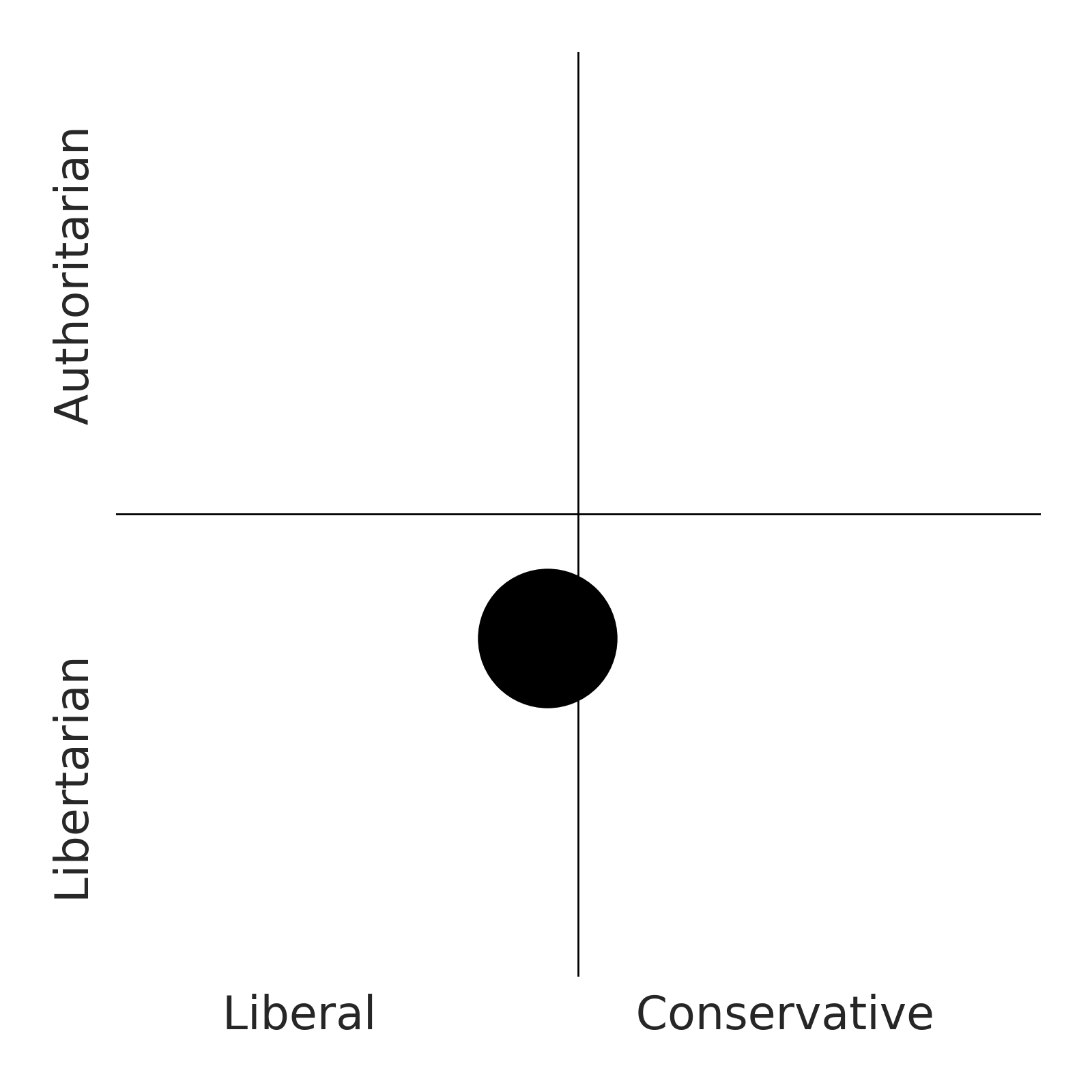
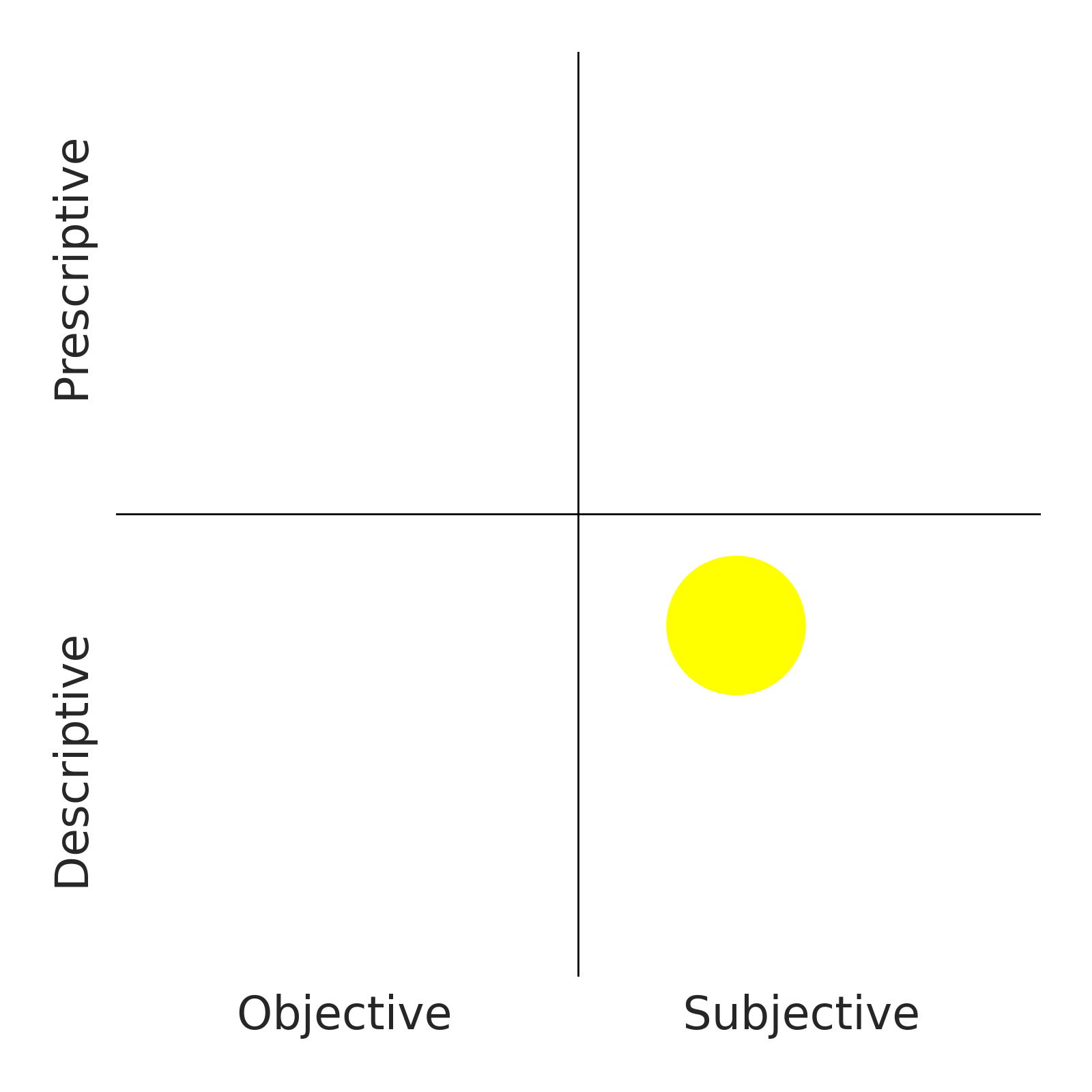
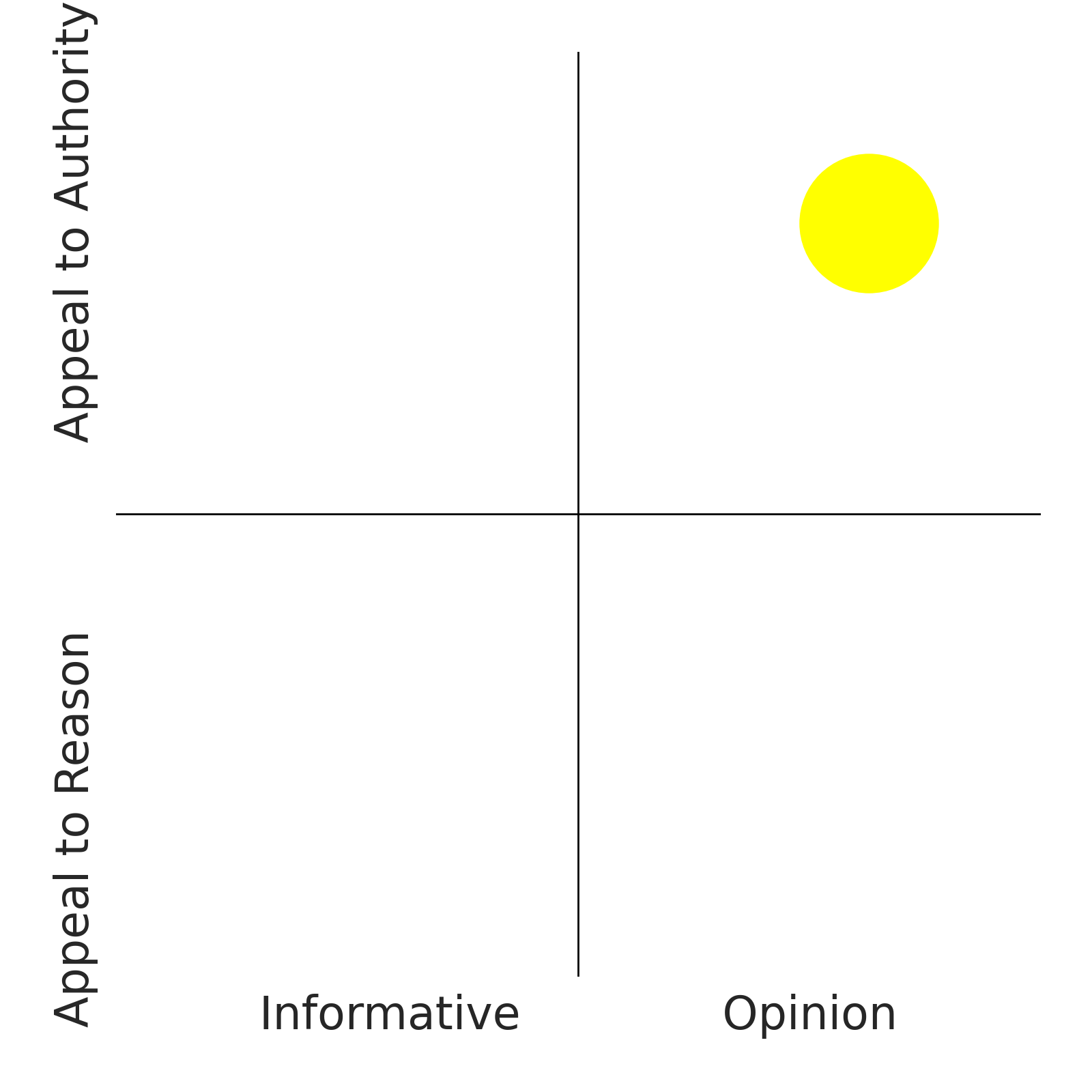
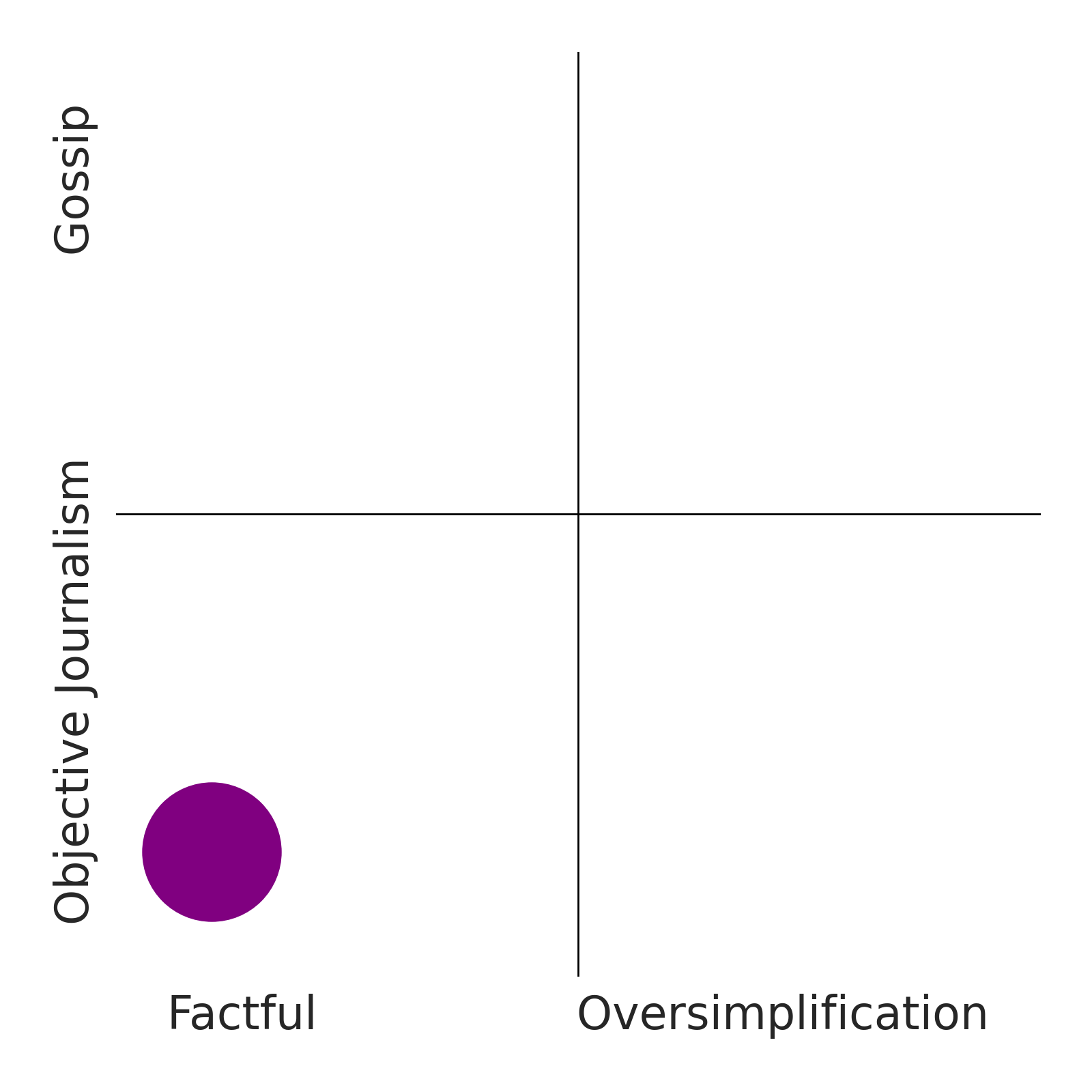
2026 © Helium Trades
Privacy Policy & Disclosure
* Disclaimer: Nothing on this website constitutes investment advice, performance data or any recommendation that any particular security, portfolio of securities, transaction or investment strategy is suitable for any specific person. Helium Trades is not responsible in any way for the accuracy
of any model predictions or price data. Any mention of a particular security and related prediction data is not a recommendation to buy or sell that security. Investments in securities involve the risk of loss. Past performance is no guarantee of future results. Helium Trades is not responsible for any of your investment decisions,
you should consult a financial expert before engaging in any transaction.


