See whether Helium helps you make better-informed decisions. Try every Pro Trader feature for 30 days. No credit card required.
Try every Pro Trader feature for 30 days. No credit card required.
August 26, 2026 · 0 shares
The framing uses militaristic language to portray Muslim population growth as an invasion.
Automated analysis; not human reviewed. Limitations: The article text is extremely short, consisting only of a headline and one sentence, limiting context and requiring inference from loaded language. · 4 of 54 available dimensions scored; omitted dimensions are not treated as neutral. · Verified supporting quotes for 4 of 4 scored dimensions.
Claim: The framing is consistent with conservative anti-immigration rhetoric.
“'Beachheads' for Islam” · exact text match
Why: The term 'beachhead' is often used in right-wing discourse to depict cultural displacement.
Claim: The headline uses the term 'beachheads' to sensationalize Muslim population growth.
“American Medinas: Turning U.S. Cities Into 'Beachheads' for Islam” · exact text match
Why: The word 'beachheads' evokes military invasion, heightening emotional response.
Claim: The framing instills fear by implying an aggressive takeover.
“Turning U.S. Cities Into 'Beachheads' for Islam” · exact text match
Why: The metaphor implies a hostile incursion.
Claim: The headline reduces complex demographic changes to a single threatening metaphor.
“Turning U.S. Cities Into 'Beachheads' for Islam” · exact text match
Why: It ignores nuance and presents a one-sided view.
The article text is extremely short, consisting only of a headline and one sentence, limiting context and requiring inference from loaded language.
August 26, 2026 · 0 shares
The text frames the Supreme Court's decision as an insidious assault on voting rights and accuses the court of lying, using strongly opinionated and sensational language.
Automated analysis; not human reviewed. Limitations: The supplied text is extremely short, so the analysis is based on a limited excerpt. · 5 of 54 available dimensions scored; omitted dimensions are not treated as neutral. · Verified supporting quotes for 0 of 5 scored dimensions.
The supplied text is extremely short, so the analysis is based on a limited excerpt.
August 26, 2026 · 0 shares
The piece uses inflammatory language and a speculative causal assertion to condemn feminist messaging about motherhood and TikTok mothers' sympathy for Lindsay Clancy.
Automated analysis; not human reviewed. Limitations: The text is extremely short and lacks context or sourcing, limiting the reliability of bias assessments. · 6 of 54 available dimensions scored; omitted dimensions are not treated as neutral. · Verified supporting quotes for 6 of 6 scored dimensions.
Claim: The piece is subjective opinion rather than objective reporting.
“So is it any surprise that so many moms now see child-killing mom Lindsay Clancy as a martyr?” · exact text match
Why: The piece expresses a value judgment and a rhetorical question.
Claim: The piece uses sensational language to provoke a reaction.
“The Moms of TikTok Have Gone Insane” · exact text match
“child-killing mom” · exact text match
Why: The terms 'insane' and 'child-killing' are sensational.
Claim: The piece asserts sweeping generalizations with certainty.
“We've been telling women for decades that motherhood is one of the worst things that can happen to them.” · exact text match
Why: This is an unqualified assertion about societal messaging over decades.
Claim: The piece uses emotionally charged negative language to describe the subject.
“The Moms of TikTok Have Gone Insane” · exact text match
Why: The phrase 'Gone Insane' is a strong negative emotional label.
Claim: The piece lacks sources and evidence, reducing credibility.
“We've been telling women for decades that motherhood is one of the worst things that can happen to them.” · exact text match
Why: The assertion is unsupported and presented with certainty.
Claim: The piece makes a causal claim without evidence.
“So is it any surprise that so many moms now see child-killing mom Lindsay Clancy as a martyr?” · exact text match
Why: The rhetorical question implies a causal link between messaging and behavior.
The text is extremely short and lacks context or sourcing, limiting the reliability of bias assessments.
August 25, 2026 · 0 shares
Uses alarmist and speculative language to portray Chinese-made hospital devices as a hidden national security threat.
Automated analysis; not human reviewed. Limitations: The supplied text is extremely short, limiting the ability to assess broader editorial context; assuming this is a headline and lede from a longer article. · 7 of 54 available dimensions scored; omitted dimensions are not treated as neutral. · Verified supporting quotes for 7 of 7 scored dimensions.
Claim: The piece frames China as a threat to U.S. hospitals using the loaded term 'Communist China.'
“Communist China Has Its Eyes on Your Hospital Bed.” · exact text match
Why: The headline explicitly invokes 'Communist China' and implies hostile intent, a common conservative framing.
Claim: The piece expresses a subjective opinion about hidden Chinese influence rather than presenting objective facts.
“Most have no idea that some of those machines may be working for Communist China.” · exact text match
Why: The statement is an unverified assertion and an opinion about what readers don't know.
Claim: The language is designed to induce fear and alarm in readers.
“Communist China Has Its Eyes on Your Hospital Bed.” · exact text match
Why: The metaphor of a foreign power 'watching' hospital beds creates a sense of danger and vulnerability.
Claim: The piece is presented as a political opinion rather than neutral reporting.
“Communist China Has Its Eyes on Your Hospital Bed.” · exact text match
Why: The headline is clearly editorializing and the body repeats the same partisan framing.
Claim: The piece provides no sources, evidence, or attribution for its claims, reducing its credibility.
“some of those machines may be working for Communist China” · exact text match
Why: A bare assertion with no supporting data or named sources makes the piece untrustworthy.
Claim: The piece speculates about potential Chinese involvement without presenting evidence.
“some of those machines may be working for Communist China” · exact text match
Why: The use of 'may be' indicates speculation rather than established fact.
Claim: The framing uses loaded terms and a hidden-threat narrative to sway readers.
“Most have no idea that some of those machines may be working for Communist China.” · exact text match
Why: The implication of a secret connection and the use of 'Communist China' are manipulative techniques, though the intent is arguable.
The supplied text is extremely short, limiting the ability to assess broader editorial context; assuming this is a headline and lede from a longer article.
August 27, 2026 · 0 shares
Frames Hasan Piker and the Democratic Party negatively, using connotative language like 'hatefest' and 'new low' to imply irresponsibility and complicity.
The supplied text consists only of a headline and introductory sentence from a political commentary.
Automated analysis; not human reviewed. Limitations: Analysis based solely on a headline and subhead; no full article content. · 6 of 54 available dimensions scored; omitted dimensions are not treated as neutral. · Verified supporting quotes for 6 of 6 scored dimensions.
Claim: The text criticizes the Democratic Party for seeking support from Hasan Piker while avoiding responsibility for his views, implying a conservative critique.
“the party wants his support, even if its candidates won't take responsibility for what Piker actually believes.” · exact text match
Why: The phrasing suggests disapproval of the party's association and implies a conservative viewpoint.
Claim: The text uses subjective evaluative language.
“Hasan Piker's Charlie Kirk Hatefest a New Low” · exact text match
Why: The words 'Hatefest' and 'New Low' are subjective judgments.
Claim: The text is sensational in its language.
“Hatefest” · exact text match
“New Low” · exact text match
Why: The words are dramatic and attention-seeking.
Claim: The text is highly political, discussing party politics.
“the party wants his support” · exact text match
Why: Direct reference to a political party and its strategy.
Claim: The tone is negative.
“Hatefest” · exact text match
“New Low” · exact text match
Why: The language conveys strong negative emotion.
Claim: It speculates about the party's motives and behavior.
“the party wants his support, even if its candidates won't take responsibility” · exact text match
Why: This is an inference about the party's desires and behavior without direct evidence.
Analysis based solely on a headline and subhead; no full article content.
September 21, 2026 · 0 shares
Framing treats an imminent financial crisis as certain, turns war, AI disruption, and market turmoil into a coherent warning set, and implies 2008-style lessons are transferable.
Automated analysis; not human reviewed. Limitations: Analysis is limited to a short headline and subhead; no body text or byline is available for verification. · 13 of 55 available dimensions scored; omitted dimensions are not treated as neutral. · Verified supporting quotes for 13 of 13 scored dimensions.
Claim: The categorical claim is presented without supporting data or attribution, making it subjective.
“All Signs Say Another Financial Crisis Is Coming.” · exact text match
Why: The phrase 'All Signs Say' asserts an interpretation as established fact without displaying underlying evidence.
Claim: The language uses alarmist, attention-grabbing phrasing.
“All Signs Say Another Financial Crisis Is Coming.” · exact text match
Why: Declarative phrasing that an entire crisis is 'Coming' creates a sensational warning tone.
Claim: The framing predicts a financial crisis, a bearish economic/market outcome.
“All Signs Say Another Financial Crisis Is Coming.” · exact text match
Why: The direct assertion of an impending financial crisis indicates a bearish stance on economic stability and markets.
Claim: The text frames the near future as crisis-prone and negative.
“War, AI disruption and markets in turmoil: the warnings are all there.” · exact text match
Why: Selecting war, AI disruption, and market turmoil as warnings conveys a pessimistic outlook.
Claim: The text is designed to induce fear about a financial crisis.
“War, AI disruption and markets in turmoil: the warnings are all there.” · exact text match
Why: Invoking war, market turmoil, and warnings in one sentence is fear-oriented framing.
Claim: The conclusion of a coming crisis is treated as established by the assertion that warnings are all there.
“All Signs Say Another Financial Crisis Is Coming.” · exact text match
“War, AI disruption and markets in turmoil: the warnings are all there.” · exact text match
Why: The 'warnings are all there' premise restates the thesis rather than offering independent evidence.
Claim: The text expresses a pointed opinion about an inevitable crisis rather than reporting a verifiable event.
“All Signs Say Another Financial Crisis Is Coming.” · exact text match
Why: An unqualified predictive claim about a coming financial crisis is commentary-style assertion.
Claim: The text collapses complex factors into a single 'all signs' warning system.
“War, AI disruption and markets in turmoil: the warnings are all there.” · exact text match
Why: Three broad trends are presented as unambiguous and mutually reinforcing warnings without analysis.
Claim: The claim expresses certainty beyond the evidence supplied in the text.
“All Signs Say Another Financial Crisis Is Coming.” · exact text match
Why: The word 'All' and the phrase 'is coming' assert a definitive prediction with no data or caveats.
Claim: The text carries a negative emotional charge, especially fear and alarm.
“War, AI disruption and markets in turmoil: the warnings are all there.” · exact text match
Why: Words like 'war' and 'turmoil' evoke danger and anxiety.
Claim: Visible markers of sourcing, attribution, and uncertainty are absent from the categorical claim.
“All Signs Say Another Financial Crisis Is Coming.” · exact text match
Why: No source, data, or qualifying language accompanies the claim, so credibility markers are minimal.
Claim: The text forecasts a future financial crisis.
“All Signs Say Another Financial Crisis Is Coming.” · exact text match
Why: A prediction of an impending crisis is inherently speculative.
Claim: The text uses loaded phrasing to shape an emotional response.
“War, AI disruption and markets in turmoil: the warnings are all there.” · exact text match
Why: Assembling war, AI disruption, and market turmoil as 'warnings' frames the issue with selected alarmist cues.
Analysis is limited to a short headline and subhead; no body text or byline is available for verification.
September 21, 2026 · 0 shares
No substantive content was supplied, so no publisher framing could be classified.
Automated analysis; not human reviewed. Limitations: Only a placeholder fragment of the supplied text remained; full substantive content was absent, so all classifications were omitted.
Only a placeholder fragment of the supplied text remained; full substantive content was absent, so all classifications were omitted.
August 26, 2026 · 0 shares
The text frames the Supreme Court's decision as an insidious assault on voting rights and accuses the court of lying, using strongly opinionated and sensational language.
Automated analysis; not human reviewed. Limitations: The supplied text is extremely short, so the analysis is based on a limited excerpt. · 5 of 54 available dimensions scored; omitted dimensions are not treated as neutral. · Verified supporting quotes for 0 of 5 scored dimensions.
The supplied text is extremely short, so the analysis is based on a limited excerpt.
September 14, 2026 · 0 shares
A rhetorical attack framed as a question, implying voters' self-respect was bought for $5,000 and describing the chief executive's conduct as 'overt Third Worldery' without evidence or attribution.
Automated analysis; not human reviewed. Limitations: Only the brief supplied text was available; the '$5,000' reference and the identity of the chief executive are not specified, so some classifications rest on the wording alone. · 15 of 54 available dimensions scored; omitted dimensions are not treated as neutral. · Verified supporting quotes for 15 of 15 scored dimensions.
Claim: The framing treats voters as having sold their self-respect for money, an elite-condescending stance.
“Have Voters Lost Their Self-Respect For $5,000?.” · exact text match
Why: The question attributes voter acquiescence to a $5,000 payment and frames it as a loss of self-respect, which presumes ordinary voters are cheaply bought.
Claim: The text's central characterization is a subjective evaluation presented as obvious.
“overt Third Worldery of the chief executive” · exact text match
Why: Calling conduct 'overt Third Worldery' is an unmeasurable, value-laden judgment.
Claim: The text uses sensational, provocative language to frame a political grievance.
“Have Voters Lost Their Self-Respect For $5,000?.” · exact text match
“overt Third Worldery of the chief executive” · exact text match
Why: The rhetorical question and the loaded slur heighten outrage rather than inform.
Claim: The text paints a grim picture of voter degradation and executive misconduct.
“Have Voters Lost Their Self-Respect For $5,000?.” · exact text match
Why: It asks whether voters have forfeited self-respect, implying a negative assessment of the current political situation.
Claim: The text implies that protest is the appropriate response and that its absence is a failure.
“Why is there so little protest at the overt Third Worldery of the chief executive?” · exact text match
Why: The question presupposes that visible protest is expected.
Claim: The questions assume the chief executive's conduct is 'overt Third Worldery' and that $5,000 explains voters' behavior.
“Why is there so little protest at the overt Third Worldery of the chief executive?” · exact text match
“Have Voters Lost Their Self-Respect For $5,000?.” · exact text match
Why: Both rhetorical questions embed unproven premises as established facts.
Claim: The entire text is an opinionated rhetorical stance rather than factual reporting.
“Have Voters Lost Their Self-Respect For $5,000?.” · exact text match
“Why is there so little protest at the overt Third Worldery of the chief executive?” · exact text match
Why: No facts, sources, or attributed claims are supplied; only assertions phrased as questions.
Claim: The text concerns the chief executive and voters' political response.
“chief executive” · exact text match
“Voters” · exact text match
Why: Its subject matter is electoral and executive politics, framed as a grievance.
Claim: The text reduces complex voter behavior to a single $5,000 inducement.
“Have Voters Lost Their Self-Respect For $5,000?.” · exact text match
Why: It offers a single monetary cause for voter acquiescence without evidence.
Claim: The text asserts the chief executive's 'overt Third Worldery' with certainty and no support.
“overt Third Worldery of the chief executive” · exact text match
Why: The assertion is unqualified and treated as self-evident.
Claim: The text's language is emotionally negative, conveying contempt and dismay.
“Have Voters Lost Their Self-Respect For $5,000?.” · exact text match
“overt Third Worldery of the chief executive” · exact text match
Why: The phrase 'lost self-respect' and the slur 'Third Worldery' are emotive and pejorative.
Claim: The text provides no sourcing, attribution, or verifiable detail for its characterization.
“overt Third Worldery of the chief executive” · exact text match
Why: Credibility is undermined by an unsupported, emotive assertion with no evidence.
Claim: The text characterizes the chief executive's conduct with a vague, emotionally loaded label rather than reasoned analysis.
“overt Third Worldery of the chief executive” · exact text match
Why: The term 'Third Worldery' is an undefined pejorative, not an argument or evidence.
Claim: The text speculates that $5,000 caused voters to lose self-respect.
“Have Voters Lost Their Self-Respect For $5,000?.” · exact text match
Why: The question offers a causal speculation about voters' motives rather than reporting evidence.
Claim: The text uses loaded questions and a pejorative label to steer the reader's conclusion.
“Why is there so little protest at the overt Third Worldery of the chief executive?” · exact text match
Why: The wording frames the answer in advance and precludes neutral consideration.
Only the brief supplied text was available; the '$5,000' reference and the identity of the chief executive are not specified, so some classifications rest on the wording alone.
September 14, 2026 · 0 shares
A conservative, populist framing casts the Texas Association of School Boards as a taxpayer-funded cartel that must be shut down for opposing school choice and supporting higher property taxes, DEI, and transgender rights.
Automated analysis; not human reviewed. Limitations: The supplied text is a short opinion fragment with no body, sourcing, or attribution; scores are based only on the wording and positions in that fragment. · 16 of 54 available dimensions scored; omitted dimensions are not treated as neutral. · Verified supporting quotes for 16 of 16 scored dimensions.
Claim: The text adopts conservative positions on property taxes, DEI, transgender rights, and school choice.
“The Texas Association of School Boards is a machine that fights for higher property tax, DEI, and trans rights, and fights against school choice - all with taxpayer money.” · exact text match
Why: The list of grievances maps directly to conservative policy stances and presents them as reasons to shut down the organization.
Claim: The text frames the Texas Association of School Boards as a powerful, self-interested cartel.
“Texas Should Shut Down the Education Cartel.” · exact text match
“The Texas Association of School Boards is a machine that fights for higher property tax, DEI, and trans rights, and fights against school choice - all with taxpayer money.” · exact text match
Why: The terms 'cartel' and 'machine' are anti-elite, populist framings of an institutional education body.
Claim: The text is an evaluative opinion rather than neutral reporting.
“Texas Should Shut Down the Education Cartel.” · exact text match
“Here's how to turn it off.” · exact text match
Why: It issues a directive and a call to action rather than presenting observations as neutral reporting.
Claim: The text uses inflammatory, sensational labels.
“Texas Should Shut Down the Education Cartel.” · exact text match
“The Texas Association of School Boards is a machine that fights for higher property tax, DEI, and trans rights, and fights against school choice - all with taxpayer money.” · exact text match
Why: 'Cartel' and 'machine' are emotionally loaded characterizations of a policy opponent.
Claim: The text tells Texas what to do.
“Texas Should Shut Down the Education Cartel.” · exact text match
“Here's how to turn it off.” · exact text match
Why: The central content is prescriptive: it demands a policy action and promises a method.
Claim: The text stokes outrage by saying taxpayer money supports the listed causes.
“fights against school choice - all with taxpayer money.” · exact text match
Why: The taxpayer-money phrase is used to provoke anger about how public funds are spent.
Claim: The label 'cartel' presumes the conclusion that the association is an illegitimate conspiracy.
“Texas Should Shut Down the Education Cartel.” · exact text match
Why: The argument's conclusion is embedded in the title's characterization of the target as a cartel.
Claim: The text is wholly opinionated advocacy.
“Texas Should Shut Down the Education Cartel.” · exact text match
“Here's how to turn it off.” · exact text match
Why: It contains normative commands rather than factual reporting.
Claim: The text enters partisan education-policy fights.
“The Texas Association of School Boards is a machine that fights for higher property tax, DEI, and trans rights, and fights against school choice - all with taxpayer money.” · exact text match
Why: The positions named are live political controversies and the text takes a side.
Claim: The text reduces a complex organization to a one-sided list of policy fights.
“The Texas Association of School Boards is a machine that fights for higher property tax, DEI, and trans rights, and fights against school choice - all with taxpayer money.” · exact text match
Why: It presents a broad, unqualified characterization without evidence, context, or nuance.
Claim: The text frames the issue through a fixed ideological lens.
“Texas Should Shut Down the Education Cartel.” · exact text match
“The Texas Association of School Boards is a machine that fights for higher property tax, DEI, and trans rights, and fights against school choice - all with taxpayer money.” · exact text match
Why: The closure demand is driven by an ideological agenda rather than by neutral analysis.
Claim: The text attacks an established education governance body and frames it as a cartel.
“Texas Should Shut Down the Education Cartel.” · exact text match
Why: The target is the Texas Association of School Boards, an established institutional player in education.
Claim: The text conveys anger and negative emotion through its language.
“Texas Should Shut Down the Education Cartel.” · exact text match
Why: The imperative 'Shut Down' and the loaded 'Cartel' express indignation rather than a neutral tone.
Claim: The text offers unsupported assertions without sourcing or attribution.
“The Texas Association of School Boards is a machine that fights for higher property tax, DEI, and trans rights, and fights against school choice - all with taxpayer money.” · exact text match
Why: The central claims are asserted as fact but no evidence, sources, or qualifying uncertainty are provided.
Claim: The text favors school choice, an individualist education model, and attacks collective governance.
“fights against school choice” · exact text match
Counterevidence:
“Texas Should Shut Down the Education Cartel.” · exact text match
Why: School choice is an individualist reform; the target is a collective school-board association.
Claim: The text uses loaded framing and a financial appeal to shape the reader's response.
“all with taxpayer money.” · exact text match
“Texas Should Shut Down the Education Cartel.” · exact text match
Why: The 'taxpayer money' hook and 'cartel' label are rhetorical techniques that push a conclusion without evidence.
The supplied text is a short opinion fragment with no body, sourcing, or attribution; scores are based only on the wording and positions in that fragment.
August 26, 2026 · 0 shares
The text frames the Supreme Court's decision as an insidious assault on voting rights and accuses the court of lying, using strongly opinionated and sensational language.
Automated analysis; not human reviewed. Limitations: The supplied text is extremely short, so the analysis is based on a limited excerpt. · 5 of 54 available dimensions scored; omitted dimensions are not treated as neutral. · Verified supporting quotes for 0 of 5 scored dimensions.
The supplied text is extremely short, so the analysis is based on a limited excerpt.
August 26, 2026 · 0 shares
The text frames the Supreme Court's decision as an insidious assault on voting rights and accuses the court of lying, using strongly opinionated and sensational language.
Automated analysis; not human reviewed. Limitations: The supplied text is extremely short, so the analysis is based on a limited excerpt. · 5 of 54 available dimensions scored; omitted dimensions are not treated as neutral. · Verified supporting quotes for 0 of 5 scored dimensions.
The supplied text is extremely short, so the analysis is based on a limited excerpt.
September 21, 2026 · 0 shares
No substantive content was supplied, so no publisher framing could be classified.
Automated analysis; not human reviewed. Limitations: Only a placeholder fragment of the supplied text remained; full substantive content was absent, so all classifications were omitted.
Only a placeholder fragment of the supplied text remained; full substantive content was absent, so all classifications were omitted.
September 14, 2026 · 0 shares
A rhetorical attack framed as a question, implying voters' self-respect was bought for $5,000 and describing the chief executive's conduct as 'overt Third Worldery' without evidence or attribution.
Automated analysis; not human reviewed. Limitations: Only the brief supplied text was available; the '$5,000' reference and the identity of the chief executive are not specified, so some classifications rest on the wording alone. · 15 of 54 available dimensions scored; omitted dimensions are not treated as neutral. · Verified supporting quotes for 15 of 15 scored dimensions.
Claim: The framing treats voters as having sold their self-respect for money, an elite-condescending stance.
“Have Voters Lost Their Self-Respect For $5,000?.” · exact text match
Why: The question attributes voter acquiescence to a $5,000 payment and frames it as a loss of self-respect, which presumes ordinary voters are cheaply bought.
Claim: The text's central characterization is a subjective evaluation presented as obvious.
“overt Third Worldery of the chief executive” · exact text match
Why: Calling conduct 'overt Third Worldery' is an unmeasurable, value-laden judgment.
Claim: The text uses sensational, provocative language to frame a political grievance.
“Have Voters Lost Their Self-Respect For $5,000?.” · exact text match
“overt Third Worldery of the chief executive” · exact text match
Why: The rhetorical question and the loaded slur heighten outrage rather than inform.
Claim: The text paints a grim picture of voter degradation and executive misconduct.
“Have Voters Lost Their Self-Respect For $5,000?.” · exact text match
Why: It asks whether voters have forfeited self-respect, implying a negative assessment of the current political situation.
Claim: The text implies that protest is the appropriate response and that its absence is a failure.
“Why is there so little protest at the overt Third Worldery of the chief executive?” · exact text match
Why: The question presupposes that visible protest is expected.
Claim: The questions assume the chief executive's conduct is 'overt Third Worldery' and that $5,000 explains voters' behavior.
“Why is there so little protest at the overt Third Worldery of the chief executive?” · exact text match
“Have Voters Lost Their Self-Respect For $5,000?.” · exact text match
Why: Both rhetorical questions embed unproven premises as established facts.
Claim: The entire text is an opinionated rhetorical stance rather than factual reporting.
“Have Voters Lost Their Self-Respect For $5,000?.” · exact text match
“Why is there so little protest at the overt Third Worldery of the chief executive?” · exact text match
Why: No facts, sources, or attributed claims are supplied; only assertions phrased as questions.
Claim: The text concerns the chief executive and voters' political response.
“chief executive” · exact text match
“Voters” · exact text match
Why: Its subject matter is electoral and executive politics, framed as a grievance.
Claim: The text reduces complex voter behavior to a single $5,000 inducement.
“Have Voters Lost Their Self-Respect For $5,000?.” · exact text match
Why: It offers a single monetary cause for voter acquiescence without evidence.
Claim: The text asserts the chief executive's 'overt Third Worldery' with certainty and no support.
“overt Third Worldery of the chief executive” · exact text match
Why: The assertion is unqualified and treated as self-evident.
Claim: The text's language is emotionally negative, conveying contempt and dismay.
“Have Voters Lost Their Self-Respect For $5,000?.” · exact text match
“overt Third Worldery of the chief executive” · exact text match
Why: The phrase 'lost self-respect' and the slur 'Third Worldery' are emotive and pejorative.
Claim: The text provides no sourcing, attribution, or verifiable detail for its characterization.
“overt Third Worldery of the chief executive” · exact text match
Why: Credibility is undermined by an unsupported, emotive assertion with no evidence.
Claim: The text characterizes the chief executive's conduct with a vague, emotionally loaded label rather than reasoned analysis.
“overt Third Worldery of the chief executive” · exact text match
Why: The term 'Third Worldery' is an undefined pejorative, not an argument or evidence.
Claim: The text speculates that $5,000 caused voters to lose self-respect.
“Have Voters Lost Their Self-Respect For $5,000?.” · exact text match
Why: The question offers a causal speculation about voters' motives rather than reporting evidence.
Claim: The text uses loaded questions and a pejorative label to steer the reader's conclusion.
“Why is there so little protest at the overt Third Worldery of the chief executive?” · exact text match
Why: The wording frames the answer in advance and precludes neutral consideration.
Only the brief supplied text was available; the '$5,000' reference and the identity of the chief executive are not specified, so some classifications rest on the wording alone.
August 27, 2026 · 0 shares
Frames Hasan Piker and the Democratic Party negatively, using connotative language like 'hatefest' and 'new low' to imply irresponsibility and complicity.
The supplied text consists only of a headline and introductory sentence from a political commentary.
Automated analysis; not human reviewed. Limitations: Analysis based solely on a headline and subhead; no full article content. · 6 of 54 available dimensions scored; omitted dimensions are not treated as neutral. · Verified supporting quotes for 6 of 6 scored dimensions.
Claim: The text criticizes the Democratic Party for seeking support from Hasan Piker while avoiding responsibility for his views, implying a conservative critique.
“the party wants his support, even if its candidates won't take responsibility for what Piker actually believes.” · exact text match
Why: The phrasing suggests disapproval of the party's association and implies a conservative viewpoint.
Claim: The text uses subjective evaluative language.
“Hasan Piker's Charlie Kirk Hatefest a New Low” · exact text match
Why: The words 'Hatefest' and 'New Low' are subjective judgments.
Claim: The text is sensational in its language.
“Hatefest” · exact text match
“New Low” · exact text match
Why: The words are dramatic and attention-seeking.
Claim: The text is highly political, discussing party politics.
“the party wants his support” · exact text match
Why: Direct reference to a political party and its strategy.
Claim: The tone is negative.
“Hatefest” · exact text match
“New Low” · exact text match
Why: The language conveys strong negative emotion.
Claim: It speculates about the party's motives and behavior.
“the party wants his support, even if its candidates won't take responsibility” · exact text match
Why: This is an inference about the party's desires and behavior without direct evidence.
Analysis based solely on a headline and subhead; no full article content.
August 26, 2026 · 0 shares
The text frames the Supreme Court's decision as an insidious assault on voting rights and accuses the court of lying, using strongly opinionated and sensational language.
Automated analysis; not human reviewed. Limitations: The supplied text is extremely short, so the analysis is based on a limited excerpt. · 5 of 54 available dimensions scored; omitted dimensions are not treated as neutral. · Verified supporting quotes for 0 of 5 scored dimensions.
The supplied text is extremely short, so the analysis is based on a limited excerpt.
August 26, 2026 · 0 shares
The text frames the Supreme Court's decision as an insidious assault on voting rights and accuses the court of lying, using strongly opinionated and sensational language.
Automated analysis; not human reviewed. Limitations: The supplied text is extremely short, so the analysis is based on a limited excerpt. · 5 of 54 available dimensions scored; omitted dimensions are not treated as neutral. · Verified supporting quotes for 0 of 5 scored dimensions.
The supplied text is extremely short, so the analysis is based on a limited excerpt.
August 26, 2026 · 0 shares
The text frames the Supreme Court's decision as an insidious assault on voting rights and accuses the court of lying, using strongly opinionated and sensational language.
Automated analysis; not human reviewed. Limitations: The supplied text is extremely short, so the analysis is based on a limited excerpt. · 5 of 54 available dimensions scored; omitted dimensions are not treated as neutral. · Verified supporting quotes for 0 of 5 scored dimensions.
The supplied text is extremely short, so the analysis is based on a limited excerpt.
September 14, 2026 · 0 shares
A rhetorical attack framed as a question, implying voters' self-respect was bought for $5,000 and describing the chief executive's conduct as 'overt Third Worldery' without evidence or attribution.
Automated analysis; not human reviewed. Limitations: Only the brief supplied text was available; the '$5,000' reference and the identity of the chief executive are not specified, so some classifications rest on the wording alone. · 15 of 54 available dimensions scored; omitted dimensions are not treated as neutral. · Verified supporting quotes for 15 of 15 scored dimensions.
Claim: The framing treats voters as having sold their self-respect for money, an elite-condescending stance.
“Have Voters Lost Their Self-Respect For $5,000?.” · exact text match
Why: The question attributes voter acquiescence to a $5,000 payment and frames it as a loss of self-respect, which presumes ordinary voters are cheaply bought.
Claim: The text's central characterization is a subjective evaluation presented as obvious.
“overt Third Worldery of the chief executive” · exact text match
Why: Calling conduct 'overt Third Worldery' is an unmeasurable, value-laden judgment.
Claim: The text uses sensational, provocative language to frame a political grievance.
“Have Voters Lost Their Self-Respect For $5,000?.” · exact text match
“overt Third Worldery of the chief executive” · exact text match
Why: The rhetorical question and the loaded slur heighten outrage rather than inform.
Claim: The text paints a grim picture of voter degradation and executive misconduct.
“Have Voters Lost Their Self-Respect For $5,000?.” · exact text match
Why: It asks whether voters have forfeited self-respect, implying a negative assessment of the current political situation.
Claim: The text implies that protest is the appropriate response and that its absence is a failure.
“Why is there so little protest at the overt Third Worldery of the chief executive?” · exact text match
Why: The question presupposes that visible protest is expected.
Claim: The questions assume the chief executive's conduct is 'overt Third Worldery' and that $5,000 explains voters' behavior.
“Why is there so little protest at the overt Third Worldery of the chief executive?” · exact text match
“Have Voters Lost Their Self-Respect For $5,000?.” · exact text match
Why: Both rhetorical questions embed unproven premises as established facts.
Claim: The entire text is an opinionated rhetorical stance rather than factual reporting.
“Have Voters Lost Their Self-Respect For $5,000?.” · exact text match
“Why is there so little protest at the overt Third Worldery of the chief executive?” · exact text match
Why: No facts, sources, or attributed claims are supplied; only assertions phrased as questions.
Claim: The text concerns the chief executive and voters' political response.
“chief executive” · exact text match
“Voters” · exact text match
Why: Its subject matter is electoral and executive politics, framed as a grievance.
Claim: The text reduces complex voter behavior to a single $5,000 inducement.
“Have Voters Lost Their Self-Respect For $5,000?.” · exact text match
Why: It offers a single monetary cause for voter acquiescence without evidence.
Claim: The text asserts the chief executive's 'overt Third Worldery' with certainty and no support.
“overt Third Worldery of the chief executive” · exact text match
Why: The assertion is unqualified and treated as self-evident.
Claim: The text's language is emotionally negative, conveying contempt and dismay.
“Have Voters Lost Their Self-Respect For $5,000?.” · exact text match
“overt Third Worldery of the chief executive” · exact text match
Why: The phrase 'lost self-respect' and the slur 'Third Worldery' are emotive and pejorative.
Claim: The text provides no sourcing, attribution, or verifiable detail for its characterization.
“overt Third Worldery of the chief executive” · exact text match
Why: Credibility is undermined by an unsupported, emotive assertion with no evidence.
Claim: The text characterizes the chief executive's conduct with a vague, emotionally loaded label rather than reasoned analysis.
“overt Third Worldery of the chief executive” · exact text match
Why: The term 'Third Worldery' is an undefined pejorative, not an argument or evidence.
Claim: The text speculates that $5,000 caused voters to lose self-respect.
“Have Voters Lost Their Self-Respect For $5,000?.” · exact text match
Why: The question offers a causal speculation about voters' motives rather than reporting evidence.
Claim: The text uses loaded questions and a pejorative label to steer the reader's conclusion.
“Why is there so little protest at the overt Third Worldery of the chief executive?” · exact text match
Why: The wording frames the answer in advance and precludes neutral consideration.
Only the brief supplied text was available; the '$5,000' reference and the identity of the chief executive are not specified, so some classifications rest on the wording alone.
August 26, 2026 · 0 shares
The piece uses inflammatory language and a speculative causal assertion to condemn feminist messaging about motherhood and TikTok mothers' sympathy for Lindsay Clancy.
Automated analysis; not human reviewed. Limitations: The text is extremely short and lacks context or sourcing, limiting the reliability of bias assessments. · 6 of 54 available dimensions scored; omitted dimensions are not treated as neutral. · Verified supporting quotes for 6 of 6 scored dimensions.
Claim: The piece is subjective opinion rather than objective reporting.
“So is it any surprise that so many moms now see child-killing mom Lindsay Clancy as a martyr?” · exact text match
Why: The piece expresses a value judgment and a rhetorical question.
Claim: The piece uses sensational language to provoke a reaction.
“The Moms of TikTok Have Gone Insane” · exact text match
“child-killing mom” · exact text match
Why: The terms 'insane' and 'child-killing' are sensational.
Claim: The piece asserts sweeping generalizations with certainty.
“We've been telling women for decades that motherhood is one of the worst things that can happen to them.” · exact text match
Why: This is an unqualified assertion about societal messaging over decades.
Claim: The piece uses emotionally charged negative language to describe the subject.
“The Moms of TikTok Have Gone Insane” · exact text match
Why: The phrase 'Gone Insane' is a strong negative emotional label.
Claim: The piece lacks sources and evidence, reducing credibility.
“We've been telling women for decades that motherhood is one of the worst things that can happen to them.” · exact text match
Why: The assertion is unsupported and presented with certainty.
Claim: The piece makes a causal claim without evidence.
“So is it any surprise that so many moms now see child-killing mom Lindsay Clancy as a martyr?” · exact text match
Why: The rhetorical question implies a causal link between messaging and behavior.
The text is extremely short and lacks context or sourcing, limiting the reliability of bias assessments.
August 26, 2026 · 0 shares
The text frames the Supreme Court's decision as an insidious assault on voting rights and accuses the court of lying, using strongly opinionated and sensational language.
Automated analysis; not human reviewed. Limitations: The supplied text is extremely short, so the analysis is based on a limited excerpt. · 5 of 54 available dimensions scored; omitted dimensions are not treated as neutral. · Verified supporting quotes for 0 of 5 scored dimensions.
The supplied text is extremely short, so the analysis is based on a limited excerpt.
August 26, 2026 · 0 shares
The text frames the Supreme Court's decision as an insidious assault on voting rights and accuses the court of lying, using strongly opinionated and sensational language.
Automated analysis; not human reviewed. Limitations: The supplied text is extremely short, so the analysis is based on a limited excerpt. · 5 of 54 available dimensions scored; omitted dimensions are not treated as neutral. · Verified supporting quotes for 0 of 5 scored dimensions.
The supplied text is extremely short, so the analysis is based on a limited excerpt.
September 21, 2026 · 0 shares
No substantive content was supplied, so no publisher framing could be classified.
Automated analysis; not human reviewed. Limitations: Only a placeholder fragment of the supplied text remained; full substantive content was absent, so all classifications were omitted.
Only a placeholder fragment of the supplied text remained; full substantive content was absent, so all classifications were omitted.
August 27, 2026 · 0 shares
Frames Hasan Piker and the Democratic Party negatively, using connotative language like 'hatefest' and 'new low' to imply irresponsibility and complicity.
The supplied text consists only of a headline and introductory sentence from a political commentary.
Automated analysis; not human reviewed. Limitations: Analysis based solely on a headline and subhead; no full article content. · 6 of 54 available dimensions scored; omitted dimensions are not treated as neutral. · Verified supporting quotes for 6 of 6 scored dimensions.
Claim: The text criticizes the Democratic Party for seeking support from Hasan Piker while avoiding responsibility for his views, implying a conservative critique.
“the party wants his support, even if its candidates won't take responsibility for what Piker actually believes.” · exact text match
Why: The phrasing suggests disapproval of the party's association and implies a conservative viewpoint.
Claim: The text uses subjective evaluative language.
“Hasan Piker's Charlie Kirk Hatefest a New Low” · exact text match
Why: The words 'Hatefest' and 'New Low' are subjective judgments.
Claim: The text is sensational in its language.
“Hatefest” · exact text match
“New Low” · exact text match
Why: The words are dramatic and attention-seeking.
Claim: The text is highly political, discussing party politics.
“the party wants his support” · exact text match
Why: Direct reference to a political party and its strategy.
Claim: The tone is negative.
“Hatefest” · exact text match
“New Low” · exact text match
Why: The language conveys strong negative emotion.
Claim: It speculates about the party's motives and behavior.
“the party wants his support, even if its candidates won't take responsibility” · exact text match
Why: This is an inference about the party's desires and behavior without direct evidence.
Analysis based solely on a headline and subhead; no full article content.
September 14, 2026 · 0 shares
A rhetorical attack framed as a question, implying voters' self-respect was bought for $5,000 and describing the chief executive's conduct as 'overt Third Worldery' without evidence or attribution.
Automated analysis; not human reviewed. Limitations: Only the brief supplied text was available; the '$5,000' reference and the identity of the chief executive are not specified, so some classifications rest on the wording alone. · 15 of 54 available dimensions scored; omitted dimensions are not treated as neutral. · Verified supporting quotes for 15 of 15 scored dimensions.
Claim: The framing treats voters as having sold their self-respect for money, an elite-condescending stance.
“Have Voters Lost Their Self-Respect For $5,000?.” · exact text match
Why: The question attributes voter acquiescence to a $5,000 payment and frames it as a loss of self-respect, which presumes ordinary voters are cheaply bought.
Claim: The text's central characterization is a subjective evaluation presented as obvious.
“overt Third Worldery of the chief executive” · exact text match
Why: Calling conduct 'overt Third Worldery' is an unmeasurable, value-laden judgment.
Claim: The text uses sensational, provocative language to frame a political grievance.
“Have Voters Lost Their Self-Respect For $5,000?.” · exact text match
“overt Third Worldery of the chief executive” · exact text match
Why: The rhetorical question and the loaded slur heighten outrage rather than inform.
Claim: The text paints a grim picture of voter degradation and executive misconduct.
“Have Voters Lost Their Self-Respect For $5,000?.” · exact text match
Why: It asks whether voters have forfeited self-respect, implying a negative assessment of the current political situation.
Claim: The text implies that protest is the appropriate response and that its absence is a failure.
“Why is there so little protest at the overt Third Worldery of the chief executive?” · exact text match
Why: The question presupposes that visible protest is expected.
Claim: The questions assume the chief executive's conduct is 'overt Third Worldery' and that $5,000 explains voters' behavior.
“Why is there so little protest at the overt Third Worldery of the chief executive?” · exact text match
“Have Voters Lost Their Self-Respect For $5,000?.” · exact text match
Why: Both rhetorical questions embed unproven premises as established facts.
Claim: The entire text is an opinionated rhetorical stance rather than factual reporting.
“Have Voters Lost Their Self-Respect For $5,000?.” · exact text match
“Why is there so little protest at the overt Third Worldery of the chief executive?” · exact text match
Why: No facts, sources, or attributed claims are supplied; only assertions phrased as questions.
Claim: The text concerns the chief executive and voters' political response.
“chief executive” · exact text match
“Voters” · exact text match
Why: Its subject matter is electoral and executive politics, framed as a grievance.
Claim: The text reduces complex voter behavior to a single $5,000 inducement.
“Have Voters Lost Their Self-Respect For $5,000?.” · exact text match
Why: It offers a single monetary cause for voter acquiescence without evidence.
Claim: The text asserts the chief executive's 'overt Third Worldery' with certainty and no support.
“overt Third Worldery of the chief executive” · exact text match
Why: The assertion is unqualified and treated as self-evident.
Claim: The text's language is emotionally negative, conveying contempt and dismay.
“Have Voters Lost Their Self-Respect For $5,000?.” · exact text match
“overt Third Worldery of the chief executive” · exact text match
Why: The phrase 'lost self-respect' and the slur 'Third Worldery' are emotive and pejorative.
Claim: The text provides no sourcing, attribution, or verifiable detail for its characterization.
“overt Third Worldery of the chief executive” · exact text match
Why: Credibility is undermined by an unsupported, emotive assertion with no evidence.
Claim: The text characterizes the chief executive's conduct with a vague, emotionally loaded label rather than reasoned analysis.
“overt Third Worldery of the chief executive” · exact text match
Why: The term 'Third Worldery' is an undefined pejorative, not an argument or evidence.
Claim: The text speculates that $5,000 caused voters to lose self-respect.
“Have Voters Lost Their Self-Respect For $5,000?.” · exact text match
Why: The question offers a causal speculation about voters' motives rather than reporting evidence.
Claim: The text uses loaded questions and a pejorative label to steer the reader's conclusion.
“Why is there so little protest at the overt Third Worldery of the chief executive?” · exact text match
Why: The wording frames the answer in advance and precludes neutral consideration.
Only the brief supplied text was available; the '$5,000' reference and the identity of the chief executive are not specified, so some classifications rest on the wording alone.
Automated source summary · Updated September 24, 2026 · Not human reviewed. Check recent article panels for claim-level evidence when available.
Weighted source-level patterns from recent analyzed coverage. Open recent articles below to inspect score-specific evidence and limitations when available.
🧢 Populist <—> Elitist 🎩-8
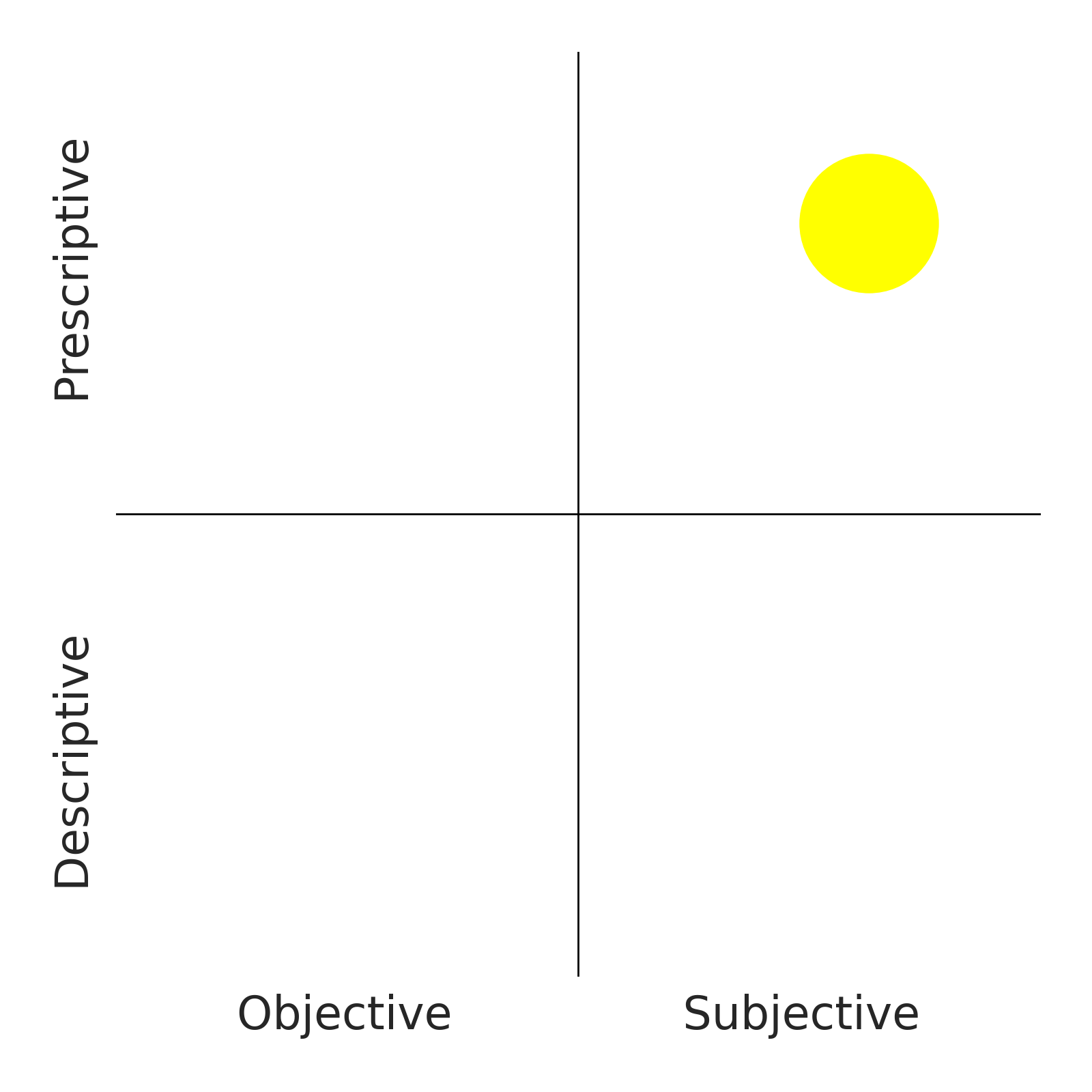
🗞️ Objective <—> Subjective 👁️ 19
🚨 Sensational80
💡 Boring <—> Interesting12
📝 Prescriptive24
😨 Fearful14
📞 Begging the Question10
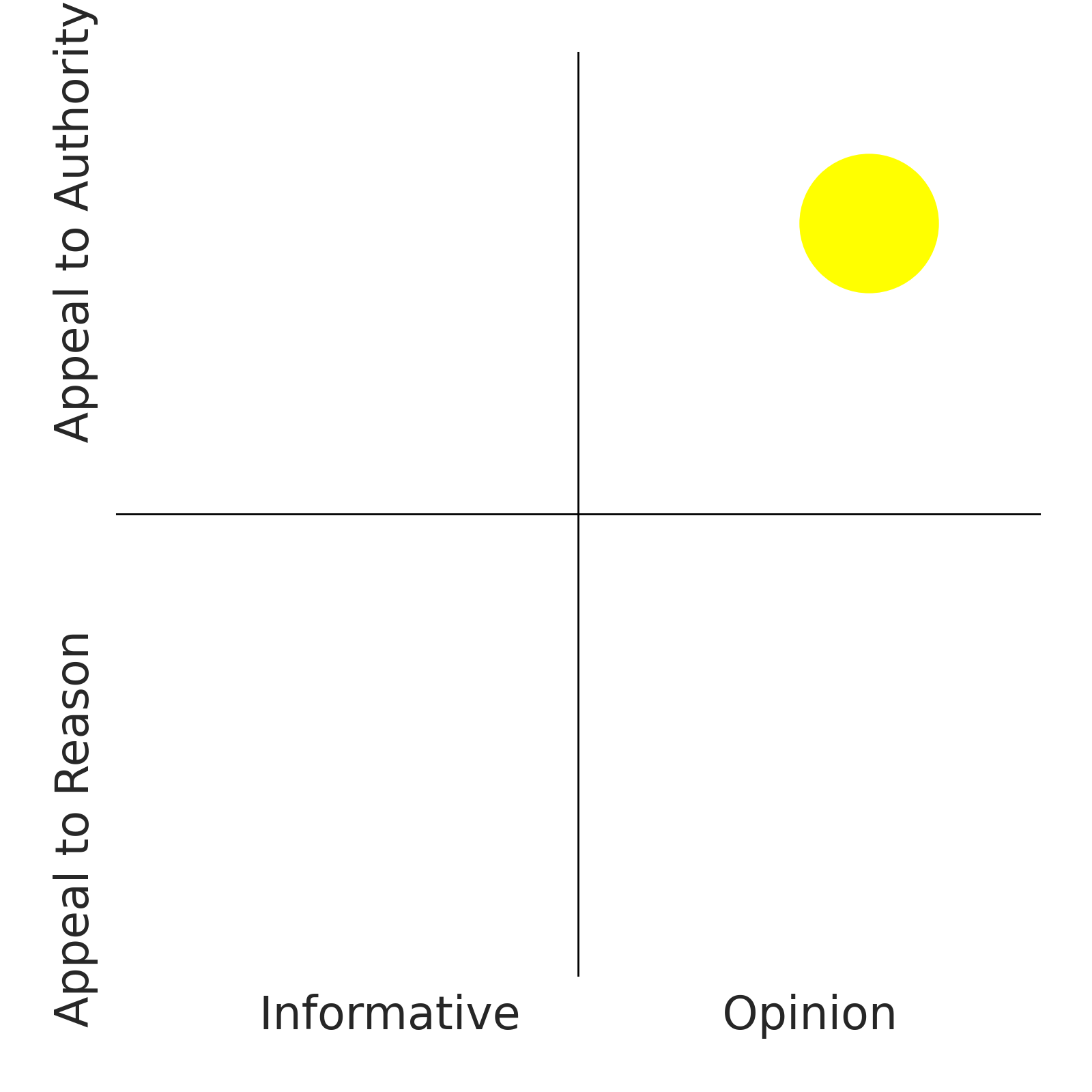
💭 Opinion100
🗳 Political44
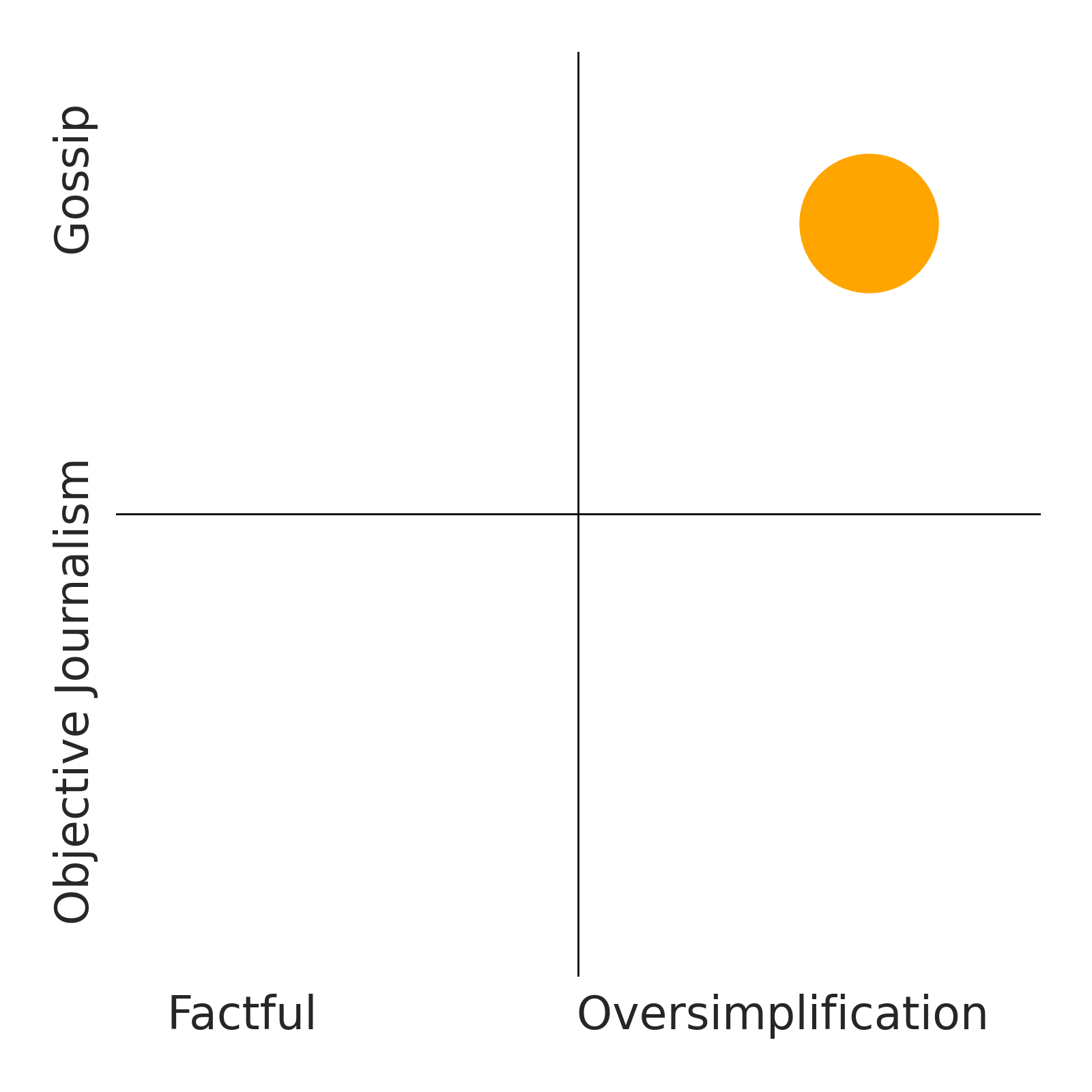
Oversimplification36
🏛️ Appeal to Authority8
🍼 Immature11
👀 Covering Responses8
😢 Victimization6
😤 Overconfidence54
🔒 Ideological56
🧠 Rational <—> Irrational 🤪7
🎭 Virtue Signaling18
🔺 Conspiracy10
🐐 Scapegoating8
🎲 Speculation27
🐍 Manipulative62
💊 Big Pharma6
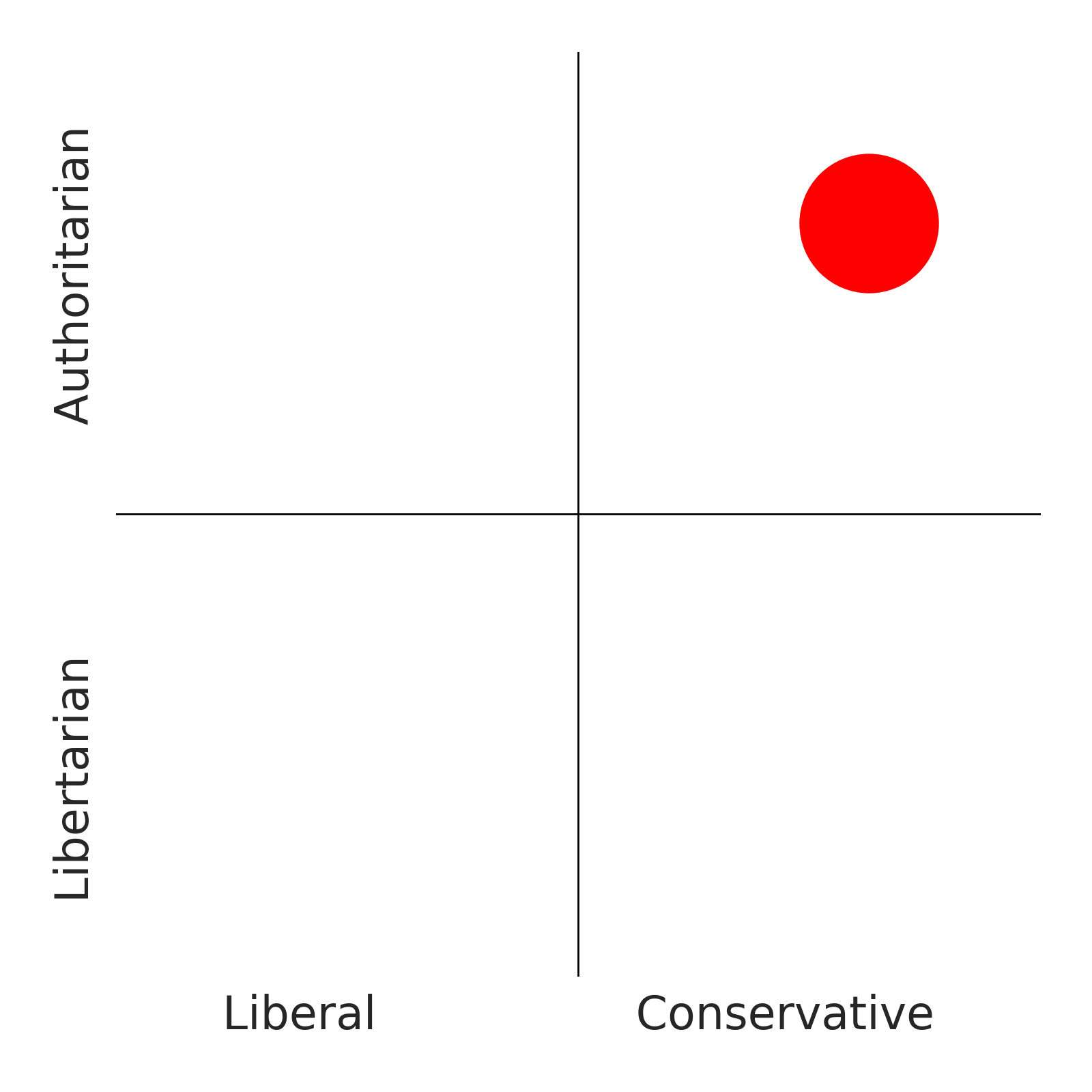
🔵 Liberal <—> Conservative 🔴4
🗽 Libertarian <—> Authoritarian 🚔0
📉 Bearish <—> Bullish 📈0
😩 Pessimistic <—> Optimistic 🌞-5
🕊️ Dovish <—> Hawkish 🦁2
🗣️ Gossip2
🔄 Circular Reasoning2
🏴 Anti-establishment <—> Pro-establishment 📺0
📏📏 Double Standard4
❌ Low Credibility <—> High Credibility ✅-1
🤑 Advertising2
💔 Low Integrity <—> High Integrity ❤️-1
🪨 Low Intelligence <—> High Intelligence 🦉4
⚠️🌍 Racism0
✊ Woke5
🔪 Cruel4
🔍 Truth-seeking <—> Delusion 🌀2
🤡 Hypocrisy2
⛓️ Anti-enlightenment0
👤 Individualist <—> Collectivist 👥1
A sharply opinionated framing attacks RFK Jr. as an 'anti-vaccine-kook' and uses sarcasm to argue his HHS role will become a GOP electoral liability.
Automated analysis; not human reviewed. Limitations: The supplied text is a short headline/opinion excerpt with no underlying reporting, so classifications rely on overtly opinionated wording. · 13 of 55 available dimensions scored; omitted dimensions are not treated as neutral. · Verified supporting quotes for 13 of 13 scored dimensions.
Claim: The text frames vaccine skepticism as a Republican political problem using derogatory language.
“showing his anti-vaccine-kook colors right before the midterms” · exact text match
Why: The pejorative 'anti-vaccine-kook' and reference to GOP midterm damage reflect a left-leaning interpretation.
Claim: The text is subjective, mixing assertion with sarcastic speculation.
“I'm sure GOP candidates are thrilled” · exact text match
“anti-vaccine-kook colors” · exact text match
Why: First-person certainty about others' emotions and derisive labeling are not neutral.
Claim: The text relies on visceral, exaggerated language.
“Rabidly Anti-Vaccine” · exact text match
“anti-vaccine-kook colors” · exact text match
Why: Both terms are emotionally loaded and not clinical or measured.
Claim: The text is a direct expression of opinion.
“I'm sure GOP candidates are thrilled” · exact text match
“showing his anti-vaccine-kook colors” · exact text match
Why: These are evaluative and sarcastic statements, not verifiable reported facts.
Claim: The text injects partisan election strategy into a health topic.
“GOP candidates” · exact text match
“midterms” · exact text match
Why: Explicit party and election references dominate the framing.
Claim: The text reduces a complex vaccination debate to a pejorative label.
“anti-vaccine-kook colors” · exact text match
Why: No policy specifics or evidence are given; the label stands in for argument.
Claim: The language uses name-calling and mockery.
“anti-vaccine-kook colors” · exact text match
“Rabidly Anti-Vaccine” · exact text match
Why: 'Kook' and 'Rabidly' are derisive terms rather than measured analysis.
Claim: The text asserts certainty about GOP candidates' private reactions.
“I'm sure GOP candidates are thrilled” · exact text match
Why: The word 'sure' overstates what can be known from the situation.
Claim: The text is highly negative and contemptuous in tone.
“Rabidly Anti-Vaccine” · exact text match
“anti-vaccine-kook colors” · exact text match
Why: Both phrases convey strong contempt and anger rather than neutrality.
Claim: The text provides no sourcing or uncertainty and states opinion as established fact.
“Rabidly Anti-Vaccine in Face of Measles Outbreak” · exact text match
“I'm sure GOP candidates are thrilled” · exact text match
Why: It asserts a characterization in headline form and adds unsupported political speculation.
Claim: The text speculates about political consequences.
“I'm sure GOP candidates are thrilled” · exact text match
Why: It infers the feelings or outlook of a group without evidence.
Claim: The text uses loaded framing and sarcasm to steer reader reaction.
“anti-vaccine-kook colors” · exact text match
“I'm sure GOP candidates are thrilled” · exact text match
Why: Emotive labeling plus sarcastic certainty are observable techniques that push a predetermined interpretation.
Claim: The text substitutes ad hominem labeling for fair argument.
“anti-vaccine-kook colors” · exact text match
Why: Calling a public official a 'kook' is a dismissive personal attack rather than a substantive critique.
The supplied text is a short headline/opinion excerpt with no underlying reporting, so classifications rely on overtly opinionated wording.
A crude, ad-hominem framing presents a podcast host's criticism of Israel and the U.S. as self-evidently absurd and the product of a damaged mind, without engaging the claims.
Automated analysis; not human reviewed. Limitations: The supplied text is a brief excerpt with no transcript or direct quote from Welch, so the accuracy and context of the reported declaration cannot be verified. · 15 of 54 available dimensions scored; omitted dimensions are not treated as neutral. · Verified supporting quotes for 15 of 15 scored dimensions.
Claim: The publisher's mockery of criticism aimed at Israel and the U.S. signals a conservative stance.
“Inside the Rotten Mind of Jennifer Welch.” · exact text match
“that Israel and the United States are undemocratic, human-rights-violating pieces of dung that deserve to be criticized.” · exact text match
Why: Treating the criticism as absurd indicates support for the governments under attack, a stance consistent with conservative and pro-Israel commentary.
Claim: The text is dominated by subjective personal characterization rather than verifiable reporting.
“Some people look and sound like they were dropped on their heads as babies.” · exact text match
“mind-melting, pinky-themed, worm-brained podcast” · exact text match
Why: These are value-laden insults, not observable facts.
Claim: The language is inflammatory and sensational rather than measured.
“Inside the Rotten Mind of Jennifer Welch.” · exact text match
“mind-melting, pinky-themed, worm-brained podcast” · exact text match
Why: Extreme epithets and a grotesque title generate outrage instead of conveying information.
Claim: The insulting language functions as rage-bait by targeting the audience's emotions.
“dropped on their heads as babies” · exact text match
“mind-melting, pinky-themed, worm-brained podcast” · exact text match
Why: The phrasing provokes an angry reaction rather than presenting information.
Claim: The framing presupposes that Welch's views are worthless instead of demonstrating it.
“Inside the Rotten Mind of Jennifer Welch.” · exact text match
Why: Characterizing her mind as rotten already assumes the conclusion that her criticism is invalid.
Claim: The text is an opinionated personal attack rather than a neutral factual report.
“Inside the Rotten Mind of Jennifer Welch.” · exact text match
“Jennifer (Wench) Welch” · exact text match
Why: The title and punning nickname state a personal verdict rather than reporting events.
Claim: The subject matter is explicitly political commentary about U.S. and Israeli governance and human rights.
“that Israel and the United States are undemocratic, human-rights-violating pieces of dung that deserve to be criticized.” · exact text match
Why: The sentence concerns democratic character, human rights, and foreign criticism, all political categories.
Claim: Complex political criticism is reduced to crude insult and a claim of mental deficiency.
“Some people look and sound like they were dropped on their heads as babies.” · exact text match
“that Israel and the United States are undemocratic, human-rights-violating pieces of dung” · exact text match
Why: The critique is collapsed into an insult and attributed to brain damage.
Claim: The tone relies on childish name-calling and crude mockery.
“Jennifer (Wench) Welch” · exact text match
“dropped on their heads as babies” · exact text match
Why: A nickname pun and a baby-insult are schoolyard rhetorical devices.
Claim: The reaction to a political claim follows a fixed ideological frame rather than an evidence-based assessment.
“Inside the Rotten Mind of Jennifer Welch.” · exact text match
“that Israel and the United States are undemocratic, human-rights-violating pieces of dung that deserve to be criticized.” · exact text match
Why: The criticism is categorically mocked before any supporting evidence is considered.
Claim: The framing takes a pro-establishment stance by dismissing criticism of the U.S. and Israel as ridiculous.
“that Israel and the United States are undemocratic, human-rights-violating pieces of dung that deserve to be criticized.” · exact text match
“Inside the Rotten Mind of Jennifer Welch.” · exact text match
Why: No counterargument is offered; the criticized governments are treated as wrongly maligned.
Claim: The dominant tone is intensely negative and contemptuous.
“dropped on their heads as babies” · exact text match
“worm-brained podcast” · exact text match
Why: These phrases express contempt rather than neutral description.
Claim: The framing substitutes ad-hominem insults for reasoned engagement with the criticized political claims.
“Inside the Rotten Mind of Jennifer Welch.” · exact text match
“Some people look and sound like they were dropped on their heads as babies.” · exact text match
Why: Welch's political position is explained by an alleged mental defect rather than by argument or evidence.
Claim: The text uses loaded labels and omits the substance of the criticized position.
“Inside the Rotten Mind of Jennifer Welch.” · exact text match
“mind-melting, pinky-themed, worm-brained podcast” · exact text match
Why: The reader is steered by inflammatory phrasing while the actual basis for the criticism is not engaged.
Claim: The framing uses degrading personal mockery against Welch.
“dropped on their heads as babies” · exact text match
“worm-brained podcast” · exact text match
Why: It attacks her intelligence and mental state, not just her position.
The supplied text is a brief excerpt with no transcript or direct quote from Welch, so the accuracy and context of the reported declaration cannot be verified.
A sarcastically derisive framing presents Leo's return to call buying as a reckless spectacle after a $35 billion loss.
Automated analysis; not human reviewed. Limitations: Only a brief sarcastic snippet was available, so the analysis relies on tone and a single factual assertion without surrounding context. · 7 of 54 available dimensions scored; omitted dimensions are not treated as neutral. · Verified supporting quotes for 7 of 7 scored dimensions.
Claim: The framing is openly subjective, using first-person disgust and sarcastic commentary rather than neutral reporting.
“Now Pardon Me While I Vomit.” · exact text match
“Breathtaking.” · exact text match
Why: The exclamatory first-person disgust and sarcastic 'Breathtaking' express the writer's personal reaction.
Claim: The wording is sensational, using a dramatic metaphor for the loss and an exclamation-marked reaction.
“vaporizing $35 billion” · exact text match
“Breathtaking.” · exact text match
Why: 'Vaporizing' is a vivid metaphor for financial loss, and 'Breathtaking' is hyperbolic.
Claim: The framing is pessimistic, treating the return to call buying as a repellant sequel to a huge loss.
“Now Pardon Me While I Vomit.” · exact text match
“vaporizing $35 billion” · exact text match
Why: The combination of prior loss and visceral disgust frames the renewed trading negatively, implying poor prospects.
Claim: The text is overtly opinionated rather than factual.
“Breathtaking.” · exact text match
“Now Pardon Me While I Vomit.” · exact text match
Why: The writer's judgment is explicit and no neutral exposition is offered.
Claim: The reaction is deliberately crude and taunting.
“Now Pardon Me While I Vomit.” · exact text match
Why: Using vomiting as a reaction is an unserious, rage-baiting rhetorical device.
Claim: The text is strongly negative in emotional tone.
“Now Pardon Me While I Vomit.” · exact text match
“Breathtaking.” · exact text match
Why: The language is a direct expression of disgust and sarcastic awe.
Claim: The text relies on loaded framing and emotional hyperbole to shape the reader's reaction.
“vaporizing $35 billion” · exact text match
“Now Pardon Me While I Vomit.” · exact text match
Why: 'Vaporizing' is a loaded metaphor for the loss and the vomiting remark is emotional hyperbole, both steering the reader's response.
Only a brief sarcastic snippet was available, so the analysis relies on tone and a single factual assertion without surrounding context.
Relishes the subject's legal troubles with a mocking, superior tone.
Automated analysis; not human reviewed. Limitations: The supplied text is a two-sentence headline; limited context. · 5 of 54 available dimensions scored; omitted dimensions are not treated as neutral. · Verified supporting quotes for 5 of 5 scored dimensions.
Claim: The headline frames its subject with a left-leaning, dismissive bias.
“right-wing troll's dishevelled mugshot” · exact text match
Claim: The writing is subjective, relying on opinion and emotional language rather than neutral reporting.
“If schadenfreude had a face” · exact text match
Why: The use of an emotional appeal and rhetorical device indicates a subjective, opinionated approach rather than objective fact-reporting.
Claim: The content focuses on personal details of a celebrity rather than substantive news.
“dishevelled mugshot” · exact text match
Why: The focus on the subject's physical appearance and legal troubles is characteristic of gossip content.
Claim: The text is more opinion than fact, presenting a mocking perspective as a summary.
“If schadenfreude had a face” · exact text match
Why: The text offers no factual background, instead serving as a brief, derogatory commentary on the individual, reflecting a highly opinionated stance.
Claim: The tone is negative and punitive, focusing on the subject's misfortunes as a source of pleasure.
“schadenfreude” · exact text match
“dishevelled mugshot” · exact text match
Why: The author's choice to emphasize the subject's discomfort and blame, framing the subject as deserving of contempt, shows a strongly negative emotional bias.
The supplied text is a two-sentence headline; limited context.
September 14, 2026 · 0 shares
Presents AI regulation advocacy as a financially motivated psyop to manipulate Congress, using conspiratorial and alarmist wording.
Automated analysis; not human reviewed. Limitations: Only a brief headline/deck was supplied, so the analysis is constrained by the lack of body text, examples, sources, or counterperspectives. · 18 of 54 available dimensions scored; omitted dimensions are not treated as neutral. · Verified supporting quotes for 18 of 18 scored dimensions.
Claim: The framing casts AI policy advocates as an elite, financially self-interested group manipulating Congress.
“Almost everyone involved is affiliated with Coefficient, Open Philanthropy, Anthropic, and/or OpenAI -- all who serve to benefit financially from creating regulation.” · exact text match
Why: Singling out well-positioned organizations as financially motivated manipulators of Congress is an elite-accusation pattern typical of populist framing.
Claim: The text is dominated by subjective judgment words rather than neutral reporting.
“The psyop to create hysteria to manipulate Congress into regulating AI.” · exact text match
Why: Terms like 'psyop' and 'hysteria' express opinion, not observable fact.
Claim: The language is dramatic and alarmist, emphasizing emotional impact.
“The psyop to create hysteria to manipulate Congress into regulating AI.” · exact text match
“Fourteen moves in eight days” · exact text match
Why: Combining a conspiracy label, hysteria claim, and precise dramatic count heightens sensationalism.
Claim: The outlook is negative and cynical, portraying regulation as the product of manipulation.
“manipulate Congress into regulating AI” · exact text match
Why: Describing congressional action as being manipulated is pessimistic about the political process.
Claim: The text evokes alarm by alleging a hidden psyop and manufactured hysteria.
“The psyop to create hysteria to manipulate Congress into regulating AI.” · exact text match
Why: The words 'psyop' and 'hysteria' evoke fear and suspicion of coordinated deception.
Claim: The text presupposes the existence of a coordinated manipulation effort instead of demonstrating it.
“The Coordinated Effort to Manipulate Congress Into Regulating AI” · exact text match
“The psyop to create hysteria to manipulate Congress into regulating AI.” · exact text match
Why: It states the coordination and psyop as given, which is the conclusion needing support.
Claim: The text is an opinionated polemic, not a neutral news report.
“The psyop to create hysteria to manipulate Congress into regulating AI.” · exact text match
Why: The declarative use of 'psyop' and 'manipulate' is a personal and political judgment.
Claim: The topic and framing are explicitly political, aimed at a congressional policy fight.
“manipulate Congress into regulating AI” · exact text match
Why: The statement concerns legislative action and the politics of AI regulation.
Claim: The text collapses diverse actors and motives into one financially motivated coordinated effort.
“Almost everyone involved is affiliated with Coefficient, Open Philanthropy, Anthropic, and/or OpenAI -- all who serve to benefit financially from creating regulation.” · exact text match
Why: It reduces an unspecified set of people to a single financial motive and coordinated scheme.
Claim: The text asserts a precise, sweeping conspiracy with no hedging or evidentiary qualification.
“The Coordinated Effort to Manipulate Congress Into Regulating AI” · exact text match
“Fourteen moves in eight days” · exact text match
Why: Declarative 'The Coordinated Effort' and precise 'Fourteen moves' exceed the support provided.
Claim: The text is anti-establishment, attacking Congress and influential AI organizations as self-interested insiders.
“manipulate Congress into regulating AI” · exact text match
“Almost everyone involved is affiliated with Coefficient, Open Philanthropy, Anthropic, and/or OpenAI” · exact text match
Why: It frames established institutions and prominent organizations as coordinating covertly against the public interest.
Claim: The emotional register is negative and angry, using alarmist terms.
“The psyop to create hysteria to manipulate Congress into regulating AI.” · exact text match
Why: The words 'psyop' and 'hysteria' are emotionally charged and convey fear and contempt.
Claim: The text provides no sourcing or evidence and makes sweeping, checkable-sounding assertions that lack support.
“Almost everyone involved is affiliated with Coefficient, Open Philanthropy, Anthropic, and/or OpenAI” · exact text match
“Fourteen moves in eight days” · exact text match
Why: Unspecific and unsubstantiated claims undermine credibility.
Claim: The text relies on conspiratorial labels and an unsupported coordination claim rather than evidence-based reasoning.
“The psyop to create hysteria to manipulate Congress into regulating AI.” · exact text match
Why: 'Psyop' and 'hysteria' are loaded, non-falsifiable framing that substitutes for demonstrated evidence.
Claim: The text speculates about motives and coordination without evidence.
“all who serve to benefit financially from creating regulation” · exact text match
Why: It asserts financial motive as fact, which is an inference about actors' intentions.
Claim: The text itself uses loaded framing and an unsupported conspiracy allegation to persuade.
“The psyop to create hysteria to manipulate Congress into regulating AI.” · exact text match
Why: Calling the effort a 'psyop' is a loaded framing device rather than neutral description.
Claim: The text shows low observable fairness through unsupported blanket accusations.
“The psyop to create hysteria to manipulate Congress into regulating AI.” · exact text match
Why: It presents a contested characterization as fact and omits any counterperspective.
Claim: The text promotes a conspiratorial reading of AI regulation advocacy as a coordinated psyop.
“The psyop to create hysteria to manipulate Congress into regulating AI.” · exact text match
Why: It alleges a hidden, coordinated psychological operation by multiple organizations.
Only a brief headline/deck was supplied, so the analysis is constrained by the lack of body text, examples, sources, or counterperspectives.
A terse, condemnatory framing labels Lindsay Clancy a 'child killer' and declares the case uncomplicated.
Lindsay Clancy is a Massachusetts mother who was charged in the 2023 deaths of her three children; the case drew attention to postpartum mental illness and criminal responsibility.
Automated analysis; not human reviewed. Limitations: Only a two-sentence headline/snippet was available, so the evidentiary basis for the 'child killer' label and the surrounding case details could not be assessed. · 7 of 54 available dimensions scored; omitted dimensions are not treated as neutral. · Verified supporting quotes for 7 of 7 scored dimensions.
Claim: The text is predominantly subjective and evaluative.
“that individual is a child killer.” · exact text match
Why: The phrase labels the person with a moral category rather than reporting charges, evidence, or findings.
Claim: The text uses a sensational moral label.
“that individual is a child killer.” · exact text match
Why: 'Child killer' is a loaded, emotion-arousing description, not a neutral factual or legal characterization.
Claim: The text consists of opinionated, conclusory assertions.
“Lindsay Clancy Case Isn't Complicated.” · exact text match
“that individual is a child killer.” · exact text match
Why: Both statements present moral and evaluative judgments as settled conclusions without supporting evidence or attribution.
Claim: The text explicitly declares the case uncomplicated.
“Lindsay Clancy Case Isn't Complicated.” · exact text match
Why: 'Isn't complicated' directly forecloses legal, factual, or psychological nuance.
Claim: The text states a categorical conclusion with certainty and no supporting detail.
“Lindsay Clancy Case Isn't Complicated.” · exact text match
Why: The assertion of simplicity is presented as settled fact rather than as a claim needing evidence.
Claim: The text has a strongly negative emotional valence.
“Unfortunately for Americans” · exact text match
“that individual is a child killer.” · exact text match
Why: The word 'Unfortunately' and the loaded label 'child killer' express moral outrage and negative affect.
Claim: The text provides no sourcing, attribution, or evidentiary support for its central assertion.
“that individual is a child killer.” · exact text match
Why: A bare accusation presented as settled fact cannot be independently verified from the text.
Only a two-sentence headline/snippet was available, so the evidentiary basis for the 'child killer' label and the surrounding case details could not be assessed.
A rhetorical attack framed as a question, implying voters' self-respect was bought for $5,000 and describing the chief executive's conduct as 'overt Third Worldery' without evidence or attribution.
Automated analysis; not human reviewed. Limitations: Only the brief supplied text was available; the '$5,000' reference and the identity of the chief executive are not specified, so some classifications rest on the wording alone. · 15 of 54 available dimensions scored; omitted dimensions are not treated as neutral. · Verified supporting quotes for 15 of 15 scored dimensions.
Claim: The framing treats voters as having sold their self-respect for money, an elite-condescending stance.
“Have Voters Lost Their Self-Respect For $5,000?.” · exact text match
Why: The question attributes voter acquiescence to a $5,000 payment and frames it as a loss of self-respect, which presumes ordinary voters are cheaply bought.
Claim: The text's central characterization is a subjective evaluation presented as obvious.
“overt Third Worldery of the chief executive” · exact text match
Why: Calling conduct 'overt Third Worldery' is an unmeasurable, value-laden judgment.
Claim: The text uses sensational, provocative language to frame a political grievance.
“Have Voters Lost Their Self-Respect For $5,000?.” · exact text match
“overt Third Worldery of the chief executive” · exact text match
Why: The rhetorical question and the loaded slur heighten outrage rather than inform.
Claim: The text paints a grim picture of voter degradation and executive misconduct.
“Have Voters Lost Their Self-Respect For $5,000?.” · exact text match
Why: It asks whether voters have forfeited self-respect, implying a negative assessment of the current political situation.
Claim: The text implies that protest is the appropriate response and that its absence is a failure.
“Why is there so little protest at the overt Third Worldery of the chief executive?” · exact text match
Why: The question presupposes that visible protest is expected.
Claim: The questions assume the chief executive's conduct is 'overt Third Worldery' and that $5,000 explains voters' behavior.
“Why is there so little protest at the overt Third Worldery of the chief executive?” · exact text match
“Have Voters Lost Their Self-Respect For $5,000?.” · exact text match
Why: Both rhetorical questions embed unproven premises as established facts.
Claim: The entire text is an opinionated rhetorical stance rather than factual reporting.
“Have Voters Lost Their Self-Respect For $5,000?.” · exact text match
“Why is there so little protest at the overt Third Worldery of the chief executive?” · exact text match
Why: No facts, sources, or attributed claims are supplied; only assertions phrased as questions.
Claim: The text concerns the chief executive and voters' political response.
“chief executive” · exact text match
“Voters” · exact text match
Why: Its subject matter is electoral and executive politics, framed as a grievance.
Claim: The text reduces complex voter behavior to a single $5,000 inducement.
“Have Voters Lost Their Self-Respect For $5,000?.” · exact text match
Why: It offers a single monetary cause for voter acquiescence without evidence.
Claim: The text asserts the chief executive's 'overt Third Worldery' with certainty and no support.
“overt Third Worldery of the chief executive” · exact text match
Why: The assertion is unqualified and treated as self-evident.
Claim: The text's language is emotionally negative, conveying contempt and dismay.
“Have Voters Lost Their Self-Respect For $5,000?.” · exact text match
“overt Third Worldery of the chief executive” · exact text match
Why: The phrase 'lost self-respect' and the slur 'Third Worldery' are emotive and pejorative.
Claim: The text provides no sourcing, attribution, or verifiable detail for its characterization.
“overt Third Worldery of the chief executive” · exact text match
Why: Credibility is undermined by an unsupported, emotive assertion with no evidence.
Claim: The text characterizes the chief executive's conduct with a vague, emotionally loaded label rather than reasoned analysis.
“overt Third Worldery of the chief executive” · exact text match
Why: The term 'Third Worldery' is an undefined pejorative, not an argument or evidence.
Claim: The text speculates that $5,000 caused voters to lose self-respect.
“Have Voters Lost Their Self-Respect For $5,000?.” · exact text match
Why: The question offers a causal speculation about voters' motives rather than reporting evidence.
Claim: The text uses loaded questions and a pejorative label to steer the reader's conclusion.
“Why is there so little protest at the overt Third Worldery of the chief executive?” · exact text match
Why: The wording frames the answer in advance and precludes neutral consideration.
Only the brief supplied text was available; the '$5,000' reference and the identity of the chief executive are not specified, so some classifications rest on the wording alone.
Framing treats Somali migration to rural Maine as an abusive affliction, collectively labels the migrants as refusing to assimilate, and raises a cultural-threat question with 'Basilica...or Mosque?'
Automated analysis; not human reviewed. Limitations: The supplied text is extremely short and promotional, offering no underlying reporting or sourcing to check. · 14 of 54 available dimensions scored; omitted dimensions are not treated as neutral. · Verified supporting quotes for 14 of 14 scored dimensions.
Claim: The framing presents Somali migration as harmful and non-assimilation as a collective fault, reflecting a conservative restrictionist outlook.
“Abuses of Mass Migration to Maine” · exact text match
“they refuse to assimilate” · exact text match
Why: The phrase 'Abuses' labels migration as harm, while 'they refuse to assimilate' assigns collective blame to migrants.
Claim: The text uses evaluative and emotional language rather than neutral factual description.
“harsh truth on the ground” · exact text match
“a mass migration of Somalis afflicts a small town” · exact text match
Why: Words like 'harsh truth' and 'afflicts' characterize the situation as bad and dramatic rather than neutrally describing it.
Claim: The text uses a dramatic rhetorical question and investigation-style language to heighten alarm.
“Basilica...or Mosque?” · exact text match
“Cortes Investigates went to the Northeast to reveal the harsh truth on the ground” · exact text match
Why: The 'Basilica...or Mosque?' question and 'harsh truth' framing sensationalize the subject.
Claim: The overall tone is pessimistic, depicting migration as abuse and affliction.
“Abuses of Mass Migration to Maine” · exact text match
“a mass migration of Somalis afflicts a small town” · exact text match
Why: The terms 'Abuses' and 'afflicts' project a negative, grievance-laden view of migration.
Claim: The text prescribes assimilation as the expected norm and condemns its absence.
“they refuse to assimilate” · exact text match
“Abuses of Mass Migration to Maine” · exact text match
Why: Calling non-assimilation a 'refusal' and migration an 'abuse' implies what should happen rather than merely describing events.
Claim: The framing uses cultural-threat imagery and harm language to evoke fear.
“Basilica...or Mosque?” · exact text match
“a mass migration of Somalis afflicts a small town” · exact text match
Why: The basilica-or-mosque question implies a civilizational threat, while 'afflicts' portrays the town as under harm.
Claim: The text asserts strong evaluative judgments about migration and assimilation rather than presenting neutral facts.
“Abuses of Mass Migration to Maine” · exact text match
“they refuse to assimilate” · exact text match
Why: The labels 'Abuses' and 'refuse to assimilate' are value judgments unsupported by evidence in the text.
Claim: The text takes a position on a contested immigration and cultural-identity issue.
“Abuses of Mass Migration to Maine” · exact text match
“a mass migration of Somalis afflicts a small town” · exact text match
Why: Immigration and assimilation are politically charged topics, and the wording takes an explicitly critical side.
Claim: The text reduces Somali migration to an undifferentiated mass that refuses assimilation.
“a mass migration of Somalis afflicts a small town” · exact text match
“they refuse to assimilate” · exact text match
Why: It makes a blanket collective judgment about an entire national/ethnic group with no nuance or evidence.
Claim: The text frames the small town as a victim harmed by Somali migration.
“a mass migration of Somalis afflicts a small town” · exact text match
Why: The verb 'afflicts' presents the town as suffering injury caused by migrants.
Claim: The text claims a decisive 'harsh truth' without presenting supporting findings or sources.
“reveal the harsh truth on the ground” · exact text match
Why: The phrase asserts that an investigation produced certain truth, but no findings or evidence are supplied.
Claim: The text uses negative, fear-laden wording likely to provoke an emotional response.
“harsh truth” · exact text match
“afflicts” · exact text match
Why: The selected terms are emotionally charged and negative.
Claim: The framing uses loaded language and a dramatic rhetorical question to steer the reader's judgment.
“Abuses of Mass Migration to Maine” · exact text match
“Basilica...or Mosque?” · exact text match
Why: 'Abuses' assumes a conclusion, and 'Basilica...or Mosque?' constructs a simplistic cultural-threat dichotomy.
Claim: The text makes a negative collective generalization about Somalis as a group.
“a mass migration of Somalis afflicts a small town” · exact text match
“they refuse to assimilate” · exact text match
Why: It attributes a collective 'refusal to assimilate' to Somalis and labels their presence as an affliction.
The supplied text is extremely short and promotional, offering no underlying reporting or sourcing to check.
Defends police cameras as beneficial for fairness and reduced punitiveness, conditional on societal permission, without acknowledging counterarguments.
Automated analysis; not human reviewed. Limitations: Analysis is based on a single-sentence headline and claim, lacking full article context. · 9 of 53 available dimensions scored; omitted dimensions are not treated as neutral. · Verified supporting quotes for 9 of 9 scored dimensions.
Claim: The article's central assertion is a subjective value judgment about the potential benefits of police cameras.
“Police cameras can help make the criminal-justice system both fairer and less punitive-if we let them.” · exact text match
Why: The statement is an opinion about what cameras can achieve, not a factual report.
Claim: The article prescribes a course of action (letting police cameras be used) by framing it as conditional.
“if we let them” · exact text match
Why: The phrase 'if we let them' implies a recommendation to permit their use.
Claim: The article is strongly opinionated, stating a defense of a specific product and its potential benefits.
“In Defense of Flock” · exact text match
“Police cameras can help make the criminal-justice system both fairer and less punitive” · exact text match
Why: The headline and statement are argumentative and not neutral reporting.
Claim: The topic of police surveillance and criminal-justice reform is inherently political.
“criminal-justice system” · exact text match
Why: The text explicitly references the criminal-justice system, a political arena.
Claim: The article presents a complex issue (police cameras and their impact) as a simple positive outcome without acknowledging trade-offs.
“Police cameras can help make the criminal-justice system both fairer and less punitive” · exact text match
Why: The statement ignores potential downsides such as privacy concerns, bias, or misuse.
Claim: The article lacks any sourcing, data, or attribution, reducing its credibility as a factual report.
“Police cameras can help make the criminal-justice system both fairer and less punitive-if we let them.” · exact text match
Why: No supporting evidence, citations, or uncertainty markers are provided.
Claim: The article promotes a specific brand (Flock) by defending it in the headline.
“In Defense of Flock” · exact text match
Why: The headline explicitly names and defends a commercial product, functioning as advertorial.
Claim: The article defends a specific corporate product (Flock), indicating a pro-corporate stance.
“In Defense of Flock” · exact text match
Why: The headline explicitly defends a brand, aligning with corporate interests.
Claim: The article makes a speculative claim about the potential future benefits of police cameras.
“Police cameras can help make the criminal-justice system both fairer and less punitive” · exact text match
Why: The use of 'can help' indicates a possibility, not a confirmed outcome.
Analysis is based on a single-sentence headline and claim, lacking full article context.
Shallow promotional framing with a pro-empowerment bias toward women, uses monarchy imagery and celebrity references to market Evie Magazine, showing clear subjective, advertising-oriented bias and limited critical or evidentiary support.
A brief promotional blurb for Evie Magazine that positions itself as a gender-focused publication promoting women's truth and beauty, with reference to monarchy and pop-culture figures.
Promotional slant; surface-level inference; limited data.
The framing is promotional and unqualified, presenting a government official's influence as a sweeping transformation without evidence.
Automated analysis; not human reviewed. Limitations: The supplied text is extremely short and appears to be a headline or blurb, limiting bias evaluation to its promotional language and absolute claim. · 9 of 54 available dimensions scored; omitted dimensions are not treated as neutral. · Verified supporting quotes for 9 of 9 scored dimensions.
Claim: The publisher presents an unmeasurable evaluative claim as a flat assertion.
“has transformed how Americans think and talk about health policy” · exact text match
Why: No metric, source, or comparison is offered; the assertion is inherently subjective.
Claim: The framing presents Kennedy's influence as a positive national-health achievement.
“Making Americans Healthier Again” · exact text match
Why: The title phrase frames the subject as improving national health.
Claim: The text is an opinion presented as a factual statement.
“has transformed how Americans think and talk about health policy” · exact text match
Why: It asserts a sweeping judgment with no supporting evidence.
Claim: The item concerns a political appointee and public policy influence.
“the Secretary of Health and Human Services” · exact text match
“health policy” · exact text match
Why: The subject is explicitly a government official and policy domain.
Claim: A complex public-health discourse change is reduced to one person's influence.
“has transformed how Americans think and talk about health policy” · exact text match
Why: The single clause attributes a broad societal shift to one official without context.
Claim: The assertion uses certainty beyond the support provided.
“has transformed” · exact text match
“Making Americans Healthier Again” · exact text match
Why: Unqualified definitive language claims achieved impact and health improvement with no evidence.
Claim: The title uses emotionally positive, slogan-like language.
“Making Americans Healthier Again” · exact text match
Why: The phrase is an uplifting slogan rather than a neutral description.
Claim: Credibility is limited by a total absence of sourcing or hedging.
“has transformed how Americans think and talk about health policy” · exact text match
Why: The text provides no source, attribution, or uncertainty marker for its central assertion.
Claim: The text uses promotional, tagline-style language to praise a public figure.
“Making Americans Healthier Again” · exact text match
“has transformed how Americans think and talk about health policy” · exact text match
Why: The phrasing is characteristic of promotional copy, asserting a positive transformation without detail.
The supplied text is extremely short and appears to be a headline or blurb, limiting bias evaluation to its promotional language and absolute claim.
Frames Krugman's criticism as hypocritical by counterposing potential lives saved, especially among black Americans, implying a conservative defense of Trump's policies.
The article is a response to a column by Paul Krugman in which he argued that President Trump does not take credit for falling murder rates because his goal is cruelty, not public safety, and that Trump's policies have worsened crime.
Automated analysis; not human reviewed. Limitations: Limited article length; only a snippet of a larger piece. · 14 of 53 available dimensions scored; omitted dimensions are not treated as neutral. · Verified supporting quotes for 11 of 14 scored dimensions.
Claim: Article frames Krugman's critique as misguided and implies Trump's policies may have saved lives, especially black Americans.
“But if Trump's policies truly reflect "cruelty," how should we account for the lives they may have saved - particularly the lives of black Americans?” · not found in supplied text
Why: The article explicitly labels Krugman as a left voice and challenges his cruelty claim by invoking potential life-saving effects, a conservative counter-argument.
Claim: The article is a subjective opinion piece that challenges Krugman's column with a rhetorical question.
“But if Trump's policies truly reflect "cruelty," how should we account for the lives they may have saved - particularly the lives of black Americans?” · not found in supplied text
Why: The article is a direct commentary, not a news report, using a rhetorical question to express a viewpoint.
Claim: The article engages with a current political debate on crime and Trump.
“But if Trump's policies truly reflect "cruelty," how should we account for the lives they may have saved” · exact text match
Why: The topic is relevant, but the article is very short.
Claim: The article is an opinion piece expressing a clear viewpoint.
“But if Trump's policies truly reflect "cruelty," how should we account for the lives they may have saved - particularly the lives of black Americans?” · not found in supplied text
Why: The entire text is a commentary response.
Claim: The article is highly political, engaging with a partisan debate over crime and President Trump.
“Paul Krugman remains one of the left's most influential voices.” · exact text match
Why: The article directly addresses a political figure and a liberal columnist.
Claim: The article reduces Krugman's complex argument to a single cruelty claim and counters with a simple life-saving question.
“Krugman contends that Trump's policies have made crime worse than it otherwise would have been. But if Trump's policies truly reflect "cruelty," how should we account for the lives they may have saved” · exact text match
Why: The article does not engage with nuances of Krugman's argument or evidence.
Claim: The article is entirely focused on responding to Krugman's column rather than reporting on the crime drop itself.
“In his latest column, he argues that President Trump avoids taking credit for the drop in murders” · exact text match
Why: The article's content is solely a reaction to Krugman's column.
Claim: The article highlights black Americans as victims of murder to bolster its argument.
“particularly the lives of black Americans, who suffer a disproportionate share of murder victimization” · exact text match
Why: The article uses the disproportionate victimization of black Americans to question Krugman's cruelty claim.
Claim: The article is an opinion piece with fair attribution but lacks evidence for its own claim.
“In his latest column, he argues that President Trump avoids taking credit for the drop in murders” · exact text match
Why: It accurately sources Krugman but does not provide factual support for its counter-question.
Claim: The article speculates that Trump's policies may have saved lives without evidence.
“how should we account for the lives they may have saved” · exact text match
Why: The article posits a hypothetical life-saving effect without providing data.
Claim: The article uses a rhetorical question to manipulate the reader into doubting Krugman's characterization.
“But if Trump's policies truly reflect "cruelty," how should we account for the lives they may have saved” · exact text match
Why: The rhetorical question is a persuasive technique that implies a contradiction without direct argument.
Claim: The text has no strong AI authorship indicators.
“Paul Krugman remains one of the left's most influential voices.” · exact text match
Why: The prose is natural and contextually appropriate, no repetitive patterns.
Claim: The article accurately attributes Krugman's argument.
“In his latest column, he argues that President Trump avoids taking credit for the drop in murders because Trump's ultimate goal is cruelty rather than public safety.” · exact text match
Why: The article correctly quotes Krugman's column content without distortion.
Claim: The article is a brief, straightforward commentary with average intellectual depth.
“But if Trump's policies truly reflect "cruelty," how should we account for the lives they may have saved” · exact text match
Why: The article does not present complex analysis or new evidence.
Limited article length; only a snippet of a larger piece.
Frames the story around political consequences and party pressure rather than the underlying allegations.
Automated analysis; not human reviewed. · 2 of 53 available dimensions scored; omitted dimensions are not treated as neutral. · Verified supporting quotes for 2 of 2 scored dimensions.
Claim: The article frames the story around political consequences rather than the allegations themselves.
“Miller now threatens to politically harm other Republicans.” · exact text match
“GOP Pressure Mounts on Rep. Max Miller To Quit.” · exact text match
Why: The entire article is about political pressure and electoral harm, not about the abuse allegations or their veracity.
Claim: The article focuses on the political response to the allegations rather than the allegations or their investigation.
“GOP Pressure Mounts on Rep. Max Miller To Quit.” · exact text match
“Miller now threatens to politically harm other Republicans.” · exact text match
Why: The headline and lead emphasize party pressure and political harm, which is the definition of covering the response.
Loaded, pro-Republican framing uses a sensational headline to portray Democrats' Virginia gerrymander as a failure, anchored by RealClearPolitics analysts and a Republican-aligned group, with limited contextual depth.
RealClearPolitics segment discussing Democrats' Virginia gerrymander failure, featuring commentary from Sean Trende and Greg Swenson.
My bias: limited context; potential headline-driven framing.
Loaded, inflammatory op-ed that frames Britain's policy as hypocritical by contrasting Kanye ban with alleged leniency toward Islamist groups, signaling anti-establishment and anti-Islamist sentiment through sensational language rather than substantiated evidence.
Provocative political opinion arguing policy hypocrisy in Britain's treatment of Kanye versus Islamist groups.
I strive for neutrality; training data may tilt Western.
Frames COVID-19 origins as a deliberate cover-up by Dr. Fauci, U.S. government, and business interests to protect China from accountability.
Automated analysis; not human reviewed. Limitations: Very short article snippet from an opinion source; no attribution or evidence provided; unable to verify any claims. · 21 of 53 available dimensions scored; omitted dimensions are not treated as neutral. · Verified supporting quotes for 20 of 21 scored dimensions.
Claim: Frames COVID-19 origins as a cover-up by Fauci and government, blaming China and attacking establishment figures.
“he was in full CYA mode because the agency he led had helped fund the Wuhan lab that apparently created the deadly virus” · exact text match
Why: Strong accusatory language against Fauci and pro-accountability for China, typical conservative framing.
Claim: Presents elites (Fauci, government, business) as deceiving the public.
“others in the government and many powerful business interests enabled this deception” · exact text match
Why: Portrays powerful actors as complicit in a cover-up.
Claim: Entirely subjective accusation.
“he was in full CYA mode” · exact text match
Why: The text is pure opinion, no objective reporting.
Claim: Sensational framing of a cover-up.
“The Era of Cover-Ups” · exact text match
Why: Dramatic headline sets a sensational tone.
Claim: Uses fear of a deadly virus and cover-up to invoke concern.
“deadly virus” · exact text match
Why: Invokes deadliness and cover-up to heighten alarm.
Claim: Assumes the lab created the virus and that Fauci's motive was cover-up.
“because the agency he led had helped fund the Wuhan lab that apparently created the deadly virus” · exact text match
Why: Treats the contested lab-origin claim as a given reason for cover-up.
Claim: Entire text is opinion without factual support.
“The Era of Cover-Ups” · exact text match
Why: No factual reporting, only commentary.
Claim: Highly political content focusing on government and international blame.
“fingering China rather than a rabid bat might lead Americans to demand some accountability” · exact text match
Why: Explicitly political framing with blame assignment.
Claim: Presents unsubstantiated allegations as established fact.
“It also seems clear” · exact text match
Why: Uses language of certainty for an unproven claim.
Claim: Driven by a strong ideological narrative.
“fingering China rather than a rabid bat” · exact text match
Why: Polarizing choice of blame reflects ideological stance.
Claim: Anti-establishment, attacking government and business.
“others in the government and many powerful business interests enabled this deception” · exact text match
Why: Directly accuses government and business of deception.
Claim: Negative emotional tone.
“CYA mode” · exact text match
Why: Derogatory language conveys anger and distrust.
Claim: Demands accountability for China but not for other potential sources.
“fingering China rather than a rabid bat” · exact text match
Why: Single-minded focus on China ignores other hypotheses.
Claim: Low credibility due to unsupported conspiracy claims.
“There's no mystery” · exact text match
Why: Presents a complex issue as settled without evidence.
Claim: Relies on conspiracy logic without evidence.
“There's no mystery” · exact text match
Why: Asserts certainty about a contested claim without supporting facts.
Claim: Speculative about motives and consequences.
“might lead Americans to demand some accountability” · exact text match
Why: Speculates about a hypothetical outcome.
Claim: Uses loaded language and omission of evidence.
“full CYA mode” · exact text match
Why: Loaded term implies guilt without proof.
Claim: Makes serious accusations without attribution or evidence.
“the agency he led had helped fund the Wuhan lab that apparently created the deadly virus” · exact text match
Why: No sources provided for a major allegation.
Claim: Alleges a coordinated cover-up involving Fauci, government, and business interests.
“The Era of Cover-Ups” · exact text match
Why: Frames multiple actors as engaged in deliberate deception.
Claim: Blames Fauci, China, and business interests.
“fingering China” · exact text match
Why: Scapegoats China and domestic actors for the pandemic.
Claim: Rejects scientific process by calling Fauci's actions a cover-up.
“strived to silence discussion about the origins of COVID-19” · not found in supplied text
Why: Portrays scientific debate as suppression, undermining open inquiry.
Very short article snippet from an opinion source; no attribution or evidence provided; unable to verify any claims.
Frame asserts media double standards in Rama Duwaji's social media footprint tied to the mayor's left-wing politics.
A concise, factful description of Rama Duwaji, spouse of NYC mayor Zohran Mamdani, with a referenced claim of media double standards in coverage.
Neutral; text-limited, no outside inference.
Staunchly pro-blockade stance, arguing that a U.S. naval blockade would inflict significant daily economic losses on Iran and coercively force capitulation, with no counterarguments or sourcing.
Projection that a U.S. blockade of the Strait of Hormuz would impose ~$276M/day in exported losses and ~$159M/day in disrupted imports for Iran, totaling ~$435M/day (~$13B/month), framed as coercive leverage to force capitulation.
Lean hawkish; may overestimate coercive effectiveness.
Model slightly hawkish on geopolitics; context is minimal, may overstate aggressiveness.
Advocates regime change in Iran, framing the regime as a persistent threat to the United States and endorsing a hawkish, interventionist approach with little supporting evidence.
A concise framing of a pro-regime-change stance regarding Iran, asserting that leadership poses a persistent threat to the United States.
Possible pro-intervention tilt; limited Iran internal-politics context.
Loaded pro-Trump narrative portrays Trump's attempt to purge dissent within the GOP as a landmark victory and loyalty enforcement, casting Cassidy's impeachment vote as disloyal and Massie as the next target, while noting Trump's sinking popularity.
Trump's efforts to discipline GOP lawmakers who opposed him, including Cassidy and Massie, are described within intra-party power dynamics and loyalty enforcement.
Training data skew toward Western political narratives.
Framing uses an authoritative presidential legacy to urge aggressive action against vaguely defined internal subversion.
Automated analysis; not human reviewed. Limitations: The article text is extremely short (two sentences) and lacks substantive content, limiting bias analysis to broad framing dimensions. · 13 of 52 available dimensions scored; omitted dimensions are not treated as neutral. · Verified supporting quotes for 8 of 13 scored dimensions.
Claim: The publisher frames Trump's actions as continuing Kennedy's legacy, implying a conservative alignment with anti-communist domestic security measures.
“Trump Renews JFK's War Against Subversion. It's time to follow President John F. Kennedy's lead and uproot domestic subversion in America once and for all.” · exact text match
Why: The association with JFK's anti-subversion efforts and the call to uproot domestic subversion align with conservative political positions.
Claim: The publisher advocates for aggressive government action to suppress subversion, indicating authoritarian lean.
“Trump Renews JFK's War Against Subversion. It's time to follow President John F. Kennedy's lead and uproot domestic subversion in America once and for all.” · exact text match
Why: The directive to 'uproot domestic subversion' implies coercive state action.
Claim: The text is an opinionated call to action rather than a factual report.
“Trump Renews JFK's War Against Subversion. It's time to follow President John F. Kennedy's lead and uproot domestic subversion in America once and for all.” · exact text match
Why: No factual assertions, only a directive.
Claim: The text prescribes a course of action.
“It's time to follow President John F. Kennedy's lead and uproot domestic subversion in America once and for all.” · exact text match
Why: Explicitly prescriptive.
Claim: The language of 'war' and 'uproot' indicates a hawkish stance.
“Trump Renews JFK's War Against Subversion... uproot domestic subversion” · not found in supplied text
Why: Uses martial language.
Claim: The entire text is opinion without factual basis.
“Trump Renews JFK's War Against Subversion. It's time to follow President John F. Kennedy's lead and uproot domestic subversion in America once and for all.” · exact text match
Why: No facts, only opinion.
Claim: The text addresses a political strategy (subversion) and political figures (Trump, JFK).
“Trump Renews JFK's War Against Subversion. It's time to follow President John F. Kennedy's lead and uproot domestic subversion in America once and for all.” · exact text match
Why: Involves political figures and domestic security.
Claim: The text oversimplifies by calling for uprooting subversion without defining 'subversion' or providing evidence.
“Trump Renews JFK's War Against Subversion... uproot domestic subversion” · not found in supplied text
Why: Vague term 'subversion' and no supporting details.
Claim: The text invokes President John F. Kennedy as an authority to support the call to action.
“follow President John F. Kennedy's lead” · exact text match
Why: Uses JFK's legacy as authority.
Claim: The text presents its call to action with certainty, assuming shared understanding of the need.
“It's time to follow... once and for all.” · not found in supplied text
Why: The phrasing implies urgency and finality but is not extremely overconfident.
Claim: The text promotes a specific ideological frame: that domestic subversion exists and must be eradicated.
“Trump Renews JFK's War Against Subversion... uproot domestic subversion” · not found in supplied text
Why: Expresses a clear ideological position.
Claim: The text uses negatively charged language ('war', 'subversion', 'uproot') to evoke fear or urgency.
“War Against Subversion... uproot domestic subversion” · not found in supplied text
Why: Negative valence words.
Claim: The text provides no sources, evidence, or attribution, reducing credibility.
“Trump Renews JFK's War Against Subversion. It's time to follow President John F. Kennedy's lead and uproot domestic subversion in America once and for all.” · exact text match
Why: No factual support.
The article text is extremely short (two sentences) and lacks substantive content, limiting bias analysis to broad framing dimensions.
Prescriptive, hawkish bias dominates: the line treats war as an unavoidable, morally ugly choice and urges a specific exit by striking Iran's oil infrastructure, signaling pro-establishment support for aggressive U.S. military action with minimal justification.
US-centric political tilt; Western mainstream framing
2026 © Helium Trades
Privacy Policy & Disclosure
* Disclaimer: Nothing on this website constitutes investment advice, performance data or any recommendation that any particular security, portfolio of securities, transaction or investment strategy is suitable for any specific person. Helium Trades is not responsible in any way for the accuracy
of any model predictions or price data. Any mention of a particular security and related prediction data is not a recommendation to buy or sell that security. Investments in securities involve the risk of loss. Past performance is no guarantee of future results. Helium Trades is not responsible for any of your investment decisions,
you should consult a financial expert before engaging in any transaction.
Helium Research Assistant

How can I help you today?
Ask any question about Real Clear Politics bias.


